window.__IS_SSR__=true
window.__INITIAL_STATE__={
"attachmentsReducer": {
"audio_0": {
"type": "attachments",
"id": "audio_0",
"imgSizes": {
"kqedFullSize": {
"file": "https://ww2.kqed.org/news/wp-content/themes/KQED-unified/img/audio_bgs/background0.jpg"
}
}
},
"audio_1": {
"type": "attachments",
"id": "audio_1",
"imgSizes": {
"kqedFullSize": {
"file": "https://ww2.kqed.org/news/wp-content/themes/KQED-unified/img/audio_bgs/background1.jpg"
}
}
},
"audio_2": {
"type": "attachments",
"id": "audio_2",
"imgSizes": {
"kqedFullSize": {
"file": "https://ww2.kqed.org/news/wp-content/themes/KQED-unified/img/audio_bgs/background2.jpg"
}
}
},
"audio_3": {
"type": "attachments",
"id": "audio_3",
"imgSizes": {
"kqedFullSize": {
"file": "https://ww2.kqed.org/news/wp-content/themes/KQED-unified/img/audio_bgs/background3.jpg"
}
}
},
"audio_4": {
"type": "attachments",
"id": "audio_4",
"imgSizes": {
"kqedFullSize": {
"file": "https://ww2.kqed.org/news/wp-content/themes/KQED-unified/img/audio_bgs/background4.jpg"
}
}
},
"placeholder": {
"type": "attachments",
"id": "placeholder",
"imgSizes": {
"thumbnail": {
"file": "https://cdn.kqed.org/wp-content/uploads/2024/12/KQED-Default-Image-816638274-2000x1333-1-160x107.jpg",
"width": 160,
"height": 107,
"mimeType": "image/jpeg"
},
"medium": {
"file": "https://cdn.kqed.org/wp-content/uploads/2024/12/KQED-Default-Image-816638274-2000x1333-1-800x533.jpg",
"width": 800,
"height": 533,
"mimeType": "image/jpeg"
},
"medium_large": {
"file": "https://cdn.kqed.org/wp-content/uploads/2024/12/KQED-Default-Image-816638274-2000x1333-1-768x512.jpg",
"width": 768,
"height": 512,
"mimeType": "image/jpeg"
},
"large": {
"file": "https://cdn.kqed.org/wp-content/uploads/2024/12/KQED-Default-Image-816638274-2000x1333-1-1020x680.jpg",
"width": 1020,
"height": 680,
"mimeType": "image/jpeg"
},
"1536x1536": {
"file": "https://cdn.kqed.org/wp-content/uploads/2024/12/KQED-Default-Image-816638274-2000x1333-1-1536x1024.jpg",
"width": 1536,
"height": 1024,
"mimeType": "image/jpeg"
},
"fd-lrg": {
"file": "https://cdn.kqed.org/wp-content/uploads/2024/12/KQED-Default-Image-816638274-2000x1333-1-1536x1024.jpg",
"width": 1536,
"height": 1024,
"mimeType": "image/jpeg"
},
"fd-med": {
"file": "https://cdn.kqed.org/wp-content/uploads/2024/12/KQED-Default-Image-816638274-2000x1333-1-1020x680.jpg",
"width": 1020,
"height": 680,
"mimeType": "image/jpeg"
},
"fd-sm": {
"file": "https://cdn.kqed.org/wp-content/uploads/2024/12/KQED-Default-Image-816638274-2000x1333-1-800x533.jpg",
"width": 800,
"height": 533,
"mimeType": "image/jpeg"
},
"post-thumbnail": {
"file": "https://cdn.kqed.org/wp-content/uploads/2024/12/KQED-Default-Image-816638274-2000x1333-1-672x372.jpg",
"width": 672,
"height": 372,
"mimeType": "image/jpeg"
},
"twentyfourteen-full-width": {
"file": "https://cdn.kqed.org/wp-content/uploads/2024/12/KQED-Default-Image-816638274-2000x1333-1-1038x576.jpg",
"width": 1038,
"height": 576,
"mimeType": "image/jpeg"
},
"xxsmall": {
"file": "https://cdn.kqed.org/wp-content/uploads/2024/12/KQED-Default-Image-816638274-2000x1333-1-160x107.jpg",
"width": 160,
"height": 107,
"mimeType": "image/jpeg"
},
"xsmall": {
"file": "https://cdn.kqed.org/wp-content/uploads/2024/12/KQED-Default-Image-816638274-2000x1333-1-672x372.jpg",
"width": 672,
"height": 372,
"mimeType": "image/jpeg"
},
"small": {
"file": "https://cdn.kqed.org/wp-content/uploads/2024/12/KQED-Default-Image-816638274-2000x1333-1-672x372.jpg",
"width": 672,
"height": 372,
"mimeType": "image/jpeg"
},
"xlarge": {
"file": "https://cdn.kqed.org/wp-content/uploads/2024/12/KQED-Default-Image-816638274-2000x1333-1-1020x680.jpg",
"width": 1020,
"height": 680,
"mimeType": "image/jpeg"
},
"full-width": {
"file": "https://cdn.kqed.org/wp-content/uploads/2024/12/KQED-Default-Image-816638274-2000x1333-1-1920x1280.jpg",
"width": 1920,
"height": 1280,
"mimeType": "image/jpeg"
},
"guest-author-32": {
"file": "https://cdn.kqed.org/wp-content/uploads/2025/01/KQED-Default-Image-816638274-1333x1333-1-160x160.jpg",
"width": 32,
"height": 32,
"mimeType": "image/jpeg"
},
"guest-author-50": {
"file": "https://cdn.kqed.org/wp-content/uploads/2025/01/KQED-Default-Image-816638274-1333x1333-1-160x160.jpg",
"width": 50,
"height": 50,
"mimeType": "image/jpeg"
},
"guest-author-64": {
"file": "https://cdn.kqed.org/wp-content/uploads/2025/01/KQED-Default-Image-816638274-1333x1333-1-160x160.jpg",
"width": 64,
"height": 64,
"mimeType": "image/jpeg"
},
"guest-author-96": {
"file": "https://cdn.kqed.org/wp-content/uploads/2025/01/KQED-Default-Image-816638274-1333x1333-1-160x160.jpg",
"width": 96,
"height": 96,
"mimeType": "image/jpeg"
},
"guest-author-128": {
"file": "https://cdn.kqed.org/wp-content/uploads/2025/01/KQED-Default-Image-816638274-1333x1333-1-160x160.jpg",
"width": 128,
"height": 128,
"mimeType": "image/jpeg"
},
"detail": {
"file": "https://cdn.kqed.org/wp-content/uploads/2025/01/KQED-Default-Image-816638274-1333x1333-1-160x160.jpg",
"width": 160,
"height": 160,
"mimeType": "image/jpeg"
},
"kqedFullSize": {
"file": "https://cdn.kqed.org/wp-content/uploads/2024/12/KQED-Default-Image-816638274-2000x1333-1.jpg",
"width": 2000,
"height": 1333
}
}
},
"arts_13953028": {
"type": "attachments",
"id": "arts_13953028",
"meta": {
"index": "attachments_1716263798",
"site": "arts",
"id": "13953028",
"found": true
},
"parent": 13953013,
"imgSizes": {
"twentyfourteen-full-width": {
"file": "https://cdn.kqed.org/wp-content/uploads/sites/2/2024/02/CoupleinPark-1038x576.jpg",
"width": 1038,
"mimeType": "image/jpeg",
"height": 576
},
"thumbnail": {
"file": "https://cdn.kqed.org/wp-content/uploads/sites/2/2024/02/CoupleinPark-160x111.jpg",
"width": 160,
"mimeType": "image/jpeg",
"height": 111
},
"post-thumbnail": {
"file": "https://cdn.kqed.org/wp-content/uploads/sites/2/2024/02/CoupleinPark-672x372.jpg",
"width": 672,
"mimeType": "image/jpeg",
"height": 372
},
"kqedFullSize": {
"file": "https://cdn.kqed.org/wp-content/uploads/sites/2/2024/02/CoupleinPark-scaled-e1708987407849.jpg",
"width": 1920,
"height": 1337
},
"2048x2048": {
"file": "https://cdn.kqed.org/wp-content/uploads/sites/2/2024/02/CoupleinPark-2048x1427.jpg",
"width": 2048,
"mimeType": "image/jpeg",
"height": 1427
},
"large": {
"file": "https://cdn.kqed.org/wp-content/uploads/sites/2/2024/02/CoupleinPark-1020x711.jpg",
"width": 1020,
"mimeType": "image/jpeg",
"height": 711
},
"1536x1536": {
"file": "https://cdn.kqed.org/wp-content/uploads/sites/2/2024/02/CoupleinPark-1536x1070.jpg",
"width": 1536,
"mimeType": "image/jpeg",
"height": 1070
},
"full-width": {
"file": "https://cdn.kqed.org/wp-content/uploads/sites/2/2024/02/CoupleinPark-1920x1338.jpg",
"width": 1920,
"mimeType": "image/jpeg",
"height": 1338
},
"medium": {
"file": "https://cdn.kqed.org/wp-content/uploads/sites/2/2024/02/CoupleinPark-800x557.jpg",
"width": 800,
"mimeType": "image/jpeg",
"height": 557
},
"medium_large": {
"file": "https://cdn.kqed.org/wp-content/uploads/sites/2/2024/02/CoupleinPark-768x535.jpg",
"width": 768,
"mimeType": "image/jpeg",
"height": 535
}
},
"publishDate": 1708987317,
"modified": 1708987431,
"caption": "A moment from ‘Raymond Cooper’s Oakland.’",
"description": null,
"title": "A moment from ‘Raymond Cooper’s Oakland.’",
"credit": "Courtesy of the East Bay Photo Collective",
"status": "inherit",
"altTag": "A couple is viewed from behind, while sitting on the grass in a park. Both of them have afro hairstyles, one that resembles a heart.",
"isLoading": false,
"fetchFailed": false
},
"arts_13952735": {
"type": "attachments",
"id": "arts_13952735",
"meta": {
"index": "attachments_1716263798",
"site": "arts",
"id": "13952735",
"found": true
},
"parent": 13952712,
"imgSizes": {
"twentyfourteen-full-width": {
"file": "https://cdn.kqed.org/wp-content/uploads/sites/2/2024/02/kingmakers-1038x576.png",
"width": 1038,
"mimeType": "image/png",
"height": 576
},
"thumbnail": {
"file": "https://cdn.kqed.org/wp-content/uploads/sites/2/2024/02/kingmakers-160x97.png",
"width": 160,
"mimeType": "image/png",
"height": 97
},
"post-thumbnail": {
"file": "https://cdn.kqed.org/wp-content/uploads/sites/2/2024/02/kingmakers-672x372.png",
"width": 672,
"mimeType": "image/png",
"height": 372
},
"kqedFullSize": {
"file": "https://cdn.kqed.org/wp-content/uploads/sites/2/2024/02/kingmakers-e1708562883271.png",
"width": 1920,
"height": 1161
},
"2048x2048": {
"file": "https://cdn.kqed.org/wp-content/uploads/sites/2/2024/02/kingmakers-2048x1239.png",
"width": 2048,
"mimeType": "image/png",
"height": 1239
},
"large": {
"file": "https://cdn.kqed.org/wp-content/uploads/sites/2/2024/02/kingmakers-1020x617.png",
"width": 1020,
"mimeType": "image/png",
"height": 617
},
"1536x1536": {
"file": "https://cdn.kqed.org/wp-content/uploads/sites/2/2024/02/kingmakers-1536x929.png",
"width": 1536,
"mimeType": "image/png",
"height": 929
},
"full-width": {
"file": "https://cdn.kqed.org/wp-content/uploads/sites/2/2024/02/kingmakers-1920x1161.png",
"width": 1920,
"mimeType": "image/png",
"height": 1161
},
"medium": {
"file": "https://cdn.kqed.org/wp-content/uploads/sites/2/2024/02/kingmakers-800x484.png",
"width": 800,
"mimeType": "image/png",
"height": 484
},
"medium_large": {
"file": "https://cdn.kqed.org/wp-content/uploads/sites/2/2024/02/kingmakers-768x464.png",
"width": 768,
"mimeType": "image/png",
"height": 464
}
},
"publishDate": 1708562736,
"modified": 1708618420,
"caption": "Young kings in KOO’s music video for ‘Glisten’ featuring Basi, Sequoiia, Ajai Kasim & 42k Lil.",
"description": null,
"title": "Young kings in KOO’s music video for ‘Glisten’ featuring Basi, Sequoiia, Ajai Kasim & 42k Lil.",
"credit": "Kingmakers of Oakland/YouTube",
"status": "inherit",
"altTag": "An illustration of two young Black men sitting on bicycles side by side. Both have small gold crowns hovering over their heads.",
"isLoading": false,
"fetchFailed": false
},
"arts_13952678": {
"type": "attachments",
"id": "arts_13952678",
"meta": {
"index": "attachments_1716263798",
"site": "arts",
"id": "13952678",
"found": true
},
"parent": 13952672,
"imgSizes": {
"twentyfourteen-full-width": {
"file": "https://cdn.kqed.org/wp-content/uploads/sites/2/2024/02/Freeway_MacArthur-Maze_2024-01-28_Amir-Aziz_003-1-1038x576.jpg",
"width": 1038,
"mimeType": "image/jpeg",
"height": 576
},
"thumbnail": {
"file": "https://cdn.kqed.org/wp-content/uploads/sites/2/2024/02/Freeway_MacArthur-Maze_2024-01-28_Amir-Aziz_003-1-160x107.jpg",
"width": 160,
"mimeType": "image/jpeg",
"height": 107
},
"post-thumbnail": {
"file": "https://cdn.kqed.org/wp-content/uploads/sites/2/2024/02/Freeway_MacArthur-Maze_2024-01-28_Amir-Aziz_003-1-672x372.jpg",
"width": 672,
"mimeType": "image/jpeg",
"height": 372
},
"kqedFullSize": {
"file": "https://cdn.kqed.org/wp-content/uploads/sites/2/2024/02/Freeway_MacArthur-Maze_2024-01-28_Amir-Aziz_003-1-scaled.jpg",
"width": 2560,
"height": 1705
},
"2048x2048": {
"file": "https://cdn.kqed.org/wp-content/uploads/sites/2/2024/02/Freeway_MacArthur-Maze_2024-01-28_Amir-Aziz_003-1-2048x1364.jpg",
"width": 2048,
"mimeType": "image/jpeg",
"height": 1364
},
"large": {
"file": "https://cdn.kqed.org/wp-content/uploads/sites/2/2024/02/Freeway_MacArthur-Maze_2024-01-28_Amir-Aziz_003-1-1020x680.jpg",
"width": 1020,
"mimeType": "image/jpeg",
"height": 680
},
"1536x1536": {
"file": "https://cdn.kqed.org/wp-content/uploads/sites/2/2024/02/Freeway_MacArthur-Maze_2024-01-28_Amir-Aziz_003-1-1536x1023.jpg",
"width": 1536,
"mimeType": "image/jpeg",
"height": 1023
},
"full-width": {
"file": "https://cdn.kqed.org/wp-content/uploads/sites/2/2024/02/Freeway_MacArthur-Maze_2024-01-28_Amir-Aziz_003-1-1920x1279.jpg",
"width": 1920,
"mimeType": "image/jpeg",
"height": 1279
},
"medium": {
"file": "https://cdn.kqed.org/wp-content/uploads/sites/2/2024/02/Freeway_MacArthur-Maze_2024-01-28_Amir-Aziz_003-1-800x533.jpg",
"width": 800,
"mimeType": "image/jpeg",
"height": 533
},
"medium_large": {
"file": "https://cdn.kqed.org/wp-content/uploads/sites/2/2024/02/Freeway_MacArthur-Maze_2024-01-28_Amir-Aziz_003-1-768x512.jpg",
"width": 768,
"mimeType": "image/jpeg",
"height": 512
}
},
"publishDate": 1708535874,
"modified": 1708536002,
"caption": "A look from the Heavens at Northern California's freeways and the Bay beyond them. ",
"description": "A look from the Heavens at Northern California's freeways and the Bay beyond them. ",
"title": "A look from the Heavens at Northern California's freeways and the Bay beyond them.",
"credit": "Amir Aziz",
"status": "inherit",
"altTag": "A look from the Heavens at Northern California's freeways and the Bay beyond them.",
"isLoading": false,
"fetchFailed": false
},
"arts_13952748": {
"type": "attachments",
"id": "arts_13952748",
"meta": {
"index": "attachments_1716263798",
"site": "arts",
"id": "13952748",
"found": true
},
"parent": 13952739,
"imgSizes": {
"twentyfourteen-full-width": {
"file": "https://cdn.kqed.org/wp-content/uploads/sites/2/2024/02/Lantern-Festival-Joyce-Xi-14-1038x576.jpg",
"width": 1038,
"mimeType": "image/jpeg",
"height": 576
},
"thumbnail": {
"file": "https://cdn.kqed.org/wp-content/uploads/sites/2/2024/02/Lantern-Festival-Joyce-Xi-14-160x90.jpg",
"width": 160,
"mimeType": "image/jpeg",
"height": 90
},
"post-thumbnail": {
"file": "https://cdn.kqed.org/wp-content/uploads/sites/2/2024/02/Lantern-Festival-Joyce-Xi-14-672x372.jpg",
"width": 672,
"mimeType": "image/jpeg",
"height": 372
},
"kqedFullSize": {
"file": "https://cdn.kqed.org/wp-content/uploads/sites/2/2024/02/Lantern-Festival-Joyce-Xi-14.jpg",
"width": 2000,
"height": 1125
},
"large": {
"file": "https://cdn.kqed.org/wp-content/uploads/sites/2/2024/02/Lantern-Festival-Joyce-Xi-14-1020x574.jpg",
"width": 1020,
"mimeType": "image/jpeg",
"height": 574
},
"1536x1536": {
"file": "https://cdn.kqed.org/wp-content/uploads/sites/2/2024/02/Lantern-Festival-Joyce-Xi-14-1536x864.jpg",
"width": 1536,
"mimeType": "image/jpeg",
"height": 864
},
"full-width": {
"file": "https://cdn.kqed.org/wp-content/uploads/sites/2/2024/02/Lantern-Festival-Joyce-Xi-14-1920x1080.jpg",
"width": 1920,
"mimeType": "image/jpeg",
"height": 1080
},
"medium": {
"file": "https://cdn.kqed.org/wp-content/uploads/sites/2/2024/02/Lantern-Festival-Joyce-Xi-14-800x450.jpg",
"width": 800,
"mimeType": "image/jpeg",
"height": 450
},
"medium_large": {
"file": "https://cdn.kqed.org/wp-content/uploads/sites/2/2024/02/Lantern-Festival-Joyce-Xi-14-768x432.jpg",
"width": 768,
"mimeType": "image/jpeg",
"height": 432
}
},
"publishDate": 1708565756,
"modified": 1708565855,
"caption": "This year's Lantern Festival celebration is meant to bring a lively sense of community to Oakland Chinatown.",
"description": null,
"title": "Lantern Festival -Joyce Xi-14",
"credit": "Joyce Xi, courtesy of Oakland Bloom",
"status": "inherit",
"altTag": "A plaza in Oakland Chinatown decorated with red paper lanterns",
"isLoading": false,
"fetchFailed": false
},
"arts_13952624": {
"type": "attachments",
"id": "arts_13952624",
"meta": {
"index": "attachments_1716263798",
"site": "arts",
"id": "13952624",
"found": true
},
"parent": 13952570,
"imgSizes": {
"twentyfourteen-full-width": {
"file": "https://cdn.kqed.org/wp-content/uploads/sites/2/2024/02/Screenshot-2024-02-20-at-12.01.15-PM-1038x576.png",
"width": 1038,
"mimeType": "image/png",
"height": 576
},
"thumbnail": {
"file": "https://cdn.kqed.org/wp-content/uploads/sites/2/2024/02/Screenshot-2024-02-20-at-12.01.15-PM-160x90.png",
"width": 160,
"mimeType": "image/png",
"height": 90
},
"post-thumbnail": {
"file": "https://cdn.kqed.org/wp-content/uploads/sites/2/2024/02/Screenshot-2024-02-20-at-12.01.15-PM-672x372.png",
"width": 672,
"mimeType": "image/png",
"height": 372
},
"kqedFullSize": {
"file": "https://cdn.kqed.org/wp-content/uploads/sites/2/2024/02/Screenshot-2024-02-20-at-12.01.15-PM.png",
"width": 2008,
"height": 1126
},
"large": {
"file": "https://cdn.kqed.org/wp-content/uploads/sites/2/2024/02/Screenshot-2024-02-20-at-12.01.15-PM-1020x572.png",
"width": 1020,
"mimeType": "image/png",
"height": 572
},
"1536x1536": {
"file": "https://cdn.kqed.org/wp-content/uploads/sites/2/2024/02/Screenshot-2024-02-20-at-12.01.15-PM-1536x861.png",
"width": 1536,
"mimeType": "image/png",
"height": 861
},
"full-width": {
"file": "https://cdn.kqed.org/wp-content/uploads/sites/2/2024/02/Screenshot-2024-02-20-at-12.01.15-PM-1920x1077.png",
"width": 1920,
"mimeType": "image/png",
"height": 1077
},
"medium": {
"file": "https://cdn.kqed.org/wp-content/uploads/sites/2/2024/02/Screenshot-2024-02-20-at-12.01.15-PM-800x449.png",
"width": 800,
"mimeType": "image/png",
"height": 449
},
"medium_large": {
"file": "https://cdn.kqed.org/wp-content/uploads/sites/2/2024/02/Screenshot-2024-02-20-at-12.01.15-PM-768x431.png",
"width": 768,
"mimeType": "image/png",
"height": 431
}
},
"publishDate": 1708459323,
"modified": 1708459353,
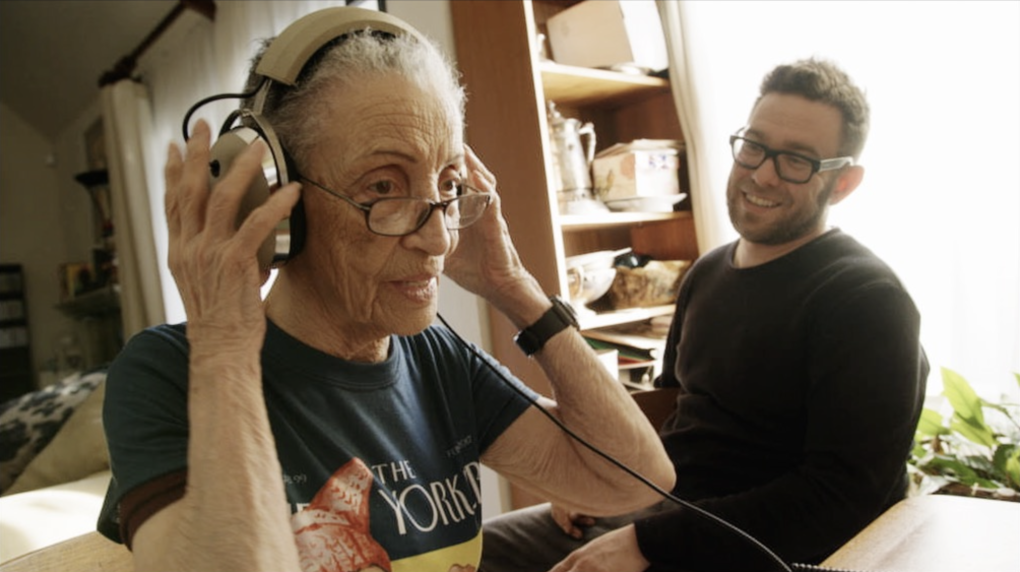
"caption": "Betty Reid Soskin listening to her own music as film director Bryan Gibel watches.",
"description": "Betty Reid Soskin listening to her own music as film director Bryan Gibel watches.",
"title": "Betty Reid Soskin listening to her own music as film director Bryan Gibel watches.",
"credit": "Via Bryan Gibel ",
"status": "inherit",
"altTag": "Betty Reid Soskin listening to her own music as film director Bryan Gibel watches.",
"isLoading": false,
"fetchFailed": false
},
"arts_13939096": {
"type": "attachments",
"id": "arts_13939096",
"meta": {
"index": "attachments_1716263798",
"site": "arts",
"id": "13939096",
"found": true
},
"parent": 13939092,
"imgSizes": {
"twentyfourteen-full-width": {
"file": "https://cdn.kqed.org/wp-content/uploads/sites/2/2023/12/20230614-AS-REVERSE-BOYCOTT-04-AC-KQED-1038x576.jpg",
"width": 1038,
"mimeType": "image/jpeg",
"height": 576
},
"thumbnail": {
"file": "https://cdn.kqed.org/wp-content/uploads/sites/2/2023/12/20230614-AS-REVERSE-BOYCOTT-04-AC-KQED-160x107.jpg",
"width": 160,
"mimeType": "image/jpeg",
"height": 107
},
"post-thumbnail": {
"file": "https://cdn.kqed.org/wp-content/uploads/sites/2/2023/12/20230614-AS-REVERSE-BOYCOTT-04-AC-KQED-672x372.jpg",
"width": 672,
"mimeType": "image/jpeg",
"height": 372
},
"kqedFullSize": {
"file": "https://cdn.kqed.org/wp-content/uploads/sites/2/2023/12/20230614-AS-REVERSE-BOYCOTT-04-AC-KQED.jpg",
"width": 2000,
"height": 1333
},
"large": {
"file": "https://cdn.kqed.org/wp-content/uploads/sites/2/2023/12/20230614-AS-REVERSE-BOYCOTT-04-AC-KQED-1020x680.jpg",
"width": 1020,
"mimeType": "image/jpeg",
"height": 680
},
"1536x1536": {
"file": "https://cdn.kqed.org/wp-content/uploads/sites/2/2023/12/20230614-AS-REVERSE-BOYCOTT-04-AC-KQED-1536x1024.jpg",
"width": 1536,
"mimeType": "image/jpeg",
"height": 1024
},
"full-width": {
"file": "https://cdn.kqed.org/wp-content/uploads/sites/2/2023/12/20230614-AS-REVERSE-BOYCOTT-04-AC-KQED-1920x1280.jpg",
"width": 1920,
"mimeType": "image/jpeg",
"height": 1280
},
"medium": {
"file": "https://cdn.kqed.org/wp-content/uploads/sites/2/2023/12/20230614-AS-REVERSE-BOYCOTT-04-AC-KQED-800x533.jpg",
"width": 800,
"mimeType": "image/jpeg",
"height": 533
},
"medium_large": {
"file": "https://cdn.kqed.org/wp-content/uploads/sites/2/2023/12/20230614-AS-REVERSE-BOYCOTT-04-AC-KQED-768x512.jpg",
"width": 768,
"mimeType": "image/jpeg",
"height": 512
}
},
"publishDate": 1702029017,
"modified": 1706650737,
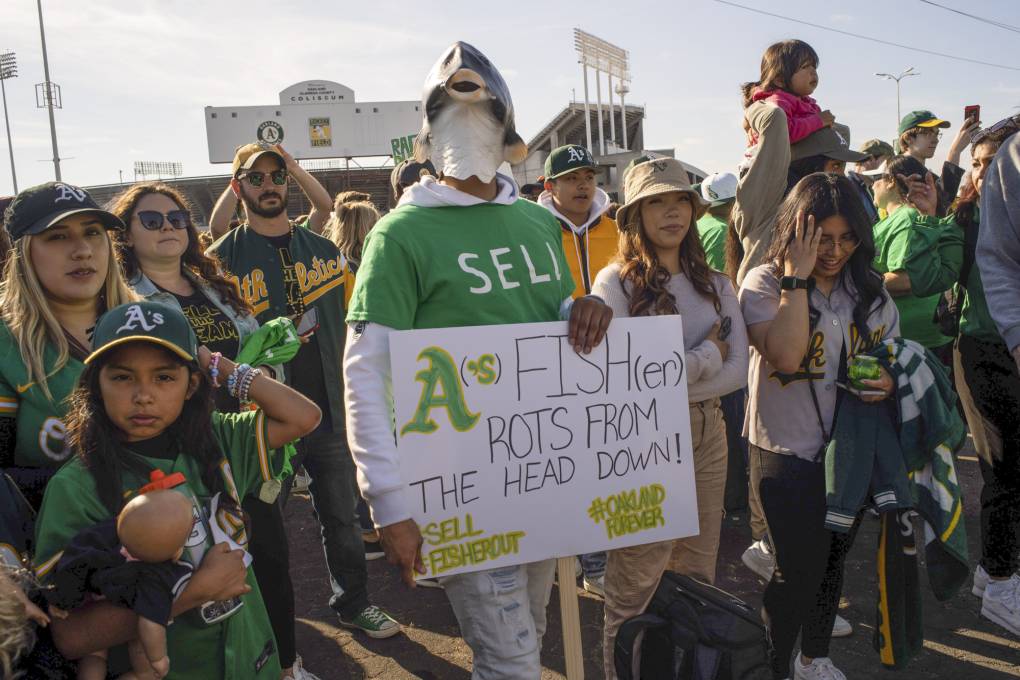
"caption": "Fans of the Oakland A’s gather during a reverse boycott at the Oakland Coliseum to protest the ownership of the baseball team on June 13, 2023. ",
"description": null,
"title": "Fans of the Oakland A’s gather during a reverse boycott at the Oakland Coliseum to protest the ownership of the baseball team on June 13, 2023.",
"credit": "Aryk Copley/ KQED",
"status": "inherit",
"altTag": null,
"isLoading": false,
"fetchFailed": false
},
"arts_13951421": {
"type": "attachments",
"id": "arts_13951421",
"meta": {
"index": "attachments_1716263798",
"site": "arts",
"id": "13951421",
"found": true
},
"parent": 13950520,
"imgSizes": {
"twentyfourteen-full-width": {
"file": "https://cdn.kqed.org/wp-content/uploads/sites/2/2024/02/Jan-2024-1-1038x576.jpg",
"width": 1038,
"mimeType": "image/jpeg",
"height": 576
},
"thumbnail": {
"file": "https://cdn.kqed.org/wp-content/uploads/sites/2/2024/02/Jan-2024-1-160x90.jpg",
"width": 160,
"mimeType": "image/jpeg",
"height": 90
},
"post-thumbnail": {
"file": "https://cdn.kqed.org/wp-content/uploads/sites/2/2024/02/Jan-2024-1-672x372.jpg",
"width": 672,
"mimeType": "image/jpeg",
"height": 372
},
"kqedFullSize": {
"file": "https://cdn.kqed.org/wp-content/uploads/sites/2/2024/02/Jan-2024-1.jpg",
"width": 1920,
"height": 1080
},
"large": {
"file": "https://cdn.kqed.org/wp-content/uploads/sites/2/2024/02/Jan-2024-1-1020x574.jpg",
"width": 1020,
"mimeType": "image/jpeg",
"height": 574
},
"1536x1536": {
"file": "https://cdn.kqed.org/wp-content/uploads/sites/2/2024/02/Jan-2024-1-1536x864.jpg",
"width": 1536,
"mimeType": "image/jpeg",
"height": 864
},
"medium": {
"file": "https://cdn.kqed.org/wp-content/uploads/sites/2/2024/02/Jan-2024-1-800x450.jpg",
"width": 800,
"mimeType": "image/jpeg",
"height": 450
},
"medium_large": {
"file": "https://cdn.kqed.org/wp-content/uploads/sites/2/2024/02/Jan-2024-1-768x432.jpg",
"width": 768,
"mimeType": "image/jpeg",
"height": 432
}
},
"publishDate": 1706825208,
"modified": 1706825208,
"caption": null,
"description": null,
"title": "Jan 2024-1",
"credit": null,
"status": "inherit",
"altTag": null,
"isLoading": false,
"fetchFailed": false
},
"arts_13952187": {
"type": "attachments",
"id": "arts_13952187",
"meta": {
"index": "attachments_1716263798",
"site": "arts",
"id": "13952187",
"found": true
},
"parent": 13952162,
"imgSizes": {
"twentyfourteen-full-width": {
"file": "https://cdn.kqed.org/wp-content/uploads/sites/2/2024/02/Oakland.MAIN_.skyline-1038x576.jpg",
"width": 1038,
"mimeType": "image/jpeg",
"height": 576
},
"thumbnail": {
"file": "https://cdn.kqed.org/wp-content/uploads/sites/2/2024/02/Oakland.MAIN_.skyline-160x90.jpg",
"width": 160,
"mimeType": "image/jpeg",
"height": 90
},
"post-thumbnail": {
"file": "https://cdn.kqed.org/wp-content/uploads/sites/2/2024/02/Oakland.MAIN_.skyline-672x372.jpg",
"width": 672,
"mimeType": "image/jpeg",
"height": 372
},
"kqedFullSize": {
"file": "https://cdn.kqed.org/wp-content/uploads/sites/2/2024/02/Oakland.MAIN_.skyline-scaled.jpg",
"width": 2560,
"height": 1440
},
"2048x2048": {
"file": "https://cdn.kqed.org/wp-content/uploads/sites/2/2024/02/Oakland.MAIN_.skyline-2048x1152.jpg",
"width": 2048,
"mimeType": "image/jpeg",
"height": 1152
},
"large": {
"file": "https://cdn.kqed.org/wp-content/uploads/sites/2/2024/02/Oakland.MAIN_.skyline-1020x574.jpg",
"width": 1020,
"mimeType": "image/jpeg",
"height": 574
},
"1536x1536": {
"file": "https://cdn.kqed.org/wp-content/uploads/sites/2/2024/02/Oakland.MAIN_.skyline-1536x864.jpg",
"width": 1536,
"mimeType": "image/jpeg",
"height": 864
},
"full-width": {
"file": "https://cdn.kqed.org/wp-content/uploads/sites/2/2024/02/Oakland.MAIN_.skyline-1920x1080.jpg",
"width": 1920,
"mimeType": "image/jpeg",
"height": 1080
},
"medium": {
"file": "https://cdn.kqed.org/wp-content/uploads/sites/2/2024/02/Oakland.MAIN_.skyline-800x450.jpg",
"width": 800,
"mimeType": "image/jpeg",
"height": 450
},
"medium_large": {
"file": "https://cdn.kqed.org/wp-content/uploads/sites/2/2024/02/Oakland.MAIN_.skyline-768x432.jpg",
"width": 768,
"mimeType": "image/jpeg",
"height": 432
}
},
"publishDate": 1707869231,
"modified": 1707869271,
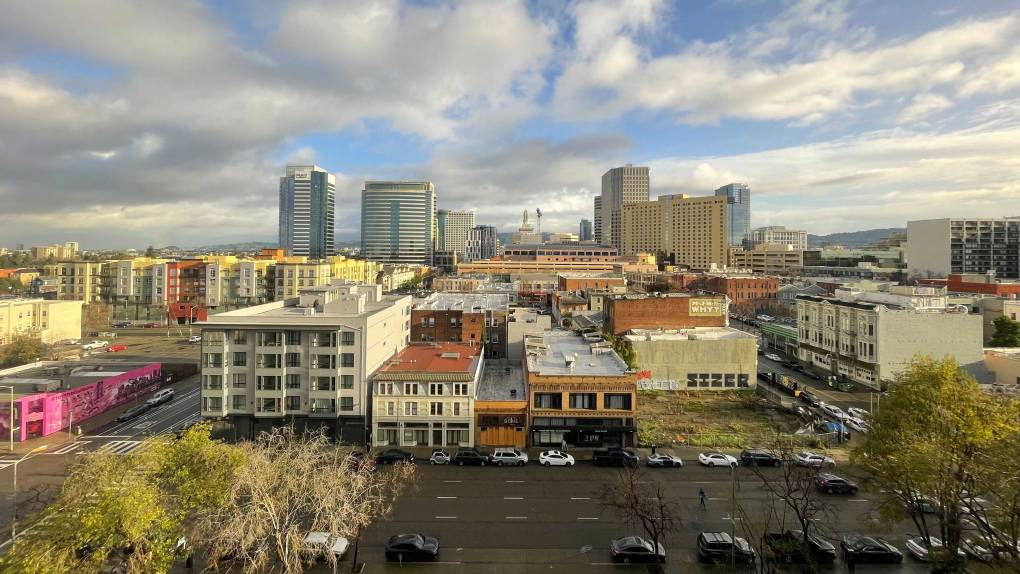
"caption": "Fixing 'everything going on in Oakland' will require more than being tough on crime, our columnist writes.",
"description": null,
"title": "Oakland.MAIN.skyline",
"credit": "Pendarvis Harshaw/KQED",
"status": "inherit",
"altTag": null,
"isLoading": false,
"fetchFailed": false
},
"arts_13952058": {
"type": "attachments",
"id": "arts_13952058",
"meta": {
"index": "attachments_1716263798",
"site": "arts",
"id": "13952058",
"found": true
},
"parent": 13952052,
"imgSizes": {
"twentyfourteen-full-width": {
"file": "https://cdn.kqed.org/wp-content/uploads/sites/2/2024/02/3.__a_third_culture_kid_pilgrimage__shot_by__terry.thunder__creative_direction___taiwanesenoodles___bowlcutsurvivor__taken_from___itsyangsheng_crop-1038x576.jpg",
"width": 1038,
"mimeType": "image/jpeg",
"height": 576
},
"thumbnail": {
"file": "https://cdn.kqed.org/wp-content/uploads/sites/2/2024/02/3.__a_third_culture_kid_pilgrimage__shot_by__terry.thunder__creative_direction___taiwanesenoodles___bowlcutsurvivor__taken_from___itsyangsheng_crop-160x100.jpg",
"width": 160,
"mimeType": "image/jpeg",
"height": 100
},
"post-thumbnail": {
"file": "https://cdn.kqed.org/wp-content/uploads/sites/2/2024/02/3.__a_third_culture_kid_pilgrimage__shot_by__terry.thunder__creative_direction___taiwanesenoodles___bowlcutsurvivor__taken_from___itsyangsheng_crop-672x372.jpg",
"width": 672,
"mimeType": "image/jpeg",
"height": 372
},
"kqedFullSize": {
"file": "https://cdn.kqed.org/wp-content/uploads/sites/2/2024/02/3.__a_third_culture_kid_pilgrimage__shot_by__terry.thunder__creative_direction___taiwanesenoodles___bowlcutsurvivor__taken_from___itsyangsheng_crop.jpg",
"width": 1920,
"height": 1200
},
"large": {
"file": "https://cdn.kqed.org/wp-content/uploads/sites/2/2024/02/3.__a_third_culture_kid_pilgrimage__shot_by__terry.thunder__creative_direction___taiwanesenoodles___bowlcutsurvivor__taken_from___itsyangsheng_crop-1020x638.jpg",
"width": 1020,
"mimeType": "image/jpeg",
"height": 638
},
"1536x1536": {
"file": "https://cdn.kqed.org/wp-content/uploads/sites/2/2024/02/3.__a_third_culture_kid_pilgrimage__shot_by__terry.thunder__creative_direction___taiwanesenoodles___bowlcutsurvivor__taken_from___itsyangsheng_crop-1536x960.jpg",
"width": 1536,
"mimeType": "image/jpeg",
"height": 960
},
"medium": {
"file": "https://cdn.kqed.org/wp-content/uploads/sites/2/2024/02/3.__a_third_culture_kid_pilgrimage__shot_by__terry.thunder__creative_direction___taiwanesenoodles___bowlcutsurvivor__taken_from___itsyangsheng_crop-800x500.jpg",
"width": 800,
"mimeType": "image/jpeg",
"height": 500
},
"medium_large": {
"file": "https://cdn.kqed.org/wp-content/uploads/sites/2/2024/02/3.__a_third_culture_kid_pilgrimage__shot_by__terry.thunder__creative_direction___taiwanesenoodles___bowlcutsurvivor__taken_from___itsyangsheng_crop-768x480.jpg",
"width": 768,
"mimeType": "image/jpeg",
"height": 480
}
},
"publishDate": 1707524553,
"modified": 1707776022,
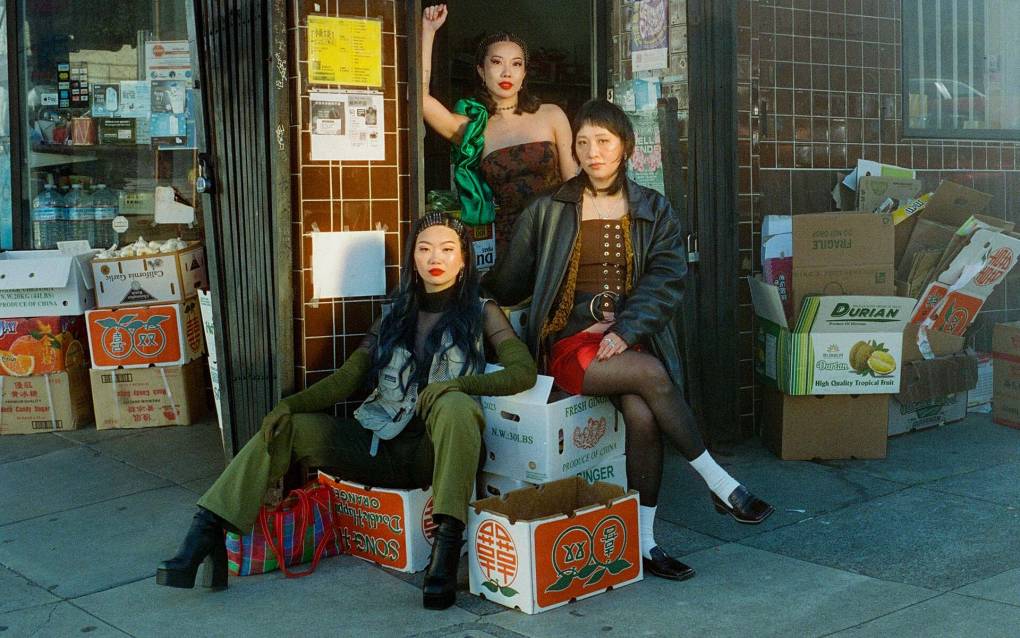
"caption": "Yăng Shēng, a multimedia project launched by Hanna Chen (left) and Steph Cai (center), aims to bring \"third culture\" children of immigrants from Asian diasporas together in the Bay Area.",
"description": null,
"title": "3.__a_third_culture_kid_pilgrimage__shot_by__terry.thunder__creative_direction___taiwanesenoodles___bowlcutsurvivor__taken_from___itsyangsheng_crop",
"credit": "Terry Thunder Tsai, courtesy of Yăng Shēng",
"status": "inherit",
"altTag": "A trio of first-generation Asian American women pose in front of a Chinatown market",
"isLoading": false,
"fetchFailed": false
},
"arts_13951726": {
"type": "attachments",
"id": "arts_13951726",
"meta": {
"index": "attachments_1716263798",
"site": "arts",
"id": "13951726",
"found": true
},
"parent": 13951713,
"imgSizes": {
"twentyfourteen-full-width": {
"file": "https://cdn.kqed.org/wp-content/uploads/sites/2/2024/02/Credit_-Bellamy-Brewster-3_COVER-1038x576.jpg",
"width": 1038,
"mimeType": "image/jpeg",
"height": 576
},
"thumbnail": {
"file": "https://cdn.kqed.org/wp-content/uploads/sites/2/2024/02/Credit_-Bellamy-Brewster-3_COVER-160x90.jpg",
"width": 160,
"mimeType": "image/jpeg",
"height": 90
},
"post-thumbnail": {
"file": "https://cdn.kqed.org/wp-content/uploads/sites/2/2024/02/Credit_-Bellamy-Brewster-3_COVER-672x372.jpg",
"width": 672,
"mimeType": "image/jpeg",
"height": 372
},
"kqedFullSize": {
"file": "https://cdn.kqed.org/wp-content/uploads/sites/2/2024/02/Credit_-Bellamy-Brewster-3_COVER.jpg",
"width": 2000,
"height": 1125
},
"large": {
"file": "https://cdn.kqed.org/wp-content/uploads/sites/2/2024/02/Credit_-Bellamy-Brewster-3_COVER-1020x574.jpg",
"width": 1020,
"mimeType": "image/jpeg",
"height": 574
},
"1536x1536": {
"file": "https://cdn.kqed.org/wp-content/uploads/sites/2/2024/02/Credit_-Bellamy-Brewster-3_COVER-1536x864.jpg",
"width": 1536,
"mimeType": "image/jpeg",
"height": 864
},
"full-width": {
"file": "https://cdn.kqed.org/wp-content/uploads/sites/2/2024/02/Credit_-Bellamy-Brewster-3_COVER-1920x1080.jpg",
"width": 1920,
"mimeType": "image/jpeg",
"height": 1080
},
"medium": {
"file": "https://cdn.kqed.org/wp-content/uploads/sites/2/2024/02/Credit_-Bellamy-Brewster-3_COVER-800x450.jpg",
"width": 800,
"mimeType": "image/jpeg",
"height": 450
},
"medium_large": {
"file": "https://cdn.kqed.org/wp-content/uploads/sites/2/2024/02/Credit_-Bellamy-Brewster-3_COVER-768x432.jpg",
"width": 768,
"mimeType": "image/jpeg",
"height": 432
}
},
"publishDate": 1707267075,
"modified": 1707267255,
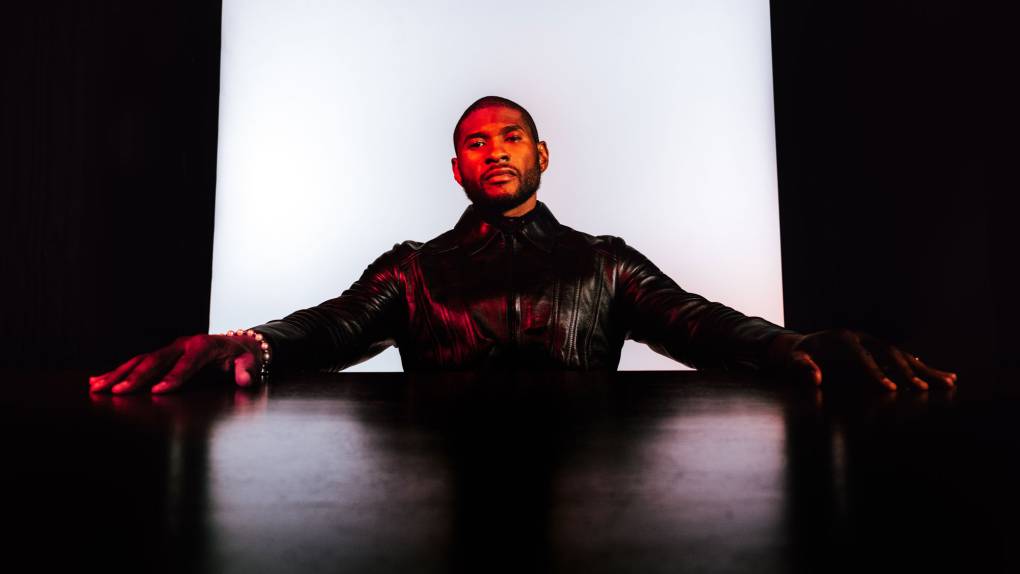
"caption": "Tickets for Usher’s North American tour ‘Past Present Future’ go on sale to the general public Feb. 12.",
"description": null,
"title": "Credit_-Bellamy-Brewster-3_COVER",
"credit": "Bellamy Brewster",
"status": "inherit",
"altTag": "Person lit red in black jacket sits with arms out over dark table",
"isLoading": false,
"fetchFailed": false
},
"arts_13951668": {
"type": "attachments",
"id": "arts_13951668",
"meta": {
"index": "attachments_1716263798",
"site": "arts",
"id": "13951668",
"found": true
},
"parent": 13951651,
"imgSizes": {
"twentyfourteen-full-width": {
"file": "https://cdn.kqed.org/wp-content/uploads/sites/2/2024/02/JadePlant.MAIN_-1038x576.jpg",
"width": 1038,
"mimeType": "image/jpeg",
"height": 576
},
"thumbnail": {
"file": "https://cdn.kqed.org/wp-content/uploads/sites/2/2024/02/JadePlant.MAIN_-160x90.jpg",
"width": 160,
"mimeType": "image/jpeg",
"height": 90
},
"post-thumbnail": {
"file": "https://cdn.kqed.org/wp-content/uploads/sites/2/2024/02/JadePlant.MAIN_-672x372.jpg",
"width": 672,
"mimeType": "image/jpeg",
"height": 372
},
"kqedFullSize": {
"file": "https://cdn.kqed.org/wp-content/uploads/sites/2/2024/02/JadePlant.MAIN_.jpg",
"width": 1456,
"height": 819
},
"large": {
"file": "https://cdn.kqed.org/wp-content/uploads/sites/2/2024/02/JadePlant.MAIN_-1020x574.jpg",
"width": 1020,
"mimeType": "image/jpeg",
"height": 574
},
"medium": {
"file": "https://cdn.kqed.org/wp-content/uploads/sites/2/2024/02/JadePlant.MAIN_-800x450.jpg",
"width": 800,
"mimeType": "image/jpeg",
"height": 450
},
"medium_large": {
"file": "https://cdn.kqed.org/wp-content/uploads/sites/2/2024/02/JadePlant.MAIN_-768x432.jpg",
"width": 768,
"mimeType": "image/jpeg",
"height": 432
}
},
"publishDate": 1707249577,
"modified": 1707249635,
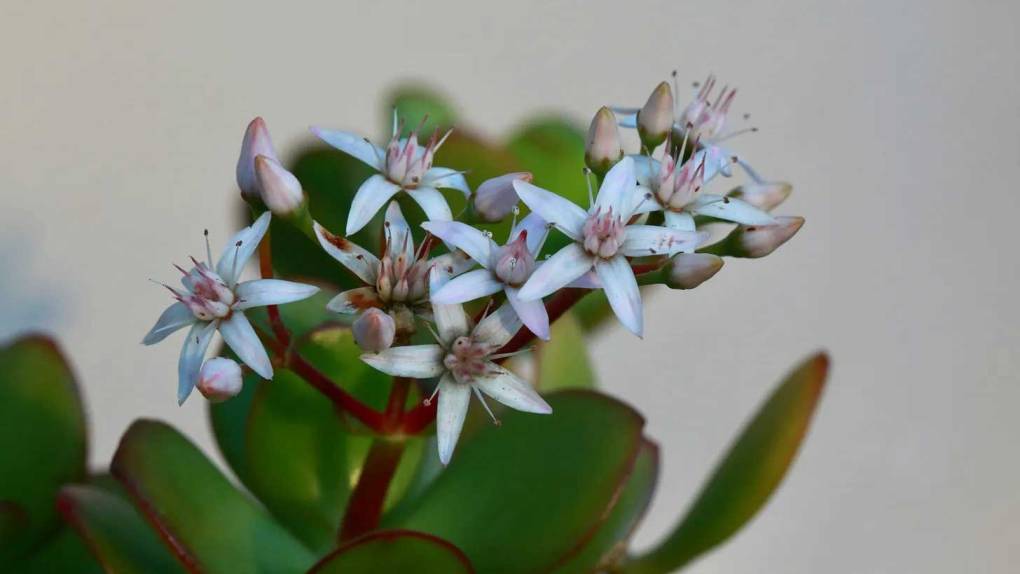
"caption": "As a longtime resident of the East Bay, the jade plant is a marker of 'old Bay Area.'",
"description": null,
"title": "JadePlant.MAIN",
"credit": "Alexis Madrigal/KQED",
"status": "inherit",
"altTag": "CLose-up of white five-point flowers with a pink center growing from bulbous green leaves.",
"isLoading": false,
"fetchFailed": false
},
"arts_13951339": {
"type": "attachments",
"id": "arts_13951339",
"meta": {
"index": "attachments_1716263798",
"site": "arts",
"id": "13951339",
"found": true
},
"parent": 13951325,
"imgSizes": {
"twentyfourteen-full-width": {
"file": "https://cdn.kqed.org/wp-content/uploads/sites/2/2024/02/B52s.16x9-1038x576.jpg",
"width": 1038,
"mimeType": "image/jpeg",
"height": 576
},
"thumbnail": {
"file": "https://cdn.kqed.org/wp-content/uploads/sites/2/2024/02/B52s.16x9-160x90.jpg",
"width": 160,
"mimeType": "image/jpeg",
"height": 90
},
"post-thumbnail": {
"file": "https://cdn.kqed.org/wp-content/uploads/sites/2/2024/02/B52s.16x9-672x372.jpg",
"width": 672,
"mimeType": "image/jpeg",
"height": 372
},
"kqedFullSize": {
"file": "https://cdn.kqed.org/wp-content/uploads/sites/2/2024/02/B52s.16x9-scaled.jpg",
"width": 2560,
"height": 1440
},
"2048x2048": {
"file": "https://cdn.kqed.org/wp-content/uploads/sites/2/2024/02/B52s.16x9-2048x1152.jpg",
"width": 2048,
"mimeType": "image/jpeg",
"height": 1152
},
"large": {
"file": "https://cdn.kqed.org/wp-content/uploads/sites/2/2024/02/B52s.16x9-1020x574.jpg",
"width": 1020,
"mimeType": "image/jpeg",
"height": 574
},
"1536x1536": {
"file": "https://cdn.kqed.org/wp-content/uploads/sites/2/2024/02/B52s.16x9-1536x864.jpg",
"width": 1536,
"mimeType": "image/jpeg",
"height": 864
},
"full-width": {
"file": "https://cdn.kqed.org/wp-content/uploads/sites/2/2024/02/B52s.16x9-1920x1080.jpg",
"width": 1920,
"mimeType": "image/jpeg",
"height": 1080
},
"medium": {
"file": "https://cdn.kqed.org/wp-content/uploads/sites/2/2024/02/B52s.16x9-800x450.jpg",
"width": 800,
"mimeType": "image/jpeg",
"height": 450
},
"medium_large": {
"file": "https://cdn.kqed.org/wp-content/uploads/sites/2/2024/02/B52s.16x9-768x432.jpg",
"width": 768,
"mimeType": "image/jpeg",
"height": 432
}
},
"publishDate": 1706809808,
"modified": 1706809897,
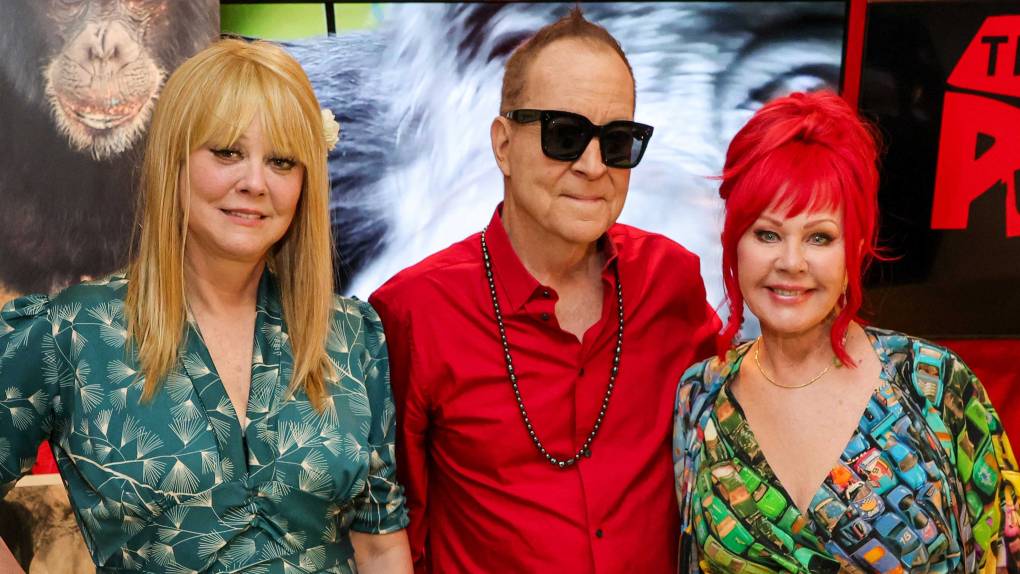
"caption": "Cindy Wilson, Fred Schneider and Kate Pierson of The B-52s at The Punk Rock Museum in Las Vegas in 2023. The band will headline this year's Mosswood Meltdown festival in Oakland.",
"description": null,
"title": "B52s.16x9",
"credit": "Ethan Miller/Getty Images",
"status": "inherit",
"altTag": null,
"isLoading": false,
"fetchFailed": false
}
},
"audioPlayerReducer": {
"postId": "stream_live",
"isPaused": true,
"isPlaying": false,
"pfsActive": false,
"pledgeModalIsOpen": true,
"playerDrawerIsOpen": false,
"liveAudioPlayStartedAt": 0,
"liveAudioPlayContext": ""
},
"authorsReducer": {
"shotchkiss": {
"type": "authors",
"id": "61",
"meta": {
"index": "authors_1716337520",
"id": "61",
"found": true
},
"name": "Sarah Hotchkiss",
"firstName": "Sarah",
"lastName": "Hotchkiss",
"slug": "shotchkiss",
"email": "shotchkiss@kqed.org",
"display_author_email": true,
"staff_mastheads": [
"arts"
],
"title": "Senior Editor",
"bio": "Sarah Hotchkiss is a San Francisco \u003ca href=\"http://www.sarahhotchkiss.com\">artist\u003c/a> and arts writer. In 2019, she received the Dorothea & Leo Rabkin Foundation grant for visual art journalism and in 2020 she received a Society of Professional Journalists, Northern California award for excellence in arts and culture reporting.",
"avatar": "https://secure.gravatar.com/avatar/bc662df144b3d27fd8b1b6f1c2a420d34e91e53154d411bb7ad353cc8b6cea8d?s=600&d=blank&r=g",
"twitter": null,
"bluesky": null,
"facebook": null,
"instagram": null,
"linkedin": null,
"sites": [
{
"site": "",
"roles": [
"editor"
]
},
{
"site": "arts",
"roles": [
"Contributor",
"administrator"
]
},
{
"site": "artschool",
"roles": [
"administrator"
]
},
{
"site": "news",
"roles": [
"editor"
]
},
{
"site": "pop",
"roles": [
"administrator"
]
},
{
"site": "bayareabites",
"roles": [
"editor"
]
},
{
"site": "spark",
"roles": [
"editor"
]
},
{
"site": "checkplease",
"roles": [
"editor"
]
}
],
"headData": {
"title": "Sarah Hotchkiss | KQED",
"description": "Senior Editor",
"ogImgSrc": "https://secure.gravatar.com/avatar/bc662df144b3d27fd8b1b6f1c2a420d34e91e53154d411bb7ad353cc8b6cea8d?s=600&d=blank&r=g",
"twImgSrc": "https://secure.gravatar.com/avatar/bc662df144b3d27fd8b1b6f1c2a420d34e91e53154d411bb7ad353cc8b6cea8d?s=600&d=blank&r=g"
},
"isLoading": false,
"link": "/author/shotchkiss"
},
"ralexandra": {
"type": "authors",
"id": "11242",
"meta": {
"index": "authors_1716337520",
"id": "11242",
"found": true
},
"name": "Rae Alexandra",
"firstName": "Rae",
"lastName": "Alexandra",
"slug": "ralexandra",
"email": "ralexandra@kqed.org",
"display_author_email": true,
"staff_mastheads": [
"arts"
],
"title": "Reporter/Producer",
"bio": "Rae Alexandra is a Reporter/Producer for KQED Arts & Culture, and the creator/author of the \u003ca href=\"https://www.kqed.org/arts/program/rebel-girls-from-bay-area-history\">Rebel Girls From Bay Area History\u003c/a> and \u003ca href=\"https://www.kqed.org/bizarrebayarea\">Bizarre Bay Area\u003c/a> series. Her debut book, \u003ca href=\"https://citylights.com/politics-current-events-history/unsung-heroines35-women-who-changed/\">Unsung Heroines: 35 Women Who Changed the Bay Area\u003c/a> was published by City Lights in March 2026. In 2023, Rae was awarded an SPJ Excellence in Journalism Award for Arts & Culture. Rae was born and raised in Wales and subsequently — even after two decades in Northern California — still uses phrases that regularly baffle her coworkers.",
"avatar": "https://secure.gravatar.com/avatar/edfee8176c80cc0a382b051190f5341997df378a934a5774dcb0977732dfd401?s=600&d=blank&r=g",
"twitter": null,
"bluesky": null,
"facebook": null,
"instagram": null,
"linkedin": null,
"sites": [
{
"site": "arts",
"roles": [
"editor"
]
},
{
"site": "news",
"roles": [
"editor"
]
},
{
"site": "pop",
"roles": [
"editor"
]
},
{
"site": "bayareabites",
"roles": [
"editor"
]
},
{
"site": "science",
"roles": [
"editor"
]
}
],
"headData": {
"title": "Rae Alexandra | KQED",
"description": "Reporter/Producer",
"ogImgSrc": "https://secure.gravatar.com/avatar/edfee8176c80cc0a382b051190f5341997df378a934a5774dcb0977732dfd401?s=600&d=blank&r=g",
"twImgSrc": "https://secure.gravatar.com/avatar/edfee8176c80cc0a382b051190f5341997df378a934a5774dcb0977732dfd401?s=600&d=blank&r=g"
},
"isLoading": false,
"link": "/author/ralexandra"
},
"nvoynovskaya": {
"type": "authors",
"id": "11387",
"meta": {
"index": "authors_1716337520",
"id": "11387",
"found": true
},
"name": "Nastia Voynovskaya",
"firstName": "Nastia",
"lastName": "Voynovskaya",
"slug": "nvoynovskaya",
"email": "nvoynovskaya@kqed.org",
"display_author_email": false,
"staff_mastheads": [
"arts"
],
"title": "Editor and reporter",
"bio": "Nastia Voynovskaya is a reporter and editor at KQED Arts & Culture. She's been covering the arts in the Bay Area for over a decade, with a focus on music, queer culture, labor issues and grassroots organizing. She has edited KQED story series such as Trans Bay: A History of San Francisco's Gender-Diverse Community, and co-created KQED's Bay Area hip-hop history project, That's My Word. Nastia's work has been recognized by the Society of Professional Journalists and San Francisco Press Club. She holds a BA in comparative literature from UC Berkeley.",
"avatar": "https://secure.gravatar.com/avatar/5025ee460e5a85d69ca20ea6c6f2f80d7e17795c828f61ea3aecfcd924e9042e?s=600&d=blank&r=g",
"twitter": null,
"bluesky": null,
"facebook": null,
"instagram": "https://www.instagram.com/nananastia/",
"linkedin": null,
"sites": [
{
"site": "arts",
"roles": [
"administrator"
]
},
{
"site": "news",
"roles": [
"editor"
]
},
{
"site": "pop",
"roles": [
"administrator"
]
},
{
"site": "bayareabites",
"roles": [
"editor"
]
},
{
"site": "podcasts",
"roles": [
"editor"
]
},
{
"site": "hiphop",
"roles": [
"editor"
]
}
],
"headData": {
"title": "Nastia Voynovskaya | KQED",
"description": "Editor and reporter",
"ogImgSrc": "https://secure.gravatar.com/avatar/5025ee460e5a85d69ca20ea6c6f2f80d7e17795c828f61ea3aecfcd924e9042e?s=600&d=blank&r=g",
"twImgSrc": "https://secure.gravatar.com/avatar/5025ee460e5a85d69ca20ea6c6f2f80d7e17795c828f61ea3aecfcd924e9042e?s=600&d=blank&r=g"
},
"isLoading": false,
"link": "/author/nvoynovskaya"
},
"ogpenn": {
"type": "authors",
"id": "11491",
"meta": {
"index": "authors_1716337520",
"id": "11491",
"found": true
},
"name": "Pendarvis Harshaw",
"firstName": "Pendarvis",
"lastName": "Harshaw",
"slug": "ogpenn",
"email": "ogpenn@gmail.com",
"display_author_email": false,
"staff_mastheads": [
"arts"
],
"title": "Community Engagement Reporter",
"bio": "Pendarvis Harshaw is an educator, host and writer with KQED Arts.",
"avatar": "https://secure.gravatar.com/avatar/972b77ee8e3f346ae2b00622661187fbfabd059b5693bbdc1475ea7a722fd4cd?s=600&d=blank&r=g",
"twitter": null,
"bluesky": null,
"facebook": null,
"instagram": "ogpenn",
"linkedin": null,
"sites": [
{
"site": "arts",
"roles": [
"administrator"
]
},
{
"site": "news",
"roles": [
"editor"
]
},
{
"site": "bayareabites",
"roles": [
"author"
]
},
{
"site": "hiphop",
"roles": [
"editor"
]
}
],
"headData": {
"title": "Pendarvis Harshaw | KQED",
"description": "Community Engagement Reporter",
"ogImgSrc": "https://secure.gravatar.com/avatar/972b77ee8e3f346ae2b00622661187fbfabd059b5693bbdc1475ea7a722fd4cd?s=600&d=blank&r=g",
"twImgSrc": "https://secure.gravatar.com/avatar/972b77ee8e3f346ae2b00622661187fbfabd059b5693bbdc1475ea7a722fd4cd?s=600&d=blank&r=g"
},
"isLoading": false,
"link": "/author/ogpenn"
},
"ltsai": {
"type": "authors",
"id": "11743",
"meta": {
"index": "authors_1716337520",
"id": "11743",
"found": true
},
"name": "Luke Tsai",
"firstName": "Luke",
"lastName": "Tsai",
"slug": "ltsai",
"email": "ltsai@kqed.org",
"display_author_email": true,
"staff_mastheads": [
"arts"
],
"title": "Food Editor",
"bio": "Luke Tsai is KQED's food editor and resident stinky tofu connoisseur. Prior to KQED, he was an editor at Eater SF, \u003cem>San Francisco \u003c/em>magazine, and the \u003cem>East Bay Express\u003c/em>, and his work has also appeared in TASTE, the \u003cem>San Francisco Chronicle\u003c/em>, and the \u003cem>Best Food Writing\u003c/em> anthology. When he isn't writing or editing, you'll find him eating most everything he can get his hands on.",
"avatar": "https://secure.gravatar.com/avatar/1e59b45bf191526e7339d6ba46e33a57b2030d25c27660ecc64ea3cb863e34f7?s=600&d=blank&r=g",
"twitter": "theluketsai",
"bluesky": null,
"facebook": null,
"instagram": null,
"linkedin": null,
"sites": [
{
"site": "",
"roles": [
"editor"
]
},
{
"site": "arts",
"roles": [
"administrator"
]
},
{
"site": "news",
"roles": [
"editor",
"contributor"
]
},
{
"site": "bayareabites",
"roles": [
"editor"
]
},
{
"site": "food",
"roles": [
"editor"
]
}
],
"headData": {
"title": "Luke Tsai | KQED",
"description": "Food Editor",
"ogImgSrc": "https://secure.gravatar.com/avatar/1e59b45bf191526e7339d6ba46e33a57b2030d25c27660ecc64ea3cb863e34f7?s=600&d=blank&r=g",
"twImgSrc": "https://secure.gravatar.com/avatar/1e59b45bf191526e7339d6ba46e33a57b2030d25c27660ecc64ea3cb863e34f7?s=600&d=blank&r=g"
},
"isLoading": false,
"link": "/author/ltsai"
},
"achazaro": {
"type": "authors",
"id": "11748",
"meta": {
"index": "authors_1716337520",
"id": "11748",
"found": true
},
"name": "Alan Chazaro",
"firstName": "Alan",
"lastName": "Chazaro",
"slug": "achazaro",
"email": "agchazaro@gmail.com",
"display_author_email": true,
"staff_mastheads": [],
"title": "Food Writer and Reporter",
"bio": "Alan Chazaro is the author of \u003cem>This Is Not a Frank Ocean Cover Album\u003c/em> (Black Lawrence Press, 2019), \u003cem>Piñata Theory\u003c/em> (Black Lawrence Press, 2020), and \u003cem>Notes from the Eastern Span of the Bay Bridge\u003c/em> (Ghost City Press, 2021). He is a graduate of June Jordan’s Poetry for the People program at UC Berkeley and a former Lawrence Ferlinghetti Fellow at the University of San Francisco. He writes about sports, food, art, music, education, and culture while repping the Bay on \u003ca href=\"https://twitter.com/alan_chazaro\">Twitter\u003c/a> and \u003ca href=\"https://www.instagram.com/alan_chazaro/?hl=en\">Instagram\u003c/a> at @alan_chazaro.",
"avatar": "https://secure.gravatar.com/avatar/ea8b6dd970fc5c29e7a188e7d5861df7?s=600&d=blank&r=g",
"twitter": "alan_chazaro",
"facebook": null,
"instagram": null,
"linkedin": null,
"sites": [
{
"site": "arts",
"roles": [
"contributor"
]
},
{
"site": "news",
"roles": [
"editor"
]
}
],
"headData": {
"title": "Alan Chazaro | KQED",
"description": "Food Writer and Reporter",
"ogImgSrc": "https://secure.gravatar.com/avatar/ea8b6dd970fc5c29e7a188e7d5861df7?s=600&d=blank&r=g",
"twImgSrc": "https://secure.gravatar.com/avatar/ea8b6dd970fc5c29e7a188e7d5861df7?s=600&d=blank&r=g"
},
"isLoading": false,
"link": "/author/achazaro"
},
"amadrigal": {
"type": "authors",
"id": "11757",
"meta": {
"index": "authors_1716337520",
"id": "11757",
"found": true
},
"name": "Alexis Madrigal",
"firstName": "Alexis",
"lastName": "Madrigal",
"slug": "amadrigal",
"email": "amadrigal@kqed.org",
"display_author_email": true,
"staff_mastheads": [],
"title": "Co-Host Forum",
"bio": "Alexis Madrigal is the co-host of Forum. He is also a contributing writer at \u003cem>The Atlantic \u003c/em>and the co-founder of the COVID Tracking Project. He's the creator of the podcast, \u003cem>Containers\u003c/em>, and has been a staff writer at \u003cem>Wired. \u003c/em>He was a visiting scholar at UC Berkeley's Information School, and is working on a book about Oakland and the Bay Area's revolutionary ideas.",
"avatar": "https://secure.gravatar.com/avatar/200d13dd6cebef55bf04327dec901b3d?s=600&d=blank&r=g",
"twitter": "alexismadrigal",
"bluesky": null,
"facebook": null,
"instagram": null,
"linkedin": null,
"sites": [
{
"site": "arts",
"roles": [
"editor"
]
},
{
"site": "news",
"roles": [
"editor"
]
},
{
"site": "forum",
"roles": [
"editor"
]
}
],
"headData": {
"title": "Alexis Madrigal | KQED",
"description": "Co-Host Forum",
"ogImgSrc": "https://secure.gravatar.com/avatar/200d13dd6cebef55bf04327dec901b3d?s=600&d=blank&r=g",
"twImgSrc": "https://secure.gravatar.com/avatar/200d13dd6cebef55bf04327dec901b3d?s=600&d=blank&r=g"
},
"isLoading": false,
"link": "/author/amadrigal"
}
},
"pagesReducer": {
"arts_tag_oakland": {
"type": "terms",
"id": "arts_1143",
"meta": {
"index": "terms_1716263798",
"site": "arts",
"id": "1143",
"score": 6.883923
},
"featImg": null,
"name": "Oakland",
"description": null,
"taxonomy": "tag",
"headData": {
"twImgId": null,
"twTitle": null,
"ogTitle": null,
"ogImgId": null,
"twDescription": null,
"description": null,
"title": "Oakland Archives | KQED Arts",
"ogDescription": null
},
"ttid": 692,
"slug": "oakland",
"isLoading": false,
"title": "Oakland",
"pageMeta": {
"site": "arts",
"WpPageTemplate": "page-topic-editorial",
"currentPage": 22
},
"blocks": [
{
"blockName": "kqed/post-list",
"attrs": {
"layout": "cardArticle2",
"query": "posts/arts?tag=oakland",
"seeMore": false,
"paginated": true,
"page": 22
}
},
{
"blockName": "kqed/ad"
}
]
}
},
"pfsSessionReducer": {},
"postsReducer": {
"stream_live": {
"type": "live",
"id": "stream_live",
"audioUrl": "https://streams.kqed.org/kqedradio",
"title": "Live Stream",
"excerpt": "Live Stream information currently unavailable.",
"link": "/radio",
"featImg": "",
"label": {
"name": "KQED Live",
"link": "/"
}
},
"stream_kqedNewscast": {
"type": "posts",
"id": "stream_kqedNewscast",
"audioUrl": "https://www.kqed.org/.stream/anon/radio/RDnews/newscast.mp3?_=1",
"title": "KQED Newscast",
"featImg": "",
"label": {
"name": "88.5 FM",
"link": "/"
}
},
"arts_13953013": {
"type": "posts",
"id": "arts_13953013",
"meta": {
"index": "posts_1716263798",
"site": "arts",
"id": "13953013",
"score": null,
"sort": [
1709056947000
]
},
"guestAuthors": [],
"slug": "raymond-cooper-oakland-photography-1970s-east-bay-photo-collective",
"title": "‘Raymond Cooper’s Oakland’ Tells Everyday Stories of a Bygone Era",
"publishDate": 1709056947,
"format": "standard",
"headTitle": "‘Raymond Cooper’s Oakland’ Tells Everyday Stories of a Bygone Era | KQED",
"labelTerm": {
"term": 140,
"site": "arts"
},
"content": "\u003cp>When we look back on history, all too often we stay focused on the big events — the disasters, the elections, the assassinations. But when it comes to getting an accurate view of a bygone era, it’s almost always the footage of everyday occurrences that tells us the most.\u003c/p>\n\u003cp>[aside postid='arts_13950886']\u003cem>Raymond Cooper’s Oakland\u003c/em>, a photography collection currently on display at the \u003ca href=\"https://www.ebpco.org/opw\">Oakland Photo Workshop\u003c/a>, does just that. In Cooper’s images, we see snapshots of lives and characters, places and social events that vividly take us back to the streets and living rooms of 1970s Oakland. Two young men hanging on a street corner. Children posing with a parked Chrysler Sunbeam. A woman with a beautiful Afro smoking a cigarette on her porch. A Black cowboy riding through a parade.\u003c/p>\n\u003cfigure id=\"attachment_13953021\" class=\"wp-caption aligncenter\" style=\"max-width: 2251px\">\u003cimg loading=\"lazy\" decoding=\"async\" class=\"size-full wp-image-13953021\" src=\"https://cdn.kqed.org/wp-content/uploads/sites/2/2024/02/kids.jpg\" alt=\"Two children sit on the floor of a comfortable living room. They are surrounded by green plants, a white lamp behind them. \" width=\"2251\" height=\"1676\" srcset=\"https://cdn.kqed.org/wp-content/uploads/sites/2/2024/02/kids.jpg 2251w, https://cdn.kqed.org/wp-content/uploads/sites/2/2024/02/kids-800x596.jpg 800w, https://cdn.kqed.org/wp-content/uploads/sites/2/2024/02/kids-1020x759.jpg 1020w, https://cdn.kqed.org/wp-content/uploads/sites/2/2024/02/kids-160x119.jpg 160w, https://cdn.kqed.org/wp-content/uploads/sites/2/2024/02/kids-768x572.jpg 768w, https://cdn.kqed.org/wp-content/uploads/sites/2/2024/02/kids-1536x1144.jpg 1536w, https://cdn.kqed.org/wp-content/uploads/sites/2/2024/02/kids-2048x1525.jpg 2048w, https://cdn.kqed.org/wp-content/uploads/sites/2/2024/02/kids-1920x1430.jpg 1920w\" sizes=\"(max-width: 2251px) 100vw, 2251px\">\u003cfigcaption class=\"wp-caption-text\">Intimate family portraits are a high point of ‘Raymond Cooper’s Oakland.’ \u003ccite>(Rae Alexandra)\u003c/cite>\u003c/figcaption>\u003c/figure>\n\u003cp>The images feel warm, familiar and intimate. They might not be of your friends and family, but they’ll make you think of the people who are. And their ability to take us to the least documented corners of the Town of 50 years ago is what makes them just a little bit magical.\u003c/p>\n\u003cp>The pictures on display represent an eclectic hodgepodge of Cooper’s two decades working as a photographer. (He also owned Sundance, a camera supply store on Webster Street.) In addition to Cooper’s street and home photography, there are some distinctly ’70s works of futuristic collage, a collection of fashion portraiture and some behind-the-scenes snaps, often involving hair stylists.\u003c/p>\n\u003cfigure id=\"attachment_13953026\" class=\"wp-caption aligncenter\" style=\"max-width: 1458px\">\u003cimg loading=\"lazy\" decoding=\"async\" class=\"size-full wp-image-13953026\" src=\"https://cdn.kqed.org/wp-content/uploads/sites/2/2024/02/Screen-Shot-2024-02-26-at-1.58.59-PM.png\" alt=\"A young white man wearing short shorts and knee high tube socks plays an arcade game.\" width=\"1458\" height=\"972\" srcset=\"https://cdn.kqed.org/wp-content/uploads/sites/2/2024/02/Screen-Shot-2024-02-26-at-1.58.59-PM.png 1458w, https://cdn.kqed.org/wp-content/uploads/sites/2/2024/02/Screen-Shot-2024-02-26-at-1.58.59-PM-800x533.png 800w, https://cdn.kqed.org/wp-content/uploads/sites/2/2024/02/Screen-Shot-2024-02-26-at-1.58.59-PM-1020x680.png 1020w, https://cdn.kqed.org/wp-content/uploads/sites/2/2024/02/Screen-Shot-2024-02-26-at-1.58.59-PM-160x107.png 160w, https://cdn.kqed.org/wp-content/uploads/sites/2/2024/02/Screen-Shot-2024-02-26-at-1.58.59-PM-768x512.png 768w\" sizes=\"(max-width: 1458px) 100vw, 1458px\">\u003cfigcaption class=\"wp-caption-text\">Little is known about most of the locations and subjects of Cooper’s photos, but they distinctly reflect the era in which they were taken. \u003ccite>(Courtesy of the East Bay Photo Collective/ Aja Cooper)\u003c/cite>\u003c/figcaption>\u003c/figure>\n\u003cp>\u003ca href=\"https://www.sfgate.com/local/article/stolen-photos-reveal-1970s-oakland-17494418.php\">The story of how Cooper’s photography got this little renaissance\u003c/a> is a delightful one. In 2021, a skateboarder named Ben Tolford rescued several binders of slides that had been dumped next to a trashcan in Oakland. While studying them at home, he found a self-portrait of Cooper that had the photographer’s name on it. He also found a baby picture with the name Aja on it. Tolford used social media to locate her — Aja is Cooper’s daughter — and returned the slides, which had been stolen from her storage space. Many more of Cooper’s photos had previously been lost in a house fire.\u003c/p>\n\u003cp>[ad fullwidth]\u003c/p>\n\u003cp>What’s left of Cooper’s portfolio tells a colorful story about trends, community and belonging. It provides contemporary audiences with an on-the-ground view of everyday Oakland life half a century ago. And it brings back vivid memories for those who lived through it.\u003c/p>\n\u003cfigure id=\"attachment_13953030\" class=\"wp-caption aligncenter\" style=\"max-width: 1920px\">\u003cimg loading=\"lazy\" decoding=\"async\" class=\"size-full wp-image-13953030\" src=\"https://cdn.kqed.org/wp-content/uploads/sites/2/2024/02/raymondatsundance-scaled-e1708988629717.jpg\" alt=\"A slightly damaged photograph of a Black man on the phone inside a small business. He is waving to the photographer.\" width=\"1920\" height=\"1372\">\u003cfigcaption class=\"wp-caption-text\">Raymond Cooper working at his downtown Oakland photography supply store, Sundance. \u003ccite>(Courtesy of the East Bay Photo Collective)\u003c/cite>\u003c/figcaption>\u003c/figure>\n\u003cp>At the exhibit’s opening party, an image featuring the downtown Oakland Doggie Diner prompted one man next to me to reminisce about the restaurant’s former proximity to a furniture store that sold, in his words, “the wildest furniture” and “you know, all that leopard print and shag.” Thanks to Raymond Cooper, that’s not so difficult to picture.\u003c/p>\n\u003cp>\u003c/p>\n\u003cp>\u003cimg loading=\"lazy\" decoding=\"async\" class=\"aligncenter size-medium wp-image-12127869\" src=\"https://ww2.kqed.org/arts/wp-content/uploads/sites/2/2016/09/Q.Logo_.Break_-800x78.jpg\" alt=\"\" width=\"800\" height=\"78\" srcset=\"https://cdn.kqed.org/wp-content/uploads/sites/2/2016/09/Q.Logo_.Break_.jpg 800w, https://cdn.kqed.org/wp-content/uploads/sites/2/2016/09/Q.Logo_.Break_-400x39.jpg 400w, https://cdn.kqed.org/wp-content/uploads/sites/2/2016/09/Q.Logo_.Break_-768x75.jpg 768w\" sizes=\"(max-width: 800px) 100vw, 800px\">\u003cem>‘Raymond Cooper’s Oakland’ is on display at the \u003ca href=\"https://www.ebpco.org/opw\">Oakland Photo Workshop\u003c/a> (312 8th Street) through April 21, 2024. Aja Cooper will appear in conversation with ‘East Bay Yesterday’ host Liam O’Donoghue on April 5 at 7 p.m.\u003c/em>\u003c/p>\n\n",
"blocks": [],
"excerpt": "A new exhibit by the East Bay Photo Collective presents one man's colorful view of 1970s Oakland.",
"status": "publish",
"parent": 0,
"modified": 1726771020,
"stats": {
"hasAudio": false,
"hasVideo": false,
"hasChartOrMap": false,
"iframeSrcs": [],
"hasGoogleForm": false,
"hasGallery": false,
"hasHearkenModule": false,
"hasPolis": false,
"paragraphCount": 10,
"wordCount": 602
},
"headData": {
"title": "‘Raymond Cooper’s Oakland’ Tells Everyday Stories of a Bygone Era | KQED",
"description": "A new exhibit by the East Bay Photo Collective presents one man's colorful view of 1970s Oakland.",
"ogTitle": "",
"ogDescription": "",
"ogImgId": "",
"twTitle": "",
"twDescription": "",
"twImgId": "",
"schema": {
"@context": "https://schema.org",
"@type": "Article",
"headline": "‘Raymond Cooper’s Oakland’ Tells Everyday Stories of a Bygone Era",
"datePublished": "2024-02-27T10:02:27-08:00",
"dateModified": "2024-09-19T11:37:00-07:00",
"image": "https://cdn.kqed.org/wp-content/uploads/2020/02/KQED-OG-Image@1x.png"
}
},
"sticky": false,
"templateType": "standard",
"featuredImageType": "standard",
"excludeFromSiteSearch": "Include",
"articleAge": "0",
"path": "/arts/13953013/raymond-cooper-oakland-photography-1970s-east-bay-photo-collective",
"audioTrackLength": null,
"parsedContent": [
{
"type": "contentString",
"content": "\u003cdiv class=\"post-body\">\u003cp>\u003cp>When we look back on history, all too often we stay focused on the big events — the disasters, the elections, the assassinations. But when it comes to getting an accurate view of a bygone era, it’s almost always the footage of everyday occurrences that tells us the most.\u003c/p>\n\u003cp>\u003c/p>\u003c/div>",
"attributes": {
"named": {},
"numeric": []
}
},
{
"type": "component",
"content": "",
"name": "aside",
"attributes": {
"named": {
"postid": "arts_13950886",
"label": ""
},
"numeric": []
}
},
{
"type": "contentString",
"content": "\u003cdiv class=\"post-body\">\u003cp>\u003cem>Raymond Cooper’s Oakland\u003c/em>, a photography collection currently on display at the \u003ca href=\"https://www.ebpco.org/opw\">Oakland Photo Workshop\u003c/a>, does just that. In Cooper’s images, we see snapshots of lives and characters, places and social events that vividly take us back to the streets and living rooms of 1970s Oakland. Two young men hanging on a street corner. Children posing with a parked Chrysler Sunbeam. A woman with a beautiful Afro smoking a cigarette on her porch. A Black cowboy riding through a parade.\u003c/p>\n\u003cfigure id=\"attachment_13953021\" class=\"wp-caption aligncenter\" style=\"max-width: 2251px\">\u003cimg loading=\"lazy\" decoding=\"async\" class=\"size-full wp-image-13953021\" src=\"https://cdn.kqed.org/wp-content/uploads/sites/2/2024/02/kids.jpg\" alt=\"Two children sit on the floor of a comfortable living room. They are surrounded by green plants, a white lamp behind them. \" width=\"2251\" height=\"1676\" srcset=\"https://cdn.kqed.org/wp-content/uploads/sites/2/2024/02/kids.jpg 2251w, https://cdn.kqed.org/wp-content/uploads/sites/2/2024/02/kids-800x596.jpg 800w, https://cdn.kqed.org/wp-content/uploads/sites/2/2024/02/kids-1020x759.jpg 1020w, https://cdn.kqed.org/wp-content/uploads/sites/2/2024/02/kids-160x119.jpg 160w, https://cdn.kqed.org/wp-content/uploads/sites/2/2024/02/kids-768x572.jpg 768w, https://cdn.kqed.org/wp-content/uploads/sites/2/2024/02/kids-1536x1144.jpg 1536w, https://cdn.kqed.org/wp-content/uploads/sites/2/2024/02/kids-2048x1525.jpg 2048w, https://cdn.kqed.org/wp-content/uploads/sites/2/2024/02/kids-1920x1430.jpg 1920w\" sizes=\"(max-width: 2251px) 100vw, 2251px\">\u003cfigcaption class=\"wp-caption-text\">Intimate family portraits are a high point of ‘Raymond Cooper’s Oakland.’ \u003ccite>(Rae Alexandra)\u003c/cite>\u003c/figcaption>\u003c/figure>\n\u003cp>The images feel warm, familiar and intimate. They might not be of your friends and family, but they’ll make you think of the people who are. And their ability to take us to the least documented corners of the Town of 50 years ago is what makes them just a little bit magical.\u003c/p>\n\u003cp>The pictures on display represent an eclectic hodgepodge of Cooper’s two decades working as a photographer. (He also owned Sundance, a camera supply store on Webster Street.) In addition to Cooper’s street and home photography, there are some distinctly ’70s works of futuristic collage, a collection of fashion portraiture and some behind-the-scenes snaps, often involving hair stylists.\u003c/p>\n\u003cfigure id=\"attachment_13953026\" class=\"wp-caption aligncenter\" style=\"max-width: 1458px\">\u003cimg loading=\"lazy\" decoding=\"async\" class=\"size-full wp-image-13953026\" src=\"https://cdn.kqed.org/wp-content/uploads/sites/2/2024/02/Screen-Shot-2024-02-26-at-1.58.59-PM.png\" alt=\"A young white man wearing short shorts and knee high tube socks plays an arcade game.\" width=\"1458\" height=\"972\" srcset=\"https://cdn.kqed.org/wp-content/uploads/sites/2/2024/02/Screen-Shot-2024-02-26-at-1.58.59-PM.png 1458w, https://cdn.kqed.org/wp-content/uploads/sites/2/2024/02/Screen-Shot-2024-02-26-at-1.58.59-PM-800x533.png 800w, https://cdn.kqed.org/wp-content/uploads/sites/2/2024/02/Screen-Shot-2024-02-26-at-1.58.59-PM-1020x680.png 1020w, https://cdn.kqed.org/wp-content/uploads/sites/2/2024/02/Screen-Shot-2024-02-26-at-1.58.59-PM-160x107.png 160w, https://cdn.kqed.org/wp-content/uploads/sites/2/2024/02/Screen-Shot-2024-02-26-at-1.58.59-PM-768x512.png 768w\" sizes=\"(max-width: 1458px) 100vw, 1458px\">\u003cfigcaption class=\"wp-caption-text\">Little is known about most of the locations and subjects of Cooper’s photos, but they distinctly reflect the era in which they were taken. \u003ccite>(Courtesy of the East Bay Photo Collective/ Aja Cooper)\u003c/cite>\u003c/figcaption>\u003c/figure>\n\u003cp>\u003ca href=\"https://www.sfgate.com/local/article/stolen-photos-reveal-1970s-oakland-17494418.php\">The story of how Cooper’s photography got this little renaissance\u003c/a> is a delightful one. In 2021, a skateboarder named Ben Tolford rescued several binders of slides that had been dumped next to a trashcan in Oakland. While studying them at home, he found a self-portrait of Cooper that had the photographer’s name on it. He also found a baby picture with the name Aja on it. Tolford used social media to locate her — Aja is Cooper’s daughter — and returned the slides, which had been stolen from her storage space. Many more of Cooper’s photos had previously been lost in a house fire.\u003c/p>\n\u003cp>\u003c/p>\u003c/div>",
"attributes": {
"named": {},
"numeric": []
}
},
{
"type": "component",
"content": "",
"name": "ad",
"attributes": {
"named": {
"label": "fullwidth"
},
"numeric": [
"fullwidth"
]
}
},
{
"type": "contentString",
"content": "\u003cdiv class=\"post-body\">\u003cp>\u003c/p>\n\u003cp>What’s left of Cooper’s portfolio tells a colorful story about trends, community and belonging. It provides contemporary audiences with an on-the-ground view of everyday Oakland life half a century ago. And it brings back vivid memories for those who lived through it.\u003c/p>\n\u003cfigure id=\"attachment_13953030\" class=\"wp-caption aligncenter\" style=\"max-width: 1920px\">\u003cimg loading=\"lazy\" decoding=\"async\" class=\"size-full wp-image-13953030\" src=\"https://cdn.kqed.org/wp-content/uploads/sites/2/2024/02/raymondatsundance-scaled-e1708988629717.jpg\" alt=\"A slightly damaged photograph of a Black man on the phone inside a small business. He is waving to the photographer.\" width=\"1920\" height=\"1372\">\u003cfigcaption class=\"wp-caption-text\">Raymond Cooper working at his downtown Oakland photography supply store, Sundance. \u003ccite>(Courtesy of the East Bay Photo Collective)\u003c/cite>\u003c/figcaption>\u003c/figure>\n\u003cp>At the exhibit’s opening party, an image featuring the downtown Oakland Doggie Diner prompted one man next to me to reminisce about the restaurant’s former proximity to a furniture store that sold, in his words, “the wildest furniture” and “you know, all that leopard print and shag.” Thanks to Raymond Cooper, that’s not so difficult to picture.\u003c/p>\n\u003cp>\u003c/p>\n\u003cp>\u003cimg loading=\"lazy\" decoding=\"async\" class=\"aligncenter size-medium wp-image-12127869\" src=\"https://ww2.kqed.org/arts/wp-content/uploads/sites/2/2016/09/Q.Logo_.Break_-800x78.jpg\" alt=\"\" width=\"800\" height=\"78\" srcset=\"https://cdn.kqed.org/wp-content/uploads/sites/2/2016/09/Q.Logo_.Break_.jpg 800w, https://cdn.kqed.org/wp-content/uploads/sites/2/2016/09/Q.Logo_.Break_-400x39.jpg 400w, https://cdn.kqed.org/wp-content/uploads/sites/2/2016/09/Q.Logo_.Break_-768x75.jpg 768w\" sizes=\"(max-width: 800px) 100vw, 800px\">\u003cem>‘Raymond Cooper’s Oakland’ is on display at the \u003ca href=\"https://www.ebpco.org/opw\">Oakland Photo Workshop\u003c/a> (312 8th Street) through April 21, 2024. Aja Cooper will appear in conversation with ‘East Bay Yesterday’ host Liam O’Donoghue on April 5 at 7 p.m.\u003c/em>\u003c/p>\n\n\u003c/div>\u003c/p>",
"attributes": {
"named": {},
"numeric": []
}
}
],
"link": "/arts/13953013/raymond-cooper-oakland-photography-1970s-east-bay-photo-collective",
"authors": [
"11242"
],
"programs": [
"arts_140"
],
"categories": [
"arts_1"
],
"tags": [
"arts_8530",
"arts_10342",
"arts_10278",
"arts_1143",
"arts_822",
"arts_769",
"arts_585"
],
"featImg": "arts_13953028",
"label": "arts_140"
},
"arts_13952712": {
"type": "posts",
"id": "arts_13952712",
"meta": {
"index": "posts_1716263798",
"site": "arts",
"id": "13952712",
"score": null,
"sort": [
1708618452000
]
},
"guestAuthors": [],
"slug": "kingmakers-of-oakland-black-history-month-film-festival-music-videos",
"title": "Celebrate Black History, Cinema and Music With Kingmakers of Oakland",
"publishDate": 1708618452,
"format": "standard",
"headTitle": "Celebrate Black History, Cinema and Music With Kingmakers of Oakland | KQED",
"labelTerm": {
"term": 140,
"site": "arts"
},
"content": "\u003cp>\u003ca href=\"https://www.kingmakersofoakland.org/\">Kingmakers of Oakland\u003c/a> (KOO) is an East Bay nonprofit best known for working with educators and kids to improve educational outcomes for young Black men. That the organization works hard to make that process as engaging, inventive and dope as possible gets less attention — but it’s a huge reason for KOO’s success.\u003c/p>\n\u003cp>On Feb. 23, KOO will finally let its ingeniously creative side shine bright — so bright, in fact, that it needs a big screen.\u003c/p>\n\u003cp>[aside postid='arts_13952570']Held at Oakland’s New Parkway Theater, the KOO Film Festival will honor Black History Month with 18 short films by people involved with the organization’s programs. With a mixture of music videos, behind-the-scenes making-of summaries, and profiles of educators and students who’ve and made a difference in their communities, the evening celebrates Black animators, musicians, creators and everyone who’s made Kingmakers of Oakland what it is.\u003c/p>\n\u003cp>One film in the program is the music video for “I’m a King,” an empowering three-minute anthem featuring \u003ca href=\"https://www.instagram.com/basi.sts/\">Basi\u003c/a>, \u003ca href=\"https://soundcloud.com/amc_510\">Amari\u003c/a>, \u003ca href=\"https://music.apple.com/us/artist/42k-lil/1426737083\">42k Lil\u003c/a> and \u003ca href=\"https://soundcloud.com/antihero510\">Anti Hero 510\u003c/a>. The accompanying visuals juxtapose historical figures like Martin Luther King, Marcus Garvey and Malcolm X with thriving young men working together and finding their power today.\u003c/p>\n\u003cp>https://www.youtube.com/watch?v=8sefV3bBMk4\u003c/p>\n\u003cp>[ad fullwidth]\u003c/p>\n\u003cp>The track and video perfectly encapsulate the work that KOO does; certain lyrics even explain the importance of the organization’s mission. Sample: “I read this book on Marcus Garvey and I loved it / But the crazy thing about all them schools being public / Is that my teachers made it seem like all that Black lit was radical.”\u003c/p>\n\u003cp>“I’m a King” and the animated video “\u003ca href=\"https://www.youtube.com/watch?v=E8_ZVmtzsTQ\">Glisten\u003c/a>” — which also screens at the festival — are both taken from \u003cem>\u003ca href=\"https://open.spotify.com/album/1Ekg7wQkF21Kkr3CPt818t\">Full Royalty\u003c/a>, \u003c/em>a 14-track album by Kingmakers of Oakland that’s available to stream and download now.\u003c/p>\n\u003cp>\u003cimg loading=\"lazy\" decoding=\"async\" class=\"aligncenter size-medium wp-image-12127869\" src=\"https://ww2.kqed.org/arts/wp-content/uploads/sites/2/2016/09/Q.Logo_.Break_-800x78.jpg\" alt=\"\" width=\"800\" height=\"78\" srcset=\"https://cdn.kqed.org/wp-content/uploads/sites/2/2016/09/Q.Logo_.Break_.jpg 800w, https://cdn.kqed.org/wp-content/uploads/sites/2/2016/09/Q.Logo_.Break_-400x39.jpg 400w, https://cdn.kqed.org/wp-content/uploads/sites/2/2016/09/Q.Logo_.Break_-768x75.jpg 768w\" sizes=\"(max-width: 800px) 100vw, 800px\">\u003c/p>\n\u003cp>\u003c/p>\n\u003cp>\u003cem>The KOO Film Festival takes place Friday, Feb. 23, at the \u003ca href=\"https://www.thenewparkway.com/\">New Parkway Theater\u003c/a> (474 24th Street, Oakland) at 5 p.m. \u003ca href=\"https://www.eventbrite.com/e/koo-film-festival-black-history-celebration-tickets-804078740157\">Tickets and more details here\u003c/a>. \u003c/em>\u003c/p>\n\n",
"blocks": [],
"excerpt": "The KOO Film Festival honors Black History Month with a program of 18 short films in Oakland.",
"status": "publish",
"parent": 0,
"modified": 1726771025,
"stats": {
"hasAudio": false,
"hasVideo": true,
"hasChartOrMap": false,
"iframeSrcs": [],
"hasGoogleForm": false,
"hasGallery": false,
"hasHearkenModule": false,
"hasPolis": false,
"paragraphCount": 10,
"wordCount": 360
},
"headData": {
"title": "KOO Film Festival Hits New Parkway Theater in Oakland | KQED",
"description": "The KOO Film Festival honors Black History Month with a program of 18 short films in Oakland.",
"ogTitle": "Celebrate Black History, Cinema and Music With the Kingmakers of Oakland",
"ogDescription": "",
"ogImgId": "",
"twTitle": "Celebrate Black History, Cinema and Music With the Kingmakers of Oakland",
"twDescription": "",
"twImgId": "",
"socialTitle": "KOO Film Festival Hits New Parkway Theater in Oakland %%page%% %%sep%% KQED",
"schema": {
"@context": "https://schema.org",
"@type": "Article",
"headline": "Celebrate Black History, Cinema and Music With Kingmakers of Oakland",
"datePublished": "2024-02-22T08:14:12-08:00",
"dateModified": "2024-09-19T11:37:05-07:00",
"image": "https://cdn.kqed.org/wp-content/uploads/2020/02/KQED-OG-Image@1x.png"
}
},
"sticky": false,
"templateType": "standard",
"featuredImageType": "standard",
"excludeFromSiteSearch": "Include",
"articleAge": "0",
"path": "/arts/13952712/kingmakers-of-oakland-black-history-month-film-festival-music-videos",
"audioTrackLength": null,
"parsedContent": [
{
"type": "contentString",
"content": "\u003cdiv class=\"post-body\">\u003cp>\u003cp>\u003ca href=\"https://www.kingmakersofoakland.org/\">Kingmakers of Oakland\u003c/a> (KOO) is an East Bay nonprofit best known for working with educators and kids to improve educational outcomes for young Black men. That the organization works hard to make that process as engaging, inventive and dope as possible gets less attention — but it’s a huge reason for KOO’s success.\u003c/p>\n\u003cp>On Feb. 23, KOO will finally let its ingeniously creative side shine bright — so bright, in fact, that it needs a big screen.\u003c/p>\n\u003cp>\u003c/p>\u003c/div>",
"attributes": {
"named": {},
"numeric": []
}
},
{
"type": "component",
"content": "",
"name": "aside",
"attributes": {
"named": {
"postid": "arts_13952570",
"label": ""
},
"numeric": []
}
},
{
"type": "contentString",
"content": "\u003cdiv class=\"post-body\">\u003cp>Held at Oakland’s New Parkway Theater, the KOO Film Festival will honor Black History Month with 18 short films by people involved with the organization’s programs. With a mixture of music videos, behind-the-scenes making-of summaries, and profiles of educators and students who’ve and made a difference in their communities, the evening celebrates Black animators, musicians, creators and everyone who’s made Kingmakers of Oakland what it is.\u003c/p>\n\u003cp>One film in the program is the music video for “I’m a King,” an empowering three-minute anthem featuring \u003ca href=\"https://www.instagram.com/basi.sts/\">Basi\u003c/a>, \u003ca href=\"https://soundcloud.com/amc_510\">Amari\u003c/a>, \u003ca href=\"https://music.apple.com/us/artist/42k-lil/1426737083\">42k Lil\u003c/a> and \u003ca href=\"https://soundcloud.com/antihero510\">Anti Hero 510\u003c/a>. The accompanying visuals juxtapose historical figures like Martin Luther King, Marcus Garvey and Malcolm X with thriving young men working together and finding their power today.\u003c/p>\u003c/p>\u003cp>\u003cspan class='utils-parseShortcode-shortcodes-__youtubeShortcode__embedYoutube'>\n \u003cspan class='utils-parseShortcode-shortcodes-__youtubeShortcode__embedYoutubeInside'>\n \u003ciframe\n loading='lazy'\n class='utils-parseShortcode-shortcodes-__youtubeShortcode__youtubePlayer'\n type='text/html'\n src='//www.youtube.com/embed/8sefV3bBMk4'\n title='//www.youtube.com/embed/8sefV3bBMk4'\n allowfullscreen='true'\n style='border:0;'>\u003c/iframe>\n \u003c/span>\n \u003c/span>\u003c/p>\u003cp>\u003cp>\u003c/p>\u003c/div>",
"attributes": {
"named": {},
"numeric": []
}
},
{
"type": "component",
"content": "",
"name": "ad",
"attributes": {
"named": {
"label": "fullwidth"
},
"numeric": [
"fullwidth"
]
}
},
{
"type": "contentString",
"content": "\u003cdiv class=\"post-body\">\u003cp>\u003c/p>\n\u003cp>The track and video perfectly encapsulate the work that KOO does; certain lyrics even explain the importance of the organization’s mission. Sample: “I read this book on Marcus Garvey and I loved it / But the crazy thing about all them schools being public / Is that my teachers made it seem like all that Black lit was radical.”\u003c/p>\n\u003cp>“I’m a King” and the animated video “\u003ca href=\"https://www.youtube.com/watch?v=E8_ZVmtzsTQ\">Glisten\u003c/a>” — which also screens at the festival — are both taken from \u003cem>\u003ca href=\"https://open.spotify.com/album/1Ekg7wQkF21Kkr3CPt818t\">Full Royalty\u003c/a>, \u003c/em>a 14-track album by Kingmakers of Oakland that’s available to stream and download now.\u003c/p>\n\u003cp>\u003cimg loading=\"lazy\" decoding=\"async\" class=\"aligncenter size-medium wp-image-12127869\" src=\"https://ww2.kqed.org/arts/wp-content/uploads/sites/2/2016/09/Q.Logo_.Break_-800x78.jpg\" alt=\"\" width=\"800\" height=\"78\" srcset=\"https://cdn.kqed.org/wp-content/uploads/sites/2/2016/09/Q.Logo_.Break_.jpg 800w, https://cdn.kqed.org/wp-content/uploads/sites/2/2016/09/Q.Logo_.Break_-400x39.jpg 400w, https://cdn.kqed.org/wp-content/uploads/sites/2/2016/09/Q.Logo_.Break_-768x75.jpg 768w\" sizes=\"(max-width: 800px) 100vw, 800px\">\u003c/p>\n\u003cp>\u003c/p>\n\u003cp>\u003cem>The KOO Film Festival takes place Friday, Feb. 23, at the \u003ca href=\"https://www.thenewparkway.com/\">New Parkway Theater\u003c/a> (474 24th Street, Oakland) at 5 p.m. \u003ca href=\"https://www.eventbrite.com/e/koo-film-festival-black-history-celebration-tickets-804078740157\">Tickets and more details here\u003c/a>. \u003c/em>\u003c/p>\n\n\u003c/div>\u003c/p>",
"attributes": {
"named": {},
"numeric": []
}
}
],
"link": "/arts/13952712/kingmakers-of-oakland-black-history-month-film-festival-music-videos",
"authors": [
"11242"
],
"programs": [
"arts_140"
],
"categories": [
"arts_1",
"arts_74",
"arts_69",
"arts_75"
],
"tags": [
"arts_4725",
"arts_10278",
"arts_1201",
"arts_1143",
"arts_585"
],
"featImg": "arts_13952735",
"label": "arts_140"
},
"arts_13952672": {
"type": "posts",
"id": "arts_13952672",
"meta": {
"index": "posts_1716263798",
"site": "arts",
"id": "13952672",
"score": null,
"sort": [
1708599629000
]
},
"guestAuthors": [],
"slug": "learn-to-merge-northern-california-freeways-culture",
"title": "Learn to Merge: Northern California Freeways & Culture",
"publishDate": 1708599629,
"format": "audio",
"headTitle": "Learn to Merge: Northern California Freeways & Culture | KQED",
"labelTerm": {
"term": 8720,
"site": "arts"
},
"content": "\u003cp> \u003ca href=\"#episode-transcript\">\u003ci>View the full episode transcript.\u003c/i>\u003c/a>\u003c/p>\n\u003cp>Last year I drove over 33,000 miles all around Northern California, constantly pursuing a deeper understanding of this region’s culture. And then one day, while sitting in traffic, it hit me: you can tell a lot about our culture by simply looking at the freeways.\u003c/p>\n\u003cfigure id=\"attachment_13952673\" class=\"wp-caption aligncenter\" style=\"max-width: 800px\">\u003cimg loading=\"lazy\" decoding=\"async\" class=\"size-medium wp-image-13952673\" src=\"https://cdn.kqed.org/wp-content/uploads/sites/2/2024/02/Freeway_Grove-Shafter_2024-01-28_Amir-Aziz_001-1-800x533.jpg\" alt=\"An overhead shot of the MacArthur Maze, an interchange of freeways in Oakland. \" width=\"800\" height=\"533\" srcset=\"https://cdn.kqed.org/wp-content/uploads/sites/2/2024/02/Freeway_Grove-Shafter_2024-01-28_Amir-Aziz_001-1-800x533.jpg 800w, https://cdn.kqed.org/wp-content/uploads/sites/2/2024/02/Freeway_Grove-Shafter_2024-01-28_Amir-Aziz_001-1-1020x680.jpg 1020w, https://cdn.kqed.org/wp-content/uploads/sites/2/2024/02/Freeway_Grove-Shafter_2024-01-28_Amir-Aziz_001-1-160x107.jpg 160w, https://cdn.kqed.org/wp-content/uploads/sites/2/2024/02/Freeway_Grove-Shafter_2024-01-28_Amir-Aziz_001-1-768x512.jpg 768w, https://cdn.kqed.org/wp-content/uploads/sites/2/2024/02/Freeway_Grove-Shafter_2024-01-28_Amir-Aziz_001-1-1536x1023.jpg 1536w, https://cdn.kqed.org/wp-content/uploads/sites/2/2024/02/Freeway_Grove-Shafter_2024-01-28_Amir-Aziz_001-1-2048x1364.jpg 2048w, https://cdn.kqed.org/wp-content/uploads/sites/2/2024/02/Freeway_Grove-Shafter_2024-01-28_Amir-Aziz_001-1-1920x1279.jpg 1920w\" sizes=\"(max-width: 800px) 100vw, 800px\">\u003cfigcaption class=\"wp-caption-text\">An overhead shot of the MacArthur Maze, an interchange of freeways in Oakland. \u003ccite>(Amir Aziz)\u003c/cite>\u003c/figcaption>\u003c/figure>\n\u003cp>Deep potholes turn into kiddie pools when it rains, and signs remind us to be mindful of freeway flooding, evidence of crumbling infrastructure and climate change. Self-automated tollbooths exemplify the post-pandemic changes to labor. No two drivers are alike, so Nissan Altimas travel at the speed of light, zooming past Prii that move as slow as molasses in the winter; it’s clear that this place is the epicenter of diversity.\u003c/p>\n\u003cp>The development of cookie-cutter homes alongside the freeway in suburban areas display our continued sprawl. The rise in homelessness is evidenced by the number of people I see walking on the shoulder of freeways, pushing shopping carts and carrying large backpacks. The amount of shootings on freeways shows us that we do \u003cem>indeed\u003c/em> have a problem with guns in this country.\u003c/p>\n\u003cp>The freeways are dangerous, and they’re beautiful. For some, they’re a quick way to get from point A to point B. For others, the freeway is the route to happiness.\u003c/p>\n\u003cfigure id=\"attachment_13952680\" class=\"wp-caption aligncenter\" style=\"max-width: 800px\">\u003cimg loading=\"lazy\" decoding=\"async\" class=\"size-medium wp-image-13952680\" src=\"https://cdn.kqed.org/wp-content/uploads/sites/2/2024/02/Freeway_Grove-Shafter_2024-01-28_Amir-Aziz_019-1-800x533.jpg\" alt=\"Light traffic on the move and Oakland in the background on an overcast day in the Bay. \" width=\"800\" height=\"533\" srcset=\"https://cdn.kqed.org/wp-content/uploads/sites/2/2024/02/Freeway_Grove-Shafter_2024-01-28_Amir-Aziz_019-1-800x533.jpg 800w, https://cdn.kqed.org/wp-content/uploads/sites/2/2024/02/Freeway_Grove-Shafter_2024-01-28_Amir-Aziz_019-1-1020x680.jpg 1020w, https://cdn.kqed.org/wp-content/uploads/sites/2/2024/02/Freeway_Grove-Shafter_2024-01-28_Amir-Aziz_019-1-160x107.jpg 160w, https://cdn.kqed.org/wp-content/uploads/sites/2/2024/02/Freeway_Grove-Shafter_2024-01-28_Amir-Aziz_019-1-768x512.jpg 768w, https://cdn.kqed.org/wp-content/uploads/sites/2/2024/02/Freeway_Grove-Shafter_2024-01-28_Amir-Aziz_019-1-1536x1023.jpg 1536w, https://cdn.kqed.org/wp-content/uploads/sites/2/2024/02/Freeway_Grove-Shafter_2024-01-28_Amir-Aziz_019-1-2048x1364.jpg 2048w, https://cdn.kqed.org/wp-content/uploads/sites/2/2024/02/Freeway_Grove-Shafter_2024-01-28_Amir-Aziz_019-1-1920x1279.jpg 1920w\" sizes=\"(max-width: 800px) 100vw, 800px\">\u003cfigcaption class=\"wp-caption-text\">Light traffic on the move and Oakland in the background on an overcast day in the Bay. \u003ccite>(Amir Aziz)\u003c/cite>\u003c/figcaption>\u003c/figure>\n\u003cp>I live on the freeway, bobbing to my music while crossing bridges, yelling at people who cut me off. I slow down for the California Highway Patrol (CHP), and speed up when the freeway is empty. And far too often I sit in places where traffic is notoriously snarled — near the Sunol Grade, on the Yolo Bypass, or passing through the MacArthur Maze — and I ask myself questions.\u003c/p>\n\u003cp>What does the prevalence of futuristic charging stations and electric cars say about the South Bay? Who controls the cameras of the self-driving cars in San Francisco? Why are Vallejo’s onramps so abrupt? Why can’t people learn how to merge?\u003c/p>\n\u003cp>And most importantly, if we can readily see the issues that plague our society, why do we keep driving past them?\u003c/p>\n\u003cp>This week, as we celebrate Rightnowish’s 200th episode, I give you a glimpse into the things that I think about while I’m bending corners on Northern California’s highways and byways.\u003c/p>\n\u003cp>\u003c!-- iframe plugin v.4.3 wordpress.org/plugins/iframe/ -->\u003cbr>\n\u003ciframe loading=\"lazy\" frameborder=\"0\" height=\"200\" scrolling=\"no\" src=\"https://playlist.megaphone.fm/?e=KQINC8689330178\" width=\"100%\" class=\"iframe-class\">\u003c/iframe>\u003c/p>\n\u003ch2>Episode Transcript\u003c/h2>\n\u003cp>\u003cb>Pendarvis Harshaw, host:\u003c/b>\u003cspan style=\"font-weight: 400\"> Hey, what’s up y’all?! \u003c/span>\u003ci>\u003cspan style=\"font-weight: 400\">[sings]\u003c/span>\u003c/i>\u003cspan style=\"font-weight: 400\"> Do you know what today is? It’s our 200th episode. Two hundred. We bicentennial out here, man, yeah!\u003c/span>\u003c/p>\n\u003cp>\u003cspan style=\"font-weight: 400\">Thank you to everyone, everyone who’s appeared on this podcast, tuned in, shared it with a friend. If you’ve attended an event, thank you. And of course, as always, big love to the home team! Thank you for helping me make this thing. \u003c/span>\u003c/p>\n\u003cp>\u003cspan style=\"font-weight: 400\">Two-hundo! Yeah, let’s do it!\u003c/span>\u003c/p>\n\u003cp>\u003cspan style=\"font-weight: 400\">Okay look, today I’ve got a special, personal essay for you. Yes, just for you, from me. It’s about how I’m always driving all around Northern California constantly in pursuit of a deeper understanding of the culture of this region. And then one day, while sitting in traffic, it all clicked: \u003c/span>\u003c/p>\n\u003cp>\u003cspan style=\"font-weight: 400\">This\u003c/span> \u003cspan style=\"font-weight: 400\">is the culture. Right here. On this freeway. Gridlocked, surrounded by hybrids and under buckets, with signs of the times all around us! I gotta let the people know! \u003c/span>\u003c/p>\n\u003cp>\u003cspan style=\"font-weight: 400\">So, Imma let y’all know… \u003c/span>\u003c/p>\n\u003cp>\u003ci>\u003cspan style=\"font-weight: 400\">[Radio tuning, static]\u003c/span>\u003c/i>\u003c/p>\n\u003cp>\u003ci>\u003cspan style=\"font-weight: 400\">[Music]\u003c/span>\u003c/i>\u003c/p>\n\u003cp>\u003cb>Pendarvis Harshaw:\u003c/b>\u003cspan style=\"font-weight: 400\"> You can tell a lot about the state of society in this region by simply looking at California’s freeways. And because of that, the freeways both fascinate me and they frighten me. They’re the key to life out here, and they’re a death trap. \u003c/span>\u003c/p>\n\u003cp>\u003cspan style=\"font-weight: 400\">On one hand, they allow folks quicker ways to get to work, home, the homie’s house or a happy place.\u003c/span>\u003c/p>\n\u003cp>\u003cspan style=\"font-weight: 400\">A lot of us live on the freeways, myself included. The roads bend and curve around the foothills and valleys that make up this immaculate piece of land. If you take the right road, it’ll push you up to an elevation that’ll allow you to see the sun touching the earth in a whole new way. On a clear day, California’s freeways provide brief glimpses of heaven. \u003c/span>\u003c/p>\n\u003cp>\u003ci>\u003cspan style=\"font-weight: 400\">[Traffic, street noise]\u003c/span>\u003c/i>\u003c/p>\n\u003cp>\u003cb>Pendarvis Harshaw:\u003c/b>\u003cspan style=\"font-weight: 400\"> And, at the same time, every single day these freeways produce the most hellacious traffic for no [car horn]-ing reason. At that one spot where multiple lanes converge– sending one group of drivers to San Francisco, and the others through Emeryville– it can take 15 minutes to drive a quarter mile. There’s aggressive honking, animated hand gestures and cold eye contact. Some cars are going too slow, others too fast. And then, when you finally get through it all, there’s inevitably two people at the front of the line who act as if they’ve never merged before. \u003c/span>\u003c/p>\n\u003cp>\u003cspan style=\"font-weight: 400\">On top of the possibility of sitting in traffic so long that your soul rots inside of your living flesh, there’s a chance that being involved in an accident while driving on one of these freeways might actually take your life. \u003c/span>\u003c/p>\n\u003cp>\u003cspan style=\"font-weight: 400\">In this state, around four-thousand drivers die in car accidents each year. State by state, adjusted for population, California’s rate of drivers killed in car accidents is lower than most. But out here, nasty weather and DUI’s, distracted driving and high-speed joyriding– those aren’t the only hazards to avoid on the highways and byways. \u003c/span>\u003cspan style=\"font-weight: 400\">Unfortunately, it can get even more dangerous to drive in the golden state. \u003c/span>\u003c/p>\n\u003cp>\u003cspan style=\"font-weight: 400\">According to\u003c/span> \u003ca href=\"https://www.gov.ca.gov/2024/01/23/governor-newsom-announces-significant-reduction-in-freeway-shootings-across-california/\">\u003cspan style=\"font-weight: 400\">state reports\u003c/span>\u003c/a>\u003cspan style=\"font-weight: 400\">, l\u003c/span>\u003cspan style=\"font-weight: 400\">ast year there were 274 shootings on California freeways, a drop from \u003c/span>\u003cspan style=\"font-weight: 400\">349 the year prior. Shootings are attributed to a wide range of occurrences – from mistaken identity, to conflicts between rival factions to road rage. Sadly, shootings on freeways aren’t new, but during the height of the pandemic there was a spike in freeway shootings, and California wasn’t alone in that rise. Across the nation confirmed reports of shootings have gone up more than 50% since 2019. \u003c/span>\u003c/p>\n\u003cp>\u003cspan style=\"font-weight: 400\">In Northern California, a number of the shootings have been concentrated in the East Bay and have resulted in bystanders caught in crossfire, including children. \u003c/span>\u003c/p>\n\u003cp>\u003ci>\u003cspan style=\"font-weight: 400\">[Music]\u003c/span>\u003c/i>\u003c/p>\n\u003cp>\u003cb>Pendarvis Harshaw: \u003c/b>\u003cspan style=\"font-weight: 400\">There’s a certain way you have to move while on the highways and freeways in California, it’s a culture unto itself.\u003c/span>\u003c/p>\n\u003cp>\u003cspan style=\"font-weight: 400\">These roads don’t just connect locations, they merge people of different ethnicities, religions, races and economic backgrounds. Some folks drive wildly, covering both lanes. Some people drive conservatively, hands on 10 and 2, not going a single mile per hour over the speed limit. \u003c/span>\u003c/p>\n\u003cp>\u003cspan style=\"font-weight: 400\">Not everyone out here drives, and I know plenty of people who avoid the freeways. But if you’re looking for a place to take an interesting sample size of life out here, the freeway is a microcosm of everything that’s going on right now.\u003c/span>\u003c/p>\n\u003cp>\u003cspan style=\"font-weight: 400\"> \u003c/span>\u003ci>\u003cspan style=\"font-weight: 400\">[White noise of highway traffic]\u003c/span>\u003c/i>\u003c/p>\n\u003cp>\u003ci>\u003cspan style=\"font-weight: 400\">[Music]\u003c/span>\u003c/i>\u003c/p>\n\u003cp>\u003cb>Pendarvis Harshaw:\u003c/b>\u003cspan style=\"font-weight: 400\"> Last year I drove all around Northern California, putting over thirty-thousand miles on my lil Honda hybrid. I call her Hot Chocolate, after the popular 1970s and 80s British soul band, the one that made the song,“Sexy Thing,” \u003c/span>\u003c/p>\n\u003cp>\u003ci>\u003cspan style=\"font-weight: 400\">[Sexy Thing by Hot Chocolate, playing through a car radio]\u003c/span>\u003c/i>\u003c/p>\n\u003cp>\u003cspan style=\"font-weight: 400\">“Where are you from? You sexy thing”\u003c/span>\u003c/p>\n\u003cp>\u003cb>Pendarvis Harshaw:\u003c/b>\u003cspan style=\"font-weight: 400\">… amongst other notable tracks. All that mileage was in effort to gain an understanding of the culture of this region. Working as a journalist, I go from studios to schools, radio stations to live events, constantly in traffic. Somewhere along the way, between the Sunol Grade and the MacArthur Maze, I realized that I was looking past the greatest example of what’s going on in this part of the world: the freeway!\u003c/span>\u003c/p>\n\u003cp>\u003ci>\u003cspan style=\"font-weight: 400\">[Music]\u003c/span>\u003c/i>\u003c/p>\n\u003cp>\u003cb>Pendarvis Harshaw: \u003c/b>\u003cspan style=\"font-weight: 400\">We can start by looking at the signs. We’ve got these digital billboards notifying drivers that ‘driving high is a DUI’\u003c/span>\u003c/p>\n\u003cp>\u003ci>\u003cspan style=\"font-weight: 400\">[Sounds of sizzling, long exhale]\u003c/span>\u003c/i>\u003c/p>\n\u003cp>\u003cb>Pendarvis Harshaw:\u003c/b>\u003cspan style=\"font-weight: 400\"> …because we’re clearly a state that enjoys its cannabis. All over this region there are signs telling folks that certain freeways and highways are subject to flooding. That’s the most modest way of saying, “Yo, we’ve got some archaic infrastructure, and climate change is kicking our ass!” On some freeways, there are signs asking drivers to be mindful of pedestrians. As the amount of unsheltered people living near underpasses increases, so do the amount of people I’ve seen walking on the shoulder or even across the freeway. Yeah, I’m very mindful.\u003c/span>\u003c/p>\n\u003cp>\u003cspan style=\"font-weight: 400\">The signs of the times don’t stop there. Look at the cars: the bumper stickers in Berkeley boasting leftist leaning political perspectives, trucks with the Trump flags can be spotted from Folsom to Fresno.\u003c/span>\u003c/p>\n\u003cp>\u003cspan style=\"font-weight: 400\">There’s big cars with small ‘blue lives matter’ decals, SUVs with skis overhead, heading to Tahoe. There’s Pacific Islander biker crews with palm trees etched on their leather vests, lowrider squads in the slow lane, back to back to back to back, sun glistening off candy paint and gold thangs; cars with 49ers flags on both sides as they ride. Man, look, the first time I saw a “Las Vegas Raiders” license plate frame, I damn near lost my mind.\u003c/span>\u003c/p>\n\u003cp>\u003cspan style=\"font-weight: 400\">All around the Bay Area there are cars with broken windows, covered in translucent plastic or taped pieces of cardboard because of break-ins. It’s heart shattering. And the sheer number of hybrids and electric vehicles in the South Bay is astounding. I often wonder who’s on the other side of the camera as I stare at the self-driving cars when I get off the freeway in Frisco. \u003c/span>\u003c/p>\n\u003cp>\u003cspan style=\"font-weight: 400\">Somewhere, right now in the East Bay there’s a 2004 Nissan Altima with no license plates breaking the sound barrier as they hit the HOV lane.\u003c/span>\u003c/p>\n\u003cp>\u003ci>\u003cspan style=\"font-weight: 400\">[Engine rumbles, traffic noise]\u003c/span>\u003c/i>\u003c/p>\n\u003cp>\u003cb>Pendarvis Harshaw: \u003c/b>\u003cspan style=\"font-weight: 400\">The freeway shows us where our money goes. \u003c/span>\u003cspan style=\"font-weight: 400\">18-wheelers drive in the second lane of 880. Big box trucks slow down traffic on the 5. I don’t drive behind lumber trucks coming down highway 50 because the movie \u003c/span>\u003ci>\u003cspan style=\"font-weight: 400\">Final Destination 2\u003c/span>\u003c/i>\u003cspan style=\"font-weight: 400\"> scarred me as a teen. Sweet childhood memories come to mind as I point to a caravan of vehicles carrying miscellaneous pieces of amusement rides – the carnival is in town!\u003c/span>\u003c/p>\n\u003cp>\u003cspan style=\"font-weight: 400\">There are constantly military vehicles headed to Travis Airforce Base, and a fleet of police officers in Vacaville, so you’ve got to be mindful of the CHP speed traps. \u003c/span>\u003c/p>\n\u003cp>\u003cspan style=\"font-weight: 400\">Tickets suck. The financial penalty for being in the carpool lane at the wrong time differs from county to county. And I still don’t understand how the express lane on 680 works, so I just stay out of it. \u003c/span>\u003c/p>\n\u003cp>\u003cspan style=\"font-weight: 400\">Between these tickets and tolls, how much money does the state make off of drivers? I wonder.\u003c/span>\u003c/p>\n\u003cp>\u003cspan style=\"font-weight: 400\">As workers in orange vests and hard hats lay pavement and new lines on the road, the freeways are growing even wider. What do these freeways say about the future of our region?\u003c/span>\u003c/p>\n\u003cp>\u003cspan style=\"font-weight: 400\">I watch adjacent developments of cookie-cutter housing situations on land that was once a salt marsh, rolling hillsides, and grassy valleys. We’re sprawling further and further into the Delta and Central Valley. Who is this housing for? \u003c/span>\u003c/p>\n\u003cp>\u003cspan style=\"font-weight: 400\"> \u003c/span>\u003ci>\u003cspan style=\"font-weight: 400\">[Music]\u003c/span>\u003c/i>\u003c/p>\n\u003cp>\u003cb>Pendarvis Harshaw: \u003c/b>\u003cspan style=\"font-weight: 400\">I sit in traffic, listening to funk songs and podcasts, stand up comedy and early 90s southern gangsta rap, asking myself philosophical questions:\u003c/span>\u003c/p>\n\u003cp>\u003cspan style=\"font-weight: 400\">How much of the airborne pollution in this region comes from vehicles on the freeway? How many animals – turkeys, skunks, deer and other wildlife – are killed by cars every year? Is the love of my life in that Jetta that just cut me off? So many questions come from these freeways, and so do answers about the world right now.\u003c/span>\u003c/p>\n\u003cp>\u003cspan style=\"font-weight: 400\">The amount of shootings on freeways shows us that we do indeed have a serious problem with access to guns in this country. The amount of people walking on the side of the road, carrying backpacks or pushing shopping carts, that’s a clear sign that there are far too many unhoused people in this state. The biggest issues of our time, from class disparities to climate change, can be identified by simply looking at what’s happening on the freeway and it’s been that way. \u003c/span>\u003c/p>\n\u003cp>\u003cspan style=\"font-weight: 400\">When they constructed the interstate highway system in this country, you know the one that decimated a number of working class majority African American communities, while building the infrastructure that supported the droves of middle class, mostly white communities being replanted in the suburbs of this country, what did that say about America in the 1950s? \u003c/span>\u003c/p>\n\u003cp>\u003ci>\u003cspan style=\"font-weight: 400\">[Music]\u003c/span>\u003c/i>\u003c/p>\n\u003cp>\u003cb>Pendarvis Harshaw: \u003c/b>\u003cspan style=\"font-weight: 400\">Go even further back, it’s not just freeways that show where our money is invested and where the culture is headed. How we move, why we move and the way we move has always been a clear window into our way of life. It not only shows the innovation and creativity, but the issues as well. \u003c/span>\u003c/p>\n\u003cp>\u003cspan style=\"font-weight: 400\">So my question, as I sit in traffic in Emeryville, watching two people argue at that same old spot that pisses everyone off: if we can see the issues, why do we keep driving past them?\u003c/span>\u003c/p>\n\u003cp>\u003ci>\u003cspan style=\"font-weight: 400\">[Car honks three times, motorcycle engine rumbles]\u003c/span>\u003c/i>\u003c/p>\n\u003cp>\u003cb>Pendarvis Harshaw: \u003c/b>\u003cspan style=\"font-weight: 400\">This episode was written and recited by me, Pendarvis Harshaw. It was produced by Marisol Medina Cadena. Chris Hambrick is our editor. Christopher Beale is our sound designer and engineer. Sheree Bishop is the Rightnowish production intern. Additional support provided by Jen Chien, Katie Sprenger, Cesar Saldaña, Ugur Dursun and Holly Kernan.\u003c/span>\u003c/p>\n\u003cp>\u003cspan style=\"font-weight: 400\">Rightnowish is a KQED Production.\u003c/span>\u003c/p>\n\u003cp>\u003cspan style=\"font-weight: 400\">200 of ‘em. Yeeeaaaah! Let’s do like, 200 more! After a quick nap. Yeah… Peace.\u003c/span>\u003c/p>\n\u003cp> \u003c/p>\n\u003cp>\u003cimg loading=\"lazy\" decoding=\"async\" class=\"aligncenter size-full wp-image-12127869\" src=\"https://ww2.kqed.org/app/uploads/sites/2/2016/09/Q.Logo_.Break_.jpg\" alt=\"\" width=\"800\" height=\"78\" srcset=\"https://cdn.kqed.org/wp-content/uploads/sites/2/2016/09/Q.Logo_.Break_.jpg 800w, https://cdn.kqed.org/wp-content/uploads/sites/2/2016/09/Q.Logo_.Break_-400x39.jpg 400w, https://cdn.kqed.org/wp-content/uploads/sites/2/2016/09/Q.Logo_.Break_-768x75.jpg 768w\" sizes=\"(max-width: 800px) 100vw, 800px\">\u003c/p>\n\u003cp>\u003cstrong>\u003cem>Rightnowish is an arts and culture podcast produced at KQED. Listen to it wherever you get your podcasts or click the play button at the top of this page and subscribe to the show on \u003ca href=\"https://www.npr.org/podcasts/721590300/rightnowish\">NPR One\u003c/a>, \u003ca href=\"https://open.spotify.com/show/7kEJuafTzTVan7B78ttz1I\">Spotify\u003c/a>, \u003ca href=\"https://podcasts.apple.com/us/podcast/rightnowish/id1482187648\">Apple Podcasts\u003c/a>, \u003ca href=\"https://tunein.com/podcasts/Arts--Culture-Podcasts/Rightnowish-p1258245/\">TuneIn\u003c/a>, \u003ca href=\"https://www.stitcher.com/podcast/kqed/rightnowish\">Stitcher\u003c/a> or wherever you get your podcasts. \u003c/em>\u003c/strong>\u003c/p>\n\u003cp>[ad fullwidth]=\u003c/p>\n\u003cp>[ad floatright]\u003c/p>\n",
"blocks": [],
"excerpt": "You can tell a lot about our culture by simply looking at the freeways.",
"status": "publish",
"parent": 0,
"modified": 1726875415,
"stats": {
"hasAudio": true,
"hasVideo": false,
"hasChartOrMap": false,
"iframeSrcs": [],
"hasGoogleForm": false,
"hasGallery": false,
"hasHearkenModule": false,
"hasPolis": false,
"paragraphCount": 66,
"wordCount": 2481
},
"headData": {
"title": "Learn to Merge: Northern California Freeways & Culture | KQED",
"description": "This week, as we celebrate Rightnowish's 200th episode, I give you a glimpse into the things that I think about while I'm bending corners on Northern California's highways and byways.",
"ogTitle": "",
"ogDescription": "",
"ogImgId": "",
"twTitle": "",
"twDescription": "",
"twImgId": "",
"socialDescription": "This week, as we celebrate Rightnowish's 200th episode, I give you a glimpse into the things that I think about while I'm bending corners on Northern California's highways and byways.",
"schema": {
"@context": "https://schema.org",
"@type": "Article",
"headline": "Learn to Merge: Northern California Freeways & Culture",
"datePublished": "2024-02-22T03:00:29-08:00",
"dateModified": "2024-09-20T16:36:55-07:00",
"image": "https://cdn.kqed.org/wp-content/uploads/2020/02/KQED-OG-Image@1x.png"
}
},
"audioUrl": "https://www.podtrac.com/pts/redirect.mp3/chrt.fm/track/G6C7C3/traffic.megaphone.fm/KQINC8689330178.mp3?updated=1708635999",
"sticky": false,
"WpOldSlug": "learn-how-to-merge-northern-california-freeways-culture",
"templateType": "standard",
"featuredImageType": "standard",
"excludeFromSiteSearch": "Include",
"articleAge": "0",
"path": "/arts/13952672/learn-to-merge-northern-california-freeways-culture",
"audioTrackLength": null,
"parsedContent": [
{
"type": "contentString",
"content": "\u003cdiv class=\"post-body\">\u003cp>\u003cp> \u003ca href=\"#episode-transcript\">\u003ci>View the full episode transcript.\u003c/i>\u003c/a>\u003c/p>\n\u003cp>Last year I drove over 33,000 miles all around Northern California, constantly pursuing a deeper understanding of this region’s culture. And then one day, while sitting in traffic, it hit me: you can tell a lot about our culture by simply looking at the freeways.\u003c/p>\n\u003cfigure id=\"attachment_13952673\" class=\"wp-caption aligncenter\" style=\"max-width: 800px\">\u003cimg loading=\"lazy\" decoding=\"async\" class=\"size-medium wp-image-13952673\" src=\"https://cdn.kqed.org/wp-content/uploads/sites/2/2024/02/Freeway_Grove-Shafter_2024-01-28_Amir-Aziz_001-1-800x533.jpg\" alt=\"An overhead shot of the MacArthur Maze, an interchange of freeways in Oakland. \" width=\"800\" height=\"533\" srcset=\"https://cdn.kqed.org/wp-content/uploads/sites/2/2024/02/Freeway_Grove-Shafter_2024-01-28_Amir-Aziz_001-1-800x533.jpg 800w, https://cdn.kqed.org/wp-content/uploads/sites/2/2024/02/Freeway_Grove-Shafter_2024-01-28_Amir-Aziz_001-1-1020x680.jpg 1020w, https://cdn.kqed.org/wp-content/uploads/sites/2/2024/02/Freeway_Grove-Shafter_2024-01-28_Amir-Aziz_001-1-160x107.jpg 160w, https://cdn.kqed.org/wp-content/uploads/sites/2/2024/02/Freeway_Grove-Shafter_2024-01-28_Amir-Aziz_001-1-768x512.jpg 768w, https://cdn.kqed.org/wp-content/uploads/sites/2/2024/02/Freeway_Grove-Shafter_2024-01-28_Amir-Aziz_001-1-1536x1023.jpg 1536w, https://cdn.kqed.org/wp-content/uploads/sites/2/2024/02/Freeway_Grove-Shafter_2024-01-28_Amir-Aziz_001-1-2048x1364.jpg 2048w, https://cdn.kqed.org/wp-content/uploads/sites/2/2024/02/Freeway_Grove-Shafter_2024-01-28_Amir-Aziz_001-1-1920x1279.jpg 1920w\" sizes=\"(max-width: 800px) 100vw, 800px\">\u003cfigcaption class=\"wp-caption-text\">An overhead shot of the MacArthur Maze, an interchange of freeways in Oakland. \u003ccite>(Amir Aziz)\u003c/cite>\u003c/figcaption>\u003c/figure>\n\u003cp>Deep potholes turn into kiddie pools when it rains, and signs remind us to be mindful of freeway flooding, evidence of crumbling infrastructure and climate change. Self-automated tollbooths exemplify the post-pandemic changes to labor. No two drivers are alike, so Nissan Altimas travel at the speed of light, zooming past Prii that move as slow as molasses in the winter; it’s clear that this place is the epicenter of diversity.\u003c/p>\n\u003cp>The development of cookie-cutter homes alongside the freeway in suburban areas display our continued sprawl. The rise in homelessness is evidenced by the number of people I see walking on the shoulder of freeways, pushing shopping carts and carrying large backpacks. The amount of shootings on freeways shows us that we do \u003cem>indeed\u003c/em> have a problem with guns in this country.\u003c/p>\n\u003cp>The freeways are dangerous, and they’re beautiful. For some, they’re a quick way to get from point A to point B. For others, the freeway is the route to happiness.\u003c/p>\n\u003cfigure id=\"attachment_13952680\" class=\"wp-caption aligncenter\" style=\"max-width: 800px\">\u003cimg loading=\"lazy\" decoding=\"async\" class=\"size-medium wp-image-13952680\" src=\"https://cdn.kqed.org/wp-content/uploads/sites/2/2024/02/Freeway_Grove-Shafter_2024-01-28_Amir-Aziz_019-1-800x533.jpg\" alt=\"Light traffic on the move and Oakland in the background on an overcast day in the Bay. \" width=\"800\" height=\"533\" srcset=\"https://cdn.kqed.org/wp-content/uploads/sites/2/2024/02/Freeway_Grove-Shafter_2024-01-28_Amir-Aziz_019-1-800x533.jpg 800w, https://cdn.kqed.org/wp-content/uploads/sites/2/2024/02/Freeway_Grove-Shafter_2024-01-28_Amir-Aziz_019-1-1020x680.jpg 1020w, https://cdn.kqed.org/wp-content/uploads/sites/2/2024/02/Freeway_Grove-Shafter_2024-01-28_Amir-Aziz_019-1-160x107.jpg 160w, https://cdn.kqed.org/wp-content/uploads/sites/2/2024/02/Freeway_Grove-Shafter_2024-01-28_Amir-Aziz_019-1-768x512.jpg 768w, https://cdn.kqed.org/wp-content/uploads/sites/2/2024/02/Freeway_Grove-Shafter_2024-01-28_Amir-Aziz_019-1-1536x1023.jpg 1536w, https://cdn.kqed.org/wp-content/uploads/sites/2/2024/02/Freeway_Grove-Shafter_2024-01-28_Amir-Aziz_019-1-2048x1364.jpg 2048w, https://cdn.kqed.org/wp-content/uploads/sites/2/2024/02/Freeway_Grove-Shafter_2024-01-28_Amir-Aziz_019-1-1920x1279.jpg 1920w\" sizes=\"(max-width: 800px) 100vw, 800px\">\u003cfigcaption class=\"wp-caption-text\">Light traffic on the move and Oakland in the background on an overcast day in the Bay. \u003ccite>(Amir Aziz)\u003c/cite>\u003c/figcaption>\u003c/figure>\n\u003cp>I live on the freeway, bobbing to my music while crossing bridges, yelling at people who cut me off. I slow down for the California Highway Patrol (CHP), and speed up when the freeway is empty. And far too often I sit in places where traffic is notoriously snarled — near the Sunol Grade, on the Yolo Bypass, or passing through the MacArthur Maze — and I ask myself questions.\u003c/p>\n\u003cp>What does the prevalence of futuristic charging stations and electric cars say about the South Bay? Who controls the cameras of the self-driving cars in San Francisco? Why are Vallejo’s onramps so abrupt? Why can’t people learn how to merge?\u003c/p>\n\u003cp>And most importantly, if we can readily see the issues that plague our society, why do we keep driving past them?\u003c/p>\n\u003cp>This week, as we celebrate Rightnowish’s 200th episode, I give you a glimpse into the things that I think about while I’m bending corners on Northern California’s highways and byways.\u003c/p>\n\u003cp>\u003c!-- iframe plugin v.4.3 wordpress.org/plugins/iframe/ -->\u003cbr>\n\u003ciframe loading=\"lazy\" frameborder=\"0\" height=\"200\" scrolling=\"no\" src=\"https://playlist.megaphone.fm/?e=KQINC8689330178\" width=\"100%\" class=\"iframe-class\">\u003c/iframe>\u003c/p>\n\u003ch2>Episode Transcript\u003c/h2>\n\u003cp>\u003cb>Pendarvis Harshaw, host:\u003c/b>\u003cspan style=\"font-weight: 400\"> Hey, what’s up y’all?! \u003c/span>\u003ci>\u003cspan style=\"font-weight: 400\">[sings]\u003c/span>\u003c/i>\u003cspan style=\"font-weight: 400\"> Do you know what today is? It’s our 200th episode. Two hundred. We bicentennial out here, man, yeah!\u003c/span>\u003c/p>\n\u003cp>\u003cspan style=\"font-weight: 400\">Thank you to everyone, everyone who’s appeared on this podcast, tuned in, shared it with a friend. If you’ve attended an event, thank you. And of course, as always, big love to the home team! Thank you for helping me make this thing. \u003c/span>\u003c/p>\n\u003cp>\u003cspan style=\"font-weight: 400\">Two-hundo! Yeah, let’s do it!\u003c/span>\u003c/p>\n\u003cp>\u003cspan style=\"font-weight: 400\">Okay look, today I’ve got a special, personal essay for you. Yes, just for you, from me. It’s about how I’m always driving all around Northern California constantly in pursuit of a deeper understanding of the culture of this region. And then one day, while sitting in traffic, it all clicked: \u003c/span>\u003c/p>\n\u003cp>\u003cspan style=\"font-weight: 400\">This\u003c/span> \u003cspan style=\"font-weight: 400\">is the culture. Right here. On this freeway. Gridlocked, surrounded by hybrids and under buckets, with signs of the times all around us! I gotta let the people know! \u003c/span>\u003c/p>\n\u003cp>\u003cspan style=\"font-weight: 400\">So, Imma let y’all know… \u003c/span>\u003c/p>\n\u003cp>\u003ci>\u003cspan style=\"font-weight: 400\">[Radio tuning, static]\u003c/span>\u003c/i>\u003c/p>\n\u003cp>\u003ci>\u003cspan style=\"font-weight: 400\">[Music]\u003c/span>\u003c/i>\u003c/p>\n\u003cp>\u003cb>Pendarvis Harshaw:\u003c/b>\u003cspan style=\"font-weight: 400\"> You can tell a lot about the state of society in this region by simply looking at California’s freeways. And because of that, the freeways both fascinate me and they frighten me. They’re the key to life out here, and they’re a death trap. \u003c/span>\u003c/p>\n\u003cp>\u003cspan style=\"font-weight: 400\">On one hand, they allow folks quicker ways to get to work, home, the homie’s house or a happy place.\u003c/span>\u003c/p>\n\u003cp>\u003cspan style=\"font-weight: 400\">A lot of us live on the freeways, myself included. The roads bend and curve around the foothills and valleys that make up this immaculate piece of land. If you take the right road, it’ll push you up to an elevation that’ll allow you to see the sun touching the earth in a whole new way. On a clear day, California’s freeways provide brief glimpses of heaven. \u003c/span>\u003c/p>\n\u003cp>\u003ci>\u003cspan style=\"font-weight: 400\">[Traffic, street noise]\u003c/span>\u003c/i>\u003c/p>\n\u003cp>\u003cb>Pendarvis Harshaw:\u003c/b>\u003cspan style=\"font-weight: 400\"> And, at the same time, every single day these freeways produce the most hellacious traffic for no [car horn]-ing reason. At that one spot where multiple lanes converge– sending one group of drivers to San Francisco, and the others through Emeryville– it can take 15 minutes to drive a quarter mile. There’s aggressive honking, animated hand gestures and cold eye contact. Some cars are going too slow, others too fast. And then, when you finally get through it all, there’s inevitably two people at the front of the line who act as if they’ve never merged before. \u003c/span>\u003c/p>\n\u003cp>\u003cspan style=\"font-weight: 400\">On top of the possibility of sitting in traffic so long that your soul rots inside of your living flesh, there’s a chance that being involved in an accident while driving on one of these freeways might actually take your life. \u003c/span>\u003c/p>\n\u003cp>\u003cspan style=\"font-weight: 400\">In this state, around four-thousand drivers die in car accidents each year. State by state, adjusted for population, California’s rate of drivers killed in car accidents is lower than most. But out here, nasty weather and DUI’s, distracted driving and high-speed joyriding– those aren’t the only hazards to avoid on the highways and byways. \u003c/span>\u003cspan style=\"font-weight: 400\">Unfortunately, it can get even more dangerous to drive in the golden state. \u003c/span>\u003c/p>\n\u003cp>\u003cspan style=\"font-weight: 400\">According to\u003c/span> \u003ca href=\"https://www.gov.ca.gov/2024/01/23/governor-newsom-announces-significant-reduction-in-freeway-shootings-across-california/\">\u003cspan style=\"font-weight: 400\">state reports\u003c/span>\u003c/a>\u003cspan style=\"font-weight: 400\">, l\u003c/span>\u003cspan style=\"font-weight: 400\">ast year there were 274 shootings on California freeways, a drop from \u003c/span>\u003cspan style=\"font-weight: 400\">349 the year prior. Shootings are attributed to a wide range of occurrences – from mistaken identity, to conflicts between rival factions to road rage. Sadly, shootings on freeways aren’t new, but during the height of the pandemic there was a spike in freeway shootings, and California wasn’t alone in that rise. Across the nation confirmed reports of shootings have gone up more than 50% since 2019. \u003c/span>\u003c/p>\n\u003cp>\u003cspan style=\"font-weight: 400\">In Northern California, a number of the shootings have been concentrated in the East Bay and have resulted in bystanders caught in crossfire, including children. \u003c/span>\u003c/p>\n\u003cp>\u003ci>\u003cspan style=\"font-weight: 400\">[Music]\u003c/span>\u003c/i>\u003c/p>\n\u003cp>\u003cb>Pendarvis Harshaw: \u003c/b>\u003cspan style=\"font-weight: 400\">There’s a certain way you have to move while on the highways and freeways in California, it’s a culture unto itself.\u003c/span>\u003c/p>\n\u003cp>\u003cspan style=\"font-weight: 400\">These roads don’t just connect locations, they merge people of different ethnicities, religions, races and economic backgrounds. Some folks drive wildly, covering both lanes. Some people drive conservatively, hands on 10 and 2, not going a single mile per hour over the speed limit. \u003c/span>\u003c/p>\n\u003cp>\u003cspan style=\"font-weight: 400\">Not everyone out here drives, and I know plenty of people who avoid the freeways. But if you’re looking for a place to take an interesting sample size of life out here, the freeway is a microcosm of everything that’s going on right now.\u003c/span>\u003c/p>\n\u003cp>\u003cspan style=\"font-weight: 400\"> \u003c/span>\u003ci>\u003cspan style=\"font-weight: 400\">[White noise of highway traffic]\u003c/span>\u003c/i>\u003c/p>\n\u003cp>\u003ci>\u003cspan style=\"font-weight: 400\">[Music]\u003c/span>\u003c/i>\u003c/p>\n\u003cp>\u003cb>Pendarvis Harshaw:\u003c/b>\u003cspan style=\"font-weight: 400\"> Last year I drove all around Northern California, putting over thirty-thousand miles on my lil Honda hybrid. I call her Hot Chocolate, after the popular 1970s and 80s British soul band, the one that made the song,“Sexy Thing,” \u003c/span>\u003c/p>\n\u003cp>\u003ci>\u003cspan style=\"font-weight: 400\">[Sexy Thing by Hot Chocolate, playing through a car radio]\u003c/span>\u003c/i>\u003c/p>\n\u003cp>\u003cspan style=\"font-weight: 400\">“Where are you from? You sexy thing”\u003c/span>\u003c/p>\n\u003cp>\u003cb>Pendarvis Harshaw:\u003c/b>\u003cspan style=\"font-weight: 400\">… amongst other notable tracks. All that mileage was in effort to gain an understanding of the culture of this region. Working as a journalist, I go from studios to schools, radio stations to live events, constantly in traffic. Somewhere along the way, between the Sunol Grade and the MacArthur Maze, I realized that I was looking past the greatest example of what’s going on in this part of the world: the freeway!\u003c/span>\u003c/p>\n\u003cp>\u003ci>\u003cspan style=\"font-weight: 400\">[Music]\u003c/span>\u003c/i>\u003c/p>\n\u003cp>\u003cb>Pendarvis Harshaw: \u003c/b>\u003cspan style=\"font-weight: 400\">We can start by looking at the signs. We’ve got these digital billboards notifying drivers that ‘driving high is a DUI’\u003c/span>\u003c/p>\n\u003cp>\u003ci>\u003cspan style=\"font-weight: 400\">[Sounds of sizzling, long exhale]\u003c/span>\u003c/i>\u003c/p>\n\u003cp>\u003cb>Pendarvis Harshaw:\u003c/b>\u003cspan style=\"font-weight: 400\"> …because we’re clearly a state that enjoys its cannabis. All over this region there are signs telling folks that certain freeways and highways are subject to flooding. That’s the most modest way of saying, “Yo, we’ve got some archaic infrastructure, and climate change is kicking our ass!” On some freeways, there are signs asking drivers to be mindful of pedestrians. As the amount of unsheltered people living near underpasses increases, so do the amount of people I’ve seen walking on the shoulder or even across the freeway. Yeah, I’m very mindful.\u003c/span>\u003c/p>\n\u003cp>\u003cspan style=\"font-weight: 400\">The signs of the times don’t stop there. Look at the cars: the bumper stickers in Berkeley boasting leftist leaning political perspectives, trucks with the Trump flags can be spotted from Folsom to Fresno.\u003c/span>\u003c/p>\n\u003cp>\u003cspan style=\"font-weight: 400\">There’s big cars with small ‘blue lives matter’ decals, SUVs with skis overhead, heading to Tahoe. There’s Pacific Islander biker crews with palm trees etched on their leather vests, lowrider squads in the slow lane, back to back to back to back, sun glistening off candy paint and gold thangs; cars with 49ers flags on both sides as they ride. Man, look, the first time I saw a “Las Vegas Raiders” license plate frame, I damn near lost my mind.\u003c/span>\u003c/p>\n\u003cp>\u003cspan style=\"font-weight: 400\">All around the Bay Area there are cars with broken windows, covered in translucent plastic or taped pieces of cardboard because of break-ins. It’s heart shattering. And the sheer number of hybrids and electric vehicles in the South Bay is astounding. I often wonder who’s on the other side of the camera as I stare at the self-driving cars when I get off the freeway in Frisco. \u003c/span>\u003c/p>\n\u003cp>\u003cspan style=\"font-weight: 400\">Somewhere, right now in the East Bay there’s a 2004 Nissan Altima with no license plates breaking the sound barrier as they hit the HOV lane.\u003c/span>\u003c/p>\n\u003cp>\u003ci>\u003cspan style=\"font-weight: 400\">[Engine rumbles, traffic noise]\u003c/span>\u003c/i>\u003c/p>\n\u003cp>\u003cb>Pendarvis Harshaw: \u003c/b>\u003cspan style=\"font-weight: 400\">The freeway shows us where our money goes. \u003c/span>\u003cspan style=\"font-weight: 400\">18-wheelers drive in the second lane of 880. Big box trucks slow down traffic on the 5. I don’t drive behind lumber trucks coming down highway 50 because the movie \u003c/span>\u003ci>\u003cspan style=\"font-weight: 400\">Final Destination 2\u003c/span>\u003c/i>\u003cspan style=\"font-weight: 400\"> scarred me as a teen. Sweet childhood memories come to mind as I point to a caravan of vehicles carrying miscellaneous pieces of amusement rides – the carnival is in town!\u003c/span>\u003c/p>\n\u003cp>\u003cspan style=\"font-weight: 400\">There are constantly military vehicles headed to Travis Airforce Base, and a fleet of police officers in Vacaville, so you’ve got to be mindful of the CHP speed traps. \u003c/span>\u003c/p>\n\u003cp>\u003cspan style=\"font-weight: 400\">Tickets suck. The financial penalty for being in the carpool lane at the wrong time differs from county to county. And I still don’t understand how the express lane on 680 works, so I just stay out of it. \u003c/span>\u003c/p>\n\u003cp>\u003cspan style=\"font-weight: 400\">Between these tickets and tolls, how much money does the state make off of drivers? I wonder.\u003c/span>\u003c/p>\n\u003cp>\u003cspan style=\"font-weight: 400\">As workers in orange vests and hard hats lay pavement and new lines on the road, the freeways are growing even wider. What do these freeways say about the future of our region?\u003c/span>\u003c/p>\n\u003cp>\u003cspan style=\"font-weight: 400\">I watch adjacent developments of cookie-cutter housing situations on land that was once a salt marsh, rolling hillsides, and grassy valleys. We’re sprawling further and further into the Delta and Central Valley. Who is this housing for? \u003c/span>\u003c/p>\n\u003cp>\u003cspan style=\"font-weight: 400\"> \u003c/span>\u003ci>\u003cspan style=\"font-weight: 400\">[Music]\u003c/span>\u003c/i>\u003c/p>\n\u003cp>\u003cb>Pendarvis Harshaw: \u003c/b>\u003cspan style=\"font-weight: 400\">I sit in traffic, listening to funk songs and podcasts, stand up comedy and early 90s southern gangsta rap, asking myself philosophical questions:\u003c/span>\u003c/p>\n\u003cp>\u003cspan style=\"font-weight: 400\">How much of the airborne pollution in this region comes from vehicles on the freeway? How many animals – turkeys, skunks, deer and other wildlife – are killed by cars every year? Is the love of my life in that Jetta that just cut me off? So many questions come from these freeways, and so do answers about the world right now.\u003c/span>\u003c/p>\n\u003cp>\u003cspan style=\"font-weight: 400\">The amount of shootings on freeways shows us that we do indeed have a serious problem with access to guns in this country. The amount of people walking on the side of the road, carrying backpacks or pushing shopping carts, that’s a clear sign that there are far too many unhoused people in this state. The biggest issues of our time, from class disparities to climate change, can be identified by simply looking at what’s happening on the freeway and it’s been that way. \u003c/span>\u003c/p>\n\u003cp>\u003cspan style=\"font-weight: 400\">When they constructed the interstate highway system in this country, you know the one that decimated a number of working class majority African American communities, while building the infrastructure that supported the droves of middle class, mostly white communities being replanted in the suburbs of this country, what did that say about America in the 1950s? \u003c/span>\u003c/p>\n\u003cp>\u003ci>\u003cspan style=\"font-weight: 400\">[Music]\u003c/span>\u003c/i>\u003c/p>\n\u003cp>\u003cb>Pendarvis Harshaw: \u003c/b>\u003cspan style=\"font-weight: 400\">Go even further back, it’s not just freeways that show where our money is invested and where the culture is headed. How we move, why we move and the way we move has always been a clear window into our way of life. It not only shows the innovation and creativity, but the issues as well. \u003c/span>\u003c/p>\n\u003cp>\u003cspan style=\"font-weight: 400\">So my question, as I sit in traffic in Emeryville, watching two people argue at that same old spot that pisses everyone off: if we can see the issues, why do we keep driving past them?\u003c/span>\u003c/p>\n\u003cp>\u003ci>\u003cspan style=\"font-weight: 400\">[Car honks three times, motorcycle engine rumbles]\u003c/span>\u003c/i>\u003c/p>\n\u003cp>\u003cb>Pendarvis Harshaw: \u003c/b>\u003cspan style=\"font-weight: 400\">This episode was written and recited by me, Pendarvis Harshaw. It was produced by Marisol Medina Cadena. Chris Hambrick is our editor. Christopher Beale is our sound designer and engineer. Sheree Bishop is the Rightnowish production intern. Additional support provided by Jen Chien, Katie Sprenger, Cesar Saldaña, Ugur Dursun and Holly Kernan.\u003c/span>\u003c/p>\n\u003cp>\u003cspan style=\"font-weight: 400\">Rightnowish is a KQED Production.\u003c/span>\u003c/p>\n\u003cp>\u003cspan style=\"font-weight: 400\">200 of ‘em. Yeeeaaaah! Let’s do like, 200 more! After a quick nap. Yeah… Peace.\u003c/span>\u003c/p>\n\u003cp> \u003c/p>\n\u003cp>\u003cimg loading=\"lazy\" decoding=\"async\" class=\"aligncenter size-full wp-image-12127869\" src=\"https://ww2.kqed.org/app/uploads/sites/2/2016/09/Q.Logo_.Break_.jpg\" alt=\"\" width=\"800\" height=\"78\" srcset=\"https://cdn.kqed.org/wp-content/uploads/sites/2/2016/09/Q.Logo_.Break_.jpg 800w, https://cdn.kqed.org/wp-content/uploads/sites/2/2016/09/Q.Logo_.Break_-400x39.jpg 400w, https://cdn.kqed.org/wp-content/uploads/sites/2/2016/09/Q.Logo_.Break_-768x75.jpg 768w\" sizes=\"(max-width: 800px) 100vw, 800px\">\u003c/p>\n\u003cp>\u003cstrong>\u003cem>Rightnowish is an arts and culture podcast produced at KQED. Listen to it wherever you get your podcasts or click the play button at the top of this page and subscribe to the show on \u003ca href=\"https://www.npr.org/podcasts/721590300/rightnowish\">NPR One\u003c/a>, \u003ca href=\"https://open.spotify.com/show/7kEJuafTzTVan7B78ttz1I\">Spotify\u003c/a>, \u003ca href=\"https://podcasts.apple.com/us/podcast/rightnowish/id1482187648\">Apple Podcasts\u003c/a>, \u003ca href=\"https://tunein.com/podcasts/Arts--Culture-Podcasts/Rightnowish-p1258245/\">TuneIn\u003c/a>, \u003ca href=\"https://www.stitcher.com/podcast/kqed/rightnowish\">Stitcher\u003c/a> or wherever you get your podcasts. \u003c/em>\u003c/strong>\u003c/p>\n\u003cp>\u003c/p>\u003c/div>",
"attributes": {
"named": {},
"numeric": []
}
},
{
"type": "component",
"content": "",
"name": "ad",
"attributes": {
"named": {
"label": "fullwidth"
},
"numeric": [
"fullwidth"
]
}
},
{
"type": "contentString",
"content": "\u003cdiv class=\"post-body\">\u003cp>=\u003c/p>\n\u003cp>\u003c/p>\u003c/div>",
"attributes": {
"named": {},
"numeric": []
}
},
{
"type": "component",
"content": "",
"name": "ad",
"attributes": {
"named": {
"label": "floatright"
},
"numeric": [
"floatright"
]
}
},
{
"type": "contentString",
"content": "\u003cdiv class=\"post-body\">\u003cp>\u003c/p>\n\u003c/div>\u003c/p>",
"attributes": {
"named": {},
"numeric": []
}
}
],
"link": "/arts/13952672/learn-to-merge-northern-california-freeways-culture",
"authors": [
"11491"
],
"programs": [
"arts_8720"
],
"categories": [
"arts_1",
"arts_21759"
],
"tags": [
"arts_1331",
"arts_1398",
"arts_21966",
"arts_21964",
"arts_21963",
"arts_1332",
"arts_1143",
"arts_6764",
"arts_21965"
],
"featImg": "arts_13952678",
"label": "arts_8720"
},
"arts_13952739": {
"type": "posts",
"id": "arts_13952739",
"meta": {
"index": "posts_1716263798",
"site": "arts",
"id": "13952739",
"score": null,
"sort": [
1708566620000
]
},
"parent": 0,
"labelTerm": {},
"blocks": [],
"publishDate": 1708566620,
"format": "standard",
"title": "Oakland Chinatown Lantern Festival Embraces Tradition, Old and New",
"headTitle": "Oakland Chinatown Lantern Festival Embraces Tradition, Old and New | KQED",
"content": "\u003cp>This weekend’s Oakland Chinatown Lantern Festival celebration is decidedly new-school: Street food offerings will include Hong Kong curry fish balls, Malagasy hot pepper sauce and Oaxacan chocolate. In place of a traditional lion or dragon dance will be a performance by the Bay Area hip-hop dance crew \u003ca href=\"https://www.instagram.com/p/C3iugrJyww1/\">Tribe of the Dragon\u003c/a>. A lineup of globally-inspired DJs will close out the holiday with a full-on dance party.\u003c/p>\n\u003cp>If that doesn’t quite sound like your grandmother’s Lantern Festival, that’s very much intentional — although Diana Wu, executive director of the nonprofit kitchen incubator \u003ca href=\"https://www.kqed.org/arts/13903133/oakland-bloom-understory-primas-corner-asukar-cuban-palestinian-pop-up\">Oakland Bloom\u003c/a>, stresses that the event will still offer plenty to Chinatown’s longstanding communities of immigrant grandparents, too.\u003c/p>\n\u003cp>“We do want to share the legacies, themes and spirit of the festival,” says Wu, whose organization is co-hosting the event at Chinatown’s Pacific Renaissance Plaza for the second year in a row. “But we also wanted to make it reflect Oakland — to serve the different diverse communities that make up Oakland.”\u003c/p>\n\u003cfigure id=\"attachment_13952750\" class=\"wp-caption alignnone\" style=\"max-width: 2000px\">\u003cimg loading=\"lazy\" decoding=\"async\" class=\"size-full wp-image-13952750\" src=\"https://cdn.kqed.org/wp-content/uploads/sites/2/2024/02/oakland-bloom-lantern-fest.jpg\" alt=\"Five people pose for a photo; the two on the edges form a heart shape with their arms. \" width=\"2000\" height=\"1500\" srcset=\"https://cdn.kqed.org/wp-content/uploads/sites/2/2024/02/oakland-bloom-lantern-fest.jpg 2000w, https://cdn.kqed.org/wp-content/uploads/sites/2/2024/02/oakland-bloom-lantern-fest-800x600.jpg 800w, https://cdn.kqed.org/wp-content/uploads/sites/2/2024/02/oakland-bloom-lantern-fest-1020x765.jpg 1020w, https://cdn.kqed.org/wp-content/uploads/sites/2/2024/02/oakland-bloom-lantern-fest-160x120.jpg 160w, https://cdn.kqed.org/wp-content/uploads/sites/2/2024/02/oakland-bloom-lantern-fest-768x576.jpg 768w, https://cdn.kqed.org/wp-content/uploads/sites/2/2024/02/oakland-bloom-lantern-fest-1536x1152.jpg 1536w, https://cdn.kqed.org/wp-content/uploads/sites/2/2024/02/oakland-bloom-lantern-fest-1920x1440.jpg 1920w\" sizes=\"(max-width: 2000px) 100vw, 2000px\">\u003cfigcaption class=\"wp-caption-text\">Staff from the kitchen incubator Oakland Bloom at last year’s inaugural Lantern Festival event. \u003ccite>(Courtesy of Oakland Bloom)\u003c/cite>\u003c/figcaption>\u003c/figure>\n\u003cp>Co-organized with the \u003ca href=\"https://stickyriceclub.org/\">Sticky Rice Club\u003c/a> nonprofit community development corporation and \u003ca href=\"https://www.instagram.com/aapih4l/\">AAPI Healers for Liberation\u003c/a>, this year’s two-day Lantern Festival celebration will build on the themes of last year’s inaugural event, which was conceived in large part as a “healing space.” That focus on self-care and community healing felt especially pertinent in light of the violence that had impacted Asian American communities both within and outside of Chinatown around that time, including mass shootings in \u003ca href=\"https://www.kqed.org/news/11938855/monterey-park-community-devastated-by-weekend-mass-shooting\">Monterey Park\u003c/a> and \u003ca href=\"https://www.kqed.org/news/11973071/survivors-of-half-moon-bay-mass-shooting-struggle-to-rebuild-1-year-later\">Half Moon Bay\u003c/a>.\u003c/p>\n\u003cp>Traditionally, the Lantern Festival — aka Yuanxiao Jie — takes place on the 15th day of the Lunar New Year, marking the end of holiday festivities with red paper lanterns symbolizing a prosperous new beginning.\u003c/p>\n\u003cp>[ad fullwidth]\u003c/p>\n\u003cp>At the Oakland Chinatown event, even the most seemingly “traditional” aspects of the celebration will have a modern, multicultural twist. As part of an altar-building activity to honor the ancestors, the chef behind the Palestinian-Cuban pop-up \u003ca href=\"https://www.instagram.com/palestinian_cuban_fusion/?hl=en\">Asúkar\u003c/a> will create an altar for Palestine. Even the guqin performance — featuring the traditional seven-string instrument with more than 3,000 years of history in China — will be slightly unorthodox: The performer, \u003ca href=\"https://www.gabriellawen.com/about\">Gabby Wen\u003c/a>, uses synthesizers and field recordings along with the guqin to make experimental electroacoustic music.\u003c/p>\n\u003cfigure id=\"attachment_13952753\" class=\"wp-caption alignnone\" style=\"max-width: 2000px\">\u003cimg loading=\"lazy\" decoding=\"async\" class=\"size-full wp-image-13952753\" src=\"https://cdn.kqed.org/wp-content/uploads/sites/2/2024/02/MandD-2.jpg\" alt=\"An egg custard tart topped with a marshmallow\" width=\"2000\" height=\"1500\" srcset=\"https://cdn.kqed.org/wp-content/uploads/sites/2/2024/02/MandD-2.jpg 2000w, https://cdn.kqed.org/wp-content/uploads/sites/2/2024/02/MandD-2-800x600.jpg 800w, https://cdn.kqed.org/wp-content/uploads/sites/2/2024/02/MandD-2-1020x765.jpg 1020w, https://cdn.kqed.org/wp-content/uploads/sites/2/2024/02/MandD-2-160x120.jpg 160w, https://cdn.kqed.org/wp-content/uploads/sites/2/2024/02/MandD-2-768x576.jpg 768w, https://cdn.kqed.org/wp-content/uploads/sites/2/2024/02/MandD-2-1536x1152.jpg 1536w, https://cdn.kqed.org/wp-content/uploads/sites/2/2024/02/MandD-2-1920x1440.jpg 1920w\" sizes=\"(max-width: 2000px) 100vw, 2000px\">\u003cfigcaption class=\"wp-caption-text\">A non-traditional egg custard tart, topped with a marshmallow, from Hong Kong-style food pop-up M and D. \u003ccite>(Courtesy of Oakland Bloom)\u003c/cite>\u003c/figcaption>\u003c/figure>\n\u003cp>The emerging immigrant food entrepreneurs in Oakland Bloom’s incubator program will supply the food for the event — and here, too, Wu says, the idea is to engage the multiple generations and diasporas that make up Oakland. So, even though it’s a Lunar New Year event, not all of the food will be Asian. Alongside, say, \u003ca href=\"https://www.instagram.com/p/C3dmGChyFRv/?img_index=1\">Tabachito’s\u003c/a> Filipino fusion offerings, there will also be \u003ca href=\"https://www.instagram.com/palestinian_cuban_fusion/?hl=en\">Palestinian-Cuban food\u003c/a>, and perhaps the only Bay Area food business that specializes in the \u003ca href=\"https://www.facebook.com/ResataurantFelana/\">cuisine of Madagascar\u003c/a>.\u003c/p>\n\u003cp>[aside postID='arts_13903133,arts_13952052,arts_13924997']Wu says one Oakland Bloom vendor, \u003ca href=\"https://www.instagram.com/mandd_food/\">M and D Food\u003c/a>, is especially emblematic of the festival’s multigenerational approach. Known for its take on Hong Kong street foods like milk tea and curry fish balls, the business itself is a mother-and-daughter operation. Meanwhile, the chef’s father is visiting from Hong Kong, so he’ll be on hand to provide customers with auspicious, handwritten \u003ca href=\"https://www.instagram.com/p/C3mJFF_LXGh/?img_index=2\">Chinese calligraphy scrolls\u003c/a> — a traditional touch from the older generation.\u003c/p>\n\u003cp>As for the actual lantern component of the festival, Wu concedes that there won’t be quite as magnificent a display as there was during last year’s inaugural event, when 88 red lanterns soared over the Pacific Renaissance Plaza. This year, a smaller number of lanterns will be integrated into the festival decor, and \u003ca href=\"https://www.friendsoflincolnsquarepark.org/\">Friends of Lincoln Square Park\u003c/a> will lead a hands-on activity that will give kids the opportunity to make small paper lanterns of their own.\u003c/p>\n\u003cfigure id=\"attachment_13952755\" class=\"wp-caption alignnone\" style=\"max-width: 2000px\">\u003cimg loading=\"lazy\" decoding=\"async\" class=\"size-full wp-image-13952755\" src=\"https://cdn.kqed.org/wp-content/uploads/sites/2/2024/02/Tabacito-pork-bbq.jpg\" alt=\"Filipino pork skewers on a metal tray.\" width=\"2000\" height=\"1500\" srcset=\"https://cdn.kqed.org/wp-content/uploads/sites/2/2024/02/Tabacito-pork-bbq.jpg 2000w, https://cdn.kqed.org/wp-content/uploads/sites/2/2024/02/Tabacito-pork-bbq-800x600.jpg 800w, https://cdn.kqed.org/wp-content/uploads/sites/2/2024/02/Tabacito-pork-bbq-1020x765.jpg 1020w, https://cdn.kqed.org/wp-content/uploads/sites/2/2024/02/Tabacito-pork-bbq-160x120.jpg 160w, https://cdn.kqed.org/wp-content/uploads/sites/2/2024/02/Tabacito-pork-bbq-768x576.jpg 768w, https://cdn.kqed.org/wp-content/uploads/sites/2/2024/02/Tabacito-pork-bbq-1536x1152.jpg 1536w, https://cdn.kqed.org/wp-content/uploads/sites/2/2024/02/Tabacito-pork-bbq-1920x1440.jpg 1920w\" sizes=\"(max-width: 2000px) 100vw, 2000px\">\u003cfigcaption class=\"wp-caption-text\">Filipino barbecue pork skewers by Tabachito. \u003ccite>(Courtesy of Oakland Bloom)\u003c/cite>\u003c/figcaption>\u003c/figure>\n\u003cp>On both days of the event, the itinerary will extend after dark, until 8 p.m., when many of Oakland Chinatown’s businesses will have already closed. For a neighborhood still struggling to get on its feet in the wake of a \u003ca href=\"https://www.kqed.org/news/11851735/small-business-owners-struggle-to-stay-open-in-an-empty-oakland-chinatown\">devastating pandemic\u003c/a>, the hope is that events like the Lantern Festival — with those red lanterns shining bright in the sky — can help bring a lively sense of community.\u003c/p>\n\u003cp>“One of the goals was to create moments of community coming together in publicly accessible spaces in Oakland Chinatown and to really support people coming out at night there,” Wu says.\u003c/p>\n\u003cp>\u003cimg loading=\"lazy\" decoding=\"async\" class=\"alignnone size-full wp-image-12127869\" src=\"https://cdn.kqed.org/wp-content/uploads/sites/2/2016/09/Q.Logo_.Break_.jpg\" alt=\"\" width=\"800\" height=\"78\" srcset=\"https://cdn.kqed.org/wp-content/uploads/sites/2/2016/09/Q.Logo_.Break_.jpg 800w, https://cdn.kqed.org/wp-content/uploads/sites/2/2016/09/Q.Logo_.Break_-400x39.jpg 400w, https://cdn.kqed.org/wp-content/uploads/sites/2/2016/09/Q.Logo_.Break_-768x75.jpg 768w\" sizes=\"(max-width: 800px) 100vw, 800px\">\u003c/p>\n\u003cp>\u003c/p>\n\u003cp>\u003ci>The Oakland Chinatown Lantern Festival will take place in and around the Pacific Renaissance Plaza (388 9th St., Oakland) on Saturday, Feb. 24 and Sunday, Feb. 25, from 3–8 p.m. each day. Check the \u003c/i>\u003ca href=\"https://stickyriceclub.org/lanternfestival2024\">\u003ci>full event schedule\u003c/i>\u003c/a>\u003ci> for each day’s lineup of workshops, performances and food vendors, and follow \u003c/i>\u003ca href=\"https://www.instagram.com/oaklandbloom\">\u003ci>Oakland Bloom\u003c/i>\u003c/a>\u003ci> and \u003c/i>\u003ca href=\"https://www.instagram.com/aapih4l/\">\u003ci>AAPI Healers for Liberation\u003c/i>\u003c/a>\u003ci> on Instagram for updates. \u003c/i>\u003c/p>\n\n",
"stats": {
"hasVideo": false,
"hasChartOrMap": false,
"hasAudio": false,
"hasPolis": false,
"wordCount": 884,
"hasGoogleForm": false,
"hasGallery": false,
"hasHearkenModule": false,
"iframeSrcs": [],
"paragraphCount": 15
},
"modified": 1709077932,
"excerpt": "The two-day event will close out this year’s Lunar New Year festivities with a bang.",
"headData": {
"twImgId": "",
"twTitle": "",
"ogTitle": "",
"ogImgId": "",
"twDescription": "",
"description": "The two-day event will close out this year’s Lunar New Year festivities with a bang.",
"title": "Oakland Chinatown Lantern Festival Embraces Tradition, Old and New | KQED",
"ogDescription": "",
"schema": {
"@context": "https://schema.org",
"@type": "Article",
"headline": "Oakland Chinatown Lantern Festival Embraces Tradition, Old and New",
"datePublished": "2024-02-21T17:50:20-08:00",
"dateModified": "2024-02-27T15:52:12-08:00",
"image": "https://cdn.kqed.org/wp-content/uploads/2020/02/KQED-OG-Image@1x.png"
}
},
"guestAuthors": [],
"slug": "lantern-festival-oakland-chinatown-oakland-bloom",
"status": "publish",
"sourceUrl": "https://www.kqed.org/food",
"excludeFromSiteSearch": "Include",
"sticky": false,
"source": "Food",
"articleAge": "0",
"path": "/arts/13952739/lantern-festival-oakland-chinatown-oakland-bloom",
"audioTrackLength": null,
"parsedContent": [
{
"type": "contentString",
"content": "\u003cdiv class=\"post-body\">\u003cp>\u003cp>This weekend’s Oakland Chinatown Lantern Festival celebration is decidedly new-school: Street food offerings will include Hong Kong curry fish balls, Malagasy hot pepper sauce and Oaxacan chocolate. In place of a traditional lion or dragon dance will be a performance by the Bay Area hip-hop dance crew \u003ca href=\"https://www.instagram.com/p/C3iugrJyww1/\">Tribe of the Dragon\u003c/a>. A lineup of globally-inspired DJs will close out the holiday with a full-on dance party.\u003c/p>\n\u003cp>If that doesn’t quite sound like your grandmother’s Lantern Festival, that’s very much intentional — although Diana Wu, executive director of the nonprofit kitchen incubator \u003ca href=\"https://www.kqed.org/arts/13903133/oakland-bloom-understory-primas-corner-asukar-cuban-palestinian-pop-up\">Oakland Bloom\u003c/a>, stresses that the event will still offer plenty to Chinatown’s longstanding communities of immigrant grandparents, too.\u003c/p>\n\u003cp>“We do want to share the legacies, themes and spirit of the festival,” says Wu, whose organization is co-hosting the event at Chinatown’s Pacific Renaissance Plaza for the second year in a row. “But we also wanted to make it reflect Oakland — to serve the different diverse communities that make up Oakland.”\u003c/p>\n\u003cfigure id=\"attachment_13952750\" class=\"wp-caption alignnone\" style=\"max-width: 2000px\">\u003cimg loading=\"lazy\" decoding=\"async\" class=\"size-full wp-image-13952750\" src=\"https://cdn.kqed.org/wp-content/uploads/sites/2/2024/02/oakland-bloom-lantern-fest.jpg\" alt=\"Five people pose for a photo; the two on the edges form a heart shape with their arms. \" width=\"2000\" height=\"1500\" srcset=\"https://cdn.kqed.org/wp-content/uploads/sites/2/2024/02/oakland-bloom-lantern-fest.jpg 2000w, https://cdn.kqed.org/wp-content/uploads/sites/2/2024/02/oakland-bloom-lantern-fest-800x600.jpg 800w, https://cdn.kqed.org/wp-content/uploads/sites/2/2024/02/oakland-bloom-lantern-fest-1020x765.jpg 1020w, https://cdn.kqed.org/wp-content/uploads/sites/2/2024/02/oakland-bloom-lantern-fest-160x120.jpg 160w, https://cdn.kqed.org/wp-content/uploads/sites/2/2024/02/oakland-bloom-lantern-fest-768x576.jpg 768w, https://cdn.kqed.org/wp-content/uploads/sites/2/2024/02/oakland-bloom-lantern-fest-1536x1152.jpg 1536w, https://cdn.kqed.org/wp-content/uploads/sites/2/2024/02/oakland-bloom-lantern-fest-1920x1440.jpg 1920w\" sizes=\"(max-width: 2000px) 100vw, 2000px\">\u003cfigcaption class=\"wp-caption-text\">Staff from the kitchen incubator Oakland Bloom at last year’s inaugural Lantern Festival event. \u003ccite>(Courtesy of Oakland Bloom)\u003c/cite>\u003c/figcaption>\u003c/figure>\n\u003cp>Co-organized with the \u003ca href=\"https://stickyriceclub.org/\">Sticky Rice Club\u003c/a> nonprofit community development corporation and \u003ca href=\"https://www.instagram.com/aapih4l/\">AAPI Healers for Liberation\u003c/a>, this year’s two-day Lantern Festival celebration will build on the themes of last year’s inaugural event, which was conceived in large part as a “healing space.” That focus on self-care and community healing felt especially pertinent in light of the violence that had impacted Asian American communities both within and outside of Chinatown around that time, including mass shootings in \u003ca href=\"https://www.kqed.org/news/11938855/monterey-park-community-devastated-by-weekend-mass-shooting\">Monterey Park\u003c/a> and \u003ca href=\"https://www.kqed.org/news/11973071/survivors-of-half-moon-bay-mass-shooting-struggle-to-rebuild-1-year-later\">Half Moon Bay\u003c/a>.\u003c/p>\n\u003cp>Traditionally, the Lantern Festival — aka Yuanxiao Jie — takes place on the 15th day of the Lunar New Year, marking the end of holiday festivities with red paper lanterns symbolizing a prosperous new beginning.\u003c/p>\n\u003cp>\u003c/p>\u003c/div>",
"attributes": {
"named": {},
"numeric": []
}
},
{
"type": "component",
"content": "",
"name": "ad",
"attributes": {
"named": {
"label": "fullwidth"
},
"numeric": [
"fullwidth"
]
}
},
{
"type": "contentString",
"content": "\u003cdiv class=\"post-body\">\u003cp>\u003c/p>\n\u003cp>At the Oakland Chinatown event, even the most seemingly “traditional” aspects of the celebration will have a modern, multicultural twist. As part of an altar-building activity to honor the ancestors, the chef behind the Palestinian-Cuban pop-up \u003ca href=\"https://www.instagram.com/palestinian_cuban_fusion/?hl=en\">Asúkar\u003c/a> will create an altar for Palestine. Even the guqin performance — featuring the traditional seven-string instrument with more than 3,000 years of history in China — will be slightly unorthodox: The performer, \u003ca href=\"https://www.gabriellawen.com/about\">Gabby Wen\u003c/a>, uses synthesizers and field recordings along with the guqin to make experimental electroacoustic music.\u003c/p>\n\u003cfigure id=\"attachment_13952753\" class=\"wp-caption alignnone\" style=\"max-width: 2000px\">\u003cimg loading=\"lazy\" decoding=\"async\" class=\"size-full wp-image-13952753\" src=\"https://cdn.kqed.org/wp-content/uploads/sites/2/2024/02/MandD-2.jpg\" alt=\"An egg custard tart topped with a marshmallow\" width=\"2000\" height=\"1500\" srcset=\"https://cdn.kqed.org/wp-content/uploads/sites/2/2024/02/MandD-2.jpg 2000w, https://cdn.kqed.org/wp-content/uploads/sites/2/2024/02/MandD-2-800x600.jpg 800w, https://cdn.kqed.org/wp-content/uploads/sites/2/2024/02/MandD-2-1020x765.jpg 1020w, https://cdn.kqed.org/wp-content/uploads/sites/2/2024/02/MandD-2-160x120.jpg 160w, https://cdn.kqed.org/wp-content/uploads/sites/2/2024/02/MandD-2-768x576.jpg 768w, https://cdn.kqed.org/wp-content/uploads/sites/2/2024/02/MandD-2-1536x1152.jpg 1536w, https://cdn.kqed.org/wp-content/uploads/sites/2/2024/02/MandD-2-1920x1440.jpg 1920w\" sizes=\"(max-width: 2000px) 100vw, 2000px\">\u003cfigcaption class=\"wp-caption-text\">A non-traditional egg custard tart, topped with a marshmallow, from Hong Kong-style food pop-up M and D. \u003ccite>(Courtesy of Oakland Bloom)\u003c/cite>\u003c/figcaption>\u003c/figure>\n\u003cp>The emerging immigrant food entrepreneurs in Oakland Bloom’s incubator program will supply the food for the event — and here, too, Wu says, the idea is to engage the multiple generations and diasporas that make up Oakland. So, even though it’s a Lunar New Year event, not all of the food will be Asian. Alongside, say, \u003ca href=\"https://www.instagram.com/p/C3dmGChyFRv/?img_index=1\">Tabachito’s\u003c/a> Filipino fusion offerings, there will also be \u003ca href=\"https://www.instagram.com/palestinian_cuban_fusion/?hl=en\">Palestinian-Cuban food\u003c/a>, and perhaps the only Bay Area food business that specializes in the \u003ca href=\"https://www.facebook.com/ResataurantFelana/\">cuisine of Madagascar\u003c/a>.\u003c/p>\n\u003cp>\u003c/p>\u003c/div>",
"attributes": {
"named": {},
"numeric": []
}
},
{
"type": "component",
"content": "",
"name": "aside",
"attributes": {
"named": {
"postid": "arts_13903133,arts_13952052,arts_13924997",
"label": ""
},
"numeric": []
}
},
{
"type": "contentString",
"content": "\u003cdiv class=\"post-body\">\u003cp>Wu says one Oakland Bloom vendor, \u003ca href=\"https://www.instagram.com/mandd_food/\">M and D Food\u003c/a>, is especially emblematic of the festival’s multigenerational approach. Known for its take on Hong Kong street foods like milk tea and curry fish balls, the business itself is a mother-and-daughter operation. Meanwhile, the chef’s father is visiting from Hong Kong, so he’ll be on hand to provide customers with auspicious, handwritten \u003ca href=\"https://www.instagram.com/p/C3mJFF_LXGh/?img_index=2\">Chinese calligraphy scrolls\u003c/a> — a traditional touch from the older generation.\u003c/p>\n\u003cp>As for the actual lantern component of the festival, Wu concedes that there won’t be quite as magnificent a display as there was during last year’s inaugural event, when 88 red lanterns soared over the Pacific Renaissance Plaza. This year, a smaller number of lanterns will be integrated into the festival decor, and \u003ca href=\"https://www.friendsoflincolnsquarepark.org/\">Friends of Lincoln Square Park\u003c/a> will lead a hands-on activity that will give kids the opportunity to make small paper lanterns of their own.\u003c/p>\n\u003cfigure id=\"attachment_13952755\" class=\"wp-caption alignnone\" style=\"max-width: 2000px\">\u003cimg loading=\"lazy\" decoding=\"async\" class=\"size-full wp-image-13952755\" src=\"https://cdn.kqed.org/wp-content/uploads/sites/2/2024/02/Tabacito-pork-bbq.jpg\" alt=\"Filipino pork skewers on a metal tray.\" width=\"2000\" height=\"1500\" srcset=\"https://cdn.kqed.org/wp-content/uploads/sites/2/2024/02/Tabacito-pork-bbq.jpg 2000w, https://cdn.kqed.org/wp-content/uploads/sites/2/2024/02/Tabacito-pork-bbq-800x600.jpg 800w, https://cdn.kqed.org/wp-content/uploads/sites/2/2024/02/Tabacito-pork-bbq-1020x765.jpg 1020w, https://cdn.kqed.org/wp-content/uploads/sites/2/2024/02/Tabacito-pork-bbq-160x120.jpg 160w, https://cdn.kqed.org/wp-content/uploads/sites/2/2024/02/Tabacito-pork-bbq-768x576.jpg 768w, https://cdn.kqed.org/wp-content/uploads/sites/2/2024/02/Tabacito-pork-bbq-1536x1152.jpg 1536w, https://cdn.kqed.org/wp-content/uploads/sites/2/2024/02/Tabacito-pork-bbq-1920x1440.jpg 1920w\" sizes=\"(max-width: 2000px) 100vw, 2000px\">\u003cfigcaption class=\"wp-caption-text\">Filipino barbecue pork skewers by Tabachito. \u003ccite>(Courtesy of Oakland Bloom)\u003c/cite>\u003c/figcaption>\u003c/figure>\n\u003cp>On both days of the event, the itinerary will extend after dark, until 8 p.m., when many of Oakland Chinatown’s businesses will have already closed. For a neighborhood still struggling to get on its feet in the wake of a \u003ca href=\"https://www.kqed.org/news/11851735/small-business-owners-struggle-to-stay-open-in-an-empty-oakland-chinatown\">devastating pandemic\u003c/a>, the hope is that events like the Lantern Festival — with those red lanterns shining bright in the sky — can help bring a lively sense of community.\u003c/p>\n\u003cp>“One of the goals was to create moments of community coming together in publicly accessible spaces in Oakland Chinatown and to really support people coming out at night there,” Wu says.\u003c/p>\n\u003cp>\u003cimg loading=\"lazy\" decoding=\"async\" class=\"alignnone size-full wp-image-12127869\" src=\"https://cdn.kqed.org/wp-content/uploads/sites/2/2016/09/Q.Logo_.Break_.jpg\" alt=\"\" width=\"800\" height=\"78\" srcset=\"https://cdn.kqed.org/wp-content/uploads/sites/2/2016/09/Q.Logo_.Break_.jpg 800w, https://cdn.kqed.org/wp-content/uploads/sites/2/2016/09/Q.Logo_.Break_-400x39.jpg 400w, https://cdn.kqed.org/wp-content/uploads/sites/2/2016/09/Q.Logo_.Break_-768x75.jpg 768w\" sizes=\"(max-width: 800px) 100vw, 800px\">\u003c/p>\n\u003cp>\u003c/p>\n\u003cp>\u003ci>The Oakland Chinatown Lantern Festival will take place in and around the Pacific Renaissance Plaza (388 9th St., Oakland) on Saturday, Feb. 24 and Sunday, Feb. 25, from 3–8 p.m. each day. Check the \u003c/i>\u003ca href=\"https://stickyriceclub.org/lanternfestival2024\">\u003ci>full event schedule\u003c/i>\u003c/a>\u003ci> for each day’s lineup of workshops, performances and food vendors, and follow \u003c/i>\u003ca href=\"https://www.instagram.com/oaklandbloom\">\u003ci>Oakland Bloom\u003c/i>\u003c/a>\u003ci> and \u003c/i>\u003ca href=\"https://www.instagram.com/aapih4l/\">\u003ci>AAPI Healers for Liberation\u003c/i>\u003c/a>\u003ci> on Instagram for updates. \u003c/i>\u003c/p>\n\n\u003c/div>\u003c/p>",
"attributes": {
"named": {},
"numeric": []
}
}
],
"link": "/arts/13952739/lantern-festival-oakland-chinatown-oakland-bloom",
"authors": [
"11743"
],
"programs": [
"arts_140"
],
"categories": [
"arts_1",
"arts_12276"
],
"tags": [
"arts_2654",
"arts_21727",
"arts_1297",
"arts_13164",
"arts_1143",
"arts_585"
],
"featImg": "arts_13952748",
"label": "source_arts_13952739"
},
"arts_13952570": {
"type": "posts",
"id": "arts_13952570",
"meta": {
"index": "posts_1716263798",
"site": "arts",
"id": "13952570",
"score": null,
"sort": [
1708535894000
]
},
"guestAuthors": [],
"slug": "betty-reid-soskin-music-documentary-sign-my-name-to-freedom",
"title": "At 102 Years Old, Betty Reid Soskin Revisits Her Music From the Civil Rights Era",
"publishDate": 1708535894,
"format": "standard",
"headTitle": "At 102 Years Old, Betty Reid Soskin Revisits Her Music From the Civil Rights Era | KQED",
"labelTerm": {
"site": "arts"
},
"content": "\u003cp>Betty Reid Soskin’s life story is a reminder that all of us are given just one life; and that, within it, there can be many lives lived. There’s now a film in production that’s set to drive that point home.\u003c/p>\n\u003cp>\u003ci>\u003ca href=\"https://www.signmynametofreedom.com/\" target=\"_blank\" rel=\"noopener\">Sign My Name To Freedom: The Lost Music of Betty Reid Soskin\u003c/a>\u003c/i>, directed by Bryan Gibel and co-directed by A.K. Sandhu, is a close look at how the Bay Area’s form of racism and redlining impacted Reid Soskin and her family, and how she used music to fight back.\u003c/p>\n\u003cp>\u003ciframe loading=\"lazy\" title=\"Sign My Name to Freedom 4-Minute Work Sample\" src=\"https://player.vimeo.com/video/858289902?h=745443a01e&dnt=1&app_id=122963\" width=\"640\" height=\"360\" frameborder=\"0\" allow=\"autoplay; fullscreen; picture-in-picture; clipboard-write; encrypted-media; web-share\">\u003c/iframe>\u003c/p>\n\u003cp>Reid Soskin has a fascinating story. She’s famously known as the woman who became the oldest United States Park Ranger in history, at age 85. This accomplishment was \u003ca href=\"https://twitter.com/BarackObama/status/1510286021182771200\" target=\"_blank\" rel=\"noopener\">celebrated by President Obama\u003c/a> on multiple occasions, including a message he sent to her in 2022 after she announced her\u003ca href=\"https://www.kqed.org/news/11910061/betty-reid-soskin-americas-oldest-park-ranger-retires-at-100\"> retirement at age 100\u003c/a>.\u003c/p>\n\u003cp>Reid Soskin, who has\u003ca href=\"https://www.wccusd.net/bettyreidsoskin\" target=\"_blank\" rel=\"noopener\"> a middle school named in her honor\u003c/a>, was also once the owner of \u003ca href=\"https://www.berkeleyside.org/2019/02/05/reids-records-californias-oldest-record-shop-to-close-in-the-fall\" target=\"_blank\" rel=\"noopener\">Reid’s Records\u003c/a> in Berkeley. A community hub and resource in the historically Black community of South Berkeley, the store operated for nearly 75 years. At the time of its closing, it was the oldest record store in California.\u003c/p>\n\u003cfigure id=\"attachment_13952585\" class=\"wp-caption aligncenter\" style=\"max-width: 2085px\">\u003cimg loading=\"lazy\" decoding=\"async\" class=\"size-full wp-image-13952585\" src=\"https://cdn.kqed.org/wp-content/uploads/sites/2/2024/02/BettyYoungWomanPortrait1-1-scaled.jpg\" alt=\"Betty Reid Soskin posing for a photo in the 1940s at Lake Merritt in Oakland.\" width=\"2085\" height=\"2560\" srcset=\"https://cdn.kqed.org/wp-content/uploads/sites/2/2024/02/BettyYoungWomanPortrait1-1-scaled.jpg 2085w, https://cdn.kqed.org/wp-content/uploads/sites/2/2024/02/BettyYoungWomanPortrait1-1-800x982.jpg 800w, https://cdn.kqed.org/wp-content/uploads/sites/2/2024/02/BettyYoungWomanPortrait1-1-1020x1252.jpg 1020w, https://cdn.kqed.org/wp-content/uploads/sites/2/2024/02/BettyYoungWomanPortrait1-1-160x196.jpg 160w, https://cdn.kqed.org/wp-content/uploads/sites/2/2024/02/BettyYoungWomanPortrait1-1-768x943.jpg 768w, https://cdn.kqed.org/wp-content/uploads/sites/2/2024/02/BettyYoungWomanPortrait1-1-1251x1536.jpg 1251w, https://cdn.kqed.org/wp-content/uploads/sites/2/2024/02/BettyYoungWomanPortrait1-1-1668x2048.jpg 1668w, https://cdn.kqed.org/wp-content/uploads/sites/2/2024/02/BettyYoungWomanPortrait1-1-1920x2357.jpg 1920w\" sizes=\"auto, (max-width: 2085px) 100vw, 2085px\">\u003cfigcaption class=\"wp-caption-text\">Betty Reid Soskin, pictured in the 1940s. \u003ccite>(Via Betty Reid Soskin)\u003c/cite>\u003c/figcaption>\u003c/figure>\n\u003cp>Gibel and Sandhu’s film goes even further back, picking up after Reid Soskin graduated from East Oakland’s Castlemont High School and started a family with her first husband, Mel Reid. After having children, Reid Soskin and her family moved to the other side of the Caldecott Tunnel, taking up residence in Walnut Creek, where they were one of the first African American families in town.\u003c/p>\n\u003cp>[ad fullwidth]\u003c/p>\n\u003cp>They were soon subject to racist harassment in their immediate community as well as at work, where Reid Soskin labored in the Boilermaker union during WWII.\u003c/p>\n\u003cp>These first-person experiences, coupled with reports of racist attacks across the country and war around the world, led to Reid Soskin writing songs to fight the powers that be.\u003c/p>\n\u003cp>\u003cem>Sign My Name to Freedom \u003c/em>is the title of the film (as well as her memoir and \u003ca href=\"https://www.zspace.org/signmyname\">a stage play about her life which premieres March 28\u003c/a>); it’s also the name of her best-known song.\u003c/p>\n\u003cp>In the documentary film, Reid Soskin (who’s now 102) listens to reel-to-reel tapes excavated from an old box that had been in her closet for nearly a half-century.\u003c/p>\n\u003cp>Cameras roll as she time-travels by revisiting her old lyrics, prompting recollections about world events at the time. The film also features interviews with Reid Soskin and her family, plus beautiful archival photos and home videos.\u003c/p>\n\u003cfigure id=\"attachment_13952587\" class=\"wp-caption aligncenter\" style=\"max-width: 1170px\">\u003cimg loading=\"lazy\" decoding=\"async\" class=\"size-full wp-image-13952587\" src=\"https://cdn.kqed.org/wp-content/uploads/sites/2/2024/02/Betty-in-60s-Asilomar-in-music-circle-1.jpg\" alt=\"A candid shot of Betty Reid Soskin in the 1960's holding a guitar while sitting in a music circle in the Asilomar area of Monterey Bay.\" width=\"1170\" height=\"1416\" srcset=\"https://cdn.kqed.org/wp-content/uploads/sites/2/2024/02/Betty-in-60s-Asilomar-in-music-circle-1.jpg 1170w, https://cdn.kqed.org/wp-content/uploads/sites/2/2024/02/Betty-in-60s-Asilomar-in-music-circle-1-800x968.jpg 800w, https://cdn.kqed.org/wp-content/uploads/sites/2/2024/02/Betty-in-60s-Asilomar-in-music-circle-1-1020x1234.jpg 1020w, https://cdn.kqed.org/wp-content/uploads/sites/2/2024/02/Betty-in-60s-Asilomar-in-music-circle-1-160x194.jpg 160w, https://cdn.kqed.org/wp-content/uploads/sites/2/2024/02/Betty-in-60s-Asilomar-in-music-circle-1-768x929.jpg 768w\" sizes=\"auto, (max-width: 1170px) 100vw, 1170px\">\u003cfigcaption class=\"wp-caption-text\">Betty Reid Soskin, in the 1960s, in a music circle in the Asilomar area of Monterey Bay. \u003ccite>(Via Betty Reid Soskin)\u003c/cite>\u003c/figcaption>\u003c/figure>\n\u003cp>In true Reid Soskin fashion, the film isn’t just about yesteryear, but what she’s doing now. It follows her to a 2018 performance at Oakland’s Paramount Theatre, where she, along with the Oakland Symphony and a 200-person choir, sang “Your Hand In Mine,” her tribute to the civil rights activist Fannie Lou Hamer.\u003c/p>\n\u003cp>The film is still in production, and the team is throwing events \u003ca href=\"https://seedandspark.com/fund/sign-my-name-to-freedom?fbclid=IwAR1MtauBei87wdBoF18zwG8npB9z_1Bvp5ujLomq1h1nRVf2EEtP1QhRb1I#story\" target=\"_blank\" rel=\"noopener\">to raise funds\u003c/a> for it. Upcoming events include an online screening on \u003ca href=\"https://www.signmynametofreedom.com/events/screening-discussion-the-untold-story-of-betty-reid-soskin-cbd84\" target=\"_blank\" rel=\"noopener\">Tuesday, Feb. 29\u003c/a>, in collaboration with the Zaccho Dance Company; an in-person event on \u003ca href=\"https://www.signmynametofreedom.com/events/screening-discussion-the-untold-story-of-betty-reid-soskin-tkbjh\" target=\"_blank\" rel=\"noopener\">Saturday, March 16, at the South Berkeley Library\u003c/a>; and a pop-up event held with the \u003ca href=\"https://rosietheriveter.org/\" target=\"_blank\" rel=\"noopener\">Rosie The Riveter Trust\u003c/a> on\u003ca href=\"https://www.eventbrite.com/e/sign-my-name-to-freedom-pop-up-tickets-824886566927?aff=erelexpmlt\" target=\"_blank\" rel=\"noopener\"> Friday, March 22\u003c/a> at the old Ford Assembly Plant in Richmond.\u003c/p>\n\u003chr>\n\u003cp>\u003c/p>\n\u003cp>\u003cem>More information about ‘Sign My Name To Freedom: The Lost Music of Betty Reid Soskin’ and upcoming events \u003ca href=\"https://www.signmynametofreedom.com/\" target=\"_blank\" rel=\"noopener\">can be found here\u003c/a>.\u003c/em>\u003c/p>\n\n",
"blocks": [],
"excerpt": "An upcoming documentary unearths the famed park ranger's original songs, unheard for 50 years.",
"status": "publish",
"parent": 0,
"modified": 1750185794,
"stats": {
"hasAudio": false,
"hasVideo": true,
"hasChartOrMap": false,
"iframeSrcs": [],
"hasGoogleForm": false,
"hasGallery": false,
"hasHearkenModule": false,
"hasPolis": false,
"paragraphCount": 16,
"wordCount": 635
},
"headData": {
"title": "At 102 Years Old, Betty Reid Soskin Revisits Her Music From the Civil Rights Era | KQED",
"description": "An upcoming documentary unearths the famed park ranger's original songs, unheard for 50 years.",
"ogTitle": "",
"ogDescription": "",
"ogImgId": "",
"twTitle": "",
"twDescription": "",
"twImgId": "",
"schema": {
"@context": "https://schema.org",
"@type": "Article",
"headline": "At 102 Years Old, Betty Reid Soskin Revisits Her Music From the Civil Rights Era",
"datePublished": "2024-02-21T09:18:14-08:00",
"dateModified": "2025-06-17T11:43:14-07:00",
"image": "https://cdn.kqed.org/wp-content/uploads/2020/02/KQED-OG-Image@1x.png"
}
},
"sticky": false,
"WpOldSlug": "at-102-years-old-betty-reid-soskin-revisits-her-music-from-the-civil-rights-era",
"templateType": "standard",
"featuredImageType": "standard",
"excludeFromSiteSearch": "Include",
"articleAge": "0",
"path": "/arts/13952570/betty-reid-soskin-music-documentary-sign-my-name-to-freedom",
"audioTrackLength": null,
"parsedContent": [
{
"type": "contentString",
"content": "\u003cdiv class=\"post-body\">\u003cp>\u003cp>Betty Reid Soskin’s life story is a reminder that all of us are given just one life; and that, within it, there can be many lives lived. There’s now a film in production that’s set to drive that point home.\u003c/p>\n\u003cp>\u003ci>\u003ca href=\"https://www.signmynametofreedom.com/\" target=\"_blank\" rel=\"noopener\">Sign My Name To Freedom: The Lost Music of Betty Reid Soskin\u003c/a>\u003c/i>, directed by Bryan Gibel and co-directed by A.K. Sandhu, is a close look at how the Bay Area’s form of racism and redlining impacted Reid Soskin and her family, and how she used music to fight back.\u003c/p>\n\u003cp>\u003ciframe loading=\"lazy\" title=\"Sign My Name to Freedom 4-Minute Work Sample\" src=\"https://player.vimeo.com/video/858289902?h=745443a01e&dnt=1&app_id=122963\" width=\"640\" height=\"360\" frameborder=\"0\" allow=\"autoplay; fullscreen; picture-in-picture; clipboard-write; encrypted-media; web-share\">\u003c/iframe>\u003c/p>\n\u003cp>Reid Soskin has a fascinating story. She’s famously known as the woman who became the oldest United States Park Ranger in history, at age 85. This accomplishment was \u003ca href=\"https://twitter.com/BarackObama/status/1510286021182771200\" target=\"_blank\" rel=\"noopener\">celebrated by President Obama\u003c/a> on multiple occasions, including a message he sent to her in 2022 after she announced her\u003ca href=\"https://www.kqed.org/news/11910061/betty-reid-soskin-americas-oldest-park-ranger-retires-at-100\"> retirement at age 100\u003c/a>.\u003c/p>\n\u003cp>Reid Soskin, who has\u003ca href=\"https://www.wccusd.net/bettyreidsoskin\" target=\"_blank\" rel=\"noopener\"> a middle school named in her honor\u003c/a>, was also once the owner of \u003ca href=\"https://www.berkeleyside.org/2019/02/05/reids-records-californias-oldest-record-shop-to-close-in-the-fall\" target=\"_blank\" rel=\"noopener\">Reid’s Records\u003c/a> in Berkeley. A community hub and resource in the historically Black community of South Berkeley, the store operated for nearly 75 years. At the time of its closing, it was the oldest record store in California.\u003c/p>\n\u003cfigure id=\"attachment_13952585\" class=\"wp-caption aligncenter\" style=\"max-width: 2085px\">\u003cimg loading=\"lazy\" decoding=\"async\" class=\"size-full wp-image-13952585\" src=\"https://cdn.kqed.org/wp-content/uploads/sites/2/2024/02/BettyYoungWomanPortrait1-1-scaled.jpg\" alt=\"Betty Reid Soskin posing for a photo in the 1940s at Lake Merritt in Oakland.\" width=\"2085\" height=\"2560\" srcset=\"https://cdn.kqed.org/wp-content/uploads/sites/2/2024/02/BettyYoungWomanPortrait1-1-scaled.jpg 2085w, https://cdn.kqed.org/wp-content/uploads/sites/2/2024/02/BettyYoungWomanPortrait1-1-800x982.jpg 800w, https://cdn.kqed.org/wp-content/uploads/sites/2/2024/02/BettyYoungWomanPortrait1-1-1020x1252.jpg 1020w, https://cdn.kqed.org/wp-content/uploads/sites/2/2024/02/BettyYoungWomanPortrait1-1-160x196.jpg 160w, https://cdn.kqed.org/wp-content/uploads/sites/2/2024/02/BettyYoungWomanPortrait1-1-768x943.jpg 768w, https://cdn.kqed.org/wp-content/uploads/sites/2/2024/02/BettyYoungWomanPortrait1-1-1251x1536.jpg 1251w, https://cdn.kqed.org/wp-content/uploads/sites/2/2024/02/BettyYoungWomanPortrait1-1-1668x2048.jpg 1668w, https://cdn.kqed.org/wp-content/uploads/sites/2/2024/02/BettyYoungWomanPortrait1-1-1920x2357.jpg 1920w\" sizes=\"auto, (max-width: 2085px) 100vw, 2085px\">\u003cfigcaption class=\"wp-caption-text\">Betty Reid Soskin, pictured in the 1940s. \u003ccite>(Via Betty Reid Soskin)\u003c/cite>\u003c/figcaption>\u003c/figure>\n\u003cp>Gibel and Sandhu’s film goes even further back, picking up after Reid Soskin graduated from East Oakland’s Castlemont High School and started a family with her first husband, Mel Reid. After having children, Reid Soskin and her family moved to the other side of the Caldecott Tunnel, taking up residence in Walnut Creek, where they were one of the first African American families in town.\u003c/p>\n\u003cp>\u003c/p>\u003c/div>",
"attributes": {
"named": {},
"numeric": []
}
},
{
"type": "component",
"content": "",
"name": "ad",
"attributes": {
"named": {
"label": "fullwidth"
},
"numeric": [
"fullwidth"
]
}
},
{
"type": "contentString",
"content": "\u003cdiv class=\"post-body\">\u003cp>\u003c/p>\n\u003cp>They were soon subject to racist harassment in their immediate community as well as at work, where Reid Soskin labored in the Boilermaker union during WWII.\u003c/p>\n\u003cp>These first-person experiences, coupled with reports of racist attacks across the country and war around the world, led to Reid Soskin writing songs to fight the powers that be.\u003c/p>\n\u003cp>\u003cem>Sign My Name to Freedom \u003c/em>is the title of the film (as well as her memoir and \u003ca href=\"https://www.zspace.org/signmyname\">a stage play about her life which premieres March 28\u003c/a>); it’s also the name of her best-known song.\u003c/p>\n\u003cp>In the documentary film, Reid Soskin (who’s now 102) listens to reel-to-reel tapes excavated from an old box that had been in her closet for nearly a half-century.\u003c/p>\n\u003cp>Cameras roll as she time-travels by revisiting her old lyrics, prompting recollections about world events at the time. The film also features interviews with Reid Soskin and her family, plus beautiful archival photos and home videos.\u003c/p>\n\u003cfigure id=\"attachment_13952587\" class=\"wp-caption aligncenter\" style=\"max-width: 1170px\">\u003cimg loading=\"lazy\" decoding=\"async\" class=\"size-full wp-image-13952587\" src=\"https://cdn.kqed.org/wp-content/uploads/sites/2/2024/02/Betty-in-60s-Asilomar-in-music-circle-1.jpg\" alt=\"A candid shot of Betty Reid Soskin in the 1960's holding a guitar while sitting in a music circle in the Asilomar area of Monterey Bay.\" width=\"1170\" height=\"1416\" srcset=\"https://cdn.kqed.org/wp-content/uploads/sites/2/2024/02/Betty-in-60s-Asilomar-in-music-circle-1.jpg 1170w, https://cdn.kqed.org/wp-content/uploads/sites/2/2024/02/Betty-in-60s-Asilomar-in-music-circle-1-800x968.jpg 800w, https://cdn.kqed.org/wp-content/uploads/sites/2/2024/02/Betty-in-60s-Asilomar-in-music-circle-1-1020x1234.jpg 1020w, https://cdn.kqed.org/wp-content/uploads/sites/2/2024/02/Betty-in-60s-Asilomar-in-music-circle-1-160x194.jpg 160w, https://cdn.kqed.org/wp-content/uploads/sites/2/2024/02/Betty-in-60s-Asilomar-in-music-circle-1-768x929.jpg 768w\" sizes=\"auto, (max-width: 1170px) 100vw, 1170px\">\u003cfigcaption class=\"wp-caption-text\">Betty Reid Soskin, in the 1960s, in a music circle in the Asilomar area of Monterey Bay. \u003ccite>(Via Betty Reid Soskin)\u003c/cite>\u003c/figcaption>\u003c/figure>\n\u003cp>In true Reid Soskin fashion, the film isn’t just about yesteryear, but what she’s doing now. It follows her to a 2018 performance at Oakland’s Paramount Theatre, where she, along with the Oakland Symphony and a 200-person choir, sang “Your Hand In Mine,” her tribute to the civil rights activist Fannie Lou Hamer.\u003c/p>\n\u003cp>The film is still in production, and the team is throwing events \u003ca href=\"https://seedandspark.com/fund/sign-my-name-to-freedom?fbclid=IwAR1MtauBei87wdBoF18zwG8npB9z_1Bvp5ujLomq1h1nRVf2EEtP1QhRb1I#story\" target=\"_blank\" rel=\"noopener\">to raise funds\u003c/a> for it. Upcoming events include an online screening on \u003ca href=\"https://www.signmynametofreedom.com/events/screening-discussion-the-untold-story-of-betty-reid-soskin-cbd84\" target=\"_blank\" rel=\"noopener\">Tuesday, Feb. 29\u003c/a>, in collaboration with the Zaccho Dance Company; an in-person event on \u003ca href=\"https://www.signmynametofreedom.com/events/screening-discussion-the-untold-story-of-betty-reid-soskin-tkbjh\" target=\"_blank\" rel=\"noopener\">Saturday, March 16, at the South Berkeley Library\u003c/a>; and a pop-up event held with the \u003ca href=\"https://rosietheriveter.org/\" target=\"_blank\" rel=\"noopener\">Rosie The Riveter Trust\u003c/a> on\u003ca href=\"https://www.eventbrite.com/e/sign-my-name-to-freedom-pop-up-tickets-824886566927?aff=erelexpmlt\" target=\"_blank\" rel=\"noopener\"> Friday, March 22\u003c/a> at the old Ford Assembly Plant in Richmond.\u003c/p>\n\u003chr>\n\u003cp>\u003c/p>\n\u003cp>\u003cem>More information about ‘Sign My Name To Freedom: The Lost Music of Betty Reid Soskin’ and upcoming events \u003ca href=\"https://www.signmynametofreedom.com/\" target=\"_blank\" rel=\"noopener\">can be found here\u003c/a>.\u003c/em>\u003c/p>\n\n\u003c/div>\u003c/p>",
"attributes": {
"named": {},
"numeric": []
}
}
],
"link": "/arts/13952570/betty-reid-soskin-music-documentary-sign-my-name-to-freedom",
"authors": [
"11491"
],
"categories": [
"arts_1",
"arts_69",
"arts_235"
],
"tags": [
"arts_1270",
"arts_21955",
"arts_4097",
"arts_13672",
"arts_10342",
"arts_10278",
"arts_1143",
"arts_3652",
"arts_21957"
],
"featImg": "arts_13952624",
"label": "arts"
},
"arts_13952437": {
"type": "posts",
"id": "arts_13952437",
"meta": {
"index": "posts_1716263798",
"site": "arts",
"id": "13952437",
"score": null,
"sort": [
1708111786000
]
},
"parent": 0,
"labelTerm": {
"site": "arts",
"term": 140
},
"blocks": [],
"publishDate": 1708111786,
"format": "standard",
"title": "Oakland Sports Fans Gear Up for DIY Fans Fest While A’s Strike Out in Las Vegas",
"headTitle": "Oakland Sports Fans Gear Up for DIY Fans Fest While A’s Strike Out in Las Vegas | KQED",
"content": "\u003cp>A sports coup d’état is unfolding in the Bay Area right now, and the Oakland Coliseum’s drum-beating, flag-waving diehards are leading the charge. Once again, A’s fans are rewriting their own history after spearheading the “Summer of Sell” and organizing the largest-ever MLB boycott — all in response to the team’s \u003ca href=\"https://www.kqed.org/news/11947286/devastated-oakland-as-fans-react-to-teams-vegas-move\">planned relocation to Las Vegas\u003c/a>.\u003c/p>\n\u003cp>Their momentous energy will be on full display at \u003ca href=\"https://bloc15.com/\">Bloc15\u003c/a> in Jack London Square for this year’s guerilla-organized Fans Fest, an all-day event meant to honor Bay Area sports fans that will be unlike anything any other fanbase has ever felt compelled to independently assemble.\u003c/p>\n\u003cfigure id=\"attachment_13952440\" class=\"wp-caption alignleft\" style=\"max-width: 384px\">\u003cimg loading=\"lazy\" decoding=\"async\" class=\"size-full wp-image-13952440\" src=\"https://cdn.kqed.org/wp-content/uploads/sites/2/2024/02/img_2138.jpg\" alt='a black t-shirt that reads \"Fans Fest\" in white lettering' width=\"384\" height=\"512\" srcset=\"https://cdn.kqed.org/wp-content/uploads/sites/2/2024/02/img_2138.jpg 384w, https://cdn.kqed.org/wp-content/uploads/sites/2/2024/02/img_2138-160x213.jpg 160w\" sizes=\"(max-width: 384px) 100vw, 384px\">\u003cfigcaption class=\"wp-caption-text\">Fans Fest 2024 will take place in Oakland’s Jack London Square, and is 100% organized and funded by fans and local sponsorships. \u003ccite>(Courtesy Last Dive Bar)\u003c/cite>\u003c/figcaption>\u003c/figure>\n\u003cp>At Fans Fest, there will be Porta Potties labeled “the Johns,” with pictures of Oakland A’s owner John Fisher attached to them. Cult-favorite hot dog vendor, \u003ca href=\"https://www.kqed.org/arts/13921216/hal-the-hot-dog-guy-oakland-coliseum-tribute-retiring\">Hal the Hot Dog Guy\u003c/a>, will be dressed as a rally possum while handing out Opening Day boycott stickers. Former A’s icons Coco Crisp and Ben Grieve will sign autographs. Custom-designed, one-off \u003ca href=\"https://www.instagram.com/33.customs/?hl=en\">bobbleheads made by Robb Roberts, an A’s superfan\u003c/a>, will be made available in a silent auction. Oakland baseball legends and youth teams will be on site, gassing up the city’s multi-generational love of America’s favorite pastime. And it’ll be free to attend.\u003c/p>\n\u003cp>Captained by four lifelong A’s fans — Jorge Leon and Todd Saran of the \u003ca href=\"https://www.oakland68s.org/\">Oakland 68s\u003c/a> (a nonprofit group of A’s fans that donates resources to Oakland-based charities), as well as Bryan Johansen and Paul Bailey of \u003ca href=\"https://lastdivebar.com/\">Last Dive Bar\u003c/a> (a local apparel brand that used to collaborate with the A’s on popular fan designs) — this community-geared festival isn’t \u003cem>just\u003c/em> about celebrating Oakland A’s fans and their history. It’s about highlighting small business owners, creating positive memories for families and celebrating the remaining East Bay sports fandoms, despite the somber reality of major teams jettisoning Oakland in recent years.\u003c/p>\n\u003cp>“Everyone is hurt by the actions of the A’s towards the community and fans, and it’s sad. Everyone is affected by it, and we wish it wasn’t the case,” Johansen says. “But this event isn’t about bashing the A’s; it’s about coming together and celebrating the fans and sports teams still here.”\u003c/p>\n\u003cp>[ad fullwidth]\u003c/p>\n\u003cp>Having raised well over $15,000 for the event (a “conservative” estimate, according to the organizers), as well as garnering support and sponsorships from the region’s various teams — including the A’s minor-league affiliate Stockton Ports, the Oakland Roots, the \u003ca href=\"https://www.kqed.org/arts/13938668/meet-the-designer-for-the-bs-oaklands-new-homegrown-baseball-team\">Oakland Ballers\u003c/a> and the Marshawn Lynch co-owned Bay Area Panthers — the DIY Fans Fest has reached an epic, unprecedented scale that once again proves how committed Oakland’s sports fans are in the face of erasure.\u003c/p>\n\u003cfigure id=\"attachment_13952442\" class=\"wp-caption alignright\" style=\"max-width: 645px\">\u003cimg loading=\"lazy\" decoding=\"async\" class=\"size-full wp-image-13952442\" src=\"https://cdn.kqed.org/wp-content/uploads/sites/2/2024/02/img_5723.jpg\" alt=\"a woman and man plan a sports event inside a large building\" width=\"645\" height=\"833\" srcset=\"https://cdn.kqed.org/wp-content/uploads/sites/2/2024/02/img_5723.jpg 645w, https://cdn.kqed.org/wp-content/uploads/sites/2/2024/02/img_5723-160x207.jpg 160w\" sizes=\"(max-width: 645px) 100vw, 645px\">\u003cfigcaption class=\"wp-caption-text\">A member of the Oakland 68s meets with a Bloc15 employee to discuss the indoor logistics of Fans Fest 2024. \u003ccite>(Courtesy Last Dive Bar )\u003c/cite>\u003c/figcaption>\u003c/figure>\n\u003cp>Amid the never-ending vortex of \u003ca href=\"https://www.kqed.org/news/11947286/devastated-oakland-as-fans-react-to-teams-vegas-move\">the Oakland Athletics’ relocation attempt \u003c/a>(which now appears to be stalled, with the team perhaps \u003ca href=\"https://www.mlb.com/news/athletics-potential-extension-of-lease-at-oakland-coliseum\">extending their lease at the Coliseum\u003c/a>), the community has decided to put the ball back into their own hands. And rightfully so, as John Fisher — \u003ca href=\"https://deadspin.com/oakland-athletics-las-vegas-mlb-john-fisher-california-1851085486\">the A’s notoriously frugal owner\u003c/a> — only continues to sabotage the baseball dreams of Oaklanders with a lack of commitment and vision to the team’s loyal supporters.\u003c/p>\n\u003cp>It’s time to forget about all that, if just for an afternoon.\u003c/p>\n\u003cp>Food, desserts and beverages will be available from Smoking J’s Barbecue, La Hacienda Real, De La Cruz Creamery, La Santa Torta, Tacos El Ultimo Baile, Forge Pizza, Drake’s [editorial update: \u003ca href=\"https://twitter.com/LastDiveBar/status/1760704608362713273\">Drake’s has since retracted their sponsorship\u003c/a>, and in their place, \u003ca href=\"https://twitter.com/LastDiveBar/status/1760851737316151684\">Berkeley’s Fieldwork Brewing has offered to join a day ahead of the event\u003c/a>], 21st Amendment, Oakland Beer Works and more.\u003c/p>\n\u003cp>The event will effectively replace the traditional “A’s Fanfest,” which the A’s hosted prior to each season until 2020, when, as the event description on the Oakland tourism bureau’s official website puts it, \u003ca href=\"https://www.visitoakland.com/event/fans-fest-2024/32083/#:~:text=The%20Oakland%20A's%20used%20to,the%20fans%20by%20the%20fans.\">“they seemingly turned their back on the fanbase.”\u003c/a> Since then, the Oakland 68s have held a version of Fans Fest beginning in 2021. But never to this degree, nor with this much attention — and tension — surrounding the formerly beloved \u003ci>Moneyball\u003c/i> underdogs. Long gone are the days of embracing the inspirational “Rooted in Oakland” and “Green Collar Baseball” slogans of yesteryear — old tag lines that have since been stained with skepticism and distrust.\u003c/p>\n\u003cp>And yet, while fans have been left to fend for themselves against the wolves of capitalism — with \u003ca href=\"https://www.mlb.com/news/owners-approve-a-s-relocation-to-las-vegas#:~:text=ARLINGTON%20%E2%80%93%20Major%20League%20Baseball's%20owners,they%20concluded%20this%20week's%20meetings.\">the MLB’s other team owners seeming to act as co-conspirators to help bring the A’s to a supposedly more lucrative market in Nevada\u003c/a> — these homegrown bleacher-sitting loyalists aren’t afraid to throw a few curveballs of their own. Though they’ve maintained a good sense of humor about it all (see: John Fisher Porta Potties and an adult man dressed as a possum), they’re also coming from a place of unwavering commitment and life-hardened passion.\u003c/p>\n\u003cfigure id=\"attachment_13952482\" class=\"wp-caption alignnone\" style=\"max-width: 1920px\">\u003cimg loading=\"lazy\" decoding=\"async\" class=\"size-full wp-image-13952482\" src=\"https://cdn.kqed.org/wp-content/uploads/sites/2/2024/02/img_4254-scaled-crop.jpg\" alt=\"a group of men stand on a street corner in Oakland in preparation of a sports event\" width=\"1920\" height=\"1920\" srcset=\"https://cdn.kqed.org/wp-content/uploads/sites/2/2024/02/img_4254-scaled-crop.jpg 1920w, https://cdn.kqed.org/wp-content/uploads/sites/2/2024/02/img_4254-scaled-crop-800x800.jpg 800w, https://cdn.kqed.org/wp-content/uploads/sites/2/2024/02/img_4254-scaled-crop-1020x1020.jpg 1020w, https://cdn.kqed.org/wp-content/uploads/sites/2/2024/02/img_4254-scaled-crop-160x160.jpg 160w, https://cdn.kqed.org/wp-content/uploads/sites/2/2024/02/img_4254-scaled-crop-768x768.jpg 768w, https://cdn.kqed.org/wp-content/uploads/sites/2/2024/02/img_4254-scaled-crop-1536x1536.jpg 1536w\" sizes=\"(max-width: 1920px) 100vw, 1920px\">\u003cfigcaption class=\"wp-caption-text\">A member of the Oakland 68s meets with security in preparation for Fans Fest 2024. \u003ccite>(Courtesy of Last Dive Bar)\u003c/cite>\u003c/figcaption>\u003c/figure>\n\u003cp>“I played baseball since I was four, up until college. I had a scholarship, but addiction and alcohol abuse took me out,” Johansen says. “I couldn’t afford to go back to college after that, had to support myself. Now I don’t drink. No drugs. I’m sober. I’m in recovery and do a lot of outreach. My wife runs community events, and we got recognized by the City of San Jose.”\u003c/p>\n\u003cp>[aside postID='arts_13914585,forum_2010101889374']“I have a son. What we’re trying to do is pass down good memories to future generations. What we do is a reflection of people’s experiences at the Coliseum and baseball in general. It represents our affinity towards family and community. I hope fans walk away from Fans Fest feeling like they were celebrated. That their love of sports and community was honored. I want everyone to have a ridiculously good time.”\u003c/p>\n\u003cp>Early in the process, the organizers extended a formal invitation to the A’s. They declined. Once again, the A’s organization has struck out, while the team’s relentlessly creative and resilient fanbase launches another home run over the still-standing fence.\u003c/p>\n\u003cp>\u003cimg loading=\"lazy\" decoding=\"async\" class=\"alignnone size-full wp-image-12127869\" src=\"https://cdn.kqed.org/wp-content/uploads/sites/2/2016/09/Q.Logo_.Break_.jpg\" alt=\"\" width=\"800\" height=\"78\" srcset=\"https://cdn.kqed.org/wp-content/uploads/sites/2/2016/09/Q.Logo_.Break_.jpg 800w, https://cdn.kqed.org/wp-content/uploads/sites/2/2016/09/Q.Logo_.Break_-400x39.jpg 400w, https://cdn.kqed.org/wp-content/uploads/sites/2/2016/09/Q.Logo_.Break_-768x75.jpg 768w\" sizes=\"(max-width: 800px) 100vw, 800px\">\u003c/p>\n\u003cp>[ad floatright]\u003c/p>\n\u003cp>\u003ci>Fans Fest will take place at Bloc15 (252 2nd St., Oakland) on Saturday, Feb. 24 from 11 a.m. to 4 p.m. On-site and nearby parking will be available. Free to attend.\u003c/i>\u003c/p>\n\n",
"stats": {
"hasVideo": false,
"hasChartOrMap": false,
"hasAudio": false,
"hasPolis": false,
"wordCount": 1213,
"hasGoogleForm": false,
"hasGallery": false,
"hasHearkenModule": false,
"iframeSrcs": [],
"paragraphCount": 18
},
"modified": 1709237568,
"excerpt": "In historic fashion, Oakland fans rally to assemble a massive event for the region’s sports lovers.",
"headData": {
"twImgId": "",
"twTitle": "",
"ogTitle": "",
"ogImgId": "",
"twDescription": "",
"description": "In historic fashion, Oakland fans rally to assemble a massive event for the region’s sports lovers.",
"title": "Oakland Sports Fans Gear Up for DIY Fans Fest While A’s Strike Out in Las Vegas | KQED",
"ogDescription": "",
"schema": {
"@context": "https://schema.org",
"@type": "Article",
"headline": "Oakland Sports Fans Gear Up for DIY Fans Fest While A’s Strike Out in Las Vegas",
"datePublished": "2024-02-16T11:29:46-08:00",
"dateModified": "2024-02-29T12:12:48-08:00",
"image": "https://cdn.kqed.org/wp-content/uploads/2020/02/KQED-OG-Image@1x.png"
}
},
"guestAuthors": [],
"slug": "oakland-as-fans-fest-jack-london-square-2024",
"status": "publish",
"templateType": "standard",
"excludeFromSiteSearch": "Include",
"featuredImageType": "standard",
"sticky": false,
"articleAge": "0",
"path": "/arts/13952437/oakland-as-fans-fest-jack-london-square-2024",
"audioTrackLength": null,
"parsedContent": [
{
"type": "contentString",
"content": "\u003cdiv class=\"post-body\">\u003cp>\u003cp>A sports coup d’état is unfolding in the Bay Area right now, and the Oakland Coliseum’s drum-beating, flag-waving diehards are leading the charge. Once again, A’s fans are rewriting their own history after spearheading the “Summer of Sell” and organizing the largest-ever MLB boycott — all in response to the team’s \u003ca href=\"https://www.kqed.org/news/11947286/devastated-oakland-as-fans-react-to-teams-vegas-move\">planned relocation to Las Vegas\u003c/a>.\u003c/p>\n\u003cp>Their momentous energy will be on full display at \u003ca href=\"https://bloc15.com/\">Bloc15\u003c/a> in Jack London Square for this year’s guerilla-organized Fans Fest, an all-day event meant to honor Bay Area sports fans that will be unlike anything any other fanbase has ever felt compelled to independently assemble.\u003c/p>\n\u003cfigure id=\"attachment_13952440\" class=\"wp-caption alignleft\" style=\"max-width: 384px\">\u003cimg loading=\"lazy\" decoding=\"async\" class=\"size-full wp-image-13952440\" src=\"https://cdn.kqed.org/wp-content/uploads/sites/2/2024/02/img_2138.jpg\" alt='a black t-shirt that reads \"Fans Fest\" in white lettering' width=\"384\" height=\"512\" srcset=\"https://cdn.kqed.org/wp-content/uploads/sites/2/2024/02/img_2138.jpg 384w, https://cdn.kqed.org/wp-content/uploads/sites/2/2024/02/img_2138-160x213.jpg 160w\" sizes=\"(max-width: 384px) 100vw, 384px\">\u003cfigcaption class=\"wp-caption-text\">Fans Fest 2024 will take place in Oakland’s Jack London Square, and is 100% organized and funded by fans and local sponsorships. \u003ccite>(Courtesy Last Dive Bar)\u003c/cite>\u003c/figcaption>\u003c/figure>\n\u003cp>At Fans Fest, there will be Porta Potties labeled “the Johns,” with pictures of Oakland A’s owner John Fisher attached to them. Cult-favorite hot dog vendor, \u003ca href=\"https://www.kqed.org/arts/13921216/hal-the-hot-dog-guy-oakland-coliseum-tribute-retiring\">Hal the Hot Dog Guy\u003c/a>, will be dressed as a rally possum while handing out Opening Day boycott stickers. Former A’s icons Coco Crisp and Ben Grieve will sign autographs. Custom-designed, one-off \u003ca href=\"https://www.instagram.com/33.customs/?hl=en\">bobbleheads made by Robb Roberts, an A’s superfan\u003c/a>, will be made available in a silent auction. Oakland baseball legends and youth teams will be on site, gassing up the city’s multi-generational love of America’s favorite pastime. And it’ll be free to attend.\u003c/p>\n\u003cp>Captained by four lifelong A’s fans — Jorge Leon and Todd Saran of the \u003ca href=\"https://www.oakland68s.org/\">Oakland 68s\u003c/a> (a nonprofit group of A’s fans that donates resources to Oakland-based charities), as well as Bryan Johansen and Paul Bailey of \u003ca href=\"https://lastdivebar.com/\">Last Dive Bar\u003c/a> (a local apparel brand that used to collaborate with the A’s on popular fan designs) — this community-geared festival isn’t \u003cem>just\u003c/em> about celebrating Oakland A’s fans and their history. It’s about highlighting small business owners, creating positive memories for families and celebrating the remaining East Bay sports fandoms, despite the somber reality of major teams jettisoning Oakland in recent years.\u003c/p>\n\u003cp>“Everyone is hurt by the actions of the A’s towards the community and fans, and it’s sad. Everyone is affected by it, and we wish it wasn’t the case,” Johansen says. “But this event isn’t about bashing the A’s; it’s about coming together and celebrating the fans and sports teams still here.”\u003c/p>\n\u003cp>\u003c/p>\u003c/div>",
"attributes": {
"named": {},
"numeric": []
}
},
{
"type": "component",
"content": "",
"name": "ad",
"attributes": {
"named": {
"label": "fullwidth"
},
"numeric": [
"fullwidth"
]
}
},
{
"type": "contentString",
"content": "\u003cdiv class=\"post-body\">\u003cp>\u003c/p>\n\u003cp>Having raised well over $15,000 for the event (a “conservative” estimate, according to the organizers), as well as garnering support and sponsorships from the region’s various teams — including the A’s minor-league affiliate Stockton Ports, the Oakland Roots, the \u003ca href=\"https://www.kqed.org/arts/13938668/meet-the-designer-for-the-bs-oaklands-new-homegrown-baseball-team\">Oakland Ballers\u003c/a> and the Marshawn Lynch co-owned Bay Area Panthers — the DIY Fans Fest has reached an epic, unprecedented scale that once again proves how committed Oakland’s sports fans are in the face of erasure.\u003c/p>\n\u003cfigure id=\"attachment_13952442\" class=\"wp-caption alignright\" style=\"max-width: 645px\">\u003cimg loading=\"lazy\" decoding=\"async\" class=\"size-full wp-image-13952442\" src=\"https://cdn.kqed.org/wp-content/uploads/sites/2/2024/02/img_5723.jpg\" alt=\"a woman and man plan a sports event inside a large building\" width=\"645\" height=\"833\" srcset=\"https://cdn.kqed.org/wp-content/uploads/sites/2/2024/02/img_5723.jpg 645w, https://cdn.kqed.org/wp-content/uploads/sites/2/2024/02/img_5723-160x207.jpg 160w\" sizes=\"(max-width: 645px) 100vw, 645px\">\u003cfigcaption class=\"wp-caption-text\">A member of the Oakland 68s meets with a Bloc15 employee to discuss the indoor logistics of Fans Fest 2024. \u003ccite>(Courtesy Last Dive Bar )\u003c/cite>\u003c/figcaption>\u003c/figure>\n\u003cp>Amid the never-ending vortex of \u003ca href=\"https://www.kqed.org/news/11947286/devastated-oakland-as-fans-react-to-teams-vegas-move\">the Oakland Athletics’ relocation attempt \u003c/a>(which now appears to be stalled, with the team perhaps \u003ca href=\"https://www.mlb.com/news/athletics-potential-extension-of-lease-at-oakland-coliseum\">extending their lease at the Coliseum\u003c/a>), the community has decided to put the ball back into their own hands. And rightfully so, as John Fisher — \u003ca href=\"https://deadspin.com/oakland-athletics-las-vegas-mlb-john-fisher-california-1851085486\">the A’s notoriously frugal owner\u003c/a> — only continues to sabotage the baseball dreams of Oaklanders with a lack of commitment and vision to the team’s loyal supporters.\u003c/p>\n\u003cp>It’s time to forget about all that, if just for an afternoon.\u003c/p>\n\u003cp>Food, desserts and beverages will be available from Smoking J’s Barbecue, La Hacienda Real, De La Cruz Creamery, La Santa Torta, Tacos El Ultimo Baile, Forge Pizza, Drake’s [editorial update: \u003ca href=\"https://twitter.com/LastDiveBar/status/1760704608362713273\">Drake’s has since retracted their sponsorship\u003c/a>, and in their place, \u003ca href=\"https://twitter.com/LastDiveBar/status/1760851737316151684\">Berkeley’s Fieldwork Brewing has offered to join a day ahead of the event\u003c/a>], 21st Amendment, Oakland Beer Works and more.\u003c/p>\n\u003cp>The event will effectively replace the traditional “A’s Fanfest,” which the A’s hosted prior to each season until 2020, when, as the event description on the Oakland tourism bureau’s official website puts it, \u003ca href=\"https://www.visitoakland.com/event/fans-fest-2024/32083/#:~:text=The%20Oakland%20A's%20used%20to,the%20fans%20by%20the%20fans.\">“they seemingly turned their back on the fanbase.”\u003c/a> Since then, the Oakland 68s have held a version of Fans Fest beginning in 2021. But never to this degree, nor with this much attention — and tension — surrounding the formerly beloved \u003ci>Moneyball\u003c/i> underdogs. Long gone are the days of embracing the inspirational “Rooted in Oakland” and “Green Collar Baseball” slogans of yesteryear — old tag lines that have since been stained with skepticism and distrust.\u003c/p>\n\u003cp>And yet, while fans have been left to fend for themselves against the wolves of capitalism — with \u003ca href=\"https://www.mlb.com/news/owners-approve-a-s-relocation-to-las-vegas#:~:text=ARLINGTON%20%E2%80%93%20Major%20League%20Baseball's%20owners,they%20concluded%20this%20week's%20meetings.\">the MLB’s other team owners seeming to act as co-conspirators to help bring the A’s to a supposedly more lucrative market in Nevada\u003c/a> — these homegrown bleacher-sitting loyalists aren’t afraid to throw a few curveballs of their own. Though they’ve maintained a good sense of humor about it all (see: John Fisher Porta Potties and an adult man dressed as a possum), they’re also coming from a place of unwavering commitment and life-hardened passion.\u003c/p>\n\u003cfigure id=\"attachment_13952482\" class=\"wp-caption alignnone\" style=\"max-width: 1920px\">\u003cimg loading=\"lazy\" decoding=\"async\" class=\"size-full wp-image-13952482\" src=\"https://cdn.kqed.org/wp-content/uploads/sites/2/2024/02/img_4254-scaled-crop.jpg\" alt=\"a group of men stand on a street corner in Oakland in preparation of a sports event\" width=\"1920\" height=\"1920\" srcset=\"https://cdn.kqed.org/wp-content/uploads/sites/2/2024/02/img_4254-scaled-crop.jpg 1920w, https://cdn.kqed.org/wp-content/uploads/sites/2/2024/02/img_4254-scaled-crop-800x800.jpg 800w, https://cdn.kqed.org/wp-content/uploads/sites/2/2024/02/img_4254-scaled-crop-1020x1020.jpg 1020w, https://cdn.kqed.org/wp-content/uploads/sites/2/2024/02/img_4254-scaled-crop-160x160.jpg 160w, https://cdn.kqed.org/wp-content/uploads/sites/2/2024/02/img_4254-scaled-crop-768x768.jpg 768w, https://cdn.kqed.org/wp-content/uploads/sites/2/2024/02/img_4254-scaled-crop-1536x1536.jpg 1536w\" sizes=\"(max-width: 1920px) 100vw, 1920px\">\u003cfigcaption class=\"wp-caption-text\">A member of the Oakland 68s meets with security in preparation for Fans Fest 2024. \u003ccite>(Courtesy of Last Dive Bar)\u003c/cite>\u003c/figcaption>\u003c/figure>\n\u003cp>“I played baseball since I was four, up until college. I had a scholarship, but addiction and alcohol abuse took me out,” Johansen says. “I couldn’t afford to go back to college after that, had to support myself. Now I don’t drink. No drugs. I’m sober. I’m in recovery and do a lot of outreach. My wife runs community events, and we got recognized by the City of San Jose.”\u003c/p>\n\u003cp>\u003c/p>\u003c/div>",
"attributes": {
"named": {},
"numeric": []
}
},
{
"type": "component",
"content": "",
"name": "aside",
"attributes": {
"named": {
"postid": "arts_13914585,forum_2010101889374",
"label": ""
},
"numeric": []
}
},
{
"type": "contentString",
"content": "\u003cdiv class=\"post-body\">\u003cp>“I have a son. What we’re trying to do is pass down good memories to future generations. What we do is a reflection of people’s experiences at the Coliseum and baseball in general. It represents our affinity towards family and community. I hope fans walk away from Fans Fest feeling like they were celebrated. That their love of sports and community was honored. I want everyone to have a ridiculously good time.”\u003c/p>\n\u003cp>Early in the process, the organizers extended a formal invitation to the A’s. They declined. Once again, the A’s organization has struck out, while the team’s relentlessly creative and resilient fanbase launches another home run over the still-standing fence.\u003c/p>\n\u003cp>\u003cimg loading=\"lazy\" decoding=\"async\" class=\"alignnone size-full wp-image-12127869\" src=\"https://cdn.kqed.org/wp-content/uploads/sites/2/2016/09/Q.Logo_.Break_.jpg\" alt=\"\" width=\"800\" height=\"78\" srcset=\"https://cdn.kqed.org/wp-content/uploads/sites/2/2016/09/Q.Logo_.Break_.jpg 800w, https://cdn.kqed.org/wp-content/uploads/sites/2/2016/09/Q.Logo_.Break_-400x39.jpg 400w, https://cdn.kqed.org/wp-content/uploads/sites/2/2016/09/Q.Logo_.Break_-768x75.jpg 768w\" sizes=\"(max-width: 800px) 100vw, 800px\">\u003c/p>\n\u003cp>\u003c/p>\u003c/div>",
"attributes": {
"named": {},
"numeric": []
}
},
{
"type": "component",
"content": "",
"name": "ad",
"attributes": {
"named": {
"label": "floatright"
},
"numeric": [
"floatright"
]
}
},
{
"type": "contentString",
"content": "\u003cdiv class=\"post-body\">\u003cp>\u003c/p>\n\u003cp>\u003ci>Fans Fest will take place at Bloc15 (252 2nd St., Oakland) on Saturday, Feb. 24 from 11 a.m. to 4 p.m. On-site and nearby parking will be available. Free to attend.\u003c/i>\u003c/p>\n\n\u003c/div>\u003c/p>",
"attributes": {
"named": {},
"numeric": []
}
}
],
"link": "/arts/13952437/oakland-as-fans-fest-jack-london-square-2024",
"authors": [
"11748"
],
"programs": [
"arts_140"
],
"categories": [
"arts_1",
"arts_13238"
],
"tags": [
"arts_10092",
"arts_8167",
"arts_10342",
"arts_1297",
"arts_21902",
"arts_11986",
"arts_1143",
"arts_1551",
"arts_21764",
"arts_5489",
"arts_4506",
"arts_585"
],
"featImg": "arts_13939096",
"label": "arts_140"
},
"arts_13950520": {
"type": "posts",
"id": "arts_13950520",
"meta": {
"index": "posts_1716263798",
"site": "arts",
"id": "13950520",
"score": null,
"sort": [
1707948014000
]
},
"guestAuthors": [],
"slug": "ruth-beckford-dance-black-panthers-free-breakfast-program",
"title": "The Dancer Who Helped Start the Black Panthers’ Free Breakfast Program",
"publishDate": 1707948014,
"format": "standard",
"headTitle": "The Dancer Who Helped Start the Black Panthers’ Free Breakfast Program | KQED",
"labelTerm": {},
"content": "\u003cp>[dropcap]I[/dropcap]n the late 1960s, an uncommonly energetic 43-year-old named Ruth Beckford was teaching an Afro-Haitian dance class in Oakland. A dancing pro since the age of eight, Beckford had a habit of taking a close personal interest in her students. She taught the youngest ones a combination of life skills and etiquette to set them up for bright futures. She encouraged teens and young women to love themselves and pursue their dreams. And when one of her students told Beckford about her involvement with the Black Panther Party, Beckford was keen to be of assistance with that, too.\u003c/p>\n\u003cp>The student in question was LaVerne Anderson, who happened to be the girlfriend of Huey P. Newton. Beckford began by accompanying Anderson to some of Newton’s 1968 trial dates. In September of that year, when the idea for the Panthers’ Free Breakfast for School Children Program first came up, it was Beckford who sprang into action and made it happen.\u003c/p>\n\u003cp>[aside postid='arts_13874853']Beckford had long been a parishioner at Oakland’s \u003ca href=\"https://staugepiscopal.org/\">St. Augustine’s Episcopal Church\u003c/a>, then situated at West and 27th Streets. Beckford approached her priest there, Father Earl A. Neil, to find out if St. Augustine’s was willing to host a daily program there to feed neighborhood kids. Father Neil agreed, and he and Beckford went about building a health code-safe kitchen and dining space, as well as a nutritionally balanced menu.\u003c/p>\n\u003cp>On the first day — a Monday in January 1969 — 11 children came to eat. By Friday, that number had swelled to 135. Beckford and Father Neil made such a success of the free breakfasts, the program was soon mandatory in all Black Panther chapters nationwide. It was also a shining example of Beckford’s ability to turn ideas into action, and to plant seeds that would one day create mighty forests. That’s something she had already been doing in her dance classes for 22 years before she got involved with the Panthers.\u003c/p>\n\u003cfigure id=\"attachment_13952106\" class=\"wp-caption aligncenter\" style=\"max-width: 1920px\">\u003cimg loading=\"lazy\" decoding=\"async\" class=\"size-full wp-image-13952106\" src=\"https://cdn.kqed.org/wp-content/uploads/sites/2/2024/02/GettyImages-939585344-scaled-e1707777665615.jpg\" alt=\"Several young Black boys, one of whom is wearing a suit, raise their hands to speak as they sit around a table, paper plates of food in front of them.\" width=\"1920\" height=\"1298\">\u003cfigcaption class=\"wp-caption-text\">The Black Panther Party’s Free Breakfast for Children program — like this one in New York City in 1969 — combined education and good nutrition. \u003ccite>(Bev Grant/ Getty Images)\u003c/cite>\u003c/figcaption>\u003c/figure>\n\u003cp>[dropcap]B[/dropcap]eckford was born on Dec. 7, 1925 in Oakland’s \u003ca href=\"https://localwiki.org/oakland/Providence_Hospital\">Providence Hospital\u003c/a> to a Jamaican father and a mother from Los Angeles. Beckford was the youngest of four — she had a big sister and a pair of twin brothers — and was raised on 38th Avenue and MacArthur Boulevard. She grew up in a household so supportive that, when they saw her kicking along to music in her crib as a baby, her parents pledged to get her into dance class as soon as she was old enough.\u003c/p>\n\u003cp>[ad fullwidth]\u003c/p>\n\u003cp>At three years old, Beckford began training in “every kind of dance,” her dedicated mom sewing all her costumes. It was clear from the beginning that the young girl was naturally gifted, and that dance was indeed her calling. By eight, she was a vaudeville dancer. By 14, she was teaching other children. At 17, she toured with the prestigious \u003ca href=\"https://www.kqed.org/arts/13899186/if-cities-could-dance-east-st-louis\">Katherine Dunham\u003c/a> Company, where she fully embraced African and Caribbean dance for the first time. Beckford loved the work but declined a seven-year contract from Dunham so she could attend UC Berkeley instead. (Dunham remained a mentor and friend for life, and Beckford taught in her New York dance school in 1953.)\u003c/p>\n\u003cp>[aside postID='arts_13926548,pop_102326,arts_13916612']During her studies, Beckford was the only Black dancer in UC Berkeley’s dance club, Orchesis. The experience prepared her for working in majority-white companies later on. In her 20s, as the only Black dancer with the \u003ca href=\"https://calisphere.org/item/8c65bcebbbc335b04faa0cd457e3ebd7/\">Anna Halprin and Welland Lathrop\u003c/a> modern dance company, Beckford said she could sometimes hear the audience gasp as she arrived on San Francisco’s Herbst Theatre stage.\u003c/p>\n\u003cp>Once Beckford had graduated with a modern dance degree, she was keen to serve her community while doing what she loved most. First, she started an annual modern dance showcase that ran for over a decade. Then in 1947, aged just 21, Beckford started the Oakland Recreation Modern Dance Department — the first city-funded dance classes in the United States — and remained project director there for 20 years. Beckford insisted the classes be free so that anyone, no matter their means, would be able to attend. By the time she left in 1967, the department was running 34 modern dance classes for 700 students of all ages and abilities.\u003c/p>\n\u003cp>Of the importance of this program, Beckford later stated: “My philosophy for the young girls was, I would get them in through dance, but my whole goal was to make them be strong, free spirits. The girls got a lot of doses of self-empowerment training, self-esteem training,” she said. “Out of the thousands of girls that I taught, I knew a few would be dancers, but they all had to become women. I wanted them all to be strong young ladies — and it worked.”\u003c/p>\n\u003cp>These relationships were so important to Beckford, she prioritized them over having children of her own. “I feel if I had had children,” she said in 2000, “I would not have been the mentor to the hundreds and hundreds of girls I mentored. I would give them all the attention. I would tell them they were special.”\u003c/p>\n\u003cp>From 1954 on, Beckford was also running her own company, the Ruth Beckford African Haitian Dance Company. Her understanding of traditional styles was so exhaustive, she was invited to choreograph a folk festival in Haiti in 1958. At home, her company’s performances — comprised of six dancers accompanied by three drummers — were unlike anything most dance fans had seen in the Bay Area before. For a start, the company was comprised entirely of Black dancers — a refreshing contrast to the companies Beckford had grown up in.\u003c/p>\n\u003cfigure id=\"attachment_13951198\" class=\"wp-caption aligncenter\" style=\"max-width: 1920px\">\u003cimg loading=\"lazy\" decoding=\"async\" class=\"wp-image-13951198 size-full\" src=\"https://cdn.kqed.org/wp-content/uploads/sites/2/2024/01/GettyImages-576842076-scaled-e1706578196329.jpg\" alt=\"A Black male dancer does the splits in mid-air, while two Black women dance either side of him.\" width=\"1920\" height=\"1516\">\u003cfigcaption class=\"wp-caption-text\">Students and members of Ruth Beckford’s dance group rehearse a number in Oakland. \u003ccite>(Ted Streshinsky/ CORBIS/ Corbis via Getty Images)\u003c/cite>\u003c/figcaption>\u003c/figure>\n\u003cp>[dropcap]A[/dropcap]fter Beckford retired from teaching in 1975, there was still no stopping her. She became an author, writing an autobiography, two cookbooks and a \u003ca href=\"https://www.jstor.org/stable/2784188\">Katherine Dunham biography\u003c/a>. She also co-authored \u003cem>\u003ca href=\"https://www.everand.com/book/502678421/The-Picture-Man-From-the-Collection-of-Bay-Area-Photographer-E-F-Joseph-1927-1979\">The Picture Man\u003c/a>,\u003c/em> about Black Bay Area photographer E.F. Joseph. Her final work, \u003ca href=\"https://www.amazon.com/Still-Groovin-Affirmations-Women-Second/dp/0829813373\">\u003cem>Still Groovin’\u003c/em>\u003c/a>, was a book of spiritual advice and affirmations aimed squarely at mature women. “Women are sort of out there by themselves,” she said, “and women have to mentor each other. My book is a tool to help them become stronger.”\u003c/p>\n\u003cp>\u003cem>Still Groovin’\u003c/em> wasn’t her only means of trying to empower her peers. Between 1984 and 1988, Beckford wrote a trilogy of plays titled \u003cspan style=\"font-weight: 400\">’\u003c/span>\u003cem>Tis the Morning of My Life\u003c/em>, about a woman named Roxie Youngblood who finds herself in a relationship with a much younger man. Beckford admitted the story was inspired by her own life.\u003c/p>\n\u003cp>[aside postid='pop_102855']“I have a different energy, I think, to most men my age,” she once explained. “As long as I have this energy, I’m going to use it and have fun with younger people. Younger men have the energy I have, and I feel mine is worthy of that.” On another occasion, she noted: “Older women are marrying younger men nowadays because they find they have much more in common.”\u003c/p>\n\u003cp>When a New York theater asked permission to stage her first play, Beckford agreed only if the original Bay Area cast could perform it. “It’s time for New York to see what the West Coast can do,” she insisted.\u003c/p>\n\u003cp>For a lot of people, co-founding the Black Panthers’ Free Breakfast program would have been the pinnacle achievement of a lifetime. That Beckford then went on to mentor generations of young Black women was a huge deal. And the sheer number of ways Beckford sought to be of service throughout her life is ultimately breathtaking.\u003c/p>\n\u003cp>She served on the Board of Oakland\u003cspan style=\"font-weight: 400\">’s\u003c/span> African American Museum and Library, where she also founded an oral history program. She counseled homeless people in Berkeley, and women in shelters and prisons around the state. She served on a dance panel at the National Endowment for the Arts and campaigned for better theater facilities in Oakland. She founded a women’s golf club. She even spent Thursday afternoons in the late 1990s volunteering in Jack London Square’s information booth so that she might pass on her passion for all things Oakland.\u003c/p>\n\u003cp>Ruth Beckford remained indefatigable (despite surviving five back surgeries and a hip replacement) until her death at age 93. Shortly before her passing on May 8, 2019, Beckford reflected on a life thoroughly well lived.\u003c/p>\n\u003cp>“I have a joyous life, I have a good time,” she said. “I choreographed my life. Step-by-step, year-by-year.”\u003c/p>\n\u003cp>\u003cimg loading=\"lazy\" decoding=\"async\" class=\"aligncenter size-medium wp-image-12127869\" src=\"https://ww2.kqed.org/arts/wp-content/uploads/sites/2/2016/09/Q.Logo_.Break_-800x78.jpg\" alt=\"\" width=\"800\" height=\"78\" srcset=\"https://cdn.kqed.org/wp-content/uploads/sites/2/2016/09/Q.Logo_.Break_.jpg 800w, https://cdn.kqed.org/wp-content/uploads/sites/2/2016/09/Q.Logo_.Break_-400x39.jpg 400w, https://cdn.kqed.org/wp-content/uploads/sites/2/2016/09/Q.Logo_.Break_-768x75.jpg 768w\" sizes=\"auto, (max-width: 800px) 100vw, 800px\">\u003c/p>\n\u003cp>\u003cem>To learn about other Rebel Girls from Bay Area History, visit the \u003ca href=\"https://www.kqed.org/rebelgirls\" target=\"_blank\" rel=\"noopener noreferrer\">Rebel Girls homepage\u003c/a>.\u003c/em>\u003c/p>\n\u003cp>[ad floatright]\u003c/p>\n\u003cp>\u003cem>A book celebrating women from the Rebel Girls series, \u003ca href=\"https://citylights.com/politics-current-events-history/unsung-heroines35-women-who-changed/\">‘Unsung Heroines: 35 Women Who Changed the Bay Area,’\u003c/a> is available now from City Lights.\u003c/em>\u003c/p>\n\n",
"blocks": [],
"excerpt": "Ruth Beckford used dance as a means to mentor thousands of young women in Oakland. She never stopped serving her community.",
"status": "publish",
"parent": 0,
"modified": 1769719639,
"stats": {
"hasAudio": false,
"hasVideo": false,
"hasChartOrMap": false,
"iframeSrcs": [],
"hasGoogleForm": false,
"hasGallery": false,
"hasHearkenModule": false,
"hasPolis": false,
"paragraphCount": 24,
"wordCount": 1569
},
"headData": {
"title": "The Dancer Who Helped Start the Black Panthers’ Free Breakfast Program | KQED",
"description": "Ruth Beckford used dance as a means to mentor thousands of young women in Oakland. She never stopped serving her community.",
"ogTitle": "",
"ogDescription": "",
"ogImgId": "",
"twTitle": "",
"twDescription": "",
"twImgId": "",
"schema": {
"@context": "https://schema.org",
"@type": "Article",
"headline": "The Dancer Who Helped Start the Black Panthers’ Free Breakfast Program",
"datePublished": "2024-02-14T14:00:14-08:00",
"dateModified": "2026-01-29T12:47:19-08:00",
"image": "https://cdn.kqed.org/wp-content/uploads/2020/02/KQED-OG-Image@1x.png"
}
},
"primaryCategory": {
"termId": 7862,
"slug": "history",
"name": "History"
},
"source": "Rebel Girls",
"sourceUrl": "https://www.kqed.org/rebelgirls",
"audioUrl": "https://traffic.omny.fm/d/clips/0af137ef-751e-4b19-a055-aaef00d2d578/ffca7e9f-6831-4[…]f-aaef00f5a073/6767ea25-cddc-42bd-baac-b12c0136bde8/audio.mp3",
"sticky": false,
"templateType": "standard",
"featuredImageType": "standard",
"excludeFromSiteSearch": "Include",
"articleAge": "0",
"path": "/arts/13950520/ruth-beckford-dance-black-panthers-free-breakfast-program",
"audioTrackLength": null,
"parsedContent": [
{
"type": "contentString",
"content": "\u003cdiv class=\"post-body\">\u003cp>\u003cp>\u003c/p>\u003cp>\u003cspan class=\"utils-parseShortcode-shortcodes-__dropcapShortcode__dropcap\">I\u003c/span>\u003c/p>\u003cp>n the late 1960s, an uncommonly energetic 43-year-old named Ruth Beckford was teaching an Afro-Haitian dance class in Oakland. A dancing pro since the age of eight, Beckford had a habit of taking a close personal interest in her students. She taught the youngest ones a combination of life skills and etiquette to set them up for bright futures. She encouraged teens and young women to love themselves and pursue their dreams. And when one of her students told Beckford about her involvement with the Black Panther Party, Beckford was keen to be of assistance with that, too.\u003c/p>\n\u003cp>The student in question was LaVerne Anderson, who happened to be the girlfriend of Huey P. Newton. Beckford began by accompanying Anderson to some of Newton’s 1968 trial dates. In September of that year, when the idea for the Panthers’ Free Breakfast for School Children Program first came up, it was Beckford who sprang into action and made it happen.\u003c/p>\n\u003cp>\u003c/p>\u003c/div>",
"attributes": {
"named": {},
"numeric": []
}
},
{
"type": "component",
"content": "",
"name": "aside",
"attributes": {
"named": {
"postid": "arts_13874853",
"label": ""
},
"numeric": []
}
},
{
"type": "contentString",
"content": "\u003cdiv class=\"post-body\">\u003cp>Beckford had long been a parishioner at Oakland’s \u003ca href=\"https://staugepiscopal.org/\">St. Augustine’s Episcopal Church\u003c/a>, then situated at West and 27th Streets. Beckford approached her priest there, Father Earl A. Neil, to find out if St. Augustine’s was willing to host a daily program there to feed neighborhood kids. Father Neil agreed, and he and Beckford went about building a health code-safe kitchen and dining space, as well as a nutritionally balanced menu.\u003c/p>\n\u003cp>On the first day — a Monday in January 1969 — 11 children came to eat. By Friday, that number had swelled to 135. Beckford and Father Neil made such a success of the free breakfasts, the program was soon mandatory in all Black Panther chapters nationwide. It was also a shining example of Beckford’s ability to turn ideas into action, and to plant seeds that would one day create mighty forests. That’s something she had already been doing in her dance classes for 22 years before she got involved with the Panthers.\u003c/p>\n\u003cfigure id=\"attachment_13952106\" class=\"wp-caption aligncenter\" style=\"max-width: 1920px\">\u003cimg loading=\"lazy\" decoding=\"async\" class=\"size-full wp-image-13952106\" src=\"https://cdn.kqed.org/wp-content/uploads/sites/2/2024/02/GettyImages-939585344-scaled-e1707777665615.jpg\" alt=\"Several young Black boys, one of whom is wearing a suit, raise their hands to speak as they sit around a table, paper plates of food in front of them.\" width=\"1920\" height=\"1298\">\u003cfigcaption class=\"wp-caption-text\">The Black Panther Party’s Free Breakfast for Children program — like this one in New York City in 1969 — combined education and good nutrition. \u003ccite>(Bev Grant/ Getty Images)\u003c/cite>\u003c/figcaption>\u003c/figure>\n\u003cp>\u003c/p>\u003cp>\u003cspan class=\"utils-parseShortcode-shortcodes-__dropcapShortcode__dropcap\">B\u003c/span>\u003c/p>\u003cp>eckford was born on Dec. 7, 1925 in Oakland’s \u003ca href=\"https://localwiki.org/oakland/Providence_Hospital\">Providence Hospital\u003c/a> to a Jamaican father and a mother from Los Angeles. Beckford was the youngest of four — she had a big sister and a pair of twin brothers — and was raised on 38th Avenue and MacArthur Boulevard. She grew up in a household so supportive that, when they saw her kicking along to music in her crib as a baby, her parents pledged to get her into dance class as soon as she was old enough.\u003c/p>\n\u003cp>\u003c/p>\u003c/div>",
"attributes": {
"named": {},
"numeric": []
}
},
{
"type": "component",
"content": "",
"name": "ad",
"attributes": {
"named": {
"label": "fullwidth"
},
"numeric": [
"fullwidth"
]
}
},
{
"type": "contentString",
"content": "\u003cdiv class=\"post-body\">\u003cp>\u003c/p>\n\u003cp>At three years old, Beckford began training in “every kind of dance,” her dedicated mom sewing all her costumes. It was clear from the beginning that the young girl was naturally gifted, and that dance was indeed her calling. By eight, she was a vaudeville dancer. By 14, she was teaching other children. At 17, she toured with the prestigious \u003ca href=\"https://www.kqed.org/arts/13899186/if-cities-could-dance-east-st-louis\">Katherine Dunham\u003c/a> Company, where she fully embraced African and Caribbean dance for the first time. Beckford loved the work but declined a seven-year contract from Dunham so she could attend UC Berkeley instead. (Dunham remained a mentor and friend for life, and Beckford taught in her New York dance school in 1953.)\u003c/p>\n\u003cp>\u003c/p>\u003c/div>",
"attributes": {
"named": {},
"numeric": []
}
},
{
"type": "component",
"content": "",
"name": "aside",
"attributes": {
"named": {
"postid": "arts_13926548,pop_102326,arts_13916612",
"label": ""
},
"numeric": []
}
},
{
"type": "contentString",
"content": "\u003cdiv class=\"post-body\">\u003cp>During her studies, Beckford was the only Black dancer in UC Berkeley’s dance club, Orchesis. The experience prepared her for working in majority-white companies later on. In her 20s, as the only Black dancer with the \u003ca href=\"https://calisphere.org/item/8c65bcebbbc335b04faa0cd457e3ebd7/\">Anna Halprin and Welland Lathrop\u003c/a> modern dance company, Beckford said she could sometimes hear the audience gasp as she arrived on San Francisco’s Herbst Theatre stage.\u003c/p>\n\u003cp>Once Beckford had graduated with a modern dance degree, she was keen to serve her community while doing what she loved most. First, she started an annual modern dance showcase that ran for over a decade. Then in 1947, aged just 21, Beckford started the Oakland Recreation Modern Dance Department — the first city-funded dance classes in the United States — and remained project director there for 20 years. Beckford insisted the classes be free so that anyone, no matter their means, would be able to attend. By the time she left in 1967, the department was running 34 modern dance classes for 700 students of all ages and abilities.\u003c/p>\n\u003cp>Of the importance of this program, Beckford later stated: “My philosophy for the young girls was, I would get them in through dance, but my whole goal was to make them be strong, free spirits. The girls got a lot of doses of self-empowerment training, self-esteem training,” she said. “Out of the thousands of girls that I taught, I knew a few would be dancers, but they all had to become women. I wanted them all to be strong young ladies — and it worked.”\u003c/p>\n\u003cp>These relationships were so important to Beckford, she prioritized them over having children of her own. “I feel if I had had children,” she said in 2000, “I would not have been the mentor to the hundreds and hundreds of girls I mentored. I would give them all the attention. I would tell them they were special.”\u003c/p>\n\u003cp>From 1954 on, Beckford was also running her own company, the Ruth Beckford African Haitian Dance Company. Her understanding of traditional styles was so exhaustive, she was invited to choreograph a folk festival in Haiti in 1958. At home, her company’s performances — comprised of six dancers accompanied by three drummers — were unlike anything most dance fans had seen in the Bay Area before. For a start, the company was comprised entirely of Black dancers — a refreshing contrast to the companies Beckford had grown up in.\u003c/p>\n\u003cfigure id=\"attachment_13951198\" class=\"wp-caption aligncenter\" style=\"max-width: 1920px\">\u003cimg loading=\"lazy\" decoding=\"async\" class=\"wp-image-13951198 size-full\" src=\"https://cdn.kqed.org/wp-content/uploads/sites/2/2024/01/GettyImages-576842076-scaled-e1706578196329.jpg\" alt=\"A Black male dancer does the splits in mid-air, while two Black women dance either side of him.\" width=\"1920\" height=\"1516\">\u003cfigcaption class=\"wp-caption-text\">Students and members of Ruth Beckford’s dance group rehearse a number in Oakland. \u003ccite>(Ted Streshinsky/ CORBIS/ Corbis via Getty Images)\u003c/cite>\u003c/figcaption>\u003c/figure>\n\u003cp>\u003c/p>\u003cp>\u003cspan class=\"utils-parseShortcode-shortcodes-__dropcapShortcode__dropcap\">A\u003c/span>\u003c/p>\u003cp>fter Beckford retired from teaching in 1975, there was still no stopping her. She became an author, writing an autobiography, two cookbooks and a \u003ca href=\"https://www.jstor.org/stable/2784188\">Katherine Dunham biography\u003c/a>. She also co-authored \u003cem>\u003ca href=\"https://www.everand.com/book/502678421/The-Picture-Man-From-the-Collection-of-Bay-Area-Photographer-E-F-Joseph-1927-1979\">The Picture Man\u003c/a>,\u003c/em> about Black Bay Area photographer E.F. Joseph. Her final work, \u003ca href=\"https://www.amazon.com/Still-Groovin-Affirmations-Women-Second/dp/0829813373\">\u003cem>Still Groovin’\u003c/em>\u003c/a>, was a book of spiritual advice and affirmations aimed squarely at mature women. “Women are sort of out there by themselves,” she said, “and women have to mentor each other. My book is a tool to help them become stronger.”\u003c/p>\n\u003cp>\u003cem>Still Groovin’\u003c/em> wasn’t her only means of trying to empower her peers. Between 1984 and 1988, Beckford wrote a trilogy of plays titled \u003cspan style=\"font-weight: 400\">’\u003c/span>\u003cem>Tis the Morning of My Life\u003c/em>, about a woman named Roxie Youngblood who finds herself in a relationship with a much younger man. Beckford admitted the story was inspired by her own life.\u003c/p>\n\u003cp>\u003c/p>\u003c/div>",
"attributes": {
"named": {},
"numeric": []
}
},
{
"type": "component",
"content": "",
"name": "aside",
"attributes": {
"named": {
"postid": "pop_102855",
"label": ""
},
"numeric": []
}
},
{
"type": "contentString",
"content": "\u003cdiv class=\"post-body\">\u003cp>“I have a different energy, I think, to most men my age,” she once explained. “As long as I have this energy, I’m going to use it and have fun with younger people. Younger men have the energy I have, and I feel mine is worthy of that.” On another occasion, she noted: “Older women are marrying younger men nowadays because they find they have much more in common.”\u003c/p>\n\u003cp>When a New York theater asked permission to stage her first play, Beckford agreed only if the original Bay Area cast could perform it. “It’s time for New York to see what the West Coast can do,” she insisted.\u003c/p>\n\u003cp>For a lot of people, co-founding the Black Panthers’ Free Breakfast program would have been the pinnacle achievement of a lifetime. That Beckford then went on to mentor generations of young Black women was a huge deal. And the sheer number of ways Beckford sought to be of service throughout her life is ultimately breathtaking.\u003c/p>\n\u003cp>She served on the Board of Oakland\u003cspan style=\"font-weight: 400\">’s\u003c/span> African American Museum and Library, where she also founded an oral history program. She counseled homeless people in Berkeley, and women in shelters and prisons around the state. She served on a dance panel at the National Endowment for the Arts and campaigned for better theater facilities in Oakland. She founded a women’s golf club. She even spent Thursday afternoons in the late 1990s volunteering in Jack London Square’s information booth so that she might pass on her passion for all things Oakland.\u003c/p>\n\u003cp>Ruth Beckford remained indefatigable (despite surviving five back surgeries and a hip replacement) until her death at age 93. Shortly before her passing on May 8, 2019, Beckford reflected on a life thoroughly well lived.\u003c/p>\n\u003cp>“I have a joyous life, I have a good time,” she said. “I choreographed my life. Step-by-step, year-by-year.”\u003c/p>\n\u003cp>\u003cimg loading=\"lazy\" decoding=\"async\" class=\"aligncenter size-medium wp-image-12127869\" src=\"https://ww2.kqed.org/arts/wp-content/uploads/sites/2/2016/09/Q.Logo_.Break_-800x78.jpg\" alt=\"\" width=\"800\" height=\"78\" srcset=\"https://cdn.kqed.org/wp-content/uploads/sites/2/2016/09/Q.Logo_.Break_.jpg 800w, https://cdn.kqed.org/wp-content/uploads/sites/2/2016/09/Q.Logo_.Break_-400x39.jpg 400w, https://cdn.kqed.org/wp-content/uploads/sites/2/2016/09/Q.Logo_.Break_-768x75.jpg 768w\" sizes=\"auto, (max-width: 800px) 100vw, 800px\">\u003c/p>\n\u003cp>\u003cem>To learn about other Rebel Girls from Bay Area History, visit the \u003ca href=\"https://www.kqed.org/rebelgirls\" target=\"_blank\" rel=\"noopener noreferrer\">Rebel Girls homepage\u003c/a>.\u003c/em>\u003c/p>\n\u003cp>\u003c/p>\u003c/div>",
"attributes": {
"named": {},
"numeric": []
}
},
{
"type": "component",
"content": "",
"name": "ad",
"attributes": {
"named": {
"label": "floatright"
},
"numeric": [
"floatright"
]
}
},
{
"type": "contentString",
"content": "\u003cdiv class=\"post-body\">\u003cp>\u003c/p>\n\u003cp>\u003cem>A book celebrating women from the Rebel Girls series, \u003ca href=\"https://citylights.com/politics-current-events-history/unsung-heroines35-women-who-changed/\">‘Unsung Heroines: 35 Women Who Changed the Bay Area,’\u003c/a> is available now from City Lights.\u003c/em>\u003c/p>\n\n\u003c/div>\u003c/p>",
"attributes": {
"named": {},
"numeric": []
}
}
],
"link": "/arts/13950520/ruth-beckford-dance-black-panthers-free-breakfast-program",
"authors": [
"11242"
],
"series": [
"arts_22303"
],
"categories": [
"arts_1",
"arts_966",
"arts_7862"
],
"tags": [
"arts_6775",
"arts_1346",
"arts_10278",
"arts_7408",
"arts_1143",
"arts_21841"
],
"featImg": "arts_13951421",
"label": "source_arts_13950520"
},
"arts_13952162": {
"type": "posts",
"id": "arts_13952162",
"meta": {
"index": "posts_1716263798",
"site": "arts",
"id": "13952162",
"score": null,
"sort": [
1707869510000
]
},
"parent": 0,
"labelTerm": {},
"blocks": [],
"publishDate": 1707869510,
"format": "standard",
"title": "Who Pays When Oakland Is on Trial?",
"headTitle": "Who Pays When Oakland Is on Trial? | KQED",
"content": "\u003cp>[dropcap]O[/dropcap]n the sixth floor of the Wiley W. Manuel Courthouse, hard-bottom dress shoes and high heels echo down the hall. As I sit on a bench next to floor-to-ceiling windows, I can see downtown Oakland and the hills beyond. Dark clouds gather in the distance — another storm is rolling in. \u003cimg loading=\"lazy\" decoding=\"async\" class=\"alignright size-thumbnail wp-image-13833985\" src=\"https://ww2.kqed.org/arts/wp-content/uploads/sites/2/2018/05/OGPenn.Cap_-160x184.jpg\" alt=\"\" width=\"160\" height=\"184\" srcset=\"https://cdn.kqed.org/wp-content/uploads/sites/2/2018/05/OGPenn.Cap_-160x184.jpg 160w, https://cdn.kqed.org/wp-content/uploads/sites/2/2018/05/OGPenn.Cap_.jpg 180w\" sizes=\"(max-width: 160px) 100vw, 160px\">\u003c/p>\n\u003cp>A tall, slender man in a suit identifies himself as a public defender. While shaking my hand, he tells me that the young man I’m here to support is facing a second-degree robbery charge for two or three incidents where he’s alleged to have used a BB gun to hold up pizza stores in Oakland. Aside from shaken emotions and money taken, no one was injured, and the public defender says he’s going to ask that he be released on his own recognizance.\u003c/p>\n\u003cp>Inside the courtroom, the public defender lays out the argument just as he did to me in the hallway. But it doesn’t go as planned.\u003c/p>\n\u003cp>As the prosecutor from the district attorney’s office responds, the judge nods repeatedly. Though the young man has no prior record, and could clearly use more guidance and less penalizing, the prosecutor pointedly reminds the courtroom of “everything going on in Oakland.”\u003c/p>\n\u003cp>The judge continues to nod throughout the prosecutor’s statement, which ends with his recommendation to keep the young man in jail and leave his bail at an astronomical $400,000. If the young person and his family were in a financial bind before, getting him released by paying 10% of the bail — $40,000 — is far from feasible.\u003c/p>\n\u003cp>[ad fullwidth]\u003c/p>\n\u003cp>They schedule a follow-up court date, and the meeting is adjourned. I walk out the courtroom and back into the hallway near the big windows, trying to make sense of it all. \u003cem>Did I just watch Oakland itself go on trial, with this young man taking the blame?\u003c/em>\u003c/p>\n\u003cfigure id=\"attachment_13952170\" class=\"wp-caption aligncenter\" style=\"max-width: 2000px\">\u003cimg loading=\"lazy\" decoding=\"async\" class=\"size-full wp-image-13952170\" src=\"https://cdn.kqed.org/wp-content/uploads/sites/2/2024/02/20230909-DAProtest-37-JY-KQED.jpg\" alt=\"A person in red glasses sits at a table in an indoor setting.\" width=\"2000\" height=\"1333\" srcset=\"https://cdn.kqed.org/wp-content/uploads/sites/2/2024/02/20230909-DAProtest-37-JY-KQED.jpg 2000w, https://cdn.kqed.org/wp-content/uploads/sites/2/2024/02/20230909-DAProtest-37-JY-KQED-800x533.jpg 800w, https://cdn.kqed.org/wp-content/uploads/sites/2/2024/02/20230909-DAProtest-37-JY-KQED-1020x680.jpg 1020w, https://cdn.kqed.org/wp-content/uploads/sites/2/2024/02/20230909-DAProtest-37-JY-KQED-160x107.jpg 160w, https://cdn.kqed.org/wp-content/uploads/sites/2/2024/02/20230909-DAProtest-37-JY-KQED-768x512.jpg 768w, https://cdn.kqed.org/wp-content/uploads/sites/2/2024/02/20230909-DAProtest-37-JY-KQED-1536x1024.jpg 1536w, https://cdn.kqed.org/wp-content/uploads/sites/2/2024/02/20230909-DAProtest-37-JY-KQED-1920x1280.jpg 1920w\" sizes=\"(max-width: 2000px) 100vw, 2000px\">\u003cfigcaption class=\"wp-caption-text\">Alameda County District Attorney Pamela Price speaks at a public safety town hall at Genesis Worship Center in Oakland, Calif., on Saturday, Sept. 9, 2023. \u003ccite>(Juliana Yamada/KQED)\u003c/cite>\u003c/figcaption>\u003c/figure>\n\u003cp>[dropcap]T[/dropcap]he prosecution used “everything going on in Oakland” as a way to connect one individual to the larger issues this city faces, pointing to a prevalent mindset in the community: on edge and weary of crime.\u003c/p>\n\u003cp>The Town is in the midst of another perfect storm, where the decades-old image of Oakland as a violent city is augmented by an uptick in non-violent crime. When this problem becomes politicized, elected officials return to the old “tough on crime” ideology. Inevitably, this results in a flood of folks serving time in state prisons, breathing more life into the beast known as mass incarceration. [aside postid='news_11975692']\u003c/p>\n\u003cp>Making it worse is that the concern isn’t completely unfounded. We’re in the United States, where every major city, especially since the pandemic, has issues with crime.\u003c/p>\n\u003cp>In Oakland, motor vehicle theft has been on an increase since 2020, according to city records. Last year, robberies and burglaries, along with car theft, all reportedly increased by double-digit percentages from the year prior.\u003c/p>\n\u003cp>The numbers show that after a dip in homicides through the 2010s, the pandemic-plagued year of 2020 brought Oakland its first year with more than 100 homicides in nearly a decade. The homicide count has been over 100 every year since. Oakland’s overall crime index, a calculation used to assess the volume of violent crimes in a specific place, has increased in four of the past five years. [aside postid='arts_13918908']\u003c/p>\n\u003cp>Beyond the numbers, viral videos of crimes in progress have fueled fear and panic. This fear seeps into our social interactions — at the bar, the barbershop or in neighborhood cafes, people all over are conversing about broken car windows and stolen catalytic converters, home break-ins and homicides.\u003c/p>\n\u003cp>To somebody with all this on their mind, having a BB gun pointed at them essentially constitutes an attempt on their life. That’s essentially what I heard the prosecutor saying. But when the prosecutor brings this into court, he’s leaving out the city, state and federal government’s complicity in creating this environment.\u003c/p>\n\u003cp>That young man on trial is another person trying to make ends meet in a region where the living wage is $10 more than the minimum wage. He’s one of the many people bouncing from couch to couch — functionally unhoused — in a state that’s host to half of this country’s unhoused population. Last year, his home county, Alameda County, declared a state of emergency due to the amount of people living without homes. And over the past five years, Oakland has seen an astronomical rise in homelessness, one that’s left a disproportionate amount of African American people, like him, without a home.\u003c/p>\n\u003cp>He isn’t to blame for the state of society — he’s a victim of it as well.\u003c/p>\n\u003cfigure id=\"attachment_13952165\" class=\"wp-caption aligncenter\" style=\"max-width: 1920px\">\u003cimg loading=\"lazy\" decoding=\"async\" class=\"size-full wp-image-13952165\" src=\"https://cdn.kqed.org/wp-content/uploads/sites/2/2024/02/013_KQED_WoodStreet_JessicaFountaine_09082022.jpg\" alt='RVs in an encampment with signs that read \"Where do we go?\" and \"Respect existence or expect resistance.\"' width=\"1920\" height=\"1280\" srcset=\"https://cdn.kqed.org/wp-content/uploads/sites/2/2024/02/013_KQED_WoodStreet_JessicaFountaine_09082022.jpg 1920w, https://cdn.kqed.org/wp-content/uploads/sites/2/2024/02/013_KQED_WoodStreet_JessicaFountaine_09082022-800x533.jpg 800w, https://cdn.kqed.org/wp-content/uploads/sites/2/2024/02/013_KQED_WoodStreet_JessicaFountaine_09082022-1020x680.jpg 1020w, https://cdn.kqed.org/wp-content/uploads/sites/2/2024/02/013_KQED_WoodStreet_JessicaFountaine_09082022-160x107.jpg 160w, https://cdn.kqed.org/wp-content/uploads/sites/2/2024/02/013_KQED_WoodStreet_JessicaFountaine_09082022-768x512.jpg 768w, https://cdn.kqed.org/wp-content/uploads/sites/2/2024/02/013_KQED_WoodStreet_JessicaFountaine_09082022-1536x1024.jpg 1536w\" sizes=\"(max-width: 1920px) 100vw, 1920px\">\u003cfigcaption class=\"wp-caption-text\">Signs cover two RVs at the Wood Street encampment in Oakland on Sept. 8, 2022, while CalTrans moved in to clear the area. \u003ccite>(Beth LaBerge/KQED)\u003c/cite>\u003c/figcaption>\u003c/figure>\n\u003cp>[dropcap]W[/dropcap]hen the state of the Town is mentioned, there’s no discussion about a public school system that had a 72% graduation rate during the 2020-2021 school year, the year this young man was supposed to graduate. And while that rate is an improvement from past years, only 40% of those graduates have A-G requirements, which are needed to qualify for the UC and CSU systems. In short, you can graduate without qualifying for the state’s higher education system, which in turn means you’ve got a longshot at entering fields like nursing, tech or any other industry that pays enough to stay afloat in one of the most expensive regions in this country.\u003c/p>\n\u003cp>Nonprofits and social programs such as Oakland’s Department of Violence Prevention and MACRO struggle for funding, while this city’s top investment — the Oakland Police Department — has been riddled with scandals and constant turnover in the position of chief. The organization has received billions of dollars while literally being under federal monitor since 2003, the same year that the young defendant in the courtroom was born.\u003c/p>\n\u003cp>According to a \u003ca href=\"https://data.oaklandca.gov/stories/s/Employment/f9u6-zi33/\">report from the the City of Oakland,\u003c/a> just over 10% of people aged 16–24 qualify as “disconnected youth,” which means they’re neither working nor in school. For African Americans, that number is just shy of 15%. The 20-year-old African American man at the center of this trial is one of those disconnected youth.\u003c/p>\n\u003cfigure id=\"attachment_13952167\" class=\"wp-caption aligncenter\" style=\"max-width: 2560px\">\u003cimg loading=\"lazy\" decoding=\"async\" class=\"size-full wp-image-13952167\" src=\"https://cdn.kqed.org/wp-content/uploads/sites/2/2024/02/IMG_7890-scaled-1.jpg\" alt='A woman stands outside a building with her fist up. A sign next to her says \"stop the war on public education.\"' width=\"2560\" height=\"1920\" srcset=\"https://cdn.kqed.org/wp-content/uploads/sites/2/2024/02/IMG_7890-scaled-1.jpg 2560w, https://cdn.kqed.org/wp-content/uploads/sites/2/2024/02/IMG_7890-scaled-1-800x600.jpg 800w, https://cdn.kqed.org/wp-content/uploads/sites/2/2024/02/IMG_7890-scaled-1-1020x765.jpg 1020w, https://cdn.kqed.org/wp-content/uploads/sites/2/2024/02/IMG_7890-scaled-1-160x120.jpg 160w, https://cdn.kqed.org/wp-content/uploads/sites/2/2024/02/IMG_7890-scaled-1-768x576.jpg 768w, https://cdn.kqed.org/wp-content/uploads/sites/2/2024/02/IMG_7890-scaled-1-1536x1152.jpg 1536w, https://cdn.kqed.org/wp-content/uploads/sites/2/2024/02/IMG_7890-scaled-1-2048x1536.jpg 2048w, https://cdn.kqed.org/wp-content/uploads/sites/2/2024/02/IMG_7890-scaled-1-1920x1440.jpg 1920w\" sizes=\"(max-width: 2560px) 100vw, 2560px\">\u003cfigcaption class=\"wp-caption-text\">A demonstrator protests Oakland school closures on May 26, 2022. \u003ccite>(Julia McEvoy/KQED)\u003c/cite>\u003c/figcaption>\u003c/figure>\n\u003cp>Given all these mitigating factors, is it still wrong to commit a crime? Yes. Should one individual have to pay not only for their alleged crime but for decades of civic neglect that have gotten us to this point? No.\u003c/p>\n\u003cp>After all, the narrative of “everything that’s going on in Oakland” works to fit any agenda you so wish.\u003c/p>\n\u003cp>[dropcap]Y[/dropcap]ou’ve seen the reports of chain restaurants like Denny’s and In-N-Out citing “everything that’s going on in Oakland” as the reason why they’re shuttering their storefronts. The media only adds to the fire by parroting business owners’ reasons for closing, whether or not it’s accurate. Supported by major outlets, news reporters tell story after story about crime without providing context or suggestions for change. Social media accounts upload video after video of negative depictions of the Town — again, without context.\u003c/p>\n\u003cp>When this media-backed narrative gets mixed in with politics and leaks into courtrooms, we end up right back in the early 1990s.\u003c/p>\n\u003cp>[aside postID='arts_13950363']The notion of the “superpredator,” as defined by the person who coined the term, \u003ca href=\"https://www.pbs.org/wgbh/frontline/article/they-were-sentenced-as-superpredators-who-were-they-really/\">John DiIulio\u003c/a>, is “a young juvenile criminal who is so impulsive, so remorseless, that he can kill, rape, maim, without giving it a second thought.” The term was employed by media outlets across the nation, pinned on people fighting court cases and tossed around by elected officials.\u003c/p>\n\u003cp>Around this time, politicians on both sides of the aisle discussed how to be tougher on crime. It resulted in the passing of numerous local and state bills, as well as the \u003ca href=\"https://www.congress.gov/bill/103rd-congress/house-bill/3355/text\">Violent Crime Control and Law Enforcement Act\u003c/a> of 1994, a federal crime bill that at the time was touted as the largest crime bill in the nation’s history. Significant portions of the bill were written by the former Senate Judiciary chairman from Delaware — you know him as President Joe Biden.\u003c/p>\n\u003cfigure id=\"attachment_13952174\" class=\"wp-caption aligncenter\" style=\"max-width: 1024px\">\u003cimg loading=\"lazy\" decoding=\"async\" class=\"size-full wp-image-13952174\" src=\"https://cdn.kqed.org/wp-content/uploads/sites/2/2024/02/GettyImages-1258830044.jpg\" alt=\"Two politicians greet each other warmly.\" width=\"1024\" height=\"683\" srcset=\"https://cdn.kqed.org/wp-content/uploads/sites/2/2024/02/GettyImages-1258830044.jpg 1024w, https://cdn.kqed.org/wp-content/uploads/sites/2/2024/02/GettyImages-1258830044-800x534.jpg 800w, https://cdn.kqed.org/wp-content/uploads/sites/2/2024/02/GettyImages-1258830044-1020x680.jpg 1020w, https://cdn.kqed.org/wp-content/uploads/sites/2/2024/02/GettyImages-1258830044-160x107.jpg 160w, https://cdn.kqed.org/wp-content/uploads/sites/2/2024/02/GettyImages-1258830044-768x512.jpg 768w\" sizes=\"(max-width: 1024px) 100vw, 1024px\">\u003cfigcaption class=\"wp-caption-text\">U.S. President Joe Biden is greeted by California Governor Gavin Newsom upon arrival at Moffett Federal airfield in Mountain View, California, on June 19, 2023. \u003ccite>(Andrew Caballero-Reynolds/AFP via Getty Images)\u003c/cite>\u003c/figcaption>\u003c/figure>\n\u003cp>This crime bill wasn’t about the prevalence of drugs, police brutality or the over-policing of addiction in working-class Black and Brown communities. Nor was it about the closure of numerous factories and the lack of job opportunities. Nope, it was just as simple as being “tough on crime.”\u003c/p>\n\u003cp>Unfortunately, the ’90s was far from the first time this narrative was used. In the late ’80s, an extremely wealthy real estate mogul by the name of Donald Trump spent \u003ca href=\"https://www.nytimes.com/1989/05/01/nyregion/angered-by-attack-trump-urges-return-of-the-death-penalty.html\">$85,000 to take out a full page advertisement\u003c/a> in four New York newspapers wishing death on the now-exonerated “Central Park 5.” [aside postid='forum_2010101904609']\u003c/p>\n\u003cp>This country has a history of attributing the ills of society to Black and Brown working class individuals put in compromising positions due to lack of education and sufficient finances. Whether or not they’ve ever committed a crime, they’re often charged for the crimes plaguing the larger society.\u003c/p>\n\u003cp>It’s an election year, one that leaves us once again to choose between Biden and Trump for the highest office in the land. Two politicians who see no issue with further investment in the penal system.\u003c/p>\n\u003cp>And in Alameda county, where District Attorney Pamela Price faces a recall effort for being too soft on crime, the pendulum is already swinging back toward more investment in law enforcement. Last week, California Governor Gavin Newsom announced the “Surge Operation,” which will deploy \u003ca href=\"https://oaklandside.org/2024/02/06/governor-newsom-deploys-chp-officers-alarming-crime-increase-oakland/\">120 CHP officers to Oakland\u003c/a> and the surrounding area — “a nearly 900% increase in CHP personnel” to target different forms of theft and violent crime. That was followed by an announcement that the operation will be supported by attorneys from the California National Guard and Deputy attorneys general from the California Department of Justice. “An arrest isn’t enough,” said Governor Newsom. “Justice demands that suspects are appropriately prosecuted.”\u003c/p>\n\u003cp>More cops, tough on crime stances and the “everything going on in Oakland” narrative are a recipe for mass incarceration. Mind you, this state was sued by the federal government for its overcrowded prisons two decades ago, and it wasn’t until the pandemic that the prison population dipped down to non-overcrowded levels. As of last week, California’s prisons were at 117% capacity, and a continued increase is expected.\u003c/p>\n\u003cfigure id=\"attachment_13881491\" class=\"wp-caption aligncenter\" style=\"max-width: 1920px\">\u003cimg loading=\"lazy\" decoding=\"async\" class=\"size-full wp-image-13881491\" src=\"https://cdn.kqed.org/wp-content/uploads/sites/2/2020/06/GettyImages-1218023784-1-e1591601310455.jpg\" alt=\"Protesters pose with Black Lives Matter signs on the Golden Gate Bridge during a demonstration against racism and police brutality in San Francisco, California, on June 6, 2020.\" width=\"1920\" height=\"1280\">\u003cfigcaption class=\"wp-caption-text\">Protesters pose with Black Lives Matter signs on the Golden Gate Bridge during a demonstration against racism and police brutality in San Francisco, California, on June 6, 2020. \u003ccite>(VIVIAN LIN/AFP via Getty Images)\u003c/cite>\u003c/figcaption>\u003c/figure>\n\u003cp>[dropcap]W[/dropcap]hat can be done? Crime is up. People are on edge. Neighbors are wary of delivery drivers and any other unidentified car on the street; the narrative of “everything that’s going on in Oakland” is on a lot of people’s minds.\u003c/p>\n\u003cp>But it’s exactly because of everything going on in Oakland that it’s a good time to be cautious. Decisions made today will dictate not only where individuals being sentenced will end up in 20 years, but what the state of the Town — and this country — will be in two decades and beyond. The “tough on crime” era resulted in a lot of lives wasted away in overcrowded prisons.\u003c/p>\n\u003cp>Leaving the courthouse, I walk through the hallway, sneaking one last look through the translucent wall of windows while I wait on the elevator. The wind is blowing. One of the people who walked past me earlier in hard bottom shoes is out on the street running toward their car. Looks like the storm is getting closer.\u003c/p>\n\u003cp>[ad floatright]\u003c/p>\n\u003cp>\u003cimg loading=\"lazy\" decoding=\"async\" class=\"aligncenter size-full wp-image-12127869\" src=\"https://cdn.kqed.org/wp-content/uploads/sites/2/2016/09/Q.Logo_.Break_.jpg\" alt=\"\" width=\"800\" height=\"78\" srcset=\"https://cdn.kqed.org/wp-content/uploads/sites/2/2016/09/Q.Logo_.Break_.jpg 800w, https://cdn.kqed.org/wp-content/uploads/sites/2/2016/09/Q.Logo_.Break_-400x39.jpg 400w, https://cdn.kqed.org/wp-content/uploads/sites/2/2016/09/Q.Logo_.Break_-768x75.jpg 768w\" sizes=\"(max-width: 800px) 100vw, 800px\">\u003c/p>\n\n",
"stats": {
"hasVideo": false,
"hasChartOrMap": false,
"hasAudio": false,
"hasPolis": false,
"wordCount": 2145,
"hasGoogleForm": false,
"hasGallery": false,
"hasHearkenModule": false,
"iframeSrcs": [],
"paragraphCount": 36
},
"modified": 1707918757,
"excerpt": "Fixing ‘everything going on in Oakland’ will require more than being tough on crime, writes Pendarvis Harshaw.",
"headData": {
"twImgId": "",
"twTitle": "",
"ogTitle": "",
"ogImgId": "",
"twDescription": "",
"description": "Fixing ‘everything going on in Oakland’ will require more than being tough on crime, writes Pendarvis Harshaw.",
"title": "Who Pays When Oakland Is on Trial? | KQED",
"ogDescription": "",
"schema": {
"@context": "https://schema.org",
"@type": "Article",
"headline": "Who Pays When Oakland Is on Trial?",
"datePublished": "2024-02-13T16:11:50-08:00",
"dateModified": "2024-02-14T05:52:37-08:00",
"image": "https://cdn.kqed.org/wp-content/uploads/2020/02/KQED-OG-Image@1x.png"
}
},
"guestAuthors": [],
"slug": "oakland-public-safety-crime-commentary",
"status": "publish",
"sourceUrl": "https://www.kqed.org/arts/category/commentary",
"templateType": "standard",
"excludeFromSiteSearch": "Include",
"featuredImageType": "standard",
"sticky": false,
"source": "Commentary ",
"articleAge": "0",
"path": "/arts/13952162/oakland-public-safety-crime-commentary",
"audioTrackLength": null,
"parsedContent": [
{
"type": "contentString",
"content": "\u003cdiv class=\"post-body\">\u003cp>\u003cp>\u003c/p>\u003cp>\u003cspan class=\"utils-parseShortcode-shortcodes-__dropcapShortcode__dropcap\">O\u003c/span>\u003c/p>\u003cp>n the sixth floor of the Wiley W. Manuel Courthouse, hard-bottom dress shoes and high heels echo down the hall. As I sit on a bench next to floor-to-ceiling windows, I can see downtown Oakland and the hills beyond. Dark clouds gather in the distance — another storm is rolling in. \u003cimg loading=\"lazy\" decoding=\"async\" class=\"alignright size-thumbnail wp-image-13833985\" src=\"https://ww2.kqed.org/arts/wp-content/uploads/sites/2/2018/05/OGPenn.Cap_-160x184.jpg\" alt=\"\" width=\"160\" height=\"184\" srcset=\"https://cdn.kqed.org/wp-content/uploads/sites/2/2018/05/OGPenn.Cap_-160x184.jpg 160w, https://cdn.kqed.org/wp-content/uploads/sites/2/2018/05/OGPenn.Cap_.jpg 180w\" sizes=\"(max-width: 160px) 100vw, 160px\">\u003c/p>\n\u003cp>A tall, slender man in a suit identifies himself as a public defender. While shaking my hand, he tells me that the young man I’m here to support is facing a second-degree robbery charge for two or three incidents where he’s alleged to have used a BB gun to hold up pizza stores in Oakland. Aside from shaken emotions and money taken, no one was injured, and the public defender says he’s going to ask that he be released on his own recognizance.\u003c/p>\n\u003cp>Inside the courtroom, the public defender lays out the argument just as he did to me in the hallway. But it doesn’t go as planned.\u003c/p>\n\u003cp>As the prosecutor from the district attorney’s office responds, the judge nods repeatedly. Though the young man has no prior record, and could clearly use more guidance and less penalizing, the prosecutor pointedly reminds the courtroom of “everything going on in Oakland.”\u003c/p>\n\u003cp>The judge continues to nod throughout the prosecutor’s statement, which ends with his recommendation to keep the young man in jail and leave his bail at an astronomical $400,000. If the young person and his family were in a financial bind before, getting him released by paying 10% of the bail — $40,000 — is far from feasible.\u003c/p>\n\u003cp>\u003c/p>\u003c/div>",
"attributes": {
"named": {},
"numeric": []
}
},
{
"type": "component",
"content": "",
"name": "ad",
"attributes": {
"named": {
"label": "fullwidth"
},
"numeric": [
"fullwidth"
]
}
},
{
"type": "contentString",
"content": "\u003cdiv class=\"post-body\">\u003cp>\u003c/p>\n\u003cp>They schedule a follow-up court date, and the meeting is adjourned. I walk out the courtroom and back into the hallway near the big windows, trying to make sense of it all. \u003cem>Did I just watch Oakland itself go on trial, with this young man taking the blame?\u003c/em>\u003c/p>\n\u003cfigure id=\"attachment_13952170\" class=\"wp-caption aligncenter\" style=\"max-width: 2000px\">\u003cimg loading=\"lazy\" decoding=\"async\" class=\"size-full wp-image-13952170\" src=\"https://cdn.kqed.org/wp-content/uploads/sites/2/2024/02/20230909-DAProtest-37-JY-KQED.jpg\" alt=\"A person in red glasses sits at a table in an indoor setting.\" width=\"2000\" height=\"1333\" srcset=\"https://cdn.kqed.org/wp-content/uploads/sites/2/2024/02/20230909-DAProtest-37-JY-KQED.jpg 2000w, https://cdn.kqed.org/wp-content/uploads/sites/2/2024/02/20230909-DAProtest-37-JY-KQED-800x533.jpg 800w, https://cdn.kqed.org/wp-content/uploads/sites/2/2024/02/20230909-DAProtest-37-JY-KQED-1020x680.jpg 1020w, https://cdn.kqed.org/wp-content/uploads/sites/2/2024/02/20230909-DAProtest-37-JY-KQED-160x107.jpg 160w, https://cdn.kqed.org/wp-content/uploads/sites/2/2024/02/20230909-DAProtest-37-JY-KQED-768x512.jpg 768w, https://cdn.kqed.org/wp-content/uploads/sites/2/2024/02/20230909-DAProtest-37-JY-KQED-1536x1024.jpg 1536w, https://cdn.kqed.org/wp-content/uploads/sites/2/2024/02/20230909-DAProtest-37-JY-KQED-1920x1280.jpg 1920w\" sizes=\"(max-width: 2000px) 100vw, 2000px\">\u003cfigcaption class=\"wp-caption-text\">Alameda County District Attorney Pamela Price speaks at a public safety town hall at Genesis Worship Center in Oakland, Calif., on Saturday, Sept. 9, 2023. \u003ccite>(Juliana Yamada/KQED)\u003c/cite>\u003c/figcaption>\u003c/figure>\n\u003cp>\u003c/p>\u003cp>\u003cspan class=\"utils-parseShortcode-shortcodes-__dropcapShortcode__dropcap\">T\u003c/span>\u003c/p>\u003cp>he prosecution used “everything going on in Oakland” as a way to connect one individual to the larger issues this city faces, pointing to a prevalent mindset in the community: on edge and weary of crime.\u003c/p>\n\u003cp>The Town is in the midst of another perfect storm, where the decades-old image of Oakland as a violent city is augmented by an uptick in non-violent crime. When this problem becomes politicized, elected officials return to the old “tough on crime” ideology. Inevitably, this results in a flood of folks serving time in state prisons, breathing more life into the beast known as mass incarceration. \u003c/p>\u003c/div>",
"attributes": {
"named": {},
"numeric": []
}
},
{
"type": "component",
"content": "",
"name": "aside",
"attributes": {
"named": {
"postid": "news_11975692",
"label": ""
},
"numeric": []
}
},
{
"type": "contentString",
"content": "\u003cdiv class=\"post-body\">\u003cp>\u003c/p>\n\u003cp>Making it worse is that the concern isn’t completely unfounded. We’re in the United States, where every major city, especially since the pandemic, has issues with crime.\u003c/p>\n\u003cp>In Oakland, motor vehicle theft has been on an increase since 2020, according to city records. Last year, robberies and burglaries, along with car theft, all reportedly increased by double-digit percentages from the year prior.\u003c/p>\n\u003cp>The numbers show that after a dip in homicides through the 2010s, the pandemic-plagued year of 2020 brought Oakland its first year with more than 100 homicides in nearly a decade. The homicide count has been over 100 every year since. Oakland’s overall crime index, a calculation used to assess the volume of violent crimes in a specific place, has increased in four of the past five years. \u003c/p>\u003c/div>",
"attributes": {
"named": {},
"numeric": []
}
},
{
"type": "component",
"content": "",
"name": "aside",
"attributes": {
"named": {
"postid": "arts_13918908",
"label": ""
},
"numeric": []
}
},
{
"type": "contentString",
"content": "\u003cdiv class=\"post-body\">\u003cp>\u003c/p>\n\u003cp>Beyond the numbers, viral videos of crimes in progress have fueled fear and panic. This fear seeps into our social interactions — at the bar, the barbershop or in neighborhood cafes, people all over are conversing about broken car windows and stolen catalytic converters, home break-ins and homicides.\u003c/p>\n\u003cp>To somebody with all this on their mind, having a BB gun pointed at them essentially constitutes an attempt on their life. That’s essentially what I heard the prosecutor saying. But when the prosecutor brings this into court, he’s leaving out the city, state and federal government’s complicity in creating this environment.\u003c/p>\n\u003cp>That young man on trial is another person trying to make ends meet in a region where the living wage is $10 more than the minimum wage. He’s one of the many people bouncing from couch to couch — functionally unhoused — in a state that’s host to half of this country’s unhoused population. Last year, his home county, Alameda County, declared a state of emergency due to the amount of people living without homes. And over the past five years, Oakland has seen an astronomical rise in homelessness, one that’s left a disproportionate amount of African American people, like him, without a home.\u003c/p>\n\u003cp>He isn’t to blame for the state of society — he’s a victim of it as well.\u003c/p>\n\u003cfigure id=\"attachment_13952165\" class=\"wp-caption aligncenter\" style=\"max-width: 1920px\">\u003cimg loading=\"lazy\" decoding=\"async\" class=\"size-full wp-image-13952165\" src=\"https://cdn.kqed.org/wp-content/uploads/sites/2/2024/02/013_KQED_WoodStreet_JessicaFountaine_09082022.jpg\" alt='RVs in an encampment with signs that read \"Where do we go?\" and \"Respect existence or expect resistance.\"' width=\"1920\" height=\"1280\" srcset=\"https://cdn.kqed.org/wp-content/uploads/sites/2/2024/02/013_KQED_WoodStreet_JessicaFountaine_09082022.jpg 1920w, https://cdn.kqed.org/wp-content/uploads/sites/2/2024/02/013_KQED_WoodStreet_JessicaFountaine_09082022-800x533.jpg 800w, https://cdn.kqed.org/wp-content/uploads/sites/2/2024/02/013_KQED_WoodStreet_JessicaFountaine_09082022-1020x680.jpg 1020w, https://cdn.kqed.org/wp-content/uploads/sites/2/2024/02/013_KQED_WoodStreet_JessicaFountaine_09082022-160x107.jpg 160w, https://cdn.kqed.org/wp-content/uploads/sites/2/2024/02/013_KQED_WoodStreet_JessicaFountaine_09082022-768x512.jpg 768w, https://cdn.kqed.org/wp-content/uploads/sites/2/2024/02/013_KQED_WoodStreet_JessicaFountaine_09082022-1536x1024.jpg 1536w\" sizes=\"(max-width: 1920px) 100vw, 1920px\">\u003cfigcaption class=\"wp-caption-text\">Signs cover two RVs at the Wood Street encampment in Oakland on Sept. 8, 2022, while CalTrans moved in to clear the area. \u003ccite>(Beth LaBerge/KQED)\u003c/cite>\u003c/figcaption>\u003c/figure>\n\u003cp>\u003c/p>\u003cp>\u003cspan class=\"utils-parseShortcode-shortcodes-__dropcapShortcode__dropcap\">W\u003c/span>\u003c/p>\u003cp>hen the state of the Town is mentioned, there’s no discussion about a public school system that had a 72% graduation rate during the 2020-2021 school year, the year this young man was supposed to graduate. And while that rate is an improvement from past years, only 40% of those graduates have A-G requirements, which are needed to qualify for the UC and CSU systems. In short, you can graduate without qualifying for the state’s higher education system, which in turn means you’ve got a longshot at entering fields like nursing, tech or any other industry that pays enough to stay afloat in one of the most expensive regions in this country.\u003c/p>\n\u003cp>Nonprofits and social programs such as Oakland’s Department of Violence Prevention and MACRO struggle for funding, while this city’s top investment — the Oakland Police Department — has been riddled with scandals and constant turnover in the position of chief. The organization has received billions of dollars while literally being under federal monitor since 2003, the same year that the young defendant in the courtroom was born.\u003c/p>\n\u003cp>According to a \u003ca href=\"https://data.oaklandca.gov/stories/s/Employment/f9u6-zi33/\">report from the the City of Oakland,\u003c/a> just over 10% of people aged 16–24 qualify as “disconnected youth,” which means they’re neither working nor in school. For African Americans, that number is just shy of 15%. The 20-year-old African American man at the center of this trial is one of those disconnected youth.\u003c/p>\n\u003cfigure id=\"attachment_13952167\" class=\"wp-caption aligncenter\" style=\"max-width: 2560px\">\u003cimg loading=\"lazy\" decoding=\"async\" class=\"size-full wp-image-13952167\" src=\"https://cdn.kqed.org/wp-content/uploads/sites/2/2024/02/IMG_7890-scaled-1.jpg\" alt='A woman stands outside a building with her fist up. A sign next to her says \"stop the war on public education.\"' width=\"2560\" height=\"1920\" srcset=\"https://cdn.kqed.org/wp-content/uploads/sites/2/2024/02/IMG_7890-scaled-1.jpg 2560w, https://cdn.kqed.org/wp-content/uploads/sites/2/2024/02/IMG_7890-scaled-1-800x600.jpg 800w, https://cdn.kqed.org/wp-content/uploads/sites/2/2024/02/IMG_7890-scaled-1-1020x765.jpg 1020w, https://cdn.kqed.org/wp-content/uploads/sites/2/2024/02/IMG_7890-scaled-1-160x120.jpg 160w, https://cdn.kqed.org/wp-content/uploads/sites/2/2024/02/IMG_7890-scaled-1-768x576.jpg 768w, https://cdn.kqed.org/wp-content/uploads/sites/2/2024/02/IMG_7890-scaled-1-1536x1152.jpg 1536w, https://cdn.kqed.org/wp-content/uploads/sites/2/2024/02/IMG_7890-scaled-1-2048x1536.jpg 2048w, https://cdn.kqed.org/wp-content/uploads/sites/2/2024/02/IMG_7890-scaled-1-1920x1440.jpg 1920w\" sizes=\"(max-width: 2560px) 100vw, 2560px\">\u003cfigcaption class=\"wp-caption-text\">A demonstrator protests Oakland school closures on May 26, 2022. \u003ccite>(Julia McEvoy/KQED)\u003c/cite>\u003c/figcaption>\u003c/figure>\n\u003cp>Given all these mitigating factors, is it still wrong to commit a crime? Yes. Should one individual have to pay not only for their alleged crime but for decades of civic neglect that have gotten us to this point? No.\u003c/p>\n\u003cp>After all, the narrative of “everything that’s going on in Oakland” works to fit any agenda you so wish.\u003c/p>\n\u003cp>\u003c/p>\u003cp>\u003cspan class=\"utils-parseShortcode-shortcodes-__dropcapShortcode__dropcap\">Y\u003c/span>\u003c/p>\u003cp>ou’ve seen the reports of chain restaurants like Denny’s and In-N-Out citing “everything that’s going on in Oakland” as the reason why they’re shuttering their storefronts. The media only adds to the fire by parroting business owners’ reasons for closing, whether or not it’s accurate. Supported by major outlets, news reporters tell story after story about crime without providing context or suggestions for change. Social media accounts upload video after video of negative depictions of the Town — again, without context.\u003c/p>\n\u003cp>When this media-backed narrative gets mixed in with politics and leaks into courtrooms, we end up right back in the early 1990s.\u003c/p>\n\u003cp>\u003c/p>\u003c/div>",
"attributes": {
"named": {},
"numeric": []
}
},
{
"type": "component",
"content": "",
"name": "aside",
"attributes": {
"named": {
"postid": "arts_13950363",
"label": ""
},
"numeric": []
}
},
{
"type": "contentString",
"content": "\u003cdiv class=\"post-body\">\u003cp>The notion of the “superpredator,” as defined by the person who coined the term, \u003ca href=\"https://www.pbs.org/wgbh/frontline/article/they-were-sentenced-as-superpredators-who-were-they-really/\">John DiIulio\u003c/a>, is “a young juvenile criminal who is so impulsive, so remorseless, that he can kill, rape, maim, without giving it a second thought.” The term was employed by media outlets across the nation, pinned on people fighting court cases and tossed around by elected officials.\u003c/p>\n\u003cp>Around this time, politicians on both sides of the aisle discussed how to be tougher on crime. It resulted in the passing of numerous local and state bills, as well as the \u003ca href=\"https://www.congress.gov/bill/103rd-congress/house-bill/3355/text\">Violent Crime Control and Law Enforcement Act\u003c/a> of 1994, a federal crime bill that at the time was touted as the largest crime bill in the nation’s history. Significant portions of the bill were written by the former Senate Judiciary chairman from Delaware — you know him as President Joe Biden.\u003c/p>\n\u003cfigure id=\"attachment_13952174\" class=\"wp-caption aligncenter\" style=\"max-width: 1024px\">\u003cimg loading=\"lazy\" decoding=\"async\" class=\"size-full wp-image-13952174\" src=\"https://cdn.kqed.org/wp-content/uploads/sites/2/2024/02/GettyImages-1258830044.jpg\" alt=\"Two politicians greet each other warmly.\" width=\"1024\" height=\"683\" srcset=\"https://cdn.kqed.org/wp-content/uploads/sites/2/2024/02/GettyImages-1258830044.jpg 1024w, https://cdn.kqed.org/wp-content/uploads/sites/2/2024/02/GettyImages-1258830044-800x534.jpg 800w, https://cdn.kqed.org/wp-content/uploads/sites/2/2024/02/GettyImages-1258830044-1020x680.jpg 1020w, https://cdn.kqed.org/wp-content/uploads/sites/2/2024/02/GettyImages-1258830044-160x107.jpg 160w, https://cdn.kqed.org/wp-content/uploads/sites/2/2024/02/GettyImages-1258830044-768x512.jpg 768w\" sizes=\"(max-width: 1024px) 100vw, 1024px\">\u003cfigcaption class=\"wp-caption-text\">U.S. President Joe Biden is greeted by California Governor Gavin Newsom upon arrival at Moffett Federal airfield in Mountain View, California, on June 19, 2023. \u003ccite>(Andrew Caballero-Reynolds/AFP via Getty Images)\u003c/cite>\u003c/figcaption>\u003c/figure>\n\u003cp>This crime bill wasn’t about the prevalence of drugs, police brutality or the over-policing of addiction in working-class Black and Brown communities. Nor was it about the closure of numerous factories and the lack of job opportunities. Nope, it was just as simple as being “tough on crime.”\u003c/p>\n\u003cp>Unfortunately, the ’90s was far from the first time this narrative was used. In the late ’80s, an extremely wealthy real estate mogul by the name of Donald Trump spent \u003ca href=\"https://www.nytimes.com/1989/05/01/nyregion/angered-by-attack-trump-urges-return-of-the-death-penalty.html\">$85,000 to take out a full page advertisement\u003c/a> in four New York newspapers wishing death on the now-exonerated “Central Park 5.” \u003c/p>\u003c/div>",
"attributes": {
"named": {},
"numeric": []
}
},
{
"type": "component",
"content": "",
"name": "aside",
"attributes": {
"named": {
"postid": "forum_2010101904609",
"label": ""
},
"numeric": []
}
},
{
"type": "contentString",
"content": "\u003cdiv class=\"post-body\">\u003cp>\u003c/p>\n\u003cp>This country has a history of attributing the ills of society to Black and Brown working class individuals put in compromising positions due to lack of education and sufficient finances. Whether or not they’ve ever committed a crime, they’re often charged for the crimes plaguing the larger society.\u003c/p>\n\u003cp>It’s an election year, one that leaves us once again to choose between Biden and Trump for the highest office in the land. Two politicians who see no issue with further investment in the penal system.\u003c/p>\n\u003cp>And in Alameda county, where District Attorney Pamela Price faces a recall effort for being too soft on crime, the pendulum is already swinging back toward more investment in law enforcement. Last week, California Governor Gavin Newsom announced the “Surge Operation,” which will deploy \u003ca href=\"https://oaklandside.org/2024/02/06/governor-newsom-deploys-chp-officers-alarming-crime-increase-oakland/\">120 CHP officers to Oakland\u003c/a> and the surrounding area — “a nearly 900% increase in CHP personnel” to target different forms of theft and violent crime. That was followed by an announcement that the operation will be supported by attorneys from the California National Guard and Deputy attorneys general from the California Department of Justice. “An arrest isn’t enough,” said Governor Newsom. “Justice demands that suspects are appropriately prosecuted.”\u003c/p>\n\u003cp>More cops, tough on crime stances and the “everything going on in Oakland” narrative are a recipe for mass incarceration. Mind you, this state was sued by the federal government for its overcrowded prisons two decades ago, and it wasn’t until the pandemic that the prison population dipped down to non-overcrowded levels. As of last week, California’s prisons were at 117% capacity, and a continued increase is expected.\u003c/p>\n\u003cfigure id=\"attachment_13881491\" class=\"wp-caption aligncenter\" style=\"max-width: 1920px\">\u003cimg loading=\"lazy\" decoding=\"async\" class=\"size-full wp-image-13881491\" src=\"https://cdn.kqed.org/wp-content/uploads/sites/2/2020/06/GettyImages-1218023784-1-e1591601310455.jpg\" alt=\"Protesters pose with Black Lives Matter signs on the Golden Gate Bridge during a demonstration against racism and police brutality in San Francisco, California, on June 6, 2020.\" width=\"1920\" height=\"1280\">\u003cfigcaption class=\"wp-caption-text\">Protesters pose with Black Lives Matter signs on the Golden Gate Bridge during a demonstration against racism and police brutality in San Francisco, California, on June 6, 2020. \u003ccite>(VIVIAN LIN/AFP via Getty Images)\u003c/cite>\u003c/figcaption>\u003c/figure>\n\u003cp>\u003c/p>\u003cp>\u003cspan class=\"utils-parseShortcode-shortcodes-__dropcapShortcode__dropcap\">W\u003c/span>\u003c/p>\u003cp>hat can be done? Crime is up. People are on edge. Neighbors are wary of delivery drivers and any other unidentified car on the street; the narrative of “everything that’s going on in Oakland” is on a lot of people’s minds.\u003c/p>\n\u003cp>But it’s exactly because of everything going on in Oakland that it’s a good time to be cautious. Decisions made today will dictate not only where individuals being sentenced will end up in 20 years, but what the state of the Town — and this country — will be in two decades and beyond. The “tough on crime” era resulted in a lot of lives wasted away in overcrowded prisons.\u003c/p>\n\u003cp>Leaving the courthouse, I walk through the hallway, sneaking one last look through the translucent wall of windows while I wait on the elevator. The wind is blowing. One of the people who walked past me earlier in hard bottom shoes is out on the street running toward their car. Looks like the storm is getting closer.\u003c/p>\n\u003cp>\u003c/p>\u003c/div>",
"attributes": {
"named": {},
"numeric": []
}
},
{
"type": "component",
"content": "",
"name": "ad",
"attributes": {
"named": {
"label": "floatright"
},
"numeric": [
"floatright"
]
}
},
{
"type": "contentString",
"content": "\u003cdiv class=\"post-body\">\u003cp>\u003c/p>\n\u003cp>\u003cimg loading=\"lazy\" decoding=\"async\" class=\"aligncenter size-full wp-image-12127869\" src=\"https://cdn.kqed.org/wp-content/uploads/sites/2/2016/09/Q.Logo_.Break_.jpg\" alt=\"\" width=\"800\" height=\"78\" srcset=\"https://cdn.kqed.org/wp-content/uploads/sites/2/2016/09/Q.Logo_.Break_.jpg 800w, https://cdn.kqed.org/wp-content/uploads/sites/2/2016/09/Q.Logo_.Break_-400x39.jpg 400w, https://cdn.kqed.org/wp-content/uploads/sites/2/2016/09/Q.Logo_.Break_-768x75.jpg 768w\" sizes=\"(max-width: 800px) 100vw, 800px\">\u003c/p>\n\n\u003c/div>\u003c/p>",
"attributes": {
"named": {},
"numeric": []
}
}
],
"link": "/arts/13952162/oakland-public-safety-crime-commentary",
"authors": [
"11491"
],
"categories": [
"arts_1",
"arts_2303"
],
"tags": [
"arts_2767",
"arts_21822",
"arts_10342",
"arts_10278",
"arts_1143"
],
"featImg": "arts_13952187",
"label": "source_arts_13952162"
},
"arts_13952052": {
"type": "posts",
"id": "arts_13952052",
"meta": {
"index": "posts_1716263798",
"site": "arts",
"id": "13952052",
"score": null,
"sort": [
1707762185000
]
},
"parent": 0,
"labelTerm": {},
"blocks": [],
"publishDate": 1707762185,
"format": "standard",
"title": "A Next-Generation Lunar New Year Party in Oakland",
"headTitle": "A Next-Generation Lunar New Year Party in Oakland | KQED",
"content": "\u003cp>For Oakland small business owner Jenn Lui and San Francisco visual artist Hanna Chen, embracing the traditions of their Cantonese and Taiwanese ancestors is a kind of soul-filling nourishment. It’s an imaginative labor that allows for the multi-generational preservation of old-school memories, while forging exciting new ones.\u003c/p>\n\u003cp>The creative duo is behind an intimate Lunar New Year celebration happening on February 18 at \u003ca href=\"https://www.instagram.com/groundfloorclub/?hl=en\">Groundfloor\u003c/a> in Oakland. The get-together will honor nostalgic Asian cultural cornerstones like mahjong, holiday \u003ca href=\"https://www.kqed.org/forum/2010101904619/all-you-can-eat-ringing-in-the-lunar-new-year-with-asian-american-desserts\">desserts\u003c/a> and red envelopes. At the same time, it will also create space for modern, up-and-coming makers who are reshaping the possibilities of diasporic joy with tea-based cocktails, flash tattoos and tooth gems.\u003c/p>\n\u003cp>“We’re just reimagining [our cultures] for the current times,” says Lui, the co-founder of \u003ca href=\"https://www.instagram.com/thisisbabas.house/?hl=en\">Baba’s House\u003c/a>, a specialty Asian snack shop in downtown Oakland. “Mahjong was heavily played as a gambling game in my family, but now it’s a social community type of event. It’s about celebrating those blessings, prosperity, health, and doing it intentionally.”\u003c/p>\n\u003cp>The event will feature live DJs (\u003ca href=\"http://inachu\">Ina Chu\u003c/a>, \u003ca href=\"http://jazz.fm/\" target=\"_blank\" rel=\"noopener\" data-saferedirecturl=\"https://www.google.com/url?q=http://JAZZ.FM&source=gmail&ust=1707862337560000&usg=AOvVaw02x83AbDHbRaxDA4ztH9Ee\">JAZZ.FM\u003c/a>, \u003ca href=\"https://www.instagram.com/tomudj/\">TOMU DJ\u003c/a>), foodmakers (including \u003ca href=\"https://www.instagram.com/oramasamadumplings/\">Oramasama Dumplings\u003c/a>, \u003ca href=\"https://www.instagram.com/oaklandfortunefactory/\">Oakland Fortune Factory\u003c/a> and \u003ca href=\"https://www.instagram.com/jasonbakessf/\">Jason Bakes\u003c/a>), tattoo artists (\u003ca href=\"https://www.instagram.com/proper.tattoo/\">Proper Tattoo\u003c/a>), retail vendors (\u003ca href=\"https://www.instagram.com/twotwo.online/\">Two Two\u003c/a>, \u003ca href=\"https://www.instagram.com/jiahomeco/\">JIĀ HOME CO. \u003c/a>and more) and visual artists (\u003ca href=\"https://www.instagram.com/mag.dre/\">Mag Dre\u003c/a>, \u003ca href=\"https://www.instagram.com/chrisjcheung/\">Chris Cheung\u003c/a>). In addition, there will be snacks provided by Baba’s House, a DIY red envelope station, an altar to commemorate deceased loved ones, mahjong, raffles and “tea-tails” (alcohol optional) mixed using KACE Tea, a local \u003ca href=\"https://www.instagram.com/drinkkace/\">Taiwanese-Filipino brand\u003c/a>.\u003c/p>\n\u003cfigure id=\"attachment_13952055\" class=\"wp-caption alignnone\" style=\"max-width: 1920px\">\u003cimg loading=\"lazy\" decoding=\"async\" class=\"size-full wp-image-13952055\" src=\"https://cdn.kqed.org/wp-content/uploads/sites/2/2024/02/7._jason_bakes_2.jpg\" alt=\"a red table featuring Chinese cookies for Lunar New Year\" width=\"1920\" height=\"1536\" srcset=\"https://cdn.kqed.org/wp-content/uploads/sites/2/2024/02/7._jason_bakes_2.jpg 1920w, https://cdn.kqed.org/wp-content/uploads/sites/2/2024/02/7._jason_bakes_2-800x640.jpg 800w, https://cdn.kqed.org/wp-content/uploads/sites/2/2024/02/7._jason_bakes_2-1020x816.jpg 1020w, https://cdn.kqed.org/wp-content/uploads/sites/2/2024/02/7._jason_bakes_2-160x128.jpg 160w, https://cdn.kqed.org/wp-content/uploads/sites/2/2024/02/7._jason_bakes_2-768x614.jpg 768w, https://cdn.kqed.org/wp-content/uploads/sites/2/2024/02/7._jason_bakes_2-1536x1229.jpg 1536w\" sizes=\"(max-width: 1920px) 100vw, 1920px\">\u003cfigcaption class=\"wp-caption-text\">Taiwanese pineapple cakes from Jason Bakes will be one of the desserts served at the Lunar New Year Festival. \u003ccite>(Courtesy Jenn Lui)\u003c/cite>\u003c/figcaption>\u003c/figure>\n\u003cp>The festivities are part of \u003ca href=\"https://linktr.ee/itsyangsheng\">Yăng Shēng\u003c/a>, a multimedia project launched by Chen and Cai that highlights the evolving expressions of Asian American artists through art installations, photography and community events (a book is forthcoming in 2026). The San Francisco-raised artist says that for her, Lunar New Year has always represented a connection to her parents’ homeland. It’s about transporting herself and others abroad, without actually going very far.\u003c/p>\n\u003cp>[ad fullwidth]\u003c/p>\n\u003cp>[aside postID='arts_13951648,arts_13924997,arts_13951382']“We want to recreate the feeling of a night market and also take elements from Bay Area events: art gatherings, supper parties, bringing in that club feeling, too. We’re pulling from different pockets of the world like New York, Taipei, Hong Kong, and putting all that into one space for people who might not be able to travel,” Chen says. “This is nudging American culture to be more community-oriented.”\u003c/p>\n\u003cp>The two entrepreneurs, along with Lui’s partner, Alan Chen, are thunderously vocal when it comes to creating a safe space. It’s not something they’ve always experienced as first-generation children of Asian immigrants whose parents and relatives have sometimes questioned their artistic endeavors and cross-cultural expressions.\u003c/p>\n\u003cp>“We’re kind of reimagining everything,” Lui says. “When I told my mom about the altar, she asked why we’re doing that. I found that interesting, and I wonder if other folks from that generation don’t see what we’re doing as a positive thing.”\u003c/p>\n\u003cfigure id=\"attachment_13952059\" class=\"wp-caption alignnone\" style=\"max-width: 1920px\">\u003cimg loading=\"lazy\" decoding=\"async\" class=\"size-full wp-image-13952059\" src=\"https://cdn.kqed.org/wp-content/uploads/sites/2/2024/02/altar_shot_by_jenn____soulrealjenn.jpg\" alt=\"a table altar featuring photos of deceased family members, incense and treats\" width=\"1920\" height=\"1440\" srcset=\"https://cdn.kqed.org/wp-content/uploads/sites/2/2024/02/altar_shot_by_jenn____soulrealjenn.jpg 1920w, https://cdn.kqed.org/wp-content/uploads/sites/2/2024/02/altar_shot_by_jenn____soulrealjenn-800x600.jpg 800w, https://cdn.kqed.org/wp-content/uploads/sites/2/2024/02/altar_shot_by_jenn____soulrealjenn-1020x765.jpg 1020w, https://cdn.kqed.org/wp-content/uploads/sites/2/2024/02/altar_shot_by_jenn____soulrealjenn-160x120.jpg 160w, https://cdn.kqed.org/wp-content/uploads/sites/2/2024/02/altar_shot_by_jenn____soulrealjenn-768x576.jpg 768w, https://cdn.kqed.org/wp-content/uploads/sites/2/2024/02/altar_shot_by_jenn____soulrealjenn-1536x1152.jpg 1536w\" sizes=\"(max-width: 1920px) 100vw, 1920px\">\u003cfigcaption class=\"wp-caption-text\">An altar will be provided inside Groundfloor for attendees to honor their loved ones. \u003ccite>(Jenn Lui)\u003c/cite>\u003c/figcaption>\u003c/figure>\n\u003cp>The generational gap hasn’t stopped them, though. If anything, it encourages them to bridge the various ages and groups of Asian Americans who live here in the Bay Area. For both Lui and Chen, intergenerational reclamation and representation is essential. And doing it in a way that feels authentically curated and creatively expansive is what drives them both.\u003c/p>\n\u003cp>“Our collective experiences span across many decades,” says Chen, who is about 10 years younger than Lui. “We come from really different eras. But we’re all Asian Americans who grew up in the Bay, and I think that connection is special.”\u003c/p>\n\u003cp>“Maybe you were an outcast growing up as a person of color, but now you’re a cool kid pushing the culture.”\u003c/p>\n\u003cp>\u003cimg loading=\"lazy\" decoding=\"async\" class=\"alignnone size-full wp-image-12127869\" src=\"https://cdn.kqed.org/wp-content/uploads/sites/2/2016/09/Q.Logo_.Break_.jpg\" alt=\"\" width=\"800\" height=\"78\" srcset=\"https://cdn.kqed.org/wp-content/uploads/sites/2/2016/09/Q.Logo_.Break_.jpg 800w, https://cdn.kqed.org/wp-content/uploads/sites/2/2016/09/Q.Logo_.Break_-400x39.jpg 400w, https://cdn.kqed.org/wp-content/uploads/sites/2/2016/09/Q.Logo_.Break_-768x75.jpg 768w\" sizes=\"(max-width: 800px) 100vw, 800px\">\u003c/p>\n\u003cp>\u003c/p>\n\u003cp>\u003ci>The Lunar New Year Festival presented by \u003c/i>\u003ca href=\"https://www.instagram.com/thisisbabas.house/?hl=en\">\u003ci>Baba’s House\u003c/i>\u003c/a>\u003ci> and \u003c/i>\u003ca href=\"https://linktr.ee/itsyangsheng\">\u003ci>Yăng Shēng\u003c/i>\u003c/a>\u003ci> will take place at \u003c/i>\u003ca href=\"https://www.instagram.com/groundfloorclub/?hl=en\">\u003ci>Groundfloor\u003c/i>\u003c/a>\u003ci> (4055 Telegraph Ave., Oakland) on Feb. 18, 1–6 p.m. \u003c/i>\u003ca href=\"https://www.eventbrite.com/e/babas-house-x-yang-sheng-presents-lunar-new-year-festival-tickets-808221972677?aff=oddtdtcreator\">\u003ci>Tickets\u003c/i>\u003c/a>\u003ci> are available online for $15–$25.\u003c/i>\u003c/p>\n\n",
"stats": {
"hasVideo": false,
"hasChartOrMap": false,
"hasAudio": false,
"hasPolis": false,
"wordCount": 753,
"hasGoogleForm": false,
"hasGallery": false,
"hasHearkenModule": false,
"iframeSrcs": [],
"paragraphCount": 15
},
"modified": 1707895213,
"excerpt": "How the children of immigrants are reshaping traditions to reflect their eclectic Bay Area upbringings.\r\n",
"headData": {
"twImgId": "",
"twTitle": "",
"ogTitle": "",
"ogImgId": "",
"twDescription": "",
"description": "How the children of immigrants are reshaping traditions to reflect their eclectic Bay Area upbringings.\r\n",
"title": "A Next-Generation Lunar New Year Party in Oakland | KQED",
"ogDescription": "",
"schema": {
"@context": "https://schema.org",
"@type": "Article",
"headline": "A Next-Generation Lunar New Year Party in Oakland",
"datePublished": "2024-02-12T10:23:05-08:00",
"dateModified": "2024-02-13T23:20:13-08:00",
"image": "https://cdn.kqed.org/wp-content/uploads/2020/02/KQED-OG-Image@1x.png"
}
},
"guestAuthors": [],
"slug": "lunar-new-year-party-oakland-cantonese-taiwanese",
"status": "publish",
"sourceUrl": "https://www.kqed.org/food",
"templateType": "standard",
"excludeFromSiteSearch": "Include",
"featuredImageType": "standard",
"sticky": false,
"source": "Food",
"articleAge": "0",
"path": "/arts/13952052/lunar-new-year-party-oakland-cantonese-taiwanese",
"audioTrackLength": null,
"parsedContent": [
{
"type": "contentString",
"content": "\u003cdiv class=\"post-body\">\u003cp>\u003cp>For Oakland small business owner Jenn Lui and San Francisco visual artist Hanna Chen, embracing the traditions of their Cantonese and Taiwanese ancestors is a kind of soul-filling nourishment. It’s an imaginative labor that allows for the multi-generational preservation of old-school memories, while forging exciting new ones.\u003c/p>\n\u003cp>The creative duo is behind an intimate Lunar New Year celebration happening on February 18 at \u003ca href=\"https://www.instagram.com/groundfloorclub/?hl=en\">Groundfloor\u003c/a> in Oakland. The get-together will honor nostalgic Asian cultural cornerstones like mahjong, holiday \u003ca href=\"https://www.kqed.org/forum/2010101904619/all-you-can-eat-ringing-in-the-lunar-new-year-with-asian-american-desserts\">desserts\u003c/a> and red envelopes. At the same time, it will also create space for modern, up-and-coming makers who are reshaping the possibilities of diasporic joy with tea-based cocktails, flash tattoos and tooth gems.\u003c/p>\n\u003cp>“We’re just reimagining [our cultures] for the current times,” says Lui, the co-founder of \u003ca href=\"https://www.instagram.com/thisisbabas.house/?hl=en\">Baba’s House\u003c/a>, a specialty Asian snack shop in downtown Oakland. “Mahjong was heavily played as a gambling game in my family, but now it’s a social community type of event. It’s about celebrating those blessings, prosperity, health, and doing it intentionally.”\u003c/p>\n\u003cp>The event will feature live DJs (\u003ca href=\"http://inachu\">Ina Chu\u003c/a>, \u003ca href=\"http://jazz.fm/\" target=\"_blank\" rel=\"noopener\" data-saferedirecturl=\"https://www.google.com/url?q=http://JAZZ.FM&source=gmail&ust=1707862337560000&usg=AOvVaw02x83AbDHbRaxDA4ztH9Ee\">JAZZ.FM\u003c/a>, \u003ca href=\"https://www.instagram.com/tomudj/\">TOMU DJ\u003c/a>), foodmakers (including \u003ca href=\"https://www.instagram.com/oramasamadumplings/\">Oramasama Dumplings\u003c/a>, \u003ca href=\"https://www.instagram.com/oaklandfortunefactory/\">Oakland Fortune Factory\u003c/a> and \u003ca href=\"https://www.instagram.com/jasonbakessf/\">Jason Bakes\u003c/a>), tattoo artists (\u003ca href=\"https://www.instagram.com/proper.tattoo/\">Proper Tattoo\u003c/a>), retail vendors (\u003ca href=\"https://www.instagram.com/twotwo.online/\">Two Two\u003c/a>, \u003ca href=\"https://www.instagram.com/jiahomeco/\">JIĀ HOME CO. \u003c/a>and more) and visual artists (\u003ca href=\"https://www.instagram.com/mag.dre/\">Mag Dre\u003c/a>, \u003ca href=\"https://www.instagram.com/chrisjcheung/\">Chris Cheung\u003c/a>). In addition, there will be snacks provided by Baba’s House, a DIY red envelope station, an altar to commemorate deceased loved ones, mahjong, raffles and “tea-tails” (alcohol optional) mixed using KACE Tea, a local \u003ca href=\"https://www.instagram.com/drinkkace/\">Taiwanese-Filipino brand\u003c/a>.\u003c/p>\n\u003cfigure id=\"attachment_13952055\" class=\"wp-caption alignnone\" style=\"max-width: 1920px\">\u003cimg loading=\"lazy\" decoding=\"async\" class=\"size-full wp-image-13952055\" src=\"https://cdn.kqed.org/wp-content/uploads/sites/2/2024/02/7._jason_bakes_2.jpg\" alt=\"a red table featuring Chinese cookies for Lunar New Year\" width=\"1920\" height=\"1536\" srcset=\"https://cdn.kqed.org/wp-content/uploads/sites/2/2024/02/7._jason_bakes_2.jpg 1920w, https://cdn.kqed.org/wp-content/uploads/sites/2/2024/02/7._jason_bakes_2-800x640.jpg 800w, https://cdn.kqed.org/wp-content/uploads/sites/2/2024/02/7._jason_bakes_2-1020x816.jpg 1020w, https://cdn.kqed.org/wp-content/uploads/sites/2/2024/02/7._jason_bakes_2-160x128.jpg 160w, https://cdn.kqed.org/wp-content/uploads/sites/2/2024/02/7._jason_bakes_2-768x614.jpg 768w, https://cdn.kqed.org/wp-content/uploads/sites/2/2024/02/7._jason_bakes_2-1536x1229.jpg 1536w\" sizes=\"(max-width: 1920px) 100vw, 1920px\">\u003cfigcaption class=\"wp-caption-text\">Taiwanese pineapple cakes from Jason Bakes will be one of the desserts served at the Lunar New Year Festival. \u003ccite>(Courtesy Jenn Lui)\u003c/cite>\u003c/figcaption>\u003c/figure>\n\u003cp>The festivities are part of \u003ca href=\"https://linktr.ee/itsyangsheng\">Yăng Shēng\u003c/a>, a multimedia project launched by Chen and Cai that highlights the evolving expressions of Asian American artists through art installations, photography and community events (a book is forthcoming in 2026). The San Francisco-raised artist says that for her, Lunar New Year has always represented a connection to her parents’ homeland. It’s about transporting herself and others abroad, without actually going very far.\u003c/p>\n\u003cp>\u003c/p>\u003c/div>",
"attributes": {
"named": {},
"numeric": []
}
},
{
"type": "component",
"content": "",
"name": "ad",
"attributes": {
"named": {
"label": "fullwidth"
},
"numeric": [
"fullwidth"
]
}
},
{
"type": "contentString",
"content": "\u003cdiv class=\"post-body\">\u003cp>\u003c/p>\n\u003cp>\u003c/p>\u003c/div>",
"attributes": {
"named": {},
"numeric": []
}
},
{
"type": "component",
"content": "",
"name": "aside",
"attributes": {
"named": {
"postid": "arts_13951648,arts_13924997,arts_13951382",
"label": ""
},
"numeric": []
}
},
{
"type": "contentString",
"content": "\u003cdiv class=\"post-body\">\u003cp>“We want to recreate the feeling of a night market and also take elements from Bay Area events: art gatherings, supper parties, bringing in that club feeling, too. We’re pulling from different pockets of the world like New York, Taipei, Hong Kong, and putting all that into one space for people who might not be able to travel,” Chen says. “This is nudging American culture to be more community-oriented.”\u003c/p>\n\u003cp>The two entrepreneurs, along with Lui’s partner, Alan Chen, are thunderously vocal when it comes to creating a safe space. It’s not something they’ve always experienced as first-generation children of Asian immigrants whose parents and relatives have sometimes questioned their artistic endeavors and cross-cultural expressions.\u003c/p>\n\u003cp>“We’re kind of reimagining everything,” Lui says. “When I told my mom about the altar, she asked why we’re doing that. I found that interesting, and I wonder if other folks from that generation don’t see what we’re doing as a positive thing.”\u003c/p>\n\u003cfigure id=\"attachment_13952059\" class=\"wp-caption alignnone\" style=\"max-width: 1920px\">\u003cimg loading=\"lazy\" decoding=\"async\" class=\"size-full wp-image-13952059\" src=\"https://cdn.kqed.org/wp-content/uploads/sites/2/2024/02/altar_shot_by_jenn____soulrealjenn.jpg\" alt=\"a table altar featuring photos of deceased family members, incense and treats\" width=\"1920\" height=\"1440\" srcset=\"https://cdn.kqed.org/wp-content/uploads/sites/2/2024/02/altar_shot_by_jenn____soulrealjenn.jpg 1920w, https://cdn.kqed.org/wp-content/uploads/sites/2/2024/02/altar_shot_by_jenn____soulrealjenn-800x600.jpg 800w, https://cdn.kqed.org/wp-content/uploads/sites/2/2024/02/altar_shot_by_jenn____soulrealjenn-1020x765.jpg 1020w, https://cdn.kqed.org/wp-content/uploads/sites/2/2024/02/altar_shot_by_jenn____soulrealjenn-160x120.jpg 160w, https://cdn.kqed.org/wp-content/uploads/sites/2/2024/02/altar_shot_by_jenn____soulrealjenn-768x576.jpg 768w, https://cdn.kqed.org/wp-content/uploads/sites/2/2024/02/altar_shot_by_jenn____soulrealjenn-1536x1152.jpg 1536w\" sizes=\"(max-width: 1920px) 100vw, 1920px\">\u003cfigcaption class=\"wp-caption-text\">An altar will be provided inside Groundfloor for attendees to honor their loved ones. \u003ccite>(Jenn Lui)\u003c/cite>\u003c/figcaption>\u003c/figure>\n\u003cp>The generational gap hasn’t stopped them, though. If anything, it encourages them to bridge the various ages and groups of Asian Americans who live here in the Bay Area. For both Lui and Chen, intergenerational reclamation and representation is essential. And doing it in a way that feels authentically curated and creatively expansive is what drives them both.\u003c/p>\n\u003cp>“Our collective experiences span across many decades,” says Chen, who is about 10 years younger than Lui. “We come from really different eras. But we’re all Asian Americans who grew up in the Bay, and I think that connection is special.”\u003c/p>\n\u003cp>“Maybe you were an outcast growing up as a person of color, but now you’re a cool kid pushing the culture.”\u003c/p>\n\u003cp>\u003cimg loading=\"lazy\" decoding=\"async\" class=\"alignnone size-full wp-image-12127869\" src=\"https://cdn.kqed.org/wp-content/uploads/sites/2/2016/09/Q.Logo_.Break_.jpg\" alt=\"\" width=\"800\" height=\"78\" srcset=\"https://cdn.kqed.org/wp-content/uploads/sites/2/2016/09/Q.Logo_.Break_.jpg 800w, https://cdn.kqed.org/wp-content/uploads/sites/2/2016/09/Q.Logo_.Break_-400x39.jpg 400w, https://cdn.kqed.org/wp-content/uploads/sites/2/2016/09/Q.Logo_.Break_-768x75.jpg 768w\" sizes=\"(max-width: 800px) 100vw, 800px\">\u003c/p>\n\u003cp>\u003c/p>\n\u003cp>\u003ci>The Lunar New Year Festival presented by \u003c/i>\u003ca href=\"https://www.instagram.com/thisisbabas.house/?hl=en\">\u003ci>Baba’s House\u003c/i>\u003c/a>\u003ci> and \u003c/i>\u003ca href=\"https://linktr.ee/itsyangsheng\">\u003ci>Yăng Shēng\u003c/i>\u003c/a>\u003ci> will take place at \u003c/i>\u003ca href=\"https://www.instagram.com/groundfloorclub/?hl=en\">\u003ci>Groundfloor\u003c/i>\u003c/a>\u003ci> (4055 Telegraph Ave., Oakland) on Feb. 18, 1–6 p.m. \u003c/i>\u003ca href=\"https://www.eventbrite.com/e/babas-house-x-yang-sheng-presents-lunar-new-year-festival-tickets-808221972677?aff=oddtdtcreator\">\u003ci>Tickets\u003c/i>\u003c/a>\u003ci> are available online for $15–$25.\u003c/i>\u003c/p>\n\n\u003c/div>\u003c/p>",
"attributes": {
"named": {},
"numeric": []
}
}
],
"link": "/arts/13952052/lunar-new-year-party-oakland-cantonese-taiwanese",
"authors": [
"11748"
],
"programs": [
"arts_140"
],
"categories": [
"arts_1",
"arts_12276"
],
"tags": [
"arts_4672",
"arts_21727",
"arts_2854",
"arts_10278",
"arts_2855",
"arts_13164",
"arts_1143",
"arts_1146",
"arts_15151",
"arts_585"
],
"featImg": "arts_13952058",
"label": "source_arts_13952052"
},
"arts_13951713": {
"type": "posts",
"id": "arts_13951713",
"meta": {
"index": "posts_1716263798",
"site": "arts",
"id": "13951713",
"score": null,
"sort": [
1707267330000
]
},
"parent": 0,
"labelTerm": {
"site": "arts"
},
"blocks": [],
"publishDate": 1707267330,
"format": "standard",
"title": "Ticket Alert: Usher Is Coming to Oakland Arena in September",
"headTitle": "Ticket Alert: Usher Is Coming to Oakland Arena in September | KQED",
"content": "\u003cp>The multi-platinum, Grammy Award-winning, mononymic R&B singer Usher stops by the Oakland Arena Sept. 28 and 29 on a North American tour titled “USHER: Past Present Future.” General tickets go on sale Feb. 12 at 10 a.m., with Citi and Verizon presales beginning 10 a.m. on Feb. 7.\u003c/p>\n\u003cp>For those who haven’t had a chance to be serenaded (aka \u003ca href=\"https://www.usatoday.com/story/entertainment/music/2023/08/15/usher-keke-palmer-boyfriend-music-video/70595069007/\">question their own relationships\u003c/a>) during Usher’s sold-out two-year residency in Las Vegas, perhaps this tour is your chance. The 2024 tour marks 30 years of performing for the artist, who will release his ninth studio album, \u003ci>COMING HOME\u003c/i>, on Feb. 9. Days later, he’ll perform the halftime show at the 58th Super Bowl (go Niners!). \u003c/p>\n\u003cp>So if you’re on the fence about this one, you’ll have 12 to 14 minutes of Usher performing in an arena to help you decide about a longer show — and a heftier price tag. \u003c/p>\n\u003cp>Good luck to all the ticket seekers; find \u003ca href=\"https://www.livenation.com/artist/K8vZ9171bMV/usher-events\">more information on how to get them here\u003c/a>.\u003c/p>\n\u003cp>[ad fullwidth]\u003c/p>\u003cp>\u003c/p>\n",
"stats": {
"hasVideo": false,
"hasChartOrMap": false,
"hasAudio": false,
"hasPolis": false,
"wordCount": 187,
"hasGoogleForm": false,
"hasGallery": false,
"hasHearkenModule": false,
"iframeSrcs": [],
"paragraphCount": 6
},
"modified": 1707267330,
"excerpt": "How to get tickets for Usher, star of the Niners’ Super Bowl halftime show.",
"headData": {
"twImgId": "",
"twTitle": "",
"ogTitle": "",
"ogImgId": "",
"twDescription": "",
"description": "How to get tickets for Usher, star of the Niners’ Super Bowl halftime show.",
"title": "Ticket Alert: Usher Is Coming to Oakland Arena in September | KQED",
"ogDescription": "",
"schema": {
"@context": "https://schema.org",
"@type": "Article",
"headline": "Ticket Alert: Usher Is Coming to Oakland Arena in September",
"datePublished": "2024-02-06T16:55:30-08:00",
"dateModified": "2024-02-06T16:55:30-08:00",
"image": "https://cdn.kqed.org/wp-content/uploads/2020/02/KQED-OG-Image@1x.png"
}
},
"guestAuthors": [],
"slug": "ticket-alert-usher-oakland-arena-super-bowl-halftime-show",
"status": "publish",
"templateType": "standard",
"excludeFromSiteSearch": "Include",
"featuredImageType": "standard",
"sticky": false,
"articleAge": "0",
"path": "/arts/13951713/ticket-alert-usher-oakland-arena-super-bowl-halftime-show",
"audioTrackLength": null,
"parsedContent": [
{
"type": "contentString",
"content": "\u003cdiv class=\"post-body\">\u003cp>\u003cp>The multi-platinum, Grammy Award-winning, mononymic R&B singer Usher stops by the Oakland Arena Sept. 28 and 29 on a North American tour titled “USHER: Past Present Future.” General tickets go on sale Feb. 12 at 10 a.m., with Citi and Verizon presales beginning 10 a.m. on Feb. 7.\u003c/p>\n\u003cp>For those who haven’t had a chance to be serenaded (aka \u003ca href=\"https://www.usatoday.com/story/entertainment/music/2023/08/15/usher-keke-palmer-boyfriend-music-video/70595069007/\">question their own relationships\u003c/a>) during Usher’s sold-out two-year residency in Las Vegas, perhaps this tour is your chance. The 2024 tour marks 30 years of performing for the artist, who will release his ninth studio album, \u003ci>COMING HOME\u003c/i>, on Feb. 9. Days later, he’ll perform the halftime show at the 58th Super Bowl (go Niners!). \u003c/p>\n\u003cp>So if you’re on the fence about this one, you’ll have 12 to 14 minutes of Usher performing in an arena to help you decide about a longer show — and a heftier price tag. \u003c/p>\n\u003cp>Good luck to all the ticket seekers; find \u003ca href=\"https://www.livenation.com/artist/K8vZ9171bMV/usher-events\">more information on how to get them here\u003c/a>.\u003c/p>\n\u003cp>\u003c/p>\u003c/div>",
"attributes": {
"named": {},
"numeric": []
}
},
{
"type": "component",
"content": "",
"name": "ad",
"attributes": {
"named": {
"label": "fullwidth"
},
"numeric": [
"fullwidth"
]
}
},
{
"type": "contentString",
"content": "\u003cdiv class=\"post-body\">\u003cp>\u003c/p>\u003cp>\u003c/p>\n\u003c/div>\u003c/p>",
"attributes": {
"named": {},
"numeric": []
}
}
],
"link": "/arts/13951713/ticket-alert-usher-oakland-arena-super-bowl-halftime-show",
"authors": [
"61"
],
"categories": [
"arts_1",
"arts_69"
],
"tags": [
"arts_1143",
"arts_924",
"arts_3842",
"arts_700",
"arts_4798"
],
"featImg": "arts_13951726",
"label": "arts"
},
"arts_13951651": {
"type": "posts",
"id": "arts_13951651",
"meta": {
"index": "posts_1716263798",
"site": "arts",
"id": "13951651",
"score": null,
"sort": [
1707263400000
]
},
"parent": 0,
"labelTerm": {
"site": "arts"
},
"blocks": [],
"publishDate": 1707263400,
"format": "standard",
"title": "What Jade Plants Can Tell Us About East Bay Gentrification",
"headTitle": "What Jade Plants Can Tell Us About East Bay Gentrification | KQED",
"content": "\u003cp>While meandering down the street the other day, I noticed: the jade plants are blooming! They have happy little flowers, white stars, tinged with pink.\u003c/p>\n\u003cp>A jade plant is defined by its succulent leaves and thick trunks. This is a plant that is a complete idea, minus any blooms. But that’s part of the charm — flowers as lagniappe.\u003c/p>\n\u003cp>Once you notice one jade plant, you notice they’re \u003cem>everywhere\u003c/em>. I don’t think you could go a single residential block in the East Bay without finding at least one, and probably 10 or 50. They might be the region’s single most popular plant, \u003ca href=\"https://oaklandgardenclub.substack.com/p/19-thoughts-on-touch-grass\">if you don’t count grass\u003c/a>. (Not strongly evidenced, just a guess.) I find myself apologizing to beautiful specimens everywhere I go now. \u003cem>I’m sorry I couldn’t see you before, you absolute unit.\u003c/em>\u003c/p>\n\u003cfigure id=\"attachment_13951663\" class=\"wp-caption aligncenter\" style=\"max-width: 1456px\">\u003cimg loading=\"lazy\" decoding=\"async\" src=\"https://cdn.kqed.org/wp-content/uploads/sites/2/2024/02/ezgif-5-98a9b16a2a.jpg\" alt=\"\" width=\"1456\" height=\"1092\" class=\"size-full wp-image-13951663\" srcset=\"https://cdn.kqed.org/wp-content/uploads/sites/2/2024/02/ezgif-5-98a9b16a2a.jpg 1456w, https://cdn.kqed.org/wp-content/uploads/sites/2/2024/02/ezgif-5-98a9b16a2a-800x600.jpg 800w, https://cdn.kqed.org/wp-content/uploads/sites/2/2024/02/ezgif-5-98a9b16a2a-1020x765.jpg 1020w, https://cdn.kqed.org/wp-content/uploads/sites/2/2024/02/ezgif-5-98a9b16a2a-160x120.jpg 160w, https://cdn.kqed.org/wp-content/uploads/sites/2/2024/02/ezgif-5-98a9b16a2a-768x576.jpg 768w\" sizes=\"(max-width: 1456px) 100vw, 1456px\">\u003cfigcaption class=\"wp-caption-text\">The hearty jade plant can seemingly grow anywhere — even in a street bollard. \u003ccite>(Alexis Madrigal/KQED)\u003c/cite>\u003c/figcaption>\u003c/figure>\n\u003cp>Here’s the thing, though: while succulents are currently very fashionable, the jade plant is … not. And it has not been for many years. I’m sure you know the house-being-flipped look: ornamental grasses, perhaps some rosette-y succulents, wood chips to cover the flaws. But never, ever, ever a jade plant.\u003c/p>\n\u003cp>Trends change; plants grow. So now, the jadescape is a living negative image of gentrification. If there’s a thick jade in the front yard (or over by the trash can storage, or half fallen over in a pot), you know that place probably has not changed hands for quiiiite a while. Thick jadescape means old Bay Area, crystals aligned for a Raiders victory, forgotten spiritualities of shuttered second-wave coffee shops. But how’d they get there in the first place? When were jade plants so popular?\u003c/p>\n\u003cp>[ad fullwidth]\u003c/p>\n\u003cp>No one really tracks these things or writes histories about the growth and distribution of plant varieties in Northern California. But doesn’t the sturdy jade deserve it? I went back through newspaper archives and old books. Here’s the best I’ve been able to figure it.\u003c/p>\n\u003cfigure id=\"attachment_13951662\" class=\"wp-caption aligncenter\" style=\"max-width: 1456px\">\u003cimg loading=\"lazy\" decoding=\"async\" src=\"https://cdn.kqed.org/wp-content/uploads/sites/2/2024/02/ezgif-5-d84b82807b.jpg\" alt=\"\" width=\"1456\" height=\"1092\" class=\"size-full wp-image-13951662\" srcset=\"https://cdn.kqed.org/wp-content/uploads/sites/2/2024/02/ezgif-5-d84b82807b.jpg 1456w, https://cdn.kqed.org/wp-content/uploads/sites/2/2024/02/ezgif-5-d84b82807b-800x600.jpg 800w, https://cdn.kqed.org/wp-content/uploads/sites/2/2024/02/ezgif-5-d84b82807b-1020x765.jpg 1020w, https://cdn.kqed.org/wp-content/uploads/sites/2/2024/02/ezgif-5-d84b82807b-160x120.jpg 160w, https://cdn.kqed.org/wp-content/uploads/sites/2/2024/02/ezgif-5-d84b82807b-768x576.jpg 768w\" sizes=\"(max-width: 1456px) 100vw, 1456px\">\u003cfigcaption class=\"wp-caption-text\">When you see a jade plant in front of a house or building, it’s a sign of longevity. \u003ccite>(Alexis Madrigal/KQED)\u003c/cite>\u003c/figcaption>\u003c/figure>\n\u003cp>Scientific name, \u003cem>Crassula ovata\u003c/em>. Like many succulents, the jade plant is from southern Africa. I couldn’t find any specific data on when it entered wide distribution, but it rode in on a wave of orientalism. By 1923, \u003cem>House and Garden\u003c/em> magazine could say, “From every point of view, there could be few more attractive ornaments for a room than one of these Oriental jade plants, and may we not suppose that it would bring something of the enchantment of strange lands and mysterious temples?” \u003c/p>\n\u003cp>Fast forward to 1966 in Stockton, and a newspaper columnist related that “a friend of mine who is very interested in Oriental art and culture loves to display her jade plant in front of a fine hand-painted screen.” Elegante!\u003c/p>\n\u003cp>So, it was an “exotic plant” with a vaguely Eastern gloss that could be had for $1.59 in a 4” pot. It was unkillable, tolerated (even loved) being forgotten, and could be propagated by crudely breaking off a branch and sticking it somewhere. Free jade, easier than free love.\u003c/p>\n\u003cfigure id=\"attachment_13951661\" class=\"wp-caption aligncenter\" style=\"max-width: 693px\">\u003cimg loading=\"lazy\" decoding=\"async\" src=\"https://cdn.kqed.org/wp-content/uploads/sites/2/2024/02/ezgif-5-53a57fba13.jpg\" alt=\"\" width=\"693\" height=\"653\" class=\"size-full wp-image-13951661\" srcset=\"https://cdn.kqed.org/wp-content/uploads/sites/2/2024/02/ezgif-5-53a57fba13.jpg 924w, https://cdn.kqed.org/wp-content/uploads/sites/2/2024/02/ezgif-5-53a57fba13-800x753.jpg 800w, https://cdn.kqed.org/wp-content/uploads/sites/2/2024/02/ezgif-5-53a57fba13-160x151.jpg 160w, https://cdn.kqed.org/wp-content/uploads/sites/2/2024/02/ezgif-5-53a57fba13-768x723.jpg 768w\" sizes=\"(max-width: 693px) 100vw, 693px\">\u003cfigcaption class=\"wp-caption-text\">Maggie Maylis’ ‘Plant Parenthood,’ published in the middle of the plant boom in 1975. \u003ccite>(101 Productions)\u003c/cite>\u003c/figcaption>\u003c/figure>\n\u003cp>And here’s the crux of the story. In the early 1970s, ecology had become a new way of seeing the world. City residents were inventing a new kind of relationship with other living things. This is the era that birthed the “fern bar,” macrame hangers, the open space movement, and visionary ecological art like \u003ca href=\"https://www.kqed.org/arts/13950359/bonnie-ora-sherk-fort-mason-review-life-frames-since-1970\">Bonnie Ora Sherk’s “Portable Parks” series\u003c/a>, where she installed temporary parks inside urban infrastructure. Plant sales, including jade, boomed in all the groovy cosmopolitan places.\u003c/p>\n\u003cfigure id=\"attachment_13951659\" class=\"wp-caption aligncenter\" style=\"max-width: 1456px\">\u003cimg loading=\"lazy\" decoding=\"async\" src=\"https://cdn.kqed.org/wp-content/uploads/sites/2/2024/02/ezgif-5-42080238b9.jpg\" alt=\"\" width=\"1456\" height=\"650\" class=\"size-full wp-image-13951659\" srcset=\"https://cdn.kqed.org/wp-content/uploads/sites/2/2024/02/ezgif-5-42080238b9.jpg 1456w, https://cdn.kqed.org/wp-content/uploads/sites/2/2024/02/ezgif-5-42080238b9-800x357.jpg 800w, https://cdn.kqed.org/wp-content/uploads/sites/2/2024/02/ezgif-5-42080238b9-1020x455.jpg 1020w, https://cdn.kqed.org/wp-content/uploads/sites/2/2024/02/ezgif-5-42080238b9-160x71.jpg 160w, https://cdn.kqed.org/wp-content/uploads/sites/2/2024/02/ezgif-5-42080238b9-768x343.jpg 768w\" sizes=\"(max-width: 1456px) 100vw, 1456px\">\u003cfigcaption class=\"wp-caption-text\">Installation view of ‘Bonnie Ora Sherk: Life Frames Since 1970’ at the Fort Mason Center for Arts & Culture. \u003ccite>(Alexis Madrigal/KQED)\u003c/cite>\u003c/figcaption>\u003c/figure>\n\u003cp>And then? The plant boom ended. You have to love this August 1977 lede in the \u003cem>San Francisco Examiner\u003c/em> by Mickey Friedman, and its checklist of high ’70s Bay Area references:\u003c/p>\n\u003cblockquote>\u003cp>The plant mania that engulfed us a few years ago has dissipated. For a while, it seemed that all hip Bay Area citizens were about to give up their accustomed interests — tie dyeing, primal therapy, movies of the ’40s — to immerse themselves in leaf cuttings and fish emulsion. Should you talk to your plants or play music to them? Kill spider mites with soapsuds or malathion? These were issues of the day, debated as hotly as the merits of est versus Esalen. Now, we can be sensible about plants again. The truth is, plants are nice to have around, but the greater proportion of the populace is not fish-emulsion oriented.\u003c/p>\u003c/blockquote>\n\u003cp>But people didn’t necessarily want to go back to a plant-less life, Friedman argued. They just wanted easier plants, and what easier plant could there be than the jade? It went above the fold.\u003c/p>\n\u003cfigure id=\"attachment_13951660\" class=\"wp-caption aligncenter\" style=\"max-width: 1456px\">\u003cimg loading=\"lazy\" decoding=\"async\" src=\"https://cdn.kqed.org/wp-content/uploads/sites/2/2024/02/ezgif-5-85198e5bd4.jpg\" alt=\"\" width=\"1456\" height=\"2560\" class=\"size-full wp-image-13951660\" srcset=\"https://cdn.kqed.org/wp-content/uploads/sites/2/2024/02/ezgif-5-85198e5bd4.jpg 1456w, https://cdn.kqed.org/wp-content/uploads/sites/2/2024/02/ezgif-5-85198e5bd4-800x1407.jpg 800w, https://cdn.kqed.org/wp-content/uploads/sites/2/2024/02/ezgif-5-85198e5bd4-1020x1793.jpg 1020w, https://cdn.kqed.org/wp-content/uploads/sites/2/2024/02/ezgif-5-85198e5bd4-160x281.jpg 160w, https://cdn.kqed.org/wp-content/uploads/sites/2/2024/02/ezgif-5-85198e5bd4-768x1350.jpg 768w, https://cdn.kqed.org/wp-content/uploads/sites/2/2024/02/ezgif-5-85198e5bd4-874x1536.jpg 874w, https://cdn.kqed.org/wp-content/uploads/sites/2/2024/02/ezgif-5-85198e5bd4-1165x2048.jpg 1165w\" sizes=\"(max-width: 1456px) 100vw, 1456px\">\u003cfigcaption class=\"wp-caption-text\">A 1977 column from Mickey Friedman in the San Francisco Examiner. \u003ccite>(Bancroft Library/Examiner Archives)\u003c/cite>\u003c/figcaption>\u003c/figure>\n\u003cp>As time went by, jade plants ended up in odd places, tucked into forgotten corners, snipped into makeshift hedges, wrapped around a pole, thickening by the driveway, greening up the single-room occupancy hotel. Our climate agreed with them. They thrived wherever no one was looking. They didn’t need to be cared for, just left alone.\u003c/p>\n\u003cp>And some people \u003cem>do\u003c/em> love them! Despite their South African origin, jade plants became popular among some Asian Americans. Strategist Rena Tom recalls her parents’ lovingly tended border in a Sacramento suburb: “Jade is a staple gift for Chinese people, store openings and such, so that’s one way it has spread far and wide,” she said, “by choice and not neglect.”\u003c/p>\n\u003cp>Jade plants propagate so easily that a few really productive plants likely seeded whole blocks. In an interwoven place like Berkeley, maybe all the jade is distantly related, some ceramics auntie’s prize specimen multiplying yard-by-yard. Even generations removed, mustn’t the plants still retain a whiff, an essence of low-note earthiness? I hope so. We need it, we people of blue light hairlessness, of Zoom and emoji eggplants and bright airy kitchens.\u003c/p>\n\u003cp>In any case, I predict a jade resurgence.\u003c/p>\n\u003cp>\u003cimg loading=\"lazy\" decoding=\"async\" src=\"https://cdn.kqed.org/wp-content/uploads/sites/2/2016/09/Q.Logo_.Break_.jpg\" alt=\"\" width=\"800\" height=\"78\" class=\"aligncenter size-full wp-image-12127869\" srcset=\"https://cdn.kqed.org/wp-content/uploads/sites/2/2016/09/Q.Logo_.Break_.jpg 800w, https://cdn.kqed.org/wp-content/uploads/sites/2/2016/09/Q.Logo_.Break_-400x39.jpg 400w, https://cdn.kqed.org/wp-content/uploads/sites/2/2016/09/Q.Logo_.Break_-768x75.jpg 768w\" sizes=\"(max-width: 800px) 100vw, 800px\">\u003c/p>\n\u003cp>[ad floatright]\u003c/p>\n\u003cp>\u003cem>This story originally appeared in \u003ca href=\"https://oaklandgardenclub.substack.com/\">Oakland Garden Club\u003c/a>, a newsletter about plants and the urban environment. \u003c/em>\u003c/p>\n\n",
"stats": {
"hasVideo": false,
"hasChartOrMap": false,
"hasAudio": false,
"hasPolis": false,
"wordCount": 1129,
"hasGoogleForm": false,
"hasGallery": false,
"hasHearkenModule": false,
"iframeSrcs": [],
"paragraphCount": 21
},
"modified": 1707335193,
"excerpt": "Jade plants, those longtime residents of the East Bay, are in bloom — a reminder of the region's changes.",
"headData": {
"twImgId": "",
"twTitle": "",
"ogTitle": "",
"ogImgId": "",
"twDescription": "",
"description": "Jade plants, those longtime residents of the East Bay, are in bloom — a reminder of the region's changes.",
"title": "What Jade Plants Can Tell Us About East Bay Gentrification | KQED",
"ogDescription": "",
"schema": {
"@context": "https://schema.org",
"@type": "Article",
"headline": "What Jade Plants Can Tell Us About East Bay Gentrification",
"datePublished": "2024-02-06T15:50:00-08:00",
"dateModified": "2024-02-07T11:46:33-08:00",
"image": "https://cdn.kqed.org/wp-content/uploads/2020/02/KQED-OG-Image@1x.png"
}
},
"guestAuthors": [],
"slug": "jade-plants-east-bay-gentrification",
"status": "publish",
"templateType": "standard",
"excludeFromSiteSearch": "Include",
"featuredImageType": "standard",
"sticky": false,
"articleAge": "0",
"path": "/arts/13951651/jade-plants-east-bay-gentrification",
"audioTrackLength": null,
"parsedContent": [
{
"type": "contentString",
"content": "\u003cdiv class=\"post-body\">\u003cp>\u003cp>While meandering down the street the other day, I noticed: the jade plants are blooming! They have happy little flowers, white stars, tinged with pink.\u003c/p>\n\u003cp>A jade plant is defined by its succulent leaves and thick trunks. This is a plant that is a complete idea, minus any blooms. But that’s part of the charm — flowers as lagniappe.\u003c/p>\n\u003cp>Once you notice one jade plant, you notice they’re \u003cem>everywhere\u003c/em>. I don’t think you could go a single residential block in the East Bay without finding at least one, and probably 10 or 50. They might be the region’s single most popular plant, \u003ca href=\"https://oaklandgardenclub.substack.com/p/19-thoughts-on-touch-grass\">if you don’t count grass\u003c/a>. (Not strongly evidenced, just a guess.) I find myself apologizing to beautiful specimens everywhere I go now. \u003cem>I’m sorry I couldn’t see you before, you absolute unit.\u003c/em>\u003c/p>\n\u003cfigure id=\"attachment_13951663\" class=\"wp-caption aligncenter\" style=\"max-width: 1456px\">\u003cimg loading=\"lazy\" decoding=\"async\" src=\"https://cdn.kqed.org/wp-content/uploads/sites/2/2024/02/ezgif-5-98a9b16a2a.jpg\" alt=\"\" width=\"1456\" height=\"1092\" class=\"size-full wp-image-13951663\" srcset=\"https://cdn.kqed.org/wp-content/uploads/sites/2/2024/02/ezgif-5-98a9b16a2a.jpg 1456w, https://cdn.kqed.org/wp-content/uploads/sites/2/2024/02/ezgif-5-98a9b16a2a-800x600.jpg 800w, https://cdn.kqed.org/wp-content/uploads/sites/2/2024/02/ezgif-5-98a9b16a2a-1020x765.jpg 1020w, https://cdn.kqed.org/wp-content/uploads/sites/2/2024/02/ezgif-5-98a9b16a2a-160x120.jpg 160w, https://cdn.kqed.org/wp-content/uploads/sites/2/2024/02/ezgif-5-98a9b16a2a-768x576.jpg 768w\" sizes=\"(max-width: 1456px) 100vw, 1456px\">\u003cfigcaption class=\"wp-caption-text\">The hearty jade plant can seemingly grow anywhere — even in a street bollard. \u003ccite>(Alexis Madrigal/KQED)\u003c/cite>\u003c/figcaption>\u003c/figure>\n\u003cp>Here’s the thing, though: while succulents are currently very fashionable, the jade plant is … not. And it has not been for many years. I’m sure you know the house-being-flipped look: ornamental grasses, perhaps some rosette-y succulents, wood chips to cover the flaws. But never, ever, ever a jade plant.\u003c/p>\n\u003cp>Trends change; plants grow. So now, the jadescape is a living negative image of gentrification. If there’s a thick jade in the front yard (or over by the trash can storage, or half fallen over in a pot), you know that place probably has not changed hands for quiiiite a while. Thick jadescape means old Bay Area, crystals aligned for a Raiders victory, forgotten spiritualities of shuttered second-wave coffee shops. But how’d they get there in the first place? When were jade plants so popular?\u003c/p>\n\u003cp>\u003c/p>\u003c/div>",
"attributes": {
"named": {},
"numeric": []
}
},
{
"type": "component",
"content": "",
"name": "ad",
"attributes": {
"named": {
"label": "fullwidth"
},
"numeric": [
"fullwidth"
]
}
},
{
"type": "contentString",
"content": "\u003cdiv class=\"post-body\">\u003cp>\u003c/p>\n\u003cp>No one really tracks these things or writes histories about the growth and distribution of plant varieties in Northern California. But doesn’t the sturdy jade deserve it? I went back through newspaper archives and old books. Here’s the best I’ve been able to figure it.\u003c/p>\n\u003cfigure id=\"attachment_13951662\" class=\"wp-caption aligncenter\" style=\"max-width: 1456px\">\u003cimg loading=\"lazy\" decoding=\"async\" src=\"https://cdn.kqed.org/wp-content/uploads/sites/2/2024/02/ezgif-5-d84b82807b.jpg\" alt=\"\" width=\"1456\" height=\"1092\" class=\"size-full wp-image-13951662\" srcset=\"https://cdn.kqed.org/wp-content/uploads/sites/2/2024/02/ezgif-5-d84b82807b.jpg 1456w, https://cdn.kqed.org/wp-content/uploads/sites/2/2024/02/ezgif-5-d84b82807b-800x600.jpg 800w, https://cdn.kqed.org/wp-content/uploads/sites/2/2024/02/ezgif-5-d84b82807b-1020x765.jpg 1020w, https://cdn.kqed.org/wp-content/uploads/sites/2/2024/02/ezgif-5-d84b82807b-160x120.jpg 160w, https://cdn.kqed.org/wp-content/uploads/sites/2/2024/02/ezgif-5-d84b82807b-768x576.jpg 768w\" sizes=\"(max-width: 1456px) 100vw, 1456px\">\u003cfigcaption class=\"wp-caption-text\">When you see a jade plant in front of a house or building, it’s a sign of longevity. \u003ccite>(Alexis Madrigal/KQED)\u003c/cite>\u003c/figcaption>\u003c/figure>\n\u003cp>Scientific name, \u003cem>Crassula ovata\u003c/em>. Like many succulents, the jade plant is from southern Africa. I couldn’t find any specific data on when it entered wide distribution, but it rode in on a wave of orientalism. By 1923, \u003cem>House and Garden\u003c/em> magazine could say, “From every point of view, there could be few more attractive ornaments for a room than one of these Oriental jade plants, and may we not suppose that it would bring something of the enchantment of strange lands and mysterious temples?” \u003c/p>\n\u003cp>Fast forward to 1966 in Stockton, and a newspaper columnist related that “a friend of mine who is very interested in Oriental art and culture loves to display her jade plant in front of a fine hand-painted screen.” Elegante!\u003c/p>\n\u003cp>So, it was an “exotic plant” with a vaguely Eastern gloss that could be had for $1.59 in a 4” pot. It was unkillable, tolerated (even loved) being forgotten, and could be propagated by crudely breaking off a branch and sticking it somewhere. Free jade, easier than free love.\u003c/p>\n\u003cfigure id=\"attachment_13951661\" class=\"wp-caption aligncenter\" style=\"max-width: 693px\">\u003cimg loading=\"lazy\" decoding=\"async\" src=\"https://cdn.kqed.org/wp-content/uploads/sites/2/2024/02/ezgif-5-53a57fba13.jpg\" alt=\"\" width=\"693\" height=\"653\" class=\"size-full wp-image-13951661\" srcset=\"https://cdn.kqed.org/wp-content/uploads/sites/2/2024/02/ezgif-5-53a57fba13.jpg 924w, https://cdn.kqed.org/wp-content/uploads/sites/2/2024/02/ezgif-5-53a57fba13-800x753.jpg 800w, https://cdn.kqed.org/wp-content/uploads/sites/2/2024/02/ezgif-5-53a57fba13-160x151.jpg 160w, https://cdn.kqed.org/wp-content/uploads/sites/2/2024/02/ezgif-5-53a57fba13-768x723.jpg 768w\" sizes=\"(max-width: 693px) 100vw, 693px\">\u003cfigcaption class=\"wp-caption-text\">Maggie Maylis’ ‘Plant Parenthood,’ published in the middle of the plant boom in 1975. \u003ccite>(101 Productions)\u003c/cite>\u003c/figcaption>\u003c/figure>\n\u003cp>And here’s the crux of the story. In the early 1970s, ecology had become a new way of seeing the world. City residents were inventing a new kind of relationship with other living things. This is the era that birthed the “fern bar,” macrame hangers, the open space movement, and visionary ecological art like \u003ca href=\"https://www.kqed.org/arts/13950359/bonnie-ora-sherk-fort-mason-review-life-frames-since-1970\">Bonnie Ora Sherk’s “Portable Parks” series\u003c/a>, where she installed temporary parks inside urban infrastructure. Plant sales, including jade, boomed in all the groovy cosmopolitan places.\u003c/p>\n\u003cfigure id=\"attachment_13951659\" class=\"wp-caption aligncenter\" style=\"max-width: 1456px\">\u003cimg loading=\"lazy\" decoding=\"async\" src=\"https://cdn.kqed.org/wp-content/uploads/sites/2/2024/02/ezgif-5-42080238b9.jpg\" alt=\"\" width=\"1456\" height=\"650\" class=\"size-full wp-image-13951659\" srcset=\"https://cdn.kqed.org/wp-content/uploads/sites/2/2024/02/ezgif-5-42080238b9.jpg 1456w, https://cdn.kqed.org/wp-content/uploads/sites/2/2024/02/ezgif-5-42080238b9-800x357.jpg 800w, https://cdn.kqed.org/wp-content/uploads/sites/2/2024/02/ezgif-5-42080238b9-1020x455.jpg 1020w, https://cdn.kqed.org/wp-content/uploads/sites/2/2024/02/ezgif-5-42080238b9-160x71.jpg 160w, https://cdn.kqed.org/wp-content/uploads/sites/2/2024/02/ezgif-5-42080238b9-768x343.jpg 768w\" sizes=\"(max-width: 1456px) 100vw, 1456px\">\u003cfigcaption class=\"wp-caption-text\">Installation view of ‘Bonnie Ora Sherk: Life Frames Since 1970’ at the Fort Mason Center for Arts & Culture. \u003ccite>(Alexis Madrigal/KQED)\u003c/cite>\u003c/figcaption>\u003c/figure>\n\u003cp>And then? The plant boom ended. You have to love this August 1977 lede in the \u003cem>San Francisco Examiner\u003c/em> by Mickey Friedman, and its checklist of high ’70s Bay Area references:\u003c/p>\n\u003cblockquote>\u003cp>The plant mania that engulfed us a few years ago has dissipated. For a while, it seemed that all hip Bay Area citizens were about to give up their accustomed interests — tie dyeing, primal therapy, movies of the ’40s — to immerse themselves in leaf cuttings and fish emulsion. Should you talk to your plants or play music to them? Kill spider mites with soapsuds or malathion? These were issues of the day, debated as hotly as the merits of est versus Esalen. Now, we can be sensible about plants again. The truth is, plants are nice to have around, but the greater proportion of the populace is not fish-emulsion oriented.\u003c/p>\u003c/blockquote>\n\u003cp>But people didn’t necessarily want to go back to a plant-less life, Friedman argued. They just wanted easier plants, and what easier plant could there be than the jade? It went above the fold.\u003c/p>\n\u003cfigure id=\"attachment_13951660\" class=\"wp-caption aligncenter\" style=\"max-width: 1456px\">\u003cimg loading=\"lazy\" decoding=\"async\" src=\"https://cdn.kqed.org/wp-content/uploads/sites/2/2024/02/ezgif-5-85198e5bd4.jpg\" alt=\"\" width=\"1456\" height=\"2560\" class=\"size-full wp-image-13951660\" srcset=\"https://cdn.kqed.org/wp-content/uploads/sites/2/2024/02/ezgif-5-85198e5bd4.jpg 1456w, https://cdn.kqed.org/wp-content/uploads/sites/2/2024/02/ezgif-5-85198e5bd4-800x1407.jpg 800w, https://cdn.kqed.org/wp-content/uploads/sites/2/2024/02/ezgif-5-85198e5bd4-1020x1793.jpg 1020w, https://cdn.kqed.org/wp-content/uploads/sites/2/2024/02/ezgif-5-85198e5bd4-160x281.jpg 160w, https://cdn.kqed.org/wp-content/uploads/sites/2/2024/02/ezgif-5-85198e5bd4-768x1350.jpg 768w, https://cdn.kqed.org/wp-content/uploads/sites/2/2024/02/ezgif-5-85198e5bd4-874x1536.jpg 874w, https://cdn.kqed.org/wp-content/uploads/sites/2/2024/02/ezgif-5-85198e5bd4-1165x2048.jpg 1165w\" sizes=\"(max-width: 1456px) 100vw, 1456px\">\u003cfigcaption class=\"wp-caption-text\">A 1977 column from Mickey Friedman in the San Francisco Examiner. \u003ccite>(Bancroft Library/Examiner Archives)\u003c/cite>\u003c/figcaption>\u003c/figure>\n\u003cp>As time went by, jade plants ended up in odd places, tucked into forgotten corners, snipped into makeshift hedges, wrapped around a pole, thickening by the driveway, greening up the single-room occupancy hotel. Our climate agreed with them. They thrived wherever no one was looking. They didn’t need to be cared for, just left alone.\u003c/p>\n\u003cp>And some people \u003cem>do\u003c/em> love them! Despite their South African origin, jade plants became popular among some Asian Americans. Strategist Rena Tom recalls her parents’ lovingly tended border in a Sacramento suburb: “Jade is a staple gift for Chinese people, store openings and such, so that’s one way it has spread far and wide,” she said, “by choice and not neglect.”\u003c/p>\n\u003cp>Jade plants propagate so easily that a few really productive plants likely seeded whole blocks. In an interwoven place like Berkeley, maybe all the jade is distantly related, some ceramics auntie’s prize specimen multiplying yard-by-yard. Even generations removed, mustn’t the plants still retain a whiff, an essence of low-note earthiness? I hope so. We need it, we people of blue light hairlessness, of Zoom and emoji eggplants and bright airy kitchens.\u003c/p>\n\u003cp>In any case, I predict a jade resurgence.\u003c/p>\n\u003cp>\u003cimg loading=\"lazy\" decoding=\"async\" src=\"https://cdn.kqed.org/wp-content/uploads/sites/2/2016/09/Q.Logo_.Break_.jpg\" alt=\"\" width=\"800\" height=\"78\" class=\"aligncenter size-full wp-image-12127869\" srcset=\"https://cdn.kqed.org/wp-content/uploads/sites/2/2016/09/Q.Logo_.Break_.jpg 800w, https://cdn.kqed.org/wp-content/uploads/sites/2/2016/09/Q.Logo_.Break_-400x39.jpg 400w, https://cdn.kqed.org/wp-content/uploads/sites/2/2016/09/Q.Logo_.Break_-768x75.jpg 768w\" sizes=\"(max-width: 800px) 100vw, 800px\">\u003c/p>\n\u003cp>\u003c/p>\u003c/div>",
"attributes": {
"named": {},
"numeric": []
}
},
{
"type": "component",
"content": "",
"name": "ad",
"attributes": {
"named": {
"label": "floatright"
},
"numeric": [
"floatright"
]
}
},
{
"type": "contentString",
"content": "\u003cdiv class=\"post-body\">\u003cp>\u003c/p>\n\u003cp>\u003cem>This story originally appeared in \u003ca href=\"https://oaklandgardenclub.substack.com/\">Oakland Garden Club\u003c/a>, a newsletter about plants and the urban environment. \u003c/em>\u003c/p>\n\n\u003c/div>\u003c/p>",
"attributes": {
"named": {},
"numeric": []
}
}
],
"link": "/arts/13951651/jade-plants-east-bay-gentrification",
"authors": [
"11757"
],
"categories": [
"arts_1",
"arts_76"
],
"tags": [
"arts_1270",
"arts_5569",
"arts_10342",
"arts_10278",
"arts_12034",
"arts_1332",
"arts_1143"
],
"featImg": "arts_13951668",
"label": "arts"
},
"arts_13951325": {
"type": "posts",
"id": "arts_13951325",
"meta": {
"index": "posts_1716263798",
"site": "arts",
"id": "13951325",
"score": null,
"sort": [
1706810312000
]
},
"parent": 0,
"labelTerm": {
"site": "arts"
},
"blocks": [],
"publishDate": 1706810312,
"format": "aside",
"title": "The B-52s, Big Freedia to Headline Mosswood Meltdown",
"headTitle": "The B-52s, Big Freedia to Headline Mosswood Meltdown | KQED",
"content": "\u003cfigure id=\"attachment_13951338\" class=\"wp-caption aligncenter\" style=\"max-width: 2560px\">\u003cimg loading=\"lazy\" decoding=\"async\" src=\"https://cdn.kqed.org/wp-content/uploads/sites/2/2024/02/B52s.main_-scaled.jpg\" alt=\"\" width=\"2560\" height=\"1860\" class=\"size-full wp-image-13951338\" srcset=\"https://cdn.kqed.org/wp-content/uploads/sites/2/2024/02/B52s.main_-scaled.jpg 2560w, https://cdn.kqed.org/wp-content/uploads/sites/2/2024/02/B52s.main_-800x581.jpg 800w, https://cdn.kqed.org/wp-content/uploads/sites/2/2024/02/B52s.main_-1020x741.jpg 1020w, https://cdn.kqed.org/wp-content/uploads/sites/2/2024/02/B52s.main_-160x116.jpg 160w, https://cdn.kqed.org/wp-content/uploads/sites/2/2024/02/B52s.main_-768x558.jpg 768w, https://cdn.kqed.org/wp-content/uploads/sites/2/2024/02/B52s.main_-1536x1116.jpg 1536w, https://cdn.kqed.org/wp-content/uploads/sites/2/2024/02/B52s.main_-2048x1488.jpg 2048w, https://cdn.kqed.org/wp-content/uploads/sites/2/2024/02/B52s.main_-1920x1395.jpg 1920w\" sizes=\"(max-width: 2560px) 100vw, 2560px\">\u003cfigcaption class=\"wp-caption-text\">Cindy Wilson, Fred Schneider and Kate Pierson of The B-52s at The Punk Rock Museum in Las Vegas in 2023. The band will headline this year’s Mosswood Meltdown festival in Oakland. \u003ccite>(Ethan Miller/Getty Images)\u003c/cite>\u003c/figcaption>\u003c/figure>\n\u003cp>Mosswood Meltdown returns to Mosswood Park on July 6 and 7, and the lineup is officially here. Topping the bill are The B-52s, the quirky, art-rock hitmakers best known for “Love Shack” and “Rock Lobster.” Big Freedia, queen of New Orleans bounce music and inspiration to \u003ca href=\"https://www.kqed.org/arts/tag/beyonce\">Beyoncé\u003c/a>, also headlines, along with Oakland queer punk band Hunx and His Punx.\u003c/p>\n\u003cp>\u003ca href=\"https://mosswoodmeltdown.com/\">Mosswood Meltdown\u003c/a> is a hidden gem among the Bay Area’s music festival offerings. Held in a North Oakland park where neighbors shoot hoops on the weekends, it’s much more lowkey than, say, Outside Lands or Portola. Its annual lineups bring underground icons together with up-and-coming acts. Leaning queer and feminist, it’s one of the few events where countercultural babies, teens, parents and even elders \u003cspan style=\"font-weight: 400\">—\u003c/span> not least, annual host John Waters \u003cspan style=\"font-weight: 400\">— can jam out together. \u003c/span>\u003c/p>\n\u003cfigure id=\"attachment_13860397\" class=\"wp-caption aligncenter\" style=\"max-width: 1920px\">\u003cimg loading=\"lazy\" decoding=\"async\" class=\"size-full wp-image-13860397\" src=\"https://cdn.kqed.org/wp-content/uploads/sites/2/2019/06/John-Waters-by-Tiger-Lily-1.jpg\" alt=\"John Waters has hosted the Burger Boogaloo music festival in Oakland every year since 2015.\" width=\"1920\" height=\"1080\" srcset=\"https://cdn.kqed.org/wp-content/uploads/sites/2/2019/06/John-Waters-by-Tiger-Lily-1.jpg 1920w, https://cdn.kqed.org/wp-content/uploads/sites/2/2019/06/John-Waters-by-Tiger-Lily-1-160x90.jpg 160w, https://cdn.kqed.org/wp-content/uploads/sites/2/2019/06/John-Waters-by-Tiger-Lily-1-800x450.jpg 800w, https://cdn.kqed.org/wp-content/uploads/sites/2/2019/06/John-Waters-by-Tiger-Lily-1-768x432.jpg 768w, https://cdn.kqed.org/wp-content/uploads/sites/2/2019/06/John-Waters-by-Tiger-Lily-1-1020x574.jpg 1020w, https://cdn.kqed.org/wp-content/uploads/sites/2/2019/06/John-Waters-by-Tiger-Lily-1-1200x675.jpg 1200w\" sizes=\"(max-width: 1920px) 100vw, 1920px\">\u003cfigcaption class=\"wp-caption-text\">John Waters has hosted the Mosswood Meltdown music festival (formerly known as Burger Boogaloo) in Oakland every year since 2015. \u003ccite>((Tiger Lily/Courtesy Burger Boogaloo))\u003c/cite>\u003c/figcaption>\u003c/figure>\n\u003cp>New at Mosswood this year is a drag contest hosted by San Francisco legend Peaches Christ. Electrofunk pioneer and turntable wizard Egyptian Lover is slated to perform, and ’90s indie-pop band Go Sailor will reunite at Mosswood for the first time in over a decade. Veteran Philly punks Pure Hell, former street musician and synth experimentalist The Space Lady, and Pansy Division, one of the first out gay rock bands, are also on the bill, along with many more.\u003c/p>\n\u003cp>\u003cimg loading=\"lazy\" decoding=\"async\" class=\"aligncenter size-full wp-image-12127869\" src=\"https://cdn.kqed.org/wp-content/uploads/sites/2/2016/09/Q.Logo_.Break_.jpg\" alt=\"\" width=\"800\" height=\"78\" srcset=\"https://cdn.kqed.org/wp-content/uploads/sites/2/2016/09/Q.Logo_.Break_.jpg 800w, https://cdn.kqed.org/wp-content/uploads/sites/2/2016/09/Q.Logo_.Break_-400x39.jpg 400w, https://cdn.kqed.org/wp-content/uploads/sites/2/2016/09/Q.Logo_.Break_-768x75.jpg 768w\" sizes=\"(max-width: 800px) 100vw, 800px\">\u003c/p>\n\u003cp>\u003cem>Mosswood Meltdown runs Saturday and Sunday, July 6 and 7, at Mosswood Park in Oakland. \u003ca href=\"https://mosswoodmeltdown.com/\">Full lineup and tickets here\u003c/a>. \u003c/em>\u003c/p>\n\u003cp>[ad fullwidth]\u003c/p>\u003cp>\u003c/p>\n",
"stats": {
"hasVideo": false,
"hasChartOrMap": false,
"hasAudio": false,
"hasPolis": false,
"wordCount": 318,
"hasGoogleForm": false,
"hasGallery": false,
"hasHearkenModule": false,
"iframeSrcs": [],
"paragraphCount": 7
},
"modified": 1706810068,
"excerpt": "The lineup is here for this year's punk and underground music festival at Oakland's Mosswood Park.",
"headData": {
"twImgId": "",
"twTitle": "",
"socialTitle": "Mosswood Lineup: B-52s, Big Freedia, Egyptian Lover, More %%page%% %%sep%% KQED",
"ogTitle": "",
"ogImgId": "",
"twDescription": "",
"description": "The lineup is here for this year's punk and underground music festival at Oakland's Mosswood Park.",
"title": "Mosswood Lineup: B-52s, Big Freedia, Egyptian Lover, More | KQED",
"ogDescription": "",
"schema": {
"@context": "https://schema.org",
"@type": "Article",
"headline": "The B-52s, Big Freedia to Headline Mosswood Meltdown",
"datePublished": "2024-02-01T09:58:32-08:00",
"dateModified": "2024-02-01T09:54:28-08:00",
"image": "https://cdn.kqed.org/wp-content/uploads/2020/02/KQED-OG-Image@1x.png"
}
},
"guestAuthors": [],
"slug": "mosswood-meltdown-lineup-b-52s-big-freedia",
"status": "publish",
"templateType": "standard",
"excludeFromSiteSearch": "Include",
"featuredImageType": "standard",
"sticky": false,
"articleAge": "0",
"path": "/arts/13951325/mosswood-meltdown-lineup-b-52s-big-freedia",
"audioTrackLength": null,
"parsedContent": [
{
"type": "contentString",
"content": "\u003cdiv class=\"post-body\">\u003cp>\u003cfigure id=\"attachment_13951338\" class=\"wp-caption aligncenter\" style=\"max-width: 2560px\">\u003cimg loading=\"lazy\" decoding=\"async\" src=\"https://cdn.kqed.org/wp-content/uploads/sites/2/2024/02/B52s.main_-scaled.jpg\" alt=\"\" width=\"2560\" height=\"1860\" class=\"size-full wp-image-13951338\" srcset=\"https://cdn.kqed.org/wp-content/uploads/sites/2/2024/02/B52s.main_-scaled.jpg 2560w, https://cdn.kqed.org/wp-content/uploads/sites/2/2024/02/B52s.main_-800x581.jpg 800w, https://cdn.kqed.org/wp-content/uploads/sites/2/2024/02/B52s.main_-1020x741.jpg 1020w, https://cdn.kqed.org/wp-content/uploads/sites/2/2024/02/B52s.main_-160x116.jpg 160w, https://cdn.kqed.org/wp-content/uploads/sites/2/2024/02/B52s.main_-768x558.jpg 768w, https://cdn.kqed.org/wp-content/uploads/sites/2/2024/02/B52s.main_-1536x1116.jpg 1536w, https://cdn.kqed.org/wp-content/uploads/sites/2/2024/02/B52s.main_-2048x1488.jpg 2048w, https://cdn.kqed.org/wp-content/uploads/sites/2/2024/02/B52s.main_-1920x1395.jpg 1920w\" sizes=\"(max-width: 2560px) 100vw, 2560px\">\u003cfigcaption class=\"wp-caption-text\">Cindy Wilson, Fred Schneider and Kate Pierson of The B-52s at The Punk Rock Museum in Las Vegas in 2023. The band will headline this year’s Mosswood Meltdown festival in Oakland. \u003ccite>(Ethan Miller/Getty Images)\u003c/cite>\u003c/figcaption>\u003c/figure>\n\u003cp>Mosswood Meltdown returns to Mosswood Park on July 6 and 7, and the lineup is officially here. Topping the bill are The B-52s, the quirky, art-rock hitmakers best known for “Love Shack” and “Rock Lobster.” Big Freedia, queen of New Orleans bounce music and inspiration to \u003ca href=\"https://www.kqed.org/arts/tag/beyonce\">Beyoncé\u003c/a>, also headlines, along with Oakland queer punk band Hunx and His Punx.\u003c/p>\n\u003cp>\u003ca href=\"https://mosswoodmeltdown.com/\">Mosswood Meltdown\u003c/a> is a hidden gem among the Bay Area’s music festival offerings. Held in a North Oakland park where neighbors shoot hoops on the weekends, it’s much more lowkey than, say, Outside Lands or Portola. Its annual lineups bring underground icons together with up-and-coming acts. Leaning queer and feminist, it’s one of the few events where countercultural babies, teens, parents and even elders \u003cspan style=\"font-weight: 400\">—\u003c/span> not least, annual host John Waters \u003cspan style=\"font-weight: 400\">— can jam out together. \u003c/span>\u003c/p>\n\u003cfigure id=\"attachment_13860397\" class=\"wp-caption aligncenter\" style=\"max-width: 1920px\">\u003cimg loading=\"lazy\" decoding=\"async\" class=\"size-full wp-image-13860397\" src=\"https://cdn.kqed.org/wp-content/uploads/sites/2/2019/06/John-Waters-by-Tiger-Lily-1.jpg\" alt=\"John Waters has hosted the Burger Boogaloo music festival in Oakland every year since 2015.\" width=\"1920\" height=\"1080\" srcset=\"https://cdn.kqed.org/wp-content/uploads/sites/2/2019/06/John-Waters-by-Tiger-Lily-1.jpg 1920w, https://cdn.kqed.org/wp-content/uploads/sites/2/2019/06/John-Waters-by-Tiger-Lily-1-160x90.jpg 160w, https://cdn.kqed.org/wp-content/uploads/sites/2/2019/06/John-Waters-by-Tiger-Lily-1-800x450.jpg 800w, https://cdn.kqed.org/wp-content/uploads/sites/2/2019/06/John-Waters-by-Tiger-Lily-1-768x432.jpg 768w, https://cdn.kqed.org/wp-content/uploads/sites/2/2019/06/John-Waters-by-Tiger-Lily-1-1020x574.jpg 1020w, https://cdn.kqed.org/wp-content/uploads/sites/2/2019/06/John-Waters-by-Tiger-Lily-1-1200x675.jpg 1200w\" sizes=\"(max-width: 1920px) 100vw, 1920px\">\u003cfigcaption class=\"wp-caption-text\">John Waters has hosted the Mosswood Meltdown music festival (formerly known as Burger Boogaloo) in Oakland every year since 2015. \u003ccite>((Tiger Lily/Courtesy Burger Boogaloo))\u003c/cite>\u003c/figcaption>\u003c/figure>\n\u003cp>New at Mosswood this year is a drag contest hosted by San Francisco legend Peaches Christ. Electrofunk pioneer and turntable wizard Egyptian Lover is slated to perform, and ’90s indie-pop band Go Sailor will reunite at Mosswood for the first time in over a decade. Veteran Philly punks Pure Hell, former street musician and synth experimentalist The Space Lady, and Pansy Division, one of the first out gay rock bands, are also on the bill, along with many more.\u003c/p>\n\u003cp>\u003cimg loading=\"lazy\" decoding=\"async\" class=\"aligncenter size-full wp-image-12127869\" src=\"https://cdn.kqed.org/wp-content/uploads/sites/2/2016/09/Q.Logo_.Break_.jpg\" alt=\"\" width=\"800\" height=\"78\" srcset=\"https://cdn.kqed.org/wp-content/uploads/sites/2/2016/09/Q.Logo_.Break_.jpg 800w, https://cdn.kqed.org/wp-content/uploads/sites/2/2016/09/Q.Logo_.Break_-400x39.jpg 400w, https://cdn.kqed.org/wp-content/uploads/sites/2/2016/09/Q.Logo_.Break_-768x75.jpg 768w\" sizes=\"(max-width: 800px) 100vw, 800px\">\u003c/p>\n\u003cp>\u003cem>Mosswood Meltdown runs Saturday and Sunday, July 6 and 7, at Mosswood Park in Oakland. \u003ca href=\"https://mosswoodmeltdown.com/\">Full lineup and tickets here\u003c/a>. \u003c/em>\u003c/p>\n\u003cp>\u003c/p>\u003c/div>",
"attributes": {
"named": {},
"numeric": []
}
},
{
"type": "component",
"content": "",
"name": "ad",
"attributes": {
"named": {
"label": "fullwidth"
},
"numeric": [
"fullwidth"
]
}
},
{
"type": "contentString",
"content": "\u003cdiv class=\"post-body\">\u003cp>\u003c/p>\u003cp>\u003c/p>\n\u003c/div>\u003c/p>",
"attributes": {
"named": {},
"numeric": []
}
}
],
"link": "/arts/13951325/mosswood-meltdown-lineup-b-52s-big-freedia",
"authors": [
"11387"
],
"categories": [
"arts_1",
"arts_69"
],
"tags": [
"arts_10278",
"arts_21911",
"arts_3541",
"arts_21910",
"arts_1143"
],
"featImg": "arts_13951339",
"label": "arts"
}
},
"podcastsReducer": {
"isFetching": false,
"fetchFailed": false,
"hasFetched": false,
"podcasts": {}
},
"radioProgramsReducer": {
"isFetching": false,
"fetchFailed": false,
"hasFetched": false,
"radioPrograms": {}
},
"programsReducer": {
"all-things-considered": {
"id": "all-things-considered",
"title": "All Things Considered",
"info": "Every weekday, \u003cem>All Things Considered\u003c/em> hosts Robert Siegel, Audie Cornish, Ari Shapiro, and Kelly McEvers present the program's trademark mix of news, interviews, commentaries, reviews, and offbeat features. Michel Martin hosts on the weekends.",
"airtime": "MON-FRI 1pm-2pm, 4:30pm-6:30pm\u003cbr />SAT-SUN 5pm-6pm",
"imageSrc": "https://cdn.kqed.org/wp-content/uploads/2024/04/All-Things-Considered-Podcast-Tile-360x360-1.jpg",
"officialWebsiteLink": "https://www.npr.org/programs/all-things-considered/",
"meta": {
"site": "news",
"source": "npr"
},
"link": "/radio/program/all-things-considered"
},
"american-suburb-podcast": {
"id": "american-suburb-podcast",
"title": "American Suburb: The Podcast",
"tagline": "The flip side of gentrification, told through one town",
"info": "Gentrification is changing cities across America, forcing people from neighborhoods they have long called home. Call them the displaced. Now those priced out of the Bay Area are looking for a better life in an unlikely place. American Suburb follows this migration to one California town along the Delta, 45 miles from San Francisco. But is this once sleepy suburb ready for them?",
"imageSrc": "https://cdn.kqed.org/wp-content/uploads/2024/04/American-Suburb-Podcast-Tile-703x703-1.jpg",
"officialWebsiteLink": "/news/series/american-suburb-podcast",
"meta": {
"site": "news",
"source": "kqed",
"order": 19
},
"link": "/news/series/american-suburb-podcast/",
"subscribe": {
"npr": "https://rpb3r.app.goo.gl/RBrW",
"apple": "https://itunes.apple.com/WebObjects/MZStore.woa/wa/viewPodcast?mt=2&id=1287748328",
"tuneIn": "https://tunein.com/radio/American-Suburb-p1086805/",
"rss": "https://ww2.kqed.org/news/series/american-suburb-podcast/feed/podcast",
"google": "https://podcasts.google.com/feed/aHR0cHM6Ly9mZWVkcy5tZWdhcGhvbmUuZm0vS1FJTkMzMDExODgxNjA5"
}
},
"baycurious": {
"id": "baycurious",
"title": "Bay Curious",
"tagline": "Exploring the Bay Area, one question at a time",
"info": "KQED’s new podcast, Bay Curious, gets to the bottom of the mysteries — both profound and peculiar — that give the Bay Area its unique identity. And we’ll do it with your help! You ask the questions. You decide what Bay Curious investigates. And you join us on the journey to find the answers.",
"imageSrc": "https://cdn.kqed.org/wp-content/uploads/2024/04/Bay-Curious-Podcast-Tile-703x703-1.jpg",
"imageAlt": "KQED Bay Curious",
"officialWebsiteLink": "/news/series/baycurious",
"meta": {
"site": "news",
"source": "kqed",
"order": 3
},
"link": "/podcasts/baycurious",
"subscribe": {
"apple": "https://podcasts.apple.com/us/podcast/bay-curious/id1172473406",
"npr": "https://www.npr.org/podcasts/500557090/bay-curious",
"rss": "https://ww2.kqed.org/news/category/bay-curious-podcast/feed/podcast",
"amazon": "https://music.amazon.com/podcasts/9a90d476-aa04-455d-9a4c-0871ed6216d4/bay-curious",
"stitcher": "https://www.stitcher.com/podcast/kqed/bay-curious",
"spotify": "https://open.spotify.com/show/6O76IdmhixfijmhTZLIJ8k"
}
},
"bbc-world-service": {
"id": "bbc-world-service",
"title": "BBC World Service",
"info": "The day's top stories from BBC News compiled twice daily in the week, once at weekends.",
"airtime": "MON-FRI 9pm-10pm, TUE-FRI 1am-2am",
"imageSrc": "https://cdn.kqed.org/wp-content/uploads/2024/04/BBC-World-Service-Podcast-Tile-360x360-1.jpg",
"officialWebsiteLink": "https://www.bbc.co.uk/sounds/play/live:bbc_world_service",
"meta": {
"site": "news",
"source": "BBC World Service"
},
"link": "/radio/program/bbc-world-service",
"subscribe": {
"apple": "https://itunes.apple.com/us/podcast/global-news-podcast/id135067274?mt=2",
"tuneIn": "https://tunein.com/radio/BBC-World-Service-p455581/",
"rss": "https://podcasts.files.bbci.co.uk/p02nq0gn.rss"
}
},
"californiareport": {
"id": "californiareport",
"title": "The California Report",
"tagline": "California, day by day",
"info": "KQED’s statewide radio news program providing daily coverage of issues, trends and public policy decisions.",
"imageSrc": "https://cdn.kqed.org/wp-content/uploads/2024/04/The-California-Report-Podcast-Tile-703x703-1.jpg",
"imageAlt": "KQED The California Report",
"officialWebsiteLink": "/californiareport",
"meta": {
"site": "news",
"source": "kqed",
"order": 8
},
"link": "/californiareport",
"subscribe": {
"apple": "https://podcasts.apple.com/us/podcast/kqeds-the-california-report/id79681292",
"amazon": "https://music.amazon.com/podcasts/26099305-72af-4542-9dde-ac1807fe36d5/kqed-s-the-california-report",
"npr": "https://www.npr.org/podcasts/432285393/the-california-report",
"stitcher": "https://www.stitcher.com/podcast/kqedfm-kqeds-the-california-report-podcast-8838",
"rss": "https://ww2.kqed.org/news/tag/tcram/feed/podcast"
}
},
"californiareportmagazine": {
"id": "californiareportmagazine",
"title": "The California Report Magazine",
"tagline": "Your state, your stories",
"info": "Every week, The California Report Magazine takes you on a road trip for the ears: to visit the places and meet the people who make California unique. The in-depth storytelling podcast from the California Report.",
"airtime": "FRI 4:30pm-5pm, 6:30pm-7pm, 11pm-11:30pm",
"imageSrc": "https://cdn.kqed.org/wp-content/uploads/2024/04/The-California-Report-Magazine-Podcast-Tile-703x703-1.jpg",
"imageAlt": "KQED The California Report Magazine",
"officialWebsiteLink": "/californiareportmagazine",
"meta": {
"site": "news",
"source": "kqed",
"order": 10
},
"link": "/californiareportmagazine",
"subscribe": {
"apple": "https://podcasts.apple.com/us/podcast/the-california-report-magazine/id1314750545",
"google": "https://podcasts.google.com/feed/aHR0cHM6Ly9mZWVkcy5tZWdhcGhvbmUuZm0vS1FJTkM3NjkwNjk1OTAz",
"npr": "https://www.npr.org/podcasts/564733126/the-california-report-magazine",
"stitcher": "https://www.stitcher.com/podcast/kqed/the-california-report-magazine",
"rss": "https://ww2.kqed.org/news/tag/tcrmag/feed/podcast"
}
},
"city-arts": {
"id": "city-arts",
"title": "City Arts & Lectures",
"info": "A one-hour radio program to hear celebrated writers, artists and thinkers address contemporary ideas and values, often discussing the creative process. Please note: tapes or transcripts are not available",
"imageSrc": "https://ww2.kqed.org/radio/wp-content/uploads/sites/50/2018/05/cityartsandlecture-300x300.jpg",
"officialWebsiteLink": "https://www.cityarts.net/",
"airtime": "SUN 1pm-2pm, TUE 10pm, WED 1am",
"meta": {
"site": "news",
"source": "City Arts & Lectures"
},
"link": "https://www.cityarts.net",
"subscribe": {
"tuneIn": "https://tunein.com/radio/City-Arts-and-Lectures-p692/",
"rss": "https://www.cityarts.net/feed/"
}
},
"closealltabs": {
"id": "closealltabs",
"title": "Close All Tabs",
"tagline": "Your irreverent guide to the trends redefining our world",
"info": "Close All Tabs breaks down how digital culture shapes our world through thoughtful insights and irreverent humor.",
"imageSrc": "https://cdn.kqed.org/wp-content/uploads/2025/02/CAT_2_Tile-scaled.jpg",
"imageAlt": "KQED Close All Tabs",
"officialWebsiteLink": "/podcasts/closealltabs",
"meta": {
"site": "news",
"source": "kqed",
"order": 1
},
"link": "/podcasts/closealltabs",
"subscribe": {
"apple": "https://podcasts.apple.com/us/podcast/close-all-tabs/id214663465",
"rss": "https://feeds.megaphone.fm/KQINC6993880386",
"amazon": "https://music.amazon.com/podcasts/92d9d4ac-67a3-4eed-b10a-fb45d45b1ef2/close-all-tabs",
"spotify": "https://open.spotify.com/show/6LAJFHnGK1pYXYzv6SIol6?si=deb0cae19813417c"
}
},
"code-switch-life-kit": {
"id": "code-switch-life-kit",
"title": "Code Switch / Life Kit",
"info": "\u003cem>Code Switch\u003c/em>, which listeners will hear in the first part of the hour, has fearless and much-needed conversations about race. Hosted by journalists of color, the show tackles the subject of race head-on, exploring how it impacts every part of society — from politics and pop culture to history, sports and more.\u003cbr />\u003cbr />\u003cem>Life Kit\u003c/em>, which will be in the second part of the hour, guides you through spaces and feelings no one prepares you for — from finances to mental health, from workplace microaggressions to imposter syndrome, from relationships to parenting. The show features experts with real world experience and shares their knowledge. Because everyone needs a little help being human.\u003cbr />\u003cbr />\u003ca href=\"https://www.npr.org/podcasts/510312/codeswitch\">\u003cem>Code Switch\u003c/em> offical site and podcast\u003c/a>\u003cbr />\u003ca href=\"https://www.npr.org/lifekit\">\u003cem>Life Kit\u003c/em> offical site and podcast\u003c/a>\u003cbr />",
"airtime": "SUN 9pm-10pm",
"imageSrc": "https://cdn.kqed.org/wp-content/uploads/2024/04/Code-Switch-Life-Kit-Podcast-Tile-360x360-1.jpg",
"meta": {
"site": "radio",
"source": "npr"
},
"link": "/radio/program/code-switch-life-kit",
"subscribe": {
"apple": "https://podcasts.apple.com/podcast/1112190608?mt=2&at=11l79Y&ct=nprdirectory",
"google": "https://podcasts.google.com/feed/aHR0cHM6Ly93d3cubnByLm9yZy9yc3MvcG9kY2FzdC5waHA_aWQ9NTEwMzEy",
"spotify": "https://open.spotify.com/show/3bExJ9JQpkwNhoHvaIIuyV",
"rss": "https://feeds.npr.org/510312/podcast.xml"
}
},
"commonwealth-club": {
"id": "commonwealth-club",
"title": "Commonwealth Club of California Podcast",
"info": "The Commonwealth Club of California is the nation's oldest and largest public affairs forum. As a non-partisan forum, The Club brings to the public airwaves diverse viewpoints on important topics. The Club's weekly radio broadcast - the oldest in the U.S., dating back to 1924 - is carried across the nation on public radio stations and is now podcasting. Our website archive features audio of our recent programs, as well as selected speeches from our long and distinguished history. This podcast feed is usually updated twice a week and is always un-edited.",
"airtime": "THU 10pm, FRI 1am",
"imageSrc": "https://cdn.kqed.org/wp-content/uploads/2024/04/Commonwealth-Club-Podcast-Tile-360x360-1.jpg",
"officialWebsiteLink": "https://www.commonwealthclub.org/podcasts",
"meta": {
"site": "news",
"source": "Commonwealth Club of California"
},
"link": "/radio/program/commonwealth-club",
"subscribe": {
"apple": "https://itunes.apple.com/us/podcast/commonwealth-club-of-california-podcast/id976334034?mt=2",
"google": "https://podcasts.google.com/feed/aHR0cDovL3d3dy5jb21tb253ZWFsdGhjbHViLm9yZy9hdWRpby9wb2RjYXN0L3dlZWtseS54bWw",
"tuneIn": "https://tunein.com/radio/Commonwealth-Club-of-California-p1060/"
}
},
"forum": {
"id": "forum",
"title": "Forum",
"tagline": "The conversation starts here",
"info": "KQED’s live call-in program discussing local, state, national and international issues, as well as in-depth interviews.",
"airtime": "MON-FRI 9am-11am, 10pm-11pm",
"imageSrc": "https://cdn.kqed.org/wp-content/uploads/2024/04/Forum-Podcast-Tile-703x703-1.jpg",
"imageAlt": "KQED Forum with Mina Kim and Alexis Madrigal",
"officialWebsiteLink": "/forum",
"meta": {
"site": "news",
"source": "kqed",
"order": 9
},
"link": "/forum",
"subscribe": {
"apple": "https://podcasts.apple.com/us/podcast/kqeds-forum/id73329719",
"google": "https://podcasts.google.com/feed/aHR0cHM6Ly9mZWVkcy5tZWdhcGhvbmUuZm0vS1FJTkM5NTU3MzgxNjMz",
"npr": "https://www.npr.org/podcasts/432307980/forum",
"stitcher": "https://www.stitcher.com/podcast/kqedfm-kqeds-forum-podcast",
"rss": "https://feeds.megaphone.fm/KQINC9557381633"
}
},
"freakonomics-radio": {
"id": "freakonomics-radio",
"title": "Freakonomics Radio",
"info": "Freakonomics Radio is a one-hour award-winning podcast and public-radio project hosted by Stephen Dubner, with co-author Steve Levitt as a regular guest. It is produced in partnership with WNYC.",
"imageSrc": "https://ww2.kqed.org/news/wp-content/uploads/sites/10/2018/05/freakonomicsRadio.png",
"officialWebsiteLink": "http://freakonomics.com/",
"airtime": "SUN 1am-2am, SAT 3pm-4pm",
"meta": {
"site": "radio",
"source": "WNYC"
},
"link": "/radio/program/freakonomics-radio",
"subscribe": {
"npr": "https://rpb3r.app.goo.gl/4s8b",
"apple": "https://itunes.apple.com/us/podcast/freakonomics-radio/id354668519",
"tuneIn": "https://tunein.com/podcasts/WNYC-Podcasts/Freakonomics-Radio-p272293/",
"rss": "https://feeds.feedburner.com/freakonomicsradio"
}
},
"fresh-air": {
"id": "fresh-air",
"title": "Fresh Air",
"info": "Hosted by Terry Gross, \u003cem>Fresh Air from WHYY\u003c/em> is the Peabody Award-winning weekday magazine of contemporary arts and issues. One of public radio's most popular programs, Fresh Air features intimate conversations with today's biggest luminaries.",
"airtime": "MON-FRI 7pm-8pm",
"imageSrc": "https://cdn.kqed.org/wp-content/uploads/2024/04/Fresh-Air-Podcast-Tile-360x360-1.jpg",
"officialWebsiteLink": "https://www.npr.org/programs/fresh-air/",
"meta": {
"site": "radio",
"source": "npr"
},
"link": "/radio/program/fresh-air",
"subscribe": {
"npr": "https://rpb3r.app.goo.gl/4s8b",
"apple": "https://itunes.apple.com/WebObjects/MZStore.woa/wa/viewPodcast?s=143441&mt=2&id=214089682&at=11l79Y&ct=nprdirectory",
"tuneIn": "https://tunein.com/radio/Fresh-Air-p17/",
"rss": "https://feeds.npr.org/381444908/podcast.xml"
}
},
"here-and-now": {
"id": "here-and-now",
"title": "Here & Now",
"info": "A live production of NPR and WBUR Boston, in collaboration with stations across the country, Here & Now reflects the fluid world of news as it's happening in the middle of the day, with timely, in-depth news, interviews and conversation. Hosted by Robin Young, Jeremy Hobson and Tonya Mosley.",
"airtime": "MON-THU 11am-12pm",
"imageSrc": "https://cdn.kqed.org/wp-content/uploads/2024/04/Here-And-Now-Podcast-Tile-360x360-1.jpg",
"officialWebsiteLink": "http://www.wbur.org/hereandnow",
"meta": {
"site": "news",
"source": "npr"
},
"link": "/radio/program/here-and-now",
"subsdcribe": {
"apple": "https://itunes.apple.com/WebObjects/MZStore.woa/wa/viewPodcast?mt=2&id=426698661",
"tuneIn": "https://tunein.com/radio/Here--Now-p211/",
"rss": "https://feeds.npr.org/510051/podcast.xml"
}
},
"hidden-brain": {
"id": "hidden-brain",
"title": "Hidden Brain",
"info": "Shankar Vedantam uses science and storytelling to reveal the unconscious patterns that drive human behavior, shape our choices and direct our relationships.",
"imageSrc": "https://ww2.kqed.org/radio/wp-content/uploads/sites/50/2018/05/hiddenbrain.jpg",
"officialWebsiteLink": "https://www.npr.org/series/423302056/hidden-brain",
"airtime": "SUN 7pm-8pm",
"meta": {
"site": "news",
"source": "NPR"
},
"link": "/radio/program/hidden-brain",
"subscribe": {
"apple": "https://itunes.apple.com/us/podcast/hidden-brain/id1028908750?mt=2",
"tuneIn": "https://tunein.com/podcasts/Science-Podcasts/Hidden-Brain-p787503/",
"rss": "https://feeds.npr.org/510308/podcast.xml"
}
},
"how-i-built-this": {
"id": "how-i-built-this",
"title": "How I Built This with Guy Raz",
"info": "Guy Raz dives into the stories behind some of the world's best known companies. How I Built This weaves a narrative journey about innovators, entrepreneurs and idealists—and the movements they built.",
"imageSrc": "https://ww2.kqed.org/news/wp-content/uploads/sites/10/2018/05/howIBuiltThis.png",
"officialWebsiteLink": "https://www.npr.org/podcasts/510313/how-i-built-this",
"airtime": "SUN 7:30pm-8pm",
"meta": {
"site": "news",
"source": "npr"
},
"link": "/radio/program/how-i-built-this",
"subscribe": {
"npr": "https://rpb3r.app.goo.gl/3zxy",
"apple": "https://itunes.apple.com/us/podcast/how-i-built-this-with-guy-raz/id1150510297?mt=2",
"tuneIn": "https://tunein.com/podcasts/Arts--Culture-Podcasts/How-I-Built-This-p910896/",
"rss": "https://feeds.npr.org/510313/podcast.xml"
}
},
"hyphenacion": {
"id": "hyphenacion",
"title": "Hyphenación",
"tagline": "Where conversation and cultura meet",
"info": "What kind of no sabo word is Hyphenación? For us, it’s about living within a hyphenation. Like being a third-gen Mexican-American from the Texas border now living that Bay Area Chicano life. Like Xorje! Each week we bring together a couple of hyphenated Latinos to talk all about personal life choices: family, careers, relationships, belonging … everything is on the table. ",
"imageSrc": "https://cdn.kqed.org/wp-content/uploads/2025/03/Hyphenacion_FinalAssets_PodcastTile.png",
"imageAlt": "KQED Hyphenación",
"officialWebsiteLink": "/podcasts/hyphenacion",
"meta": {
"site": "news",
"source": "kqed",
"order": 15
},
"link": "/podcasts/hyphenacion",
"subscribe": {
"apple": "https://podcasts.apple.com/us/podcast/hyphenaci%C3%B3n/id1191591838",
"spotify": "https://open.spotify.com/show/2p3Fifq96nw9BPcmFdIq0o?si=39209f7b25774f38",
"youtube": "https://www.youtube.com/c/kqedarts",
"amazon": "https://music.amazon.com/podcasts/6c3dd23c-93fb-4aab-97ba-1725fa6315f1/hyphenaci%C3%B3n",
"rss": "https://feeds.megaphone.fm/KQINC2275451163"
}
},
"jerrybrown": {
"id": "jerrybrown",
"title": "The Political Mind of Jerry Brown",
"tagline": "Lessons from a lifetime in politics",
"info": "The Political Mind of Jerry Brown brings listeners the wisdom of the former Governor, Mayor, and presidential candidate. Scott Shafer interviewed Brown for more than 40 hours, covering the former governor's life and half-century in the political game – and Brown has some lessons he'd like to share. ",
"imageSrc": "https://cdn.kqed.org/wp-content/uploads/2024/04/The-Political-Mind-of-Jerry-Brown-Podcast-Tile-703x703-1.jpg",
"imageAlt": "KQED The Political Mind of Jerry Brown",
"officialWebsiteLink": "/podcasts/jerrybrown",
"meta": {
"site": "news",
"source": "kqed",
"order": 18
},
"link": "/podcasts/jerrybrown",
"subscribe": {
"npr": "https://www.npr.org/podcasts/790253322/the-political-mind-of-jerry-brown",
"apple": "https://itunes.apple.com/us/podcast/id1492194549",
"rss": "https://ww2.kqed.org/news/series/jerrybrown/feed/podcast/",
"tuneIn": "http://tun.in/pjGcK",
"stitcher": "https://www.stitcher.com/podcast/kqed/the-political-mind-of-jerry-brown",
"spotify": "https://open.spotify.com/show/54C1dmuyFyKMFttY6X2j6r?si=K8SgRCoISNK6ZbjpXrX5-w",
"amazon": "https://music.amazon.com/podcasts/44420f75-3b0e-4301-ab3b-16da6b09e543/the-political-mind-of-jerry-brown"
}
},
"latino-usa": {
"id": "latino-usa",
"title": "Latino USA",
"airtime": "MON 1am-2am, SUN 6pm-7pm",
"info": "Latino USA, the radio journal of news and culture, is the only national, English-language radio program produced from a Latino perspective.",
"imageSrc": "https://ww2.kqed.org/radio/wp-content/uploads/sites/50/2018/04/latinoUsa.jpg",
"officialWebsiteLink": "http://latinousa.org/",
"meta": {
"site": "news",
"source": "npr"
},
"link": "/radio/program/latino-usa",
"subscribe": {
"npr": "https://rpb3r.app.goo.gl/xtTd",
"apple": "https://itunes.apple.com/WebObjects/MZStore.woa/wa/viewPodcast?s=143441&mt=2&id=79681317&at=11l79Y&ct=nprdirectory",
"tuneIn": "https://tunein.com/radio/Latino-USA-p621/",
"rss": "https://feeds.npr.org/510016/podcast.xml"
}
},
"marketplace": {
"id": "marketplace",
"title": "Marketplace",
"info": "Our flagship program, helmed by Kai Ryssdal, examines what the day in money delivered, through stories, conversations, newsworthy numbers and more. Updated Monday through Friday at about 3:30 p.m. PT.",
"airtime": "MON-FRI 4pm-4:30pm, MON-WED 6:30pm-7pm",
"imageSrc": "https://cdn.kqed.org/wp-content/uploads/2024/04/Marketplace-Podcast-Tile-360x360-1.jpg",
"officialWebsiteLink": "https://www.marketplace.org/",
"meta": {
"site": "news",
"source": "American Public Media"
},
"link": "/radio/program/marketplace",
"subscribe": {
"apple": "https://itunes.apple.com/WebObjects/MZStore.woa/wa/viewPodcast?s=143441&mt=2&id=201853034&at=11l79Y&ct=nprdirectory",
"tuneIn": "https://tunein.com/radio/APM-Marketplace-p88/",
"rss": "https://feeds.publicradio.org/public_feeds/marketplace-pm/rss/rss"
}
},
"masters-of-scale": {
"id": "masters-of-scale",
"title": "Masters of Scale",
"info": "Masters of Scale is an original podcast in which LinkedIn co-founder and Greylock Partner Reid Hoffman sets out to describe and prove theories that explain how great entrepreneurs take their companies from zero to a gazillion in ingenious fashion.",
"airtime": "Every other Wednesday June 12 through October 16 at 8pm (repeats Thursdays at 2am)",
"imageSrc": "https://cdn.kqed.org/wp-content/uploads/2024/04/Masters-of-Scale-Podcast-Tile-360x360-1.jpg",
"officialWebsiteLink": "https://mastersofscale.com/",
"meta": {
"site": "radio",
"source": "WaitWhat"
},
"link": "/radio/program/masters-of-scale",
"subscribe": {
"apple": "http://mastersofscale.app.link/",
"rss": "https://rss.art19.com/masters-of-scale"
}
},
"mindshift": {
"id": "mindshift",
"title": "MindShift",
"tagline": "A podcast about the future of learning and how we raise our kids",
"info": "The MindShift podcast explores the innovations in education that are shaping how kids learn. Hosts Ki Sung and Katrina Schwartz introduce listeners to educators, researchers, parents and students who are developing effective ways to improve how kids learn. We cover topics like how fed-up administrators are developing surprising tactics to deal with classroom disruptions; how listening to podcasts are helping kids develop reading skills; the consequences of overparenting; and why interdisciplinary learning can engage students on all ends of the traditional achievement spectrum. This podcast is part of the MindShift education site, a division of KQED News. KQED is an NPR/PBS member station based in San Francisco. You can also visit the MindShift website for episodes and supplemental blog posts or tweet us \u003ca href=\"https://twitter.com/MindShiftKQED\">@MindShiftKQED\u003c/a> or visit us at \u003ca href=\"/mindshift\">MindShift.KQED.org\u003c/a>",
"imageSrc": "https://cdn.kqed.org/wp-content/uploads/2024/04/Mindshift-Podcast-Tile-703x703-1.jpg",
"imageAlt": "KQED MindShift: How We Will Learn",
"officialWebsiteLink": "/mindshift/",
"meta": {
"site": "news",
"source": "kqed",
"order": 12
},
"link": "/podcasts/mindshift",
"subscribe": {
"apple": "https://podcasts.apple.com/us/podcast/mindshift-podcast/id1078765985",
"google": "https://podcasts.google.com/feed/aHR0cHM6Ly9mZWVkcy5tZWdhcGhvbmUuZm0vS1FJTkM1NzY0NjAwNDI5",
"npr": "https://www.npr.org/podcasts/464615685/mind-shift-podcast",
"stitcher": "https://www.stitcher.com/podcast/kqed/stories-teachers-share",
"spotify": "https://open.spotify.com/show/0MxSpNYZKNprFLCl7eEtyx"
}
},
"morning-edition": {
"id": "morning-edition",
"title": "Morning Edition",
"info": "\u003cem>Morning Edition\u003c/em> takes listeners around the country and the world with multi-faceted stories and commentaries every weekday. Hosts Steve Inskeep, David Greene and Rachel Martin bring you the latest breaking news and features to prepare you for the day.",
"airtime": "MON-FRI 3am-9am",
"imageSrc": "https://cdn.kqed.org/wp-content/uploads/2024/04/Morning-Edition-Podcast-Tile-360x360-1.jpg",
"officialWebsiteLink": "https://www.npr.org/programs/morning-edition/",
"meta": {
"site": "news",
"source": "npr"
},
"link": "/radio/program/morning-edition"
},
"onourwatch": {
"id": "onourwatch",
"title": "On Our Watch",
"tagline": "Deeply-reported investigative journalism",
"info": "For decades, the process for how police police themselves has been inconsistent – if not opaque. In some states, like California, these proceedings were completely hidden. After a new police transparency law unsealed scores of internal affairs files, our reporters set out to examine these cases and the shadow world of police discipline. On Our Watch brings listeners into the rooms where officers are questioned and witnesses are interrogated to find out who this system is really protecting. Is it the officers, or the public they've sworn to serve?",
"imageSrc": "https://cdn.kqed.org/wp-content/uploads/2024/04/On-Our-Watch-Podcast-Tile-703x703-1.jpg",
"imageAlt": "On Our Watch from NPR and KQED",
"officialWebsiteLink": "/podcasts/onourwatch",
"meta": {
"site": "news",
"source": "kqed",
"order": 11
},
"link": "/podcasts/onourwatch",
"subscribe": {
"apple": "https://podcasts.apple.com/podcast/id1567098962",
"google": "https://podcasts.google.com/feed/aHR0cHM6Ly9mZWVkcy5ucHIub3JnLzUxMDM2MC9wb2RjYXN0LnhtbD9zYz1nb29nbGVwb2RjYXN0cw",
"npr": "https://rpb3r.app.goo.gl/onourwatch",
"spotify": "https://open.spotify.com/show/0OLWoyizopu6tY1XiuX70x",
"tuneIn": "https://tunein.com/radio/On-Our-Watch-p1436229/",
"stitcher": "https://www.stitcher.com/show/on-our-watch",
"rss": "https://feeds.npr.org/510360/podcast.xml"
}
},
"on-the-media": {
"id": "on-the-media",
"title": "On The Media",
"info": "Our weekly podcast explores how the media 'sausage' is made, casts an incisive eye on fluctuations in the marketplace of ideas, and examines threats to the freedom of information and expression in America and abroad. For one hour a week, the show tries to lift the veil from the process of \"making media,\" especially news media, because it's through that lens that we see the world and the world sees us",
"airtime": "SUN 2pm-3pm, MON 12am-1am",
"imageSrc": "https://ww2.kqed.org/radio/wp-content/uploads/sites/50/2018/04/onTheMedia.png",
"officialWebsiteLink": "https://www.wnycstudios.org/shows/otm",
"meta": {
"site": "news",
"source": "wnyc"
},
"link": "/radio/program/on-the-media",
"subscribe": {
"apple": "https://itunes.apple.com/us/podcast/on-the-media/id73330715?mt=2",
"tuneIn": "https://tunein.com/radio/On-the-Media-p69/",
"rss": "http://feeds.wnyc.org/onthemedia"
}
},
"pbs-newshour": {
"id": "pbs-newshour",
"title": "PBS NewsHour",
"info": "Analysis, background reports and updates from the PBS NewsHour putting today's news in context.",
"airtime": "MON-FRI 3pm-4pm",
"imageSrc": "https://cdn.kqed.org/wp-content/uploads/2024/04/PBS-News-Hour-Podcast-Tile-360x360-1.jpg",
"officialWebsiteLink": "https://www.pbs.org/newshour/",
"meta": {
"site": "news",
"source": "pbs"
},
"link": "/radio/program/pbs-newshour",
"subscribe": {
"apple": "https://itunes.apple.com/us/podcast/pbs-newshour-full-show/id394432287?mt=2",
"tuneIn": "https://tunein.com/radio/PBS-NewsHour---Full-Show-p425698/",
"rss": "https://www.pbs.org/newshour/feeds/rss/podcasts/show"
}
},
"perspectives": {
"id": "perspectives",
"title": "Perspectives",
"tagline": "KQED's series of daily listener commentaries since 1991",
"info": "KQED's series of daily listener commentaries since 1991.",
"imageSrc": "https://cdn.kqed.org/wp-content/uploads/2025/01/Perspectives_Tile_Final.jpg",
"imageAlt": "KQED Perspectives",
"officialWebsiteLink": "/perspectives/",
"meta": {
"site": "radio",
"source": "kqed",
"order": 14
},
"link": "/perspectives",
"subscribe": {
"apple": "https://podcasts.apple.com/us/podcast/id73801135",
"npr": "https://www.npr.org/podcasts/432309616/perspectives",
"rss": "https://ww2.kqed.org/perspectives/category/perspectives/feed/",
"google": "https://podcasts.google.com/feed/aHR0cHM6Ly93dzIua3FlZC5vcmcvcGVyc3BlY3RpdmVzL2NhdGVnb3J5L3BlcnNwZWN0aXZlcy9mZWVkLw"
}
},
"planet-money": {
"id": "planet-money",
"title": "Planet Money",
"info": "The economy explained. Imagine you could call up a friend and say, Meet me at the bar and tell me what's going on with the economy. Now imagine that's actually a fun evening.",
"airtime": "SUN 3pm-4pm",
"imageSrc": "https://ww2.kqed.org/radio/wp-content/uploads/sites/50/2018/04/planetmoney.jpg",
"officialWebsiteLink": "https://www.npr.org/sections/money/",
"meta": {
"site": "news",
"source": "npr"
},
"link": "/radio/program/planet-money",
"subscribe": {
"npr": "https://rpb3r.app.goo.gl/M4f5",
"apple": "https://itunes.apple.com/us/podcast/planet-money/id290783428?mt=2",
"tuneIn": "https://tunein.com/podcasts/Business--Economics-Podcasts/Planet-Money-p164680/",
"rss": "https://feeds.npr.org/510289/podcast.xml"
}
},
"politicalbreakdown": {
"id": "politicalbreakdown",
"title": "Political Breakdown",
"tagline": "Politics from a personal perspective",
"info": "Political Breakdown is a new series that explores the political intersection of California and the nation. Each week hosts Scott Shafer and Marisa Lagos are joined with a new special guest to unpack politics -- with personality — and offer an insider’s glimpse at how politics happens.",
"airtime": "THU 6:30pm-7pm",
"imageSrc": "https://cdn.kqed.org/wp-content/uploads/2024/04/Political-Breakdown-2024-Podcast-Tile-703x703-1.jpg",
"imageAlt": "KQED Political Breakdown",
"officialWebsiteLink": "/podcasts/politicalbreakdown",
"meta": {
"site": "radio",
"source": "kqed",
"order": 5
},
"link": "/podcasts/politicalbreakdown",
"subscribe": {
"apple": "https://podcasts.apple.com/us/podcast/political-breakdown/id1327641087",
"amazon": "https://music.amazon.com/podcasts/e0c2d153-ad36-4c8d-901d-f1da6a724824/political-breakdown",
"npr": "https://www.npr.org/podcasts/572155894/political-breakdown",
"stitcher": "https://www.stitcher.com/podcast/kqed/political-breakdown",
"spotify": "https://open.spotify.com/show/07RVyIjIdk2WDuVehvBMoN",
"rss": "https://ww2.kqed.org/news/tag/political-breakdown/feed/podcast"
}
},
"possible": {
"id": "possible",
"title": "Possible",
"info": "Possible is hosted by entrepreneur Reid Hoffman and writer Aria Finger. Together in Possible, Hoffman and Finger lead enlightening discussions about building a brighter collective future. The show features interviews with visionary guests like Trevor Noah, Sam Altman and Janette Sadik-Khan. Possible paints an optimistic portrait of the world we can create through science, policy, business, art and our shared humanity. It asks: What if everything goes right for once? How can we get there? Each episode also includes a short fiction story generated by advanced AI GPT-4, serving as a thought-provoking springboard to speculate how humanity could leverage technology for good.",
"airtime": "SUN 2pm",
"imageSrc": "https://cdn.kqed.org/wp-content/uploads/2024/04/Possible-Podcast-Tile-360x360-1.jpg",
"officialWebsiteLink": "https://www.possible.fm/",
"meta": {
"site": "news",
"source": "Possible"
},
"link": "/radio/program/possible",
"subscribe": {
"apple": "https://podcasts.apple.com/us/podcast/possible/id1677184070",
"spotify": "https://open.spotify.com/show/730YpdUSNlMyPQwNnyjp4k"
}
},
"pri-the-world": {
"id": "pri-the-world",
"title": "PRI's The World: Latest Edition",
"info": "Each weekday, host Marco Werman and his team of producers bring you the world's most interesting stories in an hour of radio that reminds us just how small our planet really is.",
"airtime": "MON-FRI 2pm-3pm",
"imageSrc": "https://cdn.kqed.org/wp-content/uploads/2024/04/The-World-Podcast-Tile-360x360-1.jpg",
"officialWebsiteLink": "https://www.pri.org/programs/the-world",
"meta": {
"site": "news",
"source": "PRI"
},
"link": "/radio/program/pri-the-world",
"subscribe": {
"apple": "https://itunes.apple.com/us/podcast/pris-the-world-latest-edition/id278196007?mt=2",
"tuneIn": "https://tunein.com/podcasts/News--Politics-Podcasts/PRIs-The-World-p24/",
"rss": "http://feeds.feedburner.com/pri/theworld"
}
},
"radiolab": {
"id": "radiolab",
"title": "Radiolab",
"info": "A two-time Peabody Award-winner, Radiolab is an investigation told through sounds and stories, and centered around one big idea. In the Radiolab world, information sounds like music and science and culture collide. Hosted by Jad Abumrad and Robert Krulwich, the show is designed for listeners who demand skepticism, but appreciate wonder. WNYC Studios is the producer of other leading podcasts including Freakonomics Radio, Death, Sex & Money, On the Media and many more.",
"airtime": "SUN 12am-1am, SAT 2pm-3pm",
"imageSrc": "https://ww2.kqed.org/radio/wp-content/uploads/sites/50/2018/04/radiolab1400.png",
"officialWebsiteLink": "https://www.wnycstudios.org/shows/radiolab/",
"meta": {
"site": "science",
"source": "WNYC"
},
"link": "/radio/program/radiolab",
"subscribe": {
"apple": "https://itunes.apple.com/us/podcast/radiolab/id152249110?mt=2",
"tuneIn": "https://tunein.com/radio/RadioLab-p68032/",
"rss": "https://feeds.wnyc.org/radiolab"
}
},
"reveal": {
"id": "reveal",
"title": "Reveal",
"info": "Created by The Center for Investigative Reporting and PRX, Reveal is public radios first one-hour weekly radio show and podcast dedicated to investigative reporting. Credible, fact based and without a partisan agenda, Reveal combines the power and artistry of driveway moment storytelling with data-rich reporting on critically important issues. The result is stories that inform and inspire, arming our listeners with information to right injustices, hold the powerful accountable and improve lives.Reveal is hosted by Al Letson and showcases the award-winning work of CIR and newsrooms large and small across the nation. In a radio and podcast market crowded with choices, Reveal focuses on important and often surprising stories that illuminate the world for our listeners.",
"airtime": "SAT 4pm-5pm",
"imageSrc": "https://ww2.kqed.org/radio/wp-content/uploads/sites/50/2018/04/reveal300px.png",
"officialWebsiteLink": "https://www.revealnews.org/episodes/",
"meta": {
"site": "news",
"source": "npr"
},
"link": "/radio/program/reveal",
"subscribe": {
"apple": "https://itunes.apple.com/us/podcast/reveal/id886009669",
"tuneIn": "https://tunein.com/radio/Reveal-p679597/",
"rss": "http://feeds.revealradio.org/revealpodcast"
}
},
"rightnowish": {
"id": "rightnowish",
"title": "Rightnowish",
"tagline": "Art is where you find it",
"info": "Rightnowish digs into life in the Bay Area right now… ish. Journalist Pendarvis Harshaw takes us to galleries painted on the sides of liquor stores in West Oakland. We'll dance in warehouses in the Bayview, make smoothies with kids in South Berkeley, and listen to classical music in a 1984 Cutlass Supreme in Richmond. Every week, Pen talks to movers and shakers about how the Bay Area shapes what they create, and how they shape the place we call home.",
"imageSrc": "https://cdn.kqed.org/wp-content/uploads/2024/04/Rightnowish-Podcast-Tile-500x500-1.jpg",
"imageAlt": "KQED Rightnowish with Pendarvis Harshaw",
"officialWebsiteLink": "/podcasts/rightnowish",
"meta": {
"site": "arts",
"source": "kqed",
"order": 16
},
"link": "/podcasts/rightnowish",
"subscribe": {
"npr": "https://www.npr.org/podcasts/721590300/rightnowish",
"rss": "https://ww2.kqed.org/arts/programs/rightnowish/feed/podcast",
"apple": "https://podcasts.apple.com/us/podcast/rightnowish/id1482187648",
"stitcher": "https://www.stitcher.com/podcast/kqed/rightnowish",
"google": "https://podcasts.google.com/feed/aHR0cHM6Ly9mZWVkcy5tZWdhcGhvbmUuZm0vS1FJTkMxMjU5MTY3NDc4",
"spotify": "https://open.spotify.com/show/7kEJuafTzTVan7B78ttz1I"
}
},
"science-friday": {
"id": "science-friday",
"title": "Science Friday",
"info": "Science Friday is a weekly science talk show, broadcast live over public radio stations nationwide. Each week, the show focuses on science topics that are in the news and tries to bring an educated, balanced discussion to bear on the scientific issues at hand. Panels of expert guests join host Ira Flatow, a veteran science journalist, to discuss science and to take questions from listeners during the call-in portion of the program.",
"airtime": "FRI 11am-1pm",
"imageSrc": "https://cdn.kqed.org/wp-content/uploads/2024/04/Science-Friday-Podcast-Tile-360x360-1.jpg",
"officialWebsiteLink": "https://www.wnycstudios.org/shows/science-friday",
"meta": {
"site": "news",
"source": "npr"
},
"link": "/radio/program/science-friday",
"subscribe": {
"apple": "https://itunes.apple.com/WebObjects/MZStore.woa/wa/viewPodcast?s=143441&mt=2&id=73329284&at=11l79Y&ct=nprdirectory",
"tuneIn": "https://tunein.com/radio/Science-Friday-p394/",
"rss": "http://feeds.wnyc.org/science-friday"
}
},
"snap-judgment": {
"id": "snap-judgment",
"title": "Snap Judgment",
"tagline": "Real stories with killer beats",
"info": "The Snap Judgment radio show and podcast mixes real stories with killer beats to produce cinematic, dramatic radio. Snap's musical brand of storytelling dares listeners to see the world through the eyes of another. This is storytelling... with a BEAT!! Snap first aired on public radio stations nationwide in July 2010. Today, Snap Judgment airs on over 450 public radio stations and is brought to the airwaves by KQED & PRX.",
"airtime": "SAT 1pm-2pm, 9pm-10pm",
"imageSrc": "https://cdn.kqed.org/wp-content/uploads/2024/05/Snap-Judgment-Podcast-Tile-703x703-1.jpg",
"imageAlt": "KQED Snap Judgment",
"officialWebsiteLink": "https://snapjudgment.org",
"meta": {
"site": "arts",
"source": "kqed",
"order": 4
},
"link": "https://snapjudgment.org",
"subscribe": {
"apple": "https://podcasts.apple.com/us/podcast/snap-judgment/id283657561",
"npr": "https://www.npr.org/podcasts/449018144/snap-judgment",
"stitcher": "https://www.pandora.com/podcast/snap-judgment/PC:241?source=stitcher-sunset",
"spotify": "https://open.spotify.com/show/3Cct7ZWmxHNAtLgBTqjC5v",
"rss": "https://snap.feed.snapjudgment.org/"
}
},
"soldout": {
"id": "soldout",
"title": "SOLD OUT: Rethinking Housing in America",
"tagline": "A new future for housing",
"info": "Sold Out: Rethinking Housing in America",
"imageSrc": "https://cdn.kqed.org/wp-content/uploads/2024/04/Sold-Out-Podcast-Tile-703x703-1.jpg",
"imageAlt": "KQED Sold Out: Rethinking Housing in America",
"officialWebsiteLink": "/podcasts/soldout",
"meta": {
"site": "news",
"source": "kqed",
"order": 13
},
"link": "/podcasts/soldout",
"subscribe": {
"npr": "https://www.npr.org/podcasts/911586047/s-o-l-d-o-u-t-a-new-future-for-housing",
"apple": "https://podcasts.apple.com/us/podcast/introducing-sold-out-rethinking-housing-in-america/id1531354937",
"rss": "https://feeds.megaphone.fm/soldout",
"spotify": "https://open.spotify.com/show/38dTBSk2ISFoPiyYNoKn1X",
"stitcher": "https://www.stitcher.com/podcast/kqed/sold-out-rethinking-housing-in-america",
"tunein": "https://tunein.com/radio/SOLD-OUT-Rethinking-Housing-in-America-p1365871/"
}
},
"spooked": {
"id": "spooked",
"title": "Spooked",
"tagline": "True-life supernatural stories",
"info": "",
"imageSrc": "https://cdn.kqed.org/wp-content/uploads/2024/10/Spooked-Podcast-Tile-703x703-1.jpg",
"imageAlt": "KQED Spooked",
"officialWebsiteLink": "https://spookedpodcast.org/",
"meta": {
"site": "news",
"source": "kqed",
"order": 7
},
"link": "https://spookedpodcast.org/",
"subscribe": {
"apple": "https://podcasts.apple.com/us/podcast/spooked/id1279361017",
"npr": "https://www.npr.org/podcasts/549547848/snap-judgment-presents-spooked",
"spotify": "https://open.spotify.com/show/76571Rfl3m7PLJQZKQIGCT",
"rss": "https://feeds.simplecast.com/TBotaapn"
}
},
"tech-nation": {
"id": "tech-nation",
"title": "Tech Nation Radio Podcast",
"info": "Tech Nation is a weekly public radio program, hosted by Dr. Moira Gunn. Founded in 1993, it has grown from a simple interview show to a multi-faceted production, featuring conversations with noted technology and science leaders, and a weekly science and technology-related commentary.",
"airtime": "FRI 10pm",
"imageSrc": "https://cdn.kqed.org/wp-content/uploads/2024/04/Tech-Nation-Radio-Podcast-Tile-360x360-1.jpg",
"officialWebsiteLink": "http://technation.podomatic.com/",
"meta": {
"site": "science",
"source": "Tech Nation Media"
},
"link": "/radio/program/tech-nation",
"subscribe": {
"rss": "https://technation.podomatic.com/rss2.xml"
}
},
"ted-radio-hour": {
"id": "ted-radio-hour",
"title": "TED Radio Hour",
"info": "The TED Radio Hour is a journey through fascinating ideas, astonishing inventions, fresh approaches to old problems, and new ways to think and create.",
"airtime": "SUN 3pm-4pm, SAT 10pm-11pm",
"imageSrc": "https://ww2.kqed.org/radio/wp-content/uploads/sites/50/2018/04/tedRadioHour.jpg",
"officialWebsiteLink": "https://www.npr.org/programs/ted-radio-hour/?showDate=2018-06-22",
"meta": {
"site": "news",
"source": "npr"
},
"link": "/radio/program/ted-radio-hour",
"subscribe": {
"npr": "https://rpb3r.app.goo.gl/8vsS",
"apple": "https://itunes.apple.com/WebObjects/MZStore.woa/wa/viewPodcast?s=143441&mt=2&id=523121474&at=11l79Y&ct=nprdirectory",
"tuneIn": "https://tunein.com/radio/TED-Radio-Hour-p418021/",
"rss": "https://feeds.npr.org/510298/podcast.xml"
}
},
"thebay": {
"id": "thebay",
"title": "The Bay",
"tagline": "Local news to keep you rooted",
"info": "Host Devin Katayama walks you through the biggest story of the day with reporters and newsmakers.",
"imageSrc": "https://cdn.kqed.org/wp-content/uploads/2024/04/The-Bay-Podcast-Tile-703x703-1.jpg",
"imageAlt": "KQED The Bay",
"officialWebsiteLink": "/podcasts/thebay",
"meta": {
"site": "radio",
"source": "kqed",
"order": 2
},
"link": "/podcasts/thebay",
"subscribe": {
"apple": "https://podcasts.apple.com/us/podcast/the-bay/id1350043452",
"amazon": "https://music.amazon.com/podcasts/d800ea4c-7a2c-42f2-b861-edaf78a5db0b/the-bay",
"npr": "https://www.npr.org/podcasts/586725995/the-bay",
"stitcher": "https://www.stitcher.com/podcast/kqed/the-bay",
"spotify": "https://open.spotify.com/show/4BIKBKIujizLHlIlBNaAqQ",
"rss": "https://feeds.megaphone.fm/KQINC8259786327"
}
},
"thelatest": {
"id": "thelatest",
"title": "The Latest",
"tagline": "Trusted local news in real time",
"info": "",
"imageSrc": "https://cdn.kqed.org/wp-content/uploads/2025/05/The-Latest-2025-Podcast-Tile-703x703-1.jpg",
"imageAlt": "KQED The Latest",
"officialWebsiteLink": "/thelatest",
"meta": {
"site": "news",
"source": "kqed",
"order": 6
},
"link": "/thelatest",
"subscribe": {
"apple": "https://podcasts.apple.com/us/podcast/the-latest-from-kqed/id1197721799",
"npr": "https://www.npr.org/podcasts/1257949365/the-latest-from-k-q-e-d",
"spotify": "https://open.spotify.com/show/5KIIXMgM9GTi5AepwOYvIZ?si=bd3053fec7244dba",
"rss": "https://feeds.megaphone.fm/KQINC9137121918"
}
},
"theleap": {
"id": "theleap",
"title": "The Leap",
"tagline": "What if you closed your eyes, and jumped?",
"info": "Stories about people making dramatic, risky changes, told by award-winning public radio reporter Judy Campbell.",
"imageSrc": "https://cdn.kqed.org/wp-content/uploads/2024/04/The-Leap-Podcast-Tile-703x703-1.jpg",
"imageAlt": "KQED The Leap",
"officialWebsiteLink": "/podcasts/theleap",
"meta": {
"site": "news",
"source": "kqed",
"order": 17
},
"link": "/podcasts/theleap",
"subscribe": {
"apple": "https://podcasts.apple.com/us/podcast/the-leap/id1046668171",
"npr": "https://www.npr.org/podcasts/447248267/the-leap",
"stitcher": "https://www.stitcher.com/podcast/kqed/the-leap",
"spotify": "https://open.spotify.com/show/3sSlVHHzU0ytLwuGs1SD1U",
"rss": "https://ww2.kqed.org/news/programs/the-leap/feed/podcast"
}
},
"the-moth-radio-hour": {
"id": "the-moth-radio-hour",
"title": "The Moth Radio Hour",
"info": "Since its launch in 1997, The Moth has presented thousands of true stories, told live and without notes, to standing-room-only crowds worldwide. Moth storytellers stand alone, under a spotlight, with only a microphone and a roomful of strangers. The storyteller and the audience embark on a high-wire act of shared experience which is both terrifying and exhilarating. Since 2008, The Moth podcast has featured many of our favorite stories told live on Moth stages around the country. For information on all of our programs and live events, visit themoth.org.",
"airtime": "SAT 8pm-9pm and SUN 11am-12pm",
"imageSrc": "https://ww2.kqed.org/radio/wp-content/uploads/sites/50/2018/04/theMoth.jpg",
"officialWebsiteLink": "https://themoth.org/",
"meta": {
"site": "arts",
"source": "prx"
},
"link": "/radio/program/the-moth-radio-hour",
"subscribe": {
"apple": "https://itunes.apple.com/us/podcast/the-moth-podcast/id275699983?mt=2",
"tuneIn": "https://tunein.com/radio/The-Moth-p273888/",
"rss": "http://feeds.themoth.org/themothpodcast"
}
},
"the-new-yorker-radio-hour": {
"id": "the-new-yorker-radio-hour",
"title": "The New Yorker Radio Hour",
"info": "The New Yorker Radio Hour is a weekly program presented by the magazine's editor, David Remnick, and produced by WNYC Studios and The New Yorker. Each episode features a diverse mix of interviews, profiles, storytelling, and an occasional burst of humor inspired by the magazine, and shaped by its writers, artists, and editors. This isn't a radio version of a magazine, but something all its own, reflecting the rich possibilities of audio storytelling and conversation. Theme music for the show was composed and performed by Merrill Garbus of tUnE-YArDs.",
"airtime": "SAT 10am-11am",
"imageSrc": "https://cdn.kqed.org/wp-content/uploads/2024/04/The-New-Yorker-Podcast-Tile-360x360-1.jpg",
"officialWebsiteLink": "https://www.wnycstudios.org/shows/tnyradiohour",
"meta": {
"site": "arts",
"source": "WNYC"
},
"link": "/radio/program/the-new-yorker-radio-hour",
"subscribe": {
"apple": "https://itunes.apple.com/us/podcast/id1050430296",
"tuneIn": "https://tunein.com/podcasts/WNYC-Podcasts/New-Yorker-Radio-Hour-p803804/",
"rss": "https://feeds.feedburner.com/newyorkerradiohour"
}
},
"the-sam-sanders-show": {
"id": "the-sam-sanders-show",
"title": "The Sam Sanders Show",
"info": "One of public radio's most dynamic voices, Sam Sanders helped launch The NPR Politics Podcast and hosted NPR's hit show It's Been A Minute. Now, the award-winning host returns with something brand new, The Sam Sanders Show. Every week, Sam Sanders and friends dig into the culture that shapes our lives: what's driving the biggest trends, how artists really think, and even the memes you can't stop scrolling past. Sam is beloved for his way of unpacking the world and bringing you up close to fresh currents and engaging conversations. The Sam Sanders Show is smart, funny and always a good time.",
"airtime": "FRI 12-1pm AND SAT 11am-12pm",
"imageSrc": "https://cdn.kqed.org/wp-content/uploads/2025/11/The-Sam-Sanders-Show-Podcast-Tile-400x400-1.jpg",
"officialWebsiteLink": "https://www.kcrw.com/shows/the-sam-sanders-show/latest",
"meta": {
"site": "arts",
"source": "KCRW"
},
"link": "https://www.kcrw.com/shows/the-sam-sanders-show/latest",
"subscribe": {
"rss": "https://feed.cdnstream1.com/zjb/feed/download/ac/28/59/ac28594c-e1d0-4231-8728-61865cdc80e8.xml"
}
},
"the-splendid-table": {
"id": "the-splendid-table",
"title": "The Splendid Table",
"info": "\u003cem>The Splendid Table\u003c/em> hosts our nation's conversations about cooking, sustainability and food culture.",
"imageSrc": "https://cdn.kqed.org/wp-content/uploads/2024/04/The-Splendid-Table-Podcast-Tile-360x360-1.jpg",
"officialWebsiteLink": "https://www.splendidtable.org/",
"airtime": "SUN 10-11 pm",
"meta": {
"site": "radio",
"source": "npr"
},
"link": "/radio/program/the-splendid-table"
},
"this-american-life": {
"id": "this-american-life",
"title": "This American Life",
"info": "This American Life is a weekly public radio show, heard by 2.2 million people on more than 500 stations. Another 2.5 million people download the weekly podcast. It is hosted by Ira Glass, produced in collaboration with Chicago Public Media, delivered to stations by PRX The Public Radio Exchange, and has won all of the major broadcasting awards.",
"airtime": "SAT 12pm-1pm, 7pm-8pm",
"imageSrc": "https://ww2.kqed.org/radio/wp-content/uploads/sites/50/2018/04/thisAmericanLife.png",
"officialWebsiteLink": "https://www.thisamericanlife.org/",
"meta": {
"site": "news",
"source": "wbez"
},
"link": "/radio/program/this-american-life",
"subscribe": {
"apple": "https://itunes.apple.com/WebObjects/MZStore.woa/wa/viewPodcast?s=143441&mt=2&id=201671138&at=11l79Y&ct=nprdirectory",
"rss": "https://www.thisamericanlife.org/podcast/rss.xml"
}
},
"tinydeskradio": {
"id": "tinydeskradio",
"title": "Tiny Desk Radio",
"info": "We're bringing the best of Tiny Desk to the airwaves, only on public radio.",
"airtime": "SUN 8pm and SAT 9pm",
"imageSrc": "https://cdn.kqed.org/wp-content/uploads/2025/04/300x300-For-Member-Station-Logo-Tiny-Desk-Radio-@2x.png",
"officialWebsiteLink": "https://www.npr.org/series/g-s1-52030/tiny-desk-radio",
"meta": {
"site": "news",
"source": "npr"
},
"link": "/radio/program/tinydeskradio",
"subscribe": {
"rss": "https://feeds.npr.org/g-s1-52030/rss.xml"
}
},
"wait-wait-dont-tell-me": {
"id": "wait-wait-dont-tell-me",
"title": "Wait Wait... Don't Tell Me!",
"info": "Peter Sagal and Bill Kurtis host the weekly NPR News quiz show alongside some of the best and brightest news and entertainment personalities.",
"airtime": "SUN 10am-11am, SAT 11am-12pm, SAT 6pm-7pm",
"imageSrc": "https://cdn.kqed.org/wp-content/uploads/2024/04/Wait-Wait-Podcast-Tile-300x300-1.jpg",
"officialWebsiteLink": "https://www.npr.org/programs/wait-wait-dont-tell-me/",
"meta": {
"site": "news",
"source": "npr"
},
"link": "/radio/program/wait-wait-dont-tell-me",
"subscribe": {
"npr": "https://rpb3r.app.goo.gl/Xogv",
"apple": "https://itunes.apple.com/WebObjects/MZStore.woa/wa/viewPodcast?s=143441&mt=2&id=121493804&at=11l79Y&ct=nprdirectory",
"tuneIn": "https://tunein.com/radio/Wait-Wait-Dont-Tell-Me-p46/",
"rss": "https://feeds.npr.org/344098539/podcast.xml"
}
},
"weekend-edition-saturday": {
"id": "weekend-edition-saturday",
"title": "Weekend Edition Saturday",
"info": "Weekend Edition Saturday wraps up the week's news and offers a mix of analysis and features on a wide range of topics, including arts, sports, entertainment, and human interest stories. The two-hour program is hosted by NPR's Peabody Award-winning Scott Simon.",
"airtime": "SAT 5am-10am",
"imageSrc": "https://cdn.kqed.org/wp-content/uploads/2024/04/Weekend-Edition-Podcast-Tile-360x360-1.jpg",
"officialWebsiteLink": "https://www.npr.org/programs/weekend-edition-saturday/",
"meta": {
"site": "news",
"source": "npr"
},
"link": "/radio/program/weekend-edition-saturday"
},
"weekend-edition-sunday": {
"id": "weekend-edition-sunday",
"title": "Weekend Edition Sunday",
"info": "Weekend Edition Sunday features interviews with newsmakers, artists, scientists, politicians, musicians, writers, theologians and historians. The program has covered news events from Nelson Mandela's 1990 release from a South African prison to the capture of Saddam Hussein.",
"airtime": "SUN 5am-10am",
"imageSrc": "https://cdn.kqed.org/wp-content/uploads/2024/04/Weekend-Edition-Podcast-Tile-360x360-1.jpg",
"officialWebsiteLink": "https://www.npr.org/programs/weekend-edition-sunday/",
"meta": {
"site": "news",
"source": "npr"
},
"link": "/radio/program/weekend-edition-sunday"
}
},
"racesReducer": {},
"racesGenElectionReducer": {},
"racesGenElection2026Reducer": {},
"radioSchedulesReducer": {},
"listsReducer": {
"posts/arts?tag=oakland": {
"isFetching": false,
"latestQuery": {
"from": 252,
"size": 12
},
"vitalsOnly": false,
"totalRequested": 12,
"isLoading": false,
"isLoadingMore": true,
"total": {
"value": 791,
"relation": "eq"
},
"items": [
"arts_13953013",
"arts_13952712",
"arts_13952672",
"arts_13952739",
"arts_13952570",
"arts_13952437",
"arts_13950520",
"arts_13952162",
"arts_13952052",
"arts_13951713",
"arts_13951651",
"arts_13951325"
],
"complete": true
}
},
"recallGuideReducer": {
"intros": {},
"policy": {},
"candidates": {}
},
"savedArticleReducer": {
"articles": [],
"status": {}
},
"newslettersReducer": {
"isFetching": false,
"fetchFailed": false,
"hasFetched": false,
"newsletters": {},
"isSubscribing": false,
"isUnsubscribing": false,
"subscribedNewsletters": {}
},
"termsReducer": {
"about": {
"name": "About",
"type": "terms",
"id": "about",
"slug": "about",
"link": "/about",
"taxonomy": "site"
},
"arts": {
"name": "Arts & Culture",
"grouping": [
"arts",
"pop",
"trulyca"
],
"description": "KQED Arts provides daily in-depth coverage of the Bay Area's music, art, film, performing arts, literature and arts news, as well as cultural commentary and criticism.",
"type": "terms",
"id": "arts",
"slug": "arts",
"link": "/arts",
"taxonomy": "site"
},
"artschool": {
"name": "Art School",
"parent": "arts",
"type": "terms",
"id": "artschool",
"slug": "artschool",
"link": "/artschool",
"taxonomy": "site"
},
"bayareabites": {
"name": "KQED food",
"grouping": [
"food",
"bayareabites",
"checkplease"
],
"parent": "food",
"type": "terms",
"id": "bayareabites",
"slug": "bayareabites",
"link": "/food",
"taxonomy": "site"
},
"bayareahiphop": {
"name": "Bay Area Hiphop",
"type": "terms",
"id": "bayareahiphop",
"slug": "bayareahiphop",
"link": "/bayareahiphop",
"taxonomy": "site"
},
"campaign21": {
"name": "Campaign 21",
"type": "terms",
"id": "campaign21",
"slug": "campaign21",
"link": "/campaign21",
"taxonomy": "site"
},
"careers": {
"name": "Careers",
"type": "terms",
"id": "careers",
"slug": "careers",
"link": "/careers",
"taxonomy": "site"
},
"checkplease": {
"name": "KQED food",
"grouping": [
"food",
"bayareabites",
"checkplease"
],
"parent": "food",
"type": "terms",
"id": "checkplease",
"slug": "checkplease",
"link": "/food",
"taxonomy": "site"
},
"education": {
"name": "Education",
"grouping": [
"education"
],
"type": "terms",
"id": "education",
"slug": "education",
"link": "/education",
"taxonomy": "site"
},
"elections": {
"name": "Elections",
"type": "terms",
"id": "elections",
"slug": "elections",
"link": "/elections",
"taxonomy": "site"
},
"events": {
"name": "Events",
"type": "terms",
"id": "events",
"slug": "events",
"link": "/events",
"taxonomy": "site"
},
"event": {
"name": "Event",
"alias": "events",
"type": "terms",
"id": "event",
"slug": "event",
"link": "/event",
"taxonomy": "site"
},
"filmschoolshorts": {
"name": "Film School Shorts",
"type": "terms",
"id": "filmschoolshorts",
"slug": "filmschoolshorts",
"link": "/filmschoolshorts",
"taxonomy": "site"
},
"food": {
"name": "KQED food",
"grouping": [
"food",
"bayareabites",
"checkplease"
],
"type": "terms",
"id": "food",
"slug": "food",
"link": "/food",
"taxonomy": "site"
},
"forum": {
"name": "Forum",
"relatedContentQuery": "posts/forum?",
"parent": "news",
"type": "terms",
"id": "forum",
"slug": "forum",
"link": "/forum",
"taxonomy": "site"
},
"futureofyou": {
"name": "Future of You",
"grouping": [
"science",
"futureofyou"
],
"parent": "science",
"type": "terms",
"id": "futureofyou",
"slug": "futureofyou",
"link": "/futureofyou",
"taxonomy": "site"
},
"jpepinheart": {
"name": "KQED food",
"relatedContentQuery": "posts/food,bayareabites,checkplease",
"parent": "food",
"type": "terms",
"id": "jpepinheart",
"slug": "jpepinheart",
"link": "/food",
"taxonomy": "site"
},
"liveblog": {
"name": "Live Blog",
"type": "terms",
"id": "liveblog",
"slug": "liveblog",
"link": "/liveblog",
"taxonomy": "site"
},
"livetv": {
"name": "Live TV",
"parent": "tv",
"type": "terms",
"id": "livetv",
"slug": "livetv",
"link": "/livetv",
"taxonomy": "site"
},
"lowdown": {
"name": "The Lowdown",
"relatedContentQuery": "posts/lowdown?",
"parent": "news",
"type": "terms",
"id": "lowdown",
"slug": "lowdown",
"link": "/lowdown",
"taxonomy": "site"
},
"mindshift": {
"name": "Mindshift",
"parent": "news",
"description": "MindShift explores the future of education by highlighting the innovative – and sometimes counterintuitive – ways educators and parents are helping all children succeed.",
"type": "terms",
"id": "mindshift",
"slug": "mindshift",
"link": "/mindshift",
"taxonomy": "site"
},
"news": {
"name": "News",
"grouping": [
"news",
"forum"
],
"type": "terms",
"id": "news",
"slug": "news",
"link": "/news",
"taxonomy": "site"
},
"newsletters": {
"name": "newsletters",
"type": "terms",
"id": "newsletters",
"slug": "newsletters",
"link": "/newsletters",
"taxonomy": "site"
},
"perspectives": {
"name": "Perspectives",
"parent": "radio",
"type": "terms",
"id": "perspectives",
"slug": "perspectives",
"link": "/perspectives",
"taxonomy": "site"
},
"podcasts": {
"name": "Podcasts",
"type": "terms",
"id": "podcasts",
"slug": "podcasts",
"link": "/podcasts",
"taxonomy": "site"
},
"pop": {
"name": "Pop",
"parent": "arts",
"type": "terms",
"id": "pop",
"slug": "pop",
"link": "/pop",
"taxonomy": "site"
},
"pressroom": {
"name": "Pressroom",
"type": "terms",
"id": "pressroom",
"slug": "pressroom",
"link": "/pressroom",
"taxonomy": "site"
},
"quest": {
"name": "Quest",
"parent": "science",
"type": "terms",
"id": "quest",
"slug": "quest",
"link": "/quest",
"taxonomy": "site"
},
"radio": {
"name": "Radio",
"grouping": [
"forum",
"perspectives"
],
"description": "Listen to KQED Public Radio – home of Forum and The California Report – on 88.5 FM in San Francisco, 89.3 FM in Sacramento, 88.3 FM in Santa Rosa and 88.1 FM in Martinez.",
"type": "terms",
"id": "radio",
"slug": "radio",
"link": "/radio",
"taxonomy": "site"
},
"root": {
"name": "KQED",
"image": "https://ww2.kqed.org/app/uploads/2020/02/KQED-OG-Image@1x.png",
"imageWidth": 1200,
"imageHeight": 630,
"headData": {
"title": "KQED | News, Radio, Podcasts, TV | Public Media for Northern California",
"description": "KQED provides public radio, television, and independent reporting on issues that matter to the Bay Area. We’re the NPR and PBS member station for Northern California."
},
"type": "terms",
"id": "root",
"slug": "root",
"link": "/root",
"taxonomy": "site"
},
"science": {
"name": "Science",
"grouping": [
"science",
"futureofyou"
],
"description": "KQED Science brings you award-winning science and environment coverage from the Bay Area and beyond.",
"type": "terms",
"id": "science",
"slug": "science",
"link": "/science",
"taxonomy": "site"
},
"stateofhealth": {
"name": "State of Health",
"parent": "science",
"type": "terms",
"id": "stateofhealth",
"slug": "stateofhealth",
"link": "/stateofhealth",
"taxonomy": "site"
},
"support": {
"name": "Support",
"type": "terms",
"id": "support",
"slug": "support",
"link": "/support",
"taxonomy": "site"
},
"thedolist": {
"name": "The Do List",
"parent": "arts",
"type": "terms",
"id": "thedolist",
"slug": "thedolist",
"link": "/thedolist",
"taxonomy": "site"
},
"trulyca": {
"name": "Truly CA",
"grouping": [
"arts",
"pop",
"trulyca"
],
"parent": "arts",
"type": "terms",
"id": "trulyca",
"slug": "trulyca",
"link": "/trulyca",
"taxonomy": "site"
},
"tv": {
"name": "TV",
"type": "terms",
"id": "tv",
"slug": "tv",
"link": "/tv",
"taxonomy": "site"
},
"voterguide": {
"name": "Voter Guide",
"parent": "elections",
"alias": "elections",
"type": "terms",
"id": "voterguide",
"slug": "voterguide",
"link": "/voterguide",
"taxonomy": "site"
},
"guiaelectoral": {
"name": "Guia Electoral",
"parent": "elections",
"alias": "elections",
"type": "terms",
"id": "guiaelectoral",
"slug": "guiaelectoral",
"link": "/guiaelectoral",
"taxonomy": "site"
},
"arts_tag_oakland": {
"isLoading": true
},
"arts_1143": {
"type": "terms",
"id": "arts_1143",
"meta": {
"index": "terms_1716263798",
"site": "arts",
"id": "1143",
"found": true
},
"relationships": {},
"featImg": null,
"name": "Oakland",
"description": null,
"taxonomy": "tag",
"headData": {
"twImgId": null,
"twTitle": null,
"ogTitle": null,
"ogImgId": null,
"twDescription": null,
"description": null,
"title": "Oakland Archives | KQED Arts",
"ogDescription": null
},
"ttid": 692,
"slug": "oakland",
"isLoading": false,
"link": "/arts/tag/oakland"
},
"source_arts_13952739": {
"type": "terms",
"id": "source_arts_13952739",
"meta": {
"override": true
},
"name": "Food",
"link": "https://www.kqed.org/food",
"isLoading": false
},
"source_arts_13950520": {
"type": "terms",
"id": "source_arts_13950520",
"meta": {
"override": true
},
"name": "Rebel Girls",
"link": "https://www.kqed.org/rebelgirls",
"isLoading": false
},
"source_arts_13952162": {
"type": "terms",
"id": "source_arts_13952162",
"meta": {
"override": true
},
"name": "Commentary ",
"link": "https://www.kqed.org/arts/category/commentary",
"isLoading": false
},
"source_arts_13952052": {
"type": "terms",
"id": "source_arts_13952052",
"meta": {
"override": true
},
"name": "Food",
"link": "https://www.kqed.org/food",
"isLoading": false
},
"arts_140": {
"type": "terms",
"id": "arts_140",
"meta": {
"index": "terms_1716263798",
"site": "arts",
"id": "140",
"found": true
},
"relationships": {},
"name": "The Do List",
"slug": "the-do-list",
"taxonomy": "program",
"description": null,
"featImg": "https://cdn.kqed.org/wp-content/uploads/sites/2/2015/11/The-Do-LIst-logo-2014-horizontal-015.png",
"headData": {
"title": "The Do List Archives | KQED Arts",
"description": null,
"ogTitle": null,
"ogDescription": null,
"ogImgId": null,
"twTitle": null,
"twDescription": null,
"twImgId": null
},
"ttid": 141,
"isLoading": false,
"link": "/arts/program/the-do-list"
},
"arts_1": {
"type": "terms",
"id": "arts_1",
"meta": {
"index": "terms_1716263798",
"site": "arts",
"id": "1",
"found": true
},
"relationships": {},
"featImg": null,
"name": "Arts",
"description": null,
"taxonomy": "category",
"headData": {
"twImgId": null,
"twTitle": null,
"ogTitle": null,
"ogImgId": null,
"twDescription": null,
"description": null,
"title": "Arts Archives | KQED Arts",
"ogDescription": null
},
"ttid": 1,
"slug": "arts",
"isLoading": false,
"link": "/arts/category/arts"
},
"arts_8530": {
"type": "terms",
"id": "arts_8530",
"meta": {
"index": "terms_1716263798",
"site": "arts",
"id": "8530",
"found": true
},
"relationships": {},
"featImg": null,
"name": "1970s",
"description": null,
"taxonomy": "tag",
"headData": {
"twImgId": null,
"twTitle": null,
"ogTitle": null,
"ogImgId": null,
"twDescription": null,
"description": null,
"title": "1970s Archives | KQED Arts",
"ogDescription": null
},
"ttid": 8542,
"slug": "1970s",
"isLoading": false,
"link": "/arts/tag/1970s"
},
"arts_10342": {
"type": "terms",
"id": "arts_10342",
"meta": {
"index": "terms_1716263798",
"site": "arts",
"id": "10342",
"found": true
},
"relationships": {},
"featImg": null,
"name": "editorspick",
"description": null,
"taxonomy": "tag",
"headData": {
"twImgId": null,
"twTitle": null,
"ogTitle": null,
"ogImgId": null,
"twDescription": null,
"description": null,
"title": "editorspick Archives | KQED Arts",
"ogDescription": null
},
"ttid": 10354,
"slug": "editorspick",
"isLoading": false,
"link": "/arts/tag/editorspick"
},
"arts_10278": {
"type": "terms",
"id": "arts_10278",
"meta": {
"index": "terms_1716263798",
"site": "arts",
"id": "10278",
"found": true
},
"relationships": {},
"featImg": null,
"name": "featured-arts",
"description": null,
"taxonomy": "tag",
"headData": {
"twImgId": null,
"twTitle": null,
"ogTitle": null,
"ogImgId": null,
"twDescription": null,
"description": null,
"title": "featured-arts Archives | KQED Arts",
"ogDescription": null
},
"ttid": 10290,
"slug": "featured-arts",
"isLoading": false,
"link": "/arts/tag/featured-arts"
},
"arts_822": {
"type": "terms",
"id": "arts_822",
"meta": {
"index": "terms_1716263798",
"site": "arts",
"id": "822",
"found": true
},
"relationships": {},
"featImg": null,
"name": "photography",
"description": null,
"taxonomy": "tag",
"headData": {
"twImgId": null,
"twTitle": null,
"ogTitle": null,
"ogImgId": null,
"twDescription": null,
"description": null,
"title": "photography Archives | KQED Arts",
"ogDescription": null
},
"ttid": 840,
"slug": "photography",
"isLoading": false,
"link": "/arts/tag/photography"
},
"arts_769": {
"type": "terms",
"id": "arts_769",
"meta": {
"index": "terms_1716263798",
"site": "arts",
"id": "769",
"found": true
},
"relationships": {},
"featImg": null,
"name": "review",
"description": null,
"taxonomy": "tag",
"headData": {
"twImgId": null,
"twTitle": null,
"ogTitle": null,
"ogImgId": null,
"twDescription": null,
"description": null,
"title": "review Archives | KQED Arts",
"ogDescription": null
},
"ttid": 787,
"slug": "review",
"isLoading": false,
"link": "/arts/tag/review"
},
"arts_585": {
"type": "terms",
"id": "arts_585",
"meta": {
"index": "terms_1716263798",
"site": "arts",
"id": "585",
"found": true
},
"relationships": {},
"featImg": null,
"name": "thedolist",
"description": null,
"taxonomy": "tag",
"headData": {
"twImgId": null,
"twTitle": null,
"ogTitle": null,
"ogImgId": null,
"twDescription": null,
"description": null,
"title": "thedolist Archives | KQED Arts",
"ogDescription": null
},
"ttid": 590,
"slug": "thedolist",
"isLoading": false,
"link": "/arts/tag/thedolist"
},
"arts_74": {
"type": "terms",
"id": "arts_74",
"meta": {
"index": "terms_1716263798",
"site": "arts",
"id": "74",
"found": true
},
"relationships": {},
"featImg": null,
"name": "Movies",
"description": null,
"taxonomy": "category",
"headData": {
"twImgId": null,
"twTitle": null,
"ogTitle": null,
"ogImgId": null,
"twDescription": null,
"description": null,
"title": "Movies Archives | KQED Arts",
"ogDescription": null
},
"ttid": 75,
"slug": "movies",
"isLoading": false,
"link": "/arts/category/movies"
},
"arts_69": {
"type": "terms",
"id": "arts_69",
"meta": {
"index": "terms_1716263798",
"site": "arts",
"id": "69",
"found": true
},
"relationships": {},
"featImg": null,
"name": "Music",
"description": null,
"taxonomy": "category",
"headData": {
"twImgId": null,
"twTitle": null,
"ogTitle": null,
"ogImgId": null,
"twDescription": null,
"description": null,
"title": "Music Archives | KQED Arts",
"ogDescription": null
},
"ttid": 70,
"slug": "music",
"isLoading": false,
"link": "/arts/category/music"
},
"arts_75": {
"type": "terms",
"id": "arts_75",
"meta": {
"index": "terms_1716263798",
"site": "arts",
"id": "75",
"found": true
},
"relationships": {},
"featImg": null,
"name": "Pop Culture",
"description": null,
"taxonomy": "category",
"headData": {
"twImgId": null,
"twTitle": null,
"ogTitle": null,
"ogImgId": null,
"twDescription": null,
"description": null,
"title": "Pop Culture Archives | KQED Arts",
"ogDescription": null
},
"ttid": 76,
"slug": "popculture",
"isLoading": false,
"link": "/arts/category/popculture"
},
"arts_4725": {
"type": "terms",
"id": "arts_4725",
"meta": {
"index": "terms_1716263798",
"site": "arts",
"id": "4725",
"found": true
},
"relationships": {},
"featImg": null,
"name": "education",
"description": null,
"taxonomy": "tag",
"headData": {
"twImgId": null,
"twTitle": null,
"ogTitle": null,
"ogImgId": null,
"twDescription": null,
"description": null,
"title": "education Archives | KQED Arts",
"ogDescription": null
},
"ttid": 4737,
"slug": "education",
"isLoading": false,
"link": "/arts/tag/education"
},
"arts_1201": {
"type": "terms",
"id": "arts_1201",
"meta": {
"index": "terms_1716263798",
"site": "arts",
"id": "1201",
"found": true
},
"relationships": {},
"featImg": null,
"name": "film festivals",
"description": null,
"taxonomy": "tag",
"headData": {
"twImgId": null,
"twTitle": null,
"ogTitle": null,
"ogImgId": null,
"twDescription": null,
"description": null,
"title": "film festivals Archives | KQED Arts",
"ogDescription": null
},
"ttid": 1213,
"slug": "film-festivals",
"isLoading": false,
"link": "/arts/tag/film-festivals"
},
"arts_8720": {
"type": "terms",
"id": "arts_8720",
"meta": {
"index": "terms_1716263798",
"site": "arts",
"id": "8720",
"found": true
},
"relationships": {},
"featImg": null,
"name": "Rightnowish",
"description": null,
"taxonomy": "program",
"headData": {
"twImgId": null,
"twTitle": null,
"ogTitle": null,
"ogImgId": null,
"twDescription": null,
"description": null,
"title": "Rightnowish Archives | KQED Arts",
"ogDescription": null
},
"ttid": 8732,
"slug": "rightnowish",
"isLoading": false,
"link": "/arts/program/rightnowish"
},
"arts_21759": {
"type": "terms",
"id": "arts_21759",
"meta": {
"index": "terms_1716263798",
"site": "arts",
"id": "21759",
"found": true
},
"relationships": {},
"featImg": null,
"name": "Podcast",
"description": null,
"taxonomy": "category",
"headData": {
"twImgId": null,
"twTitle": null,
"ogTitle": null,
"ogImgId": null,
"twDescription": null,
"description": null,
"title": "Podcast Archives | KQED Arts",
"ogDescription": null
},
"ttid": 21771,
"slug": "podcast",
"isLoading": false,
"link": "/arts/category/podcast"
},
"arts_1331": {
"type": "terms",
"id": "arts_1331",
"meta": {
"index": "terms_1716263798",
"site": "arts",
"id": "1331",
"found": true
},
"relationships": {},
"featImg": null,
"name": "bay area",
"description": null,
"taxonomy": "tag",
"headData": {
"twImgId": null,
"twTitle": null,
"ogTitle": null,
"ogImgId": null,
"twDescription": null,
"description": null,
"title": "bay area Archives | KQED Arts",
"ogDescription": null
},
"ttid": 1343,
"slug": "bay-area",
"isLoading": false,
"link": "/arts/tag/bay-area"
},
"arts_1398": {
"type": "terms",
"id": "arts_1398",
"meta": {
"index": "terms_1716263798",
"site": "arts",
"id": "1398",
"found": true
},
"relationships": {},
"featImg": null,
"name": "California",
"description": null,
"taxonomy": "tag",
"headData": {
"twImgId": null,
"twTitle": null,
"ogTitle": null,
"ogImgId": null,
"twDescription": null,
"description": null,
"title": "California Archives | KQED Arts",
"ogDescription": null
},
"ttid": 1410,
"slug": "california",
"isLoading": false,
"link": "/arts/tag/california"
},
"arts_21966": {
"type": "terms",
"id": "arts_21966",
"meta": {
"index": "terms_1716263798",
"site": "arts",
"id": "21966",
"found": true
},
"relationships": {},
"featImg": null,
"name": "CHP",
"description": null,
"taxonomy": "tag",
"headData": {
"twImgId": null,
"twTitle": null,
"ogTitle": null,
"ogImgId": null,
"twDescription": null,
"description": null,
"title": "CHP Archives | KQED Arts",
"ogDescription": null
},
"ttid": 21978,
"slug": "chp",
"isLoading": false,
"link": "/arts/tag/chp"
},
"arts_21964": {
"type": "terms",
"id": "arts_21964",
"meta": {
"index": "terms_1716263798",
"site": "arts",
"id": "21964",
"found": true
},
"relationships": {},
"featImg": null,
"name": "Culture",
"description": null,
"taxonomy": "tag",
"headData": {
"twImgId": null,
"twTitle": null,
"ogTitle": null,
"ogImgId": null,
"twDescription": null,
"description": null,
"title": "Culture Archives | KQED Arts",
"ogDescription": null
},
"ttid": 21976,
"slug": "culture",
"isLoading": false,
"link": "/arts/tag/culture"
},
"arts_21963": {
"type": "terms",
"id": "arts_21963",
"meta": {
"index": "terms_1716263798",
"site": "arts",
"id": "21963",
"found": true
},
"relationships": {},
"featImg": null,
"name": "Freeways",
"description": null,
"taxonomy": "tag",
"headData": {
"twImgId": null,
"twTitle": null,
"ogTitle": null,
"ogImgId": null,
"twDescription": null,
"description": null,
"title": "Freeways Archives | KQED Arts",
"ogDescription": null
},
"ttid": 21975,
"slug": "freeways",
"isLoading": false,
"link": "/arts/tag/freeways"
},
"arts_1332": {
"type": "terms",
"id": "arts_1332",
"meta": {
"index": "terms_1716263798",
"site": "arts",
"id": "1332",
"found": true
},
"relationships": {},
"featImg": null,
"name": "gentrification",
"description": null,
"taxonomy": "tag",
"headData": {
"twImgId": null,
"twTitle": null,
"ogTitle": null,
"ogImgId": null,
"twDescription": null,
"description": null,
"title": "gentrification Archives | KQED Arts",
"ogDescription": null
},
"ttid": 1344,
"slug": "gentrification",
"isLoading": false,
"link": "/arts/tag/gentrification"
},
"arts_6764": {
"type": "terms",
"id": "arts_6764",
"meta": {
"index": "terms_1716263798",
"site": "arts",
"id": "6764",
"found": true
},
"relationships": {},
"featImg": "https://ww2.kqed.org/app/uploads/sites/2/2019/02/Rightnowish-Link-for-Social.jpg",
"name": "Rightnowish",
"description": "Art is where you find it. Each week, follow lifelong Oaklander, Pendarvis Harshaw, on a brief but memorable trip through the Bay Area’s creative hubs. ",
"taxonomy": "tag",
"headData": {
"twImgId": null,
"twTitle": null,
"ogTitle": null,
"ogImgId": null,
"twDescription": null,
"description": "Art is where you find it. Each week, follow lifelong Oaklander, Pendarvis Harshaw, on a brief but memorable trip through the Bay Area’s creative hubs.",
"title": "Rightnowish Archives | KQED Arts",
"ogDescription": null
},
"ttid": 6776,
"slug": "rightnowish",
"isLoading": false,
"link": "/arts/tag/rightnowish"
},
"arts_21965": {
"type": "terms",
"id": "arts_21965",
"meta": {
"index": "terms_1716263798",
"site": "arts",
"id": "21965",
"found": true
},
"relationships": {},
"featImg": null,
"name": "Shootings",
"description": null,
"taxonomy": "tag",
"headData": {
"twImgId": null,
"twTitle": null,
"ogTitle": null,
"ogImgId": null,
"twDescription": null,
"description": null,
"title": "Shootings Archives | KQED Arts",
"ogDescription": null
},
"ttid": 21977,
"slug": "shootings",
"isLoading": false,
"link": "/arts/tag/shootings"
},
"arts_21866": {
"type": "terms",
"id": "arts_21866",
"meta": {
"index": "terms_1716263798",
"site": "arts",
"id": "21866",
"found": true
},
"relationships": {},
"featImg": null,
"name": "Arts and Culture",
"description": null,
"taxonomy": "interest",
"headData": {
"twImgId": null,
"twTitle": null,
"ogTitle": null,
"ogImgId": null,
"twDescription": null,
"description": null,
"title": "Arts and Culture Archives | KQED Arts",
"ogDescription": null
},
"ttid": 21878,
"slug": "arts-and-culture",
"isLoading": false,
"link": "/arts/interest/arts-and-culture"
},
"arts_21868": {
"type": "terms",
"id": "arts_21868",
"meta": {
"index": "terms_1716263798",
"site": "arts",
"id": "21868",
"found": true
},
"relationships": {},
"featImg": null,
"name": "California",
"description": null,
"taxonomy": "interest",
"headData": {
"twImgId": null,
"twTitle": null,
"ogTitle": null,
"ogImgId": null,
"twDescription": null,
"description": null,
"title": "California Archives | KQED Arts",
"ogDescription": null
},
"ttid": 21880,
"slug": "california",
"isLoading": false,
"link": "/arts/interest/california"
},
"arts_21871": {
"type": "terms",
"id": "arts_21871",
"meta": {
"index": "terms_1716263798",
"site": "arts",
"id": "21871",
"found": true
},
"relationships": {},
"featImg": null,
"name": "East Bay",
"description": null,
"taxonomy": "interest",
"headData": {
"twImgId": null,
"twTitle": null,
"ogTitle": null,
"ogImgId": null,
"twDescription": null,
"description": null,
"title": "East Bay Archives | KQED Arts",
"ogDescription": null
},
"ttid": 21883,
"slug": "east-bay",
"isLoading": false,
"link": "/arts/interest/east-bay"
},
"arts_12276": {
"type": "terms",
"id": "arts_12276",
"meta": {
"index": "terms_1716263798",
"site": "arts",
"id": "12276",
"found": true
},
"relationships": {},
"featImg": null,
"name": "Food",
"description": null,
"taxonomy": "category",
"headData": {
"twImgId": null,
"twTitle": null,
"ogTitle": null,
"ogImgId": null,
"twDescription": null,
"description": "Explore the Bay Area culinary scene through KQED's food stories, recipes, dining experiences, and stories from the diverse tastemakers that define the Bay's cuisines.",
"title": "Bay Area Food Archives, Articles, News, and Reviews | KQED",
"ogDescription": null
},
"ttid": 12288,
"slug": "food",
"isLoading": false,
"link": "/arts/category/food"
},
"arts_2654": {
"type": "terms",
"id": "arts_2654",
"meta": {
"index": "terms_1716263798",
"site": "arts",
"id": "2654",
"found": true
},
"relationships": {},
"featImg": null,
"name": "chinatown",
"description": null,
"taxonomy": "tag",
"headData": {
"twImgId": null,
"twTitle": null,
"ogTitle": null,
"ogImgId": null,
"twDescription": null,
"description": null,
"title": "chinatown Archives | KQED Arts",
"ogDescription": null
},
"ttid": 2666,
"slug": "chinatown",
"isLoading": false,
"link": "/arts/tag/chinatown"
},
"arts_21727": {
"type": "terms",
"id": "arts_21727",
"meta": {
"index": "terms_1716263798",
"site": "arts",
"id": "21727",
"found": true
},
"relationships": {},
"featImg": null,
"name": "chinese food",
"description": null,
"taxonomy": "tag",
"headData": {
"twImgId": null,
"twTitle": null,
"ogTitle": null,
"ogImgId": null,
"twDescription": null,
"description": null,
"title": "chinese food Archives | KQED Arts",
"ogDescription": null
},
"ttid": 21739,
"slug": "chinese-food",
"isLoading": false,
"link": "/arts/tag/chinese-food"
},
"arts_1297": {
"type": "terms",
"id": "arts_1297",
"meta": {
"index": "terms_1716263798",
"site": "arts",
"id": "1297",
"found": true
},
"relationships": {},
"featImg": null,
"name": "food",
"description": null,
"taxonomy": "tag",
"headData": {
"twImgId": null,
"twTitle": null,
"ogTitle": null,
"ogImgId": null,
"twDescription": null,
"description": null,
"title": "food Archives | KQED Arts",
"ogDescription": null
},
"ttid": 1309,
"slug": "food",
"isLoading": false,
"link": "/arts/tag/food"
},
"arts_13164": {
"type": "terms",
"id": "arts_13164",
"meta": {
"index": "terms_1716263798",
"site": "arts",
"id": "13164",
"found": true
},
"relationships": {},
"featImg": null,
"name": "Lunar New Year",
"description": null,
"taxonomy": "tag",
"headData": {
"twImgId": null,
"twTitle": null,
"ogTitle": null,
"ogImgId": null,
"twDescription": null,
"description": null,
"title": "Lunar New Year Archives | KQED Arts",
"ogDescription": null
},
"ttid": 13176,
"slug": "lunar-new-year",
"isLoading": false,
"link": "/arts/tag/lunar-new-year"
},
"arts_235": {
"type": "terms",
"id": "arts_235",
"meta": {
"index": "terms_1716263798",
"site": "arts",
"id": "235",
"found": true
},
"relationships": {},
"featImg": null,
"name": "News",
"description": null,
"taxonomy": "category",
"headData": {
"twImgId": null,
"twTitle": null,
"ogTitle": null,
"ogImgId": null,
"twDescription": null,
"description": null,
"title": "News Archives | KQED Arts",
"ogDescription": null
},
"ttid": 236,
"slug": "news",
"isLoading": false,
"link": "/arts/category/news"
},
"arts_1270": {
"type": "terms",
"id": "arts_1270",
"meta": {
"index": "terms_1716263798",
"site": "arts",
"id": "1270",
"found": true
},
"relationships": {},
"featImg": null,
"name": "Berkeley",
"description": null,
"taxonomy": "tag",
"headData": {
"twImgId": null,
"twTitle": null,
"ogTitle": null,
"ogImgId": null,
"twDescription": null,
"description": null,
"title": "Berkeley Archives | KQED Arts",
"ogDescription": null
},
"ttid": 1282,
"slug": "berkeley",
"isLoading": false,
"link": "/arts/tag/berkeley"
},
"arts_21955": {
"type": "terms",
"id": "arts_21955",
"meta": {
"index": "terms_1716263798",
"site": "arts",
"id": "21955",
"found": true
},
"relationships": {},
"featImg": null,
"name": "Betty Reid Soskin",
"description": null,
"taxonomy": "tag",
"headData": {
"twImgId": null,
"twTitle": null,
"ogTitle": null,
"ogImgId": null,
"twDescription": null,
"description": null,
"title": "Betty Reid Soskin Archives | KQED Arts",
"ogDescription": null
},
"ttid": 21967,
"slug": "betty-reid-soskin",
"isLoading": false,
"link": "/arts/tag/betty-reid-soskin"
},
"arts_4097": {
"type": "terms",
"id": "arts_4097",
"meta": {
"index": "terms_1716263798",
"site": "arts",
"id": "4097",
"found": true
},
"relationships": {},
"featImg": null,
"name": "black history",
"description": null,
"taxonomy": "tag",
"headData": {
"twImgId": null,
"twTitle": null,
"ogTitle": null,
"ogImgId": null,
"twDescription": null,
"description": null,
"title": "black history Archives | KQED Arts",
"ogDescription": null
},
"ttid": 4109,
"slug": "black-history",
"isLoading": false,
"link": "/arts/tag/black-history"
},
"arts_13672": {
"type": "terms",
"id": "arts_13672",
"meta": {
"index": "terms_1716263798",
"site": "arts",
"id": "13672",
"found": true
},
"relationships": {},
"name": "Documentaries",
"slug": "documentaries",
"taxonomy": "tag",
"description": null,
"featImg": null,
"headData": {
"title": "Documentaries | KQED Arts",
"description": null,
"ogTitle": null,
"ogDescription": null,
"ogImgId": null,
"twTitle": null,
"twDescription": null,
"twImgId": null
},
"ttid": 13684,
"isLoading": false,
"link": "/arts/tag/documentaries"
},
"arts_3652": {
"type": "terms",
"id": "arts_3652",
"meta": {
"index": "terms_1716263798",
"site": "arts",
"id": "3652",
"found": true
},
"relationships": {},
"featImg": null,
"name": "racism",
"description": null,
"taxonomy": "tag",
"headData": {
"twImgId": null,
"twTitle": null,
"ogTitle": null,
"ogImgId": null,
"twDescription": null,
"description": null,
"title": "racism Archives | KQED Arts",
"ogDescription": null
},
"ttid": 3664,
"slug": "racism",
"isLoading": false,
"link": "/arts/tag/racism"
},
"arts_21957": {
"type": "terms",
"id": "arts_21957",
"meta": {
"index": "terms_1716263798",
"site": "arts",
"id": "21957",
"found": true
},
"relationships": {},
"featImg": null,
"name": "Walnut Creek",
"description": null,
"taxonomy": "tag",
"headData": {
"twImgId": null,
"twTitle": null,
"ogTitle": null,
"ogImgId": null,
"twDescription": null,
"description": null,
"title": "Walnut Creek Archives | KQED Arts",
"ogDescription": null
},
"ttid": 21969,
"slug": "walnut-creek",
"isLoading": false,
"link": "/arts/tag/walnut-creek"
},
"arts_13238": {
"type": "terms",
"id": "arts_13238",
"meta": {
"index": "terms_1716263798",
"site": "arts",
"id": "13238",
"found": true
},
"relationships": {},
"featImg": null,
"name": "Sports",
"description": null,
"taxonomy": "category",
"headData": {
"twImgId": null,
"twTitle": null,
"ogTitle": null,
"ogImgId": null,
"twDescription": null,
"description": null,
"title": "Sports Archives | KQED Arts",
"ogDescription": null
},
"ttid": 13250,
"slug": "sports",
"isLoading": false,
"link": "/arts/category/sports"
},
"arts_10092": {
"type": "terms",
"id": "arts_10092",
"meta": {
"index": "terms_1716263798",
"site": "arts",
"id": "10092",
"found": true
},
"relationships": {},
"featImg": null,
"name": "Baseball",
"description": null,
"taxonomy": "tag",
"headData": {
"twImgId": null,
"twTitle": null,
"ogTitle": null,
"ogImgId": null,
"twDescription": null,
"description": null,
"title": "Baseball Archives | KQED Arts",
"ogDescription": null
},
"ttid": 10104,
"slug": "baseball",
"isLoading": false,
"link": "/arts/tag/baseball"
},
"arts_8167": {
"type": "terms",
"id": "arts_8167",
"meta": {
"index": "terms_1716263798",
"site": "arts",
"id": "8167",
"found": true
},
"relationships": {},
"featImg": null,
"name": "community",
"description": null,
"taxonomy": "tag",
"headData": {
"twImgId": null,
"twTitle": null,
"ogTitle": null,
"ogImgId": null,
"twDescription": null,
"description": null,
"title": "community Archives | KQED Arts",
"ogDescription": null
},
"ttid": 8179,
"slug": "community",
"isLoading": false,
"link": "/arts/tag/community"
},
"arts_21902": {
"type": "terms",
"id": "arts_21902",
"meta": {
"index": "terms_1716263798",
"site": "arts",
"id": "21902",
"found": true
},
"relationships": {},
"featImg": null,
"name": "Las Vegas",
"description": null,
"taxonomy": "tag",
"headData": {
"twImgId": null,
"twTitle": null,
"ogTitle": null,
"ogImgId": null,
"twDescription": null,
"description": null,
"title": "Las Vegas Archives | KQED Arts",
"ogDescription": null
},
"ttid": 21914,
"slug": "las-vegas",
"isLoading": false,
"link": "/arts/tag/las-vegas"
},
"arts_11986": {
"type": "terms",
"id": "arts_11986",
"meta": {
"index": "terms_1716263798",
"site": "arts",
"id": "11986",
"found": true
},
"relationships": {},
"featImg": null,
"name": "Major League Baseball",
"description": null,
"taxonomy": "tag",
"headData": {
"twImgId": null,
"twTitle": null,
"ogTitle": null,
"ogImgId": null,
"twDescription": null,
"description": null,
"title": "Major League Baseball Archives | KQED Arts",
"ogDescription": null
},
"ttid": 11998,
"slug": "major-league-baseball",
"isLoading": false,
"link": "/arts/tag/major-league-baseball"
},
"arts_1551": {
"type": "terms",
"id": "arts_1551",
"meta": {
"index": "terms_1716263798",
"site": "arts",
"id": "1551",
"found": true
},
"relationships": {},
"featImg": null,
"name": "oakland a's",
"description": null,
"taxonomy": "tag",
"headData": {
"twImgId": null,
"twTitle": null,
"ogTitle": null,
"ogImgId": null,
"twDescription": null,
"description": null,
"title": "oakland a's Archives | KQED Arts",
"ogDescription": null
},
"ttid": 1563,
"slug": "oakland-as",
"isLoading": false,
"link": "/arts/tag/oakland-as"
},
"arts_21764": {
"type": "terms",
"id": "arts_21764",
"meta": {
"index": "terms_1716263798",
"site": "arts",
"id": "21764",
"found": true
},
"relationships": {},
"name": "Oakland Ballers",
"slug": "oakland-ballers",
"taxonomy": "tag",
"description": null,
"featImg": null,
"headData": {
"title": "Oakland Ballers | KQED Arts",
"description": null,
"ogTitle": null,
"ogDescription": null,
"ogImgId": null,
"twTitle": null,
"twDescription": null,
"twImgId": null
},
"ttid": 21776,
"isLoading": false,
"link": "/arts/tag/oakland-ballers"
},
"arts_5489": {
"type": "terms",
"id": "arts_5489",
"meta": {
"index": "terms_1716263798",
"site": "arts",
"id": "5489",
"found": true
},
"relationships": {},
"featImg": null,
"name": "oakland coliseum",
"description": null,
"taxonomy": "tag",
"headData": {
"twImgId": null,
"twTitle": null,
"ogTitle": null,
"ogImgId": null,
"twDescription": null,
"description": null,
"title": "oakland coliseum Archives | KQED Arts",
"ogDescription": null
},
"ttid": 5501,
"slug": "oakland-coliseum",
"isLoading": false,
"link": "/arts/tag/oakland-coliseum"
},
"arts_4506": {
"type": "terms",
"id": "arts_4506",
"meta": {
"index": "terms_1716263798",
"site": "arts",
"id": "4506",
"found": true
},
"relationships": {},
"featImg": null,
"name": "Sports",
"description": null,
"taxonomy": "tag",
"headData": {
"twImgId": null,
"twTitle": null,
"ogTitle": null,
"ogImgId": null,
"twDescription": null,
"description": null,
"title": "Sports Archives | KQED Arts",
"ogDescription": null
},
"ttid": 4518,
"slug": "sports",
"isLoading": false,
"link": "/arts/tag/sports"
},
"arts_22303": {
"type": "terms",
"id": "arts_22303",
"meta": {
"index": "terms_1716263798",
"site": "arts",
"id": "22303",
"found": true
},
"relationships": {},
"name": "Rebel Girls from Bay Area History",
"slug": "rebelgirls",
"taxonomy": "series",
"description": null,
"featImg": null,
"headData": {
"title": "Rebel Girls from Bay Area History | KQED Arts",
"description": null,
"ogTitle": null,
"ogDescription": null,
"ogImgId": null,
"twTitle": null,
"twDescription": null,
"twImgId": null
},
"ttid": 22315,
"isLoading": false,
"link": "/arts/series/rebelgirls"
},
"arts_966": {
"type": "terms",
"id": "arts_966",
"meta": {
"index": "terms_1716263798",
"site": "arts",
"id": "966",
"found": true
},
"relationships": {},
"featImg": null,
"name": "Dance",
"description": null,
"taxonomy": "category",
"headData": {
"twImgId": null,
"twTitle": null,
"ogTitle": null,
"ogImgId": null,
"twDescription": null,
"description": null,
"title": "Dance Archives | KQED Arts",
"ogDescription": null
},
"ttid": 984,
"slug": "dance",
"isLoading": false,
"link": "/arts/category/dance"
},
"arts_7862": {
"type": "terms",
"id": "arts_7862",
"meta": {
"index": "terms_1716263798",
"site": "arts",
"id": "7862",
"found": true
},
"relationships": {},
"featImg": null,
"name": "History",
"description": null,
"taxonomy": "category",
"headData": {
"twImgId": null,
"twTitle": null,
"ogTitle": null,
"ogImgId": null,
"twDescription": null,
"description": null,
"title": "History Archives | KQED Arts",
"ogDescription": null
},
"ttid": 7874,
"slug": "history",
"isLoading": false,
"link": "/arts/category/history"
},
"arts_6775": {
"type": "terms",
"id": "arts_6775",
"meta": {
"index": "terms_1716263798",
"site": "arts",
"id": "6775",
"found": true
},
"relationships": {},
"featImg": null,
"name": "black panther party",
"description": null,
"taxonomy": "tag",
"headData": {
"twImgId": null,
"twTitle": null,
"ogTitle": null,
"ogImgId": null,
"twDescription": null,
"description": null,
"title": "black panther party Archives | KQED Arts",
"ogDescription": null
},
"ttid": 6787,
"slug": "black-panther-party",
"isLoading": false,
"link": "/arts/tag/black-panther-party"
},
"arts_1346": {
"type": "terms",
"id": "arts_1346",
"meta": {
"index": "terms_1716263798",
"site": "arts",
"id": "1346",
"found": true
},
"relationships": {},
"featImg": null,
"name": "Black Panthers",
"description": null,
"taxonomy": "tag",
"headData": {
"twImgId": null,
"twTitle": null,
"ogTitle": null,
"ogImgId": null,
"twDescription": null,
"description": null,
"title": "Black Panthers Archives | KQED Arts",
"ogDescription": null
},
"ttid": 1358,
"slug": "black-panthers",
"isLoading": false,
"link": "/arts/tag/black-panthers"
},
"arts_7408": {
"type": "terms",
"id": "arts_7408",
"meta": {
"index": "terms_1716263798",
"site": "arts",
"id": "7408",
"found": true
},
"relationships": {},
"featImg": null,
"name": "modern dance",
"description": null,
"taxonomy": "tag",
"headData": {
"twImgId": null,
"twTitle": null,
"ogTitle": null,
"ogImgId": null,
"twDescription": null,
"description": null,
"title": "modern dance Archives | KQED Arts",
"ogDescription": null
},
"ttid": 7420,
"slug": "modern-dance",
"isLoading": false,
"link": "/arts/tag/modern-dance"
},
"arts_21841": {
"type": "terms",
"id": "arts_21841",
"meta": {
"index": "terms_1716263798",
"site": "arts",
"id": "21841",
"found": true
},
"relationships": {},
"featImg": null,
"name": "rebelgirls",
"description": null,
"taxonomy": "tag",
"headData": {
"twImgId": null,
"twTitle": null,
"ogTitle": null,
"ogImgId": null,
"twDescription": null,
"description": null,
"title": "rebelgirls Archives | KQED Arts",
"ogDescription": null
},
"ttid": 21853,
"slug": "rebelgirls",
"isLoading": false,
"link": "/arts/tag/rebelgirls"
},
"arts_2303": {
"type": "terms",
"id": "arts_2303",
"meta": {
"index": "terms_1716263798",
"site": "arts",
"id": "2303",
"found": true
},
"relationships": {},
"featImg": null,
"name": "Commentary",
"description": null,
"taxonomy": "category",
"headData": {
"twImgId": null,
"twTitle": null,
"ogTitle": null,
"ogImgId": null,
"twDescription": null,
"description": null,
"title": "Commentary Archives | KQED Arts",
"ogDescription": null
},
"ttid": 2315,
"slug": "commentary",
"isLoading": false,
"link": "/arts/category/commentary"
},
"arts_2767": {
"type": "terms",
"id": "arts_2767",
"meta": {
"index": "terms_1716263798",
"site": "arts",
"id": "2767",
"found": true
},
"relationships": {},
"featImg": null,
"name": "commentary",
"description": null,
"taxonomy": "tag",
"headData": {
"twImgId": null,
"twTitle": null,
"ogTitle": null,
"ogImgId": null,
"twDescription": null,
"description": null,
"title": "commentary Archives | KQED Arts",
"ogDescription": null
},
"ttid": 2779,
"slug": "commentary",
"isLoading": false,
"link": "/arts/tag/commentary"
},
"arts_21822": {
"type": "terms",
"id": "arts_21822",
"meta": {
"index": "terms_1716263798",
"site": "arts",
"id": "21822",
"found": true
},
"relationships": {},
"featImg": null,
"name": "Crime",
"description": null,
"taxonomy": "tag",
"headData": {
"twImgId": null,
"twTitle": null,
"ogTitle": null,
"ogImgId": null,
"twDescription": null,
"description": null,
"title": "Crime Archives | KQED Arts",
"ogDescription": null
},
"ttid": 21834,
"slug": "crime",
"isLoading": false,
"link": "/arts/tag/crime"
},
"arts_4672": {
"type": "terms",
"id": "arts_4672",
"meta": {
"index": "terms_1716263798",
"site": "arts",
"id": "4672",
"found": true
},
"relationships": {},
"featImg": null,
"name": "Asian American",
"description": null,
"taxonomy": "tag",
"headData": {
"twImgId": null,
"twTitle": null,
"ogTitle": null,
"ogImgId": null,
"twDescription": null,
"description": null,
"title": "Asian American Archives | KQED Arts",
"ogDescription": null
},
"ttid": 4684,
"slug": "asian-american",
"isLoading": false,
"link": "/arts/tag/asian-american"
},
"arts_2854": {
"type": "terms",
"id": "arts_2854",
"meta": {
"index": "terms_1716263798",
"site": "arts",
"id": "2854",
"found": true
},
"relationships": {},
"featImg": null,
"name": "daly city",
"description": null,
"taxonomy": "tag",
"headData": {
"twImgId": null,
"twTitle": null,
"ogTitle": null,
"ogImgId": null,
"twDescription": null,
"description": null,
"title": "daly city Archives | KQED Arts",
"ogDescription": null
},
"ttid": 2866,
"slug": "daly-city",
"isLoading": false,
"link": "/arts/tag/daly-city"
},
"arts_2855": {
"type": "terms",
"id": "arts_2855",
"meta": {
"index": "terms_1716263798",
"site": "arts",
"id": "2855",
"found": true
},
"relationships": {},
"featImg": null,
"name": "Filipino",
"description": null,
"taxonomy": "tag",
"headData": {
"twImgId": null,
"twTitle": null,
"ogTitle": null,
"ogImgId": null,
"twDescription": null,
"description": null,
"title": "Filipino Archives | KQED Arts",
"ogDescription": null
},
"ttid": 2867,
"slug": "filipino",
"isLoading": false,
"link": "/arts/tag/filipino"
},
"arts_1146": {
"type": "terms",
"id": "arts_1146",
"meta": {
"index": "terms_1716263798",
"site": "arts",
"id": "1146",
"found": true
},
"relationships": {},
"featImg": null,
"name": "San Francisco",
"description": null,
"taxonomy": "tag",
"headData": {
"twImgId": null,
"twTitle": null,
"ogTitle": null,
"ogImgId": null,
"twDescription": null,
"description": null,
"title": "San Francisco Archives | KQED Arts",
"ogDescription": null
},
"ttid": 701,
"slug": "san-francisco",
"isLoading": false,
"link": "/arts/tag/san-francisco"
},
"arts_15151": {
"type": "terms",
"id": "arts_15151",
"meta": {
"index": "terms_1716263798",
"site": "arts",
"id": "15151",
"found": true
},
"relationships": {},
"featImg": null,
"name": "taiwanese food",
"description": null,
"taxonomy": "tag",
"headData": {
"twImgId": null,
"twTitle": null,
"ogTitle": null,
"ogImgId": null,
"twDescription": null,
"description": null,
"title": "taiwanese food Archives | KQED Arts",
"ogDescription": null
},
"ttid": 15163,
"slug": "taiwanese-food",
"isLoading": false,
"link": "/arts/tag/taiwanese-food"
},
"arts_924": {
"type": "terms",
"id": "arts_924",
"meta": {
"index": "terms_1716263798",
"site": "arts",
"id": "924",
"found": true
},
"relationships": {},
"featImg": null,
"name": "R&B",
"description": null,
"taxonomy": "tag",
"headData": {
"twImgId": null,
"twTitle": null,
"ogTitle": null,
"ogImgId": null,
"twDescription": null,
"description": null,
"title": "R&B Archives | KQED Arts",
"ogDescription": null
},
"ttid": 942,
"slug": "rb",
"isLoading": false,
"link": "/arts/tag/rb"
},
"arts_3842": {
"type": "terms",
"id": "arts_3842",
"meta": {
"index": "terms_1716263798",
"site": "arts",
"id": "3842",
"found": true
},
"relationships": {},
"featImg": null,
"name": "Super Bowl",
"description": null,
"taxonomy": "tag",
"headData": {
"twImgId": null,
"twTitle": null,
"ogTitle": null,
"ogImgId": null,
"twDescription": null,
"description": null,
"title": "Super Bowl Archives | KQED Arts",
"ogDescription": null
},
"ttid": 3854,
"slug": "super-bowl",
"isLoading": false,
"link": "/arts/tag/super-bowl"
},
"arts_700": {
"type": "terms",
"id": "arts_700",
"meta": {
"index": "terms_1716263798",
"site": "arts",
"id": "700",
"found": true
},
"relationships": {},
"featImg": null,
"name": "ticket alert",
"description": null,
"taxonomy": "tag",
"headData": {
"twImgId": null,
"twTitle": null,
"ogTitle": null,
"ogImgId": null,
"twDescription": null,
"description": null,
"title": "ticket alert Archives | KQED Arts",
"ogDescription": null
},
"ttid": 711,
"slug": "ticket-alert",
"isLoading": false,
"link": "/arts/tag/ticket-alert"
},
"arts_4798": {
"type": "terms",
"id": "arts_4798",
"meta": {
"index": "terms_1716263798",
"site": "arts",
"id": "4798",
"found": true
},
"relationships": {},
"featImg": null,
"name": "tickets",
"description": null,
"taxonomy": "tag",
"headData": {
"twImgId": null,
"twTitle": null,
"ogTitle": null,
"ogImgId": null,
"twDescription": null,
"description": null,
"title": "tickets Archives | KQED Arts",
"ogDescription": null
},
"ttid": 4810,
"slug": "tickets",
"isLoading": false,
"link": "/arts/tag/tickets"
},
"arts_76": {
"type": "terms",
"id": "arts_76",
"meta": {
"index": "terms_1716263798",
"site": "arts",
"id": "76",
"found": true
},
"relationships": {},
"featImg": null,
"name": "Fashion/Design",
"description": null,
"taxonomy": "category",
"headData": {
"twImgId": null,
"twTitle": null,
"ogTitle": null,
"ogImgId": null,
"twDescription": null,
"description": null,
"title": "Fashion/Design Archives | KQED Arts",
"ogDescription": null
},
"ttid": 77,
"slug": "design",
"isLoading": false,
"link": "/arts/category/design"
},
"arts_5569": {
"type": "terms",
"id": "arts_5569",
"meta": {
"index": "terms_1716263798",
"site": "arts",
"id": "5569",
"found": true
},
"relationships": {},
"featImg": null,
"name": "east bay",
"description": null,
"taxonomy": "tag",
"headData": {
"twImgId": null,
"twTitle": null,
"ogTitle": null,
"ogImgId": null,
"twDescription": null,
"description": null,
"title": "east bay Archives | KQED Arts",
"ogDescription": null
},
"ttid": 5581,
"slug": "east-bay",
"isLoading": false,
"link": "/arts/tag/east-bay"
},
"arts_12034": {
"type": "terms",
"id": "arts_12034",
"meta": {
"index": "terms_1716263798",
"site": "arts",
"id": "12034",
"found": true
},
"relationships": {},
"featImg": null,
"name": "gardening",
"description": null,
"taxonomy": "tag",
"headData": {
"twImgId": null,
"twTitle": null,
"ogTitle": null,
"ogImgId": null,
"twDescription": null,
"description": null,
"title": "gardening Archives | KQED Arts",
"ogDescription": null
},
"ttid": 12046,
"slug": "gardening",
"isLoading": false,
"link": "/arts/tag/gardening"
},
"arts_21911": {
"type": "terms",
"id": "arts_21911",
"meta": {
"index": "terms_1716263798",
"site": "arts",
"id": "21911",
"found": true
},
"relationships": {},
"featImg": null,
"name": "john waters",
"description": null,
"taxonomy": "tag",
"headData": {
"twImgId": null,
"twTitle": null,
"ogTitle": null,
"ogImgId": null,
"twDescription": null,
"description": null,
"title": "john waters Archives | KQED Arts",
"ogDescription": null
},
"ttid": 21923,
"slug": "john-waters",
"isLoading": false,
"link": "/arts/tag/john-waters"
},
"arts_3541": {
"type": "terms",
"id": "arts_3541",
"meta": {
"index": "terms_1716263798",
"site": "arts",
"id": "3541",
"found": true
},
"relationships": {},
"featImg": null,
"name": "lineup announcement",
"description": null,
"taxonomy": "tag",
"headData": {
"twImgId": null,
"twTitle": null,
"ogTitle": null,
"ogImgId": null,
"twDescription": null,
"description": null,
"title": "lineup announcement Archives | KQED Arts",
"ogDescription": null
},
"ttid": 3553,
"slug": "lineup-announcement",
"isLoading": false,
"link": "/arts/tag/lineup-announcement"
},
"arts_21910": {
"type": "terms",
"id": "arts_21910",
"meta": {
"index": "terms_1716263798",
"site": "arts",
"id": "21910",
"found": true
},
"relationships": {},
"featImg": null,
"name": "Mosswood Meltdown",
"description": null,
"taxonomy": "tag",
"headData": {
"twImgId": null,
"twTitle": null,
"ogTitle": null,
"ogImgId": null,
"twDescription": null,
"description": null,
"title": "Mosswood Meltdown Archives | KQED Arts",
"ogDescription": null
},
"ttid": 21922,
"slug": "mosswood-meltdown",
"isLoading": false,
"link": "/arts/tag/mosswood-meltdown"
}
},
"userPermissionsReducer": {
"wpLoggedIn": false
},
"eventsReducer": {},
"fssReducer": {},
"tvDailyScheduleReducer": {},
"tvWeeklyScheduleReducer": {},
"tvPrimetimeScheduleReducer": {},
"tvMonthlyScheduleReducer": {},
"userAccountReducer": {
"user": {
"email": null,
"emailStatus": "EMAIL_UNVALIDATED",
"loggedStatus": "LOGGED_OUT",
"loggingChecked": false,
"articles": [],
"firstName": null,
"lastName": null,
"phoneNumber": null,
"fetchingMembership": false,
"membershipError": false,
"memberships": [
{
"id": null,
"startDate": null,
"firstName": null,
"lastName": null,
"familyNumber": null,
"memberNumber": null,
"memberSince": null,
"expirationDate": null,
"pfsEligible": false,
"isSustaining": false,
"membershipLevel": "Prospect",
"membershipStatus": "Non Member",
"lastGiftDate": null,
"renewalDate": null,
"lastDonationAmount": null
}
]
},
"authModal": {
"isOpen": false,
"view": "LANDING_VIEW"
},
"error": null
},
"youthMediaReducer": {},
"checkPleaseReducer": {
"filterData": {
"region": {
"key": "Restaurant Region",
"filters": [
"Any Region"
]
},
"cuisine": {
"key": "Restaurant Cuisine",
"filters": [
"Any Cuisine"
]
}
},
"restaurantDataById": {},
"restaurantIdsSorted": [],
"error": null
},
"userAgentReducer": {
"userAgent": "Mozilla/5.0 AppleWebKit/537.36 (KHTML, like Gecko; compatible; ClaudeBot/1.0; +claudebot@anthropic.com)",
"isBot": true
}
}