window.__IS_SSR__=true
window.__INITIAL_STATE__={
"attachmentsReducer": {
"audio_0": {
"type": "attachments",
"id": "audio_0",
"imgSizes": {
"kqedFullSize": {
"file": "https://ww2.kqed.org/news/wp-content/themes/KQED-unified/img/audio_bgs/background0.jpg"
}
}
},
"audio_1": {
"type": "attachments",
"id": "audio_1",
"imgSizes": {
"kqedFullSize": {
"file": "https://ww2.kqed.org/news/wp-content/themes/KQED-unified/img/audio_bgs/background1.jpg"
}
}
},
"audio_2": {
"type": "attachments",
"id": "audio_2",
"imgSizes": {
"kqedFullSize": {
"file": "https://ww2.kqed.org/news/wp-content/themes/KQED-unified/img/audio_bgs/background2.jpg"
}
}
},
"audio_3": {
"type": "attachments",
"id": "audio_3",
"imgSizes": {
"kqedFullSize": {
"file": "https://ww2.kqed.org/news/wp-content/themes/KQED-unified/img/audio_bgs/background3.jpg"
}
}
},
"audio_4": {
"type": "attachments",
"id": "audio_4",
"imgSizes": {
"kqedFullSize": {
"file": "https://ww2.kqed.org/news/wp-content/themes/KQED-unified/img/audio_bgs/background4.jpg"
}
}
},
"placeholder": {
"type": "attachments",
"id": "placeholder",
"imgSizes": {
"thumbnail": {
"file": "https://cdn.kqed.org/wp-content/uploads/2024/12/KQED-Default-Image-816638274-2000x1333-1-160x107.jpg",
"width": 160,
"height": 107,
"mimeType": "image/jpeg"
},
"medium": {
"file": "https://cdn.kqed.org/wp-content/uploads/2024/12/KQED-Default-Image-816638274-2000x1333-1-800x533.jpg",
"width": 800,
"height": 533,
"mimeType": "image/jpeg"
},
"medium_large": {
"file": "https://cdn.kqed.org/wp-content/uploads/2024/12/KQED-Default-Image-816638274-2000x1333-1-768x512.jpg",
"width": 768,
"height": 512,
"mimeType": "image/jpeg"
},
"large": {
"file": "https://cdn.kqed.org/wp-content/uploads/2024/12/KQED-Default-Image-816638274-2000x1333-1-1020x680.jpg",
"width": 1020,
"height": 680,
"mimeType": "image/jpeg"
},
"1536x1536": {
"file": "https://cdn.kqed.org/wp-content/uploads/2024/12/KQED-Default-Image-816638274-2000x1333-1-1536x1024.jpg",
"width": 1536,
"height": 1024,
"mimeType": "image/jpeg"
},
"fd-lrg": {
"file": "https://cdn.kqed.org/wp-content/uploads/2024/12/KQED-Default-Image-816638274-2000x1333-1-1536x1024.jpg",
"width": 1536,
"height": 1024,
"mimeType": "image/jpeg"
},
"fd-med": {
"file": "https://cdn.kqed.org/wp-content/uploads/2024/12/KQED-Default-Image-816638274-2000x1333-1-1020x680.jpg",
"width": 1020,
"height": 680,
"mimeType": "image/jpeg"
},
"fd-sm": {
"file": "https://cdn.kqed.org/wp-content/uploads/2024/12/KQED-Default-Image-816638274-2000x1333-1-800x533.jpg",
"width": 800,
"height": 533,
"mimeType": "image/jpeg"
},
"post-thumbnail": {
"file": "https://cdn.kqed.org/wp-content/uploads/2024/12/KQED-Default-Image-816638274-2000x1333-1-672x372.jpg",
"width": 672,
"height": 372,
"mimeType": "image/jpeg"
},
"twentyfourteen-full-width": {
"file": "https://cdn.kqed.org/wp-content/uploads/2024/12/KQED-Default-Image-816638274-2000x1333-1-1038x576.jpg",
"width": 1038,
"height": 576,
"mimeType": "image/jpeg"
},
"xxsmall": {
"file": "https://cdn.kqed.org/wp-content/uploads/2024/12/KQED-Default-Image-816638274-2000x1333-1-160x107.jpg",
"width": 160,
"height": 107,
"mimeType": "image/jpeg"
},
"xsmall": {
"file": "https://cdn.kqed.org/wp-content/uploads/2024/12/KQED-Default-Image-816638274-2000x1333-1-672x372.jpg",
"width": 672,
"height": 372,
"mimeType": "image/jpeg"
},
"small": {
"file": "https://cdn.kqed.org/wp-content/uploads/2024/12/KQED-Default-Image-816638274-2000x1333-1-672x372.jpg",
"width": 672,
"height": 372,
"mimeType": "image/jpeg"
},
"xlarge": {
"file": "https://cdn.kqed.org/wp-content/uploads/2024/12/KQED-Default-Image-816638274-2000x1333-1-1020x680.jpg",
"width": 1020,
"height": 680,
"mimeType": "image/jpeg"
},
"full-width": {
"file": "https://cdn.kqed.org/wp-content/uploads/2024/12/KQED-Default-Image-816638274-2000x1333-1-1920x1280.jpg",
"width": 1920,
"height": 1280,
"mimeType": "image/jpeg"
},
"guest-author-32": {
"file": "https://cdn.kqed.org/wp-content/uploads/2025/01/KQED-Default-Image-816638274-1333x1333-1-160x160.jpg",
"width": 32,
"height": 32,
"mimeType": "image/jpeg"
},
"guest-author-50": {
"file": "https://cdn.kqed.org/wp-content/uploads/2025/01/KQED-Default-Image-816638274-1333x1333-1-160x160.jpg",
"width": 50,
"height": 50,
"mimeType": "image/jpeg"
},
"guest-author-64": {
"file": "https://cdn.kqed.org/wp-content/uploads/2025/01/KQED-Default-Image-816638274-1333x1333-1-160x160.jpg",
"width": 64,
"height": 64,
"mimeType": "image/jpeg"
},
"guest-author-96": {
"file": "https://cdn.kqed.org/wp-content/uploads/2025/01/KQED-Default-Image-816638274-1333x1333-1-160x160.jpg",
"width": 96,
"height": 96,
"mimeType": "image/jpeg"
},
"guest-author-128": {
"file": "https://cdn.kqed.org/wp-content/uploads/2025/01/KQED-Default-Image-816638274-1333x1333-1-160x160.jpg",
"width": 128,
"height": 128,
"mimeType": "image/jpeg"
},
"detail": {
"file": "https://cdn.kqed.org/wp-content/uploads/2025/01/KQED-Default-Image-816638274-1333x1333-1-160x160.jpg",
"width": 160,
"height": 160,
"mimeType": "image/jpeg"
},
"kqedFullSize": {
"file": "https://cdn.kqed.org/wp-content/uploads/2024/12/KQED-Default-Image-816638274-2000x1333-1.jpg",
"width": 2000,
"height": 1333
}
}
},
"arts_13911391": {
"type": "attachments",
"id": "arts_13911391",
"meta": {
"index": "attachments_1716263798",
"site": "arts",
"id": "13911391",
"found": true
},
"parent": 13911374,
"imgSizes": {
"twentyfourteen-full-width": {
"file": "https://ww2.kqed.org/app/uploads/sites/2/2022/03/Bodies.Tutu_.THUMB_-1038x576.jpg",
"width": 1038,
"mimeType": "image/jpeg",
"height": 576
},
"thumbnail": {
"file": "https://ww2.kqed.org/app/uploads/sites/2/2022/03/Bodies.Tutu_.THUMB_-160x90.jpg",
"width": 160,
"mimeType": "image/jpeg",
"height": 90
},
"post-thumbnail": {
"file": "https://ww2.kqed.org/app/uploads/sites/2/2022/03/Bodies.Tutu_.THUMB_-672x372.jpg",
"width": 672,
"mimeType": "image/jpeg",
"height": 372
},
"kqedFullSize": {
"file": "https://ww2.kqed.org/app/uploads/sites/2/2022/03/Bodies.Tutu_.THUMB_.jpg",
"width": 1920,
"height": 1078
},
"large": {
"file": "https://ww2.kqed.org/app/uploads/sites/2/2022/03/Bodies.Tutu_.THUMB_-1020x573.jpg",
"width": 1020,
"mimeType": "image/jpeg",
"height": 573
},
"1536x1536": {
"file": "https://ww2.kqed.org/app/uploads/sites/2/2022/03/Bodies.Tutu_.THUMB_-1536x862.jpg",
"width": 1536,
"mimeType": "image/jpeg",
"height": 862
},
"medium": {
"file": "https://ww2.kqed.org/app/uploads/sites/2/2022/03/Bodies.Tutu_.THUMB_-800x449.jpg",
"width": 800,
"mimeType": "image/jpeg",
"height": 449
},
"medium_large": {
"file": "https://ww2.kqed.org/app/uploads/sites/2/2022/03/Bodies.Tutu_.THUMB_-768x431.jpg",
"width": 768,
"mimeType": "image/jpeg",
"height": 431
}
},
"publishDate": 1648759252,
"modified": 1648759314,
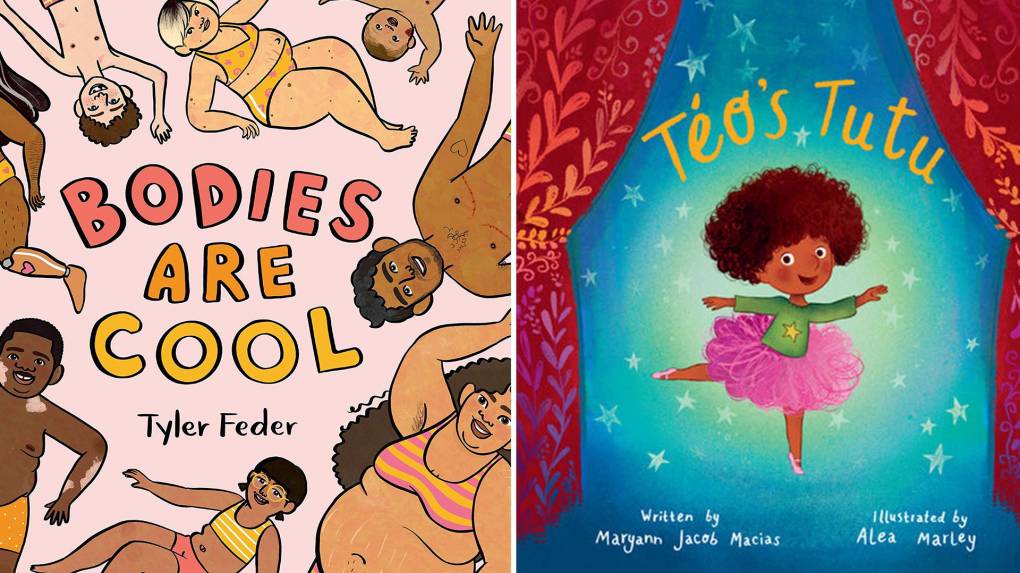
"caption": "'Bodies are Cool' by Tyler Feder, 'Téo's Tutu' by Maryann Jacob Macias.",
"description": null,
"title": "Bodies.Tutu.THUMB",
"credit": "Penguin Random House ",
"status": "inherit",
"altTag": "A children's book with a pink background shows bodies of different shapes, sizes and colors; also, A colorful children's book cover shows a young child with an Afro dancing in a tutu",
"isLoading": false,
"fetchFailed": false
},
"arts_13893712": {
"type": "attachments",
"id": "arts_13893712",
"meta": {
"index": "attachments_1716263798",
"site": "arts",
"id": "13893712",
"found": true
},
"parent": 13893711,
"imgSizes": {
"twentyfourteen-full-width": {
"file": "https://ww2.kqed.org/app/uploads/sites/2/2021/03/photoprinceharry-meghan-oprah3photocredit-harpoproductions-joepugliese_wide-0bc7644ea5ac6b52f4c9a8c167a8a3da1930ef20-1038x576.jpg",
"width": 1038,
"mimeType": "image/jpeg",
"height": 576
},
"thumbnail": {
"file": "https://ww2.kqed.org/app/uploads/sites/2/2021/03/photoprinceharry-meghan-oprah3photocredit-harpoproductions-joepugliese_wide-0bc7644ea5ac6b52f4c9a8c167a8a3da1930ef20-160x90.jpg",
"width": 160,
"mimeType": "image/jpeg",
"height": 90
},
"post-thumbnail": {
"file": "https://ww2.kqed.org/app/uploads/sites/2/2021/03/photoprinceharry-meghan-oprah3photocredit-harpoproductions-joepugliese_wide-0bc7644ea5ac6b52f4c9a8c167a8a3da1930ef20-672x372.jpg",
"width": 672,
"mimeType": "image/jpeg",
"height": 372
},
"kqedFullSize": {
"file": "https://ww2.kqed.org/app/uploads/sites/2/2021/03/photoprinceharry-meghan-oprah3photocredit-harpoproductions-joepugliese_wide-0bc7644ea5ac6b52f4c9a8c167a8a3da1930ef20.jpg",
"width": 1200,
"height": 675
},
"large": {
"file": "https://ww2.kqed.org/app/uploads/sites/2/2021/03/photoprinceharry-meghan-oprah3photocredit-harpoproductions-joepugliese_wide-0bc7644ea5ac6b52f4c9a8c167a8a3da1930ef20-1020x574.jpg",
"width": 1020,
"mimeType": "image/jpeg",
"height": 574
},
"medium": {
"file": "https://ww2.kqed.org/app/uploads/sites/2/2021/03/photoprinceharry-meghan-oprah3photocredit-harpoproductions-joepugliese_wide-0bc7644ea5ac6b52f4c9a8c167a8a3da1930ef20-800x450.jpg",
"width": 800,
"mimeType": "image/jpeg",
"height": 450
},
"medium_large": {
"file": "https://ww2.kqed.org/app/uploads/sites/2/2021/03/photoprinceharry-meghan-oprah3photocredit-harpoproductions-joepugliese_wide-0bc7644ea5ac6b52f4c9a8c167a8a3da1930ef20-768x432.jpg",
"width": 768,
"mimeType": "image/jpeg",
"height": 432
}
},
"publishDate": 1615225412,
"modified": 1615226149,
"caption": "“Oprah with Meghan and Harry: A CBS Primetime Special” - Pictured: Prince Harry and Meghan, The Duke and Duchess of Sussex with Oprah Winfrey. Featuring Oprah Winfrey as she sits down with Prince Harry and Meghan, The Duke and Duchess of Sussex, will be broadcast as a two-hour exclusive primetime special on Sunday, March 7 from 8:00-10:00 PM, ET/PT on the CBS Television Network. ",
"description": "“Oprah with Meghan and Harry: A CBS Primetime Special” - Pictured: Prince Harry and Meghan, The Duke and Duchess of Sussex with Oprah Winfrey. Featuring Oprah Winfrey as she sits down with Prince Harry and Meghan, The Duke and Duchess of Sussex, will be broadcast as a two-hour exclusive primetime special on Sunday, March 7 from 8:00-10:00 PM, ET/PT on the CBS Television Network. ",
"title": "Prince Harry and Meghan, The Duke and Duchess of Sussex, sat for a long talk with Oprah Winfrey.",
"credit": "Harpo Productions/ Photographer: Joe Pugliese",
"status": "inherit",
"altTag": "Prince Harry and Meghan Markle sit in a garden opposite their interviewer, Oprah.",
"isLoading": false,
"fetchFailed": false
},
"arts_13891965": {
"type": "attachments",
"id": "arts_13891965",
"meta": {
"index": "attachments_1716263798",
"site": "arts",
"id": "13891965",
"found": true
},
"parent": 13891960,
"imgSizes": {
"twentyfourteen-full-width": {
"file": "https://ww2.kqed.org/app/uploads/sites/2/2021/01/Screen-Shot-2021-01-28-at-3.00.06-PM-1038x576.png",
"width": 1038,
"mimeType": "image/png",
"height": 576
},
"thumbnail": {
"file": "https://ww2.kqed.org/app/uploads/sites/2/2021/01/Screen-Shot-2021-01-28-at-3.00.06-PM-160x90.png",
"width": 160,
"mimeType": "image/png",
"height": 90
},
"post-thumbnail": {
"file": "https://ww2.kqed.org/app/uploads/sites/2/2021/01/Screen-Shot-2021-01-28-at-3.00.06-PM-672x372.png",
"width": 672,
"mimeType": "image/png",
"height": 372
},
"kqedFullSize": {
"file": "https://ww2.kqed.org/app/uploads/sites/2/2021/01/Screen-Shot-2021-01-28-at-3.00.06-PM.png",
"width": 1365,
"height": 768
},
"large": {
"file": "https://ww2.kqed.org/app/uploads/sites/2/2021/01/Screen-Shot-2021-01-28-at-3.00.06-PM-1020x574.png",
"width": 1020,
"mimeType": "image/png",
"height": 574
},
"medium": {
"file": "https://ww2.kqed.org/app/uploads/sites/2/2021/01/Screen-Shot-2021-01-28-at-3.00.06-PM-800x450.png",
"width": 800,
"mimeType": "image/png",
"height": 450
},
"medium_large": {
"file": "https://ww2.kqed.org/app/uploads/sites/2/2021/01/Screen-Shot-2021-01-28-at-3.00.06-PM-768x432.png",
"width": 768,
"mimeType": "image/png",
"height": 432
}
},
"publishDate": 1611874880,
"modified": 1611874943,
"caption": "Miley Cyrus embracing the \"tiny\" in Tiny Desk Concert.",
"description": "Miley Cyrus embracing the \"tiny\" in Tiny Desk Concert.",
"title": "Miley Cyrus embracing the \"tiny\" in Tiny Desk Concert.",
"credit": "NPR Music/YouTube",
"status": "inherit",
"altTag": "Miley Cyrus performs from a tiny bedroom for her Tiny Desk Concert.",
"isLoading": false,
"fetchFailed": false
},
"arts_13884713": {
"type": "attachments",
"id": "arts_13884713",
"meta": {
"index": "attachments_1716263798",
"site": "arts",
"id": "13884713",
"found": true
},
"parent": 13884701,
"imgSizes": {
"twentyfourteen-full-width": {
"file": "https://ww2.kqed.org/app/uploads/sites/2/2020/08/free-to-use-sounds-wi3HrORQ4Ds-unsplash-1038x576.jpg",
"width": 1038,
"mimeType": "image/jpeg",
"height": 576
},
"thumbnail": {
"file": "https://ww2.kqed.org/app/uploads/sites/2/2020/08/free-to-use-sounds-wi3HrORQ4Ds-unsplash-160x107.jpg",
"width": 160,
"mimeType": "image/jpeg",
"height": 107
},
"post-thumbnail": {
"file": "https://ww2.kqed.org/app/uploads/sites/2/2020/08/free-to-use-sounds-wi3HrORQ4Ds-unsplash-672x372.jpg",
"width": 672,
"mimeType": "image/jpeg",
"height": 372
},
"kqedFullSize": {
"file": "https://ww2.kqed.org/app/uploads/sites/2/2020/08/free-to-use-sounds-wi3HrORQ4Ds-unsplash-scaled-e1597258201455.jpg",
"width": 1920,
"height": 1280
},
"2048x2048": {
"file": "https://ww2.kqed.org/app/uploads/sites/2/2020/08/free-to-use-sounds-wi3HrORQ4Ds-unsplash-2048x1365.jpg",
"width": 2048,
"mimeType": "image/jpeg",
"height": 1365
},
"large": {
"file": "https://ww2.kqed.org/app/uploads/sites/2/2020/08/free-to-use-sounds-wi3HrORQ4Ds-unsplash-1020x680.jpg",
"width": 1020,
"mimeType": "image/jpeg",
"height": 680
},
"1536x1536": {
"file": "https://ww2.kqed.org/app/uploads/sites/2/2020/08/free-to-use-sounds-wi3HrORQ4Ds-unsplash-1536x1024.jpg",
"width": 1536,
"mimeType": "image/jpeg",
"height": 1024
},
"full-width": {
"file": "https://ww2.kqed.org/app/uploads/sites/2/2020/08/free-to-use-sounds-wi3HrORQ4Ds-unsplash-1920x1280.jpg",
"width": 1920,
"mimeType": "image/jpeg",
"height": 1280
},
"medium": {
"file": "https://ww2.kqed.org/app/uploads/sites/2/2020/08/free-to-use-sounds-wi3HrORQ4Ds-unsplash-800x533.jpg",
"width": 800,
"mimeType": "image/jpeg",
"height": 533
},
"medium_large": {
"file": "https://ww2.kqed.org/app/uploads/sites/2/2020/08/free-to-use-sounds-wi3HrORQ4Ds-unsplash-768x512.jpg",
"width": 768,
"mimeType": "image/jpeg",
"height": 512
}
},
"publishDate": 1597258176,
"modified": 1597258224,
"caption": null,
"description": null,
"title": "free-to-use-sounds-wi3HrORQ4Ds-unsplash",
"credit": "Unsplash/Free To Use Sounds",
"status": "inherit",
"isLoading": false,
"fetchFailed": false
},
"arts_13852997": {
"type": "attachments",
"id": "arts_13852997",
"meta": {
"index": "attachments_1716263798",
"site": "arts",
"id": "13852997",
"found": true
},
"parent": 13852820,
"imgSizes": {
"twentyfourteen-full-width": {
"file": "https://ww2.kqed.org/app/uploads/sites/2/2019/03/npr-tiny-desk-fantastic-negrito-1038x576.jpg",
"width": 1038,
"mimeType": "image/jpeg",
"height": 576
},
"thumbnail": {
"file": "https://ww2.kqed.org/app/uploads/sites/2/2019/03/npr-tiny-desk-fantastic-negrito-160x90.jpg",
"width": 160,
"mimeType": "image/jpeg",
"height": 90
},
"post-thumbnail": {
"file": "https://ww2.kqed.org/app/uploads/sites/2/2019/03/npr-tiny-desk-fantastic-negrito-672x372.jpg",
"width": 672,
"mimeType": "image/jpeg",
"height": 372
},
"kqedFullSize": {
"file": "https://ww2.kqed.org/app/uploads/sites/2/2019/03/npr-tiny-desk-fantastic-negrito.jpg",
"width": 1280,
"height": 720
},
"large": {
"file": "https://ww2.kqed.org/app/uploads/sites/2/2019/03/npr-tiny-desk-fantastic-negrito-1020x574.jpg",
"width": 1020,
"mimeType": "image/jpeg",
"height": 574
},
"complete_open_graph": {
"file": "https://ww2.kqed.org/app/uploads/sites/2/2019/03/npr-tiny-desk-fantastic-negrito-1200x675.jpg",
"width": 1200,
"mimeType": "image/jpeg",
"height": 675
},
"guest-author-50": {
"file": "https://ww2.kqed.org/app/uploads/sites/2/2019/03/npr-tiny-desk-fantastic-negrito-50x50.jpg",
"width": 50,
"mimeType": "image/jpeg",
"height": 50
},
"guest-author-96": {
"file": "https://ww2.kqed.org/app/uploads/sites/2/2019/03/npr-tiny-desk-fantastic-negrito-96x96.jpg",
"width": 96,
"mimeType": "image/jpeg",
"height": 96
},
"medium": {
"file": "https://ww2.kqed.org/app/uploads/sites/2/2019/03/npr-tiny-desk-fantastic-negrito-800x450.jpg",
"width": 800,
"mimeType": "image/jpeg",
"height": 450
},
"guest-author-64": {
"file": "https://ww2.kqed.org/app/uploads/sites/2/2019/03/npr-tiny-desk-fantastic-negrito-64x64.jpg",
"width": 64,
"mimeType": "image/jpeg",
"height": 64
},
"guest-author-32": {
"file": "https://ww2.kqed.org/app/uploads/sites/2/2019/03/npr-tiny-desk-fantastic-negrito-32x32.jpg",
"width": 32,
"mimeType": "image/jpeg",
"height": 32
},
"medium_large": {
"file": "https://ww2.kqed.org/app/uploads/sites/2/2019/03/npr-tiny-desk-fantastic-negrito-768x432.jpg",
"width": 768,
"mimeType": "image/jpeg",
"height": 432
},
"guest-author-128": {
"file": "https://ww2.kqed.org/app/uploads/sites/2/2019/03/npr-tiny-desk-fantastic-negrito-128x128.jpg",
"width": 128,
"mimeType": "image/jpeg",
"height": 128
}
},
"publishDate": 1552613220,
"modified": 1552613352,
"caption": "Fantastic Negrito performs at NPR's Tiny Desk Concert.",
"description": "Fantastic Negrito performs at NPR's Tiny Desk Concert.",
"title": "npr tiny desk fantastic negrito",
"credit": "NPR/YouTube",
"status": "inherit",
"isLoading": false,
"fetchFailed": false
},
"arts_13868272": {
"type": "attachments",
"id": "arts_13868272",
"meta": {
"index": "attachments_1716263798",
"site": "arts",
"id": "13868272",
"found": true
},
"title": "Taylor Swift performs during a Tiny Desk concert on Oct. 10, 2019. (Bob Boilen/NPR)",
"publishDate": 1571239021,
"status": "inherit",
"parent": 13868271,
"modified": 1725565014,
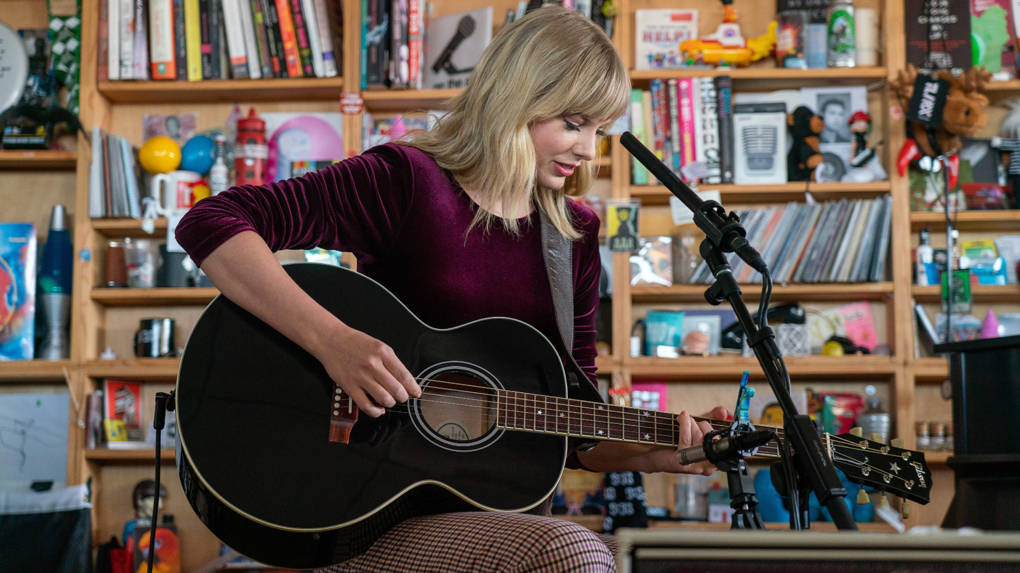
"caption": "Taylor Swift performs during a Tiny Desk concert on Oct. 10, 2019. ",
"credit": "Bob Boilen/NPR",
"altTag": null,
"description": "Taylor Swift performs during a Tiny Desk concert on Oct. 10, 2019. (Bob Boilen/NPR)",
"imgSizes": {
"thumbnail": {
"file": "https://cdn.kqed.org/wp-content/uploads/sites/2/2019/10/taylorswift-bboilen02_wide-dbc4e595dab7bf7e15d7a9a788dd5548d61e4861-160x90.jpg",
"width": 160,
"height": 90,
"mimeType": "image/jpeg"
},
"medium": {
"file": "https://cdn.kqed.org/wp-content/uploads/sites/2/2019/10/taylorswift-bboilen02_wide-dbc4e595dab7bf7e15d7a9a788dd5548d61e4861-800x450.jpg",
"width": 800,
"height": 450,
"mimeType": "image/jpeg"
},
"medium_large": {
"file": "https://cdn.kqed.org/wp-content/uploads/sites/2/2019/10/taylorswift-bboilen02_wide-dbc4e595dab7bf7e15d7a9a788dd5548d61e4861-768x432.jpg",
"width": 768,
"height": 432,
"mimeType": "image/jpeg"
},
"large": {
"file": "https://cdn.kqed.org/wp-content/uploads/sites/2/2019/10/taylorswift-bboilen02_wide-dbc4e595dab7bf7e15d7a9a788dd5548d61e4861-1020x573.jpg",
"width": 1020,
"height": 573,
"mimeType": "image/jpeg"
},
"complete_open_graph": {
"file": "https://cdn.kqed.org/wp-content/uploads/sites/2/2019/10/taylorswift-bboilen02_wide-dbc4e595dab7bf7e15d7a9a788dd5548d61e4861-1200x674.jpg",
"width": 1200,
"height": 674,
"mimeType": "image/jpeg"
},
"post-thumbnail": {
"file": "https://cdn.kqed.org/wp-content/uploads/sites/2/2019/10/taylorswift-bboilen02_wide-dbc4e595dab7bf7e15d7a9a788dd5548d61e4861-672x372.jpg",
"width": 672,
"height": 372,
"mimeType": "image/jpeg"
},
"twentyfourteen-full-width": {
"file": "https://cdn.kqed.org/wp-content/uploads/sites/2/2019/10/taylorswift-bboilen02_wide-dbc4e595dab7bf7e15d7a9a788dd5548d61e4861-1038x576.jpg",
"width": 1038,
"height": 576,
"mimeType": "image/jpeg"
},
"kqedFullSize": {
"file": "https://cdn.kqed.org/wp-content/uploads/sites/2/2019/10/taylorswift-bboilen02_wide-dbc4e595dab7bf7e15d7a9a788dd5548d61e4861.jpg",
"width": 1500,
"height": 843
}
},
"isLoading": false,
"fetchFailed": false
},
"arts_13862426": {
"type": "attachments",
"id": "arts_13862426",
"meta": {
"index": "attachments_1716263798",
"site": "arts",
"id": "13862426",
"found": true
},
"parent": 13862425,
"imgSizes": {
"twentyfourteen-full-width": {
"file": "https://ww2.kqed.org/app/uploads/sites/2/2019/07/ap_03091203216_custom-1503efdbba3370980acb6ac5c09ef637981e677b-1038x576.jpg",
"width": 1038,
"mimeType": "image/jpeg",
"height": 576
},
"thumbnail": {
"file": "https://ww2.kqed.org/app/uploads/sites/2/2019/07/ap_03091203216_custom-1503efdbba3370980acb6ac5c09ef637981e677b-160x110.jpg",
"width": 160,
"mimeType": "image/jpeg",
"height": 110
},
"post-thumbnail": {
"file": "https://ww2.kqed.org/app/uploads/sites/2/2019/07/ap_03091203216_custom-1503efdbba3370980acb6ac5c09ef637981e677b-672x372.jpg",
"width": 672,
"mimeType": "image/jpeg",
"height": 372
},
"kqedFullSize": {
"file": "https://ww2.kqed.org/app/uploads/sites/2/2019/07/ap_03091203216_custom-1503efdbba3370980acb6ac5c09ef637981e677b.jpg",
"width": 1185,
"height": 811
},
"large": {
"file": "https://ww2.kqed.org/app/uploads/sites/2/2019/07/ap_03091203216_custom-1503efdbba3370980acb6ac5c09ef637981e677b-1020x698.jpg",
"width": 1020,
"mimeType": "image/jpeg",
"height": 698
},
"medium": {
"file": "https://ww2.kqed.org/app/uploads/sites/2/2019/07/ap_03091203216_custom-1503efdbba3370980acb6ac5c09ef637981e677b-800x548.jpg",
"width": 800,
"mimeType": "image/jpeg",
"height": 548
},
"medium_large": {
"file": "https://ww2.kqed.org/app/uploads/sites/2/2019/07/ap_03091203216_custom-1503efdbba3370980acb6ac5c09ef637981e677b-768x526.jpg",
"width": 768,
"mimeType": "image/jpeg",
"height": 526
}
},
"publishDate": 1564425830,
"modified": 1564425981,
"caption": "Justice Ruth Bader Ginsburg shares laugh with her husband, Martin, at an event at Columbia Law School in 2003. Martin Ginsburg, or \"Marty,\" passed away in 2010.",
"description": "Justice Ruth Bader Ginsburg shares laugh with her husband, Martin, at an event at Columbia Law School in 2003. Martin Ginsburg, or \"Marty,\" passed away in 2010.",
"title": "Justice Ruth Bader Ginsburg shares laugh with her husband, Martin, at an event at Columbia Law School in 2003. Martin Ginsburg, or \"Marty,\" passed away in 2010.",
"credit": "Ed Bailey/AP",
"status": "inherit",
"isLoading": false,
"fetchFailed": false
},
"arts_13859447": {
"type": "attachments",
"id": "arts_13859447",
"meta": {
"index": "attachments_1716263798",
"site": "arts",
"id": "13859447",
"found": true
},
"parent": 13859446,
"imgSizes": {
"twentyfourteen-full-width": {
"file": "https://ww2.kqed.org/app/uploads/sites/2/2019/06/gettyimages-80530629-f148b8e014c67ed40c18fa8d2f50aa5ee7d87d67-1-1038x576.jpg",
"width": 1038,
"mimeType": "image/jpeg",
"height": 576
},
"thumbnail": {
"file": "https://ww2.kqed.org/app/uploads/sites/2/2019/06/gettyimages-80530629-f148b8e014c67ed40c18fa8d2f50aa5ee7d87d67-1-160x120.jpg",
"width": 160,
"mimeType": "image/jpeg",
"height": 120
},
"post-thumbnail": {
"file": "https://ww2.kqed.org/app/uploads/sites/2/2019/06/gettyimages-80530629-f148b8e014c67ed40c18fa8d2f50aa5ee7d87d67-1-672x372.jpg",
"width": 672,
"mimeType": "image/jpeg",
"height": 372
},
"kqedFullSize": {
"file": "https://ww2.kqed.org/app/uploads/sites/2/2019/06/gettyimages-80530629-f148b8e014c67ed40c18fa8d2f50aa5ee7d87d67-1-e1560296764147.jpg",
"width": 1920,
"height": 1440
},
"large": {
"file": "https://ww2.kqed.org/app/uploads/sites/2/2019/06/gettyimages-80530629-f148b8e014c67ed40c18fa8d2f50aa5ee7d87d67-1-1020x765.jpg",
"width": 1020,
"mimeType": "image/jpeg",
"height": 765
},
"complete_open_graph": {
"file": "https://ww2.kqed.org/app/uploads/sites/2/2019/06/gettyimages-80530629-f148b8e014c67ed40c18fa8d2f50aa5ee7d87d67-1-1200x900.jpg",
"width": 1200,
"mimeType": "image/jpeg",
"height": 900
},
"full-width": {
"file": "https://ww2.kqed.org/app/uploads/sites/2/2019/06/gettyimages-80530629-f148b8e014c67ed40c18fa8d2f50aa5ee7d87d67-1-1920x1440.jpg",
"width": 1920,
"mimeType": "image/jpeg",
"height": 1440
},
"medium": {
"file": "https://ww2.kqed.org/app/uploads/sites/2/2019/06/gettyimages-80530629-f148b8e014c67ed40c18fa8d2f50aa5ee7d87d67-1-800x600.jpg",
"width": 800,
"mimeType": "image/jpeg",
"height": 600
},
"medium_large": {
"file": "https://ww2.kqed.org/app/uploads/sites/2/2019/06/gettyimages-80530629-f148b8e014c67ed40c18fa8d2f50aa5ee7d87d67-1-768x576.jpg",
"width": 768,
"mimeType": "image/jpeg",
"height": 576
}
},
"publishDate": 1560296525,
"modified": 1560296797,
"caption": "Radiohead, pictured in 1997, around the original release of 'OK Computer.'",
"description": "Radiohead, pictured in 1997, around the original release of 'OK Computer.'",
"title": "Radiohead, pictured in 1997, around the original release of 'OK Computer.'",
"credit": "Jim Steinfeldt/Getty Images",
"status": "inherit",
"isLoading": false,
"fetchFailed": false
},
"arts_13854727": {
"type": "attachments",
"id": "arts_13854727",
"meta": {
"index": "attachments_1716263798",
"site": "arts",
"id": "13854727",
"found": true
},
"parent": 13854726,
"imgSizes": {
"twentyfourteen-full-width": {
"file": "https://ww2.kqed.org/app/uploads/sites/2/2019/04/gettyimages-74051603_custom-6cf39529245db82403e65635e1517e861f125e0b-1038x576.jpg",
"width": 1038,
"mimeType": "image/jpeg",
"height": 576
},
"thumbnail": {
"file": "https://ww2.kqed.org/app/uploads/sites/2/2019/04/gettyimages-74051603_custom-6cf39529245db82403e65635e1517e861f125e0b-160x107.jpg",
"width": 160,
"mimeType": "image/jpeg",
"height": 107
},
"post-thumbnail": {
"file": "https://ww2.kqed.org/app/uploads/sites/2/2019/04/gettyimages-74051603_custom-6cf39529245db82403e65635e1517e861f125e0b-672x372.jpg",
"width": 672,
"mimeType": "image/jpeg",
"height": 372
},
"kqedFullSize": {
"file": "https://ww2.kqed.org/app/uploads/sites/2/2019/04/gettyimages-74051603_custom-6cf39529245db82403e65635e1517e861f125e0b-e1554926197653.jpg",
"width": 1920,
"height": 1282
},
"large": {
"file": "https://ww2.kqed.org/app/uploads/sites/2/2019/04/gettyimages-74051603_custom-6cf39529245db82403e65635e1517e861f125e0b-1020x681.jpg",
"width": 1020,
"mimeType": "image/jpeg",
"height": 681
},
"complete_open_graph": {
"file": "https://ww2.kqed.org/app/uploads/sites/2/2019/04/gettyimages-74051603_custom-6cf39529245db82403e65635e1517e861f125e0b-1200x801.jpg",
"width": 1200,
"mimeType": "image/jpeg",
"height": 801
},
"guest-author-50": {
"file": "https://ww2.kqed.org/app/uploads/sites/2/2019/04/gettyimages-74051603_custom-6cf39529245db82403e65635e1517e861f125e0b-50x50.jpg",
"width": 50,
"mimeType": "image/jpeg",
"height": 50
},
"guest-author-96": {
"file": "https://ww2.kqed.org/app/uploads/sites/2/2019/04/gettyimages-74051603_custom-6cf39529245db82403e65635e1517e861f125e0b-96x96.jpg",
"width": 96,
"mimeType": "image/jpeg",
"height": 96
},
"medium": {
"file": "https://ww2.kqed.org/app/uploads/sites/2/2019/04/gettyimages-74051603_custom-6cf39529245db82403e65635e1517e861f125e0b-800x534.jpg",
"width": 800,
"mimeType": "image/jpeg",
"height": 534
},
"guest-author-64": {
"file": "https://ww2.kqed.org/app/uploads/sites/2/2019/04/gettyimages-74051603_custom-6cf39529245db82403e65635e1517e861f125e0b-64x64.jpg",
"width": 64,
"mimeType": "image/jpeg",
"height": 64
},
"guest-author-32": {
"file": "https://ww2.kqed.org/app/uploads/sites/2/2019/04/gettyimages-74051603_custom-6cf39529245db82403e65635e1517e861f125e0b-32x32.jpg",
"width": 32,
"mimeType": "image/jpeg",
"height": 32
},
"full-width": {
"file": "https://ww2.kqed.org/app/uploads/sites/2/2019/04/gettyimages-74051603_custom-6cf39529245db82403e65635e1517e861f125e0b-1920x1282.jpg",
"width": 1920,
"mimeType": "image/jpeg",
"height": 1282
},
"medium_large": {
"file": "https://ww2.kqed.org/app/uploads/sites/2/2019/04/gettyimages-74051603_custom-6cf39529245db82403e65635e1517e861f125e0b-768x513.jpg",
"width": 768,
"mimeType": "image/jpeg",
"height": 513
},
"guest-author-128": {
"file": "https://ww2.kqed.org/app/uploads/sites/2/2019/04/gettyimages-74051603_custom-6cf39529245db82403e65635e1517e861f125e0b-128x128.jpg",
"width": 128,
"mimeType": "image/jpeg",
"height": 128
}
},
"publishDate": 1554926007,
"modified": 1554926181,
"caption": "The Youngbloods circa 1967.",
"description": "The Youngbloods circa 1967.",
"title": "The Youngbloods circa 1967.",
"credit": "Michael Ochs Archives/Getty Images",
"status": "inherit",
"isLoading": false,
"fetchFailed": false
},
"arts_13854301": {
"type": "attachments",
"id": "arts_13854301",
"meta": {
"index": "attachments_1716263798",
"site": "arts",
"id": "13854301",
"found": true
},
"parent": 13854299,
"imgSizes": {
"twentyfourteen-full-width": {
"file": "https://ww2.kqed.org/app/uploads/sites/2/2019/02/gettyimages-3325761_custom-cc411d2eaef83aaad05d8769e958da6090105acf-1-1038x576.jpg",
"width": 1038,
"mimeType": "image/jpeg",
"height": 576
},
"thumbnail": {
"file": "https://ww2.kqed.org/app/uploads/sites/2/2019/02/gettyimages-3325761_custom-cc411d2eaef83aaad05d8769e958da6090105acf-1-160x116.jpg",
"width": 160,
"mimeType": "image/jpeg",
"height": 116
},
"post-thumbnail": {
"file": "https://ww2.kqed.org/app/uploads/sites/2/2019/02/gettyimages-3325761_custom-cc411d2eaef83aaad05d8769e958da6090105acf-1-672x372.jpg",
"width": 672,
"mimeType": "image/jpeg",
"height": 372
},
"kqedFullSize": {
"file": "https://ww2.kqed.org/app/uploads/sites/2/2019/02/gettyimages-3325761_custom-cc411d2eaef83aaad05d8769e958da6090105acf-1-e1554405509235.jpg",
"width": 1920,
"height": 1391
},
"large": {
"file": "https://ww2.kqed.org/app/uploads/sites/2/2019/02/gettyimages-3325761_custom-cc411d2eaef83aaad05d8769e958da6090105acf-1-1020x739.jpg",
"width": 1020,
"mimeType": "image/jpeg",
"height": 739
},
"complete_open_graph": {
"file": "https://ww2.kqed.org/app/uploads/sites/2/2019/02/gettyimages-3325761_custom-cc411d2eaef83aaad05d8769e958da6090105acf-1-1200x870.jpg",
"width": 1200,
"mimeType": "image/jpeg",
"height": 870
},
"guest-author-50": {
"file": "https://ww2.kqed.org/app/uploads/sites/2/2019/02/gettyimages-3325761_custom-cc411d2eaef83aaad05d8769e958da6090105acf-1-50x50.jpg",
"width": 50,
"mimeType": "image/jpeg",
"height": 50
},
"guest-author-96": {
"file": "https://ww2.kqed.org/app/uploads/sites/2/2019/02/gettyimages-3325761_custom-cc411d2eaef83aaad05d8769e958da6090105acf-1-96x96.jpg",
"width": 96,
"mimeType": "image/jpeg",
"height": 96
},
"medium": {
"file": "https://ww2.kqed.org/app/uploads/sites/2/2019/02/gettyimages-3325761_custom-cc411d2eaef83aaad05d8769e958da6090105acf-1-800x580.jpg",
"width": 800,
"mimeType": "image/jpeg",
"height": 580
},
"guest-author-64": {
"file": "https://ww2.kqed.org/app/uploads/sites/2/2019/02/gettyimages-3325761_custom-cc411d2eaef83aaad05d8769e958da6090105acf-1-64x64.jpg",
"width": 64,
"mimeType": "image/jpeg",
"height": 64
},
"guest-author-32": {
"file": "https://ww2.kqed.org/app/uploads/sites/2/2019/02/gettyimages-3325761_custom-cc411d2eaef83aaad05d8769e958da6090105acf-1-32x32.jpg",
"width": 32,
"mimeType": "image/jpeg",
"height": 32
},
"full-width": {
"file": "https://ww2.kqed.org/app/uploads/sites/2/2019/02/gettyimages-3325761_custom-cc411d2eaef83aaad05d8769e958da6090105acf-1-1920x1391.jpg",
"width": 1920,
"mimeType": "image/jpeg",
"height": 1391
},
"medium_large": {
"file": "https://ww2.kqed.org/app/uploads/sites/2/2019/02/gettyimages-3325761_custom-cc411d2eaef83aaad05d8769e958da6090105acf-1-768x557.jpg",
"width": 768,
"mimeType": "image/jpeg",
"height": 557
},
"guest-author-128": {
"file": "https://ww2.kqed.org/app/uploads/sites/2/2019/02/gettyimages-3325761_custom-cc411d2eaef83aaad05d8769e958da6090105acf-1-128x128.jpg",
"width": 128,
"mimeType": "image/jpeg",
"height": 128
}
},
"publishDate": 1554405359,
"modified": 1554405535,
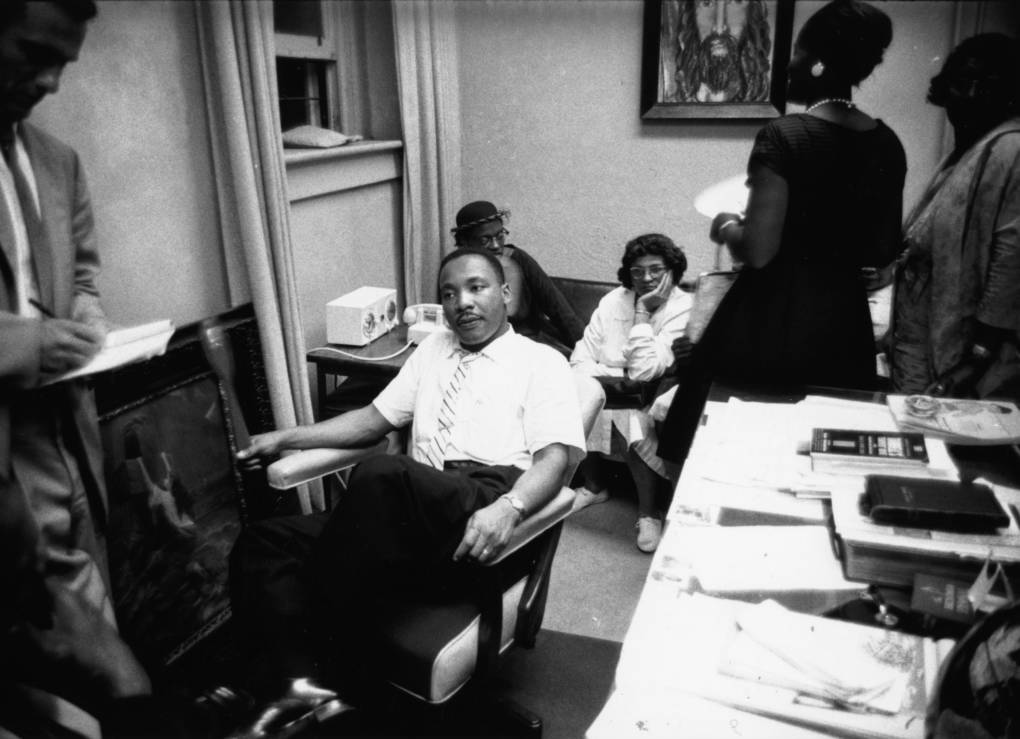
"caption": "Martin Luther King, Jr., photographed in 1961.",
"description": "Martin Luther King, Jr., photographed in 1961.",
"title": "Martin Luther King, Jr., photographed in 1961.",
"credit": "William Lovelace/Getty Images",
"status": "inherit",
"isLoading": false,
"fetchFailed": false
},
"arts_13851445": {
"type": "attachments",
"id": "arts_13851445",
"meta": {
"index": "attachments_1716263798",
"site": "arts",
"id": "13851445",
"found": true
},
"parent": 13851444,
"imgSizes": {
"twentyfourteen-full-width": {
"file": "https://ww2.kqed.org/app/uploads/sites/2/2019/02/dearex02_wide-f1c789d86cb75f712e0c838eb3012fe5f65b48b6-1038x576.jpg",
"width": 1038,
"mimeType": "image/jpeg",
"height": 576
},
"thumbnail": {
"file": "https://ww2.kqed.org/app/uploads/sites/2/2019/02/dearex02_wide-f1c789d86cb75f712e0c838eb3012fe5f65b48b6-160x90.jpg",
"width": 160,
"mimeType": "image/jpeg",
"height": 90
},
"post-thumbnail": {
"file": "https://ww2.kqed.org/app/uploads/sites/2/2019/02/dearex02_wide-f1c789d86cb75f712e0c838eb3012fe5f65b48b6-672x372.jpg",
"width": 672,
"mimeType": "image/jpeg",
"height": 372
},
"kqedFullSize": {
"file": "https://ww2.kqed.org/app/uploads/sites/2/2019/02/dearex02_wide-f1c789d86cb75f712e0c838eb3012fe5f65b48b6.jpg",
"width": 2048,
"height": 1151
},
"large": {
"file": "https://ww2.kqed.org/app/uploads/sites/2/2019/02/dearex02_wide-f1c789d86cb75f712e0c838eb3012fe5f65b48b6-1020x573.jpg",
"width": 1020,
"mimeType": "image/jpeg",
"height": 573
},
"complete_open_graph": {
"file": "https://ww2.kqed.org/app/uploads/sites/2/2019/02/dearex02_wide-f1c789d86cb75f712e0c838eb3012fe5f65b48b6-1200x675.jpg",
"width": 1200,
"mimeType": "image/jpeg",
"height": 675
},
"guest-author-50": {
"file": "https://ww2.kqed.org/app/uploads/sites/2/2019/02/dearex02_wide-f1c789d86cb75f712e0c838eb3012fe5f65b48b6-50x50.jpg",
"width": 50,
"mimeType": "image/jpeg",
"height": 50
},
"guest-author-96": {
"file": "https://ww2.kqed.org/app/uploads/sites/2/2019/02/dearex02_wide-f1c789d86cb75f712e0c838eb3012fe5f65b48b6-96x96.jpg",
"width": 96,
"mimeType": "image/jpeg",
"height": 96
},
"medium": {
"file": "https://ww2.kqed.org/app/uploads/sites/2/2019/02/dearex02_wide-f1c789d86cb75f712e0c838eb3012fe5f65b48b6-800x450.jpg",
"width": 800,
"mimeType": "image/jpeg",
"height": 450
},
"guest-author-64": {
"file": "https://ww2.kqed.org/app/uploads/sites/2/2019/02/dearex02_wide-f1c789d86cb75f712e0c838eb3012fe5f65b48b6-64x64.jpg",
"width": 64,
"mimeType": "image/jpeg",
"height": 64
},
"guest-author-32": {
"file": "https://ww2.kqed.org/app/uploads/sites/2/2019/02/dearex02_wide-f1c789d86cb75f712e0c838eb3012fe5f65b48b6-32x32.jpg",
"width": 32,
"mimeType": "image/jpeg",
"height": 32
},
"full-width": {
"file": "https://ww2.kqed.org/app/uploads/sites/2/2019/02/dearex02_wide-f1c789d86cb75f712e0c838eb3012fe5f65b48b6-1920x1079.jpg",
"width": 1920,
"mimeType": "image/jpeg",
"height": 1079
},
"detail": {
"file": "https://ww2.kqed.org/app/uploads/sites/2/2019/02/dearex02_wide-f1c789d86cb75f712e0c838eb3012fe5f65b48b6-150x150.jpg",
"width": 150,
"mimeType": "image/jpeg",
"height": 150
},
"medium_large": {
"file": "https://ww2.kqed.org/app/uploads/sites/2/2019/02/dearex02_wide-f1c789d86cb75f712e0c838eb3012fe5f65b48b6-768x432.jpg",
"width": 768,
"mimeType": "image/jpeg",
"height": 432
},
"guest-author-128": {
"file": "https://ww2.kqed.org/app/uploads/sites/2/2019/02/dearex02_wide-f1c789d86cb75f712e0c838eb3012fe5f65b48b6-128x128.jpg",
"width": 128,
"mimeType": "image/jpeg",
"height": 128
}
},
"publishDate": 1550854523,
"modified": 1550854644,
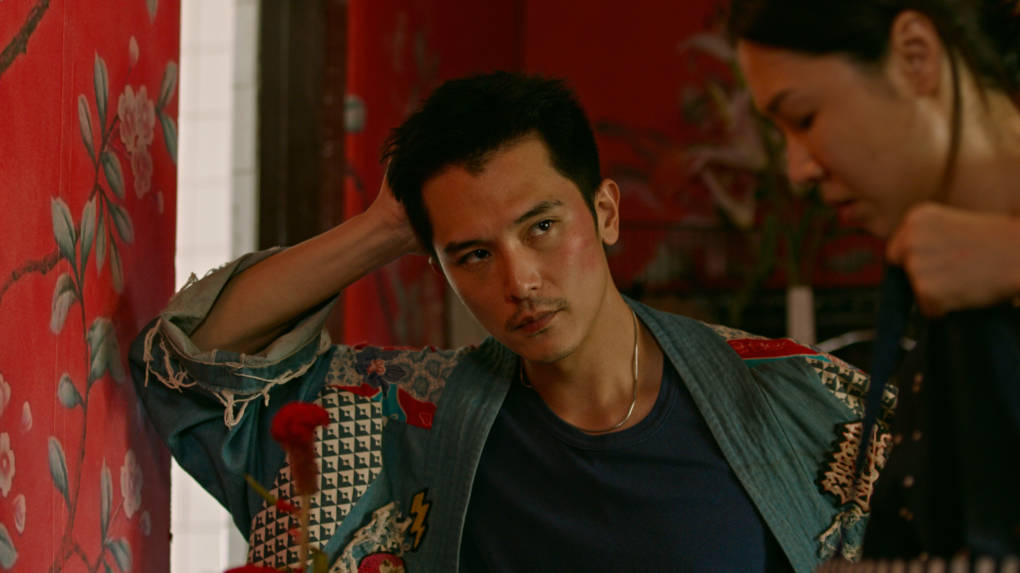
"caption": "Jay (Roy Chiu) and Sanlian (Ying-Xuan Hsieh) have at least one thing in common in 'Dear Ex.'",
"description": "Jay (Roy Chiu) and Sanlian (Ying-Xuan Hsieh) have at least one thing in common in 'Dear Ex.'",
"title": "Jay (Roy Chiu) and Sanlian (Ying-Xuan Hsieh) have at least one thing in common in Dear Ex.",
"credit": "Netflix",
"status": "inherit",
"isLoading": false,
"fetchFailed": false
}
},
"audioPlayerReducer": {
"postId": "stream_live",
"isPaused": true,
"isPlaying": false,
"pfsActive": false,
"pledgeModalIsOpen": true,
"playerDrawerIsOpen": false,
"liveAudioPlayStartedAt": 0,
"liveAudioPlayContext": ""
},
"authorsReducer": {
"byline_arts_13911374": {
"type": "authors",
"id": "byline_arts_13911374",
"meta": {
"override": true
},
"slug": "byline_arts_13911374",
"name": "Rina Torchinsky",
"isLoading": false
},
"byline_arts_13893711": {
"type": "authors",
"id": "byline_arts_13893711",
"meta": {
"override": true
},
"slug": "byline_arts_13893711",
"name": "Linda Holmes",
"isLoading": false
},
"byline_arts_13874435": {
"type": "authors",
"id": "byline_arts_13874435",
"meta": {
"override": true
},
"slug": "byline_arts_13874435",
"name": "Bob Boilen",
"isLoading": false
},
"byline_arts_13868271": {
"type": "authors",
"id": "byline_arts_13868271",
"meta": {
"override": true
},
"slug": "byline_arts_13868271",
"name": "Lyndsey McKenna",
"isLoading": false
},
"byline_arts_13862425": {
"type": "authors",
"id": "byline_arts_13862425",
"meta": {
"override": true
},
"slug": "byline_arts_13862425",
"name": "Domenico Montanaro",
"isLoading": false
},
"byline_arts_13859446": {
"type": "authors",
"id": "byline_arts_13859446",
"meta": {
"override": true
},
"slug": "byline_arts_13859446",
"name": "Robin Hilton",
"isLoading": false
},
"byline_arts_13854726": {
"type": "authors",
"id": "byline_arts_13854726",
"meta": {
"override": true
},
"slug": "byline_arts_13854726",
"name": "Tom Cole",
"isLoading": false
},
"byline_arts_13854299": {
"type": "authors",
"id": "byline_arts_13854299",
"meta": {
"override": true
},
"slug": "byline_arts_13854299",
"name": "Nell Greenfieldboyce",
"isLoading": false
},
"byline_arts_13851444": {
"type": "authors",
"id": "byline_arts_13851444",
"meta": {
"override": true
},
"slug": "byline_arts_13851444",
"name": "Andrew Lapin",
"isLoading": false
},
"ralexandra": {
"type": "authors",
"id": "11242",
"meta": {
"index": "authors_1716337520",
"id": "11242",
"found": true
},
"name": "Rae Alexandra",
"firstName": "Rae",
"lastName": "Alexandra",
"slug": "ralexandra",
"email": "ralexandra@kqed.org",
"display_author_email": true,
"staff_mastheads": [],
"title": "Reporter/Producer",
"bio": "Rae Alexandra is a Reporter/Producer for KQED Arts & Culture, and the creator/author of the \u003ca href=\"https://www.kqed.org/arts/program/rebel-girls-from-bay-area-history\">Rebel Girls From Bay Area History\u003c/a> and \u003ca href=\"https://www.kqed.org/bizarrebayarea\">Bizarre Bay Area\u003c/a> series. Her debut book, \u003ca href=\"https://citylights.com/politics-current-events-history/unsung-heroines35-women-who-changed/\">Unsung Heroines: 35 Women Who Changed the Bay Area\u003c/a> was published by City Lights in March 2026. In 2023, Rae was awarded an SPJ Excellence in Journalism Award for Arts & Culture. Rae was born and raised in Wales and subsequently — even after two decades in Northern California — still uses phrases that regularly baffle her coworkers.",
"avatar": "https://secure.gravatar.com/avatar/edfee8176c80cc0a382b051190f5341997df378a934a5774dcb0977732dfd401?s=600&d=blank&r=g",
"twitter": null,
"bluesky": null,
"facebook": null,
"instagram": null,
"linkedin": null,
"sites": [
{
"site": "arts",
"roles": [
"subscriber"
]
},
{
"site": "news",
"roles": [
"subscriber"
]
},
{
"site": "pop",
"roles": [
"subscriber"
]
},
{
"site": "bayareabites",
"roles": [
"subscriber"
]
},
{
"site": "science",
"roles": [
"subscriber"
]
}
],
"headData": {
"title": "Rae Alexandra | KQED",
"description": "Reporter/Producer",
"ogImgSrc": "https://secure.gravatar.com/avatar/edfee8176c80cc0a382b051190f5341997df378a934a5774dcb0977732dfd401?s=600&d=blank&r=g",
"twImgSrc": "https://secure.gravatar.com/avatar/edfee8176c80cc0a382b051190f5341997df378a934a5774dcb0977732dfd401?s=600&d=blank&r=g"
},
"isLoading": false,
"link": "/author/ralexandra"
},
"nvoynovskaya": {
"type": "authors",
"id": "11387",
"meta": {
"index": "authors_1716337520",
"id": "11387",
"found": true
},
"name": "Nastia Voynovskaya",
"firstName": "Nastia",
"lastName": "Voynovskaya",
"slug": "nvoynovskaya",
"email": "nvoynovskaya@kqed.org",
"display_author_email": false,
"staff_mastheads": [
"arts"
],
"title": "Editor and reporter",
"bio": "Nastia Voynovskaya is a reporter, editor and host at KQED Arts & Culture. She's been covering the arts in the Bay Area for over a decade, with a focus on music, queer culture, labor issues and grassroots organizing. She has edited KQED story series such as Trans Bay: A History of San Francisco's Gender-Diverse Community, and co-created KQED's Bay Area hip-hop history project, That's My Word. Nastia's work has been recognized by the Society of Professional Journalists and San Francisco Press Club. She regularly appears on podcasts and radio programs, including NPR's All Songs Considered, and hosts live events where music, culture and conversation meet.",
"avatar": "https://secure.gravatar.com/avatar/5025ee460e5a85d69ca20ea6c6f2f80d7e17795c828f61ea3aecfcd924e9042e?s=600&d=blank&r=g",
"twitter": null,
"bluesky": null,
"facebook": null,
"instagram": "https://www.instagram.com/nananastia/",
"linkedin": null,
"sites": [
{
"site": "",
"roles": [
"editor"
]
},
{
"site": "arts",
"roles": [
"administrator"
]
},
{
"site": "news",
"roles": [
"editor"
]
},
{
"site": "pop",
"roles": [
"administrator"
]
},
{
"site": "bayareabites",
"roles": [
"editor"
]
},
{
"site": "podcasts",
"roles": [
"editor"
]
},
{
"site": "hiphop",
"roles": [
"editor"
]
}
],
"headData": {
"title": "Nastia Voynovskaya | KQED",
"description": "Editor and reporter",
"ogImgSrc": "https://secure.gravatar.com/avatar/5025ee460e5a85d69ca20ea6c6f2f80d7e17795c828f61ea3aecfcd924e9042e?s=600&d=blank&r=g",
"twImgSrc": "https://secure.gravatar.com/avatar/5025ee460e5a85d69ca20ea6c6f2f80d7e17795c828f61ea3aecfcd924e9042e?s=600&d=blank&r=g"
},
"isLoading": false,
"link": "/author/nvoynovskaya"
}
},
"pagesReducer": {
"arts_tag_npr": {
"type": "terms",
"id": "arts_1377",
"meta": {
"index": "terms_1716263798",
"site": "arts",
"id": "1377",
"score": 8.005273
},
"featImg": null,
"name": "NPR",
"description": null,
"taxonomy": "tag",
"headData": {
"twImgId": null,
"twTitle": null,
"ogTitle": null,
"ogImgId": null,
"twDescription": null,
"description": null,
"title": "NPR Archives | KQED Arts",
"ogDescription": null
},
"ttid": 1389,
"slug": "npr",
"isLoading": false,
"title": "NPR",
"pageMeta": {
"site": "arts",
"WpPageTemplate": "page-topic-editorial",
"currentPage": 2
},
"blocks": [
{
"blockName": "kqed/post-list",
"attrs": {
"layout": "cardArticle2",
"query": "posts/arts?tag=npr",
"seeMore": false,
"paginated": true,
"page": 2
}
},
{
"blockName": "kqed/ad"
}
]
}
},
"pfsSessionReducer": {},
"postsReducer": {
"stream_live": {
"type": "live",
"id": "stream_live",
"audioUrl": "https://streams.kqed.org/kqedradio",
"title": "Live Stream",
"excerpt": "Live Stream information currently unavailable.",
"link": "/radio",
"featImg": "",
"label": {
"name": "KQED Live",
"link": "/"
}
},
"stream_kqedNewscast": {
"type": "posts",
"id": "stream_kqedNewscast",
"audioUrl": "https://www.kqed.org/.stream/anon/radio/RDnews/newscast.mp3?_=1",
"title": "KQED Newscast",
"featImg": "",
"label": {
"name": "88.5 FM",
"link": "/"
}
},
"arts_13911374": {
"type": "posts",
"id": "arts_13911374",
"meta": {
"index": "posts_1716263798",
"site": "arts",
"id": "13911374",
"score": null,
"sort": [
1648761130000
]
},
"parent": 0,
"labelTerm": {
"site": "arts",
"term": 137
},
"blocks": [],
"publishDate": 1648761130,
"format": "aside",
"title": "Book Bans Won't Stop These Authors From Telling the Stories of Trans Youth",
"headTitle": "Book Bans Won’t Stop These Authors From Telling the Stories of Trans Youth | KQED",
"content": "\u003cfigure id=\"attachment_13911378\" class=\"wp-caption aligncenter\" style=\"max-width: 800px\">\u003cimg loading=\"lazy\" decoding=\"async\" src=\"https://ww2.kqed.org/app/uploads/sites/2/2022/03/books_custom-295758b7fa31d8cf652582140125197368a94b7e-s1600-c85-copy-800x275.jpg\" alt=\"Three colorful children's book covers depict bodies of different sizes, colors and genders.\" width=\"800\" height=\"275\" class=\"size-medium wp-image-13911378\" srcset=\"https://cdn.kqed.org/wp-content/uploads/sites/2/2022/03/books_custom-295758b7fa31d8cf652582140125197368a94b7e-s1600-c85-copy-800x275.jpg 800w, https://cdn.kqed.org/wp-content/uploads/sites/2/2022/03/books_custom-295758b7fa31d8cf652582140125197368a94b7e-s1600-c85-copy-1020x351.jpg 1020w, https://cdn.kqed.org/wp-content/uploads/sites/2/2022/03/books_custom-295758b7fa31d8cf652582140125197368a94b7e-s1600-c85-copy-160x55.jpg 160w, https://cdn.kqed.org/wp-content/uploads/sites/2/2022/03/books_custom-295758b7fa31d8cf652582140125197368a94b7e-s1600-c85-copy-768x264.jpg 768w, https://cdn.kqed.org/wp-content/uploads/sites/2/2022/03/books_custom-295758b7fa31d8cf652582140125197368a94b7e-s1600-c85-copy-1536x528.jpg 1536w, https://cdn.kqed.org/wp-content/uploads/sites/2/2022/03/books_custom-295758b7fa31d8cf652582140125197368a94b7e-s1600-c85-copy.jpg 1600w\" sizes=\"(max-width: 800px) 100vw, 800px\">\u003cfigcaption class=\"wp-caption-text\">‘Bodies are Cool’ by Tyler Feder, ‘Téo’s Tutu’ by Maryann Jacob Macias, and ‘My Rainbow’ by Trinity Neal and DeShanna Neal. \u003ccite>(Penguin Random House)\u003c/cite>\u003c/figcaption>\u003c/figure>\n\u003cp>It was just two weeks ago that DeShanna Neal found out that \u003cem>My Rainbow,\u003c/em> a book she wrote with their daughter Trinity and published in 2020, was being targeted for a ban.\u003c/p>\n\u003cp>The book tells the story of designing and creating the perfect rainbow wig for a young Trinity, who transitioned when she was 4. It was \u003ca href=\"https://www.npr.org/2021/10/28/1050013664/texas-lawmaker-matt-krause-launches-inquiry-into-850-books\">one of 850 books \u003c/a>that Texas lawmaker Matt Krause targeted in October 2021 — unbeknownst to Neal until recently.\u003c/p>\n\u003cp>Bans on books about race and LGBTQ+ identities are common. Last year, stories about Black American history and diversity were among the most banned or protested books in schools and libraries, according to the \u003ca href=\"https://www.ala.org/advocacy/bbooks/frequentlychallengedbooks/top10\">American Library Association\u003c/a>. And in 2020, \u003ca href=\"https://www.hrc.org/press-releases/human-rights-campaign-foundation-releases-list-of-lgbtq-affirming-books-in-the-wake-of-discriminatory-book-bans-across-the-country\">eight of the 10\u003c/a> most challenged books covered the LGBTQ+ community.\u003c/p>\n\u003cp>As Republican lawmakers continue to push forward with efforts to curb the rights of queer and trans youth \u003ca href=\"https://www.npr.org/2022/03/30/1089462508/teachers-fear-the-chilling-effect-of-floridas-so-called-dont-say-gay-law\">and limit discussion in schools\u003c/a>, authors who’ve written about gender expansive and trans identities say that type of storytelling is crucial.\u003c/p>\n\u003cp>Books about trans identities need space in the classroom, said Cheryl Greene, the Welcoming Schools Director for the Human Rights Campaign.\u003c/p>\n\u003cp>[ad fullwidth]\u003c/p>\n\u003cp>“Trans and nonbinary kids and LGBTQ+ families exist,” she said. “And you know, not talking about them doesn’t make them go away. It just sends the message that they’re not accepted.”\u003c/p>\n\u003cp>Teachers and educators are tasked with ensuring that all families and students are valued and feel like they belong, Greene said. That’s something that books can do, she added.\u003c/p>\n\u003ch2>A rainbow wig for Trinity\u003c/h2>\n\u003cp>DeShanna Neal remembers staying up late into the night making a wig for a young Trinity. Trinity’s brother helped picked out the colors, but it was up to Neal — who had never before made a wig — to put it all together.\u003c/p>\n\u003cp>Neal tells NPR that Trinity felt her gender expression wasn’t valid because her hair was too short. But Trinity, who is autistic, hated the feeling of hair on the back of her neck. Neal also didn’t want to give Trinity straight hair because she is Black, they added.\u003c/p>\n\u003cp>“It was like, ‘How do I make these all come together?’ ” Neal remembers asking. “Because every part of her, every intersection of her — and I teach all my kids this — every part of us is why we are a masterpiece.”\u003c/p>\n\u003cfigure id=\"attachment_13911381\" class=\"wp-caption aligncenter\" style=\"max-width: 450px\">\u003ca href=\"https://ww2.kqed.org/app/uploads/sites/2/2022/03/myrainbow-1.jpg\">\u003cimg loading=\"lazy\" decoding=\"async\" class=\"size-full wp-image-13911381\" src=\"https://ww2.kqed.org/app/uploads/sites/2/2022/03/myrainbow-1.jpg\" alt=\"A yellow children's book showing an African-American woman wearing a rainbow flower crown.\" width=\"450\" height=\"450\" srcset=\"https://cdn.kqed.org/wp-content/uploads/sites/2/2022/03/myrainbow-1.jpg 450w, https://cdn.kqed.org/wp-content/uploads/sites/2/2022/03/myrainbow-1-160x160.jpg 160w\" sizes=\"(max-width: 450px) 100vw, 450px\">\u003c/a>\u003cfigcaption class=\"wp-caption-text\">‘My Rainbow’ by Trinity Neal and DeShanna Neal. \u003ccite>(Penguin Random House)\u003c/cite>\u003c/figcaption>\u003c/figure>\n\u003cp>Neal says she still has the picture of a young Trinity, who is now 18, smiling and putting on the wig for the first time. Many remembered Trinity as “the girl with the rainbow hair,” Neal said.\u003c/p>\n\u003cp>But the young author doesn’t let the attention get to her head, Neal said of her daughter. When the activist duo is tagged in something, Trinity is excited, but then she goes back to playing Roblox, Neal said.\u003c/p>\n\u003cp>Meanwhile, Trinity’s younger sister, Hyperion, has shared the book with her classmates.\u003c/p>\n\u003cp>“Nothing’s cooler than saying, ‘Yeah, my big sister is an author,’ ” Neal said of Hyperion. ” ‘Don’t mind me, my big sister met Obama.’ ”\u003c/p>\n\u003ch2>Young characters that reflect humanity\u003c/h2>\n\u003cp>When Ellie was growing up, their mom, Vanessa Ford, recalls a lack of books that captured her own child’s experience. Many of the book characters didn’t look like Ellie, Ford said.\u003c/p>\n\u003cp>For Ellie,\u003cem> I am Jazz\u003c/em> by Jazz Jennings was a formative work. The story follows the author’s own experience as a trans child.\u003c/p>\n\u003cp>“But as Ellie mentioned, ‘Jazz was not brown like me,’ ” Ford told NPR.\u003c/p>\n\u003cp>Ford and her husband set out to find books that represented Ellie, who is biracial. When the duo started writing \u003cem>Calvin \u003c/em>in 2018, which follows a young trans boy’s coming out story, Ford said they couldn’t find any books with transgender characters of color.\u003c/p>\n\u003cp>But over the years, the selection has expanded with the addition of books like \u003cem>My Rainbow\u003c/em> and Kyle Lukoff’s \u003cem>When Aidan Became A Brother.\u003c/em>\u003c/p>\n\u003cfigure id=\"attachment_13911382\" class=\"wp-caption aligncenter\" style=\"max-width: 384px\">\u003ca href=\"https://ww2.kqed.org/app/uploads/sites/2/2022/03/calvin_custom-802a07a1aa43e7f9b6c931ebc7cc51da360b72db-s1600-c85.jpg\">\u003cimg loading=\"lazy\" decoding=\"async\" class=\"size-full wp-image-13911382\" src=\"https://ww2.kqed.org/app/uploads/sites/2/2022/03/calvin_custom-802a07a1aa43e7f9b6c931ebc7cc51da360b72db-s1600-c85.jpg\" alt=\"A lavender children's book showing a young African American boy's face\" width=\"384\" height=\"450\" srcset=\"https://cdn.kqed.org/wp-content/uploads/sites/2/2022/03/calvin_custom-802a07a1aa43e7f9b6c931ebc7cc51da360b72db-s1600-c85.jpg 384w, https://cdn.kqed.org/wp-content/uploads/sites/2/2022/03/calvin_custom-802a07a1aa43e7f9b6c931ebc7cc51da360b72db-s1600-c85-160x188.jpg 160w\" sizes=\"(max-width: 384px) 100vw, 384px\">\u003c/a>\u003cfigcaption class=\"wp-caption-text\">‘Calvin’ by JR and Vanessa Ford. \u003ccite>(Penguin Random House)\u003c/cite>\u003c/figcaption>\u003c/figure>\n\u003cp>In \u003cem>Calvin, \u003c/em>the Fords tell the story of a young trans boy, loosely based on the experiences of their own child, Ellie. In the book, Calvin tells his parents that he is a boy “in his heart, in his brain,” Ford says.\u003c/p>\n\u003cp>“We love you if you are a girl, boy, neither, or both,” Calvin’s dad says. “We love you whoever you are.”\u003c/p>\n\u003cp>After coming out, Calvin is met with nothing but support and acceptance. His friend calls him by his name, and in one scene, his grandparents give him a haircut. Nobody bullies Calvin and no one questions his identity, Ford says.\u003c/p>\n\u003cp>“It sends a message that trans kids can thrive and be happy and wonderful in their environments when those around them support and affirm who they are,” Ford told NPR.\u003c/p>\n\u003cp>Including\u003cem> Calvin\u003c/em> in classrooms was important for Ford, who was a teacher in D.C. public schools for 15 years. She said they’ve done virtual school and library visits all over the country, from Oregon to Pennsylvania to Texas.\u003c/p>\n\u003cp>“We want this being utilized in classrooms as a mirror to kids who need to see themselves, and a window for other kids who need to understand what it means to be gender diverse or transgender,” Ford said.\u003c/p>\n\u003ch2>A story about ‘unconditional love’\u003c/h2>\n\u003cp>Growing up, Maryann Jacob Macias loved ballet. But she didn’t like the itchy, polyester outfit that came with it. She was much more partial to the T-shirt and leggings, which was known as the boys’ costume.\u003c/p>\n\u003cp>A young Jacob Macias later dropped ballet altogether, because she felt she couldn’t do it in a way that was “comfortable for me,” she told NPR. But in her book, \u003cem>Téo’s Tutu\u003c/em>, she tells a story where a young Téo thrives in his tutu. It’s a story about “unconditional love,” she added.\u003c/p>\n\u003cfigure id=\"attachment_13911383\" class=\"wp-caption aligncenter\" style=\"max-width: 406px\">\u003ca href=\"https://ww2.kqed.org/app/uploads/sites/2/2022/03/teos-tutu_custom-65c32be9d0d2500828b2bad6f5f2f7c0cdf13d35-s1600-c85.jpg\">\u003cimg loading=\"lazy\" decoding=\"async\" class=\"size-full wp-image-13911383\" src=\"https://ww2.kqed.org/app/uploads/sites/2/2022/03/teos-tutu_custom-65c32be9d0d2500828b2bad6f5f2f7c0cdf13d35-s1600-c85.jpg\" alt=\"A colorful children's book cover shows a young child with an Afro dancing in a tutu\" width=\"406\" height=\"450\" srcset=\"https://cdn.kqed.org/wp-content/uploads/sites/2/2022/03/teos-tutu_custom-65c32be9d0d2500828b2bad6f5f2f7c0cdf13d35-s1600-c85.jpg 406w, https://cdn.kqed.org/wp-content/uploads/sites/2/2022/03/teos-tutu_custom-65c32be9d0d2500828b2bad6f5f2f7c0cdf13d35-s1600-c85-160x177.jpg 160w\" sizes=\"(max-width: 406px) 100vw, 406px\">\u003c/a>\u003cfigcaption class=\"wp-caption-text\">‘Téo’s Tutu’ by Maryann Jacob Macias. \u003ccite>(Penguin Random House)\u003c/cite>\u003c/figcaption>\u003c/figure>\n\u003cp>In the book, she introduces Téo who is growing up in an Indian and Colombian family, mirroring her own family. Téo loves dancing at home with his family, whether Cumbia or Bhangra, she said. And naturally, Téo is very excited for his first ballet class.\u003c/p>\n\u003cp>“When it comes time to decide which outfit to wear in the recital, whether it’s the sparkly tutu or the shimmering silver pants and T-shirt,” Jacob Macias said, “he wonders if the audience will love him back.”\u003c/p>\n\u003cp>Téo’s story tells readers that “you’re magnificent and you deserve to show up as your best self,” Jacob Macias said.\u003c/p>\n\u003cp>It also might help some readers feel seen. Jacob Macias recalls reading books when she was younger where she couldn’t see herself.\u003c/p>\n\u003cp>“I remember not having books where I felt represented as a little brown girl,” Jacob Macias told NPR. “It was always my dream to write those books and I feel very fortunate that I’m able to do that now.”\u003c/p>\n\u003ch2>Queer and trans communities are not monolithic\u003c/h2>\n\u003cp>In less than two weeks, Kyle Lukoff’s latest book \u003cem>Different Kinds of Fruit\u003c/em> is set for release. The book tells the story of Annabelle, who is just starting sixth grade. Annabelle, who’s realizing that she might not like boys the way some other girls do, befriends Bailey, the new kid.\u003c/p>\n\u003cp>Annabelle thinks they’re pretty cool, and she is drawn to their smile. She later learns that her father and Bailey might have something in common.\u003c/p>\n\u003cp>Annabelle’s father later reveals to her that he is trans, and he had given birth to her. But his local trans community wasn’t supportive of his choice, Lukoff told NPR.\u003c/p>\n\u003cp>The novel follows Annabelle’s emotional journey as she learns more about her parents and her own identity.\u003c/p>\n\u003cp>Lukoff hopes the novel shows that queer and trans communities are diverse. Queer and trans people don’t always agree with each other, whether on politics or in the ways folks talk about their identities, he said.\u003c/p>\n\u003cp>“I would love for people to come away from this book and realize that there’s no one correct way to interact with trans people because we often have different needs and experiences,” he said. “And also, that that’s okay.”\u003c/p>\n\u003ch2>A conversation starter for the youngest readers\u003c/h2>\n\u003cp>Behind Tyler Feder’s \u003cem>Bodies are Cool \u003c/em>was an immense spreadsheet. It was filled with all of the qualities of bodies that she wanted to document in the colorful book. The book, she says, carries a bit of a “Where’s Waldo” energy.\u003c/p>\n\u003cfigure id=\"attachment_13911384\" class=\"wp-caption aligncenter\" style=\"max-width: 600px\">\u003ca href=\"https://ww2.kqed.org/app/uploads/sites/2/2022/03/bodies-are-cool_custom-ee0af9bdc0bd3b93cebe098d58f8b0582a1cce66-s1600-c85.jpg\">\u003cimg loading=\"lazy\" decoding=\"async\" class=\"size-medium wp-image-13911384\" src=\"https://ww2.kqed.org/app/uploads/sites/2/2022/03/bodies-are-cool_custom-ee0af9bdc0bd3b93cebe098d58f8b0582a1cce66-s1600-c85-800x800.jpg\" alt=\"A children's book with a pink background shows bodies of different shapes, sizes and colors\" width=\"600\" height=\"600\" srcset=\"https://cdn.kqed.org/wp-content/uploads/sites/2/2022/03/bodies-are-cool_custom-ee0af9bdc0bd3b93cebe098d58f8b0582a1cce66-s1600-c85-800x800.jpg 800w, https://cdn.kqed.org/wp-content/uploads/sites/2/2022/03/bodies-are-cool_custom-ee0af9bdc0bd3b93cebe098d58f8b0582a1cce66-s1600-c85-1020x1020.jpg 1020w, https://cdn.kqed.org/wp-content/uploads/sites/2/2022/03/bodies-are-cool_custom-ee0af9bdc0bd3b93cebe098d58f8b0582a1cce66-s1600-c85-160x160.jpg 160w, https://cdn.kqed.org/wp-content/uploads/sites/2/2022/03/bodies-are-cool_custom-ee0af9bdc0bd3b93cebe098d58f8b0582a1cce66-s1600-c85-768x768.jpg 768w, https://cdn.kqed.org/wp-content/uploads/sites/2/2022/03/bodies-are-cool_custom-ee0af9bdc0bd3b93cebe098d58f8b0582a1cce66-s1600-c85-1536x1536.jpg 1536w, https://cdn.kqed.org/wp-content/uploads/sites/2/2022/03/bodies-are-cool_custom-ee0af9bdc0bd3b93cebe098d58f8b0582a1cce66-s1600-c85.jpg 1600w\" sizes=\"(max-width: 600px) 100vw, 600px\">\u003c/a>\u003cfigcaption class=\"wp-caption-text\">‘Bodies are Cool’ by Tyler Feder. \u003ccite>(Penguin Random House)\u003c/cite>\u003c/figcaption>\u003c/figure>\n\u003cp>In \u003cem>Bodies are Cool\u003c/em>, tons of people — maybe more than 100, Feder says — are shown with different gender presentations, hair types, skin colors, body sizes and shapes, she told NPR.\u003c/p>\n\u003cp>Even those who can’t read yet can engage with the book just by looking at the pages, and asking their parents questions if they have any.\u003c/p>\n\u003cp>The book includes folks with top-surgery scars in different stages of healing. Feder hopes the book shows that “it’s normal to be trans or visibly queer or very fat or with a really noticeable disability.”\u003c/p>\n\u003cp>Across all of the pages, joy is universal. Feder depicts colorful crowds of people who love each other, are friendly and are just having fun, she tells NPR.\u003c/p>\n\u003cp>[ad floatright]\u003c/p>\n\u003cp>“If [kids] just start out thinking that everyone’s fine how they are, they’ll grow up and not want to discriminate,” she said.\u003c/p>\n\u003cdiv class=\"fullattribution\">Copyright 2022 NPR. To see more, visit \u003ca href=\"https://www.npr.org\">NPR\u003c/a>.\u003cimg decoding=\"async\" src=\"https://www.google-analytics.com/__utm.gif?utmac=UA-5828686-4&utmdt=These+kids%27+authors+are+telling+the+stories+of+trans+youth.+Book+bans+won%27t+stop+them&utme=8(APIKey)9(MDAxOTAwOTE4MDEyMTkxMDAzNjczZDljZA004)\">\u003c/div>\n\n",
"stats": {
"hasVideo": false,
"hasChartOrMap": false,
"hasAudio": false,
"hasPolis": false,
"wordCount": 1754,
"hasGoogleForm": false,
"hasGallery": false,
"hasHearkenModule": false,
"iframeSrcs": [],
"paragraphCount": 46
},
"modified": 1705007019,
"excerpt": "As lawmakers push forward to curb queer and trans youth rights, children's authors who've written about gender-expansive and trans identities say storytelling is crucial.",
"headData": {
"twImgId": "",
"twTitle": "",
"ogTitle": "",
"ogImgId": "",
"twDescription": "",
"description": "As lawmakers push forward to curb queer and trans youth rights, children's authors who've written about gender-expansive and trans identities say storytelling is crucial.",
"title": "Book Bans Won't Stop These Authors From Telling the Stories of Trans Youth | KQED",
"ogDescription": "",
"schema": {
"@context": "https://schema.org",
"@type": "Article",
"headline": "Book Bans Won't Stop These Authors From Telling the Stories of Trans Youth",
"datePublished": "2022-03-31T14:12:10-07:00",
"dateModified": "2024-01-11T13:03:39-08:00",
"image": "https://cdn.kqed.org/wp-content/uploads/2020/02/KQED-OG-Image@1x.png"
}
},
"guestAuthors": [],
"slug": "book-bans-wont-stop-these-authors-from-telling-the-stories-of-trans-youth",
"status": "publish",
"nprApiLink": "http://api.npr.org/query?id=1089726765&apiKey=MDAxOTAwOTE4MDEyMTkxMDAzNjczZDljZA004",
"templateType": "standard",
"nprStoryDate": "Thu, 31 Mar 2022 13:48:51 -0400",
"excludeFromSiteSearch": "Include",
"nprLastModifiedDate": "Thu, 31 Mar 2022 13:48:51 -0400",
"featuredImageType": "standard",
"nprHtmlLink": "https://www.npr.org/2022/03/31/1089726765/these-kids-authors-are-telling-the-stories-of-trans-youth-book-bans-wont-stop-th?ft=nprml&f=1089726765",
"nprStoryId": "1089726765",
"nprByline": "Rina Torchinsky",
"sticky": false,
"showOnAuthorArchivePages": "No",
"nprRetrievedStory": "1",
"nprPubDate": "Thu, 31 Mar 2022 13:48:00 -0400",
"path": "/arts/13911374/book-bans-wont-stop-these-authors-from-telling-the-stories-of-trans-youth",
"audioTrackLength": null,
"parsedContent": [
{
"type": "contentString",
"content": "\u003cdiv class=\"post-body\">\u003cp>\u003cfigure id=\"attachment_13911378\" class=\"wp-caption aligncenter\" style=\"max-width: 800px\">\u003cimg loading=\"lazy\" decoding=\"async\" src=\"https://ww2.kqed.org/app/uploads/sites/2/2022/03/books_custom-295758b7fa31d8cf652582140125197368a94b7e-s1600-c85-copy-800x275.jpg\" alt=\"Three colorful children's book covers depict bodies of different sizes, colors and genders.\" width=\"800\" height=\"275\" class=\"size-medium wp-image-13911378\" srcset=\"https://cdn.kqed.org/wp-content/uploads/sites/2/2022/03/books_custom-295758b7fa31d8cf652582140125197368a94b7e-s1600-c85-copy-800x275.jpg 800w, https://cdn.kqed.org/wp-content/uploads/sites/2/2022/03/books_custom-295758b7fa31d8cf652582140125197368a94b7e-s1600-c85-copy-1020x351.jpg 1020w, https://cdn.kqed.org/wp-content/uploads/sites/2/2022/03/books_custom-295758b7fa31d8cf652582140125197368a94b7e-s1600-c85-copy-160x55.jpg 160w, https://cdn.kqed.org/wp-content/uploads/sites/2/2022/03/books_custom-295758b7fa31d8cf652582140125197368a94b7e-s1600-c85-copy-768x264.jpg 768w, https://cdn.kqed.org/wp-content/uploads/sites/2/2022/03/books_custom-295758b7fa31d8cf652582140125197368a94b7e-s1600-c85-copy-1536x528.jpg 1536w, https://cdn.kqed.org/wp-content/uploads/sites/2/2022/03/books_custom-295758b7fa31d8cf652582140125197368a94b7e-s1600-c85-copy.jpg 1600w\" sizes=\"(max-width: 800px) 100vw, 800px\">\u003cfigcaption class=\"wp-caption-text\">‘Bodies are Cool’ by Tyler Feder, ‘Téo’s Tutu’ by Maryann Jacob Macias, and ‘My Rainbow’ by Trinity Neal and DeShanna Neal. \u003ccite>(Penguin Random House)\u003c/cite>\u003c/figcaption>\u003c/figure>\n\u003cp>It was just two weeks ago that DeShanna Neal found out that \u003cem>My Rainbow,\u003c/em> a book she wrote with their daughter Trinity and published in 2020, was being targeted for a ban.\u003c/p>\n\u003cp>The book tells the story of designing and creating the perfect rainbow wig for a young Trinity, who transitioned when she was 4. It was \u003ca href=\"https://www.npr.org/2021/10/28/1050013664/texas-lawmaker-matt-krause-launches-inquiry-into-850-books\">one of 850 books \u003c/a>that Texas lawmaker Matt Krause targeted in October 2021 — unbeknownst to Neal until recently.\u003c/p>\n\u003cp>Bans on books about race and LGBTQ+ identities are common. Last year, stories about Black American history and diversity were among the most banned or protested books in schools and libraries, according to the \u003ca href=\"https://www.ala.org/advocacy/bbooks/frequentlychallengedbooks/top10\">American Library Association\u003c/a>. And in 2020, \u003ca href=\"https://www.hrc.org/press-releases/human-rights-campaign-foundation-releases-list-of-lgbtq-affirming-books-in-the-wake-of-discriminatory-book-bans-across-the-country\">eight of the 10\u003c/a> most challenged books covered the LGBTQ+ community.\u003c/p>\n\u003cp>As Republican lawmakers continue to push forward with efforts to curb the rights of queer and trans youth \u003ca href=\"https://www.npr.org/2022/03/30/1089462508/teachers-fear-the-chilling-effect-of-floridas-so-called-dont-say-gay-law\">and limit discussion in schools\u003c/a>, authors who’ve written about gender expansive and trans identities say that type of storytelling is crucial.\u003c/p>\n\u003cp>Books about trans identities need space in the classroom, said Cheryl Greene, the Welcoming Schools Director for the Human Rights Campaign.\u003c/p>\n\u003cp>\u003c/p>\u003c/div>",
"attributes": {
"named": {},
"numeric": []
}
},
{
"type": "component",
"content": "",
"name": "ad",
"attributes": {
"named": {
"label": "fullwidth"
},
"numeric": [
"fullwidth"
]
}
},
{
"type": "contentString",
"content": "\u003cdiv class=\"post-body\">\u003cp>\u003c/p>\n\u003cp>“Trans and nonbinary kids and LGBTQ+ families exist,” she said. “And you know, not talking about them doesn’t make them go away. It just sends the message that they’re not accepted.”\u003c/p>\n\u003cp>Teachers and educators are tasked with ensuring that all families and students are valued and feel like they belong, Greene said. That’s something that books can do, she added.\u003c/p>\n\u003ch2>A rainbow wig for Trinity\u003c/h2>\n\u003cp>DeShanna Neal remembers staying up late into the night making a wig for a young Trinity. Trinity’s brother helped picked out the colors, but it was up to Neal — who had never before made a wig — to put it all together.\u003c/p>\n\u003cp>Neal tells NPR that Trinity felt her gender expression wasn’t valid because her hair was too short. But Trinity, who is autistic, hated the feeling of hair on the back of her neck. Neal also didn’t want to give Trinity straight hair because she is Black, they added.\u003c/p>\n\u003cp>“It was like, ‘How do I make these all come together?’ ” Neal remembers asking. “Because every part of her, every intersection of her — and I teach all my kids this — every part of us is why we are a masterpiece.”\u003c/p>\n\u003cfigure id=\"attachment_13911381\" class=\"wp-caption aligncenter\" style=\"max-width: 450px\">\u003ca href=\"https://ww2.kqed.org/app/uploads/sites/2/2022/03/myrainbow-1.jpg\">\u003cimg loading=\"lazy\" decoding=\"async\" class=\"size-full wp-image-13911381\" src=\"https://ww2.kqed.org/app/uploads/sites/2/2022/03/myrainbow-1.jpg\" alt=\"A yellow children's book showing an African-American woman wearing a rainbow flower crown.\" width=\"450\" height=\"450\" srcset=\"https://cdn.kqed.org/wp-content/uploads/sites/2/2022/03/myrainbow-1.jpg 450w, https://cdn.kqed.org/wp-content/uploads/sites/2/2022/03/myrainbow-1-160x160.jpg 160w\" sizes=\"(max-width: 450px) 100vw, 450px\">\u003c/a>\u003cfigcaption class=\"wp-caption-text\">‘My Rainbow’ by Trinity Neal and DeShanna Neal. \u003ccite>(Penguin Random House)\u003c/cite>\u003c/figcaption>\u003c/figure>\n\u003cp>Neal says she still has the picture of a young Trinity, who is now 18, smiling and putting on the wig for the first time. Many remembered Trinity as “the girl with the rainbow hair,” Neal said.\u003c/p>\n\u003cp>But the young author doesn’t let the attention get to her head, Neal said of her daughter. When the activist duo is tagged in something, Trinity is excited, but then she goes back to playing Roblox, Neal said.\u003c/p>\n\u003cp>Meanwhile, Trinity’s younger sister, Hyperion, has shared the book with her classmates.\u003c/p>\n\u003cp>“Nothing’s cooler than saying, ‘Yeah, my big sister is an author,’ ” Neal said of Hyperion. ” ‘Don’t mind me, my big sister met Obama.’ ”\u003c/p>\n\u003ch2>Young characters that reflect humanity\u003c/h2>\n\u003cp>When Ellie was growing up, their mom, Vanessa Ford, recalls a lack of books that captured her own child’s experience. Many of the book characters didn’t look like Ellie, Ford said.\u003c/p>\n\u003cp>For Ellie,\u003cem> I am Jazz\u003c/em> by Jazz Jennings was a formative work. The story follows the author’s own experience as a trans child.\u003c/p>\n\u003cp>“But as Ellie mentioned, ‘Jazz was not brown like me,’ ” Ford told NPR.\u003c/p>\n\u003cp>Ford and her husband set out to find books that represented Ellie, who is biracial. When the duo started writing \u003cem>Calvin \u003c/em>in 2018, which follows a young trans boy’s coming out story, Ford said they couldn’t find any books with transgender characters of color.\u003c/p>\n\u003cp>But over the years, the selection has expanded with the addition of books like \u003cem>My Rainbow\u003c/em> and Kyle Lukoff’s \u003cem>When Aidan Became A Brother.\u003c/em>\u003c/p>\n\u003cfigure id=\"attachment_13911382\" class=\"wp-caption aligncenter\" style=\"max-width: 384px\">\u003ca href=\"https://ww2.kqed.org/app/uploads/sites/2/2022/03/calvin_custom-802a07a1aa43e7f9b6c931ebc7cc51da360b72db-s1600-c85.jpg\">\u003cimg loading=\"lazy\" decoding=\"async\" class=\"size-full wp-image-13911382\" src=\"https://ww2.kqed.org/app/uploads/sites/2/2022/03/calvin_custom-802a07a1aa43e7f9b6c931ebc7cc51da360b72db-s1600-c85.jpg\" alt=\"A lavender children's book showing a young African American boy's face\" width=\"384\" height=\"450\" srcset=\"https://cdn.kqed.org/wp-content/uploads/sites/2/2022/03/calvin_custom-802a07a1aa43e7f9b6c931ebc7cc51da360b72db-s1600-c85.jpg 384w, https://cdn.kqed.org/wp-content/uploads/sites/2/2022/03/calvin_custom-802a07a1aa43e7f9b6c931ebc7cc51da360b72db-s1600-c85-160x188.jpg 160w\" sizes=\"(max-width: 384px) 100vw, 384px\">\u003c/a>\u003cfigcaption class=\"wp-caption-text\">‘Calvin’ by JR and Vanessa Ford. \u003ccite>(Penguin Random House)\u003c/cite>\u003c/figcaption>\u003c/figure>\n\u003cp>In \u003cem>Calvin, \u003c/em>the Fords tell the story of a young trans boy, loosely based on the experiences of their own child, Ellie. In the book, Calvin tells his parents that he is a boy “in his heart, in his brain,” Ford says.\u003c/p>\n\u003cp>“We love you if you are a girl, boy, neither, or both,” Calvin’s dad says. “We love you whoever you are.”\u003c/p>\n\u003cp>After coming out, Calvin is met with nothing but support and acceptance. His friend calls him by his name, and in one scene, his grandparents give him a haircut. Nobody bullies Calvin and no one questions his identity, Ford says.\u003c/p>\n\u003cp>“It sends a message that trans kids can thrive and be happy and wonderful in their environments when those around them support and affirm who they are,” Ford told NPR.\u003c/p>\n\u003cp>Including\u003cem> Calvin\u003c/em> in classrooms was important for Ford, who was a teacher in D.C. public schools for 15 years. She said they’ve done virtual school and library visits all over the country, from Oregon to Pennsylvania to Texas.\u003c/p>\n\u003cp>“We want this being utilized in classrooms as a mirror to kids who need to see themselves, and a window for other kids who need to understand what it means to be gender diverse or transgender,” Ford said.\u003c/p>\n\u003ch2>A story about ‘unconditional love’\u003c/h2>\n\u003cp>Growing up, Maryann Jacob Macias loved ballet. But she didn’t like the itchy, polyester outfit that came with it. She was much more partial to the T-shirt and leggings, which was known as the boys’ costume.\u003c/p>\n\u003cp>A young Jacob Macias later dropped ballet altogether, because she felt she couldn’t do it in a way that was “comfortable for me,” she told NPR. But in her book, \u003cem>Téo’s Tutu\u003c/em>, she tells a story where a young Téo thrives in his tutu. It’s a story about “unconditional love,” she added.\u003c/p>\n\u003cfigure id=\"attachment_13911383\" class=\"wp-caption aligncenter\" style=\"max-width: 406px\">\u003ca href=\"https://ww2.kqed.org/app/uploads/sites/2/2022/03/teos-tutu_custom-65c32be9d0d2500828b2bad6f5f2f7c0cdf13d35-s1600-c85.jpg\">\u003cimg loading=\"lazy\" decoding=\"async\" class=\"size-full wp-image-13911383\" src=\"https://ww2.kqed.org/app/uploads/sites/2/2022/03/teos-tutu_custom-65c32be9d0d2500828b2bad6f5f2f7c0cdf13d35-s1600-c85.jpg\" alt=\"A colorful children's book cover shows a young child with an Afro dancing in a tutu\" width=\"406\" height=\"450\" srcset=\"https://cdn.kqed.org/wp-content/uploads/sites/2/2022/03/teos-tutu_custom-65c32be9d0d2500828b2bad6f5f2f7c0cdf13d35-s1600-c85.jpg 406w, https://cdn.kqed.org/wp-content/uploads/sites/2/2022/03/teos-tutu_custom-65c32be9d0d2500828b2bad6f5f2f7c0cdf13d35-s1600-c85-160x177.jpg 160w\" sizes=\"(max-width: 406px) 100vw, 406px\">\u003c/a>\u003cfigcaption class=\"wp-caption-text\">‘Téo’s Tutu’ by Maryann Jacob Macias. \u003ccite>(Penguin Random House)\u003c/cite>\u003c/figcaption>\u003c/figure>\n\u003cp>In the book, she introduces Téo who is growing up in an Indian and Colombian family, mirroring her own family. Téo loves dancing at home with his family, whether Cumbia or Bhangra, she said. And naturally, Téo is very excited for his first ballet class.\u003c/p>\n\u003cp>“When it comes time to decide which outfit to wear in the recital, whether it’s the sparkly tutu or the shimmering silver pants and T-shirt,” Jacob Macias said, “he wonders if the audience will love him back.”\u003c/p>\n\u003cp>Téo’s story tells readers that “you’re magnificent and you deserve to show up as your best self,” Jacob Macias said.\u003c/p>\n\u003cp>It also might help some readers feel seen. Jacob Macias recalls reading books when she was younger where she couldn’t see herself.\u003c/p>\n\u003cp>“I remember not having books where I felt represented as a little brown girl,” Jacob Macias told NPR. “It was always my dream to write those books and I feel very fortunate that I’m able to do that now.”\u003c/p>\n\u003ch2>Queer and trans communities are not monolithic\u003c/h2>\n\u003cp>In less than two weeks, Kyle Lukoff’s latest book \u003cem>Different Kinds of Fruit\u003c/em> is set for release. The book tells the story of Annabelle, who is just starting sixth grade. Annabelle, who’s realizing that she might not like boys the way some other girls do, befriends Bailey, the new kid.\u003c/p>\n\u003cp>Annabelle thinks they’re pretty cool, and she is drawn to their smile. She later learns that her father and Bailey might have something in common.\u003c/p>\n\u003cp>Annabelle’s father later reveals to her that he is trans, and he had given birth to her. But his local trans community wasn’t supportive of his choice, Lukoff told NPR.\u003c/p>\n\u003cp>The novel follows Annabelle’s emotional journey as she learns more about her parents and her own identity.\u003c/p>\n\u003cp>Lukoff hopes the novel shows that queer and trans communities are diverse. Queer and trans people don’t always agree with each other, whether on politics or in the ways folks talk about their identities, he said.\u003c/p>\n\u003cp>“I would love for people to come away from this book and realize that there’s no one correct way to interact with trans people because we often have different needs and experiences,” he said. “And also, that that’s okay.”\u003c/p>\n\u003ch2>A conversation starter for the youngest readers\u003c/h2>\n\u003cp>Behind Tyler Feder’s \u003cem>Bodies are Cool \u003c/em>was an immense spreadsheet. It was filled with all of the qualities of bodies that she wanted to document in the colorful book. The book, she says, carries a bit of a “Where’s Waldo” energy.\u003c/p>\n\u003cfigure id=\"attachment_13911384\" class=\"wp-caption aligncenter\" style=\"max-width: 600px\">\u003ca href=\"https://ww2.kqed.org/app/uploads/sites/2/2022/03/bodies-are-cool_custom-ee0af9bdc0bd3b93cebe098d58f8b0582a1cce66-s1600-c85.jpg\">\u003cimg loading=\"lazy\" decoding=\"async\" class=\"size-medium wp-image-13911384\" src=\"https://ww2.kqed.org/app/uploads/sites/2/2022/03/bodies-are-cool_custom-ee0af9bdc0bd3b93cebe098d58f8b0582a1cce66-s1600-c85-800x800.jpg\" alt=\"A children's book with a pink background shows bodies of different shapes, sizes and colors\" width=\"600\" height=\"600\" srcset=\"https://cdn.kqed.org/wp-content/uploads/sites/2/2022/03/bodies-are-cool_custom-ee0af9bdc0bd3b93cebe098d58f8b0582a1cce66-s1600-c85-800x800.jpg 800w, https://cdn.kqed.org/wp-content/uploads/sites/2/2022/03/bodies-are-cool_custom-ee0af9bdc0bd3b93cebe098d58f8b0582a1cce66-s1600-c85-1020x1020.jpg 1020w, https://cdn.kqed.org/wp-content/uploads/sites/2/2022/03/bodies-are-cool_custom-ee0af9bdc0bd3b93cebe098d58f8b0582a1cce66-s1600-c85-160x160.jpg 160w, https://cdn.kqed.org/wp-content/uploads/sites/2/2022/03/bodies-are-cool_custom-ee0af9bdc0bd3b93cebe098d58f8b0582a1cce66-s1600-c85-768x768.jpg 768w, https://cdn.kqed.org/wp-content/uploads/sites/2/2022/03/bodies-are-cool_custom-ee0af9bdc0bd3b93cebe098d58f8b0582a1cce66-s1600-c85-1536x1536.jpg 1536w, https://cdn.kqed.org/wp-content/uploads/sites/2/2022/03/bodies-are-cool_custom-ee0af9bdc0bd3b93cebe098d58f8b0582a1cce66-s1600-c85.jpg 1600w\" sizes=\"(max-width: 600px) 100vw, 600px\">\u003c/a>\u003cfigcaption class=\"wp-caption-text\">‘Bodies are Cool’ by Tyler Feder. \u003ccite>(Penguin Random House)\u003c/cite>\u003c/figcaption>\u003c/figure>\n\u003cp>In \u003cem>Bodies are Cool\u003c/em>, tons of people — maybe more than 100, Feder says — are shown with different gender presentations, hair types, skin colors, body sizes and shapes, she told NPR.\u003c/p>\n\u003cp>Even those who can’t read yet can engage with the book just by looking at the pages, and asking their parents questions if they have any.\u003c/p>\n\u003cp>The book includes folks with top-surgery scars in different stages of healing. Feder hopes the book shows that “it’s normal to be trans or visibly queer or very fat or with a really noticeable disability.”\u003c/p>\n\u003cp>Across all of the pages, joy is universal. Feder depicts colorful crowds of people who love each other, are friendly and are just having fun, she tells NPR.\u003c/p>\n\u003cp>\u003c/p>\u003c/div>",
"attributes": {
"named": {},
"numeric": []
}
},
{
"type": "component",
"content": "",
"name": "ad",
"attributes": {
"named": {
"label": "floatright"
},
"numeric": [
"floatright"
]
}
},
{
"type": "contentString",
"content": "\u003cdiv class=\"post-body\">\u003cp>\u003c/p>\n\u003cp>“If [kids] just start out thinking that everyone’s fine how they are, they’ll grow up and not want to discriminate,” she said.\u003c/p>\n\u003cdiv class=\"fullattribution\">Copyright 2022 NPR. To see more, visit \u003ca href=\"https://www.npr.org\">NPR\u003c/a>.\u003cimg decoding=\"async\" src=\"https://www.google-analytics.com/__utm.gif?utmac=UA-5828686-4&utmdt=These+kids%27+authors+are+telling+the+stories+of+trans+youth.+Book+bans+won%27t+stop+them&utme=8(APIKey)9(MDAxOTAwOTE4MDEyMTkxMDAzNjczZDljZA004)\">\u003c/div>\n\n\u003c/div>\u003c/p>",
"attributes": {
"named": {},
"numeric": []
}
}
],
"link": "/arts/13911374/book-bans-wont-stop-these-authors-from-telling-the-stories-of-trans-youth",
"authors": [
"byline_arts_13911374"
],
"categories": [
"arts_1",
"arts_73"
],
"tags": [
"arts_928",
"arts_1683",
"arts_10278",
"arts_3226",
"arts_1377",
"arts_7565"
],
"affiliates": [
"arts_137"
],
"featImg": "arts_13911391",
"label": "arts_137"
},
"arts_13893711": {
"type": "posts",
"id": "arts_13893711",
"meta": {
"index": "posts_1716263798",
"site": "arts",
"id": "13893711",
"score": null,
"sort": [
1615226203000
]
},
"parent": 0,
"labelTerm": {
"site": "arts",
"term": 137
},
"blocks": [],
"publishDate": 1615226203,
"format": "standard",
"title": "Harry and Meghan: 10 Takeaways From the Big Oprah Interview",
"headTitle": "Harry and Meghan: 10 Takeaways From the Big Oprah Interview | KQED",
"content": "\u003cp>When Britain’s Prince Harry got married in May 2018 to American actress Meghan Markle—who had found success as a regular on the basic-cable series \u003cem>Suits\u003c/em>—they became the Duke and Duchess of Sussex. For a short time, they lived their lives as royals. They did events, they were affiliated with charities, and they were—she was, in particular—unceasingly, often brutally, covered by the British press. Her clothes, the way she sat, the personality she supposedly had and her general suitability were under constant scrutiny. And, of course, there was from both the press and the public an undercurrent of racism that was sometimes less “under” and more simply “current.” Black women have spoken and written about this \u003ca href=\"https://www.theguardian.com/uk-news/2021/mar/07/almost-embodies-fear-black-women-treatment-meghan\">again\u003c/a> and \u003ca href=\"https://www.teenvogue.com/story/meghan-markle-critics-are-using-internet-troll-tactics-to-perpetuate-misogynoir\">again\u003c/a>, right up until now, and Harry himself decried it in a \u003ca href=\"https://www.washingtonpost.com/news/worldviews/wp/2016/11/08/in-rare-blast-at-british-media-prince-harry-says-his-american-girlfriend-meghan-markle-faces-wave-of-abuse/\">public statement\u003c/a> well before they were married. [aside postid='arts_13866072']\u003c/p>\n\u003cp>In the spring of 2020, they stepped back from that life. They’re still officially the Duke and Duchess of Sussex, but you don’t call them “His/Her Royal Highness” anymore. The couple has relocated to southern California, where they now have deals with Netflix and Spotify and a production company called Archewell. They are pursuing a very different kind of unusual life. And they do not ask for permission to do or say things.\u003c/p>\n\u003cp>That brings us to Sunday’s two-hour interview that Meghan alone, and then the couple together, did with Oprah Winfrey, which aired on CBS in prime time. In the days leading up to it, both the couple and perhaps others as well seemed to be preparing people to receive it in opposite ways. Harry did a jovial segment with James Corden for late-night television, in which he FaceTimed with Meghan and talked warmly about Zoom calls with his grandparents, and about how his grandmother—the queen—sent a waffle maker at Christmas for their son, Archie. (Meghan is currently pregnant with their second child.) At the same time, a fresh flurry of negativity about Meghan appeared in the British press, most prominently an accusation that she “bullied” staff.\u003c/p>\n\u003cp>What wasn’t clear going into Sunday evening was how much there would be in this interview that the royal family—or more precisely the larger business enterprise around it, often called The Firm—wouldn’t want them to say. Based on the Corden interview, Harry wasn’t spoiling for a fight with his grandmother, at least. But once the flood of dirt started to flow about Meghan, it was easy to wonder whether somebody somewhere was nervous about what they might say and was trying to get out ahead of it.\u003c/p>\n\u003cp>And in the end, it was painful and personal and unsparing about the cost of all this to Meghan particularly, and it was not anything the royal family would be excited to have people hear. It wound up being a discussion more profoundly sad than juicy. [aside postid='arts_13872986']\u003c/p>\n\u003cp>[ad fullwidth]\u003c/p>\n\u003cp>Oprah proved quite willing to press for details when an answer was a little … artificially diplomatic. This was a carefully managed backyard sunlit chat, where a pair of expectant parents faced an interviewer who was persistent but also deeply empathetic to them, and where they had two straight hours to get their side of the story on the record. Whether any other sides will emerge remains to be seen.\u003c/p>\n\u003cp>Here are the major takeaways.\u003c/p>\n\u003cp>\u003cstrong>1. Meghan says she had serious and frightening thoughts of suicide during her pregnancy with Archie as she began to understand what the life that lay ahead would really mean, but the institution around the royal family told her she could not get the help she wanted. \u003c/strong>The most revealing conversation may have been about mental health. Meghan described having serious thoughts of suicide. She approached a senior person working for the royal family, who she says forbade her from seeking treatment in the way she asked. (A friend of Diana, Harry’s mother, did offer support.)\u003c/p>\n\u003cp>\u003cstrong>2. They’re having a girl. \u003c/strong>You need at least one straight-up headline out of this, right? The headline that doesn’t require much detail is that the baby Meghan is due to deliver this summer is, they believe, a girl.\u003c/p>\n\u003cp>\u003cstrong>3. Meghan says the royal family declined to make her baby, Archie, a prince or offer him the protection that would come with that title—and expressed concern about his skin color before he was born. \u003c/strong>Meghan told Oprah that when she was pregnant, the family informed her that they would not make her first child (who turned out to be Archie) a prince or princess, and the child would not get the protection that accompanies that title. She says she received no clear reason why and stopped short, just barely, of saying it was because she’s Black. But she says there were also discussions (with Harry, not with her) in which members of the family expressed concerns over what the baby’s skin color might be. She didn’t say which family members, even when prodded, saying she thought revealing that would be “damaging” to them. Harry, too, later acknowledged that at least one such discussion had taken place, but he wouldn’t offer any specifics. Not sharing who was behind these discussions of the baby’s skin color was the firmest boundary the couple drew.\u003c/p>\n\u003cp>\u003cstrong>4. They both cite security concerns as having played a huge role in their choices. \u003c/strong>Harry and Meghan said their hands were forced with regard to moving to California because after they initially moved to Canada (a Commonwealth country), they were informed by the Firm that all their security was being taken away. This left them exposed at a time when, Harry says, the \u003cem>Daily Mail\u003c/em> had revealed where they were living. They moved to the United States and took advantage of the hospitality of Tyler Perry, who could offer them safe harbor until they got settled. Harry also says he was cut off financially by the royal family in early 2020, and that he and Meghan have been able to get by because of what his mother left him—he even speculated that in some way, she “saw this coming.” And he added that the deals he and Meghan now have with Netflix and Spotify are in part to meet their ongoing security needs.\u003c/p>\n\u003cp>\u003cstrong>5. Harry described what he called the “invisible contract” between the royal family and the tabloid press, in which currying favor with particular reporters leads to more favorable press. \u003c/strong>While this might seem self-evident, Harry used it to explain what he called “how scared they [in the family] are of the tabloids turning on them,” and said that he believes this is partially why the family and the Firm failed to offer support to him when it came to bad press. Repeatedly, they both said that the biggest issue that lead to their departure from their duties was this same lack of support from within the family and the institution. No one would stand up for them, they said—which Harry found galling especially when Meghan was suffering racist harassment that earned her the public support of more than 70 members of Parliament—but not the royal family. Meghan summed it up starkly: “They were willing to lie to protect other members of the family”—she did not say who—”but they weren’t willing to tell the truth to protect me and my husband.”\u003c/p>\n\u003cp>\u003cstrong>6. Meghan says a story about her making her sister-in-law, Kate Middleton, cry was quite the opposite.\u003c/strong> The closest thing to a refutation of specific tabloid tales—as well as the only real revelation about the behavior of the other royals—came when Oprah and Meghan spoke about reports that just before her wedding, Meghan had made Kate (her sister-in-law, Prince William’s wife) cry during an argument about flower-girl dresses. According to Meghan, the truth was quite the opposite, but the palace refused to let anyone refute it. She says Kate actually made \u003cem>her\u003c/em> cry—though she says the idea that it was over flower-girl dresses is actually accurate—and that Kate later apologized and even sent her flowers.\u003c/p>\n\u003cp>\u003cstrong>7. Harry’s relationships with his father and brother seem … complicated. \u003c/strong>Harry was quick to speak warmly about his relationship with his grandmother, even now. But long pauses when he was asked to talk about his relationships with his father and his brother William suggested more tension. Of his father’s lack of support when he and Meghan felt so miserable, he said, “I feel really let down. Because he’s been through something similar, he knows what pain feels like, and Archie’s his grandson.” At one point, he says, Prince Charles even stopped taking his calls.\u003c/p>\n\u003cp>\u003cstrong>8. They both say they did not blindside the family and never planned to quit their roles entirely; they only wanted to step back. \u003c/strong>Harry and Meghan said that they never intended to entirely leave their roles with the royal family. They say they wanted not to be \u003cem>senior \u003c/em>members, but to play the smaller roles many other less prominent royals play. They told Oprah they did not get the support they needed to make that possible.\u003c/p>\n\u003cp>9. \u003cstrong>Harry says that he was “trapped” within the system of the royal family—and that his relatives are, too. \u003c/strong>Oprah asked him about stories that present Meghan as a manipulator who coerced him into leaving the family. Would he have left if not for her? she asked. He spun this question in precisely the opposite direction. He would probably not have left if not for Meghan, he acknowledges. He says he was trapped. He says he didn’t realize how trapped he was, and it was meeting her that ultimately let him understand that he wanted something different.\u003c/p>\n\u003cp>[ad floatright]\u003c/p>\n\u003cp>10. \u003cstrong>They got married before they got married. \u003c/strong>It may have been an early sign of what was to come that Harry and Meghan, seemingly overwhelmed by the public spectacle of their wedding, wound up getting married three days early in what Meghan said was a backyard ceremony, although who knows what that looks like for these folks? She says that those are the vows they keep framed. It seems like for them, that wasn’t just their legal wedding, but their true one as well.\u003c/p>\n\u003cdiv class=\"fullattribution\">Copyright 2021 NPR. To see more, visit \u003ca href=\"http://npr.org\" target=\"_blank\" rel=\"noopener noreferrer\">NPR\u003c/a>.\u003c/div>\n\n",
"stats": {
"hasVideo": false,
"hasChartOrMap": false,
"hasAudio": false,
"hasPolis": false,
"wordCount": 1810,
"hasGoogleForm": false,
"hasGallery": false,
"hasHearkenModule": false,
"iframeSrcs": [],
"paragraphCount": 19
},
"modified": 1705019384,
"excerpt": "Meghan, duchess of Sussex and Prince Harry talked to Oprah Winfrey about darkest moments, the persistence of racism and the symbiosis between the royal family and the tabloid press.",
"headData": {
"twImgId": "",
"twTitle": "",
"ogTitle": "",
"ogImgId": "",
"twDescription": "",
"description": "Meghan, duchess of Sussex and Prince Harry talked to Oprah Winfrey about darkest moments, the persistence of racism and the symbiosis between the royal family and the tabloid press.",
"title": "Harry and Meghan: 10 Takeaways From the Big Oprah Interview | KQED",
"ogDescription": "",
"schema": {
"@context": "https://schema.org",
"@type": "Article",
"headline": "Harry and Meghan: 10 Takeaways From the Big Oprah Interview",
"datePublished": "2021-03-08T09:56:43-08:00",
"dateModified": "2024-01-11T16:29:44-08:00",
"image": "https://cdn.kqed.org/wp-content/uploads/2020/02/KQED-OG-Image@1x.png"
}
},
"guestAuthors": [],
"slug": "harry-and-meghan-10-takeaways-from-the-big-oprah-interview",
"status": "publish",
"nprApiLink": "http://api.npr.org/query?id=974630523&apiKey=MDAxOTAwOTE4MDEyMTkxMDAzNjczZDljZA004",
"templateType": "standard",
"nprStoryDate": "Mon, 08 Mar 2021 00:08:00 -0500",
"nprLastModifiedDate": "Mon, 08 Mar 2021 05:37:02 -0500",
"featuredImageType": "standard",
"nprHtmlLink": "https://www.npr.org/2021/03/08/974630523/harry-and-meghan-where-things-stand-and-ten-takeaways-from-the-big-oprah-intervi?ft=nprml&f=974630523",
"nprImageAgency": "CBS",
"nprStoryId": "974630523",
"nprByline": "Linda Holmes",
"sticky": false,
"nprImageCredit": "Joe Pugliese",
"nprRetrievedStory": "1",
"nprPubDate": "Mon, 08 Mar 2021 05:37:00 -0500",
"path": "/arts/13893711/harry-and-meghan-10-takeaways-from-the-big-oprah-interview",
"audioTrackLength": null,
"parsedContent": [
{
"type": "contentString",
"content": "\u003cdiv class=\"post-body\">\u003cp>\u003cp>When Britain’s Prince Harry got married in May 2018 to American actress Meghan Markle—who had found success as a regular on the basic-cable series \u003cem>Suits\u003c/em>—they became the Duke and Duchess of Sussex. For a short time, they lived their lives as royals. They did events, they were affiliated with charities, and they were—she was, in particular—unceasingly, often brutally, covered by the British press. Her clothes, the way she sat, the personality she supposedly had and her general suitability were under constant scrutiny. And, of course, there was from both the press and the public an undercurrent of racism that was sometimes less “under” and more simply “current.” Black women have spoken and written about this \u003ca href=\"https://www.theguardian.com/uk-news/2021/mar/07/almost-embodies-fear-black-women-treatment-meghan\">again\u003c/a> and \u003ca href=\"https://www.teenvogue.com/story/meghan-markle-critics-are-using-internet-troll-tactics-to-perpetuate-misogynoir\">again\u003c/a>, right up until now, and Harry himself decried it in a \u003ca href=\"https://www.washingtonpost.com/news/worldviews/wp/2016/11/08/in-rare-blast-at-british-media-prince-harry-says-his-american-girlfriend-meghan-markle-faces-wave-of-abuse/\">public statement\u003c/a> well before they were married. \u003c/p>\u003c/div>",
"attributes": {
"named": {},
"numeric": []
}
},
{
"type": "component",
"content": "",
"name": "aside",
"attributes": {
"named": {
"postid": "arts_13866072",
"label": ""
},
"numeric": []
}
},
{
"type": "contentString",
"content": "\u003cdiv class=\"post-body\">\u003cp>\u003c/p>\n\u003cp>In the spring of 2020, they stepped back from that life. They’re still officially the Duke and Duchess of Sussex, but you don’t call them “His/Her Royal Highness” anymore. The couple has relocated to southern California, where they now have deals with Netflix and Spotify and a production company called Archewell. They are pursuing a very different kind of unusual life. And they do not ask for permission to do or say things.\u003c/p>\n\u003cp>That brings us to Sunday’s two-hour interview that Meghan alone, and then the couple together, did with Oprah Winfrey, which aired on CBS in prime time. In the days leading up to it, both the couple and perhaps others as well seemed to be preparing people to receive it in opposite ways. Harry did a jovial segment with James Corden for late-night television, in which he FaceTimed with Meghan and talked warmly about Zoom calls with his grandparents, and about how his grandmother—the queen—sent a waffle maker at Christmas for their son, Archie. (Meghan is currently pregnant with their second child.) At the same time, a fresh flurry of negativity about Meghan appeared in the British press, most prominently an accusation that she “bullied” staff.\u003c/p>\n\u003cp>What wasn’t clear going into Sunday evening was how much there would be in this interview that the royal family—or more precisely the larger business enterprise around it, often called The Firm—wouldn’t want them to say. Based on the Corden interview, Harry wasn’t spoiling for a fight with his grandmother, at least. But once the flood of dirt started to flow about Meghan, it was easy to wonder whether somebody somewhere was nervous about what they might say and was trying to get out ahead of it.\u003c/p>\n\u003cp>And in the end, it was painful and personal and unsparing about the cost of all this to Meghan particularly, and it was not anything the royal family would be excited to have people hear. It wound up being a discussion more profoundly sad than juicy. \u003c/p>\u003c/div>",
"attributes": {
"named": {},
"numeric": []
}
},
{
"type": "component",
"content": "",
"name": "aside",
"attributes": {
"named": {
"postid": "arts_13872986",
"label": ""
},
"numeric": []
}
},
{
"type": "contentString",
"content": "\u003cdiv class=\"post-body\">\u003cp>\u003c/p>\n\u003cp>\u003c/p>\u003c/div>",
"attributes": {
"named": {},
"numeric": []
}
},
{
"type": "component",
"content": "",
"name": "ad",
"attributes": {
"named": {
"label": "fullwidth"
},
"numeric": [
"fullwidth"
]
}
},
{
"type": "contentString",
"content": "\u003cdiv class=\"post-body\">\u003cp>\u003c/p>\n\u003cp>Oprah proved quite willing to press for details when an answer was a little … artificially diplomatic. This was a carefully managed backyard sunlit chat, where a pair of expectant parents faced an interviewer who was persistent but also deeply empathetic to them, and where they had two straight hours to get their side of the story on the record. Whether any other sides will emerge remains to be seen.\u003c/p>\n\u003cp>Here are the major takeaways.\u003c/p>\n\u003cp>\u003cstrong>1. Meghan says she had serious and frightening thoughts of suicide during her pregnancy with Archie as she began to understand what the life that lay ahead would really mean, but the institution around the royal family told her she could not get the help she wanted. \u003c/strong>The most revealing conversation may have been about mental health. Meghan described having serious thoughts of suicide. She approached a senior person working for the royal family, who she says forbade her from seeking treatment in the way she asked. (A friend of Diana, Harry’s mother, did offer support.)\u003c/p>\n\u003cp>\u003cstrong>2. They’re having a girl. \u003c/strong>You need at least one straight-up headline out of this, right? The headline that doesn’t require much detail is that the baby Meghan is due to deliver this summer is, they believe, a girl.\u003c/p>\n\u003cp>\u003cstrong>3. Meghan says the royal family declined to make her baby, Archie, a prince or offer him the protection that would come with that title—and expressed concern about his skin color before he was born. \u003c/strong>Meghan told Oprah that when she was pregnant, the family informed her that they would not make her first child (who turned out to be Archie) a prince or princess, and the child would not get the protection that accompanies that title. She says she received no clear reason why and stopped short, just barely, of saying it was because she’s Black. But she says there were also discussions (with Harry, not with her) in which members of the family expressed concerns over what the baby’s skin color might be. She didn’t say which family members, even when prodded, saying she thought revealing that would be “damaging” to them. Harry, too, later acknowledged that at least one such discussion had taken place, but he wouldn’t offer any specifics. Not sharing who was behind these discussions of the baby’s skin color was the firmest boundary the couple drew.\u003c/p>\n\u003cp>\u003cstrong>4. They both cite security concerns as having played a huge role in their choices. \u003c/strong>Harry and Meghan said their hands were forced with regard to moving to California because after they initially moved to Canada (a Commonwealth country), they were informed by the Firm that all their security was being taken away. This left them exposed at a time when, Harry says, the \u003cem>Daily Mail\u003c/em> had revealed where they were living. They moved to the United States and took advantage of the hospitality of Tyler Perry, who could offer them safe harbor until they got settled. Harry also says he was cut off financially by the royal family in early 2020, and that he and Meghan have been able to get by because of what his mother left him—he even speculated that in some way, she “saw this coming.” And he added that the deals he and Meghan now have with Netflix and Spotify are in part to meet their ongoing security needs.\u003c/p>\n\u003cp>\u003cstrong>5. Harry described what he called the “invisible contract” between the royal family and the tabloid press, in which currying favor with particular reporters leads to more favorable press. \u003c/strong>While this might seem self-evident, Harry used it to explain what he called “how scared they [in the family] are of the tabloids turning on them,” and said that he believes this is partially why the family and the Firm failed to offer support to him when it came to bad press. Repeatedly, they both said that the biggest issue that lead to their departure from their duties was this same lack of support from within the family and the institution. No one would stand up for them, they said—which Harry found galling especially when Meghan was suffering racist harassment that earned her the public support of more than 70 members of Parliament—but not the royal family. Meghan summed it up starkly: “They were willing to lie to protect other members of the family”—she did not say who—”but they weren’t willing to tell the truth to protect me and my husband.”\u003c/p>\n\u003cp>\u003cstrong>6. Meghan says a story about her making her sister-in-law, Kate Middleton, cry was quite the opposite.\u003c/strong> The closest thing to a refutation of specific tabloid tales—as well as the only real revelation about the behavior of the other royals—came when Oprah and Meghan spoke about reports that just before her wedding, Meghan had made Kate (her sister-in-law, Prince William’s wife) cry during an argument about flower-girl dresses. According to Meghan, the truth was quite the opposite, but the palace refused to let anyone refute it. She says Kate actually made \u003cem>her\u003c/em> cry—though she says the idea that it was over flower-girl dresses is actually accurate—and that Kate later apologized and even sent her flowers.\u003c/p>\n\u003cp>\u003cstrong>7. Harry’s relationships with his father and brother seem … complicated. \u003c/strong>Harry was quick to speak warmly about his relationship with his grandmother, even now. But long pauses when he was asked to talk about his relationships with his father and his brother William suggested more tension. Of his father’s lack of support when he and Meghan felt so miserable, he said, “I feel really let down. Because he’s been through something similar, he knows what pain feels like, and Archie’s his grandson.” At one point, he says, Prince Charles even stopped taking his calls.\u003c/p>\n\u003cp>\u003cstrong>8. They both say they did not blindside the family and never planned to quit their roles entirely; they only wanted to step back. \u003c/strong>Harry and Meghan said that they never intended to entirely leave their roles with the royal family. They say they wanted not to be \u003cem>senior \u003c/em>members, but to play the smaller roles many other less prominent royals play. They told Oprah they did not get the support they needed to make that possible.\u003c/p>\n\u003cp>9. \u003cstrong>Harry says that he was “trapped” within the system of the royal family—and that his relatives are, too. \u003c/strong>Oprah asked him about stories that present Meghan as a manipulator who coerced him into leaving the family. Would he have left if not for her? she asked. He spun this question in precisely the opposite direction. He would probably not have left if not for Meghan, he acknowledges. He says he was trapped. He says he didn’t realize how trapped he was, and it was meeting her that ultimately let him understand that he wanted something different.\u003c/p>\n\u003cp>\u003c/p>\u003c/div>",
"attributes": {
"named": {},
"numeric": []
}
},
{
"type": "component",
"content": "",
"name": "ad",
"attributes": {
"named": {
"label": "floatright"
},
"numeric": [
"floatright"
]
}
},
{
"type": "contentString",
"content": "\u003cdiv class=\"post-body\">\u003cp>\u003c/p>\n\u003cp>10. \u003cstrong>They got married before they got married. \u003c/strong>It may have been an early sign of what was to come that Harry and Meghan, seemingly overwhelmed by the public spectacle of their wedding, wound up getting married three days early in what Meghan said was a backyard ceremony, although who knows what that looks like for these folks? She says that those are the vows they keep framed. It seems like for them, that wasn’t just their legal wedding, but their true one as well.\u003c/p>\n\u003cdiv class=\"fullattribution\">Copyright 2021 NPR. To see more, visit \u003ca href=\"http://npr.org\" target=\"_blank\" rel=\"noopener noreferrer\">NPR\u003c/a>.\u003c/div>\n\n\u003c/div>\u003c/p>",
"attributes": {
"named": {},
"numeric": []
}
}
],
"link": "/arts/13893711/harry-and-meghan-10-takeaways-from-the-big-oprah-interview",
"authors": [
"byline_arts_13893711"
],
"categories": [
"arts_1"
],
"tags": [
"arts_3423",
"arts_9749",
"arts_1377",
"arts_8580",
"arts_8126"
],
"affiliates": [
"arts_137"
],
"featImg": "arts_13893712",
"label": "arts_137"
},
"arts_13891960": {
"type": "posts",
"id": "arts_13891960",
"meta": {
"index": "posts_1716263798",
"site": "arts",
"id": "13891960",
"score": null,
"sort": [
1611875995000
]
},
"parent": 0,
"labelTerm": {
"site": "arts",
"term": 140
},
"blocks": [],
"publishDate": 1611875995,
"format": "standard",
"title": "Watch: Miley Cyrus Turn a Tiny Desk Performance Into a Tiny Bedroom One",
"headTitle": "Watch: Miley Cyrus Turn a Tiny Desk Performance Into a Tiny Bedroom One | KQED",
"content": "\u003cp>Ever since COVID-19 forced NPR’s Tiny Desk concerts out of the office and into the personal domains of musicians, the backdrops to the sets have consistently displayed a delightful degree of creativity.\u003c/p>\n\u003cp>Dua Lipa took desks out of the equation altogether and brought the atmosphere of a very polished \u003ca href=\"https://www.youtube.com/watch?v=F4neLJQC1_E\" target=\"_blank\" rel=\"noopener noreferrer\">living room jam session\u003c/a>. Jazmine Sullivan created a \u003ca href=\"https://www.youtube.com/watch?v=KgrCYvVYSRE\" target=\"_blank\" rel=\"noopener noreferrer\">backroom bar\u003c/a> vibe for her set earlier this month. And Lous and the Yakuza created their very own \u003ca href=\"https://www.npr.org/2021/01/27/960903886/lous-and-the-yakuza-tiny-desk-home-concert\" rel=\"noopener noreferrer\" target=\"_blank\">tiny home studio\u003c/a>.\u003c/p>\n\u003cp>This week, Miley Cyrus took Billie Eilish’s idea of a \u003ca href=\"https://www.youtube.com/watch?v=4sZ2_aGsLKU\" target=\"_blank\" rel=\"noopener noreferrer\">Tiny Bedroom set\u003c/a> and brought it to a distinctly Miley Cyrus place. Miley’s room was awash with riot grrrl aesthetics—all tween pinks and purples intermingled with scruffy homemade posters—and constructed on a playhouse scale.\u003c/p>\n\u003cp>Landing in the middle of it all, with the distinctly 1970s rock ‘n’ roll bravado she’s embraced of late, Cyrus brought back childhood memories for anyone who spent their formative years playing dress-up and singing along to records in their room. The passionate set was comprised of a cover of Mazzy Star’s “\u003ca href=\"https://www.youtube.com/watch?v=ImKY6TZEyrI\" target=\"_blank\" rel=\"noopener noreferrer\">Fade Into You\u003c/a>,” followed by two tracks from her \u003cem>Plastic Hearts\u003c/em> album, “Golden G String” and “Prisoner.” Needless to say, the final result will have you looking for the nearest pair of leopard print pants.\u003c/p>\n\u003cp>You can watch Miley Cyrus’ Tiny Desk (Home) Concert in full, below.\u003c/p>\n\u003cp>[ad fullwidth]\u003c/p>\n\u003cp>\u003c/p>\n\u003cp>https://www.youtube.com/watch?v=W5-yezpcZNU\u003c/p>\n\n",
"stats": {
"hasVideo": true,
"hasChartOrMap": false,
"hasAudio": false,
"hasPolis": false,
"wordCount": 256,
"hasGoogleForm": false,
"hasGallery": false,
"hasHearkenModule": false,
"iframeSrcs": [],
"paragraphCount": 7
},
"modified": 1705019569,
"excerpt": "For her Tiny Desk (Home) Concert, Miley Cyrus performed from a miniature—and distinctly riot grrrl— bedroom. ",
"headData": {
"twImgId": "",
"twTitle": "",
"ogTitle": "",
"ogImgId": "",
"twDescription": "",
"description": "For her Tiny Desk (Home) Concert, Miley Cyrus performed from a miniature—and distinctly riot grrrl— bedroom. ",
"title": "Watch: Miley Cyrus Turn a Tiny Desk Performance Into a Tiny Bedroom One | KQED",
"ogDescription": "",
"schema": {
"@context": "https://schema.org",
"@type": "Article",
"headline": "Watch: Miley Cyrus Turn a Tiny Desk Performance Into a Tiny Bedroom One",
"datePublished": "2021-01-28T15:19:55-08:00",
"dateModified": "2024-01-11T16:32:49-08:00",
"image": "https://cdn.kqed.org/wp-content/uploads/2020/02/KQED-OG-Image@1x.png"
}
},
"guestAuthors": [],
"slug": "watch-miley-cyrus-turn-a-tiny-desk-performance-into-a-tiny-bedroom-one",
"status": "publish",
"templateType": "standard",
"featuredImageType": "standard",
"sticky": false,
"path": "/arts/13891960/watch-miley-cyrus-turn-a-tiny-desk-performance-into-a-tiny-bedroom-one",
"audioTrackLength": null,
"parsedContent": [
{
"type": "contentString",
"content": "\u003cdiv class=\"post-body\">\u003cp>\u003cp>Ever since COVID-19 forced NPR’s Tiny Desk concerts out of the office and into the personal domains of musicians, the backdrops to the sets have consistently displayed a delightful degree of creativity.\u003c/p>\n\u003cp>Dua Lipa took desks out of the equation altogether and brought the atmosphere of a very polished \u003ca href=\"https://www.youtube.com/watch?v=F4neLJQC1_E\" target=\"_blank\" rel=\"noopener noreferrer\">living room jam session\u003c/a>. Jazmine Sullivan created a \u003ca href=\"https://www.youtube.com/watch?v=KgrCYvVYSRE\" target=\"_blank\" rel=\"noopener noreferrer\">backroom bar\u003c/a> vibe for her set earlier this month. And Lous and the Yakuza created their very own \u003ca href=\"https://www.npr.org/2021/01/27/960903886/lous-and-the-yakuza-tiny-desk-home-concert\" rel=\"noopener noreferrer\" target=\"_blank\">tiny home studio\u003c/a>.\u003c/p>\n\u003cp>This week, Miley Cyrus took Billie Eilish’s idea of a \u003ca href=\"https://www.youtube.com/watch?v=4sZ2_aGsLKU\" target=\"_blank\" rel=\"noopener noreferrer\">Tiny Bedroom set\u003c/a> and brought it to a distinctly Miley Cyrus place. Miley’s room was awash with riot grrrl aesthetics—all tween pinks and purples intermingled with scruffy homemade posters—and constructed on a playhouse scale.\u003c/p>\n\u003cp>Landing in the middle of it all, with the distinctly 1970s rock ‘n’ roll bravado she’s embraced of late, Cyrus brought back childhood memories for anyone who spent their formative years playing dress-up and singing along to records in their room. The passionate set was comprised of a cover of Mazzy Star’s “\u003ca href=\"https://www.youtube.com/watch?v=ImKY6TZEyrI\" target=\"_blank\" rel=\"noopener noreferrer\">Fade Into You\u003c/a>,” followed by two tracks from her \u003cem>Plastic Hearts\u003c/em> album, “Golden G String” and “Prisoner.” Needless to say, the final result will have you looking for the nearest pair of leopard print pants.\u003c/p>\n\u003cp>You can watch Miley Cyrus’ Tiny Desk (Home) Concert in full, below.\u003c/p>\n\u003cp>\u003c/p>\u003c/div>",
"attributes": {
"named": {},
"numeric": []
}
},
{
"type": "component",
"content": "",
"name": "ad",
"attributes": {
"named": {
"label": "fullwidth"
},
"numeric": [
"fullwidth"
]
}
},
{
"type": "contentString",
"content": "\u003cdiv class=\"post-body\">\u003cp>\u003c/p>\n\u003cp>\u003c/p>\u003c/p>\u003cp>\u003cspan class='utils-parseShortcode-shortcodes-__youtubeShortcode__embedYoutube'>\n \u003cspan class='utils-parseShortcode-shortcodes-__youtubeShortcode__embedYoutubeInside'>\n \u003ciframe\n loading='lazy'\n class='utils-parseShortcode-shortcodes-__youtubeShortcode__youtubePlayer'\n type='text/html'\n src='//www.youtube.com/embed/W5-yezpcZNU'\n title='//www.youtube.com/embed/W5-yezpcZNU'\n allowfullscreen='true'\n style='border:0;'>\u003c/iframe>\n \u003c/span>\n \u003c/span>\u003c/p>\u003cp>\n\u003c/div>\u003c/p>",
"attributes": {
"named": {},
"numeric": []
}
}
],
"link": "/arts/13891960/watch-miley-cyrus-turn-a-tiny-desk-performance-into-a-tiny-bedroom-one",
"authors": [
"11242"
],
"programs": [
"arts_140"
],
"categories": [
"arts_1",
"arts_69",
"arts_75"
],
"tags": [
"arts_7164",
"arts_1377",
"arts_6012"
],
"featImg": "arts_13891965",
"label": "arts_140"
},
"arts_13884701": {
"type": "posts",
"id": "arts_13884701",
"meta": {
"index": "posts_1716263798",
"site": "arts",
"id": "13884701",
"score": null,
"sort": [
1597265790000
]
},
"parent": 0,
"labelTerm": {
"site": "arts"
},
"blocks": [],
"publishDate": 1597265790,
"format": "standard",
"title": "What’s Your NPR Name? There’s An Internet Formula For That",
"headTitle": "What’s Your NPR Name? There’s An Internet Formula For That | KQED",
"content": "\u003cp>A couple of weeks ago, the internet, in all of its boundless wisdom, figured out how to calculate your NPR name. It’s both simple and entertaining.\u003c/p>\n\u003cp>I’m Gingham Winehouse, and this is how you do it:\u003c/p>\n\u003cp>https://twitter.com/jennievander/status/1022858406477086720\u003c/p>\n\u003cp>The possibilities are endless:\u003c/p>\n\u003cp>https://twitter.com/TUMBA0/status/1293246412965257216\u003c/p>\n\u003cp>[ad fullwidth]\u003c/p>\n\u003cp>https://twitter.com/green_squirrel/status/1027269522141708288\u003c/p>\n\u003cp>https://twitter.com/WilGafney/status/1027450504903716865\u003c/p>\n\u003cp>The formula has inspired creative problem solving:\u003c/p>\n\u003cp>https://twitter.com/RandallMBrown/status/1027698813367140353\u003c/p>\n\u003cp>Personal revelations:\u003c/p>\n\u003cp>https://twitter.com/scathingblonde/status/1027424156210458624\u003c/p>\n\u003cp>Tardiness:\u003c/p>\n\u003cp>https://twitter.com/AwfulCreature/status/1293276142502211584\u003c/p>\n\u003cp>And some important reminders:\u003c/p>\n\u003cp>https://twitter.com/Femme_Mal/status/1027692936778211329\u003c/p>\n\u003cp>And in case you’re wondering what your KQED name is, I’ve just decided that it’s this:\u003c/p>\n\u003cp>\u003c/p>\n\u003cp>https://twitter.com/Raemondjjjj/status/1293616176631709698\u003c/p>\n\n",
"stats": {
"hasVideo": false,
"hasChartOrMap": false,
"hasAudio": false,
"hasPolis": false,
"wordCount": 136,
"hasGoogleForm": false,
"hasGallery": false,
"hasHearkenModule": false,
"iframeSrcs": [],
"paragraphCount": 10
},
"modified": 1705020295,
"excerpt": "Ever wanted to sound like you’re an NPR broadcaster? Get ready, because the internet has created a formula for that. ",
"headData": {
"twImgId": "",
"twTitle": "",
"ogTitle": "",
"ogImgId": "",
"twDescription": "",
"description": "Ever wanted to sound like you’re an NPR broadcaster? Get ready, because the internet has created a formula for that. ",
"title": "What’s Your NPR Name? There’s An Internet Formula For That | KQED",
"ogDescription": "",
"schema": {
"@context": "https://schema.org",
"@type": "Article",
"headline": "What’s Your NPR Name? There’s An Internet Formula For That",
"datePublished": "2020-08-12T13:56:30-07:00",
"dateModified": "2024-01-11T16:44:55-08:00",
"image": "https://cdn.kqed.org/wp-content/uploads/2020/02/KQED-OG-Image@1x.png"
}
},
"guestAuthors": [],
"slug": "whats-your-npr-name-theres-an-internet-formula-for-that",
"status": "publish",
"templateType": "standard",
"featuredImageType": "standard",
"sticky": false,
"path": "/arts/13884701/whats-your-npr-name-theres-an-internet-formula-for-that",
"audioTrackLength": null,
"parsedContent": [
{
"type": "contentString",
"content": "\u003cdiv class=\"post-body\">\u003cp>\u003cp>A couple of weeks ago, the internet, in all of its boundless wisdom, figured out how to calculate your NPR name. It’s both simple and entertaining.\u003c/p>\n\u003cp>I’m Gingham Winehouse, and this is how you do it:\u003c/p>\u003c/p>\u003c/div>",
"attributes": {
"named": {},
"numeric": []
}
},
{
"type": "component",
"content": "",
"name": "singleTwitterStatus",
"attributes": {
"named": {
"id": "1022858406477086720"
},
"numeric": []
}
},
{
"type": "contentString",
"content": "\u003cdiv class=\"post-body\">\u003cp>\n\u003cp>The possibilities are endless:\u003c/p>\u003c/p>\u003c/div>",
"attributes": {
"named": {},
"numeric": []
}
},
{
"type": "component",
"content": "",
"name": "singleTwitterStatus",
"attributes": {
"named": {
"id": "1293246412965257216"
},
"numeric": []
}
},
{
"type": "contentString",
"content": "\u003cdiv class=\"post-body\">\u003cp>\n\u003cp>\u003c/p>\u003c/div>",
"attributes": {
"named": {},
"numeric": []
}
},
{
"type": "component",
"content": "",
"name": "ad",
"attributes": {
"named": {
"label": "fullwidth"
},
"numeric": [
"fullwidth"
]
}
},
{
"type": "contentString",
"content": "\u003cdiv class=\"post-body\">\u003cp>\u003c/p>\u003c/p>\u003c/div>",
"attributes": {
"named": {},
"numeric": []
}
},
{
"type": "component",
"content": "",
"name": "singleTwitterStatus",
"attributes": {
"named": {
"id": "1027269522141708288"
},
"numeric": []
}
},
{
"type": "contentString",
"content": "\u003cdiv class=\"post-body\">\u003cp>\u003c/p>\u003c/div>",
"attributes": {
"named": {},
"numeric": []
}
},
{
"type": "component",
"content": "",
"name": "singleTwitterStatus",
"attributes": {
"named": {
"id": "1027450504903716865"
},
"numeric": []
}
},
{
"type": "contentString",
"content": "\u003cdiv class=\"post-body\">\u003cp>\n\u003cp>The formula has inspired creative problem solving:\u003c/p>\u003c/p>\u003c/div>",
"attributes": {
"named": {},
"numeric": []
}
},
{
"type": "component",
"content": "",
"name": "singleTwitterStatus",
"attributes": {
"named": {
"id": "1027698813367140353"
},
"numeric": []
}
},
{
"type": "contentString",
"content": "\u003cdiv class=\"post-body\">\u003cp>\n\u003cp>Personal revelations:\u003c/p>\u003c/p>\u003c/div>",
"attributes": {
"named": {},
"numeric": []
}
},
{
"type": "component",
"content": "",
"name": "singleTwitterStatus",
"attributes": {
"named": {
"id": "1027424156210458624"
},
"numeric": []
}
},
{
"type": "contentString",
"content": "\u003cdiv class=\"post-body\">\u003cp>\n\u003cp>Tardiness:\u003c/p>\u003c/p>\u003c/div>",
"attributes": {
"named": {},
"numeric": []
}
},
{
"type": "component",
"content": "",
"name": "singleTwitterStatus",
"attributes": {
"named": {
"id": "1293276142502211584"
},
"numeric": []
}
},
{
"type": "contentString",
"content": "\u003cdiv class=\"post-body\">\u003cp>\n\u003cp>And some important reminders:\u003c/p>\u003c/p>\u003c/div>",
"attributes": {
"named": {},
"numeric": []
}
},
{
"type": "component",
"content": "",
"name": "singleTwitterStatus",
"attributes": {
"named": {
"id": "1027692936778211329"
},
"numeric": []
}
},
{
"type": "contentString",
"content": "\u003cdiv class=\"post-body\">\u003cp>\n\u003cp>And in case you’re wondering what your KQED name is, I’ve just decided that it’s this:\u003c/p>\n\u003cp>\u003c/p>\u003c/p>\u003c/div>",
"attributes": {
"named": {},
"numeric": []
}
},
{
"type": "component",
"content": "",
"name": "singleTwitterStatus",
"attributes": {
"named": {
"id": "1293616176631709698"
},
"numeric": []
}
},
{
"type": "contentString",
"content": "\u003cdiv class=\"post-body\">\u003cp>\n\n\u003c/div>\u003c/p>",
"attributes": {
"named": {},
"numeric": []
}
}
],
"link": "/arts/13884701/whats-your-npr-name-theres-an-internet-formula-for-that",
"authors": [
"11242"
],
"categories": [
"arts_1",
"arts_75"
],
"tags": [
"arts_10278",
"arts_1377",
"arts_2391",
"arts_1553"
],
"featImg": "arts_13884713",
"label": "arts"
},
"arts_13874435": {
"type": "posts",
"id": "arts_13874435",
"meta": {
"index": "posts_1716263798",
"site": "arts",
"id": "13874435",
"score": null,
"sort": [
1580936146000
]
},
"parent": 0,
"labelTerm": {
"site": "arts",
"term": 137
},
"blocks": [],
"publishDate": 1580936146,
"format": "standard",
"title": "The Tiny Desk Contest is Back for 2020",
"headTitle": "The Tiny Desk Contest is Back for 2020 | KQED",
"content": "\u003cp>In the past year, NPR has had some pretty big names come perform at the Tiny Desk: \u003ca href=\"https://www.npr.org/2019/07/29/732097345/lizzo-tiny-desk-concert\">Lizzo\u003c/a>, \u003ca href=\"https://www.npr.org/2020/01/29/800256839/jimmy-eat-world-tiny-desk-concert\">Jimmy Eat World\u003c/a> and \u003ca href=\"https://www.npr.org/2019/10/16/770318649/taylor-swift-tiny-desk-concert\">Taylor Swift\u003c/a>, to name a few.\u003c/p>\n\u003cp>While seeing these artists’ stripped-down sets is impressive, that’s not all the Tiny Desk is about. For me, what’s really magical and memorable about Tiny Desk concerts is discovering and connecting with musicians our audience likely doesn’t know and then getting to share them with our listeners.\u003c/p>\n\u003cp>We started the Tiny Desk Contest in 2014 in an effort to do even more of that: discover and share great unknown artists. Since the Contest’s launch, we’ve had \u003ca href=\"http://tinydeskcontest.npr.org/#previous-winner\">five outstanding winners\u003c/a>, invited \u003ca href=\"https://www.youtube.com/playlist?list=PLy2PCKGkKRVbn9Rsn99a4VhSGWI4SQrm5\">even more Contest artists\u003c/a> to play at the Desk and heard from countless \u003ca href=\"https://www.npr.org/sections/allsongs/2019/05/22/725412654/tiny-desk-top-shelf\">artists we love\u003c/a> along the way. We’re excited today to announce that the 2020 Tiny Desk Contest is here.\u003c/p>\n\u003cp>Here’s what you need to know:\u003c/p>\n\u003cul>\n\u003cli>We’ll start accepting Contest entries next Tuesday, Feb. 11 at 10 a.m. ET. Entries close at midnight ET on Monday, March 30.\u003c/li>\n\u003cli>To be eligible to win, you must be an unsigned musician and at least 18 years old.\u003c/li>\n\u003cli>To enter, record a video of yourself playing one original song at a desk (any desk will do!) and upload it to YouTube.\u003c/li>\n\u003cli>Send us your song by submitting your video at \u003ca href=\"http://npr.org/tinydeskcontest\">npr.org/tinydeskcontest\u003c/a>.\u003c/li>\n\u003cli>The winner will be chosen by a panel of judges. I’ll be joined by some great Tiny Desk alums: \u003ca href=\"https://www.npr.org/2019/10/15/768439696/brittany-howard-tiny-desk-concert\">Brittany Howard\u003c/a>, \u003ca href=\"https://www.npr.org/2015/09/22/441220834/gina-chavez-tiny-desk-concert\">Gina Chavez\u003c/a> and last year’s winner, \u003ca href=\"https://www.npr.org/2019/06/03/728694436/quinn-christopherson-tiny-desk-concert\">Quinn Christopherson\u003c/a>. Bobby Carter, Tiny Desk concert producer extraordinaire, will be part of the team, plus \u003ca href=\"https://www.npr.org/people/774752634/raina-douris\">Raina Douris\u003c/a> of \u003ca href=\"https://xpn.org/\">WXPN\u003c/a>‘s \u003cem>World Cafe\u003c/em> and \u003ca href=\"https://radiomilwaukee.org/about-us/station-staff/tarik-moody/\">Tarik Moody\u003c/a> of \u003ca href=\"https://radiomilwaukee.org/\">88Nine Radio Milwaukee\u003c/a>.\u003c/li>\n\u003c/ul>\n\u003cp>If you want to make sure your video is eligible to win, you can take this \u003ca href=\"https://tinydeskcontest.npr.org/2020/rules-quiz\">easy quiz\u003c/a> or read the \u003ca href=\"https://tinydeskcontest.npr.org/rules\">official rules\u003c/a>.\u003c/p>\n\u003cp>[ad fullwidth]\u003c/p>\n\u003cp>If you win, you’ll play a Tiny Desk concert and then go on tour across the U.S. with NPR Music. And even though we only choose one winner, we feature artists from the \u003ca href=\"https://www.facebook.com/groups/tinydeskcontest/\">Contest community\u003c/a> in plenty of other ways: on \u003ca href=\"https://www.npr.org/sections/allsongs/\">our blog\u003c/a>, in a Contest \u003ca href=\"https://www.youtube.com/watch?v=RtrRzQLxWP0\">supercut video\u003c/a>, on NPR’s \u003ca href=\"https://www.npr.org/sections/allsongs/2019/06/29/736747407/these-tiny-desk-contest-entrants-bring-mini-symphonies-to-the-nyc-subway\">newsmagazines\u003c/a> and at the Tiny Desk Contest On The Road tour stops.\u003c/p>\n\u003cp>Speaking of tour stops, this year, we’re expanding our tour to 10 cities! We’ll be visiting Atlanta, Chicago, Denver, Los Angeles, Nashville, New York, Philadelphia, Phoenix and Seattle. We hope to see you there.\u003c/p>\n\u003cp>\u003c/p>\n\u003cp>We can’t wait to discover even more great music this year and are looking forward to meeting our winner. Could it be you?\u003c/p>\n\u003cdiv class=\"fullattribution\">\u003cem>Copyright 2020 \u003ca href=\"http://npr.org\">NPR\u003c/a>. \u003c/em>\u003c/div>\n\n",
"stats": {
"hasVideo": false,
"hasChartOrMap": false,
"hasAudio": false,
"hasPolis": false,
"wordCount": 460,
"hasGoogleForm": false,
"hasGallery": false,
"hasHearkenModule": false,
"iframeSrcs": [],
"paragraphCount": 10
},
"modified": 1705021349,
"excerpt": "Submissions for NPR's annual music contest open on Feb. 11. ",
"headData": {
"twImgId": "",
"twTitle": "",
"ogTitle": "",
"ogImgId": "",
"twDescription": "",
"description": "Submissions for NPR's annual music contest open on Feb. 11. ",
"title": "The Tiny Desk Contest is Back for 2020 | KQED",
"ogDescription": "",
"schema": {
"@context": "https://schema.org",
"@type": "Article",
"headline": "The Tiny Desk Contest is Back for 2020",
"datePublished": "2020-02-05T12:55:46-08:00",
"dateModified": "2024-01-11T17:02:29-08:00",
"image": "https://cdn.kqed.org/wp-content/uploads/2020/02/KQED-OG-Image@1x.png"
}
},
"guestAuthors": [],
"slug": "the-tiny-desk-contest-is-back-for-2020",
"status": "publish",
"nprApiLink": "http://api.npr.org/query?id=802281228&apiKey=MDAxOTAwOTE4MDEyMTkxMDAzNjczZDljZA004",
"templateType": "standard",
"nprStoryDate": "Tue, 04 Feb 2020 10:00:00 -0500",
"nprLastModifiedDate": "Tue, 04 Feb 2020 17:40:56 -0500",
"featuredImageType": "standard",
"nprHtmlLink": "https://www.npr.org/sections/allsongs/2020/02/04/802281228/the-tiny-desk-contest-is-back-for-2020?ft=nprml&f=802281228",
"nprAudio": "https://ondemand.npr.org/anon.npr-mp3/npr/atc/2020/02/20200204_atc_the_tiny_desk_contest_is_back_for_2020.mp3?orgId=1&topicId=1039&d=193&p=2&story=802281228&ft=nprml&f=802281228",
"nprImageAgency": "NPR",
"nprAudioM3u": "http://api.npr.org/m3u/1802737839-45b1ff.m3u?orgId=1&topicId=1039&d=193&p=2&story=802281228&ft=nprml&f=802281228",
"nprStoryId": "802281228",
"nprByline": "Bob Boilen",
"sticky": false,
"nprRetrievedStory": "1",
"nprPubDate": "Tue, 04 Feb 2020 20:04:00 -0500",
"path": "/arts/13874435/the-tiny-desk-contest-is-back-for-2020",
"audioUrl": "https://ondemand.npr.org/anon.npr-mp3/npr/atc/2020/02/20200204_atc_the_tiny_desk_contest_is_back_for_2020.mp3?orgId=1&topicId=1039&d=193&p=2&story=802281228&ft=nprml&f=802281228",
"audioTrackLength": null,
"parsedContent": [
{
"type": "contentString",
"content": "\u003cdiv class=\"post-body\">\u003cp>\u003cp>In the past year, NPR has had some pretty big names come perform at the Tiny Desk: \u003ca href=\"https://www.npr.org/2019/07/29/732097345/lizzo-tiny-desk-concert\">Lizzo\u003c/a>, \u003ca href=\"https://www.npr.org/2020/01/29/800256839/jimmy-eat-world-tiny-desk-concert\">Jimmy Eat World\u003c/a> and \u003ca href=\"https://www.npr.org/2019/10/16/770318649/taylor-swift-tiny-desk-concert\">Taylor Swift\u003c/a>, to name a few.\u003c/p>\n\u003cp>While seeing these artists’ stripped-down sets is impressive, that’s not all the Tiny Desk is about. For me, what’s really magical and memorable about Tiny Desk concerts is discovering and connecting with musicians our audience likely doesn’t know and then getting to share them with our listeners.\u003c/p>\n\u003cp>We started the Tiny Desk Contest in 2014 in an effort to do even more of that: discover and share great unknown artists. Since the Contest’s launch, we’ve had \u003ca href=\"http://tinydeskcontest.npr.org/#previous-winner\">five outstanding winners\u003c/a>, invited \u003ca href=\"https://www.youtube.com/playlist?list=PLy2PCKGkKRVbn9Rsn99a4VhSGWI4SQrm5\">even more Contest artists\u003c/a> to play at the Desk and heard from countless \u003ca href=\"https://www.npr.org/sections/allsongs/2019/05/22/725412654/tiny-desk-top-shelf\">artists we love\u003c/a> along the way. We’re excited today to announce that the 2020 Tiny Desk Contest is here.\u003c/p>\n\u003cp>Here’s what you need to know:\u003c/p>\n\u003cul>\n\u003cli>We’ll start accepting Contest entries next Tuesday, Feb. 11 at 10 a.m. ET. Entries close at midnight ET on Monday, March 30.\u003c/li>\n\u003cli>To be eligible to win, you must be an unsigned musician and at least 18 years old.\u003c/li>\n\u003cli>To enter, record a video of yourself playing one original song at a desk (any desk will do!) and upload it to YouTube.\u003c/li>\n\u003cli>Send us your song by submitting your video at \u003ca href=\"http://npr.org/tinydeskcontest\">npr.org/tinydeskcontest\u003c/a>.\u003c/li>\n\u003cli>The winner will be chosen by a panel of judges. I’ll be joined by some great Tiny Desk alums: \u003ca href=\"https://www.npr.org/2019/10/15/768439696/brittany-howard-tiny-desk-concert\">Brittany Howard\u003c/a>, \u003ca href=\"https://www.npr.org/2015/09/22/441220834/gina-chavez-tiny-desk-concert\">Gina Chavez\u003c/a> and last year’s winner, \u003ca href=\"https://www.npr.org/2019/06/03/728694436/quinn-christopherson-tiny-desk-concert\">Quinn Christopherson\u003c/a>. Bobby Carter, Tiny Desk concert producer extraordinaire, will be part of the team, plus \u003ca href=\"https://www.npr.org/people/774752634/raina-douris\">Raina Douris\u003c/a> of \u003ca href=\"https://xpn.org/\">WXPN\u003c/a>‘s \u003cem>World Cafe\u003c/em> and \u003ca href=\"https://radiomilwaukee.org/about-us/station-staff/tarik-moody/\">Tarik Moody\u003c/a> of \u003ca href=\"https://radiomilwaukee.org/\">88Nine Radio Milwaukee\u003c/a>.\u003c/li>\n\u003c/ul>\n\u003cp>If you want to make sure your video is eligible to win, you can take this \u003ca href=\"https://tinydeskcontest.npr.org/2020/rules-quiz\">easy quiz\u003c/a> or read the \u003ca href=\"https://tinydeskcontest.npr.org/rules\">official rules\u003c/a>.\u003c/p>\n\u003cp>\u003c/p>\u003c/div>",
"attributes": {
"named": {},
"numeric": []
}
},
{
"type": "component",
"content": "",
"name": "ad",
"attributes": {
"named": {
"label": "fullwidth"
},
"numeric": [
"fullwidth"
]
}
},
{
"type": "contentString",
"content": "\u003cdiv class=\"post-body\">\u003cp>\u003c/p>\n\u003cp>If you win, you’ll play a Tiny Desk concert and then go on tour across the U.S. with NPR Music. And even though we only choose one winner, we feature artists from the \u003ca href=\"https://www.facebook.com/groups/tinydeskcontest/\">Contest community\u003c/a> in plenty of other ways: on \u003ca href=\"https://www.npr.org/sections/allsongs/\">our blog\u003c/a>, in a Contest \u003ca href=\"https://www.youtube.com/watch?v=RtrRzQLxWP0\">supercut video\u003c/a>, on NPR’s \u003ca href=\"https://www.npr.org/sections/allsongs/2019/06/29/736747407/these-tiny-desk-contest-entrants-bring-mini-symphonies-to-the-nyc-subway\">newsmagazines\u003c/a> and at the Tiny Desk Contest On The Road tour stops.\u003c/p>\n\u003cp>Speaking of tour stops, this year, we’re expanding our tour to 10 cities! We’ll be visiting Atlanta, Chicago, Denver, Los Angeles, Nashville, New York, Philadelphia, Phoenix and Seattle. We hope to see you there.\u003c/p>\n\u003cp>\u003c/p>\n\u003cp>We can’t wait to discover even more great music this year and are looking forward to meeting our winner. Could it be you?\u003c/p>\n\u003cdiv class=\"fullattribution\">\u003cem>Copyright 2020 \u003ca href=\"http://npr.org\">NPR\u003c/a>. \u003c/em>\u003c/div>\n\n\u003c/div>\u003c/p>",
"attributes": {
"named": {},
"numeric": []
}
}
],
"link": "/arts/13874435/the-tiny-desk-contest-is-back-for-2020",
"authors": [
"byline_arts_13874435"
],
"categories": [
"arts_69"
],
"tags": [
"arts_1118",
"arts_1377"
],
"affiliates": [
"arts_137"
],
"featImg": "arts_13852997",
"label": "arts_137"
},
"arts_13868271": {
"type": "posts",
"id": "arts_13868271",
"meta": {
"index": "posts_1716263798",
"site": "arts",
"id": "13868271",
"score": null,
"sort": [
1571239615000
]
},
"guestAuthors": [],
"slug": "watch-taylor-swifts-npr-tiny-desk-concert",
"title": "Watch Taylor Swift's NPR Tiny Desk Concert",
"publishDate": 1571239615,
"format": "standard",
"headTitle": "Watch Taylor Swift’s NPR Tiny Desk Concert | KQED",
"labelTerm": {
"site": "arts"
},
"content": "\u003cp>As \u003ca href=\"https://www.npr.org/artists/120581188/taylor-swift\">Taylor Swift\u003c/a> settled in for her Tiny Desk, she looked out at the 300-plus NPR employees and guests. “Wow! This is a lot of people in a tiny office!” she said. “I love it!” Then, after introducing herself, she explained her objective: “I just decided to take this as an opportunity to show you guys how the songs sounded when I first wrote them.”\u003c/p>\n\u003cp>It should come as no surprise that someone who commands stadium stages could hold court in NPR Music’s corner of our Washington, D.C. office — specifically, behind Bob Boilen’s desk — but Taylor Swift was truly at home in stripped-down, solo session mode. (“It’s just me. There’s no dancers, unfortunately,” she quipped.)\u003c/p>\n\u003cp>\u003ciframe loading=\"lazy\" width=\"600\" height=\"338\" src=\"https://www.npr.org/templates/event/embeddedVideo.php?storyId=770318649&mediaId=770323524\" frameborder=\"0\" scrolling=\"no\">\u003c/iframe>\u003c/p>\n\u003cp>Opening with an acoustic rendition of “The Man,” from her 2019 album \u003cem>Lover, \u003c/em>Swift delivered a critique of gender double-standards with a sense of humor (and a perfectly deployed hair toss), Leonardo DiCaprio name-check and all. Turning to the piano for \u003cem>Lover\u003c/em>‘s title track, with a smile, she explained the guitar-string scars of the song’s bridge. Picking up the guitar again for “Death by a Thousand Cuts,” Swift confronted a question that she says has haunted her career: What will you ever do if you get happy? Across the song’s run-on thoughts and relentless searching, Swift offered an answer: She’ll continue to excel at crafting superb story-songs.\u003c/p>\n\u003cp>Though most Tiny Desk concerts stop at three songs, we couldn’t turn down the chance to hear “All Too Well” from Swift’s 2012 album, \u003ca href=\"https://www.npr.org/2017/08/28/546359653/shocking-omissions-taylor-swift-s-red-a-canonical-coming-of-age-album\">\u003cem>Red\u003c/em>\u003c/a>. Routinely cited by critics and fans alike as a favorite, the beloved track has become the stuff of Swiftie legends, striking in its \u003ca href=\"https://www.npr.org/2019/08/26/754300347/show-and-tell-on-lover-taylor-swift-lets-listeners-in-on-her-own-terms\">specificity\u003c/a> (that scarf!) and relatable in a way that anyone who has loved and lost can understand.\u003c/p>\n\u003cp>That sense of connection is at the heart of it all. Some 800 Tiny Desk concerts since we published our very first back \u003ca href=\"https://www.npr.org/sections/allsongs/2015/02/12/385532517/all-songs-at-15-our-first-ever-tiny-desk-concert\">in April of 2008\u003c/a>, the aim remains the same: In the midst of meetings and conference calls, Tiny Desk concerts offer respite from the workday and an opportunity to see an artist reimagine their work in a strange setting. It’s always special, but on some days, it feels downright magical. Watching Taylor Swift perform – and then interact with coworkers and guests who have grown up with her – was simply enchanting.\u003c/p>\n\u003ch3>SET LIST\u003c/h3>\n\u003cul>\n\u003cli>“The Man”\u003c/li>\n\u003cli>“Lover”\u003c/li>\n\u003cli>“Death by a Thousand Cuts”\u003c/li>\n\u003cli>“All Too Well”\u003c/li>\n\u003c/ul>\n\u003ch3>MUSICIAN\u003c/h3>\n\u003cp>\u003cem>Taylor Swift: vocals, guitar, piano\u003c/em>\u003c/p>\n\u003ch3>CREDITS\u003c/h3>\n\u003cp>\u003cem>Producers: Bob Boilen, Morgan Noelle Smith; Creative Director: Bob Boilen; Audio Engineers: Josh Rogosin, Natasha Branch; Videographers: Morgan Noelle Smith, Kara Frame, Maia Stern; Associate Producer: Bobby Carter; Production Assistants: Jack Corbett, Mito Habe-Evans; Executive Producer: Lauren Onkey; Senior VP, Programming: Anya Grundmann; Photo: Bob Boilen/NPR\u003c/em> \u003c/p>\n\u003cp>[ad fullwidth]\u003c/p>\n\u003cdiv class=\"fullattribution\">Copyright 2019 NPR. To see more, visit \u003ca href=\"https://www.npr.org\" rel=\"noopener\" target=\"_blank\">NPR\u003c/a>.\u003cimg decoding=\"async\" src=\"https://www.google-analytics.com/__utm.gif?utmac=UA-5828686-4&utmdt=Taylor+Swift%3A+Tiny+Desk+Concert&utme=8(APIKey)9(MDAxOTAwOTE4MDEyMTkxMDAzNjczZDljZA004)\">\u003c/div>\n\u003cp>\u003c/p>\n",
"blocks": [],
"excerpt": "Taylor Swift performs at NPR's Tiny Desk, taking the opportunity \"to show you guys how the songs sounded when I first wrote them.\"",
"status": "publish",
"parent": 0,
"modified": 1726766074,
"stats": {
"hasAudio": false,
"hasVideo": false,
"hasChartOrMap": true,
"iframeSrcs": [
"https://www.npr.org/templates/event/embeddedVideo.php"
],
"hasGoogleForm": false,
"hasGallery": false,
"hasHearkenModule": false,
"hasPolis": false,
"paragraphCount": 10,
"wordCount": 514
},
"headData": {
"title": "Watch Taylor Swift's NPR Tiny Desk Concert | KQED",
"description": "Taylor Swift performs at NPR's Tiny Desk, taking the opportunity "to show you guys how the songs sounded when I first wrote them."",
"ogTitle": "",
"ogDescription": "",
"ogImgId": "",
"twTitle": "",
"twDescription": "",
"twImgId": "",
"schema": {
"@context": "https://schema.org",
"@type": "Article",
"headline": "Watch Taylor Swift's NPR Tiny Desk Concert",
"datePublished": "2019-10-16T08:26:55-07:00",
"dateModified": "2024-09-19T10:14:34-07:00",
"image": "https://cdn.kqed.org/wp-content/uploads/2020/02/KQED-OG-Image@1x.png"
}
},
"sticky": false,
"nprImageCredit": "Bob Boilen",
"nprByline": "Lyndsey McKenna",
"nprImageAgency": "NPR",
"nprStoryId": "770318649",
"nprApiLink": "http://api.npr.org/query?id=770318649&apiKey=MDAxOTAwOTE4MDEyMTkxMDAzNjczZDljZA004",
"nprHtmlLink": "https://www.npr.org/2019/10/16/770318649/taylor-swift-tiny-desk-concert?ft=nprml&f=770318649",
"nprRetrievedStory": "1",
"nprPubDate": "Wed, 16 Oct 2019 09:54:00 -0400",
"nprStoryDate": "Wed, 16 Oct 2019 05:00:00 -0400",
"nprLastModifiedDate": "Wed, 16 Oct 2019 09:54:44 -0400",
"templateType": "standard",
"featuredImageType": "standard",
"path": "/arts/13868271/watch-taylor-swifts-npr-tiny-desk-concert",
"audioTrackLength": null,
"parsedContent": [
{
"type": "contentString",
"content": "\u003cdiv class=\"post-body\">\u003cp>\u003cp>As \u003ca href=\"https://www.npr.org/artists/120581188/taylor-swift\">Taylor Swift\u003c/a> settled in for her Tiny Desk, she looked out at the 300-plus NPR employees and guests. “Wow! This is a lot of people in a tiny office!” she said. “I love it!” Then, after introducing herself, she explained her objective: “I just decided to take this as an opportunity to show you guys how the songs sounded when I first wrote them.”\u003c/p>\n\u003cp>It should come as no surprise that someone who commands stadium stages could hold court in NPR Music’s corner of our Washington, D.C. office — specifically, behind Bob Boilen’s desk — but Taylor Swift was truly at home in stripped-down, solo session mode. (“It’s just me. There’s no dancers, unfortunately,” she quipped.)\u003c/p>\n\u003cp>\u003ciframe loading=\"lazy\" width=\"600\" height=\"338\" src=\"https://www.npr.org/templates/event/embeddedVideo.php?storyId=770318649&mediaId=770323524\" frameborder=\"0\" scrolling=\"no\">\u003c/iframe>\u003c/p>\n\u003cp>Opening with an acoustic rendition of “The Man,” from her 2019 album \u003cem>Lover, \u003c/em>Swift delivered a critique of gender double-standards with a sense of humor (and a perfectly deployed hair toss), Leonardo DiCaprio name-check and all. Turning to the piano for \u003cem>Lover\u003c/em>‘s title track, with a smile, she explained the guitar-string scars of the song’s bridge. Picking up the guitar again for “Death by a Thousand Cuts,” Swift confronted a question that she says has haunted her career: What will you ever do if you get happy? Across the song’s run-on thoughts and relentless searching, Swift offered an answer: She’ll continue to excel at crafting superb story-songs.\u003c/p>\n\u003cp>Though most Tiny Desk concerts stop at three songs, we couldn’t turn down the chance to hear “All Too Well” from Swift’s 2012 album, \u003ca href=\"https://www.npr.org/2017/08/28/546359653/shocking-omissions-taylor-swift-s-red-a-canonical-coming-of-age-album\">\u003cem>Red\u003c/em>\u003c/a>. Routinely cited by critics and fans alike as a favorite, the beloved track has become the stuff of Swiftie legends, striking in its \u003ca href=\"https://www.npr.org/2019/08/26/754300347/show-and-tell-on-lover-taylor-swift-lets-listeners-in-on-her-own-terms\">specificity\u003c/a> (that scarf!) and relatable in a way that anyone who has loved and lost can understand.\u003c/p>\n\u003cp>That sense of connection is at the heart of it all. Some 800 Tiny Desk concerts since we published our very first back \u003ca href=\"https://www.npr.org/sections/allsongs/2015/02/12/385532517/all-songs-at-15-our-first-ever-tiny-desk-concert\">in April of 2008\u003c/a>, the aim remains the same: In the midst of meetings and conference calls, Tiny Desk concerts offer respite from the workday and an opportunity to see an artist reimagine their work in a strange setting. It’s always special, but on some days, it feels downright magical. Watching Taylor Swift perform – and then interact with coworkers and guests who have grown up with her – was simply enchanting.\u003c/p>\n\u003ch3>SET LIST\u003c/h3>\n\u003cul>\n\u003cli>“The Man”\u003c/li>\n\u003cli>“Lover”\u003c/li>\n\u003cli>“Death by a Thousand Cuts”\u003c/li>\n\u003cli>“All Too Well”\u003c/li>\n\u003c/ul>\n\u003ch3>MUSICIAN\u003c/h3>\n\u003cp>\u003cem>Taylor Swift: vocals, guitar, piano\u003c/em>\u003c/p>\n\u003ch3>CREDITS\u003c/h3>\n\u003cp>\u003cem>Producers: Bob Boilen, Morgan Noelle Smith; Creative Director: Bob Boilen; Audio Engineers: Josh Rogosin, Natasha Branch; Videographers: Morgan Noelle Smith, Kara Frame, Maia Stern; Associate Producer: Bobby Carter; Production Assistants: Jack Corbett, Mito Habe-Evans; Executive Producer: Lauren Onkey; Senior VP, Programming: Anya Grundmann; Photo: Bob Boilen/NPR\u003c/em> \u003c/p>\n\u003cp>\u003c/p>\u003c/div>",
"attributes": {
"named": {},
"numeric": []
}
},
{
"type": "component",
"content": "",
"name": "ad",
"attributes": {
"named": {
"label": "fullwidth"
},
"numeric": [
"fullwidth"
]
}
},
{
"type": "contentString",
"content": "\u003cdiv class=\"post-body\">\u003cp>\u003c/p>\n\u003cdiv class=\"fullattribution\">Copyright 2019 NPR. To see more, visit \u003ca href=\"https://www.npr.org\" rel=\"noopener\" target=\"_blank\">NPR\u003c/a>.\u003cimg decoding=\"async\" src=\"https://www.google-analytics.com/__utm.gif?utmac=UA-5828686-4&utmdt=Taylor+Swift%3A+Tiny+Desk+Concert&utme=8(APIKey)9(MDAxOTAwOTE4MDEyMTkxMDAzNjczZDljZA004)\">\u003c/div>\n\u003cp>\u003c/p>\n\u003c/div>\u003c/p>",
"attributes": {
"named": {},
"numeric": []
}
}
],
"link": "/arts/13868271/watch-taylor-swifts-npr-tiny-desk-concert",
"authors": [
"byline_arts_13868271"
],
"categories": [
"arts_69",
"arts_235",
"arts_75"
],
"tags": [
"arts_1118",
"arts_1377",
"arts_4591",
"arts_3026",
"arts_4271"
],
"featImg": "arts_13868272",
"label": "arts"
},
"arts_13862425": {
"type": "posts",
"id": "arts_13862425",
"meta": {
"index": "posts_1716263798",
"site": "arts",
"id": "13862425",
"score": null,
"sort": [
1564427120000
]
},
"parent": 0,
"labelTerm": {
"site": "arts",
"term": 137
},
"blocks": [],
"publishDate": 1564427120,
"format": "standard",
"title": "Ruth Bader Ginsburg On Love And Other Things",
"headTitle": "Ruth Bader Ginsburg On Love And Other Things | KQED",
"content": "\u003cp>Finding love is not easy.\u003c/p>\n\u003cp>But Supreme Court Justice Ruth Bader Ginsburg counts herself among the lucky ones.\u003c/p>\n\u003cp>She had an epic marriage to her late husband, Marty Ginsburg, that has been detailed in many places (\u003ca href=\"https://www.npr.org/templates/story/story.php?storyId=128249680\">here\u003c/a>, \u003ca href=\"https://www.townandcountrymag.com/society/money-and-power/a26292252/ruth-bader-ginsburg-martin-husband-love-story-rbg/\">here \u003c/a>and \u003ca href=\"https://www.biography.com/news/ruth-bader-ginsburg-husband-marty-love-story\">here\u003c/a>), including the \u003ca href=\"https://www.rbgmovie.com/\">RBG documentary.\u003c/a>\u003c/p>\n\u003cp>But this past year tested Ginsburg in a new way without the love of her life. She was diagnosed with cancer for the third time in 20 years late last year, and it was the first time she has had to wage the fight without Marty.\u003c/p>\n\u003cp>“My first two cancer bouts — both colorectal cancer at Washington Hospital Center and pancreatic cancer at Sloan Kettering — Marty stayed with me,” \u003ca href=\"https://www.npr.org/744633713\">Ginsburg told NPR’s Nina Totenberg\u003c/a> in an interview on July 23. “He stayed with me in the hospital sleeping on an uncomfortable couch despite his bad back. And I knew that someone was there who really cared about me and would make sure that things didn’t go wrong.”\u003c/p>\n\u003cp>[aside postID='arts_13862182' hero='https://ww2.kqed.org/arts/wp-content/uploads/sites/2/2019/07/2019-07-23-rbg-shuang-01-4caed7196bf81612daab9a602174546fd22b9734-1020x765.jpg' target='_blank'] \u003c/p>\n\u003cp>Throughout his life, Marty, who was one of the preeminent tax lawyers in the country, was a principal booster of his wife. He played a behind-the-scenes lobbying role, for example, in her eventual appointment to the Supreme Court. He was even the principal cook for his wife and children in an era when most men took a back seat on domestic duties, and no one seemed to relish Ruth’s accomplishments more than Marty.\u003c/p>\n\u003cp>And he was always looking out for her, like that one time in the hospital when, without him there, Justice Ginsburg might have died.\u003c/p>\n\u003cp>“There was one day during [the] colon cancer bout when I was getting a blood transfusion, and Marty saw that something was very wrong,” Ginsburg said, “and he immediately yanked the needle out of me. It turned out that there was a mismatch not in the type of blood but in some antigen. I might not have lived it if he hadn’t been there.”\u003c/p>\n\u003cp>He encouraged her to go to a physical therapist. That famous exercise regimen of hers might not have happened were it not for Marty.\u003c/p>\n\u003cp>“I didn’t want to do it,” Ginsburg said. “I was exhausted, and Marty said, ‘You do it.’ And he was quite insistent about that. So, to have his loving care and yet his determination that I do what was necessary to heal faster, it was hard to be alone.”\u003c/p>\n\u003cp>When she was recovering from cancer twice before, Marty would cook for her, walk with her, read to her and make her laugh.\u003c/p>\n\u003cp>“Marty had a wonderful sense of humor, as you know,” Ginsburg said.\u003c/p>\n\u003cp>Ginsburg is reminded of Marty every day, especially, she said, when the newspaper arrives.\u003c/p>\n\u003cp>“He was my clipping service with \u003cem>The New York Times \u003c/em>and \u003cem>The [Washington] Post\u003c/em>,” she said. “I miss him every morning, because I have no one to go through the paper and pick out what I should read.”\u003c/p>\n\u003cp>Now with him gone, Justice Ginsburg cherishes Marty’s memory. But, to get by, she has dived into her work at the court.\u003c/p>\n\u003cp>“The work is really what saved me,” she said, “because I had to concentrate on reading the brief doing a draft of an opinion, and I knew that had to get done. So I had to get past whatever my aches and pains were. Just do the job.”\u003c/p>\n\u003cdiv class=\"fullattribution\">Copyright 2019 \u003ca href=\"https://www.npr.org\" target=\"_blank\" rel=\"noopener\">NPR\u003c/a>.\u003c/div>\n\u003cp>[ad fullwidth]\u003c/p>\n\u003cp>\u003c/p>\n",
"stats": {
"hasVideo": false,
"hasChartOrMap": false,
"hasAudio": false,
"hasPolis": false,
"wordCount": 623,
"hasGoogleForm": false,
"hasGallery": false,
"hasHearkenModule": false,
"iframeSrcs": [],
"paragraphCount": 19
},
"modified": 1705022455,
"excerpt": "\"I miss him every morning,\" the Supreme Court justice said of her late husband and booster, Marty, in an interview with NPR's Nina Totenberg.",
"headData": {
"twImgId": "",
"twTitle": "",
"ogTitle": "",
"ogImgId": "",
"twDescription": "",
"description": ""I miss him every morning," the Supreme Court justice said of her late husband and booster, Marty, in an interview with NPR's Nina Totenberg.",
"title": "Ruth Bader Ginsburg On Love And Other Things | KQED",
"ogDescription": "",
"schema": {
"@context": "https://schema.org",
"@type": "Article",
"headline": "Ruth Bader Ginsburg On Love And Other Things",
"datePublished": "2019-07-29T12:05:20-07:00",
"dateModified": "2024-01-11T17:20:55-08:00",
"image": "https://cdn.kqed.org/wp-content/uploads/2020/02/KQED-OG-Image@1x.png"
}
},
"guestAuthors": [],
"slug": "ruth-bader-ginsburg-on-love-and-other-things",
"status": "publish",
"nprApiLink": "http://api.npr.org/query?id=745411217&apiKey=MDAxOTAwOTE4MDEyMTkxMDAzNjczZDljZA004",
"nprByline": "Domenico Montanaro",
"nprStoryDate": "Sat, 27 Jul 2019 07:00:55 -0400",
"nprLastModifiedDate": "Sat, 27 Jul 2019 13:23:29 -0400",
"sticky": false,
"nprHtmlLink": "https://www.npr.org/2019/07/27/745411217/ruth-bader-ginsburg-on-love-and-other-things?ft=nprml&f=745411217",
"nprImageAgency": "AP",
"nprImageCredit": "Ed Bailey",
"nprStoryId": "745411217",
"nprRetrievedStory": "1",
"nprPubDate": "Sat, 27 Jul 2019 13:23:00 -0400",
"path": "/arts/13862425/ruth-bader-ginsburg-on-love-and-other-things",
"audioTrackLength": null,
"parsedContent": [
{
"type": "contentString",
"content": "\u003cdiv class=\"post-body\">\u003cp>\u003cp>Finding love is not easy.\u003c/p>\n\u003cp>But Supreme Court Justice Ruth Bader Ginsburg counts herself among the lucky ones.\u003c/p>\n\u003cp>She had an epic marriage to her late husband, Marty Ginsburg, that has been detailed in many places (\u003ca href=\"https://www.npr.org/templates/story/story.php?storyId=128249680\">here\u003c/a>, \u003ca href=\"https://www.townandcountrymag.com/society/money-and-power/a26292252/ruth-bader-ginsburg-martin-husband-love-story-rbg/\">here \u003c/a>and \u003ca href=\"https://www.biography.com/news/ruth-bader-ginsburg-husband-marty-love-story\">here\u003c/a>), including the \u003ca href=\"https://www.rbgmovie.com/\">RBG documentary.\u003c/a>\u003c/p>\n\u003cp>But this past year tested Ginsburg in a new way without the love of her life. She was diagnosed with cancer for the third time in 20 years late last year, and it was the first time she has had to wage the fight without Marty.\u003c/p>\n\u003cp>“My first two cancer bouts — both colorectal cancer at Washington Hospital Center and pancreatic cancer at Sloan Kettering — Marty stayed with me,” \u003ca href=\"https://www.npr.org/744633713\">Ginsburg told NPR’s Nina Totenberg\u003c/a> in an interview on July 23. “He stayed with me in the hospital sleeping on an uncomfortable couch despite his bad back. And I knew that someone was there who really cared about me and would make sure that things didn’t go wrong.”\u003c/p>\n\u003cp>\u003c/p>\u003c/div>",
"attributes": {
"named": {},
"numeric": []
}
},
{
"type": "component",
"content": "",
"name": "aside",
"attributes": {
"named": {
"postid": "arts_13862182",
"hero": "https://ww2.kqed.org/arts/wp-content/uploads/sites/2/2019/07/2019-07-23-rbg-shuang-01-4caed7196bf81612daab9a602174546fd22b9734-1020x765.jpg",
"target": "_blank",
"label": ""
},
"numeric": []
}
},
{
"type": "contentString",
"content": "\u003cdiv class=\"post-body\">\u003cp> \u003c/p>\n\u003cp>Throughout his life, Marty, who was one of the preeminent tax lawyers in the country, was a principal booster of his wife. He played a behind-the-scenes lobbying role, for example, in her eventual appointment to the Supreme Court. He was even the principal cook for his wife and children in an era when most men took a back seat on domestic duties, and no one seemed to relish Ruth’s accomplishments more than Marty.\u003c/p>\n\u003cp>And he was always looking out for her, like that one time in the hospital when, without him there, Justice Ginsburg might have died.\u003c/p>\n\u003cp>“There was one day during [the] colon cancer bout when I was getting a blood transfusion, and Marty saw that something was very wrong,” Ginsburg said, “and he immediately yanked the needle out of me. It turned out that there was a mismatch not in the type of blood but in some antigen. I might not have lived it if he hadn’t been there.”\u003c/p>\n\u003cp>He encouraged her to go to a physical therapist. That famous exercise regimen of hers might not have happened were it not for Marty.\u003c/p>\n\u003cp>“I didn’t want to do it,” Ginsburg said. “I was exhausted, and Marty said, ‘You do it.’ And he was quite insistent about that. So, to have his loving care and yet his determination that I do what was necessary to heal faster, it was hard to be alone.”\u003c/p>\n\u003cp>When she was recovering from cancer twice before, Marty would cook for her, walk with her, read to her and make her laugh.\u003c/p>\n\u003cp>“Marty had a wonderful sense of humor, as you know,” Ginsburg said.\u003c/p>\n\u003cp>Ginsburg is reminded of Marty every day, especially, she said, when the newspaper arrives.\u003c/p>\n\u003cp>“He was my clipping service with \u003cem>The New York Times \u003c/em>and \u003cem>The [Washington] Post\u003c/em>,” she said. “I miss him every morning, because I have no one to go through the paper and pick out what I should read.”\u003c/p>\n\u003cp>Now with him gone, Justice Ginsburg cherishes Marty’s memory. But, to get by, she has dived into her work at the court.\u003c/p>\n\u003cp>“The work is really what saved me,” she said, “because I had to concentrate on reading the brief doing a draft of an opinion, and I knew that had to get done. So I had to get past whatever my aches and pains were. Just do the job.”\u003c/p>\n\u003cdiv class=\"fullattribution\">Copyright 2019 \u003ca href=\"https://www.npr.org\" target=\"_blank\" rel=\"noopener\">NPR\u003c/a>.\u003c/div>\n\u003cp>\u003c/p>\u003c/div>",
"attributes": {
"named": {},
"numeric": []
}
},
{
"type": "component",
"content": "",
"name": "ad",
"attributes": {
"named": {
"label": "fullwidth"
},
"numeric": [
"fullwidth"
]
}
},
{
"type": "contentString",
"content": "\u003cdiv class=\"post-body\">\u003cp>\u003c/p>\n\u003cp>\u003c/p>\n\u003c/div>\u003c/p>",
"attributes": {
"named": {},
"numeric": []
}
}
],
"link": "/arts/13862425/ruth-bader-ginsburg-on-love-and-other-things",
"authors": [
"byline_arts_13862425"
],
"categories": [
"arts_7862",
"arts_235"
],
"tags": [
"arts_746",
"arts_1377",
"arts_596",
"arts_5826"
],
"affiliates": [
"arts_137"
],
"featImg": "arts_13862426",
"label": "arts_137"
},
"arts_13859446": {
"type": "posts",
"id": "arts_13859446",
"meta": {
"index": "posts_1716263798",
"site": "arts",
"id": "13859446",
"score": null,
"sort": [
1560296819000
]
},
"guestAuthors": [],
"slug": "radiohead-releases-hacked-demo-recordings-from-ok-computer-sessions",
"title": "Radiohead Releases 'Hacked' Demo Recordings From 'OK Computer' Sessions",
"publishDate": 1560296819,
"format": "standard",
"headTitle": "Radiohead Releases ‘Hacked’ Demo Recordings From ‘OK Computer’ Sessions | KQED",
"labelTerm": {
"term": 137,
"site": "arts"
},
"content": "\u003cp>\u003ca href=\"https://www.npr.org/artists/15152697/radiohead\">Radiohead\u003c/a> has officially released 18 hours of demos and outtakes recorded between 1995 and 1998 during the band’s \u003cem>OK Computer \u003c/em>sessions, after the tapes were reportedly stolen and leaked online. In \u003ca href=\"https://www.radiohead.com/deadairspace\">a statement on the group’s website\u003c/a>, guitarist \u003ca href=\"https://www.npr.org/artists/16215159/jonny-greenwood\">Jonny Greenwood\u003c/a> says “We got hacked last week – someone stole Thom [Yorke’s] minidisk archive from around the time of \u003cem>OK Computer \u003c/em>and reportedly demanded $150,000 on threat of releasing it. So instead of complaining – much – or ignoring it, we’re releasing \u003ca href=\"https://radiohead.bandcamp.com/\">all 18 hours on Bandcamp\u003c/a> in aid of Extinction Rebellion.”\u003c/p>\n\u003cp>The 18 tracks of raw audio are identified only by numbers “MD111” through “MD128,” so discovering what songs are actually on the discs will be an Easter egg hunt, though some fans have been cataloging it on a \u003ca href=\"https://docs.google.com/document/d/1kA8u6UhjbutZ-b7TXzmX4qkOTg6nGC1vPg50WwCcZyo/preview\">shared Google doc\u003c/a>. Greenwood says the recordings will only be available for the next 18 days. “Never intended for public consumption (though some clips did reach the cassette in the \u003cem>OK Computer \u003c/em>reissue) it’s only tangentially interesting. And very, very long.”\u003c/p>\n\u003cp>In 2017, Radiohead released a deluxe version of their groundbreaking album that included three previously unreleased songs – “I Promise,” “Lift” and “Man of War” – along with a cassette tape of select demos.\u003c/p>\n\u003cp>\u003c!-- iframe plugin v.4.3 wordpress.org/plugins/iframe/ -->\u003cbr>\n\u003ciframe loading=\"lazy\" style=\"border: 0; width: 700px; height: 820px;\" src=\"https://bandcamp.com/EmbeddedPlayer/album=540938686/size=large/bgcol=ffffff/linkcol=0687f5/tracklist=false/transparent=true/\" width=\"100%\" height=\"500\" scrolling=\"yes\" class=\"iframe-class\" frameborder=\"0\">\u003c/iframe>\u003c/p>\n\u003cdiv class=\"fullattribution\">Copyright 2019 NPR.\u003c/div>\n\u003cp>[ad fullwidth]\u003c/p>\u003cp>\u003c/p>\n",
"blocks": [],
"excerpt": "The band decided to release the 18 hours of raw audio after frontman Thom Yorke's personal library of minidiscs was reportedly stolen and leaked online.",
"status": "publish",
"parent": 0,
"modified": 1726704641,
"stats": {
"hasAudio": false,
"hasVideo": false,
"hasChartOrMap": true,
"iframeSrcs": [
"https://bandcamp.com/EmbeddedPlayer/album=540938686/size=large/bgcol=ffffff/linkcol=0687f5/tracklist=false/transparent=true/"
],
"hasGoogleForm": false,
"hasGallery": false,
"hasHearkenModule": false,
"hasPolis": false,
"paragraphCount": 6,
"wordCount": 234
},
"headData": {
"title": "Radiohead Releases 'Hacked' Demo Recordings From 'OK Computer' Sessions | KQED",
"description": "The band decided to release the 18 hours of raw audio after frontman Thom Yorke's personal library of minidiscs was reportedly stolen and leaked online.",
"ogTitle": "",
"ogDescription": "",
"ogImgId": "",
"twTitle": "",
"twDescription": "",
"twImgId": "",
"schema": {
"@context": "https://schema.org",
"@type": "Article",
"headline": "Radiohead Releases 'Hacked' Demo Recordings From 'OK Computer' Sessions",
"datePublished": "2019-06-11T16:46:59-07:00",
"dateModified": "2024-09-18T17:10:41-07:00",
"image": "https://cdn.kqed.org/wp-content/uploads/2020/02/KQED-OG-Image@1x.png"
}
},
"sticky": false,
"nprImageCredit": "Jim Steinfeldt",
"nprByline": "Robin Hilton",
"nprImageAgency": "Getty Images",
"nprStoryId": "731591061",
"nprApiLink": "http://api.npr.org/query?id=731591061&apiKey=MDAxOTAwOTE4MDEyMTkxMDAzNjczZDljZA004",
"nprHtmlLink": "https://www.npr.org/sections/allsongs/2019/06/11/731591061/radiohead-releases-hacked-demo-recordings-from-ok-computer-sessions?ft=nprml&f=731591061",
"nprRetrievedStory": "1",
"nprPubDate": "Tue, 11 Jun 2019 09:12:00 -0400",
"nprStoryDate": "Tue, 11 Jun 2019 09:12:49 -0400",
"nprLastModifiedDate": "Tue, 11 Jun 2019 09:12:59 -0400",
"path": "/arts/13859446/radiohead-releases-hacked-demo-recordings-from-ok-computer-sessions",
"audioTrackLength": null,
"parsedContent": [
{
"type": "contentString",
"content": "\u003cdiv class=\"post-body\">\u003cp>\u003cp>\u003ca href=\"https://www.npr.org/artists/15152697/radiohead\">Radiohead\u003c/a> has officially released 18 hours of demos and outtakes recorded between 1995 and 1998 during the band’s \u003cem>OK Computer \u003c/em>sessions, after the tapes were reportedly stolen and leaked online. In \u003ca href=\"https://www.radiohead.com/deadairspace\">a statement on the group’s website\u003c/a>, guitarist \u003ca href=\"https://www.npr.org/artists/16215159/jonny-greenwood\">Jonny Greenwood\u003c/a> says “We got hacked last week – someone stole Thom [Yorke’s] minidisk archive from around the time of \u003cem>OK Computer \u003c/em>and reportedly demanded $150,000 on threat of releasing it. So instead of complaining – much – or ignoring it, we’re releasing \u003ca href=\"https://radiohead.bandcamp.com/\">all 18 hours on Bandcamp\u003c/a> in aid of Extinction Rebellion.”\u003c/p>\n\u003cp>The 18 tracks of raw audio are identified only by numbers “MD111” through “MD128,” so discovering what songs are actually on the discs will be an Easter egg hunt, though some fans have been cataloging it on a \u003ca href=\"https://docs.google.com/document/d/1kA8u6UhjbutZ-b7TXzmX4qkOTg6nGC1vPg50WwCcZyo/preview\">shared Google doc\u003c/a>. Greenwood says the recordings will only be available for the next 18 days. “Never intended for public consumption (though some clips did reach the cassette in the \u003cem>OK Computer \u003c/em>reissue) it’s only tangentially interesting. And very, very long.”\u003c/p>\n\u003cp>In 2017, Radiohead released a deluxe version of their groundbreaking album that included three previously unreleased songs – “I Promise,” “Lift” and “Man of War” – along with a cassette tape of select demos.\u003c/p>\n\u003cp>\u003c!-- iframe plugin v.4.3 wordpress.org/plugins/iframe/ -->\u003cbr>\n\u003ciframe loading=\"lazy\" style=\"border: 0; width: 700px; height: 820px;\" src=\"https://bandcamp.com/EmbeddedPlayer/album=540938686/size=large/bgcol=ffffff/linkcol=0687f5/tracklist=false/transparent=true/\" width=\"100%\" height=\"500\" scrolling=\"yes\" class=\"iframe-class\" frameborder=\"0\">\u003c/iframe>\u003c/p>\n\u003cdiv class=\"fullattribution\">Copyright 2019 NPR.\u003c/div>\n\u003cp>\u003c/p>\u003c/div>",
"attributes": {
"named": {},
"numeric": []
}
},
{
"type": "component",
"content": "",
"name": "ad",
"attributes": {
"named": {
"label": "fullwidth"
},
"numeric": [
"fullwidth"
]
}
},
{
"type": "contentString",
"content": "\u003cdiv class=\"post-body\">\u003cp>\u003c/p>\u003cp>\u003c/p>\n\u003c/div>\u003c/p>",
"attributes": {
"named": {},
"numeric": []
}
}
],
"link": "/arts/13859446/radiohead-releases-hacked-demo-recordings-from-ok-computer-sessions",
"authors": [
"byline_arts_13859446"
],
"categories": [
"arts_69",
"arts_235",
"arts_75"
],
"tags": [
"arts_2624",
"arts_7618",
"arts_1377",
"arts_596"
],
"affiliates": [
"arts_137"
],
"featImg": "arts_13859447",
"label": "arts_137"
},
"arts_13854726": {
"type": "posts",
"id": "arts_13854726",
"meta": {
"index": "posts_1716263798",
"site": "arts",
"id": "13854726",
"score": null,
"sort": [
1554926718000
]
},
"guestAuthors": [],
"slug": "beyond-the-summer-of-love-get-together-is-an-anthem-for-every-season",
"title": "Beyond The Summer Of Love, 'Get Together' Is An Anthem For Every Season",
"publishDate": 1554926718,
"format": "standard",
"headTitle": "Beyond The Summer Of Love, ‘Get Together’ Is An Anthem For Every Season | KQED",
"labelTerm": {
"term": 137,
"site": "arts"
},
"content": "\u003cp>The song sometimes called the “hippie national anthem” can be found in all kinds of places. It’s been used on \u003cem>The Simpsons\u003c/em> and in \u003cem>Forrest Gump,\u003c/em> recorded dozens of times by the likes of The Kingston Trio, The Dave Clark Five, Jefferson Airplane, The Staples Singers and the Carpenters (twice). You may have even heard it \u003ca href=\"https://www.youtube.com/watch?v=ha15CfHe3FI\">in a Walmart commercial\u003c/a> a few years ago.\u003c/p>\n\u003cp>The song has gone by a few different names: “Let’s Get Together,” Everybody Get Together.” But the best-known version is called, simply, “\u003ca href=\"https://www.youtube.com/watch?v=7xGxQXmu7Os\">Get Together\u003c/a>.” It was recorded by The Youngbloods in 1967 — the same year as the Summer of Love, where it would become a constant presence.\u003c/p>\n\u003cp>https://youtu.be/7xGxQXmu7Os\u003c/p>\n\u003cp>In 1967, the Vietnam War was raging. The Youngbloods’ lead singer, Jesse Colin Young, remembers, “Back then we were all subject to the draft. That made everything more life and death. And hope is what comes out of that song.”\u003c/p>\n\u003cp>Young was a folk singer and guitarist with two albums under his belt when he met guitarist Jerry Corbitt on the folk scene in Cambridge, Mass. They put The Youngbloods together in New York City with drummer Joe Bauer and multi-instrumentalist Lowell Levinger, known as Banana. The band rehearsed in Greenwich Village’s Café au Go Go when there wasn’t a show happening, and that’s where Young first heard “Get Together.”\u003c/p>\n\u003cp>[ad fullwidth]\u003c/p>\n\u003cp>“It was a Sunday afternoon and I was walking through the Village and thought, ‘Oh, the Go Go’s gonna be dark. I’ll call the band; we can rehearse,’ ” Young recalls. “I walked down the stairs and it turned out to be an open mic. I thought I would turn around and go home. But Buzzy Linhart was onstage singing ‘Get Together.’ That song just stopped me in my tracks.”\u003c/p>\n\u003cp>[aside postID='arts_13806888' *hero='https://ww2.kqed.org/wp-content/uploads/sites/2/2017/08/AceofCups_KQEDthumb.jpg'* target='_blank']\u003c/p>\n\u003cp>Young says it was the lyrics that really grabbed him. ” ‘\u003cem>Love is but a song we sing / Fear’s the way we die\u003c/em>.’ Wow — the human condition in two lines.”\u003c/p>\n\u003cp>The lyrics grabbed \u003ca href=\"https://www.npr.org/artists/14948570/lizz-wright\">Lizz Wright\u003c/a>, too: The jazz and gospel singer recorded “Get Together” in 2004 for her album \u003cem>Dreaming Wide Awake\u003c/em>. She’s a fan of one verse in particular:\u003c/p>\n\u003cblockquote>\u003cp>\u003cem>If you hear the song I sing\u003cbr>\nYou will understand\u003cbr>\nYou hold the key to love and fear\u003cbr>\nAll in your trembling hand\u003cbr>\nJust one key unlocks them both\u003cbr>\nIt’s there at your command\u003c/em>\u003c/p>\u003c/blockquote>\n\u003cp>“It’s so clear, and the imagery is fantastic,” Wright says. “In our uncertainty, in our not fully knowing, we are still holding so much power and choosing to learn by love or to learn by fear as we go. And I just love how this verse puts it back in our in our court as individuals.”\u003c/p>\n\u003cp>https://youtu.be/OnNEBAU_NYo\u003c/p>\n\u003cp>The song was written in the early 1960s by Chester Powers, who performed under the name Dino Valenti. The son of carnival performers, he made a name for himself in the folk clubs of Greenwich Village. Though he had already left for the West Coast when The Youngbloods formed, Young did meet him years later.\u003c/p>\n\u003cp>“I met him at a motorcycle shop in Marin County — we were both living in the Bay Area,” Young says. “I was surprised Dino was kind of a tough guy. I thought to myself, ‘Wow, the angels just took a hold of you one day and put this song in your head, and you brought it to us.'”\u003c/p>\n\u003cp>David Freiberg of Jefferson Starship puts the song’s origin around 1964. He was in Los Angeles visiting a friend, “and in pops Dino Valenti driving in like a crazy [man] and says, ‘Hey man, listen to this song I just wrote!’ ” Freiberg recalls. “And we listened to it and went, ‘Oh my goodness! How great that song is.’ And we’re quickly writing down the lyrics to it.”\u003c/p>\n\u003cp>He also remembers hearing Valenti perform for the first time. “He stomped his foot so hard on the stage it was like there were drums playing with him,” he says. “A lot of energy, very fiery kind of guy, but he was so talented.” Freiberg eventually got to know Valenti well when they played together in Quicksilver Messenger Service.\u003c/p>\n\u003cp>When the Youngbloods’ version of Valenti’s song came out, it became part of the soundtrack for the Summer of Love in San Francisco, making Valenti something of a local celebrity. But when he got busted for drug possession, he had to sell the rights to “Get Together” to pay for a lawyer and avoid a possible 10-year prison sentence, according to music journalist \u003ca href=\"http://www.benfongtorres.com/\">Ben Fong-Torres\u003c/a>.\u003c/p>\n\u003cp>[aside postID='arts_13444149' *hero='https://ww2.kqed.org/wp-content/uploads/sites/2/2017/06/920x920-001.jpg'* target='_blank']\u003c/p>\n\u003cp>“As he famously said,” Fong-Torres recalls, ” ‘For 10 years of my life? Man, I can write another song.’ ” Valenti did eventually recover the rights later in life, before his death in 1994.\u003c/p>\n\u003cp>Valenti’s most famous song went on to have a life of its own. Though it didn’t get much national attention in 1967, two years later The Youngbloods’ version was used in a public service announcement for the \u003ca href=\"https://nccj.org/about/our-story\">National Conference of Christians and Jews\u003c/a>. People started calling their radio stations requesting the song. Young remembers what happened next.\u003c/p>\n\u003cp>“Augie Blum, the head of promotion at RCA, went to his boss and said, ‘I want this song again. Now’s the time for it.’ And they told him, ‘Now Augie, we don’t do that. You know we released it once. That’s it.’ And he said, ‘You release a song again or I’m out of here.’ He was too valuable for them to lose,” Young explains. “So they put it out again, and he was right, of course. The country was ready.”\u003c/p>\n\u003cp>The Youngbloods’ version of “Get Together” went to No. 5 on \u003cem>Billboard\u003c/em>‘s Hot 100 chart. Fong-Torres says it captured the zeitgeist of the time, albeit in a roundabout way: “It took a band from New York City to give San Francisco and the Haight-Ashbury generation its anthem.”\u003c/p>\n\u003cp>One meaning of the word “anthem” is a psalm or hymn. “Get Together” definitely carries that message for Young, who was a born-again Christian in his teens.\u003c/p>\n\u003cp>“I think Dino must have had some church upbringing, because he’s talking about, ‘Some may come and some may go. We will surely pass.’ This is very Eastern philosophy, and new to some of us at that point,” Young says. ” ‘When the one that left us here returns for us at last / We are just a moment’s sunlight fading in the grass.’ Wow.”\u003c/p>\n\u003cp>Freiberg, however, points out a word change: “The Youngbloods’ version says, ‘When the \u003cem>one\u003c/em> that left us here returns for us at last.’ Dino said the lyric was supposed to be, ‘When the \u003cem>wind\u003c/em> that left us here.’ I like that best ’cause it symbolizes the cosmic wind and the interconnection of everything.” He adds, “But then, I’m a Buddhist.”\u003c/p>\n\u003cp>An early review of the song even asked why it’s not sung in church. Wright thinks it should be. “There was just all this imagery, some of it even edging on biblical imagery,” Wright says. “I just felt like this is one of those songs that helped me speak better, speak everything else better. And when I first heard it, I knew that it would make me better as a messenger.”\u003c/p>\n\u003cp>And Young says it still carries a message — for our times.\u003c/p>\n\u003cp>“Every night I sing it, it’s my favorite part of the show because the people sing,” he says. “I played it in Central Park this past summer, and that was on the first anniversary of Charlottesville. Those people sang it stronger than I’ve ever heard it sung. Some people were pumping their fists, and I realized they were saying, ‘We choose love.’ ”\u003c/p>\n\u003cp>[ad floatright]\u003c/p>\n\u003cp>\u003c!-- iframe plugin v.4.3 wordpress.org/plugins/iframe/ -->\u003cbr>\n\u003ciframe loading=\"lazy\" src=\"https://www.npr.org/player/embed/711545679/711693301\" width=\"100%\" height=\"290\" frameborder=\"0\" scrolling=\"no\" class=\"iframe-class\">\u003c/iframe>\u003c/p>\n\u003cdiv class=\"fullattribution\">Copyright 2019 \u003ca href=\"https://www.npr.org\" target=\"_blank\" rel=\"noopener\">NPR\u003c/a>. To see more, visit .\u003cimg decoding=\"async\" src=\"https://www.google-analytics.com/__utm.gif?utmac=UA-5828686-4&utmdt=Beyond+The+Summer+Of+Love%2C+%27Get+Together%27+Is+An+Anthem+For+Every+Season&utme=8(APIKey)9(MDAxOTAwOTE4MDEyMTkxMDAzNjczZDljZA004)\">\u003c/div>\n\n",
"blocks": [],
"excerpt": "The song was everywhere during the 1967 gatherings in San Francisco. After it was used in a public service announcement, it became an anthem for the rest of the world.",
"status": "publish",
"parent": 0,
"modified": 1726767121,
"stats": {
"hasAudio": false,
"hasVideo": false,
"hasChartOrMap": false,
"iframeSrcs": [],
"hasGoogleForm": false,
"hasGallery": false,
"hasHearkenModule": false,
"hasPolis": false,
"paragraphCount": 29,
"wordCount": 1483
},
"headData": {
"title": "Beyond The Summer Of Love, 'Get Together' Is An Anthem For Every Season | KQED",
"description": "The song was everywhere during the 1967 gatherings in San Francisco. After it was used in a public service announcement, it became an anthem for the rest of the world.",
"ogTitle": "",
"ogDescription": "",
"ogImgId": "",
"twTitle": "",
"twDescription": "",
"twImgId": "",
"schema": {
"@context": "https://schema.org",
"@type": "Article",
"headline": "Beyond The Summer Of Love, 'Get Together' Is An Anthem For Every Season",
"datePublished": "2019-04-10T13:05:18-07:00",
"dateModified": "2024-09-19T10:32:01-07:00",
"image": "https://cdn.kqed.org/wp-content/uploads/2020/02/KQED-OG-Image@1x.png"
}
},
"sticky": false,
"nprImageCredit": "Michael Ochs Archives",
"nprByline": "Tom Cole",
"nprImageAgency": "Getty Images",
"nprStoryId": "711545679",
"nprApiLink": "http://api.npr.org/query?id=711545679&apiKey=MDAxOTAwOTE4MDEyMTkxMDAzNjczZDljZA004",
"nprHtmlLink": "https://www.npr.org/2019/04/10/711545679/get-together-youngbloods-summer-of-love-american-anthem?ft=nprml&f=711545679",
"nprRetrievedStory": "1",
"nprPubDate": "Wed, 10 Apr 2019 09:57:00 -0400",
"nprStoryDate": "Wed, 10 Apr 2019 05:08:00 -0400",
"nprLastModifiedDate": "Wed, 10 Apr 2019 09:57:22 -0400",
"nprAudio": "https://ondemand.npr.org/anon.npr-mp3/npr/me/2019/04/20190410_me_beyond_the_summer_of_love_get_together_is_an_anthem_for_every_season.mp3?orgId=1&topicId=613820055&aggIds=622671774&d=435&p=3&story=711545679&ft=nprml&f=711545679",
"nprAudioM3u": "http://api.npr.org/m3u/1711693301-fbceae.m3u?orgId=1&topicId=613820055&aggIds=622671774&d=435&p=3&story=711545679&ft=nprml&f=711545679",
"audioTrackLength": 435,
"path": "/arts/13854726/beyond-the-summer-of-love-get-together-is-an-anthem-for-every-season",
"audioUrl": "https://ondemand.npr.org/anon.npr-mp3/npr/me/2019/04/20190410_me_beyond_the_summer_of_love_get_together_is_an_anthem_for_every_season.mp3?orgId=1&topicId=613820055&aggIds=622671774&d=435&p=3&story=711545679&ft=nprml&f=711545679",
"parsedContent": [
{
"type": "contentString",
"content": "\u003cdiv class=\"post-body\">\u003cp>\u003cp>The song sometimes called the “hippie national anthem” can be found in all kinds of places. It’s been used on \u003cem>The Simpsons\u003c/em> and in \u003cem>Forrest Gump,\u003c/em> recorded dozens of times by the likes of The Kingston Trio, The Dave Clark Five, Jefferson Airplane, The Staples Singers and the Carpenters (twice). You may have even heard it \u003ca href=\"https://www.youtube.com/watch?v=ha15CfHe3FI\">in a Walmart commercial\u003c/a> a few years ago.\u003c/p>\n\u003cp>The song has gone by a few different names: “Let’s Get Together,” Everybody Get Together.” But the best-known version is called, simply, “\u003ca href=\"https://www.youtube.com/watch?v=7xGxQXmu7Os\">Get Together\u003c/a>.” It was recorded by The Youngbloods in 1967 — the same year as the Summer of Love, where it would become a constant presence.\u003c/p>\u003c/p>\u003cp>\u003cspan class='utils-parseShortcode-shortcodes-__youtubeShortcode__embedYoutube'>\n \u003cspan class='utils-parseShortcode-shortcodes-__youtubeShortcode__embedYoutubeInside'>\n \u003ciframe\n loading='lazy'\n class='utils-parseShortcode-shortcodes-__youtubeShortcode__youtubePlayer'\n type='text/html'\n src='//www.youtube.com/embed/7xGxQXmu7Os'\n title='//www.youtube.com/embed/7xGxQXmu7Os'\n allowfullscreen='true'\n style='border:0;'>\u003c/iframe>\n \u003c/span>\n \u003c/span>\u003c/p>\u003cp>\u003cp>In 1967, the Vietnam War was raging. The Youngbloods’ lead singer, Jesse Colin Young, remembers, “Back then we were all subject to the draft. That made everything more life and death. And hope is what comes out of that song.”\u003c/p>\n\u003cp>Young was a folk singer and guitarist with two albums under his belt when he met guitarist Jerry Corbitt on the folk scene in Cambridge, Mass. They put The Youngbloods together in New York City with drummer Joe Bauer and multi-instrumentalist Lowell Levinger, known as Banana. The band rehearsed in Greenwich Village’s Café au Go Go when there wasn’t a show happening, and that’s where Young first heard “Get Together.”\u003c/p>\n\u003cp>\u003c/p>\u003c/div>",
"attributes": {
"named": {},
"numeric": []
}
},
{
"type": "component",
"content": "",
"name": "ad",
"attributes": {
"named": {
"label": "fullwidth"
},
"numeric": [
"fullwidth"
]
}
},
{
"type": "contentString",
"content": "\u003cdiv class=\"post-body\">\u003cp>\u003c/p>\n\u003cp>“It was a Sunday afternoon and I was walking through the Village and thought, ‘Oh, the Go Go’s gonna be dark. I’ll call the band; we can rehearse,’ ” Young recalls. “I walked down the stairs and it turned out to be an open mic. I thought I would turn around and go home. But Buzzy Linhart was onstage singing ‘Get Together.’ That song just stopped me in my tracks.”\u003c/p>\n\u003cp>\u003c/p>\u003c/div>",
"attributes": {
"named": {},
"numeric": []
}
},
{
"type": "component",
"content": "",
"name": "aside",
"attributes": {
"named": {
"postid": "arts_13806888",
"target": "_blank",
"label": "*hero='https://ww2.kqed.org/wp-content/uploads/sites/2/2017/08/AceofCups_KQEDthumb.jpg'*"
},
"numeric": [
"*hero='https://ww2.kqed.org/wp-content/uploads/sites/2/2017/08/AceofCups_KQEDthumb.jpg'*"
]
}
},
{
"type": "contentString",
"content": "\u003cdiv class=\"post-body\">\u003cp>\u003c/p>\n\u003cp>Young says it was the lyrics that really grabbed him. ” ‘\u003cem>Love is but a song we sing / Fear’s the way we die\u003c/em>.’ Wow — the human condition in two lines.”\u003c/p>\n\u003cp>The lyrics grabbed \u003ca href=\"https://www.npr.org/artists/14948570/lizz-wright\">Lizz Wright\u003c/a>, too: The jazz and gospel singer recorded “Get Together” in 2004 for her album \u003cem>Dreaming Wide Awake\u003c/em>. She’s a fan of one verse in particular:\u003c/p>\n\u003cblockquote>\u003cp>\u003cem>If you hear the song I sing\u003cbr>\nYou will understand\u003cbr>\nYou hold the key to love and fear\u003cbr>\nAll in your trembling hand\u003cbr>\nJust one key unlocks them both\u003cbr>\nIt’s there at your command\u003c/em>\u003c/p>\u003c/blockquote>\n\u003cp>“It’s so clear, and the imagery is fantastic,” Wright says. “In our uncertainty, in our not fully knowing, we are still holding so much power and choosing to learn by love or to learn by fear as we go. And I just love how this verse puts it back in our in our court as individuals.”\u003c/p>\u003c/p>\u003cp>\u003cspan class='utils-parseShortcode-shortcodes-__youtubeShortcode__embedYoutube'>\n \u003cspan class='utils-parseShortcode-shortcodes-__youtubeShortcode__embedYoutubeInside'>\n \u003ciframe\n loading='lazy'\n class='utils-parseShortcode-shortcodes-__youtubeShortcode__youtubePlayer'\n type='text/html'\n src='//www.youtube.com/embed/OnNEBAU_NYo'\n title='//www.youtube.com/embed/OnNEBAU_NYo'\n allowfullscreen='true'\n style='border:0;'>\u003c/iframe>\n \u003c/span>\n \u003c/span>\u003c/p>\u003cp>\u003cp>The song was written in the early 1960s by Chester Powers, who performed under the name Dino Valenti. The son of carnival performers, he made a name for himself in the folk clubs of Greenwich Village. Though he had already left for the West Coast when The Youngbloods formed, Young did meet him years later.\u003c/p>\n\u003cp>“I met him at a motorcycle shop in Marin County — we were both living in the Bay Area,” Young says. “I was surprised Dino was kind of a tough guy. I thought to myself, ‘Wow, the angels just took a hold of you one day and put this song in your head, and you brought it to us.'”\u003c/p>\n\u003cp>David Freiberg of Jefferson Starship puts the song’s origin around 1964. He was in Los Angeles visiting a friend, “and in pops Dino Valenti driving in like a crazy [man] and says, ‘Hey man, listen to this song I just wrote!’ ” Freiberg recalls. “And we listened to it and went, ‘Oh my goodness! How great that song is.’ And we’re quickly writing down the lyrics to it.”\u003c/p>\n\u003cp>He also remembers hearing Valenti perform for the first time. “He stomped his foot so hard on the stage it was like there were drums playing with him,” he says. “A lot of energy, very fiery kind of guy, but he was so talented.” Freiberg eventually got to know Valenti well when they played together in Quicksilver Messenger Service.\u003c/p>\n\u003cp>When the Youngbloods’ version of Valenti’s song came out, it became part of the soundtrack for the Summer of Love in San Francisco, making Valenti something of a local celebrity. But when he got busted for drug possession, he had to sell the rights to “Get Together” to pay for a lawyer and avoid a possible 10-year prison sentence, according to music journalist \u003ca href=\"http://www.benfongtorres.com/\">Ben Fong-Torres\u003c/a>.\u003c/p>\n\u003cp>\u003c/p>\u003c/div>",
"attributes": {
"named": {},
"numeric": []
}
},
{
"type": "component",
"content": "",
"name": "aside",
"attributes": {
"named": {
"postid": "arts_13444149",
"target": "_blank",
"label": "*hero='https://ww2.kqed.org/wp-content/uploads/sites/2/2017/06/920x920-001.jpg'*"
},
"numeric": [
"*hero='https://ww2.kqed.org/wp-content/uploads/sites/2/2017/06/920x920-001.jpg'*"
]
}
},
{
"type": "contentString",
"content": "\u003cdiv class=\"post-body\">\u003cp>\u003c/p>\n\u003cp>“As he famously said,” Fong-Torres recalls, ” ‘For 10 years of my life? Man, I can write another song.’ ” Valenti did eventually recover the rights later in life, before his death in 1994.\u003c/p>\n\u003cp>Valenti’s most famous song went on to have a life of its own. Though it didn’t get much national attention in 1967, two years later The Youngbloods’ version was used in a public service announcement for the \u003ca href=\"https://nccj.org/about/our-story\">National Conference of Christians and Jews\u003c/a>. People started calling their radio stations requesting the song. Young remembers what happened next.\u003c/p>\n\u003cp>“Augie Blum, the head of promotion at RCA, went to his boss and said, ‘I want this song again. Now’s the time for it.’ And they told him, ‘Now Augie, we don’t do that. You know we released it once. That’s it.’ And he said, ‘You release a song again or I’m out of here.’ He was too valuable for them to lose,” Young explains. “So they put it out again, and he was right, of course. The country was ready.”\u003c/p>\n\u003cp>The Youngbloods’ version of “Get Together” went to No. 5 on \u003cem>Billboard\u003c/em>‘s Hot 100 chart. Fong-Torres says it captured the zeitgeist of the time, albeit in a roundabout way: “It took a band from New York City to give San Francisco and the Haight-Ashbury generation its anthem.”\u003c/p>\n\u003cp>One meaning of the word “anthem” is a psalm or hymn. “Get Together” definitely carries that message for Young, who was a born-again Christian in his teens.\u003c/p>\n\u003cp>“I think Dino must have had some church upbringing, because he’s talking about, ‘Some may come and some may go. We will surely pass.’ This is very Eastern philosophy, and new to some of us at that point,” Young says. ” ‘When the one that left us here returns for us at last / We are just a moment’s sunlight fading in the grass.’ Wow.”\u003c/p>\n\u003cp>Freiberg, however, points out a word change: “The Youngbloods’ version says, ‘When the \u003cem>one\u003c/em> that left us here returns for us at last.’ Dino said the lyric was supposed to be, ‘When the \u003cem>wind\u003c/em> that left us here.’ I like that best ’cause it symbolizes the cosmic wind and the interconnection of everything.” He adds, “But then, I’m a Buddhist.”\u003c/p>\n\u003cp>An early review of the song even asked why it’s not sung in church. Wright thinks it should be. “There was just all this imagery, some of it even edging on biblical imagery,” Wright says. “I just felt like this is one of those songs that helped me speak better, speak everything else better. And when I first heard it, I knew that it would make me better as a messenger.”\u003c/p>\n\u003cp>And Young says it still carries a message — for our times.\u003c/p>\n\u003cp>“Every night I sing it, it’s my favorite part of the show because the people sing,” he says. “I played it in Central Park this past summer, and that was on the first anniversary of Charlottesville. Those people sang it stronger than I’ve ever heard it sung. Some people were pumping their fists, and I realized they were saying, ‘We choose love.’ ”\u003c/p>\n\u003cp>\u003c/p>\u003c/div>",
"attributes": {
"named": {},
"numeric": []
}
},
{
"type": "component",
"content": "",
"name": "ad",
"attributes": {
"named": {
"label": "floatright"
},
"numeric": [
"floatright"
]
}
},
{
"type": "contentString",
"content": "\u003cdiv class=\"post-body\">\u003cp>\u003c/p>\n\u003cp>\u003c!-- iframe plugin v.4.3 wordpress.org/plugins/iframe/ -->\u003cbr>\n\u003ciframe loading=\"lazy\" src=\"https://www.npr.org/player/embed/711545679/711693301\" width=\"100%\" height=\"290\" frameborder=\"0\" scrolling=\"no\" class=\"iframe-class\">\u003c/iframe>\u003c/p>\n\u003cdiv class=\"fullattribution\">Copyright 2019 \u003ca href=\"https://www.npr.org\" target=\"_blank\" rel=\"noopener\">NPR\u003c/a>. To see more, visit .\u003cimg decoding=\"async\" src=\"https://www.google-analytics.com/__utm.gif?utmac=UA-5828686-4&utmdt=Beyond+The+Summer+Of+Love%2C+%27Get+Together%27+Is+An+Anthem+For+Every+Season&utme=8(APIKey)9(MDAxOTAwOTE4MDEyMTkxMDAzNjczZDljZA004)\">\u003c/div>\n\n\u003c/div>\u003c/p>",
"attributes": {
"named": {},
"numeric": []
}
}
],
"link": "/arts/13854726/beyond-the-summer-of-love-get-together-is-an-anthem-for-every-season",
"authors": [
"byline_arts_13854726"
],
"categories": [
"arts_1",
"arts_235",
"arts_75"
],
"tags": [
"arts_1118",
"arts_1377",
"arts_596"
],
"affiliates": [
"arts_137"
],
"featImg": "arts_13854727",
"label": "arts_137"
},
"arts_13854299": {
"type": "posts",
"id": "arts_13854299",
"meta": {
"index": "posts_1716263798",
"site": "arts",
"id": "13854299",
"score": null,
"sort": [
1554405963000
]
},
"guestAuthors": [],
"slug": "the-power-of-martin-luther-king-jr-s-anger",
"title": "The Power Of Martin Luther King Jr.'s Anger",
"publishDate": 1554405963,
"format": "standard",
"headTitle": "The Power Of Martin Luther King Jr.’s Anger | KQED",
"labelTerm": {
"site": "arts"
},
"content": "\u003cp>When Martin Luther King, Jr. was in high school, he won an oratorical contest sponsored by the Negro Elks. He and a beloved teacher were returning home in triumph, riding on a bus, when some white passengers got on. The white bus driver ordered King and his teacher to give up their seats, and cursed them. King wanted to stay seated, but his teacher urged him to obey the law. They had to stand in the aisle for the 90 miles back to Atlanta, Ga.\u003c/p>\n\u003cp>“That night will never leave my memory,” King \u003ca href=\"https://playboysfw.kinja.com/martin-luther-king-jr-a-candid-conversation-with-the-n-1502354861\">told\u003c/a> an interviewer, decades later. “It was the angriest I have ever been in my life.”\u003c/p>\n\u003cp>In February this year, \u003ca href=\"https://www.npr.org/series/688838187/the-other-side-of-anger\" target=\"_blank\" rel=\"noopener\">NPR explored the power of anger\u003c/a>. And King is an example of someone who showed a kind of genius for turning that emotion into positive action.\u003c/p>\n\u003cp>“My father was extremely angry from that incident. So much so that he expressed it later on by saying that he came very dangerously close, at that particular time, to hating all white people,” says Bernice King, who now runs \u003ca href=\"http://thekingcenter.org/\">The King Center\u003c/a> in Atlanta.\u003c/p>\n\u003cp>As he grew older, and went to college and theological school, Martin Luther King, Jr. realized that non-violent resistance offered a way to channel anger into positive forms of protest. “If you internalize anger, and you don’t find a channel, it can destroy you,” she says. “That’s why when Daddy reiterated, ‘Hate is too great a burden to bear,’ he knew it was corrosive and erosive.”\u003c/p>\n\u003cp>[ad fullwidth]\u003c/p>\n\u003cp>Though King became an icon of non-violence and peace, he also inwardly wrestled with anger and, at times, would snap at those he loved. Looking at how King dealt with anger reveals its dual nature—how it can be a motivating force for change, while also containing the potential for destruction.\u003c/p>\n\u003cp>When he was a young child, seeing his father’s anger had a real impact on King. Once, a white sales clerk told his father that they had to move to the back of a shoe store, rather than being waited on in the front of the shop. “Whereupon he took me by the hand and walked out of the store. This was the first time I had seen Dad so furious,” King later recalled, in a collection of writings called \u003cem>The Autobiography of Martin Luther King, Jr. \u003c/em>\u003c/p>\n\u003cp>“That experience revealed to me at a very early age that my father had not adjusted to the system, and he played a great part in shaping my conscience,” noted King.\u003c/p>\n\u003cp>King was only 26 years old when he was thrust into a leadership role in the struggle for civil rights. Rosa Parks had just been arrested in Montgomery, Alabama, where King was working as a preacher. King found himself having to speak before thousands of people who had gathered in a mass meeting at the Holt Street Baptist Church—and those people were upset.\u003c/p>\n\u003cp>“How could I make a speech that would be militant enough to keep my people aroused to positive action and yet moderate enough to keep this fervor within controllable and Christian bounds?” King later \u003ca href=\"https://kinginstitute.stanford.edu/king-papers/documents/mia-mass-meeting-holt-street-baptist-church\">wrote\u003c/a>. “What could I say to keep them courageous and prepared for positive action and yet devoid of hate and resentment? Could the militant and the moderate be combined in a single speech?”\u003c/p>\n\u003cp>He told the crowd that the only weapon they would use was the weapon of protest—that they would follow the teachings of Jesus.\u003c/p>\n\u003cp>Their resolve was soon tested when someone threw dynamite at King’s house. He rushed home to find that a crowd of his supporters had gathered, and some had weapons. His wife, Coretta Scott King, later wrote in her book \u003cem>My Life, My Love, My Legacy\u003c/em> that the atmosphere “was so rife with tension that if a black man had tripped over a white man, it could have set off a riot.”\u003c/p>\n\u003cp>King calmly stood on his front porch, told everyone to go home, and spoke about loving your enemies. “It was a really noble moment,” says \u003ca href=\"http://www.davidgarrow.com/\">David Garrow\u003c/a>, a historian who wrote a biography of King. “Most people would be expressing very intense anger, and he was utterly to the contrary.”\u003c/p>\n\u003cp>In private, though, King struggled. He later recalled that that night, he lay awake in bed thinking that his wife and baby could have been killed by the blast. He wrote, “I could feel the anger rising.” But then he caught himself, and thought, “You must not allow yourself to become bitter.”\u003c/p>\n\u003cp>“He deeply believed in something that almost sounds silly, that almost sounds trite, but he really believed in the power of redemptive love,” says \u003ca href=\"https://kinginstitute.stanford.edu/people/clarence-jones\">Clarence Jones\u003c/a>, who worked as an attorney and speechwriter for King.\u003c/p>\n\u003cp>“From Dr. King’s standpoint, anger is part of a process that includes anger, forgiveness, redemption and love,” explains Jones. “Because if you only have anger, the anger will paralyze you. You cannot do anything constructive.”\u003c/p>\n\u003cp>In 1963, Jones went to see King in jail, in Birmingham, Alabama. Jones was hoping to talk about how to raise bail for the imprisoned protesters, but King was preoccupied with a full-page ad that he had seen in the local newspaper. It was an open letter written by the local white clergymen, and it said King should leave the city. It didn’t have a word about the injustice of segregation.\u003c/p>\n\u003cp>“So he was very angry,” recalls Jones.\u003c/p>\n\u003cp>King’s \u003ca href=\"http://okra.stanford.edu/transcription/document_images/undecided/630416-019.pdf\">response\u003c/a>, initially scribbled on the scraps of paper he had in his cell, is the famous Letter from a Birmingham Jail. His anger propelled him to write one of the most powerful pieces of persuasive writing ever. He passionately \u003ca href=\"http://okra.stanford.edu/transcription/audio/630416001.mp3\">explained\u003c/a> the principles of non-violent protest and the righteous, justifiable anger of African-Americans.\u003c/p>\n\u003cp>That’s not to say King never just showed irritation or snapped at people. He was, after all, human.\u003c/p>\n\u003cp>“Yes, he got angry with people he worked with. But the anger was in the context of respect and love,” says Jones. He says King’s anger was often more like a disappointment that people had misunderstood what his expectations were or weren’t meeting them.\u003c/p>\n\u003cp>Those episodes became more common in the last months of his life, after years of nonstop tension and work, says Garrow.\u003c/p>\n\u003cp>“There were a number of occasions where King expressed irritation at close friends and staff members,” says Garrow, noting that King was apparently depressed, exhausted, and drinking a lot.\u003c/p>\n\u003cp>King’s close companion, \u003ca href=\"https://www.npr.org/2018/06/22/622678781/remembering-rev-ralph-david-abernathy-50-years-after-resurrection-city-came-down\">Ralph Abernathy\u003c/a>, has written that on the day he was assassinated, King argued with a female friend, lost his temper, and knocked her across a hotel room bed.\u003c/p>\n\u003cp>“It was more of a shove than a real blow, but for a short man, Martin had a prodigious strength that always surprised me,” Abernathy wrote in his autobiography, \u003cem>And the Walls Came Tumbling Down\u003c/em>. “She leapt up to fight back, and for a moment they were engaged in a full- blown fight, with Martin clearly winning. Then it was all over.”\u003c/p>\n\u003cp>Many found it shocking to think that King could be physically abusive to anyone, and Abernathy was widely criticized for telling this story.\u003c/p>\n\u003cp>In an \u003ca href=\"https://www.c-span.org/video/?9718-1/and-walls-tumbling-down&start=3447\">interview\u003c/a> with C-SPAN before he died, Abernathy said that King would have wanted him to be honest. “Jesus was a nonviolent personality,” noted Abernathy, “but Jesus became violent on one occasion when he ran the people out of the temple.”\u003c/p>\n\u003cp>\u003ca href=\"https://kinginstitute.stanford.edu/clayborne-carson\">Clayborne Carson\u003c/a>, director of the Martin Luther King Jr. Research and Education Institute at Stanford University, says he doesn’t know if this account about King is true.\u003c/p>\n\u003cp>“But I do recognize that a Martin Luther King can be angry. It would surprise me if that were not the case,” says Carson. “I have no doubt that he got mad. There were many things for him to get mad at. He felt sometimes betrayed by other people. He felt the same kind of impatience that other people felt with the pace of change. All of these things would anger him.”\u003c/p>\n\u003cp>He says King learned how to use that anger productively. “You could be angry that the system that is oppressing you, but try not to direct that anger towards people who were caught up in that system,” says Carson.\u003c/p>\n\u003cp>During the bus boycott in Montgomery, for example, King did occasionally lose his cool with white officials—and quickly regretted it. “I was weighed down by a terrible sense of guilt, remembering that on two or three occasions I had allowed myself to become angry and indignant,” King wrote. “I had spoken hastily and resentfully. Yet I knew that this was no way to solve a problem…you must be willing to suffer the anger of the opponent, and yet not return anger.”\u003c/p>\n\u003cp>This, he knew, was not always easy. Later, after he had become famous,King had an advice column in \u003cem>Ebony\u003c/em> magazine. Someone once \u003ca href=\"https://kinginstitute.stanford.edu/king-papers/documents/advice-living-0\">asked\u003c/a>, “How can I overcome my bad temper? When I am angry, I say things to those I love that hurt them terribly.”\u003c/p>\n\u003cp>King replied that the letter-writer had made an important first step by admitting this weakness. “You should also seek to concentrate on the higher virtue of calmness. You expel a lower vice by concentrating on a higher virtue,” King explained. “A destructive passion is harnessed by directing that same passion into constructive channels.”\u003c/p>\n\u003chr>\n\u003cp>\u003c!-- iframe plugin v.4.3 wordpress.org/plugins/iframe/ -->\u003cbr>\n\u003ciframe loading=\"lazy\" src=\"https://www.npr.org/player/embed/691298594/696413704\" width=\"100%\" height=\"290\" frameborder=\"0\" scrolling=\"no\" class=\"iframe-class\">\u003c/iframe>\u003c/p>\n\u003cp>[ad floatright]\u003c/p>\n\u003cp>Copyright 2019 NPR. To see more, visit \u003ca href=\"https://NPR.org\" target=\"_blank\" rel=\"noopener\">NPR.org\u003c/a>.\u003c/p>\n\n",
"blocks": [],
"excerpt": "Martin Luther King Jr. dealt with anger in both his personal life and life's work. He often tried to turn his anger into constructive action, but he did occasionally struggle with that balance.",
"status": "publish",
"parent": 0,
"modified": 1726767129,
"stats": {
"hasAudio": false,
"hasVideo": false,
"hasChartOrMap": false,
"iframeSrcs": [],
"hasGoogleForm": false,
"hasGallery": false,
"hasHearkenModule": false,
"hasPolis": false,
"paragraphCount": 37,
"wordCount": 1653
},
"headData": {
"title": "The Power Of Martin Luther King Jr.'s Anger | KQED",
"description": "Martin Luther King Jr. dealt with anger in both his personal life and life's work. He often tried to turn his anger into constructive action, but he did occasionally struggle with that balance.",
"ogTitle": "",
"ogDescription": "",
"ogImgId": "",
"twTitle": "",
"twDescription": "",
"twImgId": "",
"schema": {
"@context": "https://schema.org",
"@type": "Article",
"headline": "The Power Of Martin Luther King Jr.'s Anger",
"datePublished": "2019-04-04T12:26:03-07:00",
"dateModified": "2024-09-19T10:32:09-07:00",
"image": "https://cdn.kqed.org/wp-content/uploads/2020/02/KQED-OG-Image@1x.png"
}
},
"sticky": false,
"nprImageCredit": "William Lovelace",
"nprByline": "Nell Greenfieldboyce",
"nprImageAgency": "Getty Images",
"nprStoryId": "691298594",
"nprApiLink": "http://api.npr.org/query?id=691298594&apiKey=MDAxOTAwOTE4MDEyMTkxMDAzNjczZDljZA004",
"nprHtmlLink": "https://www.npr.org/sections/codeswitch/2019/02/20/691298594/the-power-of-martin-luther-king-jr-s-anger?ft=nprml&f=691298594",
"nprRetrievedStory": "1",
"nprPubDate": "Thu, 07 Mar 2019 12:37:00 -0500",
"nprStoryDate": "Wed, 20 Feb 2019 16:33:00 -0500",
"nprLastModifiedDate": "Thu, 07 Mar 2019 12:37:19 -0500",
"nprAudio": "https://ondemand.npr.org/anon.npr-mp3/npr/atc/2019/02/20190220_atc_the_power_of_martin_luther_king_jrs_anger.mp3?orgId=1&topicId=1136&aggIds=688838187&d=359&p=2&story=691298594&ft=nprml&f=691298594",
"nprAudioM3u": "http://api.npr.org/m3u/1696413704-28e3dd.m3u?orgId=1&topicId=1136&aggIds=688838187&d=359&p=2&story=691298594&ft=nprml&f=691298594",
"audioTrackLength": 360,
"path": "/arts/13854299/the-power-of-martin-luther-king-jr-s-anger",
"audioUrl": "http://okra.stanford.edu/transcription/audio/630416001.mp3",
"audioDuration": null,
"parsedContent": [
{
"type": "contentString",
"content": "\u003cdiv class=\"post-body\">\u003cp>\u003cp>When Martin Luther King, Jr. was in high school, he won an oratorical contest sponsored by the Negro Elks. He and a beloved teacher were returning home in triumph, riding on a bus, when some white passengers got on. The white bus driver ordered King and his teacher to give up their seats, and cursed them. King wanted to stay seated, but his teacher urged him to obey the law. They had to stand in the aisle for the 90 miles back to Atlanta, Ga.\u003c/p>\n\u003cp>“That night will never leave my memory,” King \u003ca href=\"https://playboysfw.kinja.com/martin-luther-king-jr-a-candid-conversation-with-the-n-1502354861\">told\u003c/a> an interviewer, decades later. “It was the angriest I have ever been in my life.”\u003c/p>\n\u003cp>In February this year, \u003ca href=\"https://www.npr.org/series/688838187/the-other-side-of-anger\" target=\"_blank\" rel=\"noopener\">NPR explored the power of anger\u003c/a>. And King is an example of someone who showed a kind of genius for turning that emotion into positive action.\u003c/p>\n\u003cp>“My father was extremely angry from that incident. So much so that he expressed it later on by saying that he came very dangerously close, at that particular time, to hating all white people,” says Bernice King, who now runs \u003ca href=\"http://thekingcenter.org/\">The King Center\u003c/a> in Atlanta.\u003c/p>\n\u003cp>As he grew older, and went to college and theological school, Martin Luther King, Jr. realized that non-violent resistance offered a way to channel anger into positive forms of protest. “If you internalize anger, and you don’t find a channel, it can destroy you,” she says. “That’s why when Daddy reiterated, ‘Hate is too great a burden to bear,’ he knew it was corrosive and erosive.”\u003c/p>\n\u003cp>\u003c/p>\u003c/div>",
"attributes": {
"named": {},
"numeric": []
}
},
{
"type": "component",
"content": "",
"name": "ad",
"attributes": {
"named": {
"label": "fullwidth"
},
"numeric": [
"fullwidth"
]
}
},
{
"type": "contentString",
"content": "\u003cdiv class=\"post-body\">\u003cp>\u003c/p>\n\u003cp>Though King became an icon of non-violence and peace, he also inwardly wrestled with anger and, at times, would snap at those he loved. Looking at how King dealt with anger reveals its dual nature—how it can be a motivating force for change, while also containing the potential for destruction.\u003c/p>\n\u003cp>When he was a young child, seeing his father’s anger had a real impact on King. Once, a white sales clerk told his father that they had to move to the back of a shoe store, rather than being waited on in the front of the shop. “Whereupon he took me by the hand and walked out of the store. This was the first time I had seen Dad so furious,” King later recalled, in a collection of writings called \u003cem>The Autobiography of Martin Luther King, Jr. \u003c/em>\u003c/p>\n\u003cp>“That experience revealed to me at a very early age that my father had not adjusted to the system, and he played a great part in shaping my conscience,” noted King.\u003c/p>\n\u003cp>King was only 26 years old when he was thrust into a leadership role in the struggle for civil rights. Rosa Parks had just been arrested in Montgomery, Alabama, where King was working as a preacher. King found himself having to speak before thousands of people who had gathered in a mass meeting at the Holt Street Baptist Church—and those people were upset.\u003c/p>\n\u003cp>“How could I make a speech that would be militant enough to keep my people aroused to positive action and yet moderate enough to keep this fervor within controllable and Christian bounds?” King later \u003ca href=\"https://kinginstitute.stanford.edu/king-papers/documents/mia-mass-meeting-holt-street-baptist-church\">wrote\u003c/a>. “What could I say to keep them courageous and prepared for positive action and yet devoid of hate and resentment? Could the militant and the moderate be combined in a single speech?”\u003c/p>\n\u003cp>He told the crowd that the only weapon they would use was the weapon of protest—that they would follow the teachings of Jesus.\u003c/p>\n\u003cp>Their resolve was soon tested when someone threw dynamite at King’s house. He rushed home to find that a crowd of his supporters had gathered, and some had weapons. His wife, Coretta Scott King, later wrote in her book \u003cem>My Life, My Love, My Legacy\u003c/em> that the atmosphere “was so rife with tension that if a black man had tripped over a white man, it could have set off a riot.”\u003c/p>\n\u003cp>King calmly stood on his front porch, told everyone to go home, and spoke about loving your enemies. “It was a really noble moment,” says \u003ca href=\"http://www.davidgarrow.com/\">David Garrow\u003c/a>, a historian who wrote a biography of King. “Most people would be expressing very intense anger, and he was utterly to the contrary.”\u003c/p>\n\u003cp>In private, though, King struggled. He later recalled that that night, he lay awake in bed thinking that his wife and baby could have been killed by the blast. He wrote, “I could feel the anger rising.” But then he caught himself, and thought, “You must not allow yourself to become bitter.”\u003c/p>\n\u003cp>“He deeply believed in something that almost sounds silly, that almost sounds trite, but he really believed in the power of redemptive love,” says \u003ca href=\"https://kinginstitute.stanford.edu/people/clarence-jones\">Clarence Jones\u003c/a>, who worked as an attorney and speechwriter for King.\u003c/p>\n\u003cp>“From Dr. King’s standpoint, anger is part of a process that includes anger, forgiveness, redemption and love,” explains Jones. “Because if you only have anger, the anger will paralyze you. You cannot do anything constructive.”\u003c/p>\n\u003cp>In 1963, Jones went to see King in jail, in Birmingham, Alabama. Jones was hoping to talk about how to raise bail for the imprisoned protesters, but King was preoccupied with a full-page ad that he had seen in the local newspaper. It was an open letter written by the local white clergymen, and it said King should leave the city. It didn’t have a word about the injustice of segregation.\u003c/p>\n\u003cp>“So he was very angry,” recalls Jones.\u003c/p>\n\u003cp>King’s \u003ca href=\"http://okra.stanford.edu/transcription/document_images/undecided/630416-019.pdf\">response\u003c/a>, initially scribbled on the scraps of paper he had in his cell, is the famous Letter from a Birmingham Jail. His anger propelled him to write one of the most powerful pieces of persuasive writing ever. He passionately \u003ca href=\"http://okra.stanford.edu/transcription/audio/630416001.mp3\">explained\u003c/a> the principles of non-violent protest and the righteous, justifiable anger of African-Americans.\u003c/p>\n\u003cp>That’s not to say King never just showed irritation or snapped at people. He was, after all, human.\u003c/p>\n\u003cp>“Yes, he got angry with people he worked with. But the anger was in the context of respect and love,” says Jones. He says King’s anger was often more like a disappointment that people had misunderstood what his expectations were or weren’t meeting them.\u003c/p>\n\u003cp>Those episodes became more common in the last months of his life, after years of nonstop tension and work, says Garrow.\u003c/p>\n\u003cp>“There were a number of occasions where King expressed irritation at close friends and staff members,” says Garrow, noting that King was apparently depressed, exhausted, and drinking a lot.\u003c/p>\n\u003cp>King’s close companion, \u003ca href=\"https://www.npr.org/2018/06/22/622678781/remembering-rev-ralph-david-abernathy-50-years-after-resurrection-city-came-down\">Ralph Abernathy\u003c/a>, has written that on the day he was assassinated, King argued with a female friend, lost his temper, and knocked her across a hotel room bed.\u003c/p>\n\u003cp>“It was more of a shove than a real blow, but for a short man, Martin had a prodigious strength that always surprised me,” Abernathy wrote in his autobiography, \u003cem>And the Walls Came Tumbling Down\u003c/em>. “She leapt up to fight back, and for a moment they were engaged in a full- blown fight, with Martin clearly winning. Then it was all over.”\u003c/p>\n\u003cp>Many found it shocking to think that King could be physically abusive to anyone, and Abernathy was widely criticized for telling this story.\u003c/p>\n\u003cp>In an \u003ca href=\"https://www.c-span.org/video/?9718-1/and-walls-tumbling-down&start=3447\">interview\u003c/a> with C-SPAN before he died, Abernathy said that King would have wanted him to be honest. “Jesus was a nonviolent personality,” noted Abernathy, “but Jesus became violent on one occasion when he ran the people out of the temple.”\u003c/p>\n\u003cp>\u003ca href=\"https://kinginstitute.stanford.edu/clayborne-carson\">Clayborne Carson\u003c/a>, director of the Martin Luther King Jr. Research and Education Institute at Stanford University, says he doesn’t know if this account about King is true.\u003c/p>\n\u003cp>“But I do recognize that a Martin Luther King can be angry. It would surprise me if that were not the case,” says Carson. “I have no doubt that he got mad. There were many things for him to get mad at. He felt sometimes betrayed by other people. He felt the same kind of impatience that other people felt with the pace of change. All of these things would anger him.”\u003c/p>\n\u003cp>He says King learned how to use that anger productively. “You could be angry that the system that is oppressing you, but try not to direct that anger towards people who were caught up in that system,” says Carson.\u003c/p>\n\u003cp>During the bus boycott in Montgomery, for example, King did occasionally lose his cool with white officials—and quickly regretted it. “I was weighed down by a terrible sense of guilt, remembering that on two or three occasions I had allowed myself to become angry and indignant,” King wrote. “I had spoken hastily and resentfully. Yet I knew that this was no way to solve a problem…you must be willing to suffer the anger of the opponent, and yet not return anger.”\u003c/p>\n\u003cp>This, he knew, was not always easy. Later, after he had become famous,King had an advice column in \u003cem>Ebony\u003c/em> magazine. Someone once \u003ca href=\"https://kinginstitute.stanford.edu/king-papers/documents/advice-living-0\">asked\u003c/a>, “How can I overcome my bad temper? When I am angry, I say things to those I love that hurt them terribly.”\u003c/p>\n\u003cp>King replied that the letter-writer had made an important first step by admitting this weakness. “You should also seek to concentrate on the higher virtue of calmness. You expel a lower vice by concentrating on a higher virtue,” King explained. “A destructive passion is harnessed by directing that same passion into constructive channels.”\u003c/p>\n\u003chr>\n\u003cp>\u003c!-- iframe plugin v.4.3 wordpress.org/plugins/iframe/ -->\u003cbr>\n\u003ciframe loading=\"lazy\" src=\"https://www.npr.org/player/embed/691298594/696413704\" width=\"100%\" height=\"290\" frameborder=\"0\" scrolling=\"no\" class=\"iframe-class\">\u003c/iframe>\u003c/p>\n\u003cp>\u003c/p>\u003c/div>",
"attributes": {
"named": {},
"numeric": []
}
},
{
"type": "component",
"content": "",
"name": "ad",
"attributes": {
"named": {
"label": "floatright"
},
"numeric": [
"floatright"
]
}
},
{
"type": "contentString",
"content": "\u003cdiv class=\"post-body\">\u003cp>\u003c/p>\n\u003cp>Copyright 2019 NPR. To see more, visit \u003ca href=\"https://NPR.org\" target=\"_blank\" rel=\"noopener\">NPR.org\u003c/a>.\u003c/p>\n\n\u003c/div>\u003c/p>",
"attributes": {
"named": {},
"numeric": []
}
}
],
"link": "/arts/13854299/the-power-of-martin-luther-king-jr-s-anger",
"authors": [
"byline_arts_13854299"
],
"categories": [
"arts_1",
"arts_235"
],
"tags": [
"arts_4967",
"arts_2123",
"arts_7102",
"arts_1377"
],
"featImg": "arts_13854301",
"label": "arts"
},
"arts_13852820": {
"type": "posts",
"id": "arts_13852820",
"meta": {
"index": "posts_1716263798",
"site": "arts",
"id": "13852820",
"score": null,
"sort": [
1552921202000
]
},
"parent": 0,
"labelTerm": {
"site": "arts"
},
"blocks": [],
"publishDate": 1552921202,
"format": "standard",
"title": "Heads Up, Bay Area: Submissions for NPR's Tiny Desk Contest Are Open",
"headTitle": "Heads Up, Bay Area: Submissions for NPR’s Tiny Desk Contest Are Open | KQED",
"content": "\u003cp>\u003ca href=\"https://www.npr.org/sections/allsongs/2019/03/12/701184337/enter-the-2019-tiny-desk-contest\" target=\"_blank\" rel=\"noopener\">NPR’s Tiny Desk Contest\u003c/a> is a deceptively simple yet powerful idea that’s yielded some highly original live performances. In case you’re not familiar, here’s the drill: Every year, NPR invites artists from around the country to send a video of themselves performing an original song behind a desk of their choosing. The winner gets to travel to NPR HQ in Washington D.C. to play their own \u003ca href=\"https://www.npr.org/series/tiny-desk-concerts/\" target=\"_blank\" rel=\"noopener\">Tiny Desk Concert\u003c/a>, joining a long line of venerable performers such as \u003ca href=\"https://www.npr.org/2018/08/16/639206471/yo-yo-ma-tiny-desk-concert\" target=\"_blank\" rel=\"noopener\">Yo-Yo Ma\u003c/a> and \u003ca href=\"https://www.npr.org/2016/12/06/504593590/gucci-mane-tiny-desk-concert\" target=\"_blank\" rel=\"noopener\">Gucci Mane\u003c/a>. Then, they take off on a national tour.\u003c/p>\n\u003cp>The Bay Area has a long history at the Tiny Desk. Grammy-winning Oakland blues artist \u003ca href=\"https://www.npr.org/2015/03/09/391288717/fantastic-negrito-tiny-desk-concert\" target=\"_blank\" rel=\"noopener\">Fantastic Negrito\u003c/a> got his break when he won the first Tiny Desk Contest in 2015. Last year, \u003ca href=\"https://www.npr.org/2018/11/02/663422289/bernie-and-the-believers-feat-essence-tiny-desk-concert\" target=\"_blank\" rel=\"noopener\">Bernie and the Believers\u003c/a> didn’t win, but they made such a strong impression with their heartfelt entry that NPR invited them to the Tiny Desk anyway (bandleader Bernie Dalton, who has ALS, writes music that he can’t sing himself). Not to mention, Bay Area artists La Misa Negra, Eki Shola and Sol Development opened for last year’s winner, Naia Izumi, off the strength of their contest submissions.\u003c/p>\n\u003cp>If you’re 18 or older and live in the U.S., you can enter the 2019 Tiny Desk contest by uploading your audition video to YouTube and then sending it to NPR through this \u003ca href=\"https://tinydeskcontest.npr.org/2019/open/\" target=\"_blank\" rel=\"noopener\">form\u003c/a>. Submissions are open though \u003cstrong>April 14 at 11:59 p.m. EST\u003c/strong>. For more info, read the \u003ca href=\"http://tinydeskcontest.npr.org/rules\" target=\"_blank\" rel=\"noopener\">official rules\u003c/a> and \u003ca href=\"https://help.npr.org/customer/en/portal/articles/2255765-tiny-desk-contest-faq\" target=\"_blank\" rel=\"noopener\">FAQs\u003c/a>.\u003c/p>\n\u003cp>https://youtu.be/RYcQiWgEG2Q\u003c/p>\n\u003cp>[ad fullwidth]\u003c/p>\u003cp>\u003c/p>\n",
"stats": {
"hasVideo": false,
"hasChartOrMap": false,
"hasAudio": false,
"hasPolis": false,
"wordCount": 275,
"hasGoogleForm": false,
"hasGallery": false,
"hasHearkenModule": false,
"iframeSrcs": [],
"paragraphCount": 5
},
"modified": 1705026476,
"excerpt": "Submissions are open through April 14. ",
"headData": {
"twImgId": "",
"twTitle": "",
"ogTitle": "",
"ogImgId": "",
"twDescription": "",
"description": "Submissions are open through April 14. ",
"title": "Heads Up, Bay Area: Submissions for NPR's Tiny Desk Contest Are Open | KQED",
"ogDescription": "",
"schema": {
"@context": "https://schema.org",
"@type": "Article",
"headline": "Heads Up, Bay Area: Submissions for NPR's Tiny Desk Contest Are Open",
"datePublished": "2019-03-18T08:00:02-07:00",
"dateModified": "2024-01-11T18:27:56-08:00",
"image": "https://cdn.kqed.org/wp-content/uploads/2020/02/KQED-OG-Image@1x.png"
}
},
"guestAuthors": [],
"slug": "heads-up-bay-area-submissions-for-nprs-tiny-desk-contest-are-open",
"status": "publish",
"sticky": false,
"path": "/arts/13852820/heads-up-bay-area-submissions-for-nprs-tiny-desk-contest-are-open",
"audioTrackLength": null,
"parsedContent": [
{
"type": "contentString",
"content": "\u003cdiv class=\"post-body\">\u003cp>\u003cp>\u003ca href=\"https://www.npr.org/sections/allsongs/2019/03/12/701184337/enter-the-2019-tiny-desk-contest\" target=\"_blank\" rel=\"noopener\">NPR’s Tiny Desk Contest\u003c/a> is a deceptively simple yet powerful idea that’s yielded some highly original live performances. In case you’re not familiar, here’s the drill: Every year, NPR invites artists from around the country to send a video of themselves performing an original song behind a desk of their choosing. The winner gets to travel to NPR HQ in Washington D.C. to play their own \u003ca href=\"https://www.npr.org/series/tiny-desk-concerts/\" target=\"_blank\" rel=\"noopener\">Tiny Desk Concert\u003c/a>, joining a long line of venerable performers such as \u003ca href=\"https://www.npr.org/2018/08/16/639206471/yo-yo-ma-tiny-desk-concert\" target=\"_blank\" rel=\"noopener\">Yo-Yo Ma\u003c/a> and \u003ca href=\"https://www.npr.org/2016/12/06/504593590/gucci-mane-tiny-desk-concert\" target=\"_blank\" rel=\"noopener\">Gucci Mane\u003c/a>. Then, they take off on a national tour.\u003c/p>\n\u003cp>The Bay Area has a long history at the Tiny Desk. Grammy-winning Oakland blues artist \u003ca href=\"https://www.npr.org/2015/03/09/391288717/fantastic-negrito-tiny-desk-concert\" target=\"_blank\" rel=\"noopener\">Fantastic Negrito\u003c/a> got his break when he won the first Tiny Desk Contest in 2015. Last year, \u003ca href=\"https://www.npr.org/2018/11/02/663422289/bernie-and-the-believers-feat-essence-tiny-desk-concert\" target=\"_blank\" rel=\"noopener\">Bernie and the Believers\u003c/a> didn’t win, but they made such a strong impression with their heartfelt entry that NPR invited them to the Tiny Desk anyway (bandleader Bernie Dalton, who has ALS, writes music that he can’t sing himself). Not to mention, Bay Area artists La Misa Negra, Eki Shola and Sol Development opened for last year’s winner, Naia Izumi, off the strength of their contest submissions.\u003c/p>\n\u003cp>If you’re 18 or older and live in the U.S., you can enter the 2019 Tiny Desk contest by uploading your audition video to YouTube and then sending it to NPR through this \u003ca href=\"https://tinydeskcontest.npr.org/2019/open/\" target=\"_blank\" rel=\"noopener\">form\u003c/a>. Submissions are open though \u003cstrong>April 14 at 11:59 p.m. EST\u003c/strong>. For more info, read the \u003ca href=\"http://tinydeskcontest.npr.org/rules\" target=\"_blank\" rel=\"noopener\">official rules\u003c/a> and \u003ca href=\"https://help.npr.org/customer/en/portal/articles/2255765-tiny-desk-contest-faq\" target=\"_blank\" rel=\"noopener\">FAQs\u003c/a>.\u003c/p>\u003c/p>\u003cp>\u003cspan class='utils-parseShortcode-shortcodes-__youtubeShortcode__embedYoutube'>\n \u003cspan class='utils-parseShortcode-shortcodes-__youtubeShortcode__embedYoutubeInside'>\n \u003ciframe\n loading='lazy'\n class='utils-parseShortcode-shortcodes-__youtubeShortcode__youtubePlayer'\n type='text/html'\n src='//www.youtube.com/embed/RYcQiWgEG2Q'\n title='//www.youtube.com/embed/RYcQiWgEG2Q'\n allowfullscreen='true'\n style='border:0;'>\u003c/iframe>\n \u003c/span>\n \u003c/span>\u003c/p>\u003cp>\u003cp>\u003c/p>\u003c/div>",
"attributes": {
"named": {},
"numeric": []
}
},
{
"type": "component",
"content": "",
"name": "ad",
"attributes": {
"named": {
"label": "fullwidth"
},
"numeric": [
"fullwidth"
]
}
},
{
"type": "contentString",
"content": "\u003cdiv class=\"post-body\">\u003cp>\u003c/p>\u003cp>\u003c/p>\n\u003c/div>\u003c/p>",
"attributes": {
"named": {},
"numeric": []
}
}
],
"link": "/arts/13852820/heads-up-bay-area-submissions-for-nprs-tiny-desk-contest-are-open",
"authors": [
"11387"
],
"categories": [
"arts_69"
],
"tags": [
"arts_1118",
"arts_1377"
],
"featImg": "arts_13852997",
"label": "arts"
},
"arts_13851444": {
"type": "posts",
"id": "arts_13851444",
"meta": {
"index": "posts_1716263798",
"site": "arts",
"id": "13851444",
"score": null,
"sort": [
1550854793000
]
},
"guestAuthors": [],
"slug": "dear-ex-a-man-dies-leaving-behind-a-wife-a-son-and-a-secret-gay-lover",
"title": "'Dear Ex': A Man Dies, Leaving Behind A Wife, A Son And A Secret Gay Lover",
"publishDate": 1550854793,
"format": "standard",
"headTitle": "‘Dear Ex’: A Man Dies, Leaving Behind A Wife, A Son And A Secret Gay Lover | KQED",
"labelTerm": {
"term": 137,
"site": "arts"
},
"content": "\u003cp>Domestic dramas have to walk a fine line between sweetness and pathos, and the shaggy-yet-lovable new film \u003cem>Dear Ex\u003c/em> succeeds at this balance more than others. The Taiwanese heartstring-tugger, now available on Netflix after only being acquired by the service a week ago, circles around three complicated, hard-to-love characters, allowing their complexities to cloud their better natures. As in last year’s lovely Israeli drama \u003ca href=\"https://www.npr.org/2018/06/28/624046119/in-the-cakemaker-grieving-is-baked-in\">\u003cem>The Cakemaker\u003c/em>\u003c/a>, the film links these figures via a closeted, recently deceased family man: a specter of authenticity cloaked in secrecy, who forces a reckoning for the loved ones he left behind.\u003c/p>\n\u003cp>The film opens with 13-year-old Chengxi (Joseph Huang) claiming he always knew his dad was gay. It has been three months since his professor father’s death from cancer, and Chengxi learns he’s been written out of his insurance policy. His prone-to-hysterics mother Sanlian (Ying-Xuan Hsieh) knows the truth: that her deceased husband Zhangyuan secretly named his longtime male lover as his benefactor, but that the claim can’t go through unless she signs off on it. So Sanlian drags Chengxi along to the mystery man’s ramshackle apartment, hoping to spur a confrontation that will somehow put the lid back on the wreckage of their lives.\u003c/p>\n\u003cp>\u003ciframe loading=\"lazy\" title=\"Dear Ex Trailer | SGIFF 2018\" width=\"640\" height=\"360\" src=\"https://www.youtube.com/embed/r94pd519Jf4?feature=oembed\" frameborder=\"0\" allow=\"accelerometer; autoplay; clipboard-write; encrypted-media; gyroscope; picture-in-picture; web-share\" referrerpolicy=\"strict-origin-when-cross-origin\" allowfullscreen>\u003c/iframe>\u003c/p>\n\u003cp>The first third of \u003cem>Dear Ex\u003c/em> is told from Chengxi’s perspective, and it’s the strongest chunk of the film by far: a strange blend of sullen teen angst and the shock of an uncovered secret. The kid is utterly fascinated by his father’s lover Jay, a thirtysomething community theater director who can be furious one minute and tender the next. (He’s played by a terrific Roy Chiu, whose raw, prickly performance has no trace of the mincing-younger-gay-lover onscreen stereotype.) To escape his mother’s needling, Chengxi moves himself into Jay’s life without asking permission, and the two develop a wary bond as they putter through the city on Jay’s moped, trying to figure out what they mean to each other. Writer-director Mag Hsu and her co-director Chih-Yen Hsu stage these scenes in bright, brilliant hues, with long shots of the characters maneuvering around each other in hallways that bring to mind some of the early work of pioneering Taiwanese auteur Tsai Ming-Liang.\u003c/p>\n\u003cp>As the film broadens in scope, incorporating flashbacks and new dynamics like Jay’s traditionalist mother, it also shifts perspective: first to Sanlian, and then to Jay. But along the way, it loses the spark that came with a teenager’s incomplete-yet-restless worldview, instead entering a world of full-bore melodrama. Sanlian’s storyline, in particular, feels retrograde, both in her views on gay men and in her cartoonish attempts to keep a handle on her son by any means necessary – including an obsession with sending him off to college in Canada.\u003c/p>\n\u003cp>[ad fullwidth]\u003c/p>\n\u003cp>Jay is the one character who defies easy categorization, because even through his slovenly nature and clear distrust of this family intrusion, his genuine devotion to the man he loved shines through. His flashback scenes with Zhangyuan (Spark Chen) are affectionate and sad, particularly when the two men discuss why they must keep their affair a secret to their families. “Not letting them be sad or worried is our responsibility,” Zhangyuan says.\u003c/p>\n\u003cp>A nice bit of linguistic detail: Though Sanlian tries to emasculate Jay by calling him a “mistress,” we quickly learn Zhangyuan, in fact, called him “hubby”… prompting Chengxi to instead refer to his mother as the true “mistress.” Identities shift like this throughout the story, as the three leads develop newfound compassion for each other despite their initial reservations. (As is required by law with every teen movie these days, some of this development must come with onscreen notebook doodles and scribbles to illustrate obvious points.)\u003c/p>\n\u003cp>\u003c/p>\n\u003cp>Taiwan is \u003ca href=\"https://qz.com/1470193/how-taiwan-became-the-most-lgbt-friendly-country-in-asia/\">often recognized\u003c/a> as the most LGBT-friendly region in Asia, making the existence and wide availability of films like \u003cem>Dear Ex\u003c/em> a welcome cultural development. Considering the U.S.’s own mainstream movie industry has been remarkably slow to tell similar stories without patronizing characters like Jay, perhaps American filmmakers could learn something here, as well. The film may pale in comparison to \u003cem>The Cakemaker\u003c/em>, which told its story with more nuance and sensory detail. But\u003cem> Dear Ex\u003c/em>‘s narrative hiccups and tonal missteps seem less blaring by the time it enters its affecting homestretch, which involves Jay taking on large amounts of debt to stage a revival of a play with great emotional significance. Love in this movie is expressed in odd ways, but it is still genuine.\u003c/p>\n\u003cdiv class=\"fullattribution\">Copyright 2019 \u003ca href=\"https://www.npr.org\" target=\"_blank\" rel=\"noopener\">NPR\u003c/a>.\u003c/div>\n\n",
"blocks": [],
"excerpt": "When it focuses on 13-year-old Chengxi (Joseph Huang), this \"shaggy-but-lovable\" Taiwanese film now on Netflix dutifully tugs the heartstrings. ",
"status": "publish",
"parent": 0,
"modified": 1726705170,
"stats": {
"hasAudio": false,
"hasVideo": true,
"hasChartOrMap": false,
"iframeSrcs": [],
"hasGoogleForm": false,
"hasGallery": false,
"hasHearkenModule": false,
"hasPolis": false,
"paragraphCount": 10,
"wordCount": 805
},
"headData": {
"title": "'Dear Ex': A Man Dies, Leaving Behind A Wife, A Son And A Secret Gay Lover | KQED",
"description": "When it focuses on 13-year-old Chengxi (Joseph Huang), this "shaggy-but-lovable" Taiwanese film now on Netflix dutifully tugs the heartstrings. ",
"ogTitle": "",
"ogDescription": "",
"ogImgId": "",
"twTitle": "",
"twDescription": "",
"twImgId": "",
"schema": {
"@context": "https://schema.org",
"@type": "Article",
"headline": "'Dear Ex': A Man Dies, Leaving Behind A Wife, A Son And A Secret Gay Lover",
"datePublished": "2019-02-22T08:59:53-08:00",
"dateModified": "2024-09-18T17:19:30-07:00",
"image": "https://cdn.kqed.org/wp-content/uploads/2020/02/KQED-OG-Image@1x.png"
}
},
"sticky": false,
"nprByline": "Andrew Lapin",
"nprImageAgency": "Netflix",
"nprStoryId": "689747686",
"nprApiLink": "http://api.npr.org/query?id=689747686&apiKey=MDAxOTAwOTE4MDEyMTkxMDAzNjczZDljZA004",
"nprHtmlLink": "https://www.npr.org/2019/02/02/689747686/dear-ex-a-man-dies-leaving-behind-a-wife-a-son-and-a-secret-gay-lover?ft=nprml&f=689747686",
"nprRetrievedStory": "1",
"nprPubDate": "Sat, 02 Feb 2019 07:00:00 -0500",
"nprStoryDate": "Sat, 02 Feb 2019 07:00:21 -0500",
"nprLastModifiedDate": "Sat, 02 Feb 2019 07:00:21 -0500",
"path": "/arts/13851444/dear-ex-a-man-dies-leaving-behind-a-wife-a-son-and-a-secret-gay-lover",
"audioTrackLength": null,
"parsedContent": [
{
"type": "contentString",
"content": "\u003cdiv class=\"post-body\">\u003cp>\u003cp>Domestic dramas have to walk a fine line between sweetness and pathos, and the shaggy-yet-lovable new film \u003cem>Dear Ex\u003c/em> succeeds at this balance more than others. The Taiwanese heartstring-tugger, now available on Netflix after only being acquired by the service a week ago, circles around three complicated, hard-to-love characters, allowing their complexities to cloud their better natures. As in last year’s lovely Israeli drama \u003ca href=\"https://www.npr.org/2018/06/28/624046119/in-the-cakemaker-grieving-is-baked-in\">\u003cem>The Cakemaker\u003c/em>\u003c/a>, the film links these figures via a closeted, recently deceased family man: a specter of authenticity cloaked in secrecy, who forces a reckoning for the loved ones he left behind.\u003c/p>\n\u003cp>The film opens with 13-year-old Chengxi (Joseph Huang) claiming he always knew his dad was gay. It has been three months since his professor father’s death from cancer, and Chengxi learns he’s been written out of his insurance policy. His prone-to-hysterics mother Sanlian (Ying-Xuan Hsieh) knows the truth: that her deceased husband Zhangyuan secretly named his longtime male lover as his benefactor, but that the claim can’t go through unless she signs off on it. So Sanlian drags Chengxi along to the mystery man’s ramshackle apartment, hoping to spur a confrontation that will somehow put the lid back on the wreckage of their lives.\u003c/p>\n\u003cp>\u003ciframe loading=\"lazy\" title=\"Dear Ex Trailer | SGIFF 2018\" width=\"640\" height=\"360\" src=\"https://www.youtube.com/embed/r94pd519Jf4?feature=oembed\" frameborder=\"0\" allow=\"accelerometer; autoplay; clipboard-write; encrypted-media; gyroscope; picture-in-picture; web-share\" referrerpolicy=\"strict-origin-when-cross-origin\" allowfullscreen>\u003c/iframe>\u003c/p>\n\u003cp>The first third of \u003cem>Dear Ex\u003c/em> is told from Chengxi’s perspective, and it’s the strongest chunk of the film by far: a strange blend of sullen teen angst and the shock of an uncovered secret. The kid is utterly fascinated by his father’s lover Jay, a thirtysomething community theater director who can be furious one minute and tender the next. (He’s played by a terrific Roy Chiu, whose raw, prickly performance has no trace of the mincing-younger-gay-lover onscreen stereotype.) To escape his mother’s needling, Chengxi moves himself into Jay’s life without asking permission, and the two develop a wary bond as they putter through the city on Jay’s moped, trying to figure out what they mean to each other. Writer-director Mag Hsu and her co-director Chih-Yen Hsu stage these scenes in bright, brilliant hues, with long shots of the characters maneuvering around each other in hallways that bring to mind some of the early work of pioneering Taiwanese auteur Tsai Ming-Liang.\u003c/p>\n\u003cp>As the film broadens in scope, incorporating flashbacks and new dynamics like Jay’s traditionalist mother, it also shifts perspective: first to Sanlian, and then to Jay. But along the way, it loses the spark that came with a teenager’s incomplete-yet-restless worldview, instead entering a world of full-bore melodrama. Sanlian’s storyline, in particular, feels retrograde, both in her views on gay men and in her cartoonish attempts to keep a handle on her son by any means necessary – including an obsession with sending him off to college in Canada.\u003c/p>\n\u003cp>\u003c/p>\u003c/div>",
"attributes": {
"named": {},
"numeric": []
}
},
{
"type": "component",
"content": "",
"name": "ad",
"attributes": {
"named": {
"label": "fullwidth"
},
"numeric": [
"fullwidth"
]
}
},
{
"type": "contentString",
"content": "\u003cdiv class=\"post-body\">\u003cp>\u003c/p>\n\u003cp>Jay is the one character who defies easy categorization, because even through his slovenly nature and clear distrust of this family intrusion, his genuine devotion to the man he loved shines through. His flashback scenes with Zhangyuan (Spark Chen) are affectionate and sad, particularly when the two men discuss why they must keep their affair a secret to their families. “Not letting them be sad or worried is our responsibility,” Zhangyuan says.\u003c/p>\n\u003cp>A nice bit of linguistic detail: Though Sanlian tries to emasculate Jay by calling him a “mistress,” we quickly learn Zhangyuan, in fact, called him “hubby”… prompting Chengxi to instead refer to his mother as the true “mistress.” Identities shift like this throughout the story, as the three leads develop newfound compassion for each other despite their initial reservations. (As is required by law with every teen movie these days, some of this development must come with onscreen notebook doodles and scribbles to illustrate obvious points.)\u003c/p>\n\u003cp>\u003c/p>\n\u003cp>Taiwan is \u003ca href=\"https://qz.com/1470193/how-taiwan-became-the-most-lgbt-friendly-country-in-asia/\">often recognized\u003c/a> as the most LGBT-friendly region in Asia, making the existence and wide availability of films like \u003cem>Dear Ex\u003c/em> a welcome cultural development. Considering the U.S.’s own mainstream movie industry has been remarkably slow to tell similar stories without patronizing characters like Jay, perhaps American filmmakers could learn something here, as well. The film may pale in comparison to \u003cem>The Cakemaker\u003c/em>, which told its story with more nuance and sensory detail. But\u003cem> Dear Ex\u003c/em>‘s narrative hiccups and tonal missteps seem less blaring by the time it enters its affecting homestretch, which involves Jay taking on large amounts of debt to stage a revival of a play with great emotional significance. Love in this movie is expressed in odd ways, but it is still genuine.\u003c/p>\n\u003cdiv class=\"fullattribution\">Copyright 2019 \u003ca href=\"https://www.npr.org\" target=\"_blank\" rel=\"noopener\">NPR\u003c/a>.\u003c/div>\n\n\u003c/div>\u003c/p>",
"attributes": {
"named": {},
"numeric": []
}
}
],
"link": "/arts/13851444/dear-ex-a-man-dies-leaving-behind-a-wife-a-son-and-a-secret-gay-lover",
"authors": [
"byline_arts_13851444"
],
"categories": [
"arts_74",
"arts_75",
"arts_990"
],
"tags": [
"arts_1119",
"arts_1118",
"arts_3226",
"arts_3324",
"arts_746",
"arts_1377",
"arts_596",
"arts_6772"
],
"affiliates": [
"arts_137"
],
"featImg": "arts_13851445",
"label": "arts_137"
}
},
"podcastsReducer": {
"isFetching": false,
"fetchFailed": false,
"hasFetched": false,
"podcasts": {}
},
"radioProgramsReducer": {
"isFetching": false,
"fetchFailed": false,
"hasFetched": false,
"radioPrograms": {}
},
"radioSearchSegmentsReducer": {},
"programsReducer": {
"all-things-considered": {
"id": "all-things-considered",
"title": "All Things Considered",
"info": "Every weekday, \u003cem>All Things Considered\u003c/em> hosts Robert Siegel, Audie Cornish, Ari Shapiro, and Kelly McEvers present the program's trademark mix of news, interviews, commentaries, reviews, and offbeat features. Michel Martin hosts on the weekends.",
"airtime": "MON-FRI 1pm-2pm, 4:30pm-6:30pm\u003cbr />SAT-SUN 5pm-6pm",
"imageSrc": "https://cdn.kqed.org/wp-content/uploads/2024/04/All-Things-Considered-Podcast-Tile-360x360-1.jpg",
"officialWebsiteLink": "https://www.npr.org/programs/all-things-considered/",
"meta": {
"site": "news",
"source": "npr"
},
"link": "/radio/program/all-things-considered"
},
"american-suburb-podcast": {
"id": "american-suburb-podcast",
"title": "American Suburb: The Podcast",
"tagline": "The flip side of gentrification, told through one town",
"info": "Gentrification is changing cities across America, forcing people from neighborhoods they have long called home. Call them the displaced. Now those priced out of the Bay Area are looking for a better life in an unlikely place. American Suburb follows this migration to one California town along the Delta, 45 miles from San Francisco. But is this once sleepy suburb ready for them?",
"imageSrc": "https://cdn.kqed.org/wp-content/uploads/2024/04/American-Suburb-Podcast-Tile-703x703-1.jpg",
"officialWebsiteLink": "/news/series/american-suburb-podcast",
"meta": {
"site": "news",
"source": "kqed",
"order": 19
},
"link": "/news/series/american-suburb-podcast/",
"subscribe": {
"npr": "https://rpb3r.app.goo.gl/RBrW",
"apple": "https://itunes.apple.com/WebObjects/MZStore.woa/wa/viewPodcast?mt=2&id=1287748328",
"tuneIn": "https://tunein.com/radio/American-Suburb-p1086805/",
"rss": "https://ww2.kqed.org/news/series/american-suburb-podcast/feed/podcast",
"google": "https://podcasts.google.com/feed/aHR0cHM6Ly9mZWVkcy5tZWdhcGhvbmUuZm0vS1FJTkMzMDExODgxNjA5"
}
},
"baycurious": {
"id": "baycurious",
"title": "Bay Curious",
"tagline": "Exploring the Bay Area, one question at a time",
"info": "KQED’s new podcast, Bay Curious, gets to the bottom of the mysteries — both profound and peculiar — that give the Bay Area its unique identity. And we’ll do it with your help! You ask the questions. You decide what Bay Curious investigates. And you join us on the journey to find the answers.",
"imageSrc": "https://cdn.kqed.org/wp-content/uploads/2024/04/Bay-Curious-Podcast-Tile-703x703-1.jpg",
"imageAlt": "KQED Bay Curious",
"officialWebsiteLink": "/news/series/baycurious",
"meta": {
"site": "news",
"source": "kqed",
"order": 3
},
"link": "/podcasts/baycurious",
"subscribe": {
"apple": "https://podcasts.apple.com/us/podcast/bay-curious/id1172473406",
"npr": "https://www.npr.org/podcasts/500557090/bay-curious",
"rss": "https://ww2.kqed.org/news/category/bay-curious-podcast/feed/podcast",
"amazon": "https://music.amazon.com/podcasts/9a90d476-aa04-455d-9a4c-0871ed6216d4/bay-curious",
"stitcher": "https://www.stitcher.com/podcast/kqed/bay-curious",
"spotify": "https://open.spotify.com/show/6O76IdmhixfijmhTZLIJ8k"
}
},
"bbc-world-service": {
"id": "bbc-world-service",
"title": "BBC World Service",
"info": "The day's top stories from BBC News compiled twice daily in the week, once at weekends.",
"airtime": "MON-FRI 9pm-10pm, TUE-FRI 1am-2am",
"imageSrc": "https://cdn.kqed.org/wp-content/uploads/2024/04/BBC-World-Service-Podcast-Tile-360x360-1.jpg",
"officialWebsiteLink": "https://www.bbc.co.uk/sounds/play/live:bbc_world_service",
"meta": {
"site": "news",
"source": "BBC World Service"
},
"link": "/radio/program/bbc-world-service",
"subscribe": {
"apple": "https://itunes.apple.com/us/podcast/global-news-podcast/id135067274?mt=2",
"tuneIn": "https://tunein.com/radio/BBC-World-Service-p455581/",
"rss": "https://podcasts.files.bbci.co.uk/p02nq0gn.rss"
}
},
"californiareport": {
"id": "californiareport",
"title": "The California Report",
"tagline": "California, day by day",
"info": "KQED’s statewide radio news program providing daily coverage of issues, trends and public policy decisions.",
"imageSrc": "https://cdn.kqed.org/wp-content/uploads/2024/04/The-California-Report-Podcast-Tile-703x703-1.jpg",
"imageAlt": "KQED The California Report",
"officialWebsiteLink": "/californiareport",
"meta": {
"site": "news",
"source": "kqed",
"order": 8
},
"link": "/californiareport",
"subscribe": {
"apple": "https://podcasts.apple.com/us/podcast/kqeds-the-california-report/id79681292",
"amazon": "https://music.amazon.com/podcasts/26099305-72af-4542-9dde-ac1807fe36d5/kqed-s-the-california-report",
"npr": "https://www.npr.org/podcasts/432285393/the-california-report",
"stitcher": "https://www.stitcher.com/podcast/kqedfm-kqeds-the-california-report-podcast-8838",
"rss": "https://ww2.kqed.org/news/tag/tcram/feed/podcast"
}
},
"californiareportmagazine": {
"id": "californiareportmagazine",
"title": "The California Report Magazine",
"tagline": "Your state, your stories",
"info": "Every week, The California Report Magazine takes you on a road trip for the ears: to visit the places and meet the people who make California unique. The in-depth storytelling podcast from the California Report.",
"airtime": "FRI 4:30pm-5pm, 6:30pm-7pm, 11pm-11:30pm",
"imageSrc": "https://cdn.kqed.org/wp-content/uploads/2024/04/The-California-Report-Magazine-Podcast-Tile-703x703-1.jpg",
"imageAlt": "KQED The California Report Magazine",
"officialWebsiteLink": "/californiareportmagazine",
"meta": {
"site": "news",
"source": "kqed",
"order": 10
},
"link": "/californiareportmagazine",
"subscribe": {
"apple": "https://podcasts.apple.com/us/podcast/the-california-report-magazine/id1314750545",
"google": "https://podcasts.google.com/feed/aHR0cHM6Ly9mZWVkcy5tZWdhcGhvbmUuZm0vS1FJTkM3NjkwNjk1OTAz",
"npr": "https://www.npr.org/podcasts/564733126/the-california-report-magazine",
"stitcher": "https://www.stitcher.com/podcast/kqed/the-california-report-magazine",
"rss": "https://ww2.kqed.org/news/tag/tcrmag/feed/podcast"
}
},
"city-arts": {
"id": "city-arts",
"title": "City Arts & Lectures",
"info": "A one-hour radio program to hear celebrated writers, artists and thinkers address contemporary ideas and values, often discussing the creative process. Please note: tapes or transcripts are not available",
"imageSrc": "https://ww2.kqed.org/radio/wp-content/uploads/sites/50/2018/05/cityartsandlecture-300x300.jpg",
"officialWebsiteLink": "https://www.cityarts.net/",
"airtime": "SUN 1pm-2pm, TUE 10pm, WED 1am",
"meta": {
"site": "news",
"source": "City Arts & Lectures"
},
"link": "https://www.cityarts.net",
"subscribe": {
"tuneIn": "https://tunein.com/radio/City-Arts-and-Lectures-p692/",
"rss": "https://www.cityarts.net/feed/"
}
},
"closealltabs": {
"id": "closealltabs",
"title": "Close All Tabs",
"tagline": "Your irreverent guide to the trends redefining our world",
"info": "Close All Tabs breaks down how digital culture shapes our world through thoughtful insights and irreverent humor.",
"imageSrc": "https://cdn.kqed.org/wp-content/uploads/2025/02/CAT_2_Tile-scaled.jpg",
"imageAlt": "KQED Close All Tabs",
"officialWebsiteLink": "/podcasts/closealltabs",
"meta": {
"site": "news",
"source": "kqed",
"order": 1
},
"link": "/podcasts/closealltabs",
"subscribe": {
"apple": "https://podcasts.apple.com/us/podcast/close-all-tabs/id214663465",
"rss": "https://feeds.megaphone.fm/KQINC6993880386",
"amazon": "https://music.amazon.com/podcasts/92d9d4ac-67a3-4eed-b10a-fb45d45b1ef2/close-all-tabs",
"spotify": "https://open.spotify.com/show/6LAJFHnGK1pYXYzv6SIol6?si=deb0cae19813417c"
}
},
"code-switch-life-kit": {
"id": "code-switch-life-kit",
"title": "Code Switch / Life Kit",
"info": "\u003cem>Code Switch\u003c/em>, which listeners will hear in the first part of the hour, has fearless and much-needed conversations about race. Hosted by journalists of color, the show tackles the subject of race head-on, exploring how it impacts every part of society — from politics and pop culture to history, sports and more.\u003cbr />\u003cbr />\u003cem>Life Kit\u003c/em>, which will be in the second part of the hour, guides you through spaces and feelings no one prepares you for — from finances to mental health, from workplace microaggressions to imposter syndrome, from relationships to parenting. The show features experts with real world experience and shares their knowledge. Because everyone needs a little help being human.\u003cbr />\u003cbr />\u003ca href=\"https://www.npr.org/podcasts/510312/codeswitch\">\u003cem>Code Switch\u003c/em> offical site and podcast\u003c/a>\u003cbr />\u003ca href=\"https://www.npr.org/lifekit\">\u003cem>Life Kit\u003c/em> offical site and podcast\u003c/a>\u003cbr />",
"airtime": "SUN 9pm-10pm",
"imageSrc": "https://cdn.kqed.org/wp-content/uploads/2024/04/Code-Switch-Life-Kit-Podcast-Tile-360x360-1.jpg",
"meta": {
"site": "radio",
"source": "npr"
},
"link": "/radio/program/code-switch-life-kit",
"subscribe": {
"apple": "https://podcasts.apple.com/podcast/1112190608?mt=2&at=11l79Y&ct=nprdirectory",
"google": "https://podcasts.google.com/feed/aHR0cHM6Ly93d3cubnByLm9yZy9yc3MvcG9kY2FzdC5waHA_aWQ9NTEwMzEy",
"spotify": "https://open.spotify.com/show/3bExJ9JQpkwNhoHvaIIuyV",
"rss": "https://feeds.npr.org/510312/podcast.xml"
}
},
"commonwealth-club": {
"id": "commonwealth-club",
"title": "Commonwealth Club of California Podcast",
"info": "The Commonwealth Club of California is the nation's oldest and largest public affairs forum. As a non-partisan forum, The Club brings to the public airwaves diverse viewpoints on important topics. The Club's weekly radio broadcast - the oldest in the U.S., dating back to 1924 - is carried across the nation on public radio stations and is now podcasting. Our website archive features audio of our recent programs, as well as selected speeches from our long and distinguished history. This podcast feed is usually updated twice a week and is always un-edited.",
"airtime": "THU 10pm, FRI 1am",
"imageSrc": "https://cdn.kqed.org/wp-content/uploads/2024/04/Commonwealth-Club-Podcast-Tile-360x360-1.jpg",
"officialWebsiteLink": "https://www.commonwealthclub.org/podcasts",
"meta": {
"site": "news",
"source": "Commonwealth Club of California"
},
"link": "/radio/program/commonwealth-club",
"subscribe": {
"apple": "https://itunes.apple.com/us/podcast/commonwealth-club-of-california-podcast/id976334034?mt=2",
"google": "https://podcasts.google.com/feed/aHR0cDovL3d3dy5jb21tb253ZWFsdGhjbHViLm9yZy9hdWRpby9wb2RjYXN0L3dlZWtseS54bWw",
"tuneIn": "https://tunein.com/radio/Commonwealth-Club-of-California-p1060/"
}
},
"forum": {
"id": "forum",
"title": "Forum",
"tagline": "The conversation starts here",
"info": "KQED’s live call-in program discussing local, state, national and international issues, as well as in-depth interviews.",
"airtime": "MON-FRI 9am-11am, 10pm-11pm",
"imageSrc": "https://cdn.kqed.org/wp-content/uploads/2024/04/Forum-Podcast-Tile-703x703-1.jpg",
"imageAlt": "KQED Forum with Mina Kim and Alexis Madrigal",
"officialWebsiteLink": "/forum",
"meta": {
"site": "news",
"source": "kqed",
"order": 9
},
"link": "/forum",
"subscribe": {
"apple": "https://podcasts.apple.com/us/podcast/kqeds-forum/id73329719",
"google": "https://podcasts.google.com/feed/aHR0cHM6Ly9mZWVkcy5tZWdhcGhvbmUuZm0vS1FJTkM5NTU3MzgxNjMz",
"npr": "https://www.npr.org/podcasts/432307980/forum",
"stitcher": "https://www.stitcher.com/podcast/kqedfm-kqeds-forum-podcast",
"rss": "https://feeds.megaphone.fm/KQINC9557381633"
}
},
"freakonomics-radio": {
"id": "freakonomics-radio",
"title": "Freakonomics Radio",
"info": "Freakonomics Radio is a one-hour award-winning podcast and public-radio project hosted by Stephen Dubner, with co-author Steve Levitt as a regular guest. It is produced in partnership with WNYC.",
"imageSrc": "https://ww2.kqed.org/news/wp-content/uploads/sites/10/2018/05/freakonomicsRadio.png",
"officialWebsiteLink": "http://freakonomics.com/",
"airtime": "SUN 1am-2am, SAT 3pm-4pm",
"meta": {
"site": "radio",
"source": "WNYC"
},
"link": "/radio/program/freakonomics-radio",
"subscribe": {
"npr": "https://rpb3r.app.goo.gl/4s8b",
"apple": "https://itunes.apple.com/us/podcast/freakonomics-radio/id354668519",
"tuneIn": "https://tunein.com/podcasts/WNYC-Podcasts/Freakonomics-Radio-p272293/",
"rss": "https://feeds.feedburner.com/freakonomicsradio"
}
},
"fresh-air": {
"id": "fresh-air",
"title": "Fresh Air",
"info": "Hosted by Terry Gross, \u003cem>Fresh Air from WHYY\u003c/em> is the Peabody Award-winning weekday magazine of contemporary arts and issues. One of public radio's most popular programs, Fresh Air features intimate conversations with today's biggest luminaries.",
"airtime": "MON-FRI 7pm-8pm",
"imageSrc": "https://cdn.kqed.org/wp-content/uploads/2024/04/Fresh-Air-Podcast-Tile-360x360-1.jpg",
"officialWebsiteLink": "https://www.npr.org/programs/fresh-air/",
"meta": {
"site": "radio",
"source": "npr"
},
"link": "/radio/program/fresh-air",
"subscribe": {
"npr": "https://rpb3r.app.goo.gl/4s8b",
"apple": "https://itunes.apple.com/WebObjects/MZStore.woa/wa/viewPodcast?s=143441&mt=2&id=214089682&at=11l79Y&ct=nprdirectory",
"tuneIn": "https://tunein.com/radio/Fresh-Air-p17/",
"rss": "https://feeds.npr.org/381444908/podcast.xml"
}
},
"here-and-now": {
"id": "here-and-now",
"title": "Here & Now",
"info": "A live production of NPR and WBUR Boston, in collaboration with stations across the country, Here & Now reflects the fluid world of news as it's happening in the middle of the day, with timely, in-depth news, interviews and conversation. Hosted by Robin Young, Jeremy Hobson and Tonya Mosley.",
"airtime": "MON-THU 11am-12pm",
"imageSrc": "https://cdn.kqed.org/wp-content/uploads/2024/04/Here-And-Now-Podcast-Tile-360x360-1.jpg",
"officialWebsiteLink": "http://www.wbur.org/hereandnow",
"meta": {
"site": "news",
"source": "npr"
},
"link": "/radio/program/here-and-now",
"subsdcribe": {
"apple": "https://itunes.apple.com/WebObjects/MZStore.woa/wa/viewPodcast?mt=2&id=426698661",
"tuneIn": "https://tunein.com/radio/Here--Now-p211/",
"rss": "https://feeds.npr.org/510051/podcast.xml"
}
},
"hidden-brain": {
"id": "hidden-brain",
"title": "Hidden Brain",
"info": "Shankar Vedantam uses science and storytelling to reveal the unconscious patterns that drive human behavior, shape our choices and direct our relationships.",
"imageSrc": "https://ww2.kqed.org/radio/wp-content/uploads/sites/50/2018/05/hiddenbrain.jpg",
"officialWebsiteLink": "https://www.npr.org/series/423302056/hidden-brain",
"airtime": "SUN 7pm-8pm",
"meta": {
"site": "news",
"source": "NPR"
},
"link": "/radio/program/hidden-brain",
"subscribe": {
"apple": "https://itunes.apple.com/us/podcast/hidden-brain/id1028908750?mt=2",
"tuneIn": "https://tunein.com/podcasts/Science-Podcasts/Hidden-Brain-p787503/",
"rss": "https://feeds.npr.org/510308/podcast.xml"
}
},
"how-i-built-this": {
"id": "how-i-built-this",
"title": "How I Built This with Guy Raz",
"info": "Guy Raz dives into the stories behind some of the world's best known companies. How I Built This weaves a narrative journey about innovators, entrepreneurs and idealists—and the movements they built.",
"imageSrc": "https://ww2.kqed.org/news/wp-content/uploads/sites/10/2018/05/howIBuiltThis.png",
"officialWebsiteLink": "https://www.npr.org/podcasts/510313/how-i-built-this",
"airtime": "SUN 7:30pm-8pm",
"meta": {
"site": "news",
"source": "npr"
},
"link": "/radio/program/how-i-built-this",
"subscribe": {
"npr": "https://rpb3r.app.goo.gl/3zxy",
"apple": "https://itunes.apple.com/us/podcast/how-i-built-this-with-guy-raz/id1150510297?mt=2",
"tuneIn": "https://tunein.com/podcasts/Arts--Culture-Podcasts/How-I-Built-This-p910896/",
"rss": "https://feeds.npr.org/510313/podcast.xml"
}
},
"hyphenacion": {
"id": "hyphenacion",
"title": "Hyphenación",
"tagline": "Where conversation and cultura meet",
"info": "What kind of no sabo word is Hyphenación? For us, it’s about living within a hyphenation. Like being a third-gen Mexican-American from the Texas border now living that Bay Area Chicano life. Like Xorje! Each week we bring together a couple of hyphenated Latinos to talk all about personal life choices: family, careers, relationships, belonging … everything is on the table. ",
"imageSrc": "https://cdn.kqed.org/wp-content/uploads/2025/03/Hyphenacion_FinalAssets_PodcastTile.png",
"imageAlt": "KQED Hyphenación",
"officialWebsiteLink": "/podcasts/hyphenacion",
"meta": {
"site": "news",
"source": "kqed",
"order": 15
},
"link": "/podcasts/hyphenacion",
"subscribe": {
"apple": "https://podcasts.apple.com/us/podcast/hyphenaci%C3%B3n/id1191591838",
"spotify": "https://open.spotify.com/show/2p3Fifq96nw9BPcmFdIq0o?si=39209f7b25774f38",
"youtube": "https://www.youtube.com/c/kqedarts",
"amazon": "https://music.amazon.com/podcasts/6c3dd23c-93fb-4aab-97ba-1725fa6315f1/hyphenaci%C3%B3n",
"rss": "https://feeds.megaphone.fm/KQINC2275451163"
}
},
"jerrybrown": {
"id": "jerrybrown",
"title": "The Political Mind of Jerry Brown",
"tagline": "Lessons from a lifetime in politics",
"info": "The Political Mind of Jerry Brown brings listeners the wisdom of the former Governor, Mayor, and presidential candidate. Scott Shafer interviewed Brown for more than 40 hours, covering the former governor's life and half-century in the political game – and Brown has some lessons he'd like to share. ",
"imageSrc": "https://cdn.kqed.org/wp-content/uploads/2024/04/The-Political-Mind-of-Jerry-Brown-Podcast-Tile-703x703-1.jpg",
"imageAlt": "KQED The Political Mind of Jerry Brown",
"officialWebsiteLink": "/podcasts/jerrybrown",
"meta": {
"site": "news",
"source": "kqed",
"order": 18
},
"link": "/podcasts/jerrybrown",
"subscribe": {
"npr": "https://www.npr.org/podcasts/790253322/the-political-mind-of-jerry-brown",
"apple": "https://itunes.apple.com/us/podcast/id1492194549",
"rss": "https://ww2.kqed.org/news/series/jerrybrown/feed/podcast/",
"tuneIn": "http://tun.in/pjGcK",
"stitcher": "https://www.stitcher.com/podcast/kqed/the-political-mind-of-jerry-brown",
"spotify": "https://open.spotify.com/show/54C1dmuyFyKMFttY6X2j6r?si=K8SgRCoISNK6ZbjpXrX5-w",
"amazon": "https://music.amazon.com/podcasts/44420f75-3b0e-4301-ab3b-16da6b09e543/the-political-mind-of-jerry-brown"
}
},
"latino-usa": {
"id": "latino-usa",
"title": "Latino USA",
"airtime": "MON 1am-2am, SUN 6pm-7pm",
"info": "Latino USA, the radio journal of news and culture, is the only national, English-language radio program produced from a Latino perspective.",
"imageSrc": "https://ww2.kqed.org/radio/wp-content/uploads/sites/50/2018/04/latinoUsa.jpg",
"officialWebsiteLink": "http://latinousa.org/",
"meta": {
"site": "news",
"source": "npr"
},
"link": "/radio/program/latino-usa",
"subscribe": {
"npr": "https://rpb3r.app.goo.gl/xtTd",
"apple": "https://itunes.apple.com/WebObjects/MZStore.woa/wa/viewPodcast?s=143441&mt=2&id=79681317&at=11l79Y&ct=nprdirectory",
"tuneIn": "https://tunein.com/radio/Latino-USA-p621/",
"rss": "https://feeds.npr.org/510016/podcast.xml"
}
},
"marketplace": {
"id": "marketplace",
"title": "Marketplace",
"info": "Our flagship program, helmed by Kai Ryssdal, examines what the day in money delivered, through stories, conversations, newsworthy numbers and more. Updated Monday through Friday at about 3:30 p.m. PT.",
"airtime": "MON-FRI 4pm-4:30pm, MON-WED 6:30pm-7pm",
"imageSrc": "https://cdn.kqed.org/wp-content/uploads/2024/04/Marketplace-Podcast-Tile-360x360-1.jpg",
"officialWebsiteLink": "https://www.marketplace.org/",
"meta": {
"site": "news",
"source": "American Public Media"
},
"link": "/radio/program/marketplace",
"subscribe": {
"apple": "https://itunes.apple.com/WebObjects/MZStore.woa/wa/viewPodcast?s=143441&mt=2&id=201853034&at=11l79Y&ct=nprdirectory",
"tuneIn": "https://tunein.com/radio/APM-Marketplace-p88/",
"rss": "https://feeds.publicradio.org/public_feeds/marketplace-pm/rss/rss"
}
},
"masters-of-scale": {
"id": "masters-of-scale",
"title": "Masters of Scale",
"info": "Masters of Scale is an original podcast in which LinkedIn co-founder and Greylock Partner Reid Hoffman sets out to describe and prove theories that explain how great entrepreneurs take their companies from zero to a gazillion in ingenious fashion.",
"airtime": "Every other Wednesday June 12 through October 16 at 8pm (repeats Thursdays at 2am)",
"imageSrc": "https://cdn.kqed.org/wp-content/uploads/2024/04/Masters-of-Scale-Podcast-Tile-360x360-1.jpg",
"officialWebsiteLink": "https://mastersofscale.com/",
"meta": {
"site": "radio",
"source": "WaitWhat"
},
"link": "/radio/program/masters-of-scale",
"subscribe": {
"apple": "http://mastersofscale.app.link/",
"rss": "https://rss.art19.com/masters-of-scale"
}
},
"mindshift": {
"id": "mindshift",
"title": "MindShift",
"tagline": "A podcast about the future of learning and how we raise our kids",
"info": "The MindShift podcast explores the innovations in education that are shaping how kids learn. Hosts Ki Sung and Katrina Schwartz introduce listeners to educators, researchers, parents and students who are developing effective ways to improve how kids learn. We cover topics like how fed-up administrators are developing surprising tactics to deal with classroom disruptions; how listening to podcasts are helping kids develop reading skills; the consequences of overparenting; and why interdisciplinary learning can engage students on all ends of the traditional achievement spectrum. This podcast is part of the MindShift education site, a division of KQED News. KQED is an NPR/PBS member station based in San Francisco. You can also visit the MindShift website for episodes and supplemental blog posts or tweet us \u003ca href=\"https://twitter.com/MindShiftKQED\">@MindShiftKQED\u003c/a> or visit us at \u003ca href=\"/mindshift\">MindShift.KQED.org\u003c/a>",
"imageSrc": "https://cdn.kqed.org/wp-content/uploads/2024/04/Mindshift-Podcast-Tile-703x703-1.jpg",
"imageAlt": "KQED MindShift: How We Will Learn",
"officialWebsiteLink": "/mindshift/",
"meta": {
"site": "news",
"source": "kqed",
"order": 12
},
"link": "/podcasts/mindshift",
"subscribe": {
"apple": "https://podcasts.apple.com/us/podcast/mindshift-podcast/id1078765985",
"google": "https://podcasts.google.com/feed/aHR0cHM6Ly9mZWVkcy5tZWdhcGhvbmUuZm0vS1FJTkM1NzY0NjAwNDI5",
"npr": "https://www.npr.org/podcasts/464615685/mind-shift-podcast",
"stitcher": "https://www.stitcher.com/podcast/kqed/stories-teachers-share",
"spotify": "https://open.spotify.com/show/0MxSpNYZKNprFLCl7eEtyx"
}
},
"morning-edition": {
"id": "morning-edition",
"title": "Morning Edition",
"info": "\u003cem>Morning Edition\u003c/em> takes listeners around the country and the world with multi-faceted stories and commentaries every weekday. Hosts Steve Inskeep, David Greene and Rachel Martin bring you the latest breaking news and features to prepare you for the day.",
"airtime": "MON-FRI 3am-9am",
"imageSrc": "https://cdn.kqed.org/wp-content/uploads/2024/04/Morning-Edition-Podcast-Tile-360x360-1.jpg",
"officialWebsiteLink": "https://www.npr.org/programs/morning-edition/",
"meta": {
"site": "news",
"source": "npr"
},
"link": "/radio/program/morning-edition"
},
"onourwatch": {
"id": "onourwatch",
"title": "On Our Watch",
"tagline": "Deeply-reported investigative journalism",
"info": "For decades, the process for how police police themselves has been inconsistent – if not opaque. In some states, like California, these proceedings were completely hidden. After a new police transparency law unsealed scores of internal affairs files, our reporters set out to examine these cases and the shadow world of police discipline. On Our Watch brings listeners into the rooms where officers are questioned and witnesses are interrogated to find out who this system is really protecting. Is it the officers, or the public they've sworn to serve?",
"imageSrc": "https://cdn.kqed.org/wp-content/uploads/2024/04/On-Our-Watch-Podcast-Tile-703x703-1.jpg",
"imageAlt": "On Our Watch from NPR and KQED",
"officialWebsiteLink": "/podcasts/onourwatch",
"meta": {
"site": "news",
"source": "kqed",
"order": 11
},
"link": "/podcasts/onourwatch",
"subscribe": {
"apple": "https://podcasts.apple.com/podcast/id1567098962",
"google": "https://podcasts.google.com/feed/aHR0cHM6Ly9mZWVkcy5ucHIub3JnLzUxMDM2MC9wb2RjYXN0LnhtbD9zYz1nb29nbGVwb2RjYXN0cw",
"npr": "https://rpb3r.app.goo.gl/onourwatch",
"spotify": "https://open.spotify.com/show/0OLWoyizopu6tY1XiuX70x",
"tuneIn": "https://tunein.com/radio/On-Our-Watch-p1436229/",
"stitcher": "https://www.stitcher.com/show/on-our-watch",
"rss": "https://feeds.npr.org/510360/podcast.xml"
}
},
"on-the-media": {
"id": "on-the-media",
"title": "On The Media",
"info": "Our weekly podcast explores how the media 'sausage' is made, casts an incisive eye on fluctuations in the marketplace of ideas, and examines threats to the freedom of information and expression in America and abroad. For one hour a week, the show tries to lift the veil from the process of \"making media,\" especially news media, because it's through that lens that we see the world and the world sees us",
"airtime": "SUN 2pm-3pm, MON 12am-1am",
"imageSrc": "https://ww2.kqed.org/radio/wp-content/uploads/sites/50/2018/04/onTheMedia.png",
"officialWebsiteLink": "https://www.wnycstudios.org/shows/otm",
"meta": {
"site": "news",
"source": "wnyc"
},
"link": "/radio/program/on-the-media",
"subscribe": {
"apple": "https://itunes.apple.com/us/podcast/on-the-media/id73330715?mt=2",
"tuneIn": "https://tunein.com/radio/On-the-Media-p69/",
"rss": "http://feeds.wnyc.org/onthemedia"
}
},
"pbs-newshour": {
"id": "pbs-newshour",
"title": "PBS NewsHour",
"info": "Analysis, background reports and updates from the PBS NewsHour putting today's news in context.",
"airtime": "MON-FRI 3pm-4pm",
"imageSrc": "https://cdn.kqed.org/wp-content/uploads/2024/04/PBS-News-Hour-Podcast-Tile-360x360-1.jpg",
"officialWebsiteLink": "https://www.pbs.org/newshour/",
"meta": {
"site": "news",
"source": "pbs"
},
"link": "/radio/program/pbs-newshour",
"subscribe": {
"apple": "https://itunes.apple.com/us/podcast/pbs-newshour-full-show/id394432287?mt=2",
"tuneIn": "https://tunein.com/radio/PBS-NewsHour---Full-Show-p425698/",
"rss": "https://www.pbs.org/newshour/feeds/rss/podcasts/show"
}
},
"perspectives": {
"id": "perspectives",
"title": "Perspectives",
"tagline": "KQED's series of daily listener commentaries since 1991",
"info": "KQED's series of daily listener commentaries since 1991.",
"imageSrc": "https://cdn.kqed.org/wp-content/uploads/2025/01/Perspectives_Tile_Final.jpg",
"imageAlt": "KQED Perspectives",
"officialWebsiteLink": "/perspectives/",
"meta": {
"site": "radio",
"source": "kqed",
"order": 14
},
"link": "/perspectives",
"subscribe": {
"apple": "https://podcasts.apple.com/us/podcast/id73801135",
"npr": "https://www.npr.org/podcasts/432309616/perspectives",
"rss": "https://ww2.kqed.org/perspectives/category/perspectives/feed/",
"google": "https://podcasts.google.com/feed/aHR0cHM6Ly93dzIua3FlZC5vcmcvcGVyc3BlY3RpdmVzL2NhdGVnb3J5L3BlcnNwZWN0aXZlcy9mZWVkLw"
}
},
"planet-money": {
"id": "planet-money",
"title": "Planet Money",
"info": "The economy explained. Imagine you could call up a friend and say, Meet me at the bar and tell me what's going on with the economy. Now imagine that's actually a fun evening.",
"airtime": "SUN 3pm-4pm",
"imageSrc": "https://ww2.kqed.org/radio/wp-content/uploads/sites/50/2018/04/planetmoney.jpg",
"officialWebsiteLink": "https://www.npr.org/sections/money/",
"meta": {
"site": "news",
"source": "npr"
},
"link": "/radio/program/planet-money",
"subscribe": {
"npr": "https://rpb3r.app.goo.gl/M4f5",
"apple": "https://itunes.apple.com/us/podcast/planet-money/id290783428?mt=2",
"tuneIn": "https://tunein.com/podcasts/Business--Economics-Podcasts/Planet-Money-p164680/",
"rss": "https://feeds.npr.org/510289/podcast.xml"
}
},
"politicalbreakdown": {
"id": "politicalbreakdown",
"title": "Political Breakdown",
"tagline": "Politics from a personal perspective",
"info": "Political Breakdown is a new series that explores the political intersection of California and the nation. Each week hosts Scott Shafer and Marisa Lagos are joined with a new special guest to unpack politics -- with personality — and offer an insider’s glimpse at how politics happens.",
"airtime": "THU 6:30pm-7pm",
"imageSrc": "https://cdn.kqed.org/wp-content/uploads/2024/04/Political-Breakdown-2024-Podcast-Tile-703x703-1.jpg",
"imageAlt": "KQED Political Breakdown",
"officialWebsiteLink": "/podcasts/politicalbreakdown",
"meta": {
"site": "radio",
"source": "kqed",
"order": 5
},
"link": "/podcasts/politicalbreakdown",
"subscribe": {
"apple": "https://podcasts.apple.com/us/podcast/political-breakdown/id1327641087",
"amazon": "https://music.amazon.com/podcasts/e0c2d153-ad36-4c8d-901d-f1da6a724824/political-breakdown",
"npr": "https://www.npr.org/podcasts/572155894/political-breakdown",
"stitcher": "https://www.stitcher.com/podcast/kqed/political-breakdown",
"spotify": "https://open.spotify.com/show/07RVyIjIdk2WDuVehvBMoN",
"rss": "https://ww2.kqed.org/news/tag/political-breakdown/feed/podcast"
}
},
"possible": {
"id": "possible",
"title": "Possible",
"info": "Possible is hosted by entrepreneur Reid Hoffman and writer Aria Finger. Together in Possible, Hoffman and Finger lead enlightening discussions about building a brighter collective future. The show features interviews with visionary guests like Trevor Noah, Sam Altman and Janette Sadik-Khan. Possible paints an optimistic portrait of the world we can create through science, policy, business, art and our shared humanity. It asks: What if everything goes right for once? How can we get there? Each episode also includes a short fiction story generated by advanced AI GPT-4, serving as a thought-provoking springboard to speculate how humanity could leverage technology for good.",
"airtime": "SUN 2pm",
"imageSrc": "https://cdn.kqed.org/wp-content/uploads/2024/04/Possible-Podcast-Tile-360x360-1.jpg",
"officialWebsiteLink": "https://www.possible.fm/",
"meta": {
"site": "news",
"source": "Possible"
},
"link": "/radio/program/possible",
"subscribe": {
"apple": "https://podcasts.apple.com/us/podcast/possible/id1677184070",
"spotify": "https://open.spotify.com/show/730YpdUSNlMyPQwNnyjp4k"
}
},
"pri-the-world": {
"id": "pri-the-world",
"title": "PRI's The World: Latest Edition",
"info": "Each weekday, host Marco Werman and his team of producers bring you the world's most interesting stories in an hour of radio that reminds us just how small our planet really is.",
"airtime": "MON-FRI 2pm-3pm",
"imageSrc": "https://cdn.kqed.org/wp-content/uploads/2024/04/The-World-Podcast-Tile-360x360-1.jpg",
"officialWebsiteLink": "https://www.pri.org/programs/the-world",
"meta": {
"site": "news",
"source": "PRI"
},
"link": "/radio/program/pri-the-world",
"subscribe": {
"apple": "https://itunes.apple.com/us/podcast/pris-the-world-latest-edition/id278196007?mt=2",
"tuneIn": "https://tunein.com/podcasts/News--Politics-Podcasts/PRIs-The-World-p24/",
"rss": "http://feeds.feedburner.com/pri/theworld"
}
},
"radiolab": {
"id": "radiolab",
"title": "Radiolab",
"info": "A two-time Peabody Award-winner, Radiolab is an investigation told through sounds and stories, and centered around one big idea. In the Radiolab world, information sounds like music and science and culture collide. Hosted by Jad Abumrad and Robert Krulwich, the show is designed for listeners who demand skepticism, but appreciate wonder. WNYC Studios is the producer of other leading podcasts including Freakonomics Radio, Death, Sex & Money, On the Media and many more.",
"airtime": "SUN 12am-1am, SAT 2pm-3pm",
"imageSrc": "https://ww2.kqed.org/radio/wp-content/uploads/sites/50/2018/04/radiolab1400.png",
"officialWebsiteLink": "https://www.wnycstudios.org/shows/radiolab/",
"meta": {
"site": "science",
"source": "WNYC"
},
"link": "/radio/program/radiolab",
"subscribe": {
"apple": "https://itunes.apple.com/us/podcast/radiolab/id152249110?mt=2",
"tuneIn": "https://tunein.com/radio/RadioLab-p68032/",
"rss": "https://feeds.wnyc.org/radiolab"
}
},
"reveal": {
"id": "reveal",
"title": "Reveal",
"info": "Created by The Center for Investigative Reporting and PRX, Reveal is public radios first one-hour weekly radio show and podcast dedicated to investigative reporting. Credible, fact based and without a partisan agenda, Reveal combines the power and artistry of driveway moment storytelling with data-rich reporting on critically important issues. The result is stories that inform and inspire, arming our listeners with information to right injustices, hold the powerful accountable and improve lives.Reveal is hosted by Al Letson and showcases the award-winning work of CIR and newsrooms large and small across the nation. In a radio and podcast market crowded with choices, Reveal focuses on important and often surprising stories that illuminate the world for our listeners.",
"airtime": "SAT 4pm-5pm",
"imageSrc": "https://ww2.kqed.org/radio/wp-content/uploads/sites/50/2018/04/reveal300px.png",
"officialWebsiteLink": "https://www.revealnews.org/episodes/",
"meta": {
"site": "news",
"source": "npr"
},
"link": "/radio/program/reveal",
"subscribe": {
"apple": "https://itunes.apple.com/us/podcast/reveal/id886009669",
"tuneIn": "https://tunein.com/radio/Reveal-p679597/",
"rss": "http://feeds.revealradio.org/revealpodcast"
}
},
"rightnowish": {
"id": "rightnowish",
"title": "Rightnowish",
"tagline": "Art is where you find it",
"info": "Rightnowish digs into life in the Bay Area right now… ish. Journalist Pendarvis Harshaw takes us to galleries painted on the sides of liquor stores in West Oakland. We'll dance in warehouses in the Bayview, make smoothies with kids in South Berkeley, and listen to classical music in a 1984 Cutlass Supreme in Richmond. Every week, Pen talks to movers and shakers about how the Bay Area shapes what they create, and how they shape the place we call home.",
"imageSrc": "https://cdn.kqed.org/wp-content/uploads/2024/04/Rightnowish-Podcast-Tile-500x500-1.jpg",
"imageAlt": "KQED Rightnowish with Pendarvis Harshaw",
"officialWebsiteLink": "/podcasts/rightnowish",
"meta": {
"site": "arts",
"source": "kqed",
"order": 16
},
"link": "/podcasts/rightnowish",
"subscribe": {
"npr": "https://www.npr.org/podcasts/721590300/rightnowish",
"rss": "https://ww2.kqed.org/arts/programs/rightnowish/feed/podcast",
"apple": "https://podcasts.apple.com/us/podcast/rightnowish/id1482187648",
"stitcher": "https://www.stitcher.com/podcast/kqed/rightnowish",
"google": "https://podcasts.google.com/feed/aHR0cHM6Ly9mZWVkcy5tZWdhcGhvbmUuZm0vS1FJTkMxMjU5MTY3NDc4",
"spotify": "https://open.spotify.com/show/7kEJuafTzTVan7B78ttz1I"
}
},
"science-friday": {
"id": "science-friday",
"title": "Science Friday",
"info": "Science Friday is a weekly science talk show, broadcast live over public radio stations nationwide. Each week, the show focuses on science topics that are in the news and tries to bring an educated, balanced discussion to bear on the scientific issues at hand. Panels of expert guests join host Ira Flatow, a veteran science journalist, to discuss science and to take questions from listeners during the call-in portion of the program.",
"airtime": "FRI 11am-1pm",
"imageSrc": "https://cdn.kqed.org/wp-content/uploads/2024/04/Science-Friday-Podcast-Tile-360x360-1.jpg",
"officialWebsiteLink": "https://www.wnycstudios.org/shows/science-friday",
"meta": {
"site": "news",
"source": "npr"
},
"link": "/radio/program/science-friday",
"subscribe": {
"apple": "https://itunes.apple.com/WebObjects/MZStore.woa/wa/viewPodcast?s=143441&mt=2&id=73329284&at=11l79Y&ct=nprdirectory",
"tuneIn": "https://tunein.com/radio/Science-Friday-p394/",
"rss": "http://feeds.wnyc.org/science-friday"
}
},
"snap-judgment": {
"id": "snap-judgment",
"title": "Snap Judgment",
"tagline": "Real stories with killer beats",
"info": "The Snap Judgment radio show and podcast mixes real stories with killer beats to produce cinematic, dramatic radio. Snap's musical brand of storytelling dares listeners to see the world through the eyes of another. This is storytelling... with a BEAT!! Snap first aired on public radio stations nationwide in July 2010. Today, Snap Judgment airs on over 450 public radio stations and is brought to the airwaves by KQED & PRX.",
"airtime": "SAT 1pm-2pm, 9pm-10pm",
"imageSrc": "https://cdn.kqed.org/wp-content/uploads/2024/05/Snap-Judgment-Podcast-Tile-703x703-1.jpg",
"imageAlt": "KQED Snap Judgment",
"officialWebsiteLink": "https://snapjudgment.org",
"meta": {
"site": "arts",
"source": "kqed",
"order": 4
},
"link": "https://snapjudgment.org",
"subscribe": {
"apple": "https://podcasts.apple.com/us/podcast/snap-judgment/id283657561",
"npr": "https://www.npr.org/podcasts/449018144/snap-judgment",
"stitcher": "https://www.pandora.com/podcast/snap-judgment/PC:241?source=stitcher-sunset",
"spotify": "https://open.spotify.com/show/3Cct7ZWmxHNAtLgBTqjC5v",
"rss": "https://snap.feed.snapjudgment.org/"
}
},
"soldout": {
"id": "soldout",
"title": "SOLD OUT: Rethinking Housing in America",
"tagline": "A new future for housing",
"info": "Sold Out: Rethinking Housing in America",
"imageSrc": "https://cdn.kqed.org/wp-content/uploads/2024/04/Sold-Out-Podcast-Tile-703x703-1.jpg",
"imageAlt": "KQED Sold Out: Rethinking Housing in America",
"officialWebsiteLink": "/podcasts/soldout",
"meta": {
"site": "news",
"source": "kqed",
"order": 13
},
"link": "/podcasts/soldout",
"subscribe": {
"npr": "https://www.npr.org/podcasts/911586047/s-o-l-d-o-u-t-a-new-future-for-housing",
"apple": "https://podcasts.apple.com/us/podcast/introducing-sold-out-rethinking-housing-in-america/id1531354937",
"rss": "https://feeds.megaphone.fm/soldout",
"spotify": "https://open.spotify.com/show/38dTBSk2ISFoPiyYNoKn1X",
"stitcher": "https://www.stitcher.com/podcast/kqed/sold-out-rethinking-housing-in-america",
"tunein": "https://tunein.com/radio/SOLD-OUT-Rethinking-Housing-in-America-p1365871/"
}
},
"spooked": {
"id": "spooked",
"title": "Spooked",
"tagline": "True-life supernatural stories",
"info": "",
"imageSrc": "https://cdn.kqed.org/wp-content/uploads/2024/10/Spooked-Podcast-Tile-703x703-1.jpg",
"imageAlt": "KQED Spooked",
"officialWebsiteLink": "https://spookedpodcast.org/",
"meta": {
"site": "news",
"source": "kqed",
"order": 7
},
"link": "https://spookedpodcast.org/",
"subscribe": {
"apple": "https://podcasts.apple.com/us/podcast/spooked/id1279361017",
"npr": "https://www.npr.org/podcasts/549547848/snap-judgment-presents-spooked",
"spotify": "https://open.spotify.com/show/76571Rfl3m7PLJQZKQIGCT",
"rss": "https://feeds.simplecast.com/TBotaapn"
}
},
"tech-nation": {
"id": "tech-nation",
"title": "Tech Nation Radio Podcast",
"info": "Tech Nation is a weekly public radio program, hosted by Dr. Moira Gunn. Founded in 1993, it has grown from a simple interview show to a multi-faceted production, featuring conversations with noted technology and science leaders, and a weekly science and technology-related commentary.",
"airtime": "FRI 10pm",
"imageSrc": "https://cdn.kqed.org/wp-content/uploads/2024/04/Tech-Nation-Radio-Podcast-Tile-360x360-1.jpg",
"officialWebsiteLink": "http://technation.podomatic.com/",
"meta": {
"site": "science",
"source": "Tech Nation Media"
},
"link": "/radio/program/tech-nation",
"subscribe": {
"rss": "https://technation.podomatic.com/rss2.xml"
}
},
"ted-radio-hour": {
"id": "ted-radio-hour",
"title": "TED Radio Hour",
"info": "The TED Radio Hour is a journey through fascinating ideas, astonishing inventions, fresh approaches to old problems, and new ways to think and create.",
"airtime": "SUN 3pm-4pm, SAT 10pm-11pm",
"imageSrc": "https://ww2.kqed.org/radio/wp-content/uploads/sites/50/2018/04/tedRadioHour.jpg",
"officialWebsiteLink": "https://www.npr.org/programs/ted-radio-hour/?showDate=2018-06-22",
"meta": {
"site": "news",
"source": "npr"
},
"link": "/radio/program/ted-radio-hour",
"subscribe": {
"npr": "https://rpb3r.app.goo.gl/8vsS",
"apple": "https://itunes.apple.com/WebObjects/MZStore.woa/wa/viewPodcast?s=143441&mt=2&id=523121474&at=11l79Y&ct=nprdirectory",
"tuneIn": "https://tunein.com/radio/TED-Radio-Hour-p418021/",
"rss": "https://feeds.npr.org/510298/podcast.xml"
}
},
"thebay": {
"id": "thebay",
"title": "The Bay",
"tagline": "Local news to keep you rooted",
"info": "Host Devin Katayama walks you through the biggest story of the day with reporters and newsmakers.",
"imageSrc": "https://cdn.kqed.org/wp-content/uploads/2024/04/The-Bay-Podcast-Tile-703x703-1.jpg",
"imageAlt": "KQED The Bay",
"officialWebsiteLink": "/podcasts/thebay",
"meta": {
"site": "radio",
"source": "kqed",
"order": 2
},
"link": "/podcasts/thebay",
"subscribe": {
"apple": "https://podcasts.apple.com/us/podcast/the-bay/id1350043452",
"amazon": "https://music.amazon.com/podcasts/d800ea4c-7a2c-42f2-b861-edaf78a5db0b/the-bay",
"npr": "https://www.npr.org/podcasts/586725995/the-bay",
"stitcher": "https://www.stitcher.com/podcast/kqed/the-bay",
"spotify": "https://open.spotify.com/show/4BIKBKIujizLHlIlBNaAqQ",
"rss": "https://feeds.megaphone.fm/KQINC8259786327"
}
},
"thelatest": {
"id": "thelatest",
"title": "The Latest",
"tagline": "Trusted local news in real time",
"info": "",
"imageSrc": "https://cdn.kqed.org/wp-content/uploads/2025/05/The-Latest-2025-Podcast-Tile-703x703-1.jpg",
"imageAlt": "KQED The Latest",
"officialWebsiteLink": "/thelatest",
"meta": {
"site": "news",
"source": "kqed",
"order": 6
},
"link": "/thelatest",
"subscribe": {
"apple": "https://podcasts.apple.com/us/podcast/the-latest-from-kqed/id1197721799",
"npr": "https://www.npr.org/podcasts/1257949365/the-latest-from-k-q-e-d",
"spotify": "https://open.spotify.com/show/5KIIXMgM9GTi5AepwOYvIZ?si=bd3053fec7244dba",
"rss": "https://feeds.megaphone.fm/KQINC9137121918"
}
},
"theleap": {
"id": "theleap",
"title": "The Leap",
"tagline": "What if you closed your eyes, and jumped?",
"info": "Stories about people making dramatic, risky changes, told by award-winning public radio reporter Judy Campbell.",
"imageSrc": "https://cdn.kqed.org/wp-content/uploads/2024/04/The-Leap-Podcast-Tile-703x703-1.jpg",
"imageAlt": "KQED The Leap",
"officialWebsiteLink": "/podcasts/theleap",
"meta": {
"site": "news",
"source": "kqed",
"order": 17
},
"link": "/podcasts/theleap",
"subscribe": {
"apple": "https://podcasts.apple.com/us/podcast/the-leap/id1046668171",
"npr": "https://www.npr.org/podcasts/447248267/the-leap",
"stitcher": "https://www.stitcher.com/podcast/kqed/the-leap",
"spotify": "https://open.spotify.com/show/3sSlVHHzU0ytLwuGs1SD1U",
"rss": "https://ww2.kqed.org/news/programs/the-leap/feed/podcast"
}
},
"the-moth-radio-hour": {
"id": "the-moth-radio-hour",
"title": "The Moth Radio Hour",
"info": "Since its launch in 1997, The Moth has presented thousands of true stories, told live and without notes, to standing-room-only crowds worldwide. Moth storytellers stand alone, under a spotlight, with only a microphone and a roomful of strangers. The storyteller and the audience embark on a high-wire act of shared experience which is both terrifying and exhilarating. Since 2008, The Moth podcast has featured many of our favorite stories told live on Moth stages around the country. For information on all of our programs and live events, visit themoth.org.",
"airtime": "SAT 8pm-9pm and SUN 11am-12pm",
"imageSrc": "https://ww2.kqed.org/radio/wp-content/uploads/sites/50/2018/04/theMoth.jpg",
"officialWebsiteLink": "https://themoth.org/",
"meta": {
"site": "arts",
"source": "prx"
},
"link": "/radio/program/the-moth-radio-hour",
"subscribe": {
"apple": "https://itunes.apple.com/us/podcast/the-moth-podcast/id275699983?mt=2",
"tuneIn": "https://tunein.com/radio/The-Moth-p273888/",
"rss": "http://feeds.themoth.org/themothpodcast"
}
},
"the-new-yorker-radio-hour": {
"id": "the-new-yorker-radio-hour",
"title": "The New Yorker Radio Hour",
"info": "The New Yorker Radio Hour is a weekly program presented by the magazine's editor, David Remnick, and produced by WNYC Studios and The New Yorker. Each episode features a diverse mix of interviews, profiles, storytelling, and an occasional burst of humor inspired by the magazine, and shaped by its writers, artists, and editors. This isn't a radio version of a magazine, but something all its own, reflecting the rich possibilities of audio storytelling and conversation. Theme music for the show was composed and performed by Merrill Garbus of tUnE-YArDs.",
"airtime": "SAT 10am-11am",
"imageSrc": "https://cdn.kqed.org/wp-content/uploads/2024/04/The-New-Yorker-Podcast-Tile-360x360-1.jpg",
"officialWebsiteLink": "https://www.wnycstudios.org/shows/tnyradiohour",
"meta": {
"site": "arts",
"source": "WNYC"
},
"link": "/radio/program/the-new-yorker-radio-hour",
"subscribe": {
"apple": "https://itunes.apple.com/us/podcast/id1050430296",
"tuneIn": "https://tunein.com/podcasts/WNYC-Podcasts/New-Yorker-Radio-Hour-p803804/",
"rss": "https://feeds.feedburner.com/newyorkerradiohour"
}
},
"the-sam-sanders-show": {
"id": "the-sam-sanders-show",
"title": "The Sam Sanders Show",
"info": "One of public radio's most dynamic voices, Sam Sanders helped launch The NPR Politics Podcast and hosted NPR's hit show It's Been A Minute. Now, the award-winning host returns with something brand new, The Sam Sanders Show. Every week, Sam Sanders and friends dig into the culture that shapes our lives: what's driving the biggest trends, how artists really think, and even the memes you can't stop scrolling past. Sam is beloved for his way of unpacking the world and bringing you up close to fresh currents and engaging conversations. The Sam Sanders Show is smart, funny and always a good time.",
"airtime": "FRI 12-1pm AND SAT 11am-12pm",
"imageSrc": "https://cdn.kqed.org/wp-content/uploads/2025/11/The-Sam-Sanders-Show-Podcast-Tile-400x400-1.jpg",
"officialWebsiteLink": "https://www.kcrw.com/shows/the-sam-sanders-show/latest",
"meta": {
"site": "arts",
"source": "KCRW"
},
"link": "https://www.kcrw.com/shows/the-sam-sanders-show/latest",
"subscribe": {
"rss": "https://feed.cdnstream1.com/zjb/feed/download/ac/28/59/ac28594c-e1d0-4231-8728-61865cdc80e8.xml"
}
},
"the-splendid-table": {
"id": "the-splendid-table",
"title": "The Splendid Table",
"info": "\u003cem>The Splendid Table\u003c/em> hosts our nation's conversations about cooking, sustainability and food culture.",
"imageSrc": "https://cdn.kqed.org/wp-content/uploads/2024/04/The-Splendid-Table-Podcast-Tile-360x360-1.jpg",
"officialWebsiteLink": "https://www.splendidtable.org/",
"airtime": "SUN 10-11 pm",
"meta": {
"site": "radio",
"source": "npr"
},
"link": "/radio/program/the-splendid-table"
},
"this-american-life": {
"id": "this-american-life",
"title": "This American Life",
"info": "This American Life is a weekly public radio show, heard by 2.2 million people on more than 500 stations. Another 2.5 million people download the weekly podcast. It is hosted by Ira Glass, produced in collaboration with Chicago Public Media, delivered to stations by PRX The Public Radio Exchange, and has won all of the major broadcasting awards.",
"airtime": "SAT 12pm-1pm, 7pm-8pm",
"imageSrc": "https://ww2.kqed.org/radio/wp-content/uploads/sites/50/2018/04/thisAmericanLife.png",
"officialWebsiteLink": "https://www.thisamericanlife.org/",
"meta": {
"site": "news",
"source": "wbez"
},
"link": "/radio/program/this-american-life",
"subscribe": {
"apple": "https://itunes.apple.com/WebObjects/MZStore.woa/wa/viewPodcast?s=143441&mt=2&id=201671138&at=11l79Y&ct=nprdirectory",
"rss": "https://www.thisamericanlife.org/podcast/rss.xml"
}
},
"tinydeskradio": {
"id": "tinydeskradio",
"title": "Tiny Desk Radio",
"info": "We're bringing the best of Tiny Desk to the airwaves, only on public radio.",
"airtime": "SUN 8pm and SAT 9pm",
"imageSrc": "https://cdn.kqed.org/wp-content/uploads/2025/04/300x300-For-Member-Station-Logo-Tiny-Desk-Radio-@2x.png",
"officialWebsiteLink": "https://www.npr.org/series/g-s1-52030/tiny-desk-radio",
"meta": {
"site": "news",
"source": "npr"
},
"link": "/radio/program/tinydeskradio",
"subscribe": {
"rss": "https://feeds.npr.org/g-s1-52030/rss.xml"
}
},
"wait-wait-dont-tell-me": {
"id": "wait-wait-dont-tell-me",
"title": "Wait Wait... Don't Tell Me!",
"info": "Peter Sagal and Bill Kurtis host the weekly NPR News quiz show alongside some of the best and brightest news and entertainment personalities.",
"airtime": "SUN 10am-11am, SAT 11am-12pm, SAT 6pm-7pm",
"imageSrc": "https://cdn.kqed.org/wp-content/uploads/2024/04/Wait-Wait-Podcast-Tile-300x300-1.jpg",
"officialWebsiteLink": "https://www.npr.org/programs/wait-wait-dont-tell-me/",
"meta": {
"site": "news",
"source": "npr"
},
"link": "/radio/program/wait-wait-dont-tell-me",
"subscribe": {
"npr": "https://rpb3r.app.goo.gl/Xogv",
"apple": "https://itunes.apple.com/WebObjects/MZStore.woa/wa/viewPodcast?s=143441&mt=2&id=121493804&at=11l79Y&ct=nprdirectory",
"tuneIn": "https://tunein.com/radio/Wait-Wait-Dont-Tell-Me-p46/",
"rss": "https://feeds.npr.org/344098539/podcast.xml"
}
},
"weekend-edition-saturday": {
"id": "weekend-edition-saturday",
"title": "Weekend Edition Saturday",
"info": "Weekend Edition Saturday wraps up the week's news and offers a mix of analysis and features on a wide range of topics, including arts, sports, entertainment, and human interest stories. The two-hour program is hosted by NPR's Peabody Award-winning Scott Simon.",
"airtime": "SAT 5am-10am",
"imageSrc": "https://cdn.kqed.org/wp-content/uploads/2024/04/Weekend-Edition-Podcast-Tile-360x360-1.jpg",
"officialWebsiteLink": "https://www.npr.org/programs/weekend-edition-saturday/",
"meta": {
"site": "news",
"source": "npr"
},
"link": "/radio/program/weekend-edition-saturday"
},
"weekend-edition-sunday": {
"id": "weekend-edition-sunday",
"title": "Weekend Edition Sunday",
"info": "Weekend Edition Sunday features interviews with newsmakers, artists, scientists, politicians, musicians, writers, theologians and historians. The program has covered news events from Nelson Mandela's 1990 release from a South African prison to the capture of Saddam Hussein.",
"airtime": "SUN 5am-10am",
"imageSrc": "https://cdn.kqed.org/wp-content/uploads/2024/04/Weekend-Edition-Podcast-Tile-360x360-1.jpg",
"officialWebsiteLink": "https://www.npr.org/programs/weekend-edition-sunday/",
"meta": {
"site": "news",
"source": "npr"
},
"link": "/radio/program/weekend-edition-sunday"
}
},
"racesReducer": {},
"racesGenElectionReducer": {},
"racesGenElection2026Reducer": {},
"radioSchedulesReducer": {},
"listsReducer": {
"posts/arts?tag=npr": {
"isFetching": false,
"latestQuery": {
"from": 12,
"size": 12
},
"vitalsOnly": false,
"totalRequested": 12,
"isLoading": false,
"isLoadingMore": true,
"total": {
"value": 35,
"relation": "eq"
},
"items": [
"arts_13911374",
"arts_13893711",
"arts_13891960",
"arts_13884701",
"arts_13874435",
"arts_13868271",
"arts_13862425",
"arts_13859446",
"arts_13854726",
"arts_13854299",
"arts_13852820",
"arts_13851444"
],
"complete": true
}
},
"recallGuideReducer": {
"intros": {},
"policy": {},
"candidates": {}
},
"savedArticleReducer": {
"articles": [],
"status": {}
},
"newslettersReducer": {
"isFetching": false,
"fetchFailed": false,
"hasFetched": false,
"newsletters": {},
"isSubscribing": false,
"isUnsubscribing": false,
"subscribedNewsletters": {}
},
"termsReducer": {
"about": {
"name": "About",
"type": "terms",
"id": "about",
"slug": "about",
"link": "/about",
"taxonomy": "site"
},
"arts": {
"name": "Arts & Culture",
"grouping": [
"arts",
"pop",
"trulyca"
],
"description": "KQED Arts provides daily in-depth coverage of the Bay Area's music, art, film, performing arts, literature and arts news, as well as cultural commentary and criticism.",
"type": "terms",
"id": "arts",
"slug": "arts",
"link": "/arts",
"taxonomy": "site"
},
"artschool": {
"name": "Art School",
"parent": "arts",
"type": "terms",
"id": "artschool",
"slug": "artschool",
"link": "/artschool",
"taxonomy": "site"
},
"bayareabites": {
"name": "KQED food",
"grouping": [
"food",
"bayareabites",
"checkplease"
],
"parent": "food",
"type": "terms",
"id": "bayareabites",
"slug": "bayareabites",
"link": "/food",
"taxonomy": "site"
},
"bayareahiphop": {
"name": "Bay Area Hiphop",
"type": "terms",
"id": "bayareahiphop",
"slug": "bayareahiphop",
"link": "/bayareahiphop",
"taxonomy": "site"
},
"campaign21": {
"name": "Campaign 21",
"type": "terms",
"id": "campaign21",
"slug": "campaign21",
"link": "/campaign21",
"taxonomy": "site"
},
"careers": {
"name": "Careers",
"type": "terms",
"id": "careers",
"slug": "careers",
"link": "/careers",
"taxonomy": "site"
},
"checkplease": {
"name": "KQED food",
"grouping": [
"food",
"bayareabites",
"checkplease"
],
"parent": "food",
"type": "terms",
"id": "checkplease",
"slug": "checkplease",
"link": "/food",
"taxonomy": "site"
},
"education": {
"name": "Education",
"grouping": [
"education"
],
"type": "terms",
"id": "education",
"slug": "education",
"link": "/education",
"taxonomy": "site"
},
"elections": {
"name": "Elections",
"type": "terms",
"id": "elections",
"slug": "elections",
"link": "/elections",
"taxonomy": "site"
},
"events": {
"name": "Events",
"type": "terms",
"id": "events",
"slug": "events",
"link": "/events",
"taxonomy": "site"
},
"event": {
"name": "Event",
"alias": "events",
"type": "terms",
"id": "event",
"slug": "event",
"link": "/event",
"taxonomy": "site"
},
"filmschoolshorts": {
"name": "Film School Shorts",
"type": "terms",
"id": "filmschoolshorts",
"slug": "filmschoolshorts",
"link": "/filmschoolshorts",
"taxonomy": "site"
},
"food": {
"name": "KQED food",
"grouping": [
"food",
"bayareabites",
"checkplease"
],
"type": "terms",
"id": "food",
"slug": "food",
"link": "/food",
"taxonomy": "site"
},
"forum": {
"name": "Forum",
"relatedContentQuery": "posts/forum?",
"parent": "news",
"type": "terms",
"id": "forum",
"slug": "forum",
"link": "/forum",
"taxonomy": "site"
},
"futureofyou": {
"name": "Future of You",
"grouping": [
"science",
"futureofyou"
],
"parent": "science",
"type": "terms",
"id": "futureofyou",
"slug": "futureofyou",
"link": "/futureofyou",
"taxonomy": "site"
},
"jpepinheart": {
"name": "KQED food",
"relatedContentQuery": "posts/food,bayareabites,checkplease",
"parent": "food",
"type": "terms",
"id": "jpepinheart",
"slug": "jpepinheart",
"link": "/food",
"taxonomy": "site"
},
"liveblog": {
"name": "Live Blog",
"type": "terms",
"id": "liveblog",
"slug": "liveblog",
"link": "/liveblog",
"taxonomy": "site"
},
"livetv": {
"name": "Live TV",
"parent": "tv",
"type": "terms",
"id": "livetv",
"slug": "livetv",
"link": "/livetv",
"taxonomy": "site"
},
"lowdown": {
"name": "The Lowdown",
"relatedContentQuery": "posts/lowdown?",
"parent": "news",
"type": "terms",
"id": "lowdown",
"slug": "lowdown",
"link": "/lowdown",
"taxonomy": "site"
},
"mindshift": {
"name": "Mindshift",
"parent": "news",
"description": "MindShift explores the future of education by highlighting the innovative – and sometimes counterintuitive – ways educators and parents are helping all children succeed.",
"type": "terms",
"id": "mindshift",
"slug": "mindshift",
"link": "/mindshift",
"taxonomy": "site"
},
"news": {
"name": "News",
"grouping": [
"news",
"forum"
],
"type": "terms",
"id": "news",
"slug": "news",
"link": "/news",
"taxonomy": "site"
},
"newsletters": {
"name": "newsletters",
"type": "terms",
"id": "newsletters",
"slug": "newsletters",
"link": "/newsletters",
"taxonomy": "site"
},
"perspectives": {
"name": "Perspectives",
"parent": "radio",
"type": "terms",
"id": "perspectives",
"slug": "perspectives",
"link": "/perspectives",
"taxonomy": "site"
},
"podcasts": {
"name": "Podcasts",
"type": "terms",
"id": "podcasts",
"slug": "podcasts",
"link": "/podcasts",
"taxonomy": "site"
},
"pop": {
"name": "Pop",
"parent": "arts",
"type": "terms",
"id": "pop",
"slug": "pop",
"link": "/pop",
"taxonomy": "site"
},
"pressroom": {
"name": "Pressroom",
"type": "terms",
"id": "pressroom",
"slug": "pressroom",
"link": "/pressroom",
"taxonomy": "site"
},
"quest": {
"name": "Quest",
"parent": "science",
"type": "terms",
"id": "quest",
"slug": "quest",
"link": "/quest",
"taxonomy": "site"
},
"radio": {
"name": "Radio",
"grouping": [
"forum",
"perspectives"
],
"description": "Listen to KQED Public Radio – home of Forum and The California Report – on 88.5 FM in San Francisco, 89.3 FM in Sacramento, 88.3 FM in Santa Rosa and 88.1 FM in Martinez.",
"type": "terms",
"id": "radio",
"slug": "radio",
"link": "/radio",
"taxonomy": "site"
},
"root": {
"name": "KQED",
"image": "https://ww2.kqed.org/app/uploads/2020/02/KQED-OG-Image@1x.png",
"imageWidth": 1200,
"imageHeight": 630,
"headData": {
"title": "KQED | News, Radio, Podcasts, TV | Public Media for Northern California",
"description": "KQED provides public radio, television, and independent reporting on issues that matter to the Bay Area. We’re the NPR and PBS member station for Northern California."
},
"type": "terms",
"id": "root",
"slug": "root",
"link": "/root",
"taxonomy": "site"
},
"science": {
"name": "Science",
"grouping": [
"science",
"futureofyou"
],
"description": "KQED Science brings you award-winning science and environment coverage from the Bay Area and beyond.",
"type": "terms",
"id": "science",
"slug": "science",
"link": "/science",
"taxonomy": "site"
},
"stateofhealth": {
"name": "State of Health",
"parent": "science",
"type": "terms",
"id": "stateofhealth",
"slug": "stateofhealth",
"link": "/stateofhealth",
"taxonomy": "site"
},
"support": {
"name": "Support",
"type": "terms",
"id": "support",
"slug": "support",
"link": "/support",
"taxonomy": "site"
},
"thedolist": {
"name": "The Do List",
"parent": "arts",
"type": "terms",
"id": "thedolist",
"slug": "thedolist",
"link": "/thedolist",
"taxonomy": "site"
},
"trulyca": {
"name": "Truly CA",
"grouping": [
"arts",
"pop",
"trulyca"
],
"parent": "arts",
"type": "terms",
"id": "trulyca",
"slug": "trulyca",
"link": "/trulyca",
"taxonomy": "site"
},
"tv": {
"name": "TV",
"type": "terms",
"id": "tv",
"slug": "tv",
"link": "/tv",
"taxonomy": "site"
},
"voterguide": {
"name": "Voter Guide",
"parent": "elections",
"alias": "elections",
"type": "terms",
"id": "voterguide",
"slug": "voterguide",
"link": "/voterguide",
"taxonomy": "site"
},
"guiaelectoral": {
"name": "Guia Electoral",
"parent": "elections",
"alias": "elections",
"type": "terms",
"id": "guiaelectoral",
"slug": "guiaelectoral",
"link": "/guiaelectoral",
"taxonomy": "site"
},
"arts_tag_npr": {
"isLoading": true
},
"arts_1377": {
"type": "terms",
"id": "arts_1377",
"meta": {
"index": "terms_1716263798",
"site": "arts",
"id": "1377",
"found": true
},
"relationships": {},
"featImg": null,
"name": "NPR",
"description": null,
"taxonomy": "tag",
"headData": {
"twImgId": null,
"twTitle": null,
"ogTitle": null,
"ogImgId": null,
"twDescription": null,
"description": null,
"title": "NPR Archives | KQED Arts",
"ogDescription": null
},
"ttid": 1389,
"slug": "npr",
"isLoading": false,
"link": "/arts/tag/npr"
},
"arts_1": {
"type": "terms",
"id": "arts_1",
"meta": {
"index": "terms_1716263798",
"site": "arts",
"id": "1",
"found": true
},
"relationships": {},
"featImg": null,
"name": "Arts",
"description": null,
"taxonomy": "category",
"headData": {
"twImgId": null,
"twTitle": null,
"ogTitle": null,
"ogImgId": null,
"twDescription": null,
"description": null,
"title": "Arts Archives | KQED Arts",
"ogDescription": null
},
"ttid": 1,
"slug": "arts",
"isLoading": false,
"link": "/arts/category/arts"
},
"arts_73": {
"type": "terms",
"id": "arts_73",
"meta": {
"index": "terms_1716263798",
"site": "arts",
"id": "73",
"found": true
},
"relationships": {},
"featImg": null,
"name": "Books",
"description": null,
"taxonomy": "category",
"headData": {
"twImgId": null,
"twTitle": null,
"ogTitle": null,
"ogImgId": null,
"twDescription": null,
"description": null,
"title": "Books Archives | KQED Arts",
"ogDescription": null
},
"ttid": 74,
"slug": "literature",
"isLoading": false,
"link": "/arts/category/literature"
},
"arts_928": {
"type": "terms",
"id": "arts_928",
"meta": {
"index": "terms_1716263798",
"site": "arts",
"id": "928",
"found": true
},
"relationships": {},
"featImg": null,
"name": "books",
"description": null,
"taxonomy": "tag",
"headData": {
"twImgId": null,
"twTitle": null,
"ogTitle": null,
"ogImgId": null,
"twDescription": null,
"description": null,
"title": "books Archives | KQED Arts",
"ogDescription": null
},
"ttid": 946,
"slug": "books",
"isLoading": false,
"link": "/arts/tag/books"
},
"arts_1683": {
"type": "terms",
"id": "arts_1683",
"meta": {
"index": "terms_1716263798",
"site": "arts",
"id": "1683",
"found": true
},
"relationships": {},
"featImg": null,
"name": "childrens books",
"description": null,
"taxonomy": "tag",
"headData": {
"twImgId": null,
"twTitle": null,
"ogTitle": null,
"ogImgId": null,
"twDescription": null,
"description": null,
"title": "childrens books Archives | KQED Arts",
"ogDescription": null
},
"ttid": 1695,
"slug": "childrens-books",
"isLoading": false,
"link": "/arts/tag/childrens-books"
},
"arts_10278": {
"type": "terms",
"id": "arts_10278",
"meta": {
"index": "terms_1716263798",
"site": "arts",
"id": "10278",
"found": true
},
"relationships": {},
"featImg": null,
"name": "featured-arts",
"description": null,
"taxonomy": "tag",
"headData": {
"twImgId": null,
"twTitle": null,
"ogTitle": null,
"ogImgId": null,
"twDescription": null,
"description": null,
"title": "featured-arts Archives | KQED Arts",
"ogDescription": null
},
"ttid": 10290,
"slug": "featured-arts",
"isLoading": false,
"link": "/arts/tag/featured-arts"
},
"arts_3226": {
"type": "terms",
"id": "arts_3226",
"meta": {
"index": "terms_1716263798",
"site": "arts",
"id": "3226",
"found": true
},
"relationships": {},
"name": "LGBTQ+",
"slug": "lgbtq",
"taxonomy": "tag",
"description": null,
"featImg": null,
"headData": {
"title": "LGBTQ+ | KQED Arts",
"description": null,
"ogTitle": null,
"ogDescription": null,
"ogImgId": null,
"twTitle": null,
"twDescription": null,
"twImgId": null
},
"ttid": 3238,
"isLoading": false,
"link": "/arts/tag/lgbtq"
},
"arts_7565": {
"type": "terms",
"id": "arts_7565",
"meta": {
"index": "terms_1716263798",
"site": "arts",
"id": "7565",
"found": true
},
"relationships": {},
"featImg": null,
"name": "transgender identity",
"description": null,
"taxonomy": "tag",
"headData": {
"twImgId": null,
"twTitle": null,
"ogTitle": null,
"ogImgId": null,
"twDescription": null,
"description": null,
"title": "transgender identity Archives | KQED Arts",
"ogDescription": null
},
"ttid": 7577,
"slug": "transgender-identity",
"isLoading": false,
"link": "/arts/tag/transgender-identity"
},
"arts_137": {
"type": "terms",
"id": "arts_137",
"meta": {
"index": "terms_1716263798",
"site": "arts",
"id": "137",
"found": true
},
"relationships": {},
"featImg": "https://ww2.kqed.org/app/uploads/sites/2/2014/04/logo-npr-lg1.png",
"name": "NPR",
"description": null,
"taxonomy": "affiliate",
"headData": {
"twImgId": null,
"twTitle": null,
"ogTitle": null,
"ogImgId": null,
"twDescription": null,
"description": null,
"title": "NPR Archives | KQED Arts",
"ogDescription": null
},
"ttid": 138,
"slug": "npr",
"isLoading": false,
"link": "/arts/affiliate/npr"
},
"arts_3423": {
"type": "terms",
"id": "arts_3423",
"meta": {
"index": "terms_1716263798",
"site": "arts",
"id": "3423",
"found": true
},
"relationships": {},
"featImg": null,
"name": "Meghan Markle",
"description": null,
"taxonomy": "tag",
"headData": {
"twImgId": null,
"twTitle": null,
"ogTitle": null,
"ogImgId": null,
"twDescription": null,
"description": null,
"title": "Meghan Markle Archives | KQED Arts",
"ogDescription": null
},
"ttid": 3435,
"slug": "meghan-markle",
"isLoading": false,
"link": "/arts/tag/meghan-markle"
},
"arts_9749": {
"type": "terms",
"id": "arts_9749",
"meta": {
"index": "terms_1716263798",
"site": "arts",
"id": "9749",
"found": true
},
"relationships": {},
"featImg": null,
"name": "Megxit",
"description": null,
"taxonomy": "tag",
"headData": {
"twImgId": null,
"twTitle": null,
"ogTitle": null,
"ogImgId": null,
"twDescription": null,
"description": null,
"title": "Megxit Archives | KQED Arts",
"ogDescription": null
},
"ttid": 9761,
"slug": "megxit",
"isLoading": false,
"link": "/arts/tag/megxit"
},
"arts_8580": {
"type": "terms",
"id": "arts_8580",
"meta": {
"index": "terms_1716263798",
"site": "arts",
"id": "8580",
"found": true
},
"relationships": {},
"featImg": null,
"name": "Prince Harry",
"description": null,
"taxonomy": "tag",
"headData": {
"twImgId": null,
"twTitle": null,
"ogTitle": null,
"ogImgId": null,
"twDescription": null,
"description": null,
"title": "Prince Harry Archives | KQED Arts",
"ogDescription": null
},
"ttid": 8592,
"slug": "prince-harry",
"isLoading": false,
"link": "/arts/tag/prince-harry"
},
"arts_8126": {
"type": "terms",
"id": "arts_8126",
"meta": {
"index": "terms_1716263798",
"site": "arts",
"id": "8126",
"found": true
},
"relationships": {},
"featImg": null,
"name": "royal family",
"description": null,
"taxonomy": "tag",
"headData": {
"twImgId": null,
"twTitle": null,
"ogTitle": null,
"ogImgId": null,
"twDescription": null,
"description": null,
"title": "royal family Archives | KQED Arts",
"ogDescription": null
},
"ttid": 8138,
"slug": "royal-family",
"isLoading": false,
"link": "/arts/tag/royal-family"
},
"arts_140": {
"type": "terms",
"id": "arts_140",
"meta": {
"index": "terms_1716263798",
"site": "arts",
"id": "140",
"found": true
},
"relationships": {},
"name": "The Do List",
"slug": "the-do-list",
"taxonomy": "program",
"description": null,
"featImg": "https://cdn.kqed.org/wp-content/uploads/sites/2/2015/11/The-Do-LIst-logo-2014-horizontal-015.png",
"headData": {
"title": "The Do List Archives | KQED Arts",
"description": null,
"ogTitle": null,
"ogDescription": null,
"ogImgId": null,
"twTitle": null,
"twDescription": null,
"twImgId": null
},
"ttid": 141,
"isLoading": false,
"link": "/arts/program/the-do-list"
},
"arts_69": {
"type": "terms",
"id": "arts_69",
"meta": {
"index": "terms_1716263798",
"site": "arts",
"id": "69",
"found": true
},
"relationships": {},
"featImg": null,
"name": "Music",
"description": null,
"taxonomy": "category",
"headData": {
"twImgId": null,
"twTitle": null,
"ogTitle": null,
"ogImgId": null,
"twDescription": null,
"description": null,
"title": "Music Archives | KQED Arts",
"ogDescription": null
},
"ttid": 70,
"slug": "music",
"isLoading": false,
"link": "/arts/category/music"
},
"arts_75": {
"type": "terms",
"id": "arts_75",
"meta": {
"index": "terms_1716263798",
"site": "arts",
"id": "75",
"found": true
},
"relationships": {},
"featImg": null,
"name": "Pop Culture",
"description": null,
"taxonomy": "category",
"headData": {
"twImgId": null,
"twTitle": null,
"ogTitle": null,
"ogImgId": null,
"twDescription": null,
"description": null,
"title": "Pop Culture Archives | KQED Arts",
"ogDescription": null
},
"ttid": 76,
"slug": "popculture",
"isLoading": false,
"link": "/arts/category/popculture"
},
"arts_7164": {
"type": "terms",
"id": "arts_7164",
"meta": {
"index": "terms_1716263798",
"site": "arts",
"id": "7164",
"found": true
},
"relationships": {},
"featImg": null,
"name": "billie eilish",
"description": null,
"taxonomy": "tag",
"headData": {
"twImgId": null,
"twTitle": null,
"ogTitle": null,
"ogImgId": null,
"twDescription": null,
"description": null,
"title": "billie eilish Archives | KQED Arts",
"ogDescription": null
},
"ttid": 7176,
"slug": "billie-eilish",
"isLoading": false,
"link": "/arts/tag/billie-eilish"
},
"arts_6012": {
"type": "terms",
"id": "arts_6012",
"meta": {
"index": "terms_1716263798",
"site": "arts",
"id": "6012",
"found": true
},
"relationships": {},
"featImg": null,
"name": "pop music",
"description": null,
"taxonomy": "tag",
"headData": {
"twImgId": null,
"twTitle": null,
"ogTitle": null,
"ogImgId": null,
"twDescription": null,
"description": null,
"title": "pop music Archives | KQED Arts",
"ogDescription": null
},
"ttid": 6024,
"slug": "pop-music",
"isLoading": false,
"link": "/arts/tag/pop-music"
},
"arts_2391": {
"type": "terms",
"id": "arts_2391",
"meta": {
"index": "terms_1716263798",
"site": "arts",
"id": "2391",
"found": true
},
"relationships": {},
"featImg": null,
"name": "the internet",
"description": null,
"taxonomy": "tag",
"headData": {
"twImgId": null,
"twTitle": null,
"ogTitle": null,
"ogImgId": null,
"twDescription": null,
"description": null,
"title": "the internet Archives | KQED Arts",
"ogDescription": null
},
"ttid": 2403,
"slug": "the-internet",
"isLoading": false,
"link": "/arts/tag/the-internet"
},
"arts_1553": {
"type": "terms",
"id": "arts_1553",
"meta": {
"index": "terms_1716263798",
"site": "arts",
"id": "1553",
"found": true
},
"relationships": {},
"featImg": null,
"name": "twitter",
"description": null,
"taxonomy": "tag",
"headData": {
"twImgId": null,
"twTitle": null,
"ogTitle": null,
"ogImgId": null,
"twDescription": null,
"description": null,
"title": "twitter Archives | KQED Arts",
"ogDescription": null
},
"ttid": 1565,
"slug": "twitter",
"isLoading": false,
"link": "/arts/tag/twitter"
},
"arts_1118": {
"type": "terms",
"id": "arts_1118",
"meta": {
"index": "terms_1716263798",
"site": "arts",
"id": "1118",
"found": true
},
"relationships": {},
"featImg": null,
"name": "featured",
"description": null,
"taxonomy": "tag",
"headData": {
"twImgId": null,
"twTitle": null,
"ogTitle": null,
"ogImgId": null,
"twDescription": null,
"description": null,
"title": "featured Archives | KQED Arts",
"ogDescription": null
},
"ttid": 1135,
"slug": "featured",
"isLoading": false,
"link": "/arts/tag/featured"
},
"arts_235": {
"type": "terms",
"id": "arts_235",
"meta": {
"index": "terms_1716263798",
"site": "arts",
"id": "235",
"found": true
},
"relationships": {},
"featImg": null,
"name": "News",
"description": null,
"taxonomy": "category",
"headData": {
"twImgId": null,
"twTitle": null,
"ogTitle": null,
"ogImgId": null,
"twDescription": null,
"description": null,
"title": "News Archives | KQED Arts",
"ogDescription": null
},
"ttid": 236,
"slug": "news",
"isLoading": false,
"link": "/arts/category/news"
},
"arts_4591": {
"type": "terms",
"id": "arts_4591",
"meta": {
"index": "terms_1716263798",
"site": "arts",
"id": "4591",
"found": true
},
"relationships": {},
"featImg": null,
"name": "npr music",
"description": null,
"taxonomy": "tag",
"headData": {
"twImgId": null,
"twTitle": null,
"ogTitle": null,
"ogImgId": null,
"twDescription": null,
"description": null,
"title": "npr music Archives | KQED Arts",
"ogDescription": null
},
"ttid": 4603,
"slug": "npr-music",
"isLoading": false,
"link": "/arts/tag/npr-music"
},
"arts_3026": {
"type": "terms",
"id": "arts_3026",
"meta": {
"index": "terms_1716263798",
"site": "arts",
"id": "3026",
"found": true
},
"relationships": {},
"featImg": null,
"name": "Taylor Swift",
"description": null,
"taxonomy": "tag",
"headData": {
"twImgId": null,
"twTitle": null,
"ogTitle": null,
"ogImgId": null,
"twDescription": null,
"description": null,
"title": "Taylor Swift Archives | KQED Arts",
"ogDescription": null
},
"ttid": 3038,
"slug": "taylor-swift",
"isLoading": false,
"link": "/arts/tag/taylor-swift"
},
"arts_4271": {
"type": "terms",
"id": "arts_4271",
"meta": {
"index": "terms_1716263798",
"site": "arts",
"id": "4271",
"found": true
},
"relationships": {},
"featImg": null,
"name": "tiny desk concert",
"description": null,
"taxonomy": "tag",
"headData": {
"twImgId": null,
"twTitle": null,
"ogTitle": null,
"ogImgId": null,
"twDescription": null,
"description": null,
"title": "tiny desk concert Archives | KQED Arts",
"ogDescription": null
},
"ttid": 4283,
"slug": "tiny-desk-concert",
"isLoading": false,
"link": "/arts/tag/tiny-desk-concert"
},
"arts_7862": {
"type": "terms",
"id": "arts_7862",
"meta": {
"index": "terms_1716263798",
"site": "arts",
"id": "7862",
"found": true
},
"relationships": {},
"featImg": null,
"name": "History",
"description": null,
"taxonomy": "category",
"headData": {
"twImgId": null,
"twTitle": null,
"ogTitle": null,
"ogImgId": null,
"twDescription": null,
"description": null,
"title": "History Archives | KQED Arts",
"ogDescription": null
},
"ttid": 7874,
"slug": "history",
"isLoading": false,
"link": "/arts/category/history"
},
"arts_746": {
"type": "terms",
"id": "arts_746",
"meta": {
"index": "terms_1716263798",
"site": "arts",
"id": "746",
"found": true
},
"relationships": {},
"featImg": null,
"name": "news",
"description": null,
"taxonomy": "tag",
"headData": {
"twImgId": null,
"twTitle": null,
"ogTitle": null,
"ogImgId": null,
"twDescription": null,
"description": null,
"title": "news Archives | KQED Arts",
"ogDescription": null
},
"ttid": 764,
"slug": "news-2",
"isLoading": false,
"link": "/arts/tag/news-2"
},
"arts_596": {
"type": "terms",
"id": "arts_596",
"meta": {
"index": "terms_1716263798",
"site": "arts",
"id": "596",
"found": true
},
"relationships": {},
"featImg": null,
"name": "ntv",
"description": null,
"taxonomy": "tag",
"headData": {
"twImgId": null,
"twTitle": null,
"ogTitle": null,
"ogImgId": null,
"twDescription": null,
"description": null,
"title": "ntv Archives | KQED Arts",
"ogDescription": null
},
"ttid": 602,
"slug": "ntv",
"isLoading": false,
"link": "/arts/tag/ntv"
},
"arts_5826": {
"type": "terms",
"id": "arts_5826",
"meta": {
"index": "terms_1716263798",
"site": "arts",
"id": "5826",
"found": true
},
"relationships": {},
"featImg": null,
"name": "politics",
"description": null,
"taxonomy": "tag",
"headData": {
"twImgId": null,
"twTitle": null,
"ogTitle": null,
"ogImgId": null,
"twDescription": null,
"description": null,
"title": "politics Archives | KQED Arts",
"ogDescription": null
},
"ttid": 5838,
"slug": "politics",
"isLoading": false,
"link": "/arts/tag/politics"
},
"arts_2624": {
"type": "terms",
"id": "arts_2624",
"meta": {
"index": "terms_1716263798",
"site": "arts",
"id": "2624",
"found": true
},
"relationships": {},
"featImg": null,
"name": "new music",
"description": null,
"taxonomy": "tag",
"headData": {
"twImgId": null,
"twTitle": null,
"ogTitle": null,
"ogImgId": null,
"twDescription": null,
"description": null,
"title": "new music Archives | KQED Arts",
"ogDescription": null
},
"ttid": 2636,
"slug": "new-music",
"isLoading": false,
"link": "/arts/tag/new-music"
},
"arts_7618": {
"type": "terms",
"id": "arts_7618",
"meta": {
"index": "terms_1716263798",
"site": "arts",
"id": "7618",
"found": true
},
"relationships": {},
"featImg": null,
"name": "new release",
"description": null,
"taxonomy": "tag",
"headData": {
"twImgId": null,
"twTitle": null,
"ogTitle": null,
"ogImgId": null,
"twDescription": null,
"description": null,
"title": "new release Archives | KQED Arts",
"ogDescription": null
},
"ttid": 7630,
"slug": "new-release",
"isLoading": false,
"link": "/arts/tag/new-release"
},
"arts_4967": {
"type": "terms",
"id": "arts_4967",
"meta": {
"index": "terms_1716263798",
"site": "arts",
"id": "4967",
"found": true
},
"relationships": {},
"featImg": null,
"name": "code switch",
"description": null,
"taxonomy": "tag",
"headData": {
"twImgId": null,
"twTitle": null,
"ogTitle": null,
"ogImgId": null,
"twDescription": null,
"description": null,
"title": "code switch Archives | KQED Arts",
"ogDescription": null
},
"ttid": 4979,
"slug": "code-switch",
"isLoading": false,
"link": "/arts/tag/code-switch"
},
"arts_2123": {
"type": "terms",
"id": "arts_2123",
"meta": {
"index": "terms_1716263798",
"site": "arts",
"id": "2123",
"found": true
},
"relationships": {},
"featImg": null,
"name": "martin luther king jr",
"description": null,
"taxonomy": "tag",
"headData": {
"twImgId": null,
"twTitle": null,
"ogTitle": null,
"ogImgId": null,
"twDescription": null,
"description": null,
"title": "martin luther king jr Archives | KQED Arts",
"ogDescription": null
},
"ttid": 2135,
"slug": "martin-luther-king-jr",
"isLoading": false,
"link": "/arts/tag/martin-luther-king-jr"
},
"arts_7102": {
"type": "terms",
"id": "arts_7102",
"meta": {
"index": "terms_1716263798",
"site": "arts",
"id": "7102",
"found": true
},
"relationships": {},
"featImg": null,
"name": "MLK",
"description": null,
"taxonomy": "tag",
"headData": {
"twImgId": null,
"twTitle": null,
"ogTitle": null,
"ogImgId": null,
"twDescription": null,
"description": null,
"title": "MLK Archives | KQED Arts",
"ogDescription": null
},
"ttid": 7114,
"slug": "mlk",
"isLoading": false,
"link": "/arts/tag/mlk"
},
"arts_74": {
"type": "terms",
"id": "arts_74",
"meta": {
"index": "terms_1716263798",
"site": "arts",
"id": "74",
"found": true
},
"relationships": {},
"featImg": null,
"name": "Movies",
"description": null,
"taxonomy": "category",
"headData": {
"twImgId": null,
"twTitle": null,
"ogTitle": null,
"ogImgId": null,
"twDescription": null,
"description": null,
"title": "Movies Archives | KQED Arts",
"ogDescription": null
},
"ttid": 75,
"slug": "movies",
"isLoading": false,
"link": "/arts/category/movies"
},
"arts_990": {
"type": "terms",
"id": "arts_990",
"meta": {
"index": "terms_1716263798",
"site": "arts",
"id": "990",
"found": true
},
"relationships": {},
"featImg": null,
"name": "TV",
"description": null,
"taxonomy": "category",
"headData": {
"twImgId": null,
"twTitle": null,
"ogTitle": null,
"ogImgId": null,
"twDescription": null,
"description": null,
"title": "TV Archives | KQED Arts",
"ogDescription": null
},
"ttid": 1008,
"slug": "tv",
"isLoading": false,
"link": "/arts/category/tv"
},
"arts_1119": {
"type": "terms",
"id": "arts_1119",
"meta": {
"index": "terms_1716263798",
"site": "arts",
"id": "1119",
"found": true
},
"relationships": {},
"featImg": null,
"name": "feature",
"description": null,
"taxonomy": "tag",
"headData": {
"twImgId": null,
"twTitle": null,
"ogTitle": null,
"ogImgId": null,
"twDescription": null,
"description": null,
"title": "feature Archives | KQED Arts",
"ogDescription": null
},
"ttid": 1136,
"slug": "feature",
"isLoading": false,
"link": "/arts/tag/feature"
},
"arts_3324": {
"type": "terms",
"id": "arts_3324",
"meta": {
"index": "terms_1716263798",
"site": "arts",
"id": "3324",
"found": true
},
"relationships": {},
"featImg": null,
"name": "Netflix",
"description": null,
"taxonomy": "tag",
"headData": {
"twImgId": null,
"twTitle": null,
"ogTitle": null,
"ogImgId": null,
"twDescription": null,
"description": null,
"title": "Netflix Archives | KQED Arts",
"ogDescription": null
},
"ttid": 3336,
"slug": "netflix",
"isLoading": false,
"link": "/arts/tag/netflix"
},
"arts_6772": {
"type": "terms",
"id": "arts_6772",
"meta": {
"index": "terms_1716263798",
"site": "arts",
"id": "6772",
"found": true
},
"relationships": {},
"featImg": null,
"name": "singapore",
"description": null,
"taxonomy": "tag",
"headData": {
"twImgId": null,
"twTitle": null,
"ogTitle": null,
"ogImgId": null,
"twDescription": null,
"description": null,
"title": "singapore Archives | KQED Arts",
"ogDescription": null
},
"ttid": 6784,
"slug": "singapore",
"isLoading": false,
"link": "/arts/tag/singapore"
}
},
"userPermissionsReducer": {
"wpLoggedIn": false
},
"eventsReducer": {},
"fssReducer": {},
"tvDailyScheduleReducer": {},
"tvWeeklyScheduleReducer": {},
"tvPrimetimeScheduleReducer": {},
"tvMonthlyScheduleReducer": {},
"userAccountReducer": {
"user": {
"email": null,
"emailStatus": "EMAIL_UNVALIDATED",
"loggedStatus": "LOGGED_OUT",
"loggingChecked": false,
"articles": [],
"firstName": null,
"lastName": null,
"phoneNumber": null,
"fetchingMembership": false,
"membershipError": false,
"memberships": [
{
"id": null,
"startDate": null,
"firstName": null,
"lastName": null,
"familyNumber": null,
"memberNumber": null,
"memberSince": null,
"expirationDate": null,
"pfsEligible": false,
"isSustaining": false,
"membershipLevel": "Prospect",
"membershipStatus": "Non Member",
"lastGiftDate": null,
"renewalDate": null,
"lastDonationAmount": null
}
]
},
"authModal": {
"isOpen": false,
"view": "LANDING_VIEW"
},
"error": null
},
"youthMediaReducer": {},
"checkPleaseReducer": {
"filterData": {
"region": {
"key": "Restaurant Region",
"filters": [
"Any Region"
]
},
"cuisine": {
"key": "Restaurant Cuisine",
"filters": [
"Any Cuisine"
]
}
},
"restaurantDataById": {},
"restaurantIdsSorted": [],
"error": null
},
"userAgentReducer": {
"userAgent": "Mozilla/5.0 AppleWebKit/537.36 (KHTML, like Gecko; compatible; ClaudeBot/1.0; +claudebot@anthropic.com)",
"isBot": true
},
"requestOutcomesReducer": {
"notFound": []
}
}