window.__IS_SSR__=true
window.__INITIAL_STATE__={
"attachmentsReducer": {
"audio_0": {
"type": "attachments",
"id": "audio_0",
"imgSizes": {
"kqedFullSize": {
"file": "https://ww2.kqed.org/news/wp-content/themes/KQED-unified/img/audio_bgs/background0.jpg"
}
}
},
"audio_1": {
"type": "attachments",
"id": "audio_1",
"imgSizes": {
"kqedFullSize": {
"file": "https://ww2.kqed.org/news/wp-content/themes/KQED-unified/img/audio_bgs/background1.jpg"
}
}
},
"audio_2": {
"type": "attachments",
"id": "audio_2",
"imgSizes": {
"kqedFullSize": {
"file": "https://ww2.kqed.org/news/wp-content/themes/KQED-unified/img/audio_bgs/background2.jpg"
}
}
},
"audio_3": {
"type": "attachments",
"id": "audio_3",
"imgSizes": {
"kqedFullSize": {
"file": "https://ww2.kqed.org/news/wp-content/themes/KQED-unified/img/audio_bgs/background3.jpg"
}
}
},
"audio_4": {
"type": "attachments",
"id": "audio_4",
"imgSizes": {
"kqedFullSize": {
"file": "https://ww2.kqed.org/news/wp-content/themes/KQED-unified/img/audio_bgs/background4.jpg"
}
}
},
"placeholder": {
"type": "attachments",
"id": "placeholder",
"imgSizes": {
"thumbnail": {
"file": "https://cdn.kqed.org/wp-content/uploads/2024/12/KQED-Default-Image-816638274-2000x1333-1-160x107.jpg",
"width": 160,
"height": 107,
"mimeType": "image/jpeg"
},
"medium": {
"file": "https://cdn.kqed.org/wp-content/uploads/2024/12/KQED-Default-Image-816638274-2000x1333-1-800x533.jpg",
"width": 800,
"height": 533,
"mimeType": "image/jpeg"
},
"medium_large": {
"file": "https://cdn.kqed.org/wp-content/uploads/2024/12/KQED-Default-Image-816638274-2000x1333-1-768x512.jpg",
"width": 768,
"height": 512,
"mimeType": "image/jpeg"
},
"large": {
"file": "https://cdn.kqed.org/wp-content/uploads/2024/12/KQED-Default-Image-816638274-2000x1333-1-1020x680.jpg",
"width": 1020,
"height": 680,
"mimeType": "image/jpeg"
},
"1536x1536": {
"file": "https://cdn.kqed.org/wp-content/uploads/2024/12/KQED-Default-Image-816638274-2000x1333-1-1536x1024.jpg",
"width": 1536,
"height": 1024,
"mimeType": "image/jpeg"
},
"fd-lrg": {
"file": "https://cdn.kqed.org/wp-content/uploads/2024/12/KQED-Default-Image-816638274-2000x1333-1-1536x1024.jpg",
"width": 1536,
"height": 1024,
"mimeType": "image/jpeg"
},
"fd-med": {
"file": "https://cdn.kqed.org/wp-content/uploads/2024/12/KQED-Default-Image-816638274-2000x1333-1-1020x680.jpg",
"width": 1020,
"height": 680,
"mimeType": "image/jpeg"
},
"fd-sm": {
"file": "https://cdn.kqed.org/wp-content/uploads/2024/12/KQED-Default-Image-816638274-2000x1333-1-800x533.jpg",
"width": 800,
"height": 533,
"mimeType": "image/jpeg"
},
"post-thumbnail": {
"file": "https://cdn.kqed.org/wp-content/uploads/2024/12/KQED-Default-Image-816638274-2000x1333-1-672x372.jpg",
"width": 672,
"height": 372,
"mimeType": "image/jpeg"
},
"twentyfourteen-full-width": {
"file": "https://cdn.kqed.org/wp-content/uploads/2024/12/KQED-Default-Image-816638274-2000x1333-1-1038x576.jpg",
"width": 1038,
"height": 576,
"mimeType": "image/jpeg"
},
"xxsmall": {
"file": "https://cdn.kqed.org/wp-content/uploads/2024/12/KQED-Default-Image-816638274-2000x1333-1-160x107.jpg",
"width": 160,
"height": 107,
"mimeType": "image/jpeg"
},
"xsmall": {
"file": "https://cdn.kqed.org/wp-content/uploads/2024/12/KQED-Default-Image-816638274-2000x1333-1-672x372.jpg",
"width": 672,
"height": 372,
"mimeType": "image/jpeg"
},
"small": {
"file": "https://cdn.kqed.org/wp-content/uploads/2024/12/KQED-Default-Image-816638274-2000x1333-1-672x372.jpg",
"width": 672,
"height": 372,
"mimeType": "image/jpeg"
},
"xlarge": {
"file": "https://cdn.kqed.org/wp-content/uploads/2024/12/KQED-Default-Image-816638274-2000x1333-1-1020x680.jpg",
"width": 1020,
"height": 680,
"mimeType": "image/jpeg"
},
"full-width": {
"file": "https://cdn.kqed.org/wp-content/uploads/2024/12/KQED-Default-Image-816638274-2000x1333-1-1920x1280.jpg",
"width": 1920,
"height": 1280,
"mimeType": "image/jpeg"
},
"guest-author-32": {
"file": "https://cdn.kqed.org/wp-content/uploads/2025/01/KQED-Default-Image-816638274-1333x1333-1-160x160.jpg",
"width": 32,
"height": 32,
"mimeType": "image/jpeg"
},
"guest-author-50": {
"file": "https://cdn.kqed.org/wp-content/uploads/2025/01/KQED-Default-Image-816638274-1333x1333-1-160x160.jpg",
"width": 50,
"height": 50,
"mimeType": "image/jpeg"
},
"guest-author-64": {
"file": "https://cdn.kqed.org/wp-content/uploads/2025/01/KQED-Default-Image-816638274-1333x1333-1-160x160.jpg",
"width": 64,
"height": 64,
"mimeType": "image/jpeg"
},
"guest-author-96": {
"file": "https://cdn.kqed.org/wp-content/uploads/2025/01/KQED-Default-Image-816638274-1333x1333-1-160x160.jpg",
"width": 96,
"height": 96,
"mimeType": "image/jpeg"
},
"guest-author-128": {
"file": "https://cdn.kqed.org/wp-content/uploads/2025/01/KQED-Default-Image-816638274-1333x1333-1-160x160.jpg",
"width": 128,
"height": 128,
"mimeType": "image/jpeg"
},
"detail": {
"file": "https://cdn.kqed.org/wp-content/uploads/2025/01/KQED-Default-Image-816638274-1333x1333-1-160x160.jpg",
"width": 160,
"height": 160,
"mimeType": "image/jpeg"
},
"kqedFullSize": {
"file": "https://cdn.kqed.org/wp-content/uploads/2024/12/KQED-Default-Image-816638274-2000x1333-1.jpg",
"width": 2000,
"height": 1333
}
}
},
"arts_13934902": {
"type": "attachments",
"id": "arts_13934902",
"meta": {
"index": "attachments_1716263798",
"site": "arts",
"id": "13934902",
"found": true
},
"parent": 13934890,
"imgSizes": {
"twentyfourteen-full-width": {
"file": "https://ww2.kqed.org/app/uploads/sites/2/2023/09/Pork-belly-1-LaCocina-JennyLove_081919_141-1038x576.jpeg",
"width": 1038,
"mimeType": "image/jpeg",
"height": 576
},
"thumbnail": {
"file": "https://ww2.kqed.org/app/uploads/sites/2/2023/09/Pork-belly-1-LaCocina-JennyLove_081919_141-160x107.jpeg",
"width": 160,
"mimeType": "image/jpeg",
"height": 107
},
"post-thumbnail": {
"file": "https://ww2.kqed.org/app/uploads/sites/2/2023/09/Pork-belly-1-LaCocina-JennyLove_081919_141-672x372.jpeg",
"width": 672,
"mimeType": "image/jpeg",
"height": 372
},
"kqedFullSize": {
"file": "https://ww2.kqed.org/app/uploads/sites/2/2023/09/Pork-belly-1-LaCocina-JennyLove_081919_141-scaled.jpeg",
"width": 2560,
"height": 1707
},
"2048x2048": {
"file": "https://ww2.kqed.org/app/uploads/sites/2/2023/09/Pork-belly-1-LaCocina-JennyLove_081919_141-2048x1365.jpeg",
"width": 2048,
"mimeType": "image/jpeg",
"height": 1365
},
"large": {
"file": "https://ww2.kqed.org/app/uploads/sites/2/2023/09/Pork-belly-1-LaCocina-JennyLove_081919_141-1020x680.jpeg",
"width": 1020,
"mimeType": "image/jpeg",
"height": 680
},
"1536x1536": {
"file": "https://ww2.kqed.org/app/uploads/sites/2/2023/09/Pork-belly-1-LaCocina-JennyLove_081919_141-1536x1024.jpeg",
"width": 1536,
"mimeType": "image/jpeg",
"height": 1024
},
"full-width": {
"file": "https://ww2.kqed.org/app/uploads/sites/2/2023/09/Pork-belly-1-LaCocina-JennyLove_081919_141-1920x1280.jpeg",
"width": 1920,
"mimeType": "image/jpeg",
"height": 1280
},
"medium": {
"file": "https://ww2.kqed.org/app/uploads/sites/2/2023/09/Pork-belly-1-LaCocina-JennyLove_081919_141-800x533.jpeg",
"width": 800,
"mimeType": "image/jpeg",
"height": 533
},
"medium_large": {
"file": "https://ww2.kqed.org/app/uploads/sites/2/2023/09/Pork-belly-1-LaCocina-JennyLove_081919_141-768x512.jpeg",
"width": 768,
"mimeType": "image/jpeg",
"height": 512
}
},
"publishDate": 1695070952,
"modified": 1695071150,
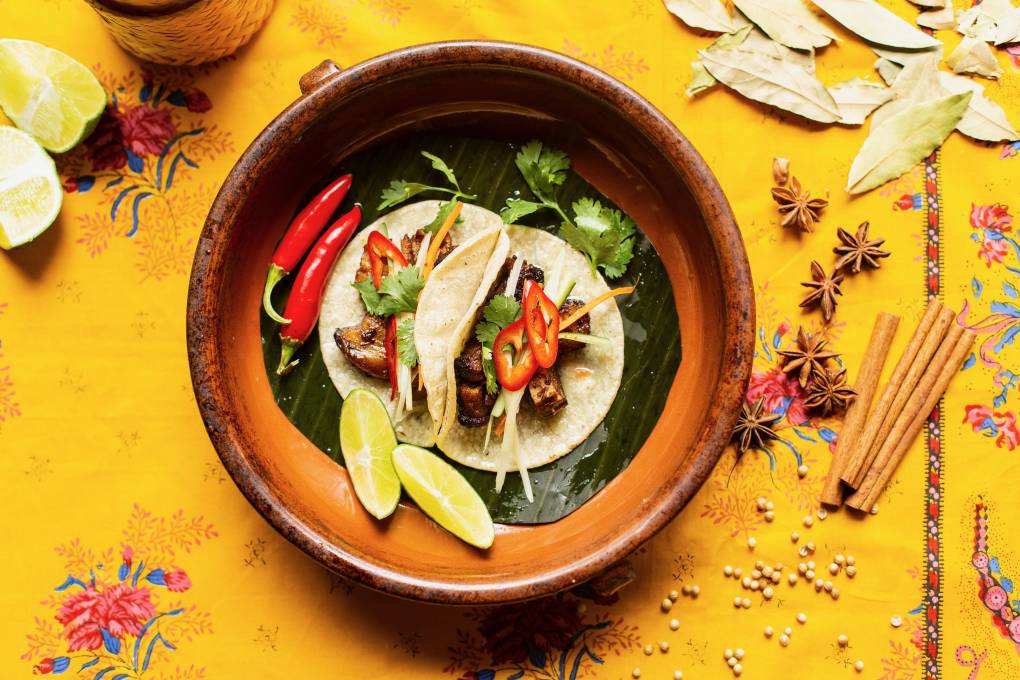
"caption": "Chef Kitiya Diparte will be serving her Thai-inspired braised pork belly tacos at Tacolado.",
"description": null,
"title": "Pork belly 1 LaCocina-JennyLove_081919_141",
"credit": "Courtesy of Kitaya Diparte",
"status": "inherit",
"altTag": "a colorful presentation of Thai-inspired open-faced tacos are plated on a yellow table",
"isLoading": false,
"fetchFailed": false
},
"arts_13933155": {
"type": "attachments",
"id": "arts_13933155",
"meta": {
"index": "attachments_1716263798",
"site": "arts",
"id": "13933155",
"found": true
},
"parent": 13933138,
"imgSizes": {
"twentyfourteen-full-width": {
"file": "https://ww2.kqed.org/app/uploads/sites/2/2023/08/bolita-purple_tortillas-1038x576.jpg",
"width": 1038,
"mimeType": "image/jpeg",
"height": 576
},
"thumbnail": {
"file": "https://ww2.kqed.org/app/uploads/sites/2/2023/08/bolita-purple_tortillas-160x90.jpg",
"width": 160,
"mimeType": "image/jpeg",
"height": 90
},
"post-thumbnail": {
"file": "https://ww2.kqed.org/app/uploads/sites/2/2023/08/bolita-purple_tortillas-672x372.jpg",
"width": 672,
"mimeType": "image/jpeg",
"height": 372
},
"kqedFullSize": {
"file": "https://ww2.kqed.org/app/uploads/sites/2/2023/08/bolita-purple_tortillas.jpg",
"width": 1920,
"height": 1081
},
"large": {
"file": "https://ww2.kqed.org/app/uploads/sites/2/2023/08/bolita-purple_tortillas-1020x574.jpg",
"width": 1020,
"mimeType": "image/jpeg",
"height": 574
},
"1536x1536": {
"file": "https://ww2.kqed.org/app/uploads/sites/2/2023/08/bolita-purple_tortillas-1536x865.jpg",
"width": 1536,
"mimeType": "image/jpeg",
"height": 865
},
"medium": {
"file": "https://ww2.kqed.org/app/uploads/sites/2/2023/08/bolita-purple_tortillas-800x450.jpg",
"width": 800,
"mimeType": "image/jpeg",
"height": 450
},
"medium_large": {
"file": "https://ww2.kqed.org/app/uploads/sites/2/2023/08/bolita-purple_tortillas-768x432.jpg",
"width": 768,
"mimeType": "image/jpeg",
"height": 432
}
},
"publishDate": 1692037091,
"modified": 1692037197,
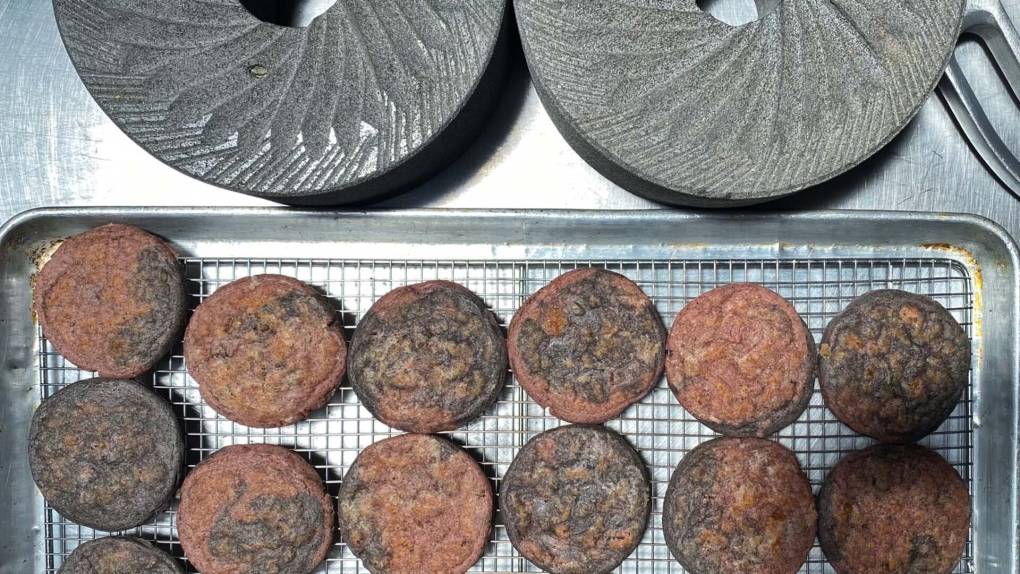
"caption": "These purple tortillas are a signature at Bolita Masa.",
"description": null,
"title": "bolita-purple_tortillas",
"credit": "Emmanuel Galvan",
"status": "inherit",
"altTag": "handmade tortillas using purple masa are prepared on a countertop",
"isLoading": false,
"fetchFailed": false
},
"arts_13932744": {
"type": "attachments",
"id": "arts_13932744",
"meta": {
"index": "attachments_1716263798",
"site": "arts",
"id": "13932744",
"found": true
},
"parent": 13932574,
"imgSizes": {
"twentyfourteen-full-width": {
"file": "https://ww2.kqed.org/app/uploads/sites/2/2023/08/mestizo_threedishes-crop-1038x576.jpg",
"width": 1038,
"mimeType": "image/jpeg",
"height": 576
},
"thumbnail": {
"file": "https://ww2.kqed.org/app/uploads/sites/2/2023/08/mestizo_threedishes-crop-160x100.jpg",
"width": 160,
"mimeType": "image/jpeg",
"height": 100
},
"post-thumbnail": {
"file": "https://ww2.kqed.org/app/uploads/sites/2/2023/08/mestizo_threedishes-crop-672x372.jpg",
"width": 672,
"mimeType": "image/jpeg",
"height": 372
},
"kqedFullSize": {
"file": "https://ww2.kqed.org/app/uploads/sites/2/2023/08/mestizo_threedishes-crop.jpg",
"width": 1920,
"height": 1200
},
"large": {
"file": "https://ww2.kqed.org/app/uploads/sites/2/2023/08/mestizo_threedishes-crop-1020x638.jpg",
"width": 1020,
"mimeType": "image/jpeg",
"height": 638
},
"1536x1536": {
"file": "https://ww2.kqed.org/app/uploads/sites/2/2023/08/mestizo_threedishes-crop-1536x960.jpg",
"width": 1536,
"mimeType": "image/jpeg",
"height": 960
},
"medium": {
"file": "https://ww2.kqed.org/app/uploads/sites/2/2023/08/mestizo_threedishes-crop-800x500.jpg",
"width": 800,
"mimeType": "image/jpeg",
"height": 500
},
"medium_large": {
"file": "https://ww2.kqed.org/app/uploads/sites/2/2023/08/mestizo_threedishes-crop-768x480.jpg",
"width": 768,
"mimeType": "image/jpeg",
"height": 480
}
},
"publishDate": 1691430790,
"modified": 1691431062,
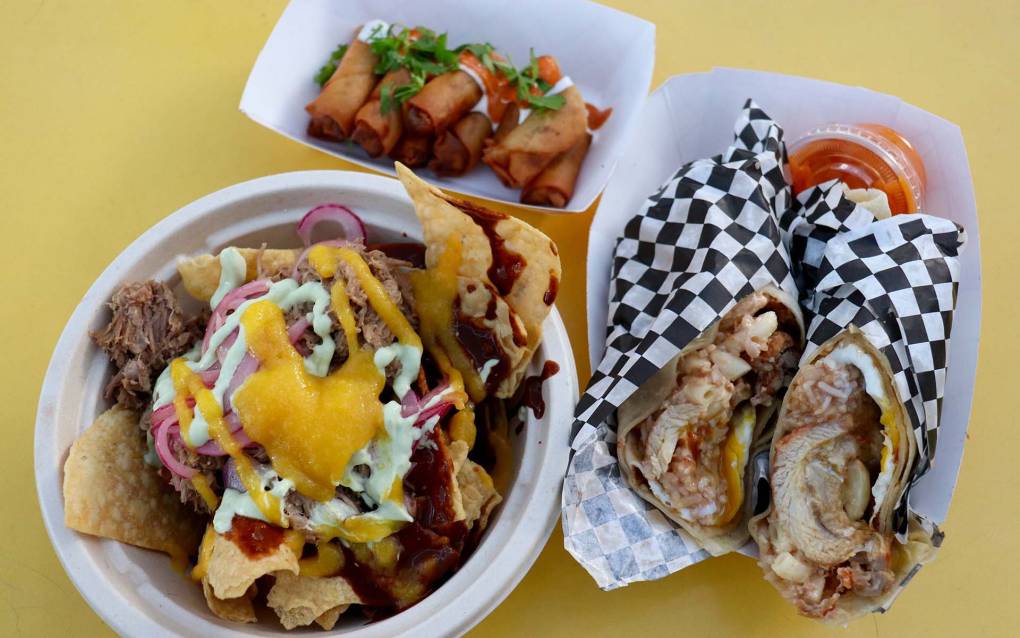
"caption": "Three dishes from Mestizo showcase the food truck's many cultural influences: Filipino lumpia; a Mexican burrito with fried chicken, gravy and mac salad; and chilaquiles topped with Hawaiian kalua pork.",
"description": null,
"title": "mestizo_threedishes-crop",
"credit": "Alan Chazaro",
"status": "inherit",
"altTag": "a burrito, chilaquiles, and lumpia are showcased on a yellow table outdoors",
"isLoading": false,
"fetchFailed": false
},
"arts_13931125": {
"type": "attachments",
"id": "arts_13931125",
"meta": {
"index": "attachments_1716263798",
"site": "arts",
"id": "13931125",
"found": true
},
"parent": 13931115,
"imgSizes": {
"twentyfourteen-full-width": {
"file": "https://ww2.kqed.org/app/uploads/sites/2/2023/06/tacos-el-rulas_lead-1038x576.jpg",
"width": 1038,
"mimeType": "image/jpeg",
"height": 576
},
"thumbnail": {
"file": "https://ww2.kqed.org/app/uploads/sites/2/2023/06/tacos-el-rulas_lead-160x90.jpg",
"width": 160,
"mimeType": "image/jpeg",
"height": 90
},
"post-thumbnail": {
"file": "https://ww2.kqed.org/app/uploads/sites/2/2023/06/tacos-el-rulas_lead-672x372.jpg",
"width": 672,
"mimeType": "image/jpeg",
"height": 372
},
"kqedFullSize": {
"file": "https://ww2.kqed.org/app/uploads/sites/2/2023/06/tacos-el-rulas_lead.jpg",
"width": 1920,
"height": 1080
},
"large": {
"file": "https://ww2.kqed.org/app/uploads/sites/2/2023/06/tacos-el-rulas_lead-1020x574.jpg",
"width": 1020,
"mimeType": "image/jpeg",
"height": 574
},
"1536x1536": {
"file": "https://ww2.kqed.org/app/uploads/sites/2/2023/06/tacos-el-rulas_lead-1536x864.jpg",
"width": 1536,
"mimeType": "image/jpeg",
"height": 864
},
"medium": {
"file": "https://ww2.kqed.org/app/uploads/sites/2/2023/06/tacos-el-rulas_lead-800x450.jpg",
"width": 800,
"mimeType": "image/jpeg",
"height": 450
},
"medium_large": {
"file": "https://ww2.kqed.org/app/uploads/sites/2/2023/06/tacos-el-rulas_lead-768x432.jpg",
"width": 768,
"mimeType": "image/jpeg",
"height": 432
}
},
"publishDate": 1688151434,
"modified": 1688151970,
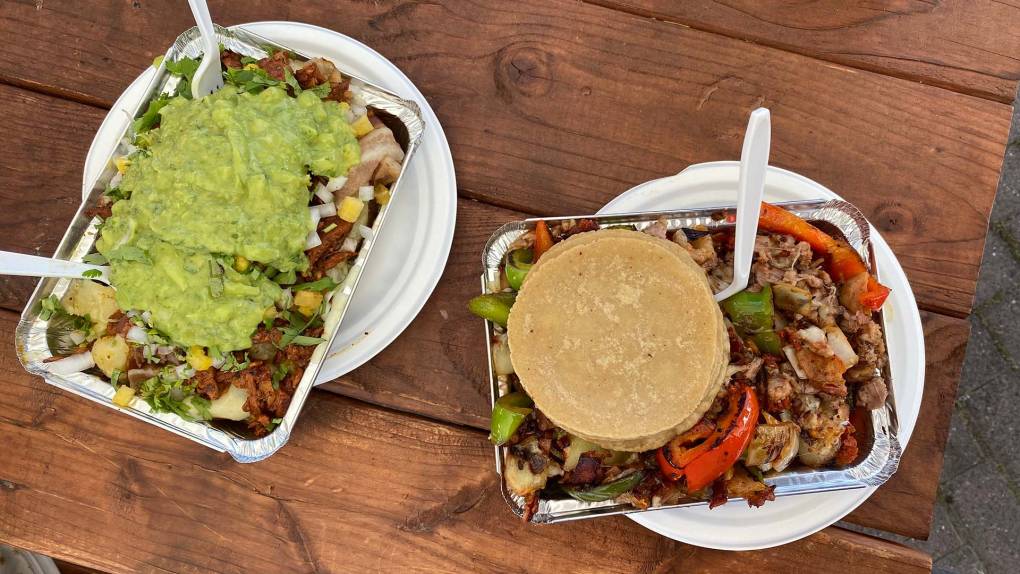
"caption": "Richmond's Tacos El Rulas specializes in cheesy, massively portioned dishes like its papá loca (left) and its alambre, both of which have gotten a lot of attention on social media.",
"description": null,
"title": "tacos el rulas_lead",
"credit": "Luke Tsai",
"status": "inherit",
"altTag": "Overhead view of two Mexican dishes served in aluminum takeout trays, on a picnic table. On the left, potatoes are topped with meat, onions and guacamole. On the right is a cheesy mixed grill of onions, peppers and assorted meats, topped with a stack of tortillas.",
"isLoading": false,
"fetchFailed": false
},
"arts_13925241": {
"type": "attachments",
"id": "arts_13925241",
"meta": {
"index": "attachments_1716263798",
"site": "arts",
"id": "13925241",
"found": true
},
"parent": 13925233,
"imgSizes": {
"twentyfourteen-full-width": {
"file": "https://ww2.kqed.org/app/uploads/sites/2/2023/02/pre-hispanic-mexican_featured-crop-1038x576.jpg",
"width": 1038,
"mimeType": "image/jpeg",
"height": 576
},
"thumbnail": {
"file": "https://ww2.kqed.org/app/uploads/sites/2/2023/02/pre-hispanic-mexican_featured-crop-160x100.jpg",
"width": 160,
"mimeType": "image/jpeg",
"height": 100
},
"post-thumbnail": {
"file": "https://ww2.kqed.org/app/uploads/sites/2/2023/02/pre-hispanic-mexican_featured-crop-672x372.jpg",
"width": 672,
"mimeType": "image/jpeg",
"height": 372
},
"kqedFullSize": {
"file": "https://ww2.kqed.org/app/uploads/sites/2/2023/02/pre-hispanic-mexican_featured-crop.jpg",
"width": 1920,
"height": 1200
},
"large": {
"file": "https://ww2.kqed.org/app/uploads/sites/2/2023/02/pre-hispanic-mexican_featured-crop-1020x638.jpg",
"width": 1020,
"mimeType": "image/jpeg",
"height": 638
},
"1536x1536": {
"file": "https://ww2.kqed.org/app/uploads/sites/2/2023/02/pre-hispanic-mexican_featured-crop-1536x960.jpg",
"width": 1536,
"mimeType": "image/jpeg",
"height": 960
},
"medium": {
"file": "https://ww2.kqed.org/app/uploads/sites/2/2023/02/pre-hispanic-mexican_featured-crop-800x500.jpg",
"width": 800,
"mimeType": "image/jpeg",
"height": 500
},
"medium_large": {
"file": "https://ww2.kqed.org/app/uploads/sites/2/2023/02/pre-hispanic-mexican_featured-crop-768x480.jpg",
"width": 768,
"mimeType": "image/jpeg",
"height": 480
}
},
"publishDate": 1676584110,
"modified": 1676584268,
"caption": "Even though the food at Pre-Hispanic Mexican Cuisine comes in a familiar format — like the tacos pictured here — most dishes feature Indigenous ingredients that predate Spain's colonization of Mexico by several hundred years.",
"description": null,
"title": "pre-hispanic mexican_featured-crop",
"credit": "Octavio Peña",
"status": "inherit",
"altTag": "Hands holding a plate of colorful tacos, with two lime wedges and a tub of salsa on the side.",
"isLoading": false,
"fetchFailed": false
},
"arts_13920077": {
"type": "attachments",
"id": "arts_13920077",
"meta": {
"index": "attachments_1716263798",
"site": "arts",
"id": "13920077",
"found": true
},
"parent": 13920076,
"imgSizes": {
"twentyfourteen-full-width": {
"file": "https://ww2.kqed.org/app/uploads/sites/2/2022/10/provecho_featured-crop_alanchazaro-1038x576.jpg",
"width": 1038,
"mimeType": "image/jpeg",
"height": 576
},
"thumbnail": {
"file": "https://ww2.kqed.org/app/uploads/sites/2/2022/10/provecho_featured-crop_alanchazaro-160x90.jpg",
"width": 160,
"mimeType": "image/jpeg",
"height": 90
},
"post-thumbnail": {
"file": "https://ww2.kqed.org/app/uploads/sites/2/2022/10/provecho_featured-crop_alanchazaro-672x372.jpg",
"width": 672,
"mimeType": "image/jpeg",
"height": 372
},
"kqedFullSize": {
"file": "https://ww2.kqed.org/app/uploads/sites/2/2022/10/provecho_featured-crop_alanchazaro-scaled.jpg",
"width": 2560,
"height": 1440
},
"2048x2048": {
"file": "https://ww2.kqed.org/app/uploads/sites/2/2022/10/provecho_featured-crop_alanchazaro-2048x1152.jpg",
"width": 2048,
"mimeType": "image/jpeg",
"height": 1152
},
"large": {
"file": "https://ww2.kqed.org/app/uploads/sites/2/2022/10/provecho_featured-crop_alanchazaro-1020x574.jpg",
"width": 1020,
"mimeType": "image/jpeg",
"height": 574
},
"1536x1536": {
"file": "https://ww2.kqed.org/app/uploads/sites/2/2022/10/provecho_featured-crop_alanchazaro-1536x864.jpg",
"width": 1536,
"mimeType": "image/jpeg",
"height": 864
},
"full-width": {
"file": "https://ww2.kqed.org/app/uploads/sites/2/2022/10/provecho_featured-crop_alanchazaro-1920x1080.jpg",
"width": 1920,
"mimeType": "image/jpeg",
"height": 1080
},
"medium": {
"file": "https://ww2.kqed.org/app/uploads/sites/2/2022/10/provecho_featured-crop_alanchazaro-800x450.jpg",
"width": 800,
"mimeType": "image/jpeg",
"height": 450
},
"medium_large": {
"file": "https://ww2.kqed.org/app/uploads/sites/2/2022/10/provecho_featured-crop_alanchazaro-768x432.jpg",
"width": 768,
"mimeType": "image/jpeg",
"height": 432
}
},
"publishDate": 1665080239,
"modified": 1665080749,
"caption": "Elegant dishes, such as the pan seared duck breast (center) and memelas de cecina (left), are Provecho's main attraction.",
"description": null,
"title": "provecho_featured-crop_alanchazaro",
"credit": "Alan Chazaro",
"status": "inherit",
"altTag": "three colorful plates of food, including pan seared duck, are on display at Low Bar in Oakland",
"isLoading": false,
"fetchFailed": false
},
"arts_13914415": {
"type": "attachments",
"id": "arts_13914415",
"meta": {
"index": "attachments_1716263798",
"site": "arts",
"id": "13914415",
"found": true
},
"parent": 13914400,
"imgSizes": {
"twentyfourteen-full-width": {
"file": "https://ww2.kqed.org/app/uploads/sites/2/2022/06/MangonadaBeer_COVER-1038x576.jpg",
"width": 1038,
"mimeType": "image/jpeg",
"height": 576
},
"thumbnail": {
"file": "https://ww2.kqed.org/app/uploads/sites/2/2022/06/MangonadaBeer_COVER-160x90.jpg",
"width": 160,
"mimeType": "image/jpeg",
"height": 90
},
"post-thumbnail": {
"file": "https://ww2.kqed.org/app/uploads/sites/2/2022/06/MangonadaBeer_COVER-672x372.jpg",
"width": 672,
"mimeType": "image/jpeg",
"height": 372
},
"kqedFullSize": {
"file": "https://ww2.kqed.org/app/uploads/sites/2/2022/06/MangonadaBeer_COVER.jpg",
"width": 1920,
"height": 1080
},
"large": {
"file": "https://ww2.kqed.org/app/uploads/sites/2/2022/06/MangonadaBeer_COVER-1020x574.jpg",
"width": 1020,
"mimeType": "image/jpeg",
"height": 574
},
"1536x1536": {
"file": "https://ww2.kqed.org/app/uploads/sites/2/2022/06/MangonadaBeer_COVER-1536x864.jpg",
"width": 1536,
"mimeType": "image/jpeg",
"height": 864
},
"medium": {
"file": "https://ww2.kqed.org/app/uploads/sites/2/2022/06/MangonadaBeer_COVER-800x450.jpg",
"width": 800,
"mimeType": "image/jpeg",
"height": 450
},
"medium_large": {
"file": "https://ww2.kqed.org/app/uploads/sites/2/2022/06/MangonadaBeer_COVER-768x432.jpg",
"width": 768,
"mimeType": "image/jpeg",
"height": 432
}
},
"publishDate": 1654214270,
"modified": 1654214343,
"caption": "The new smoothie ale from El Garage and Armistice Brewing captures the sweetness and spice of a Mexican mangonada.",
"description": null,
"title": "MangonadaBeer_COVER",
"credit": "Images from iStock, illustration by Sarah Hotchkiss",
"status": "inherit",
"altTag": "Photoillustration of a mangonada and a glass of beer against an orange \"kapow\" background, with a plus sign in between.",
"isLoading": false,
"fetchFailed": false
},
"arts_13914234": {
"type": "attachments",
"id": "arts_13914234",
"meta": {
"index": "attachments_1716263798",
"site": "arts",
"id": "13914234",
"found": true
},
"parent": 13913985,
"imgSizes": {
"twentyfourteen-full-width": {
"file": "https://ww2.kqed.org/app/uploads/sites/2/2022/05/hotcheetoburrito_lead-1038x576.jpg",
"width": 1038,
"mimeType": "image/jpeg",
"height": 576
},
"thumbnail": {
"file": "https://ww2.kqed.org/app/uploads/sites/2/2022/05/hotcheetoburrito_lead-160x90.jpg",
"width": 160,
"mimeType": "image/jpeg",
"height": 90
},
"post-thumbnail": {
"file": "https://ww2.kqed.org/app/uploads/sites/2/2022/05/hotcheetoburrito_lead-672x372.jpg",
"width": 672,
"mimeType": "image/jpeg",
"height": 372
},
"kqedFullSize": {
"file": "https://ww2.kqed.org/app/uploads/sites/2/2022/05/hotcheetoburrito_lead-scaled.jpg",
"width": 2560,
"height": 1440
},
"2048x2048": {
"file": "https://ww2.kqed.org/app/uploads/sites/2/2022/05/hotcheetoburrito_lead-2048x1152.jpg",
"width": 2048,
"mimeType": "image/jpeg",
"height": 1152
},
"large": {
"file": "https://ww2.kqed.org/app/uploads/sites/2/2022/05/hotcheetoburrito_lead-1020x574.jpg",
"width": 1020,
"mimeType": "image/jpeg",
"height": 574
},
"1536x1536": {
"file": "https://ww2.kqed.org/app/uploads/sites/2/2022/05/hotcheetoburrito_lead-1536x864.jpg",
"width": 1536,
"mimeType": "image/jpeg",
"height": 864
},
"full-width": {
"file": "https://ww2.kqed.org/app/uploads/sites/2/2022/05/hotcheetoburrito_lead-1920x1080.jpg",
"width": 1920,
"mimeType": "image/jpeg",
"height": 1080
},
"medium": {
"file": "https://ww2.kqed.org/app/uploads/sites/2/2022/05/hotcheetoburrito_lead-800x450.jpg",
"width": 800,
"mimeType": "image/jpeg",
"height": 450
},
"medium_large": {
"file": "https://ww2.kqed.org/app/uploads/sites/2/2022/05/hotcheetoburrito_lead-768x432.jpg",
"width": 768,
"mimeType": "image/jpeg",
"height": 432
}
},
"publishDate": 1654032408,
"modified": 1654032622,
"caption": "The Flamin' Hot Cheeto burrito is by far the most popular item at Taqueria El Mezcal, which has locations in San Pablo, Hayward and San Lorenzo.",
"description": null,
"title": "hotcheetoburrito_lead",
"credit": "Alan Chazaro",
"status": "inherit",
"altTag": "A foil-wrapped burrito and a bag of Flamin' Hot Cheetos on red and white checkered butcher paper.",
"isLoading": false,
"fetchFailed": false
},
"arts_13905399": {
"type": "attachments",
"id": "arts_13905399",
"meta": {
"index": "attachments_1716263798",
"site": "arts",
"id": "13905399",
"found": true
},
"parent": 13905374,
"imgSizes": {
"twentyfourteen-full-width": {
"file": "https://ww2.kqed.org/app/uploads/sites/2/2021/10/9-1038x576.jpg",
"width": 1038,
"mimeType": "image/jpeg",
"height": 576
},
"thumbnail": {
"file": "https://ww2.kqed.org/app/uploads/sites/2/2021/10/9-160x90.jpg",
"width": 160,
"mimeType": "image/jpeg",
"height": 90
},
"post-thumbnail": {
"file": "https://ww2.kqed.org/app/uploads/sites/2/2021/10/9-672x372.jpg",
"width": 672,
"mimeType": "image/jpeg",
"height": 372
},
"kqedFullSize": {
"file": "https://ww2.kqed.org/app/uploads/sites/2/2021/10/9.jpg",
"width": 1920,
"height": 1080
},
"large": {
"file": "https://ww2.kqed.org/app/uploads/sites/2/2021/10/9-1020x574.jpg",
"width": 1020,
"mimeType": "image/jpeg",
"height": 574
},
"1536x1536": {
"file": "https://ww2.kqed.org/app/uploads/sites/2/2021/10/9-1536x864.jpg",
"width": 1536,
"mimeType": "image/jpeg",
"height": 864
},
"medium": {
"file": "https://ww2.kqed.org/app/uploads/sites/2/2021/10/9-800x450.jpg",
"width": 800,
"mimeType": "image/jpeg",
"height": 450
},
"medium_large": {
"file": "https://ww2.kqed.org/app/uploads/sites/2/2021/10/9-768x432.jpg",
"width": 768,
"mimeType": "image/jpeg",
"height": 432
}
},
"publishDate": 1635455845,
"modified": 1635456168,
"caption": "(Photo by Beth LaBerge/KQED; design by Rebecca Kao)",
"description": null,
"title": "La Pulga food truck",
"credit": null,
"status": "inherit",
"altTag": "A taco truck employee hands a plate of food to a customer through the window.",
"isLoading": false,
"fetchFailed": false
},
"arts_13905402": {
"type": "attachments",
"id": "arts_13905402",
"meta": {
"index": "attachments_1716263798",
"site": "arts",
"id": "13905402",
"found": true
},
"parent": 13905374,
"imgSizes": {
"twentyfourteen-full-width": {
"file": "https://ww2.kqed.org/app/uploads/sites/2/2021/10/006_SanJose_BerryessaFleaMarket_10222021-1038x576.jpg",
"width": 1038,
"mimeType": "image/jpeg",
"height": 576
},
"thumbnail": {
"file": "https://ww2.kqed.org/app/uploads/sites/2/2021/10/006_SanJose_BerryessaFleaMarket_10222021-160x107.jpg",
"width": 160,
"mimeType": "image/jpeg",
"height": 107
},
"post-thumbnail": {
"file": "https://ww2.kqed.org/app/uploads/sites/2/2021/10/006_SanJose_BerryessaFleaMarket_10222021-672x372.jpg",
"width": 672,
"mimeType": "image/jpeg",
"height": 372
},
"kqedFullSize": {
"file": "https://ww2.kqed.org/app/uploads/sites/2/2021/10/006_SanJose_BerryessaFleaMarket_10222021-scaled.jpg",
"width": 2560,
"height": 1707
},
"2048x2048": {
"file": "https://ww2.kqed.org/app/uploads/sites/2/2021/10/006_SanJose_BerryessaFleaMarket_10222021-2048x1366.jpg",
"width": 2048,
"mimeType": "image/jpeg",
"height": 1366
},
"large": {
"file": "https://ww2.kqed.org/app/uploads/sites/2/2021/10/006_SanJose_BerryessaFleaMarket_10222021-1020x680.jpg",
"width": 1020,
"mimeType": "image/jpeg",
"height": 680
},
"1536x1536": {
"file": "https://ww2.kqed.org/app/uploads/sites/2/2021/10/006_SanJose_BerryessaFleaMarket_10222021-1536x1024.jpg",
"width": 1536,
"mimeType": "image/jpeg",
"height": 1024
},
"full-width": {
"file": "https://ww2.kqed.org/app/uploads/sites/2/2021/10/006_SanJose_BerryessaFleaMarket_10222021-1920x1280.jpg",
"width": 1920,
"mimeType": "image/jpeg",
"height": 1280
},
"medium": {
"file": "https://ww2.kqed.org/app/uploads/sites/2/2021/10/006_SanJose_BerryessaFleaMarket_10222021-800x533.jpg",
"width": 800,
"mimeType": "image/jpeg",
"height": 533
},
"medium_large": {
"file": "https://ww2.kqed.org/app/uploads/sites/2/2021/10/006_SanJose_BerryessaFleaMarket_10222021-768x512.jpg",
"width": 768,
"mimeType": "image/jpeg",
"height": 512
}
},
"publishDate": 1635456221,
"modified": 1635456261,
"caption": "An employee at Virrueta's Tacos, one of some 400 vendors who show up at the San Jose Flea Market (aka \"La Pulga\") every week.",
"description": null,
"title": "006_SanJose_BerryessaFleaMarket_10222021",
"credit": "Beth LaBerge/KQED",
"status": "inherit",
"altTag": "A taco truck employee hands a plate of food to a customer through the window.",
"isLoading": false,
"fetchFailed": false
},
"arts_13904918": {
"type": "attachments",
"id": "arts_13904918",
"meta": {
"index": "attachments_1716263798",
"site": "arts",
"id": "13904918",
"found": true
},
"parent": 13904861,
"imgSizes": {
"twentyfourteen-full-width": {
"file": "https://ww2.kqed.org/app/uploads/sites/2/2021/10/3-1038x576.jpg",
"width": 1038,
"mimeType": "image/jpeg",
"height": 576
},
"thumbnail": {
"file": "https://ww2.kqed.org/app/uploads/sites/2/2021/10/3-160x90.jpg",
"width": 160,
"mimeType": "image/jpeg",
"height": 90
},
"post-thumbnail": {
"file": "https://ww2.kqed.org/app/uploads/sites/2/2021/10/3-672x372.jpg",
"width": 672,
"mimeType": "image/jpeg",
"height": 372
},
"kqedFullSize": {
"file": "https://ww2.kqed.org/app/uploads/sites/2/2021/10/3.jpg",
"width": 1920,
"height": 1080
},
"large": {
"file": "https://ww2.kqed.org/app/uploads/sites/2/2021/10/3-1020x574.jpg",
"width": 1020,
"mimeType": "image/jpeg",
"height": 574
},
"1536x1536": {
"file": "https://ww2.kqed.org/app/uploads/sites/2/2021/10/3-1536x864.jpg",
"width": 1536,
"mimeType": "image/jpeg",
"height": 864
},
"medium": {
"file": "https://ww2.kqed.org/app/uploads/sites/2/2021/10/3-800x450.jpg",
"width": 800,
"mimeType": "image/jpeg",
"height": 450
},
"medium_large": {
"file": "https://ww2.kqed.org/app/uploads/sites/2/2021/10/3-768x432.jpg",
"width": 768,
"mimeType": "image/jpeg",
"height": 432
}
},
"publishDate": 1634772213,
"modified": 1634772381,
"caption": "(Photo by Beth LaBerge; design by Rebecca Kao)",
"description": null,
"title": "San Jose_AbuelasKitchen_featured",
"credit": null,
"status": "inherit",
"altTag": "Close up of an older Latina womans face as she grinds chiles in a molcajete; the text on the left reads, \"San Jose: The Bay Area's Great Immigrant Food City.\"",
"isLoading": false,
"fetchFailed": false
},
"arts_13904919": {
"type": "attachments",
"id": "arts_13904919",
"meta": {
"index": "attachments_1716263798",
"site": "arts",
"id": "13904919",
"found": true
},
"parent": 13904861,
"imgSizes": {
"twentyfourteen-full-width": {
"file": "https://ww2.kqed.org/app/uploads/sites/2/2021/10/006_SanJose_MardoniaGaleana_10072021-1038x576.jpg",
"width": 1038,
"mimeType": "image/jpeg",
"height": 576
},
"thumbnail": {
"file": "https://ww2.kqed.org/app/uploads/sites/2/2021/10/006_SanJose_MardoniaGaleana_10072021-160x107.jpg",
"width": 160,
"mimeType": "image/jpeg",
"height": 107
},
"post-thumbnail": {
"file": "https://ww2.kqed.org/app/uploads/sites/2/2021/10/006_SanJose_MardoniaGaleana_10072021-672x372.jpg",
"width": 672,
"mimeType": "image/jpeg",
"height": 372
},
"kqedFullSize": {
"file": "https://ww2.kqed.org/app/uploads/sites/2/2021/10/006_SanJose_MardoniaGaleana_10072021-scaled.jpg",
"width": 2560,
"height": 1707
},
"2048x2048": {
"file": "https://ww2.kqed.org/app/uploads/sites/2/2021/10/006_SanJose_MardoniaGaleana_10072021-2048x1365.jpg",
"width": 2048,
"mimeType": "image/jpeg",
"height": 1365
},
"large": {
"file": "https://ww2.kqed.org/app/uploads/sites/2/2021/10/006_SanJose_MardoniaGaleana_10072021-1020x680.jpg",
"width": 1020,
"mimeType": "image/jpeg",
"height": 680
},
"1536x1536": {
"file": "https://ww2.kqed.org/app/uploads/sites/2/2021/10/006_SanJose_MardoniaGaleana_10072021-1536x1024.jpg",
"width": 1536,
"mimeType": "image/jpeg",
"height": 1024
},
"full-width": {
"file": "https://ww2.kqed.org/app/uploads/sites/2/2021/10/006_SanJose_MardoniaGaleana_10072021-1920x1280.jpg",
"width": 1920,
"mimeType": "image/jpeg",
"height": 1280
},
"medium": {
"file": "https://ww2.kqed.org/app/uploads/sites/2/2021/10/006_SanJose_MardoniaGaleana_10072021-800x533.jpg",
"width": 800,
"mimeType": "image/jpeg",
"height": 533
},
"medium_large": {
"file": "https://ww2.kqed.org/app/uploads/sites/2/2021/10/006_SanJose_MardoniaGaleana_10072021-768x512.jpg",
"width": 768,
"mimeType": "image/jpeg",
"height": 512
}
},
"publishDate": 1634772420,
"modified": 1634772670,
"caption": "During the '90s, the author's grandmother, Mardonia Galeana, ran an informal restaurant out of her apartment.",
"description": null,
"title": "006_SanJose_MardoniaGaleana_10072021",
"credit": "Beth LaBerge/KQED",
"status": "inherit",
"altTag": "An elderly Latina woman grinds ingredients inside a stone molcajete.",
"isLoading": false,
"fetchFailed": false
},
"arts_13904839": {
"type": "attachments",
"id": "arts_13904839",
"meta": {
"index": "attachments_1716263798",
"site": "arts",
"id": "13904839",
"found": true
},
"parent": 13904835,
"imgSizes": {
"twentyfourteen-full-width": {
"file": "https://ww2.kqed.org/app/uploads/sites/2/2021/10/ThumbnailFeature-Image-San-Jose-Food-Project-1038x576.jpg",
"width": 1038,
"mimeType": "image/jpeg",
"height": 576
},
"thumbnail": {
"file": "https://ww2.kqed.org/app/uploads/sites/2/2021/10/ThumbnailFeature-Image-San-Jose-Food-Project-160x90.jpg",
"width": 160,
"mimeType": "image/jpeg",
"height": 90
},
"post-thumbnail": {
"file": "https://ww2.kqed.org/app/uploads/sites/2/2021/10/ThumbnailFeature-Image-San-Jose-Food-Project-672x372.jpg",
"width": 672,
"mimeType": "image/jpeg",
"height": 372
},
"kqedFullSize": {
"file": "https://ww2.kqed.org/app/uploads/sites/2/2021/10/ThumbnailFeature-Image-San-Jose-Food-Project.jpg",
"width": 1920,
"height": 1080
},
"large": {
"file": "https://ww2.kqed.org/app/uploads/sites/2/2021/10/ThumbnailFeature-Image-San-Jose-Food-Project-1020x574.jpg",
"width": 1020,
"mimeType": "image/jpeg",
"height": 574
},
"1536x1536": {
"file": "https://ww2.kqed.org/app/uploads/sites/2/2021/10/ThumbnailFeature-Image-San-Jose-Food-Project-1536x864.jpg",
"width": 1536,
"mimeType": "image/jpeg",
"height": 864
},
"medium": {
"file": "https://ww2.kqed.org/app/uploads/sites/2/2021/10/ThumbnailFeature-Image-San-Jose-Food-Project-800x450.jpg",
"width": 800,
"mimeType": "image/jpeg",
"height": 450
},
"medium_large": {
"file": "https://ww2.kqed.org/app/uploads/sites/2/2021/10/ThumbnailFeature-Image-San-Jose-Food-Project-768x432.jpg",
"width": 768,
"mimeType": "image/jpeg",
"height": 432
}
},
"publishDate": 1634678659,
"modified": 1634678815,
"caption": null,
"description": null,
"title": "{ThumbnailFeature Image} San Jose Food Project",
"credit": "Rebecca Kao",
"status": "inherit",
"altTag": "An illustration of various international foods such as pho and an Ethiopian veggie combo, with the following text overlaid: \"San Jose: The Bay Area's Great Immigrant Food City\"",
"isLoading": false,
"fetchFailed": false
},
"arts_13904840": {
"type": "attachments",
"id": "arts_13904840",
"meta": {
"index": "attachments_1716263798",
"site": "arts",
"id": "13904840",
"found": true
},
"parent": 13904835,
"imgSizes": {
"twentyfourteen-full-width": {
"file": "https://ww2.kqed.org/app/uploads/sites/2/2021/10/san-jose-illo_thien-pham-1038x576.jpg",
"width": 1038,
"mimeType": "image/jpeg",
"height": 576
},
"thumbnail": {
"file": "https://ww2.kqed.org/app/uploads/sites/2/2021/10/san-jose-illo_thien-pham-160x120.jpg",
"width": 160,
"mimeType": "image/jpeg",
"height": 120
},
"post-thumbnail": {
"file": "https://ww2.kqed.org/app/uploads/sites/2/2021/10/san-jose-illo_thien-pham-672x372.jpg",
"width": 672,
"mimeType": "image/jpeg",
"height": 372
},
"kqedFullSize": {
"file": "https://ww2.kqed.org/app/uploads/sites/2/2021/10/san-jose-illo_thien-pham-scaled.jpg",
"width": 2560,
"height": 1919
},
"2048x2048": {
"file": "https://ww2.kqed.org/app/uploads/sites/2/2021/10/san-jose-illo_thien-pham-2048x1535.jpg",
"width": 2048,
"mimeType": "image/jpeg",
"height": 1535
},
"large": {
"file": "https://ww2.kqed.org/app/uploads/sites/2/2021/10/san-jose-illo_thien-pham-1020x765.jpg",
"width": 1020,
"mimeType": "image/jpeg",
"height": 765
},
"1536x1536": {
"file": "https://ww2.kqed.org/app/uploads/sites/2/2021/10/san-jose-illo_thien-pham-1536x1151.jpg",
"width": 1536,
"mimeType": "image/jpeg",
"height": 1151
},
"full-width": {
"file": "https://ww2.kqed.org/app/uploads/sites/2/2021/10/san-jose-illo_thien-pham-1920x1439.jpg",
"width": 1920,
"mimeType": "image/jpeg",
"height": 1439
},
"medium": {
"file": "https://ww2.kqed.org/app/uploads/sites/2/2021/10/san-jose-illo_thien-pham-800x600.jpg",
"width": 800,
"mimeType": "image/jpeg",
"height": 600
},
"medium_large": {
"file": "https://ww2.kqed.org/app/uploads/sites/2/2021/10/san-jose-illo_thien-pham-768x576.jpg",
"width": 768,
"mimeType": "image/jpeg",
"height": 576
}
},
"publishDate": 1634679237,
"modified": 1634679456,
"caption": "\u003cem>(Illustration by Thien Pham)\u003c/em>",
"description": null,
"title": "san jose illo_thien pham",
"credit": null,
"status": "inherit",
"altTag": "An illustration of a spread of various international foods: a bowl of pho, a torta, an Ethiopian veggie combo plate, the cross section of a durian and so forth.",
"isLoading": false,
"fetchFailed": false
},
"arts_13900191": {
"type": "attachments",
"id": "arts_13900191",
"meta": {
"index": "attachments_1716263798",
"site": "arts",
"id": "13900191",
"found": true
},
"parent": 13900187,
"imgSizes": {
"twentyfourteen-full-width": {
"file": "https://ww2.kqed.org/app/uploads/sites/2/2021/07/Molcaxitl_tacos-1038x576.jpg",
"width": 1038,
"mimeType": "image/jpeg",
"height": 576
},
"thumbnail": {
"file": "https://ww2.kqed.org/app/uploads/sites/2/2021/07/Molcaxitl_tacos-160x90.jpg",
"width": 160,
"mimeType": "image/jpeg",
"height": 90
},
"post-thumbnail": {
"file": "https://ww2.kqed.org/app/uploads/sites/2/2021/07/Molcaxitl_tacos-672x372.jpg",
"width": 672,
"mimeType": "image/jpeg",
"height": 372
},
"kqedFullSize": {
"file": "https://ww2.kqed.org/app/uploads/sites/2/2021/07/Molcaxitl_tacos.jpg",
"width": 1333,
"height": 750
},
"large": {
"file": "https://ww2.kqed.org/app/uploads/sites/2/2021/07/Molcaxitl_tacos-1020x574.jpg",
"width": 1020,
"mimeType": "image/jpeg",
"height": 574
},
"medium": {
"file": "https://ww2.kqed.org/app/uploads/sites/2/2021/07/Molcaxitl_tacos-800x450.jpg",
"width": 800,
"mimeType": "image/jpeg",
"height": 450
},
"medium_large": {
"file": "https://ww2.kqed.org/app/uploads/sites/2/2021/07/Molcaxitl_tacos-768x432.jpg",
"width": 768,
"mimeType": "image/jpeg",
"height": 432
}
},
"publishDate": 1626986010,
"modified": 1626986090,
"caption": "A pair of Molcaxitl tacos served on blue corn tortillas.",
"description": "A pair of Molcaxitl tacos served on blue corn tortillas.",
"title": "Molcaxitl_tacos",
"credit": "Nomar Ramirez",
"status": "inherit",
"altTag": "Two tacos drenched with green salsa, served over blue corn tortillas.",
"isLoading": false,
"fetchFailed": false
}
},
"audioPlayerReducer": {
"postId": "stream_live",
"isPaused": true,
"isPlaying": false,
"pfsActive": false,
"pledgeModalIsOpen": true,
"playerDrawerIsOpen": false,
"liveAudioPlayStartedAt": 0,
"liveAudioPlayContext": ""
},
"authorsReducer": {
"byline_arts_13904861": {
"type": "authors",
"id": "byline_arts_13904861",
"meta": {
"override": true
},
"slug": "byline_arts_13904861",
"name": "Yosimar Reyes",
"isLoading": false
},
"abandlamudi": {
"type": "authors",
"id": "11672",
"meta": {
"index": "authors_1716337520",
"id": "11672",
"found": true
},
"name": "Adhiti Bandlamudi",
"firstName": "Adhiti",
"lastName": "Bandlamudi",
"slug": "abandlamudi",
"email": "abandlamudi@kqed.org",
"display_author_email": false,
"staff_mastheads": [
"news"
],
"title": "KQED Housing Reporter",
"bio": "Adhiti Bandlamudi reports for KQED's Housing desk. She focuses on how housing gets built across the Bay Area. Before joining KQED in 2020, she reported for WUNC in Durham, North Carolina, WABE in Atlanta, Georgia and Capital Public Radio in Sacramento. In 2017, she was awarded a Kroc Fellowship at NPR where she reported on everything from sprinkles to the Golden State Killer's arrest. When she's not reporting, she's baking new recipes in her kitchen or watching movies with friends and family. She's originally from Georgia and has strong opinions about Great British Bake Off.",
"avatar": "https://secure.gravatar.com/avatar/868129c8b257bb99a3500e2c86a65400?s=600&d=mm&r=g",
"twitter": "oddity_adhiti",
"facebook": null,
"instagram": null,
"linkedin": null,
"sites": [
{
"site": "arts",
"roles": [
"author"
]
},
{
"site": "news",
"roles": [
"editor"
]
},
{
"site": "liveblog",
"roles": [
"author"
]
}
],
"headData": {
"title": "Adhiti Bandlamudi | KQED",
"description": "KQED Housing Reporter",
"ogImgSrc": "https://secure.gravatar.com/avatar/868129c8b257bb99a3500e2c86a65400?s=600&d=mm&r=g",
"twImgSrc": "https://secure.gravatar.com/avatar/868129c8b257bb99a3500e2c86a65400?s=600&d=mm&r=g"
},
"isLoading": false,
"link": "/author/abandlamudi"
},
"ccabreralomeli": {
"type": "authors",
"id": "11708",
"meta": {
"index": "authors_1716337520",
"id": "11708",
"found": true
},
"name": "Carlos Cabrera-Lomelí",
"firstName": "Carlos",
"lastName": "Cabrera-Lomelí",
"slug": "ccabreralomeli",
"email": "ccabreralomeli@KQED.org",
"display_author_email": true,
"staff_mastheads": [
"news"
],
"title": "Community Reporter",
"bio": "Carlos Cabrera-Lomelí is a community reporter with KQED's digital engagement team. He also reports and co-produces for KQED's bilingual news hub KQED en Español. He grew up in San Francisco's Mission District and has previously worked with Univision, 48 Hills and REFORMA in Mexico City.",
"avatar": "https://secure.gravatar.com/avatar/c309be9665e484f887b818c89e273ecc673004f426f36b24d00a4d813a2e0518?s=600&d=blank&r=g",
"twitter": "@LomeliCabrera",
"bluesky": null,
"facebook": null,
"instagram": null,
"linkedin": null,
"sites": [
{
"site": "arts",
"roles": [
"editor"
]
},
{
"site": "news",
"roles": [
"editor"
]
},
{
"site": "about",
"roles": [
"editor"
]
},
{
"site": "science",
"roles": [
"editor"
]
},
{
"site": "perspectives",
"roles": [
"editor"
]
},
{
"site": "elections",
"roles": [
"editor"
]
},
{
"site": "liveblog",
"roles": [
"contributor"
]
}
],
"headData": {
"title": "Carlos Cabrera-Lomelí | KQED",
"description": "Community Reporter",
"ogImgSrc": "https://secure.gravatar.com/avatar/c309be9665e484f887b818c89e273ecc673004f426f36b24d00a4d813a2e0518?s=600&d=blank&r=g",
"twImgSrc": "https://secure.gravatar.com/avatar/c309be9665e484f887b818c89e273ecc673004f426f36b24d00a4d813a2e0518?s=600&d=blank&r=g"
},
"isLoading": false,
"link": "/author/ccabreralomeli"
},
"ltsai": {
"type": "authors",
"id": "11743",
"meta": {
"index": "authors_1716337520",
"id": "11743",
"found": true
},
"name": "Luke Tsai",
"firstName": "Luke",
"lastName": "Tsai",
"slug": "ltsai",
"email": "ltsai@kqed.org",
"display_author_email": true,
"staff_mastheads": [
"arts"
],
"title": "Food Editor",
"bio": "Luke Tsai is KQED's food editor and resident stinky tofu connoisseur. Prior to KQED, he was an editor at Eater SF, \u003cem>San Francisco \u003c/em>magazine, and the \u003cem>East Bay Express\u003c/em>, and his work has also appeared in TASTE, the \u003cem>San Francisco Chronicle\u003c/em>, and the \u003cem>Best Food Writing\u003c/em> anthology. When he isn't writing or editing, you'll find him eating most everything he can get his hands on.",
"avatar": "https://secure.gravatar.com/avatar/1e59b45bf191526e7339d6ba46e33a57b2030d25c27660ecc64ea3cb863e34f7?s=600&d=blank&r=g",
"twitter": "theluketsai",
"bluesky": null,
"facebook": null,
"instagram": null,
"linkedin": null,
"sites": [
{
"site": "",
"roles": [
"editor"
]
},
{
"site": "arts",
"roles": [
"administrator"
]
},
{
"site": "news",
"roles": [
"editor",
"contributor"
]
},
{
"site": "bayareabites",
"roles": [
"editor"
]
},
{
"site": "food",
"roles": [
"editor"
]
}
],
"headData": {
"title": "Luke Tsai | KQED",
"description": "Food Editor",
"ogImgSrc": "https://secure.gravatar.com/avatar/1e59b45bf191526e7339d6ba46e33a57b2030d25c27660ecc64ea3cb863e34f7?s=600&d=blank&r=g",
"twImgSrc": "https://secure.gravatar.com/avatar/1e59b45bf191526e7339d6ba46e33a57b2030d25c27660ecc64ea3cb863e34f7?s=600&d=blank&r=g"
},
"isLoading": false,
"link": "/author/ltsai"
},
"achazaro": {
"type": "authors",
"id": "11748",
"meta": {
"index": "authors_1716337520",
"id": "11748",
"found": true
},
"name": "Alan Chazaro",
"firstName": "Alan",
"lastName": "Chazaro",
"slug": "achazaro",
"email": "agchazaro@gmail.com",
"display_author_email": true,
"staff_mastheads": [],
"title": "Food Writer and Reporter",
"bio": "Alan Chazaro is the author of \u003cem>This Is Not a Frank Ocean Cover Album\u003c/em> (Black Lawrence Press, 2019), \u003cem>Piñata Theory\u003c/em> (Black Lawrence Press, 2020), and \u003cem>Notes from the Eastern Span of the Bay Bridge\u003c/em> (Ghost City Press, 2021). He is a graduate of June Jordan’s Poetry for the People program at UC Berkeley and a former Lawrence Ferlinghetti Fellow at the University of San Francisco. He writes about sports, food, art, music, education, and culture while repping the Bay on \u003ca href=\"https://twitter.com/alan_chazaro\">Twitter\u003c/a> and \u003ca href=\"https://www.instagram.com/alan_chazaro/?hl=en\">Instagram\u003c/a> at @alan_chazaro.",
"avatar": "https://secure.gravatar.com/avatar/ea8b6dd970fc5c29e7a188e7d5861df7?s=600&d=blank&r=g",
"twitter": "alan_chazaro",
"facebook": null,
"instagram": null,
"linkedin": null,
"sites": [
{
"site": "arts",
"roles": [
"contributor"
]
},
{
"site": "news",
"roles": [
"editor"
]
}
],
"headData": {
"title": "Alan Chazaro | KQED",
"description": "Food Writer and Reporter",
"ogImgSrc": "https://secure.gravatar.com/avatar/ea8b6dd970fc5c29e7a188e7d5861df7?s=600&d=blank&r=g",
"twImgSrc": "https://secure.gravatar.com/avatar/ea8b6dd970fc5c29e7a188e7d5861df7?s=600&d=blank&r=g"
},
"isLoading": false,
"link": "/author/achazaro"
},
"opena": {
"type": "authors",
"id": "11903",
"meta": {
"index": "authors_1716337520",
"id": "11903",
"found": true
},
"name": "Octavio Peña",
"firstName": "Octavio",
"lastName": "Peña",
"slug": "opena",
"email": "octaviopenagutierrez@gmail.com",
"display_author_email": false,
"staff_mastheads": [],
"title": "KQED Contributor",
"bio": null,
"avatar": "https://secure.gravatar.com/avatar/62850791380238ea3945ee72a3d56056477904792b41daaf11effa8780bab75d?s=600&d=blank&r=g",
"twitter": null,
"bluesky": null,
"facebook": null,
"instagram": null,
"linkedin": null,
"sites": [
{
"site": "arts",
"roles": [
"contributor"
]
}
],
"headData": {
"title": "Octavio Peña | KQED",
"description": "KQED Contributor",
"ogImgSrc": "https://secure.gravatar.com/avatar/62850791380238ea3945ee72a3d56056477904792b41daaf11effa8780bab75d?s=600&d=blank&r=g",
"twImgSrc": "https://secure.gravatar.com/avatar/62850791380238ea3945ee72a3d56056477904792b41daaf11effa8780bab75d?s=600&d=blank&r=g"
},
"isLoading": false,
"link": "/author/opena"
},
"pbicchieri": {
"type": "authors",
"id": "11932",
"meta": {
"index": "authors_1716337520",
"id": "11932",
"found": true
},
"name": "Paolo Bicchieri",
"firstName": "Paolo",
"lastName": "Bicchieri",
"slug": "pbicchieri",
"email": "paolobicchieri1306@gmail.com",
"display_author_email": false,
"staff_mastheads": [],
"title": "KQED Contributor",
"bio": null,
"avatar": "https://secure.gravatar.com/avatar/becbc05ff49115d4a6aabb839979fd66?s=600&d=blank&r=g",
"twitter": null,
"facebook": null,
"instagram": null,
"linkedin": null,
"sites": [
{
"site": "arts",
"roles": [
"author"
]
}
],
"headData": {
"title": "Paolo Bicchieri | KQED",
"description": "KQED Contributor",
"ogImgSrc": "https://secure.gravatar.com/avatar/becbc05ff49115d4a6aabb839979fd66?s=600&d=blank&r=g",
"twImgSrc": "https://secure.gravatar.com/avatar/becbc05ff49115d4a6aabb839979fd66?s=600&d=blank&r=g"
},
"isLoading": false,
"link": "/author/pbicchieri"
}
},
"pagesReducer": {
"arts_tag_mexican-food": {
"type": "terms",
"id": "arts_14985",
"meta": {
"index": "terms_1716263798",
"site": "arts",
"id": "14985",
"score": 9.555889
},
"featImg": null,
"name": "mexican food",
"description": null,
"taxonomy": "tag",
"headData": {
"twImgId": null,
"twTitle": null,
"ogTitle": null,
"ogImgId": null,
"twDescription": null,
"description": null,
"title": "mexican food Archives | KQED Arts",
"ogDescription": null
},
"ttid": 14997,
"slug": "mexican-food",
"isLoading": false,
"title": "mexican food",
"pageMeta": {
"site": "arts",
"WpPageTemplate": "page-topic-editorial",
"currentPage": 3
},
"blocks": [
{
"blockName": "kqed/post-list",
"attrs": {
"layout": "cardArticle2",
"query": "posts/arts?tag=mexican-food",
"seeMore": false,
"paginated": true,
"page": 3
}
},
{
"blockName": "kqed/ad"
}
]
}
},
"pfsSessionReducer": {},
"postsReducer": {
"stream_live": {
"type": "live",
"id": "stream_live",
"audioUrl": "https://streams.kqed.org/kqedradio",
"title": "Live Stream",
"excerpt": "Live Stream information currently unavailable.",
"link": "/radio",
"featImg": "",
"label": {
"name": "KQED Live",
"link": "/"
}
},
"stream_kqedNewscast": {
"type": "posts",
"id": "stream_kqedNewscast",
"audioUrl": "https://www.kqed.org/.stream/anon/radio/RDnews/newscast.mp3?_=1",
"title": "KQED Newscast",
"featImg": "",
"label": {
"name": "88.5 FM",
"link": "/"
}
},
"arts_13934890": {
"type": "posts",
"id": "arts_13934890",
"meta": {
"index": "posts_1716263798",
"site": "arts",
"id": "13934890",
"score": null,
"sort": [
1695146571000
]
},
"parent": 0,
"labelTerm": {},
"blocks": [],
"publishDate": 1695146571,
"format": "standard",
"title": "Tacos and All-You-Can-Eat Ice Cream Are a Match Made in Heaven",
"headTitle": "Tacos and All-You-Can-Eat Ice Cream Are a Match Made in Heaven | KQED",
"content": "\u003cp>Every September, when the Bay Area’s notorious autumn temperatures begin to heat up, ice cream — \u003ca href=\"https://www.kqed.org/forum/2010101894387/all-you-can-eat-unique-ice-cream-flavors-flourishing-in-the-bay\">and all of the creative ways it can be enjoyed\u003c/a> — becomes an imperative need. This Sunday, the cold dessert will reach an even higher level of transcendence — by pairing it with tacos. At least that’s the idea behind Tacolado, a unique mashup of an outdoor food festival organized by San Francisco’s \u003ca href=\"https://lacocinasf.org/\">La Cocina\u003c/a> kitchen incubator.\u003c/p>\n\u003cp>The ice cream-slash-taco-party fundraiser will feature sixteen chefs serving up an imaginative array of tacos, helados and cocktails in a unique pairing of comfort foods that are beloved in Mexico and beyond.\u003c/p>\n\u003cp>“Tacos are magic, and ice cream is just pure joy,” says Emiliana Puyana, La Cocina’s incubator program director. “Every good summer day had ice cream. It puts a smile on my face, always.”\u003c/p>\n\u003cp>The frozen sweets will be supplied by Häagen-Dazs, the event sponsor, as well as \u003ca href=\"https://www.instagram.com/delacreamery/\">De La Creamery\u003c/a>, a trending local pop-up. Owner Stephanie De La Cruz will be scooping vegan ice cream nachos, which feature homemade cinnamon tortilla chips, a scoop of vegan horchata ice cream and fresh berry puree. Premium ticket holders will also have a chance to try an ice cream taco — a first for De La Creamery — consisting of \u003ca href=\"https://www.kqed.org/arts/13933138/bolita-masa-berkeley-pop-up-farmers-market-tetelas-tamales\">a cinnamonized hard-shell tortilla from Bolita Masa\u003c/a>, vegan horchata ice cream and house-made fruit caviar.\u003c/p>\n\u003cfigure id=\"attachment_13928469\" class=\"wp-caption alignnone\" style=\"max-width: 1920px\">\u003cimg loading=\"lazy\" decoding=\"async\" class=\"wp-image-13928469 size-full\" src=\"https://ww2.kqed.org/app/uploads/sites/2/2023/05/delacreamery.jpg\" alt=\"a platter of colorful, Mexican-style ice creams\" width=\"1920\" height=\"1321\" srcset=\"https://cdn.kqed.org/wp-content/uploads/sites/2/2023/05/delacreamery.jpg 1920w, https://cdn.kqed.org/wp-content/uploads/sites/2/2023/05/delacreamery-800x550.jpg 800w, https://cdn.kqed.org/wp-content/uploads/sites/2/2023/05/delacreamery-1020x702.jpg 1020w, https://cdn.kqed.org/wp-content/uploads/sites/2/2023/05/delacreamery-160x110.jpg 160w, https://cdn.kqed.org/wp-content/uploads/sites/2/2023/05/delacreamery-768x528.jpg 768w, https://cdn.kqed.org/wp-content/uploads/sites/2/2023/05/delacreamery-1536x1057.jpg 1536w\" sizes=\"(max-width: 1920px) 100vw, 1920px\">\u003cfigcaption class=\"wp-caption-text\">De La Creamery will be supplying their small-batch Mexican helados. \u003ccite>(Andrea Arevalo)\u003c/cite>\u003c/figcaption>\u003c/figure>\n\u003cp>Meanwhile, for fans of all-you-can-eat food experiences, Häagen-Dazs will offer its \u003ca href=\"https://www.icecream.com/us/en/brands/haagen-dazs/products/butter-cookie-cone\">new butter cookie cones\u003c/a> — a line of pre-packaged, ice cream–filled cones — for unlimited consumption to all event-goers. (Insert “big eyes” and “open mouth” emojis here.)\u003c/p>\n\u003cp>[ad fullwidth]\u003c/p>\n\u003cp>The festival will be just as much of a flavor destination for taco enthusiasts, too. A Cubano taco with pork, tropical slaw and crispy cheese from \u003ca href=\"https://www.instagram.com/clandestinaberkeley/\">Clandestina Cocina\u003c/a>? A Japanese karaage one from \u003ca href=\"https://www.instagram.com/tokachi_musubi/\">Tokachi Musubi\u003c/a>? How about a taco árabe with lamb from \u003ca href=\"https://www.instagram.com/deliciososf/\">Delicioso\u003c/a> — a take on the Poblano classic, which swaps out corn tortillas for folded pita bread?\u003c/p>\n\u003cp>For vendors like Kitiya Diparte of the Thai pop-up \u003ca href=\"https://www.instagram.com/kitiya_thai/\">Kitiya\u003c/a>, it’s a chance to test out new ideas — like their braised pork belly taco with pickled green papaya, cilantro and spicy sauce.\u003c/p>\n\u003cp>“During the pandemic, I diversified my business with my jarred sauces and curry pastes, so I’m looking forward to showcasing this sauce on my taco,” Diparte says.\u003c/p>\n\u003cp>For others like Aaron Stewart of \u003ca href=\"https://www.instagram.com/eastoaklandsmoke\">MexiQ\u003c/a>, a Mexican-inspired barbecue fusion pop-up rooted in East Oakland, it’s simply a chance to flex bold cuisine in a fresh, tortilla-wrapped context.\u003c/p>\n\u003cp>“As a classically French trained chef, I absolutely love the versatility of a taco,” says Stewart, who will be debuting his smoked lamb rib tacos rubbed in chipotle adobo and wrapped in banana leaves. “It’s going to be fun to take an ingredient like lamb ribs, which is usually reserved for fine dining, and put it in a street food–style taco.”\u003c/p>\n\u003cp>Tacolado will be La Cocina’s first big outdoor event since the pandemic. Despite the unexpected closure of its \u003ca href=\"https://sf.eater.com/2023/7/13/23793813/la-cocina-food-hall-closing\">Tenderloin food hall \u003c/a>earlier this fall, the new festival is a sign that the decades-strong community org doesn’t plan to slow down. The nonprofit has helped launch many of the Bay Area’s most exciting food businesses. Now, it’s merely ensuring that it continues to nourish the community — one scoop of ice cream and one taco bite at a time.\u003c/p>\n\u003cp>\u003cimg loading=\"lazy\" decoding=\"async\" class=\"alignnone size-medium wp-image-12127869\" src=\"https://ww2.kqed.org/app/uploads/sites/2/2016/09/Q.Logo_.Break_-800x78.jpg\" alt=\"\" width=\"800\" height=\"78\" srcset=\"https://cdn.kqed.org/wp-content/uploads/sites/2/2016/09/Q.Logo_.Break_.jpg 800w, https://cdn.kqed.org/wp-content/uploads/sites/2/2016/09/Q.Logo_.Break_-400x39.jpg 400w, https://cdn.kqed.org/wp-content/uploads/sites/2/2016/09/Q.Logo_.Break_-768x75.jpg 768w\" sizes=\"(max-width: 800px) 100vw, 800px\">\u003c/p>\n\u003cp>\u003c/p>\n\u003cp>\u003ca href=\"https://www.eventbrite.com/e/la-cocinas-tacolado-2023-presented-by-haagen-dazs-tickets-694247943287\">\u003ci>Tacolado\u003c/i>\u003c/a>\u003ci> is happening on Sun., Sept. 24 from 11 a.m. to 5 p.m at Spark Social (601 Mission Bay Blvd. North, San Francisco). It’s a ticketed event with various \u003c/i>\u003ca href=\"https://www.eventbrite.com/e/la-cocinas-tacolado-2023-presented-by-haagen-dazs-tickets-694247943287\">\u003ci>packages ranging from $7 to $220\u003c/i>\u003c/a>\u003ci>.\u003c/i>\u003c/p>\n\n",
"stats": {
"hasVideo": false,
"hasChartOrMap": false,
"hasAudio": false,
"hasPolis": false,
"wordCount": 672,
"hasGoogleForm": false,
"hasGallery": false,
"hasHearkenModule": false,
"iframeSrcs": [],
"paragraphCount": 15
},
"modified": 1705005013,
"excerpt": "La Cocina’s new food festival has something sweet and savory for everyone.",
"headData": {
"twImgId": "",
"twTitle": "Tacos and All-You-Can-Eat Ice Cream Are a Match Made in Heaven",
"socialTitle": "La Cocina Food Festival Brings Tacos and All-You-Can-Eat Ice Cream to SF %%page%% %%sep%% KQED",
"ogTitle": "Tacos and All-You-Can-Eat Ice Cream Are a Match Made in Heaven",
"ogImgId": "",
"twDescription": "",
"description": "La Cocina’s new food festival has something sweet and savory for everyone.",
"title": "La Cocina Food Festival Brings Tacos and All-You-Can-Eat Ice Cream to SF | KQED",
"ogDescription": "",
"schema": {
"@context": "https://schema.org",
"@type": "Article",
"headline": "Tacos and All-You-Can-Eat Ice Cream Are a Match Made in Heaven",
"datePublished": "2023-09-19T11:02:51-07:00",
"dateModified": "2024-01-11T12:30:13-08:00",
"image": "https://cdn.kqed.org/wp-content/uploads/2020/02/KQED-OG-Image@1x.png"
}
},
"guestAuthors": [],
"slug": "tacolado-la-cocina-taco-ice-cream-festival-sf",
"status": "publish",
"sourceUrl": "/food/",
"excludeFromSiteSearch": "Include",
"sticky": false,
"source": "Food",
"articleAge": "0",
"path": "/arts/13934890/tacolado-la-cocina-taco-ice-cream-festival-sf",
"audioTrackLength": null,
"parsedContent": [
{
"type": "contentString",
"content": "\u003cdiv class=\"post-body\">\u003cp>\u003cp>Every September, when the Bay Area’s notorious autumn temperatures begin to heat up, ice cream — \u003ca href=\"https://www.kqed.org/forum/2010101894387/all-you-can-eat-unique-ice-cream-flavors-flourishing-in-the-bay\">and all of the creative ways it can be enjoyed\u003c/a> — becomes an imperative need. This Sunday, the cold dessert will reach an even higher level of transcendence — by pairing it with tacos. At least that’s the idea behind Tacolado, a unique mashup of an outdoor food festival organized by San Francisco’s \u003ca href=\"https://lacocinasf.org/\">La Cocina\u003c/a> kitchen incubator.\u003c/p>\n\u003cp>The ice cream-slash-taco-party fundraiser will feature sixteen chefs serving up an imaginative array of tacos, helados and cocktails in a unique pairing of comfort foods that are beloved in Mexico and beyond.\u003c/p>\n\u003cp>“Tacos are magic, and ice cream is just pure joy,” says Emiliana Puyana, La Cocina’s incubator program director. “Every good summer day had ice cream. It puts a smile on my face, always.”\u003c/p>\n\u003cp>The frozen sweets will be supplied by Häagen-Dazs, the event sponsor, as well as \u003ca href=\"https://www.instagram.com/delacreamery/\">De La Creamery\u003c/a>, a trending local pop-up. Owner Stephanie De La Cruz will be scooping vegan ice cream nachos, which feature homemade cinnamon tortilla chips, a scoop of vegan horchata ice cream and fresh berry puree. Premium ticket holders will also have a chance to try an ice cream taco — a first for De La Creamery — consisting of \u003ca href=\"https://www.kqed.org/arts/13933138/bolita-masa-berkeley-pop-up-farmers-market-tetelas-tamales\">a cinnamonized hard-shell tortilla from Bolita Masa\u003c/a>, vegan horchata ice cream and house-made fruit caviar.\u003c/p>\n\u003cfigure id=\"attachment_13928469\" class=\"wp-caption alignnone\" style=\"max-width: 1920px\">\u003cimg loading=\"lazy\" decoding=\"async\" class=\"wp-image-13928469 size-full\" src=\"https://ww2.kqed.org/app/uploads/sites/2/2023/05/delacreamery.jpg\" alt=\"a platter of colorful, Mexican-style ice creams\" width=\"1920\" height=\"1321\" srcset=\"https://cdn.kqed.org/wp-content/uploads/sites/2/2023/05/delacreamery.jpg 1920w, https://cdn.kqed.org/wp-content/uploads/sites/2/2023/05/delacreamery-800x550.jpg 800w, https://cdn.kqed.org/wp-content/uploads/sites/2/2023/05/delacreamery-1020x702.jpg 1020w, https://cdn.kqed.org/wp-content/uploads/sites/2/2023/05/delacreamery-160x110.jpg 160w, https://cdn.kqed.org/wp-content/uploads/sites/2/2023/05/delacreamery-768x528.jpg 768w, https://cdn.kqed.org/wp-content/uploads/sites/2/2023/05/delacreamery-1536x1057.jpg 1536w\" sizes=\"(max-width: 1920px) 100vw, 1920px\">\u003cfigcaption class=\"wp-caption-text\">De La Creamery will be supplying their small-batch Mexican helados. \u003ccite>(Andrea Arevalo)\u003c/cite>\u003c/figcaption>\u003c/figure>\n\u003cp>Meanwhile, for fans of all-you-can-eat food experiences, Häagen-Dazs will offer its \u003ca href=\"https://www.icecream.com/us/en/brands/haagen-dazs/products/butter-cookie-cone\">new butter cookie cones\u003c/a> — a line of pre-packaged, ice cream–filled cones — for unlimited consumption to all event-goers. (Insert “big eyes” and “open mouth” emojis here.)\u003c/p>\n\u003cp>\u003c/p>\u003c/div>",
"attributes": {
"named": {},
"numeric": []
}
},
{
"type": "component",
"content": "",
"name": "ad",
"attributes": {
"named": {
"label": "fullwidth"
},
"numeric": [
"fullwidth"
]
}
},
{
"type": "contentString",
"content": "\u003cdiv class=\"post-body\">\u003cp>\u003c/p>\n\u003cp>The festival will be just as much of a flavor destination for taco enthusiasts, too. A Cubano taco with pork, tropical slaw and crispy cheese from \u003ca href=\"https://www.instagram.com/clandestinaberkeley/\">Clandestina Cocina\u003c/a>? A Japanese karaage one from \u003ca href=\"https://www.instagram.com/tokachi_musubi/\">Tokachi Musubi\u003c/a>? How about a taco árabe with lamb from \u003ca href=\"https://www.instagram.com/deliciososf/\">Delicioso\u003c/a> — a take on the Poblano classic, which swaps out corn tortillas for folded pita bread?\u003c/p>\n\u003cp>For vendors like Kitiya Diparte of the Thai pop-up \u003ca href=\"https://www.instagram.com/kitiya_thai/\">Kitiya\u003c/a>, it’s a chance to test out new ideas — like their braised pork belly taco with pickled green papaya, cilantro and spicy sauce.\u003c/p>\n\u003cp>“During the pandemic, I diversified my business with my jarred sauces and curry pastes, so I’m looking forward to showcasing this sauce on my taco,” Diparte says.\u003c/p>\n\u003cp>For others like Aaron Stewart of \u003ca href=\"https://www.instagram.com/eastoaklandsmoke\">MexiQ\u003c/a>, a Mexican-inspired barbecue fusion pop-up rooted in East Oakland, it’s simply a chance to flex bold cuisine in a fresh, tortilla-wrapped context.\u003c/p>\n\u003cp>“As a classically French trained chef, I absolutely love the versatility of a taco,” says Stewart, who will be debuting his smoked lamb rib tacos rubbed in chipotle adobo and wrapped in banana leaves. “It’s going to be fun to take an ingredient like lamb ribs, which is usually reserved for fine dining, and put it in a street food–style taco.”\u003c/p>\n\u003cp>Tacolado will be La Cocina’s first big outdoor event since the pandemic. Despite the unexpected closure of its \u003ca href=\"https://sf.eater.com/2023/7/13/23793813/la-cocina-food-hall-closing\">Tenderloin food hall \u003c/a>earlier this fall, the new festival is a sign that the decades-strong community org doesn’t plan to slow down. The nonprofit has helped launch many of the Bay Area’s most exciting food businesses. Now, it’s merely ensuring that it continues to nourish the community — one scoop of ice cream and one taco bite at a time.\u003c/p>\n\u003cp>\u003cimg loading=\"lazy\" decoding=\"async\" class=\"alignnone size-medium wp-image-12127869\" src=\"https://ww2.kqed.org/app/uploads/sites/2/2016/09/Q.Logo_.Break_-800x78.jpg\" alt=\"\" width=\"800\" height=\"78\" srcset=\"https://cdn.kqed.org/wp-content/uploads/sites/2/2016/09/Q.Logo_.Break_.jpg 800w, https://cdn.kqed.org/wp-content/uploads/sites/2/2016/09/Q.Logo_.Break_-400x39.jpg 400w, https://cdn.kqed.org/wp-content/uploads/sites/2/2016/09/Q.Logo_.Break_-768x75.jpg 768w\" sizes=\"(max-width: 800px) 100vw, 800px\">\u003c/p>\n\u003cp>\u003c/p>\n\u003cp>\u003ca href=\"https://www.eventbrite.com/e/la-cocinas-tacolado-2023-presented-by-haagen-dazs-tickets-694247943287\">\u003ci>Tacolado\u003c/i>\u003c/a>\u003ci> is happening on Sun., Sept. 24 from 11 a.m. to 5 p.m at Spark Social (601 Mission Bay Blvd. North, San Francisco). It’s a ticketed event with various \u003c/i>\u003ca href=\"https://www.eventbrite.com/e/la-cocinas-tacolado-2023-presented-by-haagen-dazs-tickets-694247943287\">\u003ci>packages ranging from $7 to $220\u003c/i>\u003c/a>\u003ci>.\u003c/i>\u003c/p>\n\n\u003c/div>\u003c/p>",
"attributes": {
"named": {},
"numeric": []
}
}
],
"link": "/arts/13934890/tacolado-la-cocina-taco-ice-cream-festival-sf",
"authors": [
"11748"
],
"programs": [
"arts_140"
],
"categories": [
"arts_1",
"arts_12276"
],
"tags": [
"arts_9430",
"arts_14985",
"arts_15048",
"arts_1146",
"arts_14984",
"arts_585"
],
"featImg": "arts_13934902",
"label": "source_arts_13934890"
},
"arts_13933138": {
"type": "posts",
"id": "arts_13933138",
"meta": {
"index": "posts_1716263798",
"site": "arts",
"id": "13933138",
"score": null,
"sort": [
1692047549000
]
},
"parent": 0,
"labelTerm": {},
"blocks": [],
"publishDate": 1692047549,
"format": "standard",
"title": "Berkeley's Bolita Celebrates the Delicate Art of Mexican Masa",
"headTitle": "Berkeley’s Bolita Celebrates the Delicate Art of Mexican Masa | KQED",
"content": "\u003cp>For Emmanuel Galvan, the founder of \u003ca href=\"https://www.instagram.com/bolitamasa/?hl=en\">Bolita Masa\u003c/a>, turning raw corn into maize dough is part of an ancestral magic.\u003c/p>\n\u003cp>“It’s the humble backbone of [Mexico],” says Galvan, whose Berkeley-based pop-up specializes in Mexican masa. “Corn allowed the Maya and Aztec empires to grow to their sizes as an incredibly important crop. There is so much mythology around it, and it’s instilled in being Mexican. I want to shine a light on that and the work it takes because making masa is fucking hard.”\u003c/p>\n\u003cp>How hard? Start with the fact that he begins by choosing from at least 13 corn varietals at his disposal — each with their own color, texture, flavor and purpose — hailing from wildly distinct regions of Mexico. On some days, Galvan and his team might handle over 200 pounds of corn, from bruised shades of blue and dusky purple kernels to the eternally glowing yellow of classic elote. Alchemizing this colorful crop into masa is as much a delicate art as it is a calculated science.\u003c/p>\n\u003cfigure id=\"attachment_13933157\" class=\"wp-caption alignnone\" style=\"max-width: 800px\">\u003cimg loading=\"lazy\" decoding=\"async\" class=\"size-medium wp-image-13933157\" src=\"https://ww2.kqed.org/app/uploads/sites/2/2023/08/bolita-tricolor-800x1200.jpg\" alt=\"tri color tortillas (yellow, blue and purple) are displayed on a tan plate inside the Berkeley kitchen where they were made\" width=\"800\" height=\"1200\" srcset=\"https://cdn.kqed.org/wp-content/uploads/sites/2/2023/08/bolita-tricolor-800x1200.jpg 800w, https://cdn.kqed.org/wp-content/uploads/sites/2/2023/08/bolita-tricolor-1020x1530.jpg 1020w, https://cdn.kqed.org/wp-content/uploads/sites/2/2023/08/bolita-tricolor-160x240.jpg 160w, https://cdn.kqed.org/wp-content/uploads/sites/2/2023/08/bolita-tricolor-768x1152.jpg 768w, https://cdn.kqed.org/wp-content/uploads/sites/2/2023/08/bolita-tricolor-1024x1536.jpg 1024w, https://cdn.kqed.org/wp-content/uploads/sites/2/2023/08/bolita-tricolor-1365x2048.jpg 1365w, https://cdn.kqed.org/wp-content/uploads/sites/2/2023/08/bolita-tricolor-scaled.jpg 1707w\" sizes=\"(max-width: 800px) 100vw, 800px\">\u003cfigcaption class=\"wp-caption-text\">These tri-color tortillas are displayed inside the Berkeley kitchen where they were made. \u003ccite>(Emmanuel Galvan)\u003c/cite>\u003c/figcaption>\u003c/figure>\n\u003cp>The 28-hour process involves a meticulous amount of measuring, weighing, boiling, soaking, softening and nixtamalizing that ends with a grinder made of volcanic stone crushing the wet, calcified kernels into fresh masa. The result is a nutritious staple in the Mexican and Central American diet that has become a literal foundation for culinary sustenance, forming the base for tamales, tacos, tlayudas, tetelas, tlacoyos, tostadas and more — including foods that don’t start with the letter “T,” such as pupusas.\u003c/p>\n\u003cp>[pullquote size=\"large\" align=\"right\"]“Alchemizing this colorful crop into masa is as much a delicate art as it is a calculated science.”[/pullquote]Bolita, which launched in 2020, sells their pre-packaged masas, as well as some of the Bay Area’s best salsas and moles, at the Mission Mercado farmers market in San Francisco. And the business is now expanding to Oakland’s Grand Lake Farmers Market on Saturdays. For Galvan, working with \u003ca href=\"https://www.instagram.com/tamoamx/?hl=en\">Tamao, an ethical corn supplier in Mexico City\u003c/a>, is a huge reason he can continue to operate. Tamao’s owner, Francisco Musi, maintains close partnerships with farmers around Mexico to bring in a diverse array of corn from 11 states — each with its own unique properties. As Galvan notes, Tamao sells strictly surplus produce that does not impact the local needs or economy in Mexico and de-prioritizes any U.S. demand.\u003c/p>\n\u003cp>[ad fullwidth]\u003c/p>\n\u003cp>\u003cspan style=\"font-weight: 400\">[aside postID='arts_13920076,arts_13931115,arts_13925233']\u003c/span>Most importantly, Galvan deeply honors what masa represents — and its holy place at the top of the Indigenous American food pyramid. The name Bolita comes from a varietal of Oaxacan corn, the bolita, which is round and sturdy, and is often used for making the largest tortillas. But it also reminds Galvan of his roots in Napa, where his immigrant father worked in the local vineyards. His mother would bring home commercially-made masa from the supermarket and have him and his siblings roll it into a ball (or “bolita”) to be pressed into tortillas.\u003c/p>\n\u003cp>Though Galvan prides himself in being able to sell some of the Bay Area’s freshest scratch-made masa for customers to take home as is, he can also throw down in the kitchen with his team of cooks. That’s because Bolita Masa also provides hot meals as a roaming pop-up that embraces various masa-based dishes.\u003c/p>\n\u003cfigure id=\"attachment_13933158\" class=\"wp-caption alignnone\" style=\"max-width: 800px\">\u003cimg loading=\"lazy\" decoding=\"async\" class=\"size-medium wp-image-13933158\" src=\"https://ww2.kqed.org/app/uploads/sites/2/2023/08/bolita1-candid-800x544.jpg\" alt=\"a Mexican American chef smiles inside the kitchen where he makes masa from scratch \" width=\"800\" height=\"544\" srcset=\"https://cdn.kqed.org/wp-content/uploads/sites/2/2023/08/bolita1-candid-800x544.jpg 800w, https://cdn.kqed.org/wp-content/uploads/sites/2/2023/08/bolita1-candid-1020x693.jpg 1020w, https://cdn.kqed.org/wp-content/uploads/sites/2/2023/08/bolita1-candid-160x109.jpg 160w, https://cdn.kqed.org/wp-content/uploads/sites/2/2023/08/bolita1-candid-768x522.jpg 768w, https://cdn.kqed.org/wp-content/uploads/sites/2/2023/08/bolita1-candid-1536x1044.jpg 1536w, https://cdn.kqed.org/wp-content/uploads/sites/2/2023/08/bolita1-candid.jpg 1920w\" sizes=\"(max-width: 800px) 100vw, 800px\">\u003cfigcaption class=\"wp-caption-text\">Emmanuel Galvan has been perfecting the delicate art of Mexican masa in Berkeley. \u003ccite>(ICA Fund/Cayce Clifford)\u003c/cite>\u003c/figcaption>\u003c/figure>\n\u003cp>One must-try for the uninitiated is Bolita’s tetela, a classic Oaxacan snack that Galvan describes as a “simple triangular pocket of masa filled with black beans, gooey quesillo and hoja santa.” For his upcoming one-off pop-up at Birba Wine Bar on Aug. 27, Galvan is preparing a sweet corn tamal with strawberry chamoy, along with a savory tamal stuffed with Jimmy Nardello peppers and quesillo. He tells me there will be four more masa-based dishes in the mix, too. With its newly acquired kitchen in Berkeley, Bolita seems to have found the right recipe.\u003c/p>\n\u003cp>“It’s an ingredient I’ve always been excited about,” Galvan says of his masa-based cuisine. “I’m not doing anything new. People have been using maize to make food for centuries. But I hope to show the importance of these ingredients as something that can be valued.”\u003c/p>\n\u003cp>\u003cimg loading=\"lazy\" decoding=\"async\" class=\"alignnone size-medium wp-image-12127869\" src=\"https://ww2.kqed.org/app/uploads/sites/2/2016/09/Q.Logo_.Break_-800x78.jpg\" alt=\"\" width=\"800\" height=\"78\" srcset=\"https://cdn.kqed.org/wp-content/uploads/sites/2/2016/09/Q.Logo_.Break_.jpg 800w, https://cdn.kqed.org/wp-content/uploads/sites/2/2016/09/Q.Logo_.Break_-400x39.jpg 400w, https://cdn.kqed.org/wp-content/uploads/sites/2/2016/09/Q.Logo_.Break_-768x75.jpg 768w\" sizes=\"(max-width: 800px) 100vw, 800px\">\u003c/p>\n\u003cp>\u003ca href=\"https://www.instagram.com/p/CtsbnGQrmzB/?img_index=1\">\u003ci>Bolita Masa\u003c/i>\u003c/a>\u003ci> sells pre-packed goods at \u003c/i>\u003ca href=\"https://www.instagram.com/missionmercado/?hl=en\">\u003ci>Mission Mercado\u003c/i>\u003c/a>\u003ci> (84 Bartlett St., San Francisco) every Thursday from 3 p.m. to 7 p.m. and \u003c/i>\u003ca href=\"https://www.agriculturalinstitute.org/grand-lake\">\u003ci>Grand Lake Farmers Market\u003c/i>\u003c/a>\u003ci> (746 Grand Ave., Oakland) on Saturdays from 9 a.m. to 2 p.m. \u003c/i>\u003c/p>\n\u003cp>\u003c/p>\n\u003cp>\u003ci>Bolita also appears as a regular food pop-up at \u003c/i>\u003ca href=\"https://www.instagram.com/hammerlingwines/?hl=en\">\u003ci>Hammerling Wines\u003c/i>\u003c/a>\u003ci> (1350 Fifth St., Berkeley) every first Friday of the month from 3 p.m. to 8 p.m. and will be serving food at \u003c/i>\u003ca href=\"https://www.instagram.com/birbawinebar/?hl=en\">\u003ci>Birba\u003c/i>\u003c/a>\u003ci> (458 Grove St., San Francisco) on Sun., Aug. 27 from 1 p.m. to 8 p.m.\u003c/i>\u003c/p>\n\n",
"stats": {
"hasVideo": false,
"hasChartOrMap": false,
"hasAudio": false,
"hasPolis": false,
"wordCount": 873,
"hasGoogleForm": false,
"hasGallery": false,
"hasHearkenModule": false,
"iframeSrcs": [],
"paragraphCount": 14
},
"modified": 1705005149,
"excerpt": "The pop-up specializes in scratch-made masa, tetelas, tamales and more.",
"headData": {
"twImgId": "",
"twTitle": "",
"ogTitle": "",
"ogImgId": "",
"twDescription": "",
"description": "The pop-up specializes in scratch-made masa, tetelas, tamales and more.",
"title": "Berkeley's Bolita Celebrates the Delicate Art of Mexican Masa | KQED",
"ogDescription": "",
"schema": {
"@context": "https://schema.org",
"@type": "Article",
"headline": "Berkeley's Bolita Celebrates the Delicate Art of Mexican Masa",
"datePublished": "2023-08-14T14:12:29-07:00",
"dateModified": "2024-01-11T12:32:29-08:00",
"image": "https://cdn.kqed.org/wp-content/uploads/2020/02/KQED-OG-Image@1x.png"
}
},
"guestAuthors": [],
"slug": "bolita-masa-berkeley-pop-up-farmers-market-tetelas-tamales",
"status": "publish",
"sourceUrl": "https://www.kqed.org/food",
"excludeFromSiteSearch": "Include",
"sticky": false,
"source": "Food",
"articleAge": "0",
"path": "/arts/13933138/bolita-masa-berkeley-pop-up-farmers-market-tetelas-tamales",
"audioTrackLength": null,
"parsedContent": [
{
"type": "contentString",
"content": "\u003cdiv class=\"post-body\">\u003cp>\u003cp>For Emmanuel Galvan, the founder of \u003ca href=\"https://www.instagram.com/bolitamasa/?hl=en\">Bolita Masa\u003c/a>, turning raw corn into maize dough is part of an ancestral magic.\u003c/p>\n\u003cp>“It’s the humble backbone of [Mexico],” says Galvan, whose Berkeley-based pop-up specializes in Mexican masa. “Corn allowed the Maya and Aztec empires to grow to their sizes as an incredibly important crop. There is so much mythology around it, and it’s instilled in being Mexican. I want to shine a light on that and the work it takes because making masa is fucking hard.”\u003c/p>\n\u003cp>How hard? Start with the fact that he begins by choosing from at least 13 corn varietals at his disposal — each with their own color, texture, flavor and purpose — hailing from wildly distinct regions of Mexico. On some days, Galvan and his team might handle over 200 pounds of corn, from bruised shades of blue and dusky purple kernels to the eternally glowing yellow of classic elote. Alchemizing this colorful crop into masa is as much a delicate art as it is a calculated science.\u003c/p>\n\u003cfigure id=\"attachment_13933157\" class=\"wp-caption alignnone\" style=\"max-width: 800px\">\u003cimg loading=\"lazy\" decoding=\"async\" class=\"size-medium wp-image-13933157\" src=\"https://ww2.kqed.org/app/uploads/sites/2/2023/08/bolita-tricolor-800x1200.jpg\" alt=\"tri color tortillas (yellow, blue and purple) are displayed on a tan plate inside the Berkeley kitchen where they were made\" width=\"800\" height=\"1200\" srcset=\"https://cdn.kqed.org/wp-content/uploads/sites/2/2023/08/bolita-tricolor-800x1200.jpg 800w, https://cdn.kqed.org/wp-content/uploads/sites/2/2023/08/bolita-tricolor-1020x1530.jpg 1020w, https://cdn.kqed.org/wp-content/uploads/sites/2/2023/08/bolita-tricolor-160x240.jpg 160w, https://cdn.kqed.org/wp-content/uploads/sites/2/2023/08/bolita-tricolor-768x1152.jpg 768w, https://cdn.kqed.org/wp-content/uploads/sites/2/2023/08/bolita-tricolor-1024x1536.jpg 1024w, https://cdn.kqed.org/wp-content/uploads/sites/2/2023/08/bolita-tricolor-1365x2048.jpg 1365w, https://cdn.kqed.org/wp-content/uploads/sites/2/2023/08/bolita-tricolor-scaled.jpg 1707w\" sizes=\"(max-width: 800px) 100vw, 800px\">\u003cfigcaption class=\"wp-caption-text\">These tri-color tortillas are displayed inside the Berkeley kitchen where they were made. \u003ccite>(Emmanuel Galvan)\u003c/cite>\u003c/figcaption>\u003c/figure>\n\u003cp>The 28-hour process involves a meticulous amount of measuring, weighing, boiling, soaking, softening and nixtamalizing that ends with a grinder made of volcanic stone crushing the wet, calcified kernels into fresh masa. The result is a nutritious staple in the Mexican and Central American diet that has become a literal foundation for culinary sustenance, forming the base for tamales, tacos, tlayudas, tetelas, tlacoyos, tostadas and more — including foods that don’t start with the letter “T,” such as pupusas.\u003c/p>\n\u003cp>\u003c/p>\u003c/div>",
"attributes": {
"named": {},
"numeric": []
}
},
{
"type": "component",
"content": "“Alchemizing this colorful crop into masa is as much a delicate art as it is a calculated science.”",
"name": "pullquote",
"attributes": {
"named": {
"size": "large",
"align": "right",
"label": ""
},
"numeric": []
}
},
{
"type": "contentString",
"content": "\u003cdiv class=\"post-body\">\u003cp>Bolita, which launched in 2020, sells their pre-packaged masas, as well as some of the Bay Area’s best salsas and moles, at the Mission Mercado farmers market in San Francisco. And the business is now expanding to Oakland’s Grand Lake Farmers Market on Saturdays. For Galvan, working with \u003ca href=\"https://www.instagram.com/tamoamx/?hl=en\">Tamao, an ethical corn supplier in Mexico City\u003c/a>, is a huge reason he can continue to operate. Tamao’s owner, Francisco Musi, maintains close partnerships with farmers around Mexico to bring in a diverse array of corn from 11 states — each with its own unique properties. As Galvan notes, Tamao sells strictly surplus produce that does not impact the local needs or economy in Mexico and de-prioritizes any U.S. demand.\u003c/p>\n\u003cp>\u003c/p>\u003c/div>",
"attributes": {
"named": {},
"numeric": []
}
},
{
"type": "component",
"content": "",
"name": "ad",
"attributes": {
"named": {
"label": "fullwidth"
},
"numeric": [
"fullwidth"
]
}
},
{
"type": "contentString",
"content": "\u003cdiv class=\"post-body\">\u003cp>\u003c/p>\n\u003cp>\u003cspan style=\"font-weight: 400\">\u003c/p>\u003c/div>",
"attributes": {
"named": {},
"numeric": []
}
},
{
"type": "component",
"content": "",
"name": "aside",
"attributes": {
"named": {
"postid": "arts_13920076,arts_13931115,arts_13925233",
"label": ""
},
"numeric": []
}
},
{
"type": "contentString",
"content": "\u003cdiv class=\"post-body\">\u003cp>\u003c/span>Most importantly, Galvan deeply honors what masa represents — and its holy place at the top of the Indigenous American food pyramid. The name Bolita comes from a varietal of Oaxacan corn, the bolita, which is round and sturdy, and is often used for making the largest tortillas. But it also reminds Galvan of his roots in Napa, where his immigrant father worked in the local vineyards. His mother would bring home commercially-made masa from the supermarket and have him and his siblings roll it into a ball (or “bolita”) to be pressed into tortillas.\u003c/p>\n\u003cp>Though Galvan prides himself in being able to sell some of the Bay Area’s freshest scratch-made masa for customers to take home as is, he can also throw down in the kitchen with his team of cooks. That’s because Bolita Masa also provides hot meals as a roaming pop-up that embraces various masa-based dishes.\u003c/p>\n\u003cfigure id=\"attachment_13933158\" class=\"wp-caption alignnone\" style=\"max-width: 800px\">\u003cimg loading=\"lazy\" decoding=\"async\" class=\"size-medium wp-image-13933158\" src=\"https://ww2.kqed.org/app/uploads/sites/2/2023/08/bolita1-candid-800x544.jpg\" alt=\"a Mexican American chef smiles inside the kitchen where he makes masa from scratch \" width=\"800\" height=\"544\" srcset=\"https://cdn.kqed.org/wp-content/uploads/sites/2/2023/08/bolita1-candid-800x544.jpg 800w, https://cdn.kqed.org/wp-content/uploads/sites/2/2023/08/bolita1-candid-1020x693.jpg 1020w, https://cdn.kqed.org/wp-content/uploads/sites/2/2023/08/bolita1-candid-160x109.jpg 160w, https://cdn.kqed.org/wp-content/uploads/sites/2/2023/08/bolita1-candid-768x522.jpg 768w, https://cdn.kqed.org/wp-content/uploads/sites/2/2023/08/bolita1-candid-1536x1044.jpg 1536w, https://cdn.kqed.org/wp-content/uploads/sites/2/2023/08/bolita1-candid.jpg 1920w\" sizes=\"(max-width: 800px) 100vw, 800px\">\u003cfigcaption class=\"wp-caption-text\">Emmanuel Galvan has been perfecting the delicate art of Mexican masa in Berkeley. \u003ccite>(ICA Fund/Cayce Clifford)\u003c/cite>\u003c/figcaption>\u003c/figure>\n\u003cp>One must-try for the uninitiated is Bolita’s tetela, a classic Oaxacan snack that Galvan describes as a “simple triangular pocket of masa filled with black beans, gooey quesillo and hoja santa.” For his upcoming one-off pop-up at Birba Wine Bar on Aug. 27, Galvan is preparing a sweet corn tamal with strawberry chamoy, along with a savory tamal stuffed with Jimmy Nardello peppers and quesillo. He tells me there will be four more masa-based dishes in the mix, too. With its newly acquired kitchen in Berkeley, Bolita seems to have found the right recipe.\u003c/p>\n\u003cp>“It’s an ingredient I’ve always been excited about,” Galvan says of his masa-based cuisine. “I’m not doing anything new. People have been using maize to make food for centuries. But I hope to show the importance of these ingredients as something that can be valued.”\u003c/p>\n\u003cp>\u003cimg loading=\"lazy\" decoding=\"async\" class=\"alignnone size-medium wp-image-12127869\" src=\"https://ww2.kqed.org/app/uploads/sites/2/2016/09/Q.Logo_.Break_-800x78.jpg\" alt=\"\" width=\"800\" height=\"78\" srcset=\"https://cdn.kqed.org/wp-content/uploads/sites/2/2016/09/Q.Logo_.Break_.jpg 800w, https://cdn.kqed.org/wp-content/uploads/sites/2/2016/09/Q.Logo_.Break_-400x39.jpg 400w, https://cdn.kqed.org/wp-content/uploads/sites/2/2016/09/Q.Logo_.Break_-768x75.jpg 768w\" sizes=\"(max-width: 800px) 100vw, 800px\">\u003c/p>\n\u003cp>\u003ca href=\"https://www.instagram.com/p/CtsbnGQrmzB/?img_index=1\">\u003ci>Bolita Masa\u003c/i>\u003c/a>\u003ci> sells pre-packed goods at \u003c/i>\u003ca href=\"https://www.instagram.com/missionmercado/?hl=en\">\u003ci>Mission Mercado\u003c/i>\u003c/a>\u003ci> (84 Bartlett St., San Francisco) every Thursday from 3 p.m. to 7 p.m. and \u003c/i>\u003ca href=\"https://www.agriculturalinstitute.org/grand-lake\">\u003ci>Grand Lake Farmers Market\u003c/i>\u003c/a>\u003ci> (746 Grand Ave., Oakland) on Saturdays from 9 a.m. to 2 p.m. \u003c/i>\u003c/p>\n\u003cp>\u003c/p>\n\u003cp>\u003ci>Bolita also appears as a regular food pop-up at \u003c/i>\u003ca href=\"https://www.instagram.com/hammerlingwines/?hl=en\">\u003ci>Hammerling Wines\u003c/i>\u003c/a>\u003ci> (1350 Fifth St., Berkeley) every first Friday of the month from 3 p.m. to 8 p.m. and will be serving food at \u003c/i>\u003ca href=\"https://www.instagram.com/birbawinebar/?hl=en\">\u003ci>Birba\u003c/i>\u003c/a>\u003ci> (458 Grove St., San Francisco) on Sun., Aug. 27 from 1 p.m. to 8 p.m.\u003c/i>\u003c/p>\n\n\u003c/div>\u003c/p>",
"attributes": {
"named": {},
"numeric": []
}
}
],
"link": "/arts/13933138/bolita-masa-berkeley-pop-up-farmers-market-tetelas-tamales",
"authors": [
"11748"
],
"programs": [
"arts_140"
],
"categories": [
"arts_1",
"arts_12276"
],
"tags": [
"arts_1270",
"arts_3419",
"arts_10278",
"arts_1297",
"arts_5542",
"arts_14985",
"arts_1257",
"arts_1855",
"arts_19757",
"arts_14984",
"arts_585"
],
"featImg": "arts_13933155",
"label": "source_arts_13933138"
},
"arts_13932574": {
"type": "posts",
"id": "arts_13932574",
"meta": {
"index": "posts_1716263798",
"site": "arts",
"id": "13932574",
"score": null,
"sort": [
1691431891000
]
},
"guestAuthors": [],
"slug": "mestizo-san-jose-filipino-food-truck-la-pulga-mexican-hawaiian",
"title": "A New San Jose Food Truck Fuses Filipino, Mexican and Hawaiian Flavors",
"publishDate": 1691431891,
"format": "standard",
"headTitle": "A New San Jose Food Truck Fuses Filipino, Mexican and Hawaiian Flavors | KQED",
"labelTerm": {},
"content": "\u003cp>\u003cb>\u003ci>¡Hella Hungry! is a column about Bay Area foodmakers, exploring the region’s culinary cultures through the mouth of a first-generation local.\u003c/i>\u003c/b>\u003c/p>\n\u003cp>\u003cspan style=\"font-weight: 400\">For anyone with childhood memories of growing up in the South Bay, San Jose’s Berryessa Flea Market — or “\u003c/span>\u003ca href=\"https://www.kqed.org/arts/13905374/la-pulga-san-jose-flea-market-redevelopment-eulogy\">\u003cspan style=\"font-weight: 400\">La Pulga\u003c/span>\u003c/a>\u003cspan style=\"font-weight: 400\">,” as it’s endearingly known — has long been a haven of joy, particularly for immigrant families. \u003c/span>\u003cspan style=\"font-weight: 400\">La Pulga truly had it all. \u003c/span>\u003c/p>\n\u003cp>\u003cspan style=\"font-weight: 400\">For as long as I can remember, the flea market has always been a humble space for entrepreneurial beginnings. At one point, my mom even ran her own stand selling used clothes there. \u003c/span>\u003c/p>\n\u003cp>\u003cspan style=\"font-weight: 400\">More recently, though, the historic flea market, like much of the region, has undergone seismic redevelopments. There’s now a BART station within walking distance, adding metropolitan accessibility to the formerly industrial area — but also \u003c/span>\u003ca href=\"https://www.kalw.org/economy-business-labor/2023-02-27/a-family-at-the-berryessa-flea-market-fights-to-stay\">\u003cspan style=\"font-weight: 400\">displacing many longtime, predominantly Latinx vendors\u003c/span>\u003c/a>\u003cspan style=\"font-weight: 400\">. Across the street, there’s a glamorous new condominium complex where a dusty parking lot used to be. It all underscores the ongoing contradictions of a region that is \u003c/span>\u003ca href=\"https://www.archpaper.com/2021/07/san-jose-berryessa-flea-market-replaced-by-sprawling-mixed-use-development/\">\u003cspan style=\"font-weight: 400\">yearning to grow\u003c/span>\u003c/a>\u003cspan style=\"font-weight: 400\"> while simultaneously introducing a new set of \u003c/span>\u003ca href=\"https://sanjosespotlight.com/san-jose-berryessa-flea-market-changes-prove-costly-for-vendors/\">\u003cspan style=\"font-weight: 400\">costly challenges for longtime community members\u003c/span>\u003c/a>\u003cspan style=\"font-weight: 400\">.\u003c/span>\u003c/p>\n\u003cp>\u003cspan style=\"font-weight: 400\">Despite its struggles and the ensuing public backlash, the Berryessa Flea Market — which is still among the largest open-air markets in the United States — remains vibrant in a different kind of way. There’s a funky beer garden with live music and a weekly Friday night market. The reimagined space has allowed emerging food makers to gain visibility by introducing an assortment of new cuisines and experiences.\u003c/span>\u003c/p>\n\u003cfigure id=\"attachment_13932716\" class=\"wp-caption alignnone\" style=\"max-width: 800px\">\u003cimg loading=\"lazy\" decoding=\"async\" class=\"size-medium wp-image-13932716\" src=\"https://ww2.kqed.org/app/uploads/sites/2/2023/08/mestizo_truck-800x533.jpg\" alt=\"a crowd gathers in front of a food truck in San Jose\" width=\"800\" height=\"533\" srcset=\"https://cdn.kqed.org/wp-content/uploads/sites/2/2023/08/mestizo_truck-800x533.jpg 800w, https://cdn.kqed.org/wp-content/uploads/sites/2/2023/08/mestizo_truck-1020x680.jpg 1020w, https://cdn.kqed.org/wp-content/uploads/sites/2/2023/08/mestizo_truck-160x107.jpg 160w, https://cdn.kqed.org/wp-content/uploads/sites/2/2023/08/mestizo_truck-768x512.jpg 768w, https://cdn.kqed.org/wp-content/uploads/sites/2/2023/08/mestizo_truck-1536x1024.jpg 1536w, https://cdn.kqed.org/wp-content/uploads/sites/2/2023/08/mestizo_truck.jpg 1920w\" sizes=\"(max-width: 800px) 100vw, 800px\">\u003cfigcaption class=\"wp-caption-text\">Mestizo is building a loyal following in the South Bay with appearances at La Pulga in San Jose. \u003ccite>(Alan Chazaro)\u003c/cite>\u003c/figcaption>\u003c/figure>\n\u003cp>\u003cspan style=\"font-weight: 400\">That new wave includes \u003c/span>\u003ca href=\"https://www.instagram.com/westaymixin/\">\u003cspan style=\"font-weight: 400\">Mestizo\u003c/span>\u003c/a>\u003cspan style=\"font-weight: 400\">, a homegrown trio of Filipino Americans who roll around the 408 in their food truck (not to be confused with San Francisco’s Yucatan-inspired food truck that has the same name). Childhood friends Keith Canda, Chris Zamora and Anthony Cruzet are dishing out fire meals of Filipino, Mexican and Hawaiian eats, including fried chicken mac salad burritos, tempura salmon tacos and “KaluaQuiles” — mole-bathed chilaquiles with fresh mango sauce and kalua pork. They also organized \u003c/span>\u003ca href=\"https://www.instagram.com/p/CtIC0ivL_DR/\">\u003cspan style=\"font-weight: 400\">San Jose’s first-ever lumpia eating contest\u003c/span>\u003c/a>\u003cspan style=\"font-weight: 400\"> and frequently collaborate with popular San Jose streetwear brands like \u003c/span>\u003ca href=\"https://www.instagram.com/cukui/\">\u003cspan style=\"font-weight: 400\">Cukui\u003c/span>\u003c/a>\u003cspan style=\"font-weight: 400\">, as well as a variety of local organizations — everything from low-rider bike clubs to \u003c/span>\u003ca href=\"https://www.kqed.org/arts/13930207/the-simpsons-flash-tattoo-party-parallax-art-studio-milpitas\">\u003cspan style=\"font-weight: 400\">tattoo shops\u003c/span>\u003c/a>\u003cspan style=\"font-weight: 400\">. \u003c/span>\u003c/p>\n\u003cp>[ad fullwidth]\u003c/p>\n\u003cp>\u003cspan style=\"font-weight: 400\">I swung by with my older brother and dad on a busy night earlier this summer to meet Mestizo’s crew and soak up some nostalgic vibes. It was the first time my family had been back to La Pulga together in decades.\u003c/span>\u003c/p>\n\u003cp>\u003ci>\u003cspan style=\"font-weight: 400\">This interview has been edited for length and clarity.\u003c/span>\u003c/i>\u003c/p>\n\u003cp style=\"text-align: center\">\u003cspan style=\"font-weight: 400\">********\u003c/span>\u003c/p>\n\u003cp>\u003cb>ALAN CHAZARO: When and how did you all launch your Mestizo food truck together?\u003c/b>\u003c/p>\n\u003cp>\u003cb>CHRIS ZAMORA:\u003c/b>\u003cspan style=\"font-weight: 400\"> We just started the truck this year. We wanted to come in and take it slow, but we’ve realized it’s all happening so quickly, especially this summer. It’s a culmination of our friendship over 20 years. We’ve always tried to find a project to work on together. We’re in three different industries as professionals, and we’ve never been able to officially collaborate on anything. This is that pinnacle for us. It’s not just getting together and partying like we did in our 20s. This has a deeper purpose.\u003c/span>\u003c/p>\n\u003cp>\u003cb>ANTHONY CRUZET:\u003c/b>\u003cspan style=\"font-weight: 400\"> We decided on a food truck because Keith already had a food truck from a business he was doing with his cousins in the past. He was thinking of selling it, and Chris looked at me and asked if we should just try to run our own food truck. It was literally that easy. Why not? It fell into place, and we’re figuring it out as we go.\u003c/span>\u003c/p>\n\u003cfigure id=\"attachment_13932710\" class=\"wp-caption alignnone\" style=\"max-width: 800px\">\u003cimg loading=\"lazy\" decoding=\"async\" class=\"size-medium wp-image-13932710\" src=\"https://ww2.kqed.org/app/uploads/sites/2/2023/08/mestizo_group_photo-800x533.jpg\" alt=\"a group of three friends stand in front of their new food truck in San Jose\" width=\"800\" height=\"533\" srcset=\"https://cdn.kqed.org/wp-content/uploads/sites/2/2023/08/mestizo_group_photo-800x533.jpg 800w, https://cdn.kqed.org/wp-content/uploads/sites/2/2023/08/mestizo_group_photo-1020x680.jpg 1020w, https://cdn.kqed.org/wp-content/uploads/sites/2/2023/08/mestizo_group_photo-160x107.jpg 160w, https://cdn.kqed.org/wp-content/uploads/sites/2/2023/08/mestizo_group_photo-768x512.jpg 768w, https://cdn.kqed.org/wp-content/uploads/sites/2/2023/08/mestizo_group_photo-1536x1024.jpg 1536w, https://cdn.kqed.org/wp-content/uploads/sites/2/2023/08/mestizo_group_photo.jpg 1920w\" sizes=\"(max-width: 800px) 100vw, 800px\">\u003cfigcaption class=\"wp-caption-text\">Mestizo owners Chris Zamora (left), Anthony Cruzet (center) and Keith Canda (right) have known each other since grade school. \u003ccite>(Alan Chazaro)\u003c/cite>\u003c/figcaption>\u003c/figure>\n\u003cp>\u003cb>Talk to me about the name and concept of Mestizo. Where does that come from, and what does it represent for you all as mixed Filipinos?\u003c/b>\u003c/p>\n\u003cp>\u003cb>ANTHONY:\u003c/b>\u003cspan style=\"font-weight: 400\"> In coming up with our name, we discussed the different kinds of foods we could do. It’s fusion, mixed. The definition of “mestizo” is being mixed race. We want our own version of that. I’m literally mestizo — half Filipino, half Mexican. So it’s a representation of myself. That’s connected with the foods we want to do, being Filipino-rooted with other influences.\u003c/span>\u003c/p>\n\u003cp>\u003cb>CHRIS: \u003c/b>\u003cspan style=\"font-weight: 400\">We also wanted flexibility with our menu. Some places only do Filipino food, but we wanted versatility to evolve our dishes over time. We’re all in different stages in our lives right now. Me and Ant just got back from Thailand, so we’re coming back with new flavors, new concepts. We want that evolutionary kind of experience to provide our community. Yes, we’re known for our fried-chicken-and-gravy burrito and our KaluaQuiles, but we can imagine new things, too.\u003c/span>\u003c/p>\n\u003cp>\u003cb>KEITH CANDA:\u003c/b>\u003cspan style=\"font-weight: 400\"> For me, Mestizo is a combination of a few things. All of us coming together is a mix of what we believe in, outside of food. We’re all mixed: We have different ideas, different goals, different careers. Then we put the food truck into play. Chris’s expertise in the kitchen. Ant in marketing and sales. And my little experience with running a food truck in the past. We stand by Mestizo because we believe in not just cultural fusion – Filipino, Hawaiian, Mexican – but in coming together as people with different skills.\u003c/span>\u003c/p>\n\u003cp>\u003cb>Describe your food. What’s an example of a popular dish on your menu? What makes Mestizo unique?\u003c/b>\u003c/p>\n\u003cp>\u003cb>CHRIS:\u003c/b>\u003cspan style=\"font-weight: 400\"> The “Stay Rooted” burrito has fried chicken, which comes from one of us tasting chicken karaage in Japan. The mac salad in the burrito is from another one of us who took a trip to Hawaii. And then the gravy rice is from my memory of KFC gravy as a kid. There’s no rice at KFC, but I’ve always wanted to put that gravy on rice. So that’s all of us in one dish, literally. \u003c/span>\u003c/p>\n\u003cfigure id=\"attachment_13932707\" class=\"wp-caption alignnone\" style=\"max-width: 800px\">\u003cimg loading=\"lazy\" decoding=\"async\" class=\"size-medium wp-image-13932707\" src=\"https://ww2.kqed.org/app/uploads/sites/2/2023/08/mestizo_burrito-800x533.jpg\" alt=\"a fried chicken burrito with Hawaiian mac salad is on display\" width=\"800\" height=\"533\" srcset=\"https://cdn.kqed.org/wp-content/uploads/sites/2/2023/08/mestizo_burrito-800x533.jpg 800w, https://cdn.kqed.org/wp-content/uploads/sites/2/2023/08/mestizo_burrito-1020x680.jpg 1020w, https://cdn.kqed.org/wp-content/uploads/sites/2/2023/08/mestizo_burrito-160x107.jpg 160w, https://cdn.kqed.org/wp-content/uploads/sites/2/2023/08/mestizo_burrito-768x512.jpg 768w, https://cdn.kqed.org/wp-content/uploads/sites/2/2023/08/mestizo_burrito-1536x1024.jpg 1536w, https://cdn.kqed.org/wp-content/uploads/sites/2/2023/08/mestizo_burrito.jpg 1920w\" sizes=\"(max-width: 800px) 100vw, 800px\">\u003cfigcaption class=\"wp-caption-text\">The “Stay Rooted” burrito, which features fried chicken, Hawaiian mac salad and gravy, inspired an accompanying T-shirt made in collaboration with Cukui Clothing. \u003ccite>(Alan Chazaro)\u003c/cite>\u003c/figcaption>\u003c/figure>\n\u003cp>\u003cspan style=\"font-weight: 400\">From a menu-building standpoint, what I think is unique about us is that it’s really just all of us and our wives literally putting ideas together from scratch. One time, Ant sent us a video of an ube grilled cheese sandwich using ube jam. The text messages just started going off after that, and I showed my wife, who had some of her own thoughts to add, and we just combined all of that into our own idea. So the concepts just build from there within our own little community. It comes from our travels, our experiences, our families.\u003c/span>\u003c/p>\n\u003cp>\u003cb>KEITH: \u003c/b>\u003cspan style=\"font-weight: 400\">Having a collaboration with Cukui with the Stay Rooted burrito adds another layer of community, too. We share a goal to bring the community together and collaborate, to give whatever we can offer. I work at a print shop that makes shirts for Cukui, and our businesses have grown up hand in hand because we’ve been printing for them for years. I just had the idea to offer a \u003c/span>\u003ca href=\"https://cukui.com/collections/mens/products/mestizo-x-cukui-lowrider-tee-cream\">\u003cspan style=\"font-weight: 400\">collaborative T-shirt\u003c/span>\u003c/a>\u003cspan style=\"font-weight: 400\"> as part of our menu. That’s the vibe we wanted. We bring those creative juices, our designs, the hype. Cukui has a super big following as it is. So having them to work with is huge.\u003c/span>\u003c/p>\n\u003cp>\u003cspan style=\"font-weight: 400\">And we [co-hosted] a lowrider bike anniversary event at History Park in San Jose with our T-shirts and food, so it’s a cross-pollination of businesses and representation. For the event, we partnered with \u003c/span>\u003ca href=\"https://www.instagram.com/shinysideupshow/?hl=en\">\u003cspan style=\"font-weight: 400\">Shiny Side Up\u003c/span>\u003c/a>\u003cspan style=\"font-weight: 400\"> from San Jose to design original shirts. That kind of community interaction is a staple for Mestizo.\u003c/span>\u003c/p>\n\u003cfigure id=\"attachment_13932714\" class=\"wp-caption alignleft\" style=\"max-width: 800px\">\u003cimg loading=\"lazy\" decoding=\"async\" class=\"size-medium wp-image-13932714\" src=\"https://ww2.kqed.org/app/uploads/sites/2/2023/08/mestizo_menushirts-800x1200.jpg\" alt=\"a food truck displays their food menu, along with custom t-shirts and basketball shorts\" width=\"800\" height=\"1200\" srcset=\"https://cdn.kqed.org/wp-content/uploads/sites/2/2023/08/mestizo_menushirts-800x1200.jpg 800w, https://cdn.kqed.org/wp-content/uploads/sites/2/2023/08/mestizo_menushirts-1020x1530.jpg 1020w, https://cdn.kqed.org/wp-content/uploads/sites/2/2023/08/mestizo_menushirts-160x240.jpg 160w, https://cdn.kqed.org/wp-content/uploads/sites/2/2023/08/mestizo_menushirts-768x1152.jpg 768w, https://cdn.kqed.org/wp-content/uploads/sites/2/2023/08/mestizo_menushirts-1024x1536.jpg 1024w, https://cdn.kqed.org/wp-content/uploads/sites/2/2023/08/mestizo_menushirts-1365x2048.jpg 1365w, https://cdn.kqed.org/wp-content/uploads/sites/2/2023/08/mestizo_menushirts-scaled.jpg 1707w\" sizes=\"(max-width: 800px) 100vw, 800px\">\u003cfigcaption class=\"wp-caption-text\">Mestizo regularly collaborates with boutique streetwear makers around the Bay Area for custom apparel at their events. \u003ccite>(Alan Chazaro)\u003c/cite>\u003c/figcaption>\u003c/figure>\n\u003cp>\u003cb>CHRIS:\u003c/b>\u003cspan style=\"font-weight: 400\"> It’s also with \u003c/span>\u003ca href=\"https://www.instagram.com/thecruisershop/\">\u003cspan style=\"font-weight: 400\">Cruiser Shop\u003c/span>\u003c/a>\u003cspan style=\"font-weight: 400\">, a custom bicycle shop [in Campbell]. It’s like a car show for bicycles. With food and custom clothing.\u003c/span>\u003c/p>\n\u003cp>\u003cb>You seem very rooted in San Jose and the South Bay. What’s your connection to the culture there?\u003c/b>\u003c/p>\n\u003cp>\u003cb>CHRIS:\u003c/b>\u003cspan style=\"font-weight: 400\"> We’re all born and raised in either Milpitas or San Jose. Ant and I went to kindergarten together, and we met Keith as teenagers. We all had Mustangs growing up and cruised together. That’s where it all kind of sparked from. I still have my ’73 Mach 1.\u003c/span>\u003c/p>\n\u003cp>\u003cb>ANTHONY:\u003c/b>\u003cspan style=\"font-weight: 400\"> Keith has a ’67. I got a ’70 fastback. \u003c/span>\u003c/p>\n\u003cp>\u003cb>KEITH:\u003c/b>\u003cspan style=\"font-weight: 400\"> Mine has a 298 engine with a cam, nothing too crazy. \u003c/span>\u003c/p>\n\u003cp>\u003cb>CHRIS:\u003c/b>\u003cspan style=\"font-weight: 400\"> Keith has a solid connection and foundation to San Jose and the brands and people here. I live in Milpitas now, but my cousins and I grew up in the Alum Rock area of East San Jose. That’s a whole thing to unravel in itself. There’s so much variety of cooking and food. Everyone has a favorite taco spot or torta spot, but there are so many to choose from that I think everyone finds their own way to stand out. It has influenced me and the way I cook and how we build menus by just taking the same simple ingredients to make our own magic. \u003c/span>\u003c/p>\n\u003cp>\u003cb>ANTHONY:\u003c/b>\u003cspan style=\"font-weight: 400\"> Keith is Mr. San Jose.\u003c/span>\u003c/p>\n\u003cp>\u003cb>What does “Mr. San Jose” have to say about the city’s food and culture?\u003c/b>\u003c/p>\n\u003cp>\u003cb>KEITH: \u003c/b>\u003cspan style=\"font-weight: 400\">San Jose has a huge reputation for great Mexican food. But once you cross into Milpitas, there are a few great Filipino spots for such a small city. We wanted to bring that together since we are accustomed to growing up eating at Jaliscos and off of Alum Rock. Without growing up in San Jose and tasting the different spices and recipes of authentic immigrant foods, we wouldn’t be doing this. We’re coming together collectively and putting that all on one plate. We’re strongly rooted in that.\u003c/span>\u003c/p>\n\u003cp>\u003cb>ANTHONY:\u003c/b>\u003cspan style=\"font-weight: 400\"> The South Bay is such a big melting pot. Our palates were forced to get accustomed to all these different flavors. Indian food with Vietnamese food across the street and Chinese food next door. That’s the whole idea of Mestizo. We don’t want to be in a box. We want to open our menu to anything we grew up eating around the South Bay. Maybe we’ll do Filipino and Indian. We can do that. We know those flavors. Let’s see what we can create and who we might collaborate with for that.\u003c/span>\u003c/p>\n\u003cp>\u003cb>What do you think of Filipino food in the Bay Area? Besides your own kitchens, where do you go for the best Filipino dishes and how does it compare to your experiences in the Philippines?\u003c/b>\u003c/p>\n\u003cp>\u003cb>CHRIS:\u003c/b>\u003cspan style=\"font-weight: 400\"> Around here, there’s \u003c/span>\u003ca href=\"http://www.mykalesa.com/\">\u003cspan style=\"font-weight: 400\">Kalesa\u003c/span>\u003c/a>\u003cspan style=\"font-weight: 400\">. That’s a sit-down. \u003c/span>\u003ca href=\"https://www.maxsrestaurantna.com/daly-city\">\u003cspan style=\"font-weight: 400\">Max’s\u003c/span>\u003c/a>\u003cspan style=\"font-weight: 400\">, even though it’s a global chain. But I think Filipino food is actually underrepresented overall. We’re seeing it a lot more now on food shows and the cooking channels of the world, but it’s still underrepresented. For a long time, it’s been represented to us as “turo turo.” That means “point point.” If you go to \u003c/span>\u003ca href=\"https://www.instagram.com/goldilocksph/?hl=en\">\u003cspan style=\"font-weight: 400\">Goldilocks\u003c/span>\u003c/a>\u003cspan style=\"font-weight: 400\">, you point at what you want to get. That’s what we were used to seeing growing up. But there’s a lot of space to explore where Filipino food is in the Bay Area right now and where it can be. \u003c/span>\u003c/p>\n\u003cfigure id=\"attachment_13932713\" class=\"wp-caption alignnone\" style=\"max-width: 800px\">\u003cimg loading=\"lazy\" decoding=\"async\" class=\"size-medium wp-image-13932713\" src=\"https://ww2.kqed.org/app/uploads/sites/2/2023/08/mestizo_lumpia-800x533.jpg\" alt=\"a plate of lumpia with orange sauce on display\" width=\"800\" height=\"533\" srcset=\"https://cdn.kqed.org/wp-content/uploads/sites/2/2023/08/mestizo_lumpia-800x533.jpg 800w, https://cdn.kqed.org/wp-content/uploads/sites/2/2023/08/mestizo_lumpia-1020x680.jpg 1020w, https://cdn.kqed.org/wp-content/uploads/sites/2/2023/08/mestizo_lumpia-160x107.jpg 160w, https://cdn.kqed.org/wp-content/uploads/sites/2/2023/08/mestizo_lumpia-768x512.jpg 768w, https://cdn.kqed.org/wp-content/uploads/sites/2/2023/08/mestizo_lumpia-1536x1024.jpg 1536w, https://cdn.kqed.org/wp-content/uploads/sites/2/2023/08/mestizo_lumpia.jpg 1920w\" sizes=\"(max-width: 800px) 100vw, 800px\">\u003cfigcaption class=\"wp-caption-text\">Pounds of “Mestizo Lumpia” were served in San Jose’s first ever lumpia eating contest earlier this year. \u003ccite>(Alan Chazaro)\u003c/cite>\u003c/figcaption>\u003c/figure>\n\u003cp>\u003cspan style=\"font-weight: 400\">We just got back from the Philippines recently. But even there, it’s not always represented well because the food is so connected to the U.S. nowadays. Burgers, fried chicken, hot dogs. You’ll find more of that than traditional Filipino food sometimes. For middle- and upper-class people, they don’t go out to eat Filipino food. Over there, there are thousands of islands, so there’s a thousand ways to make adobo, lumpia, all of it, and people do that at home. There’s this one dish I love with fish balls on a wooden stick. It’s barbecued street food from the Philippines. We want to do that kind of stuff.\u003c/span>\u003c/p>\n\u003cp>\u003cspan style=\"font-weight: 400\">[aside postID='arts_13928804,arts_13919707,arts_13905374']There’s also kamayan [a traditional Filipino method of eating with your bare hands]. Back in the day, during war times, the military was figuring out a way for generals and privates to share a table together. Typically, the tables were set up in ranks and separated. But they wanted a collaborative meal. So they laid out banana leaves on a big table and put rice and different proteins out for everyone to share. It’s called \u003c/span>\u003ca href=\"https://www.hungryhuy.com/kamayan-feast/\">\u003cspan style=\"font-weight: 400\">a “boodle fight,” a shared meal together\u003c/span>\u003c/a>\u003cspan style=\"font-weight: 400\">. No utensils, just hands. It’s an interesting way of eating, since it’s very primal, but also offers space for a different kind of connection. That’s something I’d like to experiment with but not with the food truck. Our vision with that is to set up an event at a park and essentially put the banana leaves out, the decor, and do private events for small groups of friends. It could be weird if you do that with a complete stranger. \u003c/span>\u003c/p>\n\u003cp>\u003cb>That sounds amazing. You also recently hosted San Jose’s first lumpia eating contest. Is there any chance we’ll see that again?\u003c/b>\u003c/p>\n\u003cp>\u003cb>CHRIS:\u003c/b>\u003cspan style=\"font-weight: 400\"> I’m the one who wants to do it every week [laughs]. We want to bring it back. My idea is to do a “champions league” lumpia eating contest. Champions from different events, from different parts of San Jose. But that’s still a dream in the conceptual stage. You do the math and you’re like, man, eating that much lumpia? We can do that. But then you see it, and it’s actually kind of hard to do.\u003c/span>\u003c/p>\n\u003cp>\u003cb>ANTHONY:\u003c/b>\u003cspan style=\"font-weight: 400\"> We’ve talked about doing it again. But with more than just pork lumpia, since that’s limiting for some people’s diet. We want to try to do something with \u003c/span>\u003ca href=\"https://www.kqed.org/arts/13907726/e-40-goon-with-the-spoon-bay-area-rappers-food-entrepreneurs-hustle\">\u003cspan style=\"font-weight: 400\">E-40’s Lumpia Company\u003c/span>\u003c/a>\u003cspan style=\"font-weight: 400\">. That would be dope to do something bigger featuring their lumpia and hosted by us. That’s just me putting that out into the universe.\u003c/span>\u003c/p>\n\u003cp>\u003cimg loading=\"lazy\" decoding=\"async\" class=\"alignnone size-medium wp-image-12127869\" src=\"https://ww2.kqed.org/app/uploads/sites/2/2016/09/Q.Logo_.Break_-800x78.jpg\" alt=\"\" width=\"800\" height=\"78\" srcset=\"https://cdn.kqed.org/wp-content/uploads/sites/2/2016/09/Q.Logo_.Break_.jpg 800w, https://cdn.kqed.org/wp-content/uploads/sites/2/2016/09/Q.Logo_.Break_-400x39.jpg 400w, https://cdn.kqed.org/wp-content/uploads/sites/2/2016/09/Q.Logo_.Break_-768x75.jpg 768w\" sizes=\"(max-width: 800px) 100vw, 800px\">\u003c/p>\n\u003cp>[ad floatright]\u003c/p>\n\u003cp>\u003ci>\u003cspan style=\"font-weight: 400\">The Mestizo food truck pops up at various events around the South Bay. Their next appearance at La Pulga (1590 Berryessa Rd., San Jose) will be for the flea market’s \u003c/span>\u003c/i>\u003ca href=\"https://gardenattheflea.com/event/bnm-taco-night-of-innovation/\">\u003ci>\u003cspan style=\"font-weight: 400\">Taco Night of Innovation\u003c/span>\u003c/i>\u003c/a>\u003ci>\u003cspan style=\"font-weight: 400\"> on Fri., Aug. 18. For updates, follow Mestizo \u003c/span>\u003c/i>\u003ca href=\"https://www.instagram.com/westaymixin/\">\u003ci>\u003cspan style=\"font-weight: 400\">on Instagram\u003c/span>\u003c/i>\u003c/a>\u003ci>\u003cspan style=\"font-weight: 400\">.\u003c/span>\u003c/i>\u003c/p>\n\n",
"blocks": [],
"excerpt": "Mestizo is making a name for itself in the South Bay's underground street food scene.",
"status": "publish",
"parent": 0,
"modified": 1727131836,
"stats": {
"hasAudio": false,
"hasVideo": false,
"hasChartOrMap": false,
"iframeSrcs": [],
"hasGoogleForm": false,
"hasGallery": false,
"hasHearkenModule": false,
"hasPolis": false,
"paragraphCount": 41,
"wordCount": 2566
},
"headData": {
"title": "Mestizo Food Truck in San Jose Fuses Filipino, Mexican and Hawaiian Flavors | KQED",
"description": "Mestizo is making a name for itself in the South Bay's underground street food scene.",
"ogTitle": "A New San Jose Food Truck Fuses Filipino, Mexican and Hawaiian Flavors",
"ogDescription": "",
"ogImgId": "",
"twTitle": "A New San Jose Food Truck Fuses Filipino, Mexican and Hawaiian Flavors",
"twDescription": "",
"twImgId": "",
"socialTitle": "Mestizo Food Truck in San Jose Fuses Filipino, Mexican and Hawaiian Flavors %%page%% %%sep%% KQED",
"schema": {
"@context": "https://schema.org",
"@type": "Article",
"headline": "A New San Jose Food Truck Fuses Filipino, Mexican and Hawaiian Flavors",
"datePublished": "2023-08-07T11:11:31-07:00",
"dateModified": "2024-09-23T15:50:36-07:00",
"image": "https://cdn.kqed.org/wp-content/uploads/2020/02/KQED-OG-Image@1x.png"
}
},
"source": "Food",
"sourceUrl": "https://www.kqed.org/food",
"sticky": false,
"excludeFromSiteSearch": "Include",
"articleAge": "0",
"path": "/arts/13932574/mestizo-san-jose-filipino-food-truck-la-pulga-mexican-hawaiian",
"audioTrackLength": null,
"parsedContent": [
{
"type": "contentString",
"content": "\u003cdiv class=\"post-body\">\u003cp>\u003cp>\u003cb>\u003ci>¡Hella Hungry! is a column about Bay Area foodmakers, exploring the region’s culinary cultures through the mouth of a first-generation local.\u003c/i>\u003c/b>\u003c/p>\n\u003cp>\u003cspan style=\"font-weight: 400\">For anyone with childhood memories of growing up in the South Bay, San Jose’s Berryessa Flea Market — or “\u003c/span>\u003ca href=\"https://www.kqed.org/arts/13905374/la-pulga-san-jose-flea-market-redevelopment-eulogy\">\u003cspan style=\"font-weight: 400\">La Pulga\u003c/span>\u003c/a>\u003cspan style=\"font-weight: 400\">,” as it’s endearingly known — has long been a haven of joy, particularly for immigrant families. \u003c/span>\u003cspan style=\"font-weight: 400\">La Pulga truly had it all. \u003c/span>\u003c/p>\n\u003cp>\u003cspan style=\"font-weight: 400\">For as long as I can remember, the flea market has always been a humble space for entrepreneurial beginnings. At one point, my mom even ran her own stand selling used clothes there. \u003c/span>\u003c/p>\n\u003cp>\u003cspan style=\"font-weight: 400\">More recently, though, the historic flea market, like much of the region, has undergone seismic redevelopments. There’s now a BART station within walking distance, adding metropolitan accessibility to the formerly industrial area — but also \u003c/span>\u003ca href=\"https://www.kalw.org/economy-business-labor/2023-02-27/a-family-at-the-berryessa-flea-market-fights-to-stay\">\u003cspan style=\"font-weight: 400\">displacing many longtime, predominantly Latinx vendors\u003c/span>\u003c/a>\u003cspan style=\"font-weight: 400\">. Across the street, there’s a glamorous new condominium complex where a dusty parking lot used to be. It all underscores the ongoing contradictions of a region that is \u003c/span>\u003ca href=\"https://www.archpaper.com/2021/07/san-jose-berryessa-flea-market-replaced-by-sprawling-mixed-use-development/\">\u003cspan style=\"font-weight: 400\">yearning to grow\u003c/span>\u003c/a>\u003cspan style=\"font-weight: 400\"> while simultaneously introducing a new set of \u003c/span>\u003ca href=\"https://sanjosespotlight.com/san-jose-berryessa-flea-market-changes-prove-costly-for-vendors/\">\u003cspan style=\"font-weight: 400\">costly challenges for longtime community members\u003c/span>\u003c/a>\u003cspan style=\"font-weight: 400\">.\u003c/span>\u003c/p>\n\u003cp>\u003cspan style=\"font-weight: 400\">Despite its struggles and the ensuing public backlash, the Berryessa Flea Market — which is still among the largest open-air markets in the United States — remains vibrant in a different kind of way. There’s a funky beer garden with live music and a weekly Friday night market. The reimagined space has allowed emerging food makers to gain visibility by introducing an assortment of new cuisines and experiences.\u003c/span>\u003c/p>\n\u003cfigure id=\"attachment_13932716\" class=\"wp-caption alignnone\" style=\"max-width: 800px\">\u003cimg loading=\"lazy\" decoding=\"async\" class=\"size-medium wp-image-13932716\" src=\"https://ww2.kqed.org/app/uploads/sites/2/2023/08/mestizo_truck-800x533.jpg\" alt=\"a crowd gathers in front of a food truck in San Jose\" width=\"800\" height=\"533\" srcset=\"https://cdn.kqed.org/wp-content/uploads/sites/2/2023/08/mestizo_truck-800x533.jpg 800w, https://cdn.kqed.org/wp-content/uploads/sites/2/2023/08/mestizo_truck-1020x680.jpg 1020w, https://cdn.kqed.org/wp-content/uploads/sites/2/2023/08/mestizo_truck-160x107.jpg 160w, https://cdn.kqed.org/wp-content/uploads/sites/2/2023/08/mestizo_truck-768x512.jpg 768w, https://cdn.kqed.org/wp-content/uploads/sites/2/2023/08/mestizo_truck-1536x1024.jpg 1536w, https://cdn.kqed.org/wp-content/uploads/sites/2/2023/08/mestizo_truck.jpg 1920w\" sizes=\"(max-width: 800px) 100vw, 800px\">\u003cfigcaption class=\"wp-caption-text\">Mestizo is building a loyal following in the South Bay with appearances at La Pulga in San Jose. \u003ccite>(Alan Chazaro)\u003c/cite>\u003c/figcaption>\u003c/figure>\n\u003cp>\u003cspan style=\"font-weight: 400\">That new wave includes \u003c/span>\u003ca href=\"https://www.instagram.com/westaymixin/\">\u003cspan style=\"font-weight: 400\">Mestizo\u003c/span>\u003c/a>\u003cspan style=\"font-weight: 400\">, a homegrown trio of Filipino Americans who roll around the 408 in their food truck (not to be confused with San Francisco’s Yucatan-inspired food truck that has the same name). Childhood friends Keith Canda, Chris Zamora and Anthony Cruzet are dishing out fire meals of Filipino, Mexican and Hawaiian eats, including fried chicken mac salad burritos, tempura salmon tacos and “KaluaQuiles” — mole-bathed chilaquiles with fresh mango sauce and kalua pork. They also organized \u003c/span>\u003ca href=\"https://www.instagram.com/p/CtIC0ivL_DR/\">\u003cspan style=\"font-weight: 400\">San Jose’s first-ever lumpia eating contest\u003c/span>\u003c/a>\u003cspan style=\"font-weight: 400\"> and frequently collaborate with popular San Jose streetwear brands like \u003c/span>\u003ca href=\"https://www.instagram.com/cukui/\">\u003cspan style=\"font-weight: 400\">Cukui\u003c/span>\u003c/a>\u003cspan style=\"font-weight: 400\">, as well as a variety of local organizations — everything from low-rider bike clubs to \u003c/span>\u003ca href=\"https://www.kqed.org/arts/13930207/the-simpsons-flash-tattoo-party-parallax-art-studio-milpitas\">\u003cspan style=\"font-weight: 400\">tattoo shops\u003c/span>\u003c/a>\u003cspan style=\"font-weight: 400\">. \u003c/span>\u003c/p>\n\u003cp>\u003c/p>\u003c/div>",
"attributes": {
"named": {},
"numeric": []
}
},
{
"type": "component",
"content": "",
"name": "ad",
"attributes": {
"named": {
"label": "fullwidth"
},
"numeric": [
"fullwidth"
]
}
},
{
"type": "contentString",
"content": "\u003cdiv class=\"post-body\">\u003cp>\u003c/p>\n\u003cp>\u003cspan style=\"font-weight: 400\">I swung by with my older brother and dad on a busy night earlier this summer to meet Mestizo’s crew and soak up some nostalgic vibes. It was the first time my family had been back to La Pulga together in decades.\u003c/span>\u003c/p>\n\u003cp>\u003ci>\u003cspan style=\"font-weight: 400\">This interview has been edited for length and clarity.\u003c/span>\u003c/i>\u003c/p>\n\u003cp style=\"text-align: center\">\u003cspan style=\"font-weight: 400\">********\u003c/span>\u003c/p>\n\u003cp>\u003cb>ALAN CHAZARO: When and how did you all launch your Mestizo food truck together?\u003c/b>\u003c/p>\n\u003cp>\u003cb>CHRIS ZAMORA:\u003c/b>\u003cspan style=\"font-weight: 400\"> We just started the truck this year. We wanted to come in and take it slow, but we’ve realized it’s all happening so quickly, especially this summer. It’s a culmination of our friendship over 20 years. We’ve always tried to find a project to work on together. We’re in three different industries as professionals, and we’ve never been able to officially collaborate on anything. This is that pinnacle for us. It’s not just getting together and partying like we did in our 20s. This has a deeper purpose.\u003c/span>\u003c/p>\n\u003cp>\u003cb>ANTHONY CRUZET:\u003c/b>\u003cspan style=\"font-weight: 400\"> We decided on a food truck because Keith already had a food truck from a business he was doing with his cousins in the past. He was thinking of selling it, and Chris looked at me and asked if we should just try to run our own food truck. It was literally that easy. Why not? It fell into place, and we’re figuring it out as we go.\u003c/span>\u003c/p>\n\u003cfigure id=\"attachment_13932710\" class=\"wp-caption alignnone\" style=\"max-width: 800px\">\u003cimg loading=\"lazy\" decoding=\"async\" class=\"size-medium wp-image-13932710\" src=\"https://ww2.kqed.org/app/uploads/sites/2/2023/08/mestizo_group_photo-800x533.jpg\" alt=\"a group of three friends stand in front of their new food truck in San Jose\" width=\"800\" height=\"533\" srcset=\"https://cdn.kqed.org/wp-content/uploads/sites/2/2023/08/mestizo_group_photo-800x533.jpg 800w, https://cdn.kqed.org/wp-content/uploads/sites/2/2023/08/mestizo_group_photo-1020x680.jpg 1020w, https://cdn.kqed.org/wp-content/uploads/sites/2/2023/08/mestizo_group_photo-160x107.jpg 160w, https://cdn.kqed.org/wp-content/uploads/sites/2/2023/08/mestizo_group_photo-768x512.jpg 768w, https://cdn.kqed.org/wp-content/uploads/sites/2/2023/08/mestizo_group_photo-1536x1024.jpg 1536w, https://cdn.kqed.org/wp-content/uploads/sites/2/2023/08/mestizo_group_photo.jpg 1920w\" sizes=\"(max-width: 800px) 100vw, 800px\">\u003cfigcaption class=\"wp-caption-text\">Mestizo owners Chris Zamora (left), Anthony Cruzet (center) and Keith Canda (right) have known each other since grade school. \u003ccite>(Alan Chazaro)\u003c/cite>\u003c/figcaption>\u003c/figure>\n\u003cp>\u003cb>Talk to me about the name and concept of Mestizo. Where does that come from, and what does it represent for you all as mixed Filipinos?\u003c/b>\u003c/p>\n\u003cp>\u003cb>ANTHONY:\u003c/b>\u003cspan style=\"font-weight: 400\"> In coming up with our name, we discussed the different kinds of foods we could do. It’s fusion, mixed. The definition of “mestizo” is being mixed race. We want our own version of that. I’m literally mestizo — half Filipino, half Mexican. So it’s a representation of myself. That’s connected with the foods we want to do, being Filipino-rooted with other influences.\u003c/span>\u003c/p>\n\u003cp>\u003cb>CHRIS: \u003c/b>\u003cspan style=\"font-weight: 400\">We also wanted flexibility with our menu. Some places only do Filipino food, but we wanted versatility to evolve our dishes over time. We’re all in different stages in our lives right now. Me and Ant just got back from Thailand, so we’re coming back with new flavors, new concepts. We want that evolutionary kind of experience to provide our community. Yes, we’re known for our fried-chicken-and-gravy burrito and our KaluaQuiles, but we can imagine new things, too.\u003c/span>\u003c/p>\n\u003cp>\u003cb>KEITH CANDA:\u003c/b>\u003cspan style=\"font-weight: 400\"> For me, Mestizo is a combination of a few things. All of us coming together is a mix of what we believe in, outside of food. We’re all mixed: We have different ideas, different goals, different careers. Then we put the food truck into play. Chris’s expertise in the kitchen. Ant in marketing and sales. And my little experience with running a food truck in the past. We stand by Mestizo because we believe in not just cultural fusion – Filipino, Hawaiian, Mexican – but in coming together as people with different skills.\u003c/span>\u003c/p>\n\u003cp>\u003cb>Describe your food. What’s an example of a popular dish on your menu? What makes Mestizo unique?\u003c/b>\u003c/p>\n\u003cp>\u003cb>CHRIS:\u003c/b>\u003cspan style=\"font-weight: 400\"> The “Stay Rooted” burrito has fried chicken, which comes from one of us tasting chicken karaage in Japan. The mac salad in the burrito is from another one of us who took a trip to Hawaii. And then the gravy rice is from my memory of KFC gravy as a kid. There’s no rice at KFC, but I’ve always wanted to put that gravy on rice. So that’s all of us in one dish, literally. \u003c/span>\u003c/p>\n\u003cfigure id=\"attachment_13932707\" class=\"wp-caption alignnone\" style=\"max-width: 800px\">\u003cimg loading=\"lazy\" decoding=\"async\" class=\"size-medium wp-image-13932707\" src=\"https://ww2.kqed.org/app/uploads/sites/2/2023/08/mestizo_burrito-800x533.jpg\" alt=\"a fried chicken burrito with Hawaiian mac salad is on display\" width=\"800\" height=\"533\" srcset=\"https://cdn.kqed.org/wp-content/uploads/sites/2/2023/08/mestizo_burrito-800x533.jpg 800w, https://cdn.kqed.org/wp-content/uploads/sites/2/2023/08/mestizo_burrito-1020x680.jpg 1020w, https://cdn.kqed.org/wp-content/uploads/sites/2/2023/08/mestizo_burrito-160x107.jpg 160w, https://cdn.kqed.org/wp-content/uploads/sites/2/2023/08/mestizo_burrito-768x512.jpg 768w, https://cdn.kqed.org/wp-content/uploads/sites/2/2023/08/mestizo_burrito-1536x1024.jpg 1536w, https://cdn.kqed.org/wp-content/uploads/sites/2/2023/08/mestizo_burrito.jpg 1920w\" sizes=\"(max-width: 800px) 100vw, 800px\">\u003cfigcaption class=\"wp-caption-text\">The “Stay Rooted” burrito, which features fried chicken, Hawaiian mac salad and gravy, inspired an accompanying T-shirt made in collaboration with Cukui Clothing. \u003ccite>(Alan Chazaro)\u003c/cite>\u003c/figcaption>\u003c/figure>\n\u003cp>\u003cspan style=\"font-weight: 400\">From a menu-building standpoint, what I think is unique about us is that it’s really just all of us and our wives literally putting ideas together from scratch. One time, Ant sent us a video of an ube grilled cheese sandwich using ube jam. The text messages just started going off after that, and I showed my wife, who had some of her own thoughts to add, and we just combined all of that into our own idea. So the concepts just build from there within our own little community. It comes from our travels, our experiences, our families.\u003c/span>\u003c/p>\n\u003cp>\u003cb>KEITH: \u003c/b>\u003cspan style=\"font-weight: 400\">Having a collaboration with Cukui with the Stay Rooted burrito adds another layer of community, too. We share a goal to bring the community together and collaborate, to give whatever we can offer. I work at a print shop that makes shirts for Cukui, and our businesses have grown up hand in hand because we’ve been printing for them for years. I just had the idea to offer a \u003c/span>\u003ca href=\"https://cukui.com/collections/mens/products/mestizo-x-cukui-lowrider-tee-cream\">\u003cspan style=\"font-weight: 400\">collaborative T-shirt\u003c/span>\u003c/a>\u003cspan style=\"font-weight: 400\"> as part of our menu. That’s the vibe we wanted. We bring those creative juices, our designs, the hype. Cukui has a super big following as it is. So having them to work with is huge.\u003c/span>\u003c/p>\n\u003cp>\u003cspan style=\"font-weight: 400\">And we [co-hosted] a lowrider bike anniversary event at History Park in San Jose with our T-shirts and food, so it’s a cross-pollination of businesses and representation. For the event, we partnered with \u003c/span>\u003ca href=\"https://www.instagram.com/shinysideupshow/?hl=en\">\u003cspan style=\"font-weight: 400\">Shiny Side Up\u003c/span>\u003c/a>\u003cspan style=\"font-weight: 400\"> from San Jose to design original shirts. That kind of community interaction is a staple for Mestizo.\u003c/span>\u003c/p>\n\u003cfigure id=\"attachment_13932714\" class=\"wp-caption alignleft\" style=\"max-width: 800px\">\u003cimg loading=\"lazy\" decoding=\"async\" class=\"size-medium wp-image-13932714\" src=\"https://ww2.kqed.org/app/uploads/sites/2/2023/08/mestizo_menushirts-800x1200.jpg\" alt=\"a food truck displays their food menu, along with custom t-shirts and basketball shorts\" width=\"800\" height=\"1200\" srcset=\"https://cdn.kqed.org/wp-content/uploads/sites/2/2023/08/mestizo_menushirts-800x1200.jpg 800w, https://cdn.kqed.org/wp-content/uploads/sites/2/2023/08/mestizo_menushirts-1020x1530.jpg 1020w, https://cdn.kqed.org/wp-content/uploads/sites/2/2023/08/mestizo_menushirts-160x240.jpg 160w, https://cdn.kqed.org/wp-content/uploads/sites/2/2023/08/mestizo_menushirts-768x1152.jpg 768w, https://cdn.kqed.org/wp-content/uploads/sites/2/2023/08/mestizo_menushirts-1024x1536.jpg 1024w, https://cdn.kqed.org/wp-content/uploads/sites/2/2023/08/mestizo_menushirts-1365x2048.jpg 1365w, https://cdn.kqed.org/wp-content/uploads/sites/2/2023/08/mestizo_menushirts-scaled.jpg 1707w\" sizes=\"(max-width: 800px) 100vw, 800px\">\u003cfigcaption class=\"wp-caption-text\">Mestizo regularly collaborates with boutique streetwear makers around the Bay Area for custom apparel at their events. \u003ccite>(Alan Chazaro)\u003c/cite>\u003c/figcaption>\u003c/figure>\n\u003cp>\u003cb>CHRIS:\u003c/b>\u003cspan style=\"font-weight: 400\"> It’s also with \u003c/span>\u003ca href=\"https://www.instagram.com/thecruisershop/\">\u003cspan style=\"font-weight: 400\">Cruiser Shop\u003c/span>\u003c/a>\u003cspan style=\"font-weight: 400\">, a custom bicycle shop [in Campbell]. It’s like a car show for bicycles. With food and custom clothing.\u003c/span>\u003c/p>\n\u003cp>\u003cb>You seem very rooted in San Jose and the South Bay. What’s your connection to the culture there?\u003c/b>\u003c/p>\n\u003cp>\u003cb>CHRIS:\u003c/b>\u003cspan style=\"font-weight: 400\"> We’re all born and raised in either Milpitas or San Jose. Ant and I went to kindergarten together, and we met Keith as teenagers. We all had Mustangs growing up and cruised together. That’s where it all kind of sparked from. I still have my ’73 Mach 1.\u003c/span>\u003c/p>\n\u003cp>\u003cb>ANTHONY:\u003c/b>\u003cspan style=\"font-weight: 400\"> Keith has a ’67. I got a ’70 fastback. \u003c/span>\u003c/p>\n\u003cp>\u003cb>KEITH:\u003c/b>\u003cspan style=\"font-weight: 400\"> Mine has a 298 engine with a cam, nothing too crazy. \u003c/span>\u003c/p>\n\u003cp>\u003cb>CHRIS:\u003c/b>\u003cspan style=\"font-weight: 400\"> Keith has a solid connection and foundation to San Jose and the brands and people here. I live in Milpitas now, but my cousins and I grew up in the Alum Rock area of East San Jose. That’s a whole thing to unravel in itself. There’s so much variety of cooking and food. Everyone has a favorite taco spot or torta spot, but there are so many to choose from that I think everyone finds their own way to stand out. It has influenced me and the way I cook and how we build menus by just taking the same simple ingredients to make our own magic. \u003c/span>\u003c/p>\n\u003cp>\u003cb>ANTHONY:\u003c/b>\u003cspan style=\"font-weight: 400\"> Keith is Mr. San Jose.\u003c/span>\u003c/p>\n\u003cp>\u003cb>What does “Mr. San Jose” have to say about the city’s food and culture?\u003c/b>\u003c/p>\n\u003cp>\u003cb>KEITH: \u003c/b>\u003cspan style=\"font-weight: 400\">San Jose has a huge reputation for great Mexican food. But once you cross into Milpitas, there are a few great Filipino spots for such a small city. We wanted to bring that together since we are accustomed to growing up eating at Jaliscos and off of Alum Rock. Without growing up in San Jose and tasting the different spices and recipes of authentic immigrant foods, we wouldn’t be doing this. We’re coming together collectively and putting that all on one plate. We’re strongly rooted in that.\u003c/span>\u003c/p>\n\u003cp>\u003cb>ANTHONY:\u003c/b>\u003cspan style=\"font-weight: 400\"> The South Bay is such a big melting pot. Our palates were forced to get accustomed to all these different flavors. Indian food with Vietnamese food across the street and Chinese food next door. That’s the whole idea of Mestizo. We don’t want to be in a box. We want to open our menu to anything we grew up eating around the South Bay. Maybe we’ll do Filipino and Indian. We can do that. We know those flavors. Let’s see what we can create and who we might collaborate with for that.\u003c/span>\u003c/p>\n\u003cp>\u003cb>What do you think of Filipino food in the Bay Area? Besides your own kitchens, where do you go for the best Filipino dishes and how does it compare to your experiences in the Philippines?\u003c/b>\u003c/p>\n\u003cp>\u003cb>CHRIS:\u003c/b>\u003cspan style=\"font-weight: 400\"> Around here, there’s \u003c/span>\u003ca href=\"http://www.mykalesa.com/\">\u003cspan style=\"font-weight: 400\">Kalesa\u003c/span>\u003c/a>\u003cspan style=\"font-weight: 400\">. That’s a sit-down. \u003c/span>\u003ca href=\"https://www.maxsrestaurantna.com/daly-city\">\u003cspan style=\"font-weight: 400\">Max’s\u003c/span>\u003c/a>\u003cspan style=\"font-weight: 400\">, even though it’s a global chain. But I think Filipino food is actually underrepresented overall. We’re seeing it a lot more now on food shows and the cooking channels of the world, but it’s still underrepresented. For a long time, it’s been represented to us as “turo turo.” That means “point point.” If you go to \u003c/span>\u003ca href=\"https://www.instagram.com/goldilocksph/?hl=en\">\u003cspan style=\"font-weight: 400\">Goldilocks\u003c/span>\u003c/a>\u003cspan style=\"font-weight: 400\">, you point at what you want to get. That’s what we were used to seeing growing up. But there’s a lot of space to explore where Filipino food is in the Bay Area right now and where it can be. \u003c/span>\u003c/p>\n\u003cfigure id=\"attachment_13932713\" class=\"wp-caption alignnone\" style=\"max-width: 800px\">\u003cimg loading=\"lazy\" decoding=\"async\" class=\"size-medium wp-image-13932713\" src=\"https://ww2.kqed.org/app/uploads/sites/2/2023/08/mestizo_lumpia-800x533.jpg\" alt=\"a plate of lumpia with orange sauce on display\" width=\"800\" height=\"533\" srcset=\"https://cdn.kqed.org/wp-content/uploads/sites/2/2023/08/mestizo_lumpia-800x533.jpg 800w, https://cdn.kqed.org/wp-content/uploads/sites/2/2023/08/mestizo_lumpia-1020x680.jpg 1020w, https://cdn.kqed.org/wp-content/uploads/sites/2/2023/08/mestizo_lumpia-160x107.jpg 160w, https://cdn.kqed.org/wp-content/uploads/sites/2/2023/08/mestizo_lumpia-768x512.jpg 768w, https://cdn.kqed.org/wp-content/uploads/sites/2/2023/08/mestizo_lumpia-1536x1024.jpg 1536w, https://cdn.kqed.org/wp-content/uploads/sites/2/2023/08/mestizo_lumpia.jpg 1920w\" sizes=\"(max-width: 800px) 100vw, 800px\">\u003cfigcaption class=\"wp-caption-text\">Pounds of “Mestizo Lumpia” were served in San Jose’s first ever lumpia eating contest earlier this year. \u003ccite>(Alan Chazaro)\u003c/cite>\u003c/figcaption>\u003c/figure>\n\u003cp>\u003cspan style=\"font-weight: 400\">We just got back from the Philippines recently. But even there, it’s not always represented well because the food is so connected to the U.S. nowadays. Burgers, fried chicken, hot dogs. You’ll find more of that than traditional Filipino food sometimes. For middle- and upper-class people, they don’t go out to eat Filipino food. Over there, there are thousands of islands, so there’s a thousand ways to make adobo, lumpia, all of it, and people do that at home. There’s this one dish I love with fish balls on a wooden stick. It’s barbecued street food from the Philippines. We want to do that kind of stuff.\u003c/span>\u003c/p>\n\u003cp>\u003cspan style=\"font-weight: 400\">\u003c/p>\u003c/div>",
"attributes": {
"named": {},
"numeric": []
}
},
{
"type": "component",
"content": "",
"name": "aside",
"attributes": {
"named": {
"postid": "arts_13928804,arts_13919707,arts_13905374",
"label": ""
},
"numeric": []
}
},
{
"type": "contentString",
"content": "\u003cdiv class=\"post-body\">\u003cp>There’s also kamayan [a traditional Filipino method of eating with your bare hands]. Back in the day, during war times, the military was figuring out a way for generals and privates to share a table together. Typically, the tables were set up in ranks and separated. But they wanted a collaborative meal. So they laid out banana leaves on a big table and put rice and different proteins out for everyone to share. It’s called \u003c/span>\u003ca href=\"https://www.hungryhuy.com/kamayan-feast/\">\u003cspan style=\"font-weight: 400\">a “boodle fight,” a shared meal together\u003c/span>\u003c/a>\u003cspan style=\"font-weight: 400\">. No utensils, just hands. It’s an interesting way of eating, since it’s very primal, but also offers space for a different kind of connection. That’s something I’d like to experiment with but not with the food truck. Our vision with that is to set up an event at a park and essentially put the banana leaves out, the decor, and do private events for small groups of friends. It could be weird if you do that with a complete stranger. \u003c/span>\u003c/p>\n\u003cp>\u003cb>That sounds amazing. You also recently hosted San Jose’s first lumpia eating contest. Is there any chance we’ll see that again?\u003c/b>\u003c/p>\n\u003cp>\u003cb>CHRIS:\u003c/b>\u003cspan style=\"font-weight: 400\"> I’m the one who wants to do it every week [laughs]. We want to bring it back. My idea is to do a “champions league” lumpia eating contest. Champions from different events, from different parts of San Jose. But that’s still a dream in the conceptual stage. You do the math and you’re like, man, eating that much lumpia? We can do that. But then you see it, and it’s actually kind of hard to do.\u003c/span>\u003c/p>\n\u003cp>\u003cb>ANTHONY:\u003c/b>\u003cspan style=\"font-weight: 400\"> We’ve talked about doing it again. But with more than just pork lumpia, since that’s limiting for some people’s diet. We want to try to do something with \u003c/span>\u003ca href=\"https://www.kqed.org/arts/13907726/e-40-goon-with-the-spoon-bay-area-rappers-food-entrepreneurs-hustle\">\u003cspan style=\"font-weight: 400\">E-40’s Lumpia Company\u003c/span>\u003c/a>\u003cspan style=\"font-weight: 400\">. That would be dope to do something bigger featuring their lumpia and hosted by us. That’s just me putting that out into the universe.\u003c/span>\u003c/p>\n\u003cp>\u003cimg loading=\"lazy\" decoding=\"async\" class=\"alignnone size-medium wp-image-12127869\" src=\"https://ww2.kqed.org/app/uploads/sites/2/2016/09/Q.Logo_.Break_-800x78.jpg\" alt=\"\" width=\"800\" height=\"78\" srcset=\"https://cdn.kqed.org/wp-content/uploads/sites/2/2016/09/Q.Logo_.Break_.jpg 800w, https://cdn.kqed.org/wp-content/uploads/sites/2/2016/09/Q.Logo_.Break_-400x39.jpg 400w, https://cdn.kqed.org/wp-content/uploads/sites/2/2016/09/Q.Logo_.Break_-768x75.jpg 768w\" sizes=\"(max-width: 800px) 100vw, 800px\">\u003c/p>\n\u003cp>\u003c/p>\u003c/div>",
"attributes": {
"named": {},
"numeric": []
}
},
{
"type": "component",
"content": "",
"name": "ad",
"attributes": {
"named": {
"label": "floatright"
},
"numeric": [
"floatright"
]
}
},
{
"type": "contentString",
"content": "\u003cdiv class=\"post-body\">\u003cp>\u003c/p>\n\u003cp>\u003ci>\u003cspan style=\"font-weight: 400\">The Mestizo food truck pops up at various events around the South Bay. Their next appearance at La Pulga (1590 Berryessa Rd., San Jose) will be for the flea market’s \u003c/span>\u003c/i>\u003ca href=\"https://gardenattheflea.com/event/bnm-taco-night-of-innovation/\">\u003ci>\u003cspan style=\"font-weight: 400\">Taco Night of Innovation\u003c/span>\u003c/i>\u003c/a>\u003ci>\u003cspan style=\"font-weight: 400\"> on Fri., Aug. 18. For updates, follow Mestizo \u003c/span>\u003c/i>\u003ca href=\"https://www.instagram.com/westaymixin/\">\u003ci>\u003cspan style=\"font-weight: 400\">on Instagram\u003c/span>\u003c/i>\u003c/a>\u003ci>\u003cspan style=\"font-weight: 400\">.\u003c/span>\u003c/i>\u003c/p>\n\n\u003c/div>\u003c/p>",
"attributes": {
"named": {},
"numeric": []
}
}
],
"link": "/arts/13932574/mestizo-san-jose-filipino-food-truck-la-pulga-mexican-hawaiian",
"authors": [
"11748"
],
"programs": [
"arts_140"
],
"series": [
"arts_22307"
],
"categories": [
"arts_1",
"arts_12276"
],
"tags": [
"arts_15945",
"arts_21731",
"arts_3419",
"arts_10278",
"arts_2855",
"arts_14183",
"arts_19125",
"arts_1297",
"arts_17573",
"arts_15942",
"arts_15892",
"arts_14985",
"arts_1084",
"arts_585"
],
"featImg": "arts_13932744",
"label": "source_arts_13932574"
},
"arts_13931115": {
"type": "posts",
"id": "arts_13931115",
"meta": {
"index": "posts_1716263798",
"site": "arts",
"id": "13931115",
"score": null,
"sort": [
1688153021000
]
},
"parent": 0,
"labelTerm": {},
"blocks": [],
"publishDate": 1688153021,
"format": "standard",
"title": "This New Richmond Taco Truck Is a Cheesy, Meaty Social Media Sensation",
"headTitle": "This New Richmond Taco Truck Is a Cheesy, Meaty Social Media Sensation | KQED",
"content": "\u003cp>As a crowd lines up in front of the \u003ca href=\"https://www.instagram.com/tacoselrulas/?hl=en\">Tacos El Rulas #2\u003c/a> food truck on a recent Friday night, the real show is happening a few feet away in a long, tented section of the parking lot.\u003c/p>\n\u003cp>Bookended by a big charcoal grill on one side and a spinning, sizzling al pastor trompo on the other, the taqueros work their magic on the flat-tops. They hand-press fresh tortillas, griddle onions and bell peppers in bacon fat, and layer heaps of well-charred meat and melted cheese to assemble the over-the-top creations that have become the truck’s calling card: the “papá loca” (a Mexican American analogue to the fully loaded baked potato) and the alambre — a cheesy, street food–style mixed grill that’s popular in Mexico City.\u003c/p>\n\u003cp>What I love about El Rulas is the backyard party vibe — something about the tight cluster of picnic tables and cheerful banda music and the smell of smoky grilled meats seeping deep into your clothes. All in all, it’s about as fun a place as there is right now to grab tacos in the East Bay.\u003c/p>\n\u003cfigure id=\"attachment_13931128\" class=\"wp-caption alignnone\" style=\"max-width: 1920px\">\u003cimg loading=\"lazy\" decoding=\"async\" class=\"size-full wp-image-13931128\" src=\"https://ww2.kqed.org/app/uploads/sites/2/2023/06/tacos-el-rulas_lot.jpg\" alt=\"The Tacos El Rulas #2 taco truck displays the red, green and white of the Mexican flag. To its left, the truck's taqueros prepare food on flat-top grills. To the right is a tented dining area with picnic tables.\" width=\"1920\" height=\"1440\" srcset=\"https://cdn.kqed.org/wp-content/uploads/sites/2/2023/06/tacos-el-rulas_lot.jpg 1920w, https://cdn.kqed.org/wp-content/uploads/sites/2/2023/06/tacos-el-rulas_lot-800x600.jpg 800w, https://cdn.kqed.org/wp-content/uploads/sites/2/2023/06/tacos-el-rulas_lot-1020x765.jpg 1020w, https://cdn.kqed.org/wp-content/uploads/sites/2/2023/06/tacos-el-rulas_lot-160x120.jpg 160w, https://cdn.kqed.org/wp-content/uploads/sites/2/2023/06/tacos-el-rulas_lot-768x576.jpg 768w, https://cdn.kqed.org/wp-content/uploads/sites/2/2023/06/tacos-el-rulas_lot-1536x1152.jpg 1536w\" sizes=\"(max-width: 1920px) 100vw, 1920px\">\u003cfigcaption class=\"wp-caption-text\">The taco truck’s parking lot setup feels as festive as a backyard party. \u003ccite>(Luke Tsai)\u003c/cite>\u003c/figcaption>\u003c/figure>\n\u003cp>“When a lot of people are here, it just feels like a small get-together,” says Angeles Lopez, a high school senior who helps her father, Raul Ramirez Rodriguez, operate the business. “It doesn’t really feel like I’m working.”\u003c/p>\n\u003cp>Tacos El Rulas isn’t exactly a newcomer to the East Bay taco scene. Early in the pandemic, one of its trucks — known for its \u003ca href=\"https://sf.eater.com/2021/2/11/22275500/tacos-el-rulas-truck-berkeley-quesabirria-torta-cubana-handmade-tortillas\">outlandishly overstuffed tortas\u003c/a> — debuted in the parking lot of a Berkeley auto shop. Its second truck used to be stationed at a smaller, more out-of-the-way location in Richmond, on Rumrill Road, before moving to its current spot on \u003ca href=\"https://eastbayexpress.com/a-richmond-taco-crawl-2-1/\">23rd Street\u003c/a> in March.\u003c/p>\n\u003cp>[ad fullwidth]\u003c/p>\n\u003cp>\u003cspan style=\"font-weight: 400\">[aside postID='arts_13915646,arts_13923359']\u003c/span>The new location’s popularity is, at least in part, a social media success story. I had driven past a few dozen times since it opened but, even as a fan of the Berkeley truck, never got around to stopping by. Then, a few weeks ago, three or four different \u003ca href=\"https://www.instagram.com/p/Csmwe4OpYEd/?hl=en\">food influencer\u003c/a> \u003ca href=\"https://www.instagram.com/p/CsuHiSGtc7I/?hl=en\">videos\u003c/a> featuring Tacos El Rulas popped up on my Instagram feed in the span of a couple of days — this despite the fact that the truck has almost no presence on \u003ca href=\"https://www.yelp.com/biz/tacos-el-rulas-richmond\">Yelp\u003c/a> or in traditional food media.\u003c/p>\n\u003cp>Lopez explains that the viral Instagram and TikTok videos are a deliberate part of their marketing strategy. When business lagged in the taco truck’s first couple of months, her father reached out directly to several prominent Bay Area food influencers to see if they’d be willing to help him promote his food (for a fee, of course). It seems \u003ca href=\"https://www.instagram.com/p/Cs6kFO_rIuI/?hl=en\">nearly all of them\u003c/a> said yes. According to Lopez, early boosters like \u003ca href=\"https://www.instagram.com/p/Csbu6DarI8D/?hl=en\">@booziebrunch\u003c/a> were instrumental in helping to introduce Tacos El Rulas to the Black community, which now forms a large part of the truck’s fanbase.\u003c/p>\n\u003cfigure id=\"attachment_13931130\" class=\"wp-caption alignnone\" style=\"max-width: 1920px\">\u003cimg loading=\"lazy\" decoding=\"async\" class=\"size-full wp-image-13931130\" src=\"https://ww2.kqed.org/app/uploads/sites/2/2023/06/tacos-el-rulas_alambre.jpg\" alt=\"A cheesy mix of meat, bell pappers, and onions served in an aluminum tray with a stack of corn tortillas on top.\" width=\"1920\" height=\"1440\" srcset=\"https://cdn.kqed.org/wp-content/uploads/sites/2/2023/06/tacos-el-rulas_alambre.jpg 1920w, https://cdn.kqed.org/wp-content/uploads/sites/2/2023/06/tacos-el-rulas_alambre-800x600.jpg 800w, https://cdn.kqed.org/wp-content/uploads/sites/2/2023/06/tacos-el-rulas_alambre-1020x765.jpg 1020w, https://cdn.kqed.org/wp-content/uploads/sites/2/2023/06/tacos-el-rulas_alambre-160x120.jpg 160w, https://cdn.kqed.org/wp-content/uploads/sites/2/2023/06/tacos-el-rulas_alambre-768x576.jpg 768w, https://cdn.kqed.org/wp-content/uploads/sites/2/2023/06/tacos-el-rulas_alambre-1536x1152.jpg 1536w\" sizes=\"(max-width: 1920px) 100vw, 1920px\">\u003cfigcaption class=\"wp-caption-text\">The alambre in all its glory. \u003ccite>(Luke Tsai)\u003c/cite>\u003c/figcaption>\u003c/figure>\n\u003cfigure id=\"attachment_13931129\" class=\"wp-caption alignnone\" style=\"max-width: 1920px\">\u003cimg loading=\"lazy\" decoding=\"async\" class=\"size-full wp-image-13931129\" src=\"https://ww2.kqed.org/app/uploads/sites/2/2023/06/tacos-el-rulas_alambre-closeup.jpg\" alt=\"A hand holding a taco stuffed with cheesy meat, onions, and peppers.\" width=\"1920\" height=\"1920\" srcset=\"https://cdn.kqed.org/wp-content/uploads/sites/2/2023/06/tacos-el-rulas_alambre-closeup.jpg 1920w, https://cdn.kqed.org/wp-content/uploads/sites/2/2023/06/tacos-el-rulas_alambre-closeup-800x800.jpg 800w, https://cdn.kqed.org/wp-content/uploads/sites/2/2023/06/tacos-el-rulas_alambre-closeup-1020x1020.jpg 1020w, https://cdn.kqed.org/wp-content/uploads/sites/2/2023/06/tacos-el-rulas_alambre-closeup-160x160.jpg 160w, https://cdn.kqed.org/wp-content/uploads/sites/2/2023/06/tacos-el-rulas_alambre-closeup-768x768.jpg 768w, https://cdn.kqed.org/wp-content/uploads/sites/2/2023/06/tacos-el-rulas_alambre-closeup-1536x1536.jpg 1536w\" sizes=\"(max-width: 1920px) 100vw, 1920px\">\u003cfigcaption class=\"wp-caption-text\">Assemble your own tacos. \u003ccite>(Luke Tsai)\u003c/cite>\u003c/figcaption>\u003c/figure>\n\u003cp>Of course, El Rulas’ massively portioned alambres and papás locas are uniquely suited for social media. (Everyone loves a good cheese pull, after all.) And it doesn’t hurt that those specific items — only available at the Richmond location — are legitimately delicious. The alambre is a gut-busting mix of chorizo, bacon, onions, peppers, pineapple, melted cheese and your choice of meat. As a crowning touch, a squirt of Worcestershire and Maggi seasoning adds a unique, almost stir fry–like savoriness, and the whole thing comes topped with a stack of handmade tortillas.\u003c/p>\n\u003cp>The papá loca is just as much of a crowd-pleaser: a couple of big-ass potatoes topped with an unconscionable amount of butter, bacon, cheese, onions, guacamole and, again, your choice of meat. A day’s worth of calories, probably, though it’s still hard to stop myself from eating the whole thing.\u003c/p>\n\u003cfigure id=\"attachment_13931127\" class=\"wp-caption alignnone\" style=\"max-width: 1920px\">\u003cimg loading=\"lazy\" decoding=\"async\" class=\"size-full wp-image-13931127\" src=\"https://ww2.kqed.org/app/uploads/sites/2/2023/06/tacos-el-rulas_grill.jpg\" alt=\"A man in black uses tongs to flip a rack of ribs cooking on the grill. A long chorizo sausage is coiled overhead on the frame of the grill.\" width=\"1920\" height=\"1440\" srcset=\"https://cdn.kqed.org/wp-content/uploads/sites/2/2023/06/tacos-el-rulas_grill.jpg 1920w, https://cdn.kqed.org/wp-content/uploads/sites/2/2023/06/tacos-el-rulas_grill-800x600.jpg 800w, https://cdn.kqed.org/wp-content/uploads/sites/2/2023/06/tacos-el-rulas_grill-1020x765.jpg 1020w, https://cdn.kqed.org/wp-content/uploads/sites/2/2023/06/tacos-el-rulas_grill-160x120.jpg 160w, https://cdn.kqed.org/wp-content/uploads/sites/2/2023/06/tacos-el-rulas_grill-768x576.jpg 768w, https://cdn.kqed.org/wp-content/uploads/sites/2/2023/06/tacos-el-rulas_grill-1536x1152.jpg 1536w\" sizes=\"(max-width: 1920px) 100vw, 1920px\">\u003cfigcaption class=\"wp-caption-text\">The grill station features whole racks of pork ribs, ribeye steaks and a long coil of chorizo cooking overhead. \u003ccite>(Luke Tsai)\u003c/cite>\u003c/figcaption>\u003c/figure>\n\u003cp>If anything, the Tacos El Rulas menu has so many options that it can be intimidating for a first-timer. Their signature meat is Mexico City–style al pastor sliced off a pineapple-topped vertical spit, but every time I’ve visited, something new has caught my eye: garlic-butter shrimp, racks of pork ribs, flame-grilled ribeye steaks. They do the trendy \u003ca href=\"https://sf.eater.com/2019/11/21/20937687/el-garage-quesabirria-birria-taco-richmond-instagram\">quesabirria tacos\u003c/a> here, as well as extra-crunchy vampiro tacos and quesadillas made with their fresh, hand-pressed tortillas. And while the mammoth torta Cubana has always been a star at the Berkeley truck, the Richmond location has a stand-alone torta menu with a whopping 18 varieties — more than you’ll find just about anywhere other than a dedicated torta shop.\u003c/p>\n\u003cp>“Something for everyone” might not be your typical taco truck credo, but so far, Tacos El Rulas’ maximalist, social media–driven approach seems to be working. Lopez says that customers regularly drive from as far away as Vallejo or San Francisco, often because they saw the alambre or the papá loca on TikTok or Instagram.\u003c/p>\n\u003cp>“Every time someone tells me that, I get amazed and surprised,” Lopez says. “But they always end up liking our food.”\u003c/p>\n\u003cfigure id=\"attachment_13931126\" class=\"wp-caption alignnone\" style=\"max-width: 1920px\">\u003cimg loading=\"lazy\" decoding=\"async\" class=\"size-full wp-image-13931126\" src=\"https://ww2.kqed.org/app/uploads/sites/2/2023/06/tacos-el-rulas_angeles.jpg\" alt=\"A teenage girl in a black long-sleeved Nirvana T-shirt stands in front of a green taco truck.\" width=\"1920\" height=\"1439\" srcset=\"https://cdn.kqed.org/wp-content/uploads/sites/2/2023/06/tacos-el-rulas_angeles.jpg 1920w, https://cdn.kqed.org/wp-content/uploads/sites/2/2023/06/tacos-el-rulas_angeles-800x600.jpg 800w, https://cdn.kqed.org/wp-content/uploads/sites/2/2023/06/tacos-el-rulas_angeles-1020x764.jpg 1020w, https://cdn.kqed.org/wp-content/uploads/sites/2/2023/06/tacos-el-rulas_angeles-160x120.jpg 160w, https://cdn.kqed.org/wp-content/uploads/sites/2/2023/06/tacos-el-rulas_angeles-768x576.jpg 768w, https://cdn.kqed.org/wp-content/uploads/sites/2/2023/06/tacos-el-rulas_angeles-1536x1151.jpg 1536w\" sizes=\"(max-width: 1920px) 100vw, 1920px\">\u003cfigcaption class=\"wp-caption-text\">Angeles Lopez (left), a rising high school senior, helps her father run both of the Tacos El Rulas food trucks. \u003ccite>(Luke Tsai)\u003c/cite>\u003c/figcaption>\u003c/figure>\n\u003cp>\u003c/p>\n\u003cp>\u003cimg loading=\"lazy\" decoding=\"async\" class=\"aligncenter size-full wp-image-12127869\" src=\"https://ww2.kqed.org/app/uploads/sites/2/2016/09/Q.Logo_.Break_.jpg\" alt=\"\" width=\"800\" height=\"78\" srcset=\"https://cdn.kqed.org/wp-content/uploads/sites/2/2016/09/Q.Logo_.Break_.jpg 800w, https://cdn.kqed.org/wp-content/uploads/sites/2/2016/09/Q.Logo_.Break_-400x39.jpg 400w, https://cdn.kqed.org/wp-content/uploads/sites/2/2016/09/Q.Logo_.Break_-768x75.jpg 768w\" sizes=\"(max-width: 800px) 100vw, 800px\">\u003ca href=\"https://www.instagram.com/tacoselrulas/?hl=en\">\u003ci>Tacos El Rulas #2\u003c/i>\u003c/a>\u003ci> is located at 232 23rd St. in Richmond, in a parking lot shared by a beauty salon and an astrology shop. It’s open Sundays–Thursdays from 4 p.m. to midnight, and Fridays–Saurdays from 4 p.m. to 1 a.m.\u003c/i>\u003c/p>\n\n",
"stats": {
"hasVideo": false,
"hasChartOrMap": false,
"hasAudio": false,
"hasPolis": false,
"wordCount": 1012,
"hasGoogleForm": false,
"hasGallery": false,
"hasHearkenModule": false,
"iframeSrcs": [],
"paragraphCount": 15
},
"modified": 1705005320,
"excerpt": "Tacos El Rulas is winning hearts and minds — and Instagram feeds — with its decadent alambres and papás locas.",
"headData": {
"twImgId": "",
"twTitle": "This New Richmond Taco Truck Is a Cheesy, Meaty Social Media Sensation",
"socialTitle": "Richmond's Tacos El Rulas Taco Truck Is an Instagram Sensation %%page%% %%sep%% KQED",
"ogTitle": "This New Richmond Taco Truck Is a Cheesy, Meaty Social Media Sensation",
"ogImgId": "",
"twDescription": "",
"description": "Tacos El Rulas is winning hearts and minds — and Instagram feeds — with its decadent alambres and papás locas.",
"title": "Richmond's Tacos El Rulas Taco Truck Is an Instagram Sensation | KQED",
"ogDescription": "",
"schema": {
"@context": "https://schema.org",
"@type": "Article",
"headline": "This New Richmond Taco Truck Is a Cheesy, Meaty Social Media Sensation",
"datePublished": "2023-06-30T12:23:41-07:00",
"dateModified": "2024-01-11T12:35:20-08:00",
"image": "https://cdn.kqed.org/wp-content/uploads/2020/02/KQED-OG-Image@1x.png"
}
},
"guestAuthors": [],
"slug": "tacos-el-rulas-richmond-taco-truck-alambre-papa-loca-instagram-food-influencer",
"status": "publish",
"sourceUrl": "/food/",
"excludeFromSiteSearch": "Include",
"sticky": false,
"source": "Food",
"articleAge": "0",
"path": "/arts/13931115/tacos-el-rulas-richmond-taco-truck-alambre-papa-loca-instagram-food-influencer",
"audioTrackLength": null,
"parsedContent": [
{
"type": "contentString",
"content": "\u003cdiv class=\"post-body\">\u003cp>\u003cp>As a crowd lines up in front of the \u003ca href=\"https://www.instagram.com/tacoselrulas/?hl=en\">Tacos El Rulas #2\u003c/a> food truck on a recent Friday night, the real show is happening a few feet away in a long, tented section of the parking lot.\u003c/p>\n\u003cp>Bookended by a big charcoal grill on one side and a spinning, sizzling al pastor trompo on the other, the taqueros work their magic on the flat-tops. They hand-press fresh tortillas, griddle onions and bell peppers in bacon fat, and layer heaps of well-charred meat and melted cheese to assemble the over-the-top creations that have become the truck’s calling card: the “papá loca” (a Mexican American analogue to the fully loaded baked potato) and the alambre — a cheesy, street food–style mixed grill that’s popular in Mexico City.\u003c/p>\n\u003cp>What I love about El Rulas is the backyard party vibe — something about the tight cluster of picnic tables and cheerful banda music and the smell of smoky grilled meats seeping deep into your clothes. All in all, it’s about as fun a place as there is right now to grab tacos in the East Bay.\u003c/p>\n\u003cfigure id=\"attachment_13931128\" class=\"wp-caption alignnone\" style=\"max-width: 1920px\">\u003cimg loading=\"lazy\" decoding=\"async\" class=\"size-full wp-image-13931128\" src=\"https://ww2.kqed.org/app/uploads/sites/2/2023/06/tacos-el-rulas_lot.jpg\" alt=\"The Tacos El Rulas #2 taco truck displays the red, green and white of the Mexican flag. To its left, the truck's taqueros prepare food on flat-top grills. To the right is a tented dining area with picnic tables.\" width=\"1920\" height=\"1440\" srcset=\"https://cdn.kqed.org/wp-content/uploads/sites/2/2023/06/tacos-el-rulas_lot.jpg 1920w, https://cdn.kqed.org/wp-content/uploads/sites/2/2023/06/tacos-el-rulas_lot-800x600.jpg 800w, https://cdn.kqed.org/wp-content/uploads/sites/2/2023/06/tacos-el-rulas_lot-1020x765.jpg 1020w, https://cdn.kqed.org/wp-content/uploads/sites/2/2023/06/tacos-el-rulas_lot-160x120.jpg 160w, https://cdn.kqed.org/wp-content/uploads/sites/2/2023/06/tacos-el-rulas_lot-768x576.jpg 768w, https://cdn.kqed.org/wp-content/uploads/sites/2/2023/06/tacos-el-rulas_lot-1536x1152.jpg 1536w\" sizes=\"(max-width: 1920px) 100vw, 1920px\">\u003cfigcaption class=\"wp-caption-text\">The taco truck’s parking lot setup feels as festive as a backyard party. \u003ccite>(Luke Tsai)\u003c/cite>\u003c/figcaption>\u003c/figure>\n\u003cp>“When a lot of people are here, it just feels like a small get-together,” says Angeles Lopez, a high school senior who helps her father, Raul Ramirez Rodriguez, operate the business. “It doesn’t really feel like I’m working.”\u003c/p>\n\u003cp>Tacos El Rulas isn’t exactly a newcomer to the East Bay taco scene. Early in the pandemic, one of its trucks — known for its \u003ca href=\"https://sf.eater.com/2021/2/11/22275500/tacos-el-rulas-truck-berkeley-quesabirria-torta-cubana-handmade-tortillas\">outlandishly overstuffed tortas\u003c/a> — debuted in the parking lot of a Berkeley auto shop. Its second truck used to be stationed at a smaller, more out-of-the-way location in Richmond, on Rumrill Road, before moving to its current spot on \u003ca href=\"https://eastbayexpress.com/a-richmond-taco-crawl-2-1/\">23rd Street\u003c/a> in March.\u003c/p>\n\u003cp>\u003c/p>\u003c/div>",
"attributes": {
"named": {},
"numeric": []
}
},
{
"type": "component",
"content": "",
"name": "ad",
"attributes": {
"named": {
"label": "fullwidth"
},
"numeric": [
"fullwidth"
]
}
},
{
"type": "contentString",
"content": "\u003cdiv class=\"post-body\">\u003cp>\u003c/p>\n\u003cp>\u003cspan style=\"font-weight: 400\">\u003c/p>\u003c/div>",
"attributes": {
"named": {},
"numeric": []
}
},
{
"type": "component",
"content": "",
"name": "aside",
"attributes": {
"named": {
"postid": "arts_13915646,arts_13923359",
"label": ""
},
"numeric": []
}
},
{
"type": "contentString",
"content": "\u003cdiv class=\"post-body\">\u003cp>\u003c/span>The new location’s popularity is, at least in part, a social media success story. I had driven past a few dozen times since it opened but, even as a fan of the Berkeley truck, never got around to stopping by. Then, a few weeks ago, three or four different \u003ca href=\"https://www.instagram.com/p/Csmwe4OpYEd/?hl=en\">food influencer\u003c/a> \u003ca href=\"https://www.instagram.com/p/CsuHiSGtc7I/?hl=en\">videos\u003c/a> featuring Tacos El Rulas popped up on my Instagram feed in the span of a couple of days — this despite the fact that the truck has almost no presence on \u003ca href=\"https://www.yelp.com/biz/tacos-el-rulas-richmond\">Yelp\u003c/a> or in traditional food media.\u003c/p>\n\u003cp>Lopez explains that the viral Instagram and TikTok videos are a deliberate part of their marketing strategy. When business lagged in the taco truck’s first couple of months, her father reached out directly to several prominent Bay Area food influencers to see if they’d be willing to help him promote his food (for a fee, of course). It seems \u003ca href=\"https://www.instagram.com/p/Cs6kFO_rIuI/?hl=en\">nearly all of them\u003c/a> said yes. According to Lopez, early boosters like \u003ca href=\"https://www.instagram.com/p/Csbu6DarI8D/?hl=en\">@booziebrunch\u003c/a> were instrumental in helping to introduce Tacos El Rulas to the Black community, which now forms a large part of the truck’s fanbase.\u003c/p>\n\u003cfigure id=\"attachment_13931130\" class=\"wp-caption alignnone\" style=\"max-width: 1920px\">\u003cimg loading=\"lazy\" decoding=\"async\" class=\"size-full wp-image-13931130\" src=\"https://ww2.kqed.org/app/uploads/sites/2/2023/06/tacos-el-rulas_alambre.jpg\" alt=\"A cheesy mix of meat, bell pappers, and onions served in an aluminum tray with a stack of corn tortillas on top.\" width=\"1920\" height=\"1440\" srcset=\"https://cdn.kqed.org/wp-content/uploads/sites/2/2023/06/tacos-el-rulas_alambre.jpg 1920w, https://cdn.kqed.org/wp-content/uploads/sites/2/2023/06/tacos-el-rulas_alambre-800x600.jpg 800w, https://cdn.kqed.org/wp-content/uploads/sites/2/2023/06/tacos-el-rulas_alambre-1020x765.jpg 1020w, https://cdn.kqed.org/wp-content/uploads/sites/2/2023/06/tacos-el-rulas_alambre-160x120.jpg 160w, https://cdn.kqed.org/wp-content/uploads/sites/2/2023/06/tacos-el-rulas_alambre-768x576.jpg 768w, https://cdn.kqed.org/wp-content/uploads/sites/2/2023/06/tacos-el-rulas_alambre-1536x1152.jpg 1536w\" sizes=\"(max-width: 1920px) 100vw, 1920px\">\u003cfigcaption class=\"wp-caption-text\">The alambre in all its glory. \u003ccite>(Luke Tsai)\u003c/cite>\u003c/figcaption>\u003c/figure>\n\u003cfigure id=\"attachment_13931129\" class=\"wp-caption alignnone\" style=\"max-width: 1920px\">\u003cimg loading=\"lazy\" decoding=\"async\" class=\"size-full wp-image-13931129\" src=\"https://ww2.kqed.org/app/uploads/sites/2/2023/06/tacos-el-rulas_alambre-closeup.jpg\" alt=\"A hand holding a taco stuffed with cheesy meat, onions, and peppers.\" width=\"1920\" height=\"1920\" srcset=\"https://cdn.kqed.org/wp-content/uploads/sites/2/2023/06/tacos-el-rulas_alambre-closeup.jpg 1920w, https://cdn.kqed.org/wp-content/uploads/sites/2/2023/06/tacos-el-rulas_alambre-closeup-800x800.jpg 800w, https://cdn.kqed.org/wp-content/uploads/sites/2/2023/06/tacos-el-rulas_alambre-closeup-1020x1020.jpg 1020w, https://cdn.kqed.org/wp-content/uploads/sites/2/2023/06/tacos-el-rulas_alambre-closeup-160x160.jpg 160w, https://cdn.kqed.org/wp-content/uploads/sites/2/2023/06/tacos-el-rulas_alambre-closeup-768x768.jpg 768w, https://cdn.kqed.org/wp-content/uploads/sites/2/2023/06/tacos-el-rulas_alambre-closeup-1536x1536.jpg 1536w\" sizes=\"(max-width: 1920px) 100vw, 1920px\">\u003cfigcaption class=\"wp-caption-text\">Assemble your own tacos. \u003ccite>(Luke Tsai)\u003c/cite>\u003c/figcaption>\u003c/figure>\n\u003cp>Of course, El Rulas’ massively portioned alambres and papás locas are uniquely suited for social media. (Everyone loves a good cheese pull, after all.) And it doesn’t hurt that those specific items — only available at the Richmond location — are legitimately delicious. The alambre is a gut-busting mix of chorizo, bacon, onions, peppers, pineapple, melted cheese and your choice of meat. As a crowning touch, a squirt of Worcestershire and Maggi seasoning adds a unique, almost stir fry–like savoriness, and the whole thing comes topped with a stack of handmade tortillas.\u003c/p>\n\u003cp>The papá loca is just as much of a crowd-pleaser: a couple of big-ass potatoes topped with an unconscionable amount of butter, bacon, cheese, onions, guacamole and, again, your choice of meat. A day’s worth of calories, probably, though it’s still hard to stop myself from eating the whole thing.\u003c/p>\n\u003cfigure id=\"attachment_13931127\" class=\"wp-caption alignnone\" style=\"max-width: 1920px\">\u003cimg loading=\"lazy\" decoding=\"async\" class=\"size-full wp-image-13931127\" src=\"https://ww2.kqed.org/app/uploads/sites/2/2023/06/tacos-el-rulas_grill.jpg\" alt=\"A man in black uses tongs to flip a rack of ribs cooking on the grill. A long chorizo sausage is coiled overhead on the frame of the grill.\" width=\"1920\" height=\"1440\" srcset=\"https://cdn.kqed.org/wp-content/uploads/sites/2/2023/06/tacos-el-rulas_grill.jpg 1920w, https://cdn.kqed.org/wp-content/uploads/sites/2/2023/06/tacos-el-rulas_grill-800x600.jpg 800w, https://cdn.kqed.org/wp-content/uploads/sites/2/2023/06/tacos-el-rulas_grill-1020x765.jpg 1020w, https://cdn.kqed.org/wp-content/uploads/sites/2/2023/06/tacos-el-rulas_grill-160x120.jpg 160w, https://cdn.kqed.org/wp-content/uploads/sites/2/2023/06/tacos-el-rulas_grill-768x576.jpg 768w, https://cdn.kqed.org/wp-content/uploads/sites/2/2023/06/tacos-el-rulas_grill-1536x1152.jpg 1536w\" sizes=\"(max-width: 1920px) 100vw, 1920px\">\u003cfigcaption class=\"wp-caption-text\">The grill station features whole racks of pork ribs, ribeye steaks and a long coil of chorizo cooking overhead. \u003ccite>(Luke Tsai)\u003c/cite>\u003c/figcaption>\u003c/figure>\n\u003cp>If anything, the Tacos El Rulas menu has so many options that it can be intimidating for a first-timer. Their signature meat is Mexico City–style al pastor sliced off a pineapple-topped vertical spit, but every time I’ve visited, something new has caught my eye: garlic-butter shrimp, racks of pork ribs, flame-grilled ribeye steaks. They do the trendy \u003ca href=\"https://sf.eater.com/2019/11/21/20937687/el-garage-quesabirria-birria-taco-richmond-instagram\">quesabirria tacos\u003c/a> here, as well as extra-crunchy vampiro tacos and quesadillas made with their fresh, hand-pressed tortillas. And while the mammoth torta Cubana has always been a star at the Berkeley truck, the Richmond location has a stand-alone torta menu with a whopping 18 varieties — more than you’ll find just about anywhere other than a dedicated torta shop.\u003c/p>\n\u003cp>“Something for everyone” might not be your typical taco truck credo, but so far, Tacos El Rulas’ maximalist, social media–driven approach seems to be working. Lopez says that customers regularly drive from as far away as Vallejo or San Francisco, often because they saw the alambre or the papá loca on TikTok or Instagram.\u003c/p>\n\u003cp>“Every time someone tells me that, I get amazed and surprised,” Lopez says. “But they always end up liking our food.”\u003c/p>\n\u003cfigure id=\"attachment_13931126\" class=\"wp-caption alignnone\" style=\"max-width: 1920px\">\u003cimg loading=\"lazy\" decoding=\"async\" class=\"size-full wp-image-13931126\" src=\"https://ww2.kqed.org/app/uploads/sites/2/2023/06/tacos-el-rulas_angeles.jpg\" alt=\"A teenage girl in a black long-sleeved Nirvana T-shirt stands in front of a green taco truck.\" width=\"1920\" height=\"1439\" srcset=\"https://cdn.kqed.org/wp-content/uploads/sites/2/2023/06/tacos-el-rulas_angeles.jpg 1920w, https://cdn.kqed.org/wp-content/uploads/sites/2/2023/06/tacos-el-rulas_angeles-800x600.jpg 800w, https://cdn.kqed.org/wp-content/uploads/sites/2/2023/06/tacos-el-rulas_angeles-1020x764.jpg 1020w, https://cdn.kqed.org/wp-content/uploads/sites/2/2023/06/tacos-el-rulas_angeles-160x120.jpg 160w, https://cdn.kqed.org/wp-content/uploads/sites/2/2023/06/tacos-el-rulas_angeles-768x576.jpg 768w, https://cdn.kqed.org/wp-content/uploads/sites/2/2023/06/tacos-el-rulas_angeles-1536x1151.jpg 1536w\" sizes=\"(max-width: 1920px) 100vw, 1920px\">\u003cfigcaption class=\"wp-caption-text\">Angeles Lopez (left), a rising high school senior, helps her father run both of the Tacos El Rulas food trucks. \u003ccite>(Luke Tsai)\u003c/cite>\u003c/figcaption>\u003c/figure>\n\u003cp>\u003c/p>\n\u003cp>\u003cimg loading=\"lazy\" decoding=\"async\" class=\"aligncenter size-full wp-image-12127869\" src=\"https://ww2.kqed.org/app/uploads/sites/2/2016/09/Q.Logo_.Break_.jpg\" alt=\"\" width=\"800\" height=\"78\" srcset=\"https://cdn.kqed.org/wp-content/uploads/sites/2/2016/09/Q.Logo_.Break_.jpg 800w, https://cdn.kqed.org/wp-content/uploads/sites/2/2016/09/Q.Logo_.Break_-400x39.jpg 400w, https://cdn.kqed.org/wp-content/uploads/sites/2/2016/09/Q.Logo_.Break_-768x75.jpg 768w\" sizes=\"(max-width: 800px) 100vw, 800px\">\u003ca href=\"https://www.instagram.com/tacoselrulas/?hl=en\">\u003ci>Tacos El Rulas #2\u003c/i>\u003c/a>\u003ci> is located at 232 23rd St. in Richmond, in a parking lot shared by a beauty salon and an astrology shop. It’s open Sundays–Thursdays from 4 p.m. to midnight, and Fridays–Saurdays from 4 p.m. to 1 a.m.\u003c/i>\u003c/p>\n\n\u003c/div>\u003c/p>",
"attributes": {
"named": {},
"numeric": []
}
}
],
"link": "/arts/13931115/tacos-el-rulas-richmond-taco-truck-alambre-papa-loca-instagram-food-influencer",
"authors": [
"11743"
],
"categories": [
"arts_1",
"arts_12276"
],
"tags": [
"arts_1270",
"arts_10278",
"arts_1297",
"arts_2098",
"arts_14985",
"arts_14062",
"arts_2479",
"arts_2137",
"arts_14984",
"arts_8017"
],
"featImg": "arts_13931125",
"label": "source_arts_13931115"
},
"arts_13925233": {
"type": "posts",
"id": "arts_13925233",
"meta": {
"index": "posts_1716263798",
"site": "arts",
"id": "13925233",
"score": null,
"sort": [
1676584867000
]
},
"guestAuthors": [],
"slug": "pre-hispanic-mexican-cuisine-indigenous-mayan-food-truck-taco-truck-san-jose",
"title": "A New Food Truck Brings Indigenous Mexican Flavors to San Jose",
"publishDate": 1676584867,
"format": "standard",
"headTitle": "A New Food Truck Brings Indigenous Mexican Flavors to San Jose | KQED",
"labelTerm": {},
"content": "\u003cp>\u003cspan style=\"font-weight: 400\">At the \u003ca href=\"https://www.instagram.com/prehispanicmxcuisine/\">Pre-Hispanic Mexican Cuisine\u003c/a> food truck, a taco might come seasoned with a Mayan spice paste, stuffed with huitlacoche or drizzled with fiery xni-pec salsa — all ingredients that predate Spain’s colonization of Mexico by hundreds of years. That makes it one of just a handful of food businesses in San Jose that specialize in Indigenous Mexican cooking.\u003c/span>\u003c/p>\n\u003cp>Chef Jesus Varguez started the truck in 2021 because he wanted to introduce these Indigenous flavors to the South Bay. He’d had years of experience cooking at upscale restaurants such as Alexander’s Steakhouse, Orchard City Kitchen and Zona Rosa, but he decided to pursue a path that he found more personally meaningful: sharing the cuisine of his Mayan roots.\u003c/p>\n\u003cp>“Pre-Hispanic, for me,” Varguez says, “is a way to bring back what our ancient food tastes like. I always had this interest to open my own restaurant to my tradition in the Yucatán peninsula. What I see from my grandma and [other] Natives.”\u003c/p>\n\u003cfigure id=\"attachment_13925242\" class=\"wp-caption alignnone\" style=\"max-width: 1920px\">\u003cimg loading=\"lazy\" decoding=\"async\" class=\"size-full wp-image-13925242\" src=\"https://ww2.kqed.org/app/uploads/sites/2/2023/02/pre-hispanic-jose-varguez_octavio-pena.jpg\" alt=\"A taquero in a baseball cap cooks meat on the grill inside his taco truck.\" width=\"1920\" height=\"1320\" srcset=\"https://cdn.kqed.org/wp-content/uploads/sites/2/2023/02/pre-hispanic-jose-varguez_octavio-pena.jpg 1920w, https://cdn.kqed.org/wp-content/uploads/sites/2/2023/02/pre-hispanic-jose-varguez_octavio-pena-800x550.jpg 800w, https://cdn.kqed.org/wp-content/uploads/sites/2/2023/02/pre-hispanic-jose-varguez_octavio-pena-1020x701.jpg 1020w, https://cdn.kqed.org/wp-content/uploads/sites/2/2023/02/pre-hispanic-jose-varguez_octavio-pena-160x110.jpg 160w, https://cdn.kqed.org/wp-content/uploads/sites/2/2023/02/pre-hispanic-jose-varguez_octavio-pena-768x528.jpg 768w, https://cdn.kqed.org/wp-content/uploads/sites/2/2023/02/pre-hispanic-jose-varguez_octavio-pena-1536x1056.jpg 1536w\" sizes=\"(max-width: 1920px) 100vw, 1920px\">\u003cfigcaption class=\"wp-caption-text\">Jesus Varguez started the food truck as a way to connect to his family’s Mayan roots. \u003ccite>(Octavio Peña)\u003c/cite>\u003c/figcaption>\u003c/figure>\n\u003cp>Varguez considers his menu the rebirth of the food of his ancestors. The dishes come in a familiar format — tacos, burritos and quesadillas. But almost every item features pre-colonial ingredients and techniques that set them apart from your typical taco truck.\u003c/p>\n\u003cp>For instance, the truck offers quesadillas stuffed with huitlacoche, which the Aztecs first enjoyed 700 years ago when they learned that the fungus stunting the growth of their diseased corn had a nutty, mushroomy taste. The quesadillas come with a bright-orange salsa from the Yucatán called xni-pec, which dates back to the Mayan civilization and is made by pickling slices of habanero and onions in citrus juice, providing acidity to balance the fat from the cheese.\u003c/p>\n\u003cp>[ad fullwidth]\u003c/p>\n\u003cp>To make his al pastor Yucateco, Varguez marinates pork in recado negro — a traditional Mayan marinade made by charring chilies and other ingredients — and tops it with fresh pineapple, epazote oil, lime and onion. And while most taco trucks only serve pork, chicken and beef, Varguez also offers an octopus and chorizo taco with a layer of crispy cheese, a drizzle of chili oil and a spritz of lime.\u003c/p>\n\u003cp>Even the most basic building block of Mexican cuisine, the corn tortilla, has pre-Hispanic roots — especially when they’re made from scratch using a 3,500-year-old technique known as nixtamalization, a process the Mayans used to soften corn kernels and break down the niacin to make it more nutritious. Varguez makes his multi-colored tortillas in this traditional way: He soaks purple and yellow heirloom corn from Oaxaca in a bath of calcium hydroxide, then grinds it to form a pliable masa dough. His freshly pressed tortillas are pillowy and have a more prominent corn flavor than their factory-made counterparts.\u003c/p>\n\u003cfigure id=\"attachment_13925243\" class=\"wp-caption alignnone\" style=\"max-width: 1707px\">\u003cimg loading=\"lazy\" decoding=\"async\" class=\"size-full wp-image-13925243\" src=\"https://ww2.kqed.org/app/uploads/sites/2/2023/02/pre-hispanic-tacos_octavio-pena-scaled.jpg\" alt=\"Overhead view of a plate of four tacos, with a side of bright orange salsa.\" width=\"1707\" height=\"2560\" srcset=\"https://cdn.kqed.org/wp-content/uploads/sites/2/2023/02/pre-hispanic-tacos_octavio-pena-scaled.jpg 1707w, https://cdn.kqed.org/wp-content/uploads/sites/2/2023/02/pre-hispanic-tacos_octavio-pena-800x1200.jpg 800w, https://cdn.kqed.org/wp-content/uploads/sites/2/2023/02/pre-hispanic-tacos_octavio-pena-1020x1530.jpg 1020w, https://cdn.kqed.org/wp-content/uploads/sites/2/2023/02/pre-hispanic-tacos_octavio-pena-160x240.jpg 160w, https://cdn.kqed.org/wp-content/uploads/sites/2/2023/02/pre-hispanic-tacos_octavio-pena-768x1152.jpg 768w, https://cdn.kqed.org/wp-content/uploads/sites/2/2023/02/pre-hispanic-tacos_octavio-pena-1024x1536.jpg 1024w, https://cdn.kqed.org/wp-content/uploads/sites/2/2023/02/pre-hispanic-tacos_octavio-pena-1365x2048.jpg 1365w\" sizes=\"(max-width: 1707px) 100vw, 1707px\">\u003cfigcaption class=\"wp-caption-text\">Another view of the food trucks Indigenous-influenced tacos, served with a side of Mayan xni-pec salsa. \u003ccite>(Octavio Peña)\u003c/cite>\u003c/figcaption>\u003c/figure>\n\u003cp>Pre-hispanic Mexican Cuisine is part of a larger movement of talented chefs who are \u003ca href=\"https://www.kqed.org/arts/13900187/molcaxitl-kitchen-taco-stand-outer-sunset-indigenous-mexican-food\">recreating the food of Mexico’s pre-colonial past\u003c/a>. \u003ca href=\"https://www.facebook.com/people/Xokol/100063747542621/\">Xokol\u003c/a> in Jalisco, for instance, honors the importance of maize to Indigenous Mexican communities by serving dishes that incorporate corn in different forms. It specializes in making a kind of concentric, tri-colored tortilla that Indigenous people in Mexico would hide in a stack of standard tortillas \u003ca href=\"https://www.bonappetit.com/story/patterned-tortillas-instagram-indigenous-mexican-ceremony\">as a symbol of resistance to the Spanish conquest\u003c/a>. Here in the Bay Area, San Francisco’s \u003ca href=\"https://www.nopalitosf.com/\">Nopalito\u003c/a> combines its handmade masa with Native ingredients to create tamales stuffed with heirloom ayocote beans and panuchos topped with chicken tinted red with achiote.\u003c/p>\n\u003cp>[aside postID='arts_13900187,arts_13912976,arts_13903531']Through these restaurants’ combined efforts, more people are tasting a new side of Mexican cuisine — and people with Indigenous heritage are reconnecting with their roots.\u003c/p>\n\u003cp>Varguez says he’s proud to represent the flavors of his community here in California. While some customers are surprised by the unfamiliar dishes and modify their order to resemble something more traditional, the chef says most people are enthusiastic to try something new. By dedicating his skills to preserve these flavors, he’s giving a new generation of diners the opportunity to taste a cuisine from long ago and far away.\u003c/p>\n\u003cp>“It’s something that’s happening right now,” Varguez says. “It’s a new way to see Indigenous food.”\u003c/p>\n\u003cp>\u003cimg loading=\"lazy\" decoding=\"async\" class=\"aligncenter size-full wp-image-12904247\" src=\"https://ww2.kqed.org/app/uploads/sites/2/2017/03/Q.Logo_.Break_-400x39.jpg\" alt=\"\" width=\"400\" height=\"39\" srcset=\"https://cdn.kqed.org/wp-content/uploads/sites/2/2017/03/Q.Logo_.Break_-400x39.jpg 400w, https://cdn.kqed.org/wp-content/uploads/sites/2/2017/03/Q.Logo_.Break_-400x39-160x16.jpg 160w, https://cdn.kqed.org/wp-content/uploads/sites/2/2017/03/Q.Logo_.Break_-400x39-240x23.jpg 240w, https://cdn.kqed.org/wp-content/uploads/sites/2/2017/03/Q.Logo_.Break_-400x39-375x37.jpg 375w\" sizes=\"(max-width: 400px) 100vw, 400px\">\u003c/p>\n\u003cp>\u003c/p>\n\u003cp>\u003ci>Pre-Hispanic Mexican Cuisine’s location changes daily. For the food truck’s weekly schedule, check its \u003c/i>\u003ca href=\"https://www.instagram.com/prehispanicmxcuisine/\">\u003ci>Instagram account.\u003cbr>\n\u003c/i>\u003c/a>\u003c/p>\n\n",
"blocks": [],
"excerpt": "Pre-Hispanic Mexican Cuisine is a celebration of its chef's Mayan heritage.",
"status": "publish",
"parent": 0,
"modified": 1716317032,
"stats": {
"hasAudio": false,
"hasVideo": false,
"hasChartOrMap": false,
"iframeSrcs": [],
"hasGoogleForm": false,
"hasGallery": false,
"hasHearkenModule": false,
"hasPolis": false,
"paragraphCount": 15,
"wordCount": 790
},
"headData": {
"title": "A New Food Truck Brings Indigenous Mexican Flavors to San Jose | KQED",
"description": "Pre-Hispanic Mexican Cuisine is a celebration of its chef's Mayan heritage.",
"ogTitle": "",
"ogDescription": "",
"ogImgId": "",
"twTitle": "",
"twDescription": "",
"twImgId": "",
"schema": {
"@context": "https://schema.org",
"@type": "Article",
"headline": "A New Food Truck Brings Indigenous Mexican Flavors to San Jose",
"datePublished": "2023-02-16T14:01:07-08:00",
"dateModified": "2024-05-21T11:43:52-07:00",
"image": "https://cdn.kqed.org/wp-content/uploads/2020/02/KQED-OG-Image@1x.png"
}
},
"source": "Food",
"sourceUrl": "https://www.kqed.org/food/",
"sticky": false,
"excludeFromSiteSearch": "Include",
"showOnAuthorArchivePages": "Yes",
"articleAge": "0",
"path": "/arts/13925233/pre-hispanic-mexican-cuisine-indigenous-mayan-food-truck-taco-truck-san-jose",
"audioTrackLength": null,
"parsedContent": [
{
"type": "contentString",
"content": "\u003cdiv class=\"post-body\">\u003cp>\u003cp>\u003cspan style=\"font-weight: 400\">At the \u003ca href=\"https://www.instagram.com/prehispanicmxcuisine/\">Pre-Hispanic Mexican Cuisine\u003c/a> food truck, a taco might come seasoned with a Mayan spice paste, stuffed with huitlacoche or drizzled with fiery xni-pec salsa — all ingredients that predate Spain’s colonization of Mexico by hundreds of years. That makes it one of just a handful of food businesses in San Jose that specialize in Indigenous Mexican cooking.\u003c/span>\u003c/p>\n\u003cp>Chef Jesus Varguez started the truck in 2021 because he wanted to introduce these Indigenous flavors to the South Bay. He’d had years of experience cooking at upscale restaurants such as Alexander’s Steakhouse, Orchard City Kitchen and Zona Rosa, but he decided to pursue a path that he found more personally meaningful: sharing the cuisine of his Mayan roots.\u003c/p>\n\u003cp>“Pre-Hispanic, for me,” Varguez says, “is a way to bring back what our ancient food tastes like. I always had this interest to open my own restaurant to my tradition in the Yucatán peninsula. What I see from my grandma and [other] Natives.”\u003c/p>\n\u003cfigure id=\"attachment_13925242\" class=\"wp-caption alignnone\" style=\"max-width: 1920px\">\u003cimg loading=\"lazy\" decoding=\"async\" class=\"size-full wp-image-13925242\" src=\"https://ww2.kqed.org/app/uploads/sites/2/2023/02/pre-hispanic-jose-varguez_octavio-pena.jpg\" alt=\"A taquero in a baseball cap cooks meat on the grill inside his taco truck.\" width=\"1920\" height=\"1320\" srcset=\"https://cdn.kqed.org/wp-content/uploads/sites/2/2023/02/pre-hispanic-jose-varguez_octavio-pena.jpg 1920w, https://cdn.kqed.org/wp-content/uploads/sites/2/2023/02/pre-hispanic-jose-varguez_octavio-pena-800x550.jpg 800w, https://cdn.kqed.org/wp-content/uploads/sites/2/2023/02/pre-hispanic-jose-varguez_octavio-pena-1020x701.jpg 1020w, https://cdn.kqed.org/wp-content/uploads/sites/2/2023/02/pre-hispanic-jose-varguez_octavio-pena-160x110.jpg 160w, https://cdn.kqed.org/wp-content/uploads/sites/2/2023/02/pre-hispanic-jose-varguez_octavio-pena-768x528.jpg 768w, https://cdn.kqed.org/wp-content/uploads/sites/2/2023/02/pre-hispanic-jose-varguez_octavio-pena-1536x1056.jpg 1536w\" sizes=\"(max-width: 1920px) 100vw, 1920px\">\u003cfigcaption class=\"wp-caption-text\">Jesus Varguez started the food truck as a way to connect to his family’s Mayan roots. \u003ccite>(Octavio Peña)\u003c/cite>\u003c/figcaption>\u003c/figure>\n\u003cp>Varguez considers his menu the rebirth of the food of his ancestors. The dishes come in a familiar format — tacos, burritos and quesadillas. But almost every item features pre-colonial ingredients and techniques that set them apart from your typical taco truck.\u003c/p>\n\u003cp>For instance, the truck offers quesadillas stuffed with huitlacoche, which the Aztecs first enjoyed 700 years ago when they learned that the fungus stunting the growth of their diseased corn had a nutty, mushroomy taste. The quesadillas come with a bright-orange salsa from the Yucatán called xni-pec, which dates back to the Mayan civilization and is made by pickling slices of habanero and onions in citrus juice, providing acidity to balance the fat from the cheese.\u003c/p>\n\u003cp>\u003c/p>\u003c/div>",
"attributes": {
"named": {},
"numeric": []
}
},
{
"type": "component",
"content": "",
"name": "ad",
"attributes": {
"named": {
"label": "fullwidth"
},
"numeric": [
"fullwidth"
]
}
},
{
"type": "contentString",
"content": "\u003cdiv class=\"post-body\">\u003cp>\u003c/p>\n\u003cp>To make his al pastor Yucateco, Varguez marinates pork in recado negro — a traditional Mayan marinade made by charring chilies and other ingredients — and tops it with fresh pineapple, epazote oil, lime and onion. And while most taco trucks only serve pork, chicken and beef, Varguez also offers an octopus and chorizo taco with a layer of crispy cheese, a drizzle of chili oil and a spritz of lime.\u003c/p>\n\u003cp>Even the most basic building block of Mexican cuisine, the corn tortilla, has pre-Hispanic roots — especially when they’re made from scratch using a 3,500-year-old technique known as nixtamalization, a process the Mayans used to soften corn kernels and break down the niacin to make it more nutritious. Varguez makes his multi-colored tortillas in this traditional way: He soaks purple and yellow heirloom corn from Oaxaca in a bath of calcium hydroxide, then grinds it to form a pliable masa dough. His freshly pressed tortillas are pillowy and have a more prominent corn flavor than their factory-made counterparts.\u003c/p>\n\u003cfigure id=\"attachment_13925243\" class=\"wp-caption alignnone\" style=\"max-width: 1707px\">\u003cimg loading=\"lazy\" decoding=\"async\" class=\"size-full wp-image-13925243\" src=\"https://ww2.kqed.org/app/uploads/sites/2/2023/02/pre-hispanic-tacos_octavio-pena-scaled.jpg\" alt=\"Overhead view of a plate of four tacos, with a side of bright orange salsa.\" width=\"1707\" height=\"2560\" srcset=\"https://cdn.kqed.org/wp-content/uploads/sites/2/2023/02/pre-hispanic-tacos_octavio-pena-scaled.jpg 1707w, https://cdn.kqed.org/wp-content/uploads/sites/2/2023/02/pre-hispanic-tacos_octavio-pena-800x1200.jpg 800w, https://cdn.kqed.org/wp-content/uploads/sites/2/2023/02/pre-hispanic-tacos_octavio-pena-1020x1530.jpg 1020w, https://cdn.kqed.org/wp-content/uploads/sites/2/2023/02/pre-hispanic-tacos_octavio-pena-160x240.jpg 160w, https://cdn.kqed.org/wp-content/uploads/sites/2/2023/02/pre-hispanic-tacos_octavio-pena-768x1152.jpg 768w, https://cdn.kqed.org/wp-content/uploads/sites/2/2023/02/pre-hispanic-tacos_octavio-pena-1024x1536.jpg 1024w, https://cdn.kqed.org/wp-content/uploads/sites/2/2023/02/pre-hispanic-tacos_octavio-pena-1365x2048.jpg 1365w\" sizes=\"(max-width: 1707px) 100vw, 1707px\">\u003cfigcaption class=\"wp-caption-text\">Another view of the food trucks Indigenous-influenced tacos, served with a side of Mayan xni-pec salsa. \u003ccite>(Octavio Peña)\u003c/cite>\u003c/figcaption>\u003c/figure>\n\u003cp>Pre-hispanic Mexican Cuisine is part of a larger movement of talented chefs who are \u003ca href=\"https://www.kqed.org/arts/13900187/molcaxitl-kitchen-taco-stand-outer-sunset-indigenous-mexican-food\">recreating the food of Mexico’s pre-colonial past\u003c/a>. \u003ca href=\"https://www.facebook.com/people/Xokol/100063747542621/\">Xokol\u003c/a> in Jalisco, for instance, honors the importance of maize to Indigenous Mexican communities by serving dishes that incorporate corn in different forms. It specializes in making a kind of concentric, tri-colored tortilla that Indigenous people in Mexico would hide in a stack of standard tortillas \u003ca href=\"https://www.bonappetit.com/story/patterned-tortillas-instagram-indigenous-mexican-ceremony\">as a symbol of resistance to the Spanish conquest\u003c/a>. Here in the Bay Area, San Francisco’s \u003ca href=\"https://www.nopalitosf.com/\">Nopalito\u003c/a> combines its handmade masa with Native ingredients to create tamales stuffed with heirloom ayocote beans and panuchos topped with chicken tinted red with achiote.\u003c/p>\n\u003cp>\u003c/p>\u003c/div>",
"attributes": {
"named": {},
"numeric": []
}
},
{
"type": "component",
"content": "",
"name": "aside",
"attributes": {
"named": {
"postid": "arts_13900187,arts_13912976,arts_13903531",
"label": ""
},
"numeric": []
}
},
{
"type": "contentString",
"content": "\u003cdiv class=\"post-body\">\u003cp>Through these restaurants’ combined efforts, more people are tasting a new side of Mexican cuisine — and people with Indigenous heritage are reconnecting with their roots.\u003c/p>\n\u003cp>Varguez says he’s proud to represent the flavors of his community here in California. While some customers are surprised by the unfamiliar dishes and modify their order to resemble something more traditional, the chef says most people are enthusiastic to try something new. By dedicating his skills to preserve these flavors, he’s giving a new generation of diners the opportunity to taste a cuisine from long ago and far away.\u003c/p>\n\u003cp>“It’s something that’s happening right now,” Varguez says. “It’s a new way to see Indigenous food.”\u003c/p>\n\u003cp>\u003cimg loading=\"lazy\" decoding=\"async\" class=\"aligncenter size-full wp-image-12904247\" src=\"https://ww2.kqed.org/app/uploads/sites/2/2017/03/Q.Logo_.Break_-400x39.jpg\" alt=\"\" width=\"400\" height=\"39\" srcset=\"https://cdn.kqed.org/wp-content/uploads/sites/2/2017/03/Q.Logo_.Break_-400x39.jpg 400w, https://cdn.kqed.org/wp-content/uploads/sites/2/2017/03/Q.Logo_.Break_-400x39-160x16.jpg 160w, https://cdn.kqed.org/wp-content/uploads/sites/2/2017/03/Q.Logo_.Break_-400x39-240x23.jpg 240w, https://cdn.kqed.org/wp-content/uploads/sites/2/2017/03/Q.Logo_.Break_-400x39-375x37.jpg 375w\" sizes=\"(max-width: 400px) 100vw, 400px\">\u003c/p>\n\u003cp>\u003c/p>\n\u003cp>\u003ci>Pre-Hispanic Mexican Cuisine’s location changes daily. For the food truck’s weekly schedule, check its \u003c/i>\u003ca href=\"https://www.instagram.com/prehispanicmxcuisine/\">\u003ci>Instagram account.\u003cbr>\n\u003c/i>\u003c/a>\u003c/p>\n\n\u003c/div>\u003c/p>",
"attributes": {
"named": {},
"numeric": []
}
}
],
"link": "/arts/13925233/pre-hispanic-mexican-cuisine-indigenous-mayan-food-truck-taco-truck-san-jose",
"authors": [
"11903"
],
"categories": [
"arts_1",
"arts_12276"
],
"tags": [
"arts_10278",
"arts_1297",
"arts_7005",
"arts_14985",
"arts_19757",
"arts_1084"
],
"featImg": "arts_13925241",
"label": "source_arts_13925233"
},
"arts_13920076": {
"type": "posts",
"id": "arts_13920076",
"meta": {
"index": "posts_1716263798",
"site": "arts",
"id": "13920076",
"score": null,
"sort": [
1665159320000
]
},
"guestAuthors": [],
"slug": "provecho-oakland-oaxacan-pop-up-eder-ramirez-hella-hungry",
"title": "Oaxacan Elegance Is the Highlight at This Mexican American Pop-Up",
"publishDate": 1665159320,
"format": "standard",
"headTitle": "Oaxacan Elegance Is the Highlight at This Mexican American Pop-Up | KQED",
"labelTerm": {},
"content": "\u003cp>\u003cb>\u003ci>¡Hella Hungry! is a column about Bay Area foodmakers, exploring the region’s culinary cultures through the mouth of a first-generation local.\u003c/i>\u003c/b>\u003c/p>\n\u003cp>Mexican food in the United States often gets simplified into a handful of basic, delicious categories: tacos, burritos and maybe tamales or enchiladas.\u003c/p>\n\u003cp>But if you peel away the regional layers of Mexican cuisine, you’ll begin to discover the limitless multiverses that exist. Corn or flour tortillas? Salsa-bathed burrito or grilled? Corn husk or banana leaf to wrap your tamales? Stewed or deep fried chicharron? And that doesn’t even begin to scratch the surface. In truth, Mexico is one of the most complex culinary regions of the world: Each pueblo or city has its own palate of flavors, techniques and local ingredients.\u003c/p>\n\u003cp>Perhaps more than any other region, Oaxaca is a delicious microcosm of this wildly vast kaleidoscope. From specialty sauces like Oaxacan black mole to pizza-like tlayudas, Oaxaca is viewed, within Mexico, as the country’s gem of culinary tradition, serving dishes that can only be found along the country’s southern coast.\u003c/p>\n\u003cp>As the rich flavors of Oaxacan food have gained an international following, chefs like Ramirez who have familial ties to that region feel an even deeper connection to the cuisine — and a desire to maintain the area’s indigenous history.\u003c/p>\n\u003cp>[ad fullwidth]\u003c/p>\n\u003cp>“It’s about pride, hella pride,” says chef Eder Ramirez, who runs a \u003ca href=\"https://www.instagram.com/pro_ve_cho/\">Oaxacan-inspired food pop-up, Provecho\u003c/a>, around the Bay Area. “As soon as I think about what it means to be Oaxacan, culturally, it’s pride. Our food is a part of that.”\u003c/p>\n\u003cfigure id=\"attachment_13920078\" class=\"wp-caption alignnone\" style=\"max-width: 800px\">\u003cimg loading=\"lazy\" decoding=\"async\" class=\"size-medium wp-image-13920078\" src=\"https://ww2.kqed.org/app/uploads/sites/2/2022/10/provecho_eder_ramirez_alanchazaro-800x533.jpg\" alt=\"Chef Eder Ramirez stands in the kitchen while giving a peace sign\" width=\"800\" height=\"533\" srcset=\"https://cdn.kqed.org/wp-content/uploads/sites/2/2022/10/provecho_eder_ramirez_alanchazaro-800x533.jpg 800w, https://cdn.kqed.org/wp-content/uploads/sites/2/2022/10/provecho_eder_ramirez_alanchazaro-1020x680.jpg 1020w, https://cdn.kqed.org/wp-content/uploads/sites/2/2022/10/provecho_eder_ramirez_alanchazaro-160x107.jpg 160w, https://cdn.kqed.org/wp-content/uploads/sites/2/2022/10/provecho_eder_ramirez_alanchazaro-768x512.jpg 768w, https://cdn.kqed.org/wp-content/uploads/sites/2/2022/10/provecho_eder_ramirez_alanchazaro-1536x1024.jpg 1536w, https://cdn.kqed.org/wp-content/uploads/sites/2/2022/10/provecho_eder_ramirez_alanchazaro-2048x1365.jpg 2048w, https://cdn.kqed.org/wp-content/uploads/sites/2/2022/10/provecho_eder_ramirez_alanchazaro-1920x1280.jpg 1920w\" sizes=\"(max-width: 800px) 100vw, 800px\">\u003cfigcaption class=\"wp-caption-text\">Chef Eder Ramirez showcases his pride inside Low Bar’s kitchen. \u003ccite>(Alan Chazaro)\u003c/cite>\u003c/figcaption>\u003c/figure>\n\u003cp>His boldness and passion for Oaxacan traditions come across in the risks he takes in the kitchen. Known for experimentally-savvy dishes like confit leg of lamb with mint mole or pilte de pollo envuelto en yerba santa (chicken marinated in Mexican mother sauce, wrapped in yerba santa and encased in banana leaf), Ramirez is putting a multicultural, Northern Californian touch on family favorites.\u003c/p>\n\u003cp>I linked up with the Bay Area-based Oaxaqueño to learn about his connection to his homeland and how he uses Oaxacan inspiration to feed his community. Like Mexicans always say before enjoying a delicious meal, “provecho.”\u003c/p>\n\u003cp>\u003ci>This interview has been edited for length and clarity.\u003c/i>\u003c/p>\n\u003cp style=\"text-align: center\">********\u003c/p>\n\u003cp>\u003cb>KQED: How would you explain Oaxacan food for those who are unfamiliar with that region of Southern Mexican cuisine? We’re not just talking about tacos and burritos here.\u003c/b>\u003c/p>\n\u003cp>Southern Mexican food is personally my favorite. Oaxaca, but also the Yucatan. They have so many wild things that most people don’t know about — wild flavors. It’s special. They’re not heavily colonized so they’re not filled with bread and tons of fat. It relies more on herbs and freshness. It’s not as greasy. It’s floral. It’s hoja santa, hoja de agucate. It’s the difference of our pipian [a mole-like paste that uses pumpkin seeds and puréed greens] from others. Our pipian uses hoja santa. We also like to use guajes [river tamarind]; it’s a long pod, like a bean, but it’s a seed. These flavors are so unique. They almost seem foreign. That’s Oaxacan food for me.\u003c/p>\n\u003cp>\u003cb>What’s your connection to Oaxaca and how do you use that to inspire your work as a chef who serves a mix of clientele in the Bay Area?\u003c/b>\u003c/p>\n\u003cp>I’m from Madera in Central California — I was born here [in California] but got family over there [in Oaxaca]. I have immediate family there, in the Mixteca region. It’s funny, I have this one inspiration, Enrique Rivera, who was one of the first to put Mexican food on TV. He said, “I don’t need to make my grandmother’s dish.” I feel the same. He inspired me to think about Mexican food as something that can be elevated, not just tacos. At its core what I’m making is Oaxacan, but I’m also Californian. They are similar places in many ways. It’s about being resourceful with the bounty around you. Nowadays, everyone is getting their culinary game from Oaxaca. There’s a lot of hype for that region. But I didn’t know how special it all was until I left my home.\u003c/p>\n\u003cfigure id=\"attachment_13920079\" class=\"wp-caption alignnone\" style=\"max-width: 800px\">\u003cimg loading=\"lazy\" decoding=\"async\" class=\"size-medium wp-image-13920079\" src=\"https://ww2.kqed.org/app/uploads/sites/2/2022/10/provecho_ceviche_alanchazaro-800x1200.jpg\" alt=\"a white plate of raw tuna fish with floral and fruit garnishes\" width=\"800\" height=\"1200\" srcset=\"https://cdn.kqed.org/wp-content/uploads/sites/2/2022/10/provecho_ceviche_alanchazaro-800x1200.jpg 800w, https://cdn.kqed.org/wp-content/uploads/sites/2/2022/10/provecho_ceviche_alanchazaro-1020x1530.jpg 1020w, https://cdn.kqed.org/wp-content/uploads/sites/2/2022/10/provecho_ceviche_alanchazaro-160x240.jpg 160w, https://cdn.kqed.org/wp-content/uploads/sites/2/2022/10/provecho_ceviche_alanchazaro-768x1152.jpg 768w, https://cdn.kqed.org/wp-content/uploads/sites/2/2022/10/provecho_ceviche_alanchazaro-1024x1536.jpg 1024w, https://cdn.kqed.org/wp-content/uploads/sites/2/2022/10/provecho_ceviche_alanchazaro-1365x2048.jpg 1365w, https://cdn.kqed.org/wp-content/uploads/sites/2/2022/10/provecho_ceviche_alanchazaro-1920x2880.jpg 1920w, https://cdn.kqed.org/wp-content/uploads/sites/2/2022/10/provecho_ceviche_alanchazaro-scaled.jpg 1707w\" sizes=\"(max-width: 800px) 100vw, 800px\">\u003cfigcaption class=\"wp-caption-text\">Tuna, passion fruit leche de tigre, kumquat and gooseberries are an example of elevated Oaxacan inspiration. \u003ccite>(Alan Chazaro)\u003c/cite>\u003c/figcaption>\u003c/figure>\n\u003cp>\u003cb>When did you fall in love with cooking? When did it become your profession?\u003c/b>\u003c/p>\n\u003cp>Growing up, I always helped my grandmother — most of my family grew up doing farm labor — but my grandma was in the kitchen, making masa. I saw it as a chore. Once I arrived in the Bay Area in 2007, when I was 21, I started cooking for myself. Simple things: Trader Joe’s groceries. I was fresh here in San Francisco, a typical 20 year old, eating out. Going to the Mission to eat Mexican food — Farolito, Guadalajara. It felt different to me. What hit is that the Mexican food here just wasn’t the same. I don’t want to talk shit, but in the Valley, it’s a straight influx of Mexicans. It tastes like home cooking. Here, it didn’t feel like that to me. So I called my mom and spoke with my grandma to ask how to make certain dishes.\u003c/p>\n\u003cp>Around that time, I moved into a vegan household. I started trying more things, using meat substitutes. There weren’t too many vegan restaurants at the time back then. My journey started because I needed to cook for myself. How do I make a chile relleno but vegan? It pushed me to make food that is supposed to be super fatty but making it healthy. How do you do that? It was all home cooking.\u003c/p>\n\u003cp>I came to the Bay to do art, and I consider myself to be an artist still. I bounced around until a chef friend of mine invited me to work with her in 2016 at B Restaurant and Bar. They were doing oyster events, and it was all Mexicans and Central Americans in the kitchen. They took me in and put me on. I was watching YouTube; I didn’t go to culinary school. I was very creative and I wanted to learn. I get nerdy and obsess over things I want to become good at. The chef there gave me a chance as a line cook. I learned each day by just jumping in headstrong, without any formal training in restaurants.\u003c/p>\n\u003cp>After that, it felt really cool. It took off and I blossomed from there. My friends who were doing art shows asked me to sell food at their events. You just gotta have that Bay Area grind mentality where you’re working but also doing side work. I came up with a quick name [at the time]: Cocina Maiz. After that it became something I really liked and I started popping up regularly at \u003ca href=\"https://www.instagram.com/elismilehighclub/\">Eli’s Mile High Club\u003c/a>. If you want it, you can go get it. I just made it happen.\u003c/p>\n\u003cp>\u003cb>You add dashes of fusion to your dishes. What are some examples of dishes you’ve made that explore these cultural remixes, and why is that important to you?\u003c/b>\u003c/p>\n\u003cp>Technique is important. Watching my grandmother and remembering her cooking process — if you’ve been to a rancho, that is hard work. Making masa? That’s so much labor. And that’s just one aspect. You also have salsas and all that stuff. I gained all that growing up. Once I started working in other spaces, I began to learn other tools and techniques, like French fine dining or fast casual. That involved OG French brigade style. I learned about new things I was capable of making.\u003c/p>\n\u003cp>My oxtail dish, for example, that’s a very French thing to do. It’s braised with mezcal. I grew up eating caldo de res with bones in the soup. That’s Mexican. But the French thing to do is cutting it lengthwise and maybe add green sauce. I found that to be cool, but how would I do that with Mexican rice? So I made lamb chops with green mole — that felt European to me, lamb chops with mint sauce. Mexicans eat lamb, too — barbacoa, birria. But it’s prepared differently. We grew up eating borrego cooked in holes in the earth. But how can I do that in other contexts, Americanized? You’re constantly translating. You’re using other techniques for these things.\u003c/p>\n\u003cp>I just also happen to love Japanese food, so I allow that to pop up as tempura Baja tacos. There’s a lot of intersection with other cultures, and I want that to hit on that. I’m always trying to figure out how to do shit I like and bring that over into Mexican food without making it look like a Chevy’s (laughs).\u003c/p>\n\u003cfigure id=\"attachment_13920080\" class=\"wp-caption alignnone\" style=\"max-width: 800px\">\u003cimg loading=\"lazy\" decoding=\"async\" class=\"size-medium wp-image-13920080\" src=\"https://ww2.kqed.org/app/uploads/sites/2/2022/10/provecho_memela_alanchazaro-800x1200.jpg\" alt=\"a blue plate displays a Oaxacan empanada, which resembles a Mexican quesadilla\" width=\"800\" height=\"1200\" srcset=\"https://cdn.kqed.org/wp-content/uploads/sites/2/2022/10/provecho_memela_alanchazaro-800x1200.jpg 800w, https://cdn.kqed.org/wp-content/uploads/sites/2/2022/10/provecho_memela_alanchazaro-1020x1530.jpg 1020w, https://cdn.kqed.org/wp-content/uploads/sites/2/2022/10/provecho_memela_alanchazaro-160x240.jpg 160w, https://cdn.kqed.org/wp-content/uploads/sites/2/2022/10/provecho_memela_alanchazaro-768x1152.jpg 768w, https://cdn.kqed.org/wp-content/uploads/sites/2/2022/10/provecho_memela_alanchazaro-1024x1536.jpg 1024w, https://cdn.kqed.org/wp-content/uploads/sites/2/2022/10/provecho_memela_alanchazaro-1365x2048.jpg 1365w, https://cdn.kqed.org/wp-content/uploads/sites/2/2022/10/provecho_memela_alanchazaro-1920x2880.jpg 1920w, https://cdn.kqed.org/wp-content/uploads/sites/2/2022/10/provecho_memela_alanchazaro-scaled.jpg 1707w\" sizes=\"(max-width: 800px) 100vw, 800px\">\u003cfigcaption class=\"wp-caption-text\">Provecho’s Oaxacan empanada is a quesadilla with quesillo and pistachio salsa macha. \u003ccite>(Alan Chazaro)\u003c/cite>\u003c/figcaption>\u003c/figure>\n\u003cp>\u003cb>You use the phrase “Native powered” on social media. I’m drawn to it. What does that concept mean for you?\u003c/b>\u003c/p>\n\u003cp>There’s different areas in Oaxaca. There are about eight areas. The two biggest groups are Mixtec and Zapotec. You’ll see lots of villages speaking indigenous languages there. My parents weren’t taught Mixteco, but I had family members who spoke Mixteco and Trique, which is a dialect of Mixteco. So I grew up around that. But because of heavy racism in the States, I felt ashamed of these things. I wouldn’t even want to wear my huaraches. Unless you have a strong circle of elders to tell you it’s OK, most of us don’t feel connected to those traditions here in the U.S. We don’t have the time to articulate our feelings.\u003c/p>\n\u003cp>\u003cspan style=\"font-weight: 400\">[pullquote size=\"large\" align=\"right\" citation=\"Eder Ramirez, Provecho\"]“We are byproducts of our ancestors, and it’s ingrained in our DNA to know certain things. … My way of teaching or showing or offering to others is to preserve culture, and for me, it’s through food. It’s gonna be Mexican as fuck.”[/pullquote]\u003c/span>It wasn’t until I got older and started educating myself, reading and researching about people who resisted. That’s what native powered means to me. A resistance. In the U.S. and Mexico, we don’t always see ourselves as indigenous. Some “Whitexicans” might want to claim their Spanish side more. But for me, Mexico is the world’s biggest reservation. Once you delve past the ritzy hotel towns, you see what it is. Once you get to these areas, you get to your ancestors. Milpas are where you grow corn, beans, squash — replenishing the Earth without destroying the soil. It’s the way to grow symbiotically. It’s everywhere in Mexico, and it looks like a mess, but it’s synergy.\u003c/p>\n\u003cp>That’s all about education, sharing, representation, connecting with the youth. Everyone has their gifts. We are byproducts of our ancestors, and it’s ingrained in our DNA to know certain things. They’re memories passed on. My way of teaching or showing or offering to others is to preserve culture, and for me, it’s through food. It’s gonna be Mexican as fuck.\u003c/p>\n\u003cp>\u003cb>Memelas are a common Oaxacan dish you make. What are they?\u003c/b>\u003c/p>\n\u003cp>\u003cspan style=\"font-weight: 400\">[aside postID='arts_13919032,arts_13896221,arts_13913592']\u003c/span>I didn’t eat memelas growing up. I serve them, but because, since when you talk about Mexican food there’s so many regions, this is Oaxacan. When you get to Oaxaca, it goes even further into more regions. You have your moles, tlayudas, memelas, mezcal. That’s Oaxaca to most people. But every region in Oaxaca has their own ways of doing all of this.\u003c/p>\n\u003cp>Memelas are like picadas, or picadas Veracruzanas. It’s a thick tortilla with pinched sides, almost like a sope [a Mexican dish of a fried masa with mixed toppings; imagine an open-faced pupusa]. [Memelas are] even thinner, with pinched sides and a canal in the middle. You can eat them for breakfast or lunch. You add a little bit of oil and a Oaxacan lard mixed with pieces of chicharon, called asiento.Then some salsa y queso. I wanted to bring that, I wanted that to be my shit. My menu rotates, but I was told I should keep an item or two for consistency. Memelas are here to stay, and they’re Oaxacan.\u003c/p>\n\u003cp>\u003cb>How has the Bay Area influenced your cooking as a Mexican American?\u003c/b>\u003c/p>\n\u003cp>It’s not something I overtly think about, but it’s inherent in where I am. I’m using ingredients that are grown an hour north of me, in the North Bay. I get my fish from this region, too. And these things I make? They are sometimes a little extra. I’m doing a smoked pork belly taco… c’mon that’s extra as fuck. And what’s more extra than Bay Area culture? Bay Area culture is the most. You gotta have attitude; it’s not for the meek. You gotta have sazon in your energy. I can be calm and super chill, but when I do food, I am the most. I eat food like a motherfucker. Eating in East Oakland, everywhere.\u003c/p>\n\u003cp>You just get influenced by friends, by love, by your surroundings, and that’s all the Bay: this beautiful landscape. You drive past that gnarly part of the [Highway] 80 near Emeryville, then there’s this fuckin’ beautiful water right next to you. I pay a tax to be somewhere dope, and this place provides that. It shows up in what I cook.\u003c/p>\n\u003cp>\u003cimg loading=\"lazy\" decoding=\"async\" class=\"alignnone size-full wp-image-12904247\" src=\"https://ww2.kqed.org/app/uploads/sites/2/2017/03/Q.Logo_.Break_-400x39.jpg\" alt=\"\" width=\"400\" height=\"39\" srcset=\"https://cdn.kqed.org/wp-content/uploads/sites/2/2017/03/Q.Logo_.Break_-400x39.jpg 400w, https://cdn.kqed.org/wp-content/uploads/sites/2/2017/03/Q.Logo_.Break_-400x39-160x16.jpg 160w, https://cdn.kqed.org/wp-content/uploads/sites/2/2017/03/Q.Logo_.Break_-400x39-240x23.jpg 240w, https://cdn.kqed.org/wp-content/uploads/sites/2/2017/03/Q.Logo_.Break_-400x39-375x37.jpg 375w\" sizes=\"(max-width: 400px) 100vw, 400px\">\u003c/p>\n\u003cp>[ad floatright]\u003c/p>\n\u003cp>\u003ca href=\"https://www.instagram.com/pro_ve_cho/\">\u003ci>Provecho\u003c/i>\u003c/a>\u003ci> rotates locations weekly. Tuesdays at \u003c/i>\u003ca href=\"https://www.instagram.com/lowbaroakland/\">\u003ci>Low Bar\u003c/i>\u003c/a>\u003ci> (2300 Webster St., Oakland) from 5 p.m. until sell out. One Friday every month at \u003c/i>\u003ca href=\"https://www.instagram.com/crybabyoakland/\">\u003ci>Cry Baby\u003c/i>\u003c/a>\u003ci> (1928 Telegraph Ave., Oakland) from 5 p.m. until sell out. Supper Club, in Rockridge, is Ramirez’s monthly underground food event; \u003c/i>\u003ca href=\"https://www.instagram.com/p/CinqZmZP4h9/?utm_source=ig_web_copy_link\">\u003ci>limited tickets\u003c/i>\u003c/a>\u003ci> must be purchased in advance. He also serves private meal orders.\u003c/i>\u003c/p>\n\n",
"blocks": [],
"excerpt": "Provecho chef Eder Ramirez leans into Oaxacan pride with his menu of memelas, pilte de pollo and other 'elevated' regional dishes.",
"status": "publish",
"parent": 0,
"modified": 1727131928,
"stats": {
"hasAudio": false,
"hasVideo": false,
"hasChartOrMap": false,
"iframeSrcs": [],
"hasGoogleForm": false,
"hasGallery": false,
"hasHearkenModule": false,
"hasPolis": false,
"paragraphCount": 36,
"wordCount": 2484
},
"headData": {
"title": "Provecho, a Mexican American Pop-Up in Oakland, Serves Oaxacan Elegance | KQED",
"description": "Provecho chef Eder Ramirez leans into Oaxacan pride with his menu of memelas, pilte de pollo and other 'elevated' regional dishes.",
"ogTitle": "Oaxacan Elegance Is the Highlight at This Mexican American Pop-Up",
"ogDescription": "",
"ogImgId": "",
"twTitle": "Oaxacan Elegance Is the Highlight at This Mexican American Pop-Up",
"twDescription": "",
"twImgId": "",
"socialTitle": "Provecho, a Mexican American Pop-Up in Oakland, Serves Oaxacan Elegance %%page%% %%sep%% KQED",
"schema": {
"@context": "https://schema.org",
"@type": "Article",
"headline": "Oaxacan Elegance Is the Highlight at This Mexican American Pop-Up",
"datePublished": "2022-10-07T09:15:20-07:00",
"dateModified": "2024-09-23T15:52:08-07:00",
"image": "https://cdn.kqed.org/wp-content/uploads/2020/02/KQED-OG-Image@1x.png"
}
},
"source": "Food",
"sourceUrl": "https://www.kqed.org/food",
"sticky": false,
"excludeFromSiteSearch": "Include",
"articleAge": "0",
"path": "/arts/13920076/provecho-oakland-oaxacan-pop-up-eder-ramirez-hella-hungry",
"audioTrackLength": null,
"parsedContent": [
{
"type": "contentString",
"content": "\u003cdiv class=\"post-body\">\u003cp>\u003cp>\u003cb>\u003ci>¡Hella Hungry! is a column about Bay Area foodmakers, exploring the region’s culinary cultures through the mouth of a first-generation local.\u003c/i>\u003c/b>\u003c/p>\n\u003cp>Mexican food in the United States often gets simplified into a handful of basic, delicious categories: tacos, burritos and maybe tamales or enchiladas.\u003c/p>\n\u003cp>But if you peel away the regional layers of Mexican cuisine, you’ll begin to discover the limitless multiverses that exist. Corn or flour tortillas? Salsa-bathed burrito or grilled? Corn husk or banana leaf to wrap your tamales? Stewed or deep fried chicharron? And that doesn’t even begin to scratch the surface. In truth, Mexico is one of the most complex culinary regions of the world: Each pueblo or city has its own palate of flavors, techniques and local ingredients.\u003c/p>\n\u003cp>Perhaps more than any other region, Oaxaca is a delicious microcosm of this wildly vast kaleidoscope. From specialty sauces like Oaxacan black mole to pizza-like tlayudas, Oaxaca is viewed, within Mexico, as the country’s gem of culinary tradition, serving dishes that can only be found along the country’s southern coast.\u003c/p>\n\u003cp>As the rich flavors of Oaxacan food have gained an international following, chefs like Ramirez who have familial ties to that region feel an even deeper connection to the cuisine — and a desire to maintain the area’s indigenous history.\u003c/p>\n\u003cp>\u003c/p>\u003c/div>",
"attributes": {
"named": {},
"numeric": []
}
},
{
"type": "component",
"content": "",
"name": "ad",
"attributes": {
"named": {
"label": "fullwidth"
},
"numeric": [
"fullwidth"
]
}
},
{
"type": "contentString",
"content": "\u003cdiv class=\"post-body\">\u003cp>\u003c/p>\n\u003cp>“It’s about pride, hella pride,” says chef Eder Ramirez, who runs a \u003ca href=\"https://www.instagram.com/pro_ve_cho/\">Oaxacan-inspired food pop-up, Provecho\u003c/a>, around the Bay Area. “As soon as I think about what it means to be Oaxacan, culturally, it’s pride. Our food is a part of that.”\u003c/p>\n\u003cfigure id=\"attachment_13920078\" class=\"wp-caption alignnone\" style=\"max-width: 800px\">\u003cimg loading=\"lazy\" decoding=\"async\" class=\"size-medium wp-image-13920078\" src=\"https://ww2.kqed.org/app/uploads/sites/2/2022/10/provecho_eder_ramirez_alanchazaro-800x533.jpg\" alt=\"Chef Eder Ramirez stands in the kitchen while giving a peace sign\" width=\"800\" height=\"533\" srcset=\"https://cdn.kqed.org/wp-content/uploads/sites/2/2022/10/provecho_eder_ramirez_alanchazaro-800x533.jpg 800w, https://cdn.kqed.org/wp-content/uploads/sites/2/2022/10/provecho_eder_ramirez_alanchazaro-1020x680.jpg 1020w, https://cdn.kqed.org/wp-content/uploads/sites/2/2022/10/provecho_eder_ramirez_alanchazaro-160x107.jpg 160w, https://cdn.kqed.org/wp-content/uploads/sites/2/2022/10/provecho_eder_ramirez_alanchazaro-768x512.jpg 768w, https://cdn.kqed.org/wp-content/uploads/sites/2/2022/10/provecho_eder_ramirez_alanchazaro-1536x1024.jpg 1536w, https://cdn.kqed.org/wp-content/uploads/sites/2/2022/10/provecho_eder_ramirez_alanchazaro-2048x1365.jpg 2048w, https://cdn.kqed.org/wp-content/uploads/sites/2/2022/10/provecho_eder_ramirez_alanchazaro-1920x1280.jpg 1920w\" sizes=\"(max-width: 800px) 100vw, 800px\">\u003cfigcaption class=\"wp-caption-text\">Chef Eder Ramirez showcases his pride inside Low Bar’s kitchen. \u003ccite>(Alan Chazaro)\u003c/cite>\u003c/figcaption>\u003c/figure>\n\u003cp>His boldness and passion for Oaxacan traditions come across in the risks he takes in the kitchen. Known for experimentally-savvy dishes like confit leg of lamb with mint mole or pilte de pollo envuelto en yerba santa (chicken marinated in Mexican mother sauce, wrapped in yerba santa and encased in banana leaf), Ramirez is putting a multicultural, Northern Californian touch on family favorites.\u003c/p>\n\u003cp>I linked up with the Bay Area-based Oaxaqueño to learn about his connection to his homeland and how he uses Oaxacan inspiration to feed his community. Like Mexicans always say before enjoying a delicious meal, “provecho.”\u003c/p>\n\u003cp>\u003ci>This interview has been edited for length and clarity.\u003c/i>\u003c/p>\n\u003cp style=\"text-align: center\">********\u003c/p>\n\u003cp>\u003cb>KQED: How would you explain Oaxacan food for those who are unfamiliar with that region of Southern Mexican cuisine? We’re not just talking about tacos and burritos here.\u003c/b>\u003c/p>\n\u003cp>Southern Mexican food is personally my favorite. Oaxaca, but also the Yucatan. They have so many wild things that most people don’t know about — wild flavors. It’s special. They’re not heavily colonized so they’re not filled with bread and tons of fat. It relies more on herbs and freshness. It’s not as greasy. It’s floral. It’s hoja santa, hoja de agucate. It’s the difference of our pipian [a mole-like paste that uses pumpkin seeds and puréed greens] from others. Our pipian uses hoja santa. We also like to use guajes [river tamarind]; it’s a long pod, like a bean, but it’s a seed. These flavors are so unique. They almost seem foreign. That’s Oaxacan food for me.\u003c/p>\n\u003cp>\u003cb>What’s your connection to Oaxaca and how do you use that to inspire your work as a chef who serves a mix of clientele in the Bay Area?\u003c/b>\u003c/p>\n\u003cp>I’m from Madera in Central California — I was born here [in California] but got family over there [in Oaxaca]. I have immediate family there, in the Mixteca region. It’s funny, I have this one inspiration, Enrique Rivera, who was one of the first to put Mexican food on TV. He said, “I don’t need to make my grandmother’s dish.” I feel the same. He inspired me to think about Mexican food as something that can be elevated, not just tacos. At its core what I’m making is Oaxacan, but I’m also Californian. They are similar places in many ways. It’s about being resourceful with the bounty around you. Nowadays, everyone is getting their culinary game from Oaxaca. There’s a lot of hype for that region. But I didn’t know how special it all was until I left my home.\u003c/p>\n\u003cfigure id=\"attachment_13920079\" class=\"wp-caption alignnone\" style=\"max-width: 800px\">\u003cimg loading=\"lazy\" decoding=\"async\" class=\"size-medium wp-image-13920079\" src=\"https://ww2.kqed.org/app/uploads/sites/2/2022/10/provecho_ceviche_alanchazaro-800x1200.jpg\" alt=\"a white plate of raw tuna fish with floral and fruit garnishes\" width=\"800\" height=\"1200\" srcset=\"https://cdn.kqed.org/wp-content/uploads/sites/2/2022/10/provecho_ceviche_alanchazaro-800x1200.jpg 800w, https://cdn.kqed.org/wp-content/uploads/sites/2/2022/10/provecho_ceviche_alanchazaro-1020x1530.jpg 1020w, https://cdn.kqed.org/wp-content/uploads/sites/2/2022/10/provecho_ceviche_alanchazaro-160x240.jpg 160w, https://cdn.kqed.org/wp-content/uploads/sites/2/2022/10/provecho_ceviche_alanchazaro-768x1152.jpg 768w, https://cdn.kqed.org/wp-content/uploads/sites/2/2022/10/provecho_ceviche_alanchazaro-1024x1536.jpg 1024w, https://cdn.kqed.org/wp-content/uploads/sites/2/2022/10/provecho_ceviche_alanchazaro-1365x2048.jpg 1365w, https://cdn.kqed.org/wp-content/uploads/sites/2/2022/10/provecho_ceviche_alanchazaro-1920x2880.jpg 1920w, https://cdn.kqed.org/wp-content/uploads/sites/2/2022/10/provecho_ceviche_alanchazaro-scaled.jpg 1707w\" sizes=\"(max-width: 800px) 100vw, 800px\">\u003cfigcaption class=\"wp-caption-text\">Tuna, passion fruit leche de tigre, kumquat and gooseberries are an example of elevated Oaxacan inspiration. \u003ccite>(Alan Chazaro)\u003c/cite>\u003c/figcaption>\u003c/figure>\n\u003cp>\u003cb>When did you fall in love with cooking? When did it become your profession?\u003c/b>\u003c/p>\n\u003cp>Growing up, I always helped my grandmother — most of my family grew up doing farm labor — but my grandma was in the kitchen, making masa. I saw it as a chore. Once I arrived in the Bay Area in 2007, when I was 21, I started cooking for myself. Simple things: Trader Joe’s groceries. I was fresh here in San Francisco, a typical 20 year old, eating out. Going to the Mission to eat Mexican food — Farolito, Guadalajara. It felt different to me. What hit is that the Mexican food here just wasn’t the same. I don’t want to talk shit, but in the Valley, it’s a straight influx of Mexicans. It tastes like home cooking. Here, it didn’t feel like that to me. So I called my mom and spoke with my grandma to ask how to make certain dishes.\u003c/p>\n\u003cp>Around that time, I moved into a vegan household. I started trying more things, using meat substitutes. There weren’t too many vegan restaurants at the time back then. My journey started because I needed to cook for myself. How do I make a chile relleno but vegan? It pushed me to make food that is supposed to be super fatty but making it healthy. How do you do that? It was all home cooking.\u003c/p>\n\u003cp>I came to the Bay to do art, and I consider myself to be an artist still. I bounced around until a chef friend of mine invited me to work with her in 2016 at B Restaurant and Bar. They were doing oyster events, and it was all Mexicans and Central Americans in the kitchen. They took me in and put me on. I was watching YouTube; I didn’t go to culinary school. I was very creative and I wanted to learn. I get nerdy and obsess over things I want to become good at. The chef there gave me a chance as a line cook. I learned each day by just jumping in headstrong, without any formal training in restaurants.\u003c/p>\n\u003cp>After that, it felt really cool. It took off and I blossomed from there. My friends who were doing art shows asked me to sell food at their events. You just gotta have that Bay Area grind mentality where you’re working but also doing side work. I came up with a quick name [at the time]: Cocina Maiz. After that it became something I really liked and I started popping up regularly at \u003ca href=\"https://www.instagram.com/elismilehighclub/\">Eli’s Mile High Club\u003c/a>. If you want it, you can go get it. I just made it happen.\u003c/p>\n\u003cp>\u003cb>You add dashes of fusion to your dishes. What are some examples of dishes you’ve made that explore these cultural remixes, and why is that important to you?\u003c/b>\u003c/p>\n\u003cp>Technique is important. Watching my grandmother and remembering her cooking process — if you’ve been to a rancho, that is hard work. Making masa? That’s so much labor. And that’s just one aspect. You also have salsas and all that stuff. I gained all that growing up. Once I started working in other spaces, I began to learn other tools and techniques, like French fine dining or fast casual. That involved OG French brigade style. I learned about new things I was capable of making.\u003c/p>\n\u003cp>My oxtail dish, for example, that’s a very French thing to do. It’s braised with mezcal. I grew up eating caldo de res with bones in the soup. That’s Mexican. But the French thing to do is cutting it lengthwise and maybe add green sauce. I found that to be cool, but how would I do that with Mexican rice? So I made lamb chops with green mole — that felt European to me, lamb chops with mint sauce. Mexicans eat lamb, too — barbacoa, birria. But it’s prepared differently. We grew up eating borrego cooked in holes in the earth. But how can I do that in other contexts, Americanized? You’re constantly translating. You’re using other techniques for these things.\u003c/p>\n\u003cp>I just also happen to love Japanese food, so I allow that to pop up as tempura Baja tacos. There’s a lot of intersection with other cultures, and I want that to hit on that. I’m always trying to figure out how to do shit I like and bring that over into Mexican food without making it look like a Chevy’s (laughs).\u003c/p>\n\u003cfigure id=\"attachment_13920080\" class=\"wp-caption alignnone\" style=\"max-width: 800px\">\u003cimg loading=\"lazy\" decoding=\"async\" class=\"size-medium wp-image-13920080\" src=\"https://ww2.kqed.org/app/uploads/sites/2/2022/10/provecho_memela_alanchazaro-800x1200.jpg\" alt=\"a blue plate displays a Oaxacan empanada, which resembles a Mexican quesadilla\" width=\"800\" height=\"1200\" srcset=\"https://cdn.kqed.org/wp-content/uploads/sites/2/2022/10/provecho_memela_alanchazaro-800x1200.jpg 800w, https://cdn.kqed.org/wp-content/uploads/sites/2/2022/10/provecho_memela_alanchazaro-1020x1530.jpg 1020w, https://cdn.kqed.org/wp-content/uploads/sites/2/2022/10/provecho_memela_alanchazaro-160x240.jpg 160w, https://cdn.kqed.org/wp-content/uploads/sites/2/2022/10/provecho_memela_alanchazaro-768x1152.jpg 768w, https://cdn.kqed.org/wp-content/uploads/sites/2/2022/10/provecho_memela_alanchazaro-1024x1536.jpg 1024w, https://cdn.kqed.org/wp-content/uploads/sites/2/2022/10/provecho_memela_alanchazaro-1365x2048.jpg 1365w, https://cdn.kqed.org/wp-content/uploads/sites/2/2022/10/provecho_memela_alanchazaro-1920x2880.jpg 1920w, https://cdn.kqed.org/wp-content/uploads/sites/2/2022/10/provecho_memela_alanchazaro-scaled.jpg 1707w\" sizes=\"(max-width: 800px) 100vw, 800px\">\u003cfigcaption class=\"wp-caption-text\">Provecho’s Oaxacan empanada is a quesadilla with quesillo and pistachio salsa macha. \u003ccite>(Alan Chazaro)\u003c/cite>\u003c/figcaption>\u003c/figure>\n\u003cp>\u003cb>You use the phrase “Native powered” on social media. I’m drawn to it. What does that concept mean for you?\u003c/b>\u003c/p>\n\u003cp>There’s different areas in Oaxaca. There are about eight areas. The two biggest groups are Mixtec and Zapotec. You’ll see lots of villages speaking indigenous languages there. My parents weren’t taught Mixteco, but I had family members who spoke Mixteco and Trique, which is a dialect of Mixteco. So I grew up around that. But because of heavy racism in the States, I felt ashamed of these things. I wouldn’t even want to wear my huaraches. Unless you have a strong circle of elders to tell you it’s OK, most of us don’t feel connected to those traditions here in the U.S. We don’t have the time to articulate our feelings.\u003c/p>\n\u003cp>\u003cspan style=\"font-weight: 400\">\u003c/p>\u003c/div>",
"attributes": {
"named": {},
"numeric": []
}
},
{
"type": "component",
"content": "“We are byproducts of our ancestors, and it’s ingrained in our DNA to know certain things. … My way of teaching or showing or offering to others is to preserve culture, and for me, it’s through food. It’s gonna be Mexican as fuck.”",
"name": "pullquote",
"attributes": {
"named": {
"size": "large",
"align": "right",
"citation": "Eder Ramirez, Provecho",
"label": ""
},
"numeric": []
}
},
{
"type": "contentString",
"content": "\u003cdiv class=\"post-body\">\u003cp>\u003c/span>It wasn’t until I got older and started educating myself, reading and researching about people who resisted. That’s what native powered means to me. A resistance. In the U.S. and Mexico, we don’t always see ourselves as indigenous. Some “Whitexicans” might want to claim their Spanish side more. But for me, Mexico is the world’s biggest reservation. Once you delve past the ritzy hotel towns, you see what it is. Once you get to these areas, you get to your ancestors. Milpas are where you grow corn, beans, squash — replenishing the Earth without destroying the soil. It’s the way to grow symbiotically. It’s everywhere in Mexico, and it looks like a mess, but it’s synergy.\u003c/p>\n\u003cp>That’s all about education, sharing, representation, connecting with the youth. Everyone has their gifts. We are byproducts of our ancestors, and it’s ingrained in our DNA to know certain things. They’re memories passed on. My way of teaching or showing or offering to others is to preserve culture, and for me, it’s through food. It’s gonna be Mexican as fuck.\u003c/p>\n\u003cp>\u003cb>Memelas are a common Oaxacan dish you make. What are they?\u003c/b>\u003c/p>\n\u003cp>\u003cspan style=\"font-weight: 400\">\u003c/p>\u003c/div>",
"attributes": {
"named": {},
"numeric": []
}
},
{
"type": "component",
"content": "",
"name": "aside",
"attributes": {
"named": {
"postid": "arts_13919032,arts_13896221,arts_13913592",
"label": ""
},
"numeric": []
}
},
{
"type": "contentString",
"content": "\u003cdiv class=\"post-body\">\u003cp>\u003c/span>I didn’t eat memelas growing up. I serve them, but because, since when you talk about Mexican food there’s so many regions, this is Oaxacan. When you get to Oaxaca, it goes even further into more regions. You have your moles, tlayudas, memelas, mezcal. That’s Oaxaca to most people. But every region in Oaxaca has their own ways of doing all of this.\u003c/p>\n\u003cp>Memelas are like picadas, or picadas Veracruzanas. It’s a thick tortilla with pinched sides, almost like a sope [a Mexican dish of a fried masa with mixed toppings; imagine an open-faced pupusa]. [Memelas are] even thinner, with pinched sides and a canal in the middle. You can eat them for breakfast or lunch. You add a little bit of oil and a Oaxacan lard mixed with pieces of chicharon, called asiento.Then some salsa y queso. I wanted to bring that, I wanted that to be my shit. My menu rotates, but I was told I should keep an item or two for consistency. Memelas are here to stay, and they’re Oaxacan.\u003c/p>\n\u003cp>\u003cb>How has the Bay Area influenced your cooking as a Mexican American?\u003c/b>\u003c/p>\n\u003cp>It’s not something I overtly think about, but it’s inherent in where I am. I’m using ingredients that are grown an hour north of me, in the North Bay. I get my fish from this region, too. And these things I make? They are sometimes a little extra. I’m doing a smoked pork belly taco… c’mon that’s extra as fuck. And what’s more extra than Bay Area culture? Bay Area culture is the most. You gotta have attitude; it’s not for the meek. You gotta have sazon in your energy. I can be calm and super chill, but when I do food, I am the most. I eat food like a motherfucker. Eating in East Oakland, everywhere.\u003c/p>\n\u003cp>You just get influenced by friends, by love, by your surroundings, and that’s all the Bay: this beautiful landscape. You drive past that gnarly part of the [Highway] 80 near Emeryville, then there’s this fuckin’ beautiful water right next to you. I pay a tax to be somewhere dope, and this place provides that. It shows up in what I cook.\u003c/p>\n\u003cp>\u003cimg loading=\"lazy\" decoding=\"async\" class=\"alignnone size-full wp-image-12904247\" src=\"https://ww2.kqed.org/app/uploads/sites/2/2017/03/Q.Logo_.Break_-400x39.jpg\" alt=\"\" width=\"400\" height=\"39\" srcset=\"https://cdn.kqed.org/wp-content/uploads/sites/2/2017/03/Q.Logo_.Break_-400x39.jpg 400w, https://cdn.kqed.org/wp-content/uploads/sites/2/2017/03/Q.Logo_.Break_-400x39-160x16.jpg 160w, https://cdn.kqed.org/wp-content/uploads/sites/2/2017/03/Q.Logo_.Break_-400x39-240x23.jpg 240w, https://cdn.kqed.org/wp-content/uploads/sites/2/2017/03/Q.Logo_.Break_-400x39-375x37.jpg 375w\" sizes=\"(max-width: 400px) 100vw, 400px\">\u003c/p>\n\u003cp>\u003c/p>\u003c/div>",
"attributes": {
"named": {},
"numeric": []
}
},
{
"type": "component",
"content": "",
"name": "ad",
"attributes": {
"named": {
"label": "floatright"
},
"numeric": [
"floatright"
]
}
},
{
"type": "contentString",
"content": "\u003cdiv class=\"post-body\">\u003cp>\u003c/p>\n\u003cp>\u003ca href=\"https://www.instagram.com/pro_ve_cho/\">\u003ci>Provecho\u003c/i>\u003c/a>\u003ci> rotates locations weekly. Tuesdays at \u003c/i>\u003ca href=\"https://www.instagram.com/lowbaroakland/\">\u003ci>Low Bar\u003c/i>\u003c/a>\u003ci> (2300 Webster St., Oakland) from 5 p.m. until sell out. One Friday every month at \u003c/i>\u003ca href=\"https://www.instagram.com/crybabyoakland/\">\u003ci>Cry Baby\u003c/i>\u003c/a>\u003ci> (1928 Telegraph Ave., Oakland) from 5 p.m. until sell out. Supper Club, in Rockridge, is Ramirez’s monthly underground food event; \u003c/i>\u003ca href=\"https://www.instagram.com/p/CinqZmZP4h9/?utm_source=ig_web_copy_link\">\u003ci>limited tickets\u003c/i>\u003c/a>\u003ci> must be purchased in advance. He also serves private meal orders.\u003c/i>\u003c/p>\n\n\u003c/div>\u003c/p>",
"attributes": {
"named": {},
"numeric": []
}
}
],
"link": "/arts/13920076/provecho-oakland-oaxacan-pop-up-eder-ramirez-hella-hungry",
"authors": [
"11748"
],
"series": [
"arts_22307"
],
"categories": [
"arts_1",
"arts_12276"
],
"tags": [
"arts_2546",
"arts_10278",
"arts_1297",
"arts_17573",
"arts_877",
"arts_14985"
],
"featImg": "arts_13920077",
"label": "source_arts_13920076"
},
"arts_13914400": {
"type": "posts",
"id": "arts_13914400",
"meta": {
"index": "posts_1716263798",
"site": "arts",
"id": "13914400",
"score": null,
"sort": [
1654268448000
]
},
"parent": 0,
"labelTerm": {},
"blocks": [],
"publishDate": 1654268448,
"format": "standard",
"title": "Richmond’s Hottest Taqueria Is Turning Mangonadas Into Beer",
"headTitle": "Richmond’s Hottest Taqueria Is Turning Mangonadas Into Beer | KQED",
"content": "\u003cp>\u003cspan style=\"font-weight: 400\">Though often operating under the radar—inside discreet flea markets, word-of-mouth backyards and literal garages—Richmond has quietly risen into the top tier of Bay Area food and beverage destinations.\u003c/span>\u003c/p>\n\u003cp>\u003cspan style=\"font-weight: 400\">Whether it’s a lager at \u003c/span>\u003ca href=\"https://www.instagram.com/eastbrotherbeer/?hl=en\">\u003cspan style=\"font-weight: 400\">East Brother Beer Co.\u003c/span>\u003c/a>\u003cspan style=\"font-weight: 400\">, a \u003c/span>\u003ca href=\"https://www.kqed.org/arts/13913355/guatemalan-rice-tamales-antojitos-guatemaltecos-richmond\">\u003cspan style=\"font-weight: 400\">Guatemalan rice tamal at Antojitos Guatemaltecos\u003c/span>\u003c/a>\u003cspan style=\"font-weight: 400\">, or \u003c/span>\u003ca href=\"https://www.kqed.org/arts/13913985/hot-cheeto-burrito-taqueria-el-mezcal-richard-montanez-san-pablo\">\u003cspan style=\"font-weight: 400\">a Hot Cheetos burrito at Taqueria El Mezcal\u003c/span>\u003c/a>\u003cspan style=\"font-weight: 400\">, the area’s rich culinary scene—influenced by the diverse presence of Black, immigrant and working-class families—is worth a trip. \u003c/span>\u003c/p>\n\u003cp>\u003cspan style=\"font-weight: 400\">The latest offering that speaks to that creativity? A mangonada-inspired beer created by \u003ca href=\"http://www.armisticebrewing.com/\">Armistice Brewing\u003c/a> and \u003ca href=\"https://www.instagram.com/el_gaaarage/?hl=en\">El Garage\u003c/a>—two heavyweights in the Richmond food and beverage game.\u003c/span>\u003c/p>\n\u003cp>\u003cspan style=\"font-weight: 400\">Very few residents exemplify the area’s success more than El Garage co-founder Viviana Montano. A born-and-raised Rich City business owner, Montano and her family opened their wildly popular taqueria in 2019, when it operated as a \u003c/span>\u003ca href=\"https://sf.eater.com/2019/11/21/20937687/el-garage-quesabirria-birria-taco-richmond-instagram\">\u003cspan style=\"font-weight: 400\">pop-up inside the family’s garage\u003c/span>\u003c/a>\u003cspan style=\"font-weight: 400\">. Since then, El Garage has \u003c/span>\u003ca href=\"https://sf.eater.com/2020/7/9/21319032/quesabirria-tacos-el-garage-richmond\">\u003cspan style=\"font-weight: 400\">expanded into a premier downtown location\u003c/span>\u003c/a>\u003cspan style=\"font-weight: 400\"> and garnered attention from every taco lover in the region, including \u003c/span>\u003ca href=\"https://www.kqed.org/forum/2010101887986/exploring-richmonds-taco-corridor-and-more-with-luke-tsai\">\u003cspan style=\"font-weight: 400\">KQED’s own food editor, Luke Tsai, who spoke with Montano about her favorite hometown spots to grub\u003c/span>\u003c/a>\u003cspan style=\"font-weight: 400\">.\u003c/span>\u003c/p>\n\u003cfigure id=\"attachment_13914417\" class=\"wp-caption alignnone\" style=\"max-width: 2560px\">\u003cimg loading=\"lazy\" decoding=\"async\" class=\"size-full wp-image-13914417\" src=\"https://ww2.kqed.org/app/uploads/sites/2/2022/06/el-garage-quesabirria-scaled.jpg\" alt=\"Two tacos topped with beef birria and melted cheese, with sliced cucumbers and radishes on the side.\" width=\"2560\" height=\"1920\" srcset=\"https://cdn.kqed.org/wp-content/uploads/sites/2/2022/06/el-garage-quesabirria-scaled.jpg 2560w, https://cdn.kqed.org/wp-content/uploads/sites/2/2022/06/el-garage-quesabirria-800x600.jpg 800w, https://cdn.kqed.org/wp-content/uploads/sites/2/2022/06/el-garage-quesabirria-1020x765.jpg 1020w, https://cdn.kqed.org/wp-content/uploads/sites/2/2022/06/el-garage-quesabirria-160x120.jpg 160w, https://cdn.kqed.org/wp-content/uploads/sites/2/2022/06/el-garage-quesabirria-768x576.jpg 768w, https://cdn.kqed.org/wp-content/uploads/sites/2/2022/06/el-garage-quesabirria-1536x1152.jpg 1536w, https://cdn.kqed.org/wp-content/uploads/sites/2/2022/06/el-garage-quesabirria-2048x1536.jpg 2048w, https://cdn.kqed.org/wp-content/uploads/sites/2/2022/06/el-garage-quesabirria-1920x1440.jpg 1920w\" sizes=\"(max-width: 2560px) 100vw, 2560px\">\u003cfigcaption class=\"wp-caption-text\">El Garage’s signature quesabirria is revered by East Bay taco lovers. \u003ccite>(Luke Tsai)\u003c/cite>\u003c/figcaption>\u003c/figure>\n\u003cp>\u003cspan style=\"font-weight: 400\">But before all that taco glory, Montano started out as a bartender for Armistice Brewing Company, back when the brewery first opened in 2017. At the time, the craft brewhouse, owned by siblings Greg and Alex Zobel, was among the early wavemakers to move in along Richmond’s changing waterfront. They have since outlasted COVID to become one of the city’s flagship breweries with prime real estate in the marina. And though Montano left Armistice in 2019 to pursue her own ventures, she loved her time there and took a newfound interest in beer that she never anticipated.\u003c/span>\u003c/p>\n\u003cp>[ad fullwidth]\u003c/p>\n\u003cp>\u003cspan style=\"font-weight: 400\">“I knew nothing about beer,” she admits. “But working there gave me experience with seeing how a business runs. I definitely started liking beer after that.”\u003c/span>\u003c/p>\n\u003cfigure id=\"attachment_13914416\" class=\"wp-caption alignleft\" style=\"max-width: 1920px\">\u003cimg loading=\"lazy\" decoding=\"async\" class=\"size-full wp-image-13914416\" src=\"https://ww2.kqed.org/app/uploads/sites/2/2022/06/ArmisticeViviana-scaled.jpg\" alt=\"Woman in green sweatshirt stands in front of a large metal kettle for brewing beer.\" width=\"1920\" height=\"2560\" srcset=\"https://cdn.kqed.org/wp-content/uploads/sites/2/2022/06/ArmisticeViviana-scaled.jpg 1920w, https://cdn.kqed.org/wp-content/uploads/sites/2/2022/06/ArmisticeViviana-800x1067.jpg 800w, https://cdn.kqed.org/wp-content/uploads/sites/2/2022/06/ArmisticeViviana-1020x1360.jpg 1020w, https://cdn.kqed.org/wp-content/uploads/sites/2/2022/06/ArmisticeViviana-160x213.jpg 160w, https://cdn.kqed.org/wp-content/uploads/sites/2/2022/06/ArmisticeViviana-768x1024.jpg 768w, https://cdn.kqed.org/wp-content/uploads/sites/2/2022/06/ArmisticeViviana-1152x1536.jpg 1152w, https://cdn.kqed.org/wp-content/uploads/sites/2/2022/06/ArmisticeViviana-1536x2048.jpg 1536w\" sizes=\"(max-width: 1920px) 100vw, 1920px\">\u003cfigcaption class=\"wp-caption-text\">Before Viviana Montano opened a taqueria, she dipped her toes in the beer business at Armistice Brewing. \u003ccite>(Armistice Brewing)\u003c/cite>\u003c/figcaption>\u003c/figure>\n\u003cp>\u003cspan style=\"font-weight: 400\">Now, Montano is collaborating with Armistice again on the brewery’s belated “Four Once More” block party, a fourth-anniversary celebration initially scheduled for 2021 but delayed due to COVID-related safety. The June 11 day party will feature live DJs, a free photo booth, family friendly activities and food served by Rocky Island Oyster Co., Curbside Kitchen and, of course, El Garage.\u003c/span>\u003c/p>\n\u003cp>\u003cspan style=\"font-weight: 400\">Most enticingly, Armistice will be releasing a line of special beers, headlined by their partnership with El Garage’s Montano, who has taken the lead on her own unique creation: a mangonada “smoothie ale” called the Feliz Sábado.\u003c/span>\u003c/p>\n\u003cp>\u003cspan style=\"font-weight: 400\">If you don’t know what a mangonada is, it’s a juicy mango party inside your cup. Usually, the summery treat consists of some variety of mango-flavored sorbet, fresh mango puree, salsa and chile. There are lime and orange variations as well, and they’re all typically served in the form of a colossal smoothie or spritzer. Drinking one is a common way to cool off in parts of Latin America.\u003c/span>\u003c/p>\n\u003cp>\u003cspan style=\"font-weight: 400\">Turning all that into a beer isn’t exactly the norm, but it’s Montano’s way of showing love to the many influences and flavors that have shaped who she has become in her own community. \u003c/span>\u003c/p>\n\u003cp>\u003cspan style=\"font-weight: 400\">“Being from Richmond, I always wanted places like El Garage,” says Montano. “Places to hang out, drink a beer, have fun, with a Latinx experience for the community. That’s our goal: to embrace Richmond.”\u003c/span>\u003c/p>\n\u003cfigure id=\"attachment_13914413\" class=\"wp-caption alignnone\" style=\"max-width: 2560px\">\u003cimg loading=\"lazy\" decoding=\"async\" class=\"wp-image-13914413 size-full\" src=\"https://ww2.kqed.org/app/uploads/sites/2/2022/06/feliz-sabado-scaled.jpg\" alt='Four cans of beer with an orange and red label; the text on the can reads \"Feliz Sabado\" and \"Armistice + El Garage\"' width=\"2560\" height=\"1440\" srcset=\"https://cdn.kqed.org/wp-content/uploads/sites/2/2022/06/feliz-sabado-scaled.jpg 2560w, https://cdn.kqed.org/wp-content/uploads/sites/2/2022/06/feliz-sabado-800x450.jpg 800w, https://cdn.kqed.org/wp-content/uploads/sites/2/2022/06/feliz-sabado-1020x574.jpg 1020w, https://cdn.kqed.org/wp-content/uploads/sites/2/2022/06/feliz-sabado-160x90.jpg 160w, https://cdn.kqed.org/wp-content/uploads/sites/2/2022/06/feliz-sabado-768x432.jpg 768w, https://cdn.kqed.org/wp-content/uploads/sites/2/2022/06/feliz-sabado-1536x864.jpg 1536w, https://cdn.kqed.org/wp-content/uploads/sites/2/2022/06/feliz-sabado-2048x1152.jpg 2048w, https://cdn.kqed.org/wp-content/uploads/sites/2/2022/06/feliz-sabado-1920x1080.jpg 1920w\" sizes=\"(max-width: 2560px) 100vw, 2560px\">\u003cfigcaption class=\"wp-caption-text\">Once they have their beer and wine license, the El Garage team hopes to serve the “Feliz Sábado” at the taqueria. \u003ccite>(Armistice Brewing)\u003c/cite>\u003c/figcaption>\u003c/figure>\n\u003cp>\u003cspan style=\"font-weight: 400\">[aside postID='arts_13902507,arts_13895488']Made with “pounds and pounds” of mangoes, chile piquín and milk sugar (an ingredient that helps to prevent the loss of sugar during the highest temperatures of the brewing process, allowing the beer to retain a sweet thickness reminiscent of a smoothie), Montano’s playful tribute will debut at the Armistice “Four Once More” block party.\u003c/span>\u003c/p>\n\u003cp>\u003cspan style=\"font-weight: 400\">Eventually, Montano hopes to feature the beer at El Garage, which is currently in the process of securing a liquor license (as well as some old-school pinball machines). The taqueria and brewery are also in talks about another collaboration for Armistice’s next anniversary, which is scheduled for later this year on August 6—National IPA Day—to properly celebrate its fifth year of brewing.\u003c/span>\u003c/p>\n\u003cp>\u003cspan style=\"font-weight: 400\">Who knows? Maybe we’ll get some rendition of a Quesa-Beer-IPA then? Or not. I’ll leave that to the pros to decide.\u003c/span>\u003c/p>\n\u003cp>\u003cimg loading=\"lazy\" decoding=\"async\" class=\"alignnone size-full wp-image-12904247\" src=\"https://ww2.kqed.org/app/uploads/sites/2/2017/03/Q.Logo_.Break_-400x39.jpg\" alt=\"\" width=\"400\" height=\"39\" srcset=\"https://cdn.kqed.org/wp-content/uploads/sites/2/2017/03/Q.Logo_.Break_-400x39.jpg 400w, https://cdn.kqed.org/wp-content/uploads/sites/2/2017/03/Q.Logo_.Break_-400x39-160x16.jpg 160w, https://cdn.kqed.org/wp-content/uploads/sites/2/2017/03/Q.Logo_.Break_-400x39-240x23.jpg 240w, https://cdn.kqed.org/wp-content/uploads/sites/2/2017/03/Q.Logo_.Break_-400x39-375x37.jpg 375w\" sizes=\"(max-width: 400px) 100vw, 400px\">\u003c/p>\n\u003cp>\u003c/p>\n\u003cp>\u003ci>\u003cspan style=\"font-weight: 400\">The “Four Once More” block party will happen on Saturday, June 11, from 1 to 8 pm, at Armistice Brewing Company, 845 Marina Bay Parkway, Suite 1, Richmond. \u003c/span>\u003c/i>\u003ca href=\"https://www.eventbrite.com/e/4th-anniversary-block-party-at-armistice-brewing-company-tickets-337405317387\">\u003ci>\u003cspan style=\"font-weight: 400\">$10 tickets include first beer\u003c/span>\u003c/i>\u003c/a>\u003ci>\u003cspan style=\"font-weight: 400\">. Children with guardian are free.\u003c/span>\u003c/i>\u003c/p>\n\n",
"stats": {
"hasVideo": false,
"hasChartOrMap": false,
"hasAudio": false,
"hasPolis": false,
"wordCount": 869,
"hasGoogleForm": false,
"hasGallery": false,
"hasHearkenModule": false,
"iframeSrcs": [],
"paragraphCount": 18
},
"modified": 1705006766,
"excerpt": "El Garage and Armistice Brewing's \"smoothie ale\" collaboration celebrates the brewery’s fourth anniversary.",
"headData": {
"twImgId": "",
"twTitle": "Richmond’s Hottest Taqueria Is Turning Mangonadas Into Beer",
"socialTitle": "%%title%%Richmond’s El Garage Is Turning Mangonadas Into Beer%%title%% %%page%% %%sep%% KQED",
"ogTitle": "Richmond’s Hottest Taqueria Is Turning Mangonadas Into Beer",
"ogImgId": "",
"twDescription": "",
"description": "El Garage and Armistice Brewing's "smoothie ale" collaboration celebrates the brewery’s fourth anniversary.",
"title": "Richmond’s Hottest Taqueria Is Turning Mangonadas Into BeerRichmond’s El Garage Is Turning Mangonadas Into BeerRichmond’s Hottest Taqueria Is Turning Mangonadas Into Beer | KQED",
"ogDescription": "",
"schema": {
"@context": "https://schema.org",
"@type": "Article",
"headline": "Richmond’s Hottest Taqueria Is Turning Mangonadas Into Beer",
"datePublished": "2022-06-03T08:00:48-07:00",
"dateModified": "2024-01-11T12:59:26-08:00",
"image": "https://cdn.kqed.org/wp-content/uploads/2020/02/KQED-OG-Image@1x.png"
}
},
"guestAuthors": [],
"slug": "el-garage-armistice-brewing-mangonada-beer-richmond",
"status": "publish",
"sourceUrl": "/food/",
"excludeFromSiteSearch": "Include",
"sticky": false,
"source": "Food",
"path": "/arts/13914400/el-garage-armistice-brewing-mangonada-beer-richmond",
"audioTrackLength": null,
"parsedContent": [
{
"type": "contentString",
"content": "\u003cdiv class=\"post-body\">\u003cp>\u003cp>\u003cspan style=\"font-weight: 400\">Though often operating under the radar—inside discreet flea markets, word-of-mouth backyards and literal garages—Richmond has quietly risen into the top tier of Bay Area food and beverage destinations.\u003c/span>\u003c/p>\n\u003cp>\u003cspan style=\"font-weight: 400\">Whether it’s a lager at \u003c/span>\u003ca href=\"https://www.instagram.com/eastbrotherbeer/?hl=en\">\u003cspan style=\"font-weight: 400\">East Brother Beer Co.\u003c/span>\u003c/a>\u003cspan style=\"font-weight: 400\">, a \u003c/span>\u003ca href=\"https://www.kqed.org/arts/13913355/guatemalan-rice-tamales-antojitos-guatemaltecos-richmond\">\u003cspan style=\"font-weight: 400\">Guatemalan rice tamal at Antojitos Guatemaltecos\u003c/span>\u003c/a>\u003cspan style=\"font-weight: 400\">, or \u003c/span>\u003ca href=\"https://www.kqed.org/arts/13913985/hot-cheeto-burrito-taqueria-el-mezcal-richard-montanez-san-pablo\">\u003cspan style=\"font-weight: 400\">a Hot Cheetos burrito at Taqueria El Mezcal\u003c/span>\u003c/a>\u003cspan style=\"font-weight: 400\">, the area’s rich culinary scene—influenced by the diverse presence of Black, immigrant and working-class families—is worth a trip. \u003c/span>\u003c/p>\n\u003cp>\u003cspan style=\"font-weight: 400\">The latest offering that speaks to that creativity? A mangonada-inspired beer created by \u003ca href=\"http://www.armisticebrewing.com/\">Armistice Brewing\u003c/a> and \u003ca href=\"https://www.instagram.com/el_gaaarage/?hl=en\">El Garage\u003c/a>—two heavyweights in the Richmond food and beverage game.\u003c/span>\u003c/p>\n\u003cp>\u003cspan style=\"font-weight: 400\">Very few residents exemplify the area’s success more than El Garage co-founder Viviana Montano. A born-and-raised Rich City business owner, Montano and her family opened their wildly popular taqueria in 2019, when it operated as a \u003c/span>\u003ca href=\"https://sf.eater.com/2019/11/21/20937687/el-garage-quesabirria-birria-taco-richmond-instagram\">\u003cspan style=\"font-weight: 400\">pop-up inside the family’s garage\u003c/span>\u003c/a>\u003cspan style=\"font-weight: 400\">. Since then, El Garage has \u003c/span>\u003ca href=\"https://sf.eater.com/2020/7/9/21319032/quesabirria-tacos-el-garage-richmond\">\u003cspan style=\"font-weight: 400\">expanded into a premier downtown location\u003c/span>\u003c/a>\u003cspan style=\"font-weight: 400\"> and garnered attention from every taco lover in the region, including \u003c/span>\u003ca href=\"https://www.kqed.org/forum/2010101887986/exploring-richmonds-taco-corridor-and-more-with-luke-tsai\">\u003cspan style=\"font-weight: 400\">KQED’s own food editor, Luke Tsai, who spoke with Montano about her favorite hometown spots to grub\u003c/span>\u003c/a>\u003cspan style=\"font-weight: 400\">.\u003c/span>\u003c/p>\n\u003cfigure id=\"attachment_13914417\" class=\"wp-caption alignnone\" style=\"max-width: 2560px\">\u003cimg loading=\"lazy\" decoding=\"async\" class=\"size-full wp-image-13914417\" src=\"https://ww2.kqed.org/app/uploads/sites/2/2022/06/el-garage-quesabirria-scaled.jpg\" alt=\"Two tacos topped with beef birria and melted cheese, with sliced cucumbers and radishes on the side.\" width=\"2560\" height=\"1920\" srcset=\"https://cdn.kqed.org/wp-content/uploads/sites/2/2022/06/el-garage-quesabirria-scaled.jpg 2560w, https://cdn.kqed.org/wp-content/uploads/sites/2/2022/06/el-garage-quesabirria-800x600.jpg 800w, https://cdn.kqed.org/wp-content/uploads/sites/2/2022/06/el-garage-quesabirria-1020x765.jpg 1020w, https://cdn.kqed.org/wp-content/uploads/sites/2/2022/06/el-garage-quesabirria-160x120.jpg 160w, https://cdn.kqed.org/wp-content/uploads/sites/2/2022/06/el-garage-quesabirria-768x576.jpg 768w, https://cdn.kqed.org/wp-content/uploads/sites/2/2022/06/el-garage-quesabirria-1536x1152.jpg 1536w, https://cdn.kqed.org/wp-content/uploads/sites/2/2022/06/el-garage-quesabirria-2048x1536.jpg 2048w, https://cdn.kqed.org/wp-content/uploads/sites/2/2022/06/el-garage-quesabirria-1920x1440.jpg 1920w\" sizes=\"(max-width: 2560px) 100vw, 2560px\">\u003cfigcaption class=\"wp-caption-text\">El Garage’s signature quesabirria is revered by East Bay taco lovers. \u003ccite>(Luke Tsai)\u003c/cite>\u003c/figcaption>\u003c/figure>\n\u003cp>\u003cspan style=\"font-weight: 400\">But before all that taco glory, Montano started out as a bartender for Armistice Brewing Company, back when the brewery first opened in 2017. At the time, the craft brewhouse, owned by siblings Greg and Alex Zobel, was among the early wavemakers to move in along Richmond’s changing waterfront. They have since outlasted COVID to become one of the city’s flagship breweries with prime real estate in the marina. And though Montano left Armistice in 2019 to pursue her own ventures, she loved her time there and took a newfound interest in beer that she never anticipated.\u003c/span>\u003c/p>\n\u003cp>\u003c/p>\u003c/div>",
"attributes": {
"named": {},
"numeric": []
}
},
{
"type": "component",
"content": "",
"name": "ad",
"attributes": {
"named": {
"label": "fullwidth"
},
"numeric": [
"fullwidth"
]
}
},
{
"type": "contentString",
"content": "\u003cdiv class=\"post-body\">\u003cp>\u003c/p>\n\u003cp>\u003cspan style=\"font-weight: 400\">“I knew nothing about beer,” she admits. “But working there gave me experience with seeing how a business runs. I definitely started liking beer after that.”\u003c/span>\u003c/p>\n\u003cfigure id=\"attachment_13914416\" class=\"wp-caption alignleft\" style=\"max-width: 1920px\">\u003cimg loading=\"lazy\" decoding=\"async\" class=\"size-full wp-image-13914416\" src=\"https://ww2.kqed.org/app/uploads/sites/2/2022/06/ArmisticeViviana-scaled.jpg\" alt=\"Woman in green sweatshirt stands in front of a large metal kettle for brewing beer.\" width=\"1920\" height=\"2560\" srcset=\"https://cdn.kqed.org/wp-content/uploads/sites/2/2022/06/ArmisticeViviana-scaled.jpg 1920w, https://cdn.kqed.org/wp-content/uploads/sites/2/2022/06/ArmisticeViviana-800x1067.jpg 800w, https://cdn.kqed.org/wp-content/uploads/sites/2/2022/06/ArmisticeViviana-1020x1360.jpg 1020w, https://cdn.kqed.org/wp-content/uploads/sites/2/2022/06/ArmisticeViviana-160x213.jpg 160w, https://cdn.kqed.org/wp-content/uploads/sites/2/2022/06/ArmisticeViviana-768x1024.jpg 768w, https://cdn.kqed.org/wp-content/uploads/sites/2/2022/06/ArmisticeViviana-1152x1536.jpg 1152w, https://cdn.kqed.org/wp-content/uploads/sites/2/2022/06/ArmisticeViviana-1536x2048.jpg 1536w\" sizes=\"(max-width: 1920px) 100vw, 1920px\">\u003cfigcaption class=\"wp-caption-text\">Before Viviana Montano opened a taqueria, she dipped her toes in the beer business at Armistice Brewing. \u003ccite>(Armistice Brewing)\u003c/cite>\u003c/figcaption>\u003c/figure>\n\u003cp>\u003cspan style=\"font-weight: 400\">Now, Montano is collaborating with Armistice again on the brewery’s belated “Four Once More” block party, a fourth-anniversary celebration initially scheduled for 2021 but delayed due to COVID-related safety. The June 11 day party will feature live DJs, a free photo booth, family friendly activities and food served by Rocky Island Oyster Co., Curbside Kitchen and, of course, El Garage.\u003c/span>\u003c/p>\n\u003cp>\u003cspan style=\"font-weight: 400\">Most enticingly, Armistice will be releasing a line of special beers, headlined by their partnership with El Garage’s Montano, who has taken the lead on her own unique creation: a mangonada “smoothie ale” called the Feliz Sábado.\u003c/span>\u003c/p>\n\u003cp>\u003cspan style=\"font-weight: 400\">If you don’t know what a mangonada is, it’s a juicy mango party inside your cup. Usually, the summery treat consists of some variety of mango-flavored sorbet, fresh mango puree, salsa and chile. There are lime and orange variations as well, and they’re all typically served in the form of a colossal smoothie or spritzer. Drinking one is a common way to cool off in parts of Latin America.\u003c/span>\u003c/p>\n\u003cp>\u003cspan style=\"font-weight: 400\">Turning all that into a beer isn’t exactly the norm, but it’s Montano’s way of showing love to the many influences and flavors that have shaped who she has become in her own community. \u003c/span>\u003c/p>\n\u003cp>\u003cspan style=\"font-weight: 400\">“Being from Richmond, I always wanted places like El Garage,” says Montano. “Places to hang out, drink a beer, have fun, with a Latinx experience for the community. That’s our goal: to embrace Richmond.”\u003c/span>\u003c/p>\n\u003cfigure id=\"attachment_13914413\" class=\"wp-caption alignnone\" style=\"max-width: 2560px\">\u003cimg loading=\"lazy\" decoding=\"async\" class=\"wp-image-13914413 size-full\" src=\"https://ww2.kqed.org/app/uploads/sites/2/2022/06/feliz-sabado-scaled.jpg\" alt='Four cans of beer with an orange and red label; the text on the can reads \"Feliz Sabado\" and \"Armistice + El Garage\"' width=\"2560\" height=\"1440\" srcset=\"https://cdn.kqed.org/wp-content/uploads/sites/2/2022/06/feliz-sabado-scaled.jpg 2560w, https://cdn.kqed.org/wp-content/uploads/sites/2/2022/06/feliz-sabado-800x450.jpg 800w, https://cdn.kqed.org/wp-content/uploads/sites/2/2022/06/feliz-sabado-1020x574.jpg 1020w, https://cdn.kqed.org/wp-content/uploads/sites/2/2022/06/feliz-sabado-160x90.jpg 160w, https://cdn.kqed.org/wp-content/uploads/sites/2/2022/06/feliz-sabado-768x432.jpg 768w, https://cdn.kqed.org/wp-content/uploads/sites/2/2022/06/feliz-sabado-1536x864.jpg 1536w, https://cdn.kqed.org/wp-content/uploads/sites/2/2022/06/feliz-sabado-2048x1152.jpg 2048w, https://cdn.kqed.org/wp-content/uploads/sites/2/2022/06/feliz-sabado-1920x1080.jpg 1920w\" sizes=\"(max-width: 2560px) 100vw, 2560px\">\u003cfigcaption class=\"wp-caption-text\">Once they have their beer and wine license, the El Garage team hopes to serve the “Feliz Sábado” at the taqueria. \u003ccite>(Armistice Brewing)\u003c/cite>\u003c/figcaption>\u003c/figure>\n\u003cp>\u003cspan style=\"font-weight: 400\">\u003c/p>\u003c/div>",
"attributes": {
"named": {},
"numeric": []
}
},
{
"type": "component",
"content": "",
"name": "aside",
"attributes": {
"named": {
"postid": "arts_13902507,arts_13895488",
"label": ""
},
"numeric": []
}
},
{
"type": "contentString",
"content": "\u003cdiv class=\"post-body\">\u003cp>Made with “pounds and pounds” of mangoes, chile piquín and milk sugar (an ingredient that helps to prevent the loss of sugar during the highest temperatures of the brewing process, allowing the beer to retain a sweet thickness reminiscent of a smoothie), Montano’s playful tribute will debut at the Armistice “Four Once More” block party.\u003c/span>\u003c/p>\n\u003cp>\u003cspan style=\"font-weight: 400\">Eventually, Montano hopes to feature the beer at El Garage, which is currently in the process of securing a liquor license (as well as some old-school pinball machines). The taqueria and brewery are also in talks about another collaboration for Armistice’s next anniversary, which is scheduled for later this year on August 6—National IPA Day—to properly celebrate its fifth year of brewing.\u003c/span>\u003c/p>\n\u003cp>\u003cspan style=\"font-weight: 400\">Who knows? Maybe we’ll get some rendition of a Quesa-Beer-IPA then? Or not. I’ll leave that to the pros to decide.\u003c/span>\u003c/p>\n\u003cp>\u003cimg loading=\"lazy\" decoding=\"async\" class=\"alignnone size-full wp-image-12904247\" src=\"https://ww2.kqed.org/app/uploads/sites/2/2017/03/Q.Logo_.Break_-400x39.jpg\" alt=\"\" width=\"400\" height=\"39\" srcset=\"https://cdn.kqed.org/wp-content/uploads/sites/2/2017/03/Q.Logo_.Break_-400x39.jpg 400w, https://cdn.kqed.org/wp-content/uploads/sites/2/2017/03/Q.Logo_.Break_-400x39-160x16.jpg 160w, https://cdn.kqed.org/wp-content/uploads/sites/2/2017/03/Q.Logo_.Break_-400x39-240x23.jpg 240w, https://cdn.kqed.org/wp-content/uploads/sites/2/2017/03/Q.Logo_.Break_-400x39-375x37.jpg 375w\" sizes=\"(max-width: 400px) 100vw, 400px\">\u003c/p>\n\u003cp>\u003c/p>\n\u003cp>\u003ci>\u003cspan style=\"font-weight: 400\">The “Four Once More” block party will happen on Saturday, June 11, from 1 to 8 pm, at Armistice Brewing Company, 845 Marina Bay Parkway, Suite 1, Richmond. \u003c/span>\u003c/i>\u003ca href=\"https://www.eventbrite.com/e/4th-anniversary-block-party-at-armistice-brewing-company-tickets-337405317387\">\u003ci>\u003cspan style=\"font-weight: 400\">$10 tickets include first beer\u003c/span>\u003c/i>\u003c/a>\u003ci>\u003cspan style=\"font-weight: 400\">. Children with guardian are free.\u003c/span>\u003c/i>\u003c/p>\n\n\u003c/div>\u003c/p>",
"attributes": {
"named": {},
"numeric": []
}
}
],
"link": "/arts/13914400/el-garage-armistice-brewing-mangonada-beer-richmond",
"authors": [
"11748"
],
"programs": [
"arts_140"
],
"categories": [
"arts_1",
"arts_12276"
],
"tags": [
"arts_15443",
"arts_10278",
"arts_14985",
"arts_14062",
"arts_2479",
"arts_585"
],
"featImg": "arts_13914415",
"label": "source_arts_13914400"
},
"arts_13913985": {
"type": "posts",
"id": "arts_13913985",
"meta": {
"index": "posts_1716263798",
"site": "arts",
"id": "13913985",
"score": null,
"sort": [
1654095611000
]
},
"parent": 0,
"labelTerm": {},
"blocks": [],
"publishDate": 1654095611,
"format": "standard",
"title": "Taqueria El Mezcal's Hot Cheetos Burrito Is Endorsed by Chester Cheetah",
"headTitle": "Taqueria El Mezcal’s Hot Cheetos Burrito Is Endorsed by Chester Cheetah | KQED",
"content": "\u003cp>\u003cspan style=\"font-weight: 400\">[dropcap]W[/dropcap]hen it comes to Mexican American junk foods—those hybridized flavors that aren’t fully Mexican or American, but exist somewhere in a middling borderland—nothing is more representative than an iconic bag of Flamin’ Hot Cheetos.\u003c/span>\u003c/p>\n\u003cp>\u003cspan style=\"font-weight: 400\">With its artificial red 40 food coloring, monosodium glutamate and other ingredients I can’t confidently pronounce, the enriched cornmeal munchie has become the embodiment of a fuego emoji—not only for Latinx teenagers and food vloggers, but for American pop culture at large. \u003c/span>\u003cspan style=\"font-weight: 400\">From \u003c/span>\u003ca href=\"https://www.mountaindew.com/products/mtn-dew-flamin-hot/\">\u003cspan style=\"font-weight: 400\">Flamin’ Hot Mountain Dew\u003c/span>\u003c/a>\u003cspan style=\"font-weight: 400\"> to \u003c/span>\u003ca href=\"https://www.hollywoodreporter.com/news/general-news/katy-perry-is-a-hot-745481/\">\u003cspan style=\"font-weight: 400\">Katy Perry donning an adult-sized Flamin’ Hot Cheetos outfit\u003c/span>\u003c/a>\u003cspan style=\"font-weight: 400\">, the years-long craze has totally consumed the mainstream.\u003c/span>\u003c/p>\n\u003cp>\u003cspan style=\"font-weight: 400\">Nowadays, you can find Hot Cheetos just about anywhere. In fact, they’re so prevalent that I can even get them by rolling past the drive-through window at my neighborhood taqueria, where the workers serve them in a bag of Flamin’ Hot Cheetos, with said Cheetos stuffed inside a carne asada burrito.\u003c/span>\u003c/p>\n\u003cp>https://www.instagram.com/p/Cd5zZR0AK5_/\u003c/p>\n\u003cp>\u003cspan style=\"font-weight: 400\">Most recently, the product appears in \u003c/span>\u003ca href=\"https://twitter.com/ChesterCheetah/status/1526334576951447553\">\u003cspan style=\"font-weight: 400\">a new ad campaign with Bad Bunny\u003c/span>\u003c/a>\u003cspan style=\"font-weight: 400\">, where the Puerto Rican reggaeton sensation coolly struts down city streets while transforming any surface he touches into a bursting combustion of red. (Bad Bunny’s co-star, Chester Cheetah, uses the cameo as an opportunity to change his social media name to Bad Cheetah. Nicely played, animal kingdom).\u003c/span>\u003c/p>\n\u003cp>[ad fullwidth]\u003c/p>\n\u003cp>\u003cspan style=\"font-weight: 400\">The commercial is a tantalizing promise that Frito-Lay has been enticing customers with since first launching their brand in the summer of 1990: that Flamin’ Hot Cheetos are more than a red-fingered trend; they’re a lifestyle.\u003c/span>\u003c/p>\n\u003cp>\u003cspan style=\"font-weight: 400\">Yet when the rest of us not named Bad Bunny touch anything with our red hands, we don’t change the world; instead, we just leave hard-to-remove splotches. Over my lifetime, I’ve accidentally stained countless white tees and fitted caps with red powder—or worse, I’ve mistakenly rubbed my eyes with the spicy residue that lingers uncomfortably long, like too much chile on an unprepared tongue. But even then, I always go back for the sting. \u003c/span>\u003c/p>\n\u003cp>\u003cspan style=\"font-weight: 400\">So how did this junk food with dubious origins reach the top of our cultural food pyramid? You can thank Richard Montañez. He’s the man who famously claims to have invented Flamin’ Hot Cheetos. \u003c/span>\u003c/p>\n\u003cp>\u003cspan style=\"font-weight: 400\">A former janitor whose parents worked in a migrant labor camp, Montañez has authored two books, including his latest memoir, \u003c/span>\u003ci>\u003cspan style=\"font-weight: 400\">Flamin’ Hot: The Incredible True Story of One Man’s Rise from Janitor to Top Executive\u003c/span>\u003c/i>\u003cspan style=\"font-weight: 400\">. He documents how he went on to become the Vice President of Multicultural Sales and Community Promotions for PepsiCo, with a net worth of $10 million.\u003c/span>\u003c/p>\n\u003cp>\u003cspan style=\"font-weight: 400\">[pullquote size=\"large\" align=\"right\"]“The enriched cornmeal munchie has become the embodiment of a fuego emoji—not only for Latinx teenagers and food vloggers, but for American pop culture at large.”[/pullquote]\u003c/span>\u003ca href=\"https://www.latimes.com/business/story/2021-05-16/flamin-hot-cheetos-richard-montanez\">\u003cspan style=\"font-weight: 400\">In what has since become a publicly disputed firestorm\u003c/span>\u003c/a>\u003cspan style=\"font-weight: 400\">—creating a rift \u003ca href=\"https://www.kqed.org/forum/2010101883550/la-times-flamin-hot-cheetos-expose-hits-a-nerve-with-latinos\">in the Latinx community\u003c/a>—Montañez states that he first pitched Frito-Lay’s executives on the idea of “Hispanic branding” as part of their “method-improvement program” decades ago. \u003c/span>\u003ca href=\"https://www.youtube.com/watch?v=KkFGUimJfzM\">\u003cspan style=\"font-weight: 400\">As Montañez tells the story\u003c/span>\u003c/a>\u003cspan style=\"font-weight: 400\">, he came up with his legendary creation one day when he took home a bunch of regularly-flavored Cheetos bags from his workplace after a vending machine broke, then seasoned them with spices reminiscent of Mexican street corn.\u003c/span>\u003c/p>\n\u003cp>\u003cspan style=\"font-weight: 400\">It’s a lovable narrative that Frito-Lay never denied… until 2021, when the company declared it had \u003ca href=\"https://www.latimes.com/business/story/2021-05-16/flamin-hot-cheetos-richard-montanez\">no record of Montañez’s involvement with Flamin’ Hot Cheetos\u003c/a>. This set off a chain of events in which internet sleuths, \u003ca href=\"https://knock-la.com/hot-cheetos-los-angeles-richard-montanez/\">community advocates and foodies defended Montañez\u003c/a>, declaring that his erasure was an act of racism—pressure that \u003ca href=\"https://www.washingtonpost.com/opinions/2021/05/20/origin-flamin-hot-cheetos-might-be-hot-lie-millions-will-still-gobble-it-up-anyway/\">led Frito-Lay to backtrack \u003c/a>while still not crediting Montañez as the snack’s sole inventor. It’s a hot topic that has yet to be fully resolved.\u003c/span>\u003c/p>\n\u003cp>\u003cspan style=\"font-weight: 400\">I’m not here to defend, deny or corroborate any of Montañez’s spicy revelations. All I know is that Flamin’ Hot Cheetos are devoutly beloved and have been a legitimate source of sustenance at any house party or after-school hangout, especially for Mexican Americans like me. \u003c/span>\u003c/p>\n\u003cfigure id=\"attachment_13914283\" class=\"wp-caption alignnone\" style=\"max-width: 1920px\">\u003cimg loading=\"lazy\" decoding=\"async\" class=\"size-full wp-image-13914283\" src=\"https://ww2.kqed.org/app/uploads/sites/2/2022/05/elmezcal_exterior.jpg\" alt=\"A view of Taqueria El Mezcal's facade from the parking lot.\" width=\"1920\" height=\"1280\" srcset=\"https://cdn.kqed.org/wp-content/uploads/sites/2/2022/05/elmezcal_exterior.jpg 1920w, https://cdn.kqed.org/wp-content/uploads/sites/2/2022/05/elmezcal_exterior-800x533.jpg 800w, https://cdn.kqed.org/wp-content/uploads/sites/2/2022/05/elmezcal_exterior-1020x680.jpg 1020w, https://cdn.kqed.org/wp-content/uploads/sites/2/2022/05/elmezcal_exterior-160x107.jpg 160w, https://cdn.kqed.org/wp-content/uploads/sites/2/2022/05/elmezcal_exterior-768x512.jpg 768w, https://cdn.kqed.org/wp-content/uploads/sites/2/2022/05/elmezcal_exterior-1536x1024.jpg 1536w\" sizes=\"(max-width: 1920px) 100vw, 1920px\">\u003cfigcaption class=\"wp-caption-text\">Taqueria El Mezcal’s San Pablo location is especially popular among high schoolers. The small East Bay chain also has locations in Hayward and San Lorenzo. \u003ccite>(Alan Chazaro)\u003c/cite>\u003c/figcaption>\u003c/figure>\n\u003cp>\u003cspan style=\"font-weight: 400\">Maybe that’s why Jesús Sepulvera, the owner of Taqueria El Mezcal, recited Montañez’s story to me when we met. As I sat inside the San Pablo location of the taco chain—which Sepulvera originally opened in San Lorenzo in 2008—I ate a Hot Cheetos burrito and listened to him tell me about the inspiration for his own creation.\u003c/span>\u003c/p>\n\u003cp>\u003cspan style=\"font-weight: 400\">Similar to Montañez, Sepulvera is of Mexican heritage, with roots in Jalisco, and has worked his way into a successful position after an entry-level start. In Sepulvera’s case, he needed a menu item to attract more customers to his business during the pandemic slowdown. \u003c/span>\u003c/p>\n\u003cp>\u003cspan style=\"font-weight: 400\">That’s when Sepulvera decided to access the bursting mine of Flamin’ Hot Cheetos. Sepulvera started pouring bags of the neon snacks inside burritos, along with carne asada, gooey nacho cheese and french fries. As I munched on one of these burritos, the trademark taste of the Hot Cheetos was overpowered by the meat and nacho cheese, but I was left with a satisfyingly soft crunch in between each bite. The teenager in me could’ve eaten a few—they’re smaller than you might expect—but my adult stomach reached capacity after one order with a side of tortilla chips and a Jarritos.\u003c/span>\u003c/p>\n\u003cp>https://www.instagram.com/p/B4yOLGuBavc/?igshid=YmMyMTA2M2Y%3D\u003c/p>\n\u003cp>\u003cspan style=\"font-weight: 400\">The flavorful burrito’s creativity has attracted praise from \u003ca href=\"https://www.instagram.com/cheetos/\">Chester Cheetah’s official Instagram account\u003c/a>—and, according to Sepulvera, even got the nod of approval from Montañez himself. \u003c/span>\u003c/p>\n\u003cp>\u003cspan style=\"font-weight: 400\">Sepulvera is not the original Da Vinci of this masterpiece, though. He credits a trip to San Diego as his muse and is happy that the Hot Cheetos burrito has brought in new waves of customers—most of them between the ages of 12 to 35, he says—to consume what is now the most popular dish on the menu.\u003c/span>\u003c/p>\n\u003cp>\u003cspan style=\"font-weight: 400\">With the help of Instagram and TikTok, the Hot Cheetos burrito has helped the neighborhood taqueria stay afloat amid a series of nearby closures. It’s especially popular with youth from schools in the surrounding area, whom Sepulvera acknowledges as being largely responsible for his business’s success.\u003c/span>\u003c/p>\n\u003cfigure id=\"attachment_13914284\" class=\"wp-caption alignnone\" style=\"max-width: 1920px\">\u003cimg loading=\"lazy\" decoding=\"async\" class=\"size-full wp-image-13914284\" src=\"https://ww2.kqed.org/app/uploads/sites/2/2022/05/elmezcal_shakes.jpg\" alt=\"Two youngsters show off milkshakes loaded with sweet toppings.\" width=\"1920\" height=\"1280\" srcset=\"https://cdn.kqed.org/wp-content/uploads/sites/2/2022/05/elmezcal_shakes.jpg 1920w, https://cdn.kqed.org/wp-content/uploads/sites/2/2022/05/elmezcal_shakes-800x533.jpg 800w, https://cdn.kqed.org/wp-content/uploads/sites/2/2022/05/elmezcal_shakes-1020x680.jpg 1020w, https://cdn.kqed.org/wp-content/uploads/sites/2/2022/05/elmezcal_shakes-160x107.jpg 160w, https://cdn.kqed.org/wp-content/uploads/sites/2/2022/05/elmezcal_shakes-768x512.jpg 768w, https://cdn.kqed.org/wp-content/uploads/sites/2/2022/05/elmezcal_shakes-1536x1024.jpg 1536w\" sizes=\"(max-width: 1920px) 100vw, 1920px\">\u003cfigcaption class=\"wp-caption-text\">In addition to its selection of Flamin’ Hot entrees, El Mezcal is also known for milkshakes with Mexican-inspired flavors. \u003ccite>(Alan Chazaro)\u003c/cite>\u003c/figcaption>\u003c/figure>\n\u003cp>\u003cspan style=\"font-weight: 400\">During my visit, high schoolers were lined up at the register, jostling with excitement over a Hot Cheetos calorie bomb with a side of extra sugar—such as one of the taqueria’s attention-grabbing flan, churro, or mazapan (Mexican peanut candy) milkshakes. \u003c/span>\u003c/p>\n\u003cp>\u003cspan style=\"font-weight: 400\">[aside postID='arts_13913201,arts_13895488']“You can find regular burritos and tacos anywhere, but this is something different,” Sepulvera tells me in Spanish. “The young people love sweets, food that is a little more greasy. [This burrito] has more calories, but they seem to love it.”\u003c/span>\u003c/p>\n\u003cp>\u003cspan style=\"font-weight: 400\">As a Flamin’ Hot Cheetos loyalist and burrito lover myself, I’m forever thankful I found El Mezcal’s Monday burrito specials, when you can get this divine item for just $7. \u003c/span>\u003cspan style=\"font-weight: 400\">Those who like variety can also order a “Hot Cheetos Crunchwrap” off the taqueria’s secret menu or a classic Mexican food item like a shrimp cocktail from its mariscos (seafood) selection.\u003c/span>\u003c/p>\n\u003cp>\u003cspan style=\"font-weight: 400\">Whatever you do, make sure to indulge while there, since indulgence is the truest indicator of any taqueria worth its spice—no matter how red or artificial it may seem.\u003c/span>\u003c/p>\n\u003cp>\u003cimg loading=\"lazy\" decoding=\"async\" class=\"aligncenter size-full wp-image-12904247\" src=\"https://ww2.kqed.org/app/uploads/sites/2/2017/03/Q.Logo_.Break_-400x39.jpg\" alt=\"\" width=\"400\" height=\"39\" srcset=\"https://cdn.kqed.org/wp-content/uploads/sites/2/2017/03/Q.Logo_.Break_-400x39.jpg 400w, https://cdn.kqed.org/wp-content/uploads/sites/2/2017/03/Q.Logo_.Break_-400x39-160x16.jpg 160w, https://cdn.kqed.org/wp-content/uploads/sites/2/2017/03/Q.Logo_.Break_-400x39-240x23.jpg 240w, https://cdn.kqed.org/wp-content/uploads/sites/2/2017/03/Q.Logo_.Break_-400x39-375x37.jpg 375w\" sizes=\"(max-width: 400px) 100vw, 400px\">\u003c/p>\n\u003cp>[ad floatright]\u003c/p>\n\u003cp>\u003cem>\u003ca href=\"https://www.instagram.com/elmezcalsanpablo/?hl=en\">Taqueria El Mezcal\u003c/a> is open 10 am–9 pm daily at 14260 San Pablo Ave. in San Pablo. The East Bay chain also has locations in \u003ca href=\"https://www.instagram.com/taqueriaelmezcal/?hl=en\">Hayward\u003c/a> and \u003ca href=\"https://www.instagram.com/elmezcalhesperian/?hl=en\">San Lorenzo\u003c/a>.\u003c/em>\u003c/p>\n\n",
"stats": {
"hasVideo": false,
"hasChartOrMap": false,
"hasAudio": false,
"hasPolis": false,
"wordCount": 1423,
"hasGoogleForm": false,
"hasGallery": false,
"hasHearkenModule": false,
"iframeSrcs": [],
"paragraphCount": 25
},
"modified": 1705006780,
"excerpt": "Taqueria El Mezcal shines a spotlight on the iconic bright-red junk food that Mexican Americans love.",
"headData": {
"twImgId": "",
"twTitle": "This East Bay Taqueria’s Hot Cheetos Burrito Is Endorsed by Chester Cheetah Himself",
"socialTitle": "Taqueria El Mezcal's Hot Cheetos Burrito Is Endorsed by Chester Cheetah Himself %%page%% %%sep%% KQED",
"ogTitle": "This East Bay Taqueria’s Hot Cheetos Burrito Is Endorsed by Chester Cheetah Himself",
"ogImgId": "",
"twDescription": "",
"description": "Taqueria El Mezcal shines a spotlight on the iconic bright-red junk food that Mexican Americans love.",
"title": "Taqueria El Mezcal's Hot Cheetos Burrito Is Endorsed by Chester Cheetah Himself | KQED",
"ogDescription": "",
"schema": {
"@context": "https://schema.org",
"@type": "Article",
"headline": "Taqueria El Mezcal's Hot Cheetos Burrito Is Endorsed by Chester Cheetah",
"datePublished": "2022-06-01T08:00:11-07:00",
"dateModified": "2024-01-11T12:59:40-08:00",
"image": "https://cdn.kqed.org/wp-content/uploads/2020/02/KQED-OG-Image@1x.png"
}
},
"guestAuthors": [],
"slug": "hot-cheeto-burrito-taqueria-el-mezcal-richard-montanez-san-pablo",
"status": "publish",
"sourceUrl": "https://www.kqed.org/food/",
"excludeFromSiteSearch": "Include",
"sticky": false,
"source": "Food",
"articleAge": "0",
"path": "/arts/13913985/hot-cheeto-burrito-taqueria-el-mezcal-richard-montanez-san-pablo",
"audioTrackLength": null,
"parsedContent": [
{
"type": "contentString",
"content": "\u003cdiv class=\"post-body\">\u003cp>\u003cp>\u003cspan style=\"font-weight: 400\">\u003c/p>\u003cp>\u003cspan class=\"utils-parseShortcode-shortcodes-__dropcapShortcode__dropcap\">W\u003c/span>\u003c/p>\u003cp>hen it comes to Mexican American junk foods—those hybridized flavors that aren’t fully Mexican or American, but exist somewhere in a middling borderland—nothing is more representative than an iconic bag of Flamin’ Hot Cheetos.\u003c/span>\u003c/p>\n\u003cp>\u003cspan style=\"font-weight: 400\">With its artificial red 40 food coloring, monosodium glutamate and other ingredients I can’t confidently pronounce, the enriched cornmeal munchie has become the embodiment of a fuego emoji—not only for Latinx teenagers and food vloggers, but for American pop culture at large. \u003c/span>\u003cspan style=\"font-weight: 400\">From \u003c/span>\u003ca href=\"https://www.mountaindew.com/products/mtn-dew-flamin-hot/\">\u003cspan style=\"font-weight: 400\">Flamin’ Hot Mountain Dew\u003c/span>\u003c/a>\u003cspan style=\"font-weight: 400\"> to \u003c/span>\u003ca href=\"https://www.hollywoodreporter.com/news/general-news/katy-perry-is-a-hot-745481/\">\u003cspan style=\"font-weight: 400\">Katy Perry donning an adult-sized Flamin’ Hot Cheetos outfit\u003c/span>\u003c/a>\u003cspan style=\"font-weight: 400\">, the years-long craze has totally consumed the mainstream.\u003c/span>\u003c/p>\n\u003cp>\u003cspan style=\"font-weight: 400\">Nowadays, you can find Hot Cheetos just about anywhere. In fact, they’re so prevalent that I can even get them by rolling past the drive-through window at my neighborhood taqueria, where the workers serve them in a bag of Flamin’ Hot Cheetos, with said Cheetos stuffed inside a carne asada burrito.\u003c/span>\u003c/p>\u003c/p>\u003c/div>",
"attributes": {
"named": {},
"numeric": []
}
},
{
"type": "component",
"content": "",
"name": "instagramLink",
"attributes": {
"named": {
"instagramUrl": "https://www.instagram.com/p/Cd5zZR0AK5_/"
},
"numeric": []
}
},
{
"type": "contentString",
"content": "\u003cdiv class=\"post-body\">\u003cp>\u003cp>\u003cspan style=\"font-weight: 400\">Most recently, the product appears in \u003c/span>\u003ca href=\"https://twitter.com/ChesterCheetah/status/1526334576951447553\">\u003cspan style=\"font-weight: 400\">a new ad campaign with Bad Bunny\u003c/span>\u003c/a>\u003cspan style=\"font-weight: 400\">, where the Puerto Rican reggaeton sensation coolly struts down city streets while transforming any surface he touches into a bursting combustion of red. (Bad Bunny’s co-star, Chester Cheetah, uses the cameo as an opportunity to change his social media name to Bad Cheetah. Nicely played, animal kingdom).\u003c/span>\u003c/p>\n\u003cp>\u003c/p>\u003c/div>",
"attributes": {
"named": {},
"numeric": []
}
},
{
"type": "component",
"content": "",
"name": "ad",
"attributes": {
"named": {
"label": "fullwidth"
},
"numeric": [
"fullwidth"
]
}
},
{
"type": "contentString",
"content": "\u003cdiv class=\"post-body\">\u003cp>\u003c/p>\n\u003cp>\u003cspan style=\"font-weight: 400\">The commercial is a tantalizing promise that Frito-Lay has been enticing customers with since first launching their brand in the summer of 1990: that Flamin’ Hot Cheetos are more than a red-fingered trend; they’re a lifestyle.\u003c/span>\u003c/p>\n\u003cp>\u003cspan style=\"font-weight: 400\">Yet when the rest of us not named Bad Bunny touch anything with our red hands, we don’t change the world; instead, we just leave hard-to-remove splotches. Over my lifetime, I’ve accidentally stained countless white tees and fitted caps with red powder—or worse, I’ve mistakenly rubbed my eyes with the spicy residue that lingers uncomfortably long, like too much chile on an unprepared tongue. But even then, I always go back for the sting. \u003c/span>\u003c/p>\n\u003cp>\u003cspan style=\"font-weight: 400\">So how did this junk food with dubious origins reach the top of our cultural food pyramid? You can thank Richard Montañez. He’s the man who famously claims to have invented Flamin’ Hot Cheetos. \u003c/span>\u003c/p>\n\u003cp>\u003cspan style=\"font-weight: 400\">A former janitor whose parents worked in a migrant labor camp, Montañez has authored two books, including his latest memoir, \u003c/span>\u003ci>\u003cspan style=\"font-weight: 400\">Flamin’ Hot: The Incredible True Story of One Man’s Rise from Janitor to Top Executive\u003c/span>\u003c/i>\u003cspan style=\"font-weight: 400\">. He documents how he went on to become the Vice President of Multicultural Sales and Community Promotions for PepsiCo, with a net worth of $10 million.\u003c/span>\u003c/p>\n\u003cp>\u003cspan style=\"font-weight: 400\">\u003c/p>\u003c/div>",
"attributes": {
"named": {},
"numeric": []
}
},
{
"type": "component",
"content": "“The enriched cornmeal munchie has become the embodiment of a fuego emoji—not only for Latinx teenagers and food vloggers, but for American pop culture at large.”",
"name": "pullquote",
"attributes": {
"named": {
"size": "large",
"align": "right",
"label": ""
},
"numeric": []
}
},
{
"type": "contentString",
"content": "\u003cdiv class=\"post-body\">\u003cp>\u003c/span>\u003ca href=\"https://www.latimes.com/business/story/2021-05-16/flamin-hot-cheetos-richard-montanez\">\u003cspan style=\"font-weight: 400\">In what has since become a publicly disputed firestorm\u003c/span>\u003c/a>\u003cspan style=\"font-weight: 400\">—creating a rift \u003ca href=\"https://www.kqed.org/forum/2010101883550/la-times-flamin-hot-cheetos-expose-hits-a-nerve-with-latinos\">in the Latinx community\u003c/a>—Montañez states that he first pitched Frito-Lay’s executives on the idea of “Hispanic branding” as part of their “method-improvement program” decades ago. \u003c/span>\u003ca href=\"https://www.youtube.com/watch?v=KkFGUimJfzM\">\u003cspan style=\"font-weight: 400\">As Montañez tells the story\u003c/span>\u003c/a>\u003cspan style=\"font-weight: 400\">, he came up with his legendary creation one day when he took home a bunch of regularly-flavored Cheetos bags from his workplace after a vending machine broke, then seasoned them with spices reminiscent of Mexican street corn.\u003c/span>\u003c/p>\n\u003cp>\u003cspan style=\"font-weight: 400\">It’s a lovable narrative that Frito-Lay never denied… until 2021, when the company declared it had \u003ca href=\"https://www.latimes.com/business/story/2021-05-16/flamin-hot-cheetos-richard-montanez\">no record of Montañez’s involvement with Flamin’ Hot Cheetos\u003c/a>. This set off a chain of events in which internet sleuths, \u003ca href=\"https://knock-la.com/hot-cheetos-los-angeles-richard-montanez/\">community advocates and foodies defended Montañez\u003c/a>, declaring that his erasure was an act of racism—pressure that \u003ca href=\"https://www.washingtonpost.com/opinions/2021/05/20/origin-flamin-hot-cheetos-might-be-hot-lie-millions-will-still-gobble-it-up-anyway/\">led Frito-Lay to backtrack \u003c/a>while still not crediting Montañez as the snack’s sole inventor. It’s a hot topic that has yet to be fully resolved.\u003c/span>\u003c/p>\n\u003cp>\u003cspan style=\"font-weight: 400\">I’m not here to defend, deny or corroborate any of Montañez’s spicy revelations. All I know is that Flamin’ Hot Cheetos are devoutly beloved and have been a legitimate source of sustenance at any house party or after-school hangout, especially for Mexican Americans like me. \u003c/span>\u003c/p>\n\u003cfigure id=\"attachment_13914283\" class=\"wp-caption alignnone\" style=\"max-width: 1920px\">\u003cimg loading=\"lazy\" decoding=\"async\" class=\"size-full wp-image-13914283\" src=\"https://ww2.kqed.org/app/uploads/sites/2/2022/05/elmezcal_exterior.jpg\" alt=\"A view of Taqueria El Mezcal's facade from the parking lot.\" width=\"1920\" height=\"1280\" srcset=\"https://cdn.kqed.org/wp-content/uploads/sites/2/2022/05/elmezcal_exterior.jpg 1920w, https://cdn.kqed.org/wp-content/uploads/sites/2/2022/05/elmezcal_exterior-800x533.jpg 800w, https://cdn.kqed.org/wp-content/uploads/sites/2/2022/05/elmezcal_exterior-1020x680.jpg 1020w, https://cdn.kqed.org/wp-content/uploads/sites/2/2022/05/elmezcal_exterior-160x107.jpg 160w, https://cdn.kqed.org/wp-content/uploads/sites/2/2022/05/elmezcal_exterior-768x512.jpg 768w, https://cdn.kqed.org/wp-content/uploads/sites/2/2022/05/elmezcal_exterior-1536x1024.jpg 1536w\" sizes=\"(max-width: 1920px) 100vw, 1920px\">\u003cfigcaption class=\"wp-caption-text\">Taqueria El Mezcal’s San Pablo location is especially popular among high schoolers. The small East Bay chain also has locations in Hayward and San Lorenzo. \u003ccite>(Alan Chazaro)\u003c/cite>\u003c/figcaption>\u003c/figure>\n\u003cp>\u003cspan style=\"font-weight: 400\">Maybe that’s why Jesús Sepulvera, the owner of Taqueria El Mezcal, recited Montañez’s story to me when we met. As I sat inside the San Pablo location of the taco chain—which Sepulvera originally opened in San Lorenzo in 2008—I ate a Hot Cheetos burrito and listened to him tell me about the inspiration for his own creation.\u003c/span>\u003c/p>\n\u003cp>\u003cspan style=\"font-weight: 400\">Similar to Montañez, Sepulvera is of Mexican heritage, with roots in Jalisco, and has worked his way into a successful position after an entry-level start. In Sepulvera’s case, he needed a menu item to attract more customers to his business during the pandemic slowdown. \u003c/span>\u003c/p>\n\u003cp>\u003cspan style=\"font-weight: 400\">That’s when Sepulvera decided to access the bursting mine of Flamin’ Hot Cheetos. Sepulvera started pouring bags of the neon snacks inside burritos, along with carne asada, gooey nacho cheese and french fries. As I munched on one of these burritos, the trademark taste of the Hot Cheetos was overpowered by the meat and nacho cheese, but I was left with a satisfyingly soft crunch in between each bite. The teenager in me could’ve eaten a few—they’re smaller than you might expect—but my adult stomach reached capacity after one order with a side of tortilla chips and a Jarritos.\u003c/span>\u003c/p>\u003c/p>\u003c/div>",
"attributes": {
"named": {},
"numeric": []
}
},
{
"type": "component",
"content": "",
"name": "instagramLink",
"attributes": {
"named": {
"instagramUrl": "https://www.instagram.com/p/B4yOLGuBavc/?igshid=YmMyMTA2M2Y%3D"
},
"numeric": []
}
},
{
"type": "contentString",
"content": "\u003cdiv class=\"post-body\">\u003cp>\u003cp>\u003cspan style=\"font-weight: 400\">The flavorful burrito’s creativity has attracted praise from \u003ca href=\"https://www.instagram.com/cheetos/\">Chester Cheetah’s official Instagram account\u003c/a>—and, according to Sepulvera, even got the nod of approval from Montañez himself. \u003c/span>\u003c/p>\n\u003cp>\u003cspan style=\"font-weight: 400\">Sepulvera is not the original Da Vinci of this masterpiece, though. He credits a trip to San Diego as his muse and is happy that the Hot Cheetos burrito has brought in new waves of customers—most of them between the ages of 12 to 35, he says—to consume what is now the most popular dish on the menu.\u003c/span>\u003c/p>\n\u003cp>\u003cspan style=\"font-weight: 400\">With the help of Instagram and TikTok, the Hot Cheetos burrito has helped the neighborhood taqueria stay afloat amid a series of nearby closures. It’s especially popular with youth from schools in the surrounding area, whom Sepulvera acknowledges as being largely responsible for his business’s success.\u003c/span>\u003c/p>\n\u003cfigure id=\"attachment_13914284\" class=\"wp-caption alignnone\" style=\"max-width: 1920px\">\u003cimg loading=\"lazy\" decoding=\"async\" class=\"size-full wp-image-13914284\" src=\"https://ww2.kqed.org/app/uploads/sites/2/2022/05/elmezcal_shakes.jpg\" alt=\"Two youngsters show off milkshakes loaded with sweet toppings.\" width=\"1920\" height=\"1280\" srcset=\"https://cdn.kqed.org/wp-content/uploads/sites/2/2022/05/elmezcal_shakes.jpg 1920w, https://cdn.kqed.org/wp-content/uploads/sites/2/2022/05/elmezcal_shakes-800x533.jpg 800w, https://cdn.kqed.org/wp-content/uploads/sites/2/2022/05/elmezcal_shakes-1020x680.jpg 1020w, https://cdn.kqed.org/wp-content/uploads/sites/2/2022/05/elmezcal_shakes-160x107.jpg 160w, https://cdn.kqed.org/wp-content/uploads/sites/2/2022/05/elmezcal_shakes-768x512.jpg 768w, https://cdn.kqed.org/wp-content/uploads/sites/2/2022/05/elmezcal_shakes-1536x1024.jpg 1536w\" sizes=\"(max-width: 1920px) 100vw, 1920px\">\u003cfigcaption class=\"wp-caption-text\">In addition to its selection of Flamin’ Hot entrees, El Mezcal is also known for milkshakes with Mexican-inspired flavors. \u003ccite>(Alan Chazaro)\u003c/cite>\u003c/figcaption>\u003c/figure>\n\u003cp>\u003cspan style=\"font-weight: 400\">During my visit, high schoolers were lined up at the register, jostling with excitement over a Hot Cheetos calorie bomb with a side of extra sugar—such as one of the taqueria’s attention-grabbing flan, churro, or mazapan (Mexican peanut candy) milkshakes. \u003c/span>\u003c/p>\n\u003cp>\u003cspan style=\"font-weight: 400\">\u003c/p>\u003c/div>",
"attributes": {
"named": {},
"numeric": []
}
},
{
"type": "component",
"content": "",
"name": "aside",
"attributes": {
"named": {
"postid": "arts_13913201,arts_13895488",
"label": ""
},
"numeric": []
}
},
{
"type": "contentString",
"content": "\u003cdiv class=\"post-body\">\u003cp>“You can find regular burritos and tacos anywhere, but this is something different,” Sepulvera tells me in Spanish. “The young people love sweets, food that is a little more greasy. [This burrito] has more calories, but they seem to love it.”\u003c/span>\u003c/p>\n\u003cp>\u003cspan style=\"font-weight: 400\">As a Flamin’ Hot Cheetos loyalist and burrito lover myself, I’m forever thankful I found El Mezcal’s Monday burrito specials, when you can get this divine item for just $7. \u003c/span>\u003cspan style=\"font-weight: 400\">Those who like variety can also order a “Hot Cheetos Crunchwrap” off the taqueria’s secret menu or a classic Mexican food item like a shrimp cocktail from its mariscos (seafood) selection.\u003c/span>\u003c/p>\n\u003cp>\u003cspan style=\"font-weight: 400\">Whatever you do, make sure to indulge while there, since indulgence is the truest indicator of any taqueria worth its spice—no matter how red or artificial it may seem.\u003c/span>\u003c/p>\n\u003cp>\u003cimg loading=\"lazy\" decoding=\"async\" class=\"aligncenter size-full wp-image-12904247\" src=\"https://ww2.kqed.org/app/uploads/sites/2/2017/03/Q.Logo_.Break_-400x39.jpg\" alt=\"\" width=\"400\" height=\"39\" srcset=\"https://cdn.kqed.org/wp-content/uploads/sites/2/2017/03/Q.Logo_.Break_-400x39.jpg 400w, https://cdn.kqed.org/wp-content/uploads/sites/2/2017/03/Q.Logo_.Break_-400x39-160x16.jpg 160w, https://cdn.kqed.org/wp-content/uploads/sites/2/2017/03/Q.Logo_.Break_-400x39-240x23.jpg 240w, https://cdn.kqed.org/wp-content/uploads/sites/2/2017/03/Q.Logo_.Break_-400x39-375x37.jpg 375w\" sizes=\"(max-width: 400px) 100vw, 400px\">\u003c/p>\n\u003cp>\u003c/p>\u003c/div>",
"attributes": {
"named": {},
"numeric": []
}
},
{
"type": "component",
"content": "",
"name": "ad",
"attributes": {
"named": {
"label": "floatright"
},
"numeric": [
"floatright"
]
}
},
{
"type": "contentString",
"content": "\u003cdiv class=\"post-body\">\u003cp>\u003c/p>\n\u003cp>\u003cem>\u003ca href=\"https://www.instagram.com/elmezcalsanpablo/?hl=en\">Taqueria El Mezcal\u003c/a> is open 10 am–9 pm daily at 14260 San Pablo Ave. in San Pablo. The East Bay chain also has locations in \u003ca href=\"https://www.instagram.com/taqueriaelmezcal/?hl=en\">Hayward\u003c/a> and \u003ca href=\"https://www.instagram.com/elmezcalhesperian/?hl=en\">San Lorenzo\u003c/a>.\u003c/em>\u003c/p>\n\n\u003c/div>\u003c/p>",
"attributes": {
"named": {},
"numeric": []
}
}
],
"link": "/arts/13913985/hot-cheeto-burrito-taqueria-el-mezcal-richard-montanez-san-pablo",
"authors": [
"11748"
],
"categories": [
"arts_1",
"arts_12276"
],
"tags": [
"arts_21731",
"arts_10278",
"arts_1297",
"arts_877",
"arts_14985"
],
"featImg": "arts_13914234",
"label": "source_arts_13913985"
},
"arts_13905374": {
"type": "posts",
"id": "arts_13905374",
"meta": {
"index": "posts_1716263798",
"site": "arts",
"id": "13905374",
"score": null,
"sort": [
1635524141000
]
},
"parent": 0,
"labelTerm": {},
"blocks": [],
"publishDate": 1635524141,
"format": "aside",
"title": "Long Live La Pulga, the San Jose Flea Market No ‘Urban Village’ Can Ever Replace",
"headTitle": "Long Live La Pulga, the San Jose Flea Market No ‘Urban Village’ Can Ever Replace | KQED",
"content": "\u003cfigure id=\"attachment_13905402\" class=\"wp-caption alignnone\" style=\"max-width: 2560px\">\u003cimg loading=\"lazy\" decoding=\"async\" class=\"size-full wp-image-13905402\" src=\"https://ww2.kqed.org/app/uploads/sites/2/2021/10/006_SanJose_BerryessaFleaMarket_10222021-scaled.jpg\" alt=\"A taco truck employee hands a plate of food to a customer through the window.\" width=\"2560\" height=\"1707\" srcset=\"https://cdn.kqed.org/wp-content/uploads/sites/2/2021/10/006_SanJose_BerryessaFleaMarket_10222021-scaled.jpg 2560w, https://cdn.kqed.org/wp-content/uploads/sites/2/2021/10/006_SanJose_BerryessaFleaMarket_10222021-800x533.jpg 800w, https://cdn.kqed.org/wp-content/uploads/sites/2/2021/10/006_SanJose_BerryessaFleaMarket_10222021-1020x680.jpg 1020w, https://cdn.kqed.org/wp-content/uploads/sites/2/2021/10/006_SanJose_BerryessaFleaMarket_10222021-160x107.jpg 160w, https://cdn.kqed.org/wp-content/uploads/sites/2/2021/10/006_SanJose_BerryessaFleaMarket_10222021-768x512.jpg 768w, https://cdn.kqed.org/wp-content/uploads/sites/2/2021/10/006_SanJose_BerryessaFleaMarket_10222021-1536x1024.jpg 1536w, https://cdn.kqed.org/wp-content/uploads/sites/2/2021/10/006_SanJose_BerryessaFleaMarket_10222021-2048x1366.jpg 2048w, https://cdn.kqed.org/wp-content/uploads/sites/2/2021/10/006_SanJose_BerryessaFleaMarket_10222021-1920x1280.jpg 1920w\" sizes=\"(max-width: 2560px) 100vw, 2560px\">\u003cfigcaption class=\"wp-caption-text\">An employee at Virrueta’s Tacos, one of some 400 vendors who show up at the San Jose Flea Market (aka “La Pulga”) every week. \u003ccite>(Beth LaBerge/KQED)\u003c/cite>\u003c/figcaption>\u003c/figure>\n\u003cp>\u003cem>\u003ci data-stringify-type=\"italic\">KQED’s \u003c/i>\u003c/em>San Jose: The Bay Area’s Great Immigrant Food City\u003cem>\u003ci data-stringify-type=\"italic\"> is a \u003ca href=\"https://www.kqed.org/sanjosefood\">series of stories\u003c/a> exploring San Jose’s wonderfully diverse immigrant food scene. A new installment will post each weekday from Oct. 20–29. \u003c/i>\u003c/em>\u003c/p>\n\u003cp>\u003cspan style=\"font-weight: 400\">[dropcap]R[/dropcap]ial Cruz deftly maneuvers his way through the crowded aisle in front of the FruJuice So So Fresh stand at the San Jose Flea Market. Behind the counter, his coworkers chop fruit of all different colors and sizes, blending them together to make fresh juices and aguas frescas. \u003c/span> \u003c/p>\n\u003cp>\u003cspan style=\"font-weight: 400\">“Pásenle, pásenle,” Cruz calls out to the people walking by. “You have to try this fruit, there’s nothing fresher.”\u003c/span>\u003c/p>\n\u003cp>\u003cspan style=\"font-weight: 400\">On a hot September afternoon, FruiJuice stands as an oasis under the unrelenting South Bay sun. A sip of the cucumber-lime agua fresca provides immediate relief from the heat—a mix of tangy sweetness and coolness that washes over you, reaching all the way up to the top-of-the-scalp spot where the sun almost seems to sit.\u003c/span>\u003c/p>\n\u003cp>\u003cspan style=\"font-weight: 400\">The juice stand is located in the produce corridor of the flea market—also known as La Pulga—where dozens of stalls sell spices, nuts and vegetables from California, Latin America and the rest of the world. Elsewhere in the market’s 60 acres of winding passageways, merchants buy and sell almost anything you can imagine: plants, rugs, craftwork, toys, clothes, furniture and the list goes on. It’s one of the biggest outdoor swap meets in California.\u003c/span>\u003c/p>\n\u003cp>[ad fullwidth]\u003c/p>\n\u003cp>\u003cspan style=\"font-weight: 400\">La Pulga’s sprawling nature evokes a bygone era, when Silicon Valley was an agricultural hub and empty tracts of land were plentiful—something the first owners of the market took advantage of when they opened up in 1960. The founder of the market, George Bumb Sr., worked in the solid waste and landfill management business and wanted to resell items that would otherwise be discarded.\u003c/span>\u003c/p>\n\u003cp>\u003cspan style=\"font-weight: 400\">Originally called the Berryessa Flea Market, the market was built off of land that used to house an old meat processing plant. Produce stands opened up, selling fresh fruits and vegetables. The farmers who brought that produce were predominantly Latino, and soon enough they brought their foods and other cultural products into the market. Thus, La Pulga was born.\u003c/span>\u003cspan style=\"font-weight: 400\"> \u003c/span>\u003c/p>\n\u003cfigure id=\"attachment_13905407\" class=\"wp-caption alignnone\" style=\"max-width: 2560px\">\u003cimg loading=\"lazy\" decoding=\"async\" class=\"size-full wp-image-13905407\" src=\"https://ww2.kqed.org/app/uploads/sites/2/2021/10/024_SanJose_BerryessaFleaMarket_10222021-scaled.jpg\" alt=\"A row of open-air produce stands.\" width=\"2560\" height=\"1706\" srcset=\"https://cdn.kqed.org/wp-content/uploads/sites/2/2021/10/024_SanJose_BerryessaFleaMarket_10222021-scaled.jpg 2560w, https://cdn.kqed.org/wp-content/uploads/sites/2/2021/10/024_SanJose_BerryessaFleaMarket_10222021-800x533.jpg 800w, https://cdn.kqed.org/wp-content/uploads/sites/2/2021/10/024_SanJose_BerryessaFleaMarket_10222021-1020x680.jpg 1020w, https://cdn.kqed.org/wp-content/uploads/sites/2/2021/10/024_SanJose_BerryessaFleaMarket_10222021-160x107.jpg 160w, https://cdn.kqed.org/wp-content/uploads/sites/2/2021/10/024_SanJose_BerryessaFleaMarket_10222021-768x512.jpg 768w, https://cdn.kqed.org/wp-content/uploads/sites/2/2021/10/024_SanJose_BerryessaFleaMarket_10222021-1536x1024.jpg 1536w, https://cdn.kqed.org/wp-content/uploads/sites/2/2021/10/024_SanJose_BerryessaFleaMarket_10222021-2048x1365.jpg 2048w, https://cdn.kqed.org/wp-content/uploads/sites/2/2021/10/024_SanJose_BerryessaFleaMarket_10222021-1920x1280.jpg 1920w\" sizes=\"(max-width: 2560px) 100vw, 2560px\">\u003cfigcaption class=\"wp-caption-text\">A corridor of produce stands during a quiet day at La Pulga, San Jose’s sprawling, 60-acre outdoor market. \u003ccite>(Beth LaBerge/KQED)\u003c/cite>\u003c/figcaption>\u003c/figure>\n\u003cp>\u003cspan style=\"font-weight: 400\">Fast forward 60 years, and San Jose has become the largest city in the Bay Area and one of the global capitals of the tech industry. The orchards that used to surround the flea market have been replaced by modern, brand-name shopping complexes and sleek, modular high-rise apartments. This transformation has put the city between two possible futures: continue embracing the tradition of large, loud, sprawling spaces like La Pulga or move towards a more urbanized and sleeker version of itself that’s more in line with the needs and wants of Silicon Valley.\u003c/span>\u003cspan style=\"font-weight: 400\"> \u003c/span>\u003c/p>\n\u003cp>\u003cspan style=\"font-weight: 400\">In June of this year, \u003c/span>\u003ca href=\"https://www.kqed.org/news/11878548/san-jose-flea-market-leaders-end-hunger-strike-but-future-of-la-pulga-still-hangs-in-the-balance\">\u003cspan style=\"font-weight: 400\">San Jose city officials approved a plan\u003c/span>\u003c/a>\u003cspan style=\"font-weight: 400\"> to rezone the north San Jose flea market site to make way for a major mixed-use development called the Berryessa BART Urban Village, which includes more than 3 million square feet of office and retail space and 3,400 housing units, a quarter of which the City promises will be affordable to “very low, low and moderate-income households”—though it’s not clear what that breakdown will be. Plans to redesign the flea market’s layout had been in the works for almost two decades when the city council voted in 2007 to rezone the market as a “mixed-use transit village” surrounding the new BART station, which opened last year. When San Jose’s current city council unanimously approved the Urban Village plan this year, council members said the project \u003c/span>\u003ca href=\"https://www.kqed.org/news/11879717/san-jose-approves-plan-to-radically-transform-flea-market-site\">\u003cspan style=\"font-weight: 400\">would bring more housing, jobs and business to the city\u003c/span>\u003c/a>\u003cspan style=\"font-weight: 400\">. \u003c/span>\u003c/p>\n\u003cp>\u003cspan style=\"font-weight: 400\">[pullquote size=\"large\" align=\"left\"]“[San Jose’s] transformation has put the city between two possible futures: continue embracing the tradition of large, loud, sprawling spaces like La Pulga or move towards a more urbanized and sleeker version of itself.”[/pullquote]But the project, expected to begin construction in three years, sets aside only five acres—down from 60—for a so-called “urban market” in the middle of the development. It’s a space advocates say is not nearly large enough to fit the more than 400 vendors who show up to La Pulga every week to make a living.\u003c/span>\u003c/p>\n\u003cp>\u003cspan style=\"font-weight: 400\">And there’s no question: The design shake-up is likely to have dire consequences for the long-running family businesses that have established a base at the flea market—that rely on the place for steady income. Many of the merchants—like Cruz, the juice vendor—are close to retirement and troubled by the uncertainty of where their stall will land. At this point, however, they have little choice but to carry on with their business.\u003c/span>\u003c/p>\n\u003cp>\u003cspan style=\"font-weight: 400\">On this particular Saturday in September, Cruz lists off the juices and aguas frescas the stall offers: nanche, guanábana, tamarindo, tunita (or prickly fruit), strawberry horchata, maracuyá, lemon cucumber and more. “We believe in freshness,” he says. “What doesn’t sell, sadly enough, we throw away.”\u003c/span>\u003c/p>\n\u003cfigure id=\"attachment_13905425\" class=\"wp-caption alignnone\" style=\"max-width: 2560px\">\u003cimg loading=\"lazy\" decoding=\"async\" class=\"size-full wp-image-13905425\" src=\"https://ww2.kqed.org/app/uploads/sites/2/2021/10/lapulga_juice_adhiti-scaled.jpg\" alt=\"Two agua frescas, one green and one white, arranged on a table in front of a juice stand.\" width=\"2560\" height=\"1920\" srcset=\"https://cdn.kqed.org/wp-content/uploads/sites/2/2021/10/lapulga_juice_adhiti-scaled.jpg 2560w, https://cdn.kqed.org/wp-content/uploads/sites/2/2021/10/lapulga_juice_adhiti-800x600.jpg 800w, https://cdn.kqed.org/wp-content/uploads/sites/2/2021/10/lapulga_juice_adhiti-1020x765.jpg 1020w, https://cdn.kqed.org/wp-content/uploads/sites/2/2021/10/lapulga_juice_adhiti-160x120.jpg 160w, https://cdn.kqed.org/wp-content/uploads/sites/2/2021/10/lapulga_juice_adhiti-768x576.jpg 768w, https://cdn.kqed.org/wp-content/uploads/sites/2/2021/10/lapulga_juice_adhiti-1536x1152.jpg 1536w, https://cdn.kqed.org/wp-content/uploads/sites/2/2021/10/lapulga_juice_adhiti-2048x1536.jpg 2048w, https://cdn.kqed.org/wp-content/uploads/sites/2/2021/10/lapulga_juice_adhiti-1920x1440.jpg 1920w\" sizes=\"(max-width: 2560px) 100vw, 2560px\">\u003cfigcaption class=\"wp-caption-text\">Hundreds of customers flock to the FruJuice So So Fresh stand to beat the South Bay heat. The cucumber-lime (left) and coconut milk drinks are especially refreshing. \u003ccite>(Adhiti Bandlamudi/KQED)\u003c/cite>\u003c/figcaption>\u003c/figure>\n\u003cp>\u003cspan style=\"font-weight: 400\">For Cruz, this is more than a marketing statement; it’s a point of pride. He’s worked at the market for more than 50 years, and in that time he has come to understand the needs of the thousands of people who walk through the corridors of La Pulga each week. The need for accessible fresh fruit, for instance, is especially acute \u003c/span>\u003ca href=\"https://www.ers.usda.gov/data-products/food-access-research-atlas/go-to-the-atlas/\">\u003cspan style=\"font-weight: 400\">in some parts of the South Bay\u003c/span>\u003c/a>\u003cspan style=\"font-weight: 400\">.\u003c/span>\u003c/p>\n\u003cp>\u003cspan style=\"font-weight: 400\">“We didn’t have half of all of [these juices] when we started,” Cruz says. Since the stall opened its doors roughly eight years ago, more families from Latin America, specifically Central America, have made their home in San Jose and have come looking for fruits that remind them a bit of home.\u003c/span>\u003c/p>\n\u003cp>\u003cspan style=\"font-weight: 400\">“People want guanábana? Go fly it from Guatemala. They want passion fruit? Then, Honduras.”\u003c/span>\u003c/p>\n\u003cp>\u003cspan style=\"font-weight: 400\">Cruz wonders where his customers will be able to find flavors like his if his stall isn’t included in the new Urban Village plan. Although FruJuice So So Fresh operates several other stands in San Jose, the flea market’s outdoor atmosphere is what allows this particular location to really thrive. Without it, his entire business’s future is uncertain. \u003c/span>\u003c/p>\n\u003ch2>\u003cb>A Family Tradition\u003c/b>\u003c/h2>\n\u003cp>\u003cspan style=\"font-weight: 400\">While La Pulga’s transformation—and dramatic down-sizing—is still a few years away, María Piñeda is nervous about what these changes could mean for her family’s future. Along with her husband, she owns Virrueta’s Tacos, a Mexican food truck that’s parked a few corridors down from FruJuice.\u003c/span>\u003c/p>\n\u003cp>\u003cspan style=\"font-weight: 400\">“This is so sad,” she says in Spanish. “I first started coming here with my grandmother when I was a little girl.”\u003c/span>\u003c/p>\n\u003cfigure id=\"attachment_13905428\" class=\"wp-caption alignnone\" style=\"max-width: 2560px\">\u003cimg loading=\"lazy\" decoding=\"async\" class=\"size-full wp-image-13905428\" src=\"https://ww2.kqed.org/app/uploads/sites/2/2021/10/lapulga_taco-truck_adhiti-scaled.jpg\" alt=\"A man and woman stand in front of a green taco truck.\" width=\"2560\" height=\"1920\" srcset=\"https://cdn.kqed.org/wp-content/uploads/sites/2/2021/10/lapulga_taco-truck_adhiti-scaled.jpg 2560w, https://cdn.kqed.org/wp-content/uploads/sites/2/2021/10/lapulga_taco-truck_adhiti-800x600.jpg 800w, https://cdn.kqed.org/wp-content/uploads/sites/2/2021/10/lapulga_taco-truck_adhiti-1020x765.jpg 1020w, https://cdn.kqed.org/wp-content/uploads/sites/2/2021/10/lapulga_taco-truck_adhiti-160x120.jpg 160w, https://cdn.kqed.org/wp-content/uploads/sites/2/2021/10/lapulga_taco-truck_adhiti-768x576.jpg 768w, https://cdn.kqed.org/wp-content/uploads/sites/2/2021/10/lapulga_taco-truck_adhiti-1536x1152.jpg 1536w, https://cdn.kqed.org/wp-content/uploads/sites/2/2021/10/lapulga_taco-truck_adhiti-2048x1536.jpg 2048w, https://cdn.kqed.org/wp-content/uploads/sites/2/2021/10/lapulga_taco-truck_adhiti-1920x1440.jpg 1920w\" sizes=\"(max-width: 2560px) 100vw, 2560px\">\u003cfigcaption class=\"wp-caption-text\">María Piñeda (left) opened the Viruetta’s Tacos truck at the flea market this year. The food truck specializes in cuisine from Mexico’s southwestern state of Michoacán. \u003ccite>(Adhiti Bandlamudi/KQED)\u003c/cite>\u003c/figcaption>\u003c/figure>\n\u003cp>\u003cspan style=\"font-weight: 400\">The flea market tradition runs deep in her blood. So many of her relatives worked at La Pulga at some point in their lives, and currently, her family also owns a pistachio business that operates there. All through Piñeda’s childhood, she would come with her family every Sunday to help out and shop. \u003c/span>\u003c/p>\n\u003cp>\u003cspan style=\"font-weight: 400\">Virrueta’s Tacos started as a dream that Piñeda and her husband had for many years. This year, they finally secured the food truck and began cooking recipes handed down by Piñeda’s mother—dishes specific to the town of Apatzingán, in the southwest state of Michoacán.\u003c/span>\u003c/p>\n\u003cp>\u003cspan style=\"font-weight: 400\">“The flavors of Michoacán are very special,” she says, pointing out her chavindecas, a variation of quesadillas that usually includes a stuffing of carne asada, and her morisquetas, a dish that combines rice, refried beans, tomato sauce, queso fresco and flautas (crisp-fried tacos).\u003c/span>\u003c/p>\n\u003cfigure id=\"attachment_13905431\" class=\"wp-caption alignnone\" style=\"max-width: 2560px\">\u003cimg loading=\"lazy\" decoding=\"async\" class=\"size-full wp-image-13905431\" src=\"https://ww2.kqed.org/app/uploads/sites/2/2021/10/010_SanJose_BerryessaFleaMarket_10222021-scaled.jpg\" alt=\"Three crispy, red-tinged birria tacos lined up on a piece of red-checked butcher paper.\" width=\"2560\" height=\"1707\" srcset=\"https://cdn.kqed.org/wp-content/uploads/sites/2/2021/10/010_SanJose_BerryessaFleaMarket_10222021-scaled.jpg 2560w, https://cdn.kqed.org/wp-content/uploads/sites/2/2021/10/010_SanJose_BerryessaFleaMarket_10222021-800x533.jpg 800w, https://cdn.kqed.org/wp-content/uploads/sites/2/2021/10/010_SanJose_BerryessaFleaMarket_10222021-1020x680.jpg 1020w, https://cdn.kqed.org/wp-content/uploads/sites/2/2021/10/010_SanJose_BerryessaFleaMarket_10222021-160x107.jpg 160w, https://cdn.kqed.org/wp-content/uploads/sites/2/2021/10/010_SanJose_BerryessaFleaMarket_10222021-768x512.jpg 768w, https://cdn.kqed.org/wp-content/uploads/sites/2/2021/10/010_SanJose_BerryessaFleaMarket_10222021-1536x1024.jpg 1536w, https://cdn.kqed.org/wp-content/uploads/sites/2/2021/10/010_SanJose_BerryessaFleaMarket_10222021-2048x1365.jpg 2048w, https://cdn.kqed.org/wp-content/uploads/sites/2/2021/10/010_SanJose_BerryessaFleaMarket_10222021-1920x1280.jpg 1920w\" sizes=\"(max-width: 2560px) 100vw, 2560px\">\u003cfigcaption class=\"wp-caption-text\">Viruetta’s serves an excellent version of quesabirria, the recent internet taco sensation. \u003ccite>(Beth LaBerge/KQED)\u003c/cite>\u003c/figcaption>\u003c/figure>\n\u003cp>\u003cspan style=\"font-weight: 400\">But what customers love the most is the birria, a slowly-cooked stew that brings together goat meat, garlic, thyme and a unique combination of chiles and spices—the exact combination varies by family recipe and region.\u003c/span>\u003c/p>\n\u003cp>\u003cspan style=\"font-weight: 400\">Even on a hot day, a cup of birria and consomé (the broth the birria is cooked in), go down quite easily. Even better are the quesabirrias, or quesadillas stuffed with birria, with the consomé on the side for dipping to avoid a mess.\u003c/span>\u003c/p>\n\u003cp>\u003cspan style=\"font-weight: 400\">These trendy tacos have become commonplace in the South Bay’s Mexican food scene, and Piñeda’s spicy, tangy version is especially great. The slightly crunchy tortilla envelops the melted cheese and tender, shredded goat meat, with thinly sliced radish and cucumber to serve as cool relief.\u003c/span>\u003c/p>\n\u003cp>\u003cspan style=\"font-weight: 400\">Piñeda smiles when asked about the secret to her family’s recipe. “It’s a lot of affection, a lot of love,” she says.\u003c/span>\u003c/p>\n\u003cp>\u003cspan style=\"font-weight: 400\">Already, she is mentally preparing for a future outside of La Pulga, but she says it won’t be easy. Her taco truck is relatively easy to move, but finding a new home for her family’s pistachio stand will be much harder. \u003c/span>\u003c/p>\n\u003cp>\u003cspan style=\"font-weight: 400\">“It’s not just anywhere they’ll let you sell pistachios,” Piñeda says. \u003c/span>\u003c/p>\n\u003cfigure id=\"attachment_13905433\" class=\"wp-caption alignnone\" style=\"max-width: 2560px\">\u003cimg loading=\"lazy\" decoding=\"async\" class=\"size-full wp-image-13905433\" src=\"https://ww2.kqed.org/app/uploads/sites/2/2021/10/012_SanJose_BerryessaFleaMarket_10222021-scaled.jpg\" alt=\"A styrofoam cup of consomé (birria cooking broth) on an orange tabletop.\" width=\"2560\" height=\"1707\" srcset=\"https://cdn.kqed.org/wp-content/uploads/sites/2/2021/10/012_SanJose_BerryessaFleaMarket_10222021-scaled.jpg 2560w, https://cdn.kqed.org/wp-content/uploads/sites/2/2021/10/012_SanJose_BerryessaFleaMarket_10222021-800x533.jpg 800w, https://cdn.kqed.org/wp-content/uploads/sites/2/2021/10/012_SanJose_BerryessaFleaMarket_10222021-1020x680.jpg 1020w, https://cdn.kqed.org/wp-content/uploads/sites/2/2021/10/012_SanJose_BerryessaFleaMarket_10222021-160x107.jpg 160w, https://cdn.kqed.org/wp-content/uploads/sites/2/2021/10/012_SanJose_BerryessaFleaMarket_10222021-768x512.jpg 768w, https://cdn.kqed.org/wp-content/uploads/sites/2/2021/10/012_SanJose_BerryessaFleaMarket_10222021-1536x1024.jpg 1536w, https://cdn.kqed.org/wp-content/uploads/sites/2/2021/10/012_SanJose_BerryessaFleaMarket_10222021-2048x1365.jpg 2048w, https://cdn.kqed.org/wp-content/uploads/sites/2/2021/10/012_SanJose_BerryessaFleaMarket_10222021-1920x1280.jpg 1920w\" sizes=\"(max-width: 2560px) 100vw, 2560px\">\u003cfigcaption class=\"wp-caption-text\">A cup of well-spiced consomé is perfect for dipping or sipping. \u003ccite>(Beth LaBerge/KQED)\u003c/cite>\u003c/figcaption>\u003c/figure>\n\u003ch2>\u003cb>The Fight to Save La Pulga\u003c/b>\u003c/h2>\n\u003cp>\u003cspan style=\"font-weight: 400\">Many vendors feel the same way about their stalls—that La Pulga provides a place for them to display their products and reel in customers in ways no other market could. And so, they’re still holding out hope that they might all fit into the redesigned market’s space, or at least negotiate terms that will make leaving the market less painful. Toward that end, they formed the Berryessa Flea Market Vendors Association (BFVA), a nonprofit organization that has been on the forefront of the fight to protect vendors in the flea market’s redevelopment. \u003c/span>\u003c/p>\n\u003cp>\u003cspan style=\"font-weight: 400\">Before the City Council’s big vote in June to approve the BART Urban Village Plan, some BFVA members \u003c/span>\u003ca href=\"https://www.kqed.org/news/11878548/san-jose-flea-market-leaders-end-hunger-strike-but-future-of-la-pulga-still-hangs-in-the-balance\">\u003cspan style=\"font-weight: 400\">led a hunger strike\u003c/span>\u003c/a>\u003cspan style=\"font-weight: 400\">, demanding flea market space in the new design and monetary support during the transition. After all, the developers’ initial proposal didn’t guarantee \u003c/span>\u003ci>\u003cspan style=\"font-weight: 400\">any \u003c/span>\u003c/i>\u003cspan style=\"font-weight: 400\">space for La Pulga’s vendors. The City Council and the Bumb family—which still owns the market—eventually agreed to include 5 acres of designated flea market space in the Urban Village’s design plan and $5 million for a vendor transition fund. Still, the redevelopment plans have strained the relationship between the landlord and the tenants. \u003c/span>\u003c/p>\n\u003cp>\u003cspan style=\"font-weight: 400\">[pullquote size=\"large\" align=\"right\" citation=\"Roberto Gonzalez, president of the Berryessa Flea Market Vendors Association\"]“More than anything, it’s [the owners] posturing and puffing out their chests to say, ‘Hey, we’re the ones who rule this land.’”[/pullquote]The most recent battle was over license agreement rates. Vendors currently hold license agreements for a space in the market on a month-to-month basis, and for the past year, they’ve been asking the Bumb family to make those agreements longer. In mid-September, the flea market owners did offer six-month license agreements, but with a catch: The rent for those six months had to be paid fully up front. \u003c/span>\u003c/p>\n\u003cp>\u003cspan style=\"font-weight: 400\">BFVA President Roberto Gonzalez, who runs a piñata stand at La Pulga, says the terms of the new license agreement felt like a “spit in the face” to vendors who just wanted more stability for their small business’s space in the flea market. “It’s really unfortunate that these terms are laid out that way, and the way we see it is that they’re not working in good faith with us,” he says. “More than anything, it’s them posturing and puffing out their chests to say, ‘Hey, we’re the ones who rule this land.’”\u003c/span>\u003c/p>\n\u003cp>\u003cspan style=\"font-weight: 400\">Speaking on behalf of the Bumbs, Rich Alvari, the flea market’s director of marketing, said in a press release that the license agreement is similar to buying season tickets for a football game—that to “reserve the same seat for future football games, a season pass is required” and is usually paid for up front. The market owners are also asking the vendors to pay a $300 damage deposit—another fee that hadn’t been required in the past. \u003c/span>\u003c/p>\n\u003cp>\u003cspan style=\"font-weight: 400\">The net effect is that Gonzalez and the other vendors feel they’re being taken advantage of. \u003c/span>\u003c/p>\n\u003cp>\u003cspan style=\"font-weight: 400\">There is at least one other option: La Pulga’s vendors could simply leave and try to form their own market. Gonzales has \u003c/span>\u003ca href=\"https://twitter.com/FleaVendors/status/1442604193160708102\">\u003cspan style=\"font-weight: 400\">expressed interest\u003c/span>\u003c/a>\u003cspan style=\"font-weight: 400\"> in finding another space for the displaced vendors, but that won’t exactly be an easy task given how expensive real estate is in San Jose, especially as more and more of the city gets developed into office spaces, shopping centers and apartment complexes.\u003c/span>\u003c/p>\n\u003ch2>\u003cb>Reimagining the Panadería\u003c/b>\u003c/h2>\n\u003cp>\u003cspan style=\"font-weight: 400\">As the afternoon rolls in and the lunchtime crowd dissipates across the flea market, one stall stays busy. From a distance, all that is visible are several shiny glass cabinets with a large sign above that reads “Ricarmi Bakery.” But start moving closer and the smell hits you first: the familiar smell of a panadería, that sensation that somehow combines sweetness, comfort and memory.\u003c/span>\u003c/p>\n\u003cp>\u003cspan style=\"font-weight: 400\">Don’t worry about keeping your eyes open as you make your way there. Your feet know the way with just the smell.\u003c/span>\u003c/p>\n\u003cp>\u003cspan style=\"font-weight: 400\">Opened by couple Armida Rodriguez and Ricardo Lopez, Ricarmi operates a small stall in La Pulga in addition to its main bakery in Watsonville. Fernanda Urbina, the couple’s daughter, works at the flea market bakery stand along with her brothers. It features traditional Mexican sweet breads and cakes with a twist.\u003c/span>\u003c/p>\n\u003cfigure id=\"attachment_13905435\" class=\"wp-caption alignnone\" style=\"max-width: 2560px\">\u003cimg loading=\"lazy\" decoding=\"async\" class=\"size-full wp-image-13905435\" src=\"https://ww2.kqed.org/app/uploads/sites/2/2021/10/lapulga_conchas_adhiti-scaled.jpg\" alt=\"Colorful conchas, or Mexican sweet breads, arranged on a tray by color: red, pink, yellow, green.\" width=\"2560\" height=\"1920\" srcset=\"https://cdn.kqed.org/wp-content/uploads/sites/2/2021/10/lapulga_conchas_adhiti-scaled.jpg 2560w, https://cdn.kqed.org/wp-content/uploads/sites/2/2021/10/lapulga_conchas_adhiti-800x600.jpg 800w, https://cdn.kqed.org/wp-content/uploads/sites/2/2021/10/lapulga_conchas_adhiti-1020x765.jpg 1020w, https://cdn.kqed.org/wp-content/uploads/sites/2/2021/10/lapulga_conchas_adhiti-160x120.jpg 160w, https://cdn.kqed.org/wp-content/uploads/sites/2/2021/10/lapulga_conchas_adhiti-768x576.jpg 768w, https://cdn.kqed.org/wp-content/uploads/sites/2/2021/10/lapulga_conchas_adhiti-1536x1152.jpg 1536w, https://cdn.kqed.org/wp-content/uploads/sites/2/2021/10/lapulga_conchas_adhiti-2048x1536.jpg 2048w, https://cdn.kqed.org/wp-content/uploads/sites/2/2021/10/lapulga_conchas_adhiti-1920x1440.jpg 1920w\" sizes=\"(max-width: 2560px) 100vw, 2560px\">\u003cfigcaption class=\"wp-caption-text\">Ricarmi Bakery’s colorful conchas each have a distinct flavor, including pistachio, pina colada, watermelon and strawberry. \u003ccite>(Adhiti Bandlamudi)\u003c/cite>\u003c/figcaption>\u003c/figure>\n\u003cp>\u003cspan style=\"font-weight: 400\">“We like to elevate them with new colors, different flavors,” Urbina says. “We specialize in vanilla fillings, arroz con leche fillings.”\u003c/span>\u003c/p>\n\u003cp>\u003cspan style=\"font-weight: 400\">Ricarmi Bakery’s conchas, sweet rolls decorated with a sugary shell, are different from those sold at other bakeries because each color represents a different flavor: turquoise for pistachio, white for horchata, yellow for piña colada and so on. Some of the conchas are filled with a vanilla bean custard while others have soft, subtly sweet rice pudding inside.\u003c/span>\u003c/p>\n\u003cp>\u003cspan style=\"font-weight: 400\">Urbina’s dad, Ricardo, is a third-generation Mexican baker. But Urbina says it’s her mom, Armida, who is the one who invented all of the creative new flavors. And that’s ultimately the reason for the business’s success at La Pulga—the reason there’s always a long line of customers peering into the bakery’s glass cases.\u003c/span>\u003c/p>\n\u003cp>\u003cspan style=\"font-weight: 400\">“In the beginning, it wasn’t this popular, but I don’t know, COVID-19 brought everyone,” Urbina says. “Most businesses were starting to go down, but ours actually went up. It’s because more people started coming to the flea market because that’s all that was open.”\u003c/span>\u003c/p>\n\u003cp>\u003cspan style=\"font-weight: 400\">[pullquote size=\"large\" align=\"left\"]“That’s the role that the flea market has played in the community for decades now, giving working class immigrants the opportunity to work alongside their families and earn a modest, dignified living in the heart of ever-expensive Silicon Valley.”[/pullquote]Indeed, La Pulga has provided a lifeline to the community during the past year and a half. Unlike most shopping centers which had to close for several months at the start of the pandemic, the outdoor flea market reopened in mid-May, providing an outlet for visitors to walk around after being cooped up at home. Even more importantly, it helped allow the vendors, many of whom have no other source of income, to keep their head above water. \u003c/span>\u003c/p>\n\u003cp>\u003cspan style=\"font-weight: 400\">Ultimately, that’s the role that the flea market has played in the community for decades now, giving working class immigrants the opportunity to work alongside their families and earn a modest, dignified living in the heart of ever-expensive Silicon Valley. It has allowed low-income families to pass on legacy businesses, like spicy nut stands and Mexican candy stalls, that couldn’t exist anywhere else in the Bay Area.\u003c/span>\u003c/p>\n\u003cfigure id=\"attachment_13905439\" class=\"wp-caption alignnone\" style=\"max-width: 2560px\">\u003cimg loading=\"lazy\" decoding=\"async\" class=\"size-full wp-image-13905439\" src=\"https://ww2.kqed.org/app/uploads/sites/2/2021/10/019_SanJose_BerryessaFleaMarket_10222021-scaled.jpg\" alt=\"Bags of flavored pistachios of all different colors, displayed at an outdoor market stand.\" width=\"2560\" height=\"1707\" srcset=\"https://cdn.kqed.org/wp-content/uploads/sites/2/2021/10/019_SanJose_BerryessaFleaMarket_10222021-scaled.jpg 2560w, https://cdn.kqed.org/wp-content/uploads/sites/2/2021/10/019_SanJose_BerryessaFleaMarket_10222021-800x533.jpg 800w, https://cdn.kqed.org/wp-content/uploads/sites/2/2021/10/019_SanJose_BerryessaFleaMarket_10222021-1020x680.jpg 1020w, https://cdn.kqed.org/wp-content/uploads/sites/2/2021/10/019_SanJose_BerryessaFleaMarket_10222021-160x107.jpg 160w, https://cdn.kqed.org/wp-content/uploads/sites/2/2021/10/019_SanJose_BerryessaFleaMarket_10222021-768x512.jpg 768w, https://cdn.kqed.org/wp-content/uploads/sites/2/2021/10/019_SanJose_BerryessaFleaMarket_10222021-1536x1024.jpg 1536w, https://cdn.kqed.org/wp-content/uploads/sites/2/2021/10/019_SanJose_BerryessaFleaMarket_10222021-2048x1366.jpg 2048w, https://cdn.kqed.org/wp-content/uploads/sites/2/2021/10/019_SanJose_BerryessaFleaMarket_10222021-1920x1280.jpg 1920w\" sizes=\"(max-width: 2560px) 100vw, 2560px\">\u003cfigcaption class=\"wp-caption-text\">Assorted flavors of spiced pistachios on display at one of La Pulga’s outdoor market stands. \u003ccite>(Beth LaBerge/KQED)\u003c/cite>\u003c/figcaption>\u003c/figure>\n\u003cp>\u003cspan style=\"font-weight: 400\">In Ricarmi Bakery’s case, the entire business isn’t dependent on its spot in La Pulga, but Urbina says it’ll be a real loss if they can’t find a spot in the Urban Village’s reimagined configuration. There are still so many new creations they want to share with the city that has seen their business grow.\u003c/span>\u003c/p>\n\u003cp>\u003cspan style=\"font-weight: 400\">Meanwhile, Rial Cruz of FruJuice is determined to stay at the flea market, no matter what the future holds. “This is a well requested service,” Cruz says. “I mean, just imagine right now, as you stand here, imagine you don’t have this in a flea market? This is the attraction right here.”\u003c/span>\u003c/p>\n\u003cp>\u003cspan style=\"font-weight: 400\">[aside postID='arts_13904861,arts_13904788,arts_13904835' label='More San Jose Food']He believes La Pulga can’t exist without a juice stand any more than San Jose would be in any way the same without its flea market. Unlike the sleek high-rises that have been sprouting up around the Bay, La Pulga is loud and colorful and doesn’t fit as neatly within organized lines. And while it offers a glimpse into San Jose’s past and present, the future remains an open question. \u003c/span>\u003c/p>\n\u003cp>\u003cspan style=\"font-weight: 400\">One thing is clear, however: This is almost certainly the end of La Pulga as we know it. Even if the flea market does reopen at the new Berryessa BART Urban Village three years from now, it won’t exist the way it does today—not after it’s gotten packed into an indoor space that’s less than 10 percent of its current, wonderfully sprawling form. Whatever promises its owners might make about the modern “indoor marketplace,” it can’t possibly recreate the outdoor heat; the pedestrians’ passing glances; and the mingling of sights, smells and sounds that you can only get from walking around an open-air market. \u003c/span>\u003c/p>\n\u003cp>\u003cspan style=\"font-weight: 400\">And if this is the end, what a run it has been. What a spectacular gift to the San Jose community to have provided a place to belong and so many memories—and, of course, so much delicious food—for all these years. And what a gift it will continue to be for at least the next three years, until this chapter finally comes to a close. \u003c/span>\u003c/p>\n\u003cp>\u003cspan style=\"font-weight: 400\">It’s no wonder, then, that so many of the vendors themselves are reluctant to give up their belief that La Pulga might still be saved. Vendors like Rial Cruz have spent literal decades at the market. They’ve greeted the same familiar faces week after week, seen their kids grow up into enterprising adults running their own stalls at the market. Whatever form the new iteration of the flea market might take, he’s determined to be a part of it—to help turn it into something good. “It’s like I was here when it began and I’ll be here,” Cruz says with a grin. “I’ll be here till the end.”\u003c/span>\u003c/p>\n\u003cp>\u003cimg loading=\"lazy\" decoding=\"async\" class=\"aligncenter size-full wp-image-12904247\" src=\"https://ww2.kqed.org/app/uploads/sites/2/2017/03/Q.Logo_.Break_-400x39.jpg\" alt=\"\" width=\"400\" height=\"39\" srcset=\"https://cdn.kqed.org/wp-content/uploads/sites/2/2017/03/Q.Logo_.Break_-400x39.jpg 400w, https://cdn.kqed.org/wp-content/uploads/sites/2/2017/03/Q.Logo_.Break_-400x39-160x16.jpg 160w, https://cdn.kqed.org/wp-content/uploads/sites/2/2017/03/Q.Logo_.Break_-400x39-240x23.jpg 240w, https://cdn.kqed.org/wp-content/uploads/sites/2/2017/03/Q.Logo_.Break_-400x39-375x37.jpg 375w\" sizes=\"(max-width: 400px) 100vw, 400px\">\u003c/p>\n\u003cp>\u003cem>Adhiti Bandlamudi is a reporter on KQED’s Silicon Valley Desk, where she covers anything related to the South Bay. Follow her on Twitter \u003ca href=\"https://twitter.com/oddity_adhiti\">@oddity_adhiti\u003c/a>.\u003cbr>\n\u003c/em>\u003c/p>\n\u003cp>[ad floatright]\u003c/p>\n\u003cp>\u003cem>Carlos Cabrera-Lomelí is a reporter and producer with KQED News and KQED en Español. He grew up in San Francisco but spent weekends in the South Bay. Every time he visits San Jose, he learns—and tastes—something completely new. Follow him on Twitter \u003ca href=\"https://twitter.com/LomeliCabrera\">@LomeliCabrera\u003c/a>.\u003c/em>\u003c/p>\n\n",
"stats": {
"hasVideo": false,
"hasChartOrMap": false,
"hasAudio": false,
"hasPolis": false,
"wordCount": 3605,
"hasGoogleForm": false,
"hasGallery": false,
"hasHearkenModule": false,
"iframeSrcs": [],
"paragraphCount": 54
},
"modified": 1705007544,
"excerpt": "The Berryessa Flea Market has long been a staple for the city's Latino community. Soon, it may no longer exist.",
"headData": {
"twImgId": "arts_13905402",
"twTitle": "Long Live La Pulga, the San Jose Flea Market No ‘Urban Village’ Can Ever Replace",
"socialTitle": "San Jose's La Pulga Flea Market To Be Displaced By New BART Village%%page%% %%sep%% KQED",
"ogTitle": "Long Live La Pulga, the San Jose Flea Market No ‘Urban Village’ Can Ever Replace",
"ogImgId": "arts_13905402",
"twDescription": "",
"description": "The Berryessa Flea Market has long been a staple for the city's Latino community. Soon, it may no longer exist.",
"title": "San Jose's La Pulga Flea Market To Be Displaced By New BART Village | KQED",
"ogDescription": "",
"schema": {
"@context": "https://schema.org",
"@type": "Article",
"headline": "Long Live La Pulga, the San Jose Flea Market No ‘Urban Village’ Can Ever Replace",
"datePublished": "2021-10-29T09:15:41-07:00",
"dateModified": "2024-01-11T13:12:24-08:00",
"image": "https://cdn.kqed.org/wp-content/uploads/2020/02/KQED-OG-Image@1x.png"
}
},
"guestAuthors": [],
"slug": "la-pulga-san-jose-flea-market-redevelopment-eulogy",
"status": "publish",
"sourceUrl": "/food/",
"templateType": "standard",
"excludeFromSiteSearch": "Include",
"featuredImageType": "standard",
"sticky": false,
"source": "Food",
"path": "/arts/13905374/la-pulga-san-jose-flea-market-redevelopment-eulogy",
"audioTrackLength": null,
"parsedContent": [
{
"type": "contentString",
"content": "\u003cdiv class=\"post-body\">\u003cp>\u003cfigure id=\"attachment_13905402\" class=\"wp-caption alignnone\" style=\"max-width: 2560px\">\u003cimg loading=\"lazy\" decoding=\"async\" class=\"size-full wp-image-13905402\" src=\"https://ww2.kqed.org/app/uploads/sites/2/2021/10/006_SanJose_BerryessaFleaMarket_10222021-scaled.jpg\" alt=\"A taco truck employee hands a plate of food to a customer through the window.\" width=\"2560\" height=\"1707\" srcset=\"https://cdn.kqed.org/wp-content/uploads/sites/2/2021/10/006_SanJose_BerryessaFleaMarket_10222021-scaled.jpg 2560w, https://cdn.kqed.org/wp-content/uploads/sites/2/2021/10/006_SanJose_BerryessaFleaMarket_10222021-800x533.jpg 800w, https://cdn.kqed.org/wp-content/uploads/sites/2/2021/10/006_SanJose_BerryessaFleaMarket_10222021-1020x680.jpg 1020w, https://cdn.kqed.org/wp-content/uploads/sites/2/2021/10/006_SanJose_BerryessaFleaMarket_10222021-160x107.jpg 160w, https://cdn.kqed.org/wp-content/uploads/sites/2/2021/10/006_SanJose_BerryessaFleaMarket_10222021-768x512.jpg 768w, https://cdn.kqed.org/wp-content/uploads/sites/2/2021/10/006_SanJose_BerryessaFleaMarket_10222021-1536x1024.jpg 1536w, https://cdn.kqed.org/wp-content/uploads/sites/2/2021/10/006_SanJose_BerryessaFleaMarket_10222021-2048x1366.jpg 2048w, https://cdn.kqed.org/wp-content/uploads/sites/2/2021/10/006_SanJose_BerryessaFleaMarket_10222021-1920x1280.jpg 1920w\" sizes=\"(max-width: 2560px) 100vw, 2560px\">\u003cfigcaption class=\"wp-caption-text\">An employee at Virrueta’s Tacos, one of some 400 vendors who show up at the San Jose Flea Market (aka “La Pulga”) every week. \u003ccite>(Beth LaBerge/KQED)\u003c/cite>\u003c/figcaption>\u003c/figure>\n\u003cp>\u003cem>\u003ci data-stringify-type=\"italic\">KQED’s \u003c/i>\u003c/em>San Jose: The Bay Area’s Great Immigrant Food City\u003cem>\u003ci data-stringify-type=\"italic\"> is a \u003ca href=\"https://www.kqed.org/sanjosefood\">series of stories\u003c/a> exploring San Jose’s wonderfully diverse immigrant food scene. A new installment will post each weekday from Oct. 20–29. \u003c/i>\u003c/em>\u003c/p>\n\u003cp>\u003cspan style=\"font-weight: 400\">\u003c/p>\u003cp>\u003cspan class=\"utils-parseShortcode-shortcodes-__dropcapShortcode__dropcap\">R\u003c/span>\u003c/p>\u003cp>ial Cruz deftly maneuvers his way through the crowded aisle in front of the FruJuice So So Fresh stand at the San Jose Flea Market. Behind the counter, his coworkers chop fruit of all different colors and sizes, blending them together to make fresh juices and aguas frescas. \u003c/span> \u003c/p>\n\u003cp>\u003cspan style=\"font-weight: 400\">“Pásenle, pásenle,” Cruz calls out to the people walking by. “You have to try this fruit, there’s nothing fresher.”\u003c/span>\u003c/p>\n\u003cp>\u003cspan style=\"font-weight: 400\">On a hot September afternoon, FruiJuice stands as an oasis under the unrelenting South Bay sun. A sip of the cucumber-lime agua fresca provides immediate relief from the heat—a mix of tangy sweetness and coolness that washes over you, reaching all the way up to the top-of-the-scalp spot where the sun almost seems to sit.\u003c/span>\u003c/p>\n\u003cp>\u003cspan style=\"font-weight: 400\">The juice stand is located in the produce corridor of the flea market—also known as La Pulga—where dozens of stalls sell spices, nuts and vegetables from California, Latin America and the rest of the world. Elsewhere in the market’s 60 acres of winding passageways, merchants buy and sell almost anything you can imagine: plants, rugs, craftwork, toys, clothes, furniture and the list goes on. It’s one of the biggest outdoor swap meets in California.\u003c/span>\u003c/p>\n\u003cp>\u003c/p>\u003c/div>",
"attributes": {
"named": {},
"numeric": []
}
},
{
"type": "component",
"content": "",
"name": "ad",
"attributes": {
"named": {
"label": "fullwidth"
},
"numeric": [
"fullwidth"
]
}
},
{
"type": "contentString",
"content": "\u003cdiv class=\"post-body\">\u003cp>\u003c/p>\n\u003cp>\u003cspan style=\"font-weight: 400\">La Pulga’s sprawling nature evokes a bygone era, when Silicon Valley was an agricultural hub and empty tracts of land were plentiful—something the first owners of the market took advantage of when they opened up in 1960. The founder of the market, George Bumb Sr., worked in the solid waste and landfill management business and wanted to resell items that would otherwise be discarded.\u003c/span>\u003c/p>\n\u003cp>\u003cspan style=\"font-weight: 400\">Originally called the Berryessa Flea Market, the market was built off of land that used to house an old meat processing plant. Produce stands opened up, selling fresh fruits and vegetables. The farmers who brought that produce were predominantly Latino, and soon enough they brought their foods and other cultural products into the market. Thus, La Pulga was born.\u003c/span>\u003cspan style=\"font-weight: 400\"> \u003c/span>\u003c/p>\n\u003cfigure id=\"attachment_13905407\" class=\"wp-caption alignnone\" style=\"max-width: 2560px\">\u003cimg loading=\"lazy\" decoding=\"async\" class=\"size-full wp-image-13905407\" src=\"https://ww2.kqed.org/app/uploads/sites/2/2021/10/024_SanJose_BerryessaFleaMarket_10222021-scaled.jpg\" alt=\"A row of open-air produce stands.\" width=\"2560\" height=\"1706\" srcset=\"https://cdn.kqed.org/wp-content/uploads/sites/2/2021/10/024_SanJose_BerryessaFleaMarket_10222021-scaled.jpg 2560w, https://cdn.kqed.org/wp-content/uploads/sites/2/2021/10/024_SanJose_BerryessaFleaMarket_10222021-800x533.jpg 800w, https://cdn.kqed.org/wp-content/uploads/sites/2/2021/10/024_SanJose_BerryessaFleaMarket_10222021-1020x680.jpg 1020w, https://cdn.kqed.org/wp-content/uploads/sites/2/2021/10/024_SanJose_BerryessaFleaMarket_10222021-160x107.jpg 160w, https://cdn.kqed.org/wp-content/uploads/sites/2/2021/10/024_SanJose_BerryessaFleaMarket_10222021-768x512.jpg 768w, https://cdn.kqed.org/wp-content/uploads/sites/2/2021/10/024_SanJose_BerryessaFleaMarket_10222021-1536x1024.jpg 1536w, https://cdn.kqed.org/wp-content/uploads/sites/2/2021/10/024_SanJose_BerryessaFleaMarket_10222021-2048x1365.jpg 2048w, https://cdn.kqed.org/wp-content/uploads/sites/2/2021/10/024_SanJose_BerryessaFleaMarket_10222021-1920x1280.jpg 1920w\" sizes=\"(max-width: 2560px) 100vw, 2560px\">\u003cfigcaption class=\"wp-caption-text\">A corridor of produce stands during a quiet day at La Pulga, San Jose’s sprawling, 60-acre outdoor market. \u003ccite>(Beth LaBerge/KQED)\u003c/cite>\u003c/figcaption>\u003c/figure>\n\u003cp>\u003cspan style=\"font-weight: 400\">Fast forward 60 years, and San Jose has become the largest city in the Bay Area and one of the global capitals of the tech industry. The orchards that used to surround the flea market have been replaced by modern, brand-name shopping complexes and sleek, modular high-rise apartments. This transformation has put the city between two possible futures: continue embracing the tradition of large, loud, sprawling spaces like La Pulga or move towards a more urbanized and sleeker version of itself that’s more in line with the needs and wants of Silicon Valley.\u003c/span>\u003cspan style=\"font-weight: 400\"> \u003c/span>\u003c/p>\n\u003cp>\u003cspan style=\"font-weight: 400\">In June of this year, \u003c/span>\u003ca href=\"https://www.kqed.org/news/11878548/san-jose-flea-market-leaders-end-hunger-strike-but-future-of-la-pulga-still-hangs-in-the-balance\">\u003cspan style=\"font-weight: 400\">San Jose city officials approved a plan\u003c/span>\u003c/a>\u003cspan style=\"font-weight: 400\"> to rezone the north San Jose flea market site to make way for a major mixed-use development called the Berryessa BART Urban Village, which includes more than 3 million square feet of office and retail space and 3,400 housing units, a quarter of which the City promises will be affordable to “very low, low and moderate-income households”—though it’s not clear what that breakdown will be. Plans to redesign the flea market’s layout had been in the works for almost two decades when the city council voted in 2007 to rezone the market as a “mixed-use transit village” surrounding the new BART station, which opened last year. When San Jose’s current city council unanimously approved the Urban Village plan this year, council members said the project \u003c/span>\u003ca href=\"https://www.kqed.org/news/11879717/san-jose-approves-plan-to-radically-transform-flea-market-site\">\u003cspan style=\"font-weight: 400\">would bring more housing, jobs and business to the city\u003c/span>\u003c/a>\u003cspan style=\"font-weight: 400\">. \u003c/span>\u003c/p>\n\u003cp>\u003cspan style=\"font-weight: 400\">\u003c/p>\u003c/div>",
"attributes": {
"named": {},
"numeric": []
}
},
{
"type": "component",
"content": "“[San Jose’s] transformation has put the city between two possible futures: continue embracing the tradition of large, loud, sprawling spaces like La Pulga or move towards a more urbanized and sleeker version of itself.”",
"name": "pullquote",
"attributes": {
"named": {
"size": "large",
"align": "left",
"label": ""
},
"numeric": []
}
},
{
"type": "contentString",
"content": "\u003cdiv class=\"post-body\">\u003cp>But the project, expected to begin construction in three years, sets aside only five acres—down from 60—for a so-called “urban market” in the middle of the development. It’s a space advocates say is not nearly large enough to fit the more than 400 vendors who show up to La Pulga every week to make a living.\u003c/span>\u003c/p>\n\u003cp>\u003cspan style=\"font-weight: 400\">And there’s no question: The design shake-up is likely to have dire consequences for the long-running family businesses that have established a base at the flea market—that rely on the place for steady income. Many of the merchants—like Cruz, the juice vendor—are close to retirement and troubled by the uncertainty of where their stall will land. At this point, however, they have little choice but to carry on with their business.\u003c/span>\u003c/p>\n\u003cp>\u003cspan style=\"font-weight: 400\">On this particular Saturday in September, Cruz lists off the juices and aguas frescas the stall offers: nanche, guanábana, tamarindo, tunita (or prickly fruit), strawberry horchata, maracuyá, lemon cucumber and more. “We believe in freshness,” he says. “What doesn’t sell, sadly enough, we throw away.”\u003c/span>\u003c/p>\n\u003cfigure id=\"attachment_13905425\" class=\"wp-caption alignnone\" style=\"max-width: 2560px\">\u003cimg loading=\"lazy\" decoding=\"async\" class=\"size-full wp-image-13905425\" src=\"https://ww2.kqed.org/app/uploads/sites/2/2021/10/lapulga_juice_adhiti-scaled.jpg\" alt=\"Two agua frescas, one green and one white, arranged on a table in front of a juice stand.\" width=\"2560\" height=\"1920\" srcset=\"https://cdn.kqed.org/wp-content/uploads/sites/2/2021/10/lapulga_juice_adhiti-scaled.jpg 2560w, https://cdn.kqed.org/wp-content/uploads/sites/2/2021/10/lapulga_juice_adhiti-800x600.jpg 800w, https://cdn.kqed.org/wp-content/uploads/sites/2/2021/10/lapulga_juice_adhiti-1020x765.jpg 1020w, https://cdn.kqed.org/wp-content/uploads/sites/2/2021/10/lapulga_juice_adhiti-160x120.jpg 160w, https://cdn.kqed.org/wp-content/uploads/sites/2/2021/10/lapulga_juice_adhiti-768x576.jpg 768w, https://cdn.kqed.org/wp-content/uploads/sites/2/2021/10/lapulga_juice_adhiti-1536x1152.jpg 1536w, https://cdn.kqed.org/wp-content/uploads/sites/2/2021/10/lapulga_juice_adhiti-2048x1536.jpg 2048w, https://cdn.kqed.org/wp-content/uploads/sites/2/2021/10/lapulga_juice_adhiti-1920x1440.jpg 1920w\" sizes=\"(max-width: 2560px) 100vw, 2560px\">\u003cfigcaption class=\"wp-caption-text\">Hundreds of customers flock to the FruJuice So So Fresh stand to beat the South Bay heat. The cucumber-lime (left) and coconut milk drinks are especially refreshing. \u003ccite>(Adhiti Bandlamudi/KQED)\u003c/cite>\u003c/figcaption>\u003c/figure>\n\u003cp>\u003cspan style=\"font-weight: 400\">For Cruz, this is more than a marketing statement; it’s a point of pride. He’s worked at the market for more than 50 years, and in that time he has come to understand the needs of the thousands of people who walk through the corridors of La Pulga each week. The need for accessible fresh fruit, for instance, is especially acute \u003c/span>\u003ca href=\"https://www.ers.usda.gov/data-products/food-access-research-atlas/go-to-the-atlas/\">\u003cspan style=\"font-weight: 400\">in some parts of the South Bay\u003c/span>\u003c/a>\u003cspan style=\"font-weight: 400\">.\u003c/span>\u003c/p>\n\u003cp>\u003cspan style=\"font-weight: 400\">“We didn’t have half of all of [these juices] when we started,” Cruz says. Since the stall opened its doors roughly eight years ago, more families from Latin America, specifically Central America, have made their home in San Jose and have come looking for fruits that remind them a bit of home.\u003c/span>\u003c/p>\n\u003cp>\u003cspan style=\"font-weight: 400\">“People want guanábana? Go fly it from Guatemala. They want passion fruit? Then, Honduras.”\u003c/span>\u003c/p>\n\u003cp>\u003cspan style=\"font-weight: 400\">Cruz wonders where his customers will be able to find flavors like his if his stall isn’t included in the new Urban Village plan. Although FruJuice So So Fresh operates several other stands in San Jose, the flea market’s outdoor atmosphere is what allows this particular location to really thrive. Without it, his entire business’s future is uncertain. \u003c/span>\u003c/p>\n\u003ch2>\u003cb>A Family Tradition\u003c/b>\u003c/h2>\n\u003cp>\u003cspan style=\"font-weight: 400\">While La Pulga’s transformation—and dramatic down-sizing—is still a few years away, María Piñeda is nervous about what these changes could mean for her family’s future. Along with her husband, she owns Virrueta’s Tacos, a Mexican food truck that’s parked a few corridors down from FruJuice.\u003c/span>\u003c/p>\n\u003cp>\u003cspan style=\"font-weight: 400\">“This is so sad,” she says in Spanish. “I first started coming here with my grandmother when I was a little girl.”\u003c/span>\u003c/p>\n\u003cfigure id=\"attachment_13905428\" class=\"wp-caption alignnone\" style=\"max-width: 2560px\">\u003cimg loading=\"lazy\" decoding=\"async\" class=\"size-full wp-image-13905428\" src=\"https://ww2.kqed.org/app/uploads/sites/2/2021/10/lapulga_taco-truck_adhiti-scaled.jpg\" alt=\"A man and woman stand in front of a green taco truck.\" width=\"2560\" height=\"1920\" srcset=\"https://cdn.kqed.org/wp-content/uploads/sites/2/2021/10/lapulga_taco-truck_adhiti-scaled.jpg 2560w, https://cdn.kqed.org/wp-content/uploads/sites/2/2021/10/lapulga_taco-truck_adhiti-800x600.jpg 800w, https://cdn.kqed.org/wp-content/uploads/sites/2/2021/10/lapulga_taco-truck_adhiti-1020x765.jpg 1020w, https://cdn.kqed.org/wp-content/uploads/sites/2/2021/10/lapulga_taco-truck_adhiti-160x120.jpg 160w, https://cdn.kqed.org/wp-content/uploads/sites/2/2021/10/lapulga_taco-truck_adhiti-768x576.jpg 768w, https://cdn.kqed.org/wp-content/uploads/sites/2/2021/10/lapulga_taco-truck_adhiti-1536x1152.jpg 1536w, https://cdn.kqed.org/wp-content/uploads/sites/2/2021/10/lapulga_taco-truck_adhiti-2048x1536.jpg 2048w, https://cdn.kqed.org/wp-content/uploads/sites/2/2021/10/lapulga_taco-truck_adhiti-1920x1440.jpg 1920w\" sizes=\"(max-width: 2560px) 100vw, 2560px\">\u003cfigcaption class=\"wp-caption-text\">María Piñeda (left) opened the Viruetta’s Tacos truck at the flea market this year. The food truck specializes in cuisine from Mexico’s southwestern state of Michoacán. \u003ccite>(Adhiti Bandlamudi/KQED)\u003c/cite>\u003c/figcaption>\u003c/figure>\n\u003cp>\u003cspan style=\"font-weight: 400\">The flea market tradition runs deep in her blood. So many of her relatives worked at La Pulga at some point in their lives, and currently, her family also owns a pistachio business that operates there. All through Piñeda’s childhood, she would come with her family every Sunday to help out and shop. \u003c/span>\u003c/p>\n\u003cp>\u003cspan style=\"font-weight: 400\">Virrueta’s Tacos started as a dream that Piñeda and her husband had for many years. This year, they finally secured the food truck and began cooking recipes handed down by Piñeda’s mother—dishes specific to the town of Apatzingán, in the southwest state of Michoacán.\u003c/span>\u003c/p>\n\u003cp>\u003cspan style=\"font-weight: 400\">“The flavors of Michoacán are very special,” she says, pointing out her chavindecas, a variation of quesadillas that usually includes a stuffing of carne asada, and her morisquetas, a dish that combines rice, refried beans, tomato sauce, queso fresco and flautas (crisp-fried tacos).\u003c/span>\u003c/p>\n\u003cfigure id=\"attachment_13905431\" class=\"wp-caption alignnone\" style=\"max-width: 2560px\">\u003cimg loading=\"lazy\" decoding=\"async\" class=\"size-full wp-image-13905431\" src=\"https://ww2.kqed.org/app/uploads/sites/2/2021/10/010_SanJose_BerryessaFleaMarket_10222021-scaled.jpg\" alt=\"Three crispy, red-tinged birria tacos lined up on a piece of red-checked butcher paper.\" width=\"2560\" height=\"1707\" srcset=\"https://cdn.kqed.org/wp-content/uploads/sites/2/2021/10/010_SanJose_BerryessaFleaMarket_10222021-scaled.jpg 2560w, https://cdn.kqed.org/wp-content/uploads/sites/2/2021/10/010_SanJose_BerryessaFleaMarket_10222021-800x533.jpg 800w, https://cdn.kqed.org/wp-content/uploads/sites/2/2021/10/010_SanJose_BerryessaFleaMarket_10222021-1020x680.jpg 1020w, https://cdn.kqed.org/wp-content/uploads/sites/2/2021/10/010_SanJose_BerryessaFleaMarket_10222021-160x107.jpg 160w, https://cdn.kqed.org/wp-content/uploads/sites/2/2021/10/010_SanJose_BerryessaFleaMarket_10222021-768x512.jpg 768w, https://cdn.kqed.org/wp-content/uploads/sites/2/2021/10/010_SanJose_BerryessaFleaMarket_10222021-1536x1024.jpg 1536w, https://cdn.kqed.org/wp-content/uploads/sites/2/2021/10/010_SanJose_BerryessaFleaMarket_10222021-2048x1365.jpg 2048w, https://cdn.kqed.org/wp-content/uploads/sites/2/2021/10/010_SanJose_BerryessaFleaMarket_10222021-1920x1280.jpg 1920w\" sizes=\"(max-width: 2560px) 100vw, 2560px\">\u003cfigcaption class=\"wp-caption-text\">Viruetta’s serves an excellent version of quesabirria, the recent internet taco sensation. \u003ccite>(Beth LaBerge/KQED)\u003c/cite>\u003c/figcaption>\u003c/figure>\n\u003cp>\u003cspan style=\"font-weight: 400\">But what customers love the most is the birria, a slowly-cooked stew that brings together goat meat, garlic, thyme and a unique combination of chiles and spices—the exact combination varies by family recipe and region.\u003c/span>\u003c/p>\n\u003cp>\u003cspan style=\"font-weight: 400\">Even on a hot day, a cup of birria and consomé (the broth the birria is cooked in), go down quite easily. Even better are the quesabirrias, or quesadillas stuffed with birria, with the consomé on the side for dipping to avoid a mess.\u003c/span>\u003c/p>\n\u003cp>\u003cspan style=\"font-weight: 400\">These trendy tacos have become commonplace in the South Bay’s Mexican food scene, and Piñeda’s spicy, tangy version is especially great. The slightly crunchy tortilla envelops the melted cheese and tender, shredded goat meat, with thinly sliced radish and cucumber to serve as cool relief.\u003c/span>\u003c/p>\n\u003cp>\u003cspan style=\"font-weight: 400\">Piñeda smiles when asked about the secret to her family’s recipe. “It’s a lot of affection, a lot of love,” she says.\u003c/span>\u003c/p>\n\u003cp>\u003cspan style=\"font-weight: 400\">Already, she is mentally preparing for a future outside of La Pulga, but she says it won’t be easy. Her taco truck is relatively easy to move, but finding a new home for her family’s pistachio stand will be much harder. \u003c/span>\u003c/p>\n\u003cp>\u003cspan style=\"font-weight: 400\">“It’s not just anywhere they’ll let you sell pistachios,” Piñeda says. \u003c/span>\u003c/p>\n\u003cfigure id=\"attachment_13905433\" class=\"wp-caption alignnone\" style=\"max-width: 2560px\">\u003cimg loading=\"lazy\" decoding=\"async\" class=\"size-full wp-image-13905433\" src=\"https://ww2.kqed.org/app/uploads/sites/2/2021/10/012_SanJose_BerryessaFleaMarket_10222021-scaled.jpg\" alt=\"A styrofoam cup of consomé (birria cooking broth) on an orange tabletop.\" width=\"2560\" height=\"1707\" srcset=\"https://cdn.kqed.org/wp-content/uploads/sites/2/2021/10/012_SanJose_BerryessaFleaMarket_10222021-scaled.jpg 2560w, https://cdn.kqed.org/wp-content/uploads/sites/2/2021/10/012_SanJose_BerryessaFleaMarket_10222021-800x533.jpg 800w, https://cdn.kqed.org/wp-content/uploads/sites/2/2021/10/012_SanJose_BerryessaFleaMarket_10222021-1020x680.jpg 1020w, https://cdn.kqed.org/wp-content/uploads/sites/2/2021/10/012_SanJose_BerryessaFleaMarket_10222021-160x107.jpg 160w, https://cdn.kqed.org/wp-content/uploads/sites/2/2021/10/012_SanJose_BerryessaFleaMarket_10222021-768x512.jpg 768w, https://cdn.kqed.org/wp-content/uploads/sites/2/2021/10/012_SanJose_BerryessaFleaMarket_10222021-1536x1024.jpg 1536w, https://cdn.kqed.org/wp-content/uploads/sites/2/2021/10/012_SanJose_BerryessaFleaMarket_10222021-2048x1365.jpg 2048w, https://cdn.kqed.org/wp-content/uploads/sites/2/2021/10/012_SanJose_BerryessaFleaMarket_10222021-1920x1280.jpg 1920w\" sizes=\"(max-width: 2560px) 100vw, 2560px\">\u003cfigcaption class=\"wp-caption-text\">A cup of well-spiced consomé is perfect for dipping or sipping. \u003ccite>(Beth LaBerge/KQED)\u003c/cite>\u003c/figcaption>\u003c/figure>\n\u003ch2>\u003cb>The Fight to Save La Pulga\u003c/b>\u003c/h2>\n\u003cp>\u003cspan style=\"font-weight: 400\">Many vendors feel the same way about their stalls—that La Pulga provides a place for them to display their products and reel in customers in ways no other market could. And so, they’re still holding out hope that they might all fit into the redesigned market’s space, or at least negotiate terms that will make leaving the market less painful. Toward that end, they formed the Berryessa Flea Market Vendors Association (BFVA), a nonprofit organization that has been on the forefront of the fight to protect vendors in the flea market’s redevelopment. \u003c/span>\u003c/p>\n\u003cp>\u003cspan style=\"font-weight: 400\">Before the City Council’s big vote in June to approve the BART Urban Village Plan, some BFVA members \u003c/span>\u003ca href=\"https://www.kqed.org/news/11878548/san-jose-flea-market-leaders-end-hunger-strike-but-future-of-la-pulga-still-hangs-in-the-balance\">\u003cspan style=\"font-weight: 400\">led a hunger strike\u003c/span>\u003c/a>\u003cspan style=\"font-weight: 400\">, demanding flea market space in the new design and monetary support during the transition. After all, the developers’ initial proposal didn’t guarantee \u003c/span>\u003ci>\u003cspan style=\"font-weight: 400\">any \u003c/span>\u003c/i>\u003cspan style=\"font-weight: 400\">space for La Pulga’s vendors. The City Council and the Bumb family—which still owns the market—eventually agreed to include 5 acres of designated flea market space in the Urban Village’s design plan and $5 million for a vendor transition fund. Still, the redevelopment plans have strained the relationship between the landlord and the tenants. \u003c/span>\u003c/p>\n\u003cp>\u003cspan style=\"font-weight: 400\">\u003c/p>\u003c/div>",
"attributes": {
"named": {},
"numeric": []
}
},
{
"type": "component",
"content": "“More than anything, it’s [the owners] posturing and puffing out their chests to say, ‘Hey, we’re the ones who rule this land.’”",
"name": "pullquote",
"attributes": {
"named": {
"size": "large",
"align": "right",
"citation": "Roberto Gonzalez, president of the Berryessa Flea Market Vendors Association",
"label": ""
},
"numeric": []
}
},
{
"type": "contentString",
"content": "\u003cdiv class=\"post-body\">\u003cp>The most recent battle was over license agreement rates. Vendors currently hold license agreements for a space in the market on a month-to-month basis, and for the past year, they’ve been asking the Bumb family to make those agreements longer. In mid-September, the flea market owners did offer six-month license agreements, but with a catch: The rent for those six months had to be paid fully up front. \u003c/span>\u003c/p>\n\u003cp>\u003cspan style=\"font-weight: 400\">BFVA President Roberto Gonzalez, who runs a piñata stand at La Pulga, says the terms of the new license agreement felt like a “spit in the face” to vendors who just wanted more stability for their small business’s space in the flea market. “It’s really unfortunate that these terms are laid out that way, and the way we see it is that they’re not working in good faith with us,” he says. “More than anything, it’s them posturing and puffing out their chests to say, ‘Hey, we’re the ones who rule this land.’”\u003c/span>\u003c/p>\n\u003cp>\u003cspan style=\"font-weight: 400\">Speaking on behalf of the Bumbs, Rich Alvari, the flea market’s director of marketing, said in a press release that the license agreement is similar to buying season tickets for a football game—that to “reserve the same seat for future football games, a season pass is required” and is usually paid for up front. The market owners are also asking the vendors to pay a $300 damage deposit—another fee that hadn’t been required in the past. \u003c/span>\u003c/p>\n\u003cp>\u003cspan style=\"font-weight: 400\">The net effect is that Gonzalez and the other vendors feel they’re being taken advantage of. \u003c/span>\u003c/p>\n\u003cp>\u003cspan style=\"font-weight: 400\">There is at least one other option: La Pulga’s vendors could simply leave and try to form their own market. Gonzales has \u003c/span>\u003ca href=\"https://twitter.com/FleaVendors/status/1442604193160708102\">\u003cspan style=\"font-weight: 400\">expressed interest\u003c/span>\u003c/a>\u003cspan style=\"font-weight: 400\"> in finding another space for the displaced vendors, but that won’t exactly be an easy task given how expensive real estate is in San Jose, especially as more and more of the city gets developed into office spaces, shopping centers and apartment complexes.\u003c/span>\u003c/p>\n\u003ch2>\u003cb>Reimagining the Panadería\u003c/b>\u003c/h2>\n\u003cp>\u003cspan style=\"font-weight: 400\">As the afternoon rolls in and the lunchtime crowd dissipates across the flea market, one stall stays busy. From a distance, all that is visible are several shiny glass cabinets with a large sign above that reads “Ricarmi Bakery.” But start moving closer and the smell hits you first: the familiar smell of a panadería, that sensation that somehow combines sweetness, comfort and memory.\u003c/span>\u003c/p>\n\u003cp>\u003cspan style=\"font-weight: 400\">Don’t worry about keeping your eyes open as you make your way there. Your feet know the way with just the smell.\u003c/span>\u003c/p>\n\u003cp>\u003cspan style=\"font-weight: 400\">Opened by couple Armida Rodriguez and Ricardo Lopez, Ricarmi operates a small stall in La Pulga in addition to its main bakery in Watsonville. Fernanda Urbina, the couple’s daughter, works at the flea market bakery stand along with her brothers. It features traditional Mexican sweet breads and cakes with a twist.\u003c/span>\u003c/p>\n\u003cfigure id=\"attachment_13905435\" class=\"wp-caption alignnone\" style=\"max-width: 2560px\">\u003cimg loading=\"lazy\" decoding=\"async\" class=\"size-full wp-image-13905435\" src=\"https://ww2.kqed.org/app/uploads/sites/2/2021/10/lapulga_conchas_adhiti-scaled.jpg\" alt=\"Colorful conchas, or Mexican sweet breads, arranged on a tray by color: red, pink, yellow, green.\" width=\"2560\" height=\"1920\" srcset=\"https://cdn.kqed.org/wp-content/uploads/sites/2/2021/10/lapulga_conchas_adhiti-scaled.jpg 2560w, https://cdn.kqed.org/wp-content/uploads/sites/2/2021/10/lapulga_conchas_adhiti-800x600.jpg 800w, https://cdn.kqed.org/wp-content/uploads/sites/2/2021/10/lapulga_conchas_adhiti-1020x765.jpg 1020w, https://cdn.kqed.org/wp-content/uploads/sites/2/2021/10/lapulga_conchas_adhiti-160x120.jpg 160w, https://cdn.kqed.org/wp-content/uploads/sites/2/2021/10/lapulga_conchas_adhiti-768x576.jpg 768w, https://cdn.kqed.org/wp-content/uploads/sites/2/2021/10/lapulga_conchas_adhiti-1536x1152.jpg 1536w, https://cdn.kqed.org/wp-content/uploads/sites/2/2021/10/lapulga_conchas_adhiti-2048x1536.jpg 2048w, https://cdn.kqed.org/wp-content/uploads/sites/2/2021/10/lapulga_conchas_adhiti-1920x1440.jpg 1920w\" sizes=\"(max-width: 2560px) 100vw, 2560px\">\u003cfigcaption class=\"wp-caption-text\">Ricarmi Bakery’s colorful conchas each have a distinct flavor, including pistachio, pina colada, watermelon and strawberry. \u003ccite>(Adhiti Bandlamudi)\u003c/cite>\u003c/figcaption>\u003c/figure>\n\u003cp>\u003cspan style=\"font-weight: 400\">“We like to elevate them with new colors, different flavors,” Urbina says. “We specialize in vanilla fillings, arroz con leche fillings.”\u003c/span>\u003c/p>\n\u003cp>\u003cspan style=\"font-weight: 400\">Ricarmi Bakery’s conchas, sweet rolls decorated with a sugary shell, are different from those sold at other bakeries because each color represents a different flavor: turquoise for pistachio, white for horchata, yellow for piña colada and so on. Some of the conchas are filled with a vanilla bean custard while others have soft, subtly sweet rice pudding inside.\u003c/span>\u003c/p>\n\u003cp>\u003cspan style=\"font-weight: 400\">Urbina’s dad, Ricardo, is a third-generation Mexican baker. But Urbina says it’s her mom, Armida, who is the one who invented all of the creative new flavors. And that’s ultimately the reason for the business’s success at La Pulga—the reason there’s always a long line of customers peering into the bakery’s glass cases.\u003c/span>\u003c/p>\n\u003cp>\u003cspan style=\"font-weight: 400\">“In the beginning, it wasn’t this popular, but I don’t know, COVID-19 brought everyone,” Urbina says. “Most businesses were starting to go down, but ours actually went up. It’s because more people started coming to the flea market because that’s all that was open.”\u003c/span>\u003c/p>\n\u003cp>\u003cspan style=\"font-weight: 400\">\u003c/p>\u003c/div>",
"attributes": {
"named": {},
"numeric": []
}
},
{
"type": "component",
"content": "“That’s the role that the flea market has played in the community for decades now, giving working class immigrants the opportunity to work alongside their families and earn a modest, dignified living in the heart of ever-expensive Silicon Valley.”",
"name": "pullquote",
"attributes": {
"named": {
"size": "large",
"align": "left",
"label": ""
},
"numeric": []
}
},
{
"type": "contentString",
"content": "\u003cdiv class=\"post-body\">\u003cp>Indeed, La Pulga has provided a lifeline to the community during the past year and a half. Unlike most shopping centers which had to close for several months at the start of the pandemic, the outdoor flea market reopened in mid-May, providing an outlet for visitors to walk around after being cooped up at home. Even more importantly, it helped allow the vendors, many of whom have no other source of income, to keep their head above water. \u003c/span>\u003c/p>\n\u003cp>\u003cspan style=\"font-weight: 400\">Ultimately, that’s the role that the flea market has played in the community for decades now, giving working class immigrants the opportunity to work alongside their families and earn a modest, dignified living in the heart of ever-expensive Silicon Valley. It has allowed low-income families to pass on legacy businesses, like spicy nut stands and Mexican candy stalls, that couldn’t exist anywhere else in the Bay Area.\u003c/span>\u003c/p>\n\u003cfigure id=\"attachment_13905439\" class=\"wp-caption alignnone\" style=\"max-width: 2560px\">\u003cimg loading=\"lazy\" decoding=\"async\" class=\"size-full wp-image-13905439\" src=\"https://ww2.kqed.org/app/uploads/sites/2/2021/10/019_SanJose_BerryessaFleaMarket_10222021-scaled.jpg\" alt=\"Bags of flavored pistachios of all different colors, displayed at an outdoor market stand.\" width=\"2560\" height=\"1707\" srcset=\"https://cdn.kqed.org/wp-content/uploads/sites/2/2021/10/019_SanJose_BerryessaFleaMarket_10222021-scaled.jpg 2560w, https://cdn.kqed.org/wp-content/uploads/sites/2/2021/10/019_SanJose_BerryessaFleaMarket_10222021-800x533.jpg 800w, https://cdn.kqed.org/wp-content/uploads/sites/2/2021/10/019_SanJose_BerryessaFleaMarket_10222021-1020x680.jpg 1020w, https://cdn.kqed.org/wp-content/uploads/sites/2/2021/10/019_SanJose_BerryessaFleaMarket_10222021-160x107.jpg 160w, https://cdn.kqed.org/wp-content/uploads/sites/2/2021/10/019_SanJose_BerryessaFleaMarket_10222021-768x512.jpg 768w, https://cdn.kqed.org/wp-content/uploads/sites/2/2021/10/019_SanJose_BerryessaFleaMarket_10222021-1536x1024.jpg 1536w, https://cdn.kqed.org/wp-content/uploads/sites/2/2021/10/019_SanJose_BerryessaFleaMarket_10222021-2048x1366.jpg 2048w, https://cdn.kqed.org/wp-content/uploads/sites/2/2021/10/019_SanJose_BerryessaFleaMarket_10222021-1920x1280.jpg 1920w\" sizes=\"(max-width: 2560px) 100vw, 2560px\">\u003cfigcaption class=\"wp-caption-text\">Assorted flavors of spiced pistachios on display at one of La Pulga’s outdoor market stands. \u003ccite>(Beth LaBerge/KQED)\u003c/cite>\u003c/figcaption>\u003c/figure>\n\u003cp>\u003cspan style=\"font-weight: 400\">In Ricarmi Bakery’s case, the entire business isn’t dependent on its spot in La Pulga, but Urbina says it’ll be a real loss if they can’t find a spot in the Urban Village’s reimagined configuration. There are still so many new creations they want to share with the city that has seen their business grow.\u003c/span>\u003c/p>\n\u003cp>\u003cspan style=\"font-weight: 400\">Meanwhile, Rial Cruz of FruJuice is determined to stay at the flea market, no matter what the future holds. “This is a well requested service,” Cruz says. “I mean, just imagine right now, as you stand here, imagine you don’t have this in a flea market? This is the attraction right here.”\u003c/span>\u003c/p>\n\u003cp>\u003cspan style=\"font-weight: 400\">\u003c/p>\u003c/div>",
"attributes": {
"named": {},
"numeric": []
}
},
{
"type": "component",
"content": "",
"name": "aside",
"attributes": {
"named": {
"postid": "arts_13904861,arts_13904788,arts_13904835",
"label": "More San Jose Food "
},
"numeric": []
}
},
{
"type": "contentString",
"content": "\u003cdiv class=\"post-body\">\u003cp>He believes La Pulga can’t exist without a juice stand any more than San Jose would be in any way the same without its flea market. Unlike the sleek high-rises that have been sprouting up around the Bay, La Pulga is loud and colorful and doesn’t fit as neatly within organized lines. And while it offers a glimpse into San Jose’s past and present, the future remains an open question. \u003c/span>\u003c/p>\n\u003cp>\u003cspan style=\"font-weight: 400\">One thing is clear, however: This is almost certainly the end of La Pulga as we know it. Even if the flea market does reopen at the new Berryessa BART Urban Village three years from now, it won’t exist the way it does today—not after it’s gotten packed into an indoor space that’s less than 10 percent of its current, wonderfully sprawling form. Whatever promises its owners might make about the modern “indoor marketplace,” it can’t possibly recreate the outdoor heat; the pedestrians’ passing glances; and the mingling of sights, smells and sounds that you can only get from walking around an open-air market. \u003c/span>\u003c/p>\n\u003cp>\u003cspan style=\"font-weight: 400\">And if this is the end, what a run it has been. What a spectacular gift to the San Jose community to have provided a place to belong and so many memories—and, of course, so much delicious food—for all these years. And what a gift it will continue to be for at least the next three years, until this chapter finally comes to a close. \u003c/span>\u003c/p>\n\u003cp>\u003cspan style=\"font-weight: 400\">It’s no wonder, then, that so many of the vendors themselves are reluctant to give up their belief that La Pulga might still be saved. Vendors like Rial Cruz have spent literal decades at the market. They’ve greeted the same familiar faces week after week, seen their kids grow up into enterprising adults running their own stalls at the market. Whatever form the new iteration of the flea market might take, he’s determined to be a part of it—to help turn it into something good. “It’s like I was here when it began and I’ll be here,” Cruz says with a grin. “I’ll be here till the end.”\u003c/span>\u003c/p>\n\u003cp>\u003cimg loading=\"lazy\" decoding=\"async\" class=\"aligncenter size-full wp-image-12904247\" src=\"https://ww2.kqed.org/app/uploads/sites/2/2017/03/Q.Logo_.Break_-400x39.jpg\" alt=\"\" width=\"400\" height=\"39\" srcset=\"https://cdn.kqed.org/wp-content/uploads/sites/2/2017/03/Q.Logo_.Break_-400x39.jpg 400w, https://cdn.kqed.org/wp-content/uploads/sites/2/2017/03/Q.Logo_.Break_-400x39-160x16.jpg 160w, https://cdn.kqed.org/wp-content/uploads/sites/2/2017/03/Q.Logo_.Break_-400x39-240x23.jpg 240w, https://cdn.kqed.org/wp-content/uploads/sites/2/2017/03/Q.Logo_.Break_-400x39-375x37.jpg 375w\" sizes=\"(max-width: 400px) 100vw, 400px\">\u003c/p>\n\u003cp>\u003cem>Adhiti Bandlamudi is a reporter on KQED’s Silicon Valley Desk, where she covers anything related to the South Bay. Follow her on Twitter \u003ca href=\"https://twitter.com/oddity_adhiti\">@oddity_adhiti\u003c/a>.\u003cbr>\n\u003c/em>\u003c/p>\n\u003cp>\u003c/p>\u003c/div>",
"attributes": {
"named": {},
"numeric": []
}
},
{
"type": "component",
"content": "",
"name": "ad",
"attributes": {
"named": {
"label": "floatright"
},
"numeric": [
"floatright"
]
}
},
{
"type": "contentString",
"content": "\u003cdiv class=\"post-body\">\u003cp>\u003c/p>\n\u003cp>\u003cem>Carlos Cabrera-Lomelí is a reporter and producer with KQED News and KQED en Español. He grew up in San Francisco but spent weekends in the South Bay. Every time he visits San Jose, he learns—and tastes—something completely new. Follow him on Twitter \u003ca href=\"https://twitter.com/LomeliCabrera\">@LomeliCabrera\u003c/a>.\u003c/em>\u003c/p>\n\n\u003c/div>\u003c/p>",
"attributes": {
"named": {},
"numeric": []
}
}
],
"link": "/arts/13905374/la-pulga-san-jose-flea-market-redevelopment-eulogy",
"authors": [
"11672",
"11708"
],
"categories": [
"arts_1",
"arts_12276"
],
"tags": [
"arts_15945",
"arts_10278",
"arts_14985",
"arts_14062",
"arts_1084",
"arts_15822",
"arts_3001"
],
"featImg": "arts_13905399",
"label": "source_arts_13905374"
},
"arts_13904861": {
"type": "posts",
"id": "arts_13904861",
"meta": {
"index": "posts_1716263798",
"site": "arts",
"id": "13904861",
"score": null,
"sort": [
1634832935000
]
},
"guestAuthors": [],
"slug": "abuela-mexican-kitchen-undocumented-workers-san-jose",
"title": "My Abuela’s East San Jose Kitchen Fed Dozens of Undocumented Workers Every Week",
"publishDate": 1634832935,
"format": "aside",
"headTitle": "My Abuela’s East San Jose Kitchen Fed Dozens of Undocumented Workers Every Week | KQED",
"labelTerm": {},
"content": "\u003cfigure id=\"attachment_13904919\" class=\"wp-caption alignnone\" style=\"max-width: 2560px\">\u003cimg loading=\"lazy\" decoding=\"async\" class=\"size-full wp-image-13904919\" src=\"https://ww2.kqed.org/app/uploads/sites/2/2021/10/006_SanJose_MardoniaGaleana_10072021-scaled.jpg\" alt=\"An elderly Latina woman grinds ingredients inside a stone molcajete.\" width=\"2560\" height=\"1707\" srcset=\"https://cdn.kqed.org/wp-content/uploads/sites/2/2021/10/006_SanJose_MardoniaGaleana_10072021-scaled.jpg 2560w, https://cdn.kqed.org/wp-content/uploads/sites/2/2021/10/006_SanJose_MardoniaGaleana_10072021-800x533.jpg 800w, https://cdn.kqed.org/wp-content/uploads/sites/2/2021/10/006_SanJose_MardoniaGaleana_10072021-1020x680.jpg 1020w, https://cdn.kqed.org/wp-content/uploads/sites/2/2021/10/006_SanJose_MardoniaGaleana_10072021-160x107.jpg 160w, https://cdn.kqed.org/wp-content/uploads/sites/2/2021/10/006_SanJose_MardoniaGaleana_10072021-768x512.jpg 768w, https://cdn.kqed.org/wp-content/uploads/sites/2/2021/10/006_SanJose_MardoniaGaleana_10072021-1536x1024.jpg 1536w, https://cdn.kqed.org/wp-content/uploads/sites/2/2021/10/006_SanJose_MardoniaGaleana_10072021-2048x1365.jpg 2048w, https://cdn.kqed.org/wp-content/uploads/sites/2/2021/10/006_SanJose_MardoniaGaleana_10072021-1920x1280.jpg 1920w\" sizes=\"(max-width: 2560px) 100vw, 2560px\">\u003cfigcaption class=\"wp-caption-text\">During the ’90s, the author’s abuela, Mardonia Galeana, ran an informal restaurant out of her apartment. \u003ccite>(Beth LaBerge/KQED)\u003c/cite>\u003c/figcaption>\u003c/figure>\n\u003cp>\u003cem>\u003ci data-stringify-type=\"italic\">KQED’s \u003c/i>\u003c/em>San Jose: The Bay Area’s Great Immigrant Food City\u003cem>\u003ci data-stringify-type=\"italic\"> is a \u003ca href=\"https://www.kqed.org/sanjosefood\">series of stories\u003c/a> exploring San Jose’s wonderfully diverse immigrant food scene. A new installment will post each weekday from Oct. 20–29. \u003c/i>\u003c/em>\u003c/p>\n\u003cp>\u003cspan style=\"font-weight: 400\">[dropcap]I[/dropcap] grew up on the corner of Story and Capitol, the heart of Eastside San Jose. Even back then, nearly three decades ago, San Jose had already developed a reputation as a booming hub of technology and innovation. It was already in the early stages of becoming one of the most expensive cities in the country. My family, undocumented, rented out our apartment’s two bedrooms while the three of us crowded into the living room—a common practice among the low-income families in the community. Everyone just did what they could to make rent. \u003c/span>\u003c/p>\n\u003cp>\u003cspan style=\"font-weight: 400\">Most of the other residents in our apartment complex had the same immigration status. We’d migrated from places like Oaxaca, Puebla and Guerrero, in the southern part of Mexico. In our neighborhood, there was a common understanding that if you lived here, it was because of your legal status or your limited resources—probably both. It wasn’t a part of the city for people who had other options.\u003c/span>\u003c/p>\n\u003cp>\u003cspan style=\"font-weight: 400\">The early ’90s were particularly difficult for undocumented people in California. In 1994, then-governor Pete Wilson \u003c/span>\u003ca href=\"https://www.latimes.com/california/story/2019-10-29/proposition-187-california-pete-wilson-essay\">\u003cspan style=\"font-weight: 400\">inundated our airwaves with ads for Proposition 187\u003c/span>\u003c/a>\u003cspan style=\"font-weight: 400\">, legislation that prohibited undocumented people from accessing public services such as hospitals or schools. The law was eventually struck down by the courts, but we all heard the talk of how “illegals” should be forced to go back where they came from.\u003c/span>\u003c/p>\n\u003cp>\u003cspan style=\"font-weight: 400\">Regardless, with the little we had—and facing a hostile environment—the immigrants in my neighborhood created a community for ourselves. We shared tips on the different ways we were able to get by. We continued to build our lives in this country. \u003c/span>\u003c/p>\n\u003cfigure id=\"attachment_13904938\" class=\"wp-caption alignnone\" style=\"max-width: 2560px\">\u003cimg loading=\"lazy\" decoding=\"async\" class=\"size-full wp-image-13904938\" src=\"https://ww2.kqed.org/app/uploads/sites/2/2021/10/011_SanJose_MardoniaGaleana_10072021-scaled.jpg\" alt=\"Outstretched hands holding three small red chile peppers.\" width=\"2560\" height=\"1707\" srcset=\"https://cdn.kqed.org/wp-content/uploads/sites/2/2021/10/011_SanJose_MardoniaGaleana_10072021-scaled.jpg 2560w, https://cdn.kqed.org/wp-content/uploads/sites/2/2021/10/011_SanJose_MardoniaGaleana_10072021-800x533.jpg 800w, https://cdn.kqed.org/wp-content/uploads/sites/2/2021/10/011_SanJose_MardoniaGaleana_10072021-1020x680.jpg 1020w, https://cdn.kqed.org/wp-content/uploads/sites/2/2021/10/011_SanJose_MardoniaGaleana_10072021-160x107.jpg 160w, https://cdn.kqed.org/wp-content/uploads/sites/2/2021/10/011_SanJose_MardoniaGaleana_10072021-768x512.jpg 768w, https://cdn.kqed.org/wp-content/uploads/sites/2/2021/10/011_SanJose_MardoniaGaleana_10072021-1536x1024.jpg 1536w, https://cdn.kqed.org/wp-content/uploads/sites/2/2021/10/011_SanJose_MardoniaGaleana_10072021-2048x1365.jpg 2048w, https://cdn.kqed.org/wp-content/uploads/sites/2/2021/10/011_SanJose_MardoniaGaleana_10072021-1920x1280.jpg 1920w\" sizes=\"(max-width: 2560px) 100vw, 2560px\">\u003cfigcaption class=\"wp-caption-text\">Abuela excelled at cooking dishes from her hometown in Guerrero, Mexico. \u003ccite>(Beth LaBerge/KQED)\u003c/cite>\u003c/figcaption>\u003c/figure>\n\u003cp>\u003cspan style=\"font-weight: 400\">It was around this time that my abuela took it upon herself to start her own informal business. In our neighborhood, this wasn’t an uncommon thing for people to do. For example, the lady in apartment 28 used to babysit kids. The lady in number 14 sold candies, and the one in number 11 sold bottles of soda. This underground economy was what kept our community afloat. Each dollar made a difference.\u003c/span>\u003c/p>\n\u003cp>[ad fullwidth]\u003c/p>\n\u003cp>\u003cspan style=\"font-weight: 400\">Abuela noticed that most of the migrants moving into our apartment building were men. Often, they’d left their families behind to work in the U.S., sending most of the money they made back home to Mexico. What these men needed, Abuela realized, was a cook. \u003c/span>\u003c/p>\n\u003cp>\u003cspan style=\"font-weight: 400\">[pullquote size=\"medium\" align=\"left\"]“For those men, the camaraderie of sitting around Abuela’s table helped make being in this country feel less lonely.”[/pullquote]Gathering her pots and pans, Abuela began selling home-cooked meals, offering them at a reduced price. Before we knew it, her clientele grew. A few nights a week, the men filled up our small living room, drawn in by the telenovela blasting on the TV as they waited their turn. Others crowded around our kitchen table, gobbling up tortilla after tortilla. \u003c/span>\u003c/p>\n\u003cp>\u003cspan style=\"font-weight: 400\">The men laughed and bullied each other. Often, they’d also share their hardships—wage theft, humiliation, getting hurt. As a high-maintenance preteen at the time, I didn’t understand what was happening around me. All I thought about being undocumented was how unlucky we were. Now, looking back, I think that for those men, the camaraderie of sitting around Abuela’s table helped make being in this country feel less lonely.\u003c/span>\u003c/p>\n\u003cfigure id=\"attachment_13904939\" class=\"wp-caption alignnone\" style=\"max-width: 2560px\">\u003cimg loading=\"lazy\" decoding=\"async\" class=\"size-full wp-image-13904939\" src=\"https://ww2.kqed.org/app/uploads/sites/2/2021/10/002_SanJose_MardoniaGaleana_10072021-scaled.jpg\" alt=\"A woman toasts chile peppers in a cast iron pan.\" width=\"2560\" height=\"1706\" srcset=\"https://cdn.kqed.org/wp-content/uploads/sites/2/2021/10/002_SanJose_MardoniaGaleana_10072021-scaled.jpg 2560w, https://cdn.kqed.org/wp-content/uploads/sites/2/2021/10/002_SanJose_MardoniaGaleana_10072021-800x533.jpg 800w, https://cdn.kqed.org/wp-content/uploads/sites/2/2021/10/002_SanJose_MardoniaGaleana_10072021-1020x680.jpg 1020w, https://cdn.kqed.org/wp-content/uploads/sites/2/2021/10/002_SanJose_MardoniaGaleana_10072021-160x107.jpg 160w, https://cdn.kqed.org/wp-content/uploads/sites/2/2021/10/002_SanJose_MardoniaGaleana_10072021-768x512.jpg 768w, https://cdn.kqed.org/wp-content/uploads/sites/2/2021/10/002_SanJose_MardoniaGaleana_10072021-1536x1024.jpg 1536w, https://cdn.kqed.org/wp-content/uploads/sites/2/2021/10/002_SanJose_MardoniaGaleana_10072021-2048x1365.jpg 2048w, https://cdn.kqed.org/wp-content/uploads/sites/2/2021/10/002_SanJose_MardoniaGaleana_10072021-1920x1280.jpg 1920w\" sizes=\"(max-width: 2560px) 100vw, 2560px\">\u003cfigcaption class=\"wp-caption-text\">Abuela would roast dozens of chiles to prepare for the meals she sold. \u003ccite>(Beth LaBerge/KQED)\u003c/cite>\u003c/figcaption>\u003c/figure>\n\u003cp>\u003cspan style=\"font-weight: 400\">To prepare for these dinners, Abuela would roast dozens of chiles, the fumes often forcing us to step outside of the apartment. She mixed and poured, never using actual measuring cups or tablespoons, just intuition. The huge pots created steam that would consume the entire apartment and cause the walls to sweat. \u003c/span>\u003cspan style=\"font-weight: 400\">At the time, the whole ordeal just intensified my annoyance with our living situation. \u003c/span>\u003c/p>\n\u003cp>\u003cspan style=\"font-weight: 400\">But the food was delicious. \u003c/span>\u003c/p>\n\u003cp>\u003cspan style=\"font-weight: 400\">Abuela mostly cooked traditional dishes from our home state of Guerrero—picaditas and carne de puerco en chile verde. And because many of her customers were from other parts of Mexico such as Puebla and Oaxaca, Abuela decided to learn how to make traditional meals from those regions as well. She learned how to make mole poblano. She would steam Oaxacan tamales de frijol filled with puréed black beans. Her clients walked in and out of our apartment. Each brought in a story and left with a full stomach. \u003c/span>\u003c/p>\n\u003cp>\u003cspan style=\"font-weight: 400\">Now, at 86, Abuela can no longer cook with the same fury. Severe glaucoma has taken the vision from her left eye, but her spirit is still unstoppable. We no longer live in the same apartment complex. But we are still undocumented; we’re still proud residents of the Eastside. And underground kitchens like my Abuela’s remain very common in San Jose’s low-income neighborhoods today. \u003c/span>\u003c/p>\n\u003cfigure id=\"attachment_13904937\" class=\"wp-caption alignnone\" style=\"max-width: 2560px\">\u003cimg loading=\"lazy\" decoding=\"async\" class=\"size-full wp-image-13904937\" src=\"https://ww2.kqed.org/app/uploads/sites/2/2021/10/022_SanJose_MardoniaGaleana_10072021-scaled.jpg\" alt=\"An elderly woman with glasses looks off into the distance.\" width=\"2560\" height=\"1707\" srcset=\"https://cdn.kqed.org/wp-content/uploads/sites/2/2021/10/022_SanJose_MardoniaGaleana_10072021-scaled.jpg 2560w, https://cdn.kqed.org/wp-content/uploads/sites/2/2021/10/022_SanJose_MardoniaGaleana_10072021-800x533.jpg 800w, https://cdn.kqed.org/wp-content/uploads/sites/2/2021/10/022_SanJose_MardoniaGaleana_10072021-1020x680.jpg 1020w, https://cdn.kqed.org/wp-content/uploads/sites/2/2021/10/022_SanJose_MardoniaGaleana_10072021-160x107.jpg 160w, https://cdn.kqed.org/wp-content/uploads/sites/2/2021/10/022_SanJose_MardoniaGaleana_10072021-768x512.jpg 768w, https://cdn.kqed.org/wp-content/uploads/sites/2/2021/10/022_SanJose_MardoniaGaleana_10072021-1536x1024.jpg 1536w, https://cdn.kqed.org/wp-content/uploads/sites/2/2021/10/022_SanJose_MardoniaGaleana_10072021-2048x1365.jpg 2048w, https://cdn.kqed.org/wp-content/uploads/sites/2/2021/10/022_SanJose_MardoniaGaleana_10072021-1920x1280.jpg 1920w\" sizes=\"(max-width: 2560px) 100vw, 2560px\">\u003cfigcaption class=\"wp-caption-text\">Mardonia Galeana poses for a portrait at her home in San Jose. \u003ccite>(Beth LaBerge/KQED)\u003c/cite>\u003c/figcaption>\u003c/figure>\n\u003cp>\u003cspan style=\"font-weight: 400\">These days, when nostalgia hits Abuela with a longing to return home, I know precisely the place where she wants to go. On weekends, Doña Estela transforms her Eastside living room into a makeshift restaurant just like Abuela used to do. She folds out tables, assembles a colorful table layout and welcomes her patrons. Her house is adorned with a Virgen de Guadalupe altar, and she attributes her underground success to her devotion. When you pay her, she takes the money y se persina—she makes the sign of the cross.\u003c/span>\u003c/p>\n\u003cp>\u003cspan style=\"font-weight: 400\">[aside postID='arts_13904835,arts_13904788' label='More San Jose Food']Doña Estela is known for her tacos sudados, which she steams until the tortillas and the meat tucked inside are perfectly tender. They’re magnificent. While Abuela eats, she sits and sparks conversations with the other customers. They hold a reverence for her: In her old age, Abuela resembles the mothers that these migrants left behind, or their own abuelas they could not bury.\u003c/span>\u003c/p>\n\u003cp>\u003cspan style=\"font-weight: 400\">“Cuidala,” they implore me. “Look after her.”\u003c/span>\u003c/p>\n\u003cp>\u003cspan style=\"font-weight: 400\">Abuela talks to these strangers about the places and the people they left behind. Then, bite after bite, they envision their return.\u003c/span>\u003c/p>\n\u003cfigure id=\"attachment_13904928\" class=\"wp-caption alignnone\" style=\"max-width: 2560px\">\u003cimg loading=\"lazy\" decoding=\"async\" class=\"wp-image-13904928 size-full\" src=\"https://ww2.kqed.org/app/uploads/sites/2/2021/10/023_SanJose_MardoniaGaleana_10072021-scaled.jpg\" alt=\"An elderly Latina woman and her grandson post for a portrait outdoors in their tree-lined backyard.\" width=\"2560\" height=\"1707\" srcset=\"https://cdn.kqed.org/wp-content/uploads/sites/2/2021/10/023_SanJose_MardoniaGaleana_10072021-scaled.jpg 2560w, https://cdn.kqed.org/wp-content/uploads/sites/2/2021/10/023_SanJose_MardoniaGaleana_10072021-800x533.jpg 800w, https://cdn.kqed.org/wp-content/uploads/sites/2/2021/10/023_SanJose_MardoniaGaleana_10072021-1020x680.jpg 1020w, https://cdn.kqed.org/wp-content/uploads/sites/2/2021/10/023_SanJose_MardoniaGaleana_10072021-160x107.jpg 160w, https://cdn.kqed.org/wp-content/uploads/sites/2/2021/10/023_SanJose_MardoniaGaleana_10072021-768x512.jpg 768w, https://cdn.kqed.org/wp-content/uploads/sites/2/2021/10/023_SanJose_MardoniaGaleana_10072021-1536x1024.jpg 1536w, https://cdn.kqed.org/wp-content/uploads/sites/2/2021/10/023_SanJose_MardoniaGaleana_10072021-2048x1365.jpg 2048w, https://cdn.kqed.org/wp-content/uploads/sites/2/2021/10/023_SanJose_MardoniaGaleana_10072021-1920x1280.jpg 1920w\" sizes=\"(max-width: 2560px) 100vw, 2560px\">\u003cfigcaption class=\"wp-caption-text\">The author (right) and his grandmother, now 86, still live in Eastside San Jose. \u003ccite>(Beth LaBerge/KQED)\u003c/cite>\u003c/figcaption>\u003c/figure>\n\u003cp>\u003cimg loading=\"lazy\" decoding=\"async\" class=\"aligncenter size-full wp-image-12904247\" src=\"https://ww2.kqed.org/app/uploads/sites/2/2017/03/Q.Logo_.Break_-400x39.jpg\" alt=\"\" width=\"400\" height=\"39\" srcset=\"https://cdn.kqed.org/wp-content/uploads/sites/2/2017/03/Q.Logo_.Break_-400x39.jpg 400w, https://cdn.kqed.org/wp-content/uploads/sites/2/2017/03/Q.Logo_.Break_-400x39-160x16.jpg 160w, https://cdn.kqed.org/wp-content/uploads/sites/2/2017/03/Q.Logo_.Break_-400x39-240x23.jpg 240w, https://cdn.kqed.org/wp-content/uploads/sites/2/2017/03/Q.Logo_.Break_-400x39-375x37.jpg 375w\" sizes=\"(max-width: 400px) 100vw, 400px\">\u003c/p>\n\u003cp>[ad floatright]\u003c/p>\n\u003cp>\u003cem>\u003ca href=\"http://yosimarreyes.com/bio\">Yosimar Reyes\u003c/a> is a nationally acclaimed poet and public speaker. Born in Guerrero, Mexico, and raised in Eastside San Jose, Reyes explores the themes of migration and sexuality in his work.\u003c/em>\u003c/p>\n\n",
"blocks": [],
"excerpt": "Informal restaurants like hers offer immigrants a support system—and a taste of home.",
"status": "publish",
"parent": 0,
"modified": 1729111939,
"stats": {
"hasAudio": false,
"hasVideo": false,
"hasChartOrMap": false,
"iframeSrcs": [],
"hasGoogleForm": false,
"hasGallery": false,
"hasHearkenModule": false,
"hasPolis": false,
"paragraphCount": 21,
"wordCount": 1188
},
"headData": {
"title": "My Abuela’s East San Jose Kitchen Fed Dozens of Undocumented Workers Every Week | KQED",
"description": "Informal restaurants like hers offer immigrants a support system—and a taste of home.",
"ogTitle": "",
"ogDescription": "",
"ogImgId": "arts_13904919",
"twTitle": "",
"twDescription": "",
"twImgId": "arts_13904919",
"schema": {
"@context": "https://schema.org",
"@type": "Article",
"headline": "My Abuela’s East San Jose Kitchen Fed Dozens of Undocumented Workers Every Week",
"datePublished": "2021-10-21T09:15:35-07:00",
"dateModified": "2024-10-16T13:52:19-07:00",
"image": "https://cdn.kqed.org/wp-content/uploads/2020/02/KQED-OG-Image@1x.png"
}
},
"source": "Food",
"sourceUrl": "/food/",
"sticky": false,
"nprByline": "Yosimar Reyes",
"templateType": "standard",
"featuredImageType": "standard",
"path": "/arts/13904861/abuela-mexican-kitchen-undocumented-workers-san-jose",
"audioTrackLength": null,
"parsedContent": [
{
"type": "contentString",
"content": "\u003cdiv class=\"post-body\">\u003cp>\u003cfigure id=\"attachment_13904919\" class=\"wp-caption alignnone\" style=\"max-width: 2560px\">\u003cimg loading=\"lazy\" decoding=\"async\" class=\"size-full wp-image-13904919\" src=\"https://ww2.kqed.org/app/uploads/sites/2/2021/10/006_SanJose_MardoniaGaleana_10072021-scaled.jpg\" alt=\"An elderly Latina woman grinds ingredients inside a stone molcajete.\" width=\"2560\" height=\"1707\" srcset=\"https://cdn.kqed.org/wp-content/uploads/sites/2/2021/10/006_SanJose_MardoniaGaleana_10072021-scaled.jpg 2560w, https://cdn.kqed.org/wp-content/uploads/sites/2/2021/10/006_SanJose_MardoniaGaleana_10072021-800x533.jpg 800w, https://cdn.kqed.org/wp-content/uploads/sites/2/2021/10/006_SanJose_MardoniaGaleana_10072021-1020x680.jpg 1020w, https://cdn.kqed.org/wp-content/uploads/sites/2/2021/10/006_SanJose_MardoniaGaleana_10072021-160x107.jpg 160w, https://cdn.kqed.org/wp-content/uploads/sites/2/2021/10/006_SanJose_MardoniaGaleana_10072021-768x512.jpg 768w, https://cdn.kqed.org/wp-content/uploads/sites/2/2021/10/006_SanJose_MardoniaGaleana_10072021-1536x1024.jpg 1536w, https://cdn.kqed.org/wp-content/uploads/sites/2/2021/10/006_SanJose_MardoniaGaleana_10072021-2048x1365.jpg 2048w, https://cdn.kqed.org/wp-content/uploads/sites/2/2021/10/006_SanJose_MardoniaGaleana_10072021-1920x1280.jpg 1920w\" sizes=\"(max-width: 2560px) 100vw, 2560px\">\u003cfigcaption class=\"wp-caption-text\">During the ’90s, the author’s abuela, Mardonia Galeana, ran an informal restaurant out of her apartment. \u003ccite>(Beth LaBerge/KQED)\u003c/cite>\u003c/figcaption>\u003c/figure>\n\u003cp>\u003cem>\u003ci data-stringify-type=\"italic\">KQED’s \u003c/i>\u003c/em>San Jose: The Bay Area’s Great Immigrant Food City\u003cem>\u003ci data-stringify-type=\"italic\"> is a \u003ca href=\"https://www.kqed.org/sanjosefood\">series of stories\u003c/a> exploring San Jose’s wonderfully diverse immigrant food scene. A new installment will post each weekday from Oct. 20–29. \u003c/i>\u003c/em>\u003c/p>\n\u003cp>\u003cspan style=\"font-weight: 400\">\u003c/p>\u003cp>\u003cspan class=\"utils-parseShortcode-shortcodes-__dropcapShortcode__dropcap\">I\u003c/span>\u003c/p>\u003cp> grew up on the corner of Story and Capitol, the heart of Eastside San Jose. Even back then, nearly three decades ago, San Jose had already developed a reputation as a booming hub of technology and innovation. It was already in the early stages of becoming one of the most expensive cities in the country. My family, undocumented, rented out our apartment’s two bedrooms while the three of us crowded into the living room—a common practice among the low-income families in the community. Everyone just did what they could to make rent. \u003c/span>\u003c/p>\n\u003cp>\u003cspan style=\"font-weight: 400\">Most of the other residents in our apartment complex had the same immigration status. We’d migrated from places like Oaxaca, Puebla and Guerrero, in the southern part of Mexico. In our neighborhood, there was a common understanding that if you lived here, it was because of your legal status or your limited resources—probably both. It wasn’t a part of the city for people who had other options.\u003c/span>\u003c/p>\n\u003cp>\u003cspan style=\"font-weight: 400\">The early ’90s were particularly difficult for undocumented people in California. In 1994, then-governor Pete Wilson \u003c/span>\u003ca href=\"https://www.latimes.com/california/story/2019-10-29/proposition-187-california-pete-wilson-essay\">\u003cspan style=\"font-weight: 400\">inundated our airwaves with ads for Proposition 187\u003c/span>\u003c/a>\u003cspan style=\"font-weight: 400\">, legislation that prohibited undocumented people from accessing public services such as hospitals or schools. The law was eventually struck down by the courts, but we all heard the talk of how “illegals” should be forced to go back where they came from.\u003c/span>\u003c/p>\n\u003cp>\u003cspan style=\"font-weight: 400\">Regardless, with the little we had—and facing a hostile environment—the immigrants in my neighborhood created a community for ourselves. We shared tips on the different ways we were able to get by. We continued to build our lives in this country. \u003c/span>\u003c/p>\n\u003cfigure id=\"attachment_13904938\" class=\"wp-caption alignnone\" style=\"max-width: 2560px\">\u003cimg loading=\"lazy\" decoding=\"async\" class=\"size-full wp-image-13904938\" src=\"https://ww2.kqed.org/app/uploads/sites/2/2021/10/011_SanJose_MardoniaGaleana_10072021-scaled.jpg\" alt=\"Outstretched hands holding three small red chile peppers.\" width=\"2560\" height=\"1707\" srcset=\"https://cdn.kqed.org/wp-content/uploads/sites/2/2021/10/011_SanJose_MardoniaGaleana_10072021-scaled.jpg 2560w, https://cdn.kqed.org/wp-content/uploads/sites/2/2021/10/011_SanJose_MardoniaGaleana_10072021-800x533.jpg 800w, https://cdn.kqed.org/wp-content/uploads/sites/2/2021/10/011_SanJose_MardoniaGaleana_10072021-1020x680.jpg 1020w, https://cdn.kqed.org/wp-content/uploads/sites/2/2021/10/011_SanJose_MardoniaGaleana_10072021-160x107.jpg 160w, https://cdn.kqed.org/wp-content/uploads/sites/2/2021/10/011_SanJose_MardoniaGaleana_10072021-768x512.jpg 768w, https://cdn.kqed.org/wp-content/uploads/sites/2/2021/10/011_SanJose_MardoniaGaleana_10072021-1536x1024.jpg 1536w, https://cdn.kqed.org/wp-content/uploads/sites/2/2021/10/011_SanJose_MardoniaGaleana_10072021-2048x1365.jpg 2048w, https://cdn.kqed.org/wp-content/uploads/sites/2/2021/10/011_SanJose_MardoniaGaleana_10072021-1920x1280.jpg 1920w\" sizes=\"(max-width: 2560px) 100vw, 2560px\">\u003cfigcaption class=\"wp-caption-text\">Abuela excelled at cooking dishes from her hometown in Guerrero, Mexico. \u003ccite>(Beth LaBerge/KQED)\u003c/cite>\u003c/figcaption>\u003c/figure>\n\u003cp>\u003cspan style=\"font-weight: 400\">It was around this time that my abuela took it upon herself to start her own informal business. In our neighborhood, this wasn’t an uncommon thing for people to do. For example, the lady in apartment 28 used to babysit kids. The lady in number 14 sold candies, and the one in number 11 sold bottles of soda. This underground economy was what kept our community afloat. Each dollar made a difference.\u003c/span>\u003c/p>\n\u003cp>\u003c/p>\u003c/div>",
"attributes": {
"named": {},
"numeric": []
}
},
{
"type": "component",
"content": "",
"name": "ad",
"attributes": {
"named": {
"label": "fullwidth"
},
"numeric": [
"fullwidth"
]
}
},
{
"type": "contentString",
"content": "\u003cdiv class=\"post-body\">\u003cp>\u003c/p>\n\u003cp>\u003cspan style=\"font-weight: 400\">Abuela noticed that most of the migrants moving into our apartment building were men. Often, they’d left their families behind to work in the U.S., sending most of the money they made back home to Mexico. What these men needed, Abuela realized, was a cook. \u003c/span>\u003c/p>\n\u003cp>\u003cspan style=\"font-weight: 400\">\u003c/p>\u003c/div>",
"attributes": {
"named": {},
"numeric": []
}
},
{
"type": "component",
"content": "“For those men, the camaraderie of sitting around Abuela’s table helped make being in this country feel less lonely.”",
"name": "pullquote",
"attributes": {
"named": {
"size": "medium",
"align": "left",
"label": ""
},
"numeric": []
}
},
{
"type": "contentString",
"content": "\u003cdiv class=\"post-body\">\u003cp>Gathering her pots and pans, Abuela began selling home-cooked meals, offering them at a reduced price. Before we knew it, her clientele grew. A few nights a week, the men filled up our small living room, drawn in by the telenovela blasting on the TV as they waited their turn. Others crowded around our kitchen table, gobbling up tortilla after tortilla. \u003c/span>\u003c/p>\n\u003cp>\u003cspan style=\"font-weight: 400\">The men laughed and bullied each other. Often, they’d also share their hardships—wage theft, humiliation, getting hurt. As a high-maintenance preteen at the time, I didn’t understand what was happening around me. All I thought about being undocumented was how unlucky we were. Now, looking back, I think that for those men, the camaraderie of sitting around Abuela’s table helped make being in this country feel less lonely.\u003c/span>\u003c/p>\n\u003cfigure id=\"attachment_13904939\" class=\"wp-caption alignnone\" style=\"max-width: 2560px\">\u003cimg loading=\"lazy\" decoding=\"async\" class=\"size-full wp-image-13904939\" src=\"https://ww2.kqed.org/app/uploads/sites/2/2021/10/002_SanJose_MardoniaGaleana_10072021-scaled.jpg\" alt=\"A woman toasts chile peppers in a cast iron pan.\" width=\"2560\" height=\"1706\" srcset=\"https://cdn.kqed.org/wp-content/uploads/sites/2/2021/10/002_SanJose_MardoniaGaleana_10072021-scaled.jpg 2560w, https://cdn.kqed.org/wp-content/uploads/sites/2/2021/10/002_SanJose_MardoniaGaleana_10072021-800x533.jpg 800w, https://cdn.kqed.org/wp-content/uploads/sites/2/2021/10/002_SanJose_MardoniaGaleana_10072021-1020x680.jpg 1020w, https://cdn.kqed.org/wp-content/uploads/sites/2/2021/10/002_SanJose_MardoniaGaleana_10072021-160x107.jpg 160w, https://cdn.kqed.org/wp-content/uploads/sites/2/2021/10/002_SanJose_MardoniaGaleana_10072021-768x512.jpg 768w, https://cdn.kqed.org/wp-content/uploads/sites/2/2021/10/002_SanJose_MardoniaGaleana_10072021-1536x1024.jpg 1536w, https://cdn.kqed.org/wp-content/uploads/sites/2/2021/10/002_SanJose_MardoniaGaleana_10072021-2048x1365.jpg 2048w, https://cdn.kqed.org/wp-content/uploads/sites/2/2021/10/002_SanJose_MardoniaGaleana_10072021-1920x1280.jpg 1920w\" sizes=\"(max-width: 2560px) 100vw, 2560px\">\u003cfigcaption class=\"wp-caption-text\">Abuela would roast dozens of chiles to prepare for the meals she sold. \u003ccite>(Beth LaBerge/KQED)\u003c/cite>\u003c/figcaption>\u003c/figure>\n\u003cp>\u003cspan style=\"font-weight: 400\">To prepare for these dinners, Abuela would roast dozens of chiles, the fumes often forcing us to step outside of the apartment. She mixed and poured, never using actual measuring cups or tablespoons, just intuition. The huge pots created steam that would consume the entire apartment and cause the walls to sweat. \u003c/span>\u003cspan style=\"font-weight: 400\">At the time, the whole ordeal just intensified my annoyance with our living situation. \u003c/span>\u003c/p>\n\u003cp>\u003cspan style=\"font-weight: 400\">But the food was delicious. \u003c/span>\u003c/p>\n\u003cp>\u003cspan style=\"font-weight: 400\">Abuela mostly cooked traditional dishes from our home state of Guerrero—picaditas and carne de puerco en chile verde. And because many of her customers were from other parts of Mexico such as Puebla and Oaxaca, Abuela decided to learn how to make traditional meals from those regions as well. She learned how to make mole poblano. She would steam Oaxacan tamales de frijol filled with puréed black beans. Her clients walked in and out of our apartment. Each brought in a story and left with a full stomach. \u003c/span>\u003c/p>\n\u003cp>\u003cspan style=\"font-weight: 400\">Now, at 86, Abuela can no longer cook with the same fury. Severe glaucoma has taken the vision from her left eye, but her spirit is still unstoppable. We no longer live in the same apartment complex. But we are still undocumented; we’re still proud residents of the Eastside. And underground kitchens like my Abuela’s remain very common in San Jose’s low-income neighborhoods today. \u003c/span>\u003c/p>\n\u003cfigure id=\"attachment_13904937\" class=\"wp-caption alignnone\" style=\"max-width: 2560px\">\u003cimg loading=\"lazy\" decoding=\"async\" class=\"size-full wp-image-13904937\" src=\"https://ww2.kqed.org/app/uploads/sites/2/2021/10/022_SanJose_MardoniaGaleana_10072021-scaled.jpg\" alt=\"An elderly woman with glasses looks off into the distance.\" width=\"2560\" height=\"1707\" srcset=\"https://cdn.kqed.org/wp-content/uploads/sites/2/2021/10/022_SanJose_MardoniaGaleana_10072021-scaled.jpg 2560w, https://cdn.kqed.org/wp-content/uploads/sites/2/2021/10/022_SanJose_MardoniaGaleana_10072021-800x533.jpg 800w, https://cdn.kqed.org/wp-content/uploads/sites/2/2021/10/022_SanJose_MardoniaGaleana_10072021-1020x680.jpg 1020w, https://cdn.kqed.org/wp-content/uploads/sites/2/2021/10/022_SanJose_MardoniaGaleana_10072021-160x107.jpg 160w, https://cdn.kqed.org/wp-content/uploads/sites/2/2021/10/022_SanJose_MardoniaGaleana_10072021-768x512.jpg 768w, https://cdn.kqed.org/wp-content/uploads/sites/2/2021/10/022_SanJose_MardoniaGaleana_10072021-1536x1024.jpg 1536w, https://cdn.kqed.org/wp-content/uploads/sites/2/2021/10/022_SanJose_MardoniaGaleana_10072021-2048x1365.jpg 2048w, https://cdn.kqed.org/wp-content/uploads/sites/2/2021/10/022_SanJose_MardoniaGaleana_10072021-1920x1280.jpg 1920w\" sizes=\"(max-width: 2560px) 100vw, 2560px\">\u003cfigcaption class=\"wp-caption-text\">Mardonia Galeana poses for a portrait at her home in San Jose. \u003ccite>(Beth LaBerge/KQED)\u003c/cite>\u003c/figcaption>\u003c/figure>\n\u003cp>\u003cspan style=\"font-weight: 400\">These days, when nostalgia hits Abuela with a longing to return home, I know precisely the place where she wants to go. On weekends, Doña Estela transforms her Eastside living room into a makeshift restaurant just like Abuela used to do. She folds out tables, assembles a colorful table layout and welcomes her patrons. Her house is adorned with a Virgen de Guadalupe altar, and she attributes her underground success to her devotion. When you pay her, she takes the money y se persina—she makes the sign of the cross.\u003c/span>\u003c/p>\n\u003cp>\u003cspan style=\"font-weight: 400\">\u003c/p>\u003c/div>",
"attributes": {
"named": {},
"numeric": []
}
},
{
"type": "component",
"content": "",
"name": "aside",
"attributes": {
"named": {
"postid": "arts_13904835,arts_13904788",
"label": "More San Jose Food "
},
"numeric": []
}
},
{
"type": "contentString",
"content": "\u003cdiv class=\"post-body\">\u003cp>Doña Estela is known for her tacos sudados, which she steams until the tortillas and the meat tucked inside are perfectly tender. They’re magnificent. While Abuela eats, she sits and sparks conversations with the other customers. They hold a reverence for her: In her old age, Abuela resembles the mothers that these migrants left behind, or their own abuelas they could not bury.\u003c/span>\u003c/p>\n\u003cp>\u003cspan style=\"font-weight: 400\">“Cuidala,” they implore me. “Look after her.”\u003c/span>\u003c/p>\n\u003cp>\u003cspan style=\"font-weight: 400\">Abuela talks to these strangers about the places and the people they left behind. Then, bite after bite, they envision their return.\u003c/span>\u003c/p>\n\u003cfigure id=\"attachment_13904928\" class=\"wp-caption alignnone\" style=\"max-width: 2560px\">\u003cimg loading=\"lazy\" decoding=\"async\" class=\"wp-image-13904928 size-full\" src=\"https://ww2.kqed.org/app/uploads/sites/2/2021/10/023_SanJose_MardoniaGaleana_10072021-scaled.jpg\" alt=\"An elderly Latina woman and her grandson post for a portrait outdoors in their tree-lined backyard.\" width=\"2560\" height=\"1707\" srcset=\"https://cdn.kqed.org/wp-content/uploads/sites/2/2021/10/023_SanJose_MardoniaGaleana_10072021-scaled.jpg 2560w, https://cdn.kqed.org/wp-content/uploads/sites/2/2021/10/023_SanJose_MardoniaGaleana_10072021-800x533.jpg 800w, https://cdn.kqed.org/wp-content/uploads/sites/2/2021/10/023_SanJose_MardoniaGaleana_10072021-1020x680.jpg 1020w, https://cdn.kqed.org/wp-content/uploads/sites/2/2021/10/023_SanJose_MardoniaGaleana_10072021-160x107.jpg 160w, https://cdn.kqed.org/wp-content/uploads/sites/2/2021/10/023_SanJose_MardoniaGaleana_10072021-768x512.jpg 768w, https://cdn.kqed.org/wp-content/uploads/sites/2/2021/10/023_SanJose_MardoniaGaleana_10072021-1536x1024.jpg 1536w, https://cdn.kqed.org/wp-content/uploads/sites/2/2021/10/023_SanJose_MardoniaGaleana_10072021-2048x1365.jpg 2048w, https://cdn.kqed.org/wp-content/uploads/sites/2/2021/10/023_SanJose_MardoniaGaleana_10072021-1920x1280.jpg 1920w\" sizes=\"(max-width: 2560px) 100vw, 2560px\">\u003cfigcaption class=\"wp-caption-text\">The author (right) and his grandmother, now 86, still live in Eastside San Jose. \u003ccite>(Beth LaBerge/KQED)\u003c/cite>\u003c/figcaption>\u003c/figure>\n\u003cp>\u003cimg loading=\"lazy\" decoding=\"async\" class=\"aligncenter size-full wp-image-12904247\" src=\"https://ww2.kqed.org/app/uploads/sites/2/2017/03/Q.Logo_.Break_-400x39.jpg\" alt=\"\" width=\"400\" height=\"39\" srcset=\"https://cdn.kqed.org/wp-content/uploads/sites/2/2017/03/Q.Logo_.Break_-400x39.jpg 400w, https://cdn.kqed.org/wp-content/uploads/sites/2/2017/03/Q.Logo_.Break_-400x39-160x16.jpg 160w, https://cdn.kqed.org/wp-content/uploads/sites/2/2017/03/Q.Logo_.Break_-400x39-240x23.jpg 240w, https://cdn.kqed.org/wp-content/uploads/sites/2/2017/03/Q.Logo_.Break_-400x39-375x37.jpg 375w\" sizes=\"(max-width: 400px) 100vw, 400px\">\u003c/p>\n\u003cp>\u003c/p>\u003c/div>",
"attributes": {
"named": {},
"numeric": []
}
},
{
"type": "component",
"content": "",
"name": "ad",
"attributes": {
"named": {
"label": "floatright"
},
"numeric": [
"floatright"
]
}
},
{
"type": "contentString",
"content": "\u003cdiv class=\"post-body\">\u003cp>\u003c/p>\n\u003cp>\u003cem>\u003ca href=\"http://yosimarreyes.com/bio\">Yosimar Reyes\u003c/a> is a nationally acclaimed poet and public speaker. Born in Guerrero, Mexico, and raised in Eastside San Jose, Reyes explores the themes of migration and sexuality in his work.\u003c/em>\u003c/p>\n\n\u003c/div>\u003c/p>",
"attributes": {
"named": {},
"numeric": []
}
}
],
"link": "/arts/13904861/abuela-mexican-kitchen-undocumented-workers-san-jose",
"authors": [
"byline_arts_13904861"
],
"categories": [
"arts_1",
"arts_12276",
"arts_22352"
],
"tags": [
"arts_10278",
"arts_1773",
"arts_14985",
"arts_1084",
"arts_15822"
],
"featImg": "arts_13904918",
"label": "source_arts_13904861"
},
"arts_13904835": {
"type": "posts",
"id": "arts_13904835",
"meta": {
"index": "posts_1716263798",
"site": "arts",
"id": "13904835",
"score": null,
"sort": [
1634747419000
]
},
"parent": 0,
"labelTerm": {},
"blocks": [],
"publishDate": 1634747419,
"format": "aside",
"title": "San Jose Is the Bay Area’s Great Immigrant Food City",
"headTitle": "San Jose Is the Bay Area’s Great Immigrant Food City | KQED",
"content": "\u003cfigure id=\"attachment_13904840\" class=\"wp-caption alignnone\" style=\"max-width: 2560px\">\u003cimg loading=\"lazy\" decoding=\"async\" class=\"size-full wp-image-13904840\" src=\"https://ww2.kqed.org/app/uploads/sites/2/2021/10/san-jose-illo_thien-pham-scaled.jpg\" alt=\"An illustration of a spread of various international foods: a bowl of pho, a torta, an Ethiopian veggie combo plate, the cross section of a durian and so forth.\" width=\"2560\" height=\"1919\" srcset=\"https://cdn.kqed.org/wp-content/uploads/sites/2/2021/10/san-jose-illo_thien-pham-scaled.jpg 2560w, https://cdn.kqed.org/wp-content/uploads/sites/2/2021/10/san-jose-illo_thien-pham-800x600.jpg 800w, https://cdn.kqed.org/wp-content/uploads/sites/2/2021/10/san-jose-illo_thien-pham-1020x765.jpg 1020w, https://cdn.kqed.org/wp-content/uploads/sites/2/2021/10/san-jose-illo_thien-pham-160x120.jpg 160w, https://cdn.kqed.org/wp-content/uploads/sites/2/2021/10/san-jose-illo_thien-pham-768x576.jpg 768w, https://cdn.kqed.org/wp-content/uploads/sites/2/2021/10/san-jose-illo_thien-pham-1536x1151.jpg 1536w, https://cdn.kqed.org/wp-content/uploads/sites/2/2021/10/san-jose-illo_thien-pham-2048x1535.jpg 2048w, https://cdn.kqed.org/wp-content/uploads/sites/2/2021/10/san-jose-illo_thien-pham-1920x1439.jpg 1920w\" sizes=\"(max-width: 2560px) 100vw, 2560px\">\u003cfigcaption class=\"wp-caption-text\">\u003cem>(Illustration by Thien Pham)\u003c/em>\u003c/figcaption>\u003c/figure>\n\u003cp>\u003cem>\u003ci data-stringify-type=\"italic\">KQED’s \u003c/i>\u003c/em>San Jose: The Bay Area’s Great Immigrant Food City\u003cem>\u003ci data-stringify-type=\"italic\"> is a \u003ca href=\"https://www.kqed.org/sanjosefood\">series of stories\u003c/a> exploring San Jose’s wonderfully diverse immigrant food scene. A new installment will post each weekday from Oct. 20–29. \u003c/i>\u003c/em>\u003c/p>\n\u003cp>\u003cspan style=\"font-weight: 400\">[dropcap]W[/dropcap]hen I talk about how I’d rather eat in San Jose than almost anywhere else in the Bay Area, I tend to get a lot of blank stares. In the eye of a certain beholder, the sprawling South Bay city is just a bland tech suburb—the “\u003c/span>\u003ca href=\"https://sanjosespotlight.com/jenkins-its-time-to-drop-the-capital-of-silicon-valley-slogan/\">\u003cspan style=\"font-weight: 400\">Capital of Silicon Valley\u003c/span>\u003c/a>\u003cspan style=\"font-weight: 400\">,” sure. But beyond that, a place of culture? And, more to the point, a destination-worthy dining scene? \u003c/span>\u003c/p>\n\u003cp>\u003cspan style=\"font-weight: 400\">But in the circles I run in—which is to say heavily Asian American and immigrant—San Jose has always held a different meaning. It’s where you go, rush hour traffic be damned, if you want to score an actually good bowl of ramen. It’s your early morning weekend pho destination when you don’t want to settle for some spot in Oakland or San Francisco that won’t even be 30 percent as satisfying. It’s where you’ve had the best Ethiopian meal you’d ever eaten in the Bay Area. The best pandan waffle. \u003c/span>\u003c/p>\n\u003cp>\u003cspan style=\"font-weight: 400\">San Jose is home to the only Somali restaurant in the entire Bay Area. It has not one but two H-Marts amid a sea of superlative ethnic supermarkets. When an outpost of the elusive \u003ca href=\"https://sf.eater.com/2015/3/16/8225249/din-tai-fung-westfield-valley-fair-san-jose\">Taiwanese xiao long bao chain Din Tai Fung\u003c/a> finally came to Northern California, it almost goes without saying where it opened: a mall in San Jose. \u003c/span>\u003c/p>\n\u003cp>\u003cspan style=\"font-weight: 400\">Indeed, if San Jose has any distinguishing characteristic, it’s that it is, far and away, the Bay Area’s greatest immigrant food city. \u003c/span>\u003c/p>\n\u003cp>[ad fullwidth]\u003c/p>\n\u003cp>\u003cspan style=\"font-weight: 400\">Somehow, though, this culinary identity gets left out of the broader, tech-heavy narrative of Silicon Valley. And, in a classic case of collective West Bay/East Bay bias, even San Jose’s most beloved taquerias and pho shops are rarely written up by the local food media. If you don’t spend a lot of time in San Jose, you probably haven’t even heard of them.\u003c/span>\u003c/p>\n\u003cfigure id=\"attachment_13904851\" class=\"wp-caption alignnone\" style=\"max-width: 2560px\">\u003cimg loading=\"lazy\" decoding=\"async\" class=\"size-full wp-image-13904851\" src=\"https://ww2.kqed.org/app/uploads/sites/2/2021/10/010_SanJose_JubbaSomaliRestaurant_10072021-scaled.jpg\" alt=\"Meat and vegetables sizzling on a hot flat-top grill.\" width=\"2560\" height=\"1707\" srcset=\"https://cdn.kqed.org/wp-content/uploads/sites/2/2021/10/010_SanJose_JubbaSomaliRestaurant_10072021-scaled.jpg 2560w, https://cdn.kqed.org/wp-content/uploads/sites/2/2021/10/010_SanJose_JubbaSomaliRestaurant_10072021-800x533.jpg 800w, https://cdn.kqed.org/wp-content/uploads/sites/2/2021/10/010_SanJose_JubbaSomaliRestaurant_10072021-1020x680.jpg 1020w, https://cdn.kqed.org/wp-content/uploads/sites/2/2021/10/010_SanJose_JubbaSomaliRestaurant_10072021-160x107.jpg 160w, https://cdn.kqed.org/wp-content/uploads/sites/2/2021/10/010_SanJose_JubbaSomaliRestaurant_10072021-768x512.jpg 768w, https://cdn.kqed.org/wp-content/uploads/sites/2/2021/10/010_SanJose_JubbaSomaliRestaurant_10072021-1536x1024.jpg 1536w, https://cdn.kqed.org/wp-content/uploads/sites/2/2021/10/010_SanJose_JubbaSomaliRestaurant_10072021-2048x1365.jpg 2048w, https://cdn.kqed.org/wp-content/uploads/sites/2/2021/10/010_SanJose_JubbaSomaliRestaurant_10072021-1920x1280.jpg 1920w\" sizes=\"(max-width: 2560px) 100vw, 2560px\">\u003cfigcaption class=\"wp-caption-text\">One of the signature dishes at Jubba, in San Jose, is the beef suqaar, a kind of Somali stir-fry. \u003ccite>(Beth LaBerge/KQED)\u003c/cite>\u003c/figcaption>\u003c/figure>\n\u003cp>\u003cspan style=\"font-weight: 400\">But folks who grew up in the city say it has been an immigrant food hub for as long as they can remember—even if it doesn’t get recognition for being, for instance, one of the Bay Area’s great Mexican food cities. Cecilia Chavez, an organizer with the San Jose-based nonprofit \u003ca href=\"https://www.siliconvalleydebug.org/\">Silicon Valley De-Bug\u003c/a>, grew up near what she calls the “food strip” in East San Jose—a mile-and-a-half stretch of Story Road where she recently counted 23 individual taco stands. “And that’s only the visible ones,” she says.\u003c/span>\u003c/p>\n\u003cp>\u003cspan style=\"font-weight: 400\">According to Chavez, food hubs like the predominantly Mexican and Vietnamese enclaves of East San Jose came into being, in large part, because those neighborhoods were the only areas in San Jose where working-class immigrants and refugees could afford to live and open businesses. “San Jose is this kind of hidden gem of food, just because of the nature of all of the low-income communities that have been marginalized into these pockets of [the city],” she says.\u003c/span>\u003c/p>\n\u003cp>\u003cspan style=\"font-weight: 400\">[pullquote size=\"large\" align=\"right\"]“If San Jose has any distinguishing characteristic, it’s that it is, far and away, the Bay Area’s greatest immigrant food city.”[/pullquote]And because of the geographic proximity of these neighborhoods, all these immigrant kids wound up going to school together and learning about each other’s foods instead of staying cloistered in their own enclaves. \u003c/span>\u003c/p>\n\u003cp>\u003cspan style=\"font-weight: 400\">\u003ca href=\"https://www.instagram.com/thiendog/?hl=en\">Thien Pham\u003c/a>, a high school teacher and \u003ca href=\"https://www.kqed.org/arts/13905153/underground-vietnamese-restaurants-social-media-san-jose\">comics artist\u003c/a>, was a kid when he arrived in the city in 1980, as part of the large wave of Vietnamese refugees who made their home in San Jose around that time—attracted, Pham says, by the weather and the prospect of good, dignified jobs in the burgeoning tech and electronics industries. \u003c/span>\u003c/p>\n\u003cp>\u003cspan style=\"font-weight: 400\">What he remembers is how enmeshed the different immigrant communities were. In particular, he says, “There was a real nice Mexican and Vietnamese cohabitation in San Jose. A lot of Vietnamese people got into eating Mexican food, and Mexican people got into eating Vietnamese food.” The flavors of the two cuisines were just so compatible—all these bold, spicy, saucy dishes served with rice. \u003c/span>\u003c/p>\n\u003cp>\u003cspan style=\"font-weight: 400\">One of Pham’s earliest restaurant memories was of the Vietnamese-Chinese noodle house Tung Kee, which was frequented almost exclusively by Vietnamese folks when it first opened on the ground floor of an apartment building. Now, it’s a successful chain, rebranded as \u003ca href=\"https://www.tknoodle.com/\">TK Noodle\u003c/a>, and Pham says whenever he goes to one of the San Jose locations, the dining room is always full of Mexican Americans: “I think that’s really neat.” Even in the multicultural Bay Area, it’s relatively rare to find that kind of confluence of different communities—but in San Jose, it just feels natural, Pham says.\u003c/span>\u003c/p>\n\u003cfigure id=\"attachment_13904850\" class=\"wp-caption alignnone\" style=\"max-width: 2560px\">\u003cimg loading=\"lazy\" decoding=\"async\" class=\"size-full wp-image-13904850\" src=\"https://ww2.kqed.org/app/uploads/sites/2/2021/10/028_SanJose_JubbaSomaliRestaurant_10072021-scaled.jpg\" alt=\"A woman wearing a face mask and a hajib prepares food over a flat-top griddle.\" width=\"2560\" height=\"1707\" srcset=\"https://cdn.kqed.org/wp-content/uploads/sites/2/2021/10/028_SanJose_JubbaSomaliRestaurant_10072021-scaled.jpg 2560w, https://cdn.kqed.org/wp-content/uploads/sites/2/2021/10/028_SanJose_JubbaSomaliRestaurant_10072021-800x533.jpg 800w, https://cdn.kqed.org/wp-content/uploads/sites/2/2021/10/028_SanJose_JubbaSomaliRestaurant_10072021-1020x680.jpg 1020w, https://cdn.kqed.org/wp-content/uploads/sites/2/2021/10/028_SanJose_JubbaSomaliRestaurant_10072021-160x107.jpg 160w, https://cdn.kqed.org/wp-content/uploads/sites/2/2021/10/028_SanJose_JubbaSomaliRestaurant_10072021-768x512.jpg 768w, https://cdn.kqed.org/wp-content/uploads/sites/2/2021/10/028_SanJose_JubbaSomaliRestaurant_10072021-1536x1024.jpg 1536w, https://cdn.kqed.org/wp-content/uploads/sites/2/2021/10/028_SanJose_JubbaSomaliRestaurant_10072021-2048x1366.jpg 2048w, https://cdn.kqed.org/wp-content/uploads/sites/2/2021/10/028_SanJose_JubbaSomaliRestaurant_10072021-1920x1280.jpg 1920w\" sizes=\"(max-width: 2560px) 100vw, 2560px\">\u003cfigcaption class=\"wp-caption-text\">Amina Nur opened Jubba Restaurant as a place where Somali immigrants could show off their culture and cuisine. \u003ccite>(Beth LaBerge/KQED)\u003c/cite>\u003c/figcaption>\u003c/figure>\n\u003cp>\u003cspan style=\"font-weight: 400\">For Sarah Ali, moving to the San Jose area when she was a kid was like day and night compared to her old life in New York, where, as Ali recalls, the weather was bad and there wasn’t much of a Somali community. San Jose, on the other hand, had a comparatively large Somali population that gathered every Friday at the masjid, or local prayer place, in Santa Clara. “It was nice to see other people who looked like me,” she says.\u003c/span>\u003c/p>\n\u003cp>\u003cspan style=\"font-weight: 400\">At the time, there wasn’t a Somali restaurant, though. And so, Ali’s mother, Amina Nur, opened Jubba Restaurant, which became a place where Somali Americans could introduce their culture to their friends. In the beginning, Ali says, Somali people were the only ones who ate there. But now? Now the restaurant brings in so many people of different backgrounds and ethnicities. Indeed, what Ali remembers about growing up in San Jose were all the different types of food she was exposed to as a kid: Indian, Italian, Afghan, Turkish, Thai. \u003c/span>\u003c/p>\n\u003cp>\u003cspan style=\"font-weight: 400\">“I feel like San Jose is the most diverse city in the whole world,” she says. “Honestly.”\u003c/span>\u003c/p>\n\u003cfigure id=\"attachment_13904870\" class=\"wp-caption alignnone\" style=\"max-width: 2560px\">\u003cimg loading=\"lazy\" decoding=\"async\" class=\"size-full wp-image-13904870\" src=\"https://ww2.kqed.org/app/uploads/sites/2/2021/10/025_SanJose_JubbaSomaliRestaurant_10072021-scaled.jpg\" alt=\"A plate of Somali-style goat suqaar—a kind of stir-fry—on a table.\" width=\"2560\" height=\"1707\" srcset=\"https://cdn.kqed.org/wp-content/uploads/sites/2/2021/10/025_SanJose_JubbaSomaliRestaurant_10072021-scaled.jpg 2560w, https://cdn.kqed.org/wp-content/uploads/sites/2/2021/10/025_SanJose_JubbaSomaliRestaurant_10072021-800x533.jpg 800w, https://cdn.kqed.org/wp-content/uploads/sites/2/2021/10/025_SanJose_JubbaSomaliRestaurant_10072021-1020x680.jpg 1020w, https://cdn.kqed.org/wp-content/uploads/sites/2/2021/10/025_SanJose_JubbaSomaliRestaurant_10072021-160x107.jpg 160w, https://cdn.kqed.org/wp-content/uploads/sites/2/2021/10/025_SanJose_JubbaSomaliRestaurant_10072021-768x512.jpg 768w, https://cdn.kqed.org/wp-content/uploads/sites/2/2021/10/025_SanJose_JubbaSomaliRestaurant_10072021-1536x1024.jpg 1536w, https://cdn.kqed.org/wp-content/uploads/sites/2/2021/10/025_SanJose_JubbaSomaliRestaurant_10072021-2048x1365.jpg 2048w, https://cdn.kqed.org/wp-content/uploads/sites/2/2021/10/025_SanJose_JubbaSomaliRestaurant_10072021-1920x1280.jpg 1920w\" sizes=\"(max-width: 2560px) 100vw, 2560px\">\u003cfigcaption class=\"wp-caption-text\">Jubba is the only restaurant in the Bay Area where diners can feast on Somali-style goat suqaar. \u003ccite>(Beth LaBerge/KQED)\u003c/cite>\u003c/figcaption>\u003c/figure>\n\u003cp>\u003cspan style=\"font-weight: 400\">[dropcap]I[/dropcap]f you want a taste of that diversity, all you need to do is bring a hearty appetite. A good food day in San Jose might start with one of the oversized conchas at Mexico Bakery, a little strip mall shop that holds the top spot in the city’s pantheon of great panaderías. Often still warm from the oven, the conchas are only surpassed by the bakery’s tortas, which rank among the finest and most monstrously sized in the entire Bay Area. One of them, the milanesa, contains—just barely!—no fewer than four layers of breaded steak, an entire avocado, a thick wedge of queso fresco and probably a half-dozen other fillings. It is a work of art. \u003c/span>\u003c/p>\n\u003cp>\u003cspan style=\"font-weight: 400\">From there, if you haven’t killed your appetite by eating more than half the sandwich, it’s a quick drive over to Pho Papa, which serves what’s probably my favorite pho in the Bay. You know the restaurant is serious about pho because there’s nothing else on the menu—no obligatory rice plates or imperial rolls. Just fresh noodles and the best-tasting, most clarifying broth. What Pho Papa is known for, however, is offering a whole, slow-simmered beef short rib as a preposterously rich accompaniment for your pho—a pho house trend that appears to have started in San Jose and still hasn’t extended very far outside its borders. Indeed, when it comes to what’s new and trendy in the Bay Area’s Vietnamese food scene, San Jose is where to go to stay ahead of the curve. \u003c/span>\u003c/p>\n\u003cfigure id=\"attachment_13904852\" class=\"wp-caption alignnone\" style=\"max-width: 2560px\">\u003cimg loading=\"lazy\" decoding=\"async\" class=\"size-full wp-image-13904852\" src=\"https://ww2.kqed.org/app/uploads/sites/2/2021/10/003_SanJose_MexicoBakery_10072021-scaled.jpg\" alt=\"A display case full of colorful pink pastries.\" width=\"2560\" height=\"1439\" srcset=\"https://cdn.kqed.org/wp-content/uploads/sites/2/2021/10/003_SanJose_MexicoBakery_10072021-scaled.jpg 2560w, https://cdn.kqed.org/wp-content/uploads/sites/2/2021/10/003_SanJose_MexicoBakery_10072021-800x450.jpg 800w, https://cdn.kqed.org/wp-content/uploads/sites/2/2021/10/003_SanJose_MexicoBakery_10072021-1020x573.jpg 1020w, https://cdn.kqed.org/wp-content/uploads/sites/2/2021/10/003_SanJose_MexicoBakery_10072021-160x90.jpg 160w, https://cdn.kqed.org/wp-content/uploads/sites/2/2021/10/003_SanJose_MexicoBakery_10072021-768x432.jpg 768w, https://cdn.kqed.org/wp-content/uploads/sites/2/2021/10/003_SanJose_MexicoBakery_10072021-1536x863.jpg 1536w, https://cdn.kqed.org/wp-content/uploads/sites/2/2021/10/003_SanJose_MexicoBakery_10072021-2048x1151.jpg 2048w, https://cdn.kqed.org/wp-content/uploads/sites/2/2021/10/003_SanJose_MexicoBakery_10072021-1920x1079.jpg 1920w\" sizes=\"(max-width: 2560px) 100vw, 2560px\">\u003cfigcaption class=\"wp-caption-text\">The colorful conchas and other sweets and pastries at Mexico Bakery are often still warm from the oven. \u003ccite>(Beth LaBerge/KQED)\u003c/cite>\u003c/figcaption>\u003c/figure>\n\u003cp>\u003cspan style=\"font-weight: 400\">If you have time to kill before your next meal, you could do a lot worse than spend the afternoon exploring one of the two all-Vietnamese malls on the Eastside, Grand Century or Vietnam Town, where you can pick up fresh-pressed sugarcane juice and some pandan waffles to snack on. \u003c/span>\u003c/p>\n\u003cp>\u003cspan style=\"font-weight: 400\">Eventually, if you have a craving for Somali food (or are curious to try it), you might find yourself schlepping across town to yet another strip mall, this one tucked in a residential neighborhood next to a light rail station. There, at Jubba, almost everyone gets an order of the restaurant’s sensationally crispy and well-spiced sambusas before tucking into a big plate of beef or chicken suqaar (a slightly tangy, savory stir-fry studded with baby corn and crunchy water chestnuts), or roasted goat meat over rice. Every meal comes with a little chaser of very sweet, very gingery hot tea to aid your digestion for the trip back home. \u003c/span>\u003c/p>\n\u003cp>\u003cspan style=\"font-weight: 400\">All that food, and you haven’t even begun to dig into the city’s wealth of exceptional Japanese cuisine, or its enviable regional Chinese restaurant scene, or its deep roster of drop-dead delicious Ethiopian spots. This is the flip side to San Jose’s identity as the “Capital of Silicon Valley”: Even today, the tech industry continues to bring new immigrant populations into San Jose—and where there are large pockets of immigrants, there’s bound to be good food. So, now the city has great Korean restaurants too. It has excellent Indian and Pakistani restaurants. \u003c/span>\u003c/p>\n\u003cp>\u003cspan style=\"font-weight: 400\">As Pham, the comics artist, puts it, “Immigrants have always been able to sniff out the restaurants that are amazing no matter where they are.”\u003c/span>\u003c/p>\n\u003cfigure id=\"attachment_13904854\" class=\"wp-caption alignnone\" style=\"max-width: 2560px\">\u003cimg loading=\"lazy\" decoding=\"async\" class=\"size-full wp-image-13904854\" src=\"https://ww2.kqed.org/app/uploads/sites/2/2021/10/005_SanJose_JubbaSomaliRestaurant_10072021-scaled.jpg\" alt=\"A samosa on a plate with a small container of green hot sauce.\" width=\"2560\" height=\"1707\" srcset=\"https://cdn.kqed.org/wp-content/uploads/sites/2/2021/10/005_SanJose_JubbaSomaliRestaurant_10072021-scaled.jpg 2560w, https://cdn.kqed.org/wp-content/uploads/sites/2/2021/10/005_SanJose_JubbaSomaliRestaurant_10072021-800x533.jpg 800w, https://cdn.kqed.org/wp-content/uploads/sites/2/2021/10/005_SanJose_JubbaSomaliRestaurant_10072021-1020x680.jpg 1020w, https://cdn.kqed.org/wp-content/uploads/sites/2/2021/10/005_SanJose_JubbaSomaliRestaurant_10072021-160x107.jpg 160w, https://cdn.kqed.org/wp-content/uploads/sites/2/2021/10/005_SanJose_JubbaSomaliRestaurant_10072021-768x512.jpg 768w, https://cdn.kqed.org/wp-content/uploads/sites/2/2021/10/005_SanJose_JubbaSomaliRestaurant_10072021-1536x1024.jpg 1536w, https://cdn.kqed.org/wp-content/uploads/sites/2/2021/10/005_SanJose_JubbaSomaliRestaurant_10072021-2048x1365.jpg 2048w, https://cdn.kqed.org/wp-content/uploads/sites/2/2021/10/005_SanJose_JubbaSomaliRestaurant_10072021-1920x1280.jpg 1920w\" sizes=\"(max-width: 2560px) 100vw, 2560px\">\u003cfigcaption class=\"wp-caption-text\">The sambusa at Jubba comes with a tub of deliciously tangy green hot sauce. \u003ccite>(Beth LaBerge/KQED)\u003c/cite>\u003c/figcaption>\u003c/figure>\n\u003cp>\u003cspan style=\"font-weight: 400\">[dropcap]G[/dropcap]iven this abundance of riches, why, then, is San Jose so rarely mentioned in the broader discourse about great Bay Area food cities? Part of it might have to do with the city’s geography, which is vast and spread out, and, in many stretches, laid out more like a suburb—strip mall after strip mall after strip mall. Never mind that much of the most delicious food in the U.S. can be found in suburban strip malls. San Jose’s immigrant enclaves just don’t fit the popular image of what an urban ethnic neighborhood ought to look like: There is no Chinatown equivalent.\u003c/span>\u003c/p>\n\u003cp>\u003cspan style=\"font-weight: 400\">Then there’s the fact, again, that the tech industry has become such a huge part of the city’s identity. \u003c/span>\u003c/p>\n\u003cp>\u003cspan style=\"font-weight: 400\">“I think we get overshadowed by Silicon Valley,” says Yosimar Reyes, a San Jose-based poet and activist who grew up in a mostly Mexican apartment complex in East San Jose. “Oftentimes we don’t really focus on what the ethnic makeup is of this city and who the subgroups and populations are that create the culture.” \u003c/span>\u003c/p>\n\u003cp>\u003cspan style=\"font-weight: 400\">Cities like Oakland and San Francisco have a certain cultural cachet, Reyes explains, due to their vibrant, long-established, diverse arts scenes. Historically, San Jose hasn’t had that kind of foundation—instead, it has “tech”—which spills over into how people think of the food scene: that it must be dull, that it must cater mainly to wealthy suburbanites. But now, Reyes says, that cultural landscape is changing too, with a new generation of visual artists, musicians and poets like himself. “We’re seeing the resurgence of local San Jose artists that are really making things happen and creating that culture for young people to see themselves in the city.”\u003c/span>\u003c/p>\n\u003cp>\u003cspan style=\"font-weight: 400\">And if the food media, at large, has a blind spot when it comes to the San Jose food scene, it’s at least in part because the only restaurants that send out press releases all seem to be located at Santana Row, San Jose’s splashy, behemothic outdoor mall that opened in the early 2000s. Designed to evoke the fountains and cobblestone streets of Europe, the mall exudes the simulacrum of charm—like a Downtown Disney—with its palm trees and vast swaths of outdoor seating. There’s food and culture here too, but it’s presented in the shiny package of an upscale chain restaurant or a celebrity chef’s fourth or fifth side venture. It’s a “non-place,” as one of my colleagues put it, where you can eat your poke bowl outdoors while facing a Tesla showroom or a Kate Spade boutique. (When the topic of Santana Row came up, every San Jose person I spoke to made the same scoffing sound.)\u003c/span>\u003c/p>\n\u003cp>\u003cspan style=\"font-weight: 400\">[pullquote size=\"large\" align=\"right\" citation=\"Thien Pham\"]“Immigrants have always been able to sniff out the restaurants that are amazing no matter where they are.”[/pullquote]In some ways, then, what’s more surprising than the fact that all of these immigrant food cultures took root in San Jose is how they’ve continued to thrive, even as the city has grown outlandishly expensive. After all, a place like Santana Row offers one very specific vision of San Jose—and it isn’t necessarily one that has working class immigrants at top of mind.\u003c/span>\u003c/p>\n\u003cp>\u003cspan style=\"font-weight: 400\">Here’s where San Jose’s geographic size works in its favor compared to places like Oakland or San Francisco, where the ongoing housing crisis has pushed many immigrants out into the distant suburbs. Chavez, the Silicon Valley De-Bug organizer, explains that the economics are a little bit different in San Jose. Yes, if you look on Zillow, you’ll have a hard time finding a house listed for less than a million dollars. But because there’s more space, the immigrant communities are able to make it work, often living three or four families in what was meant to be a single-family home. Drive through certain neighborhoods in San Jose, and you’ll find that nearly every home has a converted garage or unpermitted unit add-on.\u003c/span>\u003c/p>\n\u003cp>\u003cspan style=\"font-weight: 400\">Ultimately, Chavez says, the continued existence of these communities sustains all of the immigrant food businesses, including \u003ca href=\"https://www.kqed.org/arts/13904861/abuela-mexican-kitchen-undocumented-workers-san-jose\">a large number that operate informally\u003c/a>—just someone’s grandmother or uncle selling tacos or banh mi out of their apartment.\u003c/span>\u003c/p>\n\u003cp>\u003cspan style=\"font-weight: 400\">According to Chavez, there’s an expression for this in Spanish: “Nunca falta un roto para un descosido.” There is a lid for every pot. In other words, Chavez says, “There’s always going to be somebody catering to you. If there’s a big immigrant community in San Jose, which there is, there are going to be people catering to that community.”\u003c/span>\u003c/p>\n\u003cfigure id=\"attachment_13904856\" class=\"wp-caption alignnone\" style=\"max-width: 2560px\">\u003cimg loading=\"lazy\" decoding=\"async\" class=\"size-full wp-image-13904856\" src=\"https://ww2.kqed.org/app/uploads/sites/2/2021/10/005_SanJose_MexicoBakery_10072021-scaled.jpg\" alt=\"Interior of a Mexican bakery, with a display of cakes visible to the side.\" width=\"2560\" height=\"1707\" srcset=\"https://cdn.kqed.org/wp-content/uploads/sites/2/2021/10/005_SanJose_MexicoBakery_10072021-scaled.jpg 2560w, https://cdn.kqed.org/wp-content/uploads/sites/2/2021/10/005_SanJose_MexicoBakery_10072021-800x533.jpg 800w, https://cdn.kqed.org/wp-content/uploads/sites/2/2021/10/005_SanJose_MexicoBakery_10072021-1020x680.jpg 1020w, https://cdn.kqed.org/wp-content/uploads/sites/2/2021/10/005_SanJose_MexicoBakery_10072021-160x107.jpg 160w, https://cdn.kqed.org/wp-content/uploads/sites/2/2021/10/005_SanJose_MexicoBakery_10072021-768x512.jpg 768w, https://cdn.kqed.org/wp-content/uploads/sites/2/2021/10/005_SanJose_MexicoBakery_10072021-1536x1024.jpg 1536w, https://cdn.kqed.org/wp-content/uploads/sites/2/2021/10/005_SanJose_MexicoBakery_10072021-2048x1366.jpg 2048w, https://cdn.kqed.org/wp-content/uploads/sites/2/2021/10/005_SanJose_MexicoBakery_10072021-1920x1280.jpg 1920w\" sizes=\"(max-width: 2560px) 100vw, 2560px\">\u003cfigcaption class=\"wp-caption-text\">Known for its conchas and tortas, Mexico Bakery sits atop the pantheon of great San Jose panaderias. \u003ccite>(Beth LaBerge/KQED)\u003c/cite>\u003c/figcaption>\u003c/figure>\n\u003cp>\u003cspan style=\"font-weight: 400\">For Chavez, so much has already changed about San Jose since she was a kid. The parking lot where she learned to drive is now the site of townhouses. Legacy restaurants and other businesses have closed down, and new housing complexes are coming in—none of which, Chavez suspects, are going to be affordable. These are the reasons her organization advocates on behalf of working class immigrants.\u003c/span>\u003c/p>\n\u003cp>\u003cspan style=\"font-weight: 400\">“San Jose is not catering to its current population; it is trying to attract a new generation, a different type of community,” Chavez says. “We’re just trying to preserve the current community so that we can continue having some of these treasures.” \u003c/span>\u003c/p>\n\u003cp>\u003cspan style=\"font-weight: 400\">[aside postID='arts_13904861,arts_13904913,arts_13905153' label='More San Jose Food']In fact, several of Chavez’s own family members have had to leave San Jose and move out to the Central Valley, where it’s more affordable. When she visits them out in Madera or Manteca, they tell her that what they miss the most is the taco strip. “Those were the best tripas tacos,” they’ll reminisce. “This place had the hottest salsa.” \u003c/span>\u003c/p>\n\u003cp>\u003cspan style=\"font-weight: 400\">“A lot of people that have moved out now, that’s what sticks with them,” Chavez says. \u003c/span>\u003c/p>\n\u003cp>\u003cspan style=\"font-weight: 400\">The truth is that \u003c/span>\u003ci>\u003cspan style=\"font-weight: 400\">every\u003c/span>\u003c/i>\u003cspan style=\"font-weight: 400\"> Bay Area food city worth its salt is an immigrant food city at its heart: Richmond, Hayward, Fremont, Millbrae, Daly City, Santa Clara. All my favorites. All mostly overlooked in conversations about great Bay Area dining destinations. Every last one of them a treasure trove of immigrant mom-and-pops—Chinese, Filipino, Korean, Mexican, Salvadoran, Samoan and so much more. San Jose might be the greatest and most varied among these hubs, but it isn’t unique.\u003c/span>\u003c/p>\n\u003cp>\u003cspan style=\"font-weight: 400\">The truth is that the past, present and future of what’s best about eating in the Bay Area isn’t fine dining or California cuisine. It’s all of these immigrant food communities. That’s the legacy that needs to be preserved. That’s what makes San Jose such a special place. \u003c/span>\u003c/p>\n\u003cp>\u003cimg loading=\"lazy\" decoding=\"async\" class=\"aligncenter size-full wp-image-12904247\" src=\"https://ww2.kqed.org/app/uploads/sites/2/2017/03/Q.Logo_.Break_-400x39.jpg\" alt=\"\" width=\"400\" height=\"39\" srcset=\"https://cdn.kqed.org/wp-content/uploads/sites/2/2017/03/Q.Logo_.Break_-400x39.jpg 400w, https://cdn.kqed.org/wp-content/uploads/sites/2/2017/03/Q.Logo_.Break_-400x39-160x16.jpg 160w, https://cdn.kqed.org/wp-content/uploads/sites/2/2017/03/Q.Logo_.Break_-400x39-240x23.jpg 240w, https://cdn.kqed.org/wp-content/uploads/sites/2/2017/03/Q.Logo_.Break_-400x39-375x37.jpg 375w\" sizes=\"(max-width: 400px) 100vw, 400px\">\u003c/p>\n\u003cp>\u003cem>Luke Tsai is KQED’s food editor.\u003c/em>\u003c/p>\n\u003cp>[ad floatright]\u003c/p>\n\u003cp> \u003c/p>\n\n",
"stats": {
"hasVideo": false,
"hasChartOrMap": false,
"hasAudio": false,
"hasPolis": false,
"wordCount": 3022,
"hasGoogleForm": false,
"hasGallery": false,
"hasHearkenModule": false,
"iframeSrcs": [],
"paragraphCount": 40
},
"modified": 1705007593,
"excerpt": "There’s no better place in the Bay to sample all of the region’s diverse immigrant cuisines.",
"headData": {
"twImgId": "arts_13904840",
"twTitle": "",
"ogTitle": "",
"ogImgId": "arts_13904840",
"twDescription": "",
"description": "There’s no better place in the Bay to sample all of the region’s diverse immigrant cuisines.",
"title": "San Jose Is the Bay Area’s Great Immigrant Food City | KQED",
"ogDescription": "",
"schema": {
"@context": "https://schema.org",
"@type": "Article",
"headline": "San Jose Is the Bay Area’s Great Immigrant Food City",
"datePublished": "2021-10-20T09:30:19-07:00",
"dateModified": "2024-01-11T13:13:13-08:00",
"image": "https://cdn.kqed.org/wp-content/uploads/2020/02/KQED-OG-Image@1x.png"
}
},
"guestAuthors": [],
"slug": "san-jose-immigrant-food",
"status": "publish",
"sourceUrl": "https://www.kqed.org/food/",
"templateType": "standard",
"excludeFromSiteSearch": "Include",
"featuredImageType": "standard",
"sticky": false,
"source": "Food",
"articleAge": "0",
"path": "/arts/13904835/san-jose-immigrant-food",
"audioTrackLength": null,
"parsedContent": [
{
"type": "contentString",
"content": "\u003cdiv class=\"post-body\">\u003cp>\u003cfigure id=\"attachment_13904840\" class=\"wp-caption alignnone\" style=\"max-width: 2560px\">\u003cimg loading=\"lazy\" decoding=\"async\" class=\"size-full wp-image-13904840\" src=\"https://ww2.kqed.org/app/uploads/sites/2/2021/10/san-jose-illo_thien-pham-scaled.jpg\" alt=\"An illustration of a spread of various international foods: a bowl of pho, a torta, an Ethiopian veggie combo plate, the cross section of a durian and so forth.\" width=\"2560\" height=\"1919\" srcset=\"https://cdn.kqed.org/wp-content/uploads/sites/2/2021/10/san-jose-illo_thien-pham-scaled.jpg 2560w, https://cdn.kqed.org/wp-content/uploads/sites/2/2021/10/san-jose-illo_thien-pham-800x600.jpg 800w, https://cdn.kqed.org/wp-content/uploads/sites/2/2021/10/san-jose-illo_thien-pham-1020x765.jpg 1020w, https://cdn.kqed.org/wp-content/uploads/sites/2/2021/10/san-jose-illo_thien-pham-160x120.jpg 160w, https://cdn.kqed.org/wp-content/uploads/sites/2/2021/10/san-jose-illo_thien-pham-768x576.jpg 768w, https://cdn.kqed.org/wp-content/uploads/sites/2/2021/10/san-jose-illo_thien-pham-1536x1151.jpg 1536w, https://cdn.kqed.org/wp-content/uploads/sites/2/2021/10/san-jose-illo_thien-pham-2048x1535.jpg 2048w, https://cdn.kqed.org/wp-content/uploads/sites/2/2021/10/san-jose-illo_thien-pham-1920x1439.jpg 1920w\" sizes=\"(max-width: 2560px) 100vw, 2560px\">\u003cfigcaption class=\"wp-caption-text\">\u003cem>(Illustration by Thien Pham)\u003c/em>\u003c/figcaption>\u003c/figure>\n\u003cp>\u003cem>\u003ci data-stringify-type=\"italic\">KQED’s \u003c/i>\u003c/em>San Jose: The Bay Area’s Great Immigrant Food City\u003cem>\u003ci data-stringify-type=\"italic\"> is a \u003ca href=\"https://www.kqed.org/sanjosefood\">series of stories\u003c/a> exploring San Jose’s wonderfully diverse immigrant food scene. A new installment will post each weekday from Oct. 20–29. \u003c/i>\u003c/em>\u003c/p>\n\u003cp>\u003cspan style=\"font-weight: 400\">\u003c/p>\u003cp>\u003cspan class=\"utils-parseShortcode-shortcodes-__dropcapShortcode__dropcap\">W\u003c/span>\u003c/p>\u003cp>hen I talk about how I’d rather eat in San Jose than almost anywhere else in the Bay Area, I tend to get a lot of blank stares. In the eye of a certain beholder, the sprawling South Bay city is just a bland tech suburb—the “\u003c/span>\u003ca href=\"https://sanjosespotlight.com/jenkins-its-time-to-drop-the-capital-of-silicon-valley-slogan/\">\u003cspan style=\"font-weight: 400\">Capital of Silicon Valley\u003c/span>\u003c/a>\u003cspan style=\"font-weight: 400\">,” sure. But beyond that, a place of culture? And, more to the point, a destination-worthy dining scene? \u003c/span>\u003c/p>\n\u003cp>\u003cspan style=\"font-weight: 400\">But in the circles I run in—which is to say heavily Asian American and immigrant—San Jose has always held a different meaning. It’s where you go, rush hour traffic be damned, if you want to score an actually good bowl of ramen. It’s your early morning weekend pho destination when you don’t want to settle for some spot in Oakland or San Francisco that won’t even be 30 percent as satisfying. It’s where you’ve had the best Ethiopian meal you’d ever eaten in the Bay Area. The best pandan waffle. \u003c/span>\u003c/p>\n\u003cp>\u003cspan style=\"font-weight: 400\">San Jose is home to the only Somali restaurant in the entire Bay Area. It has not one but two H-Marts amid a sea of superlative ethnic supermarkets. When an outpost of the elusive \u003ca href=\"https://sf.eater.com/2015/3/16/8225249/din-tai-fung-westfield-valley-fair-san-jose\">Taiwanese xiao long bao chain Din Tai Fung\u003c/a> finally came to Northern California, it almost goes without saying where it opened: a mall in San Jose. \u003c/span>\u003c/p>\n\u003cp>\u003cspan style=\"font-weight: 400\">Indeed, if San Jose has any distinguishing characteristic, it’s that it is, far and away, the Bay Area’s greatest immigrant food city. \u003c/span>\u003c/p>\n\u003cp>\u003c/p>\u003c/div>",
"attributes": {
"named": {},
"numeric": []
}
},
{
"type": "component",
"content": "",
"name": "ad",
"attributes": {
"named": {
"label": "fullwidth"
},
"numeric": [
"fullwidth"
]
}
},
{
"type": "contentString",
"content": "\u003cdiv class=\"post-body\">\u003cp>\u003c/p>\n\u003cp>\u003cspan style=\"font-weight: 400\">Somehow, though, this culinary identity gets left out of the broader, tech-heavy narrative of Silicon Valley. And, in a classic case of collective West Bay/East Bay bias, even San Jose’s most beloved taquerias and pho shops are rarely written up by the local food media. If you don’t spend a lot of time in San Jose, you probably haven’t even heard of them.\u003c/span>\u003c/p>\n\u003cfigure id=\"attachment_13904851\" class=\"wp-caption alignnone\" style=\"max-width: 2560px\">\u003cimg loading=\"lazy\" decoding=\"async\" class=\"size-full wp-image-13904851\" src=\"https://ww2.kqed.org/app/uploads/sites/2/2021/10/010_SanJose_JubbaSomaliRestaurant_10072021-scaled.jpg\" alt=\"Meat and vegetables sizzling on a hot flat-top grill.\" width=\"2560\" height=\"1707\" srcset=\"https://cdn.kqed.org/wp-content/uploads/sites/2/2021/10/010_SanJose_JubbaSomaliRestaurant_10072021-scaled.jpg 2560w, https://cdn.kqed.org/wp-content/uploads/sites/2/2021/10/010_SanJose_JubbaSomaliRestaurant_10072021-800x533.jpg 800w, https://cdn.kqed.org/wp-content/uploads/sites/2/2021/10/010_SanJose_JubbaSomaliRestaurant_10072021-1020x680.jpg 1020w, https://cdn.kqed.org/wp-content/uploads/sites/2/2021/10/010_SanJose_JubbaSomaliRestaurant_10072021-160x107.jpg 160w, https://cdn.kqed.org/wp-content/uploads/sites/2/2021/10/010_SanJose_JubbaSomaliRestaurant_10072021-768x512.jpg 768w, https://cdn.kqed.org/wp-content/uploads/sites/2/2021/10/010_SanJose_JubbaSomaliRestaurant_10072021-1536x1024.jpg 1536w, https://cdn.kqed.org/wp-content/uploads/sites/2/2021/10/010_SanJose_JubbaSomaliRestaurant_10072021-2048x1365.jpg 2048w, https://cdn.kqed.org/wp-content/uploads/sites/2/2021/10/010_SanJose_JubbaSomaliRestaurant_10072021-1920x1280.jpg 1920w\" sizes=\"(max-width: 2560px) 100vw, 2560px\">\u003cfigcaption class=\"wp-caption-text\">One of the signature dishes at Jubba, in San Jose, is the beef suqaar, a kind of Somali stir-fry. \u003ccite>(Beth LaBerge/KQED)\u003c/cite>\u003c/figcaption>\u003c/figure>\n\u003cp>\u003cspan style=\"font-weight: 400\">But folks who grew up in the city say it has been an immigrant food hub for as long as they can remember—even if it doesn’t get recognition for being, for instance, one of the Bay Area’s great Mexican food cities. Cecilia Chavez, an organizer with the San Jose-based nonprofit \u003ca href=\"https://www.siliconvalleydebug.org/\">Silicon Valley De-Bug\u003c/a>, grew up near what she calls the “food strip” in East San Jose—a mile-and-a-half stretch of Story Road where she recently counted 23 individual taco stands. “And that’s only the visible ones,” she says.\u003c/span>\u003c/p>\n\u003cp>\u003cspan style=\"font-weight: 400\">According to Chavez, food hubs like the predominantly Mexican and Vietnamese enclaves of East San Jose came into being, in large part, because those neighborhoods were the only areas in San Jose where working-class immigrants and refugees could afford to live and open businesses. “San Jose is this kind of hidden gem of food, just because of the nature of all of the low-income communities that have been marginalized into these pockets of [the city],” she says.\u003c/span>\u003c/p>\n\u003cp>\u003cspan style=\"font-weight: 400\">\u003c/p>\u003c/div>",
"attributes": {
"named": {},
"numeric": []
}
},
{
"type": "component",
"content": "“If San Jose has any distinguishing characteristic, it’s that it is, far and away, the Bay Area’s greatest immigrant food city.”",
"name": "pullquote",
"attributes": {
"named": {
"size": "large",
"align": "right",
"label": ""
},
"numeric": []
}
},
{
"type": "contentString",
"content": "\u003cdiv class=\"post-body\">\u003cp>And because of the geographic proximity of these neighborhoods, all these immigrant kids wound up going to school together and learning about each other’s foods instead of staying cloistered in their own enclaves. \u003c/span>\u003c/p>\n\u003cp>\u003cspan style=\"font-weight: 400\">\u003ca href=\"https://www.instagram.com/thiendog/?hl=en\">Thien Pham\u003c/a>, a high school teacher and \u003ca href=\"https://www.kqed.org/arts/13905153/underground-vietnamese-restaurants-social-media-san-jose\">comics artist\u003c/a>, was a kid when he arrived in the city in 1980, as part of the large wave of Vietnamese refugees who made their home in San Jose around that time—attracted, Pham says, by the weather and the prospect of good, dignified jobs in the burgeoning tech and electronics industries. \u003c/span>\u003c/p>\n\u003cp>\u003cspan style=\"font-weight: 400\">What he remembers is how enmeshed the different immigrant communities were. In particular, he says, “There was a real nice Mexican and Vietnamese cohabitation in San Jose. A lot of Vietnamese people got into eating Mexican food, and Mexican people got into eating Vietnamese food.” The flavors of the two cuisines were just so compatible—all these bold, spicy, saucy dishes served with rice. \u003c/span>\u003c/p>\n\u003cp>\u003cspan style=\"font-weight: 400\">One of Pham’s earliest restaurant memories was of the Vietnamese-Chinese noodle house Tung Kee, which was frequented almost exclusively by Vietnamese folks when it first opened on the ground floor of an apartment building. Now, it’s a successful chain, rebranded as \u003ca href=\"https://www.tknoodle.com/\">TK Noodle\u003c/a>, and Pham says whenever he goes to one of the San Jose locations, the dining room is always full of Mexican Americans: “I think that’s really neat.” Even in the multicultural Bay Area, it’s relatively rare to find that kind of confluence of different communities—but in San Jose, it just feels natural, Pham says.\u003c/span>\u003c/p>\n\u003cfigure id=\"attachment_13904850\" class=\"wp-caption alignnone\" style=\"max-width: 2560px\">\u003cimg loading=\"lazy\" decoding=\"async\" class=\"size-full wp-image-13904850\" src=\"https://ww2.kqed.org/app/uploads/sites/2/2021/10/028_SanJose_JubbaSomaliRestaurant_10072021-scaled.jpg\" alt=\"A woman wearing a face mask and a hajib prepares food over a flat-top griddle.\" width=\"2560\" height=\"1707\" srcset=\"https://cdn.kqed.org/wp-content/uploads/sites/2/2021/10/028_SanJose_JubbaSomaliRestaurant_10072021-scaled.jpg 2560w, https://cdn.kqed.org/wp-content/uploads/sites/2/2021/10/028_SanJose_JubbaSomaliRestaurant_10072021-800x533.jpg 800w, https://cdn.kqed.org/wp-content/uploads/sites/2/2021/10/028_SanJose_JubbaSomaliRestaurant_10072021-1020x680.jpg 1020w, https://cdn.kqed.org/wp-content/uploads/sites/2/2021/10/028_SanJose_JubbaSomaliRestaurant_10072021-160x107.jpg 160w, https://cdn.kqed.org/wp-content/uploads/sites/2/2021/10/028_SanJose_JubbaSomaliRestaurant_10072021-768x512.jpg 768w, https://cdn.kqed.org/wp-content/uploads/sites/2/2021/10/028_SanJose_JubbaSomaliRestaurant_10072021-1536x1024.jpg 1536w, https://cdn.kqed.org/wp-content/uploads/sites/2/2021/10/028_SanJose_JubbaSomaliRestaurant_10072021-2048x1366.jpg 2048w, https://cdn.kqed.org/wp-content/uploads/sites/2/2021/10/028_SanJose_JubbaSomaliRestaurant_10072021-1920x1280.jpg 1920w\" sizes=\"(max-width: 2560px) 100vw, 2560px\">\u003cfigcaption class=\"wp-caption-text\">Amina Nur opened Jubba Restaurant as a place where Somali immigrants could show off their culture and cuisine. \u003ccite>(Beth LaBerge/KQED)\u003c/cite>\u003c/figcaption>\u003c/figure>\n\u003cp>\u003cspan style=\"font-weight: 400\">For Sarah Ali, moving to the San Jose area when she was a kid was like day and night compared to her old life in New York, where, as Ali recalls, the weather was bad and there wasn’t much of a Somali community. San Jose, on the other hand, had a comparatively large Somali population that gathered every Friday at the masjid, or local prayer place, in Santa Clara. “It was nice to see other people who looked like me,” she says.\u003c/span>\u003c/p>\n\u003cp>\u003cspan style=\"font-weight: 400\">At the time, there wasn’t a Somali restaurant, though. And so, Ali’s mother, Amina Nur, opened Jubba Restaurant, which became a place where Somali Americans could introduce their culture to their friends. In the beginning, Ali says, Somali people were the only ones who ate there. But now? Now the restaurant brings in so many people of different backgrounds and ethnicities. Indeed, what Ali remembers about growing up in San Jose were all the different types of food she was exposed to as a kid: Indian, Italian, Afghan, Turkish, Thai. \u003c/span>\u003c/p>\n\u003cp>\u003cspan style=\"font-weight: 400\">“I feel like San Jose is the most diverse city in the whole world,” she says. “Honestly.”\u003c/span>\u003c/p>\n\u003cfigure id=\"attachment_13904870\" class=\"wp-caption alignnone\" style=\"max-width: 2560px\">\u003cimg loading=\"lazy\" decoding=\"async\" class=\"size-full wp-image-13904870\" src=\"https://ww2.kqed.org/app/uploads/sites/2/2021/10/025_SanJose_JubbaSomaliRestaurant_10072021-scaled.jpg\" alt=\"A plate of Somali-style goat suqaar—a kind of stir-fry—on a table.\" width=\"2560\" height=\"1707\" srcset=\"https://cdn.kqed.org/wp-content/uploads/sites/2/2021/10/025_SanJose_JubbaSomaliRestaurant_10072021-scaled.jpg 2560w, https://cdn.kqed.org/wp-content/uploads/sites/2/2021/10/025_SanJose_JubbaSomaliRestaurant_10072021-800x533.jpg 800w, https://cdn.kqed.org/wp-content/uploads/sites/2/2021/10/025_SanJose_JubbaSomaliRestaurant_10072021-1020x680.jpg 1020w, https://cdn.kqed.org/wp-content/uploads/sites/2/2021/10/025_SanJose_JubbaSomaliRestaurant_10072021-160x107.jpg 160w, https://cdn.kqed.org/wp-content/uploads/sites/2/2021/10/025_SanJose_JubbaSomaliRestaurant_10072021-768x512.jpg 768w, https://cdn.kqed.org/wp-content/uploads/sites/2/2021/10/025_SanJose_JubbaSomaliRestaurant_10072021-1536x1024.jpg 1536w, https://cdn.kqed.org/wp-content/uploads/sites/2/2021/10/025_SanJose_JubbaSomaliRestaurant_10072021-2048x1365.jpg 2048w, https://cdn.kqed.org/wp-content/uploads/sites/2/2021/10/025_SanJose_JubbaSomaliRestaurant_10072021-1920x1280.jpg 1920w\" sizes=\"(max-width: 2560px) 100vw, 2560px\">\u003cfigcaption class=\"wp-caption-text\">Jubba is the only restaurant in the Bay Area where diners can feast on Somali-style goat suqaar. \u003ccite>(Beth LaBerge/KQED)\u003c/cite>\u003c/figcaption>\u003c/figure>\n\u003cp>\u003cspan style=\"font-weight: 400\">\u003c/p>\u003cp>\u003cspan class=\"utils-parseShortcode-shortcodes-__dropcapShortcode__dropcap\">I\u003c/span>\u003c/p>\u003cp>f you want a taste of that diversity, all you need to do is bring a hearty appetite. A good food day in San Jose might start with one of the oversized conchas at Mexico Bakery, a little strip mall shop that holds the top spot in the city’s pantheon of great panaderías. Often still warm from the oven, the conchas are only surpassed by the bakery’s tortas, which rank among the finest and most monstrously sized in the entire Bay Area. One of them, the milanesa, contains—just barely!—no fewer than four layers of breaded steak, an entire avocado, a thick wedge of queso fresco and probably a half-dozen other fillings. It is a work of art. \u003c/span>\u003c/p>\n\u003cp>\u003cspan style=\"font-weight: 400\">From there, if you haven’t killed your appetite by eating more than half the sandwich, it’s a quick drive over to Pho Papa, which serves what’s probably my favorite pho in the Bay. You know the restaurant is serious about pho because there’s nothing else on the menu—no obligatory rice plates or imperial rolls. Just fresh noodles and the best-tasting, most clarifying broth. What Pho Papa is known for, however, is offering a whole, slow-simmered beef short rib as a preposterously rich accompaniment for your pho—a pho house trend that appears to have started in San Jose and still hasn’t extended very far outside its borders. Indeed, when it comes to what’s new and trendy in the Bay Area’s Vietnamese food scene, San Jose is where to go to stay ahead of the curve. \u003c/span>\u003c/p>\n\u003cfigure id=\"attachment_13904852\" class=\"wp-caption alignnone\" style=\"max-width: 2560px\">\u003cimg loading=\"lazy\" decoding=\"async\" class=\"size-full wp-image-13904852\" src=\"https://ww2.kqed.org/app/uploads/sites/2/2021/10/003_SanJose_MexicoBakery_10072021-scaled.jpg\" alt=\"A display case full of colorful pink pastries.\" width=\"2560\" height=\"1439\" srcset=\"https://cdn.kqed.org/wp-content/uploads/sites/2/2021/10/003_SanJose_MexicoBakery_10072021-scaled.jpg 2560w, https://cdn.kqed.org/wp-content/uploads/sites/2/2021/10/003_SanJose_MexicoBakery_10072021-800x450.jpg 800w, https://cdn.kqed.org/wp-content/uploads/sites/2/2021/10/003_SanJose_MexicoBakery_10072021-1020x573.jpg 1020w, https://cdn.kqed.org/wp-content/uploads/sites/2/2021/10/003_SanJose_MexicoBakery_10072021-160x90.jpg 160w, https://cdn.kqed.org/wp-content/uploads/sites/2/2021/10/003_SanJose_MexicoBakery_10072021-768x432.jpg 768w, https://cdn.kqed.org/wp-content/uploads/sites/2/2021/10/003_SanJose_MexicoBakery_10072021-1536x863.jpg 1536w, https://cdn.kqed.org/wp-content/uploads/sites/2/2021/10/003_SanJose_MexicoBakery_10072021-2048x1151.jpg 2048w, https://cdn.kqed.org/wp-content/uploads/sites/2/2021/10/003_SanJose_MexicoBakery_10072021-1920x1079.jpg 1920w\" sizes=\"(max-width: 2560px) 100vw, 2560px\">\u003cfigcaption class=\"wp-caption-text\">The colorful conchas and other sweets and pastries at Mexico Bakery are often still warm from the oven. \u003ccite>(Beth LaBerge/KQED)\u003c/cite>\u003c/figcaption>\u003c/figure>\n\u003cp>\u003cspan style=\"font-weight: 400\">If you have time to kill before your next meal, you could do a lot worse than spend the afternoon exploring one of the two all-Vietnamese malls on the Eastside, Grand Century or Vietnam Town, where you can pick up fresh-pressed sugarcane juice and some pandan waffles to snack on. \u003c/span>\u003c/p>\n\u003cp>\u003cspan style=\"font-weight: 400\">Eventually, if you have a craving for Somali food (or are curious to try it), you might find yourself schlepping across town to yet another strip mall, this one tucked in a residential neighborhood next to a light rail station. There, at Jubba, almost everyone gets an order of the restaurant’s sensationally crispy and well-spiced sambusas before tucking into a big plate of beef or chicken suqaar (a slightly tangy, savory stir-fry studded with baby corn and crunchy water chestnuts), or roasted goat meat over rice. Every meal comes with a little chaser of very sweet, very gingery hot tea to aid your digestion for the trip back home. \u003c/span>\u003c/p>\n\u003cp>\u003cspan style=\"font-weight: 400\">All that food, and you haven’t even begun to dig into the city’s wealth of exceptional Japanese cuisine, or its enviable regional Chinese restaurant scene, or its deep roster of drop-dead delicious Ethiopian spots. This is the flip side to San Jose’s identity as the “Capital of Silicon Valley”: Even today, the tech industry continues to bring new immigrant populations into San Jose—and where there are large pockets of immigrants, there’s bound to be good food. So, now the city has great Korean restaurants too. It has excellent Indian and Pakistani restaurants. \u003c/span>\u003c/p>\n\u003cp>\u003cspan style=\"font-weight: 400\">As Pham, the comics artist, puts it, “Immigrants have always been able to sniff out the restaurants that are amazing no matter where they are.”\u003c/span>\u003c/p>\n\u003cfigure id=\"attachment_13904854\" class=\"wp-caption alignnone\" style=\"max-width: 2560px\">\u003cimg loading=\"lazy\" decoding=\"async\" class=\"size-full wp-image-13904854\" src=\"https://ww2.kqed.org/app/uploads/sites/2/2021/10/005_SanJose_JubbaSomaliRestaurant_10072021-scaled.jpg\" alt=\"A samosa on a plate with a small container of green hot sauce.\" width=\"2560\" height=\"1707\" srcset=\"https://cdn.kqed.org/wp-content/uploads/sites/2/2021/10/005_SanJose_JubbaSomaliRestaurant_10072021-scaled.jpg 2560w, https://cdn.kqed.org/wp-content/uploads/sites/2/2021/10/005_SanJose_JubbaSomaliRestaurant_10072021-800x533.jpg 800w, https://cdn.kqed.org/wp-content/uploads/sites/2/2021/10/005_SanJose_JubbaSomaliRestaurant_10072021-1020x680.jpg 1020w, https://cdn.kqed.org/wp-content/uploads/sites/2/2021/10/005_SanJose_JubbaSomaliRestaurant_10072021-160x107.jpg 160w, https://cdn.kqed.org/wp-content/uploads/sites/2/2021/10/005_SanJose_JubbaSomaliRestaurant_10072021-768x512.jpg 768w, https://cdn.kqed.org/wp-content/uploads/sites/2/2021/10/005_SanJose_JubbaSomaliRestaurant_10072021-1536x1024.jpg 1536w, https://cdn.kqed.org/wp-content/uploads/sites/2/2021/10/005_SanJose_JubbaSomaliRestaurant_10072021-2048x1365.jpg 2048w, https://cdn.kqed.org/wp-content/uploads/sites/2/2021/10/005_SanJose_JubbaSomaliRestaurant_10072021-1920x1280.jpg 1920w\" sizes=\"(max-width: 2560px) 100vw, 2560px\">\u003cfigcaption class=\"wp-caption-text\">The sambusa at Jubba comes with a tub of deliciously tangy green hot sauce. \u003ccite>(Beth LaBerge/KQED)\u003c/cite>\u003c/figcaption>\u003c/figure>\n\u003cp>\u003cspan style=\"font-weight: 400\">\u003c/p>\u003cp>\u003cspan class=\"utils-parseShortcode-shortcodes-__dropcapShortcode__dropcap\">G\u003c/span>\u003c/p>\u003cp>iven this abundance of riches, why, then, is San Jose so rarely mentioned in the broader discourse about great Bay Area food cities? Part of it might have to do with the city’s geography, which is vast and spread out, and, in many stretches, laid out more like a suburb—strip mall after strip mall after strip mall. Never mind that much of the most delicious food in the U.S. can be found in suburban strip malls. San Jose’s immigrant enclaves just don’t fit the popular image of what an urban ethnic neighborhood ought to look like: There is no Chinatown equivalent.\u003c/span>\u003c/p>\n\u003cp>\u003cspan style=\"font-weight: 400\">Then there’s the fact, again, that the tech industry has become such a huge part of the city’s identity. \u003c/span>\u003c/p>\n\u003cp>\u003cspan style=\"font-weight: 400\">“I think we get overshadowed by Silicon Valley,” says Yosimar Reyes, a San Jose-based poet and activist who grew up in a mostly Mexican apartment complex in East San Jose. “Oftentimes we don’t really focus on what the ethnic makeup is of this city and who the subgroups and populations are that create the culture.” \u003c/span>\u003c/p>\n\u003cp>\u003cspan style=\"font-weight: 400\">Cities like Oakland and San Francisco have a certain cultural cachet, Reyes explains, due to their vibrant, long-established, diverse arts scenes. Historically, San Jose hasn’t had that kind of foundation—instead, it has “tech”—which spills over into how people think of the food scene: that it must be dull, that it must cater mainly to wealthy suburbanites. But now, Reyes says, that cultural landscape is changing too, with a new generation of visual artists, musicians and poets like himself. “We’re seeing the resurgence of local San Jose artists that are really making things happen and creating that culture for young people to see themselves in the city.”\u003c/span>\u003c/p>\n\u003cp>\u003cspan style=\"font-weight: 400\">And if the food media, at large, has a blind spot when it comes to the San Jose food scene, it’s at least in part because the only restaurants that send out press releases all seem to be located at Santana Row, San Jose’s splashy, behemothic outdoor mall that opened in the early 2000s. Designed to evoke the fountains and cobblestone streets of Europe, the mall exudes the simulacrum of charm—like a Downtown Disney—with its palm trees and vast swaths of outdoor seating. There’s food and culture here too, but it’s presented in the shiny package of an upscale chain restaurant or a celebrity chef’s fourth or fifth side venture. It’s a “non-place,” as one of my colleagues put it, where you can eat your poke bowl outdoors while facing a Tesla showroom or a Kate Spade boutique. (When the topic of Santana Row came up, every San Jose person I spoke to made the same scoffing sound.)\u003c/span>\u003c/p>\n\u003cp>\u003cspan style=\"font-weight: 400\">\u003c/p>\u003c/div>",
"attributes": {
"named": {},
"numeric": []
}
},
{
"type": "component",
"content": "“Immigrants have always been able to sniff out the restaurants that are amazing no matter where they are.”",
"name": "pullquote",
"attributes": {
"named": {
"size": "large",
"align": "right",
"citation": "Thien Pham",
"label": ""
},
"numeric": []
}
},
{
"type": "contentString",
"content": "\u003cdiv class=\"post-body\">\u003cp>In some ways, then, what’s more surprising than the fact that all of these immigrant food cultures took root in San Jose is how they’ve continued to thrive, even as the city has grown outlandishly expensive. After all, a place like Santana Row offers one very specific vision of San Jose—and it isn’t necessarily one that has working class immigrants at top of mind.\u003c/span>\u003c/p>\n\u003cp>\u003cspan style=\"font-weight: 400\">Here’s where San Jose’s geographic size works in its favor compared to places like Oakland or San Francisco, where the ongoing housing crisis has pushed many immigrants out into the distant suburbs. Chavez, the Silicon Valley De-Bug organizer, explains that the economics are a little bit different in San Jose. Yes, if you look on Zillow, you’ll have a hard time finding a house listed for less than a million dollars. But because there’s more space, the immigrant communities are able to make it work, often living three or four families in what was meant to be a single-family home. Drive through certain neighborhoods in San Jose, and you’ll find that nearly every home has a converted garage or unpermitted unit add-on.\u003c/span>\u003c/p>\n\u003cp>\u003cspan style=\"font-weight: 400\">Ultimately, Chavez says, the continued existence of these communities sustains all of the immigrant food businesses, including \u003ca href=\"https://www.kqed.org/arts/13904861/abuela-mexican-kitchen-undocumented-workers-san-jose\">a large number that operate informally\u003c/a>—just someone’s grandmother or uncle selling tacos or banh mi out of their apartment.\u003c/span>\u003c/p>\n\u003cp>\u003cspan style=\"font-weight: 400\">According to Chavez, there’s an expression for this in Spanish: “Nunca falta un roto para un descosido.” There is a lid for every pot. In other words, Chavez says, “There’s always going to be somebody catering to you. If there’s a big immigrant community in San Jose, which there is, there are going to be people catering to that community.”\u003c/span>\u003c/p>\n\u003cfigure id=\"attachment_13904856\" class=\"wp-caption alignnone\" style=\"max-width: 2560px\">\u003cimg loading=\"lazy\" decoding=\"async\" class=\"size-full wp-image-13904856\" src=\"https://ww2.kqed.org/app/uploads/sites/2/2021/10/005_SanJose_MexicoBakery_10072021-scaled.jpg\" alt=\"Interior of a Mexican bakery, with a display of cakes visible to the side.\" width=\"2560\" height=\"1707\" srcset=\"https://cdn.kqed.org/wp-content/uploads/sites/2/2021/10/005_SanJose_MexicoBakery_10072021-scaled.jpg 2560w, https://cdn.kqed.org/wp-content/uploads/sites/2/2021/10/005_SanJose_MexicoBakery_10072021-800x533.jpg 800w, https://cdn.kqed.org/wp-content/uploads/sites/2/2021/10/005_SanJose_MexicoBakery_10072021-1020x680.jpg 1020w, https://cdn.kqed.org/wp-content/uploads/sites/2/2021/10/005_SanJose_MexicoBakery_10072021-160x107.jpg 160w, https://cdn.kqed.org/wp-content/uploads/sites/2/2021/10/005_SanJose_MexicoBakery_10072021-768x512.jpg 768w, https://cdn.kqed.org/wp-content/uploads/sites/2/2021/10/005_SanJose_MexicoBakery_10072021-1536x1024.jpg 1536w, https://cdn.kqed.org/wp-content/uploads/sites/2/2021/10/005_SanJose_MexicoBakery_10072021-2048x1366.jpg 2048w, https://cdn.kqed.org/wp-content/uploads/sites/2/2021/10/005_SanJose_MexicoBakery_10072021-1920x1280.jpg 1920w\" sizes=\"(max-width: 2560px) 100vw, 2560px\">\u003cfigcaption class=\"wp-caption-text\">Known for its conchas and tortas, Mexico Bakery sits atop the pantheon of great San Jose panaderias. \u003ccite>(Beth LaBerge/KQED)\u003c/cite>\u003c/figcaption>\u003c/figure>\n\u003cp>\u003cspan style=\"font-weight: 400\">For Chavez, so much has already changed about San Jose since she was a kid. The parking lot where she learned to drive is now the site of townhouses. Legacy restaurants and other businesses have closed down, and new housing complexes are coming in—none of which, Chavez suspects, are going to be affordable. These are the reasons her organization advocates on behalf of working class immigrants.\u003c/span>\u003c/p>\n\u003cp>\u003cspan style=\"font-weight: 400\">“San Jose is not catering to its current population; it is trying to attract a new generation, a different type of community,” Chavez says. “We’re just trying to preserve the current community so that we can continue having some of these treasures.” \u003c/span>\u003c/p>\n\u003cp>\u003cspan style=\"font-weight: 400\">\u003c/p>\u003c/div>",
"attributes": {
"named": {},
"numeric": []
}
},
{
"type": "component",
"content": "",
"name": "aside",
"attributes": {
"named": {
"postid": "arts_13904861,arts_13904913,arts_13905153",
"label": "More San Jose Food "
},
"numeric": []
}
},
{
"type": "contentString",
"content": "\u003cdiv class=\"post-body\">\u003cp>In fact, several of Chavez’s own family members have had to leave San Jose and move out to the Central Valley, where it’s more affordable. When she visits them out in Madera or Manteca, they tell her that what they miss the most is the taco strip. “Those were the best tripas tacos,” they’ll reminisce. “This place had the hottest salsa.” \u003c/span>\u003c/p>\n\u003cp>\u003cspan style=\"font-weight: 400\">“A lot of people that have moved out now, that’s what sticks with them,” Chavez says. \u003c/span>\u003c/p>\n\u003cp>\u003cspan style=\"font-weight: 400\">The truth is that \u003c/span>\u003ci>\u003cspan style=\"font-weight: 400\">every\u003c/span>\u003c/i>\u003cspan style=\"font-weight: 400\"> Bay Area food city worth its salt is an immigrant food city at its heart: Richmond, Hayward, Fremont, Millbrae, Daly City, Santa Clara. All my favorites. All mostly overlooked in conversations about great Bay Area dining destinations. Every last one of them a treasure trove of immigrant mom-and-pops—Chinese, Filipino, Korean, Mexican, Salvadoran, Samoan and so much more. San Jose might be the greatest and most varied among these hubs, but it isn’t unique.\u003c/span>\u003c/p>\n\u003cp>\u003cspan style=\"font-weight: 400\">The truth is that the past, present and future of what’s best about eating in the Bay Area isn’t fine dining or California cuisine. It’s all of these immigrant food communities. That’s the legacy that needs to be preserved. That’s what makes San Jose such a special place. \u003c/span>\u003c/p>\n\u003cp>\u003cimg loading=\"lazy\" decoding=\"async\" class=\"aligncenter size-full wp-image-12904247\" src=\"https://ww2.kqed.org/app/uploads/sites/2/2017/03/Q.Logo_.Break_-400x39.jpg\" alt=\"\" width=\"400\" height=\"39\" srcset=\"https://cdn.kqed.org/wp-content/uploads/sites/2/2017/03/Q.Logo_.Break_-400x39.jpg 400w, https://cdn.kqed.org/wp-content/uploads/sites/2/2017/03/Q.Logo_.Break_-400x39-160x16.jpg 160w, https://cdn.kqed.org/wp-content/uploads/sites/2/2017/03/Q.Logo_.Break_-400x39-240x23.jpg 240w, https://cdn.kqed.org/wp-content/uploads/sites/2/2017/03/Q.Logo_.Break_-400x39-375x37.jpg 375w\" sizes=\"(max-width: 400px) 100vw, 400px\">\u003c/p>\n\u003cp>\u003cem>Luke Tsai is KQED’s food editor.\u003c/em>\u003c/p>\n\u003cp>\u003c/p>\u003c/div>",
"attributes": {
"named": {},
"numeric": []
}
},
{
"type": "component",
"content": "",
"name": "ad",
"attributes": {
"named": {
"label": "floatright"
},
"numeric": [
"floatright"
]
}
},
{
"type": "contentString",
"content": "\u003cdiv class=\"post-body\">\u003cp>\u003c/p>\n\u003cp> \u003c/p>\n\n\u003c/div>\u003c/p>",
"attributes": {
"named": {},
"numeric": []
}
}
],
"link": "/arts/13904835/san-jose-immigrant-food",
"authors": [
"11743"
],
"categories": [
"arts_1",
"arts_12276"
],
"tags": [
"arts_10342",
"arts_21761",
"arts_10278",
"arts_1297",
"arts_14985",
"arts_1084",
"arts_15822",
"arts_3001",
"arts_2475",
"arts_15126"
],
"featImg": "arts_13904839",
"label": "source_arts_13904835"
},
"arts_13900187": {
"type": "posts",
"id": "arts_13900187",
"meta": {
"index": "posts_1716263798",
"site": "arts",
"id": "13900187",
"score": null,
"sort": [
1626990155000
]
},
"guestAuthors": [],
"slug": "molcaxitl-kitchen-taco-stand-outer-sunset-indigenous-mexican-food",
"title": "A New Taco Stand Is Bringing Indigenous Flavors to the Outer Sunset",
"publishDate": 1626990155,
"format": "standard",
"headTitle": "A New Taco Stand Is Bringing Indigenous Flavors to the Outer Sunset | KQED",
"labelTerm": {},
"content": "\u003cp>\u003cspan style=\"font-weight: 400\">[dropcap]B[/dropcap]y 7:30am on Sundays, Nomar Ramirez is already bringing food to the people. To wake up half-asleep shoppers at the \u003c/span>\u003ca href=\"https://sunsetmercantilesf.com/\">\u003cspan style=\"font-weight: 400\">Outer Sunset Farmers Market & Mercantile\u003c/span>\u003c/a>\u003cspan style=\"font-weight: 400\">, Ramirez’s taco stand, \u003c/span>\u003ca href=\"https://molcaxitl.com/\">\u003cspan style=\"font-weight: 400\">Molcaxitl Kitchen\u003c/span>\u003c/a>\u003cspan style=\"font-weight: 400\">, plays hip hop and cumbia. And, even more invigorating, it slings bold, pre-colonial Mexican flavors rarely found in the Bay Area.\u003c/span>\u003c/p>\n\u003cp>\u003cspan style=\"font-weight: 400\">Molcaxitl’s tacos are colorful: green, pink, red and brown all visible through the steam rising from hot, freshly pressed blue tortillas. But it’s the decadent turkey mole dripping from the tortilla that catches the eye—a nod to the wild turkeys that were eaten by Mexico’s Indigenous peoples before European colonizers brought chicken to the continent.\u003c/span>\u003c/p>\n\u003cp>\u003cspan style=\"font-weight: 400\">“You don’t eat mole in a taco,” Ramirez says of customers’ typical response to the dish. “People don’t understand that the Indigenous diet looked like this.”\u003c/span>\u003c/p>\n\u003cp>\u003cspan style=\"font-weight: 400\">For Ramirez, cooking dishes like those mole tacos is healing. The 22-year-old college student at San Francisco State says it’s the least he can do to make San Francisco more like home. The tacos also reflect the core mission for Molcaxitl, which has made a splash in the ten months since it opened with its focus on Mexican foods that have Indigenous influences, many of them listed on the menu by their proper Indigenous names.\u003c/span>\u003c/p>\n\u003cp>\u003cspan style=\"font-weight: 400\">Ramirez identifies as Chicano, a term for U.S.-born Mexican Americans first popularized in the 1940s by Los Angeles-based Mexican Americans, who embraced an Indigenous Nahuatl word that described their Aztec homeland. The activist \u003c/span>\u003ca href=\"https://www.latimes.com/california/story/1970-02-06/who-is-a-chicano-and-what-is-it-the-chicanos-want\">\u003cspan style=\"font-weight: 400\">Ruben Salazar famously defined a Chicano as a Mexican American with a “non-Anglo vision of himself\u003c/span>\u003c/a>\u003cspan style=\"font-weight: 400\">.” \u003c/span>\u003c/p>\n\u003cp>[ad fullwidth]\u003c/p>\n\u003cp>\u003cspan style=\"font-weight: 400\">Ramirez, for his part, leans into that activist, political aspect of his Chicano identity. For him, creating space in the San Francisco food scene for Chicanos like himself means a good deal of at-times-awkward pioneering. It means making the movement more inclusive of what it means to be Mexican and Indigenous, and opening up a dialogue through food.\u003c/span>\u003c/p>\n\u003cfigure id=\"attachment_13900202\" class=\"wp-caption alignnone\" style=\"max-width: 2560px\">\u003cimg loading=\"lazy\" decoding=\"async\" class=\"size-full wp-image-13900202\" src=\"https://ww2.kqed.org/app/uploads/sites/2/2021/07/Molcaxitl_taco-plate_RickyRyanSilva-scaled.jpg\" alt=\"Gloved hands holding a takeout container with a single taco inside.\" width=\"2560\" height=\"1829\" srcset=\"https://cdn.kqed.org/wp-content/uploads/sites/2/2021/07/Molcaxitl_taco-plate_RickyRyanSilva-scaled.jpg 2560w, https://cdn.kqed.org/wp-content/uploads/sites/2/2021/07/Molcaxitl_taco-plate_RickyRyanSilva-800x571.jpg 800w, https://cdn.kqed.org/wp-content/uploads/sites/2/2021/07/Molcaxitl_taco-plate_RickyRyanSilva-1020x729.jpg 1020w, https://cdn.kqed.org/wp-content/uploads/sites/2/2021/07/Molcaxitl_taco-plate_RickyRyanSilva-160x114.jpg 160w, https://cdn.kqed.org/wp-content/uploads/sites/2/2021/07/Molcaxitl_taco-plate_RickyRyanSilva-768x549.jpg 768w, https://cdn.kqed.org/wp-content/uploads/sites/2/2021/07/Molcaxitl_taco-plate_RickyRyanSilva-1536x1097.jpg 1536w, https://cdn.kqed.org/wp-content/uploads/sites/2/2021/07/Molcaxitl_taco-plate_RickyRyanSilva-2048x1463.jpg 2048w, https://cdn.kqed.org/wp-content/uploads/sites/2/2021/07/Molcaxitl_taco-plate_RickyRyanSilva-1920x1371.jpg 1920w\" sizes=\"(max-width: 2560px) 100vw, 2560px\">\u003cfigcaption class=\"wp-caption-text\">Chef Nomar Ramirez shows off one of his indigenous-influenced tacos. \u003ccite>(Ricky Ryan Silva)\u003c/cite>\u003c/figcaption>\u003c/figure>\n\u003cp>\u003cspan style=\"font-weight: 400\">Born in Pasadena, Ramirez grew up in South Central Los Angeles. He remembers eating tacos at midnight with friends at one of what felt like two billion taquerias. For the past four years, though, he has found himself in a much less overtly Mexican area: the Outer Sunset.\u003c/span>\u003c/p>\n\u003cp>\u003cspan style=\"font-weight: 400\">Food was not always an obvious career option for the former engineering major. But when Ramirez was growing up in Los Angeles as the oldest of three siblings, cooking was always integral. Sincronizadas, a sandwich-style quesadilla consisting of two tortillas jammed with ham, bacon and Valentina hot sauce, was a particular favorite. “I’d make this preteen, greasy grub,” Ramirez laughs.\u003c/span>\u003c/p>\n\u003cp>\u003cspan style=\"font-weight: 400\">The women in his life taught him a lot, Ramirez says. In high school, he even spent a day at his aunt’s San Bernardino ranch fully processing a chicken from slaughter to platter. As a college student in San Francisco, he would have loved to work in a restaurant kitchen, but without a resume in cooking—and with COVID hobbling the economy—no employers were interested. Instead, Ramirez side-hustled his van into a moving business and started doing cooking tutorials on Instagram Live.\u003c/span>\u003c/p>\n\u003cp>\u003cspan style=\"font-weight: 400\">While helping Sunset Mercantile co-founder Angie Petitt-Taylor move last year, Ramirez discovered \u003c/span>\u003ca href=\"https://sunsetmercantilesf.com/about/\">\u003cspan style=\"font-weight: 400\">she was opening a new farmers market on 37th Avenue.\u003c/span>\u003c/a>\u003cspan style=\"font-weight: 400\"> It wound up being just the opportunity he’d been looking for. By this time, he had become a business major, but even before graduating he’d already gotten his business license for Molcaxitl Kitchen. In October, he bought a tent and started selling tacos every Sunday. \u003c/span>\u003c/p>\n\u003ch2>A Tool for Social Change\u003c/h2>\n\u003cp>\u003cspan style=\"font-weight: 400\">At the same time, Ramirez’s classes at SF State were teaching him about what it meant to be Indigenous in California. He sent for a genetic tracing kit from “23 and Me.” The results said he was 40 percent Native American.\u003c/span>\u003c/p>\n\u003cp>\u003cspan style=\"font-weight: 400\">“That’s when I realized ‘Oh, I’m Native American,’” Ramirez says. “I had never felt connected as this Chicano kid from L.A.”\u003c/span>\u003c/p>\n\u003cp>\u003cspan style=\"font-weight: 400\">A sense of validation mingled with the perennial identity crisis that often afflicts mixed and displaced people. For Ramirez, it all pointed toward the plate. He saw that creating food with a reverence for Indigenous people could not only be edifying for his own sense of self, but that it could also serve as a tool for social change.\u003c/span>\u003c/p>\n\u003cp>\u003cspan style=\"font-weight: 400\">“I live in the Sunset and I’m dried out of all that Mexican shit that I grew up with,” Ramirez says. “Five years ago I wouldn’t have even thought my own family was Native. I want to bring fluidity to being Mexican.”\u003c/span>\u003c/p>\n\u003cfigure id=\"attachment_13900203\" class=\"wp-caption alignright\" style=\"max-width: 1693px\">\u003cimg loading=\"lazy\" decoding=\"async\" class=\"size-full wp-image-13900203\" src=\"https://ww2.kqed.org/app/uploads/sites/2/2021/07/Molcaxitl_Nomar_RickyRyanSilva-scaled.jpg\" alt=\"Nomar Ramirez serves up a box of tacos at his farmers market stand in the Outer Sunset\" width=\"1693\" height=\"2560\" srcset=\"https://cdn.kqed.org/wp-content/uploads/sites/2/2021/07/Molcaxitl_Nomar_RickyRyanSilva-scaled.jpg 1693w, https://cdn.kqed.org/wp-content/uploads/sites/2/2021/07/Molcaxitl_Nomar_RickyRyanSilva-800x1210.jpg 800w, https://cdn.kqed.org/wp-content/uploads/sites/2/2021/07/Molcaxitl_Nomar_RickyRyanSilva-1020x1542.jpg 1020w, https://cdn.kqed.org/wp-content/uploads/sites/2/2021/07/Molcaxitl_Nomar_RickyRyanSilva-160x242.jpg 160w, https://cdn.kqed.org/wp-content/uploads/sites/2/2021/07/Molcaxitl_Nomar_RickyRyanSilva-768x1161.jpg 768w, https://cdn.kqed.org/wp-content/uploads/sites/2/2021/07/Molcaxitl_Nomar_RickyRyanSilva-1016x1536.jpg 1016w, https://cdn.kqed.org/wp-content/uploads/sites/2/2021/07/Molcaxitl_Nomar_RickyRyanSilva-1354x2048.jpg 1354w, https://cdn.kqed.org/wp-content/uploads/sites/2/2021/07/Molcaxitl_Nomar_RickyRyanSilva-1920x2903.jpg 1920w\" sizes=\"(max-width: 1693px) 100vw, 1693px\">\u003cfigcaption class=\"wp-caption-text\">Molcaxitl founder Nomar Ramirez serves up a box of tacos. \u003ccite>(Ricky Ryan Silva)\u003c/cite>\u003c/figcaption>\u003c/figure>\n\u003cp>\u003cspan style=\"font-weight: 400\">Every little detail about the taco stand is part of Ramirez’s effort to create space—to recreate the feeling of stepping into a Mexican grocery store. The feeling of cleaning the sauce off your plate with a tortilla (which Molcaxitl makes on the spot). The feeling of home.\u003c/span>\u003c/p>\n\u003cp>\u003cspan style=\"font-weight: 400\">Ramirez says, “I’m half Mexican. I’m half American. But I want that space to be a feeling of unity.”\u003c/span>\u003c/p>\n\u003cp>\u003cspan style=\"font-weight: 400\">Toward that end, he also launched a live event called “To Be Latino,” held on Tuesday nights in the same location as the Outer Sunset Mercantile. Local businesses like La Reina Bakery and Mixcoatl Arts and Crafts, have a chance to showcase the beauty of Mexican cultura. Musicians like \u003c/span>\u003cspan style=\"font-weight: 400\">Chris “L7” Cuadrado keep it lively.\u003c/span>\u003c/p>\n\u003cp>\u003cspan style=\"font-weight: 400\">As a Mexican who looks not even a little bit Mexican, I had a hard time not hyping Nomar up throughout our conversation. His work means the world to a multiethnic multi-hyphenate like myself. \u003c/span>\u003c/p>\n\u003cp>\u003cspan style=\"font-weight: 400\">The food, meanwhile, speaks for itself. The produce is sourced from local farmers on Saturdays for the food Molcaxitl sells on Sunday. The corn for the tortillas is heirloom blue, shipped from Mexico. The nectarine pico de gallo goes hard—it’s made with red onion, firm tomatoes and nectarines from Ponce Farms. “You can go up this block and buy from the people who grew this,” Ramirez says. \u003c/span>\u003c/p>\n\u003cp>\u003cspan style=\"font-weight: 400\">Ramirez likes to tell customers that plant-based food is the future, just \u003c/span>\u003ca href=\"https://www.alternet.org/2017/07/traditional-indigenous-mexican-food-among-worlds-healthiest-its-misunderstood-us/\">\u003cspan style=\"font-weight: 400\">as it was in Mexico in the past\u003c/span>\u003c/a>\u003cspan style=\"font-weight: 400\">, during pre-colonial times, before European colonizers introduced so much meat into the local diet. And he’s happy to push those vegetable-forward dishes along in the Outer Sunset.\u003c/span>\u003c/p>\n\u003cp>\u003cspan style=\"font-weight: 400\">The chiles gueros, named for the light color of the pepper, really struck me. My brain anticipated chile rellenos, but instead I was served crisp, fresh peppers with coarse sea salt sprinkled on top. In another dish, a tamarind, cumin and pecan salsa\u003c/span> \u003cspan style=\"font-weight: 400\">worked to bring out the flavor in the squash flower. The dish was affordable, abundantly floral and frankly genius.\u003c/span>\u003c/p>\n\u003cp>\u003cspan style=\"font-weight: 400\">“The squash flower is super Mexican,” Ramirez says. “The zucchini is indigenous to North America. It’s used a lot in quesadillas, roasted with cheese. It’s big L.A. stuff, plus the Mexican roots.”\u003c/span>\u003c/p>\n\u003cfigure id=\"attachment_13900204\" class=\"wp-caption alignleft\" style=\"max-width: 1693px\">\u003cimg loading=\"lazy\" decoding=\"async\" class=\"size-full wp-image-13900204\" src=\"https://ww2.kqed.org/app/uploads/sites/2/2021/07/Molcaxitl-Totolin_RickyRyanSilva-scaled.jpg\" alt=\"Ladling broth over a plate of turkey birria\" width=\"1693\" height=\"2560\" srcset=\"https://cdn.kqed.org/wp-content/uploads/sites/2/2021/07/Molcaxitl-Totolin_RickyRyanSilva-scaled.jpg 1693w, https://cdn.kqed.org/wp-content/uploads/sites/2/2021/07/Molcaxitl-Totolin_RickyRyanSilva-800x1210.jpg 800w, https://cdn.kqed.org/wp-content/uploads/sites/2/2021/07/Molcaxitl-Totolin_RickyRyanSilva-1020x1542.jpg 1020w, https://cdn.kqed.org/wp-content/uploads/sites/2/2021/07/Molcaxitl-Totolin_RickyRyanSilva-160x242.jpg 160w, https://cdn.kqed.org/wp-content/uploads/sites/2/2021/07/Molcaxitl-Totolin_RickyRyanSilva-768x1161.jpg 768w, https://cdn.kqed.org/wp-content/uploads/sites/2/2021/07/Molcaxitl-Totolin_RickyRyanSilva-1016x1536.jpg 1016w, https://cdn.kqed.org/wp-content/uploads/sites/2/2021/07/Molcaxitl-Totolin_RickyRyanSilva-1354x2048.jpg 1354w, https://cdn.kqed.org/wp-content/uploads/sites/2/2021/07/Molcaxitl-Totolin_RickyRyanSilva-1920x2903.jpg 1920w\" sizes=\"(max-width: 1693px) 100vw, 1693px\">\u003cfigcaption class=\"wp-caption-text\">Ladling broth over Molcaxitl’s totolin, or turkey birria. \u003ccite>(Ricky Ryan Silva)\u003c/cite>\u003c/figcaption>\u003c/figure>\n\u003cp>\u003cspan style=\"font-weight: 400\">He’s received all kinds of reactions to his food. Some white people treat it as exotic. Some Mexican folks raise their eyebrows at those turkey mole tacos (\u003c/span>\u003ca href=\"https://www.pocchuc-restaurant.com/menu\">\u003cspan style=\"font-weight: 400\">though Ramirez is not the first San Francisco spot to serve the traditional Indigenous dish\u003c/span>\u003c/a>\u003cspan style=\"font-weight: 400\">). \u003c/span>\u003c/p>\n\u003cp>\u003cspan style=\"font-weight: 400\">“They’re judgmental,” Ramirez says. “I’ve overheard people say ‘Nah, I want real Mexican food.’ They don’t speak to me like I’m Mexican.”\u003c/span>\u003c/p>\n\u003cp>\u003cspan style=\"font-weight: 400\">He’s found that fellow Chicanos, on the other hand, are more open. \u003c/span>\u003c/p>\n\u003cp>\u003cspan style=\"font-weight: 400\">Magaly Ramirez (no relation) joined the Molcaxitl team as soon as a job for a tortilla maker popped up on Instagram. She had frequented the new farmers market during the pandemic and was drawn in by Molcaxitl’s vegan options and its delicious horchata. “It’s funny because it’s just kids under a tent,” she says. “They’re all 20-year-olds.” \u003c/span>\u003c/p>\n\u003cp>\u003cspan style=\"font-weight: 400\">As a first-generation Mexican American from Los Angeles, she was inspired by how the food stall had brought its own particular take on Mexican cuisine to the Outer Sunset. “There’s always this push and pull of being Americanized and being in touch with your own culture,” Magaly says.\u003c/span>\u003c/p>\n\u003cp>\u003cspan style=\"font-weight: 400\">Dontaye Ball, owner and founder of \u003c/span>\u003ca href=\"https://www.instagram.com/gumbosocial/\">\u003cspan style=\"font-weight: 400\">Gumbo Social\u003c/span>\u003c/a>\u003cspan style=\"font-weight: 400\">, is another fan. As the vice president of the Bayview Merchant Association, he gave Ramirez feedback on his ideas when he was first setting up his farmers market booth. Recently, coming off a 45-day vegan cleanse, the first thing he ate was Molcaxitl’s turkey mole. “Slow-braised in a fantastic mole,” Ball says. “Hit all the right notes.”\u003c/span>\u003c/p>\n\u003cp>\u003cspan style=\"font-weight: 400\">Xitlali Soto Ryan is another follower who found the Sunset Mercantile through Instagram. As a Latina and the daughter of artists, she finds the ambiance of Ramirez’s stall familiar: all of the colors, the flowers and the Jarritos on the table. She loves a drink made with cherries and tunas, a cactus fruit similar to dragon fruit. \u003c/span>\u003c/p>\n\u003cp>\u003cspan style=\"font-weight: 400\">“I know the importance of having to support your people,” Soto Ryan says. \u003c/span>\u003c/p>\n\u003ch2>Sharing the Vision\u003c/h2>\n\u003cp>\u003cspan style=\"font-weight: 400\">Ramirez says he enjoys being on the street. If Molcaxitl were to go brick and mortar, however, he would want the food to feel fancier than it does right now. \u003c/span>\u003c/p>\n\u003cp>\u003cspan style=\"font-weight: 400\">[aside postID=arts_13899700,arts_13896221 label='More Mexican Food']“We’re trying to bring respect to Latino culture,” Ramirez says. “These recipes are complicated. Meanwhile, it’s France and Italy that get so much reverence.”\u003c/span>\u003c/p>\n\u003cp>\u003cspan style=\"font-weight: 400\">He says connecting with nature is key. “I would hope that people see Indigeneity as being a caretaker of the environment,” he says. “There’s a spiritual connection to that food. You are born from this dirt. It sustains you, and you sustain it.”\u003c/span>\u003c/p>\n\u003cp>\u003cspan style=\"font-weight: 400\">And he wants to expand to other farmers markets to share his vision of what it means to connect with the farm-to-plate movement in this critical way.\u003c/span>\u003c/p>\n\u003cfigure id=\"attachment_13900207\" class=\"wp-caption alignnone\" style=\"max-width: 2560px\">\u003cimg loading=\"lazy\" decoding=\"async\" class=\"size-full wp-image-13900207\" src=\"https://ww2.kqed.org/app/uploads/sites/2/2021/07/molcaxitl_menu_rickyryansilva-scaled.jpg\" alt=\"The menu board for Molcaxitl set up in front of the Outer Sunset farmers market stand\" width=\"2560\" height=\"1707\" srcset=\"https://cdn.kqed.org/wp-content/uploads/sites/2/2021/07/molcaxitl_menu_rickyryansilva-scaled.jpg 2560w, https://cdn.kqed.org/wp-content/uploads/sites/2/2021/07/molcaxitl_menu_rickyryansilva-800x533.jpg 800w, https://cdn.kqed.org/wp-content/uploads/sites/2/2021/07/molcaxitl_menu_rickyryansilva-1020x680.jpg 1020w, https://cdn.kqed.org/wp-content/uploads/sites/2/2021/07/molcaxitl_menu_rickyryansilva-160x107.jpg 160w, https://cdn.kqed.org/wp-content/uploads/sites/2/2021/07/molcaxitl_menu_rickyryansilva-768x512.jpg 768w, https://cdn.kqed.org/wp-content/uploads/sites/2/2021/07/molcaxitl_menu_rickyryansilva-1536x1024.jpg 1536w, https://cdn.kqed.org/wp-content/uploads/sites/2/2021/07/molcaxitl_menu_rickyryansilva-2048x1365.jpg 2048w, https://cdn.kqed.org/wp-content/uploads/sites/2/2021/07/molcaxitl_menu_rickyryansilva-1920x1280.jpg 1920w\" sizes=\"(max-width: 2560px) 100vw, 2560px\">\u003cfigcaption class=\"wp-caption-text\">Molcaxitl’s menu features Indigenous words like totolin (turkey) and ayotli (zucchini). \u003ccite>(Ricky Ryan Silva)\u003c/cite>\u003c/figcaption>\u003c/figure>\n\u003cp>\u003cspan style=\"font-weight: 400\">Magaly Ramirez, the tortilla maker, says she’s still grappling with her own sense of identity. “I can never consider myself an Indigenous person,” she says. “Our food doesn’t follow the exact same practices. We use a propane stove. It’s more of an homage.”\u003c/span>\u003c/p>\n\u003cp>\u003cspan style=\"font-weight: 400\">For the business’s 22-year-old founder, threading that needle of authenticity and acculturation is a day-by-day practice. Whether or not he’ll turn Molcaxitl Kitchen into a full-time career after graduation is still up in the air.\u003c/span>\u003c/p>\n\u003cp>\u003cspan style=\"font-weight: 400\">“I’m just figuring this shit out,” Ramirez says. “I’ve never even worked in a restaurant.”\u003c/span>\u003c/p>\n\u003cp>\u003cimg loading=\"lazy\" decoding=\"async\" class=\"aligncenter size-full wp-image-12904247\" src=\"https://ww2.kqed.org/app/uploads/sites/2/2017/03/Q.Logo_.Break_-400x39.jpg\" alt=\"\" width=\"400\" height=\"39\" srcset=\"https://cdn.kqed.org/wp-content/uploads/sites/2/2017/03/Q.Logo_.Break_-400x39.jpg 400w, https://cdn.kqed.org/wp-content/uploads/sites/2/2017/03/Q.Logo_.Break_-400x39-160x16.jpg 160w, https://cdn.kqed.org/wp-content/uploads/sites/2/2017/03/Q.Logo_.Break_-400x39-240x23.jpg 240w, https://cdn.kqed.org/wp-content/uploads/sites/2/2017/03/Q.Logo_.Break_-400x39-375x37.jpg 375w\" sizes=\"(max-width: 400px) 100vw, 400px\">\u003c/p>\n\u003cp>[ad floatright]\u003c/p>\n\u003cp>\u003ci>\u003cspan style=\"font-weight: 400\">Molcaxitl Kitchen is open Sundays from 9am to 3pm on Sundays and Tuesdays from 3pm to 7pm.\u003c/span>\u003c/i>\u003c/p>\n\n",
"blocks": [],
"excerpt": "Molcaxitl has made a splash with its turkey mole tacos and its strong sense of Chicano and Indigenous identity.",
"status": "publish",
"parent": 0,
"modified": 1730760788,
"stats": {
"hasAudio": false,
"hasVideo": false,
"hasChartOrMap": false,
"iframeSrcs": [],
"hasGoogleForm": false,
"hasGallery": false,
"hasHearkenModule": false,
"hasPolis": false,
"paragraphCount": 41,
"wordCount": 1938
},
"headData": {
"title": "A New Taco Stand Is Bringing Indigenous Flavors to the Outer Sunset | KQED",
"description": "Molcaxitl has made a splash with its turkey mole tacos and its strong sense of Chicano and Indigenous identity.",
"ogTitle": "",
"ogDescription": "",
"ogImgId": "",
"twTitle": "",
"twDescription": "",
"twImgId": "",
"schema": {
"@context": "https://schema.org",
"@type": "Article",
"headline": "A New Taco Stand Is Bringing Indigenous Flavors to the Outer Sunset",
"datePublished": "2021-07-22T14:42:35-07:00",
"dateModified": "2024-11-04T14:53:08-08:00",
"image": "https://cdn.kqed.org/wp-content/uploads/2020/02/KQED-OG-Image@1x.png"
}
},
"source": "Food",
"sourceUrl": "https://www.kqed.org/food",
"sticky": false,
"templateType": "standard",
"featuredImageType": "standard",
"excludeFromSiteSearch": "Include",
"articleAge": "0",
"path": "/arts/13900187/molcaxitl-kitchen-taco-stand-outer-sunset-indigenous-mexican-food",
"audioTrackLength": null,
"parsedContent": [
{
"type": "contentString",
"content": "\u003cdiv class=\"post-body\">\u003cp>\u003cp>\u003cspan style=\"font-weight: 400\">\u003c/p>\u003cp>\u003cspan class=\"utils-parseShortcode-shortcodes-__dropcapShortcode__dropcap\">B\u003c/span>\u003c/p>\u003cp>y 7:30am on Sundays, Nomar Ramirez is already bringing food to the people. To wake up half-asleep shoppers at the \u003c/span>\u003ca href=\"https://sunsetmercantilesf.com/\">\u003cspan style=\"font-weight: 400\">Outer Sunset Farmers Market & Mercantile\u003c/span>\u003c/a>\u003cspan style=\"font-weight: 400\">, Ramirez’s taco stand, \u003c/span>\u003ca href=\"https://molcaxitl.com/\">\u003cspan style=\"font-weight: 400\">Molcaxitl Kitchen\u003c/span>\u003c/a>\u003cspan style=\"font-weight: 400\">, plays hip hop and cumbia. And, even more invigorating, it slings bold, pre-colonial Mexican flavors rarely found in the Bay Area.\u003c/span>\u003c/p>\n\u003cp>\u003cspan style=\"font-weight: 400\">Molcaxitl’s tacos are colorful: green, pink, red and brown all visible through the steam rising from hot, freshly pressed blue tortillas. But it’s the decadent turkey mole dripping from the tortilla that catches the eye—a nod to the wild turkeys that were eaten by Mexico’s Indigenous peoples before European colonizers brought chicken to the continent.\u003c/span>\u003c/p>\n\u003cp>\u003cspan style=\"font-weight: 400\">“You don’t eat mole in a taco,” Ramirez says of customers’ typical response to the dish. “People don’t understand that the Indigenous diet looked like this.”\u003c/span>\u003c/p>\n\u003cp>\u003cspan style=\"font-weight: 400\">For Ramirez, cooking dishes like those mole tacos is healing. The 22-year-old college student at San Francisco State says it’s the least he can do to make San Francisco more like home. The tacos also reflect the core mission for Molcaxitl, which has made a splash in the ten months since it opened with its focus on Mexican foods that have Indigenous influences, many of them listed on the menu by their proper Indigenous names.\u003c/span>\u003c/p>\n\u003cp>\u003cspan style=\"font-weight: 400\">Ramirez identifies as Chicano, a term for U.S.-born Mexican Americans first popularized in the 1940s by Los Angeles-based Mexican Americans, who embraced an Indigenous Nahuatl word that described their Aztec homeland. The activist \u003c/span>\u003ca href=\"https://www.latimes.com/california/story/1970-02-06/who-is-a-chicano-and-what-is-it-the-chicanos-want\">\u003cspan style=\"font-weight: 400\">Ruben Salazar famously defined a Chicano as a Mexican American with a “non-Anglo vision of himself\u003c/span>\u003c/a>\u003cspan style=\"font-weight: 400\">.” \u003c/span>\u003c/p>\n\u003cp>\u003c/p>\u003c/div>",
"attributes": {
"named": {},
"numeric": []
}
},
{
"type": "component",
"content": "",
"name": "ad",
"attributes": {
"named": {
"label": "fullwidth"
},
"numeric": [
"fullwidth"
]
}
},
{
"type": "contentString",
"content": "\u003cdiv class=\"post-body\">\u003cp>\u003c/p>\n\u003cp>\u003cspan style=\"font-weight: 400\">Ramirez, for his part, leans into that activist, political aspect of his Chicano identity. For him, creating space in the San Francisco food scene for Chicanos like himself means a good deal of at-times-awkward pioneering. It means making the movement more inclusive of what it means to be Mexican and Indigenous, and opening up a dialogue through food.\u003c/span>\u003c/p>\n\u003cfigure id=\"attachment_13900202\" class=\"wp-caption alignnone\" style=\"max-width: 2560px\">\u003cimg loading=\"lazy\" decoding=\"async\" class=\"size-full wp-image-13900202\" src=\"https://ww2.kqed.org/app/uploads/sites/2/2021/07/Molcaxitl_taco-plate_RickyRyanSilva-scaled.jpg\" alt=\"Gloved hands holding a takeout container with a single taco inside.\" width=\"2560\" height=\"1829\" srcset=\"https://cdn.kqed.org/wp-content/uploads/sites/2/2021/07/Molcaxitl_taco-plate_RickyRyanSilva-scaled.jpg 2560w, https://cdn.kqed.org/wp-content/uploads/sites/2/2021/07/Molcaxitl_taco-plate_RickyRyanSilva-800x571.jpg 800w, https://cdn.kqed.org/wp-content/uploads/sites/2/2021/07/Molcaxitl_taco-plate_RickyRyanSilva-1020x729.jpg 1020w, https://cdn.kqed.org/wp-content/uploads/sites/2/2021/07/Molcaxitl_taco-plate_RickyRyanSilva-160x114.jpg 160w, https://cdn.kqed.org/wp-content/uploads/sites/2/2021/07/Molcaxitl_taco-plate_RickyRyanSilva-768x549.jpg 768w, https://cdn.kqed.org/wp-content/uploads/sites/2/2021/07/Molcaxitl_taco-plate_RickyRyanSilva-1536x1097.jpg 1536w, https://cdn.kqed.org/wp-content/uploads/sites/2/2021/07/Molcaxitl_taco-plate_RickyRyanSilva-2048x1463.jpg 2048w, https://cdn.kqed.org/wp-content/uploads/sites/2/2021/07/Molcaxitl_taco-plate_RickyRyanSilva-1920x1371.jpg 1920w\" sizes=\"(max-width: 2560px) 100vw, 2560px\">\u003cfigcaption class=\"wp-caption-text\">Chef Nomar Ramirez shows off one of his indigenous-influenced tacos. \u003ccite>(Ricky Ryan Silva)\u003c/cite>\u003c/figcaption>\u003c/figure>\n\u003cp>\u003cspan style=\"font-weight: 400\">Born in Pasadena, Ramirez grew up in South Central Los Angeles. He remembers eating tacos at midnight with friends at one of what felt like two billion taquerias. For the past four years, though, he has found himself in a much less overtly Mexican area: the Outer Sunset.\u003c/span>\u003c/p>\n\u003cp>\u003cspan style=\"font-weight: 400\">Food was not always an obvious career option for the former engineering major. But when Ramirez was growing up in Los Angeles as the oldest of three siblings, cooking was always integral. Sincronizadas, a sandwich-style quesadilla consisting of two tortillas jammed with ham, bacon and Valentina hot sauce, was a particular favorite. “I’d make this preteen, greasy grub,” Ramirez laughs.\u003c/span>\u003c/p>\n\u003cp>\u003cspan style=\"font-weight: 400\">The women in his life taught him a lot, Ramirez says. In high school, he even spent a day at his aunt’s San Bernardino ranch fully processing a chicken from slaughter to platter. As a college student in San Francisco, he would have loved to work in a restaurant kitchen, but without a resume in cooking—and with COVID hobbling the economy—no employers were interested. Instead, Ramirez side-hustled his van into a moving business and started doing cooking tutorials on Instagram Live.\u003c/span>\u003c/p>\n\u003cp>\u003cspan style=\"font-weight: 400\">While helping Sunset Mercantile co-founder Angie Petitt-Taylor move last year, Ramirez discovered \u003c/span>\u003ca href=\"https://sunsetmercantilesf.com/about/\">\u003cspan style=\"font-weight: 400\">she was opening a new farmers market on 37th Avenue.\u003c/span>\u003c/a>\u003cspan style=\"font-weight: 400\"> It wound up being just the opportunity he’d been looking for. By this time, he had become a business major, but even before graduating he’d already gotten his business license for Molcaxitl Kitchen. In October, he bought a tent and started selling tacos every Sunday. \u003c/span>\u003c/p>\n\u003ch2>A Tool for Social Change\u003c/h2>\n\u003cp>\u003cspan style=\"font-weight: 400\">At the same time, Ramirez’s classes at SF State were teaching him about what it meant to be Indigenous in California. He sent for a genetic tracing kit from “23 and Me.” The results said he was 40 percent Native American.\u003c/span>\u003c/p>\n\u003cp>\u003cspan style=\"font-weight: 400\">“That’s when I realized ‘Oh, I’m Native American,’” Ramirez says. “I had never felt connected as this Chicano kid from L.A.”\u003c/span>\u003c/p>\n\u003cp>\u003cspan style=\"font-weight: 400\">A sense of validation mingled with the perennial identity crisis that often afflicts mixed and displaced people. For Ramirez, it all pointed toward the plate. He saw that creating food with a reverence for Indigenous people could not only be edifying for his own sense of self, but that it could also serve as a tool for social change.\u003c/span>\u003c/p>\n\u003cp>\u003cspan style=\"font-weight: 400\">“I live in the Sunset and I’m dried out of all that Mexican shit that I grew up with,” Ramirez says. “Five years ago I wouldn’t have even thought my own family was Native. I want to bring fluidity to being Mexican.”\u003c/span>\u003c/p>\n\u003cfigure id=\"attachment_13900203\" class=\"wp-caption alignright\" style=\"max-width: 1693px\">\u003cimg loading=\"lazy\" decoding=\"async\" class=\"size-full wp-image-13900203\" src=\"https://ww2.kqed.org/app/uploads/sites/2/2021/07/Molcaxitl_Nomar_RickyRyanSilva-scaled.jpg\" alt=\"Nomar Ramirez serves up a box of tacos at his farmers market stand in the Outer Sunset\" width=\"1693\" height=\"2560\" srcset=\"https://cdn.kqed.org/wp-content/uploads/sites/2/2021/07/Molcaxitl_Nomar_RickyRyanSilva-scaled.jpg 1693w, https://cdn.kqed.org/wp-content/uploads/sites/2/2021/07/Molcaxitl_Nomar_RickyRyanSilva-800x1210.jpg 800w, https://cdn.kqed.org/wp-content/uploads/sites/2/2021/07/Molcaxitl_Nomar_RickyRyanSilva-1020x1542.jpg 1020w, https://cdn.kqed.org/wp-content/uploads/sites/2/2021/07/Molcaxitl_Nomar_RickyRyanSilva-160x242.jpg 160w, https://cdn.kqed.org/wp-content/uploads/sites/2/2021/07/Molcaxitl_Nomar_RickyRyanSilva-768x1161.jpg 768w, https://cdn.kqed.org/wp-content/uploads/sites/2/2021/07/Molcaxitl_Nomar_RickyRyanSilva-1016x1536.jpg 1016w, https://cdn.kqed.org/wp-content/uploads/sites/2/2021/07/Molcaxitl_Nomar_RickyRyanSilva-1354x2048.jpg 1354w, https://cdn.kqed.org/wp-content/uploads/sites/2/2021/07/Molcaxitl_Nomar_RickyRyanSilva-1920x2903.jpg 1920w\" sizes=\"(max-width: 1693px) 100vw, 1693px\">\u003cfigcaption class=\"wp-caption-text\">Molcaxitl founder Nomar Ramirez serves up a box of tacos. \u003ccite>(Ricky Ryan Silva)\u003c/cite>\u003c/figcaption>\u003c/figure>\n\u003cp>\u003cspan style=\"font-weight: 400\">Every little detail about the taco stand is part of Ramirez’s effort to create space—to recreate the feeling of stepping into a Mexican grocery store. The feeling of cleaning the sauce off your plate with a tortilla (which Molcaxitl makes on the spot). The feeling of home.\u003c/span>\u003c/p>\n\u003cp>\u003cspan style=\"font-weight: 400\">Ramirez says, “I’m half Mexican. I’m half American. But I want that space to be a feeling of unity.”\u003c/span>\u003c/p>\n\u003cp>\u003cspan style=\"font-weight: 400\">Toward that end, he also launched a live event called “To Be Latino,” held on Tuesday nights in the same location as the Outer Sunset Mercantile. Local businesses like La Reina Bakery and Mixcoatl Arts and Crafts, have a chance to showcase the beauty of Mexican cultura. Musicians like \u003c/span>\u003cspan style=\"font-weight: 400\">Chris “L7” Cuadrado keep it lively.\u003c/span>\u003c/p>\n\u003cp>\u003cspan style=\"font-weight: 400\">As a Mexican who looks not even a little bit Mexican, I had a hard time not hyping Nomar up throughout our conversation. His work means the world to a multiethnic multi-hyphenate like myself. \u003c/span>\u003c/p>\n\u003cp>\u003cspan style=\"font-weight: 400\">The food, meanwhile, speaks for itself. The produce is sourced from local farmers on Saturdays for the food Molcaxitl sells on Sunday. The corn for the tortillas is heirloom blue, shipped from Mexico. The nectarine pico de gallo goes hard—it’s made with red onion, firm tomatoes and nectarines from Ponce Farms. “You can go up this block and buy from the people who grew this,” Ramirez says. \u003c/span>\u003c/p>\n\u003cp>\u003cspan style=\"font-weight: 400\">Ramirez likes to tell customers that plant-based food is the future, just \u003c/span>\u003ca href=\"https://www.alternet.org/2017/07/traditional-indigenous-mexican-food-among-worlds-healthiest-its-misunderstood-us/\">\u003cspan style=\"font-weight: 400\">as it was in Mexico in the past\u003c/span>\u003c/a>\u003cspan style=\"font-weight: 400\">, during pre-colonial times, before European colonizers introduced so much meat into the local diet. And he’s happy to push those vegetable-forward dishes along in the Outer Sunset.\u003c/span>\u003c/p>\n\u003cp>\u003cspan style=\"font-weight: 400\">The chiles gueros, named for the light color of the pepper, really struck me. My brain anticipated chile rellenos, but instead I was served crisp, fresh peppers with coarse sea salt sprinkled on top. In another dish, a tamarind, cumin and pecan salsa\u003c/span> \u003cspan style=\"font-weight: 400\">worked to bring out the flavor in the squash flower. The dish was affordable, abundantly floral and frankly genius.\u003c/span>\u003c/p>\n\u003cp>\u003cspan style=\"font-weight: 400\">“The squash flower is super Mexican,” Ramirez says. “The zucchini is indigenous to North America. It’s used a lot in quesadillas, roasted with cheese. It’s big L.A. stuff, plus the Mexican roots.”\u003c/span>\u003c/p>\n\u003cfigure id=\"attachment_13900204\" class=\"wp-caption alignleft\" style=\"max-width: 1693px\">\u003cimg loading=\"lazy\" decoding=\"async\" class=\"size-full wp-image-13900204\" src=\"https://ww2.kqed.org/app/uploads/sites/2/2021/07/Molcaxitl-Totolin_RickyRyanSilva-scaled.jpg\" alt=\"Ladling broth over a plate of turkey birria\" width=\"1693\" height=\"2560\" srcset=\"https://cdn.kqed.org/wp-content/uploads/sites/2/2021/07/Molcaxitl-Totolin_RickyRyanSilva-scaled.jpg 1693w, https://cdn.kqed.org/wp-content/uploads/sites/2/2021/07/Molcaxitl-Totolin_RickyRyanSilva-800x1210.jpg 800w, https://cdn.kqed.org/wp-content/uploads/sites/2/2021/07/Molcaxitl-Totolin_RickyRyanSilva-1020x1542.jpg 1020w, https://cdn.kqed.org/wp-content/uploads/sites/2/2021/07/Molcaxitl-Totolin_RickyRyanSilva-160x242.jpg 160w, https://cdn.kqed.org/wp-content/uploads/sites/2/2021/07/Molcaxitl-Totolin_RickyRyanSilva-768x1161.jpg 768w, https://cdn.kqed.org/wp-content/uploads/sites/2/2021/07/Molcaxitl-Totolin_RickyRyanSilva-1016x1536.jpg 1016w, https://cdn.kqed.org/wp-content/uploads/sites/2/2021/07/Molcaxitl-Totolin_RickyRyanSilva-1354x2048.jpg 1354w, https://cdn.kqed.org/wp-content/uploads/sites/2/2021/07/Molcaxitl-Totolin_RickyRyanSilva-1920x2903.jpg 1920w\" sizes=\"(max-width: 1693px) 100vw, 1693px\">\u003cfigcaption class=\"wp-caption-text\">Ladling broth over Molcaxitl’s totolin, or turkey birria. \u003ccite>(Ricky Ryan Silva)\u003c/cite>\u003c/figcaption>\u003c/figure>\n\u003cp>\u003cspan style=\"font-weight: 400\">He’s received all kinds of reactions to his food. Some white people treat it as exotic. Some Mexican folks raise their eyebrows at those turkey mole tacos (\u003c/span>\u003ca href=\"https://www.pocchuc-restaurant.com/menu\">\u003cspan style=\"font-weight: 400\">though Ramirez is not the first San Francisco spot to serve the traditional Indigenous dish\u003c/span>\u003c/a>\u003cspan style=\"font-weight: 400\">). \u003c/span>\u003c/p>\n\u003cp>\u003cspan style=\"font-weight: 400\">“They’re judgmental,” Ramirez says. “I’ve overheard people say ‘Nah, I want real Mexican food.’ They don’t speak to me like I’m Mexican.”\u003c/span>\u003c/p>\n\u003cp>\u003cspan style=\"font-weight: 400\">He’s found that fellow Chicanos, on the other hand, are more open. \u003c/span>\u003c/p>\n\u003cp>\u003cspan style=\"font-weight: 400\">Magaly Ramirez (no relation) joined the Molcaxitl team as soon as a job for a tortilla maker popped up on Instagram. She had frequented the new farmers market during the pandemic and was drawn in by Molcaxitl’s vegan options and its delicious horchata. “It’s funny because it’s just kids under a tent,” she says. “They’re all 20-year-olds.” \u003c/span>\u003c/p>\n\u003cp>\u003cspan style=\"font-weight: 400\">As a first-generation Mexican American from Los Angeles, she was inspired by how the food stall had brought its own particular take on Mexican cuisine to the Outer Sunset. “There’s always this push and pull of being Americanized and being in touch with your own culture,” Magaly says.\u003c/span>\u003c/p>\n\u003cp>\u003cspan style=\"font-weight: 400\">Dontaye Ball, owner and founder of \u003c/span>\u003ca href=\"https://www.instagram.com/gumbosocial/\">\u003cspan style=\"font-weight: 400\">Gumbo Social\u003c/span>\u003c/a>\u003cspan style=\"font-weight: 400\">, is another fan. As the vice president of the Bayview Merchant Association, he gave Ramirez feedback on his ideas when he was first setting up his farmers market booth. Recently, coming off a 45-day vegan cleanse, the first thing he ate was Molcaxitl’s turkey mole. “Slow-braised in a fantastic mole,” Ball says. “Hit all the right notes.”\u003c/span>\u003c/p>\n\u003cp>\u003cspan style=\"font-weight: 400\">Xitlali Soto Ryan is another follower who found the Sunset Mercantile through Instagram. As a Latina and the daughter of artists, she finds the ambiance of Ramirez’s stall familiar: all of the colors, the flowers and the Jarritos on the table. She loves a drink made with cherries and tunas, a cactus fruit similar to dragon fruit. \u003c/span>\u003c/p>\n\u003cp>\u003cspan style=\"font-weight: 400\">“I know the importance of having to support your people,” Soto Ryan says. \u003c/span>\u003c/p>\n\u003ch2>Sharing the Vision\u003c/h2>\n\u003cp>\u003cspan style=\"font-weight: 400\">Ramirez says he enjoys being on the street. If Molcaxitl were to go brick and mortar, however, he would want the food to feel fancier than it does right now. \u003c/span>\u003c/p>\n\u003cp>\u003cspan style=\"font-weight: 400\">\u003c/p>\u003c/div>",
"attributes": {
"named": {},
"numeric": []
}
},
{
"type": "component",
"content": "",
"name": "aside",
"attributes": {
"named": {
"postid": "arts_13899700,arts_13896221",
"label": "More Mexican Food "
},
"numeric": []
}
},
{
"type": "contentString",
"content": "\u003cdiv class=\"post-body\">\u003cp>“We’re trying to bring respect to Latino culture,” Ramirez says. “These recipes are complicated. Meanwhile, it’s France and Italy that get so much reverence.”\u003c/span>\u003c/p>\n\u003cp>\u003cspan style=\"font-weight: 400\">He says connecting with nature is key. “I would hope that people see Indigeneity as being a caretaker of the environment,” he says. “There’s a spiritual connection to that food. You are born from this dirt. It sustains you, and you sustain it.”\u003c/span>\u003c/p>\n\u003cp>\u003cspan style=\"font-weight: 400\">And he wants to expand to other farmers markets to share his vision of what it means to connect with the farm-to-plate movement in this critical way.\u003c/span>\u003c/p>\n\u003cfigure id=\"attachment_13900207\" class=\"wp-caption alignnone\" style=\"max-width: 2560px\">\u003cimg loading=\"lazy\" decoding=\"async\" class=\"size-full wp-image-13900207\" src=\"https://ww2.kqed.org/app/uploads/sites/2/2021/07/molcaxitl_menu_rickyryansilva-scaled.jpg\" alt=\"The menu board for Molcaxitl set up in front of the Outer Sunset farmers market stand\" width=\"2560\" height=\"1707\" srcset=\"https://cdn.kqed.org/wp-content/uploads/sites/2/2021/07/molcaxitl_menu_rickyryansilva-scaled.jpg 2560w, https://cdn.kqed.org/wp-content/uploads/sites/2/2021/07/molcaxitl_menu_rickyryansilva-800x533.jpg 800w, https://cdn.kqed.org/wp-content/uploads/sites/2/2021/07/molcaxitl_menu_rickyryansilva-1020x680.jpg 1020w, https://cdn.kqed.org/wp-content/uploads/sites/2/2021/07/molcaxitl_menu_rickyryansilva-160x107.jpg 160w, https://cdn.kqed.org/wp-content/uploads/sites/2/2021/07/molcaxitl_menu_rickyryansilva-768x512.jpg 768w, https://cdn.kqed.org/wp-content/uploads/sites/2/2021/07/molcaxitl_menu_rickyryansilva-1536x1024.jpg 1536w, https://cdn.kqed.org/wp-content/uploads/sites/2/2021/07/molcaxitl_menu_rickyryansilva-2048x1365.jpg 2048w, https://cdn.kqed.org/wp-content/uploads/sites/2/2021/07/molcaxitl_menu_rickyryansilva-1920x1280.jpg 1920w\" sizes=\"(max-width: 2560px) 100vw, 2560px\">\u003cfigcaption class=\"wp-caption-text\">Molcaxitl’s menu features Indigenous words like totolin (turkey) and ayotli (zucchini). \u003ccite>(Ricky Ryan Silva)\u003c/cite>\u003c/figcaption>\u003c/figure>\n\u003cp>\u003cspan style=\"font-weight: 400\">Magaly Ramirez, the tortilla maker, says she’s still grappling with her own sense of identity. “I can never consider myself an Indigenous person,” she says. “Our food doesn’t follow the exact same practices. We use a propane stove. It’s more of an homage.”\u003c/span>\u003c/p>\n\u003cp>\u003cspan style=\"font-weight: 400\">For the business’s 22-year-old founder, threading that needle of authenticity and acculturation is a day-by-day practice. Whether or not he’ll turn Molcaxitl Kitchen into a full-time career after graduation is still up in the air.\u003c/span>\u003c/p>\n\u003cp>\u003cspan style=\"font-weight: 400\">“I’m just figuring this shit out,” Ramirez says. “I’ve never even worked in a restaurant.”\u003c/span>\u003c/p>\n\u003cp>\u003cimg loading=\"lazy\" decoding=\"async\" class=\"aligncenter size-full wp-image-12904247\" src=\"https://ww2.kqed.org/app/uploads/sites/2/2017/03/Q.Logo_.Break_-400x39.jpg\" alt=\"\" width=\"400\" height=\"39\" srcset=\"https://cdn.kqed.org/wp-content/uploads/sites/2/2017/03/Q.Logo_.Break_-400x39.jpg 400w, https://cdn.kqed.org/wp-content/uploads/sites/2/2017/03/Q.Logo_.Break_-400x39-160x16.jpg 160w, https://cdn.kqed.org/wp-content/uploads/sites/2/2017/03/Q.Logo_.Break_-400x39-240x23.jpg 240w, https://cdn.kqed.org/wp-content/uploads/sites/2/2017/03/Q.Logo_.Break_-400x39-375x37.jpg 375w\" sizes=\"(max-width: 400px) 100vw, 400px\">\u003c/p>\n\u003cp>\u003c/p>\u003c/div>",
"attributes": {
"named": {},
"numeric": []
}
},
{
"type": "component",
"content": "",
"name": "ad",
"attributes": {
"named": {
"label": "floatright"
},
"numeric": [
"floatright"
]
}
},
{
"type": "contentString",
"content": "\u003cdiv class=\"post-body\">\u003cp>\u003c/p>\n\u003cp>\u003ci>\u003cspan style=\"font-weight: 400\">Molcaxitl Kitchen is open Sundays from 9am to 3pm on Sundays and Tuesdays from 3pm to 7pm.\u003c/span>\u003c/i>\u003c/p>\n\n\u003c/div>\u003c/p>",
"attributes": {
"named": {},
"numeric": []
}
}
],
"link": "/arts/13900187/molcaxitl-kitchen-taco-stand-outer-sunset-indigenous-mexican-food",
"authors": [
"11932"
],
"categories": [
"arts_1",
"arts_12276"
],
"tags": [
"arts_3419",
"arts_10342",
"arts_10278",
"arts_7005",
"arts_14985",
"arts_14984"
],
"featImg": "arts_13900191",
"label": "source_arts_13900187"
}
},
"podcastsReducer": {
"isFetching": false,
"fetchFailed": false,
"hasFetched": false,
"podcasts": {}
},
"radioProgramsReducer": {
"isFetching": false,
"fetchFailed": false,
"hasFetched": false,
"radioPrograms": {}
},
"radioSearchSegmentsReducer": {},
"programsReducer": {
"all-things-considered": {
"id": "all-things-considered",
"title": "All Things Considered",
"info": "Every weekday, \u003cem>All Things Considered\u003c/em> hosts Robert Siegel, Audie Cornish, Ari Shapiro, and Kelly McEvers present the program's trademark mix of news, interviews, commentaries, reviews, and offbeat features. Michel Martin hosts on the weekends.",
"airtime": "MON-FRI 1pm-2pm, 4:30pm-6:30pm\u003cbr />SAT-SUN 5pm-6pm",
"imageSrc": "https://cdn.kqed.org/wp-content/uploads/2024/04/All-Things-Considered-Podcast-Tile-360x360-1.jpg",
"officialWebsiteLink": "https://www.npr.org/programs/all-things-considered/",
"meta": {
"site": "news",
"source": "npr"
},
"link": "/radio/program/all-things-considered"
},
"american-suburb-podcast": {
"id": "american-suburb-podcast",
"title": "American Suburb: The Podcast",
"tagline": "The flip side of gentrification, told through one town",
"info": "Gentrification is changing cities across America, forcing people from neighborhoods they have long called home. Call them the displaced. Now those priced out of the Bay Area are looking for a better life in an unlikely place. American Suburb follows this migration to one California town along the Delta, 45 miles from San Francisco. But is this once sleepy suburb ready for them?",
"imageSrc": "https://cdn.kqed.org/wp-content/uploads/2024/04/American-Suburb-Podcast-Tile-703x703-1.jpg",
"officialWebsiteLink": "/news/series/american-suburb-podcast",
"meta": {
"site": "news",
"source": "kqed",
"order": 19
},
"link": "/news/series/american-suburb-podcast/",
"subscribe": {
"npr": "https://rpb3r.app.goo.gl/RBrW",
"apple": "https://itunes.apple.com/WebObjects/MZStore.woa/wa/viewPodcast?mt=2&id=1287748328",
"tuneIn": "https://tunein.com/radio/American-Suburb-p1086805/",
"rss": "https://ww2.kqed.org/news/series/american-suburb-podcast/feed/podcast",
"google": "https://podcasts.google.com/feed/aHR0cHM6Ly9mZWVkcy5tZWdhcGhvbmUuZm0vS1FJTkMzMDExODgxNjA5"
}
},
"baycurious": {
"id": "baycurious",
"title": "Bay Curious",
"tagline": "Exploring the Bay Area, one question at a time",
"info": "KQED’s new podcast, Bay Curious, gets to the bottom of the mysteries — both profound and peculiar — that give the Bay Area its unique identity. And we’ll do it with your help! You ask the questions. You decide what Bay Curious investigates. And you join us on the journey to find the answers.",
"imageSrc": "https://cdn.kqed.org/wp-content/uploads/2024/04/Bay-Curious-Podcast-Tile-703x703-1.jpg",
"imageAlt": "KQED Bay Curious",
"officialWebsiteLink": "/news/series/baycurious",
"meta": {
"site": "news",
"source": "kqed",
"order": 3
},
"link": "/podcasts/baycurious",
"subscribe": {
"apple": "https://podcasts.apple.com/us/podcast/bay-curious/id1172473406",
"npr": "https://www.npr.org/podcasts/500557090/bay-curious",
"rss": "https://ww2.kqed.org/news/category/bay-curious-podcast/feed/podcast",
"amazon": "https://music.amazon.com/podcasts/9a90d476-aa04-455d-9a4c-0871ed6216d4/bay-curious",
"stitcher": "https://www.stitcher.com/podcast/kqed/bay-curious",
"spotify": "https://open.spotify.com/show/6O76IdmhixfijmhTZLIJ8k"
}
},
"bbc-world-service": {
"id": "bbc-world-service",
"title": "BBC World Service",
"info": "The day's top stories from BBC News compiled twice daily in the week, once at weekends.",
"airtime": "MON-FRI 9pm-10pm, TUE-FRI 1am-2am",
"imageSrc": "https://cdn.kqed.org/wp-content/uploads/2024/04/BBC-World-Service-Podcast-Tile-360x360-1.jpg",
"officialWebsiteLink": "https://www.bbc.co.uk/sounds/play/live:bbc_world_service",
"meta": {
"site": "news",
"source": "BBC World Service"
},
"link": "/radio/program/bbc-world-service",
"subscribe": {
"apple": "https://itunes.apple.com/us/podcast/global-news-podcast/id135067274?mt=2",
"tuneIn": "https://tunein.com/radio/BBC-World-Service-p455581/",
"rss": "https://podcasts.files.bbci.co.uk/p02nq0gn.rss"
}
},
"californiareport": {
"id": "californiareport",
"title": "The California Report",
"tagline": "California, day by day",
"info": "KQED’s statewide radio news program providing daily coverage of issues, trends and public policy decisions.",
"imageSrc": "https://cdn.kqed.org/wp-content/uploads/2024/04/The-California-Report-Podcast-Tile-703x703-1.jpg",
"imageAlt": "KQED The California Report",
"officialWebsiteLink": "/californiareport",
"meta": {
"site": "news",
"source": "kqed",
"order": 8
},
"link": "/californiareport",
"subscribe": {
"apple": "https://podcasts.apple.com/us/podcast/kqeds-the-california-report/id79681292",
"amazon": "https://music.amazon.com/podcasts/26099305-72af-4542-9dde-ac1807fe36d5/kqed-s-the-california-report",
"npr": "https://www.npr.org/podcasts/432285393/the-california-report",
"stitcher": "https://www.stitcher.com/podcast/kqedfm-kqeds-the-california-report-podcast-8838",
"rss": "https://ww2.kqed.org/news/tag/tcram/feed/podcast"
}
},
"californiareportmagazine": {
"id": "californiareportmagazine",
"title": "The California Report Magazine",
"tagline": "Your state, your stories",
"info": "Every week, The California Report Magazine takes you on a road trip for the ears: to visit the places and meet the people who make California unique. The in-depth storytelling podcast from the California Report.",
"airtime": "FRI 4:30pm-5pm, 6:30pm-7pm, 11pm-11:30pm",
"imageSrc": "https://cdn.kqed.org/wp-content/uploads/2024/04/The-California-Report-Magazine-Podcast-Tile-703x703-1.jpg",
"imageAlt": "KQED The California Report Magazine",
"officialWebsiteLink": "/californiareportmagazine",
"meta": {
"site": "news",
"source": "kqed",
"order": 10
},
"link": "/californiareportmagazine",
"subscribe": {
"apple": "https://podcasts.apple.com/us/podcast/the-california-report-magazine/id1314750545",
"google": "https://podcasts.google.com/feed/aHR0cHM6Ly9mZWVkcy5tZWdhcGhvbmUuZm0vS1FJTkM3NjkwNjk1OTAz",
"npr": "https://www.npr.org/podcasts/564733126/the-california-report-magazine",
"stitcher": "https://www.stitcher.com/podcast/kqed/the-california-report-magazine",
"rss": "https://ww2.kqed.org/news/tag/tcrmag/feed/podcast"
}
},
"city-arts": {
"id": "city-arts",
"title": "City Arts & Lectures",
"info": "A one-hour radio program to hear celebrated writers, artists and thinkers address contemporary ideas and values, often discussing the creative process. Please note: tapes or transcripts are not available",
"imageSrc": "https://ww2.kqed.org/radio/wp-content/uploads/sites/50/2018/05/cityartsandlecture-300x300.jpg",
"officialWebsiteLink": "https://www.cityarts.net/",
"airtime": "SUN 1pm-2pm, TUE 10pm, WED 1am",
"meta": {
"site": "news",
"source": "City Arts & Lectures"
},
"link": "https://www.cityarts.net",
"subscribe": {
"tuneIn": "https://tunein.com/radio/City-Arts-and-Lectures-p692/",
"rss": "https://www.cityarts.net/feed/"
}
},
"closealltabs": {
"id": "closealltabs",
"title": "Close All Tabs",
"tagline": "Your irreverent guide to the trends redefining our world",
"info": "Close All Tabs breaks down how digital culture shapes our world through thoughtful insights and irreverent humor.",
"imageSrc": "https://cdn.kqed.org/wp-content/uploads/2025/02/CAT_2_Tile-scaled.jpg",
"imageAlt": "KQED Close All Tabs",
"officialWebsiteLink": "/podcasts/closealltabs",
"meta": {
"site": "news",
"source": "kqed",
"order": 1
},
"link": "/podcasts/closealltabs",
"subscribe": {
"apple": "https://podcasts.apple.com/us/podcast/close-all-tabs/id214663465",
"rss": "https://feeds.megaphone.fm/KQINC6993880386",
"amazon": "https://music.amazon.com/podcasts/92d9d4ac-67a3-4eed-b10a-fb45d45b1ef2/close-all-tabs",
"spotify": "https://open.spotify.com/show/6LAJFHnGK1pYXYzv6SIol6?si=deb0cae19813417c"
}
},
"code-switch-life-kit": {
"id": "code-switch-life-kit",
"title": "Code Switch / Life Kit",
"info": "\u003cem>Code Switch\u003c/em>, which listeners will hear in the first part of the hour, has fearless and much-needed conversations about race. Hosted by journalists of color, the show tackles the subject of race head-on, exploring how it impacts every part of society — from politics and pop culture to history, sports and more.\u003cbr />\u003cbr />\u003cem>Life Kit\u003c/em>, which will be in the second part of the hour, guides you through spaces and feelings no one prepares you for — from finances to mental health, from workplace microaggressions to imposter syndrome, from relationships to parenting. The show features experts with real world experience and shares their knowledge. Because everyone needs a little help being human.\u003cbr />\u003cbr />\u003ca href=\"https://www.npr.org/podcasts/510312/codeswitch\">\u003cem>Code Switch\u003c/em> offical site and podcast\u003c/a>\u003cbr />\u003ca href=\"https://www.npr.org/lifekit\">\u003cem>Life Kit\u003c/em> offical site and podcast\u003c/a>\u003cbr />",
"airtime": "SUN 9pm-10pm",
"imageSrc": "https://cdn.kqed.org/wp-content/uploads/2024/04/Code-Switch-Life-Kit-Podcast-Tile-360x360-1.jpg",
"meta": {
"site": "radio",
"source": "npr"
},
"link": "/radio/program/code-switch-life-kit",
"subscribe": {
"apple": "https://podcasts.apple.com/podcast/1112190608?mt=2&at=11l79Y&ct=nprdirectory",
"google": "https://podcasts.google.com/feed/aHR0cHM6Ly93d3cubnByLm9yZy9yc3MvcG9kY2FzdC5waHA_aWQ9NTEwMzEy",
"spotify": "https://open.spotify.com/show/3bExJ9JQpkwNhoHvaIIuyV",
"rss": "https://feeds.npr.org/510312/podcast.xml"
}
},
"commonwealth-club": {
"id": "commonwealth-club",
"title": "Commonwealth Club of California Podcast",
"info": "The Commonwealth Club of California is the nation's oldest and largest public affairs forum. As a non-partisan forum, The Club brings to the public airwaves diverse viewpoints on important topics. The Club's weekly radio broadcast - the oldest in the U.S., dating back to 1924 - is carried across the nation on public radio stations and is now podcasting. Our website archive features audio of our recent programs, as well as selected speeches from our long and distinguished history. This podcast feed is usually updated twice a week and is always un-edited.",
"airtime": "THU 10pm, FRI 1am",
"imageSrc": "https://cdn.kqed.org/wp-content/uploads/2024/04/Commonwealth-Club-Podcast-Tile-360x360-1.jpg",
"officialWebsiteLink": "https://www.commonwealthclub.org/podcasts",
"meta": {
"site": "news",
"source": "Commonwealth Club of California"
},
"link": "/radio/program/commonwealth-club",
"subscribe": {
"apple": "https://itunes.apple.com/us/podcast/commonwealth-club-of-california-podcast/id976334034?mt=2",
"google": "https://podcasts.google.com/feed/aHR0cDovL3d3dy5jb21tb253ZWFsdGhjbHViLm9yZy9hdWRpby9wb2RjYXN0L3dlZWtseS54bWw",
"tuneIn": "https://tunein.com/radio/Commonwealth-Club-of-California-p1060/"
}
},
"forum": {
"id": "forum",
"title": "Forum",
"tagline": "The conversation starts here",
"info": "KQED’s live call-in program discussing local, state, national and international issues, as well as in-depth interviews.",
"airtime": "MON-FRI 9am-11am, 10pm-11pm",
"imageSrc": "https://cdn.kqed.org/wp-content/uploads/2024/04/Forum-Podcast-Tile-703x703-1.jpg",
"imageAlt": "KQED Forum with Mina Kim and Alexis Madrigal",
"officialWebsiteLink": "/forum",
"meta": {
"site": "news",
"source": "kqed",
"order": 9
},
"link": "/forum",
"subscribe": {
"apple": "https://podcasts.apple.com/us/podcast/kqeds-forum/id73329719",
"google": "https://podcasts.google.com/feed/aHR0cHM6Ly9mZWVkcy5tZWdhcGhvbmUuZm0vS1FJTkM5NTU3MzgxNjMz",
"npr": "https://www.npr.org/podcasts/432307980/forum",
"stitcher": "https://www.stitcher.com/podcast/kqedfm-kqeds-forum-podcast",
"rss": "https://feeds.megaphone.fm/KQINC9557381633"
}
},
"freakonomics-radio": {
"id": "freakonomics-radio",
"title": "Freakonomics Radio",
"info": "Freakonomics Radio is a one-hour award-winning podcast and public-radio project hosted by Stephen Dubner, with co-author Steve Levitt as a regular guest. It is produced in partnership with WNYC.",
"imageSrc": "https://ww2.kqed.org/news/wp-content/uploads/sites/10/2018/05/freakonomicsRadio.png",
"officialWebsiteLink": "http://freakonomics.com/",
"airtime": "SUN 1am-2am, SAT 3pm-4pm",
"meta": {
"site": "radio",
"source": "WNYC"
},
"link": "/radio/program/freakonomics-radio",
"subscribe": {
"npr": "https://rpb3r.app.goo.gl/4s8b",
"apple": "https://itunes.apple.com/us/podcast/freakonomics-radio/id354668519",
"tuneIn": "https://tunein.com/podcasts/WNYC-Podcasts/Freakonomics-Radio-p272293/",
"rss": "https://feeds.feedburner.com/freakonomicsradio"
}
},
"fresh-air": {
"id": "fresh-air",
"title": "Fresh Air",
"info": "Hosted by Terry Gross, \u003cem>Fresh Air from WHYY\u003c/em> is the Peabody Award-winning weekday magazine of contemporary arts and issues. One of public radio's most popular programs, Fresh Air features intimate conversations with today's biggest luminaries.",
"airtime": "MON-FRI 7pm-8pm",
"imageSrc": "https://cdn.kqed.org/wp-content/uploads/2024/04/Fresh-Air-Podcast-Tile-360x360-1.jpg",
"officialWebsiteLink": "https://www.npr.org/programs/fresh-air/",
"meta": {
"site": "radio",
"source": "npr"
},
"link": "/radio/program/fresh-air",
"subscribe": {
"npr": "https://rpb3r.app.goo.gl/4s8b",
"apple": "https://itunes.apple.com/WebObjects/MZStore.woa/wa/viewPodcast?s=143441&mt=2&id=214089682&at=11l79Y&ct=nprdirectory",
"tuneIn": "https://tunein.com/radio/Fresh-Air-p17/",
"rss": "https://feeds.npr.org/381444908/podcast.xml"
}
},
"here-and-now": {
"id": "here-and-now",
"title": "Here & Now",
"info": "A live production of NPR and WBUR Boston, in collaboration with stations across the country, Here & Now reflects the fluid world of news as it's happening in the middle of the day, with timely, in-depth news, interviews and conversation. Hosted by Robin Young, Jeremy Hobson and Tonya Mosley.",
"airtime": "MON-THU 11am-12pm",
"imageSrc": "https://cdn.kqed.org/wp-content/uploads/2024/04/Here-And-Now-Podcast-Tile-360x360-1.jpg",
"officialWebsiteLink": "http://www.wbur.org/hereandnow",
"meta": {
"site": "news",
"source": "npr"
},
"link": "/radio/program/here-and-now",
"subsdcribe": {
"apple": "https://itunes.apple.com/WebObjects/MZStore.woa/wa/viewPodcast?mt=2&id=426698661",
"tuneIn": "https://tunein.com/radio/Here--Now-p211/",
"rss": "https://feeds.npr.org/510051/podcast.xml"
}
},
"hidden-brain": {
"id": "hidden-brain",
"title": "Hidden Brain",
"info": "Shankar Vedantam uses science and storytelling to reveal the unconscious patterns that drive human behavior, shape our choices and direct our relationships.",
"imageSrc": "https://ww2.kqed.org/radio/wp-content/uploads/sites/50/2018/05/hiddenbrain.jpg",
"officialWebsiteLink": "https://www.npr.org/series/423302056/hidden-brain",
"airtime": "SUN 7pm-8pm",
"meta": {
"site": "news",
"source": "NPR"
},
"link": "/radio/program/hidden-brain",
"subscribe": {
"apple": "https://itunes.apple.com/us/podcast/hidden-brain/id1028908750?mt=2",
"tuneIn": "https://tunein.com/podcasts/Science-Podcasts/Hidden-Brain-p787503/",
"rss": "https://feeds.npr.org/510308/podcast.xml"
}
},
"how-i-built-this": {
"id": "how-i-built-this",
"title": "How I Built This with Guy Raz",
"info": "Guy Raz dives into the stories behind some of the world's best known companies. How I Built This weaves a narrative journey about innovators, entrepreneurs and idealists—and the movements they built.",
"imageSrc": "https://ww2.kqed.org/news/wp-content/uploads/sites/10/2018/05/howIBuiltThis.png",
"officialWebsiteLink": "https://www.npr.org/podcasts/510313/how-i-built-this",
"airtime": "SUN 7:30pm-8pm",
"meta": {
"site": "news",
"source": "npr"
},
"link": "/radio/program/how-i-built-this",
"subscribe": {
"npr": "https://rpb3r.app.goo.gl/3zxy",
"apple": "https://itunes.apple.com/us/podcast/how-i-built-this-with-guy-raz/id1150510297?mt=2",
"tuneIn": "https://tunein.com/podcasts/Arts--Culture-Podcasts/How-I-Built-This-p910896/",
"rss": "https://feeds.npr.org/510313/podcast.xml"
}
},
"hyphenacion": {
"id": "hyphenacion",
"title": "Hyphenación",
"tagline": "Where conversation and cultura meet",
"info": "What kind of no sabo word is Hyphenación? For us, it’s about living within a hyphenation. Like being a third-gen Mexican-American from the Texas border now living that Bay Area Chicano life. Like Xorje! Each week we bring together a couple of hyphenated Latinos to talk all about personal life choices: family, careers, relationships, belonging … everything is on the table. ",
"imageSrc": "https://cdn.kqed.org/wp-content/uploads/2025/03/Hyphenacion_FinalAssets_PodcastTile.png",
"imageAlt": "KQED Hyphenación",
"officialWebsiteLink": "/podcasts/hyphenacion",
"meta": {
"site": "news",
"source": "kqed",
"order": 15
},
"link": "/podcasts/hyphenacion",
"subscribe": {
"apple": "https://podcasts.apple.com/us/podcast/hyphenaci%C3%B3n/id1191591838",
"spotify": "https://open.spotify.com/show/2p3Fifq96nw9BPcmFdIq0o?si=39209f7b25774f38",
"youtube": "https://www.youtube.com/c/kqedarts",
"amazon": "https://music.amazon.com/podcasts/6c3dd23c-93fb-4aab-97ba-1725fa6315f1/hyphenaci%C3%B3n",
"rss": "https://feeds.megaphone.fm/KQINC2275451163"
}
},
"jerrybrown": {
"id": "jerrybrown",
"title": "The Political Mind of Jerry Brown",
"tagline": "Lessons from a lifetime in politics",
"info": "The Political Mind of Jerry Brown brings listeners the wisdom of the former Governor, Mayor, and presidential candidate. Scott Shafer interviewed Brown for more than 40 hours, covering the former governor's life and half-century in the political game – and Brown has some lessons he'd like to share. ",
"imageSrc": "https://cdn.kqed.org/wp-content/uploads/2024/04/The-Political-Mind-of-Jerry-Brown-Podcast-Tile-703x703-1.jpg",
"imageAlt": "KQED The Political Mind of Jerry Brown",
"officialWebsiteLink": "/podcasts/jerrybrown",
"meta": {
"site": "news",
"source": "kqed",
"order": 18
},
"link": "/podcasts/jerrybrown",
"subscribe": {
"npr": "https://www.npr.org/podcasts/790253322/the-political-mind-of-jerry-brown",
"apple": "https://itunes.apple.com/us/podcast/id1492194549",
"rss": "https://ww2.kqed.org/news/series/jerrybrown/feed/podcast/",
"tuneIn": "http://tun.in/pjGcK",
"stitcher": "https://www.stitcher.com/podcast/kqed/the-political-mind-of-jerry-brown",
"spotify": "https://open.spotify.com/show/54C1dmuyFyKMFttY6X2j6r?si=K8SgRCoISNK6ZbjpXrX5-w",
"amazon": "https://music.amazon.com/podcasts/44420f75-3b0e-4301-ab3b-16da6b09e543/the-political-mind-of-jerry-brown"
}
},
"latino-usa": {
"id": "latino-usa",
"title": "Latino USA",
"airtime": "MON 1am-2am, SUN 6pm-7pm",
"info": "Latino USA, the radio journal of news and culture, is the only national, English-language radio program produced from a Latino perspective.",
"imageSrc": "https://ww2.kqed.org/radio/wp-content/uploads/sites/50/2018/04/latinoUsa.jpg",
"officialWebsiteLink": "http://latinousa.org/",
"meta": {
"site": "news",
"source": "npr"
},
"link": "/radio/program/latino-usa",
"subscribe": {
"npr": "https://rpb3r.app.goo.gl/xtTd",
"apple": "https://itunes.apple.com/WebObjects/MZStore.woa/wa/viewPodcast?s=143441&mt=2&id=79681317&at=11l79Y&ct=nprdirectory",
"tuneIn": "https://tunein.com/radio/Latino-USA-p621/",
"rss": "https://feeds.npr.org/510016/podcast.xml"
}
},
"marketplace": {
"id": "marketplace",
"title": "Marketplace",
"info": "Our flagship program, helmed by Kai Ryssdal, examines what the day in money delivered, through stories, conversations, newsworthy numbers and more. Updated Monday through Friday at about 3:30 p.m. PT.",
"airtime": "MON-FRI 4pm-4:30pm, MON-WED 6:30pm-7pm",
"imageSrc": "https://cdn.kqed.org/wp-content/uploads/2024/04/Marketplace-Podcast-Tile-360x360-1.jpg",
"officialWebsiteLink": "https://www.marketplace.org/",
"meta": {
"site": "news",
"source": "American Public Media"
},
"link": "/radio/program/marketplace",
"subscribe": {
"apple": "https://itunes.apple.com/WebObjects/MZStore.woa/wa/viewPodcast?s=143441&mt=2&id=201853034&at=11l79Y&ct=nprdirectory",
"tuneIn": "https://tunein.com/radio/APM-Marketplace-p88/",
"rss": "https://feeds.publicradio.org/public_feeds/marketplace-pm/rss/rss"
}
},
"masters-of-scale": {
"id": "masters-of-scale",
"title": "Masters of Scale",
"info": "Masters of Scale is an original podcast in which LinkedIn co-founder and Greylock Partner Reid Hoffman sets out to describe and prove theories that explain how great entrepreneurs take their companies from zero to a gazillion in ingenious fashion.",
"airtime": "Every other Wednesday June 12 through October 16 at 8pm (repeats Thursdays at 2am)",
"imageSrc": "https://cdn.kqed.org/wp-content/uploads/2024/04/Masters-of-Scale-Podcast-Tile-360x360-1.jpg",
"officialWebsiteLink": "https://mastersofscale.com/",
"meta": {
"site": "radio",
"source": "WaitWhat"
},
"link": "/radio/program/masters-of-scale",
"subscribe": {
"apple": "http://mastersofscale.app.link/",
"rss": "https://rss.art19.com/masters-of-scale"
}
},
"mindshift": {
"id": "mindshift",
"title": "MindShift",
"tagline": "A podcast about the future of learning and how we raise our kids",
"info": "The MindShift podcast explores the innovations in education that are shaping how kids learn. Hosts Ki Sung and Katrina Schwartz introduce listeners to educators, researchers, parents and students who are developing effective ways to improve how kids learn. We cover topics like how fed-up administrators are developing surprising tactics to deal with classroom disruptions; how listening to podcasts are helping kids develop reading skills; the consequences of overparenting; and why interdisciplinary learning can engage students on all ends of the traditional achievement spectrum. This podcast is part of the MindShift education site, a division of KQED News. KQED is an NPR/PBS member station based in San Francisco. You can also visit the MindShift website for episodes and supplemental blog posts or tweet us \u003ca href=\"https://twitter.com/MindShiftKQED\">@MindShiftKQED\u003c/a> or visit us at \u003ca href=\"/mindshift\">MindShift.KQED.org\u003c/a>",
"imageSrc": "https://cdn.kqed.org/wp-content/uploads/2024/04/Mindshift-Podcast-Tile-703x703-1.jpg",
"imageAlt": "KQED MindShift: How We Will Learn",
"officialWebsiteLink": "/mindshift/",
"meta": {
"site": "news",
"source": "kqed",
"order": 12
},
"link": "/podcasts/mindshift",
"subscribe": {
"apple": "https://podcasts.apple.com/us/podcast/mindshift-podcast/id1078765985",
"google": "https://podcasts.google.com/feed/aHR0cHM6Ly9mZWVkcy5tZWdhcGhvbmUuZm0vS1FJTkM1NzY0NjAwNDI5",
"npr": "https://www.npr.org/podcasts/464615685/mind-shift-podcast",
"stitcher": "https://www.stitcher.com/podcast/kqed/stories-teachers-share",
"spotify": "https://open.spotify.com/show/0MxSpNYZKNprFLCl7eEtyx"
}
},
"morning-edition": {
"id": "morning-edition",
"title": "Morning Edition",
"info": "\u003cem>Morning Edition\u003c/em> takes listeners around the country and the world with multi-faceted stories and commentaries every weekday. Hosts Steve Inskeep, David Greene and Rachel Martin bring you the latest breaking news and features to prepare you for the day.",
"airtime": "MON-FRI 3am-9am",
"imageSrc": "https://cdn.kqed.org/wp-content/uploads/2024/04/Morning-Edition-Podcast-Tile-360x360-1.jpg",
"officialWebsiteLink": "https://www.npr.org/programs/morning-edition/",
"meta": {
"site": "news",
"source": "npr"
},
"link": "/radio/program/morning-edition"
},
"onourwatch": {
"id": "onourwatch",
"title": "On Our Watch",
"tagline": "Deeply-reported investigative journalism",
"info": "For decades, the process for how police police themselves has been inconsistent – if not opaque. In some states, like California, these proceedings were completely hidden. After a new police transparency law unsealed scores of internal affairs files, our reporters set out to examine these cases and the shadow world of police discipline. On Our Watch brings listeners into the rooms where officers are questioned and witnesses are interrogated to find out who this system is really protecting. Is it the officers, or the public they've sworn to serve?",
"imageSrc": "https://cdn.kqed.org/wp-content/uploads/2024/04/On-Our-Watch-Podcast-Tile-703x703-1.jpg",
"imageAlt": "On Our Watch from NPR and KQED",
"officialWebsiteLink": "/podcasts/onourwatch",
"meta": {
"site": "news",
"source": "kqed",
"order": 11
},
"link": "/podcasts/onourwatch",
"subscribe": {
"apple": "https://podcasts.apple.com/podcast/id1567098962",
"google": "https://podcasts.google.com/feed/aHR0cHM6Ly9mZWVkcy5ucHIub3JnLzUxMDM2MC9wb2RjYXN0LnhtbD9zYz1nb29nbGVwb2RjYXN0cw",
"npr": "https://rpb3r.app.goo.gl/onourwatch",
"spotify": "https://open.spotify.com/show/0OLWoyizopu6tY1XiuX70x",
"tuneIn": "https://tunein.com/radio/On-Our-Watch-p1436229/",
"stitcher": "https://www.stitcher.com/show/on-our-watch",
"rss": "https://feeds.npr.org/510360/podcast.xml"
}
},
"on-the-media": {
"id": "on-the-media",
"title": "On The Media",
"info": "Our weekly podcast explores how the media 'sausage' is made, casts an incisive eye on fluctuations in the marketplace of ideas, and examines threats to the freedom of information and expression in America and abroad. For one hour a week, the show tries to lift the veil from the process of \"making media,\" especially news media, because it's through that lens that we see the world and the world sees us",
"airtime": "SUN 2pm-3pm, MON 12am-1am",
"imageSrc": "https://ww2.kqed.org/radio/wp-content/uploads/sites/50/2018/04/onTheMedia.png",
"officialWebsiteLink": "https://www.wnycstudios.org/shows/otm",
"meta": {
"site": "news",
"source": "wnyc"
},
"link": "/radio/program/on-the-media",
"subscribe": {
"apple": "https://itunes.apple.com/us/podcast/on-the-media/id73330715?mt=2",
"tuneIn": "https://tunein.com/radio/On-the-Media-p69/",
"rss": "http://feeds.wnyc.org/onthemedia"
}
},
"pbs-newshour": {
"id": "pbs-newshour",
"title": "PBS NewsHour",
"info": "Analysis, background reports and updates from the PBS NewsHour putting today's news in context.",
"airtime": "MON-FRI 3pm-4pm",
"imageSrc": "https://cdn.kqed.org/wp-content/uploads/2024/04/PBS-News-Hour-Podcast-Tile-360x360-1.jpg",
"officialWebsiteLink": "https://www.pbs.org/newshour/",
"meta": {
"site": "news",
"source": "pbs"
},
"link": "/radio/program/pbs-newshour",
"subscribe": {
"apple": "https://itunes.apple.com/us/podcast/pbs-newshour-full-show/id394432287?mt=2",
"tuneIn": "https://tunein.com/radio/PBS-NewsHour---Full-Show-p425698/",
"rss": "https://www.pbs.org/newshour/feeds/rss/podcasts/show"
}
},
"perspectives": {
"id": "perspectives",
"title": "Perspectives",
"tagline": "KQED's series of daily listener commentaries since 1991",
"info": "KQED's series of daily listener commentaries since 1991.",
"imageSrc": "https://cdn.kqed.org/wp-content/uploads/2025/01/Perspectives_Tile_Final.jpg",
"imageAlt": "KQED Perspectives",
"officialWebsiteLink": "/perspectives/",
"meta": {
"site": "radio",
"source": "kqed",
"order": 14
},
"link": "/perspectives",
"subscribe": {
"apple": "https://podcasts.apple.com/us/podcast/id73801135",
"npr": "https://www.npr.org/podcasts/432309616/perspectives",
"rss": "https://ww2.kqed.org/perspectives/category/perspectives/feed/",
"google": "https://podcasts.google.com/feed/aHR0cHM6Ly93dzIua3FlZC5vcmcvcGVyc3BlY3RpdmVzL2NhdGVnb3J5L3BlcnNwZWN0aXZlcy9mZWVkLw"
}
},
"planet-money": {
"id": "planet-money",
"title": "Planet Money",
"info": "The economy explained. Imagine you could call up a friend and say, Meet me at the bar and tell me what's going on with the economy. Now imagine that's actually a fun evening.",
"airtime": "SUN 3pm-4pm",
"imageSrc": "https://ww2.kqed.org/radio/wp-content/uploads/sites/50/2018/04/planetmoney.jpg",
"officialWebsiteLink": "https://www.npr.org/sections/money/",
"meta": {
"site": "news",
"source": "npr"
},
"link": "/radio/program/planet-money",
"subscribe": {
"npr": "https://rpb3r.app.goo.gl/M4f5",
"apple": "https://itunes.apple.com/us/podcast/planet-money/id290783428?mt=2",
"tuneIn": "https://tunein.com/podcasts/Business--Economics-Podcasts/Planet-Money-p164680/",
"rss": "https://feeds.npr.org/510289/podcast.xml"
}
},
"politicalbreakdown": {
"id": "politicalbreakdown",
"title": "Political Breakdown",
"tagline": "Politics from a personal perspective",
"info": "Political Breakdown is a new series that explores the political intersection of California and the nation. Each week hosts Scott Shafer and Marisa Lagos are joined with a new special guest to unpack politics -- with personality — and offer an insider’s glimpse at how politics happens.",
"airtime": "THU 6:30pm-7pm",
"imageSrc": "https://cdn.kqed.org/wp-content/uploads/2024/04/Political-Breakdown-2024-Podcast-Tile-703x703-1.jpg",
"imageAlt": "KQED Political Breakdown",
"officialWebsiteLink": "/podcasts/politicalbreakdown",
"meta": {
"site": "radio",
"source": "kqed",
"order": 5
},
"link": "/podcasts/politicalbreakdown",
"subscribe": {
"apple": "https://podcasts.apple.com/us/podcast/political-breakdown/id1327641087",
"amazon": "https://music.amazon.com/podcasts/e0c2d153-ad36-4c8d-901d-f1da6a724824/political-breakdown",
"npr": "https://www.npr.org/podcasts/572155894/political-breakdown",
"stitcher": "https://www.stitcher.com/podcast/kqed/political-breakdown",
"spotify": "https://open.spotify.com/show/07RVyIjIdk2WDuVehvBMoN",
"rss": "https://ww2.kqed.org/news/tag/political-breakdown/feed/podcast"
}
},
"possible": {
"id": "possible",
"title": "Possible",
"info": "Possible is hosted by entrepreneur Reid Hoffman and writer Aria Finger. Together in Possible, Hoffman and Finger lead enlightening discussions about building a brighter collective future. The show features interviews with visionary guests like Trevor Noah, Sam Altman and Janette Sadik-Khan. Possible paints an optimistic portrait of the world we can create through science, policy, business, art and our shared humanity. It asks: What if everything goes right for once? How can we get there? Each episode also includes a short fiction story generated by advanced AI GPT-4, serving as a thought-provoking springboard to speculate how humanity could leverage technology for good.",
"airtime": "SUN 2pm",
"imageSrc": "https://cdn.kqed.org/wp-content/uploads/2024/04/Possible-Podcast-Tile-360x360-1.jpg",
"officialWebsiteLink": "https://www.possible.fm/",
"meta": {
"site": "news",
"source": "Possible"
},
"link": "/radio/program/possible",
"subscribe": {
"apple": "https://podcasts.apple.com/us/podcast/possible/id1677184070",
"spotify": "https://open.spotify.com/show/730YpdUSNlMyPQwNnyjp4k"
}
},
"pri-the-world": {
"id": "pri-the-world",
"title": "PRI's The World: Latest Edition",
"info": "Each weekday, host Marco Werman and his team of producers bring you the world's most interesting stories in an hour of radio that reminds us just how small our planet really is.",
"airtime": "MON-FRI 2pm-3pm",
"imageSrc": "https://cdn.kqed.org/wp-content/uploads/2024/04/The-World-Podcast-Tile-360x360-1.jpg",
"officialWebsiteLink": "https://www.pri.org/programs/the-world",
"meta": {
"site": "news",
"source": "PRI"
},
"link": "/radio/program/pri-the-world",
"subscribe": {
"apple": "https://itunes.apple.com/us/podcast/pris-the-world-latest-edition/id278196007?mt=2",
"tuneIn": "https://tunein.com/podcasts/News--Politics-Podcasts/PRIs-The-World-p24/",
"rss": "http://feeds.feedburner.com/pri/theworld"
}
},
"radiolab": {
"id": "radiolab",
"title": "Radiolab",
"info": "A two-time Peabody Award-winner, Radiolab is an investigation told through sounds and stories, and centered around one big idea. In the Radiolab world, information sounds like music and science and culture collide. Hosted by Jad Abumrad and Robert Krulwich, the show is designed for listeners who demand skepticism, but appreciate wonder. WNYC Studios is the producer of other leading podcasts including Freakonomics Radio, Death, Sex & Money, On the Media and many more.",
"airtime": "SUN 12am-1am, SAT 2pm-3pm",
"imageSrc": "https://ww2.kqed.org/radio/wp-content/uploads/sites/50/2018/04/radiolab1400.png",
"officialWebsiteLink": "https://www.wnycstudios.org/shows/radiolab/",
"meta": {
"site": "science",
"source": "WNYC"
},
"link": "/radio/program/radiolab",
"subscribe": {
"apple": "https://itunes.apple.com/us/podcast/radiolab/id152249110?mt=2",
"tuneIn": "https://tunein.com/radio/RadioLab-p68032/",
"rss": "https://feeds.wnyc.org/radiolab"
}
},
"reveal": {
"id": "reveal",
"title": "Reveal",
"info": "Created by The Center for Investigative Reporting and PRX, Reveal is public radios first one-hour weekly radio show and podcast dedicated to investigative reporting. Credible, fact based and without a partisan agenda, Reveal combines the power and artistry of driveway moment storytelling with data-rich reporting on critically important issues. The result is stories that inform and inspire, arming our listeners with information to right injustices, hold the powerful accountable and improve lives.Reveal is hosted by Al Letson and showcases the award-winning work of CIR and newsrooms large and small across the nation. In a radio and podcast market crowded with choices, Reveal focuses on important and often surprising stories that illuminate the world for our listeners.",
"airtime": "SAT 4pm-5pm",
"imageSrc": "https://ww2.kqed.org/radio/wp-content/uploads/sites/50/2018/04/reveal300px.png",
"officialWebsiteLink": "https://www.revealnews.org/episodes/",
"meta": {
"site": "news",
"source": "npr"
},
"link": "/radio/program/reveal",
"subscribe": {
"apple": "https://itunes.apple.com/us/podcast/reveal/id886009669",
"tuneIn": "https://tunein.com/radio/Reveal-p679597/",
"rss": "http://feeds.revealradio.org/revealpodcast"
}
},
"rightnowish": {
"id": "rightnowish",
"title": "Rightnowish",
"tagline": "Art is where you find it",
"info": "Rightnowish digs into life in the Bay Area right now… ish. Journalist Pendarvis Harshaw takes us to galleries painted on the sides of liquor stores in West Oakland. We'll dance in warehouses in the Bayview, make smoothies with kids in South Berkeley, and listen to classical music in a 1984 Cutlass Supreme in Richmond. Every week, Pen talks to movers and shakers about how the Bay Area shapes what they create, and how they shape the place we call home.",
"imageSrc": "https://cdn.kqed.org/wp-content/uploads/2024/04/Rightnowish-Podcast-Tile-500x500-1.jpg",
"imageAlt": "KQED Rightnowish with Pendarvis Harshaw",
"officialWebsiteLink": "/podcasts/rightnowish",
"meta": {
"site": "arts",
"source": "kqed",
"order": 16
},
"link": "/podcasts/rightnowish",
"subscribe": {
"npr": "https://www.npr.org/podcasts/721590300/rightnowish",
"rss": "https://ww2.kqed.org/arts/programs/rightnowish/feed/podcast",
"apple": "https://podcasts.apple.com/us/podcast/rightnowish/id1482187648",
"stitcher": "https://www.stitcher.com/podcast/kqed/rightnowish",
"google": "https://podcasts.google.com/feed/aHR0cHM6Ly9mZWVkcy5tZWdhcGhvbmUuZm0vS1FJTkMxMjU5MTY3NDc4",
"spotify": "https://open.spotify.com/show/7kEJuafTzTVan7B78ttz1I"
}
},
"science-friday": {
"id": "science-friday",
"title": "Science Friday",
"info": "Science Friday is a weekly science talk show, broadcast live over public radio stations nationwide. Each week, the show focuses on science topics that are in the news and tries to bring an educated, balanced discussion to bear on the scientific issues at hand. Panels of expert guests join host Ira Flatow, a veteran science journalist, to discuss science and to take questions from listeners during the call-in portion of the program.",
"airtime": "FRI 11am-1pm",
"imageSrc": "https://cdn.kqed.org/wp-content/uploads/2024/04/Science-Friday-Podcast-Tile-360x360-1.jpg",
"officialWebsiteLink": "https://www.wnycstudios.org/shows/science-friday",
"meta": {
"site": "news",
"source": "npr"
},
"link": "/radio/program/science-friday",
"subscribe": {
"apple": "https://itunes.apple.com/WebObjects/MZStore.woa/wa/viewPodcast?s=143441&mt=2&id=73329284&at=11l79Y&ct=nprdirectory",
"tuneIn": "https://tunein.com/radio/Science-Friday-p394/",
"rss": "http://feeds.wnyc.org/science-friday"
}
},
"snap-judgment": {
"id": "snap-judgment",
"title": "Snap Judgment",
"tagline": "Real stories with killer beats",
"info": "The Snap Judgment radio show and podcast mixes real stories with killer beats to produce cinematic, dramatic radio. Snap's musical brand of storytelling dares listeners to see the world through the eyes of another. This is storytelling... with a BEAT!! Snap first aired on public radio stations nationwide in July 2010. Today, Snap Judgment airs on over 450 public radio stations and is brought to the airwaves by KQED & PRX.",
"airtime": "SAT 1pm-2pm, 9pm-10pm",
"imageSrc": "https://cdn.kqed.org/wp-content/uploads/2024/05/Snap-Judgment-Podcast-Tile-703x703-1.jpg",
"imageAlt": "KQED Snap Judgment",
"officialWebsiteLink": "https://snapjudgment.org",
"meta": {
"site": "arts",
"source": "kqed",
"order": 4
},
"link": "https://snapjudgment.org",
"subscribe": {
"apple": "https://podcasts.apple.com/us/podcast/snap-judgment/id283657561",
"npr": "https://www.npr.org/podcasts/449018144/snap-judgment",
"stitcher": "https://www.pandora.com/podcast/snap-judgment/PC:241?source=stitcher-sunset",
"spotify": "https://open.spotify.com/show/3Cct7ZWmxHNAtLgBTqjC5v",
"rss": "https://snap.feed.snapjudgment.org/"
}
},
"soldout": {
"id": "soldout",
"title": "SOLD OUT: Rethinking Housing in America",
"tagline": "A new future for housing",
"info": "Sold Out: Rethinking Housing in America",
"imageSrc": "https://cdn.kqed.org/wp-content/uploads/2024/04/Sold-Out-Podcast-Tile-703x703-1.jpg",
"imageAlt": "KQED Sold Out: Rethinking Housing in America",
"officialWebsiteLink": "/podcasts/soldout",
"meta": {
"site": "news",
"source": "kqed",
"order": 13
},
"link": "/podcasts/soldout",
"subscribe": {
"npr": "https://www.npr.org/podcasts/911586047/s-o-l-d-o-u-t-a-new-future-for-housing",
"apple": "https://podcasts.apple.com/us/podcast/introducing-sold-out-rethinking-housing-in-america/id1531354937",
"rss": "https://feeds.megaphone.fm/soldout",
"spotify": "https://open.spotify.com/show/38dTBSk2ISFoPiyYNoKn1X",
"stitcher": "https://www.stitcher.com/podcast/kqed/sold-out-rethinking-housing-in-america",
"tunein": "https://tunein.com/radio/SOLD-OUT-Rethinking-Housing-in-America-p1365871/"
}
},
"spooked": {
"id": "spooked",
"title": "Spooked",
"tagline": "True-life supernatural stories",
"info": "",
"imageSrc": "https://cdn.kqed.org/wp-content/uploads/2024/10/Spooked-Podcast-Tile-703x703-1.jpg",
"imageAlt": "KQED Spooked",
"officialWebsiteLink": "https://spookedpodcast.org/",
"meta": {
"site": "news",
"source": "kqed",
"order": 7
},
"link": "https://spookedpodcast.org/",
"subscribe": {
"apple": "https://podcasts.apple.com/us/podcast/spooked/id1279361017",
"npr": "https://www.npr.org/podcasts/549547848/snap-judgment-presents-spooked",
"spotify": "https://open.spotify.com/show/76571Rfl3m7PLJQZKQIGCT",
"rss": "https://feeds.simplecast.com/TBotaapn"
}
},
"tech-nation": {
"id": "tech-nation",
"title": "Tech Nation Radio Podcast",
"info": "Tech Nation is a weekly public radio program, hosted by Dr. Moira Gunn. Founded in 1993, it has grown from a simple interview show to a multi-faceted production, featuring conversations with noted technology and science leaders, and a weekly science and technology-related commentary.",
"airtime": "FRI 10pm",
"imageSrc": "https://cdn.kqed.org/wp-content/uploads/2024/04/Tech-Nation-Radio-Podcast-Tile-360x360-1.jpg",
"officialWebsiteLink": "http://technation.podomatic.com/",
"meta": {
"site": "science",
"source": "Tech Nation Media"
},
"link": "/radio/program/tech-nation",
"subscribe": {
"rss": "https://technation.podomatic.com/rss2.xml"
}
},
"ted-radio-hour": {
"id": "ted-radio-hour",
"title": "TED Radio Hour",
"info": "The TED Radio Hour is a journey through fascinating ideas, astonishing inventions, fresh approaches to old problems, and new ways to think and create.",
"airtime": "SUN 3pm-4pm, SAT 10pm-11pm",
"imageSrc": "https://ww2.kqed.org/radio/wp-content/uploads/sites/50/2018/04/tedRadioHour.jpg",
"officialWebsiteLink": "https://www.npr.org/programs/ted-radio-hour/?showDate=2018-06-22",
"meta": {
"site": "news",
"source": "npr"
},
"link": "/radio/program/ted-radio-hour",
"subscribe": {
"npr": "https://rpb3r.app.goo.gl/8vsS",
"apple": "https://itunes.apple.com/WebObjects/MZStore.woa/wa/viewPodcast?s=143441&mt=2&id=523121474&at=11l79Y&ct=nprdirectory",
"tuneIn": "https://tunein.com/radio/TED-Radio-Hour-p418021/",
"rss": "https://feeds.npr.org/510298/podcast.xml"
}
},
"thebay": {
"id": "thebay",
"title": "The Bay",
"tagline": "Local news to keep you rooted",
"info": "Host Devin Katayama walks you through the biggest story of the day with reporters and newsmakers.",
"imageSrc": "https://cdn.kqed.org/wp-content/uploads/2024/04/The-Bay-Podcast-Tile-703x703-1.jpg",
"imageAlt": "KQED The Bay",
"officialWebsiteLink": "/podcasts/thebay",
"meta": {
"site": "radio",
"source": "kqed",
"order": 2
},
"link": "/podcasts/thebay",
"subscribe": {
"apple": "https://podcasts.apple.com/us/podcast/the-bay/id1350043452",
"amazon": "https://music.amazon.com/podcasts/d800ea4c-7a2c-42f2-b861-edaf78a5db0b/the-bay",
"npr": "https://www.npr.org/podcasts/586725995/the-bay",
"stitcher": "https://www.stitcher.com/podcast/kqed/the-bay",
"spotify": "https://open.spotify.com/show/4BIKBKIujizLHlIlBNaAqQ",
"rss": "https://feeds.megaphone.fm/KQINC8259786327"
}
},
"thelatest": {
"id": "thelatest",
"title": "The Latest",
"tagline": "Trusted local news in real time",
"info": "",
"imageSrc": "https://cdn.kqed.org/wp-content/uploads/2025/05/The-Latest-2025-Podcast-Tile-703x703-1.jpg",
"imageAlt": "KQED The Latest",
"officialWebsiteLink": "/thelatest",
"meta": {
"site": "news",
"source": "kqed",
"order": 6
},
"link": "/thelatest",
"subscribe": {
"apple": "https://podcasts.apple.com/us/podcast/the-latest-from-kqed/id1197721799",
"npr": "https://www.npr.org/podcasts/1257949365/the-latest-from-k-q-e-d",
"spotify": "https://open.spotify.com/show/5KIIXMgM9GTi5AepwOYvIZ?si=bd3053fec7244dba",
"rss": "https://feeds.megaphone.fm/KQINC9137121918"
}
},
"theleap": {
"id": "theleap",
"title": "The Leap",
"tagline": "What if you closed your eyes, and jumped?",
"info": "Stories about people making dramatic, risky changes, told by award-winning public radio reporter Judy Campbell.",
"imageSrc": "https://cdn.kqed.org/wp-content/uploads/2024/04/The-Leap-Podcast-Tile-703x703-1.jpg",
"imageAlt": "KQED The Leap",
"officialWebsiteLink": "/podcasts/theleap",
"meta": {
"site": "news",
"source": "kqed",
"order": 17
},
"link": "/podcasts/theleap",
"subscribe": {
"apple": "https://podcasts.apple.com/us/podcast/the-leap/id1046668171",
"npr": "https://www.npr.org/podcasts/447248267/the-leap",
"stitcher": "https://www.stitcher.com/podcast/kqed/the-leap",
"spotify": "https://open.spotify.com/show/3sSlVHHzU0ytLwuGs1SD1U",
"rss": "https://ww2.kqed.org/news/programs/the-leap/feed/podcast"
}
},
"the-moth-radio-hour": {
"id": "the-moth-radio-hour",
"title": "The Moth Radio Hour",
"info": "Since its launch in 1997, The Moth has presented thousands of true stories, told live and without notes, to standing-room-only crowds worldwide. Moth storytellers stand alone, under a spotlight, with only a microphone and a roomful of strangers. The storyteller and the audience embark on a high-wire act of shared experience which is both terrifying and exhilarating. Since 2008, The Moth podcast has featured many of our favorite stories told live on Moth stages around the country. For information on all of our programs and live events, visit themoth.org.",
"airtime": "SAT 8pm-9pm and SUN 11am-12pm",
"imageSrc": "https://ww2.kqed.org/radio/wp-content/uploads/sites/50/2018/04/theMoth.jpg",
"officialWebsiteLink": "https://themoth.org/",
"meta": {
"site": "arts",
"source": "prx"
},
"link": "/radio/program/the-moth-radio-hour",
"subscribe": {
"apple": "https://itunes.apple.com/us/podcast/the-moth-podcast/id275699983?mt=2",
"tuneIn": "https://tunein.com/radio/The-Moth-p273888/",
"rss": "http://feeds.themoth.org/themothpodcast"
}
},
"the-new-yorker-radio-hour": {
"id": "the-new-yorker-radio-hour",
"title": "The New Yorker Radio Hour",
"info": "The New Yorker Radio Hour is a weekly program presented by the magazine's editor, David Remnick, and produced by WNYC Studios and The New Yorker. Each episode features a diverse mix of interviews, profiles, storytelling, and an occasional burst of humor inspired by the magazine, and shaped by its writers, artists, and editors. This isn't a radio version of a magazine, but something all its own, reflecting the rich possibilities of audio storytelling and conversation. Theme music for the show was composed and performed by Merrill Garbus of tUnE-YArDs.",
"airtime": "SAT 10am-11am",
"imageSrc": "https://cdn.kqed.org/wp-content/uploads/2024/04/The-New-Yorker-Podcast-Tile-360x360-1.jpg",
"officialWebsiteLink": "https://www.wnycstudios.org/shows/tnyradiohour",
"meta": {
"site": "arts",
"source": "WNYC"
},
"link": "/radio/program/the-new-yorker-radio-hour",
"subscribe": {
"apple": "https://itunes.apple.com/us/podcast/id1050430296",
"tuneIn": "https://tunein.com/podcasts/WNYC-Podcasts/New-Yorker-Radio-Hour-p803804/",
"rss": "https://feeds.feedburner.com/newyorkerradiohour"
}
},
"the-sam-sanders-show": {
"id": "the-sam-sanders-show",
"title": "The Sam Sanders Show",
"info": "One of public radio's most dynamic voices, Sam Sanders helped launch The NPR Politics Podcast and hosted NPR's hit show It's Been A Minute. Now, the award-winning host returns with something brand new, The Sam Sanders Show. Every week, Sam Sanders and friends dig into the culture that shapes our lives: what's driving the biggest trends, how artists really think, and even the memes you can't stop scrolling past. Sam is beloved for his way of unpacking the world and bringing you up close to fresh currents and engaging conversations. The Sam Sanders Show is smart, funny and always a good time.",
"airtime": "FRI 12-1pm AND SAT 11am-12pm",
"imageSrc": "https://cdn.kqed.org/wp-content/uploads/2025/11/The-Sam-Sanders-Show-Podcast-Tile-400x400-1.jpg",
"officialWebsiteLink": "https://www.kcrw.com/shows/the-sam-sanders-show/latest",
"meta": {
"site": "arts",
"source": "KCRW"
},
"link": "https://www.kcrw.com/shows/the-sam-sanders-show/latest",
"subscribe": {
"rss": "https://feed.cdnstream1.com/zjb/feed/download/ac/28/59/ac28594c-e1d0-4231-8728-61865cdc80e8.xml"
}
},
"the-splendid-table": {
"id": "the-splendid-table",
"title": "The Splendid Table",
"info": "\u003cem>The Splendid Table\u003c/em> hosts our nation's conversations about cooking, sustainability and food culture.",
"imageSrc": "https://cdn.kqed.org/wp-content/uploads/2024/04/The-Splendid-Table-Podcast-Tile-360x360-1.jpg",
"officialWebsiteLink": "https://www.splendidtable.org/",
"airtime": "SUN 10-11 pm",
"meta": {
"site": "radio",
"source": "npr"
},
"link": "/radio/program/the-splendid-table"
},
"this-american-life": {
"id": "this-american-life",
"title": "This American Life",
"info": "This American Life is a weekly public radio show, heard by 2.2 million people on more than 500 stations. Another 2.5 million people download the weekly podcast. It is hosted by Ira Glass, produced in collaboration with Chicago Public Media, delivered to stations by PRX The Public Radio Exchange, and has won all of the major broadcasting awards.",
"airtime": "SAT 12pm-1pm, 7pm-8pm",
"imageSrc": "https://ww2.kqed.org/radio/wp-content/uploads/sites/50/2018/04/thisAmericanLife.png",
"officialWebsiteLink": "https://www.thisamericanlife.org/",
"meta": {
"site": "news",
"source": "wbez"
},
"link": "/radio/program/this-american-life",
"subscribe": {
"apple": "https://itunes.apple.com/WebObjects/MZStore.woa/wa/viewPodcast?s=143441&mt=2&id=201671138&at=11l79Y&ct=nprdirectory",
"rss": "https://www.thisamericanlife.org/podcast/rss.xml"
}
},
"tinydeskradio": {
"id": "tinydeskradio",
"title": "Tiny Desk Radio",
"info": "We're bringing the best of Tiny Desk to the airwaves, only on public radio.",
"airtime": "SUN 8pm and SAT 9pm",
"imageSrc": "https://cdn.kqed.org/wp-content/uploads/2025/04/300x300-For-Member-Station-Logo-Tiny-Desk-Radio-@2x.png",
"officialWebsiteLink": "https://www.npr.org/series/g-s1-52030/tiny-desk-radio",
"meta": {
"site": "news",
"source": "npr"
},
"link": "/radio/program/tinydeskradio",
"subscribe": {
"rss": "https://feeds.npr.org/g-s1-52030/rss.xml"
}
},
"wait-wait-dont-tell-me": {
"id": "wait-wait-dont-tell-me",
"title": "Wait Wait... Don't Tell Me!",
"info": "Peter Sagal and Bill Kurtis host the weekly NPR News quiz show alongside some of the best and brightest news and entertainment personalities.",
"airtime": "SUN 10am-11am, SAT 11am-12pm, SAT 6pm-7pm",
"imageSrc": "https://cdn.kqed.org/wp-content/uploads/2024/04/Wait-Wait-Podcast-Tile-300x300-1.jpg",
"officialWebsiteLink": "https://www.npr.org/programs/wait-wait-dont-tell-me/",
"meta": {
"site": "news",
"source": "npr"
},
"link": "/radio/program/wait-wait-dont-tell-me",
"subscribe": {
"npr": "https://rpb3r.app.goo.gl/Xogv",
"apple": "https://itunes.apple.com/WebObjects/MZStore.woa/wa/viewPodcast?s=143441&mt=2&id=121493804&at=11l79Y&ct=nprdirectory",
"tuneIn": "https://tunein.com/radio/Wait-Wait-Dont-Tell-Me-p46/",
"rss": "https://feeds.npr.org/344098539/podcast.xml"
}
},
"weekend-edition-saturday": {
"id": "weekend-edition-saturday",
"title": "Weekend Edition Saturday",
"info": "Weekend Edition Saturday wraps up the week's news and offers a mix of analysis and features on a wide range of topics, including arts, sports, entertainment, and human interest stories. The two-hour program is hosted by NPR's Peabody Award-winning Scott Simon.",
"airtime": "SAT 5am-10am",
"imageSrc": "https://cdn.kqed.org/wp-content/uploads/2024/04/Weekend-Edition-Podcast-Tile-360x360-1.jpg",
"officialWebsiteLink": "https://www.npr.org/programs/weekend-edition-saturday/",
"meta": {
"site": "news",
"source": "npr"
},
"link": "/radio/program/weekend-edition-saturday"
},
"weekend-edition-sunday": {
"id": "weekend-edition-sunday",
"title": "Weekend Edition Sunday",
"info": "Weekend Edition Sunday features interviews with newsmakers, artists, scientists, politicians, musicians, writers, theologians and historians. The program has covered news events from Nelson Mandela's 1990 release from a South African prison to the capture of Saddam Hussein.",
"airtime": "SUN 5am-10am",
"imageSrc": "https://cdn.kqed.org/wp-content/uploads/2024/04/Weekend-Edition-Podcast-Tile-360x360-1.jpg",
"officialWebsiteLink": "https://www.npr.org/programs/weekend-edition-sunday/",
"meta": {
"site": "news",
"source": "npr"
},
"link": "/radio/program/weekend-edition-sunday"
}
},
"racesReducer": {},
"racesGenElectionReducer": {},
"racesGenElection2026Reducer": {},
"radioSchedulesReducer": {},
"listsReducer": {
"posts/arts?tag=mexican-food": {
"isFetching": false,
"latestQuery": {
"from": 24,
"size": 12
},
"vitalsOnly": false,
"totalRequested": 12,
"isLoading": false,
"isLoadingMore": true,
"total": {
"value": 36,
"relation": "eq"
},
"items": [
"arts_13934890",
"arts_13933138",
"arts_13932574",
"arts_13931115",
"arts_13925233",
"arts_13920076",
"arts_13914400",
"arts_13913985",
"arts_13905374",
"arts_13904861",
"arts_13904835",
"arts_13900187"
],
"complete": true
}
},
"recallGuideReducer": {
"intros": {},
"policy": {},
"candidates": {}
},
"savedArticleReducer": {
"articles": [],
"status": {}
},
"newslettersReducer": {
"isFetching": false,
"fetchFailed": false,
"hasFetched": false,
"newsletters": {},
"isSubscribing": false,
"isUnsubscribing": false,
"subscribedNewsletters": {}
},
"termsReducer": {
"about": {
"name": "About",
"type": "terms",
"id": "about",
"slug": "about",
"link": "/about",
"taxonomy": "site"
},
"arts": {
"name": "Arts & Culture",
"grouping": [
"arts",
"pop",
"trulyca"
],
"description": "KQED Arts provides daily in-depth coverage of the Bay Area's music, art, film, performing arts, literature and arts news, as well as cultural commentary and criticism.",
"type": "terms",
"id": "arts",
"slug": "arts",
"link": "/arts",
"taxonomy": "site"
},
"artschool": {
"name": "Art School",
"parent": "arts",
"type": "terms",
"id": "artschool",
"slug": "artschool",
"link": "/artschool",
"taxonomy": "site"
},
"bayareabites": {
"name": "KQED food",
"grouping": [
"food",
"bayareabites",
"checkplease"
],
"parent": "food",
"type": "terms",
"id": "bayareabites",
"slug": "bayareabites",
"link": "/food",
"taxonomy": "site"
},
"bayareahiphop": {
"name": "Bay Area Hiphop",
"type": "terms",
"id": "bayareahiphop",
"slug": "bayareahiphop",
"link": "/bayareahiphop",
"taxonomy": "site"
},
"campaign21": {
"name": "Campaign 21",
"type": "terms",
"id": "campaign21",
"slug": "campaign21",
"link": "/campaign21",
"taxonomy": "site"
},
"careers": {
"name": "Careers",
"type": "terms",
"id": "careers",
"slug": "careers",
"link": "/careers",
"taxonomy": "site"
},
"checkplease": {
"name": "KQED food",
"grouping": [
"food",
"bayareabites",
"checkplease"
],
"parent": "food",
"type": "terms",
"id": "checkplease",
"slug": "checkplease",
"link": "/food",
"taxonomy": "site"
},
"education": {
"name": "Education",
"grouping": [
"education"
],
"type": "terms",
"id": "education",
"slug": "education",
"link": "/education",
"taxonomy": "site"
},
"elections": {
"name": "Elections",
"type": "terms",
"id": "elections",
"slug": "elections",
"link": "/elections",
"taxonomy": "site"
},
"events": {
"name": "Events",
"type": "terms",
"id": "events",
"slug": "events",
"link": "/events",
"taxonomy": "site"
},
"event": {
"name": "Event",
"alias": "events",
"type": "terms",
"id": "event",
"slug": "event",
"link": "/event",
"taxonomy": "site"
},
"filmschoolshorts": {
"name": "Film School Shorts",
"type": "terms",
"id": "filmschoolshorts",
"slug": "filmschoolshorts",
"link": "/filmschoolshorts",
"taxonomy": "site"
},
"food": {
"name": "KQED food",
"grouping": [
"food",
"bayareabites",
"checkplease"
],
"type": "terms",
"id": "food",
"slug": "food",
"link": "/food",
"taxonomy": "site"
},
"forum": {
"name": "Forum",
"relatedContentQuery": "posts/forum?",
"parent": "news",
"type": "terms",
"id": "forum",
"slug": "forum",
"link": "/forum",
"taxonomy": "site"
},
"futureofyou": {
"name": "Future of You",
"grouping": [
"science",
"futureofyou"
],
"parent": "science",
"type": "terms",
"id": "futureofyou",
"slug": "futureofyou",
"link": "/futureofyou",
"taxonomy": "site"
},
"jpepinheart": {
"name": "KQED food",
"relatedContentQuery": "posts/food,bayareabites,checkplease",
"parent": "food",
"type": "terms",
"id": "jpepinheart",
"slug": "jpepinheart",
"link": "/food",
"taxonomy": "site"
},
"liveblog": {
"name": "Live Blog",
"type": "terms",
"id": "liveblog",
"slug": "liveblog",
"link": "/liveblog",
"taxonomy": "site"
},
"livetv": {
"name": "Live TV",
"parent": "tv",
"type": "terms",
"id": "livetv",
"slug": "livetv",
"link": "/livetv",
"taxonomy": "site"
},
"lowdown": {
"name": "The Lowdown",
"relatedContentQuery": "posts/lowdown?",
"parent": "news",
"type": "terms",
"id": "lowdown",
"slug": "lowdown",
"link": "/lowdown",
"taxonomy": "site"
},
"mindshift": {
"name": "Mindshift",
"parent": "news",
"description": "MindShift explores the future of education by highlighting the innovative – and sometimes counterintuitive – ways educators and parents are helping all children succeed.",
"type": "terms",
"id": "mindshift",
"slug": "mindshift",
"link": "/mindshift",
"taxonomy": "site"
},
"news": {
"name": "News",
"grouping": [
"news",
"forum"
],
"type": "terms",
"id": "news",
"slug": "news",
"link": "/news",
"taxonomy": "site"
},
"newsletters": {
"name": "newsletters",
"type": "terms",
"id": "newsletters",
"slug": "newsletters",
"link": "/newsletters",
"taxonomy": "site"
},
"perspectives": {
"name": "Perspectives",
"parent": "radio",
"type": "terms",
"id": "perspectives",
"slug": "perspectives",
"link": "/perspectives",
"taxonomy": "site"
},
"podcasts": {
"name": "Podcasts",
"type": "terms",
"id": "podcasts",
"slug": "podcasts",
"link": "/podcasts",
"taxonomy": "site"
},
"pop": {
"name": "Pop",
"parent": "arts",
"type": "terms",
"id": "pop",
"slug": "pop",
"link": "/pop",
"taxonomy": "site"
},
"pressroom": {
"name": "Pressroom",
"type": "terms",
"id": "pressroom",
"slug": "pressroom",
"link": "/pressroom",
"taxonomy": "site"
},
"quest": {
"name": "Quest",
"parent": "science",
"type": "terms",
"id": "quest",
"slug": "quest",
"link": "/quest",
"taxonomy": "site"
},
"radio": {
"name": "Radio",
"grouping": [
"forum",
"perspectives"
],
"description": "Listen to KQED Public Radio – home of Forum and The California Report – on 88.5 FM in San Francisco, 89.3 FM in Sacramento, 88.3 FM in Santa Rosa and 88.1 FM in Martinez.",
"type": "terms",
"id": "radio",
"slug": "radio",
"link": "/radio",
"taxonomy": "site"
},
"root": {
"name": "KQED",
"image": "https://ww2.kqed.org/app/uploads/2020/02/KQED-OG-Image@1x.png",
"imageWidth": 1200,
"imageHeight": 630,
"headData": {
"title": "KQED | News, Radio, Podcasts, TV | Public Media for Northern California",
"description": "KQED provides public radio, television, and independent reporting on issues that matter to the Bay Area. We’re the NPR and PBS member station for Northern California."
},
"type": "terms",
"id": "root",
"slug": "root",
"link": "/root",
"taxonomy": "site"
},
"science": {
"name": "Science",
"grouping": [
"science",
"futureofyou"
],
"description": "KQED Science brings you award-winning science and environment coverage from the Bay Area and beyond.",
"type": "terms",
"id": "science",
"slug": "science",
"link": "/science",
"taxonomy": "site"
},
"stateofhealth": {
"name": "State of Health",
"parent": "science",
"type": "terms",
"id": "stateofhealth",
"slug": "stateofhealth",
"link": "/stateofhealth",
"taxonomy": "site"
},
"support": {
"name": "Support",
"type": "terms",
"id": "support",
"slug": "support",
"link": "/support",
"taxonomy": "site"
},
"thedolist": {
"name": "The Do List",
"parent": "arts",
"type": "terms",
"id": "thedolist",
"slug": "thedolist",
"link": "/thedolist",
"taxonomy": "site"
},
"trulyca": {
"name": "Truly CA",
"grouping": [
"arts",
"pop",
"trulyca"
],
"parent": "arts",
"type": "terms",
"id": "trulyca",
"slug": "trulyca",
"link": "/trulyca",
"taxonomy": "site"
},
"tv": {
"name": "TV",
"type": "terms",
"id": "tv",
"slug": "tv",
"link": "/tv",
"taxonomy": "site"
},
"voterguide": {
"name": "Voter Guide",
"parent": "elections",
"alias": "elections",
"type": "terms",
"id": "voterguide",
"slug": "voterguide",
"link": "/voterguide",
"taxonomy": "site"
},
"guiaelectoral": {
"name": "Guia Electoral",
"parent": "elections",
"alias": "elections",
"type": "terms",
"id": "guiaelectoral",
"slug": "guiaelectoral",
"link": "/guiaelectoral",
"taxonomy": "site"
},
"arts_tag_mexican-food": {
"isLoading": true
},
"arts_14985": {
"type": "terms",
"id": "arts_14985",
"meta": {
"index": "terms_1716263798",
"site": "arts",
"id": "14985",
"found": true
},
"relationships": {},
"featImg": null,
"name": "mexican food",
"description": null,
"taxonomy": "tag",
"headData": {
"twImgId": null,
"twTitle": null,
"ogTitle": null,
"ogImgId": null,
"twDescription": null,
"description": null,
"title": "mexican food Archives | KQED Arts",
"ogDescription": null
},
"ttid": 14997,
"slug": "mexican-food",
"isLoading": false,
"link": "/arts/tag/mexican-food"
},
"source_arts_13934890": {
"type": "terms",
"id": "source_arts_13934890",
"meta": {
"override": true
},
"name": "Food",
"link": "/food/",
"isLoading": false
},
"source_arts_13933138": {
"type": "terms",
"id": "source_arts_13933138",
"meta": {
"override": true
},
"name": "Food",
"link": "https://www.kqed.org/food",
"isLoading": false
},
"source_arts_13932574": {
"type": "terms",
"id": "source_arts_13932574",
"meta": {
"override": true
},
"name": "Food",
"link": "https://www.kqed.org/food",
"isLoading": false
},
"source_arts_13931115": {
"type": "terms",
"id": "source_arts_13931115",
"meta": {
"override": true
},
"name": "Food",
"link": "/food/",
"isLoading": false
},
"source_arts_13925233": {
"type": "terms",
"id": "source_arts_13925233",
"meta": {
"override": true
},
"name": "Food",
"link": "https://www.kqed.org/food/",
"isLoading": false
},
"source_arts_13920076": {
"type": "terms",
"id": "source_arts_13920076",
"meta": {
"override": true
},
"name": "Food",
"link": "https://www.kqed.org/food",
"isLoading": false
},
"source_arts_13914400": {
"type": "terms",
"id": "source_arts_13914400",
"meta": {
"override": true
},
"name": "Food",
"link": "/food/",
"isLoading": false
},
"source_arts_13913985": {
"type": "terms",
"id": "source_arts_13913985",
"meta": {
"override": true
},
"name": "Food",
"link": "https://www.kqed.org/food/",
"isLoading": false
},
"source_arts_13905374": {
"type": "terms",
"id": "source_arts_13905374",
"meta": {
"override": true
},
"name": "Food",
"link": "/food/",
"isLoading": false
},
"source_arts_13904861": {
"type": "terms",
"id": "source_arts_13904861",
"meta": {
"override": true
},
"name": "Food",
"link": "/food/",
"isLoading": false
},
"source_arts_13904835": {
"type": "terms",
"id": "source_arts_13904835",
"meta": {
"override": true
},
"name": "Food",
"link": "https://www.kqed.org/food/",
"isLoading": false
},
"source_arts_13900187": {
"type": "terms",
"id": "source_arts_13900187",
"meta": {
"override": true
},
"name": "Food",
"link": "https://www.kqed.org/food",
"isLoading": false
},
"arts_140": {
"type": "terms",
"id": "arts_140",
"meta": {
"index": "terms_1716263798",
"site": "arts",
"id": "140",
"found": true
},
"relationships": {},
"name": "The Do List",
"slug": "the-do-list",
"taxonomy": "program",
"description": null,
"featImg": "https://cdn.kqed.org/wp-content/uploads/sites/2/2015/11/The-Do-LIst-logo-2014-horizontal-015.png",
"headData": {
"title": "The Do List Archives | KQED Arts",
"description": null,
"ogTitle": null,
"ogDescription": null,
"ogImgId": null,
"twTitle": null,
"twDescription": null,
"twImgId": null
},
"ttid": 141,
"isLoading": false,
"link": "/arts/program/the-do-list"
},
"arts_1": {
"type": "terms",
"id": "arts_1",
"meta": {
"index": "terms_1716263798",
"site": "arts",
"id": "1",
"found": true
},
"relationships": {},
"featImg": null,
"name": "Arts",
"description": null,
"taxonomy": "category",
"headData": {
"twImgId": null,
"twTitle": null,
"ogTitle": null,
"ogImgId": null,
"twDescription": null,
"description": null,
"title": "Arts Archives | KQED Arts",
"ogDescription": null
},
"ttid": 1,
"slug": "arts",
"isLoading": false,
"link": "/arts/category/arts"
},
"arts_12276": {
"type": "terms",
"id": "arts_12276",
"meta": {
"index": "terms_1716263798",
"site": "arts",
"id": "12276",
"found": true
},
"relationships": {},
"featImg": null,
"name": "Food",
"description": null,
"taxonomy": "category",
"headData": {
"twImgId": null,
"twTitle": null,
"ogTitle": null,
"ogImgId": null,
"twDescription": null,
"description": "Explore the Bay Area culinary scene through KQED's food stories, recipes, dining experiences, and stories from the diverse tastemakers that define the Bay's cuisines.",
"title": "Bay Area Food Archives, Articles, News, and Reviews | KQED",
"ogDescription": null
},
"ttid": 12288,
"slug": "food",
"isLoading": false,
"link": "/arts/category/food"
},
"arts_9430": {
"type": "terms",
"id": "arts_9430",
"meta": {
"index": "terms_1716263798",
"site": "arts",
"id": "9430",
"found": true
},
"relationships": {},
"featImg": null,
"name": "la cocina",
"description": null,
"taxonomy": "tag",
"headData": {
"twImgId": null,
"twTitle": null,
"ogTitle": null,
"ogImgId": null,
"twDescription": null,
"description": null,
"title": "la cocina Archives | KQED Arts",
"ogDescription": null
},
"ttid": 9442,
"slug": "la-cocina",
"isLoading": false,
"link": "/arts/tag/la-cocina"
},
"arts_15048": {
"type": "terms",
"id": "arts_15048",
"meta": {
"index": "terms_1716263798",
"site": "arts",
"id": "15048",
"found": true
},
"relationships": {},
"featImg": null,
"name": "mexiq",
"description": null,
"taxonomy": "tag",
"headData": {
"twImgId": null,
"twTitle": null,
"ogTitle": null,
"ogImgId": null,
"twDescription": null,
"description": null,
"title": "mexiq Archives | KQED Arts",
"ogDescription": null
},
"ttid": 15060,
"slug": "mexiq",
"isLoading": false,
"link": "/arts/tag/mexiq"
},
"arts_1146": {
"type": "terms",
"id": "arts_1146",
"meta": {
"index": "terms_1716263798",
"site": "arts",
"id": "1146",
"found": true
},
"relationships": {},
"featImg": null,
"name": "San Francisco",
"description": null,
"taxonomy": "tag",
"headData": {
"twImgId": null,
"twTitle": null,
"ogTitle": null,
"ogImgId": null,
"twDescription": null,
"description": null,
"title": "San Francisco Archives | KQED Arts",
"ogDescription": null
},
"ttid": 701,
"slug": "san-francisco",
"isLoading": false,
"link": "/arts/tag/san-francisco"
},
"arts_14984": {
"type": "terms",
"id": "arts_14984",
"meta": {
"index": "terms_1716263798",
"site": "arts",
"id": "14984",
"found": true
},
"relationships": {},
"featImg": null,
"name": "tacos",
"description": null,
"taxonomy": "tag",
"headData": {
"twImgId": null,
"twTitle": null,
"ogTitle": null,
"ogImgId": null,
"twDescription": null,
"description": null,
"title": "tacos Archives | KQED Arts",
"ogDescription": null
},
"ttid": 14996,
"slug": "tacos",
"isLoading": false,
"link": "/arts/tag/tacos"
},
"arts_585": {
"type": "terms",
"id": "arts_585",
"meta": {
"index": "terms_1716263798",
"site": "arts",
"id": "585",
"found": true
},
"relationships": {},
"featImg": null,
"name": "thedolist",
"description": null,
"taxonomy": "tag",
"headData": {
"twImgId": null,
"twTitle": null,
"ogTitle": null,
"ogImgId": null,
"twDescription": null,
"description": null,
"title": "thedolist Archives | KQED Arts",
"ogDescription": null
},
"ttid": 590,
"slug": "thedolist",
"isLoading": false,
"link": "/arts/tag/thedolist"
},
"arts_1270": {
"type": "terms",
"id": "arts_1270",
"meta": {
"index": "terms_1716263798",
"site": "arts",
"id": "1270",
"found": true
},
"relationships": {},
"featImg": null,
"name": "Berkeley",
"description": null,
"taxonomy": "tag",
"headData": {
"twImgId": null,
"twTitle": null,
"ogTitle": null,
"ogImgId": null,
"twDescription": null,
"description": null,
"title": "Berkeley Archives | KQED Arts",
"ogDescription": null
},
"ttid": 1282,
"slug": "berkeley",
"isLoading": false,
"link": "/arts/tag/berkeley"
},
"arts_3419": {
"type": "terms",
"id": "arts_3419",
"meta": {
"index": "terms_1716263798",
"site": "arts",
"id": "3419",
"found": true
},
"relationships": {},
"featImg": null,
"name": "Chicano",
"description": null,
"taxonomy": "tag",
"headData": {
"twImgId": null,
"twTitle": null,
"ogTitle": null,
"ogImgId": null,
"twDescription": null,
"description": null,
"title": "Chicano Archives | KQED Arts",
"ogDescription": null
},
"ttid": 3431,
"slug": "chicano",
"isLoading": false,
"link": "/arts/tag/chicano"
},
"arts_10278": {
"type": "terms",
"id": "arts_10278",
"meta": {
"index": "terms_1716263798",
"site": "arts",
"id": "10278",
"found": true
},
"relationships": {},
"featImg": null,
"name": "featured-arts",
"description": null,
"taxonomy": "tag",
"headData": {
"twImgId": null,
"twTitle": null,
"ogTitle": null,
"ogImgId": null,
"twDescription": null,
"description": null,
"title": "featured-arts Archives | KQED Arts",
"ogDescription": null
},
"ttid": 10290,
"slug": "featured-arts",
"isLoading": false,
"link": "/arts/tag/featured-arts"
},
"arts_1297": {
"type": "terms",
"id": "arts_1297",
"meta": {
"index": "terms_1716263798",
"site": "arts",
"id": "1297",
"found": true
},
"relationships": {},
"featImg": null,
"name": "food",
"description": null,
"taxonomy": "tag",
"headData": {
"twImgId": null,
"twTitle": null,
"ogTitle": null,
"ogImgId": null,
"twDescription": null,
"description": null,
"title": "food Archives | KQED Arts",
"ogDescription": null
},
"ttid": 1309,
"slug": "food",
"isLoading": false,
"link": "/arts/tag/food"
},
"arts_5542": {
"type": "terms",
"id": "arts_5542",
"meta": {
"index": "terms_1716263798",
"site": "arts",
"id": "5542",
"found": true
},
"relationships": {},
"featImg": null,
"name": "grand lake",
"description": null,
"taxonomy": "tag",
"headData": {
"twImgId": null,
"twTitle": null,
"ogTitle": null,
"ogImgId": null,
"twDescription": null,
"description": null,
"title": "grand lake Archives | KQED Arts",
"ogDescription": null
},
"ttid": 5554,
"slug": "grand-lake",
"isLoading": false,
"link": "/arts/tag/grand-lake"
},
"arts_1257": {
"type": "terms",
"id": "arts_1257",
"meta": {
"index": "terms_1716263798",
"site": "arts",
"id": "1257",
"found": true
},
"relationships": {},
"featImg": null,
"name": "Mission District",
"description": null,
"taxonomy": "tag",
"headData": {
"twImgId": null,
"twTitle": null,
"ogTitle": null,
"ogImgId": null,
"twDescription": null,
"description": null,
"title": "Mission District Archives | KQED Arts",
"ogDescription": null
},
"ttid": 1269,
"slug": "mission-district",
"isLoading": false,
"link": "/arts/tag/mission-district"
},
"arts_1855": {
"type": "terms",
"id": "arts_1855",
"meta": {
"index": "terms_1716263798",
"site": "arts",
"id": "1855",
"found": true
},
"relationships": {},
"featImg": null,
"name": "napa",
"description": null,
"taxonomy": "tag",
"headData": {
"twImgId": null,
"twTitle": null,
"ogTitle": null,
"ogImgId": null,
"twDescription": null,
"description": null,
"title": "napa Archives | KQED Arts",
"ogDescription": null
},
"ttid": 1867,
"slug": "napa",
"isLoading": false,
"link": "/arts/tag/napa"
},
"arts_19757": {
"type": "terms",
"id": "arts_19757",
"meta": {
"index": "terms_1716263798",
"site": "arts",
"id": "19757",
"found": true
},
"relationships": {},
"featImg": null,
"name": "nixtamalization",
"description": null,
"taxonomy": "tag",
"headData": {
"twImgId": null,
"twTitle": null,
"ogTitle": null,
"ogImgId": null,
"twDescription": null,
"description": null,
"title": "nixtamalization Archives | KQED Arts",
"ogDescription": null
},
"ttid": 19769,
"slug": "nixtamalization",
"isLoading": false,
"link": "/arts/tag/nixtamalization"
},
"arts_22307": {
"type": "terms",
"id": "arts_22307",
"meta": {
"index": "terms_1716263798",
"site": "arts",
"id": "22307",
"found": true
},
"relationships": {},
"name": "¡Hella Hungry!",
"slug": "hella-hungry",
"taxonomy": "series",
"description": null,
"featImg": null,
"headData": {
"title": "¡Hella Hungry! | KQED Arts",
"description": null,
"ogTitle": null,
"ogDescription": null,
"ogImgId": null,
"twTitle": null,
"twDescription": null,
"twImgId": null
},
"ttid": 22319,
"isLoading": false,
"link": "/arts/series/hella-hungry"
},
"arts_15945": {
"type": "terms",
"id": "arts_15945",
"meta": {
"index": "terms_1716263798",
"site": "arts",
"id": "15945",
"found": true
},
"relationships": {},
"featImg": null,
"name": "Berryessa BART Urban Village",
"description": null,
"taxonomy": "tag",
"headData": {
"twImgId": null,
"twTitle": null,
"ogTitle": null,
"ogImgId": null,
"twDescription": null,
"description": null,
"title": "Berryessa BART Urban Village Archives | KQED Arts",
"ogDescription": null
},
"ttid": 15957,
"slug": "berryessa-bart-urban-village",
"isLoading": false,
"link": "/arts/tag/berryessa-bart-urban-village"
},
"arts_21731": {
"type": "terms",
"id": "arts_21731",
"meta": {
"index": "terms_1716263798",
"site": "arts",
"id": "21731",
"found": true
},
"relationships": {},
"featImg": null,
"name": "burrito",
"description": null,
"taxonomy": "tag",
"headData": {
"twImgId": null,
"twTitle": null,
"ogTitle": null,
"ogImgId": null,
"twDescription": null,
"description": null,
"title": "burrito Archives | KQED Arts",
"ogDescription": null
},
"ttid": 21743,
"slug": "burrito",
"isLoading": false,
"link": "/arts/tag/burrito"
},
"arts_2855": {
"type": "terms",
"id": "arts_2855",
"meta": {
"index": "terms_1716263798",
"site": "arts",
"id": "2855",
"found": true
},
"relationships": {},
"featImg": null,
"name": "Filipino",
"description": null,
"taxonomy": "tag",
"headData": {
"twImgId": null,
"twTitle": null,
"ogTitle": null,
"ogImgId": null,
"twDescription": null,
"description": null,
"title": "Filipino Archives | KQED Arts",
"ogDescription": null
},
"ttid": 2867,
"slug": "filipino",
"isLoading": false,
"link": "/arts/tag/filipino"
},
"arts_14183": {
"type": "terms",
"id": "arts_14183",
"meta": {
"index": "terms_1716263798",
"site": "arts",
"id": "14183",
"found": true
},
"relationships": {},
"featImg": null,
"name": "Filipino food",
"description": null,
"taxonomy": "tag",
"headData": {
"twImgId": null,
"twTitle": null,
"ogTitle": null,
"ogImgId": null,
"twDescription": null,
"description": null,
"title": "Filipino food Archives | KQED Arts",
"ogDescription": null
},
"ttid": 14195,
"slug": "filipino-food",
"isLoading": false,
"link": "/arts/tag/filipino-food"
},
"arts_19125": {
"type": "terms",
"id": "arts_19125",
"meta": {
"index": "terms_1716263798",
"site": "arts",
"id": "19125",
"found": true
},
"relationships": {},
"featImg": null,
"name": "flea markets",
"description": null,
"taxonomy": "tag",
"headData": {
"twImgId": null,
"twTitle": null,
"ogTitle": null,
"ogImgId": null,
"twDescription": null,
"description": null,
"title": "flea markets Archives | KQED Arts",
"ogDescription": null
},
"ttid": 19137,
"slug": "flea-markets",
"isLoading": false,
"link": "/arts/tag/flea-markets"
},
"arts_17573": {
"type": "terms",
"id": "arts_17573",
"meta": {
"index": "terms_1716263798",
"site": "arts",
"id": "17573",
"found": true
},
"relationships": {},
"featImg": null,
"name": "hella hungry",
"description": null,
"taxonomy": "tag",
"headData": {
"twImgId": null,
"twTitle": null,
"socialTitle": "From Tamales to Trendy Toasts: Hella Hungry Tours Bay Area Flavors",
"ogTitle": null,
"ogImgId": null,
"twDescription": null,
"description": "KQED's food blog, Hella Hungry, dives into the Bay Area's diverse culinary scene. Discover hidden gems, meet passionate chefs, and explore the stories behind the flavors.",
"metaRobotsNoIndex": "index",
"title": "From Tamales to Trendy Toasts: Hella Hungry Tours Bay Area Flavors",
"ogDescription": null
},
"ttid": 17585,
"slug": "hella-hungry",
"isLoading": false,
"link": "/arts/tag/hella-hungry"
},
"arts_15942": {
"type": "terms",
"id": "arts_15942",
"meta": {
"index": "terms_1716263798",
"site": "arts",
"id": "15942",
"found": true
},
"relationships": {},
"featImg": null,
"name": "la pulga",
"description": null,
"taxonomy": "tag",
"headData": {
"twImgId": null,
"twTitle": null,
"ogTitle": null,
"ogImgId": null,
"twDescription": null,
"description": null,
"title": "la pulga Archives | KQED Arts",
"ogDescription": null
},
"ttid": 15954,
"slug": "la-pulga",
"isLoading": false,
"link": "/arts/tag/la-pulga"
},
"arts_15892": {
"type": "terms",
"id": "arts_15892",
"meta": {
"index": "terms_1716263798",
"site": "arts",
"id": "15892",
"found": true
},
"relationships": {},
"featImg": null,
"name": "lumpia",
"description": null,
"taxonomy": "tag",
"headData": {
"twImgId": null,
"twTitle": null,
"ogTitle": null,
"ogImgId": null,
"twDescription": null,
"description": null,
"title": "lumpia Archives | KQED Arts",
"ogDescription": null
},
"ttid": 15904,
"slug": "lumpia",
"isLoading": false,
"link": "/arts/tag/lumpia"
},
"arts_1084": {
"type": "terms",
"id": "arts_1084",
"meta": {
"index": "terms_1716263798",
"site": "arts",
"id": "1084",
"found": true
},
"relationships": {},
"featImg": null,
"name": "San Jose",
"description": null,
"taxonomy": "tag",
"headData": {
"twImgId": null,
"twTitle": null,
"ogTitle": null,
"ogImgId": null,
"twDescription": null,
"description": null,
"title": "San Jose Archives | KQED Arts",
"ogDescription": null
},
"ttid": 1101,
"slug": "san-jose",
"isLoading": false,
"link": "/arts/tag/san-jose"
},
"arts_2098": {
"type": "terms",
"id": "arts_2098",
"meta": {
"index": "terms_1716263798",
"site": "arts",
"id": "2098",
"found": true
},
"relationships": {},
"featImg": null,
"name": "instagram",
"description": null,
"taxonomy": "tag",
"headData": {
"twImgId": null,
"twTitle": null,
"ogTitle": null,
"ogImgId": null,
"twDescription": null,
"description": null,
"title": "instagram Archives | KQED Arts",
"ogDescription": null
},
"ttid": 2110,
"slug": "instagram",
"isLoading": false,
"link": "/arts/tag/instagram"
},
"arts_14062": {
"type": "terms",
"id": "arts_14062",
"meta": {
"index": "terms_1716263798",
"site": "arts",
"id": "14062",
"found": true
},
"relationships": {},
"featImg": null,
"name": "quesabirria",
"description": null,
"taxonomy": "tag",
"headData": {
"twImgId": null,
"twTitle": null,
"ogTitle": null,
"ogImgId": null,
"twDescription": null,
"description": null,
"title": "quesabirria Archives | KQED Arts",
"ogDescription": null
},
"ttid": 14074,
"slug": "quesabirria",
"isLoading": false,
"link": "/arts/tag/quesabirria"
},
"arts_2479": {
"type": "terms",
"id": "arts_2479",
"meta": {
"index": "terms_1716263798",
"site": "arts",
"id": "2479",
"found": true
},
"relationships": {},
"featImg": null,
"name": "Richmond",
"description": null,
"taxonomy": "tag",
"headData": {
"twImgId": null,
"twTitle": null,
"ogTitle": null,
"ogImgId": null,
"twDescription": null,
"description": null,
"title": "Richmond Archives | KQED Arts",
"ogDescription": null
},
"ttid": 2491,
"slug": "richmond",
"isLoading": false,
"link": "/arts/tag/richmond"
},
"arts_2137": {
"type": "terms",
"id": "arts_2137",
"meta": {
"index": "terms_1716263798",
"site": "arts",
"id": "2137",
"found": true
},
"relationships": {},
"featImg": null,
"name": "social media",
"description": null,
"taxonomy": "tag",
"headData": {
"twImgId": null,
"twTitle": null,
"ogTitle": null,
"ogImgId": null,
"twDescription": null,
"description": null,
"title": "social media Archives | KQED Arts",
"ogDescription": null
},
"ttid": 2149,
"slug": "social-media",
"isLoading": false,
"link": "/arts/tag/social-media"
},
"arts_8017": {
"type": "terms",
"id": "arts_8017",
"meta": {
"index": "terms_1716263798",
"site": "arts",
"id": "8017",
"found": true
},
"relationships": {},
"featImg": null,
"name": "tiktok",
"description": null,
"taxonomy": "tag",
"headData": {
"twImgId": null,
"twTitle": null,
"ogTitle": null,
"ogImgId": null,
"twDescription": null,
"description": null,
"title": "tiktok Archives | KQED Arts",
"ogDescription": null
},
"ttid": 8029,
"slug": "tiktok",
"isLoading": false,
"link": "/arts/tag/tiktok"
},
"arts_7005": {
"type": "terms",
"id": "arts_7005",
"meta": {
"index": "terms_1716263798",
"site": "arts",
"id": "7005",
"found": true
},
"relationships": {},
"featImg": null,
"name": "Indigenous",
"description": null,
"taxonomy": "tag",
"headData": {
"twImgId": null,
"twTitle": null,
"ogTitle": null,
"ogImgId": null,
"twDescription": null,
"description": null,
"title": "Indigenous Archives | KQED Arts",
"ogDescription": null
},
"ttid": 7017,
"slug": "indigenous",
"isLoading": false,
"link": "/arts/tag/indigenous"
},
"arts_2546": {
"type": "terms",
"id": "arts_2546",
"meta": {
"index": "terms_1716263798",
"site": "arts",
"id": "2546",
"found": true
},
"relationships": {},
"featImg": null,
"name": "eli's mile high club",
"description": null,
"taxonomy": "tag",
"headData": {
"twImgId": null,
"twTitle": null,
"ogTitle": null,
"ogImgId": null,
"twDescription": null,
"description": null,
"title": "eli's mile high club Archives | KQED Arts",
"ogDescription": null
},
"ttid": 2558,
"slug": "elis-mile-high-club",
"isLoading": false,
"link": "/arts/tag/elis-mile-high-club"
},
"arts_877": {
"type": "terms",
"id": "arts_877",
"meta": {
"index": "terms_1716263798",
"site": "arts",
"id": "877",
"found": true
},
"relationships": {},
"featImg": null,
"name": "Mexican American",
"description": null,
"taxonomy": "tag",
"headData": {
"twImgId": null,
"twTitle": null,
"ogTitle": null,
"ogImgId": null,
"twDescription": null,
"description": null,
"title": "Mexican American Archives | KQED Arts",
"ogDescription": null
},
"ttid": 895,
"slug": "mexican-american",
"isLoading": false,
"link": "/arts/tag/mexican-american"
},
"arts_15443": {
"type": "terms",
"id": "arts_15443",
"meta": {
"index": "terms_1716263798",
"site": "arts",
"id": "15443",
"found": true
},
"relationships": {},
"featImg": null,
"name": "beer",
"description": null,
"taxonomy": "tag",
"headData": {
"twImgId": null,
"twTitle": null,
"ogTitle": null,
"ogImgId": null,
"twDescription": null,
"description": null,
"title": "beer Archives | KQED Arts",
"ogDescription": null
},
"ttid": 15455,
"slug": "beer",
"isLoading": false,
"link": "/arts/tag/beer"
},
"arts_15822": {
"type": "terms",
"id": "arts_15822",
"meta": {
"index": "terms_1716263798",
"site": "arts",
"id": "15822",
"found": true
},
"relationships": {},
"featImg": null,
"name": "sanjosefood",
"description": null,
"taxonomy": "tag",
"headData": {
"twImgId": null,
"twTitle": null,
"ogTitle": null,
"ogImgId": null,
"twDescription": null,
"description": null,
"title": "sanjosefood Archives | KQED Arts",
"ogDescription": null
},
"ttid": 15834,
"slug": "sanjosefood",
"isLoading": false,
"link": "/arts/tag/sanjosefood"
},
"arts_3001": {
"type": "terms",
"id": "arts_3001",
"meta": {
"index": "terms_1716263798",
"site": "arts",
"id": "3001",
"found": true
},
"relationships": {},
"featImg": null,
"name": "silicon valley",
"description": null,
"taxonomy": "tag",
"headData": {
"twImgId": null,
"twTitle": null,
"ogTitle": null,
"ogImgId": null,
"twDescription": null,
"description": null,
"title": "silicon valley Archives | KQED Arts",
"ogDescription": null
},
"ttid": 3013,
"slug": "silicon-valley",
"isLoading": false,
"link": "/arts/tag/silicon-valley"
},
"arts_22352": {
"type": "terms",
"id": "arts_22352",
"meta": {
"index": "terms_1716263798",
"site": "arts",
"id": "22352",
"found": true
},
"relationships": {},
"name": "Immigration",
"slug": "immigration",
"taxonomy": "category",
"description": null,
"featImg": null,
"headData": {
"title": "Immigration | KQED Arts",
"description": null,
"ogTitle": null,
"ogDescription": null,
"ogImgId": null,
"twTitle": null,
"twDescription": null,
"twImgId": null
},
"ttid": 22364,
"isLoading": false,
"link": "/arts/category/immigration"
},
"arts_1773": {
"type": "terms",
"id": "arts_1773",
"meta": {
"index": "terms_1716263798",
"site": "arts",
"id": "1773",
"found": true
},
"relationships": {},
"featImg": null,
"name": "immigration",
"description": null,
"taxonomy": "tag",
"headData": {
"twImgId": null,
"twTitle": null,
"ogTitle": null,
"ogImgId": null,
"twDescription": null,
"description": null,
"title": "immigration Archives | KQED Arts",
"ogDescription": null
},
"ttid": 1785,
"slug": "immigration",
"isLoading": false,
"link": "/arts/tag/immigration"
},
"arts_10342": {
"type": "terms",
"id": "arts_10342",
"meta": {
"index": "terms_1716263798",
"site": "arts",
"id": "10342",
"found": true
},
"relationships": {},
"featImg": null,
"name": "editorspick",
"description": null,
"taxonomy": "tag",
"headData": {
"twImgId": null,
"twTitle": null,
"ogTitle": null,
"ogImgId": null,
"twDescription": null,
"description": null,
"title": "editorspick Archives | KQED Arts",
"ogDescription": null
},
"ttid": 10354,
"slug": "editorspick",
"isLoading": false,
"link": "/arts/tag/editorspick"
},
"arts_21761": {
"type": "terms",
"id": "arts_21761",
"meta": {
"index": "terms_1716263798",
"site": "arts",
"id": "21761",
"found": true
},
"relationships": {},
"featImg": null,
"name": "ethiopian food",
"description": null,
"taxonomy": "tag",
"headData": {
"twImgId": null,
"twTitle": null,
"ogTitle": null,
"ogImgId": null,
"twDescription": null,
"description": null,
"title": "ethiopian food Archives | KQED Arts",
"ogDescription": null
},
"ttid": 21773,
"slug": "ethiopian-food",
"isLoading": false,
"link": "/arts/tag/ethiopian-food"
},
"arts_2475": {
"type": "terms",
"id": "arts_2475",
"meta": {
"index": "terms_1716263798",
"site": "arts",
"id": "2475",
"found": true
},
"relationships": {},
"featImg": null,
"name": "South Bay",
"description": null,
"taxonomy": "tag",
"headData": {
"twImgId": null,
"twTitle": null,
"ogTitle": null,
"ogImgId": null,
"twDescription": null,
"description": null,
"title": "South Bay Archives | KQED Arts",
"ogDescription": null
},
"ttid": 2487,
"slug": "south-bay",
"isLoading": false,
"link": "/arts/tag/south-bay"
},
"arts_15126": {
"type": "terms",
"id": "arts_15126",
"meta": {
"index": "terms_1716263798",
"site": "arts",
"id": "15126",
"found": true
},
"relationships": {},
"featImg": null,
"name": "vietnamese food",
"description": null,
"taxonomy": "tag",
"headData": {
"twImgId": null,
"twTitle": null,
"ogTitle": null,
"ogImgId": null,
"twDescription": null,
"description": null,
"title": "vietnamese food Archives | KQED Arts",
"ogDescription": null
},
"ttid": 15138,
"slug": "vietnamese-food",
"isLoading": false,
"link": "/arts/tag/vietnamese-food"
}
},
"userPermissionsReducer": {
"wpLoggedIn": false
},
"eventsReducer": {},
"fssReducer": {},
"tvDailyScheduleReducer": {},
"tvWeeklyScheduleReducer": {},
"tvPrimetimeScheduleReducer": {},
"tvMonthlyScheduleReducer": {},
"userAccountReducer": {
"user": {
"email": null,
"emailStatus": "EMAIL_UNVALIDATED",
"loggedStatus": "LOGGED_OUT",
"loggingChecked": false,
"articles": [],
"firstName": null,
"lastName": null,
"phoneNumber": null,
"fetchingMembership": false,
"membershipError": false,
"memberships": [
{
"id": null,
"startDate": null,
"firstName": null,
"lastName": null,
"familyNumber": null,
"memberNumber": null,
"memberSince": null,
"expirationDate": null,
"pfsEligible": false,
"isSustaining": false,
"membershipLevel": "Prospect",
"membershipStatus": "Non Member",
"lastGiftDate": null,
"renewalDate": null,
"lastDonationAmount": null
}
]
},
"authModal": {
"isOpen": false,
"view": "LANDING_VIEW"
},
"error": null
},
"youthMediaReducer": {},
"checkPleaseReducer": {
"filterData": {
"region": {
"key": "Restaurant Region",
"filters": [
"Any Region"
]
},
"cuisine": {
"key": "Restaurant Cuisine",
"filters": [
"Any Cuisine"
]
}
},
"restaurantDataById": {},
"restaurantIdsSorted": [],
"error": null
},
"userAgentReducer": {
"userAgent": "Mozilla/5.0 AppleWebKit/537.36 (KHTML, like Gecko; compatible; ClaudeBot/1.0; +claudebot@anthropic.com)",
"isBot": true
},
"requestOutcomesReducer": {
"notFound": []
}
}