window.__IS_SSR__=true
window.__INITIAL_STATE__={
"attachmentsReducer": {
"audio_0": {
"type": "attachments",
"id": "audio_0",
"imgSizes": {
"kqedFullSize": {
"file": "https://ww2.kqed.org/news/wp-content/themes/KQED-unified/img/audio_bgs/background0.jpg"
}
}
},
"audio_1": {
"type": "attachments",
"id": "audio_1",
"imgSizes": {
"kqedFullSize": {
"file": "https://ww2.kqed.org/news/wp-content/themes/KQED-unified/img/audio_bgs/background1.jpg"
}
}
},
"audio_2": {
"type": "attachments",
"id": "audio_2",
"imgSizes": {
"kqedFullSize": {
"file": "https://ww2.kqed.org/news/wp-content/themes/KQED-unified/img/audio_bgs/background2.jpg"
}
}
},
"audio_3": {
"type": "attachments",
"id": "audio_3",
"imgSizes": {
"kqedFullSize": {
"file": "https://ww2.kqed.org/news/wp-content/themes/KQED-unified/img/audio_bgs/background3.jpg"
}
}
},
"audio_4": {
"type": "attachments",
"id": "audio_4",
"imgSizes": {
"kqedFullSize": {
"file": "https://ww2.kqed.org/news/wp-content/themes/KQED-unified/img/audio_bgs/background4.jpg"
}
}
},
"placeholder": {
"type": "attachments",
"id": "placeholder",
"imgSizes": {
"thumbnail": {
"file": "https://cdn.kqed.org/wp-content/uploads/2024/12/KQED-Default-Image-816638274-2000x1333-1-160x107.jpg",
"width": 160,
"height": 107,
"mimeType": "image/jpeg"
},
"medium": {
"file": "https://cdn.kqed.org/wp-content/uploads/2024/12/KQED-Default-Image-816638274-2000x1333-1-800x533.jpg",
"width": 800,
"height": 533,
"mimeType": "image/jpeg"
},
"medium_large": {
"file": "https://cdn.kqed.org/wp-content/uploads/2024/12/KQED-Default-Image-816638274-2000x1333-1-768x512.jpg",
"width": 768,
"height": 512,
"mimeType": "image/jpeg"
},
"large": {
"file": "https://cdn.kqed.org/wp-content/uploads/2024/12/KQED-Default-Image-816638274-2000x1333-1-1020x680.jpg",
"width": 1020,
"height": 680,
"mimeType": "image/jpeg"
},
"1536x1536": {
"file": "https://cdn.kqed.org/wp-content/uploads/2024/12/KQED-Default-Image-816638274-2000x1333-1-1536x1024.jpg",
"width": 1536,
"height": 1024,
"mimeType": "image/jpeg"
},
"fd-lrg": {
"file": "https://cdn.kqed.org/wp-content/uploads/2024/12/KQED-Default-Image-816638274-2000x1333-1-1536x1024.jpg",
"width": 1536,
"height": 1024,
"mimeType": "image/jpeg"
},
"fd-med": {
"file": "https://cdn.kqed.org/wp-content/uploads/2024/12/KQED-Default-Image-816638274-2000x1333-1-1020x680.jpg",
"width": 1020,
"height": 680,
"mimeType": "image/jpeg"
},
"fd-sm": {
"file": "https://cdn.kqed.org/wp-content/uploads/2024/12/KQED-Default-Image-816638274-2000x1333-1-800x533.jpg",
"width": 800,
"height": 533,
"mimeType": "image/jpeg"
},
"post-thumbnail": {
"file": "https://cdn.kqed.org/wp-content/uploads/2024/12/KQED-Default-Image-816638274-2000x1333-1-672x372.jpg",
"width": 672,
"height": 372,
"mimeType": "image/jpeg"
},
"twentyfourteen-full-width": {
"file": "https://cdn.kqed.org/wp-content/uploads/2024/12/KQED-Default-Image-816638274-2000x1333-1-1038x576.jpg",
"width": 1038,
"height": 576,
"mimeType": "image/jpeg"
},
"xxsmall": {
"file": "https://cdn.kqed.org/wp-content/uploads/2024/12/KQED-Default-Image-816638274-2000x1333-1-160x107.jpg",
"width": 160,
"height": 107,
"mimeType": "image/jpeg"
},
"xsmall": {
"file": "https://cdn.kqed.org/wp-content/uploads/2024/12/KQED-Default-Image-816638274-2000x1333-1-672x372.jpg",
"width": 672,
"height": 372,
"mimeType": "image/jpeg"
},
"small": {
"file": "https://cdn.kqed.org/wp-content/uploads/2024/12/KQED-Default-Image-816638274-2000x1333-1-672x372.jpg",
"width": 672,
"height": 372,
"mimeType": "image/jpeg"
},
"xlarge": {
"file": "https://cdn.kqed.org/wp-content/uploads/2024/12/KQED-Default-Image-816638274-2000x1333-1-1020x680.jpg",
"width": 1020,
"height": 680,
"mimeType": "image/jpeg"
},
"full-width": {
"file": "https://cdn.kqed.org/wp-content/uploads/2024/12/KQED-Default-Image-816638274-2000x1333-1-1920x1280.jpg",
"width": 1920,
"height": 1280,
"mimeType": "image/jpeg"
},
"guest-author-32": {
"file": "https://cdn.kqed.org/wp-content/uploads/2025/01/KQED-Default-Image-816638274-1333x1333-1-160x160.jpg",
"width": 32,
"height": 32,
"mimeType": "image/jpeg"
},
"guest-author-50": {
"file": "https://cdn.kqed.org/wp-content/uploads/2025/01/KQED-Default-Image-816638274-1333x1333-1-160x160.jpg",
"width": 50,
"height": 50,
"mimeType": "image/jpeg"
},
"guest-author-64": {
"file": "https://cdn.kqed.org/wp-content/uploads/2025/01/KQED-Default-Image-816638274-1333x1333-1-160x160.jpg",
"width": 64,
"height": 64,
"mimeType": "image/jpeg"
},
"guest-author-96": {
"file": "https://cdn.kqed.org/wp-content/uploads/2025/01/KQED-Default-Image-816638274-1333x1333-1-160x160.jpg",
"width": 96,
"height": 96,
"mimeType": "image/jpeg"
},
"guest-author-128": {
"file": "https://cdn.kqed.org/wp-content/uploads/2025/01/KQED-Default-Image-816638274-1333x1333-1-160x160.jpg",
"width": 128,
"height": 128,
"mimeType": "image/jpeg"
},
"detail": {
"file": "https://cdn.kqed.org/wp-content/uploads/2025/01/KQED-Default-Image-816638274-1333x1333-1-160x160.jpg",
"width": 160,
"height": 160,
"mimeType": "image/jpeg"
},
"kqedFullSize": {
"file": "https://cdn.kqed.org/wp-content/uploads/2024/12/KQED-Default-Image-816638274-2000x1333-1.jpg",
"width": 2000,
"height": 1333
}
}
},
"arts_13957679": {
"type": "attachments",
"id": "arts_13957679",
"meta": {
"index": "attachments_1716263798",
"site": "arts",
"id": "13957679",
"found": true
},
"parent": 0,
"imgSizes": {
"twentyfourteen-full-width": {
"file": "https://cdn.kqed.org/wp-content/uploads/sites/2/2024/05/240509-MENUDO-KING-MD-10-KQED-1038x576.jpg",
"width": 1038,
"mimeType": "image/jpeg",
"height": 576
},
"thumbnail": {
"file": "https://cdn.kqed.org/wp-content/uploads/sites/2/2024/05/240509-MENUDO-KING-MD-10-KQED-160x107.jpg",
"width": 160,
"mimeType": "image/jpeg",
"height": 107
},
"post-thumbnail": {
"file": "https://cdn.kqed.org/wp-content/uploads/sites/2/2024/05/240509-MENUDO-KING-MD-10-KQED-672x372.jpg",
"width": 672,
"mimeType": "image/jpeg",
"height": 372
},
"kqedFullSize": {
"file": "https://cdn.kqed.org/wp-content/uploads/sites/2/2024/05/240509-MENUDO-KING-MD-10-KQED.jpg",
"width": 2000,
"height": 1333
},
"large": {
"file": "https://cdn.kqed.org/wp-content/uploads/sites/2/2024/05/240509-MENUDO-KING-MD-10-KQED-1020x680.jpg",
"width": 1020,
"mimeType": "image/jpeg",
"height": 680
},
"1536x1536": {
"file": "https://cdn.kqed.org/wp-content/uploads/sites/2/2024/05/240509-MENUDO-KING-MD-10-KQED-1536x1024.jpg",
"width": 1536,
"mimeType": "image/jpeg",
"height": 1024
},
"full-width": {
"file": "https://cdn.kqed.org/wp-content/uploads/sites/2/2024/05/240509-MENUDO-KING-MD-10-KQED-1920x1280.jpg",
"width": 1920,
"mimeType": "image/jpeg",
"height": 1280
},
"medium": {
"file": "https://cdn.kqed.org/wp-content/uploads/sites/2/2024/05/240509-MENUDO-KING-MD-10-KQED-800x533.jpg",
"width": 800,
"mimeType": "image/jpeg",
"height": 533
},
"medium_large": {
"file": "https://cdn.kqed.org/wp-content/uploads/sites/2/2024/05/240509-MENUDO-KING-MD-10-KQED-768x512.jpg",
"width": 768,
"mimeType": "image/jpeg",
"height": 512
}
},
"publishDate": 1715521232,
"modified": 1716228293,
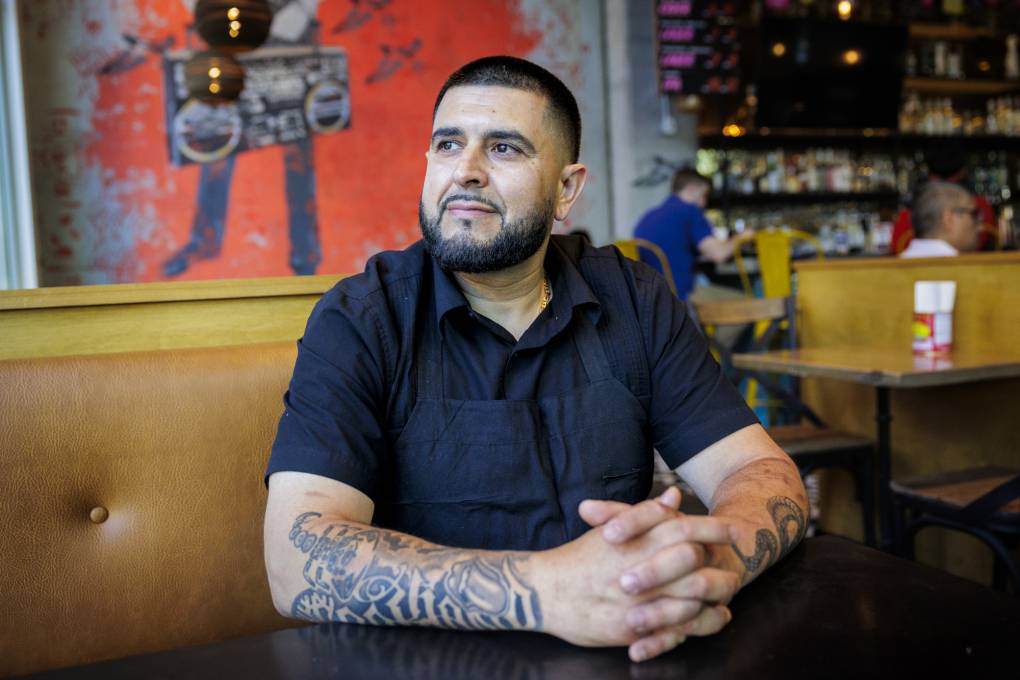
"caption": "Nolberto Martinez, Jr. at Todos restaurant in Oakland on May 10, 2024. Martinez's pozole and menudo were legendary before he closed his prior restaurant, Fruitvale's La Casita, four years ago.",
"description": null,
"title": "240509-MENUDO KING-MD-10-KQED",
"credit": "Martin do Nascimento/KQED",
"status": "inherit",
"altTag": "Man with beard and arm tattoos looks off into the distance while seated inside a restaurant.",
"isLoading": false,
"fetchFailed": false
},
"arts_13956601": {
"type": "attachments",
"id": "arts_13956601",
"meta": {
"index": "attachments_1716263798",
"site": "arts",
"id": "13956601",
"found": true
},
"parent": 13956017,
"imgSizes": {
"twentyfourteen-full-width": {
"file": "https://cdn.kqed.org/wp-content/uploads/sites/2/2024/04/Colucci-spread_courtesy-of-cafe-colucci-1038x576.jpg",
"width": 1038,
"mimeType": "image/jpeg",
"height": 576
},
"thumbnail": {
"file": "https://cdn.kqed.org/wp-content/uploads/sites/2/2024/04/Colucci-spread_courtesy-of-cafe-colucci-160x90.jpg",
"width": 160,
"mimeType": "image/jpeg",
"height": 90
},
"post-thumbnail": {
"file": "https://cdn.kqed.org/wp-content/uploads/sites/2/2024/04/Colucci-spread_courtesy-of-cafe-colucci-672x372.jpg",
"width": 672,
"mimeType": "image/jpeg",
"height": 372
},
"kqedFullSize": {
"file": "https://cdn.kqed.org/wp-content/uploads/sites/2/2024/04/Colucci-spread_courtesy-of-cafe-colucci.jpg",
"width": 1920,
"height": 1080
},
"large": {
"file": "https://cdn.kqed.org/wp-content/uploads/sites/2/2024/04/Colucci-spread_courtesy-of-cafe-colucci-1020x574.jpg",
"width": 1020,
"mimeType": "image/jpeg",
"height": 574
},
"1536x1536": {
"file": "https://cdn.kqed.org/wp-content/uploads/sites/2/2024/04/Colucci-spread_courtesy-of-cafe-colucci-1536x864.jpg",
"width": 1536,
"mimeType": "image/jpeg",
"height": 864
},
"medium": {
"file": "https://cdn.kqed.org/wp-content/uploads/sites/2/2024/04/Colucci-spread_courtesy-of-cafe-colucci-800x450.jpg",
"width": 800,
"mimeType": "image/jpeg",
"height": 450
},
"medium_large": {
"file": "https://cdn.kqed.org/wp-content/uploads/sites/2/2024/04/Colucci-spread_courtesy-of-cafe-colucci-768x432.jpg",
"width": 768,
"mimeType": "image/jpeg",
"height": 432
}
},
"publishDate": 1713984302,
"modified": 1713984490,
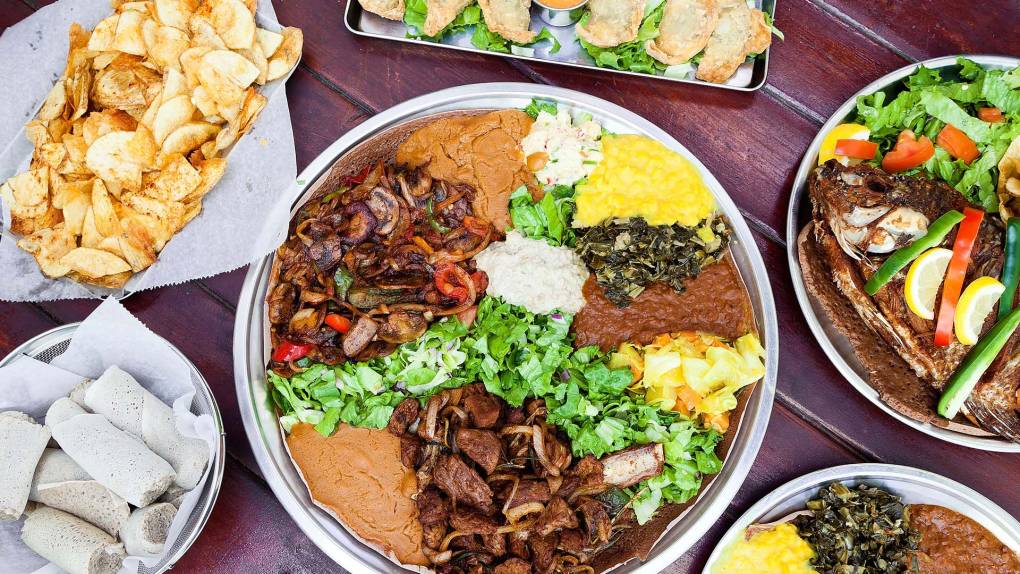
"caption": "At the first-ever POC Food & Wine Festival Oakland's Cafe Colucci will be on hand to rep the cuisine of the Ethiopian diaspora.",
"description": null,
"title": "Colucci spread_courtesy of cafe colucci",
"credit": "Courtesy of Cafe Colucci",
"status": "inherit",
"altTag": "A sumptuous spread of Ethiopian dishes, including a large round platter lined with injera.",
"isLoading": false,
"fetchFailed": false
},
"arts_13955337": {
"type": "attachments",
"id": "arts_13955337",
"meta": {
"index": "attachments_1716263798",
"site": "arts",
"id": "13955337",
"found": true
},
"parent": 13954736,
"imgSizes": {
"twentyfourteen-full-width": {
"file": "https://cdn.kqed.org/wp-content/uploads/sites/2/2024/04/Xalapa1-1038x576.jpg",
"width": 1038,
"mimeType": "image/jpeg",
"height": 576
},
"thumbnail": {
"file": "https://cdn.kqed.org/wp-content/uploads/sites/2/2024/04/Xalapa1-160x107.jpg",
"width": 160,
"mimeType": "image/jpeg",
"height": 107
},
"post-thumbnail": {
"file": "https://cdn.kqed.org/wp-content/uploads/sites/2/2024/04/Xalapa1-672x372.jpg",
"width": 672,
"mimeType": "image/jpeg",
"height": 372
},
"kqedFullSize": {
"file": "https://cdn.kqed.org/wp-content/uploads/sites/2/2024/04/Xalapa1-scaled.jpg",
"width": 2560,
"height": 1707
},
"2048x2048": {
"file": "https://cdn.kqed.org/wp-content/uploads/sites/2/2024/04/Xalapa1-2048x1365.jpg",
"width": 2048,
"mimeType": "image/jpeg",
"height": 1365
},
"large": {
"file": "https://cdn.kqed.org/wp-content/uploads/sites/2/2024/04/Xalapa1-1020x680.jpg",
"width": 1020,
"mimeType": "image/jpeg",
"height": 680
},
"1536x1536": {
"file": "https://cdn.kqed.org/wp-content/uploads/sites/2/2024/04/Xalapa1-1536x1024.jpg",
"width": 1536,
"mimeType": "image/jpeg",
"height": 1024
},
"full-width": {
"file": "https://cdn.kqed.org/wp-content/uploads/sites/2/2024/04/Xalapa1-1920x1280.jpg",
"width": 1920,
"mimeType": "image/jpeg",
"height": 1280
},
"medium": {
"file": "https://cdn.kqed.org/wp-content/uploads/sites/2/2024/04/Xalapa1-800x533.jpg",
"width": 800,
"mimeType": "image/jpeg",
"height": 533
},
"medium_large": {
"file": "https://cdn.kqed.org/wp-content/uploads/sites/2/2024/04/Xalapa1-768x512.jpg",
"width": 768,
"mimeType": "image/jpeg",
"height": 512
}
},
"publishDate": 1712163296,
"modified": 1712163540,
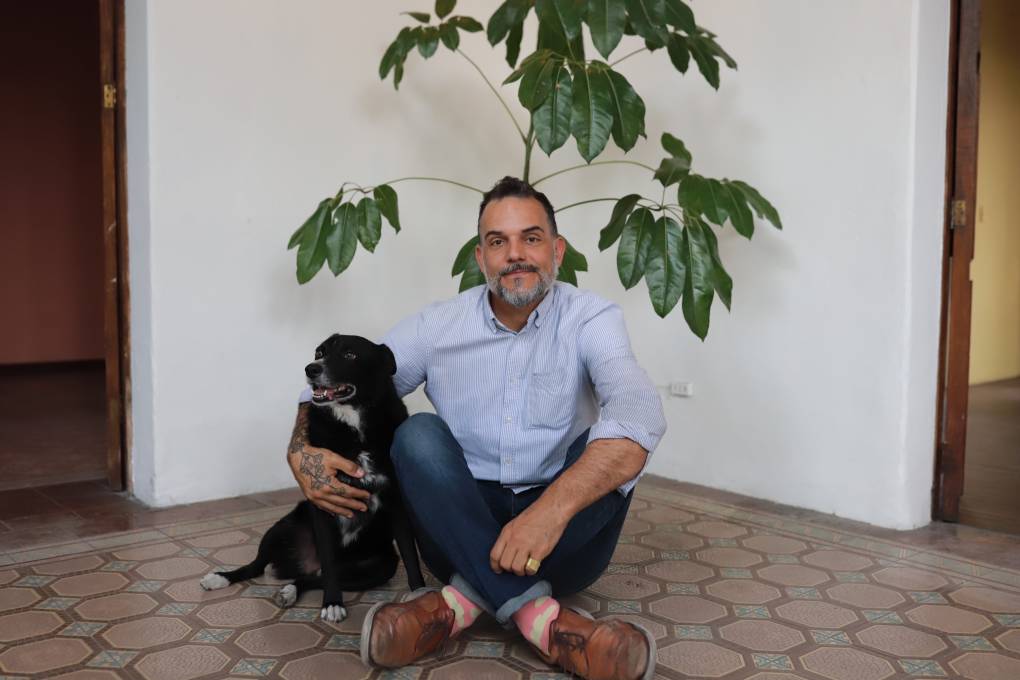
"caption": "J.K. Fowler has been living in Xalapa, Veracruz, for over a year; he's inviting Bay Area artists to join him as part of a new residency. ",
"description": null,
"title": "Xalapa1",
"credit": "Alan Chazaro",
"status": "inherit",
"altTag": "a man and his dog sit in front of a plant at his home in southern Mexico",
"isLoading": false,
"fetchFailed": false
},
"arts_13954474": {
"type": "attachments",
"id": "arts_13954474",
"meta": {
"index": "attachments_1716263798",
"site": "arts",
"id": "13954474",
"found": true
},
"parent": 13954364,
"imgSizes": {
"twentyfourteen-full-width": {
"file": "https://cdn.kqed.org/wp-content/uploads/sites/2/2024/03/sacrataco-1038x576.jpg",
"width": 1038,
"mimeType": "image/jpeg",
"height": 576
},
"thumbnail": {
"file": "https://cdn.kqed.org/wp-content/uploads/sites/2/2024/03/sacrataco-160x149.jpg",
"width": 160,
"mimeType": "image/jpeg",
"height": 149
},
"post-thumbnail": {
"file": "https://cdn.kqed.org/wp-content/uploads/sites/2/2024/03/sacrataco-672x372.jpg",
"width": 672,
"mimeType": "image/jpeg",
"height": 372
},
"kqedFullSize": {
"file": "https://cdn.kqed.org/wp-content/uploads/sites/2/2024/03/sacrataco-scaled.jpg",
"width": 2560,
"height": 2388
},
"2048x2048": {
"file": "https://cdn.kqed.org/wp-content/uploads/sites/2/2024/03/sacrataco-2048x1910.jpg",
"width": 2048,
"mimeType": "image/jpeg",
"height": 1910
},
"large": {
"file": "https://cdn.kqed.org/wp-content/uploads/sites/2/2024/03/sacrataco-1020x951.jpg",
"width": 1020,
"mimeType": "image/jpeg",
"height": 951
},
"1536x1536": {
"file": "https://cdn.kqed.org/wp-content/uploads/sites/2/2024/03/sacrataco-1536x1433.jpg",
"width": 1536,
"mimeType": "image/jpeg",
"height": 1433
},
"full-width": {
"file": "https://cdn.kqed.org/wp-content/uploads/sites/2/2024/03/sacrataco-1920x1791.jpg",
"width": 1920,
"mimeType": "image/jpeg",
"height": 1791
},
"medium": {
"file": "https://cdn.kqed.org/wp-content/uploads/sites/2/2024/03/sacrataco-800x746.jpg",
"width": 800,
"mimeType": "image/jpeg",
"height": 746
},
"medium_large": {
"file": "https://cdn.kqed.org/wp-content/uploads/sites/2/2024/03/sacrataco-768x716.jpg",
"width": 768,
"mimeType": "image/jpeg",
"height": 716
}
},
"publishDate": 1710968115,
"modified": 1711393908,
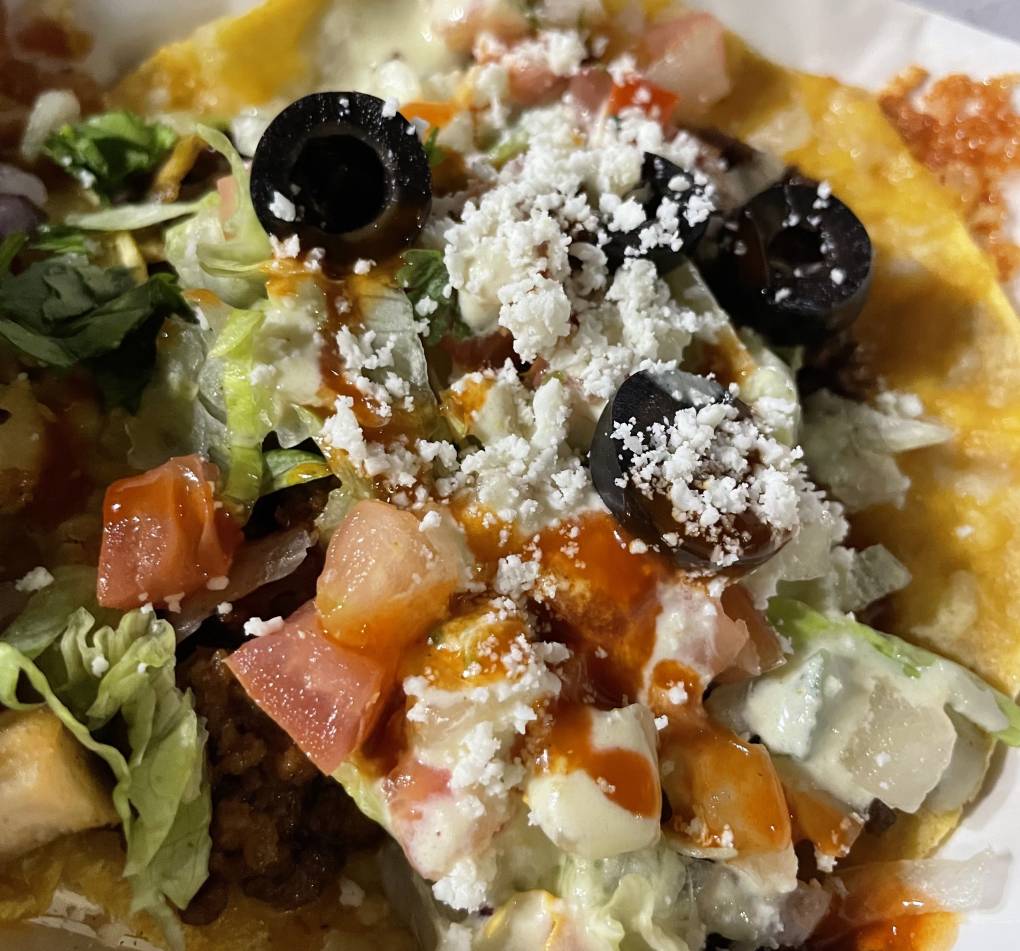
"caption": "Banzito's enchitaco is a hybrid of a Chicano-style enchilada in the form of a taco. The truck's Mexican American fare has earned a cult following that includes Kings point guard De'Aaron Fox.",
"description": null,
"title": "sacrataco",
"credit": "Alan Chazaro",
"status": "inherit",
"altTag": null,
"isLoading": false,
"fetchFailed": false
},
"arts_13954410": {
"type": "attachments",
"id": "arts_13954410",
"meta": {
"index": "attachments_1716263798",
"site": "arts",
"id": "13954410",
"found": true
},
"parent": 13954374,
"imgSizes": {
"twentyfourteen-full-width": {
"file": "https://cdn.kqed.org/wp-content/uploads/sites/2/2024/03/elhalalamigos-suhoorfest-crop-1038x576.jpg",
"width": 1038,
"mimeType": "image/jpeg",
"height": 576
},
"thumbnail": {
"file": "https://cdn.kqed.org/wp-content/uploads/sites/2/2024/03/elhalalamigos-suhoorfest-crop-160x90.jpg",
"width": 160,
"mimeType": "image/jpeg",
"height": 90
},
"post-thumbnail": {
"file": "https://cdn.kqed.org/wp-content/uploads/sites/2/2024/03/elhalalamigos-suhoorfest-crop-672x372.jpg",
"width": 672,
"mimeType": "image/jpeg",
"height": 372
},
"kqedFullSize": {
"file": "https://cdn.kqed.org/wp-content/uploads/sites/2/2024/03/elhalalamigos-suhoorfest-crop.jpg",
"width": 1920,
"height": 1080
},
"large": {
"file": "https://cdn.kqed.org/wp-content/uploads/sites/2/2024/03/elhalalamigos-suhoorfest-crop-1020x574.jpg",
"width": 1020,
"mimeType": "image/jpeg",
"height": 574
},
"1536x1536": {
"file": "https://cdn.kqed.org/wp-content/uploads/sites/2/2024/03/elhalalamigos-suhoorfest-crop-1536x864.jpg",
"width": 1536,
"mimeType": "image/jpeg",
"height": 864
},
"medium": {
"file": "https://cdn.kqed.org/wp-content/uploads/sites/2/2024/03/elhalalamigos-suhoorfest-crop-800x450.jpg",
"width": 800,
"mimeType": "image/jpeg",
"height": 450
},
"medium_large": {
"file": "https://cdn.kqed.org/wp-content/uploads/sites/2/2024/03/elhalalamigos-suhoorfest-crop-768x432.jpg",
"width": 768,
"mimeType": "image/jpeg",
"height": 432
}
},
"publishDate": 1710959688,
"modified": 1710959921,
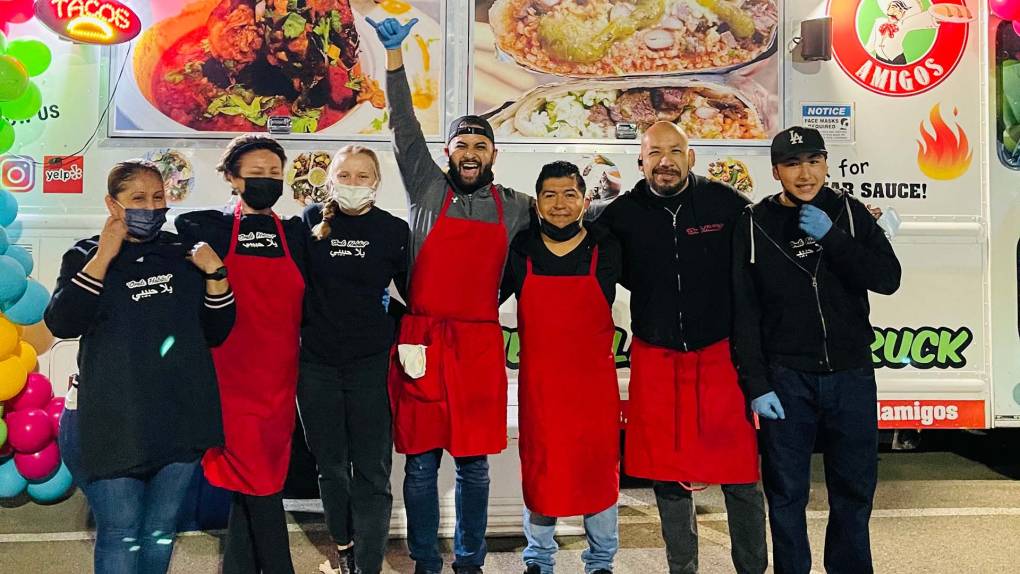
"caption": "The El Halal Amigos team at 2021's inaugural Suhoor Fest event. The one-night food-focused Ramadad celebration draws tens of thousands of people each year.",
"description": null,
"title": "elhalalamigos-suhoorfest-crop",
"credit": "Courtesy of Hashim Abdelfattah",
"status": "inherit",
"altTag": "Taco truck workers in red aprons pose for a photo in front of the El Halal Amigos food truck.",
"isLoading": false,
"fetchFailed": false
},
"arts_13954114": {
"type": "attachments",
"id": "arts_13954114",
"meta": {
"index": "attachments_1716263798",
"site": "arts",
"id": "13954114",
"found": true
},
"parent": 13954112,
"imgSizes": {
"twentyfourteen-full-width": {
"file": "https://cdn.kqed.org/wp-content/uploads/sites/2/2024/03/Orale1-crop-1038x576.jpg",
"width": 1038,
"mimeType": "image/jpeg",
"height": 576
},
"thumbnail": {
"file": "https://cdn.kqed.org/wp-content/uploads/sites/2/2024/03/Orale1-crop-160x90.jpg",
"width": 160,
"mimeType": "image/jpeg",
"height": 90
},
"post-thumbnail": {
"file": "https://cdn.kqed.org/wp-content/uploads/sites/2/2024/03/Orale1-crop-672x372.jpg",
"width": 672,
"mimeType": "image/jpeg",
"height": 372
},
"kqedFullSize": {
"file": "https://cdn.kqed.org/wp-content/uploads/sites/2/2024/03/Orale1-crop.jpg",
"width": 1920,
"height": 1080
},
"large": {
"file": "https://cdn.kqed.org/wp-content/uploads/sites/2/2024/03/Orale1-crop-1020x574.jpg",
"width": 1020,
"mimeType": "image/jpeg",
"height": 574
},
"1536x1536": {
"file": "https://cdn.kqed.org/wp-content/uploads/sites/2/2024/03/Orale1-crop-1536x864.jpg",
"width": 1536,
"mimeType": "image/jpeg",
"height": 864
},
"medium": {
"file": "https://cdn.kqed.org/wp-content/uploads/sites/2/2024/03/Orale1-crop-800x450.jpg",
"width": 800,
"mimeType": "image/jpeg",
"height": 450
},
"medium_large": {
"file": "https://cdn.kqed.org/wp-content/uploads/sites/2/2024/03/Orale1-crop-768x432.jpg",
"width": 768,
"mimeType": "image/jpeg",
"height": 432
}
},
"publishDate": 1710446413,
"modified": 1710446549,
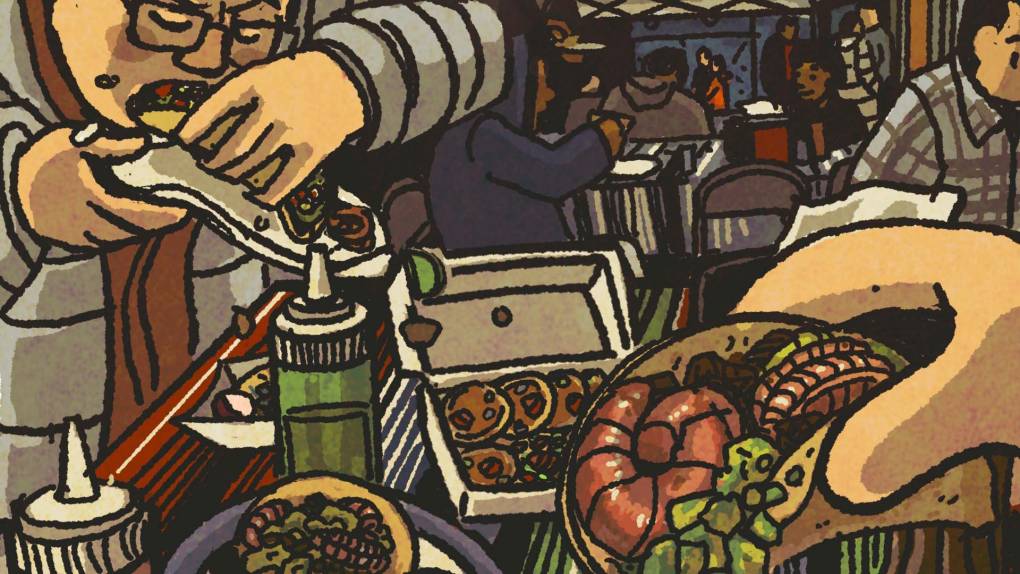
"caption": "The Orale taco truck is open — and stays busy — until 3 a.m. on the weekends. It's located in the Alum Rock neighborhood in Eastside San Jose.",
"description": null,
"title": "Orale1-crop",
"credit": "Thien Pham",
"status": "inherit",
"altTag": "Illustration: In a tented dining area, a man holds a large shrimp taco while his companion stuffs a huarache into his mouth.",
"isLoading": false,
"fetchFailed": false
},
"arts_13953272": {
"type": "attachments",
"id": "arts_13953272",
"meta": {
"index": "attachments_1716263798",
"site": "arts",
"id": "13953272",
"found": true
},
"parent": 13953266,
"imgSizes": {
"twentyfourteen-full-width": {
"file": "https://cdn.kqed.org/wp-content/uploads/sites/2/2024/03/Savory-Empanadas-3-crop-1038x576.jpg",
"width": 1038,
"mimeType": "image/jpeg",
"height": 576
},
"thumbnail": {
"file": "https://cdn.kqed.org/wp-content/uploads/sites/2/2024/03/Savory-Empanadas-3-crop-160x90.jpg",
"width": 160,
"mimeType": "image/jpeg",
"height": 90
},
"post-thumbnail": {
"file": "https://cdn.kqed.org/wp-content/uploads/sites/2/2024/03/Savory-Empanadas-3-crop-672x372.jpg",
"width": 672,
"mimeType": "image/jpeg",
"height": 372
},
"kqedFullSize": {
"file": "https://cdn.kqed.org/wp-content/uploads/sites/2/2024/03/Savory-Empanadas-3-crop.jpg",
"width": 2000,
"height": 1125
},
"large": {
"file": "https://cdn.kqed.org/wp-content/uploads/sites/2/2024/03/Savory-Empanadas-3-crop-1020x574.jpg",
"width": 1020,
"mimeType": "image/jpeg",
"height": 574
},
"1536x1536": {
"file": "https://cdn.kqed.org/wp-content/uploads/sites/2/2024/03/Savory-Empanadas-3-crop-1536x864.jpg",
"width": 1536,
"mimeType": "image/jpeg",
"height": 864
},
"full-width": {
"file": "https://cdn.kqed.org/wp-content/uploads/sites/2/2024/03/Savory-Empanadas-3-crop-1920x1080.jpg",
"width": 1920,
"mimeType": "image/jpeg",
"height": 1080
},
"medium": {
"file": "https://cdn.kqed.org/wp-content/uploads/sites/2/2024/03/Savory-Empanadas-3-crop-800x450.jpg",
"width": 800,
"mimeType": "image/jpeg",
"height": 450
},
"medium_large": {
"file": "https://cdn.kqed.org/wp-content/uploads/sites/2/2024/03/Savory-Empanadas-3-crop-768x432.jpg",
"width": 768,
"mimeType": "image/jpeg",
"height": 432
}
},
"publishDate": 1709334266,
"modified": 1709334418,
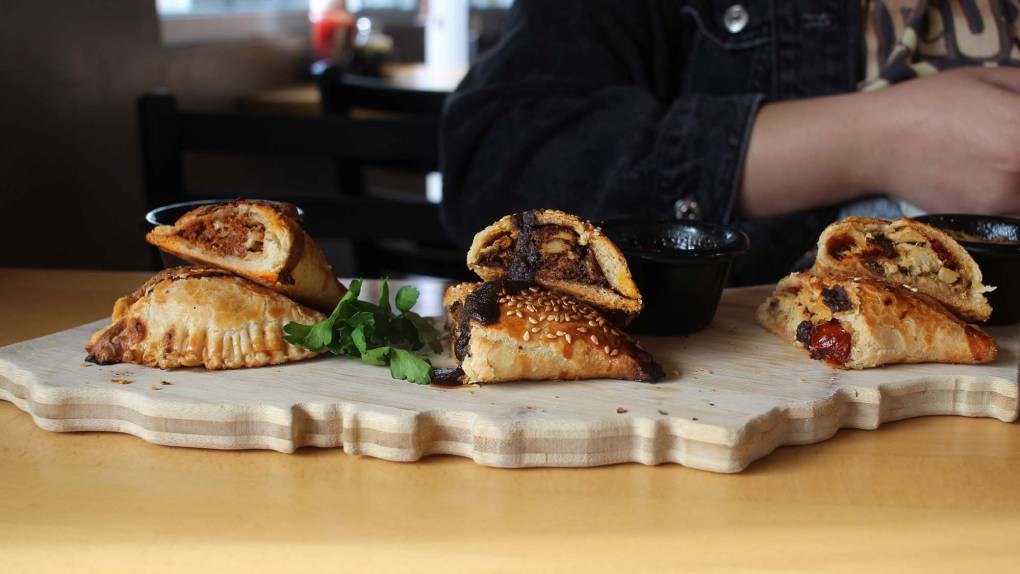
"caption": "Three different flavors of savory empanadas from Cheff Che Cafe & Bar, a Mexican American restaurant in San Jose that started out as a pandemic-born home empanada business. ",
"description": null,
"title": "Savory Empanadas 3-crop",
"credit": "Octavio Peña",
"status": "inherit",
"altTag": "On a wooden cutting board, three empanadas cut open to show the fillings inside.",
"isLoading": false,
"fetchFailed": false
},
"arts_13952655": {
"type": "attachments",
"id": "arts_13952655",
"meta": {
"index": "attachments_1716263798",
"site": "arts",
"id": "13952655",
"found": true
},
"parent": 13952597,
"imgSizes": {
"twentyfourteen-full-width": {
"file": "https://cdn.kqed.org/wp-content/uploads/sites/2/2024/02/la_castena_record_crop-1038x576.jpg",
"width": 1038,
"mimeType": "image/jpeg",
"height": 576
},
"thumbnail": {
"file": "https://cdn.kqed.org/wp-content/uploads/sites/2/2024/02/la_castena_record_crop-160x90.jpg",
"width": 160,
"mimeType": "image/jpeg",
"height": 90
},
"post-thumbnail": {
"file": "https://cdn.kqed.org/wp-content/uploads/sites/2/2024/02/la_castena_record_crop-672x372.jpg",
"width": 672,
"mimeType": "image/jpeg",
"height": 372
},
"kqedFullSize": {
"file": "https://cdn.kqed.org/wp-content/uploads/sites/2/2024/02/la_castena_record_crop.jpg",
"width": 1920,
"height": 1080
},
"large": {
"file": "https://cdn.kqed.org/wp-content/uploads/sites/2/2024/02/la_castena_record_crop-1020x574.jpg",
"width": 1020,
"mimeType": "image/jpeg",
"height": 574
},
"1536x1536": {
"file": "https://cdn.kqed.org/wp-content/uploads/sites/2/2024/02/la_castena_record_crop-1536x864.jpg",
"width": 1536,
"mimeType": "image/jpeg",
"height": 864
},
"medium": {
"file": "https://cdn.kqed.org/wp-content/uploads/sites/2/2024/02/la_castena_record_crop-800x450.jpg",
"width": 800,
"mimeType": "image/jpeg",
"height": 450
},
"medium_large": {
"file": "https://cdn.kqed.org/wp-content/uploads/sites/2/2024/02/la_castena_record_crop-768x432.jpg",
"width": 768,
"mimeType": "image/jpeg",
"height": 432
}
},
"publishDate": 1708495042,
"modified": 1708496486,
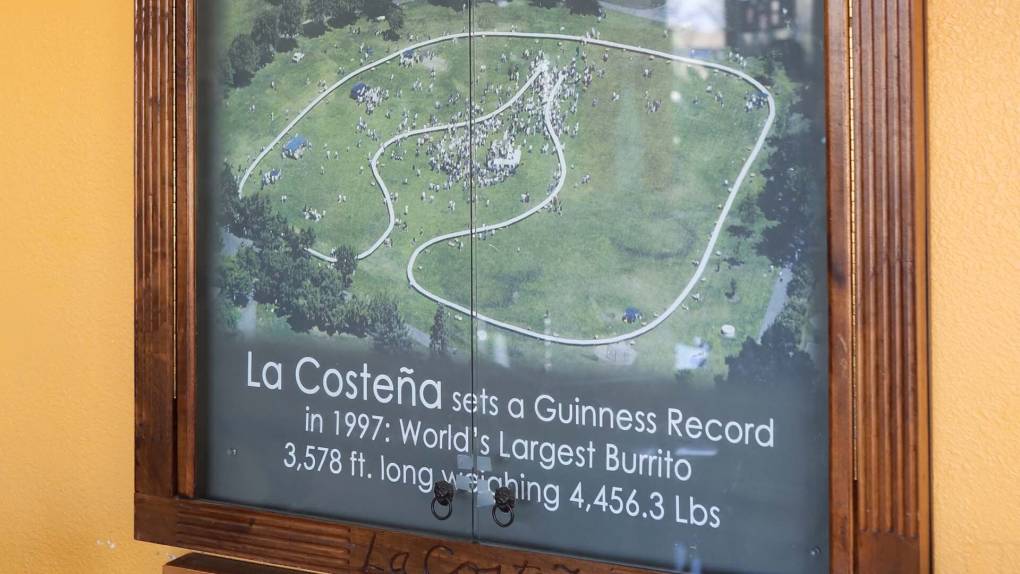
"caption": "Though mostly known for tech, Silicon Valley also engineered the world's largest burrito in 1997.",
"description": null,
"title": "la_castena_record_crop",
"credit": "Alan Chazaro",
"status": "inherit",
"altTag": "a photo of the world's largest burrito in 1997 wrapping around an entire park in Mountain View, California",
"isLoading": false,
"fetchFailed": false
},
"arts_13950673": {
"type": "attachments",
"id": "arts_13950673",
"meta": {
"index": "attachments_1716263798",
"site": "arts",
"id": "13950673",
"found": true
},
"parent": 13950436,
"imgSizes": {
"twentyfourteen-full-width": {
"file": "https://cdn.kqed.org/wp-content/uploads/sites/2/2024/01/Hella-Hungry-—-Feature-Image-1920x1080-1-1038x576.jpg",
"width": 1038,
"mimeType": "image/jpeg",
"height": 576
},
"thumbnail": {
"file": "https://cdn.kqed.org/wp-content/uploads/sites/2/2024/01/Hella-Hungry-—-Feature-Image-1920x1080-1-160x90.jpg",
"width": 160,
"mimeType": "image/jpeg",
"height": 90
},
"post-thumbnail": {
"file": "https://cdn.kqed.org/wp-content/uploads/sites/2/2024/01/Hella-Hungry-—-Feature-Image-1920x1080-1-672x372.jpg",
"width": 672,
"mimeType": "image/jpeg",
"height": 372
},
"kqedFullSize": {
"file": "https://cdn.kqed.org/wp-content/uploads/sites/2/2024/01/Hella-Hungry-—-Feature-Image-1920x1080-1.jpg",
"width": 1920,
"height": 1080
},
"large": {
"file": "https://cdn.kqed.org/wp-content/uploads/sites/2/2024/01/Hella-Hungry-—-Feature-Image-1920x1080-1-1020x574.jpg",
"width": 1020,
"mimeType": "image/jpeg",
"height": 574
},
"1536x1536": {
"file": "https://cdn.kqed.org/wp-content/uploads/sites/2/2024/01/Hella-Hungry-—-Feature-Image-1920x1080-1-1536x864.jpg",
"width": 1536,
"mimeType": "image/jpeg",
"height": 864
},
"medium": {
"file": "https://cdn.kqed.org/wp-content/uploads/sites/2/2024/01/Hella-Hungry-—-Feature-Image-1920x1080-1-800x450.jpg",
"width": 800,
"mimeType": "image/jpeg",
"height": 450
},
"medium_large": {
"file": "https://cdn.kqed.org/wp-content/uploads/sites/2/2024/01/Hella-Hungry-—-Feature-Image-1920x1080-1-768x432.jpg",
"width": 768,
"mimeType": "image/jpeg",
"height": 432
}
},
"publishDate": 1705693913,
"modified": 1705694206,
"caption": "Don Bugito founder Monica Martinez believes her edible insect snacks — including the toasted chile-lime crickets with pumpkin seeds pictured here — can be part of a more sustainable food supply.",
"description": null,
"title": "Hella Hungry — Feature Image (1920x1080)",
"credit": "Alan Chazaro/KQED",
"status": "inherit",
"altTag": "An outstretched hand holds dozens of toasted crickets mixed with pumpkin seeds. In the top left there is a \"Hella Hungry\" logo.",
"isLoading": false,
"fetchFailed": false
},
"arts_13936291": {
"type": "attachments",
"id": "arts_13936291",
"meta": {
"index": "attachments_1716263798",
"site": "arts",
"id": "13936291",
"found": true
},
"parent": 0,
"imgSizes": {
"twentyfourteen-full-width": {
"file": "https://ww2.kqed.org/app/uploads/sites/2/2023/10/20230927-Biggest-Pupusa-026-JY-KQED-1038x576.jpg",
"width": 1038,
"mimeType": "image/jpeg",
"height": 576
},
"thumbnail": {
"file": "https://ww2.kqed.org/app/uploads/sites/2/2023/10/20230927-Biggest-Pupusa-026-JY-KQED-160x107.jpg",
"width": 160,
"mimeType": "image/jpeg",
"height": 107
},
"post-thumbnail": {
"file": "https://ww2.kqed.org/app/uploads/sites/2/2023/10/20230927-Biggest-Pupusa-026-JY-KQED-672x372.jpg",
"width": 672,
"mimeType": "image/jpeg",
"height": 372
},
"kqedFullSize": {
"file": "https://ww2.kqed.org/app/uploads/sites/2/2023/10/20230927-Biggest-Pupusa-026-JY-KQED.jpg",
"width": 2000,
"height": 1333
},
"large": {
"file": "https://ww2.kqed.org/app/uploads/sites/2/2023/10/20230927-Biggest-Pupusa-026-JY-KQED-1020x680.jpg",
"width": 1020,
"mimeType": "image/jpeg",
"height": 680
},
"1536x1536": {
"file": "https://ww2.kqed.org/app/uploads/sites/2/2023/10/20230927-Biggest-Pupusa-026-JY-KQED-1536x1024.jpg",
"width": 1536,
"mimeType": "image/jpeg",
"height": 1024
},
"full-width": {
"file": "https://ww2.kqed.org/app/uploads/sites/2/2023/10/20230927-Biggest-Pupusa-026-JY-KQED-1920x1280.jpg",
"width": 1920,
"mimeType": "image/jpeg",
"height": 1280
},
"medium": {
"file": "https://ww2.kqed.org/app/uploads/sites/2/2023/10/20230927-Biggest-Pupusa-026-JY-KQED-800x533.jpg",
"width": 800,
"mimeType": "image/jpeg",
"height": 533
},
"medium_large": {
"file": "https://ww2.kqed.org/app/uploads/sites/2/2023/10/20230927-Biggest-Pupusa-026-JY-KQED-768x512.jpg",
"width": 768,
"mimeType": "image/jpeg",
"height": 512
}
},
"publishDate": 1697069614,
"modified": 1700269407,
"caption": "The massive birria pupusa 'pizza' at Pupuseria Las Cabañas in Hayward.",
"description": null,
"title": "Biggest Pupusa",
"credit": "Juliana Yamada/KQED",
"status": "inherit",
"altTag": "A series of dishes and beverages on a table top.",
"isLoading": false,
"fetchFailed": false
},
"arts_13937891": {
"type": "attachments",
"id": "arts_13937891",
"meta": {
"index": "attachments_1716263798",
"site": "arts",
"id": "13937891",
"found": true
},
"parent": 13937851,
"imgSizes": {
"twentyfourteen-full-width": {
"file": "https://ww2.kqed.org/app/uploads/sites/2/2023/11/ofrendas-tamale-1038x576.jpg",
"width": 1038,
"mimeType": "image/jpeg",
"height": 576
},
"thumbnail": {
"file": "https://ww2.kqed.org/app/uploads/sites/2/2023/11/ofrendas-tamale-160x110.jpg",
"width": 160,
"mimeType": "image/jpeg",
"height": 110
},
"post-thumbnail": {
"file": "https://ww2.kqed.org/app/uploads/sites/2/2023/11/ofrendas-tamale-672x372.jpg",
"width": 672,
"mimeType": "image/jpeg",
"height": 372
},
"kqedFullSize": {
"file": "https://ww2.kqed.org/app/uploads/sites/2/2023/11/ofrendas-tamale.jpg",
"width": 1920,
"height": 1320
},
"large": {
"file": "https://ww2.kqed.org/app/uploads/sites/2/2023/11/ofrendas-tamale-1020x701.jpg",
"width": 1020,
"mimeType": "image/jpeg",
"height": 701
},
"1536x1536": {
"file": "https://ww2.kqed.org/app/uploads/sites/2/2023/11/ofrendas-tamale-1536x1056.jpg",
"width": 1536,
"mimeType": "image/jpeg",
"height": 1056
},
"medium": {
"file": "https://ww2.kqed.org/app/uploads/sites/2/2023/11/ofrendas-tamale-800x550.jpg",
"width": 800,
"mimeType": "image/jpeg",
"height": 550
},
"medium_large": {
"file": "https://ww2.kqed.org/app/uploads/sites/2/2023/11/ofrendas-tamale-768x528.jpg",
"width": 768,
"mimeType": "image/jpeg",
"height": 528
}
},
"publishDate": 1699557652,
"modified": 1699557767,
"caption": "Emmanuel Galvan's approach to tamal making is a reflection of his layered Mexican American experience.",
"description": null,
"title": "ofrendas tamale",
"credit": "Courtesy of Emmanuel Galvan",
"status": "inherit",
"altTag": "an open-faced tamale in banana leaf is decorated with a variety of colorful ingredients",
"isLoading": false,
"fetchFailed": false
},
"arts_13936650": {
"type": "attachments",
"id": "arts_13936650",
"meta": {
"index": "attachments_1716263798",
"site": "arts",
"id": "13936650",
"found": true
},
"parent": 13936639,
"imgSizes": {
"twentyfourteen-full-width": {
"file": "https://ww2.kqed.org/app/uploads/sites/2/2023/10/juborrito_portrait-1038x576.jpg",
"width": 1038,
"mimeType": "image/jpeg",
"height": 576
},
"thumbnail": {
"file": "https://ww2.kqed.org/app/uploads/sites/2/2023/10/juborrito_portrait-160x107.jpg",
"width": 160,
"mimeType": "image/jpeg",
"height": 107
},
"post-thumbnail": {
"file": "https://ww2.kqed.org/app/uploads/sites/2/2023/10/juborrito_portrait-672x372.jpg",
"width": 672,
"mimeType": "image/jpeg",
"height": 372
},
"kqedFullSize": {
"file": "https://ww2.kqed.org/app/uploads/sites/2/2023/10/juborrito_portrait.jpg",
"width": 1920,
"height": 1280
},
"large": {
"file": "https://ww2.kqed.org/app/uploads/sites/2/2023/10/juborrito_portrait-1020x680.jpg",
"width": 1020,
"mimeType": "image/jpeg",
"height": 680
},
"1536x1536": {
"file": "https://ww2.kqed.org/app/uploads/sites/2/2023/10/juborrito_portrait-1536x1024.jpg",
"width": 1536,
"mimeType": "image/jpeg",
"height": 1024
},
"medium": {
"file": "https://ww2.kqed.org/app/uploads/sites/2/2023/10/juborrito_portrait-800x533.jpg",
"width": 800,
"mimeType": "image/jpeg",
"height": 533
},
"medium_large": {
"file": "https://ww2.kqed.org/app/uploads/sites/2/2023/10/juborrito_portrait-768x512.jpg",
"width": 768,
"mimeType": "image/jpeg",
"height": 512
}
},
"publishDate": 1697665778,
"modified": 1697670819,
"caption": "The Nemedez brothers (Averill, left; Jason, center; Brian, right) in front of Iguanas taqueria in downtown San Jose, where they debuted their \"Juborrito\" in October.",
"description": null,
"title": "juborrito_portrait",
"credit": "Alan Chazaro",
"status": "inherit",
"altTag": "three brothers proudly stand in front of a taqueria in San Jose",
"isLoading": false,
"fetchFailed": false
}
},
"audioPlayerReducer": {
"postId": "stream_live",
"isPaused": true,
"isPlaying": false,
"pfsActive": false,
"pledgeModalIsOpen": true,
"playerDrawerIsOpen": false,
"liveAudioPlayStartedAt": 0,
"liveAudioPlayContext": ""
},
"authorsReducer": {
"ltsai": {
"type": "authors",
"id": "11743",
"meta": {
"index": "authors_1716337520",
"id": "11743",
"found": true
},
"name": "Luke Tsai",
"firstName": "Luke",
"lastName": "Tsai",
"slug": "ltsai",
"email": "ltsai@kqed.org",
"display_author_email": true,
"staff_mastheads": [
"arts"
],
"title": "Food Editor",
"bio": "Luke Tsai is KQED's food editor and resident stinky tofu connoisseur. Prior to KQED, he was an editor at Eater SF, \u003cem>San Francisco \u003c/em>magazine, and the \u003cem>East Bay Express\u003c/em>, and his work has also appeared in TASTE, the \u003cem>San Francisco Chronicle\u003c/em>, and the \u003cem>Best Food Writing\u003c/em> anthology. When he isn't writing or editing, you'll find him eating most everything he can get his hands on.",
"avatar": "https://secure.gravatar.com/avatar/1e59b45bf191526e7339d6ba46e33a57b2030d25c27660ecc64ea3cb863e34f7?s=600&d=blank&r=g",
"twitter": "theluketsai",
"bluesky": null,
"facebook": null,
"instagram": null,
"linkedin": null,
"sites": [
{
"site": "",
"roles": [
"editor"
]
},
{
"site": "arts",
"roles": [
"administrator"
]
},
{
"site": "news",
"roles": [
"editor",
"contributor"
]
},
{
"site": "bayareabites",
"roles": [
"editor"
]
},
{
"site": "food",
"roles": [
"editor"
]
}
],
"headData": {
"title": "Luke Tsai | KQED",
"description": "Food Editor",
"ogImgSrc": "https://secure.gravatar.com/avatar/1e59b45bf191526e7339d6ba46e33a57b2030d25c27660ecc64ea3cb863e34f7?s=600&d=blank&r=g",
"twImgSrc": "https://secure.gravatar.com/avatar/1e59b45bf191526e7339d6ba46e33a57b2030d25c27660ecc64ea3cb863e34f7?s=600&d=blank&r=g"
},
"isLoading": false,
"link": "/author/ltsai"
},
"achazaro": {
"type": "authors",
"id": "11748",
"meta": {
"index": "authors_1716337520",
"id": "11748",
"found": true
},
"name": "Alan Chazaro",
"firstName": "Alan",
"lastName": "Chazaro",
"slug": "achazaro",
"email": "agchazaro@gmail.com",
"display_author_email": true,
"staff_mastheads": [],
"title": "Food Writer and Reporter",
"bio": "Alan Chazaro is the author of \u003cem>This Is Not a Frank Ocean Cover Album\u003c/em> (Black Lawrence Press, 2019), \u003cem>Piñata Theory\u003c/em> (Black Lawrence Press, 2020), and \u003cem>Notes from the Eastern Span of the Bay Bridge\u003c/em> (Ghost City Press, 2021). He is a graduate of June Jordan’s Poetry for the People program at UC Berkeley and a former Lawrence Ferlinghetti Fellow at the University of San Francisco. He writes about sports, food, art, music, education, and culture while repping the Bay on \u003ca href=\"https://twitter.com/alan_chazaro\">Twitter\u003c/a> and \u003ca href=\"https://www.instagram.com/alan_chazaro/?hl=en\">Instagram\u003c/a> at @alan_chazaro.",
"avatar": "https://secure.gravatar.com/avatar/ea8b6dd970fc5c29e7a188e7d5861df7?s=600&d=blank&r=g",
"twitter": "alan_chazaro",
"facebook": null,
"instagram": null,
"linkedin": null,
"sites": [
{
"site": "arts",
"roles": [
"contributor"
]
},
{
"site": "news",
"roles": [
"editor"
]
}
],
"headData": {
"title": "Alan Chazaro | KQED",
"description": "Food Writer and Reporter",
"ogImgSrc": "https://secure.gravatar.com/avatar/ea8b6dd970fc5c29e7a188e7d5861df7?s=600&d=blank&r=g",
"twImgSrc": "https://secure.gravatar.com/avatar/ea8b6dd970fc5c29e7a188e7d5861df7?s=600&d=blank&r=g"
},
"isLoading": false,
"link": "/author/achazaro"
},
"tpham": {
"type": "authors",
"id": "11753",
"meta": {
"index": "authors_1716337520",
"id": "11753",
"found": true
},
"name": "Thien Pham",
"firstName": "Thien",
"lastName": "Pham",
"slug": "tpham",
"email": "thiendog@gmail.com",
"display_author_email": false,
"staff_mastheads": [],
"title": "KQED Contributor",
"bio": null,
"avatar": "https://secure.gravatar.com/avatar/a5b4729969ad46d88e7b9ec9dd4f3fa6af84dd0fa8fa91f01d8d9481694999bc?s=600&d=blank&r=g",
"twitter": null,
"bluesky": null,
"facebook": null,
"instagram": null,
"linkedin": null,
"sites": [
{
"site": "arts",
"roles": [
"contributor"
]
}
],
"headData": {
"title": "Thien Pham | KQED",
"description": "KQED Contributor",
"ogImgSrc": "https://secure.gravatar.com/avatar/a5b4729969ad46d88e7b9ec9dd4f3fa6af84dd0fa8fa91f01d8d9481694999bc?s=600&d=blank&r=g",
"twImgSrc": "https://secure.gravatar.com/avatar/a5b4729969ad46d88e7b9ec9dd4f3fa6af84dd0fa8fa91f01d8d9481694999bc?s=600&d=blank&r=g"
},
"isLoading": false,
"link": "/author/tpham"
},
"opena": {
"type": "authors",
"id": "11903",
"meta": {
"index": "authors_1716337520",
"id": "11903",
"found": true
},
"name": "Octavio Peña",
"firstName": "Octavio",
"lastName": "Peña",
"slug": "opena",
"email": "octaviopenagutierrez@gmail.com",
"display_author_email": false,
"staff_mastheads": [],
"title": "KQED Contributor",
"bio": null,
"avatar": "https://secure.gravatar.com/avatar/62850791380238ea3945ee72a3d56056477904792b41daaf11effa8780bab75d?s=600&d=blank&r=g",
"twitter": null,
"bluesky": null,
"facebook": null,
"instagram": null,
"linkedin": null,
"sites": [
{
"site": "arts",
"roles": [
"contributor"
]
}
],
"headData": {
"title": "Octavio Peña | KQED",
"description": "KQED Contributor",
"ogImgSrc": "https://secure.gravatar.com/avatar/62850791380238ea3945ee72a3d56056477904792b41daaf11effa8780bab75d?s=600&d=blank&r=g",
"twImgSrc": "https://secure.gravatar.com/avatar/62850791380238ea3945ee72a3d56056477904792b41daaf11effa8780bab75d?s=600&d=blank&r=g"
},
"isLoading": false,
"link": "/author/opena"
}
},
"pagesReducer": {
"arts_tag_mexican-food": {
"type": "terms",
"id": "arts_14985",
"meta": {
"index": "terms_1716263798",
"site": "arts",
"id": "14985",
"score": 9.555889
},
"featImg": null,
"name": "mexican food",
"description": null,
"taxonomy": "tag",
"headData": {
"twImgId": null,
"twTitle": null,
"ogTitle": null,
"ogImgId": null,
"twDescription": null,
"description": null,
"title": "mexican food Archives | KQED Arts",
"ogDescription": null
},
"ttid": 14997,
"slug": "mexican-food",
"isLoading": false,
"title": "mexican food",
"pageMeta": {
"site": "arts",
"WpPageTemplate": "page-topic-editorial",
"currentPage": 2
},
"blocks": [
{
"blockName": "kqed/post-list",
"attrs": {
"layout": "cardArticle2",
"query": "posts/arts?tag=mexican-food",
"seeMore": false,
"paginated": true,
"page": 2
}
},
{
"blockName": "kqed/ad"
}
]
}
},
"pfsSessionReducer": {},
"postsReducer": {
"stream_live": {
"type": "live",
"id": "stream_live",
"audioUrl": "https://streams.kqed.org/kqedradio",
"title": "Live Stream",
"excerpt": "Live Stream information currently unavailable.",
"link": "/radio",
"featImg": "",
"label": {
"name": "KQED Live",
"link": "/"
}
},
"stream_kqedNewscast": {
"type": "posts",
"id": "stream_kqedNewscast",
"audioUrl": "https://www.kqed.org/.stream/anon/radio/RDnews/newscast.mp3?_=1",
"title": "KQED Newscast",
"featImg": "",
"label": {
"name": "88.5 FM",
"link": "/"
}
},
"arts_13958114": {
"type": "posts",
"id": "arts_13958114",
"meta": {
"index": "posts_1716263798",
"site": "arts",
"id": "13958114",
"score": null,
"sort": [
1716228789000
]
},
"parent": 0,
"labelTerm": {},
"blocks": [],
"publishDate": 1716228789,
"format": "standard",
"title": "The Return of East Oakland’s Menudo King",
"headTitle": "The Return of East Oakland’s Menudo King | KQED",
"content": "\u003cp>In 2019, Nolberto Martinez, Jr. was already an East Oakland legend in the making. His little taqueria, La Casita, was \u003ca href=\"https://eastbayexpress.com/pozole-birria-and-more-homey-cooking-at-la-casita-2-1/\">routinely hailed\u003c/a> as one of the \u003ca href=\"https://www.instagram.com/p/B6GXIfUlr7c4A3MSRv9hBxrXrfiLyyWMCldJos0/?img_index=6\">best restaurants\u003c/a> in Fruitvale — for its fat, hand-pressed tortillas, its habit-forming housemade salsas and, most of all, its homey, Jalisco-style soups, like pozole and menudo, which were some of the best I’d ever tasted. At the center of it all was Martinez himself, the Bay Area’s self-styled “\u003ca href=\"https://www.instagram.com/p/Bk5XxFYnDH8Uz6YpKcgAiLNM2tScp6G3P0v3TQ0/\">menudo king\u003c/a>,” a boisterous presence who’d greet each guest with a plate of tortillas and cotija-dusted black beans and a booming, “What can I get for you, bro?”\u003c/p>\n\u003cp>It was a dream come true for an East Oakland kid who grew up bussing tables at his grandmother’s Mexican restaurant on East 12th, hatching plans to someday open his own spot.\u003c/p>\n\u003cp>Then, a series of calamities: In May of 2019, Martinez’s father passed away from cancer, and before he’d even had a chance to process his grief, the pandemic hit the Bay Area in full force. “Nobody was coming to the Fruitvale,” Martinez recalls. “We were constantly in the news: ‘Don’t come to the \u003ca href=\"https://www.sfchronicle.com/bayarea/article/One-Oakland-neighborhood-has-seen-a-surge-in-15651955.php\">Fruitvale district because of COVID\u003c/a>.’ It was a ghost town.”\u003c/p>\n\u003cp>La Casita’s temporary closure quickly turned permanent, and then Martinez…kind of disappeared for four years. Not literally, of course. He still picked up catering gigs and did occasional pop-ups, slinging quesabirria in the park or at a local brewery. Once in a while he’d cook up a big batch of his excellent, sneakily spicy \u003ca href=\"https://sf.eater.com/2020/12/8/22154347/holidays-shopping-gifts-san-francisco-oakland-food-restaurants\">orange salsa\u003c/a> and sell it to his \u003ca href=\"https://www.instagram.com/p/CIeksGLF_kECYCtgJwTQjKxSLjKkpaUmcOsL7E0/?img_index=1\">Instagram\u003c/a> followers. But as far as running a restaurant? It seemed like he was out of the game for good.\u003c/p>\n\u003cfigure id=\"attachment_13958128\" class=\"wp-caption alignnone\" style=\"max-width: 1920px\">\u003cimg loading=\"lazy\" decoding=\"async\" class=\"size-full wp-image-13958128\" src=\"https://cdn.kqed.org/wp-content/uploads/sites/2/2024/05/240509-MENUDO-KING-MD-03_qut.jpg\" alt=\"A chef uses tongs to turn ears of corn cooking on the grill inside a restaurant kitchen.\" width=\"1920\" height=\"1280\" srcset=\"https://cdn.kqed.org/wp-content/uploads/sites/2/2024/05/240509-MENUDO-KING-MD-03_qut.jpg 1920w, https://cdn.kqed.org/wp-content/uploads/sites/2/2024/05/240509-MENUDO-KING-MD-03_qut-800x533.jpg 800w, https://cdn.kqed.org/wp-content/uploads/sites/2/2024/05/240509-MENUDO-KING-MD-03_qut-1020x680.jpg 1020w, https://cdn.kqed.org/wp-content/uploads/sites/2/2024/05/240509-MENUDO-KING-MD-03_qut-160x107.jpg 160w, https://cdn.kqed.org/wp-content/uploads/sites/2/2024/05/240509-MENUDO-KING-MD-03_qut-768x512.jpg 768w, https://cdn.kqed.org/wp-content/uploads/sites/2/2024/05/240509-MENUDO-KING-MD-03_qut-1536x1024.jpg 1536w\" sizes=\"(max-width: 1920px) 100vw, 1920px\">\u003cfigcaption class=\"wp-caption-text\">After a four-year hiatus, Martinez is back doing what he loves best: running a restaurant in Oakland. \u003ccite>(Martin do Nascimento/KQED)\u003c/cite>\u003c/figcaption>\u003c/figure>\n\u003cp>Until a couple of months ago, that is. In March, Martinez started a new job as the general manager of \u003ca href=\"https://www.instagram.com/todosmexican/?hl=en\">Todos\u003c/a>, a two-year-old Mexican restaurant in downtown Oakland where he does a little bit of everything — works front of house, oversees the kitchen crew, lends a hand at the bar, jumps on the line to grill up some elote. Slowly, too, he’s been tweaking the menu, and in the next couple of weeks, he’ll be rolling out some of the La Casita classics that made him a local legend: the birria, pozole and menudo. It’s an answer to so many soup lovers’ wistful prayers.\u003c/p>\n\u003cp>[ad fullwidth]\u003c/p>\n\u003cp>Now firmly entrenched in his new gig, Martinez acknowledges that the past four years were a dark and difficult time. Losing his dad, Nolberto Sr. — himself a chef and \u003ca href=\"https://www.instagram.com/p/ByVYUeOAKy5vGAE1f33S8ohAtbvf2fYkSvzXwA0/\">longtime fixture in Oakland restaurant kitchens\u003c/a> — was a big blow to the entire family. Losing La Casita on top of that left Martinez feeling even more heartbroken and unmoored.\u003c/p>\n\u003cp>“All I ever wanted was to open my own restaurant,” he says. “I was really down, man. For a long time, I was pissed off at myself.”\u003c/p>\n\u003cp>In the midst of those difficult times, Martinez says he turned to his Oakland community for support. He worked for a coffee roaster and a moving company for a while, then found a job as a prep cook for a nonprofit that delivered meals to churches and convalescent homes. He started working on his mental health, too — joined a men’s healing group, stopped drinking, came to terms with his father’s death and just generally tried to take better care of himself.\u003c/p>\n\u003cfigure id=\"attachment_13957673\" class=\"wp-caption alignnone\" style=\"max-width: 2000px\">\u003cimg loading=\"lazy\" decoding=\"async\" class=\"size-full wp-image-13957673\" src=\"https://cdn.kqed.org/wp-content/uploads/sites/2/2024/05/240509-MENUDO-KING-MD-01-KQED.jpg\" alt='Exterior of of a downtown restaurant. The sign reads, \"Todos Cantina + Cocina.\"' width=\"2000\" height=\"1333\" srcset=\"https://cdn.kqed.org/wp-content/uploads/sites/2/2024/05/240509-MENUDO-KING-MD-01-KQED.jpg 2000w, https://cdn.kqed.org/wp-content/uploads/sites/2/2024/05/240509-MENUDO-KING-MD-01-KQED-800x533.jpg 800w, https://cdn.kqed.org/wp-content/uploads/sites/2/2024/05/240509-MENUDO-KING-MD-01-KQED-1020x680.jpg 1020w, https://cdn.kqed.org/wp-content/uploads/sites/2/2024/05/240509-MENUDO-KING-MD-01-KQED-160x107.jpg 160w, https://cdn.kqed.org/wp-content/uploads/sites/2/2024/05/240509-MENUDO-KING-MD-01-KQED-768x512.jpg 768w, https://cdn.kqed.org/wp-content/uploads/sites/2/2024/05/240509-MENUDO-KING-MD-01-KQED-1536x1024.jpg 1536w, https://cdn.kqed.org/wp-content/uploads/sites/2/2024/05/240509-MENUDO-KING-MD-01-KQED-1920x1280.jpg 1920w\" sizes=\"(max-width: 2000px) 100vw, 2000px\">\u003cfigcaption class=\"wp-caption-text\">Todos, a two-year-old Mexican restaurant in downtown Oakland, has given Martinez a fresh opportunity. \u003ccite>(Martin do Nascimento/KQED)\u003c/cite>\u003c/figcaption>\u003c/figure>\n\u003cp>Around this time, one of his coworkers told him that the Todos ownership group — the team that operates \u003ca href=\"https://underdogstoo.com/\">Underdogs\u003c/a> in San Francisco and a handful of \u003ca href=\"https://elrestaurante.com/the-taco-syndicate-web-of-restaurants-keeps-taco-lovers-happ/\">other Mexican restaurants around the Bay\u003c/a> — was looking for someone to run their Oakland location. They wanted someone who loved Oakland and knew the Mexican food business. As it turns out, Martinez fit that description to a T.\u003c/p>\n\u003cp>There is a trope in the food industry where a talented chef quits his cushy job working for a big, investor-driven restaurant in order to open his own little passion project, allowing him to finally find true fulfillment. On the face of it, anyway, Martinez’s path has had the reverse trajectory. But if anything, he seems humbled and grateful for the opportunity.\u003c/p>\n\u003cp>“Not too many people want to teach you something, let alone a guy from East Oakland,” Martinez says of his new employers. “I’m happy. I feel a lot better as a person. I feel like I have the weight on my shoulders [lifted].”\u003c/p>\n\u003cfigure id=\"attachment_13957677\" class=\"wp-caption alignnone\" style=\"max-width: 2000px\">\u003cimg loading=\"lazy\" decoding=\"async\" class=\"size-full wp-image-13957677\" src=\"https://cdn.kqed.org/wp-content/uploads/sites/2/2024/05/240509-MENUDO-KING-MD-06-KQED.jpg\" alt=\"\" width=\"2000\" height=\"1333\" srcset=\"https://cdn.kqed.org/wp-content/uploads/sites/2/2024/05/240509-MENUDO-KING-MD-06-KQED.jpg 2000w, https://cdn.kqed.org/wp-content/uploads/sites/2/2024/05/240509-MENUDO-KING-MD-06-KQED-800x533.jpg 800w, https://cdn.kqed.org/wp-content/uploads/sites/2/2024/05/240509-MENUDO-KING-MD-06-KQED-1020x680.jpg 1020w, https://cdn.kqed.org/wp-content/uploads/sites/2/2024/05/240509-MENUDO-KING-MD-06-KQED-160x107.jpg 160w, https://cdn.kqed.org/wp-content/uploads/sites/2/2024/05/240509-MENUDO-KING-MD-06-KQED-768x512.jpg 768w, https://cdn.kqed.org/wp-content/uploads/sites/2/2024/05/240509-MENUDO-KING-MD-06-KQED-1536x1024.jpg 1536w, https://cdn.kqed.org/wp-content/uploads/sites/2/2024/05/240509-MENUDO-KING-MD-06-KQED-1920x1280.jpg 1920w\" sizes=\"(max-width: 2000px) 100vw, 2000px\">\u003cfigcaption class=\"wp-caption-text\">Quesabirria cook on the plancha. \u003ccite>(Martin do Nascimento/KQED)\u003c/cite>\u003c/figcaption>\u003c/figure>\n\u003cp>Now, Martinez is learning the ins and outs of running a 90-seat restaurant — much, much larger than his tiny taqueria on Foothill Boulevard. He manages dozens of employees, handles a massive office catering operation and is taking online classes to acquire all of the deeper business knowledge he’d previously just had to pick up on the fly.\u003c/p>\n\u003cp>\u003cspan style=\"color: #2b2b2b;font-weight: 400\">\u003cb>\u003cstrong>\u003cspan style=\"font-weight: 400\">[aside postID='arts_13955802,arts_13954112,arts_13931115']\u003c/span>\u003c/strong>\u003c/b>\u003c/span>For longtime fans of La Casita, the most exciting part is that he’s starting to put his own stamp on the menu. This week he’ll roll out his beef birria, which has already been on the menu in the form of his popular consomé-soaked quesabirria tacos. Now, Todos will serve birria in a variety of new formats — the traditional way, as a soup, with rice and beans on the side; as a street taco; and in the double-wrapped crispy tacos known as diablitos. “You can call Todos an Oakland birrieria now, I’m very proud to say,” Martinez says.\u003c/p>\n\u003cp>In the coming weeks he’ll also begin serving pozole and menudo on the weekends. Both are versions of recipes that Martinez inherited when he bought the Foothill Boulevard restaurant from Ana Maria Campos, who ran it under the name Taqueria Campos for more than 10 years before he took over the business. It’s for good reason that old customers still speak about those soups in hushed, reverent tones: In my memory, Martinez’s \u003ca href=\"https://www.instagram.com/lacasitaeastoakland/\">red pork pozole\u003c/a> had the kind of heady, invigorating broth that warms you up from the inside, especially when doctored with a drizzle of the chef’s housemade chile de árbol chili oil.\u003c/p>\n\u003cfigure id=\"attachment_13957678\" class=\"wp-caption alignnone\" style=\"max-width: 2000px\">\u003cimg loading=\"lazy\" decoding=\"async\" class=\"size-full wp-image-13957678\" src=\"https://cdn.kqed.org/wp-content/uploads/sites/2/2024/05/240509-MENUDO-KING-MD-07-KQED.jpg\" alt=\"A sauce-drenched wet burrito on a plate.\" width=\"2000\" height=\"1333\" srcset=\"https://cdn.kqed.org/wp-content/uploads/sites/2/2024/05/240509-MENUDO-KING-MD-07-KQED.jpg 2000w, https://cdn.kqed.org/wp-content/uploads/sites/2/2024/05/240509-MENUDO-KING-MD-07-KQED-800x533.jpg 800w, https://cdn.kqed.org/wp-content/uploads/sites/2/2024/05/240509-MENUDO-KING-MD-07-KQED-1020x680.jpg 1020w, https://cdn.kqed.org/wp-content/uploads/sites/2/2024/05/240509-MENUDO-KING-MD-07-KQED-160x107.jpg 160w, https://cdn.kqed.org/wp-content/uploads/sites/2/2024/05/240509-MENUDO-KING-MD-07-KQED-768x512.jpg 768w, https://cdn.kqed.org/wp-content/uploads/sites/2/2024/05/240509-MENUDO-KING-MD-07-KQED-1536x1024.jpg 1536w, https://cdn.kqed.org/wp-content/uploads/sites/2/2024/05/240509-MENUDO-KING-MD-07-KQED-1920x1280.jpg 1920w\" sizes=\"(max-width: 2000px) 100vw, 2000px\">\u003cfigcaption class=\"wp-caption-text\">The wet burrito at Todos. \u003ccite>(Martin do Nascimento/KQED)\u003c/cite>\u003c/figcaption>\u003c/figure>\n\u003cp>And his menudo, that famous hangover cure, may have been the best I’ve ever tasted — the tripe and the jiggly beef trotter slow-simmered until they’re slurpably soft, the broth as clean and clarifying as you can imagine. During La Casita’s glory years, the restaurant was “like a \u003ca href=\"https://www.instagram.com/p/BksX-98HDv8HkCi5N3oYRFh-A0j-YL-HWb7rE80/\">hangover headquarters\u003c/a>,” Martinez recalls, as customers lined up for their morning menudo fix on Saturdays and Sundays — and even Mondays, when the really serious drinkers would call in sick. “I call it food for the soul, man,” he says.\u003c/p>\n\u003cp>After his long hiatus, Martinez says it means the world to him to bring these dishes back to Oakland now, at a restaurant with an even wider reach. He thinks about how important it is for him to carry on his family’s legacy — about how much he loved watching his dad cook and how his grandmother opened La Estrellita, one of Fruitvale’s first Mexican restaurants.\u003c/p>\n\u003cfigure id=\"attachment_13958129\" class=\"wp-caption alignnone\" style=\"max-width: 1920px\">\u003cimg loading=\"lazy\" decoding=\"async\" class=\"size-full wp-image-13958129\" src=\"https://cdn.kqed.org/wp-content/uploads/sites/2/2024/05/240509-MENUDO-KING-MD-04_qut.jpg\" alt=\"A chef puts plates of food that are ready to be served onto the pass inside a restaurant kitchen.\" width=\"1920\" height=\"1280\" srcset=\"https://cdn.kqed.org/wp-content/uploads/sites/2/2024/05/240509-MENUDO-KING-MD-04_qut.jpg 1920w, https://cdn.kqed.org/wp-content/uploads/sites/2/2024/05/240509-MENUDO-KING-MD-04_qut-800x533.jpg 800w, https://cdn.kqed.org/wp-content/uploads/sites/2/2024/05/240509-MENUDO-KING-MD-04_qut-1020x680.jpg 1020w, https://cdn.kqed.org/wp-content/uploads/sites/2/2024/05/240509-MENUDO-KING-MD-04_qut-160x107.jpg 160w, https://cdn.kqed.org/wp-content/uploads/sites/2/2024/05/240509-MENUDO-KING-MD-04_qut-768x512.jpg 768w, https://cdn.kqed.org/wp-content/uploads/sites/2/2024/05/240509-MENUDO-KING-MD-04_qut-1536x1024.jpg 1536w\" sizes=\"(max-width: 1920px) 100vw, 1920px\">\u003cfigcaption class=\"wp-caption-text\">For Martinez, operating a restaurant in Oakland is a matter of family pride — and Town pride. \u003ccite>(Martin do Nascimento/KQED)\u003c/cite>\u003c/figcaption>\u003c/figure>\n\u003cp>There is the matter, too, of repping his neighborhood and hometown. In the old La Casita days, in almost every photo of the restaurant that Martinez posted on social media, he’s posing next to the mural on the outside. It reads, in boldface lowrider-style lettering, “\u003ca href=\"https://www.instagram.com/p/B8Wqnj_laPncUFgduyw_OWl0eoCNWkrXbwZVZk0/\">Oakland Over Everything\u003c/a>” — an encapsulation of the chef’s Town pride.\u003c/p>\n\u003cp>“Me being from the Fruitvale district here in East Oakland, it was rough growing up. A lot of us didn’t make it; a lot of us are not doing good,” Martinez says. “For me to be blessed like this, it means a lot.”\u003c/p>\n\u003chr>\n\u003cp>[ad floatright]\u003c/p>\n\u003cp>\u003ca href=\"https://www.instagram.com/todosmexican/\">\u003ci>Todos\u003c/i>\u003c/a>\u003ci> is located at 2315 Valdez St. in Oakland.\u003c/i>\u003c/p>\n\n",
"stats": {
"hasVideo": false,
"hasChartOrMap": false,
"hasAudio": false,
"hasPolis": false,
"wordCount": 1449,
"hasGoogleForm": false,
"hasGallery": false,
"hasHearkenModule": false,
"iframeSrcs": [],
"paragraphCount": 21
},
"modified": 1716230784,
"excerpt": "A beloved taquero reemerges at Oakland’s Todos after a four-year hiatus. ",
"headData": {
"twImgId": "",
"twTitle": "The Return of East Oakland’s Menudo King",
"socialTitle": "Fruitvale's Best Menudo Makes a Comeback in Downtown Oakland %%page%% %%sep%% KQED",
"ogTitle": "The Return of East Oakland’s Menudo King",
"ogImgId": "",
"twDescription": "",
"description": "A beloved taquero reemerges at Oakland’s Todos after a four-year hiatus. ",
"title": "Fruitvale's Best Menudo Makes a Comeback in Downtown Oakland | KQED",
"ogDescription": "",
"schema": {
"@context": "https://schema.org",
"@type": "Article",
"headline": "The Return of East Oakland’s Menudo King",
"datePublished": "2024-05-20T11:13:09-07:00",
"dateModified": "2024-05-20T11:46:24-07:00",
"image": "https://cdn.kqed.org/wp-content/uploads/2020/02/KQED-OG-Image@1x.png"
}
},
"guestAuthors": [],
"slug": "todos-oakland-la-casita-comeback-menudo-pozole",
"status": "publish",
"sourceUrl": "https://www.kqed.org/food",
"excludeFromSiteSearch": "Include",
"sticky": false,
"source": "Food",
"articleAge": "0",
"nprStoryId": "kqed-13958114",
"path": "/arts/13958114/todos-oakland-la-casita-comeback-menudo-pozole",
"audioTrackLength": null,
"parsedContent": [
{
"type": "contentString",
"content": "\u003cdiv class=\"post-body\">\u003cp>\u003cp>In 2019, Nolberto Martinez, Jr. was already an East Oakland legend in the making. His little taqueria, La Casita, was \u003ca href=\"https://eastbayexpress.com/pozole-birria-and-more-homey-cooking-at-la-casita-2-1/\">routinely hailed\u003c/a> as one of the \u003ca href=\"https://www.instagram.com/p/B6GXIfUlr7c4A3MSRv9hBxrXrfiLyyWMCldJos0/?img_index=6\">best restaurants\u003c/a> in Fruitvale — for its fat, hand-pressed tortillas, its habit-forming housemade salsas and, most of all, its homey, Jalisco-style soups, like pozole and menudo, which were some of the best I’d ever tasted. At the center of it all was Martinez himself, the Bay Area’s self-styled “\u003ca href=\"https://www.instagram.com/p/Bk5XxFYnDH8Uz6YpKcgAiLNM2tScp6G3P0v3TQ0/\">menudo king\u003c/a>,” a boisterous presence who’d greet each guest with a plate of tortillas and cotija-dusted black beans and a booming, “What can I get for you, bro?”\u003c/p>\n\u003cp>It was a dream come true for an East Oakland kid who grew up bussing tables at his grandmother’s Mexican restaurant on East 12th, hatching plans to someday open his own spot.\u003c/p>\n\u003cp>Then, a series of calamities: In May of 2019, Martinez’s father passed away from cancer, and before he’d even had a chance to process his grief, the pandemic hit the Bay Area in full force. “Nobody was coming to the Fruitvale,” Martinez recalls. “We were constantly in the news: ‘Don’t come to the \u003ca href=\"https://www.sfchronicle.com/bayarea/article/One-Oakland-neighborhood-has-seen-a-surge-in-15651955.php\">Fruitvale district because of COVID\u003c/a>.’ It was a ghost town.”\u003c/p>\n\u003cp>La Casita’s temporary closure quickly turned permanent, and then Martinez…kind of disappeared for four years. Not literally, of course. He still picked up catering gigs and did occasional pop-ups, slinging quesabirria in the park or at a local brewery. Once in a while he’d cook up a big batch of his excellent, sneakily spicy \u003ca href=\"https://sf.eater.com/2020/12/8/22154347/holidays-shopping-gifts-san-francisco-oakland-food-restaurants\">orange salsa\u003c/a> and sell it to his \u003ca href=\"https://www.instagram.com/p/CIeksGLF_kECYCtgJwTQjKxSLjKkpaUmcOsL7E0/?img_index=1\">Instagram\u003c/a> followers. But as far as running a restaurant? It seemed like he was out of the game for good.\u003c/p>\n\u003cfigure id=\"attachment_13958128\" class=\"wp-caption alignnone\" style=\"max-width: 1920px\">\u003cimg loading=\"lazy\" decoding=\"async\" class=\"size-full wp-image-13958128\" src=\"https://cdn.kqed.org/wp-content/uploads/sites/2/2024/05/240509-MENUDO-KING-MD-03_qut.jpg\" alt=\"A chef uses tongs to turn ears of corn cooking on the grill inside a restaurant kitchen.\" width=\"1920\" height=\"1280\" srcset=\"https://cdn.kqed.org/wp-content/uploads/sites/2/2024/05/240509-MENUDO-KING-MD-03_qut.jpg 1920w, https://cdn.kqed.org/wp-content/uploads/sites/2/2024/05/240509-MENUDO-KING-MD-03_qut-800x533.jpg 800w, https://cdn.kqed.org/wp-content/uploads/sites/2/2024/05/240509-MENUDO-KING-MD-03_qut-1020x680.jpg 1020w, https://cdn.kqed.org/wp-content/uploads/sites/2/2024/05/240509-MENUDO-KING-MD-03_qut-160x107.jpg 160w, https://cdn.kqed.org/wp-content/uploads/sites/2/2024/05/240509-MENUDO-KING-MD-03_qut-768x512.jpg 768w, https://cdn.kqed.org/wp-content/uploads/sites/2/2024/05/240509-MENUDO-KING-MD-03_qut-1536x1024.jpg 1536w\" sizes=\"(max-width: 1920px) 100vw, 1920px\">\u003cfigcaption class=\"wp-caption-text\">After a four-year hiatus, Martinez is back doing what he loves best: running a restaurant in Oakland. \u003ccite>(Martin do Nascimento/KQED)\u003c/cite>\u003c/figcaption>\u003c/figure>\n\u003cp>Until a couple of months ago, that is. In March, Martinez started a new job as the general manager of \u003ca href=\"https://www.instagram.com/todosmexican/?hl=en\">Todos\u003c/a>, a two-year-old Mexican restaurant in downtown Oakland where he does a little bit of everything — works front of house, oversees the kitchen crew, lends a hand at the bar, jumps on the line to grill up some elote. Slowly, too, he’s been tweaking the menu, and in the next couple of weeks, he’ll be rolling out some of the La Casita classics that made him a local legend: the birria, pozole and menudo. It’s an answer to so many soup lovers’ wistful prayers.\u003c/p>\n\u003cp>\u003c/p>\u003c/div>",
"attributes": {
"named": {},
"numeric": []
}
},
{
"type": "component",
"content": "",
"name": "ad",
"attributes": {
"named": {
"label": "fullwidth"
},
"numeric": [
"fullwidth"
]
}
},
{
"type": "contentString",
"content": "\u003cdiv class=\"post-body\">\u003cp>\u003c/p>\n\u003cp>Now firmly entrenched in his new gig, Martinez acknowledges that the past four years were a dark and difficult time. Losing his dad, Nolberto Sr. — himself a chef and \u003ca href=\"https://www.instagram.com/p/ByVYUeOAKy5vGAE1f33S8ohAtbvf2fYkSvzXwA0/\">longtime fixture in Oakland restaurant kitchens\u003c/a> — was a big blow to the entire family. Losing La Casita on top of that left Martinez feeling even more heartbroken and unmoored.\u003c/p>\n\u003cp>“All I ever wanted was to open my own restaurant,” he says. “I was really down, man. For a long time, I was pissed off at myself.”\u003c/p>\n\u003cp>In the midst of those difficult times, Martinez says he turned to his Oakland community for support. He worked for a coffee roaster and a moving company for a while, then found a job as a prep cook for a nonprofit that delivered meals to churches and convalescent homes. He started working on his mental health, too — joined a men’s healing group, stopped drinking, came to terms with his father’s death and just generally tried to take better care of himself.\u003c/p>\n\u003cfigure id=\"attachment_13957673\" class=\"wp-caption alignnone\" style=\"max-width: 2000px\">\u003cimg loading=\"lazy\" decoding=\"async\" class=\"size-full wp-image-13957673\" src=\"https://cdn.kqed.org/wp-content/uploads/sites/2/2024/05/240509-MENUDO-KING-MD-01-KQED.jpg\" alt='Exterior of of a downtown restaurant. The sign reads, \"Todos Cantina + Cocina.\"' width=\"2000\" height=\"1333\" srcset=\"https://cdn.kqed.org/wp-content/uploads/sites/2/2024/05/240509-MENUDO-KING-MD-01-KQED.jpg 2000w, https://cdn.kqed.org/wp-content/uploads/sites/2/2024/05/240509-MENUDO-KING-MD-01-KQED-800x533.jpg 800w, https://cdn.kqed.org/wp-content/uploads/sites/2/2024/05/240509-MENUDO-KING-MD-01-KQED-1020x680.jpg 1020w, https://cdn.kqed.org/wp-content/uploads/sites/2/2024/05/240509-MENUDO-KING-MD-01-KQED-160x107.jpg 160w, https://cdn.kqed.org/wp-content/uploads/sites/2/2024/05/240509-MENUDO-KING-MD-01-KQED-768x512.jpg 768w, https://cdn.kqed.org/wp-content/uploads/sites/2/2024/05/240509-MENUDO-KING-MD-01-KQED-1536x1024.jpg 1536w, https://cdn.kqed.org/wp-content/uploads/sites/2/2024/05/240509-MENUDO-KING-MD-01-KQED-1920x1280.jpg 1920w\" sizes=\"(max-width: 2000px) 100vw, 2000px\">\u003cfigcaption class=\"wp-caption-text\">Todos, a two-year-old Mexican restaurant in downtown Oakland, has given Martinez a fresh opportunity. \u003ccite>(Martin do Nascimento/KQED)\u003c/cite>\u003c/figcaption>\u003c/figure>\n\u003cp>Around this time, one of his coworkers told him that the Todos ownership group — the team that operates \u003ca href=\"https://underdogstoo.com/\">Underdogs\u003c/a> in San Francisco and a handful of \u003ca href=\"https://elrestaurante.com/the-taco-syndicate-web-of-restaurants-keeps-taco-lovers-happ/\">other Mexican restaurants around the Bay\u003c/a> — was looking for someone to run their Oakland location. They wanted someone who loved Oakland and knew the Mexican food business. As it turns out, Martinez fit that description to a T.\u003c/p>\n\u003cp>There is a trope in the food industry where a talented chef quits his cushy job working for a big, investor-driven restaurant in order to open his own little passion project, allowing him to finally find true fulfillment. On the face of it, anyway, Martinez’s path has had the reverse trajectory. But if anything, he seems humbled and grateful for the opportunity.\u003c/p>\n\u003cp>“Not too many people want to teach you something, let alone a guy from East Oakland,” Martinez says of his new employers. “I’m happy. I feel a lot better as a person. I feel like I have the weight on my shoulders [lifted].”\u003c/p>\n\u003cfigure id=\"attachment_13957677\" class=\"wp-caption alignnone\" style=\"max-width: 2000px\">\u003cimg loading=\"lazy\" decoding=\"async\" class=\"size-full wp-image-13957677\" src=\"https://cdn.kqed.org/wp-content/uploads/sites/2/2024/05/240509-MENUDO-KING-MD-06-KQED.jpg\" alt=\"\" width=\"2000\" height=\"1333\" srcset=\"https://cdn.kqed.org/wp-content/uploads/sites/2/2024/05/240509-MENUDO-KING-MD-06-KQED.jpg 2000w, https://cdn.kqed.org/wp-content/uploads/sites/2/2024/05/240509-MENUDO-KING-MD-06-KQED-800x533.jpg 800w, https://cdn.kqed.org/wp-content/uploads/sites/2/2024/05/240509-MENUDO-KING-MD-06-KQED-1020x680.jpg 1020w, https://cdn.kqed.org/wp-content/uploads/sites/2/2024/05/240509-MENUDO-KING-MD-06-KQED-160x107.jpg 160w, https://cdn.kqed.org/wp-content/uploads/sites/2/2024/05/240509-MENUDO-KING-MD-06-KQED-768x512.jpg 768w, https://cdn.kqed.org/wp-content/uploads/sites/2/2024/05/240509-MENUDO-KING-MD-06-KQED-1536x1024.jpg 1536w, https://cdn.kqed.org/wp-content/uploads/sites/2/2024/05/240509-MENUDO-KING-MD-06-KQED-1920x1280.jpg 1920w\" sizes=\"(max-width: 2000px) 100vw, 2000px\">\u003cfigcaption class=\"wp-caption-text\">Quesabirria cook on the plancha. \u003ccite>(Martin do Nascimento/KQED)\u003c/cite>\u003c/figcaption>\u003c/figure>\n\u003cp>Now, Martinez is learning the ins and outs of running a 90-seat restaurant — much, much larger than his tiny taqueria on Foothill Boulevard. He manages dozens of employees, handles a massive office catering operation and is taking online classes to acquire all of the deeper business knowledge he’d previously just had to pick up on the fly.\u003c/p>\n\u003cp>\u003cspan style=\"color: #2b2b2b;font-weight: 400\">\u003cb>\u003cstrong>\u003cspan style=\"font-weight: 400\">\u003c/p>\u003c/div>",
"attributes": {
"named": {},
"numeric": []
}
},
{
"type": "component",
"content": "",
"name": "aside",
"attributes": {
"named": {
"postid": "arts_13955802,arts_13954112,arts_13931115",
"label": ""
},
"numeric": []
}
},
{
"type": "contentString",
"content": "\u003cdiv class=\"post-body\">\u003cp>\u003c/span>\u003c/strong>\u003c/b>\u003c/span>For longtime fans of La Casita, the most exciting part is that he’s starting to put his own stamp on the menu. This week he’ll roll out his beef birria, which has already been on the menu in the form of his popular consomé-soaked quesabirria tacos. Now, Todos will serve birria in a variety of new formats — the traditional way, as a soup, with rice and beans on the side; as a street taco; and in the double-wrapped crispy tacos known as diablitos. “You can call Todos an Oakland birrieria now, I’m very proud to say,” Martinez says.\u003c/p>\n\u003cp>In the coming weeks he’ll also begin serving pozole and menudo on the weekends. Both are versions of recipes that Martinez inherited when he bought the Foothill Boulevard restaurant from Ana Maria Campos, who ran it under the name Taqueria Campos for more than 10 years before he took over the business. It’s for good reason that old customers still speak about those soups in hushed, reverent tones: In my memory, Martinez’s \u003ca href=\"https://www.instagram.com/lacasitaeastoakland/\">red pork pozole\u003c/a> had the kind of heady, invigorating broth that warms you up from the inside, especially when doctored with a drizzle of the chef’s housemade chile de árbol chili oil.\u003c/p>\n\u003cfigure id=\"attachment_13957678\" class=\"wp-caption alignnone\" style=\"max-width: 2000px\">\u003cimg loading=\"lazy\" decoding=\"async\" class=\"size-full wp-image-13957678\" src=\"https://cdn.kqed.org/wp-content/uploads/sites/2/2024/05/240509-MENUDO-KING-MD-07-KQED.jpg\" alt=\"A sauce-drenched wet burrito on a plate.\" width=\"2000\" height=\"1333\" srcset=\"https://cdn.kqed.org/wp-content/uploads/sites/2/2024/05/240509-MENUDO-KING-MD-07-KQED.jpg 2000w, https://cdn.kqed.org/wp-content/uploads/sites/2/2024/05/240509-MENUDO-KING-MD-07-KQED-800x533.jpg 800w, https://cdn.kqed.org/wp-content/uploads/sites/2/2024/05/240509-MENUDO-KING-MD-07-KQED-1020x680.jpg 1020w, https://cdn.kqed.org/wp-content/uploads/sites/2/2024/05/240509-MENUDO-KING-MD-07-KQED-160x107.jpg 160w, https://cdn.kqed.org/wp-content/uploads/sites/2/2024/05/240509-MENUDO-KING-MD-07-KQED-768x512.jpg 768w, https://cdn.kqed.org/wp-content/uploads/sites/2/2024/05/240509-MENUDO-KING-MD-07-KQED-1536x1024.jpg 1536w, https://cdn.kqed.org/wp-content/uploads/sites/2/2024/05/240509-MENUDO-KING-MD-07-KQED-1920x1280.jpg 1920w\" sizes=\"(max-width: 2000px) 100vw, 2000px\">\u003cfigcaption class=\"wp-caption-text\">The wet burrito at Todos. \u003ccite>(Martin do Nascimento/KQED)\u003c/cite>\u003c/figcaption>\u003c/figure>\n\u003cp>And his menudo, that famous hangover cure, may have been the best I’ve ever tasted — the tripe and the jiggly beef trotter slow-simmered until they’re slurpably soft, the broth as clean and clarifying as you can imagine. During La Casita’s glory years, the restaurant was “like a \u003ca href=\"https://www.instagram.com/p/BksX-98HDv8HkCi5N3oYRFh-A0j-YL-HWb7rE80/\">hangover headquarters\u003c/a>,” Martinez recalls, as customers lined up for their morning menudo fix on Saturdays and Sundays — and even Mondays, when the really serious drinkers would call in sick. “I call it food for the soul, man,” he says.\u003c/p>\n\u003cp>After his long hiatus, Martinez says it means the world to him to bring these dishes back to Oakland now, at a restaurant with an even wider reach. He thinks about how important it is for him to carry on his family’s legacy — about how much he loved watching his dad cook and how his grandmother opened La Estrellita, one of Fruitvale’s first Mexican restaurants.\u003c/p>\n\u003cfigure id=\"attachment_13958129\" class=\"wp-caption alignnone\" style=\"max-width: 1920px\">\u003cimg loading=\"lazy\" decoding=\"async\" class=\"size-full wp-image-13958129\" src=\"https://cdn.kqed.org/wp-content/uploads/sites/2/2024/05/240509-MENUDO-KING-MD-04_qut.jpg\" alt=\"A chef puts plates of food that are ready to be served onto the pass inside a restaurant kitchen.\" width=\"1920\" height=\"1280\" srcset=\"https://cdn.kqed.org/wp-content/uploads/sites/2/2024/05/240509-MENUDO-KING-MD-04_qut.jpg 1920w, https://cdn.kqed.org/wp-content/uploads/sites/2/2024/05/240509-MENUDO-KING-MD-04_qut-800x533.jpg 800w, https://cdn.kqed.org/wp-content/uploads/sites/2/2024/05/240509-MENUDO-KING-MD-04_qut-1020x680.jpg 1020w, https://cdn.kqed.org/wp-content/uploads/sites/2/2024/05/240509-MENUDO-KING-MD-04_qut-160x107.jpg 160w, https://cdn.kqed.org/wp-content/uploads/sites/2/2024/05/240509-MENUDO-KING-MD-04_qut-768x512.jpg 768w, https://cdn.kqed.org/wp-content/uploads/sites/2/2024/05/240509-MENUDO-KING-MD-04_qut-1536x1024.jpg 1536w\" sizes=\"(max-width: 1920px) 100vw, 1920px\">\u003cfigcaption class=\"wp-caption-text\">For Martinez, operating a restaurant in Oakland is a matter of family pride — and Town pride. \u003ccite>(Martin do Nascimento/KQED)\u003c/cite>\u003c/figcaption>\u003c/figure>\n\u003cp>There is the matter, too, of repping his neighborhood and hometown. In the old La Casita days, in almost every photo of the restaurant that Martinez posted on social media, he’s posing next to the mural on the outside. It reads, in boldface lowrider-style lettering, “\u003ca href=\"https://www.instagram.com/p/B8Wqnj_laPncUFgduyw_OWl0eoCNWkrXbwZVZk0/\">Oakland Over Everything\u003c/a>” — an encapsulation of the chef’s Town pride.\u003c/p>\n\u003cp>“Me being from the Fruitvale district here in East Oakland, it was rough growing up. A lot of us didn’t make it; a lot of us are not doing good,” Martinez says. “For me to be blessed like this, it means a lot.”\u003c/p>\n\u003chr>\n\u003cp>\u003c/p>\u003c/div>",
"attributes": {
"named": {},
"numeric": []
}
},
{
"type": "component",
"content": "",
"name": "ad",
"attributes": {
"named": {
"label": "floatright"
},
"numeric": [
"floatright"
]
}
},
{
"type": "contentString",
"content": "\u003cdiv class=\"post-body\">\u003cp>\u003c/p>\n\u003cp>\u003ca href=\"https://www.instagram.com/todosmexican/\">\u003ci>Todos\u003c/i>\u003c/a>\u003ci> is located at 2315 Valdez St. in Oakland.\u003c/i>\u003c/p>\n\n\u003c/div>\u003c/p>",
"attributes": {
"named": {},
"numeric": []
}
}
],
"link": "/arts/13958114/todos-oakland-la-casita-comeback-menudo-pozole",
"authors": [
"11743"
],
"categories": [
"arts_1",
"arts_12276"
],
"tags": [
"arts_5016",
"arts_10278",
"arts_1297",
"arts_7944",
"arts_14985",
"arts_1143",
"arts_14062",
"arts_14984"
],
"featImg": "arts_13957679",
"label": "source_arts_13958114"
},
"arts_13956017": {
"type": "posts",
"id": "arts_13956017",
"meta": {
"index": "posts_1716263798",
"site": "arts",
"id": "13956017",
"score": null,
"sort": [
1714149075000
]
},
"guestAuthors": [],
"slug": "poc-food-festival-san-francisco-berkeley",
"title": "A New Bay Area Food Festival Celebrates Chefs of Color and Diasporic Unity",
"publishDate": 1714149075,
"format": "standard",
"headTitle": "A New Bay Area Food Festival Celebrates Chefs of Color and Diasporic Unity | KQED",
"labelTerm": {},
"content": "\u003cp>You’re at a food and wine festival in the Bay Area. But instead of the usual Chardonnay and chicken pairing, you’re drinking arak — an anise seed–based Palestinian spirit — and eating hearty Ethiopian sambussas in a space that is designated for diasporic, cross-communal celebration.\u003c/p>\n\u003cp>You might sip on \u003ca href=\"https://www.instagram.com/drinkkace/\">a Filipino and Taiwanese tea\u003c/a> founded by a pair of young AAPI entrepreneurs while enjoying bites from \u003ca href=\"https://www.kqed.org/event/1610\">Chef Nelson German — the Dominican savant behind Oakland’s alaMar and Sobre Mesa\u003c/a>. And since true nourishment requires more than just food and beverages, you can sneak off for a CBD sound bath, or keep your energy balanced at an R&B Soul Lounge, before returning for the afterparty.\u003c/p>\n\u003cp>That’s a snippet of the vision that San Francisco event organizer Gina Mariko Rosales has in mind for the first-ever \u003ca href=\"https://www.pocfoodandwine.com/\">POC Food and Wine Festival\u003c/a>.\u003c/p>\n\u003cp>“We want people to know up front that it’s a diverse space, and you’re welcome here,” Rosales says. “We’re already battling in the wine space. It doesn’t feel comfortable or safe for some people, and I knew I needed to create and name it so people would feel it’s a space for them. This is a celebration of the global majority. You gotta have big balls to do this shit. It’s not an easy feat.”\u003c/p>\n\u003cp>Having co-founded UNDISCOVERED SF’s Creative Night Market in SOMA Pilipinas, and with nearly a decade of experience working as an event specialist with Google, Rosales believes she has the savvy and background to execute such an ambitious three-day festival.\u003c/p>\n\u003cp>[ad fullwidth]\u003c/p>\n\u003cp>“I had a huge desire to build a multicultural space to come together and meet each other, share resources, create collaborations that didn’t exist and expand our reach and make it bigger than any one cultural group. We need a space to come together,” she continues.\u003c/p>\n\u003cfigure id=\"attachment_13956309\" class=\"wp-caption alignnone\" style=\"max-width: 1024px\">\u003cimg loading=\"lazy\" decoding=\"async\" class=\"size-full wp-image-13956309\" src=\"https://cdn.kqed.org/wp-content/uploads/sites/2/2024/04/ginamariko-pocfoodandwine-3.jpg\" alt=\"A woman in a red jacket stands before a lavish spread of drinks, appetizers and flowers.\" width=\"1024\" height=\"683\" srcset=\"https://cdn.kqed.org/wp-content/uploads/sites/2/2024/04/ginamariko-pocfoodandwine-3.jpg 1024w, https://cdn.kqed.org/wp-content/uploads/sites/2/2024/04/ginamariko-pocfoodandwine-3-800x534.jpg 800w, https://cdn.kqed.org/wp-content/uploads/sites/2/2024/04/ginamariko-pocfoodandwine-3-1020x680.jpg 1020w, https://cdn.kqed.org/wp-content/uploads/sites/2/2024/04/ginamariko-pocfoodandwine-3-160x107.jpg 160w, https://cdn.kqed.org/wp-content/uploads/sites/2/2024/04/ginamariko-pocfoodandwine-3-768x512.jpg 768w\" sizes=\"(max-width: 1024px) 100vw, 1024px\">\u003cfigcaption class=\"wp-caption-text\">The festival is the brainchild of San Francisco event planner Gina Mariko Rosales. \u003ccite>(Melissa De Mata)\u003c/cite>\u003c/figcaption>\u003c/figure>\n\u003cp>In all, the bodacious festival will include seven events happening across two venues in Berkeley and San Francisco from Thursday, May 2, through Sunday, May 5 (with Friday, May 3, as an off-day). The inaugural festivities will comprise a who’s who of Bay Area foodmakers and small business owners of color, all gathered at one intentional table.\u003c/p>\n\u003cp>The festival will kick off with a “Palestinian Family Meal” featuring one of the Bay Area’s most notable Palestinian chefs in Reem Assil (of \u003ca href=\"https://www.instagram.com/reemscalifornia/\">Reem’s\u003c/a>). Assil’s dishes — an array of mezzes, flatbreads, sweets and more served for large group enjoyment — will be paired with\u003ca href=\"https://www.terahwineco.com/\"> Terah Wine Co.\u003c/a> and Terra Sancta, a local winemaker and an importer of Middle Eastern wines and arak, respectively.\u003c/p>\n\u003cp>The opening night dinner underscores a mindful awareness to serve more than just good food. Rosales believes it’s also an opportunity to empower, uplift and educate around the various, complex politics that different Bay Area groups — often working in solidarity — must combat.\u003c/p>\n\u003cfigure id=\"attachment_13956598\" class=\"wp-caption alignleft\" style=\"max-width: 1920px\">\u003cimg loading=\"lazy\" decoding=\"async\" class=\"size-full wp-image-13956598\" src=\"https://cdn.kqed.org/wp-content/uploads/sites/2/2024/04/Alanna-Hale_ShishBarak_LambDumplings_021.jpg\" alt=\"A bowl of Palestinian lamb dumplings in yogurt sauce, presented in a pale yellow bowl.\" width=\"1920\" height=\"2259\" srcset=\"https://cdn.kqed.org/wp-content/uploads/sites/2/2024/04/Alanna-Hale_ShishBarak_LambDumplings_021.jpg 1920w, https://cdn.kqed.org/wp-content/uploads/sites/2/2024/04/Alanna-Hale_ShishBarak_LambDumplings_021-800x941.jpg 800w, https://cdn.kqed.org/wp-content/uploads/sites/2/2024/04/Alanna-Hale_ShishBarak_LambDumplings_021-1020x1200.jpg 1020w, https://cdn.kqed.org/wp-content/uploads/sites/2/2024/04/Alanna-Hale_ShishBarak_LambDumplings_021-160x188.jpg 160w, https://cdn.kqed.org/wp-content/uploads/sites/2/2024/04/Alanna-Hale_ShishBarak_LambDumplings_021-768x904.jpg 768w, https://cdn.kqed.org/wp-content/uploads/sites/2/2024/04/Alanna-Hale_ShishBarak_LambDumplings_021-1305x1536.jpg 1305w, https://cdn.kqed.org/wp-content/uploads/sites/2/2024/04/Alanna-Hale_ShishBarak_LambDumplings_021-1741x2048.jpg 1741w\" sizes=\"(max-width: 1920px) 100vw, 1920px\">\u003cfigcaption class=\"wp-caption-text\">For the festival’s Saturday main event, Reem’s will serve shish barak — lamb dumplings in yogurt sauce. \u003ccite>(Courtesy of Alanna Hale)\u003c/cite>\u003c/figcaption>\u003c/figure>\n\u003cp>“Food is an entryway to culture,” Rosales says. “Everyone wants good food. That’s how you get people in, and then it’s up to you to teach a lesson.”\u003c/p>\n\u003cp>Other festival highlights will include Saturday’s “Main Dish,” a palate-friendly carousel of curated food-and-wine pairings from 14 participating chefs. Featured dishes include \u003ca href=\"https://www.instagram.com/cheftudavidphu\">Chef Tu David Phu\u003c/a>’s banh khot (a rich Vietnamese pancake) with caviar and velarde truffle, \u003ca href=\"https://www.instagram.com/tacossincero\">Tacos Sincero\u003c/a>’s charred sweet potato tostada with lime aioli, and salsa verde, and \u003ca href=\"https://www.instagram.com/tartsdefeybesse/\">Tarts de Feybesse\u003c/a>’s iÎle flottante — floating meringue in a custardy creme anglaise, infused with flavors from the Philippines.\u003c/p>\n\u003cp>The concept is to expose festival goers with as many diverse foodmakers as possible from the Bay Area’s impressive scene.\u003c/p>\n\u003cp>“Putting Ethiopia and the greater continent of Africa on the culinary map has always been our mission,” a representative for one participant, Oakland’s \u003ca href=\"https://www.instagram.com/cafecolucci/\">Cafe Colucci\u003c/a>, told KQED via email. “This is an opportunity to show our greater Bay Area community the power and importance of our diverse food environment.”\u003c/p>\n\u003cp>\u003cspan style=\"font-weight: 400\">[aside postID='arts_13954899,arts_13956178,arts_13929494']\u003c/span>A “Brown Is Beautiful” afterparty and a “Closing Family Meal” with \u003ca href=\"https://www.instagram.com/bigbadwolfsf/?hl=en\">Big Bad Wolf\u003c/a> — a popular cannabis-infused pop-up from first-generation Korean American chef Haeji Chun — will close out the festivities.\u003c/p>\n\u003cp>Think of that \u003ca href=\"https://www.youtube.com/watch?v=aQ1aEaRyR5A\">T.W.D.Y song, “Player’s Holiday”\u003c/a> — but add in lentil dips, old-world vino, DJs, marketplace vendors, diasporic snacks, CBD goods and botanicals distributed for and by people of color in an effort to heal and connect.\u003c/p>\n\u003cp>“The heart of what we want to get at with this festival is sharing culture. But this is also about Brown and Black joy,” says Rosales. “We need and deserve spaces where we are taken care of. We deserve nice things. We deserve beautiful experiences. We don’t always have to be struggling and hustling.”\u003c/p>\n\u003chr>\n\u003cp>\u003c/p>\n\u003cp>\u003cem>\u003ca href=\"https://www.pocfoodandwine.com/events/\">The POC Food and Wine Festival\u003c/a> will take place from Thursday, May 2, through Sunday, May 5, at \u003ca href=\"https://www.fouronenine.com/\">Four One Nine\u003c/a> (419 10th St.) in San Francisco and \u003ca href=\"https://cielcreativespace.com/\">Ciel Creative Space\u003c/a> (935 Carleton St.) in Berkeley. \u003ca href=\"https://www.pocfoodandwine.com/tickets/\">Sliding-scale ticket options\u003c/a> are available. Attendees can select single events, entire days, the complete weekend package or the VIP package, depending on their budgets.\u003c/em>\u003c/p>\n\n",
"blocks": [],
"excerpt": "The first-ever 'POC Food and Wine Festival' features an array of foodmakers, winemakers and merchants of color.",
"status": "publish",
"parent": 0,
"modified": 1726701625,
"stats": {
"hasAudio": false,
"hasVideo": false,
"hasChartOrMap": false,
"iframeSrcs": [],
"hasGoogleForm": false,
"hasGallery": false,
"hasHearkenModule": false,
"hasPolis": false,
"paragraphCount": 19,
"wordCount": 967
},
"headData": {
"title": "A New Bay Area Food Festival Celebrates Chefs of Color and Diasporic Unity | KQED",
"description": "The first-ever 'POC Food and Wine Festival' features an array of foodmakers, winemakers and merchants of color.",
"ogTitle": "",
"ogDescription": "",
"ogImgId": "",
"twTitle": "",
"twDescription": "",
"twImgId": "",
"schema": {
"@context": "https://schema.org",
"@type": "Article",
"headline": "A New Bay Area Food Festival Celebrates Chefs of Color and Diasporic Unity",
"datePublished": "2024-04-26T09:31:15-07:00",
"dateModified": "2024-09-18T16:20:25-07:00",
"image": "https://cdn.kqed.org/wp-content/uploads/2020/02/KQED-OG-Image@1x.png"
}
},
"source": "Food",
"sourceUrl": "https://www.kqed.org/food",
"sticky": false,
"nprStoryId": "kqed-13956017",
"excludeFromSiteSearch": "Include",
"articleAge": "0",
"path": "/arts/13956017/poc-food-festival-san-francisco-berkeley",
"audioTrackLength": null,
"parsedContent": [
{
"type": "contentString",
"content": "\u003cdiv class=\"post-body\">\u003cp>\u003cp>You’re at a food and wine festival in the Bay Area. But instead of the usual Chardonnay and chicken pairing, you’re drinking arak — an anise seed–based Palestinian spirit — and eating hearty Ethiopian sambussas in a space that is designated for diasporic, cross-communal celebration.\u003c/p>\n\u003cp>You might sip on \u003ca href=\"https://www.instagram.com/drinkkace/\">a Filipino and Taiwanese tea\u003c/a> founded by a pair of young AAPI entrepreneurs while enjoying bites from \u003ca href=\"https://www.kqed.org/event/1610\">Chef Nelson German — the Dominican savant behind Oakland’s alaMar and Sobre Mesa\u003c/a>. And since true nourishment requires more than just food and beverages, you can sneak off for a CBD sound bath, or keep your energy balanced at an R&B Soul Lounge, before returning for the afterparty.\u003c/p>\n\u003cp>That’s a snippet of the vision that San Francisco event organizer Gina Mariko Rosales has in mind for the first-ever \u003ca href=\"https://www.pocfoodandwine.com/\">POC Food and Wine Festival\u003c/a>.\u003c/p>\n\u003cp>“We want people to know up front that it’s a diverse space, and you’re welcome here,” Rosales says. “We’re already battling in the wine space. It doesn’t feel comfortable or safe for some people, and I knew I needed to create and name it so people would feel it’s a space for them. This is a celebration of the global majority. You gotta have big balls to do this shit. It’s not an easy feat.”\u003c/p>\n\u003cp>Having co-founded UNDISCOVERED SF’s Creative Night Market in SOMA Pilipinas, and with nearly a decade of experience working as an event specialist with Google, Rosales believes she has the savvy and background to execute such an ambitious three-day festival.\u003c/p>\n\u003cp>\u003c/p>\u003c/div>",
"attributes": {
"named": {},
"numeric": []
}
},
{
"type": "component",
"content": "",
"name": "ad",
"attributes": {
"named": {
"label": "fullwidth"
},
"numeric": [
"fullwidth"
]
}
},
{
"type": "contentString",
"content": "\u003cdiv class=\"post-body\">\u003cp>\u003c/p>\n\u003cp>“I had a huge desire to build a multicultural space to come together and meet each other, share resources, create collaborations that didn’t exist and expand our reach and make it bigger than any one cultural group. We need a space to come together,” she continues.\u003c/p>\n\u003cfigure id=\"attachment_13956309\" class=\"wp-caption alignnone\" style=\"max-width: 1024px\">\u003cimg loading=\"lazy\" decoding=\"async\" class=\"size-full wp-image-13956309\" src=\"https://cdn.kqed.org/wp-content/uploads/sites/2/2024/04/ginamariko-pocfoodandwine-3.jpg\" alt=\"A woman in a red jacket stands before a lavish spread of drinks, appetizers and flowers.\" width=\"1024\" height=\"683\" srcset=\"https://cdn.kqed.org/wp-content/uploads/sites/2/2024/04/ginamariko-pocfoodandwine-3.jpg 1024w, https://cdn.kqed.org/wp-content/uploads/sites/2/2024/04/ginamariko-pocfoodandwine-3-800x534.jpg 800w, https://cdn.kqed.org/wp-content/uploads/sites/2/2024/04/ginamariko-pocfoodandwine-3-1020x680.jpg 1020w, https://cdn.kqed.org/wp-content/uploads/sites/2/2024/04/ginamariko-pocfoodandwine-3-160x107.jpg 160w, https://cdn.kqed.org/wp-content/uploads/sites/2/2024/04/ginamariko-pocfoodandwine-3-768x512.jpg 768w\" sizes=\"(max-width: 1024px) 100vw, 1024px\">\u003cfigcaption class=\"wp-caption-text\">The festival is the brainchild of San Francisco event planner Gina Mariko Rosales. \u003ccite>(Melissa De Mata)\u003c/cite>\u003c/figcaption>\u003c/figure>\n\u003cp>In all, the bodacious festival will include seven events happening across two venues in Berkeley and San Francisco from Thursday, May 2, through Sunday, May 5 (with Friday, May 3, as an off-day). The inaugural festivities will comprise a who’s who of Bay Area foodmakers and small business owners of color, all gathered at one intentional table.\u003c/p>\n\u003cp>The festival will kick off with a “Palestinian Family Meal” featuring one of the Bay Area’s most notable Palestinian chefs in Reem Assil (of \u003ca href=\"https://www.instagram.com/reemscalifornia/\">Reem’s\u003c/a>). Assil’s dishes — an array of mezzes, flatbreads, sweets and more served for large group enjoyment — will be paired with\u003ca href=\"https://www.terahwineco.com/\"> Terah Wine Co.\u003c/a> and Terra Sancta, a local winemaker and an importer of Middle Eastern wines and arak, respectively.\u003c/p>\n\u003cp>The opening night dinner underscores a mindful awareness to serve more than just good food. Rosales believes it’s also an opportunity to empower, uplift and educate around the various, complex politics that different Bay Area groups — often working in solidarity — must combat.\u003c/p>\n\u003cfigure id=\"attachment_13956598\" class=\"wp-caption alignleft\" style=\"max-width: 1920px\">\u003cimg loading=\"lazy\" decoding=\"async\" class=\"size-full wp-image-13956598\" src=\"https://cdn.kqed.org/wp-content/uploads/sites/2/2024/04/Alanna-Hale_ShishBarak_LambDumplings_021.jpg\" alt=\"A bowl of Palestinian lamb dumplings in yogurt sauce, presented in a pale yellow bowl.\" width=\"1920\" height=\"2259\" srcset=\"https://cdn.kqed.org/wp-content/uploads/sites/2/2024/04/Alanna-Hale_ShishBarak_LambDumplings_021.jpg 1920w, https://cdn.kqed.org/wp-content/uploads/sites/2/2024/04/Alanna-Hale_ShishBarak_LambDumplings_021-800x941.jpg 800w, https://cdn.kqed.org/wp-content/uploads/sites/2/2024/04/Alanna-Hale_ShishBarak_LambDumplings_021-1020x1200.jpg 1020w, https://cdn.kqed.org/wp-content/uploads/sites/2/2024/04/Alanna-Hale_ShishBarak_LambDumplings_021-160x188.jpg 160w, https://cdn.kqed.org/wp-content/uploads/sites/2/2024/04/Alanna-Hale_ShishBarak_LambDumplings_021-768x904.jpg 768w, https://cdn.kqed.org/wp-content/uploads/sites/2/2024/04/Alanna-Hale_ShishBarak_LambDumplings_021-1305x1536.jpg 1305w, https://cdn.kqed.org/wp-content/uploads/sites/2/2024/04/Alanna-Hale_ShishBarak_LambDumplings_021-1741x2048.jpg 1741w\" sizes=\"(max-width: 1920px) 100vw, 1920px\">\u003cfigcaption class=\"wp-caption-text\">For the festival’s Saturday main event, Reem’s will serve shish barak — lamb dumplings in yogurt sauce. \u003ccite>(Courtesy of Alanna Hale)\u003c/cite>\u003c/figcaption>\u003c/figure>\n\u003cp>“Food is an entryway to culture,” Rosales says. “Everyone wants good food. That’s how you get people in, and then it’s up to you to teach a lesson.”\u003c/p>\n\u003cp>Other festival highlights will include Saturday’s “Main Dish,” a palate-friendly carousel of curated food-and-wine pairings from 14 participating chefs. Featured dishes include \u003ca href=\"https://www.instagram.com/cheftudavidphu\">Chef Tu David Phu\u003c/a>’s banh khot (a rich Vietnamese pancake) with caviar and velarde truffle, \u003ca href=\"https://www.instagram.com/tacossincero\">Tacos Sincero\u003c/a>’s charred sweet potato tostada with lime aioli, and salsa verde, and \u003ca href=\"https://www.instagram.com/tartsdefeybesse/\">Tarts de Feybesse\u003c/a>’s iÎle flottante — floating meringue in a custardy creme anglaise, infused with flavors from the Philippines.\u003c/p>\n\u003cp>The concept is to expose festival goers with as many diverse foodmakers as possible from the Bay Area’s impressive scene.\u003c/p>\n\u003cp>“Putting Ethiopia and the greater continent of Africa on the culinary map has always been our mission,” a representative for one participant, Oakland’s \u003ca href=\"https://www.instagram.com/cafecolucci/\">Cafe Colucci\u003c/a>, told KQED via email. “This is an opportunity to show our greater Bay Area community the power and importance of our diverse food environment.”\u003c/p>\n\u003cp>\u003cspan style=\"font-weight: 400\">\u003c/p>\u003c/div>",
"attributes": {
"named": {},
"numeric": []
}
},
{
"type": "component",
"content": "",
"name": "aside",
"attributes": {
"named": {
"postid": "arts_13954899,arts_13956178,arts_13929494",
"label": ""
},
"numeric": []
}
},
{
"type": "contentString",
"content": "\u003cdiv class=\"post-body\">\u003cp>\u003c/span>A “Brown Is Beautiful” afterparty and a “Closing Family Meal” with \u003ca href=\"https://www.instagram.com/bigbadwolfsf/?hl=en\">Big Bad Wolf\u003c/a> — a popular cannabis-infused pop-up from first-generation Korean American chef Haeji Chun — will close out the festivities.\u003c/p>\n\u003cp>Think of that \u003ca href=\"https://www.youtube.com/watch?v=aQ1aEaRyR5A\">T.W.D.Y song, “Player’s Holiday”\u003c/a> — but add in lentil dips, old-world vino, DJs, marketplace vendors, diasporic snacks, CBD goods and botanicals distributed for and by people of color in an effort to heal and connect.\u003c/p>\n\u003cp>“The heart of what we want to get at with this festival is sharing culture. But this is also about Brown and Black joy,” says Rosales. “We need and deserve spaces where we are taken care of. We deserve nice things. We deserve beautiful experiences. We don’t always have to be struggling and hustling.”\u003c/p>\n\u003chr>\n\u003cp>\u003c/p>\n\u003cp>\u003cem>\u003ca href=\"https://www.pocfoodandwine.com/events/\">The POC Food and Wine Festival\u003c/a> will take place from Thursday, May 2, through Sunday, May 5, at \u003ca href=\"https://www.fouronenine.com/\">Four One Nine\u003c/a> (419 10th St.) in San Francisco and \u003ca href=\"https://cielcreativespace.com/\">Ciel Creative Space\u003c/a> (935 Carleton St.) in Berkeley. \u003ca href=\"https://www.pocfoodandwine.com/tickets/\">Sliding-scale ticket options\u003c/a> are available. Attendees can select single events, entire days, the complete weekend package or the VIP package, depending on their budgets.\u003c/em>\u003c/p>\n\n\u003c/div>\u003c/p>",
"attributes": {
"named": {},
"numeric": []
}
}
],
"link": "/arts/13956017/poc-food-festival-san-francisco-berkeley",
"authors": [
"11748"
],
"programs": [
"arts_140"
],
"categories": [
"arts_1",
"arts_12276"
],
"tags": [
"arts_2438",
"arts_4672",
"arts_1270",
"arts_21727",
"arts_10278",
"arts_22068",
"arts_2855",
"arts_1297",
"arts_1720",
"arts_14985",
"arts_21682",
"arts_1146",
"arts_585"
],
"featImg": "arts_13956601",
"label": "source_arts_13956017"
},
"arts_13954736": {
"type": "posts",
"id": "arts_13954736",
"meta": {
"index": "posts_1716263798",
"site": "arts",
"id": "13954736",
"score": null,
"sort": [
1712167804000
]
},
"guestAuthors": [],
"slug": "jk-fowler-heurto-osos-perezosos-xalapa-mexico-artist-residency",
"title": "In Southern Mexico, Bay Area Artists Seek Refuge and Cultural Exchange",
"publishDate": 1712167804,
"format": "standard",
"headTitle": "In Southern Mexico, Bay Area Artists Seek Refuge and Cultural Exchange | KQED",
"labelTerm": {
"site": "arts"
},
"content": "\u003cp>\u003cspan style=\"font-weight: 400\">“Xalapa is a magical portal of colors, culture, great energy and healing. It felt like my soul knew it was right at home.”\u003c/span>\u003c/p>\n\u003cp>\u003cspan style=\"font-weight: 400\">Those are the words of \u003c/span>\u003ca href=\"https://www.kqed.org/forum/2010101894675/poet-mimi-tempestt-defies-and-reclaims-her-identity-in-new-book\">\u003cspan style=\"font-weight: 400\">Oakland poet Mimi Tempestt\u003c/span>\u003c/a>\u003cspan style=\"font-weight: 400\">, who recently traveled to Xalapa — the capital of Veracruz, Mexico. She spent a week in the Spanish colonial city, visiting for the first time as part of a new artist residency that has taken root in the city’s downtown: \u003c/span>\u003ca href=\"https://www.huertodeososperezosos.org/\">\u003cspan style=\"font-weight: 400\">Huerto de Osos Perezosos\u003c/span>\u003c/a>\u003cspan style=\"font-weight: 400\"> (“vegetable patch of the sloths”).\u003c/span>\u003c/p>\n\u003cfigure id=\"attachment_13955339\" class=\"wp-caption aligncenter\" style=\"max-width: 1707px\">\u003cimg loading=\"lazy\" decoding=\"async\" class=\"size-full wp-image-13955339\" src=\"https://cdn.kqed.org/wp-content/uploads/sites/2/2024/04/Xalapa3-scaled.jpg\" alt=\"a mural of a sloth is painted on a tall concrete wall in an outdoor garden\" width=\"1707\" height=\"2560\" srcset=\"https://cdn.kqed.org/wp-content/uploads/sites/2/2024/04/Xalapa3-scaled.jpg 1707w, https://cdn.kqed.org/wp-content/uploads/sites/2/2024/04/Xalapa3-800x1200.jpg 800w, https://cdn.kqed.org/wp-content/uploads/sites/2/2024/04/Xalapa3-1020x1530.jpg 1020w, https://cdn.kqed.org/wp-content/uploads/sites/2/2024/04/Xalapa3-160x240.jpg 160w, https://cdn.kqed.org/wp-content/uploads/sites/2/2024/04/Xalapa3-768x1152.jpg 768w, https://cdn.kqed.org/wp-content/uploads/sites/2/2024/04/Xalapa3-1024x1536.jpg 1024w, https://cdn.kqed.org/wp-content/uploads/sites/2/2024/04/Xalapa3-1365x2048.jpg 1365w, https://cdn.kqed.org/wp-content/uploads/sites/2/2024/04/Xalapa3-1920x2880.jpg 1920w\" sizes=\"(max-width: 1707px) 100vw, 1707px\">\u003cfigcaption class=\"wp-caption-text\">A mural of a sloth (or “oso perezoso”) is painted within the arts residency compound. The mural was painted by San Francisco’s Adrian Arias, who visited Xalapa last year. \u003ccite>(Alan Chazaro)\u003c/cite>\u003c/figcaption>\u003c/figure>\n\u003cp>\u003cspan style=\"font-weight: 400\">It’s not every day that a Bay Area poet decides to visit Xalapa. I would know. It’s \u003ca href=\"https://www.latimes.com/food/story/2022-10-16/history-pickled-jalapenos-xalapa-veracruz-mexican-food\">my parents’ hometown\u003c/a>, where my mother and grandfather currently live. I’ve been there many times throughout my life, and have always enjoyed its quaint historical vibe with narrow cobblestone roads, orchid blooms and artistic ebullience. But I’ve never encountered Bay Area artists there, especially ones who aren’t Mexican.\u003c/span>\u003c/p>\n\u003cp>\u003cspan style=\"font-weight: 400\">So I was delighted — and surprised — when I heard that a poetry acquaintance of mine, \u003c/span>\u003ca href=\"https://www.kqed.org/arts/13924716/nomadic-press-a-chosen-family-for-queer-and-bipoc-writers-closes-up-shop\">\u003cspan style=\"font-weight: 400\">J.K. Fowler\u003c/span>\u003c/a>, \u003cspan style=\"font-weight: 400\">had relocated from the Bay to Xalapa, a place that feels hidden, tucked in the misty mountains along Mexico’s southeastern shoreline. \u003ca href=\"https://www.kqed.org/arts/13924716/nomadic-press-a-chosen-family-for-queer-and-bipoc-writers-closes-up-shop\">Previously, Fowler operated Nomadic Press in Oakland\u003c/a>, which was known as a grassroots hub for diverse voices until it shuttered about a year ago. (Over the years, I read my work at several of their events.) [aside postid='arts_13955195']\u003c/span>\u003c/p>\n\u003cp>\u003cspan style=\"font-weight: 400\">As Fowler does, he is now working down there to connect others through his growing network of local artists — and he has a slate of Bay Area writers, muralists and multidisciplinary creators who are just beginning to enter Xalapa’s “magical portal.”\u003c/span>\u003c/p>\n\u003cp>[ad fullwidth]\u003c/p>\n\u003cp>\u003cspan style=\"font-weight: 400\">On my recent trip to see family in Xalapa, I caught up with Fowler at his artist compound. “Consider it your second home,” he told me as we strolled through a wondrous garden where he hosts events.\u003c/span>\u003c/p>\n\u003cp>\u003cspan style=\"font-weight: 400\">“If you ever need chayote, you can take some from here,” he said, and I could tell he meant it.\u003c/span>\u003c/p>\n\u003cfigure id=\"attachment_13955343\" class=\"wp-caption alignnone\" style=\"max-width: 2560px\">\u003cimg loading=\"lazy\" decoding=\"async\" class=\"size-full wp-image-13955343\" src=\"https://cdn.kqed.org/wp-content/uploads/sites/2/2024/04/Xalapa7-scaled.jpg\" alt=\"a tropical garden in southern Mexico\" width=\"2560\" height=\"1707\" srcset=\"https://cdn.kqed.org/wp-content/uploads/sites/2/2024/04/Xalapa7-scaled.jpg 2560w, https://cdn.kqed.org/wp-content/uploads/sites/2/2024/04/Xalapa7-800x533.jpg 800w, https://cdn.kqed.org/wp-content/uploads/sites/2/2024/04/Xalapa7-1020x680.jpg 1020w, https://cdn.kqed.org/wp-content/uploads/sites/2/2024/04/Xalapa7-160x107.jpg 160w, https://cdn.kqed.org/wp-content/uploads/sites/2/2024/04/Xalapa7-768x512.jpg 768w, https://cdn.kqed.org/wp-content/uploads/sites/2/2024/04/Xalapa7-1536x1024.jpg 1536w, https://cdn.kqed.org/wp-content/uploads/sites/2/2024/04/Xalapa7-2048x1365.jpg 2048w, https://cdn.kqed.org/wp-content/uploads/sites/2/2024/04/Xalapa7-1920x1280.jpg 1920w\" sizes=\"(max-width: 2560px) 100vw, 2560px\">\u003cfigcaption class=\"wp-caption-text\">One of Xalapa’s biggest attractions is the verdant greenery. Within the artist residency, there are two tropical outdoor gardens. \u003ccite>(Alan Chazaro)\u003c/cite>\u003c/figcaption>\u003c/figure>\n\u003cp>\u003cspan style=\"font-weight: 400\">The thing about Fowler’s vision is that it doesn’t function like a simple Airbnb might. It’s an integrated cultural exchange, in which Fowler partners with artists from the region and fosters an international dialogue through collaborations and events.\u003c/span>\u003c/p>\n\u003cp>\u003cspan style=\"font-weight: 400\">Fowler also has a cafe, Bundo, which used to be located less than a 10 minute walk from the residency, and offered an array of beverages and snacks, specializing in oven-fired pizzas. He is currently in the process of moving the cafe inside of Huerto to give visiting artists an on-site dining option. (Xalapa has a heralded food scene, even by Mexico’s standards.) \u003c/span>\u003c/p>\n\u003cp>\u003cspan style=\"font-weight: 400\">Huerto has high ceilings and earth tones that radiate a modern, minimalist Mexican aura. The lower portion of the living space has a total of five rooms, including a dining area, lounging spaces, an office, a bedroom and a kitchen, with Fowler’s living quarters located beyond the courtyard’s garden. While touring the spacious property, I met two local artists lounging in the outdoor patio discussing their ideas in Spanish, before switching over to English to introduce themselves to me.\u003c/span>\u003c/p>\n\u003cfigure id=\"attachment_13955341\" class=\"wp-caption alignnone\" style=\"max-width: 2560px\">\u003cimg loading=\"lazy\" decoding=\"async\" class=\"size-full wp-image-13955341\" src=\"https://cdn.kqed.org/wp-content/uploads/sites/2/2024/04/Xalapa5-scaled.jpg\" alt=\"plates of food are laid out on a wooden table\" width=\"2560\" height=\"1707\" srcset=\"https://cdn.kqed.org/wp-content/uploads/sites/2/2024/04/Xalapa5-scaled.jpg 2560w, https://cdn.kqed.org/wp-content/uploads/sites/2/2024/04/Xalapa5-800x533.jpg 800w, https://cdn.kqed.org/wp-content/uploads/sites/2/2024/04/Xalapa5-1020x680.jpg 1020w, https://cdn.kqed.org/wp-content/uploads/sites/2/2024/04/Xalapa5-160x107.jpg 160w, https://cdn.kqed.org/wp-content/uploads/sites/2/2024/04/Xalapa5-768x512.jpg 768w, https://cdn.kqed.org/wp-content/uploads/sites/2/2024/04/Xalapa5-1536x1024.jpg 1536w, https://cdn.kqed.org/wp-content/uploads/sites/2/2024/04/Xalapa5-2048x1365.jpg 2048w, https://cdn.kqed.org/wp-content/uploads/sites/2/2024/04/Xalapa5-1920x1280.jpg 1920w\" sizes=\"(max-width: 2560px) 100vw, 2560px\">\u003cfigcaption class=\"wp-caption-text\">Part of Fowler’s vision is to provide a cafe space for locals and visiting artists. At Bundo’s former location in downtown, the cafe served a variety of fresh dishes. Fowler plans to relocate Bundo. \u003ccite>(Alan Chazaro)\u003c/cite>\u003c/figcaption>\u003c/figure>\n\u003cp>\u003cspan style=\"font-weight: 400\">Huerto feels fresh, and full of potential. It’s a bicultural space where artists of diverse backgrounds can intermingle and inform each other’s practices. It also offers respite and privacy for those in need of a fresh environment.\u003c/span>\u003c/p>\n\u003cp>\u003cspan style=\"font-weight: 400\">Visiting artists from Northern California include Tempestt (who recently published her debut book with City Lights), Keenan Norris (a novelist who received the 2022 Northern California Book Award), E.K. Keith (a San Francisco-based poet) and Adrian Arias (a Bay Area writer, painter and illustrator). \u003c/span>\u003c/p>\n\u003cfigure id=\"attachment_13955340\" class=\"wp-caption aligncenter\" style=\"max-width: 2560px\">\u003cimg loading=\"lazy\" decoding=\"async\" class=\"size-full wp-image-13955340\" src=\"https://cdn.kqed.org/wp-content/uploads/sites/2/2024/04/Xalapa4-scaled.jpg\" alt=\"books about Oakland art are on display at a shop in Mexico\" width=\"2560\" height=\"1707\" srcset=\"https://cdn.kqed.org/wp-content/uploads/sites/2/2024/04/Xalapa4-scaled.jpg 2560w, https://cdn.kqed.org/wp-content/uploads/sites/2/2024/04/Xalapa4-800x533.jpg 800w, https://cdn.kqed.org/wp-content/uploads/sites/2/2024/04/Xalapa4-1020x680.jpg 1020w, https://cdn.kqed.org/wp-content/uploads/sites/2/2024/04/Xalapa4-160x107.jpg 160w, https://cdn.kqed.org/wp-content/uploads/sites/2/2024/04/Xalapa4-768x512.jpg 768w, https://cdn.kqed.org/wp-content/uploads/sites/2/2024/04/Xalapa4-1536x1024.jpg 1536w, https://cdn.kqed.org/wp-content/uploads/sites/2/2024/04/Xalapa4-2048x1365.jpg 2048w, https://cdn.kqed.org/wp-content/uploads/sites/2/2024/04/Xalapa4-1920x1280.jpg 1920w\" sizes=\"(max-width: 2560px) 100vw, 2560px\">\u003cfigcaption class=\"wp-caption-text\">Fowler’s mission is to create an international exchange between artists, and he shares work from Bay Area authors and painters with local Xalapeños. \u003ccite>(Alan Chazaro)\u003c/cite>\u003c/figcaption>\u003c/figure>\n\u003cp>\u003cspan style=\"font-weight: 400\">This summer, \u003c/span>\u003ca href=\"https://www.kqed.org/arts/13900077/ayodele-nzinga-oaklands-first-poet-laureate-is-here-for-the-people\">\u003cspan style=\"font-weight: 400\">Ayodele Nzinga\u003c/span>\u003c/a>\u003cspan style=\"font-weight: 400\"> (Oakland’s poet laureate) and \u003c/span>\u003ca href=\"https://www.kqed.org/arts/13916674/tongo-eisen-martin-poet-laureate-parker-occupied-school-city-lights\">\u003cspan style=\"font-weight: 400\">Tongo Eisen-Martin\u003c/span>\u003c/a>\u003cspan style=\"font-weight: 400\"> (San Francisco’s poet laureate) have signed up for visits. Nzinga is planning an anthology titled \u003c/span>\u003ci>\u003cspan style=\"font-weight: 400\">The Bridge\u003c/span>\u003c/i>\u003cspan style=\"font-weight: 400\">, in which she will gather poems from authors based in both the Bay Area and Xalapa, culminating with a reading at Bundo.\u003c/span>\u003c/p>\n\u003cp>And it’s not only for Bay Area artists, either. Huerto is also a way-point for local Xalapeños and Mexican nationals from other parts of the country. In fact, Huerto’s inaugural resident was Javier Peñalosa\u003cem>, \u003c/em>a screenwriter and children’s book author from Mexico City. [aside postid='arts_13954510']\u003c/p>\n\u003cp>“The space is genuinely tranquil and inspiring,” Peñalosa wrote in Spanish on Huerto’s website. “It’s like an oasis in the heart of Xalapa,”\u003c/p>\n\u003cp>\u003cspan style=\"font-weight: 400\">For first-timers in Xalapa — a small city that has virtually no foreigner presence, \u003ca href=\"https://www.latimes.com/food/story/2023-07-13/mexico-city-essay-daniel-hernandez\">unlike Mexico City with its influx of U.S. transplants \u003c/a>— the scenery and ambiance can overwhelm with its quiet positivity and reflective possibility.\u003c/span>\u003c/p>\n\u003cfigure id=\"attachment_13955338\" class=\"wp-caption alignnone\" style=\"max-width: 1707px\">\u003cimg loading=\"lazy\" decoding=\"async\" class=\"size-full wp-image-13955338\" src=\"https://cdn.kqed.org/wp-content/uploads/sites/2/2024/04/Xalapa2-scaled.jpg\" alt=\"a quaint kitchen in Mexico \" width=\"1707\" height=\"2560\" srcset=\"https://cdn.kqed.org/wp-content/uploads/sites/2/2024/04/Xalapa2-scaled.jpg 1707w, https://cdn.kqed.org/wp-content/uploads/sites/2/2024/04/Xalapa2-800x1200.jpg 800w, https://cdn.kqed.org/wp-content/uploads/sites/2/2024/04/Xalapa2-1020x1530.jpg 1020w, https://cdn.kqed.org/wp-content/uploads/sites/2/2024/04/Xalapa2-160x240.jpg 160w, https://cdn.kqed.org/wp-content/uploads/sites/2/2024/04/Xalapa2-768x1152.jpg 768w, https://cdn.kqed.org/wp-content/uploads/sites/2/2024/04/Xalapa2-1024x1536.jpg 1024w, https://cdn.kqed.org/wp-content/uploads/sites/2/2024/04/Xalapa2-1365x2048.jpg 1365w, https://cdn.kqed.org/wp-content/uploads/sites/2/2024/04/Xalapa2-1920x2880.jpg 1920w\" sizes=\"(max-width: 1707px) 100vw, 1707px\">\u003cfigcaption class=\"wp-caption-text\">Huerto de Osos Perezosos offers ample living space for visiting artists, including a full kitchen that is attached to an outdoor garden. \u003ccite>(Alan Chazaro)\u003c/cite>\u003c/figcaption>\u003c/figure>\n\u003cp>\u003cspan style=\"font-weight: 400\">There’s a certain synergy that artists can tap into in this off-the-radar destination, whose population is slightly larger than Oakland’s. Xalapa is ensconced in verdant greenery and often clouded and foggy like London, but with much warmer weather and tree-lined avenues where friendly women sell banana leaf-wrapped tamales. It’s the kind of unknown dimension that you might stumble into as a U.S. citizen and return from with an altered sense of gratitude.\u003c/span>\u003c/p>\n\u003cp>\u003cspan style=\"font-weight: 400\">“My last night at Huerto, I walked out to the courtyard after dinner and stood in the lovely mist, and appreciated the way the lamplight fell over the compound walls and into the courtyard, beautifying the quiet, tropical scene,” Norris shared in a testimonial. “It really did feel like a caesura in time itself, a space to contemplate.” \u003c/span>\u003c/p>\n\u003cp>\u003cimg loading=\"lazy\" decoding=\"async\" class=\"alignnone size-full wp-image-12127869\" src=\"https://cdn.kqed.org/wp-content/uploads/sites/2/2016/09/Q.Logo_.Break_.jpg\" alt=\"\" width=\"800\" height=\"78\" srcset=\"https://cdn.kqed.org/wp-content/uploads/sites/2/2016/09/Q.Logo_.Break_.jpg 800w, https://cdn.kqed.org/wp-content/uploads/sites/2/2016/09/Q.Logo_.Break_-400x39.jpg 400w, https://cdn.kqed.org/wp-content/uploads/sites/2/2016/09/Q.Logo_.Break_-768x75.jpg 768w\" sizes=\"(max-width: 800px) 100vw, 800px\">\u003c/p>\n\u003cp>[ad floatright]\u003c/p>\n\u003cp>\u003cem>\u003ca href=\"https://www.huertodeososperezosos.org/\">\u003cspan style=\"font-weight: 400\">Huerto de Osos Perezosos\u003c/span>\u003c/a>\u003cspan style=\"font-weight: 400\"> (located in Xalapa’s historic center) is available for seven-day visits with varying price ranges. Xalapa is roughly four and a half hours from Mexico City’s easternmost airport via bus, and one hour via taxi from Veracruz’s international airport.\u003c/span>\u003c/em>\u003c/p>\n\n",
"blocks": [],
"excerpt": "After closing Nomadic Press, J.K. Fowler created an artist residency in the verdant, historic city of Xalapa.",
"status": "publish",
"parent": 0,
"modified": 1726701751,
"stats": {
"hasAudio": false,
"hasVideo": false,
"hasChartOrMap": false,
"iframeSrcs": [],
"hasGoogleForm": false,
"hasGallery": false,
"hasHearkenModule": false,
"hasPolis": false,
"paragraphCount": 22,
"wordCount": 1168
},
"headData": {
"title": "In Southern Mexico, Bay Area Artists Seek Refuge and Cultural Exchange | KQED",
"description": "After closing Nomadic Press, J.K. Fowler created an artist residency in the verdant, historic city of Xalapa.",
"ogTitle": "",
"ogDescription": "",
"ogImgId": "",
"twTitle": "",
"twDescription": "",
"twImgId": "",
"schema": {
"@context": "https://schema.org",
"@type": "Article",
"headline": "In Southern Mexico, Bay Area Artists Seek Refuge and Cultural Exchange",
"datePublished": "2024-04-03T11:10:04-07:00",
"dateModified": "2024-09-18T16:22:31-07:00",
"image": "https://cdn.kqed.org/wp-content/uploads/2020/02/KQED-OG-Image@1x.png"
}
},
"sticky": false,
"nprStoryId": "kqed-13954736",
"templateType": "standard",
"featuredImageType": "standard",
"excludeFromSiteSearch": "Include",
"articleAge": "0",
"path": "/arts/13954736/jk-fowler-heurto-osos-perezosos-xalapa-mexico-artist-residency",
"audioTrackLength": null,
"parsedContent": [
{
"type": "contentString",
"content": "\u003cdiv class=\"post-body\">\u003cp>\u003cp>\u003cspan style=\"font-weight: 400\">“Xalapa is a magical portal of colors, culture, great energy and healing. It felt like my soul knew it was right at home.”\u003c/span>\u003c/p>\n\u003cp>\u003cspan style=\"font-weight: 400\">Those are the words of \u003c/span>\u003ca href=\"https://www.kqed.org/forum/2010101894675/poet-mimi-tempestt-defies-and-reclaims-her-identity-in-new-book\">\u003cspan style=\"font-weight: 400\">Oakland poet Mimi Tempestt\u003c/span>\u003c/a>\u003cspan style=\"font-weight: 400\">, who recently traveled to Xalapa — the capital of Veracruz, Mexico. She spent a week in the Spanish colonial city, visiting for the first time as part of a new artist residency that has taken root in the city’s downtown: \u003c/span>\u003ca href=\"https://www.huertodeososperezosos.org/\">\u003cspan style=\"font-weight: 400\">Huerto de Osos Perezosos\u003c/span>\u003c/a>\u003cspan style=\"font-weight: 400\"> (“vegetable patch of the sloths”).\u003c/span>\u003c/p>\n\u003cfigure id=\"attachment_13955339\" class=\"wp-caption aligncenter\" style=\"max-width: 1707px\">\u003cimg loading=\"lazy\" decoding=\"async\" class=\"size-full wp-image-13955339\" src=\"https://cdn.kqed.org/wp-content/uploads/sites/2/2024/04/Xalapa3-scaled.jpg\" alt=\"a mural of a sloth is painted on a tall concrete wall in an outdoor garden\" width=\"1707\" height=\"2560\" srcset=\"https://cdn.kqed.org/wp-content/uploads/sites/2/2024/04/Xalapa3-scaled.jpg 1707w, https://cdn.kqed.org/wp-content/uploads/sites/2/2024/04/Xalapa3-800x1200.jpg 800w, https://cdn.kqed.org/wp-content/uploads/sites/2/2024/04/Xalapa3-1020x1530.jpg 1020w, https://cdn.kqed.org/wp-content/uploads/sites/2/2024/04/Xalapa3-160x240.jpg 160w, https://cdn.kqed.org/wp-content/uploads/sites/2/2024/04/Xalapa3-768x1152.jpg 768w, https://cdn.kqed.org/wp-content/uploads/sites/2/2024/04/Xalapa3-1024x1536.jpg 1024w, https://cdn.kqed.org/wp-content/uploads/sites/2/2024/04/Xalapa3-1365x2048.jpg 1365w, https://cdn.kqed.org/wp-content/uploads/sites/2/2024/04/Xalapa3-1920x2880.jpg 1920w\" sizes=\"(max-width: 1707px) 100vw, 1707px\">\u003cfigcaption class=\"wp-caption-text\">A mural of a sloth (or “oso perezoso”) is painted within the arts residency compound. The mural was painted by San Francisco’s Adrian Arias, who visited Xalapa last year. \u003ccite>(Alan Chazaro)\u003c/cite>\u003c/figcaption>\u003c/figure>\n\u003cp>\u003cspan style=\"font-weight: 400\">It’s not every day that a Bay Area poet decides to visit Xalapa. I would know. It’s \u003ca href=\"https://www.latimes.com/food/story/2022-10-16/history-pickled-jalapenos-xalapa-veracruz-mexican-food\">my parents’ hometown\u003c/a>, where my mother and grandfather currently live. I’ve been there many times throughout my life, and have always enjoyed its quaint historical vibe with narrow cobblestone roads, orchid blooms and artistic ebullience. But I’ve never encountered Bay Area artists there, especially ones who aren’t Mexican.\u003c/span>\u003c/p>\n\u003cp>\u003cspan style=\"font-weight: 400\">So I was delighted — and surprised — when I heard that a poetry acquaintance of mine, \u003c/span>\u003ca href=\"https://www.kqed.org/arts/13924716/nomadic-press-a-chosen-family-for-queer-and-bipoc-writers-closes-up-shop\">\u003cspan style=\"font-weight: 400\">J.K. Fowler\u003c/span>\u003c/a>, \u003cspan style=\"font-weight: 400\">had relocated from the Bay to Xalapa, a place that feels hidden, tucked in the misty mountains along Mexico’s southeastern shoreline. \u003ca href=\"https://www.kqed.org/arts/13924716/nomadic-press-a-chosen-family-for-queer-and-bipoc-writers-closes-up-shop\">Previously, Fowler operated Nomadic Press in Oakland\u003c/a>, which was known as a grassroots hub for diverse voices until it shuttered about a year ago. (Over the years, I read my work at several of their events.) \u003c/p>\u003c/div>",
"attributes": {
"named": {},
"numeric": []
}
},
{
"type": "component",
"content": "",
"name": "aside",
"attributes": {
"named": {
"postid": "arts_13955195",
"label": ""
},
"numeric": []
}
},
{
"type": "contentString",
"content": "\u003cdiv class=\"post-body\">\u003cp>\u003c/span>\u003c/p>\n\u003cp>\u003cspan style=\"font-weight: 400\">As Fowler does, he is now working down there to connect others through his growing network of local artists — and he has a slate of Bay Area writers, muralists and multidisciplinary creators who are just beginning to enter Xalapa’s “magical portal.”\u003c/span>\u003c/p>\n\u003cp>\u003c/p>\u003c/div>",
"attributes": {
"named": {},
"numeric": []
}
},
{
"type": "component",
"content": "",
"name": "ad",
"attributes": {
"named": {
"label": "fullwidth"
},
"numeric": [
"fullwidth"
]
}
},
{
"type": "contentString",
"content": "\u003cdiv class=\"post-body\">\u003cp>\u003c/p>\n\u003cp>\u003cspan style=\"font-weight: 400\">On my recent trip to see family in Xalapa, I caught up with Fowler at his artist compound. “Consider it your second home,” he told me as we strolled through a wondrous garden where he hosts events.\u003c/span>\u003c/p>\n\u003cp>\u003cspan style=\"font-weight: 400\">“If you ever need chayote, you can take some from here,” he said, and I could tell he meant it.\u003c/span>\u003c/p>\n\u003cfigure id=\"attachment_13955343\" class=\"wp-caption alignnone\" style=\"max-width: 2560px\">\u003cimg loading=\"lazy\" decoding=\"async\" class=\"size-full wp-image-13955343\" src=\"https://cdn.kqed.org/wp-content/uploads/sites/2/2024/04/Xalapa7-scaled.jpg\" alt=\"a tropical garden in southern Mexico\" width=\"2560\" height=\"1707\" srcset=\"https://cdn.kqed.org/wp-content/uploads/sites/2/2024/04/Xalapa7-scaled.jpg 2560w, https://cdn.kqed.org/wp-content/uploads/sites/2/2024/04/Xalapa7-800x533.jpg 800w, https://cdn.kqed.org/wp-content/uploads/sites/2/2024/04/Xalapa7-1020x680.jpg 1020w, https://cdn.kqed.org/wp-content/uploads/sites/2/2024/04/Xalapa7-160x107.jpg 160w, https://cdn.kqed.org/wp-content/uploads/sites/2/2024/04/Xalapa7-768x512.jpg 768w, https://cdn.kqed.org/wp-content/uploads/sites/2/2024/04/Xalapa7-1536x1024.jpg 1536w, https://cdn.kqed.org/wp-content/uploads/sites/2/2024/04/Xalapa7-2048x1365.jpg 2048w, https://cdn.kqed.org/wp-content/uploads/sites/2/2024/04/Xalapa7-1920x1280.jpg 1920w\" sizes=\"(max-width: 2560px) 100vw, 2560px\">\u003cfigcaption class=\"wp-caption-text\">One of Xalapa’s biggest attractions is the verdant greenery. Within the artist residency, there are two tropical outdoor gardens. \u003ccite>(Alan Chazaro)\u003c/cite>\u003c/figcaption>\u003c/figure>\n\u003cp>\u003cspan style=\"font-weight: 400\">The thing about Fowler’s vision is that it doesn’t function like a simple Airbnb might. It’s an integrated cultural exchange, in which Fowler partners with artists from the region and fosters an international dialogue through collaborations and events.\u003c/span>\u003c/p>\n\u003cp>\u003cspan style=\"font-weight: 400\">Fowler also has a cafe, Bundo, which used to be located less than a 10 minute walk from the residency, and offered an array of beverages and snacks, specializing in oven-fired pizzas. He is currently in the process of moving the cafe inside of Huerto to give visiting artists an on-site dining option. (Xalapa has a heralded food scene, even by Mexico’s standards.) \u003c/span>\u003c/p>\n\u003cp>\u003cspan style=\"font-weight: 400\">Huerto has high ceilings and earth tones that radiate a modern, minimalist Mexican aura. The lower portion of the living space has a total of five rooms, including a dining area, lounging spaces, an office, a bedroom and a kitchen, with Fowler’s living quarters located beyond the courtyard’s garden. While touring the spacious property, I met two local artists lounging in the outdoor patio discussing their ideas in Spanish, before switching over to English to introduce themselves to me.\u003c/span>\u003c/p>\n\u003cfigure id=\"attachment_13955341\" class=\"wp-caption alignnone\" style=\"max-width: 2560px\">\u003cimg loading=\"lazy\" decoding=\"async\" class=\"size-full wp-image-13955341\" src=\"https://cdn.kqed.org/wp-content/uploads/sites/2/2024/04/Xalapa5-scaled.jpg\" alt=\"plates of food are laid out on a wooden table\" width=\"2560\" height=\"1707\" srcset=\"https://cdn.kqed.org/wp-content/uploads/sites/2/2024/04/Xalapa5-scaled.jpg 2560w, https://cdn.kqed.org/wp-content/uploads/sites/2/2024/04/Xalapa5-800x533.jpg 800w, https://cdn.kqed.org/wp-content/uploads/sites/2/2024/04/Xalapa5-1020x680.jpg 1020w, https://cdn.kqed.org/wp-content/uploads/sites/2/2024/04/Xalapa5-160x107.jpg 160w, https://cdn.kqed.org/wp-content/uploads/sites/2/2024/04/Xalapa5-768x512.jpg 768w, https://cdn.kqed.org/wp-content/uploads/sites/2/2024/04/Xalapa5-1536x1024.jpg 1536w, https://cdn.kqed.org/wp-content/uploads/sites/2/2024/04/Xalapa5-2048x1365.jpg 2048w, https://cdn.kqed.org/wp-content/uploads/sites/2/2024/04/Xalapa5-1920x1280.jpg 1920w\" sizes=\"(max-width: 2560px) 100vw, 2560px\">\u003cfigcaption class=\"wp-caption-text\">Part of Fowler’s vision is to provide a cafe space for locals and visiting artists. At Bundo’s former location in downtown, the cafe served a variety of fresh dishes. Fowler plans to relocate Bundo. \u003ccite>(Alan Chazaro)\u003c/cite>\u003c/figcaption>\u003c/figure>\n\u003cp>\u003cspan style=\"font-weight: 400\">Huerto feels fresh, and full of potential. It’s a bicultural space where artists of diverse backgrounds can intermingle and inform each other’s practices. It also offers respite and privacy for those in need of a fresh environment.\u003c/span>\u003c/p>\n\u003cp>\u003cspan style=\"font-weight: 400\">Visiting artists from Northern California include Tempestt (who recently published her debut book with City Lights), Keenan Norris (a novelist who received the 2022 Northern California Book Award), E.K. Keith (a San Francisco-based poet) and Adrian Arias (a Bay Area writer, painter and illustrator). \u003c/span>\u003c/p>\n\u003cfigure id=\"attachment_13955340\" class=\"wp-caption aligncenter\" style=\"max-width: 2560px\">\u003cimg loading=\"lazy\" decoding=\"async\" class=\"size-full wp-image-13955340\" src=\"https://cdn.kqed.org/wp-content/uploads/sites/2/2024/04/Xalapa4-scaled.jpg\" alt=\"books about Oakland art are on display at a shop in Mexico\" width=\"2560\" height=\"1707\" srcset=\"https://cdn.kqed.org/wp-content/uploads/sites/2/2024/04/Xalapa4-scaled.jpg 2560w, https://cdn.kqed.org/wp-content/uploads/sites/2/2024/04/Xalapa4-800x533.jpg 800w, https://cdn.kqed.org/wp-content/uploads/sites/2/2024/04/Xalapa4-1020x680.jpg 1020w, https://cdn.kqed.org/wp-content/uploads/sites/2/2024/04/Xalapa4-160x107.jpg 160w, https://cdn.kqed.org/wp-content/uploads/sites/2/2024/04/Xalapa4-768x512.jpg 768w, https://cdn.kqed.org/wp-content/uploads/sites/2/2024/04/Xalapa4-1536x1024.jpg 1536w, https://cdn.kqed.org/wp-content/uploads/sites/2/2024/04/Xalapa4-2048x1365.jpg 2048w, https://cdn.kqed.org/wp-content/uploads/sites/2/2024/04/Xalapa4-1920x1280.jpg 1920w\" sizes=\"(max-width: 2560px) 100vw, 2560px\">\u003cfigcaption class=\"wp-caption-text\">Fowler’s mission is to create an international exchange between artists, and he shares work from Bay Area authors and painters with local Xalapeños. \u003ccite>(Alan Chazaro)\u003c/cite>\u003c/figcaption>\u003c/figure>\n\u003cp>\u003cspan style=\"font-weight: 400\">This summer, \u003c/span>\u003ca href=\"https://www.kqed.org/arts/13900077/ayodele-nzinga-oaklands-first-poet-laureate-is-here-for-the-people\">\u003cspan style=\"font-weight: 400\">Ayodele Nzinga\u003c/span>\u003c/a>\u003cspan style=\"font-weight: 400\"> (Oakland’s poet laureate) and \u003c/span>\u003ca href=\"https://www.kqed.org/arts/13916674/tongo-eisen-martin-poet-laureate-parker-occupied-school-city-lights\">\u003cspan style=\"font-weight: 400\">Tongo Eisen-Martin\u003c/span>\u003c/a>\u003cspan style=\"font-weight: 400\"> (San Francisco’s poet laureate) have signed up for visits. Nzinga is planning an anthology titled \u003c/span>\u003ci>\u003cspan style=\"font-weight: 400\">The Bridge\u003c/span>\u003c/i>\u003cspan style=\"font-weight: 400\">, in which she will gather poems from authors based in both the Bay Area and Xalapa, culminating with a reading at Bundo.\u003c/span>\u003c/p>\n\u003cp>And it’s not only for Bay Area artists, either. Huerto is also a way-point for local Xalapeños and Mexican nationals from other parts of the country. In fact, Huerto’s inaugural resident was Javier Peñalosa\u003cem>, \u003c/em>a screenwriter and children’s book author from Mexico City. \u003c/p>\u003c/div>",
"attributes": {
"named": {},
"numeric": []
}
},
{
"type": "component",
"content": "",
"name": "aside",
"attributes": {
"named": {
"postid": "arts_13954510",
"label": ""
},
"numeric": []
}
},
{
"type": "contentString",
"content": "\u003cdiv class=\"post-body\">\u003cp>\u003c/p>\n\u003cp>“The space is genuinely tranquil and inspiring,” Peñalosa wrote in Spanish on Huerto’s website. “It’s like an oasis in the heart of Xalapa,”\u003c/p>\n\u003cp>\u003cspan style=\"font-weight: 400\">For first-timers in Xalapa — a small city that has virtually no foreigner presence, \u003ca href=\"https://www.latimes.com/food/story/2023-07-13/mexico-city-essay-daniel-hernandez\">unlike Mexico City with its influx of U.S. transplants \u003c/a>— the scenery and ambiance can overwhelm with its quiet positivity and reflective possibility.\u003c/span>\u003c/p>\n\u003cfigure id=\"attachment_13955338\" class=\"wp-caption alignnone\" style=\"max-width: 1707px\">\u003cimg loading=\"lazy\" decoding=\"async\" class=\"size-full wp-image-13955338\" src=\"https://cdn.kqed.org/wp-content/uploads/sites/2/2024/04/Xalapa2-scaled.jpg\" alt=\"a quaint kitchen in Mexico \" width=\"1707\" height=\"2560\" srcset=\"https://cdn.kqed.org/wp-content/uploads/sites/2/2024/04/Xalapa2-scaled.jpg 1707w, https://cdn.kqed.org/wp-content/uploads/sites/2/2024/04/Xalapa2-800x1200.jpg 800w, https://cdn.kqed.org/wp-content/uploads/sites/2/2024/04/Xalapa2-1020x1530.jpg 1020w, https://cdn.kqed.org/wp-content/uploads/sites/2/2024/04/Xalapa2-160x240.jpg 160w, https://cdn.kqed.org/wp-content/uploads/sites/2/2024/04/Xalapa2-768x1152.jpg 768w, https://cdn.kqed.org/wp-content/uploads/sites/2/2024/04/Xalapa2-1024x1536.jpg 1024w, https://cdn.kqed.org/wp-content/uploads/sites/2/2024/04/Xalapa2-1365x2048.jpg 1365w, https://cdn.kqed.org/wp-content/uploads/sites/2/2024/04/Xalapa2-1920x2880.jpg 1920w\" sizes=\"(max-width: 1707px) 100vw, 1707px\">\u003cfigcaption class=\"wp-caption-text\">Huerto de Osos Perezosos offers ample living space for visiting artists, including a full kitchen that is attached to an outdoor garden. \u003ccite>(Alan Chazaro)\u003c/cite>\u003c/figcaption>\u003c/figure>\n\u003cp>\u003cspan style=\"font-weight: 400\">There’s a certain synergy that artists can tap into in this off-the-radar destination, whose population is slightly larger than Oakland’s. Xalapa is ensconced in verdant greenery and often clouded and foggy like London, but with much warmer weather and tree-lined avenues where friendly women sell banana leaf-wrapped tamales. It’s the kind of unknown dimension that you might stumble into as a U.S. citizen and return from with an altered sense of gratitude.\u003c/span>\u003c/p>\n\u003cp>\u003cspan style=\"font-weight: 400\">“My last night at Huerto, I walked out to the courtyard after dinner and stood in the lovely mist, and appreciated the way the lamplight fell over the compound walls and into the courtyard, beautifying the quiet, tropical scene,” Norris shared in a testimonial. “It really did feel like a caesura in time itself, a space to contemplate.” \u003c/span>\u003c/p>\n\u003cp>\u003cimg loading=\"lazy\" decoding=\"async\" class=\"alignnone size-full wp-image-12127869\" src=\"https://cdn.kqed.org/wp-content/uploads/sites/2/2016/09/Q.Logo_.Break_.jpg\" alt=\"\" width=\"800\" height=\"78\" srcset=\"https://cdn.kqed.org/wp-content/uploads/sites/2/2016/09/Q.Logo_.Break_.jpg 800w, https://cdn.kqed.org/wp-content/uploads/sites/2/2016/09/Q.Logo_.Break_-400x39.jpg 400w, https://cdn.kqed.org/wp-content/uploads/sites/2/2016/09/Q.Logo_.Break_-768x75.jpg 768w\" sizes=\"(max-width: 800px) 100vw, 800px\">\u003c/p>\n\u003cp>\u003c/p>\u003c/div>",
"attributes": {
"named": {},
"numeric": []
}
},
{
"type": "component",
"content": "",
"name": "ad",
"attributes": {
"named": {
"label": "floatright"
},
"numeric": [
"floatright"
]
}
},
{
"type": "contentString",
"content": "\u003cdiv class=\"post-body\">\u003cp>\u003c/p>\n\u003cp>\u003cem>\u003ca href=\"https://www.huertodeososperezosos.org/\">\u003cspan style=\"font-weight: 400\">Huerto de Osos Perezosos\u003c/span>\u003c/a>\u003cspan style=\"font-weight: 400\"> (located in Xalapa’s historic center) is available for seven-day visits with varying price ranges. Xalapa is roughly four and a half hours from Mexico City’s easternmost airport via bus, and one hour via taxi from Veracruz’s international airport.\u003c/span>\u003c/em>\u003c/p>\n\n\u003c/div>\u003c/p>",
"attributes": {
"named": {},
"numeric": []
}
}
],
"link": "/arts/13954736/jk-fowler-heurto-osos-perezosos-xalapa-mexico-artist-residency",
"authors": [
"11748"
],
"categories": [
"arts_1"
],
"tags": [
"arts_22040",
"arts_7624",
"arts_10278",
"arts_14985",
"arts_5573",
"arts_17282",
"arts_1496",
"arts_2209",
"arts_7085"
],
"featImg": "arts_13955337",
"label": "arts"
},
"arts_13954364": {
"type": "posts",
"id": "arts_13954364",
"meta": {
"index": "posts_1716263798",
"site": "arts",
"id": "13954364",
"score": null,
"sort": [
1711396359000
]
},
"guestAuthors": [],
"slug": "sacramento-taco-truck-banzitos-kings-deaaron-fox-nba",
"title": "These Sacramento Tacos Are So Good, They Inspired an NBA Player's New Shoes",
"publishDate": 1711396359,
"format": "audio",
"headTitle": "These Sacramento Tacos Are So Good, They Inspired an NBA Player’s New Shoes | KQED",
"labelTerm": {},
"content": "\u003cp>\u003cspan style=\"font-weight: 400\">As a Bay Area Mexican American, I don’t often feel the need to leave our Pacific shoreline in search of good Mexican food. After all, the Bay is home to the righteous Mission burrito — a game-changing \u003c/span>\u003ca href=\"https://www.youtube.com/watch?v=bWsvwwglD8I\">\u003cspan style=\"font-weight: 400\">culinary gem of generous proportions\u003c/span>\u003c/a>\u003cspan style=\"font-weight: 400\"> — as well as \u003c/span>\u003ca href=\"https://www.kqed.org/arts/13936325/social-media-biggest-pupusas-burritos-instagram-tiktok-latinextravagant-bay-area\">\u003cspan style=\"font-weight: 400\">a growing “Latinextravagant” food scene\u003c/span>\u003c/a>\u003cspan style=\"font-weight: 400\">.\u003c/span>\u003c/p>\n\u003cp>\u003cspan style=\"font-weight: 400\">Sure, there’s always the occasional hater comparing us to L.A. and San Diego — which have larger Mexican populations and are closer to the border. But the Bay boasts a delicious array of regional Mexican foods scattered throughout East Oakland’s parking lots, San Jose’s markets and Richmond’s backyards. \u003c/span>\u003c/p>\n\u003cp>\u003cspan style=\"font-weight: 400\">And yet it would be foolish to think we’re the singular purveyor of Northern California’s best Mexican-inspired dishes. \u003c/span>\u003cspan style=\"font-weight: 400\">As metropolitan as we are, I recently found some of my favorite Chicano-style tacos in Sacramento — and NBA All Star De’Aaron Fox agrees. \u003c/span>\u003c/p>\n\u003cfigure id=\"attachment_13954471\" class=\"wp-caption alignnone\" style=\"max-width: 2560px\">\u003cimg loading=\"lazy\" decoding=\"async\" class=\"size-full wp-image-13954471\" src=\"https://cdn.kqed.org/wp-content/uploads/sites/2/2024/03/taco1-scaled.jpg\" alt=\"a carne asada taco with guacamole, cilantro and onions on a paper tray\" width=\"2560\" height=\"2083\" srcset=\"https://cdn.kqed.org/wp-content/uploads/sites/2/2024/03/taco1-scaled.jpg 2560w, https://cdn.kqed.org/wp-content/uploads/sites/2/2024/03/taco1-800x651.jpg 800w, https://cdn.kqed.org/wp-content/uploads/sites/2/2024/03/taco1-1020x830.jpg 1020w, https://cdn.kqed.org/wp-content/uploads/sites/2/2024/03/taco1-160x130.jpg 160w, https://cdn.kqed.org/wp-content/uploads/sites/2/2024/03/taco1-768x625.jpg 768w, https://cdn.kqed.org/wp-content/uploads/sites/2/2024/03/taco1-1536x1250.jpg 1536w, https://cdn.kqed.org/wp-content/uploads/sites/2/2024/03/taco1-2048x1667.jpg 2048w, https://cdn.kqed.org/wp-content/uploads/sites/2/2024/03/taco1-1920x1563.jpg 1920w\" sizes=\"(max-width: 2560px) 100vw, 2560px\">\u003cfigcaption class=\"wp-caption-text\">The Bistek taco comes with carne asada, orange sauce and sliced avocado on a fried crisp tortilla. \u003ccite>(Alan Chazaro)\u003c/cite>\u003c/figcaption>\u003c/figure>\n\u003cp>\u003cspan style=\"font-weight: 400\">At a taco truck called \u003ca href=\"https://www.instagram.com/banzitostacos/\">Banzito’s\u003c/a> (formerly Bandito’s), I encountered my first “enchitaco.” It’s an open-faced enchilada that fuses magically with the highly Americanized taco ingredients of ground beef, lettuce, diced tomatoes and sour cream. I haven’t seen anything like it in Bay Area; clearly, there’s something different going on in Sacra.\u003c/span>\u003c/p>\n\u003cp>\u003cspan style=\"font-weight: 400\">With other ingredients like bacon bits and pepper jack cheese, Banzito’s Northern Califas tacos are closer to Tex-Mex than the central and northern Mexican classics revered in immigrant enclaves. Instead of striving for sanctimonious purity, chef Adam Saldaña focuses on remixing flavors you’ll likely find in a multi-generational Chicano household’s pantry, not from a taquero’s basket in Guadalajara. And that’s the beauty — and empowering reclamation — of it. \u003c/span>\u003c/p>\n\u003cp>[ad fullwidth]\u003c/p>\n\u003cp>\u003cspan style=\"font-weight: 400\">Saldaña’s tacos might even get scoffed at by actual Mexicans, who often \u003ca href=\"https://www.ocweekly.com/why-dont-mexicans-like-mexican-restaurants-in-the-united-states-8457539/\">poke fun at Americanized Mexican food\u003c/a>. But not all tacos have to be praised by those who only know life in la República Mexicana, where context about what it’s like to grow up in the U.S. with Mexican heritage is often lost in translation. Banzito’s \u003cem>is\u003c/em> the translation, and reflects Saldaña’s experiences as a Sacramentan rather than some distant ideal of what a taco \u003ci>should\u003c/i> be. \u003c/span>\u003c/p>\n\u003cp>\u003cspan style=\"font-weight: 400\">His approach is clearly working. The tacos are so noticeably appealing to local tastebuds that Sacramento Kings point guard Fox has taken it upon himself to champion Banzito’s in perhaps the most flamboyant way an NBA player can.\u003c/span>\u003c/p>\n\u003cfigure id=\"attachment_13954469\" class=\"wp-caption alignnone\" style=\"max-width: 2560px\">\u003cimg loading=\"lazy\" decoding=\"async\" class=\"size-full wp-image-13954469\" src=\"https://cdn.kqed.org/wp-content/uploads/sites/2/2024/03/IMG_0666-scaled.jpg\" alt=\"a group of Sacramento Kings basketball fans wait in line to order tacos from a truck outside of the team's arena\" width=\"2560\" height=\"1882\" srcset=\"https://cdn.kqed.org/wp-content/uploads/sites/2/2024/03/IMG_0666-scaled.jpg 2560w, https://cdn.kqed.org/wp-content/uploads/sites/2/2024/03/IMG_0666-800x588.jpg 800w, https://cdn.kqed.org/wp-content/uploads/sites/2/2024/03/IMG_0666-1020x750.jpg 1020w, https://cdn.kqed.org/wp-content/uploads/sites/2/2024/03/IMG_0666-160x118.jpg 160w, https://cdn.kqed.org/wp-content/uploads/sites/2/2024/03/IMG_0666-768x565.jpg 768w, https://cdn.kqed.org/wp-content/uploads/sites/2/2024/03/IMG_0666-1536x1129.jpg 1536w, https://cdn.kqed.org/wp-content/uploads/sites/2/2024/03/IMG_0666-2048x1506.jpg 2048w, https://cdn.kqed.org/wp-content/uploads/sites/2/2024/03/IMG_0666-1920x1411.jpg 1920w\" sizes=\"(max-width: 2560px) 100vw, 2560px\">\u003cfigcaption class=\"wp-caption-text\">A group of Sacramento Kings fans await their order from Banzito’s outside of Golden 1 Center. \u003ccite>(Alan Chazaro)\u003c/cite>\u003c/figcaption>\u003c/figure>\n\u003cp>\u003cspan style=\"font-weight: 400\">On March 7, after Fox dropped 33 points in a pivotal win against the San Antonio Spurs, the phenom debuted his Curry-brand player edition sneakers, \u003ca href=\"https://twitter.com/NickDePaula/status/1765931757361037569\">dedicated to Banzito’s.\u003c/a> After the game, \u003ca href=\"https://twitter.com/swipathefox/status/1765632799657349178\">he Tweeted Saldaña to save him a plate of food\u003c/a>. He then slid out to the truck, in front of the arena, and \u003ca href=\"https://twitter.com/BanzitosTacos/status/1766163989422366935/photo/2\">scarfed down some carne asada\u003c/a>.\u003c/span>\u003c/p>\n\u003cp>\u003cspan style=\"font-weight: 400\">In my lifetime of eating tacos and watching the NBA, I’ve never once seen an NBA player endorse an independent Mexican food business. The way Fox has been giving Saldaña his props, in my eyes, is worthy of the Mexican American Hall of Fame.\u003c/span>\u003c/p>\n\u003cp>https://twitter.com/NickDePaula/status/1765931757361037569\u003c/p>\n\u003cp>\u003cspan style=\"font-weight: 400\">A quick lurk through \u003ca href=\"https://twitter.com/swipathefox\">Fox’s social pages\u003c/a> reveal a longtime affinity for Banzito’s, with raving posts that date back at least a year. Endearingly, the player and the taquero quote tweet and retweet one another about the food, Sacramento and basketball. \u003c/span>\u003c/p>\n\u003cp>\u003cspan style=\"font-weight: 400\">Earlier this season, when reports of Fox’s injury surfaced, \u003c/span>\u003ca href=\"https://twitter.com/BanzitosTacos/status/1719037038803222995\">\u003cspan style=\"font-weight: 400\">Saldaña sent him horchata and tacos\u003c/span>\u003c/a>\u003cspan style=\"font-weight: 400\">. When Fox and the Kings recently won, the player shared an Instagram post to his million followers with the caption, \u003ca href=\"https://www.instagram.com/swipathefox/p/C4RXXSMvFKF/?img_index=1\">“Beams and Banzitos.”\u003c/a>\u003c/span>\u003c/p>\n\u003cp>\u003cspan style=\"font-weight: 400\">It’s safe to say that it’s the most heartwarming friendship that has ever publicly blossomed between a homegrown taquero and an NBA star. [aside postid='arts_13954597']\u003c/span>\u003c/p>\n\u003cp>\u003cspan style=\"font-weight: 400\">It doesn’t hurt that \u003ca href=\"https://twitter.com/swipathefox/status/1761586212022931898\">Saldaña is a diehard Kings fan who previously catered privately for the team\u003c/a>. Banzito’s designs and slogans align perfectly with the Kings’ fanbase, too: “Light The Tacobeam,” \u003ca href=\"https://twitter.com/BanzitosTacos/status/1768129036931445239\">a makeshift logo with a purple bandana-wearing fox.\u003c/a> These are the kinds of brand innovations and menu items that Saldaña is dishing out — and \u003ca href=\"https://twitter.com/Cee_Caldwell/status/1761191744602030225\">Sacramentans, including Fox and his wife, Recee, are eating it up\u003c/a>. \u003c/span>\u003c/p>\n\u003cp>\u003cspan style=\"font-weight: 400\">Saldaña just launched his brightly lit teal-and-yellow food truck near downtown’s sparkling Golden 1 Center. And earlier this month, he announced he’ll be expanding with pop-ups at Fowler Ranch Farm Brewery in Lincoln and Sharif & Co. in Roseville.\u003c/span>\u003c/p>\n\u003cfigure id=\"attachment_13954459\" class=\"wp-caption alignnone\" style=\"max-width: 2560px\">\u003cimg loading=\"lazy\" decoding=\"async\" class=\"size-full wp-image-13954459\" src=\"https://cdn.kqed.org/wp-content/uploads/sites/2/2024/03/Banzitos2-scaled.jpg\" alt=\"a basketball fan eats a taco in front of a basketball arena\" width=\"2560\" height=\"2491\" srcset=\"https://cdn.kqed.org/wp-content/uploads/sites/2/2024/03/Banzitos2-scaled.jpg 2560w, https://cdn.kqed.org/wp-content/uploads/sites/2/2024/03/Banzitos2-800x778.jpg 800w, https://cdn.kqed.org/wp-content/uploads/sites/2/2024/03/Banzitos2-1020x992.jpg 1020w, https://cdn.kqed.org/wp-content/uploads/sites/2/2024/03/Banzitos2-160x156.jpg 160w, https://cdn.kqed.org/wp-content/uploads/sites/2/2024/03/Banzitos2-768x747.jpg 768w, https://cdn.kqed.org/wp-content/uploads/sites/2/2024/03/Banzitos2-1536x1495.jpg 1536w, https://cdn.kqed.org/wp-content/uploads/sites/2/2024/03/Banzitos2-2048x1993.jpg 2048w, https://cdn.kqed.org/wp-content/uploads/sites/2/2024/03/Banzitos2-1920x1868.jpg 1920w\" sizes=\"(max-width: 2560px) 100vw, 2560px\">\u003cfigcaption class=\"wp-caption-text\">Local author Jose Vadi eats at Banzito’s while flashing his Sacramento gear.\u003c/figcaption>\u003c/figure>\n\u003cp>\u003cspan style=\"font-weight: 400\">Outside the Golden 1 Center, you may have to wait in line to get your first bite. Without much nearby competition (besides the more upscale Mexican restaurant Polcano), Saldaña is taking his shot. And he hasn’t missed.\u003c/span>\u003c/p>\n\u003cp>\u003cspan style=\"font-weight: 400\">At its core, Banzito’s represents the way children of immigrants reinvent culture, a subversive kind of nourishment that thrives despite naysayers and doubters. Just like lowriders, another symbol of Chicano style and ingenuity, Banzito’s is re-engineering what we know in a slightly familiar, edible context. [aside postid='arts_13954624']\u003c/span>\u003c/p>\n\u003cp>\u003cspan style=\"font-weight: 400\">It’s precisely that imperfect (or perfect?) hybridity that allows Saldaña’s tortilla-bound inventions to accentuate the tastes of what it’s like to be raised by Mexicans outside of Mexico, this far north from the border. As they say in parts of Mexico, every pueblo has its own kind of salsa. This is Sacramento’s.\u003c/span>\u003c/p>\n\u003cp>\u003cspan style=\"font-weight: 400\">\u003cimg loading=\"lazy\" decoding=\"async\" class=\"alignnone size-full wp-image-12127869\" src=\"https://cdn.kqed.org/wp-content/uploads/sites/2/2016/09/Q.Logo_.Break_.jpg\" alt=\"\" width=\"800\" height=\"78\" srcset=\"https://cdn.kqed.org/wp-content/uploads/sites/2/2016/09/Q.Logo_.Break_.jpg 800w, https://cdn.kqed.org/wp-content/uploads/sites/2/2016/09/Q.Logo_.Break_-400x39.jpg 400w, https://cdn.kqed.org/wp-content/uploads/sites/2/2016/09/Q.Logo_.Break_-768x75.jpg 768w\" sizes=\"(max-width: 800px) 100vw, 800px\">\u003c/span>\u003c/p>\n\u003cp>\u003c/p>\n\u003cp>\u003cem>\u003ca href=\"https://www.instagram.com/banzitostacos/\">Banzito’s\u003c/a> taco truck is located in front of Golden 1 Center, on the corner of K and 7th Street, before and after Kings games. They also pop-up near Sharif & Co. (1001 Creekside Ridge Drive Roseville, CA 95678) and at Fowler Ranch Farm Brewery (3111 Lincoln Newcastle Hwy., Lincoln, CA 95648). \u003ca href=\"https://www.instagram.com/banzitostacos/\">Check their Instagram page\u003c/a> for more hours and locations.\u003c/em>\u003c/p>\n\n",
"blocks": [],
"excerpt": "Banzito's has a cult following that includes the Kings' De'Aaron Fox, who designed a shoe in its honor.",
"status": "publish",
"parent": 0,
"modified": 1726701815,
"stats": {
"hasAudio": false,
"hasVideo": false,
"hasChartOrMap": false,
"iframeSrcs": [],
"hasGoogleForm": false,
"hasGallery": false,
"hasHearkenModule": false,
"hasPolis": false,
"paragraphCount": 21,
"wordCount": 1089
},
"headData": {
"title": "These Sacramento Tacos Inspired a Kings Player's New Sneakers | KQED",
"description": "Banzito's has a cult following that includes the Kings' De'Aaron Fox, who designed a shoe in its honor.",
"ogTitle": "",
"ogDescription": "",
"ogImgId": "",
"twTitle": "",
"twDescription": "",
"twImgId": "",
"socialTitle": "These Sacramento Tacos Inspired a Kings Player's New Sneakers %%page%% %%sep%% KQED",
"schema": {
"@context": "https://schema.org",
"@type": "Article",
"headline": "These Sacramento Tacos Are So Good, They Inspired an NBA Player's New Shoes",
"datePublished": "2024-03-25T12:52:39-07:00",
"dateModified": "2024-09-18T16:23:35-07:00",
"image": "https://cdn.kqed.org/wp-content/uploads/2020/02/KQED-OG-Image@1x.png"
}
},
"source": "Food",
"sourceUrl": "https://www.kqed.org/food",
"audioUrl": "https://traffic.omny.fm/d/clips/0af137ef-751e-4b19-a055-aaef00d2d578/ffca7e9f-6831-4[…]f-aaef00f5a073/38efcb00-6c00-4a95-a277-b1460125d972/audio.mp3",
"sticky": false,
"templateType": "standard",
"featuredImageType": "standard",
"excludeFromSiteSearch": "Include",
"articleAge": "0",
"path": "/arts/13954364/sacramento-taco-truck-banzitos-kings-deaaron-fox-nba",
"audioTrackLength": null,
"parsedContent": [
{
"type": "contentString",
"content": "\u003cdiv class=\"post-body\">\u003cp>\u003cp>\u003cspan style=\"font-weight: 400\">As a Bay Area Mexican American, I don’t often feel the need to leave our Pacific shoreline in search of good Mexican food. After all, the Bay is home to the righteous Mission burrito — a game-changing \u003c/span>\u003ca href=\"https://www.youtube.com/watch?v=bWsvwwglD8I\">\u003cspan style=\"font-weight: 400\">culinary gem of generous proportions\u003c/span>\u003c/a>\u003cspan style=\"font-weight: 400\"> — as well as \u003c/span>\u003ca href=\"https://www.kqed.org/arts/13936325/social-media-biggest-pupusas-burritos-instagram-tiktok-latinextravagant-bay-area\">\u003cspan style=\"font-weight: 400\">a growing “Latinextravagant” food scene\u003c/span>\u003c/a>\u003cspan style=\"font-weight: 400\">.\u003c/span>\u003c/p>\n\u003cp>\u003cspan style=\"font-weight: 400\">Sure, there’s always the occasional hater comparing us to L.A. and San Diego — which have larger Mexican populations and are closer to the border. But the Bay boasts a delicious array of regional Mexican foods scattered throughout East Oakland’s parking lots, San Jose’s markets and Richmond’s backyards. \u003c/span>\u003c/p>\n\u003cp>\u003cspan style=\"font-weight: 400\">And yet it would be foolish to think we’re the singular purveyor of Northern California’s best Mexican-inspired dishes. \u003c/span>\u003cspan style=\"font-weight: 400\">As metropolitan as we are, I recently found some of my favorite Chicano-style tacos in Sacramento — and NBA All Star De’Aaron Fox agrees. \u003c/span>\u003c/p>\n\u003cfigure id=\"attachment_13954471\" class=\"wp-caption alignnone\" style=\"max-width: 2560px\">\u003cimg loading=\"lazy\" decoding=\"async\" class=\"size-full wp-image-13954471\" src=\"https://cdn.kqed.org/wp-content/uploads/sites/2/2024/03/taco1-scaled.jpg\" alt=\"a carne asada taco with guacamole, cilantro and onions on a paper tray\" width=\"2560\" height=\"2083\" srcset=\"https://cdn.kqed.org/wp-content/uploads/sites/2/2024/03/taco1-scaled.jpg 2560w, https://cdn.kqed.org/wp-content/uploads/sites/2/2024/03/taco1-800x651.jpg 800w, https://cdn.kqed.org/wp-content/uploads/sites/2/2024/03/taco1-1020x830.jpg 1020w, https://cdn.kqed.org/wp-content/uploads/sites/2/2024/03/taco1-160x130.jpg 160w, https://cdn.kqed.org/wp-content/uploads/sites/2/2024/03/taco1-768x625.jpg 768w, https://cdn.kqed.org/wp-content/uploads/sites/2/2024/03/taco1-1536x1250.jpg 1536w, https://cdn.kqed.org/wp-content/uploads/sites/2/2024/03/taco1-2048x1667.jpg 2048w, https://cdn.kqed.org/wp-content/uploads/sites/2/2024/03/taco1-1920x1563.jpg 1920w\" sizes=\"(max-width: 2560px) 100vw, 2560px\">\u003cfigcaption class=\"wp-caption-text\">The Bistek taco comes with carne asada, orange sauce and sliced avocado on a fried crisp tortilla. \u003ccite>(Alan Chazaro)\u003c/cite>\u003c/figcaption>\u003c/figure>\n\u003cp>\u003cspan style=\"font-weight: 400\">At a taco truck called \u003ca href=\"https://www.instagram.com/banzitostacos/\">Banzito’s\u003c/a> (formerly Bandito’s), I encountered my first “enchitaco.” It’s an open-faced enchilada that fuses magically with the highly Americanized taco ingredients of ground beef, lettuce, diced tomatoes and sour cream. I haven’t seen anything like it in Bay Area; clearly, there’s something different going on in Sacra.\u003c/span>\u003c/p>\n\u003cp>\u003cspan style=\"font-weight: 400\">With other ingredients like bacon bits and pepper jack cheese, Banzito’s Northern Califas tacos are closer to Tex-Mex than the central and northern Mexican classics revered in immigrant enclaves. Instead of striving for sanctimonious purity, chef Adam Saldaña focuses on remixing flavors you’ll likely find in a multi-generational Chicano household’s pantry, not from a taquero’s basket in Guadalajara. And that’s the beauty — and empowering reclamation — of it. \u003c/span>\u003c/p>\n\u003cp>\u003c/p>\u003c/div>",
"attributes": {
"named": {},
"numeric": []
}
},
{
"type": "component",
"content": "",
"name": "ad",
"attributes": {
"named": {
"label": "fullwidth"
},
"numeric": [
"fullwidth"
]
}
},
{
"type": "contentString",
"content": "\u003cdiv class=\"post-body\">\u003cp>\u003c/p>\n\u003cp>\u003cspan style=\"font-weight: 400\">Saldaña’s tacos might even get scoffed at by actual Mexicans, who often \u003ca href=\"https://www.ocweekly.com/why-dont-mexicans-like-mexican-restaurants-in-the-united-states-8457539/\">poke fun at Americanized Mexican food\u003c/a>. But not all tacos have to be praised by those who only know life in la República Mexicana, where context about what it’s like to grow up in the U.S. with Mexican heritage is often lost in translation. Banzito’s \u003cem>is\u003c/em> the translation, and reflects Saldaña’s experiences as a Sacramentan rather than some distant ideal of what a taco \u003ci>should\u003c/i> be. \u003c/span>\u003c/p>\n\u003cp>\u003cspan style=\"font-weight: 400\">His approach is clearly working. The tacos are so noticeably appealing to local tastebuds that Sacramento Kings point guard Fox has taken it upon himself to champion Banzito’s in perhaps the most flamboyant way an NBA player can.\u003c/span>\u003c/p>\n\u003cfigure id=\"attachment_13954469\" class=\"wp-caption alignnone\" style=\"max-width: 2560px\">\u003cimg loading=\"lazy\" decoding=\"async\" class=\"size-full wp-image-13954469\" src=\"https://cdn.kqed.org/wp-content/uploads/sites/2/2024/03/IMG_0666-scaled.jpg\" alt=\"a group of Sacramento Kings basketball fans wait in line to order tacos from a truck outside of the team's arena\" width=\"2560\" height=\"1882\" srcset=\"https://cdn.kqed.org/wp-content/uploads/sites/2/2024/03/IMG_0666-scaled.jpg 2560w, https://cdn.kqed.org/wp-content/uploads/sites/2/2024/03/IMG_0666-800x588.jpg 800w, https://cdn.kqed.org/wp-content/uploads/sites/2/2024/03/IMG_0666-1020x750.jpg 1020w, https://cdn.kqed.org/wp-content/uploads/sites/2/2024/03/IMG_0666-160x118.jpg 160w, https://cdn.kqed.org/wp-content/uploads/sites/2/2024/03/IMG_0666-768x565.jpg 768w, https://cdn.kqed.org/wp-content/uploads/sites/2/2024/03/IMG_0666-1536x1129.jpg 1536w, https://cdn.kqed.org/wp-content/uploads/sites/2/2024/03/IMG_0666-2048x1506.jpg 2048w, https://cdn.kqed.org/wp-content/uploads/sites/2/2024/03/IMG_0666-1920x1411.jpg 1920w\" sizes=\"(max-width: 2560px) 100vw, 2560px\">\u003cfigcaption class=\"wp-caption-text\">A group of Sacramento Kings fans await their order from Banzito’s outside of Golden 1 Center. \u003ccite>(Alan Chazaro)\u003c/cite>\u003c/figcaption>\u003c/figure>\n\u003cp>\u003cspan style=\"font-weight: 400\">On March 7, after Fox dropped 33 points in a pivotal win against the San Antonio Spurs, the phenom debuted his Curry-brand player edition sneakers, \u003ca href=\"https://twitter.com/NickDePaula/status/1765931757361037569\">dedicated to Banzito’s.\u003c/a> After the game, \u003ca href=\"https://twitter.com/swipathefox/status/1765632799657349178\">he Tweeted Saldaña to save him a plate of food\u003c/a>. He then slid out to the truck, in front of the arena, and \u003ca href=\"https://twitter.com/BanzitosTacos/status/1766163989422366935/photo/2\">scarfed down some carne asada\u003c/a>.\u003c/span>\u003c/p>\n\u003cp>\u003cspan style=\"font-weight: 400\">In my lifetime of eating tacos and watching the NBA, I’ve never once seen an NBA player endorse an independent Mexican food business. The way Fox has been giving Saldaña his props, in my eyes, is worthy of the Mexican American Hall of Fame.\u003c/span>\u003c/p>\u003c/p>\u003c/div>",
"attributes": {
"named": {},
"numeric": []
}
},
{
"type": "component",
"content": "",
"name": "singleTwitterStatus",
"attributes": {
"named": {
"id": "1765931757361037569"
},
"numeric": []
}
},
{
"type": "contentString",
"content": "\u003cdiv class=\"post-body\">\u003cp>\n\u003cp>\u003cspan style=\"font-weight: 400\">A quick lurk through \u003ca href=\"https://twitter.com/swipathefox\">Fox’s social pages\u003c/a> reveal a longtime affinity for Banzito’s, with raving posts that date back at least a year. Endearingly, the player and the taquero quote tweet and retweet one another about the food, Sacramento and basketball. \u003c/span>\u003c/p>\n\u003cp>\u003cspan style=\"font-weight: 400\">Earlier this season, when reports of Fox’s injury surfaced, \u003c/span>\u003ca href=\"https://twitter.com/BanzitosTacos/status/1719037038803222995\">\u003cspan style=\"font-weight: 400\">Saldaña sent him horchata and tacos\u003c/span>\u003c/a>\u003cspan style=\"font-weight: 400\">. When Fox and the Kings recently won, the player shared an Instagram post to his million followers with the caption, \u003ca href=\"https://www.instagram.com/swipathefox/p/C4RXXSMvFKF/?img_index=1\">“Beams and Banzitos.”\u003c/a>\u003c/span>\u003c/p>\n\u003cp>\u003cspan style=\"font-weight: 400\">It’s safe to say that it’s the most heartwarming friendship that has ever publicly blossomed between a homegrown taquero and an NBA star. \u003c/p>\u003c/div>",
"attributes": {
"named": {},
"numeric": []
}
},
{
"type": "component",
"content": "",
"name": "aside",
"attributes": {
"named": {
"postid": "arts_13954597",
"label": ""
},
"numeric": []
}
},
{
"type": "contentString",
"content": "\u003cdiv class=\"post-body\">\u003cp>\u003c/span>\u003c/p>\n\u003cp>\u003cspan style=\"font-weight: 400\">It doesn’t hurt that \u003ca href=\"https://twitter.com/swipathefox/status/1761586212022931898\">Saldaña is a diehard Kings fan who previously catered privately for the team\u003c/a>. Banzito’s designs and slogans align perfectly with the Kings’ fanbase, too: “Light The Tacobeam,” \u003ca href=\"https://twitter.com/BanzitosTacos/status/1768129036931445239\">a makeshift logo with a purple bandana-wearing fox.\u003c/a> These are the kinds of brand innovations and menu items that Saldaña is dishing out — and \u003ca href=\"https://twitter.com/Cee_Caldwell/status/1761191744602030225\">Sacramentans, including Fox and his wife, Recee, are eating it up\u003c/a>. \u003c/span>\u003c/p>\n\u003cp>\u003cspan style=\"font-weight: 400\">Saldaña just launched his brightly lit teal-and-yellow food truck near downtown’s sparkling Golden 1 Center. And earlier this month, he announced he’ll be expanding with pop-ups at Fowler Ranch Farm Brewery in Lincoln and Sharif & Co. in Roseville.\u003c/span>\u003c/p>\n\u003cfigure id=\"attachment_13954459\" class=\"wp-caption alignnone\" style=\"max-width: 2560px\">\u003cimg loading=\"lazy\" decoding=\"async\" class=\"size-full wp-image-13954459\" src=\"https://cdn.kqed.org/wp-content/uploads/sites/2/2024/03/Banzitos2-scaled.jpg\" alt=\"a basketball fan eats a taco in front of a basketball arena\" width=\"2560\" height=\"2491\" srcset=\"https://cdn.kqed.org/wp-content/uploads/sites/2/2024/03/Banzitos2-scaled.jpg 2560w, https://cdn.kqed.org/wp-content/uploads/sites/2/2024/03/Banzitos2-800x778.jpg 800w, https://cdn.kqed.org/wp-content/uploads/sites/2/2024/03/Banzitos2-1020x992.jpg 1020w, https://cdn.kqed.org/wp-content/uploads/sites/2/2024/03/Banzitos2-160x156.jpg 160w, https://cdn.kqed.org/wp-content/uploads/sites/2/2024/03/Banzitos2-768x747.jpg 768w, https://cdn.kqed.org/wp-content/uploads/sites/2/2024/03/Banzitos2-1536x1495.jpg 1536w, https://cdn.kqed.org/wp-content/uploads/sites/2/2024/03/Banzitos2-2048x1993.jpg 2048w, https://cdn.kqed.org/wp-content/uploads/sites/2/2024/03/Banzitos2-1920x1868.jpg 1920w\" sizes=\"(max-width: 2560px) 100vw, 2560px\">\u003cfigcaption class=\"wp-caption-text\">Local author Jose Vadi eats at Banzito’s while flashing his Sacramento gear.\u003c/figcaption>\u003c/figure>\n\u003cp>\u003cspan style=\"font-weight: 400\">Outside the Golden 1 Center, you may have to wait in line to get your first bite. Without much nearby competition (besides the more upscale Mexican restaurant Polcano), Saldaña is taking his shot. And he hasn’t missed.\u003c/span>\u003c/p>\n\u003cp>\u003cspan style=\"font-weight: 400\">At its core, Banzito’s represents the way children of immigrants reinvent culture, a subversive kind of nourishment that thrives despite naysayers and doubters. Just like lowriders, another symbol of Chicano style and ingenuity, Banzito’s is re-engineering what we know in a slightly familiar, edible context. \u003c/p>\u003c/div>",
"attributes": {
"named": {},
"numeric": []
}
},
{
"type": "component",
"content": "",
"name": "aside",
"attributes": {
"named": {
"postid": "arts_13954624",
"label": ""
},
"numeric": []
}
},
{
"type": "contentString",
"content": "\u003cdiv class=\"post-body\">\u003cp>\u003c/span>\u003c/p>\n\u003cp>\u003cspan style=\"font-weight: 400\">It’s precisely that imperfect (or perfect?) hybridity that allows Saldaña’s tortilla-bound inventions to accentuate the tastes of what it’s like to be raised by Mexicans outside of Mexico, this far north from the border. As they say in parts of Mexico, every pueblo has its own kind of salsa. This is Sacramento’s.\u003c/span>\u003c/p>\n\u003cp>\u003cspan style=\"font-weight: 400\">\u003cimg loading=\"lazy\" decoding=\"async\" class=\"alignnone size-full wp-image-12127869\" src=\"https://cdn.kqed.org/wp-content/uploads/sites/2/2016/09/Q.Logo_.Break_.jpg\" alt=\"\" width=\"800\" height=\"78\" srcset=\"https://cdn.kqed.org/wp-content/uploads/sites/2/2016/09/Q.Logo_.Break_.jpg 800w, https://cdn.kqed.org/wp-content/uploads/sites/2/2016/09/Q.Logo_.Break_-400x39.jpg 400w, https://cdn.kqed.org/wp-content/uploads/sites/2/2016/09/Q.Logo_.Break_-768x75.jpg 768w\" sizes=\"(max-width: 800px) 100vw, 800px\">\u003c/span>\u003c/p>\n\u003cp>\u003c/p>\n\u003cp>\u003cem>\u003ca href=\"https://www.instagram.com/banzitostacos/\">Banzito’s\u003c/a> taco truck is located in front of Golden 1 Center, on the corner of K and 7th Street, before and after Kings games. They also pop-up near Sharif & Co. (1001 Creekside Ridge Drive Roseville, CA 95678) and at Fowler Ranch Farm Brewery (3111 Lincoln Newcastle Hwy., Lincoln, CA 95648). \u003ca href=\"https://www.instagram.com/banzitostacos/\">Check their Instagram page\u003c/a> for more hours and locations.\u003c/em>\u003c/p>\n\n\u003c/div>\u003c/p>",
"attributes": {
"named": {},
"numeric": []
}
}
],
"link": "/arts/13954364/sacramento-taco-truck-banzitos-kings-deaaron-fox-nba",
"authors": [
"11748"
],
"categories": [
"arts_1",
"arts_12276"
],
"tags": [
"arts_3419",
"arts_10278",
"arts_1297",
"arts_14985",
"arts_22012",
"arts_5779",
"arts_14984"
],
"featImg": "arts_13954474",
"label": "source_arts_13954364"
},
"arts_13954374": {
"type": "posts",
"id": "arts_13954374",
"meta": {
"index": "posts_1716263798",
"site": "arts",
"id": "13954374",
"score": null,
"sort": [
1710960389000
]
},
"parent": 0,
"labelTerm": {},
"blocks": [],
"publishDate": 1710960389,
"format": "standard",
"title": "San Jose’s Massive Suhoor Fest Is a Paradise for Halal Food Lovers",
"headTitle": "San Jose’s Massive Suhoor Fest Is a Paradise for Halal Food Lovers | KQED",
"content": "\u003cp>Picture this scene at midnight: You pull into a San Jose parking lot that’s been converted, for one night only, into what \u003ca href=\"https://www.instagram.com/elhalalamigos/\">El Halal Amigos’\u003c/a> Hashim Abdelfattah describes as a “giant, man-made city.” In every direction, masses of people gather under the stars to mingle with friends, rummage through clothing stalls, listen to Arabic music, sip on free chai samples and, of course, wait in line at one of the many food stalls serving halal dishes from all across the Islamic diaspora.\u003c/p>\n\u003cp>Welcome to \u003ca href=\"https://www.instagram.com/p/C4jlfKjxPwm/\">Suhoor Fest\u003c/a>, an annual food-focused, late-night \u003ca href=\"https://www.kqed.org/news/11979258/ramadan-2024-where-to-join-iftars-and-suhoors-in-the-bay-area\">Ramadan celebration\u003c/a> co-organized by \u003ca href=\"https://www.halalfest.com/\">Halal Fest\u003c/a> and El Halal Amigos. Now in its third year, the festival’s 2024 edition will take place on Saturday, March 23, from 11 p.m. to 5 a.m., at the \u003ca href=\"https://www.saba-igc.org/\">SABA Center\u003c/a> in North San Jose. It’s by far the largest event of its kind here in the Bay Area. All told, about 25,000 people attended last year’s event, Abdelfattah estimates. This year, he expects the turnout to be that big again — if not bigger.\u003c/p>\n\u003cp>“It feels like the entire Muslim population of California comes out,” Abdelfattah says. “I kid you not: It’s like walking into a 49ers game. It shocks me every year.”\u003c/p>\n\u003cp>[aside postID='news_11979258,arts_13952384,arts_13950577']Suhoor, of course, refers to the last meal that observant Muslims eat each night \u003ca href=\"https://www.kqed.org/forum/2010101892659/ramadan-a-time-to-fast-but-also-a-time-to-celebrate-food\">during Ramadan\u003c/a>, in the early pre-dawn hours before they begin their fast for the day. In areas with a large Muslim population, it has become quite common for local businesses and community organizations to throw this kind of communal suhoor food festival — though few in the U.S. are on the same scale as San Jose’s Suhoor Fest.\u003c/p>\n\u003cp>Abdelfattah, who is, in many ways, the \u003ca href=\"https://www.instagram.com/p/C4pohflL4zl/\">public face\u003c/a> of the South Bay’s vibrant halal food community, says there are about 10 food vendors who have signed up to sell at Suhoor Fest so far, serving a diverse range of cuisines that includes \u003ca href=\"https://www.instagram.com/psphillys/\">Philly cheesesteaks\u003c/a>, \u003ca href=\"https://www.instagram.com/jollofkitchen/\">Nigerian jollof rice\u003c/a>, \u003ca href=\"https://www.instagram.com/bombziesbbq/\">Asian-style barbecue\u003c/a>, \u003ca href=\"https://www.instagram.com/chaihojaicart/\">chai\u003c/a> and even halal boba. Abdelfattah, for his part, says El Halal Amigos is prepared to serve thousands of tacos that night, offering a stripped-down version of its menu in order to accommodate the long lines and large crowd.\u003c/p>\n\u003cp>[ad fullwidth]\u003c/p>\n\u003cp>Ultimately, the underlying reason for the gathering is spiritual, Abdelfattah explains. So, another big part of Suhoor Fest happens at the end of the night, when everyone comes together to pray at sunrise.\u003c/p>\n\u003cfigure id=\"attachment_13954384\" class=\"wp-caption alignnone\" style=\"max-width: 1920px\">\u003cimg loading=\"lazy\" decoding=\"async\" class=\"size-full wp-image-13954384\" src=\"https://cdn.kqed.org/wp-content/uploads/sites/2/2024/03/elhalalamigos-breakfastburrito.jpg\" alt=\"Foil-wrapped breakfast burrito cut in half to show its cheesy interior. A tub of orange salsa on the side.\" width=\"1920\" height=\"1920\" srcset=\"https://cdn.kqed.org/wp-content/uploads/sites/2/2024/03/elhalalamigos-breakfastburrito.jpg 1920w, https://cdn.kqed.org/wp-content/uploads/sites/2/2024/03/elhalalamigos-breakfastburrito-800x800.jpg 800w, https://cdn.kqed.org/wp-content/uploads/sites/2/2024/03/elhalalamigos-breakfastburrito-1020x1020.jpg 1020w, https://cdn.kqed.org/wp-content/uploads/sites/2/2024/03/elhalalamigos-breakfastburrito-160x160.jpg 160w, https://cdn.kqed.org/wp-content/uploads/sites/2/2024/03/elhalalamigos-breakfastburrito-768x768.jpg 768w, https://cdn.kqed.org/wp-content/uploads/sites/2/2024/03/elhalalamigos-breakfastburrito-1536x1536.jpg 1536w\" sizes=\"(max-width: 1920px) 100vw, 1920px\">\u003cfigcaption class=\"wp-caption-text\">Each year for Ramadan, hungry customers line up around the block for El Halal Amigos’ breakfast burrito — served until 3 a.m. on select Saturdays. \u003ccite>(Courtesy of Hashim Abdelfattah)\u003c/cite>\u003c/figcaption>\u003c/figure>\n\u003cp>For Abdelfattah, Suhoor Fest is just one part of his business’s Ramadan plans. Like many other \u003ca href=\"https://www.kqed.org/news/11979258/ramadan-2024-where-to-join-iftars-and-suhoors-in-the-bay-area\">Muslim-owned restaurants in the region\u003c/a>, El Halal Amigos is keeping special hours during Ramadan (one hour later than normal) and passing out free dates at sunset for iftar. The popular halal Mexican spot will also host its own suhoor event on Saturday nights, staying open until 3 a.m. to serve special breakfast burritos — with eggs, potatoes, halal beef bacon, scrambled eggs and a choice of meat — in addition to the full regular menu.\u003c/p>\n\u003cp>“Every year we have a line around the corner starting at midnight,” Abdelfattah says.\u003c/p>\n\u003cp>\u003cimg loading=\"lazy\" decoding=\"async\" class=\"alignnone size-full wp-image-12127869\" src=\"https://cdn.kqed.org/wp-content/uploads/sites/2/2016/09/Q.Logo_.Break_.jpg\" alt=\"\" width=\"800\" height=\"78\" srcset=\"https://cdn.kqed.org/wp-content/uploads/sites/2/2016/09/Q.Logo_.Break_.jpg 800w, https://cdn.kqed.org/wp-content/uploads/sites/2/2016/09/Q.Logo_.Break_-400x39.jpg 400w, https://cdn.kqed.org/wp-content/uploads/sites/2/2016/09/Q.Logo_.Break_-768x75.jpg 768w\" sizes=\"(max-width: 800px) 100vw, 800px\">\u003c/p>\n\u003cp>\u003c/p>\n\u003cp>\u003ci>\u003ca href=\"https://www.instagram.com/p/C4jlfKjxPwm/\">Suhoor Fest\u003c/a> will take place on Saturday, March 23, from 11 p.m.–5 a.m., in the parking lot of the SABA Islamic Center (4415 Fortran Ct., San Jose). \u003ca href=\"https://www.instagram.com/elhalalamigos/\">El Halal Amigos\u003c/a> is located at 1100 Lincoln Avenue in San Jose. For its Suhoor Nights series during Ramadan, the restaurant will serve breakfast burritos on March 23 and March 30, and crunchy tacos on April 6 — from 10 p.m. to 3 a.m. on each of those Saturday nights.\u003c/i>\u003c/p>\n\n",
"stats": {
"hasVideo": false,
"hasChartOrMap": false,
"hasAudio": false,
"hasPolis": false,
"wordCount": 658,
"hasGoogleForm": false,
"hasGallery": false,
"hasHearkenModule": false,
"iframeSrcs": [],
"paragraphCount": 12
},
"modified": 1710983637,
"excerpt": "‘It’s like you’re walking into a 49ers game.’",
"headData": {
"twImgId": "",
"twTitle": "San Jose’s Massive Suhoor Fest Is a Paradise for Halal Food Lovers",
"socialTitle": "San Jose's Suhoor Fest Draws Thousands of Halal Food Lovers %%page%% %%sep%% KQED",
"ogTitle": "San Jose’s Massive Suhoor Fest Is a Paradise for Halal Food Lovers",
"ogImgId": "",
"twDescription": "",
"description": "‘It’s like you’re walking into a 49ers game.’",
"title": "San Jose's Suhoor Fest Draws Thousands of Halal Food Lovers | KQED",
"ogDescription": "",
"schema": {
"@context": "https://schema.org",
"@type": "Article",
"headline": "San Jose’s Massive Suhoor Fest Is a Paradise for Halal Food Lovers",
"datePublished": "2024-03-20T11:46:29-07:00",
"dateModified": "2024-03-20T18:13:57-07:00",
"image": "https://cdn.kqed.org/wp-content/uploads/2020/02/KQED-OG-Image@1x.png"
}
},
"guestAuthors": [],
"slug": "suhoor-fest-san-jose-ramadan-el-halal-amigos",
"status": "publish",
"sourceUrl": "https://www.kqed.org/food",
"templateType": "standard",
"excludeFromSiteSearch": "Include",
"featuredImageType": "standard",
"sticky": false,
"source": "Food",
"articleAge": "0",
"path": "/arts/13954374/suhoor-fest-san-jose-ramadan-el-halal-amigos",
"audioTrackLength": null,
"parsedContent": [
{
"type": "contentString",
"content": "\u003cdiv class=\"post-body\">\u003cp>\u003cp>Picture this scene at midnight: You pull into a San Jose parking lot that’s been converted, for one night only, into what \u003ca href=\"https://www.instagram.com/elhalalamigos/\">El Halal Amigos’\u003c/a> Hashim Abdelfattah describes as a “giant, man-made city.” In every direction, masses of people gather under the stars to mingle with friends, rummage through clothing stalls, listen to Arabic music, sip on free chai samples and, of course, wait in line at one of the many food stalls serving halal dishes from all across the Islamic diaspora.\u003c/p>\n\u003cp>Welcome to \u003ca href=\"https://www.instagram.com/p/C4jlfKjxPwm/\">Suhoor Fest\u003c/a>, an annual food-focused, late-night \u003ca href=\"https://www.kqed.org/news/11979258/ramadan-2024-where-to-join-iftars-and-suhoors-in-the-bay-area\">Ramadan celebration\u003c/a> co-organized by \u003ca href=\"https://www.halalfest.com/\">Halal Fest\u003c/a> and El Halal Amigos. Now in its third year, the festival’s 2024 edition will take place on Saturday, March 23, from 11 p.m. to 5 a.m., at the \u003ca href=\"https://www.saba-igc.org/\">SABA Center\u003c/a> in North San Jose. It’s by far the largest event of its kind here in the Bay Area. All told, about 25,000 people attended last year’s event, Abdelfattah estimates. This year, he expects the turnout to be that big again — if not bigger.\u003c/p>\n\u003cp>“It feels like the entire Muslim population of California comes out,” Abdelfattah says. “I kid you not: It’s like walking into a 49ers game. It shocks me every year.”\u003c/p>\n\u003cp>\u003c/p>\u003c/div>",
"attributes": {
"named": {},
"numeric": []
}
},
{
"type": "component",
"content": "",
"name": "aside",
"attributes": {
"named": {
"postid": "news_11979258,arts_13952384,arts_13950577",
"label": ""
},
"numeric": []
}
},
{
"type": "contentString",
"content": "\u003cdiv class=\"post-body\">\u003cp>Suhoor, of course, refers to the last meal that observant Muslims eat each night \u003ca href=\"https://www.kqed.org/forum/2010101892659/ramadan-a-time-to-fast-but-also-a-time-to-celebrate-food\">during Ramadan\u003c/a>, in the early pre-dawn hours before they begin their fast for the day. In areas with a large Muslim population, it has become quite common for local businesses and community organizations to throw this kind of communal suhoor food festival — though few in the U.S. are on the same scale as San Jose’s Suhoor Fest.\u003c/p>\n\u003cp>Abdelfattah, who is, in many ways, the \u003ca href=\"https://www.instagram.com/p/C4pohflL4zl/\">public face\u003c/a> of the South Bay’s vibrant halal food community, says there are about 10 food vendors who have signed up to sell at Suhoor Fest so far, serving a diverse range of cuisines that includes \u003ca href=\"https://www.instagram.com/psphillys/\">Philly cheesesteaks\u003c/a>, \u003ca href=\"https://www.instagram.com/jollofkitchen/\">Nigerian jollof rice\u003c/a>, \u003ca href=\"https://www.instagram.com/bombziesbbq/\">Asian-style barbecue\u003c/a>, \u003ca href=\"https://www.instagram.com/chaihojaicart/\">chai\u003c/a> and even halal boba. Abdelfattah, for his part, says El Halal Amigos is prepared to serve thousands of tacos that night, offering a stripped-down version of its menu in order to accommodate the long lines and large crowd.\u003c/p>\n\u003cp>\u003c/p>\u003c/div>",
"attributes": {
"named": {},
"numeric": []
}
},
{
"type": "component",
"content": "",
"name": "ad",
"attributes": {
"named": {
"label": "fullwidth"
},
"numeric": [
"fullwidth"
]
}
},
{
"type": "contentString",
"content": "\u003cdiv class=\"post-body\">\u003cp>\u003c/p>\n\u003cp>Ultimately, the underlying reason for the gathering is spiritual, Abdelfattah explains. So, another big part of Suhoor Fest happens at the end of the night, when everyone comes together to pray at sunrise.\u003c/p>\n\u003cfigure id=\"attachment_13954384\" class=\"wp-caption alignnone\" style=\"max-width: 1920px\">\u003cimg loading=\"lazy\" decoding=\"async\" class=\"size-full wp-image-13954384\" src=\"https://cdn.kqed.org/wp-content/uploads/sites/2/2024/03/elhalalamigos-breakfastburrito.jpg\" alt=\"Foil-wrapped breakfast burrito cut in half to show its cheesy interior. A tub of orange salsa on the side.\" width=\"1920\" height=\"1920\" srcset=\"https://cdn.kqed.org/wp-content/uploads/sites/2/2024/03/elhalalamigos-breakfastburrito.jpg 1920w, https://cdn.kqed.org/wp-content/uploads/sites/2/2024/03/elhalalamigos-breakfastburrito-800x800.jpg 800w, https://cdn.kqed.org/wp-content/uploads/sites/2/2024/03/elhalalamigos-breakfastburrito-1020x1020.jpg 1020w, https://cdn.kqed.org/wp-content/uploads/sites/2/2024/03/elhalalamigos-breakfastburrito-160x160.jpg 160w, https://cdn.kqed.org/wp-content/uploads/sites/2/2024/03/elhalalamigos-breakfastburrito-768x768.jpg 768w, https://cdn.kqed.org/wp-content/uploads/sites/2/2024/03/elhalalamigos-breakfastburrito-1536x1536.jpg 1536w\" sizes=\"(max-width: 1920px) 100vw, 1920px\">\u003cfigcaption class=\"wp-caption-text\">Each year for Ramadan, hungry customers line up around the block for El Halal Amigos’ breakfast burrito — served until 3 a.m. on select Saturdays. \u003ccite>(Courtesy of Hashim Abdelfattah)\u003c/cite>\u003c/figcaption>\u003c/figure>\n\u003cp>For Abdelfattah, Suhoor Fest is just one part of his business’s Ramadan plans. Like many other \u003ca href=\"https://www.kqed.org/news/11979258/ramadan-2024-where-to-join-iftars-and-suhoors-in-the-bay-area\">Muslim-owned restaurants in the region\u003c/a>, El Halal Amigos is keeping special hours during Ramadan (one hour later than normal) and passing out free dates at sunset for iftar. The popular halal Mexican spot will also host its own suhoor event on Saturday nights, staying open until 3 a.m. to serve special breakfast burritos — with eggs, potatoes, halal beef bacon, scrambled eggs and a choice of meat — in addition to the full regular menu.\u003c/p>\n\u003cp>“Every year we have a line around the corner starting at midnight,” Abdelfattah says.\u003c/p>\n\u003cp>\u003cimg loading=\"lazy\" decoding=\"async\" class=\"alignnone size-full wp-image-12127869\" src=\"https://cdn.kqed.org/wp-content/uploads/sites/2/2016/09/Q.Logo_.Break_.jpg\" alt=\"\" width=\"800\" height=\"78\" srcset=\"https://cdn.kqed.org/wp-content/uploads/sites/2/2016/09/Q.Logo_.Break_.jpg 800w, https://cdn.kqed.org/wp-content/uploads/sites/2/2016/09/Q.Logo_.Break_-400x39.jpg 400w, https://cdn.kqed.org/wp-content/uploads/sites/2/2016/09/Q.Logo_.Break_-768x75.jpg 768w\" sizes=\"(max-width: 800px) 100vw, 800px\">\u003c/p>\n\u003cp>\u003c/p>\n\u003cp>\u003ci>\u003ca href=\"https://www.instagram.com/p/C4jlfKjxPwm/\">Suhoor Fest\u003c/a> will take place on Saturday, March 23, from 11 p.m.–5 a.m., in the parking lot of the SABA Islamic Center (4415 Fortran Ct., San Jose). \u003ca href=\"https://www.instagram.com/elhalalamigos/\">El Halal Amigos\u003c/a> is located at 1100 Lincoln Avenue in San Jose. For its Suhoor Nights series during Ramadan, the restaurant will serve breakfast burritos on March 23 and March 30, and crunchy tacos on April 6 — from 10 p.m. to 3 a.m. on each of those Saturday nights.\u003c/i>\u003c/p>\n\n\u003c/div>\u003c/p>",
"attributes": {
"named": {},
"numeric": []
}
}
],
"link": "/arts/13954374/suhoor-fest-san-jose-ramadan-el-halal-amigos",
"authors": [
"11743"
],
"programs": [
"arts_140"
],
"categories": [
"arts_1",
"arts_12276"
],
"tags": [
"arts_10278",
"arts_1297",
"arts_21762",
"arts_14985",
"arts_1084",
"arts_585"
],
"featImg": "arts_13954410",
"label": "source_arts_13954374"
},
"arts_13954112": {
"type": "posts",
"id": "arts_13954112",
"meta": {
"index": "posts_1716263798",
"site": "arts",
"id": "13954112",
"score": null,
"sort": [
1710450035000
]
},
"parent": 0,
"labelTerm": {},
"blocks": [],
"publishDate": 1710450035,
"format": "aside",
"title": "This San Jose Food Truck Slings Tiny Pancakes and Big-Ass Tacos Until 3 a.m.",
"headTitle": "This San Jose Food Truck Slings Tiny Pancakes and Big-Ass Tacos Until 3 a.m. | KQED",
"content": "\u003cfigure id=\"attachment_13954115\" class=\"wp-caption alignnone\" style=\"max-width: 1920px\">\u003cimg loading=\"lazy\" decoding=\"async\" class=\"size-full wp-image-13954115\" src=\"https://cdn.kqed.org/wp-content/uploads/sites/2/2024/03/Orale1.jpg\" alt=\"Illustration: In a tented dining area, a man holds a large shrimp taco while his companion stuffs a huarache into his mouth.\" width=\"1920\" height=\"1920\" srcset=\"https://cdn.kqed.org/wp-content/uploads/sites/2/2024/03/Orale1.jpg 1920w, https://cdn.kqed.org/wp-content/uploads/sites/2/2024/03/Orale1-800x800.jpg 800w, https://cdn.kqed.org/wp-content/uploads/sites/2/2024/03/Orale1-1020x1020.jpg 1020w, https://cdn.kqed.org/wp-content/uploads/sites/2/2024/03/Orale1-160x160.jpg 160w, https://cdn.kqed.org/wp-content/uploads/sites/2/2024/03/Orale1-768x768.jpg 768w, https://cdn.kqed.org/wp-content/uploads/sites/2/2024/03/Orale1-1536x1536.jpg 1536w\" sizes=\"(max-width: 1920px) 100vw, 1920px\">\u003cfigcaption class=\"wp-caption-text\">The Orale taco truck is open — and stays busy — until 3 a.m. on the weekends. It’s located in the Alum Rock neighborhood in Eastside San Jose. \u003ccite>(Thien Pham)\u003c/cite>\u003c/figcaption>\u003c/figure>\n\u003cp>\u003ca href=\"https://www.kqed.org/arts/tag/the-midnight-diners\">\u003ci>The Midnight Diners\u003c/i>\u003c/a>\u003ci> is a regular collaboration between KQED food editor Luke Tsai and artist Thien Pham. Follow them each week as they explore the hot pot restaurants, taco carts and 24-hour casino buffets that make up the Bay Area’s after-hours dining scene.\u003c/i>\u003c/p>\n\u003cp>The party is in full swing when we pull up to the \u003ca href=\"https://www.instagram.com/oraletaqueria2022/?hl=en\">Orale\u003c/a> taco truck at 11 o’clock on a drizzly Friday night, in a tire shop parking lot in Eastside \u003ca href=\"https://www.kqed.org/arts/tag/san-jose\">San Jose\u003c/a>. The tented, ad hoc dining area has the festive, easygoing bustle of a backyard barbecue, all lit up with string lights. Off to the side, a taquero grills up a massive batch of carne asada, perfuming the air with the smell of sizzling fat.\u003c/p>\n\u003cp>We drove out to this stretch of strip malls on Alum Rock because we’d heard that Orale stays open until 3 a.m. on the weekend — and, in fact, does a brisk business \u003ca href=\"https://www.instagram.com/p/Cy-n3XKuyzk/?hl=en\">all the way until 3\u003c/a>. And so it does: When we arrive, the line runs seven or eight customers deep. It only gets longer the further into the night we go.\u003c/p>\n\u003cp>Orale belongs to that new-school brand of taquerias and taco trucks we have here in the Bay, with the kind of wide-ranging menu that seems to encompass every Mexican street food trend to hit our region. In the mood for consomé-drenched \u003ca href=\"https://sf.eater.com/2019/11/21/20937687/el-garage-quesabirria-birria-taco-richmond-instagram\">quesabirria\u003c/a>? An \u003ca href=\"https://www.kqed.org/arts/13931115/tacos-el-rulas-richmond-taco-truck-alambre-papa-loca-instagram-food-influencer\">alambre\u003c/a>? A \u003ca href=\"https://www.instagram.com/p/CwJGFbgpXHG/\">bacon-wrapped hot dog\u003c/a> topped with everything under the sun? Orale has it all.\u003c/p>\n\u003cp>At the same time, the place doesn’t seem to have caught that social media–induced sickness where every burrito needs to be the \u003ca href=\"https://www.kqed.org/arts/13952597/worlds-largest-burrito-guinness-record-la-costena-mountain-view\">longest of all-time\u003c/a> and every plate gets drowned in an unconscionable amount of salsa — all \u003ca href=\"https://www.kqed.org/arts/13936325/social-media-biggest-pupusas-burritos-instagram-tiktok-latinextravagant-bay-area\">for the sake of the ’gram\u003c/a>. Orale serves some big-ass tacos, but they’re sensibly constructed and just darn tasty.\u003c/p>\n\u003cp>[ad fullwidth]\u003c/p>\n\u003cp>The flashiest menu item is probably the “mar y tierra” surf-and-turf taco, tailor-made for the kind of indulgent eater who thinks no steak dinner is complete without a broiled lobster tail. In this case, the “surf” consists of plump, well-seasoned grilled shrimp, which come draped, deliciously, over a layer of juicy carne asada, then topped with guacamole.\u003c/p>\n\u003cp>My favorite, however, is Orale’s tripas taco, for which the cow’s small intestines are cooked in their own fat until they reach textural perfection: crispy on the outside but not over-fried, so the inside retains its softness and chew. Topped with a drizzle of spicy orange salsa to cut into the slight gaminess of the meat, it’s one of the best versions I’ve ever had.\u003c/p>\n\u003cfigure id=\"attachment_13954117\" class=\"wp-caption alignnone\" style=\"max-width: 1920px\">\u003cimg loading=\"lazy\" decoding=\"async\" class=\"size-full wp-image-13954117\" src=\"https://cdn.kqed.org/wp-content/uploads/sites/2/2024/03/orale2.jpg\" alt=\"Illustration: Diners sit at folding tables set up under a white tent on a drizzly night while others line up outside a taco truck to order their food.\" width=\"1920\" height=\"1920\" srcset=\"https://cdn.kqed.org/wp-content/uploads/sites/2/2024/03/orale2.jpg 1920w, https://cdn.kqed.org/wp-content/uploads/sites/2/2024/03/orale2-800x800.jpg 800w, https://cdn.kqed.org/wp-content/uploads/sites/2/2024/03/orale2-1020x1020.jpg 1020w, https://cdn.kqed.org/wp-content/uploads/sites/2/2024/03/orale2-160x160.jpg 160w, https://cdn.kqed.org/wp-content/uploads/sites/2/2024/03/orale2-768x768.jpg 768w, https://cdn.kqed.org/wp-content/uploads/sites/2/2024/03/orale2-1536x1536.jpg 1536w\" sizes=\"(max-width: 1920px) 100vw, 1920px\">\u003cfigcaption class=\"wp-caption-text\">Set up in the parking lot of a tire shop, the taco truck features a quintessential Bay Area crowd and vibe. \u003ccite>(Thien Pham)\u003c/cite>\u003c/figcaption>\u003c/figure>\n\u003cp>Orale is also notable for its variety of masa-based specialties, like its huaraches — crunchy, slipper-shaped masa shells topped with lettuce, tomato, sliced avocado, crema, refried beans and your protein of choice. The vegetables are so fresh, you can almost order the dish as a (massive) “salad,” to balance out your meal.\u003c/p>\n\u003cp>\u003cspan style=\"color: #2b2b2b;font-weight: 400\">\u003cb>\u003cstrong>\u003cspan style=\"font-weight: 400\">[aside postID='arts_13953224,arts_13953702,arts_13904835']\u003c/span>\u003c/strong>\u003c/b>\u003c/span>Funny as it sounds, one of the main reasons we had driven out to Orale is because we heard that it also serves little pancakes, and late-night dessert (or breakfast??) options are a particular rarity. In this respect, too, Orale didn’t let us down. Next to the truck, they set up a couple of portable molded pancake griddles, where they’ll cook you a batch to order: nine little pancakes or 25 \u003ci>even tinier\u003c/i> pancakes for $10, each one flipped with a toothpick like a \u003ca href=\"https://www.youtube.com/watch?v=G845YGiLwaw\">Japanese takoyaki maker\u003c/a>. Then they dress them with whatever you pick from the toppings bar — I chose strawberries, condensed milk, cajeta and, why not, some smashed up Fruity Pebbles.\u003c/p>\n\u003cp>My friends, these were a delight. I don’t know if it was the lateness of the hour or the makeshift nature of the setting, but I can’t recall the last time I enjoyed a plate of pancakes so much — when the pancakes were so hot and fluffy and well-browned on the edges. It made me want to start a campaign for more street-side pancake vendors everywhere, or at least for one within walking distance of my home. Since it often takes a while for taco orders at Orale to come out, my advice is to go dessert-first. Have some pancakes while you wait.\u003c/p>\n\u003cp>Indeed, by the time we’d finished, the wait time for tacos was easily half an hour, and the line showed no sign of thinning out. But the vibe at Orale is so pleasant — so \u003ca href=\"https://www.kqed.org/arts/13904835/san-jose-immigrant-food\">quintessentially San Jose\u003c/a>, with an almost perfectly diverse crowd of twenty- and thirtysomethings (Latino, Black, Asian American) — that no one seems particularly pressed. Everyone is content to chill and make small talk with their neighbors at the long communal folding tables. About how great those tripitas are. And what a perfect time it is to be out here, eating this food, enjoying this night in the Bay.\u003c/p>\n\u003cp>\u003cimg loading=\"lazy\" decoding=\"async\" class=\"alignnone size-full wp-image-12127869\" src=\"https://cdn.kqed.org/wp-content/uploads/sites/2/2016/09/Q.Logo_.Break_.jpg\" alt=\"\" width=\"800\" height=\"78\" srcset=\"https://cdn.kqed.org/wp-content/uploads/sites/2/2016/09/Q.Logo_.Break_.jpg 800w, https://cdn.kqed.org/wp-content/uploads/sites/2/2016/09/Q.Logo_.Break_-400x39.jpg 400w, https://cdn.kqed.org/wp-content/uploads/sites/2/2016/09/Q.Logo_.Break_-768x75.jpg 768w\" sizes=\"(max-width: 800px) 100vw, 800px\">\u003c/p>\n\u003cp>\u003c/p>\n\u003cp>\u003ci>\u003ca href=\"https://www.instagram.com/oraletaqueria2022/\">Orale\u003c/a> is located at 2240 Alum Rock Ave. in San Jose. It’s open Monday through Thursday from 5:30 p.m.–1 a.m., Friday and Saturday from 5:30 p.m.–3 a.m. and Sunday from 1 p.m.–1 a.m. Cash only.\u003c/i>\u003c/p>\n\n",
"stats": {
"hasVideo": false,
"hasChartOrMap": false,
"hasAudio": false,
"hasPolis": false,
"wordCount": 966,
"hasGoogleForm": false,
"hasGallery": false,
"hasHearkenModule": false,
"iframeSrcs": [],
"paragraphCount": 15
},
"modified": 1710735131,
"excerpt": "Orale is the quintessential Bay Area late-night street food spot.",
"headData": {
"twImgId": "arts_13954114",
"twTitle": "This San Jose Food Truck Slings Tiny Pancakes and Big-Ass Tacos Until 3 a.m.",
"socialTitle": "This Late-Night San Jose Taco Truck Slings Tiny Pancakes Until 3 a.m. %%page%% %%sep%% KQED",
"ogTitle": "This San Jose Food Truck Slings Tiny Pancakes and Big-Ass Tacos Until 3 a.m.",
"ogImgId": "arts_13954114",
"twDescription": "",
"description": "Orale is the quintessential Bay Area late-night street food spot.",
"title": "This Late-Night San Jose Taco Truck Slings Tiny Pancakes Until 3 a.m. | KQED",
"ogDescription": "",
"schema": {
"@context": "https://schema.org",
"@type": "Article",
"headline": "This San Jose Food Truck Slings Tiny Pancakes and Big-Ass Tacos Until 3 a.m.",
"datePublished": "2024-03-14T14:00:35-07:00",
"dateModified": "2024-03-17T21:12:11-07:00",
"image": "https://cdn.kqed.org/wp-content/uploads/2020/02/KQED-OG-Image@1x.png"
}
},
"guestAuthors": [],
"slug": "orale-taco-truck-san-jose-late-night-pancakes-midnight-diners",
"status": "publish",
"sourceUrl": "https://www.kqed.org/arts/tag/the-midnight-diners",
"templateType": "standard",
"excludeFromSiteSearch": "Include",
"featuredImageType": "standard",
"sticky": false,
"source": "The Midnight Diners",
"articleAge": "0",
"path": "/arts/13954112/orale-taco-truck-san-jose-late-night-pancakes-midnight-diners",
"audioTrackLength": null,
"parsedContent": [
{
"type": "contentString",
"content": "\u003cdiv class=\"post-body\">\u003cp>\u003cfigure id=\"attachment_13954115\" class=\"wp-caption alignnone\" style=\"max-width: 1920px\">\u003cimg loading=\"lazy\" decoding=\"async\" class=\"size-full wp-image-13954115\" src=\"https://cdn.kqed.org/wp-content/uploads/sites/2/2024/03/Orale1.jpg\" alt=\"Illustration: In a tented dining area, a man holds a large shrimp taco while his companion stuffs a huarache into his mouth.\" width=\"1920\" height=\"1920\" srcset=\"https://cdn.kqed.org/wp-content/uploads/sites/2/2024/03/Orale1.jpg 1920w, https://cdn.kqed.org/wp-content/uploads/sites/2/2024/03/Orale1-800x800.jpg 800w, https://cdn.kqed.org/wp-content/uploads/sites/2/2024/03/Orale1-1020x1020.jpg 1020w, https://cdn.kqed.org/wp-content/uploads/sites/2/2024/03/Orale1-160x160.jpg 160w, https://cdn.kqed.org/wp-content/uploads/sites/2/2024/03/Orale1-768x768.jpg 768w, https://cdn.kqed.org/wp-content/uploads/sites/2/2024/03/Orale1-1536x1536.jpg 1536w\" sizes=\"(max-width: 1920px) 100vw, 1920px\">\u003cfigcaption class=\"wp-caption-text\">The Orale taco truck is open — and stays busy — until 3 a.m. on the weekends. It’s located in the Alum Rock neighborhood in Eastside San Jose. \u003ccite>(Thien Pham)\u003c/cite>\u003c/figcaption>\u003c/figure>\n\u003cp>\u003ca href=\"https://www.kqed.org/arts/tag/the-midnight-diners\">\u003ci>The Midnight Diners\u003c/i>\u003c/a>\u003ci> is a regular collaboration between KQED food editor Luke Tsai and artist Thien Pham. Follow them each week as they explore the hot pot restaurants, taco carts and 24-hour casino buffets that make up the Bay Area’s after-hours dining scene.\u003c/i>\u003c/p>\n\u003cp>The party is in full swing when we pull up to the \u003ca href=\"https://www.instagram.com/oraletaqueria2022/?hl=en\">Orale\u003c/a> taco truck at 11 o’clock on a drizzly Friday night, in a tire shop parking lot in Eastside \u003ca href=\"https://www.kqed.org/arts/tag/san-jose\">San Jose\u003c/a>. The tented, ad hoc dining area has the festive, easygoing bustle of a backyard barbecue, all lit up with string lights. Off to the side, a taquero grills up a massive batch of carne asada, perfuming the air with the smell of sizzling fat.\u003c/p>\n\u003cp>We drove out to this stretch of strip malls on Alum Rock because we’d heard that Orale stays open until 3 a.m. on the weekend — and, in fact, does a brisk business \u003ca href=\"https://www.instagram.com/p/Cy-n3XKuyzk/?hl=en\">all the way until 3\u003c/a>. And so it does: When we arrive, the line runs seven or eight customers deep. It only gets longer the further into the night we go.\u003c/p>\n\u003cp>Orale belongs to that new-school brand of taquerias and taco trucks we have here in the Bay, with the kind of wide-ranging menu that seems to encompass every Mexican street food trend to hit our region. In the mood for consomé-drenched \u003ca href=\"https://sf.eater.com/2019/11/21/20937687/el-garage-quesabirria-birria-taco-richmond-instagram\">quesabirria\u003c/a>? An \u003ca href=\"https://www.kqed.org/arts/13931115/tacos-el-rulas-richmond-taco-truck-alambre-papa-loca-instagram-food-influencer\">alambre\u003c/a>? A \u003ca href=\"https://www.instagram.com/p/CwJGFbgpXHG/\">bacon-wrapped hot dog\u003c/a> topped with everything under the sun? Orale has it all.\u003c/p>\n\u003cp>At the same time, the place doesn’t seem to have caught that social media–induced sickness where every burrito needs to be the \u003ca href=\"https://www.kqed.org/arts/13952597/worlds-largest-burrito-guinness-record-la-costena-mountain-view\">longest of all-time\u003c/a> and every plate gets drowned in an unconscionable amount of salsa — all \u003ca href=\"https://www.kqed.org/arts/13936325/social-media-biggest-pupusas-burritos-instagram-tiktok-latinextravagant-bay-area\">for the sake of the ’gram\u003c/a>. Orale serves some big-ass tacos, but they’re sensibly constructed and just darn tasty.\u003c/p>\n\u003cp>\u003c/p>\u003c/div>",
"attributes": {
"named": {},
"numeric": []
}
},
{
"type": "component",
"content": "",
"name": "ad",
"attributes": {
"named": {
"label": "fullwidth"
},
"numeric": [
"fullwidth"
]
}
},
{
"type": "contentString",
"content": "\u003cdiv class=\"post-body\">\u003cp>\u003c/p>\n\u003cp>The flashiest menu item is probably the “mar y tierra” surf-and-turf taco, tailor-made for the kind of indulgent eater who thinks no steak dinner is complete without a broiled lobster tail. In this case, the “surf” consists of plump, well-seasoned grilled shrimp, which come draped, deliciously, over a layer of juicy carne asada, then topped with guacamole.\u003c/p>\n\u003cp>My favorite, however, is Orale’s tripas taco, for which the cow’s small intestines are cooked in their own fat until they reach textural perfection: crispy on the outside but not over-fried, so the inside retains its softness and chew. Topped with a drizzle of spicy orange salsa to cut into the slight gaminess of the meat, it’s one of the best versions I’ve ever had.\u003c/p>\n\u003cfigure id=\"attachment_13954117\" class=\"wp-caption alignnone\" style=\"max-width: 1920px\">\u003cimg loading=\"lazy\" decoding=\"async\" class=\"size-full wp-image-13954117\" src=\"https://cdn.kqed.org/wp-content/uploads/sites/2/2024/03/orale2.jpg\" alt=\"Illustration: Diners sit at folding tables set up under a white tent on a drizzly night while others line up outside a taco truck to order their food.\" width=\"1920\" height=\"1920\" srcset=\"https://cdn.kqed.org/wp-content/uploads/sites/2/2024/03/orale2.jpg 1920w, https://cdn.kqed.org/wp-content/uploads/sites/2/2024/03/orale2-800x800.jpg 800w, https://cdn.kqed.org/wp-content/uploads/sites/2/2024/03/orale2-1020x1020.jpg 1020w, https://cdn.kqed.org/wp-content/uploads/sites/2/2024/03/orale2-160x160.jpg 160w, https://cdn.kqed.org/wp-content/uploads/sites/2/2024/03/orale2-768x768.jpg 768w, https://cdn.kqed.org/wp-content/uploads/sites/2/2024/03/orale2-1536x1536.jpg 1536w\" sizes=\"(max-width: 1920px) 100vw, 1920px\">\u003cfigcaption class=\"wp-caption-text\">Set up in the parking lot of a tire shop, the taco truck features a quintessential Bay Area crowd and vibe. \u003ccite>(Thien Pham)\u003c/cite>\u003c/figcaption>\u003c/figure>\n\u003cp>Orale is also notable for its variety of masa-based specialties, like its huaraches — crunchy, slipper-shaped masa shells topped with lettuce, tomato, sliced avocado, crema, refried beans and your protein of choice. The vegetables are so fresh, you can almost order the dish as a (massive) “salad,” to balance out your meal.\u003c/p>\n\u003cp>\u003cspan style=\"color: #2b2b2b;font-weight: 400\">\u003cb>\u003cstrong>\u003cspan style=\"font-weight: 400\">\u003c/p>\u003c/div>",
"attributes": {
"named": {},
"numeric": []
}
},
{
"type": "component",
"content": "",
"name": "aside",
"attributes": {
"named": {
"postid": "arts_13953224,arts_13953702,arts_13904835",
"label": ""
},
"numeric": []
}
},
{
"type": "contentString",
"content": "\u003cdiv class=\"post-body\">\u003cp>\u003c/span>\u003c/strong>\u003c/b>\u003c/span>Funny as it sounds, one of the main reasons we had driven out to Orale is because we heard that it also serves little pancakes, and late-night dessert (or breakfast??) options are a particular rarity. In this respect, too, Orale didn’t let us down. Next to the truck, they set up a couple of portable molded pancake griddles, where they’ll cook you a batch to order: nine little pancakes or 25 \u003ci>even tinier\u003c/i> pancakes for $10, each one flipped with a toothpick like a \u003ca href=\"https://www.youtube.com/watch?v=G845YGiLwaw\">Japanese takoyaki maker\u003c/a>. Then they dress them with whatever you pick from the toppings bar — I chose strawberries, condensed milk, cajeta and, why not, some smashed up Fruity Pebbles.\u003c/p>\n\u003cp>My friends, these were a delight. I don’t know if it was the lateness of the hour or the makeshift nature of the setting, but I can’t recall the last time I enjoyed a plate of pancakes so much — when the pancakes were so hot and fluffy and well-browned on the edges. It made me want to start a campaign for more street-side pancake vendors everywhere, or at least for one within walking distance of my home. Since it often takes a while for taco orders at Orale to come out, my advice is to go dessert-first. Have some pancakes while you wait.\u003c/p>\n\u003cp>Indeed, by the time we’d finished, the wait time for tacos was easily half an hour, and the line showed no sign of thinning out. But the vibe at Orale is so pleasant — so \u003ca href=\"https://www.kqed.org/arts/13904835/san-jose-immigrant-food\">quintessentially San Jose\u003c/a>, with an almost perfectly diverse crowd of twenty- and thirtysomethings (Latino, Black, Asian American) — that no one seems particularly pressed. Everyone is content to chill and make small talk with their neighbors at the long communal folding tables. About how great those tripitas are. And what a perfect time it is to be out here, eating this food, enjoying this night in the Bay.\u003c/p>\n\u003cp>\u003cimg loading=\"lazy\" decoding=\"async\" class=\"alignnone size-full wp-image-12127869\" src=\"https://cdn.kqed.org/wp-content/uploads/sites/2/2016/09/Q.Logo_.Break_.jpg\" alt=\"\" width=\"800\" height=\"78\" srcset=\"https://cdn.kqed.org/wp-content/uploads/sites/2/2016/09/Q.Logo_.Break_.jpg 800w, https://cdn.kqed.org/wp-content/uploads/sites/2/2016/09/Q.Logo_.Break_-400x39.jpg 400w, https://cdn.kqed.org/wp-content/uploads/sites/2/2016/09/Q.Logo_.Break_-768x75.jpg 768w\" sizes=\"(max-width: 800px) 100vw, 800px\">\u003c/p>\n\u003cp>\u003c/p>\n\u003cp>\u003ci>\u003ca href=\"https://www.instagram.com/oraletaqueria2022/\">Orale\u003c/a> is located at 2240 Alum Rock Ave. in San Jose. It’s open Monday through Thursday from 5:30 p.m.–1 a.m., Friday and Saturday from 5:30 p.m.–3 a.m. and Sunday from 1 p.m.–1 a.m. Cash only.\u003c/i>\u003c/p>\n\n\u003c/div>\u003c/p>",
"attributes": {
"named": {},
"numeric": []
}
}
],
"link": "/arts/13954112/orale-taco-truck-san-jose-late-night-pancakes-midnight-diners",
"authors": [
"11743",
"11753"
],
"categories": [
"arts_1",
"arts_12276"
],
"tags": [
"arts_10278",
"arts_1297",
"arts_14985",
"arts_1084",
"arts_12982",
"arts_14984",
"arts_21928"
],
"featImg": "arts_13954114",
"label": "source_arts_13954112"
},
"arts_13953266": {
"type": "posts",
"id": "arts_13953266",
"meta": {
"index": "posts_1716263798",
"site": "arts",
"id": "13953266",
"score": null,
"sort": [
1709578838000
]
},
"guestAuthors": [],
"slug": "empanadas-mexican-san-jose-cheff-che-cafe",
"title": "Empanadas Are the Star of This San Jose Cafe's Vast Mexican American Menu",
"publishDate": 1709578838,
"format": "standard",
"headTitle": "Empanadas Are the Star of This San Jose Cafe’s Vast Mexican American Menu | KQED",
"labelTerm": {},
"content": "\u003cp>\u003ca href=\"https://www.instagram.com/cheffchecafe/?locale=en_US%2Cen_US\">Cheff Che Cafe & Bar\u003c/a> is one of those restaurants that seems to have a hundred miscellaneous dishes on the menu. It slings classic American brunch fare, homestyle Mexican breakfast and amalgamations of the two, like a fajitas Benedict and omelets smothered in mole. It serves burgers, hard tacos, crepes and even Italian frittatas.\u003c/p>\n\u003cp>But the not-so-hidden gem of the menu? Mexican-style empanadas, available in both sweet and savory flavors. At Cheff Cafe, these aren’t just a throwaway appetizer — they’re arguably the very heart of the business.\u003c/p>\n\u003cp>Before it was a proper restaurant, Cheff Che was one of the countless small, home-based food businesses that were born out of the pandemic. When shelter-in-place went into effect, owner Julio Garcia lost his restaurant job and decided to use his decades of cooking experience to start an empanada business based out of his family’s garage in Hayward. He created his own recipes and advertised his creations on Facebook Marketplace, where their popularity led to him delivering boxes of empanadas to customers all over the Bay Area.\u003c/p>\n\u003cp>The success also gave Garcia the confidence to open his first restaurant, Cheff Che, in November of 2022. It’s located on The Alameda, a passageway in San Jose that’s sprinkled with cafes and bus stops for commuters heading downtown.\u003c/p>\n\u003cp>“I opened this place to share what I most love,” says Garcia. “It’s cooking and hosting people.”\u003c/p>\n\u003cfigure id=\"attachment_13953275\" class=\"wp-caption alignnone\" style=\"max-width: 2000px\">\u003cimg loading=\"lazy\" decoding=\"async\" class=\"size-full wp-image-13953275\" src=\"https://cdn.kqed.org/wp-content/uploads/sites/2/2024/03/Julio-Garcia-and-Oscar-Rojas.jpg\" alt=\"Two chefs pose outside of their restaurant; the one on the right holds a stack of menus.\" width=\"2000\" height=\"1333\" srcset=\"https://cdn.kqed.org/wp-content/uploads/sites/2/2024/03/Julio-Garcia-and-Oscar-Rojas.jpg 2000w, https://cdn.kqed.org/wp-content/uploads/sites/2/2024/03/Julio-Garcia-and-Oscar-Rojas-800x533.jpg 800w, https://cdn.kqed.org/wp-content/uploads/sites/2/2024/03/Julio-Garcia-and-Oscar-Rojas-1020x680.jpg 1020w, https://cdn.kqed.org/wp-content/uploads/sites/2/2024/03/Julio-Garcia-and-Oscar-Rojas-160x107.jpg 160w, https://cdn.kqed.org/wp-content/uploads/sites/2/2024/03/Julio-Garcia-and-Oscar-Rojas-768x512.jpg 768w, https://cdn.kqed.org/wp-content/uploads/sites/2/2024/03/Julio-Garcia-and-Oscar-Rojas-1536x1024.jpg 1536w, https://cdn.kqed.org/wp-content/uploads/sites/2/2024/03/Julio-Garcia-and-Oscar-Rojas-1920x1280.jpg 1920w\" sizes=\"(max-width: 2000px) 100vw, 2000px\">\u003cfigcaption class=\"wp-caption-text\">Cheff Che owner Julio Garcia (right) poses outside of his restaurant with one of his chefs, Oscar Rojas. \u003ccite>(Octavio Peña)\u003c/cite>\u003c/figcaption>\u003c/figure>\n\u003cp>For Garcia, hospitality is essential to the dining experience. The first time I entered the restaurant, I felt like I had walked into a family breakfast party. Bruno Mars was playing over the speakers, colorful dancing lights projected on the wall and people sipping super-sized mimosas. Garcia even removed the option to check in with a tablet to ensure every customer is greeted by a friendly face.\u003c/p>\n\u003cp>[ad fullwidth]\u003c/p>\n\u003cp>The party-sized menu is large enough to be intimidating, with its selection of breakfast skillets, pancakes, burgers and tacos dorados listed alongside more home-style Mexican dishes like sauce-simmered huevos ahogados served with quesadillas and chorizo links for dipping.\u003c/p>\n\u003cp>But the empanadas are still the star of the menu — and by far the most popular item. Garcia says they make 200 of them each day in over a dozen flavors. Although Garcia is Mexican, and Cheff Che’s menu is primarily Mexican American, his empanadas aren’t the fried, masa-based variety most commonly found in Mexico. Instead, Garcia makes the dough with wheat flour and butter, and bakes it like you would for a Central or \u003ca href=\"https://www.kqed.org/arts/13930138/chile-lindo-chilean-empanadas-mission-district-san-francisco-hella-hungry\">South American empanada\u003c/a>. This hybrid style is common in the U.S., but Garcia refined his recipe through years of working with dough in restaurant kitchens. The finished empanadas are flaky and crisp like pie crust, with a light and buttery flavor that gives the flavorful fillings space to shine.\u003c/p>\n\u003cfigure id=\"attachment_13953280\" class=\"wp-caption alignnone\" style=\"max-width: 2000px\">\u003cimg loading=\"lazy\" decoding=\"async\" class=\"size-full wp-image-13953280\" src=\"https://cdn.kqed.org/wp-content/uploads/sites/2/2024/03/Chilaquiles.jpg\" alt=\"A plate of red chilaquiles with a side of breakfast potatoes.\" width=\"2000\" height=\"1333\" srcset=\"https://cdn.kqed.org/wp-content/uploads/sites/2/2024/03/Chilaquiles.jpg 2000w, https://cdn.kqed.org/wp-content/uploads/sites/2/2024/03/Chilaquiles-800x533.jpg 800w, https://cdn.kqed.org/wp-content/uploads/sites/2/2024/03/Chilaquiles-1020x680.jpg 1020w, https://cdn.kqed.org/wp-content/uploads/sites/2/2024/03/Chilaquiles-160x107.jpg 160w, https://cdn.kqed.org/wp-content/uploads/sites/2/2024/03/Chilaquiles-768x512.jpg 768w, https://cdn.kqed.org/wp-content/uploads/sites/2/2024/03/Chilaquiles-1536x1024.jpg 1536w, https://cdn.kqed.org/wp-content/uploads/sites/2/2024/03/Chilaquiles-1920x1280.jpg 1920w\" sizes=\"(max-width: 2000px) 100vw, 2000px\">\u003cfigcaption class=\"wp-caption-text\">Besides its many varieties of empanadas, the restaurant serves a broad menu of Mexican American favorites, like the chilaquiles pictured here. \u003ccite>(Octavio Peña)\u003c/cite>\u003c/figcaption>\u003c/figure>\n\u003cfigure id=\"attachment_13953277\" class=\"wp-caption alignnone\" style=\"max-width: 2000px\">\u003cimg loading=\"lazy\" decoding=\"async\" class=\"size-full wp-image-13953277\" src=\"https://cdn.kqed.org/wp-content/uploads/sites/2/2024/03/Sweet-Empanadas.jpg\" alt=\"Three sweet empanadas, cut open to show their cross sections.\" width=\"2000\" height=\"1333\" srcset=\"https://cdn.kqed.org/wp-content/uploads/sites/2/2024/03/Sweet-Empanadas.jpg 2000w, https://cdn.kqed.org/wp-content/uploads/sites/2/2024/03/Sweet-Empanadas-800x533.jpg 800w, https://cdn.kqed.org/wp-content/uploads/sites/2/2024/03/Sweet-Empanadas-1020x680.jpg 1020w, https://cdn.kqed.org/wp-content/uploads/sites/2/2024/03/Sweet-Empanadas-160x107.jpg 160w, https://cdn.kqed.org/wp-content/uploads/sites/2/2024/03/Sweet-Empanadas-768x512.jpg 768w, https://cdn.kqed.org/wp-content/uploads/sites/2/2024/03/Sweet-Empanadas-1536x1024.jpg 1536w, https://cdn.kqed.org/wp-content/uploads/sites/2/2024/03/Sweet-Empanadas-1920x1280.jpg 1920w\" sizes=\"(max-width: 2000px) 100vw, 2000px\">\u003cfigcaption class=\"wp-caption-text\">Sweet empanadas might feature homemade marmalade, betún de queso crema or the Mexican caramel known as cajeta. \u003ccite>(Octavio Peña)\u003c/cite>\u003c/figcaption>\u003c/figure>\n\u003cp>Those fillings, too, are made from scratch. For example, a majority of the sweet empanadas are filled with a combination of homemade marmalade and betún de queso crema, a frosting Garcia makes by whipping together orange, vanilla, powdered sugar and cream cheese. The result is a well-balanced, tangy sweetness that melts on your tongue.\u003c/p>\n\u003cp>[aside postID='arts_13930138,arts_13953078,arts_13925233']Other empanadas draw inspiration from traditional Mexican sweets. There’s a churro empanada that’s dusted with cinnamon sugar, for example, and an empanada filled with cajeta — a savory-sweet caramel made by cooking goat’s milk down to the texture of fudge. Even customers who are familiar with these treats will enjoy the textural experience of tasting them encased in an empanada.\u003c/p>\n\u003cp>If you’re only going to try one thing on the menu, get the chicken mole empanada. In Mexico, mole recipes vary widely from region to region and family to family, but the one thing they all have in common is the pride the creator has in their own particular version. The Oaxacan mole negro that Garcia uses in his empanadas — as well as his omelets and enchiladas — is his grandmother’s secret recipe. As such, Garcia refused to share any specific details, but a mole negro is typically made by charring chiles and other spices to develop a savory, complex flavor and a bitterness that’s counteracted by the addition of chocolate. The result is a unique, rich sauce that’s incredibly difficult to master.\u003c/p>\n\u003cfigure id=\"attachment_13953278\" class=\"wp-caption alignnone\" style=\"max-width: 2000px\">\u003cimg loading=\"lazy\" decoding=\"async\" class=\"size-full wp-image-13953278\" src=\"https://cdn.kqed.org/wp-content/uploads/sites/2/2024/03/Chicken-Mole-Empanada.jpg\" alt=\"Close-up view of the chicken mole empanada, made using Garcia's grandmother's secret recipe.\" width=\"2000\" height=\"1333\" srcset=\"https://cdn.kqed.org/wp-content/uploads/sites/2/2024/03/Chicken-Mole-Empanada.jpg 2000w, https://cdn.kqed.org/wp-content/uploads/sites/2/2024/03/Chicken-Mole-Empanada-800x533.jpg 800w, https://cdn.kqed.org/wp-content/uploads/sites/2/2024/03/Chicken-Mole-Empanada-1020x680.jpg 1020w, https://cdn.kqed.org/wp-content/uploads/sites/2/2024/03/Chicken-Mole-Empanada-160x107.jpg 160w, https://cdn.kqed.org/wp-content/uploads/sites/2/2024/03/Chicken-Mole-Empanada-768x512.jpg 768w, https://cdn.kqed.org/wp-content/uploads/sites/2/2024/03/Chicken-Mole-Empanada-1536x1024.jpg 1536w, https://cdn.kqed.org/wp-content/uploads/sites/2/2024/03/Chicken-Mole-Empanada-1920x1280.jpg 1920w\" sizes=\"(max-width: 2000px) 100vw, 2000px\">\u003cfigcaption class=\"wp-caption-text\">Garcia uses his grandmother’s secret Oaxacan mole negro recipe to make his chicken mole empanada. \u003ccite>(Octavio Peña)\u003c/cite>\u003c/figcaption>\u003c/figure>\n\u003cp>What makes Garcia’s mole special is the way it gracefully balances all of the different flavors and elements. In that sense, the mole empanada perfectly showcases what Cheff Che is all about — flavors that are very deep and personal, presented to the customer in a single portable, delicious package.\u003c/p>\n\u003cp>“We went through a lot of difficult times because it’s our first place, but it’s good to learn,” Garcia says. “We care about the people behind us — the cooks, the servers and the people who first came in and loved the food and stayed with us.”\u003c/p>\n\u003cp>\u003cimg loading=\"lazy\" decoding=\"async\" class=\"alignnone size-full wp-image-12127869\" src=\"https://cdn.kqed.org/wp-content/uploads/sites/2/2016/09/Q.Logo_.Break_.jpg\" alt=\"\" width=\"800\" height=\"78\" srcset=\"https://cdn.kqed.org/wp-content/uploads/sites/2/2016/09/Q.Logo_.Break_.jpg 800w, https://cdn.kqed.org/wp-content/uploads/sites/2/2016/09/Q.Logo_.Break_-400x39.jpg 400w, https://cdn.kqed.org/wp-content/uploads/sites/2/2016/09/Q.Logo_.Break_-768x75.jpg 768w\" sizes=\"(max-width: 800px) 100vw, 800px\">\u003c/p>\n\u003cp>\u003c/p>\n\u003cp>\u003cem>\u003ca href=\"https://www.cheffchecafe.com/\">Cheff Che Cafe & Bar\u003c/a> (975 The Alameda #80, San Jose) is open daily from 8 a.m to 3 p.m.\u003c/em>\u003c/p>\n\n",
"blocks": [],
"excerpt": "Cheff Che Cafe got its start as a pandemic-born empanada business run out of the chef's garage.",
"status": "publish",
"parent": 0,
"modified": 1716316985,
"stats": {
"hasAudio": false,
"hasVideo": false,
"hasChartOrMap": false,
"iframeSrcs": [],
"hasGoogleForm": false,
"hasGallery": false,
"hasHearkenModule": false,
"hasPolis": false,
"paragraphCount": 17,
"wordCount": 976
},
"headData": {
"title": "Empanadas Are the Star of This San Jose Cafe's Vast Mexican American Menu | KQED",
"description": "Cheff Che Cafe got its start as a pandemic-born empanada business run out of the chef's garage.",
"ogTitle": "",
"ogDescription": "",
"ogImgId": "",
"twTitle": "",
"twDescription": "",
"twImgId": "",
"schema": {
"@context": "https://schema.org",
"@type": "Article",
"headline": "Empanadas Are the Star of This San Jose Cafe's Vast Mexican American Menu",
"datePublished": "2024-03-04T11:00:38-08:00",
"dateModified": "2024-05-21T11:43:05-07:00",
"image": "https://cdn.kqed.org/wp-content/uploads/2020/02/KQED-OG-Image@1x.png"
}
},
"source": "Food",
"sourceUrl": "https://www.kqed.org/food",
"sticky": false,
"excludeFromSiteSearch": "Include",
"showOnAuthorArchivePages": "Yes",
"articleAge": "0",
"path": "/arts/13953266/empanadas-mexican-san-jose-cheff-che-cafe",
"audioTrackLength": null,
"parsedContent": [
{
"type": "contentString",
"content": "\u003cdiv class=\"post-body\">\u003cp>\u003cp>\u003ca href=\"https://www.instagram.com/cheffchecafe/?locale=en_US%2Cen_US\">Cheff Che Cafe & Bar\u003c/a> is one of those restaurants that seems to have a hundred miscellaneous dishes on the menu. It slings classic American brunch fare, homestyle Mexican breakfast and amalgamations of the two, like a fajitas Benedict and omelets smothered in mole. It serves burgers, hard tacos, crepes and even Italian frittatas.\u003c/p>\n\u003cp>But the not-so-hidden gem of the menu? Mexican-style empanadas, available in both sweet and savory flavors. At Cheff Cafe, these aren’t just a throwaway appetizer — they’re arguably the very heart of the business.\u003c/p>\n\u003cp>Before it was a proper restaurant, Cheff Che was one of the countless small, home-based food businesses that were born out of the pandemic. When shelter-in-place went into effect, owner Julio Garcia lost his restaurant job and decided to use his decades of cooking experience to start an empanada business based out of his family’s garage in Hayward. He created his own recipes and advertised his creations on Facebook Marketplace, where their popularity led to him delivering boxes of empanadas to customers all over the Bay Area.\u003c/p>\n\u003cp>The success also gave Garcia the confidence to open his first restaurant, Cheff Che, in November of 2022. It’s located on The Alameda, a passageway in San Jose that’s sprinkled with cafes and bus stops for commuters heading downtown.\u003c/p>\n\u003cp>“I opened this place to share what I most love,” says Garcia. “It’s cooking and hosting people.”\u003c/p>\n\u003cfigure id=\"attachment_13953275\" class=\"wp-caption alignnone\" style=\"max-width: 2000px\">\u003cimg loading=\"lazy\" decoding=\"async\" class=\"size-full wp-image-13953275\" src=\"https://cdn.kqed.org/wp-content/uploads/sites/2/2024/03/Julio-Garcia-and-Oscar-Rojas.jpg\" alt=\"Two chefs pose outside of their restaurant; the one on the right holds a stack of menus.\" width=\"2000\" height=\"1333\" srcset=\"https://cdn.kqed.org/wp-content/uploads/sites/2/2024/03/Julio-Garcia-and-Oscar-Rojas.jpg 2000w, https://cdn.kqed.org/wp-content/uploads/sites/2/2024/03/Julio-Garcia-and-Oscar-Rojas-800x533.jpg 800w, https://cdn.kqed.org/wp-content/uploads/sites/2/2024/03/Julio-Garcia-and-Oscar-Rojas-1020x680.jpg 1020w, https://cdn.kqed.org/wp-content/uploads/sites/2/2024/03/Julio-Garcia-and-Oscar-Rojas-160x107.jpg 160w, https://cdn.kqed.org/wp-content/uploads/sites/2/2024/03/Julio-Garcia-and-Oscar-Rojas-768x512.jpg 768w, https://cdn.kqed.org/wp-content/uploads/sites/2/2024/03/Julio-Garcia-and-Oscar-Rojas-1536x1024.jpg 1536w, https://cdn.kqed.org/wp-content/uploads/sites/2/2024/03/Julio-Garcia-and-Oscar-Rojas-1920x1280.jpg 1920w\" sizes=\"(max-width: 2000px) 100vw, 2000px\">\u003cfigcaption class=\"wp-caption-text\">Cheff Che owner Julio Garcia (right) poses outside of his restaurant with one of his chefs, Oscar Rojas. \u003ccite>(Octavio Peña)\u003c/cite>\u003c/figcaption>\u003c/figure>\n\u003cp>For Garcia, hospitality is essential to the dining experience. The first time I entered the restaurant, I felt like I had walked into a family breakfast party. Bruno Mars was playing over the speakers, colorful dancing lights projected on the wall and people sipping super-sized mimosas. Garcia even removed the option to check in with a tablet to ensure every customer is greeted by a friendly face.\u003c/p>\n\u003cp>\u003c/p>\u003c/div>",
"attributes": {
"named": {},
"numeric": []
}
},
{
"type": "component",
"content": "",
"name": "ad",
"attributes": {
"named": {
"label": "fullwidth"
},
"numeric": [
"fullwidth"
]
}
},
{
"type": "contentString",
"content": "\u003cdiv class=\"post-body\">\u003cp>\u003c/p>\n\u003cp>The party-sized menu is large enough to be intimidating, with its selection of breakfast skillets, pancakes, burgers and tacos dorados listed alongside more home-style Mexican dishes like sauce-simmered huevos ahogados served with quesadillas and chorizo links for dipping.\u003c/p>\n\u003cp>But the empanadas are still the star of the menu — and by far the most popular item. Garcia says they make 200 of them each day in over a dozen flavors. Although Garcia is Mexican, and Cheff Che’s menu is primarily Mexican American, his empanadas aren’t the fried, masa-based variety most commonly found in Mexico. Instead, Garcia makes the dough with wheat flour and butter, and bakes it like you would for a Central or \u003ca href=\"https://www.kqed.org/arts/13930138/chile-lindo-chilean-empanadas-mission-district-san-francisco-hella-hungry\">South American empanada\u003c/a>. This hybrid style is common in the U.S., but Garcia refined his recipe through years of working with dough in restaurant kitchens. The finished empanadas are flaky and crisp like pie crust, with a light and buttery flavor that gives the flavorful fillings space to shine.\u003c/p>\n\u003cfigure id=\"attachment_13953280\" class=\"wp-caption alignnone\" style=\"max-width: 2000px\">\u003cimg loading=\"lazy\" decoding=\"async\" class=\"size-full wp-image-13953280\" src=\"https://cdn.kqed.org/wp-content/uploads/sites/2/2024/03/Chilaquiles.jpg\" alt=\"A plate of red chilaquiles with a side of breakfast potatoes.\" width=\"2000\" height=\"1333\" srcset=\"https://cdn.kqed.org/wp-content/uploads/sites/2/2024/03/Chilaquiles.jpg 2000w, https://cdn.kqed.org/wp-content/uploads/sites/2/2024/03/Chilaquiles-800x533.jpg 800w, https://cdn.kqed.org/wp-content/uploads/sites/2/2024/03/Chilaquiles-1020x680.jpg 1020w, https://cdn.kqed.org/wp-content/uploads/sites/2/2024/03/Chilaquiles-160x107.jpg 160w, https://cdn.kqed.org/wp-content/uploads/sites/2/2024/03/Chilaquiles-768x512.jpg 768w, https://cdn.kqed.org/wp-content/uploads/sites/2/2024/03/Chilaquiles-1536x1024.jpg 1536w, https://cdn.kqed.org/wp-content/uploads/sites/2/2024/03/Chilaquiles-1920x1280.jpg 1920w\" sizes=\"(max-width: 2000px) 100vw, 2000px\">\u003cfigcaption class=\"wp-caption-text\">Besides its many varieties of empanadas, the restaurant serves a broad menu of Mexican American favorites, like the chilaquiles pictured here. \u003ccite>(Octavio Peña)\u003c/cite>\u003c/figcaption>\u003c/figure>\n\u003cfigure id=\"attachment_13953277\" class=\"wp-caption alignnone\" style=\"max-width: 2000px\">\u003cimg loading=\"lazy\" decoding=\"async\" class=\"size-full wp-image-13953277\" src=\"https://cdn.kqed.org/wp-content/uploads/sites/2/2024/03/Sweet-Empanadas.jpg\" alt=\"Three sweet empanadas, cut open to show their cross sections.\" width=\"2000\" height=\"1333\" srcset=\"https://cdn.kqed.org/wp-content/uploads/sites/2/2024/03/Sweet-Empanadas.jpg 2000w, https://cdn.kqed.org/wp-content/uploads/sites/2/2024/03/Sweet-Empanadas-800x533.jpg 800w, https://cdn.kqed.org/wp-content/uploads/sites/2/2024/03/Sweet-Empanadas-1020x680.jpg 1020w, https://cdn.kqed.org/wp-content/uploads/sites/2/2024/03/Sweet-Empanadas-160x107.jpg 160w, https://cdn.kqed.org/wp-content/uploads/sites/2/2024/03/Sweet-Empanadas-768x512.jpg 768w, https://cdn.kqed.org/wp-content/uploads/sites/2/2024/03/Sweet-Empanadas-1536x1024.jpg 1536w, https://cdn.kqed.org/wp-content/uploads/sites/2/2024/03/Sweet-Empanadas-1920x1280.jpg 1920w\" sizes=\"(max-width: 2000px) 100vw, 2000px\">\u003cfigcaption class=\"wp-caption-text\">Sweet empanadas might feature homemade marmalade, betún de queso crema or the Mexican caramel known as cajeta. \u003ccite>(Octavio Peña)\u003c/cite>\u003c/figcaption>\u003c/figure>\n\u003cp>Those fillings, too, are made from scratch. For example, a majority of the sweet empanadas are filled with a combination of homemade marmalade and betún de queso crema, a frosting Garcia makes by whipping together orange, vanilla, powdered sugar and cream cheese. The result is a well-balanced, tangy sweetness that melts on your tongue.\u003c/p>\n\u003cp>\u003c/p>\u003c/div>",
"attributes": {
"named": {},
"numeric": []
}
},
{
"type": "component",
"content": "",
"name": "aside",
"attributes": {
"named": {
"postid": "arts_13930138,arts_13953078,arts_13925233",
"label": ""
},
"numeric": []
}
},
{
"type": "contentString",
"content": "\u003cdiv class=\"post-body\">\u003cp>Other empanadas draw inspiration from traditional Mexican sweets. There’s a churro empanada that’s dusted with cinnamon sugar, for example, and an empanada filled with cajeta — a savory-sweet caramel made by cooking goat’s milk down to the texture of fudge. Even customers who are familiar with these treats will enjoy the textural experience of tasting them encased in an empanada.\u003c/p>\n\u003cp>If you’re only going to try one thing on the menu, get the chicken mole empanada. In Mexico, mole recipes vary widely from region to region and family to family, but the one thing they all have in common is the pride the creator has in their own particular version. The Oaxacan mole negro that Garcia uses in his empanadas — as well as his omelets and enchiladas — is his grandmother’s secret recipe. As such, Garcia refused to share any specific details, but a mole negro is typically made by charring chiles and other spices to develop a savory, complex flavor and a bitterness that’s counteracted by the addition of chocolate. The result is a unique, rich sauce that’s incredibly difficult to master.\u003c/p>\n\u003cfigure id=\"attachment_13953278\" class=\"wp-caption alignnone\" style=\"max-width: 2000px\">\u003cimg loading=\"lazy\" decoding=\"async\" class=\"size-full wp-image-13953278\" src=\"https://cdn.kqed.org/wp-content/uploads/sites/2/2024/03/Chicken-Mole-Empanada.jpg\" alt=\"Close-up view of the chicken mole empanada, made using Garcia's grandmother's secret recipe.\" width=\"2000\" height=\"1333\" srcset=\"https://cdn.kqed.org/wp-content/uploads/sites/2/2024/03/Chicken-Mole-Empanada.jpg 2000w, https://cdn.kqed.org/wp-content/uploads/sites/2/2024/03/Chicken-Mole-Empanada-800x533.jpg 800w, https://cdn.kqed.org/wp-content/uploads/sites/2/2024/03/Chicken-Mole-Empanada-1020x680.jpg 1020w, https://cdn.kqed.org/wp-content/uploads/sites/2/2024/03/Chicken-Mole-Empanada-160x107.jpg 160w, https://cdn.kqed.org/wp-content/uploads/sites/2/2024/03/Chicken-Mole-Empanada-768x512.jpg 768w, https://cdn.kqed.org/wp-content/uploads/sites/2/2024/03/Chicken-Mole-Empanada-1536x1024.jpg 1536w, https://cdn.kqed.org/wp-content/uploads/sites/2/2024/03/Chicken-Mole-Empanada-1920x1280.jpg 1920w\" sizes=\"(max-width: 2000px) 100vw, 2000px\">\u003cfigcaption class=\"wp-caption-text\">Garcia uses his grandmother’s secret Oaxacan mole negro recipe to make his chicken mole empanada. \u003ccite>(Octavio Peña)\u003c/cite>\u003c/figcaption>\u003c/figure>\n\u003cp>What makes Garcia’s mole special is the way it gracefully balances all of the different flavors and elements. In that sense, the mole empanada perfectly showcases what Cheff Che is all about — flavors that are very deep and personal, presented to the customer in a single portable, delicious package.\u003c/p>\n\u003cp>“We went through a lot of difficult times because it’s our first place, but it’s good to learn,” Garcia says. “We care about the people behind us — the cooks, the servers and the people who first came in and loved the food and stayed with us.”\u003c/p>\n\u003cp>\u003cimg loading=\"lazy\" decoding=\"async\" class=\"alignnone size-full wp-image-12127869\" src=\"https://cdn.kqed.org/wp-content/uploads/sites/2/2016/09/Q.Logo_.Break_.jpg\" alt=\"\" width=\"800\" height=\"78\" srcset=\"https://cdn.kqed.org/wp-content/uploads/sites/2/2016/09/Q.Logo_.Break_.jpg 800w, https://cdn.kqed.org/wp-content/uploads/sites/2/2016/09/Q.Logo_.Break_-400x39.jpg 400w, https://cdn.kqed.org/wp-content/uploads/sites/2/2016/09/Q.Logo_.Break_-768x75.jpg 768w\" sizes=\"(max-width: 800px) 100vw, 800px\">\u003c/p>\n\u003cp>\u003c/p>\n\u003cp>\u003cem>\u003ca href=\"https://www.cheffchecafe.com/\">Cheff Che Cafe & Bar\u003c/a> (975 The Alameda #80, San Jose) is open daily from 8 a.m to 3 p.m.\u003c/em>\u003c/p>\n\n\u003c/div>\u003c/p>",
"attributes": {
"named": {},
"numeric": []
}
}
],
"link": "/arts/13953266/empanadas-mexican-san-jose-cheff-che-cafe",
"authors": [
"11903"
],
"categories": [
"arts_1",
"arts_12276"
],
"tags": [
"arts_1297",
"arts_14985",
"arts_1084",
"arts_2475"
],
"featImg": "arts_13953272",
"label": "source_arts_13953266"
},
"arts_13952597": {
"type": "posts",
"id": "arts_13952597",
"meta": {
"index": "posts_1716263798",
"site": "arts",
"id": "13952597",
"score": null,
"sort": [
1708713194000
]
},
"parent": 0,
"labelTerm": {},
"blocks": [],
"publishDate": 1708713194,
"format": "standard",
"title": "When a Silicon Valley Taqueria Assembled the World’s Largest Burrito",
"headTitle": "When a Silicon Valley Taqueria Assembled the World’s Largest Burrito | KQED",
"content": "\u003cp>[dropcap]I[/dropcap]n 1997, when the dot-com boom was booming in the heart of Silicon Valley, the tech-focused region engineered another kind of innovation: the world’s largest burrito.\u003c/p>\n\u003cp>The burrito weighed about 4,500 pounds, measured more than 3,500 feet long and required hundreds of volunteers to assemble at Mountain View’s Rengstorff Park. (For reference, a Ford Mustang weighs 3,933 pounds; the Empire State Building stretches for 1,458 feet.) In a way, it was one of the earliest iterations of \u003ca href=\"https://www.kqed.org/arts/13936325/social-media-biggest-pupusas-burritos-instagram-tiktok-latinextravagant-bay-area\">the Bay Area’s over-the-top, “Latinextravagant” culinary ambitions\u003c/a>, long before going viral on TikTok or Instagram was even possible.\u003c/p>\n\u003cp>Though largely forgotten and eventually superseded in the Guinness Book of World Records — \u003ca href=\"https://www.guinnessworldrecords.com/world-records/largest-burrito\">the current record holder\u003c/a> is a gargantuan, 12,785-pound burrito assembled in Baja California, Mexico, in 2010 — the once-famed achievement still holds weight in Silicon Valley.\u003c/p>\n\u003cp>La Costeña, a Mexican grocery store in Mountain View known for the customizable burritos it served from the back counter, spearheaded the epic effort along with another local business called Burrito Real (which has since closed). The two taquerias had mastered the assembly line-style build-a-burrito method long before Chipotle popularized it — an approach that made them uniquely well suited for the task at hand.\u003c/p>\n\u003cfigure id=\"attachment_13952654\" class=\"wp-caption alignnone\" style=\"max-width: 1920px\">\u003cimg loading=\"lazy\" decoding=\"async\" class=\"size-full wp-image-13952654\" src=\"https://cdn.kqed.org/wp-content/uploads/sites/2/2024/02/img_6367.jpg\" alt=\"a van parked in a parking lot that displays a restaurant's claim to burrito fame in 1997\" width=\"1920\" height=\"1920\" srcset=\"https://cdn.kqed.org/wp-content/uploads/sites/2/2024/02/img_6367.jpg 1920w, https://cdn.kqed.org/wp-content/uploads/sites/2/2024/02/img_6367-800x800.jpg 800w, https://cdn.kqed.org/wp-content/uploads/sites/2/2024/02/img_6367-1020x1020.jpg 1020w, https://cdn.kqed.org/wp-content/uploads/sites/2/2024/02/img_6367-160x160.jpg 160w, https://cdn.kqed.org/wp-content/uploads/sites/2/2024/02/img_6367-768x768.jpg 768w, https://cdn.kqed.org/wp-content/uploads/sites/2/2024/02/img_6367-1536x1536.jpg 1536w\" sizes=\"(max-width: 1920px) 100vw, 1920px\">\u003cfigcaption class=\"wp-caption-text\">Nearly three decades later, La Costeña proudly displays its former burrito world record in Mountain View. \u003ccite>(Alan Chazaro)\u003c/cite>\u003c/figcaption>\u003c/figure>\n\u003cp>Though La Costeña has since\u003ca href=\"https://www.mercurynews.com/2010/06/25/revamp-in-works-for-popular-mountain-view-burrito-joint/\"> relocated across town \u003c/a>and no longer offers groceries, the restaurant still slings well-sized burritos at affordable prices in a strip mall lot off East Middlefield Road. Even today, the burritos are often named as some of the best in the city.\u003c/p>\n\u003cp>[ad fullwidth]\u003c/p>\n\u003cp>Inside the current location, photos of the record-shattering burrito decorate the restaurant’s otherwise bare walls — an aerial shot that shows the chorizo-and-potato stuffed beast \u003ca href=\"https://www.costena.com/famous.html\">snaking around Rengstorff Park like a baby Godzilla tail\u003c/a>. And there’s an old van parked out front with sun-peeled letters that read, “1997 Guinness Record Worlds [sic] Largest Burrito.” Besides that, there isn’t much physical evidence left. Thankfully, though, La Costena’s moment of glory happened in Silicon Valley, so it was recorded online by first-wave foodies from the Peninsula.\u003c/p>\n\u003cp>[pullquote size=\"large\" align=\"right\"]‘The burrito weighed about 4,500 pounds, measured more than 3,500 feet long and required hundreds of volunteers to assemble.’[/pullquote]A quick Google search (Google’s main campus is just a couple miles down the road from today’s La Costeña) reveals some brief testimonies, photos and records of the event. A 1997 report from \u003ci>Silicon Valley Business Journal\u003c/i> declares “\u003ca href=\"https://www.bizjournals.com/sanjose/stories/1997/04/21/tidbits.html\">¡Ay carramba! Burrito makers go for record\u003c/a>.” Strangely — or perhaps predictably — the special burrito operation was organized by Dan Rosen, a tech worker at nearby Sun Microsystems Inc., in the days leading up to Cinco de Mayo. The event drew a large crowd, which featured news reporters (the original food influencers) from around the state and a young Sofia Vergara when the future star was only known as a co-host on \u003ci>Fuera de serie, \u003c/i>a Latino travel show on Univision\u003ci>.\u003c/i>\u003c/p>\n\u003cp>Further internet sleuthing reveals humorous write-ups about the globally-scaled burrito. The now-defunct website \u003ca href=\"http://www.supersizedmeals.com/food/article.php/2006041120363213\">SuperSizedMeals.com described it as “the earliest Supersized meal we have on record … circa 1997\u003c/a>.” The burrito had to be assembled in coordinated sections in order to meet the 90-minute time limit prescribed by the city’s health department.\u003c/p>\n\u003cfigure id=\"attachment_13952608\" class=\"wp-caption alignnone\" style=\"max-width: 1080px\">\u003cimg loading=\"lazy\" decoding=\"async\" class=\"size-full wp-image-13952608\" src=\"https://cdn.kqed.org/wp-content/uploads/sites/2/2024/02/costena.jpeg\" alt=\"a group of Latino kids stand next to the actress Sofia Vergara at an outdoor park\" width=\"1080\" height=\"709\" srcset=\"https://cdn.kqed.org/wp-content/uploads/sites/2/2024/02/costena.jpeg 1080w, https://cdn.kqed.org/wp-content/uploads/sites/2/2024/02/costena-800x525.jpeg 800w, https://cdn.kqed.org/wp-content/uploads/sites/2/2024/02/costena-1020x670.jpeg 1020w, https://cdn.kqed.org/wp-content/uploads/sites/2/2024/02/costena-160x105.jpeg 160w, https://cdn.kqed.org/wp-content/uploads/sites/2/2024/02/costena-768x504.jpeg 768w\" sizes=\"(max-width: 1080px) 100vw, 1080px\">\u003cfigcaption class=\"wp-caption-text\">The author’s childhood friend and his brothers attended the burrito fest at the Rengstorff Park in Mountain View, and met Sofia Vergara. \u003ccite>(Courtesy Adrian San Agustin)\u003c/cite>\u003c/figcaption>\u003c/figure>\n\u003cp>\u003ca href=\"http://www.supersizedmeals.com/food/article.php/2006041120363213\">One blogger outlined\u003c/a> how the ingredients came in pre-loaded boxes that weighed 40 pounds and contained tortillas, rice, beans, chorizo and salsa, and had to be distributed and laid out on unfurled aluminum foil at a meticulous but speedy pace: “The tortillas were broken out and laid down with care, 12 per table, as we had been instructed. … Once your section was complete, it was time to leapfrog the other workers and start again.”\u003c/p>\n\u003cp>All told, according to \u003ca href=\"https://www.newspapers.com/image/693179611\">news reports\u003c/a> at the time, the burrito consisted of 123 gallons of rice, 28 gallons of salsa and more than 5,000 flour tortillas.\u003c/p>\n\u003cp>\u003cb>\u003cstrong>\u003cspan style=\"font-weight: 400\">[aside postID='arts_13936325,arts_13931115,arts_13936639']\u003c/span>\u003c/strong>\u003c/b>After its completion, which happened under the “officially edible” time limit, the volunteers celebrated by consuming the world’s largest known burrito. “We ravaged that fattie like a wild pack of dogs,” the aforementioned blogger poetically wrote.\u003c/p>\n\u003cp>These days, it might seem strange that this record-breaking effort even took place in Mountain View, a tech suburb that isn’t exactly known for being a Mexican food destination or hub of Latinx culture. Back then, however, the city’s Mexican and Central American immigrant populations were far more sizable than they are today. With that came a famed burrito war between La Costeña and its Salvadoran-owned rival, La Bamba, that lasted over a decade. But in 2013, as part of an ongoing wave of gentrification and redevelopment, \u003ca href=\"https://www.mv-voice.com/news/2013/12/05/taqueria-la-bamba-evicted-la-costena-relocates/\">both restaurants were effectively “evicted” from their original locations\u003c/a>, as La Bamba’s co-owner, Leo Munoz, told the \u003ci>Mountain View Voice\u003c/i> at the time.\u003c/p>\n\u003cp>La Bamba has since gone out of business, along with many of the Latino-owned businesses from that era. But La Costeña — and the legacy of its long burrito — remains.\u003c/p>\n\u003cp>A few weeks ago, I commemorated the achievement by ordering a mole chicken burrito at La Costeña for under $10, which is a steal in today’s economy. For the record, the restaurant’s burrito meat selection is impressive for a sleepy, outwardly-unnoticeable joint in a suburban neighborhood surrounded by tech offices. Besides mole, they offer chile colorado, lengua, pollo borracho (chicken marinated in beer), garlicky al mojo de ajo, fajitas and carnitas estilo Chiconcuac, in addition to the more common options.\u003c/p>\n\u003cfigure id=\"attachment_13952653\" class=\"wp-caption alignnone\" style=\"max-width: 1920px\">\u003cimg loading=\"lazy\" decoding=\"async\" class=\"size-full wp-image-13952653\" src=\"https://cdn.kqed.org/wp-content/uploads/sites/2/2024/02/img_6316.jpg\" alt=\"a photo of three restaurant employees holding a large burrito between the three of them\" width=\"1920\" height=\"1280\" srcset=\"https://cdn.kqed.org/wp-content/uploads/sites/2/2024/02/img_6316.jpg 1920w, https://cdn.kqed.org/wp-content/uploads/sites/2/2024/02/img_6316-800x533.jpg 800w, https://cdn.kqed.org/wp-content/uploads/sites/2/2024/02/img_6316-1020x680.jpg 1020w, https://cdn.kqed.org/wp-content/uploads/sites/2/2024/02/img_6316-160x107.jpg 160w, https://cdn.kqed.org/wp-content/uploads/sites/2/2024/02/img_6316-768x512.jpg 768w, https://cdn.kqed.org/wp-content/uploads/sites/2/2024/02/img_6316-1536x1024.jpg 1536w\" sizes=\"(max-width: 1920px) 100vw, 1920px\">\u003cfigcaption class=\"wp-caption-text\">Not to be confused with the world’s largest burrito, La Costeña often assembled larger-than-average burritos for hungry customers. \u003ccite>(Alan Chazaro)\u003c/cite>\u003c/figcaption>\u003c/figure>\n\u003cp>La Costeña also serves a super burrito that could easily feed two. The dish still attracts a noticeable lunch crowd — albeit mostly tech workers on their break, rather than the shop’s former working-class Latino clientele, who have mostly been priced out. And amateur food reviewers continue to travel from places as far as Austin, Texas, to seek out \u003ca href=\"https://winstonwanders.com/2015/03/25/la-costena-mountain-view/\">the former record-holding burrito destination\u003c/a>.\u003c/p>\n\u003cp>Websites like AOL and Ask Jeeves may no longer be around to feed our sense of connection like they once did. But other remnants of the dot-com era, like La Costeña, are still on the map — if you go offline to search for them.\u003c/p>\n\u003cp>\u003cimg loading=\"lazy\" decoding=\"async\" class=\"alignnone size-full wp-image-12127869\" src=\"https://cdn.kqed.org/wp-content/uploads/sites/2/2016/09/Q.Logo_.Break_.jpg\" alt=\"\" width=\"800\" height=\"78\" srcset=\"https://cdn.kqed.org/wp-content/uploads/sites/2/2016/09/Q.Logo_.Break_.jpg 800w, https://cdn.kqed.org/wp-content/uploads/sites/2/2016/09/Q.Logo_.Break_-400x39.jpg 400w, https://cdn.kqed.org/wp-content/uploads/sites/2/2016/09/Q.Logo_.Break_-768x75.jpg 768w\" sizes=\"(max-width: 800px) 100vw, 800px\">\u003c/p>\n\u003cp>[ad floatright]\u003c/p>\n\u003cp>\u003ci>La Costeña (235 E. Middlefield Rd #1A, Mountain View) is open daily from 8 a.m. to 10 p.m. Though no longer the \u003c/i>Guinness Book of World Records\u003ci> record holder for largest burrito, the restaurant still serves a generously-proportioned super burrito that outsizes most.\u003c/i>\u003c/p>\n\n",
"stats": {
"hasVideo": false,
"hasChartOrMap": false,
"hasAudio": false,
"hasPolis": false,
"wordCount": 1236,
"hasGoogleForm": false,
"hasGallery": false,
"hasHearkenModule": false,
"iframeSrcs": [],
"paragraphCount": 20
},
"modified": 1708717105,
"excerpt": "A pre-Y2K burrito from Mountain View’s La Costeña once ruled the world (record).",
"headData": {
"twImgId": "",
"twTitle": "",
"ogTitle": "",
"ogImgId": "",
"twDescription": "",
"description": "A pre-Y2K burrito from Mountain View’s La Costeña once ruled the world (record).",
"title": "When a Silicon Valley Taqueria Assembled the World’s Largest Burrito | KQED",
"ogDescription": "",
"schema": {
"@context": "https://schema.org",
"@type": "Article",
"headline": "When a Silicon Valley Taqueria Assembled the World’s Largest Burrito",
"datePublished": "2024-02-23T10:33:14-08:00",
"dateModified": "2024-02-23T11:38:25-08:00",
"image": "https://cdn.kqed.org/wp-content/uploads/2020/02/KQED-OG-Image@1x.png"
}
},
"guestAuthors": [],
"slug": "worlds-largest-burrito-guinness-record-la-costena-mountain-view",
"status": "publish",
"sourceUrl": "https://www.kqed.org/food",
"excludeFromSiteSearch": "Include",
"sticky": false,
"source": "Food",
"WpOldSlug": "worlds-largest-burrito-silicon-valley-guinness-record-la-costena-mountain-view",
"articleAge": "0",
"path": "/arts/13952597/worlds-largest-burrito-guinness-record-la-costena-mountain-view",
"audioTrackLength": null,
"parsedContent": [
{
"type": "contentString",
"content": "\u003cdiv class=\"post-body\">\u003cp>\u003cp>\u003c/p>\u003cp>\u003cspan class=\"utils-parseShortcode-shortcodes-__dropcapShortcode__dropcap\">I\u003c/span>\u003c/p>\u003cp>n 1997, when the dot-com boom was booming in the heart of Silicon Valley, the tech-focused region engineered another kind of innovation: the world’s largest burrito.\u003c/p>\n\u003cp>The burrito weighed about 4,500 pounds, measured more than 3,500 feet long and required hundreds of volunteers to assemble at Mountain View’s Rengstorff Park. (For reference, a Ford Mustang weighs 3,933 pounds; the Empire State Building stretches for 1,458 feet.) In a way, it was one of the earliest iterations of \u003ca href=\"https://www.kqed.org/arts/13936325/social-media-biggest-pupusas-burritos-instagram-tiktok-latinextravagant-bay-area\">the Bay Area’s over-the-top, “Latinextravagant” culinary ambitions\u003c/a>, long before going viral on TikTok or Instagram was even possible.\u003c/p>\n\u003cp>Though largely forgotten and eventually superseded in the Guinness Book of World Records — \u003ca href=\"https://www.guinnessworldrecords.com/world-records/largest-burrito\">the current record holder\u003c/a> is a gargantuan, 12,785-pound burrito assembled in Baja California, Mexico, in 2010 — the once-famed achievement still holds weight in Silicon Valley.\u003c/p>\n\u003cp>La Costeña, a Mexican grocery store in Mountain View known for the customizable burritos it served from the back counter, spearheaded the epic effort along with another local business called Burrito Real (which has since closed). The two taquerias had mastered the assembly line-style build-a-burrito method long before Chipotle popularized it — an approach that made them uniquely well suited for the task at hand.\u003c/p>\n\u003cfigure id=\"attachment_13952654\" class=\"wp-caption alignnone\" style=\"max-width: 1920px\">\u003cimg loading=\"lazy\" decoding=\"async\" class=\"size-full wp-image-13952654\" src=\"https://cdn.kqed.org/wp-content/uploads/sites/2/2024/02/img_6367.jpg\" alt=\"a van parked in a parking lot that displays a restaurant's claim to burrito fame in 1997\" width=\"1920\" height=\"1920\" srcset=\"https://cdn.kqed.org/wp-content/uploads/sites/2/2024/02/img_6367.jpg 1920w, https://cdn.kqed.org/wp-content/uploads/sites/2/2024/02/img_6367-800x800.jpg 800w, https://cdn.kqed.org/wp-content/uploads/sites/2/2024/02/img_6367-1020x1020.jpg 1020w, https://cdn.kqed.org/wp-content/uploads/sites/2/2024/02/img_6367-160x160.jpg 160w, https://cdn.kqed.org/wp-content/uploads/sites/2/2024/02/img_6367-768x768.jpg 768w, https://cdn.kqed.org/wp-content/uploads/sites/2/2024/02/img_6367-1536x1536.jpg 1536w\" sizes=\"(max-width: 1920px) 100vw, 1920px\">\u003cfigcaption class=\"wp-caption-text\">Nearly three decades later, La Costeña proudly displays its former burrito world record in Mountain View. \u003ccite>(Alan Chazaro)\u003c/cite>\u003c/figcaption>\u003c/figure>\n\u003cp>Though La Costeña has since\u003ca href=\"https://www.mercurynews.com/2010/06/25/revamp-in-works-for-popular-mountain-view-burrito-joint/\"> relocated across town \u003c/a>and no longer offers groceries, the restaurant still slings well-sized burritos at affordable prices in a strip mall lot off East Middlefield Road. Even today, the burritos are often named as some of the best in the city.\u003c/p>\n\u003cp>\u003c/p>\u003c/div>",
"attributes": {
"named": {},
"numeric": []
}
},
{
"type": "component",
"content": "",
"name": "ad",
"attributes": {
"named": {
"label": "fullwidth"
},
"numeric": [
"fullwidth"
]
}
},
{
"type": "contentString",
"content": "\u003cdiv class=\"post-body\">\u003cp>\u003c/p>\n\u003cp>Inside the current location, photos of the record-shattering burrito decorate the restaurant’s otherwise bare walls — an aerial shot that shows the chorizo-and-potato stuffed beast \u003ca href=\"https://www.costena.com/famous.html\">snaking around Rengstorff Park like a baby Godzilla tail\u003c/a>. And there’s an old van parked out front with sun-peeled letters that read, “1997 Guinness Record Worlds [sic] Largest Burrito.” Besides that, there isn’t much physical evidence left. Thankfully, though, La Costena’s moment of glory happened in Silicon Valley, so it was recorded online by first-wave foodies from the Peninsula.\u003c/p>\n\u003cp>\u003c/p>\u003c/div>",
"attributes": {
"named": {},
"numeric": []
}
},
{
"type": "component",
"content": "‘The burrito weighed about 4,500 pounds, measured more than 3,500 feet long and required hundreds of volunteers to assemble.’",
"name": "pullquote",
"attributes": {
"named": {
"size": "large",
"align": "right",
"label": ""
},
"numeric": []
}
},
{
"type": "contentString",
"content": "\u003cdiv class=\"post-body\">\u003cp>A quick Google search (Google’s main campus is just a couple miles down the road from today’s La Costeña) reveals some brief testimonies, photos and records of the event. A 1997 report from \u003ci>Silicon Valley Business Journal\u003c/i> declares “\u003ca href=\"https://www.bizjournals.com/sanjose/stories/1997/04/21/tidbits.html\">¡Ay carramba! Burrito makers go for record\u003c/a>.” Strangely — or perhaps predictably — the special burrito operation was organized by Dan Rosen, a tech worker at nearby Sun Microsystems Inc., in the days leading up to Cinco de Mayo. The event drew a large crowd, which featured news reporters (the original food influencers) from around the state and a young Sofia Vergara when the future star was only known as a co-host on \u003ci>Fuera de serie, \u003c/i>a Latino travel show on Univision\u003ci>.\u003c/i>\u003c/p>\n\u003cp>Further internet sleuthing reveals humorous write-ups about the globally-scaled burrito. The now-defunct website \u003ca href=\"http://www.supersizedmeals.com/food/article.php/2006041120363213\">SuperSizedMeals.com described it as “the earliest Supersized meal we have on record … circa 1997\u003c/a>.” The burrito had to be assembled in coordinated sections in order to meet the 90-minute time limit prescribed by the city’s health department.\u003c/p>\n\u003cfigure id=\"attachment_13952608\" class=\"wp-caption alignnone\" style=\"max-width: 1080px\">\u003cimg loading=\"lazy\" decoding=\"async\" class=\"size-full wp-image-13952608\" src=\"https://cdn.kqed.org/wp-content/uploads/sites/2/2024/02/costena.jpeg\" alt=\"a group of Latino kids stand next to the actress Sofia Vergara at an outdoor park\" width=\"1080\" height=\"709\" srcset=\"https://cdn.kqed.org/wp-content/uploads/sites/2/2024/02/costena.jpeg 1080w, https://cdn.kqed.org/wp-content/uploads/sites/2/2024/02/costena-800x525.jpeg 800w, https://cdn.kqed.org/wp-content/uploads/sites/2/2024/02/costena-1020x670.jpeg 1020w, https://cdn.kqed.org/wp-content/uploads/sites/2/2024/02/costena-160x105.jpeg 160w, https://cdn.kqed.org/wp-content/uploads/sites/2/2024/02/costena-768x504.jpeg 768w\" sizes=\"(max-width: 1080px) 100vw, 1080px\">\u003cfigcaption class=\"wp-caption-text\">The author’s childhood friend and his brothers attended the burrito fest at the Rengstorff Park in Mountain View, and met Sofia Vergara. \u003ccite>(Courtesy Adrian San Agustin)\u003c/cite>\u003c/figcaption>\u003c/figure>\n\u003cp>\u003ca href=\"http://www.supersizedmeals.com/food/article.php/2006041120363213\">One blogger outlined\u003c/a> how the ingredients came in pre-loaded boxes that weighed 40 pounds and contained tortillas, rice, beans, chorizo and salsa, and had to be distributed and laid out on unfurled aluminum foil at a meticulous but speedy pace: “The tortillas were broken out and laid down with care, 12 per table, as we had been instructed. … Once your section was complete, it was time to leapfrog the other workers and start again.”\u003c/p>\n\u003cp>All told, according to \u003ca href=\"https://www.newspapers.com/image/693179611\">news reports\u003c/a> at the time, the burrito consisted of 123 gallons of rice, 28 gallons of salsa and more than 5,000 flour tortillas.\u003c/p>\n\u003cp>\u003cb>\u003cstrong>\u003cspan style=\"font-weight: 400\">\u003c/p>\u003c/div>",
"attributes": {
"named": {},
"numeric": []
}
},
{
"type": "component",
"content": "",
"name": "aside",
"attributes": {
"named": {
"postid": "arts_13936325,arts_13931115,arts_13936639",
"label": ""
},
"numeric": []
}
},
{
"type": "contentString",
"content": "\u003cdiv class=\"post-body\">\u003cp>\u003c/span>\u003c/strong>\u003c/b>After its completion, which happened under the “officially edible” time limit, the volunteers celebrated by consuming the world’s largest known burrito. “We ravaged that fattie like a wild pack of dogs,” the aforementioned blogger poetically wrote.\u003c/p>\n\u003cp>These days, it might seem strange that this record-breaking effort even took place in Mountain View, a tech suburb that isn’t exactly known for being a Mexican food destination or hub of Latinx culture. Back then, however, the city’s Mexican and Central American immigrant populations were far more sizable than they are today. With that came a famed burrito war between La Costeña and its Salvadoran-owned rival, La Bamba, that lasted over a decade. But in 2013, as part of an ongoing wave of gentrification and redevelopment, \u003ca href=\"https://www.mv-voice.com/news/2013/12/05/taqueria-la-bamba-evicted-la-costena-relocates/\">both restaurants were effectively “evicted” from their original locations\u003c/a>, as La Bamba’s co-owner, Leo Munoz, told the \u003ci>Mountain View Voice\u003c/i> at the time.\u003c/p>\n\u003cp>La Bamba has since gone out of business, along with many of the Latino-owned businesses from that era. But La Costeña — and the legacy of its long burrito — remains.\u003c/p>\n\u003cp>A few weeks ago, I commemorated the achievement by ordering a mole chicken burrito at La Costeña for under $10, which is a steal in today’s economy. For the record, the restaurant’s burrito meat selection is impressive for a sleepy, outwardly-unnoticeable joint in a suburban neighborhood surrounded by tech offices. Besides mole, they offer chile colorado, lengua, pollo borracho (chicken marinated in beer), garlicky al mojo de ajo, fajitas and carnitas estilo Chiconcuac, in addition to the more common options.\u003c/p>\n\u003cfigure id=\"attachment_13952653\" class=\"wp-caption alignnone\" style=\"max-width: 1920px\">\u003cimg loading=\"lazy\" decoding=\"async\" class=\"size-full wp-image-13952653\" src=\"https://cdn.kqed.org/wp-content/uploads/sites/2/2024/02/img_6316.jpg\" alt=\"a photo of three restaurant employees holding a large burrito between the three of them\" width=\"1920\" height=\"1280\" srcset=\"https://cdn.kqed.org/wp-content/uploads/sites/2/2024/02/img_6316.jpg 1920w, https://cdn.kqed.org/wp-content/uploads/sites/2/2024/02/img_6316-800x533.jpg 800w, https://cdn.kqed.org/wp-content/uploads/sites/2/2024/02/img_6316-1020x680.jpg 1020w, https://cdn.kqed.org/wp-content/uploads/sites/2/2024/02/img_6316-160x107.jpg 160w, https://cdn.kqed.org/wp-content/uploads/sites/2/2024/02/img_6316-768x512.jpg 768w, https://cdn.kqed.org/wp-content/uploads/sites/2/2024/02/img_6316-1536x1024.jpg 1536w\" sizes=\"(max-width: 1920px) 100vw, 1920px\">\u003cfigcaption class=\"wp-caption-text\">Not to be confused with the world’s largest burrito, La Costeña often assembled larger-than-average burritos for hungry customers. \u003ccite>(Alan Chazaro)\u003c/cite>\u003c/figcaption>\u003c/figure>\n\u003cp>La Costeña also serves a super burrito that could easily feed two. The dish still attracts a noticeable lunch crowd — albeit mostly tech workers on their break, rather than the shop’s former working-class Latino clientele, who have mostly been priced out. And amateur food reviewers continue to travel from places as far as Austin, Texas, to seek out \u003ca href=\"https://winstonwanders.com/2015/03/25/la-costena-mountain-view/\">the former record-holding burrito destination\u003c/a>.\u003c/p>\n\u003cp>Websites like AOL and Ask Jeeves may no longer be around to feed our sense of connection like they once did. But other remnants of the dot-com era, like La Costeña, are still on the map — if you go offline to search for them.\u003c/p>\n\u003cp>\u003cimg loading=\"lazy\" decoding=\"async\" class=\"alignnone size-full wp-image-12127869\" src=\"https://cdn.kqed.org/wp-content/uploads/sites/2/2016/09/Q.Logo_.Break_.jpg\" alt=\"\" width=\"800\" height=\"78\" srcset=\"https://cdn.kqed.org/wp-content/uploads/sites/2/2016/09/Q.Logo_.Break_.jpg 800w, https://cdn.kqed.org/wp-content/uploads/sites/2/2016/09/Q.Logo_.Break_-400x39.jpg 400w, https://cdn.kqed.org/wp-content/uploads/sites/2/2016/09/Q.Logo_.Break_-768x75.jpg 768w\" sizes=\"(max-width: 800px) 100vw, 800px\">\u003c/p>\n\u003cp>\u003c/p>\u003c/div>",
"attributes": {
"named": {},
"numeric": []
}
},
{
"type": "component",
"content": "",
"name": "ad",
"attributes": {
"named": {
"label": "floatright"
},
"numeric": [
"floatright"
]
}
},
{
"type": "contentString",
"content": "\u003cdiv class=\"post-body\">\u003cp>\u003c/p>\n\u003cp>\u003ci>La Costeña (235 E. Middlefield Rd #1A, Mountain View) is open daily from 8 a.m. to 10 p.m. Though no longer the \u003c/i>Guinness Book of World Records\u003ci> record holder for largest burrito, the restaurant still serves a generously-proportioned super burrito that outsizes most.\u003c/i>\u003c/p>\n\n\u003c/div>\u003c/p>",
"attributes": {
"named": {},
"numeric": []
}
}
],
"link": "/arts/13952597/worlds-largest-burrito-guinness-record-la-costena-mountain-view",
"authors": [
"11748"
],
"categories": [
"arts_1",
"arts_12276"
],
"tags": [
"arts_21731",
"arts_10278",
"arts_1297",
"arts_1332",
"arts_1256",
"arts_5747",
"arts_877",
"arts_14985",
"arts_2286",
"arts_3001",
"arts_2475"
],
"featImg": "arts_13952655",
"label": "source_arts_13952597"
},
"arts_13950436": {
"type": "posts",
"id": "arts_13950436",
"meta": {
"index": "posts_1716263798",
"site": "arts",
"id": "13950436",
"score": null,
"sort": [
1705695097000
]
},
"guestAuthors": [],
"slug": "edible-insects-don-bugito-crickets-mealworms-snacks-san-mateo-hella-hungry",
"title": "This San Mateo ‘Snackeria’ Wants to Popularize Edible Insects",
"publishDate": 1705695097,
"format": "standard",
"headTitle": "This San Mateo ‘Snackeria’ Wants to Popularize Edible Insects | KQED",
"labelTerm": {},
"content": "\u003cp>\u003cstrong>\u003ci>¡Hella Hungry! is a series of interviews with Bay Area foodmakers exploring the region’s culinary innovations through the mouth of a first-generation local.\u003c/i>\u003c/strong>\u003c/p>\n\u003cp>If you live in the Bay Area, you probably don’t think of crickets and mealworms as snacks. That’s because munching on insects isn’t particularly accessible or socially commonplace for most Californians.\u003c/p>\n\u003cp>But with her snack company, \u003ca href=\"https://www.instagram.com/donbugito/?hl=en\">Don Bugito\u003c/a>, Monica Martinez is modernizing the Mesoamerican insect diet for today’s eaters — and it’s more delicious than you might imagine.\u003c/p>\n\u003cp>As the founder of one of the region’s only edible insect companies, Martinez has steadily grown her vision to expand North America’s palate. After immigrating from Mexico City to attend design school on the East Coast, Martinez anchored herself along San Francisco’s shores over a decade ago, teaching courses on industrial design and insect-based alternative diets at the California College of Arts. She currently operates the only mealworm (i.e., dark beetle larva) farm in the Bay Area — in Oakland — where her small team cultivates insects to produce snacks like toasted mealworms, coconut brittle crickets with amaranth, chile-lime crickets with pumpkin seeds and chocolate-covered crickets.\u003c/p>\n\u003cfigure id=\"attachment_13950661\" class=\"wp-caption alignnone\" style=\"max-width: 2000px\">\u003cimg loading=\"lazy\" decoding=\"async\" class=\"size-full wp-image-13950661\" src=\"https://cdn.kqed.org/wp-content/uploads/sites/2/2024/01/don-bugito_monica.jpg\" alt=\"\" width=\"2000\" height=\"1333\" srcset=\"https://cdn.kqed.org/wp-content/uploads/sites/2/2024/01/don-bugito_monica.jpg 2000w, https://cdn.kqed.org/wp-content/uploads/sites/2/2024/01/don-bugito_monica-800x533.jpg 800w, https://cdn.kqed.org/wp-content/uploads/sites/2/2024/01/don-bugito_monica-1020x680.jpg 1020w, https://cdn.kqed.org/wp-content/uploads/sites/2/2024/01/don-bugito_monica-160x107.jpg 160w, https://cdn.kqed.org/wp-content/uploads/sites/2/2024/01/don-bugito_monica-768x512.jpg 768w, https://cdn.kqed.org/wp-content/uploads/sites/2/2024/01/don-bugito_monica-1536x1024.jpg 1536w, https://cdn.kqed.org/wp-content/uploads/sites/2/2024/01/don-bugito_monica-1920x1280.jpg 1920w\" sizes=\"(max-width: 2000px) 100vw, 2000px\">\u003cfigcaption class=\"wp-caption-text\">Martinez has been an innovator in the edible insect movement for over a decade. \u003ccite>(Alan Chazaro/KQED)\u003c/cite>\u003c/figcaption>\u003c/figure>\n\u003cp>Martinez’s innovative approach has attracted attention from outlets like the \u003ca href=\"https://www.nytimes.com/2010/09/22/dining/22bug.html\">\u003ci>New York Times\u003c/i>\u003c/a>\u003ci>, \u003c/i>\u003ca href=\"https://video.vice.com/en_us/video/eating-insects-to-save-the-world/60dcaea6c0270c3fe86479b1\">\u003ci>VICE\u003c/i>\u003c/a> and \u003ca href=\"https://www.cnbc.com/2020/02/14/bug-protein-how-entrepreneurs-are-persuading-americans-to-eat-insects.html\">\u003ci>CNBC\u003c/i>\u003c/a>, but she says the Bay Area hasn’t fully caught on yet — ironically, most of her business comes from outside this region. But that lack of local awareness hasn’t prevented her from distributing her culinary passion from her chic food innovation space in San Mateo.\u003c/p>\n\u003cp>[ad fullwidth]\u003c/p>\n\u003cp>You may not be used to seeing your housemates munch on a chile-doused cricket yet. But that doesn’t mean it isn’t a viable option — one report predicts that \u003ca href=\"https://www.businessinsider.com/eating-insects-set-to-become-8-billion-business-barclays-2019-6#:~:text=Edible%20insects%20are%20set%20to,sustainable%20alternatives%20to%20traditional%20meat.\">the edible bug business could be worth $8 billion by 2030\u003c/a>. It isn’t about the profit for Martinez, though. She’s more concerned with providing an alternative to the planet’s current, unsustainable food sources. In Mexico, for example, chapulines (large grasshoppers) have long been a prevalent botana. The tradition just hasn’t migrated across the border in the same way that tamales, tostadas, tortas and other forms of Mexican cuisine have. Martinez wants to change that. And I’m all for it.\u003c/p>\n\u003cp>With the New Year underway, I visited the madly creative, ever-hungry insect advocate at her production plant to learn more about the joys and challenges of convincing Bay Area eaters to snack on toasted crickets instead of Hot Cheetos. The former professor schooled me on all of that — and so much more.\u003c/p>\n\u003cp>\u003ci>This interview has been edited for length and clarity.\u003c/i>\u003c/p>\n\u003cp style=\"text-align: center\">********\u003c/p>\n\u003cp>\u003cb>ALAN CHAZARO: Where does the name Don Bugito come from? And how do you explain what you do as a foodmaker?\u003c/b>\u003c/p>\n\u003cp>\u003cb>MONICA MARTINEZ:\u003c/b> Don Bugito, as a name, is a play on words. It comes from “don.” In Mexico, that’s how you address an elder with respect. Bugito comes from bug and “ito,” which means small in Spanish. It’s like the big little guy — it’s little but is such a big, powerful food. We’re a business trying to bring diversity into our food systems. Reviving native American ingredients and celebrating the tradition of entomophagy.\u003c/p>\n\u003cp>\u003cb>Sorry, ento-what?\u003c/b>\u003c/p>\n\u003cp>Entomophagy. There’s a line of academia that studies the culture of eating insects. In Mexico, it’s very common. We want to revive that — pre-Columbian, pre-Hispanic cuisines that aren’t well known in the United States. [U.S. residents] are not aware of indigenous Mexican culinary traditions outside of tacos and tamales. There’s also venison, rabbit, fish, insects — all these proteins that were here before we had pork, cows, chicken. That includes North American Native people. We’re celebrating that.\u003c/p>\n\u003cfigure id=\"attachment_13950669\" class=\"wp-caption alignnone\" style=\"max-width: 2000px\">\u003cimg loading=\"lazy\" decoding=\"async\" class=\"size-full wp-image-13950669\" src=\"https://cdn.kqed.org/wp-content/uploads/sites/2/2024/01/don-bugito-snack.jpg\" alt=\"a foodmaker displays edible insects in her hands\" width=\"2000\" height=\"1333\" srcset=\"https://cdn.kqed.org/wp-content/uploads/sites/2/2024/01/don-bugito-snack.jpg 2000w, https://cdn.kqed.org/wp-content/uploads/sites/2/2024/01/don-bugito-snack-800x533.jpg 800w, https://cdn.kqed.org/wp-content/uploads/sites/2/2024/01/don-bugito-snack-1020x680.jpg 1020w, https://cdn.kqed.org/wp-content/uploads/sites/2/2024/01/don-bugito-snack-160x107.jpg 160w, https://cdn.kqed.org/wp-content/uploads/sites/2/2024/01/don-bugito-snack-768x512.jpg 768w, https://cdn.kqed.org/wp-content/uploads/sites/2/2024/01/don-bugito-snack-1536x1024.jpg 1536w, https://cdn.kqed.org/wp-content/uploads/sites/2/2024/01/don-bugito-snack-1920x1280.jpg 1920w\" sizes=\"(max-width: 2000px) 100vw, 2000px\">\u003cfigcaption class=\"wp-caption-text\">Martinez shows a piece of coconut brittle baked with crickets. \u003ccite>(Alan Chazaro/KQED)\u003c/cite>\u003c/figcaption>\u003c/figure>\n\u003cp>\u003cb>I don’t know any other edible insect food companies in the Bay Area. How did you start out? \u003c/b>\u003c/p>\n\u003cp>We launched in 2011 at the SF Street Food Festival. I was a street food vendor making tacos and tostadas with chile-lime crickets, larvae tacos and mealworm vanilla ice cream.\u003c/p>\n\u003cp>\u003cb>Do you still serve insect-based dinners?\u003c/b>\u003c/p>\n\u003cp>I sometimes host private dinners, but it’s a lot of work. That’s how I started out though. It was a great way to test if Americans were ready for insects, and we sold out. It made me realize Americans will eat insects (laughs). When I worked as a street vendor, I was one of the only ones selling organic [insect-based meals] at the time, competing with fried chicken. It wasn’t easy.\u003c/p>\n\u003cp>\u003cb>How did your upbringing influence your food making?\u003c/b>\u003c/p>\n\u003cp>When I moved from Mexico City to Boston for school, the first thing I felt was homesick for food. No avocados, no Mexican restaurants. There was just one outside of the city, and it was owned by Indians. It wasn’t even Mexican food. I remember the cafe on campus and had culture shock because the food was horrible. I asked the chef why it was so bad and where it came from. He pointed at the freezer. That made me realize like, wait a minute, there’s a disconnect where our food comes from in New England versus Mexico. My practice started to evolve from there.\u003c/p>\n\u003cp>\u003cspan style=\"font-weight: 400\">[aside postID='arts_13925233,arts_13903531,arts_13922141']\u003c/span>When I went back to Mexico to visit, I would go to markets and ask about everything. I’ve been going to farmers markets since growing up. There’s people giving you fresh crema and tostadas, smelling fresh cilantro, preparing fresh meat. That was growing up in Mexico City, an immense city with incredibly fresh, fast-moving food. There is so much demand that the freshness there can’t be replicated anywhere. So I was feeling miserable with the frozen foods in Boston. I was thinking about how food moves in a city. How many tons of product come in and get distributed to supply millions?\u003c/p>\n\u003cp>There’s a super large market in Mexico City called Central de Abasto. They have a school, a hospital; it’s like a city that’s probably bigger than San Francisco (laughs). That’s where I started to get an understanding. When I decided to do Don Bugito, I didn’t have a culinary background. I only had memories from childhood, and that was the flavors I grew up with in Mexico. I knew crunchy things: chile, lime, amaranth, nuts, chocolate, paletas, alegrias. That’s sold on every corner in the city. Don Bugito started with that.\u003c/p>\n\u003cfigure id=\"attachment_13950671\" class=\"wp-caption alignnone\" style=\"max-width: 2000px\">\u003cimg loading=\"lazy\" decoding=\"async\" class=\"size-full wp-image-13950671\" src=\"https://cdn.kqed.org/wp-content/uploads/sites/2/2024/01/don-bugito-tacos.jpg\" alt=\"a plate of two tacos topped with edible insects\" width=\"2000\" height=\"1331\" srcset=\"https://cdn.kqed.org/wp-content/uploads/sites/2/2024/01/don-bugito-tacos.jpg 2000w, https://cdn.kqed.org/wp-content/uploads/sites/2/2024/01/don-bugito-tacos-800x532.jpg 800w, https://cdn.kqed.org/wp-content/uploads/sites/2/2024/01/don-bugito-tacos-1020x679.jpg 1020w, https://cdn.kqed.org/wp-content/uploads/sites/2/2024/01/don-bugito-tacos-160x106.jpg 160w, https://cdn.kqed.org/wp-content/uploads/sites/2/2024/01/don-bugito-tacos-768x511.jpg 768w, https://cdn.kqed.org/wp-content/uploads/sites/2/2024/01/don-bugito-tacos-1536x1022.jpg 1536w, https://cdn.kqed.org/wp-content/uploads/sites/2/2024/01/don-bugito-tacos-1920x1278.jpg 1920w\" sizes=\"(max-width: 2000px) 100vw, 2000px\">\u003cfigcaption class=\"wp-caption-text\">Martinez started out by selling insect-topped tacos around San Francisco as a graduate of La Cocina. \u003ccite>(Courtesy of La Cocina)\u003c/cite>\u003c/figcaption>\u003c/figure>\n\u003cp>\u003cb>How has being in the Bay Area shaped Don Bugito, and how has your business model changed in the past 13 years?\u003c/b>\u003c/p>\n\u003cp>We went from street vending to packaging online deliveries in an organic way. There was no Shopify when I started. But that’s huge now for businesses. We were one of the first to do that. Square, too. I remember talking to three engineers at Square when they first started out about getting into their system. They invited me and gave lessons on how to use their gadget to charge people, step by step. Being in the Bay Area helped with that. It was a smooth process and in our backyard. I see how big it’s all grown since then. Everything moves way faster now. There was Amazon, but you couldn’t sell edible insect snacks 13 years ago. It wasn’t that kind of platform. Now I can’t imagine my business without any of those.\u003c/p>\n\u003cp>I didn’t come here to run a food business. But here, I can celebrate local farming. Support local systems. Create jobs. It does suit me very well to be here. Now we have a farm in Oakland.\u003c/p>\n\u003cp>\u003cb>Tell me more about your insect farm.\u003c/b>\u003c/p>\n\u003cp>We have an urban farm in shipping containers. Our goal is not to replicate industrial farming practices. We use modular systems for small batches. No hormones or antibiotics. We allow the insects to follow their natural life cycles. We respect that. We tap into that to save resources. We call our farm a “holistic farm.” We are an organic farm, zero waste. Nothing gets thrown out. The poop is fertilizer. We are the only insect farm around here.\u003c/p>\n\u003cp>\u003cb>What are the challenges of running the only urban edible insect farm in the Bay Area, and how has it helped your business grow?\u003c/b>\u003c/p>\n\u003cp>A challenge for us has always been sourcing insects. I worked with a couple insect farms in Texas at the beginning, but I was concerned with sustainability. They supplied crickets. I wanted non-GMO and organic insects, but it wasn’t offered back then. In 2017, I launched Mighty Bugito Farms — we just finally launched the domain and are developing the brand. We farm organic crickets and organic mealworms. Don Bugito will become a smaller brand within that. We also make fertilizer from insect poop. We’re also launching a pet food line.\u003c/p>\n\u003cfigure id=\"attachment_13950670\" class=\"wp-caption alignnone\" style=\"max-width: 2000px\">\u003cimg loading=\"lazy\" decoding=\"async\" class=\"size-full wp-image-13950670\" src=\"https://cdn.kqed.org/wp-content/uploads/sites/2/2024/01/don-bugito_packages.jpg\" alt=\"Insect snacks in colorful packaging displayed on a table.\" width=\"2000\" height=\"1333\" srcset=\"https://cdn.kqed.org/wp-content/uploads/sites/2/2024/01/don-bugito_packages.jpg 2000w, https://cdn.kqed.org/wp-content/uploads/sites/2/2024/01/don-bugito_packages-800x533.jpg 800w, https://cdn.kqed.org/wp-content/uploads/sites/2/2024/01/don-bugito_packages-1020x680.jpg 1020w, https://cdn.kqed.org/wp-content/uploads/sites/2/2024/01/don-bugito_packages-160x107.jpg 160w, https://cdn.kqed.org/wp-content/uploads/sites/2/2024/01/don-bugito_packages-768x512.jpg 768w, https://cdn.kqed.org/wp-content/uploads/sites/2/2024/01/don-bugito_packages-1536x1024.jpg 1536w, https://cdn.kqed.org/wp-content/uploads/sites/2/2024/01/don-bugito_packages-1920x1280.jpg 1920w\" sizes=\"(max-width: 2000px) 100vw, 2000px\">\u003cfigcaption class=\"wp-caption-text\">Don Bugito distributes a range of insect-based snacks nationally. \u003ccite>(Alan Chazaro/KQED)\u003c/cite>\u003c/figcaption>\u003c/figure>\n\u003cp>\u003cb>You have a background in visual art and also taught design at the California College of Arts for nearly a decade. How does that influence your culinary art?\u003c/b>\u003c/p>\n\u003cp>Don Bugito came out as a project for alternative farming — for farms to cultivate their own insects for alternative kitchens. I presented that at a gallery in New York when I was an artist. Next door, there was a place called Brooklyn Kitchen. Now it’s super famous. They found out about the edible insects exhibit and hosted a dinner. The\u003ci> New York Times\u003c/i> found out, and we did an exclusive during the beginning of the edible insect movement in the U.S., around 2009, 2010. Andrew Zimmern from Food Network’s \u003ci>Bizarre Foods\u003c/i> read the story and asked me to cook lunch for him. We cooked for him in our apartment in San Francisco. I told him I wanted to launch a food truck. I felt like I had to deliver, since it was on national TV (laughs). I joined La Cocina and enrolled. They were like “What? Edible insects?” And that’s how we became a business.\u003c/p>\n\u003cp>[pullquote size=\"large\" align=\"right\" citation=\"Monica Martinez\"]‘We don’t preach about only eating insects. … But if you have one cricket salad a week, that makes an impact in the long run.’[/pullquote]But it hasn’t been easy. I never left art. My career is an artistic endeavor, not always about making money. I still feel like an artist. I have a good friend [who is] a designer, and I told her I don’t have studio practice, so I’m not an artist. And she told me my studio is my insect farm. Before Don Bugito, I wasn’t in an industrial kitchen, and so I burned my hand in a steamer. I was used to being in shops and galleries. So I switched my mindset and started to treat my business like an art design project. I’ve been teaching classes on food systems the whole time: the future of foods, biodesign, everything related to the environment, agriculture, food. Agriculture. It goes beyond having a snack package. How does it affect us? Our health? Our environment?\u003c/p>\n\u003cp>\u003cb>Why are insects the right solution for our future in food?\u003c/b>\u003c/p>\n\u003cp>I don’t want the world to start eating only insects because that can be catastrophic. We don’t preach about only eating insects. We want a balanced diet and respect for the environment. You can eat meat — go for it. But if you have one cricket salad a week, that makes an impact in the long run.\u003c/p>\n\u003cp>Insects are the future of food because they’re sustainable. They use little energy to yield large amounts of protein. You can replace conventional protein with insects. Again, we don’t preach only that, but it’s possible. If the world collapses tomorrow, I have an insect farm that barely uses any resources to create protein. Insects don’t need water. Very little amounts. The amount of food they need is very little in comparison to a cow. They eat a diet of cereals and can even eat waste if needed. We have thousands of mealworms in a small amount of space. They’re easy to store.\u003c/p>\n\u003cfigure id=\"attachment_13950672\" class=\"wp-caption alignnone\" style=\"max-width: 2000px\">\u003cimg loading=\"lazy\" decoding=\"async\" class=\"size-full wp-image-13950672\" src=\"https://cdn.kqed.org/wp-content/uploads/sites/2/2024/01/don-bugito-mealworms.jpg\" alt=\"A plastic bin full of thousands of frozen mealworms.\" width=\"2000\" height=\"1333\" srcset=\"https://cdn.kqed.org/wp-content/uploads/sites/2/2024/01/don-bugito-mealworms.jpg 2000w, https://cdn.kqed.org/wp-content/uploads/sites/2/2024/01/don-bugito-mealworms-800x533.jpg 800w, https://cdn.kqed.org/wp-content/uploads/sites/2/2024/01/don-bugito-mealworms-1020x680.jpg 1020w, https://cdn.kqed.org/wp-content/uploads/sites/2/2024/01/don-bugito-mealworms-160x107.jpg 160w, https://cdn.kqed.org/wp-content/uploads/sites/2/2024/01/don-bugito-mealworms-768x512.jpg 768w, https://cdn.kqed.org/wp-content/uploads/sites/2/2024/01/don-bugito-mealworms-1536x1024.jpg 1536w, https://cdn.kqed.org/wp-content/uploads/sites/2/2024/01/don-bugito-mealworms-1920x1280.jpg 1920w\" sizes=\"(max-width: 2000px) 100vw, 2000px\">\u003cfigcaption class=\"wp-caption-text\">A freshly frozen batch of mealworms arrive for preparation at Don Bugito’s San Mateo facility. \u003ccite>(Alan Chazaro/KQED)\u003c/cite>\u003c/figcaption>\u003c/figure>\n\u003cp>When we were cooking at the SF Street Food Festival, we used to arrive with a few boxes, but my neighbors carried large containers of heavy meat. How far do you transport that? How much energy does that take? Insects can be cultivated anywhere, in small spaces, and moved easily. Genetically, they are far more removed from humans so there’s less risk of cross contamination. You’ve heard of avian flu, mad cow disease. That affects humans. There is less risk of that with bugs. That’s all very positive.\u003c/p>\n\u003cp>\u003cimg loading=\"lazy\" decoding=\"async\" class=\"alignnone size-full wp-image-12127869\" src=\"https://cdn.kqed.org/wp-content/uploads/sites/2/2016/09/Q.Logo_.Break_.jpg\" alt=\"\" width=\"800\" height=\"78\" srcset=\"https://cdn.kqed.org/wp-content/uploads/sites/2/2016/09/Q.Logo_.Break_.jpg 800w, https://cdn.kqed.org/wp-content/uploads/sites/2/2016/09/Q.Logo_.Break_-400x39.jpg 400w, https://cdn.kqed.org/wp-content/uploads/sites/2/2016/09/Q.Logo_.Break_-768x75.jpg 768w\" sizes=\"(max-width: 800px) 100vw, 800px\">\u003c/p>\n\u003cp>[ad floatright]\u003c/p>\n\u003cp>\u003ca href=\"https://www.instagram.com/donbugito/?hl=en\">\u003ci>Don Bugito\u003c/i>\u003c/a>\u003ci> is based in San Mateo and \u003c/i>\u003ca href=\"https://www.donbugito.com/collections/all\">\u003ci>available online\u003c/i>\u003c/a>\u003ci>. Its products can also be purchased locally at Berkeley Bowl (Berkeley), Foodhall (SF), Casa Lucas (SF), the Ferry Building (SF), Mandela (Oakland) and Rancho Gordo (Napa).\u003c/i>\u003c/p>\n\n",
"blocks": [],
"excerpt": "Don Bugito has been leading the edible insect movement in the U.S. for over a decade — and it's expanding.",
"status": "publish",
"parent": 0,
"modified": 1727131781,
"stats": {
"hasAudio": false,
"hasVideo": false,
"hasChartOrMap": false,
"iframeSrcs": [],
"hasGoogleForm": false,
"hasGallery": false,
"hasHearkenModule": false,
"hasPolis": false,
"paragraphCount": 38,
"wordCount": 2330
},
"headData": {
"title": "Don Bugito Is Making Edible Insect Snacks in San Mateo | KQED",
"description": "Don Bugito has been leading the edible insect movement in the U.S. for over a decade — and it's expanding.",
"ogTitle": "This San Mateo ‘Snackeria’ Wants to Popularize Edible Insects",
"ogDescription": "",
"ogImgId": "",
"twTitle": "This San Mateo ‘Snackeria’ Wants to Popularize Edible Insects",
"twDescription": "",
"twImgId": "",
"socialTitle": "Don Bugito Is Making Edible Insect Snacks in San Mateo %%page%% %%sep%% KQED",
"schema": {
"@context": "https://schema.org",
"@type": "Article",
"headline": "This San Mateo ‘Snackeria’ Wants to Popularize Edible Insects",
"datePublished": "2024-01-19T12:11:37-08:00",
"dateModified": "2024-09-23T15:49:41-07:00",
"image": "https://cdn.kqed.org/wp-content/uploads/2020/02/KQED-OG-Image@1x.png"
}
},
"source": "Food",
"sourceUrl": "https://www.kqed.org/food",
"sticky": false,
"excludeFromSiteSearch": "Include",
"articleAge": "0",
"path": "/arts/13950436/edible-insects-don-bugito-crickets-mealworms-snacks-san-mateo-hella-hungry",
"audioTrackLength": null,
"parsedContent": [
{
"type": "contentString",
"content": "\u003cdiv class=\"post-body\">\u003cp>\u003cp>\u003cstrong>\u003ci>¡Hella Hungry! is a series of interviews with Bay Area foodmakers exploring the region’s culinary innovations through the mouth of a first-generation local.\u003c/i>\u003c/strong>\u003c/p>\n\u003cp>If you live in the Bay Area, you probably don’t think of crickets and mealworms as snacks. That’s because munching on insects isn’t particularly accessible or socially commonplace for most Californians.\u003c/p>\n\u003cp>But with her snack company, \u003ca href=\"https://www.instagram.com/donbugito/?hl=en\">Don Bugito\u003c/a>, Monica Martinez is modernizing the Mesoamerican insect diet for today’s eaters — and it’s more delicious than you might imagine.\u003c/p>\n\u003cp>As the founder of one of the region’s only edible insect companies, Martinez has steadily grown her vision to expand North America’s palate. After immigrating from Mexico City to attend design school on the East Coast, Martinez anchored herself along San Francisco’s shores over a decade ago, teaching courses on industrial design and insect-based alternative diets at the California College of Arts. She currently operates the only mealworm (i.e., dark beetle larva) farm in the Bay Area — in Oakland — where her small team cultivates insects to produce snacks like toasted mealworms, coconut brittle crickets with amaranth, chile-lime crickets with pumpkin seeds and chocolate-covered crickets.\u003c/p>\n\u003cfigure id=\"attachment_13950661\" class=\"wp-caption alignnone\" style=\"max-width: 2000px\">\u003cimg loading=\"lazy\" decoding=\"async\" class=\"size-full wp-image-13950661\" src=\"https://cdn.kqed.org/wp-content/uploads/sites/2/2024/01/don-bugito_monica.jpg\" alt=\"\" width=\"2000\" height=\"1333\" srcset=\"https://cdn.kqed.org/wp-content/uploads/sites/2/2024/01/don-bugito_monica.jpg 2000w, https://cdn.kqed.org/wp-content/uploads/sites/2/2024/01/don-bugito_monica-800x533.jpg 800w, https://cdn.kqed.org/wp-content/uploads/sites/2/2024/01/don-bugito_monica-1020x680.jpg 1020w, https://cdn.kqed.org/wp-content/uploads/sites/2/2024/01/don-bugito_monica-160x107.jpg 160w, https://cdn.kqed.org/wp-content/uploads/sites/2/2024/01/don-bugito_monica-768x512.jpg 768w, https://cdn.kqed.org/wp-content/uploads/sites/2/2024/01/don-bugito_monica-1536x1024.jpg 1536w, https://cdn.kqed.org/wp-content/uploads/sites/2/2024/01/don-bugito_monica-1920x1280.jpg 1920w\" sizes=\"(max-width: 2000px) 100vw, 2000px\">\u003cfigcaption class=\"wp-caption-text\">Martinez has been an innovator in the edible insect movement for over a decade. \u003ccite>(Alan Chazaro/KQED)\u003c/cite>\u003c/figcaption>\u003c/figure>\n\u003cp>Martinez’s innovative approach has attracted attention from outlets like the \u003ca href=\"https://www.nytimes.com/2010/09/22/dining/22bug.html\">\u003ci>New York Times\u003c/i>\u003c/a>\u003ci>, \u003c/i>\u003ca href=\"https://video.vice.com/en_us/video/eating-insects-to-save-the-world/60dcaea6c0270c3fe86479b1\">\u003ci>VICE\u003c/i>\u003c/a> and \u003ca href=\"https://www.cnbc.com/2020/02/14/bug-protein-how-entrepreneurs-are-persuading-americans-to-eat-insects.html\">\u003ci>CNBC\u003c/i>\u003c/a>, but she says the Bay Area hasn’t fully caught on yet — ironically, most of her business comes from outside this region. But that lack of local awareness hasn’t prevented her from distributing her culinary passion from her chic food innovation space in San Mateo.\u003c/p>\n\u003cp>\u003c/p>\u003c/div>",
"attributes": {
"named": {},
"numeric": []
}
},
{
"type": "component",
"content": "",
"name": "ad",
"attributes": {
"named": {
"label": "fullwidth"
},
"numeric": [
"fullwidth"
]
}
},
{
"type": "contentString",
"content": "\u003cdiv class=\"post-body\">\u003cp>\u003c/p>\n\u003cp>You may not be used to seeing your housemates munch on a chile-doused cricket yet. But that doesn’t mean it isn’t a viable option — one report predicts that \u003ca href=\"https://www.businessinsider.com/eating-insects-set-to-become-8-billion-business-barclays-2019-6#:~:text=Edible%20insects%20are%20set%20to,sustainable%20alternatives%20to%20traditional%20meat.\">the edible bug business could be worth $8 billion by 2030\u003c/a>. It isn’t about the profit for Martinez, though. She’s more concerned with providing an alternative to the planet’s current, unsustainable food sources. In Mexico, for example, chapulines (large grasshoppers) have long been a prevalent botana. The tradition just hasn’t migrated across the border in the same way that tamales, tostadas, tortas and other forms of Mexican cuisine have. Martinez wants to change that. And I’m all for it.\u003c/p>\n\u003cp>With the New Year underway, I visited the madly creative, ever-hungry insect advocate at her production plant to learn more about the joys and challenges of convincing Bay Area eaters to snack on toasted crickets instead of Hot Cheetos. The former professor schooled me on all of that — and so much more.\u003c/p>\n\u003cp>\u003ci>This interview has been edited for length and clarity.\u003c/i>\u003c/p>\n\u003cp style=\"text-align: center\">********\u003c/p>\n\u003cp>\u003cb>ALAN CHAZARO: Where does the name Don Bugito come from? And how do you explain what you do as a foodmaker?\u003c/b>\u003c/p>\n\u003cp>\u003cb>MONICA MARTINEZ:\u003c/b> Don Bugito, as a name, is a play on words. It comes from “don.” In Mexico, that’s how you address an elder with respect. Bugito comes from bug and “ito,” which means small in Spanish. It’s like the big little guy — it’s little but is such a big, powerful food. We’re a business trying to bring diversity into our food systems. Reviving native American ingredients and celebrating the tradition of entomophagy.\u003c/p>\n\u003cp>\u003cb>Sorry, ento-what?\u003c/b>\u003c/p>\n\u003cp>Entomophagy. There’s a line of academia that studies the culture of eating insects. In Mexico, it’s very common. We want to revive that — pre-Columbian, pre-Hispanic cuisines that aren’t well known in the United States. [U.S. residents] are not aware of indigenous Mexican culinary traditions outside of tacos and tamales. There’s also venison, rabbit, fish, insects — all these proteins that were here before we had pork, cows, chicken. That includes North American Native people. We’re celebrating that.\u003c/p>\n\u003cfigure id=\"attachment_13950669\" class=\"wp-caption alignnone\" style=\"max-width: 2000px\">\u003cimg loading=\"lazy\" decoding=\"async\" class=\"size-full wp-image-13950669\" src=\"https://cdn.kqed.org/wp-content/uploads/sites/2/2024/01/don-bugito-snack.jpg\" alt=\"a foodmaker displays edible insects in her hands\" width=\"2000\" height=\"1333\" srcset=\"https://cdn.kqed.org/wp-content/uploads/sites/2/2024/01/don-bugito-snack.jpg 2000w, https://cdn.kqed.org/wp-content/uploads/sites/2/2024/01/don-bugito-snack-800x533.jpg 800w, https://cdn.kqed.org/wp-content/uploads/sites/2/2024/01/don-bugito-snack-1020x680.jpg 1020w, https://cdn.kqed.org/wp-content/uploads/sites/2/2024/01/don-bugito-snack-160x107.jpg 160w, https://cdn.kqed.org/wp-content/uploads/sites/2/2024/01/don-bugito-snack-768x512.jpg 768w, https://cdn.kqed.org/wp-content/uploads/sites/2/2024/01/don-bugito-snack-1536x1024.jpg 1536w, https://cdn.kqed.org/wp-content/uploads/sites/2/2024/01/don-bugito-snack-1920x1280.jpg 1920w\" sizes=\"(max-width: 2000px) 100vw, 2000px\">\u003cfigcaption class=\"wp-caption-text\">Martinez shows a piece of coconut brittle baked with crickets. \u003ccite>(Alan Chazaro/KQED)\u003c/cite>\u003c/figcaption>\u003c/figure>\n\u003cp>\u003cb>I don’t know any other edible insect food companies in the Bay Area. How did you start out? \u003c/b>\u003c/p>\n\u003cp>We launched in 2011 at the SF Street Food Festival. I was a street food vendor making tacos and tostadas with chile-lime crickets, larvae tacos and mealworm vanilla ice cream.\u003c/p>\n\u003cp>\u003cb>Do you still serve insect-based dinners?\u003c/b>\u003c/p>\n\u003cp>I sometimes host private dinners, but it’s a lot of work. That’s how I started out though. It was a great way to test if Americans were ready for insects, and we sold out. It made me realize Americans will eat insects (laughs). When I worked as a street vendor, I was one of the only ones selling organic [insect-based meals] at the time, competing with fried chicken. It wasn’t easy.\u003c/p>\n\u003cp>\u003cb>How did your upbringing influence your food making?\u003c/b>\u003c/p>\n\u003cp>When I moved from Mexico City to Boston for school, the first thing I felt was homesick for food. No avocados, no Mexican restaurants. There was just one outside of the city, and it was owned by Indians. It wasn’t even Mexican food. I remember the cafe on campus and had culture shock because the food was horrible. I asked the chef why it was so bad and where it came from. He pointed at the freezer. That made me realize like, wait a minute, there’s a disconnect where our food comes from in New England versus Mexico. My practice started to evolve from there.\u003c/p>\n\u003cp>\u003cspan style=\"font-weight: 400\">\u003c/p>\u003c/div>",
"attributes": {
"named": {},
"numeric": []
}
},
{
"type": "component",
"content": "",
"name": "aside",
"attributes": {
"named": {
"postid": "arts_13925233,arts_13903531,arts_13922141",
"label": ""
},
"numeric": []
}
},
{
"type": "contentString",
"content": "\u003cdiv class=\"post-body\">\u003cp>\u003c/span>When I went back to Mexico to visit, I would go to markets and ask about everything. I’ve been going to farmers markets since growing up. There’s people giving you fresh crema and tostadas, smelling fresh cilantro, preparing fresh meat. That was growing up in Mexico City, an immense city with incredibly fresh, fast-moving food. There is so much demand that the freshness there can’t be replicated anywhere. So I was feeling miserable with the frozen foods in Boston. I was thinking about how food moves in a city. How many tons of product come in and get distributed to supply millions?\u003c/p>\n\u003cp>There’s a super large market in Mexico City called Central de Abasto. They have a school, a hospital; it’s like a city that’s probably bigger than San Francisco (laughs). That’s where I started to get an understanding. When I decided to do Don Bugito, I didn’t have a culinary background. I only had memories from childhood, and that was the flavors I grew up with in Mexico. I knew crunchy things: chile, lime, amaranth, nuts, chocolate, paletas, alegrias. That’s sold on every corner in the city. Don Bugito started with that.\u003c/p>\n\u003cfigure id=\"attachment_13950671\" class=\"wp-caption alignnone\" style=\"max-width: 2000px\">\u003cimg loading=\"lazy\" decoding=\"async\" class=\"size-full wp-image-13950671\" src=\"https://cdn.kqed.org/wp-content/uploads/sites/2/2024/01/don-bugito-tacos.jpg\" alt=\"a plate of two tacos topped with edible insects\" width=\"2000\" height=\"1331\" srcset=\"https://cdn.kqed.org/wp-content/uploads/sites/2/2024/01/don-bugito-tacos.jpg 2000w, https://cdn.kqed.org/wp-content/uploads/sites/2/2024/01/don-bugito-tacos-800x532.jpg 800w, https://cdn.kqed.org/wp-content/uploads/sites/2/2024/01/don-bugito-tacos-1020x679.jpg 1020w, https://cdn.kqed.org/wp-content/uploads/sites/2/2024/01/don-bugito-tacos-160x106.jpg 160w, https://cdn.kqed.org/wp-content/uploads/sites/2/2024/01/don-bugito-tacos-768x511.jpg 768w, https://cdn.kqed.org/wp-content/uploads/sites/2/2024/01/don-bugito-tacos-1536x1022.jpg 1536w, https://cdn.kqed.org/wp-content/uploads/sites/2/2024/01/don-bugito-tacos-1920x1278.jpg 1920w\" sizes=\"(max-width: 2000px) 100vw, 2000px\">\u003cfigcaption class=\"wp-caption-text\">Martinez started out by selling insect-topped tacos around San Francisco as a graduate of La Cocina. \u003ccite>(Courtesy of La Cocina)\u003c/cite>\u003c/figcaption>\u003c/figure>\n\u003cp>\u003cb>How has being in the Bay Area shaped Don Bugito, and how has your business model changed in the past 13 years?\u003c/b>\u003c/p>\n\u003cp>We went from street vending to packaging online deliveries in an organic way. There was no Shopify when I started. But that’s huge now for businesses. We were one of the first to do that. Square, too. I remember talking to three engineers at Square when they first started out about getting into their system. They invited me and gave lessons on how to use their gadget to charge people, step by step. Being in the Bay Area helped with that. It was a smooth process and in our backyard. I see how big it’s all grown since then. Everything moves way faster now. There was Amazon, but you couldn’t sell edible insect snacks 13 years ago. It wasn’t that kind of platform. Now I can’t imagine my business without any of those.\u003c/p>\n\u003cp>I didn’t come here to run a food business. But here, I can celebrate local farming. Support local systems. Create jobs. It does suit me very well to be here. Now we have a farm in Oakland.\u003c/p>\n\u003cp>\u003cb>Tell me more about your insect farm.\u003c/b>\u003c/p>\n\u003cp>We have an urban farm in shipping containers. Our goal is not to replicate industrial farming practices. We use modular systems for small batches. No hormones or antibiotics. We allow the insects to follow their natural life cycles. We respect that. We tap into that to save resources. We call our farm a “holistic farm.” We are an organic farm, zero waste. Nothing gets thrown out. The poop is fertilizer. We are the only insect farm around here.\u003c/p>\n\u003cp>\u003cb>What are the challenges of running the only urban edible insect farm in the Bay Area, and how has it helped your business grow?\u003c/b>\u003c/p>\n\u003cp>A challenge for us has always been sourcing insects. I worked with a couple insect farms in Texas at the beginning, but I was concerned with sustainability. They supplied crickets. I wanted non-GMO and organic insects, but it wasn’t offered back then. In 2017, I launched Mighty Bugito Farms — we just finally launched the domain and are developing the brand. We farm organic crickets and organic mealworms. Don Bugito will become a smaller brand within that. We also make fertilizer from insect poop. We’re also launching a pet food line.\u003c/p>\n\u003cfigure id=\"attachment_13950670\" class=\"wp-caption alignnone\" style=\"max-width: 2000px\">\u003cimg loading=\"lazy\" decoding=\"async\" class=\"size-full wp-image-13950670\" src=\"https://cdn.kqed.org/wp-content/uploads/sites/2/2024/01/don-bugito_packages.jpg\" alt=\"Insect snacks in colorful packaging displayed on a table.\" width=\"2000\" height=\"1333\" srcset=\"https://cdn.kqed.org/wp-content/uploads/sites/2/2024/01/don-bugito_packages.jpg 2000w, https://cdn.kqed.org/wp-content/uploads/sites/2/2024/01/don-bugito_packages-800x533.jpg 800w, https://cdn.kqed.org/wp-content/uploads/sites/2/2024/01/don-bugito_packages-1020x680.jpg 1020w, https://cdn.kqed.org/wp-content/uploads/sites/2/2024/01/don-bugito_packages-160x107.jpg 160w, https://cdn.kqed.org/wp-content/uploads/sites/2/2024/01/don-bugito_packages-768x512.jpg 768w, https://cdn.kqed.org/wp-content/uploads/sites/2/2024/01/don-bugito_packages-1536x1024.jpg 1536w, https://cdn.kqed.org/wp-content/uploads/sites/2/2024/01/don-bugito_packages-1920x1280.jpg 1920w\" sizes=\"(max-width: 2000px) 100vw, 2000px\">\u003cfigcaption class=\"wp-caption-text\">Don Bugito distributes a range of insect-based snacks nationally. \u003ccite>(Alan Chazaro/KQED)\u003c/cite>\u003c/figcaption>\u003c/figure>\n\u003cp>\u003cb>You have a background in visual art and also taught design at the California College of Arts for nearly a decade. How does that influence your culinary art?\u003c/b>\u003c/p>\n\u003cp>Don Bugito came out as a project for alternative farming — for farms to cultivate their own insects for alternative kitchens. I presented that at a gallery in New York when I was an artist. Next door, there was a place called Brooklyn Kitchen. Now it’s super famous. They found out about the edible insects exhibit and hosted a dinner. The\u003ci> New York Times\u003c/i> found out, and we did an exclusive during the beginning of the edible insect movement in the U.S., around 2009, 2010. Andrew Zimmern from Food Network’s \u003ci>Bizarre Foods\u003c/i> read the story and asked me to cook lunch for him. We cooked for him in our apartment in San Francisco. I told him I wanted to launch a food truck. I felt like I had to deliver, since it was on national TV (laughs). I joined La Cocina and enrolled. They were like “What? Edible insects?” And that’s how we became a business.\u003c/p>\n\u003cp>\u003c/p>\u003c/div>",
"attributes": {
"named": {},
"numeric": []
}
},
{
"type": "component",
"content": "‘We don’t preach about only eating insects. … But if you have one cricket salad a week, that makes an impact in the long run.’",
"name": "pullquote",
"attributes": {
"named": {
"size": "large",
"align": "right",
"citation": "Monica Martinez",
"label": ""
},
"numeric": []
}
},
{
"type": "contentString",
"content": "\u003cdiv class=\"post-body\">\u003cp>But it hasn’t been easy. I never left art. My career is an artistic endeavor, not always about making money. I still feel like an artist. I have a good friend [who is] a designer, and I told her I don’t have studio practice, so I’m not an artist. And she told me my studio is my insect farm. Before Don Bugito, I wasn’t in an industrial kitchen, and so I burned my hand in a steamer. I was used to being in shops and galleries. So I switched my mindset and started to treat my business like an art design project. I’ve been teaching classes on food systems the whole time: the future of foods, biodesign, everything related to the environment, agriculture, food. Agriculture. It goes beyond having a snack package. How does it affect us? Our health? Our environment?\u003c/p>\n\u003cp>\u003cb>Why are insects the right solution for our future in food?\u003c/b>\u003c/p>\n\u003cp>I don’t want the world to start eating only insects because that can be catastrophic. We don’t preach about only eating insects. We want a balanced diet and respect for the environment. You can eat meat — go for it. But if you have one cricket salad a week, that makes an impact in the long run.\u003c/p>\n\u003cp>Insects are the future of food because they’re sustainable. They use little energy to yield large amounts of protein. You can replace conventional protein with insects. Again, we don’t preach only that, but it’s possible. If the world collapses tomorrow, I have an insect farm that barely uses any resources to create protein. Insects don’t need water. Very little amounts. The amount of food they need is very little in comparison to a cow. They eat a diet of cereals and can even eat waste if needed. We have thousands of mealworms in a small amount of space. They’re easy to store.\u003c/p>\n\u003cfigure id=\"attachment_13950672\" class=\"wp-caption alignnone\" style=\"max-width: 2000px\">\u003cimg loading=\"lazy\" decoding=\"async\" class=\"size-full wp-image-13950672\" src=\"https://cdn.kqed.org/wp-content/uploads/sites/2/2024/01/don-bugito-mealworms.jpg\" alt=\"A plastic bin full of thousands of frozen mealworms.\" width=\"2000\" height=\"1333\" srcset=\"https://cdn.kqed.org/wp-content/uploads/sites/2/2024/01/don-bugito-mealworms.jpg 2000w, https://cdn.kqed.org/wp-content/uploads/sites/2/2024/01/don-bugito-mealworms-800x533.jpg 800w, https://cdn.kqed.org/wp-content/uploads/sites/2/2024/01/don-bugito-mealworms-1020x680.jpg 1020w, https://cdn.kqed.org/wp-content/uploads/sites/2/2024/01/don-bugito-mealworms-160x107.jpg 160w, https://cdn.kqed.org/wp-content/uploads/sites/2/2024/01/don-bugito-mealworms-768x512.jpg 768w, https://cdn.kqed.org/wp-content/uploads/sites/2/2024/01/don-bugito-mealworms-1536x1024.jpg 1536w, https://cdn.kqed.org/wp-content/uploads/sites/2/2024/01/don-bugito-mealworms-1920x1280.jpg 1920w\" sizes=\"(max-width: 2000px) 100vw, 2000px\">\u003cfigcaption class=\"wp-caption-text\">A freshly frozen batch of mealworms arrive for preparation at Don Bugito’s San Mateo facility. \u003ccite>(Alan Chazaro/KQED)\u003c/cite>\u003c/figcaption>\u003c/figure>\n\u003cp>When we were cooking at the SF Street Food Festival, we used to arrive with a few boxes, but my neighbors carried large containers of heavy meat. How far do you transport that? How much energy does that take? Insects can be cultivated anywhere, in small spaces, and moved easily. Genetically, they are far more removed from humans so there’s less risk of cross contamination. You’ve heard of avian flu, mad cow disease. That affects humans. There is less risk of that with bugs. That’s all very positive.\u003c/p>\n\u003cp>\u003cimg loading=\"lazy\" decoding=\"async\" class=\"alignnone size-full wp-image-12127869\" src=\"https://cdn.kqed.org/wp-content/uploads/sites/2/2016/09/Q.Logo_.Break_.jpg\" alt=\"\" width=\"800\" height=\"78\" srcset=\"https://cdn.kqed.org/wp-content/uploads/sites/2/2016/09/Q.Logo_.Break_.jpg 800w, https://cdn.kqed.org/wp-content/uploads/sites/2/2016/09/Q.Logo_.Break_-400x39.jpg 400w, https://cdn.kqed.org/wp-content/uploads/sites/2/2016/09/Q.Logo_.Break_-768x75.jpg 768w\" sizes=\"(max-width: 800px) 100vw, 800px\">\u003c/p>\n\u003cp>\u003c/p>\u003c/div>",
"attributes": {
"named": {},
"numeric": []
}
},
{
"type": "component",
"content": "",
"name": "ad",
"attributes": {
"named": {
"label": "floatright"
},
"numeric": [
"floatright"
]
}
},
{
"type": "contentString",
"content": "\u003cdiv class=\"post-body\">\u003cp>\u003c/p>\n\u003cp>\u003ca href=\"https://www.instagram.com/donbugito/?hl=en\">\u003ci>Don Bugito\u003c/i>\u003c/a>\u003ci> is based in San Mateo and \u003c/i>\u003ca href=\"https://www.donbugito.com/collections/all\">\u003ci>available online\u003c/i>\u003c/a>\u003ci>. Its products can also be purchased locally at Berkeley Bowl (Berkeley), Foodhall (SF), Casa Lucas (SF), the Ferry Building (SF), Mandela (Oakland) and Rancho Gordo (Napa).\u003c/i>\u003c/p>\n\n\u003c/div>\u003c/p>",
"attributes": {
"named": {},
"numeric": []
}
}
],
"link": "/arts/13950436/edible-insects-don-bugito-crickets-mealworms-snacks-san-mateo-hella-hungry",
"authors": [
"11748"
],
"series": [
"arts_22307"
],
"categories": [
"arts_1",
"arts_12276"
],
"tags": [
"arts_14476",
"arts_10278",
"arts_1297",
"arts_17573",
"arts_7005",
"arts_14985",
"arts_1143",
"arts_21881",
"arts_11711"
],
"featImg": "arts_13950673",
"label": "source_arts_13950436"
},
"arts_13936325": {
"type": "posts",
"id": "arts_13936325",
"meta": {
"index": "posts_1716263798",
"site": "arts",
"id": "13936325",
"score": null,
"sort": [
1700511681000
]
},
"parent": 0,
"labelTerm": {},
"blocks": [],
"publishDate": 1700511681,
"format": "standard",
"title": "How Social Media Is Fueling a New Era of 'Latinextravagant' Restaurants",
"headTitle": "How Social Media Is Fueling a New Era of ‘Latinextravagant’ Restaurants | KQED",
"content": "\u003cp>[dropcap]C[/dropcap]apturing the enormity of Latinidad is impossible.\u003c/p>\n\u003cp>Our diasporas are simply too sprawling and unwieldy. We are too bass-thumping. Too slippery. Too regionally layered and linguistically varied. Too contradictory, too bombastic, too fragmented, too migratory. Sometimes too nepotistic. Perhaps too open-hearted? We definitely resist simple definitions. (We can’t even internally agree on whether we call ourselves Latino, Latina, Latinx, Latine or, my personal favorite, Latin@).\u003c/p>\n\u003cp>And I love us for that.\u003c/p>\n\u003cp>It makes sense, then, that our foods, which are equally hyphenated, uncategorizable and epic, push against the borders of tradition. Indeed, our culinary offerings are as sprawling and bold as our own communities are.\u003c/p>\n\u003cp>Picture a restaurant in Hayward that serves pupusas with the circumference of a pizza. Or, at a Dublin taqueria, a ridiculously gigantic bowl of phở birria next to a cake-sized pan dulce French toast that’ll feed an entire family. Down in San Jose, you can grub on generously-loaded baked potatoes topped with sour cream, jalapeños and al pastor. And in Richmond, when all else fails, there’s always the amalgam of Hot Cheetos on this and Doritos on that.\u003c/p>\n\u003cfigure id=\"attachment_13936289\" class=\"wp-caption alignnone\" style=\"max-width: 2000px\">\u003cimg loading=\"lazy\" decoding=\"async\" class=\"size-full wp-image-13936289\" src=\"https://ww2.kqed.org/app/uploads/sites/2/2023/10/20230927-Biggest-Pupusa-013-JY-KQED.jpg\" alt=\"A large pupusa cooking on a griddle is flipped using a pizza peel.\" width=\"2000\" height=\"1333\" srcset=\"https://cdn.kqed.org/wp-content/uploads/sites/2/2023/10/20230927-Biggest-Pupusa-013-JY-KQED.jpg 2000w, https://cdn.kqed.org/wp-content/uploads/sites/2/2023/10/20230927-Biggest-Pupusa-013-JY-KQED-800x533.jpg 800w, https://cdn.kqed.org/wp-content/uploads/sites/2/2023/10/20230927-Biggest-Pupusa-013-JY-KQED-1020x680.jpg 1020w, https://cdn.kqed.org/wp-content/uploads/sites/2/2023/10/20230927-Biggest-Pupusa-013-JY-KQED-160x107.jpg 160w, https://cdn.kqed.org/wp-content/uploads/sites/2/2023/10/20230927-Biggest-Pupusa-013-JY-KQED-768x512.jpg 768w, https://cdn.kqed.org/wp-content/uploads/sites/2/2023/10/20230927-Biggest-Pupusa-013-JY-KQED-1536x1024.jpg 1536w, https://cdn.kqed.org/wp-content/uploads/sites/2/2023/10/20230927-Biggest-Pupusa-013-JY-KQED-1920x1280.jpg 1920w\" sizes=\"(max-width: 2000px) 100vw, 2000px\">\u003cfigcaption class=\"wp-caption-text\">Flipping one of Las Cabañas’ oversized pupusas on the griddle. \u003ccite>(Juliana Yamada/KQED)\u003c/cite>\u003c/figcaption>\u003c/figure>\n\u003cp>In the words of \u003ca href=\"https://twitter.com/el_tragon_de_LA?ref_src=twsrc%5Egoogle%7Ctwcamp%5Eserp%7Ctwgr%5Eauthor\">L.A. Taco’s Memo Torres\u003c/a>, a journalist who often goes viral for showcasing imaginative Latinx meals, including both the \u003ca href=\"https://lataco.com/tiny-tamales-street-vendor\">tiniest\u003c/a> \u003cem>and\u003c/em> \u003ca href=\"https://lataco.com/biggest-tamales-torrance-los-angeles\">largest\u003c/a> tamales in L.A.: “Latinos can be extra flamboyant.” It’s true. When it comes to cooking and eating, we tend to possess a Super Saiyan level of confidence. It’s a state of being that I’ve taken to calling “Latinextravagant.”\u003c/p>\n\u003cp>[ad fullwidth]\u003c/p>\n\u003cp>The lifestyle doesn’t come without its flaws: cycles of dietary miseducation, questionable spending habits and social media vulturing. Certainly, the widespread influence of platforms like Instagram and TikTok has warped the foodscape, with businesses adjusting their models to meet the algorithm’s demands. But combining intergenerational family knowledge with internet trends is a major part of how today’s food businesses are able to thrive.\u003c/p>\n\u003cp>And no one seems to be doing it with as much out-of-pocket razzle dazzle as Latinx food entrepreneurs.\u003c/p>\n\u003ch2>\u003cb>Pupusas the Size of a Pizza\u003c/b>\u003c/h2>\n\u003cp>Perhaps no other eatery in the East Bay delivers a more Latinextravagant experience than Hayward’s \u003ca href=\"https://www.instagram.com/pupuseria_las_cabanas/\">Pupuseria Las Cabañas\u003c/a>. A Salvadoran sit-down with a full bar, Las Cabañas is best known for its pizza-sized pupusas and dizzying selection of margaritas. When I went on a weekend after 10 p.m., lines snaked out the door. It felt like I was stepping into a family celebration, with abuelos cracking jokes beside sleeping infants while college-aged friends buzzed around.[pullquote size=\"large\" align=\"right\"]‘Our foods, which are equally hyphenated, uncategorizable and epic, push against the borders of tradition.’[/pullquote]\u003c/p>\n\u003cp>Las Cabañas encapsulates the ways in which family legacy, comfort food, social media clout and intergenerational evolution intersect to create something uniquely appealing to modern eaters.\u003c/p>\n\u003cp>What does that look like? A plate of gargantuan pupusas locas. The dish hails from El Salvador, where larger-than-average pupusas have been cooked up for eons. But for owner Frankie Martinez, it’s about taking it over the top.\u003c/p>\n\u003cfigure id=\"attachment_13936288\" class=\"wp-caption alignnone\" style=\"max-width: 2000px\">\u003cimg loading=\"lazy\" decoding=\"async\" class=\"size-full wp-image-13936288\" src=\"https://ww2.kqed.org/app/uploads/sites/2/2023/10/20230927-Biggest-Pupusa-004-JY-KQED.jpg\" alt=\"A person with a goatee looks at the camera and leans against a wall inside a restaurant.\" width=\"2000\" height=\"1333\" srcset=\"https://cdn.kqed.org/wp-content/uploads/sites/2/2023/10/20230927-Biggest-Pupusa-004-JY-KQED.jpg 2000w, https://cdn.kqed.org/wp-content/uploads/sites/2/2023/10/20230927-Biggest-Pupusa-004-JY-KQED-800x533.jpg 800w, https://cdn.kqed.org/wp-content/uploads/sites/2/2023/10/20230927-Biggest-Pupusa-004-JY-KQED-1020x680.jpg 1020w, https://cdn.kqed.org/wp-content/uploads/sites/2/2023/10/20230927-Biggest-Pupusa-004-JY-KQED-160x107.jpg 160w, https://cdn.kqed.org/wp-content/uploads/sites/2/2023/10/20230927-Biggest-Pupusa-004-JY-KQED-768x512.jpg 768w, https://cdn.kqed.org/wp-content/uploads/sites/2/2023/10/20230927-Biggest-Pupusa-004-JY-KQED-1536x1024.jpg 1536w, https://cdn.kqed.org/wp-content/uploads/sites/2/2023/10/20230927-Biggest-Pupusa-004-JY-KQED-1920x1280.jpg 1920w\" sizes=\"(max-width: 2000px) 100vw, 2000px\">\u003cfigcaption class=\"wp-caption-text\">Pupuseria Las Cabańas owner Frankie Martinez poses for a portrait at his Hayward restaurant. \u003ccite>(Juliana Yamada/KQED)\u003c/cite>\u003c/figcaption>\u003c/figure>\n\u003cp>To make the pupusa loca, a giant lump of masa — which weighs several pounds and resembles a small medicine ball — gets flattened into something like pizza dough, then kneaded and knuckled into a girthy disc that gets filled with cheese and refried beans. The process to make a single pupusa loca takes roughly 10 minutes inside a narrow, scorching-hot kitchen. It’s finally plated with an optional birria topping.\u003c/p>\n\u003cp>Despite the somewhat gimmicky nature of the dish, there is an emphasis on made-from-scratch ingredients, giving the final product a fire-kissed freshness that can hold its own against pupusas of any diameter. Social media has played a role, too, in helping to increase the local pupuseria’s mojo.\u003c/p>\n\u003cp>“I never knew how much [social media] would impact our sales,” Martinez says. “I had to hire a lot more people, put more systems in place. It’s not just our regular customers anymore, we get people who don’t even know what a pupusa is, so we’ve had to train our workers on how to even explain it. People are coming and just showing us something they saw on their phones and telling us that’s what they want. They’re not even looking at our menus.”\u003c/p>\n\u003cfigure id=\"attachment_13936294\" class=\"wp-caption alignnone\" style=\"max-width: 2000px\">\u003cimg loading=\"lazy\" decoding=\"async\" class=\"size-full wp-image-13936294\" src=\"https://ww2.kqed.org/app/uploads/sites/2/2023/10/20230927-Biggest-Pupusa-033-JY-KQED.jpg\" alt=\"The interior of a restaurant with several tables full of customers.\" width=\"2000\" height=\"1333\" srcset=\"https://cdn.kqed.org/wp-content/uploads/sites/2/2023/10/20230927-Biggest-Pupusa-033-JY-KQED.jpg 2000w, https://cdn.kqed.org/wp-content/uploads/sites/2/2023/10/20230927-Biggest-Pupusa-033-JY-KQED-800x533.jpg 800w, https://cdn.kqed.org/wp-content/uploads/sites/2/2023/10/20230927-Biggest-Pupusa-033-JY-KQED-1020x680.jpg 1020w, https://cdn.kqed.org/wp-content/uploads/sites/2/2023/10/20230927-Biggest-Pupusa-033-JY-KQED-160x107.jpg 160w, https://cdn.kqed.org/wp-content/uploads/sites/2/2023/10/20230927-Biggest-Pupusa-033-JY-KQED-768x512.jpg 768w, https://cdn.kqed.org/wp-content/uploads/sites/2/2023/10/20230927-Biggest-Pupusa-033-JY-KQED-1536x1024.jpg 1536w, https://cdn.kqed.org/wp-content/uploads/sites/2/2023/10/20230927-Biggest-Pupusa-033-JY-KQED-1920x1280.jpg 1920w\" sizes=\"(max-width: 2000px) 100vw, 2000px\">\u003cfigcaption class=\"wp-caption-text\">The restaurant is known for its festive, party-like atmosphere. \u003ccite>(Juliana Yamada/KQED)\u003c/cite>\u003c/figcaption>\u003c/figure>\n\u003cp>According to Martinez, the pupusa loca is so large that he only knows of one patron who has single-mouthedly finished it. The rest? They order it, take a selfie, attempt a few bites, then box it up to go — in an actual pizza box. (I shamefully admit my wife and I only ate about half, but we tried, damn it.) Martinez is aware that the spectacle and presentation of his food is just as important as the quality. It’s all part of his strategy. And it’s working.\u003c/p>\n\u003cp>“Everybody is on TikTok and Instagram,” says Cesar Arroyo, \u003ca href=\"https://www.instagram.com/ieatcalifornia/\">a Bay Area food influencer\u003c/a> and Gen-Z immigrant from Mexico who went from working construction to consulting for restaurant owners like Martinez to promote brand growth. “Simple videos can go viral and save a whole business. It can sometimes be too much, to be honest with you. But you want to bring in a crowd. You want people to take a picture with something big. It’s exposure.”\u003c/p>\n\u003cp>While at Las Cabañas, you’ll also want to also check out their pupusa bombs — deep fried bolitas of masa stuffed with cheese, frijoles and, if you so desire, birria (what else?). They’re equally photogenic, with fun cheese pulls and gooey insides dripping out of the spherical pupusa shell. And if you’re feeling especially Latinextravagant, you can add an order of “Angelita’s Margarita.” Named after Martinez’s mother, the drink is an endearing tribute to the original “hustler” who first opened Las Cabañas in 2004. After she passed from an illness in 2015, Martinez has carried on his mother’s recipes but with a modernized, Instagram-friendly twist.\u003c/p>\n\u003cfigure id=\"attachment_13936292\" class=\"wp-caption alignnone\" style=\"max-width: 2000px\">\u003cimg loading=\"lazy\" decoding=\"async\" class=\"size-full wp-image-13936292\" src=\"https://ww2.kqed.org/app/uploads/sites/2/2023/10/20230927-Biggest-Pupusa-029-JY-KQED.jpg\" alt=\"A fork and knife cut into a filled fried-looking ball.\" width=\"2000\" height=\"1333\" srcset=\"https://cdn.kqed.org/wp-content/uploads/sites/2/2023/10/20230927-Biggest-Pupusa-029-JY-KQED.jpg 2000w, https://cdn.kqed.org/wp-content/uploads/sites/2/2023/10/20230927-Biggest-Pupusa-029-JY-KQED-800x533.jpg 800w, https://cdn.kqed.org/wp-content/uploads/sites/2/2023/10/20230927-Biggest-Pupusa-029-JY-KQED-1020x680.jpg 1020w, https://cdn.kqed.org/wp-content/uploads/sites/2/2023/10/20230927-Biggest-Pupusa-029-JY-KQED-160x107.jpg 160w, https://cdn.kqed.org/wp-content/uploads/sites/2/2023/10/20230927-Biggest-Pupusa-029-JY-KQED-768x512.jpg 768w, https://cdn.kqed.org/wp-content/uploads/sites/2/2023/10/20230927-Biggest-Pupusa-029-JY-KQED-1536x1024.jpg 1536w, https://cdn.kqed.org/wp-content/uploads/sites/2/2023/10/20230927-Biggest-Pupusa-029-JY-KQED-1920x1280.jpg 1920w\" sizes=\"(max-width: 2000px) 100vw, 2000px\">\u003cfigcaption class=\"wp-caption-text\">Cutting into the oozy, cheesy interior of a pupusa bomb. \u003ccite>(Juliana Yamada/KQED)\u003c/cite>\u003c/figcaption>\u003c/figure>\n\u003cp>The exposure has undoubtedly been good for Martinez’s family-owned business. He confirms a boost in clientele since he introduced the mammoth birria pupusas in 2018 that has been unlike anything previously seen in the restaurant’s multi-decade existence. This summer, numerous Bay Area food influencers — including Arroyo, whose IEatCalifornia account on Instagram has over 41,000 followers — have posted about the giant pupusa, which has led to \u003ca href=\"https://www.sfgate.com/food/article/bay-area-pupuseria-las-cabanas-giant-pupusa-18362742.php\">mainstream news outlets\u003c/a> catching on. I personally found out about the pupuseria when a friend DMed me a viral video of the pupusa loca earlier this year. Despite living in Hayward for years, I hadn’t known about Las Cabañas prior to seeing it on social media. [pullquote size=\"large\" align=\"right\" citation=\"Cesar Arroyo\"]‘You want to bring in a crowd. You want people to take a picture with something big.’[/pullquote]\u003c/p>\n\u003cp>“We started doing more social media, especially in 2020 when the pandemic happened,” Martinez says. “When my mom was around, she was skeptical of it. She wanted us to do TV commercials. But I told her people don’t watch those as much anymore. I know she would be proud of where the restaurant is today and she would understand and support it. She’d be like ‘What are you doing now, aye mijo? Que no son bayuncadas.’”\u003c/p>\n\u003cp>L.A. Taco’s Torres has noticed similar social media trends in Southern California, where many of the nation’s Latinx food trends — including \u003ca href=\"https://sf.eater.com/2019/11/21/20937687/el-garage-quesabirria-birria-taco-richmond-instagram\">quesabirria\u003c/a> — originally took off. “[Social media] is a way for people to empower their business in their own style. Any chef who wants to be out of pocket can [do so].”\u003c/p>\n\u003cblockquote class=\"tiktok-embed\" style=\"max-width: 605px;min-width: 325px\" cite=\"https://www.tiktok.com/@thesnacksensei/video/7284136103475481902\" data-video-id=\"7284136103475481902\">\n\u003csection>\u003ca title=\"@thesnacksensei\" href=\"https://www.tiktok.com/@thesnacksensei?refer=embed\" target=\"_blank\" rel=\"noopener\">@thesnacksensei\u003c/a> The Biggest Pupusas In The Bay Area! 📍 Pupuseria Las Cabanas In Hayward CA 🔥 \u003ca title=\"pupusas\" href=\"https://www.tiktok.com/tag/pupusas?refer=embed\" target=\"_blank\" rel=\"noopener\">#pupusas\u003c/a> \u003ca title=\"pupuseria\" href=\"https://www.tiktok.com/tag/pupuseria?refer=embed\" target=\"_blank\" rel=\"noopener\">#pupuseria\u003c/a> \u003ca title=\"bayarea\" href=\"https://www.tiktok.com/tag/bayarea?refer=embed\" target=\"_blank\" rel=\"noopener\">#bayarea\u003c/a> \u003ca title=\"♬ Wild Thing (Re-Recorded) - Tone-Loc\" href=\"https://www.tiktok.com/music/Wild-Thing-Re-Recorded-6717747275818387458?refer=embed\" target=\"_blank\" rel=\"noopener\">♬ Wild Thing (Re-Recorded) – Tone-Loc\u003c/a>\u003c/section>\n\u003c/blockquote>\n\u003cp>[tiktok]\u003cbr>\nHowever, it’s a flawed system — one that fosters a certain kind of gatekeeping, fetishization and even exploitation.\u003c/p>\n\u003cp>“The vultures of IG and TikTok, like anything, have a downside,” Torres continues. “With millions of followers, [some food influencers] charge $800 to $1,000 for an hour. That’s capitalism right there. I know a lot of influencers who invite me to eat with them, and their rates with vendors are fucking outrageous. But yeah, it’s catchy, to get on the map, to get attention. Especially for small vendors. Social media is where they can get their publicity for cheaper, even if influencers are charging an arm and an ass for content.”\u003c/p>\n\u003cp>Martinez hasn’t shied away from that approach, though, leveraging the Instagram-driven birria craze through popular food personalities like San Francisco’s \u003ca href=\"https://www.instagram.com/thesnacksensei/?hl=en\">Snack Sensei\u003c/a> to further blow up. The dynamic is complicated, as the social media buzz that comes with a made-for-glam dish like the pupusa loca is one of the easiest ways hard-working restaurateurs like Martinez can make their business stand out in a culinary landscape saturated with over-hyped content. It highlights this current generation of foodmakers’ larger struggles to present their cultural foods to a wider audience — foods that, in many cases, were simply overlooked in the past.\u003c/p>\n\u003cfigure id=\"attachment_13938219\" class=\"wp-caption alignnone\" style=\"max-width: 1920px\">\u003cimg loading=\"lazy\" decoding=\"async\" class=\"size-full wp-image-13938219\" src=\"https://ww2.kqed.org/app/uploads/sites/2/2023/11/20230927-Biggest-Pupusa-018-JY-qut.jpg\" alt=\"A female line cook uses a spatula to lift a giant pupusa onto a plate.\" width=\"1920\" height=\"1280\" srcset=\"https://cdn.kqed.org/wp-content/uploads/sites/2/2023/11/20230927-Biggest-Pupusa-018-JY-qut.jpg 1920w, https://cdn.kqed.org/wp-content/uploads/sites/2/2023/11/20230927-Biggest-Pupusa-018-JY-qut-800x533.jpg 800w, https://cdn.kqed.org/wp-content/uploads/sites/2/2023/11/20230927-Biggest-Pupusa-018-JY-qut-1020x680.jpg 1020w, https://cdn.kqed.org/wp-content/uploads/sites/2/2023/11/20230927-Biggest-Pupusa-018-JY-qut-160x107.jpg 160w, https://cdn.kqed.org/wp-content/uploads/sites/2/2023/11/20230927-Biggest-Pupusa-018-JY-qut-768x512.jpg 768w, https://cdn.kqed.org/wp-content/uploads/sites/2/2023/11/20230927-Biggest-Pupusa-018-JY-qut-1536x1024.jpg 1536w\" sizes=\"(max-width: 1920px) 100vw, 1920px\">\u003cfigcaption class=\"wp-caption-text\">Irma Morales, a cook at Las Cabañas, places a finished pupusa onto a plate. \u003ccite>(Juliana Yamada/KQED)\u003c/cite>\u003c/figcaption>\u003c/figure>\n\u003ch2>\u003cb>A Cultural Marriage of Birria and Phở\u003c/b>\u003c/h2>\n\u003cp>In one of Dublin’s sleepiest, least glamorous strip malls, you’ll find what may be the most underappreciated fusion eatery in our region: \u003ca href=\"https://www.instagram.com/taqueriaaztecadublinca/\">Taqueria Azteca\u003c/a>. Acquired in 1998 by Luong “Lu” Dang, a Vietnamese war refugee who arrived in the East Bay in the ‘70s, the shop has maintained its down-to-earth, homely Mexican vibes from previous ownership, while loudly introducing some of Dang’s zanier combinations, like Bochata (boba + horchata) and birria-filled bao.\u003c/p>\n\u003cp>Azteca is the proud home of quesabirria grilled cheese sandwiches and — my wife’s favorite — pan dulce French toast. Served on a massive, custom-made concha from \u003ca href=\"https://www.facebook.com/JuanitaMarketTracy/\">Juanita Market #4 in Tracy\u003c/a>, the dense, pink beauty is buttered up and prepared like any other French toast, with an optional tray of ham and eggs on the side. To be mega-clear, this pan dulce has the acreage of a cake, with a heft that can only be described as intimidating.\u003c/p>\n\u003cfigure id=\"attachment_13937819\" class=\"wp-caption alignnone\" style=\"max-width: 1200px\">\u003cimg loading=\"lazy\" decoding=\"async\" class=\"size-full wp-image-13937819\" src=\"https://ww2.kqed.org/app/uploads/sites/2/2023/11/IMG_5549.jpg\" alt=\"a tray of pink pan dulce french toast is topped with strawberries and served with a hefty side of eggs and ham\" width=\"1200\" height=\"800\" srcset=\"https://cdn.kqed.org/wp-content/uploads/sites/2/2023/11/IMG_5549.jpg 1200w, https://cdn.kqed.org/wp-content/uploads/sites/2/2023/11/IMG_5549-800x533.jpg 800w, https://cdn.kqed.org/wp-content/uploads/sites/2/2023/11/IMG_5549-1020x680.jpg 1020w, https://cdn.kqed.org/wp-content/uploads/sites/2/2023/11/IMG_5549-160x107.jpg 160w, https://cdn.kqed.org/wp-content/uploads/sites/2/2023/11/IMG_5549-768x512.jpg 768w\" sizes=\"(max-width: 1200px) 100vw, 1200px\">\u003cfigcaption class=\"wp-caption-text\">Taqueria Azteca’s pan dulce French toast is topped with strawberries and served with a hefty side of eggs and ham on a cafeteria-sized tray. \u003ccite>(Briana Chazaro)\u003c/cite>\u003c/figcaption>\u003c/figure>\n\u003cp>But the restaurant’s flagship item is its bone-in birria phở — an eye-popping amount of noodles swimming around in consommé broth, with a “dinosaur bone” of meat casually laid on top. For the average eater, it more than suffices as lunch and dinner.\u003c/p>\n\u003cp>“Years ago, I didn’t have the nuts to do this,” Dang says. “But the Bay Area has a huge Vietnamese and Latino community, so everyone loves to see it. At first we were all clumsy with it, but we found our rhythm and are learning how to do it properly. Ask the [Latino] cooks here what they eat. They’re the ones making stuff that’s personal to them, and we each add our own touches. We eat our own food every day.”\u003c/p>\n\u003cp>In Dang’s case, it’s not so much about pushing forward a family tradition as it is about fusing immigrant experiences. Married to Estefany Garcia, an immigrant from Michoacán, Dang has extensively toured various pueblos around Mexico, listing off dishes that even I — the son of Mexicans whose own mother lives in Veracruz — didn’t recognize, including corundas, uchepos and morisquetas. Together, Dang and Garcia are organically uniting their cultures through a genuine, love-bound exploration of their own brand of Latinextravagant cuisine.\u003c/p>\n\u003cfigure id=\"attachment_13937818\" class=\"wp-caption alignnone\" style=\"max-width: 1200px\">\u003cimg loading=\"lazy\" decoding=\"async\" class=\"size-full wp-image-13937818\" src=\"https://ww2.kqed.org/app/uploads/sites/2/2023/11/IMG_5541.jpg\" alt=\"a bone-in slab of Mexican birria is served in a giant bowl of Vietnamese pho\" width=\"1200\" height=\"800\" srcset=\"https://cdn.kqed.org/wp-content/uploads/sites/2/2023/11/IMG_5541.jpg 1200w, https://cdn.kqed.org/wp-content/uploads/sites/2/2023/11/IMG_5541-800x533.jpg 800w, https://cdn.kqed.org/wp-content/uploads/sites/2/2023/11/IMG_5541-1020x680.jpg 1020w, https://cdn.kqed.org/wp-content/uploads/sites/2/2023/11/IMG_5541-160x107.jpg 160w, https://cdn.kqed.org/wp-content/uploads/sites/2/2023/11/IMG_5541-768x512.jpg 768w\" sizes=\"(max-width: 1200px) 100vw, 1200px\">\u003cfigcaption class=\"wp-caption-text\">In Dublin, a bone-in slab of Mexican birria is served in a giant bowl of Vietnamese phở. \u003ccite>(Briana Chazaro)\u003c/cite>\u003c/figcaption>\u003c/figure>\n\u003cp>“It allows us to open up our kitchen in ways that are both traditional and non-traditional,” he says. “We’re always blending. At home, she might cook phở, and then she’ll make tinga and we’ll mix it. I added birria to bao, as well. The bao bun is a very different texture [from tortillas]. It’s soft and chewy and crispy, inside and out. It’s fun and easy to share. And it’s so damn good to eat.”\u003c/p>\n\u003cp>The internet has played a major role for Lu and Garcia’s concoctions, too.\u003c/p>\n\u003cp>“[Social media] is a communication channel unlike before,” says Lu. “I used to do TV and radio in the 2000s, and it was completely hit or miss. For small businesses like us, we can’t afford that. With Instagram, it levels the playing field. We eat with our eyes first. Something that we can do to grab your attention is to make it over-the-top.”\u003c/p>\n\u003cblockquote class=\"tiktok-embed\" style=\"max-width: 605px;min-width: 325px\" cite=\"https://www.tiktok.com/@bayareafoodz/video/7293918581539048734\" data-video-id=\"7293918581539048734\">\n\u003csection>\u003ca title=\"@bayareafoodz\" href=\"https://www.tiktok.com/@bayareafoodz?refer=embed\" target=\"_blank\" rel=\"noopener\">@bayareafoodz\u003c/a> Check out this Big ass taco i got from @taqueriaaztecadublin its get no better than this \u003ca title=\"bayarea\" href=\"https://www.tiktok.com/tag/bayarea?refer=embed\" target=\"_blank\" rel=\"noopener\">#bayarea\u003c/a> \u003ca title=\"tacos\" href=\"https://www.tiktok.com/tag/tacos?refer=embed\" target=\"_blank\" rel=\"noopener\">#tacos\u003c/a> \u003ca title=\"tacostuesday\" href=\"https://www.tiktok.com/tag/tacostuesday?refer=embed\" target=\"_blank\" rel=\"noopener\">#tacostuesday\u003c/a> \u003ca title=\"bayareafoodz\" href=\"https://www.tiktok.com/tag/bayareafoodz?refer=embed\" target=\"_blank\" rel=\"noopener\">#bayareafoodz\u003c/a> \u003ca title=\"♬ original sound - Bayareafoodz\" href=\"https://www.tiktok.com/music/original-sound-7293918667434773279?refer=embed\" target=\"_blank\" rel=\"noopener\">♬ original sound – Bayareafoodz\u003c/a>\u003c/section>\n\u003c/blockquote>\n\u003cp>[tiktok]\u003c/p>\n\u003cp>For a small, otherwise modest eatery where Latino construction workers, white suburban moms and Asian elders mingle, Azteca is among the most unexpectedly “epic” dining experiences I’ve found in the Bay. Lu is extremely passionate about keeping Azteca’s foods playful and inviting — a major element of Mexican food that attracted him when he first came to it as an outsider. It’s something that Latinextravagant foods tend to do: They compel others to join in and share.\u003c/p>\n\u003ch2>\u003cb>Beyond the Big Dishes\u003c/b>\u003c/h2>\n\u003cp>It’s not always about dishing out the largest super-sized taco on the block. It’s also about paying homage in smaller, but equally creative, ways. After all, there’s a reason antojitos locos (or “crazy snacks”) have also gone viral throughout Mexico and Central America, and have now reached the United States.\u003c/p>\n\u003cp>A recent favorite of mine is the Tostielote, an open-faced bag of Tostitos buried under esquites, parmesan cheese, sour cream, butter and mayonnaise. I recommend the version at \u003ca href=\"https://www.youtube.com/watch?v=J2_ptbtSSyQ\">Junior’s Roaster\u003c/a>, a food truck located in \u003ca href=\"https://www.kqed.org/news/11957907/this-is-our-city-san-joses-berryessa-flea-market-vendors-fight-to-stay\">the San José Flea Market\u003c/a>. There, you’ll encounter an old-school roasting machine that is used to prepare elotes, esquites and papas horneadas (baked potatoes). You can add any mix of meats (carne asada, al pastor, pollo asado), junk food (Flamin’ Hots, Ruffles, Takis) and hot sauces for a customized perfection.\u003c/p>\n\u003cfigure id=\"attachment_13914234\" class=\"wp-caption alignnone\" style=\"max-width: 2560px\">\u003cimg loading=\"lazy\" decoding=\"async\" class=\"size-full wp-image-13914234\" src=\"https://ww2.kqed.org/app/uploads/sites/2/2022/05/hotcheetoburrito_lead-scaled.jpg\" alt=\"A foil-wrapped burrito and a bag of Flamin' Hot Cheetos on red and white checkered butcher paper.\" width=\"2560\" height=\"1440\" srcset=\"https://cdn.kqed.org/wp-content/uploads/sites/2/2022/05/hotcheetoburrito_lead-scaled.jpg 2560w, https://cdn.kqed.org/wp-content/uploads/sites/2/2022/05/hotcheetoburrito_lead-800x450.jpg 800w, https://cdn.kqed.org/wp-content/uploads/sites/2/2022/05/hotcheetoburrito_lead-1020x574.jpg 1020w, https://cdn.kqed.org/wp-content/uploads/sites/2/2022/05/hotcheetoburrito_lead-160x90.jpg 160w, https://cdn.kqed.org/wp-content/uploads/sites/2/2022/05/hotcheetoburrito_lead-768x432.jpg 768w, https://cdn.kqed.org/wp-content/uploads/sites/2/2022/05/hotcheetoburrito_lead-1536x864.jpg 1536w, https://cdn.kqed.org/wp-content/uploads/sites/2/2022/05/hotcheetoburrito_lead-2048x1152.jpg 2048w, https://cdn.kqed.org/wp-content/uploads/sites/2/2022/05/hotcheetoburrito_lead-1920x1080.jpg 1920w\" sizes=\"(max-width: 2560px) 100vw, 2560px\">\u003cfigcaption class=\"wp-caption-text\">The Flamin’ Hot Cheeto burrito is by far the most popular item at Taqueria El Mezcal, which has locations in San Pablo, Hayward and San Lorenzo. \u003ccite>(Alan Chazaro)\u003c/cite>\u003c/figcaption>\u003c/figure>\n\u003cp>\u003ca href=\"https://www.instagram.com/elmezcalsanpablo/\">Taqueria El Mezcal\u003c/a>, a humble local chain with three locations scattered throughout the East Bay, is known for its fiery, snack-inspired dishes. \u003ca href=\"https://www.kqed.org/arts/13913985/hot-cheeto-burrito-taqueria-el-mezcal-richard-montanez-san-pablo\">Officially recognized by Chester Cheetah for its Hot Cheetos burrito\u003c/a>, the restaurant unveiled a new botana-inspired masterpiece this summer: the \u003ca href=\"https://twitter.com/alan_chazaro/status/1696339131289203181\">Doritos chilaquiles burrito\u003c/a>. It includes a bag’s worth of spicy nacho Doritos, refried beans, three fried eggs, crema, guacamole and your choice of meat.\u003c/p>\n\u003cp>\u003cb>\u003cstrong>\u003cspan style=\"font-weight: 400\">[aside postID='arts_13931115,arts_13920483,arts_13913985']\u003c/span>\u003c/strong>\u003c/b>None of these Latinextravagant foods are exactly calorie-conscious. And for the most part, that’s okay: The restaurants themselves wouldn’t suggest that customers eat this stuff every day, and they aren’t necessarily challenging anyone to take down a giant burrito or pupusa on their own, either. The super-sized dishes are meant to be novelty foods — a memorable experience rather than your daily source of sustenance. And in many cases, immigrant foodmakers are simply tailoring their menus in response to their TikTok and Instagram numbers, even bantering and discussing ideas with commenters in the reply sections.\u003c/p>\n\u003cp>It’s a recipe that has, at least so far, proven itself successful for the times.\u003c/p>\n\u003cp>“It’s mostly a marketing thing, but [Latinx businesses] do really think out of the box,” Arroyo, the influencer, says. “Some people don’t like it, but I believe in food bringing people together.”\u003c/p>\n\u003cp>When done well, the Latinextravagant approach to food attracts more people to the table than ever. At our core, Latinx diasporas are simply too big to be boxed in, and our foods could never fit inside any one nation’s stomach. But still, we try our best to share it with everyone else.\u003c/p>\n\u003cfigure id=\"attachment_13938220\" class=\"wp-caption alignnone\" style=\"max-width: 1920px\">\u003cimg loading=\"lazy\" decoding=\"async\" class=\"size-full wp-image-13938220\" src=\"https://ww2.kqed.org/app/uploads/sites/2/2023/11/20230927-Biggest-Pupusa-020-JY-qut.jpg\" alt=\"Rubber gloved hand sprinkles chopped cilantro onto an oversized pupusa topped the meat.\" width=\"1920\" height=\"1280\" srcset=\"https://cdn.kqed.org/wp-content/uploads/sites/2/2023/11/20230927-Biggest-Pupusa-020-JY-qut.jpg 1920w, https://cdn.kqed.org/wp-content/uploads/sites/2/2023/11/20230927-Biggest-Pupusa-020-JY-qut-800x533.jpg 800w, https://cdn.kqed.org/wp-content/uploads/sites/2/2023/11/20230927-Biggest-Pupusa-020-JY-qut-1020x680.jpg 1020w, https://cdn.kqed.org/wp-content/uploads/sites/2/2023/11/20230927-Biggest-Pupusa-020-JY-qut-160x107.jpg 160w, https://cdn.kqed.org/wp-content/uploads/sites/2/2023/11/20230927-Biggest-Pupusa-020-JY-qut-768x512.jpg 768w, https://cdn.kqed.org/wp-content/uploads/sites/2/2023/11/20230927-Biggest-Pupusa-020-JY-qut-1536x1024.jpg 1536w\" sizes=\"(max-width: 1920px) 100vw, 1920px\">\u003cfigcaption class=\"wp-caption-text\">The finishing touch: sprinkling chopped onions and cilantro onto a giant — and truly Latinextravagant — pupusa. \u003ccite>(Juliana Yamada/KQED)\u003c/cite>\u003c/figcaption>\u003c/figure>\n\u003cp>\u003cimg loading=\"lazy\" decoding=\"async\" class=\"alignnone size-full wp-image-12127869\" src=\"https://ww2.kqed.org/app/uploads/sites/2/2016/09/Q.Logo_.Break_.jpg\" alt=\"\" width=\"800\" height=\"78\" srcset=\"https://cdn.kqed.org/wp-content/uploads/sites/2/2016/09/Q.Logo_.Break_.jpg 800w, https://cdn.kqed.org/wp-content/uploads/sites/2/2016/09/Q.Logo_.Break_-400x39.jpg 400w, https://cdn.kqed.org/wp-content/uploads/sites/2/2016/09/Q.Logo_.Break_-768x75.jpg 768w\" sizes=\"(max-width: 800px) 100vw, 800px\">\u003c/p>\n\u003cp>[ad floatright]\u003c/p>\n\u003cp>\u003cem>\u003ca href=\"https://www.instagram.com/pupuseria_las_cabanas/\">Pupuseria Las Cabañas\u003c/a> is located at 30030 Mission Blvd. in Hayward. \u003ca href=\"https://www.instagram.com/taqueriaaztecadublinca/\">Taqueria Azteca\u003c/a> is located at 7155 Amador Plaza Rd. in Dublin.\u003c/em>\u003c/p>\n\n",
"stats": {
"hasVideo": false,
"hasChartOrMap": false,
"hasAudio": false,
"hasPolis": false,
"wordCount": 2980,
"hasGoogleForm": false,
"hasGallery": false,
"hasHearkenModule": false,
"iframeSrcs": [],
"paragraphCount": 44
},
"modified": 1714508000,
"excerpt": "The super-sized flamboyance of pupusas locas, Hot Cheetos burritos and birria pho.",
"headData": {
"twImgId": "",
"twTitle": "How Social Media Is Fueling a New Era of 'Latinextravagant' Restaurants",
"socialTitle": "The Bay Area's Biggest Pupusas, Burritos Are a Social Media Hit %%page%% %%sep%% KQED",
"ogTitle": "How Social Media Is Fueling a New Era of 'Latinextravagant' Restaurants",
"ogImgId": "",
"twDescription": "",
"description": "The super-sized flamboyance of pupusas locas, Hot Cheetos burritos and birria pho.",
"title": "The Bay Area's Biggest Pupusas, Burritos Are a Social Media Hit | KQED",
"ogDescription": "",
"schema": {
"@context": "https://schema.org",
"@type": "Article",
"headline": "How Social Media Is Fueling a New Era of 'Latinextravagant' Restaurants",
"datePublished": "2023-11-20T12:21:21-08:00",
"dateModified": "2024-04-30T13:13:20-07:00",
"image": "https://cdn.kqed.org/wp-content/uploads/2020/02/KQED-OG-Image@1x.png"
}
},
"guestAuthors": [],
"slug": "social-media-biggest-pupusas-burritos-instagram-tiktok-latinextravagant-bay-area",
"status": "publish",
"sourceUrl": "https://www.kqed.org/food",
"excludeFromSiteSearch": "Include",
"sticky": false,
"source": "Food",
"articleAge": "0",
"nprStoryId": "kqed-13936325",
"path": "/arts/13936325/social-media-biggest-pupusas-burritos-instagram-tiktok-latinextravagant-bay-area",
"audioTrackLength": null,
"parsedContent": [
{
"type": "contentString",
"content": "\u003cdiv class=\"post-body\">\u003cp>\u003cp>\u003c/p>\u003cp>\u003cspan class=\"utils-parseShortcode-shortcodes-__dropcapShortcode__dropcap\">C\u003c/span>\u003c/p>\u003cp>apturing the enormity of Latinidad is impossible.\u003c/p>\n\u003cp>Our diasporas are simply too sprawling and unwieldy. We are too bass-thumping. Too slippery. Too regionally layered and linguistically varied. Too contradictory, too bombastic, too fragmented, too migratory. Sometimes too nepotistic. Perhaps too open-hearted? We definitely resist simple definitions. (We can’t even internally agree on whether we call ourselves Latino, Latina, Latinx, Latine or, my personal favorite, Latin@).\u003c/p>\n\u003cp>And I love us for that.\u003c/p>\n\u003cp>It makes sense, then, that our foods, which are equally hyphenated, uncategorizable and epic, push against the borders of tradition. Indeed, our culinary offerings are as sprawling and bold as our own communities are.\u003c/p>\n\u003cp>Picture a restaurant in Hayward that serves pupusas with the circumference of a pizza. Or, at a Dublin taqueria, a ridiculously gigantic bowl of phở birria next to a cake-sized pan dulce French toast that’ll feed an entire family. Down in San Jose, you can grub on generously-loaded baked potatoes topped with sour cream, jalapeños and al pastor. And in Richmond, when all else fails, there’s always the amalgam of Hot Cheetos on this and Doritos on that.\u003c/p>\n\u003cfigure id=\"attachment_13936289\" class=\"wp-caption alignnone\" style=\"max-width: 2000px\">\u003cimg loading=\"lazy\" decoding=\"async\" class=\"size-full wp-image-13936289\" src=\"https://ww2.kqed.org/app/uploads/sites/2/2023/10/20230927-Biggest-Pupusa-013-JY-KQED.jpg\" alt=\"A large pupusa cooking on a griddle is flipped using a pizza peel.\" width=\"2000\" height=\"1333\" srcset=\"https://cdn.kqed.org/wp-content/uploads/sites/2/2023/10/20230927-Biggest-Pupusa-013-JY-KQED.jpg 2000w, https://cdn.kqed.org/wp-content/uploads/sites/2/2023/10/20230927-Biggest-Pupusa-013-JY-KQED-800x533.jpg 800w, https://cdn.kqed.org/wp-content/uploads/sites/2/2023/10/20230927-Biggest-Pupusa-013-JY-KQED-1020x680.jpg 1020w, https://cdn.kqed.org/wp-content/uploads/sites/2/2023/10/20230927-Biggest-Pupusa-013-JY-KQED-160x107.jpg 160w, https://cdn.kqed.org/wp-content/uploads/sites/2/2023/10/20230927-Biggest-Pupusa-013-JY-KQED-768x512.jpg 768w, https://cdn.kqed.org/wp-content/uploads/sites/2/2023/10/20230927-Biggest-Pupusa-013-JY-KQED-1536x1024.jpg 1536w, https://cdn.kqed.org/wp-content/uploads/sites/2/2023/10/20230927-Biggest-Pupusa-013-JY-KQED-1920x1280.jpg 1920w\" sizes=\"(max-width: 2000px) 100vw, 2000px\">\u003cfigcaption class=\"wp-caption-text\">Flipping one of Las Cabañas’ oversized pupusas on the griddle. \u003ccite>(Juliana Yamada/KQED)\u003c/cite>\u003c/figcaption>\u003c/figure>\n\u003cp>In the words of \u003ca href=\"https://twitter.com/el_tragon_de_LA?ref_src=twsrc%5Egoogle%7Ctwcamp%5Eserp%7Ctwgr%5Eauthor\">L.A. Taco’s Memo Torres\u003c/a>, a journalist who often goes viral for showcasing imaginative Latinx meals, including both the \u003ca href=\"https://lataco.com/tiny-tamales-street-vendor\">tiniest\u003c/a> \u003cem>and\u003c/em> \u003ca href=\"https://lataco.com/biggest-tamales-torrance-los-angeles\">largest\u003c/a> tamales in L.A.: “Latinos can be extra flamboyant.” It’s true. When it comes to cooking and eating, we tend to possess a Super Saiyan level of confidence. It’s a state of being that I’ve taken to calling “Latinextravagant.”\u003c/p>\n\u003cp>\u003c/p>\u003c/div>",
"attributes": {
"named": {},
"numeric": []
}
},
{
"type": "component",
"content": "",
"name": "ad",
"attributes": {
"named": {
"label": "fullwidth"
},
"numeric": [
"fullwidth"
]
}
},
{
"type": "contentString",
"content": "\u003cdiv class=\"post-body\">\u003cp>\u003c/p>\n\u003cp>The lifestyle doesn’t come without its flaws: cycles of dietary miseducation, questionable spending habits and social media vulturing. Certainly, the widespread influence of platforms like Instagram and TikTok has warped the foodscape, with businesses adjusting their models to meet the algorithm’s demands. But combining intergenerational family knowledge with internet trends is a major part of how today’s food businesses are able to thrive.\u003c/p>\n\u003cp>And no one seems to be doing it with as much out-of-pocket razzle dazzle as Latinx food entrepreneurs.\u003c/p>\n\u003ch2>\u003cb>Pupusas the Size of a Pizza\u003c/b>\u003c/h2>\n\u003cp>Perhaps no other eatery in the East Bay delivers a more Latinextravagant experience than Hayward’s \u003ca href=\"https://www.instagram.com/pupuseria_las_cabanas/\">Pupuseria Las Cabañas\u003c/a>. A Salvadoran sit-down with a full bar, Las Cabañas is best known for its pizza-sized pupusas and dizzying selection of margaritas. When I went on a weekend after 10 p.m., lines snaked out the door. It felt like I was stepping into a family celebration, with abuelos cracking jokes beside sleeping infants while college-aged friends buzzed around.\u003c/p>\u003c/div>",
"attributes": {
"named": {},
"numeric": []
}
},
{
"type": "component",
"content": "‘Our foods, which are equally hyphenated, uncategorizable and epic, push against the borders of tradition.’",
"name": "pullquote",
"attributes": {
"named": {
"size": "large",
"align": "right",
"label": ""
},
"numeric": []
}
},
{
"type": "contentString",
"content": "\u003cdiv class=\"post-body\">\u003cp>\u003c/p>\n\u003cp>Las Cabañas encapsulates the ways in which family legacy, comfort food, social media clout and intergenerational evolution intersect to create something uniquely appealing to modern eaters.\u003c/p>\n\u003cp>What does that look like? A plate of gargantuan pupusas locas. The dish hails from El Salvador, where larger-than-average pupusas have been cooked up for eons. But for owner Frankie Martinez, it’s about taking it over the top.\u003c/p>\n\u003cfigure id=\"attachment_13936288\" class=\"wp-caption alignnone\" style=\"max-width: 2000px\">\u003cimg loading=\"lazy\" decoding=\"async\" class=\"size-full wp-image-13936288\" src=\"https://ww2.kqed.org/app/uploads/sites/2/2023/10/20230927-Biggest-Pupusa-004-JY-KQED.jpg\" alt=\"A person with a goatee looks at the camera and leans against a wall inside a restaurant.\" width=\"2000\" height=\"1333\" srcset=\"https://cdn.kqed.org/wp-content/uploads/sites/2/2023/10/20230927-Biggest-Pupusa-004-JY-KQED.jpg 2000w, https://cdn.kqed.org/wp-content/uploads/sites/2/2023/10/20230927-Biggest-Pupusa-004-JY-KQED-800x533.jpg 800w, https://cdn.kqed.org/wp-content/uploads/sites/2/2023/10/20230927-Biggest-Pupusa-004-JY-KQED-1020x680.jpg 1020w, https://cdn.kqed.org/wp-content/uploads/sites/2/2023/10/20230927-Biggest-Pupusa-004-JY-KQED-160x107.jpg 160w, https://cdn.kqed.org/wp-content/uploads/sites/2/2023/10/20230927-Biggest-Pupusa-004-JY-KQED-768x512.jpg 768w, https://cdn.kqed.org/wp-content/uploads/sites/2/2023/10/20230927-Biggest-Pupusa-004-JY-KQED-1536x1024.jpg 1536w, https://cdn.kqed.org/wp-content/uploads/sites/2/2023/10/20230927-Biggest-Pupusa-004-JY-KQED-1920x1280.jpg 1920w\" sizes=\"(max-width: 2000px) 100vw, 2000px\">\u003cfigcaption class=\"wp-caption-text\">Pupuseria Las Cabańas owner Frankie Martinez poses for a portrait at his Hayward restaurant. \u003ccite>(Juliana Yamada/KQED)\u003c/cite>\u003c/figcaption>\u003c/figure>\n\u003cp>To make the pupusa loca, a giant lump of masa — which weighs several pounds and resembles a small medicine ball — gets flattened into something like pizza dough, then kneaded and knuckled into a girthy disc that gets filled with cheese and refried beans. The process to make a single pupusa loca takes roughly 10 minutes inside a narrow, scorching-hot kitchen. It’s finally plated with an optional birria topping.\u003c/p>\n\u003cp>Despite the somewhat gimmicky nature of the dish, there is an emphasis on made-from-scratch ingredients, giving the final product a fire-kissed freshness that can hold its own against pupusas of any diameter. Social media has played a role, too, in helping to increase the local pupuseria’s mojo.\u003c/p>\n\u003cp>“I never knew how much [social media] would impact our sales,” Martinez says. “I had to hire a lot more people, put more systems in place. It’s not just our regular customers anymore, we get people who don’t even know what a pupusa is, so we’ve had to train our workers on how to even explain it. People are coming and just showing us something they saw on their phones and telling us that’s what they want. They’re not even looking at our menus.”\u003c/p>\n\u003cfigure id=\"attachment_13936294\" class=\"wp-caption alignnone\" style=\"max-width: 2000px\">\u003cimg loading=\"lazy\" decoding=\"async\" class=\"size-full wp-image-13936294\" src=\"https://ww2.kqed.org/app/uploads/sites/2/2023/10/20230927-Biggest-Pupusa-033-JY-KQED.jpg\" alt=\"The interior of a restaurant with several tables full of customers.\" width=\"2000\" height=\"1333\" srcset=\"https://cdn.kqed.org/wp-content/uploads/sites/2/2023/10/20230927-Biggest-Pupusa-033-JY-KQED.jpg 2000w, https://cdn.kqed.org/wp-content/uploads/sites/2/2023/10/20230927-Biggest-Pupusa-033-JY-KQED-800x533.jpg 800w, https://cdn.kqed.org/wp-content/uploads/sites/2/2023/10/20230927-Biggest-Pupusa-033-JY-KQED-1020x680.jpg 1020w, https://cdn.kqed.org/wp-content/uploads/sites/2/2023/10/20230927-Biggest-Pupusa-033-JY-KQED-160x107.jpg 160w, https://cdn.kqed.org/wp-content/uploads/sites/2/2023/10/20230927-Biggest-Pupusa-033-JY-KQED-768x512.jpg 768w, https://cdn.kqed.org/wp-content/uploads/sites/2/2023/10/20230927-Biggest-Pupusa-033-JY-KQED-1536x1024.jpg 1536w, https://cdn.kqed.org/wp-content/uploads/sites/2/2023/10/20230927-Biggest-Pupusa-033-JY-KQED-1920x1280.jpg 1920w\" sizes=\"(max-width: 2000px) 100vw, 2000px\">\u003cfigcaption class=\"wp-caption-text\">The restaurant is known for its festive, party-like atmosphere. \u003ccite>(Juliana Yamada/KQED)\u003c/cite>\u003c/figcaption>\u003c/figure>\n\u003cp>According to Martinez, the pupusa loca is so large that he only knows of one patron who has single-mouthedly finished it. The rest? They order it, take a selfie, attempt a few bites, then box it up to go — in an actual pizza box. (I shamefully admit my wife and I only ate about half, but we tried, damn it.) Martinez is aware that the spectacle and presentation of his food is just as important as the quality. It’s all part of his strategy. And it’s working.\u003c/p>\n\u003cp>“Everybody is on TikTok and Instagram,” says Cesar Arroyo, \u003ca href=\"https://www.instagram.com/ieatcalifornia/\">a Bay Area food influencer\u003c/a> and Gen-Z immigrant from Mexico who went from working construction to consulting for restaurant owners like Martinez to promote brand growth. “Simple videos can go viral and save a whole business. It can sometimes be too much, to be honest with you. But you want to bring in a crowd. You want people to take a picture with something big. It’s exposure.”\u003c/p>\n\u003cp>While at Las Cabañas, you’ll also want to also check out their pupusa bombs — deep fried bolitas of masa stuffed with cheese, frijoles and, if you so desire, birria (what else?). They’re equally photogenic, with fun cheese pulls and gooey insides dripping out of the spherical pupusa shell. And if you’re feeling especially Latinextravagant, you can add an order of “Angelita’s Margarita.” Named after Martinez’s mother, the drink is an endearing tribute to the original “hustler” who first opened Las Cabañas in 2004. After she passed from an illness in 2015, Martinez has carried on his mother’s recipes but with a modernized, Instagram-friendly twist.\u003c/p>\n\u003cfigure id=\"attachment_13936292\" class=\"wp-caption alignnone\" style=\"max-width: 2000px\">\u003cimg loading=\"lazy\" decoding=\"async\" class=\"size-full wp-image-13936292\" src=\"https://ww2.kqed.org/app/uploads/sites/2/2023/10/20230927-Biggest-Pupusa-029-JY-KQED.jpg\" alt=\"A fork and knife cut into a filled fried-looking ball.\" width=\"2000\" height=\"1333\" srcset=\"https://cdn.kqed.org/wp-content/uploads/sites/2/2023/10/20230927-Biggest-Pupusa-029-JY-KQED.jpg 2000w, https://cdn.kqed.org/wp-content/uploads/sites/2/2023/10/20230927-Biggest-Pupusa-029-JY-KQED-800x533.jpg 800w, https://cdn.kqed.org/wp-content/uploads/sites/2/2023/10/20230927-Biggest-Pupusa-029-JY-KQED-1020x680.jpg 1020w, https://cdn.kqed.org/wp-content/uploads/sites/2/2023/10/20230927-Biggest-Pupusa-029-JY-KQED-160x107.jpg 160w, https://cdn.kqed.org/wp-content/uploads/sites/2/2023/10/20230927-Biggest-Pupusa-029-JY-KQED-768x512.jpg 768w, https://cdn.kqed.org/wp-content/uploads/sites/2/2023/10/20230927-Biggest-Pupusa-029-JY-KQED-1536x1024.jpg 1536w, https://cdn.kqed.org/wp-content/uploads/sites/2/2023/10/20230927-Biggest-Pupusa-029-JY-KQED-1920x1280.jpg 1920w\" sizes=\"(max-width: 2000px) 100vw, 2000px\">\u003cfigcaption class=\"wp-caption-text\">Cutting into the oozy, cheesy interior of a pupusa bomb. \u003ccite>(Juliana Yamada/KQED)\u003c/cite>\u003c/figcaption>\u003c/figure>\n\u003cp>The exposure has undoubtedly been good for Martinez’s family-owned business. He confirms a boost in clientele since he introduced the mammoth birria pupusas in 2018 that has been unlike anything previously seen in the restaurant’s multi-decade existence. This summer, numerous Bay Area food influencers — including Arroyo, whose IEatCalifornia account on Instagram has over 41,000 followers — have posted about the giant pupusa, which has led to \u003ca href=\"https://www.sfgate.com/food/article/bay-area-pupuseria-las-cabanas-giant-pupusa-18362742.php\">mainstream news outlets\u003c/a> catching on. I personally found out about the pupuseria when a friend DMed me a viral video of the pupusa loca earlier this year. Despite living in Hayward for years, I hadn’t known about Las Cabañas prior to seeing it on social media. \u003c/p>\u003c/div>",
"attributes": {
"named": {},
"numeric": []
}
},
{
"type": "component",
"content": "‘You want to bring in a crowd. You want people to take a picture with something big.’",
"name": "pullquote",
"attributes": {
"named": {
"size": "large",
"align": "right",
"citation": "Cesar Arroyo",
"label": ""
},
"numeric": []
}
},
{
"type": "contentString",
"content": "\u003cdiv class=\"post-body\">\u003cp>\u003c/p>\n\u003cp>“We started doing more social media, especially in 2020 when the pandemic happened,” Martinez says. “When my mom was around, she was skeptical of it. She wanted us to do TV commercials. But I told her people don’t watch those as much anymore. I know she would be proud of where the restaurant is today and she would understand and support it. She’d be like ‘What are you doing now, aye mijo? Que no son bayuncadas.’”\u003c/p>\n\u003cp>L.A. Taco’s Torres has noticed similar social media trends in Southern California, where many of the nation’s Latinx food trends — including \u003ca href=\"https://sf.eater.com/2019/11/21/20937687/el-garage-quesabirria-birria-taco-richmond-instagram\">quesabirria\u003c/a> — originally took off. “[Social media] is a way for people to empower their business in their own style. Any chef who wants to be out of pocket can [do so].”\u003c/p>\n\u003cblockquote class=\"tiktok-embed\" style=\"max-width: 605px;min-width: 325px\" cite=\"https://www.tiktok.com/@thesnacksensei/video/7284136103475481902\" data-video-id=\"7284136103475481902\">\n\u003csection>\u003ca title=\"@thesnacksensei\" href=\"https://www.tiktok.com/@thesnacksensei?refer=embed\" target=\"_blank\" rel=\"noopener\">@thesnacksensei\u003c/a> The Biggest Pupusas In The Bay Area! 📍 Pupuseria Las Cabanas In Hayward CA 🔥 \u003ca title=\"pupusas\" href=\"https://www.tiktok.com/tag/pupusas?refer=embed\" target=\"_blank\" rel=\"noopener\">#pupusas\u003c/a> \u003ca title=\"pupuseria\" href=\"https://www.tiktok.com/tag/pupuseria?refer=embed\" target=\"_blank\" rel=\"noopener\">#pupuseria\u003c/a> \u003ca title=\"bayarea\" href=\"https://www.tiktok.com/tag/bayarea?refer=embed\" target=\"_blank\" rel=\"noopener\">#bayarea\u003c/a> \u003ca title=\"♬ Wild Thing (Re-Recorded) - Tone-Loc\" href=\"https://www.tiktok.com/music/Wild-Thing-Re-Recorded-6717747275818387458?refer=embed\" target=\"_blank\" rel=\"noopener\">♬ Wild Thing (Re-Recorded) – Tone-Loc\u003c/a>\u003c/section>\n\u003c/blockquote>\n\u003cp>\u003c/p>\u003c/div>",
"attributes": {
"named": {},
"numeric": []
}
},
{
"type": "component",
"content": "",
"name": "tiktok",
"attributes": {
"named": {
"label": ""
},
"numeric": []
}
},
{
"type": "contentString",
"content": "\u003cdiv class=\"post-body\">\u003cp>\u003cbr>\nHowever, it’s a flawed system — one that fosters a certain kind of gatekeeping, fetishization and even exploitation.\u003c/p>\n\u003cp>“The vultures of IG and TikTok, like anything, have a downside,” Torres continues. “With millions of followers, [some food influencers] charge $800 to $1,000 for an hour. That’s capitalism right there. I know a lot of influencers who invite me to eat with them, and their rates with vendors are fucking outrageous. But yeah, it’s catchy, to get on the map, to get attention. Especially for small vendors. Social media is where they can get their publicity for cheaper, even if influencers are charging an arm and an ass for content.”\u003c/p>\n\u003cp>Martinez hasn’t shied away from that approach, though, leveraging the Instagram-driven birria craze through popular food personalities like San Francisco’s \u003ca href=\"https://www.instagram.com/thesnacksensei/?hl=en\">Snack Sensei\u003c/a> to further blow up. The dynamic is complicated, as the social media buzz that comes with a made-for-glam dish like the pupusa loca is one of the easiest ways hard-working restaurateurs like Martinez can make their business stand out in a culinary landscape saturated with over-hyped content. It highlights this current generation of foodmakers’ larger struggles to present their cultural foods to a wider audience — foods that, in many cases, were simply overlooked in the past.\u003c/p>\n\u003cfigure id=\"attachment_13938219\" class=\"wp-caption alignnone\" style=\"max-width: 1920px\">\u003cimg loading=\"lazy\" decoding=\"async\" class=\"size-full wp-image-13938219\" src=\"https://ww2.kqed.org/app/uploads/sites/2/2023/11/20230927-Biggest-Pupusa-018-JY-qut.jpg\" alt=\"A female line cook uses a spatula to lift a giant pupusa onto a plate.\" width=\"1920\" height=\"1280\" srcset=\"https://cdn.kqed.org/wp-content/uploads/sites/2/2023/11/20230927-Biggest-Pupusa-018-JY-qut.jpg 1920w, https://cdn.kqed.org/wp-content/uploads/sites/2/2023/11/20230927-Biggest-Pupusa-018-JY-qut-800x533.jpg 800w, https://cdn.kqed.org/wp-content/uploads/sites/2/2023/11/20230927-Biggest-Pupusa-018-JY-qut-1020x680.jpg 1020w, https://cdn.kqed.org/wp-content/uploads/sites/2/2023/11/20230927-Biggest-Pupusa-018-JY-qut-160x107.jpg 160w, https://cdn.kqed.org/wp-content/uploads/sites/2/2023/11/20230927-Biggest-Pupusa-018-JY-qut-768x512.jpg 768w, https://cdn.kqed.org/wp-content/uploads/sites/2/2023/11/20230927-Biggest-Pupusa-018-JY-qut-1536x1024.jpg 1536w\" sizes=\"(max-width: 1920px) 100vw, 1920px\">\u003cfigcaption class=\"wp-caption-text\">Irma Morales, a cook at Las Cabañas, places a finished pupusa onto a plate. \u003ccite>(Juliana Yamada/KQED)\u003c/cite>\u003c/figcaption>\u003c/figure>\n\u003ch2>\u003cb>A Cultural Marriage of Birria and Phở\u003c/b>\u003c/h2>\n\u003cp>In one of Dublin’s sleepiest, least glamorous strip malls, you’ll find what may be the most underappreciated fusion eatery in our region: \u003ca href=\"https://www.instagram.com/taqueriaaztecadublinca/\">Taqueria Azteca\u003c/a>. Acquired in 1998 by Luong “Lu” Dang, a Vietnamese war refugee who arrived in the East Bay in the ‘70s, the shop has maintained its down-to-earth, homely Mexican vibes from previous ownership, while loudly introducing some of Dang’s zanier combinations, like Bochata (boba + horchata) and birria-filled bao.\u003c/p>\n\u003cp>Azteca is the proud home of quesabirria grilled cheese sandwiches and — my wife’s favorite — pan dulce French toast. Served on a massive, custom-made concha from \u003ca href=\"https://www.facebook.com/JuanitaMarketTracy/\">Juanita Market #4 in Tracy\u003c/a>, the dense, pink beauty is buttered up and prepared like any other French toast, with an optional tray of ham and eggs on the side. To be mega-clear, this pan dulce has the acreage of a cake, with a heft that can only be described as intimidating.\u003c/p>\n\u003cfigure id=\"attachment_13937819\" class=\"wp-caption alignnone\" style=\"max-width: 1200px\">\u003cimg loading=\"lazy\" decoding=\"async\" class=\"size-full wp-image-13937819\" src=\"https://ww2.kqed.org/app/uploads/sites/2/2023/11/IMG_5549.jpg\" alt=\"a tray of pink pan dulce french toast is topped with strawberries and served with a hefty side of eggs and ham\" width=\"1200\" height=\"800\" srcset=\"https://cdn.kqed.org/wp-content/uploads/sites/2/2023/11/IMG_5549.jpg 1200w, https://cdn.kqed.org/wp-content/uploads/sites/2/2023/11/IMG_5549-800x533.jpg 800w, https://cdn.kqed.org/wp-content/uploads/sites/2/2023/11/IMG_5549-1020x680.jpg 1020w, https://cdn.kqed.org/wp-content/uploads/sites/2/2023/11/IMG_5549-160x107.jpg 160w, https://cdn.kqed.org/wp-content/uploads/sites/2/2023/11/IMG_5549-768x512.jpg 768w\" sizes=\"(max-width: 1200px) 100vw, 1200px\">\u003cfigcaption class=\"wp-caption-text\">Taqueria Azteca’s pan dulce French toast is topped with strawberries and served with a hefty side of eggs and ham on a cafeteria-sized tray. \u003ccite>(Briana Chazaro)\u003c/cite>\u003c/figcaption>\u003c/figure>\n\u003cp>But the restaurant’s flagship item is its bone-in birria phở — an eye-popping amount of noodles swimming around in consommé broth, with a “dinosaur bone” of meat casually laid on top. For the average eater, it more than suffices as lunch and dinner.\u003c/p>\n\u003cp>“Years ago, I didn’t have the nuts to do this,” Dang says. “But the Bay Area has a huge Vietnamese and Latino community, so everyone loves to see it. At first we were all clumsy with it, but we found our rhythm and are learning how to do it properly. Ask the [Latino] cooks here what they eat. They’re the ones making stuff that’s personal to them, and we each add our own touches. We eat our own food every day.”\u003c/p>\n\u003cp>In Dang’s case, it’s not so much about pushing forward a family tradition as it is about fusing immigrant experiences. Married to Estefany Garcia, an immigrant from Michoacán, Dang has extensively toured various pueblos around Mexico, listing off dishes that even I — the son of Mexicans whose own mother lives in Veracruz — didn’t recognize, including corundas, uchepos and morisquetas. Together, Dang and Garcia are organically uniting their cultures through a genuine, love-bound exploration of their own brand of Latinextravagant cuisine.\u003c/p>\n\u003cfigure id=\"attachment_13937818\" class=\"wp-caption alignnone\" style=\"max-width: 1200px\">\u003cimg loading=\"lazy\" decoding=\"async\" class=\"size-full wp-image-13937818\" src=\"https://ww2.kqed.org/app/uploads/sites/2/2023/11/IMG_5541.jpg\" alt=\"a bone-in slab of Mexican birria is served in a giant bowl of Vietnamese pho\" width=\"1200\" height=\"800\" srcset=\"https://cdn.kqed.org/wp-content/uploads/sites/2/2023/11/IMG_5541.jpg 1200w, https://cdn.kqed.org/wp-content/uploads/sites/2/2023/11/IMG_5541-800x533.jpg 800w, https://cdn.kqed.org/wp-content/uploads/sites/2/2023/11/IMG_5541-1020x680.jpg 1020w, https://cdn.kqed.org/wp-content/uploads/sites/2/2023/11/IMG_5541-160x107.jpg 160w, https://cdn.kqed.org/wp-content/uploads/sites/2/2023/11/IMG_5541-768x512.jpg 768w\" sizes=\"(max-width: 1200px) 100vw, 1200px\">\u003cfigcaption class=\"wp-caption-text\">In Dublin, a bone-in slab of Mexican birria is served in a giant bowl of Vietnamese phở. \u003ccite>(Briana Chazaro)\u003c/cite>\u003c/figcaption>\u003c/figure>\n\u003cp>“It allows us to open up our kitchen in ways that are both traditional and non-traditional,” he says. “We’re always blending. At home, she might cook phở, and then she’ll make tinga and we’ll mix it. I added birria to bao, as well. The bao bun is a very different texture [from tortillas]. It’s soft and chewy and crispy, inside and out. It’s fun and easy to share. And it’s so damn good to eat.”\u003c/p>\n\u003cp>The internet has played a major role for Lu and Garcia’s concoctions, too.\u003c/p>\n\u003cp>“[Social media] is a communication channel unlike before,” says Lu. “I used to do TV and radio in the 2000s, and it was completely hit or miss. For small businesses like us, we can’t afford that. With Instagram, it levels the playing field. We eat with our eyes first. Something that we can do to grab your attention is to make it over-the-top.”\u003c/p>\n\u003cblockquote class=\"tiktok-embed\" style=\"max-width: 605px;min-width: 325px\" cite=\"https://www.tiktok.com/@bayareafoodz/video/7293918581539048734\" data-video-id=\"7293918581539048734\">\n\u003csection>\u003ca title=\"@bayareafoodz\" href=\"https://www.tiktok.com/@bayareafoodz?refer=embed\" target=\"_blank\" rel=\"noopener\">@bayareafoodz\u003c/a> Check out this Big ass taco i got from @taqueriaaztecadublin its get no better than this \u003ca title=\"bayarea\" href=\"https://www.tiktok.com/tag/bayarea?refer=embed\" target=\"_blank\" rel=\"noopener\">#bayarea\u003c/a> \u003ca title=\"tacos\" href=\"https://www.tiktok.com/tag/tacos?refer=embed\" target=\"_blank\" rel=\"noopener\">#tacos\u003c/a> \u003ca title=\"tacostuesday\" href=\"https://www.tiktok.com/tag/tacostuesday?refer=embed\" target=\"_blank\" rel=\"noopener\">#tacostuesday\u003c/a> \u003ca title=\"bayareafoodz\" href=\"https://www.tiktok.com/tag/bayareafoodz?refer=embed\" target=\"_blank\" rel=\"noopener\">#bayareafoodz\u003c/a> \u003ca title=\"♬ original sound - Bayareafoodz\" href=\"https://www.tiktok.com/music/original-sound-7293918667434773279?refer=embed\" target=\"_blank\" rel=\"noopener\">♬ original sound – Bayareafoodz\u003c/a>\u003c/section>\n\u003c/blockquote>\n\u003cp>\u003c/p>\u003c/div>",
"attributes": {
"named": {},
"numeric": []
}
},
{
"type": "component",
"content": "",
"name": "tiktok",
"attributes": {
"named": {
"label": ""
},
"numeric": []
}
},
{
"type": "contentString",
"content": "\u003cdiv class=\"post-body\">\u003cp>\u003c/p>\n\u003cp>For a small, otherwise modest eatery where Latino construction workers, white suburban moms and Asian elders mingle, Azteca is among the most unexpectedly “epic” dining experiences I’ve found in the Bay. Lu is extremely passionate about keeping Azteca’s foods playful and inviting — a major element of Mexican food that attracted him when he first came to it as an outsider. It’s something that Latinextravagant foods tend to do: They compel others to join in and share.\u003c/p>\n\u003ch2>\u003cb>Beyond the Big Dishes\u003c/b>\u003c/h2>\n\u003cp>It’s not always about dishing out the largest super-sized taco on the block. It’s also about paying homage in smaller, but equally creative, ways. After all, there’s a reason antojitos locos (or “crazy snacks”) have also gone viral throughout Mexico and Central America, and have now reached the United States.\u003c/p>\n\u003cp>A recent favorite of mine is the Tostielote, an open-faced bag of Tostitos buried under esquites, parmesan cheese, sour cream, butter and mayonnaise. I recommend the version at \u003ca href=\"https://www.youtube.com/watch?v=J2_ptbtSSyQ\">Junior’s Roaster\u003c/a>, a food truck located in \u003ca href=\"https://www.kqed.org/news/11957907/this-is-our-city-san-joses-berryessa-flea-market-vendors-fight-to-stay\">the San José Flea Market\u003c/a>. There, you’ll encounter an old-school roasting machine that is used to prepare elotes, esquites and papas horneadas (baked potatoes). You can add any mix of meats (carne asada, al pastor, pollo asado), junk food (Flamin’ Hots, Ruffles, Takis) and hot sauces for a customized perfection.\u003c/p>\n\u003cfigure id=\"attachment_13914234\" class=\"wp-caption alignnone\" style=\"max-width: 2560px\">\u003cimg loading=\"lazy\" decoding=\"async\" class=\"size-full wp-image-13914234\" src=\"https://ww2.kqed.org/app/uploads/sites/2/2022/05/hotcheetoburrito_lead-scaled.jpg\" alt=\"A foil-wrapped burrito and a bag of Flamin' Hot Cheetos on red and white checkered butcher paper.\" width=\"2560\" height=\"1440\" srcset=\"https://cdn.kqed.org/wp-content/uploads/sites/2/2022/05/hotcheetoburrito_lead-scaled.jpg 2560w, https://cdn.kqed.org/wp-content/uploads/sites/2/2022/05/hotcheetoburrito_lead-800x450.jpg 800w, https://cdn.kqed.org/wp-content/uploads/sites/2/2022/05/hotcheetoburrito_lead-1020x574.jpg 1020w, https://cdn.kqed.org/wp-content/uploads/sites/2/2022/05/hotcheetoburrito_lead-160x90.jpg 160w, https://cdn.kqed.org/wp-content/uploads/sites/2/2022/05/hotcheetoburrito_lead-768x432.jpg 768w, https://cdn.kqed.org/wp-content/uploads/sites/2/2022/05/hotcheetoburrito_lead-1536x864.jpg 1536w, https://cdn.kqed.org/wp-content/uploads/sites/2/2022/05/hotcheetoburrito_lead-2048x1152.jpg 2048w, https://cdn.kqed.org/wp-content/uploads/sites/2/2022/05/hotcheetoburrito_lead-1920x1080.jpg 1920w\" sizes=\"(max-width: 2560px) 100vw, 2560px\">\u003cfigcaption class=\"wp-caption-text\">The Flamin’ Hot Cheeto burrito is by far the most popular item at Taqueria El Mezcal, which has locations in San Pablo, Hayward and San Lorenzo. \u003ccite>(Alan Chazaro)\u003c/cite>\u003c/figcaption>\u003c/figure>\n\u003cp>\u003ca href=\"https://www.instagram.com/elmezcalsanpablo/\">Taqueria El Mezcal\u003c/a>, a humble local chain with three locations scattered throughout the East Bay, is known for its fiery, snack-inspired dishes. \u003ca href=\"https://www.kqed.org/arts/13913985/hot-cheeto-burrito-taqueria-el-mezcal-richard-montanez-san-pablo\">Officially recognized by Chester Cheetah for its Hot Cheetos burrito\u003c/a>, the restaurant unveiled a new botana-inspired masterpiece this summer: the \u003ca href=\"https://twitter.com/alan_chazaro/status/1696339131289203181\">Doritos chilaquiles burrito\u003c/a>. It includes a bag’s worth of spicy nacho Doritos, refried beans, three fried eggs, crema, guacamole and your choice of meat.\u003c/p>\n\u003cp>\u003cb>\u003cstrong>\u003cspan style=\"font-weight: 400\">\u003c/p>\u003c/div>",
"attributes": {
"named": {},
"numeric": []
}
},
{
"type": "component",
"content": "",
"name": "aside",
"attributes": {
"named": {
"postid": "arts_13931115,arts_13920483,arts_13913985",
"label": ""
},
"numeric": []
}
},
{
"type": "contentString",
"content": "\u003cdiv class=\"post-body\">\u003cp>\u003c/span>\u003c/strong>\u003c/b>None of these Latinextravagant foods are exactly calorie-conscious. And for the most part, that’s okay: The restaurants themselves wouldn’t suggest that customers eat this stuff every day, and they aren’t necessarily challenging anyone to take down a giant burrito or pupusa on their own, either. The super-sized dishes are meant to be novelty foods — a memorable experience rather than your daily source of sustenance. And in many cases, immigrant foodmakers are simply tailoring their menus in response to their TikTok and Instagram numbers, even bantering and discussing ideas with commenters in the reply sections.\u003c/p>\n\u003cp>It’s a recipe that has, at least so far, proven itself successful for the times.\u003c/p>\n\u003cp>“It’s mostly a marketing thing, but [Latinx businesses] do really think out of the box,” Arroyo, the influencer, says. “Some people don’t like it, but I believe in food bringing people together.”\u003c/p>\n\u003cp>When done well, the Latinextravagant approach to food attracts more people to the table than ever. At our core, Latinx diasporas are simply too big to be boxed in, and our foods could never fit inside any one nation’s stomach. But still, we try our best to share it with everyone else.\u003c/p>\n\u003cfigure id=\"attachment_13938220\" class=\"wp-caption alignnone\" style=\"max-width: 1920px\">\u003cimg loading=\"lazy\" decoding=\"async\" class=\"size-full wp-image-13938220\" src=\"https://ww2.kqed.org/app/uploads/sites/2/2023/11/20230927-Biggest-Pupusa-020-JY-qut.jpg\" alt=\"Rubber gloved hand sprinkles chopped cilantro onto an oversized pupusa topped the meat.\" width=\"1920\" height=\"1280\" srcset=\"https://cdn.kqed.org/wp-content/uploads/sites/2/2023/11/20230927-Biggest-Pupusa-020-JY-qut.jpg 1920w, https://cdn.kqed.org/wp-content/uploads/sites/2/2023/11/20230927-Biggest-Pupusa-020-JY-qut-800x533.jpg 800w, https://cdn.kqed.org/wp-content/uploads/sites/2/2023/11/20230927-Biggest-Pupusa-020-JY-qut-1020x680.jpg 1020w, https://cdn.kqed.org/wp-content/uploads/sites/2/2023/11/20230927-Biggest-Pupusa-020-JY-qut-160x107.jpg 160w, https://cdn.kqed.org/wp-content/uploads/sites/2/2023/11/20230927-Biggest-Pupusa-020-JY-qut-768x512.jpg 768w, https://cdn.kqed.org/wp-content/uploads/sites/2/2023/11/20230927-Biggest-Pupusa-020-JY-qut-1536x1024.jpg 1536w\" sizes=\"(max-width: 1920px) 100vw, 1920px\">\u003cfigcaption class=\"wp-caption-text\">The finishing touch: sprinkling chopped onions and cilantro onto a giant — and truly Latinextravagant — pupusa. \u003ccite>(Juliana Yamada/KQED)\u003c/cite>\u003c/figcaption>\u003c/figure>\n\u003cp>\u003cimg loading=\"lazy\" decoding=\"async\" class=\"alignnone size-full wp-image-12127869\" src=\"https://ww2.kqed.org/app/uploads/sites/2/2016/09/Q.Logo_.Break_.jpg\" alt=\"\" width=\"800\" height=\"78\" srcset=\"https://cdn.kqed.org/wp-content/uploads/sites/2/2016/09/Q.Logo_.Break_.jpg 800w, https://cdn.kqed.org/wp-content/uploads/sites/2/2016/09/Q.Logo_.Break_-400x39.jpg 400w, https://cdn.kqed.org/wp-content/uploads/sites/2/2016/09/Q.Logo_.Break_-768x75.jpg 768w\" sizes=\"(max-width: 800px) 100vw, 800px\">\u003c/p>\n\u003cp>\u003c/p>\u003c/div>",
"attributes": {
"named": {},
"numeric": []
}
},
{
"type": "component",
"content": "",
"name": "ad",
"attributes": {
"named": {
"label": "floatright"
},
"numeric": [
"floatright"
]
}
},
{
"type": "contentString",
"content": "\u003cdiv class=\"post-body\">\u003cp>\u003c/p>\n\u003cp>\u003cem>\u003ca href=\"https://www.instagram.com/pupuseria_las_cabanas/\">Pupuseria Las Cabañas\u003c/a> is located at 30030 Mission Blvd. in Hayward. \u003ca href=\"https://www.instagram.com/taqueriaaztecadublinca/\">Taqueria Azteca\u003c/a> is located at 7155 Amador Plaza Rd. in Dublin.\u003c/em>\u003c/p>\n\n\u003c/div>\u003c/p>",
"attributes": {
"named": {},
"numeric": []
}
}
],
"link": "/arts/13936325/social-media-biggest-pupusas-burritos-instagram-tiktok-latinextravagant-bay-area",
"authors": [
"11748"
],
"categories": [
"arts_1",
"arts_12276"
],
"tags": [
"arts_10278",
"arts_1297",
"arts_2098",
"arts_5747",
"arts_14985",
"arts_21708",
"arts_14062",
"arts_2479",
"arts_22120",
"arts_2137",
"arts_8017"
],
"featImg": "arts_13936291",
"label": "source_arts_13936325"
},
"arts_13937851": {
"type": "posts",
"id": "arts_13937851",
"meta": {
"index": "posts_1716263798",
"site": "arts",
"id": "13937851",
"score": null,
"sort": [
1699571264000
]
},
"guestAuthors": [],
"slug": "ofrendas-mexican-immigration-dinner-bolita-masa-sf-ica",
"title": "A Team of All-Star Chefs Offers a ‘Multisensory Experience’ Inspired by Mexican Immigration",
"publishDate": 1699571264,
"format": "standard",
"headTitle": "A Team of All-Star Chefs Offers a ‘Multisensory Experience’ Inspired by Mexican Immigration | KQED",
"labelTerm": {},
"content": "\u003cp>\u003ca href=\"https://www.kqed.org/arts/13933138/bolita-masa-berkeley-pop-up-farmers-market-tetelas-tamales\">Emmanuel Galvan\u003c/a>, the Mexican American chef and founder of \u003ca href=\"https://www.instagram.com/bolitamasa/\">Berkeley’s Bolita Masa\u003c/a>, doesn’t know how to define home. It’s an elusive concept for the San Francisco resident who grew up in Napa Valley raised by Mexican immigrants.\u003c/p>\n\u003cp>“As the son of Jalisco, I don’t feel like I’m from there. I don’t feel Mexican enough,” Galvan says. “But I also don’t feel white enough to fit into [the United States]. As Mexican Americans, we’re battling that tension. [Food] is a way to address that.”\u003c/p>\n\u003cp>Luckily for the tortilla-loving gastronome, \u003ca href=\"https://www.kqed.org/arts/13933138/bolita-masa-berkeley-pop-up-farmers-market-tetelas-tamales\">his recipes are a way to explore his origin\u003c/a>: What is it? What does it taste like? And who gets invited to the table to experience it?\u003c/p>\n\u003cp>On Nov. 18, Galvan will explore the various textures and ingredients of being Mexican American by hosting “Ofrendas: Neither Here Nor There.” Co-organized with Jacob Croom of \u003ca href=\"https://www.instagram.com/my.friend.fernando/\">My Friend Fernando\u003c/a> (a Chicano supper club that migrates around the East Bay), the event will showcase five chefs from around the U.S. and Mexico in a “multisensory hour” of small bites, drinks, cumbia music and art at the \u003ca href=\"https://www.kqed.org/arts/tag/institute-for-contemporary-art\">Institute of Contemporary Art\u003c/a> in San Francisco’s Dogpatch.\u003c/p>\n\u003cp>In addition to Galvan and Croom, “Ofrendas” will feature Luna Vela of the James Beard Award-winning \u003ca href=\"https://www.instagram.com/nixtataqueria/\">Nixta Taqueria\u003c/a> in Austin; \u003ca href=\"https://atlanta.eater.com/2022/5/12/23067797/atlanta-chef-maricela-vega-launching-masa-tortilla-business-chico\">Maricela Vega\u003c/a>, who cut her teeth as the executive chef at Atlanta’s 8ARM; and Tony Ortiz, who originally hails from Zacatecas and recently launched \u003ca href=\"https://www.instagram.com/chileconmiel/?hl=en\">Chile Con Miel\u003c/a> in New York City. The \u003ca href=\"https://www.instagram.com/bsidebrujas/?hl=en\">B-Side Brujas\u003c/a> will also be in the house, spinning Spanish music vinyls.\u003c/p>\n\u003cfigure id=\"attachment_13937892\" class=\"wp-caption alignnone\" style=\"max-width: 1920px\">\u003cimg loading=\"lazy\" decoding=\"async\" class=\"size-full wp-image-13937892\" src=\"https://ww2.kqed.org/app/uploads/sites/2/2023/11/ofrendas-bowl.jpg\" alt=\"filled with Mexican soup presented against a bright pink backdrop\" width=\"1920\" height=\"2353\" srcset=\"https://cdn.kqed.org/wp-content/uploads/sites/2/2023/11/ofrendas-bowl.jpg 1920w, https://cdn.kqed.org/wp-content/uploads/sites/2/2023/11/ofrendas-bowl-800x980.jpg 800w, https://cdn.kqed.org/wp-content/uploads/sites/2/2023/11/ofrendas-bowl-1020x1250.jpg 1020w, https://cdn.kqed.org/wp-content/uploads/sites/2/2023/11/ofrendas-bowl-160x196.jpg 160w, https://cdn.kqed.org/wp-content/uploads/sites/2/2023/11/ofrendas-bowl-768x941.jpg 768w, https://cdn.kqed.org/wp-content/uploads/sites/2/2023/11/ofrendas-bowl-1253x1536.jpg 1253w, https://cdn.kqed.org/wp-content/uploads/sites/2/2023/11/ofrendas-bowl-1671x2048.jpg 1671w\" sizes=\"(max-width: 1920px) 100vw, 1920px\">\u003cfigcaption class=\"wp-caption-text\">Luna Vela’s tortilla bowls are an ode to childhood soups presented in an elevated form. \u003ccite>(Courtesy of Emmanuel Galvin)\u003c/cite>\u003c/figcaption>\u003c/figure>\n\u003cp>The meal itself won’t be a sit-down dinner. In fact, there won’t be any seating at all. Instead, guests are encouraged to mingle and explore — and to check out the artwork being displayed in the museum itself.\u003c/p>\n\u003cp>[ad fullwidth]\u003c/p>\n\u003cp>“Through these projects we learn more about who we are and get to express that a little bit more,” says Galvan. “We don’t always explore the actual tensions and the disparity that exists in Mexico. We’re trying to present history through the romance of its ingredients. Some of us will address it more directly in our dishes. Some of it will happen through conversations.”\u003c/p>\n\u003cp>The New York City–based Ortiz, for example, is preparing nicuatole, an indigenous Oaxacan corn gelatin dessert with fig leaf oil and quince. The red puree of his dish is intended to symbolize the loss of lives in \u003ca href=\"https://www.bbc.com/news/world-latin-america-67227493\">a tragic post-hurricane flood that recently devastated western Mexico\u003c/a>.\u003c/p>\n\u003cp>\u003cb>\u003cstrong>\u003cspan style=\"font-weight: 400\">[aside postID='arts_13933138,arts_13931115,arts_13920076']\u003c/span>\u003c/strong>\u003c/b>For Galvan’s part, his approach to tamal making is inherently representative of what he feels it’s like to be Mexican American: “Tamales are covered, and [eating one] is an unraveling to see what’s inside. There is a level of complexity about what’s hidden inside for people who want to engage with that. But if you don’t want to, it’s also just a tasty bite to enjoy.”\u003c/p>\n\u003cp>Other dishes will include grilled oysters, star-shaped tortilla bowls filled with sopa de estrellitas, and enchiladas bathed in a squash and sikil’pak (Mayan pumpkin seed) sauce.\u003c/p>\n\u003cp>“Growing up, [indigenous Mexican cuisine] was seen as icky or not sexy,” says Galvan. “But now it’s food that every chef wants to eat or make. This is our offering. An ofrenda.”\u003c/p>\n\u003cp>Galvan and Croom are paying the up-front costs of the event themselves, and they hope to continue offering it as a regular series throughout the Bay Area — which, for now, is home.\u003c/p>\n\u003cp>\u003cimg loading=\"lazy\" decoding=\"async\" class=\"alignnone size-full wp-image-12127869\" src=\"https://ww2.kqed.org/app/uploads/sites/2/2016/09/Q.Logo_.Break_.jpg\" alt=\"\" width=\"800\" height=\"78\" srcset=\"https://cdn.kqed.org/wp-content/uploads/sites/2/2016/09/Q.Logo_.Break_.jpg 800w, https://cdn.kqed.org/wp-content/uploads/sites/2/2016/09/Q.Logo_.Break_-400x39.jpg 400w, https://cdn.kqed.org/wp-content/uploads/sites/2/2016/09/Q.Logo_.Break_-768x75.jpg 768w\" sizes=\"(max-width: 800px) 100vw, 800px\">\u003c/p>\n\u003cp>\u003c/p>\n\u003cp>\u003cem>\u003ca href=\"https://www.icasf.org/calendar/157-ofrendas-neither-here-nor-there\">“Ofrendas: Neither Here Nor There”\u003c/a> will take place at the ICA SF (901 Minnesota St., San Francisco) on Sat., Nov. 18 from 6 to 9 p.m. \u003ca href=\"https://www.icasf.org/calendar/157-ofrendas-neither-here-nor-there\">Tickets are $75\u003c/a> per person and will include five small dishes, two beverages and access to \u003ca href=\"https://www.icasf.org/exhibitions\">the museum’s galleries\u003c/a>.\u003c/em>\u003c/p>\n\n",
"blocks": [],
"excerpt": "Mexican American foodmakers from around the country will serve dishes that explore their migratory heritages.",
"status": "publish",
"parent": 0,
"modified": 1729111912,
"stats": {
"hasAudio": false,
"hasVideo": false,
"hasChartOrMap": false,
"iframeSrcs": [],
"hasGoogleForm": false,
"hasGallery": false,
"hasHearkenModule": false,
"hasPolis": false,
"paragraphCount": 16,
"wordCount": 711
},
"headData": {
"title": "A Mexican American Pop-Up in SF Explores Immigration, Identity | KQED",
"description": "Mexican American foodmakers from around the country will serve dishes that explore their migratory heritages.",
"ogTitle": "A Team of All-Star Chefs Offers a ‘Multisensory Experience’ Inspired by Mexican Immigration",
"ogDescription": "",
"ogImgId": "",
"twTitle": "A Team of All-Star Chefs Offers a ‘Multisensory Experience’ Inspired by Mexican Immigration",
"twDescription": "",
"twImgId": "",
"socialTitle": "A Mexican American Pop-Up in SF Explores Immigration, Identity %%page%% %%sep%% KQED",
"schema": {
"@context": "https://schema.org",
"@type": "Article",
"headline": "A Team of All-Star Chefs Offers a ‘Multisensory Experience’ Inspired by Mexican Immigration",
"datePublished": "2023-11-09T15:07:44-08:00",
"dateModified": "2024-10-16T13:51:52-07:00",
"image": "https://cdn.kqed.org/wp-content/uploads/2020/02/KQED-OG-Image@1x.png"
}
},
"source": "Food",
"sourceUrl": "https://www.kqed.org/food",
"sticky": false,
"excludeFromSiteSearch": "Include",
"articleAge": "0",
"path": "/arts/13937851/ofrendas-mexican-immigration-dinner-bolita-masa-sf-ica",
"audioTrackLength": null,
"parsedContent": [
{
"type": "contentString",
"content": "\u003cdiv class=\"post-body\">\u003cp>\u003cp>\u003ca href=\"https://www.kqed.org/arts/13933138/bolita-masa-berkeley-pop-up-farmers-market-tetelas-tamales\">Emmanuel Galvan\u003c/a>, the Mexican American chef and founder of \u003ca href=\"https://www.instagram.com/bolitamasa/\">Berkeley’s Bolita Masa\u003c/a>, doesn’t know how to define home. It’s an elusive concept for the San Francisco resident who grew up in Napa Valley raised by Mexican immigrants.\u003c/p>\n\u003cp>“As the son of Jalisco, I don’t feel like I’m from there. I don’t feel Mexican enough,” Galvan says. “But I also don’t feel white enough to fit into [the United States]. As Mexican Americans, we’re battling that tension. [Food] is a way to address that.”\u003c/p>\n\u003cp>Luckily for the tortilla-loving gastronome, \u003ca href=\"https://www.kqed.org/arts/13933138/bolita-masa-berkeley-pop-up-farmers-market-tetelas-tamales\">his recipes are a way to explore his origin\u003c/a>: What is it? What does it taste like? And who gets invited to the table to experience it?\u003c/p>\n\u003cp>On Nov. 18, Galvan will explore the various textures and ingredients of being Mexican American by hosting “Ofrendas: Neither Here Nor There.” Co-organized with Jacob Croom of \u003ca href=\"https://www.instagram.com/my.friend.fernando/\">My Friend Fernando\u003c/a> (a Chicano supper club that migrates around the East Bay), the event will showcase five chefs from around the U.S. and Mexico in a “multisensory hour” of small bites, drinks, cumbia music and art at the \u003ca href=\"https://www.kqed.org/arts/tag/institute-for-contemporary-art\">Institute of Contemporary Art\u003c/a> in San Francisco’s Dogpatch.\u003c/p>\n\u003cp>In addition to Galvan and Croom, “Ofrendas” will feature Luna Vela of the James Beard Award-winning \u003ca href=\"https://www.instagram.com/nixtataqueria/\">Nixta Taqueria\u003c/a> in Austin; \u003ca href=\"https://atlanta.eater.com/2022/5/12/23067797/atlanta-chef-maricela-vega-launching-masa-tortilla-business-chico\">Maricela Vega\u003c/a>, who cut her teeth as the executive chef at Atlanta’s 8ARM; and Tony Ortiz, who originally hails from Zacatecas and recently launched \u003ca href=\"https://www.instagram.com/chileconmiel/?hl=en\">Chile Con Miel\u003c/a> in New York City. The \u003ca href=\"https://www.instagram.com/bsidebrujas/?hl=en\">B-Side Brujas\u003c/a> will also be in the house, spinning Spanish music vinyls.\u003c/p>\n\u003cfigure id=\"attachment_13937892\" class=\"wp-caption alignnone\" style=\"max-width: 1920px\">\u003cimg loading=\"lazy\" decoding=\"async\" class=\"size-full wp-image-13937892\" src=\"https://ww2.kqed.org/app/uploads/sites/2/2023/11/ofrendas-bowl.jpg\" alt=\"filled with Mexican soup presented against a bright pink backdrop\" width=\"1920\" height=\"2353\" srcset=\"https://cdn.kqed.org/wp-content/uploads/sites/2/2023/11/ofrendas-bowl.jpg 1920w, https://cdn.kqed.org/wp-content/uploads/sites/2/2023/11/ofrendas-bowl-800x980.jpg 800w, https://cdn.kqed.org/wp-content/uploads/sites/2/2023/11/ofrendas-bowl-1020x1250.jpg 1020w, https://cdn.kqed.org/wp-content/uploads/sites/2/2023/11/ofrendas-bowl-160x196.jpg 160w, https://cdn.kqed.org/wp-content/uploads/sites/2/2023/11/ofrendas-bowl-768x941.jpg 768w, https://cdn.kqed.org/wp-content/uploads/sites/2/2023/11/ofrendas-bowl-1253x1536.jpg 1253w, https://cdn.kqed.org/wp-content/uploads/sites/2/2023/11/ofrendas-bowl-1671x2048.jpg 1671w\" sizes=\"(max-width: 1920px) 100vw, 1920px\">\u003cfigcaption class=\"wp-caption-text\">Luna Vela’s tortilla bowls are an ode to childhood soups presented in an elevated form. \u003ccite>(Courtesy of Emmanuel Galvin)\u003c/cite>\u003c/figcaption>\u003c/figure>\n\u003cp>The meal itself won’t be a sit-down dinner. In fact, there won’t be any seating at all. Instead, guests are encouraged to mingle and explore — and to check out the artwork being displayed in the museum itself.\u003c/p>\n\u003cp>\u003c/p>\u003c/div>",
"attributes": {
"named": {},
"numeric": []
}
},
{
"type": "component",
"content": "",
"name": "ad",
"attributes": {
"named": {
"label": "fullwidth"
},
"numeric": [
"fullwidth"
]
}
},
{
"type": "contentString",
"content": "\u003cdiv class=\"post-body\">\u003cp>\u003c/p>\n\u003cp>“Through these projects we learn more about who we are and get to express that a little bit more,” says Galvan. “We don’t always explore the actual tensions and the disparity that exists in Mexico. We’re trying to present history through the romance of its ingredients. Some of us will address it more directly in our dishes. Some of it will happen through conversations.”\u003c/p>\n\u003cp>The New York City–based Ortiz, for example, is preparing nicuatole, an indigenous Oaxacan corn gelatin dessert with fig leaf oil and quince. The red puree of his dish is intended to symbolize the loss of lives in \u003ca href=\"https://www.bbc.com/news/world-latin-america-67227493\">a tragic post-hurricane flood that recently devastated western Mexico\u003c/a>.\u003c/p>\n\u003cp>\u003cb>\u003cstrong>\u003cspan style=\"font-weight: 400\">\u003c/p>\u003c/div>",
"attributes": {
"named": {},
"numeric": []
}
},
{
"type": "component",
"content": "",
"name": "aside",
"attributes": {
"named": {
"postid": "arts_13933138,arts_13931115,arts_13920076",
"label": ""
},
"numeric": []
}
},
{
"type": "contentString",
"content": "\u003cdiv class=\"post-body\">\u003cp>\u003c/span>\u003c/strong>\u003c/b>For Galvan’s part, his approach to tamal making is inherently representative of what he feels it’s like to be Mexican American: “Tamales are covered, and [eating one] is an unraveling to see what’s inside. There is a level of complexity about what’s hidden inside for people who want to engage with that. But if you don’t want to, it’s also just a tasty bite to enjoy.”\u003c/p>\n\u003cp>Other dishes will include grilled oysters, star-shaped tortilla bowls filled with sopa de estrellitas, and enchiladas bathed in a squash and sikil’pak (Mayan pumpkin seed) sauce.\u003c/p>\n\u003cp>“Growing up, [indigenous Mexican cuisine] was seen as icky or not sexy,” says Galvan. “But now it’s food that every chef wants to eat or make. This is our offering. An ofrenda.”\u003c/p>\n\u003cp>Galvan and Croom are paying the up-front costs of the event themselves, and they hope to continue offering it as a regular series throughout the Bay Area — which, for now, is home.\u003c/p>\n\u003cp>\u003cimg loading=\"lazy\" decoding=\"async\" class=\"alignnone size-full wp-image-12127869\" src=\"https://ww2.kqed.org/app/uploads/sites/2/2016/09/Q.Logo_.Break_.jpg\" alt=\"\" width=\"800\" height=\"78\" srcset=\"https://cdn.kqed.org/wp-content/uploads/sites/2/2016/09/Q.Logo_.Break_.jpg 800w, https://cdn.kqed.org/wp-content/uploads/sites/2/2016/09/Q.Logo_.Break_-400x39.jpg 400w, https://cdn.kqed.org/wp-content/uploads/sites/2/2016/09/Q.Logo_.Break_-768x75.jpg 768w\" sizes=\"(max-width: 800px) 100vw, 800px\">\u003c/p>\n\u003cp>\u003c/p>\n\u003cp>\u003cem>\u003ca href=\"https://www.icasf.org/calendar/157-ofrendas-neither-here-nor-there\">“Ofrendas: Neither Here Nor There”\u003c/a> will take place at the ICA SF (901 Minnesota St., San Francisco) on Sat., Nov. 18 from 6 to 9 p.m. \u003ca href=\"https://www.icasf.org/calendar/157-ofrendas-neither-here-nor-there\">Tickets are $75\u003c/a> per person and will include five small dishes, two beverages and access to \u003ca href=\"https://www.icasf.org/exhibitions\">the museum’s galleries\u003c/a>.\u003c/em>\u003c/p>\n\n\u003c/div>\u003c/p>",
"attributes": {
"named": {},
"numeric": []
}
}
],
"link": "/arts/13937851/ofrendas-mexican-immigration-dinner-bolita-masa-sf-ica",
"authors": [
"11748"
],
"programs": [
"arts_140"
],
"categories": [
"arts_1",
"arts_12276",
"arts_22352"
],
"tags": [
"arts_1297",
"arts_1773",
"arts_14985",
"arts_14089",
"arts_1146",
"arts_21729",
"arts_585"
],
"featImg": "arts_13937891",
"label": "source_arts_13937851"
},
"arts_13936639": {
"type": "posts",
"id": "arts_13936639",
"meta": {
"index": "posts_1716263798",
"site": "arts",
"id": "13936639",
"score": null,
"sort": [
1697738286000
]
},
"guestAuthors": [],
"slug": "jubo-iguanas-filipino-burrito-juborrito-collaboration-san-jose",
"title": "Spam and Garlic Tots in Your Burrito? These San Jose Brothers Are Starting the Trend",
"publishDate": 1697738286,
"format": "standard",
"headTitle": "Spam and Garlic Tots in Your Burrito? These San Jose Brothers Are Starting the Trend | KQED",
"labelTerm": {},
"content": "\u003cp>\u003ci>\u003cspan style=\"font-weight: 400\">¡Hella Hungry! is a column about Bay Area foodmakers, exploring the region’s culinary cultures through the mouth of a first-generation local.\u003c/span>\u003c/i>\u003c/p>\n\u003cp>\u003cspan style=\"font-weight: 400\">There’s a fresh energy bubbling in \u003c/span>\u003ca href=\"https://www.kqed.org/sanjosefood\">\u003cspan style=\"font-weight: 400\">San Jose\u003c/span>\u003c/a>\u003cspan style=\"font-weight: 400\">. Though some might assume Silicon Valley’s capital lacks the cosmopolitan grandeur of San Francisco or the bohemian flair of the East Bay, I implore you to spend an evening on foot in the sprawling downtown. You won’t find any true epicenter. Instead, you’ll encounter scattershot offerings of reinvigorated creativity: a \u003c/span>\u003ca href=\"https://www.instagram.com/goodtimebarsj/?hl=en\">\u003cspan style=\"font-weight: 400\">natural wine haven\u003c/span>\u003c/a>\u003cspan style=\"font-weight: 400\">, a \u003c/span>\u003ca href=\"https://www.instagram.com/sliceofhomage/?hl=en\">\u003cspan style=\"font-weight: 400\">nightlife-fueled pizzeria\u003c/span>\u003c/a>\u003cspan style=\"font-weight: 400\"> and a \u003c/span>\u003ca href=\"https://www.instagram.com/conazucarcafe/?hl=en\">\u003cspan style=\"font-weight: 400\">Mexican cafe that serves the largest pan dulce\u003c/span>\u003c/a>\u003cspan style=\"font-weight: 400\"> you’ll ever try to cram into your not-wide-enough mouth.\u003c/span>\u003c/p>\n\u003cp>\u003cspan style=\"font-weight: 400\">Forget about Google, Facebook, Tesla and Apple. I’m talking about the real creators — lifelong community members, musicians, immigrants, clothing makers and small business owners who carefully alchemize the soulful ingredients of their home to provide a delicious, shareable experience.\u003c/span>\u003c/p>\n\u003cp>\u003cspan style=\"font-weight: 400\">For streetwear label \u003c/span>\u003ca href=\"https://www.instagram.com/juboclothing/\">\u003cspan style=\"font-weight: 400\">Jubo Clothing\u003c/span>\u003c/a>\u003cspan style=\"font-weight: 400\"> and the zany, family-owned taqueria, \u003c/span>\u003ca href=\"https://www.instagram.com/iguanasburritozilla/\">\u003cspan style=\"font-weight: 400\">Iguanas\u003c/span>\u003c/a>\u003cspan style=\"font-weight: 400\">, the recipe is as simple as remixing a California classic. It’s called the Juborrito, a limited-time item on a menu that has been feeding hungry San Jose State students since 1994. The gold-wrapped burrito — stuffed with Spam, garlic tots, scrambled eggs, cheese and Zilla Sauce (a housemade concoction of orange-hued spiciness) — is surprisingly fluffy to the bite and jam-packed with memories of childhood comfort. \u003c/span>\u003c/p>\n\u003cp>\u003cspan style=\"font-weight: 400\">For an extra kick, customers who purchase the burrito can also buy a custom shirt designed by Jubo’s Nemedez brothers (Jason, 30; Averill, 27; Brian, 22). Their effort is a subtle homage to classic San Jose streetwear brands like \u003c/span>\u003ca href=\"https://www.instagram.com/breezyexcursion/\">\u003cspan style=\"font-weight: 400\">Breezy Excursion\u003c/span>\u003c/a>\u003cspan style=\"font-weight: 400\">, which used to host T-shirt giveaways at Iguanas when they were growing up.\u003c/span>\u003c/p>\n\u003cfigure id=\"attachment_13936648\" class=\"wp-caption alignnone\" style=\"max-width: 1920px\">\u003cimg loading=\"lazy\" decoding=\"async\" class=\"wp-image-13936648 size-full\" src=\"https://ww2.kqed.org/app/uploads/sites/2/2023/10/juborrito_taters.jpg\" alt=\"inside a taqueria's kitchen, four burritos are being prepared with tater tots as a prominent ingredient\" width=\"1920\" height=\"1280\" srcset=\"https://cdn.kqed.org/wp-content/uploads/sites/2/2023/10/juborrito_taters.jpg 1920w, https://cdn.kqed.org/wp-content/uploads/sites/2/2023/10/juborrito_taters-800x533.jpg 800w, https://cdn.kqed.org/wp-content/uploads/sites/2/2023/10/juborrito_taters-1020x680.jpg 1020w, https://cdn.kqed.org/wp-content/uploads/sites/2/2023/10/juborrito_taters-160x107.jpg 160w, https://cdn.kqed.org/wp-content/uploads/sites/2/2023/10/juborrito_taters-768x512.jpg 768w, https://cdn.kqed.org/wp-content/uploads/sites/2/2023/10/juborrito_taters-1536x1024.jpg 1536w\" sizes=\"(max-width: 1920px) 100vw, 1920px\">\u003cfigcaption class=\"wp-caption-text\">“Juborritos” (which feature garlic tater tots and Spam) are prepared inside Iguanas in San Jose.\u003c/figcaption>\u003c/figure>\n\u003cp>\u003cspan style=\"font-weight: 400\">To learn about the 408’s subcultural depths, I kicked it with the first-generation Filipino trendsetting brothers, who pulled up a chair for me to eat at their table. With burritos binding us all together, we reflected on what it means to be from a place that isn’t always embraced.\u003c/span>\u003c/p>\n\u003cp>[ad fullwidth]\u003c/p>\n\u003cp>\u003ci>\u003cspan style=\"font-weight: 400\">This interview has been edited for length and clarity.\u003c/span>\u003c/i>\u003c/p>\n\u003cp style=\"text-align: center\">\u003ci>\u003cspan style=\"font-weight: 400\">********\u003c/span>\u003c/i>\u003c/p>\n\u003cp>\u003cb>Alan Chazaro: Iguanas is the home of the famed \u003c/b>\u003ca href=\"https://youtu.be/7SDU7-4VBfY\">\u003cb>“Burritozilla” — a five-pound, 18-inch burrito\u003c/b>\u003c/a>\u003cb>. Your burrito, the Juborrito, isn’t as epic in scale, but it’s a fresh take on your Filipino upbringing. How did the idea for your burrito collab come about?\u003c/b>\u003c/p>\n\u003cp>\u003cb>Jason Nemedez:\u003c/b>\u003cspan style=\"font-weight: 400\"> We wanted to recreate a popular Filipino breakfast. \u003c/span>\u003c/p>\n\u003cfigure id=\"attachment_13936649\" class=\"wp-caption alignright\" style=\"max-width: 1558px\">\u003cimg loading=\"lazy\" decoding=\"async\" class=\"wp-image-13936649 size-full\" src=\"https://ww2.kqed.org/app/uploads/sites/2/2023/10/juborrito_poster-scaled.jpg\" alt='a Godzilla-themed poster shows a burrito named \"Juborrito\" inside a San Jose taqueria' width=\"1558\" height=\"2560\" srcset=\"https://cdn.kqed.org/wp-content/uploads/sites/2/2023/10/juborrito_poster-scaled.jpg 1558w, https://cdn.kqed.org/wp-content/uploads/sites/2/2023/10/juborrito_poster-800x1315.jpg 800w, https://cdn.kqed.org/wp-content/uploads/sites/2/2023/10/juborrito_poster-1020x1676.jpg 1020w, https://cdn.kqed.org/wp-content/uploads/sites/2/2023/10/juborrito_poster-160x263.jpg 160w, https://cdn.kqed.org/wp-content/uploads/sites/2/2023/10/juborrito_poster-768x1262.jpg 768w, https://cdn.kqed.org/wp-content/uploads/sites/2/2023/10/juborrito_poster-935x1536.jpg 935w, https://cdn.kqed.org/wp-content/uploads/sites/2/2023/10/juborrito_poster-1246x2048.jpg 1246w\" sizes=\"(max-width: 1558px) 100vw, 1558px\">\u003cfigcaption class=\"wp-caption-text\">A “Juborrito” poster inside Iguanas, a taqueria known for their massive “Burritozilla.” \u003ccite>(Alan Chazaro)\u003c/cite>\u003c/figcaption>\u003c/figure>\n\u003cp>\u003cb>Averill Nemedez:\u003c/b>\u003cspan style=\"font-weight: 400\"> Garlic fried rice, eggs, Spam. Know what I’m saying? We used to eat that all the time.\u003c/span>\u003c/p>\n\u003cp>\u003cb>Jason: \u003c/b>\u003cspan style=\"font-weight: 400\">That’s it. It’s like a breakfast burrito. But we’ll eat Spam anytime of the day. \u003c/span>\u003c/p>\n\u003cp>\u003cb>Brian Nemedez: \u003c/b>\u003cspan style=\"font-weight: 400\">This is our first time working with Iguanas. We would always come and line up for events here for free T-shirt Fridays. Get a burrito and steak fries. It was the spot to go to.\u003c/span>\u003c/p>\n\u003cp>\u003cb>Jason:\u003c/b>\u003cspan style=\"font-weight: 400\"> It’s also like, what other restaurant is doing cool shit like that? Iguanas has always been open to that. We grew up eating the food and coming to events here. We’re paying our dues. \u003c/span>\u003c/p>\n\u003cp>\u003cb>Brian:\u003c/b>\u003cspan style=\"font-weight: 400\"> [San Jose rapper] \u003c/span>\u003ca href=\"https://www.instagram.com/reyresurreccion/\">\u003cspan style=\"font-weight: 400\">Rey Resurreccion\u003c/span>\u003c/a>\u003cspan style=\"font-weight: 400\"> is how we actually got it rolling. \u003c/span>\u003c/p>\n\u003cp>\u003cb>Jason: \u003c/b>\u003cspan style=\"font-weight: 400\">He linked us up together. He was cool with the owner here. We’re just reaching new audiences, you know.\u003c/span>\u003c/p>\n\u003cp>\u003cb>I’ve never had Spam in a burrito. It’s definitely not common in Mexican cuisine. Was that even an option on the menu at Iguanas before this? \u003c/b>\u003c/p>\n\u003cp>\u003cb>Brian:\u003c/b>\u003cspan style=\"font-weight: 400\"> Nah, we didn’t know we could even add an ingredient like that. They added it just for this.\u003c/span>\u003c/p>\n\u003cp>\u003cb>Averill:\u003c/b>\u003cspan style=\"font-weight: 400\"> It reminded us of, like, a \u003ca href=\"https://www.instagram.com/p/CGx0fcuBrzA/\">tosilog burrito\u003c/a>. The owners said we could do it.\u003c/span>\u003c/p>\n\u003cp>\u003cb>Jason:\u003c/b>\u003cspan style=\"font-weight: 400\"> On the day of the debut event, they actually ran out of Spam. \u003c/span>\u003ca href=\"https://www.instagram.com/p/Cx1S--qyqIn/\">\u003cspan style=\"font-weight: 400\">The crowd was lined up all around the block\u003c/span>\u003c/a>\u003cspan style=\"font-weight: 400\">. It was crazy.\u003c/span>\u003c/p>\n\u003cp>\u003cb>I’ve noticed a rise in popularity and demand for Filipino brands and foods lately, like ube. \u003c/b>\u003c/p>\n\u003cp>\u003cb>Brian: \u003c/b>\u003cspan style=\"font-weight: 400\">There’s ube lattes now.\u003c/span>\u003c/p>\n\u003cp>\u003cb>Jason: \u003c/b>\u003cspan style=\"font-weight: 400\">I think that’s cool, it gives more exposure to our culture. That’s sick. But we need to go a little bit deeper into it. Not just the basic stuff like adobo.\u003c/span>\u003c/p>\n\u003cp>\u003cb>Averill: \u003c/b>\u003cspan style=\"font-weight: 400\">Man, kare-kare [a peanut-sauce stew with oxtails].\u003c/span>\u003c/p>\n\u003cp>\u003cb>Jason: \u003c/b>\u003cspan style=\"font-weight: 400\">Yeah, kare-kare is fire. \u003c/span>\u003c/p>\n\u003cp>\u003cb>You’re mostly known for your clothing. Where does your brand’s name, Jubo, come from? You started out by doing graffiti, right?\u003c/b>\u003c/p>\n\u003cp>\u003cb>Jason: \u003c/b>\u003cspan style=\"font-weight: 400\">I used to have another tagging\u003c/span> \u003cspan style=\"font-weight: 400\">name, but then I got caught. So my brother Averill gave me the name Jubo. I didn’t want to get caught again, so I transitioned into making T-shirts. We all used to draw back then, and then we would all sign it. My signature was always “Jubo.” When I started DJing, people would say, “Aye, Jubo, play that slap,” and that’s where I got that from. That leveled up to us designing and turning it all into a logo. It became a well-known name where we grew up. It just became its own thing.\u003c/span>\u003c/p>\n\u003cfigure id=\"attachment_13936645\" class=\"wp-caption alignnone\" style=\"max-width: 1920px\">\u003cimg loading=\"lazy\" decoding=\"async\" class=\"wp-image-13936645 size-full\" src=\"https://ww2.kqed.org/app/uploads/sites/2/2023/10/juborrito_collab_swag.jpg\" alt=\"a San Jose artist showcases a shirt he designed for a local taqueria\" width=\"1920\" height=\"1280\" srcset=\"https://cdn.kqed.org/wp-content/uploads/sites/2/2023/10/juborrito_collab_swag.jpg 1920w, https://cdn.kqed.org/wp-content/uploads/sites/2/2023/10/juborrito_collab_swag-800x533.jpg 800w, https://cdn.kqed.org/wp-content/uploads/sites/2/2023/10/juborrito_collab_swag-1020x680.jpg 1020w, https://cdn.kqed.org/wp-content/uploads/sites/2/2023/10/juborrito_collab_swag-160x107.jpg 160w, https://cdn.kqed.org/wp-content/uploads/sites/2/2023/10/juborrito_collab_swag-768x512.jpg 768w, https://cdn.kqed.org/wp-content/uploads/sites/2/2023/10/juborrito_collab_swag-1536x1024.jpg 1536w\" sizes=\"(max-width: 1920px) 100vw, 1920px\">\u003cfigcaption class=\"wp-caption-text\">Averill Nemedez shows off his Iguanas and Juborrito collaborative T-shirt. \u003ccite>(Alan Chazaro)\u003c/cite>\u003c/figcaption>\u003c/figure>\n\u003cp>\u003cb>When did you start actually making T-shirts?\u003c/b>\u003c/p>\n\u003cp>\u003cb>Jason: \u003c/b>\u003cspan style=\"font-weight: 400\">We’ve been into it since middle school. At first we made stencils using manila folders and an Exacto knife. Then I bought a screen printing press when I was in high school. Eventually Jubo became official in about 2018.\u003c/span>\u003c/p>\n\u003cp>\u003cb>Averill: \u003c/b>\u003cspan style=\"font-weight: 400\">We had a brand before that, back in high school. But it was a wack brand.\u003c/span>\u003c/p>\n\u003cp>\u003cb>Jason: \u003c/b>\u003cspan style=\"font-weight: 400\">Yeah, no one has to know about that [laughs]. I just used Microsoft Word, which was hard, because it’s not meant for design.\u003c/span>\u003c/p>\n\u003cp>\u003cb>Averill: \u003c/b>\u003cspan style=\"font-weight: 400\">And Microsoft Paint. We just printed things out.\u003c/span>\u003c/p>\n\u003cp>\u003cb>Jason: \u003c/b>\u003cspan style=\"font-weight: 400\">After high school,\u003c/span> \u003cspan style=\"font-weight: 400\">I took a few classes at Evergreen Valley College. The teacher pushed me to do more. She gave me my first art show. She taught me hella shit about mock-ups, the process. But then I went to San Jose State, and it felt completely different. They didn’t care about what I wanted to do. I was working at a car wrapping spot at the time, learning different things. I also worked at a custom print shop in the mall. So I dropped out. Having those design experiences, I was able to teach Averill and Brian what to do. Now those guys are better than me.\u003c/span>\u003c/p>\n\u003cp>\u003cb>How has San Jose shaped your approach to clothing, fashion and community?\u003c/b>\u003c/p>\n\u003cp>\u003cb>Jason: \u003c/b>\u003cspan style=\"font-weight: 400\">We’ve been here our whole lives. People from here are built different, you know? You gotta hustle and have multiple streams of income. You gotta figure out how to make it. My mom immigrated here from the Philippines and had three different hustles at once. She had a 9 to 5 and then she would sell blankets at night. She would sell fish and longaniza, too. \u003c/span>\u003c/p>\n\u003cp>\u003cb>Averill: \u003c/b>\u003cspan style=\"font-weight: 400\">Jewelry.\u003c/span>\u003c/p>\n\u003cp>\u003cb>Brian:\u003c/b>\u003cspan style=\"font-weight: 400\"> Toys and shit. \u003c/span>\u003c/p>\n\u003cp>\u003cb>Jason: \u003c/b>\u003cspan style=\"font-weight: 400\">Exactly. When we were younger, we’d go on drop-offs with her ’til midnight. Bruh, I used to hate it, but now we do drop-offs for our own products. Now I get it. She did that for us to be able to thrive out here.\u003c/span>\u003c/p>\n\u003cp>\u003cb> Besides family (shout out immigrant parents), who has influenced you to pursue your creative passions?\u003c/b>\u003c/p>\n\u003cp>\u003cb>Averill: \u003c/b>\u003cspan style=\"font-weight: 400\">\u003ca href=\"https://www.kqed.org/arts/13907726/e-40-goon-with-the-spoon-bay-area-rappers-food-entrepreneurs-hustle\">E-40\u003c/a> did it out the trunk, independently. \u003c/span>\u003c/p>\n\u003cp>\u003cb>Jason: \u003c/b>\u003cspan style=\"font-weight: 400\">Yeah, he’s basically a millionaire out the trunk. But for me, \u003c/span>\u003ca href=\"https://www.kqed.org/arts/10141391/dream-but-dont-sleep-remembering-mike-dream-francisco\">\u003cspan style=\"font-weight: 400\">[TDK] Dream\u003c/span>\u003c/a>\u003cspan style=\"font-weight: 400\"> was a big influence. He was a Filipino dude doing graffiti. He did commercial shit, but he also had his own style. I realized there was something you could do with graffiti. \u003c/span>\u003c/p>\n\u003cfigure id=\"attachment_13936644\" class=\"wp-caption alignnone\" style=\"max-width: 1920px\">\u003cimg loading=\"lazy\" decoding=\"async\" class=\"wp-image-13936644 size-full\" src=\"https://ww2.kqed.org/app/uploads/sites/2/2023/10/juborrito_back.jpg\" alt=\"three brothers stand with their backs to the camera inside a taqueria\" width=\"1920\" height=\"1280\" srcset=\"https://cdn.kqed.org/wp-content/uploads/sites/2/2023/10/juborrito_back.jpg 1920w, https://cdn.kqed.org/wp-content/uploads/sites/2/2023/10/juborrito_back-800x533.jpg 800w, https://cdn.kqed.org/wp-content/uploads/sites/2/2023/10/juborrito_back-1020x680.jpg 1020w, https://cdn.kqed.org/wp-content/uploads/sites/2/2023/10/juborrito_back-160x107.jpg 160w, https://cdn.kqed.org/wp-content/uploads/sites/2/2023/10/juborrito_back-768x512.jpg 768w, https://cdn.kqed.org/wp-content/uploads/sites/2/2023/10/juborrito_back-1536x1024.jpg 1536w\" sizes=\"(max-width: 1920px) 100vw, 1920px\">\u003cfigcaption class=\"wp-caption-text\">The Nemedez brothers (Averill, right; Jason, center; Brian, left) oversee the making of “Juborritos” at Iguanas in San Jose. \u003ccite>(Alan Chazaro)\u003c/cite>\u003c/figcaption>\u003c/figure>\n\u003cp>\u003cb>What makes clothing your ideal medium for self-expression?\u003c/b>\u003c/p>\n\u003cp>\u003cb>Averill: \u003c/b>\u003cspan style=\"font-weight: 400\">Clothing is very personal. It’s about what’s comfortable to you. Nobody really has any say in what you choose to put on. It’s you. Other opinions don’t matter.\u003c/span>\u003c/p>\n\u003cp>\u003cb>Brian: \u003c/b>\u003cspan style=\"font-weight: 400\">It’s cool because it gives you an outlet to show who you are. We make shit inspired by what we like. Musical artists, cartoons, sports, movies we watched growing up. You can display it all without saying a word. Someone might see you and identify with you, they might be able to relate and connect off that.\u003c/span>\u003c/p>\n\u003cp>\u003cb>Jason: \u003c/b>\u003cspan style=\"font-weight: 400\">Before us, San Jose had a big renaissance in terms of streetwear and creative outlets. Breezy was a top brand. Cukui. Headliners. Holloway. They all came up together. And it came with the music at the time like Rey Res, City Shawn, The Bangerz, Cutso and them. And \u003c/span>\u003ca href=\"https://www.kqed.org/arts/13907735/remembering-traxamillion-whose-beats-defined-the-bay-area-sound\">\u003cspan style=\"font-weight: 400\">Traxamillion\u003c/span>\u003c/a>\u003cspan style=\"font-weight: 400\">, RIP. We actually made merch for him. In 2020 he had a Street Fighter album [\u003c/span>\u003ca href=\"https://open.spotify.com/album/4qpg7wKEQK4yaLrMvoRP4f\">\u003ci>\u003cspan style=\"font-weight: 400\">Super Beat Fighter\u003c/span>\u003c/i>\u003c/a>\u003cspan style=\"font-weight: 400\">], and \u003c/span>\u003ca href=\"https://www.traxamillion.com/products/black-super-beat-fighter-slapp-edition-t-shirt\">\u003cspan style=\"font-weight: 400\">he asked me to give Ryu a durag instead of a headband\u003c/span>\u003c/a>\u003cspan style=\"font-weight: 400\">. All that got us excited for designing clothes.\u003c/span>\u003c/p>\n\u003cp>\u003cb>What do you think outsiders misunderstand or overlook about San Jose?\u003c/b>\u003c/p>\n\u003cp>\u003cb>Brian: \u003c/b>\u003cspan style=\"font-weight: 400\">The creative scene. We’re surrounded by all this technology, everyone just thinks of that. \u003c/span>\u003c/p>\n\u003cp>\u003cb>\u003cstrong>\u003cspan style=\"font-weight: 400\">[aside postID='arts_13904835,arts_13920483,arts_13932574']\u003c/span>\u003c/strong>Averill: \u003c/b>\u003cspan style=\"font-weight: 400\">You have to be in it to know what’s going on. If you’re from the outside, you wouldn’t know. \u003c/span>\u003c/p>\n\u003cp>\u003cb>Jason: \u003c/b>\u003cspan style=\"font-weight: 400\">We’re also neighboring San Francisco and Oakland, which are more prominent. But San Jose for sure has its own style. \u003c/span>\u003c/p>\n\u003cp>\u003cb>Averill: \u003c/b>\u003cspan style=\"font-weight: 400\">We have a chip on our shoulder.\u003c/span>\u003c/p>\n\u003cp>\u003cb>Jason: \u003c/b>\u003cspan style=\"font-weight: 400\">Yeah. I like to say I’m from San Jose and not the Bay Area. When I tell people I’m from the Bay they’re like, “So, San Francisco?” and I’m like, “Nah, that’s an hour away.” I think something that plays a part in that is we don’t really have any music venues here, so artists don’t really come out here unless they’re huge like Drake and can sell out the SAP Center. So a lot of people just skip over us.\u003c/span>\u003c/p>\n\u003cfigure id=\"attachment_13936647\" class=\"wp-caption alignnone\" style=\"max-width: 1920px\">\u003cimg loading=\"lazy\" decoding=\"async\" class=\"wp-image-13936647 size-full\" src=\"https://ww2.kqed.org/app/uploads/sites/2/2023/10/juborrito_gold_cropped.jpg\" alt=\"a gold-foil wrapped burrito is displayed on an outdoor table\" width=\"1920\" height=\"1080\" srcset=\"https://cdn.kqed.org/wp-content/uploads/sites/2/2023/10/juborrito_gold_cropped.jpg 1920w, https://cdn.kqed.org/wp-content/uploads/sites/2/2023/10/juborrito_gold_cropped-800x450.jpg 800w, https://cdn.kqed.org/wp-content/uploads/sites/2/2023/10/juborrito_gold_cropped-1020x574.jpg 1020w, https://cdn.kqed.org/wp-content/uploads/sites/2/2023/10/juborrito_gold_cropped-160x90.jpg 160w, https://cdn.kqed.org/wp-content/uploads/sites/2/2023/10/juborrito_gold_cropped-768x432.jpg 768w, https://cdn.kqed.org/wp-content/uploads/sites/2/2023/10/juborrito_gold_cropped-1536x864.jpg 1536w\" sizes=\"(max-width: 1920px) 100vw, 1920px\">\u003cfigcaption class=\"wp-caption-text\">The limited-edition “Juborrito” (which includes Spam, garlic tater tots, cheese, and egg) is inspired by classic Filipino breakfast meals.\u003c/figcaption>\u003c/figure>\n\u003cp>\u003cb>So how is San Jose’s style different from other parts of the Bay?\u003c/b>\u003c/p>\n\u003cp>\u003cb>Jason: \u003c/b>\u003cspan style=\"font-weight: 400\">Someone once told me that they think of San Jose more like L.A. rather than San Francisco or Oakland. Because we have hella lowriders. That’s huge here. That Chicano influence is fasho big out here. \u003c/span>\u003c/p>\n\u003cp>\u003cb>Averill: \u003c/b>\u003cspan style=\"font-weight: 400\">It’s kind of that vintage style, too. That workwear. \u003c/span>\u003c/p>\n\u003cp>\u003cb>Brian: \u003c/b>\u003cspan style=\"font-weight: 400\">And skate culture.\u003c/span>\u003c/p>\n\u003cp>\u003cb>How are you keeping that San Jose style alive? Where can the people find you?\u003c/b>\u003c/p>\n\u003cp>\u003cb>Jason:\u003c/b>\u003cspan style=\"font-weight: 400\"> We have a brick-and-mortar shop in Japantown. It’s called \u003c/span>\u003ca href=\"https://www.instagram.com/coldwater.sj/\">\u003cspan style=\"font-weight: 400\">Coldwater\u003c/span>\u003c/a>\u003cspan style=\"font-weight: 400\">. It’s an ode to our grandma, who lived on Coldwater Drive, where we grew up. We each sell our own separate brands there, and Jubo Clothing is our team brand.\u003c/span>\u003c/p>\n\u003cp>\u003cb>Brian:\u003c/b>\u003cspan style=\"font-weight: 400\"> My brand is \u003c/span>\u003ca href=\"https://www.instagram.com/madebyrila/\">\u003cspan style=\"font-weight: 400\">Made by Rila\u003c/span>\u003c/a>\u003cspan style=\"font-weight: 400\">. I do a lot of custom hats. Shirts. I did a skateboard recently.\u003c/span>\u003c/p>\n\u003cp>\u003cb>Averill:\u003c/b>\u003cspan style=\"font-weight: 400\"> Mine is \u003c/span>\u003ca href=\"https://www.instagram.com/bigavegetpaid/\">\u003cspan style=\"font-weight: 400\">Big Ave Get Paid\u003c/span>\u003c/a>\u003cspan style=\"font-weight: 400\">. I make graphic designs on shirts. I want to try doing jackets in the future. \u003c/span>\u003c/p>\n\u003cp>\u003cb>Jason:\u003c/b> \u003ca href=\"https://www.instagram.com/juboslaps/\">\u003cspan style=\"font-weight: 400\">Jubo Slaps\u003c/span>\u003c/a>\u003cspan style=\"font-weight: 400\"> is my personal brand. It’s all just a reflection of San Jose and our experiences growing up here.\u003c/span>\u003c/p>\n\u003cp>\u003cimg loading=\"lazy\" decoding=\"async\" class=\"alignnone size-medium wp-image-12127869\" src=\"https://ww2.kqed.org/app/uploads/sites/2/2016/09/Q.Logo_.Break_-800x78.jpg\" alt=\"\" width=\"800\" height=\"78\" srcset=\"https://cdn.kqed.org/wp-content/uploads/sites/2/2016/09/Q.Logo_.Break_.jpg 800w, https://cdn.kqed.org/wp-content/uploads/sites/2/2016/09/Q.Logo_.Break_-400x39.jpg 400w, https://cdn.kqed.org/wp-content/uploads/sites/2/2016/09/Q.Logo_.Break_-768x75.jpg 768w\" sizes=\"(max-width: 800px) 100vw, 800px\">\u003c/p>\n\u003cp>[ad floatright]\u003c/p>\n\u003cp>\u003ci>\u003cspan style=\"font-weight: 400\">The Juborrito will be served at all three \u003c/span>\u003c/i>\u003ca href=\"https://www.instagram.com/iguanasburritozilla/\">\u003ci>\u003cspan style=\"font-weight: 400\">Iguanas\u003c/span>\u003c/i>\u003c/a>\u003ci>\u003cspan style=\"font-weight: 400\"> locations (330 S. Third St., San Jose; 4848 San\u003c/span>\u003c/i> \u003ci>\u003cspan style=\"font-weight: 400\">Felipe Rd., San Jose; 4300 Great America Pkwy., Santa Clara) through the end of November. \u003c/span>\u003c/i>\u003ca href=\"https://www.instagram.com/coldwater.sj/\">\u003ci>\u003cspan style=\"font-weight: 400\">Coldwater\u003c/span>\u003c/i>\u003c/a>\u003ci>\u003cspan style=\"font-weight: 400\"> (205 Jackson St., San Jose) is open Thu. through Sun., from 12:30 to 5 p.m. (6 p.m. on weekends).\u003c/span>\u003c/i>\u003c/p>\n\n",
"blocks": [],
"excerpt": "Iguanas and the Jubo streetwear brand team up for an epic Filipino-Mexican collaboration.",
"status": "publish",
"parent": 0,
"modified": 1727131805,
"stats": {
"hasAudio": false,
"hasVideo": false,
"hasChartOrMap": false,
"iframeSrcs": [],
"hasGoogleForm": false,
"hasGallery": false,
"hasHearkenModule": false,
"hasPolis": false,
"paragraphCount": 62,
"wordCount": 2068
},
"headData": {
"title": "San Jose's Jubo and Iguanas Create a Mexican-Filipino Burrito | KQED",
"description": "Iguanas and the Jubo streetwear brand team up for an epic Filipino-Mexican collaboration.",
"ogTitle": "Spam and Garlic Tots in Your Burrito? These San Jose Brothers Are Starting the Trend",
"ogDescription": "",
"ogImgId": "",
"twTitle": "Spam and Garlic Tots in Your Burrito? These San Jose Brothers Are Starting the Trend",
"twDescription": "",
"twImgId": "",
"socialTitle": "San Jose's Jubo and Iguanas Create a Mexican-Filipino Burrito %%page%% %%sep%% KQED",
"schema": {
"@context": "https://schema.org",
"@type": "Article",
"headline": "Spam and Garlic Tots in Your Burrito? These San Jose Brothers Are Starting the Trend",
"datePublished": "2023-10-19T10:58:06-07:00",
"dateModified": "2024-09-23T15:50:05-07:00",
"image": "https://cdn.kqed.org/wp-content/uploads/2020/02/KQED-OG-Image@1x.png"
}
},
"source": "Food",
"sourceUrl": "https://www.kqed.org/food",
"sticky": false,
"excludeFromSiteSearch": "Include",
"articleAge": "0",
"path": "/arts/13936639/jubo-iguanas-filipino-burrito-juborrito-collaboration-san-jose",
"audioTrackLength": null,
"parsedContent": [
{
"type": "contentString",
"content": "\u003cdiv class=\"post-body\">\u003cp>\u003cp>\u003ci>\u003cspan style=\"font-weight: 400\">¡Hella Hungry! is a column about Bay Area foodmakers, exploring the region’s culinary cultures through the mouth of a first-generation local.\u003c/span>\u003c/i>\u003c/p>\n\u003cp>\u003cspan style=\"font-weight: 400\">There’s a fresh energy bubbling in \u003c/span>\u003ca href=\"https://www.kqed.org/sanjosefood\">\u003cspan style=\"font-weight: 400\">San Jose\u003c/span>\u003c/a>\u003cspan style=\"font-weight: 400\">. Though some might assume Silicon Valley’s capital lacks the cosmopolitan grandeur of San Francisco or the bohemian flair of the East Bay, I implore you to spend an evening on foot in the sprawling downtown. You won’t find any true epicenter. Instead, you’ll encounter scattershot offerings of reinvigorated creativity: a \u003c/span>\u003ca href=\"https://www.instagram.com/goodtimebarsj/?hl=en\">\u003cspan style=\"font-weight: 400\">natural wine haven\u003c/span>\u003c/a>\u003cspan style=\"font-weight: 400\">, a \u003c/span>\u003ca href=\"https://www.instagram.com/sliceofhomage/?hl=en\">\u003cspan style=\"font-weight: 400\">nightlife-fueled pizzeria\u003c/span>\u003c/a>\u003cspan style=\"font-weight: 400\"> and a \u003c/span>\u003ca href=\"https://www.instagram.com/conazucarcafe/?hl=en\">\u003cspan style=\"font-weight: 400\">Mexican cafe that serves the largest pan dulce\u003c/span>\u003c/a>\u003cspan style=\"font-weight: 400\"> you’ll ever try to cram into your not-wide-enough mouth.\u003c/span>\u003c/p>\n\u003cp>\u003cspan style=\"font-weight: 400\">Forget about Google, Facebook, Tesla and Apple. I’m talking about the real creators — lifelong community members, musicians, immigrants, clothing makers and small business owners who carefully alchemize the soulful ingredients of their home to provide a delicious, shareable experience.\u003c/span>\u003c/p>\n\u003cp>\u003cspan style=\"font-weight: 400\">For streetwear label \u003c/span>\u003ca href=\"https://www.instagram.com/juboclothing/\">\u003cspan style=\"font-weight: 400\">Jubo Clothing\u003c/span>\u003c/a>\u003cspan style=\"font-weight: 400\"> and the zany, family-owned taqueria, \u003c/span>\u003ca href=\"https://www.instagram.com/iguanasburritozilla/\">\u003cspan style=\"font-weight: 400\">Iguanas\u003c/span>\u003c/a>\u003cspan style=\"font-weight: 400\">, the recipe is as simple as remixing a California classic. It’s called the Juborrito, a limited-time item on a menu that has been feeding hungry San Jose State students since 1994. The gold-wrapped burrito — stuffed with Spam, garlic tots, scrambled eggs, cheese and Zilla Sauce (a housemade concoction of orange-hued spiciness) — is surprisingly fluffy to the bite and jam-packed with memories of childhood comfort. \u003c/span>\u003c/p>\n\u003cp>\u003cspan style=\"font-weight: 400\">For an extra kick, customers who purchase the burrito can also buy a custom shirt designed by Jubo’s Nemedez brothers (Jason, 30; Averill, 27; Brian, 22). Their effort is a subtle homage to classic San Jose streetwear brands like \u003c/span>\u003ca href=\"https://www.instagram.com/breezyexcursion/\">\u003cspan style=\"font-weight: 400\">Breezy Excursion\u003c/span>\u003c/a>\u003cspan style=\"font-weight: 400\">, which used to host T-shirt giveaways at Iguanas when they were growing up.\u003c/span>\u003c/p>\n\u003cfigure id=\"attachment_13936648\" class=\"wp-caption alignnone\" style=\"max-width: 1920px\">\u003cimg loading=\"lazy\" decoding=\"async\" class=\"wp-image-13936648 size-full\" src=\"https://ww2.kqed.org/app/uploads/sites/2/2023/10/juborrito_taters.jpg\" alt=\"inside a taqueria's kitchen, four burritos are being prepared with tater tots as a prominent ingredient\" width=\"1920\" height=\"1280\" srcset=\"https://cdn.kqed.org/wp-content/uploads/sites/2/2023/10/juborrito_taters.jpg 1920w, https://cdn.kqed.org/wp-content/uploads/sites/2/2023/10/juborrito_taters-800x533.jpg 800w, https://cdn.kqed.org/wp-content/uploads/sites/2/2023/10/juborrito_taters-1020x680.jpg 1020w, https://cdn.kqed.org/wp-content/uploads/sites/2/2023/10/juborrito_taters-160x107.jpg 160w, https://cdn.kqed.org/wp-content/uploads/sites/2/2023/10/juborrito_taters-768x512.jpg 768w, https://cdn.kqed.org/wp-content/uploads/sites/2/2023/10/juborrito_taters-1536x1024.jpg 1536w\" sizes=\"(max-width: 1920px) 100vw, 1920px\">\u003cfigcaption class=\"wp-caption-text\">“Juborritos” (which feature garlic tater tots and Spam) are prepared inside Iguanas in San Jose.\u003c/figcaption>\u003c/figure>\n\u003cp>\u003cspan style=\"font-weight: 400\">To learn about the 408’s subcultural depths, I kicked it with the first-generation Filipino trendsetting brothers, who pulled up a chair for me to eat at their table. With burritos binding us all together, we reflected on what it means to be from a place that isn’t always embraced.\u003c/span>\u003c/p>\n\u003cp>\u003c/p>\u003c/div>",
"attributes": {
"named": {},
"numeric": []
}
},
{
"type": "component",
"content": "",
"name": "ad",
"attributes": {
"named": {
"label": "fullwidth"
},
"numeric": [
"fullwidth"
]
}
},
{
"type": "contentString",
"content": "\u003cdiv class=\"post-body\">\u003cp>\u003c/p>\n\u003cp>\u003ci>\u003cspan style=\"font-weight: 400\">This interview has been edited for length and clarity.\u003c/span>\u003c/i>\u003c/p>\n\u003cp style=\"text-align: center\">\u003ci>\u003cspan style=\"font-weight: 400\">********\u003c/span>\u003c/i>\u003c/p>\n\u003cp>\u003cb>Alan Chazaro: Iguanas is the home of the famed \u003c/b>\u003ca href=\"https://youtu.be/7SDU7-4VBfY\">\u003cb>“Burritozilla” — a five-pound, 18-inch burrito\u003c/b>\u003c/a>\u003cb>. Your burrito, the Juborrito, isn’t as epic in scale, but it’s a fresh take on your Filipino upbringing. How did the idea for your burrito collab come about?\u003c/b>\u003c/p>\n\u003cp>\u003cb>Jason Nemedez:\u003c/b>\u003cspan style=\"font-weight: 400\"> We wanted to recreate a popular Filipino breakfast. \u003c/span>\u003c/p>\n\u003cfigure id=\"attachment_13936649\" class=\"wp-caption alignright\" style=\"max-width: 1558px\">\u003cimg loading=\"lazy\" decoding=\"async\" class=\"wp-image-13936649 size-full\" src=\"https://ww2.kqed.org/app/uploads/sites/2/2023/10/juborrito_poster-scaled.jpg\" alt='a Godzilla-themed poster shows a burrito named \"Juborrito\" inside a San Jose taqueria' width=\"1558\" height=\"2560\" srcset=\"https://cdn.kqed.org/wp-content/uploads/sites/2/2023/10/juborrito_poster-scaled.jpg 1558w, https://cdn.kqed.org/wp-content/uploads/sites/2/2023/10/juborrito_poster-800x1315.jpg 800w, https://cdn.kqed.org/wp-content/uploads/sites/2/2023/10/juborrito_poster-1020x1676.jpg 1020w, https://cdn.kqed.org/wp-content/uploads/sites/2/2023/10/juborrito_poster-160x263.jpg 160w, https://cdn.kqed.org/wp-content/uploads/sites/2/2023/10/juborrito_poster-768x1262.jpg 768w, https://cdn.kqed.org/wp-content/uploads/sites/2/2023/10/juborrito_poster-935x1536.jpg 935w, https://cdn.kqed.org/wp-content/uploads/sites/2/2023/10/juborrito_poster-1246x2048.jpg 1246w\" sizes=\"(max-width: 1558px) 100vw, 1558px\">\u003cfigcaption class=\"wp-caption-text\">A “Juborrito” poster inside Iguanas, a taqueria known for their massive “Burritozilla.” \u003ccite>(Alan Chazaro)\u003c/cite>\u003c/figcaption>\u003c/figure>\n\u003cp>\u003cb>Averill Nemedez:\u003c/b>\u003cspan style=\"font-weight: 400\"> Garlic fried rice, eggs, Spam. Know what I’m saying? We used to eat that all the time.\u003c/span>\u003c/p>\n\u003cp>\u003cb>Jason: \u003c/b>\u003cspan style=\"font-weight: 400\">That’s it. It’s like a breakfast burrito. But we’ll eat Spam anytime of the day. \u003c/span>\u003c/p>\n\u003cp>\u003cb>Brian Nemedez: \u003c/b>\u003cspan style=\"font-weight: 400\">This is our first time working with Iguanas. We would always come and line up for events here for free T-shirt Fridays. Get a burrito and steak fries. It was the spot to go to.\u003c/span>\u003c/p>\n\u003cp>\u003cb>Jason:\u003c/b>\u003cspan style=\"font-weight: 400\"> It’s also like, what other restaurant is doing cool shit like that? Iguanas has always been open to that. We grew up eating the food and coming to events here. We’re paying our dues. \u003c/span>\u003c/p>\n\u003cp>\u003cb>Brian:\u003c/b>\u003cspan style=\"font-weight: 400\"> [San Jose rapper] \u003c/span>\u003ca href=\"https://www.instagram.com/reyresurreccion/\">\u003cspan style=\"font-weight: 400\">Rey Resurreccion\u003c/span>\u003c/a>\u003cspan style=\"font-weight: 400\"> is how we actually got it rolling. \u003c/span>\u003c/p>\n\u003cp>\u003cb>Jason: \u003c/b>\u003cspan style=\"font-weight: 400\">He linked us up together. He was cool with the owner here. We’re just reaching new audiences, you know.\u003c/span>\u003c/p>\n\u003cp>\u003cb>I’ve never had Spam in a burrito. It’s definitely not common in Mexican cuisine. Was that even an option on the menu at Iguanas before this? \u003c/b>\u003c/p>\n\u003cp>\u003cb>Brian:\u003c/b>\u003cspan style=\"font-weight: 400\"> Nah, we didn’t know we could even add an ingredient like that. They added it just for this.\u003c/span>\u003c/p>\n\u003cp>\u003cb>Averill:\u003c/b>\u003cspan style=\"font-weight: 400\"> It reminded us of, like, a \u003ca href=\"https://www.instagram.com/p/CGx0fcuBrzA/\">tosilog burrito\u003c/a>. The owners said we could do it.\u003c/span>\u003c/p>\n\u003cp>\u003cb>Jason:\u003c/b>\u003cspan style=\"font-weight: 400\"> On the day of the debut event, they actually ran out of Spam. \u003c/span>\u003ca href=\"https://www.instagram.com/p/Cx1S--qyqIn/\">\u003cspan style=\"font-weight: 400\">The crowd was lined up all around the block\u003c/span>\u003c/a>\u003cspan style=\"font-weight: 400\">. It was crazy.\u003c/span>\u003c/p>\n\u003cp>\u003cb>I’ve noticed a rise in popularity and demand for Filipino brands and foods lately, like ube. \u003c/b>\u003c/p>\n\u003cp>\u003cb>Brian: \u003c/b>\u003cspan style=\"font-weight: 400\">There’s ube lattes now.\u003c/span>\u003c/p>\n\u003cp>\u003cb>Jason: \u003c/b>\u003cspan style=\"font-weight: 400\">I think that’s cool, it gives more exposure to our culture. That’s sick. But we need to go a little bit deeper into it. Not just the basic stuff like adobo.\u003c/span>\u003c/p>\n\u003cp>\u003cb>Averill: \u003c/b>\u003cspan style=\"font-weight: 400\">Man, kare-kare [a peanut-sauce stew with oxtails].\u003c/span>\u003c/p>\n\u003cp>\u003cb>Jason: \u003c/b>\u003cspan style=\"font-weight: 400\">Yeah, kare-kare is fire. \u003c/span>\u003c/p>\n\u003cp>\u003cb>You’re mostly known for your clothing. Where does your brand’s name, Jubo, come from? You started out by doing graffiti, right?\u003c/b>\u003c/p>\n\u003cp>\u003cb>Jason: \u003c/b>\u003cspan style=\"font-weight: 400\">I used to have another tagging\u003c/span> \u003cspan style=\"font-weight: 400\">name, but then I got caught. So my brother Averill gave me the name Jubo. I didn’t want to get caught again, so I transitioned into making T-shirts. We all used to draw back then, and then we would all sign it. My signature was always “Jubo.” When I started DJing, people would say, “Aye, Jubo, play that slap,” and that’s where I got that from. That leveled up to us designing and turning it all into a logo. It became a well-known name where we grew up. It just became its own thing.\u003c/span>\u003c/p>\n\u003cfigure id=\"attachment_13936645\" class=\"wp-caption alignnone\" style=\"max-width: 1920px\">\u003cimg loading=\"lazy\" decoding=\"async\" class=\"wp-image-13936645 size-full\" src=\"https://ww2.kqed.org/app/uploads/sites/2/2023/10/juborrito_collab_swag.jpg\" alt=\"a San Jose artist showcases a shirt he designed for a local taqueria\" width=\"1920\" height=\"1280\" srcset=\"https://cdn.kqed.org/wp-content/uploads/sites/2/2023/10/juborrito_collab_swag.jpg 1920w, https://cdn.kqed.org/wp-content/uploads/sites/2/2023/10/juborrito_collab_swag-800x533.jpg 800w, https://cdn.kqed.org/wp-content/uploads/sites/2/2023/10/juborrito_collab_swag-1020x680.jpg 1020w, https://cdn.kqed.org/wp-content/uploads/sites/2/2023/10/juborrito_collab_swag-160x107.jpg 160w, https://cdn.kqed.org/wp-content/uploads/sites/2/2023/10/juborrito_collab_swag-768x512.jpg 768w, https://cdn.kqed.org/wp-content/uploads/sites/2/2023/10/juborrito_collab_swag-1536x1024.jpg 1536w\" sizes=\"(max-width: 1920px) 100vw, 1920px\">\u003cfigcaption class=\"wp-caption-text\">Averill Nemedez shows off his Iguanas and Juborrito collaborative T-shirt. \u003ccite>(Alan Chazaro)\u003c/cite>\u003c/figcaption>\u003c/figure>\n\u003cp>\u003cb>When did you start actually making T-shirts?\u003c/b>\u003c/p>\n\u003cp>\u003cb>Jason: \u003c/b>\u003cspan style=\"font-weight: 400\">We’ve been into it since middle school. At first we made stencils using manila folders and an Exacto knife. Then I bought a screen printing press when I was in high school. Eventually Jubo became official in about 2018.\u003c/span>\u003c/p>\n\u003cp>\u003cb>Averill: \u003c/b>\u003cspan style=\"font-weight: 400\">We had a brand before that, back in high school. But it was a wack brand.\u003c/span>\u003c/p>\n\u003cp>\u003cb>Jason: \u003c/b>\u003cspan style=\"font-weight: 400\">Yeah, no one has to know about that [laughs]. I just used Microsoft Word, which was hard, because it’s not meant for design.\u003c/span>\u003c/p>\n\u003cp>\u003cb>Averill: \u003c/b>\u003cspan style=\"font-weight: 400\">And Microsoft Paint. We just printed things out.\u003c/span>\u003c/p>\n\u003cp>\u003cb>Jason: \u003c/b>\u003cspan style=\"font-weight: 400\">After high school,\u003c/span> \u003cspan style=\"font-weight: 400\">I took a few classes at Evergreen Valley College. The teacher pushed me to do more. She gave me my first art show. She taught me hella shit about mock-ups, the process. But then I went to San Jose State, and it felt completely different. They didn’t care about what I wanted to do. I was working at a car wrapping spot at the time, learning different things. I also worked at a custom print shop in the mall. So I dropped out. Having those design experiences, I was able to teach Averill and Brian what to do. Now those guys are better than me.\u003c/span>\u003c/p>\n\u003cp>\u003cb>How has San Jose shaped your approach to clothing, fashion and community?\u003c/b>\u003c/p>\n\u003cp>\u003cb>Jason: \u003c/b>\u003cspan style=\"font-weight: 400\">We’ve been here our whole lives. People from here are built different, you know? You gotta hustle and have multiple streams of income. You gotta figure out how to make it. My mom immigrated here from the Philippines and had three different hustles at once. She had a 9 to 5 and then she would sell blankets at night. She would sell fish and longaniza, too. \u003c/span>\u003c/p>\n\u003cp>\u003cb>Averill: \u003c/b>\u003cspan style=\"font-weight: 400\">Jewelry.\u003c/span>\u003c/p>\n\u003cp>\u003cb>Brian:\u003c/b>\u003cspan style=\"font-weight: 400\"> Toys and shit. \u003c/span>\u003c/p>\n\u003cp>\u003cb>Jason: \u003c/b>\u003cspan style=\"font-weight: 400\">Exactly. When we were younger, we’d go on drop-offs with her ’til midnight. Bruh, I used to hate it, but now we do drop-offs for our own products. Now I get it. She did that for us to be able to thrive out here.\u003c/span>\u003c/p>\n\u003cp>\u003cb> Besides family (shout out immigrant parents), who has influenced you to pursue your creative passions?\u003c/b>\u003c/p>\n\u003cp>\u003cb>Averill: \u003c/b>\u003cspan style=\"font-weight: 400\">\u003ca href=\"https://www.kqed.org/arts/13907726/e-40-goon-with-the-spoon-bay-area-rappers-food-entrepreneurs-hustle\">E-40\u003c/a> did it out the trunk, independently. \u003c/span>\u003c/p>\n\u003cp>\u003cb>Jason: \u003c/b>\u003cspan style=\"font-weight: 400\">Yeah, he’s basically a millionaire out the trunk. But for me, \u003c/span>\u003ca href=\"https://www.kqed.org/arts/10141391/dream-but-dont-sleep-remembering-mike-dream-francisco\">\u003cspan style=\"font-weight: 400\">[TDK] Dream\u003c/span>\u003c/a>\u003cspan style=\"font-weight: 400\"> was a big influence. He was a Filipino dude doing graffiti. He did commercial shit, but he also had his own style. I realized there was something you could do with graffiti. \u003c/span>\u003c/p>\n\u003cfigure id=\"attachment_13936644\" class=\"wp-caption alignnone\" style=\"max-width: 1920px\">\u003cimg loading=\"lazy\" decoding=\"async\" class=\"wp-image-13936644 size-full\" src=\"https://ww2.kqed.org/app/uploads/sites/2/2023/10/juborrito_back.jpg\" alt=\"three brothers stand with their backs to the camera inside a taqueria\" width=\"1920\" height=\"1280\" srcset=\"https://cdn.kqed.org/wp-content/uploads/sites/2/2023/10/juborrito_back.jpg 1920w, https://cdn.kqed.org/wp-content/uploads/sites/2/2023/10/juborrito_back-800x533.jpg 800w, https://cdn.kqed.org/wp-content/uploads/sites/2/2023/10/juborrito_back-1020x680.jpg 1020w, https://cdn.kqed.org/wp-content/uploads/sites/2/2023/10/juborrito_back-160x107.jpg 160w, https://cdn.kqed.org/wp-content/uploads/sites/2/2023/10/juborrito_back-768x512.jpg 768w, https://cdn.kqed.org/wp-content/uploads/sites/2/2023/10/juborrito_back-1536x1024.jpg 1536w\" sizes=\"(max-width: 1920px) 100vw, 1920px\">\u003cfigcaption class=\"wp-caption-text\">The Nemedez brothers (Averill, right; Jason, center; Brian, left) oversee the making of “Juborritos” at Iguanas in San Jose. \u003ccite>(Alan Chazaro)\u003c/cite>\u003c/figcaption>\u003c/figure>\n\u003cp>\u003cb>What makes clothing your ideal medium for self-expression?\u003c/b>\u003c/p>\n\u003cp>\u003cb>Averill: \u003c/b>\u003cspan style=\"font-weight: 400\">Clothing is very personal. It’s about what’s comfortable to you. Nobody really has any say in what you choose to put on. It’s you. Other opinions don’t matter.\u003c/span>\u003c/p>\n\u003cp>\u003cb>Brian: \u003c/b>\u003cspan style=\"font-weight: 400\">It’s cool because it gives you an outlet to show who you are. We make shit inspired by what we like. Musical artists, cartoons, sports, movies we watched growing up. You can display it all without saying a word. Someone might see you and identify with you, they might be able to relate and connect off that.\u003c/span>\u003c/p>\n\u003cp>\u003cb>Jason: \u003c/b>\u003cspan style=\"font-weight: 400\">Before us, San Jose had a big renaissance in terms of streetwear and creative outlets. Breezy was a top brand. Cukui. Headliners. Holloway. They all came up together. And it came with the music at the time like Rey Res, City Shawn, The Bangerz, Cutso and them. And \u003c/span>\u003ca href=\"https://www.kqed.org/arts/13907735/remembering-traxamillion-whose-beats-defined-the-bay-area-sound\">\u003cspan style=\"font-weight: 400\">Traxamillion\u003c/span>\u003c/a>\u003cspan style=\"font-weight: 400\">, RIP. We actually made merch for him. In 2020 he had a Street Fighter album [\u003c/span>\u003ca href=\"https://open.spotify.com/album/4qpg7wKEQK4yaLrMvoRP4f\">\u003ci>\u003cspan style=\"font-weight: 400\">Super Beat Fighter\u003c/span>\u003c/i>\u003c/a>\u003cspan style=\"font-weight: 400\">], and \u003c/span>\u003ca href=\"https://www.traxamillion.com/products/black-super-beat-fighter-slapp-edition-t-shirt\">\u003cspan style=\"font-weight: 400\">he asked me to give Ryu a durag instead of a headband\u003c/span>\u003c/a>\u003cspan style=\"font-weight: 400\">. All that got us excited for designing clothes.\u003c/span>\u003c/p>\n\u003cp>\u003cb>What do you think outsiders misunderstand or overlook about San Jose?\u003c/b>\u003c/p>\n\u003cp>\u003cb>Brian: \u003c/b>\u003cspan style=\"font-weight: 400\">The creative scene. We’re surrounded by all this technology, everyone just thinks of that. \u003c/span>\u003c/p>\n\u003cp>\u003cb>\u003cstrong>\u003cspan style=\"font-weight: 400\">\u003c/p>\u003c/div>",
"attributes": {
"named": {},
"numeric": []
}
},
{
"type": "component",
"content": "",
"name": "aside",
"attributes": {
"named": {
"postid": "arts_13904835,arts_13920483,arts_13932574",
"label": ""
},
"numeric": []
}
},
{
"type": "contentString",
"content": "\u003cdiv class=\"post-body\">\u003cp>\u003c/span>\u003c/strong>Averill: \u003c/b>\u003cspan style=\"font-weight: 400\">You have to be in it to know what’s going on. If you’re from the outside, you wouldn’t know. \u003c/span>\u003c/p>\n\u003cp>\u003cb>Jason: \u003c/b>\u003cspan style=\"font-weight: 400\">We’re also neighboring San Francisco and Oakland, which are more prominent. But San Jose for sure has its own style. \u003c/span>\u003c/p>\n\u003cp>\u003cb>Averill: \u003c/b>\u003cspan style=\"font-weight: 400\">We have a chip on our shoulder.\u003c/span>\u003c/p>\n\u003cp>\u003cb>Jason: \u003c/b>\u003cspan style=\"font-weight: 400\">Yeah. I like to say I’m from San Jose and not the Bay Area. When I tell people I’m from the Bay they’re like, “So, San Francisco?” and I’m like, “Nah, that’s an hour away.” I think something that plays a part in that is we don’t really have any music venues here, so artists don’t really come out here unless they’re huge like Drake and can sell out the SAP Center. So a lot of people just skip over us.\u003c/span>\u003c/p>\n\u003cfigure id=\"attachment_13936647\" class=\"wp-caption alignnone\" style=\"max-width: 1920px\">\u003cimg loading=\"lazy\" decoding=\"async\" class=\"wp-image-13936647 size-full\" src=\"https://ww2.kqed.org/app/uploads/sites/2/2023/10/juborrito_gold_cropped.jpg\" alt=\"a gold-foil wrapped burrito is displayed on an outdoor table\" width=\"1920\" height=\"1080\" srcset=\"https://cdn.kqed.org/wp-content/uploads/sites/2/2023/10/juborrito_gold_cropped.jpg 1920w, https://cdn.kqed.org/wp-content/uploads/sites/2/2023/10/juborrito_gold_cropped-800x450.jpg 800w, https://cdn.kqed.org/wp-content/uploads/sites/2/2023/10/juborrito_gold_cropped-1020x574.jpg 1020w, https://cdn.kqed.org/wp-content/uploads/sites/2/2023/10/juborrito_gold_cropped-160x90.jpg 160w, https://cdn.kqed.org/wp-content/uploads/sites/2/2023/10/juborrito_gold_cropped-768x432.jpg 768w, https://cdn.kqed.org/wp-content/uploads/sites/2/2023/10/juborrito_gold_cropped-1536x864.jpg 1536w\" sizes=\"(max-width: 1920px) 100vw, 1920px\">\u003cfigcaption class=\"wp-caption-text\">The limited-edition “Juborrito” (which includes Spam, garlic tater tots, cheese, and egg) is inspired by classic Filipino breakfast meals.\u003c/figcaption>\u003c/figure>\n\u003cp>\u003cb>So how is San Jose’s style different from other parts of the Bay?\u003c/b>\u003c/p>\n\u003cp>\u003cb>Jason: \u003c/b>\u003cspan style=\"font-weight: 400\">Someone once told me that they think of San Jose more like L.A. rather than San Francisco or Oakland. Because we have hella lowriders. That’s huge here. That Chicano influence is fasho big out here. \u003c/span>\u003c/p>\n\u003cp>\u003cb>Averill: \u003c/b>\u003cspan style=\"font-weight: 400\">It’s kind of that vintage style, too. That workwear. \u003c/span>\u003c/p>\n\u003cp>\u003cb>Brian: \u003c/b>\u003cspan style=\"font-weight: 400\">And skate culture.\u003c/span>\u003c/p>\n\u003cp>\u003cb>How are you keeping that San Jose style alive? Where can the people find you?\u003c/b>\u003c/p>\n\u003cp>\u003cb>Jason:\u003c/b>\u003cspan style=\"font-weight: 400\"> We have a brick-and-mortar shop in Japantown. It’s called \u003c/span>\u003ca href=\"https://www.instagram.com/coldwater.sj/\">\u003cspan style=\"font-weight: 400\">Coldwater\u003c/span>\u003c/a>\u003cspan style=\"font-weight: 400\">. It’s an ode to our grandma, who lived on Coldwater Drive, where we grew up. We each sell our own separate brands there, and Jubo Clothing is our team brand.\u003c/span>\u003c/p>\n\u003cp>\u003cb>Brian:\u003c/b>\u003cspan style=\"font-weight: 400\"> My brand is \u003c/span>\u003ca href=\"https://www.instagram.com/madebyrila/\">\u003cspan style=\"font-weight: 400\">Made by Rila\u003c/span>\u003c/a>\u003cspan style=\"font-weight: 400\">. I do a lot of custom hats. Shirts. I did a skateboard recently.\u003c/span>\u003c/p>\n\u003cp>\u003cb>Averill:\u003c/b>\u003cspan style=\"font-weight: 400\"> Mine is \u003c/span>\u003ca href=\"https://www.instagram.com/bigavegetpaid/\">\u003cspan style=\"font-weight: 400\">Big Ave Get Paid\u003c/span>\u003c/a>\u003cspan style=\"font-weight: 400\">. I make graphic designs on shirts. I want to try doing jackets in the future. \u003c/span>\u003c/p>\n\u003cp>\u003cb>Jason:\u003c/b> \u003ca href=\"https://www.instagram.com/juboslaps/\">\u003cspan style=\"font-weight: 400\">Jubo Slaps\u003c/span>\u003c/a>\u003cspan style=\"font-weight: 400\"> is my personal brand. It’s all just a reflection of San Jose and our experiences growing up here.\u003c/span>\u003c/p>\n\u003cp>\u003cimg loading=\"lazy\" decoding=\"async\" class=\"alignnone size-medium wp-image-12127869\" src=\"https://ww2.kqed.org/app/uploads/sites/2/2016/09/Q.Logo_.Break_-800x78.jpg\" alt=\"\" width=\"800\" height=\"78\" srcset=\"https://cdn.kqed.org/wp-content/uploads/sites/2/2016/09/Q.Logo_.Break_.jpg 800w, https://cdn.kqed.org/wp-content/uploads/sites/2/2016/09/Q.Logo_.Break_-400x39.jpg 400w, https://cdn.kqed.org/wp-content/uploads/sites/2/2016/09/Q.Logo_.Break_-768x75.jpg 768w\" sizes=\"(max-width: 800px) 100vw, 800px\">\u003c/p>\n\u003cp>\u003c/p>\u003c/div>",
"attributes": {
"named": {},
"numeric": []
}
},
{
"type": "component",
"content": "",
"name": "ad",
"attributes": {
"named": {
"label": "floatright"
},
"numeric": [
"floatright"
]
}
},
{
"type": "contentString",
"content": "\u003cdiv class=\"post-body\">\u003cp>\u003c/p>\n\u003cp>\u003ci>\u003cspan style=\"font-weight: 400\">The Juborrito will be served at all three \u003c/span>\u003c/i>\u003ca href=\"https://www.instagram.com/iguanasburritozilla/\">\u003ci>\u003cspan style=\"font-weight: 400\">Iguanas\u003c/span>\u003c/i>\u003c/a>\u003ci>\u003cspan style=\"font-weight: 400\"> locations (330 S. Third St., San Jose; 4848 San\u003c/span>\u003c/i> \u003ci>\u003cspan style=\"font-weight: 400\">Felipe Rd., San Jose; 4300 Great America Pkwy., Santa Clara) through the end of November. \u003c/span>\u003c/i>\u003ca href=\"https://www.instagram.com/coldwater.sj/\">\u003ci>\u003cspan style=\"font-weight: 400\">Coldwater\u003c/span>\u003c/i>\u003c/a>\u003ci>\u003cspan style=\"font-weight: 400\"> (205 Jackson St., San Jose) is open Thu. through Sun., from 12:30 to 5 p.m. (6 p.m. on weekends).\u003c/span>\u003c/i>\u003c/p>\n\n\u003c/div>\u003c/p>",
"attributes": {
"named": {},
"numeric": []
}
}
],
"link": "/arts/13936639/jubo-iguanas-filipino-burrito-juborrito-collaboration-san-jose",
"authors": [
"11748"
],
"series": [
"arts_22307"
],
"categories": [
"arts_1",
"arts_12276"
],
"tags": [
"arts_1331",
"arts_21731",
"arts_1696",
"arts_10278",
"arts_2855",
"arts_14183",
"arts_17573",
"arts_14985",
"arts_1084",
"arts_20354"
],
"featImg": "arts_13936650",
"label": "source_arts_13936639"
}
},
"podcastsReducer": {
"isFetching": false,
"fetchFailed": false,
"hasFetched": false,
"podcasts": {}
},
"radioProgramsReducer": {
"isFetching": false,
"fetchFailed": false,
"hasFetched": false,
"radioPrograms": {}
},
"radioSearchSegmentsReducer": {},
"programsReducer": {
"all-things-considered": {
"id": "all-things-considered",
"title": "All Things Considered",
"info": "Every weekday, \u003cem>All Things Considered\u003c/em> hosts Robert Siegel, Audie Cornish, Ari Shapiro, and Kelly McEvers present the program's trademark mix of news, interviews, commentaries, reviews, and offbeat features. Michel Martin hosts on the weekends.",
"airtime": "MON-FRI 1pm-2pm, 4:30pm-6:30pm\u003cbr />SAT-SUN 5pm-6pm",
"imageSrc": "https://cdn.kqed.org/wp-content/uploads/2024/04/All-Things-Considered-Podcast-Tile-360x360-1.jpg",
"officialWebsiteLink": "https://www.npr.org/programs/all-things-considered/",
"meta": {
"site": "news",
"source": "npr"
},
"link": "/radio/program/all-things-considered"
},
"american-suburb-podcast": {
"id": "american-suburb-podcast",
"title": "American Suburb: The Podcast",
"tagline": "The flip side of gentrification, told through one town",
"info": "Gentrification is changing cities across America, forcing people from neighborhoods they have long called home. Call them the displaced. Now those priced out of the Bay Area are looking for a better life in an unlikely place. American Suburb follows this migration to one California town along the Delta, 45 miles from San Francisco. But is this once sleepy suburb ready for them?",
"imageSrc": "https://cdn.kqed.org/wp-content/uploads/2024/04/American-Suburb-Podcast-Tile-703x703-1.jpg",
"officialWebsiteLink": "/news/series/american-suburb-podcast",
"meta": {
"site": "news",
"source": "kqed",
"order": 19
},
"link": "/news/series/american-suburb-podcast/",
"subscribe": {
"npr": "https://rpb3r.app.goo.gl/RBrW",
"apple": "https://itunes.apple.com/WebObjects/MZStore.woa/wa/viewPodcast?mt=2&id=1287748328",
"tuneIn": "https://tunein.com/radio/American-Suburb-p1086805/",
"rss": "https://ww2.kqed.org/news/series/american-suburb-podcast/feed/podcast",
"google": "https://podcasts.google.com/feed/aHR0cHM6Ly9mZWVkcy5tZWdhcGhvbmUuZm0vS1FJTkMzMDExODgxNjA5"
}
},
"baycurious": {
"id": "baycurious",
"title": "Bay Curious",
"tagline": "Exploring the Bay Area, one question at a time",
"info": "KQED’s new podcast, Bay Curious, gets to the bottom of the mysteries — both profound and peculiar — that give the Bay Area its unique identity. And we’ll do it with your help! You ask the questions. You decide what Bay Curious investigates. And you join us on the journey to find the answers.",
"imageSrc": "https://cdn.kqed.org/wp-content/uploads/2024/04/Bay-Curious-Podcast-Tile-703x703-1.jpg",
"imageAlt": "KQED Bay Curious",
"officialWebsiteLink": "/news/series/baycurious",
"meta": {
"site": "news",
"source": "kqed",
"order": 3
},
"link": "/podcasts/baycurious",
"subscribe": {
"apple": "https://podcasts.apple.com/us/podcast/bay-curious/id1172473406",
"npr": "https://www.npr.org/podcasts/500557090/bay-curious",
"rss": "https://ww2.kqed.org/news/category/bay-curious-podcast/feed/podcast",
"amazon": "https://music.amazon.com/podcasts/9a90d476-aa04-455d-9a4c-0871ed6216d4/bay-curious",
"stitcher": "https://www.stitcher.com/podcast/kqed/bay-curious",
"spotify": "https://open.spotify.com/show/6O76IdmhixfijmhTZLIJ8k"
}
},
"bbc-world-service": {
"id": "bbc-world-service",
"title": "BBC World Service",
"info": "The day's top stories from BBC News compiled twice daily in the week, once at weekends.",
"airtime": "MON-FRI 9pm-10pm, TUE-FRI 1am-2am",
"imageSrc": "https://cdn.kqed.org/wp-content/uploads/2024/04/BBC-World-Service-Podcast-Tile-360x360-1.jpg",
"officialWebsiteLink": "https://www.bbc.co.uk/sounds/play/live:bbc_world_service",
"meta": {
"site": "news",
"source": "BBC World Service"
},
"link": "/radio/program/bbc-world-service",
"subscribe": {
"apple": "https://itunes.apple.com/us/podcast/global-news-podcast/id135067274?mt=2",
"tuneIn": "https://tunein.com/radio/BBC-World-Service-p455581/",
"rss": "https://podcasts.files.bbci.co.uk/p02nq0gn.rss"
}
},
"californiareport": {
"id": "californiareport",
"title": "The California Report",
"tagline": "California, day by day",
"info": "KQED’s statewide radio news program providing daily coverage of issues, trends and public policy decisions.",
"imageSrc": "https://cdn.kqed.org/wp-content/uploads/2024/04/The-California-Report-Podcast-Tile-703x703-1.jpg",
"imageAlt": "KQED The California Report",
"officialWebsiteLink": "/californiareport",
"meta": {
"site": "news",
"source": "kqed",
"order": 8
},
"link": "/californiareport",
"subscribe": {
"apple": "https://podcasts.apple.com/us/podcast/kqeds-the-california-report/id79681292",
"amazon": "https://music.amazon.com/podcasts/26099305-72af-4542-9dde-ac1807fe36d5/kqed-s-the-california-report",
"npr": "https://www.npr.org/podcasts/432285393/the-california-report",
"stitcher": "https://www.stitcher.com/podcast/kqedfm-kqeds-the-california-report-podcast-8838",
"rss": "https://ww2.kqed.org/news/tag/tcram/feed/podcast"
}
},
"californiareportmagazine": {
"id": "californiareportmagazine",
"title": "The California Report Magazine",
"tagline": "Your state, your stories",
"info": "Every week, The California Report Magazine takes you on a road trip for the ears: to visit the places and meet the people who make California unique. The in-depth storytelling podcast from the California Report.",
"airtime": "FRI 4:30pm-5pm, 6:30pm-7pm, 11pm-11:30pm",
"imageSrc": "https://cdn.kqed.org/wp-content/uploads/2024/04/The-California-Report-Magazine-Podcast-Tile-703x703-1.jpg",
"imageAlt": "KQED The California Report Magazine",
"officialWebsiteLink": "/californiareportmagazine",
"meta": {
"site": "news",
"source": "kqed",
"order": 10
},
"link": "/californiareportmagazine",
"subscribe": {
"apple": "https://podcasts.apple.com/us/podcast/the-california-report-magazine/id1314750545",
"google": "https://podcasts.google.com/feed/aHR0cHM6Ly9mZWVkcy5tZWdhcGhvbmUuZm0vS1FJTkM3NjkwNjk1OTAz",
"npr": "https://www.npr.org/podcasts/564733126/the-california-report-magazine",
"stitcher": "https://www.stitcher.com/podcast/kqed/the-california-report-magazine",
"rss": "https://ww2.kqed.org/news/tag/tcrmag/feed/podcast"
}
},
"city-arts": {
"id": "city-arts",
"title": "City Arts & Lectures",
"info": "A one-hour radio program to hear celebrated writers, artists and thinkers address contemporary ideas and values, often discussing the creative process. Please note: tapes or transcripts are not available",
"imageSrc": "https://ww2.kqed.org/radio/wp-content/uploads/sites/50/2018/05/cityartsandlecture-300x300.jpg",
"officialWebsiteLink": "https://www.cityarts.net/",
"airtime": "SUN 1pm-2pm, TUE 10pm, WED 1am",
"meta": {
"site": "news",
"source": "City Arts & Lectures"
},
"link": "https://www.cityarts.net",
"subscribe": {
"tuneIn": "https://tunein.com/radio/City-Arts-and-Lectures-p692/",
"rss": "https://www.cityarts.net/feed/"
}
},
"closealltabs": {
"id": "closealltabs",
"title": "Close All Tabs",
"tagline": "Your irreverent guide to the trends redefining our world",
"info": "Close All Tabs breaks down how digital culture shapes our world through thoughtful insights and irreverent humor.",
"imageSrc": "https://cdn.kqed.org/wp-content/uploads/2025/02/CAT_2_Tile-scaled.jpg",
"imageAlt": "KQED Close All Tabs",
"officialWebsiteLink": "/podcasts/closealltabs",
"meta": {
"site": "news",
"source": "kqed",
"order": 1
},
"link": "/podcasts/closealltabs",
"subscribe": {
"apple": "https://podcasts.apple.com/us/podcast/close-all-tabs/id214663465",
"rss": "https://feeds.megaphone.fm/KQINC6993880386",
"amazon": "https://music.amazon.com/podcasts/92d9d4ac-67a3-4eed-b10a-fb45d45b1ef2/close-all-tabs",
"spotify": "https://open.spotify.com/show/6LAJFHnGK1pYXYzv6SIol6?si=deb0cae19813417c"
}
},
"code-switch-life-kit": {
"id": "code-switch-life-kit",
"title": "Code Switch / Life Kit",
"info": "\u003cem>Code Switch\u003c/em>, which listeners will hear in the first part of the hour, has fearless and much-needed conversations about race. Hosted by journalists of color, the show tackles the subject of race head-on, exploring how it impacts every part of society — from politics and pop culture to history, sports and more.\u003cbr />\u003cbr />\u003cem>Life Kit\u003c/em>, which will be in the second part of the hour, guides you through spaces and feelings no one prepares you for — from finances to mental health, from workplace microaggressions to imposter syndrome, from relationships to parenting. The show features experts with real world experience and shares their knowledge. Because everyone needs a little help being human.\u003cbr />\u003cbr />\u003ca href=\"https://www.npr.org/podcasts/510312/codeswitch\">\u003cem>Code Switch\u003c/em> offical site and podcast\u003c/a>\u003cbr />\u003ca href=\"https://www.npr.org/lifekit\">\u003cem>Life Kit\u003c/em> offical site and podcast\u003c/a>\u003cbr />",
"airtime": "SUN 9pm-10pm",
"imageSrc": "https://cdn.kqed.org/wp-content/uploads/2024/04/Code-Switch-Life-Kit-Podcast-Tile-360x360-1.jpg",
"meta": {
"site": "radio",
"source": "npr"
},
"link": "/radio/program/code-switch-life-kit",
"subscribe": {
"apple": "https://podcasts.apple.com/podcast/1112190608?mt=2&at=11l79Y&ct=nprdirectory",
"google": "https://podcasts.google.com/feed/aHR0cHM6Ly93d3cubnByLm9yZy9yc3MvcG9kY2FzdC5waHA_aWQ9NTEwMzEy",
"spotify": "https://open.spotify.com/show/3bExJ9JQpkwNhoHvaIIuyV",
"rss": "https://feeds.npr.org/510312/podcast.xml"
}
},
"commonwealth-club": {
"id": "commonwealth-club",
"title": "Commonwealth Club of California Podcast",
"info": "The Commonwealth Club of California is the nation's oldest and largest public affairs forum. As a non-partisan forum, The Club brings to the public airwaves diverse viewpoints on important topics. The Club's weekly radio broadcast - the oldest in the U.S., dating back to 1924 - is carried across the nation on public radio stations and is now podcasting. Our website archive features audio of our recent programs, as well as selected speeches from our long and distinguished history. This podcast feed is usually updated twice a week and is always un-edited.",
"airtime": "THU 10pm, FRI 1am",
"imageSrc": "https://cdn.kqed.org/wp-content/uploads/2024/04/Commonwealth-Club-Podcast-Tile-360x360-1.jpg",
"officialWebsiteLink": "https://www.commonwealthclub.org/podcasts",
"meta": {
"site": "news",
"source": "Commonwealth Club of California"
},
"link": "/radio/program/commonwealth-club",
"subscribe": {
"apple": "https://itunes.apple.com/us/podcast/commonwealth-club-of-california-podcast/id976334034?mt=2",
"google": "https://podcasts.google.com/feed/aHR0cDovL3d3dy5jb21tb253ZWFsdGhjbHViLm9yZy9hdWRpby9wb2RjYXN0L3dlZWtseS54bWw",
"tuneIn": "https://tunein.com/radio/Commonwealth-Club-of-California-p1060/"
}
},
"forum": {
"id": "forum",
"title": "Forum",
"tagline": "The conversation starts here",
"info": "KQED’s live call-in program discussing local, state, national and international issues, as well as in-depth interviews.",
"airtime": "MON-FRI 9am-11am, 10pm-11pm",
"imageSrc": "https://cdn.kqed.org/wp-content/uploads/2024/04/Forum-Podcast-Tile-703x703-1.jpg",
"imageAlt": "KQED Forum with Mina Kim and Alexis Madrigal",
"officialWebsiteLink": "/forum",
"meta": {
"site": "news",
"source": "kqed",
"order": 9
},
"link": "/forum",
"subscribe": {
"apple": "https://podcasts.apple.com/us/podcast/kqeds-forum/id73329719",
"google": "https://podcasts.google.com/feed/aHR0cHM6Ly9mZWVkcy5tZWdhcGhvbmUuZm0vS1FJTkM5NTU3MzgxNjMz",
"npr": "https://www.npr.org/podcasts/432307980/forum",
"stitcher": "https://www.stitcher.com/podcast/kqedfm-kqeds-forum-podcast",
"rss": "https://feeds.megaphone.fm/KQINC9557381633"
}
},
"freakonomics-radio": {
"id": "freakonomics-radio",
"title": "Freakonomics Radio",
"info": "Freakonomics Radio is a one-hour award-winning podcast and public-radio project hosted by Stephen Dubner, with co-author Steve Levitt as a regular guest. It is produced in partnership with WNYC.",
"imageSrc": "https://ww2.kqed.org/news/wp-content/uploads/sites/10/2018/05/freakonomicsRadio.png",
"officialWebsiteLink": "http://freakonomics.com/",
"airtime": "SUN 1am-2am, SAT 3pm-4pm",
"meta": {
"site": "radio",
"source": "WNYC"
},
"link": "/radio/program/freakonomics-radio",
"subscribe": {
"npr": "https://rpb3r.app.goo.gl/4s8b",
"apple": "https://itunes.apple.com/us/podcast/freakonomics-radio/id354668519",
"tuneIn": "https://tunein.com/podcasts/WNYC-Podcasts/Freakonomics-Radio-p272293/",
"rss": "https://feeds.feedburner.com/freakonomicsradio"
}
},
"fresh-air": {
"id": "fresh-air",
"title": "Fresh Air",
"info": "Hosted by Terry Gross, \u003cem>Fresh Air from WHYY\u003c/em> is the Peabody Award-winning weekday magazine of contemporary arts and issues. One of public radio's most popular programs, Fresh Air features intimate conversations with today's biggest luminaries.",
"airtime": "MON-FRI 7pm-8pm",
"imageSrc": "https://cdn.kqed.org/wp-content/uploads/2024/04/Fresh-Air-Podcast-Tile-360x360-1.jpg",
"officialWebsiteLink": "https://www.npr.org/programs/fresh-air/",
"meta": {
"site": "radio",
"source": "npr"
},
"link": "/radio/program/fresh-air",
"subscribe": {
"npr": "https://rpb3r.app.goo.gl/4s8b",
"apple": "https://itunes.apple.com/WebObjects/MZStore.woa/wa/viewPodcast?s=143441&mt=2&id=214089682&at=11l79Y&ct=nprdirectory",
"tuneIn": "https://tunein.com/radio/Fresh-Air-p17/",
"rss": "https://feeds.npr.org/381444908/podcast.xml"
}
},
"here-and-now": {
"id": "here-and-now",
"title": "Here & Now",
"info": "A live production of NPR and WBUR Boston, in collaboration with stations across the country, Here & Now reflects the fluid world of news as it's happening in the middle of the day, with timely, in-depth news, interviews and conversation. Hosted by Robin Young, Jeremy Hobson and Tonya Mosley.",
"airtime": "MON-THU 11am-12pm",
"imageSrc": "https://cdn.kqed.org/wp-content/uploads/2024/04/Here-And-Now-Podcast-Tile-360x360-1.jpg",
"officialWebsiteLink": "http://www.wbur.org/hereandnow",
"meta": {
"site": "news",
"source": "npr"
},
"link": "/radio/program/here-and-now",
"subsdcribe": {
"apple": "https://itunes.apple.com/WebObjects/MZStore.woa/wa/viewPodcast?mt=2&id=426698661",
"tuneIn": "https://tunein.com/radio/Here--Now-p211/",
"rss": "https://feeds.npr.org/510051/podcast.xml"
}
},
"hidden-brain": {
"id": "hidden-brain",
"title": "Hidden Brain",
"info": "Shankar Vedantam uses science and storytelling to reveal the unconscious patterns that drive human behavior, shape our choices and direct our relationships.",
"imageSrc": "https://ww2.kqed.org/radio/wp-content/uploads/sites/50/2018/05/hiddenbrain.jpg",
"officialWebsiteLink": "https://www.npr.org/series/423302056/hidden-brain",
"airtime": "SUN 7pm-8pm",
"meta": {
"site": "news",
"source": "NPR"
},
"link": "/radio/program/hidden-brain",
"subscribe": {
"apple": "https://itunes.apple.com/us/podcast/hidden-brain/id1028908750?mt=2",
"tuneIn": "https://tunein.com/podcasts/Science-Podcasts/Hidden-Brain-p787503/",
"rss": "https://feeds.npr.org/510308/podcast.xml"
}
},
"how-i-built-this": {
"id": "how-i-built-this",
"title": "How I Built This with Guy Raz",
"info": "Guy Raz dives into the stories behind some of the world's best known companies. How I Built This weaves a narrative journey about innovators, entrepreneurs and idealists—and the movements they built.",
"imageSrc": "https://ww2.kqed.org/news/wp-content/uploads/sites/10/2018/05/howIBuiltThis.png",
"officialWebsiteLink": "https://www.npr.org/podcasts/510313/how-i-built-this",
"airtime": "SUN 7:30pm-8pm",
"meta": {
"site": "news",
"source": "npr"
},
"link": "/radio/program/how-i-built-this",
"subscribe": {
"npr": "https://rpb3r.app.goo.gl/3zxy",
"apple": "https://itunes.apple.com/us/podcast/how-i-built-this-with-guy-raz/id1150510297?mt=2",
"tuneIn": "https://tunein.com/podcasts/Arts--Culture-Podcasts/How-I-Built-This-p910896/",
"rss": "https://feeds.npr.org/510313/podcast.xml"
}
},
"hyphenacion": {
"id": "hyphenacion",
"title": "Hyphenación",
"tagline": "Where conversation and cultura meet",
"info": "What kind of no sabo word is Hyphenación? For us, it’s about living within a hyphenation. Like being a third-gen Mexican-American from the Texas border now living that Bay Area Chicano life. Like Xorje! Each week we bring together a couple of hyphenated Latinos to talk all about personal life choices: family, careers, relationships, belonging … everything is on the table. ",
"imageSrc": "https://cdn.kqed.org/wp-content/uploads/2025/03/Hyphenacion_FinalAssets_PodcastTile.png",
"imageAlt": "KQED Hyphenación",
"officialWebsiteLink": "/podcasts/hyphenacion",
"meta": {
"site": "news",
"source": "kqed",
"order": 15
},
"link": "/podcasts/hyphenacion",
"subscribe": {
"apple": "https://podcasts.apple.com/us/podcast/hyphenaci%C3%B3n/id1191591838",
"spotify": "https://open.spotify.com/show/2p3Fifq96nw9BPcmFdIq0o?si=39209f7b25774f38",
"youtube": "https://www.youtube.com/c/kqedarts",
"amazon": "https://music.amazon.com/podcasts/6c3dd23c-93fb-4aab-97ba-1725fa6315f1/hyphenaci%C3%B3n",
"rss": "https://feeds.megaphone.fm/KQINC2275451163"
}
},
"jerrybrown": {
"id": "jerrybrown",
"title": "The Political Mind of Jerry Brown",
"tagline": "Lessons from a lifetime in politics",
"info": "The Political Mind of Jerry Brown brings listeners the wisdom of the former Governor, Mayor, and presidential candidate. Scott Shafer interviewed Brown for more than 40 hours, covering the former governor's life and half-century in the political game – and Brown has some lessons he'd like to share. ",
"imageSrc": "https://cdn.kqed.org/wp-content/uploads/2024/04/The-Political-Mind-of-Jerry-Brown-Podcast-Tile-703x703-1.jpg",
"imageAlt": "KQED The Political Mind of Jerry Brown",
"officialWebsiteLink": "/podcasts/jerrybrown",
"meta": {
"site": "news",
"source": "kqed",
"order": 18
},
"link": "/podcasts/jerrybrown",
"subscribe": {
"npr": "https://www.npr.org/podcasts/790253322/the-political-mind-of-jerry-brown",
"apple": "https://itunes.apple.com/us/podcast/id1492194549",
"rss": "https://ww2.kqed.org/news/series/jerrybrown/feed/podcast/",
"tuneIn": "http://tun.in/pjGcK",
"stitcher": "https://www.stitcher.com/podcast/kqed/the-political-mind-of-jerry-brown",
"spotify": "https://open.spotify.com/show/54C1dmuyFyKMFttY6X2j6r?si=K8SgRCoISNK6ZbjpXrX5-w",
"amazon": "https://music.amazon.com/podcasts/44420f75-3b0e-4301-ab3b-16da6b09e543/the-political-mind-of-jerry-brown"
}
},
"latino-usa": {
"id": "latino-usa",
"title": "Latino USA",
"airtime": "MON 1am-2am, SUN 6pm-7pm",
"info": "Latino USA, the radio journal of news and culture, is the only national, English-language radio program produced from a Latino perspective.",
"imageSrc": "https://ww2.kqed.org/radio/wp-content/uploads/sites/50/2018/04/latinoUsa.jpg",
"officialWebsiteLink": "http://latinousa.org/",
"meta": {
"site": "news",
"source": "npr"
},
"link": "/radio/program/latino-usa",
"subscribe": {
"npr": "https://rpb3r.app.goo.gl/xtTd",
"apple": "https://itunes.apple.com/WebObjects/MZStore.woa/wa/viewPodcast?s=143441&mt=2&id=79681317&at=11l79Y&ct=nprdirectory",
"tuneIn": "https://tunein.com/radio/Latino-USA-p621/",
"rss": "https://feeds.npr.org/510016/podcast.xml"
}
},
"marketplace": {
"id": "marketplace",
"title": "Marketplace",
"info": "Our flagship program, helmed by Kai Ryssdal, examines what the day in money delivered, through stories, conversations, newsworthy numbers and more. Updated Monday through Friday at about 3:30 p.m. PT.",
"airtime": "MON-FRI 4pm-4:30pm, MON-WED 6:30pm-7pm",
"imageSrc": "https://cdn.kqed.org/wp-content/uploads/2024/04/Marketplace-Podcast-Tile-360x360-1.jpg",
"officialWebsiteLink": "https://www.marketplace.org/",
"meta": {
"site": "news",
"source": "American Public Media"
},
"link": "/radio/program/marketplace",
"subscribe": {
"apple": "https://itunes.apple.com/WebObjects/MZStore.woa/wa/viewPodcast?s=143441&mt=2&id=201853034&at=11l79Y&ct=nprdirectory",
"tuneIn": "https://tunein.com/radio/APM-Marketplace-p88/",
"rss": "https://feeds.publicradio.org/public_feeds/marketplace-pm/rss/rss"
}
},
"masters-of-scale": {
"id": "masters-of-scale",
"title": "Masters of Scale",
"info": "Masters of Scale is an original podcast in which LinkedIn co-founder and Greylock Partner Reid Hoffman sets out to describe and prove theories that explain how great entrepreneurs take their companies from zero to a gazillion in ingenious fashion.",
"airtime": "Every other Wednesday June 12 through October 16 at 8pm (repeats Thursdays at 2am)",
"imageSrc": "https://cdn.kqed.org/wp-content/uploads/2024/04/Masters-of-Scale-Podcast-Tile-360x360-1.jpg",
"officialWebsiteLink": "https://mastersofscale.com/",
"meta": {
"site": "radio",
"source": "WaitWhat"
},
"link": "/radio/program/masters-of-scale",
"subscribe": {
"apple": "http://mastersofscale.app.link/",
"rss": "https://rss.art19.com/masters-of-scale"
}
},
"mindshift": {
"id": "mindshift",
"title": "MindShift",
"tagline": "A podcast about the future of learning and how we raise our kids",
"info": "The MindShift podcast explores the innovations in education that are shaping how kids learn. Hosts Ki Sung and Katrina Schwartz introduce listeners to educators, researchers, parents and students who are developing effective ways to improve how kids learn. We cover topics like how fed-up administrators are developing surprising tactics to deal with classroom disruptions; how listening to podcasts are helping kids develop reading skills; the consequences of overparenting; and why interdisciplinary learning can engage students on all ends of the traditional achievement spectrum. This podcast is part of the MindShift education site, a division of KQED News. KQED is an NPR/PBS member station based in San Francisco. You can also visit the MindShift website for episodes and supplemental blog posts or tweet us \u003ca href=\"https://twitter.com/MindShiftKQED\">@MindShiftKQED\u003c/a> or visit us at \u003ca href=\"/mindshift\">MindShift.KQED.org\u003c/a>",
"imageSrc": "https://cdn.kqed.org/wp-content/uploads/2024/04/Mindshift-Podcast-Tile-703x703-1.jpg",
"imageAlt": "KQED MindShift: How We Will Learn",
"officialWebsiteLink": "/mindshift/",
"meta": {
"site": "news",
"source": "kqed",
"order": 12
},
"link": "/podcasts/mindshift",
"subscribe": {
"apple": "https://podcasts.apple.com/us/podcast/mindshift-podcast/id1078765985",
"google": "https://podcasts.google.com/feed/aHR0cHM6Ly9mZWVkcy5tZWdhcGhvbmUuZm0vS1FJTkM1NzY0NjAwNDI5",
"npr": "https://www.npr.org/podcasts/464615685/mind-shift-podcast",
"stitcher": "https://www.stitcher.com/podcast/kqed/stories-teachers-share",
"spotify": "https://open.spotify.com/show/0MxSpNYZKNprFLCl7eEtyx"
}
},
"morning-edition": {
"id": "morning-edition",
"title": "Morning Edition",
"info": "\u003cem>Morning Edition\u003c/em> takes listeners around the country and the world with multi-faceted stories and commentaries every weekday. Hosts Steve Inskeep, David Greene and Rachel Martin bring you the latest breaking news and features to prepare you for the day.",
"airtime": "MON-FRI 3am-9am",
"imageSrc": "https://cdn.kqed.org/wp-content/uploads/2024/04/Morning-Edition-Podcast-Tile-360x360-1.jpg",
"officialWebsiteLink": "https://www.npr.org/programs/morning-edition/",
"meta": {
"site": "news",
"source": "npr"
},
"link": "/radio/program/morning-edition"
},
"onourwatch": {
"id": "onourwatch",
"title": "On Our Watch",
"tagline": "Deeply-reported investigative journalism",
"info": "For decades, the process for how police police themselves has been inconsistent – if not opaque. In some states, like California, these proceedings were completely hidden. After a new police transparency law unsealed scores of internal affairs files, our reporters set out to examine these cases and the shadow world of police discipline. On Our Watch brings listeners into the rooms where officers are questioned and witnesses are interrogated to find out who this system is really protecting. Is it the officers, or the public they've sworn to serve?",
"imageSrc": "https://cdn.kqed.org/wp-content/uploads/2024/04/On-Our-Watch-Podcast-Tile-703x703-1.jpg",
"imageAlt": "On Our Watch from NPR and KQED",
"officialWebsiteLink": "/podcasts/onourwatch",
"meta": {
"site": "news",
"source": "kqed",
"order": 11
},
"link": "/podcasts/onourwatch",
"subscribe": {
"apple": "https://podcasts.apple.com/podcast/id1567098962",
"google": "https://podcasts.google.com/feed/aHR0cHM6Ly9mZWVkcy5ucHIub3JnLzUxMDM2MC9wb2RjYXN0LnhtbD9zYz1nb29nbGVwb2RjYXN0cw",
"npr": "https://rpb3r.app.goo.gl/onourwatch",
"spotify": "https://open.spotify.com/show/0OLWoyizopu6tY1XiuX70x",
"tuneIn": "https://tunein.com/radio/On-Our-Watch-p1436229/",
"stitcher": "https://www.stitcher.com/show/on-our-watch",
"rss": "https://feeds.npr.org/510360/podcast.xml"
}
},
"on-the-media": {
"id": "on-the-media",
"title": "On The Media",
"info": "Our weekly podcast explores how the media 'sausage' is made, casts an incisive eye on fluctuations in the marketplace of ideas, and examines threats to the freedom of information and expression in America and abroad. For one hour a week, the show tries to lift the veil from the process of \"making media,\" especially news media, because it's through that lens that we see the world and the world sees us",
"airtime": "SUN 2pm-3pm, MON 12am-1am",
"imageSrc": "https://ww2.kqed.org/radio/wp-content/uploads/sites/50/2018/04/onTheMedia.png",
"officialWebsiteLink": "https://www.wnycstudios.org/shows/otm",
"meta": {
"site": "news",
"source": "wnyc"
},
"link": "/radio/program/on-the-media",
"subscribe": {
"apple": "https://itunes.apple.com/us/podcast/on-the-media/id73330715?mt=2",
"tuneIn": "https://tunein.com/radio/On-the-Media-p69/",
"rss": "http://feeds.wnyc.org/onthemedia"
}
},
"pbs-newshour": {
"id": "pbs-newshour",
"title": "PBS NewsHour",
"info": "Analysis, background reports and updates from the PBS NewsHour putting today's news in context.",
"airtime": "MON-FRI 3pm-4pm",
"imageSrc": "https://cdn.kqed.org/wp-content/uploads/2024/04/PBS-News-Hour-Podcast-Tile-360x360-1.jpg",
"officialWebsiteLink": "https://www.pbs.org/newshour/",
"meta": {
"site": "news",
"source": "pbs"
},
"link": "/radio/program/pbs-newshour",
"subscribe": {
"apple": "https://itunes.apple.com/us/podcast/pbs-newshour-full-show/id394432287?mt=2",
"tuneIn": "https://tunein.com/radio/PBS-NewsHour---Full-Show-p425698/",
"rss": "https://www.pbs.org/newshour/feeds/rss/podcasts/show"
}
},
"perspectives": {
"id": "perspectives",
"title": "Perspectives",
"tagline": "KQED's series of daily listener commentaries since 1991",
"info": "KQED's series of daily listener commentaries since 1991.",
"imageSrc": "https://cdn.kqed.org/wp-content/uploads/2025/01/Perspectives_Tile_Final.jpg",
"imageAlt": "KQED Perspectives",
"officialWebsiteLink": "/perspectives/",
"meta": {
"site": "radio",
"source": "kqed",
"order": 14
},
"link": "/perspectives",
"subscribe": {
"apple": "https://podcasts.apple.com/us/podcast/id73801135",
"npr": "https://www.npr.org/podcasts/432309616/perspectives",
"rss": "https://ww2.kqed.org/perspectives/category/perspectives/feed/",
"google": "https://podcasts.google.com/feed/aHR0cHM6Ly93dzIua3FlZC5vcmcvcGVyc3BlY3RpdmVzL2NhdGVnb3J5L3BlcnNwZWN0aXZlcy9mZWVkLw"
}
},
"planet-money": {
"id": "planet-money",
"title": "Planet Money",
"info": "The economy explained. Imagine you could call up a friend and say, Meet me at the bar and tell me what's going on with the economy. Now imagine that's actually a fun evening.",
"airtime": "SUN 3pm-4pm",
"imageSrc": "https://ww2.kqed.org/radio/wp-content/uploads/sites/50/2018/04/planetmoney.jpg",
"officialWebsiteLink": "https://www.npr.org/sections/money/",
"meta": {
"site": "news",
"source": "npr"
},
"link": "/radio/program/planet-money",
"subscribe": {
"npr": "https://rpb3r.app.goo.gl/M4f5",
"apple": "https://itunes.apple.com/us/podcast/planet-money/id290783428?mt=2",
"tuneIn": "https://tunein.com/podcasts/Business--Economics-Podcasts/Planet-Money-p164680/",
"rss": "https://feeds.npr.org/510289/podcast.xml"
}
},
"politicalbreakdown": {
"id": "politicalbreakdown",
"title": "Political Breakdown",
"tagline": "Politics from a personal perspective",
"info": "Political Breakdown is a new series that explores the political intersection of California and the nation. Each week hosts Scott Shafer and Marisa Lagos are joined with a new special guest to unpack politics -- with personality — and offer an insider’s glimpse at how politics happens.",
"airtime": "THU 6:30pm-7pm",
"imageSrc": "https://cdn.kqed.org/wp-content/uploads/2024/04/Political-Breakdown-2024-Podcast-Tile-703x703-1.jpg",
"imageAlt": "KQED Political Breakdown",
"officialWebsiteLink": "/podcasts/politicalbreakdown",
"meta": {
"site": "radio",
"source": "kqed",
"order": 5
},
"link": "/podcasts/politicalbreakdown",
"subscribe": {
"apple": "https://podcasts.apple.com/us/podcast/political-breakdown/id1327641087",
"amazon": "https://music.amazon.com/podcasts/e0c2d153-ad36-4c8d-901d-f1da6a724824/political-breakdown",
"npr": "https://www.npr.org/podcasts/572155894/political-breakdown",
"stitcher": "https://www.stitcher.com/podcast/kqed/political-breakdown",
"spotify": "https://open.spotify.com/show/07RVyIjIdk2WDuVehvBMoN",
"rss": "https://ww2.kqed.org/news/tag/political-breakdown/feed/podcast"
}
},
"possible": {
"id": "possible",
"title": "Possible",
"info": "Possible is hosted by entrepreneur Reid Hoffman and writer Aria Finger. Together in Possible, Hoffman and Finger lead enlightening discussions about building a brighter collective future. The show features interviews with visionary guests like Trevor Noah, Sam Altman and Janette Sadik-Khan. Possible paints an optimistic portrait of the world we can create through science, policy, business, art and our shared humanity. It asks: What if everything goes right for once? How can we get there? Each episode also includes a short fiction story generated by advanced AI GPT-4, serving as a thought-provoking springboard to speculate how humanity could leverage technology for good.",
"airtime": "SUN 2pm",
"imageSrc": "https://cdn.kqed.org/wp-content/uploads/2024/04/Possible-Podcast-Tile-360x360-1.jpg",
"officialWebsiteLink": "https://www.possible.fm/",
"meta": {
"site": "news",
"source": "Possible"
},
"link": "/radio/program/possible",
"subscribe": {
"apple": "https://podcasts.apple.com/us/podcast/possible/id1677184070",
"spotify": "https://open.spotify.com/show/730YpdUSNlMyPQwNnyjp4k"
}
},
"pri-the-world": {
"id": "pri-the-world",
"title": "PRI's The World: Latest Edition",
"info": "Each weekday, host Marco Werman and his team of producers bring you the world's most interesting stories in an hour of radio that reminds us just how small our planet really is.",
"airtime": "MON-FRI 2pm-3pm",
"imageSrc": "https://cdn.kqed.org/wp-content/uploads/2024/04/The-World-Podcast-Tile-360x360-1.jpg",
"officialWebsiteLink": "https://www.pri.org/programs/the-world",
"meta": {
"site": "news",
"source": "PRI"
},
"link": "/radio/program/pri-the-world",
"subscribe": {
"apple": "https://itunes.apple.com/us/podcast/pris-the-world-latest-edition/id278196007?mt=2",
"tuneIn": "https://tunein.com/podcasts/News--Politics-Podcasts/PRIs-The-World-p24/",
"rss": "http://feeds.feedburner.com/pri/theworld"
}
},
"radiolab": {
"id": "radiolab",
"title": "Radiolab",
"info": "A two-time Peabody Award-winner, Radiolab is an investigation told through sounds and stories, and centered around one big idea. In the Radiolab world, information sounds like music and science and culture collide. Hosted by Jad Abumrad and Robert Krulwich, the show is designed for listeners who demand skepticism, but appreciate wonder. WNYC Studios is the producer of other leading podcasts including Freakonomics Radio, Death, Sex & Money, On the Media and many more.",
"airtime": "SUN 12am-1am, SAT 2pm-3pm",
"imageSrc": "https://ww2.kqed.org/radio/wp-content/uploads/sites/50/2018/04/radiolab1400.png",
"officialWebsiteLink": "https://www.wnycstudios.org/shows/radiolab/",
"meta": {
"site": "science",
"source": "WNYC"
},
"link": "/radio/program/radiolab",
"subscribe": {
"apple": "https://itunes.apple.com/us/podcast/radiolab/id152249110?mt=2",
"tuneIn": "https://tunein.com/radio/RadioLab-p68032/",
"rss": "https://feeds.wnyc.org/radiolab"
}
},
"reveal": {
"id": "reveal",
"title": "Reveal",
"info": "Created by The Center for Investigative Reporting and PRX, Reveal is public radios first one-hour weekly radio show and podcast dedicated to investigative reporting. Credible, fact based and without a partisan agenda, Reveal combines the power and artistry of driveway moment storytelling with data-rich reporting on critically important issues. The result is stories that inform and inspire, arming our listeners with information to right injustices, hold the powerful accountable and improve lives.Reveal is hosted by Al Letson and showcases the award-winning work of CIR and newsrooms large and small across the nation. In a radio and podcast market crowded with choices, Reveal focuses on important and often surprising stories that illuminate the world for our listeners.",
"airtime": "SAT 4pm-5pm",
"imageSrc": "https://ww2.kqed.org/radio/wp-content/uploads/sites/50/2018/04/reveal300px.png",
"officialWebsiteLink": "https://www.revealnews.org/episodes/",
"meta": {
"site": "news",
"source": "npr"
},
"link": "/radio/program/reveal",
"subscribe": {
"apple": "https://itunes.apple.com/us/podcast/reveal/id886009669",
"tuneIn": "https://tunein.com/radio/Reveal-p679597/",
"rss": "http://feeds.revealradio.org/revealpodcast"
}
},
"rightnowish": {
"id": "rightnowish",
"title": "Rightnowish",
"tagline": "Art is where you find it",
"info": "Rightnowish digs into life in the Bay Area right now… ish. Journalist Pendarvis Harshaw takes us to galleries painted on the sides of liquor stores in West Oakland. We'll dance in warehouses in the Bayview, make smoothies with kids in South Berkeley, and listen to classical music in a 1984 Cutlass Supreme in Richmond. Every week, Pen talks to movers and shakers about how the Bay Area shapes what they create, and how they shape the place we call home.",
"imageSrc": "https://cdn.kqed.org/wp-content/uploads/2024/04/Rightnowish-Podcast-Tile-500x500-1.jpg",
"imageAlt": "KQED Rightnowish with Pendarvis Harshaw",
"officialWebsiteLink": "/podcasts/rightnowish",
"meta": {
"site": "arts",
"source": "kqed",
"order": 16
},
"link": "/podcasts/rightnowish",
"subscribe": {
"npr": "https://www.npr.org/podcasts/721590300/rightnowish",
"rss": "https://ww2.kqed.org/arts/programs/rightnowish/feed/podcast",
"apple": "https://podcasts.apple.com/us/podcast/rightnowish/id1482187648",
"stitcher": "https://www.stitcher.com/podcast/kqed/rightnowish",
"google": "https://podcasts.google.com/feed/aHR0cHM6Ly9mZWVkcy5tZWdhcGhvbmUuZm0vS1FJTkMxMjU5MTY3NDc4",
"spotify": "https://open.spotify.com/show/7kEJuafTzTVan7B78ttz1I"
}
},
"science-friday": {
"id": "science-friday",
"title": "Science Friday",
"info": "Science Friday is a weekly science talk show, broadcast live over public radio stations nationwide. Each week, the show focuses on science topics that are in the news and tries to bring an educated, balanced discussion to bear on the scientific issues at hand. Panels of expert guests join host Ira Flatow, a veteran science journalist, to discuss science and to take questions from listeners during the call-in portion of the program.",
"airtime": "FRI 11am-1pm",
"imageSrc": "https://cdn.kqed.org/wp-content/uploads/2024/04/Science-Friday-Podcast-Tile-360x360-1.jpg",
"officialWebsiteLink": "https://www.wnycstudios.org/shows/science-friday",
"meta": {
"site": "news",
"source": "npr"
},
"link": "/radio/program/science-friday",
"subscribe": {
"apple": "https://itunes.apple.com/WebObjects/MZStore.woa/wa/viewPodcast?s=143441&mt=2&id=73329284&at=11l79Y&ct=nprdirectory",
"tuneIn": "https://tunein.com/radio/Science-Friday-p394/",
"rss": "http://feeds.wnyc.org/science-friday"
}
},
"snap-judgment": {
"id": "snap-judgment",
"title": "Snap Judgment",
"tagline": "Real stories with killer beats",
"info": "The Snap Judgment radio show and podcast mixes real stories with killer beats to produce cinematic, dramatic radio. Snap's musical brand of storytelling dares listeners to see the world through the eyes of another. This is storytelling... with a BEAT!! Snap first aired on public radio stations nationwide in July 2010. Today, Snap Judgment airs on over 450 public radio stations and is brought to the airwaves by KQED & PRX.",
"airtime": "SAT 1pm-2pm, 9pm-10pm",
"imageSrc": "https://cdn.kqed.org/wp-content/uploads/2024/05/Snap-Judgment-Podcast-Tile-703x703-1.jpg",
"imageAlt": "KQED Snap Judgment",
"officialWebsiteLink": "https://snapjudgment.org",
"meta": {
"site": "arts",
"source": "kqed",
"order": 4
},
"link": "https://snapjudgment.org",
"subscribe": {
"apple": "https://podcasts.apple.com/us/podcast/snap-judgment/id283657561",
"npr": "https://www.npr.org/podcasts/449018144/snap-judgment",
"stitcher": "https://www.pandora.com/podcast/snap-judgment/PC:241?source=stitcher-sunset",
"spotify": "https://open.spotify.com/show/3Cct7ZWmxHNAtLgBTqjC5v",
"rss": "https://snap.feed.snapjudgment.org/"
}
},
"soldout": {
"id": "soldout",
"title": "SOLD OUT: Rethinking Housing in America",
"tagline": "A new future for housing",
"info": "Sold Out: Rethinking Housing in America",
"imageSrc": "https://cdn.kqed.org/wp-content/uploads/2024/04/Sold-Out-Podcast-Tile-703x703-1.jpg",
"imageAlt": "KQED Sold Out: Rethinking Housing in America",
"officialWebsiteLink": "/podcasts/soldout",
"meta": {
"site": "news",
"source": "kqed",
"order": 13
},
"link": "/podcasts/soldout",
"subscribe": {
"npr": "https://www.npr.org/podcasts/911586047/s-o-l-d-o-u-t-a-new-future-for-housing",
"apple": "https://podcasts.apple.com/us/podcast/introducing-sold-out-rethinking-housing-in-america/id1531354937",
"rss": "https://feeds.megaphone.fm/soldout",
"spotify": "https://open.spotify.com/show/38dTBSk2ISFoPiyYNoKn1X",
"stitcher": "https://www.stitcher.com/podcast/kqed/sold-out-rethinking-housing-in-america",
"tunein": "https://tunein.com/radio/SOLD-OUT-Rethinking-Housing-in-America-p1365871/"
}
},
"spooked": {
"id": "spooked",
"title": "Spooked",
"tagline": "True-life supernatural stories",
"info": "",
"imageSrc": "https://cdn.kqed.org/wp-content/uploads/2024/10/Spooked-Podcast-Tile-703x703-1.jpg",
"imageAlt": "KQED Spooked",
"officialWebsiteLink": "https://spookedpodcast.org/",
"meta": {
"site": "news",
"source": "kqed",
"order": 7
},
"link": "https://spookedpodcast.org/",
"subscribe": {
"apple": "https://podcasts.apple.com/us/podcast/spooked/id1279361017",
"npr": "https://www.npr.org/podcasts/549547848/snap-judgment-presents-spooked",
"spotify": "https://open.spotify.com/show/76571Rfl3m7PLJQZKQIGCT",
"rss": "https://feeds.simplecast.com/TBotaapn"
}
},
"tech-nation": {
"id": "tech-nation",
"title": "Tech Nation Radio Podcast",
"info": "Tech Nation is a weekly public radio program, hosted by Dr. Moira Gunn. Founded in 1993, it has grown from a simple interview show to a multi-faceted production, featuring conversations with noted technology and science leaders, and a weekly science and technology-related commentary.",
"airtime": "FRI 10pm",
"imageSrc": "https://cdn.kqed.org/wp-content/uploads/2024/04/Tech-Nation-Radio-Podcast-Tile-360x360-1.jpg",
"officialWebsiteLink": "http://technation.podomatic.com/",
"meta": {
"site": "science",
"source": "Tech Nation Media"
},
"link": "/radio/program/tech-nation",
"subscribe": {
"rss": "https://technation.podomatic.com/rss2.xml"
}
},
"ted-radio-hour": {
"id": "ted-radio-hour",
"title": "TED Radio Hour",
"info": "The TED Radio Hour is a journey through fascinating ideas, astonishing inventions, fresh approaches to old problems, and new ways to think and create.",
"airtime": "SUN 3pm-4pm, SAT 10pm-11pm",
"imageSrc": "https://ww2.kqed.org/radio/wp-content/uploads/sites/50/2018/04/tedRadioHour.jpg",
"officialWebsiteLink": "https://www.npr.org/programs/ted-radio-hour/?showDate=2018-06-22",
"meta": {
"site": "news",
"source": "npr"
},
"link": "/radio/program/ted-radio-hour",
"subscribe": {
"npr": "https://rpb3r.app.goo.gl/8vsS",
"apple": "https://itunes.apple.com/WebObjects/MZStore.woa/wa/viewPodcast?s=143441&mt=2&id=523121474&at=11l79Y&ct=nprdirectory",
"tuneIn": "https://tunein.com/radio/TED-Radio-Hour-p418021/",
"rss": "https://feeds.npr.org/510298/podcast.xml"
}
},
"thebay": {
"id": "thebay",
"title": "The Bay",
"tagline": "Local news to keep you rooted",
"info": "Host Devin Katayama walks you through the biggest story of the day with reporters and newsmakers.",
"imageSrc": "https://cdn.kqed.org/wp-content/uploads/2024/04/The-Bay-Podcast-Tile-703x703-1.jpg",
"imageAlt": "KQED The Bay",
"officialWebsiteLink": "/podcasts/thebay",
"meta": {
"site": "radio",
"source": "kqed",
"order": 2
},
"link": "/podcasts/thebay",
"subscribe": {
"apple": "https://podcasts.apple.com/us/podcast/the-bay/id1350043452",
"amazon": "https://music.amazon.com/podcasts/d800ea4c-7a2c-42f2-b861-edaf78a5db0b/the-bay",
"npr": "https://www.npr.org/podcasts/586725995/the-bay",
"stitcher": "https://www.stitcher.com/podcast/kqed/the-bay",
"spotify": "https://open.spotify.com/show/4BIKBKIujizLHlIlBNaAqQ",
"rss": "https://feeds.megaphone.fm/KQINC8259786327"
}
},
"thelatest": {
"id": "thelatest",
"title": "The Latest",
"tagline": "Trusted local news in real time",
"info": "",
"imageSrc": "https://cdn.kqed.org/wp-content/uploads/2025/05/The-Latest-2025-Podcast-Tile-703x703-1.jpg",
"imageAlt": "KQED The Latest",
"officialWebsiteLink": "/thelatest",
"meta": {
"site": "news",
"source": "kqed",
"order": 6
},
"link": "/thelatest",
"subscribe": {
"apple": "https://podcasts.apple.com/us/podcast/the-latest-from-kqed/id1197721799",
"npr": "https://www.npr.org/podcasts/1257949365/the-latest-from-k-q-e-d",
"spotify": "https://open.spotify.com/show/5KIIXMgM9GTi5AepwOYvIZ?si=bd3053fec7244dba",
"rss": "https://feeds.megaphone.fm/KQINC9137121918"
}
},
"theleap": {
"id": "theleap",
"title": "The Leap",
"tagline": "What if you closed your eyes, and jumped?",
"info": "Stories about people making dramatic, risky changes, told by award-winning public radio reporter Judy Campbell.",
"imageSrc": "https://cdn.kqed.org/wp-content/uploads/2024/04/The-Leap-Podcast-Tile-703x703-1.jpg",
"imageAlt": "KQED The Leap",
"officialWebsiteLink": "/podcasts/theleap",
"meta": {
"site": "news",
"source": "kqed",
"order": 17
},
"link": "/podcasts/theleap",
"subscribe": {
"apple": "https://podcasts.apple.com/us/podcast/the-leap/id1046668171",
"npr": "https://www.npr.org/podcasts/447248267/the-leap",
"stitcher": "https://www.stitcher.com/podcast/kqed/the-leap",
"spotify": "https://open.spotify.com/show/3sSlVHHzU0ytLwuGs1SD1U",
"rss": "https://ww2.kqed.org/news/programs/the-leap/feed/podcast"
}
},
"the-moth-radio-hour": {
"id": "the-moth-radio-hour",
"title": "The Moth Radio Hour",
"info": "Since its launch in 1997, The Moth has presented thousands of true stories, told live and without notes, to standing-room-only crowds worldwide. Moth storytellers stand alone, under a spotlight, with only a microphone and a roomful of strangers. The storyteller and the audience embark on a high-wire act of shared experience which is both terrifying and exhilarating. Since 2008, The Moth podcast has featured many of our favorite stories told live on Moth stages around the country. For information on all of our programs and live events, visit themoth.org.",
"airtime": "SAT 8pm-9pm and SUN 11am-12pm",
"imageSrc": "https://ww2.kqed.org/radio/wp-content/uploads/sites/50/2018/04/theMoth.jpg",
"officialWebsiteLink": "https://themoth.org/",
"meta": {
"site": "arts",
"source": "prx"
},
"link": "/radio/program/the-moth-radio-hour",
"subscribe": {
"apple": "https://itunes.apple.com/us/podcast/the-moth-podcast/id275699983?mt=2",
"tuneIn": "https://tunein.com/radio/The-Moth-p273888/",
"rss": "http://feeds.themoth.org/themothpodcast"
}
},
"the-new-yorker-radio-hour": {
"id": "the-new-yorker-radio-hour",
"title": "The New Yorker Radio Hour",
"info": "The New Yorker Radio Hour is a weekly program presented by the magazine's editor, David Remnick, and produced by WNYC Studios and The New Yorker. Each episode features a diverse mix of interviews, profiles, storytelling, and an occasional burst of humor inspired by the magazine, and shaped by its writers, artists, and editors. This isn't a radio version of a magazine, but something all its own, reflecting the rich possibilities of audio storytelling and conversation. Theme music for the show was composed and performed by Merrill Garbus of tUnE-YArDs.",
"airtime": "SAT 10am-11am",
"imageSrc": "https://cdn.kqed.org/wp-content/uploads/2024/04/The-New-Yorker-Podcast-Tile-360x360-1.jpg",
"officialWebsiteLink": "https://www.wnycstudios.org/shows/tnyradiohour",
"meta": {
"site": "arts",
"source": "WNYC"
},
"link": "/radio/program/the-new-yorker-radio-hour",
"subscribe": {
"apple": "https://itunes.apple.com/us/podcast/id1050430296",
"tuneIn": "https://tunein.com/podcasts/WNYC-Podcasts/New-Yorker-Radio-Hour-p803804/",
"rss": "https://feeds.feedburner.com/newyorkerradiohour"
}
},
"the-sam-sanders-show": {
"id": "the-sam-sanders-show",
"title": "The Sam Sanders Show",
"info": "One of public radio's most dynamic voices, Sam Sanders helped launch The NPR Politics Podcast and hosted NPR's hit show It's Been A Minute. Now, the award-winning host returns with something brand new, The Sam Sanders Show. Every week, Sam Sanders and friends dig into the culture that shapes our lives: what's driving the biggest trends, how artists really think, and even the memes you can't stop scrolling past. Sam is beloved for his way of unpacking the world and bringing you up close to fresh currents and engaging conversations. The Sam Sanders Show is smart, funny and always a good time.",
"airtime": "FRI 12-1pm AND SAT 11am-12pm",
"imageSrc": "https://cdn.kqed.org/wp-content/uploads/2025/11/The-Sam-Sanders-Show-Podcast-Tile-400x400-1.jpg",
"officialWebsiteLink": "https://www.kcrw.com/shows/the-sam-sanders-show/latest",
"meta": {
"site": "arts",
"source": "KCRW"
},
"link": "https://www.kcrw.com/shows/the-sam-sanders-show/latest",
"subscribe": {
"rss": "https://feed.cdnstream1.com/zjb/feed/download/ac/28/59/ac28594c-e1d0-4231-8728-61865cdc80e8.xml"
}
},
"the-splendid-table": {
"id": "the-splendid-table",
"title": "The Splendid Table",
"info": "\u003cem>The Splendid Table\u003c/em> hosts our nation's conversations about cooking, sustainability and food culture.",
"imageSrc": "https://cdn.kqed.org/wp-content/uploads/2024/04/The-Splendid-Table-Podcast-Tile-360x360-1.jpg",
"officialWebsiteLink": "https://www.splendidtable.org/",
"airtime": "SUN 10-11 pm",
"meta": {
"site": "radio",
"source": "npr"
},
"link": "/radio/program/the-splendid-table"
},
"this-american-life": {
"id": "this-american-life",
"title": "This American Life",
"info": "This American Life is a weekly public radio show, heard by 2.2 million people on more than 500 stations. Another 2.5 million people download the weekly podcast. It is hosted by Ira Glass, produced in collaboration with Chicago Public Media, delivered to stations by PRX The Public Radio Exchange, and has won all of the major broadcasting awards.",
"airtime": "SAT 12pm-1pm, 7pm-8pm",
"imageSrc": "https://ww2.kqed.org/radio/wp-content/uploads/sites/50/2018/04/thisAmericanLife.png",
"officialWebsiteLink": "https://www.thisamericanlife.org/",
"meta": {
"site": "news",
"source": "wbez"
},
"link": "/radio/program/this-american-life",
"subscribe": {
"apple": "https://itunes.apple.com/WebObjects/MZStore.woa/wa/viewPodcast?s=143441&mt=2&id=201671138&at=11l79Y&ct=nprdirectory",
"rss": "https://www.thisamericanlife.org/podcast/rss.xml"
}
},
"tinydeskradio": {
"id": "tinydeskradio",
"title": "Tiny Desk Radio",
"info": "We're bringing the best of Tiny Desk to the airwaves, only on public radio.",
"airtime": "SUN 8pm and SAT 9pm",
"imageSrc": "https://cdn.kqed.org/wp-content/uploads/2025/04/300x300-For-Member-Station-Logo-Tiny-Desk-Radio-@2x.png",
"officialWebsiteLink": "https://www.npr.org/series/g-s1-52030/tiny-desk-radio",
"meta": {
"site": "news",
"source": "npr"
},
"link": "/radio/program/tinydeskradio",
"subscribe": {
"rss": "https://feeds.npr.org/g-s1-52030/rss.xml"
}
},
"wait-wait-dont-tell-me": {
"id": "wait-wait-dont-tell-me",
"title": "Wait Wait... Don't Tell Me!",
"info": "Peter Sagal and Bill Kurtis host the weekly NPR News quiz show alongside some of the best and brightest news and entertainment personalities.",
"airtime": "SUN 10am-11am, SAT 11am-12pm, SAT 6pm-7pm",
"imageSrc": "https://cdn.kqed.org/wp-content/uploads/2024/04/Wait-Wait-Podcast-Tile-300x300-1.jpg",
"officialWebsiteLink": "https://www.npr.org/programs/wait-wait-dont-tell-me/",
"meta": {
"site": "news",
"source": "npr"
},
"link": "/radio/program/wait-wait-dont-tell-me",
"subscribe": {
"npr": "https://rpb3r.app.goo.gl/Xogv",
"apple": "https://itunes.apple.com/WebObjects/MZStore.woa/wa/viewPodcast?s=143441&mt=2&id=121493804&at=11l79Y&ct=nprdirectory",
"tuneIn": "https://tunein.com/radio/Wait-Wait-Dont-Tell-Me-p46/",
"rss": "https://feeds.npr.org/344098539/podcast.xml"
}
},
"weekend-edition-saturday": {
"id": "weekend-edition-saturday",
"title": "Weekend Edition Saturday",
"info": "Weekend Edition Saturday wraps up the week's news and offers a mix of analysis and features on a wide range of topics, including arts, sports, entertainment, and human interest stories. The two-hour program is hosted by NPR's Peabody Award-winning Scott Simon.",
"airtime": "SAT 5am-10am",
"imageSrc": "https://cdn.kqed.org/wp-content/uploads/2024/04/Weekend-Edition-Podcast-Tile-360x360-1.jpg",
"officialWebsiteLink": "https://www.npr.org/programs/weekend-edition-saturday/",
"meta": {
"site": "news",
"source": "npr"
},
"link": "/radio/program/weekend-edition-saturday"
},
"weekend-edition-sunday": {
"id": "weekend-edition-sunday",
"title": "Weekend Edition Sunday",
"info": "Weekend Edition Sunday features interviews with newsmakers, artists, scientists, politicians, musicians, writers, theologians and historians. The program has covered news events from Nelson Mandela's 1990 release from a South African prison to the capture of Saddam Hussein.",
"airtime": "SUN 5am-10am",
"imageSrc": "https://cdn.kqed.org/wp-content/uploads/2024/04/Weekend-Edition-Podcast-Tile-360x360-1.jpg",
"officialWebsiteLink": "https://www.npr.org/programs/weekend-edition-sunday/",
"meta": {
"site": "news",
"source": "npr"
},
"link": "/radio/program/weekend-edition-sunday"
}
},
"racesReducer": {},
"racesGenElectionReducer": {},
"racesGenElection2026Reducer": {},
"radioSchedulesReducer": {},
"listsReducer": {
"posts/arts?tag=mexican-food": {
"isFetching": false,
"latestQuery": {
"from": 12,
"size": 12
},
"vitalsOnly": false,
"totalRequested": 12,
"isLoading": false,
"isLoadingMore": true,
"total": {
"value": 36,
"relation": "eq"
},
"items": [
"arts_13958114",
"arts_13956017",
"arts_13954736",
"arts_13954364",
"arts_13954374",
"arts_13954112",
"arts_13953266",
"arts_13952597",
"arts_13950436",
"arts_13936325",
"arts_13937851",
"arts_13936639"
],
"complete": true
}
},
"recallGuideReducer": {
"intros": {},
"policy": {},
"candidates": {}
},
"savedArticleReducer": {
"articles": [],
"status": {}
},
"newslettersReducer": {
"isFetching": false,
"fetchFailed": false,
"hasFetched": false,
"newsletters": {},
"isSubscribing": false,
"isUnsubscribing": false,
"subscribedNewsletters": {}
},
"termsReducer": {
"about": {
"name": "About",
"type": "terms",
"id": "about",
"slug": "about",
"link": "/about",
"taxonomy": "site"
},
"arts": {
"name": "Arts & Culture",
"grouping": [
"arts",
"pop",
"trulyca"
],
"description": "KQED Arts provides daily in-depth coverage of the Bay Area's music, art, film, performing arts, literature and arts news, as well as cultural commentary and criticism.",
"type": "terms",
"id": "arts",
"slug": "arts",
"link": "/arts",
"taxonomy": "site"
},
"artschool": {
"name": "Art School",
"parent": "arts",
"type": "terms",
"id": "artschool",
"slug": "artschool",
"link": "/artschool",
"taxonomy": "site"
},
"bayareabites": {
"name": "KQED food",
"grouping": [
"food",
"bayareabites",
"checkplease"
],
"parent": "food",
"type": "terms",
"id": "bayareabites",
"slug": "bayareabites",
"link": "/food",
"taxonomy": "site"
},
"bayareahiphop": {
"name": "Bay Area Hiphop",
"type": "terms",
"id": "bayareahiphop",
"slug": "bayareahiphop",
"link": "/bayareahiphop",
"taxonomy": "site"
},
"campaign21": {
"name": "Campaign 21",
"type": "terms",
"id": "campaign21",
"slug": "campaign21",
"link": "/campaign21",
"taxonomy": "site"
},
"careers": {
"name": "Careers",
"type": "terms",
"id": "careers",
"slug": "careers",
"link": "/careers",
"taxonomy": "site"
},
"checkplease": {
"name": "KQED food",
"grouping": [
"food",
"bayareabites",
"checkplease"
],
"parent": "food",
"type": "terms",
"id": "checkplease",
"slug": "checkplease",
"link": "/food",
"taxonomy": "site"
},
"education": {
"name": "Education",
"grouping": [
"education"
],
"type": "terms",
"id": "education",
"slug": "education",
"link": "/education",
"taxonomy": "site"
},
"elections": {
"name": "Elections",
"type": "terms",
"id": "elections",
"slug": "elections",
"link": "/elections",
"taxonomy": "site"
},
"events": {
"name": "Events",
"type": "terms",
"id": "events",
"slug": "events",
"link": "/events",
"taxonomy": "site"
},
"event": {
"name": "Event",
"alias": "events",
"type": "terms",
"id": "event",
"slug": "event",
"link": "/event",
"taxonomy": "site"
},
"filmschoolshorts": {
"name": "Film School Shorts",
"type": "terms",
"id": "filmschoolshorts",
"slug": "filmschoolshorts",
"link": "/filmschoolshorts",
"taxonomy": "site"
},
"food": {
"name": "KQED food",
"grouping": [
"food",
"bayareabites",
"checkplease"
],
"type": "terms",
"id": "food",
"slug": "food",
"link": "/food",
"taxonomy": "site"
},
"forum": {
"name": "Forum",
"relatedContentQuery": "posts/forum?",
"parent": "news",
"type": "terms",
"id": "forum",
"slug": "forum",
"link": "/forum",
"taxonomy": "site"
},
"futureofyou": {
"name": "Future of You",
"grouping": [
"science",
"futureofyou"
],
"parent": "science",
"type": "terms",
"id": "futureofyou",
"slug": "futureofyou",
"link": "/futureofyou",
"taxonomy": "site"
},
"jpepinheart": {
"name": "KQED food",
"relatedContentQuery": "posts/food,bayareabites,checkplease",
"parent": "food",
"type": "terms",
"id": "jpepinheart",
"slug": "jpepinheart",
"link": "/food",
"taxonomy": "site"
},
"liveblog": {
"name": "Live Blog",
"type": "terms",
"id": "liveblog",
"slug": "liveblog",
"link": "/liveblog",
"taxonomy": "site"
},
"livetv": {
"name": "Live TV",
"parent": "tv",
"type": "terms",
"id": "livetv",
"slug": "livetv",
"link": "/livetv",
"taxonomy": "site"
},
"lowdown": {
"name": "The Lowdown",
"relatedContentQuery": "posts/lowdown?",
"parent": "news",
"type": "terms",
"id": "lowdown",
"slug": "lowdown",
"link": "/lowdown",
"taxonomy": "site"
},
"mindshift": {
"name": "Mindshift",
"parent": "news",
"description": "MindShift explores the future of education by highlighting the innovative – and sometimes counterintuitive – ways educators and parents are helping all children succeed.",
"type": "terms",
"id": "mindshift",
"slug": "mindshift",
"link": "/mindshift",
"taxonomy": "site"
},
"news": {
"name": "News",
"grouping": [
"news",
"forum"
],
"type": "terms",
"id": "news",
"slug": "news",
"link": "/news",
"taxonomy": "site"
},
"newsletters": {
"name": "newsletters",
"type": "terms",
"id": "newsletters",
"slug": "newsletters",
"link": "/newsletters",
"taxonomy": "site"
},
"perspectives": {
"name": "Perspectives",
"parent": "radio",
"type": "terms",
"id": "perspectives",
"slug": "perspectives",
"link": "/perspectives",
"taxonomy": "site"
},
"podcasts": {
"name": "Podcasts",
"type": "terms",
"id": "podcasts",
"slug": "podcasts",
"link": "/podcasts",
"taxonomy": "site"
},
"pop": {
"name": "Pop",
"parent": "arts",
"type": "terms",
"id": "pop",
"slug": "pop",
"link": "/pop",
"taxonomy": "site"
},
"pressroom": {
"name": "Pressroom",
"type": "terms",
"id": "pressroom",
"slug": "pressroom",
"link": "/pressroom",
"taxonomy": "site"
},
"quest": {
"name": "Quest",
"parent": "science",
"type": "terms",
"id": "quest",
"slug": "quest",
"link": "/quest",
"taxonomy": "site"
},
"radio": {
"name": "Radio",
"grouping": [
"forum",
"perspectives"
],
"description": "Listen to KQED Public Radio – home of Forum and The California Report – on 88.5 FM in San Francisco, 89.3 FM in Sacramento, 88.3 FM in Santa Rosa and 88.1 FM in Martinez.",
"type": "terms",
"id": "radio",
"slug": "radio",
"link": "/radio",
"taxonomy": "site"
},
"root": {
"name": "KQED",
"image": "https://ww2.kqed.org/app/uploads/2020/02/KQED-OG-Image@1x.png",
"imageWidth": 1200,
"imageHeight": 630,
"headData": {
"title": "KQED | News, Radio, Podcasts, TV | Public Media for Northern California",
"description": "KQED provides public radio, television, and independent reporting on issues that matter to the Bay Area. We’re the NPR and PBS member station for Northern California."
},
"type": "terms",
"id": "root",
"slug": "root",
"link": "/root",
"taxonomy": "site"
},
"science": {
"name": "Science",
"grouping": [
"science",
"futureofyou"
],
"description": "KQED Science brings you award-winning science and environment coverage from the Bay Area and beyond.",
"type": "terms",
"id": "science",
"slug": "science",
"link": "/science",
"taxonomy": "site"
},
"stateofhealth": {
"name": "State of Health",
"parent": "science",
"type": "terms",
"id": "stateofhealth",
"slug": "stateofhealth",
"link": "/stateofhealth",
"taxonomy": "site"
},
"support": {
"name": "Support",
"type": "terms",
"id": "support",
"slug": "support",
"link": "/support",
"taxonomy": "site"
},
"thedolist": {
"name": "The Do List",
"parent": "arts",
"type": "terms",
"id": "thedolist",
"slug": "thedolist",
"link": "/thedolist",
"taxonomy": "site"
},
"trulyca": {
"name": "Truly CA",
"grouping": [
"arts",
"pop",
"trulyca"
],
"parent": "arts",
"type": "terms",
"id": "trulyca",
"slug": "trulyca",
"link": "/trulyca",
"taxonomy": "site"
},
"tv": {
"name": "TV",
"type": "terms",
"id": "tv",
"slug": "tv",
"link": "/tv",
"taxonomy": "site"
},
"voterguide": {
"name": "Voter Guide",
"parent": "elections",
"alias": "elections",
"type": "terms",
"id": "voterguide",
"slug": "voterguide",
"link": "/voterguide",
"taxonomy": "site"
},
"guiaelectoral": {
"name": "Guia Electoral",
"parent": "elections",
"alias": "elections",
"type": "terms",
"id": "guiaelectoral",
"slug": "guiaelectoral",
"link": "/guiaelectoral",
"taxonomy": "site"
},
"arts_tag_mexican-food": {
"isLoading": true
},
"arts_14985": {
"type": "terms",
"id": "arts_14985",
"meta": {
"index": "terms_1716263798",
"site": "arts",
"id": "14985",
"found": true
},
"relationships": {},
"featImg": null,
"name": "mexican food",
"description": null,
"taxonomy": "tag",
"headData": {
"twImgId": null,
"twTitle": null,
"ogTitle": null,
"ogImgId": null,
"twDescription": null,
"description": null,
"title": "mexican food Archives | KQED Arts",
"ogDescription": null
},
"ttid": 14997,
"slug": "mexican-food",
"isLoading": false,
"link": "/arts/tag/mexican-food"
},
"source_arts_13958114": {
"type": "terms",
"id": "source_arts_13958114",
"meta": {
"override": true
},
"name": "Food",
"link": "https://www.kqed.org/food",
"isLoading": false
},
"source_arts_13956017": {
"type": "terms",
"id": "source_arts_13956017",
"meta": {
"override": true
},
"name": "Food",
"link": "https://www.kqed.org/food",
"isLoading": false
},
"source_arts_13954364": {
"type": "terms",
"id": "source_arts_13954364",
"meta": {
"override": true
},
"name": "Food",
"link": "https://www.kqed.org/food",
"isLoading": false
},
"source_arts_13954374": {
"type": "terms",
"id": "source_arts_13954374",
"meta": {
"override": true
},
"name": "Food",
"link": "https://www.kqed.org/food",
"isLoading": false
},
"source_arts_13954112": {
"type": "terms",
"id": "source_arts_13954112",
"meta": {
"override": true
},
"name": "The Midnight Diners",
"link": "https://www.kqed.org/arts/tag/the-midnight-diners",
"isLoading": false
},
"source_arts_13953266": {
"type": "terms",
"id": "source_arts_13953266",
"meta": {
"override": true
},
"name": "Food",
"link": "https://www.kqed.org/food",
"isLoading": false
},
"source_arts_13952597": {
"type": "terms",
"id": "source_arts_13952597",
"meta": {
"override": true
},
"name": "Food",
"link": "https://www.kqed.org/food",
"isLoading": false
},
"source_arts_13950436": {
"type": "terms",
"id": "source_arts_13950436",
"meta": {
"override": true
},
"name": "Food",
"link": "https://www.kqed.org/food",
"isLoading": false
},
"source_arts_13936325": {
"type": "terms",
"id": "source_arts_13936325",
"meta": {
"override": true
},
"name": "Food",
"link": "https://www.kqed.org/food",
"isLoading": false
},
"source_arts_13937851": {
"type": "terms",
"id": "source_arts_13937851",
"meta": {
"override": true
},
"name": "Food",
"link": "https://www.kqed.org/food",
"isLoading": false
},
"source_arts_13936639": {
"type": "terms",
"id": "source_arts_13936639",
"meta": {
"override": true
},
"name": "Food",
"link": "https://www.kqed.org/food",
"isLoading": false
},
"arts_1": {
"type": "terms",
"id": "arts_1",
"meta": {
"index": "terms_1716263798",
"site": "arts",
"id": "1",
"found": true
},
"relationships": {},
"featImg": null,
"name": "Arts",
"description": null,
"taxonomy": "category",
"headData": {
"twImgId": null,
"twTitle": null,
"ogTitle": null,
"ogImgId": null,
"twDescription": null,
"description": null,
"title": "Arts Archives | KQED Arts",
"ogDescription": null
},
"ttid": 1,
"slug": "arts",
"isLoading": false,
"link": "/arts/category/arts"
},
"arts_12276": {
"type": "terms",
"id": "arts_12276",
"meta": {
"index": "terms_1716263798",
"site": "arts",
"id": "12276",
"found": true
},
"relationships": {},
"featImg": null,
"name": "Food",
"description": null,
"taxonomy": "category",
"headData": {
"twImgId": null,
"twTitle": null,
"ogTitle": null,
"ogImgId": null,
"twDescription": null,
"description": "Explore the Bay Area culinary scene through KQED's food stories, recipes, dining experiences, and stories from the diverse tastemakers that define the Bay's cuisines.",
"title": "Bay Area Food Archives, Articles, News, and Reviews | KQED",
"ogDescription": null
},
"ttid": 12288,
"slug": "food",
"isLoading": false,
"link": "/arts/category/food"
},
"arts_5016": {
"type": "terms",
"id": "arts_5016",
"meta": {
"index": "terms_1716263798",
"site": "arts",
"id": "5016",
"found": true
},
"relationships": {},
"featImg": null,
"name": "east oakland",
"description": null,
"taxonomy": "tag",
"headData": {
"twImgId": null,
"twTitle": null,
"ogTitle": null,
"ogImgId": null,
"twDescription": null,
"description": null,
"title": "east oakland Archives | KQED Arts",
"ogDescription": null
},
"ttid": 5028,
"slug": "east-oakland",
"isLoading": false,
"link": "/arts/tag/east-oakland"
},
"arts_10278": {
"type": "terms",
"id": "arts_10278",
"meta": {
"index": "terms_1716263798",
"site": "arts",
"id": "10278",
"found": true
},
"relationships": {},
"featImg": null,
"name": "featured-arts",
"description": null,
"taxonomy": "tag",
"headData": {
"twImgId": null,
"twTitle": null,
"ogTitle": null,
"ogImgId": null,
"twDescription": null,
"description": null,
"title": "featured-arts Archives | KQED Arts",
"ogDescription": null
},
"ttid": 10290,
"slug": "featured-arts",
"isLoading": false,
"link": "/arts/tag/featured-arts"
},
"arts_1297": {
"type": "terms",
"id": "arts_1297",
"meta": {
"index": "terms_1716263798",
"site": "arts",
"id": "1297",
"found": true
},
"relationships": {},
"featImg": null,
"name": "food",
"description": null,
"taxonomy": "tag",
"headData": {
"twImgId": null,
"twTitle": null,
"ogTitle": null,
"ogImgId": null,
"twDescription": null,
"description": null,
"title": "food Archives | KQED Arts",
"ogDescription": null
},
"ttid": 1309,
"slug": "food",
"isLoading": false,
"link": "/arts/tag/food"
},
"arts_7944": {
"type": "terms",
"id": "arts_7944",
"meta": {
"index": "terms_1716263798",
"site": "arts",
"id": "7944",
"found": true
},
"relationships": {},
"featImg": null,
"name": "fruitvale",
"description": null,
"taxonomy": "tag",
"headData": {
"twImgId": null,
"twTitle": null,
"ogTitle": null,
"ogImgId": null,
"twDescription": null,
"description": null,
"title": "fruitvale Archives | KQED Arts",
"ogDescription": null
},
"ttid": 7956,
"slug": "fruitvale",
"isLoading": false,
"link": "/arts/tag/fruitvale"
},
"arts_1143": {
"type": "terms",
"id": "arts_1143",
"meta": {
"index": "terms_1716263798",
"site": "arts",
"id": "1143",
"found": true
},
"relationships": {},
"featImg": null,
"name": "Oakland",
"description": null,
"taxonomy": "tag",
"headData": {
"twImgId": null,
"twTitle": null,
"ogTitle": null,
"ogImgId": null,
"twDescription": null,
"description": null,
"title": "Oakland Archives | KQED Arts",
"ogDescription": null
},
"ttid": 692,
"slug": "oakland",
"isLoading": false,
"link": "/arts/tag/oakland"
},
"arts_14062": {
"type": "terms",
"id": "arts_14062",
"meta": {
"index": "terms_1716263798",
"site": "arts",
"id": "14062",
"found": true
},
"relationships": {},
"featImg": null,
"name": "quesabirria",
"description": null,
"taxonomy": "tag",
"headData": {
"twImgId": null,
"twTitle": null,
"ogTitle": null,
"ogImgId": null,
"twDescription": null,
"description": null,
"title": "quesabirria Archives | KQED Arts",
"ogDescription": null
},
"ttid": 14074,
"slug": "quesabirria",
"isLoading": false,
"link": "/arts/tag/quesabirria"
},
"arts_14984": {
"type": "terms",
"id": "arts_14984",
"meta": {
"index": "terms_1716263798",
"site": "arts",
"id": "14984",
"found": true
},
"relationships": {},
"featImg": null,
"name": "tacos",
"description": null,
"taxonomy": "tag",
"headData": {
"twImgId": null,
"twTitle": null,
"ogTitle": null,
"ogImgId": null,
"twDescription": null,
"description": null,
"title": "tacos Archives | KQED Arts",
"ogDescription": null
},
"ttid": 14996,
"slug": "tacos",
"isLoading": false,
"link": "/arts/tag/tacos"
},
"arts_21866": {
"type": "terms",
"id": "arts_21866",
"meta": {
"index": "terms_1716263798",
"site": "arts",
"id": "21866",
"found": true
},
"relationships": {},
"featImg": null,
"name": "Arts and Culture",
"description": null,
"taxonomy": "interest",
"headData": {
"twImgId": null,
"twTitle": null,
"ogTitle": null,
"ogImgId": null,
"twDescription": null,
"description": null,
"title": "Arts and Culture Archives | KQED Arts",
"ogDescription": null
},
"ttid": 21878,
"slug": "arts-and-culture",
"isLoading": false,
"link": "/arts/interest/arts-and-culture"
},
"arts_21871": {
"type": "terms",
"id": "arts_21871",
"meta": {
"index": "terms_1716263798",
"site": "arts",
"id": "21871",
"found": true
},
"relationships": {},
"featImg": null,
"name": "East Bay",
"description": null,
"taxonomy": "interest",
"headData": {
"twImgId": null,
"twTitle": null,
"ogTitle": null,
"ogImgId": null,
"twDescription": null,
"description": null,
"title": "East Bay Archives | KQED Arts",
"ogDescription": null
},
"ttid": 21883,
"slug": "east-bay",
"isLoading": false,
"link": "/arts/interest/east-bay"
},
"arts_21865": {
"type": "terms",
"id": "arts_21865",
"meta": {
"index": "terms_1716263798",
"site": "arts",
"id": "21865",
"found": true
},
"relationships": {},
"featImg": null,
"name": "Food and Drink",
"description": null,
"taxonomy": "interest",
"headData": {
"twImgId": null,
"twTitle": null,
"ogTitle": null,
"ogImgId": null,
"twDescription": null,
"description": null,
"title": "Food and Drink Archives | KQED Arts",
"ogDescription": null
},
"ttid": 21877,
"slug": "food-and-drink",
"isLoading": false,
"link": "/arts/interest/food-and-drink"
},
"arts_21860": {
"type": "terms",
"id": "arts_21860",
"meta": {
"index": "terms_1716263798",
"site": "arts",
"id": "21860",
"found": true
},
"relationships": {},
"featImg": null,
"name": "Oakland",
"description": null,
"taxonomy": "interest",
"headData": {
"twImgId": null,
"twTitle": null,
"ogTitle": null,
"ogImgId": null,
"twDescription": null,
"description": null,
"title": "Oakland Archives | KQED Arts",
"ogDescription": null
},
"ttid": 21872,
"slug": "oakland",
"isLoading": false,
"link": "/arts/interest/oakland"
},
"arts_140": {
"type": "terms",
"id": "arts_140",
"meta": {
"index": "terms_1716263798",
"site": "arts",
"id": "140",
"found": true
},
"relationships": {},
"name": "The Do List",
"slug": "the-do-list",
"taxonomy": "program",
"description": null,
"featImg": "https://cdn.kqed.org/wp-content/uploads/sites/2/2015/11/The-Do-LIst-logo-2014-horizontal-015.png",
"headData": {
"title": "The Do List Archives | KQED Arts",
"description": null,
"ogTitle": null,
"ogDescription": null,
"ogImgId": null,
"twTitle": null,
"twDescription": null,
"twImgId": null
},
"ttid": 141,
"isLoading": false,
"link": "/arts/program/the-do-list"
},
"arts_2438": {
"type": "terms",
"id": "arts_2438",
"meta": {
"index": "terms_1716263798",
"site": "arts",
"id": "2438",
"found": true
},
"relationships": {},
"featImg": null,
"name": "African diaspora",
"description": null,
"taxonomy": "tag",
"headData": {
"twImgId": null,
"twTitle": null,
"ogTitle": null,
"ogImgId": null,
"twDescription": null,
"description": null,
"title": "African diaspora Archives | KQED Arts",
"ogDescription": null
},
"ttid": 2450,
"slug": "african-diaspora",
"isLoading": false,
"link": "/arts/tag/african-diaspora"
},
"arts_4672": {
"type": "terms",
"id": "arts_4672",
"meta": {
"index": "terms_1716263798",
"site": "arts",
"id": "4672",
"found": true
},
"relationships": {},
"featImg": null,
"name": "Asian American",
"description": null,
"taxonomy": "tag",
"headData": {
"twImgId": null,
"twTitle": null,
"ogTitle": null,
"ogImgId": null,
"twDescription": null,
"description": null,
"title": "Asian American Archives | KQED Arts",
"ogDescription": null
},
"ttid": 4684,
"slug": "asian-american",
"isLoading": false,
"link": "/arts/tag/asian-american"
},
"arts_1270": {
"type": "terms",
"id": "arts_1270",
"meta": {
"index": "terms_1716263798",
"site": "arts",
"id": "1270",
"found": true
},
"relationships": {},
"featImg": null,
"name": "Berkeley",
"description": null,
"taxonomy": "tag",
"headData": {
"twImgId": null,
"twTitle": null,
"ogTitle": null,
"ogImgId": null,
"twDescription": null,
"description": null,
"title": "Berkeley Archives | KQED Arts",
"ogDescription": null
},
"ttid": 1282,
"slug": "berkeley",
"isLoading": false,
"link": "/arts/tag/berkeley"
},
"arts_21727": {
"type": "terms",
"id": "arts_21727",
"meta": {
"index": "terms_1716263798",
"site": "arts",
"id": "21727",
"found": true
},
"relationships": {},
"featImg": null,
"name": "chinese food",
"description": null,
"taxonomy": "tag",
"headData": {
"twImgId": null,
"twTitle": null,
"ogTitle": null,
"ogImgId": null,
"twDescription": null,
"description": null,
"title": "chinese food Archives | KQED Arts",
"ogDescription": null
},
"ttid": 21739,
"slug": "chinese-food",
"isLoading": false,
"link": "/arts/tag/chinese-food"
},
"arts_22068": {
"type": "terms",
"id": "arts_22068",
"meta": {
"index": "terms_1716263798",
"site": "arts",
"id": "22068",
"found": true
},
"relationships": {},
"featImg": null,
"name": "festivals",
"description": null,
"taxonomy": "tag",
"headData": {
"twImgId": null,
"twTitle": null,
"ogTitle": null,
"ogImgId": null,
"twDescription": null,
"description": null,
"title": "festivals Archives | KQED Arts",
"ogDescription": null
},
"ttid": 22080,
"slug": "festivals",
"isLoading": false,
"link": "/arts/tag/festivals"
},
"arts_2855": {
"type": "terms",
"id": "arts_2855",
"meta": {
"index": "terms_1716263798",
"site": "arts",
"id": "2855",
"found": true
},
"relationships": {},
"featImg": null,
"name": "Filipino",
"description": null,
"taxonomy": "tag",
"headData": {
"twImgId": null,
"twTitle": null,
"ogTitle": null,
"ogImgId": null,
"twDescription": null,
"description": null,
"title": "Filipino Archives | KQED Arts",
"ogDescription": null
},
"ttid": 2867,
"slug": "filipino",
"isLoading": false,
"link": "/arts/tag/filipino"
},
"arts_1720": {
"type": "terms",
"id": "arts_1720",
"meta": {
"index": "terms_1716263798",
"site": "arts",
"id": "1720",
"found": true
},
"relationships": {},
"featImg": null,
"name": "local music",
"description": null,
"taxonomy": "tag",
"headData": {
"twImgId": null,
"twTitle": null,
"ogTitle": null,
"ogImgId": null,
"twDescription": null,
"description": null,
"title": "local music Archives | KQED Arts",
"ogDescription": null
},
"ttid": 1732,
"slug": "local-music",
"isLoading": false,
"link": "/arts/tag/local-music"
},
"arts_21682": {
"type": "terms",
"id": "arts_21682",
"meta": {
"index": "terms_1716263798",
"site": "arts",
"id": "21682",
"found": true
},
"relationships": {},
"featImg": null,
"name": "palestine",
"description": null,
"taxonomy": "tag",
"headData": {
"twImgId": null,
"twTitle": null,
"ogTitle": null,
"ogImgId": null,
"twDescription": null,
"description": null,
"title": "palestine Archives | KQED Arts",
"ogDescription": null
},
"ttid": 21694,
"slug": "palestine",
"isLoading": false,
"link": "/arts/tag/palestine"
},
"arts_1146": {
"type": "terms",
"id": "arts_1146",
"meta": {
"index": "terms_1716263798",
"site": "arts",
"id": "1146",
"found": true
},
"relationships": {},
"featImg": null,
"name": "San Francisco",
"description": null,
"taxonomy": "tag",
"headData": {
"twImgId": null,
"twTitle": null,
"ogTitle": null,
"ogImgId": null,
"twDescription": null,
"description": null,
"title": "San Francisco Archives | KQED Arts",
"ogDescription": null
},
"ttid": 701,
"slug": "san-francisco",
"isLoading": false,
"link": "/arts/tag/san-francisco"
},
"arts_585": {
"type": "terms",
"id": "arts_585",
"meta": {
"index": "terms_1716263798",
"site": "arts",
"id": "585",
"found": true
},
"relationships": {},
"featImg": null,
"name": "thedolist",
"description": null,
"taxonomy": "tag",
"headData": {
"twImgId": null,
"twTitle": null,
"ogTitle": null,
"ogImgId": null,
"twDescription": null,
"description": null,
"title": "thedolist Archives | KQED Arts",
"ogDescription": null
},
"ttid": 590,
"slug": "thedolist",
"isLoading": false,
"link": "/arts/tag/thedolist"
},
"arts_21872": {
"type": "terms",
"id": "arts_21872",
"meta": {
"index": "terms_1716263798",
"site": "arts",
"id": "21872",
"found": true
},
"relationships": {},
"featImg": null,
"name": "Berkeley",
"description": null,
"taxonomy": "interest",
"headData": {
"twImgId": null,
"twTitle": null,
"ogTitle": null,
"ogImgId": null,
"twDescription": null,
"description": null,
"title": "Berkeley Archives | KQED Arts",
"ogDescription": null
},
"ttid": 21884,
"slug": "berkeley",
"isLoading": false,
"link": "/arts/interest/berkeley"
},
"arts_21879": {
"type": "terms",
"id": "arts_21879",
"meta": {
"index": "terms_1716263798",
"site": "arts",
"id": "21879",
"found": true
},
"relationships": {},
"featImg": null,
"name": "Entertainment",
"description": null,
"taxonomy": "interest",
"headData": {
"twImgId": null,
"twTitle": null,
"ogTitle": null,
"ogImgId": null,
"twDescription": null,
"description": null,
"title": "Entertainment Archives | KQED Arts",
"ogDescription": null
},
"ttid": 21891,
"slug": "entertainment",
"isLoading": false,
"link": "/arts/interest/entertainment"
},
"arts_21870": {
"type": "terms",
"id": "arts_21870",
"meta": {
"index": "terms_1716263798",
"site": "arts",
"id": "21870",
"found": true
},
"relationships": {},
"featImg": null,
"name": "Events",
"description": null,
"taxonomy": "interest",
"headData": {
"twImgId": null,
"twTitle": null,
"ogTitle": null,
"ogImgId": null,
"twDescription": null,
"description": null,
"title": "Events Archives | KQED Arts",
"ogDescription": null
},
"ttid": 21882,
"slug": "events",
"isLoading": false,
"link": "/arts/interest/events"
},
"arts_21859": {
"type": "terms",
"id": "arts_21859",
"meta": {
"index": "terms_1716263798",
"site": "arts",
"id": "21859",
"found": true
},
"relationships": {},
"featImg": null,
"name": "San Francisco",
"description": null,
"taxonomy": "interest",
"headData": {
"twImgId": null,
"twTitle": null,
"ogTitle": null,
"ogImgId": null,
"twDescription": null,
"description": null,
"title": "San Francisco Archives | KQED Arts",
"ogDescription": null
},
"ttid": 21871,
"slug": "san-francisco",
"isLoading": false,
"link": "/arts/interest/san-francisco"
},
"arts_22040": {
"type": "terms",
"id": "arts_22040",
"meta": {
"index": "terms_1716263798",
"site": "arts",
"id": "22040",
"found": true
},
"relationships": {},
"featImg": null,
"name": "arts",
"description": null,
"taxonomy": "tag",
"headData": {
"twImgId": null,
"twTitle": null,
"ogTitle": null,
"ogImgId": null,
"twDescription": null,
"description": null,
"title": "arts Archives | KQED Arts",
"ogDescription": null
},
"ttid": 22052,
"slug": "arts",
"isLoading": false,
"link": "/arts/tag/arts"
},
"arts_7624": {
"type": "terms",
"id": "arts_7624",
"meta": {
"index": "terms_1716263798",
"site": "arts",
"id": "7624",
"found": true
},
"relationships": {},
"featImg": null,
"name": "ayodele nzinga",
"description": null,
"taxonomy": "tag",
"headData": {
"twImgId": null,
"twTitle": null,
"ogTitle": null,
"ogImgId": null,
"twDescription": null,
"description": null,
"title": "ayodele nzinga Archives | KQED Arts",
"ogDescription": null
},
"ttid": 7636,
"slug": "ayodele-nzinga",
"isLoading": false,
"link": "/arts/tag/ayodele-nzinga"
},
"arts_5573": {
"type": "terms",
"id": "arts_5573",
"meta": {
"index": "terms_1716263798",
"site": "arts",
"id": "5573",
"found": true
},
"relationships": {},
"featImg": null,
"name": "mexico",
"description": null,
"taxonomy": "tag",
"headData": {
"twImgId": null,
"twTitle": null,
"ogTitle": null,
"ogImgId": null,
"twDescription": null,
"description": null,
"title": "mexico Archives | KQED Arts",
"ogDescription": null
},
"ttid": 5585,
"slug": "mexico",
"isLoading": false,
"link": "/arts/tag/mexico"
},
"arts_17282": {
"type": "terms",
"id": "arts_17282",
"meta": {
"index": "terms_1716263798",
"site": "arts",
"id": "17282",
"found": true
},
"relationships": {},
"featImg": null,
"name": "nomadic press",
"description": null,
"taxonomy": "tag",
"headData": {
"twImgId": null,
"twTitle": null,
"ogTitle": null,
"ogImgId": null,
"twDescription": null,
"description": null,
"title": "nomadic press Archives | KQED Arts",
"ogDescription": null
},
"ttid": 17294,
"slug": "nomadic-press",
"isLoading": false,
"link": "/arts/tag/nomadic-press"
},
"arts_1496": {
"type": "terms",
"id": "arts_1496",
"meta": {
"index": "terms_1716263798",
"site": "arts",
"id": "1496",
"found": true
},
"relationships": {},
"featImg": null,
"name": "Poetry",
"description": null,
"taxonomy": "tag",
"headData": {
"twImgId": null,
"twTitle": null,
"ogTitle": null,
"ogImgId": null,
"twDescription": null,
"description": null,
"title": "Poetry Archives | KQED Arts",
"ogDescription": null
},
"ttid": 1508,
"slug": "poetry",
"isLoading": false,
"link": "/arts/tag/poetry"
},
"arts_2209": {
"type": "terms",
"id": "arts_2209",
"meta": {
"index": "terms_1716263798",
"site": "arts",
"id": "2209",
"found": true
},
"relationships": {},
"featImg": null,
"name": "Tongo Eisen-Martin",
"description": null,
"taxonomy": "tag",
"headData": {
"twImgId": null,
"twTitle": null,
"ogTitle": null,
"ogImgId": null,
"twDescription": null,
"description": null,
"title": "Tongo Eisen-Martin Archives | KQED Arts",
"ogDescription": null
},
"ttid": 2221,
"slug": "tongo-eisen-martin",
"isLoading": false,
"link": "/arts/tag/tongo-eisen-martin"
},
"arts_7085": {
"type": "terms",
"id": "arts_7085",
"meta": {
"index": "terms_1716263798",
"site": "arts",
"id": "7085",
"found": true
},
"relationships": {},
"featImg": null,
"name": "Travel",
"description": null,
"taxonomy": "tag",
"headData": {
"twImgId": null,
"twTitle": null,
"ogTitle": null,
"ogImgId": null,
"twDescription": null,
"description": null,
"title": "Travel Archives | KQED Arts",
"ogDescription": null
},
"ttid": 7097,
"slug": "travel",
"isLoading": false,
"link": "/arts/tag/travel"
},
"arts_3419": {
"type": "terms",
"id": "arts_3419",
"meta": {
"index": "terms_1716263798",
"site": "arts",
"id": "3419",
"found": true
},
"relationships": {},
"featImg": null,
"name": "Chicano",
"description": null,
"taxonomy": "tag",
"headData": {
"twImgId": null,
"twTitle": null,
"ogTitle": null,
"ogImgId": null,
"twDescription": null,
"description": null,
"title": "Chicano Archives | KQED Arts",
"ogDescription": null
},
"ttid": 3431,
"slug": "chicano",
"isLoading": false,
"link": "/arts/tag/chicano"
},
"arts_22012": {
"type": "terms",
"id": "arts_22012",
"meta": {
"index": "terms_1716263798",
"site": "arts",
"id": "22012",
"found": true
},
"relationships": {},
"featImg": null,
"name": "Northern California",
"description": null,
"taxonomy": "tag",
"headData": {
"twImgId": null,
"twTitle": null,
"ogTitle": null,
"ogImgId": null,
"twDescription": null,
"description": null,
"title": "Northern California Archives | KQED Arts",
"ogDescription": null
},
"ttid": 22024,
"slug": "northern-california",
"isLoading": false,
"link": "/arts/tag/northern-california"
},
"arts_5779": {
"type": "terms",
"id": "arts_5779",
"meta": {
"index": "terms_1716263798",
"site": "arts",
"id": "5779",
"found": true
},
"relationships": {},
"featImg": null,
"name": "sacramento",
"description": null,
"taxonomy": "tag",
"headData": {
"twImgId": null,
"twTitle": null,
"ogTitle": null,
"ogImgId": null,
"twDescription": null,
"description": null,
"title": "sacramento Archives | KQED Arts",
"ogDescription": null
},
"ttid": 5791,
"slug": "sacramento",
"isLoading": false,
"link": "/arts/tag/sacramento"
},
"arts_21868": {
"type": "terms",
"id": "arts_21868",
"meta": {
"index": "terms_1716263798",
"site": "arts",
"id": "21868",
"found": true
},
"relationships": {},
"featImg": null,
"name": "California",
"description": null,
"taxonomy": "interest",
"headData": {
"twImgId": null,
"twTitle": null,
"ogTitle": null,
"ogImgId": null,
"twDescription": null,
"description": null,
"title": "California Archives | KQED Arts",
"ogDescription": null
},
"ttid": 21880,
"slug": "california",
"isLoading": false,
"link": "/arts/interest/california"
},
"arts_21762": {
"type": "terms",
"id": "arts_21762",
"meta": {
"index": "terms_1716263798",
"site": "arts",
"id": "21762",
"found": true
},
"relationships": {},
"featImg": null,
"name": "Islam",
"description": null,
"taxonomy": "tag",
"headData": {
"twImgId": null,
"twTitle": null,
"ogTitle": null,
"ogImgId": null,
"twDescription": null,
"description": null,
"title": "Islam Archives | KQED Arts",
"ogDescription": null
},
"ttid": 21774,
"slug": "islam",
"isLoading": false,
"link": "/arts/tag/islam"
},
"arts_1084": {
"type": "terms",
"id": "arts_1084",
"meta": {
"index": "terms_1716263798",
"site": "arts",
"id": "1084",
"found": true
},
"relationships": {},
"featImg": null,
"name": "San Jose",
"description": null,
"taxonomy": "tag",
"headData": {
"twImgId": null,
"twTitle": null,
"ogTitle": null,
"ogImgId": null,
"twDescription": null,
"description": null,
"title": "San Jose Archives | KQED Arts",
"ogDescription": null
},
"ttid": 1101,
"slug": "san-jose",
"isLoading": false,
"link": "/arts/tag/san-jose"
},
"arts_21861": {
"type": "terms",
"id": "arts_21861",
"meta": {
"index": "terms_1716263798",
"site": "arts",
"id": "21861",
"found": true
},
"relationships": {},
"featImg": null,
"name": "South Bay",
"description": null,
"taxonomy": "interest",
"headData": {
"twImgId": null,
"twTitle": null,
"ogTitle": null,
"ogImgId": null,
"twDescription": null,
"description": null,
"title": "South Bay Archives | KQED Arts",
"ogDescription": null
},
"ttid": 21873,
"slug": "south-bay",
"isLoading": false,
"link": "/arts/interest/south-bay"
},
"arts_12982": {
"type": "terms",
"id": "arts_12982",
"meta": {
"index": "terms_1716263798",
"site": "arts",
"id": "12982",
"found": true
},
"relationships": {},
"featImg": null,
"name": "street vendors",
"description": null,
"taxonomy": "tag",
"headData": {
"twImgId": null,
"twTitle": null,
"ogTitle": null,
"ogImgId": null,
"twDescription": null,
"description": null,
"title": "street vendors Archives | KQED Arts",
"ogDescription": null
},
"ttid": 12994,
"slug": "street-vendors",
"isLoading": false,
"link": "/arts/tag/street-vendors"
},
"arts_21928": {
"type": "terms",
"id": "arts_21928",
"meta": {
"index": "terms_1716263798",
"site": "arts",
"id": "21928",
"found": true
},
"relationships": {},
"featImg": null,
"name": "The Midnight Diners",
"description": "The Midnight Diners is a regular collaboration between KQED food editor Luke Tsai and artist Thien Pham. Follow them each week as they explore the hot pot restaurants, taco carts and 24-hour casino buffets that make up the Bay Area’s after-hours dining scene.",
"taxonomy": "tag",
"headData": {
"twImgId": null,
"twTitle": null,
"ogTitle": null,
"ogImgId": null,
"twDescription": null,
"description": "The Midnight Diners is a regular collaboration between KQED food editor Luke Tsai and artist Thien Pham. Follow them each week as they explore the hot pot restaurants, taco carts and 24-hour casino buffets that make up the Bay Area’s after-hours dining scene.",
"title": "The Midnight Diners Archives | KQED Arts",
"ogDescription": null
},
"ttid": 21940,
"slug": "the-midnight-diners",
"isLoading": false,
"link": "/arts/tag/the-midnight-diners"
},
"arts_2475": {
"type": "terms",
"id": "arts_2475",
"meta": {
"index": "terms_1716263798",
"site": "arts",
"id": "2475",
"found": true
},
"relationships": {},
"featImg": null,
"name": "South Bay",
"description": null,
"taxonomy": "tag",
"headData": {
"twImgId": null,
"twTitle": null,
"ogTitle": null,
"ogImgId": null,
"twDescription": null,
"description": null,
"title": "South Bay Archives | KQED Arts",
"ogDescription": null
},
"ttid": 2487,
"slug": "south-bay",
"isLoading": false,
"link": "/arts/tag/south-bay"
},
"arts_21731": {
"type": "terms",
"id": "arts_21731",
"meta": {
"index": "terms_1716263798",
"site": "arts",
"id": "21731",
"found": true
},
"relationships": {},
"featImg": null,
"name": "burrito",
"description": null,
"taxonomy": "tag",
"headData": {
"twImgId": null,
"twTitle": null,
"ogTitle": null,
"ogImgId": null,
"twDescription": null,
"description": null,
"title": "burrito Archives | KQED Arts",
"ogDescription": null
},
"ttid": 21743,
"slug": "burrito",
"isLoading": false,
"link": "/arts/tag/burrito"
},
"arts_1332": {
"type": "terms",
"id": "arts_1332",
"meta": {
"index": "terms_1716263798",
"site": "arts",
"id": "1332",
"found": true
},
"relationships": {},
"featImg": null,
"name": "gentrification",
"description": null,
"taxonomy": "tag",
"headData": {
"twImgId": null,
"twTitle": null,
"ogTitle": null,
"ogImgId": null,
"twDescription": null,
"description": null,
"title": "gentrification Archives | KQED Arts",
"ogDescription": null
},
"ttid": 1344,
"slug": "gentrification",
"isLoading": false,
"link": "/arts/tag/gentrification"
},
"arts_1256": {
"type": "terms",
"id": "arts_1256",
"meta": {
"index": "terms_1716263798",
"site": "arts",
"id": "1256",
"found": true
},
"relationships": {},
"featImg": null,
"name": "Latino",
"description": null,
"taxonomy": "tag",
"headData": {
"twImgId": null,
"twTitle": null,
"ogTitle": null,
"ogImgId": null,
"twDescription": null,
"description": null,
"title": "Latino Archives | KQED Arts",
"ogDescription": null
},
"ttid": 1268,
"slug": "latino",
"isLoading": false,
"link": "/arts/tag/latino"
},
"arts_5747": {
"type": "terms",
"id": "arts_5747",
"meta": {
"index": "terms_1716263798",
"site": "arts",
"id": "5747",
"found": true
},
"relationships": {},
"featImg": null,
"name": "latinx",
"description": null,
"taxonomy": "tag",
"headData": {
"twImgId": null,
"twTitle": null,
"ogTitle": null,
"ogImgId": null,
"twDescription": null,
"description": null,
"title": "latinx Archives | KQED Arts",
"ogDescription": null
},
"ttid": 5759,
"slug": "latinx",
"isLoading": false,
"link": "/arts/tag/latinx"
},
"arts_877": {
"type": "terms",
"id": "arts_877",
"meta": {
"index": "terms_1716263798",
"site": "arts",
"id": "877",
"found": true
},
"relationships": {},
"featImg": null,
"name": "Mexican American",
"description": null,
"taxonomy": "tag",
"headData": {
"twImgId": null,
"twTitle": null,
"ogTitle": null,
"ogImgId": null,
"twDescription": null,
"description": null,
"title": "Mexican American Archives | KQED Arts",
"ogDescription": null
},
"ttid": 895,
"slug": "mexican-american",
"isLoading": false,
"link": "/arts/tag/mexican-american"
},
"arts_2286": {
"type": "terms",
"id": "arts_2286",
"meta": {
"index": "terms_1716263798",
"site": "arts",
"id": "2286",
"found": true
},
"relationships": {},
"featImg": null,
"name": "Mountain View",
"description": null,
"taxonomy": "tag",
"headData": {
"twImgId": null,
"twTitle": null,
"ogTitle": null,
"ogImgId": null,
"twDescription": null,
"description": null,
"title": "Mountain View Archives | KQED Arts",
"ogDescription": null
},
"ttid": 2298,
"slug": "mountain-view",
"isLoading": false,
"link": "/arts/tag/mountain-view"
},
"arts_3001": {
"type": "terms",
"id": "arts_3001",
"meta": {
"index": "terms_1716263798",
"site": "arts",
"id": "3001",
"found": true
},
"relationships": {},
"featImg": null,
"name": "silicon valley",
"description": null,
"taxonomy": "tag",
"headData": {
"twImgId": null,
"twTitle": null,
"ogTitle": null,
"ogImgId": null,
"twDescription": null,
"description": null,
"title": "silicon valley Archives | KQED Arts",
"ogDescription": null
},
"ttid": 3013,
"slug": "silicon-valley",
"isLoading": false,
"link": "/arts/tag/silicon-valley"
},
"arts_22307": {
"type": "terms",
"id": "arts_22307",
"meta": {
"index": "terms_1716263798",
"site": "arts",
"id": "22307",
"found": true
},
"relationships": {},
"name": "¡Hella Hungry!",
"slug": "hella-hungry",
"taxonomy": "series",
"description": null,
"featImg": null,
"headData": {
"title": "¡Hella Hungry! | KQED Arts",
"description": null,
"ogTitle": null,
"ogDescription": null,
"ogImgId": null,
"twTitle": null,
"twDescription": null,
"twImgId": null
},
"ttid": 22319,
"isLoading": false,
"link": "/arts/series/hella-hungry"
},
"arts_14476": {
"type": "terms",
"id": "arts_14476",
"meta": {
"index": "terms_1716263798",
"site": "arts",
"id": "14476",
"found": true
},
"relationships": {},
"featImg": null,
"name": "farm",
"description": null,
"taxonomy": "tag",
"headData": {
"twImgId": null,
"twTitle": null,
"ogTitle": null,
"ogImgId": null,
"twDescription": null,
"description": null,
"title": "farm Archives | KQED Arts",
"ogDescription": null
},
"ttid": 14488,
"slug": "farm",
"isLoading": false,
"link": "/arts/tag/farm"
},
"arts_17573": {
"type": "terms",
"id": "arts_17573",
"meta": {
"index": "terms_1716263798",
"site": "arts",
"id": "17573",
"found": true
},
"relationships": {},
"featImg": null,
"name": "hella hungry",
"description": null,
"taxonomy": "tag",
"headData": {
"twImgId": null,
"twTitle": null,
"socialTitle": "From Tamales to Trendy Toasts: Hella Hungry Tours Bay Area Flavors",
"ogTitle": null,
"ogImgId": null,
"twDescription": null,
"description": "KQED's food blog, Hella Hungry, dives into the Bay Area's diverse culinary scene. Discover hidden gems, meet passionate chefs, and explore the stories behind the flavors.",
"metaRobotsNoIndex": "index",
"title": "From Tamales to Trendy Toasts: Hella Hungry Tours Bay Area Flavors",
"ogDescription": null
},
"ttid": 17585,
"slug": "hella-hungry",
"isLoading": false,
"link": "/arts/tag/hella-hungry"
},
"arts_7005": {
"type": "terms",
"id": "arts_7005",
"meta": {
"index": "terms_1716263798",
"site": "arts",
"id": "7005",
"found": true
},
"relationships": {},
"featImg": null,
"name": "Indigenous",
"description": null,
"taxonomy": "tag",
"headData": {
"twImgId": null,
"twTitle": null,
"ogTitle": null,
"ogImgId": null,
"twDescription": null,
"description": null,
"title": "Indigenous Archives | KQED Arts",
"ogDescription": null
},
"ttid": 7017,
"slug": "indigenous",
"isLoading": false,
"link": "/arts/tag/indigenous"
},
"arts_21881": {
"type": "terms",
"id": "arts_21881",
"meta": {
"index": "terms_1716263798",
"site": "arts",
"id": "21881",
"found": true
},
"relationships": {},
"featImg": null,
"name": "San Mateo",
"description": null,
"taxonomy": "tag",
"headData": {
"twImgId": null,
"twTitle": null,
"ogTitle": null,
"ogImgId": null,
"twDescription": null,
"description": null,
"title": "San Mateo Archives | KQED Arts",
"ogDescription": null
},
"ttid": 21893,
"slug": "san-mateo",
"isLoading": false,
"link": "/arts/tag/san-mateo"
},
"arts_11711": {
"type": "terms",
"id": "arts_11711",
"meta": {
"index": "terms_1716263798",
"site": "arts",
"id": "11711",
"found": true
},
"relationships": {},
"featImg": null,
"name": "sustainability",
"description": null,
"taxonomy": "tag",
"headData": {
"twImgId": null,
"twTitle": null,
"ogTitle": null,
"ogImgId": null,
"twDescription": null,
"description": null,
"title": "sustainability Archives | KQED Arts",
"ogDescription": null
},
"ttid": 11723,
"slug": "sustainability",
"isLoading": false,
"link": "/arts/tag/sustainability"
},
"arts_2098": {
"type": "terms",
"id": "arts_2098",
"meta": {
"index": "terms_1716263798",
"site": "arts",
"id": "2098",
"found": true
},
"relationships": {},
"featImg": null,
"name": "instagram",
"description": null,
"taxonomy": "tag",
"headData": {
"twImgId": null,
"twTitle": null,
"ogTitle": null,
"ogImgId": null,
"twDescription": null,
"description": null,
"title": "instagram Archives | KQED Arts",
"ogDescription": null
},
"ttid": 2110,
"slug": "instagram",
"isLoading": false,
"link": "/arts/tag/instagram"
},
"arts_21708": {
"type": "terms",
"id": "arts_21708",
"meta": {
"index": "terms_1716263798",
"site": "arts",
"id": "21708",
"found": true
},
"relationships": {},
"featImg": null,
"name": "pupusas",
"description": null,
"taxonomy": "tag",
"headData": {
"twImgId": null,
"twTitle": null,
"ogTitle": null,
"ogImgId": null,
"twDescription": null,
"description": null,
"title": "pupusas Archives | KQED Arts",
"ogDescription": null
},
"ttid": 21720,
"slug": "pupusas",
"isLoading": false,
"link": "/arts/tag/pupusas"
},
"arts_2479": {
"type": "terms",
"id": "arts_2479",
"meta": {
"index": "terms_1716263798",
"site": "arts",
"id": "2479",
"found": true
},
"relationships": {},
"featImg": null,
"name": "Richmond",
"description": null,
"taxonomy": "tag",
"headData": {
"twImgId": null,
"twTitle": null,
"ogTitle": null,
"ogImgId": null,
"twDescription": null,
"description": null,
"title": "Richmond Archives | KQED Arts",
"ogDescription": null
},
"ttid": 2491,
"slug": "richmond",
"isLoading": false,
"link": "/arts/tag/richmond"
},
"arts_22120": {
"type": "terms",
"id": "arts_22120",
"meta": {
"index": "terms_1716263798",
"site": "arts",
"id": "22120",
"found": true
},
"relationships": {},
"featImg": null,
"name": "salvadoran food",
"description": null,
"taxonomy": "tag",
"headData": {
"twImgId": null,
"twTitle": null,
"ogTitle": null,
"ogImgId": null,
"twDescription": null,
"description": null,
"title": "salvadoran food Archives | KQED Arts",
"ogDescription": null
},
"ttid": 22132,
"slug": "salvadoran-food",
"isLoading": false,
"link": "/arts/tag/salvadoran-food"
},
"arts_2137": {
"type": "terms",
"id": "arts_2137",
"meta": {
"index": "terms_1716263798",
"site": "arts",
"id": "2137",
"found": true
},
"relationships": {},
"featImg": null,
"name": "social media",
"description": null,
"taxonomy": "tag",
"headData": {
"twImgId": null,
"twTitle": null,
"ogTitle": null,
"ogImgId": null,
"twDescription": null,
"description": null,
"title": "social media Archives | KQED Arts",
"ogDescription": null
},
"ttid": 2149,
"slug": "social-media",
"isLoading": false,
"link": "/arts/tag/social-media"
},
"arts_8017": {
"type": "terms",
"id": "arts_8017",
"meta": {
"index": "terms_1716263798",
"site": "arts",
"id": "8017",
"found": true
},
"relationships": {},
"featImg": null,
"name": "tiktok",
"description": null,
"taxonomy": "tag",
"headData": {
"twImgId": null,
"twTitle": null,
"ogTitle": null,
"ogImgId": null,
"twDescription": null,
"description": null,
"title": "tiktok Archives | KQED Arts",
"ogDescription": null
},
"ttid": 8029,
"slug": "tiktok",
"isLoading": false,
"link": "/arts/tag/tiktok"
},
"arts_22352": {
"type": "terms",
"id": "arts_22352",
"meta": {
"index": "terms_1716263798",
"site": "arts",
"id": "22352",
"found": true
},
"relationships": {},
"name": "Immigration",
"slug": "immigration",
"taxonomy": "category",
"description": null,
"featImg": null,
"headData": {
"title": "Immigration | KQED Arts",
"description": null,
"ogTitle": null,
"ogDescription": null,
"ogImgId": null,
"twTitle": null,
"twDescription": null,
"twImgId": null
},
"ttid": 22364,
"isLoading": false,
"link": "/arts/category/immigration"
},
"arts_1773": {
"type": "terms",
"id": "arts_1773",
"meta": {
"index": "terms_1716263798",
"site": "arts",
"id": "1773",
"found": true
},
"relationships": {},
"featImg": null,
"name": "immigration",
"description": null,
"taxonomy": "tag",
"headData": {
"twImgId": null,
"twTitle": null,
"ogTitle": null,
"ogImgId": null,
"twDescription": null,
"description": null,
"title": "immigration Archives | KQED Arts",
"ogDescription": null
},
"ttid": 1785,
"slug": "immigration",
"isLoading": false,
"link": "/arts/tag/immigration"
},
"arts_14089": {
"type": "terms",
"id": "arts_14089",
"meta": {
"index": "terms_1716263798",
"site": "arts",
"id": "14089",
"found": true
},
"relationships": {},
"featImg": null,
"name": "pop-up",
"description": null,
"taxonomy": "tag",
"headData": {
"twImgId": null,
"twTitle": null,
"ogTitle": null,
"ogImgId": null,
"twDescription": null,
"description": null,
"title": "pop-up Archives | KQED Arts",
"ogDescription": null
},
"ttid": 14101,
"slug": "pop-up",
"isLoading": false,
"link": "/arts/tag/pop-up"
},
"arts_21729": {
"type": "terms",
"id": "arts_21729",
"meta": {
"index": "terms_1716263798",
"site": "arts",
"id": "21729",
"found": true
},
"relationships": {},
"featImg": null,
"name": "tamales",
"description": null,
"taxonomy": "tag",
"headData": {
"twImgId": null,
"twTitle": null,
"ogTitle": null,
"ogImgId": null,
"twDescription": null,
"description": null,
"title": "tamales Archives | KQED Arts",
"ogDescription": null
},
"ttid": 21741,
"slug": "tamales",
"isLoading": false,
"link": "/arts/tag/tamales"
},
"arts_1331": {
"type": "terms",
"id": "arts_1331",
"meta": {
"index": "terms_1716263798",
"site": "arts",
"id": "1331",
"found": true
},
"relationships": {},
"featImg": null,
"name": "bay area",
"description": null,
"taxonomy": "tag",
"headData": {
"twImgId": null,
"twTitle": null,
"ogTitle": null,
"ogImgId": null,
"twDescription": null,
"description": null,
"title": "bay area Archives | KQED Arts",
"ogDescription": null
},
"ttid": 1343,
"slug": "bay-area",
"isLoading": false,
"link": "/arts/tag/bay-area"
},
"arts_1696": {
"type": "terms",
"id": "arts_1696",
"meta": {
"index": "terms_1716263798",
"site": "arts",
"id": "1696",
"found": true
},
"relationships": {},
"featImg": null,
"name": "fashion",
"description": null,
"taxonomy": "tag",
"headData": {
"twImgId": null,
"twTitle": null,
"ogTitle": null,
"ogImgId": null,
"twDescription": null,
"description": null,
"title": "fashion Archives | KQED Arts",
"ogDescription": null
},
"ttid": 1708,
"slug": "fashion",
"isLoading": false,
"link": "/arts/tag/fashion"
},
"arts_14183": {
"type": "terms",
"id": "arts_14183",
"meta": {
"index": "terms_1716263798",
"site": "arts",
"id": "14183",
"found": true
},
"relationships": {},
"featImg": null,
"name": "Filipino food",
"description": null,
"taxonomy": "tag",
"headData": {
"twImgId": null,
"twTitle": null,
"ogTitle": null,
"ogImgId": null,
"twDescription": null,
"description": null,
"title": "Filipino food Archives | KQED Arts",
"ogDescription": null
},
"ttid": 14195,
"slug": "filipino-food",
"isLoading": false,
"link": "/arts/tag/filipino-food"
},
"arts_20354": {
"type": "terms",
"id": "arts_20354",
"meta": {
"index": "terms_1716263798",
"site": "arts",
"id": "20354",
"found": true
},
"relationships": {},
"featImg": null,
"name": "spam",
"description": null,
"taxonomy": "tag",
"headData": {
"twImgId": null,
"twTitle": null,
"ogTitle": null,
"ogImgId": null,
"twDescription": null,
"description": null,
"title": "spam Archives | KQED Arts",
"ogDescription": null
},
"ttid": 20366,
"slug": "spam",
"isLoading": false,
"link": "/arts/tag/spam"
}
},
"userPermissionsReducer": {
"wpLoggedIn": false
},
"eventsReducer": {},
"fssReducer": {},
"tvDailyScheduleReducer": {},
"tvWeeklyScheduleReducer": {},
"tvPrimetimeScheduleReducer": {},
"tvMonthlyScheduleReducer": {},
"userAccountReducer": {
"user": {
"email": null,
"emailStatus": "EMAIL_UNVALIDATED",
"loggedStatus": "LOGGED_OUT",
"loggingChecked": false,
"articles": [],
"firstName": null,
"lastName": null,
"phoneNumber": null,
"fetchingMembership": false,
"membershipError": false,
"memberships": [
{
"id": null,
"startDate": null,
"firstName": null,
"lastName": null,
"familyNumber": null,
"memberNumber": null,
"memberSince": null,
"expirationDate": null,
"pfsEligible": false,
"isSustaining": false,
"membershipLevel": "Prospect",
"membershipStatus": "Non Member",
"lastGiftDate": null,
"renewalDate": null,
"lastDonationAmount": null
}
]
},
"authModal": {
"isOpen": false,
"view": "LANDING_VIEW"
},
"error": null
},
"youthMediaReducer": {},
"checkPleaseReducer": {
"filterData": {
"region": {
"key": "Restaurant Region",
"filters": [
"Any Region"
]
},
"cuisine": {
"key": "Restaurant Cuisine",
"filters": [
"Any Cuisine"
]
}
},
"restaurantDataById": {},
"restaurantIdsSorted": [],
"error": null
},
"userAgentReducer": {
"userAgent": "Mozilla/5.0 AppleWebKit/537.36 (KHTML, like Gecko; compatible; ClaudeBot/1.0; +claudebot@anthropic.com)",
"isBot": true
},
"requestOutcomesReducer": {
"notFound": []
}
}