window.__IS_SSR__=true
window.__INITIAL_STATE__={
"attachmentsReducer": {
"audio_0": {
"type": "attachments",
"id": "audio_0",
"imgSizes": {
"kqedFullSize": {
"file": "https://ww2.kqed.org/news/wp-content/themes/KQED-unified/img/audio_bgs/background0.jpg"
}
}
},
"audio_1": {
"type": "attachments",
"id": "audio_1",
"imgSizes": {
"kqedFullSize": {
"file": "https://ww2.kqed.org/news/wp-content/themes/KQED-unified/img/audio_bgs/background1.jpg"
}
}
},
"audio_2": {
"type": "attachments",
"id": "audio_2",
"imgSizes": {
"kqedFullSize": {
"file": "https://ww2.kqed.org/news/wp-content/themes/KQED-unified/img/audio_bgs/background2.jpg"
}
}
},
"audio_3": {
"type": "attachments",
"id": "audio_3",
"imgSizes": {
"kqedFullSize": {
"file": "https://ww2.kqed.org/news/wp-content/themes/KQED-unified/img/audio_bgs/background3.jpg"
}
}
},
"audio_4": {
"type": "attachments",
"id": "audio_4",
"imgSizes": {
"kqedFullSize": {
"file": "https://ww2.kqed.org/news/wp-content/themes/KQED-unified/img/audio_bgs/background4.jpg"
}
}
},
"placeholder": {
"type": "attachments",
"id": "placeholder",
"imgSizes": {
"thumbnail": {
"file": "https://cdn.kqed.org/wp-content/uploads/2024/12/KQED-Default-Image-816638274-2000x1333-1-160x107.jpg",
"width": 160,
"height": 107,
"mimeType": "image/jpeg"
},
"medium": {
"file": "https://cdn.kqed.org/wp-content/uploads/2024/12/KQED-Default-Image-816638274-2000x1333-1-800x533.jpg",
"width": 800,
"height": 533,
"mimeType": "image/jpeg"
},
"medium_large": {
"file": "https://cdn.kqed.org/wp-content/uploads/2024/12/KQED-Default-Image-816638274-2000x1333-1-768x512.jpg",
"width": 768,
"height": 512,
"mimeType": "image/jpeg"
},
"large": {
"file": "https://cdn.kqed.org/wp-content/uploads/2024/12/KQED-Default-Image-816638274-2000x1333-1-1020x680.jpg",
"width": 1020,
"height": 680,
"mimeType": "image/jpeg"
},
"1536x1536": {
"file": "https://cdn.kqed.org/wp-content/uploads/2024/12/KQED-Default-Image-816638274-2000x1333-1-1536x1024.jpg",
"width": 1536,
"height": 1024,
"mimeType": "image/jpeg"
},
"fd-lrg": {
"file": "https://cdn.kqed.org/wp-content/uploads/2024/12/KQED-Default-Image-816638274-2000x1333-1-1536x1024.jpg",
"width": 1536,
"height": 1024,
"mimeType": "image/jpeg"
},
"fd-med": {
"file": "https://cdn.kqed.org/wp-content/uploads/2024/12/KQED-Default-Image-816638274-2000x1333-1-1020x680.jpg",
"width": 1020,
"height": 680,
"mimeType": "image/jpeg"
},
"fd-sm": {
"file": "https://cdn.kqed.org/wp-content/uploads/2024/12/KQED-Default-Image-816638274-2000x1333-1-800x533.jpg",
"width": 800,
"height": 533,
"mimeType": "image/jpeg"
},
"post-thumbnail": {
"file": "https://cdn.kqed.org/wp-content/uploads/2024/12/KQED-Default-Image-816638274-2000x1333-1-672x372.jpg",
"width": 672,
"height": 372,
"mimeType": "image/jpeg"
},
"twentyfourteen-full-width": {
"file": "https://cdn.kqed.org/wp-content/uploads/2024/12/KQED-Default-Image-816638274-2000x1333-1-1038x576.jpg",
"width": 1038,
"height": 576,
"mimeType": "image/jpeg"
},
"xxsmall": {
"file": "https://cdn.kqed.org/wp-content/uploads/2024/12/KQED-Default-Image-816638274-2000x1333-1-160x107.jpg",
"width": 160,
"height": 107,
"mimeType": "image/jpeg"
},
"xsmall": {
"file": "https://cdn.kqed.org/wp-content/uploads/2024/12/KQED-Default-Image-816638274-2000x1333-1-672x372.jpg",
"width": 672,
"height": 372,
"mimeType": "image/jpeg"
},
"small": {
"file": "https://cdn.kqed.org/wp-content/uploads/2024/12/KQED-Default-Image-816638274-2000x1333-1-672x372.jpg",
"width": 672,
"height": 372,
"mimeType": "image/jpeg"
},
"xlarge": {
"file": "https://cdn.kqed.org/wp-content/uploads/2024/12/KQED-Default-Image-816638274-2000x1333-1-1020x680.jpg",
"width": 1020,
"height": 680,
"mimeType": "image/jpeg"
},
"full-width": {
"file": "https://cdn.kqed.org/wp-content/uploads/2024/12/KQED-Default-Image-816638274-2000x1333-1-1920x1280.jpg",
"width": 1920,
"height": 1280,
"mimeType": "image/jpeg"
},
"guest-author-32": {
"file": "https://cdn.kqed.org/wp-content/uploads/2025/01/KQED-Default-Image-816638274-1333x1333-1-160x160.jpg",
"width": 32,
"height": 32,
"mimeType": "image/jpeg"
},
"guest-author-50": {
"file": "https://cdn.kqed.org/wp-content/uploads/2025/01/KQED-Default-Image-816638274-1333x1333-1-160x160.jpg",
"width": 50,
"height": 50,
"mimeType": "image/jpeg"
},
"guest-author-64": {
"file": "https://cdn.kqed.org/wp-content/uploads/2025/01/KQED-Default-Image-816638274-1333x1333-1-160x160.jpg",
"width": 64,
"height": 64,
"mimeType": "image/jpeg"
},
"guest-author-96": {
"file": "https://cdn.kqed.org/wp-content/uploads/2025/01/KQED-Default-Image-816638274-1333x1333-1-160x160.jpg",
"width": 96,
"height": 96,
"mimeType": "image/jpeg"
},
"guest-author-128": {
"file": "https://cdn.kqed.org/wp-content/uploads/2025/01/KQED-Default-Image-816638274-1333x1333-1-160x160.jpg",
"width": 128,
"height": 128,
"mimeType": "image/jpeg"
},
"detail": {
"file": "https://cdn.kqed.org/wp-content/uploads/2025/01/KQED-Default-Image-816638274-1333x1333-1-160x160.jpg",
"width": 160,
"height": 160,
"mimeType": "image/jpeg"
},
"kqedFullSize": {
"file": "https://cdn.kqed.org/wp-content/uploads/2024/12/KQED-Default-Image-816638274-2000x1333-1.jpg",
"width": 2000,
"height": 1333
}
}
},
"arts_13872424": {
"type": "attachments",
"id": "arts_13872424",
"meta": {
"index": "attachments_1716263798",
"site": "arts",
"id": "13872424",
"found": true
},
"parent": 13872423,
"imgSizes": {
"twentyfourteen-full-width": {
"file": "https://ww2.kqed.org/app/uploads/sites/2/2020/01/gettyimages-1187941558_wide-c889359aea8feb1f022a0af6becdb8a4cca9c580-1038x576.jpg",
"width": 1038,
"mimeType": "image/jpeg",
"height": 576
},
"thumbnail": {
"file": "https://ww2.kqed.org/app/uploads/sites/2/2020/01/gettyimages-1187941558_wide-c889359aea8feb1f022a0af6becdb8a4cca9c580-160x90.jpg",
"width": 160,
"mimeType": "image/jpeg",
"height": 90
},
"post-thumbnail": {
"file": "https://ww2.kqed.org/app/uploads/sites/2/2020/01/gettyimages-1187941558_wide-c889359aea8feb1f022a0af6becdb8a4cca9c580-672x372.jpg",
"width": 672,
"mimeType": "image/jpeg",
"height": 372
},
"kqedFullSize": {
"file": "https://ww2.kqed.org/app/uploads/sites/2/2020/01/gettyimages-1187941558_wide-c889359aea8feb1f022a0af6becdb8a4cca9c580-e1578337447784.jpg",
"width": 1920,
"height": 1080
},
"large": {
"file": "https://ww2.kqed.org/app/uploads/sites/2/2020/01/gettyimages-1187941558_wide-c889359aea8feb1f022a0af6becdb8a4cca9c580-1020x574.jpg",
"width": 1020,
"mimeType": "image/jpeg",
"height": 574
},
"complete_open_graph": {
"file": "https://ww2.kqed.org/app/uploads/sites/2/2020/01/gettyimages-1187941558_wide-c889359aea8feb1f022a0af6becdb8a4cca9c580-1200x675.jpg",
"width": 1200,
"mimeType": "image/jpeg",
"height": 675
},
"full-width": {
"file": "https://ww2.kqed.org/app/uploads/sites/2/2020/01/gettyimages-1187941558_wide-c889359aea8feb1f022a0af6becdb8a4cca9c580-1920x1080.jpg",
"width": 1920,
"mimeType": "image/jpeg",
"height": 1080
},
"medium": {
"file": "https://ww2.kqed.org/app/uploads/sites/2/2020/01/gettyimages-1187941558_wide-c889359aea8feb1f022a0af6becdb8a4cca9c580-800x450.jpg",
"width": 800,
"mimeType": "image/jpeg",
"height": 450
},
"medium_large": {
"file": "https://ww2.kqed.org/app/uploads/sites/2/2020/01/gettyimages-1187941558_wide-c889359aea8feb1f022a0af6becdb8a4cca9c580-768x432.jpg",
"width": 768,
"mimeType": "image/jpeg",
"height": 432
}
},
"publishDate": 1578336857,
"modified": 1578337474,
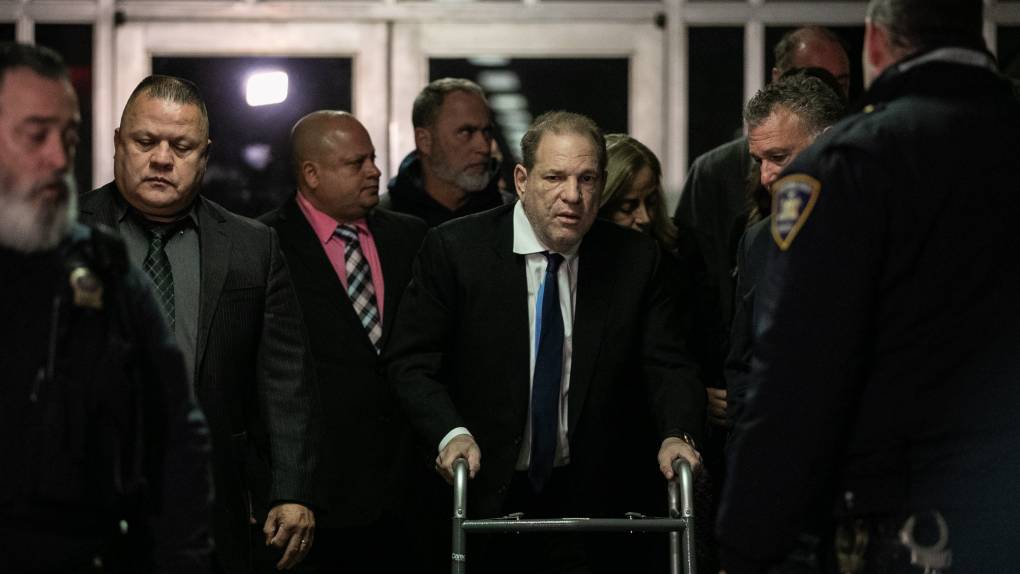
"caption": "Harvey Weinstein (center) leaves a bail hearing last month in New York City. The former Hollywood megaproducer has been accused of sexual misconduct by dozens of women. He now faces five charges in New York City.",
"description": "Harvey Weinstein (center) leaves a bail hearing last month in New York City. The former Hollywood megaproducer has been accused of sexual misconduct by dozens of women. He now faces five charges in New York City.",
"title": "Harvey Weinstein (center) leaves a bail hearing last month in New York City. The former Hollywood megaproducer has been accused of sexual misconduct by dozens of women. He now faces five charges in New York City.",
"credit": "Jeenah Moon/Getty Images",
"status": "inherit",
"isLoading": false,
"fetchFailed": false
},
"arts_13869881": {
"type": "attachments",
"id": "arts_13869881",
"meta": {
"index": "attachments_1716263798",
"site": "arts",
"id": "13869881",
"found": true
},
"parent": 13869877,
"imgSizes": {
"twentyfourteen-full-width": {
"file": "https://ww2.kqed.org/app/uploads/sites/2/2019/11/GettyImages-1187109785-1024x576.jpg",
"width": 1024,
"mimeType": "image/jpeg",
"height": 576
},
"thumbnail": {
"file": "https://ww2.kqed.org/app/uploads/sites/2/2019/11/GettyImages-1187109785-160x107.jpg",
"width": 160,
"mimeType": "image/jpeg",
"height": 107
},
"post-thumbnail": {
"file": "https://ww2.kqed.org/app/uploads/sites/2/2019/11/GettyImages-1187109785-672x372.jpg",
"width": 672,
"mimeType": "image/jpeg",
"height": 372
},
"kqedFullSize": {
"file": "https://ww2.kqed.org/app/uploads/sites/2/2019/11/GettyImages-1187109785.jpg",
"width": 1024,
"height": 683
},
"large": {
"file": "https://ww2.kqed.org/app/uploads/sites/2/2019/11/GettyImages-1187109785-1020x680.jpg",
"width": 1020,
"mimeType": "image/jpeg",
"height": 680
},
"medium": {
"file": "https://ww2.kqed.org/app/uploads/sites/2/2019/11/GettyImages-1187109785-800x534.jpg",
"width": 800,
"mimeType": "image/jpeg",
"height": 534
},
"medium_large": {
"file": "https://ww2.kqed.org/app/uploads/sites/2/2019/11/GettyImages-1187109785-768x512.jpg",
"width": 768,
"mimeType": "image/jpeg",
"height": 512
}
},
"publishDate": 1573763209,
"modified": 1573763289,
"caption": "Executive Producer Reese Witherspoon arrives at the premiere of Apple TV+'s 'Truth Be Told,' November 2019, Beverly Hills. ",
"description": "Executive Producer Reese Witherspoon arrives at the premiere of Apple TV+'s 'Truth Be Told,' November 2019, Beverly Hills. ",
"title": "Executive Producer Reese Witherspoon arrives at the premiere of Apple TV+'s 'Truth Be Told,' November 2019, Beverly Hills.",
"credit": "Jerod Harris/Getty Images",
"status": "inherit",
"isLoading": false,
"fetchFailed": false
},
"arts_13867969": {
"type": "attachments",
"id": "arts_13867969",
"meta": {
"index": "attachments_1716263798",
"site": "arts",
"id": "13867969",
"found": true
},
"parent": 13867962,
"imgSizes": {
"twentyfourteen-full-width": {
"file": "https://ww2.kqed.org/app/uploads/sites/2/2019/10/https_2F2Fcdn.cnn_.com2Fcnnnext2Fdam2Fassets2F190924105803-joker-joaquin-phoenix-1038x576.jpg",
"width": 1038,
"mimeType": "image/jpeg",
"height": 576
},
"thumbnail": {
"file": "https://ww2.kqed.org/app/uploads/sites/2/2019/10/https_2F2Fcdn.cnn_.com2Fcnnnext2Fdam2Fassets2F190924105803-joker-joaquin-phoenix-160x90.jpg",
"width": 160,
"mimeType": "image/jpeg",
"height": 90
},
"post-thumbnail": {
"file": "https://ww2.kqed.org/app/uploads/sites/2/2019/10/https_2F2Fcdn.cnn_.com2Fcnnnext2Fdam2Fassets2F190924105803-joker-joaquin-phoenix-672x372.jpg",
"width": 672,
"mimeType": "image/jpeg",
"height": 372
},
"kqedFullSize": {
"file": "https://ww2.kqed.org/app/uploads/sites/2/2019/10/https_2F2Fcdn.cnn_.com2Fcnnnext2Fdam2Fassets2F190924105803-joker-joaquin-phoenix.jpg",
"width": 1200,
"height": 675
},
"large": {
"file": "https://ww2.kqed.org/app/uploads/sites/2/2019/10/https_2F2Fcdn.cnn_.com2Fcnnnext2Fdam2Fassets2F190924105803-joker-joaquin-phoenix-1020x574.jpg",
"width": 1020,
"mimeType": "image/jpeg",
"height": 574
},
"complete_open_graph": {
"file": "https://ww2.kqed.org/app/uploads/sites/2/2019/10/https_2F2Fcdn.cnn_.com2Fcnnnext2Fdam2Fassets2F190924105803-joker-joaquin-phoenix-1200x675.jpg",
"width": 1200,
"mimeType": "image/jpeg",
"height": 675
},
"medium": {
"file": "https://ww2.kqed.org/app/uploads/sites/2/2019/10/https_2F2Fcdn.cnn_.com2Fcnnnext2Fdam2Fassets2F190924105803-joker-joaquin-phoenix-800x450.jpg",
"width": 800,
"mimeType": "image/jpeg",
"height": 450
},
"medium_large": {
"file": "https://ww2.kqed.org/app/uploads/sites/2/2019/10/https_2F2Fcdn.cnn_.com2Fcnnnext2Fdam2Fassets2F190924105803-joker-joaquin-phoenix-768x432.jpg",
"width": 768,
"mimeType": "image/jpeg",
"height": 432
}
},
"publishDate": 1570656548,
"modified": 1570656582,
"caption": "Joaquin Phoenix in 'Joker.'",
"description": "Joaquin Phoenix in 'Joker.'",
"title": "Joaquin Phoenix in 'Joker.'",
"credit": "Warner Bros.",
"status": "inherit",
"isLoading": false,
"fetchFailed": false
},
"arts_13866513": {
"type": "attachments",
"id": "arts_13866513",
"meta": {
"index": "attachments_1716263798",
"site": "arts",
"id": "13866513",
"found": true
},
"parent": 13866506,
"imgSizes": {
"twentyfourteen-full-width": {
"file": "https://ww2.kqed.org/app/uploads/sites/2/2019/09/56fae37852bcd028008b9711-1536-768-1038x576.jpg",
"width": 1038,
"mimeType": "image/jpeg",
"height": 576
},
"thumbnail": {
"file": "https://ww2.kqed.org/app/uploads/sites/2/2019/09/56fae37852bcd028008b9711-1536-768-160x80.jpg",
"width": 160,
"mimeType": "image/jpeg",
"height": 80
},
"post-thumbnail": {
"file": "https://ww2.kqed.org/app/uploads/sites/2/2019/09/56fae37852bcd028008b9711-1536-768-672x372.jpg",
"width": 672,
"mimeType": "image/jpeg",
"height": 372
},
"kqedFullSize": {
"file": "https://ww2.kqed.org/app/uploads/sites/2/2019/09/56fae37852bcd028008b9711-1536-768.jpg",
"width": 1536,
"height": 768
},
"large": {
"file": "https://ww2.kqed.org/app/uploads/sites/2/2019/09/56fae37852bcd028008b9711-1536-768-1020x510.jpg",
"width": 1020,
"mimeType": "image/jpeg",
"height": 510
},
"complete_open_graph": {
"file": "https://ww2.kqed.org/app/uploads/sites/2/2019/09/56fae37852bcd028008b9711-1536-768-1200x600.jpg",
"width": 1200,
"mimeType": "image/jpeg",
"height": 600
},
"medium": {
"file": "https://ww2.kqed.org/app/uploads/sites/2/2019/09/56fae37852bcd028008b9711-1536-768-800x400.jpg",
"width": 800,
"mimeType": "image/jpeg",
"height": 400
},
"medium_large": {
"file": "https://ww2.kqed.org/app/uploads/sites/2/2019/09/56fae37852bcd028008b9711-1536-768-768x384.jpg",
"width": 768,
"mimeType": "image/jpeg",
"height": 384
}
},
"publishDate": 1568671092,
"modified": 1568706621,
"caption": "Dustin Hoffman and Meryl Streep in 'Kramer vs. Kramer.'",
"description": "Dustin Hoffman and Meryl Streep in 'Kramer vs. Kramer.'",
"title": "Dustin Hoffman and Meryl Streep in 'Kramer vs. Kramer.'",
"credit": null,
"status": "inherit",
"isLoading": false,
"fetchFailed": false
},
"arts_13865689": {
"type": "attachments",
"id": "arts_13865689",
"meta": {
"index": "attachments_1716263798",
"site": "arts",
"id": "13865689",
"found": true
},
"parent": 13865685,
"imgSizes": {
"twentyfourteen-full-width": {
"file": "https://ww2.kqed.org/app/uploads/sites/2/2019/09/GettyImages-1065989868-1024x576.jpg",
"width": 1024,
"mimeType": "image/jpeg",
"height": 576
},
"thumbnail": {
"file": "https://ww2.kqed.org/app/uploads/sites/2/2019/09/GettyImages-1065989868-160x107.jpg",
"width": 160,
"mimeType": "image/jpeg",
"height": 107
},
"post-thumbnail": {
"file": "https://ww2.kqed.org/app/uploads/sites/2/2019/09/GettyImages-1065989868-672x372.jpg",
"width": 672,
"mimeType": "image/jpeg",
"height": 372
},
"kqedFullSize": {
"file": "https://ww2.kqed.org/app/uploads/sites/2/2019/09/GettyImages-1065989868.jpg",
"width": 1024,
"height": 683
},
"large": {
"file": "https://ww2.kqed.org/app/uploads/sites/2/2019/09/GettyImages-1065989868-1020x680.jpg",
"width": 1020,
"mimeType": "image/jpeg",
"height": 680
},
"medium": {
"file": "https://ww2.kqed.org/app/uploads/sites/2/2019/09/GettyImages-1065989868-800x534.jpg",
"width": 800,
"mimeType": "image/jpeg",
"height": 534
},
"medium_large": {
"file": "https://ww2.kqed.org/app/uploads/sites/2/2019/09/GettyImages-1065989868-768x512.jpg",
"width": 768,
"mimeType": "image/jpeg",
"height": 512
}
},
"publishDate": 1567632153,
"modified": 1567632208,
"caption": "Activists at the 2018 #MeToo March on November 10, 2018, Hollywood, California. ",
"description": "Activists at the 2018 #MeToo March on November 10, 2018, Hollywood, California. ",
"title": "Activists at the 2018 #MeToo March on November 10, 2018, Hollywood, California.",
"credit": "Sarah Morris/Getty Images",
"status": "inherit",
"isLoading": false,
"fetchFailed": false
},
"arts_13863925": {
"type": "attachments",
"id": "arts_13863925",
"meta": {
"index": "attachments_1716263798",
"site": "arts",
"id": "13863925",
"found": true
},
"parent": 13863923,
"imgSizes": {
"twentyfourteen-full-width": {
"file": "https://ww2.kqed.org/app/uploads/sites/2/2019/08/PlacidoDomingo-1024x576.jpg",
"width": 1024,
"mimeType": "image/jpeg",
"height": 576
},
"thumbnail": {
"file": "https://ww2.kqed.org/app/uploads/sites/2/2019/08/PlacidoDomingo-160x97.jpg",
"width": 160,
"mimeType": "image/jpeg",
"height": 97
},
"post-thumbnail": {
"file": "https://ww2.kqed.org/app/uploads/sites/2/2019/08/PlacidoDomingo-672x372.jpg",
"width": 672,
"mimeType": "image/jpeg",
"height": 372
},
"kqedFullSize": {
"file": "https://ww2.kqed.org/app/uploads/sites/2/2019/08/PlacidoDomingo.jpg",
"width": 1024,
"height": 618
},
"large": {
"file": "https://ww2.kqed.org/app/uploads/sites/2/2019/08/PlacidoDomingo-1020x616.jpg",
"width": 1020,
"mimeType": "image/jpeg",
"height": 616
},
"medium": {
"file": "https://ww2.kqed.org/app/uploads/sites/2/2019/08/PlacidoDomingo-800x483.jpg",
"width": 800,
"mimeType": "image/jpeg",
"height": 483
},
"medium_large": {
"file": "https://ww2.kqed.org/app/uploads/sites/2/2019/08/PlacidoDomingo-768x464.jpg",
"width": 768,
"mimeType": "image/jpeg",
"height": 464
}
},
"publishDate": 1565679847,
"modified": 1565679905,
"caption": "Placido Domingo in 2016 in Madrid, Spain. The opera legend has been accused by multiple women of sexual harassment. ",
"description": "Placido Domingo in 2016 in Madrid, Spain. The opera legend has been accused by multiple women of sexual harassment. ",
"title": "PlacidoDomingo",
"credit": "Juan Naharro Gimenez/Getty Images",
"status": "inherit",
"isLoading": false,
"fetchFailed": false
},
"arts_13863330": {
"type": "attachments",
"id": "arts_13863330",
"meta": {
"index": "attachments_1716263798",
"site": "arts",
"id": "13863330",
"found": true
},
"parent": 13863329,
"imgSizes": {
"twentyfourteen-full-width": {
"file": "https://ww2.kqed.org/app/uploads/sites/2/2019/08/ap_18143650855973-8dde7c98c6b14f5aa42c110d3334e3a8ab3d5dd4-1038x576.jpg",
"width": 1038,
"mimeType": "image/jpeg",
"height": 576
},
"thumbnail": {
"file": "https://ww2.kqed.org/app/uploads/sites/2/2019/08/ap_18143650855973-8dde7c98c6b14f5aa42c110d3334e3a8ab3d5dd4-160x120.jpg",
"width": 160,
"mimeType": "image/jpeg",
"height": 120
},
"post-thumbnail": {
"file": "https://ww2.kqed.org/app/uploads/sites/2/2019/08/ap_18143650855973-8dde7c98c6b14f5aa42c110d3334e3a8ab3d5dd4-672x372.jpg",
"width": 672,
"mimeType": "image/jpeg",
"height": 372
},
"kqedFullSize": {
"file": "https://ww2.kqed.org/app/uploads/sites/2/2019/08/ap_18143650855973-8dde7c98c6b14f5aa42c110d3334e3a8ab3d5dd4.jpg",
"width": 2048,
"height": 1535
},
"large": {
"file": "https://ww2.kqed.org/app/uploads/sites/2/2019/08/ap_18143650855973-8dde7c98c6b14f5aa42c110d3334e3a8ab3d5dd4-1020x765.jpg",
"width": 1020,
"mimeType": "image/jpeg",
"height": 765
},
"complete_open_graph": {
"file": "https://ww2.kqed.org/app/uploads/sites/2/2019/08/ap_18143650855973-8dde7c98c6b14f5aa42c110d3334e3a8ab3d5dd4-1200x900.jpg",
"width": 1200,
"mimeType": "image/jpeg",
"height": 900
},
"full-width": {
"file": "https://ww2.kqed.org/app/uploads/sites/2/2019/08/ap_18143650855973-8dde7c98c6b14f5aa42c110d3334e3a8ab3d5dd4-1920x1439.jpg",
"width": 1920,
"mimeType": "image/jpeg",
"height": 1439
},
"medium": {
"file": "https://ww2.kqed.org/app/uploads/sites/2/2019/08/ap_18143650855973-8dde7c98c6b14f5aa42c110d3334e3a8ab3d5dd4-800x600.jpg",
"width": 800,
"mimeType": "image/jpeg",
"height": 600
},
"medium_large": {
"file": "https://ww2.kqed.org/app/uploads/sites/2/2019/08/ap_18143650855973-8dde7c98c6b14f5aa42c110d3334e3a8ab3d5dd4-768x576.jpg",
"width": 768,
"mimeType": "image/jpeg",
"height": 576
}
},
"publishDate": 1565220173,
"modified": 1565220275,
"caption": "Cyntoia Brown, a woman serving a life sentence for killing a man when she was 16, appeared during her clemency hearing in May 2018. Brown and her supporters for years have maintained that the 2004 killing was an act of self-defense.",
"description": "Cyntoia Brown, a woman serving a life sentence for killing a man when she was 16, appeared during her clemency hearing in May 2018. Brown and her supporters for years have maintained that the 2004 killing was an act of self-defense",
"title": "Cyntoia Brown, a woman serving a life sentence for killing a man when she was 16, appeared during her clemency hearing in May 2018. Brown and her supporters for years have maintained that the 2004 killing was an act of self-defense.",
"credit": "Lacy Atkins/AP",
"status": "inherit",
"isLoading": false,
"fetchFailed": false
},
"arts_13860282": {
"type": "attachments",
"id": "arts_13860282",
"meta": {
"index": "attachments_1716263798",
"site": "arts",
"id": "13860282",
"found": true
},
"parent": 13860265,
"imgSizes": {
"twentyfourteen-full-width": {
"file": "https://ww2.kqed.org/app/uploads/sites/2/2019/06/JnaiBridgesCarmen.CoryWeave-1038x576.jpg",
"width": 1038,
"mimeType": "image/jpeg",
"height": 576
},
"thumbnail": {
"file": "https://ww2.kqed.org/app/uploads/sites/2/2019/06/JnaiBridgesCarmen.CoryWeave-160x95.jpg",
"width": 160,
"mimeType": "image/jpeg",
"height": 95
},
"post-thumbnail": {
"file": "https://ww2.kqed.org/app/uploads/sites/2/2019/06/JnaiBridgesCarmen.CoryWeave-672x372.jpg",
"width": 672,
"mimeType": "image/jpeg",
"height": 372
},
"kqedFullSize": {
"file": "https://ww2.kqed.org/app/uploads/sites/2/2019/06/JnaiBridgesCarmen.CoryWeave.jpg",
"width": 1920,
"height": 1140
},
"large": {
"file": "https://ww2.kqed.org/app/uploads/sites/2/2019/06/JnaiBridgesCarmen.CoryWeave-1020x606.jpg",
"width": 1020,
"mimeType": "image/jpeg",
"height": 606
},
"complete_open_graph": {
"file": "https://ww2.kqed.org/app/uploads/sites/2/2019/06/JnaiBridgesCarmen.CoryWeave-1200x713.jpg",
"width": 1200,
"mimeType": "image/jpeg",
"height": 713
},
"full-width": {
"file": "https://ww2.kqed.org/app/uploads/sites/2/2019/06/JnaiBridgesCarmen.CoryWeave-1920x1140.jpg",
"width": 1920,
"mimeType": "image/jpeg",
"height": 1140
},
"medium": {
"file": "https://ww2.kqed.org/app/uploads/sites/2/2019/06/JnaiBridgesCarmen.CoryWeave-800x475.jpg",
"width": 800,
"mimeType": "image/jpeg",
"height": 475
},
"medium_large": {
"file": "https://ww2.kqed.org/app/uploads/sites/2/2019/06/JnaiBridgesCarmen.CoryWeave-768x456.jpg",
"width": 768,
"mimeType": "image/jpeg",
"height": 456
}
},
"publishDate": 1561569974,
"modified": 1561570010,
"caption": "J'nai Bridges as Carmen in San Francisco Opera's production of 'Carmen.'",
"description": "J'nai Bridges as Carmen in San Francisco Opera's production of 'Carmen.'",
"title": "JnaiBridgesCarmen.CoryWeave",
"credit": "Cory Weaver",
"status": "inherit",
"isLoading": false,
"fetchFailed": false
},
"arts_13859176": {
"type": "attachments",
"id": "arts_13859176",
"meta": {
"index": "attachments_1716263798",
"site": "arts",
"id": "13859176",
"found": true
},
"parent": 13859175,
"imgSizes": {
"twentyfourteen-full-width": {
"file": "https://ww2.kqed.org/app/uploads/sites/2/2019/06/gettyimages-55755796-1ed6285ce36eed1a05a9c0a9c93d333ba44ace23-1038x576.jpg",
"width": 1038,
"mimeType": "image/jpeg",
"height": 576
},
"thumbnail": {
"file": "https://ww2.kqed.org/app/uploads/sites/2/2019/06/gettyimages-55755796-1ed6285ce36eed1a05a9c0a9c93d333ba44ace23-160x120.jpg",
"width": 160,
"mimeType": "image/jpeg",
"height": 120
},
"post-thumbnail": {
"file": "https://ww2.kqed.org/app/uploads/sites/2/2019/06/gettyimages-55755796-1ed6285ce36eed1a05a9c0a9c93d333ba44ace23-672x372.jpg",
"width": 672,
"mimeType": "image/jpeg",
"height": 372
},
"kqedFullSize": {
"file": "https://ww2.kqed.org/app/uploads/sites/2/2019/06/gettyimages-55755796-1ed6285ce36eed1a05a9c0a9c93d333ba44ace23-e1559866373714.jpg",
"width": 1920,
"height": 1441
},
"large": {
"file": "https://ww2.kqed.org/app/uploads/sites/2/2019/06/gettyimages-55755796-1ed6285ce36eed1a05a9c0a9c93d333ba44ace23-1020x766.jpg",
"width": 1020,
"mimeType": "image/jpeg",
"height": 766
},
"complete_open_graph": {
"file": "https://ww2.kqed.org/app/uploads/sites/2/2019/06/gettyimages-55755796-1ed6285ce36eed1a05a9c0a9c93d333ba44ace23-1200x901.jpg",
"width": 1200,
"mimeType": "image/jpeg",
"height": 901
},
"full-width": {
"file": "https://ww2.kqed.org/app/uploads/sites/2/2019/06/gettyimages-55755796-1ed6285ce36eed1a05a9c0a9c93d333ba44ace23-1920x1441.jpg",
"width": 1920,
"mimeType": "image/jpeg",
"height": 1441
},
"medium": {
"file": "https://ww2.kqed.org/app/uploads/sites/2/2019/06/gettyimages-55755796-1ed6285ce36eed1a05a9c0a9c93d333ba44ace23-800x600.jpg",
"width": 800,
"mimeType": "image/jpeg",
"height": 600
},
"medium_large": {
"file": "https://ww2.kqed.org/app/uploads/sites/2/2019/06/gettyimages-55755796-1ed6285ce36eed1a05a9c0a9c93d333ba44ace23-768x576.jpg",
"width": 768,
"mimeType": "image/jpeg",
"height": 576
}
},
"publishDate": 1559866239,
"modified": 1559866366,
"caption": "Pablo Picasso and Francoise Gillot in 1951.",
"description": "Pablo Picasso and Francoise Gillot in 1951.",
"title": "Pablo Picasso and Francoise Gillot in 1951.",
"credit": "Lipnitzki/Roger Viollet/Getty Images",
"status": "inherit",
"isLoading": false,
"fetchFailed": false
},
"arts_13850447": {
"type": "attachments",
"id": "arts_13850447",
"meta": {
"index": "attachments_1716263798",
"site": "arts",
"id": "13850447",
"found": true
},
"parent": 13850444,
"imgSizes": {
"twentyfourteen-full-width": {
"file": "https://ww2.kqed.org/app/uploads/sites/2/2019/02/GettyImages-1069266766-1038x576.jpg",
"width": 1038,
"mimeType": "image/jpeg",
"height": 576
},
"thumbnail": {
"file": "https://ww2.kqed.org/app/uploads/sites/2/2019/02/GettyImages-1069266766-160x106.jpg",
"width": 160,
"mimeType": "image/jpeg",
"height": 106
},
"post-thumbnail": {
"file": "https://ww2.kqed.org/app/uploads/sites/2/2019/02/GettyImages-1069266766-672x372.jpg",
"width": 672,
"mimeType": "image/jpeg",
"height": 372
},
"kqedFullSize": {
"file": "https://ww2.kqed.org/app/uploads/sites/2/2019/02/GettyImages-1069266766-e1549829775858.jpg",
"width": 1920,
"height": 1276
},
"large": {
"file": "https://ww2.kqed.org/app/uploads/sites/2/2019/02/GettyImages-1069266766-1020x678.jpg",
"width": 1020,
"mimeType": "image/jpeg",
"height": 678
},
"complete_open_graph": {
"file": "https://ww2.kqed.org/app/uploads/sites/2/2019/02/GettyImages-1069266766-1200x798.jpg",
"width": 1200,
"mimeType": "image/jpeg",
"height": 798
},
"guest-author-50": {
"file": "https://ww2.kqed.org/app/uploads/sites/2/2019/02/GettyImages-1069266766-50x50.jpg",
"width": 50,
"mimeType": "image/jpeg",
"height": 50
},
"guest-author-96": {
"file": "https://ww2.kqed.org/app/uploads/sites/2/2019/02/GettyImages-1069266766-96x96.jpg",
"width": 96,
"mimeType": "image/jpeg",
"height": 96
},
"medium": {
"file": "https://ww2.kqed.org/app/uploads/sites/2/2019/02/GettyImages-1069266766-800x532.jpg",
"width": 800,
"mimeType": "image/jpeg",
"height": 532
},
"guest-author-64": {
"file": "https://ww2.kqed.org/app/uploads/sites/2/2019/02/GettyImages-1069266766-64x64.jpg",
"width": 64,
"mimeType": "image/jpeg",
"height": 64
},
"guest-author-32": {
"file": "https://ww2.kqed.org/app/uploads/sites/2/2019/02/GettyImages-1069266766-32x32.jpg",
"width": 32,
"mimeType": "image/jpeg",
"height": 32
},
"full-width": {
"file": "https://ww2.kqed.org/app/uploads/sites/2/2019/02/GettyImages-1069266766-1920x1276.jpg",
"width": 1920,
"mimeType": "image/jpeg",
"height": 1276
},
"detail": {
"file": "https://ww2.kqed.org/app/uploads/sites/2/2019/02/GettyImages-1069266766-150x150.jpg",
"width": 150,
"mimeType": "image/jpeg",
"height": 150
},
"medium_large": {
"file": "https://ww2.kqed.org/app/uploads/sites/2/2019/02/GettyImages-1069266766-768x510.jpg",
"width": 768,
"mimeType": "image/jpeg",
"height": 510
},
"guest-author-128": {
"file": "https://ww2.kqed.org/app/uploads/sites/2/2019/02/GettyImages-1069266766-128x128.jpg",
"width": 128,
"mimeType": "image/jpeg",
"height": 128
}
},
"publishDate": 1549829740,
"modified": 1549829817,
"caption": "On Thursday, pop star Ariana Grande, who's up for two awards — announced on Twitter that she won't even attend the ceremony.",
"description": "On Thursday, pop star Ariana Grande, who's up for two awards — announced on Twitter that she won't even attend the ceremony.",
"title": "On Thursday, pop star Ariana Grande, who's up for two awards — announced on Twitter that she won't even attend the ceremony.",
"credit": "Theo Wargo/Getty Images",
"status": "inherit",
"isLoading": false,
"fetchFailed": false
},
"arts_13848279": {
"type": "attachments",
"id": "arts_13848279",
"meta": {
"index": "attachments_1716263798",
"site": "arts",
"id": "13848279",
"found": true
},
"parent": 13848278,
"imgSizes": {
"twentyfourteen-full-width": {
"file": "https://ww2.kqed.org/app/uploads/sites/2/2019/01/gettyimages-490064598_custom-d7673c83e6e9cd3a9bbcbbe399ff9e53eb985c0c-e1546901406276-1038x576.jpg",
"width": 1038,
"mimeType": "image/jpeg",
"height": 576
},
"thumbnail": {
"file": "https://ww2.kqed.org/app/uploads/sites/2/2019/01/gettyimages-490064598_custom-d7673c83e6e9cd3a9bbcbbe399ff9e53eb985c0c-e1546901406276-160x111.jpg",
"width": 160,
"mimeType": "image/jpeg",
"height": 111
},
"post-thumbnail": {
"file": "https://ww2.kqed.org/app/uploads/sites/2/2019/01/gettyimages-490064598_custom-d7673c83e6e9cd3a9bbcbbe399ff9e53eb985c0c-e1546901406276-672x372.jpg",
"width": 672,
"mimeType": "image/jpeg",
"height": 372
},
"kqedFullSize": {
"file": "https://ww2.kqed.org/app/uploads/sites/2/2019/01/gettyimages-490064598_custom-d7673c83e6e9cd3a9bbcbbe399ff9e53eb985c0c-e1546901406276.jpg",
"width": 1920,
"height": 1328
},
"large": {
"file": "https://ww2.kqed.org/app/uploads/sites/2/2019/01/gettyimages-490064598_custom-d7673c83e6e9cd3a9bbcbbe399ff9e53eb985c0c-e1546901406276-1020x706.jpg",
"width": 1020,
"mimeType": "image/jpeg",
"height": 706
},
"complete_open_graph": {
"file": "https://ww2.kqed.org/app/uploads/sites/2/2019/01/gettyimages-490064598_custom-d7673c83e6e9cd3a9bbcbbe399ff9e53eb985c0c-e1546901406276-1200x830.jpg",
"width": 1200,
"mimeType": "image/jpeg",
"height": 830
},
"guest-author-50": {
"file": "https://ww2.kqed.org/app/uploads/sites/2/2019/01/gettyimages-490064598_custom-d7673c83e6e9cd3a9bbcbbe399ff9e53eb985c0c-e1546901406276-50x50.jpg",
"width": 50,
"mimeType": "image/jpeg",
"height": 50
},
"guest-author-96": {
"file": "https://ww2.kqed.org/app/uploads/sites/2/2019/01/gettyimages-490064598_custom-d7673c83e6e9cd3a9bbcbbe399ff9e53eb985c0c-e1546901406276-96x96.jpg",
"width": 96,
"mimeType": "image/jpeg",
"height": 96
},
"medium": {
"file": "https://ww2.kqed.org/app/uploads/sites/2/2019/01/gettyimages-490064598_custom-d7673c83e6e9cd3a9bbcbbe399ff9e53eb985c0c-e1546901406276-800x553.jpg",
"width": 800,
"mimeType": "image/jpeg",
"height": 553
},
"guest-author-64": {
"file": "https://ww2.kqed.org/app/uploads/sites/2/2019/01/gettyimages-490064598_custom-d7673c83e6e9cd3a9bbcbbe399ff9e53eb985c0c-e1546901406276-64x64.jpg",
"width": 64,
"mimeType": "image/jpeg",
"height": 64
},
"guest-author-32": {
"file": "https://ww2.kqed.org/app/uploads/sites/2/2019/01/gettyimages-490064598_custom-d7673c83e6e9cd3a9bbcbbe399ff9e53eb985c0c-e1546901406276-32x32.jpg",
"width": 32,
"mimeType": "image/jpeg",
"height": 32
},
"full-width": {
"file": "https://ww2.kqed.org/app/uploads/sites/2/2019/01/gettyimages-490064598_custom-d7673c83e6e9cd3a9bbcbbe399ff9e53eb985c0c-e1546901406276-1920x1328.jpg",
"width": 1920,
"mimeType": "image/jpeg",
"height": 1328
},
"detail": {
"file": "https://ww2.kqed.org/app/uploads/sites/2/2019/01/gettyimages-490064598_custom-d7673c83e6e9cd3a9bbcbbe399ff9e53eb985c0c-e1546901406276-150x150.jpg",
"width": 150,
"mimeType": "image/jpeg",
"height": 150
},
"medium_large": {
"file": "https://ww2.kqed.org/app/uploads/sites/2/2019/01/gettyimages-490064598_custom-d7673c83e6e9cd3a9bbcbbe399ff9e53eb985c0c-e1546901406276-768x531.jpg",
"width": 768,
"mimeType": "image/jpeg",
"height": 531
},
"guest-author-128": {
"file": "https://ww2.kqed.org/app/uploads/sites/2/2019/01/gettyimages-490064598_custom-d7673c83e6e9cd3a9bbcbbe399ff9e53eb985c0c-e1546901406276-128x128.jpg",
"width": 128,
"mimeType": "image/jpeg",
"height": 128
}
},
"publishDate": 1546901282,
"modified": 1546901393,
"caption": "R. Kelly onstage in Brooklyn in September 2015.",
"description": "R. Kelly onstage in Brooklyn in September 2015.",
"title": "R. Kelly onstage in Brooklyn in September 2015.",
"credit": "Mike Pont/Getty Images",
"status": "inherit",
"isLoading": false,
"fetchFailed": false
}
},
"audioPlayerReducer": {
"postId": "stream_live",
"isPaused": true,
"isPlaying": false,
"pfsActive": false,
"pledgeModalIsOpen": true,
"playerDrawerIsOpen": false,
"liveAudioPlayStartedAt": 0,
"liveAudioPlayContext": ""
},
"authorsReducer": {
"byline_arts_13872423": {
"type": "authors",
"id": "byline_arts_13872423",
"meta": {
"override": true
},
"slug": "byline_arts_13872423",
"name": "Rose Friedman, Colin Dwyer",
"isLoading": false
},
"byline_arts_13871594": {
"type": "authors",
"id": "byline_arts_13871594",
"meta": {
"override": true
},
"slug": "byline_arts_13871594",
"name": "Terry Gross",
"isLoading": false
},
"byline_arts_13869877": {
"type": "authors",
"id": "byline_arts_13869877",
"meta": {
"override": true
},
"slug": "byline_arts_13869877",
"name": "Terry Gross",
"isLoading": false
},
"byline_arts_13863923": {
"type": "authors",
"id": "byline_arts_13863923",
"meta": {
"override": true
},
"slug": "byline_arts_13863923",
"name": "Jocelyn Gecker, Associated Press",
"isLoading": false
},
"byline_arts_13863329": {
"type": "authors",
"id": "byline_arts_13863329",
"meta": {
"override": true
},
"slug": "byline_arts_13863329",
"name": "Bobby Allyn",
"isLoading": false
},
"byline_arts_13859175": {
"type": "authors",
"id": "byline_arts_13859175",
"meta": {
"override": true
},
"slug": "byline_arts_13859175",
"name": "Lily Meyer",
"isLoading": false
},
"byline_arts_13850444": {
"type": "authors",
"id": "byline_arts_13850444",
"meta": {
"override": true
},
"slug": "byline_arts_13850444",
"name": "Anastasia Tsioulcas",
"isLoading": false
},
"gmeline": {
"type": "authors",
"id": "185",
"meta": {
"index": "authors_1716337520",
"id": "185",
"found": true
},
"name": "Gabe Meline",
"firstName": "Gabe",
"lastName": "Meline",
"slug": "gmeline",
"email": "gmeline@kqed.org",
"display_author_email": true,
"staff_mastheads": [
"arts"
],
"title": "Senior Editor, KQED Arts & Culture",
"bio": "Gabe Meline entered journalism at age 15 making photocopied zines, and has since earned awards from the Edward R. Murrow Awards, the Society for Professional Journalists, the Online Journalism Awards, the Association of Alternative Newsweeklies and the California Newspaper Publishers Association. Prior to KQED, he was the editor of the \u003cem>North Bay Bohemian\u003c/em> and a touring musician. He lives with his wife and daughter in his hometown of Santa Rosa, CA.",
"avatar": "https://secure.gravatar.com/avatar/5bebe57be0d8bc2dd318934feb47299e2d2d10cba28d09d8d7afb389a2ce2bdd?s=600&d=blank&r=g",
"twitter": null,
"bluesky": null,
"facebook": null,
"instagram": null,
"linkedin": null,
"sites": [
{
"site": "",
"roles": [
"editor"
]
},
{
"site": "arts",
"roles": [
"administrator"
]
},
{
"site": "artschool",
"roles": [
"editor"
]
},
{
"site": "news",
"roles": [
"author"
]
},
{
"site": "pop",
"roles": [
"editor"
]
},
{
"site": "bayareabites",
"roles": [
"editor"
]
},
{
"site": "food",
"roles": [
"editor"
]
},
{
"site": "forum",
"roles": [
"administrator"
]
},
{
"site": "liveblog",
"roles": [
"editor"
]
},
{
"site": "hiphop",
"roles": [
"editor"
]
}
],
"headData": {
"title": "Gabe Meline | KQED",
"description": "Senior Editor, KQED Arts & Culture",
"ogImgSrc": "https://secure.gravatar.com/avatar/5bebe57be0d8bc2dd318934feb47299e2d2d10cba28d09d8d7afb389a2ce2bdd?s=600&d=blank&r=g",
"twImgSrc": "https://secure.gravatar.com/avatar/5bebe57be0d8bc2dd318934feb47299e2d2d10cba28d09d8d7afb389a2ce2bdd?s=600&d=blank&r=g"
},
"isLoading": false,
"link": "/author/gmeline"
},
"ralexandra": {
"type": "authors",
"id": "11242",
"meta": {
"index": "authors_1716337520",
"id": "11242",
"found": true
},
"name": "Rae Alexandra",
"firstName": "Rae",
"lastName": "Alexandra",
"slug": "ralexandra",
"email": "ralexandra@kqed.org",
"display_author_email": true,
"staff_mastheads": [],
"title": "Reporter/Producer",
"bio": "Rae Alexandra is a Reporter/Producer for KQED Arts & Culture, and the creator/author of the \u003ca href=\"https://www.kqed.org/arts/program/rebel-girls-from-bay-area-history\">Rebel Girls From Bay Area History\u003c/a> and \u003ca href=\"https://www.kqed.org/bizarrebayarea\">Bizarre Bay Area\u003c/a> series. Her debut book, \u003ca href=\"https://citylights.com/politics-current-events-history/unsung-heroines35-women-who-changed/\">Unsung Heroines: 35 Women Who Changed the Bay Area\u003c/a> was published by City Lights in March 2026. In 2023, Rae was awarded an SPJ Excellence in Journalism Award for Arts & Culture. Rae was born and raised in Wales and subsequently — even after two decades in Northern California — still uses phrases that regularly baffle her coworkers.",
"avatar": "https://secure.gravatar.com/avatar/edfee8176c80cc0a382b051190f5341997df378a934a5774dcb0977732dfd401?s=600&d=blank&r=g",
"twitter": null,
"bluesky": null,
"facebook": null,
"instagram": null,
"linkedin": null,
"sites": [
{
"site": "arts",
"roles": [
"subscriber"
]
},
{
"site": "news",
"roles": [
"subscriber"
]
},
{
"site": "pop",
"roles": [
"subscriber"
]
},
{
"site": "bayareabites",
"roles": [
"subscriber"
]
},
{
"site": "science",
"roles": [
"subscriber"
]
}
],
"headData": {
"title": "Rae Alexandra | KQED",
"description": "Reporter/Producer",
"ogImgSrc": "https://secure.gravatar.com/avatar/edfee8176c80cc0a382b051190f5341997df378a934a5774dcb0977732dfd401?s=600&d=blank&r=g",
"twImgSrc": "https://secure.gravatar.com/avatar/edfee8176c80cc0a382b051190f5341997df378a934a5774dcb0977732dfd401?s=600&d=blank&r=g"
},
"isLoading": false,
"link": "/author/ralexandra"
},
"nvoynovskaya": {
"type": "authors",
"id": "11387",
"meta": {
"index": "authors_1716337520",
"id": "11387",
"found": true
},
"name": "Nastia Voynovskaya",
"firstName": "Nastia",
"lastName": "Voynovskaya",
"slug": "nvoynovskaya",
"email": "nvoynovskaya@kqed.org",
"display_author_email": false,
"staff_mastheads": [
"arts"
],
"title": "Editor and reporter",
"bio": "Nastia Voynovskaya is a reporter, editor and host at KQED Arts & Culture. She's been covering the arts in the Bay Area for over a decade, with a focus on music, queer culture, labor issues and grassroots organizing. She has edited KQED story series such as Trans Bay: A History of San Francisco's Gender-Diverse Community, and co-created KQED's Bay Area hip-hop history project, That's My Word. Nastia's work has been recognized by the Society of Professional Journalists and San Francisco Press Club. She regularly appears on podcasts and radio programs, including NPR's All Songs Considered, and hosts live events where music, culture and conversation meet.",
"avatar": "https://secure.gravatar.com/avatar/5025ee460e5a85d69ca20ea6c6f2f80d7e17795c828f61ea3aecfcd924e9042e?s=600&d=blank&r=g",
"twitter": null,
"bluesky": null,
"facebook": null,
"instagram": "https://www.instagram.com/nananastia/",
"linkedin": null,
"sites": [
{
"site": "",
"roles": [
"editor"
]
},
{
"site": "arts",
"roles": [
"administrator"
]
},
{
"site": "news",
"roles": [
"editor"
]
},
{
"site": "pop",
"roles": [
"administrator"
]
},
{
"site": "bayareabites",
"roles": [
"editor"
]
},
{
"site": "podcasts",
"roles": [
"editor"
]
},
{
"site": "hiphop",
"roles": [
"editor"
]
}
],
"headData": {
"title": "Nastia Voynovskaya | KQED",
"description": "Editor and reporter",
"ogImgSrc": "https://secure.gravatar.com/avatar/5025ee460e5a85d69ca20ea6c6f2f80d7e17795c828f61ea3aecfcd924e9042e?s=600&d=blank&r=g",
"twImgSrc": "https://secure.gravatar.com/avatar/5025ee460e5a85d69ca20ea6c6f2f80d7e17795c828f61ea3aecfcd924e9042e?s=600&d=blank&r=g"
},
"isLoading": false,
"link": "/author/nvoynovskaya"
}
},
"pagesReducer": {
"arts_tag_metoo": {
"type": "terms",
"id": "arts_2798",
"meta": {
"index": "terms_1716263798",
"site": "arts",
"id": "2798",
"score": 8.795169
},
"name": "#MeToo",
"slug": "metoo",
"taxonomy": "tag",
"description": null,
"featImg": null,
"headData": {
"title": "#MeToo | KQED Arts",
"description": null,
"ogTitle": null,
"ogDescription": null,
"ogImgId": null,
"twTitle": null,
"twDescription": null,
"twImgId": null
},
"ttid": 2810,
"isLoading": false,
"title": "#MeToo",
"pageMeta": {
"site": "arts",
"WpPageTemplate": "page-topic-editorial",
"currentPage": 5
},
"blocks": [
{
"blockName": "kqed/post-list",
"attrs": {
"layout": "cardArticle2",
"query": "posts/arts?tag=metoo",
"seeMore": false,
"paginated": true,
"page": 5
}
},
{
"blockName": "kqed/ad"
}
]
}
},
"pfsSessionReducer": {},
"postsReducer": {
"stream_live": {
"type": "live",
"id": "stream_live",
"audioUrl": "https://streams.kqed.org/kqedradio",
"title": "Live Stream",
"excerpt": "Live Stream information currently unavailable.",
"link": "/radio",
"featImg": "",
"label": {
"name": "KQED Live",
"link": "/"
}
},
"stream_kqedNewscast": {
"type": "posts",
"id": "stream_kqedNewscast",
"audioUrl": "https://www.kqed.org/.stream/anon/radio/RDnews/newscast.mp3?_=1",
"title": "KQED Newscast",
"featImg": "",
"label": {
"name": "88.5 FM",
"link": "/"
}
},
"arts_13872423": {
"type": "posts",
"id": "arts_13872423",
"meta": {
"index": "posts_1716263798",
"site": "arts",
"id": "13872423",
"score": null,
"sort": [
1578337581000
]
},
"parent": 0,
"labelTerm": {
"site": "arts",
"term": 137
},
"blocks": [],
"publishDate": 1578337581,
"format": "standard",
"title": "Harvey Weinstein Heads to Trial For Sex Crimes in a #MeToo Landmark",
"headTitle": "Harvey Weinstein Heads to Trial For Sex Crimes in a #MeToo Landmark | KQED",
"content": "\u003cp>\u003cem>\u003cstrong>Editor’s note: \u003c/strong>\u003c/em>\u003cem>This report includes descriptions of sexual assault.\u003c/em>\u003c/p>\n\u003cp>Once one of Hollywood’s most powerful men, whose very reputation could help determine the fate of the films he financed, Harvey Weinstein is set for a starring role on a very different kind of stage: The former megaproducer’s criminal trial opens Monday in Manhattan, where Weinstein faces sexual assault charges that may land him in prison for a very long time.\u003c/p>\n\u003cp>More than 80 women have publicly accused Weinstein of various types of sexual misconduct since \u003cem>The \u003ca href=\"https://www.nytimes.com/2017/10/05/us/harvey-weinstein-harassment-allegations.html\" target=\"_blank\" rel=\"noopener noreferrer\">New York Times\u003c/a>\u003c/em> and \u003cem>The \u003ca href=\"https://www.newyorker.com/news/news-desk/from-aggressive-overtures-to-sexual-assault-harvey-weinsteins-accusers-tell-their-stories\" target=\"_blank\" rel=\"noopener noreferrer\">New Yorker\u003c/a>\u003c/em> published near-simultaneous bombshell reports more than two years ago. Those allegations, widespread as they were—dating back decades and including alleged incidents from \u003ca href=\"https://www.latimes.com/local/lanow/la-me-weinstein-lapd-20171102-story.html\" target=\"_blank\" rel=\"noopener noreferrer\">Los Angeles\u003c/a> to \u003ca href=\"https://www.bbc.com/news/entertainment-arts-41760069\" target=\"_blank\" rel=\"noopener noreferrer\">London\u003c/a>—helped ignite the \u003ca href=\"https://www.npr.org/tags/570698249/-metoo\" target=\"_blank\" rel=\"noopener noreferrer\">#MeToo movement\u003c/a> calling attention to sexual assault.\u003c/p>\n\u003cp>But it was the Manhattan district attorney, \u003ca href=\"https://www.manhattanda.org/\" target=\"_blank\" rel=\"noopener noreferrer\">Cyrus Vance\u003c/a>, who first made the move to charge Weinstein \u003ca href=\"https://www.npr.org/sections/thetwo-way/2018/05/25/614339339/harvey-weinstein-surrenders-to-authorities-on-sexual-assault-charges\" target=\"_blank\" rel=\"noopener noreferrer\">in 2018\u003c/a>, eventually slapping the disgraced Oscar winner with five counts of sex crimes—including rape and predatory sexual assault—principally relating to two alleged victims in New York City.\u003c/p>\n\u003cp>The first incident involved Mimi Haleyi, a former production assistant at his old studio, the Weinstein Company. (That company is now dead—\u003ca href=\"https://www.npr.org/sections/thetwo-way/2018/03/19/595089301/the-weinstein-co-files-for-bankruptcy-cancels-non-disclosure-agreements\" target=\"_blank\" rel=\"noopener noreferrer\">declared bankrupt\u003c/a> and \u003ca href=\"https://www.npr.org/sections/thetwo-way/2018/05/08/609476924/the-weinstein-co-gets-court-ok-to-sell-itself-to-lantern-capital-partners\" target=\"_blank\" rel=\"noopener noreferrer\">sold to\u003c/a> a private equity firm.) Haleyi says that in 2006, Weinstein invited her to his New York City home, where he pulled out her tampon and orally forced himself on her.\u003c/p>\n\u003cp>[ad fullwidth]\u003c/p>\n\u003cp>“No woman should have to be subjected to this type of unacceptable abuse,” she \u003ca href=\"https://www.youtube.com/watch?v=VFX-wWVOyjc\" target=\"_blank\" rel=\"noopener noreferrer\">told reporters\u003c/a> in October 2017. “Women have the right to say no. A ‘no’ is a ‘no,’ regardless of the circumstances—and I told Harvey no.”\u003c/p>\n\u003cp>The name of the alleged victim in the second incident, from 2013, has not been released.\u003c/p>\n\u003cp>https://www.youtube.com/watch?v=VFX-wWVOyjc&feature=emb_logo\u003c/p>\n\u003cp>Another alleged attack, dating to the winter of 1993-1994, became something of a flashpoint in the pretrial wrangling: Actress \u003ca href=\"https://www.newyorker.com/news/news-desk/weighing-the-costs-of-speaking-out-about-harvey-weinstein\" target=\"_blank\" rel=\"noopener noreferrer\">Annabella Sciorra\u003c/a> says Weinstein attacked her after a film industry dinner around that time. After the producer dropped her off at her apartment in Manhattan, Sciorra says that he reappeared at her door and pushed it open, overpowering and raping her once he had gotten inside.\u003c/p>\n\u003cp>The incident took place too long ago for prosecution under state law, but prosecutors pushed for Sciorra’s testimony to be included anyway over the objections of Weinstein’s legal team—and prosecutors \u003ca href=\"https://www.nytimes.com/2019/08/26/nyregion/harvey-weinstein-annabella-sciorra-trial-rape.html\" target=\"_blank\" rel=\"noopener noreferrer\">got their way\u003c/a>. She will be allowed to take the witness stand to bolster the case that Weinstein committed \u003ca href=\"https://www.nysenate.gov/legislation/laws/PEN/130.95\" target=\"_blank\" rel=\"noopener noreferrer\">predatory sexual assault\u003c/a>, which carries the longest possible sentence of his charges.\u003c/p>\n\u003cp>Weinstein, for his part, has pleaded not guilty to the charges, maintaining that everything that he did with these women and others was consensual.\u003c/p>\n\u003cp>While the case that heads to trial Monday is Weinstein’s first to include criminal charges, it is by no means the first case against the producer. Just last month, in fact, Weinstein and the board of his bankrupt film studio reached a tentative \u003ca href=\"https://www.npr.org/2019/12/11/787306873/harvey-weinstein-reaches-tentative-25-million-deal-to-settle-sex-claims\" target=\"_blank\" rel=\"noopener noreferrer\">$47 million deal \u003c/a>to settle their financial obligations—about $25 million of which would be earmarked for the accusers who filed lawsuits against him.\u003c/p>\n\u003cp>The settlement, which is still subject to approval by a judge, did not include any formal admission of wrongdoing or personal payments from Weinstein.\u003c/p>\n\u003cp>As for Weinstein’s criminal case in Manhattan, the producer has changed lawyers several times during his pretrial preparations. The first of his attorneys, Benjamin Brafman, staged an aggressive defense in the media. He warned that the #MeToo movement, while generally a positive development, also resulted in an unfair rush to judgment in Weinstein’s situation.\u003c/p>\n\u003cp>“When you have a #MeToo movement that pressures public officials to take certain action when perhaps it’s not warranted, then it gets to be very, very scary,” he told NPR \u003ca href=\"https://www.npr.org/2018/12/17/676803400/weinstein-seeks-dismissal-of-sexual-assault-case-in-possible-metoo-setback\" target=\"_blank\" rel=\"noopener noreferrer\">in late 2018\u003c/a>, while he was still representing Weinstein. “And I think that’s what happened here.”\u003c/p>\n\u003cp>Brafman and Weinstein officially \u003ca href=\"https://deadline.com/2019/01/harvey-weinstein-laywer-leaves-benjamin-brafman-criminal-trial-1202534787/\" target=\"_blank\" rel=\"noopener noreferrer\">parted ways\u003c/a> about a month after speaking with NPR. Donna Rotunno, a former prosecutor who joined Weinstein’s legal team \u003ca href=\"https://www.theguardian.com/film/2019/jul/11/harvey-weinstein-trial-legal-team-donna-rotunno\" target=\"_blank\" rel=\"noopener noreferrer\">last year\u003c/a>, has suggested she plans to pursue a similarly aggressive defense strategy, trying to prove that the women willingly took part in their contact with Weinstein.\u003c/p>\n\u003cp>“I can promise you there is a truth that you have not reported on; we’re here to uncover that truth,” Rotunno explained. “I think it’s going to be obvious that the relationships had with women in this case were quite consensual. We have a lot of documentation to back those things up.”\u003c/p>\n\u003cp>But first, before the opposing sides make their cases in court, a jury must be selected to hear those arguments—and that task won’t be easy in a case this well known.\u003c/p>\n\u003cp>“The issue is not necessarily finding the needle in the haystack—you know, the one person who has never heard of the Weinstein case. The odds of finding such a person are slim to none,” said Nancy Gertner, a former federal judge and author of a \u003ca href=\"http://www.nancygertner.com/content/law-juries-6th-edition\" target=\"_blank\" rel=\"noopener noreferrer\">book on jury selection\u003c/a>.\u003c/p>\n\u003cp>She says that instead, each side likely will be scrutinizing every potential juror for any sign of prejudice, such as strong feelings about the #MeToo movement or Weinstein personally.\u003c/p>\n\u003cp>“In other words, within the pool of people who have heard about him, there are distinctions to be made,” Gertner added. “And that’s where you have to find a fair jury.”\u003c/p>\n\u003cp>\u003c/p>\n\u003cp>That process is expected to last about two weeks. The entire trial could last six to eight. If Weinstein is convicted on the most serious charge, predatory sexual assault, \u003ca href=\"https://www.nysenate.gov/legislation/laws/PEN/70.00\" target=\"_blank\" rel=\"noopener noreferrer\">he faces\u003c/a> a minimum sentence of 10 to 25 years in prison or a maximum of life.\u003c/p>\n\u003cdiv class=\"fullattribution\">\u003cem>Copyright 2020 NPR. To see more, visit \u003ca href=\"https://www.npr.org\" target=\"_blank\" rel=\"noopener noreferrer\">NPR\u003c/a>.\u003cimg decoding=\"async\" src=\"https://www.google-analytics.com/__utm.gif?utmac=UA-5828686-4&utmdt=Harvey+Weinstein+Heads+To+Trial+For+Sex+Crimes+In+A+%23MeToo+Landmark&utme=8(APIKey)9(MDAxOTAwOTE4MDEyMTkxMDAzNjczZDljZA004)\">\u003c/em>\u003c/div>\n\n",
"stats": {
"hasVideo": true,
"hasChartOrMap": false,
"hasAudio": false,
"hasPolis": false,
"wordCount": 1007,
"hasGoogleForm": false,
"hasGallery": false,
"hasHearkenModule": false,
"iframeSrcs": [],
"paragraphCount": 23
},
"modified": 1705021565,
"excerpt": "It's the first criminal trial for Weinstein, whose alleged misconduct helped set off a movement. Now, the former producer faces five charges that may land him a long prison sentence in New York.",
"headData": {
"twImgId": "",
"twTitle": "",
"ogTitle": "",
"ogImgId": "",
"twDescription": "",
"description": "It's the first criminal trial for Weinstein, whose alleged misconduct helped set off a movement. Now, the former producer faces five charges that may land him a long prison sentence in New York.",
"title": "Harvey Weinstein Heads to Trial For Sex Crimes in a #MeToo Landmark | KQED",
"ogDescription": "",
"schema": {
"@context": "https://schema.org",
"@type": "Article",
"headline": "Harvey Weinstein Heads to Trial For Sex Crimes in a #MeToo Landmark",
"datePublished": "2020-01-06T11:06:21-08:00",
"dateModified": "2024-01-11T17:06:05-08:00",
"image": "https://cdn.kqed.org/wp-content/uploads/2020/02/KQED-OG-Image@1x.png"
}
},
"guestAuthors": [],
"slug": "harvey-weinstein-heads-to-trial-for-sex-crimes-in-a-metoo-landmark",
"status": "publish",
"nprApiLink": "http://api.npr.org/query?id=793613868&apiKey=MDAxOTAwOTE4MDEyMTkxMDAzNjczZDljZA004",
"templateType": "standard",
"nprStoryDate": "Mon, 06 Jan 2020 05:07:00 -0500",
"nprLastModifiedDate": "Mon, 06 Jan 2020 08:37:48 -0500",
"featuredImageType": "standard",
"nprHtmlLink": "https://www.npr.org/2020/01/06/793613868/harvey-weinstein-heads-to-trial-for-sex-crimes-in-a-metoo-landmark?ft=nprml&f=793613868",
"nprAudio": "https://ondemand.npr.org/anon.npr-mp3/npr/me/2020/01/20200106_me_harvey_weinstein_heads_to_trial_for_sex_crimes_in_a_metoo_landmark.mp3?orgId=1&topicId=1070&d=231&p=3&story=793613868&ft=nprml&f=793613868",
"nprImageAgency": "Getty Images",
"nprAudioM3u": "http://api.npr.org/m3u/1793895450-28cbc0.m3u?orgId=1&topicId=1070&d=231&p=3&story=793613868&ft=nprml&f=793613868",
"nprStoryId": "793613868",
"nprByline": "Rose Friedman, Colin Dwyer",
"sticky": false,
"nprImageCredit": "Jeenah Moon",
"nprRetrievedStory": "1",
"nprPubDate": "Mon, 06 Jan 2020 07:37:00 -0500",
"path": "/arts/13872423/harvey-weinstein-heads-to-trial-for-sex-crimes-in-a-metoo-landmark",
"audioUrl": "https://ondemand.npr.org/anon.npr-mp3/npr/me/2020/01/20200106_me_harvey_weinstein_heads_to_trial_for_sex_crimes_in_a_metoo_landmark.mp3?orgId=1&topicId=1070&d=231&p=3&story=793613868&ft=nprml&f=793613868",
"audioTrackLength": null,
"parsedContent": [
{
"type": "contentString",
"content": "\u003cdiv class=\"post-body\">\u003cp>\u003cp>\u003cem>\u003cstrong>Editor’s note: \u003c/strong>\u003c/em>\u003cem>This report includes descriptions of sexual assault.\u003c/em>\u003c/p>\n\u003cp>Once one of Hollywood’s most powerful men, whose very reputation could help determine the fate of the films he financed, Harvey Weinstein is set for a starring role on a very different kind of stage: The former megaproducer’s criminal trial opens Monday in Manhattan, where Weinstein faces sexual assault charges that may land him in prison for a very long time.\u003c/p>\n\u003cp>More than 80 women have publicly accused Weinstein of various types of sexual misconduct since \u003cem>The \u003ca href=\"https://www.nytimes.com/2017/10/05/us/harvey-weinstein-harassment-allegations.html\" target=\"_blank\" rel=\"noopener noreferrer\">New York Times\u003c/a>\u003c/em> and \u003cem>The \u003ca href=\"https://www.newyorker.com/news/news-desk/from-aggressive-overtures-to-sexual-assault-harvey-weinsteins-accusers-tell-their-stories\" target=\"_blank\" rel=\"noopener noreferrer\">New Yorker\u003c/a>\u003c/em> published near-simultaneous bombshell reports more than two years ago. Those allegations, widespread as they were—dating back decades and including alleged incidents from \u003ca href=\"https://www.latimes.com/local/lanow/la-me-weinstein-lapd-20171102-story.html\" target=\"_blank\" rel=\"noopener noreferrer\">Los Angeles\u003c/a> to \u003ca href=\"https://www.bbc.com/news/entertainment-arts-41760069\" target=\"_blank\" rel=\"noopener noreferrer\">London\u003c/a>—helped ignite the \u003ca href=\"https://www.npr.org/tags/570698249/-metoo\" target=\"_blank\" rel=\"noopener noreferrer\">#MeToo movement\u003c/a> calling attention to sexual assault.\u003c/p>\n\u003cp>But it was the Manhattan district attorney, \u003ca href=\"https://www.manhattanda.org/\" target=\"_blank\" rel=\"noopener noreferrer\">Cyrus Vance\u003c/a>, who first made the move to charge Weinstein \u003ca href=\"https://www.npr.org/sections/thetwo-way/2018/05/25/614339339/harvey-weinstein-surrenders-to-authorities-on-sexual-assault-charges\" target=\"_blank\" rel=\"noopener noreferrer\">in 2018\u003c/a>, eventually slapping the disgraced Oscar winner with five counts of sex crimes—including rape and predatory sexual assault—principally relating to two alleged victims in New York City.\u003c/p>\n\u003cp>The first incident involved Mimi Haleyi, a former production assistant at his old studio, the Weinstein Company. (That company is now dead—\u003ca href=\"https://www.npr.org/sections/thetwo-way/2018/03/19/595089301/the-weinstein-co-files-for-bankruptcy-cancels-non-disclosure-agreements\" target=\"_blank\" rel=\"noopener noreferrer\">declared bankrupt\u003c/a> and \u003ca href=\"https://www.npr.org/sections/thetwo-way/2018/05/08/609476924/the-weinstein-co-gets-court-ok-to-sell-itself-to-lantern-capital-partners\" target=\"_blank\" rel=\"noopener noreferrer\">sold to\u003c/a> a private equity firm.) Haleyi says that in 2006, Weinstein invited her to his New York City home, where he pulled out her tampon and orally forced himself on her.\u003c/p>\n\u003cp>\u003c/p>\u003c/div>",
"attributes": {
"named": {},
"numeric": []
}
},
{
"type": "component",
"content": "",
"name": "ad",
"attributes": {
"named": {
"label": "fullwidth"
},
"numeric": [
"fullwidth"
]
}
},
{
"type": "contentString",
"content": "\u003cdiv class=\"post-body\">\u003cp>\u003c/p>\n\u003cp>“No woman should have to be subjected to this type of unacceptable abuse,” she \u003ca href=\"https://www.youtube.com/watch?v=VFX-wWVOyjc\" target=\"_blank\" rel=\"noopener noreferrer\">told reporters\u003c/a> in October 2017. “Women have the right to say no. A ‘no’ is a ‘no,’ regardless of the circumstances—and I told Harvey no.”\u003c/p>\n\u003cp>The name of the alleged victim in the second incident, from 2013, has not been released.\u003c/p>\u003c/p>\u003cp>\u003cspan class='utils-parseShortcode-shortcodes-__youtubeShortcode__embedYoutube'>\n \u003cspan class='utils-parseShortcode-shortcodes-__youtubeShortcode__embedYoutubeInside'>\n \u003ciframe\n loading='lazy'\n class='utils-parseShortcode-shortcodes-__youtubeShortcode__youtubePlayer'\n type='text/html'\n src='//www.youtube.com/embed/VFX-wWVOyjc'\n title='//www.youtube.com/embed/VFX-wWVOyjc'\n allowfullscreen='true'\n style='border:0;'>\u003c/iframe>\n \u003c/span>\n \u003c/span>\u003c/p>\u003cp>\u003cp>Another alleged attack, dating to the winter of 1993-1994, became something of a flashpoint in the pretrial wrangling: Actress \u003ca href=\"https://www.newyorker.com/news/news-desk/weighing-the-costs-of-speaking-out-about-harvey-weinstein\" target=\"_blank\" rel=\"noopener noreferrer\">Annabella Sciorra\u003c/a> says Weinstein attacked her after a film industry dinner around that time. After the producer dropped her off at her apartment in Manhattan, Sciorra says that he reappeared at her door and pushed it open, overpowering and raping her once he had gotten inside.\u003c/p>\n\u003cp>The incident took place too long ago for prosecution under state law, but prosecutors pushed for Sciorra’s testimony to be included anyway over the objections of Weinstein’s legal team—and prosecutors \u003ca href=\"https://www.nytimes.com/2019/08/26/nyregion/harvey-weinstein-annabella-sciorra-trial-rape.html\" target=\"_blank\" rel=\"noopener noreferrer\">got their way\u003c/a>. She will be allowed to take the witness stand to bolster the case that Weinstein committed \u003ca href=\"https://www.nysenate.gov/legislation/laws/PEN/130.95\" target=\"_blank\" rel=\"noopener noreferrer\">predatory sexual assault\u003c/a>, which carries the longest possible sentence of his charges.\u003c/p>\n\u003cp>Weinstein, for his part, has pleaded not guilty to the charges, maintaining that everything that he did with these women and others was consensual.\u003c/p>\n\u003cp>While the case that heads to trial Monday is Weinstein’s first to include criminal charges, it is by no means the first case against the producer. Just last month, in fact, Weinstein and the board of his bankrupt film studio reached a tentative \u003ca href=\"https://www.npr.org/2019/12/11/787306873/harvey-weinstein-reaches-tentative-25-million-deal-to-settle-sex-claims\" target=\"_blank\" rel=\"noopener noreferrer\">$47 million deal \u003c/a>to settle their financial obligations—about $25 million of which would be earmarked for the accusers who filed lawsuits against him.\u003c/p>\n\u003cp>The settlement, which is still subject to approval by a judge, did not include any formal admission of wrongdoing or personal payments from Weinstein.\u003c/p>\n\u003cp>As for Weinstein’s criminal case in Manhattan, the producer has changed lawyers several times during his pretrial preparations. The first of his attorneys, Benjamin Brafman, staged an aggressive defense in the media. He warned that the #MeToo movement, while generally a positive development, also resulted in an unfair rush to judgment in Weinstein’s situation.\u003c/p>\n\u003cp>“When you have a #MeToo movement that pressures public officials to take certain action when perhaps it’s not warranted, then it gets to be very, very scary,” he told NPR \u003ca href=\"https://www.npr.org/2018/12/17/676803400/weinstein-seeks-dismissal-of-sexual-assault-case-in-possible-metoo-setback\" target=\"_blank\" rel=\"noopener noreferrer\">in late 2018\u003c/a>, while he was still representing Weinstein. “And I think that’s what happened here.”\u003c/p>\n\u003cp>Brafman and Weinstein officially \u003ca href=\"https://deadline.com/2019/01/harvey-weinstein-laywer-leaves-benjamin-brafman-criminal-trial-1202534787/\" target=\"_blank\" rel=\"noopener noreferrer\">parted ways\u003c/a> about a month after speaking with NPR. Donna Rotunno, a former prosecutor who joined Weinstein’s legal team \u003ca href=\"https://www.theguardian.com/film/2019/jul/11/harvey-weinstein-trial-legal-team-donna-rotunno\" target=\"_blank\" rel=\"noopener noreferrer\">last year\u003c/a>, has suggested she plans to pursue a similarly aggressive defense strategy, trying to prove that the women willingly took part in their contact with Weinstein.\u003c/p>\n\u003cp>“I can promise you there is a truth that you have not reported on; we’re here to uncover that truth,” Rotunno explained. “I think it’s going to be obvious that the relationships had with women in this case were quite consensual. We have a lot of documentation to back those things up.”\u003c/p>\n\u003cp>But first, before the opposing sides make their cases in court, a jury must be selected to hear those arguments—and that task won’t be easy in a case this well known.\u003c/p>\n\u003cp>“The issue is not necessarily finding the needle in the haystack—you know, the one person who has never heard of the Weinstein case. The odds of finding such a person are slim to none,” said Nancy Gertner, a former federal judge and author of a \u003ca href=\"http://www.nancygertner.com/content/law-juries-6th-edition\" target=\"_blank\" rel=\"noopener noreferrer\">book on jury selection\u003c/a>.\u003c/p>\n\u003cp>She says that instead, each side likely will be scrutinizing every potential juror for any sign of prejudice, such as strong feelings about the #MeToo movement or Weinstein personally.\u003c/p>\n\u003cp>“In other words, within the pool of people who have heard about him, there are distinctions to be made,” Gertner added. “And that’s where you have to find a fair jury.”\u003c/p>\n\u003cp>\u003c/p>\n\u003cp>That process is expected to last about two weeks. The entire trial could last six to eight. If Weinstein is convicted on the most serious charge, predatory sexual assault, \u003ca href=\"https://www.nysenate.gov/legislation/laws/PEN/70.00\" target=\"_blank\" rel=\"noopener noreferrer\">he faces\u003c/a> a minimum sentence of 10 to 25 years in prison or a maximum of life.\u003c/p>\n\u003cdiv class=\"fullattribution\">\u003cem>Copyright 2020 NPR. To see more, visit \u003ca href=\"https://www.npr.org\" target=\"_blank\" rel=\"noopener noreferrer\">NPR\u003c/a>.\u003cimg decoding=\"async\" src=\"https://www.google-analytics.com/__utm.gif?utmac=UA-5828686-4&utmdt=Harvey+Weinstein+Heads+To+Trial+For+Sex+Crimes+In+A+%23MeToo+Landmark&utme=8(APIKey)9(MDAxOTAwOTE4MDEyMTkxMDAzNjczZDljZA004)\">\u003c/em>\u003c/div>\n\n\u003c/div>\u003c/p>",
"attributes": {
"named": {},
"numeric": []
}
}
],
"link": "/arts/13872423/harvey-weinstein-heads-to-trial-for-sex-crimes-in-a-metoo-landmark",
"authors": [
"byline_arts_13872423"
],
"categories": [
"arts_74",
"arts_235"
],
"tags": [
"arts_2798",
"arts_2777",
"arts_2462",
"arts_5676"
],
"affiliates": [
"arts_137"
],
"featImg": "arts_13872424",
"label": "arts_137"
},
"arts_13871594": {
"type": "posts",
"id": "arts_13871594",
"meta": {
"index": "posts_1716263798",
"site": "arts",
"id": "13871594",
"score": null,
"sort": [
1576526516000
]
},
"parent": 0,
"labelTerm": {
"site": "arts",
"term": 137
},
"blocks": [],
"publishDate": 1576526516,
"format": "standard",
"title": "Charlize Theron Explores the Complexities of #MeToo in 'Bombshell'",
"headTitle": "Charlize Theron Explores the Complexities of #MeToo in ‘Bombshell’ | KQED",
"content": "\u003cp>In 1994, actor Charlize Theron was just starting out in show business when a famous director invited her to an audition at his home. When she showed up, she found the director drinking and in his pajamas. He touched her leg; she apologized and left in a hurry.\u003c/p>\n\u003cp>Driving away, Theron became angry—with herself: “I just kept hitting the steering wheel,” she says. “I put a lot of blame on myself … that I didn’t say all the right things, and that I didn’t tell him to take a hike, and that I didn’t do all of those things that we so want to believe we’ll do in those situations.”\u003c/p>\n\u003cp>It wasn’t until years later that Theron understood her experience as sexual harassment. It’s a subject that she’s taking on in her latest film, \u003cem>Bombshell\u003c/em>, which follows the women of Fox News who came forward to accuse then-CEO and chairman \u003ca href=\"https://www.npr.org/sections/thetwo-way/2017/05/18/528925119/roger-ailes-former-fox-news-ceo-dies-at-77\">Roger Ailes\u003c/a> of \u003ca href=\"https://www.npr.org/sections/thetwo-way/2016/07/21/486938004/roger-ailes-accused-of-sexual-harrassment-out-as-chairman-of-fox-news\">sexual harassment\u003c/a>. Theron is one of the film’s producers and also plays former Fox News host \u003ca href=\"https://www.npr.org/2016/12/07/504622630/megyn-kelly-on-trump-and-the-media-were-in-a-dangerous-phase-right-now\">Megyn Kelly\u003c/a>, who wrote about Ailes’ unwanted sexual advances in her 2016 book, \u003ca href=\"https://www.npr.org/books/titles/502042223/settle-for-more\">Settle for More\u003c/a>.\u003c/p>\n\u003cp>Theron says she felt conflicted about playing Kelly: “We have different points of view on a lot of issues,” she says. “And she has definitely said things in the past that I took issue with.”\u003c/p>\n\u003cp>Nevertheless, Theron embraced the opportunity to explore what she calls the “grey area” of sexual harassment: “It’s not always physical assault. It’s not always rape,” she says. “There’s a psychological damage that happens for women in the everyday casualness of language, touch or threat—threat of losing your job. Those are things I’ve definitely encountered.”\u003c/p>\n\u003cp>[ad fullwidth]\u003c/p>\n\u003cp>https://www.youtube.com/watch?v=B2G9-KhBek8\u003c/p>\n\u003chr>\n\u003ch3>Interview Highlights\u003c/h3>\n\u003cp>\u003cstrong>On the movie’s portrayal of the women who worked for Fox News\u003c/strong>\u003c/p>\n\u003cp>A lot of these women have been somewhat hypocritical when it comes to sexual harassment, and have made statements about sexual harassment that have not necessarily been about really bettering the workplace for women or just for women in general. … We weren’t trying to make them heroes. We weren’t trying to whitewash all of the things that they have said in the past. We were going to pepper those things into the film so that we were authentic to them and the story and still feel like, through all of that, that what they did was still incredible. They took down this media mogul, and that has never happened before.\u003c/p>\n\u003cp>\u003cstrong>On confronting the director who sexually harassed her years later—and it being unsatisfying\u003c/strong>\u003c/p>\n\u003cp>In sexual harassment, you’re always waiting for that moment where there’s full closure, where you feel like you’ve actually … had your moment, where you get to say your piece. And that never really happens. I’ve heard this repeatedly in hearing other women’s stories, and that is the unfortunate thing about sexual harassment. You never get that moment where you feel like the tables are reversed and now he’s finally getting it.\u003c/p>\n\u003cp>The closest we’ve ever gotten to it is seeing people like Roger Ailes or \u003ca href=\"https://www.npr.org/2019/12/11/787306873/harvey-weinstein-reaches-tentative-25-million-deal-to-settle-sex-claims\">Harvey Weinstein\u003c/a> seeing some real consequences. I’ve never seen that in my entire career. This is really the first moment in my life where I see that maybe there can be real consequences for people with these actions.\u003c/p>\n\u003cp>\u003cstrong>On why the name of the director who harassed her hasn’t been made public \u003c/strong>\u003c/p>\n\u003cp>I actually did disclose his name. You don’t know that because every time I disclosed his name, the journalist made the decision to not write his name, and it goes to show just how deeply systemic this problem is.\u003c/p>\n\u003cp>I remember the first time somebody asked me if I ever had a casting couch experience, and I openly shared the experience and named him, and the person decided to not write his name. So the story is out, and strangely, when the Harvey Weinstein story broke, I, for the first time ever, Googled the story and the story came up everywhere. It popped up everywhere, and nowhere could you find this guy’s name. And it was incredibly upsetting to me.\u003c/p>\n\u003cp>I’m conflicted in the sense that I know that, if I said his name again while I’m promoting this film, that it would take over the importance of this story and that would become the story. I think there will be a time and a place where I will definitely share this. … I’ve always been honest about it. I don’t have a desire to protect him, but I also don’t want him to overshadow this film right now. So there will be a right time where I will talk about this again, and I will say his name, yes.\u003c/p>\n\u003cp>\u003cstrong>On growing up in apartheid-era South Africa and what she was taught in school about race \u003c/strong>\u003c/p>\n\u003cp>On our farm, all of the workers, everybody who worked in the company—and it was a pretty substantial company—all lived on the farm. So my whole childhood, I was raised with Xhosas and Zulus and South Sothos and all different cultures. Their children were raised with me on the property and I consider them my family. … It was only until I was 12 or 13 that I went to an art school in Johannesburg where I really got to witness firsthand absolutely the atrocities of apartheid. …\u003c/p>\n\u003cp>History was leaning very much into our white history. The heroes of our story, of our founding fathers, were all white. That was really the story that we were all told. … This climate that we’re in right now with our polarizing political views in this country, it was very similar in South Africa. I had friends whose father would be for apartheid and once they found out that black people lived on our farm wouldn’t let me come over for a sleepover. …\u003c/p>\n\u003cp>I always wonder what my life would have been like if I grew up in one of those families—if I was just an innocent child who was born into the family, like one of my friends, who believed that apartheid was the right way of life. I was just incredibly blessed that I was raised … by a mother who was just aghast by all of this.\u003c/p>\n\u003cp>I didn’t really truly understand what any of this really did to me as a young child until I was in my mid-30s and I went to therapy for the first time, because of a relationship that was failing. And what I discovered while in therapy, trying to save my relationship, was that I had a lot of trauma from being a young child growing up in South Africa during the apartheid era. …\u003c/p>\n\u003cp>[It’s] a lot to reconcile with when you realize that you benefited under an administration, a nation, a country, because you had the “right” skin color. I benefited. My life was more comfortable because of the suffering of a lot of people who just by chance were born in the “wrong” skin color. That was a lot for me to carry; it still is. It’s something that I’ll carry for the rest of my life.\u003c/p>\n\u003cp>\u003cstrong>On her mother killing her father in self-defense \u003c/strong>\u003c/p>\n\u003cp>My father was a very sick man. My father was an alcoholic all my life. I only knew him one way, and that was as an alcoholic. … It was a pretty hopeless situation. Our family was just kind of stuck in it. And the day-to-day unpredictability of living with an addict is the thing that you sit with and have kind of embedded in your body for the rest of your life, more than just this one event of what happened one night. I think our family was an incredibly unhealthy one. And all of it, I think, scarred us in a way. Of course, I wish what happened that night would have never happened. It’s unfortunately what happens when you don’t get to the root of these issues.\u003c/p>\n\u003cp>My father was so drunk that he shouldn’t have been able to walk when he came into the house with a gun. My mom and I were in my bedroom leaning against the door, because he was trying to push through the door. So both of us were leaning against the door from the inside to have him not be able to push through. He took a step back and just shot through the door three times. None of those bullets ever hit us, which is just a miracle. But in self-defense, she ended the threat.\u003c/p>\n\u003cp>This family violence, this kind of violence that happens within the family, is something that I share with a lot of people. I’m not ashamed to talk about it, because I do think that the more we talk about these things, the more we realize we are not alone in any of it. I think, for me, it’s just always been that this story really is about growing up with addicts and what that does to a person.\u003c/p>\n\u003cp>\u003cstrong>On her decision to adopt as a single parent \u003c/strong>\u003c/p>\n\u003cp>I cast a very wide net. I wanted to believe that somehow my child would find me in the way that we were just meant to be. So I wasn’t specific with anything. … In whatever country they would allow me as a single woman to adopt, that’s where I filed. And it just happened to be that both my children ended up being American. They were born in the United States and they both happened to be African American. Everything that I hoped would happen during my adoption process did happen because these two babies were meant to be in my life—and they’re my children. …\u003c/p>\n\u003cp>It’s definitely something that we still need to work on, this concept of what a family looks like and what constitutes the “right” family or a “strong” family or what we think that should look like. In a lot of places—and I think even for a lot of people and in America—it still feels very traditional in the sense that it should be that every child should have a mother and a father. We’ve kind of wrapped our heads slowly around the idea of two mothers and two fathers, but not so much around the idea of a single parent. It’s just so unfortunate. I know so many people who would be incredible parents. My fight was a little bit easier because of my circumstances, but I would want that for all women who want to share their life and be part of raising another young, small child’s life.\u003c/p>\n\u003cp>[ad floatright]\u003c/p>\n\u003cp>\u003cem>Heidi Saman and Joel Wolfram produced and edited this interview for broadcast. Bridget Bentz, Molly Seavy-Nesper and Patrick Jarenwattananon adapted it for the Web.\u003c/em>\u003c/p>\n\u003cdiv class=\"fullattribution\">\u003cem>Copyright 2019 Fresh Air. To see more, visit \u003ca href=\"http://www.npr.org/programs/fresh-air/\">Fresh Air\u003c/a>.\u003cimg decoding=\"async\" src=\"https://www.google-analytics.com/__utm.gif?utmac=UA-5828686-4&utmdt=Charlize+Theron+Portrays+The+%27Gray+Area%27+Of+Sexual+Harassment+In+%27Bombshell%27&utme=8(APIKey)9(MDAxOTAwOTE4MDEyMTkxMDAzNjczZDljZA004)\">\u003c/em>\u003c/div>\n\n",
"stats": {
"hasVideo": true,
"hasChartOrMap": false,
"hasAudio": false,
"hasPolis": false,
"wordCount": 1944,
"hasGoogleForm": false,
"hasGallery": false,
"hasHearkenModule": false,
"iframeSrcs": [],
"paragraphCount": 30
},
"modified": 1705021665,
"excerpt": "Theron has direct experience with what she calls the \"psychological damage\" of sexual harassment. Her new film follows the women of Fox News who accused then-CEO Roger Ailes of inappropriate behavior.",
"headData": {
"twImgId": "",
"twTitle": "",
"ogTitle": "",
"ogImgId": "",
"twDescription": "",
"description": "Theron has direct experience with what she calls the "psychological damage" of sexual harassment. Her new film follows the women of Fox News who accused then-CEO Roger Ailes of inappropriate behavior.",
"title": "Charlize Theron Explores the Complexities of #MeToo in 'Bombshell' | KQED",
"ogDescription": "",
"schema": {
"@context": "https://schema.org",
"@type": "Article",
"headline": "Charlize Theron Explores the Complexities of #MeToo in 'Bombshell'",
"datePublished": "2019-12-16T12:01:56-08:00",
"dateModified": "2024-01-11T17:07:45-08:00",
"image": "https://cdn.kqed.org/wp-content/uploads/2020/02/KQED-OG-Image@1x.png"
}
},
"guestAuthors": [],
"slug": "charlize-theron-explores-the-complexities-of-metoo-in-bombshell",
"status": "publish",
"nprApiLink": "http://api.npr.org/query?id=786759703&apiKey=MDAxOTAwOTE4MDEyMTkxMDAzNjczZDljZA004",
"templateType": "standard",
"nprStoryDate": "Mon, 16 Dec 2019 12:44:00 -0500",
"nprLastModifiedDate": "Mon, 16 Dec 2019 14:09:19 -0500",
"featuredImageType": "standard",
"nprHtmlLink": "https://www.npr.org/2019/12/16/786759703/charlize-theron-portrays-the-gray-area-of-sexual-harassment-in-bombshell?ft=nprml&f=786759703",
"nprAudio": "https://ondemand.npr.org/anon.npr-mp3/npr/fa/2019/12/20191216_fa_01.mp3?orgId=427869011&topicId=1137&d=2677&p=13&story=786759703&ft=nprml&f=786759703",
"nprImageAgency": "Getty Images",
"nprAudioM3u": "http://api.npr.org/m3u/1788501885-ccc6ed.m3u?orgId=427869011&topicId=1137&d=2677&p=13&story=786759703&ft=nprml&f=786759703",
"nprStoryId": "786759703",
"nprByline": "Terry Gross",
"sticky": false,
"nprImageCredit": "Matt Winkelmeyer",
"nprRetrievedStory": "1",
"nprPubDate": "Mon, 16 Dec 2019 14:09:00 -0500",
"path": "/arts/13871594/charlize-theron-explores-the-complexities-of-metoo-in-bombshell",
"audioUrl": "https://ondemand.npr.org/anon.npr-mp3/npr/fa/2019/12/20191216_fa_01.mp3?orgId=427869011&topicId=1137&d=2677&p=13&story=786759703&ft=nprml&f=786759703",
"audioTrackLength": null,
"parsedContent": [
{
"type": "contentString",
"content": "\u003cdiv class=\"post-body\">\u003cp>\u003cp>In 1994, actor Charlize Theron was just starting out in show business when a famous director invited her to an audition at his home. When she showed up, she found the director drinking and in his pajamas. He touched her leg; she apologized and left in a hurry.\u003c/p>\n\u003cp>Driving away, Theron became angry—with herself: “I just kept hitting the steering wheel,” she says. “I put a lot of blame on myself … that I didn’t say all the right things, and that I didn’t tell him to take a hike, and that I didn’t do all of those things that we so want to believe we’ll do in those situations.”\u003c/p>\n\u003cp>It wasn’t until years later that Theron understood her experience as sexual harassment. It’s a subject that she’s taking on in her latest film, \u003cem>Bombshell\u003c/em>, which follows the women of Fox News who came forward to accuse then-CEO and chairman \u003ca href=\"https://www.npr.org/sections/thetwo-way/2017/05/18/528925119/roger-ailes-former-fox-news-ceo-dies-at-77\">Roger Ailes\u003c/a> of \u003ca href=\"https://www.npr.org/sections/thetwo-way/2016/07/21/486938004/roger-ailes-accused-of-sexual-harrassment-out-as-chairman-of-fox-news\">sexual harassment\u003c/a>. Theron is one of the film’s producers and also plays former Fox News host \u003ca href=\"https://www.npr.org/2016/12/07/504622630/megyn-kelly-on-trump-and-the-media-were-in-a-dangerous-phase-right-now\">Megyn Kelly\u003c/a>, who wrote about Ailes’ unwanted sexual advances in her 2016 book, \u003ca href=\"https://www.npr.org/books/titles/502042223/settle-for-more\">Settle for More\u003c/a>.\u003c/p>\n\u003cp>Theron says she felt conflicted about playing Kelly: “We have different points of view on a lot of issues,” she says. “And she has definitely said things in the past that I took issue with.”\u003c/p>\n\u003cp>Nevertheless, Theron embraced the opportunity to explore what she calls the “grey area” of sexual harassment: “It’s not always physical assault. It’s not always rape,” she says. “There’s a psychological damage that happens for women in the everyday casualness of language, touch or threat—threat of losing your job. Those are things I’ve definitely encountered.”\u003c/p>\n\u003cp>\u003c/p>\u003c/div>",
"attributes": {
"named": {},
"numeric": []
}
},
{
"type": "component",
"content": "",
"name": "ad",
"attributes": {
"named": {
"label": "fullwidth"
},
"numeric": [
"fullwidth"
]
}
},
{
"type": "contentString",
"content": "\u003cdiv class=\"post-body\">\u003cp>\u003c/p>\u003c/p>\u003cp>\u003cspan class='utils-parseShortcode-shortcodes-__youtubeShortcode__embedYoutube'>\n \u003cspan class='utils-parseShortcode-shortcodes-__youtubeShortcode__embedYoutubeInside'>\n \u003ciframe\n loading='lazy'\n class='utils-parseShortcode-shortcodes-__youtubeShortcode__youtubePlayer'\n type='text/html'\n src='//www.youtube.com/embed/B2G9-KhBek8'\n title='//www.youtube.com/embed/B2G9-KhBek8'\n allowfullscreen='true'\n style='border:0;'>\u003c/iframe>\n \u003c/span>\n \u003c/span>\u003c/p>\u003cp>\u003chr>\n\u003ch3>Interview Highlights\u003c/h3>\n\u003cp>\u003cstrong>On the movie’s portrayal of the women who worked for Fox News\u003c/strong>\u003c/p>\n\u003cp>A lot of these women have been somewhat hypocritical when it comes to sexual harassment, and have made statements about sexual harassment that have not necessarily been about really bettering the workplace for women or just for women in general. … We weren’t trying to make them heroes. We weren’t trying to whitewash all of the things that they have said in the past. We were going to pepper those things into the film so that we were authentic to them and the story and still feel like, through all of that, that what they did was still incredible. They took down this media mogul, and that has never happened before.\u003c/p>\n\u003cp>\u003cstrong>On confronting the director who sexually harassed her years later—and it being unsatisfying\u003c/strong>\u003c/p>\n\u003cp>In sexual harassment, you’re always waiting for that moment where there’s full closure, where you feel like you’ve actually … had your moment, where you get to say your piece. And that never really happens. I’ve heard this repeatedly in hearing other women’s stories, and that is the unfortunate thing about sexual harassment. You never get that moment where you feel like the tables are reversed and now he’s finally getting it.\u003c/p>\n\u003cp>The closest we’ve ever gotten to it is seeing people like Roger Ailes or \u003ca href=\"https://www.npr.org/2019/12/11/787306873/harvey-weinstein-reaches-tentative-25-million-deal-to-settle-sex-claims\">Harvey Weinstein\u003c/a> seeing some real consequences. I’ve never seen that in my entire career. This is really the first moment in my life where I see that maybe there can be real consequences for people with these actions.\u003c/p>\n\u003cp>\u003cstrong>On why the name of the director who harassed her hasn’t been made public \u003c/strong>\u003c/p>\n\u003cp>I actually did disclose his name. You don’t know that because every time I disclosed his name, the journalist made the decision to not write his name, and it goes to show just how deeply systemic this problem is.\u003c/p>\n\u003cp>I remember the first time somebody asked me if I ever had a casting couch experience, and I openly shared the experience and named him, and the person decided to not write his name. So the story is out, and strangely, when the Harvey Weinstein story broke, I, for the first time ever, Googled the story and the story came up everywhere. It popped up everywhere, and nowhere could you find this guy’s name. And it was incredibly upsetting to me.\u003c/p>\n\u003cp>I’m conflicted in the sense that I know that, if I said his name again while I’m promoting this film, that it would take over the importance of this story and that would become the story. I think there will be a time and a place where I will definitely share this. … I’ve always been honest about it. I don’t have a desire to protect him, but I also don’t want him to overshadow this film right now. So there will be a right time where I will talk about this again, and I will say his name, yes.\u003c/p>\n\u003cp>\u003cstrong>On growing up in apartheid-era South Africa and what she was taught in school about race \u003c/strong>\u003c/p>\n\u003cp>On our farm, all of the workers, everybody who worked in the company—and it was a pretty substantial company—all lived on the farm. So my whole childhood, I was raised with Xhosas and Zulus and South Sothos and all different cultures. Their children were raised with me on the property and I consider them my family. … It was only until I was 12 or 13 that I went to an art school in Johannesburg where I really got to witness firsthand absolutely the atrocities of apartheid. …\u003c/p>\n\u003cp>History was leaning very much into our white history. The heroes of our story, of our founding fathers, were all white. That was really the story that we were all told. … This climate that we’re in right now with our polarizing political views in this country, it was very similar in South Africa. I had friends whose father would be for apartheid and once they found out that black people lived on our farm wouldn’t let me come over for a sleepover. …\u003c/p>\n\u003cp>I always wonder what my life would have been like if I grew up in one of those families—if I was just an innocent child who was born into the family, like one of my friends, who believed that apartheid was the right way of life. I was just incredibly blessed that I was raised … by a mother who was just aghast by all of this.\u003c/p>\n\u003cp>I didn’t really truly understand what any of this really did to me as a young child until I was in my mid-30s and I went to therapy for the first time, because of a relationship that was failing. And what I discovered while in therapy, trying to save my relationship, was that I had a lot of trauma from being a young child growing up in South Africa during the apartheid era. …\u003c/p>\n\u003cp>[It’s] a lot to reconcile with when you realize that you benefited under an administration, a nation, a country, because you had the “right” skin color. I benefited. My life was more comfortable because of the suffering of a lot of people who just by chance were born in the “wrong” skin color. That was a lot for me to carry; it still is. It’s something that I’ll carry for the rest of my life.\u003c/p>\n\u003cp>\u003cstrong>On her mother killing her father in self-defense \u003c/strong>\u003c/p>\n\u003cp>My father was a very sick man. My father was an alcoholic all my life. I only knew him one way, and that was as an alcoholic. … It was a pretty hopeless situation. Our family was just kind of stuck in it. And the day-to-day unpredictability of living with an addict is the thing that you sit with and have kind of embedded in your body for the rest of your life, more than just this one event of what happened one night. I think our family was an incredibly unhealthy one. And all of it, I think, scarred us in a way. Of course, I wish what happened that night would have never happened. It’s unfortunately what happens when you don’t get to the root of these issues.\u003c/p>\n\u003cp>My father was so drunk that he shouldn’t have been able to walk when he came into the house with a gun. My mom and I were in my bedroom leaning against the door, because he was trying to push through the door. So both of us were leaning against the door from the inside to have him not be able to push through. He took a step back and just shot through the door three times. None of those bullets ever hit us, which is just a miracle. But in self-defense, she ended the threat.\u003c/p>\n\u003cp>This family violence, this kind of violence that happens within the family, is something that I share with a lot of people. I’m not ashamed to talk about it, because I do think that the more we talk about these things, the more we realize we are not alone in any of it. I think, for me, it’s just always been that this story really is about growing up with addicts and what that does to a person.\u003c/p>\n\u003cp>\u003cstrong>On her decision to adopt as a single parent \u003c/strong>\u003c/p>\n\u003cp>I cast a very wide net. I wanted to believe that somehow my child would find me in the way that we were just meant to be. So I wasn’t specific with anything. … In whatever country they would allow me as a single woman to adopt, that’s where I filed. And it just happened to be that both my children ended up being American. They were born in the United States and they both happened to be African American. Everything that I hoped would happen during my adoption process did happen because these two babies were meant to be in my life—and they’re my children. …\u003c/p>\n\u003cp>It’s definitely something that we still need to work on, this concept of what a family looks like and what constitutes the “right” family or a “strong” family or what we think that should look like. In a lot of places—and I think even for a lot of people and in America—it still feels very traditional in the sense that it should be that every child should have a mother and a father. We’ve kind of wrapped our heads slowly around the idea of two mothers and two fathers, but not so much around the idea of a single parent. It’s just so unfortunate. I know so many people who would be incredible parents. My fight was a little bit easier because of my circumstances, but I would want that for all women who want to share their life and be part of raising another young, small child’s life.\u003c/p>\n\u003cp>\u003c/p>\u003c/div>",
"attributes": {
"named": {},
"numeric": []
}
},
{
"type": "component",
"content": "",
"name": "ad",
"attributes": {
"named": {
"label": "floatright"
},
"numeric": [
"floatright"
]
}
},
{
"type": "contentString",
"content": "\u003cdiv class=\"post-body\">\u003cp>\u003c/p>\n\u003cp>\u003cem>Heidi Saman and Joel Wolfram produced and edited this interview for broadcast. Bridget Bentz, Molly Seavy-Nesper and Patrick Jarenwattananon adapted it for the Web.\u003c/em>\u003c/p>\n\u003cdiv class=\"fullattribution\">\u003cem>Copyright 2019 Fresh Air. To see more, visit \u003ca href=\"http://www.npr.org/programs/fresh-air/\">Fresh Air\u003c/a>.\u003cimg decoding=\"async\" src=\"https://www.google-analytics.com/__utm.gif?utmac=UA-5828686-4&utmdt=Charlize+Theron+Portrays+The+%27Gray+Area%27+Of+Sexual+Harassment+In+%27Bombshell%27&utme=8(APIKey)9(MDAxOTAwOTE4MDEyMTkxMDAzNjczZDljZA004)\">\u003c/em>\u003c/div>\n\n\u003c/div>\u003c/p>",
"attributes": {
"named": {},
"numeric": []
}
}
],
"link": "/arts/13871594/charlize-theron-explores-the-complexities-of-metoo-in-bombshell",
"authors": [
"byline_arts_13871594"
],
"categories": [
"arts_74",
"arts_75"
],
"tags": [
"arts_2798"
],
"affiliates": [
"arts_137"
],
"featImg": "arts_13871600",
"label": "arts_137"
},
"arts_13869877": {
"type": "posts",
"id": "arts_13869877",
"meta": {
"index": "posts_1716263798",
"site": "arts",
"id": "13869877",
"score": null,
"sort": [
1573768823000
]
},
"parent": 0,
"labelTerm": {
"site": "arts",
"term": 137
},
"blocks": [],
"publishDate": 1573768823,
"format": "standard",
"title": "'From Book to Script to Screen,' Reese Witherspoon is Making Roles For Women",
"headTitle": "‘From Book to Script to Screen,’ Reese Witherspoon is Making Roles For Women | KQED",
"content": "\u003cp>Actor Reese Witherspoon became famous in her 20s after starring in films like \u003cem>Election \u003c/em>and \u003cem>Legally Blonde\u003c/em>, but by the time she entered her 30s, the film landscape had shifted. DVD sales had shrunk and smaller, female-centered movies were in short supply. It was nearly impossible to find good leading roles for women.\u003c/p>\n\u003cp>Witherspoon began asking different movie studios what projects they were developing for women. “With the exclusion of one studio, everybody said ‘Nothing. Nothing with a female lead,’ ” she says.\u003c/p>\n\u003cp>So Witherspoon decided to start a production company and began adapting books with complex female characters into films and TV shows. The idea was to create better parts for women—and to help female authors get their stories sold.\u003c/p>\n\u003cp>Witherspoon’s company spearheaded the adaptation of \u003ca href=\"https://www.npr.org/2014/09/30/352688538/gone-girl-a-missing-wife-and-a-cloud-of-suspicion\">\u003cem>Gone Girl\u003c/em>\u003c/a>\u003cem>, \u003c/em>\u003ca href=\"https://www.npr.org/2014/12/05/367996411/a-wild-trek-made-a-bit-too-neatly\">\u003cem>Wild \u003c/em>\u003c/a>and \u003ca href=\"https://www.npr.org/2019/06/06/730275468/with-1-huge-lie-revealed-big-little-lies-season-2-takes-a-slow-burn-strategy\">\u003cem>Big Little Lies\u003c/em>\u003c/a>\u003cem>, \u003c/em>among other titles. Looking back, Witherspoon describes her shift into producing as “betting on myself.”\u003c/p>\n\u003cp>“I know what to do,” she says. “I know every producer in Hollywood. I know how to get a movie from book to script to screen, and I know how to market it.”\u003c/p>\n\u003cp>[ad fullwidth]\u003c/p>\n\u003cp>Now Witherspoon’s current company, Hello Sunshine, is bringing a new project to screen. She’s an executive producer and co-star of the Apple TV+ series, \u003ca href=\"https://www.npr.org/2019/10/31/774850935/tv-review-the-morning-show-from-apple-tv\">\u003cem>The Morning Show\u003c/em>\u003c/a>\u003cem>, \u003c/em>which centers on a morning news show that’s shaken up when its male anchor is fired after being accused of sexual misconduct.\u003c/p>\n\u003cp>Witherspoon acknowledges certain parallels between the misconduct portrayed in the series and the allegations against real-life TV hosts \u003ca href=\"https://www.npr.org/2019/10/09/768527936/matt-lauer-accused-of-rape-in-new-book-former-nbc-star-denies-false-stories\">Matt Lauer\u003c/a>, \u003ca href=\"https://www.npr.org/sections/thetwo-way/2017/04/19/524736631/bill-oreilly-is-out-at-fox-news\">Bill O’Reilly\u003c/a> and \u003ca href=\"https://www.npr.org/sections/thetwo-way/2017/11/20/565542031/charlie-rose-is-accused-of-sexual-harassment-by-eight-women\">Charlie Rose.\u003c/a>\u003c/p>\n\u003cp>“We thought it would have been remiss if we didn’t address [those issues] in our show,” she says. “Sometimes the world is so crazy, TV shows and movies are a great way to try and understand where we’re at.”\u003c/p>\n\u003cp>https://www.youtube.com/watch?v=eA7D4_qU9jo\u003c/p>\n\u003chr>\n\u003ch3>\u003cstrong>Interview highlights \u003c/strong>\u003c/h3>\n\u003cp>\u003cstrong>On the \u003c/strong>\u003ca href=\"https://www.npr.org/tags/570698249/-metoo\">\u003cstrong>#MeToo\u003c/strong>\u003c/a>\u003cstrong> movement, and being shocked to learn of the extent of sexual misconduct in Hollywood\u003c/strong>\u003c/p>\n\u003cp>I didn’t have any idea what other people’s experiences were. I’d only had my own experiences, and I definitely dealt with harassment. And I had dealt with that privately and in my own way with my family when I was young, when I was really young and starting in the business. I didn’t have any understanding of the widespread abuse that women were experiencing—and not just women, many, many people were experiencing.\u003c/p>\n\u003cp>It really took that moment in time for all of us to start talking. Because you have to remember, as an actress for hire, usually I was the only woman on a set for, I would say, the majority of my 30-year career. I’ve been the only woman in a cast or one of a handful of women in a crew or a cast. So when all of that started happening, women started to gather and really start talking to each other and sharing stories. And I have to say, I was blown away. I did not know the kind of experiences that people were having. And I was in shock. I think a lot of us were in shock. …\u003c/p>\n\u003cp>I’m enormously grateful to the women who spoke up about their experiences and really opened our hearts and our minds and our eyes to what was happening with such regularity, and the journalists who worked so hard to break these stories, despite whatever corporate interference they were having. I’m just enormously grateful to \u003ca href=\"https://www.npr.org/2019/10/15/770249717/ronan-farrow-catch-and-kill-tactics-protected-both-weinstein-and-trump\">Ronan \u003c/a>[Farrow] and \u003ca href=\"https://www.npr.org/2019/09/10/759384251/she-said-reveals-the-people-and-practices-that-protected-weinstein\">Jodi \u003c/a>\u003ca href=\"https://www.npr.org/2019/09/10/759384251/she-said-reveals-the-people-and-practices-that-protected-weinstein\">[Kantor]\u003c/a> \u003ca href=\"https://www.npr.org/2019/09/10/759384251/she-said-reveals-the-people-and-practices-that-protected-weinstein\">and Megan\u003c/a>\u003ca href=\"https://www.npr.org/2019/09/10/759384251/she-said-reveals-the-people-and-practices-that-protected-weinstein\"> [Twohey]\u003c/a>.\u003c/p>\n\u003cp>\u003cstrong>On figuring out how and when she wants to share her own experiences with sexual harassment and assault\u003c/strong>\u003c/p>\n\u003cp>I haven’t ever really spoken about it. I’ve been asked about it a lot, which really brings up a lot of questions for me about how do you decide when you want to talk about it, how you want to talk about it? … This is just me, my personal experience. How can I use that not to garner sympathy but to actually promote change and highlight industry standards that are not good enough?\u003c/p>\n\u003cp>It was very powerful to me to share my story with a like-minded group of women with the Time’s Up movement. We talked about ways that we could really encourage change. How could we raise money for women in other industries so that they would have legal help?\u003c/p>\n\u003cp>I had specific experiences and I dealt with them with a therapist. It’s been ongoing, honestly. The whole thing brought up a lot of feelings for me, and it was a really emotional experience that I don’t feel resolved about, and I think I will probably talk about it, but right now I don’t have all the right words.\u003c/p>\n\u003cp>\u003cstrong>On why her mid-30s were a turning point in her career \u003c/strong>\u003c/p>\n\u003cp>People always say, “After you won the Oscar, did your whole career change?” There wasn’t suddenly this huge influx of scripts. … There’s not a secret safe they’re keeping the great scripts and they unlock you when you win awards! I was lucky to do a couple of great movies in my 30s, but not a lot. …\u003c/p>\n\u003cp>\u003cem>Wild \u003c/em>was a big deal for me, because first of all, I love \u003ca href=\"https://www.npr.org/2013/09/08/219754257/the-wild-story-of-cheryl-strayed-and-her-long-lost-half-sister\">Cheryl Strayed\u003c/a>‘s writing, her memoir’s beautiful, but it’s also woman vs. nature, which I had never really seen on film. And so many women are so deeply connected to nature, yet it’s not something we’ve explored. We’ve seen every iteration of a man vs. a bear, vs. the Wild West, on hiking adventures, but I haven’t seen a lot of a woman alone on film as well, and what is that singular journey for a woman to find herself alone in the wilderness?\u003c/p>\n\u003cp>\u003cstrong>On singing for her role as \u003c/strong>\u003ca href=\"https://freshairarchive.org/segments/jumping-through-ring-fire\">\u003cstrong>June Carter Cash\u003c/strong>\u003c/a>\u003cstrong> in \u003c/strong>\u003ca href=\"https://www.npr.org/templates/story/story.php?storyId=5015873\">\u003cstrong>\u003cem>Walk the Line \u003c/em>\u003c/strong>\u003c/a>\u003c/p>\n\u003cp>When I was a little girl, I wanted to be a country music singer. So I trained for probably 5, 6 years with vocal coaches. I grew up in Nashville, Tenn., so I grew up with a lot of country music singers and their kids and was just immersed … I wanted to be just like \u003ca href=\"https://www.npr.org/2018/12/09/673738768/dream-it-on-through-dolly-parton-on-her-new-album-inspiring-young-people-and-mor\">Dolly Parton\u003c/a> when I was little. I wanted to write and I wanted to sing my own songs, and I took piano lessons and I took singing lessons.\u003c/p>\n\u003cp>https://www.youtube.com/watch?v=cmpkP-P5sbM\u003c/p>\n\u003cp>When I was about 13, I went and I started studying Broadway at camps in upstate New York and they would have all these experts come in. … They had an acting expert, a dance expert and a singing expert, and the singing coach said, “You really should not put a lot of energy into your singing career.” So I got intimidated and they said, “But your acting is great and you should really pursue that.” So that’s when I kind of tacked left, when I was 13, and started working on acting and concentrating.\u003c/p>\n\u003cp>So when this opportunity came up to play June Carter, I was terrified and I’d been told I wasn’t any good. So I worked for five months with coach Roger Love and with the producer \u003ca href=\"https://www.npr.org/templates/story/story.php?storyId=122526723\">T-Bone Burnett\u003c/a> to cut the tracks before we ever walked on set. We recorded all the music so that we could blend live tracks and recorded tracks together. But then we had to actually go and shoot the movie and I had to sing in front of audiences of hundreds of people with \u003ca href=\"https://www.npr.org/2014/01/21/264524233/phoenix-to-self-why-am-i-talking-about-this-joaquin-shut-up\">Joaquin Phoenix \u003c/a>onstage with a band, and it was terrifying—terrifying, but thrilling.\u003c/p>\n\u003cp>\u003cstrong>On loving acting \u003c/strong>\u003c/p>\n\u003cp>It’s my number one passion. … I talk a lot about producing … but every day I’m on set feels like such an enormous privilege to be a storyteller in this world. And I started as a little girl, as a storyteller, and I will be a storyteller ’till the day I die. I just love it. It’s my favorite thing to do at dinner parties, too, so invite me over, Terry … I just love spinning a story. It’s really what I was born to do.\u003c/p>\n\u003cp>[ad floatright]\u003c/p>\n\u003cp>\u003cem>Ann Marie Baldonado and Seth Kelley produced and edited the audio of this interview. Bridget Bentz, Molly Seavy-Nesper and Beth Novey adapted it for the Web.\u003c/em>\u003c/p>\n\u003cdiv class=\"fullattribution\">\u003cem>Copyright 2019 Fresh Air. To see more, visit \u003ca href=\"http://www.npr.org/programs/fresh-air/\">Fresh Air\u003c/a>.\u003cimg decoding=\"async\" src=\"https://www.google-analytics.com/__utm.gif?utmac=UA-5828686-4&utmdt=%27From+Book+To+Script+To+Screen%2C%27+Reese+Witherspoon+Is+Making+Roles+For+Women&utme=8(APIKey)9(MDAxOTAwOTE4MDEyMTkxMDAzNjczZDljZA004)\">\u003c/em>\u003c/div>\n\n",
"stats": {
"hasVideo": true,
"hasChartOrMap": false,
"hasAudio": false,
"hasPolis": false,
"wordCount": 1477,
"hasGoogleForm": false,
"hasGallery": false,
"hasHearkenModule": false,
"iframeSrcs": [],
"paragraphCount": 28
},
"modified": 1705021821,
"excerpt": "Frustrated by the lack of leading roles for female actors, Witherspoon decided to start her own production company. Her new project, 'The Morning Show,' takes on sexual harassment in the news industry.",
"headData": {
"twImgId": "",
"twTitle": "",
"ogTitle": "",
"ogImgId": "",
"twDescription": "",
"description": "Frustrated by the lack of leading roles for female actors, Witherspoon decided to start her own production company. Her new project, 'The Morning Show,' takes on sexual harassment in the news industry.",
"title": "'From Book to Script to Screen,' Reese Witherspoon is Making Roles For Women | KQED",
"ogDescription": "",
"schema": {
"@context": "https://schema.org",
"@type": "Article",
"headline": "'From Book to Script to Screen,' Reese Witherspoon is Making Roles For Women",
"datePublished": "2019-11-14T14:00:23-08:00",
"dateModified": "2024-01-11T17:10:21-08:00",
"image": "https://cdn.kqed.org/wp-content/uploads/2020/02/KQED-OG-Image@1x.png"
}
},
"guestAuthors": [],
"slug": "from-book-to-script-to-screen-reese-witherspoon-is-making-roles-for-women",
"status": "publish",
"nprApiLink": "http://api.npr.org/query?id=778863995&apiKey=MDAxOTAwOTE4MDEyMTkxMDAzNjczZDljZA004",
"templateType": "standard",
"nprStoryDate": "Thu, 14 Nov 2019 11:56:29 -0500",
"nprLastModifiedDate": "Thu, 14 Nov 2019 11:57:43 -0500",
"featuredImageType": "standard",
"nprHtmlLink": "https://www.npr.org/2019/11/14/778863995/from-book-to-script-to-screen-reese-witherspoon-is-making-roles-for-women?ft=nprml&f=778863995",
"nprAudio": "https://ondemand.npr.org/anon.npr-mp3/npr/fa/2019/11/20191114_fa_01.mp3?orgId=427869011&topicId=1138&d=2533&p=13&story=778863995&ft=nprml&f=778863995",
"nprImageAgency": "Getty Images for Turner Image",
"nprAudioM3u": "http://api.npr.org/m3u/1779374393-85a0e0.m3u?orgId=427869011&topicId=1138&d=2533&p=13&story=778863995&ft=nprml&f=778863995",
"nprStoryId": "778863995",
"nprByline": "Terry Gross",
"sticky": false,
"audioTrackLength": 2534,
"nprImageCredit": "Emma McIntyre",
"nprRetrievedStory": "1",
"nprPubDate": "Thu, 14 Nov 2019 13:30:00 -0500",
"path": "/arts/13869877/from-book-to-script-to-screen-reese-witherspoon-is-making-roles-for-women",
"audioUrl": "https://ondemand.npr.org/anon.npr-mp3/npr/fa/2019/11/20191114_fa_01.mp3?orgId=427869011&topicId=1138&d=2533&p=13&story=778863995&ft=nprml&f=778863995",
"parsedContent": [
{
"type": "contentString",
"content": "\u003cdiv class=\"post-body\">\u003cp>\u003cp>Actor Reese Witherspoon became famous in her 20s after starring in films like \u003cem>Election \u003c/em>and \u003cem>Legally Blonde\u003c/em>, but by the time she entered her 30s, the film landscape had shifted. DVD sales had shrunk and smaller, female-centered movies were in short supply. It was nearly impossible to find good leading roles for women.\u003c/p>\n\u003cp>Witherspoon began asking different movie studios what projects they were developing for women. “With the exclusion of one studio, everybody said ‘Nothing. Nothing with a female lead,’ ” she says.\u003c/p>\n\u003cp>So Witherspoon decided to start a production company and began adapting books with complex female characters into films and TV shows. The idea was to create better parts for women—and to help female authors get their stories sold.\u003c/p>\n\u003cp>Witherspoon’s company spearheaded the adaptation of \u003ca href=\"https://www.npr.org/2014/09/30/352688538/gone-girl-a-missing-wife-and-a-cloud-of-suspicion\">\u003cem>Gone Girl\u003c/em>\u003c/a>\u003cem>, \u003c/em>\u003ca href=\"https://www.npr.org/2014/12/05/367996411/a-wild-trek-made-a-bit-too-neatly\">\u003cem>Wild \u003c/em>\u003c/a>and \u003ca href=\"https://www.npr.org/2019/06/06/730275468/with-1-huge-lie-revealed-big-little-lies-season-2-takes-a-slow-burn-strategy\">\u003cem>Big Little Lies\u003c/em>\u003c/a>\u003cem>, \u003c/em>among other titles. Looking back, Witherspoon describes her shift into producing as “betting on myself.”\u003c/p>\n\u003cp>“I know what to do,” she says. “I know every producer in Hollywood. I know how to get a movie from book to script to screen, and I know how to market it.”\u003c/p>\n\u003cp>\u003c/p>\u003c/div>",
"attributes": {
"named": {},
"numeric": []
}
},
{
"type": "component",
"content": "",
"name": "ad",
"attributes": {
"named": {
"label": "fullwidth"
},
"numeric": [
"fullwidth"
]
}
},
{
"type": "contentString",
"content": "\u003cdiv class=\"post-body\">\u003cp>\u003c/p>\n\u003cp>Now Witherspoon’s current company, Hello Sunshine, is bringing a new project to screen. She’s an executive producer and co-star of the Apple TV+ series, \u003ca href=\"https://www.npr.org/2019/10/31/774850935/tv-review-the-morning-show-from-apple-tv\">\u003cem>The Morning Show\u003c/em>\u003c/a>\u003cem>, \u003c/em>which centers on a morning news show that’s shaken up when its male anchor is fired after being accused of sexual misconduct.\u003c/p>\n\u003cp>Witherspoon acknowledges certain parallels between the misconduct portrayed in the series and the allegations against real-life TV hosts \u003ca href=\"https://www.npr.org/2019/10/09/768527936/matt-lauer-accused-of-rape-in-new-book-former-nbc-star-denies-false-stories\">Matt Lauer\u003c/a>, \u003ca href=\"https://www.npr.org/sections/thetwo-way/2017/04/19/524736631/bill-oreilly-is-out-at-fox-news\">Bill O’Reilly\u003c/a> and \u003ca href=\"https://www.npr.org/sections/thetwo-way/2017/11/20/565542031/charlie-rose-is-accused-of-sexual-harassment-by-eight-women\">Charlie Rose.\u003c/a>\u003c/p>\n\u003cp>“We thought it would have been remiss if we didn’t address [those issues] in our show,” she says. “Sometimes the world is so crazy, TV shows and movies are a great way to try and understand where we’re at.”\u003c/p>\u003c/p>\u003cp>\u003cspan class='utils-parseShortcode-shortcodes-__youtubeShortcode__embedYoutube'>\n \u003cspan class='utils-parseShortcode-shortcodes-__youtubeShortcode__embedYoutubeInside'>\n \u003ciframe\n loading='lazy'\n class='utils-parseShortcode-shortcodes-__youtubeShortcode__youtubePlayer'\n type='text/html'\n src='//www.youtube.com/embed/eA7D4_qU9jo'\n title='//www.youtube.com/embed/eA7D4_qU9jo'\n allowfullscreen='true'\n style='border:0;'>\u003c/iframe>\n \u003c/span>\n \u003c/span>\u003c/p>\u003cp>\u003chr>\n\u003ch3>\u003cstrong>Interview highlights \u003c/strong>\u003c/h3>\n\u003cp>\u003cstrong>On the \u003c/strong>\u003ca href=\"https://www.npr.org/tags/570698249/-metoo\">\u003cstrong>#MeToo\u003c/strong>\u003c/a>\u003cstrong> movement, and being shocked to learn of the extent of sexual misconduct in Hollywood\u003c/strong>\u003c/p>\n\u003cp>I didn’t have any idea what other people’s experiences were. I’d only had my own experiences, and I definitely dealt with harassment. And I had dealt with that privately and in my own way with my family when I was young, when I was really young and starting in the business. I didn’t have any understanding of the widespread abuse that women were experiencing—and not just women, many, many people were experiencing.\u003c/p>\n\u003cp>It really took that moment in time for all of us to start talking. Because you have to remember, as an actress for hire, usually I was the only woman on a set for, I would say, the majority of my 30-year career. I’ve been the only woman in a cast or one of a handful of women in a crew or a cast. So when all of that started happening, women started to gather and really start talking to each other and sharing stories. And I have to say, I was blown away. I did not know the kind of experiences that people were having. And I was in shock. I think a lot of us were in shock. …\u003c/p>\n\u003cp>I’m enormously grateful to the women who spoke up about their experiences and really opened our hearts and our minds and our eyes to what was happening with such regularity, and the journalists who worked so hard to break these stories, despite whatever corporate interference they were having. I’m just enormously grateful to \u003ca href=\"https://www.npr.org/2019/10/15/770249717/ronan-farrow-catch-and-kill-tactics-protected-both-weinstein-and-trump\">Ronan \u003c/a>[Farrow] and \u003ca href=\"https://www.npr.org/2019/09/10/759384251/she-said-reveals-the-people-and-practices-that-protected-weinstein\">Jodi \u003c/a>\u003ca href=\"https://www.npr.org/2019/09/10/759384251/she-said-reveals-the-people-and-practices-that-protected-weinstein\">[Kantor]\u003c/a> \u003ca href=\"https://www.npr.org/2019/09/10/759384251/she-said-reveals-the-people-and-practices-that-protected-weinstein\">and Megan\u003c/a>\u003ca href=\"https://www.npr.org/2019/09/10/759384251/she-said-reveals-the-people-and-practices-that-protected-weinstein\"> [Twohey]\u003c/a>.\u003c/p>\n\u003cp>\u003cstrong>On figuring out how and when she wants to share her own experiences with sexual harassment and assault\u003c/strong>\u003c/p>\n\u003cp>I haven’t ever really spoken about it. I’ve been asked about it a lot, which really brings up a lot of questions for me about how do you decide when you want to talk about it, how you want to talk about it? … This is just me, my personal experience. How can I use that not to garner sympathy but to actually promote change and highlight industry standards that are not good enough?\u003c/p>\n\u003cp>It was very powerful to me to share my story with a like-minded group of women with the Time’s Up movement. We talked about ways that we could really encourage change. How could we raise money for women in other industries so that they would have legal help?\u003c/p>\n\u003cp>I had specific experiences and I dealt with them with a therapist. It’s been ongoing, honestly. The whole thing brought up a lot of feelings for me, and it was a really emotional experience that I don’t feel resolved about, and I think I will probably talk about it, but right now I don’t have all the right words.\u003c/p>\n\u003cp>\u003cstrong>On why her mid-30s were a turning point in her career \u003c/strong>\u003c/p>\n\u003cp>People always say, “After you won the Oscar, did your whole career change?” There wasn’t suddenly this huge influx of scripts. … There’s not a secret safe they’re keeping the great scripts and they unlock you when you win awards! I was lucky to do a couple of great movies in my 30s, but not a lot. …\u003c/p>\n\u003cp>\u003cem>Wild \u003c/em>was a big deal for me, because first of all, I love \u003ca href=\"https://www.npr.org/2013/09/08/219754257/the-wild-story-of-cheryl-strayed-and-her-long-lost-half-sister\">Cheryl Strayed\u003c/a>‘s writing, her memoir’s beautiful, but it’s also woman vs. nature, which I had never really seen on film. And so many women are so deeply connected to nature, yet it’s not something we’ve explored. We’ve seen every iteration of a man vs. a bear, vs. the Wild West, on hiking adventures, but I haven’t seen a lot of a woman alone on film as well, and what is that singular journey for a woman to find herself alone in the wilderness?\u003c/p>\n\u003cp>\u003cstrong>On singing for her role as \u003c/strong>\u003ca href=\"https://freshairarchive.org/segments/jumping-through-ring-fire\">\u003cstrong>June Carter Cash\u003c/strong>\u003c/a>\u003cstrong> in \u003c/strong>\u003ca href=\"https://www.npr.org/templates/story/story.php?storyId=5015873\">\u003cstrong>\u003cem>Walk the Line \u003c/em>\u003c/strong>\u003c/a>\u003c/p>\n\u003cp>When I was a little girl, I wanted to be a country music singer. So I trained for probably 5, 6 years with vocal coaches. I grew up in Nashville, Tenn., so I grew up with a lot of country music singers and their kids and was just immersed … I wanted to be just like \u003ca href=\"https://www.npr.org/2018/12/09/673738768/dream-it-on-through-dolly-parton-on-her-new-album-inspiring-young-people-and-mor\">Dolly Parton\u003c/a> when I was little. I wanted to write and I wanted to sing my own songs, and I took piano lessons and I took singing lessons.\u003c/p>\u003c/p>\u003cp>\u003cspan class='utils-parseShortcode-shortcodes-__youtubeShortcode__embedYoutube'>\n \u003cspan class='utils-parseShortcode-shortcodes-__youtubeShortcode__embedYoutubeInside'>\n \u003ciframe\n loading='lazy'\n class='utils-parseShortcode-shortcodes-__youtubeShortcode__youtubePlayer'\n type='text/html'\n src='//www.youtube.com/embed/cmpkP-P5sbM'\n title='//www.youtube.com/embed/cmpkP-P5sbM'\n allowfullscreen='true'\n style='border:0;'>\u003c/iframe>\n \u003c/span>\n \u003c/span>\u003c/p>\u003cp>\u003cp>When I was about 13, I went and I started studying Broadway at camps in upstate New York and they would have all these experts come in. … They had an acting expert, a dance expert and a singing expert, and the singing coach said, “You really should not put a lot of energy into your singing career.” So I got intimidated and they said, “But your acting is great and you should really pursue that.” So that’s when I kind of tacked left, when I was 13, and started working on acting and concentrating.\u003c/p>\n\u003cp>So when this opportunity came up to play June Carter, I was terrified and I’d been told I wasn’t any good. So I worked for five months with coach Roger Love and with the producer \u003ca href=\"https://www.npr.org/templates/story/story.php?storyId=122526723\">T-Bone Burnett\u003c/a> to cut the tracks before we ever walked on set. We recorded all the music so that we could blend live tracks and recorded tracks together. But then we had to actually go and shoot the movie and I had to sing in front of audiences of hundreds of people with \u003ca href=\"https://www.npr.org/2014/01/21/264524233/phoenix-to-self-why-am-i-talking-about-this-joaquin-shut-up\">Joaquin Phoenix \u003c/a>onstage with a band, and it was terrifying—terrifying, but thrilling.\u003c/p>\n\u003cp>\u003cstrong>On loving acting \u003c/strong>\u003c/p>\n\u003cp>It’s my number one passion. … I talk a lot about producing … but every day I’m on set feels like such an enormous privilege to be a storyteller in this world. And I started as a little girl, as a storyteller, and I will be a storyteller ’till the day I die. I just love it. It’s my favorite thing to do at dinner parties, too, so invite me over, Terry … I just love spinning a story. It’s really what I was born to do.\u003c/p>\n\u003cp>\u003c/p>\u003c/div>",
"attributes": {
"named": {},
"numeric": []
}
},
{
"type": "component",
"content": "",
"name": "ad",
"attributes": {
"named": {
"label": "floatright"
},
"numeric": [
"floatright"
]
}
},
{
"type": "contentString",
"content": "\u003cdiv class=\"post-body\">\u003cp>\u003c/p>\n\u003cp>\u003cem>Ann Marie Baldonado and Seth Kelley produced and edited the audio of this interview. Bridget Bentz, Molly Seavy-Nesper and Beth Novey adapted it for the Web.\u003c/em>\u003c/p>\n\u003cdiv class=\"fullattribution\">\u003cem>Copyright 2019 Fresh Air. To see more, visit \u003ca href=\"http://www.npr.org/programs/fresh-air/\">Fresh Air\u003c/a>.\u003cimg decoding=\"async\" src=\"https://www.google-analytics.com/__utm.gif?utmac=UA-5828686-4&utmdt=%27From+Book+To+Script+To+Screen%2C%27+Reese+Witherspoon+Is+Making+Roles+For+Women&utme=8(APIKey)9(MDAxOTAwOTE4MDEyMTkxMDAzNjczZDljZA004)\">\u003c/em>\u003c/div>\n\n\u003c/div>\u003c/p>",
"attributes": {
"named": {},
"numeric": []
}
}
],
"link": "/arts/13869877/from-book-to-script-to-screen-reese-witherspoon-is-making-roles-for-women",
"authors": [
"byline_arts_13869877"
],
"categories": [
"arts_74",
"arts_75",
"arts_990"
],
"tags": [
"arts_2798",
"arts_9222",
"arts_11323",
"arts_1962",
"arts_5676"
],
"affiliates": [
"arts_137"
],
"featImg": "arts_13869881",
"label": "arts_137"
},
"arts_13867962": {
"type": "posts",
"id": "arts_13867962",
"meta": {
"index": "posts_1716263798",
"site": "arts",
"id": "13867962",
"score": null,
"sort": [
1570733428000
]
},
"parent": 0,
"labelTerm": {
"site": "arts"
},
"blocks": [],
"publishDate": 1570733428,
"format": "standard",
"title": "Not Just 'Joker': America's Been Ignoring Gary Glitter's Pedophilia For Years",
"headTitle": "Not Just ‘Joker’: America’s Been Ignoring Gary Glitter’s Pedophilia For Years | KQED",
"content": "\u003cp>\u003cem>\u003cstrong>UPDATE\u003c/strong>: According to the \u003c/em>\u003ca href=\"https://www.latimes.com/entertainment-arts/music/story/2019-10-11/joker-gary-glitter-rock-and-roll-part-2\" target=\"_blank\" rel=\"noopener noreferrer\">Los Angeles Times\u003c/a>\u003cem>, an unnamed spokesman at Gary Glitter’s label in London asserts that “\u003ca href=\"https://www.latimes.com/entertainment-arts/music/story/2019-10-11/joker-gary-glitter-rock-and-roll-part-2\" target=\"_blank\" rel=\"noopener noreferrer\">Gary Glitter does not get paid\u003c/a>” for the use of “Rock and Roll Part 2,” reporting that Glitter sold his publishing rights to the song over 20 years ago. This article’s text has been amended to reflect that.\u003c/em>\u003c/p>\n\u003cp>There’s a scene in Todd Phillips’ controversial new \u003cem>Joker\u003c/em> movie in which Joaquin Phoenix’s tortured lead is finally fully transformed from outcast Arthur Fleck into the dangerously bombastic Joker. As he embraces his new role, he is seen dancing down some stairs to the sounds of 1972’s “\u003ca href=\"https://www.youtube.com/watch?v=8OJ01psE6wc\" target=\"_blank\" rel=\"noopener noreferrer\">Rock & Roll Part 2\u003c/a>” by Gary Glitter—and it’s created a furor. (Well, on top of the one that already existed, about centering a movie on a murderous protagonist who gets that way via social rejection.)\u003c/p>\n\u003cp>It’s not for nothing. Glitter, a British glam rocker who found fame with outrageous clothes and catchy songs in the ’70s and early ’80s, is a pariah in his home country, thanks to his status as a \u003ca href=\"https://www.bbc.com/news/uk-31657929\" target=\"_blank\" rel=\"noopener noreferrer\">convicted pedophile and unapologetic\u003c/a> sexual abuser. Glitter’s rap sheet is long and horrifying. In 1999, he was placed on Britain’s sex offender register and sentenced to four months in prison after 4,000 images of child pornography (some featuring children \u003ca href=\"https://www.bbc.com/news/uk-31015347\" target=\"_blank\" rel=\"noopener noreferrer\">under the age of 6\u003c/a>) were discovered on his laptop.\u003c/p>\n\u003cp>After his release, he fled to Cambodia where he was eventually \u003ca href=\"https://www.theguardian.com/uk/2003/jan/08/childprotection.children\" target=\"_blank\" rel=\"noopener noreferrer\">deported for sex tourism\u003c/a>. In 2005 and 2006, he came to the attention of Vietnamese police after preying on \u003ca href=\"https://www.theguardian.com/world/2006/mar/03/ukcrime.uk\" target=\"_blank\" rel=\"noopener noreferrer\">multiple young girls\u003c/a>, including children as young as 10 and 11-years old, and a 15-year-old who was said to be living with him. He served three years in Thủ Đức Prison, was barred from \u003ca href=\"https://www.telegraph.co.uk/news/newstopics/garyglitter/3103578/Glitter-banned-from-France-and-Spain.html\" target=\"_blank\" rel=\"noopener noreferrer\">at least 19 countries\u003c/a>, including the Philippines, Cuba, Cambodia and Thailand, and was subsequently \u003ca href=\"https://www.telegraph.co.uk/news/celebritynews/2573385/Gary-Glitter-to-be-deported-to-Britain-on-Tuesday.html\" target=\"_blank\" rel=\"noopener noreferrer\">deported to the U.K.\u003c/a> in 2008.\u003c/p>\n\u003cp>During 2014 and 2015, as part of a \u003ca href=\"https://en.wikipedia.org/wiki/Operation_Yewtree\" target=\"_blank\" rel=\"noopener noreferrer\">sweeping investigation\u003c/a> that brought down a wealth of prominent TV, radio and music personalities in the U.K., Glitter was charged with a multitude of sexual offenses relating to multiple children \u003ca href=\"https://www.theguardian.com/uk-news/2015/feb/05/gary-glitter-guilty-child-sex-offences\" target=\"_blank\" rel=\"noopener noreferrer\">under the age of 14\u003c/a> (one of whom was 8). He is currently serving 16 years in prison.\u003c/p>\n\u003cp>[ad fullwidth]\u003c/p>\n\u003cp>Of all the songs in all the world that Joker could have used for this scene, there is surely no justification in choosing one by this particular monster. There are plenty of stompy old rock ‘n’ roll hits, similar in genre to “Rock and Roll Part 2,” that aren’t going to raise the profile of a pedophile.\u003c/p>\n\u003cp>In truth though, the movie is just one in a long line of American products that have actively ignored the crimes of Gary Glitter. In 2006, \u003ca href=\"https://www.youtube.com/watch?v=UhF8JKHAZuA\" target=\"_blank\" rel=\"noopener noreferrer\">\u003cem>The Office\u003c/em> featured\u003c/a> “Rock & Roll Part 2” in an episode. In 2004, \u003cem>Meet the Fockers\u003c/em> used it during a \u003ca href=\"https://www.youtube.com/watch?v=flqu8TAROss\" target=\"_blank\" rel=\"noopener noreferrer\">football-related scene\u003c/a>. In 2012, \u003cem>Silver Linings Playbook\u003c/em> included it in a \u003ca href=\"https://www.youtube.com/watch?time_continue=31&v=kAvh8NeUlHo\" target=\"_blank\" rel=\"noopener noreferrer\">movie trailer\u003c/a> that was in heavy rotation on television. The choice to put the track in those last two was probably related to sports sub-plots—before \u003cem>Joker\u003c/em>, “Rock & Roll Part 2” was best known for being in heavy rotation at sporting events around the country.\u003c/p>\n\u003cp>Most commonly referred to as “The Hey Song” by sports fans, the track started \u003ca href=\"https://www.youtube.com/watch?v=2gdi7B7NKr4\" target=\"_blank\" rel=\"noopener noreferrer\">its sporting life\u003c/a> in hockey, when in 1974, Michigan’s Kalamazoo Wings began using it as a soundtrack to their arrival on the ice. When the team’s marketing director Kevin O’Brien moved to the NHL, he took the song with him to the Colorado Rockies, and it promptly became a staple across Denver sports. The Chicago Bulls adopted the track in the ’90s and it quickly spread to stadiums around the country.\u003c/p>\n\u003cp>While the NFL banned the use of the track at \u003ca href=\"https://www.nj.com/parenting/2012/02/gary_glitter_song_banned_from.html\" target=\"_blank\" rel=\"noopener noreferrer\">2012’s Super Bowl\u003c/a> as a direct result of Glitter-related controversies, the NHL and minor leagues continue to use it, and the NBA and MLB have yet to enforce official bans. In fact, the track is now so ingrained in American life, even the Democratic National Convention \u003ca href=\"https://www.spin.com/2012/09/democrats-inexplicably-play-child-molester-gary-glitter-at-convention/\" target=\"_blank\" rel=\"noopener noreferrer\">played it in 2012\u003c/a>.\u003c/p>\n\u003cp>America’s ability to ignore Glitter’s crimes becomes even more shocking when one considers the behavior of usually outspoken feminist Joan Jett. Jett continues to perform her 1981 single “Do You Wanna Touch Me (Oh Yeah)” despite the fact that it was originally written and released by Glitter in 1973.\u003c/p>\n\u003cp>Here she is performing it earlier this year in Australia:\u003c/p>\n\u003cp>https://www.youtube.com/watch?v=nbjbrsirs4M\u003c/p>\n\u003cp>Jett has kept that song alive and, according to a \u003ca href=\"https://www.telegraph.co.uk/news/celebritynews/3277806/Gary-Glitter-to-get-100000-royalties-for-song-used-in-Hewlett-Packard-advert.html\" target=\"_blank\" rel=\"noopener noreferrer\">2008 report in \u003cem>The Telegraph\u003c/em>\u003c/a>, Glitter has profited. After Hewlett Packard used Jett’s version in \u003ca href=\"https://www.youtube.com/watch?time_continue=1&v=UR830Os72k0\" target=\"_blank\" rel=\"noopener noreferrer\">a commercial\u003c/a> that year, Glitter reportedly earned up to $122,000 (£100,000). The computer company only \u003ca href=\"https://www.upi.com/Entertainment_News/2008/11/11/HP-yanks-commercial-with-Gary-Glitter-song/25011226432244/\" target=\"_blank\" rel=\"noopener noreferrer\">pulled the commercial\u003c/a> after receiving multiple complaints, including one from the editor of \u003ca href=\"https://www.abusewatch.net/\" target=\"_blank\" rel=\"noopener noreferrer\">AbuseWatch.net\u003c/a>, Evin Daly. That didn’t stop Gwyneth Paltrow and the cast of \u003cem>Glee\u003c/em> from doing \u003ca href=\"https://www.youtube.com/watch?v=a3aMRxHS0sY\" target=\"_blank\" rel=\"noopener noreferrer\">a cover of the song\u003c/a> on the show in 2011.\u003c/p>\n\u003cp>The discussion around how and when we can separate art from disgraced artists is complex and ongoing—especially in the age of #MeToo. For every discussion that arises about another abusive musician, there are ten people waiting in the wings to remind you that \u003ca href=\"https://www.thrillist.com/entertainment/nation/i-lost-my-virginity-to-david-bowie\" target=\"_blank\" rel=\"noopener noreferrer\">David Bowie\u003c/a>, \u003ca href=\"https://www.thedailybeast.com/led-zeppelins-controversial-legacy-thievery-underage-groupies-and-the-mud-shark-incident\" target=\"_blank\" rel=\"noopener noreferrer\">Led Zeppelin\u003c/a>, \u003ca href=\"https://www.mirror.co.uk/news/uk-news/rolling-stones-bill-wyman-contacted-1795749\" target=\"_blank\" rel=\"noopener noreferrer\">The Rolling Stones\u003c/a>, Aerosmith’s \u003ca href=\"http://www.feelnumb.com/2011/01/22/steven-tyler-once-had-14-year-old-girlfriend-that-her-parents-signed-over-to-him/\" target=\"_blank\" rel=\"noopener noreferrer\">Steven Tyler\u003c/a> and Red Hot Chili Peppers’ \u003ca href=\"https://www.disasterserum.com/your-favorite-rockstar-is-probably-a-creep\" target=\"_blank\" rel=\"noopener noreferrer\">Anthony Kiedis\u003c/a> all had sex with underage girls. And for those ten people, there are another 20 who want to tell you that all of those statutory rapes happened during a “different time,” and with fans that have, at least \u003ca href=\"https://jezebel.com/what-should-we-say-about-david-bowie-and-lori-maddox-1754533894\" target=\"_blank\" rel=\"noopener noreferrer\">sometimes\u003c/a>, expressed no regrets about what happened.\u003c/p>\n\u003cp>The question remains: why risk potentially rewarding someone this grotesque? If there is one place we should all be able to agree, it’s on the fact that Gary Glitter is the worst kind of long-term predatory pedophile, one who has traveled around the world specifically in pursuit of his illegal sexual predilection, completely undeterred by either prison time or public shaming.\u003c/p>\n\u003cp>[ad floatright]\u003c/p>\n\u003cp>While complaining about Glitter no doubt plays into \u003cem>Joker\u003c/em>‘s twisted marketing strategy, if anything positive is to come from this particular soundtrack choice, we should see it as a chance to recognize just how badly America needs to erase this kind of artist from the public consciousness. Cancel culture is supposed to be in full swing, but if we as a nation can’t even say no to the musical output of a criminal as heinous as Gary Glitter, how will we ever begin to address the ethics of more complex situations?\u003c/p>\n\n",
"stats": {
"hasVideo": true,
"hasChartOrMap": false,
"hasAudio": false,
"hasPolis": false,
"wordCount": 1173,
"hasGoogleForm": false,
"hasGallery": false,
"hasHearkenModule": false,
"iframeSrcs": [],
"paragraphCount": 17
},
"modified": 1705022009,
"excerpt": "The ongoing use of Gary Glitter's music on soundtracks and commercials in American is proof that so-called \"Cancel Culture\" doesn't actually exist. ",
"headData": {
"twImgId": "",
"twTitle": "",
"ogTitle": "",
"ogImgId": "",
"twDescription": "",
"description": "The ongoing use of Gary Glitter's music on soundtracks and commercials in American is proof that so-called "Cancel Culture" doesn't actually exist. ",
"title": "Not Just 'Joker': America's Been Ignoring Gary Glitter's Pedophilia For Years | KQED",
"ogDescription": "",
"schema": {
"@context": "https://schema.org",
"@type": "Article",
"headline": "Not Just 'Joker': America's Been Ignoring Gary Glitter's Pedophilia For Years",
"datePublished": "2019-10-10T11:50:28-07:00",
"dateModified": "2024-01-11T17:13:29-08:00",
"image": "https://cdn.kqed.org/wp-content/uploads/2020/02/KQED-OG-Image@1x.png"
}
},
"guestAuthors": [],
"slug": "not-just-joker-americas-been-ignoring-gary-glitters-pedophilia-for-years",
"status": "publish",
"templateType": "standard",
"excludeFromSiteSearch": "Include",
"featuredImageType": "standard",
"sticky": false,
"articleAge": "0",
"path": "/arts/13867962/not-just-joker-americas-been-ignoring-gary-glitters-pedophilia-for-years",
"audioTrackLength": null,
"parsedContent": [
{
"type": "contentString",
"content": "\u003cdiv class=\"post-body\">\u003cp>\u003cp>\u003cem>\u003cstrong>UPDATE\u003c/strong>: According to the \u003c/em>\u003ca href=\"https://www.latimes.com/entertainment-arts/music/story/2019-10-11/joker-gary-glitter-rock-and-roll-part-2\" target=\"_blank\" rel=\"noopener noreferrer\">Los Angeles Times\u003c/a>\u003cem>, an unnamed spokesman at Gary Glitter’s label in London asserts that “\u003ca href=\"https://www.latimes.com/entertainment-arts/music/story/2019-10-11/joker-gary-glitter-rock-and-roll-part-2\" target=\"_blank\" rel=\"noopener noreferrer\">Gary Glitter does not get paid\u003c/a>” for the use of “Rock and Roll Part 2,” reporting that Glitter sold his publishing rights to the song over 20 years ago. This article’s text has been amended to reflect that.\u003c/em>\u003c/p>\n\u003cp>There’s a scene in Todd Phillips’ controversial new \u003cem>Joker\u003c/em> movie in which Joaquin Phoenix’s tortured lead is finally fully transformed from outcast Arthur Fleck into the dangerously bombastic Joker. As he embraces his new role, he is seen dancing down some stairs to the sounds of 1972’s “\u003ca href=\"https://www.youtube.com/watch?v=8OJ01psE6wc\" target=\"_blank\" rel=\"noopener noreferrer\">Rock & Roll Part 2\u003c/a>” by Gary Glitter—and it’s created a furor. (Well, on top of the one that already existed, about centering a movie on a murderous protagonist who gets that way via social rejection.)\u003c/p>\n\u003cp>It’s not for nothing. Glitter, a British glam rocker who found fame with outrageous clothes and catchy songs in the ’70s and early ’80s, is a pariah in his home country, thanks to his status as a \u003ca href=\"https://www.bbc.com/news/uk-31657929\" target=\"_blank\" rel=\"noopener noreferrer\">convicted pedophile and unapologetic\u003c/a> sexual abuser. Glitter’s rap sheet is long and horrifying. In 1999, he was placed on Britain’s sex offender register and sentenced to four months in prison after 4,000 images of child pornography (some featuring children \u003ca href=\"https://www.bbc.com/news/uk-31015347\" target=\"_blank\" rel=\"noopener noreferrer\">under the age of 6\u003c/a>) were discovered on his laptop.\u003c/p>\n\u003cp>After his release, he fled to Cambodia where he was eventually \u003ca href=\"https://www.theguardian.com/uk/2003/jan/08/childprotection.children\" target=\"_blank\" rel=\"noopener noreferrer\">deported for sex tourism\u003c/a>. In 2005 and 2006, he came to the attention of Vietnamese police after preying on \u003ca href=\"https://www.theguardian.com/world/2006/mar/03/ukcrime.uk\" target=\"_blank\" rel=\"noopener noreferrer\">multiple young girls\u003c/a>, including children as young as 10 and 11-years old, and a 15-year-old who was said to be living with him. He served three years in Thủ Đức Prison, was barred from \u003ca href=\"https://www.telegraph.co.uk/news/newstopics/garyglitter/3103578/Glitter-banned-from-France-and-Spain.html\" target=\"_blank\" rel=\"noopener noreferrer\">at least 19 countries\u003c/a>, including the Philippines, Cuba, Cambodia and Thailand, and was subsequently \u003ca href=\"https://www.telegraph.co.uk/news/celebritynews/2573385/Gary-Glitter-to-be-deported-to-Britain-on-Tuesday.html\" target=\"_blank\" rel=\"noopener noreferrer\">deported to the U.K.\u003c/a> in 2008.\u003c/p>\n\u003cp>During 2014 and 2015, as part of a \u003ca href=\"https://en.wikipedia.org/wiki/Operation_Yewtree\" target=\"_blank\" rel=\"noopener noreferrer\">sweeping investigation\u003c/a> that brought down a wealth of prominent TV, radio and music personalities in the U.K., Glitter was charged with a multitude of sexual offenses relating to multiple children \u003ca href=\"https://www.theguardian.com/uk-news/2015/feb/05/gary-glitter-guilty-child-sex-offences\" target=\"_blank\" rel=\"noopener noreferrer\">under the age of 14\u003c/a> (one of whom was 8). He is currently serving 16 years in prison.\u003c/p>\n\u003cp>\u003c/p>\u003c/div>",
"attributes": {
"named": {},
"numeric": []
}
},
{
"type": "component",
"content": "",
"name": "ad",
"attributes": {
"named": {
"label": "fullwidth"
},
"numeric": [
"fullwidth"
]
}
},
{
"type": "contentString",
"content": "\u003cdiv class=\"post-body\">\u003cp>\u003c/p>\n\u003cp>Of all the songs in all the world that Joker could have used for this scene, there is surely no justification in choosing one by this particular monster. There are plenty of stompy old rock ‘n’ roll hits, similar in genre to “Rock and Roll Part 2,” that aren’t going to raise the profile of a pedophile.\u003c/p>\n\u003cp>In truth though, the movie is just one in a long line of American products that have actively ignored the crimes of Gary Glitter. In 2006, \u003ca href=\"https://www.youtube.com/watch?v=UhF8JKHAZuA\" target=\"_blank\" rel=\"noopener noreferrer\">\u003cem>The Office\u003c/em> featured\u003c/a> “Rock & Roll Part 2” in an episode. In 2004, \u003cem>Meet the Fockers\u003c/em> used it during a \u003ca href=\"https://www.youtube.com/watch?v=flqu8TAROss\" target=\"_blank\" rel=\"noopener noreferrer\">football-related scene\u003c/a>. In 2012, \u003cem>Silver Linings Playbook\u003c/em> included it in a \u003ca href=\"https://www.youtube.com/watch?time_continue=31&v=kAvh8NeUlHo\" target=\"_blank\" rel=\"noopener noreferrer\">movie trailer\u003c/a> that was in heavy rotation on television. The choice to put the track in those last two was probably related to sports sub-plots—before \u003cem>Joker\u003c/em>, “Rock & Roll Part 2” was best known for being in heavy rotation at sporting events around the country.\u003c/p>\n\u003cp>Most commonly referred to as “The Hey Song” by sports fans, the track started \u003ca href=\"https://www.youtube.com/watch?v=2gdi7B7NKr4\" target=\"_blank\" rel=\"noopener noreferrer\">its sporting life\u003c/a> in hockey, when in 1974, Michigan’s Kalamazoo Wings began using it as a soundtrack to their arrival on the ice. When the team’s marketing director Kevin O’Brien moved to the NHL, he took the song with him to the Colorado Rockies, and it promptly became a staple across Denver sports. The Chicago Bulls adopted the track in the ’90s and it quickly spread to stadiums around the country.\u003c/p>\n\u003cp>While the NFL banned the use of the track at \u003ca href=\"https://www.nj.com/parenting/2012/02/gary_glitter_song_banned_from.html\" target=\"_blank\" rel=\"noopener noreferrer\">2012’s Super Bowl\u003c/a> as a direct result of Glitter-related controversies, the NHL and minor leagues continue to use it, and the NBA and MLB have yet to enforce official bans. In fact, the track is now so ingrained in American life, even the Democratic National Convention \u003ca href=\"https://www.spin.com/2012/09/democrats-inexplicably-play-child-molester-gary-glitter-at-convention/\" target=\"_blank\" rel=\"noopener noreferrer\">played it in 2012\u003c/a>.\u003c/p>\n\u003cp>America’s ability to ignore Glitter’s crimes becomes even more shocking when one considers the behavior of usually outspoken feminist Joan Jett. Jett continues to perform her 1981 single “Do You Wanna Touch Me (Oh Yeah)” despite the fact that it was originally written and released by Glitter in 1973.\u003c/p>\n\u003cp>Here she is performing it earlier this year in Australia:\u003c/p>\u003c/p>\u003cp>\u003cspan class='utils-parseShortcode-shortcodes-__youtubeShortcode__embedYoutube'>\n \u003cspan class='utils-parseShortcode-shortcodes-__youtubeShortcode__embedYoutubeInside'>\n \u003ciframe\n loading='lazy'\n class='utils-parseShortcode-shortcodes-__youtubeShortcode__youtubePlayer'\n type='text/html'\n src='//www.youtube.com/embed/nbjbrsirs4M'\n title='//www.youtube.com/embed/nbjbrsirs4M'\n allowfullscreen='true'\n style='border:0;'>\u003c/iframe>\n \u003c/span>\n \u003c/span>\u003c/p>\u003cp>\u003cp>Jett has kept that song alive and, according to a \u003ca href=\"https://www.telegraph.co.uk/news/celebritynews/3277806/Gary-Glitter-to-get-100000-royalties-for-song-used-in-Hewlett-Packard-advert.html\" target=\"_blank\" rel=\"noopener noreferrer\">2008 report in \u003cem>The Telegraph\u003c/em>\u003c/a>, Glitter has profited. After Hewlett Packard used Jett’s version in \u003ca href=\"https://www.youtube.com/watch?time_continue=1&v=UR830Os72k0\" target=\"_blank\" rel=\"noopener noreferrer\">a commercial\u003c/a> that year, Glitter reportedly earned up to $122,000 (£100,000). The computer company only \u003ca href=\"https://www.upi.com/Entertainment_News/2008/11/11/HP-yanks-commercial-with-Gary-Glitter-song/25011226432244/\" target=\"_blank\" rel=\"noopener noreferrer\">pulled the commercial\u003c/a> after receiving multiple complaints, including one from the editor of \u003ca href=\"https://www.abusewatch.net/\" target=\"_blank\" rel=\"noopener noreferrer\">AbuseWatch.net\u003c/a>, Evin Daly. That didn’t stop Gwyneth Paltrow and the cast of \u003cem>Glee\u003c/em> from doing \u003ca href=\"https://www.youtube.com/watch?v=a3aMRxHS0sY\" target=\"_blank\" rel=\"noopener noreferrer\">a cover of the song\u003c/a> on the show in 2011.\u003c/p>\n\u003cp>The discussion around how and when we can separate art from disgraced artists is complex and ongoing—especially in the age of #MeToo. For every discussion that arises about another abusive musician, there are ten people waiting in the wings to remind you that \u003ca href=\"https://www.thrillist.com/entertainment/nation/i-lost-my-virginity-to-david-bowie\" target=\"_blank\" rel=\"noopener noreferrer\">David Bowie\u003c/a>, \u003ca href=\"https://www.thedailybeast.com/led-zeppelins-controversial-legacy-thievery-underage-groupies-and-the-mud-shark-incident\" target=\"_blank\" rel=\"noopener noreferrer\">Led Zeppelin\u003c/a>, \u003ca href=\"https://www.mirror.co.uk/news/uk-news/rolling-stones-bill-wyman-contacted-1795749\" target=\"_blank\" rel=\"noopener noreferrer\">The Rolling Stones\u003c/a>, Aerosmith’s \u003ca href=\"http://www.feelnumb.com/2011/01/22/steven-tyler-once-had-14-year-old-girlfriend-that-her-parents-signed-over-to-him/\" target=\"_blank\" rel=\"noopener noreferrer\">Steven Tyler\u003c/a> and Red Hot Chili Peppers’ \u003ca href=\"https://www.disasterserum.com/your-favorite-rockstar-is-probably-a-creep\" target=\"_blank\" rel=\"noopener noreferrer\">Anthony Kiedis\u003c/a> all had sex with underage girls. And for those ten people, there are another 20 who want to tell you that all of those statutory rapes happened during a “different time,” and with fans that have, at least \u003ca href=\"https://jezebel.com/what-should-we-say-about-david-bowie-and-lori-maddox-1754533894\" target=\"_blank\" rel=\"noopener noreferrer\">sometimes\u003c/a>, expressed no regrets about what happened.\u003c/p>\n\u003cp>The question remains: why risk potentially rewarding someone this grotesque? If there is one place we should all be able to agree, it’s on the fact that Gary Glitter is the worst kind of long-term predatory pedophile, one who has traveled around the world specifically in pursuit of his illegal sexual predilection, completely undeterred by either prison time or public shaming.\u003c/p>\n\u003cp>\u003c/p>\u003c/div>",
"attributes": {
"named": {},
"numeric": []
}
},
{
"type": "component",
"content": "",
"name": "ad",
"attributes": {
"named": {
"label": "floatright"
},
"numeric": [
"floatright"
]
}
},
{
"type": "contentString",
"content": "\u003cdiv class=\"post-body\">\u003cp>\u003c/p>\n\u003cp>While complaining about Glitter no doubt plays into \u003cem>Joker\u003c/em>‘s twisted marketing strategy, if anything positive is to come from this particular soundtrack choice, we should see it as a chance to recognize just how badly America needs to erase this kind of artist from the public consciousness. Cancel culture is supposed to be in full swing, but if we as a nation can’t even say no to the musical output of a criminal as heinous as Gary Glitter, how will we ever begin to address the ethics of more complex situations?\u003c/p>\n\n\u003c/div>\u003c/p>",
"attributes": {
"named": {},
"numeric": []
}
}
],
"link": "/arts/13867962/not-just-joker-americas-been-ignoring-gary-glitters-pedophilia-for-years",
"authors": [
"11242"
],
"categories": [
"arts_2303",
"arts_74",
"arts_69",
"arts_75"
],
"tags": [
"arts_2798",
"arts_2767",
"arts_4959"
],
"featImg": "arts_13867969",
"label": "arts"
},
"arts_13866506": {
"type": "posts",
"id": "arts_13866506",
"meta": {
"index": "posts_1716263798",
"site": "arts",
"id": "13866506",
"score": null,
"sort": [
1569000617000
]
},
"parent": 0,
"labelTerm": {},
"blocks": [],
"publishDate": 1569000617,
"format": "standard",
"title": "A New Book About Meryl Streep Will Remind You to Despise Dustin Hoffman",
"headTitle": "A New Book About Meryl Streep Will Remind You to Despise Dustin Hoffman | KQED",
"content": "\u003cp>\u003ca href=\"https://www.amazon.com/Queen-Meryl-Iconic-Heroic-Legendary/dp/0316485276\" target=\"_blank\" rel=\"noopener noreferrer\">\u003cem>Queen Meryl: The Iconic Roles, Heroic Deeds and Legendary Life of Meryl Streep\u003c/em>\u003c/a> is not a book of particularly stirring revelations. Rather, author Erin Carlson has lifted details about Streep from a huge number of magazine articles, online pieces, books, television appearances and radio shows and strung them together to sum up her life, as succinctly as possible. For the most part, it’s all pretty straightforward stuff—except, that is, when it comes to the details in Chapter 2 regarding Dustin Hoffman.\u003c/p>\n\u003cfigure id=\"attachment_13866521\" class=\"wp-caption alignright\" style=\"max-width: 331px\">\u003cimg loading=\"lazy\" decoding=\"async\" class=\"size-full wp-image-13866521\" src=\"https://ww2.kqed.org/arts/wp-content/uploads/sites/2/2019/09/51JalseWxhL.jpg\" alt=\"'Queen Meryl: The Iconic Roles, Heroic Deeds and Legendary Life of Meryl Streep' by Erin Carlson.\" width=\"331\" height=\"500\" srcset=\"https://cdn.kqed.org/wp-content/uploads/sites/2/2019/09/51JalseWxhL.jpg 331w, https://cdn.kqed.org/wp-content/uploads/sites/2/2019/09/51JalseWxhL-160x242.jpg 160w\" sizes=\"(max-width: 331px) 100vw, 331px\">\u003cfigcaption class=\"wp-caption-text\">‘Queen Meryl: The Iconic Roles, Heroic Deeds and Legendary Life of Meryl Streep’ by Erin Carlson. \u003ccite>(Hachette Books)\u003c/cite>\u003c/figcaption>\u003c/figure>\n\u003cp>It’s impossible to read about all the ways Dustin Hoffman has apparently abused Streep over the years, condensed into a few pages, without developing an intense dislike for Hoffman and a new level of respect for Streep.\u003c/p>\n\u003cp>The book reports that when Streep was still a student at Yale, during an audition for a Broadway play directed by Hoffman, \u003ca href=\"https://www.independent.co.uk/arts-entertainment/films/news/meryl-streep-responds-to-claims-dustin-hoffman-groped-her-a8043276.html\" target=\"_blank\" rel=\"noopener noreferrer\">he groped her\u003c/a> breast the moment they met. Though Streep originally revealed this information in a 1979 issue of \u003cem>Time\u003c/em>, a representative for Streep told \u003ca href=\"https://www.eonline.com/news/892012/meryl-streep-says-she-s-accepted-dustin-hoffman-s-apology-for-1970s-groping-offense\" target=\"_blank\" rel=\"noopener noreferrer\">\u003cem>E! News\u003c/em> \u003c/a>in 2017 that the groping story was “not an accurate rendering of that meeting,” while also conceding that, “there was an offense and it is something for which Dustin apologized. And Meryl accepted that.”\u003c/p>\n\u003cp>It’s the torrent of other offenses that Hoffman reportedly unleashed during the filming of 1979’s \u003cem>Kramer vs. Kramer\u003c/em>, however, that truly paints a dark picture of his behavior on set. As previously reported in the \u003ca href=\"https://www.nytimes.com/2018/01/03/movies/meryl-streep-tom-hanks-the-post-metoo.html?_r=0\" target=\"_blank\" rel=\"noopener noreferrer\">\u003cem>New York Times\u003c/em>\u003c/a>, the movie was only two days into filming when Hoffman, during a fraught scene of their on-screen marriage breaking down, slapped Streep across the face so hard that it left, according to \u003cem>Queen Meryl\u003c/em>, “enormous red finger marks.” The book reports that the moment rendered writer/director Robert Benton “in shock.” Still, Streep managed to finish the scene. (The slap did not make it into the final cut of the movie.)\u003c/p>\n\u003cp>To make matters worse, in the course of filming that same sequence, Hoffman \u003ca href=\"https://www.vanityfair.com/hollywood/2016/03/meryl-streep-kramer-vs-kramer-oscar\" target=\"_blank\" rel=\"noopener noreferrer\">tried to provoke\u003c/a> Streep by flinging barbs at her about her recently deceased boyfriend, \u003ca href=\"https://en.wikipedia.org/wiki/John_Cazale\" target=\"_blank\" rel=\"noopener noreferrer\">John Cazale\u003c/a>, who had died of lung cancer just months prior. “Such was his warped approach to get under Meryl’s skin and elicit the performance that \u003cem>he\u003c/em> wanted,” \u003cem>Queen Meryl\u003c/em> notes. (Hoffman is also said to have whispered Cazale’s name to Streep right before an emotional courtroom scene.)\u003c/p>\n\u003cp>[ad fullwidth]\u003c/p>\n\u003cp>The book also quotes Hoffman (from a \u003ca href=\"https://www.washingtonpost.com/archive/lifestyle/1982/12/17/scenes-from-the-battle-of-the-sexes/25d67e7d-4ee7-4830-9253-219686a688b9/\" target=\"_blank\" rel=\"noopener noreferrer\">1982 interview\u003c/a> with \u003cem>The Washington Post\u003c/em>) being almost proud of the fact that he resented script changes Streep made (and that Benton supported), and acted out because of it:\u003c/p>\n\u003cblockquote>\u003cp>“I finally yelled at her, ‘Meryl, why don’t you stop carrying the flag for feminism and just act the scene!’ She got furious. That’s the scene where I throw the glass of wine against the wall and it shatters. That wasn’t in the script, I just threw it at her. Then she got furious again. ‘I’ve got pieces of glass in my hair!’ and so on.”\u003c/p>\u003c/blockquote>\n\u003cp>All that considered, it’s remarkable to read how gracious Streep was to Hoffman when she won the Best Supporting Actress Oscar for her role as Joanna Kramer. Hoffman was the first person she thanked in her acceptance speech, she gave him a kiss on the cheek on her way to the podium and, during her speech, she referred to the making of the film as a “very, very delightful experience.”\u003c/p>\n\u003cp>https://www.youtube.com/watch?v=84DpXtxtyNg\u003c/p>\n\u003cp>In the years since, as her own career has developed, Streep has not held back in the same way she once did. Delightfully, \u003cem>Queen Meryl\u003c/em> includes a panel titled: “SOME SHIT MERYL SAID ABOUT DUSTIN HOFFMAN.” One of the funniest quotes is as follows: “What Dustin really wants to do, you know, is give birth. But he’s still glad he’s got a penis.” That same section of the book also includes a hilarious description of what Streep said during a game of “Shag, Marry, Kill” on a 2012 episode of \u003cem>Watch What Happens Live—\u003c/em>which, handily, you can see below.\u003c/p>\n\u003cp>https://www.youtube.com/watch?v=-vuyZrZxn9Y\u003c/p>\n\u003cp>Decades after \u003cem>Kramer vs. Kramer\u003c/em> was released, new stories about Hoffman’s boorish behavior on set began to trickle out from other sources. According to a \u003ca href=\"https://www.vanityfair.com/hollywood/2016/03/meryl-streep-kramer-vs-kramer-oscar\" target=\"_blank\" rel=\"noopener noreferrer\">2016 \u003cem>Vanity Fair\u003c/em> article\u003c/a>, actress Gail Strickland was fired from \u003cem>Kramer vs. Kramer\u003c/em> after Hoffman intimidated her until she couldn’t stop stuttering on camera. Her replacement, Jane Alexander, later recalled Hoffman calling her a “f-cking fool.” Not even 7-year-old Justin Henry, who played the Kramers’ son, was spared: Hoffman would reportedly force Henry to cry by making the boy think of upsetting scenarios regarding his friends and pet dog, after which Henry would sob when the scenes were over.\u003c/p>\n\u003cp>Though \u003cem>Queen Meryl\u003c/em> doesn’t talk about it, the book serves as an indirect reminder of the slew of #MeToo allegations about Hoffman that emerged in 2017. Those allegations include sexually assaulting \u003ca href=\"https://www.businessinsider.com/women-who-have-accused-dustin-hoffman-of-sexual-misconduct-list-2017-12#pauline-said-hoffman-exposed-himself-to-her-when-she-was-15-7\" target=\"_blank\" rel=\"noopener noreferrer\">two of his \u003cem>Ishtar\u003c/em> co-stars\u003c/a>; flashing a \u003ca href=\"https://www.businessinsider.com/women-who-have-accused-dustin-hoffman-of-sexual-misconduct-list-2017-12#cori-thomas-said-that-hoffman-exposed-himself-to-her-when-she-was-16-years-old-4\" target=\"_blank\" rel=\"noopener noreferrer\">16-year-old friend\u003c/a> of his daughter; masturbating in front of a \u003ca href=\"https://www.hollywoodreporter.com/news/five-dustin-hoffman-accusers-tell-harrowing-stories-sexually-predatory-behavior-1055544\" target=\"_blank\" rel=\"noopener noreferrer\">15-year-old\u003c/a> department store employee; sexually harassing and groping a \u003ca href=\"https://www.hollywoodreporter.com/features/dustin-hoffman-sexually-harassed-me-i-was-17-guest-column-1053466\" target=\"_blank\" rel=\"noopener noreferrer\">17-year-old production assistant;\u003c/a> sexually harassing and repeatedly groping \u003ca href=\"https://www.hollywoodreporter.com/news/new-dustin-hoffman-accuser-claims-harassment-physical-violation-broadway-guest-column-1062349\" target=\"_blank\" rel=\"noopener noreferrer\">co-star Kathryn Rossetter\u003c/a> (an experience she called “horrific, demoralizing and abusive”); groping \u003ca href=\"https://www.rollingstone.com/movies/movie-news/watch-john-oliver-press-dustin-hoffman-on-sexual-misconduct-allegations-116883/\" target=\"_blank\" rel=\"noopener noreferrer\">Katharine Ross\u003c/a> during a screen test for \u003cem>The Graduate\u003c/em>; refusing to let a \u003ca href=\"https://www.hollywoodreporter.com/news/five-dustin-hoffman-accusers-tell-harrowing-stories-sexually-predatory-behavior-1055544\" target=\"_blank\" rel=\"noopener noreferrer\">21-year-old tour guide\u003c/a> leave his hotel room until she granted him sexual contact; and propositioning writer \u003ca href=\"https://variety.com/2017/film/news/dustin-hoffman-sexual-harassment-1202604822/\" target=\"_blank\" rel=\"noopener noreferrer\">Wendy Riss\u003c/a> during a business meeting. Hoffman has \u003ca href=\"https://www.rollingstone.com/movies/movie-news/watch-john-oliver-press-dustin-hoffman-on-sexual-misconduct-allegations-116883/\" target=\"_blank\" rel=\"noopener noreferrer\">repeatedly denied\u003c/a> the accusations.\u003c/p>\n\u003cp>All things considered, it remains a testament to Meryl Streep that, even at age 29, she was able to thrive in her \u003cem>Kramer vs. Kramer\u003c/em> role, despite Hoffman’s outbursts, unpleasantries and aggressions. “This picture started out belonging to Ted Kramer, and by the end it belonged to both of them,” \u003ca href=\"https://www.vanityfair.com/hollywood/2016/03/meryl-streep-kramer-vs-kramer-oscar\" target=\"_blank\" rel=\"noopener noreferrer\">Robert Benton told\u003c/a> \u003cem>Vanity Fair\u003c/em>. “And there was no way Dustin could shake her. No way he could do anything to shake her. She was just there, and she was an incredible force.”\u003c/p>\n\u003cp>[ad floatright]\u003c/p>\n\u003cp>\u003cem>Queen Meryl\u003c/em> goes on sale Sept. 24.\u003c/p>\n\n",
"stats": {
"hasVideo": true,
"hasChartOrMap": false,
"hasAudio": false,
"hasPolis": false,
"wordCount": 1100,
"hasGoogleForm": false,
"hasGallery": false,
"hasHearkenModule": false,
"iframeSrcs": [],
"paragraphCount": 15
},
"modified": 1705022113,
"excerpt": "'Queen Meryl,' in part, details Hoffman's abhorrent behavior before and during the filming of 'Kramer vs. Kramer.' ",
"headData": {
"twImgId": "",
"twTitle": "",
"ogTitle": "",
"ogImgId": "",
"twDescription": "",
"description": "'Queen Meryl,' in part, details Hoffman's abhorrent behavior before and during the filming of 'Kramer vs. Kramer.' ",
"title": "A New Book About Meryl Streep Will Remind You to Despise Dustin Hoffman | KQED",
"ogDescription": "",
"schema": {
"@context": "https://schema.org",
"@type": "Article",
"headline": "A New Book About Meryl Streep Will Remind You to Despise Dustin Hoffman",
"datePublished": "2019-09-20T10:30:17-07:00",
"dateModified": "2024-01-11T17:15:13-08:00",
"image": "https://cdn.kqed.org/wp-content/uploads/2020/02/KQED-OG-Image@1x.png"
}
},
"guestAuthors": [],
"slug": "a-new-book-about-meryl-streep-will-remind-you-to-despise-dustin-hoffman",
"status": "publish",
"templateType": "standard",
"excludeFromSiteSearch": "Include",
"featuredImageType": "standard",
"sticky": false,
"source": "Commentary",
"articleAge": "0",
"path": "/arts/13866506/a-new-book-about-meryl-streep-will-remind-you-to-despise-dustin-hoffman",
"audioTrackLength": null,
"parsedContent": [
{
"type": "contentString",
"content": "\u003cdiv class=\"post-body\">\u003cp>\u003cp>\u003ca href=\"https://www.amazon.com/Queen-Meryl-Iconic-Heroic-Legendary/dp/0316485276\" target=\"_blank\" rel=\"noopener noreferrer\">\u003cem>Queen Meryl: The Iconic Roles, Heroic Deeds and Legendary Life of Meryl Streep\u003c/em>\u003c/a> is not a book of particularly stirring revelations. Rather, author Erin Carlson has lifted details about Streep from a huge number of magazine articles, online pieces, books, television appearances and radio shows and strung them together to sum up her life, as succinctly as possible. For the most part, it’s all pretty straightforward stuff—except, that is, when it comes to the details in Chapter 2 regarding Dustin Hoffman.\u003c/p>\n\u003cfigure id=\"attachment_13866521\" class=\"wp-caption alignright\" style=\"max-width: 331px\">\u003cimg loading=\"lazy\" decoding=\"async\" class=\"size-full wp-image-13866521\" src=\"https://ww2.kqed.org/arts/wp-content/uploads/sites/2/2019/09/51JalseWxhL.jpg\" alt=\"'Queen Meryl: The Iconic Roles, Heroic Deeds and Legendary Life of Meryl Streep' by Erin Carlson.\" width=\"331\" height=\"500\" srcset=\"https://cdn.kqed.org/wp-content/uploads/sites/2/2019/09/51JalseWxhL.jpg 331w, https://cdn.kqed.org/wp-content/uploads/sites/2/2019/09/51JalseWxhL-160x242.jpg 160w\" sizes=\"(max-width: 331px) 100vw, 331px\">\u003cfigcaption class=\"wp-caption-text\">‘Queen Meryl: The Iconic Roles, Heroic Deeds and Legendary Life of Meryl Streep’ by Erin Carlson. \u003ccite>(Hachette Books)\u003c/cite>\u003c/figcaption>\u003c/figure>\n\u003cp>It’s impossible to read about all the ways Dustin Hoffman has apparently abused Streep over the years, condensed into a few pages, without developing an intense dislike for Hoffman and a new level of respect for Streep.\u003c/p>\n\u003cp>The book reports that when Streep was still a student at Yale, during an audition for a Broadway play directed by Hoffman, \u003ca href=\"https://www.independent.co.uk/arts-entertainment/films/news/meryl-streep-responds-to-claims-dustin-hoffman-groped-her-a8043276.html\" target=\"_blank\" rel=\"noopener noreferrer\">he groped her\u003c/a> breast the moment they met. Though Streep originally revealed this information in a 1979 issue of \u003cem>Time\u003c/em>, a representative for Streep told \u003ca href=\"https://www.eonline.com/news/892012/meryl-streep-says-she-s-accepted-dustin-hoffman-s-apology-for-1970s-groping-offense\" target=\"_blank\" rel=\"noopener noreferrer\">\u003cem>E! News\u003c/em> \u003c/a>in 2017 that the groping story was “not an accurate rendering of that meeting,” while also conceding that, “there was an offense and it is something for which Dustin apologized. And Meryl accepted that.”\u003c/p>\n\u003cp>It’s the torrent of other offenses that Hoffman reportedly unleashed during the filming of 1979’s \u003cem>Kramer vs. Kramer\u003c/em>, however, that truly paints a dark picture of his behavior on set. As previously reported in the \u003ca href=\"https://www.nytimes.com/2018/01/03/movies/meryl-streep-tom-hanks-the-post-metoo.html?_r=0\" target=\"_blank\" rel=\"noopener noreferrer\">\u003cem>New York Times\u003c/em>\u003c/a>, the movie was only two days into filming when Hoffman, during a fraught scene of their on-screen marriage breaking down, slapped Streep across the face so hard that it left, according to \u003cem>Queen Meryl\u003c/em>, “enormous red finger marks.” The book reports that the moment rendered writer/director Robert Benton “in shock.” Still, Streep managed to finish the scene. (The slap did not make it into the final cut of the movie.)\u003c/p>\n\u003cp>To make matters worse, in the course of filming that same sequence, Hoffman \u003ca href=\"https://www.vanityfair.com/hollywood/2016/03/meryl-streep-kramer-vs-kramer-oscar\" target=\"_blank\" rel=\"noopener noreferrer\">tried to provoke\u003c/a> Streep by flinging barbs at her about her recently deceased boyfriend, \u003ca href=\"https://en.wikipedia.org/wiki/John_Cazale\" target=\"_blank\" rel=\"noopener noreferrer\">John Cazale\u003c/a>, who had died of lung cancer just months prior. “Such was his warped approach to get under Meryl’s skin and elicit the performance that \u003cem>he\u003c/em> wanted,” \u003cem>Queen Meryl\u003c/em> notes. (Hoffman is also said to have whispered Cazale’s name to Streep right before an emotional courtroom scene.)\u003c/p>\n\u003cp>\u003c/p>\u003c/div>",
"attributes": {
"named": {},
"numeric": []
}
},
{
"type": "component",
"content": "",
"name": "ad",
"attributes": {
"named": {
"label": "fullwidth"
},
"numeric": [
"fullwidth"
]
}
},
{
"type": "contentString",
"content": "\u003cdiv class=\"post-body\">\u003cp>\u003c/p>\n\u003cp>The book also quotes Hoffman (from a \u003ca href=\"https://www.washingtonpost.com/archive/lifestyle/1982/12/17/scenes-from-the-battle-of-the-sexes/25d67e7d-4ee7-4830-9253-219686a688b9/\" target=\"_blank\" rel=\"noopener noreferrer\">1982 interview\u003c/a> with \u003cem>The Washington Post\u003c/em>) being almost proud of the fact that he resented script changes Streep made (and that Benton supported), and acted out because of it:\u003c/p>\n\u003cblockquote>\u003cp>“I finally yelled at her, ‘Meryl, why don’t you stop carrying the flag for feminism and just act the scene!’ She got furious. That’s the scene where I throw the glass of wine against the wall and it shatters. That wasn’t in the script, I just threw it at her. Then she got furious again. ‘I’ve got pieces of glass in my hair!’ and so on.”\u003c/p>\u003c/blockquote>\n\u003cp>All that considered, it’s remarkable to read how gracious Streep was to Hoffman when she won the Best Supporting Actress Oscar for her role as Joanna Kramer. Hoffman was the first person she thanked in her acceptance speech, she gave him a kiss on the cheek on her way to the podium and, during her speech, she referred to the making of the film as a “very, very delightful experience.”\u003c/p>\u003c/p>\u003cp>\u003cspan class='utils-parseShortcode-shortcodes-__youtubeShortcode__embedYoutube'>\n \u003cspan class='utils-parseShortcode-shortcodes-__youtubeShortcode__embedYoutubeInside'>\n \u003ciframe\n loading='lazy'\n class='utils-parseShortcode-shortcodes-__youtubeShortcode__youtubePlayer'\n type='text/html'\n src='//www.youtube.com/embed/84DpXtxtyNg'\n title='//www.youtube.com/embed/84DpXtxtyNg'\n allowfullscreen='true'\n style='border:0;'>\u003c/iframe>\n \u003c/span>\n \u003c/span>\u003c/p>\u003cp>\u003cp>In the years since, as her own career has developed, Streep has not held back in the same way she once did. Delightfully, \u003cem>Queen Meryl\u003c/em> includes a panel titled: “SOME SHIT MERYL SAID ABOUT DUSTIN HOFFMAN.” One of the funniest quotes is as follows: “What Dustin really wants to do, you know, is give birth. But he’s still glad he’s got a penis.” That same section of the book also includes a hilarious description of what Streep said during a game of “Shag, Marry, Kill” on a 2012 episode of \u003cem>Watch What Happens Live—\u003c/em>which, handily, you can see below.\u003c/p>\u003c/p>\u003cp>\u003cspan class='utils-parseShortcode-shortcodes-__youtubeShortcode__embedYoutube'>\n \u003cspan class='utils-parseShortcode-shortcodes-__youtubeShortcode__embedYoutubeInside'>\n \u003ciframe\n loading='lazy'\n class='utils-parseShortcode-shortcodes-__youtubeShortcode__youtubePlayer'\n type='text/html'\n src='//www.youtube.com/embed/-vuyZrZxn9Y'\n title='//www.youtube.com/embed/-vuyZrZxn9Y'\n allowfullscreen='true'\n style='border:0;'>\u003c/iframe>\n \u003c/span>\n \u003c/span>\u003c/p>\u003cp>\u003cp>Decades after \u003cem>Kramer vs. Kramer\u003c/em> was released, new stories about Hoffman’s boorish behavior on set began to trickle out from other sources. According to a \u003ca href=\"https://www.vanityfair.com/hollywood/2016/03/meryl-streep-kramer-vs-kramer-oscar\" target=\"_blank\" rel=\"noopener noreferrer\">2016 \u003cem>Vanity Fair\u003c/em> article\u003c/a>, actress Gail Strickland was fired from \u003cem>Kramer vs. Kramer\u003c/em> after Hoffman intimidated her until she couldn’t stop stuttering on camera. Her replacement, Jane Alexander, later recalled Hoffman calling her a “f-cking fool.” Not even 7-year-old Justin Henry, who played the Kramers’ son, was spared: Hoffman would reportedly force Henry to cry by making the boy think of upsetting scenarios regarding his friends and pet dog, after which Henry would sob when the scenes were over.\u003c/p>\n\u003cp>Though \u003cem>Queen Meryl\u003c/em> doesn’t talk about it, the book serves as an indirect reminder of the slew of #MeToo allegations about Hoffman that emerged in 2017. Those allegations include sexually assaulting \u003ca href=\"https://www.businessinsider.com/women-who-have-accused-dustin-hoffman-of-sexual-misconduct-list-2017-12#pauline-said-hoffman-exposed-himself-to-her-when-she-was-15-7\" target=\"_blank\" rel=\"noopener noreferrer\">two of his \u003cem>Ishtar\u003c/em> co-stars\u003c/a>; flashing a \u003ca href=\"https://www.businessinsider.com/women-who-have-accused-dustin-hoffman-of-sexual-misconduct-list-2017-12#cori-thomas-said-that-hoffman-exposed-himself-to-her-when-she-was-16-years-old-4\" target=\"_blank\" rel=\"noopener noreferrer\">16-year-old friend\u003c/a> of his daughter; masturbating in front of a \u003ca href=\"https://www.hollywoodreporter.com/news/five-dustin-hoffman-accusers-tell-harrowing-stories-sexually-predatory-behavior-1055544\" target=\"_blank\" rel=\"noopener noreferrer\">15-year-old\u003c/a> department store employee; sexually harassing and groping a \u003ca href=\"https://www.hollywoodreporter.com/features/dustin-hoffman-sexually-harassed-me-i-was-17-guest-column-1053466\" target=\"_blank\" rel=\"noopener noreferrer\">17-year-old production assistant;\u003c/a> sexually harassing and repeatedly groping \u003ca href=\"https://www.hollywoodreporter.com/news/new-dustin-hoffman-accuser-claims-harassment-physical-violation-broadway-guest-column-1062349\" target=\"_blank\" rel=\"noopener noreferrer\">co-star Kathryn Rossetter\u003c/a> (an experience she called “horrific, demoralizing and abusive”); groping \u003ca href=\"https://www.rollingstone.com/movies/movie-news/watch-john-oliver-press-dustin-hoffman-on-sexual-misconduct-allegations-116883/\" target=\"_blank\" rel=\"noopener noreferrer\">Katharine Ross\u003c/a> during a screen test for \u003cem>The Graduate\u003c/em>; refusing to let a \u003ca href=\"https://www.hollywoodreporter.com/news/five-dustin-hoffman-accusers-tell-harrowing-stories-sexually-predatory-behavior-1055544\" target=\"_blank\" rel=\"noopener noreferrer\">21-year-old tour guide\u003c/a> leave his hotel room until she granted him sexual contact; and propositioning writer \u003ca href=\"https://variety.com/2017/film/news/dustin-hoffman-sexual-harassment-1202604822/\" target=\"_blank\" rel=\"noopener noreferrer\">Wendy Riss\u003c/a> during a business meeting. Hoffman has \u003ca href=\"https://www.rollingstone.com/movies/movie-news/watch-john-oliver-press-dustin-hoffman-on-sexual-misconduct-allegations-116883/\" target=\"_blank\" rel=\"noopener noreferrer\">repeatedly denied\u003c/a> the accusations.\u003c/p>\n\u003cp>All things considered, it remains a testament to Meryl Streep that, even at age 29, she was able to thrive in her \u003cem>Kramer vs. Kramer\u003c/em> role, despite Hoffman’s outbursts, unpleasantries and aggressions. “This picture started out belonging to Ted Kramer, and by the end it belonged to both of them,” \u003ca href=\"https://www.vanityfair.com/hollywood/2016/03/meryl-streep-kramer-vs-kramer-oscar\" target=\"_blank\" rel=\"noopener noreferrer\">Robert Benton told\u003c/a> \u003cem>Vanity Fair\u003c/em>. “And there was no way Dustin could shake her. No way he could do anything to shake her. She was just there, and she was an incredible force.”\u003c/p>\n\u003cp>\u003c/p>\u003c/div>",
"attributes": {
"named": {},
"numeric": []
}
},
{
"type": "component",
"content": "",
"name": "ad",
"attributes": {
"named": {
"label": "floatright"
},
"numeric": [
"floatright"
]
}
},
{
"type": "contentString",
"content": "\u003cdiv class=\"post-body\">\u003cp>\u003c/p>\n\u003cp>\u003cem>Queen Meryl\u003c/em> goes on sale Sept. 24.\u003c/p>\n\n\u003c/div>\u003c/p>",
"attributes": {
"named": {},
"numeric": []
}
}
],
"link": "/arts/13866506/a-new-book-about-meryl-streep-will-remind-you-to-despise-dustin-hoffman",
"authors": [
"11242"
],
"categories": [
"arts_73",
"arts_2303",
"arts_74",
"arts_75"
],
"tags": [
"arts_2798",
"arts_2767",
"arts_1118",
"arts_977",
"arts_4959",
"arts_4778"
],
"featImg": "arts_13866513",
"label": "source_arts_13866506"
},
"arts_13865685": {
"type": "posts",
"id": "arts_13865685",
"meta": {
"index": "posts_1716263798",
"site": "arts",
"id": "13865685",
"score": null,
"sort": [
1568052155000
]
},
"parent": 0,
"labelTerm": {
"site": "arts"
},
"blocks": [],
"publishDate": 1568052155,
"format": "standard",
"title": "How Emily Doe’s Book ‘Know My Name’ Could Help Reverse the #MeToo Backlash",
"headTitle": "How Emily Doe’s Book ‘Know My Name’ Could Help Reverse the #MeToo Backlash | KQED",
"content": "\u003cp>Last week, the woman sexually assaulted by former “Stanford swimmer” \u003ca href=\"https://en.wikipedia.org/wiki/People_v._Turner\" target=\"_blank\" rel=\"noopener noreferrer\">Brock Turner\u003c/a>, whose 2016 victim impact statement shook the nation, revealed her identity and announced the imminent release of her memoir. Her name is Chanel Miller, and the timing of her book, aptly titled \u003ca href=\"https://www.penguinrandomhouse.com/books/553663/know-my-name-by-chanel-miller/9780735223707/\" target=\"_blank\" rel=\"noopener noreferrer\">\u003ci>Know My Name\u003c/i>\u003c/a>, could not be better, coming in the middle of an intensifying backlash against the #MeToo movement.\u003c/p>\n\u003cp>The tide has been turning for months. Just last week, Scarlett Johansson asserted in \u003ca href=\"https://www.hollywoodreporter.com/features/scarlett-johansson-talks-woody-allen-elizabeth-warren-black-widow-1235618\" target=\"_blank\" rel=\"noopener noreferrer\">\u003cem>The Hollywood Reporter\u003c/em>\u003c/a> that she “loves” and “believes” accused \u003ca href=\"https://www.kqed.org/pop/98603/as-woody-allen-falls-where-is-roman-polanskis-reckoning\" target=\"_blank\" rel=\"noopener noreferrer\">child-molester Woody Allen\u003c/a> and would “work with him anytime.”\u003c/p>\n\u003cp>Billy Bush is about to return to television as host of \u003cem>Extra\u003c/em>, after being fired from NBC’s \u003cem>Today\u003c/em> for giggling his way through a backstage recording of Donald Trump bragging about sexual assault. “I got taken out,” \u003ca href=\"https://www.hollywoodreporter.com/news/billy-bush-says-trump-access-hollywood-video-was-weaponized-1238226?utm_source=twitter&utm_medium=social\" target=\"_blank\" rel=\"noopener noreferrer\">he just told Gayle King\u003c/a> on \u003cem>CBS This Morning\u003c/em>, “but I wasn’t the target.”\u003c/p>\n\u003cp>Last month, Netflix premiered \u003ca href=\"https://www.netflix.com/title/81140577\" target=\"_blank\" rel=\"noopener noreferrer\">a special\u003c/a> by self-identified “victim blamer” Dave Chapelle, in which he declared “I got a f-cking Me Too headache” and defended Louis C.K. He also attempted to draw a direct correlation between women speaking up and the attack on reproductive rights currently unfolding nationally. “What the f-ck is your agenda, ladies?” he asked. “Is sexism dead? No, in fact, the opposite happened.”\u003c/p>\n\u003cp>https://www.youtube.com/watch?v=vI19NamI_OE\u003c/p>\n\u003cp>In July, \u003ca href=\"https://www.newyorker.com/magazine/2019/07/29/the-case-of-al-franken\" target=\"_blank\" rel=\"noopener noreferrer\">\u003cem>The New Yorker\u003c/em>\u003c/a> ran a sympathetic profile of disgraced senator Al Franken, with Jane Mayer writing that Franken “told me that his therapist had likened his experience to ‘what happens when primates are shunned and humiliated by the rest of the other primates.’”\u003c/p>\n\u003cp>That same month, Uma Thurman’s revelations about shocking \u003ca href=\"https://www.nytimes.com/2018/02/03/opinion/sunday/this-is-why-uma-thurman-is-angry.html\" target=\"_blank\" rel=\"noopener noreferrer\">working conditions under director Quentin Tarantino\u003c/a> were effectively wiped from the public consciousness with the release of his latest movie, \u003cem>Once Upon a Time in Hollywood\u003c/em>—a film currently rated 85-percent fresh on Rotten Tomatoes.\u003c/p>\n\u003cp>[pullquote size='large' align='right']‘This recent cacophony of voices coalesce into one message: an attempt to bully women back into good old-fashioned silence.’[/pullquote]\u003c/p>\n\u003cp>Inevitable for a story featuring a fictionalized Sharon Tate, the press tour for Tarantino’s movie also put Roman Polanski back in the spotlight. Not for being \u003ca href=\"https://www.kqed.org/pop/98603/as-woody-allen-falls-where-is-roman-polanskis-reckoning\" target=\"_blank\" rel=\"noopener noreferrer\">a fugitive\u003c/a>, or a statutory rapist; rather because Tarantino is a “\u003ca href=\"https://www.indiewire.com/2019/05/once-upon-a-time-in-hollywood-quentin-tarantino-roman-polanski-1202143803/\" target=\"_blank\" rel=\"noopener noreferrer\">fan of Roman Polanski\u003c/a>’s work, but particularly \u003cem>Rosemary’s Baby\u003c/em>.” Then, despite his 2018 expulsion from the Motion Picture Academy, Polanski then got himself a \u003ca href=\"https://www.vanityfair.com/hollywood/2019/08/roman-polanski-venice-jaccuse-standing-ovation\" target=\"_blank\" rel=\"noopener noreferrer\">standing ovation\u003c/a> and the Grand Jury Prize at the Venice Film Festival for his latest film, \u003cem>J’Accuse\u003c/em>.\u003c/p>\n\u003cp>To make matters worse, several research papers have emerged suggesting women will be punished for speaking up about sexual harassment and assault. In May, the \u003ca href=\"https://leanin.org/sexual-harassment-backlash-survey-results\" target=\"_blank\" rel=\"noopener noreferrer\">Lean In Institute reported\u003c/a> “60 percent of managers who are men are uncomfortable participating in a common work activity with a woman, such as mentoring, working alone, or socializing together. That’s a 32 percent jump from a year ago.”\u003c/p>\n\u003cp>Then a \u003cem>Harvard Business Review\u003c/em> story titled “\u003ca href=\"https://hbr.org/2019/09/the-metoo-backlash\" target=\"_blank\" rel=\"noopener noreferrer\">The #MeToo Backlash\u003c/a>,” described how both male and female professionals from “a wide range of industries” have changed their behavior towards women in the workplace in a negative way, post-#MeToo. The report primarily focused on the fact that 41 percent of men and 57 percent of women agreed that “men in general will be more reluctant to have one-on-one meetings with women.”\u003c/p>\n\u003cp>This recent cacophony of voices coalesce into one message: an attempt to bully women back into good old-fashioned silence. It’s a collective suggestion that #MeToo had its moment, but the movement’s gone too far now. It’s an indirect request for women to go back to their corners and leave all of these poor, frightened men alone.\u003c/p>\n\u003cfigure id=\"attachment_13865782\" class=\"wp-caption alignright\" style=\"max-width: 243px\">\u003cimg loading=\"lazy\" decoding=\"async\" class=\"size-full wp-image-13865782\" src=\"https://ww2.kqed.org/arts/wp-content/uploads/sites/2/2019/09/Screen-Shot-2019-09-05-at-2.31.13-PM.png\" alt=\"Chanel Miller, appearing on '60 Minutes.'\" width=\"243\" height=\"344\" srcset=\"https://cdn.kqed.org/wp-content/uploads/sites/2/2019/09/Screen-Shot-2019-09-05-at-2.31.13-PM.png 243w, https://cdn.kqed.org/wp-content/uploads/sites/2/2019/09/Screen-Shot-2019-09-05-at-2.31.13-PM-160x227.png 160w\" sizes=\"(max-width: 243px) 100vw, 243px\">\u003cfigcaption class=\"wp-caption-text\">Chanel Miller, appearing on ’60 Minutes.’ \u003ccite>(CBS)\u003c/cite>\u003c/figcaption>\u003c/figure>\n\u003cp>Chanel Miller—known only as Emily Doe until now—had the distinction of being one of the first to speak out loudly enough to be heard internationally. Her case predated #MeToo, but her \u003ca href=\"https://www.buzzfeednews.com/article/katiejmbaker/heres-the-powerful-letter-the-stanford-victim-read-to-her-ra\" target=\"_blank\" rel=\"noopener noreferrer\">searing victim impact statement\u003c/a>, first published by Buzzfeed, arguably provided the first spark for the incendiary movement that would explode a year later.\u003c/p>\n\u003cp>Because so much has happened between her case and now, it’s easy to forget that it was she alone who ultimately inspired the campaigns that successfully \u003ca href=\"https://harvardlawreview.org/2019/02/california-judge-recalled-for-sentence-in-sexual-assault-case/\" target=\"_blank\" rel=\"noopener noreferrer\">unseated Judge Aaron Persky\u003c/a> (the man responsible for giving Turner a sentence that allowed him to get out of county jail after only three months), \u003cem>and\u003c/em> got a bill signed into California law that imposes \u003ca href=\"https://www.theguardian.com/us-news/2016/sep/30/stanford-sexual-assault-case-california-rape-law\" target=\"_blank\" rel=\"noopener noreferrer\">mandatory minimum sentences\u003c/a> for sexual assault cases. It was the first case this century to so prominently highlight the issues of white male privilege and a legal system that is prone to disregarding the suffering of sexual assault survivors.\u003c/p>\n\u003cp>Miller reportedly began writing \u003cem>Know My Name\u003c/em> in 2017, using the book to piece together exactly what had happened to her, and heal from it. According to the \u003ca href=\"https://www.nytimes.com/2019/09/04/books/chanel-miller-brock-turner-assault-stanford.html\" target=\"_blank\" rel=\"noopener noreferrer\">\u003cem>New York Times\u003c/em>\u003c/a>, the focus of Miller’s writing expanded “as conversations about sexual violence moved increasingly to the fore” of the national consciousness.\u003c/p>\n\u003cp>What has been obvious in the last few months is that a sizable swath of America has lost sight of the deeply personal, private and systemic nature of sexual assault and harassment that started #MeToo in the first place. Over time—and thanks to the sheer number of famous men brought down by the movement—the focus has shifted disproportionately to the most prominent celebrity cases.\u003c/p>\n\u003cp>Now that men like Bill Cosby, Jeffrey Epstein and Harvey Weinstein (whose \u003ca href=\"https://www.usatoday.com/story/life/2019/04/26/harvey-weinstein-sex-crimes-case-public-media-court-high-stakes/3542755002/\" target=\"_blank\" rel=\"noopener noreferrer\">trial starts this week\u003c/a>) have contended with the legal consequences of their actions, there has been an increasing sense that the biggest monsters have been brought down and the hardest work has already been done. Miller’s return is well-timed to drag the spotlight off the most grotesque men brought down by #MeToo and back onto ordinary, everyday survivors. It gives the nation a much-needed reminder that this was never really only about bad behavior within celebrity circles.\u003c/p>\n\u003cfigure id=\"attachment_13865848\" class=\"wp-caption alignright\" style=\"max-width: 298px\">\u003cimg loading=\"lazy\" decoding=\"async\" class=\"size-full wp-image-13865848\" src=\"https://ww2.kqed.org/arts/wp-content/uploads/sites/2/2019/09/9780735223707.jpg\" alt=\"'Know My Name' by Chanel Miller. \" width=\"298\" height=\"450\" srcset=\"https://cdn.kqed.org/wp-content/uploads/sites/2/2019/09/9780735223707.jpg 298w, https://cdn.kqed.org/wp-content/uploads/sites/2/2019/09/9780735223707-160x242.jpg 160w\" sizes=\"(max-width: 298px) 100vw, 298px\">\u003cfigcaption class=\"wp-caption-text\">‘Know My Name’ by Chanel Miller. \u003ccite>(Penguin Random House)\u003c/cite>\u003c/figcaption>\u003c/figure>\n\u003cp>What Miller’s book is also bound to do—and what Hulu’s excellent new Harvey Weinstein documentary, \u003ca href=\"https://www.hulu.com/movie/untouchable-0204d474-dcce-44f3-af25-d1cca05aba3b\" target=\"_blank\" rel=\"noopener noreferrer\">\u003cem>Untouchable\u003c/em>\u003c/a>, just did—is to explain once more that the lasting trauma sexual assault survivors endure goes on long after trials end, the media attention dissipates and the conversations move elsewhere. It will reemphasize the importance of pushing women’s voices to the forefront and the good things that happen when we make space for that. It will also be an essential reminder of the injustices that women have historically faced, and continue to face.\u003c/p>\n\u003cp>One of the things that has been consistently buried in the reports about the negative workplace consequences of #MeToo is the undoubtedly \u003ca href=\"https://hbr.org/2019/09/the-metoo-backlash\" target=\"_blank\" rel=\"noopener noreferrer\">positive news\u003c/a> that: “74 percent of women said they thought they would be more willing now to speak out against harassment, and 77 percent of men anticipated being more careful about potentially inappropriate behavior.” That is exactly the kind of progress that we must not lose sight of if #MeToo is to continue to thrive.\u003c/p>\n\u003cp>As \u003ca href=\"https://www.refinery29.com/en-us/2018/05/197938/ashley-judd-healing-sexual-assault-times-up\" target=\"_blank\" rel=\"noopener noreferrer\">Ashley Judd made plain\u003c/a> at a #TimesUp event last year: “We use our voices, we weather retaliation—and we act up anyway.” Chanel Miller is a perfect example of how to do all of the above, and it is an honor to finally meet her.\u003c/p>\n\u003cp>\u003cimg loading=\"lazy\" decoding=\"async\" class=\"aligncenter size-full wp-image-12127869\" src=\"https://ww2.kqed.org/arts/wp-content/uploads/sites/2/2016/09/Q.Logo_.Break_.jpg\" alt=\"\" width=\"800\" height=\"78\" srcset=\"https://cdn.kqed.org/wp-content/uploads/sites/2/2016/09/Q.Logo_.Break_.jpg 800w, https://cdn.kqed.org/wp-content/uploads/sites/2/2016/09/Q.Logo_.Break_-400x39.jpg 400w, https://cdn.kqed.org/wp-content/uploads/sites/2/2016/09/Q.Logo_.Break_-768x75.jpg 768w\" sizes=\"(max-width: 800px) 100vw, 800px\">\u003c/p>\n\u003cp>\u003ci>‘Know My Name’ by Chanel Miller is out Sept. 24, 2019 from Viking. \u003ca href=\"https://www.penguinrandomhouse.com/books/553663/know-my-name-by-chanel-miller/9780735223707/\" target=\"_blank\" rel=\"noopener noreferrer\">Details here\u003c/a>.\u003c/i>\u003c/p>\n\u003cp>[ad fullwidth]\u003c/p>\n\u003cp>[ad floatright]\u003c/p>\n",
"stats": {
"hasVideo": true,
"hasChartOrMap": false,
"hasAudio": false,
"hasPolis": false,
"wordCount": 1333,
"hasGoogleForm": false,
"hasGallery": false,
"hasHearkenModule": false,
"iframeSrcs": [],
"paragraphCount": 23
},
"modified": 1705022184,
"excerpt": "Chanel Miller's powerful writing marked the first rumblings of the burgeoning #MeToo movement; her new book is about surviving and moving forward. ",
"headData": {
"twImgId": "",
"twTitle": "",
"ogTitle": "",
"ogImgId": "",
"twDescription": "",
"description": "Chanel Miller's powerful writing marked the first rumblings of the burgeoning #MeToo movement; her new book is about surviving and moving forward. ",
"title": "How Emily Doe’s Book ‘Know My Name’ Could Help Reverse the #MeToo Backlash | KQED",
"ogDescription": "",
"schema": {
"@context": "https://schema.org",
"@type": "Article",
"headline": "How Emily Doe’s Book ‘Know My Name’ Could Help Reverse the #MeToo Backlash",
"datePublished": "2019-09-09T11:02:35-07:00",
"dateModified": "2024-01-11T17:16:24-08:00",
"image": "https://cdn.kqed.org/wp-content/uploads/2020/02/KQED-OG-Image@1x.png"
}
},
"guestAuthors": [],
"slug": "how-emily-does-book-know-my-name-could-help-reverse-the-metoo-backlash",
"status": "publish",
"templateType": "standard",
"excludeFromSiteSearch": "Include",
"featuredImageType": "standard",
"sticky": false,
"articleAge": "0",
"path": "/arts/13865685/how-emily-does-book-know-my-name-could-help-reverse-the-metoo-backlash",
"audioTrackLength": null,
"parsedContent": [
{
"type": "contentString",
"content": "\u003cdiv class=\"post-body\">\u003cp>\u003cp>Last week, the woman sexually assaulted by former “Stanford swimmer” \u003ca href=\"https://en.wikipedia.org/wiki/People_v._Turner\" target=\"_blank\" rel=\"noopener noreferrer\">Brock Turner\u003c/a>, whose 2016 victim impact statement shook the nation, revealed her identity and announced the imminent release of her memoir. Her name is Chanel Miller, and the timing of her book, aptly titled \u003ca href=\"https://www.penguinrandomhouse.com/books/553663/know-my-name-by-chanel-miller/9780735223707/\" target=\"_blank\" rel=\"noopener noreferrer\">\u003ci>Know My Name\u003c/i>\u003c/a>, could not be better, coming in the middle of an intensifying backlash against the #MeToo movement.\u003c/p>\n\u003cp>The tide has been turning for months. Just last week, Scarlett Johansson asserted in \u003ca href=\"https://www.hollywoodreporter.com/features/scarlett-johansson-talks-woody-allen-elizabeth-warren-black-widow-1235618\" target=\"_blank\" rel=\"noopener noreferrer\">\u003cem>The Hollywood Reporter\u003c/em>\u003c/a> that she “loves” and “believes” accused \u003ca href=\"https://www.kqed.org/pop/98603/as-woody-allen-falls-where-is-roman-polanskis-reckoning\" target=\"_blank\" rel=\"noopener noreferrer\">child-molester Woody Allen\u003c/a> and would “work with him anytime.”\u003c/p>\n\u003cp>Billy Bush is about to return to television as host of \u003cem>Extra\u003c/em>, after being fired from NBC’s \u003cem>Today\u003c/em> for giggling his way through a backstage recording of Donald Trump bragging about sexual assault. “I got taken out,” \u003ca href=\"https://www.hollywoodreporter.com/news/billy-bush-says-trump-access-hollywood-video-was-weaponized-1238226?utm_source=twitter&utm_medium=social\" target=\"_blank\" rel=\"noopener noreferrer\">he just told Gayle King\u003c/a> on \u003cem>CBS This Morning\u003c/em>, “but I wasn’t the target.”\u003c/p>\n\u003cp>Last month, Netflix premiered \u003ca href=\"https://www.netflix.com/title/81140577\" target=\"_blank\" rel=\"noopener noreferrer\">a special\u003c/a> by self-identified “victim blamer” Dave Chapelle, in which he declared “I got a f-cking Me Too headache” and defended Louis C.K. He also attempted to draw a direct correlation between women speaking up and the attack on reproductive rights currently unfolding nationally. “What the f-ck is your agenda, ladies?” he asked. “Is sexism dead? No, in fact, the opposite happened.”\u003c/p>\u003c/p>\u003cp>\u003cspan class='utils-parseShortcode-shortcodes-__youtubeShortcode__embedYoutube'>\n \u003cspan class='utils-parseShortcode-shortcodes-__youtubeShortcode__embedYoutubeInside'>\n \u003ciframe\n loading='lazy'\n class='utils-parseShortcode-shortcodes-__youtubeShortcode__youtubePlayer'\n type='text/html'\n src='//www.youtube.com/embed/vI19NamI_OE'\n title='//www.youtube.com/embed/vI19NamI_OE'\n allowfullscreen='true'\n style='border:0;'>\u003c/iframe>\n \u003c/span>\n \u003c/span>\u003c/p>\u003cp>\u003cp>In July, \u003ca href=\"https://www.newyorker.com/magazine/2019/07/29/the-case-of-al-franken\" target=\"_blank\" rel=\"noopener noreferrer\">\u003cem>The New Yorker\u003c/em>\u003c/a> ran a sympathetic profile of disgraced senator Al Franken, with Jane Mayer writing that Franken “told me that his therapist had likened his experience to ‘what happens when primates are shunned and humiliated by the rest of the other primates.’”\u003c/p>\n\u003cp>That same month, Uma Thurman’s revelations about shocking \u003ca href=\"https://www.nytimes.com/2018/02/03/opinion/sunday/this-is-why-uma-thurman-is-angry.html\" target=\"_blank\" rel=\"noopener noreferrer\">working conditions under director Quentin Tarantino\u003c/a> were effectively wiped from the public consciousness with the release of his latest movie, \u003cem>Once Upon a Time in Hollywood\u003c/em>—a film currently rated 85-percent fresh on Rotten Tomatoes.\u003c/p>\n\u003cp>\u003c/p>\u003c/div>",
"attributes": {
"named": {},
"numeric": []
}
},
{
"type": "component",
"content": "‘This recent cacophony of voices coalesce into one message: an attempt to bully women back into good old-fashioned silence.’",
"name": "pullquote",
"attributes": {
"named": {
"size": "large",
"align": "right",
"label": ""
},
"numeric": []
}
},
{
"type": "contentString",
"content": "\u003cdiv class=\"post-body\">\u003cp>\u003c/p>\n\u003cp>Inevitable for a story featuring a fictionalized Sharon Tate, the press tour for Tarantino’s movie also put Roman Polanski back in the spotlight. Not for being \u003ca href=\"https://www.kqed.org/pop/98603/as-woody-allen-falls-where-is-roman-polanskis-reckoning\" target=\"_blank\" rel=\"noopener noreferrer\">a fugitive\u003c/a>, or a statutory rapist; rather because Tarantino is a “\u003ca href=\"https://www.indiewire.com/2019/05/once-upon-a-time-in-hollywood-quentin-tarantino-roman-polanski-1202143803/\" target=\"_blank\" rel=\"noopener noreferrer\">fan of Roman Polanski\u003c/a>’s work, but particularly \u003cem>Rosemary’s Baby\u003c/em>.” Then, despite his 2018 expulsion from the Motion Picture Academy, Polanski then got himself a \u003ca href=\"https://www.vanityfair.com/hollywood/2019/08/roman-polanski-venice-jaccuse-standing-ovation\" target=\"_blank\" rel=\"noopener noreferrer\">standing ovation\u003c/a> and the Grand Jury Prize at the Venice Film Festival for his latest film, \u003cem>J’Accuse\u003c/em>.\u003c/p>\n\u003cp>To make matters worse, several research papers have emerged suggesting women will be punished for speaking up about sexual harassment and assault. In May, the \u003ca href=\"https://leanin.org/sexual-harassment-backlash-survey-results\" target=\"_blank\" rel=\"noopener noreferrer\">Lean In Institute reported\u003c/a> “60 percent of managers who are men are uncomfortable participating in a common work activity with a woman, such as mentoring, working alone, or socializing together. That’s a 32 percent jump from a year ago.”\u003c/p>\n\u003cp>Then a \u003cem>Harvard Business Review\u003c/em> story titled “\u003ca href=\"https://hbr.org/2019/09/the-metoo-backlash\" target=\"_blank\" rel=\"noopener noreferrer\">The #MeToo Backlash\u003c/a>,” described how both male and female professionals from “a wide range of industries” have changed their behavior towards women in the workplace in a negative way, post-#MeToo. The report primarily focused on the fact that 41 percent of men and 57 percent of women agreed that “men in general will be more reluctant to have one-on-one meetings with women.”\u003c/p>\n\u003cp>This recent cacophony of voices coalesce into one message: an attempt to bully women back into good old-fashioned silence. It’s a collective suggestion that #MeToo had its moment, but the movement’s gone too far now. It’s an indirect request for women to go back to their corners and leave all of these poor, frightened men alone.\u003c/p>\n\u003cfigure id=\"attachment_13865782\" class=\"wp-caption alignright\" style=\"max-width: 243px\">\u003cimg loading=\"lazy\" decoding=\"async\" class=\"size-full wp-image-13865782\" src=\"https://ww2.kqed.org/arts/wp-content/uploads/sites/2/2019/09/Screen-Shot-2019-09-05-at-2.31.13-PM.png\" alt=\"Chanel Miller, appearing on '60 Minutes.'\" width=\"243\" height=\"344\" srcset=\"https://cdn.kqed.org/wp-content/uploads/sites/2/2019/09/Screen-Shot-2019-09-05-at-2.31.13-PM.png 243w, https://cdn.kqed.org/wp-content/uploads/sites/2/2019/09/Screen-Shot-2019-09-05-at-2.31.13-PM-160x227.png 160w\" sizes=\"(max-width: 243px) 100vw, 243px\">\u003cfigcaption class=\"wp-caption-text\">Chanel Miller, appearing on ’60 Minutes.’ \u003ccite>(CBS)\u003c/cite>\u003c/figcaption>\u003c/figure>\n\u003cp>Chanel Miller—known only as Emily Doe until now—had the distinction of being one of the first to speak out loudly enough to be heard internationally. Her case predated #MeToo, but her \u003ca href=\"https://www.buzzfeednews.com/article/katiejmbaker/heres-the-powerful-letter-the-stanford-victim-read-to-her-ra\" target=\"_blank\" rel=\"noopener noreferrer\">searing victim impact statement\u003c/a>, first published by Buzzfeed, arguably provided the first spark for the incendiary movement that would explode a year later.\u003c/p>\n\u003cp>Because so much has happened between her case and now, it’s easy to forget that it was she alone who ultimately inspired the campaigns that successfully \u003ca href=\"https://harvardlawreview.org/2019/02/california-judge-recalled-for-sentence-in-sexual-assault-case/\" target=\"_blank\" rel=\"noopener noreferrer\">unseated Judge Aaron Persky\u003c/a> (the man responsible for giving Turner a sentence that allowed him to get out of county jail after only three months), \u003cem>and\u003c/em> got a bill signed into California law that imposes \u003ca href=\"https://www.theguardian.com/us-news/2016/sep/30/stanford-sexual-assault-case-california-rape-law\" target=\"_blank\" rel=\"noopener noreferrer\">mandatory minimum sentences\u003c/a> for sexual assault cases. It was the first case this century to so prominently highlight the issues of white male privilege and a legal system that is prone to disregarding the suffering of sexual assault survivors.\u003c/p>\n\u003cp>Miller reportedly began writing \u003cem>Know My Name\u003c/em> in 2017, using the book to piece together exactly what had happened to her, and heal from it. According to the \u003ca href=\"https://www.nytimes.com/2019/09/04/books/chanel-miller-brock-turner-assault-stanford.html\" target=\"_blank\" rel=\"noopener noreferrer\">\u003cem>New York Times\u003c/em>\u003c/a>, the focus of Miller’s writing expanded “as conversations about sexual violence moved increasingly to the fore” of the national consciousness.\u003c/p>\n\u003cp>What has been obvious in the last few months is that a sizable swath of America has lost sight of the deeply personal, private and systemic nature of sexual assault and harassment that started #MeToo in the first place. Over time—and thanks to the sheer number of famous men brought down by the movement—the focus has shifted disproportionately to the most prominent celebrity cases.\u003c/p>\n\u003cp>Now that men like Bill Cosby, Jeffrey Epstein and Harvey Weinstein (whose \u003ca href=\"https://www.usatoday.com/story/life/2019/04/26/harvey-weinstein-sex-crimes-case-public-media-court-high-stakes/3542755002/\" target=\"_blank\" rel=\"noopener noreferrer\">trial starts this week\u003c/a>) have contended with the legal consequences of their actions, there has been an increasing sense that the biggest monsters have been brought down and the hardest work has already been done. Miller’s return is well-timed to drag the spotlight off the most grotesque men brought down by #MeToo and back onto ordinary, everyday survivors. It gives the nation a much-needed reminder that this was never really only about bad behavior within celebrity circles.\u003c/p>\n\u003cfigure id=\"attachment_13865848\" class=\"wp-caption alignright\" style=\"max-width: 298px\">\u003cimg loading=\"lazy\" decoding=\"async\" class=\"size-full wp-image-13865848\" src=\"https://ww2.kqed.org/arts/wp-content/uploads/sites/2/2019/09/9780735223707.jpg\" alt=\"'Know My Name' by Chanel Miller. \" width=\"298\" height=\"450\" srcset=\"https://cdn.kqed.org/wp-content/uploads/sites/2/2019/09/9780735223707.jpg 298w, https://cdn.kqed.org/wp-content/uploads/sites/2/2019/09/9780735223707-160x242.jpg 160w\" sizes=\"(max-width: 298px) 100vw, 298px\">\u003cfigcaption class=\"wp-caption-text\">‘Know My Name’ by Chanel Miller. \u003ccite>(Penguin Random House)\u003c/cite>\u003c/figcaption>\u003c/figure>\n\u003cp>What Miller’s book is also bound to do—and what Hulu’s excellent new Harvey Weinstein documentary, \u003ca href=\"https://www.hulu.com/movie/untouchable-0204d474-dcce-44f3-af25-d1cca05aba3b\" target=\"_blank\" rel=\"noopener noreferrer\">\u003cem>Untouchable\u003c/em>\u003c/a>, just did—is to explain once more that the lasting trauma sexual assault survivors endure goes on long after trials end, the media attention dissipates and the conversations move elsewhere. It will reemphasize the importance of pushing women’s voices to the forefront and the good things that happen when we make space for that. It will also be an essential reminder of the injustices that women have historically faced, and continue to face.\u003c/p>\n\u003cp>One of the things that has been consistently buried in the reports about the negative workplace consequences of #MeToo is the undoubtedly \u003ca href=\"https://hbr.org/2019/09/the-metoo-backlash\" target=\"_blank\" rel=\"noopener noreferrer\">positive news\u003c/a> that: “74 percent of women said they thought they would be more willing now to speak out against harassment, and 77 percent of men anticipated being more careful about potentially inappropriate behavior.” That is exactly the kind of progress that we must not lose sight of if #MeToo is to continue to thrive.\u003c/p>\n\u003cp>As \u003ca href=\"https://www.refinery29.com/en-us/2018/05/197938/ashley-judd-healing-sexual-assault-times-up\" target=\"_blank\" rel=\"noopener noreferrer\">Ashley Judd made plain\u003c/a> at a #TimesUp event last year: “We use our voices, we weather retaliation—and we act up anyway.” Chanel Miller is a perfect example of how to do all of the above, and it is an honor to finally meet her.\u003c/p>\n\u003cp>\u003cimg loading=\"lazy\" decoding=\"async\" class=\"aligncenter size-full wp-image-12127869\" src=\"https://ww2.kqed.org/arts/wp-content/uploads/sites/2/2016/09/Q.Logo_.Break_.jpg\" alt=\"\" width=\"800\" height=\"78\" srcset=\"https://cdn.kqed.org/wp-content/uploads/sites/2/2016/09/Q.Logo_.Break_.jpg 800w, https://cdn.kqed.org/wp-content/uploads/sites/2/2016/09/Q.Logo_.Break_-400x39.jpg 400w, https://cdn.kqed.org/wp-content/uploads/sites/2/2016/09/Q.Logo_.Break_-768x75.jpg 768w\" sizes=\"(max-width: 800px) 100vw, 800px\">\u003c/p>\n\u003cp>\u003ci>‘Know My Name’ by Chanel Miller is out Sept. 24, 2019 from Viking. \u003ca href=\"https://www.penguinrandomhouse.com/books/553663/know-my-name-by-chanel-miller/9780735223707/\" target=\"_blank\" rel=\"noopener noreferrer\">Details here\u003c/a>.\u003c/i>\u003c/p>\n\u003cp>\u003c/p>\u003c/div>",
"attributes": {
"named": {},
"numeric": []
}
},
{
"type": "component",
"content": "",
"name": "ad",
"attributes": {
"named": {
"label": "fullwidth"
},
"numeric": [
"fullwidth"
]
}
},
{
"type": "contentString",
"content": "\u003cdiv class=\"post-body\">\u003cp>\u003c/p>\n\u003cp>\u003c/p>\u003c/div>",
"attributes": {
"named": {},
"numeric": []
}
},
{
"type": "component",
"content": "",
"name": "ad",
"attributes": {
"named": {
"label": "floatright"
},
"numeric": [
"floatright"
]
}
},
{
"type": "contentString",
"content": "\u003cdiv class=\"post-body\">\u003cp>\u003c/p>\n\u003c/div>\u003c/p>",
"attributes": {
"named": {},
"numeric": []
}
}
],
"link": "/arts/13865685/how-emily-does-book-know-my-name-could-help-reverse-the-metoo-backlash",
"authors": [
"11242"
],
"categories": [
"arts_73",
"arts_2303",
"arts_75"
],
"tags": [
"arts_2798",
"arts_549",
"arts_2767",
"arts_879",
"arts_1118",
"arts_1962",
"arts_977",
"arts_2777",
"arts_5676",
"arts_5050"
],
"featImg": "arts_13865689",
"label": "arts"
},
"arts_13863923": {
"type": "posts",
"id": "arts_13863923",
"meta": {
"index": "posts_1716263798",
"site": "arts",
"id": "13863923",
"score": null,
"sort": [
1565680796000
]
},
"parent": 0,
"labelTerm": {
"site": "arts"
},
"blocks": [],
"publishDate": 1565680796,
"format": "standard",
"title": "Women Accuse Opera Legend Placido Domingo of Sexual Harassment",
"headTitle": "Women Accuse Opera Legend Placido Domingo of Sexual Harassment | KQED",
"content": "\u003cp>For decades, Placido Domingo, one of the most celebrated and powerful men in opera, has tried to pressure women into sexual relationships by dangling jobs and then sometimes punishing the women professionally when they refused his advances, numerous accusers told The Associated Press.\u003c/p>\n\u003cp>Regarded as one of the greatest opera singers of all time, Domingo also is a prolific conductor and the director of the Los Angeles Opera. The multiple Grammy winner is an immensely respected figure in his rarefied world, described by colleagues as a man of prodigious charm and energy who works tirelessly to promote his art form.\u003c/p>\n\u003cp>At 78, Domingo still attracts sellout crowds. In performances around the globe, he continues adding to the 150 roles he has sung in 4,000-plus performances, more than any opera singer in history.\u003c/p>\n\u003cp>[aside postID='arts_13863981' label='SF Opera Concert Canceled']\u003c/p>\n\u003cp>But his accusers and others in the industry say there is a troubling side to Domingo — one they say has long been an open secret in the opera world.\u003c/p>\n\u003cp>Eight singers and a dancer have told the AP that they were sexually harassed by the long-married, Spanish-born superstar in encounters that took place over three decades beginning in the late 1980s, at venues that included opera companies where he held top managerial positions.\u003c/p>\n\u003cp>One accuser said Domingo stuck his hand down her skirt and three others said he forced wet kisses on their lips — in a dressing room, a hotel room and at a lunch meeting.\u003c/p>\n\u003cp>“A business lunch is not strange,” said one of the singers. “Somebody trying to hold your hand during a business lunch is strange — or putting their hand on your knee is a little strange. He was always touching you in some way, and always kissing you.”\u003c/p>\n\u003cp>[ad fullwidth]\u003c/p>\n\u003cp>In addition to the nine accusers, a half-dozen other women told the AP that suggestive overtures by Domingo made them uncomfortable, including one singer who said he repeatedly asked her out on dates after hiring her to sing a series of concerts with him in the 1990s.\u003c/p>\n\u003cp>The AP also spoke to almost three dozen other singers, dancers, orchestra musicians, members of backstage staff, voice teachers and an administrator who said they witnessed inappropriate sexually tinged behavior by Domingo and that he pursued younger women with impunity.\u003c/p>\n\u003cp>Domingo did not respond to detailed questions from the AP about specific incidents, but issued a statement saying: “The allegations from these unnamed individuals dating back as many as thirty years are deeply troubling, and as presented, inaccurate.\u003c/p>\n\u003cp>“Still, it is painful to hear that I may have upset anyone or made them feel uncomfortable — no matter how long ago and despite my best intentions. I believed that all of my interactions and relationships were always welcomed and consensual. People who know me or who have worked with me know that I am not someone who would intentionally harm, offend, or embarrass anyone.\u003c/p>\n\u003cp>“However, I recognize that the rules and standards by which we are — and should be — measured against today are very different than they were in the past. I am blessed and privileged to have had a more than 50-year career in opera and will hold myself to the highest standards.”\u003c/p>\n\u003cp>Seven of the nine accusers told the AP they feel their careers were adversely impacted after rejecting Domingo’s advances, with some saying that roles he promised never materialized and several noting that while they went on to work with other companies, they were never hired to work with him again.\u003c/p>\n\u003cp>https://www.youtube.com/watch?v=XB6QK5cdCXs\u003c/p>\n\u003cp>Only one of the nine women would allow her name to be used — Patricia Wulf, a mezzo-soprano who sang with Domingo at the Washington Opera. The others requested anonymity, saying they either still work in the business and feared reprisals or worried they might be publicly humiliated and even harassed.\u003c/p>\n\u003cp>The accusers’ stories lay out strikingly similar patterns of behavior that included Domingo persistently contacting them — often calling them repeatedly at home late at night — expressing interest in their careers and urging them to meet him privately for a drink or a meal, or at his apartment or hotel room, under the guise of offering professional advice.\u003c/p>\n\u003cp>None of the women could offer documentation, such as phone messages, but the AP spoke to many colleagues and friends who they confided in. In addition, the AP independently verified that the women worked where they said they did and that Domingo overlapped with them at those locations.\u003c/p>\n\u003cp>The AP has withheld certain details in cases where it could lead to identification of the accuser.\u003c/p>\n\u003cp>Two of the women said they briefly gave in to Domingo’s advances, feeling they couldn’t risk jeopardizing their careers by saying no to the most powerful man in their profession.\u003c/p>\n\u003cp>One of them said she had sex with him twice, including at the Biltmore hotel in Los Angeles. When Domingo left for a performance, the woman said, he put $10 on the dresser, saying, “I don’t want you to feel like a prostitute, but I also don’t want you to have to pay to park.”\u003c/p>\n\u003cp>Many of the accusers said they were warned repeatedly by colleagues to never be alone with Domingo, even in an elevator. If they did join him for a meal, they said they were told to avoid alcohol and meet at a public place — for lunch, not dinner.\u003c/p>\n\u003cp>The women making the accusations were mostly young and starting their careers at the time.\u003c/p>\n\u003cp>Several said they took extreme measures to avoid Domingo, including no longer using the ladies’ room near his office, asking other singers or backstage staff to stick with them while at work, and not answering their phones at home.\u003c/p>\n\u003cp>The dancer called her avoidance technique “the bob and weave, the giggle and get out,” and one soprano labeled it “walking the tightrope.”\u003c/p>\n\u003cp>Domingo’s influence in the opera world is so great that Wulf was the only person among the dozens who talked to the AP who spoke on the record. And many of those who spoke did so reluctantly, fearing retribution but also not wanting to inflict collateral damage on the industry itself.\u003c/p>\n\u003cp>But ultimately, those who talked to the AP said they felt emboldened by the #MeToo movement and decided the most effective way to attack the entrenched sexual misconduct in their industry was to call out the behavior of opera’s most prominent figure.\u003c/p>\n\u003cp>“There is an oral tradition of warning women against Placido Domingo,” said a mezzo-soprano who worked at the LA Opera but is not among the accusers. She echoed advice that several women said they had received: “Avoid interaction with him at all costs. And definitely don’t be alone with him.”\u003c/p>\n\u003ch2>‘Am I going to be the target or not?’\u003c/h2>\n\u003cp>Another mezzo-soprano who is one of the accusers was 23 and singing in the LA Opera chorus when she first met Domingo in 1988.\u003c/p>\n\u003cp>During a rehearsal of “Tales of Hoffman,” she was selected to kiss Domingo in an orgy scene. She said she remembers wiping his saliva off her face from a sloppy, wet kiss after which he whispered in her ear, “I wish we weren’t on stage.”\u003c/p>\n\u003cp>After that incident, she said, Domingo started calling her at home frequently, although she had not given him her number. He told her she was a talented singer with a promising future and he wanted to help her.\u003c/p>\n\u003cp>“I hadn’t started my career yet. I was completely flattered. And floored. And excited,” she said. “Then it got creepier.”\u003c/p>\n\u003cp>“He would say things like, ‘Come to my apartment. Let’s sing through some arias. I’ll give you coaching. I’d like to hear what you can do for casting.’”\u003c/p>\n\u003cp>Over the course of the next three years, she said, he was uncomfortably affectionate, slipping a hand around her waist when they crossed backstage or giving her a kiss on the cheek a bit too close to the mouth. He knew the key codes for the dressing rooms and would enter uninvited, she said, which she said she assumed was to catch her undressed.\u003c/p>\n\u003cp>Domingo was an artistic consultant at LA Opera in the 1980s when his stardom went mainstream. Newsweek magazine dubbed him “The King of The Opera” in a 1982 cover story and he appeared on popular television shows like “Sesame Street,” where a character, Placido Flamingo, was named for him. His collaboration in the “Three Tenors,” with the late Luciano Pavarotti and Jose Carreras, produced the best-selling classical recording of all time.\u003c/p>\n\u003cp>Rather than offend Domingo and risk losing future assignments, the mezzo-soprano said she strenuously tried to avoid being alone with him, while also striving not to insult him. But he did not take the hint, she said, and resumed his unwelcome pursuit whenever he returned to Los Angeles.\u003c/p>\n\u003cp>One night, she said, she agreed to meet Domingo about 11 p.m. “and then I had a full-blown panic attack. I freaked out, and I just kept not answering the phone. He just filled up the machine, calling me until 3:30 in the morning.”\u003c/p>\n\u003cp>She said she didn’t report his behavior because “that just wasn’t done” and also feared any misstep could kill her career.\u003c/p>\n\u003cp>Singers and administrators would “smile and shrug,” she said. “Everybody would see me running around to avoid him and laugh it off. That’s how everybody dealt with Placido.”\u003c/p>\n\u003cp>One backstage staff member said many felt Domingo was pursuing the mezzo-soprano “in some way that she was not wanting. We were all aware of that.” And a male singer and friend told the AP that he remembered the singer seeking his advice about how to navigate the situation.\u003c/p>\n\u003cp>The mezzo-soprano said she would mentally prepare herself for the star’s returns to Los Angeles. “I used to steel myself when he was in town, thinking, ‘Am I going to be the target or not? What will I say to him when he asks me again? How am I going to get out of it?’”\u003c/p>\n\u003cp>In 1991, she said, “I finally gave in and slept with him. I ran out of excuses. It was like, ‘OK, I guess this is what I have to do.’”\u003c/p>\n\u003cp>She said she had sex with Domingo on two occasions, at the Biltmore and at his Los Angeles apartment.\u003c/p>\n\u003cp>She said the superstar mentioned his “superstition that he had to be with a woman before a show” to help him relax and calm his nerves.\u003c/p>\n\u003cp>“I will sing better — and it will all be because of you,” she said he told her before he deposited $10 on the hotel dresser for the parking fee.\u003c/p>\n\u003cp>She cut off physical contact after the second encounter, a move she is convinced derailed her career at LA Opera.\u003c/p>\n\u003cp>“I don’t have a smoking gun,” she said, but “for somebody who was calling me and trying to see me every year, every time he was in town, to just never contact me again and never hire me again is pretty convenient.”\u003c/p>\n\u003ch2>‘How do you say no to God?’\u003c/h2>\n\u003cp>The LA Opera announced in 1998 that Domingo would become its artistic director, after working for years as a consultant for the company.\u003c/p>\n\u003cp>A young singer who met Domingo at a rehearsal that year said he immediately began calling her at home.\u003c/p>\n\u003cp>“He would say, ‘I’m going to talk to you as the future artistic director of the company’” and discuss possible roles for her, she said. “Then he would lower his voice and say, ‘Now I’m going to talk to you as Placido,’” she said, and ask her to meet him — for a drink in Santa Monica, to see a movie, to come to his apartment so he could cook her breakfast.\u003c/p>\n\u003cp>During one of his frequent uninvited visits to her dressing room, he admired her costume, leaning forward to kiss her cheeks and placing one hand on the side of her breast, she said.\u003c/p>\n\u003cp>From the beginning, the singer — who was 27 and just starting her career — said she felt panicked and trapped.\u003c/p>\n\u003cp>“I was totally intimidated and felt like saying no to him would be saying no to God. How do you say no to God?” she said.\u003c/p>\n\u003cp>As the calls wore on, she stopped picking up the phone. In person, she gave excuses, she said: She was busy, she was tired, she had an audition, she was married. She quoted Domingo as replying on one occasion: “It’s a shame your husband doesn’t understand about your career.”\u003c/p>\n\u003cp>After one performance, the singer said she went home and answered the phone, her heart sinking when she heard Domingo’s voice.\u003c/p>\n\u003cp>He told her he had champagne and asked if he could come pick her up so they could celebrate the performance. In that moment, she said, she had “a feeling of impending doom” that “I wasn’t going to have an opera career if I didn’t give in.” So, she said, she reluctantly agreed.\u003c/p>\n\u003cp>“He picked me up in his BMW and I got in the car with him. He was very excited. He was touching my knee. I went in my mind into acting so I could live with myself,” she said. She said they drove to his apartment near the opera’s Dorothy Chandler Pavilion, where champagne was waiting.\u003c/p>\n\u003cp>“We were sitting on the couch and at some point, he started kissing me,” she said. She said he then led her to a bedroom where he took her clothes off, then undressed himself. They engaged in “heavy petting” and “groping,” she said.\u003c/p>\n\u003cp>Domingo continued to pursue her in the days and weeks after, she said, calling her repeatedly. “I felt like prey. I felt like I was being hunted by him,” she said.\u003c/p>\n\u003cp>Ultimately, she told him the calls needed to stop and reminded him that she was married.\u003c/p>\n\u003cp>“I was not prepared for how much it would mess with my confidence, and my feeling shame about it and wondering who knew and if they thought that’s why I got an opportunity or a role,” she said. “I started to doubt my own talent and skills.”\u003c/p>\n\u003cp>The singer’s husband confirmed to the AP that she had told him at the time Domingo was persistently calling and that “eventually it was quite clear he was propositioning her.” When she confessed to what had happened with Domingo, the husband said her description of the star’s behavior persuaded him “that the only way to get out of it was to either give in — or give him a hard no and give up all concerns of your career.”\u003c/p>\n\u003cp>A friend and colleague of the singer told the AP that she remembered the singer saying Domingo was inundating her with calls and ignoring requests to stop. The singer’s weight dropped dramatically and she developed problems with her nerves, the colleague said.\u003c/p>\n\u003cp>“It was like watching someone be psychologically killed,” the colleague said. “She got smaller and smaller as a person.”\u003c/p>\n\u003cp>The singer said that once Domingo took over control of casting decisions at the LA Opera, he never hired her again.\u003c/p>\n\u003cp>Now 49 and retired, she said she is haunted by fears that submitting to Domingo had mitigated any wrongdoing on his part.\u003c/p>\n\u003cp>“I still struggle with the sense that I let myself down, pushing through and doing my job when I should have raised holy hell,” she said.\u003c/p>\n\u003ch2>‘Do you have to go home tonight?’\u003c/h2>\n\u003cp>Patricia Wulf, another mezzo-soprano who worked with Domingo, said he would confront her night after night with the same whispered question.\u003c/p>\n\u003cp>“Every time I would walk off stage, he would be in the wings waiting for me,” she said. “He would come right up to me, as close as could be, put his face right in my face, lower his voice and say, ‘Patricia, do you have to go home tonight?’”\u003c/p>\n\u003cp>At first, she said, she nervously laughed off Domingo’s remarks, even though she considered them offensive. But when he persisted, she made her position clear.\u003c/p>\n\u003cp>“I would say, ‘Yes! I have to go home tonight.’ And I would walk away.”\u003c/p>\n\u003cp>It was 1998 and Wulf’s career was taking off at the Washington Opera, where Domingo served as artistic director from 1996-2003 and general director from 2003-2011.\u003c/p>\n\u003cp>Then 40, she had been hired to do two solo roles that year, first in a production of “The Magic Flute” and later in “Fedora,” which starred Domingo and the great Italian soprano Mirella Freni. The opportunity to work with such famous singers was a career high point, she said, but the experience quickly became a nightmare.\u003c/p>\n\u003cp>In an interview at her home in Virginia, Wulf, now 61, held back tears as she related how, after investing years training her voice, she finally arrived on the big stage, only to find herself facing a predicament she didn’t know how to handle.\u003c/p>\n\u003cp>“You have to understand that when a man that powerful — he is almost like God in my business — when he would come up that close and say that, the first thing that goes through your mind is ‘What?!’\u003c/p>\n\u003cp>“But,” she added, “you also think as soon as you walk away and get away, you think, ‘Did I just ruin my career?’ And that went on through that entire production.”\u003c/p>\n\u003cp>Wulf said Domingo’s pursuit seemingly had no bounds.\u003c/p>\n\u003cp>“It got to a point that I would come off stage and try to slither behind a pillar, and he would still find a way to get to me,” she said.\u003c/p>\n\u003cp>She said Domingo would often knock on her dressing room door uninvited and that she feared leaving the room if he was in the hallway.\u003c/p>\n\u003cp>“I’d open the door and peek and see if he was there. And if he was there, I would just wait,” she said.\u003c/p>\n\u003cp>She said when she brought her husband, Richard Lew, to the “Magic Flute” opening night party, Domingo “came right up to me, took my hand, shook my hand, kissed both cheeks and he whispered in my ear, ‘I would like to meet my rival.’”\u003c/p>\n\u003cp>Lew told the AP that he would ask his wife after each performance, “Did it happen again? Did he say the same thing?” He added that “at a certain point, we didn’t have to ask. You could just tell by how upset she was.”\u003c/p>\n\u003cp>Wulf recalled the compassion of a male colleague who offered to stand up for her if she wanted to report him. “They’re not going to fire him — they’ll fire me,” she remembered telling him.\u003c/p>\n\u003cp>Contacted by the AP, the former colleague recalled Wulf’s discomfort and said he would accompany her to her car at work because she feared going alone.\u003c/p>\n\u003cp>Wulf said that Domingo did not physically touch her but that there was no mistaking his intentions.\u003c/p>\n\u003cp>“Absolutely and most certainly, that was sexual harassment,” she said. “When a man steps that close to you and with a wry smile asks if I have to go home — repeatedly — I can come up with no other conclusion than him wanting to bed me. Especially given his reputation for that.”\u003c/p>\n\u003cp>“It affected the way I dealt with men for the rest of my operatic career and the rest of my life,” she added.\u003c/p>\n\u003cp>Wulf said she is speaking out because the silence about what she called the “well-known secret” of Domingo’s behavior has stretched on too long. “I’m stepping forward because I hope that it can help other women come forward, or be strong enough to say no,” she said.\u003c/p>\n\u003ch2>‘I was frozen in terror.’\u003c/h2>\n\u003cp>Another singer who worked in Los Angeles in the mid-2000s told the AP that she already knew of Domingo’s reputation when he took an extreme interest in her career. She made sure she always had an excuse for leaving right after work.\u003c/p>\n\u003cp>“In the beginning, I wasn’t scared. I thought I could handle it,” she said, noting that he was persistent but not physically aggressive.\u003c/p>\n\u003cp>But one night after rehearsal, he caught her off-guard, she said, asking her for a ride home.\u003c/p>\n\u003cp>“The whole premise was ridiculous: Why would Placido Domingo not have a ride home?” she said. “But what was I going to do?”\u003c/p>\n\u003cp>Halfway through the short drive, she said, he put his hand on her leg and, as she reached his building, directed her toward a side entrance and told her to pull over.\u003c/p>\n\u003cp>“He leaned in and tried to kiss me,” then asked her upstairs, she said. She added that she declined, saying she had other plans.\u003c/p>\n\u003cp>Several weeks later, she said, Domingo approached her on a night that he knew she was scheduled to stay late.\u003c/p>\n\u003cp>He told her, “I’ve been trying to get you to work on this aria with me for weeks. I really want to hear you sing this role. Can you come to my apartment and we’ll run through this aria?”\u003c/p>\n\u003cp>His tone was different, she recalled. He sounded impatient.\u003c/p>\n\u003cp>“It sounds crazy to say, but it felt like he had invested so much time in this pursuit that he was annoyed with me,” she said. “I felt like I have dragged this out and avoided him for six weeks and he is Placido and he is my boss and he is offering to work with me on this role.”\u003c/p>\n\u003cp>She went to his apartment, where he poured two glasses of wine, she said.\u003c/p>\n\u003cp>“He sat down at the grand piano and we really did sing this aria, and we worked on it,” she said. “And he gave me coaching and was very complimentary.”\u003c/p>\n\u003cp>But then, she said, “When it was over, he stood up and slid his hand down my skirt, and that was when I had to get out of there.”\u003c/p>\n\u003cp>She said he followed her into the hallway, begged her to stay, then gestured downward and told her he had “two hours left,” which she believed was a reference to a sexual performance drug.\u003c/p>\n\u003cp>Back at her car, she sat in shock “for a long time until I felt like I could drive,” she said.\u003c/p>\n\u003cp>“I went home and was terrified to go back to work,” she said. “I was frozen in terror for that whole contract.”\u003c/p>\n\u003cp>Since then, she has sung at New York’s Metropolitan Opera, the San Francisco Opera and elsewhere, but has never again been hired to sing at the Los Angeles house or with Domingo.\u003c/p>\n\u003cp>“I’ve been hard on myself for a while,” the singer said. “Having a coaching session with somebody who offers you coaching is not consenting to sex.”\u003c/p>\n\u003ch2>‘Does he understand the risk he’s putting me in?’\u003c/h2>\n\u003cp>A dancer who worked with the superstar in several cities began recounting her experiences with him by stating, “My story is exceptionally common.”\u003c/p>\n\u003cp>She said a flirtatious Domingo called her late at night on-and-off for about a decade in the 1990s, leaving brazen messages that she would listen to in shock with her husband.\u003c/p>\n\u003cp>Domingo would ask her to meet him, including in his hotel room, but she said she would only go to lunch with him, always framed as a business meal. Still, she said, his hands would wander to her knee or he would hold her hand or kiss her cheek in ways that made her uncomfortable.\u003c/p>\n\u003cp>She said she would wonder to her husband: ”‘Does he understand the risk he’s putting me in, that he could wreck my marriage, wreck my career? Does he understand what he’s doing here?’ But he didn’t care.”\u003c/p>\n\u003cp>“When you’re working for the most powerful man in the opera, you try to play ball,” she said, adding that she was careful to never insult him and tried to appeal to his ego.\u003c/p>\n\u003cp>One afternoon when they were working together at the Washington Opera, she said Domingo asked her to meet for lunch at his hotel restaurant to discuss work. After the meal, he suggested they walk to rehearsal but said he needed to first stop at his room.\u003c/p>\n\u003cp>“He took me up to his room, ostensibly to pick up his stuff, and he invites me in,” she said. “And he starts hugging me and kissing me.”\u003c/p>\n\u003cp>She pushed him away, she said, and insisted she had to get to rehearsal.\u003c/p>\n\u003cp>“When I clearly was not going to have sex with him, he just walked me to the elevator and went back to his room,” she said. “The elevator doors opened, and I dropped. I just fell to the floor in the elevator and was sweating profusely.”\u003c/p>\n\u003cp>A former opera administrator said he was aware for years that Domingo was “constantly chasing” the dancer. And a conductor who is friends with the dancer said he recalled after she “said no to Domingo, she had the rug pulled out for several years.”\u003c/p>\n\u003cp>An opera employee who worked closely with Domingo said she found him gentlemanly and respectful, but confirmed that the dancer had complained of being harassed by the superstar for years. She said the dancer told her what happened in Domingo’s hotel room, adding that her impression was that “even though he was persistent, he did take no for an answer.”\u003c/p>\n\u003cp>After the hotel incident, the dancer said she didn’t work with Domingo for several years.\u003c/p>\n\u003cp>“There were years when I was a wreck about it and scared that I’d never be hired again,” the dancer said. Eventually, she said, she was “let back into his good graces.”\u003c/p>\n\u003cp>Perhaps for that reason, she said she feels conflicted about how to categorize Domingo’s behavior.\u003c/p>\n\u003cp>“What he did is wrong,” the dancer said. “He used his power, he stalked women, he put women in positions of vulnerability. People have dropped out of the business and been just erased because of submitting or not submitting to him.”\u003c/p>\n\u003ch2>‘He kept calling and leaving messages. I got frightened.’\u003c/h2>\n\u003cp>Domingo’s pursuits extended beyond the concert hall, according to one singer who said she encountered him in Italy during a backpacking trip.\u003c/p>\n\u003cp>In her 20s at the time, the singer was a master’s student at The Juilliard School in 1992, spending the summer traveling in Europe with her sister.\u003c/p>\n\u003cp>While in Rome, they stayed at a budget hotel off the Campo de Fiori, where she sang in the shower one morning with the window open. The doorman from a nearby luxury hotel yelled up to ask who was singing, she said, telling her that Domingo was a guest in his hotel and had heard her.\u003c/p>\n\u003cp>“He said you have a beautiful voice and he wants to meet you,” she said the doorman told her.\u003c/p>\n\u003cp>Domingo — who was in Rome that summer performing “Tosca” for a live broadcast around the world — sent a message asking her to meet him about 10 p.m. at another hotel.\u003c/p>\n\u003cp>She remembered walking into the hotel lobby and telling a clerk that she was meeting Placido Domingo. She was led up to the roof, where a private table was set up and Domingo emerged dressed in an elaborate costume-like robe and a billowy white shirt, with a beautiful, young brunette on his arm.\u003c/p>\n\u003cp>“The whole thing felt like something out of a movie,” she said.\u003c/p>\n\u003cp>She said she told him she was a student at Juilliard and he insisted she come see him that fall at the Metropolitan Opera, located a block from her school on Manhattan’s Upper West Side, so she could sing for him.\u003c/p>\n\u003cp>“He said he thought he could help me with my career,” she said.\u003c/p>\n\u003cp>Back in New York, she went to one of Domingo’s performances, then went backstage, where he remembered her and asked for her phone number, she said.\u003c/p>\n\u003cp>“At that point, I was enamored with the whole situation and excited to meet this really famous person with an amazing voice,” she said. “Then I started getting phone calls.”\u003c/p>\n\u003cp>“He would talk in this childlike voice that was flirty,” she recalled. “He wanted to come to my apartment — and that was weird.”\u003c/p>\n\u003cp>“In Italy and at the Met, the hook was, ‘I want to hear you sing. I can connect you with people.’ Once he started calling, it was just, ‘I want to see you. I want to meet you,’” she said.\u003c/p>\n\u003cp>She said she consulted a friend in the opera business who warned her to stay away from him.\u003c/p>\n\u003cp>“He was tenacious. He did not stop calling and calling and calling. The first couple times, I put him off. Then it got ridiculous. He kept calling and leaving messages. I got frightened.”\u003c/p>\n\u003cp>“His aggressiveness was too much to think he didn’t have an ulterior motive,” she said.\u003c/p>\n\u003cp>At one point, she asked a male classmate to answer her phone. Domingo never called again, she said.\u003c/p>\n\u003ch2>‘It was the death of the hero.’\u003c/h2>\n\u003cp>Another soprano said she felt she had reached the pinnacle of her career when the opportunity arose to work with Domingo at the Met in 2002. Domingo was her idol. His rich, spellbinding, soulful voice had inspired her to become an opera singer. Then in her 40s, her career goal had long been to work with him.\u003c/p>\n\u003cp>She remembers feeling elated when he praised her singing, taking her face in his hands after one performance and telling her, “You have moved me. Your performance moved me.” He was artistic director at both the Washington and LA operas and told her, “I’m going to find work for you. . I do many concerts. And I ask my favorite singers to join me.”\u003c/p>\n\u003cp>One evening at intermission, she said, Domingo knocked on her dressing room door and they chatted about the performance before he moved to kiss her goodbye.\u003c/p>\n\u003cp>“I gave him my cheek and instead he turned my face and kissed my lips,” the soprano said. “Suddenly there are wet lips on mine. It was a wet, slimy kiss.” As he pulled back, she said, he asked: ‘Do you understand?’”\u003c/p>\n\u003cp>“Yes,” the soprano answered.\u003c/p>\n\u003cp>“Do you really understand?” she said Domingo asked again, caressing her cheek.\u003c/p>\n\u003cp>″‘Yes, I absolutely understand.’” she said she answered.\u003c/p>\n\u003cp>“That’s all I said. But for me, it was the death of the hero. That was the death of my dream,” she said. Going forward, she said she gave him only her cheek to kiss and no longer looked him in the eye.\u003c/p>\n\u003cp>“He got the clear idea that I was not going to be cooperating. And he never pursued me again,” she said. Despite earlier declarations of future employment, she said she was never again asked to work with Domingo.\u003c/p>\n\u003cp>Domingo’s celebrity and fame are well-deserved, she said, and the opera world has benefited from his tremendous talent as a singer and performer.\u003c/p>\n\u003cp>“He’s got a soul when he sings, and that soul is there in the midst of this abuse of power,” she said.\u003c/p>\n\u003cp>Echoing several other accusers, she said she felt conflicted about damaging the legendary singer’s reputation but wanted him to know his behavior was wrong.\u003c/p>\n\u003cp>“It’s not that I want him to be punished. I want him to be made aware. I want him to have the opportunity to know exactly the kind of damage — emotional, psychological, professional and otherwise — that he’s responsible for,” she said.\u003c/p>\n\u003cp>[ad floatright]\u003c/p>\n",
"stats": {
"hasVideo": true,
"hasChartOrMap": false,
"hasAudio": false,
"hasPolis": false,
"wordCount": 5633,
"hasGoogleForm": false,
"hasGallery": false,
"hasHearkenModule": false,
"iframeSrcs": [],
"paragraphCount": 152
},
"modified": 1705022339,
"excerpt": null,
"headData": {
"twImgId": "",
"twTitle": "",
"ogTitle": "",
"ogImgId": "",
"twDescription": "",
"description": "For decades, Placido Domingo, one of the most celebrated and powerful men in opera, has tried to pressure women into sexual relationships by dangling jobs and then sometimes punishing the women professionally when they refused his advances, numerous accusers told The Associated Press. Regarded as one of the greatest opera singers of all time, Domingo",
"title": "Women Accuse Opera Legend Placido Domingo of Sexual Harassment | KQED",
"ogDescription": "",
"schema": {
"@context": "https://schema.org",
"@type": "Article",
"headline": "Women Accuse Opera Legend Placido Domingo of Sexual Harassment",
"datePublished": "2019-08-13T00:19:56-07:00",
"dateModified": "2024-01-11T17:18:59-08:00",
"image": "https://cdn.kqed.org/wp-content/uploads/2020/02/KQED-OG-Image@1x.png"
}
},
"guestAuthors": [],
"slug": "women-accuse-opera-legend-placido-domingo-of-sexual-harassment",
"status": "publish",
"templateType": "standard",
"nprByline": "Jocelyn Gecker, Associated Press",
"featuredImageType": "standard",
"sticky": false,
"path": "/arts/13863923/women-accuse-opera-legend-placido-domingo-of-sexual-harassment",
"audioTrackLength": null,
"parsedContent": [
{
"type": "contentString",
"content": "\u003cdiv class=\"post-body\">\u003cp>\u003cp>For decades, Placido Domingo, one of the most celebrated and powerful men in opera, has tried to pressure women into sexual relationships by dangling jobs and then sometimes punishing the women professionally when they refused his advances, numerous accusers told The Associated Press.\u003c/p>\n\u003cp>Regarded as one of the greatest opera singers of all time, Domingo also is a prolific conductor and the director of the Los Angeles Opera. The multiple Grammy winner is an immensely respected figure in his rarefied world, described by colleagues as a man of prodigious charm and energy who works tirelessly to promote his art form.\u003c/p>\n\u003cp>At 78, Domingo still attracts sellout crowds. In performances around the globe, he continues adding to the 150 roles he has sung in 4,000-plus performances, more than any opera singer in history.\u003c/p>\n\u003cp>\u003c/p>\u003c/div>",
"attributes": {
"named": {},
"numeric": []
}
},
{
"type": "component",
"content": "",
"name": "aside",
"attributes": {
"named": {
"postid": "arts_13863981",
"label": "SF Opera Concert Canceled "
},
"numeric": []
}
},
{
"type": "contentString",
"content": "\u003cdiv class=\"post-body\">\u003cp>\u003c/p>\n\u003cp>But his accusers and others in the industry say there is a troubling side to Domingo — one they say has long been an open secret in the opera world.\u003c/p>\n\u003cp>Eight singers and a dancer have told the AP that they were sexually harassed by the long-married, Spanish-born superstar in encounters that took place over three decades beginning in the late 1980s, at venues that included opera companies where he held top managerial positions.\u003c/p>\n\u003cp>One accuser said Domingo stuck his hand down her skirt and three others said he forced wet kisses on their lips — in a dressing room, a hotel room and at a lunch meeting.\u003c/p>\n\u003cp>“A business lunch is not strange,” said one of the singers. “Somebody trying to hold your hand during a business lunch is strange — or putting their hand on your knee is a little strange. He was always touching you in some way, and always kissing you.”\u003c/p>\n\u003cp>\u003c/p>\u003c/div>",
"attributes": {
"named": {},
"numeric": []
}
},
{
"type": "component",
"content": "",
"name": "ad",
"attributes": {
"named": {
"label": "fullwidth"
},
"numeric": [
"fullwidth"
]
}
},
{
"type": "contentString",
"content": "\u003cdiv class=\"post-body\">\u003cp>\u003c/p>\n\u003cp>In addition to the nine accusers, a half-dozen other women told the AP that suggestive overtures by Domingo made them uncomfortable, including one singer who said he repeatedly asked her out on dates after hiring her to sing a series of concerts with him in the 1990s.\u003c/p>\n\u003cp>The AP also spoke to almost three dozen other singers, dancers, orchestra musicians, members of backstage staff, voice teachers and an administrator who said they witnessed inappropriate sexually tinged behavior by Domingo and that he pursued younger women with impunity.\u003c/p>\n\u003cp>Domingo did not respond to detailed questions from the AP about specific incidents, but issued a statement saying: “The allegations from these unnamed individuals dating back as many as thirty years are deeply troubling, and as presented, inaccurate.\u003c/p>\n\u003cp>“Still, it is painful to hear that I may have upset anyone or made them feel uncomfortable — no matter how long ago and despite my best intentions. I believed that all of my interactions and relationships were always welcomed and consensual. People who know me or who have worked with me know that I am not someone who would intentionally harm, offend, or embarrass anyone.\u003c/p>\n\u003cp>“However, I recognize that the rules and standards by which we are — and should be — measured against today are very different than they were in the past. I am blessed and privileged to have had a more than 50-year career in opera and will hold myself to the highest standards.”\u003c/p>\n\u003cp>Seven of the nine accusers told the AP they feel their careers were adversely impacted after rejecting Domingo’s advances, with some saying that roles he promised never materialized and several noting that while they went on to work with other companies, they were never hired to work with him again.\u003c/p>\u003c/p>\u003cp>\u003cspan class='utils-parseShortcode-shortcodes-__youtubeShortcode__embedYoutube'>\n \u003cspan class='utils-parseShortcode-shortcodes-__youtubeShortcode__embedYoutubeInside'>\n \u003ciframe\n loading='lazy'\n class='utils-parseShortcode-shortcodes-__youtubeShortcode__youtubePlayer'\n type='text/html'\n src='//www.youtube.com/embed/XB6QK5cdCXs'\n title='//www.youtube.com/embed/XB6QK5cdCXs'\n allowfullscreen='true'\n style='border:0;'>\u003c/iframe>\n \u003c/span>\n \u003c/span>\u003c/p>\u003cp>\u003cp>Only one of the nine women would allow her name to be used — Patricia Wulf, a mezzo-soprano who sang with Domingo at the Washington Opera. The others requested anonymity, saying they either still work in the business and feared reprisals or worried they might be publicly humiliated and even harassed.\u003c/p>\n\u003cp>The accusers’ stories lay out strikingly similar patterns of behavior that included Domingo persistently contacting them — often calling them repeatedly at home late at night — expressing interest in their careers and urging them to meet him privately for a drink or a meal, or at his apartment or hotel room, under the guise of offering professional advice.\u003c/p>\n\u003cp>None of the women could offer documentation, such as phone messages, but the AP spoke to many colleagues and friends who they confided in. In addition, the AP independently verified that the women worked where they said they did and that Domingo overlapped with them at those locations.\u003c/p>\n\u003cp>The AP has withheld certain details in cases where it could lead to identification of the accuser.\u003c/p>\n\u003cp>Two of the women said they briefly gave in to Domingo’s advances, feeling they couldn’t risk jeopardizing their careers by saying no to the most powerful man in their profession.\u003c/p>\n\u003cp>One of them said she had sex with him twice, including at the Biltmore hotel in Los Angeles. When Domingo left for a performance, the woman said, he put $10 on the dresser, saying, “I don’t want you to feel like a prostitute, but I also don’t want you to have to pay to park.”\u003c/p>\n\u003cp>Many of the accusers said they were warned repeatedly by colleagues to never be alone with Domingo, even in an elevator. If they did join him for a meal, they said they were told to avoid alcohol and meet at a public place — for lunch, not dinner.\u003c/p>\n\u003cp>The women making the accusations were mostly young and starting their careers at the time.\u003c/p>\n\u003cp>Several said they took extreme measures to avoid Domingo, including no longer using the ladies’ room near his office, asking other singers or backstage staff to stick with them while at work, and not answering their phones at home.\u003c/p>\n\u003cp>The dancer called her avoidance technique “the bob and weave, the giggle and get out,” and one soprano labeled it “walking the tightrope.”\u003c/p>\n\u003cp>Domingo’s influence in the opera world is so great that Wulf was the only person among the dozens who talked to the AP who spoke on the record. And many of those who spoke did so reluctantly, fearing retribution but also not wanting to inflict collateral damage on the industry itself.\u003c/p>\n\u003cp>But ultimately, those who talked to the AP said they felt emboldened by the #MeToo movement and decided the most effective way to attack the entrenched sexual misconduct in their industry was to call out the behavior of opera’s most prominent figure.\u003c/p>\n\u003cp>“There is an oral tradition of warning women against Placido Domingo,” said a mezzo-soprano who worked at the LA Opera but is not among the accusers. She echoed advice that several women said they had received: “Avoid interaction with him at all costs. And definitely don’t be alone with him.”\u003c/p>\n\u003ch2>‘Am I going to be the target or not?’\u003c/h2>\n\u003cp>Another mezzo-soprano who is one of the accusers was 23 and singing in the LA Opera chorus when she first met Domingo in 1988.\u003c/p>\n\u003cp>During a rehearsal of “Tales of Hoffman,” she was selected to kiss Domingo in an orgy scene. She said she remembers wiping his saliva off her face from a sloppy, wet kiss after which he whispered in her ear, “I wish we weren’t on stage.”\u003c/p>\n\u003cp>After that incident, she said, Domingo started calling her at home frequently, although she had not given him her number. He told her she was a talented singer with a promising future and he wanted to help her.\u003c/p>\n\u003cp>“I hadn’t started my career yet. I was completely flattered. And floored. And excited,” she said. “Then it got creepier.”\u003c/p>\n\u003cp>“He would say things like, ‘Come to my apartment. Let’s sing through some arias. I’ll give you coaching. I’d like to hear what you can do for casting.’”\u003c/p>\n\u003cp>Over the course of the next three years, she said, he was uncomfortably affectionate, slipping a hand around her waist when they crossed backstage or giving her a kiss on the cheek a bit too close to the mouth. He knew the key codes for the dressing rooms and would enter uninvited, she said, which she said she assumed was to catch her undressed.\u003c/p>\n\u003cp>Domingo was an artistic consultant at LA Opera in the 1980s when his stardom went mainstream. Newsweek magazine dubbed him “The King of The Opera” in a 1982 cover story and he appeared on popular television shows like “Sesame Street,” where a character, Placido Flamingo, was named for him. His collaboration in the “Three Tenors,” with the late Luciano Pavarotti and Jose Carreras, produced the best-selling classical recording of all time.\u003c/p>\n\u003cp>Rather than offend Domingo and risk losing future assignments, the mezzo-soprano said she strenuously tried to avoid being alone with him, while also striving not to insult him. But he did not take the hint, she said, and resumed his unwelcome pursuit whenever he returned to Los Angeles.\u003c/p>\n\u003cp>One night, she said, she agreed to meet Domingo about 11 p.m. “and then I had a full-blown panic attack. I freaked out, and I just kept not answering the phone. He just filled up the machine, calling me until 3:30 in the morning.”\u003c/p>\n\u003cp>She said she didn’t report his behavior because “that just wasn’t done” and also feared any misstep could kill her career.\u003c/p>\n\u003cp>Singers and administrators would “smile and shrug,” she said. “Everybody would see me running around to avoid him and laugh it off. That’s how everybody dealt with Placido.”\u003c/p>\n\u003cp>One backstage staff member said many felt Domingo was pursuing the mezzo-soprano “in some way that she was not wanting. We were all aware of that.” And a male singer and friend told the AP that he remembered the singer seeking his advice about how to navigate the situation.\u003c/p>\n\u003cp>The mezzo-soprano said she would mentally prepare herself for the star’s returns to Los Angeles. “I used to steel myself when he was in town, thinking, ‘Am I going to be the target or not? What will I say to him when he asks me again? How am I going to get out of it?’”\u003c/p>\n\u003cp>In 1991, she said, “I finally gave in and slept with him. I ran out of excuses. It was like, ‘OK, I guess this is what I have to do.’”\u003c/p>\n\u003cp>She said she had sex with Domingo on two occasions, at the Biltmore and at his Los Angeles apartment.\u003c/p>\n\u003cp>She said the superstar mentioned his “superstition that he had to be with a woman before a show” to help him relax and calm his nerves.\u003c/p>\n\u003cp>“I will sing better — and it will all be because of you,” she said he told her before he deposited $10 on the hotel dresser for the parking fee.\u003c/p>\n\u003cp>She cut off physical contact after the second encounter, a move she is convinced derailed her career at LA Opera.\u003c/p>\n\u003cp>“I don’t have a smoking gun,” she said, but “for somebody who was calling me and trying to see me every year, every time he was in town, to just never contact me again and never hire me again is pretty convenient.”\u003c/p>\n\u003ch2>‘How do you say no to God?’\u003c/h2>\n\u003cp>The LA Opera announced in 1998 that Domingo would become its artistic director, after working for years as a consultant for the company.\u003c/p>\n\u003cp>A young singer who met Domingo at a rehearsal that year said he immediately began calling her at home.\u003c/p>\n\u003cp>“He would say, ‘I’m going to talk to you as the future artistic director of the company’” and discuss possible roles for her, she said. “Then he would lower his voice and say, ‘Now I’m going to talk to you as Placido,’” she said, and ask her to meet him — for a drink in Santa Monica, to see a movie, to come to his apartment so he could cook her breakfast.\u003c/p>\n\u003cp>During one of his frequent uninvited visits to her dressing room, he admired her costume, leaning forward to kiss her cheeks and placing one hand on the side of her breast, she said.\u003c/p>\n\u003cp>From the beginning, the singer — who was 27 and just starting her career — said she felt panicked and trapped.\u003c/p>\n\u003cp>“I was totally intimidated and felt like saying no to him would be saying no to God. How do you say no to God?” she said.\u003c/p>\n\u003cp>As the calls wore on, she stopped picking up the phone. In person, she gave excuses, she said: She was busy, she was tired, she had an audition, she was married. She quoted Domingo as replying on one occasion: “It’s a shame your husband doesn’t understand about your career.”\u003c/p>\n\u003cp>After one performance, the singer said she went home and answered the phone, her heart sinking when she heard Domingo’s voice.\u003c/p>\n\u003cp>He told her he had champagne and asked if he could come pick her up so they could celebrate the performance. In that moment, she said, she had “a feeling of impending doom” that “I wasn’t going to have an opera career if I didn’t give in.” So, she said, she reluctantly agreed.\u003c/p>\n\u003cp>“He picked me up in his BMW and I got in the car with him. He was very excited. He was touching my knee. I went in my mind into acting so I could live with myself,” she said. She said they drove to his apartment near the opera’s Dorothy Chandler Pavilion, where champagne was waiting.\u003c/p>\n\u003cp>“We were sitting on the couch and at some point, he started kissing me,” she said. She said he then led her to a bedroom where he took her clothes off, then undressed himself. They engaged in “heavy petting” and “groping,” she said.\u003c/p>\n\u003cp>Domingo continued to pursue her in the days and weeks after, she said, calling her repeatedly. “I felt like prey. I felt like I was being hunted by him,” she said.\u003c/p>\n\u003cp>Ultimately, she told him the calls needed to stop and reminded him that she was married.\u003c/p>\n\u003cp>“I was not prepared for how much it would mess with my confidence, and my feeling shame about it and wondering who knew and if they thought that’s why I got an opportunity or a role,” she said. “I started to doubt my own talent and skills.”\u003c/p>\n\u003cp>The singer’s husband confirmed to the AP that she had told him at the time Domingo was persistently calling and that “eventually it was quite clear he was propositioning her.” When she confessed to what had happened with Domingo, the husband said her description of the star’s behavior persuaded him “that the only way to get out of it was to either give in — or give him a hard no and give up all concerns of your career.”\u003c/p>\n\u003cp>A friend and colleague of the singer told the AP that she remembered the singer saying Domingo was inundating her with calls and ignoring requests to stop. The singer’s weight dropped dramatically and she developed problems with her nerves, the colleague said.\u003c/p>\n\u003cp>“It was like watching someone be psychologically killed,” the colleague said. “She got smaller and smaller as a person.”\u003c/p>\n\u003cp>The singer said that once Domingo took over control of casting decisions at the LA Opera, he never hired her again.\u003c/p>\n\u003cp>Now 49 and retired, she said she is haunted by fears that submitting to Domingo had mitigated any wrongdoing on his part.\u003c/p>\n\u003cp>“I still struggle with the sense that I let myself down, pushing through and doing my job when I should have raised holy hell,” she said.\u003c/p>\n\u003ch2>‘Do you have to go home tonight?’\u003c/h2>\n\u003cp>Patricia Wulf, another mezzo-soprano who worked with Domingo, said he would confront her night after night with the same whispered question.\u003c/p>\n\u003cp>“Every time I would walk off stage, he would be in the wings waiting for me,” she said. “He would come right up to me, as close as could be, put his face right in my face, lower his voice and say, ‘Patricia, do you have to go home tonight?’”\u003c/p>\n\u003cp>At first, she said, she nervously laughed off Domingo’s remarks, even though she considered them offensive. But when he persisted, she made her position clear.\u003c/p>\n\u003cp>“I would say, ‘Yes! I have to go home tonight.’ And I would walk away.”\u003c/p>\n\u003cp>It was 1998 and Wulf’s career was taking off at the Washington Opera, where Domingo served as artistic director from 1996-2003 and general director from 2003-2011.\u003c/p>\n\u003cp>Then 40, she had been hired to do two solo roles that year, first in a production of “The Magic Flute” and later in “Fedora,” which starred Domingo and the great Italian soprano Mirella Freni. The opportunity to work with such famous singers was a career high point, she said, but the experience quickly became a nightmare.\u003c/p>\n\u003cp>In an interview at her home in Virginia, Wulf, now 61, held back tears as she related how, after investing years training her voice, she finally arrived on the big stage, only to find herself facing a predicament she didn’t know how to handle.\u003c/p>\n\u003cp>“You have to understand that when a man that powerful — he is almost like God in my business — when he would come up that close and say that, the first thing that goes through your mind is ‘What?!’\u003c/p>\n\u003cp>“But,” she added, “you also think as soon as you walk away and get away, you think, ‘Did I just ruin my career?’ And that went on through that entire production.”\u003c/p>\n\u003cp>Wulf said Domingo’s pursuit seemingly had no bounds.\u003c/p>\n\u003cp>“It got to a point that I would come off stage and try to slither behind a pillar, and he would still find a way to get to me,” she said.\u003c/p>\n\u003cp>She said Domingo would often knock on her dressing room door uninvited and that she feared leaving the room if he was in the hallway.\u003c/p>\n\u003cp>“I’d open the door and peek and see if he was there. And if he was there, I would just wait,” she said.\u003c/p>\n\u003cp>She said when she brought her husband, Richard Lew, to the “Magic Flute” opening night party, Domingo “came right up to me, took my hand, shook my hand, kissed both cheeks and he whispered in my ear, ‘I would like to meet my rival.’”\u003c/p>\n\u003cp>Lew told the AP that he would ask his wife after each performance, “Did it happen again? Did he say the same thing?” He added that “at a certain point, we didn’t have to ask. You could just tell by how upset she was.”\u003c/p>\n\u003cp>Wulf recalled the compassion of a male colleague who offered to stand up for her if she wanted to report him. “They’re not going to fire him — they’ll fire me,” she remembered telling him.\u003c/p>\n\u003cp>Contacted by the AP, the former colleague recalled Wulf’s discomfort and said he would accompany her to her car at work because she feared going alone.\u003c/p>\n\u003cp>Wulf said that Domingo did not physically touch her but that there was no mistaking his intentions.\u003c/p>\n\u003cp>“Absolutely and most certainly, that was sexual harassment,” she said. “When a man steps that close to you and with a wry smile asks if I have to go home — repeatedly — I can come up with no other conclusion than him wanting to bed me. Especially given his reputation for that.”\u003c/p>\n\u003cp>“It affected the way I dealt with men for the rest of my operatic career and the rest of my life,” she added.\u003c/p>\n\u003cp>Wulf said she is speaking out because the silence about what she called the “well-known secret” of Domingo’s behavior has stretched on too long. “I’m stepping forward because I hope that it can help other women come forward, or be strong enough to say no,” she said.\u003c/p>\n\u003ch2>‘I was frozen in terror.’\u003c/h2>\n\u003cp>Another singer who worked in Los Angeles in the mid-2000s told the AP that she already knew of Domingo’s reputation when he took an extreme interest in her career. She made sure she always had an excuse for leaving right after work.\u003c/p>\n\u003cp>“In the beginning, I wasn’t scared. I thought I could handle it,” she said, noting that he was persistent but not physically aggressive.\u003c/p>\n\u003cp>But one night after rehearsal, he caught her off-guard, she said, asking her for a ride home.\u003c/p>\n\u003cp>“The whole premise was ridiculous: Why would Placido Domingo not have a ride home?” she said. “But what was I going to do?”\u003c/p>\n\u003cp>Halfway through the short drive, she said, he put his hand on her leg and, as she reached his building, directed her toward a side entrance and told her to pull over.\u003c/p>\n\u003cp>“He leaned in and tried to kiss me,” then asked her upstairs, she said. She added that she declined, saying she had other plans.\u003c/p>\n\u003cp>Several weeks later, she said, Domingo approached her on a night that he knew she was scheduled to stay late.\u003c/p>\n\u003cp>He told her, “I’ve been trying to get you to work on this aria with me for weeks. I really want to hear you sing this role. Can you come to my apartment and we’ll run through this aria?”\u003c/p>\n\u003cp>His tone was different, she recalled. He sounded impatient.\u003c/p>\n\u003cp>“It sounds crazy to say, but it felt like he had invested so much time in this pursuit that he was annoyed with me,” she said. “I felt like I have dragged this out and avoided him for six weeks and he is Placido and he is my boss and he is offering to work with me on this role.”\u003c/p>\n\u003cp>She went to his apartment, where he poured two glasses of wine, she said.\u003c/p>\n\u003cp>“He sat down at the grand piano and we really did sing this aria, and we worked on it,” she said. “And he gave me coaching and was very complimentary.”\u003c/p>\n\u003cp>But then, she said, “When it was over, he stood up and slid his hand down my skirt, and that was when I had to get out of there.”\u003c/p>\n\u003cp>She said he followed her into the hallway, begged her to stay, then gestured downward and told her he had “two hours left,” which she believed was a reference to a sexual performance drug.\u003c/p>\n\u003cp>Back at her car, she sat in shock “for a long time until I felt like I could drive,” she said.\u003c/p>\n\u003cp>“I went home and was terrified to go back to work,” she said. “I was frozen in terror for that whole contract.”\u003c/p>\n\u003cp>Since then, she has sung at New York’s Metropolitan Opera, the San Francisco Opera and elsewhere, but has never again been hired to sing at the Los Angeles house or with Domingo.\u003c/p>\n\u003cp>“I’ve been hard on myself for a while,” the singer said. “Having a coaching session with somebody who offers you coaching is not consenting to sex.”\u003c/p>\n\u003ch2>‘Does he understand the risk he’s putting me in?’\u003c/h2>\n\u003cp>A dancer who worked with the superstar in several cities began recounting her experiences with him by stating, “My story is exceptionally common.”\u003c/p>\n\u003cp>She said a flirtatious Domingo called her late at night on-and-off for about a decade in the 1990s, leaving brazen messages that she would listen to in shock with her husband.\u003c/p>\n\u003cp>Domingo would ask her to meet him, including in his hotel room, but she said she would only go to lunch with him, always framed as a business meal. Still, she said, his hands would wander to her knee or he would hold her hand or kiss her cheek in ways that made her uncomfortable.\u003c/p>\n\u003cp>She said she would wonder to her husband: ”‘Does he understand the risk he’s putting me in, that he could wreck my marriage, wreck my career? Does he understand what he’s doing here?’ But he didn’t care.”\u003c/p>\n\u003cp>“When you’re working for the most powerful man in the opera, you try to play ball,” she said, adding that she was careful to never insult him and tried to appeal to his ego.\u003c/p>\n\u003cp>One afternoon when they were working together at the Washington Opera, she said Domingo asked her to meet for lunch at his hotel restaurant to discuss work. After the meal, he suggested they walk to rehearsal but said he needed to first stop at his room.\u003c/p>\n\u003cp>“He took me up to his room, ostensibly to pick up his stuff, and he invites me in,” she said. “And he starts hugging me and kissing me.”\u003c/p>\n\u003cp>She pushed him away, she said, and insisted she had to get to rehearsal.\u003c/p>\n\u003cp>“When I clearly was not going to have sex with him, he just walked me to the elevator and went back to his room,” she said. “The elevator doors opened, and I dropped. I just fell to the floor in the elevator and was sweating profusely.”\u003c/p>\n\u003cp>A former opera administrator said he was aware for years that Domingo was “constantly chasing” the dancer. And a conductor who is friends with the dancer said he recalled after she “said no to Domingo, she had the rug pulled out for several years.”\u003c/p>\n\u003cp>An opera employee who worked closely with Domingo said she found him gentlemanly and respectful, but confirmed that the dancer had complained of being harassed by the superstar for years. She said the dancer told her what happened in Domingo’s hotel room, adding that her impression was that “even though he was persistent, he did take no for an answer.”\u003c/p>\n\u003cp>After the hotel incident, the dancer said she didn’t work with Domingo for several years.\u003c/p>\n\u003cp>“There were years when I was a wreck about it and scared that I’d never be hired again,” the dancer said. Eventually, she said, she was “let back into his good graces.”\u003c/p>\n\u003cp>Perhaps for that reason, she said she feels conflicted about how to categorize Domingo’s behavior.\u003c/p>\n\u003cp>“What he did is wrong,” the dancer said. “He used his power, he stalked women, he put women in positions of vulnerability. People have dropped out of the business and been just erased because of submitting or not submitting to him.”\u003c/p>\n\u003ch2>‘He kept calling and leaving messages. I got frightened.’\u003c/h2>\n\u003cp>Domingo’s pursuits extended beyond the concert hall, according to one singer who said she encountered him in Italy during a backpacking trip.\u003c/p>\n\u003cp>In her 20s at the time, the singer was a master’s student at The Juilliard School in 1992, spending the summer traveling in Europe with her sister.\u003c/p>\n\u003cp>While in Rome, they stayed at a budget hotel off the Campo de Fiori, where she sang in the shower one morning with the window open. The doorman from a nearby luxury hotel yelled up to ask who was singing, she said, telling her that Domingo was a guest in his hotel and had heard her.\u003c/p>\n\u003cp>“He said you have a beautiful voice and he wants to meet you,” she said the doorman told her.\u003c/p>\n\u003cp>Domingo — who was in Rome that summer performing “Tosca” for a live broadcast around the world — sent a message asking her to meet him about 10 p.m. at another hotel.\u003c/p>\n\u003cp>She remembered walking into the hotel lobby and telling a clerk that she was meeting Placido Domingo. She was led up to the roof, where a private table was set up and Domingo emerged dressed in an elaborate costume-like robe and a billowy white shirt, with a beautiful, young brunette on his arm.\u003c/p>\n\u003cp>“The whole thing felt like something out of a movie,” she said.\u003c/p>\n\u003cp>She said she told him she was a student at Juilliard and he insisted she come see him that fall at the Metropolitan Opera, located a block from her school on Manhattan’s Upper West Side, so she could sing for him.\u003c/p>\n\u003cp>“He said he thought he could help me with my career,” she said.\u003c/p>\n\u003cp>Back in New York, she went to one of Domingo’s performances, then went backstage, where he remembered her and asked for her phone number, she said.\u003c/p>\n\u003cp>“At that point, I was enamored with the whole situation and excited to meet this really famous person with an amazing voice,” she said. “Then I started getting phone calls.”\u003c/p>\n\u003cp>“He would talk in this childlike voice that was flirty,” she recalled. “He wanted to come to my apartment — and that was weird.”\u003c/p>\n\u003cp>“In Italy and at the Met, the hook was, ‘I want to hear you sing. I can connect you with people.’ Once he started calling, it was just, ‘I want to see you. I want to meet you,’” she said.\u003c/p>\n\u003cp>She said she consulted a friend in the opera business who warned her to stay away from him.\u003c/p>\n\u003cp>“He was tenacious. He did not stop calling and calling and calling. The first couple times, I put him off. Then it got ridiculous. He kept calling and leaving messages. I got frightened.”\u003c/p>\n\u003cp>“His aggressiveness was too much to think he didn’t have an ulterior motive,” she said.\u003c/p>\n\u003cp>At one point, she asked a male classmate to answer her phone. Domingo never called again, she said.\u003c/p>\n\u003ch2>‘It was the death of the hero.’\u003c/h2>\n\u003cp>Another soprano said she felt she had reached the pinnacle of her career when the opportunity arose to work with Domingo at the Met in 2002. Domingo was her idol. His rich, spellbinding, soulful voice had inspired her to become an opera singer. Then in her 40s, her career goal had long been to work with him.\u003c/p>\n\u003cp>She remembers feeling elated when he praised her singing, taking her face in his hands after one performance and telling her, “You have moved me. Your performance moved me.” He was artistic director at both the Washington and LA operas and told her, “I’m going to find work for you. . I do many concerts. And I ask my favorite singers to join me.”\u003c/p>\n\u003cp>One evening at intermission, she said, Domingo knocked on her dressing room door and they chatted about the performance before he moved to kiss her goodbye.\u003c/p>\n\u003cp>“I gave him my cheek and instead he turned my face and kissed my lips,” the soprano said. “Suddenly there are wet lips on mine. It was a wet, slimy kiss.” As he pulled back, she said, he asked: ‘Do you understand?’”\u003c/p>\n\u003cp>“Yes,” the soprano answered.\u003c/p>\n\u003cp>“Do you really understand?” she said Domingo asked again, caressing her cheek.\u003c/p>\n\u003cp>″‘Yes, I absolutely understand.’” she said she answered.\u003c/p>\n\u003cp>“That’s all I said. But for me, it was the death of the hero. That was the death of my dream,” she said. Going forward, she said she gave him only her cheek to kiss and no longer looked him in the eye.\u003c/p>\n\u003cp>“He got the clear idea that I was not going to be cooperating. And he never pursued me again,” she said. Despite earlier declarations of future employment, she said she was never again asked to work with Domingo.\u003c/p>\n\u003cp>Domingo’s celebrity and fame are well-deserved, she said, and the opera world has benefited from his tremendous talent as a singer and performer.\u003c/p>\n\u003cp>“He’s got a soul when he sings, and that soul is there in the midst of this abuse of power,” she said.\u003c/p>\n\u003cp>Echoing several other accusers, she said she felt conflicted about damaging the legendary singer’s reputation but wanted him to know his behavior was wrong.\u003c/p>\n\u003cp>“It’s not that I want him to be punished. I want him to be made aware. I want him to have the opportunity to know exactly the kind of damage — emotional, psychological, professional and otherwise — that he’s responsible for,” she said.\u003c/p>\n\u003cp>\u003c/p>\u003c/div>",
"attributes": {
"named": {},
"numeric": []
}
},
{
"type": "component",
"content": "",
"name": "ad",
"attributes": {
"named": {
"label": "floatright"
},
"numeric": [
"floatright"
]
}
},
{
"type": "contentString",
"content": "\u003cdiv class=\"post-body\">\u003cp>\u003c/p>\n\u003c/div>\u003c/p>",
"attributes": {
"named": {},
"numeric": []
}
}
],
"link": "/arts/13863923/women-accuse-opera-legend-placido-domingo-of-sexual-harassment",
"authors": [
"byline_arts_13863923"
],
"categories": [
"arts_69",
"arts_235"
],
"tags": [
"arts_2798",
"arts_596",
"arts_763",
"arts_5676"
],
"featImg": "arts_13863925",
"label": "arts"
},
"arts_13863329": {
"type": "posts",
"id": "arts_13863329",
"meta": {
"index": "posts_1716263798",
"site": "arts",
"id": "13863329",
"score": null,
"sort": [
1565220442000
]
},
"guestAuthors": [],
"slug": "cyntoia-brown-released-after-15-years-in-prison-for-murder",
"title": "Cyntoia Brown Released After 15 Years In Prison For Murder",
"publishDate": 1565220442,
"format": "standard",
"headTitle": "Cyntoia Brown Released After 15 Years In Prison For Murder | KQED",
"labelTerm": {
"term": 137,
"site": "arts"
},
"content": "\u003cp>Cyntoia Brown, who served 15 years of a life sentence for killing a man when she was 16, has been released from a Nashville prison, Tennessee officials \u003ca href=\"https://www.tn.gov/correction/news/2019/8/7/release-of-cyntoia-brown.html\">announced\u003c/a> early Wednesday.\u003c/p>\n\u003cp>Earlier this year, then-Gov. Bill Haslam took the unusual step of granting Brown clemency for what \u003ca href=\"https://www.npr.org/2019/01/07/682938808/cyntoia-brown-jailed-for-murder-is-granted-clemency-by-tenn-governor\">he called\u003c/a> a “tragic and complex case,” a major victory for Brown and her supporters, who for years have maintained that the 2004 killing was an act of self-defense.\u003c/p>\n\u003cp>Over the years, the fight for Brown’s release has brought prominent lawyers to her defense, a\u003ca href=\"http://www.pbs.org/independentlens/films/me-facing-life/\"> PBS documentary\u003c/a> and backing from celebrities including Kim Kardashian West and Rihanna. Her case also \u003ca href=\"https://www.nashvillepublicradio.org/post/cyntoia-brown-s-release-raises-questions-about-tennessee-s-strict-sentencing-rules#stream/0\">inspired the introduction\u003c/a> of state legislation aimed at protecting minors who are victims of sex trafficking.\u003c/p>\n\u003cp>In 2006, Brown was convicted of aggravated robbery and first-degree murder for killing 43-year-old real estate agent Johnny Allen, whom she went home with after he picked her up for sex at a Sonic Drive-In in Nashville.\u003c/p>\n\u003cp>She told police that she pulled a pistol out of her purse and fatally shot Allen because she thought he was reaching for a gun.\u003c/p>\n\u003cp>[ad fullwidth]\u003c/p>\n\u003cp>She then fled with Allen’s guns and money. She drove away in his pickup truck.\u003c/p>\n\u003cp>Prosecutors claimed that Brown shot Allen as part of a plan to rob him, but Brown told police she was acting to protect herself. She was convicted and sentenced to life in prison over the killing.\u003c/p>\n\u003cp>The U.S. Supreme Court\u003ca href=\"https://www.npr.org/2016/01/25/464338364/supreme-court-opens-door-to-parole-for-juvenile-lifers\"> has ruled that\u003c/a> mandatory life sentences without parole for juvenile offenders are not constitutional, but Tennessee prosecutors successfully argued that Brown would technically become eligible for parole after 51 years, in 2055.\u003c/p>\n\u003cp>Brown, now 31, was among \u003ca href=\"https://www.tennessean.com/story/news/politics/2019/03/07/tennessee-teen-lifers-tennessean-investigation-cyntoia-brown/3079107002/\">more than 180 inmates\u003c/a> serving life sentences in the state for crimes they committed as teenagers.\u003c/p>\n\u003cp>She never testified during her trial, but during her appeals process, Brown, who had been a teenage runaway, took the stand and described how at the time of the killing, she was ensnared in an abusive relationship with a drug dealer known as Cut Throat who forced her into prostitution.\u003c/p>\n\u003cp>Her case gained new scrutiny with the rise of the #MeToo movement, as her supporters drew attention to the case using the hashtag #FreeCyntoiaBrown. Criminal justice reform advocates portrayed Brown’s case as an example of the unreasonable incarceration of a teenager who was a victim of sex trafficking.\u003c/p>\n\u003cp>“Did we somehow change the definition of #JUSTICE along the way??” Rihanna asked in \u003ca href=\"https://www.instagram.com/p/Bbwi26PjHf7/?hl=en\">a 2017 Instagram post\u003c/a> about Brown that received nearly 2 million likes. “The system has failed,” Kardashian West \u003ca href=\"https://twitter.com/kimkardashian/status/933001503123554304?lang=en\">tweeted\u003c/a>.\u003c/p>\n\u003cp>While incarcerated, Brown earned her GED, finished a bachelor’s degree and mentored at-risk youth.\u003c/p>\n\u003cp>“Transformation should be accompanied by hope,” Haslam said when commuting her sentence to parole in January.\u003c/p>\n\u003cp>On Tuesday, the National Women’s Law Center \u003ca href=\"https://twitter.com/nwlc/status/1159101177415557123\">celebrated\u003c/a> the long legal battle that led to Brown’s release, but with a cautionary note.\u003c/p>\n\u003cp>“We’re glad Cyntoia has finally been freed — but we must not forget that she never should have been in prison in the first place. We must continue to seek justice for survivors like her,” the group said on Twitter.\u003c/p>\n\u003cp>\u003c/p>\n\u003cp>Her publisher \u003ca href=\"https://catalog.simonandschuster.com/TitleDetails/TitleDetails.aspx?cid=1300&isbn=9781982141103&FilterByName=&FilterBy=&FilterVal=&ob=0&pn=1&ed=&showcart=N&camefrom=&find=&a=\">announced\u003c/a> that Brown will release a memoir in October that will describe her traumatic childhood, how she transformed her life from behind bars and the events that led to her murder conviction and eventual release.\u003c/p>\n\u003cdiv class=\"fullattribution\">Copyright 2019 \u003ca href=\"https://www.npr.org\">NPR\u003c/a>.\u003c/div>\n\n",
"blocks": [],
"excerpt": "Brown, 31, was released from a Tennessee prison after serving 15 years of a life sentence for killing a man when she was a teenager. She was granted clemency in January.",
"status": "publish",
"parent": 0,
"modified": 1782406605,
"stats": {
"hasAudio": false,
"hasVideo": false,
"hasChartOrMap": false,
"iframeSrcs": [],
"hasGoogleForm": false,
"hasGallery": false,
"hasHearkenModule": false,
"hasPolis": false,
"paragraphCount": 19,
"wordCount": 589
},
"headData": {
"title": "Cyntoia Brown Released After 15 Years In Prison For Murder | KQED",
"description": "Brown, 31, was released from a Tennessee prison after serving 15 years of a life sentence for killing a man when she was a teenager. She was granted clemency in January.",
"ogTitle": "",
"ogDescription": "",
"ogImgId": "",
"twTitle": "",
"twDescription": "",
"twImgId": "",
"schema": {
"@context": "https://schema.org",
"@type": "Article",
"headline": "Cyntoia Brown Released After 15 Years In Prison For Murder",
"datePublished": "2019-08-07T16:27:22-07:00",
"dateModified": "2026-06-25T09:56:45-07:00",
"image": "https://cdn.kqed.org/wp-content/uploads/2020/02/KQED-OG-Image@1x.png"
}
},
"primaryCategory": {
"termId": 1,
"slug": "arts",
"name": "Arts"
},
"sticky": false,
"nprImageCredit": "Lacy Atkins",
"nprByline": "Bobby Allyn",
"nprImageAgency": "AP",
"nprStoryId": "749025458",
"nprApiLink": "http://api.npr.org/query?id=749025458&apiKey=MDAxOTAwOTE4MDEyMTkxMDAzNjczZDljZA004",
"nprHtmlLink": "https://www.npr.org/2019/08/07/749025458/cyntoia-brown-released-after-15-years-in-prison-for-murder?ft=nprml&f=749025458",
"nprRetrievedStory": "1",
"nprPubDate": "Wed, 07 Aug 2019 13:42:00 -0400",
"nprStoryDate": "Wed, 07 Aug 2019 12:24:00 -0400",
"nprLastModifiedDate": "Wed, 07 Aug 2019 13:42:45 -0400",
"path": "/arts/13863329/cyntoia-brown-released-after-15-years-in-prison-for-murder",
"audioTrackLength": null,
"parsedContent": [
{
"type": "contentString",
"content": "\u003cdiv class=\"post-body\">\u003cp>\u003cp>Cyntoia Brown, who served 15 years of a life sentence for killing a man when she was 16, has been released from a Nashville prison, Tennessee officials \u003ca href=\"https://www.tn.gov/correction/news/2019/8/7/release-of-cyntoia-brown.html\">announced\u003c/a> early Wednesday.\u003c/p>\n\u003cp>Earlier this year, then-Gov. Bill Haslam took the unusual step of granting Brown clemency for what \u003ca href=\"https://www.npr.org/2019/01/07/682938808/cyntoia-brown-jailed-for-murder-is-granted-clemency-by-tenn-governor\">he called\u003c/a> a “tragic and complex case,” a major victory for Brown and her supporters, who for years have maintained that the 2004 killing was an act of self-defense.\u003c/p>\n\u003cp>Over the years, the fight for Brown’s release has brought prominent lawyers to her defense, a\u003ca href=\"http://www.pbs.org/independentlens/films/me-facing-life/\"> PBS documentary\u003c/a> and backing from celebrities including Kim Kardashian West and Rihanna. Her case also \u003ca href=\"https://www.nashvillepublicradio.org/post/cyntoia-brown-s-release-raises-questions-about-tennessee-s-strict-sentencing-rules#stream/0\">inspired the introduction\u003c/a> of state legislation aimed at protecting minors who are victims of sex trafficking.\u003c/p>\n\u003cp>In 2006, Brown was convicted of aggravated robbery and first-degree murder for killing 43-year-old real estate agent Johnny Allen, whom she went home with after he picked her up for sex at a Sonic Drive-In in Nashville.\u003c/p>\n\u003cp>She told police that she pulled a pistol out of her purse and fatally shot Allen because she thought he was reaching for a gun.\u003c/p>\n\u003cp>\u003c/p>\u003c/div>",
"attributes": {
"named": {},
"numeric": []
}
},
{
"type": "component",
"content": "",
"name": "ad",
"attributes": {
"named": {
"label": "fullwidth"
},
"numeric": [
"fullwidth"
]
}
},
{
"type": "contentString",
"content": "\u003cdiv class=\"post-body\">\u003cp>\u003c/p>\n\u003cp>She then fled with Allen’s guns and money. She drove away in his pickup truck.\u003c/p>\n\u003cp>Prosecutors claimed that Brown shot Allen as part of a plan to rob him, but Brown told police she was acting to protect herself. She was convicted and sentenced to life in prison over the killing.\u003c/p>\n\u003cp>The U.S. Supreme Court\u003ca href=\"https://www.npr.org/2016/01/25/464338364/supreme-court-opens-door-to-parole-for-juvenile-lifers\"> has ruled that\u003c/a> mandatory life sentences without parole for juvenile offenders are not constitutional, but Tennessee prosecutors successfully argued that Brown would technically become eligible for parole after 51 years, in 2055.\u003c/p>\n\u003cp>Brown, now 31, was among \u003ca href=\"https://www.tennessean.com/story/news/politics/2019/03/07/tennessee-teen-lifers-tennessean-investigation-cyntoia-brown/3079107002/\">more than 180 inmates\u003c/a> serving life sentences in the state for crimes they committed as teenagers.\u003c/p>\n\u003cp>She never testified during her trial, but during her appeals process, Brown, who had been a teenage runaway, took the stand and described how at the time of the killing, she was ensnared in an abusive relationship with a drug dealer known as Cut Throat who forced her into prostitution.\u003c/p>\n\u003cp>Her case gained new scrutiny with the rise of the #MeToo movement, as her supporters drew attention to the case using the hashtag #FreeCyntoiaBrown. Criminal justice reform advocates portrayed Brown’s case as an example of the unreasonable incarceration of a teenager who was a victim of sex trafficking.\u003c/p>\n\u003cp>“Did we somehow change the definition of #JUSTICE along the way??” Rihanna asked in \u003ca href=\"https://www.instagram.com/p/Bbwi26PjHf7/?hl=en\">a 2017 Instagram post\u003c/a> about Brown that received nearly 2 million likes. “The system has failed,” Kardashian West \u003ca href=\"https://twitter.com/kimkardashian/status/933001503123554304?lang=en\">tweeted\u003c/a>.\u003c/p>\n\u003cp>While incarcerated, Brown earned her GED, finished a bachelor’s degree and mentored at-risk youth.\u003c/p>\n\u003cp>“Transformation should be accompanied by hope,” Haslam said when commuting her sentence to parole in January.\u003c/p>\n\u003cp>On Tuesday, the National Women’s Law Center \u003ca href=\"https://twitter.com/nwlc/status/1159101177415557123\">celebrated\u003c/a> the long legal battle that led to Brown’s release, but with a cautionary note.\u003c/p>\n\u003cp>“We’re glad Cyntoia has finally been freed — but we must not forget that she never should have been in prison in the first place. We must continue to seek justice for survivors like her,” the group said on Twitter.\u003c/p>\n\u003cp>\u003c/p>\n\u003cp>Her publisher \u003ca href=\"https://catalog.simonandschuster.com/TitleDetails/TitleDetails.aspx?cid=1300&isbn=9781982141103&FilterByName=&FilterBy=&FilterVal=&ob=0&pn=1&ed=&showcart=N&camefrom=&find=&a=\">announced\u003c/a> that Brown will release a memoir in October that will describe her traumatic childhood, how she transformed her life from behind bars and the events that led to her murder conviction and eventual release.\u003c/p>\n\u003cdiv class=\"fullattribution\">Copyright 2019 \u003ca href=\"https://www.npr.org\">NPR\u003c/a>.\u003c/div>\n\n\u003c/div>\u003c/p>",
"attributes": {
"named": {},
"numeric": []
}
}
],
"link": "/arts/13863329/cyntoia-brown-released-after-15-years-in-prison-for-murder",
"authors": [
"byline_arts_13863329"
],
"categories": [
"arts_1",
"arts_235"
],
"tags": [
"arts_2798",
"arts_746",
"arts_596"
],
"affiliates": [
"arts_137"
],
"featImg": "arts_13863330",
"label": "arts_137"
},
"arts_13860265": {
"type": "posts",
"id": "arts_13860265",
"meta": {
"index": "posts_1716263798",
"site": "arts",
"id": "13860265",
"score": null,
"sort": [
1561571188000
]
},
"parent": 0,
"labelTerm": {
"site": "arts",
"term": 140
},
"blocks": [],
"publishDate": 1561571188,
"format": "standard",
"title": "J'nai Bridges Shines as 'Carmen' at San Francisco Opera",
"headTitle": "J’nai Bridges Shines as ‘Carmen’ at San Francisco Opera | KQED",
"content": "\u003cp>It’s \u003ca href=\"https://www.kqed.org/arts/13857500/hot-summer-guide-2019-top-10-picks-for-theater-in-the-bay-area\" rel=\"noopener\" target=\"_blank\">been said before\u003c/a>, but \u003cem>Carmen\u003c/em> is the perfect opera for beginners: it’s less than three hours long, it contains familiar music, and the timeless story is adaptable to nearly any moment in history. The battle of the sexes never did run smooth, and in San Francisco Opera’s production of Bizet’s masterpiece—which at press time has two more performances—that’s an understatement.\u003c/p>\n\u003cp>In this current interpretation produced by Francesca Zambello, \u003cem>Carmen\u003c/em> becomes an indictment of toxic masculinity: Matthew Polenzani’s depiction of Don José is appropriately insecure and malleable, until being spurned by Carmen turns him vengeful and violent. (An essay in the program by Zambello about rethinking Carmen post-#MeToo adds layers to this angle.) If the show had a subtitle, it could easily be “The Stupid Things Men Do When They Are Refused.”\u003c/p>\n\u003cfigure id=\"attachment_13860283\" class=\"wp-caption aligncenter\" style=\"max-width: 800px\">\u003cimg loading=\"lazy\" decoding=\"async\" src=\"https://ww2.kqed.org/arts/wp-content/uploads/sites/2/2019/06/Micaela.DonJose.Carmen.Cory_-800x533.jpg\" alt=\"Anita Hartig as Micaëla, Matthew Polenzani as Don José and J'nai Bridges as Carmen in San Francisco Opera's production of 'Carmen.'\" width=\"800\" height=\"533\" class=\"size-medium wp-image-13860283\" srcset=\"https://cdn.kqed.org/wp-content/uploads/sites/2/2019/06/Micaela.DonJose.Carmen.Cory_-800x533.jpg 800w, https://cdn.kqed.org/wp-content/uploads/sites/2/2019/06/Micaela.DonJose.Carmen.Cory_-160x107.jpg 160w, https://cdn.kqed.org/wp-content/uploads/sites/2/2019/06/Micaela.DonJose.Carmen.Cory_-768x512.jpg 768w, https://cdn.kqed.org/wp-content/uploads/sites/2/2019/06/Micaela.DonJose.Carmen.Cory_-1020x680.jpg 1020w, https://cdn.kqed.org/wp-content/uploads/sites/2/2019/06/Micaela.DonJose.Carmen.Cory_-1200x800.jpg 1200w, https://cdn.kqed.org/wp-content/uploads/sites/2/2019/06/Micaela.DonJose.Carmen.Cory_.jpg 1920w\" sizes=\"(max-width: 800px) 100vw, 800px\">\u003cfigcaption class=\"wp-caption-text\">Anita Hartig as Micaëla, Matthew Polenzani as Don José and J’nai Bridges as Carmen in San Francisco Opera’s production of ‘Carmen.’ \u003ccite>(Cory Weaver)\u003c/cite>\u003c/figcaption>\u003c/figure>\n\u003cp>And then there’s Carmen herself, played excellently by rising star J’nai Bridges. As a \u003ca href=\"https://www.kqed.org/arts/12131486/jnai-bridges-bounces-from-the-basketball-court-to-the-opera-house\" rel=\"noopener\" target=\"_blank\">former basketball player\u003c/a>, Bridges brings an athleticism to the role that enhances Carmen’s seductive nature: writhing on the floor, straddling and spanking a guard, strategically guiding her legs near men’s faces to get what she wants. From the \u003ca href=\"https://www.youtube.com/watch?v=Dw0NJBxrb9M\" rel=\"noopener\" target=\"_blank\">first notes of her “Habanera”\u003c/a> to her tragic battle with Don José, Bridges is mesmerizing. (She has said that she channels her inner Beyoncé for the role, and it shows.) At times Bridges is so perfect as the strong-willed woman, refusing to be owned by any man, that it’s hard to believe she would even be interested in the too-dumb, too-easy-a-mark of Polenzani’s Don José, let alone fall in love with him. But what would \u003cem>Carmen\u003c/em> be without capriciousness?\u003c/p>\n\u003cp>Though the set is simple, there’s plenty of action: actors rappel down walls, tavern-goers dance on tables with tambourines, a chorus of two dozen children enhance multiple scenes, and a live horse (a rescue from last year’s Camp Fire) carries the toreador Escamillo (marvelously played by Kyle Ketelsen). A card-reading scene with Frasquita (Natalie Image) and Mercédès (Ashley Dixon) is wholly entertaining. And despite more famous songs in the opera, it’s Anita Hartig who stops the show as Micaëla with her delicate, beautiful version of the Act III aria, “Je dis que rien ne m’épouvante.”\u003c/p>\n\u003cfigure id=\"attachment_13860284\" class=\"wp-caption aligncenter\" style=\"max-width: 800px\">\u003cimg loading=\"lazy\" decoding=\"async\" src=\"https://ww2.kqed.org/arts/wp-content/uploads/sites/2/2019/06/Toreadro.Carmen.CoryWeaver-800x533.jpg\" alt=\"Kyle Ketelsen as Escamillo and J'nai Bridges as Carmen in San Francisco Opera's production of 'Carmen.'\" width=\"800\" height=\"533\" class=\"size-medium wp-image-13860284\" srcset=\"https://cdn.kqed.org/wp-content/uploads/sites/2/2019/06/Toreadro.Carmen.CoryWeaver-800x533.jpg 800w, https://cdn.kqed.org/wp-content/uploads/sites/2/2019/06/Toreadro.Carmen.CoryWeaver-160x107.jpg 160w, https://cdn.kqed.org/wp-content/uploads/sites/2/2019/06/Toreadro.Carmen.CoryWeaver-768x512.jpg 768w, https://cdn.kqed.org/wp-content/uploads/sites/2/2019/06/Toreadro.Carmen.CoryWeaver-1020x680.jpg 1020w, https://cdn.kqed.org/wp-content/uploads/sites/2/2019/06/Toreadro.Carmen.CoryWeaver-1200x800.jpg 1200w, https://cdn.kqed.org/wp-content/uploads/sites/2/2019/06/Toreadro.Carmen.CoryWeaver.jpg 1920w\" sizes=\"(max-width: 800px) 100vw, 800px\">\u003cfigcaption class=\"wp-caption-text\">Kyle Ketelsen as Escamillo and J’nai Bridges as Carmen in San Francisco Opera’s production of ‘Carmen.’ \u003ccite>(Cory Weaver)\u003c/cite>\u003c/figcaption>\u003c/figure>\n\u003cp>There’s no doubt that \u003cem>Carmen\u003c/em> will return to the Opera House stage; it’s been performed in 33 previous seasons at San Francisco Opera. But this production is well worth seeing while one can.\u003c/p>\n\u003cp>\u003cem>‘Carmen’ plays for two more shows on Wednesday, June 26 and Saturday, June 29 at the War Memorial Opera House. \u003ca href=\"https://sfopera.com/1819season/carmen/\" rel=\"noopener\" target=\"_blank\">Details here\u003c/a>.\u003c/em>\u003c/p>\n\u003cp>[ad fullwidth]\u003c/p>\n\u003cp>\u003c/p>\n",
"stats": {
"hasVideo": false,
"hasChartOrMap": false,
"hasAudio": false,
"hasPolis": false,
"wordCount": 538,
"hasGoogleForm": false,
"hasGallery": false,
"hasHearkenModule": false,
"iframeSrcs": [],
"paragraphCount": 8
},
"modified": 1705022607,
"excerpt": "The rising star leads Bizet's masterpiece in a production that doubles as an indictment of toxic masculinity.",
"headData": {
"twImgId": "",
"twTitle": "",
"ogTitle": "",
"ogImgId": "",
"twDescription": "",
"description": "The rising star leads Bizet's masterpiece in a production that doubles as an indictment of toxic masculinity.",
"title": "J'nai Bridges Shines as 'Carmen' at San Francisco Opera | KQED",
"ogDescription": "",
"schema": {
"@context": "https://schema.org",
"@type": "Article",
"headline": "J'nai Bridges Shines as 'Carmen' at San Francisco Opera",
"datePublished": "2019-06-26T10:46:28-07:00",
"dateModified": "2024-01-11T17:23:27-08:00",
"image": "https://cdn.kqed.org/wp-content/uploads/2020/02/KQED-OG-Image@1x.png"
}
},
"guestAuthors": [],
"slug": "jnai-bridges-shines-as-carmen-at-san-francisco-opera",
"status": "publish",
"sticky": false,
"path": "/arts/13860265/jnai-bridges-shines-as-carmen-at-san-francisco-opera",
"audioTrackLength": null,
"parsedContent": [
{
"type": "contentString",
"content": "\u003cdiv class=\"post-body\">\u003cp>\u003cp>It’s \u003ca href=\"https://www.kqed.org/arts/13857500/hot-summer-guide-2019-top-10-picks-for-theater-in-the-bay-area\" rel=\"noopener\" target=\"_blank\">been said before\u003c/a>, but \u003cem>Carmen\u003c/em> is the perfect opera for beginners: it’s less than three hours long, it contains familiar music, and the timeless story is adaptable to nearly any moment in history. The battle of the sexes never did run smooth, and in San Francisco Opera’s production of Bizet’s masterpiece—which at press time has two more performances—that’s an understatement.\u003c/p>\n\u003cp>In this current interpretation produced by Francesca Zambello, \u003cem>Carmen\u003c/em> becomes an indictment of toxic masculinity: Matthew Polenzani’s depiction of Don José is appropriately insecure and malleable, until being spurned by Carmen turns him vengeful and violent. (An essay in the program by Zambello about rethinking Carmen post-#MeToo adds layers to this angle.) If the show had a subtitle, it could easily be “The Stupid Things Men Do When They Are Refused.”\u003c/p>\n\u003cfigure id=\"attachment_13860283\" class=\"wp-caption aligncenter\" style=\"max-width: 800px\">\u003cimg loading=\"lazy\" decoding=\"async\" src=\"https://ww2.kqed.org/arts/wp-content/uploads/sites/2/2019/06/Micaela.DonJose.Carmen.Cory_-800x533.jpg\" alt=\"Anita Hartig as Micaëla, Matthew Polenzani as Don José and J'nai Bridges as Carmen in San Francisco Opera's production of 'Carmen.'\" width=\"800\" height=\"533\" class=\"size-medium wp-image-13860283\" srcset=\"https://cdn.kqed.org/wp-content/uploads/sites/2/2019/06/Micaela.DonJose.Carmen.Cory_-800x533.jpg 800w, https://cdn.kqed.org/wp-content/uploads/sites/2/2019/06/Micaela.DonJose.Carmen.Cory_-160x107.jpg 160w, https://cdn.kqed.org/wp-content/uploads/sites/2/2019/06/Micaela.DonJose.Carmen.Cory_-768x512.jpg 768w, https://cdn.kqed.org/wp-content/uploads/sites/2/2019/06/Micaela.DonJose.Carmen.Cory_-1020x680.jpg 1020w, https://cdn.kqed.org/wp-content/uploads/sites/2/2019/06/Micaela.DonJose.Carmen.Cory_-1200x800.jpg 1200w, https://cdn.kqed.org/wp-content/uploads/sites/2/2019/06/Micaela.DonJose.Carmen.Cory_.jpg 1920w\" sizes=\"(max-width: 800px) 100vw, 800px\">\u003cfigcaption class=\"wp-caption-text\">Anita Hartig as Micaëla, Matthew Polenzani as Don José and J’nai Bridges as Carmen in San Francisco Opera’s production of ‘Carmen.’ \u003ccite>(Cory Weaver)\u003c/cite>\u003c/figcaption>\u003c/figure>\n\u003cp>And then there’s Carmen herself, played excellently by rising star J’nai Bridges. As a \u003ca href=\"https://www.kqed.org/arts/12131486/jnai-bridges-bounces-from-the-basketball-court-to-the-opera-house\" rel=\"noopener\" target=\"_blank\">former basketball player\u003c/a>, Bridges brings an athleticism to the role that enhances Carmen’s seductive nature: writhing on the floor, straddling and spanking a guard, strategically guiding her legs near men’s faces to get what she wants. From the \u003ca href=\"https://www.youtube.com/watch?v=Dw0NJBxrb9M\" rel=\"noopener\" target=\"_blank\">first notes of her “Habanera”\u003c/a> to her tragic battle with Don José, Bridges is mesmerizing. (She has said that she channels her inner Beyoncé for the role, and it shows.) At times Bridges is so perfect as the strong-willed woman, refusing to be owned by any man, that it’s hard to believe she would even be interested in the too-dumb, too-easy-a-mark of Polenzani’s Don José, let alone fall in love with him. But what would \u003cem>Carmen\u003c/em> be without capriciousness?\u003c/p>\n\u003cp>Though the set is simple, there’s plenty of action: actors rappel down walls, tavern-goers dance on tables with tambourines, a chorus of two dozen children enhance multiple scenes, and a live horse (a rescue from last year’s Camp Fire) carries the toreador Escamillo (marvelously played by Kyle Ketelsen). A card-reading scene with Frasquita (Natalie Image) and Mercédès (Ashley Dixon) is wholly entertaining. And despite more famous songs in the opera, it’s Anita Hartig who stops the show as Micaëla with her delicate, beautiful version of the Act III aria, “Je dis que rien ne m’épouvante.”\u003c/p>\n\u003cfigure id=\"attachment_13860284\" class=\"wp-caption aligncenter\" style=\"max-width: 800px\">\u003cimg loading=\"lazy\" decoding=\"async\" src=\"https://ww2.kqed.org/arts/wp-content/uploads/sites/2/2019/06/Toreadro.Carmen.CoryWeaver-800x533.jpg\" alt=\"Kyle Ketelsen as Escamillo and J'nai Bridges as Carmen in San Francisco Opera's production of 'Carmen.'\" width=\"800\" height=\"533\" class=\"size-medium wp-image-13860284\" srcset=\"https://cdn.kqed.org/wp-content/uploads/sites/2/2019/06/Toreadro.Carmen.CoryWeaver-800x533.jpg 800w, https://cdn.kqed.org/wp-content/uploads/sites/2/2019/06/Toreadro.Carmen.CoryWeaver-160x107.jpg 160w, https://cdn.kqed.org/wp-content/uploads/sites/2/2019/06/Toreadro.Carmen.CoryWeaver-768x512.jpg 768w, https://cdn.kqed.org/wp-content/uploads/sites/2/2019/06/Toreadro.Carmen.CoryWeaver-1020x680.jpg 1020w, https://cdn.kqed.org/wp-content/uploads/sites/2/2019/06/Toreadro.Carmen.CoryWeaver-1200x800.jpg 1200w, https://cdn.kqed.org/wp-content/uploads/sites/2/2019/06/Toreadro.Carmen.CoryWeaver.jpg 1920w\" sizes=\"(max-width: 800px) 100vw, 800px\">\u003cfigcaption class=\"wp-caption-text\">Kyle Ketelsen as Escamillo and J’nai Bridges as Carmen in San Francisco Opera’s production of ‘Carmen.’ \u003ccite>(Cory Weaver)\u003c/cite>\u003c/figcaption>\u003c/figure>\n\u003cp>There’s no doubt that \u003cem>Carmen\u003c/em> will return to the Opera House stage; it’s been performed in 33 previous seasons at San Francisco Opera. But this production is well worth seeing while one can.\u003c/p>\n\u003cp>\u003cem>‘Carmen’ plays for two more shows on Wednesday, June 26 and Saturday, June 29 at the War Memorial Opera House. \u003ca href=\"https://sfopera.com/1819season/carmen/\" rel=\"noopener\" target=\"_blank\">Details here\u003c/a>.\u003c/em>\u003c/p>\n\u003cp>\u003c/p>\u003c/div>",
"attributes": {
"named": {},
"numeric": []
}
},
{
"type": "component",
"content": "",
"name": "ad",
"attributes": {
"named": {
"label": "fullwidth"
},
"numeric": [
"fullwidth"
]
}
},
{
"type": "contentString",
"content": "\u003cdiv class=\"post-body\">\u003cp>\u003c/p>\n\u003cp>\u003c/p>\n\u003c/div>\u003c/p>",
"attributes": {
"named": {},
"numeric": []
}
}
],
"link": "/arts/13860265/jnai-bridges-shines-as-carmen-at-san-francisco-opera",
"authors": [
"185"
],
"programs": [
"arts_140"
],
"categories": [
"arts_69",
"arts_967"
],
"tags": [
"arts_2798",
"arts_763",
"arts_3316",
"arts_1334"
],
"featImg": "arts_13860282",
"label": "arts_140"
},
"arts_13859175": {
"type": "posts",
"id": "arts_13859175",
"meta": {
"index": "posts_1716263798",
"site": "arts",
"id": "13859175",
"score": null,
"sort": [
1559866946000
]
},
"guestAuthors": [],
"slug": "life-with-picasso-stands-as-an-invaluable-work-of-art-history",
"title": "'Life With Picasso' Stands As An Invaluable Work Of Art History",
"publishDate": 1559866946,
"format": "standard",
"headTitle": "‘Life With Picasso’ Stands As An Invaluable Work Of Art History | KQED",
"labelTerm": {
"term": 137,
"site": "arts"
},
"content": "\u003cp>When the French painter and writer Françoise Gilot was 21, she met an older artist at a Paris restaurant. He invited her to visit his studio, and they quickly fell in love.\u003c/p>\n\u003cp>She defied her bourgeois family by moving in with him, and they remained together for 10 years. They raised two children, and she slowed her own career to be his muse, manager and support system. But this became untenable, and she left him, becoming a highly successful painter in her own right. As for the older artist — well, he was Pablo Picasso.\u003c/p>\n\u003cfigure id=\"attachment_13859180\" class=\"wp-caption alignright\" style=\"max-width: 800px\">\u003cimg loading=\"lazy\" decoding=\"async\" class=\"size-full wp-image-13859180\" src=\"https://ww2.kqed.org/arts/wp-content/uploads/sites/2/2019/06/gilot_2_800.jpg\" alt=\"'Life With Picasso' by Francoise Gilot, Carlton Lake and Lisa Alther. \" width=\"800\" height=\"1274\" srcset=\"https://cdn.kqed.org/wp-content/uploads/sites/2/2019/06/gilot_2_800.jpg 800w, https://cdn.kqed.org/wp-content/uploads/sites/2/2019/06/gilot_2_800-160x255.jpg 160w, https://cdn.kqed.org/wp-content/uploads/sites/2/2019/06/gilot_2_800-768x1223.jpg 768w, https://cdn.kqed.org/wp-content/uploads/sites/2/2019/06/gilot_2_800-754x1200.jpg 754w\" sizes=\"auto, (max-width: 800px) 100vw, 800px\">\u003cfigcaption class=\"wp-caption-text\">‘Life With Picasso’\u003cbr>by Francoise Gilot, Carlton Lake and Lisa Alther. \u003ccite>( Random House Inc)\u003c/cite>\u003c/figcaption>\u003c/figure>\n\u003cp>A decade after she and Picasso split, Gilot wrote a memoir of their time together, \u003cem>Life with Picasso\u003c/em>, newly reissued by NYRB Classics. When it first came out, Picasso launched three lawsuits trying to block its publication — and 40 French intellectuals signed a manifesto asking that it be banned. The novelist Lisa Alther writes in her introduction to the new edition that these intellectuals “evidently found it acceptable for Picasso to have used Gilot’s likeness in hundreds of his artworks — but scandalous if she portrayed him in hers.” Thankfully, the challenges to \u003cem>Life with Picasso\u003c/em> failed. Today, it stands as both an invaluable work of art history and a revealing precursor to the literature of #MeToo.\u003c/p>\n\u003cp>I have to admit to a certain temptation to read \u003cem>Life with Picasso \u003c/em>exclusively as the latter. In Gilot’s telling, which is without fail warm and empathic, Picasso emerges as domineering, sexist, and borderline abusive. Multiple times in the narrative, he prevents Gilot from seeking medical care. He tells her frequently that “there are only two kinds of women — goddesses and doormats.” But Gilot is neither. She is never a victim or an ingénue. In \u003cem>Life with Picasso\u003c/em>, she is a highly intelligent young artist to whom her former lover’s artwork is as intellectually exciting as their relationship was destructive.\u003c/p>\n\u003cp>Several of the best novels that have thus far emerged from the #MeToo movement, or been linked to it, have placed serious emphasis on their female protagonists’ intelligence or creativity as a source of agency, self-respect and liberation. Lisa Halliday’s \u003cem>Asymmetry \u003c/em>and Susan Choi’s \u003cem>Trust Exercise \u003c/em>excel on that front. Even the hapless protagonist of Erin Somers’ \u003cem>Stay Up with Hugo Best \u003c/em>out-talks the late-night host with whom she becomes entangled. \u003cem>Life with Picasso \u003c/em>prefigures these books. Throughout the memoir, Gilot takes control through her artistic intelligence. She describes Picasso’s methods and compares him to his contemporaries, filtering their work through her own exacting critical eye.\u003c/p>\n\u003cp>Gilot is exceptionally good at describing art. Often, she breaks an artwork into its essentials, as with a Picasso portrait that “had its planes brought over from the profile onto the front view, in blue and the black-gray-white gamut with ochre that is one of Pablo’s typical combinations.” But periodically she moves into full lyricism, as when she visits Giacometti’s studio:\u003c/p>\n\u003cblockquote>\u003cp>“One gets the feeling of life or movement because of the exceptional acuity of Giacometti’s sense of proportion. He makes us feel that his people are in motion, not by imitating any kind of gesture, but by the proportion himself and by the elongation of the material.”\u003c/p>\u003c/blockquote>\n\u003cp>At no point does she mention what Picasso thought of Giacometti’s work. It’s Gilot’s ideas that matter.\u003c/p>\n\u003cp>[aside postID='arts_13857445' hero='https://ww2.kqed.org/wp-content/uploads/sites/2/2019/05/09-TRIPLE-ELVIS_COVER-1920x1080.jpg' target='_blank']\u003c/p>\n\u003cp>That said, Gilot does spend significant time describing Picasso’s artistic methods and ideas. This seems not like subordination, but like study. It also underscores the extent to which her attraction to him relied on his art. “At the time I went to live with Pablo,” she writes, “I had felt that he was a person to whom I could, and should, devote myself entirely, but from whom I should expect to receive nothing beyond what he had given the world by means of his art. I consented to make my life with him on those terms.” From a contemporary perspective, this consent seems compromised, given how much older and more powerful Picasso was than Gilot. Soon enough, Gilot, too, starts to notice its flaws.\u003c/p>\n\u003cp>Only at the memoir’s start does Picasso treat Gilot at all well. Once he persuades her to have children, their relationship rapidly falls apart. Picasso becomes distant and cruel. He cheats on Gilot and isolates her from Paris, and from her family. He pressures her to submit fully to his will; watching their newborn daughter Paloma sleep, he comments, “She’ll be a perfect woman… Passive and submissive. That’s the way all girls should be.”\u003c/p>\n\u003cp>At this point, the narrative takes on a familiar shape. Picasso uses all his influence to prevent Gilot from leaving him and from speaking publicly about his treatment of her. Gilot does both. She maintains clear respect for her former lover as both man and artist, but it is difficult to read \u003cem>Life with Picasso \u003c/em>and not come away both disappointed in Picasso and deeply respectful of Gilot’s intelligence, writing talent and will.\u003c/p>\n\u003cp>At the end of \u003cem>Life with Picasso\u003c/em>, as Picasso tries to prevent Gilot from leaving, he sneers, “You imagine people will be interested in \u003cem>you\u003c/em>? … Even if you think people like you, it will only be a kind of curiosity they will have about a person whose life has touched mine.” Reading \u003cem>Life with Picasso \u003c/em>exclusively as art history or feminist history would fulfill Picasso’s cruel prophecy. The book’s intellectual heft is in its art criticism, even as its emotional arc lies in Picasso and Gilot’s unequal romance. Only by appreciating both can readers accord Gilot the respect she deserves.\u003c/p>\n\u003cp>\u003cem>Lily Meyer is a writer and translator living in Washington, D.C.\u003c/em>\u003c/p>\n\u003cdiv class=\"fullattribution\">Copyright 2019 \u003ca href=\"https://www.npr.org\" target=\"_blank\" rel=\"noopener\">NPR\u003c/a>.\u003c/div>\n\u003cp>[ad fullwidth]\u003c/p>\n\u003cp>\u003c/p>\n",
"blocks": [],
"excerpt": "Newly reissued, the intellectual heft of Françoise Gilot's now classic memoir is in its art criticism, even as its emotional arc lies in Picasso and Gilot's unequal romance.",
"status": "publish",
"parent": 0,
"modified": 1782406606,
"stats": {
"hasAudio": false,
"hasVideo": false,
"hasChartOrMap": false,
"iframeSrcs": [],
"hasGoogleForm": false,
"hasGallery": false,
"hasHearkenModule": false,
"hasPolis": false,
"paragraphCount": 16,
"wordCount": 1040
},
"headData": {
"title": "'Life With Picasso' Stands As An Invaluable Work Of Art History | KQED",
"description": "Newly reissued, the intellectual heft of Françoise Gilot's now classic memoir is in its art criticism, even as its emotional arc lies in Picasso and Gilot's unequal romance.",
"ogTitle": "",
"ogDescription": "",
"ogImgId": "",
"twTitle": "",
"twDescription": "",
"twImgId": "",
"schema": {
"@context": "https://schema.org",
"@type": "Article",
"headline": "'Life With Picasso' Stands As An Invaluable Work Of Art History",
"datePublished": "2019-06-06T17:22:26-07:00",
"dateModified": "2026-06-25T09:56:46-07:00",
"image": "https://cdn.kqed.org/wp-content/uploads/2020/02/KQED-OG-Image@1x.png"
}
},
"primaryCategory": {
"termId": 1,
"slug": "arts",
"name": "Arts"
},
"sticky": false,
"nprImageCredit": "Lipnitzki",
"nprByline": "Lily Meyer",
"nprImageAgency": "Roger Viollet/Getty Images",
"nprStoryId": "729956221",
"nprApiLink": "http://api.npr.org/query?id=729956221&apiKey=MDAxOTAwOTE4MDEyMTkxMDAzNjczZDljZA004",
"nprHtmlLink": "https://www.npr.org/2019/06/06/729956221/life-with-picasso-stands-as-an-invaluable-work-of-art-history?ft=nprml&f=729956221",
"nprRetrievedStory": "1",
"nprPubDate": "Thu, 06 Jun 2019 11:44:00 -0400",
"nprStoryDate": "Thu, 06 Jun 2019 09:01:18 -0400",
"nprLastModifiedDate": "Thu, 06 Jun 2019 11:44:14 -0400",
"path": "/arts/13859175/life-with-picasso-stands-as-an-invaluable-work-of-art-history",
"audioTrackLength": null,
"parsedContent": [
{
"type": "contentString",
"content": "\u003cdiv class=\"post-body\">\u003cp>\u003cp>When the French painter and writer Françoise Gilot was 21, she met an older artist at a Paris restaurant. He invited her to visit his studio, and they quickly fell in love.\u003c/p>\n\u003cp>She defied her bourgeois family by moving in with him, and they remained together for 10 years. They raised two children, and she slowed her own career to be his muse, manager and support system. But this became untenable, and she left him, becoming a highly successful painter in her own right. As for the older artist — well, he was Pablo Picasso.\u003c/p>\n\u003cfigure id=\"attachment_13859180\" class=\"wp-caption alignright\" style=\"max-width: 800px\">\u003cimg loading=\"lazy\" decoding=\"async\" class=\"size-full wp-image-13859180\" src=\"https://ww2.kqed.org/arts/wp-content/uploads/sites/2/2019/06/gilot_2_800.jpg\" alt=\"'Life With Picasso' by Francoise Gilot, Carlton Lake and Lisa Alther. \" width=\"800\" height=\"1274\" srcset=\"https://cdn.kqed.org/wp-content/uploads/sites/2/2019/06/gilot_2_800.jpg 800w, https://cdn.kqed.org/wp-content/uploads/sites/2/2019/06/gilot_2_800-160x255.jpg 160w, https://cdn.kqed.org/wp-content/uploads/sites/2/2019/06/gilot_2_800-768x1223.jpg 768w, https://cdn.kqed.org/wp-content/uploads/sites/2/2019/06/gilot_2_800-754x1200.jpg 754w\" sizes=\"auto, (max-width: 800px) 100vw, 800px\">\u003cfigcaption class=\"wp-caption-text\">‘Life With Picasso’\u003cbr>by Francoise Gilot, Carlton Lake and Lisa Alther. \u003ccite>( Random House Inc)\u003c/cite>\u003c/figcaption>\u003c/figure>\n\u003cp>A decade after she and Picasso split, Gilot wrote a memoir of their time together, \u003cem>Life with Picasso\u003c/em>, newly reissued by NYRB Classics. When it first came out, Picasso launched three lawsuits trying to block its publication — and 40 French intellectuals signed a manifesto asking that it be banned. The novelist Lisa Alther writes in her introduction to the new edition that these intellectuals “evidently found it acceptable for Picasso to have used Gilot’s likeness in hundreds of his artworks — but scandalous if she portrayed him in hers.” Thankfully, the challenges to \u003cem>Life with Picasso\u003c/em> failed. Today, it stands as both an invaluable work of art history and a revealing precursor to the literature of #MeToo.\u003c/p>\n\u003cp>I have to admit to a certain temptation to read \u003cem>Life with Picasso \u003c/em>exclusively as the latter. In Gilot’s telling, which is without fail warm and empathic, Picasso emerges as domineering, sexist, and borderline abusive. Multiple times in the narrative, he prevents Gilot from seeking medical care. He tells her frequently that “there are only two kinds of women — goddesses and doormats.” But Gilot is neither. She is never a victim or an ingénue. In \u003cem>Life with Picasso\u003c/em>, she is a highly intelligent young artist to whom her former lover’s artwork is as intellectually exciting as their relationship was destructive.\u003c/p>\n\u003cp>Several of the best novels that have thus far emerged from the #MeToo movement, or been linked to it, have placed serious emphasis on their female protagonists’ intelligence or creativity as a source of agency, self-respect and liberation. Lisa Halliday’s \u003cem>Asymmetry \u003c/em>and Susan Choi’s \u003cem>Trust Exercise \u003c/em>excel on that front. Even the hapless protagonist of Erin Somers’ \u003cem>Stay Up with Hugo Best \u003c/em>out-talks the late-night host with whom she becomes entangled. \u003cem>Life with Picasso \u003c/em>prefigures these books. Throughout the memoir, Gilot takes control through her artistic intelligence. She describes Picasso’s methods and compares him to his contemporaries, filtering their work through her own exacting critical eye.\u003c/p>\n\u003cp>Gilot is exceptionally good at describing art. Often, she breaks an artwork into its essentials, as with a Picasso portrait that “had its planes brought over from the profile onto the front view, in blue and the black-gray-white gamut with ochre that is one of Pablo’s typical combinations.” But periodically she moves into full lyricism, as when she visits Giacometti’s studio:\u003c/p>\n\u003cblockquote>\u003cp>“One gets the feeling of life or movement because of the exceptional acuity of Giacometti’s sense of proportion. He makes us feel that his people are in motion, not by imitating any kind of gesture, but by the proportion himself and by the elongation of the material.”\u003c/p>\u003c/blockquote>\n\u003cp>At no point does she mention what Picasso thought of Giacometti’s work. It’s Gilot’s ideas that matter.\u003c/p>\n\u003cp>\u003c/p>\u003c/div>",
"attributes": {
"named": {},
"numeric": []
}
},
{
"type": "component",
"content": "",
"name": "aside",
"attributes": {
"named": {
"postid": "arts_13857445",
"hero": "https://ww2.kqed.org/wp-content/uploads/sites/2/2019/05/09-TRIPLE-ELVIS_COVER-1920x1080.jpg",
"target": "_blank",
"label": ""
},
"numeric": []
}
},
{
"type": "contentString",
"content": "\u003cdiv class=\"post-body\">\u003cp>\u003c/p>\n\u003cp>That said, Gilot does spend significant time describing Picasso’s artistic methods and ideas. This seems not like subordination, but like study. It also underscores the extent to which her attraction to him relied on his art. “At the time I went to live with Pablo,” she writes, “I had felt that he was a person to whom I could, and should, devote myself entirely, but from whom I should expect to receive nothing beyond what he had given the world by means of his art. I consented to make my life with him on those terms.” From a contemporary perspective, this consent seems compromised, given how much older and more powerful Picasso was than Gilot. Soon enough, Gilot, too, starts to notice its flaws.\u003c/p>\n\u003cp>Only at the memoir’s start does Picasso treat Gilot at all well. Once he persuades her to have children, their relationship rapidly falls apart. Picasso becomes distant and cruel. He cheats on Gilot and isolates her from Paris, and from her family. He pressures her to submit fully to his will; watching their newborn daughter Paloma sleep, he comments, “She’ll be a perfect woman… Passive and submissive. That’s the way all girls should be.”\u003c/p>\n\u003cp>At this point, the narrative takes on a familiar shape. Picasso uses all his influence to prevent Gilot from leaving him and from speaking publicly about his treatment of her. Gilot does both. She maintains clear respect for her former lover as both man and artist, but it is difficult to read \u003cem>Life with Picasso \u003c/em>and not come away both disappointed in Picasso and deeply respectful of Gilot’s intelligence, writing talent and will.\u003c/p>\n\u003cp>At the end of \u003cem>Life with Picasso\u003c/em>, as Picasso tries to prevent Gilot from leaving, he sneers, “You imagine people will be interested in \u003cem>you\u003c/em>? … Even if you think people like you, it will only be a kind of curiosity they will have about a person whose life has touched mine.” Reading \u003cem>Life with Picasso \u003c/em>exclusively as art history or feminist history would fulfill Picasso’s cruel prophecy. The book’s intellectual heft is in its art criticism, even as its emotional arc lies in Picasso and Gilot’s unequal romance. Only by appreciating both can readers accord Gilot the respect she deserves.\u003c/p>\n\u003cp>\u003cem>Lily Meyer is a writer and translator living in Washington, D.C.\u003c/em>\u003c/p>\n\u003cdiv class=\"fullattribution\">Copyright 2019 \u003ca href=\"https://www.npr.org\" target=\"_blank\" rel=\"noopener\">NPR\u003c/a>.\u003c/div>\n\u003cp>\u003c/p>\u003c/div>",
"attributes": {
"named": {},
"numeric": []
}
},
{
"type": "component",
"content": "",
"name": "ad",
"attributes": {
"named": {
"label": "fullwidth"
},
"numeric": [
"fullwidth"
]
}
},
{
"type": "contentString",
"content": "\u003cdiv class=\"post-body\">\u003cp>\u003c/p>\n\u003cp>\u003c/p>\n\u003c/div>\u003c/p>",
"attributes": {
"named": {},
"numeric": []
}
}
],
"link": "/arts/13859175/life-with-picasso-stands-as-an-invaluable-work-of-art-history",
"authors": [
"byline_arts_13859175"
],
"categories": [
"arts_1",
"arts_73",
"arts_235"
],
"tags": [
"arts_2798",
"arts_7446",
"arts_928",
"arts_5898",
"arts_596",
"arts_7580",
"arts_901"
],
"affiliates": [
"arts_137"
],
"featImg": "arts_13859176",
"label": "arts_137"
},
"arts_13850444": {
"type": "posts",
"id": "arts_13850444",
"meta": {
"index": "posts_1716263798",
"site": "arts",
"id": "13850444",
"score": null,
"sort": [
1549829894000
]
},
"guestAuthors": [],
"slug": "a-year-after-the-metoo-grammys-women-are-still-missing-in-music",
"title": "A Year After The #MeToo Grammys, Women Are Still Missing In Music",
"publishDate": 1549829894,
"format": "standard",
"headTitle": "A Year After The #MeToo Grammys, Women Are Still Missing In Music | KQED",
"labelTerm": {
"term": 137,
"site": "arts"
},
"content": "\u003cp>Winners of this year’s Grammy Awards will be announced Sunday, Feb. 10. It’s been a year since outrage erupted in the music business after Neil Portnow, president and CEO of the Recording Academy, the organization which gives out the Grammys, said in an interview that women should \u003ca href=\"https://www.npr.org/sections/therecord/2018/02/06/583464118/women-in-the-music-industry-call-for-evolution-at-the-grammys\">“step up”\u003c/a> if they wanted to be recognized in the music industry.\u003c/p>\n\u003cp>In the days and weeks that followed, there was a \u003ca href=\"https://www.npr.org/sections/therecord/2018/02/09/584506881/music-industry-men-join-cry-to-change-the-recording-academy\">volley\u003c/a> of calls for Portnow’s resignation, and for changes in the Grammy process. But gender inequality issues in the music business go far beyond one awards show.\u003c/p>\n\u003cp>The road to this year’s Grammy Awards show has been bumpy. On Thursday, pop star \u003ca href=\"https://www.npr.org/artists/522184181/ariana-grande\">Ariana Grande\u003c/a>, who’s up for two awards — announced on \u003ca href=\"https://twitter.com/ArianaGrande/status/1093627013762506752\">Twitter\u003c/a> that she won’t even attend the ceremony. She’d been slated to perform — but the show’s producers reportedly insisted that they would choose her set list. She wanted to make the decision. The show’s producer, Ken Ehrlich, reportedly told the AP on Thursday that the singer “felt it was \u003ca href=\"https://www.apnews.com/404b3a97ff434d919be6efc0e95fe859\">too late\u003c/a> for her to pull something together.”\u003c/p>\n\u003cp>Grande quickly fired back, accusing Ehrlich of \u003ca href=\"https://twitter.com/ArianaGrande/status/1093627215600734208\">lying\u003c/a>. In a series of tweets, she wrote: “i can pull together a performance over night and you know that, Ken. it was when my creativity & self expression was stifled by you, that i decided not to attend… i \u003ca href=\"https://twitter.com/ArianaGrande/status/1093627572598988800\">offered\u003c/a> 3 different songs.”\u003c/p>\n\u003cp>The Grande situation echoes a similar situation last year, when \u003ca href=\"https://www.npr.org/artists/227790178/lorde\">Lorde\u003c/a>, who was the one female nominee for Album of the Year, was not allowed to perform solo. That was one of the catalysts that led to Neil Portnow’s “step up” comments. Portnow, who has headed the Recording Academy since 2002, \u003ca href=\"https://www.npr.org/sections/therecord/2018/06/01/615889769/grammy-president-neil-portnow-to-step-down-in-2019\">announced\u003c/a> last May that he will be stepping down this July when his contract expires; he declined NPR’s request for an interview.\u003c/p>\n\u003cp>[ad fullwidth]\u003c/p>\n\u003cp>[contextly_sidebar id=”t8etDcRbbLTJXHKZNhPcwnJgySNqGQo6″]\u003c/p>\n\u003cp>Melinda Newman, West Coast editor of \u003cem>Billboard\u003c/em>, says that the Recording Academy is just part of a larger issue. “They don’t have any jurisdiction,” Newman observes. “They don’t put out content. They don’t make records themselves. So in some ways, a lot of the hue and cry that we’re seeing from Neil Portnow’s remarks really are reflective of just the general music industry and the lack of diversity in the general music industry.”\u003c/p>\n\u003cp>The numbers bear Newman’s argument out: Women are missing in popular music.\u003c/p>\n\u003cp>“They only represent about 21 percent of all artists,” notes Stacy L. Smith, the founder and director of the \u003ca href=\"https://annenberg.usc.edu/research/aii\">Annenberg Inclusion Initiative\u003c/a> at the University of Southern California. Earlier this week, her team released its \u003ca href=\"http://assets.uscannenberg.org/docs/aii-inclusion-recording-studio-2019.pdf\">second annual report\u003c/a> about the percentage of women working in the music industry, based on the Billboard Hot 100.\u003c/p>\n\u003cp>“Twenty three percent of the 700 songs in our sample had one of 10 male songwriters attached to them,” Smith continues. “So, culturally we’re allowing 10 men to set the norms — that really doesn’t represent the world that we live in.”\u003c/p>\n\u003cp>Smith says that lack of women’s voices really shapes pop music. “It directly translates to what is being told or communicated to audiences,” she continues, “about norms, about lived experiences — and we’re seeing females shut out from this process.”\u003c/p>\n\u003cp>Since the Annenberg researchers released its initial report last year, not much has changed in terms of the numbers of women working in the music business; Smith calls this year’s findings a “rinse and repeat” of the team’s 2018 report.\u003c/p>\n\u003cp>Katherine Pieper, another Annenberg researcher, says the group also interviewed women about working in music as part of its 2019 report. She notes that this same team has also studied the film business — an industry that has had some of its \u003ca href=\"https://www.npr.org/tags/570698249/-metoo\">#MeToo \u003c/a>and gender disparity issues quite publicly aired.\u003c/p>\n\u003cp>“We interviewed both female directors and executives in the film industry who were knowledgeable about the process of hiring female directors,” Pieper says. “We asked them some similar questions about the barriers facing female directors, and why there were so few women working behind the camera. And the answers that we heard there were very different. We heard a lot about the need to finance a film, and the difficulty that women had getting the resources to make their movies. We heard about women’s ambition, and the difficulty of networking.”\u003c/p>\n\u003cp>Pieper says that the music business is faring much worse than Hollywood.\u003c/p>\n\u003cp>“In this study of the music industry,” Pieper continues, “we heard much more about the lack of attention paid to women’s contributions and the way that they were treated in the studio. This was a very different set of barriers. They were hit on. They were the object of innuendo, they felt personally unsafe in certain situations. Oftentimes, their contributions were ignored, or not acknowledged — even dismissed by the people they were working with.”\u003c/p>\n\u003cp>[contextly_sidebar id=”yxpgSCGyiC4nabq0crlkOFAA7UG9opqV”]\u003c/p>\n\u003cp>The Grammy organization is hoping that it can emerge from last year’s condemnations as a leader. \u003ca href=\"https://buckleyfirm.com/people/tina-tchen\">Tina Tchen\u003c/a> is a co-founder of the Time’s Up Legal Defense Fund and was Michelle Obama’s chief of staff. Last spring, the Recording Academy asked Tchen to \u003ca href=\"https://www.npr.org/sections/therecord/2018/03/06/591213252/times-up-leader-tina-tchen-to-head-recording-academy-s-diversity-task-force\">lead its new task force\u003c/a> for inclusion and diversity.\u003c/p>\n\u003cp>Tchen is well aware that the music industry stats for women are abysmal.\u003c/p>\n\u003cp>“Of producers in the music industry, only two percent are women,” she says. “Of engineers in the music industry, only three percent are women. It’s the 21st Century, and we’re talking about in these key roles in the music industry.”\u003c/p>\n\u003cp>So, earlier this month, the Recording Academy announced a new program: It’s asking any business or individual who hires record producers or engineers to consider at least two women for any project. The initiative already has over 300 signatories; artists who have pledged to participate include Cardi B, Post Malone, Pharrell Williams … and Ariana Grande.\u003c/p>\n\u003cp>“We thought this was an important first step,” Tchen says. “Through this initiative, we really gave everybody something to do that’s really concrete, and is really going to make a difference.”\u003c/p>\n\u003cp>And though it’s a start, Tchen says, bigger shifts are going to much more time to achieve.\u003c/p>\n\u003cp>“We have taken decades, if not millennia, to get in this position with respect to how women advance in our broader culture, not just in this industry,” Tchen notes. “So it’s going to take us a lot more than one year to solve this issue.”\u003c/p>\n\u003cp>The Recording Academy has taken certain other concrete steps to repair the Grammy Awards as well, including attempting to expand the \u003ca href=\"https://www.npr.org/2018/11/19/669324103/seeking-greater-diversity-grammy-organization-alters-its-rules-for-membership\">diversity of its membership\u003c/a> and taking the number of possible nominees in its top four categories — Album of the Year, Record of the Year, Song of the Year and Best New Artist — from five to eight slots.\u003c/p>\n\u003cp>That last move has already paid dividends: five out of the eight nominees who could win Album of the Year on Sunday are \u003ca href=\"https://www.npr.org/2018/12/07/674493226/kendrick-lamar-female-nominees-lead-major-grammy-nominations\">women\u003c/a>, and female artists also form the majority of nominees in the Best New Artist category.\u003c/p>\n\u003cp>[ad floatright]\u003c/p>\n\u003cp>\u003c!-- iframe plugin v.4.3 wordpress.org/plugins/iframe/ -->\u003cbr>\n\u003ciframe loading=\"lazy\" src=\"https://www.npr.org/player/embed/692671099/692823703\" width=\"100%\" height=\"290\" frameborder=\"0\" scrolling=\"no\" class=\"iframe-class\">\u003c/iframe>\u003c/p>\n\u003cdiv class=\"fullattribution\">Copyright 2019 \u003ca href=\"https://www.npr.org\" target=\"_blank\" rel=\"noopener\">NPR\u003c/a>.\u003c/div>\n\n",
"blocks": [],
"excerpt": "After last year's Grammys, the president of the Recording Academy said that women needed to \"step up\" in the business. Women and men in the business pushed back, but what's actually changed?",
"status": "publish",
"parent": 0,
"modified": 1782406610,
"stats": {
"hasAudio": false,
"hasVideo": false,
"hasChartOrMap": false,
"iframeSrcs": [],
"hasGoogleForm": false,
"hasGallery": false,
"hasHearkenModule": false,
"hasPolis": false,
"paragraphCount": 29,
"wordCount": 1275
},
"headData": {
"title": "A Year After The #MeToo Grammys, Women Are Still Missing In Music | KQED",
"description": "After last year's Grammys, the president of the Recording Academy said that women needed to "step up" in the business. Women and men in the business pushed back, but what's actually changed?",
"ogTitle": "",
"ogDescription": "",
"ogImgId": "",
"twTitle": "",
"twDescription": "",
"twImgId": "",
"schema": {
"@context": "https://schema.org",
"@type": "Article",
"headline": "A Year After The #MeToo Grammys, Women Are Still Missing In Music",
"datePublished": "2019-02-10T12:18:14-08:00",
"dateModified": "2026-06-25T09:56:50-07:00",
"image": "https://cdn.kqed.org/wp-content/uploads/2020/02/KQED-OG-Image@1x.png"
}
},
"primaryCategory": {
"termId": 69,
"slug": "music",
"name": "Music"
},
"sticky": false,
"nprImageCredit": "Don Emmert",
"nprByline": "Anastasia Tsioulcas",
"nprImageAgency": "AFP/Getty Images",
"nprStoryId": "692671099",
"nprApiLink": "http://api.npr.org/query?id=692671099&apiKey=MDAxOTAwOTE4MDEyMTkxMDAzNjczZDljZA004",
"nprHtmlLink": "https://www.npr.org/2019/02/08/692671099/a-year-after-the-metoo-grammys-women-are-still-missing-in-music?ft=nprml&f=692671099",
"nprRetrievedStory": "1",
"nprPubDate": "Fri, 08 Feb 2019 19:53:00 -0500",
"nprStoryDate": "Fri, 08 Feb 2019 13:30:00 -0500",
"nprLastModifiedDate": "Fri, 08 Feb 2019 19:06:28 -0500",
"nprAudio": "https://ondemand.npr.org/anon.npr-mp3/npr/atc/2019/02/20190208_atc_a_year_after_the_metoo_grammys_women_are_still_missing_in_music.mp3?orgId=1&topicId=1106&aggIds=5185410&d=248&p=2&story=692671099&ft=nprml&f=692671099",
"nprAudioM3u": "http://api.npr.org/m3u/1692823703-b852fa.m3u?orgId=1&topicId=1106&aggIds=5185410&d=248&p=2&story=692671099&ft=nprml&f=692671099",
"audioTrackLength": 248,
"path": "/arts/13850444/a-year-after-the-metoo-grammys-women-are-still-missing-in-music",
"audioUrl": "https://ondemand.npr.org/anon.npr-mp3/npr/atc/2019/02/20190208_atc_a_year_after_the_metoo_grammys_women_are_still_missing_in_music.mp3?orgId=1&topicId=1106&aggIds=5185410&d=248&p=2&story=692671099&ft=nprml&f=692671099",
"parsedContent": [
{
"type": "contentString",
"content": "\u003cdiv class=\"post-body\">\u003cp>\u003cp>Winners of this year’s Grammy Awards will be announced Sunday, Feb. 10. It’s been a year since outrage erupted in the music business after Neil Portnow, president and CEO of the Recording Academy, the organization which gives out the Grammys, said in an interview that women should \u003ca href=\"https://www.npr.org/sections/therecord/2018/02/06/583464118/women-in-the-music-industry-call-for-evolution-at-the-grammys\">“step up”\u003c/a> if they wanted to be recognized in the music industry.\u003c/p>\n\u003cp>In the days and weeks that followed, there was a \u003ca href=\"https://www.npr.org/sections/therecord/2018/02/09/584506881/music-industry-men-join-cry-to-change-the-recording-academy\">volley\u003c/a> of calls for Portnow’s resignation, and for changes in the Grammy process. But gender inequality issues in the music business go far beyond one awards show.\u003c/p>\n\u003cp>The road to this year’s Grammy Awards show has been bumpy. On Thursday, pop star \u003ca href=\"https://www.npr.org/artists/522184181/ariana-grande\">Ariana Grande\u003c/a>, who’s up for two awards — announced on \u003ca href=\"https://twitter.com/ArianaGrande/status/1093627013762506752\">Twitter\u003c/a> that she won’t even attend the ceremony. She’d been slated to perform — but the show’s producers reportedly insisted that they would choose her set list. She wanted to make the decision. The show’s producer, Ken Ehrlich, reportedly told the AP on Thursday that the singer “felt it was \u003ca href=\"https://www.apnews.com/404b3a97ff434d919be6efc0e95fe859\">too late\u003c/a> for her to pull something together.”\u003c/p>\n\u003cp>Grande quickly fired back, accusing Ehrlich of \u003ca href=\"https://twitter.com/ArianaGrande/status/1093627215600734208\">lying\u003c/a>. In a series of tweets, she wrote: “i can pull together a performance over night and you know that, Ken. it was when my creativity & self expression was stifled by you, that i decided not to attend… i \u003ca href=\"https://twitter.com/ArianaGrande/status/1093627572598988800\">offered\u003c/a> 3 different songs.”\u003c/p>\n\u003cp>The Grande situation echoes a similar situation last year, when \u003ca href=\"https://www.npr.org/artists/227790178/lorde\">Lorde\u003c/a>, who was the one female nominee for Album of the Year, was not allowed to perform solo. That was one of the catalysts that led to Neil Portnow’s “step up” comments. Portnow, who has headed the Recording Academy since 2002, \u003ca href=\"https://www.npr.org/sections/therecord/2018/06/01/615889769/grammy-president-neil-portnow-to-step-down-in-2019\">announced\u003c/a> last May that he will be stepping down this July when his contract expires; he declined NPR’s request for an interview.\u003c/p>\n\u003cp>\u003c/p>\u003c/div>",
"attributes": {
"named": {},
"numeric": []
}
},
{
"type": "component",
"content": "",
"name": "ad",
"attributes": {
"named": {
"label": "fullwidth"
},
"numeric": [
"fullwidth"
]
}
},
{
"type": "contentString",
"content": "\u003cdiv class=\"post-body\">\u003cp>\u003c/p>\n\u003cp>\u003c/p>\u003cp>\u003c/p>\u003cp>\u003c/p>\n\u003cp>Melinda Newman, West Coast editor of \u003cem>Billboard\u003c/em>, says that the Recording Academy is just part of a larger issue. “They don’t have any jurisdiction,” Newman observes. “They don’t put out content. They don’t make records themselves. So in some ways, a lot of the hue and cry that we’re seeing from Neil Portnow’s remarks really are reflective of just the general music industry and the lack of diversity in the general music industry.”\u003c/p>\n\u003cp>The numbers bear Newman’s argument out: Women are missing in popular music.\u003c/p>\n\u003cp>“They only represent about 21 percent of all artists,” notes Stacy L. Smith, the founder and director of the \u003ca href=\"https://annenberg.usc.edu/research/aii\">Annenberg Inclusion Initiative\u003c/a> at the University of Southern California. Earlier this week, her team released its \u003ca href=\"http://assets.uscannenberg.org/docs/aii-inclusion-recording-studio-2019.pdf\">second annual report\u003c/a> about the percentage of women working in the music industry, based on the Billboard Hot 100.\u003c/p>\n\u003cp>“Twenty three percent of the 700 songs in our sample had one of 10 male songwriters attached to them,” Smith continues. “So, culturally we’re allowing 10 men to set the norms — that really doesn’t represent the world that we live in.”\u003c/p>\n\u003cp>Smith says that lack of women’s voices really shapes pop music. “It directly translates to what is being told or communicated to audiences,” she continues, “about norms, about lived experiences — and we’re seeing females shut out from this process.”\u003c/p>\n\u003cp>Since the Annenberg researchers released its initial report last year, not much has changed in terms of the numbers of women working in the music business; Smith calls this year’s findings a “rinse and repeat” of the team’s 2018 report.\u003c/p>\n\u003cp>Katherine Pieper, another Annenberg researcher, says the group also interviewed women about working in music as part of its 2019 report. She notes that this same team has also studied the film business — an industry that has had some of its \u003ca href=\"https://www.npr.org/tags/570698249/-metoo\">#MeToo \u003c/a>and gender disparity issues quite publicly aired.\u003c/p>\n\u003cp>“We interviewed both female directors and executives in the film industry who were knowledgeable about the process of hiring female directors,” Pieper says. “We asked them some similar questions about the barriers facing female directors, and why there were so few women working behind the camera. And the answers that we heard there were very different. We heard a lot about the need to finance a film, and the difficulty that women had getting the resources to make their movies. We heard about women’s ambition, and the difficulty of networking.”\u003c/p>\n\u003cp>Pieper says that the music business is faring much worse than Hollywood.\u003c/p>\n\u003cp>“In this study of the music industry,” Pieper continues, “we heard much more about the lack of attention paid to women’s contributions and the way that they were treated in the studio. This was a very different set of barriers. They were hit on. They were the object of innuendo, they felt personally unsafe in certain situations. Oftentimes, their contributions were ignored, or not acknowledged — even dismissed by the people they were working with.”\u003c/p>\n\u003cp>\u003c/p>\u003cp>\u003c/p>\u003cp>\u003c/p>\n\u003cp>The Grammy organization is hoping that it can emerge from last year’s condemnations as a leader. \u003ca href=\"https://buckleyfirm.com/people/tina-tchen\">Tina Tchen\u003c/a> is a co-founder of the Time’s Up Legal Defense Fund and was Michelle Obama’s chief of staff. Last spring, the Recording Academy asked Tchen to \u003ca href=\"https://www.npr.org/sections/therecord/2018/03/06/591213252/times-up-leader-tina-tchen-to-head-recording-academy-s-diversity-task-force\">lead its new task force\u003c/a> for inclusion and diversity.\u003c/p>\n\u003cp>Tchen is well aware that the music industry stats for women are abysmal.\u003c/p>\n\u003cp>“Of producers in the music industry, only two percent are women,” she says. “Of engineers in the music industry, only three percent are women. It’s the 21st Century, and we’re talking about in these key roles in the music industry.”\u003c/p>\n\u003cp>So, earlier this month, the Recording Academy announced a new program: It’s asking any business or individual who hires record producers or engineers to consider at least two women for any project. The initiative already has over 300 signatories; artists who have pledged to participate include Cardi B, Post Malone, Pharrell Williams … and Ariana Grande.\u003c/p>\n\u003cp>“We thought this was an important first step,” Tchen says. “Through this initiative, we really gave everybody something to do that’s really concrete, and is really going to make a difference.”\u003c/p>\n\u003cp>And though it’s a start, Tchen says, bigger shifts are going to much more time to achieve.\u003c/p>\n\u003cp>“We have taken decades, if not millennia, to get in this position with respect to how women advance in our broader culture, not just in this industry,” Tchen notes. “So it’s going to take us a lot more than one year to solve this issue.”\u003c/p>\n\u003cp>The Recording Academy has taken certain other concrete steps to repair the Grammy Awards as well, including attempting to expand the \u003ca href=\"https://www.npr.org/2018/11/19/669324103/seeking-greater-diversity-grammy-organization-alters-its-rules-for-membership\">diversity of its membership\u003c/a> and taking the number of possible nominees in its top four categories — Album of the Year, Record of the Year, Song of the Year and Best New Artist — from five to eight slots.\u003c/p>\n\u003cp>That last move has already paid dividends: five out of the eight nominees who could win Album of the Year on Sunday are \u003ca href=\"https://www.npr.org/2018/12/07/674493226/kendrick-lamar-female-nominees-lead-major-grammy-nominations\">women\u003c/a>, and female artists also form the majority of nominees in the Best New Artist category.\u003c/p>\n\u003cp>\u003c/p>\u003c/div>",
"attributes": {
"named": {},
"numeric": []
}
},
{
"type": "component",
"content": "",
"name": "ad",
"attributes": {
"named": {
"label": "floatright"
},
"numeric": [
"floatright"
]
}
},
{
"type": "contentString",
"content": "\u003cdiv class=\"post-body\">\u003cp>\u003c/p>\n\u003cp>\u003c!-- iframe plugin v.4.3 wordpress.org/plugins/iframe/ -->\u003cbr>\n\u003ciframe loading=\"lazy\" src=\"https://www.npr.org/player/embed/692671099/692823703\" width=\"100%\" height=\"290\" frameborder=\"0\" scrolling=\"no\" class=\"iframe-class\">\u003c/iframe>\u003c/p>\n\u003cdiv class=\"fullattribution\">Copyright 2019 \u003ca href=\"https://www.npr.org\" target=\"_blank\" rel=\"noopener\">NPR\u003c/a>.\u003c/div>\n\n\u003c/div>\u003c/p>",
"attributes": {
"named": {},
"numeric": []
}
}
],
"link": "/arts/13850444/a-year-after-the-metoo-grammys-women-are-still-missing-in-music",
"authors": [
"byline_arts_13850444"
],
"categories": [
"arts_69",
"arts_235"
],
"tags": [
"arts_2798",
"arts_6475",
"arts_1118",
"arts_1685",
"arts_596",
"arts_6012"
],
"affiliates": [
"arts_137"
],
"featImg": "arts_13850447",
"label": "arts_137"
},
"arts_13848980": {
"type": "posts",
"id": "arts_13848980",
"meta": {
"index": "posts_1716263798",
"site": "arts",
"id": "13848980",
"score": null,
"sort": [
1547841793000
]
},
"guestAuthors": [],
"slug": "what-took-sony-music-so-long-to-drop-r-kelly",
"title": "What Took Sony Music So Long to Drop R. Kelly?",
"publishDate": 1547841793,
"format": "image",
"headTitle": "What Took Sony Music So Long to Drop R. Kelly? | KQED",
"labelTerm": {
"site": "arts"
},
"content": "\u003cp>Though allegations of abuse against R. Kelly have been public for two decades, it took dream hampton’s six-part Lifetime docuseries \u003cem>Surviving R. Kelly\u003c/em>—and the subsequent public outrage, including a \u003ca href=\"https://www.npr.org/2019/01/16/685912752/the-muterkelly-movement-takes-its-protest-to-the-steps-of-his-record-label\" target=\"_blank\" rel=\"noopener noreferrer\">protest\u003c/a> at Sony headquarters—to get the music industry to do anything about it.\u003c/p>\n\u003cp>\u003ca href=\"https://variety.com/2019/biz/news/r-kelly-dropped-sony-music-1203106180/\" target=\"_blank\" rel=\"noopener noreferrer\">\u003cem>Variety\u003c/em>\u003c/a> published a scoop today that R. Kelly’s label RCA (a subsidiary of Sony Music) has cut ties with the singer, according to a source inside the company. R. Kelly’s name has been removed from the artist roster on RCA’s website, though his back catalog will remain with the label.\u003c/p>\n\u003cp>What took Sony Music so long? According to an entertainment lawyer quoted in the \u003cem>Variety\u003c/em> article, most labels have a clause in their contracts which specifies that they may terminate an artist if they are \u003cem>convicted\u003c/em> of a crime of moral turpitude. [contextly_sidebar id=”0pBWHWRLjWflRXNkYJQyjBTbATdBa7vP”]\u003c/p>\n\u003cp>Though R. Kelly went to court on child pornography charges in 2000, he was acquitted in 2008. And despite several accusers who’ve brought \u003ca href=\"https://www.spin.com/2017/07/r-kelly-sexual-misconduct-allegations-timeline/\" target=\"_blank\" rel=\"noopener noreferrer\">civil suits\u003c/a> against R. Kelly to recoup damages for alleged abuse—and the numerous women who’ve gone public with stories about R. Kelly’s alleged \u003ca href=\"https://www.buzzfeednews.com/article/jimderogatis/parents-told-police-r-kelly-is-keeping-women-in-a-cult#.umLpRYlMDl\" target=\"_blank\" rel=\"noopener noreferrer\">sex cults\u003c/a> and predilection for underage girls—the music industry has, until \u003cem>Surviving R. Kelly\u003c/em>, proceeded with business as usual.\u003c/p>\n\u003cp>Many of these accusations have been known for over 20 years, which is why the industry’s belated response feels like too little, too late to many advocates of women’s rights. Lady Gaga, for instance, \u003ca href=\"https://www.rollingstone.com/music/music-features/r-kelly-lady-gaga-chance-rapper-apology-777782/\" target=\"_blank\" rel=\"noopener noreferrer\">came under fire\u003c/a> this week for collaborating with Kelly in 2013; she removed the track from streaming platforms only after \u003cem>Surviving R. Kelly\u003c/em>‘s release. (Gaga has since apologized.) Meanwhile, Chance the Rapper incensed many of his fans when he bluntly explained of collaborating with R. Kelly in 2015, “Maybe I didn’t care because I didn’t value the accusers’ stories, because they were black women.” [contextly_sidebar id=”DtMQmNl1MpuVNFurjbdwBvYApyjNhQeH”]\u003c/p>\n\u003cp>Chance’s admission, though jarring, speaks to the big-picture reasons for why the hip-hop and R&B worlds have been slow to oust abusers and advocate for alleged victims amid the ongoing #MeToo movement.\u003c/p>\n\u003cp>As cultural critic Sylvia O’Bell writes in her excellent BuzzFeed essay, “\u003ca href=\"https://www.buzzfeednews.com/article/sylviaobell/times-up-metoo-abusive-men-hip-hop\" target=\"_blank\" rel=\"noopener noreferrer\">Will Time Ever Be Up for Abusive Men in Hip-Hop?\u003c/a>“: “It is fair to deduce that these alleged predators face fewer consequences because the majority of their victims are black women who are, as Malcolm X accurately noted, ‘the most unprotected person in America.’ Would R. Kelly have gotten away with decades of allegations of illegal sexual relationships with underage girls and keeping a ‘cult’ of young women away from their families if they were all white? Would record labels and radio stations continue to support Chris Brown’s career if it had been Taylor Swift’s beat-up face in those pictures?”\u003c/p>\n\u003cp>These factors, O’Bell notes, and the desire to protect powerful black men from a racist criminal justice system are the reasons people like R. Kelly often go unchecked.\u003c/p>\n\u003cp>The #MeToo movement is redefining how we as a society view domestic violence and sexual assault, and dispelling myths about how victims should behave in order to be believed (for instance, the notion that victims aren’t credible if they take years to come forward due to trauma). Though the industry’s lack of action about R. Kelly might be appalling in retrospect, the impact \u003cem>Surviving R. Kelly\u003c/em> has had, and continues to have, is a hopeful sign of a growing culture shift.\u003c/p>\n\u003cp>[ad fullwidth]\u003c/p>\n\u003cp>\u003c/p>\n",
"blocks": [],
"excerpt": "Despite decades of allegations, it took Lifetime's 'Surviving R. Kelly' to shame the industry into action.",
"status": "publish",
"parent": 0,
"modified": 1782406612,
"stats": {
"hasAudio": false,
"hasVideo": false,
"hasChartOrMap": false,
"iframeSrcs": [],
"hasGoogleForm": false,
"hasGallery": false,
"hasHearkenModule": false,
"hasPolis": false,
"paragraphCount": 11,
"wordCount": 630
},
"headData": {
"title": "What Took Sony Music So Long to Drop R. Kelly? | KQED",
"description": "Despite decades of allegations, it took Lifetime's 'Surviving R. Kelly' to shame the industry into action.",
"ogTitle": "",
"ogDescription": "",
"ogImgId": "",
"twTitle": "",
"twDescription": "",
"twImgId": "",
"schema": {
"@context": "https://schema.org",
"@type": "Article",
"headline": "What Took Sony Music So Long to Drop R. Kelly?",
"datePublished": "2019-01-18T12:03:13-08:00",
"dateModified": "2026-06-25T09:56:52-07:00",
"image": "https://cdn.kqed.org/wp-content/uploads/2020/02/KQED-OG-Image@1x.png"
}
},
"primaryCategory": {
"termId": 2303,
"slug": "commentary",
"name": "Commentary"
},
"sticky": false,
"excludeFromSiteSearch": "Include",
"articleAge": "0",
"path": "/arts/13848980/what-took-sony-music-so-long-to-drop-r-kelly",
"audioTrackLength": null,
"parsedContent": [
{
"type": "contentString",
"content": "\u003cdiv class=\"post-body\">\u003cp>\u003cp>Though allegations of abuse against R. Kelly have been public for two decades, it took dream hampton’s six-part Lifetime docuseries \u003cem>Surviving R. Kelly\u003c/em>—and the subsequent public outrage, including a \u003ca href=\"https://www.npr.org/2019/01/16/685912752/the-muterkelly-movement-takes-its-protest-to-the-steps-of-his-record-label\" target=\"_blank\" rel=\"noopener noreferrer\">protest\u003c/a> at Sony headquarters—to get the music industry to do anything about it.\u003c/p>\n\u003cp>\u003ca href=\"https://variety.com/2019/biz/news/r-kelly-dropped-sony-music-1203106180/\" target=\"_blank\" rel=\"noopener noreferrer\">\u003cem>Variety\u003c/em>\u003c/a> published a scoop today that R. Kelly’s label RCA (a subsidiary of Sony Music) has cut ties with the singer, according to a source inside the company. R. Kelly’s name has been removed from the artist roster on RCA’s website, though his back catalog will remain with the label.\u003c/p>\n\u003cp>What took Sony Music so long? According to an entertainment lawyer quoted in the \u003cem>Variety\u003c/em> article, most labels have a clause in their contracts which specifies that they may terminate an artist if they are \u003cem>convicted\u003c/em> of a crime of moral turpitude. \u003c/p>\u003cp>\u003c/p>\u003cp>\u003c/p>\n\u003cp>Though R. Kelly went to court on child pornography charges in 2000, he was acquitted in 2008. And despite several accusers who’ve brought \u003ca href=\"https://www.spin.com/2017/07/r-kelly-sexual-misconduct-allegations-timeline/\" target=\"_blank\" rel=\"noopener noreferrer\">civil suits\u003c/a> against R. Kelly to recoup damages for alleged abuse—and the numerous women who’ve gone public with stories about R. Kelly’s alleged \u003ca href=\"https://www.buzzfeednews.com/article/jimderogatis/parents-told-police-r-kelly-is-keeping-women-in-a-cult#.umLpRYlMDl\" target=\"_blank\" rel=\"noopener noreferrer\">sex cults\u003c/a> and predilection for underage girls—the music industry has, until \u003cem>Surviving R. Kelly\u003c/em>, proceeded with business as usual.\u003c/p>\n\u003cp>Many of these accusations have been known for over 20 years, which is why the industry’s belated response feels like too little, too late to many advocates of women’s rights. Lady Gaga, for instance, \u003ca href=\"https://www.rollingstone.com/music/music-features/r-kelly-lady-gaga-chance-rapper-apology-777782/\" target=\"_blank\" rel=\"noopener noreferrer\">came under fire\u003c/a> this week for collaborating with Kelly in 2013; she removed the track from streaming platforms only after \u003cem>Surviving R. Kelly\u003c/em>‘s release. (Gaga has since apologized.) Meanwhile, Chance the Rapper incensed many of his fans when he bluntly explained of collaborating with R. Kelly in 2015, “Maybe I didn’t care because I didn’t value the accusers’ stories, because they were black women.” \u003c/p>\u003cp>\u003c/p>\u003cp>\u003c/p>\n\u003cp>Chance’s admission, though jarring, speaks to the big-picture reasons for why the hip-hop and R&B worlds have been slow to oust abusers and advocate for alleged victims amid the ongoing #MeToo movement.\u003c/p>\n\u003cp>As cultural critic Sylvia O’Bell writes in her excellent BuzzFeed essay, “\u003ca href=\"https://www.buzzfeednews.com/article/sylviaobell/times-up-metoo-abusive-men-hip-hop\" target=\"_blank\" rel=\"noopener noreferrer\">Will Time Ever Be Up for Abusive Men in Hip-Hop?\u003c/a>“: “It is fair to deduce that these alleged predators face fewer consequences because the majority of their victims are black women who are, as Malcolm X accurately noted, ‘the most unprotected person in America.’ Would R. Kelly have gotten away with decades of allegations of illegal sexual relationships with underage girls and keeping a ‘cult’ of young women away from their families if they were all white? Would record labels and radio stations continue to support Chris Brown’s career if it had been Taylor Swift’s beat-up face in those pictures?”\u003c/p>\n\u003cp>These factors, O’Bell notes, and the desire to protect powerful black men from a racist criminal justice system are the reasons people like R. Kelly often go unchecked.\u003c/p>\n\u003cp>The #MeToo movement is redefining how we as a society view domestic violence and sexual assault, and dispelling myths about how victims should behave in order to be believed (for instance, the notion that victims aren’t credible if they take years to come forward due to trauma). Though the industry’s lack of action about R. Kelly might be appalling in retrospect, the impact \u003cem>Surviving R. Kelly\u003c/em> has had, and continues to have, is a hopeful sign of a growing culture shift.\u003c/p>\n\u003cp>\u003c/p>\u003c/div>",
"attributes": {
"named": {},
"numeric": []
}
},
{
"type": "component",
"content": "",
"name": "ad",
"attributes": {
"named": {
"label": "fullwidth"
},
"numeric": [
"fullwidth"
]
}
},
{
"type": "contentString",
"content": "\u003cdiv class=\"post-body\">\u003cp>\u003c/p>\n\u003cp>\u003c/p>\n\u003c/div>\u003c/p>",
"attributes": {
"named": {},
"numeric": []
}
}
],
"link": "/arts/13848980/what-took-sony-music-so-long-to-drop-r-kelly",
"authors": [
"11387"
],
"categories": [
"arts_2303",
"arts_69"
],
"tags": [
"arts_2798",
"arts_2767",
"arts_2455",
"arts_1118",
"arts_2461",
"arts_2462",
"arts_6443"
],
"featImg": "arts_13848279",
"label": "arts"
}
},
"podcastsReducer": {
"isFetching": false,
"fetchFailed": false,
"hasFetched": false,
"podcasts": {}
},
"radioProgramsReducer": {
"isFetching": false,
"fetchFailed": false,
"hasFetched": false,
"radioPrograms": {}
},
"radioSearchSegmentsReducer": {},
"programsReducer": {
"all-things-considered": {
"id": "all-things-considered",
"title": "All Things Considered",
"info": "Every weekday, \u003cem>All Things Considered\u003c/em> hosts Robert Siegel, Audie Cornish, Ari Shapiro, and Kelly McEvers present the program's trademark mix of news, interviews, commentaries, reviews, and offbeat features. Michel Martin hosts on the weekends.",
"airtime": "MON-FRI 1pm-2pm, 4:30pm-6:30pm\u003cbr />SAT-SUN 5pm-6pm",
"imageSrc": "https://cdn.kqed.org/wp-content/uploads/2024/04/All-Things-Considered-Podcast-Tile-360x360-1.jpg",
"officialWebsiteLink": "https://www.npr.org/programs/all-things-considered/",
"meta": {
"site": "news",
"source": "npr"
},
"link": "/radio/program/all-things-considered"
},
"american-suburb-podcast": {
"id": "american-suburb-podcast",
"title": "American Suburb: The Podcast",
"tagline": "The flip side of gentrification, told through one town",
"info": "Gentrification is changing cities across America, forcing people from neighborhoods they have long called home. Call them the displaced. Now those priced out of the Bay Area are looking for a better life in an unlikely place. American Suburb follows this migration to one California town along the Delta, 45 miles from San Francisco. But is this once sleepy suburb ready for them?",
"imageSrc": "https://cdn.kqed.org/wp-content/uploads/2024/04/American-Suburb-Podcast-Tile-703x703-1.jpg",
"officialWebsiteLink": "/news/series/american-suburb-podcast",
"meta": {
"site": "news",
"source": "kqed",
"order": 19
},
"link": "/news/series/american-suburb-podcast/",
"subscribe": {
"npr": "https://rpb3r.app.goo.gl/RBrW",
"apple": "https://itunes.apple.com/WebObjects/MZStore.woa/wa/viewPodcast?mt=2&id=1287748328",
"tuneIn": "https://tunein.com/radio/American-Suburb-p1086805/",
"rss": "https://ww2.kqed.org/news/series/american-suburb-podcast/feed/podcast",
"google": "https://podcasts.google.com/feed/aHR0cHM6Ly9mZWVkcy5tZWdhcGhvbmUuZm0vS1FJTkMzMDExODgxNjA5"
}
},
"baycurious": {
"id": "baycurious",
"title": "Bay Curious",
"tagline": "Exploring the Bay Area, one question at a time",
"info": "KQED’s new podcast, Bay Curious, gets to the bottom of the mysteries — both profound and peculiar — that give the Bay Area its unique identity. And we’ll do it with your help! You ask the questions. You decide what Bay Curious investigates. And you join us on the journey to find the answers.",
"imageSrc": "https://cdn.kqed.org/wp-content/uploads/2024/04/Bay-Curious-Podcast-Tile-703x703-1.jpg",
"imageAlt": "KQED Bay Curious",
"officialWebsiteLink": "/news/series/baycurious",
"meta": {
"site": "news",
"source": "kqed",
"order": 3
},
"link": "/podcasts/baycurious",
"subscribe": {
"apple": "https://podcasts.apple.com/us/podcast/bay-curious/id1172473406",
"npr": "https://www.npr.org/podcasts/500557090/bay-curious",
"rss": "https://ww2.kqed.org/news/category/bay-curious-podcast/feed/podcast",
"amazon": "https://music.amazon.com/podcasts/9a90d476-aa04-455d-9a4c-0871ed6216d4/bay-curious",
"stitcher": "https://www.stitcher.com/podcast/kqed/bay-curious",
"spotify": "https://open.spotify.com/show/6O76IdmhixfijmhTZLIJ8k"
}
},
"bbc-world-service": {
"id": "bbc-world-service",
"title": "BBC World Service",
"info": "The day's top stories from BBC News compiled twice daily in the week, once at weekends.",
"airtime": "MON-FRI 9pm-10pm, TUE-FRI 1am-2am",
"imageSrc": "https://cdn.kqed.org/wp-content/uploads/2024/04/BBC-World-Service-Podcast-Tile-360x360-1.jpg",
"officialWebsiteLink": "https://www.bbc.co.uk/sounds/play/live:bbc_world_service",
"meta": {
"site": "news",
"source": "BBC World Service"
},
"link": "/radio/program/bbc-world-service",
"subscribe": {
"apple": "https://itunes.apple.com/us/podcast/global-news-podcast/id135067274?mt=2",
"tuneIn": "https://tunein.com/radio/BBC-World-Service-p455581/",
"rss": "https://podcasts.files.bbci.co.uk/p02nq0gn.rss"
}
},
"californiareport": {
"id": "californiareport",
"title": "The California Report",
"tagline": "California, day by day",
"info": "KQED’s statewide radio news program providing daily coverage of issues, trends and public policy decisions.",
"imageSrc": "https://cdn.kqed.org/wp-content/uploads/2024/04/The-California-Report-Podcast-Tile-703x703-1.jpg",
"imageAlt": "KQED The California Report",
"officialWebsiteLink": "/californiareport",
"meta": {
"site": "news",
"source": "kqed",
"order": 8
},
"link": "/californiareport",
"subscribe": {
"apple": "https://podcasts.apple.com/us/podcast/kqeds-the-california-report/id79681292",
"amazon": "https://music.amazon.com/podcasts/26099305-72af-4542-9dde-ac1807fe36d5/kqed-s-the-california-report",
"npr": "https://www.npr.org/podcasts/432285393/the-california-report",
"stitcher": "https://www.stitcher.com/podcast/kqedfm-kqeds-the-california-report-podcast-8838",
"rss": "https://ww2.kqed.org/news/tag/tcram/feed/podcast"
}
},
"californiareportmagazine": {
"id": "californiareportmagazine",
"title": "The California Report Magazine",
"tagline": "Your state, your stories",
"info": "Every week, The California Report Magazine takes you on a road trip for the ears: to visit the places and meet the people who make California unique. The in-depth storytelling podcast from the California Report.",
"airtime": "FRI 4:30pm-5pm, 6:30pm-7pm, 11pm-11:30pm",
"imageSrc": "https://cdn.kqed.org/wp-content/uploads/2024/04/The-California-Report-Magazine-Podcast-Tile-703x703-1.jpg",
"imageAlt": "KQED The California Report Magazine",
"officialWebsiteLink": "/californiareportmagazine",
"meta": {
"site": "news",
"source": "kqed",
"order": 10
},
"link": "/californiareportmagazine",
"subscribe": {
"apple": "https://podcasts.apple.com/us/podcast/the-california-report-magazine/id1314750545",
"google": "https://podcasts.google.com/feed/aHR0cHM6Ly9mZWVkcy5tZWdhcGhvbmUuZm0vS1FJTkM3NjkwNjk1OTAz",
"npr": "https://www.npr.org/podcasts/564733126/the-california-report-magazine",
"stitcher": "https://www.stitcher.com/podcast/kqed/the-california-report-magazine",
"rss": "https://ww2.kqed.org/news/tag/tcrmag/feed/podcast"
}
},
"city-arts": {
"id": "city-arts",
"title": "City Arts & Lectures",
"info": "A one-hour radio program to hear celebrated writers, artists and thinkers address contemporary ideas and values, often discussing the creative process. Please note: tapes or transcripts are not available",
"imageSrc": "https://ww2.kqed.org/radio/wp-content/uploads/sites/50/2018/05/cityartsandlecture-300x300.jpg",
"officialWebsiteLink": "https://www.cityarts.net/",
"airtime": "SUN 1pm-2pm, TUE 10pm, WED 1am",
"meta": {
"site": "news",
"source": "City Arts & Lectures"
},
"link": "https://www.cityarts.net",
"subscribe": {
"tuneIn": "https://tunein.com/radio/City-Arts-and-Lectures-p692/",
"rss": "https://www.cityarts.net/feed/"
}
},
"closealltabs": {
"id": "closealltabs",
"title": "Close All Tabs",
"tagline": "Your irreverent guide to the trends redefining our world",
"info": "Close All Tabs breaks down how digital culture shapes our world through thoughtful insights and irreverent humor.",
"imageSrc": "https://cdn.kqed.org/wp-content/uploads/2025/02/CAT_2_Tile-scaled.jpg",
"imageAlt": "KQED Close All Tabs",
"officialWebsiteLink": "/podcasts/closealltabs",
"meta": {
"site": "news",
"source": "kqed",
"order": 1
},
"link": "/podcasts/closealltabs",
"subscribe": {
"apple": "https://podcasts.apple.com/us/podcast/close-all-tabs/id214663465",
"rss": "https://feeds.megaphone.fm/KQINC6993880386",
"amazon": "https://music.amazon.com/podcasts/92d9d4ac-67a3-4eed-b10a-fb45d45b1ef2/close-all-tabs",
"spotify": "https://open.spotify.com/show/6LAJFHnGK1pYXYzv6SIol6?si=deb0cae19813417c"
}
},
"code-switch-life-kit": {
"id": "code-switch-life-kit",
"title": "Code Switch / Life Kit",
"info": "\u003cem>Code Switch\u003c/em>, which listeners will hear in the first part of the hour, has fearless and much-needed conversations about race. Hosted by journalists of color, the show tackles the subject of race head-on, exploring how it impacts every part of society — from politics and pop culture to history, sports and more.\u003cbr />\u003cbr />\u003cem>Life Kit\u003c/em>, which will be in the second part of the hour, guides you through spaces and feelings no one prepares you for — from finances to mental health, from workplace microaggressions to imposter syndrome, from relationships to parenting. The show features experts with real world experience and shares their knowledge. Because everyone needs a little help being human.\u003cbr />\u003cbr />\u003ca href=\"https://www.npr.org/podcasts/510312/codeswitch\">\u003cem>Code Switch\u003c/em> offical site and podcast\u003c/a>\u003cbr />\u003ca href=\"https://www.npr.org/lifekit\">\u003cem>Life Kit\u003c/em> offical site and podcast\u003c/a>\u003cbr />",
"airtime": "SUN 9pm-10pm",
"imageSrc": "https://cdn.kqed.org/wp-content/uploads/2024/04/Code-Switch-Life-Kit-Podcast-Tile-360x360-1.jpg",
"meta": {
"site": "radio",
"source": "npr"
},
"link": "/radio/program/code-switch-life-kit",
"subscribe": {
"apple": "https://podcasts.apple.com/podcast/1112190608?mt=2&at=11l79Y&ct=nprdirectory",
"google": "https://podcasts.google.com/feed/aHR0cHM6Ly93d3cubnByLm9yZy9yc3MvcG9kY2FzdC5waHA_aWQ9NTEwMzEy",
"spotify": "https://open.spotify.com/show/3bExJ9JQpkwNhoHvaIIuyV",
"rss": "https://feeds.npr.org/510312/podcast.xml"
}
},
"commonwealth-club": {
"id": "commonwealth-club",
"title": "Commonwealth Club of California Podcast",
"info": "The Commonwealth Club of California is the nation's oldest and largest public affairs forum. As a non-partisan forum, The Club brings to the public airwaves diverse viewpoints on important topics. The Club's weekly radio broadcast - the oldest in the U.S., dating back to 1924 - is carried across the nation on public radio stations and is now podcasting. Our website archive features audio of our recent programs, as well as selected speeches from our long and distinguished history. This podcast feed is usually updated twice a week and is always un-edited.",
"airtime": "THU 10pm, FRI 1am",
"imageSrc": "https://cdn.kqed.org/wp-content/uploads/2024/04/Commonwealth-Club-Podcast-Tile-360x360-1.jpg",
"officialWebsiteLink": "https://www.commonwealthclub.org/podcasts",
"meta": {
"site": "news",
"source": "Commonwealth Club of California"
},
"link": "/radio/program/commonwealth-club",
"subscribe": {
"apple": "https://itunes.apple.com/us/podcast/commonwealth-club-of-california-podcast/id976334034?mt=2",
"google": "https://podcasts.google.com/feed/aHR0cDovL3d3dy5jb21tb253ZWFsdGhjbHViLm9yZy9hdWRpby9wb2RjYXN0L3dlZWtseS54bWw",
"tuneIn": "https://tunein.com/radio/Commonwealth-Club-of-California-p1060/"
}
},
"forum": {
"id": "forum",
"title": "Forum",
"tagline": "The conversation starts here",
"info": "KQED’s live call-in program discussing local, state, national and international issues, as well as in-depth interviews.",
"airtime": "MON-FRI 9am-11am, 10pm-11pm",
"imageSrc": "https://cdn.kqed.org/wp-content/uploads/2024/04/Forum-Podcast-Tile-703x703-1.jpg",
"imageAlt": "KQED Forum with Mina Kim and Alexis Madrigal",
"officialWebsiteLink": "/forum",
"meta": {
"site": "news",
"source": "kqed",
"order": 9
},
"link": "/forum",
"subscribe": {
"apple": "https://podcasts.apple.com/us/podcast/kqeds-forum/id73329719",
"google": "https://podcasts.google.com/feed/aHR0cHM6Ly9mZWVkcy5tZWdhcGhvbmUuZm0vS1FJTkM5NTU3MzgxNjMz",
"npr": "https://www.npr.org/podcasts/432307980/forum",
"stitcher": "https://www.stitcher.com/podcast/kqedfm-kqeds-forum-podcast",
"rss": "https://feeds.megaphone.fm/KQINC9557381633"
}
},
"freakonomics-radio": {
"id": "freakonomics-radio",
"title": "Freakonomics Radio",
"info": "Freakonomics Radio is a one-hour award-winning podcast and public-radio project hosted by Stephen Dubner, with co-author Steve Levitt as a regular guest. It is produced in partnership with WNYC.",
"imageSrc": "https://ww2.kqed.org/news/wp-content/uploads/sites/10/2018/05/freakonomicsRadio.png",
"officialWebsiteLink": "http://freakonomics.com/",
"airtime": "SUN 1am-2am, SAT 3pm-4pm",
"meta": {
"site": "radio",
"source": "WNYC"
},
"link": "/radio/program/freakonomics-radio",
"subscribe": {
"npr": "https://rpb3r.app.goo.gl/4s8b",
"apple": "https://itunes.apple.com/us/podcast/freakonomics-radio/id354668519",
"tuneIn": "https://tunein.com/podcasts/WNYC-Podcasts/Freakonomics-Radio-p272293/",
"rss": "https://feeds.feedburner.com/freakonomicsradio"
}
},
"fresh-air": {
"id": "fresh-air",
"title": "Fresh Air",
"info": "Hosted by Terry Gross, \u003cem>Fresh Air from WHYY\u003c/em> is the Peabody Award-winning weekday magazine of contemporary arts and issues. One of public radio's most popular programs, Fresh Air features intimate conversations with today's biggest luminaries.",
"airtime": "MON-FRI 7pm-8pm",
"imageSrc": "https://cdn.kqed.org/wp-content/uploads/2024/04/Fresh-Air-Podcast-Tile-360x360-1.jpg",
"officialWebsiteLink": "https://www.npr.org/programs/fresh-air/",
"meta": {
"site": "radio",
"source": "npr"
},
"link": "/radio/program/fresh-air",
"subscribe": {
"npr": "https://rpb3r.app.goo.gl/4s8b",
"apple": "https://itunes.apple.com/WebObjects/MZStore.woa/wa/viewPodcast?s=143441&mt=2&id=214089682&at=11l79Y&ct=nprdirectory",
"tuneIn": "https://tunein.com/radio/Fresh-Air-p17/",
"rss": "https://feeds.npr.org/381444908/podcast.xml"
}
},
"here-and-now": {
"id": "here-and-now",
"title": "Here & Now",
"info": "A live production of NPR and WBUR Boston, in collaboration with stations across the country, Here & Now reflects the fluid world of news as it's happening in the middle of the day, with timely, in-depth news, interviews and conversation. Hosted by Robin Young, Jeremy Hobson and Tonya Mosley.",
"airtime": "MON-THU 11am-12pm",
"imageSrc": "https://cdn.kqed.org/wp-content/uploads/2024/04/Here-And-Now-Podcast-Tile-360x360-1.jpg",
"officialWebsiteLink": "http://www.wbur.org/hereandnow",
"meta": {
"site": "news",
"source": "npr"
},
"link": "/radio/program/here-and-now",
"subsdcribe": {
"apple": "https://itunes.apple.com/WebObjects/MZStore.woa/wa/viewPodcast?mt=2&id=426698661",
"tuneIn": "https://tunein.com/radio/Here--Now-p211/",
"rss": "https://feeds.npr.org/510051/podcast.xml"
}
},
"hidden-brain": {
"id": "hidden-brain",
"title": "Hidden Brain",
"info": "Shankar Vedantam uses science and storytelling to reveal the unconscious patterns that drive human behavior, shape our choices and direct our relationships.",
"imageSrc": "https://ww2.kqed.org/radio/wp-content/uploads/sites/50/2018/05/hiddenbrain.jpg",
"officialWebsiteLink": "https://www.npr.org/series/423302056/hidden-brain",
"airtime": "SUN 7pm-8pm",
"meta": {
"site": "news",
"source": "NPR"
},
"link": "/radio/program/hidden-brain",
"subscribe": {
"apple": "https://itunes.apple.com/us/podcast/hidden-brain/id1028908750?mt=2",
"tuneIn": "https://tunein.com/podcasts/Science-Podcasts/Hidden-Brain-p787503/",
"rss": "https://feeds.npr.org/510308/podcast.xml"
}
},
"how-i-built-this": {
"id": "how-i-built-this",
"title": "How I Built This with Guy Raz",
"info": "Guy Raz dives into the stories behind some of the world's best known companies. How I Built This weaves a narrative journey about innovators, entrepreneurs and idealists—and the movements they built.",
"imageSrc": "https://ww2.kqed.org/news/wp-content/uploads/sites/10/2018/05/howIBuiltThis.png",
"officialWebsiteLink": "https://www.npr.org/podcasts/510313/how-i-built-this",
"airtime": "SUN 7:30pm-8pm",
"meta": {
"site": "news",
"source": "npr"
},
"link": "/radio/program/how-i-built-this",
"subscribe": {
"npr": "https://rpb3r.app.goo.gl/3zxy",
"apple": "https://itunes.apple.com/us/podcast/how-i-built-this-with-guy-raz/id1150510297?mt=2",
"tuneIn": "https://tunein.com/podcasts/Arts--Culture-Podcasts/How-I-Built-This-p910896/",
"rss": "https://feeds.npr.org/510313/podcast.xml"
}
},
"hyphenacion": {
"id": "hyphenacion",
"title": "Hyphenación",
"tagline": "Where conversation and cultura meet",
"info": "What kind of no sabo word is Hyphenación? For us, it’s about living within a hyphenation. Like being a third-gen Mexican-American from the Texas border now living that Bay Area Chicano life. Like Xorje! Each week we bring together a couple of hyphenated Latinos to talk all about personal life choices: family, careers, relationships, belonging … everything is on the table. ",
"imageSrc": "https://cdn.kqed.org/wp-content/uploads/2025/03/Hyphenacion_FinalAssets_PodcastTile.png",
"imageAlt": "KQED Hyphenación",
"officialWebsiteLink": "/podcasts/hyphenacion",
"meta": {
"site": "news",
"source": "kqed",
"order": 15
},
"link": "/podcasts/hyphenacion",
"subscribe": {
"apple": "https://podcasts.apple.com/us/podcast/hyphenaci%C3%B3n/id1191591838",
"spotify": "https://open.spotify.com/show/2p3Fifq96nw9BPcmFdIq0o?si=39209f7b25774f38",
"youtube": "https://www.youtube.com/c/kqedarts",
"amazon": "https://music.amazon.com/podcasts/6c3dd23c-93fb-4aab-97ba-1725fa6315f1/hyphenaci%C3%B3n",
"rss": "https://feeds.megaphone.fm/KQINC2275451163"
}
},
"jerrybrown": {
"id": "jerrybrown",
"title": "The Political Mind of Jerry Brown",
"tagline": "Lessons from a lifetime in politics",
"info": "The Political Mind of Jerry Brown brings listeners the wisdom of the former Governor, Mayor, and presidential candidate. Scott Shafer interviewed Brown for more than 40 hours, covering the former governor's life and half-century in the political game – and Brown has some lessons he'd like to share. ",
"imageSrc": "https://cdn.kqed.org/wp-content/uploads/2024/04/The-Political-Mind-of-Jerry-Brown-Podcast-Tile-703x703-1.jpg",
"imageAlt": "KQED The Political Mind of Jerry Brown",
"officialWebsiteLink": "/podcasts/jerrybrown",
"meta": {
"site": "news",
"source": "kqed",
"order": 18
},
"link": "/podcasts/jerrybrown",
"subscribe": {
"npr": "https://www.npr.org/podcasts/790253322/the-political-mind-of-jerry-brown",
"apple": "https://itunes.apple.com/us/podcast/id1492194549",
"rss": "https://ww2.kqed.org/news/series/jerrybrown/feed/podcast/",
"tuneIn": "http://tun.in/pjGcK",
"stitcher": "https://www.stitcher.com/podcast/kqed/the-political-mind-of-jerry-brown",
"spotify": "https://open.spotify.com/show/54C1dmuyFyKMFttY6X2j6r?si=K8SgRCoISNK6ZbjpXrX5-w",
"amazon": "https://music.amazon.com/podcasts/44420f75-3b0e-4301-ab3b-16da6b09e543/the-political-mind-of-jerry-brown"
}
},
"latino-usa": {
"id": "latino-usa",
"title": "Latino USA",
"airtime": "MON 1am-2am, SUN 6pm-7pm",
"info": "Latino USA, the radio journal of news and culture, is the only national, English-language radio program produced from a Latino perspective.",
"imageSrc": "https://ww2.kqed.org/radio/wp-content/uploads/sites/50/2018/04/latinoUsa.jpg",
"officialWebsiteLink": "http://latinousa.org/",
"meta": {
"site": "news",
"source": "npr"
},
"link": "/radio/program/latino-usa",
"subscribe": {
"npr": "https://rpb3r.app.goo.gl/xtTd",
"apple": "https://itunes.apple.com/WebObjects/MZStore.woa/wa/viewPodcast?s=143441&mt=2&id=79681317&at=11l79Y&ct=nprdirectory",
"tuneIn": "https://tunein.com/radio/Latino-USA-p621/",
"rss": "https://feeds.npr.org/510016/podcast.xml"
}
},
"marketplace": {
"id": "marketplace",
"title": "Marketplace",
"info": "Our flagship program, helmed by Kai Ryssdal, examines what the day in money delivered, through stories, conversations, newsworthy numbers and more. Updated Monday through Friday at about 3:30 p.m. PT.",
"airtime": "MON-FRI 4pm-4:30pm, MON-WED 6:30pm-7pm",
"imageSrc": "https://cdn.kqed.org/wp-content/uploads/2024/04/Marketplace-Podcast-Tile-360x360-1.jpg",
"officialWebsiteLink": "https://www.marketplace.org/",
"meta": {
"site": "news",
"source": "American Public Media"
},
"link": "/radio/program/marketplace",
"subscribe": {
"apple": "https://itunes.apple.com/WebObjects/MZStore.woa/wa/viewPodcast?s=143441&mt=2&id=201853034&at=11l79Y&ct=nprdirectory",
"tuneIn": "https://tunein.com/radio/APM-Marketplace-p88/",
"rss": "https://feeds.publicradio.org/public_feeds/marketplace-pm/rss/rss"
}
},
"masters-of-scale": {
"id": "masters-of-scale",
"title": "Masters of Scale",
"info": "Masters of Scale is an original podcast in which LinkedIn co-founder and Greylock Partner Reid Hoffman sets out to describe and prove theories that explain how great entrepreneurs take their companies from zero to a gazillion in ingenious fashion.",
"airtime": "Every other Wednesday June 12 through October 16 at 8pm (repeats Thursdays at 2am)",
"imageSrc": "https://cdn.kqed.org/wp-content/uploads/2024/04/Masters-of-Scale-Podcast-Tile-360x360-1.jpg",
"officialWebsiteLink": "https://mastersofscale.com/",
"meta": {
"site": "radio",
"source": "WaitWhat"
},
"link": "/radio/program/masters-of-scale",
"subscribe": {
"apple": "http://mastersofscale.app.link/",
"rss": "https://rss.art19.com/masters-of-scale"
}
},
"mindshift": {
"id": "mindshift",
"title": "MindShift",
"tagline": "A podcast about the future of learning and how we raise our kids",
"info": "The MindShift podcast explores the innovations in education that are shaping how kids learn. Hosts Ki Sung and Katrina Schwartz introduce listeners to educators, researchers, parents and students who are developing effective ways to improve how kids learn. We cover topics like how fed-up administrators are developing surprising tactics to deal with classroom disruptions; how listening to podcasts are helping kids develop reading skills; the consequences of overparenting; and why interdisciplinary learning can engage students on all ends of the traditional achievement spectrum. This podcast is part of the MindShift education site, a division of KQED News. KQED is an NPR/PBS member station based in San Francisco. You can also visit the MindShift website for episodes and supplemental blog posts or tweet us \u003ca href=\"https://twitter.com/MindShiftKQED\">@MindShiftKQED\u003c/a> or visit us at \u003ca href=\"/mindshift\">MindShift.KQED.org\u003c/a>",
"imageSrc": "https://cdn.kqed.org/wp-content/uploads/2024/04/Mindshift-Podcast-Tile-703x703-1.jpg",
"imageAlt": "KQED MindShift: How We Will Learn",
"officialWebsiteLink": "/mindshift/",
"meta": {
"site": "news",
"source": "kqed",
"order": 12
},
"link": "/podcasts/mindshift",
"subscribe": {
"apple": "https://podcasts.apple.com/us/podcast/mindshift-podcast/id1078765985",
"google": "https://podcasts.google.com/feed/aHR0cHM6Ly9mZWVkcy5tZWdhcGhvbmUuZm0vS1FJTkM1NzY0NjAwNDI5",
"npr": "https://www.npr.org/podcasts/464615685/mind-shift-podcast",
"stitcher": "https://www.stitcher.com/podcast/kqed/stories-teachers-share",
"spotify": "https://open.spotify.com/show/0MxSpNYZKNprFLCl7eEtyx"
}
},
"morning-edition": {
"id": "morning-edition",
"title": "Morning Edition",
"info": "\u003cem>Morning Edition\u003c/em> takes listeners around the country and the world with multi-faceted stories and commentaries every weekday. Hosts Steve Inskeep, David Greene and Rachel Martin bring you the latest breaking news and features to prepare you for the day.",
"airtime": "MON-FRI 3am-9am",
"imageSrc": "https://cdn.kqed.org/wp-content/uploads/2024/04/Morning-Edition-Podcast-Tile-360x360-1.jpg",
"officialWebsiteLink": "https://www.npr.org/programs/morning-edition/",
"meta": {
"site": "news",
"source": "npr"
},
"link": "/radio/program/morning-edition"
},
"onourwatch": {
"id": "onourwatch",
"title": "On Our Watch",
"tagline": "Deeply-reported investigative journalism",
"info": "For decades, the process for how police police themselves has been inconsistent – if not opaque. In some states, like California, these proceedings were completely hidden. After a new police transparency law unsealed scores of internal affairs files, our reporters set out to examine these cases and the shadow world of police discipline. On Our Watch brings listeners into the rooms where officers are questioned and witnesses are interrogated to find out who this system is really protecting. Is it the officers, or the public they've sworn to serve?",
"imageSrc": "https://cdn.kqed.org/wp-content/uploads/2024/04/On-Our-Watch-Podcast-Tile-703x703-1.jpg",
"imageAlt": "On Our Watch from NPR and KQED",
"officialWebsiteLink": "/podcasts/onourwatch",
"meta": {
"site": "news",
"source": "kqed",
"order": 11
},
"link": "/podcasts/onourwatch",
"subscribe": {
"apple": "https://podcasts.apple.com/podcast/id1567098962",
"google": "https://podcasts.google.com/feed/aHR0cHM6Ly9mZWVkcy5ucHIub3JnLzUxMDM2MC9wb2RjYXN0LnhtbD9zYz1nb29nbGVwb2RjYXN0cw",
"npr": "https://rpb3r.app.goo.gl/onourwatch",
"spotify": "https://open.spotify.com/show/0OLWoyizopu6tY1XiuX70x",
"tuneIn": "https://tunein.com/radio/On-Our-Watch-p1436229/",
"stitcher": "https://www.stitcher.com/show/on-our-watch",
"rss": "https://feeds.npr.org/510360/podcast.xml"
}
},
"on-the-media": {
"id": "on-the-media",
"title": "On The Media",
"info": "Our weekly podcast explores how the media 'sausage' is made, casts an incisive eye on fluctuations in the marketplace of ideas, and examines threats to the freedom of information and expression in America and abroad. For one hour a week, the show tries to lift the veil from the process of \"making media,\" especially news media, because it's through that lens that we see the world and the world sees us",
"airtime": "SUN 2pm-3pm, MON 12am-1am",
"imageSrc": "https://ww2.kqed.org/radio/wp-content/uploads/sites/50/2018/04/onTheMedia.png",
"officialWebsiteLink": "https://www.wnycstudios.org/shows/otm",
"meta": {
"site": "news",
"source": "wnyc"
},
"link": "/radio/program/on-the-media",
"subscribe": {
"apple": "https://itunes.apple.com/us/podcast/on-the-media/id73330715?mt=2",
"tuneIn": "https://tunein.com/radio/On-the-Media-p69/",
"rss": "http://feeds.wnyc.org/onthemedia"
}
},
"pbs-newshour": {
"id": "pbs-newshour",
"title": "PBS NewsHour",
"info": "Analysis, background reports and updates from the PBS NewsHour putting today's news in context.",
"airtime": "MON-FRI 3pm-4pm",
"imageSrc": "https://cdn.kqed.org/wp-content/uploads/2024/04/PBS-News-Hour-Podcast-Tile-360x360-1.jpg",
"officialWebsiteLink": "https://www.pbs.org/newshour/",
"meta": {
"site": "news",
"source": "pbs"
},
"link": "/radio/program/pbs-newshour",
"subscribe": {
"apple": "https://itunes.apple.com/us/podcast/pbs-newshour-full-show/id394432287?mt=2",
"tuneIn": "https://tunein.com/radio/PBS-NewsHour---Full-Show-p425698/",
"rss": "https://www.pbs.org/newshour/feeds/rss/podcasts/show"
}
},
"perspectives": {
"id": "perspectives",
"title": "Perspectives",
"tagline": "KQED's series of daily listener commentaries since 1991",
"info": "KQED's series of daily listener commentaries since 1991.",
"imageSrc": "https://cdn.kqed.org/wp-content/uploads/2025/01/Perspectives_Tile_Final.jpg",
"imageAlt": "KQED Perspectives",
"officialWebsiteLink": "/perspectives/",
"meta": {
"site": "radio",
"source": "kqed",
"order": 14
},
"link": "/perspectives",
"subscribe": {
"apple": "https://podcasts.apple.com/us/podcast/id73801135",
"npr": "https://www.npr.org/podcasts/432309616/perspectives",
"rss": "https://ww2.kqed.org/perspectives/category/perspectives/feed/",
"google": "https://podcasts.google.com/feed/aHR0cHM6Ly93dzIua3FlZC5vcmcvcGVyc3BlY3RpdmVzL2NhdGVnb3J5L3BlcnNwZWN0aXZlcy9mZWVkLw"
}
},
"planet-money": {
"id": "planet-money",
"title": "Planet Money",
"info": "The economy explained. Imagine you could call up a friend and say, Meet me at the bar and tell me what's going on with the economy. Now imagine that's actually a fun evening.",
"airtime": "SUN 3pm-4pm",
"imageSrc": "https://ww2.kqed.org/radio/wp-content/uploads/sites/50/2018/04/planetmoney.jpg",
"officialWebsiteLink": "https://www.npr.org/sections/money/",
"meta": {
"site": "news",
"source": "npr"
},
"link": "/radio/program/planet-money",
"subscribe": {
"npr": "https://rpb3r.app.goo.gl/M4f5",
"apple": "https://itunes.apple.com/us/podcast/planet-money/id290783428?mt=2",
"tuneIn": "https://tunein.com/podcasts/Business--Economics-Podcasts/Planet-Money-p164680/",
"rss": "https://feeds.npr.org/510289/podcast.xml"
}
},
"politicalbreakdown": {
"id": "politicalbreakdown",
"title": "Political Breakdown",
"tagline": "Politics from a personal perspective",
"info": "Political Breakdown is a new series that explores the political intersection of California and the nation. Each week hosts Scott Shafer and Marisa Lagos are joined with a new special guest to unpack politics -- with personality — and offer an insider’s glimpse at how politics happens.",
"airtime": "THU 6:30pm-7pm",
"imageSrc": "https://cdn.kqed.org/wp-content/uploads/2024/04/Political-Breakdown-2024-Podcast-Tile-703x703-1.jpg",
"imageAlt": "KQED Political Breakdown",
"officialWebsiteLink": "/podcasts/politicalbreakdown",
"meta": {
"site": "radio",
"source": "kqed",
"order": 5
},
"link": "/podcasts/politicalbreakdown",
"subscribe": {
"apple": "https://podcasts.apple.com/us/podcast/political-breakdown/id1327641087",
"amazon": "https://music.amazon.com/podcasts/e0c2d153-ad36-4c8d-901d-f1da6a724824/political-breakdown",
"npr": "https://www.npr.org/podcasts/572155894/political-breakdown",
"stitcher": "https://www.stitcher.com/podcast/kqed/political-breakdown",
"spotify": "https://open.spotify.com/show/07RVyIjIdk2WDuVehvBMoN",
"rss": "https://ww2.kqed.org/news/tag/political-breakdown/feed/podcast"
}
},
"possible": {
"id": "possible",
"title": "Possible",
"info": "Possible is hosted by entrepreneur Reid Hoffman and writer Aria Finger. Together in Possible, Hoffman and Finger lead enlightening discussions about building a brighter collective future. The show features interviews with visionary guests like Trevor Noah, Sam Altman and Janette Sadik-Khan. Possible paints an optimistic portrait of the world we can create through science, policy, business, art and our shared humanity. It asks: What if everything goes right for once? How can we get there? Each episode also includes a short fiction story generated by advanced AI GPT-4, serving as a thought-provoking springboard to speculate how humanity could leverage technology for good.",
"airtime": "SUN 2pm",
"imageSrc": "https://cdn.kqed.org/wp-content/uploads/2024/04/Possible-Podcast-Tile-360x360-1.jpg",
"officialWebsiteLink": "https://www.possible.fm/",
"meta": {
"site": "news",
"source": "Possible"
},
"link": "/radio/program/possible",
"subscribe": {
"apple": "https://podcasts.apple.com/us/podcast/possible/id1677184070",
"spotify": "https://open.spotify.com/show/730YpdUSNlMyPQwNnyjp4k"
}
},
"pri-the-world": {
"id": "pri-the-world",
"title": "PRI's The World: Latest Edition",
"info": "Each weekday, host Marco Werman and his team of producers bring you the world's most interesting stories in an hour of radio that reminds us just how small our planet really is.",
"airtime": "MON-FRI 2pm-3pm",
"imageSrc": "https://cdn.kqed.org/wp-content/uploads/2024/04/The-World-Podcast-Tile-360x360-1.jpg",
"officialWebsiteLink": "https://www.pri.org/programs/the-world",
"meta": {
"site": "news",
"source": "PRI"
},
"link": "/radio/program/pri-the-world",
"subscribe": {
"apple": "https://itunes.apple.com/us/podcast/pris-the-world-latest-edition/id278196007?mt=2",
"tuneIn": "https://tunein.com/podcasts/News--Politics-Podcasts/PRIs-The-World-p24/",
"rss": "http://feeds.feedburner.com/pri/theworld"
}
},
"radiolab": {
"id": "radiolab",
"title": "Radiolab",
"info": "A two-time Peabody Award-winner, Radiolab is an investigation told through sounds and stories, and centered around one big idea. In the Radiolab world, information sounds like music and science and culture collide. Hosted by Jad Abumrad and Robert Krulwich, the show is designed for listeners who demand skepticism, but appreciate wonder. WNYC Studios is the producer of other leading podcasts including Freakonomics Radio, Death, Sex & Money, On the Media and many more.",
"airtime": "SUN 12am-1am, SAT 2pm-3pm",
"imageSrc": "https://ww2.kqed.org/radio/wp-content/uploads/sites/50/2018/04/radiolab1400.png",
"officialWebsiteLink": "https://www.wnycstudios.org/shows/radiolab/",
"meta": {
"site": "science",
"source": "WNYC"
},
"link": "/radio/program/radiolab",
"subscribe": {
"apple": "https://itunes.apple.com/us/podcast/radiolab/id152249110?mt=2",
"tuneIn": "https://tunein.com/radio/RadioLab-p68032/",
"rss": "https://feeds.wnyc.org/radiolab"
}
},
"reveal": {
"id": "reveal",
"title": "Reveal",
"info": "Created by The Center for Investigative Reporting and PRX, Reveal is public radios first one-hour weekly radio show and podcast dedicated to investigative reporting. Credible, fact based and without a partisan agenda, Reveal combines the power and artistry of driveway moment storytelling with data-rich reporting on critically important issues. The result is stories that inform and inspire, arming our listeners with information to right injustices, hold the powerful accountable and improve lives.Reveal is hosted by Al Letson and showcases the award-winning work of CIR and newsrooms large and small across the nation. In a radio and podcast market crowded with choices, Reveal focuses on important and often surprising stories that illuminate the world for our listeners.",
"airtime": "SAT 4pm-5pm",
"imageSrc": "https://ww2.kqed.org/radio/wp-content/uploads/sites/50/2018/04/reveal300px.png",
"officialWebsiteLink": "https://www.revealnews.org/episodes/",
"meta": {
"site": "news",
"source": "npr"
},
"link": "/radio/program/reveal",
"subscribe": {
"apple": "https://itunes.apple.com/us/podcast/reveal/id886009669",
"tuneIn": "https://tunein.com/radio/Reveal-p679597/",
"rss": "http://feeds.revealradio.org/revealpodcast"
}
},
"rightnowish": {
"id": "rightnowish",
"title": "Rightnowish",
"tagline": "Art is where you find it",
"info": "Rightnowish digs into life in the Bay Area right now… ish. Journalist Pendarvis Harshaw takes us to galleries painted on the sides of liquor stores in West Oakland. We'll dance in warehouses in the Bayview, make smoothies with kids in South Berkeley, and listen to classical music in a 1984 Cutlass Supreme in Richmond. Every week, Pen talks to movers and shakers about how the Bay Area shapes what they create, and how they shape the place we call home.",
"imageSrc": "https://cdn.kqed.org/wp-content/uploads/2024/04/Rightnowish-Podcast-Tile-500x500-1.jpg",
"imageAlt": "KQED Rightnowish with Pendarvis Harshaw",
"officialWebsiteLink": "/podcasts/rightnowish",
"meta": {
"site": "arts",
"source": "kqed",
"order": 16
},
"link": "/podcasts/rightnowish",
"subscribe": {
"npr": "https://www.npr.org/podcasts/721590300/rightnowish",
"rss": "https://ww2.kqed.org/arts/programs/rightnowish/feed/podcast",
"apple": "https://podcasts.apple.com/us/podcast/rightnowish/id1482187648",
"stitcher": "https://www.stitcher.com/podcast/kqed/rightnowish",
"google": "https://podcasts.google.com/feed/aHR0cHM6Ly9mZWVkcy5tZWdhcGhvbmUuZm0vS1FJTkMxMjU5MTY3NDc4",
"spotify": "https://open.spotify.com/show/7kEJuafTzTVan7B78ttz1I"
}
},
"science-friday": {
"id": "science-friday",
"title": "Science Friday",
"info": "Science Friday is a weekly science talk show, broadcast live over public radio stations nationwide. Each week, the show focuses on science topics that are in the news and tries to bring an educated, balanced discussion to bear on the scientific issues at hand. Panels of expert guests join host Ira Flatow, a veteran science journalist, to discuss science and to take questions from listeners during the call-in portion of the program.",
"airtime": "FRI 11am-1pm",
"imageSrc": "https://cdn.kqed.org/wp-content/uploads/2024/04/Science-Friday-Podcast-Tile-360x360-1.jpg",
"officialWebsiteLink": "https://www.wnycstudios.org/shows/science-friday",
"meta": {
"site": "news",
"source": "npr"
},
"link": "/radio/program/science-friday",
"subscribe": {
"apple": "https://itunes.apple.com/WebObjects/MZStore.woa/wa/viewPodcast?s=143441&mt=2&id=73329284&at=11l79Y&ct=nprdirectory",
"tuneIn": "https://tunein.com/radio/Science-Friday-p394/",
"rss": "http://feeds.wnyc.org/science-friday"
}
},
"snap-judgment": {
"id": "snap-judgment",
"title": "Snap Judgment",
"tagline": "Real stories with killer beats",
"info": "The Snap Judgment radio show and podcast mixes real stories with killer beats to produce cinematic, dramatic radio. Snap's musical brand of storytelling dares listeners to see the world through the eyes of another. This is storytelling... with a BEAT!! Snap first aired on public radio stations nationwide in July 2010. Today, Snap Judgment airs on over 450 public radio stations and is brought to the airwaves by KQED & PRX.",
"airtime": "SAT 1pm-2pm, 9pm-10pm",
"imageSrc": "https://cdn.kqed.org/wp-content/uploads/2024/05/Snap-Judgment-Podcast-Tile-703x703-1.jpg",
"imageAlt": "KQED Snap Judgment",
"officialWebsiteLink": "https://snapjudgment.org",
"meta": {
"site": "arts",
"source": "kqed",
"order": 4
},
"link": "https://snapjudgment.org",
"subscribe": {
"apple": "https://podcasts.apple.com/us/podcast/snap-judgment/id283657561",
"npr": "https://www.npr.org/podcasts/449018144/snap-judgment",
"stitcher": "https://www.pandora.com/podcast/snap-judgment/PC:241?source=stitcher-sunset",
"spotify": "https://open.spotify.com/show/3Cct7ZWmxHNAtLgBTqjC5v",
"rss": "https://snap.feed.snapjudgment.org/"
}
},
"soldout": {
"id": "soldout",
"title": "SOLD OUT: Rethinking Housing in America",
"tagline": "A new future for housing",
"info": "Sold Out: Rethinking Housing in America",
"imageSrc": "https://cdn.kqed.org/wp-content/uploads/2024/04/Sold-Out-Podcast-Tile-703x703-1.jpg",
"imageAlt": "KQED Sold Out: Rethinking Housing in America",
"officialWebsiteLink": "/podcasts/soldout",
"meta": {
"site": "news",
"source": "kqed",
"order": 13
},
"link": "/podcasts/soldout",
"subscribe": {
"npr": "https://www.npr.org/podcasts/911586047/s-o-l-d-o-u-t-a-new-future-for-housing",
"apple": "https://podcasts.apple.com/us/podcast/introducing-sold-out-rethinking-housing-in-america/id1531354937",
"rss": "https://feeds.megaphone.fm/soldout",
"spotify": "https://open.spotify.com/show/38dTBSk2ISFoPiyYNoKn1X",
"stitcher": "https://www.stitcher.com/podcast/kqed/sold-out-rethinking-housing-in-america",
"tunein": "https://tunein.com/radio/SOLD-OUT-Rethinking-Housing-in-America-p1365871/"
}
},
"spooked": {
"id": "spooked",
"title": "Spooked",
"tagline": "True-life supernatural stories",
"info": "",
"imageSrc": "https://cdn.kqed.org/wp-content/uploads/2024/10/Spooked-Podcast-Tile-703x703-1.jpg",
"imageAlt": "KQED Spooked",
"officialWebsiteLink": "https://spookedpodcast.org/",
"meta": {
"site": "news",
"source": "kqed",
"order": 7
},
"link": "https://spookedpodcast.org/",
"subscribe": {
"apple": "https://podcasts.apple.com/us/podcast/spooked/id1279361017",
"npr": "https://www.npr.org/podcasts/549547848/snap-judgment-presents-spooked",
"spotify": "https://open.spotify.com/show/76571Rfl3m7PLJQZKQIGCT",
"rss": "https://feeds.simplecast.com/TBotaapn"
}
},
"tech-nation": {
"id": "tech-nation",
"title": "Tech Nation Radio Podcast",
"info": "Tech Nation is a weekly public radio program, hosted by Dr. Moira Gunn. Founded in 1993, it has grown from a simple interview show to a multi-faceted production, featuring conversations with noted technology and science leaders, and a weekly science and technology-related commentary.",
"airtime": "FRI 10pm",
"imageSrc": "https://cdn.kqed.org/wp-content/uploads/2024/04/Tech-Nation-Radio-Podcast-Tile-360x360-1.jpg",
"officialWebsiteLink": "http://technation.podomatic.com/",
"meta": {
"site": "science",
"source": "Tech Nation Media"
},
"link": "/radio/program/tech-nation",
"subscribe": {
"rss": "https://technation.podomatic.com/rss2.xml"
}
},
"ted-radio-hour": {
"id": "ted-radio-hour",
"title": "TED Radio Hour",
"info": "The TED Radio Hour is a journey through fascinating ideas, astonishing inventions, fresh approaches to old problems, and new ways to think and create.",
"airtime": "SUN 3pm-4pm, SAT 10pm-11pm",
"imageSrc": "https://ww2.kqed.org/radio/wp-content/uploads/sites/50/2018/04/tedRadioHour.jpg",
"officialWebsiteLink": "https://www.npr.org/programs/ted-radio-hour/?showDate=2018-06-22",
"meta": {
"site": "news",
"source": "npr"
},
"link": "/radio/program/ted-radio-hour",
"subscribe": {
"npr": "https://rpb3r.app.goo.gl/8vsS",
"apple": "https://itunes.apple.com/WebObjects/MZStore.woa/wa/viewPodcast?s=143441&mt=2&id=523121474&at=11l79Y&ct=nprdirectory",
"tuneIn": "https://tunein.com/radio/TED-Radio-Hour-p418021/",
"rss": "https://feeds.npr.org/510298/podcast.xml"
}
},
"thebay": {
"id": "thebay",
"title": "The Bay",
"tagline": "Local news to keep you rooted",
"info": "Host Devin Katayama walks you through the biggest story of the day with reporters and newsmakers.",
"imageSrc": "https://cdn.kqed.org/wp-content/uploads/2024/04/The-Bay-Podcast-Tile-703x703-1.jpg",
"imageAlt": "KQED The Bay",
"officialWebsiteLink": "/podcasts/thebay",
"meta": {
"site": "radio",
"source": "kqed",
"order": 2
},
"link": "/podcasts/thebay",
"subscribe": {
"apple": "https://podcasts.apple.com/us/podcast/the-bay/id1350043452",
"amazon": "https://music.amazon.com/podcasts/d800ea4c-7a2c-42f2-b861-edaf78a5db0b/the-bay",
"npr": "https://www.npr.org/podcasts/586725995/the-bay",
"stitcher": "https://www.stitcher.com/podcast/kqed/the-bay",
"spotify": "https://open.spotify.com/show/4BIKBKIujizLHlIlBNaAqQ",
"rss": "https://feeds.megaphone.fm/KQINC8259786327"
}
},
"thelatest": {
"id": "thelatest",
"title": "The Latest",
"tagline": "Trusted local news in real time",
"info": "",
"imageSrc": "https://cdn.kqed.org/wp-content/uploads/2025/05/The-Latest-2025-Podcast-Tile-703x703-1.jpg",
"imageAlt": "KQED The Latest",
"officialWebsiteLink": "/thelatest",
"meta": {
"site": "news",
"source": "kqed",
"order": 6
},
"link": "/thelatest",
"subscribe": {
"apple": "https://podcasts.apple.com/us/podcast/the-latest-from-kqed/id1197721799",
"npr": "https://www.npr.org/podcasts/1257949365/the-latest-from-k-q-e-d",
"spotify": "https://open.spotify.com/show/5KIIXMgM9GTi5AepwOYvIZ?si=bd3053fec7244dba",
"rss": "https://feeds.megaphone.fm/KQINC9137121918"
}
},
"theleap": {
"id": "theleap",
"title": "The Leap",
"tagline": "What if you closed your eyes, and jumped?",
"info": "Stories about people making dramatic, risky changes, told by award-winning public radio reporter Judy Campbell.",
"imageSrc": "https://cdn.kqed.org/wp-content/uploads/2024/04/The-Leap-Podcast-Tile-703x703-1.jpg",
"imageAlt": "KQED The Leap",
"officialWebsiteLink": "/podcasts/theleap",
"meta": {
"site": "news",
"source": "kqed",
"order": 17
},
"link": "/podcasts/theleap",
"subscribe": {
"apple": "https://podcasts.apple.com/us/podcast/the-leap/id1046668171",
"npr": "https://www.npr.org/podcasts/447248267/the-leap",
"stitcher": "https://www.stitcher.com/podcast/kqed/the-leap",
"spotify": "https://open.spotify.com/show/3sSlVHHzU0ytLwuGs1SD1U",
"rss": "https://ww2.kqed.org/news/programs/the-leap/feed/podcast"
}
},
"the-moth-radio-hour": {
"id": "the-moth-radio-hour",
"title": "The Moth Radio Hour",
"info": "Since its launch in 1997, The Moth has presented thousands of true stories, told live and without notes, to standing-room-only crowds worldwide. Moth storytellers stand alone, under a spotlight, with only a microphone and a roomful of strangers. The storyteller and the audience embark on a high-wire act of shared experience which is both terrifying and exhilarating. Since 2008, The Moth podcast has featured many of our favorite stories told live on Moth stages around the country. For information on all of our programs and live events, visit themoth.org.",
"airtime": "SAT 8pm-9pm and SUN 11am-12pm",
"imageSrc": "https://ww2.kqed.org/radio/wp-content/uploads/sites/50/2018/04/theMoth.jpg",
"officialWebsiteLink": "https://themoth.org/",
"meta": {
"site": "arts",
"source": "prx"
},
"link": "/radio/program/the-moth-radio-hour",
"subscribe": {
"apple": "https://itunes.apple.com/us/podcast/the-moth-podcast/id275699983?mt=2",
"tuneIn": "https://tunein.com/radio/The-Moth-p273888/",
"rss": "http://feeds.themoth.org/themothpodcast"
}
},
"the-new-yorker-radio-hour": {
"id": "the-new-yorker-radio-hour",
"title": "The New Yorker Radio Hour",
"info": "The New Yorker Radio Hour is a weekly program presented by the magazine's editor, David Remnick, and produced by WNYC Studios and The New Yorker. Each episode features a diverse mix of interviews, profiles, storytelling, and an occasional burst of humor inspired by the magazine, and shaped by its writers, artists, and editors. This isn't a radio version of a magazine, but something all its own, reflecting the rich possibilities of audio storytelling and conversation. Theme music for the show was composed and performed by Merrill Garbus of tUnE-YArDs.",
"airtime": "SAT 10am-11am",
"imageSrc": "https://cdn.kqed.org/wp-content/uploads/2024/04/The-New-Yorker-Podcast-Tile-360x360-1.jpg",
"officialWebsiteLink": "https://www.wnycstudios.org/shows/tnyradiohour",
"meta": {
"site": "arts",
"source": "WNYC"
},
"link": "/radio/program/the-new-yorker-radio-hour",
"subscribe": {
"apple": "https://itunes.apple.com/us/podcast/id1050430296",
"tuneIn": "https://tunein.com/podcasts/WNYC-Podcasts/New-Yorker-Radio-Hour-p803804/",
"rss": "https://feeds.feedburner.com/newyorkerradiohour"
}
},
"the-sam-sanders-show": {
"id": "the-sam-sanders-show",
"title": "The Sam Sanders Show",
"info": "One of public radio's most dynamic voices, Sam Sanders helped launch The NPR Politics Podcast and hosted NPR's hit show It's Been A Minute. Now, the award-winning host returns with something brand new, The Sam Sanders Show. Every week, Sam Sanders and friends dig into the culture that shapes our lives: what's driving the biggest trends, how artists really think, and even the memes you can't stop scrolling past. Sam is beloved for his way of unpacking the world and bringing you up close to fresh currents and engaging conversations. The Sam Sanders Show is smart, funny and always a good time.",
"airtime": "FRI 12-1pm AND SAT 11am-12pm",
"imageSrc": "https://cdn.kqed.org/wp-content/uploads/2025/11/The-Sam-Sanders-Show-Podcast-Tile-400x400-1.jpg",
"officialWebsiteLink": "https://www.kcrw.com/shows/the-sam-sanders-show/latest",
"meta": {
"site": "arts",
"source": "KCRW"
},
"link": "https://www.kcrw.com/shows/the-sam-sanders-show/latest",
"subscribe": {
"rss": "https://feed.cdnstream1.com/zjb/feed/download/ac/28/59/ac28594c-e1d0-4231-8728-61865cdc80e8.xml"
}
},
"the-splendid-table": {
"id": "the-splendid-table",
"title": "The Splendid Table",
"info": "\u003cem>The Splendid Table\u003c/em> hosts our nation's conversations about cooking, sustainability and food culture.",
"imageSrc": "https://cdn.kqed.org/wp-content/uploads/2024/04/The-Splendid-Table-Podcast-Tile-360x360-1.jpg",
"officialWebsiteLink": "https://www.splendidtable.org/",
"airtime": "SUN 10-11 pm",
"meta": {
"site": "radio",
"source": "npr"
},
"link": "/radio/program/the-splendid-table"
},
"this-american-life": {
"id": "this-american-life",
"title": "This American Life",
"info": "This American Life is a weekly public radio show, heard by 2.2 million people on more than 500 stations. Another 2.5 million people download the weekly podcast. It is hosted by Ira Glass, produced in collaboration with Chicago Public Media, delivered to stations by PRX The Public Radio Exchange, and has won all of the major broadcasting awards.",
"airtime": "SAT 12pm-1pm, 7pm-8pm",
"imageSrc": "https://ww2.kqed.org/radio/wp-content/uploads/sites/50/2018/04/thisAmericanLife.png",
"officialWebsiteLink": "https://www.thisamericanlife.org/",
"meta": {
"site": "news",
"source": "wbez"
},
"link": "/radio/program/this-american-life",
"subscribe": {
"apple": "https://itunes.apple.com/WebObjects/MZStore.woa/wa/viewPodcast?s=143441&mt=2&id=201671138&at=11l79Y&ct=nprdirectory",
"rss": "https://www.thisamericanlife.org/podcast/rss.xml"
}
},
"tinydeskradio": {
"id": "tinydeskradio",
"title": "Tiny Desk Radio",
"info": "We're bringing the best of Tiny Desk to the airwaves, only on public radio.",
"airtime": "SUN 8pm and SAT 9pm",
"imageSrc": "https://cdn.kqed.org/wp-content/uploads/2025/04/300x300-For-Member-Station-Logo-Tiny-Desk-Radio-@2x.png",
"officialWebsiteLink": "https://www.npr.org/series/g-s1-52030/tiny-desk-radio",
"meta": {
"site": "news",
"source": "npr"
},
"link": "/radio/program/tinydeskradio",
"subscribe": {
"rss": "https://feeds.npr.org/g-s1-52030/rss.xml"
}
},
"wait-wait-dont-tell-me": {
"id": "wait-wait-dont-tell-me",
"title": "Wait Wait... Don't Tell Me!",
"info": "Peter Sagal and Bill Kurtis host the weekly NPR News quiz show alongside some of the best and brightest news and entertainment personalities.",
"airtime": "SUN 10am-11am, SAT 11am-12pm, SAT 6pm-7pm",
"imageSrc": "https://cdn.kqed.org/wp-content/uploads/2024/04/Wait-Wait-Podcast-Tile-300x300-1.jpg",
"officialWebsiteLink": "https://www.npr.org/programs/wait-wait-dont-tell-me/",
"meta": {
"site": "news",
"source": "npr"
},
"link": "/radio/program/wait-wait-dont-tell-me",
"subscribe": {
"npr": "https://rpb3r.app.goo.gl/Xogv",
"apple": "https://itunes.apple.com/WebObjects/MZStore.woa/wa/viewPodcast?s=143441&mt=2&id=121493804&at=11l79Y&ct=nprdirectory",
"tuneIn": "https://tunein.com/radio/Wait-Wait-Dont-Tell-Me-p46/",
"rss": "https://feeds.npr.org/344098539/podcast.xml"
}
},
"weekend-edition-saturday": {
"id": "weekend-edition-saturday",
"title": "Weekend Edition Saturday",
"info": "Weekend Edition Saturday wraps up the week's news and offers a mix of analysis and features on a wide range of topics, including arts, sports, entertainment, and human interest stories. The two-hour program is hosted by NPR's Peabody Award-winning Scott Simon.",
"airtime": "SAT 5am-10am",
"imageSrc": "https://cdn.kqed.org/wp-content/uploads/2024/04/Weekend-Edition-Podcast-Tile-360x360-1.jpg",
"officialWebsiteLink": "https://www.npr.org/programs/weekend-edition-saturday/",
"meta": {
"site": "news",
"source": "npr"
},
"link": "/radio/program/weekend-edition-saturday"
},
"weekend-edition-sunday": {
"id": "weekend-edition-sunday",
"title": "Weekend Edition Sunday",
"info": "Weekend Edition Sunday features interviews with newsmakers, artists, scientists, politicians, musicians, writers, theologians and historians. The program has covered news events from Nelson Mandela's 1990 release from a South African prison to the capture of Saddam Hussein.",
"airtime": "SUN 5am-10am",
"imageSrc": "https://cdn.kqed.org/wp-content/uploads/2024/04/Weekend-Edition-Podcast-Tile-360x360-1.jpg",
"officialWebsiteLink": "https://www.npr.org/programs/weekend-edition-sunday/",
"meta": {
"site": "news",
"source": "npr"
},
"link": "/radio/program/weekend-edition-sunday"
}
},
"racesReducer": {},
"racesGenElectionReducer": {},
"racesGenElection2026Reducer": {},
"racesGenElection2026PresidentialReducer": {},
"radioSchedulesReducer": {},
"listsReducer": {
"posts/arts?tag=metoo": {
"isFetching": false,
"latestQuery": {
"from": 48,
"size": 12
},
"vitalsOnly": false,
"totalRequested": 12,
"isLoading": false,
"isLoadingMore": true,
"total": {
"value": 79,
"relation": "eq"
},
"items": [
"arts_13872423",
"arts_13871594",
"arts_13869877",
"arts_13867962",
"arts_13866506",
"arts_13865685",
"arts_13863923",
"arts_13863329",
"arts_13860265",
"arts_13859175",
"arts_13850444",
"arts_13848980"
],
"complete": true
}
},
"recallGuideReducer": {
"intros": {},
"policy": {},
"candidates": {}
},
"savedArticleReducer": {
"articles": [],
"status": {}
},
"newslettersReducer": {
"isFetching": false,
"fetchFailed": false,
"hasFetched": false,
"newsletters": {},
"isSubscribing": false,
"isUnsubscribing": false,
"subscribedNewsletters": {}
},
"termsReducer": {
"about": {
"name": "About",
"type": "terms",
"id": "about",
"slug": "about",
"link": "/about",
"taxonomy": "site"
},
"arts": {
"name": "Arts & Culture",
"grouping": [
"arts",
"pop",
"trulyca"
],
"description": "KQED Arts provides daily in-depth coverage of the Bay Area's music, art, film, performing arts, literature and arts news, as well as cultural commentary and criticism.",
"type": "terms",
"id": "arts",
"slug": "arts",
"link": "/arts",
"taxonomy": "site"
},
"artschool": {
"name": "Art School",
"parent": "arts",
"type": "terms",
"id": "artschool",
"slug": "artschool",
"link": "/artschool",
"taxonomy": "site"
},
"bayareabites": {
"name": "KQED food",
"grouping": [
"food",
"bayareabites",
"checkplease"
],
"parent": "food",
"type": "terms",
"id": "bayareabites",
"slug": "bayareabites",
"link": "/food",
"taxonomy": "site"
},
"bayareahiphop": {
"name": "Bay Area Hiphop",
"type": "terms",
"id": "bayareahiphop",
"slug": "bayareahiphop",
"link": "/bayareahiphop",
"taxonomy": "site"
},
"campaign21": {
"name": "Campaign 21",
"type": "terms",
"id": "campaign21",
"slug": "campaign21",
"link": "/campaign21",
"taxonomy": "site"
},
"careers": {
"name": "Careers",
"type": "terms",
"id": "careers",
"slug": "careers",
"link": "/careers",
"taxonomy": "site"
},
"checkplease": {
"name": "KQED food",
"grouping": [
"food",
"bayareabites",
"checkplease"
],
"parent": "food",
"type": "terms",
"id": "checkplease",
"slug": "checkplease",
"link": "/food",
"taxonomy": "site"
},
"education": {
"name": "Education",
"grouping": [
"education"
],
"type": "terms",
"id": "education",
"slug": "education",
"link": "/education",
"taxonomy": "site"
},
"elections": {
"name": "Elections",
"type": "terms",
"id": "elections",
"slug": "elections",
"link": "/elections",
"taxonomy": "site"
},
"events": {
"name": "Events",
"type": "terms",
"id": "events",
"slug": "events",
"link": "/events",
"taxonomy": "site"
},
"event": {
"name": "Event",
"alias": "events",
"type": "terms",
"id": "event",
"slug": "event",
"link": "/event",
"taxonomy": "site"
},
"filmschoolshorts": {
"name": "Film School Shorts",
"type": "terms",
"id": "filmschoolshorts",
"slug": "filmschoolshorts",
"link": "/filmschoolshorts",
"taxonomy": "site"
},
"food": {
"name": "KQED food",
"grouping": [
"food",
"bayareabites",
"checkplease"
],
"type": "terms",
"id": "food",
"slug": "food",
"link": "/food",
"taxonomy": "site"
},
"forum": {
"name": "Forum",
"relatedContentQuery": "posts/forum?",
"parent": "news",
"type": "terms",
"id": "forum",
"slug": "forum",
"link": "/forum",
"taxonomy": "site"
},
"futureofyou": {
"name": "Future of You",
"grouping": [
"science",
"futureofyou"
],
"parent": "science",
"type": "terms",
"id": "futureofyou",
"slug": "futureofyou",
"link": "/futureofyou",
"taxonomy": "site"
},
"jpepinheart": {
"name": "KQED food",
"relatedContentQuery": "posts/food,bayareabites,checkplease",
"parent": "food",
"type": "terms",
"id": "jpepinheart",
"slug": "jpepinheart",
"link": "/food",
"taxonomy": "site"
},
"liveblog": {
"name": "Live Blog",
"type": "terms",
"id": "liveblog",
"slug": "liveblog",
"link": "/liveblog",
"taxonomy": "site"
},
"livetv": {
"name": "Live TV",
"parent": "tv",
"type": "terms",
"id": "livetv",
"slug": "livetv",
"link": "/livetv",
"taxonomy": "site"
},
"lowdown": {
"name": "The Lowdown",
"relatedContentQuery": "posts/lowdown?",
"parent": "news",
"type": "terms",
"id": "lowdown",
"slug": "lowdown",
"link": "/lowdown",
"taxonomy": "site"
},
"mindshift": {
"name": "Mindshift",
"parent": "news",
"description": "MindShift explores the future of education by highlighting the innovative – and sometimes counterintuitive – ways educators and parents are helping all children succeed.",
"type": "terms",
"id": "mindshift",
"slug": "mindshift",
"link": "/mindshift",
"taxonomy": "site"
},
"news": {
"name": "News",
"grouping": [
"news",
"forum"
],
"type": "terms",
"id": "news",
"slug": "news",
"link": "/news",
"taxonomy": "site"
},
"newsletters": {
"name": "newsletters",
"type": "terms",
"id": "newsletters",
"slug": "newsletters",
"link": "/newsletters",
"taxonomy": "site"
},
"perspectives": {
"name": "Perspectives",
"parent": "radio",
"type": "terms",
"id": "perspectives",
"slug": "perspectives",
"link": "/perspectives",
"taxonomy": "site"
},
"podcasts": {
"name": "Podcasts",
"type": "terms",
"id": "podcasts",
"slug": "podcasts",
"link": "/podcasts",
"taxonomy": "site"
},
"pop": {
"name": "Pop",
"parent": "arts",
"type": "terms",
"id": "pop",
"slug": "pop",
"link": "/pop",
"taxonomy": "site"
},
"pressroom": {
"name": "Pressroom",
"type": "terms",
"id": "pressroom",
"slug": "pressroom",
"link": "/pressroom",
"taxonomy": "site"
},
"quest": {
"name": "Quest",
"parent": "science",
"type": "terms",
"id": "quest",
"slug": "quest",
"link": "/quest",
"taxonomy": "site"
},
"radio": {
"name": "Radio",
"grouping": [
"forum",
"perspectives"
],
"description": "Listen to KQED Public Radio – home of Forum and The California Report – on 88.5 FM in San Francisco, 89.3 FM in Sacramento, 88.3 FM in Santa Rosa and 88.1 FM in Martinez.",
"type": "terms",
"id": "radio",
"slug": "radio",
"link": "/radio",
"taxonomy": "site"
},
"root": {
"name": "KQED",
"image": "https://ww2.kqed.org/app/uploads/2020/02/KQED-OG-Image@1x.png",
"imageWidth": 1200,
"imageHeight": 630,
"headData": {
"title": "KQED | News, Radio, Podcasts, TV | Public Media for Northern California",
"description": "KQED provides public radio, television, and independent reporting on issues that matter to the Bay Area. We’re the NPR and PBS member station for Northern California."
},
"type": "terms",
"id": "root",
"slug": "root",
"link": "/root",
"taxonomy": "site"
},
"science": {
"name": "Science",
"grouping": [
"science",
"futureofyou"
],
"description": "KQED Science brings you award-winning science and environment coverage from the Bay Area and beyond.",
"type": "terms",
"id": "science",
"slug": "science",
"link": "/science",
"taxonomy": "site"
},
"stateofhealth": {
"name": "State of Health",
"parent": "science",
"type": "terms",
"id": "stateofhealth",
"slug": "stateofhealth",
"link": "/stateofhealth",
"taxonomy": "site"
},
"support": {
"name": "Support",
"type": "terms",
"id": "support",
"slug": "support",
"link": "/support",
"taxonomy": "site"
},
"thedolist": {
"name": "The Do List",
"parent": "arts",
"type": "terms",
"id": "thedolist",
"slug": "thedolist",
"link": "/thedolist",
"taxonomy": "site"
},
"trulyca": {
"name": "Truly CA",
"grouping": [
"arts",
"pop",
"trulyca"
],
"parent": "arts",
"type": "terms",
"id": "trulyca",
"slug": "trulyca",
"link": "/trulyca",
"taxonomy": "site"
},
"tv": {
"name": "TV",
"type": "terms",
"id": "tv",
"slug": "tv",
"link": "/tv",
"taxonomy": "site"
},
"voterguide": {
"name": "Voter Guide",
"parent": "elections",
"alias": "elections",
"type": "terms",
"id": "voterguide",
"slug": "voterguide",
"link": "/voterguide",
"taxonomy": "site"
},
"guiaelectoral": {
"name": "Guia Electoral",
"parent": "elections",
"alias": "elections",
"type": "terms",
"id": "guiaelectoral",
"slug": "guiaelectoral",
"link": "/guiaelectoral",
"taxonomy": "site"
},
"arts_tag_metoo": {
"isLoading": true
},
"arts_2798": {
"type": "terms",
"id": "arts_2798",
"meta": {
"index": "terms_1716263798",
"site": "arts",
"id": "2798",
"found": true
},
"relationships": {},
"name": "#MeToo",
"slug": "metoo",
"taxonomy": "tag",
"description": null,
"featImg": null,
"headData": {
"title": "#MeToo | KQED Arts",
"description": null,
"ogTitle": null,
"ogDescription": null,
"ogImgId": null,
"twTitle": null,
"twDescription": null,
"twImgId": null
},
"ttid": 2810,
"isLoading": false,
"link": "/arts/tag/metoo"
},
"source_arts_13866506": {
"type": "terms",
"id": "source_arts_13866506",
"meta": {
"override": true
},
"name": "Commentary",
"isLoading": false
},
"arts_74": {
"type": "terms",
"id": "arts_74",
"meta": {
"index": "terms_1716263798",
"site": "arts",
"id": "74",
"found": true
},
"relationships": {},
"featImg": null,
"name": "Movies",
"description": null,
"taxonomy": "category",
"headData": {
"twImgId": null,
"twTitle": null,
"ogTitle": null,
"ogImgId": null,
"twDescription": null,
"description": null,
"title": "Movies Archives | KQED Arts",
"ogDescription": null
},
"ttid": 75,
"slug": "movies",
"isLoading": false,
"link": "/arts/category/movies"
},
"arts_235": {
"type": "terms",
"id": "arts_235",
"meta": {
"index": "terms_1716263798",
"site": "arts",
"id": "235",
"found": true
},
"relationships": {},
"featImg": null,
"name": "News",
"description": null,
"taxonomy": "category",
"headData": {
"twImgId": null,
"twTitle": null,
"ogTitle": null,
"ogImgId": null,
"twDescription": null,
"description": null,
"title": "News Archives | KQED Arts",
"ogDescription": null
},
"ttid": 236,
"slug": "news",
"isLoading": false,
"link": "/arts/category/news"
},
"arts_2777": {
"type": "terms",
"id": "arts_2777",
"meta": {
"index": "terms_1716263798",
"site": "arts",
"id": "2777",
"found": true
},
"relationships": {},
"featImg": null,
"name": "Harvey Weinstein",
"description": null,
"taxonomy": "tag",
"headData": {
"twImgId": null,
"twTitle": null,
"ogTitle": null,
"ogImgId": null,
"twDescription": null,
"description": null,
"title": "Harvey Weinstein Archives | KQED Arts",
"ogDescription": null
},
"ttid": 2789,
"slug": "harvey-weinstein",
"isLoading": false,
"link": "/arts/tag/harvey-weinstein"
},
"arts_2462": {
"type": "terms",
"id": "arts_2462",
"meta": {
"index": "terms_1716263798",
"site": "arts",
"id": "2462",
"found": true
},
"relationships": {},
"featImg": null,
"name": "sexual assault",
"description": null,
"taxonomy": "tag",
"headData": {
"twImgId": null,
"twTitle": null,
"ogTitle": null,
"ogImgId": null,
"twDescription": null,
"description": null,
"title": "sexual assault Archives | KQED Arts",
"ogDescription": null
},
"ttid": 2474,
"slug": "sexual-assault",
"isLoading": false,
"link": "/arts/tag/sexual-assault"
},
"arts_5676": {
"type": "terms",
"id": "arts_5676",
"meta": {
"index": "terms_1716263798",
"site": "arts",
"id": "5676",
"found": true
},
"relationships": {},
"featImg": null,
"name": "sexual harassment",
"description": null,
"taxonomy": "tag",
"headData": {
"twImgId": null,
"twTitle": null,
"ogTitle": null,
"ogImgId": null,
"twDescription": null,
"description": null,
"title": "sexual harassment Archives | KQED Arts",
"ogDescription": null
},
"ttid": 5688,
"slug": "sexual-harassment",
"isLoading": false,
"link": "/arts/tag/sexual-harassment"
},
"arts_137": {
"type": "terms",
"id": "arts_137",
"meta": {
"index": "terms_1716263798",
"site": "arts",
"id": "137",
"found": true
},
"relationships": {},
"featImg": "https://ww2.kqed.org/app/uploads/sites/2/2014/04/logo-npr-lg1.png",
"name": "NPR",
"description": null,
"taxonomy": "affiliate",
"headData": {
"twImgId": null,
"twTitle": null,
"ogTitle": null,
"ogImgId": null,
"twDescription": null,
"description": null,
"title": "NPR Archives | KQED Arts",
"ogDescription": null
},
"ttid": 138,
"slug": "npr",
"isLoading": false,
"link": "/arts/affiliate/npr"
},
"arts_75": {
"type": "terms",
"id": "arts_75",
"meta": {
"index": "terms_1716263798",
"site": "arts",
"id": "75",
"found": true
},
"relationships": {},
"featImg": null,
"name": "Pop Culture",
"description": null,
"taxonomy": "category",
"headData": {
"twImgId": null,
"twTitle": null,
"ogTitle": null,
"ogImgId": null,
"twDescription": null,
"description": null,
"title": "Pop Culture Archives | KQED Arts",
"ogDescription": null
},
"ttid": 76,
"slug": "popculture",
"isLoading": false,
"link": "/arts/category/popculture"
},
"arts_990": {
"type": "terms",
"id": "arts_990",
"meta": {
"index": "terms_1716263798",
"site": "arts",
"id": "990",
"found": true
},
"relationships": {},
"featImg": null,
"name": "TV",
"description": null,
"taxonomy": "category",
"headData": {
"twImgId": null,
"twTitle": null,
"ogTitle": null,
"ogImgId": null,
"twDescription": null,
"description": null,
"title": "TV Archives | KQED Arts",
"ogDescription": null
},
"ttid": 1008,
"slug": "tv",
"isLoading": false,
"link": "/arts/category/tv"
},
"arts_9222": {
"type": "terms",
"id": "arts_9222",
"meta": {
"index": "terms_1716263798",
"site": "arts",
"id": "9222",
"found": true
},
"relationships": {},
"featImg": null,
"name": "Apple TV+",
"description": null,
"taxonomy": "tag",
"headData": {
"twImgId": null,
"twTitle": null,
"ogTitle": null,
"ogImgId": null,
"twDescription": null,
"description": null,
"title": "Apple TV+ Archives | KQED Arts",
"ogDescription": null
},
"ttid": 9234,
"slug": "apple-tv",
"isLoading": false,
"link": "/arts/tag/apple-tv"
},
"arts_11323": {
"type": "terms",
"id": "arts_11323",
"meta": {
"index": "terms_1716263798",
"site": "arts",
"id": "11323",
"found": true
},
"relationships": {},
"featImg": null,
"name": "celebrities",
"description": null,
"taxonomy": "tag",
"headData": {
"twImgId": null,
"twTitle": null,
"ogTitle": null,
"ogImgId": null,
"twDescription": null,
"description": null,
"title": "celebrities Archives | KQED Arts",
"ogDescription": null
},
"ttid": 11335,
"slug": "celebrities",
"isLoading": false,
"link": "/arts/tag/celebrities"
},
"arts_1962": {
"type": "terms",
"id": "arts_1962",
"meta": {
"index": "terms_1716263798",
"site": "arts",
"id": "1962",
"found": true
},
"relationships": {},
"featImg": null,
"name": "feminism",
"description": null,
"taxonomy": "tag",
"headData": {
"twImgId": null,
"twTitle": null,
"ogTitle": null,
"ogImgId": null,
"twDescription": null,
"description": null,
"title": "feminism Archives | KQED Arts",
"ogDescription": null
},
"ttid": 1974,
"slug": "feminism",
"isLoading": false,
"link": "/arts/tag/feminism"
},
"arts_2303": {
"type": "terms",
"id": "arts_2303",
"meta": {
"index": "terms_1716263798",
"site": "arts",
"id": "2303",
"found": true
},
"relationships": {},
"featImg": null,
"name": "Commentary",
"description": null,
"taxonomy": "category",
"headData": {
"twImgId": null,
"twTitle": null,
"ogTitle": null,
"ogImgId": null,
"twDescription": null,
"description": null,
"title": "Commentary Archives | KQED Arts",
"ogDescription": null
},
"ttid": 2315,
"slug": "commentary",
"isLoading": false,
"link": "/arts/category/commentary"
},
"arts_69": {
"type": "terms",
"id": "arts_69",
"meta": {
"index": "terms_1716263798",
"site": "arts",
"id": "69",
"found": true
},
"relationships": {},
"featImg": null,
"name": "Music",
"description": null,
"taxonomy": "category",
"headData": {
"twImgId": null,
"twTitle": null,
"ogTitle": null,
"ogImgId": null,
"twDescription": null,
"description": null,
"title": "Music Archives | KQED Arts",
"ogDescription": null
},
"ttid": 70,
"slug": "music",
"isLoading": false,
"link": "/arts/category/music"
},
"arts_2767": {
"type": "terms",
"id": "arts_2767",
"meta": {
"index": "terms_1716263798",
"site": "arts",
"id": "2767",
"found": true
},
"relationships": {},
"featImg": null,
"name": "commentary",
"description": null,
"taxonomy": "tag",
"headData": {
"twImgId": null,
"twTitle": null,
"ogTitle": null,
"ogImgId": null,
"twDescription": null,
"description": null,
"title": "commentary Archives | KQED Arts",
"ogDescription": null
},
"ttid": 2779,
"slug": "commentary",
"isLoading": false,
"link": "/arts/tag/commentary"
},
"arts_4959": {
"type": "terms",
"id": "arts_4959",
"meta": {
"index": "terms_1716263798",
"site": "arts",
"id": "4959",
"found": true
},
"relationships": {},
"featImg": null,
"name": "sexual abuse",
"description": null,
"taxonomy": "tag",
"headData": {
"twImgId": null,
"twTitle": null,
"ogTitle": null,
"ogImgId": null,
"twDescription": null,
"description": null,
"title": "sexual abuse Archives | KQED Arts",
"ogDescription": null
},
"ttid": 4971,
"slug": "sexual-abuse",
"isLoading": false,
"link": "/arts/tag/sexual-abuse"
},
"arts_73": {
"type": "terms",
"id": "arts_73",
"meta": {
"index": "terms_1716263798",
"site": "arts",
"id": "73",
"found": true
},
"relationships": {},
"featImg": null,
"name": "Books",
"description": null,
"taxonomy": "category",
"headData": {
"twImgId": null,
"twTitle": null,
"ogTitle": null,
"ogImgId": null,
"twDescription": null,
"description": null,
"title": "Books Archives | KQED Arts",
"ogDescription": null
},
"ttid": 74,
"slug": "literature",
"isLoading": false,
"link": "/arts/category/literature"
},
"arts_1118": {
"type": "terms",
"id": "arts_1118",
"meta": {
"index": "terms_1716263798",
"site": "arts",
"id": "1118",
"found": true
},
"relationships": {},
"featImg": null,
"name": "featured",
"description": null,
"taxonomy": "tag",
"headData": {
"twImgId": null,
"twTitle": null,
"ogTitle": null,
"ogImgId": null,
"twDescription": null,
"description": null,
"title": "featured Archives | KQED Arts",
"ogDescription": null
},
"ttid": 1135,
"slug": "featured",
"isLoading": false,
"link": "/arts/tag/featured"
},
"arts_977": {
"type": "terms",
"id": "arts_977",
"meta": {
"index": "terms_1716263798",
"site": "arts",
"id": "977",
"found": true
},
"relationships": {},
"name": "Film",
"slug": "film",
"taxonomy": "tag",
"description": null,
"featImg": null,
"headData": {
"title": "Film Archives | KQED Arts",
"description": null,
"ogTitle": null,
"ogDescription": null,
"ogImgId": null,
"twTitle": null,
"twDescription": null,
"twImgId": null
},
"ttid": 995,
"isLoading": false,
"link": "/arts/tag/film"
},
"arts_4778": {
"type": "terms",
"id": "arts_4778",
"meta": {
"index": "terms_1716263798",
"site": "arts",
"id": "4778",
"found": true
},
"relationships": {},
"featImg": null,
"name": "sexual harrassment",
"description": null,
"taxonomy": "tag",
"headData": {
"twImgId": null,
"twTitle": null,
"ogTitle": null,
"ogImgId": null,
"twDescription": null,
"description": null,
"title": "sexual harrassment Archives | KQED Arts",
"ogDescription": null
},
"ttid": 4790,
"slug": "sexual-harrassment",
"isLoading": false,
"link": "/arts/tag/sexual-harrassment"
},
"arts_549": {
"type": "terms",
"id": "arts_549",
"meta": {
"index": "terms_1716263798",
"site": "arts",
"id": "549",
"found": true
},
"relationships": {},
"featImg": null,
"name": "comedy",
"description": null,
"taxonomy": "tag",
"headData": {
"twImgId": null,
"twTitle": null,
"ogTitle": null,
"ogImgId": null,
"twDescription": null,
"description": null,
"title": "comedy Archives | KQED Arts",
"ogDescription": null
},
"ttid": 550,
"slug": "comedy",
"isLoading": false,
"link": "/arts/tag/comedy"
},
"arts_879": {
"type": "terms",
"id": "arts_879",
"meta": {
"index": "terms_1716263798",
"site": "arts",
"id": "879",
"found": true
},
"relationships": {},
"featImg": null,
"name": "dance",
"description": "Covering dance events in the Bay Area and more.",
"taxonomy": "tag",
"headData": {
"twImgId": null,
"twTitle": null,
"ogTitle": null,
"ogImgId": null,
"twDescription": null,
"description": "Covering dance events in the Bay Area and more.",
"title": "dance Archives | KQED Arts",
"ogDescription": null
},
"ttid": 897,
"slug": "dance",
"isLoading": false,
"link": "/arts/tag/dance"
},
"arts_5050": {
"type": "terms",
"id": "arts_5050",
"meta": {
"index": "terms_1716263798",
"site": "arts",
"id": "5050",
"found": true
},
"relationships": {},
"featImg": null,
"name": "Woody Allen",
"description": null,
"taxonomy": "tag",
"headData": {
"twImgId": null,
"twTitle": null,
"ogTitle": null,
"ogImgId": null,
"twDescription": null,
"description": null,
"title": "Woody Allen Archives | KQED Arts",
"ogDescription": null
},
"ttid": 5062,
"slug": "woody-allen",
"isLoading": false,
"link": "/arts/tag/woody-allen"
},
"arts_596": {
"type": "terms",
"id": "arts_596",
"meta": {
"index": "terms_1716263798",
"site": "arts",
"id": "596",
"found": true
},
"relationships": {},
"featImg": null,
"name": "ntv",
"description": null,
"taxonomy": "tag",
"headData": {
"twImgId": null,
"twTitle": null,
"ogTitle": null,
"ogImgId": null,
"twDescription": null,
"description": null,
"title": "ntv Archives | KQED Arts",
"ogDescription": null
},
"ttid": 602,
"slug": "ntv",
"isLoading": false,
"link": "/arts/tag/ntv"
},
"arts_763": {
"type": "terms",
"id": "arts_763",
"meta": {
"index": "terms_1716263798",
"site": "arts",
"id": "763",
"found": true
},
"relationships": {},
"featImg": null,
"name": "Opera",
"description": null,
"taxonomy": "tag",
"headData": {
"twImgId": null,
"twTitle": null,
"ogTitle": null,
"ogImgId": null,
"twDescription": null,
"description": null,
"title": "Opera Archives | KQED Arts",
"ogDescription": null
},
"ttid": 781,
"slug": "opera",
"isLoading": false,
"link": "/arts/tag/opera"
},
"arts_1": {
"type": "terms",
"id": "arts_1",
"meta": {
"index": "terms_1716263798",
"site": "arts",
"id": "1",
"found": true
},
"relationships": {},
"featImg": null,
"name": "Arts",
"description": null,
"taxonomy": "category",
"headData": {
"twImgId": null,
"twTitle": null,
"ogTitle": null,
"ogImgId": null,
"twDescription": null,
"description": null,
"title": "Arts Archives | KQED Arts",
"ogDescription": null
},
"ttid": 1,
"slug": "arts",
"isLoading": false,
"link": "/arts/category/arts"
},
"arts_746": {
"type": "terms",
"id": "arts_746",
"meta": {
"index": "terms_1716263798",
"site": "arts",
"id": "746",
"found": true
},
"relationships": {},
"featImg": null,
"name": "news",
"description": null,
"taxonomy": "tag",
"headData": {
"twImgId": null,
"twTitle": null,
"ogTitle": null,
"ogImgId": null,
"twDescription": null,
"description": null,
"title": "news Archives | KQED Arts",
"ogDescription": null
},
"ttid": 764,
"slug": "news-2",
"isLoading": false,
"link": "/arts/tag/news-2"
},
"arts_140": {
"type": "terms",
"id": "arts_140",
"meta": {
"index": "terms_1716263798",
"site": "arts",
"id": "140",
"found": true
},
"relationships": {},
"name": "The Do List",
"slug": "the-do-list",
"taxonomy": "program",
"description": null,
"featImg": "https://cdn.kqed.org/wp-content/uploads/sites/2/2015/11/The-Do-LIst-logo-2014-horizontal-015.png",
"headData": {
"title": "The Do List Archives | KQED Arts",
"description": null,
"ogTitle": null,
"ogDescription": null,
"ogImgId": null,
"twTitle": null,
"twDescription": null,
"twImgId": null
},
"ttid": 141,
"isLoading": false,
"link": "/arts/program/the-do-list"
},
"arts_967": {
"type": "terms",
"id": "arts_967",
"meta": {
"index": "terms_1716263798",
"site": "arts",
"id": "967",
"found": true
},
"relationships": {},
"featImg": null,
"name": "Theater",
"description": null,
"taxonomy": "category",
"headData": {
"twImgId": null,
"twTitle": null,
"ogTitle": null,
"ogImgId": null,
"twDescription": null,
"description": null,
"title": "Theater Archives | KQED Arts",
"ogDescription": null
},
"ttid": 985,
"slug": "theater",
"isLoading": false,
"link": "/arts/category/theater"
},
"arts_3316": {
"type": "terms",
"id": "arts_3316",
"meta": {
"index": "terms_1716263798",
"site": "arts",
"id": "3316",
"found": true
},
"relationships": {},
"featImg": null,
"name": "SF Opera",
"description": null,
"taxonomy": "tag",
"headData": {
"twImgId": null,
"twTitle": null,
"ogTitle": null,
"ogImgId": null,
"twDescription": null,
"description": null,
"title": "SF Opera Archives | KQED Arts",
"ogDescription": null
},
"ttid": 3328,
"slug": "sf-opera",
"isLoading": false,
"link": "/arts/tag/sf-opera"
},
"arts_1334": {
"type": "terms",
"id": "arts_1334",
"meta": {
"index": "terms_1716263798",
"site": "arts",
"id": "1334",
"found": true
},
"relationships": {},
"featImg": null,
"name": "the do list",
"description": null,
"taxonomy": "tag",
"headData": {
"twImgId": null,
"twTitle": null,
"ogTitle": null,
"ogImgId": null,
"twDescription": null,
"description": null,
"title": "the do list Archives | KQED Arts",
"ogDescription": null
},
"ttid": 1346,
"slug": "the-do-list",
"isLoading": false,
"link": "/arts/tag/the-do-list"
},
"arts_7446": {
"type": "terms",
"id": "arts_7446",
"meta": {
"index": "terms_1716263798",
"site": "arts",
"id": "7446",
"found": true
},
"relationships": {},
"featImg": null,
"name": "book review",
"description": null,
"taxonomy": "tag",
"headData": {
"twImgId": null,
"twTitle": null,
"socialTitle": "Bay Area's Literary Lens: KQED Unpacks Top Reads & Hidden Gems",
"ogTitle": null,
"ogImgId": null,
"twDescription": null,
"description": "Bay Area's literary scene comes alive on KQED! Dive into reviews of local authors, uncover regional voices, and explore themes that resonate with the Bay Area.",
"metaRobotsNoIndex": "index",
"title": "Bay Area's Literary Lens: KQED Unpacks Top Reads & Hidden Gems",
"ogDescription": null
},
"ttid": 7458,
"slug": "book-review",
"isLoading": false,
"link": "/arts/tag/book-review"
},
"arts_928": {
"type": "terms",
"id": "arts_928",
"meta": {
"index": "terms_1716263798",
"site": "arts",
"id": "928",
"found": true
},
"relationships": {},
"featImg": null,
"name": "books",
"description": null,
"taxonomy": "tag",
"headData": {
"twImgId": null,
"twTitle": null,
"ogTitle": null,
"ogImgId": null,
"twDescription": null,
"description": null,
"title": "books Archives | KQED Arts",
"ogDescription": null
},
"ttid": 946,
"slug": "books",
"isLoading": false,
"link": "/arts/tag/books"
},
"arts_5898": {
"type": "terms",
"id": "arts_5898",
"meta": {
"index": "terms_1716263798",
"site": "arts",
"id": "5898",
"found": true
},
"relationships": {},
"featImg": null,
"name": "npr books",
"description": null,
"taxonomy": "tag",
"headData": {
"twImgId": null,
"twTitle": null,
"ogTitle": null,
"ogImgId": null,
"twDescription": null,
"description": null,
"title": "npr books Archives | KQED Arts",
"ogDescription": null
},
"ttid": 5910,
"slug": "npr-books",
"isLoading": false,
"link": "/arts/tag/npr-books"
},
"arts_7580": {
"type": "terms",
"id": "arts_7580",
"meta": {
"index": "terms_1716263798",
"site": "arts",
"id": "7580",
"found": true
},
"relationships": {},
"featImg": null,
"name": "sexism",
"description": null,
"taxonomy": "tag",
"headData": {
"twImgId": null,
"twTitle": null,
"ogTitle": null,
"ogImgId": null,
"twDescription": null,
"description": null,
"title": "sexism Archives | KQED Arts",
"ogDescription": null
},
"ttid": 7592,
"slug": "sexism",
"isLoading": false,
"link": "/arts/tag/sexism"
},
"arts_901": {
"type": "terms",
"id": "arts_901",
"meta": {
"index": "terms_1716263798",
"site": "arts",
"id": "901",
"found": true
},
"relationships": {},
"featImg": null,
"name": "visual art",
"description": null,
"taxonomy": "tag",
"headData": {
"twImgId": null,
"twTitle": null,
"ogTitle": null,
"ogImgId": null,
"twDescription": null,
"description": null,
"title": "visual art Archives | KQED Arts",
"ogDescription": null
},
"ttid": 919,
"slug": "visual-art",
"isLoading": false,
"link": "/arts/tag/visual-art"
},
"arts_6475": {
"type": "terms",
"id": "arts_6475",
"meta": {
"index": "terms_1716263798",
"site": "arts",
"id": "6475",
"found": true
},
"relationships": {},
"featImg": null,
"name": "artspop",
"description": null,
"taxonomy": "tag",
"headData": {
"twImgId": null,
"twTitle": null,
"ogTitle": null,
"ogImgId": null,
"twDescription": null,
"description": null,
"title": "artspop Archives | KQED Arts",
"ogDescription": null
},
"ttid": 6487,
"slug": "artspop",
"isLoading": false,
"link": "/arts/tag/artspop"
},
"arts_1685": {
"type": "terms",
"id": "arts_1685",
"meta": {
"index": "terms_1716263798",
"site": "arts",
"id": "1685",
"found": true
},
"relationships": {},
"featImg": null,
"name": "grammys",
"description": null,
"taxonomy": "tag",
"headData": {
"twImgId": null,
"twTitle": null,
"ogTitle": null,
"ogImgId": null,
"twDescription": null,
"description": null,
"title": "grammys Archives | KQED Arts",
"ogDescription": null
},
"ttid": 1697,
"slug": "grammys",
"isLoading": false,
"link": "/arts/tag/grammys"
},
"arts_6012": {
"type": "terms",
"id": "arts_6012",
"meta": {
"index": "terms_1716263798",
"site": "arts",
"id": "6012",
"found": true
},
"relationships": {},
"featImg": null,
"name": "pop music",
"description": null,
"taxonomy": "tag",
"headData": {
"twImgId": null,
"twTitle": null,
"ogTitle": null,
"ogImgId": null,
"twDescription": null,
"description": null,
"title": "pop music Archives | KQED Arts",
"ogDescription": null
},
"ttid": 6024,
"slug": "pop-music",
"isLoading": false,
"link": "/arts/tag/pop-music"
},
"arts_2455": {
"type": "terms",
"id": "arts_2455",
"meta": {
"index": "terms_1716263798",
"site": "arts",
"id": "2455",
"found": true
},
"relationships": {},
"featImg": null,
"name": "domestic violence",
"description": null,
"taxonomy": "tag",
"headData": {
"twImgId": null,
"twTitle": null,
"ogTitle": null,
"ogImgId": null,
"twDescription": null,
"description": null,
"title": "domestic violence Archives | KQED Arts",
"ogDescription": null
},
"ttid": 2467,
"slug": "domestic-violence",
"isLoading": false,
"link": "/arts/tag/domestic-violence"
},
"arts_2461": {
"type": "terms",
"id": "arts_2461",
"meta": {
"index": "terms_1716263798",
"site": "arts",
"id": "2461",
"found": true
},
"relationships": {},
"featImg": null,
"name": "R. Kelly",
"description": null,
"taxonomy": "tag",
"headData": {
"twImgId": null,
"twTitle": null,
"ogTitle": null,
"ogImgId": null,
"twDescription": null,
"description": null,
"title": "R. Kelly Archives | KQED Arts",
"ogDescription": null
},
"ttid": 2473,
"slug": "r-kelly",
"isLoading": false,
"link": "/arts/tag/r-kelly"
},
"arts_6443": {
"type": "terms",
"id": "arts_6443",
"meta": {
"index": "terms_1716263798",
"site": "arts",
"id": "6443",
"found": true
},
"relationships": {},
"featImg": null,
"name": "surviving r. kelly",
"description": null,
"taxonomy": "tag",
"headData": {
"twImgId": null,
"twTitle": null,
"ogTitle": null,
"ogImgId": null,
"twDescription": null,
"description": null,
"title": "surviving r. kelly Archives | KQED Arts",
"ogDescription": null
},
"ttid": 6455,
"slug": "surviving-r-kelly",
"isLoading": false,
"link": "/arts/tag/surviving-r-kelly"
}
},
"userPermissionsReducer": {
"wpLoggedIn": false
},
"eventsReducer": {},
"fssReducer": {},
"tvDailyScheduleReducer": {},
"tvWeeklyScheduleReducer": {},
"tvPrimetimeScheduleReducer": {},
"tvMonthlyScheduleReducer": {},
"userAccountReducer": {
"user": {
"email": null,
"emailStatus": "EMAIL_UNVALIDATED",
"loggedStatus": "LOGGED_OUT",
"loggingChecked": false,
"articles": [],
"firstName": null,
"lastName": null,
"phoneNumber": null,
"fetchingMembership": false,
"membershipError": false,
"memberships": [
{
"id": null,
"startDate": null,
"firstName": null,
"lastName": null,
"familyNumber": null,
"memberNumber": null,
"memberSince": null,
"expirationDate": null,
"pfsEligible": false,
"isSustaining": false,
"membershipLevel": "Prospect",
"membershipStatus": "Non Member",
"lastGiftDate": null,
"renewalDate": null,
"lastDonationAmount": null
}
]
},
"authModal": {
"isOpen": false,
"view": "LANDING_VIEW"
},
"error": null
},
"youthMediaReducer": {},
"checkPleaseReducer": {
"filterData": {
"region": {
"key": "Restaurant Region",
"filters": [
"Any Region"
]
},
"cuisine": {
"key": "Restaurant Cuisine",
"filters": [
"Any Cuisine"
]
}
},
"restaurantDataById": {},
"restaurantIdsSorted": [],
"error": null
},
"userAgentReducer": {
"userAgent": "Mozilla/5.0 AppleWebKit/537.36 (KHTML, like Gecko; compatible; ClaudeBot/1.0; +claudebot@anthropic.com)",
"isBot": true
},
"requestOutcomesReducer": {
"notFound": []
}
}