window.__IS_SSR__=true
window.__INITIAL_STATE__={
"attachmentsReducer": {
"audio_0": {
"type": "attachments",
"id": "audio_0",
"imgSizes": {
"kqedFullSize": {
"file": "https://ww2.kqed.org/news/wp-content/themes/KQED-unified/img/audio_bgs/background0.jpg"
}
}
},
"audio_1": {
"type": "attachments",
"id": "audio_1",
"imgSizes": {
"kqedFullSize": {
"file": "https://ww2.kqed.org/news/wp-content/themes/KQED-unified/img/audio_bgs/background1.jpg"
}
}
},
"audio_2": {
"type": "attachments",
"id": "audio_2",
"imgSizes": {
"kqedFullSize": {
"file": "https://ww2.kqed.org/news/wp-content/themes/KQED-unified/img/audio_bgs/background2.jpg"
}
}
},
"audio_3": {
"type": "attachments",
"id": "audio_3",
"imgSizes": {
"kqedFullSize": {
"file": "https://ww2.kqed.org/news/wp-content/themes/KQED-unified/img/audio_bgs/background3.jpg"
}
}
},
"audio_4": {
"type": "attachments",
"id": "audio_4",
"imgSizes": {
"kqedFullSize": {
"file": "https://ww2.kqed.org/news/wp-content/themes/KQED-unified/img/audio_bgs/background4.jpg"
}
}
},
"placeholder": {
"type": "attachments",
"id": "placeholder",
"imgSizes": {
"thumbnail": {
"file": "https://cdn.kqed.org/wp-content/uploads/2024/12/KQED-Default-Image-816638274-2000x1333-1-160x107.jpg",
"width": 160,
"height": 107,
"mimeType": "image/jpeg"
},
"medium": {
"file": "https://cdn.kqed.org/wp-content/uploads/2024/12/KQED-Default-Image-816638274-2000x1333-1-800x533.jpg",
"width": 800,
"height": 533,
"mimeType": "image/jpeg"
},
"medium_large": {
"file": "https://cdn.kqed.org/wp-content/uploads/2024/12/KQED-Default-Image-816638274-2000x1333-1-768x512.jpg",
"width": 768,
"height": 512,
"mimeType": "image/jpeg"
},
"large": {
"file": "https://cdn.kqed.org/wp-content/uploads/2024/12/KQED-Default-Image-816638274-2000x1333-1-1020x680.jpg",
"width": 1020,
"height": 680,
"mimeType": "image/jpeg"
},
"1536x1536": {
"file": "https://cdn.kqed.org/wp-content/uploads/2024/12/KQED-Default-Image-816638274-2000x1333-1-1536x1024.jpg",
"width": 1536,
"height": 1024,
"mimeType": "image/jpeg"
},
"fd-lrg": {
"file": "https://cdn.kqed.org/wp-content/uploads/2024/12/KQED-Default-Image-816638274-2000x1333-1-1536x1024.jpg",
"width": 1536,
"height": 1024,
"mimeType": "image/jpeg"
},
"fd-med": {
"file": "https://cdn.kqed.org/wp-content/uploads/2024/12/KQED-Default-Image-816638274-2000x1333-1-1020x680.jpg",
"width": 1020,
"height": 680,
"mimeType": "image/jpeg"
},
"fd-sm": {
"file": "https://cdn.kqed.org/wp-content/uploads/2024/12/KQED-Default-Image-816638274-2000x1333-1-800x533.jpg",
"width": 800,
"height": 533,
"mimeType": "image/jpeg"
},
"post-thumbnail": {
"file": "https://cdn.kqed.org/wp-content/uploads/2024/12/KQED-Default-Image-816638274-2000x1333-1-672x372.jpg",
"width": 672,
"height": 372,
"mimeType": "image/jpeg"
},
"twentyfourteen-full-width": {
"file": "https://cdn.kqed.org/wp-content/uploads/2024/12/KQED-Default-Image-816638274-2000x1333-1-1038x576.jpg",
"width": 1038,
"height": 576,
"mimeType": "image/jpeg"
},
"xxsmall": {
"file": "https://cdn.kqed.org/wp-content/uploads/2024/12/KQED-Default-Image-816638274-2000x1333-1-160x107.jpg",
"width": 160,
"height": 107,
"mimeType": "image/jpeg"
},
"xsmall": {
"file": "https://cdn.kqed.org/wp-content/uploads/2024/12/KQED-Default-Image-816638274-2000x1333-1-672x372.jpg",
"width": 672,
"height": 372,
"mimeType": "image/jpeg"
},
"small": {
"file": "https://cdn.kqed.org/wp-content/uploads/2024/12/KQED-Default-Image-816638274-2000x1333-1-672x372.jpg",
"width": 672,
"height": 372,
"mimeType": "image/jpeg"
},
"xlarge": {
"file": "https://cdn.kqed.org/wp-content/uploads/2024/12/KQED-Default-Image-816638274-2000x1333-1-1020x680.jpg",
"width": 1020,
"height": 680,
"mimeType": "image/jpeg"
},
"full-width": {
"file": "https://cdn.kqed.org/wp-content/uploads/2024/12/KQED-Default-Image-816638274-2000x1333-1-1920x1280.jpg",
"width": 1920,
"height": 1280,
"mimeType": "image/jpeg"
},
"guest-author-32": {
"file": "https://cdn.kqed.org/wp-content/uploads/2025/01/KQED-Default-Image-816638274-1333x1333-1-160x160.jpg",
"width": 32,
"height": 32,
"mimeType": "image/jpeg"
},
"guest-author-50": {
"file": "https://cdn.kqed.org/wp-content/uploads/2025/01/KQED-Default-Image-816638274-1333x1333-1-160x160.jpg",
"width": 50,
"height": 50,
"mimeType": "image/jpeg"
},
"guest-author-64": {
"file": "https://cdn.kqed.org/wp-content/uploads/2025/01/KQED-Default-Image-816638274-1333x1333-1-160x160.jpg",
"width": 64,
"height": 64,
"mimeType": "image/jpeg"
},
"guest-author-96": {
"file": "https://cdn.kqed.org/wp-content/uploads/2025/01/KQED-Default-Image-816638274-1333x1333-1-160x160.jpg",
"width": 96,
"height": 96,
"mimeType": "image/jpeg"
},
"guest-author-128": {
"file": "https://cdn.kqed.org/wp-content/uploads/2025/01/KQED-Default-Image-816638274-1333x1333-1-160x160.jpg",
"width": 128,
"height": 128,
"mimeType": "image/jpeg"
},
"detail": {
"file": "https://cdn.kqed.org/wp-content/uploads/2025/01/KQED-Default-Image-816638274-1333x1333-1-160x160.jpg",
"width": 160,
"height": 160,
"mimeType": "image/jpeg"
},
"kqedFullSize": {
"file": "https://cdn.kqed.org/wp-content/uploads/2024/12/KQED-Default-Image-816638274-2000x1333-1.jpg",
"width": 2000,
"height": 1333
}
}
},
"arts_13835850": {
"type": "attachments",
"id": "arts_13835850",
"meta": {
"index": "attachments_1716263798",
"site": "arts",
"id": "13835850",
"found": true
},
"parent": 13835832,
"imgSizes": {
"small": {
"file": "https://ww2.kqed.org/app/uploads/sites/2/2018/06/1968-drag-ball-520x292.jpg",
"width": 520,
"mimeType": "image/jpeg",
"height": 292
},
"twentyfourteen-full-width": {
"file": "https://ww2.kqed.org/app/uploads/sites/2/2018/06/1968-drag-ball-1038x576.jpg",
"width": 1038,
"mimeType": "image/jpeg",
"height": 576
},
"thumbnail": {
"file": "https://ww2.kqed.org/app/uploads/sites/2/2018/06/1968-drag-ball-160x90.jpg",
"width": 160,
"mimeType": "image/jpeg",
"height": 90
},
"fd-sm": {
"file": "https://ww2.kqed.org/app/uploads/sites/2/2018/06/1968-drag-ball-960x540.jpg",
"width": 960,
"mimeType": "image/jpeg",
"height": 540
},
"post-thumbnail": {
"file": "https://ww2.kqed.org/app/uploads/sites/2/2018/06/1968-drag-ball-672x372.jpg",
"width": 672,
"mimeType": "image/jpeg",
"height": 372
},
"xsmall": {
"file": "https://ww2.kqed.org/app/uploads/sites/2/2018/06/1968-drag-ball-375x211.jpg",
"width": 375,
"mimeType": "image/jpeg",
"height": 211
},
"kqedFullSize": {
"file": "https://ww2.kqed.org/app/uploads/sites/2/2018/06/1968-drag-ball.jpg",
"width": 1391,
"height": 782
},
"large": {
"file": "https://ww2.kqed.org/app/uploads/sites/2/2018/06/1968-drag-ball-1020x573.jpg",
"width": 1020,
"mimeType": "image/jpeg",
"height": 573
},
"xlarge": {
"file": "https://ww2.kqed.org/app/uploads/sites/2/2018/06/1968-drag-ball-1180x663.jpg",
"width": 1180,
"mimeType": "image/jpeg",
"height": 663
},
"complete_open_graph": {
"file": "https://ww2.kqed.org/app/uploads/sites/2/2018/06/1968-drag-ball-1200x675.jpg",
"width": 1200,
"mimeType": "image/jpeg",
"height": 675
},
"guest-author-50": {
"file": "https://ww2.kqed.org/app/uploads/sites/2/2018/06/1968-drag-ball-50x50.jpg",
"width": 50,
"mimeType": "image/jpeg",
"height": 50
},
"guest-author-96": {
"file": "https://ww2.kqed.org/app/uploads/sites/2/2018/06/1968-drag-ball-96x96.jpg",
"width": 96,
"mimeType": "image/jpeg",
"height": 96
},
"medium": {
"file": "https://ww2.kqed.org/app/uploads/sites/2/2018/06/1968-drag-ball-800x450.jpg",
"width": 800,
"mimeType": "image/jpeg",
"height": 450
},
"guest-author-64": {
"file": "https://ww2.kqed.org/app/uploads/sites/2/2018/06/1968-drag-ball-64x64.jpg",
"width": 64,
"mimeType": "image/jpeg",
"height": 64
},
"guest-author-32": {
"file": "https://ww2.kqed.org/app/uploads/sites/2/2018/06/1968-drag-ball-32x32.jpg",
"width": 32,
"mimeType": "image/jpeg",
"height": 32
},
"fd-med": {
"file": "https://ww2.kqed.org/app/uploads/sites/2/2018/06/1968-drag-ball-1180x663.jpg",
"width": 1180,
"mimeType": "image/jpeg",
"height": 663
},
"detail": {
"file": "https://ww2.kqed.org/app/uploads/sites/2/2018/06/1968-drag-ball-150x150.jpg",
"width": 150,
"mimeType": "image/jpeg",
"height": 150
},
"medium_large": {
"file": "https://ww2.kqed.org/app/uploads/sites/2/2018/06/1968-drag-ball-768x432.jpg",
"width": 768,
"mimeType": "image/jpeg",
"height": 432
},
"guest-author-128": {
"file": "https://ww2.kqed.org/app/uploads/sites/2/2018/06/1968-drag-ball-128x128.jpg",
"width": 128,
"mimeType": "image/jpeg",
"height": 128
},
"xxsmall": {
"file": "https://ww2.kqed.org/app/uploads/sites/2/2018/06/1968-drag-ball-240x135.jpg",
"width": 240,
"mimeType": "image/jpeg",
"height": 135
}
},
"publishDate": 1529713659,
"modified": 1529713702,
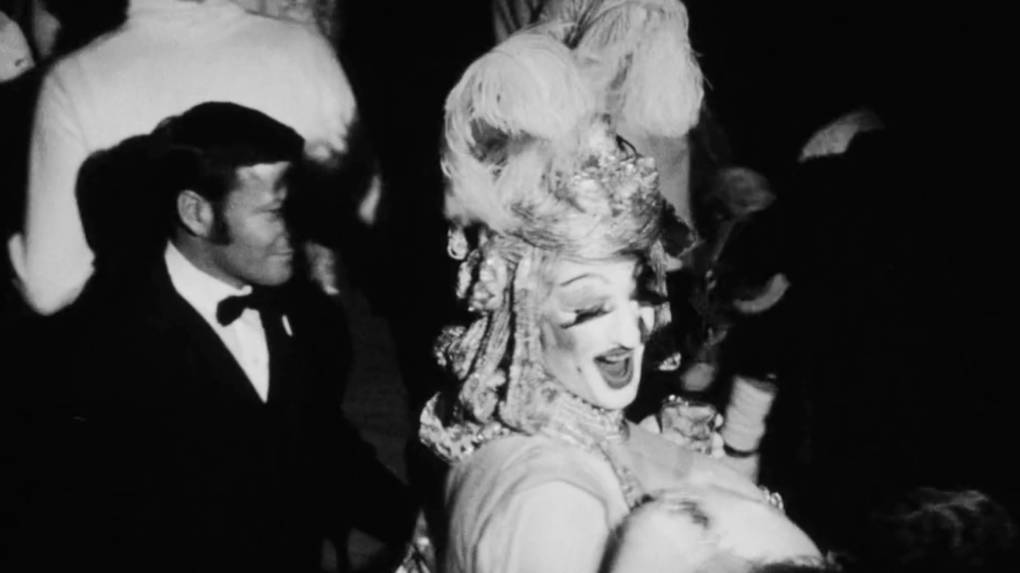
"caption": "Still from footage of a gay costume ball in 1968.",
"description": null,
"title": "1968 drag ball",
"credit": "KQED",
"status": "inherit",
"isLoading": false,
"fetchFailed": false
},
"arts_13835553": {
"type": "attachments",
"id": "arts_13835553",
"meta": {
"index": "attachments_1716263798",
"site": "arts",
"id": "13835553",
"found": true
},
"parent": 13835007,
"imgSizes": {
"small": {
"file": "https://ww2.kqed.org/app/uploads/sites/2/2018/06/juanita-520x293.gif",
"width": 520,
"mimeType": "image/gif",
"height": 293
},
"thumbnail": {
"file": "https://ww2.kqed.org/app/uploads/sites/2/2018/06/juanita-160x90.gif",
"width": 160,
"mimeType": "image/gif",
"height": 90
},
"post-thumbnail": {
"file": "https://ww2.kqed.org/app/uploads/sites/2/2018/06/juanita-672x372.gif",
"width": 672,
"mimeType": "image/gif",
"height": 372
},
"xsmall": {
"file": "https://ww2.kqed.org/app/uploads/sites/2/2018/06/juanita-375x211.gif",
"width": 375,
"mimeType": "image/gif",
"height": 211
},
"kqedFullSize": {
"file": "https://ww2.kqed.org/app/uploads/sites/2/2018/06/juanita.gif",
"width": 800,
"height": 450
},
"guest-author-50": {
"file": "https://ww2.kqed.org/app/uploads/sites/2/2018/06/juanita-50x50.gif",
"width": 50,
"mimeType": "image/gif",
"height": 50
},
"guest-author-96": {
"file": "https://ww2.kqed.org/app/uploads/sites/2/2018/06/juanita-96x96.gif",
"width": 96,
"mimeType": "image/gif",
"height": 96
},
"medium": {
"file": "https://ww2.kqed.org/app/uploads/sites/2/2018/06/juanita-800x450.gif",
"width": 800,
"mimeType": "image/gif",
"height": 450
},
"guest-author-64": {
"file": "https://ww2.kqed.org/app/uploads/sites/2/2018/06/juanita-64x64.gif",
"width": 64,
"mimeType": "image/gif",
"height": 64
},
"guest-author-32": {
"file": "https://ww2.kqed.org/app/uploads/sites/2/2018/06/juanita-32x32.gif",
"width": 32,
"mimeType": "image/gif",
"height": 32
},
"detail": {
"file": "https://ww2.kqed.org/app/uploads/sites/2/2018/06/juanita-150x150.gif",
"width": 150,
"mimeType": "image/gif",
"height": 150
},
"medium_large": {
"file": "https://ww2.kqed.org/app/uploads/sites/2/2018/06/juanita-768x432.gif",
"width": 768,
"mimeType": "image/gif",
"height": 432
},
"guest-author-128": {
"file": "https://ww2.kqed.org/app/uploads/sites/2/2018/06/juanita-128x128.gif",
"width": 128,
"mimeType": "image/gif",
"height": 128
},
"xxsmall": {
"file": "https://ww2.kqed.org/app/uploads/sites/2/2018/06/juanita-240x135.gif",
"width": 240,
"mimeType": "image/gif",
"height": 135
}
},
"publishDate": 1529453896,
"modified": 1529453929,
"caption": null,
"description": null,
"title": "juanita",
"credit": "Photo: Christina Campbell/KQED GIF: Creo Noveno",
"status": "inherit",
"isLoading": false,
"fetchFailed": false
},
"arts_13832652": {
"type": "attachments",
"id": "arts_13832652",
"meta": {
"index": "attachments_1716263798",
"site": "arts",
"id": "13832652",
"found": true
},
"parent": 13832648,
"imgSizes": {
"small": {
"file": "https://ww2.kqed.org/app/uploads/sites/2/2018/05/ICCD_EventCoverPhoto_4-520x293.jpg",
"width": 520,
"mimeType": "image/jpeg",
"height": 293
},
"twentyfourteen-full-width": {
"file": "https://ww2.kqed.org/app/uploads/sites/2/2018/05/ICCD_EventCoverPhoto_4-1038x576.jpg",
"width": 1038,
"mimeType": "image/jpeg",
"height": 576
},
"thumbnail": {
"file": "https://ww2.kqed.org/app/uploads/sites/2/2018/05/ICCD_EventCoverPhoto_4-160x90.jpg",
"width": 160,
"mimeType": "image/jpeg",
"height": 90
},
"fd-sm": {
"file": "https://ww2.kqed.org/app/uploads/sites/2/2018/05/ICCD_EventCoverPhoto_4-960x540.jpg",
"width": 960,
"mimeType": "image/jpeg",
"height": 540
},
"post-thumbnail": {
"file": "https://ww2.kqed.org/app/uploads/sites/2/2018/05/ICCD_EventCoverPhoto_4-672x372.jpg",
"width": 672,
"mimeType": "image/jpeg",
"height": 372
},
"xsmall": {
"file": "https://ww2.kqed.org/app/uploads/sites/2/2018/05/ICCD_EventCoverPhoto_4-375x211.jpg",
"width": 375,
"mimeType": "image/jpeg",
"height": 211
},
"kqedFullSize": {
"file": "https://ww2.kqed.org/app/uploads/sites/2/2018/05/ICCD_EventCoverPhoto_4.jpg",
"width": 1920,
"height": 1080
},
"large": {
"file": "https://ww2.kqed.org/app/uploads/sites/2/2018/05/ICCD_EventCoverPhoto_4-1020x574.jpg",
"width": 1020,
"mimeType": "image/jpeg",
"height": 574
},
"xlarge": {
"file": "https://ww2.kqed.org/app/uploads/sites/2/2018/05/ICCD_EventCoverPhoto_4-1180x664.jpg",
"width": 1180,
"mimeType": "image/jpeg",
"height": 664
},
"complete_open_graph": {
"file": "https://ww2.kqed.org/app/uploads/sites/2/2018/05/ICCD_EventCoverPhoto_4-1200x675.jpg",
"width": 1200,
"mimeType": "image/jpeg",
"height": 675
},
"guest-author-50": {
"file": "https://ww2.kqed.org/app/uploads/sites/2/2018/05/ICCD_EventCoverPhoto_4-50x50.jpg",
"width": 50,
"mimeType": "image/jpeg",
"height": 50
},
"guest-author-96": {
"file": "https://ww2.kqed.org/app/uploads/sites/2/2018/05/ICCD_EventCoverPhoto_4-96x96.jpg",
"width": 96,
"mimeType": "image/jpeg",
"height": 96
},
"medium": {
"file": "https://ww2.kqed.org/app/uploads/sites/2/2018/05/ICCD_EventCoverPhoto_4-800x450.jpg",
"width": 800,
"mimeType": "image/jpeg",
"height": 450
},
"guest-author-64": {
"file": "https://ww2.kqed.org/app/uploads/sites/2/2018/05/ICCD_EventCoverPhoto_4-64x64.jpg",
"width": 64,
"mimeType": "image/jpeg",
"height": 64
},
"guest-author-32": {
"file": "https://ww2.kqed.org/app/uploads/sites/2/2018/05/ICCD_EventCoverPhoto_4-32x32.jpg",
"width": 32,
"mimeType": "image/jpeg",
"height": 32
},
"fd-lrg": {
"file": "https://ww2.kqed.org/app/uploads/sites/2/2018/05/ICCD_EventCoverPhoto_4-1920x1080.jpg",
"width": 1920,
"mimeType": "image/jpeg",
"height": 1080
},
"fd-med": {
"file": "https://ww2.kqed.org/app/uploads/sites/2/2018/05/ICCD_EventCoverPhoto_4-1180x664.jpg",
"width": 1180,
"mimeType": "image/jpeg",
"height": 664
},
"full-width": {
"file": "https://ww2.kqed.org/app/uploads/sites/2/2018/05/ICCD_EventCoverPhoto_4-1920x1080.jpg",
"width": 1920,
"mimeType": "image/jpeg",
"height": 1080
},
"detail": {
"file": "https://ww2.kqed.org/app/uploads/sites/2/2018/05/ICCD_EventCoverPhoto_4-150x150.jpg",
"width": 150,
"mimeType": "image/jpeg",
"height": 150
},
"medium_large": {
"file": "https://ww2.kqed.org/app/uploads/sites/2/2018/05/ICCD_EventCoverPhoto_4-768x432.jpg",
"width": 768,
"mimeType": "image/jpeg",
"height": 432
},
"guest-author-128": {
"file": "https://ww2.kqed.org/app/uploads/sites/2/2018/05/ICCD_EventCoverPhoto_4-128x128.jpg",
"width": 128,
"mimeType": "image/jpeg",
"height": 128
},
"xxsmall": {
"file": "https://ww2.kqed.org/app/uploads/sites/2/2018/05/ICCD_EventCoverPhoto_4-240x135.jpg",
"width": 240,
"mimeType": "image/jpeg",
"height": 135
}
},
"publishDate": 1526659442,
"modified": 1526659500,
"caption": null,
"description": null,
"title": "ICCD_EventCoverPhoto_4",
"credit": null,
"status": "inherit",
"isLoading": false,
"fetchFailed": false
},
"arts_13847450": {
"type": "attachments",
"id": "arts_13847450",
"meta": {
"index": "attachments_1716263798",
"site": "arts",
"id": "13847450",
"found": true
},
"parent": 13831597,
"imgSizes": {
"small": {
"file": "https://ww2.kqed.org/app/uploads/sites/2/2018/05/ICCD_Portland-520x292.jpg",
"width": 520,
"mimeType": "image/jpeg",
"height": 292
},
"twentyfourteen-full-width": {
"file": "https://ww2.kqed.org/app/uploads/sites/2/2018/05/ICCD_Portland-1038x576.jpg",
"width": 1038,
"mimeType": "image/jpeg",
"height": 576
},
"thumbnail": {
"file": "https://ww2.kqed.org/app/uploads/sites/2/2018/05/ICCD_Portland-160x90.jpg",
"width": 160,
"mimeType": "image/jpeg",
"height": 90
},
"fd-sm": {
"file": "https://ww2.kqed.org/app/uploads/sites/2/2018/05/ICCD_Portland-960x540.jpg",
"width": 960,
"mimeType": "image/jpeg",
"height": 540
},
"post-thumbnail": {
"file": "https://ww2.kqed.org/app/uploads/sites/2/2018/05/ICCD_Portland-672x372.jpg",
"width": 672,
"mimeType": "image/jpeg",
"height": 372
},
"xsmall": {
"file": "https://ww2.kqed.org/app/uploads/sites/2/2018/05/ICCD_Portland-375x211.jpg",
"width": 375,
"mimeType": "image/jpeg",
"height": 211
},
"kqedFullSize": {
"file": "https://ww2.kqed.org/app/uploads/sites/2/2018/05/ICCD_Portland.jpg",
"width": 1920,
"height": 1079
},
"large": {
"file": "https://ww2.kqed.org/app/uploads/sites/2/2018/05/ICCD_Portland-1020x573.jpg",
"width": 1020,
"mimeType": "image/jpeg",
"height": 573
},
"xlarge": {
"file": "https://ww2.kqed.org/app/uploads/sites/2/2018/05/ICCD_Portland-1180x663.jpg",
"width": 1180,
"mimeType": "image/jpeg",
"height": 663
},
"complete_open_graph": {
"file": "https://ww2.kqed.org/app/uploads/sites/2/2018/05/ICCD_Portland-1200x674.jpg",
"width": 1200,
"mimeType": "image/jpeg",
"height": 674
},
"guest-author-50": {
"file": "https://ww2.kqed.org/app/uploads/sites/2/2018/05/ICCD_Portland-50x50.jpg",
"width": 50,
"mimeType": "image/jpeg",
"height": 50
},
"guest-author-96": {
"file": "https://ww2.kqed.org/app/uploads/sites/2/2018/05/ICCD_Portland-96x96.jpg",
"width": 96,
"mimeType": "image/jpeg",
"height": 96
},
"medium": {
"file": "https://ww2.kqed.org/app/uploads/sites/2/2018/05/ICCD_Portland-800x450.jpg",
"width": 800,
"mimeType": "image/jpeg",
"height": 450
},
"guest-author-64": {
"file": "https://ww2.kqed.org/app/uploads/sites/2/2018/05/ICCD_Portland-64x64.jpg",
"width": 64,
"mimeType": "image/jpeg",
"height": 64
},
"guest-author-32": {
"file": "https://ww2.kqed.org/app/uploads/sites/2/2018/05/ICCD_Portland-32x32.jpg",
"width": 32,
"mimeType": "image/jpeg",
"height": 32
},
"fd-lrg": {
"file": "https://ww2.kqed.org/app/uploads/sites/2/2018/05/ICCD_Portland-1920x1079.jpg",
"width": 1920,
"mimeType": "image/jpeg",
"height": 1079
},
"fd-med": {
"file": "https://ww2.kqed.org/app/uploads/sites/2/2018/05/ICCD_Portland-1180x663.jpg",
"width": 1180,
"mimeType": "image/jpeg",
"height": 663
},
"full-width": {
"file": "https://ww2.kqed.org/app/uploads/sites/2/2018/05/ICCD_Portland-1920x1079.jpg",
"width": 1920,
"mimeType": "image/jpeg",
"height": 1079
},
"detail": {
"file": "https://ww2.kqed.org/app/uploads/sites/2/2018/05/ICCD_Portland-150x150.jpg",
"width": 150,
"mimeType": "image/jpeg",
"height": 150
},
"medium_large": {
"file": "https://ww2.kqed.org/app/uploads/sites/2/2018/05/ICCD_Portland-768x432.jpg",
"width": 768,
"mimeType": "image/jpeg",
"height": 432
},
"guest-author-128": {
"file": "https://ww2.kqed.org/app/uploads/sites/2/2018/05/ICCD_Portland-128x128.jpg",
"width": 128,
"mimeType": "image/jpeg",
"height": 128
},
"xxsmall": {
"file": "https://ww2.kqed.org/app/uploads/sites/2/2018/05/ICCD_Portland-240x135.jpg",
"width": 240,
"mimeType": "image/jpeg",
"height": 135
}
},
"publishDate": 1545265054,
"modified": 1558568841,
"caption": "Sir Cupcake's Queer Circus in Portland, OR",
"description": "Sir Cupcake's Queer Circus in Portland, OR",
"title": "ICCD_Portland",
"credit": null,
"status": "inherit",
"isLoading": false,
"fetchFailed": false
},
"arts_13830511": {
"type": "attachments",
"id": "arts_13830511",
"meta": {
"index": "attachments_1716263798",
"site": "arts",
"id": "13830511",
"found": true
},
"parent": 13830316,
"imgSizes": {
"small": {
"file": "https://ww2.kqed.org/app/uploads/sites/2/2018/04/GettyImages-948206790-520x293.jpg",
"width": 520,
"mimeType": "image/jpeg",
"height": 293
},
"twentyfourteen-full-width": {
"file": "https://ww2.kqed.org/app/uploads/sites/2/2018/04/GettyImages-948206790-1038x576.jpg",
"width": 1038,
"mimeType": "image/jpeg",
"height": 576
},
"thumbnail": {
"file": "https://ww2.kqed.org/app/uploads/sites/2/2018/04/GettyImages-948206790-160x90.jpg",
"width": 160,
"mimeType": "image/jpeg",
"height": 90
},
"fd-sm": {
"file": "https://ww2.kqed.org/app/uploads/sites/2/2018/04/GettyImages-948206790-960x540.jpg",
"width": 960,
"mimeType": "image/jpeg",
"height": 540
},
"post-thumbnail": {
"file": "https://ww2.kqed.org/app/uploads/sites/2/2018/04/GettyImages-948206790-672x372.jpg",
"width": 672,
"mimeType": "image/jpeg",
"height": 372
},
"xsmall": {
"file": "https://ww2.kqed.org/app/uploads/sites/2/2018/04/GettyImages-948206790-375x211.jpg",
"width": 375,
"mimeType": "image/jpeg",
"height": 211
},
"kqedFullSize": {
"file": "https://ww2.kqed.org/app/uploads/sites/2/2018/04/GettyImages-948206790.jpg",
"width": 1920,
"height": 1080
},
"large": {
"file": "https://ww2.kqed.org/app/uploads/sites/2/2018/04/GettyImages-948206790-1020x574.jpg",
"width": 1020,
"mimeType": "image/jpeg",
"height": 574
},
"xlarge": {
"file": "https://ww2.kqed.org/app/uploads/sites/2/2018/04/GettyImages-948206790-1180x664.jpg",
"width": 1180,
"mimeType": "image/jpeg",
"height": 664
},
"complete_open_graph": {
"file": "https://ww2.kqed.org/app/uploads/sites/2/2018/04/GettyImages-948206790-1200x675.jpg",
"width": 1200,
"mimeType": "image/jpeg",
"height": 675
},
"guest-author-50": {
"file": "https://ww2.kqed.org/app/uploads/sites/2/2018/04/GettyImages-948206790-50x50.jpg",
"width": 50,
"mimeType": "image/jpeg",
"height": 50
},
"guest-author-96": {
"file": "https://ww2.kqed.org/app/uploads/sites/2/2018/04/GettyImages-948206790-96x96.jpg",
"width": 96,
"mimeType": "image/jpeg",
"height": 96
},
"medium": {
"file": "https://ww2.kqed.org/app/uploads/sites/2/2018/04/GettyImages-948206790-800x450.jpg",
"width": 800,
"mimeType": "image/jpeg",
"height": 450
},
"guest-author-64": {
"file": "https://ww2.kqed.org/app/uploads/sites/2/2018/04/GettyImages-948206790-64x64.jpg",
"width": 64,
"mimeType": "image/jpeg",
"height": 64
},
"guest-author-32": {
"file": "https://ww2.kqed.org/app/uploads/sites/2/2018/04/GettyImages-948206790-32x32.jpg",
"width": 32,
"mimeType": "image/jpeg",
"height": 32
},
"fd-lrg": {
"file": "https://ww2.kqed.org/app/uploads/sites/2/2018/04/GettyImages-948206790-1920x1080.jpg",
"width": 1920,
"mimeType": "image/jpeg",
"height": 1080
},
"fd-med": {
"file": "https://ww2.kqed.org/app/uploads/sites/2/2018/04/GettyImages-948206790-1180x664.jpg",
"width": 1180,
"mimeType": "image/jpeg",
"height": 664
},
"full-width": {
"file": "https://ww2.kqed.org/app/uploads/sites/2/2018/04/GettyImages-948206790-1920x1080.jpg",
"width": 1920,
"mimeType": "image/jpeg",
"height": 1080
},
"detail": {
"file": "https://ww2.kqed.org/app/uploads/sites/2/2018/04/GettyImages-948206790-150x150.jpg",
"width": 150,
"mimeType": "image/jpeg",
"height": 150
},
"medium_large": {
"file": "https://ww2.kqed.org/app/uploads/sites/2/2018/04/GettyImages-948206790-768x432.jpg",
"width": 768,
"mimeType": "image/jpeg",
"height": 432
},
"guest-author-128": {
"file": "https://ww2.kqed.org/app/uploads/sites/2/2018/04/GettyImages-948206790-128x128.jpg",
"width": 128,
"mimeType": "image/jpeg",
"height": 128
},
"xxsmall": {
"file": "https://ww2.kqed.org/app/uploads/sites/2/2018/04/GettyImages-948206790-240x135.jpg",
"width": 240,
"mimeType": "image/jpeg",
"height": 135
}
},
"publishDate": 1524704538,
"modified": 1524704597,
"caption": "Kehlani performs with Cardi B during the 2018 Coachella Valley Music and Arts Festival Weekend 1 at the Empire Polo Field on April 15, 2018 in Indio, California. ",
"description": "Kehlani performs with Cardi B during the 2018 Coachella Valley Music and Arts Festival Weekend 1 at the Empire Polo Field on April 15, 2018 in Indio, California.",
"title": "2018 Coachella Valley Music And Arts Festival - Weekend 1 - Day 3",
"credit": "Kevin Winter/Getty Images for Coachella",
"status": "inherit",
"isLoading": false,
"fetchFailed": false
},
"arts_13847444": {
"type": "attachments",
"id": "arts_13847444",
"meta": {
"index": "attachments_1716263798",
"site": "arts",
"id": "13847444",
"found": true
},
"parent": 13829047,
"imgSizes": {
"small": {
"file": "https://ww2.kqed.org/app/uploads/sites/2/2018/04/ICCD_San_Francisco-520x292.jpg",
"width": 520,
"mimeType": "image/jpeg",
"height": 292
},
"twentyfourteen-full-width": {
"file": "https://ww2.kqed.org/app/uploads/sites/2/2018/04/ICCD_San_Francisco-1038x576.jpg",
"width": 1038,
"mimeType": "image/jpeg",
"height": 576
},
"thumbnail": {
"file": "https://ww2.kqed.org/app/uploads/sites/2/2018/04/ICCD_San_Francisco-160x90.jpg",
"width": 160,
"mimeType": "image/jpeg",
"height": 90
},
"fd-sm": {
"file": "https://ww2.kqed.org/app/uploads/sites/2/2018/04/ICCD_San_Francisco-960x540.jpg",
"width": 960,
"mimeType": "image/jpeg",
"height": 540
},
"post-thumbnail": {
"file": "https://ww2.kqed.org/app/uploads/sites/2/2018/04/ICCD_San_Francisco-672x372.jpg",
"width": 672,
"mimeType": "image/jpeg",
"height": 372
},
"xsmall": {
"file": "https://ww2.kqed.org/app/uploads/sites/2/2018/04/ICCD_San_Francisco-375x211.jpg",
"width": 375,
"mimeType": "image/jpeg",
"height": 211
},
"kqedFullSize": {
"file": "https://ww2.kqed.org/app/uploads/sites/2/2018/04/ICCD_San_Francisco.jpg",
"width": 1920,
"height": 1079
},
"large": {
"file": "https://ww2.kqed.org/app/uploads/sites/2/2018/04/ICCD_San_Francisco-1020x573.jpg",
"width": 1020,
"mimeType": "image/jpeg",
"height": 573
},
"xlarge": {
"file": "https://ww2.kqed.org/app/uploads/sites/2/2018/04/ICCD_San_Francisco-1180x663.jpg",
"width": 1180,
"mimeType": "image/jpeg",
"height": 663
},
"complete_open_graph": {
"file": "https://ww2.kqed.org/app/uploads/sites/2/2018/04/ICCD_San_Francisco-1200x674.jpg",
"width": 1200,
"mimeType": "image/jpeg",
"height": 674
},
"guest-author-50": {
"file": "https://ww2.kqed.org/app/uploads/sites/2/2018/04/ICCD_San_Francisco-50x50.jpg",
"width": 50,
"mimeType": "image/jpeg",
"height": 50
},
"guest-author-96": {
"file": "https://ww2.kqed.org/app/uploads/sites/2/2018/04/ICCD_San_Francisco-96x96.jpg",
"width": 96,
"mimeType": "image/jpeg",
"height": 96
},
"medium": {
"file": "https://ww2.kqed.org/app/uploads/sites/2/2018/04/ICCD_San_Francisco-800x450.jpg",
"width": 800,
"mimeType": "image/jpeg",
"height": 450
},
"guest-author-64": {
"file": "https://ww2.kqed.org/app/uploads/sites/2/2018/04/ICCD_San_Francisco-64x64.jpg",
"width": 64,
"mimeType": "image/jpeg",
"height": 64
},
"guest-author-32": {
"file": "https://ww2.kqed.org/app/uploads/sites/2/2018/04/ICCD_San_Francisco-32x32.jpg",
"width": 32,
"mimeType": "image/jpeg",
"height": 32
},
"fd-lrg": {
"file": "https://ww2.kqed.org/app/uploads/sites/2/2018/04/ICCD_San_Francisco-1920x1079.jpg",
"width": 1920,
"mimeType": "image/jpeg",
"height": 1079
},
"fd-med": {
"file": "https://ww2.kqed.org/app/uploads/sites/2/2018/04/ICCD_San_Francisco-1180x663.jpg",
"width": 1180,
"mimeType": "image/jpeg",
"height": 663
},
"full-width": {
"file": "https://ww2.kqed.org/app/uploads/sites/2/2018/04/ICCD_San_Francisco-1920x1079.jpg",
"width": 1920,
"mimeType": "image/jpeg",
"height": 1079
},
"detail": {
"file": "https://ww2.kqed.org/app/uploads/sites/2/2018/04/ICCD_San_Francisco-150x150.jpg",
"width": 150,
"mimeType": "image/jpeg",
"height": 150
},
"medium_large": {
"file": "https://ww2.kqed.org/app/uploads/sites/2/2018/04/ICCD_San_Francisco-768x432.jpg",
"width": 768,
"mimeType": "image/jpeg",
"height": 432
},
"guest-author-128": {
"file": "https://ww2.kqed.org/app/uploads/sites/2/2018/04/ICCD_San_Francisco-128x128.jpg",
"width": 128,
"mimeType": "image/jpeg",
"height": 128
},
"xxsmall": {
"file": "https://ww2.kqed.org/app/uploads/sites/2/2018/04/ICCD_San_Francisco-240x135.jpg",
"width": 240,
"mimeType": "image/jpeg",
"height": 135
}
},
"publishDate": 1545260511,
"modified": 1558568154,
"caption": "Voguers Jocquese Whitfield (aka Sir JoQ), Shea Mizrahi and DJ Spiider in the Mission district of San Francisco",
"description": "Voguers Jocquese Whitfield (aka Sir JoQ), Shea Mizrahi and DJ Spiider in the Mission district of San Francisco",
"title": "Voguers Jocquese Whitfield (aka Sir JoQ), Shea Mizrahi and DJ Spiider in the Mission district of San Francisco",
"credit": null,
"status": "inherit",
"isLoading": false,
"fetchFailed": false
},
"arts_13844964": {
"type": "attachments",
"id": "arts_13844964",
"meta": {
"index": "attachments_1716263798",
"site": "arts",
"id": "13844964",
"found": true
},
"parent": 13825213,
"imgSizes": {
"small": {
"file": "https://ww2.kqed.org/app/uploads/sites/2/2018/02/Leo_BTL_Thumbnail-520x293.jpg",
"width": 520,
"mimeType": "image/jpeg",
"height": 293
},
"twentyfourteen-full-width": {
"file": "https://ww2.kqed.org/app/uploads/sites/2/2018/02/Leo_BTL_Thumbnail-1038x576.jpg",
"width": 1038,
"mimeType": "image/jpeg",
"height": 576
},
"thumbnail": {
"file": "https://ww2.kqed.org/app/uploads/sites/2/2018/02/Leo_BTL_Thumbnail-160x90.jpg",
"width": 160,
"mimeType": "image/jpeg",
"height": 90
},
"fd-sm": {
"file": "https://ww2.kqed.org/app/uploads/sites/2/2018/02/Leo_BTL_Thumbnail-960x540.jpg",
"width": 960,
"mimeType": "image/jpeg",
"height": 540
},
"post-thumbnail": {
"file": "https://ww2.kqed.org/app/uploads/sites/2/2018/02/Leo_BTL_Thumbnail-672x372.jpg",
"width": 672,
"mimeType": "image/jpeg",
"height": 372
},
"xsmall": {
"file": "https://ww2.kqed.org/app/uploads/sites/2/2018/02/Leo_BTL_Thumbnail-375x211.jpg",
"width": 375,
"mimeType": "image/jpeg",
"height": 211
},
"kqedFullSize": {
"file": "https://ww2.kqed.org/app/uploads/sites/2/2018/02/Leo_BTL_Thumbnail.jpg",
"width": 1920,
"height": 1080
},
"large": {
"file": "https://ww2.kqed.org/app/uploads/sites/2/2018/02/Leo_BTL_Thumbnail-1020x574.jpg",
"width": 1020,
"mimeType": "image/jpeg",
"height": 574
},
"xlarge": {
"file": "https://ww2.kqed.org/app/uploads/sites/2/2018/02/Leo_BTL_Thumbnail-1180x664.jpg",
"width": 1180,
"mimeType": "image/jpeg",
"height": 664
},
"complete_open_graph": {
"file": "https://ww2.kqed.org/app/uploads/sites/2/2018/02/Leo_BTL_Thumbnail-1200x675.jpg",
"width": 1200,
"mimeType": "image/jpeg",
"height": 675
},
"guest-author-50": {
"file": "https://ww2.kqed.org/app/uploads/sites/2/2018/02/Leo_BTL_Thumbnail-50x50.jpg",
"width": 50,
"mimeType": "image/jpeg",
"height": 50
},
"guest-author-96": {
"file": "https://ww2.kqed.org/app/uploads/sites/2/2018/02/Leo_BTL_Thumbnail-96x96.jpg",
"width": 96,
"mimeType": "image/jpeg",
"height": 96
},
"medium": {
"file": "https://ww2.kqed.org/app/uploads/sites/2/2018/02/Leo_BTL_Thumbnail-800x450.jpg",
"width": 800,
"mimeType": "image/jpeg",
"height": 450
},
"guest-author-64": {
"file": "https://ww2.kqed.org/app/uploads/sites/2/2018/02/Leo_BTL_Thumbnail-64x64.jpg",
"width": 64,
"mimeType": "image/jpeg",
"height": 64
},
"guest-author-32": {
"file": "https://ww2.kqed.org/app/uploads/sites/2/2018/02/Leo_BTL_Thumbnail-32x32.jpg",
"width": 32,
"mimeType": "image/jpeg",
"height": 32
},
"fd-lrg": {
"file": "https://ww2.kqed.org/app/uploads/sites/2/2018/02/Leo_BTL_Thumbnail-1920x1080.jpg",
"width": 1920,
"mimeType": "image/jpeg",
"height": 1080
},
"fd-med": {
"file": "https://ww2.kqed.org/app/uploads/sites/2/2018/02/Leo_BTL_Thumbnail-1180x664.jpg",
"width": 1180,
"mimeType": "image/jpeg",
"height": 664
},
"full-width": {
"file": "https://ww2.kqed.org/app/uploads/sites/2/2018/02/Leo_BTL_Thumbnail-1920x1080.jpg",
"width": 1920,
"mimeType": "image/jpeg",
"height": 1080
},
"detail": {
"file": "https://ww2.kqed.org/app/uploads/sites/2/2018/02/Leo_BTL_Thumbnail-150x150.jpg",
"width": 150,
"mimeType": "image/jpeg",
"height": 150
},
"medium_large": {
"file": "https://ww2.kqed.org/app/uploads/sites/2/2018/02/Leo_BTL_Thumbnail-768x432.jpg",
"width": 768,
"mimeType": "image/jpeg",
"height": 432
},
"guest-author-128": {
"file": "https://ww2.kqed.org/app/uploads/sites/2/2018/02/Leo_BTL_Thumbnail-128x128.jpg",
"width": 128,
"mimeType": "image/jpeg",
"height": 128
},
"xxsmall": {
"file": "https://ww2.kqed.org/app/uploads/sites/2/2018/02/Leo_BTL_Thumbnail-240x135.jpg",
"width": 240,
"mimeType": "image/jpeg",
"height": 135
}
},
"publishDate": 1542247581,
"modified": 1542247581,
"caption": null,
"description": null,
"title": "Leo_BTL_Thumbnail",
"credit": null,
"status": "inherit",
"isLoading": false,
"fetchFailed": false
},
"arts_13819750": {
"type": "attachments",
"id": "arts_13819750",
"meta": {
"index": "attachments_1716263798",
"site": "arts",
"id": "13819750",
"found": true
},
"parent": 13819484,
"imgSizes": {
"small": {
"file": "https://ww2.kqed.org/app/uploads/sites/2/2018/01/outlookissue08hero_COVER-520x293.jpg",
"width": 520,
"mimeType": "image/jpeg",
"height": 293
},
"twentyfourteen-full-width": {
"file": "https://ww2.kqed.org/app/uploads/sites/2/2018/01/outlookissue08hero_COVER-1038x576.jpg",
"width": 1038,
"mimeType": "image/jpeg",
"height": 576
},
"thumbnail": {
"file": "https://ww2.kqed.org/app/uploads/sites/2/2018/01/outlookissue08hero_COVER-160x90.jpg",
"width": 160,
"mimeType": "image/jpeg",
"height": 90
},
"fd-sm": {
"file": "https://ww2.kqed.org/app/uploads/sites/2/2018/01/outlookissue08hero_COVER-960x540.jpg",
"width": 960,
"mimeType": "image/jpeg",
"height": 540
},
"post-thumbnail": {
"file": "https://ww2.kqed.org/app/uploads/sites/2/2018/01/outlookissue08hero_COVER-672x372.jpg",
"width": 672,
"mimeType": "image/jpeg",
"height": 372
},
"xsmall": {
"file": "https://ww2.kqed.org/app/uploads/sites/2/2018/01/outlookissue08hero_COVER-375x211.jpg",
"width": 375,
"mimeType": "image/jpeg",
"height": 211
},
"kqedFullSize": {
"file": "https://ww2.kqed.org/app/uploads/sites/2/2018/01/outlookissue08hero_COVER.jpg",
"width": 1155,
"height": 650
},
"large": {
"file": "https://ww2.kqed.org/app/uploads/sites/2/2018/01/outlookissue08hero_COVER-1020x574.jpg",
"width": 1020,
"mimeType": "image/jpeg",
"height": 574
},
"guest-author-50": {
"file": "https://ww2.kqed.org/app/uploads/sites/2/2018/01/outlookissue08hero_COVER-50x50.jpg",
"width": 50,
"mimeType": "image/jpeg",
"height": 50
},
"guest-author-96": {
"file": "https://ww2.kqed.org/app/uploads/sites/2/2018/01/outlookissue08hero_COVER-96x96.jpg",
"width": 96,
"mimeType": "image/jpeg",
"height": 96
},
"medium": {
"file": "https://ww2.kqed.org/app/uploads/sites/2/2018/01/outlookissue08hero_COVER-800x450.jpg",
"width": 800,
"mimeType": "image/jpeg",
"height": 450
},
"guest-author-64": {
"file": "https://ww2.kqed.org/app/uploads/sites/2/2018/01/outlookissue08hero_COVER-64x64.jpg",
"width": 64,
"mimeType": "image/jpeg",
"height": 64
},
"guest-author-32": {
"file": "https://ww2.kqed.org/app/uploads/sites/2/2018/01/outlookissue08hero_COVER-32x32.jpg",
"width": 32,
"mimeType": "image/jpeg",
"height": 32
},
"detail": {
"file": "https://ww2.kqed.org/app/uploads/sites/2/2018/01/outlookissue08hero_COVER-150x150.jpg",
"width": 150,
"mimeType": "image/jpeg",
"height": 150
},
"medium_large": {
"file": "https://ww2.kqed.org/app/uploads/sites/2/2018/01/outlookissue08hero_COVER-768x432.jpg",
"width": 768,
"mimeType": "image/jpeg",
"height": 432
},
"guest-author-128": {
"file": "https://ww2.kqed.org/app/uploads/sites/2/2018/01/outlookissue08hero_COVER-128x128.jpg",
"width": 128,
"mimeType": "image/jpeg",
"height": 128
},
"xxsmall": {
"file": "https://ww2.kqed.org/app/uploads/sites/2/2018/01/outlookissue08hero_COVER-240x135.jpg",
"width": 240,
"mimeType": "image/jpeg",
"height": 135
}
},
"publishDate": 1516662530,
"modified": 1516662568,
"caption": "'OUT/LOOK' Issue 8, 1990. ",
"description": "'OUT/LOOK' Issue 8, 1990. ",
"title": "outlookissue08hero_COVER",
"credit": "Courtesy of GLBT History Museum",
"status": "inherit",
"isLoading": false,
"fetchFailed": false
},
"arts_13815679": {
"type": "attachments",
"id": "arts_13815679",
"meta": {
"index": "attachments_1716263798",
"site": "arts",
"id": "13815679",
"found": true
},
"parent": 13815344,
"imgSizes": {
"small": {
"file": "https://ww2.kqed.org/app/uploads/sites/2/2017/11/IMG_9712-2-520x347.jpg",
"width": 520,
"mimeType": "image/jpeg",
"height": 347
},
"twentyfourteen-full-width": {
"file": "https://ww2.kqed.org/app/uploads/sites/2/2017/11/IMG_9712-2-1038x576.jpg",
"width": 1038,
"mimeType": "image/jpeg",
"height": 576
},
"thumbnail": {
"file": "https://ww2.kqed.org/app/uploads/sites/2/2017/11/IMG_9712-2-160x107.jpg",
"width": 160,
"mimeType": "image/jpeg",
"height": 107
},
"fd-sm": {
"file": "https://ww2.kqed.org/app/uploads/sites/2/2017/11/IMG_9712-2-960x640.jpg",
"width": 960,
"mimeType": "image/jpeg",
"height": 640
},
"post-thumbnail": {
"file": "https://ww2.kqed.org/app/uploads/sites/2/2017/11/IMG_9712-2-672x372.jpg",
"width": 672,
"mimeType": "image/jpeg",
"height": 372
},
"xsmall": {
"file": "https://ww2.kqed.org/app/uploads/sites/2/2017/11/IMG_9712-2-375x250.jpg",
"width": 375,
"mimeType": "image/jpeg",
"height": 250
},
"kqedFullSize": {
"file": "https://ww2.kqed.org/app/uploads/sites/2/2017/11/IMG_9712-2.jpg",
"width": 4272,
"height": 2848
},
"large": {
"file": "https://ww2.kqed.org/app/uploads/sites/2/2017/11/IMG_9712-2-1020x680.jpg",
"width": 1020,
"mimeType": "image/jpeg",
"height": 680
},
"xlarge": {
"file": "https://ww2.kqed.org/app/uploads/sites/2/2017/11/IMG_9712-2-1180x787.jpg",
"width": 1180,
"mimeType": "image/jpeg",
"height": 787
},
"guest-author-50": {
"file": "https://ww2.kqed.org/app/uploads/sites/2/2017/11/IMG_9712-2-50x50.jpg",
"width": 50,
"mimeType": "image/jpeg",
"height": 50
},
"guest-author-96": {
"file": "https://ww2.kqed.org/app/uploads/sites/2/2017/11/IMG_9712-2-96x96.jpg",
"width": 96,
"mimeType": "image/jpeg",
"height": 96
},
"medium": {
"file": "https://ww2.kqed.org/app/uploads/sites/2/2017/11/IMG_9712-2-800x533.jpg",
"width": 800,
"mimeType": "image/jpeg",
"height": 533
},
"guest-author-64": {
"file": "https://ww2.kqed.org/app/uploads/sites/2/2017/11/IMG_9712-2-64x64.jpg",
"width": 64,
"mimeType": "image/jpeg",
"height": 64
},
"guest-author-32": {
"file": "https://ww2.kqed.org/app/uploads/sites/2/2017/11/IMG_9712-2-32x32.jpg",
"width": 32,
"mimeType": "image/jpeg",
"height": 32
},
"fd-lrg": {
"file": "https://ww2.kqed.org/app/uploads/sites/2/2017/11/IMG_9712-2-1920x1280.jpg",
"width": 1920,
"mimeType": "image/jpeg",
"height": 1280
},
"fd-med": {
"file": "https://ww2.kqed.org/app/uploads/sites/2/2017/11/IMG_9712-2-1180x787.jpg",
"width": 1180,
"mimeType": "image/jpeg",
"height": 787
},
"full-width": {
"file": "https://ww2.kqed.org/app/uploads/sites/2/2017/11/IMG_9712-2-1920x1280.jpg",
"width": 1920,
"mimeType": "image/jpeg",
"height": 1280
},
"detail": {
"file": "https://ww2.kqed.org/app/uploads/sites/2/2017/11/IMG_9712-2-150x150.jpg",
"width": 150,
"mimeType": "image/jpeg",
"height": 150
},
"medium_large": {
"file": "https://ww2.kqed.org/app/uploads/sites/2/2017/11/IMG_9712-2-768x512.jpg",
"width": 768,
"mimeType": "image/jpeg",
"height": 512
},
"guest-author-128": {
"file": "https://ww2.kqed.org/app/uploads/sites/2/2017/11/IMG_9712-2-128x128.jpg",
"width": 128,
"mimeType": "image/jpeg",
"height": 128
},
"xxsmall": {
"file": "https://ww2.kqed.org/app/uploads/sites/2/2017/11/IMG_9712-2-240x160.jpg",
"width": 240,
"mimeType": "image/jpeg",
"height": 160
}
},
"publishDate": 1511372295,
"modified": 1511372325,
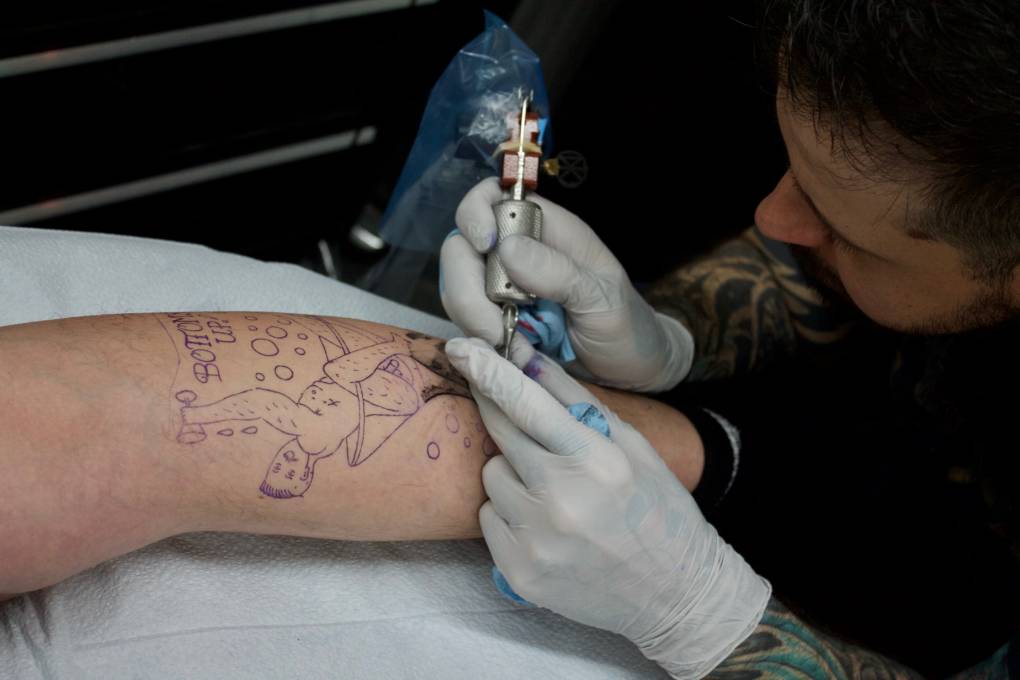
"caption": "Nick Bergin, owner of Godspeed Tattoo, works on a male pin-up design in San Mateo, California on Nov. 14, 2017.",
"description": null,
"title": "IMG_9712 2",
"credit": "Audrey Garces/KQED",
"status": "inherit",
"isLoading": false,
"fetchFailed": false
},
"arts_13809936": {
"type": "attachments",
"id": "arts_13809936",
"meta": {
"index": "attachments_1716263798",
"site": "arts",
"id": "13809936",
"found": true
},
"parent": 13809520,
"imgSizes": {
"small": {
"file": "https://ww2.kqed.org/app/uploads/sites/2/2017/09/Honey.MAIN_-520x293.jpg",
"width": 520,
"mimeType": "image/jpeg",
"height": 293
},
"twentyfourteen-full-width": {
"file": "https://ww2.kqed.org/app/uploads/sites/2/2017/09/Honey.MAIN_-1038x576.jpg",
"width": 1038,
"mimeType": "image/jpeg",
"height": 576
},
"thumbnail": {
"file": "https://ww2.kqed.org/app/uploads/sites/2/2017/09/Honey.MAIN_-160x90.jpg",
"width": 160,
"mimeType": "image/jpeg",
"height": 90
},
"fd-sm": {
"file": "https://ww2.kqed.org/app/uploads/sites/2/2017/09/Honey.MAIN_-960x540.jpg",
"width": 960,
"mimeType": "image/jpeg",
"height": 540
},
"post-thumbnail": {
"file": "https://ww2.kqed.org/app/uploads/sites/2/2017/09/Honey.MAIN_-672x372.jpg",
"width": 672,
"mimeType": "image/jpeg",
"height": 372
},
"xsmall": {
"file": "https://ww2.kqed.org/app/uploads/sites/2/2017/09/Honey.MAIN_-375x211.jpg",
"width": 375,
"mimeType": "image/jpeg",
"height": 211
},
"kqedFullSize": {
"file": "https://ww2.kqed.org/app/uploads/sites/2/2017/09/Honey.MAIN_.jpg",
"width": 1920,
"height": 1080
},
"large": {
"file": "https://ww2.kqed.org/app/uploads/sites/2/2017/09/Honey.MAIN_-1020x574.jpg",
"width": 1020,
"mimeType": "image/jpeg",
"height": 574
},
"xlarge": {
"file": "https://ww2.kqed.org/app/uploads/sites/2/2017/09/Honey.MAIN_-1180x664.jpg",
"width": 1180,
"mimeType": "image/jpeg",
"height": 664
},
"guest-author-50": {
"file": "https://ww2.kqed.org/app/uploads/sites/2/2017/09/Honey.MAIN_-50x50.jpg",
"width": 50,
"mimeType": "image/jpeg",
"height": 50
},
"guest-author-96": {
"file": "https://ww2.kqed.org/app/uploads/sites/2/2017/09/Honey.MAIN_-96x96.jpg",
"width": 96,
"mimeType": "image/jpeg",
"height": 96
},
"medium": {
"file": "https://ww2.kqed.org/app/uploads/sites/2/2017/09/Honey.MAIN_-800x450.jpg",
"width": 800,
"mimeType": "image/jpeg",
"height": 450
},
"guest-author-64": {
"file": "https://ww2.kqed.org/app/uploads/sites/2/2017/09/Honey.MAIN_-64x64.jpg",
"width": 64,
"mimeType": "image/jpeg",
"height": 64
},
"guest-author-32": {
"file": "https://ww2.kqed.org/app/uploads/sites/2/2017/09/Honey.MAIN_-32x32.jpg",
"width": 32,
"mimeType": "image/jpeg",
"height": 32
},
"fd-lrg": {
"file": "https://ww2.kqed.org/app/uploads/sites/2/2017/09/Honey.MAIN_-1920x1080.jpg",
"width": 1920,
"mimeType": "image/jpeg",
"height": 1080
},
"fd-med": {
"file": "https://ww2.kqed.org/app/uploads/sites/2/2017/09/Honey.MAIN_-1180x664.jpg",
"width": 1180,
"mimeType": "image/jpeg",
"height": 664
},
"full-width": {
"file": "https://ww2.kqed.org/app/uploads/sites/2/2017/09/Honey.MAIN_-1920x1080.jpg",
"width": 1920,
"mimeType": "image/jpeg",
"height": 1080
},
"detail": {
"file": "https://ww2.kqed.org/app/uploads/sites/2/2017/09/Honey.MAIN_-150x150.jpg",
"width": 150,
"mimeType": "image/jpeg",
"height": 150
},
"medium_large": {
"file": "https://ww2.kqed.org/app/uploads/sites/2/2017/09/Honey.MAIN_-768x432.jpg",
"width": 768,
"mimeType": "image/jpeg",
"height": 432
},
"guest-author-128": {
"file": "https://ww2.kqed.org/app/uploads/sites/2/2017/09/Honey.MAIN_-128x128.jpg",
"width": 128,
"mimeType": "image/jpeg",
"height": 128
},
"xxsmall": {
"file": "https://ww2.kqed.org/app/uploads/sites/2/2017/09/Honey.MAIN_-240x135.jpg",
"width": 240,
"mimeType": "image/jpeg",
"height": 135
}
},
"publishDate": 1506630013,
"modified": 1506630054,
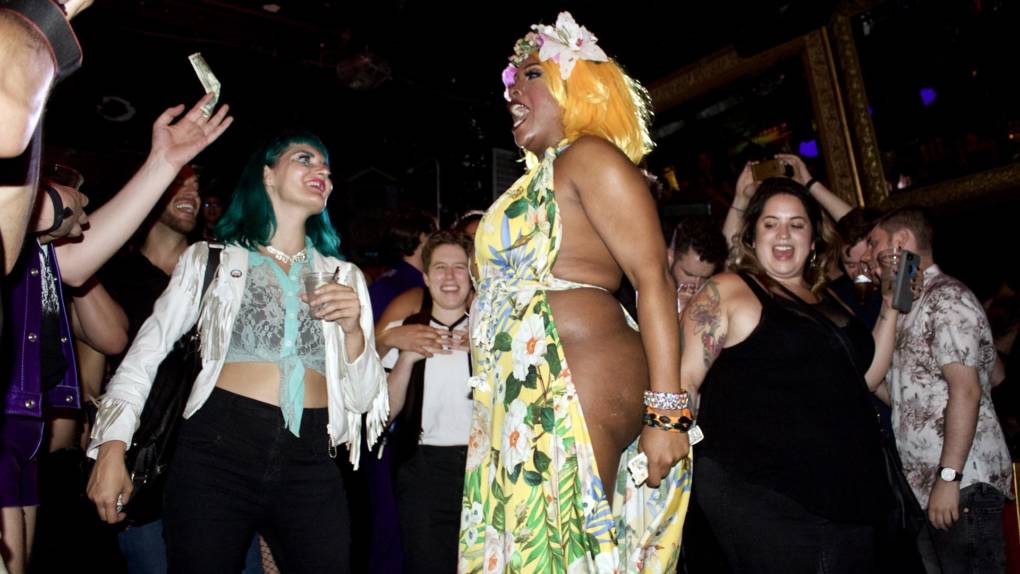
"caption": "Bionka Simone walks into the crowd while performing a lip-sync to 'What's Up' by the 4 Non Blondes on Sept. 22. ",
"description": "Bionka Simone walks into the crowd while performing a lip-sync to 'What's Up' by the 4 Non Blondes on Sept. 22. ",
"title": "Honey.MAIN",
"credit": "Audrey Garces/KQED",
"status": "inherit",
"isLoading": false,
"fetchFailed": false
},
"arts_13808134": {
"type": "attachments",
"id": "arts_13808134",
"meta": {
"index": "attachments_1716263798",
"site": "arts",
"id": "13808134",
"found": true
},
"parent": 13808128,
"imgSizes": {
"small": {
"file": "https://ww2.kqed.org/app/uploads/sites/2/2017/09/Bubbles-by-Robin-RussellCrop-520x293.jpg",
"width": 520,
"mimeType": "image/jpeg",
"height": 293
},
"twentyfourteen-full-width": {
"file": "https://ww2.kqed.org/app/uploads/sites/2/2017/09/Bubbles-by-Robin-RussellCrop-1038x576.jpg",
"width": 1038,
"mimeType": "image/jpeg",
"height": 576
},
"thumbnail": {
"file": "https://ww2.kqed.org/app/uploads/sites/2/2017/09/Bubbles-by-Robin-RussellCrop-160x90.jpg",
"width": 160,
"mimeType": "image/jpeg",
"height": 90
},
"fd-sm": {
"file": "https://ww2.kqed.org/app/uploads/sites/2/2017/09/Bubbles-by-Robin-RussellCrop-960x540.jpg",
"width": 960,
"mimeType": "image/jpeg",
"height": 540
},
"post-thumbnail": {
"file": "https://ww2.kqed.org/app/uploads/sites/2/2017/09/Bubbles-by-Robin-RussellCrop-672x372.jpg",
"width": 672,
"mimeType": "image/jpeg",
"height": 372
},
"xsmall": {
"file": "https://ww2.kqed.org/app/uploads/sites/2/2017/09/Bubbles-by-Robin-RussellCrop-375x211.jpg",
"width": 375,
"mimeType": "image/jpeg",
"height": 211
},
"kqedFullSize": {
"file": "https://ww2.kqed.org/app/uploads/sites/2/2017/09/Bubbles-by-Robin-RussellCrop.jpg",
"width": 1920,
"height": 1080
},
"large": {
"file": "https://ww2.kqed.org/app/uploads/sites/2/2017/09/Bubbles-by-Robin-RussellCrop-1020x574.jpg",
"width": 1020,
"mimeType": "image/jpeg",
"height": 574
},
"xlarge": {
"file": "https://ww2.kqed.org/app/uploads/sites/2/2017/09/Bubbles-by-Robin-RussellCrop-1180x664.jpg",
"width": 1180,
"mimeType": "image/jpeg",
"height": 664
},
"guest-author-50": {
"file": "https://ww2.kqed.org/app/uploads/sites/2/2017/09/Bubbles-by-Robin-RussellCrop-50x50.jpg",
"width": 50,
"mimeType": "image/jpeg",
"height": 50
},
"guest-author-96": {
"file": "https://ww2.kqed.org/app/uploads/sites/2/2017/09/Bubbles-by-Robin-RussellCrop-96x96.jpg",
"width": 96,
"mimeType": "image/jpeg",
"height": 96
},
"medium": {
"file": "https://ww2.kqed.org/app/uploads/sites/2/2017/09/Bubbles-by-Robin-RussellCrop-800x450.jpg",
"width": 800,
"mimeType": "image/jpeg",
"height": 450
},
"guest-author-64": {
"file": "https://ww2.kqed.org/app/uploads/sites/2/2017/09/Bubbles-by-Robin-RussellCrop-64x64.jpg",
"width": 64,
"mimeType": "image/jpeg",
"height": 64
},
"guest-author-32": {
"file": "https://ww2.kqed.org/app/uploads/sites/2/2017/09/Bubbles-by-Robin-RussellCrop-32x32.jpg",
"width": 32,
"mimeType": "image/jpeg",
"height": 32
},
"fd-lrg": {
"file": "https://ww2.kqed.org/app/uploads/sites/2/2017/09/Bubbles-by-Robin-RussellCrop-1920x1080.jpg",
"width": 1920,
"mimeType": "image/jpeg",
"height": 1080
},
"fd-med": {
"file": "https://ww2.kqed.org/app/uploads/sites/2/2017/09/Bubbles-by-Robin-RussellCrop-1180x664.jpg",
"width": 1180,
"mimeType": "image/jpeg",
"height": 664
},
"full-width": {
"file": "https://ww2.kqed.org/app/uploads/sites/2/2017/09/Bubbles-by-Robin-RussellCrop-1920x1080.jpg",
"width": 1920,
"mimeType": "image/jpeg",
"height": 1080
},
"detail": {
"file": "https://ww2.kqed.org/app/uploads/sites/2/2017/09/Bubbles-by-Robin-RussellCrop-150x150.jpg",
"width": 150,
"mimeType": "image/jpeg",
"height": 150
},
"medium_large": {
"file": "https://ww2.kqed.org/app/uploads/sites/2/2017/09/Bubbles-by-Robin-RussellCrop-768x432.jpg",
"width": 768,
"mimeType": "image/jpeg",
"height": 432
},
"guest-author-128": {
"file": "https://ww2.kqed.org/app/uploads/sites/2/2017/09/Bubbles-by-Robin-RussellCrop-128x128.jpg",
"width": 128,
"mimeType": "image/jpeg",
"height": 128
},
"xxsmall": {
"file": "https://ww2.kqed.org/app/uploads/sites/2/2017/09/Bubbles-by-Robin-RussellCrop-240x135.jpg",
"width": 240,
"mimeType": "image/jpeg",
"height": 135
}
},
"publishDate": 1505167450,
"modified": 1505167848,
"caption": "Bubbles at Sunset Camp Out 2017",
"description": "Bubbles at Sunset Camp Out 2017",
"title": "Bubbles by Robin RussellCrop",
"credit": "Photo: Robin Russell/Sunset Sound System",
"status": "inherit",
"isLoading": false,
"fetchFailed": false
},
"arts_13480044": {
"type": "attachments",
"id": "arts_13480044",
"meta": {
"index": "attachments_1716263798",
"site": "arts",
"id": "13480044",
"found": true
},
"parent": 0,
"imgSizes": {
"small": {
"file": "https://ww2.kqed.org/app/uploads/sites/2/2017/06/LGBTCover-520x293.jpg",
"width": 520,
"mimeType": "image/jpeg",
"height": 293
},
"twentyfourteen-full-width": {
"file": "https://ww2.kqed.org/app/uploads/sites/2/2017/06/LGBTCover-1038x576.jpg",
"width": 1038,
"mimeType": "image/jpeg",
"height": 576
},
"thumbnail": {
"file": "https://ww2.kqed.org/app/uploads/sites/2/2017/06/LGBTCover-160x90.jpg",
"width": 160,
"mimeType": "image/jpeg",
"height": 90
},
"fd-sm": {
"file": "https://ww2.kqed.org/app/uploads/sites/2/2017/06/LGBTCover-960x540.jpg",
"width": 960,
"mimeType": "image/jpeg",
"height": 540
},
"post-thumbnail": {
"file": "https://ww2.kqed.org/app/uploads/sites/2/2017/06/LGBTCover-672x372.jpg",
"width": 672,
"mimeType": "image/jpeg",
"height": 372
},
"xsmall": {
"file": "https://ww2.kqed.org/app/uploads/sites/2/2017/06/LGBTCover-375x211.jpg",
"width": 375,
"mimeType": "image/jpeg",
"height": 211
},
"kqedFullSize": {
"file": "https://ww2.kqed.org/app/uploads/sites/2/2017/06/LGBTCover.jpg",
"width": 1920,
"height": 1080
},
"large": {
"file": "https://ww2.kqed.org/app/uploads/sites/2/2017/06/LGBTCover-1020x574.jpg",
"width": 1020,
"mimeType": "image/jpeg",
"height": 574
},
"xlarge": {
"file": "https://ww2.kqed.org/app/uploads/sites/2/2017/06/LGBTCover-1180x664.jpg",
"width": 1180,
"mimeType": "image/jpeg",
"height": 664
},
"guest-author-50": {
"file": "https://ww2.kqed.org/app/uploads/sites/2/2017/06/LGBTCover-50x50.jpg",
"width": 50,
"mimeType": "image/jpeg",
"height": 50
},
"guest-author-96": {
"file": "https://ww2.kqed.org/app/uploads/sites/2/2017/06/LGBTCover-96x96.jpg",
"width": 96,
"mimeType": "image/jpeg",
"height": 96
},
"medium": {
"file": "https://ww2.kqed.org/app/uploads/sites/2/2017/06/LGBTCover-800x450.jpg",
"width": 800,
"mimeType": "image/jpeg",
"height": 450
},
"guest-author-64": {
"file": "https://ww2.kqed.org/app/uploads/sites/2/2017/06/LGBTCover-64x64.jpg",
"width": 64,
"mimeType": "image/jpeg",
"height": 64
},
"guest-author-32": {
"file": "https://ww2.kqed.org/app/uploads/sites/2/2017/06/LGBTCover-32x32.jpg",
"width": 32,
"mimeType": "image/jpeg",
"height": 32
},
"fd-lrg": {
"file": "https://ww2.kqed.org/app/uploads/sites/2/2017/06/LGBTCover-1920x1080.jpg",
"width": 1920,
"mimeType": "image/jpeg",
"height": 1080
},
"fd-med": {
"file": "https://ww2.kqed.org/app/uploads/sites/2/2017/06/LGBTCover-1180x664.jpg",
"width": 1180,
"mimeType": "image/jpeg",
"height": 664
},
"full-width": {
"file": "https://ww2.kqed.org/app/uploads/sites/2/2017/06/LGBTCover-1920x1080.jpg",
"width": 1920,
"mimeType": "image/jpeg",
"height": 1080
},
"detail": {
"file": "https://ww2.kqed.org/app/uploads/sites/2/2017/06/LGBTCover-150x150.jpg",
"width": 150,
"mimeType": "image/jpeg",
"height": 150
},
"medium_large": {
"file": "https://ww2.kqed.org/app/uploads/sites/2/2017/06/LGBTCover-768x432.jpg",
"width": 768,
"mimeType": "image/jpeg",
"height": 432
},
"guest-author-128": {
"file": "https://ww2.kqed.org/app/uploads/sites/2/2017/06/LGBTCover-128x128.jpg",
"width": 128,
"mimeType": "image/jpeg",
"height": 128
},
"xxsmall": {
"file": "https://ww2.kqed.org/app/uploads/sites/2/2017/06/LGBTCover-240x135.jpg",
"width": 240,
"mimeType": "image/jpeg",
"height": 135
}
},
"publishDate": 1498000117,
"modified": 1498004459,
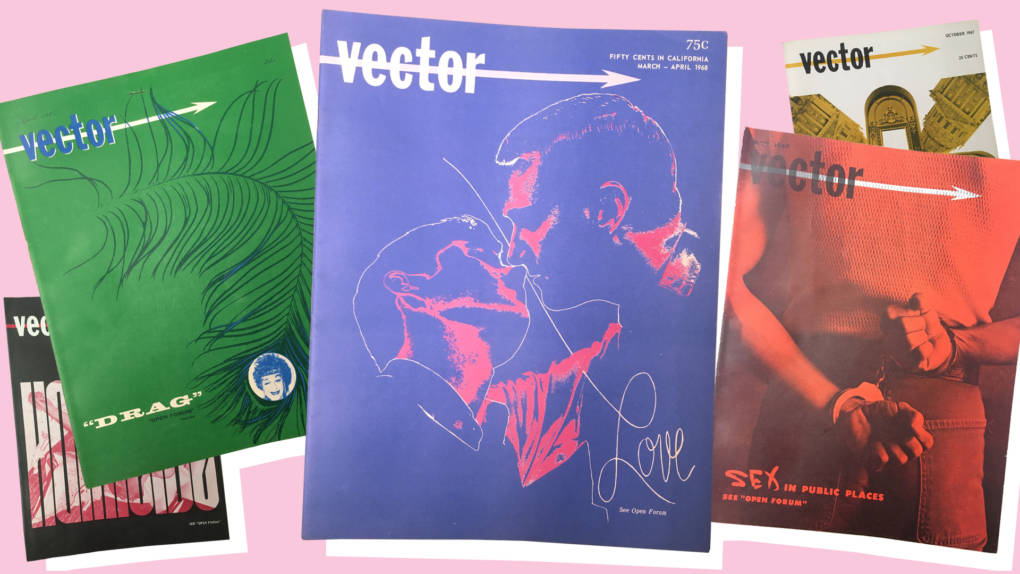
"caption": "Covers from 1967 and 1968 issues of 'Vector' magazine, published by the Society for Individual Rights, San Francisco.",
"description": "Covers from 1967 and 1968 issues of 'Vector' magazine, published by the Society for Individual Rights, San Francisco.",
"title": "LGBTCover",
"credit": "Courtesy of the GLBT Historical Center ",
"status": "inherit",
"isLoading": false,
"fetchFailed": false
}
},
"audioPlayerReducer": {
"postId": "stream_live",
"isPaused": true,
"isPlaying": false,
"pfsActive": false,
"pledgeModalIsOpen": true,
"playerDrawerIsOpen": false,
"liveAudioPlayStartedAt": 0,
"liveAudioPlayContext": ""
},
"authorsReducer": {
"shotchkiss": {
"type": "authors",
"id": "61",
"meta": {
"index": "authors_1716337520",
"id": "61",
"found": true
},
"name": "Sarah Hotchkiss",
"firstName": "Sarah",
"lastName": "Hotchkiss",
"slug": "shotchkiss",
"email": "shotchkiss@kqed.org",
"display_author_email": true,
"staff_mastheads": [
"arts"
],
"title": "Senior Editor",
"bio": "Sarah Hotchkiss is a San Francisco \u003ca href=\"http://www.sarahhotchkiss.com\">artist\u003c/a> and arts writer. In 2019, she received the Dorothea & Leo Rabkin Foundation grant for visual art journalism and in 2020 she received a Society of Professional Journalists, Northern California award for excellence in arts and culture reporting.",
"avatar": "https://secure.gravatar.com/avatar/bc662df144b3d27fd8b1b6f1c2a420d34e91e53154d411bb7ad353cc8b6cea8d?s=600&d=blank&r=g",
"twitter": null,
"bluesky": null,
"facebook": null,
"instagram": null,
"linkedin": null,
"sites": [
{
"site": "",
"roles": [
"editor"
]
},
{
"site": "arts",
"roles": [
"Contributor",
"administrator"
]
},
{
"site": "artschool",
"roles": [
"administrator"
]
},
{
"site": "news",
"roles": [
"editor"
]
},
{
"site": "pop",
"roles": [
"administrator"
]
},
{
"site": "bayareabites",
"roles": [
"editor"
]
},
{
"site": "spark",
"roles": [
"editor"
]
},
{
"site": "checkplease",
"roles": [
"editor"
]
}
],
"headData": {
"title": "Sarah Hotchkiss | KQED",
"description": "Senior Editor",
"ogImgSrc": "https://secure.gravatar.com/avatar/bc662df144b3d27fd8b1b6f1c2a420d34e91e53154d411bb7ad353cc8b6cea8d?s=600&d=blank&r=g",
"twImgSrc": "https://secure.gravatar.com/avatar/bc662df144b3d27fd8b1b6f1c2a420d34e91e53154d411bb7ad353cc8b6cea8d?s=600&d=blank&r=g"
},
"isLoading": false,
"link": "/author/shotchkiss"
},
"kjones": {
"type": "authors",
"id": "93",
"meta": {
"index": "authors_1716337520",
"id": "93",
"found": true
},
"name": "Kevin L. Jones",
"firstName": "Kevin",
"lastName": "Jones",
"slug": "kjones",
"email": "kjones@kqed.org",
"display_author_email": false,
"staff_mastheads": [],
"title": null,
"bio": null,
"avatar": "https://secure.gravatar.com/avatar/12c65b5633ed39d0a59bb7f497eff645?s=600&d=blank&r=g",
"twitter": null,
"facebook": null,
"instagram": null,
"linkedin": null,
"sites": [
{
"site": "arts",
"roles": [
"subscriber"
]
},
{
"site": "styleguide",
"roles": [
"contributor"
]
},
{
"site": "artschool",
"roles": [
"subscriber"
]
},
{
"site": "news",
"roles": [
"subscriber"
]
},
{
"site": "pop",
"roles": [
"subscriber"
]
}
],
"headData": {
"title": "Kevin L. Jones | KQED",
"description": null,
"ogImgSrc": "https://secure.gravatar.com/avatar/12c65b5633ed39d0a59bb7f497eff645?s=600&d=blank&r=g",
"twImgSrc": "https://secure.gravatar.com/avatar/12c65b5633ed39d0a59bb7f497eff645?s=600&d=blank&r=g"
},
"isLoading": false,
"link": "/author/kjones"
},
"soki": {
"type": "authors",
"id": "99",
"meta": {
"index": "authors_1716337520",
"id": "99",
"found": true
},
"name": "Siouxsie Oki",
"firstName": "Siouxsie",
"lastName": "Oki",
"slug": "soki",
"email": "soki@KQED.org",
"display_author_email": false,
"staff_mastheads": [],
"title": "KQED Contributor",
"bio": "Siouxsie is an activist and artist, dedicated to building community by celebrating the diverse voices and perspectives of the Bay Area. She is a former director of KQED’s community engagement efforts, developing dynamic partnerships throughout our coverage area utilizing local and national content to foster two-way engagement and collaboration between different industries, organizations and audience segments.",
"avatar": "https://secure.gravatar.com/avatar/8e29f2b375533bd6aa16f5879c5f8e81ecc1436c730c773f24228969e7569650?s=600&d=blank&r=g",
"twitter": null,
"bluesky": null,
"facebook": null,
"instagram": null,
"linkedin": null,
"sites": [
{
"site": "arts",
"roles": [
"subscriber"
]
},
{
"site": "news",
"roles": [
"subscriber"
]
},
{
"site": "about",
"roles": [
"editor"
]
},
{
"site": "bayareabites",
"roles": [
"editor"
]
},
{
"site": "checkplease",
"roles": [
"contributor"
]
},
{
"site": "pressroom",
"roles": [
"editor"
]
},
{
"site": "events",
"roles": [
"editor"
]
}
],
"headData": {
"title": "Siouxsie Oki | KQED",
"description": "KQED Contributor",
"ogImgSrc": "https://secure.gravatar.com/avatar/8e29f2b375533bd6aa16f5879c5f8e81ecc1436c730c773f24228969e7569650?s=600&d=blank&r=g",
"twImgSrc": "https://secure.gravatar.com/avatar/8e29f2b375533bd6aa16f5879c5f8e81ecc1436c730c773f24228969e7569650?s=600&d=blank&r=g"
},
"isLoading": false,
"link": "/author/soki"
},
"dburlison": {
"type": "authors",
"id": "3216",
"meta": {
"index": "authors_1716337520",
"id": "3216",
"found": true
},
"name": "Dani Burlison",
"firstName": "Dani",
"lastName": "Burlison",
"slug": "dburlison",
"email": "danisavestheworld@yahoo.com",
"display_author_email": false,
"staff_mastheads": [],
"title": null,
"bio": "\u003cb id=\"yui_3_16_0_1_1416414652499_5365\" class=\"yiv3033141065\">Dani Burlison\u003c/b> is an award-winning writer, teacher and North Bay resident with a special interest in California's fascinating subcultures. You can find her commentary on writing, feminism, social justice and life with two teen daughters on Twitter at @DaniBurlison.",
"avatar": "https://secure.gravatar.com/avatar/c0b371463a220978c947a5c4ce2da294?s=600&d=blank&r=g",
"twitter": null,
"facebook": null,
"instagram": null,
"linkedin": null,
"sites": [
{
"site": "arts",
"roles": [
"contributor"
]
}
],
"headData": {
"title": "Dani Burlison | KQED",
"description": null,
"ogImgSrc": "https://secure.gravatar.com/avatar/c0b371463a220978c947a5c4ce2da294?s=600&d=blank&r=g",
"twImgSrc": "https://secure.gravatar.com/avatar/c0b371463a220978c947a5c4ce2da294?s=600&d=blank&r=g"
},
"isLoading": false,
"link": "/author/dburlison"
},
"kwhalen": {
"type": "authors",
"id": "3248",
"meta": {
"index": "authors_1716337520",
"id": "3248",
"found": true
},
"name": "Kelly Whalen",
"firstName": "Kelly",
"lastName": "Whalen",
"slug": "kwhalen",
"email": "kwhalen@kqed.org",
"display_author_email": false,
"staff_mastheads": [],
"title": "Senior Video Producer",
"bio": "Kelly Whalen is a filmmaker and educator who directs and produces social justice documentaries and award-winning arts and culture web series. She is the creator of KQED Arts’ three-time Webby Award-winning YouTube series \u003cem>If Cities Could Dance\u003c/em>, featuring dancers across the country representing their cities’ signature moves, and the director of \u003cem>When the Waters Get Deep\u003c/em>, a documentary about Oakland-based artists SOL Development and their work toward healing their communities’ trauma from gun violence.",
"avatar": "https://secure.gravatar.com/avatar/1a2b57e8a13abdcfc3d4966d9c0e1512?s=600&d=blank&r=g",
"twitter": "kellyfilmmaker",
"facebook": null,
"instagram": null,
"linkedin": null,
"sites": [
{
"site": "arts",
"roles": [
"subscriber"
]
}
],
"headData": {
"title": "Kelly Whalen | KQED",
"description": "Senior Video Producer",
"ogImgSrc": "https://secure.gravatar.com/avatar/1a2b57e8a13abdcfc3d4966d9c0e1512?s=600&d=blank&r=g",
"twImgSrc": "https://secure.gravatar.com/avatar/1a2b57e8a13abdcfc3d4966d9c0e1512?s=600&d=blank&r=g"
},
"isLoading": false,
"link": "/author/kwhalen"
},
"cescobar": {
"type": "authors",
"id": "11241",
"meta": {
"index": "authors_1716337520",
"id": "11241",
"found": true
},
"name": "Claudia Escobar",
"firstName": "Claudia",
"lastName": "Escobar",
"slug": "cescobar",
"email": "cescobar@kqed.org",
"display_author_email": false,
"staff_mastheads": [],
"title": "KQED Contributor",
"bio": "Tropical latin visual story teller extraordinaire! bread maker apprentice.",
"avatar": "https://secure.gravatar.com/avatar/39af590a0e19126bafbf121ec9d891a77a3d680061d7cc03d720efe706992707?s=600&d=blank&r=g",
"twitter": null,
"bluesky": null,
"facebook": null,
"instagram": null,
"linkedin": null,
"sites": [
{
"site": "arts",
"roles": [
"subscriber"
]
},
{
"site": "news",
"roles": [
"author"
]
}
],
"headData": {
"title": "Claudia Escobar | KQED",
"description": "KQED Contributor",
"ogImgSrc": "https://secure.gravatar.com/avatar/39af590a0e19126bafbf121ec9d891a77a3d680061d7cc03d720efe706992707?s=600&d=blank&r=g",
"twImgSrc": "https://secure.gravatar.com/avatar/39af590a0e19126bafbf121ec9d891a77a3d680061d7cc03d720efe706992707?s=600&d=blank&r=g"
},
"isLoading": false,
"link": "/author/cescobar"
},
"agarces": {
"type": "authors",
"id": "11367",
"meta": {
"index": "authors_1716337520",
"id": "11367",
"found": true
},
"name": "Audrey Garces",
"firstName": "Audrey",
"lastName": "Garces",
"slug": "agarces",
"email": "agarces@kqed.org",
"display_author_email": false,
"staff_mastheads": [
"news"
],
"title": "Digital Producer",
"bio": "Audrey is a former digital producer at KQED News. Previously, she was a KQED Raul Ramirez Diversity Fund intern where she developed stories that focused on highlighting diverse voices in journalism. Prior to her work at KQED, she worked as a news intern at the San Francisco Examiner. Audrey graduated from San Francisco State University with a B.A. in journalism and a minor in political science.",
"avatar": "https://secure.gravatar.com/avatar/5211bc2e6a809b9956da169e35ce63d5?s=600&d=blank&r=g",
"twitter": "audgar",
"facebook": null,
"instagram": null,
"linkedin": null,
"sites": [
{
"site": "arts",
"roles": []
},
{
"site": "news",
"roles": [
"subscriber"
]
},
{
"site": "science",
"roles": [
"editor"
]
},
{
"site": "forum",
"roles": [
"editor"
]
},
{
"site": "perspectives",
"roles": [
"administrator"
]
}
],
"headData": {
"title": "Audrey Garces | KQED",
"description": "Digital Producer",
"ogImgSrc": "https://secure.gravatar.com/avatar/5211bc2e6a809b9956da169e35ce63d5?s=600&d=blank&r=g",
"twImgSrc": "https://secure.gravatar.com/avatar/5211bc2e6a809b9956da169e35ce63d5?s=600&d=blank&r=g"
},
"isLoading": false,
"link": "/author/agarces"
},
"nvoynovskaya": {
"type": "authors",
"id": "11387",
"meta": {
"index": "authors_1716337520",
"id": "11387",
"found": true
},
"name": "Nastia Voynovskaya",
"firstName": "Nastia",
"lastName": "Voynovskaya",
"slug": "nvoynovskaya",
"email": "nvoynovskaya@kqed.org",
"display_author_email": false,
"staff_mastheads": [
"arts"
],
"title": "Editor and reporter",
"bio": "Nastia Voynovskaya is a reporter, editor and host at KQED Arts & Culture. She's been covering the arts in the Bay Area for over a decade, with a focus on music, queer culture, labor issues and grassroots organizing. She has edited KQED story series such as Trans Bay: A History of San Francisco's Gender-Diverse Community, and co-created KQED's Bay Area hip-hop history project, That's My Word. Nastia's work has been recognized by the Society of Professional Journalists and San Francisco Press Club. She regularly appears on podcasts and radio programs, including NPR's All Songs Considered, and hosts live events where music, culture and conversation meet.",
"avatar": "https://secure.gravatar.com/avatar/5025ee460e5a85d69ca20ea6c6f2f80d7e17795c828f61ea3aecfcd924e9042e?s=600&d=blank&r=g",
"twitter": null,
"bluesky": null,
"facebook": null,
"instagram": "https://www.instagram.com/nananastia/",
"linkedin": null,
"sites": [
{
"site": "",
"roles": [
"editor"
]
},
{
"site": "arts",
"roles": [
"administrator"
]
},
{
"site": "news",
"roles": [
"editor"
]
},
{
"site": "pop",
"roles": [
"administrator"
]
},
{
"site": "bayareabites",
"roles": [
"editor"
]
},
{
"site": "podcasts",
"roles": [
"editor"
]
},
{
"site": "hiphop",
"roles": [
"editor"
]
}
],
"headData": {
"title": "Nastia Voynovskaya | KQED",
"description": "Editor and reporter",
"ogImgSrc": "https://secure.gravatar.com/avatar/5025ee460e5a85d69ca20ea6c6f2f80d7e17795c828f61ea3aecfcd924e9042e?s=600&d=blank&r=g",
"twImgSrc": "https://secure.gravatar.com/avatar/5025ee460e5a85d69ca20ea6c6f2f80d7e17795c828f61ea3aecfcd924e9042e?s=600&d=blank&r=g"
},
"isLoading": false,
"link": "/author/nvoynovskaya"
}
},
"pagesReducer": {
"arts_tag_lgbtq": {
"type": "terms",
"id": "arts_3226",
"meta": {
"index": "terms_1716263798",
"site": "arts",
"id": "3226",
"score": 8.28313
},
"name": "LGBTQ+",
"slug": "lgbtq",
"taxonomy": "tag",
"description": null,
"featImg": null,
"headData": {
"title": "LGBTQ+ | KQED Arts",
"description": null,
"ogTitle": null,
"ogDescription": null,
"ogImgId": null,
"twTitle": null,
"twDescription": null,
"twImgId": null
},
"ttid": 3238,
"isLoading": false,
"title": "LGBTQ+",
"pageMeta": {
"site": "arts",
"WpPageTemplate": "page-topic-editorial",
"currentPage": 25
},
"blocks": [
{
"blockName": "kqed/post-list",
"attrs": {
"layout": "cardArticle2",
"query": "posts/arts?tag=lgbtq",
"seeMore": false,
"paginated": true,
"page": 25
}
},
{
"blockName": "kqed/ad"
}
]
}
},
"pfsSessionReducer": {},
"postsReducer": {
"stream_live": {
"type": "live",
"id": "stream_live",
"audioUrl": "https://streams.kqed.org/kqedradio",
"title": "Live Stream",
"excerpt": "Live Stream information currently unavailable.",
"link": "/radio",
"featImg": "",
"label": {
"name": "KQED Live",
"link": "/"
}
},
"stream_kqedNewscast": {
"type": "posts",
"id": "stream_kqedNewscast",
"audioUrl": "https://www.kqed.org/.stream/anon/radio/RDnews/newscast.mp3?_=1",
"title": "KQED Newscast",
"featImg": "",
"label": {
"name": "88.5 FM",
"link": "/"
}
},
"arts_13835832": {
"type": "posts",
"id": "arts_13835832",
"meta": {
"index": "posts_1716263798",
"site": "arts",
"id": "13835832",
"score": null,
"sort": [
1529766009000
]
},
"guestAuthors": [],
"slug": "kqed-unearths-rare-video-of-san-francisco-drag-in-the-60s",
"title": "KQED Unearths Rare Video of San Francisco Drag in the '60s",
"publishDate": 1529766009,
"format": "video",
"headTitle": "KQED Unearths Rare Video of San Francisco Drag in the ’60s | KQED",
"labelTerm": {
"site": "arts"
},
"content": "\u003cp>San Francisco is known as a gay mecca, but Pride hasn’t always been mainstream. In the ’60s, gender non-conforming and visibly gay people were often \u003ca href=\"https://www.kqed.org/arts/13835520/a-new-generation-gathers-strength-from-the-courageous-queens-of-the-comptons-cafeteria-riot\" target=\"_blank\" rel=\"noopener\">targets of police harassment\u003c/a> and discrimination. LGBTQ culture thrived in the night—when queer people could express themselves among peers without judgment.\u003c/p>\n\u003cp>As we celebrate the Bay Area LGBTQ community this Pride month, KQED recently unearthed a rare video of a 1968 gay costume ball, with footage of fabulous drag queens and socialites dancing the night away on Columbus Avenue in San Francisco, likely at The Village Club.\u003c/p>\n\u003cp>Watch the video above and read about today’s drag scene in \u003ca href=\"https://www.kqed.org/arts/series/changing-face-of-drag\" target=\"_blank\" rel=\"noopener\">\u003cem>The Changing Face of Drag\u003c/em>\u003c/a>, which celebrates the queer community’s creativity, diversity and continuing resilience.\u003c/p>\n\u003cp>[ad fullwidth]\u003c/p>\u003cp>\u003c/p>\n",
"blocks": [],
"excerpt": "A 1968 video of a gay drag ball offers a rare glimpse of the era's LGBTQ nightlife. ",
"status": "publish",
"parent": 0,
"modified": 1726771061,
"stats": {
"hasAudio": false,
"hasVideo": false,
"hasChartOrMap": false,
"iframeSrcs": [],
"hasGoogleForm": false,
"hasGallery": false,
"hasHearkenModule": false,
"hasPolis": false,
"paragraphCount": 5,
"wordCount": 130
},
"headData": {
"title": "KQED Unearths Rare Video of San Francisco Drag in the '60s | KQED",
"description": "A 1968 video of a gay drag ball offers a rare glimpse of the era's LGBTQ nightlife. ",
"ogTitle": "",
"ogDescription": "",
"ogImgId": "",
"twTitle": "",
"twDescription": "",
"twImgId": "",
"schema": {
"@context": "https://schema.org",
"@type": "Article",
"headline": "KQED Unearths Rare Video of San Francisco Drag in the '60s",
"datePublished": "2018-06-23T08:00:09-07:00",
"dateModified": "2024-09-19T11:37:41-07:00",
"image": "https://cdn.kqed.org/wp-content/uploads/2020/02/KQED-OG-Image@1x.png"
}
},
"videoEmbed": "https://youtu.be/OAlDxd_xrM4",
"sticky": false,
"path": "/arts/13835832/kqed-unearths-rare-video-of-san-francisco-drag-in-the-60s",
"audioTrackLength": null,
"parsedContent": [
{
"type": "contentString",
"content": "\u003cdiv class=\"post-body\">\u003cp>\u003cp>San Francisco is known as a gay mecca, but Pride hasn’t always been mainstream. In the ’60s, gender non-conforming and visibly gay people were often \u003ca href=\"https://www.kqed.org/arts/13835520/a-new-generation-gathers-strength-from-the-courageous-queens-of-the-comptons-cafeteria-riot\" target=\"_blank\" rel=\"noopener\">targets of police harassment\u003c/a> and discrimination. LGBTQ culture thrived in the night—when queer people could express themselves among peers without judgment.\u003c/p>\n\u003cp>As we celebrate the Bay Area LGBTQ community this Pride month, KQED recently unearthed a rare video of a 1968 gay costume ball, with footage of fabulous drag queens and socialites dancing the night away on Columbus Avenue in San Francisco, likely at The Village Club.\u003c/p>\n\u003cp>Watch the video above and read about today’s drag scene in \u003ca href=\"https://www.kqed.org/arts/series/changing-face-of-drag\" target=\"_blank\" rel=\"noopener\">\u003cem>The Changing Face of Drag\u003c/em>\u003c/a>, which celebrates the queer community’s creativity, diversity and continuing resilience.\u003c/p>\n\u003cp>\u003c/p>\u003c/div>",
"attributes": {
"named": {},
"numeric": []
}
},
{
"type": "component",
"content": "",
"name": "ad",
"attributes": {
"named": {
"label": "fullwidth"
},
"numeric": [
"fullwidth"
]
}
},
{
"type": "contentString",
"content": "\u003cdiv class=\"post-body\">\u003cp>\u003c/p>\u003cp>\u003c/p>\n\u003c/div>\u003c/p>",
"attributes": {
"named": {},
"numeric": []
}
}
],
"link": "/arts/13835832/kqed-unearths-rare-video-of-san-francisco-drag-in-the-60s",
"authors": [
"11387"
],
"categories": [
"arts_1"
],
"tags": [
"arts_1556",
"arts_1118",
"arts_3226",
"arts_596",
"arts_5158"
],
"featImg": "arts_13835850",
"label": "arts"
},
"arts_13835007": {
"type": "posts",
"id": "arts_13835007",
"meta": {
"index": "posts_1716263798",
"site": "arts",
"id": "13835007",
"score": null,
"sort": [
1529520896000
]
},
"guestAuthors": [],
"slug": "juanita-more-beloved-drag-mother-is-queering-san-francisco-politics",
"title": "Juanita MORE!, Beloved Drag Mother, is Queering San Francisco Politics",
"publishDate": 1529520896,
"format": "image",
"headTitle": "Juanita MORE!, Beloved Drag Mother, is Queering San Francisco Politics | KQED",
"labelTerm": {
"site": "arts"
},
"content": "\u003cp>\u003cem>Editor’s Note: \u003c/em>The Changing Face of Drag\u003cem> is a five-part KQED Arts series spotlighting innovative performers pushing the boundaries of drag in the Bay Area. Click to read more \u003ca href=\"https://www.kqed.org/arts/series/changing-face-of-drag\" target=\"_blank\" rel=\"noopener\">about the series\u003c/a>. \u003c/em>\u003c/p>\n\u003cp>On the day of the San Francisco mayoral election, \u003ca href=\"http://juanitamore.com\" target=\"_blank\" rel=\"noopener\">Juanita MORE!\u003c/a> couldn’t meet because she had too many places to be.\u003c/p>\n\u003cfigure id=\"attachment_13835563\" class=\"wp-caption alignright\" style=\"max-width: 250px\">\u003cimg loading=\"lazy\" decoding=\"async\" class=\"size-full wp-image-13835563\" src=\"https://ww2.kqed.org/arts/wp-content/uploads/sites/2/2018/06/juanitainfo.jpg\" alt=\"Creo Noveno/KQED\" width=\"250\" height=\"333\" srcset=\"https://cdn.kqed.org/wp-content/uploads/sites/2/2018/06/juanitainfo.jpg 250w, https://cdn.kqed.org/wp-content/uploads/sites/2/2018/06/juanitainfo-160x213.jpg 160w, https://cdn.kqed.org/wp-content/uploads/sites/2/2018/06/juanitainfo-240x320.jpg 240w\" sizes=\"(max-width: 250px) 100vw, 250px\">\u003cfigcaption class=\"wp-caption-text\">Creo Noveno/KQED\u003c/figcaption>\u003c/figure>\n\u003cp>In a last-minute campaign effort, she rode around the Castro in a convertible with candidate Mark Leno, her red tassel earrings and cotton candy-shaped wig blowing in the wind. (“My wig stayed on my head, too,” she says.) After hearing Leno speak at Harvey Milk Plaza, she stopped by a campaign party for Rafael Mandelman—a young, gay politician who wore drag at a recent edition of MORE!’s party, Powerblouse—to congratulate him on his win for District 8 supervisor.\u003c/p>\n\u003cp>Drag, an art form that bucks the heteronormative status quo, has been \u003ca href=\"https://www.kqed.org/arts/13835520/a-new-generation-gathers-strength-from-the-courageous-queens-of-the-comptons-cafeteria-riot\" target=\"_blank\" rel=\"noopener\">a central part of queer resistance\u003c/a> for decades. But MORE!, who’s performed in San Francisco for nearly 30 years, is one of the only drag queens to leverage her popularity to make an impact on mainstream city politics.\u003c/p>\n\u003cfigure id=\"attachment_13835554\" class=\"wp-caption aligncenter\" style=\"max-width: 800px\">\u003cimg loading=\"lazy\" decoding=\"async\" class=\"size-medium wp-image-13835554\" src=\"https://ww2.kqed.org/arts/wp-content/uploads/sites/2/2018/06/303A8506-800x533.jpg\" alt=\"Juanita MORE! leverages her popularity as a drag queen to rally for political causes. \" width=\"800\" height=\"533\" srcset=\"https://cdn.kqed.org/wp-content/uploads/sites/2/2018/06/303A8506-800x533.jpg 800w, https://cdn.kqed.org/wp-content/uploads/sites/2/2018/06/303A8506-160x107.jpg 160w, https://cdn.kqed.org/wp-content/uploads/sites/2/2018/06/303A8506-768x512.jpg 768w, https://cdn.kqed.org/wp-content/uploads/sites/2/2018/06/303A8506-1020x680.jpg 1020w, https://cdn.kqed.org/wp-content/uploads/sites/2/2018/06/303A8506-1200x800.jpg 1200w, https://cdn.kqed.org/wp-content/uploads/sites/2/2018/06/303A8506-1920x1280.jpg 1920w, https://cdn.kqed.org/wp-content/uploads/sites/2/2018/06/303A8506-1180x787.jpg 1180w, https://cdn.kqed.org/wp-content/uploads/sites/2/2018/06/303A8506-960x640.jpg 960w, https://cdn.kqed.org/wp-content/uploads/sites/2/2018/06/303A8506-240x160.jpg 240w, https://cdn.kqed.org/wp-content/uploads/sites/2/2018/06/303A8506-375x250.jpg 375w, https://cdn.kqed.org/wp-content/uploads/sites/2/2018/06/303A8506-520x347.jpg 520w, https://cdn.kqed.org/wp-content/uploads/sites/2/2018/06/303A8506.jpg 2048w\" sizes=\"(max-width: 800px) 100vw, 800px\">\u003cfigcaption class=\"wp-caption-text\">Juanita MORE! leverages her popularity as a drag queen to rally for political causes. \u003ccite>(Christina Campbell)\u003c/cite>\u003c/figcaption>\u003c/figure>\n\u003cp>In addition to campaigning for queer candidates and mobilizing the LGBTQ community to vote with her \u003ca href=\"http://juanitamore.com/vote-1/\" target=\"_blank\" rel=\"noopener\">election guides\u003c/a>, MORE! uses her platform to raise money for a variety of causes. Her party Powerblouse (where she and her drag mother, Glamamore, give newbies their first-time drag makeovers) raises money for the \u003ca href=\"https://theqfoundation.org/\" target=\"_blank\" rel=\"noopener\">Q Foundation\u003c/a>, which helps HIV- and AIDS-positive people secure affordable housing. And her wildly popular \u003ca href=\"http://juanitamore.com/pride/\" target=\"_blank\" rel=\"noopener\">Pride celebrations\u003c/a>, taking place at \u003ca href=\"https://www.kqed.org/arts/13835038/former-fillmore-west-to-host-first-event-in-45-years-for-pride-weekend\" target=\"_blank\" rel=\"noopener\">SVN West\u003c/a> and Jones during the June 23–24 Pride weekend, benefit \u003ca href=\"https://transgenderlawcenter.org/programs/truth\" target=\"_blank\" rel=\"noopener\">TRUTH (TRans yoUTH)\u003c/a>, a program from the Transgender Law Center that gives trans young people a safe space to build community and share their struggles.\u003c/p>\n\u003cp>[ad fullwidth]\u003c/p>\n\u003cp>MORE! specializes in an old-school, Hollywood glamour of big hair, an hourglass figure and flowing couture gowns (think Bette Davis, Celia Cruz and Diana Ross). She says that she didn’t always see her drag as part of a bigger purpose. “Looking back on those early years, I was probably like every other young drag queen who gets born every day,” she says. “You’re just going out all the time; you’re performing wherever for a dime; you’re drinking all night.”\u003c/p>\n\u003cfigure id=\"attachment_13835555\" class=\"wp-caption alignright\" style=\"max-width: 800px\">\u003cimg loading=\"lazy\" decoding=\"async\" class=\"size-medium wp-image-13835555\" src=\"https://ww2.kqed.org/arts/wp-content/uploads/sites/2/2018/06/303A8410-800x1200.jpg\" alt=\"Evening wear is Juanita MORE!'s specialty. \" width=\"800\" height=\"1200\" srcset=\"https://cdn.kqed.org/wp-content/uploads/sites/2/2018/06/303A8410-800x1200.jpg 800w, https://cdn.kqed.org/wp-content/uploads/sites/2/2018/06/303A8410-160x240.jpg 160w, https://cdn.kqed.org/wp-content/uploads/sites/2/2018/06/303A8410-768x1152.jpg 768w, https://cdn.kqed.org/wp-content/uploads/sites/2/2018/06/303A8410-1020x1530.jpg 1020w, https://cdn.kqed.org/wp-content/uploads/sites/2/2018/06/303A8410-1180x1770.jpg 1180w, https://cdn.kqed.org/wp-content/uploads/sites/2/2018/06/303A8410-960x1440.jpg 960w, https://cdn.kqed.org/wp-content/uploads/sites/2/2018/06/303A8410-240x360.jpg 240w, https://cdn.kqed.org/wp-content/uploads/sites/2/2018/06/303A8410-375x562.jpg 375w, https://cdn.kqed.org/wp-content/uploads/sites/2/2018/06/303A8410-520x780.jpg 520w, https://cdn.kqed.org/wp-content/uploads/sites/2/2018/06/303A8410.jpg 1366w\" sizes=\"(max-width: 800px) 100vw, 800px\">\u003cfigcaption class=\"wp-caption-text\">Evening wear is Juanita MORE!’s specialty. \u003ccite>(Christina Campbell)\u003c/cite>\u003c/figcaption>\u003c/figure>\n\u003cp>But as she matured over the course of her career, so did her approach. As a beloved and experienced drag mother and grandmother who’s initiated two generations of performers into the art form, she began to notice that people looked to her for guidance not just on where find the hottest parties with the cutest guys, but on many civic issues, too.\u003c/p>\n\u003cp>“People come to me all the time, especially in the political world, in a way of like, ‘Let’s sit down and talk about this. I wanna share something with you that we need to really think about and figure out and fix it before it really affects our city,'” she says.\u003c/p>\n\u003cp>MORE! was born in Fremont and raised in Hayward, where she remembers passing by five gay bars on the way home from high school. But she didn’t become interested in drag until she was in her 20s and living in New York, immersed in its late-’80s gay club culture. When she returned to San Francisco in 1992, her good friend Glamamore, who followed her out west, dressed her in a leopard print get-up one night before she hit the town.\u003c/p>\n\u003cp>“When I came back, he was here,” she says, sitting at the dining table of her Tenderloin studio apartment, her bulldog, Jackson, at her feet. “And I was like, ‘Oh my god, I had so much fun! I want to do it again tomorrow.'”\u003c/p>\n\u003cfigure id=\"attachment_13835558\" class=\"wp-caption aligncenter\" style=\"max-width: 800px\">\u003cimg loading=\"lazy\" decoding=\"async\" class=\"size-medium wp-image-13835558\" src=\"https://ww2.kqed.org/arts/wp-content/uploads/sites/2/2018/06/303A8309-800x533.jpg\" alt=\"Juanita MORE! hosts two monthly parties at Powerhouse: Beatpig and Powerblouse.\" width=\"800\" height=\"533\" srcset=\"https://cdn.kqed.org/wp-content/uploads/sites/2/2018/06/303A8309-800x533.jpg 800w, https://cdn.kqed.org/wp-content/uploads/sites/2/2018/06/303A8309-160x107.jpg 160w, https://cdn.kqed.org/wp-content/uploads/sites/2/2018/06/303A8309-768x512.jpg 768w, https://cdn.kqed.org/wp-content/uploads/sites/2/2018/06/303A8309-1020x680.jpg 1020w, https://cdn.kqed.org/wp-content/uploads/sites/2/2018/06/303A8309-1200x800.jpg 1200w, https://cdn.kqed.org/wp-content/uploads/sites/2/2018/06/303A8309-1920x1280.jpg 1920w, https://cdn.kqed.org/wp-content/uploads/sites/2/2018/06/303A8309-1180x787.jpg 1180w, https://cdn.kqed.org/wp-content/uploads/sites/2/2018/06/303A8309-960x640.jpg 960w, https://cdn.kqed.org/wp-content/uploads/sites/2/2018/06/303A8309-240x160.jpg 240w, https://cdn.kqed.org/wp-content/uploads/sites/2/2018/06/303A8309-375x250.jpg 375w, https://cdn.kqed.org/wp-content/uploads/sites/2/2018/06/303A8309-520x347.jpg 520w, https://cdn.kqed.org/wp-content/uploads/sites/2/2018/06/303A8309.jpg 2048w\" sizes=\"(max-width: 800px) 100vw, 800px\">\u003cfigcaption class=\"wp-caption-text\">Juanita MORE! hosts two monthly parties at Powerhouse: Beatpig and Powerblouse. \u003ccite>(Christina Campbell)\u003c/cite>\u003c/figcaption>\u003c/figure>\n\u003cp>MORE! remembers lip-syncing jazz standards at drag bars like Lily’s—the predecessor to Castro piano bar Martuni’s—and dozens more that have since shuttered. Nowadays, she’s more likely to be found at the SoMA leather bar Powerhouse, where she hosts \u003ca href=\"http://juanitamore.com/powerblouse-1/\" target=\"_blank\" rel=\"noopener\">Powerblouse\u003c/a> and her other monthly party, \u003ca href=\"http://juanitamore.com/beatpig/\" target=\"_blank\" rel=\"noopener\">Beatpig\u003c/a>—though her penchant for Sarah Vaughan and Etta James for her numbers has remained the same.\u003c/p>\n\u003cp>Glamamore and Juanita MORE!’s creative partnership runs even deeper than drag mother and daughter. Outside of drag as \u003ca href=\"https://www.jhphrydas.com/mrdavidglamamore/\" target=\"_blank\" rel=\"noopener\">Mr. David\u003c/a>, Glamamore has sewn thousands of custom couture gowns for MORE! over the past three decades. At her apartment, MORE! shows me an elegant, black evening gown speckled with splashes of gold; its sculptural neckline puffs out like a flower in bloom. Heading over to her velvet-curtained closet, she pulls out a pair of tangerine-hued, wide-leg silk pants fit for a ’70s disco queen.\u003c/p>\n\u003cp>“In general, I’ve only worn Mr. David’s clothes, which is really kind of incredible,” she says. In 2016, the De Young Museum hosted a \u003ca href=\"http://sfist.com/2016/05/20/regarding_the_art_and_style_of_mr_d.php#photo-1\" target=\"_blank\" rel=\"noopener\">runway show of Mr. David’s creations\u003c/a>. Most of MORE!’s personal collection is currently in storage, as it’s too big to fit in her modest studio. She has her assistant pull pieces from it for shows. “It’s organized in clear bins by color, so there’s 26 years of red dresses in the ‘red’ bin.”\u003c/p>\n\u003cfigure id=\"attachment_13835556\" class=\"wp-caption aligncenter\" style=\"max-width: 800px\">\u003cimg loading=\"lazy\" decoding=\"async\" class=\"size-medium wp-image-13835556\" src=\"https://ww2.kqed.org/arts/wp-content/uploads/sites/2/2018/06/303A8538-800x533.jpg\" alt=\""Loads of Love" is Juanita MORE!'s motto. \" width=\"800\" height=\"533\" srcset=\"https://cdn.kqed.org/wp-content/uploads/sites/2/2018/06/303A8538-800x533.jpg 800w, https://cdn.kqed.org/wp-content/uploads/sites/2/2018/06/303A8538-160x107.jpg 160w, https://cdn.kqed.org/wp-content/uploads/sites/2/2018/06/303A8538-768x512.jpg 768w, https://cdn.kqed.org/wp-content/uploads/sites/2/2018/06/303A8538-1020x680.jpg 1020w, https://cdn.kqed.org/wp-content/uploads/sites/2/2018/06/303A8538-1200x800.jpg 1200w, https://cdn.kqed.org/wp-content/uploads/sites/2/2018/06/303A8538-1920x1280.jpg 1920w, https://cdn.kqed.org/wp-content/uploads/sites/2/2018/06/303A8538-1180x787.jpg 1180w, https://cdn.kqed.org/wp-content/uploads/sites/2/2018/06/303A8538-960x640.jpg 960w, https://cdn.kqed.org/wp-content/uploads/sites/2/2018/06/303A8538-240x160.jpg 240w, https://cdn.kqed.org/wp-content/uploads/sites/2/2018/06/303A8538-375x250.jpg 375w, https://cdn.kqed.org/wp-content/uploads/sites/2/2018/06/303A8538-520x347.jpg 520w, https://cdn.kqed.org/wp-content/uploads/sites/2/2018/06/303A8538.jpg 2048w\" sizes=\"(max-width: 800px) 100vw, 800px\">\u003cfigcaption class=\"wp-caption-text\">‘Loads of Love’ is Juanita MORE!’s motto. \u003ccite>(Christina Campbell)\u003c/cite>\u003c/figcaption>\u003c/figure>\n\u003cp>As one of the elder members of the House of MORE!, the family of drag performers that Glamamore founded, Juanita MORE! is a mentor figure and friend to dozens of younger queer people. \u003ca href=\"https://www.billboard.com/articles/news/pride/7882234/a-club-called-rhonda-phyllis-navidad-drag-interview\" target=\"_blank\" rel=\"noopener\">Phyllis Navidad\u003c/a> and \u003ca href=\"https://www.facebook.com/dulce.deleche2\" target=\"_blank\" rel=\"noopener\">Dulce De Leche\u003c/a> were some of her first drag daughters, and she’s a drag aunt to \u003ca href=\"https://www.instagram.com/nicki_jizz/\" target=\"_blank\" rel=\"noopener\">Nicki Jizz\u003c/a>, a sex-positive firecracker whose parties intentionally make space for queer and trans people of color in nightlife.\u003c/p>\n\u003cp>That concept of an intergenerational chosen family is important to MORE!—in her art, activism and personally. In lieu of nuclear family structures, chosen families are how many in the LGBTQ community care for one another; a nurturing and support that MORE! clearly evinces.\u003c/p>\n\u003cp>“I really care about queer kids and queer elders,” she says. “Queer kids are gonna be my voice when I can’t speak anymore, and our queer elders have stories and history that needs to be supported. They need to be loved.”\u003c/p>\n\u003cp>\u003cimg loading=\"lazy\" decoding=\"async\" class=\"aligncenter size-medium wp-image-13835025\" src=\"https://ww2.kqed.org/arts/wp-content/uploads/sites/2/2018/06/Compact_Logo_Break-800x78.jpg\" alt=\"\" width=\"800\" height=\"78\" srcset=\"https://cdn.kqed.org/wp-content/uploads/sites/2/2018/06/Compact_Logo_Break.jpg 800w, https://cdn.kqed.org/wp-content/uploads/sites/2/2018/06/Compact_Logo_Break-160x16.jpg 160w, https://cdn.kqed.org/wp-content/uploads/sites/2/2018/06/Compact_Logo_Break-768x75.jpg 768w, https://cdn.kqed.org/wp-content/uploads/sites/2/2018/06/Compact_Logo_Break-240x23.jpg 240w, https://cdn.kqed.org/wp-content/uploads/sites/2/2018/06/Compact_Logo_Break-375x37.jpg 375w, https://cdn.kqed.org/wp-content/uploads/sites/2/2018/06/Compact_Logo_Break-520x51.jpg 520w\" sizes=\"(max-width: 800px) 100vw, 800px\">\u003c/p>\n\u003cp>[ad floatright]\u003c/p>\n\u003cp>\u003cem>Juanita MORE! performs for Pride at SVN West on June 23 and Jones on June 24. Details \u003ca href=\"http://juanitamore.com/pride/\" target=\"_blank\" rel=\"noopener\">here\u003c/a>. \u003c/em>\u003c/p>\n\n",
"blocks": [],
"excerpt": "The longtime performer leverages her popularity to campaign for LGBTQ candidates and raise money for queer and trans causes.",
"status": "publish",
"parent": 0,
"modified": 1726771075,
"stats": {
"hasAudio": false,
"hasVideo": false,
"hasChartOrMap": false,
"iframeSrcs": [],
"hasGoogleForm": false,
"hasGallery": false,
"hasHearkenModule": false,
"hasPolis": false,
"paragraphCount": 20,
"wordCount": 1164
},
"headData": {
"title": "Juanita MORE!, Beloved Drag Mother, is Queering San Francisco Politics | KQED",
"description": "The longtime performer leverages her popularity to campaign for LGBTQ candidates and raise money for queer and trans causes.",
"ogTitle": "",
"ogDescription": "",
"ogImgId": "",
"twTitle": "",
"twDescription": "",
"twImgId": "",
"schema": {
"@context": "https://schema.org",
"@type": "Article",
"headline": "Juanita MORE!, Beloved Drag Mother, is Queering San Francisco Politics",
"datePublished": "2018-06-20T11:54:56-07:00",
"dateModified": "2024-09-19T11:37:55-07:00",
"image": "https://cdn.kqed.org/wp-content/uploads/2020/02/KQED-OG-Image@1x.png"
}
},
"sticky": false,
"path": "/arts/13835007/juanita-more-beloved-drag-mother-is-queering-san-francisco-politics",
"audioTrackLength": null,
"parsedContent": [
{
"type": "contentString",
"content": "\u003cdiv class=\"post-body\">\u003cp>\u003cp>\u003cem>Editor’s Note: \u003c/em>The Changing Face of Drag\u003cem> is a five-part KQED Arts series spotlighting innovative performers pushing the boundaries of drag in the Bay Area. Click to read more \u003ca href=\"https://www.kqed.org/arts/series/changing-face-of-drag\" target=\"_blank\" rel=\"noopener\">about the series\u003c/a>. \u003c/em>\u003c/p>\n\u003cp>On the day of the San Francisco mayoral election, \u003ca href=\"http://juanitamore.com\" target=\"_blank\" rel=\"noopener\">Juanita MORE!\u003c/a> couldn’t meet because she had too many places to be.\u003c/p>\n\u003cfigure id=\"attachment_13835563\" class=\"wp-caption alignright\" style=\"max-width: 250px\">\u003cimg loading=\"lazy\" decoding=\"async\" class=\"size-full wp-image-13835563\" src=\"https://ww2.kqed.org/arts/wp-content/uploads/sites/2/2018/06/juanitainfo.jpg\" alt=\"Creo Noveno/KQED\" width=\"250\" height=\"333\" srcset=\"https://cdn.kqed.org/wp-content/uploads/sites/2/2018/06/juanitainfo.jpg 250w, https://cdn.kqed.org/wp-content/uploads/sites/2/2018/06/juanitainfo-160x213.jpg 160w, https://cdn.kqed.org/wp-content/uploads/sites/2/2018/06/juanitainfo-240x320.jpg 240w\" sizes=\"(max-width: 250px) 100vw, 250px\">\u003cfigcaption class=\"wp-caption-text\">Creo Noveno/KQED\u003c/figcaption>\u003c/figure>\n\u003cp>In a last-minute campaign effort, she rode around the Castro in a convertible with candidate Mark Leno, her red tassel earrings and cotton candy-shaped wig blowing in the wind. (“My wig stayed on my head, too,” she says.) After hearing Leno speak at Harvey Milk Plaza, she stopped by a campaign party for Rafael Mandelman—a young, gay politician who wore drag at a recent edition of MORE!’s party, Powerblouse—to congratulate him on his win for District 8 supervisor.\u003c/p>\n\u003cp>Drag, an art form that bucks the heteronormative status quo, has been \u003ca href=\"https://www.kqed.org/arts/13835520/a-new-generation-gathers-strength-from-the-courageous-queens-of-the-comptons-cafeteria-riot\" target=\"_blank\" rel=\"noopener\">a central part of queer resistance\u003c/a> for decades. But MORE!, who’s performed in San Francisco for nearly 30 years, is one of the only drag queens to leverage her popularity to make an impact on mainstream city politics.\u003c/p>\n\u003cfigure id=\"attachment_13835554\" class=\"wp-caption aligncenter\" style=\"max-width: 800px\">\u003cimg loading=\"lazy\" decoding=\"async\" class=\"size-medium wp-image-13835554\" src=\"https://ww2.kqed.org/arts/wp-content/uploads/sites/2/2018/06/303A8506-800x533.jpg\" alt=\"Juanita MORE! leverages her popularity as a drag queen to rally for political causes. \" width=\"800\" height=\"533\" srcset=\"https://cdn.kqed.org/wp-content/uploads/sites/2/2018/06/303A8506-800x533.jpg 800w, https://cdn.kqed.org/wp-content/uploads/sites/2/2018/06/303A8506-160x107.jpg 160w, https://cdn.kqed.org/wp-content/uploads/sites/2/2018/06/303A8506-768x512.jpg 768w, https://cdn.kqed.org/wp-content/uploads/sites/2/2018/06/303A8506-1020x680.jpg 1020w, https://cdn.kqed.org/wp-content/uploads/sites/2/2018/06/303A8506-1200x800.jpg 1200w, https://cdn.kqed.org/wp-content/uploads/sites/2/2018/06/303A8506-1920x1280.jpg 1920w, https://cdn.kqed.org/wp-content/uploads/sites/2/2018/06/303A8506-1180x787.jpg 1180w, https://cdn.kqed.org/wp-content/uploads/sites/2/2018/06/303A8506-960x640.jpg 960w, https://cdn.kqed.org/wp-content/uploads/sites/2/2018/06/303A8506-240x160.jpg 240w, https://cdn.kqed.org/wp-content/uploads/sites/2/2018/06/303A8506-375x250.jpg 375w, https://cdn.kqed.org/wp-content/uploads/sites/2/2018/06/303A8506-520x347.jpg 520w, https://cdn.kqed.org/wp-content/uploads/sites/2/2018/06/303A8506.jpg 2048w\" sizes=\"(max-width: 800px) 100vw, 800px\">\u003cfigcaption class=\"wp-caption-text\">Juanita MORE! leverages her popularity as a drag queen to rally for political causes. \u003ccite>(Christina Campbell)\u003c/cite>\u003c/figcaption>\u003c/figure>\n\u003cp>In addition to campaigning for queer candidates and mobilizing the LGBTQ community to vote with her \u003ca href=\"http://juanitamore.com/vote-1/\" target=\"_blank\" rel=\"noopener\">election guides\u003c/a>, MORE! uses her platform to raise money for a variety of causes. Her party Powerblouse (where she and her drag mother, Glamamore, give newbies their first-time drag makeovers) raises money for the \u003ca href=\"https://theqfoundation.org/\" target=\"_blank\" rel=\"noopener\">Q Foundation\u003c/a>, which helps HIV- and AIDS-positive people secure affordable housing. And her wildly popular \u003ca href=\"http://juanitamore.com/pride/\" target=\"_blank\" rel=\"noopener\">Pride celebrations\u003c/a>, taking place at \u003ca href=\"https://www.kqed.org/arts/13835038/former-fillmore-west-to-host-first-event-in-45-years-for-pride-weekend\" target=\"_blank\" rel=\"noopener\">SVN West\u003c/a> and Jones during the June 23–24 Pride weekend, benefit \u003ca href=\"https://transgenderlawcenter.org/programs/truth\" target=\"_blank\" rel=\"noopener\">TRUTH (TRans yoUTH)\u003c/a>, a program from the Transgender Law Center that gives trans young people a safe space to build community and share their struggles.\u003c/p>\n\u003cp>\u003c/p>\u003c/div>",
"attributes": {
"named": {},
"numeric": []
}
},
{
"type": "component",
"content": "",
"name": "ad",
"attributes": {
"named": {
"label": "fullwidth"
},
"numeric": [
"fullwidth"
]
}
},
{
"type": "contentString",
"content": "\u003cdiv class=\"post-body\">\u003cp>\u003c/p>\n\u003cp>MORE! specializes in an old-school, Hollywood glamour of big hair, an hourglass figure and flowing couture gowns (think Bette Davis, Celia Cruz and Diana Ross). She says that she didn’t always see her drag as part of a bigger purpose. “Looking back on those early years, I was probably like every other young drag queen who gets born every day,” she says. “You’re just going out all the time; you’re performing wherever for a dime; you’re drinking all night.”\u003c/p>\n\u003cfigure id=\"attachment_13835555\" class=\"wp-caption alignright\" style=\"max-width: 800px\">\u003cimg loading=\"lazy\" decoding=\"async\" class=\"size-medium wp-image-13835555\" src=\"https://ww2.kqed.org/arts/wp-content/uploads/sites/2/2018/06/303A8410-800x1200.jpg\" alt=\"Evening wear is Juanita MORE!'s specialty. \" width=\"800\" height=\"1200\" srcset=\"https://cdn.kqed.org/wp-content/uploads/sites/2/2018/06/303A8410-800x1200.jpg 800w, https://cdn.kqed.org/wp-content/uploads/sites/2/2018/06/303A8410-160x240.jpg 160w, https://cdn.kqed.org/wp-content/uploads/sites/2/2018/06/303A8410-768x1152.jpg 768w, https://cdn.kqed.org/wp-content/uploads/sites/2/2018/06/303A8410-1020x1530.jpg 1020w, https://cdn.kqed.org/wp-content/uploads/sites/2/2018/06/303A8410-1180x1770.jpg 1180w, https://cdn.kqed.org/wp-content/uploads/sites/2/2018/06/303A8410-960x1440.jpg 960w, https://cdn.kqed.org/wp-content/uploads/sites/2/2018/06/303A8410-240x360.jpg 240w, https://cdn.kqed.org/wp-content/uploads/sites/2/2018/06/303A8410-375x562.jpg 375w, https://cdn.kqed.org/wp-content/uploads/sites/2/2018/06/303A8410-520x780.jpg 520w, https://cdn.kqed.org/wp-content/uploads/sites/2/2018/06/303A8410.jpg 1366w\" sizes=\"(max-width: 800px) 100vw, 800px\">\u003cfigcaption class=\"wp-caption-text\">Evening wear is Juanita MORE!’s specialty. \u003ccite>(Christina Campbell)\u003c/cite>\u003c/figcaption>\u003c/figure>\n\u003cp>But as she matured over the course of her career, so did her approach. As a beloved and experienced drag mother and grandmother who’s initiated two generations of performers into the art form, she began to notice that people looked to her for guidance not just on where find the hottest parties with the cutest guys, but on many civic issues, too.\u003c/p>\n\u003cp>“People come to me all the time, especially in the political world, in a way of like, ‘Let’s sit down and talk about this. I wanna share something with you that we need to really think about and figure out and fix it before it really affects our city,'” she says.\u003c/p>\n\u003cp>MORE! was born in Fremont and raised in Hayward, where she remembers passing by five gay bars on the way home from high school. But she didn’t become interested in drag until she was in her 20s and living in New York, immersed in its late-’80s gay club culture. When she returned to San Francisco in 1992, her good friend Glamamore, who followed her out west, dressed her in a leopard print get-up one night before she hit the town.\u003c/p>\n\u003cp>“When I came back, he was here,” she says, sitting at the dining table of her Tenderloin studio apartment, her bulldog, Jackson, at her feet. “And I was like, ‘Oh my god, I had so much fun! I want to do it again tomorrow.'”\u003c/p>\n\u003cfigure id=\"attachment_13835558\" class=\"wp-caption aligncenter\" style=\"max-width: 800px\">\u003cimg loading=\"lazy\" decoding=\"async\" class=\"size-medium wp-image-13835558\" src=\"https://ww2.kqed.org/arts/wp-content/uploads/sites/2/2018/06/303A8309-800x533.jpg\" alt=\"Juanita MORE! hosts two monthly parties at Powerhouse: Beatpig and Powerblouse.\" width=\"800\" height=\"533\" srcset=\"https://cdn.kqed.org/wp-content/uploads/sites/2/2018/06/303A8309-800x533.jpg 800w, https://cdn.kqed.org/wp-content/uploads/sites/2/2018/06/303A8309-160x107.jpg 160w, https://cdn.kqed.org/wp-content/uploads/sites/2/2018/06/303A8309-768x512.jpg 768w, https://cdn.kqed.org/wp-content/uploads/sites/2/2018/06/303A8309-1020x680.jpg 1020w, https://cdn.kqed.org/wp-content/uploads/sites/2/2018/06/303A8309-1200x800.jpg 1200w, https://cdn.kqed.org/wp-content/uploads/sites/2/2018/06/303A8309-1920x1280.jpg 1920w, https://cdn.kqed.org/wp-content/uploads/sites/2/2018/06/303A8309-1180x787.jpg 1180w, https://cdn.kqed.org/wp-content/uploads/sites/2/2018/06/303A8309-960x640.jpg 960w, https://cdn.kqed.org/wp-content/uploads/sites/2/2018/06/303A8309-240x160.jpg 240w, https://cdn.kqed.org/wp-content/uploads/sites/2/2018/06/303A8309-375x250.jpg 375w, https://cdn.kqed.org/wp-content/uploads/sites/2/2018/06/303A8309-520x347.jpg 520w, https://cdn.kqed.org/wp-content/uploads/sites/2/2018/06/303A8309.jpg 2048w\" sizes=\"(max-width: 800px) 100vw, 800px\">\u003cfigcaption class=\"wp-caption-text\">Juanita MORE! hosts two monthly parties at Powerhouse: Beatpig and Powerblouse. \u003ccite>(Christina Campbell)\u003c/cite>\u003c/figcaption>\u003c/figure>\n\u003cp>MORE! remembers lip-syncing jazz standards at drag bars like Lily’s—the predecessor to Castro piano bar Martuni’s—and dozens more that have since shuttered. Nowadays, she’s more likely to be found at the SoMA leather bar Powerhouse, where she hosts \u003ca href=\"http://juanitamore.com/powerblouse-1/\" target=\"_blank\" rel=\"noopener\">Powerblouse\u003c/a> and her other monthly party, \u003ca href=\"http://juanitamore.com/beatpig/\" target=\"_blank\" rel=\"noopener\">Beatpig\u003c/a>—though her penchant for Sarah Vaughan and Etta James for her numbers has remained the same.\u003c/p>\n\u003cp>Glamamore and Juanita MORE!’s creative partnership runs even deeper than drag mother and daughter. Outside of drag as \u003ca href=\"https://www.jhphrydas.com/mrdavidglamamore/\" target=\"_blank\" rel=\"noopener\">Mr. David\u003c/a>, Glamamore has sewn thousands of custom couture gowns for MORE! over the past three decades. At her apartment, MORE! shows me an elegant, black evening gown speckled with splashes of gold; its sculptural neckline puffs out like a flower in bloom. Heading over to her velvet-curtained closet, she pulls out a pair of tangerine-hued, wide-leg silk pants fit for a ’70s disco queen.\u003c/p>\n\u003cp>“In general, I’ve only worn Mr. David’s clothes, which is really kind of incredible,” she says. In 2016, the De Young Museum hosted a \u003ca href=\"http://sfist.com/2016/05/20/regarding_the_art_and_style_of_mr_d.php#photo-1\" target=\"_blank\" rel=\"noopener\">runway show of Mr. David’s creations\u003c/a>. Most of MORE!’s personal collection is currently in storage, as it’s too big to fit in her modest studio. She has her assistant pull pieces from it for shows. “It’s organized in clear bins by color, so there’s 26 years of red dresses in the ‘red’ bin.”\u003c/p>\n\u003cfigure id=\"attachment_13835556\" class=\"wp-caption aligncenter\" style=\"max-width: 800px\">\u003cimg loading=\"lazy\" decoding=\"async\" class=\"size-medium wp-image-13835556\" src=\"https://ww2.kqed.org/arts/wp-content/uploads/sites/2/2018/06/303A8538-800x533.jpg\" alt=\""Loads of Love" is Juanita MORE!'s motto. \" width=\"800\" height=\"533\" srcset=\"https://cdn.kqed.org/wp-content/uploads/sites/2/2018/06/303A8538-800x533.jpg 800w, https://cdn.kqed.org/wp-content/uploads/sites/2/2018/06/303A8538-160x107.jpg 160w, https://cdn.kqed.org/wp-content/uploads/sites/2/2018/06/303A8538-768x512.jpg 768w, https://cdn.kqed.org/wp-content/uploads/sites/2/2018/06/303A8538-1020x680.jpg 1020w, https://cdn.kqed.org/wp-content/uploads/sites/2/2018/06/303A8538-1200x800.jpg 1200w, https://cdn.kqed.org/wp-content/uploads/sites/2/2018/06/303A8538-1920x1280.jpg 1920w, https://cdn.kqed.org/wp-content/uploads/sites/2/2018/06/303A8538-1180x787.jpg 1180w, https://cdn.kqed.org/wp-content/uploads/sites/2/2018/06/303A8538-960x640.jpg 960w, https://cdn.kqed.org/wp-content/uploads/sites/2/2018/06/303A8538-240x160.jpg 240w, https://cdn.kqed.org/wp-content/uploads/sites/2/2018/06/303A8538-375x250.jpg 375w, https://cdn.kqed.org/wp-content/uploads/sites/2/2018/06/303A8538-520x347.jpg 520w, https://cdn.kqed.org/wp-content/uploads/sites/2/2018/06/303A8538.jpg 2048w\" sizes=\"(max-width: 800px) 100vw, 800px\">\u003cfigcaption class=\"wp-caption-text\">‘Loads of Love’ is Juanita MORE!’s motto. \u003ccite>(Christina Campbell)\u003c/cite>\u003c/figcaption>\u003c/figure>\n\u003cp>As one of the elder members of the House of MORE!, the family of drag performers that Glamamore founded, Juanita MORE! is a mentor figure and friend to dozens of younger queer people. \u003ca href=\"https://www.billboard.com/articles/news/pride/7882234/a-club-called-rhonda-phyllis-navidad-drag-interview\" target=\"_blank\" rel=\"noopener\">Phyllis Navidad\u003c/a> and \u003ca href=\"https://www.facebook.com/dulce.deleche2\" target=\"_blank\" rel=\"noopener\">Dulce De Leche\u003c/a> were some of her first drag daughters, and she’s a drag aunt to \u003ca href=\"https://www.instagram.com/nicki_jizz/\" target=\"_blank\" rel=\"noopener\">Nicki Jizz\u003c/a>, a sex-positive firecracker whose parties intentionally make space for queer and trans people of color in nightlife.\u003c/p>\n\u003cp>That concept of an intergenerational chosen family is important to MORE!—in her art, activism and personally. In lieu of nuclear family structures, chosen families are how many in the LGBTQ community care for one another; a nurturing and support that MORE! clearly evinces.\u003c/p>\n\u003cp>“I really care about queer kids and queer elders,” she says. “Queer kids are gonna be my voice when I can’t speak anymore, and our queer elders have stories and history that needs to be supported. They need to be loved.”\u003c/p>\n\u003cp>\u003cimg loading=\"lazy\" decoding=\"async\" class=\"aligncenter size-medium wp-image-13835025\" src=\"https://ww2.kqed.org/arts/wp-content/uploads/sites/2/2018/06/Compact_Logo_Break-800x78.jpg\" alt=\"\" width=\"800\" height=\"78\" srcset=\"https://cdn.kqed.org/wp-content/uploads/sites/2/2018/06/Compact_Logo_Break.jpg 800w, https://cdn.kqed.org/wp-content/uploads/sites/2/2018/06/Compact_Logo_Break-160x16.jpg 160w, https://cdn.kqed.org/wp-content/uploads/sites/2/2018/06/Compact_Logo_Break-768x75.jpg 768w, https://cdn.kqed.org/wp-content/uploads/sites/2/2018/06/Compact_Logo_Break-240x23.jpg 240w, https://cdn.kqed.org/wp-content/uploads/sites/2/2018/06/Compact_Logo_Break-375x37.jpg 375w, https://cdn.kqed.org/wp-content/uploads/sites/2/2018/06/Compact_Logo_Break-520x51.jpg 520w\" sizes=\"(max-width: 800px) 100vw, 800px\">\u003c/p>\n\u003cp>\u003c/p>\u003c/div>",
"attributes": {
"named": {},
"numeric": []
}
},
{
"type": "component",
"content": "",
"name": "ad",
"attributes": {
"named": {
"label": "floatright"
},
"numeric": [
"floatright"
]
}
},
{
"type": "contentString",
"content": "\u003cdiv class=\"post-body\">\u003cp>\u003c/p>\n\u003cp>\u003cem>Juanita MORE! performs for Pride at SVN West on June 23 and Jones on June 24. Details \u003ca href=\"http://juanitamore.com/pride/\" target=\"_blank\" rel=\"noopener\">here\u003c/a>. \u003c/em>\u003c/p>\n\n\u003c/div>\u003c/p>",
"attributes": {
"named": {},
"numeric": []
}
}
],
"link": "/arts/13835007/juanita-more-beloved-drag-mother-is-queering-san-francisco-politics",
"authors": [
"11387"
],
"categories": [
"arts_1"
],
"tags": [
"arts_5133",
"arts_1556",
"arts_1118",
"arts_2215",
"arts_3226",
"arts_596",
"arts_5158"
],
"featImg": "arts_13835553",
"label": "arts"
},
"arts_13832648": {
"type": "posts",
"id": "arts_13832648",
"meta": {
"index": "posts_1716263798",
"site": "arts",
"id": "13832648",
"score": null,
"sort": [
1526661595000
]
},
"guestAuthors": [],
"slug": "if-cities-could-dance-live-in-oakland",
"title": "If Cities Could Dance 2018: Live in Oakland!",
"publishDate": 1526661595,
"format": "standard",
"headTitle": "If Cities Could Dance 2018: Live in Oakland! | KQED",
"labelTerm": {
"site": "arts"
},
"content": "\u003cp>How do neighborhoods catalyze creativity? Meet dancers and choreographers from across the country who dare to imagine what it would look like if their cities could dance. Join KQED for a night of film, conversation, music and performance with artists from our new video series, \u003ca href=\"https://www.kqed.org/arts/series/ifcitiescoulddance\">If Cities Could Dance\u003c/a>:\u003c/p>\n\u003cp>\u003cstrong>\u003ca href=\"https://www.kqed.org/arts/13829047/if-cities-could-dance-san-francisco-the-house-of-love\">San Francisco Voguers: Sir JoQ, Shireen and DJ Spiider\u003c/a>\u003c/strong>\u003c/p>\n\u003cp>\u003cstrong>\u003ca href=\"https://www.facebook.com/playb0yzinc/\">\u003cb>San Jose’s Playboyz Inc.\u003c/b>\u003c/a>\u003c/strong>\u003c/p>\n\u003cp>\u003cstrong>\u003ca href=\"https://www.kqed.org/arts/13831597/breaking-open-the-big-tent-portlands-queer-circus-performers-defy-gender-roles\">\u003cb>Portland’s Sir Cupcake’s Queer Circus\u003c/b>\u003c/a>\u003c/strong>\u003c/p>\n\u003cp>Music by \u003ca href=\"https://twitter.com/nananastia\" target=\"_blank\" rel=\"noopener\">DJ Nastia\u003c/a>\u003c/p>\n\u003cp>[ad fullwidth]\u003c/p>\n\u003cp>About the series:\u003c/p>\n\u003cp>How do neighborhoods catalyze creativity? Performing in unconventional urban settings—such as an open-air produce market, a historic train station, and city streets—each episode tells an intimate, personal story about the artists and their deep-rooted connections to community.\u003c/p>\n\u003cp>Over the course of the series, dancers from eight cities across the United States reclaim their space and their neighborhoods through dance: San Francisco, Detroit, New Orleans, Los Angeles, Portland, Baltimore, San Jose and Oakland.\u003c/p>\n\u003ch2>Event Details\u003c/h2>\n\u003cp>Tuesday, June 5, 2018\u003c/p>\n\u003cp>\u003ca href=\"https://oakland.impacthub.net/\">\u003cspan style=\"font-weight: 400\">Impact HUB Oakland\u003c/span>\u003c/a>\u003cbr>\n\u003cspan style=\"font-weight: 400\">2323 Broadway\u003c/span>\u003cbr>\n\u003cspan style=\"font-weight: 400\">Oakland, CA 94612\u003c/span>\u003cbr>\n\u003cspan style=\"font-weight: 400\">Doors at 7pm; show at 7:30pm\u003c/span>\u003cbr>\n\u003cspan style=\"font-weight: 400\">$10\u003c/span>\u003cbr>\n\u003cspan style=\"font-weight: 400\">Food onsite for purchase\u003c/span>\u003c/p>\n\u003cp>\u003c/p>\n\u003cp>\u003ca href=\"https://kqedifcitiescoulddance.eventbrite.com\">\u003cb>Purchase tickets here\u003c/b>\u003c/a>.\u003c/p>\n\n",
"blocks": [],
"excerpt": "Join KQED for a live event with performances by SF voguer Sir JoQ, San Jose's Playboyz, Inc., and Sir Cupcake's Queer Circus.",
"status": "publish",
"parent": 0,
"modified": 1726700964,
"stats": {
"hasAudio": false,
"hasVideo": false,
"hasChartOrMap": false,
"iframeSrcs": [],
"hasGoogleForm": false,
"hasGallery": false,
"hasHearkenModule": false,
"hasPolis": false,
"paragraphCount": 13,
"wordCount": 189
},
"headData": {
"title": "If Cities Could Dance 2018: Live in Oakland! | KQED",
"description": "Join KQED for a live event with performances by SF voguer Sir JoQ, San Jose's Playboyz, Inc., and Sir Cupcake's Queer Circus.",
"ogTitle": "",
"ogDescription": "",
"ogImgId": "",
"twTitle": "",
"twDescription": "",
"twImgId": "",
"schema": {
"@context": "https://schema.org",
"@type": "Article",
"headline": "If Cities Could Dance 2018: Live in Oakland!",
"datePublished": "2018-05-18T09:39:55-07:00",
"dateModified": "2024-09-18T16:09:24-07:00",
"image": "https://cdn.kqed.org/wp-content/uploads/2020/02/KQED-OG-Image@1x.png"
}
},
"sticky": false,
"path": "/arts/13832648/if-cities-could-dance-live-in-oakland",
"audioTrackLength": null,
"parsedContent": [
{
"type": "contentString",
"content": "\u003cdiv class=\"post-body\">\u003cp>\u003cp>How do neighborhoods catalyze creativity? Meet dancers and choreographers from across the country who dare to imagine what it would look like if their cities could dance. Join KQED for a night of film, conversation, music and performance with artists from our new video series, \u003ca href=\"https://www.kqed.org/arts/series/ifcitiescoulddance\">If Cities Could Dance\u003c/a>:\u003c/p>\n\u003cp>\u003cstrong>\u003ca href=\"https://www.kqed.org/arts/13829047/if-cities-could-dance-san-francisco-the-house-of-love\">San Francisco Voguers: Sir JoQ, Shireen and DJ Spiider\u003c/a>\u003c/strong>\u003c/p>\n\u003cp>\u003cstrong>\u003ca href=\"https://www.facebook.com/playb0yzinc/\">\u003cb>San Jose’s Playboyz Inc.\u003c/b>\u003c/a>\u003c/strong>\u003c/p>\n\u003cp>\u003cstrong>\u003ca href=\"https://www.kqed.org/arts/13831597/breaking-open-the-big-tent-portlands-queer-circus-performers-defy-gender-roles\">\u003cb>Portland’s Sir Cupcake’s Queer Circus\u003c/b>\u003c/a>\u003c/strong>\u003c/p>\n\u003cp>Music by \u003ca href=\"https://twitter.com/nananastia\" target=\"_blank\" rel=\"noopener\">DJ Nastia\u003c/a>\u003c/p>\n\u003cp>\u003c/p>\u003c/div>",
"attributes": {
"named": {},
"numeric": []
}
},
{
"type": "component",
"content": "",
"name": "ad",
"attributes": {
"named": {
"label": "fullwidth"
},
"numeric": [
"fullwidth"
]
}
},
{
"type": "contentString",
"content": "\u003cdiv class=\"post-body\">\u003cp>\u003c/p>\n\u003cp>About the series:\u003c/p>\n\u003cp>How do neighborhoods catalyze creativity? Performing in unconventional urban settings—such as an open-air produce market, a historic train station, and city streets—each episode tells an intimate, personal story about the artists and their deep-rooted connections to community.\u003c/p>\n\u003cp>Over the course of the series, dancers from eight cities across the United States reclaim their space and their neighborhoods through dance: San Francisco, Detroit, New Orleans, Los Angeles, Portland, Baltimore, San Jose and Oakland.\u003c/p>\n\u003ch2>Event Details\u003c/h2>\n\u003cp>Tuesday, June 5, 2018\u003c/p>\n\u003cp>\u003ca href=\"https://oakland.impacthub.net/\">\u003cspan style=\"font-weight: 400\">Impact HUB Oakland\u003c/span>\u003c/a>\u003cbr>\n\u003cspan style=\"font-weight: 400\">2323 Broadway\u003c/span>\u003cbr>\n\u003cspan style=\"font-weight: 400\">Oakland, CA 94612\u003c/span>\u003cbr>\n\u003cspan style=\"font-weight: 400\">Doors at 7pm; show at 7:30pm\u003c/span>\u003cbr>\n\u003cspan style=\"font-weight: 400\">$10\u003c/span>\u003cbr>\n\u003cspan style=\"font-weight: 400\">Food onsite for purchase\u003c/span>\u003c/p>\n\u003cp>\u003c/p>\n\u003cp>\u003ca href=\"https://kqedifcitiescoulddance.eventbrite.com\">\u003cb>Purchase tickets here\u003c/b>\u003c/a>.\u003c/p>\n\n\u003c/div>\u003c/p>",
"attributes": {
"named": {},
"numeric": []
}
}
],
"link": "/arts/13832648/if-cities-could-dance-live-in-oakland",
"authors": [
"99"
],
"categories": [
"arts_1"
],
"tags": [
"arts_4522",
"arts_3226",
"arts_596"
],
"featImg": "arts_13832652",
"label": "arts"
},
"arts_13831597": {
"type": "posts",
"id": "arts_13831597",
"meta": {
"index": "posts_1716263798",
"site": "arts",
"id": "13831597",
"score": null,
"sort": [
1525819410000
]
},
"guestAuthors": [],
"slug": "breaking-open-the-big-tent-portlands-queer-circus-performers-defy-gender-roles",
"title": "Breaking Open the Big Tent: Portland’s Queer Circus Performers Defy Gender Roles",
"publishDate": 1525819410,
"format": "video",
"headTitle": "Breaking Open the Big Tent: Portland’s Queer Circus Performers Defy Gender Roles | KQED",
"labelTerm": {
"term": 4422,
"site": "arts"
},
"content": "\u003cp>\u003cem>Editors Note: If Cities Could Dance captures dancers’s personal stories and their deep-rooted relationships to their communities. Watch a new episode every Tuesday through May 28, 2018.\u003c/em>\u003c/p>\n\u003cp>Portland is known for celebrating the eccentric, quirky and DIY, and the city’s dancers certainly embody that unique Pacific Northwest spirit.\u003c/p>\n\u003cp>As the leader of \u003ca href=\"http://www.sircupcake.com\" target=\"_blank\" rel=\"noopener noreferrer\">Sir Cupcake’s Queer Circus\u003c/a>, Jack StockLynn inhabits the role of a whimsical trickster, using acrobatics, theater, creative costumes and aerial dancing to bring a childlike sense of magic to our otherwise mundane, adult lives.\u003c/p>\n\u003cp>“As a performer, what I’m trying to do is to send my heart out into the audience and bring them into my story,” says Jack StockLynn, the leader of Sir Cupcake’s Queer Circus. As Sir Cupcake, StockLynn inhabits the role of a whimsical trickster, using acrobatics, theater, creative costumes and aerial dancing to bring a childlike sense of magic to our otherwise mundane, adult lives.\u003c/p>\n\u003cp>The law of gravity seems not to apply to Sir Cupcake as he twirls through the air on swings and hoops. And the gender binary doesn’t seem to, either: Sir Cupcake’s Queer Circus spotlights queer and trans performers whose playful costumes experiment with gender presentation as much as they do with color and design, giving everyone on stage and in the audience the space to be themselves. “As a performer, I’m so rarely cast in roles that reflect my gender identity,” explains StockLynn, who is transgender. “In struggling with that, I started making my own shows.”\u003c/p>\n\u003cp>[ad fullwidth]\u003c/p>\n\u003cp>\u003ca href=\"http://www.jackstocklynn.com\" target=\"_blank\" rel=\"noopener noreferrer\">StockLynn\u003c/a> grew up in Oregon City, just south of Portland, and moved to Portland after studying physical theater and clowning at the Cornish College for the Arts in Seattle. He wanted to be close to home, he says, and to live in a city with a large LGBTQ community and arts scene. Though Portland’s ongoing gentrification is making it less affordable for artists, StockLynn remains optimistic: “I just have to figure out how to push back, and to raise other voices so we’re all there together.”\u003c/p>\n\u003cp>\u003c/p>\n\u003cp>Watch Sir Cupcake and Queer Circus members KC Fong and Nick John give a pop-up performance in their friends’ backyard. Then, they take their acrobatic antics out to the streets, where they dance across the Hawthorne Bridge to the tracks of the Oregon Pacific Railroad and the city’s Eastbank Esplanade. – \u003cem>Text by Nastia Voynovskaya\u003c/em>\u003c/p>\n\n",
"blocks": [],
"excerpt": "Sir Cupcake’s Queer Circus spotlights performers who experiment with gender presentation, color and design, giving everyone the space to be themselves.",
"status": "publish",
"parent": 0,
"modified": 1726700983,
"stats": {
"hasAudio": false,
"hasVideo": false,
"hasChartOrMap": false,
"iframeSrcs": [],
"hasGoogleForm": false,
"hasGallery": false,
"hasHearkenModule": false,
"hasPolis": false,
"paragraphCount": 9,
"wordCount": 424
},
"headData": {
"title": "Breaking Open the Big Tent: Portland’s Queer Circus Performers Defy Gender Roles | KQED",
"description": "Sir Cupcake’s Queer Circus spotlights performers who experiment with gender presentation, color and design, giving everyone the space to be themselves.",
"ogTitle": "",
"ogDescription": "",
"ogImgId": "",
"twTitle": "",
"twDescription": "",
"twImgId": "",
"schema": {
"@context": "https://schema.org",
"@type": "Article",
"headline": "Breaking Open the Big Tent: Portland’s Queer Circus Performers Defy Gender Roles",
"datePublished": "2018-05-08T15:43:30-07:00",
"dateModified": "2024-09-18T16:09:43-07:00",
"image": "https://cdn.kqed.org/wp-content/uploads/2020/02/KQED-OG-Image@1x.png"
}
},
"videoEmbed": "https://youtu.be/PEepolx2AdE",
"pbsMediaId": "3019557300",
"sticky": false,
"excludeFromSiteSearch": "Include",
"path": "/arts/13831597/breaking-open-the-big-tent-portlands-queer-circus-performers-defy-gender-roles",
"audioTrackLength": null,
"parsedContent": [
{
"type": "contentString",
"content": "\u003cdiv class=\"post-body\">\u003cp>\u003cp>\u003cem>Editors Note: If Cities Could Dance captures dancers’s personal stories and their deep-rooted relationships to their communities. Watch a new episode every Tuesday through May 28, 2018.\u003c/em>\u003c/p>\n\u003cp>Portland is known for celebrating the eccentric, quirky and DIY, and the city’s dancers certainly embody that unique Pacific Northwest spirit.\u003c/p>\n\u003cp>As the leader of \u003ca href=\"http://www.sircupcake.com\" target=\"_blank\" rel=\"noopener noreferrer\">Sir Cupcake’s Queer Circus\u003c/a>, Jack StockLynn inhabits the role of a whimsical trickster, using acrobatics, theater, creative costumes and aerial dancing to bring a childlike sense of magic to our otherwise mundane, adult lives.\u003c/p>\n\u003cp>“As a performer, what I’m trying to do is to send my heart out into the audience and bring them into my story,” says Jack StockLynn, the leader of Sir Cupcake’s Queer Circus. As Sir Cupcake, StockLynn inhabits the role of a whimsical trickster, using acrobatics, theater, creative costumes and aerial dancing to bring a childlike sense of magic to our otherwise mundane, adult lives.\u003c/p>\n\u003cp>The law of gravity seems not to apply to Sir Cupcake as he twirls through the air on swings and hoops. And the gender binary doesn’t seem to, either: Sir Cupcake’s Queer Circus spotlights queer and trans performers whose playful costumes experiment with gender presentation as much as they do with color and design, giving everyone on stage and in the audience the space to be themselves. “As a performer, I’m so rarely cast in roles that reflect my gender identity,” explains StockLynn, who is transgender. “In struggling with that, I started making my own shows.”\u003c/p>\n\u003cp>\u003c/p>\u003c/div>",
"attributes": {
"named": {},
"numeric": []
}
},
{
"type": "component",
"content": "",
"name": "ad",
"attributes": {
"named": {
"label": "fullwidth"
},
"numeric": [
"fullwidth"
]
}
},
{
"type": "contentString",
"content": "\u003cdiv class=\"post-body\">\u003cp>\u003c/p>\n\u003cp>\u003ca href=\"http://www.jackstocklynn.com\" target=\"_blank\" rel=\"noopener noreferrer\">StockLynn\u003c/a> grew up in Oregon City, just south of Portland, and moved to Portland after studying physical theater and clowning at the Cornish College for the Arts in Seattle. He wanted to be close to home, he says, and to live in a city with a large LGBTQ community and arts scene. Though Portland’s ongoing gentrification is making it less affordable for artists, StockLynn remains optimistic: “I just have to figure out how to push back, and to raise other voices so we’re all there together.”\u003c/p>\n\u003cp>\u003c/p>\n\u003cp>Watch Sir Cupcake and Queer Circus members KC Fong and Nick John give a pop-up performance in their friends’ backyard. Then, they take their acrobatic antics out to the streets, where they dance across the Hawthorne Bridge to the tracks of the Oregon Pacific Railroad and the city’s Eastbank Esplanade. – \u003cem>Text by Nastia Voynovskaya\u003c/em>\u003c/p>\n\n\u003c/div>\u003c/p>",
"attributes": {
"named": {},
"numeric": []
}
}
],
"link": "/arts/13831597/breaking-open-the-big-tent-portlands-queer-circus-performers-defy-gender-roles",
"authors": [
"3248"
],
"series": [
"arts_4422"
],
"categories": [
"arts_22189"
],
"tags": [
"arts_1707",
"arts_879",
"arts_11238",
"arts_1118",
"arts_13515",
"arts_4522",
"arts_7241",
"arts_4205",
"arts_3226",
"arts_596",
"arts_1072",
"arts_4204",
"arts_1007"
],
"featImg": "arts_13847450",
"label": "arts_4422"
},
"arts_13830316": {
"type": "posts",
"id": "arts_13830316",
"meta": {
"index": "posts_1716263798",
"site": "arts",
"id": "13830316",
"score": null,
"sort": [
1524754807000
]
},
"parent": 0,
"labelTerm": {
"site": "arts"
},
"blocks": [],
"publishDate": 1524754807,
"format": "image",
"title": "Kehlani is Queering Mainstream Pop, and the Bay Area is Here for It",
"headTitle": "Kehlani is Queering Mainstream Pop, and the Bay Area is Here for It | KQED",
"content": "\u003cp>In Charlie Puth’s music video for “Done for Me,” his dance single featuring Kehlani, the camera cuts to Kehlani dancing on a love interest under dim disco lights. As she cozies up next to the young woman in a hot tub and, later, on a silk comforter, Kehlani’s body language conveys an easy, natural affection — and not one contrived for shock value, like Katy Perry’s “I Kissed a Girl” and other gay-for-a-day displays in mainstream pop.\u003c/p>\n\u003cp>https://youtu.be/TdyllLZeviY\u003c/p>\n\u003cp>Kehlani has long been candid \u003ca href=\"http://www.thefader.com/2015/08/04/kehlani-cover-story-interview\" target=\"_blank\" rel=\"noopener\">in interviews\u003c/a> about her fluid sexuality and history of dating various genders. But with her recent exposure to a broader audience — opening for Demi Lovato’s tour, a feature on Cardi B’s \u003cem>Invasion of Privacy\u003c/em> — some newer fans seemed to have questions about her sexuality.\u003c/p>\n\u003cp>On Apr. 22, Kehlani \u003ca href=\"https://www.billboard.com/articles/news/pride/8367038/kehlani-sexuality-queer-twitter\" target=\"_blank\" rel=\"noopener\">took to Twitter\u003c/a> to clarify: “cuz i keep geddin asked.. i’m queer. not bi, not straight. i’m attracted to women, men, REALLY attracted to queer men, non binary people, intersex people, trans people. lil poly pansexual papi hello good morning. does that answer your questions?” (The tweet has since been deleted.)\u003c/p>\n\u003cp>The 23-year-old singer’s flexible definition of her sexuality resonates with an increasing number of young people. According to a recent study, \u003ca href=\"https://www.out.com/news-opinion/2016/3/11/less-50-teens-identify-straight-says-new-study\" target=\"_blank\" rel=\"noopener\">less than half of U.S. teenagers\u003c/a> identify as straight. And in the Bay Area, it’s more common to meet people who call themselves “\u003ca href=\"http://www.slate.com/blogs/outward/2016/12/20/young_queer_women_don_t_like_lesbian_as_a_name_here_s_why.html\" target=\"_blank\" rel=\"noopener\">queer\u003c/a>” — as opposed to more traditional orientations like gay, lesbian or bisexual — to signify a greater fluidity and inclusion of trans and \u003ca href=\"https://www.kqed.org/futureofyou/335790/boy-girl-both-neither-a-new-generation-overthrows-gender\" target=\"_blank\" rel=\"noopener\">non-binary\u003c/a> people.\u003c/p>\n\u003cp>[ad fullwidth]\u003c/p>\n\u003cp>“I love that Kehlani came out as queer as opposed to coming out as bi or lesbian or straight,” says Kelly Lovemonster, the queer-identifying promoter behind the popular Bay Area LGBTQ party Swagger Like Us. “I think the queer identity is a very important one and it’s also one that, for me, is infused with politics.”\u003c/p>\n\u003cp>He continues, “To identify as queer is to say you actively are aware of folks who live on the margins; you try your best to think outside of a [gender] binary.”\u003c/p>\n\u003cp>Historically speaking, young, female pop artists have striven to appeal to the straight, male gaze. Kehlani’s declaration that she’s “least attracted to straight men” in a follow-up Apr. 22 tweet is a clear break from this tradition, one that gives other young, female artists permission to be themselves.\u003c/p>\n\u003cp>“I think it’s amazing, not only how open she is, but the fact that she is someone who looks relatable,” says Rayana Jay, one of the Bay Area’s most buzzed-about new R&B artists. “She looks like us. A woman of color, tattooed, from home. I mean, it just makes it so much more real when you can relate to the person it’s coming from.”\u003c/p>\n\u003cp>https://youtu.be/_wVB6pfWwnE\u003c/p>\n\u003cp>Jay says she’s still unsure how she identifies, but she says that Kehlani’s recent statements showed her that “we’re not alone in this self-discovery, and we discover ourselves through other people.”\u003c/p>\n\u003cp>Siri, an Oakland rapper and singer who recently opened for tUnE-yArDs at the Fox Theater, says Kehlani’s new openness with her sexuality in her lyrics has inspired her to write songs about love interests other than men. (Kehlani’s 2017 single “Honey” is an earnest love song about a woman: “I like my girls just like I like my honey; sweet / A little selfish.”)\u003c/p>\n\u003cp>“[Kehlani’s] work opens up a lane for people to write what they want and be a part of the narrative,” says Siri. “We’re telling stories for people who don’t feel like their stories are being told or could be told.”\u003c/p>\n\u003cp>As other LGBTQ artists — especially those who are visibly gender non-conforming, like Big Freedia — continue to be \u003ca href=\"https://noisey.vice.com/en_us/article/59j4xn/big-freedia-drake-beyonce-essay\" target=\"_blank\" rel=\"noopener\">sidelined from the music industry\u003c/a>, let’s hope Kehlani’s trans-inclusive queerness starts necessary, long-overdue dialogues about sexuality and gender in the music industry — and which musicians are allowed to succeed.\u003c/p>\n\u003cp>\u003c/p>\n\u003cp>\u003cimg loading=\"lazy\" decoding=\"async\" class=\"aligncenter size-full wp-image-12904247\" src=\"https://ww2.kqed.org/arts/wp-content/uploads/sites/2/2017/03/Q.Logo_.Break_-400x39.jpg\" alt=\"\" width=\"400\" height=\"39\" srcset=\"https://cdn.kqed.org/wp-content/uploads/sites/2/2017/03/Q.Logo_.Break_-400x39.jpg 400w, https://cdn.kqed.org/wp-content/uploads/sites/2/2017/03/Q.Logo_.Break_-400x39-160x16.jpg 160w, https://cdn.kqed.org/wp-content/uploads/sites/2/2017/03/Q.Logo_.Break_-400x39-240x23.jpg 240w, https://cdn.kqed.org/wp-content/uploads/sites/2/2017/03/Q.Logo_.Break_-400x39-375x37.jpg 375w\" sizes=\"(max-width: 400px) 100vw, 400px\">\u003c/p>\n\n",
"stats": {
"hasVideo": false,
"hasChartOrMap": false,
"hasAudio": false,
"hasPolis": false,
"wordCount": 745,
"hasGoogleForm": false,
"hasGallery": false,
"hasHearkenModule": false,
"iframeSrcs": [],
"paragraphCount": 15
},
"modified": 1705027997,
"excerpt": "The Oakland-raised singer's declaration of queer identity is paving the way for others to be themselves. ",
"headData": {
"twImgId": "",
"twTitle": "",
"ogTitle": "",
"ogImgId": "",
"twDescription": "",
"description": "The Oakland-raised singer's declaration of queer identity is paving the way for others to be themselves. ",
"title": "Kehlani is Queering Mainstream Pop, and the Bay Area is Here for It | KQED",
"ogDescription": "",
"schema": {
"@context": "https://schema.org",
"@type": "Article",
"headline": "Kehlani is Queering Mainstream Pop, and the Bay Area is Here for It",
"datePublished": "2018-04-26T08:00:07-07:00",
"dateModified": "2024-01-11T18:53:17-08:00",
"image": "https://cdn.kqed.org/wp-content/uploads/2020/02/KQED-OG-Image@1x.png"
}
},
"guestAuthors": [],
"slug": "kehlani-is-queering-mainstream-pop-and-the-bay-area-is-here-for-it",
"status": "publish",
"sticky": false,
"path": "/arts/13830316/kehlani-is-queering-mainstream-pop-and-the-bay-area-is-here-for-it",
"audioTrackLength": null,
"parsedContent": [
{
"type": "contentString",
"content": "\u003cdiv class=\"post-body\">\u003cp>\u003cp>In Charlie Puth’s music video for “Done for Me,” his dance single featuring Kehlani, the camera cuts to Kehlani dancing on a love interest under dim disco lights. As she cozies up next to the young woman in a hot tub and, later, on a silk comforter, Kehlani’s body language conveys an easy, natural affection — and not one contrived for shock value, like Katy Perry’s “I Kissed a Girl” and other gay-for-a-day displays in mainstream pop.\u003c/p>\u003c/p>\u003cp>\u003cspan class='utils-parseShortcode-shortcodes-__youtubeShortcode__embedYoutube'>\n \u003cspan class='utils-parseShortcode-shortcodes-__youtubeShortcode__embedYoutubeInside'>\n \u003ciframe\n loading='lazy'\n class='utils-parseShortcode-shortcodes-__youtubeShortcode__youtubePlayer'\n type='text/html'\n src='//www.youtube.com/embed/TdyllLZeviY'\n title='//www.youtube.com/embed/TdyllLZeviY'\n allowfullscreen='true'\n style='border:0;'>\u003c/iframe>\n \u003c/span>\n \u003c/span>\u003c/p>\u003cp>\u003cp>Kehlani has long been candid \u003ca href=\"http://www.thefader.com/2015/08/04/kehlani-cover-story-interview\" target=\"_blank\" rel=\"noopener\">in interviews\u003c/a> about her fluid sexuality and history of dating various genders. But with her recent exposure to a broader audience — opening for Demi Lovato’s tour, a feature on Cardi B’s \u003cem>Invasion of Privacy\u003c/em> — some newer fans seemed to have questions about her sexuality.\u003c/p>\n\u003cp>On Apr. 22, Kehlani \u003ca href=\"https://www.billboard.com/articles/news/pride/8367038/kehlani-sexuality-queer-twitter\" target=\"_blank\" rel=\"noopener\">took to Twitter\u003c/a> to clarify: “cuz i keep geddin asked.. i’m queer. not bi, not straight. i’m attracted to women, men, REALLY attracted to queer men, non binary people, intersex people, trans people. lil poly pansexual papi hello good morning. does that answer your questions?” (The tweet has since been deleted.)\u003c/p>\n\u003cp>The 23-year-old singer’s flexible definition of her sexuality resonates with an increasing number of young people. According to a recent study, \u003ca href=\"https://www.out.com/news-opinion/2016/3/11/less-50-teens-identify-straight-says-new-study\" target=\"_blank\" rel=\"noopener\">less than half of U.S. teenagers\u003c/a> identify as straight. And in the Bay Area, it’s more common to meet people who call themselves “\u003ca href=\"http://www.slate.com/blogs/outward/2016/12/20/young_queer_women_don_t_like_lesbian_as_a_name_here_s_why.html\" target=\"_blank\" rel=\"noopener\">queer\u003c/a>” — as opposed to more traditional orientations like gay, lesbian or bisexual — to signify a greater fluidity and inclusion of trans and \u003ca href=\"https://www.kqed.org/futureofyou/335790/boy-girl-both-neither-a-new-generation-overthrows-gender\" target=\"_blank\" rel=\"noopener\">non-binary\u003c/a> people.\u003c/p>\n\u003cp>\u003c/p>\u003c/div>",
"attributes": {
"named": {},
"numeric": []
}
},
{
"type": "component",
"content": "",
"name": "ad",
"attributes": {
"named": {
"label": "fullwidth"
},
"numeric": [
"fullwidth"
]
}
},
{
"type": "contentString",
"content": "\u003cdiv class=\"post-body\">\u003cp>\u003c/p>\n\u003cp>“I love that Kehlani came out as queer as opposed to coming out as bi or lesbian or straight,” says Kelly Lovemonster, the queer-identifying promoter behind the popular Bay Area LGBTQ party Swagger Like Us. “I think the queer identity is a very important one and it’s also one that, for me, is infused with politics.”\u003c/p>\n\u003cp>He continues, “To identify as queer is to say you actively are aware of folks who live on the margins; you try your best to think outside of a [gender] binary.”\u003c/p>\n\u003cp>Historically speaking, young, female pop artists have striven to appeal to the straight, male gaze. Kehlani’s declaration that she’s “least attracted to straight men” in a follow-up Apr. 22 tweet is a clear break from this tradition, one that gives other young, female artists permission to be themselves.\u003c/p>\n\u003cp>“I think it’s amazing, not only how open she is, but the fact that she is someone who looks relatable,” says Rayana Jay, one of the Bay Area’s most buzzed-about new R&B artists. “She looks like us. A woman of color, tattooed, from home. I mean, it just makes it so much more real when you can relate to the person it’s coming from.”\u003c/p>\u003c/p>\u003cp>\u003cspan class='utils-parseShortcode-shortcodes-__youtubeShortcode__embedYoutube'>\n \u003cspan class='utils-parseShortcode-shortcodes-__youtubeShortcode__embedYoutubeInside'>\n \u003ciframe\n loading='lazy'\n class='utils-parseShortcode-shortcodes-__youtubeShortcode__youtubePlayer'\n type='text/html'\n src='//www.youtube.com/embed/_wVB6pfWwnE'\n title='//www.youtube.com/embed/_wVB6pfWwnE'\n allowfullscreen='true'\n style='border:0;'>\u003c/iframe>\n \u003c/span>\n \u003c/span>\u003c/p>\u003cp>\u003cp>Jay says she’s still unsure how she identifies, but she says that Kehlani’s recent statements showed her that “we’re not alone in this self-discovery, and we discover ourselves through other people.”\u003c/p>\n\u003cp>Siri, an Oakland rapper and singer who recently opened for tUnE-yArDs at the Fox Theater, says Kehlani’s new openness with her sexuality in her lyrics has inspired her to write songs about love interests other than men. (Kehlani’s 2017 single “Honey” is an earnest love song about a woman: “I like my girls just like I like my honey; sweet / A little selfish.”)\u003c/p>\n\u003cp>“[Kehlani’s] work opens up a lane for people to write what they want and be a part of the narrative,” says Siri. “We’re telling stories for people who don’t feel like their stories are being told or could be told.”\u003c/p>\n\u003cp>As other LGBTQ artists — especially those who are visibly gender non-conforming, like Big Freedia — continue to be \u003ca href=\"https://noisey.vice.com/en_us/article/59j4xn/big-freedia-drake-beyonce-essay\" target=\"_blank\" rel=\"noopener\">sidelined from the music industry\u003c/a>, let’s hope Kehlani’s trans-inclusive queerness starts necessary, long-overdue dialogues about sexuality and gender in the music industry — and which musicians are allowed to succeed.\u003c/p>\n\u003cp>\u003c/p>\n\u003cp>\u003cimg loading=\"lazy\" decoding=\"async\" class=\"aligncenter size-full wp-image-12904247\" src=\"https://ww2.kqed.org/arts/wp-content/uploads/sites/2/2017/03/Q.Logo_.Break_-400x39.jpg\" alt=\"\" width=\"400\" height=\"39\" srcset=\"https://cdn.kqed.org/wp-content/uploads/sites/2/2017/03/Q.Logo_.Break_-400x39.jpg 400w, https://cdn.kqed.org/wp-content/uploads/sites/2/2017/03/Q.Logo_.Break_-400x39-160x16.jpg 160w, https://cdn.kqed.org/wp-content/uploads/sites/2/2017/03/Q.Logo_.Break_-400x39-240x23.jpg 240w, https://cdn.kqed.org/wp-content/uploads/sites/2/2017/03/Q.Logo_.Break_-400x39-375x37.jpg 375w\" sizes=\"(max-width: 400px) 100vw, 400px\">\u003c/p>\n\n\u003c/div>\u003c/p>",
"attributes": {
"named": {},
"numeric": []
}
}
],
"link": "/arts/13830316/kehlani-is-queering-mainstream-pop-and-the-bay-area-is-here-for-it",
"authors": [
"11387"
],
"categories": [
"arts_69",
"arts_75"
],
"tags": [
"arts_1118",
"arts_1829",
"arts_3226",
"arts_596",
"arts_925",
"arts_4640"
],
"featImg": "arts_13830511",
"label": "arts"
},
"arts_13829047": {
"type": "posts",
"id": "arts_13829047",
"meta": {
"index": "posts_1716263798",
"site": "arts",
"id": "13829047",
"score": null,
"sort": [
1523398125000
]
},
"guestAuthors": [],
"slug": "if-cities-could-dance-san-francisco-the-house-of-love",
"title": "Welcome to the House of Love: Voguing in San Francisco",
"publishDate": 1523398125,
"format": "video",
"headTitle": "Welcome to the House of Love: Voguing in San Francisco | KQED",
"labelTerm": {
"term": 4422,
"site": "arts"
},
"content": "\u003cp>\u003cem>Editors Note: If Cities Could Dance captures dancers’ personal stories and their deep-rooted relationships to their communities. Watch a new episode every Tuesday through May 28, 2018.\u003c/em>\u003c/p>\n\u003cp>In the world of vogue, a pedestrian walkway can be a catwalk, an alleyway can be stage, and the sunbathers in Dolores Park can be an adoring crowd of fashion photographers.\u003c/p>\n\u003cp>According to Jocquese Whitfield (aka Sir JoQ), voguing — equal parts hard edges and soft curves — embodies the spirit of San Francisco. “San Francisco is dramatic because the rent is increasing, but it’s soft cause we’re still sitting here, unbothered,” he says.\u003c/p>\n\u003cp>Born and raised in San Francisco, Whitfield found vogue in his junior year of high school when he was looking for an alternative to the hip hop dance scene. “Vogue was that push that I needed to come out,” he says. “It shaped me to be the person I am today.”\u003c/p>\n\u003cp>Vogue balls — and the houses that formed around them — have long been sources of community and support for LGBTQ people of color. Voguing as a dance form draws from fashion poses, martial arts, gymnastics and pantomime; it gained popularity in 1970s Harlem. The style later took root in Oakland and San Francisco, and spread worldwide after Madonna’s international hit “Vogue.”\u003c/p>\n\u003cp>[ad fullwidth]\u003c/p>\n\u003cp>Today, Whitfield teaches classes at Dance Mission Theater and the ODC. For him, vogue is about creating a safe space for empowerment and belonging, and spreading that message to as many people as possible. “It’s okay to be fierce, it’s okay to be fabulous, it’s okay to feel amazing about yourself!”\u003c/p>\n\u003cp>\u003c/p>\n\u003cp>Watch Sir JoQ, Shea Mizrahi and DJ Spiider catwalk, duckwalk, spin, dip and drop through San Francisco — from Chinatown to the MUNI tracks to the Mission. \u003cem>–Text by Sarah Hotchkiss\u003c/em>\u003c/p>\n\n",
"blocks": [],
"excerpt": "Watch Sir JoQ, Shea Mizrahi and DJ Spiider catwalk, duckwalk, spin, dip and drop from Chinatown to the Mission.",
"status": "publish",
"parent": 0,
"modified": 1725920632,
"stats": {
"hasAudio": false,
"hasVideo": false,
"hasChartOrMap": false,
"iframeSrcs": [],
"hasGoogleForm": false,
"hasGallery": false,
"hasHearkenModule": false,
"hasPolis": false,
"paragraphCount": 9,
"wordCount": 324
},
"headData": {
"title": "Welcome to the House of Love: Voguing in San Francisco | KQED",
"description": "Watch Sir JoQ, Shea Mizrahi and DJ Spiider catwalk, duckwalk, spin, dip and drop from Chinatown to the Mission.",
"ogTitle": "",
"ogDescription": "",
"ogImgId": "",
"twTitle": "",
"twDescription": "",
"twImgId": "",
"schema": {
"@context": "https://schema.org",
"@type": "Article",
"headline": "Welcome to the House of Love: Voguing in San Francisco",
"datePublished": "2018-04-10T15:08:45-07:00",
"dateModified": "2024-09-09T15:23:52-07:00",
"image": "https://cdn.kqed.org/wp-content/uploads/2020/02/KQED-OG-Image@1x.png"
}
},
"videoEmbed": "https://youtu.be/Fw5jn1xrfnY",
"pbsMediaId": "3019803737",
"sticky": false,
"excludeFromSiteSearch": "Include",
"path": "/arts/13829047/if-cities-could-dance-san-francisco-the-house-of-love",
"audioTrackLength": null,
"parsedContent": [
{
"type": "contentString",
"content": "\u003cdiv class=\"post-body\">\u003cp>\u003cp>\u003cem>Editors Note: If Cities Could Dance captures dancers’ personal stories and their deep-rooted relationships to their communities. Watch a new episode every Tuesday through May 28, 2018.\u003c/em>\u003c/p>\n\u003cp>In the world of vogue, a pedestrian walkway can be a catwalk, an alleyway can be stage, and the sunbathers in Dolores Park can be an adoring crowd of fashion photographers.\u003c/p>\n\u003cp>According to Jocquese Whitfield (aka Sir JoQ), voguing — equal parts hard edges and soft curves — embodies the spirit of San Francisco. “San Francisco is dramatic because the rent is increasing, but it’s soft cause we’re still sitting here, unbothered,” he says.\u003c/p>\n\u003cp>Born and raised in San Francisco, Whitfield found vogue in his junior year of high school when he was looking for an alternative to the hip hop dance scene. “Vogue was that push that I needed to come out,” he says. “It shaped me to be the person I am today.”\u003c/p>\n\u003cp>Vogue balls — and the houses that formed around them — have long been sources of community and support for LGBTQ people of color. Voguing as a dance form draws from fashion poses, martial arts, gymnastics and pantomime; it gained popularity in 1970s Harlem. The style later took root in Oakland and San Francisco, and spread worldwide after Madonna’s international hit “Vogue.”\u003c/p>\n\u003cp>\u003c/p>\u003c/div>",
"attributes": {
"named": {},
"numeric": []
}
},
{
"type": "component",
"content": "",
"name": "ad",
"attributes": {
"named": {
"label": "fullwidth"
},
"numeric": [
"fullwidth"
]
}
},
{
"type": "contentString",
"content": "\u003cdiv class=\"post-body\">\u003cp>\u003c/p>\n\u003cp>Today, Whitfield teaches classes at Dance Mission Theater and the ODC. For him, vogue is about creating a safe space for empowerment and belonging, and spreading that message to as many people as possible. “It’s okay to be fierce, it’s okay to be fabulous, it’s okay to feel amazing about yourself!”\u003c/p>\n\u003cp>\u003c/p>\n\u003cp>Watch Sir JoQ, Shea Mizrahi and DJ Spiider catwalk, duckwalk, spin, dip and drop through San Francisco — from Chinatown to the MUNI tracks to the Mission. \u003cem>–Text by Sarah Hotchkiss\u003c/em>\u003c/p>\n\n\u003c/div>\u003c/p>",
"attributes": {
"named": {},
"numeric": []
}
}
],
"link": "/arts/13829047/if-cities-could-dance-san-francisco-the-house-of-love",
"authors": [
"11241"
],
"series": [
"arts_4422"
],
"categories": [
"arts_966",
"arts_22189"
],
"tags": [
"arts_879",
"arts_1118",
"arts_7241",
"arts_4205",
"arts_3226",
"arts_596",
"arts_1146",
"arts_4204",
"arts_1007",
"arts_4469"
],
"featImg": "arts_13847444",
"label": "arts_4422"
},
"arts_13825213": {
"type": "posts",
"id": "arts_13825213",
"meta": {
"index": "posts_1716263798",
"site": "arts",
"id": "13825213",
"score": null,
"sort": [
1519769879000
]
},
"guestAuthors": [],
"slug": "filmmaker-leo-herrera-imagines-an-alternate-world-without-aids",
"title": "Filmmaker Leo Herrera Imagines an Alternate World Without AIDS",
"publishDate": 1519769879,
"format": "video",
"headTitle": "Filmmaker Leo Herrera Imagines an Alternate World Without AIDS | KQED",
"labelTerm": {
"term": 3500,
"site": "arts"
},
"content": "\u003cp>\u003cem>Editor’s Note: \u003ca href=\"https://www.kqed.org/arts/series/behind-the-lens\" target=\"_blank\" rel=\"noopener noreferrer\">Behind the Lens\u003c/a> is a digital video series featuring bold California indie filmmakers pushing the boundaries of their craft. Each episode captures the personal experiences that inform a filmmaker’s work and the risks they take to bring stories to the screen.\u003c/em>\u003c/p>\n\u003cp>LGBT history is full of brilliance and beauty. But it’s also marked by tragedy, the darkest being the AIDS epidemic, which claimed 18,500 San Franciscans in the last quarter of the 20th century. What if AIDS had never happened? What if our queer heroes had lived? Who would we be?\u003c/p>\n\u003cp>\u003ca href=\"http://www.homochic.com/\">Leo Herrera\u003c/a>, a Mexican-American activist and filmmaker, in collaboration with other queer artists and the GLBT Historical Museum, imagines that parallel universe with \u003ca href=\"https://www.iftheylived.org/\">The Fathers Project\u003c/a>, a “sci-fi documentary” that he likens to a mix of \u003cem>Cruising\u003c/em>, \u003cem>Black Mirror\u003c/em>, and Beyoncé’s \u003cem>Lemonade\u003c/em>. (If that description doesn’t get your pulse racing, see a doctor.)\u003c/p>\n\u003cp>[contextly_sidebar id=”7zLlV9OcDknobTsLxvmGyRpeHozQqzJh”]\u003c/p>\n\u003cp>Herrera’s interest in LGBT history began at a young age. After his family left Ascensión, Mexico for Phoenix, Arizona, he quickly found that his new home wasn’t an easy place to be a gay immigrant. Herrera found solace in gay bookstores, where he tore through queer biographies and became enamored with the 1970s Gay Liberation movement. Eventually he and his gay brother moved to San Francisco’s Mission district, where they found their own tribe of brown people, queers, drag queens, and others.\u003c/p>\n\u003cp>[ad fullwidth]\u003c/p>\n\u003cp>“We were just like, ‘I can’t believe we get to live this life!'” Herrera says. “We knew how much sacrifice our family made to come over here, so me and my brother were going to enjoy the shit out of it and work really hard.” It wasn’t long before Herrera and his brother began filming within their new community.\u003c/p>\n\u003cp>Herrera’s latest piece quilts together glimpses of a queer utopia populated by real people at Pride in San Francisco, as well as Provincetown and Fire Island. Drawing on the queer biographies he discovered shortly after coming to the U.S., Herrera also re-creates an alternate world where the work of notable artists and activists hadn’t been stopped short by AIDS.\u003c/p>\n\u003cp>Overall, Herrera hopes that the final product serves as an antidote to fear.\u003c/p>\n\u003cp>“The world we live in was shaped by [AIDS], but we’re still okay,” he says. “We’re going to be good.” \u003cem>—Emmanuel Hapsis\u003c/em>\u003c/p>\n\u003cp>\u003c/p>\n\u003cp>\u003cem>Follow the Fathers Project \u003ca href=\"https://www.iftheylived.org/\" target=\"_blank\" rel=\"noopener noreferrer\">here\u003c/a>.\u003c/em>\u003c/p>\n\n",
"blocks": [],
"excerpt": "Mexican filmmaker Leo Herrera imagines a world without AIDS in a \"sci-fi documentary\" that's a mix of 'Cruising,' 'Black Mirror,' and Beyoncé's 'Lemonade.'",
"status": "publish",
"parent": 0,
"modified": 1726771225,
"stats": {
"hasAudio": false,
"hasVideo": false,
"hasChartOrMap": false,
"iframeSrcs": [],
"hasGoogleForm": false,
"hasGallery": false,
"hasHearkenModule": false,
"hasPolis": false,
"paragraphCount": 12,
"wordCount": 445
},
"headData": {
"title": "Filmmaker Leo Herrera Imagines an Alternate World Without AIDS | KQED",
"description": "Mexican filmmaker Leo Herrera imagines a world without AIDS in a "sci-fi documentary" that's a mix of 'Cruising,' 'Black Mirror,' and Beyoncé's 'Lemonade.'",
"ogTitle": "",
"ogDescription": "",
"ogImgId": "",
"twTitle": "",
"twDescription": "",
"twImgId": "",
"schema": {
"@context": "https://schema.org",
"@type": "Article",
"headline": "Filmmaker Leo Herrera Imagines an Alternate World Without AIDS",
"datePublished": "2018-02-27T14:17:59-08:00",
"dateModified": "2024-09-19T11:40:25-07:00",
"image": "https://cdn.kqed.org/wp-content/uploads/2020/02/KQED-OG-Image@1x.png"
}
},
"videoEmbed": "https://vimeo.com/254955811",
"pbsMediaId": "3018259720",
"sticky": false,
"excludeFromSiteSearch": "Include",
"path": "/arts/13825213/filmmaker-leo-herrera-imagines-an-alternate-world-without-aids",
"audioTrackLength": null,
"parsedContent": [
{
"type": "contentString",
"content": "\u003cdiv class=\"post-body\">\u003cp>\u003cp>\u003cem>Editor’s Note: \u003ca href=\"https://www.kqed.org/arts/series/behind-the-lens\" target=\"_blank\" rel=\"noopener noreferrer\">Behind the Lens\u003c/a> is a digital video series featuring bold California indie filmmakers pushing the boundaries of their craft. Each episode captures the personal experiences that inform a filmmaker’s work and the risks they take to bring stories to the screen.\u003c/em>\u003c/p>\n\u003cp>LGBT history is full of brilliance and beauty. But it’s also marked by tragedy, the darkest being the AIDS epidemic, which claimed 18,500 San Franciscans in the last quarter of the 20th century. What if AIDS had never happened? What if our queer heroes had lived? Who would we be?\u003c/p>\n\u003cp>\u003ca href=\"http://www.homochic.com/\">Leo Herrera\u003c/a>, a Mexican-American activist and filmmaker, in collaboration with other queer artists and the GLBT Historical Museum, imagines that parallel universe with \u003ca href=\"https://www.iftheylived.org/\">The Fathers Project\u003c/a>, a “sci-fi documentary” that he likens to a mix of \u003cem>Cruising\u003c/em>, \u003cem>Black Mirror\u003c/em>, and Beyoncé’s \u003cem>Lemonade\u003c/em>. (If that description doesn’t get your pulse racing, see a doctor.)\u003c/p>\n\u003cp>\u003c/p>\u003cp>\u003c/p>\u003cp>\u003c/p>\n\u003cp>Herrera’s interest in LGBT history began at a young age. After his family left Ascensión, Mexico for Phoenix, Arizona, he quickly found that his new home wasn’t an easy place to be a gay immigrant. Herrera found solace in gay bookstores, where he tore through queer biographies and became enamored with the 1970s Gay Liberation movement. Eventually he and his gay brother moved to San Francisco’s Mission district, where they found their own tribe of brown people, queers, drag queens, and others.\u003c/p>\n\u003cp>\u003c/p>\u003c/div>",
"attributes": {
"named": {},
"numeric": []
}
},
{
"type": "component",
"content": "",
"name": "ad",
"attributes": {
"named": {
"label": "fullwidth"
},
"numeric": [
"fullwidth"
]
}
},
{
"type": "contentString",
"content": "\u003cdiv class=\"post-body\">\u003cp>\u003c/p>\n\u003cp>“We were just like, ‘I can’t believe we get to live this life!'” Herrera says. “We knew how much sacrifice our family made to come over here, so me and my brother were going to enjoy the shit out of it and work really hard.” It wasn’t long before Herrera and his brother began filming within their new community.\u003c/p>\n\u003cp>Herrera’s latest piece quilts together glimpses of a queer utopia populated by real people at Pride in San Francisco, as well as Provincetown and Fire Island. Drawing on the queer biographies he discovered shortly after coming to the U.S., Herrera also re-creates an alternate world where the work of notable artists and activists hadn’t been stopped short by AIDS.\u003c/p>\n\u003cp>Overall, Herrera hopes that the final product serves as an antidote to fear.\u003c/p>\n\u003cp>“The world we live in was shaped by [AIDS], but we’re still okay,” he says. “We’re going to be good.” \u003cem>—Emmanuel Hapsis\u003c/em>\u003c/p>\n\u003cp>\u003c/p>\n\u003cp>\u003cem>Follow the Fathers Project \u003ca href=\"https://www.iftheylived.org/\" target=\"_blank\" rel=\"noopener noreferrer\">here\u003c/a>.\u003c/em>\u003c/p>\n\n\u003c/div>\u003c/p>",
"attributes": {
"named": {},
"numeric": []
}
}
],
"link": "/arts/13825213/filmmaker-leo-herrera-imagines-an-alternate-world-without-aids",
"authors": [
"11241"
],
"series": [
"arts_3500"
],
"categories": [
"arts_74"
],
"tags": [
"arts_2449",
"arts_2771",
"arts_1118",
"arts_977",
"arts_4205",
"arts_3226",
"arts_1257",
"arts_596",
"arts_4204",
"arts_1007"
],
"featImg": "arts_13844964",
"label": "arts_3500"
},
"arts_13819484": {
"type": "posts",
"id": "arts_13819484",
"meta": {
"index": "posts_1716263798",
"site": "arts",
"id": "13819484",
"score": null,
"sort": [
1516663513000
]
},
"parent": 0,
"labelTerm": {
"site": "arts"
},
"blocks": [],
"publishDate": 1516663513,
"format": "standard",
"title": "GLBT History Museum Looks Back on Magazine that Birthed 'The Queer'",
"headTitle": "GLBT History Museum Looks Back on Magazine that Birthed ‘The Queer’ | KQED",
"content": "\u003cp>It’s 1988: the year of the first National Coming Out Day, the year of the first World AIDS Day. ACT UP (AIDS Coalition to Unleash Power), a group of radical and mostly queer activists, take to the streets of New York to demand medical research and accessible treatment services for people living with HIV and AIDS. The term “transgender” becomes more common to describe gender non-conforming people. It’s a confusing and exciting time.\u003c/p>\n\u003cp>And in 1988 San Francisco, \u003ci>OUT/LOOK\u003c/i>, a magazine bearing the subtitle “National Gay and Lesbian Quarterly” launches to chronicle the moment.\u003c/p>\n\u003cfigure id=\"attachment_13819486\" class=\"wp-caption alignright\" style=\"max-width: 600px\">\u003cimg loading=\"lazy\" decoding=\"async\" class=\"size-full wp-image-13819486\" src=\"https://ww2.kqed.org/arts/wp-content/uploads/sites/2/2018/01/Outlook_Cover_No11_preview.jpeg\" alt=\"'OUT/LOOK' Issue 11, 1991.\" width=\"600\" height=\"777\" srcset=\"https://cdn.kqed.org/wp-content/uploads/sites/2/2018/01/Outlook_Cover_No11_preview.jpeg 600w, https://cdn.kqed.org/wp-content/uploads/sites/2/2018/01/Outlook_Cover_No11_preview-160x207.jpeg 160w, https://cdn.kqed.org/wp-content/uploads/sites/2/2018/01/Outlook_Cover_No11_preview-240x311.jpeg 240w, https://cdn.kqed.org/wp-content/uploads/sites/2/2018/01/Outlook_Cover_No11_preview-375x486.jpeg 375w, https://cdn.kqed.org/wp-content/uploads/sites/2/2018/01/Outlook_Cover_No11_preview-520x673.jpeg 520w\" sizes=\"(max-width: 600px) 100vw, 600px\">\u003cfigcaption class=\"wp-caption-text\">‘OUT/LOOK’ Issue 11, 1991. \u003ccite>(Courtesy of GLBT History Museum)\u003c/cite>\u003c/figcaption>\u003c/figure>\n\u003cp>Thirty years later, San Francisco’s GLBT History Museum celebrates the publication’s groundbreaking work with \u003ca href=\"http://www.glbthistory.org/museum/outlook/\" target=\"_blank\" rel=\"noopener\">\u003ci>OUT/LOOK & The Birth of the Queer\u003c/i>\u003c/a>, on view through Jan. 26. Included in the exhibition: a mural featuring cover art from issues of \u003ci>OUT/LOOK\u003c/i>, a library with books written by the quarterly’s contributors, and several copies of the original publication. Reflecting on the magazine’s influence today, exhibition curator E.G. Crichton asked contemporary artists and writers to respond to articles and images published in \u003ci>OUT/LOOK\u003c/i>. The result is an empowering and eclectic bridge between the past and present.\u003c/p>\n\u003cp>In \u003ca href=\"http://misterloki.com/contact/\" target=\"_blank\" rel=\"noopener\">Mister Loki\u003c/a>’s contribution to the exhibition, inspired by Will Roscoe’s article “The Zuni Man-Woman” in \u003ci>OUT/LOOK\u003c/i>’s second issue, the Los Angeles-based comic artist graphically explains the traditional role of \u003ca href=\"https://en.wikipedia.org/wiki/Lhamana\" target=\"_blank\" rel=\"noopener\">lhamana\u003c/a> in Zuni culture. The comic argues that gender non-conforming individuals have been celebrated members of various societies for generations.\u003c/p>\n\u003cfigure id=\"attachment_13819487\" class=\"wp-caption aligncenter\" style=\"max-width: 1844px\">\u003cimg loading=\"lazy\" decoding=\"async\" class=\"size-full wp-image-13819487\" src=\"https://ww2.kqed.org/arts/wp-content/uploads/sites/2/2018/01/outlook-zuniedited.jpg\" alt=\"Mister Loki, 'Gender and its Role in Zuni Society,' 2017.\" width=\"1844\" height=\"1367\" srcset=\"https://cdn.kqed.org/wp-content/uploads/sites/2/2018/01/outlook-zuniedited.jpg 1844w, https://cdn.kqed.org/wp-content/uploads/sites/2/2018/01/outlook-zuniedited-160x119.jpg 160w, https://cdn.kqed.org/wp-content/uploads/sites/2/2018/01/outlook-zuniedited-800x593.jpg 800w, https://cdn.kqed.org/wp-content/uploads/sites/2/2018/01/outlook-zuniedited-768x569.jpg 768w, https://cdn.kqed.org/wp-content/uploads/sites/2/2018/01/outlook-zuniedited-1020x756.jpg 1020w, https://cdn.kqed.org/wp-content/uploads/sites/2/2018/01/outlook-zuniedited-1180x875.jpg 1180w, https://cdn.kqed.org/wp-content/uploads/sites/2/2018/01/outlook-zuniedited-960x712.jpg 960w, https://cdn.kqed.org/wp-content/uploads/sites/2/2018/01/outlook-zuniedited-240x178.jpg 240w, https://cdn.kqed.org/wp-content/uploads/sites/2/2018/01/outlook-zuniedited-375x278.jpg 375w, https://cdn.kqed.org/wp-content/uploads/sites/2/2018/01/outlook-zuniedited-520x385.jpg 520w\" sizes=\"(max-width: 1844px) 100vw, 1844px\">\u003cfigcaption class=\"wp-caption-text\">Mister Loki, ‘Gender and its Role in Zuni Society,’ 2017. \u003ccite>(Photo by Dani Burlison; Courtesy of the artist and GLBT History Museum)\u003c/cite>\u003c/figcaption>\u003c/figure>\n\u003cp>\u003ca href=\"http://juliosalgadoart.com/\" target=\"_blank\" rel=\"noopener\">Julio Salgado\u003c/a>’s piece \u003ci>Drawing My Brown In A Sea of White\u003c/i> responds to an interview with playwright and novelist Han Ong in \u003ci>OUT/LOOK\u003c/i> issue 17. “It resonated with me how as artists of color we must keep telling our own narratives because nobody is going to do it for us,” Salgado says of the Q&A with Ong. His print in \u003ci>The Birth of the Queer\u003c/i> is one in a series where Salgado explores his “immigration status, queerness and brown body.”\u003c/p>\n\u003cfigure id=\"attachment_13819488\" class=\"wp-caption aligncenter\" style=\"max-width: 1454px\">\u003cimg loading=\"lazy\" decoding=\"async\" class=\"size-full wp-image-13819488\" src=\"https://ww2.kqed.org/arts/wp-content/uploads/sites/2/2018/01/outlook-salgado.jpg\" alt=\"Julio Salgado, 'Drawing My Brown In A Sea Of White,' 2017.\" width=\"1454\" height=\"1444\" srcset=\"https://cdn.kqed.org/wp-content/uploads/sites/2/2018/01/outlook-salgado.jpg 1454w, https://cdn.kqed.org/wp-content/uploads/sites/2/2018/01/outlook-salgado-160x159.jpg 160w, https://cdn.kqed.org/wp-content/uploads/sites/2/2018/01/outlook-salgado-800x794.jpg 800w, https://cdn.kqed.org/wp-content/uploads/sites/2/2018/01/outlook-salgado-768x763.jpg 768w, https://cdn.kqed.org/wp-content/uploads/sites/2/2018/01/outlook-salgado-1020x1013.jpg 1020w, https://cdn.kqed.org/wp-content/uploads/sites/2/2018/01/outlook-salgado-1180x1172.jpg 1180w, https://cdn.kqed.org/wp-content/uploads/sites/2/2018/01/outlook-salgado-960x953.jpg 960w, https://cdn.kqed.org/wp-content/uploads/sites/2/2018/01/outlook-salgado-240x238.jpg 240w, https://cdn.kqed.org/wp-content/uploads/sites/2/2018/01/outlook-salgado-375x372.jpg 375w, https://cdn.kqed.org/wp-content/uploads/sites/2/2018/01/outlook-salgado-520x516.jpg 520w, https://cdn.kqed.org/wp-content/uploads/sites/2/2018/01/outlook-salgado-32x32.jpg 32w, https://cdn.kqed.org/wp-content/uploads/sites/2/2018/01/outlook-salgado-50x50.jpg 50w, https://cdn.kqed.org/wp-content/uploads/sites/2/2018/01/outlook-salgado-64x64.jpg 64w, https://cdn.kqed.org/wp-content/uploads/sites/2/2018/01/outlook-salgado-96x96.jpg 96w, https://cdn.kqed.org/wp-content/uploads/sites/2/2018/01/outlook-salgado-128x128.jpg 128w, https://cdn.kqed.org/wp-content/uploads/sites/2/2018/01/outlook-salgado-150x150.jpg 150w\" sizes=\"(max-width: 1454px) 100vw, 1454px\">\u003cfigcaption class=\"wp-caption-text\">Julio Salgado, ‘Drawing My Brown In A Sea Of White,’ 2017. \u003ccite>(Photo by Dani Burlison; courtesy of the artist and GLBT History Museum)\u003c/cite>\u003c/figcaption>\u003c/figure>\n\u003cp>Artist \u003ca href=\"http://www.queeroutlook.org/portfolio/weyam/\" target=\"_blank\" rel=\"noopener\">Weyam\u003c/a> imagines a transformed future where the hard work of today’s queer, social justice and environmental movements pays off with \u003ci>OUT/LOOK Cover 2048\u003c/i>, an imagined issue 30 years down the line. Weyam’s 110th issue includes “How Queers Interrupted the Climate Crisis and Restored the Earth,” how Black Lives Matter transformed racial politics in the U.S., and a reflection on the end of toxic masculinity.\u003c/p>\n\u003cfigure id=\"attachment_13819489\" class=\"wp-caption alignright\" style=\"max-width: 616px\">\u003cimg loading=\"lazy\" decoding=\"async\" class=\"size-full wp-image-13819489\" src=\"https://ww2.kqed.org/arts/wp-content/uploads/sites/2/2018/01/Outlook_Cover_No3_preview.jpeg\" alt=\"\" width=\"616\" height=\"802\" srcset=\"https://cdn.kqed.org/wp-content/uploads/sites/2/2018/01/Outlook_Cover_No3_preview.jpeg 616w, https://cdn.kqed.org/wp-content/uploads/sites/2/2018/01/Outlook_Cover_No3_preview-160x208.jpeg 160w, https://cdn.kqed.org/wp-content/uploads/sites/2/2018/01/Outlook_Cover_No3_preview-240x312.jpeg 240w, https://cdn.kqed.org/wp-content/uploads/sites/2/2018/01/Outlook_Cover_No3_preview-375x488.jpeg 375w, https://cdn.kqed.org/wp-content/uploads/sites/2/2018/01/Outlook_Cover_No3_preview-520x677.jpeg 520w\" sizes=\"(max-width: 616px) 100vw, 616px\">\u003cfigcaption class=\"wp-caption-text\">Outlook #3 \u003ccite>(Courtesy of GLBT History Museum)\u003c/cite>\u003c/figcaption>\u003c/figure>\n\u003cp>Perhaps the most moving piece in the exhibit is a video installation, \u003ci>The Presences of Absences\u003c/i> by \u003ca href=\"http://www.queeroutlook.org/portfolio/andrew-r-spieldenner/\" target=\"_blank\" rel=\"noopener\">Andrew Spieldenner\u003c/a> and \u003ca href=\"http://freeandfunky.tumblr.com/\" target=\"_blank\" rel=\"noopener\">Catron Booker\u003c/a>. The four-minute video includes a sound recording tribute to the late Allan Bérubé’s “Caught in the Storm: AIDS and the Meaning of Natural Disaster,” from \u003ci>OUT/LOOK\u003c/i>’s third issue. Bérubé’s essay, written just a year after his partner’s AIDS-related death, explores the fear, anger and guilt of living as a gay man during the AIDS epidemic of the 1980s.\u003c/p>\n\u003cp>[ad fullwidth]\u003c/p>\n\u003cp>“I wish there was some way for you to meet the men I’ve known both platonically and intimately because they were amazing, even the ones I forgot (or whose names I never asked),” Spieldenner says in the video, expressing the fear of being forgotten. “Will you only know me and the surrounding constellation through my writing or the stories people know about me?…Would you even know that I lived?”\u003c/p>\n\u003cp>\u003ci>OUT/LOOK\u003c/i> was remarkable not just for publishing stories of gay and lesbian communities, but perspectives from bisexuals and queer people of color. The magazine printed news and commentary on sexuality, gender roles, race, politics, culture and more for five years; their 17th and final issue came out in the summer of 1992. Awareness of the issues affecting queer communities has transformed in the 30 years since \u003ci>OUT/LOOK\u003c/i>’s coming out — changes certainly connected to the magazine and publications like it.\u003c/p>\n\u003cp>\u003cimg loading=\"lazy\" decoding=\"async\" class=\"aligncenter size-full wp-image-12127869\" src=\"https://ww2.kqed.org/arts/wp-content/uploads/sites/2/2016/09/Q.Logo_.Break_.jpg\" alt=\"\" width=\"800\" height=\"78\" srcset=\"https://cdn.kqed.org/wp-content/uploads/sites/2/2016/09/Q.Logo_.Break_.jpg 800w, https://cdn.kqed.org/wp-content/uploads/sites/2/2016/09/Q.Logo_.Break_-400x39.jpg 400w, https://cdn.kqed.org/wp-content/uploads/sites/2/2016/09/Q.Logo_.Break_-768x75.jpg 768w\" sizes=\"(max-width: 800px) 100vw, 800px\">\u003c/p>\n\u003cp>\u003c/p>\n\u003cp>\u003ci>‘OUT/LOOK & The Birth of the Queer’ is on view at the GLBT History Museum through Jan. 26, 2018 with a closing reception Friday, Jan. 26, 7-9pm. For more information \u003ca href=\"http://www.glbthistory.org/museum/outlook/\" target=\"_blank\" rel=\"noopener\">click here\u003c/a>.’\u003c/i>\u003c/p>\n\n",
"stats": {
"hasVideo": false,
"hasChartOrMap": false,
"hasAudio": false,
"hasPolis": false,
"wordCount": 799,
"hasGoogleForm": false,
"hasGallery": false,
"hasHearkenModule": false,
"iframeSrcs": [],
"paragraphCount": 13
},
"modified": 1705028723,
"excerpt": "Don't miss the final days of an exhibition devoted to the seminal queer publication 'OUT/LOOK,' and contemporary reflections on its inspiring contents.",
"headData": {
"twImgId": "",
"twTitle": "",
"ogTitle": "",
"ogImgId": "",
"twDescription": "",
"description": "Don't miss the final days of an exhibition devoted to the seminal queer publication 'OUT/LOOK,' and contemporary reflections on its inspiring contents.",
"title": "GLBT History Museum Looks Back on Magazine that Birthed 'The Queer' | KQED",
"ogDescription": "",
"schema": {
"@context": "https://schema.org",
"@type": "Article",
"headline": "GLBT History Museum Looks Back on Magazine that Birthed 'The Queer'",
"datePublished": "2018-01-22T15:25:13-08:00",
"dateModified": "2024-01-11T19:05:23-08:00",
"image": "https://cdn.kqed.org/wp-content/uploads/2020/02/KQED-OG-Image@1x.png"
}
},
"guestAuthors": [],
"slug": "out-look-the-birth-of-the-queer-glbt-history-museum",
"status": "publish",
"sticky": false,
"path": "/arts/13819484/out-look-the-birth-of-the-queer-glbt-history-museum",
"audioTrackLength": null,
"parsedContent": [
{
"type": "contentString",
"content": "\u003cdiv class=\"post-body\">\u003cp>\u003cp>It’s 1988: the year of the first National Coming Out Day, the year of the first World AIDS Day. ACT UP (AIDS Coalition to Unleash Power), a group of radical and mostly queer activists, take to the streets of New York to demand medical research and accessible treatment services for people living with HIV and AIDS. The term “transgender” becomes more common to describe gender non-conforming people. It’s a confusing and exciting time.\u003c/p>\n\u003cp>And in 1988 San Francisco, \u003ci>OUT/LOOK\u003c/i>, a magazine bearing the subtitle “National Gay and Lesbian Quarterly” launches to chronicle the moment.\u003c/p>\n\u003cfigure id=\"attachment_13819486\" class=\"wp-caption alignright\" style=\"max-width: 600px\">\u003cimg loading=\"lazy\" decoding=\"async\" class=\"size-full wp-image-13819486\" src=\"https://ww2.kqed.org/arts/wp-content/uploads/sites/2/2018/01/Outlook_Cover_No11_preview.jpeg\" alt=\"'OUT/LOOK' Issue 11, 1991.\" width=\"600\" height=\"777\" srcset=\"https://cdn.kqed.org/wp-content/uploads/sites/2/2018/01/Outlook_Cover_No11_preview.jpeg 600w, https://cdn.kqed.org/wp-content/uploads/sites/2/2018/01/Outlook_Cover_No11_preview-160x207.jpeg 160w, https://cdn.kqed.org/wp-content/uploads/sites/2/2018/01/Outlook_Cover_No11_preview-240x311.jpeg 240w, https://cdn.kqed.org/wp-content/uploads/sites/2/2018/01/Outlook_Cover_No11_preview-375x486.jpeg 375w, https://cdn.kqed.org/wp-content/uploads/sites/2/2018/01/Outlook_Cover_No11_preview-520x673.jpeg 520w\" sizes=\"(max-width: 600px) 100vw, 600px\">\u003cfigcaption class=\"wp-caption-text\">‘OUT/LOOK’ Issue 11, 1991. \u003ccite>(Courtesy of GLBT History Museum)\u003c/cite>\u003c/figcaption>\u003c/figure>\n\u003cp>Thirty years later, San Francisco’s GLBT History Museum celebrates the publication’s groundbreaking work with \u003ca href=\"http://www.glbthistory.org/museum/outlook/\" target=\"_blank\" rel=\"noopener\">\u003ci>OUT/LOOK & The Birth of the Queer\u003c/i>\u003c/a>, on view through Jan. 26. Included in the exhibition: a mural featuring cover art from issues of \u003ci>OUT/LOOK\u003c/i>, a library with books written by the quarterly’s contributors, and several copies of the original publication. Reflecting on the magazine’s influence today, exhibition curator E.G. Crichton asked contemporary artists and writers to respond to articles and images published in \u003ci>OUT/LOOK\u003c/i>. The result is an empowering and eclectic bridge between the past and present.\u003c/p>\n\u003cp>In \u003ca href=\"http://misterloki.com/contact/\" target=\"_blank\" rel=\"noopener\">Mister Loki\u003c/a>’s contribution to the exhibition, inspired by Will Roscoe’s article “The Zuni Man-Woman” in \u003ci>OUT/LOOK\u003c/i>’s second issue, the Los Angeles-based comic artist graphically explains the traditional role of \u003ca href=\"https://en.wikipedia.org/wiki/Lhamana\" target=\"_blank\" rel=\"noopener\">lhamana\u003c/a> in Zuni culture. The comic argues that gender non-conforming individuals have been celebrated members of various societies for generations.\u003c/p>\n\u003cfigure id=\"attachment_13819487\" class=\"wp-caption aligncenter\" style=\"max-width: 1844px\">\u003cimg loading=\"lazy\" decoding=\"async\" class=\"size-full wp-image-13819487\" src=\"https://ww2.kqed.org/arts/wp-content/uploads/sites/2/2018/01/outlook-zuniedited.jpg\" alt=\"Mister Loki, 'Gender and its Role in Zuni Society,' 2017.\" width=\"1844\" height=\"1367\" srcset=\"https://cdn.kqed.org/wp-content/uploads/sites/2/2018/01/outlook-zuniedited.jpg 1844w, https://cdn.kqed.org/wp-content/uploads/sites/2/2018/01/outlook-zuniedited-160x119.jpg 160w, https://cdn.kqed.org/wp-content/uploads/sites/2/2018/01/outlook-zuniedited-800x593.jpg 800w, https://cdn.kqed.org/wp-content/uploads/sites/2/2018/01/outlook-zuniedited-768x569.jpg 768w, https://cdn.kqed.org/wp-content/uploads/sites/2/2018/01/outlook-zuniedited-1020x756.jpg 1020w, https://cdn.kqed.org/wp-content/uploads/sites/2/2018/01/outlook-zuniedited-1180x875.jpg 1180w, https://cdn.kqed.org/wp-content/uploads/sites/2/2018/01/outlook-zuniedited-960x712.jpg 960w, https://cdn.kqed.org/wp-content/uploads/sites/2/2018/01/outlook-zuniedited-240x178.jpg 240w, https://cdn.kqed.org/wp-content/uploads/sites/2/2018/01/outlook-zuniedited-375x278.jpg 375w, https://cdn.kqed.org/wp-content/uploads/sites/2/2018/01/outlook-zuniedited-520x385.jpg 520w\" sizes=\"(max-width: 1844px) 100vw, 1844px\">\u003cfigcaption class=\"wp-caption-text\">Mister Loki, ‘Gender and its Role in Zuni Society,’ 2017. \u003ccite>(Photo by Dani Burlison; Courtesy of the artist and GLBT History Museum)\u003c/cite>\u003c/figcaption>\u003c/figure>\n\u003cp>\u003ca href=\"http://juliosalgadoart.com/\" target=\"_blank\" rel=\"noopener\">Julio Salgado\u003c/a>’s piece \u003ci>Drawing My Brown In A Sea of White\u003c/i> responds to an interview with playwright and novelist Han Ong in \u003ci>OUT/LOOK\u003c/i> issue 17. “It resonated with me how as artists of color we must keep telling our own narratives because nobody is going to do it for us,” Salgado says of the Q&A with Ong. His print in \u003ci>The Birth of the Queer\u003c/i> is one in a series where Salgado explores his “immigration status, queerness and brown body.”\u003c/p>\n\u003cfigure id=\"attachment_13819488\" class=\"wp-caption aligncenter\" style=\"max-width: 1454px\">\u003cimg loading=\"lazy\" decoding=\"async\" class=\"size-full wp-image-13819488\" src=\"https://ww2.kqed.org/arts/wp-content/uploads/sites/2/2018/01/outlook-salgado.jpg\" alt=\"Julio Salgado, 'Drawing My Brown In A Sea Of White,' 2017.\" width=\"1454\" height=\"1444\" srcset=\"https://cdn.kqed.org/wp-content/uploads/sites/2/2018/01/outlook-salgado.jpg 1454w, https://cdn.kqed.org/wp-content/uploads/sites/2/2018/01/outlook-salgado-160x159.jpg 160w, https://cdn.kqed.org/wp-content/uploads/sites/2/2018/01/outlook-salgado-800x794.jpg 800w, https://cdn.kqed.org/wp-content/uploads/sites/2/2018/01/outlook-salgado-768x763.jpg 768w, https://cdn.kqed.org/wp-content/uploads/sites/2/2018/01/outlook-salgado-1020x1013.jpg 1020w, https://cdn.kqed.org/wp-content/uploads/sites/2/2018/01/outlook-salgado-1180x1172.jpg 1180w, https://cdn.kqed.org/wp-content/uploads/sites/2/2018/01/outlook-salgado-960x953.jpg 960w, https://cdn.kqed.org/wp-content/uploads/sites/2/2018/01/outlook-salgado-240x238.jpg 240w, https://cdn.kqed.org/wp-content/uploads/sites/2/2018/01/outlook-salgado-375x372.jpg 375w, https://cdn.kqed.org/wp-content/uploads/sites/2/2018/01/outlook-salgado-520x516.jpg 520w, https://cdn.kqed.org/wp-content/uploads/sites/2/2018/01/outlook-salgado-32x32.jpg 32w, https://cdn.kqed.org/wp-content/uploads/sites/2/2018/01/outlook-salgado-50x50.jpg 50w, https://cdn.kqed.org/wp-content/uploads/sites/2/2018/01/outlook-salgado-64x64.jpg 64w, https://cdn.kqed.org/wp-content/uploads/sites/2/2018/01/outlook-salgado-96x96.jpg 96w, https://cdn.kqed.org/wp-content/uploads/sites/2/2018/01/outlook-salgado-128x128.jpg 128w, https://cdn.kqed.org/wp-content/uploads/sites/2/2018/01/outlook-salgado-150x150.jpg 150w\" sizes=\"(max-width: 1454px) 100vw, 1454px\">\u003cfigcaption class=\"wp-caption-text\">Julio Salgado, ‘Drawing My Brown In A Sea Of White,’ 2017. \u003ccite>(Photo by Dani Burlison; courtesy of the artist and GLBT History Museum)\u003c/cite>\u003c/figcaption>\u003c/figure>\n\u003cp>Artist \u003ca href=\"http://www.queeroutlook.org/portfolio/weyam/\" target=\"_blank\" rel=\"noopener\">Weyam\u003c/a> imagines a transformed future where the hard work of today’s queer, social justice and environmental movements pays off with \u003ci>OUT/LOOK Cover 2048\u003c/i>, an imagined issue 30 years down the line. Weyam’s 110th issue includes “How Queers Interrupted the Climate Crisis and Restored the Earth,” how Black Lives Matter transformed racial politics in the U.S., and a reflection on the end of toxic masculinity.\u003c/p>\n\u003cfigure id=\"attachment_13819489\" class=\"wp-caption alignright\" style=\"max-width: 616px\">\u003cimg loading=\"lazy\" decoding=\"async\" class=\"size-full wp-image-13819489\" src=\"https://ww2.kqed.org/arts/wp-content/uploads/sites/2/2018/01/Outlook_Cover_No3_preview.jpeg\" alt=\"\" width=\"616\" height=\"802\" srcset=\"https://cdn.kqed.org/wp-content/uploads/sites/2/2018/01/Outlook_Cover_No3_preview.jpeg 616w, https://cdn.kqed.org/wp-content/uploads/sites/2/2018/01/Outlook_Cover_No3_preview-160x208.jpeg 160w, https://cdn.kqed.org/wp-content/uploads/sites/2/2018/01/Outlook_Cover_No3_preview-240x312.jpeg 240w, https://cdn.kqed.org/wp-content/uploads/sites/2/2018/01/Outlook_Cover_No3_preview-375x488.jpeg 375w, https://cdn.kqed.org/wp-content/uploads/sites/2/2018/01/Outlook_Cover_No3_preview-520x677.jpeg 520w\" sizes=\"(max-width: 616px) 100vw, 616px\">\u003cfigcaption class=\"wp-caption-text\">Outlook #3 \u003ccite>(Courtesy of GLBT History Museum)\u003c/cite>\u003c/figcaption>\u003c/figure>\n\u003cp>Perhaps the most moving piece in the exhibit is a video installation, \u003ci>The Presences of Absences\u003c/i> by \u003ca href=\"http://www.queeroutlook.org/portfolio/andrew-r-spieldenner/\" target=\"_blank\" rel=\"noopener\">Andrew Spieldenner\u003c/a> and \u003ca href=\"http://freeandfunky.tumblr.com/\" target=\"_blank\" rel=\"noopener\">Catron Booker\u003c/a>. The four-minute video includes a sound recording tribute to the late Allan Bérubé’s “Caught in the Storm: AIDS and the Meaning of Natural Disaster,” from \u003ci>OUT/LOOK\u003c/i>’s third issue. Bérubé’s essay, written just a year after his partner’s AIDS-related death, explores the fear, anger and guilt of living as a gay man during the AIDS epidemic of the 1980s.\u003c/p>\n\u003cp>\u003c/p>\u003c/div>",
"attributes": {
"named": {},
"numeric": []
}
},
{
"type": "component",
"content": "",
"name": "ad",
"attributes": {
"named": {
"label": "fullwidth"
},
"numeric": [
"fullwidth"
]
}
},
{
"type": "contentString",
"content": "\u003cdiv class=\"post-body\">\u003cp>\u003c/p>\n\u003cp>“I wish there was some way for you to meet the men I’ve known both platonically and intimately because they were amazing, even the ones I forgot (or whose names I never asked),” Spieldenner says in the video, expressing the fear of being forgotten. “Will you only know me and the surrounding constellation through my writing or the stories people know about me?…Would you even know that I lived?”\u003c/p>\n\u003cp>\u003ci>OUT/LOOK\u003c/i> was remarkable not just for publishing stories of gay and lesbian communities, but perspectives from bisexuals and queer people of color. The magazine printed news and commentary on sexuality, gender roles, race, politics, culture and more for five years; their 17th and final issue came out in the summer of 1992. Awareness of the issues affecting queer communities has transformed in the 30 years since \u003ci>OUT/LOOK\u003c/i>’s coming out — changes certainly connected to the magazine and publications like it.\u003c/p>\n\u003cp>\u003cimg loading=\"lazy\" decoding=\"async\" class=\"aligncenter size-full wp-image-12127869\" src=\"https://ww2.kqed.org/arts/wp-content/uploads/sites/2/2016/09/Q.Logo_.Break_.jpg\" alt=\"\" width=\"800\" height=\"78\" srcset=\"https://cdn.kqed.org/wp-content/uploads/sites/2/2016/09/Q.Logo_.Break_.jpg 800w, https://cdn.kqed.org/wp-content/uploads/sites/2/2016/09/Q.Logo_.Break_-400x39.jpg 400w, https://cdn.kqed.org/wp-content/uploads/sites/2/2016/09/Q.Logo_.Break_-768x75.jpg 768w\" sizes=\"(max-width: 800px) 100vw, 800px\">\u003c/p>\n\u003cp>\u003c/p>\n\u003cp>\u003ci>‘OUT/LOOK & The Birth of the Queer’ is on view at the GLBT History Museum through Jan. 26, 2018 with a closing reception Friday, Jan. 26, 7-9pm. For more information \u003ca href=\"http://www.glbthistory.org/museum/outlook/\" target=\"_blank\" rel=\"noopener\">click here\u003c/a>.’\u003c/i>\u003c/p>\n\n\u003c/div>\u003c/p>",
"attributes": {
"named": {},
"numeric": []
}
}
],
"link": "/arts/13819484/out-look-the-birth-of-the-queer-glbt-history-museum",
"authors": [
"3216"
],
"categories": [
"arts_235",
"arts_70"
],
"tags": [
"arts_1118",
"arts_3226",
"arts_596",
"arts_769"
],
"featImg": "arts_13819750",
"label": "arts"
},
"arts_13815344": {
"type": "posts",
"id": "arts_13815344",
"meta": {
"index": "posts_1716263798",
"site": "arts",
"id": "13815344",
"score": null,
"sort": [
1511539217000
]
},
"guestAuthors": [],
"slug": "first-queer-tattoo-fest-raises-questions-within-community",
"title": "First Queer Tattoo Fest Raises Questions Within Community",
"publishDate": 1511539217,
"format": "image",
"headTitle": "First Queer Tattoo Fest Raises Questions Within Community | KQED",
"labelTerm": {
"site": "arts"
},
"content": "\u003cp>The soft hum of a tattoo needle vibrates under speakers blasting Black Sabbath in Nick Bergin’s \u003ca href=\"http://godspeedtattoo.com\">San Mateo shop\u003c/a> on a recent afternoon. He etches a male pin-up lounging inside a martini glass into the calf of his client, who is here for his second tattoo in two weeks.\u003c/p>\n\u003cp>When I stopped by his shop, Bergin had plans to showcase his work at the \u003ca href=\"https://www.facebook.com/events/155854278344234/\">First Annual Queer Tattoo Fest\u003c/a> alongside other local queer artists on Nov. 26 at The Stud.\u003c/p>\n\u003cp>But in the days leading up to the event, several artists have dropped out of the fest as disagreements arose between them and the organizers. Bergin and four other tattooers issued a \u003ca href=\"https://www.instagram.com/p/BbxZ5c1nvKX/?taken-by=queertattooalliance\">joint statement\u003c/a> on Nov. 21 explaining their withdrawal and announcing the formation of the \u003ca href=\"http://www.queertattooalliance.org\">Queer Tattoo Alliance\u003c/a>, or QTA.\u003c/p>\n\u003cp>“The organizers weren’t from the tattoo shop culture,” Bergin says. “They didn’t know what would work for us, and they wouldn’t listen to us.”\u003c/p>\n\u003cp>Five tattoo artists remain on the line-up for the fest, according to a \u003ca href=\"https://www.facebook.com/events/155854278344234/permalink/164953367434325/\">statement\u003c/a> the organizers issued on Nov. 23.\u003c/p>\n\u003cfigure id=\"attachment_13815346\" class=\"wp-caption aligncenter\" style=\"max-width: 800px\">\u003ca href=\"https://ww2.kqed.org/arts/wp-content/uploads/sites/2/2017/11/IMG_9674.jpg\">\u003cimg loading=\"lazy\" decoding=\"async\" class=\"size-medium wp-image-13815346\" src=\"https://ww2.kqed.org/arts/wp-content/uploads/sites/2/2017/11/IMG_9674-800x533.jpg\" alt=\"\" width=\"800\" height=\"533\" srcset=\"https://cdn.kqed.org/wp-content/uploads/sites/2/2017/11/IMG_9674-800x533.jpg 800w, https://cdn.kqed.org/wp-content/uploads/sites/2/2017/11/IMG_9674-160x107.jpg 160w, https://cdn.kqed.org/wp-content/uploads/sites/2/2017/11/IMG_9674-768x512.jpg 768w, https://cdn.kqed.org/wp-content/uploads/sites/2/2017/11/IMG_9674-1020x680.jpg 1020w, https://cdn.kqed.org/wp-content/uploads/sites/2/2017/11/IMG_9674-1920x1280.jpg 1920w, https://cdn.kqed.org/wp-content/uploads/sites/2/2017/11/IMG_9674-1180x787.jpg 1180w, https://cdn.kqed.org/wp-content/uploads/sites/2/2017/11/IMG_9674-960x640.jpg 960w, https://cdn.kqed.org/wp-content/uploads/sites/2/2017/11/IMG_9674-240x160.jpg 240w, https://cdn.kqed.org/wp-content/uploads/sites/2/2017/11/IMG_9674-375x250.jpg 375w, https://cdn.kqed.org/wp-content/uploads/sites/2/2017/11/IMG_9674-520x347.jpg 520w\" sizes=\"(max-width: 800px) 100vw, 800px\">\u003c/a>\u003cfigcaption class=\"wp-caption-text\">Nick Bergin’s designs hang on the wall at his tattoo shop in San Mateo, California on Nov. 14, 2017. \u003ccite>(Audrey Garces/KQED)\u003c/cite>\u003c/figcaption>\u003c/figure>\n\u003cp>The fest was slated to feature queer tattoo artists with a variety of styles, live performances, vendors, meet-ups and contests. The producers of the event, Dottie Lux and Kalash KaFae Magenta Fire, say they wanted to make it a safe space for queer tattoo artists and queer people with tattoos to fortify a community together.\u003c/p>\n\u003cp>[ad fullwidth]\u003c/p>\n\u003cp>“Our goal for this event is to put a stamp on it and say, you know, tattooing does not belong to cis, straight bros,” says Lux, who co-owns The Stud. “Tattooing is queer, it is a way to identify ourselves. It’s also a way to identify each other.”\u003c/p>\n\u003cfigure id=\"attachment_13815349\" class=\"wp-caption alignright\" style=\"max-width: 800px\">\u003ca href=\"https://ww2.kqed.org/arts/wp-content/uploads/sites/2/2017/11/20883027_10155093198894833_5847958702870216062_n.jpg\">\u003cimg loading=\"lazy\" decoding=\"async\" class=\"size-medium wp-image-13815349\" src=\"https://ww2.kqed.org/arts/wp-content/uploads/sites/2/2017/11/20883027_10155093198894833_5847958702870216062_n-800x533.jpg\" alt=\"\" width=\"800\" height=\"533\" srcset=\"https://cdn.kqed.org/wp-content/uploads/sites/2/2017/11/20883027_10155093198894833_5847958702870216062_n-800x533.jpg 800w, https://cdn.kqed.org/wp-content/uploads/sites/2/2017/11/20883027_10155093198894833_5847958702870216062_n-160x107.jpg 160w, https://cdn.kqed.org/wp-content/uploads/sites/2/2017/11/20883027_10155093198894833_5847958702870216062_n-768x512.jpg 768w, https://cdn.kqed.org/wp-content/uploads/sites/2/2017/11/20883027_10155093198894833_5847958702870216062_n.jpg 960w, https://cdn.kqed.org/wp-content/uploads/sites/2/2017/11/20883027_10155093198894833_5847958702870216062_n-240x160.jpg 240w, https://cdn.kqed.org/wp-content/uploads/sites/2/2017/11/20883027_10155093198894833_5847958702870216062_n-375x250.jpg 375w, https://cdn.kqed.org/wp-content/uploads/sites/2/2017/11/20883027_10155093198894833_5847958702870216062_n-520x347.jpg 520w\" sizes=\"(max-width: 800px) 100vw, 800px\">\u003c/a>\u003cfigcaption class=\"wp-caption-text\">Dottie Lux is co-producing the first annual queer tattoo fest in San Francisco, California. \u003ccite>(Photo by Daniela Dee)\u003c/cite>\u003c/figcaption>\u003c/figure>\n\u003cp>Those who dropped out say the fest is a great idea in theory, and they’re pushing to organize an event of their own in the future.\u003c/p>\n\u003cp>Micah Riot, one of the first tattoo artists to drop out of the fest, said the first red flag came when they saw the promotional materials. “This is not for an art fest; this is for something else. It never felt aligned to me with art,” they say.\u003c/p>\n\u003cp>The QTA strives for professionalism and a convention that is more centered around the craftsmanship and traditions of tattooing, Bergin says. “Ultimately, our goal is to have a convention, by queer tattooers, for queer tattooers and everybody, that shines a spotlight on our community.”\u003c/p>\n\u003cfigure id=\"attachment_13815684\" class=\"wp-caption alignright\" style=\"max-width: 800px\">\u003ca href=\"https://ww2.kqed.org/arts/wp-content/uploads/sites/2/2017/11/15965130_10211576853078882_3470778802269365193_n.jpg\">\u003cimg loading=\"lazy\" decoding=\"async\" class=\"size-medium wp-image-13815684\" src=\"https://ww2.kqed.org/arts/wp-content/uploads/sites/2/2017/11/15965130_10211576853078882_3470778802269365193_n-800x806.jpg\" alt=\"\" width=\"800\" height=\"806\" srcset=\"https://cdn.kqed.org/wp-content/uploads/sites/2/2017/11/15965130_10211576853078882_3470778802269365193_n-800x806.jpg 800w, https://cdn.kqed.org/wp-content/uploads/sites/2/2017/11/15965130_10211576853078882_3470778802269365193_n-160x161.jpg 160w, https://cdn.kqed.org/wp-content/uploads/sites/2/2017/11/15965130_10211576853078882_3470778802269365193_n-768x774.jpg 768w, https://cdn.kqed.org/wp-content/uploads/sites/2/2017/11/15965130_10211576853078882_3470778802269365193_n-240x242.jpg 240w, https://cdn.kqed.org/wp-content/uploads/sites/2/2017/11/15965130_10211576853078882_3470778802269365193_n-375x378.jpg 375w, https://cdn.kqed.org/wp-content/uploads/sites/2/2017/11/15965130_10211576853078882_3470778802269365193_n-520x524.jpg 520w, https://cdn.kqed.org/wp-content/uploads/sites/2/2017/11/15965130_10211576853078882_3470778802269365193_n-32x32.jpg 32w, https://cdn.kqed.org/wp-content/uploads/sites/2/2017/11/15965130_10211576853078882_3470778802269365193_n-50x50.jpg 50w, https://cdn.kqed.org/wp-content/uploads/sites/2/2017/11/15965130_10211576853078882_3470778802269365193_n-64x64.jpg 64w, https://cdn.kqed.org/wp-content/uploads/sites/2/2017/11/15965130_10211576853078882_3470778802269365193_n-96x96.jpg 96w, https://cdn.kqed.org/wp-content/uploads/sites/2/2017/11/15965130_10211576853078882_3470778802269365193_n-128x128.jpg 128w, https://cdn.kqed.org/wp-content/uploads/sites/2/2017/11/15965130_10211576853078882_3470778802269365193_n-150x150.jpg 150w, https://cdn.kqed.org/wp-content/uploads/sites/2/2017/11/15965130_10211576853078882_3470778802269365193_n.jpg 953w\" sizes=\"(max-width: 800px) 100vw, 800px\">\u003c/a>\u003cfigcaption class=\"wp-caption-text\">Kalash KaFae Magenta Fire is co-producing the first annual queer tattoo fest in San Francisco, California.\u003c/figcaption>\u003c/figure>\n\u003cp>One of the major divides between the organizers and artists who decided not to be involved is the question of including information about home tattooing at the event.\u003c/p>\n\u003cp>“The show’s promoters insisted on including a segment on home tattooing and hosting someone selling DIY, home tattoo kits,” the QTA’s statement reads. “We feel this is terribly irresponsible and in no way want to endorse home tattooing for many reasons.”\u003c/p>\n\u003cp>Lux says the fest never planned to give home tattoo instructions, but would include an hour-long meet-up where home tattooists could present their point of view, which is that their method is autonomous and accessible.\u003c/p>\n\u003cp>“This is something that is kind of an inherent problem with our country,” Lux says, as she explains that there are few black, queer tattoo artists. She adds that it raises questions about elitism, classism and racism for artists to be against home tattooing.\u003c/p>\n\u003cp>“None of these white people are willing to participate in a conversation about how they are not accessible to all communities,” Lux says. “They’re continuing an old boys club hierarchy by keeping it exclusive, when I feel, and many feel, like tattooing and having skin is a right of all humans.”\u003c/p>\n\u003cfigure id=\"attachment_13815682\" class=\"wp-caption aligncenter\" style=\"max-width: 800px\">\u003ca href=\"https://ww2.kqed.org/arts/wp-content/uploads/sites/2/2017/11/IMG_1970.jpg\">\u003cimg loading=\"lazy\" decoding=\"async\" class=\"size-medium wp-image-13815682\" src=\"https://ww2.kqed.org/arts/wp-content/uploads/sites/2/2017/11/IMG_1970-800x600.jpg\" alt=\"\" width=\"800\" height=\"600\" srcset=\"https://cdn.kqed.org/wp-content/uploads/sites/2/2017/11/IMG_1970-800x600.jpg 800w, https://cdn.kqed.org/wp-content/uploads/sites/2/2017/11/IMG_1970-160x120.jpg 160w, https://cdn.kqed.org/wp-content/uploads/sites/2/2017/11/IMG_1970-768x576.jpg 768w, https://cdn.kqed.org/wp-content/uploads/sites/2/2017/11/IMG_1970-1020x765.jpg 1020w, https://cdn.kqed.org/wp-content/uploads/sites/2/2017/11/IMG_1970-1920x1440.jpg 1920w, https://cdn.kqed.org/wp-content/uploads/sites/2/2017/11/IMG_1970-1180x885.jpg 1180w, https://cdn.kqed.org/wp-content/uploads/sites/2/2017/11/IMG_1970-960x720.jpg 960w, https://cdn.kqed.org/wp-content/uploads/sites/2/2017/11/IMG_1970-240x180.jpg 240w, https://cdn.kqed.org/wp-content/uploads/sites/2/2017/11/IMG_1970-375x281.jpg 375w, https://cdn.kqed.org/wp-content/uploads/sites/2/2017/11/IMG_1970-520x390.jpg 520w, https://cdn.kqed.org/wp-content/uploads/sites/2/2017/11/IMG_1970.jpg 2000w\" sizes=\"(max-width: 800px) 100vw, 800px\">\u003c/a>\u003cfigcaption class=\"wp-caption-text\">A person displays a tattoo done by Micah Riot. \u003ccite>(Courtesy of Micah Riot)\u003c/cite>\u003c/figcaption>\u003c/figure>\n\u003cp>In response to the notion of being elitist, Riot says, “How dare she call female queer tattoo artists who are trying to make a living and trying to take their art seriously elitists.”\u003c/p>\n\u003cp>The QTA also cites safety and hygienic concerns when it comes to home tattooing, Bergin says, on top of wanting to protect the livelihood of professional artists.\u003c/p>\n\u003cp>“To a tattooer, this is more than a job. It is precious and we give our lives to it,” he says. “It’s something to learn and you have to earn and work hard for it. Anything that cheapens that, the tattoo industry is against.”\u003c/p>\n\u003cp>The QTA’s statement also questions where the proceeds from the event are going. “We found ourselves feeling exploited and unable to trust the event’s organizers and their intentions,” it reads.\u003c/p>\n\u003cp>Lux says the event’s Facebook page states the money will go to pay performers and future endeavours. “My main goal is not actually this event, my main goal is the tenth annual queer tattoo festival,” Lux says.\u003c/p>\n\u003cfigure id=\"attachment_13815348\" class=\"wp-caption aligncenter\" style=\"max-width: 800px\">\u003ca href=\"https://ww2.kqed.org/arts/wp-content/uploads/sites/2/2017/11/IMG_9688.jpg\">\u003cimg loading=\"lazy\" decoding=\"async\" class=\"size-medium wp-image-13815348\" src=\"https://ww2.kqed.org/arts/wp-content/uploads/sites/2/2017/11/IMG_9688-800x533.jpg\" alt=\"\" width=\"800\" height=\"533\" srcset=\"https://cdn.kqed.org/wp-content/uploads/sites/2/2017/11/IMG_9688-800x533.jpg 800w, https://cdn.kqed.org/wp-content/uploads/sites/2/2017/11/IMG_9688-160x107.jpg 160w, https://cdn.kqed.org/wp-content/uploads/sites/2/2017/11/IMG_9688-768x512.jpg 768w, https://cdn.kqed.org/wp-content/uploads/sites/2/2017/11/IMG_9688-1020x680.jpg 1020w, https://cdn.kqed.org/wp-content/uploads/sites/2/2017/11/IMG_9688-1920x1279.jpg 1920w, https://cdn.kqed.org/wp-content/uploads/sites/2/2017/11/IMG_9688-1180x786.jpg 1180w, https://cdn.kqed.org/wp-content/uploads/sites/2/2017/11/IMG_9688-960x640.jpg 960w, https://cdn.kqed.org/wp-content/uploads/sites/2/2017/11/IMG_9688-240x160.jpg 240w, https://cdn.kqed.org/wp-content/uploads/sites/2/2017/11/IMG_9688-375x250.jpg 375w, https://cdn.kqed.org/wp-content/uploads/sites/2/2017/11/IMG_9688-520x346.jpg 520w\" sizes=\"(max-width: 800px) 100vw, 800px\">\u003c/a>\u003cfigcaption class=\"wp-caption-text\">Nick Bergin tattoos a male pin-up design on Lawrence Stevenson’s calf in San Mateo, California on Nov. 14, 2017. (Audrey Garces/KQED)\u003c/figcaption>\u003c/figure>\n\u003cp>On the day of the fest, Bergin, Riot and the other tattooers will convene for an open meeting to start planning an event that focuses on their culture through “research, education, outreach and celebration,” according to the statement.\u003c/p>\n\u003cp>“Let’s make this happen. Let’s make a real, queer tattoo conference,” Riot says. “Let’s honor our elders, let’s talk about our history, let’s talk about where we’re at and how we’re gonna go forward and band together as a community.”\u003c/p>\n\u003cp>The original fest planned for Sunday will go on. The organizers plan to center it on having broader conversations about the industry in and of itself.\u003c/p>\n\u003cp>“I’m happy that they are deciding to continue the conversation, but it seems like the conversation is best served to the community instead of within themselves,” Lux says about the QTA’s planned meeting.\u003c/p>\n\u003cp>A seed has been planted for future discussions within the queer tattoo community about who they are and how to create opportunities to fortify and share their craft. Sitting in the back of his studio, a week before the QTA released their statement, Bergin explained the fest as what it was and still remains: the start of what’s to come.\u003c/p>\n\u003cp>[ad floatright]\u003c/p>\n\u003cp>\u003cimg loading=\"lazy\" decoding=\"async\" class=\"alignright size-medium wp-image-12127869\" src=\"https://ww2.kqed.org/arts/wp-content/uploads/sites/2/2016/09/Q.Logo_.Break_-800x78.jpg\" alt=\"\" width=\"800\" height=\"78\" srcset=\"https://cdn.kqed.org/wp-content/uploads/sites/2/2016/09/Q.Logo_.Break_.jpg 800w, https://cdn.kqed.org/wp-content/uploads/sites/2/2016/09/Q.Logo_.Break_-400x39.jpg 400w, https://cdn.kqed.org/wp-content/uploads/sites/2/2016/09/Q.Logo_.Break_-768x75.jpg 768w\" sizes=\"(max-width: 800px) 100vw, 800px\">\u003c/p>\n\n",
"blocks": [],
"excerpt": "Artists and organizers clash over craftsmanship and tattoo culture values. ",
"status": "publish",
"parent": 0,
"modified": 1726704412,
"stats": {
"hasAudio": false,
"hasVideo": false,
"hasChartOrMap": false,
"iframeSrcs": [],
"hasGoogleForm": false,
"hasGallery": false,
"hasHearkenModule": false,
"hasPolis": false,
"paragraphCount": 28,
"wordCount": 1162
},
"headData": {
"title": "First Queer Tattoo Fest Raises Questions Within Community | KQED",
"description": "Artists and organizers clash over craftsmanship and tattoo culture values. ",
"ogTitle": "",
"ogDescription": "",
"ogImgId": "",
"twTitle": "",
"twDescription": "",
"twImgId": "",
"schema": {
"@context": "https://schema.org",
"@type": "Article",
"headline": "First Queer Tattoo Fest Raises Questions Within Community",
"datePublished": "2017-11-24T08:00:17-08:00",
"dateModified": "2024-09-18T17:06:52-07:00",
"image": "https://cdn.kqed.org/wp-content/uploads/2020/02/KQED-OG-Image@1x.png"
}
},
"sticky": false,
"path": "/arts/13815344/first-queer-tattoo-fest-raises-questions-within-community",
"audioTrackLength": null,
"parsedContent": [
{
"type": "contentString",
"content": "\u003cdiv class=\"post-body\">\u003cp>\u003cp>The soft hum of a tattoo needle vibrates under speakers blasting Black Sabbath in Nick Bergin’s \u003ca href=\"http://godspeedtattoo.com\">San Mateo shop\u003c/a> on a recent afternoon. He etches a male pin-up lounging inside a martini glass into the calf of his client, who is here for his second tattoo in two weeks.\u003c/p>\n\u003cp>When I stopped by his shop, Bergin had plans to showcase his work at the \u003ca href=\"https://www.facebook.com/events/155854278344234/\">First Annual Queer Tattoo Fest\u003c/a> alongside other local queer artists on Nov. 26 at The Stud.\u003c/p>\n\u003cp>But in the days leading up to the event, several artists have dropped out of the fest as disagreements arose between them and the organizers. Bergin and four other tattooers issued a \u003ca href=\"https://www.instagram.com/p/BbxZ5c1nvKX/?taken-by=queertattooalliance\">joint statement\u003c/a> on Nov. 21 explaining their withdrawal and announcing the formation of the \u003ca href=\"http://www.queertattooalliance.org\">Queer Tattoo Alliance\u003c/a>, or QTA.\u003c/p>\n\u003cp>“The organizers weren’t from the tattoo shop culture,” Bergin says. “They didn’t know what would work for us, and they wouldn’t listen to us.”\u003c/p>\n\u003cp>Five tattoo artists remain on the line-up for the fest, according to a \u003ca href=\"https://www.facebook.com/events/155854278344234/permalink/164953367434325/\">statement\u003c/a> the organizers issued on Nov. 23.\u003c/p>\n\u003cfigure id=\"attachment_13815346\" class=\"wp-caption aligncenter\" style=\"max-width: 800px\">\u003ca href=\"https://ww2.kqed.org/arts/wp-content/uploads/sites/2/2017/11/IMG_9674.jpg\">\u003cimg loading=\"lazy\" decoding=\"async\" class=\"size-medium wp-image-13815346\" src=\"https://ww2.kqed.org/arts/wp-content/uploads/sites/2/2017/11/IMG_9674-800x533.jpg\" alt=\"\" width=\"800\" height=\"533\" srcset=\"https://cdn.kqed.org/wp-content/uploads/sites/2/2017/11/IMG_9674-800x533.jpg 800w, https://cdn.kqed.org/wp-content/uploads/sites/2/2017/11/IMG_9674-160x107.jpg 160w, https://cdn.kqed.org/wp-content/uploads/sites/2/2017/11/IMG_9674-768x512.jpg 768w, https://cdn.kqed.org/wp-content/uploads/sites/2/2017/11/IMG_9674-1020x680.jpg 1020w, https://cdn.kqed.org/wp-content/uploads/sites/2/2017/11/IMG_9674-1920x1280.jpg 1920w, https://cdn.kqed.org/wp-content/uploads/sites/2/2017/11/IMG_9674-1180x787.jpg 1180w, https://cdn.kqed.org/wp-content/uploads/sites/2/2017/11/IMG_9674-960x640.jpg 960w, https://cdn.kqed.org/wp-content/uploads/sites/2/2017/11/IMG_9674-240x160.jpg 240w, https://cdn.kqed.org/wp-content/uploads/sites/2/2017/11/IMG_9674-375x250.jpg 375w, https://cdn.kqed.org/wp-content/uploads/sites/2/2017/11/IMG_9674-520x347.jpg 520w\" sizes=\"(max-width: 800px) 100vw, 800px\">\u003c/a>\u003cfigcaption class=\"wp-caption-text\">Nick Bergin’s designs hang on the wall at his tattoo shop in San Mateo, California on Nov. 14, 2017. \u003ccite>(Audrey Garces/KQED)\u003c/cite>\u003c/figcaption>\u003c/figure>\n\u003cp>The fest was slated to feature queer tattoo artists with a variety of styles, live performances, vendors, meet-ups and contests. The producers of the event, Dottie Lux and Kalash KaFae Magenta Fire, say they wanted to make it a safe space for queer tattoo artists and queer people with tattoos to fortify a community together.\u003c/p>\n\u003cp>\u003c/p>\u003c/div>",
"attributes": {
"named": {},
"numeric": []
}
},
{
"type": "component",
"content": "",
"name": "ad",
"attributes": {
"named": {
"label": "fullwidth"
},
"numeric": [
"fullwidth"
]
}
},
{
"type": "contentString",
"content": "\u003cdiv class=\"post-body\">\u003cp>\u003c/p>\n\u003cp>“Our goal for this event is to put a stamp on it and say, you know, tattooing does not belong to cis, straight bros,” says Lux, who co-owns The Stud. “Tattooing is queer, it is a way to identify ourselves. It’s also a way to identify each other.”\u003c/p>\n\u003cfigure id=\"attachment_13815349\" class=\"wp-caption alignright\" style=\"max-width: 800px\">\u003ca href=\"https://ww2.kqed.org/arts/wp-content/uploads/sites/2/2017/11/20883027_10155093198894833_5847958702870216062_n.jpg\">\u003cimg loading=\"lazy\" decoding=\"async\" class=\"size-medium wp-image-13815349\" src=\"https://ww2.kqed.org/arts/wp-content/uploads/sites/2/2017/11/20883027_10155093198894833_5847958702870216062_n-800x533.jpg\" alt=\"\" width=\"800\" height=\"533\" srcset=\"https://cdn.kqed.org/wp-content/uploads/sites/2/2017/11/20883027_10155093198894833_5847958702870216062_n-800x533.jpg 800w, https://cdn.kqed.org/wp-content/uploads/sites/2/2017/11/20883027_10155093198894833_5847958702870216062_n-160x107.jpg 160w, https://cdn.kqed.org/wp-content/uploads/sites/2/2017/11/20883027_10155093198894833_5847958702870216062_n-768x512.jpg 768w, https://cdn.kqed.org/wp-content/uploads/sites/2/2017/11/20883027_10155093198894833_5847958702870216062_n.jpg 960w, https://cdn.kqed.org/wp-content/uploads/sites/2/2017/11/20883027_10155093198894833_5847958702870216062_n-240x160.jpg 240w, https://cdn.kqed.org/wp-content/uploads/sites/2/2017/11/20883027_10155093198894833_5847958702870216062_n-375x250.jpg 375w, https://cdn.kqed.org/wp-content/uploads/sites/2/2017/11/20883027_10155093198894833_5847958702870216062_n-520x347.jpg 520w\" sizes=\"(max-width: 800px) 100vw, 800px\">\u003c/a>\u003cfigcaption class=\"wp-caption-text\">Dottie Lux is co-producing the first annual queer tattoo fest in San Francisco, California. \u003ccite>(Photo by Daniela Dee)\u003c/cite>\u003c/figcaption>\u003c/figure>\n\u003cp>Those who dropped out say the fest is a great idea in theory, and they’re pushing to organize an event of their own in the future.\u003c/p>\n\u003cp>Micah Riot, one of the first tattoo artists to drop out of the fest, said the first red flag came when they saw the promotional materials. “This is not for an art fest; this is for something else. It never felt aligned to me with art,” they say.\u003c/p>\n\u003cp>The QTA strives for professionalism and a convention that is more centered around the craftsmanship and traditions of tattooing, Bergin says. “Ultimately, our goal is to have a convention, by queer tattooers, for queer tattooers and everybody, that shines a spotlight on our community.”\u003c/p>\n\u003cfigure id=\"attachment_13815684\" class=\"wp-caption alignright\" style=\"max-width: 800px\">\u003ca href=\"https://ww2.kqed.org/arts/wp-content/uploads/sites/2/2017/11/15965130_10211576853078882_3470778802269365193_n.jpg\">\u003cimg loading=\"lazy\" decoding=\"async\" class=\"size-medium wp-image-13815684\" src=\"https://ww2.kqed.org/arts/wp-content/uploads/sites/2/2017/11/15965130_10211576853078882_3470778802269365193_n-800x806.jpg\" alt=\"\" width=\"800\" height=\"806\" srcset=\"https://cdn.kqed.org/wp-content/uploads/sites/2/2017/11/15965130_10211576853078882_3470778802269365193_n-800x806.jpg 800w, https://cdn.kqed.org/wp-content/uploads/sites/2/2017/11/15965130_10211576853078882_3470778802269365193_n-160x161.jpg 160w, https://cdn.kqed.org/wp-content/uploads/sites/2/2017/11/15965130_10211576853078882_3470778802269365193_n-768x774.jpg 768w, https://cdn.kqed.org/wp-content/uploads/sites/2/2017/11/15965130_10211576853078882_3470778802269365193_n-240x242.jpg 240w, https://cdn.kqed.org/wp-content/uploads/sites/2/2017/11/15965130_10211576853078882_3470778802269365193_n-375x378.jpg 375w, https://cdn.kqed.org/wp-content/uploads/sites/2/2017/11/15965130_10211576853078882_3470778802269365193_n-520x524.jpg 520w, https://cdn.kqed.org/wp-content/uploads/sites/2/2017/11/15965130_10211576853078882_3470778802269365193_n-32x32.jpg 32w, https://cdn.kqed.org/wp-content/uploads/sites/2/2017/11/15965130_10211576853078882_3470778802269365193_n-50x50.jpg 50w, https://cdn.kqed.org/wp-content/uploads/sites/2/2017/11/15965130_10211576853078882_3470778802269365193_n-64x64.jpg 64w, https://cdn.kqed.org/wp-content/uploads/sites/2/2017/11/15965130_10211576853078882_3470778802269365193_n-96x96.jpg 96w, https://cdn.kqed.org/wp-content/uploads/sites/2/2017/11/15965130_10211576853078882_3470778802269365193_n-128x128.jpg 128w, https://cdn.kqed.org/wp-content/uploads/sites/2/2017/11/15965130_10211576853078882_3470778802269365193_n-150x150.jpg 150w, https://cdn.kqed.org/wp-content/uploads/sites/2/2017/11/15965130_10211576853078882_3470778802269365193_n.jpg 953w\" sizes=\"(max-width: 800px) 100vw, 800px\">\u003c/a>\u003cfigcaption class=\"wp-caption-text\">Kalash KaFae Magenta Fire is co-producing the first annual queer tattoo fest in San Francisco, California.\u003c/figcaption>\u003c/figure>\n\u003cp>One of the major divides between the organizers and artists who decided not to be involved is the question of including information about home tattooing at the event.\u003c/p>\n\u003cp>“The show’s promoters insisted on including a segment on home tattooing and hosting someone selling DIY, home tattoo kits,” the QTA’s statement reads. “We feel this is terribly irresponsible and in no way want to endorse home tattooing for many reasons.”\u003c/p>\n\u003cp>Lux says the fest never planned to give home tattoo instructions, but would include an hour-long meet-up where home tattooists could present their point of view, which is that their method is autonomous and accessible.\u003c/p>\n\u003cp>“This is something that is kind of an inherent problem with our country,” Lux says, as she explains that there are few black, queer tattoo artists. She adds that it raises questions about elitism, classism and racism for artists to be against home tattooing.\u003c/p>\n\u003cp>“None of these white people are willing to participate in a conversation about how they are not accessible to all communities,” Lux says. “They’re continuing an old boys club hierarchy by keeping it exclusive, when I feel, and many feel, like tattooing and having skin is a right of all humans.”\u003c/p>\n\u003cfigure id=\"attachment_13815682\" class=\"wp-caption aligncenter\" style=\"max-width: 800px\">\u003ca href=\"https://ww2.kqed.org/arts/wp-content/uploads/sites/2/2017/11/IMG_1970.jpg\">\u003cimg loading=\"lazy\" decoding=\"async\" class=\"size-medium wp-image-13815682\" src=\"https://ww2.kqed.org/arts/wp-content/uploads/sites/2/2017/11/IMG_1970-800x600.jpg\" alt=\"\" width=\"800\" height=\"600\" srcset=\"https://cdn.kqed.org/wp-content/uploads/sites/2/2017/11/IMG_1970-800x600.jpg 800w, https://cdn.kqed.org/wp-content/uploads/sites/2/2017/11/IMG_1970-160x120.jpg 160w, https://cdn.kqed.org/wp-content/uploads/sites/2/2017/11/IMG_1970-768x576.jpg 768w, https://cdn.kqed.org/wp-content/uploads/sites/2/2017/11/IMG_1970-1020x765.jpg 1020w, https://cdn.kqed.org/wp-content/uploads/sites/2/2017/11/IMG_1970-1920x1440.jpg 1920w, https://cdn.kqed.org/wp-content/uploads/sites/2/2017/11/IMG_1970-1180x885.jpg 1180w, https://cdn.kqed.org/wp-content/uploads/sites/2/2017/11/IMG_1970-960x720.jpg 960w, https://cdn.kqed.org/wp-content/uploads/sites/2/2017/11/IMG_1970-240x180.jpg 240w, https://cdn.kqed.org/wp-content/uploads/sites/2/2017/11/IMG_1970-375x281.jpg 375w, https://cdn.kqed.org/wp-content/uploads/sites/2/2017/11/IMG_1970-520x390.jpg 520w, https://cdn.kqed.org/wp-content/uploads/sites/2/2017/11/IMG_1970.jpg 2000w\" sizes=\"(max-width: 800px) 100vw, 800px\">\u003c/a>\u003cfigcaption class=\"wp-caption-text\">A person displays a tattoo done by Micah Riot. \u003ccite>(Courtesy of Micah Riot)\u003c/cite>\u003c/figcaption>\u003c/figure>\n\u003cp>In response to the notion of being elitist, Riot says, “How dare she call female queer tattoo artists who are trying to make a living and trying to take their art seriously elitists.”\u003c/p>\n\u003cp>The QTA also cites safety and hygienic concerns when it comes to home tattooing, Bergin says, on top of wanting to protect the livelihood of professional artists.\u003c/p>\n\u003cp>“To a tattooer, this is more than a job. It is precious and we give our lives to it,” he says. “It’s something to learn and you have to earn and work hard for it. Anything that cheapens that, the tattoo industry is against.”\u003c/p>\n\u003cp>The QTA’s statement also questions where the proceeds from the event are going. “We found ourselves feeling exploited and unable to trust the event’s organizers and their intentions,” it reads.\u003c/p>\n\u003cp>Lux says the event’s Facebook page states the money will go to pay performers and future endeavours. “My main goal is not actually this event, my main goal is the tenth annual queer tattoo festival,” Lux says.\u003c/p>\n\u003cfigure id=\"attachment_13815348\" class=\"wp-caption aligncenter\" style=\"max-width: 800px\">\u003ca href=\"https://ww2.kqed.org/arts/wp-content/uploads/sites/2/2017/11/IMG_9688.jpg\">\u003cimg loading=\"lazy\" decoding=\"async\" class=\"size-medium wp-image-13815348\" src=\"https://ww2.kqed.org/arts/wp-content/uploads/sites/2/2017/11/IMG_9688-800x533.jpg\" alt=\"\" width=\"800\" height=\"533\" srcset=\"https://cdn.kqed.org/wp-content/uploads/sites/2/2017/11/IMG_9688-800x533.jpg 800w, https://cdn.kqed.org/wp-content/uploads/sites/2/2017/11/IMG_9688-160x107.jpg 160w, https://cdn.kqed.org/wp-content/uploads/sites/2/2017/11/IMG_9688-768x512.jpg 768w, https://cdn.kqed.org/wp-content/uploads/sites/2/2017/11/IMG_9688-1020x680.jpg 1020w, https://cdn.kqed.org/wp-content/uploads/sites/2/2017/11/IMG_9688-1920x1279.jpg 1920w, https://cdn.kqed.org/wp-content/uploads/sites/2/2017/11/IMG_9688-1180x786.jpg 1180w, https://cdn.kqed.org/wp-content/uploads/sites/2/2017/11/IMG_9688-960x640.jpg 960w, https://cdn.kqed.org/wp-content/uploads/sites/2/2017/11/IMG_9688-240x160.jpg 240w, https://cdn.kqed.org/wp-content/uploads/sites/2/2017/11/IMG_9688-375x250.jpg 375w, https://cdn.kqed.org/wp-content/uploads/sites/2/2017/11/IMG_9688-520x346.jpg 520w\" sizes=\"(max-width: 800px) 100vw, 800px\">\u003c/a>\u003cfigcaption class=\"wp-caption-text\">Nick Bergin tattoos a male pin-up design on Lawrence Stevenson’s calf in San Mateo, California on Nov. 14, 2017. (Audrey Garces/KQED)\u003c/figcaption>\u003c/figure>\n\u003cp>On the day of the fest, Bergin, Riot and the other tattooers will convene for an open meeting to start planning an event that focuses on their culture through “research, education, outreach and celebration,” according to the statement.\u003c/p>\n\u003cp>“Let’s make this happen. Let’s make a real, queer tattoo conference,” Riot says. “Let’s honor our elders, let’s talk about our history, let’s talk about where we’re at and how we’re gonna go forward and band together as a community.”\u003c/p>\n\u003cp>The original fest planned for Sunday will go on. The organizers plan to center it on having broader conversations about the industry in and of itself.\u003c/p>\n\u003cp>“I’m happy that they are deciding to continue the conversation, but it seems like the conversation is best served to the community instead of within themselves,” Lux says about the QTA’s planned meeting.\u003c/p>\n\u003cp>A seed has been planted for future discussions within the queer tattoo community about who they are and how to create opportunities to fortify and share their craft. Sitting in the back of his studio, a week before the QTA released their statement, Bergin explained the fest as what it was and still remains: the start of what’s to come.\u003c/p>\n\u003cp>\u003c/p>\u003c/div>",
"attributes": {
"named": {},
"numeric": []
}
},
{
"type": "component",
"content": "",
"name": "ad",
"attributes": {
"named": {
"label": "floatright"
},
"numeric": [
"floatright"
]
}
},
{
"type": "contentString",
"content": "\u003cdiv class=\"post-body\">\u003cp>\u003c/p>\n\u003cp>\u003cimg loading=\"lazy\" decoding=\"async\" class=\"alignright size-medium wp-image-12127869\" src=\"https://ww2.kqed.org/arts/wp-content/uploads/sites/2/2016/09/Q.Logo_.Break_-800x78.jpg\" alt=\"\" width=\"800\" height=\"78\" srcset=\"https://cdn.kqed.org/wp-content/uploads/sites/2/2016/09/Q.Logo_.Break_.jpg 800w, https://cdn.kqed.org/wp-content/uploads/sites/2/2016/09/Q.Logo_.Break_-400x39.jpg 400w, https://cdn.kqed.org/wp-content/uploads/sites/2/2016/09/Q.Logo_.Break_-768x75.jpg 768w\" sizes=\"(max-width: 800px) 100vw, 800px\">\u003c/p>\n\n\u003c/div>\u003c/p>",
"attributes": {
"named": {},
"numeric": []
}
}
],
"link": "/arts/13815344/first-queer-tattoo-fest-raises-questions-within-community",
"authors": [
"11367"
],
"categories": [
"arts_70"
],
"tags": [
"arts_3226",
"arts_596",
"arts_3224"
],
"featImg": "arts_13815679",
"label": "arts"
},
"arts_13809520": {
"type": "posts",
"id": "arts_13809520",
"meta": {
"index": "posts_1716263798",
"site": "arts",
"id": "13809520",
"score": null,
"sort": [
1506636045000
]
},
"guestAuthors": [],
"slug": "honey-mahogany-black-friday-stud-bar-san-francisco",
"title": "Honey Mahogany's Queer Black Variety Show for Everyone",
"publishDate": 1506636045,
"format": "image",
"headTitle": "Honey Mahogany’s Queer Black Variety Show for Everyone | KQED",
"labelTerm": {
"site": "arts"
},
"content": "\u003cp>In the back of The Stud bar, bodies covered in sweat crowd the stage. Beneath a glittering disco ball, to the boom of screams and applause, Honey Mahogany appears from behind the curtain to reveal a black leather dress and boots up to her knees, her third costume change of the night.\u003c/p>\n\u003cp>This is no ordinary Friday night in September — it’s the kickoff of Folsom Street Fair weekend, which for tonight’s crowd might as well be an official San Francisco holiday. As she switches roles from lip-syncing Beyoncé hits to hostess, Mahogany reminds partygoers of the method to the proverbial madness. “I want you all to know that Black Fridays is special not just because it is a black variety show,” she says, “but also because we give all the proceeds to the Transgender Cultural District!” \u003c/p>\n\u003cfigure id=\"attachment_13809527\" class=\"wp-caption aligncenter\" style=\"max-width: 800px\">\u003cimg loading=\"lazy\" decoding=\"async\" class=\"size-medium wp-image-13809527\" src=\"https://ww2.kqed.org/arts/wp-content/uploads/sites/2/2017/09/fullsizeoutput_15b3-800x533.jpeg\" alt=\"\" width=\"800\" height=\"533\" srcset=\"https://cdn.kqed.org/wp-content/uploads/sites/2/2017/09/fullsizeoutput_15b3-800x533.jpeg 800w, https://cdn.kqed.org/wp-content/uploads/sites/2/2017/09/fullsizeoutput_15b3-160x107.jpeg 160w, https://cdn.kqed.org/wp-content/uploads/sites/2/2017/09/fullsizeoutput_15b3-768x512.jpeg 768w, https://cdn.kqed.org/wp-content/uploads/sites/2/2017/09/fullsizeoutput_15b3-1020x680.jpeg 1020w, https://cdn.kqed.org/wp-content/uploads/sites/2/2017/09/fullsizeoutput_15b3-1920x1280.jpeg 1920w, https://cdn.kqed.org/wp-content/uploads/sites/2/2017/09/fullsizeoutput_15b3-1180x787.jpeg 1180w, https://cdn.kqed.org/wp-content/uploads/sites/2/2017/09/fullsizeoutput_15b3-960x640.jpeg 960w, https://cdn.kqed.org/wp-content/uploads/sites/2/2017/09/fullsizeoutput_15b3-240x160.jpeg 240w, https://cdn.kqed.org/wp-content/uploads/sites/2/2017/09/fullsizeoutput_15b3-375x250.jpeg 375w, https://cdn.kqed.org/wp-content/uploads/sites/2/2017/09/fullsizeoutput_15b3-520x347.jpeg 520w\" sizes=\"(max-width: 800px) 100vw, 800px\">\u003cfigcaption class=\"wp-caption-text\">Honey Mahogany sits at Mission Pie for an interview on Sept. 14. \u003ccite>(Audrey Garces/KQED)\u003c/cite>\u003c/figcaption>\u003c/figure>\n\u003cp>Talking with KQED, Mahogany says she created the monthly variety show as a space for queer and transgender people of color to perform. Since its debut in April of this year, it’s brought a mix of drag artists, burlesque dancers, musicians, spoken-word artists and comedians. Though the show draws a diverse crowd of attendees, Mahogany created it as an outlet for specifically black performers to be celebrated.\u003c/p>\n\u003cp>“It’s a show by black people, of black people, for everybody,” Mahogany says. “It’s also about welcoming non-black people into that space and being like ‘This is what we’re about, and this is who we are. Celebrate this with us.’”\u003c/p>\n\u003cfigure id=\"attachment_13809534\" class=\"wp-caption aligncenter\" style=\"max-width: 800px\">\u003cimg loading=\"lazy\" decoding=\"async\" class=\"size-medium wp-image-13809534\" src=\"https://ww2.kqed.org/arts/wp-content/uploads/sites/2/2017/09/fullsizeoutput_15c6-800x533.jpeg\" alt=\"\" width=\"800\" height=\"533\" srcset=\"https://cdn.kqed.org/wp-content/uploads/sites/2/2017/09/fullsizeoutput_15c6-800x533.jpeg 800w, https://cdn.kqed.org/wp-content/uploads/sites/2/2017/09/fullsizeoutput_15c6-160x107.jpeg 160w, https://cdn.kqed.org/wp-content/uploads/sites/2/2017/09/fullsizeoutput_15c6-768x512.jpeg 768w, https://cdn.kqed.org/wp-content/uploads/sites/2/2017/09/fullsizeoutput_15c6-1020x680.jpeg 1020w, https://cdn.kqed.org/wp-content/uploads/sites/2/2017/09/fullsizeoutput_15c6-1920x1280.jpeg 1920w, https://cdn.kqed.org/wp-content/uploads/sites/2/2017/09/fullsizeoutput_15c6-1180x787.jpeg 1180w, https://cdn.kqed.org/wp-content/uploads/sites/2/2017/09/fullsizeoutput_15c6-960x640.jpeg 960w, https://cdn.kqed.org/wp-content/uploads/sites/2/2017/09/fullsizeoutput_15c6-240x160.jpeg 240w, https://cdn.kqed.org/wp-content/uploads/sites/2/2017/09/fullsizeoutput_15c6-375x250.jpeg 375w, https://cdn.kqed.org/wp-content/uploads/sites/2/2017/09/fullsizeoutput_15c6-520x347.jpeg 520w\" sizes=\"(max-width: 800px) 100vw, 800px\">\u003cfigcaption class=\"wp-caption-text\">Militia Towers takes to the Black Fridays stage for the first time on Sept.22. \u003ccite>(Audrey Garces/KQED)\u003c/cite>\u003c/figcaption>\u003c/figure>\n\u003cp>“There’s still this weird 80’s-style diversity, where if you have at least one of something other than your standard white person, then you’re diverse,” says Alotta Boutté, a performer who brings a mix of cabaret and burlesque to Black Fridays. “Something like Black Fridays normalizes the actual reality that there are many of us out here trying to perform and bring our heart to people.”\u003c/p>\n\u003cp>[ad fullwidth]\u003c/p>\n\u003cp>Five years ago, Mahogany — fresh from her run as a contestant on \u003cem>RuPaul’s Drag Race\u003c/em> — began hosting \u003cem>Drag Race\u003c/em> viewing parties called “Mahogany Mondays.” Occasionally, she would host “Black Out” Mondays featuring all black performers, which morphed into what is now “Black Fridays,” every fourth Friday at The Stud.\u003c/p>\n\u003cfigure id=\"attachment_13809954\" class=\"wp-caption aligncenter\" style=\"max-width: 1920px\">\u003cimg loading=\"lazy\" decoding=\"async\" src=\"https://ww2.kqed.org/arts/wp-content/uploads/sites/2/2017/09/BlackFri.1.jpg\" alt=\"Bionka Simone enters the stage for Black Fridays on Sept. 22.\" width=\"1920\" height=\"1277\" class=\"size-full wp-image-13809954\" srcset=\"https://cdn.kqed.org/wp-content/uploads/sites/2/2017/09/BlackFri.1.jpg 1920w, https://cdn.kqed.org/wp-content/uploads/sites/2/2017/09/BlackFri.1-160x106.jpg 160w, https://cdn.kqed.org/wp-content/uploads/sites/2/2017/09/BlackFri.1-800x532.jpg 800w, https://cdn.kqed.org/wp-content/uploads/sites/2/2017/09/BlackFri.1-768x511.jpg 768w, https://cdn.kqed.org/wp-content/uploads/sites/2/2017/09/BlackFri.1-1020x678.jpg 1020w, https://cdn.kqed.org/wp-content/uploads/sites/2/2017/09/BlackFri.1-1180x785.jpg 1180w, https://cdn.kqed.org/wp-content/uploads/sites/2/2017/09/BlackFri.1-960x639.jpg 960w, https://cdn.kqed.org/wp-content/uploads/sites/2/2017/09/BlackFri.1-240x160.jpg 240w, https://cdn.kqed.org/wp-content/uploads/sites/2/2017/09/BlackFri.1-375x249.jpg 375w, https://cdn.kqed.org/wp-content/uploads/sites/2/2017/09/BlackFri.1-520x346.jpg 520w\" sizes=\"(max-width: 1920px) 100vw, 1920px\">\u003cfigcaption class=\"wp-caption-text\">Bionka Simone enters the stage for Black Fridays on Sept. 22. \u003ccite>(Audrey Garces/KQED)\u003c/cite>\u003c/figcaption>\u003c/figure>\n\u003cp>The Stud is an eclectic, 51-year-old gay bar that Mahogany \u003ca href=\"http://www.sfweekly.com/culture/feature-culture/how-the-stud-was-saved/\" rel=\"noopener\" target=\"_blank\">co-owns with 17 other people\u003c/a>. After its rent nearly tripled, The Stud was purchased by the collective a year ago to preserve the bar and its place in the community.\u003c/p>\n\u003cp>“The Stud has always been a very queer space and a place for artists, a place for people who didn’t necessarily identify with the more mainstream gay culture,” Mahogany says. The venue is unique in being not just a gay man’s space, but also a space for women, trans and gender nonconforming people, making it the ideal venue for Black Fridays, she adds.\u003c/p>\n\u003cp>“In San Francisco, we really live within this bubble of liberalism, but it’s almost like because we feel like we live in this bubble we feel like we are above racism and sexism,” Mahogany says. “Whether we realize it or not, we all feed into these oppressive systems. I just wanted to put the focus on that.”\u003c/p>\n\u003cfigure id=\"attachment_13809533\" class=\"wp-caption aligncenter\" style=\"max-width: 800px\">\u003cimg loading=\"lazy\" decoding=\"async\" class=\"size-medium wp-image-13809533\" src=\"https://ww2.kqed.org/arts/wp-content/uploads/sites/2/2017/09/fullsizeoutput_15e4-800x533.jpeg\" alt=\"\" width=\"800\" height=\"533\" srcset=\"https://cdn.kqed.org/wp-content/uploads/sites/2/2017/09/fullsizeoutput_15e4-800x533.jpeg 800w, https://cdn.kqed.org/wp-content/uploads/sites/2/2017/09/fullsizeoutput_15e4-160x107.jpeg 160w, https://cdn.kqed.org/wp-content/uploads/sites/2/2017/09/fullsizeoutput_15e4-768x512.jpeg 768w, https://cdn.kqed.org/wp-content/uploads/sites/2/2017/09/fullsizeoutput_15e4-1020x680.jpeg 1020w, https://cdn.kqed.org/wp-content/uploads/sites/2/2017/09/fullsizeoutput_15e4-1920x1280.jpeg 1920w, https://cdn.kqed.org/wp-content/uploads/sites/2/2017/09/fullsizeoutput_15e4-1180x787.jpeg 1180w, https://cdn.kqed.org/wp-content/uploads/sites/2/2017/09/fullsizeoutput_15e4-960x640.jpeg 960w, https://cdn.kqed.org/wp-content/uploads/sites/2/2017/09/fullsizeoutput_15e4-240x160.jpeg 240w, https://cdn.kqed.org/wp-content/uploads/sites/2/2017/09/fullsizeoutput_15e4-375x250.jpeg 375w, https://cdn.kqed.org/wp-content/uploads/sites/2/2017/09/fullsizeoutput_15e4-520x347.jpeg 520w\" sizes=\"(max-width: 800px) 100vw, 800px\">\u003cfigcaption class=\"wp-caption-text\">Honey Mahogany slips dollar bills into the pocket of her co-host, Lance Holman on Sept. 22. \u003ccite>(Audrey Garces/KQED)\u003c/cite>\u003c/figcaption>\u003c/figure>\n\u003cp>As a native San Franciscan growing up attending Catholic school, social service has long been a part of Mahogany’s life. She became involved in LGBTQ causes in college at USC and earned a Master’s in Social Work at UC Berkeley. Mahogany went to work as a social worker in the Bay Area with homeless youth and the LGBTQ community after graduating.\u003c/p>\n\u003cp>“My life has a lot of swinging back and forth between drag and social work, and somehow I always end up doing both,” Mahogany says. “I can never leave either one behind for very long.”\u003c/p>\n\u003cp>An activist in the neighborhood, Mahogany helped lead the fight to establish the Compton’s Transgender Cultural District in the Tenderloin, which is now slated to kickstart in October. Black Fridays have thus far raised roughly $3,000 for the effort.\u003c/p>\n\u003cfigure id=\"attachment_13809955\" class=\"wp-caption aligncenter\" style=\"max-width: 1920px\">\u003cimg loading=\"lazy\" decoding=\"async\" src=\"https://ww2.kqed.org/arts/wp-content/uploads/sites/2/2017/09/BlackFri.2.jpg\" alt=\"Sgt. Die Wies and an assistant perform at Black Fridays on Sept. 22.\" width=\"1920\" height=\"1280\" class=\"size-full wp-image-13809955\" srcset=\"https://cdn.kqed.org/wp-content/uploads/sites/2/2017/09/BlackFri.2.jpg 1920w, https://cdn.kqed.org/wp-content/uploads/sites/2/2017/09/BlackFri.2-160x107.jpg 160w, https://cdn.kqed.org/wp-content/uploads/sites/2/2017/09/BlackFri.2-800x533.jpg 800w, https://cdn.kqed.org/wp-content/uploads/sites/2/2017/09/BlackFri.2-768x512.jpg 768w, https://cdn.kqed.org/wp-content/uploads/sites/2/2017/09/BlackFri.2-1020x680.jpg 1020w, https://cdn.kqed.org/wp-content/uploads/sites/2/2017/09/BlackFri.2-1180x787.jpg 1180w, https://cdn.kqed.org/wp-content/uploads/sites/2/2017/09/BlackFri.2-960x640.jpg 960w, https://cdn.kqed.org/wp-content/uploads/sites/2/2017/09/BlackFri.2-240x160.jpg 240w, https://cdn.kqed.org/wp-content/uploads/sites/2/2017/09/BlackFri.2-375x250.jpg 375w, https://cdn.kqed.org/wp-content/uploads/sites/2/2017/09/BlackFri.2-520x347.jpg 520w\" sizes=\"(max-width: 1920px) 100vw, 1920px\">\u003cfigcaption class=\"wp-caption-text\">Sgt. Die Wies and an assistant perform at Black Fridays on Sept. 22. \u003ccite>(Audrey Garces/KQED)\u003c/cite>\u003c/figcaption>\u003c/figure>\n\u003cp>“Honey Mahogany is an absolute treasure to have in San Francisco, she sets the bar really high,” says Qween (Travis Santell Rowland), a drag queen and spoken-word artist who has performed at several Black Fridays. “I think that she provides a very nurturing environment, both backstage and when she presents us to go onstage.”\u003c/p>\n\u003cp>Bouteé agrees. “A bunch of us were talking about this backstage… when you’re in such a close, intimate setting with a bunch of other white performers, you don’t fully understand how much you withhold of yourself,” she says. “I really appreciate those moments when there’s more than one of us backstage and you can be a little bit more yourself.”\u003c/p>\n\u003cfigure id=\"attachment_13809531\" class=\"wp-caption aligncenter\" style=\"max-width: 800px\">\u003cimg loading=\"lazy\" decoding=\"async\" class=\"size-medium wp-image-13809531\" src=\"https://ww2.kqed.org/arts/wp-content/uploads/sites/2/2017/09/fullsizeoutput_1429-800x533.jpeg\" alt=\"\" width=\"800\" height=\"533\" srcset=\"https://cdn.kqed.org/wp-content/uploads/sites/2/2017/09/fullsizeoutput_1429-800x533.jpeg 800w, https://cdn.kqed.org/wp-content/uploads/sites/2/2017/09/fullsizeoutput_1429-160x107.jpeg 160w, https://cdn.kqed.org/wp-content/uploads/sites/2/2017/09/fullsizeoutput_1429-768x512.jpeg 768w, https://cdn.kqed.org/wp-content/uploads/sites/2/2017/09/fullsizeoutput_1429-1020x680.jpeg 1020w, https://cdn.kqed.org/wp-content/uploads/sites/2/2017/09/fullsizeoutput_1429-1920x1280.jpeg 1920w, https://cdn.kqed.org/wp-content/uploads/sites/2/2017/09/fullsizeoutput_1429-1180x787.jpeg 1180w, https://cdn.kqed.org/wp-content/uploads/sites/2/2017/09/fullsizeoutput_1429-960x640.jpeg 960w, https://cdn.kqed.org/wp-content/uploads/sites/2/2017/09/fullsizeoutput_1429-240x160.jpeg 240w, https://cdn.kqed.org/wp-content/uploads/sites/2/2017/09/fullsizeoutput_1429-375x250.jpeg 375w, https://cdn.kqed.org/wp-content/uploads/sites/2/2017/09/fullsizeoutput_1429-520x347.jpeg 520w\" sizes=\"(max-width: 800px) 100vw, 800px\">\u003cfigcaption class=\"wp-caption-text\">Alotta Boutté lip-syncs to Ike and Tina Turner’s “I’m Yours” on Sept. 22. \u003ccite>(Audrey Garces/KQED)\u003c/cite>\u003c/figcaption>\u003c/figure>\n\u003cp>With the audience hungry for more at The Stud, Mahogany draws back the curtain to announce Bouteé, her “drag daddy” and the final performer of the evening.\u003c/p>\n\u003cp>Dressed in a vibrant grape-colored skin tight dress, Boutté comes out gagged and wearing cuffs on her hands and feet. As the music to Ike and Tina Turner’s “I’m Yours” blares, dollars bills rain on her as an audience member releases her from the restraints and delivers a bill to Boutté’s mouth straight from between her teeth. Boutté shimmies across the stage and belts her lip-sync, exuding a magic that the audience grabs onto and eventually takes to the dance floor until the early hours of 4am.\u003c/p>\n\u003cp>A little bit more yourself, indeed.\u003c/p>\n\u003cp>\u003cimg loading=\"lazy\" decoding=\"async\" src=\"https://ww2.kqed.org/arts/wp-content/uploads/sites/2/2016/09/Q.Logo_.Break_.jpg\" alt=\"\" width=\"800\" height=\"78\" class=\"aligncenter size-full wp-image-12127869\" srcset=\"https://cdn.kqed.org/wp-content/uploads/sites/2/2016/09/Q.Logo_.Break_.jpg 800w, https://cdn.kqed.org/wp-content/uploads/sites/2/2016/09/Q.Logo_.Break_-400x39.jpg 400w, https://cdn.kqed.org/wp-content/uploads/sites/2/2016/09/Q.Logo_.Break_-768x75.jpg 768w\" sizes=\"(max-width: 800px) 100vw, 800px\">\u003c/p>\n\u003cp>[ad floatright]\u003c/p>\n\u003cp>\u003cem>For more on Honey Mahogany and Black Fridays, follow her \u003ca href=\"https://www.facebook.com/honeymahoganyofficialfanpage/\" rel=\"noopener\" target=\"_blank\">official fan page\u003c/a>.\u003c/em>\u003c/p>\n\n",
"blocks": [],
"excerpt": "The monthly series at The Stud is a party with a purpose.",
"status": "publish",
"parent": 0,
"modified": 1726782040,
"stats": {
"hasAudio": false,
"hasVideo": false,
"hasChartOrMap": false,
"iframeSrcs": [],
"hasGoogleForm": false,
"hasGallery": false,
"hasHearkenModule": false,
"hasPolis": false,
"paragraphCount": 21,
"wordCount": 1118
},
"headData": {
"title": "Honey Mahogany's Queer Black Variety Show for Everyone | KQED",
"description": "The monthly series at The Stud is a party with a purpose.",
"ogTitle": "",
"ogDescription": "",
"ogImgId": "",
"twTitle": "",
"twDescription": "",
"twImgId": "",
"schema": {
"@context": "https://schema.org",
"@type": "Article",
"headline": "Honey Mahogany's Queer Black Variety Show for Everyone",
"datePublished": "2017-09-28T15:00:45-07:00",
"dateModified": "2024-09-19T14:40:40-07:00",
"image": "https://cdn.kqed.org/wp-content/uploads/2020/02/KQED-OG-Image@1x.png"
}
},
"sticky": false,
"path": "/arts/13809520/honey-mahogany-black-friday-stud-bar-san-francisco",
"audioTrackLength": null,
"parsedContent": [
{
"type": "contentString",
"content": "\u003cdiv class=\"post-body\">\u003cp>\u003cp>In the back of The Stud bar, bodies covered in sweat crowd the stage. Beneath a glittering disco ball, to the boom of screams and applause, Honey Mahogany appears from behind the curtain to reveal a black leather dress and boots up to her knees, her third costume change of the night.\u003c/p>\n\u003cp>This is no ordinary Friday night in September — it’s the kickoff of Folsom Street Fair weekend, which for tonight’s crowd might as well be an official San Francisco holiday. As she switches roles from lip-syncing Beyoncé hits to hostess, Mahogany reminds partygoers of the method to the proverbial madness. “I want you all to know that Black Fridays is special not just because it is a black variety show,” she says, “but also because we give all the proceeds to the Transgender Cultural District!” \u003c/p>\n\u003cfigure id=\"attachment_13809527\" class=\"wp-caption aligncenter\" style=\"max-width: 800px\">\u003cimg loading=\"lazy\" decoding=\"async\" class=\"size-medium wp-image-13809527\" src=\"https://ww2.kqed.org/arts/wp-content/uploads/sites/2/2017/09/fullsizeoutput_15b3-800x533.jpeg\" alt=\"\" width=\"800\" height=\"533\" srcset=\"https://cdn.kqed.org/wp-content/uploads/sites/2/2017/09/fullsizeoutput_15b3-800x533.jpeg 800w, https://cdn.kqed.org/wp-content/uploads/sites/2/2017/09/fullsizeoutput_15b3-160x107.jpeg 160w, https://cdn.kqed.org/wp-content/uploads/sites/2/2017/09/fullsizeoutput_15b3-768x512.jpeg 768w, https://cdn.kqed.org/wp-content/uploads/sites/2/2017/09/fullsizeoutput_15b3-1020x680.jpeg 1020w, https://cdn.kqed.org/wp-content/uploads/sites/2/2017/09/fullsizeoutput_15b3-1920x1280.jpeg 1920w, https://cdn.kqed.org/wp-content/uploads/sites/2/2017/09/fullsizeoutput_15b3-1180x787.jpeg 1180w, https://cdn.kqed.org/wp-content/uploads/sites/2/2017/09/fullsizeoutput_15b3-960x640.jpeg 960w, https://cdn.kqed.org/wp-content/uploads/sites/2/2017/09/fullsizeoutput_15b3-240x160.jpeg 240w, https://cdn.kqed.org/wp-content/uploads/sites/2/2017/09/fullsizeoutput_15b3-375x250.jpeg 375w, https://cdn.kqed.org/wp-content/uploads/sites/2/2017/09/fullsizeoutput_15b3-520x347.jpeg 520w\" sizes=\"(max-width: 800px) 100vw, 800px\">\u003cfigcaption class=\"wp-caption-text\">Honey Mahogany sits at Mission Pie for an interview on Sept. 14. \u003ccite>(Audrey Garces/KQED)\u003c/cite>\u003c/figcaption>\u003c/figure>\n\u003cp>Talking with KQED, Mahogany says she created the monthly variety show as a space for queer and transgender people of color to perform. Since its debut in April of this year, it’s brought a mix of drag artists, burlesque dancers, musicians, spoken-word artists and comedians. Though the show draws a diverse crowd of attendees, Mahogany created it as an outlet for specifically black performers to be celebrated.\u003c/p>\n\u003cp>“It’s a show by black people, of black people, for everybody,” Mahogany says. “It’s also about welcoming non-black people into that space and being like ‘This is what we’re about, and this is who we are. Celebrate this with us.’”\u003c/p>\n\u003cfigure id=\"attachment_13809534\" class=\"wp-caption aligncenter\" style=\"max-width: 800px\">\u003cimg loading=\"lazy\" decoding=\"async\" class=\"size-medium wp-image-13809534\" src=\"https://ww2.kqed.org/arts/wp-content/uploads/sites/2/2017/09/fullsizeoutput_15c6-800x533.jpeg\" alt=\"\" width=\"800\" height=\"533\" srcset=\"https://cdn.kqed.org/wp-content/uploads/sites/2/2017/09/fullsizeoutput_15c6-800x533.jpeg 800w, https://cdn.kqed.org/wp-content/uploads/sites/2/2017/09/fullsizeoutput_15c6-160x107.jpeg 160w, https://cdn.kqed.org/wp-content/uploads/sites/2/2017/09/fullsizeoutput_15c6-768x512.jpeg 768w, https://cdn.kqed.org/wp-content/uploads/sites/2/2017/09/fullsizeoutput_15c6-1020x680.jpeg 1020w, https://cdn.kqed.org/wp-content/uploads/sites/2/2017/09/fullsizeoutput_15c6-1920x1280.jpeg 1920w, https://cdn.kqed.org/wp-content/uploads/sites/2/2017/09/fullsizeoutput_15c6-1180x787.jpeg 1180w, https://cdn.kqed.org/wp-content/uploads/sites/2/2017/09/fullsizeoutput_15c6-960x640.jpeg 960w, https://cdn.kqed.org/wp-content/uploads/sites/2/2017/09/fullsizeoutput_15c6-240x160.jpeg 240w, https://cdn.kqed.org/wp-content/uploads/sites/2/2017/09/fullsizeoutput_15c6-375x250.jpeg 375w, https://cdn.kqed.org/wp-content/uploads/sites/2/2017/09/fullsizeoutput_15c6-520x347.jpeg 520w\" sizes=\"(max-width: 800px) 100vw, 800px\">\u003cfigcaption class=\"wp-caption-text\">Militia Towers takes to the Black Fridays stage for the first time on Sept.22. \u003ccite>(Audrey Garces/KQED)\u003c/cite>\u003c/figcaption>\u003c/figure>\n\u003cp>“There’s still this weird 80’s-style diversity, where if you have at least one of something other than your standard white person, then you’re diverse,” says Alotta Boutté, a performer who brings a mix of cabaret and burlesque to Black Fridays. “Something like Black Fridays normalizes the actual reality that there are many of us out here trying to perform and bring our heart to people.”\u003c/p>\n\u003cp>\u003c/p>\u003c/div>",
"attributes": {
"named": {},
"numeric": []
}
},
{
"type": "component",
"content": "",
"name": "ad",
"attributes": {
"named": {
"label": "fullwidth"
},
"numeric": [
"fullwidth"
]
}
},
{
"type": "contentString",
"content": "\u003cdiv class=\"post-body\">\u003cp>\u003c/p>\n\u003cp>Five years ago, Mahogany — fresh from her run as a contestant on \u003cem>RuPaul’s Drag Race\u003c/em> — began hosting \u003cem>Drag Race\u003c/em> viewing parties called “Mahogany Mondays.” Occasionally, she would host “Black Out” Mondays featuring all black performers, which morphed into what is now “Black Fridays,” every fourth Friday at The Stud.\u003c/p>\n\u003cfigure id=\"attachment_13809954\" class=\"wp-caption aligncenter\" style=\"max-width: 1920px\">\u003cimg loading=\"lazy\" decoding=\"async\" src=\"https://ww2.kqed.org/arts/wp-content/uploads/sites/2/2017/09/BlackFri.1.jpg\" alt=\"Bionka Simone enters the stage for Black Fridays on Sept. 22.\" width=\"1920\" height=\"1277\" class=\"size-full wp-image-13809954\" srcset=\"https://cdn.kqed.org/wp-content/uploads/sites/2/2017/09/BlackFri.1.jpg 1920w, https://cdn.kqed.org/wp-content/uploads/sites/2/2017/09/BlackFri.1-160x106.jpg 160w, https://cdn.kqed.org/wp-content/uploads/sites/2/2017/09/BlackFri.1-800x532.jpg 800w, https://cdn.kqed.org/wp-content/uploads/sites/2/2017/09/BlackFri.1-768x511.jpg 768w, https://cdn.kqed.org/wp-content/uploads/sites/2/2017/09/BlackFri.1-1020x678.jpg 1020w, https://cdn.kqed.org/wp-content/uploads/sites/2/2017/09/BlackFri.1-1180x785.jpg 1180w, https://cdn.kqed.org/wp-content/uploads/sites/2/2017/09/BlackFri.1-960x639.jpg 960w, https://cdn.kqed.org/wp-content/uploads/sites/2/2017/09/BlackFri.1-240x160.jpg 240w, https://cdn.kqed.org/wp-content/uploads/sites/2/2017/09/BlackFri.1-375x249.jpg 375w, https://cdn.kqed.org/wp-content/uploads/sites/2/2017/09/BlackFri.1-520x346.jpg 520w\" sizes=\"(max-width: 1920px) 100vw, 1920px\">\u003cfigcaption class=\"wp-caption-text\">Bionka Simone enters the stage for Black Fridays on Sept. 22. \u003ccite>(Audrey Garces/KQED)\u003c/cite>\u003c/figcaption>\u003c/figure>\n\u003cp>The Stud is an eclectic, 51-year-old gay bar that Mahogany \u003ca href=\"http://www.sfweekly.com/culture/feature-culture/how-the-stud-was-saved/\" rel=\"noopener\" target=\"_blank\">co-owns with 17 other people\u003c/a>. After its rent nearly tripled, The Stud was purchased by the collective a year ago to preserve the bar and its place in the community.\u003c/p>\n\u003cp>“The Stud has always been a very queer space and a place for artists, a place for people who didn’t necessarily identify with the more mainstream gay culture,” Mahogany says. The venue is unique in being not just a gay man’s space, but also a space for women, trans and gender nonconforming people, making it the ideal venue for Black Fridays, she adds.\u003c/p>\n\u003cp>“In San Francisco, we really live within this bubble of liberalism, but it’s almost like because we feel like we live in this bubble we feel like we are above racism and sexism,” Mahogany says. “Whether we realize it or not, we all feed into these oppressive systems. I just wanted to put the focus on that.”\u003c/p>\n\u003cfigure id=\"attachment_13809533\" class=\"wp-caption aligncenter\" style=\"max-width: 800px\">\u003cimg loading=\"lazy\" decoding=\"async\" class=\"size-medium wp-image-13809533\" src=\"https://ww2.kqed.org/arts/wp-content/uploads/sites/2/2017/09/fullsizeoutput_15e4-800x533.jpeg\" alt=\"\" width=\"800\" height=\"533\" srcset=\"https://cdn.kqed.org/wp-content/uploads/sites/2/2017/09/fullsizeoutput_15e4-800x533.jpeg 800w, https://cdn.kqed.org/wp-content/uploads/sites/2/2017/09/fullsizeoutput_15e4-160x107.jpeg 160w, https://cdn.kqed.org/wp-content/uploads/sites/2/2017/09/fullsizeoutput_15e4-768x512.jpeg 768w, https://cdn.kqed.org/wp-content/uploads/sites/2/2017/09/fullsizeoutput_15e4-1020x680.jpeg 1020w, https://cdn.kqed.org/wp-content/uploads/sites/2/2017/09/fullsizeoutput_15e4-1920x1280.jpeg 1920w, https://cdn.kqed.org/wp-content/uploads/sites/2/2017/09/fullsizeoutput_15e4-1180x787.jpeg 1180w, https://cdn.kqed.org/wp-content/uploads/sites/2/2017/09/fullsizeoutput_15e4-960x640.jpeg 960w, https://cdn.kqed.org/wp-content/uploads/sites/2/2017/09/fullsizeoutput_15e4-240x160.jpeg 240w, https://cdn.kqed.org/wp-content/uploads/sites/2/2017/09/fullsizeoutput_15e4-375x250.jpeg 375w, https://cdn.kqed.org/wp-content/uploads/sites/2/2017/09/fullsizeoutput_15e4-520x347.jpeg 520w\" sizes=\"(max-width: 800px) 100vw, 800px\">\u003cfigcaption class=\"wp-caption-text\">Honey Mahogany slips dollar bills into the pocket of her co-host, Lance Holman on Sept. 22. \u003ccite>(Audrey Garces/KQED)\u003c/cite>\u003c/figcaption>\u003c/figure>\n\u003cp>As a native San Franciscan growing up attending Catholic school, social service has long been a part of Mahogany’s life. She became involved in LGBTQ causes in college at USC and earned a Master’s in Social Work at UC Berkeley. Mahogany went to work as a social worker in the Bay Area with homeless youth and the LGBTQ community after graduating.\u003c/p>\n\u003cp>“My life has a lot of swinging back and forth between drag and social work, and somehow I always end up doing both,” Mahogany says. “I can never leave either one behind for very long.”\u003c/p>\n\u003cp>An activist in the neighborhood, Mahogany helped lead the fight to establish the Compton’s Transgender Cultural District in the Tenderloin, which is now slated to kickstart in October. Black Fridays have thus far raised roughly $3,000 for the effort.\u003c/p>\n\u003cfigure id=\"attachment_13809955\" class=\"wp-caption aligncenter\" style=\"max-width: 1920px\">\u003cimg loading=\"lazy\" decoding=\"async\" src=\"https://ww2.kqed.org/arts/wp-content/uploads/sites/2/2017/09/BlackFri.2.jpg\" alt=\"Sgt. Die Wies and an assistant perform at Black Fridays on Sept. 22.\" width=\"1920\" height=\"1280\" class=\"size-full wp-image-13809955\" srcset=\"https://cdn.kqed.org/wp-content/uploads/sites/2/2017/09/BlackFri.2.jpg 1920w, https://cdn.kqed.org/wp-content/uploads/sites/2/2017/09/BlackFri.2-160x107.jpg 160w, https://cdn.kqed.org/wp-content/uploads/sites/2/2017/09/BlackFri.2-800x533.jpg 800w, https://cdn.kqed.org/wp-content/uploads/sites/2/2017/09/BlackFri.2-768x512.jpg 768w, https://cdn.kqed.org/wp-content/uploads/sites/2/2017/09/BlackFri.2-1020x680.jpg 1020w, https://cdn.kqed.org/wp-content/uploads/sites/2/2017/09/BlackFri.2-1180x787.jpg 1180w, https://cdn.kqed.org/wp-content/uploads/sites/2/2017/09/BlackFri.2-960x640.jpg 960w, https://cdn.kqed.org/wp-content/uploads/sites/2/2017/09/BlackFri.2-240x160.jpg 240w, https://cdn.kqed.org/wp-content/uploads/sites/2/2017/09/BlackFri.2-375x250.jpg 375w, https://cdn.kqed.org/wp-content/uploads/sites/2/2017/09/BlackFri.2-520x347.jpg 520w\" sizes=\"(max-width: 1920px) 100vw, 1920px\">\u003cfigcaption class=\"wp-caption-text\">Sgt. Die Wies and an assistant perform at Black Fridays on Sept. 22. \u003ccite>(Audrey Garces/KQED)\u003c/cite>\u003c/figcaption>\u003c/figure>\n\u003cp>“Honey Mahogany is an absolute treasure to have in San Francisco, she sets the bar really high,” says Qween (Travis Santell Rowland), a drag queen and spoken-word artist who has performed at several Black Fridays. “I think that she provides a very nurturing environment, both backstage and when she presents us to go onstage.”\u003c/p>\n\u003cp>Bouteé agrees. “A bunch of us were talking about this backstage… when you’re in such a close, intimate setting with a bunch of other white performers, you don’t fully understand how much you withhold of yourself,” she says. “I really appreciate those moments when there’s more than one of us backstage and you can be a little bit more yourself.”\u003c/p>\n\u003cfigure id=\"attachment_13809531\" class=\"wp-caption aligncenter\" style=\"max-width: 800px\">\u003cimg loading=\"lazy\" decoding=\"async\" class=\"size-medium wp-image-13809531\" src=\"https://ww2.kqed.org/arts/wp-content/uploads/sites/2/2017/09/fullsizeoutput_1429-800x533.jpeg\" alt=\"\" width=\"800\" height=\"533\" srcset=\"https://cdn.kqed.org/wp-content/uploads/sites/2/2017/09/fullsizeoutput_1429-800x533.jpeg 800w, https://cdn.kqed.org/wp-content/uploads/sites/2/2017/09/fullsizeoutput_1429-160x107.jpeg 160w, https://cdn.kqed.org/wp-content/uploads/sites/2/2017/09/fullsizeoutput_1429-768x512.jpeg 768w, https://cdn.kqed.org/wp-content/uploads/sites/2/2017/09/fullsizeoutput_1429-1020x680.jpeg 1020w, https://cdn.kqed.org/wp-content/uploads/sites/2/2017/09/fullsizeoutput_1429-1920x1280.jpeg 1920w, https://cdn.kqed.org/wp-content/uploads/sites/2/2017/09/fullsizeoutput_1429-1180x787.jpeg 1180w, https://cdn.kqed.org/wp-content/uploads/sites/2/2017/09/fullsizeoutput_1429-960x640.jpeg 960w, https://cdn.kqed.org/wp-content/uploads/sites/2/2017/09/fullsizeoutput_1429-240x160.jpeg 240w, https://cdn.kqed.org/wp-content/uploads/sites/2/2017/09/fullsizeoutput_1429-375x250.jpeg 375w, https://cdn.kqed.org/wp-content/uploads/sites/2/2017/09/fullsizeoutput_1429-520x347.jpeg 520w\" sizes=\"(max-width: 800px) 100vw, 800px\">\u003cfigcaption class=\"wp-caption-text\">Alotta Boutté lip-syncs to Ike and Tina Turner’s “I’m Yours” on Sept. 22. \u003ccite>(Audrey Garces/KQED)\u003c/cite>\u003c/figcaption>\u003c/figure>\n\u003cp>With the audience hungry for more at The Stud, Mahogany draws back the curtain to announce Bouteé, her “drag daddy” and the final performer of the evening.\u003c/p>\n\u003cp>Dressed in a vibrant grape-colored skin tight dress, Boutté comes out gagged and wearing cuffs on her hands and feet. As the music to Ike and Tina Turner’s “I’m Yours” blares, dollars bills rain on her as an audience member releases her from the restraints and delivers a bill to Boutté’s mouth straight from between her teeth. Boutté shimmies across the stage and belts her lip-sync, exuding a magic that the audience grabs onto and eventually takes to the dance floor until the early hours of 4am.\u003c/p>\n\u003cp>A little bit more yourself, indeed.\u003c/p>\n\u003cp>\u003cimg loading=\"lazy\" decoding=\"async\" src=\"https://ww2.kqed.org/arts/wp-content/uploads/sites/2/2016/09/Q.Logo_.Break_.jpg\" alt=\"\" width=\"800\" height=\"78\" class=\"aligncenter size-full wp-image-12127869\" srcset=\"https://cdn.kqed.org/wp-content/uploads/sites/2/2016/09/Q.Logo_.Break_.jpg 800w, https://cdn.kqed.org/wp-content/uploads/sites/2/2016/09/Q.Logo_.Break_-400x39.jpg 400w, https://cdn.kqed.org/wp-content/uploads/sites/2/2016/09/Q.Logo_.Break_-768x75.jpg 768w\" sizes=\"(max-width: 800px) 100vw, 800px\">\u003c/p>\n\u003cp>\u003c/p>\u003c/div>",
"attributes": {
"named": {},
"numeric": []
}
},
{
"type": "component",
"content": "",
"name": "ad",
"attributes": {
"named": {
"label": "floatright"
},
"numeric": [
"floatright"
]
}
},
{
"type": "contentString",
"content": "\u003cdiv class=\"post-body\">\u003cp>\u003c/p>\n\u003cp>\u003cem>For more on Honey Mahogany and Black Fridays, follow her \u003ca href=\"https://www.facebook.com/honeymahoganyofficialfanpage/\" rel=\"noopener\" target=\"_blank\">official fan page\u003c/a>.\u003c/em>\u003c/p>\n\n\u003c/div>\u003c/p>",
"attributes": {
"named": {},
"numeric": []
}
}
],
"link": "/arts/13809520/honey-mahogany-black-friday-stud-bar-san-francisco",
"authors": [
"11367"
],
"categories": [
"arts_76",
"arts_967"
],
"tags": [
"arts_1556",
"arts_1118",
"arts_3226",
"arts_596"
],
"featImg": "arts_13809936",
"label": "arts"
},
"arts_13808128": {
"type": "posts",
"id": "arts_13808128",
"meta": {
"index": "posts_1716263798",
"site": "arts",
"id": "13808128",
"score": null,
"sort": [
1505175890000
]
},
"guestAuthors": [],
"slug": "death-of-local-character-bubbles-leads-to-investigation-of-strip-club",
"title": "Death of Local Character Bubbles Leads to Investigation of Strip Club",
"publishDate": 1505175890,
"format": "image",
"headTitle": "Death of Local Character Bubbles Leads to Investigation of Strip Club | KQED",
"labelTerm": {
"site": "arts"
},
"content": "\u003cp>San Francisco’s LGBTQ scene was reeling Monday after Bubbles, a local DJ, artist and queer activist was shot to death over the weekend near a Tenderloin strip club. The incident has led one San Francisco Supervisor to call for the club, the New Century theater, to be investigated.\u003c/p>\n\u003cp>San Francisco Police say an unknown assailant shot Bubbles near the New Century theater around 2:50am Saturday morning. Doctors pronounced Bubbles dead at the hospital. \u003c/p>\n\u003cp>Police said on Monday that they believe — so far — that the shooting was not a hate crime.\u003c/p>\n\u003cp>On Sunday, social media lit up with remembrances of the beloved character, known for being a ubiquitous presence in San Francisco’s nightlife with dreadlock wigs, outrageously tight shirts, oversized sunglasses and a handlebar mustache.\u003c/p>\n\u003cp>“My heart is breaking for Bubbles,” wrote LGBT activist Tom Temprano \u003ca href=\"https://www.facebook.com/tom.temprano/posts/10102582909276018\" target=\"_blank\" rel=\"noopener\">on Facebook\u003c/a>. “They brought so much energy and light to our nightlife community and are truly irreplaceable.” \u003c/p>\n\u003cp>[ad fullwidth]\u003c/p>\n\u003cp>Bubbles, 44, was born Anthony Torres but 20 years ago took on the non-gender-conforming alter ego, often going by the pronoun “they.” Bubbles said in an interview that the persona was a product of San Francisco because in the city “you can get away with doing this.” \u003c/p>\n\u003cp>“It’s an escape from every mundane day, and San Francisco allows me to do that,” Bubbles told the \u003ca href=\"http://www.sfgate.com/bayarea/cityexposed/article/In-tight-times-Bubbles-still-comes-out-to-play-3689328.php\" target=\"_blank\" rel=\"noopener\">\u003cem>San Francisco Chronicle\u003c/em> in 2012\u003c/a>.\u003c/p>\n\u003cfigure id=\"attachment_13808141\" class=\"wp-caption aligncenter\" style=\"max-width: 960px\">\u003cimg loading=\"lazy\" decoding=\"async\" src=\"https://ww2.kqed.org/arts/wp-content/uploads/sites/2/2017/09/Bubbles-3.jpg\" alt=\"Bubbles, poolside\" width=\"960\" height=\"540\" class=\"size-full wp-image-13808141\" srcset=\"https://cdn.kqed.org/wp-content/uploads/sites/2/2017/09/Bubbles-3.jpg 960w, https://cdn.kqed.org/wp-content/uploads/sites/2/2017/09/Bubbles-3-160x90.jpg 160w, https://cdn.kqed.org/wp-content/uploads/sites/2/2017/09/Bubbles-3-800x450.jpg 800w, https://cdn.kqed.org/wp-content/uploads/sites/2/2017/09/Bubbles-3-768x432.jpg 768w, https://cdn.kqed.org/wp-content/uploads/sites/2/2017/09/Bubbles-3-240x135.jpg 240w, https://cdn.kqed.org/wp-content/uploads/sites/2/2017/09/Bubbles-3-375x211.jpg 375w, https://cdn.kqed.org/wp-content/uploads/sites/2/2017/09/Bubbles-3-520x293.jpg 520w\" sizes=\"(max-width: 960px) 100vw, 960px\">\u003cfigcaption class=\"wp-caption-text\">Bubbles at a hot springs. \u003ccite>(via Facebook)\u003c/cite>\u003c/figcaption>\u003c/figure>\n\u003cp>48 Hills editor and Bubbles’ former roommate Marke Bieschke says that before the alter ego, Bubbles dressed up only a few nights a week, “satisfied with it as an occasion for dress-up.” But after Bubbles moved out, he resurfaced as the Bubbles the full-time performer.\u003c/p>\n\u003cp>“The defining characteristic of Bubbles was freedom. Everything that you might question yourself doing, Bubbles would immediately go for it,” Bieschke said. “It was exhilarating and shocking and sometimes scary to watch.”\u003c/p>\n\u003cp>But even before he moved to the city, Bubbles was out and fearless. Marcus Wilson, also known as the Seattle-based drag performer Ursula Android, said he grew up with Bubbles in Phoenix, Arizona. The two attended junior high school together, and Wilson says that Bubbles dressed outrageously and never let the predictable bullying bring him down.\u003c/p>\n\u003cp>“Anthony was who I desperately wanted to be, but couldn’t even imagine having the courage to be. Anthony got taunted, chased, beaten up, threatened, and suspended on an almost daily basis, and somehow he really couldn’t care less, even then,” Wilson \u003ca href=\"https://www.facebook.com/marcus.wilson.33633/posts/10155181303126843\" target=\"_blank\" rel=\"noopener\">wrote on Facebook\u003c/a>. “Anthony’s self-confidence and innate belief in theirself was truly awe-inspiring.” \u003c/p>\n\u003cp>In San Francisco, Bubbles became a fixture in the city’s nightlife. They could be seen DJing at a club, selling “\u003ca href=\"http://48hills.org/2017/09/11/tears-and-bubbly-for-bubbles/\" target=\"_blank\" rel=\"noopener\">tranny snow cones\u003c/a>” on the street, or just being a character in the middle of the night. \u003c/p>\n\u003cp>“Someone recently shared a video of Bubbles pretending to vacuum a piece of the Tenderloin at 3am, re-enacting Queen’s ‘\u003ca href=\"https://www.youtube.com/watch?v=f4Mc-NYPHaQ\" target=\"_blank\" rel=\"noopener\">I Want to Break Free\u003c/a>‘ video,” Bieschke said.\u003c/p>\n\u003caside class=\"aligncenter noborder\">\nhttps://www.instagram.com/p/BY32OkdDC8r/\u003cbr>\n\u003c/aside>\n\u003cp>Bubbles once considered leaving San Francisco after \u003ca href=\"https://ripplenews.com/read/san-francisco/we-need-more-bubbles-in-san-francisco-1309srla\" target=\"_blank\" rel=\"noopener\">being gay-bashed in 2008\u003c/a>, but stayed anyway. Yet at the end of September, Bubbles expected to move to Berlin — which captured the longtime San Franciscan’s imagination as a place where “people still partied like we did in the ’90s.”\u003c/p>\n\u003cp>Instead of a going-away party, Bubbles’ friends will hold a moment of silence at this Wednesday’s \u003ca href=\"https://www.facebook.com/events/827822534058795\" target=\"_blank\" rel=\"noopener\">Housepitality,\u003c/a> the weekly dance party Bubbles was most associated with. \u003c/p>\n\u003cp>“We will never forget the amazing art show he produced for us and all the wonderful moments of fun crazyness and weird that he provided us on our dancefloor, outside of our door and in the scene in general,” the promoters of Housepitality wrote. \u003c/p>\n\u003ch3>New Century Investigation\u003c/h3>\n\u003cp>San Francisco Supervisor Jane Kim says she’s investigating the New Century Theater, near where Bubbles’ body was found. Kim believes the strip club may be connected to a fatal shooting this weekend, and she says that residents have told her that the New Century Theater contributes to crime on the block.\u003c/p>\n\u003cp>“They believe that you know they either don’t act as a steward of the block and allow the drug dealing to go on,” Kim said.\u003c/p>\n\u003cp>Kim also said her investigation could lead to the removal of one of New Century’s business permits.\u003c/p>\n\u003cp>\u003cimg loading=\"lazy\" decoding=\"async\" src=\"https://ww2.kqed.org/arts/wp-content/uploads/sites/2/2016/09/Q.Logo_.Break_-800x78.jpg\" alt=\"\" width=\"800\" height=\"78\" class=\"aligncenter size-medium wp-image-12127869\" srcset=\"https://cdn.kqed.org/wp-content/uploads/sites/2/2016/09/Q.Logo_.Break_.jpg 800w, https://cdn.kqed.org/wp-content/uploads/sites/2/2016/09/Q.Logo_.Break_-400x39.jpg 400w, https://cdn.kqed.org/wp-content/uploads/sites/2/2016/09/Q.Logo_.Break_-768x75.jpg 768w\" sizes=\"(max-width: 800px) 100vw, 800px\">\u003c/p>\n\u003cp>\u003c/p>\n\u003cp>\u003ci>Additional reporting provided by Sonja Huston.\u003c/i>\u003c/p>\n\n",
"blocks": [],
"excerpt": "The LGBTQ scene is in mourning and a strip club is being investigated after Tenderloin character Bubbles was killed early Saturday.",
"status": "publish",
"parent": 0,
"modified": 1726782067,
"stats": {
"hasAudio": false,
"hasVideo": false,
"hasChartOrMap": false,
"iframeSrcs": [],
"hasGoogleForm": false,
"hasGallery": false,
"hasHearkenModule": false,
"hasPolis": false,
"paragraphCount": 23,
"wordCount": 782
},
"headData": {
"title": "Death of Local Character Bubbles Leads to Investigation of Strip Club | KQED",
"description": "The LGBTQ scene is in mourning and a strip club is being investigated after Tenderloin character Bubbles was killed early Saturday.",
"ogTitle": "",
"ogDescription": "",
"ogImgId": "",
"twTitle": "",
"twDescription": "",
"twImgId": "",
"schema": {
"@context": "https://schema.org",
"@type": "Article",
"headline": "Death of Local Character Bubbles Leads to Investigation of Strip Club",
"datePublished": "2017-09-11T17:24:50-07:00",
"dateModified": "2024-09-19T14:41:07-07:00",
"image": "https://cdn.kqed.org/wp-content/uploads/2020/02/KQED-OG-Image@1x.png"
}
},
"sticky": false,
"path": "/arts/13808128/death-of-local-character-bubbles-leads-to-investigation-of-strip-club",
"audioTrackLength": null,
"parsedContent": [
{
"type": "contentString",
"content": "\u003cdiv class=\"post-body\">\u003cp>\u003cp>San Francisco’s LGBTQ scene was reeling Monday after Bubbles, a local DJ, artist and queer activist was shot to death over the weekend near a Tenderloin strip club. The incident has led one San Francisco Supervisor to call for the club, the New Century theater, to be investigated.\u003c/p>\n\u003cp>San Francisco Police say an unknown assailant shot Bubbles near the New Century theater around 2:50am Saturday morning. Doctors pronounced Bubbles dead at the hospital. \u003c/p>\n\u003cp>Police said on Monday that they believe — so far — that the shooting was not a hate crime.\u003c/p>\n\u003cp>On Sunday, social media lit up with remembrances of the beloved character, known for being a ubiquitous presence in San Francisco’s nightlife with dreadlock wigs, outrageously tight shirts, oversized sunglasses and a handlebar mustache.\u003c/p>\n\u003cp>“My heart is breaking for Bubbles,” wrote LGBT activist Tom Temprano \u003ca href=\"https://www.facebook.com/tom.temprano/posts/10102582909276018\" target=\"_blank\" rel=\"noopener\">on Facebook\u003c/a>. “They brought so much energy and light to our nightlife community and are truly irreplaceable.” \u003c/p>\n\u003cp>\u003c/p>\u003c/div>",
"attributes": {
"named": {},
"numeric": []
}
},
{
"type": "component",
"content": "",
"name": "ad",
"attributes": {
"named": {
"label": "fullwidth"
},
"numeric": [
"fullwidth"
]
}
},
{
"type": "contentString",
"content": "\u003cdiv class=\"post-body\">\u003cp>\u003c/p>\n\u003cp>Bubbles, 44, was born Anthony Torres but 20 years ago took on the non-gender-conforming alter ego, often going by the pronoun “they.” Bubbles said in an interview that the persona was a product of San Francisco because in the city “you can get away with doing this.” \u003c/p>\n\u003cp>“It’s an escape from every mundane day, and San Francisco allows me to do that,” Bubbles told the \u003ca href=\"http://www.sfgate.com/bayarea/cityexposed/article/In-tight-times-Bubbles-still-comes-out-to-play-3689328.php\" target=\"_blank\" rel=\"noopener\">\u003cem>San Francisco Chronicle\u003c/em> in 2012\u003c/a>.\u003c/p>\n\u003cfigure id=\"attachment_13808141\" class=\"wp-caption aligncenter\" style=\"max-width: 960px\">\u003cimg loading=\"lazy\" decoding=\"async\" src=\"https://ww2.kqed.org/arts/wp-content/uploads/sites/2/2017/09/Bubbles-3.jpg\" alt=\"Bubbles, poolside\" width=\"960\" height=\"540\" class=\"size-full wp-image-13808141\" srcset=\"https://cdn.kqed.org/wp-content/uploads/sites/2/2017/09/Bubbles-3.jpg 960w, https://cdn.kqed.org/wp-content/uploads/sites/2/2017/09/Bubbles-3-160x90.jpg 160w, https://cdn.kqed.org/wp-content/uploads/sites/2/2017/09/Bubbles-3-800x450.jpg 800w, https://cdn.kqed.org/wp-content/uploads/sites/2/2017/09/Bubbles-3-768x432.jpg 768w, https://cdn.kqed.org/wp-content/uploads/sites/2/2017/09/Bubbles-3-240x135.jpg 240w, https://cdn.kqed.org/wp-content/uploads/sites/2/2017/09/Bubbles-3-375x211.jpg 375w, https://cdn.kqed.org/wp-content/uploads/sites/2/2017/09/Bubbles-3-520x293.jpg 520w\" sizes=\"(max-width: 960px) 100vw, 960px\">\u003cfigcaption class=\"wp-caption-text\">Bubbles at a hot springs. \u003ccite>(via Facebook)\u003c/cite>\u003c/figcaption>\u003c/figure>\n\u003cp>48 Hills editor and Bubbles’ former roommate Marke Bieschke says that before the alter ego, Bubbles dressed up only a few nights a week, “satisfied with it as an occasion for dress-up.” But after Bubbles moved out, he resurfaced as the Bubbles the full-time performer.\u003c/p>\n\u003cp>“The defining characteristic of Bubbles was freedom. Everything that you might question yourself doing, Bubbles would immediately go for it,” Bieschke said. “It was exhilarating and shocking and sometimes scary to watch.”\u003c/p>\n\u003cp>But even before he moved to the city, Bubbles was out and fearless. Marcus Wilson, also known as the Seattle-based drag performer Ursula Android, said he grew up with Bubbles in Phoenix, Arizona. The two attended junior high school together, and Wilson says that Bubbles dressed outrageously and never let the predictable bullying bring him down.\u003c/p>\n\u003cp>“Anthony was who I desperately wanted to be, but couldn’t even imagine having the courage to be. Anthony got taunted, chased, beaten up, threatened, and suspended on an almost daily basis, and somehow he really couldn’t care less, even then,” Wilson \u003ca href=\"https://www.facebook.com/marcus.wilson.33633/posts/10155181303126843\" target=\"_blank\" rel=\"noopener\">wrote on Facebook\u003c/a>. “Anthony’s self-confidence and innate belief in theirself was truly awe-inspiring.” \u003c/p>\n\u003cp>In San Francisco, Bubbles became a fixture in the city’s nightlife. They could be seen DJing at a club, selling “\u003ca href=\"http://48hills.org/2017/09/11/tears-and-bubbly-for-bubbles/\" target=\"_blank\" rel=\"noopener\">tranny snow cones\u003c/a>” on the street, or just being a character in the middle of the night. \u003c/p>\n\u003cp>“Someone recently shared a video of Bubbles pretending to vacuum a piece of the Tenderloin at 3am, re-enacting Queen’s ‘\u003ca href=\"https://www.youtube.com/watch?v=f4Mc-NYPHaQ\" target=\"_blank\" rel=\"noopener\">I Want to Break Free\u003c/a>‘ video,” Bieschke said.\u003c/p>\n\u003caside class=\"aligncenter noborder\">\nhttps://www.instagram.com/p/BY32OkdDC8r/\u003cbr>\n\u003c/aside>\n\u003cp>Bubbles once considered leaving San Francisco after \u003ca href=\"https://ripplenews.com/read/san-francisco/we-need-more-bubbles-in-san-francisco-1309srla\" target=\"_blank\" rel=\"noopener\">being gay-bashed in 2008\u003c/a>, but stayed anyway. Yet at the end of September, Bubbles expected to move to Berlin — which captured the longtime San Franciscan’s imagination as a place where “people still partied like we did in the ’90s.”\u003c/p>\n\u003cp>Instead of a going-away party, Bubbles’ friends will hold a moment of silence at this Wednesday’s \u003ca href=\"https://www.facebook.com/events/827822534058795\" target=\"_blank\" rel=\"noopener\">Housepitality,\u003c/a> the weekly dance party Bubbles was most associated with. \u003c/p>\n\u003cp>“We will never forget the amazing art show he produced for us and all the wonderful moments of fun crazyness and weird that he provided us on our dancefloor, outside of our door and in the scene in general,” the promoters of Housepitality wrote. \u003c/p>\n\u003ch3>New Century Investigation\u003c/h3>\n\u003cp>San Francisco Supervisor Jane Kim says she’s investigating the New Century Theater, near where Bubbles’ body was found. Kim believes the strip club may be connected to a fatal shooting this weekend, and she says that residents have told her that the New Century Theater contributes to crime on the block.\u003c/p>\n\u003cp>“They believe that you know they either don’t act as a steward of the block and allow the drug dealing to go on,” Kim said.\u003c/p>\n\u003cp>Kim also said her investigation could lead to the removal of one of New Century’s business permits.\u003c/p>\n\u003cp>\u003cimg loading=\"lazy\" decoding=\"async\" src=\"https://ww2.kqed.org/arts/wp-content/uploads/sites/2/2016/09/Q.Logo_.Break_-800x78.jpg\" alt=\"\" width=\"800\" height=\"78\" class=\"aligncenter size-medium wp-image-12127869\" srcset=\"https://cdn.kqed.org/wp-content/uploads/sites/2/2016/09/Q.Logo_.Break_.jpg 800w, https://cdn.kqed.org/wp-content/uploads/sites/2/2016/09/Q.Logo_.Break_-400x39.jpg 400w, https://cdn.kqed.org/wp-content/uploads/sites/2/2016/09/Q.Logo_.Break_-768x75.jpg 768w\" sizes=\"(max-width: 800px) 100vw, 800px\">\u003c/p>\n\u003cp>\u003c/p>\n\u003cp>\u003ci>Additional reporting provided by Sonja Huston.\u003c/i>\u003c/p>\n\n\u003c/div>\u003c/p>",
"attributes": {
"named": {},
"numeric": []
}
}
],
"link": "/arts/13808128/death-of-local-character-bubbles-leads-to-investigation-of-strip-club",
"authors": [
"93"
],
"categories": [
"arts_69",
"arts_235",
"arts_70"
],
"tags": [
"arts_1448",
"arts_3226",
"arts_596",
"arts_1020"
],
"featImg": "arts_13808134",
"label": "arts"
},
"arts_13478809": {
"type": "posts",
"id": "arts_13478809",
"meta": {
"index": "posts_1716263798",
"site": "arts",
"id": "13478809",
"score": null,
"sort": [
1498071636000
]
},
"guestAuthors": [],
"slug": "free-love-for-some-in-the-lgbt-underground-newspapers-of-1967",
"title": "Free Love, for Some, in the LGBT Underground Magazines of 1967",
"publishDate": 1498071636,
"format": "image",
"headTitle": "Free Love, for Some, in the LGBT Underground Magazines of 1967 | KQED",
"labelTerm": {
"site": "arts"
},
"content": "\u003cp>The thing about the Summer of Love is that it was also, simply, 1967 in San Francisco. It’s true that hordes of hippies heeded Timothy Leary’s call to turn on, tune in and drop out, and that less rigorous rebels followed Scott McKenzie’s gentle urge to show up with flowers in their hair. But for many of the city’s residents, life continued relatively undisturbed.\u003c/p>\n\u003cp>It’s hard to imagine this now, 50 years after the Summer of Love, when the hippie looms large in San Francisco’s self-perpetuated origin story. According to that mythology, 1967 was all about a specific set of rebellions: longhairs against squares, children against parents, radical social experiments against conservative family values. And yet, it couldn’t be so binary at the time, could it?\u003c/p>\n\u003cfigure id=\"attachment_13480317\" class=\"wp-caption aligncenter\" style=\"max-width: 1200px\">\u003cimg loading=\"lazy\" decoding=\"async\" class=\"size-full wp-image-13480317\" src=\"https://ww2.kqed.org/arts/wp-content/uploads/sites/2/2017/06/Ladder_StatusQuo_Feb67.png\" alt=\"A headline in the February 1967 issue of 'The Ladder.'\" width=\"1200\" height=\"550\" srcset=\"https://cdn.kqed.org/wp-content/uploads/sites/2/2017/06/Ladder_StatusQuo_Feb67.png 1200w, https://cdn.kqed.org/wp-content/uploads/sites/2/2017/06/Ladder_StatusQuo_Feb67-160x73.png 160w, https://cdn.kqed.org/wp-content/uploads/sites/2/2017/06/Ladder_StatusQuo_Feb67-800x367.png 800w, https://cdn.kqed.org/wp-content/uploads/sites/2/2017/06/Ladder_StatusQuo_Feb67-768x352.png 768w, https://cdn.kqed.org/wp-content/uploads/sites/2/2017/06/Ladder_StatusQuo_Feb67-1020x468.png 1020w, https://cdn.kqed.org/wp-content/uploads/sites/2/2017/06/Ladder_StatusQuo_Feb67-1180x541.png 1180w, https://cdn.kqed.org/wp-content/uploads/sites/2/2017/06/Ladder_StatusQuo_Feb67-960x440.png 960w, https://cdn.kqed.org/wp-content/uploads/sites/2/2017/06/Ladder_StatusQuo_Feb67-240x110.png 240w, https://cdn.kqed.org/wp-content/uploads/sites/2/2017/06/Ladder_StatusQuo_Feb67-375x172.png 375w, https://cdn.kqed.org/wp-content/uploads/sites/2/2017/06/Ladder_StatusQuo_Feb67-520x238.png 520w\" sizes=\"(max-width: 1200px) 100vw, 1200px\">\u003cfigcaption class=\"wp-caption-text\">A headline in the February 1967 issue of ‘The Ladder.’ \u003ccite>(Courtesy of the GLBT Historical Society)\u003c/cite>\u003c/figcaption>\u003c/figure>\n\u003cp>This is the question that propelled me into windowless rooms, to bypass the pie-eyed story that gets told in 2017 and study the actual newspapers and publications produced and disseminated during the summer of 1967.\u003c/p>\n\u003cp>In my first visits to the city’s archives, I found exactly what I expected to find. The underground papers peddled on the streets of Haight-Ashbury—the \u003ci>S.F. Oracle\u003c/i>, \u003ci>The Maverick\u003c/i>, \u003ci>Haight Ashbury Free Press\u003c/i> and \u003ci>Sunday Ramparts\u003c/i>—circulated the good news of head shops, free Dead concerts and the Diggers’ latest shenanigans. Between their groovy lettering and rainbow gradient covers, these publications capture the aesthetics associated with the Summer of Love almost too perfectly.\u003c/p>\n\u003cfigure id=\"attachment_13480322\" class=\"wp-caption aligncenter\" style=\"max-width: 1920px\">\u003cimg loading=\"lazy\" decoding=\"async\" class=\"size-full wp-image-13480322\" src=\"https://ww2.kqed.org/arts/wp-content/uploads/sites/2/2017/06/MaverickCovers.jpg\" alt=\"Covers of the 'Haight-Ashbury Maverick,' published by Guy Strait, San Francisco.\" width=\"1920\" height=\"1080\" srcset=\"https://cdn.kqed.org/wp-content/uploads/sites/2/2017/06/MaverickCovers.jpg 1920w, https://cdn.kqed.org/wp-content/uploads/sites/2/2017/06/MaverickCovers-160x90.jpg 160w, https://cdn.kqed.org/wp-content/uploads/sites/2/2017/06/MaverickCovers-800x450.jpg 800w, https://cdn.kqed.org/wp-content/uploads/sites/2/2017/06/MaverickCovers-768x432.jpg 768w, https://cdn.kqed.org/wp-content/uploads/sites/2/2017/06/MaverickCovers-1020x574.jpg 1020w, https://cdn.kqed.org/wp-content/uploads/sites/2/2017/06/MaverickCovers-1180x664.jpg 1180w, https://cdn.kqed.org/wp-content/uploads/sites/2/2017/06/MaverickCovers-960x540.jpg 960w, https://cdn.kqed.org/wp-content/uploads/sites/2/2017/06/MaverickCovers-240x135.jpg 240w, https://cdn.kqed.org/wp-content/uploads/sites/2/2017/06/MaverickCovers-375x211.jpg 375w, https://cdn.kqed.org/wp-content/uploads/sites/2/2017/06/MaverickCovers-520x293.jpg 520w\" sizes=\"(max-width: 1920px) 100vw, 1920px\">\u003cfigcaption class=\"wp-caption-text\">1967 covers of the ‘Haight-Ashbury Maverick,’ published by Guy Strait, San Francisco. \u003ccite>(Courtesy of the GLBT Historical Society)\u003c/cite>\u003c/figcaption>\u003c/figure>\n\u003cp>Only in the margins of these papers does an inkling of a world outside of the hippie scene emerge: an event listing for weekly gay dances, an ad for male models, a heartfelt same sex personal. I dug deeper, putting in requests for more and more archival boxes. And then, in the basement rooms of the \u003ca href=\"http://www.glbthistory.org/\" target=\"_blank\" rel=\"noopener noreferrer\">GLBT Historical Society\u003c/a>’s archives, I hit the jackpot.\u003c/p>\n\u003cp>[ad fullwidth]\u003c/p>\n\u003cp>In 1967, \u003ci>Vector\u003c/i>, a monthly magazine published by San Francisco’s largest homophile society, ran cover stories like “Drag,” “Sex in Public Places” and “God and the Gay.” \u003ci>Vector\u003c/i>’s analog was \u003ci>The Ladder\u003c/i> (subtitled “A Lesbian Review”), a less graphically ambitious but equally niche publication. It featured reviews of lesbian films and literature, news clippings, profiles of accomplished women, reports on national studies related to homosexuality, erotic fiction and sappy love poems. It even had a column narrated posthumously by a pet cat.\u003c/p>\n\u003cfigure id=\"attachment_13480319\" class=\"wp-caption aligncenter\" style=\"max-width: 1920px\">\u003cimg loading=\"lazy\" decoding=\"async\" class=\"size-full wp-image-13480319\" src=\"https://ww2.kqed.org/arts/wp-content/uploads/sites/2/2017/06/Ladders.jpg\" alt=\"Covers from the September and November 1967 issues of 'The Ladder,' published by the Daughters of Bilitis, San Francisco.\" width=\"1920\" height=\"1080\" srcset=\"https://cdn.kqed.org/wp-content/uploads/sites/2/2017/06/Ladders.jpg 1920w, https://cdn.kqed.org/wp-content/uploads/sites/2/2017/06/Ladders-160x90.jpg 160w, https://cdn.kqed.org/wp-content/uploads/sites/2/2017/06/Ladders-800x450.jpg 800w, https://cdn.kqed.org/wp-content/uploads/sites/2/2017/06/Ladders-768x432.jpg 768w, https://cdn.kqed.org/wp-content/uploads/sites/2/2017/06/Ladders-1020x574.jpg 1020w, https://cdn.kqed.org/wp-content/uploads/sites/2/2017/06/Ladders-1180x664.jpg 1180w, https://cdn.kqed.org/wp-content/uploads/sites/2/2017/06/Ladders-960x540.jpg 960w, https://cdn.kqed.org/wp-content/uploads/sites/2/2017/06/Ladders-240x135.jpg 240w, https://cdn.kqed.org/wp-content/uploads/sites/2/2017/06/Ladders-375x211.jpg 375w, https://cdn.kqed.org/wp-content/uploads/sites/2/2017/06/Ladders-520x293.jpg 520w\" sizes=\"(max-width: 1920px) 100vw, 1920px\">\u003cfigcaption class=\"wp-caption-text\">Covers from the September and November 1967 issues of ‘The Ladder,’ published by the Daughters of Bilitis, San Francisco. \u003ccite>(Courtesy of the GLBT Historical Society)\u003c/cite>\u003c/figcaption>\u003c/figure>\n\u003cp>But before I get too far ahead of myself, let me set the stage for these magazines. The city wasn’t unfurling rainbow flags quite yet, but in 1967, the LGBT community of San Francisco was coalescing into what would become the foundations of the Gay Liberation movement. These were hard-won foundations.\u003c/p>\n\u003cp>Declared the “gay capital of America” in a 1964 \u003cem>LIFE\u003c/em> magazine cover story, San Francisco’s permissive attitude didn’t guarantee equal rights for its gay population. The Twin Peaks Tavern still had blacked-out windows (those wouldn’t come off until 1972). Police raids on bars were a real and constant threat. Both men and women could be arrested for wearing clothing “not belonging to his or her sex” (a law that stayed on the books until 1974). And the Consenting Adult Sex Bill, repealing the state’s sodomy law, wouldn’t pass until 1975.\u003c/p>\n\u003cfigure id=\"attachment_13480331\" class=\"wp-caption aligncenter\" style=\"max-width: 1200px\">\u003cimg loading=\"lazy\" decoding=\"async\" class=\"size-full wp-image-13480331\" src=\"https://ww2.kqed.org/arts/wp-content/uploads/sites/2/2017/06/Vector_TavernGuild_May66.png\" alt=\"An ad for the Tavern Guild in the May 1966 issue of 'Vector.'\" width=\"1200\" height=\"403\" srcset=\"https://cdn.kqed.org/wp-content/uploads/sites/2/2017/06/Vector_TavernGuild_May66.png 1200w, https://cdn.kqed.org/wp-content/uploads/sites/2/2017/06/Vector_TavernGuild_May66-160x54.png 160w, https://cdn.kqed.org/wp-content/uploads/sites/2/2017/06/Vector_TavernGuild_May66-800x269.png 800w, https://cdn.kqed.org/wp-content/uploads/sites/2/2017/06/Vector_TavernGuild_May66-768x258.png 768w, https://cdn.kqed.org/wp-content/uploads/sites/2/2017/06/Vector_TavernGuild_May66-1020x343.png 1020w, https://cdn.kqed.org/wp-content/uploads/sites/2/2017/06/Vector_TavernGuild_May66-1180x396.png 1180w, https://cdn.kqed.org/wp-content/uploads/sites/2/2017/06/Vector_TavernGuild_May66-960x322.png 960w, https://cdn.kqed.org/wp-content/uploads/sites/2/2017/06/Vector_TavernGuild_May66-240x81.png 240w, https://cdn.kqed.org/wp-content/uploads/sites/2/2017/06/Vector_TavernGuild_May66-375x126.png 375w, https://cdn.kqed.org/wp-content/uploads/sites/2/2017/06/Vector_TavernGuild_May66-520x175.png 520w\" sizes=\"(max-width: 1200px) 100vw, 1200px\">\u003cfigcaption class=\"wp-caption-text\">An ad for the Tavern Guild in the May 1966 issue of ‘Vector.’ \u003ccite>(Courtesy of the GLBT Historical Society)\u003c/cite>\u003c/figcaption>\u003c/figure>\n\u003cp>Against those odds, San Francisco was home to the Daughters of Bilitis, the first lesbian civil and political rights organization in the United States, founded in 1955 and responsible for publishing the first issue of \u003ci>The Ladder\u003c/i> the following year. In 1962, a coalition of bar owners and liquor wholesalers formed the Tavern Guild, the first LGBT business association in the country. The Society for Individual Rights (wonderfully acronymed SIR), the homophile group behind \u003ci>Vector\u003c/i>, was founded in 1964. And in August 1966, the Tenderloin’s transgender community fought back against police harassment in Compton’s Cafeteria riot, paving the way for the Stonewall Riots three years later.\u003c/p>\n\u003cfigure id=\"attachment_13480329\" class=\"wp-caption aligncenter\" style=\"max-width: 1200px\">\u003cimg loading=\"lazy\" decoding=\"async\" class=\"size-full wp-image-13480329\" src=\"https://ww2.kqed.org/arts/wp-content/uploads/sites/2/2017/06/Vector_Myself_Jan66.png\" alt=\"A headline from the January 1966 issue of 'Vector.'\" width=\"1200\" height=\"588\" srcset=\"https://cdn.kqed.org/wp-content/uploads/sites/2/2017/06/Vector_Myself_Jan66.png 1200w, https://cdn.kqed.org/wp-content/uploads/sites/2/2017/06/Vector_Myself_Jan66-160x78.png 160w, https://cdn.kqed.org/wp-content/uploads/sites/2/2017/06/Vector_Myself_Jan66-800x392.png 800w, https://cdn.kqed.org/wp-content/uploads/sites/2/2017/06/Vector_Myself_Jan66-768x376.png 768w, https://cdn.kqed.org/wp-content/uploads/sites/2/2017/06/Vector_Myself_Jan66-1020x500.png 1020w, https://cdn.kqed.org/wp-content/uploads/sites/2/2017/06/Vector_Myself_Jan66-1180x578.png 1180w, https://cdn.kqed.org/wp-content/uploads/sites/2/2017/06/Vector_Myself_Jan66-960x470.png 960w, https://cdn.kqed.org/wp-content/uploads/sites/2/2017/06/Vector_Myself_Jan66-240x118.png 240w, https://cdn.kqed.org/wp-content/uploads/sites/2/2017/06/Vector_Myself_Jan66-375x184.png 375w, https://cdn.kqed.org/wp-content/uploads/sites/2/2017/06/Vector_Myself_Jan66-520x255.png 520w\" sizes=\"(max-width: 1200px) 100vw, 1200px\">\u003cfigcaption class=\"wp-caption-text\">A headline from the January 1966 issue of ‘Vector.’ \u003ccite>(Courtesy of the GLBT Historical Society)\u003c/cite>\u003c/figcaption>\u003c/figure>\n\u003cp>While the \u003ci>San Francisco Chronicle\u003c/i> and \u003ci>The San Francisco Examiner\u003c/i>, the city’s mainstream newspapers, offered stuffy, tweedy takes on the Haight St. scene (a favorite headline from the former: “Rhododendron Victims: Hippies Loving Flowers to Death”), little to no mention was made of the city’s LGBT population outside of arrest reports. Even the Compton’s Cafeteria riot didn’t warrant an article.\u003c/p>\n\u003cp>So, like the Black Panthers across the Bay, it was up to the city’s gay and lesbian population, through the DOB and SIR, to create their own news services. Reading through copies of \u003ci>The Ladder\u003c/i> and \u003ci>Vector\u003c/i>, carefully preserved by the GLBT Historical Society, paints a picture of organizations much like any other: members don’t show up to meetings, readers complain about too much of this, not enough of that, and other readers soundly contradict them. But between the gripes, the papers helped organize a staggering amount of social events, conferences and ways to represent their communities to the people of San Francisco at large, often through meetings with religious leaders and public forums.\u003c/p>\n\u003cfigure id=\"attachment_13480321\" class=\"wp-caption aligncenter\" style=\"max-width: 1200px\">\u003cimg loading=\"lazy\" decoding=\"async\" class=\"size-full wp-image-13480321\" src=\"https://ww2.kqed.org/arts/wp-content/uploads/sites/2/2017/06/LadderVector_Readers.jpg\" alt=\"Headings for the "letters to the editor" sections of 'The Ladder' and 'Vector.'\" width=\"1200\" height=\"550\" srcset=\"https://cdn.kqed.org/wp-content/uploads/sites/2/2017/06/LadderVector_Readers.jpg 1200w, https://cdn.kqed.org/wp-content/uploads/sites/2/2017/06/LadderVector_Readers-160x73.jpg 160w, https://cdn.kqed.org/wp-content/uploads/sites/2/2017/06/LadderVector_Readers-800x367.jpg 800w, https://cdn.kqed.org/wp-content/uploads/sites/2/2017/06/LadderVector_Readers-768x352.jpg 768w, https://cdn.kqed.org/wp-content/uploads/sites/2/2017/06/LadderVector_Readers-1020x468.jpg 1020w, https://cdn.kqed.org/wp-content/uploads/sites/2/2017/06/LadderVector_Readers-1180x541.jpg 1180w, https://cdn.kqed.org/wp-content/uploads/sites/2/2017/06/LadderVector_Readers-960x440.jpg 960w, https://cdn.kqed.org/wp-content/uploads/sites/2/2017/06/LadderVector_Readers-240x110.jpg 240w, https://cdn.kqed.org/wp-content/uploads/sites/2/2017/06/LadderVector_Readers-375x172.jpg 375w, https://cdn.kqed.org/wp-content/uploads/sites/2/2017/06/LadderVector_Readers-520x238.jpg 520w\" sizes=\"(max-width: 1200px) 100vw, 1200px\">\u003cfigcaption class=\"wp-caption-text\">Headings for the “letters to the editor” sections of ‘The Ladder’ and ‘Vector.’ \u003ccite>(Courtesy of the GLBT Historical Society)\u003c/cite>\u003c/figcaption>\u003c/figure>\n\u003cp>It’s not surprising then, that I found scant references to the Haight-Ashbury scene in the 1967 issues of \u003ci>Vector\u003c/i> and \u003ci>The Ladder\u003c/i>. But when they did turn their attention to the “love generation,” \u003cem>Vector\u003c/em> and \u003cem>The Ladder\u003c/em> were generally sympathetic and often concerned for the hippies’ well-being.\u003c/p>\n\u003cp>In an August 1967 letter to the editor, a “T. M. Edwards” rails against \u003cem>Vector\u003c/em>’s efforts to compare the city’s homosexual population with the hippie population, who Edwards believes have contributed nothing but damage to the image of San Francisco. \u003ci>Vector\u003c/i>’s even response? “We do agree, homosexuals and hippies are not the same, but they are what is happening.”\u003c/p>\n\u003cfigure id=\"attachment_13480324\" class=\"wp-caption alignright\" style=\"max-width: 450px\">\u003cimg loading=\"lazy\" decoding=\"async\" class=\"wp-image-13480324\" src=\"https://ww2.kqed.org/arts/wp-content/uploads/sites/2/2017/06/Vector_AnsweringService_Apr66.png\" alt=\"An ad in the April 1966 issue of 'Vector.'\" width=\"450\" height=\"619\" srcset=\"https://cdn.kqed.org/wp-content/uploads/sites/2/2017/06/Vector_AnsweringService_Apr66.png 640w, https://cdn.kqed.org/wp-content/uploads/sites/2/2017/06/Vector_AnsweringService_Apr66-160x220.png 160w, https://cdn.kqed.org/wp-content/uploads/sites/2/2017/06/Vector_AnsweringService_Apr66-240x330.png 240w, https://cdn.kqed.org/wp-content/uploads/sites/2/2017/06/Vector_AnsweringService_Apr66-375x516.png 375w, https://cdn.kqed.org/wp-content/uploads/sites/2/2017/06/Vector_AnsweringService_Apr66-520x716.png 520w\" sizes=\"(max-width: 450px) 100vw, 450px\">\u003cfigcaption class=\"wp-caption-text\">An ad in the April 1966 issue of ‘Vector.’ \u003ccite>(Courtesy of the GLBT Historical Center )\u003c/cite>\u003c/figcaption>\u003c/figure>\n\u003cp>For the most part, the pages of \u003ci>Vector\u003c/i> and \u003ci>The Ladder\u003c/i> document communities seeking to gather—for bowling, dances, drag performances, Esperanto classes, book clubs and holiday celebrations—and support each other. Like the hippie newspapers, the most revealing and personal moments in \u003ci>Ladder\u003c/i> and \u003ci>Vector\u003c/i> come from classifieds and letters to the editors. In the June 1966 \u003ci>Vector\u003c/i>, the wonderfully idiosyncratic “FOR SALE. Beautiful artificial palm plant in pot. Also antique geisha wig. Call MI 8-5694 eves.” The ads set the scene for the readers’ social gatherings. Businesses range from “private” to “very private.” “Traveling North?” reads an ad. “Visit Dave’s Steam Baths—for younger men exclusively.”\u003c/p>\n\u003cp>In many respects, \u003ci>Vector\u003c/i> and \u003ci>The Ladder\u003c/i> aren’t so different from their Haight-Ashbury contemporaries. They speak to their readership about the specific issues that concern their communities. They map networks of friendly businesses and specialized services. They provide news briefings, cultural recommendations and forums for debate.\u003c/p>\n\u003cp>But here the similarities end, because one of these histories dominates the other. The hippies were media darlings. They lounged on street corners and ate the Diggers’ free food and wove daisy chains in Golden Gate Park. Their often performative social politics made them targets of harassment and the \u003cem>Chronicle\u003c/em>’s scorn. But ultimately, their form of love was not illegal.\u003c/p>\n\u003cfigure id=\"attachment_13480330\" class=\"wp-caption aligncenter\" style=\"max-width: 1200px\">\u003cimg loading=\"lazy\" decoding=\"async\" class=\"size-full wp-image-13480330\" src=\"https://ww2.kqed.org/arts/wp-content/uploads/sites/2/2017/06/Vector_PolarBear_May66.png\" alt=\"From the classified section of the May 1966 issue of 'Vector.'\" width=\"1200\" height=\"588\" srcset=\"https://cdn.kqed.org/wp-content/uploads/sites/2/2017/06/Vector_PolarBear_May66.png 1200w, https://cdn.kqed.org/wp-content/uploads/sites/2/2017/06/Vector_PolarBear_May66-160x78.png 160w, https://cdn.kqed.org/wp-content/uploads/sites/2/2017/06/Vector_PolarBear_May66-800x392.png 800w, https://cdn.kqed.org/wp-content/uploads/sites/2/2017/06/Vector_PolarBear_May66-768x376.png 768w, https://cdn.kqed.org/wp-content/uploads/sites/2/2017/06/Vector_PolarBear_May66-1020x500.png 1020w, https://cdn.kqed.org/wp-content/uploads/sites/2/2017/06/Vector_PolarBear_May66-1180x578.png 1180w, https://cdn.kqed.org/wp-content/uploads/sites/2/2017/06/Vector_PolarBear_May66-960x470.png 960w, https://cdn.kqed.org/wp-content/uploads/sites/2/2017/06/Vector_PolarBear_May66-240x118.png 240w, https://cdn.kqed.org/wp-content/uploads/sites/2/2017/06/Vector_PolarBear_May66-375x184.png 375w, https://cdn.kqed.org/wp-content/uploads/sites/2/2017/06/Vector_PolarBear_May66-520x255.png 520w\" sizes=\"(max-width: 1200px) 100vw, 1200px\">\u003cfigcaption class=\"wp-caption-text\">From the classified section of the May 1966 issue of ‘Vector.’ \u003ccite>(Courtesy of the GLBT Historical Society)\u003c/cite>\u003c/figcaption>\u003c/figure>\n\u003cp>For subscribers to \u003ci>Vector\u003c/i> and \u003ci>The Ladder\u003c/i>, theirs was a very different kind of underground—a space created by physical and emotional necessity. Their underground was outside the establishment, but invisibly so. And the dominance of the false binary at the heart of today’s Summer of Love narrative reinforces that invisibility, erasing the far-from-over self-organizing of the city’s LGBT population.\u003c/p>\n\u003cp>What’s needed is a more nuanced timeline, then. For subscribers to \u003ci>Vector\u003c/i> and \u003ci>The Ladder\u003c/i>, 1967 was the year their magazines continued to arrive inside plain sealed envelopes, their covers and contents hidden from view.\u003c/p>\n\u003cp>\u003cimg loading=\"lazy\" decoding=\"async\" class=\"aligncenter size-medium wp-image-12127869\" src=\"https://ww2.kqed.org/arts/wp-content/uploads/sites/2/2016/09/Q.Logo_.Break_-800x78.jpg\" alt=\"\" width=\"800\" height=\"78\" srcset=\"https://cdn.kqed.org/wp-content/uploads/sites/2/2016/09/Q.Logo_.Break_.jpg 800w, https://cdn.kqed.org/wp-content/uploads/sites/2/2016/09/Q.Logo_.Break_-400x39.jpg 400w, https://cdn.kqed.org/wp-content/uploads/sites/2/2016/09/Q.Logo_.Break_-768x75.jpg 768w\" sizes=\"(max-width: 800px) 100vw, 800px\">\u003c/p>\n\u003cp>[ad floatright]\u003c/p>\n\u003cp>\u003ci>A huge thanks to Joanna Black and Ramon Silvestre at the \u003ca href=\"http://www.glbthistory.org/\" target=\"_blank\" rel=\"noopener noreferrer\">GLBT Historical Society\u003c/a> for their help in researching this article.\u003c/i>\u003c/p>\n\n",
"blocks": [],
"excerpt": "Long before the Summer of Love, SF’s gay and lesbian communities created publications documenting their struggle to live and love freely.",
"status": "publish",
"parent": 0,
"modified": 1726785611,
"stats": {
"hasAudio": false,
"hasVideo": false,
"hasChartOrMap": false,
"iframeSrcs": [],
"hasGoogleForm": false,
"hasGallery": false,
"hasHearkenModule": false,
"hasPolis": false,
"paragraphCount": 22,
"wordCount": 1530
},
"headData": {
"title": "Free Love, for Some, in the LGBT Underground Magazines of 1967 | KQED",
"description": "Long before the Summer of Love, SF’s gay and lesbian communities created publications documenting their struggle to live and love freely.",
"ogTitle": "",
"ogDescription": "",
"ogImgId": "",
"twTitle": "",
"twDescription": "",
"twImgId": "",
"schema": {
"@context": "https://schema.org",
"@type": "Article",
"headline": "Free Love, for Some, in the LGBT Underground Magazines of 1967",
"datePublished": "2017-06-21T12:00:36-07:00",
"dateModified": "2024-09-19T15:40:11-07:00",
"image": "https://cdn.kqed.org/wp-content/uploads/2020/02/KQED-OG-Image@1x.png"
}
},
"sticky": false,
"templateType": "standard",
"featuredImageType": "standard",
"excludeFromSiteSearch": "Include",
"path": "/arts/13478809/free-love-for-some-in-the-lgbt-underground-newspapers-of-1967",
"audioTrackLength": null,
"parsedContent": [
{
"type": "contentString",
"content": "\u003cdiv class=\"post-body\">\u003cp>\u003cp>The thing about the Summer of Love is that it was also, simply, 1967 in San Francisco. It’s true that hordes of hippies heeded Timothy Leary’s call to turn on, tune in and drop out, and that less rigorous rebels followed Scott McKenzie’s gentle urge to show up with flowers in their hair. But for many of the city’s residents, life continued relatively undisturbed.\u003c/p>\n\u003cp>It’s hard to imagine this now, 50 years after the Summer of Love, when the hippie looms large in San Francisco’s self-perpetuated origin story. According to that mythology, 1967 was all about a specific set of rebellions: longhairs against squares, children against parents, radical social experiments against conservative family values. And yet, it couldn’t be so binary at the time, could it?\u003c/p>\n\u003cfigure id=\"attachment_13480317\" class=\"wp-caption aligncenter\" style=\"max-width: 1200px\">\u003cimg loading=\"lazy\" decoding=\"async\" class=\"size-full wp-image-13480317\" src=\"https://ww2.kqed.org/arts/wp-content/uploads/sites/2/2017/06/Ladder_StatusQuo_Feb67.png\" alt=\"A headline in the February 1967 issue of 'The Ladder.'\" width=\"1200\" height=\"550\" srcset=\"https://cdn.kqed.org/wp-content/uploads/sites/2/2017/06/Ladder_StatusQuo_Feb67.png 1200w, https://cdn.kqed.org/wp-content/uploads/sites/2/2017/06/Ladder_StatusQuo_Feb67-160x73.png 160w, https://cdn.kqed.org/wp-content/uploads/sites/2/2017/06/Ladder_StatusQuo_Feb67-800x367.png 800w, https://cdn.kqed.org/wp-content/uploads/sites/2/2017/06/Ladder_StatusQuo_Feb67-768x352.png 768w, https://cdn.kqed.org/wp-content/uploads/sites/2/2017/06/Ladder_StatusQuo_Feb67-1020x468.png 1020w, https://cdn.kqed.org/wp-content/uploads/sites/2/2017/06/Ladder_StatusQuo_Feb67-1180x541.png 1180w, https://cdn.kqed.org/wp-content/uploads/sites/2/2017/06/Ladder_StatusQuo_Feb67-960x440.png 960w, https://cdn.kqed.org/wp-content/uploads/sites/2/2017/06/Ladder_StatusQuo_Feb67-240x110.png 240w, https://cdn.kqed.org/wp-content/uploads/sites/2/2017/06/Ladder_StatusQuo_Feb67-375x172.png 375w, https://cdn.kqed.org/wp-content/uploads/sites/2/2017/06/Ladder_StatusQuo_Feb67-520x238.png 520w\" sizes=\"(max-width: 1200px) 100vw, 1200px\">\u003cfigcaption class=\"wp-caption-text\">A headline in the February 1967 issue of ‘The Ladder.’ \u003ccite>(Courtesy of the GLBT Historical Society)\u003c/cite>\u003c/figcaption>\u003c/figure>\n\u003cp>This is the question that propelled me into windowless rooms, to bypass the pie-eyed story that gets told in 2017 and study the actual newspapers and publications produced and disseminated during the summer of 1967.\u003c/p>\n\u003cp>In my first visits to the city’s archives, I found exactly what I expected to find. The underground papers peddled on the streets of Haight-Ashbury—the \u003ci>S.F. Oracle\u003c/i>, \u003ci>The Maverick\u003c/i>, \u003ci>Haight Ashbury Free Press\u003c/i> and \u003ci>Sunday Ramparts\u003c/i>—circulated the good news of head shops, free Dead concerts and the Diggers’ latest shenanigans. Between their groovy lettering and rainbow gradient covers, these publications capture the aesthetics associated with the Summer of Love almost too perfectly.\u003c/p>\n\u003cfigure id=\"attachment_13480322\" class=\"wp-caption aligncenter\" style=\"max-width: 1920px\">\u003cimg loading=\"lazy\" decoding=\"async\" class=\"size-full wp-image-13480322\" src=\"https://ww2.kqed.org/arts/wp-content/uploads/sites/2/2017/06/MaverickCovers.jpg\" alt=\"Covers of the 'Haight-Ashbury Maverick,' published by Guy Strait, San Francisco.\" width=\"1920\" height=\"1080\" srcset=\"https://cdn.kqed.org/wp-content/uploads/sites/2/2017/06/MaverickCovers.jpg 1920w, https://cdn.kqed.org/wp-content/uploads/sites/2/2017/06/MaverickCovers-160x90.jpg 160w, https://cdn.kqed.org/wp-content/uploads/sites/2/2017/06/MaverickCovers-800x450.jpg 800w, https://cdn.kqed.org/wp-content/uploads/sites/2/2017/06/MaverickCovers-768x432.jpg 768w, https://cdn.kqed.org/wp-content/uploads/sites/2/2017/06/MaverickCovers-1020x574.jpg 1020w, https://cdn.kqed.org/wp-content/uploads/sites/2/2017/06/MaverickCovers-1180x664.jpg 1180w, https://cdn.kqed.org/wp-content/uploads/sites/2/2017/06/MaverickCovers-960x540.jpg 960w, https://cdn.kqed.org/wp-content/uploads/sites/2/2017/06/MaverickCovers-240x135.jpg 240w, https://cdn.kqed.org/wp-content/uploads/sites/2/2017/06/MaverickCovers-375x211.jpg 375w, https://cdn.kqed.org/wp-content/uploads/sites/2/2017/06/MaverickCovers-520x293.jpg 520w\" sizes=\"(max-width: 1920px) 100vw, 1920px\">\u003cfigcaption class=\"wp-caption-text\">1967 covers of the ‘Haight-Ashbury Maverick,’ published by Guy Strait, San Francisco. \u003ccite>(Courtesy of the GLBT Historical Society)\u003c/cite>\u003c/figcaption>\u003c/figure>\n\u003cp>Only in the margins of these papers does an inkling of a world outside of the hippie scene emerge: an event listing for weekly gay dances, an ad for male models, a heartfelt same sex personal. I dug deeper, putting in requests for more and more archival boxes. And then, in the basement rooms of the \u003ca href=\"http://www.glbthistory.org/\" target=\"_blank\" rel=\"noopener noreferrer\">GLBT Historical Society\u003c/a>’s archives, I hit the jackpot.\u003c/p>\n\u003cp>\u003c/p>\u003c/div>",
"attributes": {
"named": {},
"numeric": []
}
},
{
"type": "component",
"content": "",
"name": "ad",
"attributes": {
"named": {
"label": "fullwidth"
},
"numeric": [
"fullwidth"
]
}
},
{
"type": "contentString",
"content": "\u003cdiv class=\"post-body\">\u003cp>\u003c/p>\n\u003cp>In 1967, \u003ci>Vector\u003c/i>, a monthly magazine published by San Francisco’s largest homophile society, ran cover stories like “Drag,” “Sex in Public Places” and “God and the Gay.” \u003ci>Vector\u003c/i>’s analog was \u003ci>The Ladder\u003c/i> (subtitled “A Lesbian Review”), a less graphically ambitious but equally niche publication. It featured reviews of lesbian films and literature, news clippings, profiles of accomplished women, reports on national studies related to homosexuality, erotic fiction and sappy love poems. It even had a column narrated posthumously by a pet cat.\u003c/p>\n\u003cfigure id=\"attachment_13480319\" class=\"wp-caption aligncenter\" style=\"max-width: 1920px\">\u003cimg loading=\"lazy\" decoding=\"async\" class=\"size-full wp-image-13480319\" src=\"https://ww2.kqed.org/arts/wp-content/uploads/sites/2/2017/06/Ladders.jpg\" alt=\"Covers from the September and November 1967 issues of 'The Ladder,' published by the Daughters of Bilitis, San Francisco.\" width=\"1920\" height=\"1080\" srcset=\"https://cdn.kqed.org/wp-content/uploads/sites/2/2017/06/Ladders.jpg 1920w, https://cdn.kqed.org/wp-content/uploads/sites/2/2017/06/Ladders-160x90.jpg 160w, https://cdn.kqed.org/wp-content/uploads/sites/2/2017/06/Ladders-800x450.jpg 800w, https://cdn.kqed.org/wp-content/uploads/sites/2/2017/06/Ladders-768x432.jpg 768w, https://cdn.kqed.org/wp-content/uploads/sites/2/2017/06/Ladders-1020x574.jpg 1020w, https://cdn.kqed.org/wp-content/uploads/sites/2/2017/06/Ladders-1180x664.jpg 1180w, https://cdn.kqed.org/wp-content/uploads/sites/2/2017/06/Ladders-960x540.jpg 960w, https://cdn.kqed.org/wp-content/uploads/sites/2/2017/06/Ladders-240x135.jpg 240w, https://cdn.kqed.org/wp-content/uploads/sites/2/2017/06/Ladders-375x211.jpg 375w, https://cdn.kqed.org/wp-content/uploads/sites/2/2017/06/Ladders-520x293.jpg 520w\" sizes=\"(max-width: 1920px) 100vw, 1920px\">\u003cfigcaption class=\"wp-caption-text\">Covers from the September and November 1967 issues of ‘The Ladder,’ published by the Daughters of Bilitis, San Francisco. \u003ccite>(Courtesy of the GLBT Historical Society)\u003c/cite>\u003c/figcaption>\u003c/figure>\n\u003cp>But before I get too far ahead of myself, let me set the stage for these magazines. The city wasn’t unfurling rainbow flags quite yet, but in 1967, the LGBT community of San Francisco was coalescing into what would become the foundations of the Gay Liberation movement. These were hard-won foundations.\u003c/p>\n\u003cp>Declared the “gay capital of America” in a 1964 \u003cem>LIFE\u003c/em> magazine cover story, San Francisco’s permissive attitude didn’t guarantee equal rights for its gay population. The Twin Peaks Tavern still had blacked-out windows (those wouldn’t come off until 1972). Police raids on bars were a real and constant threat. Both men and women could be arrested for wearing clothing “not belonging to his or her sex” (a law that stayed on the books until 1974). And the Consenting Adult Sex Bill, repealing the state’s sodomy law, wouldn’t pass until 1975.\u003c/p>\n\u003cfigure id=\"attachment_13480331\" class=\"wp-caption aligncenter\" style=\"max-width: 1200px\">\u003cimg loading=\"lazy\" decoding=\"async\" class=\"size-full wp-image-13480331\" src=\"https://ww2.kqed.org/arts/wp-content/uploads/sites/2/2017/06/Vector_TavernGuild_May66.png\" alt=\"An ad for the Tavern Guild in the May 1966 issue of 'Vector.'\" width=\"1200\" height=\"403\" srcset=\"https://cdn.kqed.org/wp-content/uploads/sites/2/2017/06/Vector_TavernGuild_May66.png 1200w, https://cdn.kqed.org/wp-content/uploads/sites/2/2017/06/Vector_TavernGuild_May66-160x54.png 160w, https://cdn.kqed.org/wp-content/uploads/sites/2/2017/06/Vector_TavernGuild_May66-800x269.png 800w, https://cdn.kqed.org/wp-content/uploads/sites/2/2017/06/Vector_TavernGuild_May66-768x258.png 768w, https://cdn.kqed.org/wp-content/uploads/sites/2/2017/06/Vector_TavernGuild_May66-1020x343.png 1020w, https://cdn.kqed.org/wp-content/uploads/sites/2/2017/06/Vector_TavernGuild_May66-1180x396.png 1180w, https://cdn.kqed.org/wp-content/uploads/sites/2/2017/06/Vector_TavernGuild_May66-960x322.png 960w, https://cdn.kqed.org/wp-content/uploads/sites/2/2017/06/Vector_TavernGuild_May66-240x81.png 240w, https://cdn.kqed.org/wp-content/uploads/sites/2/2017/06/Vector_TavernGuild_May66-375x126.png 375w, https://cdn.kqed.org/wp-content/uploads/sites/2/2017/06/Vector_TavernGuild_May66-520x175.png 520w\" sizes=\"(max-width: 1200px) 100vw, 1200px\">\u003cfigcaption class=\"wp-caption-text\">An ad for the Tavern Guild in the May 1966 issue of ‘Vector.’ \u003ccite>(Courtesy of the GLBT Historical Society)\u003c/cite>\u003c/figcaption>\u003c/figure>\n\u003cp>Against those odds, San Francisco was home to the Daughters of Bilitis, the first lesbian civil and political rights organization in the United States, founded in 1955 and responsible for publishing the first issue of \u003ci>The Ladder\u003c/i> the following year. In 1962, a coalition of bar owners and liquor wholesalers formed the Tavern Guild, the first LGBT business association in the country. The Society for Individual Rights (wonderfully acronymed SIR), the homophile group behind \u003ci>Vector\u003c/i>, was founded in 1964. And in August 1966, the Tenderloin’s transgender community fought back against police harassment in Compton’s Cafeteria riot, paving the way for the Stonewall Riots three years later.\u003c/p>\n\u003cfigure id=\"attachment_13480329\" class=\"wp-caption aligncenter\" style=\"max-width: 1200px\">\u003cimg loading=\"lazy\" decoding=\"async\" class=\"size-full wp-image-13480329\" src=\"https://ww2.kqed.org/arts/wp-content/uploads/sites/2/2017/06/Vector_Myself_Jan66.png\" alt=\"A headline from the January 1966 issue of 'Vector.'\" width=\"1200\" height=\"588\" srcset=\"https://cdn.kqed.org/wp-content/uploads/sites/2/2017/06/Vector_Myself_Jan66.png 1200w, https://cdn.kqed.org/wp-content/uploads/sites/2/2017/06/Vector_Myself_Jan66-160x78.png 160w, https://cdn.kqed.org/wp-content/uploads/sites/2/2017/06/Vector_Myself_Jan66-800x392.png 800w, https://cdn.kqed.org/wp-content/uploads/sites/2/2017/06/Vector_Myself_Jan66-768x376.png 768w, https://cdn.kqed.org/wp-content/uploads/sites/2/2017/06/Vector_Myself_Jan66-1020x500.png 1020w, https://cdn.kqed.org/wp-content/uploads/sites/2/2017/06/Vector_Myself_Jan66-1180x578.png 1180w, https://cdn.kqed.org/wp-content/uploads/sites/2/2017/06/Vector_Myself_Jan66-960x470.png 960w, https://cdn.kqed.org/wp-content/uploads/sites/2/2017/06/Vector_Myself_Jan66-240x118.png 240w, https://cdn.kqed.org/wp-content/uploads/sites/2/2017/06/Vector_Myself_Jan66-375x184.png 375w, https://cdn.kqed.org/wp-content/uploads/sites/2/2017/06/Vector_Myself_Jan66-520x255.png 520w\" sizes=\"(max-width: 1200px) 100vw, 1200px\">\u003cfigcaption class=\"wp-caption-text\">A headline from the January 1966 issue of ‘Vector.’ \u003ccite>(Courtesy of the GLBT Historical Society)\u003c/cite>\u003c/figcaption>\u003c/figure>\n\u003cp>While the \u003ci>San Francisco Chronicle\u003c/i> and \u003ci>The San Francisco Examiner\u003c/i>, the city’s mainstream newspapers, offered stuffy, tweedy takes on the Haight St. scene (a favorite headline from the former: “Rhododendron Victims: Hippies Loving Flowers to Death”), little to no mention was made of the city’s LGBT population outside of arrest reports. Even the Compton’s Cafeteria riot didn’t warrant an article.\u003c/p>\n\u003cp>So, like the Black Panthers across the Bay, it was up to the city’s gay and lesbian population, through the DOB and SIR, to create their own news services. Reading through copies of \u003ci>The Ladder\u003c/i> and \u003ci>Vector\u003c/i>, carefully preserved by the GLBT Historical Society, paints a picture of organizations much like any other: members don’t show up to meetings, readers complain about too much of this, not enough of that, and other readers soundly contradict them. But between the gripes, the papers helped organize a staggering amount of social events, conferences and ways to represent their communities to the people of San Francisco at large, often through meetings with religious leaders and public forums.\u003c/p>\n\u003cfigure id=\"attachment_13480321\" class=\"wp-caption aligncenter\" style=\"max-width: 1200px\">\u003cimg loading=\"lazy\" decoding=\"async\" class=\"size-full wp-image-13480321\" src=\"https://ww2.kqed.org/arts/wp-content/uploads/sites/2/2017/06/LadderVector_Readers.jpg\" alt=\"Headings for the "letters to the editor" sections of 'The Ladder' and 'Vector.'\" width=\"1200\" height=\"550\" srcset=\"https://cdn.kqed.org/wp-content/uploads/sites/2/2017/06/LadderVector_Readers.jpg 1200w, https://cdn.kqed.org/wp-content/uploads/sites/2/2017/06/LadderVector_Readers-160x73.jpg 160w, https://cdn.kqed.org/wp-content/uploads/sites/2/2017/06/LadderVector_Readers-800x367.jpg 800w, https://cdn.kqed.org/wp-content/uploads/sites/2/2017/06/LadderVector_Readers-768x352.jpg 768w, https://cdn.kqed.org/wp-content/uploads/sites/2/2017/06/LadderVector_Readers-1020x468.jpg 1020w, https://cdn.kqed.org/wp-content/uploads/sites/2/2017/06/LadderVector_Readers-1180x541.jpg 1180w, https://cdn.kqed.org/wp-content/uploads/sites/2/2017/06/LadderVector_Readers-960x440.jpg 960w, https://cdn.kqed.org/wp-content/uploads/sites/2/2017/06/LadderVector_Readers-240x110.jpg 240w, https://cdn.kqed.org/wp-content/uploads/sites/2/2017/06/LadderVector_Readers-375x172.jpg 375w, https://cdn.kqed.org/wp-content/uploads/sites/2/2017/06/LadderVector_Readers-520x238.jpg 520w\" sizes=\"(max-width: 1200px) 100vw, 1200px\">\u003cfigcaption class=\"wp-caption-text\">Headings for the “letters to the editor” sections of ‘The Ladder’ and ‘Vector.’ \u003ccite>(Courtesy of the GLBT Historical Society)\u003c/cite>\u003c/figcaption>\u003c/figure>\n\u003cp>It’s not surprising then, that I found scant references to the Haight-Ashbury scene in the 1967 issues of \u003ci>Vector\u003c/i> and \u003ci>The Ladder\u003c/i>. But when they did turn their attention to the “love generation,” \u003cem>Vector\u003c/em> and \u003cem>The Ladder\u003c/em> were generally sympathetic and often concerned for the hippies’ well-being.\u003c/p>\n\u003cp>In an August 1967 letter to the editor, a “T. M. Edwards” rails against \u003cem>Vector\u003c/em>’s efforts to compare the city’s homosexual population with the hippie population, who Edwards believes have contributed nothing but damage to the image of San Francisco. \u003ci>Vector\u003c/i>’s even response? “We do agree, homosexuals and hippies are not the same, but they are what is happening.”\u003c/p>\n\u003cfigure id=\"attachment_13480324\" class=\"wp-caption alignright\" style=\"max-width: 450px\">\u003cimg loading=\"lazy\" decoding=\"async\" class=\"wp-image-13480324\" src=\"https://ww2.kqed.org/arts/wp-content/uploads/sites/2/2017/06/Vector_AnsweringService_Apr66.png\" alt=\"An ad in the April 1966 issue of 'Vector.'\" width=\"450\" height=\"619\" srcset=\"https://cdn.kqed.org/wp-content/uploads/sites/2/2017/06/Vector_AnsweringService_Apr66.png 640w, https://cdn.kqed.org/wp-content/uploads/sites/2/2017/06/Vector_AnsweringService_Apr66-160x220.png 160w, https://cdn.kqed.org/wp-content/uploads/sites/2/2017/06/Vector_AnsweringService_Apr66-240x330.png 240w, https://cdn.kqed.org/wp-content/uploads/sites/2/2017/06/Vector_AnsweringService_Apr66-375x516.png 375w, https://cdn.kqed.org/wp-content/uploads/sites/2/2017/06/Vector_AnsweringService_Apr66-520x716.png 520w\" sizes=\"(max-width: 450px) 100vw, 450px\">\u003cfigcaption class=\"wp-caption-text\">An ad in the April 1966 issue of ‘Vector.’ \u003ccite>(Courtesy of the GLBT Historical Center )\u003c/cite>\u003c/figcaption>\u003c/figure>\n\u003cp>For the most part, the pages of \u003ci>Vector\u003c/i> and \u003ci>The Ladder\u003c/i> document communities seeking to gather—for bowling, dances, drag performances, Esperanto classes, book clubs and holiday celebrations—and support each other. Like the hippie newspapers, the most revealing and personal moments in \u003ci>Ladder\u003c/i> and \u003ci>Vector\u003c/i> come from classifieds and letters to the editors. In the June 1966 \u003ci>Vector\u003c/i>, the wonderfully idiosyncratic “FOR SALE. Beautiful artificial palm plant in pot. Also antique geisha wig. Call MI 8-5694 eves.” The ads set the scene for the readers’ social gatherings. Businesses range from “private” to “very private.” “Traveling North?” reads an ad. “Visit Dave’s Steam Baths—for younger men exclusively.”\u003c/p>\n\u003cp>In many respects, \u003ci>Vector\u003c/i> and \u003ci>The Ladder\u003c/i> aren’t so different from their Haight-Ashbury contemporaries. They speak to their readership about the specific issues that concern their communities. They map networks of friendly businesses and specialized services. They provide news briefings, cultural recommendations and forums for debate.\u003c/p>\n\u003cp>But here the similarities end, because one of these histories dominates the other. The hippies were media darlings. They lounged on street corners and ate the Diggers’ free food and wove daisy chains in Golden Gate Park. Their often performative social politics made them targets of harassment and the \u003cem>Chronicle\u003c/em>’s scorn. But ultimately, their form of love was not illegal.\u003c/p>\n\u003cfigure id=\"attachment_13480330\" class=\"wp-caption aligncenter\" style=\"max-width: 1200px\">\u003cimg loading=\"lazy\" decoding=\"async\" class=\"size-full wp-image-13480330\" src=\"https://ww2.kqed.org/arts/wp-content/uploads/sites/2/2017/06/Vector_PolarBear_May66.png\" alt=\"From the classified section of the May 1966 issue of 'Vector.'\" width=\"1200\" height=\"588\" srcset=\"https://cdn.kqed.org/wp-content/uploads/sites/2/2017/06/Vector_PolarBear_May66.png 1200w, https://cdn.kqed.org/wp-content/uploads/sites/2/2017/06/Vector_PolarBear_May66-160x78.png 160w, https://cdn.kqed.org/wp-content/uploads/sites/2/2017/06/Vector_PolarBear_May66-800x392.png 800w, https://cdn.kqed.org/wp-content/uploads/sites/2/2017/06/Vector_PolarBear_May66-768x376.png 768w, https://cdn.kqed.org/wp-content/uploads/sites/2/2017/06/Vector_PolarBear_May66-1020x500.png 1020w, https://cdn.kqed.org/wp-content/uploads/sites/2/2017/06/Vector_PolarBear_May66-1180x578.png 1180w, https://cdn.kqed.org/wp-content/uploads/sites/2/2017/06/Vector_PolarBear_May66-960x470.png 960w, https://cdn.kqed.org/wp-content/uploads/sites/2/2017/06/Vector_PolarBear_May66-240x118.png 240w, https://cdn.kqed.org/wp-content/uploads/sites/2/2017/06/Vector_PolarBear_May66-375x184.png 375w, https://cdn.kqed.org/wp-content/uploads/sites/2/2017/06/Vector_PolarBear_May66-520x255.png 520w\" sizes=\"(max-width: 1200px) 100vw, 1200px\">\u003cfigcaption class=\"wp-caption-text\">From the classified section of the May 1966 issue of ‘Vector.’ \u003ccite>(Courtesy of the GLBT Historical Society)\u003c/cite>\u003c/figcaption>\u003c/figure>\n\u003cp>For subscribers to \u003ci>Vector\u003c/i> and \u003ci>The Ladder\u003c/i>, theirs was a very different kind of underground—a space created by physical and emotional necessity. Their underground was outside the establishment, but invisibly so. And the dominance of the false binary at the heart of today’s Summer of Love narrative reinforces that invisibility, erasing the far-from-over self-organizing of the city’s LGBT population.\u003c/p>\n\u003cp>What’s needed is a more nuanced timeline, then. For subscribers to \u003ci>Vector\u003c/i> and \u003ci>The Ladder\u003c/i>, 1967 was the year their magazines continued to arrive inside plain sealed envelopes, their covers and contents hidden from view.\u003c/p>\n\u003cp>\u003cimg loading=\"lazy\" decoding=\"async\" class=\"aligncenter size-medium wp-image-12127869\" src=\"https://ww2.kqed.org/arts/wp-content/uploads/sites/2/2016/09/Q.Logo_.Break_-800x78.jpg\" alt=\"\" width=\"800\" height=\"78\" srcset=\"https://cdn.kqed.org/wp-content/uploads/sites/2/2016/09/Q.Logo_.Break_.jpg 800w, https://cdn.kqed.org/wp-content/uploads/sites/2/2016/09/Q.Logo_.Break_-400x39.jpg 400w, https://cdn.kqed.org/wp-content/uploads/sites/2/2016/09/Q.Logo_.Break_-768x75.jpg 768w\" sizes=\"(max-width: 800px) 100vw, 800px\">\u003c/p>\n\u003cp>\u003c/p>\u003c/div>",
"attributes": {
"named": {},
"numeric": []
}
},
{
"type": "component",
"content": "",
"name": "ad",
"attributes": {
"named": {
"label": "floatright"
},
"numeric": [
"floatright"
]
}
},
{
"type": "contentString",
"content": "\u003cdiv class=\"post-body\">\u003cp>\u003c/p>\n\u003cp>\u003ci>A huge thanks to Joanna Black and Ramon Silvestre at the \u003ca href=\"http://www.glbthistory.org/\" target=\"_blank\" rel=\"noopener noreferrer\">GLBT Historical Society\u003c/a> for their help in researching this article.\u003c/i>\u003c/p>\n\n\u003c/div>\u003c/p>",
"attributes": {
"named": {},
"numeric": []
}
}
],
"link": "/arts/13478809/free-love-for-some-in-the-lgbt-underground-newspapers-of-1967",
"authors": [
"61"
],
"categories": [
"arts_1"
],
"tags": [
"arts_1118",
"arts_3226",
"arts_596",
"arts_1761"
],
"featImg": "arts_13480044",
"label": "arts"
}
},
"podcastsReducer": {
"isFetching": false,
"fetchFailed": false,
"hasFetched": false,
"podcasts": {}
},
"radioProgramsReducer": {
"isFetching": false,
"fetchFailed": false,
"hasFetched": false,
"radioPrograms": {}
},
"radioSearchSegmentsReducer": {},
"programsReducer": {
"all-things-considered": {
"id": "all-things-considered",
"title": "All Things Considered",
"info": "Every weekday, \u003cem>All Things Considered\u003c/em> hosts Robert Siegel, Audie Cornish, Ari Shapiro, and Kelly McEvers present the program's trademark mix of news, interviews, commentaries, reviews, and offbeat features. Michel Martin hosts on the weekends.",
"airtime": "MON-FRI 1pm-2pm, 4:30pm-6:30pm\u003cbr />SAT-SUN 5pm-6pm",
"imageSrc": "https://cdn.kqed.org/wp-content/uploads/2024/04/All-Things-Considered-Podcast-Tile-360x360-1.jpg",
"officialWebsiteLink": "https://www.npr.org/programs/all-things-considered/",
"meta": {
"site": "news",
"source": "npr"
},
"link": "/radio/program/all-things-considered"
},
"american-suburb-podcast": {
"id": "american-suburb-podcast",
"title": "American Suburb: The Podcast",
"tagline": "The flip side of gentrification, told through one town",
"info": "Gentrification is changing cities across America, forcing people from neighborhoods they have long called home. Call them the displaced. Now those priced out of the Bay Area are looking for a better life in an unlikely place. American Suburb follows this migration to one California town along the Delta, 45 miles from San Francisco. But is this once sleepy suburb ready for them?",
"imageSrc": "https://cdn.kqed.org/wp-content/uploads/2024/04/American-Suburb-Podcast-Tile-703x703-1.jpg",
"officialWebsiteLink": "/news/series/american-suburb-podcast",
"meta": {
"site": "news",
"source": "kqed",
"order": 19
},
"link": "/news/series/american-suburb-podcast/",
"subscribe": {
"npr": "https://rpb3r.app.goo.gl/RBrW",
"apple": "https://itunes.apple.com/WebObjects/MZStore.woa/wa/viewPodcast?mt=2&id=1287748328",
"tuneIn": "https://tunein.com/radio/American-Suburb-p1086805/",
"rss": "https://ww2.kqed.org/news/series/american-suburb-podcast/feed/podcast",
"google": "https://podcasts.google.com/feed/aHR0cHM6Ly9mZWVkcy5tZWdhcGhvbmUuZm0vS1FJTkMzMDExODgxNjA5"
}
},
"baycurious": {
"id": "baycurious",
"title": "Bay Curious",
"tagline": "Exploring the Bay Area, one question at a time",
"info": "KQED’s new podcast, Bay Curious, gets to the bottom of the mysteries — both profound and peculiar — that give the Bay Area its unique identity. And we’ll do it with your help! You ask the questions. You decide what Bay Curious investigates. And you join us on the journey to find the answers.",
"imageSrc": "https://cdn.kqed.org/wp-content/uploads/2024/04/Bay-Curious-Podcast-Tile-703x703-1.jpg",
"imageAlt": "KQED Bay Curious",
"officialWebsiteLink": "/news/series/baycurious",
"meta": {
"site": "news",
"source": "kqed",
"order": 3
},
"link": "/podcasts/baycurious",
"subscribe": {
"apple": "https://podcasts.apple.com/us/podcast/bay-curious/id1172473406",
"npr": "https://www.npr.org/podcasts/500557090/bay-curious",
"rss": "https://ww2.kqed.org/news/category/bay-curious-podcast/feed/podcast",
"amazon": "https://music.amazon.com/podcasts/9a90d476-aa04-455d-9a4c-0871ed6216d4/bay-curious",
"stitcher": "https://www.stitcher.com/podcast/kqed/bay-curious",
"spotify": "https://open.spotify.com/show/6O76IdmhixfijmhTZLIJ8k"
}
},
"bbc-world-service": {
"id": "bbc-world-service",
"title": "BBC World Service",
"info": "The day's top stories from BBC News compiled twice daily in the week, once at weekends.",
"airtime": "MON-FRI 9pm-10pm, TUE-FRI 1am-2am",
"imageSrc": "https://cdn.kqed.org/wp-content/uploads/2024/04/BBC-World-Service-Podcast-Tile-360x360-1.jpg",
"officialWebsiteLink": "https://www.bbc.co.uk/sounds/play/live:bbc_world_service",
"meta": {
"site": "news",
"source": "BBC World Service"
},
"link": "/radio/program/bbc-world-service",
"subscribe": {
"apple": "https://itunes.apple.com/us/podcast/global-news-podcast/id135067274?mt=2",
"tuneIn": "https://tunein.com/radio/BBC-World-Service-p455581/",
"rss": "https://podcasts.files.bbci.co.uk/p02nq0gn.rss"
}
},
"californiareport": {
"id": "californiareport",
"title": "The California Report",
"tagline": "California, day by day",
"info": "KQED’s statewide radio news program providing daily coverage of issues, trends and public policy decisions.",
"imageSrc": "https://cdn.kqed.org/wp-content/uploads/2024/04/The-California-Report-Podcast-Tile-703x703-1.jpg",
"imageAlt": "KQED The California Report",
"officialWebsiteLink": "/californiareport",
"meta": {
"site": "news",
"source": "kqed",
"order": 8
},
"link": "/californiareport",
"subscribe": {
"apple": "https://podcasts.apple.com/us/podcast/kqeds-the-california-report/id79681292",
"amazon": "https://music.amazon.com/podcasts/26099305-72af-4542-9dde-ac1807fe36d5/kqed-s-the-california-report",
"npr": "https://www.npr.org/podcasts/432285393/the-california-report",
"stitcher": "https://www.stitcher.com/podcast/kqedfm-kqeds-the-california-report-podcast-8838",
"rss": "https://ww2.kqed.org/news/tag/tcram/feed/podcast"
}
},
"californiareportmagazine": {
"id": "californiareportmagazine",
"title": "The California Report Magazine",
"tagline": "Your state, your stories",
"info": "Every week, The California Report Magazine takes you on a road trip for the ears: to visit the places and meet the people who make California unique. The in-depth storytelling podcast from the California Report.",
"airtime": "FRI 4:30pm-5pm, 6:30pm-7pm, 11pm-11:30pm",
"imageSrc": "https://cdn.kqed.org/wp-content/uploads/2024/04/The-California-Report-Magazine-Podcast-Tile-703x703-1.jpg",
"imageAlt": "KQED The California Report Magazine",
"officialWebsiteLink": "/californiareportmagazine",
"meta": {
"site": "news",
"source": "kqed",
"order": 10
},
"link": "/californiareportmagazine",
"subscribe": {
"apple": "https://podcasts.apple.com/us/podcast/the-california-report-magazine/id1314750545",
"google": "https://podcasts.google.com/feed/aHR0cHM6Ly9mZWVkcy5tZWdhcGhvbmUuZm0vS1FJTkM3NjkwNjk1OTAz",
"npr": "https://www.npr.org/podcasts/564733126/the-california-report-magazine",
"stitcher": "https://www.stitcher.com/podcast/kqed/the-california-report-magazine",
"rss": "https://ww2.kqed.org/news/tag/tcrmag/feed/podcast"
}
},
"city-arts": {
"id": "city-arts",
"title": "City Arts & Lectures",
"info": "A one-hour radio program to hear celebrated writers, artists and thinkers address contemporary ideas and values, often discussing the creative process. Please note: tapes or transcripts are not available",
"imageSrc": "https://ww2.kqed.org/radio/wp-content/uploads/sites/50/2018/05/cityartsandlecture-300x300.jpg",
"officialWebsiteLink": "https://www.cityarts.net/",
"airtime": "SUN 1pm-2pm, TUE 10pm, WED 1am",
"meta": {
"site": "news",
"source": "City Arts & Lectures"
},
"link": "https://www.cityarts.net",
"subscribe": {
"tuneIn": "https://tunein.com/radio/City-Arts-and-Lectures-p692/",
"rss": "https://www.cityarts.net/feed/"
}
},
"closealltabs": {
"id": "closealltabs",
"title": "Close All Tabs",
"tagline": "Your irreverent guide to the trends redefining our world",
"info": "Close All Tabs breaks down how digital culture shapes our world through thoughtful insights and irreverent humor.",
"imageSrc": "https://cdn.kqed.org/wp-content/uploads/2025/02/CAT_2_Tile-scaled.jpg",
"imageAlt": "KQED Close All Tabs",
"officialWebsiteLink": "/podcasts/closealltabs",
"meta": {
"site": "news",
"source": "kqed",
"order": 1
},
"link": "/podcasts/closealltabs",
"subscribe": {
"apple": "https://podcasts.apple.com/us/podcast/close-all-tabs/id214663465",
"rss": "https://feeds.megaphone.fm/KQINC6993880386",
"amazon": "https://music.amazon.com/podcasts/92d9d4ac-67a3-4eed-b10a-fb45d45b1ef2/close-all-tabs",
"spotify": "https://open.spotify.com/show/6LAJFHnGK1pYXYzv6SIol6?si=deb0cae19813417c"
}
},
"code-switch-life-kit": {
"id": "code-switch-life-kit",
"title": "Code Switch / Life Kit",
"info": "\u003cem>Code Switch\u003c/em>, which listeners will hear in the first part of the hour, has fearless and much-needed conversations about race. Hosted by journalists of color, the show tackles the subject of race head-on, exploring how it impacts every part of society — from politics and pop culture to history, sports and more.\u003cbr />\u003cbr />\u003cem>Life Kit\u003c/em>, which will be in the second part of the hour, guides you through spaces and feelings no one prepares you for — from finances to mental health, from workplace microaggressions to imposter syndrome, from relationships to parenting. The show features experts with real world experience and shares their knowledge. Because everyone needs a little help being human.\u003cbr />\u003cbr />\u003ca href=\"https://www.npr.org/podcasts/510312/codeswitch\">\u003cem>Code Switch\u003c/em> offical site and podcast\u003c/a>\u003cbr />\u003ca href=\"https://www.npr.org/lifekit\">\u003cem>Life Kit\u003c/em> offical site and podcast\u003c/a>\u003cbr />",
"airtime": "SUN 9pm-10pm",
"imageSrc": "https://cdn.kqed.org/wp-content/uploads/2024/04/Code-Switch-Life-Kit-Podcast-Tile-360x360-1.jpg",
"meta": {
"site": "radio",
"source": "npr"
},
"link": "/radio/program/code-switch-life-kit",
"subscribe": {
"apple": "https://podcasts.apple.com/podcast/1112190608?mt=2&at=11l79Y&ct=nprdirectory",
"google": "https://podcasts.google.com/feed/aHR0cHM6Ly93d3cubnByLm9yZy9yc3MvcG9kY2FzdC5waHA_aWQ9NTEwMzEy",
"spotify": "https://open.spotify.com/show/3bExJ9JQpkwNhoHvaIIuyV",
"rss": "https://feeds.npr.org/510312/podcast.xml"
}
},
"commonwealth-club": {
"id": "commonwealth-club",
"title": "Commonwealth Club of California Podcast",
"info": "The Commonwealth Club of California is the nation's oldest and largest public affairs forum. As a non-partisan forum, The Club brings to the public airwaves diverse viewpoints on important topics. The Club's weekly radio broadcast - the oldest in the U.S., dating back to 1924 - is carried across the nation on public radio stations and is now podcasting. Our website archive features audio of our recent programs, as well as selected speeches from our long and distinguished history. This podcast feed is usually updated twice a week and is always un-edited.",
"airtime": "THU 10pm, FRI 1am",
"imageSrc": "https://cdn.kqed.org/wp-content/uploads/2024/04/Commonwealth-Club-Podcast-Tile-360x360-1.jpg",
"officialWebsiteLink": "https://www.commonwealthclub.org/podcasts",
"meta": {
"site": "news",
"source": "Commonwealth Club of California"
},
"link": "/radio/program/commonwealth-club",
"subscribe": {
"apple": "https://itunes.apple.com/us/podcast/commonwealth-club-of-california-podcast/id976334034?mt=2",
"google": "https://podcasts.google.com/feed/aHR0cDovL3d3dy5jb21tb253ZWFsdGhjbHViLm9yZy9hdWRpby9wb2RjYXN0L3dlZWtseS54bWw",
"tuneIn": "https://tunein.com/radio/Commonwealth-Club-of-California-p1060/"
}
},
"forum": {
"id": "forum",
"title": "Forum",
"tagline": "The conversation starts here",
"info": "KQED’s live call-in program discussing local, state, national and international issues, as well as in-depth interviews.",
"airtime": "MON-FRI 9am-11am, 10pm-11pm",
"imageSrc": "https://cdn.kqed.org/wp-content/uploads/2024/04/Forum-Podcast-Tile-703x703-1.jpg",
"imageAlt": "KQED Forum with Mina Kim and Alexis Madrigal",
"officialWebsiteLink": "/forum",
"meta": {
"site": "news",
"source": "kqed",
"order": 9
},
"link": "/forum",
"subscribe": {
"apple": "https://podcasts.apple.com/us/podcast/kqeds-forum/id73329719",
"google": "https://podcasts.google.com/feed/aHR0cHM6Ly9mZWVkcy5tZWdhcGhvbmUuZm0vS1FJTkM5NTU3MzgxNjMz",
"npr": "https://www.npr.org/podcasts/432307980/forum",
"stitcher": "https://www.stitcher.com/podcast/kqedfm-kqeds-forum-podcast",
"rss": "https://feeds.megaphone.fm/KQINC9557381633"
}
},
"freakonomics-radio": {
"id": "freakonomics-radio",
"title": "Freakonomics Radio",
"info": "Freakonomics Radio is a one-hour award-winning podcast and public-radio project hosted by Stephen Dubner, with co-author Steve Levitt as a regular guest. It is produced in partnership with WNYC.",
"imageSrc": "https://ww2.kqed.org/news/wp-content/uploads/sites/10/2018/05/freakonomicsRadio.png",
"officialWebsiteLink": "http://freakonomics.com/",
"airtime": "SUN 1am-2am, SAT 3pm-4pm",
"meta": {
"site": "radio",
"source": "WNYC"
},
"link": "/radio/program/freakonomics-radio",
"subscribe": {
"npr": "https://rpb3r.app.goo.gl/4s8b",
"apple": "https://itunes.apple.com/us/podcast/freakonomics-radio/id354668519",
"tuneIn": "https://tunein.com/podcasts/WNYC-Podcasts/Freakonomics-Radio-p272293/",
"rss": "https://feeds.feedburner.com/freakonomicsradio"
}
},
"fresh-air": {
"id": "fresh-air",
"title": "Fresh Air",
"info": "Hosted by Terry Gross, \u003cem>Fresh Air from WHYY\u003c/em> is the Peabody Award-winning weekday magazine of contemporary arts and issues. One of public radio's most popular programs, Fresh Air features intimate conversations with today's biggest luminaries.",
"airtime": "MON-FRI 7pm-8pm",
"imageSrc": "https://cdn.kqed.org/wp-content/uploads/2024/04/Fresh-Air-Podcast-Tile-360x360-1.jpg",
"officialWebsiteLink": "https://www.npr.org/programs/fresh-air/",
"meta": {
"site": "radio",
"source": "npr"
},
"link": "/radio/program/fresh-air",
"subscribe": {
"npr": "https://rpb3r.app.goo.gl/4s8b",
"apple": "https://itunes.apple.com/WebObjects/MZStore.woa/wa/viewPodcast?s=143441&mt=2&id=214089682&at=11l79Y&ct=nprdirectory",
"tuneIn": "https://tunein.com/radio/Fresh-Air-p17/",
"rss": "https://feeds.npr.org/381444908/podcast.xml"
}
},
"here-and-now": {
"id": "here-and-now",
"title": "Here & Now",
"info": "A live production of NPR and WBUR Boston, in collaboration with stations across the country, Here & Now reflects the fluid world of news as it's happening in the middle of the day, with timely, in-depth news, interviews and conversation. Hosted by Robin Young, Jeremy Hobson and Tonya Mosley.",
"airtime": "MON-THU 11am-12pm",
"imageSrc": "https://cdn.kqed.org/wp-content/uploads/2024/04/Here-And-Now-Podcast-Tile-360x360-1.jpg",
"officialWebsiteLink": "http://www.wbur.org/hereandnow",
"meta": {
"site": "news",
"source": "npr"
},
"link": "/radio/program/here-and-now",
"subsdcribe": {
"apple": "https://itunes.apple.com/WebObjects/MZStore.woa/wa/viewPodcast?mt=2&id=426698661",
"tuneIn": "https://tunein.com/radio/Here--Now-p211/",
"rss": "https://feeds.npr.org/510051/podcast.xml"
}
},
"hidden-brain": {
"id": "hidden-brain",
"title": "Hidden Brain",
"info": "Shankar Vedantam uses science and storytelling to reveal the unconscious patterns that drive human behavior, shape our choices and direct our relationships.",
"imageSrc": "https://ww2.kqed.org/radio/wp-content/uploads/sites/50/2018/05/hiddenbrain.jpg",
"officialWebsiteLink": "https://www.npr.org/series/423302056/hidden-brain",
"airtime": "SUN 7pm-8pm",
"meta": {
"site": "news",
"source": "NPR"
},
"link": "/radio/program/hidden-brain",
"subscribe": {
"apple": "https://itunes.apple.com/us/podcast/hidden-brain/id1028908750?mt=2",
"tuneIn": "https://tunein.com/podcasts/Science-Podcasts/Hidden-Brain-p787503/",
"rss": "https://feeds.npr.org/510308/podcast.xml"
}
},
"how-i-built-this": {
"id": "how-i-built-this",
"title": "How I Built This with Guy Raz",
"info": "Guy Raz dives into the stories behind some of the world's best known companies. How I Built This weaves a narrative journey about innovators, entrepreneurs and idealists—and the movements they built.",
"imageSrc": "https://ww2.kqed.org/news/wp-content/uploads/sites/10/2018/05/howIBuiltThis.png",
"officialWebsiteLink": "https://www.npr.org/podcasts/510313/how-i-built-this",
"airtime": "SUN 7:30pm-8pm",
"meta": {
"site": "news",
"source": "npr"
},
"link": "/radio/program/how-i-built-this",
"subscribe": {
"npr": "https://rpb3r.app.goo.gl/3zxy",
"apple": "https://itunes.apple.com/us/podcast/how-i-built-this-with-guy-raz/id1150510297?mt=2",
"tuneIn": "https://tunein.com/podcasts/Arts--Culture-Podcasts/How-I-Built-This-p910896/",
"rss": "https://feeds.npr.org/510313/podcast.xml"
}
},
"hyphenacion": {
"id": "hyphenacion",
"title": "Hyphenación",
"tagline": "Where conversation and cultura meet",
"info": "What kind of no sabo word is Hyphenación? For us, it’s about living within a hyphenation. Like being a third-gen Mexican-American from the Texas border now living that Bay Area Chicano life. Like Xorje! Each week we bring together a couple of hyphenated Latinos to talk all about personal life choices: family, careers, relationships, belonging … everything is on the table. ",
"imageSrc": "https://cdn.kqed.org/wp-content/uploads/2025/03/Hyphenacion_FinalAssets_PodcastTile.png",
"imageAlt": "KQED Hyphenación",
"officialWebsiteLink": "/podcasts/hyphenacion",
"meta": {
"site": "news",
"source": "kqed",
"order": 15
},
"link": "/podcasts/hyphenacion",
"subscribe": {
"apple": "https://podcasts.apple.com/us/podcast/hyphenaci%C3%B3n/id1191591838",
"spotify": "https://open.spotify.com/show/2p3Fifq96nw9BPcmFdIq0o?si=39209f7b25774f38",
"youtube": "https://www.youtube.com/c/kqedarts",
"amazon": "https://music.amazon.com/podcasts/6c3dd23c-93fb-4aab-97ba-1725fa6315f1/hyphenaci%C3%B3n",
"rss": "https://feeds.megaphone.fm/KQINC2275451163"
}
},
"jerrybrown": {
"id": "jerrybrown",
"title": "The Political Mind of Jerry Brown",
"tagline": "Lessons from a lifetime in politics",
"info": "The Political Mind of Jerry Brown brings listeners the wisdom of the former Governor, Mayor, and presidential candidate. Scott Shafer interviewed Brown for more than 40 hours, covering the former governor's life and half-century in the political game – and Brown has some lessons he'd like to share. ",
"imageSrc": "https://cdn.kqed.org/wp-content/uploads/2024/04/The-Political-Mind-of-Jerry-Brown-Podcast-Tile-703x703-1.jpg",
"imageAlt": "KQED The Political Mind of Jerry Brown",
"officialWebsiteLink": "/podcasts/jerrybrown",
"meta": {
"site": "news",
"source": "kqed",
"order": 18
},
"link": "/podcasts/jerrybrown",
"subscribe": {
"npr": "https://www.npr.org/podcasts/790253322/the-political-mind-of-jerry-brown",
"apple": "https://itunes.apple.com/us/podcast/id1492194549",
"rss": "https://ww2.kqed.org/news/series/jerrybrown/feed/podcast/",
"tuneIn": "http://tun.in/pjGcK",
"stitcher": "https://www.stitcher.com/podcast/kqed/the-political-mind-of-jerry-brown",
"spotify": "https://open.spotify.com/show/54C1dmuyFyKMFttY6X2j6r?si=K8SgRCoISNK6ZbjpXrX5-w",
"amazon": "https://music.amazon.com/podcasts/44420f75-3b0e-4301-ab3b-16da6b09e543/the-political-mind-of-jerry-brown"
}
},
"latino-usa": {
"id": "latino-usa",
"title": "Latino USA",
"airtime": "MON 1am-2am, SUN 6pm-7pm",
"info": "Latino USA, the radio journal of news and culture, is the only national, English-language radio program produced from a Latino perspective.",
"imageSrc": "https://ww2.kqed.org/radio/wp-content/uploads/sites/50/2018/04/latinoUsa.jpg",
"officialWebsiteLink": "http://latinousa.org/",
"meta": {
"site": "news",
"source": "npr"
},
"link": "/radio/program/latino-usa",
"subscribe": {
"npr": "https://rpb3r.app.goo.gl/xtTd",
"apple": "https://itunes.apple.com/WebObjects/MZStore.woa/wa/viewPodcast?s=143441&mt=2&id=79681317&at=11l79Y&ct=nprdirectory",
"tuneIn": "https://tunein.com/radio/Latino-USA-p621/",
"rss": "https://feeds.npr.org/510016/podcast.xml"
}
},
"marketplace": {
"id": "marketplace",
"title": "Marketplace",
"info": "Our flagship program, helmed by Kai Ryssdal, examines what the day in money delivered, through stories, conversations, newsworthy numbers and more. Updated Monday through Friday at about 3:30 p.m. PT.",
"airtime": "MON-FRI 4pm-4:30pm, MON-WED 6:30pm-7pm",
"imageSrc": "https://cdn.kqed.org/wp-content/uploads/2024/04/Marketplace-Podcast-Tile-360x360-1.jpg",
"officialWebsiteLink": "https://www.marketplace.org/",
"meta": {
"site": "news",
"source": "American Public Media"
},
"link": "/radio/program/marketplace",
"subscribe": {
"apple": "https://itunes.apple.com/WebObjects/MZStore.woa/wa/viewPodcast?s=143441&mt=2&id=201853034&at=11l79Y&ct=nprdirectory",
"tuneIn": "https://tunein.com/radio/APM-Marketplace-p88/",
"rss": "https://feeds.publicradio.org/public_feeds/marketplace-pm/rss/rss"
}
},
"masters-of-scale": {
"id": "masters-of-scale",
"title": "Masters of Scale",
"info": "Masters of Scale is an original podcast in which LinkedIn co-founder and Greylock Partner Reid Hoffman sets out to describe and prove theories that explain how great entrepreneurs take their companies from zero to a gazillion in ingenious fashion.",
"airtime": "Every other Wednesday June 12 through October 16 at 8pm (repeats Thursdays at 2am)",
"imageSrc": "https://cdn.kqed.org/wp-content/uploads/2024/04/Masters-of-Scale-Podcast-Tile-360x360-1.jpg",
"officialWebsiteLink": "https://mastersofscale.com/",
"meta": {
"site": "radio",
"source": "WaitWhat"
},
"link": "/radio/program/masters-of-scale",
"subscribe": {
"apple": "http://mastersofscale.app.link/",
"rss": "https://rss.art19.com/masters-of-scale"
}
},
"mindshift": {
"id": "mindshift",
"title": "MindShift",
"tagline": "A podcast about the future of learning and how we raise our kids",
"info": "The MindShift podcast explores the innovations in education that are shaping how kids learn. Hosts Ki Sung and Katrina Schwartz introduce listeners to educators, researchers, parents and students who are developing effective ways to improve how kids learn. We cover topics like how fed-up administrators are developing surprising tactics to deal with classroom disruptions; how listening to podcasts are helping kids develop reading skills; the consequences of overparenting; and why interdisciplinary learning can engage students on all ends of the traditional achievement spectrum. This podcast is part of the MindShift education site, a division of KQED News. KQED is an NPR/PBS member station based in San Francisco. You can also visit the MindShift website for episodes and supplemental blog posts or tweet us \u003ca href=\"https://twitter.com/MindShiftKQED\">@MindShiftKQED\u003c/a> or visit us at \u003ca href=\"/mindshift\">MindShift.KQED.org\u003c/a>",
"imageSrc": "https://cdn.kqed.org/wp-content/uploads/2024/04/Mindshift-Podcast-Tile-703x703-1.jpg",
"imageAlt": "KQED MindShift: How We Will Learn",
"officialWebsiteLink": "/mindshift/",
"meta": {
"site": "news",
"source": "kqed",
"order": 12
},
"link": "/podcasts/mindshift",
"subscribe": {
"apple": "https://podcasts.apple.com/us/podcast/mindshift-podcast/id1078765985",
"google": "https://podcasts.google.com/feed/aHR0cHM6Ly9mZWVkcy5tZWdhcGhvbmUuZm0vS1FJTkM1NzY0NjAwNDI5",
"npr": "https://www.npr.org/podcasts/464615685/mind-shift-podcast",
"stitcher": "https://www.stitcher.com/podcast/kqed/stories-teachers-share",
"spotify": "https://open.spotify.com/show/0MxSpNYZKNprFLCl7eEtyx"
}
},
"morning-edition": {
"id": "morning-edition",
"title": "Morning Edition",
"info": "\u003cem>Morning Edition\u003c/em> takes listeners around the country and the world with multi-faceted stories and commentaries every weekday. Hosts Steve Inskeep, David Greene and Rachel Martin bring you the latest breaking news and features to prepare you for the day.",
"airtime": "MON-FRI 3am-9am",
"imageSrc": "https://cdn.kqed.org/wp-content/uploads/2024/04/Morning-Edition-Podcast-Tile-360x360-1.jpg",
"officialWebsiteLink": "https://www.npr.org/programs/morning-edition/",
"meta": {
"site": "news",
"source": "npr"
},
"link": "/radio/program/morning-edition"
},
"onourwatch": {
"id": "onourwatch",
"title": "On Our Watch",
"tagline": "Deeply-reported investigative journalism",
"info": "For decades, the process for how police police themselves has been inconsistent – if not opaque. In some states, like California, these proceedings were completely hidden. After a new police transparency law unsealed scores of internal affairs files, our reporters set out to examine these cases and the shadow world of police discipline. On Our Watch brings listeners into the rooms where officers are questioned and witnesses are interrogated to find out who this system is really protecting. Is it the officers, or the public they've sworn to serve?",
"imageSrc": "https://cdn.kqed.org/wp-content/uploads/2024/04/On-Our-Watch-Podcast-Tile-703x703-1.jpg",
"imageAlt": "On Our Watch from NPR and KQED",
"officialWebsiteLink": "/podcasts/onourwatch",
"meta": {
"site": "news",
"source": "kqed",
"order": 11
},
"link": "/podcasts/onourwatch",
"subscribe": {
"apple": "https://podcasts.apple.com/podcast/id1567098962",
"google": "https://podcasts.google.com/feed/aHR0cHM6Ly9mZWVkcy5ucHIub3JnLzUxMDM2MC9wb2RjYXN0LnhtbD9zYz1nb29nbGVwb2RjYXN0cw",
"npr": "https://rpb3r.app.goo.gl/onourwatch",
"spotify": "https://open.spotify.com/show/0OLWoyizopu6tY1XiuX70x",
"tuneIn": "https://tunein.com/radio/On-Our-Watch-p1436229/",
"stitcher": "https://www.stitcher.com/show/on-our-watch",
"rss": "https://feeds.npr.org/510360/podcast.xml"
}
},
"on-the-media": {
"id": "on-the-media",
"title": "On The Media",
"info": "Our weekly podcast explores how the media 'sausage' is made, casts an incisive eye on fluctuations in the marketplace of ideas, and examines threats to the freedom of information and expression in America and abroad. For one hour a week, the show tries to lift the veil from the process of \"making media,\" especially news media, because it's through that lens that we see the world and the world sees us",
"airtime": "SUN 2pm-3pm, MON 12am-1am",
"imageSrc": "https://ww2.kqed.org/radio/wp-content/uploads/sites/50/2018/04/onTheMedia.png",
"officialWebsiteLink": "https://www.wnycstudios.org/shows/otm",
"meta": {
"site": "news",
"source": "wnyc"
},
"link": "/radio/program/on-the-media",
"subscribe": {
"apple": "https://itunes.apple.com/us/podcast/on-the-media/id73330715?mt=2",
"tuneIn": "https://tunein.com/radio/On-the-Media-p69/",
"rss": "http://feeds.wnyc.org/onthemedia"
}
},
"pbs-newshour": {
"id": "pbs-newshour",
"title": "PBS NewsHour",
"info": "Analysis, background reports and updates from the PBS NewsHour putting today's news in context.",
"airtime": "MON-FRI 3pm-4pm",
"imageSrc": "https://cdn.kqed.org/wp-content/uploads/2024/04/PBS-News-Hour-Podcast-Tile-360x360-1.jpg",
"officialWebsiteLink": "https://www.pbs.org/newshour/",
"meta": {
"site": "news",
"source": "pbs"
},
"link": "/radio/program/pbs-newshour",
"subscribe": {
"apple": "https://itunes.apple.com/us/podcast/pbs-newshour-full-show/id394432287?mt=2",
"tuneIn": "https://tunein.com/radio/PBS-NewsHour---Full-Show-p425698/",
"rss": "https://www.pbs.org/newshour/feeds/rss/podcasts/show"
}
},
"perspectives": {
"id": "perspectives",
"title": "Perspectives",
"tagline": "KQED's series of daily listener commentaries since 1991",
"info": "KQED's series of daily listener commentaries since 1991.",
"imageSrc": "https://cdn.kqed.org/wp-content/uploads/2025/01/Perspectives_Tile_Final.jpg",
"imageAlt": "KQED Perspectives",
"officialWebsiteLink": "/perspectives/",
"meta": {
"site": "radio",
"source": "kqed",
"order": 14
},
"link": "/perspectives",
"subscribe": {
"apple": "https://podcasts.apple.com/us/podcast/id73801135",
"npr": "https://www.npr.org/podcasts/432309616/perspectives",
"rss": "https://ww2.kqed.org/perspectives/category/perspectives/feed/",
"google": "https://podcasts.google.com/feed/aHR0cHM6Ly93dzIua3FlZC5vcmcvcGVyc3BlY3RpdmVzL2NhdGVnb3J5L3BlcnNwZWN0aXZlcy9mZWVkLw"
}
},
"planet-money": {
"id": "planet-money",
"title": "Planet Money",
"info": "The economy explained. Imagine you could call up a friend and say, Meet me at the bar and tell me what's going on with the economy. Now imagine that's actually a fun evening.",
"airtime": "SUN 3pm-4pm",
"imageSrc": "https://ww2.kqed.org/radio/wp-content/uploads/sites/50/2018/04/planetmoney.jpg",
"officialWebsiteLink": "https://www.npr.org/sections/money/",
"meta": {
"site": "news",
"source": "npr"
},
"link": "/radio/program/planet-money",
"subscribe": {
"npr": "https://rpb3r.app.goo.gl/M4f5",
"apple": "https://itunes.apple.com/us/podcast/planet-money/id290783428?mt=2",
"tuneIn": "https://tunein.com/podcasts/Business--Economics-Podcasts/Planet-Money-p164680/",
"rss": "https://feeds.npr.org/510289/podcast.xml"
}
},
"politicalbreakdown": {
"id": "politicalbreakdown",
"title": "Political Breakdown",
"tagline": "Politics from a personal perspective",
"info": "Political Breakdown is a new series that explores the political intersection of California and the nation. Each week hosts Scott Shafer and Marisa Lagos are joined with a new special guest to unpack politics -- with personality — and offer an insider’s glimpse at how politics happens.",
"airtime": "THU 6:30pm-7pm",
"imageSrc": "https://cdn.kqed.org/wp-content/uploads/2024/04/Political-Breakdown-2024-Podcast-Tile-703x703-1.jpg",
"imageAlt": "KQED Political Breakdown",
"officialWebsiteLink": "/podcasts/politicalbreakdown",
"meta": {
"site": "radio",
"source": "kqed",
"order": 5
},
"link": "/podcasts/politicalbreakdown",
"subscribe": {
"apple": "https://podcasts.apple.com/us/podcast/political-breakdown/id1327641087",
"amazon": "https://music.amazon.com/podcasts/e0c2d153-ad36-4c8d-901d-f1da6a724824/political-breakdown",
"npr": "https://www.npr.org/podcasts/572155894/political-breakdown",
"stitcher": "https://www.stitcher.com/podcast/kqed/political-breakdown",
"spotify": "https://open.spotify.com/show/07RVyIjIdk2WDuVehvBMoN",
"rss": "https://ww2.kqed.org/news/tag/political-breakdown/feed/podcast"
}
},
"possible": {
"id": "possible",
"title": "Possible",
"info": "Possible is hosted by entrepreneur Reid Hoffman and writer Aria Finger. Together in Possible, Hoffman and Finger lead enlightening discussions about building a brighter collective future. The show features interviews with visionary guests like Trevor Noah, Sam Altman and Janette Sadik-Khan. Possible paints an optimistic portrait of the world we can create through science, policy, business, art and our shared humanity. It asks: What if everything goes right for once? How can we get there? Each episode also includes a short fiction story generated by advanced AI GPT-4, serving as a thought-provoking springboard to speculate how humanity could leverage technology for good.",
"airtime": "SUN 2pm",
"imageSrc": "https://cdn.kqed.org/wp-content/uploads/2024/04/Possible-Podcast-Tile-360x360-1.jpg",
"officialWebsiteLink": "https://www.possible.fm/",
"meta": {
"site": "news",
"source": "Possible"
},
"link": "/radio/program/possible",
"subscribe": {
"apple": "https://podcasts.apple.com/us/podcast/possible/id1677184070",
"spotify": "https://open.spotify.com/show/730YpdUSNlMyPQwNnyjp4k"
}
},
"pri-the-world": {
"id": "pri-the-world",
"title": "PRI's The World: Latest Edition",
"info": "Each weekday, host Marco Werman and his team of producers bring you the world's most interesting stories in an hour of radio that reminds us just how small our planet really is.",
"airtime": "MON-FRI 2pm-3pm",
"imageSrc": "https://cdn.kqed.org/wp-content/uploads/2024/04/The-World-Podcast-Tile-360x360-1.jpg",
"officialWebsiteLink": "https://www.pri.org/programs/the-world",
"meta": {
"site": "news",
"source": "PRI"
},
"link": "/radio/program/pri-the-world",
"subscribe": {
"apple": "https://itunes.apple.com/us/podcast/pris-the-world-latest-edition/id278196007?mt=2",
"tuneIn": "https://tunein.com/podcasts/News--Politics-Podcasts/PRIs-The-World-p24/",
"rss": "http://feeds.feedburner.com/pri/theworld"
}
},
"radiolab": {
"id": "radiolab",
"title": "Radiolab",
"info": "A two-time Peabody Award-winner, Radiolab is an investigation told through sounds and stories, and centered around one big idea. In the Radiolab world, information sounds like music and science and culture collide. Hosted by Jad Abumrad and Robert Krulwich, the show is designed for listeners who demand skepticism, but appreciate wonder. WNYC Studios is the producer of other leading podcasts including Freakonomics Radio, Death, Sex & Money, On the Media and many more.",
"airtime": "SUN 12am-1am, SAT 2pm-3pm",
"imageSrc": "https://ww2.kqed.org/radio/wp-content/uploads/sites/50/2018/04/radiolab1400.png",
"officialWebsiteLink": "https://www.wnycstudios.org/shows/radiolab/",
"meta": {
"site": "science",
"source": "WNYC"
},
"link": "/radio/program/radiolab",
"subscribe": {
"apple": "https://itunes.apple.com/us/podcast/radiolab/id152249110?mt=2",
"tuneIn": "https://tunein.com/radio/RadioLab-p68032/",
"rss": "https://feeds.wnyc.org/radiolab"
}
},
"reveal": {
"id": "reveal",
"title": "Reveal",
"info": "Created by The Center for Investigative Reporting and PRX, Reveal is public radios first one-hour weekly radio show and podcast dedicated to investigative reporting. Credible, fact based and without a partisan agenda, Reveal combines the power and artistry of driveway moment storytelling with data-rich reporting on critically important issues. The result is stories that inform and inspire, arming our listeners with information to right injustices, hold the powerful accountable and improve lives.Reveal is hosted by Al Letson and showcases the award-winning work of CIR and newsrooms large and small across the nation. In a radio and podcast market crowded with choices, Reveal focuses on important and often surprising stories that illuminate the world for our listeners.",
"airtime": "SAT 4pm-5pm",
"imageSrc": "https://ww2.kqed.org/radio/wp-content/uploads/sites/50/2018/04/reveal300px.png",
"officialWebsiteLink": "https://www.revealnews.org/episodes/",
"meta": {
"site": "news",
"source": "npr"
},
"link": "/radio/program/reveal",
"subscribe": {
"apple": "https://itunes.apple.com/us/podcast/reveal/id886009669",
"tuneIn": "https://tunein.com/radio/Reveal-p679597/",
"rss": "http://feeds.revealradio.org/revealpodcast"
}
},
"rightnowish": {
"id": "rightnowish",
"title": "Rightnowish",
"tagline": "Art is where you find it",
"info": "Rightnowish digs into life in the Bay Area right now… ish. Journalist Pendarvis Harshaw takes us to galleries painted on the sides of liquor stores in West Oakland. We'll dance in warehouses in the Bayview, make smoothies with kids in South Berkeley, and listen to classical music in a 1984 Cutlass Supreme in Richmond. Every week, Pen talks to movers and shakers about how the Bay Area shapes what they create, and how they shape the place we call home.",
"imageSrc": "https://cdn.kqed.org/wp-content/uploads/2024/04/Rightnowish-Podcast-Tile-500x500-1.jpg",
"imageAlt": "KQED Rightnowish with Pendarvis Harshaw",
"officialWebsiteLink": "/podcasts/rightnowish",
"meta": {
"site": "arts",
"source": "kqed",
"order": 16
},
"link": "/podcasts/rightnowish",
"subscribe": {
"npr": "https://www.npr.org/podcasts/721590300/rightnowish",
"rss": "https://ww2.kqed.org/arts/programs/rightnowish/feed/podcast",
"apple": "https://podcasts.apple.com/us/podcast/rightnowish/id1482187648",
"stitcher": "https://www.stitcher.com/podcast/kqed/rightnowish",
"google": "https://podcasts.google.com/feed/aHR0cHM6Ly9mZWVkcy5tZWdhcGhvbmUuZm0vS1FJTkMxMjU5MTY3NDc4",
"spotify": "https://open.spotify.com/show/7kEJuafTzTVan7B78ttz1I"
}
},
"science-friday": {
"id": "science-friday",
"title": "Science Friday",
"info": "Science Friday is a weekly science talk show, broadcast live over public radio stations nationwide. Each week, the show focuses on science topics that are in the news and tries to bring an educated, balanced discussion to bear on the scientific issues at hand. Panels of expert guests join host Ira Flatow, a veteran science journalist, to discuss science and to take questions from listeners during the call-in portion of the program.",
"airtime": "FRI 11am-1pm",
"imageSrc": "https://cdn.kqed.org/wp-content/uploads/2024/04/Science-Friday-Podcast-Tile-360x360-1.jpg",
"officialWebsiteLink": "https://www.wnycstudios.org/shows/science-friday",
"meta": {
"site": "news",
"source": "npr"
},
"link": "/radio/program/science-friday",
"subscribe": {
"apple": "https://itunes.apple.com/WebObjects/MZStore.woa/wa/viewPodcast?s=143441&mt=2&id=73329284&at=11l79Y&ct=nprdirectory",
"tuneIn": "https://tunein.com/radio/Science-Friday-p394/",
"rss": "http://feeds.wnyc.org/science-friday"
}
},
"snap-judgment": {
"id": "snap-judgment",
"title": "Snap Judgment",
"tagline": "Real stories with killer beats",
"info": "The Snap Judgment radio show and podcast mixes real stories with killer beats to produce cinematic, dramatic radio. Snap's musical brand of storytelling dares listeners to see the world through the eyes of another. This is storytelling... with a BEAT!! Snap first aired on public radio stations nationwide in July 2010. Today, Snap Judgment airs on over 450 public radio stations and is brought to the airwaves by KQED & PRX.",
"airtime": "SAT 1pm-2pm, 9pm-10pm",
"imageSrc": "https://cdn.kqed.org/wp-content/uploads/2024/05/Snap-Judgment-Podcast-Tile-703x703-1.jpg",
"imageAlt": "KQED Snap Judgment",
"officialWebsiteLink": "https://snapjudgment.org",
"meta": {
"site": "arts",
"source": "kqed",
"order": 4
},
"link": "https://snapjudgment.org",
"subscribe": {
"apple": "https://podcasts.apple.com/us/podcast/snap-judgment/id283657561",
"npr": "https://www.npr.org/podcasts/449018144/snap-judgment",
"stitcher": "https://www.pandora.com/podcast/snap-judgment/PC:241?source=stitcher-sunset",
"spotify": "https://open.spotify.com/show/3Cct7ZWmxHNAtLgBTqjC5v",
"rss": "https://snap.feed.snapjudgment.org/"
}
},
"soldout": {
"id": "soldout",
"title": "SOLD OUT: Rethinking Housing in America",
"tagline": "A new future for housing",
"info": "Sold Out: Rethinking Housing in America",
"imageSrc": "https://cdn.kqed.org/wp-content/uploads/2024/04/Sold-Out-Podcast-Tile-703x703-1.jpg",
"imageAlt": "KQED Sold Out: Rethinking Housing in America",
"officialWebsiteLink": "/podcasts/soldout",
"meta": {
"site": "news",
"source": "kqed",
"order": 13
},
"link": "/podcasts/soldout",
"subscribe": {
"npr": "https://www.npr.org/podcasts/911586047/s-o-l-d-o-u-t-a-new-future-for-housing",
"apple": "https://podcasts.apple.com/us/podcast/introducing-sold-out-rethinking-housing-in-america/id1531354937",
"rss": "https://feeds.megaphone.fm/soldout",
"spotify": "https://open.spotify.com/show/38dTBSk2ISFoPiyYNoKn1X",
"stitcher": "https://www.stitcher.com/podcast/kqed/sold-out-rethinking-housing-in-america",
"tunein": "https://tunein.com/radio/SOLD-OUT-Rethinking-Housing-in-America-p1365871/"
}
},
"spooked": {
"id": "spooked",
"title": "Spooked",
"tagline": "True-life supernatural stories",
"info": "",
"imageSrc": "https://cdn.kqed.org/wp-content/uploads/2024/10/Spooked-Podcast-Tile-703x703-1.jpg",
"imageAlt": "KQED Spooked",
"officialWebsiteLink": "https://spookedpodcast.org/",
"meta": {
"site": "news",
"source": "kqed",
"order": 7
},
"link": "https://spookedpodcast.org/",
"subscribe": {
"apple": "https://podcasts.apple.com/us/podcast/spooked/id1279361017",
"npr": "https://www.npr.org/podcasts/549547848/snap-judgment-presents-spooked",
"spotify": "https://open.spotify.com/show/76571Rfl3m7PLJQZKQIGCT",
"rss": "https://feeds.simplecast.com/TBotaapn"
}
},
"tech-nation": {
"id": "tech-nation",
"title": "Tech Nation Radio Podcast",
"info": "Tech Nation is a weekly public radio program, hosted by Dr. Moira Gunn. Founded in 1993, it has grown from a simple interview show to a multi-faceted production, featuring conversations with noted technology and science leaders, and a weekly science and technology-related commentary.",
"airtime": "FRI 10pm",
"imageSrc": "https://cdn.kqed.org/wp-content/uploads/2024/04/Tech-Nation-Radio-Podcast-Tile-360x360-1.jpg",
"officialWebsiteLink": "http://technation.podomatic.com/",
"meta": {
"site": "science",
"source": "Tech Nation Media"
},
"link": "/radio/program/tech-nation",
"subscribe": {
"rss": "https://technation.podomatic.com/rss2.xml"
}
},
"ted-radio-hour": {
"id": "ted-radio-hour",
"title": "TED Radio Hour",
"info": "The TED Radio Hour is a journey through fascinating ideas, astonishing inventions, fresh approaches to old problems, and new ways to think and create.",
"airtime": "SUN 3pm-4pm, SAT 10pm-11pm",
"imageSrc": "https://ww2.kqed.org/radio/wp-content/uploads/sites/50/2018/04/tedRadioHour.jpg",
"officialWebsiteLink": "https://www.npr.org/programs/ted-radio-hour/?showDate=2018-06-22",
"meta": {
"site": "news",
"source": "npr"
},
"link": "/radio/program/ted-radio-hour",
"subscribe": {
"npr": "https://rpb3r.app.goo.gl/8vsS",
"apple": "https://itunes.apple.com/WebObjects/MZStore.woa/wa/viewPodcast?s=143441&mt=2&id=523121474&at=11l79Y&ct=nprdirectory",
"tuneIn": "https://tunein.com/radio/TED-Radio-Hour-p418021/",
"rss": "https://feeds.npr.org/510298/podcast.xml"
}
},
"thebay": {
"id": "thebay",
"title": "The Bay",
"tagline": "Local news to keep you rooted",
"info": "Host Devin Katayama walks you through the biggest story of the day with reporters and newsmakers.",
"imageSrc": "https://cdn.kqed.org/wp-content/uploads/2024/04/The-Bay-Podcast-Tile-703x703-1.jpg",
"imageAlt": "KQED The Bay",
"officialWebsiteLink": "/podcasts/thebay",
"meta": {
"site": "radio",
"source": "kqed",
"order": 2
},
"link": "/podcasts/thebay",
"subscribe": {
"apple": "https://podcasts.apple.com/us/podcast/the-bay/id1350043452",
"amazon": "https://music.amazon.com/podcasts/d800ea4c-7a2c-42f2-b861-edaf78a5db0b/the-bay",
"npr": "https://www.npr.org/podcasts/586725995/the-bay",
"stitcher": "https://www.stitcher.com/podcast/kqed/the-bay",
"spotify": "https://open.spotify.com/show/4BIKBKIujizLHlIlBNaAqQ",
"rss": "https://feeds.megaphone.fm/KQINC8259786327"
}
},
"thelatest": {
"id": "thelatest",
"title": "The Latest",
"tagline": "Trusted local news in real time",
"info": "",
"imageSrc": "https://cdn.kqed.org/wp-content/uploads/2025/05/The-Latest-2025-Podcast-Tile-703x703-1.jpg",
"imageAlt": "KQED The Latest",
"officialWebsiteLink": "/thelatest",
"meta": {
"site": "news",
"source": "kqed",
"order": 6
},
"link": "/thelatest",
"subscribe": {
"apple": "https://podcasts.apple.com/us/podcast/the-latest-from-kqed/id1197721799",
"npr": "https://www.npr.org/podcasts/1257949365/the-latest-from-k-q-e-d",
"spotify": "https://open.spotify.com/show/5KIIXMgM9GTi5AepwOYvIZ?si=bd3053fec7244dba",
"rss": "https://feeds.megaphone.fm/KQINC9137121918"
}
},
"theleap": {
"id": "theleap",
"title": "The Leap",
"tagline": "What if you closed your eyes, and jumped?",
"info": "Stories about people making dramatic, risky changes, told by award-winning public radio reporter Judy Campbell.",
"imageSrc": "https://cdn.kqed.org/wp-content/uploads/2024/04/The-Leap-Podcast-Tile-703x703-1.jpg",
"imageAlt": "KQED The Leap",
"officialWebsiteLink": "/podcasts/theleap",
"meta": {
"site": "news",
"source": "kqed",
"order": 17
},
"link": "/podcasts/theleap",
"subscribe": {
"apple": "https://podcasts.apple.com/us/podcast/the-leap/id1046668171",
"npr": "https://www.npr.org/podcasts/447248267/the-leap",
"stitcher": "https://www.stitcher.com/podcast/kqed/the-leap",
"spotify": "https://open.spotify.com/show/3sSlVHHzU0ytLwuGs1SD1U",
"rss": "https://ww2.kqed.org/news/programs/the-leap/feed/podcast"
}
},
"the-moth-radio-hour": {
"id": "the-moth-radio-hour",
"title": "The Moth Radio Hour",
"info": "Since its launch in 1997, The Moth has presented thousands of true stories, told live and without notes, to standing-room-only crowds worldwide. Moth storytellers stand alone, under a spotlight, with only a microphone and a roomful of strangers. The storyteller and the audience embark on a high-wire act of shared experience which is both terrifying and exhilarating. Since 2008, The Moth podcast has featured many of our favorite stories told live on Moth stages around the country. For information on all of our programs and live events, visit themoth.org.",
"airtime": "SAT 8pm-9pm and SUN 11am-12pm",
"imageSrc": "https://ww2.kqed.org/radio/wp-content/uploads/sites/50/2018/04/theMoth.jpg",
"officialWebsiteLink": "https://themoth.org/",
"meta": {
"site": "arts",
"source": "prx"
},
"link": "/radio/program/the-moth-radio-hour",
"subscribe": {
"apple": "https://itunes.apple.com/us/podcast/the-moth-podcast/id275699983?mt=2",
"tuneIn": "https://tunein.com/radio/The-Moth-p273888/",
"rss": "http://feeds.themoth.org/themothpodcast"
}
},
"the-new-yorker-radio-hour": {
"id": "the-new-yorker-radio-hour",
"title": "The New Yorker Radio Hour",
"info": "The New Yorker Radio Hour is a weekly program presented by the magazine's editor, David Remnick, and produced by WNYC Studios and The New Yorker. Each episode features a diverse mix of interviews, profiles, storytelling, and an occasional burst of humor inspired by the magazine, and shaped by its writers, artists, and editors. This isn't a radio version of a magazine, but something all its own, reflecting the rich possibilities of audio storytelling and conversation. Theme music for the show was composed and performed by Merrill Garbus of tUnE-YArDs.",
"airtime": "SAT 10am-11am",
"imageSrc": "https://cdn.kqed.org/wp-content/uploads/2024/04/The-New-Yorker-Podcast-Tile-360x360-1.jpg",
"officialWebsiteLink": "https://www.wnycstudios.org/shows/tnyradiohour",
"meta": {
"site": "arts",
"source": "WNYC"
},
"link": "/radio/program/the-new-yorker-radio-hour",
"subscribe": {
"apple": "https://itunes.apple.com/us/podcast/id1050430296",
"tuneIn": "https://tunein.com/podcasts/WNYC-Podcasts/New-Yorker-Radio-Hour-p803804/",
"rss": "https://feeds.feedburner.com/newyorkerradiohour"
}
},
"the-sam-sanders-show": {
"id": "the-sam-sanders-show",
"title": "The Sam Sanders Show",
"info": "One of public radio's most dynamic voices, Sam Sanders helped launch The NPR Politics Podcast and hosted NPR's hit show It's Been A Minute. Now, the award-winning host returns with something brand new, The Sam Sanders Show. Every week, Sam Sanders and friends dig into the culture that shapes our lives: what's driving the biggest trends, how artists really think, and even the memes you can't stop scrolling past. Sam is beloved for his way of unpacking the world and bringing you up close to fresh currents and engaging conversations. The Sam Sanders Show is smart, funny and always a good time.",
"airtime": "FRI 12-1pm AND SAT 11am-12pm",
"imageSrc": "https://cdn.kqed.org/wp-content/uploads/2025/11/The-Sam-Sanders-Show-Podcast-Tile-400x400-1.jpg",
"officialWebsiteLink": "https://www.kcrw.com/shows/the-sam-sanders-show/latest",
"meta": {
"site": "arts",
"source": "KCRW"
},
"link": "https://www.kcrw.com/shows/the-sam-sanders-show/latest",
"subscribe": {
"rss": "https://feed.cdnstream1.com/zjb/feed/download/ac/28/59/ac28594c-e1d0-4231-8728-61865cdc80e8.xml"
}
},
"the-splendid-table": {
"id": "the-splendid-table",
"title": "The Splendid Table",
"info": "\u003cem>The Splendid Table\u003c/em> hosts our nation's conversations about cooking, sustainability and food culture.",
"imageSrc": "https://cdn.kqed.org/wp-content/uploads/2024/04/The-Splendid-Table-Podcast-Tile-360x360-1.jpg",
"officialWebsiteLink": "https://www.splendidtable.org/",
"airtime": "SUN 10-11 pm",
"meta": {
"site": "radio",
"source": "npr"
},
"link": "/radio/program/the-splendid-table"
},
"this-american-life": {
"id": "this-american-life",
"title": "This American Life",
"info": "This American Life is a weekly public radio show, heard by 2.2 million people on more than 500 stations. Another 2.5 million people download the weekly podcast. It is hosted by Ira Glass, produced in collaboration with Chicago Public Media, delivered to stations by PRX The Public Radio Exchange, and has won all of the major broadcasting awards.",
"airtime": "SAT 12pm-1pm, 7pm-8pm",
"imageSrc": "https://ww2.kqed.org/radio/wp-content/uploads/sites/50/2018/04/thisAmericanLife.png",
"officialWebsiteLink": "https://www.thisamericanlife.org/",
"meta": {
"site": "news",
"source": "wbez"
},
"link": "/radio/program/this-american-life",
"subscribe": {
"apple": "https://itunes.apple.com/WebObjects/MZStore.woa/wa/viewPodcast?s=143441&mt=2&id=201671138&at=11l79Y&ct=nprdirectory",
"rss": "https://www.thisamericanlife.org/podcast/rss.xml"
}
},
"tinydeskradio": {
"id": "tinydeskradio",
"title": "Tiny Desk Radio",
"info": "We're bringing the best of Tiny Desk to the airwaves, only on public radio.",
"airtime": "SUN 8pm and SAT 9pm",
"imageSrc": "https://cdn.kqed.org/wp-content/uploads/2025/04/300x300-For-Member-Station-Logo-Tiny-Desk-Radio-@2x.png",
"officialWebsiteLink": "https://www.npr.org/series/g-s1-52030/tiny-desk-radio",
"meta": {
"site": "news",
"source": "npr"
},
"link": "/radio/program/tinydeskradio",
"subscribe": {
"rss": "https://feeds.npr.org/g-s1-52030/rss.xml"
}
},
"wait-wait-dont-tell-me": {
"id": "wait-wait-dont-tell-me",
"title": "Wait Wait... Don't Tell Me!",
"info": "Peter Sagal and Bill Kurtis host the weekly NPR News quiz show alongside some of the best and brightest news and entertainment personalities.",
"airtime": "SUN 10am-11am, SAT 11am-12pm, SAT 6pm-7pm",
"imageSrc": "https://cdn.kqed.org/wp-content/uploads/2024/04/Wait-Wait-Podcast-Tile-300x300-1.jpg",
"officialWebsiteLink": "https://www.npr.org/programs/wait-wait-dont-tell-me/",
"meta": {
"site": "news",
"source": "npr"
},
"link": "/radio/program/wait-wait-dont-tell-me",
"subscribe": {
"npr": "https://rpb3r.app.goo.gl/Xogv",
"apple": "https://itunes.apple.com/WebObjects/MZStore.woa/wa/viewPodcast?s=143441&mt=2&id=121493804&at=11l79Y&ct=nprdirectory",
"tuneIn": "https://tunein.com/radio/Wait-Wait-Dont-Tell-Me-p46/",
"rss": "https://feeds.npr.org/344098539/podcast.xml"
}
},
"weekend-edition-saturday": {
"id": "weekend-edition-saturday",
"title": "Weekend Edition Saturday",
"info": "Weekend Edition Saturday wraps up the week's news and offers a mix of analysis and features on a wide range of topics, including arts, sports, entertainment, and human interest stories. The two-hour program is hosted by NPR's Peabody Award-winning Scott Simon.",
"airtime": "SAT 5am-10am",
"imageSrc": "https://cdn.kqed.org/wp-content/uploads/2024/04/Weekend-Edition-Podcast-Tile-360x360-1.jpg",
"officialWebsiteLink": "https://www.npr.org/programs/weekend-edition-saturday/",
"meta": {
"site": "news",
"source": "npr"
},
"link": "/radio/program/weekend-edition-saturday"
},
"weekend-edition-sunday": {
"id": "weekend-edition-sunday",
"title": "Weekend Edition Sunday",
"info": "Weekend Edition Sunday features interviews with newsmakers, artists, scientists, politicians, musicians, writers, theologians and historians. The program has covered news events from Nelson Mandela's 1990 release from a South African prison to the capture of Saddam Hussein.",
"airtime": "SUN 5am-10am",
"imageSrc": "https://cdn.kqed.org/wp-content/uploads/2024/04/Weekend-Edition-Podcast-Tile-360x360-1.jpg",
"officialWebsiteLink": "https://www.npr.org/programs/weekend-edition-sunday/",
"meta": {
"site": "news",
"source": "npr"
},
"link": "/radio/program/weekend-edition-sunday"
}
},
"racesReducer": {},
"racesGenElectionReducer": {},
"racesGenElection2026Reducer": {},
"radioSchedulesReducer": {},
"listsReducer": {
"posts/arts?tag=lgbtq": {
"isFetching": false,
"latestQuery": {
"from": 288,
"size": 12
},
"vitalsOnly": false,
"totalRequested": 12,
"isLoading": false,
"isLoadingMore": true,
"total": {
"value": 307,
"relation": "eq"
},
"items": [
"arts_13835832",
"arts_13835007",
"arts_13832648",
"arts_13831597",
"arts_13830316",
"arts_13829047",
"arts_13825213",
"arts_13819484",
"arts_13815344",
"arts_13809520",
"arts_13808128",
"arts_13478809"
],
"complete": true
}
},
"recallGuideReducer": {
"intros": {},
"policy": {},
"candidates": {}
},
"savedArticleReducer": {
"articles": [],
"status": {}
},
"newslettersReducer": {
"isFetching": false,
"fetchFailed": false,
"hasFetched": false,
"newsletters": {},
"isSubscribing": false,
"isUnsubscribing": false,
"subscribedNewsletters": {}
},
"termsReducer": {
"about": {
"name": "About",
"type": "terms",
"id": "about",
"slug": "about",
"link": "/about",
"taxonomy": "site"
},
"arts": {
"name": "Arts & Culture",
"grouping": [
"arts",
"pop",
"trulyca"
],
"description": "KQED Arts provides daily in-depth coverage of the Bay Area's music, art, film, performing arts, literature and arts news, as well as cultural commentary and criticism.",
"type": "terms",
"id": "arts",
"slug": "arts",
"link": "/arts",
"taxonomy": "site"
},
"artschool": {
"name": "Art School",
"parent": "arts",
"type": "terms",
"id": "artschool",
"slug": "artschool",
"link": "/artschool",
"taxonomy": "site"
},
"bayareabites": {
"name": "KQED food",
"grouping": [
"food",
"bayareabites",
"checkplease"
],
"parent": "food",
"type": "terms",
"id": "bayareabites",
"slug": "bayareabites",
"link": "/food",
"taxonomy": "site"
},
"bayareahiphop": {
"name": "Bay Area Hiphop",
"type": "terms",
"id": "bayareahiphop",
"slug": "bayareahiphop",
"link": "/bayareahiphop",
"taxonomy": "site"
},
"campaign21": {
"name": "Campaign 21",
"type": "terms",
"id": "campaign21",
"slug": "campaign21",
"link": "/campaign21",
"taxonomy": "site"
},
"careers": {
"name": "Careers",
"type": "terms",
"id": "careers",
"slug": "careers",
"link": "/careers",
"taxonomy": "site"
},
"checkplease": {
"name": "KQED food",
"grouping": [
"food",
"bayareabites",
"checkplease"
],
"parent": "food",
"type": "terms",
"id": "checkplease",
"slug": "checkplease",
"link": "/food",
"taxonomy": "site"
},
"education": {
"name": "Education",
"grouping": [
"education"
],
"type": "terms",
"id": "education",
"slug": "education",
"link": "/education",
"taxonomy": "site"
},
"elections": {
"name": "Elections",
"type": "terms",
"id": "elections",
"slug": "elections",
"link": "/elections",
"taxonomy": "site"
},
"events": {
"name": "Events",
"type": "terms",
"id": "events",
"slug": "events",
"link": "/events",
"taxonomy": "site"
},
"event": {
"name": "Event",
"alias": "events",
"type": "terms",
"id": "event",
"slug": "event",
"link": "/event",
"taxonomy": "site"
},
"filmschoolshorts": {
"name": "Film School Shorts",
"type": "terms",
"id": "filmschoolshorts",
"slug": "filmschoolshorts",
"link": "/filmschoolshorts",
"taxonomy": "site"
},
"food": {
"name": "KQED food",
"grouping": [
"food",
"bayareabites",
"checkplease"
],
"type": "terms",
"id": "food",
"slug": "food",
"link": "/food",
"taxonomy": "site"
},
"forum": {
"name": "Forum",
"relatedContentQuery": "posts/forum?",
"parent": "news",
"type": "terms",
"id": "forum",
"slug": "forum",
"link": "/forum",
"taxonomy": "site"
},
"futureofyou": {
"name": "Future of You",
"grouping": [
"science",
"futureofyou"
],
"parent": "science",
"type": "terms",
"id": "futureofyou",
"slug": "futureofyou",
"link": "/futureofyou",
"taxonomy": "site"
},
"jpepinheart": {
"name": "KQED food",
"relatedContentQuery": "posts/food,bayareabites,checkplease",
"parent": "food",
"type": "terms",
"id": "jpepinheart",
"slug": "jpepinheart",
"link": "/food",
"taxonomy": "site"
},
"liveblog": {
"name": "Live Blog",
"type": "terms",
"id": "liveblog",
"slug": "liveblog",
"link": "/liveblog",
"taxonomy": "site"
},
"livetv": {
"name": "Live TV",
"parent": "tv",
"type": "terms",
"id": "livetv",
"slug": "livetv",
"link": "/livetv",
"taxonomy": "site"
},
"lowdown": {
"name": "The Lowdown",
"relatedContentQuery": "posts/lowdown?",
"parent": "news",
"type": "terms",
"id": "lowdown",
"slug": "lowdown",
"link": "/lowdown",
"taxonomy": "site"
},
"mindshift": {
"name": "Mindshift",
"parent": "news",
"description": "MindShift explores the future of education by highlighting the innovative – and sometimes counterintuitive – ways educators and parents are helping all children succeed.",
"type": "terms",
"id": "mindshift",
"slug": "mindshift",
"link": "/mindshift",
"taxonomy": "site"
},
"news": {
"name": "News",
"grouping": [
"news",
"forum"
],
"type": "terms",
"id": "news",
"slug": "news",
"link": "/news",
"taxonomy": "site"
},
"newsletters": {
"name": "newsletters",
"type": "terms",
"id": "newsletters",
"slug": "newsletters",
"link": "/newsletters",
"taxonomy": "site"
},
"perspectives": {
"name": "Perspectives",
"parent": "radio",
"type": "terms",
"id": "perspectives",
"slug": "perspectives",
"link": "/perspectives",
"taxonomy": "site"
},
"podcasts": {
"name": "Podcasts",
"type": "terms",
"id": "podcasts",
"slug": "podcasts",
"link": "/podcasts",
"taxonomy": "site"
},
"pop": {
"name": "Pop",
"parent": "arts",
"type": "terms",
"id": "pop",
"slug": "pop",
"link": "/pop",
"taxonomy": "site"
},
"pressroom": {
"name": "Pressroom",
"type": "terms",
"id": "pressroom",
"slug": "pressroom",
"link": "/pressroom",
"taxonomy": "site"
},
"quest": {
"name": "Quest",
"parent": "science",
"type": "terms",
"id": "quest",
"slug": "quest",
"link": "/quest",
"taxonomy": "site"
},
"radio": {
"name": "Radio",
"grouping": [
"forum",
"perspectives"
],
"description": "Listen to KQED Public Radio – home of Forum and The California Report – on 88.5 FM in San Francisco, 89.3 FM in Sacramento, 88.3 FM in Santa Rosa and 88.1 FM in Martinez.",
"type": "terms",
"id": "radio",
"slug": "radio",
"link": "/radio",
"taxonomy": "site"
},
"root": {
"name": "KQED",
"image": "https://ww2.kqed.org/app/uploads/2020/02/KQED-OG-Image@1x.png",
"imageWidth": 1200,
"imageHeight": 630,
"headData": {
"title": "KQED | News, Radio, Podcasts, TV | Public Media for Northern California",
"description": "KQED provides public radio, television, and independent reporting on issues that matter to the Bay Area. We’re the NPR and PBS member station for Northern California."
},
"type": "terms",
"id": "root",
"slug": "root",
"link": "/root",
"taxonomy": "site"
},
"science": {
"name": "Science",
"grouping": [
"science",
"futureofyou"
],
"description": "KQED Science brings you award-winning science and environment coverage from the Bay Area and beyond.",
"type": "terms",
"id": "science",
"slug": "science",
"link": "/science",
"taxonomy": "site"
},
"stateofhealth": {
"name": "State of Health",
"parent": "science",
"type": "terms",
"id": "stateofhealth",
"slug": "stateofhealth",
"link": "/stateofhealth",
"taxonomy": "site"
},
"support": {
"name": "Support",
"type": "terms",
"id": "support",
"slug": "support",
"link": "/support",
"taxonomy": "site"
},
"thedolist": {
"name": "The Do List",
"parent": "arts",
"type": "terms",
"id": "thedolist",
"slug": "thedolist",
"link": "/thedolist",
"taxonomy": "site"
},
"trulyca": {
"name": "Truly CA",
"grouping": [
"arts",
"pop",
"trulyca"
],
"parent": "arts",
"type": "terms",
"id": "trulyca",
"slug": "trulyca",
"link": "/trulyca",
"taxonomy": "site"
},
"tv": {
"name": "TV",
"type": "terms",
"id": "tv",
"slug": "tv",
"link": "/tv",
"taxonomy": "site"
},
"voterguide": {
"name": "Voter Guide",
"parent": "elections",
"alias": "elections",
"type": "terms",
"id": "voterguide",
"slug": "voterguide",
"link": "/voterguide",
"taxonomy": "site"
},
"guiaelectoral": {
"name": "Guia Electoral",
"parent": "elections",
"alias": "elections",
"type": "terms",
"id": "guiaelectoral",
"slug": "guiaelectoral",
"link": "/guiaelectoral",
"taxonomy": "site"
},
"arts_tag_lgbtq": {
"isLoading": true
},
"arts_3226": {
"type": "terms",
"id": "arts_3226",
"meta": {
"index": "terms_1716263798",
"site": "arts",
"id": "3226",
"found": true
},
"relationships": {},
"name": "LGBTQ+",
"slug": "lgbtq",
"taxonomy": "tag",
"description": null,
"featImg": null,
"headData": {
"title": "LGBTQ+ | KQED Arts",
"description": null,
"ogTitle": null,
"ogDescription": null,
"ogImgId": null,
"twTitle": null,
"twDescription": null,
"twImgId": null
},
"ttid": 3238,
"isLoading": false,
"link": "/arts/tag/lgbtq"
},
"arts_1": {
"type": "terms",
"id": "arts_1",
"meta": {
"index": "terms_1716263798",
"site": "arts",
"id": "1",
"found": true
},
"relationships": {},
"featImg": null,
"name": "Arts",
"description": null,
"taxonomy": "category",
"headData": {
"twImgId": null,
"twTitle": null,
"ogTitle": null,
"ogImgId": null,
"twDescription": null,
"description": null,
"title": "Arts Archives | KQED Arts",
"ogDescription": null
},
"ttid": 1,
"slug": "arts",
"isLoading": false,
"link": "/arts/category/arts"
},
"arts_1556": {
"type": "terms",
"id": "arts_1556",
"meta": {
"index": "terms_1716263798",
"site": "arts",
"id": "1556",
"found": true
},
"relationships": {},
"featImg": null,
"name": "drag",
"description": null,
"taxonomy": "tag",
"headData": {
"twImgId": null,
"twTitle": null,
"ogTitle": null,
"ogImgId": null,
"twDescription": null,
"description": null,
"title": "drag Archives | KQED Arts",
"ogDescription": null
},
"ttid": 1568,
"slug": "drag",
"isLoading": false,
"link": "/arts/tag/drag"
},
"arts_1118": {
"type": "terms",
"id": "arts_1118",
"meta": {
"index": "terms_1716263798",
"site": "arts",
"id": "1118",
"found": true
},
"relationships": {},
"featImg": null,
"name": "featured",
"description": null,
"taxonomy": "tag",
"headData": {
"twImgId": null,
"twTitle": null,
"ogTitle": null,
"ogImgId": null,
"twDescription": null,
"description": null,
"title": "featured Archives | KQED Arts",
"ogDescription": null
},
"ttid": 1135,
"slug": "featured",
"isLoading": false,
"link": "/arts/tag/featured"
},
"arts_596": {
"type": "terms",
"id": "arts_596",
"meta": {
"index": "terms_1716263798",
"site": "arts",
"id": "596",
"found": true
},
"relationships": {},
"featImg": null,
"name": "ntv",
"description": null,
"taxonomy": "tag",
"headData": {
"twImgId": null,
"twTitle": null,
"ogTitle": null,
"ogImgId": null,
"twDescription": null,
"description": null,
"title": "ntv Archives | KQED Arts",
"ogDescription": null
},
"ttid": 602,
"slug": "ntv",
"isLoading": false,
"link": "/arts/tag/ntv"
},
"arts_5158": {
"type": "terms",
"id": "arts_5158",
"meta": {
"index": "terms_1716263798",
"site": "arts",
"id": "5158",
"found": true
},
"relationships": {},
"name": "Pride",
"slug": "pride",
"taxonomy": "tag",
"description": null,
"featImg": null,
"headData": {
"title": "Pride | KQED Arts",
"description": null,
"ogTitle": null,
"ogDescription": null,
"ogImgId": null,
"twTitle": null,
"twDescription": null,
"twImgId": null
},
"ttid": 5170,
"isLoading": false,
"link": "/arts/tag/pride"
},
"arts_5133": {
"type": "terms",
"id": "arts_5133",
"meta": {
"index": "terms_1716263798",
"site": "arts",
"id": "5133",
"found": true
},
"relationships": {},
"featImg": null,
"name": "Changing Face of Drag",
"description": null,
"taxonomy": "tag",
"headData": {
"twImgId": null,
"twTitle": null,
"ogTitle": null,
"ogImgId": null,
"twDescription": null,
"description": null,
"title": "Changing Face of Drag Archives | KQED Arts",
"ogDescription": null
},
"ttid": 5145,
"slug": "changing-face-of-drag",
"isLoading": false,
"link": "/arts/tag/changing-face-of-drag"
},
"arts_2215": {
"type": "terms",
"id": "arts_2215",
"meta": {
"index": "terms_1716263798",
"site": "arts",
"id": "2215",
"found": true
},
"relationships": {},
"featImg": null,
"name": "Juanita More",
"description": null,
"taxonomy": "tag",
"headData": {
"twImgId": null,
"twTitle": null,
"ogTitle": null,
"ogImgId": null,
"twDescription": null,
"description": null,
"title": "Juanita More Archives | KQED Arts",
"ogDescription": null
},
"ttid": 2227,
"slug": "juanita-more",
"isLoading": false,
"link": "/arts/tag/juanita-more"
},
"arts_4522": {
"type": "terms",
"id": "arts_4522",
"meta": {
"index": "terms_1716263798",
"site": "arts",
"id": "4522",
"found": true
},
"relationships": {},
"featImg": null,
"name": "if cities could dance",
"description": null,
"taxonomy": "tag",
"headData": {
"twImgId": null,
"twTitle": null,
"ogTitle": null,
"ogImgId": null,
"twDescription": null,
"description": null,
"title": "if cities could dance Archives | KQED Arts",
"ogDescription": null
},
"ttid": 4534,
"slug": "if-cities-could-dance",
"isLoading": false,
"link": "/arts/tag/if-cities-could-dance"
},
"arts_4422": {
"type": "terms",
"id": "arts_4422",
"meta": {
"index": "terms_1716263798",
"site": "arts",
"id": "4422",
"found": true
},
"relationships": {},
"featImg": null,
"name": "If Cities Could Dance: A Video Series",
"description": null,
"taxonomy": "series",
"headData": {
"twImgId": null,
"twTitle": null,
"ogTitle": null,
"ogImgId": null,
"twDescription": null,
"description": null,
"title": "If Cities Could Dance: A Video Series Archives | KQED Arts",
"ogDescription": null
},
"ttid": 4434,
"slug": "ifcitiescoulddance",
"isLoading": false,
"link": "/arts/series/ifcitiescoulddance"
},
"arts_22189": {
"type": "terms",
"id": "arts_22189",
"meta": {
"index": "terms_1716263798",
"site": "arts",
"id": "22189",
"found": true
},
"relationships": {},
"name": "Video",
"slug": "video",
"taxonomy": "category",
"description": null,
"featImg": null,
"headData": {
"title": "Video Archives | KQED Arts",
"description": null,
"ogTitle": null,
"ogDescription": null,
"ogImgId": null,
"twTitle": null,
"twDescription": null,
"twImgId": null
},
"ttid": 22201,
"isLoading": false,
"link": "/arts/category/video"
},
"arts_1707": {
"type": "terms",
"id": "arts_1707",
"meta": {
"index": "terms_1716263798",
"site": "arts",
"id": "1707",
"found": true
},
"relationships": {},
"featImg": null,
"name": "Circus",
"description": null,
"taxonomy": "tag",
"headData": {
"twImgId": null,
"twTitle": null,
"ogTitle": null,
"ogImgId": null,
"twDescription": null,
"description": null,
"title": "Circus Archives | KQED Arts",
"ogDescription": null
},
"ttid": 1719,
"slug": "circus",
"isLoading": false,
"link": "/arts/tag/circus"
},
"arts_879": {
"type": "terms",
"id": "arts_879",
"meta": {
"index": "terms_1716263798",
"site": "arts",
"id": "879",
"found": true
},
"relationships": {},
"featImg": null,
"name": "dance",
"description": "Covering dance events in the Bay Area and more.",
"taxonomy": "tag",
"headData": {
"twImgId": null,
"twTitle": null,
"ogTitle": null,
"ogImgId": null,
"twDescription": null,
"description": "Covering dance events in the Bay Area and more.",
"title": "dance Archives | KQED Arts",
"ogDescription": null
},
"ttid": 897,
"slug": "dance",
"isLoading": false,
"link": "/arts/tag/dance"
},
"arts_11238": {
"type": "terms",
"id": "arts_11238",
"meta": {
"index": "terms_1716263798",
"site": "arts",
"id": "11238",
"found": true
},
"relationships": {},
"featImg": null,
"name": "dance video",
"description": null,
"taxonomy": "tag",
"headData": {
"twImgId": null,
"twTitle": null,
"ogTitle": null,
"ogImgId": null,
"twDescription": null,
"description": null,
"title": "dance video Archives | KQED Arts",
"ogDescription": null
},
"ttid": 11250,
"slug": "dance-video",
"isLoading": false,
"link": "/arts/tag/dance-video"
},
"arts_13515": {
"type": "terms",
"id": "arts_13515",
"meta": {
"index": "terms_1716263798",
"site": "arts",
"id": "13515",
"found": true
},
"relationships": {},
"featImg": null,
"name": "Gender Nonconforming",
"description": null,
"taxonomy": "tag",
"headData": {
"twImgId": null,
"twTitle": null,
"ogTitle": null,
"ogImgId": null,
"twDescription": null,
"description": null,
"title": "Gender Nonconforming Archives | KQED Arts",
"ogDescription": null
},
"ttid": 13527,
"slug": "gender-nonconforming",
"isLoading": false,
"link": "/arts/tag/gender-nonconforming"
},
"arts_7241": {
"type": "terms",
"id": "arts_7241",
"meta": {
"index": "terms_1716263798",
"site": "arts",
"id": "7241",
"found": true
},
"relationships": {},
"featImg": null,
"name": "if-cities-could-dance1",
"description": null,
"taxonomy": "tag",
"headData": {
"twImgId": null,
"twTitle": null,
"ogTitle": null,
"ogImgId": null,
"twDescription": null,
"description": null,
"title": "if-cities-could-dance1 Archives | KQED Arts",
"ogDescription": null
},
"ttid": 7253,
"slug": "if-cities-could-dance1",
"isLoading": false,
"link": "/arts/tag/if-cities-could-dance1"
},
"arts_4205": {
"type": "terms",
"id": "arts_4205",
"meta": {
"index": "terms_1716263798",
"site": "arts",
"id": "4205",
"found": true
},
"relationships": {},
"featImg": null,
"name": "latest video",
"description": null,
"taxonomy": "tag",
"headData": {
"twImgId": null,
"twTitle": null,
"ogTitle": null,
"ogImgId": null,
"twDescription": null,
"description": null,
"title": "latest video Archives | KQED Arts",
"ogDescription": null
},
"ttid": 4217,
"slug": "latest-video",
"isLoading": false,
"link": "/arts/tag/latest-video"
},
"arts_1072": {
"type": "terms",
"id": "arts_1072",
"meta": {
"index": "terms_1716263798",
"site": "arts",
"id": "1072",
"found": true
},
"relationships": {},
"featImg": null,
"name": "theater",
"description": null,
"taxonomy": "tag",
"headData": {
"twImgId": null,
"twTitle": null,
"ogTitle": null,
"ogImgId": null,
"twDescription": null,
"description": null,
"title": "theater Archives | KQED Arts",
"ogDescription": null
},
"ttid": 1089,
"slug": "theater",
"isLoading": false,
"link": "/arts/tag/theater"
},
"arts_4204": {
"type": "terms",
"id": "arts_4204",
"meta": {
"index": "terms_1716263798",
"site": "arts",
"id": "4204",
"found": true
},
"relationships": {},
"featImg": null,
"name": "top video",
"description": null,
"taxonomy": "tag",
"headData": {
"twImgId": null,
"twTitle": null,
"ogTitle": null,
"ogImgId": null,
"twDescription": null,
"description": null,
"title": "top video Archives | KQED Arts",
"ogDescription": null
},
"ttid": 4216,
"slug": "top-video",
"isLoading": false,
"link": "/arts/tag/top-video"
},
"arts_1007": {
"type": "terms",
"id": "arts_1007",
"meta": {
"index": "terms_1716263798",
"site": "arts",
"id": "1007",
"found": true
},
"relationships": {},
"featImg": null,
"name": "video",
"description": null,
"taxonomy": "tag",
"headData": {
"twImgId": null,
"twTitle": null,
"ogTitle": null,
"ogImgId": null,
"twDescription": null,
"description": null,
"title": "video Archives | KQED Arts",
"ogDescription": null
},
"ttid": 1024,
"slug": "video",
"isLoading": false,
"link": "/arts/tag/video"
},
"arts_69": {
"type": "terms",
"id": "arts_69",
"meta": {
"index": "terms_1716263798",
"site": "arts",
"id": "69",
"found": true
},
"relationships": {},
"featImg": null,
"name": "Music",
"description": null,
"taxonomy": "category",
"headData": {
"twImgId": null,
"twTitle": null,
"ogTitle": null,
"ogImgId": null,
"twDescription": null,
"description": null,
"title": "Music Archives | KQED Arts",
"ogDescription": null
},
"ttid": 70,
"slug": "music",
"isLoading": false,
"link": "/arts/category/music"
},
"arts_75": {
"type": "terms",
"id": "arts_75",
"meta": {
"index": "terms_1716263798",
"site": "arts",
"id": "75",
"found": true
},
"relationships": {},
"featImg": null,
"name": "Pop Culture",
"description": null,
"taxonomy": "category",
"headData": {
"twImgId": null,
"twTitle": null,
"ogTitle": null,
"ogImgId": null,
"twDescription": null,
"description": null,
"title": "Pop Culture Archives | KQED Arts",
"ogDescription": null
},
"ttid": 76,
"slug": "popculture",
"isLoading": false,
"link": "/arts/category/popculture"
},
"arts_1829": {
"type": "terms",
"id": "arts_1829",
"meta": {
"index": "terms_1716263798",
"site": "arts",
"id": "1829",
"found": true
},
"relationships": {},
"featImg": null,
"name": "kehlani",
"description": null,
"taxonomy": "tag",
"headData": {
"twImgId": null,
"twTitle": null,
"ogTitle": null,
"ogImgId": null,
"twDescription": null,
"description": null,
"title": "kehlani Archives | KQED Arts",
"ogDescription": null
},
"ttid": 1841,
"slug": "kehlani",
"isLoading": false,
"link": "/arts/tag/kehlani"
},
"arts_925": {
"type": "terms",
"id": "arts_925",
"meta": {
"index": "terms_1716263798",
"site": "arts",
"id": "925",
"found": true
},
"relationships": {},
"featImg": null,
"name": "pop",
"description": null,
"taxonomy": "tag",
"headData": {
"twImgId": null,
"twTitle": null,
"ogTitle": null,
"ogImgId": null,
"twDescription": null,
"description": null,
"title": "pop Archives | KQED Arts",
"ogDescription": null
},
"ttid": 943,
"slug": "pop",
"isLoading": false,
"link": "/arts/tag/pop"
},
"arts_4640": {
"type": "terms",
"id": "arts_4640",
"meta": {
"index": "terms_1716263798",
"site": "arts",
"id": "4640",
"found": true
},
"relationships": {},
"featImg": null,
"name": "queer",
"description": null,
"taxonomy": "tag",
"headData": {
"twImgId": null,
"twTitle": null,
"ogTitle": null,
"ogImgId": null,
"twDescription": null,
"description": null,
"title": "queer Archives | KQED Arts",
"ogDescription": null
},
"ttid": 4652,
"slug": "queer",
"isLoading": false,
"link": "/arts/tag/queer"
},
"arts_966": {
"type": "terms",
"id": "arts_966",
"meta": {
"index": "terms_1716263798",
"site": "arts",
"id": "966",
"found": true
},
"relationships": {},
"featImg": null,
"name": "Dance",
"description": null,
"taxonomy": "category",
"headData": {
"twImgId": null,
"twTitle": null,
"ogTitle": null,
"ogImgId": null,
"twDescription": null,
"description": null,
"title": "Dance Archives | KQED Arts",
"ogDescription": null
},
"ttid": 984,
"slug": "dance",
"isLoading": false,
"link": "/arts/category/dance"
},
"arts_1146": {
"type": "terms",
"id": "arts_1146",
"meta": {
"index": "terms_1716263798",
"site": "arts",
"id": "1146",
"found": true
},
"relationships": {},
"featImg": null,
"name": "San Francisco",
"description": null,
"taxonomy": "tag",
"headData": {
"twImgId": null,
"twTitle": null,
"ogTitle": null,
"ogImgId": null,
"twDescription": null,
"description": null,
"title": "San Francisco Archives | KQED Arts",
"ogDescription": null
},
"ttid": 701,
"slug": "san-francisco",
"isLoading": false,
"link": "/arts/tag/san-francisco"
},
"arts_4469": {
"type": "terms",
"id": "arts_4469",
"meta": {
"index": "terms_1716263798",
"site": "arts",
"id": "4469",
"found": true
},
"relationships": {},
"featImg": null,
"name": "vogue",
"description": null,
"taxonomy": "tag",
"headData": {
"twImgId": null,
"twTitle": null,
"ogTitle": null,
"ogImgId": null,
"twDescription": null,
"description": null,
"title": "vogue Archives | KQED Arts",
"ogDescription": null
},
"ttid": 4481,
"slug": "vogue",
"isLoading": false,
"link": "/arts/tag/vogue"
},
"arts_3500": {
"type": "terms",
"id": "arts_3500",
"meta": {
"index": "terms_1716263798",
"site": "arts",
"id": "3500",
"found": true
},
"relationships": {},
"featImg": "https://ww2.kqed.org/app/uploads/sites/2/2017/12/MosesFinal.jpg",
"name": "Behind the Lens",
"description": "\u003cstrong>\u003cem>Behind the Lens\u003c/em>\u003c/strong> is a KQED Arts web video series featuring up and coming Bay Area documentary and narrative filmmakers, committed to telling compelling stories about our communities and their aspirations.",
"taxonomy": "series",
"headData": {
"twImgId": null,
"twTitle": null,
"ogTitle": null,
"ogImgId": null,
"twDescription": null,
"description": "Behind the Lens is a KQED Arts web video series featuring up and coming Bay Area documentary and narrative filmmakers, committed to telling compelling stories about our communities and their aspirations.",
"title": "Behind the Lens Archives | KQED Arts",
"ogDescription": null
},
"ttid": 3512,
"slug": "behind-the-lens",
"isLoading": false,
"link": "/arts/series/behind-the-lens"
},
"arts_74": {
"type": "terms",
"id": "arts_74",
"meta": {
"index": "terms_1716263798",
"site": "arts",
"id": "74",
"found": true
},
"relationships": {},
"featImg": null,
"name": "Movies",
"description": null,
"taxonomy": "category",
"headData": {
"twImgId": null,
"twTitle": null,
"ogTitle": null,
"ogImgId": null,
"twDescription": null,
"description": null,
"title": "Movies Archives | KQED Arts",
"ogDescription": null
},
"ttid": 75,
"slug": "movies",
"isLoading": false,
"link": "/arts/category/movies"
},
"arts_2449": {
"type": "terms",
"id": "arts_2449",
"meta": {
"index": "terms_1716263798",
"site": "arts",
"id": "2449",
"found": true
},
"relationships": {},
"featImg": null,
"name": "AIDS",
"description": null,
"taxonomy": "tag",
"headData": {
"twImgId": null,
"twTitle": null,
"ogTitle": null,
"ogImgId": null,
"twDescription": null,
"description": null,
"title": "AIDS Archives | KQED Arts",
"ogDescription": null
},
"ttid": 2461,
"slug": "aids",
"isLoading": false,
"link": "/arts/tag/aids"
},
"arts_2771": {
"type": "terms",
"id": "arts_2771",
"meta": {
"index": "terms_1716263798",
"site": "arts",
"id": "2771",
"found": true
},
"relationships": {},
"featImg": null,
"name": "behind the lens",
"description": null,
"taxonomy": "tag",
"headData": {
"twImgId": null,
"twTitle": null,
"ogTitle": null,
"ogImgId": null,
"twDescription": null,
"description": null,
"title": "behind the lens Archives | KQED Arts",
"ogDescription": null
},
"ttid": 2783,
"slug": "behind-the-lens",
"isLoading": false,
"link": "/arts/tag/behind-the-lens"
},
"arts_977": {
"type": "terms",
"id": "arts_977",
"meta": {
"index": "terms_1716263798",
"site": "arts",
"id": "977",
"found": true
},
"relationships": {},
"name": "Film",
"slug": "film",
"taxonomy": "tag",
"description": null,
"featImg": null,
"headData": {
"title": "Film Archives | KQED Arts",
"description": null,
"ogTitle": null,
"ogDescription": null,
"ogImgId": null,
"twTitle": null,
"twDescription": null,
"twImgId": null
},
"ttid": 995,
"isLoading": false,
"link": "/arts/tag/film"
},
"arts_1257": {
"type": "terms",
"id": "arts_1257",
"meta": {
"index": "terms_1716263798",
"site": "arts",
"id": "1257",
"found": true
},
"relationships": {},
"featImg": null,
"name": "Mission District",
"description": null,
"taxonomy": "tag",
"headData": {
"twImgId": null,
"twTitle": null,
"ogTitle": null,
"ogImgId": null,
"twDescription": null,
"description": null,
"title": "Mission District Archives | KQED Arts",
"ogDescription": null
},
"ttid": 1269,
"slug": "mission-district",
"isLoading": false,
"link": "/arts/tag/mission-district"
},
"arts_235": {
"type": "terms",
"id": "arts_235",
"meta": {
"index": "terms_1716263798",
"site": "arts",
"id": "235",
"found": true
},
"relationships": {},
"featImg": null,
"name": "News",
"description": null,
"taxonomy": "category",
"headData": {
"twImgId": null,
"twTitle": null,
"ogTitle": null,
"ogImgId": null,
"twDescription": null,
"description": null,
"title": "News Archives | KQED Arts",
"ogDescription": null
},
"ttid": 236,
"slug": "news",
"isLoading": false,
"link": "/arts/category/news"
},
"arts_70": {
"type": "terms",
"id": "arts_70",
"meta": {
"index": "terms_1716263798",
"site": "arts",
"id": "70",
"found": true
},
"relationships": {},
"featImg": null,
"name": "Visual Arts",
"description": null,
"taxonomy": "category",
"headData": {
"twImgId": null,
"twTitle": null,
"ogTitle": null,
"ogImgId": null,
"twDescription": null,
"description": null,
"title": "Visual Arts Archives | KQED Arts",
"ogDescription": null
},
"ttid": 71,
"slug": "visualarts",
"isLoading": false,
"link": "/arts/category/visualarts"
},
"arts_769": {
"type": "terms",
"id": "arts_769",
"meta": {
"index": "terms_1716263798",
"site": "arts",
"id": "769",
"found": true
},
"relationships": {},
"featImg": null,
"name": "review",
"description": null,
"taxonomy": "tag",
"headData": {
"twImgId": null,
"twTitle": null,
"ogTitle": null,
"ogImgId": null,
"twDescription": null,
"description": null,
"title": "review Archives | KQED Arts",
"ogDescription": null
},
"ttid": 787,
"slug": "review",
"isLoading": false,
"link": "/arts/tag/review"
},
"arts_3224": {
"type": "terms",
"id": "arts_3224",
"meta": {
"index": "terms_1716263798",
"site": "arts",
"id": "3224",
"found": true
},
"relationships": {},
"featImg": null,
"name": "tattoos",
"description": null,
"taxonomy": "tag",
"headData": {
"twImgId": null,
"twTitle": null,
"ogTitle": null,
"ogImgId": null,
"twDescription": null,
"description": null,
"title": "tattoos Archives | KQED Arts",
"ogDescription": null
},
"ttid": 3236,
"slug": "tattoos",
"isLoading": false,
"link": "/arts/tag/tattoos"
},
"arts_76": {
"type": "terms",
"id": "arts_76",
"meta": {
"index": "terms_1716263798",
"site": "arts",
"id": "76",
"found": true
},
"relationships": {},
"featImg": null,
"name": "Fashion/Design",
"description": null,
"taxonomy": "category",
"headData": {
"twImgId": null,
"twTitle": null,
"ogTitle": null,
"ogImgId": null,
"twDescription": null,
"description": null,
"title": "Fashion/Design Archives | KQED Arts",
"ogDescription": null
},
"ttid": 77,
"slug": "design",
"isLoading": false,
"link": "/arts/category/design"
},
"arts_967": {
"type": "terms",
"id": "arts_967",
"meta": {
"index": "terms_1716263798",
"site": "arts",
"id": "967",
"found": true
},
"relationships": {},
"featImg": null,
"name": "Theater",
"description": null,
"taxonomy": "category",
"headData": {
"twImgId": null,
"twTitle": null,
"ogTitle": null,
"ogImgId": null,
"twDescription": null,
"description": null,
"title": "Theater Archives | KQED Arts",
"ogDescription": null
},
"ttid": 985,
"slug": "theater",
"isLoading": false,
"link": "/arts/category/theater"
},
"arts_1448": {
"type": "terms",
"id": "arts_1448",
"meta": {
"index": "terms_1716263798",
"site": "arts",
"id": "1448",
"found": true
},
"relationships": {},
"featImg": null,
"name": "art wire",
"description": null,
"taxonomy": "tag",
"headData": {
"twImgId": null,
"twTitle": null,
"ogTitle": null,
"ogImgId": null,
"twDescription": null,
"description": null,
"title": "art wire Archives | KQED Arts",
"ogDescription": null
},
"ttid": 1460,
"slug": "art-wire",
"isLoading": false,
"link": "/arts/tag/art-wire"
},
"arts_1020": {
"type": "terms",
"id": "arts_1020",
"meta": {
"index": "terms_1716263798",
"site": "arts",
"id": "1020",
"found": true
},
"relationships": {},
"featImg": null,
"name": "Tenderloin",
"description": null,
"taxonomy": "tag",
"headData": {
"twImgId": null,
"twTitle": null,
"ogTitle": null,
"ogImgId": null,
"twDescription": null,
"description": null,
"title": "Tenderloin Archives | KQED Arts",
"ogDescription": null
},
"ttid": 1037,
"slug": "tenderloin",
"isLoading": false,
"link": "/arts/tag/tenderloin"
},
"arts_1761": {
"type": "terms",
"id": "arts_1761",
"meta": {
"index": "terms_1716263798",
"site": "arts",
"id": "1761",
"found": true
},
"relationships": {},
"featImg": null,
"name": "summer of love",
"description": null,
"taxonomy": "tag",
"headData": {
"twImgId": null,
"twTitle": null,
"ogTitle": null,
"ogImgId": null,
"twDescription": null,
"description": null,
"title": "summer of love Archives | KQED Arts",
"ogDescription": null
},
"ttid": 1773,
"slug": "summer-of-love",
"isLoading": false,
"link": "/arts/tag/summer-of-love"
}
},
"userPermissionsReducer": {
"wpLoggedIn": false
},
"eventsReducer": {},
"fssReducer": {},
"tvDailyScheduleReducer": {},
"tvWeeklyScheduleReducer": {},
"tvPrimetimeScheduleReducer": {},
"tvMonthlyScheduleReducer": {},
"userAccountReducer": {
"user": {
"email": null,
"emailStatus": "EMAIL_UNVALIDATED",
"loggedStatus": "LOGGED_OUT",
"loggingChecked": false,
"articles": [],
"firstName": null,
"lastName": null,
"phoneNumber": null,
"fetchingMembership": false,
"membershipError": false,
"memberships": [
{
"id": null,
"startDate": null,
"firstName": null,
"lastName": null,
"familyNumber": null,
"memberNumber": null,
"memberSince": null,
"expirationDate": null,
"pfsEligible": false,
"isSustaining": false,
"membershipLevel": "Prospect",
"membershipStatus": "Non Member",
"lastGiftDate": null,
"renewalDate": null,
"lastDonationAmount": null
}
]
},
"authModal": {
"isOpen": false,
"view": "LANDING_VIEW"
},
"error": null
},
"youthMediaReducer": {},
"checkPleaseReducer": {
"filterData": {
"region": {
"key": "Restaurant Region",
"filters": [
"Any Region"
]
},
"cuisine": {
"key": "Restaurant Cuisine",
"filters": [
"Any Cuisine"
]
}
},
"restaurantDataById": {},
"restaurantIdsSorted": [],
"error": null
},
"userAgentReducer": {
"userAgent": "Mozilla/5.0 AppleWebKit/537.36 (KHTML, like Gecko; compatible; ClaudeBot/1.0; +claudebot@anthropic.com)",
"isBot": true
},
"requestOutcomesReducer": {
"notFound": []
}
}