window.__IS_SSR__=true
window.__INITIAL_STATE__={
"attachmentsReducer": {
"audio_0": {
"type": "attachments",
"id": "audio_0",
"imgSizes": {
"kqedFullSize": {
"file": "https://ww2.kqed.org/news/wp-content/themes/KQED-unified/img/audio_bgs/background0.jpg"
}
}
},
"audio_1": {
"type": "attachments",
"id": "audio_1",
"imgSizes": {
"kqedFullSize": {
"file": "https://ww2.kqed.org/news/wp-content/themes/KQED-unified/img/audio_bgs/background1.jpg"
}
}
},
"audio_2": {
"type": "attachments",
"id": "audio_2",
"imgSizes": {
"kqedFullSize": {
"file": "https://ww2.kqed.org/news/wp-content/themes/KQED-unified/img/audio_bgs/background2.jpg"
}
}
},
"audio_3": {
"type": "attachments",
"id": "audio_3",
"imgSizes": {
"kqedFullSize": {
"file": "https://ww2.kqed.org/news/wp-content/themes/KQED-unified/img/audio_bgs/background3.jpg"
}
}
},
"audio_4": {
"type": "attachments",
"id": "audio_4",
"imgSizes": {
"kqedFullSize": {
"file": "https://ww2.kqed.org/news/wp-content/themes/KQED-unified/img/audio_bgs/background4.jpg"
}
}
},
"placeholder": {
"type": "attachments",
"id": "placeholder",
"imgSizes": {
"thumbnail": {
"file": "https://cdn.kqed.org/wp-content/uploads/2024/12/KQED-Default-Image-816638274-2000x1333-1-160x107.jpg",
"width": 160,
"height": 107,
"mimeType": "image/jpeg"
},
"medium": {
"file": "https://cdn.kqed.org/wp-content/uploads/2024/12/KQED-Default-Image-816638274-2000x1333-1-800x533.jpg",
"width": 800,
"height": 533,
"mimeType": "image/jpeg"
},
"medium_large": {
"file": "https://cdn.kqed.org/wp-content/uploads/2024/12/KQED-Default-Image-816638274-2000x1333-1-768x512.jpg",
"width": 768,
"height": 512,
"mimeType": "image/jpeg"
},
"large": {
"file": "https://cdn.kqed.org/wp-content/uploads/2024/12/KQED-Default-Image-816638274-2000x1333-1-1020x680.jpg",
"width": 1020,
"height": 680,
"mimeType": "image/jpeg"
},
"1536x1536": {
"file": "https://cdn.kqed.org/wp-content/uploads/2024/12/KQED-Default-Image-816638274-2000x1333-1-1536x1024.jpg",
"width": 1536,
"height": 1024,
"mimeType": "image/jpeg"
},
"fd-lrg": {
"file": "https://cdn.kqed.org/wp-content/uploads/2024/12/KQED-Default-Image-816638274-2000x1333-1-1536x1024.jpg",
"width": 1536,
"height": 1024,
"mimeType": "image/jpeg"
},
"fd-med": {
"file": "https://cdn.kqed.org/wp-content/uploads/2024/12/KQED-Default-Image-816638274-2000x1333-1-1020x680.jpg",
"width": 1020,
"height": 680,
"mimeType": "image/jpeg"
},
"fd-sm": {
"file": "https://cdn.kqed.org/wp-content/uploads/2024/12/KQED-Default-Image-816638274-2000x1333-1-800x533.jpg",
"width": 800,
"height": 533,
"mimeType": "image/jpeg"
},
"post-thumbnail": {
"file": "https://cdn.kqed.org/wp-content/uploads/2024/12/KQED-Default-Image-816638274-2000x1333-1-672x372.jpg",
"width": 672,
"height": 372,
"mimeType": "image/jpeg"
},
"twentyfourteen-full-width": {
"file": "https://cdn.kqed.org/wp-content/uploads/2024/12/KQED-Default-Image-816638274-2000x1333-1-1038x576.jpg",
"width": 1038,
"height": 576,
"mimeType": "image/jpeg"
},
"xxsmall": {
"file": "https://cdn.kqed.org/wp-content/uploads/2024/12/KQED-Default-Image-816638274-2000x1333-1-160x107.jpg",
"width": 160,
"height": 107,
"mimeType": "image/jpeg"
},
"xsmall": {
"file": "https://cdn.kqed.org/wp-content/uploads/2024/12/KQED-Default-Image-816638274-2000x1333-1-672x372.jpg",
"width": 672,
"height": 372,
"mimeType": "image/jpeg"
},
"small": {
"file": "https://cdn.kqed.org/wp-content/uploads/2024/12/KQED-Default-Image-816638274-2000x1333-1-672x372.jpg",
"width": 672,
"height": 372,
"mimeType": "image/jpeg"
},
"xlarge": {
"file": "https://cdn.kqed.org/wp-content/uploads/2024/12/KQED-Default-Image-816638274-2000x1333-1-1020x680.jpg",
"width": 1020,
"height": 680,
"mimeType": "image/jpeg"
},
"full-width": {
"file": "https://cdn.kqed.org/wp-content/uploads/2024/12/KQED-Default-Image-816638274-2000x1333-1-1920x1280.jpg",
"width": 1920,
"height": 1280,
"mimeType": "image/jpeg"
},
"guest-author-32": {
"file": "https://cdn.kqed.org/wp-content/uploads/2025/01/KQED-Default-Image-816638274-1333x1333-1-160x160.jpg",
"width": 32,
"height": 32,
"mimeType": "image/jpeg"
},
"guest-author-50": {
"file": "https://cdn.kqed.org/wp-content/uploads/2025/01/KQED-Default-Image-816638274-1333x1333-1-160x160.jpg",
"width": 50,
"height": 50,
"mimeType": "image/jpeg"
},
"guest-author-64": {
"file": "https://cdn.kqed.org/wp-content/uploads/2025/01/KQED-Default-Image-816638274-1333x1333-1-160x160.jpg",
"width": 64,
"height": 64,
"mimeType": "image/jpeg"
},
"guest-author-96": {
"file": "https://cdn.kqed.org/wp-content/uploads/2025/01/KQED-Default-Image-816638274-1333x1333-1-160x160.jpg",
"width": 96,
"height": 96,
"mimeType": "image/jpeg"
},
"guest-author-128": {
"file": "https://cdn.kqed.org/wp-content/uploads/2025/01/KQED-Default-Image-816638274-1333x1333-1-160x160.jpg",
"width": 128,
"height": 128,
"mimeType": "image/jpeg"
},
"detail": {
"file": "https://cdn.kqed.org/wp-content/uploads/2025/01/KQED-Default-Image-816638274-1333x1333-1-160x160.jpg",
"width": 160,
"height": 160,
"mimeType": "image/jpeg"
},
"kqedFullSize": {
"file": "https://cdn.kqed.org/wp-content/uploads/2024/12/KQED-Default-Image-816638274-2000x1333-1.jpg",
"width": 2000,
"height": 1333
}
}
},
"arts_13867239": {
"type": "attachments",
"id": "arts_13867239",
"meta": {
"index": "attachments_1716263798",
"site": "arts",
"id": "13867239",
"found": true
},
"parent": 13867238,
"imgSizes": {
"twentyfourteen-full-width": {
"file": "https://ww2.kqed.org/app/uploads/sites/2/2019/09/gettyimages-74272076_custom-583e50d2d4c5b3d25113aac79b8920da64893735-1038x576.jpg",
"width": 1038,
"mimeType": "image/jpeg",
"height": 576
},
"thumbnail": {
"file": "https://ww2.kqed.org/app/uploads/sites/2/2019/09/gettyimages-74272076_custom-583e50d2d4c5b3d25113aac79b8920da64893735-160x107.jpg",
"width": 160,
"mimeType": "image/jpeg",
"height": 107
},
"post-thumbnail": {
"file": "https://ww2.kqed.org/app/uploads/sites/2/2019/09/gettyimages-74272076_custom-583e50d2d4c5b3d25113aac79b8920da64893735-672x372.jpg",
"width": 672,
"mimeType": "image/jpeg",
"height": 372
},
"kqedFullSize": {
"file": "https://ww2.kqed.org/app/uploads/sites/2/2019/09/gettyimages-74272076_custom-583e50d2d4c5b3d25113aac79b8920da64893735.jpg",
"width": 2048,
"height": 1374
},
"large": {
"file": "https://ww2.kqed.org/app/uploads/sites/2/2019/09/gettyimages-74272076_custom-583e50d2d4c5b3d25113aac79b8920da64893735-1020x684.jpg",
"width": 1020,
"mimeType": "image/jpeg",
"height": 684
},
"complete_open_graph": {
"file": "https://ww2.kqed.org/app/uploads/sites/2/2019/09/gettyimages-74272076_custom-583e50d2d4c5b3d25113aac79b8920da64893735-1200x805.jpg",
"width": 1200,
"mimeType": "image/jpeg",
"height": 805
},
"full-width": {
"file": "https://ww2.kqed.org/app/uploads/sites/2/2019/09/gettyimages-74272076_custom-583e50d2d4c5b3d25113aac79b8920da64893735-1920x1288.jpg",
"width": 1920,
"mimeType": "image/jpeg",
"height": 1288
},
"medium": {
"file": "https://ww2.kqed.org/app/uploads/sites/2/2019/09/gettyimages-74272076_custom-583e50d2d4c5b3d25113aac79b8920da64893735-800x537.jpg",
"width": 800,
"mimeType": "image/jpeg",
"height": 537
},
"medium_large": {
"file": "https://ww2.kqed.org/app/uploads/sites/2/2019/09/gettyimages-74272076_custom-583e50d2d4c5b3d25113aac79b8920da64893735-768x515.jpg",
"width": 768,
"mimeType": "image/jpeg",
"height": 515
}
},
"publishDate": 1569534006,
"modified": 1569534006,
"caption": null,
"description": "Gloria Gaynor originally recorded \"I Will Survive\" as a B-side, but swiftly after its release in October 1978 it became a worldwide hit.",
"title": "Gloria Gaynor originally recorded \"I Will Survive\" as a B-side, but swiftly after its release in October 1978 it became a worldwide hit.",
"credit": null,
"status": "inherit",
"isLoading": false,
"fetchFailed": false
},
"arts_13866693": {
"type": "attachments",
"id": "arts_13866693",
"meta": {
"index": "attachments_1716263798",
"site": "arts",
"id": "13866693",
"found": true
},
"parent": 13866690,
"imgSizes": {
"thumbnail": {
"file": "https://ww2.kqed.org/app/uploads/sites/2/2019/09/PeachesChrist.Axe_-160x90.jpg",
"width": 160,
"mimeType": "image/jpeg",
"height": 90
},
"post-thumbnail": {
"file": "https://ww2.kqed.org/app/uploads/sites/2/2019/09/PeachesChrist.Axe_-672x372.jpg",
"width": 672,
"mimeType": "image/jpeg",
"height": 372
},
"kqedFullSize": {
"file": "https://ww2.kqed.org/app/uploads/sites/2/2019/09/PeachesChrist.Axe_.jpg",
"width": 960,
"height": 540
},
"medium": {
"file": "https://ww2.kqed.org/app/uploads/sites/2/2019/09/PeachesChrist.Axe_-800x450.jpg",
"width": 800,
"mimeType": "image/jpeg",
"height": 450
},
"medium_large": {
"file": "https://ww2.kqed.org/app/uploads/sites/2/2019/09/PeachesChrist.Axe_-768x432.jpg",
"width": 768,
"mimeType": "image/jpeg",
"height": 432
}
},
"publishDate": 1568909829,
"modified": 1568909894,
"caption": "Peaches Christ.",
"description": "Peaches Christ.",
"title": "PeachesChrist.Axe",
"credit": "Ash Danielsen",
"status": "inherit",
"isLoading": false,
"fetchFailed": false
},
"arts_13864090": {
"type": "attachments",
"id": "arts_13864090",
"meta": {
"index": "attachments_1716263798",
"site": "arts",
"id": "13864090",
"found": true
},
"parent": 13864089,
"imgSizes": {
"twentyfourteen-full-width": {
"file": "https://ww2.kqed.org/app/uploads/sites/2/2019/08/janetmock-credit-rich-fury_slide-e63fe3d5c88b7aea9c31427ad24ddcd25dc4ec0a-1038x576.jpg",
"width": 1038,
"mimeType": "image/jpeg",
"height": 576
},
"thumbnail": {
"file": "https://ww2.kqed.org/app/uploads/sites/2/2019/08/janetmock-credit-rich-fury_slide-e63fe3d5c88b7aea9c31427ad24ddcd25dc4ec0a-160x107.jpg",
"width": 160,
"mimeType": "image/jpeg",
"height": 107
},
"post-thumbnail": {
"file": "https://ww2.kqed.org/app/uploads/sites/2/2019/08/janetmock-credit-rich-fury_slide-e63fe3d5c88b7aea9c31427ad24ddcd25dc4ec0a-672x372.jpg",
"width": 672,
"mimeType": "image/jpeg",
"height": 372
},
"kqedFullSize": {
"file": "https://ww2.kqed.org/app/uploads/sites/2/2019/08/janetmock-credit-rich-fury_slide-e63fe3d5c88b7aea9c31427ad24ddcd25dc4ec0a.jpg",
"width": 2048,
"height": 1365
},
"large": {
"file": "https://ww2.kqed.org/app/uploads/sites/2/2019/08/janetmock-credit-rich-fury_slide-e63fe3d5c88b7aea9c31427ad24ddcd25dc4ec0a-1020x680.jpg",
"width": 1020,
"mimeType": "image/jpeg",
"height": 680
},
"complete_open_graph": {
"file": "https://ww2.kqed.org/app/uploads/sites/2/2019/08/janetmock-credit-rich-fury_slide-e63fe3d5c88b7aea9c31427ad24ddcd25dc4ec0a-1200x800.jpg",
"width": 1200,
"mimeType": "image/jpeg",
"height": 800
},
"full-width": {
"file": "https://ww2.kqed.org/app/uploads/sites/2/2019/08/janetmock-credit-rich-fury_slide-e63fe3d5c88b7aea9c31427ad24ddcd25dc4ec0a-1920x1280.jpg",
"width": 1920,
"mimeType": "image/jpeg",
"height": 1280
},
"medium": {
"file": "https://ww2.kqed.org/app/uploads/sites/2/2019/08/janetmock-credit-rich-fury_slide-e63fe3d5c88b7aea9c31427ad24ddcd25dc4ec0a-800x533.jpg",
"width": 800,
"mimeType": "image/jpeg",
"height": 533
},
"medium_large": {
"file": "https://ww2.kqed.org/app/uploads/sites/2/2019/08/janetmock-credit-rich-fury_slide-e63fe3d5c88b7aea9c31427ad24ddcd25dc4ec0a-768x512.jpg",
"width": 768,
"mimeType": "image/jpeg",
"height": 512
}
},
"publishDate": 1565808994,
"modified": 1565810535,
"caption": "Janet Mock attends a red-carpet event for 'Pose.' Mock is a writer, director and producer of the TV show about ball culture in 1980s New York City.",
"description": "Janet Mock attends a red-carpet event for 'Pose.' Mock is a writer, director and producer of the TV show about ball culture in 1980s New York City.",
"title": "Janet Mock attends a red-carpet event for 'Pose.' Mock is a writer, director and producer of the TV show about ball culture in 1980s New York City.",
"credit": "Rich Fury/Getty Images",
"status": "inherit",
"isLoading": false,
"fetchFailed": false
},
"arts_13859664": {
"type": "attachments",
"id": "arts_13859664",
"meta": {
"index": "attachments_1716263798",
"site": "arts",
"id": "13859664",
"found": true
},
"parent": 13859642,
"imgSizes": {
"twentyfourteen-full-width": {
"file": "https://ww2.kqed.org/app/uploads/sites/2/2019/06/TheSingingBois_3_FRESHMEATFEST_CourtesyPhoto-1038x576.jpg",
"width": 1038,
"mimeType": "image/jpeg",
"height": 576
},
"thumbnail": {
"file": "https://ww2.kqed.org/app/uploads/sites/2/2019/06/TheSingingBois_3_FRESHMEATFEST_CourtesyPhoto-160x90.jpg",
"width": 160,
"mimeType": "image/jpeg",
"height": 90
},
"post-thumbnail": {
"file": "https://ww2.kqed.org/app/uploads/sites/2/2019/06/TheSingingBois_3_FRESHMEATFEST_CourtesyPhoto-672x372.jpg",
"width": 672,
"mimeType": "image/jpeg",
"height": 372
},
"kqedFullSize": {
"file": "https://ww2.kqed.org/app/uploads/sites/2/2019/06/TheSingingBois_3_FRESHMEATFEST_CourtesyPhoto.jpg",
"width": 1920,
"height": 1080
},
"large": {
"file": "https://ww2.kqed.org/app/uploads/sites/2/2019/06/TheSingingBois_3_FRESHMEATFEST_CourtesyPhoto-1020x574.jpg",
"width": 1020,
"mimeType": "image/jpeg",
"height": 574
},
"complete_open_graph": {
"file": "https://ww2.kqed.org/app/uploads/sites/2/2019/06/TheSingingBois_3_FRESHMEATFEST_CourtesyPhoto-1200x675.jpg",
"width": 1200,
"mimeType": "image/jpeg",
"height": 675
},
"full-width": {
"file": "https://ww2.kqed.org/app/uploads/sites/2/2019/06/TheSingingBois_3_FRESHMEATFEST_CourtesyPhoto-1920x1080.jpg",
"width": 1920,
"mimeType": "image/jpeg",
"height": 1080
},
"medium": {
"file": "https://ww2.kqed.org/app/uploads/sites/2/2019/06/TheSingingBois_3_FRESHMEATFEST_CourtesyPhoto-800x450.jpg",
"width": 800,
"mimeType": "image/jpeg",
"height": 450
},
"medium_large": {
"file": "https://ww2.kqed.org/app/uploads/sites/2/2019/06/TheSingingBois_3_FRESHMEATFEST_CourtesyPhoto-768x432.jpg",
"width": 768,
"mimeType": "image/jpeg",
"height": 432
}
},
"publishDate": 1560552749,
"modified": 1560552862,
"caption": "The Singing Bois perform at the 2019 Fresh Meat Festival June 20-22 at Z Space.",
"description": "The Singing Bois perform at the 2019 Fresh Meat Festival June 20-22 at Z Space.",
"title": "The Singing Bois",
"credit": "Courtesy of the Singing Bois",
"status": "inherit",
"isLoading": false,
"fetchFailed": false
},
"arts_13859589": {
"type": "attachments",
"id": "arts_13859589",
"meta": {
"index": "attachments_1716263798",
"site": "arts",
"id": "13859589",
"found": true
},
"parent": 13859570,
"imgSizes": {
"twentyfourteen-full-width": {
"file": "https://ww2.kqed.org/app/uploads/sites/2/2019/06/GayLiberationFront_COVERb-1038x576.jpg",
"width": 1038,
"mimeType": "image/jpeg",
"height": 576
},
"thumbnail": {
"file": "https://ww2.kqed.org/app/uploads/sites/2/2019/06/GayLiberationFront_COVERb-160x92.jpg",
"width": 160,
"mimeType": "image/jpeg",
"height": 92
},
"post-thumbnail": {
"file": "https://ww2.kqed.org/app/uploads/sites/2/2019/06/GayLiberationFront_COVERb-672x372.jpg",
"width": 672,
"mimeType": "image/jpeg",
"height": 372
},
"kqedFullSize": {
"file": "https://ww2.kqed.org/app/uploads/sites/2/2019/06/GayLiberationFront_COVERb.jpg",
"width": 1920,
"height": 1108
},
"large": {
"file": "https://ww2.kqed.org/app/uploads/sites/2/2019/06/GayLiberationFront_COVERb-1020x589.jpg",
"width": 1020,
"mimeType": "image/jpeg",
"height": 589
},
"complete_open_graph": {
"file": "https://ww2.kqed.org/app/uploads/sites/2/2019/06/GayLiberationFront_COVERb-1200x693.jpg",
"width": 1200,
"mimeType": "image/jpeg",
"height": 693
},
"full-width": {
"file": "https://ww2.kqed.org/app/uploads/sites/2/2019/06/GayLiberationFront_COVERb-1920x1108.jpg",
"width": 1920,
"mimeType": "image/jpeg",
"height": 1108
},
"medium": {
"file": "https://ww2.kqed.org/app/uploads/sites/2/2019/06/GayLiberationFront_COVERb-800x462.jpg",
"width": 800,
"mimeType": "image/jpeg",
"height": 462
},
"medium_large": {
"file": "https://ww2.kqed.org/app/uploads/sites/2/2019/06/GayLiberationFront_COVERb-768x443.jpg",
"width": 768,
"mimeType": "image/jpeg",
"height": 443
}
},
"publishDate": 1560472587,
"modified": 1560472678,
"caption": "Two protesters holding a \"Gay Liberation Front\" sign kiss, from the Nov. 7 issue of the 'Berkeley Tribe.'",
"description": "Two protesters holding a \"Gay Liberation Front\" sign kiss, from the Nov. 7 issue of the 'Berkeley Tribe.'",
"title": "GayLiberationFront_COVERb",
"credit": "Photo by Bil Paul; Courtesy of Independent Voices",
"status": "inherit",
"isLoading": false,
"fetchFailed": false
},
"arts_13859473": {
"type": "attachments",
"id": "arts_13859473",
"meta": {
"index": "attachments_1716263798",
"site": "arts",
"id": "13859473",
"found": true
},
"parent": 13859216,
"imgSizes": {
"twentyfourteen-full-width": {
"file": "https://ww2.kqed.org/app/uploads/sites/2/2019/06/dragtivism-1-1038x576.jpg",
"width": 1038,
"mimeType": "image/jpeg",
"height": 576
},
"thumbnail": {
"file": "https://ww2.kqed.org/app/uploads/sites/2/2019/06/dragtivism-1-160x83.jpg",
"width": 160,
"mimeType": "image/jpeg",
"height": 83
},
"post-thumbnail": {
"file": "https://ww2.kqed.org/app/uploads/sites/2/2019/06/dragtivism-1-672x372.jpg",
"width": 672,
"mimeType": "image/jpeg",
"height": 372
},
"kqedFullSize": {
"file": "https://ww2.kqed.org/app/uploads/sites/2/2019/06/dragtivism-1.jpg",
"width": 1439,
"height": 746
},
"large": {
"file": "https://ww2.kqed.org/app/uploads/sites/2/2019/06/dragtivism-1-1020x529.jpg",
"width": 1020,
"mimeType": "image/jpeg",
"height": 529
},
"complete_open_graph": {
"file": "https://ww2.kqed.org/app/uploads/sites/2/2019/06/dragtivism-1-1200x622.jpg",
"width": 1200,
"mimeType": "image/jpeg",
"height": 622
},
"medium": {
"file": "https://ww2.kqed.org/app/uploads/sites/2/2019/06/dragtivism-1-800x415.jpg",
"width": 800,
"mimeType": "image/jpeg",
"height": 415
},
"medium_large": {
"file": "https://ww2.kqed.org/app/uploads/sites/2/2019/06/dragtivism-1-768x398.jpg",
"width": 768,
"mimeType": "image/jpeg",
"height": 398
}
},
"publishDate": 1560368148,
"modified": 1560368417,
"caption": "Drag artist mentors at DragTivism helped their mentees navigate their identities, and nail a killer contour. ",
"description": "Drag artist mentors at DragTivism helped their mentees navigate their identities, and nail a killer contour. ",
"title": "dragtivism 1",
"credit": "Courtesy of DragTivism",
"status": "inherit",
"isLoading": false,
"fetchFailed": false
},
"arts_13859430": {
"type": "attachments",
"id": "arts_13859430",
"meta": {
"index": "attachments_1716263798",
"site": "arts",
"id": "13859430",
"found": true
},
"parent": 13859408,
"imgSizes": {
"twentyfourteen-full-width": {
"file": "https://ww2.kqed.org/app/uploads/sites/2/2019/06/AIDSEphemeraCOVER-1038x576.jpg",
"width": 1038,
"mimeType": "image/jpeg",
"height": 576
},
"thumbnail": {
"file": "https://ww2.kqed.org/app/uploads/sites/2/2019/06/AIDSEphemeraCOVER-160x90.jpg",
"width": 160,
"mimeType": "image/jpeg",
"height": 90
},
"post-thumbnail": {
"file": "https://ww2.kqed.org/app/uploads/sites/2/2019/06/AIDSEphemeraCOVER-672x372.jpg",
"width": 672,
"mimeType": "image/jpeg",
"height": 372
},
"kqedFullSize": {
"file": "https://ww2.kqed.org/app/uploads/sites/2/2019/06/AIDSEphemeraCOVER.jpg",
"width": 1920,
"height": 1080
},
"large": {
"file": "https://ww2.kqed.org/app/uploads/sites/2/2019/06/AIDSEphemeraCOVER-1020x574.jpg",
"width": 1020,
"mimeType": "image/jpeg",
"height": 574
},
"complete_open_graph": {
"file": "https://ww2.kqed.org/app/uploads/sites/2/2019/06/AIDSEphemeraCOVER-1200x675.jpg",
"width": 1200,
"mimeType": "image/jpeg",
"height": 675
},
"full-width": {
"file": "https://ww2.kqed.org/app/uploads/sites/2/2019/06/AIDSEphemeraCOVER-1920x1080.jpg",
"width": 1920,
"mimeType": "image/jpeg",
"height": 1080
},
"medium": {
"file": "https://ww2.kqed.org/app/uploads/sites/2/2019/06/AIDSEphemeraCOVER-800x450.jpg",
"width": 800,
"mimeType": "image/jpeg",
"height": 450
},
"medium_large": {
"file": "https://ww2.kqed.org/app/uploads/sites/2/2019/06/AIDSEphemeraCOVER-768x432.jpg",
"width": 768,
"mimeType": "image/jpeg",
"height": 432
}
},
"publishDate": 1560284477,
"modified": 1560284541,
"caption": "Ephemera from 1980s AIDS activism groups, nonprofits, foundations and related events.",
"description": "Ephemera from 1980s AIDS activism groups, nonprofits, foundations and related events.",
"title": "AIDSEphemeraCOVER",
"credit": "Material from the Gay and Lesbian Center ephemera collection and the San Francisco Ephemera Collection, San Francisco Public Library; Collage by Sarah Hotchkiss/KQED",
"status": "inherit",
"isLoading": false,
"fetchFailed": false
},
"arts_13859294": {
"type": "attachments",
"id": "arts_13859294",
"meta": {
"index": "attachments_1716263798",
"site": "arts",
"id": "13859294",
"found": true
},
"parent": 13859162,
"imgSizes": {
"twentyfourteen-full-width": {
"file": "https://ww2.kqed.org/app/uploads/sites/2/2019/06/pride-as-protest-elders-1038x576.jpg",
"width": 1038,
"mimeType": "image/jpeg",
"height": 576
},
"thumbnail": {
"file": "https://ww2.kqed.org/app/uploads/sites/2/2019/06/pride-as-protest-elders-160x90.jpg",
"width": 160,
"mimeType": "image/jpeg",
"height": 90
},
"post-thumbnail": {
"file": "https://ww2.kqed.org/app/uploads/sites/2/2019/06/pride-as-protest-elders-672x372.jpg",
"width": 672,
"mimeType": "image/jpeg",
"height": 372
},
"kqedFullSize": {
"file": "https://ww2.kqed.org/app/uploads/sites/2/2019/06/pride-as-protest-elders.jpg",
"width": 1920,
"height": 1080
},
"large": {
"file": "https://ww2.kqed.org/app/uploads/sites/2/2019/06/pride-as-protest-elders-1020x574.jpg",
"width": 1020,
"mimeType": "image/jpeg",
"height": 574
},
"complete_open_graph": {
"file": "https://ww2.kqed.org/app/uploads/sites/2/2019/06/pride-as-protest-elders-1200x675.jpg",
"width": 1200,
"mimeType": "image/jpeg",
"height": 675
},
"full-width": {
"file": "https://ww2.kqed.org/app/uploads/sites/2/2019/06/pride-as-protest-elders-1920x1080.jpg",
"width": 1920,
"mimeType": "image/jpeg",
"height": 1080
},
"medium": {
"file": "https://ww2.kqed.org/app/uploads/sites/2/2019/06/pride-as-protest-elders-800x450.jpg",
"width": 800,
"mimeType": "image/jpeg",
"height": 450
},
"medium_large": {
"file": "https://ww2.kqed.org/app/uploads/sites/2/2019/06/pride-as-protest-elders-768x432.jpg",
"width": 768,
"mimeType": "image/jpeg",
"height": 432
}
},
"publishDate": 1559954365,
"modified": 1559954412,
"caption": "Miss Major, Jewelle Gomez and Lani Ka'ahumanu.",
"description": "Miss Major, Jewelle Gomez and Lani Ka'ahumanu.",
"title": "Miss Major, Jewelle Gomez and Lani Ka'ahumanu.",
"credit": "Photo courtesy of the subjects",
"status": "inherit",
"isLoading": false,
"fetchFailed": false
},
"arts_13859034": {
"type": "attachments",
"id": "arts_13859034",
"meta": {
"index": "attachments_1716263798",
"site": "arts",
"id": "13859034",
"found": true
},
"parent": 13858877,
"imgSizes": {
"thumbnail": {
"file": "https://ww2.kqed.org/app/uploads/sites/2/2019/06/trans-march-2004-cecilia-chung-160x90.jpg",
"width": 160,
"mimeType": "image/jpeg",
"height": 90
},
"post-thumbnail": {
"file": "https://ww2.kqed.org/app/uploads/sites/2/2019/06/trans-march-2004-cecilia-chung-672x372.jpg",
"width": 672,
"mimeType": "image/jpeg",
"height": 372
},
"kqedFullSize": {
"file": "https://ww2.kqed.org/app/uploads/sites/2/2019/06/trans-march-2004-cecilia-chung.jpg",
"width": 800,
"height": 450
},
"medium": {
"file": "https://ww2.kqed.org/app/uploads/sites/2/2019/06/trans-march-2004-cecilia-chung-800x450.jpg",
"width": 800,
"mimeType": "image/jpeg",
"height": 450
},
"medium_large": {
"file": "https://ww2.kqed.org/app/uploads/sites/2/2019/06/trans-march-2004-cecilia-chung-768x432.jpg",
"width": 768,
"mimeType": "image/jpeg",
"height": 432
}
},
"publishDate": 1559756895,
"modified": 1559756949,
"caption": "The first San Francisco Trans March in 2004.",
"description": "The first San Francisco Trans March in 2004.",
"title": "trans-march-2004-cecilia-chung",
"credit": "Cecilia Chung",
"status": "inherit",
"isLoading": false,
"fetchFailed": false
},
"arts_13858716": {
"type": "attachments",
"id": "arts_13858716",
"meta": {
"index": "attachments_1716263798",
"site": "arts",
"id": "13858716",
"found": true
},
"parent": 13858290,
"imgSizes": {
"twentyfourteen-full-width": {
"file": "https://ww2.kqed.org/app/uploads/sites/2/2019/05/Eagle-Creek-sign-and-bartender-1038x576.jpg",
"width": 1038,
"mimeType": "image/jpeg",
"height": 576
},
"thumbnail": {
"file": "https://ww2.kqed.org/app/uploads/sites/2/2019/05/Eagle-Creek-sign-and-bartender-160x90.jpg",
"width": 160,
"mimeType": "image/jpeg",
"height": 90
},
"post-thumbnail": {
"file": "https://ww2.kqed.org/app/uploads/sites/2/2019/05/Eagle-Creek-sign-and-bartender-672x372.jpg",
"width": 672,
"mimeType": "image/jpeg",
"height": 372
},
"kqedFullSize": {
"file": "https://ww2.kqed.org/app/uploads/sites/2/2019/05/Eagle-Creek-sign-and-bartender.jpg",
"width": 1920,
"height": 1080
},
"large": {
"file": "https://ww2.kqed.org/app/uploads/sites/2/2019/05/Eagle-Creek-sign-and-bartender-1020x574.jpg",
"width": 1020,
"mimeType": "image/jpeg",
"height": 574
},
"complete_open_graph": {
"file": "https://ww2.kqed.org/app/uploads/sites/2/2019/05/Eagle-Creek-sign-and-bartender-1200x675.jpg",
"width": 1200,
"mimeType": "image/jpeg",
"height": 675
},
"full-width": {
"file": "https://ww2.kqed.org/app/uploads/sites/2/2019/05/Eagle-Creek-sign-and-bartender-1920x1080.jpg",
"width": 1920,
"mimeType": "image/jpeg",
"height": 1080
},
"medium": {
"file": "https://ww2.kqed.org/app/uploads/sites/2/2019/05/Eagle-Creek-sign-and-bartender-800x450.jpg",
"width": 800,
"mimeType": "image/jpeg",
"height": 450
},
"medium_large": {
"file": "https://ww2.kqed.org/app/uploads/sites/2/2019/05/Eagle-Creek-sign-and-bartender-768x432.jpg",
"width": 768,
"mimeType": "image/jpeg",
"height": 432
}
},
"publishDate": 1559338354,
"modified": 1559583864,
"caption": "\"The New Eagle Creek Saloon\" is on view Wednesday evenings until it's hoisted onto a float for the San Francisco Pride parade.\n",
"description": "\"The New Eagle Creek Saloon\" is on view Wednesday evenings until it's hoisted onto a float for the San Francisco Pride parade.",
"title": "Eagle-Creek-sign-and-bartender eagle creek saloon",
"credit": "Sam Lefebvre/KQED",
"status": "inherit",
"isLoading": false,
"fetchFailed": false
},
"arts_13858733": {
"type": "attachments",
"id": "arts_13858733",
"meta": {
"index": "attachments_1716263798",
"site": "arts",
"id": "13858733",
"found": true
},
"parent": 13858167,
"imgSizes": {
"twentyfourteen-full-width": {
"file": "https://ww2.kqed.org/app/uploads/sites/2/2019/05/QN61690-10001-1038x576.jpg",
"width": 1038,
"mimeType": "image/jpeg",
"height": 576
},
"thumbnail": {
"file": "https://ww2.kqed.org/app/uploads/sites/2/2019/05/QN61690-10001-160x108.jpg",
"width": 160,
"mimeType": "image/jpeg",
"height": 108
},
"post-thumbnail": {
"file": "https://ww2.kqed.org/app/uploads/sites/2/2019/05/QN61690-10001-672x372.jpg",
"width": 672,
"mimeType": "image/jpeg",
"height": 372
},
"kqedFullSize": {
"file": "https://ww2.kqed.org/app/uploads/sites/2/2019/05/QN61690-10001.jpg",
"width": 1920,
"height": 1300
},
"large": {
"file": "https://ww2.kqed.org/app/uploads/sites/2/2019/05/QN61690-10001-1020x691.jpg",
"width": 1020,
"mimeType": "image/jpeg",
"height": 691
},
"complete_open_graph": {
"file": "https://ww2.kqed.org/app/uploads/sites/2/2019/05/QN61690-10001-1200x813.jpg",
"width": 1200,
"mimeType": "image/jpeg",
"height": 813
},
"full-width": {
"file": "https://ww2.kqed.org/app/uploads/sites/2/2019/05/QN61690-10001-1920x1300.jpg",
"width": 1920,
"mimeType": "image/jpeg",
"height": 1300
},
"medium": {
"file": "https://ww2.kqed.org/app/uploads/sites/2/2019/05/QN61690-10001-800x542.jpg",
"width": 800,
"mimeType": "image/jpeg",
"height": 542
},
"medium_large": {
"file": "https://ww2.kqed.org/app/uploads/sites/2/2019/05/QN61690-10001-768x520.jpg",
"width": 768,
"mimeType": "image/jpeg",
"height": 520
}
},
"publishDate": 1559341706,
"modified": 1559580179,
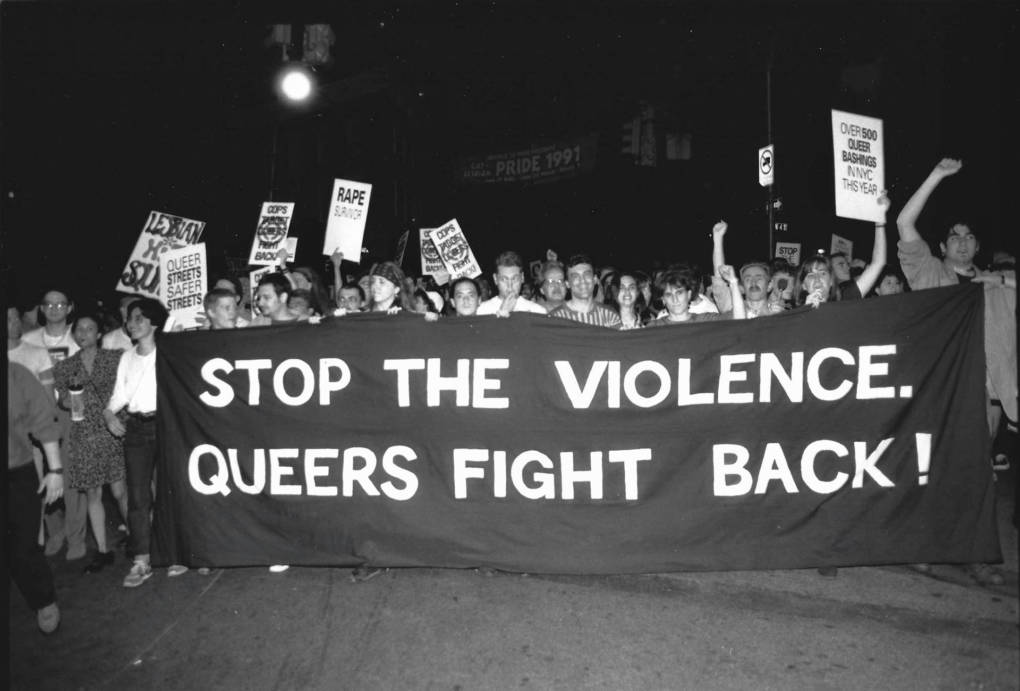
"caption": "Queer Nation activists at a \"Take Back the Night\" march in New York City in 1990.",
"description": "Queer Nation activists at a \"Take Back the Night\" march in New York City in 1990.",
"title": "QN61690-10001",
"credit": "Ellen Neipris",
"status": "inherit",
"isLoading": false,
"fetchFailed": false
},
"arts_13858702": {
"type": "attachments",
"id": "arts_13858702",
"meta": {
"index": "attachments_1716263798",
"site": "arts",
"id": "13858702",
"found": true
},
"parent": 13858699,
"imgSizes": {
"twentyfourteen-full-width": {
"file": "https://ww2.kqed.org/app/uploads/sites/2/2019/05/MyPrideLooksLike_KQED_1920-1038x576.jpg",
"width": 1038,
"mimeType": "image/jpeg",
"height": 576
},
"thumbnail": {
"file": "https://ww2.kqed.org/app/uploads/sites/2/2019/05/MyPrideLooksLike_KQED_1920-160x96.jpg",
"width": 160,
"mimeType": "image/jpeg",
"height": 96
},
"post-thumbnail": {
"file": "https://ww2.kqed.org/app/uploads/sites/2/2019/05/MyPrideLooksLike_KQED_1920-672x372.jpg",
"width": 672,
"mimeType": "image/jpeg",
"height": 372
},
"kqedFullSize": {
"file": "https://ww2.kqed.org/app/uploads/sites/2/2019/05/MyPrideLooksLike_KQED_1920.jpg",
"width": 1920,
"height": 1152
},
"large": {
"file": "https://ww2.kqed.org/app/uploads/sites/2/2019/05/MyPrideLooksLike_KQED_1920-1020x612.jpg",
"width": 1020,
"mimeType": "image/jpeg",
"height": 612
},
"complete_open_graph": {
"file": "https://ww2.kqed.org/app/uploads/sites/2/2019/05/MyPrideLooksLike_KQED_1920-1200x720.jpg",
"width": 1200,
"mimeType": "image/jpeg",
"height": 720
},
"full-width": {
"file": "https://ww2.kqed.org/app/uploads/sites/2/2019/05/MyPrideLooksLike_KQED_1920-1920x1152.jpg",
"width": 1920,
"mimeType": "image/jpeg",
"height": 1152
},
"medium": {
"file": "https://ww2.kqed.org/app/uploads/sites/2/2019/05/MyPrideLooksLike_KQED_1920-800x480.jpg",
"width": 800,
"mimeType": "image/jpeg",
"height": 480
},
"medium_large": {
"file": "https://ww2.kqed.org/app/uploads/sites/2/2019/05/MyPrideLooksLike_KQED_1920-768x461.jpg",
"width": 768,
"mimeType": "image/jpeg",
"height": 461
}
},
"publishDate": 1559332611,
"modified": 1559584536,
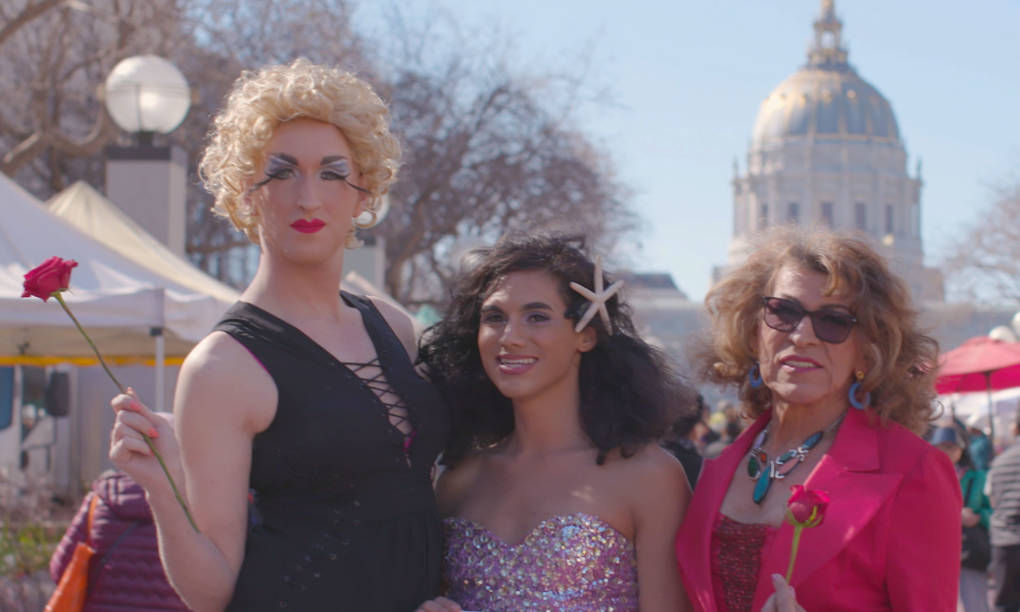
"caption": "Pleasure Bynight, Shane Zaldivar and Donna Personna (L to R) pose in front of San Francisco City Hall ahead of the 2018 play 'The Compton's Cafeteria Riot,' which commemorates the historic LGBTQ+ uprising against police brutality.",
"description": "Pleasure Bynight, Shane Zaldivar and Donna Personna (L to R) pose in front of San Francisco City Hall ahead of the 2018 play 'The Compton's Cafeteria Riot,' which commemorates the historic LGBTQ+ uprising against police brutality.",
"title": "MyPrideLooksLike_KQED_1920",
"credit": "Mike Seely",
"status": "inherit",
"isLoading": false,
"fetchFailed": false
}
},
"audioPlayerReducer": {
"postId": "stream_live",
"isPaused": true,
"isPlaying": false,
"pfsActive": false,
"pledgeModalIsOpen": true,
"playerDrawerIsOpen": false,
"liveAudioPlayStartedAt": 0,
"liveAudioPlayContext": ""
},
"authorsReducer": {
"byline_arts_13867238": {
"type": "authors",
"id": "byline_arts_13867238",
"meta": {
"override": true
},
"slug": "byline_arts_13867238",
"name": "Karen Grigsby Bates",
"isLoading": false
},
"byline_arts_13864089": {
"type": "authors",
"id": "byline_arts_13864089",
"meta": {
"override": true
},
"slug": "byline_arts_13864089",
"name": "Terry Gross",
"isLoading": false
},
"byline_arts_13858167": {
"type": "authors",
"id": "byline_arts_13858167",
"meta": {
"override": true
},
"slug": "byline_arts_13858167",
"name": "Caitlin Donohue",
"isLoading": false
},
"ehapsis": {
"type": "authors",
"id": "27",
"meta": {
"index": "authors_1716337520",
"id": "27",
"found": true
},
"name": "Emmanuel Hapsis",
"firstName": "Emmanuel",
"lastName": "Hapsis",
"slug": "ehapsis",
"email": "ehapsis@kqed.org",
"display_author_email": false,
"staff_mastheads": [],
"title": "KQED Contributor",
"bio": "Emmanuel Hapsis is the creator and editor of KQED Pop and also the host of \u003cem>\u003ca href=\"https://itunes.apple.com/us/podcast/the-cooler/id1041117499?mt=2\">The Cooler\u003c/a>\u003c/em>. He studied creative writing at University of Maryland and went on to receive his MFA in the field from California College of the Arts. In his free time, he sings his heart out at karaoke.",
"avatar": "https://secure.gravatar.com/avatar/6302b6f7ef8b2dcd3acd9e2c6bc570b7?s=600&d=blank&r=g",
"twitter": "xcusemybeauty",
"facebook": null,
"instagram": null,
"linkedin": null,
"sites": [
{
"site": "arts",
"roles": [
"Contributor",
"subscriber"
]
},
{
"site": "pop",
"roles": [
"contributor"
]
}
],
"headData": {
"title": "Emmanuel Hapsis | KQED",
"description": "KQED Contributor",
"ogImgSrc": "https://secure.gravatar.com/avatar/6302b6f7ef8b2dcd3acd9e2c6bc570b7?s=600&d=blank&r=g",
"twImgSrc": "https://secure.gravatar.com/avatar/6302b6f7ef8b2dcd3acd9e2c6bc570b7?s=600&d=blank&r=g"
},
"isLoading": false,
"link": "/author/ehapsis"
},
"shotchkiss": {
"type": "authors",
"id": "61",
"meta": {
"index": "authors_1716337520",
"id": "61",
"found": true
},
"name": "Sarah Hotchkiss",
"firstName": "Sarah",
"lastName": "Hotchkiss",
"slug": "shotchkiss",
"email": "shotchkiss@kqed.org",
"display_author_email": true,
"staff_mastheads": [
"arts"
],
"title": "Senior Editor",
"bio": "Sarah Hotchkiss is a San Francisco \u003ca href=\"http://www.sarahhotchkiss.com\">artist\u003c/a> and arts writer. In 2019, she received the Dorothea & Leo Rabkin Foundation grant for visual art journalism and in 2020 she received a Society of Professional Journalists, Northern California award for excellence in arts and culture reporting.",
"avatar": "https://secure.gravatar.com/avatar/bc662df144b3d27fd8b1b6f1c2a420d34e91e53154d411bb7ad353cc8b6cea8d?s=600&d=blank&r=g",
"twitter": null,
"bluesky": null,
"facebook": null,
"instagram": null,
"linkedin": null,
"sites": [
{
"site": "",
"roles": [
"editor"
]
},
{
"site": "arts",
"roles": [
"Contributor",
"administrator"
]
},
{
"site": "artschool",
"roles": [
"administrator"
]
},
{
"site": "news",
"roles": [
"editor"
]
},
{
"site": "pop",
"roles": [
"administrator"
]
},
{
"site": "bayareabites",
"roles": [
"editor"
]
},
{
"site": "spark",
"roles": [
"editor"
]
},
{
"site": "checkplease",
"roles": [
"editor"
]
}
],
"headData": {
"title": "Sarah Hotchkiss | KQED",
"description": "Senior Editor",
"ogImgSrc": "https://secure.gravatar.com/avatar/bc662df144b3d27fd8b1b6f1c2a420d34e91e53154d411bb7ad353cc8b6cea8d?s=600&d=blank&r=g",
"twImgSrc": "https://secure.gravatar.com/avatar/bc662df144b3d27fd8b1b6f1c2a420d34e91e53154d411bb7ad353cc8b6cea8d?s=600&d=blank&r=g"
},
"isLoading": false,
"link": "/author/shotchkiss"
},
"kqedarts": {
"type": "authors",
"id": "92",
"meta": {
"index": "authors_1716337520",
"id": "92",
"found": true
},
"name": "KQED Arts",
"firstName": "KQED",
"lastName": "Arts",
"slug": "kqedarts",
"email": "arts@kqed.org",
"display_author_email": false,
"staff_mastheads": [],
"title": "KQED Staff",
"bio": null,
"avatar": "https://secure.gravatar.com/avatar/321c9ebfeb7736f9e55366a6d3399ab0?s=600&d=blank&r=g",
"twitter": null,
"facebook": null,
"instagram": "https://www.instagram.com/kqed_arts/",
"linkedin": null,
"sites": [
{
"site": "arts",
"roles": [
"contributor"
]
},
{
"site": "pop",
"roles": [
"contributor"
]
},
{
"site": "science",
"roles": [
"author"
]
},
{
"site": "food",
"roles": [
"contributor"
]
}
],
"headData": {
"title": "KQED Arts | KQED",
"description": "KQED Staff",
"ogImgSrc": "https://secure.gravatar.com/avatar/321c9ebfeb7736f9e55366a6d3399ab0?s=600&d=blank&r=g",
"twImgSrc": "https://secure.gravatar.com/avatar/321c9ebfeb7736f9e55366a6d3399ab0?s=600&d=blank&r=g"
},
"isLoading": false,
"link": "/author/kqedarts"
},
"slefebvre": {
"type": "authors",
"id": "11091",
"meta": {
"index": "authors_1716337520",
"id": "11091",
"found": true
},
"name": "Sam Lefebvre",
"firstName": "Sam",
"lastName": "Lefebvre",
"slug": "slefebvre",
"email": "sdlefebvre@gmail.com",
"display_author_email": false,
"staff_mastheads": [],
"title": "KQED Contributor",
"bio": "Sam Lefebvre is an award-winning reporter at KQED Arts. He has worked as an editor and columnist at the \u003cem>East Bay Express\u003c/em>, \u003cem>SF Weekly \u003c/em>and Impose Magazine, and his journalism and criticism has appeared in \u003cem>The New York Times\u003c/em>, the Guardian and Pitchfork.",
"avatar": "https://secure.gravatar.com/avatar/49d39b42930b77fb13784ddd9fa63fe780666b71bf289368509dba576b64e69b?s=600&d=blank&r=g",
"twitter": "Lefebvre_Sam",
"bluesky": null,
"facebook": null,
"instagram": null,
"linkedin": null,
"sites": [
{
"site": "arts",
"roles": [
"subscriber"
]
},
{
"site": "news",
"roles": [
"author"
]
}
],
"headData": {
"title": "Sam Lefebvre | KQED",
"description": "KQED Contributor",
"ogImgSrc": "https://secure.gravatar.com/avatar/49d39b42930b77fb13784ddd9fa63fe780666b71bf289368509dba576b64e69b?s=600&d=blank&r=g",
"twImgSrc": "https://secure.gravatar.com/avatar/49d39b42930b77fb13784ddd9fa63fe780666b71bf289368509dba576b64e69b?s=600&d=blank&r=g"
},
"isLoading": false,
"link": "/author/slefebvre"
},
"jhesig": {
"type": "authors",
"id": "11333",
"meta": {
"index": "authors_1716337520",
"id": "11333",
"found": true
},
"name": "Janelle Hessig",
"firstName": "Janelle",
"lastName": "Hessig",
"slug": "jhesig",
"email": "jhessig@kqed.org",
"display_author_email": false,
"staff_mastheads": [],
"title": "KQED Contributor",
"bio": null,
"avatar": "https://secure.gravatar.com/avatar/27dd6e3cd88f82541593bd6d8f2aec4a?s=600&d=mm&r=g",
"twitter": null,
"facebook": null,
"instagram": null,
"linkedin": null,
"sites": [
{
"site": "arts",
"roles": []
},
{
"site": "food",
"roles": []
},
{
"site": "filmschoolshorts",
"roles": [
"editor"
]
}
],
"headData": {
"title": "Janelle Hessig | KQED",
"description": "KQED Contributor",
"ogImgSrc": "https://secure.gravatar.com/avatar/27dd6e3cd88f82541593bd6d8f2aec4a?s=600&d=mm&r=g",
"twImgSrc": "https://secure.gravatar.com/avatar/27dd6e3cd88f82541593bd6d8f2aec4a?s=600&d=mm&r=g"
},
"isLoading": false,
"link": "/author/jhesig"
},
"nvoynovskaya": {
"type": "authors",
"id": "11387",
"meta": {
"index": "authors_1716337520",
"id": "11387",
"found": true
},
"name": "Nastia Voynovskaya",
"firstName": "Nastia",
"lastName": "Voynovskaya",
"slug": "nvoynovskaya",
"email": "nvoynovskaya@kqed.org",
"display_author_email": false,
"staff_mastheads": [
"arts"
],
"title": "Editor and reporter",
"bio": "Nastia Voynovskaya is a reporter, editor and host at KQED Arts & Culture. She's been covering the arts in the Bay Area for over a decade, with a focus on music, queer culture, labor issues and grassroots organizing. She has edited KQED story series such as Trans Bay: A History of San Francisco's Gender-Diverse Community, and co-created KQED's Bay Area hip-hop history project, That's My Word. Nastia's work has been recognized by the Society of Professional Journalists and San Francisco Press Club. She regularly appears on podcasts and radio programs, including NPR's All Songs Considered, and hosts live events where music, culture and conversation meet.",
"avatar": "https://secure.gravatar.com/avatar/5025ee460e5a85d69ca20ea6c6f2f80d7e17795c828f61ea3aecfcd924e9042e?s=600&d=blank&r=g",
"twitter": null,
"bluesky": null,
"facebook": null,
"instagram": "https://www.instagram.com/nananastia/",
"linkedin": null,
"sites": [
{
"site": "",
"roles": [
"editor"
]
},
{
"site": "arts",
"roles": [
"administrator"
]
},
{
"site": "news",
"roles": [
"editor"
]
},
{
"site": "pop",
"roles": [
"administrator"
]
},
{
"site": "bayareabites",
"roles": [
"editor"
]
},
{
"site": "podcasts",
"roles": [
"editor"
]
},
{
"site": "hiphop",
"roles": [
"editor"
]
}
],
"headData": {
"title": "Nastia Voynovskaya | KQED",
"description": "Editor and reporter",
"ogImgSrc": "https://secure.gravatar.com/avatar/5025ee460e5a85d69ca20ea6c6f2f80d7e17795c828f61ea3aecfcd924e9042e?s=600&d=blank&r=g",
"twImgSrc": "https://secure.gravatar.com/avatar/5025ee460e5a85d69ca20ea6c6f2f80d7e17795c828f61ea3aecfcd924e9042e?s=600&d=blank&r=g"
},
"isLoading": false,
"link": "/author/nvoynovskaya"
},
"vesposito": {
"type": "authors",
"id": "11934",
"meta": {
"index": "authors_1716337520",
"id": "11934",
"found": true
},
"name": "Veronica Esposito",
"firstName": "Veronica",
"lastName": "Esposito",
"slug": "vesposito",
"email": "ladoppiavitadinica@gmail.com",
"display_author_email": false,
"staff_mastheads": [],
"title": "KQED Contributor",
"bio": "Veronica Esposito is a Licensed Marriage and Family Therapist, as well as a freelance journalist covering the arts, lifestyle, and social justice for venues including The Guardian, KQED, World Literature Today, and many others. Her writing has appeared in dozens of venues, and she has published four books. As a therapist, she specializes in supporting and advocating for trans individuals, and more generally helps clients process and overcome traumatic histories, manage life transitions, and tell their own story.",
"avatar": "https://secure.gravatar.com/avatar/503a7126ebd8cb299fb632f755dac767?s=600&d=blank&r=g",
"twitter": null,
"facebook": null,
"instagram": null,
"linkedin": null,
"sites": [
{
"site": "arts",
"roles": [
"author"
]
}
],
"headData": {
"title": "Veronica Esposito | KQED",
"description": "KQED Contributor",
"ogImgSrc": "https://secure.gravatar.com/avatar/503a7126ebd8cb299fb632f755dac767?s=600&d=blank&r=g",
"twImgSrc": "https://secure.gravatar.com/avatar/503a7126ebd8cb299fb632f755dac767?s=600&d=blank&r=g"
},
"isLoading": false,
"link": "/author/vesposito"
}
},
"pagesReducer": {
"arts_tag_lgbtq": {
"type": "terms",
"id": "arts_3226",
"meta": {
"index": "terms_1716263798",
"site": "arts",
"id": "3226",
"score": 8.28315
},
"name": "LGBTQ+",
"slug": "lgbtq",
"taxonomy": "tag",
"description": null,
"featImg": null,
"headData": {
"title": "LGBTQ+ | KQED Arts",
"description": null,
"ogTitle": null,
"ogDescription": null,
"ogImgId": null,
"twTitle": null,
"twDescription": null,
"twImgId": null
},
"ttid": 3238,
"isLoading": false,
"title": "LGBTQ+",
"pageMeta": {
"site": "arts",
"WpPageTemplate": "page-topic-editorial",
"currentPage": 22
},
"blocks": [
{
"blockName": "kqed/post-list",
"attrs": {
"layout": "cardArticle2",
"query": "posts/arts?tag=lgbtq",
"seeMore": false,
"paginated": true,
"page": 22
}
},
{
"blockName": "kqed/ad"
}
]
}
},
"pfsSessionReducer": {},
"postsReducer": {
"stream_live": {
"type": "live",
"id": "stream_live",
"audioUrl": "https://streams.kqed.org/kqedradio",
"title": "Live Stream",
"excerpt": "Live Stream information currently unavailable.",
"link": "/radio",
"featImg": "",
"label": {
"name": "KQED Live",
"link": "/"
}
},
"stream_kqedNewscast": {
"type": "posts",
"id": "stream_kqedNewscast",
"audioUrl": "https://www.kqed.org/.stream/anon/radio/RDnews/newscast.mp3?_=1",
"title": "KQED Newscast",
"featImg": "",
"label": {
"name": "88.5 FM",
"link": "/"
}
},
"arts_13867238": {
"type": "posts",
"id": "arts_13867238",
"meta": {
"index": "posts_1716263798",
"site": "arts",
"id": "13867238",
"score": null,
"sort": [
1569534874000
]
},
"parent": 0,
"labelTerm": {
"site": "arts",
"term": 137
},
"blocks": [],
"publishDate": 1569534874,
"format": "standard",
"title": "'I Will Survive' Saves Marginalized People a Spot on the Dance Floor",
"headTitle": "‘I Will Survive’ Saves Marginalized People a Spot on the Dance Floor | KQED",
"content": "\u003cp>\u003cem>This story is part of American Anthem, a yearlong series on songs that rouse, unite, celebrate and call to action. Find more at\u003c/em> \u003ca href=\"https://www.npr.org/series/622671774/american-anthem\" target=\"_blank\" rel=\"noopener\">NPR.org/Anthem\u003c/a>.\u003c/p>\n\u003chr>\n\u003cp>Gloria Gaynor has said she’s pretty sure her signature song, the 1978 disco smash “\u003ca href=\"https://www.youtube.com/watch?v=8f4mytaXttw\" target=\"_blank\" rel=\"noopener\">I Will Survive\u003c/a>,” was created just for her. But the singer had to go through a lot before she and the song found each other.\u003c/p>\n\u003cp>Her mother had died a couple years earlier, and Gaynor was still coping with that loss. Then her record label, Polydor, told her they were declining to renew her contract: She’d had a hit in 1975 with her cover of The Jackson 5’s “Never Can Say Goodbye,” but nothing huge since then, and they’d decided she was no longer a good investment. Gaynor soldiered on, but was slogging through a fog of grief and anxiety.\u003c/p>\n\u003cp>Shortly after Polydor told her she was being dropped, Gaynor slipped onstage during a performance at New York’s Beacon Theatre. She finished the performance, then went out to breakfast, and finally, home to bed. “I woke up the next morning paralyzed from the waist down,” she said in a \u003ca href=\"https://www.youtube.com/watch?v=7-Say4_E91w\" target=\"_blank\" rel=\"noopener\">2013 interview\u003c/a> with Audible, adding: “I’ve always believed that God allowed that to happen so he could get my attention.”\u003c/p>\n\u003cp>Attention secured, Gaynor focused on her recovery. She endured spinal surgery and a three-month hospital stay. When she was released, she left the hospital in an unwieldy back brace that she wore for many more months.\u003c/p>\n\u003cp>[ad fullwidth]\u003c/p>\n\u003cp>Finally, after a few rough years, her luck began to turn. Polydor changed presidents, and the new guy was a fan. In fact, he was pretty sure he had a comeback hit for Gaynor: a song that a South African girl group had recently done well with, called “\u003ca href=\"https://www.youtube.com/watch?v=0sUhUO9Nny0\" target=\"_blank\" rel=\"noopener\">Substitute\u003c/a>.”\u003c/p>\n\u003cp>As it turned out, Polydor’s new president was unique in his enthusiasm for the record. In his eagerness to get it out, he cut a deal: Producer-songwriters Freddie Perren and Dino Fekaris agreed to record “Substitute” if they could put one of their own songs on the B-side of the single. They invited Gaynor in for a meeting to hear what kinds of lyrics felt most comfortable with performing. In the interview with Audible, she described what happened next.\u003c/p>\n\u003cp>“They said, ‘We think you’re the one that we’ve been waiting for to record this song that we wrote a couple of years ago,’ ” Gaynor explained. “When I read the lyrics, I realized the reason they’d been waiting for me to record that song was that God had given that song to them for them to set aside, waiting for him to get everything in order for me to meet up with them. And that song was ‘I Will Survive.'”\u003c/p>\n\u003cp>https://youtu.be/8f4mytaXttw\u003c/p>\n\u003cp>Drummer James Gadson, who in his career has backed up Marvin Gaye and Bill Withers and been featured on hundreds of hit records, was part of the studio band put together for the session. He tells NPR they spent hours laying down tracks for “Substitute,” and were about ready to wrap things up when Freddie Perren asked them to stay a little longer and do one more song.\u003c/p>\n\u003cp>“He said, ‘Well, man, I know everybody’s tired, but let’s just do this one song. In fact, I’ll do the intro.’ He was a great producer, played keyboards,” Gadson says, describing the arpeggio Perren played that became the song’s unmistakable opening sting.\u003c/p>\n\u003cp>“We just cut it and that was it, went home,” he says. “Three weeks later: \u003cem>bam\u003c/em>.”\u003c/p>\n\u003cp>Gaynor took advance copies of the single to Studio 54, the mecca of US discotheques — she’d often sung there, and knew the DJ. “He played it while we were standing there,” she said \u003ca href=\"https://www.npr.org/sections/world-cafe/2019/07/17/742634817/gloria-gaynor-disco-queen-goes-gospel\" target=\"_blank\" rel=\"noopener\">in an interview\u003c/a> with \u003cem>World Cafe\u003c/em> on NPR member station WXPN. “The audience immediately loved it, which told me this is a hit song. New Yorkers don’t immediately love \u003cem>anything\u003c/em> — they are so jaded.” The DJ liked it too — enough that he agreed to take copies and pass them along to other DJs.\u003c/p>\n\u003cp>Released in October 1978, “I Will Survive” was a near-instant hit, eclipsing the planned comeback song on the other side of the record. Within weeks it was playing everywhere, including Europe, where Gaynor was a longtime favorite. The song also coincided with the very beginning of the AIDS crisis, and found a particular resonance within the LGBT community.\u003c/p>\n\u003cp>Karen Tongson, a professor at the University of Southern California who often lectures on pop culture, says she remembers first hearing the song in the 1990s through its cover versions, then learning the history behind Gaynor’s original.\u003c/p>\n\u003cp>“It was especially significant for me, because I’d just come out,” she recalls. “The song had long associations with the LGBT community as an anthem … but in my newfound activism, in my new awareness around the different struggles the community faced — particularly around the AIDS crisis — I heard the song with new ears.” [aside postid='arts_13854644']\u003c/p>\n\u003cp>She wasn’t the only one. Beyond gay communities, “I Will Survive” has become a global anthem for those who have felt politically oppressed, physically challenged or otherwise pushed to society’s margins.\u003c/p>\n\u003cp>That includes survivors of domestic abuse, for whom Gloria Gaynor herself has become a spokesperson. Cindy Southworth heads the National Network to End Domestic Violence, where Gaynor is an advocate; she remembers when the singer appeared at the organization’s global conference in 2012.\u003c/p>\n\u003cp>“She sang her song,” Southworth says, “and singing along with her were 1,500 advocates from across the globe — many of them survivors themselves, singing in beautiful accents.”\u003c/p>\n\u003cp>Today, it’s hard to go through life without hearing some version of “I Will Survive.” Its operatic sweep makes it perfect for divas; Diana Ross, Aretha Franklin and Miss Piggy have all had a go. But it’s also been covered by Johnny Mathis and Cake, performed by marching bands and symphony orchestras.\u003c/p>\n\u003cp>Karen Tongson says it’s the progression of the lyrics from despair to empowerment that make “I Will Survive” a deeply personal song for a lot of people: “That chorus is like coming out of the dark and into the light.” Set to a driving beat, its message is one that anyone who hears it can claim as their own. It is an anthem for people who have survived whatever life has thrown at them.\u003c/p>\n\u003cp>[ad floatright]\u003c/p>\n\u003cp>\u003cem>Gloria Gaynor interview audio provided courtesy of Audible and WXPN’s World Café.\u003c/em>\u003c/p>\n\u003cdiv class=\"fullattribution\">Copyright 2019 \u003ca href=\"http://npr.org\" target=\"_blank\" rel=\"noopener\">NPR\u003c/a>.\u003c/div>\n\n",
"stats": {
"hasVideo": false,
"hasChartOrMap": false,
"hasAudio": false,
"hasPolis": false,
"wordCount": 1180,
"hasGoogleForm": false,
"hasGallery": false,
"hasHearkenModule": false,
"iframeSrcs": [],
"paragraphCount": 23
},
"modified": 1705022076,
"excerpt": "Recorded after a traumatic period in the singer's life, Gloria Gaynor's disco hit quickly found its true audience: LGBT communities, survivors of domestic violence and others pushed aside by society.",
"headData": {
"twImgId": "",
"twTitle": "",
"ogTitle": "",
"ogImgId": "",
"twDescription": "",
"description": "Recorded after a traumatic period in the singer's life, Gloria Gaynor's disco hit quickly found its true audience: LGBT communities, survivors of domestic violence and others pushed aside by society.",
"title": "'I Will Survive' Saves Marginalized People a Spot on the Dance Floor | KQED",
"ogDescription": "",
"schema": {
"@context": "https://schema.org",
"@type": "Article",
"headline": "'I Will Survive' Saves Marginalized People a Spot on the Dance Floor",
"datePublished": "2019-09-26T14:54:34-07:00",
"dateModified": "2024-01-11T17:14:36-08:00",
"image": "https://cdn.kqed.org/wp-content/uploads/2020/02/KQED-OG-Image@1x.png"
}
},
"guestAuthors": [],
"slug": "i-will-survive-saves-marginalized-people-a-spot-on-the-dance-floor",
"status": "publish",
"nprApiLink": "http://api.npr.org/query?id=763518201&apiKey=MDAxOTAwOTE4MDEyMTkxMDAzNjczZDljZA004",
"templateType": "standard",
"nprStoryDate": "Tue, 24 Sep 2019 16:24:00 -0400",
"nprLastModifiedDate": "Tue, 24 Sep 2019 19:32:53 -0400",
"featuredImageType": "standard",
"nprHtmlLink": "https://www.npr.org/2019/09/24/763518201/gloria-gaynor-i-will-survive-american-anthem?ft=nprml&f=763518201",
"nprAudio": "https://ondemand.npr.org/anon.npr-mp3/npr/atc/2019/09/20190924_atc_american_anthem-i_will_survive.mp3?orgId=1&topicId=613820055&aggIds=622671774&d=438&p=2&story=763518201&ft=nprml&f=763518201",
"nprImageAgency": "Getty Images",
"nprAudioM3u": "http://api.npr.org/m3u/1764008892-54efab.m3u?orgId=1&topicId=613820055&aggIds=622671774&d=438&p=2&story=763518201&ft=nprml&f=763518201",
"nprStoryId": "763518201",
"nprByline": "Karen Grigsby Bates",
"sticky": false,
"audioTrackLength": 438,
"nprImageCredit": "Michael Ochs Archives",
"nprRetrievedStory": "1",
"nprPubDate": "Tue, 24 Sep 2019 19:39:00 -0400",
"path": "/arts/13867238/i-will-survive-saves-marginalized-people-a-spot-on-the-dance-floor",
"audioUrl": "https://ondemand.npr.org/anon.npr-mp3/npr/atc/2019/09/20190924_atc_american_anthem-i_will_survive.mp3?orgId=1&topicId=613820055&aggIds=622671774&d=438&p=2&story=763518201&ft=nprml&f=763518201",
"parsedContent": [
{
"type": "contentString",
"content": "\u003cdiv class=\"post-body\">\u003cp>\u003cp>\u003cem>This story is part of American Anthem, a yearlong series on songs that rouse, unite, celebrate and call to action. Find more at\u003c/em> \u003ca href=\"https://www.npr.org/series/622671774/american-anthem\" target=\"_blank\" rel=\"noopener\">NPR.org/Anthem\u003c/a>.\u003c/p>\n\u003chr>\n\u003cp>Gloria Gaynor has said she’s pretty sure her signature song, the 1978 disco smash “\u003ca href=\"https://www.youtube.com/watch?v=8f4mytaXttw\" target=\"_blank\" rel=\"noopener\">I Will Survive\u003c/a>,” was created just for her. But the singer had to go through a lot before she and the song found each other.\u003c/p>\n\u003cp>Her mother had died a couple years earlier, and Gaynor was still coping with that loss. Then her record label, Polydor, told her they were declining to renew her contract: She’d had a hit in 1975 with her cover of The Jackson 5’s “Never Can Say Goodbye,” but nothing huge since then, and they’d decided she was no longer a good investment. Gaynor soldiered on, but was slogging through a fog of grief and anxiety.\u003c/p>\n\u003cp>Shortly after Polydor told her she was being dropped, Gaynor slipped onstage during a performance at New York’s Beacon Theatre. She finished the performance, then went out to breakfast, and finally, home to bed. “I woke up the next morning paralyzed from the waist down,” she said in a \u003ca href=\"https://www.youtube.com/watch?v=7-Say4_E91w\" target=\"_blank\" rel=\"noopener\">2013 interview\u003c/a> with Audible, adding: “I’ve always believed that God allowed that to happen so he could get my attention.”\u003c/p>\n\u003cp>Attention secured, Gaynor focused on her recovery. She endured spinal surgery and a three-month hospital stay. When she was released, she left the hospital in an unwieldy back brace that she wore for many more months.\u003c/p>\n\u003cp>\u003c/p>\u003c/div>",
"attributes": {
"named": {},
"numeric": []
}
},
{
"type": "component",
"content": "",
"name": "ad",
"attributes": {
"named": {
"label": "fullwidth"
},
"numeric": [
"fullwidth"
]
}
},
{
"type": "contentString",
"content": "\u003cdiv class=\"post-body\">\u003cp>\u003c/p>\n\u003cp>Finally, after a few rough years, her luck began to turn. Polydor changed presidents, and the new guy was a fan. In fact, he was pretty sure he had a comeback hit for Gaynor: a song that a South African girl group had recently done well with, called “\u003ca href=\"https://www.youtube.com/watch?v=0sUhUO9Nny0\" target=\"_blank\" rel=\"noopener\">Substitute\u003c/a>.”\u003c/p>\n\u003cp>As it turned out, Polydor’s new president was unique in his enthusiasm for the record. In his eagerness to get it out, he cut a deal: Producer-songwriters Freddie Perren and Dino Fekaris agreed to record “Substitute” if they could put one of their own songs on the B-side of the single. They invited Gaynor in for a meeting to hear what kinds of lyrics felt most comfortable with performing. In the interview with Audible, she described what happened next.\u003c/p>\n\u003cp>“They said, ‘We think you’re the one that we’ve been waiting for to record this song that we wrote a couple of years ago,’ ” Gaynor explained. “When I read the lyrics, I realized the reason they’d been waiting for me to record that song was that God had given that song to them for them to set aside, waiting for him to get everything in order for me to meet up with them. And that song was ‘I Will Survive.'”\u003c/p>\u003c/p>\u003cp>\u003cspan class='utils-parseShortcode-shortcodes-__youtubeShortcode__embedYoutube'>\n \u003cspan class='utils-parseShortcode-shortcodes-__youtubeShortcode__embedYoutubeInside'>\n \u003ciframe\n loading='lazy'\n class='utils-parseShortcode-shortcodes-__youtubeShortcode__youtubePlayer'\n type='text/html'\n src='//www.youtube.com/embed/8f4mytaXttw'\n title='//www.youtube.com/embed/8f4mytaXttw'\n allowfullscreen='true'\n style='border:0;'>\u003c/iframe>\n \u003c/span>\n \u003c/span>\u003c/p>\u003cp>\u003cp>Drummer James Gadson, who in his career has backed up Marvin Gaye and Bill Withers and been featured on hundreds of hit records, was part of the studio band put together for the session. He tells NPR they spent hours laying down tracks for “Substitute,” and were about ready to wrap things up when Freddie Perren asked them to stay a little longer and do one more song.\u003c/p>\n\u003cp>“He said, ‘Well, man, I know everybody’s tired, but let’s just do this one song. In fact, I’ll do the intro.’ He was a great producer, played keyboards,” Gadson says, describing the arpeggio Perren played that became the song’s unmistakable opening sting.\u003c/p>\n\u003cp>“We just cut it and that was it, went home,” he says. “Three weeks later: \u003cem>bam\u003c/em>.”\u003c/p>\n\u003cp>Gaynor took advance copies of the single to Studio 54, the mecca of US discotheques — she’d often sung there, and knew the DJ. “He played it while we were standing there,” she said \u003ca href=\"https://www.npr.org/sections/world-cafe/2019/07/17/742634817/gloria-gaynor-disco-queen-goes-gospel\" target=\"_blank\" rel=\"noopener\">in an interview\u003c/a> with \u003cem>World Cafe\u003c/em> on NPR member station WXPN. “The audience immediately loved it, which told me this is a hit song. New Yorkers don’t immediately love \u003cem>anything\u003c/em> — they are so jaded.” The DJ liked it too — enough that he agreed to take copies and pass them along to other DJs.\u003c/p>\n\u003cp>Released in October 1978, “I Will Survive” was a near-instant hit, eclipsing the planned comeback song on the other side of the record. Within weeks it was playing everywhere, including Europe, where Gaynor was a longtime favorite. The song also coincided with the very beginning of the AIDS crisis, and found a particular resonance within the LGBT community.\u003c/p>\n\u003cp>Karen Tongson, a professor at the University of Southern California who often lectures on pop culture, says she remembers first hearing the song in the 1990s through its cover versions, then learning the history behind Gaynor’s original.\u003c/p>\n\u003cp>“It was especially significant for me, because I’d just come out,” she recalls. “The song had long associations with the LGBT community as an anthem … but in my newfound activism, in my new awareness around the different struggles the community faced — particularly around the AIDS crisis — I heard the song with new ears.” \u003c/p>\u003c/div>",
"attributes": {
"named": {},
"numeric": []
}
},
{
"type": "component",
"content": "",
"name": "aside",
"attributes": {
"named": {
"postid": "arts_13854644",
"label": ""
},
"numeric": []
}
},
{
"type": "contentString",
"content": "\u003cdiv class=\"post-body\">\u003cp>\u003c/p>\n\u003cp>She wasn’t the only one. Beyond gay communities, “I Will Survive” has become a global anthem for those who have felt politically oppressed, physically challenged or otherwise pushed to society’s margins.\u003c/p>\n\u003cp>That includes survivors of domestic abuse, for whom Gloria Gaynor herself has become a spokesperson. Cindy Southworth heads the National Network to End Domestic Violence, where Gaynor is an advocate; she remembers when the singer appeared at the organization’s global conference in 2012.\u003c/p>\n\u003cp>“She sang her song,” Southworth says, “and singing along with her were 1,500 advocates from across the globe — many of them survivors themselves, singing in beautiful accents.”\u003c/p>\n\u003cp>Today, it’s hard to go through life without hearing some version of “I Will Survive.” Its operatic sweep makes it perfect for divas; Diana Ross, Aretha Franklin and Miss Piggy have all had a go. But it’s also been covered by Johnny Mathis and Cake, performed by marching bands and symphony orchestras.\u003c/p>\n\u003cp>Karen Tongson says it’s the progression of the lyrics from despair to empowerment that make “I Will Survive” a deeply personal song for a lot of people: “That chorus is like coming out of the dark and into the light.” Set to a driving beat, its message is one that anyone who hears it can claim as their own. It is an anthem for people who have survived whatever life has thrown at them.\u003c/p>\n\u003cp>\u003c/p>\u003c/div>",
"attributes": {
"named": {},
"numeric": []
}
},
{
"type": "component",
"content": "",
"name": "ad",
"attributes": {
"named": {
"label": "floatright"
},
"numeric": [
"floatright"
]
}
},
{
"type": "contentString",
"content": "\u003cdiv class=\"post-body\">\u003cp>\u003c/p>\n\u003cp>\u003cem>Gloria Gaynor interview audio provided courtesy of Audible and WXPN’s World Café.\u003c/em>\u003c/p>\n\u003cdiv class=\"fullattribution\">Copyright 2019 \u003ca href=\"http://npr.org\" target=\"_blank\" rel=\"noopener\">NPR\u003c/a>.\u003c/div>\n\n\u003c/div>\u003c/p>",
"attributes": {
"named": {},
"numeric": []
}
}
],
"link": "/arts/13867238/i-will-survive-saves-marginalized-people-a-spot-on-the-dance-floor",
"authors": [
"byline_arts_13867238"
],
"categories": [
"arts_69"
],
"tags": [
"arts_3226"
],
"affiliates": [
"arts_137"
],
"featImg": "arts_13867239",
"label": "arts_137"
},
"arts_13866690": {
"type": "posts",
"id": "arts_13866690",
"meta": {
"index": "posts_1716263798",
"site": "arts",
"id": "13866690",
"score": null,
"sort": [
1568910163000
]
},
"guestAuthors": [],
"slug": "is-there-anything-more-queer-than-classic-horror",
"title": "Is There Anything More Queer Than Classic Horror?",
"publishDate": 1568910163,
"format": "standard",
"headTitle": "Is There Anything More Queer Than Classic Horror? | KQED",
"labelTerm": {
"term": 140,
"site": "arts"
},
"content": "\u003cp>Capes, transformations, amazing entrances—is there anything more queer than classic horror?\u003c/p>\n\u003cp>How about when horror is presented in comics form, a medium with few boundaries and a long history of cultural subversion? Editors William O. Tyler and Justin Hall (\u003cem>No Straight Lines: Four Decades of Queer Comics\u003c/em>) have conjured a rogue’s gallery of queer cartoonists for a brand-new anthology called \u003cem>Theater of Terror: Revenge of the Queers\u003c/em>, celebrated in a launch party Sept. 25.\u003c/p>\n\u003cp>With a cover that recalls ’50s EC Comics like \u003cem>Tales From the Crypt\u003c/em>, the book weighs in at a hefty 272 pages full of gore and glamour. Art imitates life as San Francisco’s favorite midnight movie drag queen impresario Peaches Christ serves as the book’s ghoulish hostess, haunting a post-apocalyptic Castro Theatre where she forces uninvited guests to watch the stories unfold.\u003c/p>\n\u003cp>\u003cimg loading=\"lazy\" decoding=\"async\" src=\"https://ww2.kqed.org/arts/wp-content/uploads/sites/2/2019/09/TheaterofTerror-800x450.jpg\" alt=\"Art from "Sanguine," by Emeric Kennard, from 'Theater of Terror: Revenge of the Queers.'\" width=\"800\" height=\"450\" class=\"aligncenter size-medium wp-image-13866695\" srcset=\"https://cdn.kqed.org/wp-content/uploads/sites/2/2019/09/TheaterofTerror-800x450.jpg 800w, https://cdn.kqed.org/wp-content/uploads/sites/2/2019/09/TheaterofTerror-160x90.jpg 160w, https://cdn.kqed.org/wp-content/uploads/sites/2/2019/09/TheaterofTerror-768x432.jpg 768w, https://cdn.kqed.org/wp-content/uploads/sites/2/2019/09/TheaterofTerror.jpg 960w\" sizes=\"(max-width: 800px) 100vw, 800px\">\u003c/p>\n\u003cp>In \u003cem>Theater of Terror\u003c/em>, true-life LGBTQ horror, be it cultural oppression or just an especially gnarly date, are transformed into over 30 tales of demons, zombies, and monsters in the closet. Puppy play goes awry during the full moon, a transgender ghost haunts a senator’s estate, and a creepy advance is thwarted with assistance from a Lake Merritt mermaid.\u003c/p>\n\u003cp>[ad fullwidth]\u003c/p>\n\u003cp>Established and emerging cartoonists alike lend their talents: Howard Cruse (\u003cem>Gay Comix\u003c/em>) Lee Marrs (\u003cem>Wimmens Comix\u003c/em>), Mariko Tamaki (\u003cem>This One Summer\u003c/em>), Jennifer Camper (\u003cem>Juicy Mother\u003c/em>), Ed Luce (\u003cem>Wuvable Oaf\u003c/em>), Sina Grace (\u003cem>Self-Obsessed\u003c/em>), and dozens more.\u003c/p>\n\u003cp>For the Hump Day leading into Folsom Street Fair weekend, (the real) Peaches Christ hosts a free evening of author readings from \u003cem>Theater of Terror\u003c/em>, with a performance by drag king goth boy band Nine Inch Males.\u003c/p>\n\u003cp>\u003c/p>\n\u003cp>\u003cem>—Janelle Hessig\u003c/em>\u003c/p>\n\n",
"blocks": [],
"excerpt": "The new anthology 'Theater of Terror: Revenge of the Queers' is celebrated in the Castro.",
"status": "publish",
"parent": 0,
"modified": 1726766205,
"stats": {
"hasAudio": false,
"hasVideo": false,
"hasChartOrMap": false,
"iframeSrcs": [],
"hasGoogleForm": false,
"hasGallery": false,
"hasHearkenModule": false,
"hasPolis": false,
"paragraphCount": 10,
"wordCount": 287
},
"headData": {
"title": "Is There Anything More Queer Than Classic Horror? | KQED",
"description": "The new anthology 'Theater of Terror: Revenge of the Queers' is celebrated in the Castro.",
"ogTitle": "",
"ogDescription": "",
"ogImgId": "",
"twTitle": "",
"twDescription": "",
"twImgId": "",
"schema": {
"@context": "https://schema.org",
"@type": "Article",
"headline": "Is There Anything More Queer Than Classic Horror?",
"datePublished": "2019-09-19T09:22:43-07:00",
"dateModified": "2024-09-19T10:16:45-07:00",
"image": "https://cdn.kqed.org/wp-content/uploads/2020/02/KQED-OG-Image@1x.png"
}
},
"sticky": false,
"templateType": "event",
"featuredImageType": "standard",
"startTime": 1569394800,
"endTime": 1569481200,
"startTimeString": "Sept. 25",
"venueName": "The Strut",
"venueAddress": "470 Castro St., San Francisco",
"eventLink": "https://www.facebook.com/events/strut/theater-of-terror-revenge-of-the-queers-launch-party/223105691959182/",
"path": "/arts/13866690/is-there-anything-more-queer-than-classic-horror",
"audioTrackLength": null,
"parsedContent": [
{
"type": "contentString",
"content": "\u003cdiv class=\"post-body\">\u003cp>\u003cp>Capes, transformations, amazing entrances—is there anything more queer than classic horror?\u003c/p>\n\u003cp>How about when horror is presented in comics form, a medium with few boundaries and a long history of cultural subversion? Editors William O. Tyler and Justin Hall (\u003cem>No Straight Lines: Four Decades of Queer Comics\u003c/em>) have conjured a rogue’s gallery of queer cartoonists for a brand-new anthology called \u003cem>Theater of Terror: Revenge of the Queers\u003c/em>, celebrated in a launch party Sept. 25.\u003c/p>\n\u003cp>With a cover that recalls ’50s EC Comics like \u003cem>Tales From the Crypt\u003c/em>, the book weighs in at a hefty 272 pages full of gore and glamour. Art imitates life as San Francisco’s favorite midnight movie drag queen impresario Peaches Christ serves as the book’s ghoulish hostess, haunting a post-apocalyptic Castro Theatre where she forces uninvited guests to watch the stories unfold.\u003c/p>\n\u003cp>\u003cimg loading=\"lazy\" decoding=\"async\" src=\"https://ww2.kqed.org/arts/wp-content/uploads/sites/2/2019/09/TheaterofTerror-800x450.jpg\" alt=\"Art from "Sanguine," by Emeric Kennard, from 'Theater of Terror: Revenge of the Queers.'\" width=\"800\" height=\"450\" class=\"aligncenter size-medium wp-image-13866695\" srcset=\"https://cdn.kqed.org/wp-content/uploads/sites/2/2019/09/TheaterofTerror-800x450.jpg 800w, https://cdn.kqed.org/wp-content/uploads/sites/2/2019/09/TheaterofTerror-160x90.jpg 160w, https://cdn.kqed.org/wp-content/uploads/sites/2/2019/09/TheaterofTerror-768x432.jpg 768w, https://cdn.kqed.org/wp-content/uploads/sites/2/2019/09/TheaterofTerror.jpg 960w\" sizes=\"(max-width: 800px) 100vw, 800px\">\u003c/p>\n\u003cp>In \u003cem>Theater of Terror\u003c/em>, true-life LGBTQ horror, be it cultural oppression or just an especially gnarly date, are transformed into over 30 tales of demons, zombies, and monsters in the closet. Puppy play goes awry during the full moon, a transgender ghost haunts a senator’s estate, and a creepy advance is thwarted with assistance from a Lake Merritt mermaid.\u003c/p>\n\u003cp>\u003c/p>\u003c/div>",
"attributes": {
"named": {},
"numeric": []
}
},
{
"type": "component",
"content": "",
"name": "ad",
"attributes": {
"named": {
"label": "fullwidth"
},
"numeric": [
"fullwidth"
]
}
},
{
"type": "contentString",
"content": "\u003cdiv class=\"post-body\">\u003cp>\u003c/p>\n\u003cp>Established and emerging cartoonists alike lend their talents: Howard Cruse (\u003cem>Gay Comix\u003c/em>) Lee Marrs (\u003cem>Wimmens Comix\u003c/em>), Mariko Tamaki (\u003cem>This One Summer\u003c/em>), Jennifer Camper (\u003cem>Juicy Mother\u003c/em>), Ed Luce (\u003cem>Wuvable Oaf\u003c/em>), Sina Grace (\u003cem>Self-Obsessed\u003c/em>), and dozens more.\u003c/p>\n\u003cp>For the Hump Day leading into Folsom Street Fair weekend, (the real) Peaches Christ hosts a free evening of author readings from \u003cem>Theater of Terror\u003c/em>, with a performance by drag king goth boy band Nine Inch Males.\u003c/p>\n\u003cp>\u003c/p>\n\u003cp>\u003cem>—Janelle Hessig\u003c/em>\u003c/p>\n\n\u003c/div>\u003c/p>",
"attributes": {
"named": {},
"numeric": []
}
}
],
"link": "/arts/13866690/is-there-anything-more-queer-than-classic-horror",
"authors": [
"11333"
],
"programs": [
"arts_140"
],
"categories": [
"arts_73",
"arts_75",
"arts_967"
],
"tags": [
"arts_3547",
"arts_6476",
"arts_1942",
"arts_5087",
"arts_3226"
],
"featImg": "arts_13866693",
"label": "arts_140"
},
"arts_13864089": {
"type": "posts",
"id": "arts_13864089",
"meta": {
"index": "posts_1716263798",
"site": "arts",
"id": "13864089",
"score": null,
"sort": [
1565810848000
]
},
"guestAuthors": [],
"slug": "janet-mock-on-pose-decriminalizing-sex-work-and-her-life-as-a-trans-teen",
"title": "Janet Mock on 'Pose,' Decriminalizing Sex Work, and Her Life as a Trans Teen",
"publishDate": 1565810848,
"format": "standard",
"headTitle": "Janet Mock on ‘Pose,’ Decriminalizing Sex Work, and Her Life as a Trans Teen | KQED",
"labelTerm": {
"term": 137,
"site": "arts"
},
"content": "\u003cp>Janet Mock remembers when she saw the documentary \u003cem>Paris is Burning\u003c/em> for the first time. She was in 10th grade, living in Hawaii, and had already socially transitioned her gender identity. She was about to embark on her medical transition. \u003c/p>\n\u003cp>“My friend had a VHS that she got from another friend,” Mock says. “It was kind of like this little magic ticket that was passed down to a bunch of us.”\u003c/p>\n\u003cp>\u003ca href=\"https://www.npr.org/sections/therecord/2012/04/23/151218475/the-music-and-meaning-of-paris-is-burning\">Jennie Livingston’s 1990 film\u003c/a> focuses on the gay and transgender drag performers in the underground ball culture in New York City. “It was one of the first times that I got to see people who looked like me, and who represented me and my community, be the centerpiece of a narrative,” Mock says. “I felt so seen for one of the very first times in my life.”\u003c/p>\n\u003cp>https://www.youtube.com/watch?v=o47CwiJLpes\u003c/p>\n\u003cp>That same ball culture she saw in\u003cem> Paris is Burning \u003c/em>would come up again in her career, decades later. After launching a career in journalism, writing two memoirs and becoming a trans activist, Mock made history as the first trans woman of color to write and direct an episode of TV when she joined the production of Ryan Murphy’s series\u003cem> Pose\u003c/em>.\u003c/p>\n\u003cp>[ad fullwidth]\u003c/p>\n\u003cp>The FX series, now in its second season, tells the story of LGBTQ youth in the 1980s and ’90s ball scene—a community mostly populated by black and Latinx people—and the “houses,” or chosen families, that they create as a mechanism for survival.\u003c/p>\n\u003cp>“The fact that I get to go on set and supervise production, write scripts, direct … it’s astounding,” Mock says. “I watch the monitors sometimes … with tears in my eyes, realizing that these were the sort of stories that I was craving as a young person. There’s no over-explaining of our experiences. … It’s just: ‘Welcome to our world.'”\u003c/p>\n\u003cp>https://www.youtube.com/watch?v=2hhcoUnzMZw\u003c/p>\n\u003chr>\n\u003ch3>Interview Highlights\u003c/h3>\n\u003cp>\u003cstrong>On ball culture \u003c/strong>\u003c/p>\n\u003cp>The ball culture is a space started in uptown Manhattan, in Harlem. It was created by a group of black trans women and drag queens who were tired of being pushed out of white drag spaces, where they kept on being upstaged and not given titles. The titles were favored to white queens, white queens who embodied Western culture’s idea of beauty and femininity more than the black and brown queens did. So Crystal LaBeija created the scene, and it has become this kind of community space—one where a lot of orphaned people, homeless folk, trans and queer people gather together in houses. … They go into a ballroom—which can be a gym, a recreational center, a YMCA, a theater that they rent out—for an evening to compete in categories, such as “realness,” such as “runway,” such as “vogue,” and they get to live out their fantasies with one another and celebrate one another.\u003c/p>\n\u003cp>\u003cstrong>On “houses,” or chosen families within the ball community \u003c/strong>\u003c/p>\n\u003cp>There’s often a mother and a father who is the head of the household, who takes in kids, takes in young people, takes in queer folk who’ve been rejected by their own families and takes care of them. [They offer] them food, shelter, clothing, life experiences, advice … It’s the idea of chosen family, which LGBTQ folk know all too well, for their own survival. Chosen family is one [idea] that our show definitely centers and celebrates. It’s all about the mothers who take in these children after themselves being pushed out of their own homes. They create new networks of survival, of creativity, of love and sustenance, that enables young folk to blossom in the absence of not having their birth families oftentimes supporting and truly affirming and loving them.\u003c/p>\n\u003cp>\u003cstrong>On using \u003c/strong>\u003cstrong>\u003cem>Pose \u003c/em>\u003c/strong>\u003cstrong>characters to say things she hasn’t been bold enough to say herself\u003c/strong>\u003c/p>\n\u003cp>Part of my public work is talking about my life experiences and what I’ve gone through. I’ve been very transparent about my struggles with my body, and with a society that is constantly trying to contain me and label me and define me. I’ve spent my entire youth and life fighting against that. And so one of the great gifts of writing for television and writing for these characters is [they can say] all the things that I may not have been bold enough to say—say in an interview or at a dinner party when someone finds out that I’m trans, or [when] I bring it up in my work, and they’re astounded and they start asking all of these strange, invasive questions … The things that I’ve had to do medically to my body don’t define me. They’re the least interesting things about me. The fact that they’re the most sensational things for you, as a non-trans person, as a cis person, I think says a lot about how we’ve framed trans people as these objects of dissection, of modern-day freak shows in a way.\u003c/p>\n\u003cp>\u003cstrong>On doing sex work as a young person to pay for her transition surgery\u003c/strong>\u003c/p>\n\u003cp>My experiences in the sex trades and in sex work [are] so deeply complicated. I was introduced to it first just as a hangout spot. Merchant Street is a street in Honolulu, Hawaii in downtown Honolulu … when I was 15 years old, I went for the first time. I went dressed up with my friends; we hung out with older girls, and when I say older girls I was 15 and some of them were 18 to 25, but they were light-years ahead of us in terms of their identities and their own transitions, of their confidence in their bodies, of proclaiming themselves to themselves and to one another. It was deeply a space of sisterhood and socializing for me. … I was so naive. I went very much with my student government and National Honor Society hat on, thinking, “I could never do what these women are doing. I could never sell my body. I could never have sex with men in the backseats that their cars.”\u003c/p>\n\u003cp>And I remember, maybe a year later, a car pulled over for me … and one of my friends said, “He wants to take you on a date,” and I was like, “What does he want me to do?” and she was like, “He will pay you $60 if [you] did a sexual act with him.” And all I thought was $60, wow. What I could do with $60. I could pay for two months of my Premarin [hormone] pills. I could buy myself clothes that my mom can’t afford. I could buy spam musubis in the morning from 7-Eleven. For a poor kid, a poor trans kid, a poor trans kid of color, that $60 was a great way of taking care of myself, and so I thought about it in [terms of] survival. I thought, “Oh, I have an asset in this world. I have my identity and I have my body, and I can use my body as an asset to take care of myself in this world.” I no longer felt as poor. … I no longer felt as if I had no resources, and so for me, at that time period as that 16-year-old, it felt incredibly powerful. I felt empowered.\u003c/p>\n\u003cp>As the 36-year-old woman, 20 years removed from that, I look at it with great complication. I look at it with a deep sadness, a deep sadness that that was her only option to take care of herself.\u003c/p>\n\u003cp>\u003cstrong>On continuing to do sex work after being robbed and beaten by a john\u003c/strong>\u003c/p>\n\u003cp>I wish that I could say it scared me straight. It did not. Survival was all too loud of a siren for me. At that point I had just been a few thousand dollars away from saving for my sex reassignment. What I did do is that I no longer took risks. I no longer went in cars with new clients. I always made sure that I had references from other girls, who had … worked with those clients before. And I doubled down on working with regulars only. And so in that way, I made sure that I took care of myself and took greater precautions.\u003c/p>\n\u003cp>It’s one of the reasons why it’s so vital that we don’t criminalize sex workers, because all it does is pushes them to make to take greater risks. When there are no longer clients who they’re safe to be with, when they no longer have that Rolodex, they have to take greater risks to be with clients who are not safe, who do drugs, who are violent. And so I think for me, at that time period, I just—I buckled down and I just try to take greater precautions.\u003c/p>\n\u003cp>\u003cstrong>On expressing her true self for the first time\u003c/strong>\u003c/p>\n\u003cp>I was in the 7th grade. I was dressed up in a black-and-white checkered halter top and bell bottoms, platform heels that I borrowed from my best friend Wendy, who was also a trans girl that I grew up with, and her short Toni-Braxton-bobbed wig. I felt so pretty. … We performed as the Spice Girls. … I just remember us being applauded, and being celebrated. And for me, those are things that I wish I had more of growing up.\u003c/p>\n\u003cp>I wish that when I walked down the halls in my high school, that I wasn’t always just gawked at and jeered at, that I was cheered on, that teachers called me by my chosen name, that they didn’t misgender me and that they didn’t send me to the principal’s office when I wore a skirt, that instead I was allowed to just sit in the room like another student and learn. But instead, oftentimes my identity became a barrier for people to see that I was just a student, that I was just a young person, that I was just trying to make a way for myself and to claim space.\u003c/p>\n\u003cp>\u003cstrong>On how she handles her many projects (\u003c/strong>\u003cstrong>\u003cem>Pose\u003c/em>\u003c/strong>\u003cstrong>, a Netflix deal, and a new Ryan Murphy series called \u003c/strong>\u003cstrong>\u003cem>Hollywood\u003c/em>\u003c/strong>\u003cstrong>) and how she’s always had great energy and focus\u003c/strong>\u003c/p>\n\u003cp>I think for me, my first project or production of sorts was myself. I had to work hard and sacrifice a lot to be able to be who I am. And that was … probably the biggest obstacle that I had to overcome. I overcame that at 16 years old, and by 18 I had achieved my goal of medical transition, which to me at that time was the first thing I knew I needed in order to move on—to move on from my issues with my body, to move on with issues with my gender, to move on with issues with my community and my family and a whole society and culture that was telling me that I did not belong and who I was was wrong.\u003c/p>\n\u003cp>Once I was able to conquer that, I was then able to do the next steps, which was to move beyond myself and figure out what I actually wanted to do. I wanted to be a writer. I wanted to tell the truth. I wanted to tell stories.\u003c/p>\n\u003cp>And so for me, the first story I had to tell after being properly credentialed, which was going to NYU for a master’s degree, working at some of the top publishing houses there [were], and then to get a book deal to tell my story. I was the first trans woman of color to have a mainstream book deal to tell the perspective of a transition from a young [person’s] point of view. And once I conquer that, my story was out in the world. … I was able to sit next to Oprah [on] \u003cem>SuperSoul Sunday\u003c/em> and have her ask me questions about my life, which I never thought that I would be able to have. I was able to step on stage at the Women’s March on Washington to resist an incoming administration that was looking to silence us. I was able to have my book reach the hands of my dear friend and mentor now, Ryan Murphy, who has enabled me to tell stories on a bigger platform. And now with this Netflix deal, I’m just energized. I’m energized to continue to tell stories that matter to me.\u003c/p>\n\u003cp>[ad floatright]\u003c/p>\n\u003cp>\u003cem>Lauren Krenzel and Seth Kelley produced and edited this interview for broadcast. Molly Seavy-Nesper and Patrick Jarenwattananon adapted it for the Web.\u003c/em>\u003c/p>\n\u003cdiv class=\"fullattribution\">\u003cem>Copyright 2019 Fresh Air. To see more, visit \u003ca href=\"http://www.npr.org/programs/fresh-air/\">Fresh Air\u003c/a>.\u003cimg decoding=\"async\" src=\"https://www.google-analytics.com/__utm.gif?utmac=UA-5828686-4&utmdt=On+%27Pose%2C%27+Janet+Mock+Tells+The+Stories+She+Craved+As+A+Young+Trans+Person&utme=8(APIKey)9(MDAxOTAwOTE4MDEyMTkxMDAzNjczZDljZA004)\">\u003c/em>\u003c/div>\n\n",
"blocks": [],
"excerpt": "As a writer, director and producer of the TV series about the underground ballroom community in 1980s New York, Mock says the work sometimes makes her tear up.",
"status": "publish",
"parent": 0,
"modified": 1741366987,
"stats": {
"hasAudio": false,
"hasVideo": true,
"hasChartOrMap": false,
"iframeSrcs": [],
"hasGoogleForm": false,
"hasGallery": false,
"hasHearkenModule": false,
"hasPolis": false,
"paragraphCount": 29,
"wordCount": 2221
},
"headData": {
"title": "Janet Mock on 'Pose,' Decriminalizing Sex Work, and Her Life as a Trans Teen | KQED",
"description": "As a writer, director and producer of the TV series about the underground ballroom community in 1980s New York, Mock says the work sometimes makes her tear up.",
"ogTitle": "",
"ogDescription": "",
"ogImgId": "",
"twTitle": "",
"twDescription": "",
"twImgId": "",
"schema": {
"@context": "https://schema.org",
"@type": "Article",
"headline": "Janet Mock on 'Pose,' Decriminalizing Sex Work, and Her Life as a Trans Teen",
"datePublished": "2019-08-14T12:27:28-07:00",
"dateModified": "2025-03-07T09:03:07-08:00",
"image": "https://cdn.kqed.org/wp-content/uploads/2020/02/KQED-OG-Image@1x.png"
}
},
"sticky": false,
"nprImageCredit": "Rich Fury",
"nprByline": "Terry Gross",
"nprImageAgency": "Getty Images",
"nprStoryId": "750931179",
"nprApiLink": "http://api.npr.org/query?id=750931179&apiKey=MDAxOTAwOTE4MDEyMTkxMDAzNjczZDljZA004",
"nprHtmlLink": "https://www.npr.org/2019/08/14/750931179/on-pose-janet-mock-tells-the-stories-she-craved-as-a-young-trans-person?ft=nprml&f=750931179",
"nprRetrievedStory": "1",
"nprPubDate": "Wed, 14 Aug 2019 13:54:00 -0400",
"nprStoryDate": "Wed, 14 Aug 2019 13:16:44 -0400",
"nprLastModifiedDate": "Wed, 14 Aug 2019 13:17:30 -0400",
"nprAudio": "https://ondemand.npr.org/anon.npr-mp3/npr/fa/2019/08/20190814_fa_01.mp3?orgId=427869011&topicId=1138&d=2649&p=13&story=750931179&ft=nprml&f=750931179",
"nprAudioM3u": "http://api.npr.org/m3u/1751175854-85e9b0.m3u?orgId=427869011&topicId=1138&d=2649&p=13&story=750931179&ft=nprml&f=750931179",
"audioTrackLength": 2649,
"templateType": "standard",
"featuredImageType": "standard",
"path": "/arts/13864089/janet-mock-on-pose-decriminalizing-sex-work-and-her-life-as-a-trans-teen",
"audioUrl": "https://ondemand.npr.org/anon.npr-mp3/npr/fa/2019/08/20190814_fa_01.mp3?orgId=427869011&topicId=1138&d=2649&p=13&story=750931179&ft=nprml&f=750931179",
"parsedContent": [
{
"type": "contentString",
"content": "\u003cdiv class=\"post-body\">\u003cp>\u003cp>Janet Mock remembers when she saw the documentary \u003cem>Paris is Burning\u003c/em> for the first time. She was in 10th grade, living in Hawaii, and had already socially transitioned her gender identity. She was about to embark on her medical transition. \u003c/p>\n\u003cp>“My friend had a VHS that she got from another friend,” Mock says. “It was kind of like this little magic ticket that was passed down to a bunch of us.”\u003c/p>\n\u003cp>\u003ca href=\"https://www.npr.org/sections/therecord/2012/04/23/151218475/the-music-and-meaning-of-paris-is-burning\">Jennie Livingston’s 1990 film\u003c/a> focuses on the gay and transgender drag performers in the underground ball culture in New York City. “It was one of the first times that I got to see people who looked like me, and who represented me and my community, be the centerpiece of a narrative,” Mock says. “I felt so seen for one of the very first times in my life.”\u003c/p>\u003c/p>\u003cp>\u003cspan class='utils-parseShortcode-shortcodes-__youtubeShortcode__embedYoutube'>\n \u003cspan class='utils-parseShortcode-shortcodes-__youtubeShortcode__embedYoutubeInside'>\n \u003ciframe\n loading='lazy'\n class='utils-parseShortcode-shortcodes-__youtubeShortcode__youtubePlayer'\n type='text/html'\n src='//www.youtube.com/embed/o47CwiJLpes'\n title='//www.youtube.com/embed/o47CwiJLpes'\n allowfullscreen='true'\n style='border:0;'>\u003c/iframe>\n \u003c/span>\n \u003c/span>\u003c/p>\u003cp>\u003cp>That same ball culture she saw in\u003cem> Paris is Burning \u003c/em>would come up again in her career, decades later. After launching a career in journalism, writing two memoirs and becoming a trans activist, Mock made history as the first trans woman of color to write and direct an episode of TV when she joined the production of Ryan Murphy’s series\u003cem> Pose\u003c/em>.\u003c/p>\n\u003cp>\u003c/p>\u003c/div>",
"attributes": {
"named": {},
"numeric": []
}
},
{
"type": "component",
"content": "",
"name": "ad",
"attributes": {
"named": {
"label": "fullwidth"
},
"numeric": [
"fullwidth"
]
}
},
{
"type": "contentString",
"content": "\u003cdiv class=\"post-body\">\u003cp>\u003c/p>\n\u003cp>The FX series, now in its second season, tells the story of LGBTQ youth in the 1980s and ’90s ball scene—a community mostly populated by black and Latinx people—and the “houses,” or chosen families, that they create as a mechanism for survival.\u003c/p>\n\u003cp>“The fact that I get to go on set and supervise production, write scripts, direct … it’s astounding,” Mock says. “I watch the monitors sometimes … with tears in my eyes, realizing that these were the sort of stories that I was craving as a young person. There’s no over-explaining of our experiences. … It’s just: ‘Welcome to our world.'”\u003c/p>\u003c/p>\u003cp>\u003cspan class='utils-parseShortcode-shortcodes-__youtubeShortcode__embedYoutube'>\n \u003cspan class='utils-parseShortcode-shortcodes-__youtubeShortcode__embedYoutubeInside'>\n \u003ciframe\n loading='lazy'\n class='utils-parseShortcode-shortcodes-__youtubeShortcode__youtubePlayer'\n type='text/html'\n src='//www.youtube.com/embed/2hhcoUnzMZw'\n title='//www.youtube.com/embed/2hhcoUnzMZw'\n allowfullscreen='true'\n style='border:0;'>\u003c/iframe>\n \u003c/span>\n \u003c/span>\u003c/p>\u003cp>\u003chr>\n\u003ch3>Interview Highlights\u003c/h3>\n\u003cp>\u003cstrong>On ball culture \u003c/strong>\u003c/p>\n\u003cp>The ball culture is a space started in uptown Manhattan, in Harlem. It was created by a group of black trans women and drag queens who were tired of being pushed out of white drag spaces, where they kept on being upstaged and not given titles. The titles were favored to white queens, white queens who embodied Western culture’s idea of beauty and femininity more than the black and brown queens did. So Crystal LaBeija created the scene, and it has become this kind of community space—one where a lot of orphaned people, homeless folk, trans and queer people gather together in houses. … They go into a ballroom—which can be a gym, a recreational center, a YMCA, a theater that they rent out—for an evening to compete in categories, such as “realness,” such as “runway,” such as “vogue,” and they get to live out their fantasies with one another and celebrate one another.\u003c/p>\n\u003cp>\u003cstrong>On “houses,” or chosen families within the ball community \u003c/strong>\u003c/p>\n\u003cp>There’s often a mother and a father who is the head of the household, who takes in kids, takes in young people, takes in queer folk who’ve been rejected by their own families and takes care of them. [They offer] them food, shelter, clothing, life experiences, advice … It’s the idea of chosen family, which LGBTQ folk know all too well, for their own survival. Chosen family is one [idea] that our show definitely centers and celebrates. It’s all about the mothers who take in these children after themselves being pushed out of their own homes. They create new networks of survival, of creativity, of love and sustenance, that enables young folk to blossom in the absence of not having their birth families oftentimes supporting and truly affirming and loving them.\u003c/p>\n\u003cp>\u003cstrong>On using \u003c/strong>\u003cstrong>\u003cem>Pose \u003c/em>\u003c/strong>\u003cstrong>characters to say things she hasn’t been bold enough to say herself\u003c/strong>\u003c/p>\n\u003cp>Part of my public work is talking about my life experiences and what I’ve gone through. I’ve been very transparent about my struggles with my body, and with a society that is constantly trying to contain me and label me and define me. I’ve spent my entire youth and life fighting against that. And so one of the great gifts of writing for television and writing for these characters is [they can say] all the things that I may not have been bold enough to say—say in an interview or at a dinner party when someone finds out that I’m trans, or [when] I bring it up in my work, and they’re astounded and they start asking all of these strange, invasive questions … The things that I’ve had to do medically to my body don’t define me. They’re the least interesting things about me. The fact that they’re the most sensational things for you, as a non-trans person, as a cis person, I think says a lot about how we’ve framed trans people as these objects of dissection, of modern-day freak shows in a way.\u003c/p>\n\u003cp>\u003cstrong>On doing sex work as a young person to pay for her transition surgery\u003c/strong>\u003c/p>\n\u003cp>My experiences in the sex trades and in sex work [are] so deeply complicated. I was introduced to it first just as a hangout spot. Merchant Street is a street in Honolulu, Hawaii in downtown Honolulu … when I was 15 years old, I went for the first time. I went dressed up with my friends; we hung out with older girls, and when I say older girls I was 15 and some of them were 18 to 25, but they were light-years ahead of us in terms of their identities and their own transitions, of their confidence in their bodies, of proclaiming themselves to themselves and to one another. It was deeply a space of sisterhood and socializing for me. … I was so naive. I went very much with my student government and National Honor Society hat on, thinking, “I could never do what these women are doing. I could never sell my body. I could never have sex with men in the backseats that their cars.”\u003c/p>\n\u003cp>And I remember, maybe a year later, a car pulled over for me … and one of my friends said, “He wants to take you on a date,” and I was like, “What does he want me to do?” and she was like, “He will pay you $60 if [you] did a sexual act with him.” And all I thought was $60, wow. What I could do with $60. I could pay for two months of my Premarin [hormone] pills. I could buy myself clothes that my mom can’t afford. I could buy spam musubis in the morning from 7-Eleven. For a poor kid, a poor trans kid, a poor trans kid of color, that $60 was a great way of taking care of myself, and so I thought about it in [terms of] survival. I thought, “Oh, I have an asset in this world. I have my identity and I have my body, and I can use my body as an asset to take care of myself in this world.” I no longer felt as poor. … I no longer felt as if I had no resources, and so for me, at that time period as that 16-year-old, it felt incredibly powerful. I felt empowered.\u003c/p>\n\u003cp>As the 36-year-old woman, 20 years removed from that, I look at it with great complication. I look at it with a deep sadness, a deep sadness that that was her only option to take care of herself.\u003c/p>\n\u003cp>\u003cstrong>On continuing to do sex work after being robbed and beaten by a john\u003c/strong>\u003c/p>\n\u003cp>I wish that I could say it scared me straight. It did not. Survival was all too loud of a siren for me. At that point I had just been a few thousand dollars away from saving for my sex reassignment. What I did do is that I no longer took risks. I no longer went in cars with new clients. I always made sure that I had references from other girls, who had … worked with those clients before. And I doubled down on working with regulars only. And so in that way, I made sure that I took care of myself and took greater precautions.\u003c/p>\n\u003cp>It’s one of the reasons why it’s so vital that we don’t criminalize sex workers, because all it does is pushes them to make to take greater risks. When there are no longer clients who they’re safe to be with, when they no longer have that Rolodex, they have to take greater risks to be with clients who are not safe, who do drugs, who are violent. And so I think for me, at that time period, I just—I buckled down and I just try to take greater precautions.\u003c/p>\n\u003cp>\u003cstrong>On expressing her true self for the first time\u003c/strong>\u003c/p>\n\u003cp>I was in the 7th grade. I was dressed up in a black-and-white checkered halter top and bell bottoms, platform heels that I borrowed from my best friend Wendy, who was also a trans girl that I grew up with, and her short Toni-Braxton-bobbed wig. I felt so pretty. … We performed as the Spice Girls. … I just remember us being applauded, and being celebrated. And for me, those are things that I wish I had more of growing up.\u003c/p>\n\u003cp>I wish that when I walked down the halls in my high school, that I wasn’t always just gawked at and jeered at, that I was cheered on, that teachers called me by my chosen name, that they didn’t misgender me and that they didn’t send me to the principal’s office when I wore a skirt, that instead I was allowed to just sit in the room like another student and learn. But instead, oftentimes my identity became a barrier for people to see that I was just a student, that I was just a young person, that I was just trying to make a way for myself and to claim space.\u003c/p>\n\u003cp>\u003cstrong>On how she handles her many projects (\u003c/strong>\u003cstrong>\u003cem>Pose\u003c/em>\u003c/strong>\u003cstrong>, a Netflix deal, and a new Ryan Murphy series called \u003c/strong>\u003cstrong>\u003cem>Hollywood\u003c/em>\u003c/strong>\u003cstrong>) and how she’s always had great energy and focus\u003c/strong>\u003c/p>\n\u003cp>I think for me, my first project or production of sorts was myself. I had to work hard and sacrifice a lot to be able to be who I am. And that was … probably the biggest obstacle that I had to overcome. I overcame that at 16 years old, and by 18 I had achieved my goal of medical transition, which to me at that time was the first thing I knew I needed in order to move on—to move on from my issues with my body, to move on with issues with my gender, to move on with issues with my community and my family and a whole society and culture that was telling me that I did not belong and who I was was wrong.\u003c/p>\n\u003cp>Once I was able to conquer that, I was then able to do the next steps, which was to move beyond myself and figure out what I actually wanted to do. I wanted to be a writer. I wanted to tell the truth. I wanted to tell stories.\u003c/p>\n\u003cp>And so for me, the first story I had to tell after being properly credentialed, which was going to NYU for a master’s degree, working at some of the top publishing houses there [were], and then to get a book deal to tell my story. I was the first trans woman of color to have a mainstream book deal to tell the perspective of a transition from a young [person’s] point of view. And once I conquer that, my story was out in the world. … I was able to sit next to Oprah [on] \u003cem>SuperSoul Sunday\u003c/em> and have her ask me questions about my life, which I never thought that I would be able to have. I was able to step on stage at the Women’s March on Washington to resist an incoming administration that was looking to silence us. I was able to have my book reach the hands of my dear friend and mentor now, Ryan Murphy, who has enabled me to tell stories on a bigger platform. And now with this Netflix deal, I’m just energized. I’m energized to continue to tell stories that matter to me.\u003c/p>\n\u003cp>\u003c/p>\u003c/div>",
"attributes": {
"named": {},
"numeric": []
}
},
{
"type": "component",
"content": "",
"name": "ad",
"attributes": {
"named": {
"label": "floatright"
},
"numeric": [
"floatright"
]
}
},
{
"type": "contentString",
"content": "\u003cdiv class=\"post-body\">\u003cp>\u003c/p>\n\u003cp>\u003cem>Lauren Krenzel and Seth Kelley produced and edited this interview for broadcast. Molly Seavy-Nesper and Patrick Jarenwattananon adapted it for the Web.\u003c/em>\u003c/p>\n\u003cdiv class=\"fullattribution\">\u003cem>Copyright 2019 Fresh Air. To see more, visit \u003ca href=\"http://www.npr.org/programs/fresh-air/\">Fresh Air\u003c/a>.\u003cimg decoding=\"async\" src=\"https://www.google-analytics.com/__utm.gif?utmac=UA-5828686-4&utmdt=On+%27Pose%2C%27+Janet+Mock+Tells+The+Stories+She+Craved+As+A+Young+Trans+Person&utme=8(APIKey)9(MDAxOTAwOTE4MDEyMTkxMDAzNjczZDljZA004)\">\u003c/em>\u003c/div>\n\n\u003c/div>\u003c/p>",
"attributes": {
"named": {},
"numeric": []
}
}
],
"link": "/arts/13864089/janet-mock-on-pose-decriminalizing-sex-work-and-her-life-as-a-trans-teen",
"authors": [
"byline_arts_13864089"
],
"categories": [
"arts_75",
"arts_990"
],
"tags": [
"arts_8237",
"arts_3226",
"arts_3324",
"arts_4330"
],
"affiliates": [
"arts_137"
],
"featImg": "arts_13864090",
"label": "arts_137"
},
"arts_13859642": {
"type": "posts",
"id": "arts_13859642",
"meta": {
"index": "posts_1716263798",
"site": "arts",
"id": "13859642",
"score": null,
"sort": [
1560553369000
]
},
"guestAuthors": [],
"slug": "fresh-meat-festival-brings-top-notch-lgbtq-performers-to-z-space",
"title": "Fresh Meat Festival Brings Top-Notch LGBTQ+ Performers to Z Space",
"publishDate": 1560553369,
"format": "standard",
"headTitle": "Fresh Meat Festival Brings Top-Notch LGBTQ+ Performers to Z Space | KQED",
"labelTerm": {
"term": 140,
"site": "arts"
},
"content": "\u003cp>Acclaimed choreographer and trans activist Sean Dorsey’s \u003ca href=\"http://freshmeatproductions.org/fresh-meat-festival-2019/\" target=\"_blank\" rel=\"noopener\">Fresh Meat Festival\u003c/a> is an opportunity to experience the cutting edge of Bay Area dance, music, comedy, theater and more, featuring a slate of diverse artists from the LGBTQ+ community.\u003c/p>\n\u003cp>This year’s edition takes place June 20–22 at \u003ca href=\"http://www.zspace.org/\" target=\"_blank\" rel=\"noopener\">Z Space\u003c/a> in San Francisco, and stars vogue ensemble \u003ca href=\"https://www.facebook.com/kNOwSHADEdance/\" target=\"_blank\" rel=\"noopener\">kNOwShade\u003c/a>; \u003ca href=\"https://www.kqed.org/arts/11506238/community-dance-jams-get-disabled-and-able-bodied-dancers-sweating-together\" target=\"_blank\" rel=\"noopener\">Axis Dance\u003c/a>, which spotlights dancers with disabilities; bachata champions (and life partners) \u003ca href=\"https://www.inlakechdance.com/about/\" target=\"_blank\" rel=\"noopener\">Jahaira Fajardo and Angelica Medina\u003c/a>; deaf dance trailblazer \u003ca href=\"https://www.kqed.org/arts/11899367/antoine-hunter-empowers-deaf-community-through-dance\" target=\"_blank\" rel=\"noopener\">Antoine Hunter\u003c/a>; and, of course, \u003ca href=\"http://seandorseydance.com/\" target=\"_blank\" rel=\"noopener\">Sean Dorsey Dance\u003c/a>. On the musical front, electro-pop singer-songwriter \u003ca href=\"https://www.kqed.org/arts/13844019/ah-mer-ah-sus-major-soundtrack-feeds-the-spirit-of-trans-resistance\" target=\"_blank\" rel=\"noopener\">Ah Mer Ah Su\u003c/a> performs her spellbinding, synth-driven tracks. Audiences will also hear from retro quartet \u003ca href=\"https://www.thesingingbois.com/\" target=\"_blank\" rel=\"noopener\">the Singing Bois\u003c/a>, folk-punk artist \u003ca href=\"http://shawnavirago.com/\" target=\"_blank\" rel=\"noopener\">Shawna Virago\u003c/a>, R&B singer \u003ca href=\"https://www.tajahj.com/\" target=\"_blank\" rel=\"noopener\">Tajah J\u003c/a>, \u003ca href=\"http://gapamc.org/know-us/\" target=\"_blank\" rel=\"noopener\">Gay Asian Pacific Alliance Men’s Chorus \u003c/a>and \u003ca href=\"https://sfcmc.org/new-voices-bay-area-tigq-chorus/\" target=\"_blank\" rel=\"noopener\">New Voices Bay Area TIGQ Chorus\u003c/a>.\u003c/p>\n\u003cp>\u003ca href=\"https://jmaseiii.com/\" target=\"_blank\" rel=\"noopener\">J Mase III\u003c/a> and \u003ca href=\"https://www.therandyford.com/\" target=\"_blank\" rel=\"noopener\">Randy Ford\u003c/a> take on topics like colonial and domenstic violence through poetry and dance; \u003ca href=\"http://counterpulse.org/house-artist/javier-stell-fresquez/\" target=\"_blank\" rel=\"noopener\">Javier Stell-Fresquez\u003c/a> and \u003ca href=\"https://www.ivanmonteiro.net\" target=\"_blank\" rel=\"noopener\">Ivy Monteiro\u003c/a> team up for a gender-bending performance art piece; and Lottie Riot takes the mic for a stand-up comedy set.\u003c/p>\n\u003cp>All three evenings are hosted by filmmaker Annalise Ophelian, director of \u003ca href=\"https://www.missmajorfilm.com/\" target=\"_blank\" rel=\"noopener\">\u003cem>Major!\u003c/em>\u003c/a>, a documentary about the legendary trans activist Miss Major Griffin-Gracy. \u003ca href=\"https://soundcloud.com/lafrida333\" target=\"_blank\" rel=\"noopener\">DJ Frida Ibarra\u003c/a> spins house, cumbia, techno, pop and more for the after party.\u003c/p>\n\u003cp>\u003cimg loading=\"lazy\" decoding=\"async\" class=\"aligncenter size-medium wp-image-12127869\" src=\"https://ww2.kqed.org/arts/wp-content/uploads/sites/2/2016/09/Q.Logo_.Break_-800x78.jpg\" alt=\"\" width=\"800\" height=\"78\" srcset=\"https://cdn.kqed.org/wp-content/uploads/sites/2/2016/09/Q.Logo_.Break_.jpg 800w, https://cdn.kqed.org/wp-content/uploads/sites/2/2016/09/Q.Logo_.Break_-400x39.jpg 400w, https://cdn.kqed.org/wp-content/uploads/sites/2/2016/09/Q.Logo_.Break_-768x75.jpg 768w\" sizes=\"auto, (max-width: 800px) 100vw, 800px\">\u003c/p>\n\u003cp>[ad fullwidth]\u003c/p>\n\u003cp>\u003c/p>\n\u003cp>\u003cem>The performances feature ASL interpretation and are wheelchair accessible, and there is a scent-reduced seating area. More details about Fresh Meat Festival can be found \u003ca href=\"http://freshmeatproductions.org/fresh-meat-festival-2019/\" target=\"_blank\" rel=\"noopener\">here\u003c/a>.\u003c/em>\u003c/p>\n\n",
"blocks": [],
"excerpt": "Curated by renowned choreographer Sean Dorsey, it features music, dance, comedy and more. ",
"status": "publish",
"parent": 0,
"modified": 1741366785,
"stats": {
"hasAudio": false,
"hasVideo": false,
"hasChartOrMap": false,
"iframeSrcs": [],
"hasGoogleForm": false,
"hasGallery": false,
"hasHearkenModule": false,
"hasPolis": false,
"paragraphCount": 8,
"wordCount": 258
},
"headData": {
"title": "Fresh Meat Festival Brings Top-Notch LGBTQ+ Performers to Z Space | KQED",
"description": "Curated by renowned choreographer Sean Dorsey, it features music, dance, comedy and more. ",
"ogTitle": "",
"ogDescription": "",
"ogImgId": "",
"twTitle": "",
"twDescription": "",
"twImgId": "",
"schema": {
"@context": "https://schema.org",
"@type": "Article",
"headline": "Fresh Meat Festival Brings Top-Notch LGBTQ+ Performers to Z Space",
"datePublished": "2019-06-14T16:02:49-07:00",
"dateModified": "2025-03-07T08:59:45-08:00",
"image": "https://cdn.kqed.org/wp-content/uploads/2020/02/KQED-OG-Image@1x.png"
}
},
"sticky": false,
"path": "/arts/13859642/fresh-meat-festival-brings-top-notch-lgbtq-performers-to-z-space",
"audioTrackLength": null,
"parsedContent": [
{
"type": "contentString",
"content": "\u003cdiv class=\"post-body\">\u003cp>\u003cp>Acclaimed choreographer and trans activist Sean Dorsey’s \u003ca href=\"http://freshmeatproductions.org/fresh-meat-festival-2019/\" target=\"_blank\" rel=\"noopener\">Fresh Meat Festival\u003c/a> is an opportunity to experience the cutting edge of Bay Area dance, music, comedy, theater and more, featuring a slate of diverse artists from the LGBTQ+ community.\u003c/p>\n\u003cp>This year’s edition takes place June 20–22 at \u003ca href=\"http://www.zspace.org/\" target=\"_blank\" rel=\"noopener\">Z Space\u003c/a> in San Francisco, and stars vogue ensemble \u003ca href=\"https://www.facebook.com/kNOwSHADEdance/\" target=\"_blank\" rel=\"noopener\">kNOwShade\u003c/a>; \u003ca href=\"https://www.kqed.org/arts/11506238/community-dance-jams-get-disabled-and-able-bodied-dancers-sweating-together\" target=\"_blank\" rel=\"noopener\">Axis Dance\u003c/a>, which spotlights dancers with disabilities; bachata champions (and life partners) \u003ca href=\"https://www.inlakechdance.com/about/\" target=\"_blank\" rel=\"noopener\">Jahaira Fajardo and Angelica Medina\u003c/a>; deaf dance trailblazer \u003ca href=\"https://www.kqed.org/arts/11899367/antoine-hunter-empowers-deaf-community-through-dance\" target=\"_blank\" rel=\"noopener\">Antoine Hunter\u003c/a>; and, of course, \u003ca href=\"http://seandorseydance.com/\" target=\"_blank\" rel=\"noopener\">Sean Dorsey Dance\u003c/a>. On the musical front, electro-pop singer-songwriter \u003ca href=\"https://www.kqed.org/arts/13844019/ah-mer-ah-sus-major-soundtrack-feeds-the-spirit-of-trans-resistance\" target=\"_blank\" rel=\"noopener\">Ah Mer Ah Su\u003c/a> performs her spellbinding, synth-driven tracks. Audiences will also hear from retro quartet \u003ca href=\"https://www.thesingingbois.com/\" target=\"_blank\" rel=\"noopener\">the Singing Bois\u003c/a>, folk-punk artist \u003ca href=\"http://shawnavirago.com/\" target=\"_blank\" rel=\"noopener\">Shawna Virago\u003c/a>, R&B singer \u003ca href=\"https://www.tajahj.com/\" target=\"_blank\" rel=\"noopener\">Tajah J\u003c/a>, \u003ca href=\"http://gapamc.org/know-us/\" target=\"_blank\" rel=\"noopener\">Gay Asian Pacific Alliance Men’s Chorus \u003c/a>and \u003ca href=\"https://sfcmc.org/new-voices-bay-area-tigq-chorus/\" target=\"_blank\" rel=\"noopener\">New Voices Bay Area TIGQ Chorus\u003c/a>.\u003c/p>\n\u003cp>\u003ca href=\"https://jmaseiii.com/\" target=\"_blank\" rel=\"noopener\">J Mase III\u003c/a> and \u003ca href=\"https://www.therandyford.com/\" target=\"_blank\" rel=\"noopener\">Randy Ford\u003c/a> take on topics like colonial and domenstic violence through poetry and dance; \u003ca href=\"http://counterpulse.org/house-artist/javier-stell-fresquez/\" target=\"_blank\" rel=\"noopener\">Javier Stell-Fresquez\u003c/a> and \u003ca href=\"https://www.ivanmonteiro.net\" target=\"_blank\" rel=\"noopener\">Ivy Monteiro\u003c/a> team up for a gender-bending performance art piece; and Lottie Riot takes the mic for a stand-up comedy set.\u003c/p>\n\u003cp>All three evenings are hosted by filmmaker Annalise Ophelian, director of \u003ca href=\"https://www.missmajorfilm.com/\" target=\"_blank\" rel=\"noopener\">\u003cem>Major!\u003c/em>\u003c/a>, a documentary about the legendary trans activist Miss Major Griffin-Gracy. \u003ca href=\"https://soundcloud.com/lafrida333\" target=\"_blank\" rel=\"noopener\">DJ Frida Ibarra\u003c/a> spins house, cumbia, techno, pop and more for the after party.\u003c/p>\n\u003cp>\u003cimg loading=\"lazy\" decoding=\"async\" class=\"aligncenter size-medium wp-image-12127869\" src=\"https://ww2.kqed.org/arts/wp-content/uploads/sites/2/2016/09/Q.Logo_.Break_-800x78.jpg\" alt=\"\" width=\"800\" height=\"78\" srcset=\"https://cdn.kqed.org/wp-content/uploads/sites/2/2016/09/Q.Logo_.Break_.jpg 800w, https://cdn.kqed.org/wp-content/uploads/sites/2/2016/09/Q.Logo_.Break_-400x39.jpg 400w, https://cdn.kqed.org/wp-content/uploads/sites/2/2016/09/Q.Logo_.Break_-768x75.jpg 768w\" sizes=\"auto, (max-width: 800px) 100vw, 800px\">\u003c/p>\n\u003cp>\u003c/p>\u003c/div>",
"attributes": {
"named": {},
"numeric": []
}
},
{
"type": "component",
"content": "",
"name": "ad",
"attributes": {
"named": {
"label": "fullwidth"
},
"numeric": [
"fullwidth"
]
}
},
{
"type": "contentString",
"content": "\u003cdiv class=\"post-body\">\u003cp>\u003c/p>\n\u003cp>\u003c/p>\n\u003cp>\u003cem>The performances feature ASL interpretation and are wheelchair accessible, and there is a scent-reduced seating area. More details about Fresh Meat Festival can be found \u003ca href=\"http://freshmeatproductions.org/fresh-meat-festival-2019/\" target=\"_blank\" rel=\"noopener\">here\u003c/a>.\u003c/em>\u003c/p>\n\n\u003c/div>\u003c/p>",
"attributes": {
"named": {},
"numeric": []
}
}
],
"link": "/arts/13859642/fresh-meat-festival-brings-top-notch-lgbtq-performers-to-z-space",
"authors": [
"11387"
],
"programs": [
"arts_140"
],
"categories": [
"arts_966",
"arts_69",
"arts_967"
],
"tags": [
"arts_879",
"arts_3226",
"arts_924"
],
"featImg": "arts_13859664",
"label": "arts_140"
},
"arts_13859570": {
"type": "posts",
"id": "arts_13859570",
"meta": {
"index": "posts_1716263798",
"site": "arts",
"id": "13859570",
"score": null,
"sort": [
1560474133000
]
},
"guestAuthors": [],
"slug": "friday-purple-hand-gay-liberation-1969",
"title": "Armed with Ink, 1960s Activists 'Struck Back' Against Homophobic Media",
"publishDate": 1560474133,
"format": "standard",
"headTitle": "Armed with Ink, 1960s Activists ‘Struck Back’ Against Homophobic Media | KQED",
"labelTerm": {
"site": "arts"
},
"content": "\u003cp>\u003cem>\u003cstrong>Editor’s Note:\u003c/strong> This article is part of KQED Arts’ story series \u003ca href=\"https://www.kqed.org/arts/program/pride-as-protest\" target=\"_blank\" rel=\"noopener\">Pride as Protest\u003c/a>, which chronicles the past and present of LGBTQ+ activism in honor of the 50th anniversary of the Stonewall riots. Learn more about the series \u003ca href=\"https://www.kqed.org/arts/13858609/welcome-to-pride-as-protest-a-new-kqed-arts-story-series\" target=\"_blank\" rel=\"noopener\">here\u003c/a>.\u003c/em>\u003c/p>\n\u003cp>The day that came to be known as “Friday of the Purple Hand” ended in 15 arrests, a broken rib, one set of knocked-out teeth and purple handprints scattered across the \u003ci>San Francisco Examiner\u003c/i>’s exterior walls. [aside postid='arts_13858167']\u003c/p>\n\u003cp>Four months after the infamous Stonewall riots in New York City, the Bay Area’s more radical LGBTQ+ organizations of 1969 refused to passively accept negative depictions of their community in the local news. So on Oct. 25, when the \u003ci>Examiner\u003c/i> published an article by reporter Robert Patterson under the headline “The Dreary Revels of S.F. ‘Gay’ Clubs,” the newspaper unknowingly issued a powerful call to arms—to the very people it had derided.\u003c/p>\n\u003cp>The events of that day show that the battleground for the burgeoning gay liberation movement wasn’t just on the streets or in the bars—where LGBTQ+ people demanded the right to live openly and unmolested by police—but within the pages of America’s newspapers and magazines. There, mainstream media’s dismissive adjectives, ironic scare quotes and defamatory headlines had the power to shape public opinion of an increasingly vocal and visible minority group.\u003c/p>\n\u003cp>And they definitely weren’t expecting a coalition of gay liberation groups to strike back.\u003c/p>\n\u003cfigure id=\"attachment_13859581\" class=\"wp-caption aligncenter\" style=\"max-width: 1200px\">\u003cimg loading=\"lazy\" decoding=\"async\" class=\"size-full wp-image-13859581\" src=\"https://ww2.kqed.org/arts/wp-content/uploads/sites/2/2019/06/ExaminerHED_1200.jpg\" alt=\"The headline of Robert Patterson's Oct. 25, 1969 article about gay breakfast clubs in the 'San Francisco Examiner.'\" width=\"1200\" height=\"458\" srcset=\"https://cdn.kqed.org/wp-content/uploads/sites/2/2019/06/ExaminerHED_1200.jpg 1200w, https://cdn.kqed.org/wp-content/uploads/sites/2/2019/06/ExaminerHED_1200-160x61.jpg 160w, https://cdn.kqed.org/wp-content/uploads/sites/2/2019/06/ExaminerHED_1200-800x305.jpg 800w, https://cdn.kqed.org/wp-content/uploads/sites/2/2019/06/ExaminerHED_1200-768x293.jpg 768w, https://cdn.kqed.org/wp-content/uploads/sites/2/2019/06/ExaminerHED_1200-1020x389.jpg 1020w\" sizes=\"(max-width: 1200px) 100vw, 1200px\">\u003cfigcaption class=\"wp-caption-text\">The headline of Robert Patterson’s Oct. 25, 1969 article about gay breakfast clubs in the ‘San Francisco Examiner.’ \u003ccite>(Courtesy of the SF Examiner)\u003c/cite>\u003c/figcaption>\u003c/figure>\n\u003ch2>A community mobilizes\u003c/h2>\n\u003cp>By today’s standards, Patterson’s article, ostensibly about after-hours “‘gay’ breakfast clubs” (note the scare quotes around the word “gay”), reads like a hit piece.\u003c/p>\n\u003cp>[ad fullwidth]\u003c/p>\n\u003cp>He described the clientele of these so-called “deviate establishments” in as many grossly homophobic ways as possible, all well beyond the pale: “semi-males with flexible wrists and hips,” “the pseudo fair sex,” and “women who aren’t exactly women.” (In a testament to Patterson’s ‘credibility,’ he was fired by the \u003ci>Examiner\u003c/i> in 1972 for a series of stories he wrote about visiting China; the paper concluded he had not actually visited the country.) [aside postid='arts_13857994']\u003c/p>\n\u003cp>The community he described was outraged. “\u003cem>The San Francisco Examiner\u003c/em> has surpassed its traditional standard of tastelessness and its predictable appeal for redneck hysteria,” the newly formed gay liberation group, the Committee for Homosexual Freedom (CHF) wrote in a \u003ci>Berkeley Barb\u003c/i> response piece. “The entire gay community and all those actively working for true liberation must mobilize to confront the brutal suppression of freedom that the \u003cem>Examiner\u003c/em> consistently exemplifies and encourages.” \u003c/p>\n\u003cp>A date was set after several attempts to engage with the paper’s editor and Patterson directly: a large-scale protest would take place on Oct. 31, starting at 12pm on the sidewalk outside the \u003ci>Examiner\u003c/i>’s Fifth Street building.\u003c/p>\n\u003cp>The “melee,” as the \u003ci>Examiner\u003c/i> described it the next day, started when two unknown persons (widely thought to be newspaper employees) dropped bags of purple printer’s ink from the building rooftop onto the peaceful picketers below. “Indignation turned to anger,” one of the protesters later wrote in \u003ci>The San Francisco Free Press\u003c/i>. “Feet stepped in the ink. It appeared all around the sidewalks. One or two hands dipped into the ink and a new symbol was born.”\u003c/p>\n\u003cp>https://www.instagram.com/p/BD0yb3bsM1k/\u003c/p>\n\u003cp>The police initially apprehended just one demonstrator, the first one to put his inky hand on the building walls, but as others protested his arrest, the “Tac Squad” (sardonically described as “close by and ever on the ready”) moved in, raising their batons and declaring the picket line an illegal assembly.\u003c/p>\n\u003cp>In the ensuing “fracas” (another great 1969 word), a dozen protesters were arrested for disorderly conduct and thrown in the paddy wagon—several on felony charges that were eventually dropped (except for one instance of allegedly biting a police officer). Other protesters took the issue to City Hall, where an additional three were arrested for trespassing, unlawful assembly and remaining at the site of a riot (essentially, staying in the building past closing time). [aside postid='arts_13859408']\u003c/p>\n\u003cp>Unsurprisingly, the SFPD’s heavy-handed response—and the ensuing cases against the arrested protesters—galvanized not just the members of more radical LGBTQ+ groups, but the old guard they initially sought to distance themselves from, creating a network of support that would propel the Bay Area’s gay liberation movement in the years to come.\u003c/p>\n\u003cp>Marc Robert Stein, professor of history at San Francisco State University and editor of \u003ci>\u003ca href=\"https://nyupress.org/9781479816859/the-stonewall-riots/\" target=\"_blank\" rel=\"noopener\">The Stonewall Riots: A Documentary History\u003c/a>\u003c/i>, thinks the timing of Patterson’s article wasn’t coincidental, and reflected the era’s homophobic attitudes to burgeoning gay organizing. “October was the month when mainstream magazines first covered Stonewall,” he says. “The movement is really growing. And it’s at that moment that there’s this incredibly hostile story.”\u003c/p>\n\u003cfigure id=\"attachment_13859586\" class=\"wp-caption aligncenter\" style=\"max-width: 1200px\">\u003cimg loading=\"lazy\" decoding=\"async\" class=\"size-full wp-image-13859586\" src=\"https://ww2.kqed.org/arts/wp-content/uploads/sites/2/2019/06/BarbCOMBO_1200.jpg\" alt=\"Back-to-back issues of the 'Berkeley Barb' on March 28 and April 4, 1969, featuring Leo Laurence and Gale Whittington.\" width=\"1200\" height=\"913\" srcset=\"https://cdn.kqed.org/wp-content/uploads/sites/2/2019/06/BarbCOMBO_1200.jpg 1200w, https://cdn.kqed.org/wp-content/uploads/sites/2/2019/06/BarbCOMBO_1200-160x122.jpg 160w, https://cdn.kqed.org/wp-content/uploads/sites/2/2019/06/BarbCOMBO_1200-800x609.jpg 800w, https://cdn.kqed.org/wp-content/uploads/sites/2/2019/06/BarbCOMBO_1200-768x584.jpg 768w, https://cdn.kqed.org/wp-content/uploads/sites/2/2019/06/BarbCOMBO_1200-1020x776.jpg 1020w\" sizes=\"(max-width: 1200px) 100vw, 1200px\">\u003cfigcaption class=\"wp-caption-text\">Back-to-back issues of the ‘Berkeley Barb’ on March 28 and April 4, 1969, featuring Leo Laurence and Gale Whittington. \u003ccite>(Courtesy of Independent Voices)\u003c/cite>\u003c/figcaption>\u003c/figure>\n\u003ch2>Join the gay revolution\u003c/h2>\n\u003cp>Before the events of the Purple Hand and before the creation of the CHF, the largest gay organization in San Francisco was the Society for Individual Rights (S.I.R.), a homophile society (to use the language of the time) founded in 1964.\u003c/p>\n\u003cp>As the women’s rights, anti-war and Black power movements swept the country, some younger members of the LGBTQ+ community considered S.I.R. to be too conservative. In an April 1969 editorial, Leo Laurence, editor of \u003ci>Vector\u003c/i>, S.I.R.’s monthly magazine, broke ranks with the mostly white, middle-class and nonconfrontational members of S.I.R., calling them “timid, uptight, conservative, and afraid to act for the good of the whole homosexual community.”\u003c/p>\n\u003cp>The time had come, Laurence argued, for everyone to come out to their friends, family and employers, and to be proud of their sexuality. They should be joining forces with other social causes, like the Black Panthers and local unions, and standing up for everyone’s rights. [aside postid='arts_13859162']\u003c/p>\n\u003cp>To illustrate his idea of LGBTQ+ freedom in a subsequent \u003ci>Berkeley Barb\u003c/i> interview, Laurence supplied the alt weekly with a picture of two men smiling: Laurence with his arms around his friend Gale Whittington. In no short order, S.I.R. asked Laurence to resign, and Whittington was fired from his job at the States Steamship Company.\u003c/p>\n\u003cp>The CHF, co-founded by Laurence, Whittington and a few others, was a direct reaction to this double rejection from both “straight” society and the existing gay establishment. And with this effort, they would be all about coalition-building.\u003c/p>\n\u003cfigure id=\"attachment_13859592\" class=\"wp-caption aligncenter\" style=\"max-width: 1020px\">\u003cimg loading=\"lazy\" decoding=\"async\" class=\"size-full wp-image-13859592\" src=\"https://ww2.kqed.org/arts/wp-content/uploads/sites/2/2019/06/GaysRisingUp.jpg\" alt=\"Headline from an article by Leo Laurence in the Nov. 7 issue of the 'Berkeley Tribe.'\" width=\"1020\" height=\"433\" srcset=\"https://cdn.kqed.org/wp-content/uploads/sites/2/2019/06/GaysRisingUp.jpg 1020w, https://cdn.kqed.org/wp-content/uploads/sites/2/2019/06/GaysRisingUp-160x68.jpg 160w, https://cdn.kqed.org/wp-content/uploads/sites/2/2019/06/GaysRisingUp-800x340.jpg 800w, https://cdn.kqed.org/wp-content/uploads/sites/2/2019/06/GaysRisingUp-768x326.jpg 768w\" sizes=\"(max-width: 1020px) 100vw, 1020px\">\u003cfigcaption class=\"wp-caption-text\">Headline from an article by Leo Laurence in the Nov. 7 issue of the ‘Berkeley Tribe.’ \u003ccite>(Courtesy of Independent Voices)\u003c/cite>\u003c/figcaption>\u003c/figure>\n\u003cp>The Purple Hand events were co-organized by at least three like-minded groups, including Gay Guerrilla Theater and the Gay Liberation Front. But despite the fracture between Laurence and S.I.R. that precipitated the creation of the CHF months earlier, the old-guard emerged as surprising supporters of the younger demonstrators as well.\u003c/p>\n\u003cp>In a Nov. 7 \u003ci>Berkeley Tribe\u003c/i> piece reflecting on the demonstration and its aftermath, Laurence writes, “I was scared and felt alone in jail, until I learned of the help mobilized ‘outside.’” The Red Mountain Tribe gathered bail money, S.I.R.’s president saved Laurence’s camera film before he was thrown in the paddy wagon, Del Martin (co-founder in 1955 of the lesbian group Daughters of Bilitis) helped CHF find lawyers, writing several sympathetic articles for \u003ci>Vector\u003c/i> in the months to come.\u003c/p>\n\u003cp>“When Gale Whittington and I founded the CHF last spring, we dreamed of a nationwide movement,” Laurence writes in the \u003ci>Tribe\u003c/i>. “It’s no longer a fantasy.”\u003c/p>\n\u003ch2>After the Purple Hand\u003c/h2>\n\u003cp>Protests against mainstream media’s depictions of the LGBTQ+ community would continue for years to come. The Purple Hand events, Stein says, are just one example of protests across the country against newspapers and magazines in ’69 and ’70, along with a second wave of protests against television stations and individual shows in ’73. [aside postid='arts_13858290']\u003c/p>\n\u003cp>\u003ca href=\"http://www.avicollimecca.com/\" rel=\"noopener\" target=\"_blank\">Tommi Avicolli Mecca\u003c/a>, who joined the Gay Liberation Front in Philadelphia when he was a 19-year-old student at Temple University, remembers those times well. “Back in the ’70s especially pretty much any time they did a feature on the community it would be very negative,” he remembers. The GLF would picket or actually enter the newspaper offices, confronting editors and writers of the specific stories.\u003c/p>\n\u003cp>Through a combination of direct action, face-to-face conversations and larger shifts in society, Mecca says, things gradually changed, fulfilling in many ways Laurence’s early 1969 call-to-arms.\u003c/p>\n\u003cp>[ad floatright]\u003c/p>\n\u003cp>“I think one of the greatest things we did as a community was to come out of the closet,” Mecca says. “By being visible, we broke all the stereotypes. We forced people to engage with us, we forced our families to deal with us, we forced people to see we were just like them.”\u003c/p>\n\n",
"blocks": [],
"excerpt": "On 'Friday of the Purple Hand,' gay liberation activists took their fight for equality to the SF Examiner. ",
"status": "publish",
"parent": 0,
"modified": 1726771172,
"stats": {
"hasAudio": false,
"hasVideo": false,
"hasChartOrMap": false,
"iframeSrcs": [],
"hasGoogleForm": false,
"hasGallery": false,
"hasHearkenModule": false,
"hasPolis": false,
"paragraphCount": 28,
"wordCount": 1641
},
"headData": {
"title": "Armed with Ink, 1960s Activists 'Struck Back' Against Homophobic Media | KQED",
"description": "On 'Friday of the Purple Hand,' gay liberation activists took their fight for equality to the SF Examiner. ",
"ogTitle": "",
"ogDescription": "",
"ogImgId": "",
"twTitle": "",
"twDescription": "",
"twImgId": "",
"schema": {
"@context": "https://schema.org",
"@type": "Article",
"headline": "Armed with Ink, 1960s Activists 'Struck Back' Against Homophobic Media",
"datePublished": "2019-06-13T18:02:13-07:00",
"dateModified": "2024-09-19T11:39:32-07:00",
"image": "https://cdn.kqed.org/wp-content/uploads/2020/02/KQED-OG-Image@1x.png"
}
},
"sticky": false,
"templateType": "standard",
"featuredImageType": "standard",
"path": "/arts/13859570/friday-purple-hand-gay-liberation-1969",
"audioTrackLength": null,
"parsedContent": [
{
"type": "contentString",
"content": "\u003cdiv class=\"post-body\">\u003cp>\u003cp>\u003cem>\u003cstrong>Editor’s Note:\u003c/strong> This article is part of KQED Arts’ story series \u003ca href=\"https://www.kqed.org/arts/program/pride-as-protest\" target=\"_blank\" rel=\"noopener\">Pride as Protest\u003c/a>, which chronicles the past and present of LGBTQ+ activism in honor of the 50th anniversary of the Stonewall riots. Learn more about the series \u003ca href=\"https://www.kqed.org/arts/13858609/welcome-to-pride-as-protest-a-new-kqed-arts-story-series\" target=\"_blank\" rel=\"noopener\">here\u003c/a>.\u003c/em>\u003c/p>\n\u003cp>The day that came to be known as “Friday of the Purple Hand” ended in 15 arrests, a broken rib, one set of knocked-out teeth and purple handprints scattered across the \u003ci>San Francisco Examiner\u003c/i>’s exterior walls. \u003c/p>\u003c/div>",
"attributes": {
"named": {},
"numeric": []
}
},
{
"type": "component",
"content": "",
"name": "aside",
"attributes": {
"named": {
"postid": "arts_13858167",
"label": ""
},
"numeric": []
}
},
{
"type": "contentString",
"content": "\u003cdiv class=\"post-body\">\u003cp>\u003c/p>\n\u003cp>Four months after the infamous Stonewall riots in New York City, the Bay Area’s more radical LGBTQ+ organizations of 1969 refused to passively accept negative depictions of their community in the local news. So on Oct. 25, when the \u003ci>Examiner\u003c/i> published an article by reporter Robert Patterson under the headline “The Dreary Revels of S.F. ‘Gay’ Clubs,” the newspaper unknowingly issued a powerful call to arms—to the very people it had derided.\u003c/p>\n\u003cp>The events of that day show that the battleground for the burgeoning gay liberation movement wasn’t just on the streets or in the bars—where LGBTQ+ people demanded the right to live openly and unmolested by police—but within the pages of America’s newspapers and magazines. There, mainstream media’s dismissive adjectives, ironic scare quotes and defamatory headlines had the power to shape public opinion of an increasingly vocal and visible minority group.\u003c/p>\n\u003cp>And they definitely weren’t expecting a coalition of gay liberation groups to strike back.\u003c/p>\n\u003cfigure id=\"attachment_13859581\" class=\"wp-caption aligncenter\" style=\"max-width: 1200px\">\u003cimg loading=\"lazy\" decoding=\"async\" class=\"size-full wp-image-13859581\" src=\"https://ww2.kqed.org/arts/wp-content/uploads/sites/2/2019/06/ExaminerHED_1200.jpg\" alt=\"The headline of Robert Patterson's Oct. 25, 1969 article about gay breakfast clubs in the 'San Francisco Examiner.'\" width=\"1200\" height=\"458\" srcset=\"https://cdn.kqed.org/wp-content/uploads/sites/2/2019/06/ExaminerHED_1200.jpg 1200w, https://cdn.kqed.org/wp-content/uploads/sites/2/2019/06/ExaminerHED_1200-160x61.jpg 160w, https://cdn.kqed.org/wp-content/uploads/sites/2/2019/06/ExaminerHED_1200-800x305.jpg 800w, https://cdn.kqed.org/wp-content/uploads/sites/2/2019/06/ExaminerHED_1200-768x293.jpg 768w, https://cdn.kqed.org/wp-content/uploads/sites/2/2019/06/ExaminerHED_1200-1020x389.jpg 1020w\" sizes=\"(max-width: 1200px) 100vw, 1200px\">\u003cfigcaption class=\"wp-caption-text\">The headline of Robert Patterson’s Oct. 25, 1969 article about gay breakfast clubs in the ‘San Francisco Examiner.’ \u003ccite>(Courtesy of the SF Examiner)\u003c/cite>\u003c/figcaption>\u003c/figure>\n\u003ch2>A community mobilizes\u003c/h2>\n\u003cp>By today’s standards, Patterson’s article, ostensibly about after-hours “‘gay’ breakfast clubs” (note the scare quotes around the word “gay”), reads like a hit piece.\u003c/p>\n\u003cp>\u003c/p>\u003c/div>",
"attributes": {
"named": {},
"numeric": []
}
},
{
"type": "component",
"content": "",
"name": "ad",
"attributes": {
"named": {
"label": "fullwidth"
},
"numeric": [
"fullwidth"
]
}
},
{
"type": "contentString",
"content": "\u003cdiv class=\"post-body\">\u003cp>\u003c/p>\n\u003cp>He described the clientele of these so-called “deviate establishments” in as many grossly homophobic ways as possible, all well beyond the pale: “semi-males with flexible wrists and hips,” “the pseudo fair sex,” and “women who aren’t exactly women.” (In a testament to Patterson’s ‘credibility,’ he was fired by the \u003ci>Examiner\u003c/i> in 1972 for a series of stories he wrote about visiting China; the paper concluded he had not actually visited the country.) \u003c/p>\u003c/div>",
"attributes": {
"named": {},
"numeric": []
}
},
{
"type": "component",
"content": "",
"name": "aside",
"attributes": {
"named": {
"postid": "arts_13857994",
"label": ""
},
"numeric": []
}
},
{
"type": "contentString",
"content": "\u003cdiv class=\"post-body\">\u003cp>\u003c/p>\n\u003cp>The community he described was outraged. “\u003cem>The San Francisco Examiner\u003c/em> has surpassed its traditional standard of tastelessness and its predictable appeal for redneck hysteria,” the newly formed gay liberation group, the Committee for Homosexual Freedom (CHF) wrote in a \u003ci>Berkeley Barb\u003c/i> response piece. “The entire gay community and all those actively working for true liberation must mobilize to confront the brutal suppression of freedom that the \u003cem>Examiner\u003c/em> consistently exemplifies and encourages.” \u003c/p>\n\u003cp>A date was set after several attempts to engage with the paper’s editor and Patterson directly: a large-scale protest would take place on Oct. 31, starting at 12pm on the sidewalk outside the \u003ci>Examiner\u003c/i>’s Fifth Street building.\u003c/p>\n\u003cp>The “melee,” as the \u003ci>Examiner\u003c/i> described it the next day, started when two unknown persons (widely thought to be newspaper employees) dropped bags of purple printer’s ink from the building rooftop onto the peaceful picketers below. “Indignation turned to anger,” one of the protesters later wrote in \u003ci>The San Francisco Free Press\u003c/i>. “Feet stepped in the ink. It appeared all around the sidewalks. One or two hands dipped into the ink and a new symbol was born.”\u003c/p>\u003c/p>\u003c/div>",
"attributes": {
"named": {},
"numeric": []
}
},
{
"type": "component",
"content": "",
"name": "instagramLink",
"attributes": {
"named": {
"instagramUrl": "https://www.instagram.com/p/BD0yb3bsM1k/"
},
"numeric": []
}
},
{
"type": "contentString",
"content": "\u003cdiv class=\"post-body\">\u003cp>\u003cp>The police initially apprehended just one demonstrator, the first one to put his inky hand on the building walls, but as others protested his arrest, the “Tac Squad” (sardonically described as “close by and ever on the ready”) moved in, raising their batons and declaring the picket line an illegal assembly.\u003c/p>\n\u003cp>In the ensuing “fracas” (another great 1969 word), a dozen protesters were arrested for disorderly conduct and thrown in the paddy wagon—several on felony charges that were eventually dropped (except for one instance of allegedly biting a police officer). Other protesters took the issue to City Hall, where an additional three were arrested for trespassing, unlawful assembly and remaining at the site of a riot (essentially, staying in the building past closing time). \u003c/p>\u003c/div>",
"attributes": {
"named": {},
"numeric": []
}
},
{
"type": "component",
"content": "",
"name": "aside",
"attributes": {
"named": {
"postid": "arts_13859408",
"label": ""
},
"numeric": []
}
},
{
"type": "contentString",
"content": "\u003cdiv class=\"post-body\">\u003cp>\u003c/p>\n\u003cp>Unsurprisingly, the SFPD’s heavy-handed response—and the ensuing cases against the arrested protesters—galvanized not just the members of more radical LGBTQ+ groups, but the old guard they initially sought to distance themselves from, creating a network of support that would propel the Bay Area’s gay liberation movement in the years to come.\u003c/p>\n\u003cp>Marc Robert Stein, professor of history at San Francisco State University and editor of \u003ci>\u003ca href=\"https://nyupress.org/9781479816859/the-stonewall-riots/\" target=\"_blank\" rel=\"noopener\">The Stonewall Riots: A Documentary History\u003c/a>\u003c/i>, thinks the timing of Patterson’s article wasn’t coincidental, and reflected the era’s homophobic attitudes to burgeoning gay organizing. “October was the month when mainstream magazines first covered Stonewall,” he says. “The movement is really growing. And it’s at that moment that there’s this incredibly hostile story.”\u003c/p>\n\u003cfigure id=\"attachment_13859586\" class=\"wp-caption aligncenter\" style=\"max-width: 1200px\">\u003cimg loading=\"lazy\" decoding=\"async\" class=\"size-full wp-image-13859586\" src=\"https://ww2.kqed.org/arts/wp-content/uploads/sites/2/2019/06/BarbCOMBO_1200.jpg\" alt=\"Back-to-back issues of the 'Berkeley Barb' on March 28 and April 4, 1969, featuring Leo Laurence and Gale Whittington.\" width=\"1200\" height=\"913\" srcset=\"https://cdn.kqed.org/wp-content/uploads/sites/2/2019/06/BarbCOMBO_1200.jpg 1200w, https://cdn.kqed.org/wp-content/uploads/sites/2/2019/06/BarbCOMBO_1200-160x122.jpg 160w, https://cdn.kqed.org/wp-content/uploads/sites/2/2019/06/BarbCOMBO_1200-800x609.jpg 800w, https://cdn.kqed.org/wp-content/uploads/sites/2/2019/06/BarbCOMBO_1200-768x584.jpg 768w, https://cdn.kqed.org/wp-content/uploads/sites/2/2019/06/BarbCOMBO_1200-1020x776.jpg 1020w\" sizes=\"(max-width: 1200px) 100vw, 1200px\">\u003cfigcaption class=\"wp-caption-text\">Back-to-back issues of the ‘Berkeley Barb’ on March 28 and April 4, 1969, featuring Leo Laurence and Gale Whittington. \u003ccite>(Courtesy of Independent Voices)\u003c/cite>\u003c/figcaption>\u003c/figure>\n\u003ch2>Join the gay revolution\u003c/h2>\n\u003cp>Before the events of the Purple Hand and before the creation of the CHF, the largest gay organization in San Francisco was the Society for Individual Rights (S.I.R.), a homophile society (to use the language of the time) founded in 1964.\u003c/p>\n\u003cp>As the women’s rights, anti-war and Black power movements swept the country, some younger members of the LGBTQ+ community considered S.I.R. to be too conservative. In an April 1969 editorial, Leo Laurence, editor of \u003ci>Vector\u003c/i>, S.I.R.’s monthly magazine, broke ranks with the mostly white, middle-class and nonconfrontational members of S.I.R., calling them “timid, uptight, conservative, and afraid to act for the good of the whole homosexual community.”\u003c/p>\n\u003cp>The time had come, Laurence argued, for everyone to come out to their friends, family and employers, and to be proud of their sexuality. They should be joining forces with other social causes, like the Black Panthers and local unions, and standing up for everyone’s rights. \u003c/p>\u003c/div>",
"attributes": {
"named": {},
"numeric": []
}
},
{
"type": "component",
"content": "",
"name": "aside",
"attributes": {
"named": {
"postid": "arts_13859162",
"label": ""
},
"numeric": []
}
},
{
"type": "contentString",
"content": "\u003cdiv class=\"post-body\">\u003cp>\u003c/p>\n\u003cp>To illustrate his idea of LGBTQ+ freedom in a subsequent \u003ci>Berkeley Barb\u003c/i> interview, Laurence supplied the alt weekly with a picture of two men smiling: Laurence with his arms around his friend Gale Whittington. In no short order, S.I.R. asked Laurence to resign, and Whittington was fired from his job at the States Steamship Company.\u003c/p>\n\u003cp>The CHF, co-founded by Laurence, Whittington and a few others, was a direct reaction to this double rejection from both “straight” society and the existing gay establishment. And with this effort, they would be all about coalition-building.\u003c/p>\n\u003cfigure id=\"attachment_13859592\" class=\"wp-caption aligncenter\" style=\"max-width: 1020px\">\u003cimg loading=\"lazy\" decoding=\"async\" class=\"size-full wp-image-13859592\" src=\"https://ww2.kqed.org/arts/wp-content/uploads/sites/2/2019/06/GaysRisingUp.jpg\" alt=\"Headline from an article by Leo Laurence in the Nov. 7 issue of the 'Berkeley Tribe.'\" width=\"1020\" height=\"433\" srcset=\"https://cdn.kqed.org/wp-content/uploads/sites/2/2019/06/GaysRisingUp.jpg 1020w, https://cdn.kqed.org/wp-content/uploads/sites/2/2019/06/GaysRisingUp-160x68.jpg 160w, https://cdn.kqed.org/wp-content/uploads/sites/2/2019/06/GaysRisingUp-800x340.jpg 800w, https://cdn.kqed.org/wp-content/uploads/sites/2/2019/06/GaysRisingUp-768x326.jpg 768w\" sizes=\"(max-width: 1020px) 100vw, 1020px\">\u003cfigcaption class=\"wp-caption-text\">Headline from an article by Leo Laurence in the Nov. 7 issue of the ‘Berkeley Tribe.’ \u003ccite>(Courtesy of Independent Voices)\u003c/cite>\u003c/figcaption>\u003c/figure>\n\u003cp>The Purple Hand events were co-organized by at least three like-minded groups, including Gay Guerrilla Theater and the Gay Liberation Front. But despite the fracture between Laurence and S.I.R. that precipitated the creation of the CHF months earlier, the old-guard emerged as surprising supporters of the younger demonstrators as well.\u003c/p>\n\u003cp>In a Nov. 7 \u003ci>Berkeley Tribe\u003c/i> piece reflecting on the demonstration and its aftermath, Laurence writes, “I was scared and felt alone in jail, until I learned of the help mobilized ‘outside.’” The Red Mountain Tribe gathered bail money, S.I.R.’s president saved Laurence’s camera film before he was thrown in the paddy wagon, Del Martin (co-founder in 1955 of the lesbian group Daughters of Bilitis) helped CHF find lawyers, writing several sympathetic articles for \u003ci>Vector\u003c/i> in the months to come.\u003c/p>\n\u003cp>“When Gale Whittington and I founded the CHF last spring, we dreamed of a nationwide movement,” Laurence writes in the \u003ci>Tribe\u003c/i>. “It’s no longer a fantasy.”\u003c/p>\n\u003ch2>After the Purple Hand\u003c/h2>\n\u003cp>Protests against mainstream media’s depictions of the LGBTQ+ community would continue for years to come. The Purple Hand events, Stein says, are just one example of protests across the country against newspapers and magazines in ’69 and ’70, along with a second wave of protests against television stations and individual shows in ’73. \u003c/p>\u003c/div>",
"attributes": {
"named": {},
"numeric": []
}
},
{
"type": "component",
"content": "",
"name": "aside",
"attributes": {
"named": {
"postid": "arts_13858290",
"label": ""
},
"numeric": []
}
},
{
"type": "contentString",
"content": "\u003cdiv class=\"post-body\">\u003cp>\u003c/p>\n\u003cp>\u003ca href=\"http://www.avicollimecca.com/\" rel=\"noopener\" target=\"_blank\">Tommi Avicolli Mecca\u003c/a>, who joined the Gay Liberation Front in Philadelphia when he was a 19-year-old student at Temple University, remembers those times well. “Back in the ’70s especially pretty much any time they did a feature on the community it would be very negative,” he remembers. The GLF would picket or actually enter the newspaper offices, confronting editors and writers of the specific stories.\u003c/p>\n\u003cp>Through a combination of direct action, face-to-face conversations and larger shifts in society, Mecca says, things gradually changed, fulfilling in many ways Laurence’s early 1969 call-to-arms.\u003c/p>\n\u003cp>\u003c/p>\u003c/div>",
"attributes": {
"named": {},
"numeric": []
}
},
{
"type": "component",
"content": "",
"name": "ad",
"attributes": {
"named": {
"label": "floatright"
},
"numeric": [
"floatright"
]
}
},
{
"type": "contentString",
"content": "\u003cdiv class=\"post-body\">\u003cp>\u003c/p>\n\u003cp>“I think one of the greatest things we did as a community was to come out of the closet,” Mecca says. “By being visible, we broke all the stereotypes. We forced people to engage with us, we forced our families to deal with us, we forced people to see we were just like them.”\u003c/p>\n\n\u003c/div>\u003c/p>",
"attributes": {
"named": {},
"numeric": []
}
}
],
"link": "/arts/13859570/friday-purple-hand-gay-liberation-1969",
"authors": [
"61"
],
"categories": [
"arts_1"
],
"tags": [
"arts_1118",
"arts_3226",
"arts_5849",
"arts_596",
"arts_7503"
],
"featImg": "arts_13859589",
"label": "arts"
},
"arts_13859216": {
"type": "posts",
"id": "arts_13859216",
"meta": {
"index": "posts_1716263798",
"site": "arts",
"id": "13859216",
"score": null,
"sort": [
1560370559000
]
},
"guestAuthors": [],
"slug": "dragtivism-teaches-lgbtq-history-and-empowerment-with-rhinestones-and-false-lashes",
"title": "DragTivism Teaches LGBTQ+ History and Empowerment with Rhinestones and False Lashes",
"publishDate": 1560370559,
"format": "standard",
"headTitle": "DragTivism Teaches LGBTQ+ History and Empowerment with Rhinestones and False Lashes | KQED",
"labelTerm": {
"site": "arts"
},
"content": "\u003cp>\u003cem>\u003cstrong>Editor’s Note:\u003c/strong> This article is part of KQED Arts’ story series \u003ca href=\"https://www.kqed.org/arts/program/pride-as-protest\" target=\"_blank\" rel=\"noopener\">Pride as Protest\u003c/a>, which chronicles the past and present of LGBTQ+ activism in honor of the 50th anniversary of the Stonewall riots. Learn more about the series \u003ca href=\"https://www.kqed.org/arts/13858609/welcome-to-pride-as-protest-a-new-kqed-arts-story-series\" target=\"_blank\" rel=\"noopener\">here\u003c/a>.\u003c/em>\u003c/p>\n\u003cp>Thanks to the show \u003cem>RuPaul’s Drag Race \u003c/em>and its accompanying DragCon beauty conference, the art of drag is now a multi-million-dollar industry with straight and LGBTQ+ consumers alike. [aside postid='arts_13858877']\u003c/p>\n\u003cp>But before drag culture crossed over into the mainstream, it was a source of survival for queer and trans youth whose families rejected them for expressing themselves. Since at least the ’60s, drag houses functioned as chosen families that kept young people off the streets.\u003c/p>\n\u003cp>That legacy is what \u003ca href=\"https://www.facebook.com/TheRexyProject/\" target=\"_blank\" rel=\"noopener\">The One and Only Rexy\u003c/a> and \u003ca href=\"https://www.instagram.com/thegracetowers/?hl=en\" target=\"_blank\" rel=\"noopener\">Grace Towers\u003c/a> decided to channel when they teamed up to create DragTivism, a mentorship program for LGBTQ+ youth that uses drag makeup as an art therapy tool, building community through carefully applied rhinestones, false lashes and contouring.\u003c/p>\n\u003cp>\u003cspan style=\"font-weight: 400\">[pullquote size='large' align='right' citation='The One and Only Rexy']\u003c/span>“Eventually for me, my drag turned into my source of power.”[/pullquote]\u003c/p>\n\u003cp>The first DragTivism event took place last year during Pride Month at the \u003ca href=\"https://www.sfcenter.org\" target=\"_blank\" rel=\"noopener\">San Francisco LGBT Center\u003c/a>, when about a dozen young people in their late teens and early 20s came for a weekend of food, performances and workshops. Some of the youth were housing-insecure; others had supportive families but were still figuring out their identity labels and transitions.\u003c/p>\n\u003cp>[ad fullwidth]\u003c/p>\n\u003cp>“At some point, drag is cheaper than therapy,” says Towers. “What we leave on the stage is the processing of emotional, mental and just,” she sighs, “life.”\u003c/p>\n\u003cp>For many of last year’s attendees, DragTivism was also an entry point into the SF LGBT Center, which offers a variety of social services, including \u003ca href=\"https://www.sfcenter.org/program/employment_services/\" target=\"_blank\" rel=\"noopener\">an employment program\u003c/a>, \u003ca href=\"https://www.sfcenter.org/program/housing-financial/\" target=\"_blank\" rel=\"noopener\">financial literacy training\u003c/a> and an \u003ca href=\"https://www.sfcenter.org/program/housing-financial/\" target=\"_blank\" rel=\"noopener\">affordable housing clinic\u003c/a> for renters. [aside postid='arts_13859162']\u003c/p>\n\u003cp>The next DragTivism is in the works for \u003ca href=\"https://oaklandpride.org/parade-festival/\" target=\"_blank\" rel=\"noopener\">Oakland Pride\u003c/a> in early September. Last year, the mentees worked one-on-one with professional drag performers, such as award-winning San Francisco performance artist and storyteller \u003ca href=\"https://www.julianadlopera.com\" target=\"_blank\" rel=\"noopener\">Juliana Delgado Lopera\u003c/a>. She and the other mentors taught participating youth about character development and building a performance. Most importantly, they encouraged them to find their unique forms of self-expression in a supportive and inclusive environment.\u003c/p>\n\u003cp>“That’s where we saw a lot of our youth really start to flourish,” says The One and Only Rexy, a.k.a. Rexy Tapia, who also began to blossom after performing in drag for the first time.\u003c/p>\n\u003cfigure id=\"attachment_13859472\" class=\"wp-caption aligncenter\" style=\"max-width: 800px\">\u003cimg loading=\"lazy\" decoding=\"async\" class=\"size-medium wp-image-13859472\" src=\"https://ww2.kqed.org/arts/wp-content/uploads/sites/2/2019/06/dragtivism-2-800x450.jpg\" alt=\"DragTivism is a mentorship program for LGBTQ+ youth that uses makeup as an art therapy tool.\" width=\"800\" height=\"450\" srcset=\"https://cdn.kqed.org/wp-content/uploads/sites/2/2019/06/dragtivism-2-800x450.jpg 800w, https://cdn.kqed.org/wp-content/uploads/sites/2/2019/06/dragtivism-2-160x90.jpg 160w, https://cdn.kqed.org/wp-content/uploads/sites/2/2019/06/dragtivism-2-768x432.jpg 768w, https://cdn.kqed.org/wp-content/uploads/sites/2/2019/06/dragtivism-2-1020x574.jpg 1020w, https://cdn.kqed.org/wp-content/uploads/sites/2/2019/06/dragtivism-2-1200x675.jpg 1200w, https://cdn.kqed.org/wp-content/uploads/sites/2/2019/06/dragtivism-2.jpg 1332w\" sizes=\"(max-width: 800px) 100vw, 800px\">\u003cfigcaption class=\"wp-caption-text\">DragTivism is a mentorship program for LGBTQ+ youth that uses makeup as an art therapy tool. \u003ccite>(Courtesy of DragTivism)\u003c/cite>\u003c/figcaption>\u003c/figure>\n\u003cp>Her debut came at an assembly, when she was only in middle school. Feeling seen for the first time, she came out as queer the same day. That whirlwind formative experience emboldened Tapia to become one of Mission High School’s fiercest student activists in the years that followed. By junior year, she became president of the school’s GSA Network and designed an LGBTQ+ history curriculum (in her free time, during spring break!) that’s now being taught at several San Francisco public schools.\u003c/p>\n\u003cp>During this period of honing her skills as an artist and leader, Tapia noticed herself wearing drag more and more, and that she felt her best presenting as a woman. After graduating in 2015, she came out as trans. [aside postid='arts_13858290']\u003c/p>\n\u003cp>“Doing drag gave me the ability to express myself and find myself when I didn’t have any other way of doing so,” reflects Tapia, whose drag looks are high-femme and all about showing leg. “That’s really I hope what youths find in drag. Eventually for me, my drag turned into my source of power.”\u003c/p>\n\u003cp>The idea for DragTivism came in 2018 when Tapia met Towers, one of her drag idols. Towers, a bold performer who often rocks dramatic eye makeup, chest hair and a beard, is a member of \u003ca href=\"https://www.queensofthecastro.com/grace-towers-scholarship-for-the-arts\" target=\"_blank\" rel=\"noopener\">Queens of the Castro\u003c/a>, a nonprofit that gives scholarships to LGBTQ+ youth. Her and Tapia’s backgrounds in education are a big reason why mentorship is such an important aspect of the event.\u003c/p>\n\u003cp>https://www.instagram.com/p/BxO4LIEHsZM/?utm_source=ig_web_copy_link\u003c/p>\n\u003cp>“Having a queer mentor of some sort is something that I wish I would have had when I was going through my troubled youth,” says Towers. “It’s been really beautiful to see mentorship on both ends, not just what we’re curating for the youth to come and partake in, but me and Rexy are actively engaged in this mentorship dynamic.”\u003c/p>\n\u003cp>Tapia says that not all drag spaces are trans-friendly—as evinced by RuPaul’s \u003ca href=\"https://www.vox.com/culture/2018/3/6/17085244/rupaul-trans-women-drag-queens-interview-controversy\" target=\"_blank\" rel=\"noopener\">controversial 2018 comments\u003c/a> suggesting that he wouldn’t allow a transitioning trans woman to compete on \u003cem>Drag Race \u003c/em>(though that changed this year with trans performer Gia Gunn’s inclusion). That’s why Tapia and Towers take care to ensure that DragTivism is welcoming to all the identities under the LGBTQ+ umbrella—including those who are gender-nonconforming or have a performance style that doesn’t fit the pageant-ready drag queen mold.\u003c/p>\n\u003cp>“We’re starting to be at a point in the drag scene where drag is not political anymore, or in many spaces it’s even more hostile to trans people and anyone who’s not a cis, gay man,” says Tapia. “That’s another reason why it’s important for me as a trans woman, as a woman, as a person of color, to continue creating this ability for youth.”\u003c/p>\n\u003cp>https://www.instagram.com/p/BxQggqMh-8A/?utm_source=ig_web_copy_link\u003c/p>\n\u003cp>Tapia says drag taught her about the history of LGBTQ+ activism. She learned that drag queens and trans women were key agitators in the Compton’s Cafeteria riot in San Francisco and the Stonewall uprising in New York City, two instances in the 1960s when the LGBTQ+ community rioted against police brutality and sparked the modern-day gay rights movement.\u003c/p>\n\u003cp>\u003cspan style=\"font-weight: 400\">[pullquote size='large' align='right' citation='Grace Towers']“At some point, drag is cheaper than therapy.”\u003c/span>[/pullquote]\u003c/p>\n\u003cp>That history has fueled Tapia’s activism, and, through DragTivism and the public-school curricula she designs, she wants youth to feel similarly empowered. “That’s what I hope our youth are getting out of DragTivism, that they’re getting access to the information they rightfully deserve,” she says, adding that education is power.\u003c/p>\n\u003cp>[ad floatright]\u003c/p>\n\u003cp>“They can know they have that power to create change while having fun and looking fabulous.”\u003c/p>\n\n",
"blocks": [],
"excerpt": "How The One and Only Rexy and Grace Towers created a drag-focused mentorship program for LGBTQ+ youth.",
"status": "publish",
"parent": 0,
"modified": 1726771174,
"stats": {
"hasAudio": false,
"hasVideo": false,
"hasChartOrMap": false,
"iframeSrcs": [],
"hasGoogleForm": false,
"hasGallery": false,
"hasHearkenModule": false,
"hasPolis": false,
"paragraphCount": 23,
"wordCount": 1155
},
"headData": {
"title": "DragTivism Teaches LGBTQ+ History and Empowerment with Rhinestones and False Lashes | KQED",
"description": "How The One and Only Rexy and Grace Towers created a drag-focused mentorship program for LGBTQ+ youth.",
"ogTitle": "",
"ogDescription": "",
"ogImgId": "",
"twTitle": "",
"twDescription": "",
"twImgId": "",
"schema": {
"@context": "https://schema.org",
"@type": "Article",
"headline": "DragTivism Teaches LGBTQ+ History and Empowerment with Rhinestones and False Lashes",
"datePublished": "2019-06-12T13:15:59-07:00",
"dateModified": "2024-09-19T11:39:34-07:00",
"image": "https://cdn.kqed.org/wp-content/uploads/2020/02/KQED-OG-Image@1x.png"
}
},
"sticky": false,
"path": "/arts/13859216/dragtivism-teaches-lgbtq-history-and-empowerment-with-rhinestones-and-false-lashes",
"audioTrackLength": null,
"parsedContent": [
{
"type": "contentString",
"content": "\u003cdiv class=\"post-body\">\u003cp>\u003cp>\u003cem>\u003cstrong>Editor’s Note:\u003c/strong> This article is part of KQED Arts’ story series \u003ca href=\"https://www.kqed.org/arts/program/pride-as-protest\" target=\"_blank\" rel=\"noopener\">Pride as Protest\u003c/a>, which chronicles the past and present of LGBTQ+ activism in honor of the 50th anniversary of the Stonewall riots. Learn more about the series \u003ca href=\"https://www.kqed.org/arts/13858609/welcome-to-pride-as-protest-a-new-kqed-arts-story-series\" target=\"_blank\" rel=\"noopener\">here\u003c/a>.\u003c/em>\u003c/p>\n\u003cp>Thanks to the show \u003cem>RuPaul’s Drag Race \u003c/em>and its accompanying DragCon beauty conference, the art of drag is now a multi-million-dollar industry with straight and LGBTQ+ consumers alike. \u003c/p>\u003c/div>",
"attributes": {
"named": {},
"numeric": []
}
},
{
"type": "component",
"content": "",
"name": "aside",
"attributes": {
"named": {
"postid": "arts_13858877",
"label": ""
},
"numeric": []
}
},
{
"type": "contentString",
"content": "\u003cdiv class=\"post-body\">\u003cp>\u003c/p>\n\u003cp>But before drag culture crossed over into the mainstream, it was a source of survival for queer and trans youth whose families rejected them for expressing themselves. Since at least the ’60s, drag houses functioned as chosen families that kept young people off the streets.\u003c/p>\n\u003cp>That legacy is what \u003ca href=\"https://www.facebook.com/TheRexyProject/\" target=\"_blank\" rel=\"noopener\">The One and Only Rexy\u003c/a> and \u003ca href=\"https://www.instagram.com/thegracetowers/?hl=en\" target=\"_blank\" rel=\"noopener\">Grace Towers\u003c/a> decided to channel when they teamed up to create DragTivism, a mentorship program for LGBTQ+ youth that uses drag makeup as an art therapy tool, building community through carefully applied rhinestones, false lashes and contouring.\u003c/p>\n\u003cp>\u003cspan style=\"font-weight: 400\">\u003c/p>\u003c/div>",
"attributes": {
"named": {},
"numeric": []
}
},
{
"type": "component",
"content": "\u003c/span>“Eventually for me, my drag turned into my source of power.”",
"name": "pullquote",
"attributes": {
"named": {
"size": "large",
"align": "right",
"citation": "The One and Only Rexy",
"label": ""
},
"numeric": []
}
},
{
"type": "contentString",
"content": "\u003cdiv class=\"post-body\">\u003cp>\u003c/p>\n\u003cp>The first DragTivism event took place last year during Pride Month at the \u003ca href=\"https://www.sfcenter.org\" target=\"_blank\" rel=\"noopener\">San Francisco LGBT Center\u003c/a>, when about a dozen young people in their late teens and early 20s came for a weekend of food, performances and workshops. Some of the youth were housing-insecure; others had supportive families but were still figuring out their identity labels and transitions.\u003c/p>\n\u003cp>\u003c/p>\u003c/div>",
"attributes": {
"named": {},
"numeric": []
}
},
{
"type": "component",
"content": "",
"name": "ad",
"attributes": {
"named": {
"label": "fullwidth"
},
"numeric": [
"fullwidth"
]
}
},
{
"type": "contentString",
"content": "\u003cdiv class=\"post-body\">\u003cp>\u003c/p>\n\u003cp>“At some point, drag is cheaper than therapy,” says Towers. “What we leave on the stage is the processing of emotional, mental and just,” she sighs, “life.”\u003c/p>\n\u003cp>For many of last year’s attendees, DragTivism was also an entry point into the SF LGBT Center, which offers a variety of social services, including \u003ca href=\"https://www.sfcenter.org/program/employment_services/\" target=\"_blank\" rel=\"noopener\">an employment program\u003c/a>, \u003ca href=\"https://www.sfcenter.org/program/housing-financial/\" target=\"_blank\" rel=\"noopener\">financial literacy training\u003c/a> and an \u003ca href=\"https://www.sfcenter.org/program/housing-financial/\" target=\"_blank\" rel=\"noopener\">affordable housing clinic\u003c/a> for renters. \u003c/p>\u003c/div>",
"attributes": {
"named": {},
"numeric": []
}
},
{
"type": "component",
"content": "",
"name": "aside",
"attributes": {
"named": {
"postid": "arts_13859162",
"label": ""
},
"numeric": []
}
},
{
"type": "contentString",
"content": "\u003cdiv class=\"post-body\">\u003cp>\u003c/p>\n\u003cp>The next DragTivism is in the works for \u003ca href=\"https://oaklandpride.org/parade-festival/\" target=\"_blank\" rel=\"noopener\">Oakland Pride\u003c/a> in early September. Last year, the mentees worked one-on-one with professional drag performers, such as award-winning San Francisco performance artist and storyteller \u003ca href=\"https://www.julianadlopera.com\" target=\"_blank\" rel=\"noopener\">Juliana Delgado Lopera\u003c/a>. She and the other mentors taught participating youth about character development and building a performance. Most importantly, they encouraged them to find their unique forms of self-expression in a supportive and inclusive environment.\u003c/p>\n\u003cp>“That’s where we saw a lot of our youth really start to flourish,” says The One and Only Rexy, a.k.a. Rexy Tapia, who also began to blossom after performing in drag for the first time.\u003c/p>\n\u003cfigure id=\"attachment_13859472\" class=\"wp-caption aligncenter\" style=\"max-width: 800px\">\u003cimg loading=\"lazy\" decoding=\"async\" class=\"size-medium wp-image-13859472\" src=\"https://ww2.kqed.org/arts/wp-content/uploads/sites/2/2019/06/dragtivism-2-800x450.jpg\" alt=\"DragTivism is a mentorship program for LGBTQ+ youth that uses makeup as an art therapy tool.\" width=\"800\" height=\"450\" srcset=\"https://cdn.kqed.org/wp-content/uploads/sites/2/2019/06/dragtivism-2-800x450.jpg 800w, https://cdn.kqed.org/wp-content/uploads/sites/2/2019/06/dragtivism-2-160x90.jpg 160w, https://cdn.kqed.org/wp-content/uploads/sites/2/2019/06/dragtivism-2-768x432.jpg 768w, https://cdn.kqed.org/wp-content/uploads/sites/2/2019/06/dragtivism-2-1020x574.jpg 1020w, https://cdn.kqed.org/wp-content/uploads/sites/2/2019/06/dragtivism-2-1200x675.jpg 1200w, https://cdn.kqed.org/wp-content/uploads/sites/2/2019/06/dragtivism-2.jpg 1332w\" sizes=\"(max-width: 800px) 100vw, 800px\">\u003cfigcaption class=\"wp-caption-text\">DragTivism is a mentorship program for LGBTQ+ youth that uses makeup as an art therapy tool. \u003ccite>(Courtesy of DragTivism)\u003c/cite>\u003c/figcaption>\u003c/figure>\n\u003cp>Her debut came at an assembly, when she was only in middle school. Feeling seen for the first time, she came out as queer the same day. That whirlwind formative experience emboldened Tapia to become one of Mission High School’s fiercest student activists in the years that followed. By junior year, she became president of the school’s GSA Network and designed an LGBTQ+ history curriculum (in her free time, during spring break!) that’s now being taught at several San Francisco public schools.\u003c/p>\n\u003cp>During this period of honing her skills as an artist and leader, Tapia noticed herself wearing drag more and more, and that she felt her best presenting as a woman. After graduating in 2015, she came out as trans. \u003c/p>\u003c/div>",
"attributes": {
"named": {},
"numeric": []
}
},
{
"type": "component",
"content": "",
"name": "aside",
"attributes": {
"named": {
"postid": "arts_13858290",
"label": ""
},
"numeric": []
}
},
{
"type": "contentString",
"content": "\u003cdiv class=\"post-body\">\u003cp>\u003c/p>\n\u003cp>“Doing drag gave me the ability to express myself and find myself when I didn’t have any other way of doing so,” reflects Tapia, whose drag looks are high-femme and all about showing leg. “That’s really I hope what youths find in drag. Eventually for me, my drag turned into my source of power.”\u003c/p>\n\u003cp>The idea for DragTivism came in 2018 when Tapia met Towers, one of her drag idols. Towers, a bold performer who often rocks dramatic eye makeup, chest hair and a beard, is a member of \u003ca href=\"https://www.queensofthecastro.com/grace-towers-scholarship-for-the-arts\" target=\"_blank\" rel=\"noopener\">Queens of the Castro\u003c/a>, a nonprofit that gives scholarships to LGBTQ+ youth. Her and Tapia’s backgrounds in education are a big reason why mentorship is such an important aspect of the event.\u003c/p>\u003c/p>\u003c/div>",
"attributes": {
"named": {},
"numeric": []
}
},
{
"type": "component",
"content": "",
"name": "instagramLink",
"attributes": {
"named": {
"instagramUrl": "https://www.instagram.com/p/BxO4LIEHsZM/?utm_source=ig_web_copy_link"
},
"numeric": []
}
},
{
"type": "contentString",
"content": "\u003cdiv class=\"post-body\">\u003cp>\u003cp>“Having a queer mentor of some sort is something that I wish I would have had when I was going through my troubled youth,” says Towers. “It’s been really beautiful to see mentorship on both ends, not just what we’re curating for the youth to come and partake in, but me and Rexy are actively engaged in this mentorship dynamic.”\u003c/p>\n\u003cp>Tapia says that not all drag spaces are trans-friendly—as evinced by RuPaul’s \u003ca href=\"https://www.vox.com/culture/2018/3/6/17085244/rupaul-trans-women-drag-queens-interview-controversy\" target=\"_blank\" rel=\"noopener\">controversial 2018 comments\u003c/a> suggesting that he wouldn’t allow a transitioning trans woman to compete on \u003cem>Drag Race \u003c/em>(though that changed this year with trans performer Gia Gunn’s inclusion). That’s why Tapia and Towers take care to ensure that DragTivism is welcoming to all the identities under the LGBTQ+ umbrella—including those who are gender-nonconforming or have a performance style that doesn’t fit the pageant-ready drag queen mold.\u003c/p>\n\u003cp>“We’re starting to be at a point in the drag scene where drag is not political anymore, or in many spaces it’s even more hostile to trans people and anyone who’s not a cis, gay man,” says Tapia. “That’s another reason why it’s important for me as a trans woman, as a woman, as a person of color, to continue creating this ability for youth.”\u003c/p>\u003c/p>\u003c/div>",
"attributes": {
"named": {},
"numeric": []
}
},
{
"type": "component",
"content": "",
"name": "instagramLink",
"attributes": {
"named": {
"instagramUrl": "https://www.instagram.com/p/BxQggqMh-8A/?utm_source=ig_web_copy_link"
},
"numeric": []
}
},
{
"type": "contentString",
"content": "\u003cdiv class=\"post-body\">\u003cp>\u003cp>Tapia says drag taught her about the history of LGBTQ+ activism. She learned that drag queens and trans women were key agitators in the Compton’s Cafeteria riot in San Francisco and the Stonewall uprising in New York City, two instances in the 1960s when the LGBTQ+ community rioted against police brutality and sparked the modern-day gay rights movement.\u003c/p>\n\u003cp>\u003cspan style=\"font-weight: 400\">\u003c/p>\u003c/div>",
"attributes": {
"named": {},
"numeric": []
}
},
{
"type": "component",
"content": "“At some point, drag is cheaper than therapy.”\u003c/span>",
"name": "pullquote",
"attributes": {
"named": {
"size": "large",
"align": "right",
"citation": "Grace Towers",
"label": ""
},
"numeric": []
}
},
{
"type": "contentString",
"content": "\u003cdiv class=\"post-body\">\u003cp>\u003c/p>\n\u003cp>That history has fueled Tapia’s activism, and, through DragTivism and the public-school curricula she designs, she wants youth to feel similarly empowered. “That’s what I hope our youth are getting out of DragTivism, that they’re getting access to the information they rightfully deserve,” she says, adding that education is power.\u003c/p>\n\u003cp>\u003c/p>\u003c/div>",
"attributes": {
"named": {},
"numeric": []
}
},
{
"type": "component",
"content": "",
"name": "ad",
"attributes": {
"named": {
"label": "floatright"
},
"numeric": [
"floatright"
]
}
},
{
"type": "contentString",
"content": "\u003cdiv class=\"post-body\">\u003cp>\u003c/p>\n\u003cp>“They can know they have that power to create change while having fun and looking fabulous.”\u003c/p>\n\n\u003c/div>\u003c/p>",
"attributes": {
"named": {},
"numeric": []
}
}
],
"link": "/arts/13859216/dragtivism-teaches-lgbtq-history-and-empowerment-with-rhinestones-and-false-lashes",
"authors": [
"11387"
],
"categories": [
"arts_1"
],
"tags": [
"arts_1556",
"arts_7620",
"arts_1118",
"arts_3226",
"arts_7503"
],
"featImg": "arts_13859473",
"label": "arts"
},
"arts_13859408": {
"type": "posts",
"id": "arts_13859408",
"meta": {
"index": "posts_1716263798",
"site": "arts",
"id": "13859408",
"score": null,
"sort": [
1560290453000
]
},
"guestAuthors": [],
"slug": "aids-activism-san-francisco-1980s",
"title": "While the US Government Sat Idle, AIDS Activism Mobilized in San Francisco",
"publishDate": 1560290453,
"format": "image",
"headTitle": "While the US Government Sat Idle, AIDS Activism Mobilized in San Francisco | KQED",
"labelTerm": {
"site": "arts"
},
"content": "\u003cp>\u003cem>\u003cstrong>Editor’s Note:\u003c/strong> This article is part of KQED Arts’ story series \u003ca href=\"https://www.kqed.org/arts/program/pride-as-protest\" target=\"_blank\" rel=\"noopener\">Pride as Protest\u003c/a>, which chronicles the past and present of LGBTQ+ activism in honor of the 50th anniversary of the Stonewall riots. Learn more about the series \u003ca href=\"https://www.kqed.org/arts/13858609/welcome-to-pride-as-protest-a-new-kqed-arts-story-series\" target=\"_blank\" rel=\"noopener\">here\u003c/a>.\u003c/em>\u003c/p>\n\u003cp>By the time the Surgeon General of the United States published the office’s \u003ca href=\"https://profiles.nlm.nih.gov/ps/retrieve/Narrative/NN/p-nid/62\" target=\"_blank\" rel=\"noopener\">first report\u003c/a> on Acquired Immune Deficiency Syndrome, 27,000 Americans were already dead or dying of AIDS.\u003c/p>\n\u003cp>[aside postID='arts_13859162,arts_13858167,arts_13854639' label='More Queer History']\u003c/p>\n\u003cp>Issued in late October 1986, Surgeon General C. Everett Koop’s slim pamphlet contained much-needed public health information stripped of the political rhetoric that characterized nearly all of Washington’s conversations about AIDS—but it was not timely.\u003c/p>\n\u003cp>The report appeared nearly five and a half years after the Centers for Disease Control identified the first patients of what would come to be known as AIDS. In 1981. In the meantime, national media coverage had alternately ignored and sensationalized the epidemic, often repeating misinformation about the disease’s communicability or paying attention only to patients from “the general population” instead of the gay men who were the majority of the early stricken.\u003c/p>\n\u003cp>[ad fullwidth]\u003c/p>\n\u003cp>President Ronald Reagan wouldn’t make his first public address on the subject until the end of May 1987.\u003c/p>\n\u003cp>Faced with a lack of either federal leadership or journalistic accountability between the years of the CDC’s first report and Koop’s belated one (and for years after), the task of warning against AIDS, agitating for research funding and educating the public about the epidemic fell to individuals living with AIDS or those caring for them. They created their own support structures, their own pamphlets, benefit parties, newsletters and vigils.\u003c/p>\n\u003cp>Traces of these efforts can be found in the ephemera collections of various Bay Area archives, including the San Francisco Public Library, home to the \u003ca href=\"https://sfpl.org/index.php?pg=2000003701\" target=\"_blank\" rel=\"noopener\">James C. Hormel LGBTQIA Center\u003c/a>. While the posters in these collection—along with flyers, pamphlets, stickers and mailings—in no way tell a complete story of local AIDS activism in the 1980s, they do provide a sense of the material that was circulating during the time, offering tangible proof of a community fighting for its life.\u003c/p>\n\u003cfigure id=\"attachment_13859416\" class=\"wp-caption aligncenter\" style=\"max-width: 1200px\">\u003cimg loading=\"lazy\" decoding=\"async\" class=\"size-full wp-image-13859416\" src=\"https://ww2.kqed.org/arts/wp-content/uploads/sites/2/2019/06/Pride_82.jpg\" alt=\"Lesbian/Gay Freedom Day parade and celebration guide. The year's theme was "Out of Many...One."\" width=\"1200\" height=\"800\" srcset=\"https://cdn.kqed.org/wp-content/uploads/sites/2/2019/06/Pride_82.jpg 1200w, https://cdn.kqed.org/wp-content/uploads/sites/2/2019/06/Pride_82-160x107.jpg 160w, https://cdn.kqed.org/wp-content/uploads/sites/2/2019/06/Pride_82-800x533.jpg 800w, https://cdn.kqed.org/wp-content/uploads/sites/2/2019/06/Pride_82-768x512.jpg 768w, https://cdn.kqed.org/wp-content/uploads/sites/2/2019/06/Pride_82-1020x680.jpg 1020w\" sizes=\"auto, (max-width: 1200px) 100vw, 1200px\">\u003cfigcaption class=\"wp-caption-text\">Cover of the 1982 International Lesbian/Gay Freedom Day parade and celebration guide. The year’s theme was “Out of Many…One.” \u003ccite>(Material from the Gay and Lesbian Center ephemera collection and the San Francisco Ephemera Collection, San Francisco Public Library; Collage by Sarah Hotchkiss/KQED)\u003c/cite>\u003c/figcaption>\u003c/figure>\n\u003ch2>The KS Poster Boy\u003c/h2>\n\u003cp>Before people suffering from weakened immune systems and opportunistic infections were grouped under the moniker of AIDS (the CDC would first use this term in September 1982), a unifying diagnosis for many early patients was \u003ca href=\"https://aidsinfo.nih.gov/education-materials/glossary/401/kaposi-sarcoma\" target=\"_blank\" rel=\"noopener\">Kaposi’s sarcoma\u003c/a> (KS), a rare and unusually aggressive skin cancer that appeared as purplish lesions. San Francisco resident and registered nurse \u003ca href=\"https://en.wikipedia.org/wiki/Bobbi_Campbell\" target=\"_blank\" rel=\"noopener\">Bobbi Campbell\u003c/a> was the first KS patient to go public with his condition, with a December 1981 article in the nationally syndicated gay newspaper \u003ci>San Francisco Sentinel\u003c/i>. At the same time, he convinced a Castro drugstore to hang photographs of his lesions in the window, showing other men what to look for as he alerted them to the reality of this new disease.\u003c/p>\n\u003cp>Campbell appears in the 1982 International Lesbian/Gay Freedom Day guide (as the Pride parade was then known) under the headline “What’s it like to have Kaposi’s sarcoma?,” the first mention of the AIDS in the annual celebration’s materials.\u003c/p>\n\u003cp>In his short column, the self-proclaimed “KS Poster Boy” strikes an optimistic tone of warning: “Are you thinking ‘This can’t happen to me’? I didn’t think it could happen to me, either. But it did.”\u003c/p>\n\u003cp>Alongside Campbell’s feature is a dry, much more clinical text authored by two registered nurses. “Something is breaking down the immune systems of certain gay men, leaving them susceptible to disease,” they write. “In general it is crucial to take care of yourself, in this time when far too many gay men are dying of unexplained causes.”\u003c/p>\n\u003cp>In 1985, the parade would be dedicated to Campbell, who died in August 1984.\u003c/p>\n\u003cfigure id=\"attachment_13859419\" class=\"wp-caption aligncenter\" style=\"max-width: 1200px\">\u003cimg loading=\"lazy\" decoding=\"async\" class=\"size-full wp-image-13859419\" src=\"https://ww2.kqed.org/arts/wp-content/uploads/sites/2/2019/06/HarveyMilkDemClub_Flyer_83B.jpg\" alt='\"Can we talk?\" brochure developed by the AIDS Education and Information Committee of the Harvey Milk Gay Democratic club with information from Bay Area Physicians for Human Rights, 1983.' width=\"1200\" height=\"576\" srcset=\"https://cdn.kqed.org/wp-content/uploads/sites/2/2019/06/HarveyMilkDemClub_Flyer_83B.jpg 1200w, https://cdn.kqed.org/wp-content/uploads/sites/2/2019/06/HarveyMilkDemClub_Flyer_83B-160x77.jpg 160w, https://cdn.kqed.org/wp-content/uploads/sites/2/2019/06/HarveyMilkDemClub_Flyer_83B-800x384.jpg 800w, https://cdn.kqed.org/wp-content/uploads/sites/2/2019/06/HarveyMilkDemClub_Flyer_83B-768x369.jpg 768w, https://cdn.kqed.org/wp-content/uploads/sites/2/2019/06/HarveyMilkDemClub_Flyer_83B-1020x490.jpg 1020w\" sizes=\"auto, (max-width: 1200px) 100vw, 1200px\">\u003cfigcaption class=\"wp-caption-text\">“Can we talk?” brochure developed by the AIDS Education and Information Committee of the Harvey Milk Gay Democratic club with information from Bay Area Physicians for Human Rights, 1983. \u003ccite>(Material from the Gay and Lesbian Center ephemera collection and the San Francisco Ephemera Collection, San Francisco Public Library; Collage by Sarah Hotchkiss/KQED)\u003c/cite>\u003c/figcaption>\u003c/figure>\n\u003ch2>‘We are fighting for our lives’\u003c/h2>\n\u003cp>In early 1983, with San Francisco’s Department of Public Health yet to produce a single piece of informational literature on AIDS, the \u003ca href=\"http://www.milkclub.org/about\" target=\"_blank\" rel=\"noopener\">Harvey Milk Gay Democratic Club\u003c/a> took matters into its own hands. Developed with information from Bay Area Physicians for Human Rights, this frank and simple brochure provided what was, at the time, the best risk-reduction guidelines available to the gay community.\u003c/p>\n\u003cp>“We don’t have to give up sex, but we do have to be careful,” the brochure reads. It then proceeds to go step by step through various sex acts, defining them as “very risky,” “minimal risk” or “yes! yes! yes!” (hugging and other sensual, yet nonsexual, activities), all of which is illustrated by a series of charmingly cheeky cartoons.\u003c/p>\n\u003cp>“In this time of crisis, it is essential that we reexamine our ways of sexual expression,” the brochure says. “The issue is not a moral one, but a practical one. We have fought for our freedom and intend to continue that fight, but this struggle is even more basic. We are fighting for our lives.”\u003c/p>\n\u003cfigure id=\"attachment_13859418\" class=\"wp-caption aligncenter\" style=\"max-width: 1200px\">\u003cimg loading=\"lazy\" decoding=\"async\" class=\"size-full wp-image-13859418\" src=\"https://ww2.kqed.org/arts/wp-content/uploads/sites/2/2019/06/AssortedPamphlets.jpg\" alt=\"Sex education and risk-reduction pamphlets from the 1980s, many produced by the San Francisco AIDS Foundation.\" width=\"1200\" height=\"800\" srcset=\"https://cdn.kqed.org/wp-content/uploads/sites/2/2019/06/AssortedPamphlets.jpg 1200w, https://cdn.kqed.org/wp-content/uploads/sites/2/2019/06/AssortedPamphlets-160x107.jpg 160w, https://cdn.kqed.org/wp-content/uploads/sites/2/2019/06/AssortedPamphlets-800x533.jpg 800w, https://cdn.kqed.org/wp-content/uploads/sites/2/2019/06/AssortedPamphlets-768x512.jpg 768w, https://cdn.kqed.org/wp-content/uploads/sites/2/2019/06/AssortedPamphlets-1020x680.jpg 1020w\" sizes=\"auto, (max-width: 1200px) 100vw, 1200px\">\u003cfigcaption class=\"wp-caption-text\">Sex education and risk-reduction pamphlets from the 1980s, many produced by the San Francisco AIDS Foundation. \u003ccite>(Material from the Gay and Lesbian Center ephemera collection and the San Francisco Ephemera Collection, San Francisco Public Library; Collage by Sarah Hotchkiss/KQED)\u003c/cite>\u003c/figcaption>\u003c/figure>\n\u003ch2>Spreading the word\u003c/h2>\n\u003cp>The archives are filled with pamphlets and brochures, many targeting specific demographics affected by the AIDS epidemic, but not necessarily those seen in earliest media reports: white gay men. Most of the above pamphlets come from the late ’80s, well after the early days of panic, disinformation and denial, when safe sex suggestions might be dismissed as moralistic, homophobic messages.\u003c/p>\n\u003cp>Several of the above were published by the \u003ca href=\"https://www.sfaf.org/\" target=\"_blank\" rel=\"noopener\">San Francisco AIDS Foundation\u003c/a>, co-founded by Cleve Jones in 1982 (as the Kaposi’s Sarcoma Foundation) in response to the city’s emerging health crisis. Described in Randy Shilts’ seminal text on the AIDS epidemic, \u003ci>And the Band Played On\u003c/i>, the early days of the SF AIDS Foundation “started with one beat-up typewriter donated by a local gay bartender, office supplies pilfered from volunteers’ various employers, and one telephone that started ringing within an hour of hits installation. And it never stopped ringing.”\u003c/p>\n\u003cp>As it grew, the SF AIDS Foundation sponsored condom distribution during Pride, the first public demonstration of people with AIDS (a candlelight vigil in March 1983), the first AIDS bike-a-thon, the creation of a food bank, a needle exchange and many, many trifolded pieces of educational literature.\u003c/p>\n\u003cfigure id=\"attachment_13859417\" class=\"wp-caption aligncenter\" style=\"max-width: 1200px\">\u003cimg loading=\"lazy\" decoding=\"async\" class=\"size-full wp-image-13859417\" src=\"https://ww2.kqed.org/arts/wp-content/uploads/sites/2/2019/06/ACTUP_GGBridgeAction.jpg\" alt=\"Cover of the ACT UP San Francisco newsletter, March 1989, featuring a short announcement of a Jan. 31 action on the Golden Gate Bridge.\" width=\"1200\" height=\"743\" srcset=\"https://cdn.kqed.org/wp-content/uploads/sites/2/2019/06/ACTUP_GGBridgeAction.jpg 1200w, https://cdn.kqed.org/wp-content/uploads/sites/2/2019/06/ACTUP_GGBridgeAction-160x99.jpg 160w, https://cdn.kqed.org/wp-content/uploads/sites/2/2019/06/ACTUP_GGBridgeAction-800x495.jpg 800w, https://cdn.kqed.org/wp-content/uploads/sites/2/2019/06/ACTUP_GGBridgeAction-768x476.jpg 768w, https://cdn.kqed.org/wp-content/uploads/sites/2/2019/06/ACTUP_GGBridgeAction-1020x632.jpg 1020w\" sizes=\"auto, (max-width: 1200px) 100vw, 1200px\">\u003cfigcaption class=\"wp-caption-text\">Cover of the ACT UP San Francisco newsletter, March 1989, featuring a short announcement of a Jan. 31 action on the Golden Gate Bridge. \u003ccite>(Material from the Gay and Lesbian Center ephemera collection and the San Francisco Ephemera Collection, San Francisco Public Library; Collage by Sarah Hotchkiss/KQED)\u003c/cite>\u003c/figcaption>\u003c/figure>\n\u003ch2>ACT UP/San Francisco\u003c/h2>\n\u003cp>Formed in New York in 1987 after a galvanizing speech by Larry Kramer at the Lesbian and Gay Community Services Center, the \u003ca href=\"http://www.actupny.org/\" rel=\"noopener\" target=\"_blank\">AIDS Coalition to Unleash Power\u003c/a> (ACT UP), was a leaderless, anarchic network of direct action protest groups that eventually spread around the world. In San Francisco, an existing activist group, AIDS Action Pledge, merged with ACT UP and changed its name to become ACT UP/San Francisco.\u003c/p>\n\u003cp>In an undated pamphlet titled “Our Goals and Demands,” the group, “united in anger and hope,” argues for “massive governmental funding for research, health care, education, anonymous testing, and treatment.” That funding, they reason, should be taken from the military budget.\u003c/p>\n\u003cp>On Jan. 20, 1989, ACT UP/SF members staged \u003ca href=\"https://www.youtube.com/watch?v=H3zefhq9Ql4\" target=\"_blank\" rel=\"noopener\">a die-in\u003c/a> at the Pacific Stock Exchange, timed to George H.W. Bush’s inauguration in Washington, D.C. As activists sprawled on the ground, fellow members traced their outlines in chalk. Speaking through a megaphone, an ACT UP member named Brigid spoke to the assembled crowd, “This government, for the past eight years, has been known for what it has not done. It has not cared about people with AIDS. We have been expendable.” The question was: What, if anything, would President Bush do differently?\u003c/p>\n\u003cp>ACT UP/San Francisco would stage many other demonstrations, including a week of actions timed to the Sixth International Conference on AIDS, which took place in San Francisco in June 1990. Journalist and activist Tim Kingston, who participated in these events, told \u003ci>\u003ca href=\"https://48hills.org/2015/06/the-week-act-up-shut-sf-down/\" target=\"_blank\" rel=\"noopener\">48 Hills\u003c/a>\u003c/i> in 2015, “If ACT UP hadn’t pushed so hard, AIDS medical research would be 20 years behind.”\u003c/p>\n\u003cp>“In ’87, no one had heard of ACT UP. In ’89, we were banging on the door. And in ’90, we had arrived full-scale.”\u003c/p>\n\u003cfigure id=\"attachment_13859420\" class=\"wp-caption aligncenter\" style=\"max-width: 1200px\">\u003cimg loading=\"lazy\" decoding=\"async\" class=\"size-full wp-image-13859420\" src=\"https://ww2.kqed.org/arts/wp-content/uploads/sites/2/2019/06/ShantiProject.jpg\" alt=\"An undated Shanti Project pamphlet; the summer 1984 issue of 'Eclipse,' the Shanti Project newsletter; a flyer for a 1989 comedy showcase benefitting the Shanti Project, featuring Margaret Cho.\" width=\"1200\" height=\"865\" srcset=\"https://cdn.kqed.org/wp-content/uploads/sites/2/2019/06/ShantiProject.jpg 1200w, https://cdn.kqed.org/wp-content/uploads/sites/2/2019/06/ShantiProject-160x115.jpg 160w, https://cdn.kqed.org/wp-content/uploads/sites/2/2019/06/ShantiProject-800x577.jpg 800w, https://cdn.kqed.org/wp-content/uploads/sites/2/2019/06/ShantiProject-768x554.jpg 768w, https://cdn.kqed.org/wp-content/uploads/sites/2/2019/06/ShantiProject-1020x735.jpg 1020w\" sizes=\"auto, (max-width: 1200px) 100vw, 1200px\">\u003cfigcaption class=\"wp-caption-text\">An undated Shanti Project pamphlet; the summer 1984 issue of ‘Eclipse,’ the Shanti Project newsletter; a flyer for a 1989 comedy showcase benefitting the Shanti Project, featuring Margaret Cho. \u003ccite>(Material from the Gay and Lesbian Center ephemera collection and the San Francisco Ephemera Collection, San Francisco Public Library; Collage by Sarah Hotchkiss/KQED)\u003c/cite>\u003c/figcaption>\u003c/figure>\n\u003ch2>Shanti Project\u003c/h2>\n\u003cp>Callers to the SF AIDS Foundation hotline might be directed to the \u003ca href=\"http://www.shanti.org/\" target=\"_blank\" rel=\"noopener\">Shanti Project\u003c/a>, a Berkeley organization founded in 1974 to enhance the health, quality of life and well-being of people with terminal, life-threatening or disabling illnesses. In 1982, Bobbi Campbell and Jim Geary, a volunteer grief counselor with the Shanti Project, offered weekly meetings for Karposi’s sarcoma patients, one of the only services available at the time to those who would later be understood as people with AIDS.\u003c/p>\n\u003cp>In May 1983, the San Francisco Board of Supervisors approved $2.1 million for the city’s early AIDS programs, providing enough money to the Shanti Project to create residences for 48 homeless AIDS patients. (This amount, Shilts wrote in \u003ci>And the Band Played On\u003c/i>, combined with an additional $1 million enacted for AIDS in 1982, meant spending by the city of San Francisco “exceeded the funds released to the entire country by the National Institutes of Health for extramural AIDS research.”)\u003c/p>\n\u003cp>In the above 1984 issue of \u003ci>Eclipse\u003c/i>, the Shanti Project newsletter, registered nurse Helen Schietinger writes of the project’s success in helping people approach the end of their lives with dignity: “For many, the Shanti Residence Program has provided the stability and security which enables them to continue living their lives focused on what is important to them, rather than worrying about whether they have a roof over their heads.”\u003c/p>\n\u003cfigure id=\"attachment_13859422\" class=\"wp-caption aligncenter\" style=\"max-width: 1200px\">\u003cimg loading=\"lazy\" decoding=\"async\" class=\"size-full wp-image-13859422\" src=\"https://ww2.kqed.org/arts/wp-content/uploads/sites/2/2019/06/DNCMarch_84.jpg\" alt=\"Pamphlet announcing the National March for Lesbian/Gay Rights, to coincide with the Democratic National Convention in San Francisco, 1984.\" width=\"1200\" height=\"770\" srcset=\"https://cdn.kqed.org/wp-content/uploads/sites/2/2019/06/DNCMarch_84.jpg 1200w, https://cdn.kqed.org/wp-content/uploads/sites/2/2019/06/DNCMarch_84-160x103.jpg 160w, https://cdn.kqed.org/wp-content/uploads/sites/2/2019/06/DNCMarch_84-800x513.jpg 800w, https://cdn.kqed.org/wp-content/uploads/sites/2/2019/06/DNCMarch_84-768x493.jpg 768w, https://cdn.kqed.org/wp-content/uploads/sites/2/2019/06/DNCMarch_84-1020x655.jpg 1020w\" sizes=\"auto, (max-width: 1200px) 100vw, 1200px\">\u003cfigcaption class=\"wp-caption-text\">Pamphlet announcing the National March for Lesbian/Gay Rights, to coincide with the Democratic National Convention in San Francisco, 1984. \u003ccite>(Material from the Gay and Lesbian Center ephemera collection and the San Francisco Ephemera Collection, San Francisco Public Library; Collage by Sarah Hotchkiss/KQED)\u003c/cite>\u003c/figcaption>\u003c/figure>\n\u003ch2>Confronting the Democratic Party\u003c/h2>\n\u003cp>In 1984, the Democratic National Convention took place in San Francisco, and the city’s LGBTQ+ population marched for their core issues. At the top of their list? “Immediate and massive federal funding to end the AIDS epidemic.”\u003c/p>\n\u003cp>In a two-mile march from the Castro to the Moscone Center, 100,000 people filled the street, hoping to create a scene that would reach the national media and bring gay and lesbian issues to the rest of the country.\u003c/p>\n\u003cp>“At the 1984 Convention,” the organizing documents read, “we have an opportunity to define our own issues and choose our own spokespeople. If we do not do this, the media, which will surely write ‘the gay story’ of this convention, will make our choices for us.”\u003c/p>\n\u003cp>In a classic San Francisco note, alongside route logistics and an entertainment lineup (comedy from Tom Ammiano), is the following: “Bring a sweater—weather changes quickly in S.F.”\u003c/p>\n\u003cfigure id=\"attachment_13859423\" class=\"wp-caption aligncenter\" style=\"max-width: 1200px\">\u003cimg loading=\"lazy\" decoding=\"async\" class=\"size-full wp-image-13859423\" src=\"https://ww2.kqed.org/arts/wp-content/uploads/sites/2/2019/06/NAMES.jpg\" alt=\"A NAMES Project flyer from 1988 and the NAMES newsletter from fall 1989.\" width=\"1200\" height=\"900\" srcset=\"https://cdn.kqed.org/wp-content/uploads/sites/2/2019/06/NAMES.jpg 1200w, https://cdn.kqed.org/wp-content/uploads/sites/2/2019/06/NAMES-160x120.jpg 160w, https://cdn.kqed.org/wp-content/uploads/sites/2/2019/06/NAMES-800x600.jpg 800w, https://cdn.kqed.org/wp-content/uploads/sites/2/2019/06/NAMES-768x576.jpg 768w, https://cdn.kqed.org/wp-content/uploads/sites/2/2019/06/NAMES-1020x765.jpg 1020w\" sizes=\"auto, (max-width: 1200px) 100vw, 1200px\">\u003cfigcaption class=\"wp-caption-text\">A NAMES Project flyer from 1988 and the NAMES newsletter from fall 1989. \u003ccite>(Material from the Gay and Lesbian Center ephemera collection and the San Francisco Ephemera Collection, San Francisco Public Library; Collage by Sarah Hotchkiss/KQED)\u003c/cite>\u003c/figcaption>\u003c/figure>\n\u003ch2>The AIDS Memorial Quilt\u003c/h2>\n\u003cp>While the \u003ca href=\"https://www.kqed.org/arts/13856309/how-the-aids-memorial-grove-became-the-true-heart-of-san-francisco\" target=\"_blank\" rel=\"noopener\">AIDS Memorial Grove\u003c/a> in Golden Gate Park is the nation’s official site of remembrance, the \u003ca href=\"https://www.aidsquilt.org/\" target=\"_blank\" rel=\"noopener\">AIDS Memorial Quilt\u003c/a>, a project that began in 1987 and now numbers over 48,000 individual panels, is its peripatetic one.\u003c/p>\n\u003cp>Each panel measures 3 by 6 feet, the approximate size of a grave. And each commemorates a family member or loved one lost to AIDS, hand-stitched with personal symbols, objects, names and dates. The first public display, in October 1987, took place on the Capitol Mall in Washington, D.C. with 1,920 panels. A year later, the quilt returned to Washington with more than 8,000 panels. Its goal was to impress upon the federal government—and the American people—the scale of the AIDS epidemic, and the desperate need for increased federal funds in the fight against it.\u003c/p>\n\u003cp>The brochure reads, “With the Quilt, we’re able to touch people in a new way and open their hearts so that they no longer turn away, but rather understand the value of all these lost lives.”\u003c/p>\n\u003cp>[ad floatright]\u003c/p>\n\u003cp>By the end of the 1980s, nine years after the CDC’s first reported cases, nearly 90,000 Americans had died of AIDS. Many more groups would form in the years to come to fight for more effective AIDS treatments and against the slow-moving bureaucracy that stifled such research. And many more actions would \u003ca href=\"https://youtu.be/hvKAIPOBWlY\" rel=\"noopener\" target=\"_blank\">directly confront the American public\u003c/a> with the scale of the crisis, skillfully using media coverage to amplify their message. But when no one was watching—or seemingly caring—the efforts of individuals and groups like those documented above made sure the American people and their government could no longer turn away from AIDS.\u003c/p>\n\n",
"blocks": [],
"excerpt": "Battling homophobia and government inaction, LGBTQ+ San Franciscans built systems of support and education from the ground up.",
"status": "publish",
"parent": 0,
"modified": 1741366866,
"stats": {
"hasAudio": false,
"hasVideo": false,
"hasChartOrMap": false,
"iframeSrcs": [],
"hasGoogleForm": false,
"hasGallery": false,
"hasHearkenModule": false,
"hasPolis": false,
"paragraphCount": 37,
"wordCount": 2451
},
"headData": {
"title": "While the US Government Sat Idle, AIDS Activism Mobilized in San Francisco | KQED",
"description": "Battling homophobia and government inaction, LGBTQ+ San Franciscans built systems of support and education from the ground up.",
"ogTitle": "",
"ogDescription": "",
"ogImgId": "",
"twTitle": "",
"twDescription": "",
"twImgId": "",
"schema": {
"@context": "https://schema.org",
"@type": "Article",
"headline": "While the US Government Sat Idle, AIDS Activism Mobilized in San Francisco",
"datePublished": "2019-06-11T15:00:53-07:00",
"dateModified": "2025-03-07T09:01:06-08:00",
"image": "https://cdn.kqed.org/wp-content/uploads/2020/02/KQED-OG-Image@1x.png"
}
},
"sticky": false,
"path": "/arts/13859408/aids-activism-san-francisco-1980s",
"audioTrackLength": null,
"parsedContent": [
{
"type": "contentString",
"content": "\u003cdiv class=\"post-body\">\u003cp>\u003cp>\u003cem>\u003cstrong>Editor’s Note:\u003c/strong> This article is part of KQED Arts’ story series \u003ca href=\"https://www.kqed.org/arts/program/pride-as-protest\" target=\"_blank\" rel=\"noopener\">Pride as Protest\u003c/a>, which chronicles the past and present of LGBTQ+ activism in honor of the 50th anniversary of the Stonewall riots. Learn more about the series \u003ca href=\"https://www.kqed.org/arts/13858609/welcome-to-pride-as-protest-a-new-kqed-arts-story-series\" target=\"_blank\" rel=\"noopener\">here\u003c/a>.\u003c/em>\u003c/p>\n\u003cp>By the time the Surgeon General of the United States published the office’s \u003ca href=\"https://profiles.nlm.nih.gov/ps/retrieve/Narrative/NN/p-nid/62\" target=\"_blank\" rel=\"noopener\">first report\u003c/a> on Acquired Immune Deficiency Syndrome, 27,000 Americans were already dead or dying of AIDS.\u003c/p>\n\u003cp>\u003c/p>\u003c/div>",
"attributes": {
"named": {},
"numeric": []
}
},
{
"type": "component",
"content": "",
"name": "aside",
"attributes": {
"named": {
"postid": "arts_13859162,arts_13858167,arts_13854639",
"label": "More Queer History "
},
"numeric": []
}
},
{
"type": "contentString",
"content": "\u003cdiv class=\"post-body\">\u003cp>\u003c/p>\n\u003cp>Issued in late October 1986, Surgeon General C. Everett Koop’s slim pamphlet contained much-needed public health information stripped of the political rhetoric that characterized nearly all of Washington’s conversations about AIDS—but it was not timely.\u003c/p>\n\u003cp>The report appeared nearly five and a half years after the Centers for Disease Control identified the first patients of what would come to be known as AIDS. In 1981. In the meantime, national media coverage had alternately ignored and sensationalized the epidemic, often repeating misinformation about the disease’s communicability or paying attention only to patients from “the general population” instead of the gay men who were the majority of the early stricken.\u003c/p>\n\u003cp>\u003c/p>\u003c/div>",
"attributes": {
"named": {},
"numeric": []
}
},
{
"type": "component",
"content": "",
"name": "ad",
"attributes": {
"named": {
"label": "fullwidth"
},
"numeric": [
"fullwidth"
]
}
},
{
"type": "contentString",
"content": "\u003cdiv class=\"post-body\">\u003cp>\u003c/p>\n\u003cp>President Ronald Reagan wouldn’t make his first public address on the subject until the end of May 1987.\u003c/p>\n\u003cp>Faced with a lack of either federal leadership or journalistic accountability between the years of the CDC’s first report and Koop’s belated one (and for years after), the task of warning against AIDS, agitating for research funding and educating the public about the epidemic fell to individuals living with AIDS or those caring for them. They created their own support structures, their own pamphlets, benefit parties, newsletters and vigils.\u003c/p>\n\u003cp>Traces of these efforts can be found in the ephemera collections of various Bay Area archives, including the San Francisco Public Library, home to the \u003ca href=\"https://sfpl.org/index.php?pg=2000003701\" target=\"_blank\" rel=\"noopener\">James C. Hormel LGBTQIA Center\u003c/a>. While the posters in these collection—along with flyers, pamphlets, stickers and mailings—in no way tell a complete story of local AIDS activism in the 1980s, they do provide a sense of the material that was circulating during the time, offering tangible proof of a community fighting for its life.\u003c/p>\n\u003cfigure id=\"attachment_13859416\" class=\"wp-caption aligncenter\" style=\"max-width: 1200px\">\u003cimg loading=\"lazy\" decoding=\"async\" class=\"size-full wp-image-13859416\" src=\"https://ww2.kqed.org/arts/wp-content/uploads/sites/2/2019/06/Pride_82.jpg\" alt=\"Lesbian/Gay Freedom Day parade and celebration guide. The year's theme was "Out of Many...One."\" width=\"1200\" height=\"800\" srcset=\"https://cdn.kqed.org/wp-content/uploads/sites/2/2019/06/Pride_82.jpg 1200w, https://cdn.kqed.org/wp-content/uploads/sites/2/2019/06/Pride_82-160x107.jpg 160w, https://cdn.kqed.org/wp-content/uploads/sites/2/2019/06/Pride_82-800x533.jpg 800w, https://cdn.kqed.org/wp-content/uploads/sites/2/2019/06/Pride_82-768x512.jpg 768w, https://cdn.kqed.org/wp-content/uploads/sites/2/2019/06/Pride_82-1020x680.jpg 1020w\" sizes=\"auto, (max-width: 1200px) 100vw, 1200px\">\u003cfigcaption class=\"wp-caption-text\">Cover of the 1982 International Lesbian/Gay Freedom Day parade and celebration guide. The year’s theme was “Out of Many…One.” \u003ccite>(Material from the Gay and Lesbian Center ephemera collection and the San Francisco Ephemera Collection, San Francisco Public Library; Collage by Sarah Hotchkiss/KQED)\u003c/cite>\u003c/figcaption>\u003c/figure>\n\u003ch2>The KS Poster Boy\u003c/h2>\n\u003cp>Before people suffering from weakened immune systems and opportunistic infections were grouped under the moniker of AIDS (the CDC would first use this term in September 1982), a unifying diagnosis for many early patients was \u003ca href=\"https://aidsinfo.nih.gov/education-materials/glossary/401/kaposi-sarcoma\" target=\"_blank\" rel=\"noopener\">Kaposi’s sarcoma\u003c/a> (KS), a rare and unusually aggressive skin cancer that appeared as purplish lesions. San Francisco resident and registered nurse \u003ca href=\"https://en.wikipedia.org/wiki/Bobbi_Campbell\" target=\"_blank\" rel=\"noopener\">Bobbi Campbell\u003c/a> was the first KS patient to go public with his condition, with a December 1981 article in the nationally syndicated gay newspaper \u003ci>San Francisco Sentinel\u003c/i>. At the same time, he convinced a Castro drugstore to hang photographs of his lesions in the window, showing other men what to look for as he alerted them to the reality of this new disease.\u003c/p>\n\u003cp>Campbell appears in the 1982 International Lesbian/Gay Freedom Day guide (as the Pride parade was then known) under the headline “What’s it like to have Kaposi’s sarcoma?,” the first mention of the AIDS in the annual celebration’s materials.\u003c/p>\n\u003cp>In his short column, the self-proclaimed “KS Poster Boy” strikes an optimistic tone of warning: “Are you thinking ‘This can’t happen to me’? I didn’t think it could happen to me, either. But it did.”\u003c/p>\n\u003cp>Alongside Campbell’s feature is a dry, much more clinical text authored by two registered nurses. “Something is breaking down the immune systems of certain gay men, leaving them susceptible to disease,” they write. “In general it is crucial to take care of yourself, in this time when far too many gay men are dying of unexplained causes.”\u003c/p>\n\u003cp>In 1985, the parade would be dedicated to Campbell, who died in August 1984.\u003c/p>\n\u003cfigure id=\"attachment_13859419\" class=\"wp-caption aligncenter\" style=\"max-width: 1200px\">\u003cimg loading=\"lazy\" decoding=\"async\" class=\"size-full wp-image-13859419\" src=\"https://ww2.kqed.org/arts/wp-content/uploads/sites/2/2019/06/HarveyMilkDemClub_Flyer_83B.jpg\" alt='\"Can we talk?\" brochure developed by the AIDS Education and Information Committee of the Harvey Milk Gay Democratic club with information from Bay Area Physicians for Human Rights, 1983.' width=\"1200\" height=\"576\" srcset=\"https://cdn.kqed.org/wp-content/uploads/sites/2/2019/06/HarveyMilkDemClub_Flyer_83B.jpg 1200w, https://cdn.kqed.org/wp-content/uploads/sites/2/2019/06/HarveyMilkDemClub_Flyer_83B-160x77.jpg 160w, https://cdn.kqed.org/wp-content/uploads/sites/2/2019/06/HarveyMilkDemClub_Flyer_83B-800x384.jpg 800w, https://cdn.kqed.org/wp-content/uploads/sites/2/2019/06/HarveyMilkDemClub_Flyer_83B-768x369.jpg 768w, https://cdn.kqed.org/wp-content/uploads/sites/2/2019/06/HarveyMilkDemClub_Flyer_83B-1020x490.jpg 1020w\" sizes=\"auto, (max-width: 1200px) 100vw, 1200px\">\u003cfigcaption class=\"wp-caption-text\">“Can we talk?” brochure developed by the AIDS Education and Information Committee of the Harvey Milk Gay Democratic club with information from Bay Area Physicians for Human Rights, 1983. \u003ccite>(Material from the Gay and Lesbian Center ephemera collection and the San Francisco Ephemera Collection, San Francisco Public Library; Collage by Sarah Hotchkiss/KQED)\u003c/cite>\u003c/figcaption>\u003c/figure>\n\u003ch2>‘We are fighting for our lives’\u003c/h2>\n\u003cp>In early 1983, with San Francisco’s Department of Public Health yet to produce a single piece of informational literature on AIDS, the \u003ca href=\"http://www.milkclub.org/about\" target=\"_blank\" rel=\"noopener\">Harvey Milk Gay Democratic Club\u003c/a> took matters into its own hands. Developed with information from Bay Area Physicians for Human Rights, this frank and simple brochure provided what was, at the time, the best risk-reduction guidelines available to the gay community.\u003c/p>\n\u003cp>“We don’t have to give up sex, but we do have to be careful,” the brochure reads. It then proceeds to go step by step through various sex acts, defining them as “very risky,” “minimal risk” or “yes! yes! yes!” (hugging and other sensual, yet nonsexual, activities), all of which is illustrated by a series of charmingly cheeky cartoons.\u003c/p>\n\u003cp>“In this time of crisis, it is essential that we reexamine our ways of sexual expression,” the brochure says. “The issue is not a moral one, but a practical one. We have fought for our freedom and intend to continue that fight, but this struggle is even more basic. We are fighting for our lives.”\u003c/p>\n\u003cfigure id=\"attachment_13859418\" class=\"wp-caption aligncenter\" style=\"max-width: 1200px\">\u003cimg loading=\"lazy\" decoding=\"async\" class=\"size-full wp-image-13859418\" src=\"https://ww2.kqed.org/arts/wp-content/uploads/sites/2/2019/06/AssortedPamphlets.jpg\" alt=\"Sex education and risk-reduction pamphlets from the 1980s, many produced by the San Francisco AIDS Foundation.\" width=\"1200\" height=\"800\" srcset=\"https://cdn.kqed.org/wp-content/uploads/sites/2/2019/06/AssortedPamphlets.jpg 1200w, https://cdn.kqed.org/wp-content/uploads/sites/2/2019/06/AssortedPamphlets-160x107.jpg 160w, https://cdn.kqed.org/wp-content/uploads/sites/2/2019/06/AssortedPamphlets-800x533.jpg 800w, https://cdn.kqed.org/wp-content/uploads/sites/2/2019/06/AssortedPamphlets-768x512.jpg 768w, https://cdn.kqed.org/wp-content/uploads/sites/2/2019/06/AssortedPamphlets-1020x680.jpg 1020w\" sizes=\"auto, (max-width: 1200px) 100vw, 1200px\">\u003cfigcaption class=\"wp-caption-text\">Sex education and risk-reduction pamphlets from the 1980s, many produced by the San Francisco AIDS Foundation. \u003ccite>(Material from the Gay and Lesbian Center ephemera collection and the San Francisco Ephemera Collection, San Francisco Public Library; Collage by Sarah Hotchkiss/KQED)\u003c/cite>\u003c/figcaption>\u003c/figure>\n\u003ch2>Spreading the word\u003c/h2>\n\u003cp>The archives are filled with pamphlets and brochures, many targeting specific demographics affected by the AIDS epidemic, but not necessarily those seen in earliest media reports: white gay men. Most of the above pamphlets come from the late ’80s, well after the early days of panic, disinformation and denial, when safe sex suggestions might be dismissed as moralistic, homophobic messages.\u003c/p>\n\u003cp>Several of the above were published by the \u003ca href=\"https://www.sfaf.org/\" target=\"_blank\" rel=\"noopener\">San Francisco AIDS Foundation\u003c/a>, co-founded by Cleve Jones in 1982 (as the Kaposi’s Sarcoma Foundation) in response to the city’s emerging health crisis. Described in Randy Shilts’ seminal text on the AIDS epidemic, \u003ci>And the Band Played On\u003c/i>, the early days of the SF AIDS Foundation “started with one beat-up typewriter donated by a local gay bartender, office supplies pilfered from volunteers’ various employers, and one telephone that started ringing within an hour of hits installation. And it never stopped ringing.”\u003c/p>\n\u003cp>As it grew, the SF AIDS Foundation sponsored condom distribution during Pride, the first public demonstration of people with AIDS (a candlelight vigil in March 1983), the first AIDS bike-a-thon, the creation of a food bank, a needle exchange and many, many trifolded pieces of educational literature.\u003c/p>\n\u003cfigure id=\"attachment_13859417\" class=\"wp-caption aligncenter\" style=\"max-width: 1200px\">\u003cimg loading=\"lazy\" decoding=\"async\" class=\"size-full wp-image-13859417\" src=\"https://ww2.kqed.org/arts/wp-content/uploads/sites/2/2019/06/ACTUP_GGBridgeAction.jpg\" alt=\"Cover of the ACT UP San Francisco newsletter, March 1989, featuring a short announcement of a Jan. 31 action on the Golden Gate Bridge.\" width=\"1200\" height=\"743\" srcset=\"https://cdn.kqed.org/wp-content/uploads/sites/2/2019/06/ACTUP_GGBridgeAction.jpg 1200w, https://cdn.kqed.org/wp-content/uploads/sites/2/2019/06/ACTUP_GGBridgeAction-160x99.jpg 160w, https://cdn.kqed.org/wp-content/uploads/sites/2/2019/06/ACTUP_GGBridgeAction-800x495.jpg 800w, https://cdn.kqed.org/wp-content/uploads/sites/2/2019/06/ACTUP_GGBridgeAction-768x476.jpg 768w, https://cdn.kqed.org/wp-content/uploads/sites/2/2019/06/ACTUP_GGBridgeAction-1020x632.jpg 1020w\" sizes=\"auto, (max-width: 1200px) 100vw, 1200px\">\u003cfigcaption class=\"wp-caption-text\">Cover of the ACT UP San Francisco newsletter, March 1989, featuring a short announcement of a Jan. 31 action on the Golden Gate Bridge. \u003ccite>(Material from the Gay and Lesbian Center ephemera collection and the San Francisco Ephemera Collection, San Francisco Public Library; Collage by Sarah Hotchkiss/KQED)\u003c/cite>\u003c/figcaption>\u003c/figure>\n\u003ch2>ACT UP/San Francisco\u003c/h2>\n\u003cp>Formed in New York in 1987 after a galvanizing speech by Larry Kramer at the Lesbian and Gay Community Services Center, the \u003ca href=\"http://www.actupny.org/\" rel=\"noopener\" target=\"_blank\">AIDS Coalition to Unleash Power\u003c/a> (ACT UP), was a leaderless, anarchic network of direct action protest groups that eventually spread around the world. In San Francisco, an existing activist group, AIDS Action Pledge, merged with ACT UP and changed its name to become ACT UP/San Francisco.\u003c/p>\n\u003cp>In an undated pamphlet titled “Our Goals and Demands,” the group, “united in anger and hope,” argues for “massive governmental funding for research, health care, education, anonymous testing, and treatment.” That funding, they reason, should be taken from the military budget.\u003c/p>\n\u003cp>On Jan. 20, 1989, ACT UP/SF members staged \u003ca href=\"https://www.youtube.com/watch?v=H3zefhq9Ql4\" target=\"_blank\" rel=\"noopener\">a die-in\u003c/a> at the Pacific Stock Exchange, timed to George H.W. Bush’s inauguration in Washington, D.C. As activists sprawled on the ground, fellow members traced their outlines in chalk. Speaking through a megaphone, an ACT UP member named Brigid spoke to the assembled crowd, “This government, for the past eight years, has been known for what it has not done. It has not cared about people with AIDS. We have been expendable.” The question was: What, if anything, would President Bush do differently?\u003c/p>\n\u003cp>ACT UP/San Francisco would stage many other demonstrations, including a week of actions timed to the Sixth International Conference on AIDS, which took place in San Francisco in June 1990. Journalist and activist Tim Kingston, who participated in these events, told \u003ci>\u003ca href=\"https://48hills.org/2015/06/the-week-act-up-shut-sf-down/\" target=\"_blank\" rel=\"noopener\">48 Hills\u003c/a>\u003c/i> in 2015, “If ACT UP hadn’t pushed so hard, AIDS medical research would be 20 years behind.”\u003c/p>\n\u003cp>“In ’87, no one had heard of ACT UP. In ’89, we were banging on the door. And in ’90, we had arrived full-scale.”\u003c/p>\n\u003cfigure id=\"attachment_13859420\" class=\"wp-caption aligncenter\" style=\"max-width: 1200px\">\u003cimg loading=\"lazy\" decoding=\"async\" class=\"size-full wp-image-13859420\" src=\"https://ww2.kqed.org/arts/wp-content/uploads/sites/2/2019/06/ShantiProject.jpg\" alt=\"An undated Shanti Project pamphlet; the summer 1984 issue of 'Eclipse,' the Shanti Project newsletter; a flyer for a 1989 comedy showcase benefitting the Shanti Project, featuring Margaret Cho.\" width=\"1200\" height=\"865\" srcset=\"https://cdn.kqed.org/wp-content/uploads/sites/2/2019/06/ShantiProject.jpg 1200w, https://cdn.kqed.org/wp-content/uploads/sites/2/2019/06/ShantiProject-160x115.jpg 160w, https://cdn.kqed.org/wp-content/uploads/sites/2/2019/06/ShantiProject-800x577.jpg 800w, https://cdn.kqed.org/wp-content/uploads/sites/2/2019/06/ShantiProject-768x554.jpg 768w, https://cdn.kqed.org/wp-content/uploads/sites/2/2019/06/ShantiProject-1020x735.jpg 1020w\" sizes=\"auto, (max-width: 1200px) 100vw, 1200px\">\u003cfigcaption class=\"wp-caption-text\">An undated Shanti Project pamphlet; the summer 1984 issue of ‘Eclipse,’ the Shanti Project newsletter; a flyer for a 1989 comedy showcase benefitting the Shanti Project, featuring Margaret Cho. \u003ccite>(Material from the Gay and Lesbian Center ephemera collection and the San Francisco Ephemera Collection, San Francisco Public Library; Collage by Sarah Hotchkiss/KQED)\u003c/cite>\u003c/figcaption>\u003c/figure>\n\u003ch2>Shanti Project\u003c/h2>\n\u003cp>Callers to the SF AIDS Foundation hotline might be directed to the \u003ca href=\"http://www.shanti.org/\" target=\"_blank\" rel=\"noopener\">Shanti Project\u003c/a>, a Berkeley organization founded in 1974 to enhance the health, quality of life and well-being of people with terminal, life-threatening or disabling illnesses. In 1982, Bobbi Campbell and Jim Geary, a volunteer grief counselor with the Shanti Project, offered weekly meetings for Karposi’s sarcoma patients, one of the only services available at the time to those who would later be understood as people with AIDS.\u003c/p>\n\u003cp>In May 1983, the San Francisco Board of Supervisors approved $2.1 million for the city’s early AIDS programs, providing enough money to the Shanti Project to create residences for 48 homeless AIDS patients. (This amount, Shilts wrote in \u003ci>And the Band Played On\u003c/i>, combined with an additional $1 million enacted for AIDS in 1982, meant spending by the city of San Francisco “exceeded the funds released to the entire country by the National Institutes of Health for extramural AIDS research.”)\u003c/p>\n\u003cp>In the above 1984 issue of \u003ci>Eclipse\u003c/i>, the Shanti Project newsletter, registered nurse Helen Schietinger writes of the project’s success in helping people approach the end of their lives with dignity: “For many, the Shanti Residence Program has provided the stability and security which enables them to continue living their lives focused on what is important to them, rather than worrying about whether they have a roof over their heads.”\u003c/p>\n\u003cfigure id=\"attachment_13859422\" class=\"wp-caption aligncenter\" style=\"max-width: 1200px\">\u003cimg loading=\"lazy\" decoding=\"async\" class=\"size-full wp-image-13859422\" src=\"https://ww2.kqed.org/arts/wp-content/uploads/sites/2/2019/06/DNCMarch_84.jpg\" alt=\"Pamphlet announcing the National March for Lesbian/Gay Rights, to coincide with the Democratic National Convention in San Francisco, 1984.\" width=\"1200\" height=\"770\" srcset=\"https://cdn.kqed.org/wp-content/uploads/sites/2/2019/06/DNCMarch_84.jpg 1200w, https://cdn.kqed.org/wp-content/uploads/sites/2/2019/06/DNCMarch_84-160x103.jpg 160w, https://cdn.kqed.org/wp-content/uploads/sites/2/2019/06/DNCMarch_84-800x513.jpg 800w, https://cdn.kqed.org/wp-content/uploads/sites/2/2019/06/DNCMarch_84-768x493.jpg 768w, https://cdn.kqed.org/wp-content/uploads/sites/2/2019/06/DNCMarch_84-1020x655.jpg 1020w\" sizes=\"auto, (max-width: 1200px) 100vw, 1200px\">\u003cfigcaption class=\"wp-caption-text\">Pamphlet announcing the National March for Lesbian/Gay Rights, to coincide with the Democratic National Convention in San Francisco, 1984. \u003ccite>(Material from the Gay and Lesbian Center ephemera collection and the San Francisco Ephemera Collection, San Francisco Public Library; Collage by Sarah Hotchkiss/KQED)\u003c/cite>\u003c/figcaption>\u003c/figure>\n\u003ch2>Confronting the Democratic Party\u003c/h2>\n\u003cp>In 1984, the Democratic National Convention took place in San Francisco, and the city’s LGBTQ+ population marched for their core issues. At the top of their list? “Immediate and massive federal funding to end the AIDS epidemic.”\u003c/p>\n\u003cp>In a two-mile march from the Castro to the Moscone Center, 100,000 people filled the street, hoping to create a scene that would reach the national media and bring gay and lesbian issues to the rest of the country.\u003c/p>\n\u003cp>“At the 1984 Convention,” the organizing documents read, “we have an opportunity to define our own issues and choose our own spokespeople. If we do not do this, the media, which will surely write ‘the gay story’ of this convention, will make our choices for us.”\u003c/p>\n\u003cp>In a classic San Francisco note, alongside route logistics and an entertainment lineup (comedy from Tom Ammiano), is the following: “Bring a sweater—weather changes quickly in S.F.”\u003c/p>\n\u003cfigure id=\"attachment_13859423\" class=\"wp-caption aligncenter\" style=\"max-width: 1200px\">\u003cimg loading=\"lazy\" decoding=\"async\" class=\"size-full wp-image-13859423\" src=\"https://ww2.kqed.org/arts/wp-content/uploads/sites/2/2019/06/NAMES.jpg\" alt=\"A NAMES Project flyer from 1988 and the NAMES newsletter from fall 1989.\" width=\"1200\" height=\"900\" srcset=\"https://cdn.kqed.org/wp-content/uploads/sites/2/2019/06/NAMES.jpg 1200w, https://cdn.kqed.org/wp-content/uploads/sites/2/2019/06/NAMES-160x120.jpg 160w, https://cdn.kqed.org/wp-content/uploads/sites/2/2019/06/NAMES-800x600.jpg 800w, https://cdn.kqed.org/wp-content/uploads/sites/2/2019/06/NAMES-768x576.jpg 768w, https://cdn.kqed.org/wp-content/uploads/sites/2/2019/06/NAMES-1020x765.jpg 1020w\" sizes=\"auto, (max-width: 1200px) 100vw, 1200px\">\u003cfigcaption class=\"wp-caption-text\">A NAMES Project flyer from 1988 and the NAMES newsletter from fall 1989. \u003ccite>(Material from the Gay and Lesbian Center ephemera collection and the San Francisco Ephemera Collection, San Francisco Public Library; Collage by Sarah Hotchkiss/KQED)\u003c/cite>\u003c/figcaption>\u003c/figure>\n\u003ch2>The AIDS Memorial Quilt\u003c/h2>\n\u003cp>While the \u003ca href=\"https://www.kqed.org/arts/13856309/how-the-aids-memorial-grove-became-the-true-heart-of-san-francisco\" target=\"_blank\" rel=\"noopener\">AIDS Memorial Grove\u003c/a> in Golden Gate Park is the nation’s official site of remembrance, the \u003ca href=\"https://www.aidsquilt.org/\" target=\"_blank\" rel=\"noopener\">AIDS Memorial Quilt\u003c/a>, a project that began in 1987 and now numbers over 48,000 individual panels, is its peripatetic one.\u003c/p>\n\u003cp>Each panel measures 3 by 6 feet, the approximate size of a grave. And each commemorates a family member or loved one lost to AIDS, hand-stitched with personal symbols, objects, names and dates. The first public display, in October 1987, took place on the Capitol Mall in Washington, D.C. with 1,920 panels. A year later, the quilt returned to Washington with more than 8,000 panels. Its goal was to impress upon the federal government—and the American people—the scale of the AIDS epidemic, and the desperate need for increased federal funds in the fight against it.\u003c/p>\n\u003cp>The brochure reads, “With the Quilt, we’re able to touch people in a new way and open their hearts so that they no longer turn away, but rather understand the value of all these lost lives.”\u003c/p>\n\u003cp>\u003c/p>\u003c/div>",
"attributes": {
"named": {},
"numeric": []
}
},
{
"type": "component",
"content": "",
"name": "ad",
"attributes": {
"named": {
"label": "floatright"
},
"numeric": [
"floatright"
]
}
},
{
"type": "contentString",
"content": "\u003cdiv class=\"post-body\">\u003cp>\u003c/p>\n\u003cp>By the end of the 1980s, nine years after the CDC’s first reported cases, nearly 90,000 Americans had died of AIDS. Many more groups would form in the years to come to fight for more effective AIDS treatments and against the slow-moving bureaucracy that stifled such research. And many more actions would \u003ca href=\"https://youtu.be/hvKAIPOBWlY\" rel=\"noopener\" target=\"_blank\">directly confront the American public\u003c/a> with the scale of the crisis, skillfully using media coverage to amplify their message. But when no one was watching—or seemingly caring—the efforts of individuals and groups like those documented above made sure the American people and their government could no longer turn away from AIDS.\u003c/p>\n\n\u003c/div>\u003c/p>",
"attributes": {
"named": {},
"numeric": []
}
}
],
"link": "/arts/13859408/aids-activism-san-francisco-1980s",
"authors": [
"61"
],
"categories": [
"arts_1",
"arts_235"
],
"tags": [
"arts_1118",
"arts_3226",
"arts_7503"
],
"featImg": "arts_13859430",
"label": "arts"
},
"arts_13859162": {
"type": "posts",
"id": "arts_13859162",
"meta": {
"index": "posts_1716263798",
"site": "arts",
"id": "13859162",
"score": null,
"sort": [
1560195913000
]
},
"guestAuthors": [],
"slug": "meet-the-lgbtq-elders-who-rioted-organized-and-lobbied-to-change-history",
"title": "Meet the LGBTQ+ Elders Who Rioted, Organized and Lobbied to Change History",
"publishDate": 1560195913,
"format": "standard",
"headTitle": "Meet the LGBTQ+ Elders Who Rioted, Organized and Lobbied to Change History | KQED",
"labelTerm": {
"site": "arts"
},
"content": "\u003cp>\u003cem>\u003cstrong>Editor’s Note:\u003c/strong> This article is part of KQED Arts’ story series \u003ca href=\"https://www.kqed.org/arts/program/pride-as-protest\" target=\"_blank\" rel=\"noopener\">Pride as Protest\u003c/a>, which chronicles the past and present of LGBTQ+ activism in honor of the 50th anniversary of the Stonewall riots. Learn more about the series \u003ca href=\"https://www.kqed.org/arts/13858609/welcome-to-pride-as-protest-a-new-kqed-arts-story-series\" target=\"_blank\" rel=\"noopener\">here\u003c/a>.\u003c/em>\u003c/p>\n\u003cp>Pride season is upon us, with its parties, parades and rainbow regalia. But none of it would be possible without the tireless advocacy and protest power of our LGBTQ+ elders. Their stories of fighting for queer and trans rights should be permanently ingrained in our memories and the memories of those to come.\u003c/p>\n\u003cp>That’s where Mason Funk comes in. In 2014, a question kept buzzing around his head: “How did I and millions of other LGBTQ+ people get from there to here?” Funk answered it by creating \u003ca href=\"https://www.theoutwordsarchive.org/\" target=\"_blank\" rel=\"noopener\">OUTWORDS\u003c/a>, a multi-media archive, and its accompanying \u003ca href=\"https://www.theoutwordsarchive.org/bookofpride\" target=\"_blank\" rel=\"noopener\">\u003cem>Book of Pride\u003c/em>\u003c/a> to tell the stories of LGBTQ+ pioneers.\u003c/p>\n\u003cp>The project includes over one hundred powerful interviews with subjects from all across the country. Here, we take a look at the stories of five changemakers featured in OUTWORDS, including a survivor of the Stonewall riots who isn’t afraid to curse; an activist who won marriage rights from the California Supreme Court; a housewife who turned in her white picket fence for the March on Washington stage; a Two-Spirit activist who battled prejudice on the ballot and within the medical community and won; and a Yoruba priest who devoted himself to educating his community about AIDS.\u003c/p>\n\u003ch2>Miss Major Griffin-Gracy\u003c/h2>\n\u003cfigure id=\"attachment_13859269\" class=\"wp-caption aligncenter\" style=\"max-width: 640px\">\u003cimg loading=\"lazy\" decoding=\"async\" class=\"size-large wp-image-13859269\" src=\"https://ww2.kqed.org/arts/wp-content/uploads/sites/2/2019/06/Screen-Shot-2019-06-01-at-12.49.26-AM-1020x572.png\" alt=\"Miss Major at a Pride Parade in San Francisco.\" width=\"640\" height=\"359\" srcset=\"https://cdn.kqed.org/wp-content/uploads/sites/2/2019/06/Screen-Shot-2019-06-01-at-12.49.26-AM-1020x572.png 1020w, https://cdn.kqed.org/wp-content/uploads/sites/2/2019/06/Screen-Shot-2019-06-01-at-12.49.26-AM-160x90.png 160w, https://cdn.kqed.org/wp-content/uploads/sites/2/2019/06/Screen-Shot-2019-06-01-at-12.49.26-AM-800x449.png 800w, https://cdn.kqed.org/wp-content/uploads/sites/2/2019/06/Screen-Shot-2019-06-01-at-12.49.26-AM-768x431.png 768w, https://cdn.kqed.org/wp-content/uploads/sites/2/2019/06/Screen-Shot-2019-06-01-at-12.49.26-AM-1200x673.png 1200w, https://cdn.kqed.org/wp-content/uploads/sites/2/2019/06/Screen-Shot-2019-06-01-at-12.49.26-AM-1920x1077.png 1920w, https://cdn.kqed.org/wp-content/uploads/sites/2/2019/06/Screen-Shot-2019-06-01-at-12.49.26-AM.png 2048w\" sizes=\"(max-width: 640px) 100vw, 640px\">\u003cfigcaption class=\"wp-caption-text\">Miss Major at a Pride Parade in San Francisco. \u003ccite>(Photo courtesy of Miss Major)\u003c/cite>\u003c/figcaption>\u003c/figure>\n\u003cp>If you’ve never heard Miss Major’s name, where have you been? The veteran of the Stonewall Rebellion has been making waves for over 40 years, fighting for incarcerated trans people through San Francisco’s \u003ca href=\"http://www.tgijp.org/\" target=\"_blank\" rel=\"noopener\">Trans, Gender-Variant and Intersex Justice Project\u003c/a> until her recent retirement. Her impact has been so—um—major that there’s \u003ca href=\"https://www.missmajorfilm.com/\" target=\"_blank\" rel=\"noopener\">an entire film\u003c/a> about it.\u003c/p>\n\u003cp>[ad fullwidth]\u003c/p>\n\u003cp>The fighting spirit that made Miss Major famous has been with her since she was born so premature that she could fit in the palm of her father’s hand. “I’ve been a struggling bitch from the moment I took breath, fighting to hang in there and survive and be here, and make myself known,” she told OUTWORDS.\u003c/p>\n\u003cp>Born and raised in Chicago, Miss Major started secretly wearing her mother’s clothes and clip-clopping around the house in her heels around the age of 15. When her mother found out, she was beaten. When her school found out, she was expelled.\u003c/p>\n\u003cfigure id=\"attachment_13859270\" class=\"wp-caption alignright\" style=\"max-width: 300px\">\u003cimg loading=\"lazy\" decoding=\"async\" class=\"wp-image-13859270\" src=\"https://ww2.kqed.org/arts/wp-content/uploads/sites/2/2019/06/Griffin-Gracy_Miss-Major_photo4-1020x704.jpg\" alt=\"An elated Miss Major.\" width=\"300\" height=\"207\" srcset=\"https://cdn.kqed.org/wp-content/uploads/sites/2/2019/06/Griffin-Gracy_Miss-Major_photo4-1020x704.jpg 1020w, https://cdn.kqed.org/wp-content/uploads/sites/2/2019/06/Griffin-Gracy_Miss-Major_photo4-160x110.jpg 160w, https://cdn.kqed.org/wp-content/uploads/sites/2/2019/06/Griffin-Gracy_Miss-Major_photo4-800x552.jpg 800w, https://cdn.kqed.org/wp-content/uploads/sites/2/2019/06/Griffin-Gracy_Miss-Major_photo4-768x530.jpg 768w, https://cdn.kqed.org/wp-content/uploads/sites/2/2019/06/Griffin-Gracy_Miss-Major_photo4-1200x829.jpg 1200w, https://cdn.kqed.org/wp-content/uploads/sites/2/2019/06/Griffin-Gracy_Miss-Major_photo4-1920x1326.jpg 1920w, https://cdn.kqed.org/wp-content/uploads/sites/2/2019/06/Griffin-Gracy_Miss-Major_photo4.jpg 1974w\" sizes=\"(max-width: 300px) 100vw, 300px\">\u003cfigcaption class=\"wp-caption-text\">An elated Miss Major. \u003ccite>(Photo courtesy of Miss Major)\u003c/cite>\u003c/figcaption>\u003c/figure>\n\u003cp>In the ’60s, Miss Major found her way to New York, where the city’s rich diversity instantly proved to be a balm. Soon, she found a sense of community on the streets with fellow working girls. “Hooking at that time was a f-cking blessing,” she said. “The money was good. The johns were great.” But things eventually took a turn for the dangerous around 1967. Girls were turning up dead, and the police didn’t value their lives enough to investigate. So Miss Major and her friends started taking down license plate numbers, memorizing faces and crafting other methods of ensuring each other’s safety.\u003c/p>\n\u003cfigure id=\"attachment_13859271\" class=\"wp-caption alignleft\" style=\"max-width: 300px\">\u003cimg loading=\"lazy\" decoding=\"async\" class=\"wp-image-13859271\" src=\"https://ww2.kqed.org/arts/wp-content/uploads/sites/2/2019/06/Griffin-Gracy_Miss-Major_photo1-1020x1328.jpg\" alt=\"Miss Major serving a look.\" width=\"300\" height=\"391\" srcset=\"https://cdn.kqed.org/wp-content/uploads/sites/2/2019/06/Griffin-Gracy_Miss-Major_photo1-1020x1328.jpg 1020w, https://cdn.kqed.org/wp-content/uploads/sites/2/2019/06/Griffin-Gracy_Miss-Major_photo1-160x208.jpg 160w, https://cdn.kqed.org/wp-content/uploads/sites/2/2019/06/Griffin-Gracy_Miss-Major_photo1-800x1042.jpg 800w, https://cdn.kqed.org/wp-content/uploads/sites/2/2019/06/Griffin-Gracy_Miss-Major_photo1-768x1000.jpg 768w, https://cdn.kqed.org/wp-content/uploads/sites/2/2019/06/Griffin-Gracy_Miss-Major_photo1-922x1200.jpg 922w, https://cdn.kqed.org/wp-content/uploads/sites/2/2019/06/Griffin-Gracy_Miss-Major_photo1.jpg 1573w\" sizes=\"(max-width: 300px) 100vw, 300px\">\u003cfigcaption class=\"wp-caption-text\">Miss Major serving a look. \u003ccite>(Photo courtesy of Miss Major)\u003c/cite>\u003c/figcaption>\u003c/figure>\n\u003cp>Sick of the mistreatment, Miss Major started carrying a hammer for protection; other girls carried knives. As she recalls, if a scuffle broke out, police let male instigators free and arrested the women for defending themselves. Miss Major became known as someone who would reliably accompany girls in trouble with the law to court (something she continued to do into her 70s).\u003c/p>\n\u003cp>In 1969, Miss Major frequented a Cheers-esque bar called Stonewall, where everyone knew her name and where she and her friends felt seen and understood. At the time, many aspects of queer and trans life were illegal, and police regularly raided the bar. They got more than they bargained for on June 28, 1969, when a group of fed-up people fought back. Miss Major was there. “I don’t remember a shoe, a brick, a bottle, a body, a garbage can,” she told OUTWORDS. “All I know is we were fighting for our life and we were kicking the cops’ ass.” That moment became the spark that ignited the modern-day LGBTQ+ rights movement.\u003c/p>\n\u003cp>\u003cspan style=\"color: #000000\">Until her recent retirement to Arizona, Miss Major continued to make a difference in the lives of working women in Oakland, whom she calls her babies. “I’ll take my cane and hobble across the street … and sit on the bench and talk to them,” she said. “The world doesn’t care about us. I want them all to know that somebody does.”\u003c/span>\u003c/p>\n\u003ch2>Marcus Arana\u003c/h2>\n\u003cp>https://www.youtube.com/watch?v=dBwvns4XH6g\u003c/p>\n\u003cp>Marcus Arana’s journey to becoming a Two-Spirit activist fighting for the rights of trans and intersex people can be traced all the way back to a movie theater. At four-years-old, he saw a blue fairy turn Pinocchio into a real boy. Assigned female at birth, Arana turned to his mother and asked for his own blue fairy. She explained that girls could never be boys. In that moment, Arana learned two things: that he was different and that he shouldn’t talk about it.\u003c/p>\n\u003cfigure id=\"attachment_13859275\" class=\"wp-caption alignright\" style=\"max-width: 300px\">\u003cimg loading=\"lazy\" decoding=\"async\" class=\"wp-image-13859275\" src=\"https://ww2.kqed.org/arts/wp-content/uploads/sites/2/2019/06/Arana_Mary_Photo12-1020x746.jpg\" alt=\"Arana at age 25 at a Halloween dance as a persona called Dread Weatherly.\" width=\"300\" height=\"219\" srcset=\"https://cdn.kqed.org/wp-content/uploads/sites/2/2019/06/Arana_Mary_Photo12-1020x746.jpg 1020w, https://cdn.kqed.org/wp-content/uploads/sites/2/2019/06/Arana_Mary_Photo12-160x117.jpg 160w, https://cdn.kqed.org/wp-content/uploads/sites/2/2019/06/Arana_Mary_Photo12-800x585.jpg 800w, https://cdn.kqed.org/wp-content/uploads/sites/2/2019/06/Arana_Mary_Photo12-768x562.jpg 768w, https://cdn.kqed.org/wp-content/uploads/sites/2/2019/06/Arana_Mary_Photo12-1200x878.jpg 1200w, https://cdn.kqed.org/wp-content/uploads/sites/2/2019/06/Arana_Mary_Photo12.jpg 1519w\" sizes=\"(max-width: 300px) 100vw, 300px\">\u003cfigcaption class=\"wp-caption-text\">Arana at age 25 at a Halloween dance as a persona called Dread Weatherly. \u003ccite>(Photo courtesy of Marcus Arana)\u003c/cite>\u003c/figcaption>\u003c/figure>\n\u003cp>And he didn’t throughout a lonely and rough childhood, which forced him to leave home at age 14. He eventually came out as queer and moved to San Francisco in 1976, which felt “like the sun coming out and you can hear the munchkins singing as we all went down the yellow brick road.” But, just as Dorothy and her pals had to contend with the Wicked Witch of the West, Arana and other California gays faced off against their own villain: the Briggs Initiative, a \u003cspan style=\"color: #000000\">1978\u003c/span> ballot measure that, if passed, would ban gays and lesbians from working in public schools.\u003c/p>\n\u003cp>Inspired by California’s first openly gay public official, Harvey Milk, Arana committed himself to fighting back through protest, grassroots organizing and visibility, and the Briggs Initiative was defeated at the ballot box by 16.8 percent.\u003c/p>\n\u003cp>That wouldn’t be the last bit of change Arana had a hand in crafting. When he was 37 years old and working at Community United Against Violence, an organization dedicated to addressing violence against the LGBTQ+ community, Arana finally gave into the feeling that had been nagging him since he first saw \u003cem>Pinnochio\u003c/em>. In a staff meeting, he blurted out that he’s trans. “It was like squeezing a tube of toothpaste where all of this stuff comes out and you can’t cram it back in again, you can’t unring the bell,” he told OUTWORDS. “It was liberating, it was magic.”\u003c/p>\n\u003cfigure id=\"attachment_13859276\" class=\"wp-caption alignleft\" style=\"max-width: 300px\">\u003cimg loading=\"lazy\" decoding=\"async\" class=\"wp-image-13859276\" src=\"https://ww2.kqed.org/arts/wp-content/uploads/sites/2/2019/06/Arana_Marcus_Photo6-1020x681.jpg\" alt=\"Arana at age 38, early in his transition, when he began to smile in pictures for the first time.\" width=\"300\" height=\"200\" srcset=\"https://cdn.kqed.org/wp-content/uploads/sites/2/2019/06/Arana_Marcus_Photo6-1020x681.jpg 1020w, https://cdn.kqed.org/wp-content/uploads/sites/2/2019/06/Arana_Marcus_Photo6-160x107.jpg 160w, https://cdn.kqed.org/wp-content/uploads/sites/2/2019/06/Arana_Marcus_Photo6-800x534.jpg 800w, https://cdn.kqed.org/wp-content/uploads/sites/2/2019/06/Arana_Marcus_Photo6-768x513.jpg 768w, https://cdn.kqed.org/wp-content/uploads/sites/2/2019/06/Arana_Marcus_Photo6-1200x801.jpg 1200w, https://cdn.kqed.org/wp-content/uploads/sites/2/2019/06/Arana_Marcus_Photo6.jpg 1785w\" sizes=\"(max-width: 300px) 100vw, 300px\">\u003cfigcaption class=\"wp-caption-text\">Arana at age 38, early in his transition, when he began to smile in pictures for the first time. \u003ccite>(Photo courtesy of Marcus Arana)\u003c/cite>\u003c/figcaption>\u003c/figure>\n\u003cp>At the time of his transition, being trans was considered a gender identity disorder and treated like a psychological problem. Arana got back in the fight, educating commissioners, the Health Service Board, the San Francisco Board of Supervisors and ultimately, through television appearances, the American public about discrimination against trans people in the health industry. Through his education, hearts and minds slowly began to change, and with them, policies and laws.\u003c/p>\n\u003cp>But Arana’s proudest achievement as an advocate came in 2003 when he was working at the San Francisco Human Rights Commission as a discrimination investigator. Intersex activists came to him with stories of how those born with bodies that don’t readily fit into what society considers male or female were assigned a gender through non-consensual surgery at birth or during childhood (often without the input of the parents, let alone the patient). This usually necessitated even more surgeries down the line and spawned all kinds of future physical and mental issues.\u003c/p>\n\u003cp>In an effort to prevent any more suffering, Arana wrote a report for the HRC that declared the non-consensual “medical normalization” of intersex people a human rights violation. The report is now used internationally and has helped change the way the medical community views and supports intersex children.\u003c/p>\n\u003ch2>Lani Ka’ahumanu\u003c/h2>\n\u003cp>https://www.youtube.com/watch?v=LwG1NOG2y_Q\u003c/p>\n\u003cp>Lani Ka’ahumanu had to come out multiple times: first as someone who no longer wanted a white picket fence and a husband, then as a lesbian activist and finally as a bisexual carving out a space for people like her within the gay rights movement. The unexpected zigs and zags of her life shocked her friends and family, and even herself.\u003c/p>\n\u003cfigure id=\"attachment_13859279\" class=\"wp-caption alignright\" style=\"max-width: 300px\">\u003cimg loading=\"lazy\" decoding=\"async\" class=\"wp-image-13859279\" src=\"https://ww2.kqed.org/arts/wp-content/uploads/sites/2/2019/06/Ka%E2%80%99ahumanu_Lani_photo5-1020x1081.jpg\" alt=\"\" width=\"300\" height=\"318\" srcset=\"https://cdn.kqed.org/wp-content/uploads/sites/2/2019/06/Ka’ahumanu_Lani_photo5-1020x1081.jpg 1020w, https://cdn.kqed.org/wp-content/uploads/sites/2/2019/06/Ka’ahumanu_Lani_photo5-160x170.jpg 160w, https://cdn.kqed.org/wp-content/uploads/sites/2/2019/06/Ka’ahumanu_Lani_photo5-800x848.jpg 800w, https://cdn.kqed.org/wp-content/uploads/sites/2/2019/06/Ka’ahumanu_Lani_photo5-768x814.jpg 768w, https://cdn.kqed.org/wp-content/uploads/sites/2/2019/06/Ka’ahumanu_Lani_photo5-1132x1200.jpg 1132w, https://cdn.kqed.org/wp-content/uploads/sites/2/2019/06/Ka’ahumanu_Lani_photo5-1920x2035.jpg 1920w, https://cdn.kqed.org/wp-content/uploads/sites/2/2019/06/Ka’ahumanu_Lani_photo5.jpg 1932w\" sizes=\"(max-width: 300px) 100vw, 300px\">\u003cfigcaption class=\"wp-caption-text\">Ka’ahumanu’s junior prom in 1959 with future husband, captain of the football team and champion wrestler. (That’s a mat burn from a wrestling match on his face.) \u003ccite>(Photo courtesy of Lani Ka'ahumanu)\u003c/cite>\u003c/figcaption>\u003c/figure>\n\u003cp>Growing up, Ka’ahumanu always knew what was expected of her: marry a man and have kids. And she played along for a while, falling in love with the captain of the football team, marrying him at 19 and having two kids by the time she was 24. But then she met a new friend who didn’t shave her legs and shared stories of the women’s rights movement. It wasn’t long before Ka’ahumanu changed her honorific from Mrs. to Ms., got involved with the anti-Vietnam War movement, started collecting food for the Black Panther Breakfast Program and boycotting grapes alongside the United Farm Workers.\u003c/p>\n\u003cp>In the late ’60s and early ’70s, Ka’ahumanu started crying a lot and couldn’t figure out why. She had the cookie-cutter picture of a full heterosexual life,\u003cspan style=\"color: #ff0000\"> \u003c/span>\u003cspan style=\"color: #ff0000\">\u003cspan style=\"color: #000000\">but something was missing.\u003c/span> \u003c/span>As hard as it was, with her husband’s support, she made the difficult decision to leave him and their kids behind and move to San Francisco. She enrolled at San Francisco State University, where she helped found the women’s studies department and came out as a lesbian.\u003c/p>\n\u003cfigure id=\"attachment_13859278\" class=\"wp-caption aligncenter\" style=\"max-width: 640px\">\u003cimg loading=\"lazy\" decoding=\"async\" class=\"size-large wp-image-13859278\" src=\"https://ww2.kqed.org/arts/wp-content/uploads/sites/2/2019/06/Ka%E2%80%99ahumanu_Lani_photo1-1020x753.jpg\" alt=\"Ka'ahumanu with BiPOL’s contingent at the 1984 SF Pride Parade, led by a red convertible w/ Mayor “Bi-anne Feinstein” and “Princess Bi” from UK waving.\" width=\"640\" height=\"472\" srcset=\"https://cdn.kqed.org/wp-content/uploads/sites/2/2019/06/Ka’ahumanu_Lani_photo1-1020x753.jpg 1020w, https://cdn.kqed.org/wp-content/uploads/sites/2/2019/06/Ka’ahumanu_Lani_photo1-160x118.jpg 160w, https://cdn.kqed.org/wp-content/uploads/sites/2/2019/06/Ka’ahumanu_Lani_photo1-800x590.jpg 800w, https://cdn.kqed.org/wp-content/uploads/sites/2/2019/06/Ka’ahumanu_Lani_photo1-768x567.jpg 768w, https://cdn.kqed.org/wp-content/uploads/sites/2/2019/06/Ka’ahumanu_Lani_photo1-1200x886.jpg 1200w, https://cdn.kqed.org/wp-content/uploads/sites/2/2019/06/Ka’ahumanu_Lani_photo1.jpg 1500w\" sizes=\"(max-width: 640px) 100vw, 640px\">\u003cfigcaption class=\"wp-caption-text\">Ka’ahumanu with BiPOL’s contingent at the 1984 SF Pride Parade, led by a red convertible with Mayor “Bi-anne Feinstein” and “Princess Bi” from UK waving. \u003ccite>(Photo courtesy of Lani Ka'ahumanu)\u003c/cite>\u003c/figcaption>\u003c/figure>\n\u003cp>“You were becoming part of this growing community, this giant wave, and there was so much support, and a cheering section, literally,” she told OUTWORDS. But there were limits to that support when it came to people who identified as bisexual. Ka’ahumanu realizes now that, back then, she was part of the biphobia problem within the queer community, actively shunning bi women for having “too much privilege.”\u003c/p>\n\u003cp>Years later, while working as a chef at a new age, clothing-optional resort in Mendocino County, Ka’ahumanu met a younger man who wanted to chat about Adrienne Rich’s poetry. Cut to them hooking up in the storage room.\u003c/p>\n\u003cfigure id=\"attachment_13859281\" class=\"wp-caption alignright\" style=\"max-width: 300px\">\u003cimg loading=\"lazy\" decoding=\"async\" class=\"wp-image-13859281\" src=\"https://ww2.kqed.org/arts/wp-content/uploads/sites/2/2019/06/Ka_ahumanu_Lani_photo9-1020x1397.jpg\" alt=\"Ka'ahumanu was the only out bisexual invited to speak on the main stage at the 1993 March on Washington.\" width=\"300\" height=\"411\" srcset=\"https://cdn.kqed.org/wp-content/uploads/sites/2/2019/06/Ka_ahumanu_Lani_photo9-1020x1397.jpg 1020w, https://cdn.kqed.org/wp-content/uploads/sites/2/2019/06/Ka_ahumanu_Lani_photo9-160x219.jpg 160w, https://cdn.kqed.org/wp-content/uploads/sites/2/2019/06/Ka_ahumanu_Lani_photo9-800x1096.jpg 800w, https://cdn.kqed.org/wp-content/uploads/sites/2/2019/06/Ka_ahumanu_Lani_photo9-768x1052.jpg 768w, https://cdn.kqed.org/wp-content/uploads/sites/2/2019/06/Ka_ahumanu_Lani_photo9-876x1200.jpg 876w, https://cdn.kqed.org/wp-content/uploads/sites/2/2019/06/Ka_ahumanu_Lani_photo9.jpg 1495w\" sizes=\"(max-width: 300px) 100vw, 300px\">\u003cfigcaption class=\"wp-caption-text\">Ka’ahumanu was the only out bisexual invited to speak on the main stage at the 1993 March on Washington. \u003ccite>(Photo courtesy of Lani Ka'ahumanu)\u003c/cite>\u003c/figcaption>\u003c/figure>\n\u003cp>Coming out as bisexual to her newfound community back in San Francisco was rough. Ka’ahumanu felt like “the lesbian who fell from grace” and that she had to prove that she wasn’t a traitor.\u003c/p>\n\u003cp>This experience inspired Ka’ahumanu to dedicate her activist muscle to organizing the bisexual community. She spent the latter part of the ’80s establishing an organization called BiPol to bring bi people from across the country together. From there, she planned the 1990 National Bisexual Conference and pushed for more visibility within the queer community, specifically having the word “bisexual” baked into the name of the March on Washington. In 1993, Ka’ahumanu and her cohorts won a partial victory. The word “bi” would be included, but only if the “sexual” was lopped off. When it came time to speak at the march, Ka’ahumanu realized she was delegated to the last slot out of 18 speakers. As she took the mic and said, “Aloha. It ain’t over ’til the bisexual speaks,” the stage behind her was actively being dismantled.\u003c/p>\n\u003cp>Even though that March on Washington wasn’t perfect, Ka’ahumanu still takes pride in all that she and her organization achieved. “We were at that national table. We did the work. We were there.”\u003c/p>\n\u003ch2>Blackberri\u003c/h2>\n\u003cp>https://www.youtube.com/watch?v=Aoo0BIzkXWM\u003c/p>\n\u003cp>AIDS educator. History-making musician. Uplifter of queer Black men. Yoruba priest. Blackberri is all of those things and more, and the seeds of his multi-faceted personality sprouted from the very beginning.\u003c/p>\n\u003cp style=\"text-align: left\">Growing up, Blackberri couldn’t get enough of music. He spent his time pretending to be a conductor in front of the radio, playing the harmonica or singing pop songs from his front stoop to the kids in his neighborhood. He also couldn’t get enough of sex. After his mom caught Blackberri and a friend with nothing but pillows in their laps, the mother and son had a heart-to-heart. “From that day on, that was my liberation notice,” Blackberri remembered in his OUTWORDS interview. “I became more flamboyant and more out and just totally unafraid.”\u003c/p>\n\u003cfigure id=\"attachment_13859282\" class=\"wp-caption alignright\" style=\"max-width: 300px\">\u003cimg loading=\"lazy\" decoding=\"async\" class=\"wp-image-13859282\" src=\"https://ww2.kqed.org/arts/wp-content/uploads/sites/2/2019/06/Blackberri_Photo5.jpeg\" alt=\"Blackberri in the Navy.\" width=\"300\" height=\"401\" srcset=\"https://cdn.kqed.org/wp-content/uploads/sites/2/2019/06/Blackberri_Photo5.jpeg 758w, https://cdn.kqed.org/wp-content/uploads/sites/2/2019/06/Blackberri_Photo5-160x214.jpeg 160w\" sizes=\"(max-width: 300px) 100vw, 300px\">\u003cfigcaption class=\"wp-caption-text\">Blackberri in the Navy. \u003ccite>(Photo courtesy of Blackberri)\u003c/cite>\u003c/figcaption>\u003c/figure>\n\u003cp>Years later, Blackberri was drafted into the military. He was initially interested in going into the Air Force, but changed his mind when he saw all the Navy boys’ bell bottoms and “nice round butts.” Dry-docked on the East Coast, there was plenty of time to get down. Blackberri narrowly avoided a dishonorable discharge for expressing his sexuality.\u003c/p>\n\u003cp>After his time in the military, Blackberri moved around, performing in Wales and spending some time at a feminist collective in Tuscon, Arizona where a lesbian called Hummingbird anointed him with his name (she thought he was dark and sweet).\u003c/p>\n\u003cfigure id=\"attachment_13859283\" class=\"wp-caption alignleft\" style=\"max-width: 300px\">\u003cimg loading=\"lazy\" decoding=\"async\" class=\"wp-image-13859283\" src=\"https://ww2.kqed.org/arts/wp-content/uploads/sites/2/2019/06/Blackberri_Photo4-1020x1495.jpg\" alt=\"Blackberri performing at the Wilshire Ebell Theatre.\" width=\"300\" height=\"440\" srcset=\"https://cdn.kqed.org/wp-content/uploads/sites/2/2019/06/Blackberri_Photo4-1020x1495.jpg 1020w, https://cdn.kqed.org/wp-content/uploads/sites/2/2019/06/Blackberri_Photo4-160x234.jpg 160w, https://cdn.kqed.org/wp-content/uploads/sites/2/2019/06/Blackberri_Photo4-800x1172.jpg 800w, https://cdn.kqed.org/wp-content/uploads/sites/2/2019/06/Blackberri_Photo4-768x1126.jpg 768w, https://cdn.kqed.org/wp-content/uploads/sites/2/2019/06/Blackberri_Photo4-819x1200.jpg 819w, https://cdn.kqed.org/wp-content/uploads/sites/2/2019/06/Blackberri_Photo4.jpg 1044w\" sizes=\"(max-width: 300px) 100vw, 300px\">\u003cfigcaption class=\"wp-caption-text\">Blackberri performing at the Wilshire Ebell Theatre. \u003ccite>(Photo courtesy of Blackberri)\u003c/cite>\u003c/figcaption>\u003c/figure>\n\u003cp>Music eventually brought him to the Bay Area, where he wrote songs with lyrics like, “You’re such a beautiful black man / But you walk with your head bent and low / Don’t do that anymore / I see the beauty I wish that you knew.” In 1975, he made history on KQED airwaves by starring in a concert called \u003cem>Two Songmakers\u003c/em>, which marked the first time music about the gay experience was featured on public television in San Francisco.\u003c/p>\n\u003cp>Blackberri’s career as a singer-songwriter eventually took a back seat due to the AIDS epidemic. Blackberri worked in the AIDS ward at San Francisco General as a death and dying counselor with \u003ca href=\"http://www.shanti.org/\" target=\"_blank\" rel=\"noopener\">the Shanti Project\u003c/a>. Witnessing the effects of the disease inspired Blackberri to shift his focus to prevention, specifically as it pertained to the black community.\u003c/p>\n\u003cfigure id=\"attachment_13859284\" class=\"wp-caption alignright\" style=\"max-width: 300px\">\u003cimg loading=\"lazy\" decoding=\"async\" class=\"wp-image-13859284\" src=\"https://ww2.kqed.org/arts/wp-content/uploads/sites/2/2019/06/Blackberri_Photo7-1020x1292.jpg\" alt=\"Blackberri and his guitar.\" width=\"300\" height=\"380\" srcset=\"https://cdn.kqed.org/wp-content/uploads/sites/2/2019/06/Blackberri_Photo7-1020x1292.jpg 1020w, https://cdn.kqed.org/wp-content/uploads/sites/2/2019/06/Blackberri_Photo7-160x203.jpg 160w, https://cdn.kqed.org/wp-content/uploads/sites/2/2019/06/Blackberri_Photo7-800x1013.jpg 800w, https://cdn.kqed.org/wp-content/uploads/sites/2/2019/06/Blackberri_Photo7-768x973.jpg 768w, https://cdn.kqed.org/wp-content/uploads/sites/2/2019/06/Blackberri_Photo7-947x1200.jpg 947w, https://cdn.kqed.org/wp-content/uploads/sites/2/2019/06/Blackberri_Photo7.jpg 1617w\" sizes=\"(max-width: 300px) 100vw, 300px\">\u003cfigcaption class=\"wp-caption-text\">Blackberri and his guitar. \u003ccite>(Photo courtesy of Blackberri)\u003c/cite>\u003c/figcaption>\u003c/figure>\n\u003cp>“Black people have always been negroes, always been considered ugly,” he said to OUTWORDS. “So there’s a lot of internalized stuff around how we look, how we are, our hair, our lips. Some people buy into it and that internalized self-hatred has driven the AIDS epidemic. People didn’t feel they were important enough to take care of themselves.”\u003c/p>\n\u003cp>Through workshops, field trips, film screenings, meals, affirmations, meditations and visualizations, Blackberri helped build people up, made them feel special and convinced them that they were worth saving.\u003c/p>\n\u003cp>Thanks to the work of Blackberri and people like him, the LGBTQ+ community is in a better place than it was during the worst days of the AIDS epidemic. But we still have fights ahead. And the only way we win them, according to Blackberri, is if all marginalized communities stick together and show up for each other. “Until we build alliances, we’re not gonna go anywhere,” he said. “When all the fingers close, then you have a fist.”\u003c/p>\n\u003ch2>\u003cstrong>Jewelle Gomez\u003c/strong>\u003c/h2>\n\u003cfigure id=\"attachment_13859285\" class=\"wp-caption alignright\" style=\"max-width: 640px\">\u003cimg loading=\"lazy\" decoding=\"async\" class=\"size-large wp-image-13859285\" src=\"https://ww2.kqed.org/arts/wp-content/uploads/sites/2/2019/06/Gomez_Jewelle_photo3-1020x1450.jpg\" alt=\"Jewelle Gomez at NYC Pride in 1989.\" width=\"640\" height=\"910\" srcset=\"https://cdn.kqed.org/wp-content/uploads/sites/2/2019/06/Gomez_Jewelle_photo3-1020x1450.jpg 1020w, https://cdn.kqed.org/wp-content/uploads/sites/2/2019/06/Gomez_Jewelle_photo3-160x227.jpg 160w, https://cdn.kqed.org/wp-content/uploads/sites/2/2019/06/Gomez_Jewelle_photo3-800x1137.jpg 800w, https://cdn.kqed.org/wp-content/uploads/sites/2/2019/06/Gomez_Jewelle_photo3-768x1092.jpg 768w, https://cdn.kqed.org/wp-content/uploads/sites/2/2019/06/Gomez_Jewelle_photo3-844x1200.jpg 844w, https://cdn.kqed.org/wp-content/uploads/sites/2/2019/06/Gomez_Jewelle_photo3.jpg 1441w\" sizes=\"(max-width: 640px) 100vw, 640px\">\u003cfigcaption class=\"wp-caption-text\">Jewelle Gomez at NYC Pride in 1989. \u003ccite>(Photo courtesy of Jewelle Gomez)\u003c/cite>\u003c/figcaption>\u003c/figure>\n\u003cp>From combatting media bias against gay men during the AIDS crisis to challenging discriminatory marriage laws, Jewelle Gomez has dedicated her life to standing up against injustice. She got her first up-close look at bigotry in her youth.\u003c/p>\n\u003cp>For the most part, Gomez lived a quiet, happy childhood with her great-grandmother in Massachusetts. But that changed when Gomez visited her mother’s home in a faraway mill town and learning an ugly truth about this country. Because of her mother’s lighter complexion, her neighbors assumed she was white. When they saw Gomez, her grandmother and her great-grandmother, “it became this horror show,” she told OUTWORDS. “People burned trash on their front yard, threw bricks through their window, called with threatening phone calls day and night.” The harassment continued until the 95 Interstate cut through the neighborhood, forcing everyone to move.\u003c/p>\n\u003cp>The experience instilled an internalized racism in her mother, who didn’t approve when Gomez stopped straightening her hair and got involved with African-American culture. But for Gomez, it was a call to fight back against intolerance by being fully herself.\u003c/p>\n\u003cfigure id=\"attachment_13859286\" class=\"wp-caption alignright\" style=\"max-width: 300px\">\u003cimg loading=\"lazy\" decoding=\"async\" class=\"wp-image-13859286\" src=\"https://ww2.kqed.org/arts/wp-content/uploads/sites/2/2019/06/Gomez_Jewelle_photo1-1020x664.jpg\" alt=\"Jewelle Gomez with family in Boston in 1948.\" width=\"300\" height=\"195\" srcset=\"https://cdn.kqed.org/wp-content/uploads/sites/2/2019/06/Gomez_Jewelle_photo1-1020x664.jpg 1020w, https://cdn.kqed.org/wp-content/uploads/sites/2/2019/06/Gomez_Jewelle_photo1-160x104.jpg 160w, https://cdn.kqed.org/wp-content/uploads/sites/2/2019/06/Gomez_Jewelle_photo1-800x521.jpg 800w, https://cdn.kqed.org/wp-content/uploads/sites/2/2019/06/Gomez_Jewelle_photo1-768x500.jpg 768w, https://cdn.kqed.org/wp-content/uploads/sites/2/2019/06/Gomez_Jewelle_photo1-1200x782.jpg 1200w, https://cdn.kqed.org/wp-content/uploads/sites/2/2019/06/Gomez_Jewelle_photo1-1920x1251.jpg 1920w, https://cdn.kqed.org/wp-content/uploads/sites/2/2019/06/Gomez_Jewelle_photo1.jpg 2048w\" sizes=\"(max-width: 300px) 100vw, 300px\">\u003cfigcaption class=\"wp-caption-text\">Jewelle Gomez with family in Boston in 1948. \u003ccite>(Photo courtesy of Jewelle Gomez)\u003c/cite>\u003c/figcaption>\u003c/figure>\n\u003cp>After defending herself from a particularly egregious instance of street harassment, Gomez channeled her rage into a novel called \u003cem>The Gilda Stories\u003c/em> about a queer vampire, which was published in 1991 with the help of mentor Audre Lorde.\u003c/p>\n\u003cfigure id=\"attachment_13859287\" class=\"wp-caption alignleft\" style=\"max-width: 300px\">\u003cimg loading=\"lazy\" decoding=\"async\" class=\"wp-image-13859287\" src=\"https://ww2.kqed.org/arts/wp-content/uploads/sites/2/2019/06/Gomez_Jewelle_photo2--1020x847.jpg\" alt=\"Jewelle Gomez with Audre Lorde, filming 'Before Stonewall' in 1984.\" width=\"300\" height=\"249\" srcset=\"https://cdn.kqed.org/wp-content/uploads/sites/2/2019/06/Gomez_Jewelle_photo2--1020x847.jpg 1020w, https://cdn.kqed.org/wp-content/uploads/sites/2/2019/06/Gomez_Jewelle_photo2--160x133.jpg 160w, https://cdn.kqed.org/wp-content/uploads/sites/2/2019/06/Gomez_Jewelle_photo2--800x664.jpg 800w, https://cdn.kqed.org/wp-content/uploads/sites/2/2019/06/Gomez_Jewelle_photo2--768x638.jpg 768w, https://cdn.kqed.org/wp-content/uploads/sites/2/2019/06/Gomez_Jewelle_photo2--1200x997.jpg 1200w, https://cdn.kqed.org/wp-content/uploads/sites/2/2019/06/Gomez_Jewelle_photo2--1920x1595.jpg 1920w, https://cdn.kqed.org/wp-content/uploads/sites/2/2019/06/Gomez_Jewelle_photo2-.jpg 2048w\" sizes=\"(max-width: 300px) 100vw, 300px\">\u003cfigcaption class=\"wp-caption-text\">Jewelle Gomez with Audre Lorde, filming ‘Before Stonewall’ in 1984. \u003ccite>(Photo courtesy of Jewelle Gomez)\u003c/cite>\u003c/figcaption>\u003c/figure>\n\u003cp>\u003cspan style=\"color: #000000\">In the 1985, Gomez became one of the founders of Gay and Lesbian Alliance Against Defamation (GLAAD), now one of the country’s most prominent LGBTQ+ organizations. \u003c/span>When the mainstream media covered the AIDS epidemic by focusing on what was “wrong” with gay culture—the sex, the bathhouses—Gomez and other GLAAD founders protested the demonization. In 1987, they landed the first editorial meeting that \u003cem>The\u003c/em> \u003cem>New York Times\u003c/em> held with a gay organization, and worked with them on changing the national conversation. For Gomez, that moment was proof of the LGBTQ+ community’s capacity to join together and take back power.\u003c/p>\n\u003cp>Decades later, another battle was brewing: the one around marriage equality. While Gomez always had misgiving around the institution of marriage, as it was designed to keep women in their place, she and her partner agreed to become litigants in the ACLU and NCLR suit against the State of California. After spending four years on the campaign trail, telling her story and advocating for equal treatment under the law, the Supreme Court ruled in their favor in 2008, a feat that had seemed impossible just a few years prior.\u003c/p>\n\u003cfigure id=\"attachment_13859288\" class=\"wp-caption alignright\" style=\"max-width: 300px\">\u003cimg loading=\"lazy\" decoding=\"async\" class=\"wp-image-13859288\" src=\"https://ww2.kqed.org/arts/wp-content/uploads/sites/2/2019/06/Gomez_Jewelle_photo14_w-spouse-Diane-Sabin-by-Irene-Young-2013-1020x683.jpg\" alt=\"Jewelle Gomez with spouse Diane Sabin in 2013. \" width=\"300\" height=\"201\" srcset=\"https://cdn.kqed.org/wp-content/uploads/sites/2/2019/06/Gomez_Jewelle_photo14_w-spouse-Diane-Sabin-by-Irene-Young-2013-1020x683.jpg 1020w, https://cdn.kqed.org/wp-content/uploads/sites/2/2019/06/Gomez_Jewelle_photo14_w-spouse-Diane-Sabin-by-Irene-Young-2013-160x107.jpg 160w, https://cdn.kqed.org/wp-content/uploads/sites/2/2019/06/Gomez_Jewelle_photo14_w-spouse-Diane-Sabin-by-Irene-Young-2013-800x536.jpg 800w, https://cdn.kqed.org/wp-content/uploads/sites/2/2019/06/Gomez_Jewelle_photo14_w-spouse-Diane-Sabin-by-Irene-Young-2013-768x514.jpg 768w, https://cdn.kqed.org/wp-content/uploads/sites/2/2019/06/Gomez_Jewelle_photo14_w-spouse-Diane-Sabin-by-Irene-Young-2013-1200x803.jpg 1200w, https://cdn.kqed.org/wp-content/uploads/sites/2/2019/06/Gomez_Jewelle_photo14_w-spouse-Diane-Sabin-by-Irene-Young-2013-1920x1285.jpg 1920w, https://cdn.kqed.org/wp-content/uploads/sites/2/2019/06/Gomez_Jewelle_photo14_w-spouse-Diane-Sabin-by-Irene-Young-2013.jpg 2048w\" sizes=\"(max-width: 300px) 100vw, 300px\">\u003cfigcaption class=\"wp-caption-text\">Jewelle Gomez with spouse Diane Sabin in 2013. \u003ccite>(Irene Young)\u003c/cite>\u003c/figcaption>\u003c/figure>\n\u003cp>\u003cspan style=\"color: #000000\">Through her fiction, her advocacy and sharing her life story through projects like OUTWORDS, Gomez hopes to continue bridging the gaps between communities, “whether that means a person who lives in Idaho who’s never met a black lesbian or a person who lives in New York City who’s too cool to hang out with an old lesbian.”\u003c/span>\u003c/p>\n\u003cp>[ad floatright]\u003c/p>\n\u003cp>\u003cem>More information on Mason Funk’s The Book of Pride and OUTWORDS’ digital platform can be found \u003ca href=\"https://www.theoutwordsarchive.org/\" target=\"_blank\" rel=\"noopener\">here\u003c/a>. \u003c/em>\u003c/p>\n\n",
"blocks": [],
"excerpt": "From the Stonewall riots to the 1993 March on Washington, these LGBTQ+ pioneers paved the way. ",
"status": "publish",
"parent": 0,
"modified": 1726771179,
"stats": {
"hasAudio": false,
"hasVideo": true,
"hasChartOrMap": false,
"iframeSrcs": [],
"hasGoogleForm": false,
"hasGallery": false,
"hasHearkenModule": false,
"hasPolis": false,
"paragraphCount": 44,
"wordCount": 3366
},
"headData": {
"title": "Meet the LGBTQ+ Elders Who Rioted, Organized and Lobbied to Change History | KQED",
"description": "From the Stonewall riots to the 1993 March on Washington, these LGBTQ+ pioneers paved the way. ",
"ogTitle": "",
"ogDescription": "",
"ogImgId": "",
"twTitle": "",
"twDescription": "",
"twImgId": "",
"schema": {
"@context": "https://schema.org",
"@type": "Article",
"headline": "Meet the LGBTQ+ Elders Who Rioted, Organized and Lobbied to Change History",
"datePublished": "2019-06-10T12:45:13-07:00",
"dateModified": "2024-09-19T11:39:39-07:00",
"image": "https://cdn.kqed.org/wp-content/uploads/2020/02/KQED-OG-Image@1x.png"
}
},
"sticky": false,
"path": "/arts/13859162/meet-the-lgbtq-elders-who-rioted-organized-and-lobbied-to-change-history",
"audioTrackLength": null,
"parsedContent": [
{
"type": "contentString",
"content": "\u003cdiv class=\"post-body\">\u003cp>\u003cp>\u003cem>\u003cstrong>Editor’s Note:\u003c/strong> This article is part of KQED Arts’ story series \u003ca href=\"https://www.kqed.org/arts/program/pride-as-protest\" target=\"_blank\" rel=\"noopener\">Pride as Protest\u003c/a>, which chronicles the past and present of LGBTQ+ activism in honor of the 50th anniversary of the Stonewall riots. Learn more about the series \u003ca href=\"https://www.kqed.org/arts/13858609/welcome-to-pride-as-protest-a-new-kqed-arts-story-series\" target=\"_blank\" rel=\"noopener\">here\u003c/a>.\u003c/em>\u003c/p>\n\u003cp>Pride season is upon us, with its parties, parades and rainbow regalia. But none of it would be possible without the tireless advocacy and protest power of our LGBTQ+ elders. Their stories of fighting for queer and trans rights should be permanently ingrained in our memories and the memories of those to come.\u003c/p>\n\u003cp>That’s where Mason Funk comes in. In 2014, a question kept buzzing around his head: “How did I and millions of other LGBTQ+ people get from there to here?” Funk answered it by creating \u003ca href=\"https://www.theoutwordsarchive.org/\" target=\"_blank\" rel=\"noopener\">OUTWORDS\u003c/a>, a multi-media archive, and its accompanying \u003ca href=\"https://www.theoutwordsarchive.org/bookofpride\" target=\"_blank\" rel=\"noopener\">\u003cem>Book of Pride\u003c/em>\u003c/a> to tell the stories of LGBTQ+ pioneers.\u003c/p>\n\u003cp>The project includes over one hundred powerful interviews with subjects from all across the country. Here, we take a look at the stories of five changemakers featured in OUTWORDS, including a survivor of the Stonewall riots who isn’t afraid to curse; an activist who won marriage rights from the California Supreme Court; a housewife who turned in her white picket fence for the March on Washington stage; a Two-Spirit activist who battled prejudice on the ballot and within the medical community and won; and a Yoruba priest who devoted himself to educating his community about AIDS.\u003c/p>\n\u003ch2>Miss Major Griffin-Gracy\u003c/h2>\n\u003cfigure id=\"attachment_13859269\" class=\"wp-caption aligncenter\" style=\"max-width: 640px\">\u003cimg loading=\"lazy\" decoding=\"async\" class=\"size-large wp-image-13859269\" src=\"https://ww2.kqed.org/arts/wp-content/uploads/sites/2/2019/06/Screen-Shot-2019-06-01-at-12.49.26-AM-1020x572.png\" alt=\"Miss Major at a Pride Parade in San Francisco.\" width=\"640\" height=\"359\" srcset=\"https://cdn.kqed.org/wp-content/uploads/sites/2/2019/06/Screen-Shot-2019-06-01-at-12.49.26-AM-1020x572.png 1020w, https://cdn.kqed.org/wp-content/uploads/sites/2/2019/06/Screen-Shot-2019-06-01-at-12.49.26-AM-160x90.png 160w, https://cdn.kqed.org/wp-content/uploads/sites/2/2019/06/Screen-Shot-2019-06-01-at-12.49.26-AM-800x449.png 800w, https://cdn.kqed.org/wp-content/uploads/sites/2/2019/06/Screen-Shot-2019-06-01-at-12.49.26-AM-768x431.png 768w, https://cdn.kqed.org/wp-content/uploads/sites/2/2019/06/Screen-Shot-2019-06-01-at-12.49.26-AM-1200x673.png 1200w, https://cdn.kqed.org/wp-content/uploads/sites/2/2019/06/Screen-Shot-2019-06-01-at-12.49.26-AM-1920x1077.png 1920w, https://cdn.kqed.org/wp-content/uploads/sites/2/2019/06/Screen-Shot-2019-06-01-at-12.49.26-AM.png 2048w\" sizes=\"(max-width: 640px) 100vw, 640px\">\u003cfigcaption class=\"wp-caption-text\">Miss Major at a Pride Parade in San Francisco. \u003ccite>(Photo courtesy of Miss Major)\u003c/cite>\u003c/figcaption>\u003c/figure>\n\u003cp>If you’ve never heard Miss Major’s name, where have you been? The veteran of the Stonewall Rebellion has been making waves for over 40 years, fighting for incarcerated trans people through San Francisco’s \u003ca href=\"http://www.tgijp.org/\" target=\"_blank\" rel=\"noopener\">Trans, Gender-Variant and Intersex Justice Project\u003c/a> until her recent retirement. Her impact has been so—um—major that there’s \u003ca href=\"https://www.missmajorfilm.com/\" target=\"_blank\" rel=\"noopener\">an entire film\u003c/a> about it.\u003c/p>\n\u003cp>\u003c/p>\u003c/div>",
"attributes": {
"named": {},
"numeric": []
}
},
{
"type": "component",
"content": "",
"name": "ad",
"attributes": {
"named": {
"label": "fullwidth"
},
"numeric": [
"fullwidth"
]
}
},
{
"type": "contentString",
"content": "\u003cdiv class=\"post-body\">\u003cp>\u003c/p>\n\u003cp>The fighting spirit that made Miss Major famous has been with her since she was born so premature that she could fit in the palm of her father’s hand. “I’ve been a struggling bitch from the moment I took breath, fighting to hang in there and survive and be here, and make myself known,” she told OUTWORDS.\u003c/p>\n\u003cp>Born and raised in Chicago, Miss Major started secretly wearing her mother’s clothes and clip-clopping around the house in her heels around the age of 15. When her mother found out, she was beaten. When her school found out, she was expelled.\u003c/p>\n\u003cfigure id=\"attachment_13859270\" class=\"wp-caption alignright\" style=\"max-width: 300px\">\u003cimg loading=\"lazy\" decoding=\"async\" class=\"wp-image-13859270\" src=\"https://ww2.kqed.org/arts/wp-content/uploads/sites/2/2019/06/Griffin-Gracy_Miss-Major_photo4-1020x704.jpg\" alt=\"An elated Miss Major.\" width=\"300\" height=\"207\" srcset=\"https://cdn.kqed.org/wp-content/uploads/sites/2/2019/06/Griffin-Gracy_Miss-Major_photo4-1020x704.jpg 1020w, https://cdn.kqed.org/wp-content/uploads/sites/2/2019/06/Griffin-Gracy_Miss-Major_photo4-160x110.jpg 160w, https://cdn.kqed.org/wp-content/uploads/sites/2/2019/06/Griffin-Gracy_Miss-Major_photo4-800x552.jpg 800w, https://cdn.kqed.org/wp-content/uploads/sites/2/2019/06/Griffin-Gracy_Miss-Major_photo4-768x530.jpg 768w, https://cdn.kqed.org/wp-content/uploads/sites/2/2019/06/Griffin-Gracy_Miss-Major_photo4-1200x829.jpg 1200w, https://cdn.kqed.org/wp-content/uploads/sites/2/2019/06/Griffin-Gracy_Miss-Major_photo4-1920x1326.jpg 1920w, https://cdn.kqed.org/wp-content/uploads/sites/2/2019/06/Griffin-Gracy_Miss-Major_photo4.jpg 1974w\" sizes=\"(max-width: 300px) 100vw, 300px\">\u003cfigcaption class=\"wp-caption-text\">An elated Miss Major. \u003ccite>(Photo courtesy of Miss Major)\u003c/cite>\u003c/figcaption>\u003c/figure>\n\u003cp>In the ’60s, Miss Major found her way to New York, where the city’s rich diversity instantly proved to be a balm. Soon, she found a sense of community on the streets with fellow working girls. “Hooking at that time was a f-cking blessing,” she said. “The money was good. The johns were great.” But things eventually took a turn for the dangerous around 1967. Girls were turning up dead, and the police didn’t value their lives enough to investigate. So Miss Major and her friends started taking down license plate numbers, memorizing faces and crafting other methods of ensuring each other’s safety.\u003c/p>\n\u003cfigure id=\"attachment_13859271\" class=\"wp-caption alignleft\" style=\"max-width: 300px\">\u003cimg loading=\"lazy\" decoding=\"async\" class=\"wp-image-13859271\" src=\"https://ww2.kqed.org/arts/wp-content/uploads/sites/2/2019/06/Griffin-Gracy_Miss-Major_photo1-1020x1328.jpg\" alt=\"Miss Major serving a look.\" width=\"300\" height=\"391\" srcset=\"https://cdn.kqed.org/wp-content/uploads/sites/2/2019/06/Griffin-Gracy_Miss-Major_photo1-1020x1328.jpg 1020w, https://cdn.kqed.org/wp-content/uploads/sites/2/2019/06/Griffin-Gracy_Miss-Major_photo1-160x208.jpg 160w, https://cdn.kqed.org/wp-content/uploads/sites/2/2019/06/Griffin-Gracy_Miss-Major_photo1-800x1042.jpg 800w, https://cdn.kqed.org/wp-content/uploads/sites/2/2019/06/Griffin-Gracy_Miss-Major_photo1-768x1000.jpg 768w, https://cdn.kqed.org/wp-content/uploads/sites/2/2019/06/Griffin-Gracy_Miss-Major_photo1-922x1200.jpg 922w, https://cdn.kqed.org/wp-content/uploads/sites/2/2019/06/Griffin-Gracy_Miss-Major_photo1.jpg 1573w\" sizes=\"(max-width: 300px) 100vw, 300px\">\u003cfigcaption class=\"wp-caption-text\">Miss Major serving a look. \u003ccite>(Photo courtesy of Miss Major)\u003c/cite>\u003c/figcaption>\u003c/figure>\n\u003cp>Sick of the mistreatment, Miss Major started carrying a hammer for protection; other girls carried knives. As she recalls, if a scuffle broke out, police let male instigators free and arrested the women for defending themselves. Miss Major became known as someone who would reliably accompany girls in trouble with the law to court (something she continued to do into her 70s).\u003c/p>\n\u003cp>In 1969, Miss Major frequented a Cheers-esque bar called Stonewall, where everyone knew her name and where she and her friends felt seen and understood. At the time, many aspects of queer and trans life were illegal, and police regularly raided the bar. They got more than they bargained for on June 28, 1969, when a group of fed-up people fought back. Miss Major was there. “I don’t remember a shoe, a brick, a bottle, a body, a garbage can,” she told OUTWORDS. “All I know is we were fighting for our life and we were kicking the cops’ ass.” That moment became the spark that ignited the modern-day LGBTQ+ rights movement.\u003c/p>\n\u003cp>\u003cspan style=\"color: #000000\">Until her recent retirement to Arizona, Miss Major continued to make a difference in the lives of working women in Oakland, whom she calls her babies. “I’ll take my cane and hobble across the street … and sit on the bench and talk to them,” she said. “The world doesn’t care about us. I want them all to know that somebody does.”\u003c/span>\u003c/p>\n\u003ch2>Marcus Arana\u003c/h2>\u003c/p>\u003cp>\u003cspan class='utils-parseShortcode-shortcodes-__youtubeShortcode__embedYoutube'>\n \u003cspan class='utils-parseShortcode-shortcodes-__youtubeShortcode__embedYoutubeInside'>\n \u003ciframe\n loading='lazy'\n class='utils-parseShortcode-shortcodes-__youtubeShortcode__youtubePlayer'\n type='text/html'\n src='//www.youtube.com/embed/dBwvns4XH6g'\n title='//www.youtube.com/embed/dBwvns4XH6g'\n allowfullscreen='true'\n style='border:0;'>\u003c/iframe>\n \u003c/span>\n \u003c/span>\u003c/p>\u003cp>\u003cp>Marcus Arana’s journey to becoming a Two-Spirit activist fighting for the rights of trans and intersex people can be traced all the way back to a movie theater. At four-years-old, he saw a blue fairy turn Pinocchio into a real boy. Assigned female at birth, Arana turned to his mother and asked for his own blue fairy. She explained that girls could never be boys. In that moment, Arana learned two things: that he was different and that he shouldn’t talk about it.\u003c/p>\n\u003cfigure id=\"attachment_13859275\" class=\"wp-caption alignright\" style=\"max-width: 300px\">\u003cimg loading=\"lazy\" decoding=\"async\" class=\"wp-image-13859275\" src=\"https://ww2.kqed.org/arts/wp-content/uploads/sites/2/2019/06/Arana_Mary_Photo12-1020x746.jpg\" alt=\"Arana at age 25 at a Halloween dance as a persona called Dread Weatherly.\" width=\"300\" height=\"219\" srcset=\"https://cdn.kqed.org/wp-content/uploads/sites/2/2019/06/Arana_Mary_Photo12-1020x746.jpg 1020w, https://cdn.kqed.org/wp-content/uploads/sites/2/2019/06/Arana_Mary_Photo12-160x117.jpg 160w, https://cdn.kqed.org/wp-content/uploads/sites/2/2019/06/Arana_Mary_Photo12-800x585.jpg 800w, https://cdn.kqed.org/wp-content/uploads/sites/2/2019/06/Arana_Mary_Photo12-768x562.jpg 768w, https://cdn.kqed.org/wp-content/uploads/sites/2/2019/06/Arana_Mary_Photo12-1200x878.jpg 1200w, https://cdn.kqed.org/wp-content/uploads/sites/2/2019/06/Arana_Mary_Photo12.jpg 1519w\" sizes=\"(max-width: 300px) 100vw, 300px\">\u003cfigcaption class=\"wp-caption-text\">Arana at age 25 at a Halloween dance as a persona called Dread Weatherly. \u003ccite>(Photo courtesy of Marcus Arana)\u003c/cite>\u003c/figcaption>\u003c/figure>\n\u003cp>And he didn’t throughout a lonely and rough childhood, which forced him to leave home at age 14. He eventually came out as queer and moved to San Francisco in 1976, which felt “like the sun coming out and you can hear the munchkins singing as we all went down the yellow brick road.” But, just as Dorothy and her pals had to contend with the Wicked Witch of the West, Arana and other California gays faced off against their own villain: the Briggs Initiative, a \u003cspan style=\"color: #000000\">1978\u003c/span> ballot measure that, if passed, would ban gays and lesbians from working in public schools.\u003c/p>\n\u003cp>Inspired by California’s first openly gay public official, Harvey Milk, Arana committed himself to fighting back through protest, grassroots organizing and visibility, and the Briggs Initiative was defeated at the ballot box by 16.8 percent.\u003c/p>\n\u003cp>That wouldn’t be the last bit of change Arana had a hand in crafting. When he was 37 years old and working at Community United Against Violence, an organization dedicated to addressing violence against the LGBTQ+ community, Arana finally gave into the feeling that had been nagging him since he first saw \u003cem>Pinnochio\u003c/em>. In a staff meeting, he blurted out that he’s trans. “It was like squeezing a tube of toothpaste where all of this stuff comes out and you can’t cram it back in again, you can’t unring the bell,” he told OUTWORDS. “It was liberating, it was magic.”\u003c/p>\n\u003cfigure id=\"attachment_13859276\" class=\"wp-caption alignleft\" style=\"max-width: 300px\">\u003cimg loading=\"lazy\" decoding=\"async\" class=\"wp-image-13859276\" src=\"https://ww2.kqed.org/arts/wp-content/uploads/sites/2/2019/06/Arana_Marcus_Photo6-1020x681.jpg\" alt=\"Arana at age 38, early in his transition, when he began to smile in pictures for the first time.\" width=\"300\" height=\"200\" srcset=\"https://cdn.kqed.org/wp-content/uploads/sites/2/2019/06/Arana_Marcus_Photo6-1020x681.jpg 1020w, https://cdn.kqed.org/wp-content/uploads/sites/2/2019/06/Arana_Marcus_Photo6-160x107.jpg 160w, https://cdn.kqed.org/wp-content/uploads/sites/2/2019/06/Arana_Marcus_Photo6-800x534.jpg 800w, https://cdn.kqed.org/wp-content/uploads/sites/2/2019/06/Arana_Marcus_Photo6-768x513.jpg 768w, https://cdn.kqed.org/wp-content/uploads/sites/2/2019/06/Arana_Marcus_Photo6-1200x801.jpg 1200w, https://cdn.kqed.org/wp-content/uploads/sites/2/2019/06/Arana_Marcus_Photo6.jpg 1785w\" sizes=\"(max-width: 300px) 100vw, 300px\">\u003cfigcaption class=\"wp-caption-text\">Arana at age 38, early in his transition, when he began to smile in pictures for the first time. \u003ccite>(Photo courtesy of Marcus Arana)\u003c/cite>\u003c/figcaption>\u003c/figure>\n\u003cp>At the time of his transition, being trans was considered a gender identity disorder and treated like a psychological problem. Arana got back in the fight, educating commissioners, the Health Service Board, the San Francisco Board of Supervisors and ultimately, through television appearances, the American public about discrimination against trans people in the health industry. Through his education, hearts and minds slowly began to change, and with them, policies and laws.\u003c/p>\n\u003cp>But Arana’s proudest achievement as an advocate came in 2003 when he was working at the San Francisco Human Rights Commission as a discrimination investigator. Intersex activists came to him with stories of how those born with bodies that don’t readily fit into what society considers male or female were assigned a gender through non-consensual surgery at birth or during childhood (often without the input of the parents, let alone the patient). This usually necessitated even more surgeries down the line and spawned all kinds of future physical and mental issues.\u003c/p>\n\u003cp>In an effort to prevent any more suffering, Arana wrote a report for the HRC that declared the non-consensual “medical normalization” of intersex people a human rights violation. The report is now used internationally and has helped change the way the medical community views and supports intersex children.\u003c/p>\n\u003ch2>Lani Ka’ahumanu\u003c/h2>\u003c/p>\u003cp>\u003cspan class='utils-parseShortcode-shortcodes-__youtubeShortcode__embedYoutube'>\n \u003cspan class='utils-parseShortcode-shortcodes-__youtubeShortcode__embedYoutubeInside'>\n \u003ciframe\n loading='lazy'\n class='utils-parseShortcode-shortcodes-__youtubeShortcode__youtubePlayer'\n type='text/html'\n src='//www.youtube.com/embed/LwG1NOG2y_Q'\n title='//www.youtube.com/embed/LwG1NOG2y_Q'\n allowfullscreen='true'\n style='border:0;'>\u003c/iframe>\n \u003c/span>\n \u003c/span>\u003c/p>\u003cp>\u003cp>Lani Ka’ahumanu had to come out multiple times: first as someone who no longer wanted a white picket fence and a husband, then as a lesbian activist and finally as a bisexual carving out a space for people like her within the gay rights movement. The unexpected zigs and zags of her life shocked her friends and family, and even herself.\u003c/p>\n\u003cfigure id=\"attachment_13859279\" class=\"wp-caption alignright\" style=\"max-width: 300px\">\u003cimg loading=\"lazy\" decoding=\"async\" class=\"wp-image-13859279\" src=\"https://ww2.kqed.org/arts/wp-content/uploads/sites/2/2019/06/Ka%E2%80%99ahumanu_Lani_photo5-1020x1081.jpg\" alt=\"\" width=\"300\" height=\"318\" srcset=\"https://cdn.kqed.org/wp-content/uploads/sites/2/2019/06/Ka’ahumanu_Lani_photo5-1020x1081.jpg 1020w, https://cdn.kqed.org/wp-content/uploads/sites/2/2019/06/Ka’ahumanu_Lani_photo5-160x170.jpg 160w, https://cdn.kqed.org/wp-content/uploads/sites/2/2019/06/Ka’ahumanu_Lani_photo5-800x848.jpg 800w, https://cdn.kqed.org/wp-content/uploads/sites/2/2019/06/Ka’ahumanu_Lani_photo5-768x814.jpg 768w, https://cdn.kqed.org/wp-content/uploads/sites/2/2019/06/Ka’ahumanu_Lani_photo5-1132x1200.jpg 1132w, https://cdn.kqed.org/wp-content/uploads/sites/2/2019/06/Ka’ahumanu_Lani_photo5-1920x2035.jpg 1920w, https://cdn.kqed.org/wp-content/uploads/sites/2/2019/06/Ka’ahumanu_Lani_photo5.jpg 1932w\" sizes=\"(max-width: 300px) 100vw, 300px\">\u003cfigcaption class=\"wp-caption-text\">Ka’ahumanu’s junior prom in 1959 with future husband, captain of the football team and champion wrestler. (That’s a mat burn from a wrestling match on his face.) \u003ccite>(Photo courtesy of Lani Ka'ahumanu)\u003c/cite>\u003c/figcaption>\u003c/figure>\n\u003cp>Growing up, Ka’ahumanu always knew what was expected of her: marry a man and have kids. And she played along for a while, falling in love with the captain of the football team, marrying him at 19 and having two kids by the time she was 24. But then she met a new friend who didn’t shave her legs and shared stories of the women’s rights movement. It wasn’t long before Ka’ahumanu changed her honorific from Mrs. to Ms., got involved with the anti-Vietnam War movement, started collecting food for the Black Panther Breakfast Program and boycotting grapes alongside the United Farm Workers.\u003c/p>\n\u003cp>In the late ’60s and early ’70s, Ka’ahumanu started crying a lot and couldn’t figure out why. She had the cookie-cutter picture of a full heterosexual life,\u003cspan style=\"color: #ff0000\"> \u003c/span>\u003cspan style=\"color: #ff0000\">\u003cspan style=\"color: #000000\">but something was missing.\u003c/span> \u003c/span>As hard as it was, with her husband’s support, she made the difficult decision to leave him and their kids behind and move to San Francisco. She enrolled at San Francisco State University, where she helped found the women’s studies department and came out as a lesbian.\u003c/p>\n\u003cfigure id=\"attachment_13859278\" class=\"wp-caption aligncenter\" style=\"max-width: 640px\">\u003cimg loading=\"lazy\" decoding=\"async\" class=\"size-large wp-image-13859278\" src=\"https://ww2.kqed.org/arts/wp-content/uploads/sites/2/2019/06/Ka%E2%80%99ahumanu_Lani_photo1-1020x753.jpg\" alt=\"Ka'ahumanu with BiPOL’s contingent at the 1984 SF Pride Parade, led by a red convertible w/ Mayor “Bi-anne Feinstein” and “Princess Bi” from UK waving.\" width=\"640\" height=\"472\" srcset=\"https://cdn.kqed.org/wp-content/uploads/sites/2/2019/06/Ka’ahumanu_Lani_photo1-1020x753.jpg 1020w, https://cdn.kqed.org/wp-content/uploads/sites/2/2019/06/Ka’ahumanu_Lani_photo1-160x118.jpg 160w, https://cdn.kqed.org/wp-content/uploads/sites/2/2019/06/Ka’ahumanu_Lani_photo1-800x590.jpg 800w, https://cdn.kqed.org/wp-content/uploads/sites/2/2019/06/Ka’ahumanu_Lani_photo1-768x567.jpg 768w, https://cdn.kqed.org/wp-content/uploads/sites/2/2019/06/Ka’ahumanu_Lani_photo1-1200x886.jpg 1200w, https://cdn.kqed.org/wp-content/uploads/sites/2/2019/06/Ka’ahumanu_Lani_photo1.jpg 1500w\" sizes=\"(max-width: 640px) 100vw, 640px\">\u003cfigcaption class=\"wp-caption-text\">Ka’ahumanu with BiPOL’s contingent at the 1984 SF Pride Parade, led by a red convertible with Mayor “Bi-anne Feinstein” and “Princess Bi” from UK waving. \u003ccite>(Photo courtesy of Lani Ka'ahumanu)\u003c/cite>\u003c/figcaption>\u003c/figure>\n\u003cp>“You were becoming part of this growing community, this giant wave, and there was so much support, and a cheering section, literally,” she told OUTWORDS. But there were limits to that support when it came to people who identified as bisexual. Ka’ahumanu realizes now that, back then, she was part of the biphobia problem within the queer community, actively shunning bi women for having “too much privilege.”\u003c/p>\n\u003cp>Years later, while working as a chef at a new age, clothing-optional resort in Mendocino County, Ka’ahumanu met a younger man who wanted to chat about Adrienne Rich’s poetry. Cut to them hooking up in the storage room.\u003c/p>\n\u003cfigure id=\"attachment_13859281\" class=\"wp-caption alignright\" style=\"max-width: 300px\">\u003cimg loading=\"lazy\" decoding=\"async\" class=\"wp-image-13859281\" src=\"https://ww2.kqed.org/arts/wp-content/uploads/sites/2/2019/06/Ka_ahumanu_Lani_photo9-1020x1397.jpg\" alt=\"Ka'ahumanu was the only out bisexual invited to speak on the main stage at the 1993 March on Washington.\" width=\"300\" height=\"411\" srcset=\"https://cdn.kqed.org/wp-content/uploads/sites/2/2019/06/Ka_ahumanu_Lani_photo9-1020x1397.jpg 1020w, https://cdn.kqed.org/wp-content/uploads/sites/2/2019/06/Ka_ahumanu_Lani_photo9-160x219.jpg 160w, https://cdn.kqed.org/wp-content/uploads/sites/2/2019/06/Ka_ahumanu_Lani_photo9-800x1096.jpg 800w, https://cdn.kqed.org/wp-content/uploads/sites/2/2019/06/Ka_ahumanu_Lani_photo9-768x1052.jpg 768w, https://cdn.kqed.org/wp-content/uploads/sites/2/2019/06/Ka_ahumanu_Lani_photo9-876x1200.jpg 876w, https://cdn.kqed.org/wp-content/uploads/sites/2/2019/06/Ka_ahumanu_Lani_photo9.jpg 1495w\" sizes=\"(max-width: 300px) 100vw, 300px\">\u003cfigcaption class=\"wp-caption-text\">Ka’ahumanu was the only out bisexual invited to speak on the main stage at the 1993 March on Washington. \u003ccite>(Photo courtesy of Lani Ka'ahumanu)\u003c/cite>\u003c/figcaption>\u003c/figure>\n\u003cp>Coming out as bisexual to her newfound community back in San Francisco was rough. Ka’ahumanu felt like “the lesbian who fell from grace” and that she had to prove that she wasn’t a traitor.\u003c/p>\n\u003cp>This experience inspired Ka’ahumanu to dedicate her activist muscle to organizing the bisexual community. She spent the latter part of the ’80s establishing an organization called BiPol to bring bi people from across the country together. From there, she planned the 1990 National Bisexual Conference and pushed for more visibility within the queer community, specifically having the word “bisexual” baked into the name of the March on Washington. In 1993, Ka’ahumanu and her cohorts won a partial victory. The word “bi” would be included, but only if the “sexual” was lopped off. When it came time to speak at the march, Ka’ahumanu realized she was delegated to the last slot out of 18 speakers. As she took the mic and said, “Aloha. It ain’t over ’til the bisexual speaks,” the stage behind her was actively being dismantled.\u003c/p>\n\u003cp>Even though that March on Washington wasn’t perfect, Ka’ahumanu still takes pride in all that she and her organization achieved. “We were at that national table. We did the work. We were there.”\u003c/p>\n\u003ch2>Blackberri\u003c/h2>\u003c/p>\u003cp>\u003cspan class='utils-parseShortcode-shortcodes-__youtubeShortcode__embedYoutube'>\n \u003cspan class='utils-parseShortcode-shortcodes-__youtubeShortcode__embedYoutubeInside'>\n \u003ciframe\n loading='lazy'\n class='utils-parseShortcode-shortcodes-__youtubeShortcode__youtubePlayer'\n type='text/html'\n src='//www.youtube.com/embed/Aoo0BIzkXWM'\n title='//www.youtube.com/embed/Aoo0BIzkXWM'\n allowfullscreen='true'\n style='border:0;'>\u003c/iframe>\n \u003c/span>\n \u003c/span>\u003c/p>\u003cp>\u003cp>AIDS educator. History-making musician. Uplifter of queer Black men. Yoruba priest. Blackberri is all of those things and more, and the seeds of his multi-faceted personality sprouted from the very beginning.\u003c/p>\n\u003cp style=\"text-align: left\">Growing up, Blackberri couldn’t get enough of music. He spent his time pretending to be a conductor in front of the radio, playing the harmonica or singing pop songs from his front stoop to the kids in his neighborhood. He also couldn’t get enough of sex. After his mom caught Blackberri and a friend with nothing but pillows in their laps, the mother and son had a heart-to-heart. “From that day on, that was my liberation notice,” Blackberri remembered in his OUTWORDS interview. “I became more flamboyant and more out and just totally unafraid.”\u003c/p>\n\u003cfigure id=\"attachment_13859282\" class=\"wp-caption alignright\" style=\"max-width: 300px\">\u003cimg loading=\"lazy\" decoding=\"async\" class=\"wp-image-13859282\" src=\"https://ww2.kqed.org/arts/wp-content/uploads/sites/2/2019/06/Blackberri_Photo5.jpeg\" alt=\"Blackberri in the Navy.\" width=\"300\" height=\"401\" srcset=\"https://cdn.kqed.org/wp-content/uploads/sites/2/2019/06/Blackberri_Photo5.jpeg 758w, https://cdn.kqed.org/wp-content/uploads/sites/2/2019/06/Blackberri_Photo5-160x214.jpeg 160w\" sizes=\"(max-width: 300px) 100vw, 300px\">\u003cfigcaption class=\"wp-caption-text\">Blackberri in the Navy. \u003ccite>(Photo courtesy of Blackberri)\u003c/cite>\u003c/figcaption>\u003c/figure>\n\u003cp>Years later, Blackberri was drafted into the military. He was initially interested in going into the Air Force, but changed his mind when he saw all the Navy boys’ bell bottoms and “nice round butts.” Dry-docked on the East Coast, there was plenty of time to get down. Blackberri narrowly avoided a dishonorable discharge for expressing his sexuality.\u003c/p>\n\u003cp>After his time in the military, Blackberri moved around, performing in Wales and spending some time at a feminist collective in Tuscon, Arizona where a lesbian called Hummingbird anointed him with his name (she thought he was dark and sweet).\u003c/p>\n\u003cfigure id=\"attachment_13859283\" class=\"wp-caption alignleft\" style=\"max-width: 300px\">\u003cimg loading=\"lazy\" decoding=\"async\" class=\"wp-image-13859283\" src=\"https://ww2.kqed.org/arts/wp-content/uploads/sites/2/2019/06/Blackberri_Photo4-1020x1495.jpg\" alt=\"Blackberri performing at the Wilshire Ebell Theatre.\" width=\"300\" height=\"440\" srcset=\"https://cdn.kqed.org/wp-content/uploads/sites/2/2019/06/Blackberri_Photo4-1020x1495.jpg 1020w, https://cdn.kqed.org/wp-content/uploads/sites/2/2019/06/Blackberri_Photo4-160x234.jpg 160w, https://cdn.kqed.org/wp-content/uploads/sites/2/2019/06/Blackberri_Photo4-800x1172.jpg 800w, https://cdn.kqed.org/wp-content/uploads/sites/2/2019/06/Blackberri_Photo4-768x1126.jpg 768w, https://cdn.kqed.org/wp-content/uploads/sites/2/2019/06/Blackberri_Photo4-819x1200.jpg 819w, https://cdn.kqed.org/wp-content/uploads/sites/2/2019/06/Blackberri_Photo4.jpg 1044w\" sizes=\"(max-width: 300px) 100vw, 300px\">\u003cfigcaption class=\"wp-caption-text\">Blackberri performing at the Wilshire Ebell Theatre. \u003ccite>(Photo courtesy of Blackberri)\u003c/cite>\u003c/figcaption>\u003c/figure>\n\u003cp>Music eventually brought him to the Bay Area, where he wrote songs with lyrics like, “You’re such a beautiful black man / But you walk with your head bent and low / Don’t do that anymore / I see the beauty I wish that you knew.” In 1975, he made history on KQED airwaves by starring in a concert called \u003cem>Two Songmakers\u003c/em>, which marked the first time music about the gay experience was featured on public television in San Francisco.\u003c/p>\n\u003cp>Blackberri’s career as a singer-songwriter eventually took a back seat due to the AIDS epidemic. Blackberri worked in the AIDS ward at San Francisco General as a death and dying counselor with \u003ca href=\"http://www.shanti.org/\" target=\"_blank\" rel=\"noopener\">the Shanti Project\u003c/a>. Witnessing the effects of the disease inspired Blackberri to shift his focus to prevention, specifically as it pertained to the black community.\u003c/p>\n\u003cfigure id=\"attachment_13859284\" class=\"wp-caption alignright\" style=\"max-width: 300px\">\u003cimg loading=\"lazy\" decoding=\"async\" class=\"wp-image-13859284\" src=\"https://ww2.kqed.org/arts/wp-content/uploads/sites/2/2019/06/Blackberri_Photo7-1020x1292.jpg\" alt=\"Blackberri and his guitar.\" width=\"300\" height=\"380\" srcset=\"https://cdn.kqed.org/wp-content/uploads/sites/2/2019/06/Blackberri_Photo7-1020x1292.jpg 1020w, https://cdn.kqed.org/wp-content/uploads/sites/2/2019/06/Blackberri_Photo7-160x203.jpg 160w, https://cdn.kqed.org/wp-content/uploads/sites/2/2019/06/Blackberri_Photo7-800x1013.jpg 800w, https://cdn.kqed.org/wp-content/uploads/sites/2/2019/06/Blackberri_Photo7-768x973.jpg 768w, https://cdn.kqed.org/wp-content/uploads/sites/2/2019/06/Blackberri_Photo7-947x1200.jpg 947w, https://cdn.kqed.org/wp-content/uploads/sites/2/2019/06/Blackberri_Photo7.jpg 1617w\" sizes=\"(max-width: 300px) 100vw, 300px\">\u003cfigcaption class=\"wp-caption-text\">Blackberri and his guitar. \u003ccite>(Photo courtesy of Blackberri)\u003c/cite>\u003c/figcaption>\u003c/figure>\n\u003cp>“Black people have always been negroes, always been considered ugly,” he said to OUTWORDS. “So there’s a lot of internalized stuff around how we look, how we are, our hair, our lips. Some people buy into it and that internalized self-hatred has driven the AIDS epidemic. People didn’t feel they were important enough to take care of themselves.”\u003c/p>\n\u003cp>Through workshops, field trips, film screenings, meals, affirmations, meditations and visualizations, Blackberri helped build people up, made them feel special and convinced them that they were worth saving.\u003c/p>\n\u003cp>Thanks to the work of Blackberri and people like him, the LGBTQ+ community is in a better place than it was during the worst days of the AIDS epidemic. But we still have fights ahead. And the only way we win them, according to Blackberri, is if all marginalized communities stick together and show up for each other. “Until we build alliances, we’re not gonna go anywhere,” he said. “When all the fingers close, then you have a fist.”\u003c/p>\n\u003ch2>\u003cstrong>Jewelle Gomez\u003c/strong>\u003c/h2>\n\u003cfigure id=\"attachment_13859285\" class=\"wp-caption alignright\" style=\"max-width: 640px\">\u003cimg loading=\"lazy\" decoding=\"async\" class=\"size-large wp-image-13859285\" src=\"https://ww2.kqed.org/arts/wp-content/uploads/sites/2/2019/06/Gomez_Jewelle_photo3-1020x1450.jpg\" alt=\"Jewelle Gomez at NYC Pride in 1989.\" width=\"640\" height=\"910\" srcset=\"https://cdn.kqed.org/wp-content/uploads/sites/2/2019/06/Gomez_Jewelle_photo3-1020x1450.jpg 1020w, https://cdn.kqed.org/wp-content/uploads/sites/2/2019/06/Gomez_Jewelle_photo3-160x227.jpg 160w, https://cdn.kqed.org/wp-content/uploads/sites/2/2019/06/Gomez_Jewelle_photo3-800x1137.jpg 800w, https://cdn.kqed.org/wp-content/uploads/sites/2/2019/06/Gomez_Jewelle_photo3-768x1092.jpg 768w, https://cdn.kqed.org/wp-content/uploads/sites/2/2019/06/Gomez_Jewelle_photo3-844x1200.jpg 844w, https://cdn.kqed.org/wp-content/uploads/sites/2/2019/06/Gomez_Jewelle_photo3.jpg 1441w\" sizes=\"(max-width: 640px) 100vw, 640px\">\u003cfigcaption class=\"wp-caption-text\">Jewelle Gomez at NYC Pride in 1989. \u003ccite>(Photo courtesy of Jewelle Gomez)\u003c/cite>\u003c/figcaption>\u003c/figure>\n\u003cp>From combatting media bias against gay men during the AIDS crisis to challenging discriminatory marriage laws, Jewelle Gomez has dedicated her life to standing up against injustice. She got her first up-close look at bigotry in her youth.\u003c/p>\n\u003cp>For the most part, Gomez lived a quiet, happy childhood with her great-grandmother in Massachusetts. But that changed when Gomez visited her mother’s home in a faraway mill town and learning an ugly truth about this country. Because of her mother’s lighter complexion, her neighbors assumed she was white. When they saw Gomez, her grandmother and her great-grandmother, “it became this horror show,” she told OUTWORDS. “People burned trash on their front yard, threw bricks through their window, called with threatening phone calls day and night.” The harassment continued until the 95 Interstate cut through the neighborhood, forcing everyone to move.\u003c/p>\n\u003cp>The experience instilled an internalized racism in her mother, who didn’t approve when Gomez stopped straightening her hair and got involved with African-American culture. But for Gomez, it was a call to fight back against intolerance by being fully herself.\u003c/p>\n\u003cfigure id=\"attachment_13859286\" class=\"wp-caption alignright\" style=\"max-width: 300px\">\u003cimg loading=\"lazy\" decoding=\"async\" class=\"wp-image-13859286\" src=\"https://ww2.kqed.org/arts/wp-content/uploads/sites/2/2019/06/Gomez_Jewelle_photo1-1020x664.jpg\" alt=\"Jewelle Gomez with family in Boston in 1948.\" width=\"300\" height=\"195\" srcset=\"https://cdn.kqed.org/wp-content/uploads/sites/2/2019/06/Gomez_Jewelle_photo1-1020x664.jpg 1020w, https://cdn.kqed.org/wp-content/uploads/sites/2/2019/06/Gomez_Jewelle_photo1-160x104.jpg 160w, https://cdn.kqed.org/wp-content/uploads/sites/2/2019/06/Gomez_Jewelle_photo1-800x521.jpg 800w, https://cdn.kqed.org/wp-content/uploads/sites/2/2019/06/Gomez_Jewelle_photo1-768x500.jpg 768w, https://cdn.kqed.org/wp-content/uploads/sites/2/2019/06/Gomez_Jewelle_photo1-1200x782.jpg 1200w, https://cdn.kqed.org/wp-content/uploads/sites/2/2019/06/Gomez_Jewelle_photo1-1920x1251.jpg 1920w, https://cdn.kqed.org/wp-content/uploads/sites/2/2019/06/Gomez_Jewelle_photo1.jpg 2048w\" sizes=\"(max-width: 300px) 100vw, 300px\">\u003cfigcaption class=\"wp-caption-text\">Jewelle Gomez with family in Boston in 1948. \u003ccite>(Photo courtesy of Jewelle Gomez)\u003c/cite>\u003c/figcaption>\u003c/figure>\n\u003cp>After defending herself from a particularly egregious instance of street harassment, Gomez channeled her rage into a novel called \u003cem>The Gilda Stories\u003c/em> about a queer vampire, which was published in 1991 with the help of mentor Audre Lorde.\u003c/p>\n\u003cfigure id=\"attachment_13859287\" class=\"wp-caption alignleft\" style=\"max-width: 300px\">\u003cimg loading=\"lazy\" decoding=\"async\" class=\"wp-image-13859287\" src=\"https://ww2.kqed.org/arts/wp-content/uploads/sites/2/2019/06/Gomez_Jewelle_photo2--1020x847.jpg\" alt=\"Jewelle Gomez with Audre Lorde, filming 'Before Stonewall' in 1984.\" width=\"300\" height=\"249\" srcset=\"https://cdn.kqed.org/wp-content/uploads/sites/2/2019/06/Gomez_Jewelle_photo2--1020x847.jpg 1020w, https://cdn.kqed.org/wp-content/uploads/sites/2/2019/06/Gomez_Jewelle_photo2--160x133.jpg 160w, https://cdn.kqed.org/wp-content/uploads/sites/2/2019/06/Gomez_Jewelle_photo2--800x664.jpg 800w, https://cdn.kqed.org/wp-content/uploads/sites/2/2019/06/Gomez_Jewelle_photo2--768x638.jpg 768w, https://cdn.kqed.org/wp-content/uploads/sites/2/2019/06/Gomez_Jewelle_photo2--1200x997.jpg 1200w, https://cdn.kqed.org/wp-content/uploads/sites/2/2019/06/Gomez_Jewelle_photo2--1920x1595.jpg 1920w, https://cdn.kqed.org/wp-content/uploads/sites/2/2019/06/Gomez_Jewelle_photo2-.jpg 2048w\" sizes=\"(max-width: 300px) 100vw, 300px\">\u003cfigcaption class=\"wp-caption-text\">Jewelle Gomez with Audre Lorde, filming ‘Before Stonewall’ in 1984. \u003ccite>(Photo courtesy of Jewelle Gomez)\u003c/cite>\u003c/figcaption>\u003c/figure>\n\u003cp>\u003cspan style=\"color: #000000\">In the 1985, Gomez became one of the founders of Gay and Lesbian Alliance Against Defamation (GLAAD), now one of the country’s most prominent LGBTQ+ organizations. \u003c/span>When the mainstream media covered the AIDS epidemic by focusing on what was “wrong” with gay culture—the sex, the bathhouses—Gomez and other GLAAD founders protested the demonization. In 1987, they landed the first editorial meeting that \u003cem>The\u003c/em> \u003cem>New York Times\u003c/em> held with a gay organization, and worked with them on changing the national conversation. For Gomez, that moment was proof of the LGBTQ+ community’s capacity to join together and take back power.\u003c/p>\n\u003cp>Decades later, another battle was brewing: the one around marriage equality. While Gomez always had misgiving around the institution of marriage, as it was designed to keep women in their place, she and her partner agreed to become litigants in the ACLU and NCLR suit against the State of California. After spending four years on the campaign trail, telling her story and advocating for equal treatment under the law, the Supreme Court ruled in their favor in 2008, a feat that had seemed impossible just a few years prior.\u003c/p>\n\u003cfigure id=\"attachment_13859288\" class=\"wp-caption alignright\" style=\"max-width: 300px\">\u003cimg loading=\"lazy\" decoding=\"async\" class=\"wp-image-13859288\" src=\"https://ww2.kqed.org/arts/wp-content/uploads/sites/2/2019/06/Gomez_Jewelle_photo14_w-spouse-Diane-Sabin-by-Irene-Young-2013-1020x683.jpg\" alt=\"Jewelle Gomez with spouse Diane Sabin in 2013. \" width=\"300\" height=\"201\" srcset=\"https://cdn.kqed.org/wp-content/uploads/sites/2/2019/06/Gomez_Jewelle_photo14_w-spouse-Diane-Sabin-by-Irene-Young-2013-1020x683.jpg 1020w, https://cdn.kqed.org/wp-content/uploads/sites/2/2019/06/Gomez_Jewelle_photo14_w-spouse-Diane-Sabin-by-Irene-Young-2013-160x107.jpg 160w, https://cdn.kqed.org/wp-content/uploads/sites/2/2019/06/Gomez_Jewelle_photo14_w-spouse-Diane-Sabin-by-Irene-Young-2013-800x536.jpg 800w, https://cdn.kqed.org/wp-content/uploads/sites/2/2019/06/Gomez_Jewelle_photo14_w-spouse-Diane-Sabin-by-Irene-Young-2013-768x514.jpg 768w, https://cdn.kqed.org/wp-content/uploads/sites/2/2019/06/Gomez_Jewelle_photo14_w-spouse-Diane-Sabin-by-Irene-Young-2013-1200x803.jpg 1200w, https://cdn.kqed.org/wp-content/uploads/sites/2/2019/06/Gomez_Jewelle_photo14_w-spouse-Diane-Sabin-by-Irene-Young-2013-1920x1285.jpg 1920w, https://cdn.kqed.org/wp-content/uploads/sites/2/2019/06/Gomez_Jewelle_photo14_w-spouse-Diane-Sabin-by-Irene-Young-2013.jpg 2048w\" sizes=\"(max-width: 300px) 100vw, 300px\">\u003cfigcaption class=\"wp-caption-text\">Jewelle Gomez with spouse Diane Sabin in 2013. \u003ccite>(Irene Young)\u003c/cite>\u003c/figcaption>\u003c/figure>\n\u003cp>\u003cspan style=\"color: #000000\">Through her fiction, her advocacy and sharing her life story through projects like OUTWORDS, Gomez hopes to continue bridging the gaps between communities, “whether that means a person who lives in Idaho who’s never met a black lesbian or a person who lives in New York City who’s too cool to hang out with an old lesbian.”\u003c/span>\u003c/p>\n\u003cp>\u003c/p>\u003c/div>",
"attributes": {
"named": {},
"numeric": []
}
},
{
"type": "component",
"content": "",
"name": "ad",
"attributes": {
"named": {
"label": "floatright"
},
"numeric": [
"floatright"
]
}
},
{
"type": "contentString",
"content": "\u003cdiv class=\"post-body\">\u003cp>\u003c/p>\n\u003cp>\u003cem>More information on Mason Funk’s The Book of Pride and OUTWORDS’ digital platform can be found \u003ca href=\"https://www.theoutwordsarchive.org/\" target=\"_blank\" rel=\"noopener\">here\u003c/a>. \u003c/em>\u003c/p>\n\n\u003c/div>\u003c/p>",
"attributes": {
"named": {},
"numeric": []
}
}
],
"link": "/arts/13859162/meet-the-lgbtq-elders-who-rioted-organized-and-lobbied-to-change-history",
"authors": [
"27"
],
"categories": [
"arts_1"
],
"tags": [
"arts_1118",
"arts_3226",
"arts_7503"
],
"featImg": "arts_13859294",
"label": "arts"
},
"arts_13858877": {
"type": "posts",
"id": "arts_13858877",
"meta": {
"index": "posts_1716263798",
"site": "arts",
"id": "13858877",
"score": null,
"sort": [
1559761452000
]
},
"guestAuthors": [],
"slug": "how-the-trans-community-reclaimed-its-rightful-place-at-pride",
"title": "How the Trans Community Reclaimed Its Rightful Place at Pride",
"publishDate": 1559761452,
"format": "standard",
"headTitle": "How the Trans Community Reclaimed Its Rightful Place at Pride | KQED",
"labelTerm": {
"site": "arts"
},
"content": "\u003cp>\u003cem>\u003cstrong>Editor’s Note:\u003c/strong> This article is part of KQED Arts’ story series \u003ca href=\"https://www.kqed.org/arts/program/pride-as-protest\" target=\"_blank\" rel=\"noopener\">Pride as Protest\u003c/a>, which chronicles the past and present of LGBTQ+ activism in honor of the 50th anniversary of the Stonewall riots. Learn more about the series \u003ca href=\"https://www.kqed.org/arts/13858609/welcome-to-pride-as-protest-a-new-kqed-arts-story-series\" target=\"_blank\" rel=\"noopener\">here\u003c/a>.\u003c/em>\u003c/p>\n\u003cp class=\"p1\">\u003cspan class=\"s1\">Mia Satya’s first \u003ca href=\"https://www.transmarch.org/\" target=\"_blank\" rel=\"noopener\">Trans March\u003c/a> was revolutionary.\u003c/span>\u003c/p>\n\u003cp class=\"p1\">\u003cspan class=\"s1\"> In 2010, Satya was new to the Bay Area, having come to San Francisco to escape the transphobia she experienced in Texas, where she was born. She was attending the Trans March as part of the group Trans Ladies Initiating Sisterhood, and she was about to dance in front of thousands of people for the first time ever. [aside postid='arts_13858290']\u003c/span>\u003c/p>\n\u003cp class=\"p1\">\u003cspan class=\"s1\"> Satya had never before had a chance like this. Dancing as her true self was an important way of defying the transphobia she’d encountered in her home state, and she was doing it in front 5,000 cheering people who were celebrating her transgender identity. “It was a life-changing opportunity,” she says. \u003c/span>\u003c/p>\n\u003cp>\u003cspan style=\"font-weight: 400\">[pullquote size='large' align='right' citation='Mia Satya of the San Francisco LGBT Center']“\u003cspan class=\"s1\">We’ll keep marching until we don’t have to any more.”[/pullquote]\u003c/span>\u003c/span>\u003c/p>\n\u003cp class=\"p1\">\u003cspan class=\"s1\"> Now an employment services coordinator with the \u003ca href=\"https://www.sfcenter.org/\" target=\"_blank\" rel=\"noopener\">San Francisco LGBT Center\u003c/a>, Satya advocates for transgender people in multiple ways, including helping facilitate the Trans March every year. She also staffs the LGBT Center’s booth in the march’s resource fair, where she meets new members of the community, engages with clients the center may have lost touch with, builds connections with businesses that want to hire more trans people and spreads the word about its trans employment program. \u003c/span>\u003c/p>\n\u003cp>[ad fullwidth]\u003c/p>\n\u003cp class=\"p1\">\u003cspan class=\"s1\"> Satya says that “all hands are on deck” for the Trans March, which takes place on June 28 this year. For the SF LGBT Center, which also supports the central Pride March and the Dyke March, being at the Trans March is a way of making a clear statement of its commitment to the transgender community. Despite great advances since the first Trans March in 2004, many trans people still feel excluded from Pride and from LGBTQ+ communities in San Francisco. The “LBG” movement has not always been inclusive to the “T,” so the LGBT Center is one of many organizations that prioritizes sending a message of openness and collaboration.\u003c/span>\u003c/p>\n\u003ch2>The fight for trans inclusion at Pride\u003c/h2>\n\u003cp class=\"p1\">\u003cspan class=\"s1\">Nowadays the Trans March is an essential part of Pride, lasting an entire day and featuring a youth and elder brunch, resource fair, transformation booth, speakers and performances. But it wasn’t always like this. [aside postid='arts_13844019']\u003c/span>\u003c/p>\n\u003cp class=\"p1\">\u003cspan class=\"s1\">Though trans women of color like \u003ca href=\"https://www.kqed.org/arts/13844019/ah-mer-ah-sus-major-soundtrack-feeds-the-spirit-of-trans-resistance\" target=\"_blank\" rel=\"noopener\">Miss Major Griffin-Gracy\u003c/a>, \u003ca href=\"https://en.wikipedia.org/wiki/Sylvia_Rivera\" target=\"_blank\" rel=\"noopener\">Sylvia Rivera\u003c/a> and \u003ca href=\"https://en.wikipedia.org/wiki/Marsha_P._Johnson\" target=\"_blank\" rel=\"noopener\">Marsha P. Johnson\u003c/a> played an essential role in the Stonewall uprising of 1969—a riot against police brutality in New York City that sparked the modern-day gay rights movement—by the early 1970s, when Pride first came together, there was no particular space for people who wanted to celebrate transgender identity. In fact, the gay, lesbian and bisexual community often discriminated against trans people. This is reflective of the era, as transgender people were grossly misunderstood, and there were scant services available for people living as their true gender. Additionally, the gay movement had become much more mainstream—and became dominated by the white, male masculine aesthetic that characterizes it to this day.\u003c/span>\u003c/p>\n\u003cfigure id=\"attachment_13859036\" class=\"wp-caption aligncenter\" style=\"max-width: 720px\">\u003cimg loading=\"lazy\" decoding=\"async\" class=\"size-full wp-image-13859036\" src=\"https://ww2.kqed.org/arts/wp-content/uploads/sites/2/2019/06/trans-march-2004-2-cecilia-chung.jpg\" alt=\"The first Trans March in 2004 reclaimed the trans community's rightful place in San Francisco's Pride celebration.\" width=\"720\" height=\"478\" srcset=\"https://cdn.kqed.org/wp-content/uploads/sites/2/2019/06/trans-march-2004-2-cecilia-chung.jpg 720w, https://cdn.kqed.org/wp-content/uploads/sites/2/2019/06/trans-march-2004-2-cecilia-chung-160x106.jpg 160w\" sizes=\"(max-width: 720px) 100vw, 720px\">\u003cfigcaption class=\"wp-caption-text\">The first Trans March in 2004 reclaimed the trans community’s rightful place in San Francisco’s Pride celebration. \u003ccite>(Cecilia Chung)\u003c/cite>\u003c/figcaption>\u003c/figure>\n\u003cp class=\"p1\">\u003cspan class=\"s1\">Furthermore, the gay rights movement found success with a conformist message geared towards assimilation into straight norms. Some gay and lesbian organizers feared that the inclusion of trans people would undermine the movement’s gains. These divisions were highlighted in 1973, when homosexuality was officially removed as a mental illness from the American Psychiatric Association’s \u003ci>Diagnostic and Statistical Manual of Mental Disorders. \u003c/i>It would take another 40 years for gender identity disorder, the diagnosis that was generally given to trans people, to become similarly destigmatized in 2013.\u003c/span>\u003c/p>\n\u003cp class=\"p1\">\u003cspan class=\"s1\"> These factors set the stage for what happened in 1973, when Pride became openly hostile toward trans people. In \u003ci>Transgender History\u003c/i>, transgender historian Susan Stryker recounts that in that year, San Francisco Pride consisted of two main events: one was a trans-friendly event, organized by gay activist and Pentecostal preacher Reverend Raymond Broshears; the other event “expressly forbid transgender people from participating.” \u003c/span>\u003c/p>\n\u003cp class=\"p1\">\u003cspan class=\"s1\"> According to Styker, the transphobic event was the more successful one, setting the tone for decades to come: “Broshears never organized another Gay Pride event, while the anti-drag event became the forerunner of the current San Francisco LGBTQ+ Pride celebration.” (In the ’70s, people often didn’t distinguish between drag queens and transgender women. Many lesbian activists at the time believed that drag was “misogynist,” hence the Stryker’s use of “anti-drag.”) [aside postid='arts_13835520']\u003c/span>\u003c/p>\n\u003cp class=\"p1\">\u003cspan class=\"s1\"> Transgender activist Cecilia Chung says that by 2004 things were quite different, and the San Francisco Pride organization was very willing to support a march devoted to trans empowerment. That year, an anonymous email circulated, calling on anyone who was gender nonconforming to march in conjunction with SF Pride weekend. A number of local activists came together around the call-to-action and decided to take on the responsibility of turning the gathering into a well-organized march.\u003c/span>\u003c/p>\n\u003cp class=\"p1\">\u003cspan class=\"s1\"> Chung, who was on the board of directors of SF Pride at the time, took on fundraising for the original Trans March. She says it raised between $3,000 and $5,000, which went into sound systems, a performance space and safety minders. Pride and the Dyke March pitched in with logistical support and Porta Potties. The sex shop Good Vibrations, which has long been a trans-friendly employer, donated water and other beverages. Altogether, somewhere around 3,000 people marched in 2004, starting at Dolores Park and making their way to Civic Center.\u003c/span>\u003c/p>\n\u003cp class=\"p1\">\u003cspan class=\"s1\"> Chung says that the first Trans March was undertaken for a number of reasons, a major one being to demand justice for \u003ca href=\"https://www.mercurynews.com/2016/10/14/the-murder-of-gwen-araujo/\" target=\"_blank\" rel=\"noopener\">Gwen Araujo\u003c/a>. Araujo was a trans woman who was brutally beaten to death in 2002 by four men who discovered she was transgender after flirting with her, and, in the case of two, having sexual relations. The trial began shortly before the first Trans March in April 2004, with Gloria Allred representing Araujo’s family. A mistrial had just been declared. It was a bitter setback for trans rights. (Eventually, two of the men were convicted of second-degree murder; the other two pleaded guilty and no contest to manslaughter.) [aside postid='arts_13858167']\u003c/span>\u003c/p>\n\u003cp class=\"p1\">\u003cspan class=\"s1\"> Allred and the family of Gwen Araujo attended the march, and they were not the only high-profile visitors. Senator Kamala Harris, who at the time was San Francisco District Attorney, was there, along with a number of other prominent local politicians. The politicized tone of fighting back against injustice, inequity and the brutal murders of trans people became a central part of the Trans March that continues to this day. \u003c/span>\u003c/p>\n\u003cp class=\"p1\">\u003cspan class=\"s1\"> There has been a lot to fight about. The 2008 march raged against Democrats in Congress, who, led by then-congressman Barney Frank, chose to dump trans people from an LGB-friendly version of the \u003ca href=\"https://www.sfgate.com/politics/article/House-cuts-transgender-people-from-hate-crimes-2538277.php\" target=\"_blank\" rel=\"noopener\">Employment Non-Discrimination Act\u003c/a> with the support of the Human Rights Campaign.\u003c/span>\u003c/p>\n\u003cfigure id=\"attachment_13859037\" class=\"wp-caption aligncenter\" style=\"max-width: 800px\">\u003cimg loading=\"lazy\" decoding=\"async\" class=\"size-medium wp-image-13859037\" src=\"https://ww2.kqed.org/arts/wp-content/uploads/sites/2/2019/06/hire-trans-lgbt-center-800x723.jpg\" alt=\"The SF LGBT center promotes its trans employment resource program at the 2017 Trans March.\" width=\"800\" height=\"723\" srcset=\"https://cdn.kqed.org/wp-content/uploads/sites/2/2019/06/hire-trans-lgbt-center.jpg 800w, https://cdn.kqed.org/wp-content/uploads/sites/2/2019/06/hire-trans-lgbt-center-160x145.jpg 160w, https://cdn.kqed.org/wp-content/uploads/sites/2/2019/06/hire-trans-lgbt-center-768x694.jpg 768w\" sizes=\"(max-width: 800px) 100vw, 800px\">\u003cfigcaption class=\"wp-caption-text\">The SF LGBT center promotes its trans employment resource program at the 2017 Trans March. \u003ccite>(SF LGBT Center)\u003c/cite>\u003c/figcaption>\u003c/figure>\n\u003cp class=\"p1\">\u003cspan class=\"s1\">The 2016 Trans March gave a key piece of transgender history a permanent space in San Francisco when it concluded with the renaming of a Tenderloin street in remembrance of the historic riot at Compton’s Cafeteria, which took place in 1966, three years before Stonewall. This incident, in which gay and transgender patrons came together to demand equal treatment and defy police harassment, was a turning point for LGBTQ+ rights. In late 2018, part of the Tenderloin became designated as the world’s first \u003ca href=\"https://www.kqed.org/news/11717648/worlds-first-transgender-culture-district-looks-to-the-past-and-the-future\" target=\"_blank\" rel=\"noopener\">Transgender Cultural District\u003c/a>. This was a much-needed victory at a time when the Trump administration introduced plans to \u003ca href=\"https://www.nytimes.com/2018/10/21/us/politics/transgender-trump-administration-sex-definition.html\" target=\"_blank\" rel=\"noopener\">severely undermine trans rights\u003c/a>.\u003c/span>\u003c/p>\n\u003cp class=\"p1\">\u003cspan class=\"s1\"> Chung recalls that the original Trans March was an important means of bringing together activists in the Bay Area, creating an atmosphere ripe for cross-pollination. The \u003ca href=\"http://www.castrocountryclub.org/\" target=\"_blank\" rel=\"noopener\">Castro Country Club\u003c/a>, a space that supports LGBTQ+ people in substance-abuse recovery, was instrumental in producing fundraisers for the first march, establishing links between different segments of the LGBTQ+ community. Furthermore, organizations like \u003ca href=\"http://tgsf.org/\" target=\"_blank\" rel=\"noopener\">Transgender San Francisco\u003c/a> and \u003ca href=\"https://www.ftmi.org/\" target=\"_blank\" rel=\"noopener\">FTM International\u003c/a>—the first organization specifically founded to advance the interests of transmasculine people—began to meet up and work toward collaboration. “A lot of things started around that time,” Chung says, including quarterly transgender events at the SF LGBT Center, and community town halls with some 500 people in attendance.\u003c/span>\u003c/p>\n\u003cp class=\"p1\">\u003cspan class=\"s1\"> The march also brought about a heightened profile for transgender advocacy. Chung recalls that in advance of the second march in 2005, she was interviewed by a television reporter from England. People were coming from far away to participate in the 2005 march, and the San Francisco organizers began cooperating with a similar event in New York City, arranging bicoastal transgender events on the same day.\u003c/span>\u003c/p>\n\u003ch2>The Trans March today\u003c/h2>\n\u003cp class=\"p1\">\u003cspan class=\"s1\">Chung says that while Pride has come to be more of a celebration than a political act, today’s Trans March very much reflects its radical roots. “The march is always meant to be a political statement,” she says. This is a necessity, as trans people are still so far from having full equality under the law, as well as simply having the resources necessary to live and celebrate their identity. Reflecting the radical spirit that has led the transgender movement to find creative ways to support itself and demand its rights, the organization of the march is highly democratized, with regularly rotating leadership and an emphasis on volunteerism over institutionalization to ensure the flow of new ideas. [aside postid='arts_13858699']\u003c/span>\u003c/p>\n\u003cp class=\"p1\">\u003cspan class=\"s1\"> Recent developments in the Trans March reflect that spirit. Satya says that the Youth and Elder Brunch, which began in 2012, “opens up an important opportunity for dialog between generations.” In a community that still remains fractured along lines of class and age, the brunch provides a vital means of building trans community and inclusivity, staying true to the march’s earliest foundations.\u003c/span>\u003c/p>\n\u003cp class=\"p1\">\u003cspan class=\"s1\"> While the Trans March is an annual reminder of the many gains that trans people have made since 2004, Satya says that it’s also a way of illuminating the things that are still to be done. With the Trump administration allowing doctors to \u003ca href=\"https://www.motherjones.com/politics/2019/05/the-trump-administration-just-said-religious-doctors-can-refuse-medical-treatment-for-patients/\" target=\"_blank\" rel=\"noopener\">deny of medical services to transgender patients\u003c/a>, banning transgender servicemembers from the military and threatening to define trans people out of existence, there is a lot of action needed before trans people have their full rights as American citizens. \u003c/span>\u003c/p>\n\u003cp>[ad floatright]\u003c/p>\n\u003cp class=\"p1\">\u003cspan class=\"s1\">“We’ll keep marching until we don’t have to any more,” Satya says. “I hope that one day we’ll pass an equality act and won’t have discrimination anywhere, but until then we need to keep marching and fighting.”\u003c/span>\u003c/p>\n\n",
"blocks": [],
"excerpt": "Despite their key role in the LGBTQ+ movement, trans people were systemically shut out of SF Pride until the first Trans March in 2004. ",
"status": "publish",
"parent": 0,
"modified": 1732568501,
"stats": {
"hasAudio": false,
"hasVideo": false,
"hasChartOrMap": false,
"iframeSrcs": [],
"hasGoogleForm": false,
"hasGallery": false,
"hasHearkenModule": false,
"hasPolis": false,
"paragraphCount": 4,
"wordCount": 1896
},
"headData": {
"title": "How the Trans Community Reclaimed Its Rightful Place at Pride | KQED",
"description": "Despite their key role in the LGBTQ+ movement, trans people were systemically shut out of SF Pride until the first Trans March in 2004. ",
"ogTitle": "",
"ogDescription": "",
"ogImgId": "",
"twTitle": "",
"twDescription": "",
"twImgId": "",
"schema": {
"@context": "https://schema.org",
"@type": "Article",
"headline": "How the Trans Community Reclaimed Its Rightful Place at Pride",
"datePublished": "2019-06-05T12:04:12-07:00",
"dateModified": "2024-11-25T13:01:41-08:00",
"image": "https://cdn.kqed.org/wp-content/uploads/2020/02/KQED-OG-Image@1x.png"
}
},
"sticky": false,
"templateType": "standard",
"featuredImageType": "standard",
"excludeFromSiteSearch": "Include",
"articleAge": "0",
"path": "/arts/13858877/how-the-trans-community-reclaimed-its-rightful-place-at-pride",
"audioTrackLength": null,
"parsedContent": [
{
"type": "contentString",
"content": "\u003cdiv class=\"post-body\">\u003cp>\u003cp>\u003cem>\u003cstrong>Editor’s Note:\u003c/strong> This article is part of KQED Arts’ story series \u003ca href=\"https://www.kqed.org/arts/program/pride-as-protest\" target=\"_blank\" rel=\"noopener\">Pride as Protest\u003c/a>, which chronicles the past and present of LGBTQ+ activism in honor of the 50th anniversary of the Stonewall riots. Learn more about the series \u003ca href=\"https://www.kqed.org/arts/13858609/welcome-to-pride-as-protest-a-new-kqed-arts-story-series\" target=\"_blank\" rel=\"noopener\">here\u003c/a>.\u003c/em>\u003c/p>\n\u003cp class=\"p1\">\u003cspan class=\"s1\">Mia Satya’s first \u003ca href=\"https://www.transmarch.org/\" target=\"_blank\" rel=\"noopener\">Trans March\u003c/a> was revolutionary.\u003c/span>\u003c/p>\n\u003cp class=\"p1\">\u003cspan class=\"s1\"> In 2010, Satya was new to the Bay Area, having come to San Francisco to escape the transphobia she experienced in Texas, where she was born. She was attending the Trans March as part of the group Trans Ladies Initiating Sisterhood, and she was about to dance in front of thousands of people for the first time ever. \u003c/p>\u003c/div>",
"attributes": {
"named": {},
"numeric": []
}
},
{
"type": "component",
"content": "",
"name": "aside",
"attributes": {
"named": {
"postid": "arts_13858290",
"label": ""
},
"numeric": []
}
},
{
"type": "contentString",
"content": "\u003cdiv class=\"post-body\">\u003cp>\u003c/span>\u003c/p>\n\u003cp class=\"p1\">\u003cspan class=\"s1\"> Satya had never before had a chance like this. Dancing as her true self was an important way of defying the transphobia she’d encountered in her home state, and she was doing it in front 5,000 cheering people who were celebrating her transgender identity. “It was a life-changing opportunity,” she says. \u003c/span>\u003c/p>\n\u003cp>\u003cspan style=\"font-weight: 400\">\u003c/p>\u003c/div>",
"attributes": {
"named": {},
"numeric": []
}
},
{
"type": "component",
"content": "“\u003cspan class=\"s1\">We’ll keep marching until we don’t have to any more.”",
"name": "pullquote",
"attributes": {
"named": {
"size": "large",
"align": "right",
"citation": "Mia Satya of the San Francisco LGBT Center",
"label": ""
},
"numeric": []
}
},
{
"type": "contentString",
"content": "\u003cdiv class=\"post-body\">\u003cp>\u003c/span>\u003c/span>\u003c/p>\n\u003cp class=\"p1\">\u003cspan class=\"s1\"> Now an employment services coordinator with the \u003ca href=\"https://www.sfcenter.org/\" target=\"_blank\" rel=\"noopener\">San Francisco LGBT Center\u003c/a>, Satya advocates for transgender people in multiple ways, including helping facilitate the Trans March every year. She also staffs the LGBT Center’s booth in the march’s resource fair, where she meets new members of the community, engages with clients the center may have lost touch with, builds connections with businesses that want to hire more trans people and spreads the word about its trans employment program. \u003c/span>\u003c/p>\n\u003cp>\u003c/p>\u003c/div>",
"attributes": {
"named": {},
"numeric": []
}
},
{
"type": "component",
"content": "",
"name": "ad",
"attributes": {
"named": {
"label": "fullwidth"
},
"numeric": [
"fullwidth"
]
}
},
{
"type": "contentString",
"content": "\u003cdiv class=\"post-body\">\u003cp>\u003c/p>\n\u003cp class=\"p1\">\u003cspan class=\"s1\"> Satya says that “all hands are on deck” for the Trans March, which takes place on June 28 this year. For the SF LGBT Center, which also supports the central Pride March and the Dyke March, being at the Trans March is a way of making a clear statement of its commitment to the transgender community. Despite great advances since the first Trans March in 2004, many trans people still feel excluded from Pride and from LGBTQ+ communities in San Francisco. The “LBG” movement has not always been inclusive to the “T,” so the LGBT Center is one of many organizations that prioritizes sending a message of openness and collaboration.\u003c/span>\u003c/p>\n\u003ch2>The fight for trans inclusion at Pride\u003c/h2>\n\u003cp class=\"p1\">\u003cspan class=\"s1\">Nowadays the Trans March is an essential part of Pride, lasting an entire day and featuring a youth and elder brunch, resource fair, transformation booth, speakers and performances. But it wasn’t always like this. \u003c/p>\u003c/div>",
"attributes": {
"named": {},
"numeric": []
}
},
{
"type": "component",
"content": "",
"name": "aside",
"attributes": {
"named": {
"postid": "arts_13844019",
"label": ""
},
"numeric": []
}
},
{
"type": "contentString",
"content": "\u003cdiv class=\"post-body\">\u003cp>\u003c/span>\u003c/p>\n\u003cp class=\"p1\">\u003cspan class=\"s1\">Though trans women of color like \u003ca href=\"https://www.kqed.org/arts/13844019/ah-mer-ah-sus-major-soundtrack-feeds-the-spirit-of-trans-resistance\" target=\"_blank\" rel=\"noopener\">Miss Major Griffin-Gracy\u003c/a>, \u003ca href=\"https://en.wikipedia.org/wiki/Sylvia_Rivera\" target=\"_blank\" rel=\"noopener\">Sylvia Rivera\u003c/a> and \u003ca href=\"https://en.wikipedia.org/wiki/Marsha_P._Johnson\" target=\"_blank\" rel=\"noopener\">Marsha P. Johnson\u003c/a> played an essential role in the Stonewall uprising of 1969—a riot against police brutality in New York City that sparked the modern-day gay rights movement—by the early 1970s, when Pride first came together, there was no particular space for people who wanted to celebrate transgender identity. In fact, the gay, lesbian and bisexual community often discriminated against trans people. This is reflective of the era, as transgender people were grossly misunderstood, and there were scant services available for people living as their true gender. Additionally, the gay movement had become much more mainstream—and became dominated by the white, male masculine aesthetic that characterizes it to this day.\u003c/span>\u003c/p>\n\u003cfigure id=\"attachment_13859036\" class=\"wp-caption aligncenter\" style=\"max-width: 720px\">\u003cimg loading=\"lazy\" decoding=\"async\" class=\"size-full wp-image-13859036\" src=\"https://ww2.kqed.org/arts/wp-content/uploads/sites/2/2019/06/trans-march-2004-2-cecilia-chung.jpg\" alt=\"The first Trans March in 2004 reclaimed the trans community's rightful place in San Francisco's Pride celebration.\" width=\"720\" height=\"478\" srcset=\"https://cdn.kqed.org/wp-content/uploads/sites/2/2019/06/trans-march-2004-2-cecilia-chung.jpg 720w, https://cdn.kqed.org/wp-content/uploads/sites/2/2019/06/trans-march-2004-2-cecilia-chung-160x106.jpg 160w\" sizes=\"(max-width: 720px) 100vw, 720px\">\u003cfigcaption class=\"wp-caption-text\">The first Trans March in 2004 reclaimed the trans community’s rightful place in San Francisco’s Pride celebration. \u003ccite>(Cecilia Chung)\u003c/cite>\u003c/figcaption>\u003c/figure>\n\u003cp class=\"p1\">\u003cspan class=\"s1\">Furthermore, the gay rights movement found success with a conformist message geared towards assimilation into straight norms. Some gay and lesbian organizers feared that the inclusion of trans people would undermine the movement’s gains. These divisions were highlighted in 1973, when homosexuality was officially removed as a mental illness from the American Psychiatric Association’s \u003ci>Diagnostic and Statistical Manual of Mental Disorders. \u003c/i>It would take another 40 years for gender identity disorder, the diagnosis that was generally given to trans people, to become similarly destigmatized in 2013.\u003c/span>\u003c/p>\n\u003cp class=\"p1\">\u003cspan class=\"s1\"> These factors set the stage for what happened in 1973, when Pride became openly hostile toward trans people. In \u003ci>Transgender History\u003c/i>, transgender historian Susan Stryker recounts that in that year, San Francisco Pride consisted of two main events: one was a trans-friendly event, organized by gay activist and Pentecostal preacher Reverend Raymond Broshears; the other event “expressly forbid transgender people from participating.” \u003c/span>\u003c/p>\n\u003cp class=\"p1\">\u003cspan class=\"s1\"> According to Styker, the transphobic event was the more successful one, setting the tone for decades to come: “Broshears never organized another Gay Pride event, while the anti-drag event became the forerunner of the current San Francisco LGBTQ+ Pride celebration.” (In the ’70s, people often didn’t distinguish between drag queens and transgender women. Many lesbian activists at the time believed that drag was “misogynist,” hence the Stryker’s use of “anti-drag.”) \u003c/p>\u003c/div>",
"attributes": {
"named": {},
"numeric": []
}
},
{
"type": "component",
"content": "",
"name": "aside",
"attributes": {
"named": {
"postid": "arts_13835520",
"label": ""
},
"numeric": []
}
},
{
"type": "contentString",
"content": "\u003cdiv class=\"post-body\">\u003cp>\u003c/span>\u003c/p>\n\u003cp class=\"p1\">\u003cspan class=\"s1\"> Transgender activist Cecilia Chung says that by 2004 things were quite different, and the San Francisco Pride organization was very willing to support a march devoted to trans empowerment. That year, an anonymous email circulated, calling on anyone who was gender nonconforming to march in conjunction with SF Pride weekend. A number of local activists came together around the call-to-action and decided to take on the responsibility of turning the gathering into a well-organized march.\u003c/span>\u003c/p>\n\u003cp class=\"p1\">\u003cspan class=\"s1\"> Chung, who was on the board of directors of SF Pride at the time, took on fundraising for the original Trans March. She says it raised between $3,000 and $5,000, which went into sound systems, a performance space and safety minders. Pride and the Dyke March pitched in with logistical support and Porta Potties. The sex shop Good Vibrations, which has long been a trans-friendly employer, donated water and other beverages. Altogether, somewhere around 3,000 people marched in 2004, starting at Dolores Park and making their way to Civic Center.\u003c/span>\u003c/p>\n\u003cp class=\"p1\">\u003cspan class=\"s1\"> Chung says that the first Trans March was undertaken for a number of reasons, a major one being to demand justice for \u003ca href=\"https://www.mercurynews.com/2016/10/14/the-murder-of-gwen-araujo/\" target=\"_blank\" rel=\"noopener\">Gwen Araujo\u003c/a>. Araujo was a trans woman who was brutally beaten to death in 2002 by four men who discovered she was transgender after flirting with her, and, in the case of two, having sexual relations. The trial began shortly before the first Trans March in April 2004, with Gloria Allred representing Araujo’s family. A mistrial had just been declared. It was a bitter setback for trans rights. (Eventually, two of the men were convicted of second-degree murder; the other two pleaded guilty and no contest to manslaughter.) \u003c/p>\u003c/div>",
"attributes": {
"named": {},
"numeric": []
}
},
{
"type": "component",
"content": "",
"name": "aside",
"attributes": {
"named": {
"postid": "arts_13858167",
"label": ""
},
"numeric": []
}
},
{
"type": "contentString",
"content": "\u003cdiv class=\"post-body\">\u003cp>\u003c/span>\u003c/p>\n\u003cp class=\"p1\">\u003cspan class=\"s1\"> Allred and the family of Gwen Araujo attended the march, and they were not the only high-profile visitors. Senator Kamala Harris, who at the time was San Francisco District Attorney, was there, along with a number of other prominent local politicians. The politicized tone of fighting back against injustice, inequity and the brutal murders of trans people became a central part of the Trans March that continues to this day. \u003c/span>\u003c/p>\n\u003cp class=\"p1\">\u003cspan class=\"s1\"> There has been a lot to fight about. The 2008 march raged against Democrats in Congress, who, led by then-congressman Barney Frank, chose to dump trans people from an LGB-friendly version of the \u003ca href=\"https://www.sfgate.com/politics/article/House-cuts-transgender-people-from-hate-crimes-2538277.php\" target=\"_blank\" rel=\"noopener\">Employment Non-Discrimination Act\u003c/a> with the support of the Human Rights Campaign.\u003c/span>\u003c/p>\n\u003cfigure id=\"attachment_13859037\" class=\"wp-caption aligncenter\" style=\"max-width: 800px\">\u003cimg loading=\"lazy\" decoding=\"async\" class=\"size-medium wp-image-13859037\" src=\"https://ww2.kqed.org/arts/wp-content/uploads/sites/2/2019/06/hire-trans-lgbt-center-800x723.jpg\" alt=\"The SF LGBT center promotes its trans employment resource program at the 2017 Trans March.\" width=\"800\" height=\"723\" srcset=\"https://cdn.kqed.org/wp-content/uploads/sites/2/2019/06/hire-trans-lgbt-center.jpg 800w, https://cdn.kqed.org/wp-content/uploads/sites/2/2019/06/hire-trans-lgbt-center-160x145.jpg 160w, https://cdn.kqed.org/wp-content/uploads/sites/2/2019/06/hire-trans-lgbt-center-768x694.jpg 768w\" sizes=\"(max-width: 800px) 100vw, 800px\">\u003cfigcaption class=\"wp-caption-text\">The SF LGBT center promotes its trans employment resource program at the 2017 Trans March. \u003ccite>(SF LGBT Center)\u003c/cite>\u003c/figcaption>\u003c/figure>\n\u003cp class=\"p1\">\u003cspan class=\"s1\">The 2016 Trans March gave a key piece of transgender history a permanent space in San Francisco when it concluded with the renaming of a Tenderloin street in remembrance of the historic riot at Compton’s Cafeteria, which took place in 1966, three years before Stonewall. This incident, in which gay and transgender patrons came together to demand equal treatment and defy police harassment, was a turning point for LGBTQ+ rights. In late 2018, part of the Tenderloin became designated as the world’s first \u003ca href=\"https://www.kqed.org/news/11717648/worlds-first-transgender-culture-district-looks-to-the-past-and-the-future\" target=\"_blank\" rel=\"noopener\">Transgender Cultural District\u003c/a>. This was a much-needed victory at a time when the Trump administration introduced plans to \u003ca href=\"https://www.nytimes.com/2018/10/21/us/politics/transgender-trump-administration-sex-definition.html\" target=\"_blank\" rel=\"noopener\">severely undermine trans rights\u003c/a>.\u003c/span>\u003c/p>\n\u003cp class=\"p1\">\u003cspan class=\"s1\"> Chung recalls that the original Trans March was an important means of bringing together activists in the Bay Area, creating an atmosphere ripe for cross-pollination. The \u003ca href=\"http://www.castrocountryclub.org/\" target=\"_blank\" rel=\"noopener\">Castro Country Club\u003c/a>, a space that supports LGBTQ+ people in substance-abuse recovery, was instrumental in producing fundraisers for the first march, establishing links between different segments of the LGBTQ+ community. Furthermore, organizations like \u003ca href=\"http://tgsf.org/\" target=\"_blank\" rel=\"noopener\">Transgender San Francisco\u003c/a> and \u003ca href=\"https://www.ftmi.org/\" target=\"_blank\" rel=\"noopener\">FTM International\u003c/a>—the first organization specifically founded to advance the interests of transmasculine people—began to meet up and work toward collaboration. “A lot of things started around that time,” Chung says, including quarterly transgender events at the SF LGBT Center, and community town halls with some 500 people in attendance.\u003c/span>\u003c/p>\n\u003cp class=\"p1\">\u003cspan class=\"s1\"> The march also brought about a heightened profile for transgender advocacy. Chung recalls that in advance of the second march in 2005, she was interviewed by a television reporter from England. People were coming from far away to participate in the 2005 march, and the San Francisco organizers began cooperating with a similar event in New York City, arranging bicoastal transgender events on the same day.\u003c/span>\u003c/p>\n\u003ch2>The Trans March today\u003c/h2>\n\u003cp class=\"p1\">\u003cspan class=\"s1\">Chung says that while Pride has come to be more of a celebration than a political act, today’s Trans March very much reflects its radical roots. “The march is always meant to be a political statement,” she says. This is a necessity, as trans people are still so far from having full equality under the law, as well as simply having the resources necessary to live and celebrate their identity. Reflecting the radical spirit that has led the transgender movement to find creative ways to support itself and demand its rights, the organization of the march is highly democratized, with regularly rotating leadership and an emphasis on volunteerism over institutionalization to ensure the flow of new ideas. \u003c/p>\u003c/div>",
"attributes": {
"named": {},
"numeric": []
}
},
{
"type": "component",
"content": "",
"name": "aside",
"attributes": {
"named": {
"postid": "arts_13858699",
"label": ""
},
"numeric": []
}
},
{
"type": "contentString",
"content": "\u003cdiv class=\"post-body\">\u003cp>\u003c/span>\u003c/p>\n\u003cp class=\"p1\">\u003cspan class=\"s1\"> Recent developments in the Trans March reflect that spirit. Satya says that the Youth and Elder Brunch, which began in 2012, “opens up an important opportunity for dialog between generations.” In a community that still remains fractured along lines of class and age, the brunch provides a vital means of building trans community and inclusivity, staying true to the march’s earliest foundations.\u003c/span>\u003c/p>\n\u003cp class=\"p1\">\u003cspan class=\"s1\"> While the Trans March is an annual reminder of the many gains that trans people have made since 2004, Satya says that it’s also a way of illuminating the things that are still to be done. With the Trump administration allowing doctors to \u003ca href=\"https://www.motherjones.com/politics/2019/05/the-trump-administration-just-said-religious-doctors-can-refuse-medical-treatment-for-patients/\" target=\"_blank\" rel=\"noopener\">deny of medical services to transgender patients\u003c/a>, banning transgender servicemembers from the military and threatening to define trans people out of existence, there is a lot of action needed before trans people have their full rights as American citizens. \u003c/span>\u003c/p>\n\u003cp>\u003c/p>\u003c/div>",
"attributes": {
"named": {},
"numeric": []
}
},
{
"type": "component",
"content": "",
"name": "ad",
"attributes": {
"named": {
"label": "floatright"
},
"numeric": [
"floatright"
]
}
},
{
"type": "contentString",
"content": "\u003cdiv class=\"post-body\">\u003cp>\u003c/p>\n\u003cp class=\"p1\">\u003cspan class=\"s1\">“We’ll keep marching until we don’t have to any more,” Satya says. “I hope that one day we’ll pass an equality act and won’t have discrimination anywhere, but until then we need to keep marching and fighting.”\u003c/span>\u003c/p>\n\n\u003c/div>\u003c/p>",
"attributes": {
"named": {},
"numeric": []
}
}
],
"link": "/arts/13858877/how-the-trans-community-reclaimed-its-rightful-place-at-pride",
"authors": [
"11934"
],
"categories": [
"arts_1"
],
"tags": [
"arts_5142",
"arts_1118",
"arts_3226",
"arts_7503",
"arts_7564",
"arts_7565"
],
"featImg": "arts_13859034",
"label": "arts"
},
"arts_13858290": {
"type": "posts",
"id": "arts_13858290",
"meta": {
"index": "posts_1716263798",
"site": "arts",
"id": "13858290",
"score": null,
"sort": [
1559674832000
]
},
"guestAuthors": [],
"slug": "sfs-first-black-owned-gay-bar-offered-refuge-from-racism-in-the-90s-queer-scene",
"title": "SF's First Black-Owned Gay Bar Offered Refuge from Racism in the '90s Queer Scene",
"publishDate": 1559674832,
"format": "standard",
"headTitle": "SF’s First Black-Owned Gay Bar Offered Refuge from Racism in the ’90s Queer Scene | KQED",
"labelTerm": {
"site": "arts"
},
"content": "\u003cp>\u003cem>\u003cstrong>Editor’s Note:\u003c/strong> This article is part of KQED Arts’ story series \u003ca href=\"https://www.kqed.org/arts/program/pride-as-protest\" target=\"_blank\" rel=\"noopener\">Pride as Protest\u003c/a>, which chronicles the past and present of LGBTQ+ activism in honor of the 50th anniversary of the Stonewall riots. Learn more about the series \u003ca href=\"https://www.kqed.org/arts/13858609/welcome-to-pride-as-protest-a-new-kqed-arts-story-series\" target=\"_blank\" rel=\"noopener\">here\u003c/a>.\u003c/em>\u003c/p>\n\u003cp>One Saturday evening last month, dozens of people hovered around a horseshoe-shaped bar in the Mission District of San Francisco. Diffuse blue and fuchsia lights shone on white patent leather sofas, and a DJ played vinyl—mostly throwback funk and disco beating with a steady pulse. Arched over the scene was a pink neon sign with the words “Eagle Creek.”\u003c/p>\n\u003cp>As the music quieted, \u003ca href=\"http://www.sadiebarnette.com/\" target=\"_blank\" rel=\"noopener\">Sadie Barnette\u003c/a> and her father Rodney sat on stools beneath the neon, and explained why this art space, usually known as \u003ca href=\"https://www.thelab.org/\" target=\"_blank\" rel=\"noopener\">the Lab\u003c/a>, looked and felt like a nightclub. In the 1970s and 1980s, Rodney recalled, gay bars were among the least hospitable places in San Francisco for black people such as himself. There was hardly a place for gay black people to dance, let alone throw a fundraiser for a gay black political candidate.\u003c/p>\n\u003cp>“That’s why I bought the Eagle Creek,” he said.\u003c/p>\n\u003cfigure id=\"attachment_13858718\" class=\"wp-caption aligncenter\" style=\"max-width: 800px\">\u003cimg loading=\"lazy\" decoding=\"async\" class=\"size-medium wp-image-13858718\" src=\"https://ww2.kqed.org/arts/wp-content/uploads/sites/2/2019/05/Sadie-and-Rodney-Barnette-2-800x533.jpg\" alt=\"Sadie Barnette (L) used her residency at The Lab to honor San Francisco's first black-owned gay bar the Eagle Creek Saloon, which her father Rodney (R) opened in 1990.\" width=\"800\" height=\"533\" srcset=\"https://cdn.kqed.org/wp-content/uploads/sites/2/2019/05/Sadie-and-Rodney-Barnette-2-800x533.jpg 800w, https://cdn.kqed.org/wp-content/uploads/sites/2/2019/05/Sadie-and-Rodney-Barnette-2-160x107.jpg 160w, https://cdn.kqed.org/wp-content/uploads/sites/2/2019/05/Sadie-and-Rodney-Barnette-2-768x512.jpg 768w, https://cdn.kqed.org/wp-content/uploads/sites/2/2019/05/Sadie-and-Rodney-Barnette-2-1020x680.jpg 1020w, https://cdn.kqed.org/wp-content/uploads/sites/2/2019/05/Sadie-and-Rodney-Barnette-2-1200x800.jpg 1200w, https://cdn.kqed.org/wp-content/uploads/sites/2/2019/05/Sadie-and-Rodney-Barnette-2.jpg 1920w\" sizes=\"(max-width: 800px) 100vw, 800px\">\u003cfigcaption class=\"wp-caption-text\">Sadie Barnette (L) used her residency at The Lab to honor San Francisco’s first black-owned gay bar the Eagle Creek Saloon, which her father Rodney (R) opened in 1990. \u003ccite>(Sam Lefebvre/KQED)\u003c/cite>\u003c/figcaption>\u003c/figure>\n\u003cp>Sadie was five years old in 1990 when her father acquired the bar that for the next three years provided gay people of color a site of protest, refuge and revelry on Market Street—”a friendly place with a funky bass for every race,” as its slogan went. Now the Oakland artist is using her \u003ca href=\"https://www.thelab.org/projects/2019/5/11/sadie-barnette-the-new-eagle-creek-saloon\" target=\"_blank\" rel=\"noopener\">residency\u003c/a> at the Lab to to honor her father’s venture with “something living, something more than a referential archive,” she said. “I want this to channel Eagle Creek, not just be about it.” [aside postid='arts_13858167']\u003c/p>\n\u003cp>Sadie’s most vivid memory of the city’s first black-owned gay bar is from 1992, when the Eagle Creek sponsored what Rodney calls the first black float in the San Francisco Pride parade. The theme was black people through the ages, and Sadie stood alongside pharaohs and astronauts in an ornately tasseled ensemble created by a bar regular. Her residency at the Lab culminates with this year’s parade on June 30, when the entire bar will be hoisted onto a float. Until then, the bar is on view every Wednesday 5-8pm.\u003c/p>\n\u003cp>\u003cspan style=\"font-weight: 400\">[pullquote size='large' align='right' citation='Rodney Barnette, owner of Eagle Creek Saloon']“The bigger the community got, the worse the discrimination was. I started avoiding even driving through the Castro.”[/pullquote]\u003c/span>\u003c/p>\n\u003cp>“The New Eagle Creek Saloon” is not a reproduction of Eagle Creek so much as a fondly embellished memory. Sadie called the aesthetic “disco limbo,” saying in a recent interview that it connects to her work in terms of familiar objects or scenes portrayed with a hyperbolic grandeur to suggest their liberatory potential. The bar is part altar, with photos of the Barnette family from the time, and part sculpture, with crushed cans and stereo equipment enameled in glitter. There are branded matchbooks and coasters, and the bar itself is sturdy enough for people to dance on.\u003c/p>\n\u003cfigure id=\"attachment_13858711\" class=\"wp-caption aligncenter\" style=\"max-width: 800px\">\u003cimg loading=\"lazy\" decoding=\"async\" class=\"size-medium wp-image-13858711\" src=\"https://ww2.kqed.org/arts/wp-content/uploads/sites/2/2019/05/Barnette-family-and-regulars-eagle-creek-saloon-800x618.jpg\" alt='L to R: Alvin and Carl Barnette, Eagle Creek regulars Sammy \"La Creek\" and Frank \"Lady F,\" and Rodney Barnette.' width=\"800\" height=\"618\" srcset=\"https://cdn.kqed.org/wp-content/uploads/sites/2/2019/05/Barnette-family-and-regulars-eagle-creek-saloon-800x618.jpg 800w, https://cdn.kqed.org/wp-content/uploads/sites/2/2019/05/Barnette-family-and-regulars-eagle-creek-saloon-160x124.jpg 160w, https://cdn.kqed.org/wp-content/uploads/sites/2/2019/05/Barnette-family-and-regulars-eagle-creek-saloon-768x594.jpg 768w, https://cdn.kqed.org/wp-content/uploads/sites/2/2019/05/Barnette-family-and-regulars-eagle-creek-saloon-1020x788.jpg 1020w, https://cdn.kqed.org/wp-content/uploads/sites/2/2019/05/Barnette-family-and-regulars-eagle-creek-saloon-1200x928.jpg 1200w, https://cdn.kqed.org/wp-content/uploads/sites/2/2019/05/Barnette-family-and-regulars-eagle-creek-saloon.jpg 1920w\" sizes=\"(max-width: 800px) 100vw, 800px\">\u003cfigcaption class=\"wp-caption-text\">L to R: Alvin and Carl Barnette, Eagle Creek regulars Sammy “La Creek” and Frank “Lady F,” and Rodney Barnette. \u003ccite>(Courtesy Sadie Barnette)\u003c/cite>\u003c/figcaption>\u003c/figure>\n\u003cp>Sadie aims for the installation to also be a queer social space, inviting organizations such as the Black Aesthetic film collective to contribute programming. This way, the project at once enhances the historical record, gathering memories and materials related to a little-documented bar, and addresses a still-urgent need for black-centered queer spaces. “Discrimination at clubs doesn’t take the same forms now,” she said. “But we shouldn’t relegate the struggle to the past.”\u003c/p>\n\u003cp>Rodney was wounded in the Vietnam War, and upon returning to Los Angeles realized American police occupied the black community the way American soldiers occupied Vietnam. He founded the Compton chapter of the Black Panther Party in 1968, landing on the Federal Bureau of Investigation’s Counterintelligence Program (COINTELPRO) watchlist. [aside postid='arts_13858829']\u003c/p>\n\u003cp>Sadie incorporated his FBI file, acquired via a public records request, into her installation \u003cem>My Father’s FBI File, Project I\u003c/em>, which debuted in 2016 at the Oakland Museum of California’s exhibition \u003cem>All Power to the People: Black Panthers at 50\u003c/em>. She had in mind a piece inspired by Eagle Creek even before that project, but it wasn’t until the Lab residency that she had the opportunity. “Something that’s as much performance as shrine or nightclub needs somewhere as flexible as the Lab,” she said.\u003c/p>\n\u003cfigure id=\"attachment_13858712\" class=\"wp-caption aligncenter\" style=\"max-width: 800px\">\u003cimg loading=\"lazy\" decoding=\"async\" class=\"size-medium wp-image-13858712\" src=\"https://ww2.kqed.org/arts/wp-content/uploads/sites/2/2019/05/Bar-sculpture-Eagle-Creek-800x450.jpg\" alt=\"The bar is part altar, with photos of the Barnette family from the time, and part sculpture, with crushed cans and stereo equipment enameled in glitter.\" width=\"800\" height=\"450\" srcset=\"https://cdn.kqed.org/wp-content/uploads/sites/2/2019/05/Bar-sculpture-Eagle-Creek-800x450.jpg 800w, https://cdn.kqed.org/wp-content/uploads/sites/2/2019/05/Bar-sculpture-Eagle-Creek-160x90.jpg 160w, https://cdn.kqed.org/wp-content/uploads/sites/2/2019/05/Bar-sculpture-Eagle-Creek-768x432.jpg 768w, https://cdn.kqed.org/wp-content/uploads/sites/2/2019/05/Bar-sculpture-Eagle-Creek-1020x574.jpg 1020w, https://cdn.kqed.org/wp-content/uploads/sites/2/2019/05/Bar-sculpture-Eagle-Creek-1200x675.jpg 1200w, https://cdn.kqed.org/wp-content/uploads/sites/2/2019/05/Bar-sculpture-Eagle-Creek.jpg 1920w\" sizes=\"(max-width: 800px) 100vw, 800px\">\u003cfigcaption class=\"wp-caption-text\">The bar is part altar, with photos of the Barnette family from the time, and part sculpture, with crushed cans and stereo equipment enameled in glitter. \u003ccite>(Sam Lefebvre/KQED)\u003c/cite>\u003c/figcaption>\u003c/figure>\n\u003cp>Rodney, who moved to San Francisco in 1969, said he was surprised to find racism in the gay scene to be more pronounced than in the city over all. As he recalls, the Rendezvous cut the music when black people started to dance, citing a rule against bodily contact, and the Stud removed the black music from the jukebox. At the Mineshaft, like other gay bars, black people were often asked for three forms of identification at the door. “And the bigger the community got, the worse the discrimination was,” Rodney said. “I started avoiding even driving through the Castro.”\u003c/p>\n\u003cp>Even the opening of the Eagle Creek, in 1990, was followed by what Rodney considered a racist smear in San Francisco’s LGBTQ+ newspaper, \u003cem>Bay Area Reporter\u003c/em>. A news item on a white gay man found strangled to death at home noted that he was an Eagle Creek regular with a “sexual preference for black males,” unsubtly implying a connection. Rodney wrote the newspaper expressing sympathy for the victim and outrage at the innuendo, prompting a retraction.\u003c/p>\n\u003cfigure id=\"attachment_13858710\" class=\"wp-caption aligncenter\" style=\"max-width: 800px\">\u003cimg loading=\"lazy\" decoding=\"async\" class=\"size-medium wp-image-13858710\" src=\"https://ww2.kqed.org/arts/wp-content/uploads/sites/2/2019/05/Bar-by-day-800x507.jpg\" alt='Sadie Barnette aims for \"The New Eagle Creek Saloon\" to be a queer social space. ' width=\"800\" height=\"507\" srcset=\"https://cdn.kqed.org/wp-content/uploads/sites/2/2019/05/Bar-by-day-800x507.jpg 800w, https://cdn.kqed.org/wp-content/uploads/sites/2/2019/05/Bar-by-day-160x101.jpg 160w, https://cdn.kqed.org/wp-content/uploads/sites/2/2019/05/Bar-by-day-768x486.jpg 768w, https://cdn.kqed.org/wp-content/uploads/sites/2/2019/05/Bar-by-day-1020x646.jpg 1020w, https://cdn.kqed.org/wp-content/uploads/sites/2/2019/05/Bar-by-day-1200x760.jpg 1200w, https://cdn.kqed.org/wp-content/uploads/sites/2/2019/05/Bar-by-day.jpg 1920w\" sizes=\"(max-width: 800px) 100vw, 800px\">\u003cfigcaption class=\"wp-caption-text\">Sadie Barnette aims for “The New Eagle Creek Saloon” to be a queer social space. \u003ccite>(Sam Lefebvre/KQED)\u003c/cite>\u003c/figcaption>\u003c/figure>\n\u003cp>A hub of gay rights activism, the bar hosted fundraisers for groups such as Lesbians and Gays of African Descent for Democratic Action, which in turn pressured the San Francisco Board of Supervisors to pass legislation forestalling the discriminatory identification checks. The bar closed during candlelight vigils on Market Street for community members lost to the AIDS epidemic. Rodney said it also brought him closer to his two straight brothers. [aside postid='arts_13858699']\u003c/p>\n\u003cp>The Eagle Creek shuttered in 1993 because business tapered during an economic downturn, and another short-lived bar aimed at straight people, The Drunk Tank, opened in its place. But it left deep impressions on its patrons, many of whom turned out to the opening last month at the Lab. After the Barnettes’ presentation, one former regular lyrically recalled a muscular bartender with a tiny chihuahua. Another, choking up, remembered himself as painfully closeted, at all times withdrawn into his hoodie.\u003c/p>\n\u003cp>“I was hiding,” he said. “At the Eagle Creek, I opened up.”\u003c/p>\n\u003cp>[ad fullwidth]\u003c/p>\n\u003cp>[ad floatright]\u003c/p>\n",
"blocks": [],
"excerpt": "Racism at gay bars prompted Rodney Barnette to open the Eagle Creek Saloon, a story his daughter Sadie Barnette is resurfacing at the Lab. ",
"status": "publish",
"parent": 0,
"modified": 1726771184,
"stats": {
"hasAudio": false,
"hasVideo": false,
"hasChartOrMap": false,
"iframeSrcs": [],
"hasGoogleForm": false,
"hasGallery": false,
"hasHearkenModule": false,
"hasPolis": false,
"paragraphCount": 18,
"wordCount": 1234
},
"headData": {
"title": "SF's First Black-Owned Gay Bar Offered Refuge from Racism in the '90s Queer Scene | KQED",
"description": "Racism at gay bars prompted Rodney Barnette to open the Eagle Creek Saloon, a story his daughter Sadie Barnette is resurfacing at the Lab. ",
"ogTitle": "",
"ogDescription": "",
"ogImgId": "",
"twTitle": "",
"twDescription": "",
"twImgId": "",
"schema": {
"@context": "https://schema.org",
"@type": "Article",
"headline": "SF's First Black-Owned Gay Bar Offered Refuge from Racism in the '90s Queer Scene",
"datePublished": "2019-06-04T12:00:32-07:00",
"dateModified": "2024-09-19T11:39:44-07:00",
"image": "https://cdn.kqed.org/wp-content/uploads/2020/02/KQED-OG-Image@1x.png"
}
},
"sticky": false,
"templateType": "standard",
"featuredImageType": "standard",
"path": "/arts/13858290/sfs-first-black-owned-gay-bar-offered-refuge-from-racism-in-the-90s-queer-scene",
"audioTrackLength": null,
"parsedContent": [
{
"type": "contentString",
"content": "\u003cdiv class=\"post-body\">\u003cp>\u003cp>\u003cem>\u003cstrong>Editor’s Note:\u003c/strong> This article is part of KQED Arts’ story series \u003ca href=\"https://www.kqed.org/arts/program/pride-as-protest\" target=\"_blank\" rel=\"noopener\">Pride as Protest\u003c/a>, which chronicles the past and present of LGBTQ+ activism in honor of the 50th anniversary of the Stonewall riots. Learn more about the series \u003ca href=\"https://www.kqed.org/arts/13858609/welcome-to-pride-as-protest-a-new-kqed-arts-story-series\" target=\"_blank\" rel=\"noopener\">here\u003c/a>.\u003c/em>\u003c/p>\n\u003cp>One Saturday evening last month, dozens of people hovered around a horseshoe-shaped bar in the Mission District of San Francisco. Diffuse blue and fuchsia lights shone on white patent leather sofas, and a DJ played vinyl—mostly throwback funk and disco beating with a steady pulse. Arched over the scene was a pink neon sign with the words “Eagle Creek.”\u003c/p>\n\u003cp>As the music quieted, \u003ca href=\"http://www.sadiebarnette.com/\" target=\"_blank\" rel=\"noopener\">Sadie Barnette\u003c/a> and her father Rodney sat on stools beneath the neon, and explained why this art space, usually known as \u003ca href=\"https://www.thelab.org/\" target=\"_blank\" rel=\"noopener\">the Lab\u003c/a>, looked and felt like a nightclub. In the 1970s and 1980s, Rodney recalled, gay bars were among the least hospitable places in San Francisco for black people such as himself. There was hardly a place for gay black people to dance, let alone throw a fundraiser for a gay black political candidate.\u003c/p>\n\u003cp>“That’s why I bought the Eagle Creek,” he said.\u003c/p>\n\u003cfigure id=\"attachment_13858718\" class=\"wp-caption aligncenter\" style=\"max-width: 800px\">\u003cimg loading=\"lazy\" decoding=\"async\" class=\"size-medium wp-image-13858718\" src=\"https://ww2.kqed.org/arts/wp-content/uploads/sites/2/2019/05/Sadie-and-Rodney-Barnette-2-800x533.jpg\" alt=\"Sadie Barnette (L) used her residency at The Lab to honor San Francisco's first black-owned gay bar the Eagle Creek Saloon, which her father Rodney (R) opened in 1990.\" width=\"800\" height=\"533\" srcset=\"https://cdn.kqed.org/wp-content/uploads/sites/2/2019/05/Sadie-and-Rodney-Barnette-2-800x533.jpg 800w, https://cdn.kqed.org/wp-content/uploads/sites/2/2019/05/Sadie-and-Rodney-Barnette-2-160x107.jpg 160w, https://cdn.kqed.org/wp-content/uploads/sites/2/2019/05/Sadie-and-Rodney-Barnette-2-768x512.jpg 768w, https://cdn.kqed.org/wp-content/uploads/sites/2/2019/05/Sadie-and-Rodney-Barnette-2-1020x680.jpg 1020w, https://cdn.kqed.org/wp-content/uploads/sites/2/2019/05/Sadie-and-Rodney-Barnette-2-1200x800.jpg 1200w, https://cdn.kqed.org/wp-content/uploads/sites/2/2019/05/Sadie-and-Rodney-Barnette-2.jpg 1920w\" sizes=\"(max-width: 800px) 100vw, 800px\">\u003cfigcaption class=\"wp-caption-text\">Sadie Barnette (L) used her residency at The Lab to honor San Francisco’s first black-owned gay bar the Eagle Creek Saloon, which her father Rodney (R) opened in 1990. \u003ccite>(Sam Lefebvre/KQED)\u003c/cite>\u003c/figcaption>\u003c/figure>\n\u003cp>Sadie was five years old in 1990 when her father acquired the bar that for the next three years provided gay people of color a site of protest, refuge and revelry on Market Street—”a friendly place with a funky bass for every race,” as its slogan went. Now the Oakland artist is using her \u003ca href=\"https://www.thelab.org/projects/2019/5/11/sadie-barnette-the-new-eagle-creek-saloon\" target=\"_blank\" rel=\"noopener\">residency\u003c/a> at the Lab to to honor her father’s venture with “something living, something more than a referential archive,” she said. “I want this to channel Eagle Creek, not just be about it.” \u003c/p>\u003c/div>",
"attributes": {
"named": {},
"numeric": []
}
},
{
"type": "component",
"content": "",
"name": "aside",
"attributes": {
"named": {
"postid": "arts_13858167",
"label": ""
},
"numeric": []
}
},
{
"type": "contentString",
"content": "\u003cdiv class=\"post-body\">\u003cp>\u003c/p>\n\u003cp>Sadie’s most vivid memory of the city’s first black-owned gay bar is from 1992, when the Eagle Creek sponsored what Rodney calls the first black float in the San Francisco Pride parade. The theme was black people through the ages, and Sadie stood alongside pharaohs and astronauts in an ornately tasseled ensemble created by a bar regular. Her residency at the Lab culminates with this year’s parade on June 30, when the entire bar will be hoisted onto a float. Until then, the bar is on view every Wednesday 5-8pm.\u003c/p>\n\u003cp>\u003cspan style=\"font-weight: 400\">\u003c/p>\u003c/div>",
"attributes": {
"named": {},
"numeric": []
}
},
{
"type": "component",
"content": "“The bigger the community got, the worse the discrimination was. I started avoiding even driving through the Castro.”",
"name": "pullquote",
"attributes": {
"named": {
"size": "large",
"align": "right",
"citation": "Rodney Barnette, owner of Eagle Creek Saloon",
"label": ""
},
"numeric": []
}
},
{
"type": "contentString",
"content": "\u003cdiv class=\"post-body\">\u003cp>\u003c/span>\u003c/p>\n\u003cp>“The New Eagle Creek Saloon” is not a reproduction of Eagle Creek so much as a fondly embellished memory. Sadie called the aesthetic “disco limbo,” saying in a recent interview that it connects to her work in terms of familiar objects or scenes portrayed with a hyperbolic grandeur to suggest their liberatory potential. The bar is part altar, with photos of the Barnette family from the time, and part sculpture, with crushed cans and stereo equipment enameled in glitter. There are branded matchbooks and coasters, and the bar itself is sturdy enough for people to dance on.\u003c/p>\n\u003cfigure id=\"attachment_13858711\" class=\"wp-caption aligncenter\" style=\"max-width: 800px\">\u003cimg loading=\"lazy\" decoding=\"async\" class=\"size-medium wp-image-13858711\" src=\"https://ww2.kqed.org/arts/wp-content/uploads/sites/2/2019/05/Barnette-family-and-regulars-eagle-creek-saloon-800x618.jpg\" alt='L to R: Alvin and Carl Barnette, Eagle Creek regulars Sammy \"La Creek\" and Frank \"Lady F,\" and Rodney Barnette.' width=\"800\" height=\"618\" srcset=\"https://cdn.kqed.org/wp-content/uploads/sites/2/2019/05/Barnette-family-and-regulars-eagle-creek-saloon-800x618.jpg 800w, https://cdn.kqed.org/wp-content/uploads/sites/2/2019/05/Barnette-family-and-regulars-eagle-creek-saloon-160x124.jpg 160w, https://cdn.kqed.org/wp-content/uploads/sites/2/2019/05/Barnette-family-and-regulars-eagle-creek-saloon-768x594.jpg 768w, https://cdn.kqed.org/wp-content/uploads/sites/2/2019/05/Barnette-family-and-regulars-eagle-creek-saloon-1020x788.jpg 1020w, https://cdn.kqed.org/wp-content/uploads/sites/2/2019/05/Barnette-family-and-regulars-eagle-creek-saloon-1200x928.jpg 1200w, https://cdn.kqed.org/wp-content/uploads/sites/2/2019/05/Barnette-family-and-regulars-eagle-creek-saloon.jpg 1920w\" sizes=\"(max-width: 800px) 100vw, 800px\">\u003cfigcaption class=\"wp-caption-text\">L to R: Alvin and Carl Barnette, Eagle Creek regulars Sammy “La Creek” and Frank “Lady F,” and Rodney Barnette. \u003ccite>(Courtesy Sadie Barnette)\u003c/cite>\u003c/figcaption>\u003c/figure>\n\u003cp>Sadie aims for the installation to also be a queer social space, inviting organizations such as the Black Aesthetic film collective to contribute programming. This way, the project at once enhances the historical record, gathering memories and materials related to a little-documented bar, and addresses a still-urgent need for black-centered queer spaces. “Discrimination at clubs doesn’t take the same forms now,” she said. “But we shouldn’t relegate the struggle to the past.”\u003c/p>\n\u003cp>Rodney was wounded in the Vietnam War, and upon returning to Los Angeles realized American police occupied the black community the way American soldiers occupied Vietnam. He founded the Compton chapter of the Black Panther Party in 1968, landing on the Federal Bureau of Investigation’s Counterintelligence Program (COINTELPRO) watchlist. \u003c/p>\u003c/div>",
"attributes": {
"named": {},
"numeric": []
}
},
{
"type": "component",
"content": "",
"name": "aside",
"attributes": {
"named": {
"postid": "arts_13858829",
"label": ""
},
"numeric": []
}
},
{
"type": "contentString",
"content": "\u003cdiv class=\"post-body\">\u003cp>\u003c/p>\n\u003cp>Sadie incorporated his FBI file, acquired via a public records request, into her installation \u003cem>My Father’s FBI File, Project I\u003c/em>, which debuted in 2016 at the Oakland Museum of California’s exhibition \u003cem>All Power to the People: Black Panthers at 50\u003c/em>. She had in mind a piece inspired by Eagle Creek even before that project, but it wasn’t until the Lab residency that she had the opportunity. “Something that’s as much performance as shrine or nightclub needs somewhere as flexible as the Lab,” she said.\u003c/p>\n\u003cfigure id=\"attachment_13858712\" class=\"wp-caption aligncenter\" style=\"max-width: 800px\">\u003cimg loading=\"lazy\" decoding=\"async\" class=\"size-medium wp-image-13858712\" src=\"https://ww2.kqed.org/arts/wp-content/uploads/sites/2/2019/05/Bar-sculpture-Eagle-Creek-800x450.jpg\" alt=\"The bar is part altar, with photos of the Barnette family from the time, and part sculpture, with crushed cans and stereo equipment enameled in glitter.\" width=\"800\" height=\"450\" srcset=\"https://cdn.kqed.org/wp-content/uploads/sites/2/2019/05/Bar-sculpture-Eagle-Creek-800x450.jpg 800w, https://cdn.kqed.org/wp-content/uploads/sites/2/2019/05/Bar-sculpture-Eagle-Creek-160x90.jpg 160w, https://cdn.kqed.org/wp-content/uploads/sites/2/2019/05/Bar-sculpture-Eagle-Creek-768x432.jpg 768w, https://cdn.kqed.org/wp-content/uploads/sites/2/2019/05/Bar-sculpture-Eagle-Creek-1020x574.jpg 1020w, https://cdn.kqed.org/wp-content/uploads/sites/2/2019/05/Bar-sculpture-Eagle-Creek-1200x675.jpg 1200w, https://cdn.kqed.org/wp-content/uploads/sites/2/2019/05/Bar-sculpture-Eagle-Creek.jpg 1920w\" sizes=\"(max-width: 800px) 100vw, 800px\">\u003cfigcaption class=\"wp-caption-text\">The bar is part altar, with photos of the Barnette family from the time, and part sculpture, with crushed cans and stereo equipment enameled in glitter. \u003ccite>(Sam Lefebvre/KQED)\u003c/cite>\u003c/figcaption>\u003c/figure>\n\u003cp>Rodney, who moved to San Francisco in 1969, said he was surprised to find racism in the gay scene to be more pronounced than in the city over all. As he recalls, the Rendezvous cut the music when black people started to dance, citing a rule against bodily contact, and the Stud removed the black music from the jukebox. At the Mineshaft, like other gay bars, black people were often asked for three forms of identification at the door. “And the bigger the community got, the worse the discrimination was,” Rodney said. “I started avoiding even driving through the Castro.”\u003c/p>\n\u003cp>Even the opening of the Eagle Creek, in 1990, was followed by what Rodney considered a racist smear in San Francisco’s LGBTQ+ newspaper, \u003cem>Bay Area Reporter\u003c/em>. A news item on a white gay man found strangled to death at home noted that he was an Eagle Creek regular with a “sexual preference for black males,” unsubtly implying a connection. Rodney wrote the newspaper expressing sympathy for the victim and outrage at the innuendo, prompting a retraction.\u003c/p>\n\u003cfigure id=\"attachment_13858710\" class=\"wp-caption aligncenter\" style=\"max-width: 800px\">\u003cimg loading=\"lazy\" decoding=\"async\" class=\"size-medium wp-image-13858710\" src=\"https://ww2.kqed.org/arts/wp-content/uploads/sites/2/2019/05/Bar-by-day-800x507.jpg\" alt='Sadie Barnette aims for \"The New Eagle Creek Saloon\" to be a queer social space. ' width=\"800\" height=\"507\" srcset=\"https://cdn.kqed.org/wp-content/uploads/sites/2/2019/05/Bar-by-day-800x507.jpg 800w, https://cdn.kqed.org/wp-content/uploads/sites/2/2019/05/Bar-by-day-160x101.jpg 160w, https://cdn.kqed.org/wp-content/uploads/sites/2/2019/05/Bar-by-day-768x486.jpg 768w, https://cdn.kqed.org/wp-content/uploads/sites/2/2019/05/Bar-by-day-1020x646.jpg 1020w, https://cdn.kqed.org/wp-content/uploads/sites/2/2019/05/Bar-by-day-1200x760.jpg 1200w, https://cdn.kqed.org/wp-content/uploads/sites/2/2019/05/Bar-by-day.jpg 1920w\" sizes=\"(max-width: 800px) 100vw, 800px\">\u003cfigcaption class=\"wp-caption-text\">Sadie Barnette aims for “The New Eagle Creek Saloon” to be a queer social space. \u003ccite>(Sam Lefebvre/KQED)\u003c/cite>\u003c/figcaption>\u003c/figure>\n\u003cp>A hub of gay rights activism, the bar hosted fundraisers for groups such as Lesbians and Gays of African Descent for Democratic Action, which in turn pressured the San Francisco Board of Supervisors to pass legislation forestalling the discriminatory identification checks. The bar closed during candlelight vigils on Market Street for community members lost to the AIDS epidemic. Rodney said it also brought him closer to his two straight brothers. \u003c/p>\u003c/div>",
"attributes": {
"named": {},
"numeric": []
}
},
{
"type": "component",
"content": "",
"name": "aside",
"attributes": {
"named": {
"postid": "arts_13858699",
"label": ""
},
"numeric": []
}
},
{
"type": "contentString",
"content": "\u003cdiv class=\"post-body\">\u003cp>\u003c/p>\n\u003cp>The Eagle Creek shuttered in 1993 because business tapered during an economic downturn, and another short-lived bar aimed at straight people, The Drunk Tank, opened in its place. But it left deep impressions on its patrons, many of whom turned out to the opening last month at the Lab. After the Barnettes’ presentation, one former regular lyrically recalled a muscular bartender with a tiny chihuahua. Another, choking up, remembered himself as painfully closeted, at all times withdrawn into his hoodie.\u003c/p>\n\u003cp>“I was hiding,” he said. “At the Eagle Creek, I opened up.”\u003c/p>\n\u003cp>\u003c/p>\u003c/div>",
"attributes": {
"named": {},
"numeric": []
}
},
{
"type": "component",
"content": "",
"name": "ad",
"attributes": {
"named": {
"label": "fullwidth"
},
"numeric": [
"fullwidth"
]
}
},
{
"type": "contentString",
"content": "\u003cdiv class=\"post-body\">\u003cp>\u003c/p>\n\u003cp>\u003c/p>\u003c/div>",
"attributes": {
"named": {},
"numeric": []
}
},
{
"type": "component",
"content": "",
"name": "ad",
"attributes": {
"named": {
"label": "floatright"
},
"numeric": [
"floatright"
]
}
},
{
"type": "contentString",
"content": "\u003cdiv class=\"post-body\">\u003cp>\u003c/p>\n\u003c/div>\u003c/p>",
"attributes": {
"named": {},
"numeric": []
}
}
],
"link": "/arts/13858290/sfs-first-black-owned-gay-bar-offered-refuge-from-racism-in-the-90s-queer-scene",
"authors": [
"11091"
],
"categories": [
"arts_1"
],
"tags": [
"arts_1118",
"arts_977",
"arts_1297",
"arts_3226",
"arts_5849",
"arts_596",
"arts_5158",
"arts_7503",
"arts_1146",
"arts_4109",
"arts_901"
],
"featImg": "arts_13858716",
"label": "arts"
},
"arts_13858167": {
"type": "posts",
"id": "arts_13858167",
"meta": {
"index": "posts_1716263798",
"site": "arts",
"id": "13858167",
"score": null,
"sort": [
1559588422000
]
},
"guestAuthors": [],
"slug": "queer-nation-lgbtq-activism-90s",
"title": "When Queer Nation 'Bashed Back' Against Homophobia with Street Patrols and Glitter",
"publishDate": 1559588422,
"format": "standard",
"headTitle": "When Queer Nation ‘Bashed Back’ Against Homophobia with Street Patrols and Glitter | KQED",
"labelTerm": {
"site": "arts"
},
"content": "\u003cp>\u003cem>\u003cstrong>Editor’s Note:\u003c/strong> This article is part of KQED Arts’ story series \u003ca href=\"https://www.kqed.org/arts/program/pride-as-protest\" target=\"_blank\" rel=\"noopener\">Pride as Protest\u003c/a>, which chronicles the past and present of LGBTQ+ activism in honor of the 50th anniversary of the Stonewall riots. Learn more about the series \u003ca href=\"https://www.kqed.org/arts/13858609/welcome-to-pride-as-protest-a-new-kqed-arts-story-series\" target=\"_blank\" rel=\"noopener\">here\u003c/a>.\u003c/em>\u003c/p>\n\u003cp>In the lingering darkness of the early morning, the queers climbed up a SoMA highway overpass, recently shut down due to structural concerns from the Loma Prieta earthquake. They were on a mission from Catherine Did It, a focus group affiliated with San Francisco’s brand-new chapter of the ostentatious activist organization Queer Nation, which had an estimated 40 chapters around the country.\u003c/p>\n\u003cp>Catherine Did It was created to use guerrilla tactics to \u003ca href=\"https://www.latimes.com/archives/la-xpm-1991-04-29-ca-750-story.html\" target=\"_blank\" rel=\"noopener\">confront the filming of \u003cem>Basic Instinct\u003c/em>\u003c/a>—a 1992 movie Queer Nation saw as the latest example of Hollywood’s storied obsession with psychotic queer women. In the film, a secondary bisexual character wrings her hands and moans to the brave male protagonist upon being outed, “I was embarrassed. It was the only time I’d been with a woman.” Sleeping with a man seems to cure the anti-heroine of her murderous lesbianism. (Her truculent girlfriend was disposed of in a fatal automobile accident.)\u003c/p>\n\u003cp>In 1991, in the aftermath of the AIDS epidemic’s terrorizing hold on the queer community, many considered this stereotypical mainstream representation intolerable.\u003c/p>\n\u003cp>The activists had been tipped off that the next evening, shooting would take place on the block below their feet—well, not if they had anything to do with it. They opened up the bags of glitter they hauled up to the abandoned stretch of I-280 and let their contents fly. When the film crew arrived, they’d find their trumped-up, urban wasteland location covered in twinkling bits of exquisitely campy queer rage.\u003c/p>\n\u003cfigure id=\"attachment_13858730\" class=\"wp-caption aligncenter\" style=\"max-width: 800px\">\u003cimg loading=\"lazy\" decoding=\"async\" class=\"size-medium wp-image-13858730\" src=\"https://ww2.kqed.org/arts/wp-content/uploads/sites/2/2019/05/Queer-Nation-1-800x450.jpg\" alt=\"Queer Nation activists march at a New York City peace rally in October 1990.\" width=\"800\" height=\"450\" srcset=\"https://cdn.kqed.org/wp-content/uploads/sites/2/2019/05/Queer-Nation-1-800x450.jpg 800w, https://cdn.kqed.org/wp-content/uploads/sites/2/2019/05/Queer-Nation-1-160x90.jpg 160w, https://cdn.kqed.org/wp-content/uploads/sites/2/2019/05/Queer-Nation-1-768x432.jpg 768w, https://cdn.kqed.org/wp-content/uploads/sites/2/2019/05/Queer-Nation-1-1020x574.jpg 1020w, https://cdn.kqed.org/wp-content/uploads/sites/2/2019/05/Queer-Nation-1-1200x675.jpg 1200w, https://cdn.kqed.org/wp-content/uploads/sites/2/2019/05/Queer-Nation-1.jpg 1920w\" sizes=\"auto, (max-width: 800px) 100vw, 800px\">\u003cfigcaption class=\"wp-caption-text\">Queer Nation activists march at a New York City peace rally in October 1990. \u003ccite>(Tracey Litt)\u003c/cite>\u003c/figcaption>\u003c/figure>\n\u003cp>On the occasion of Queer Nation’s 25th anniversary in 2015, San Francisco chapter co-founder Mark Duran \u003ca href=\"https://www.ebar.com/news//245481\" target=\"_blank\" rel=\"noopener\">told the \u003cem>Bay Area Reporter\u003c/em>\u003c/a> that he had been inspired to form the group in 1990 after watching a conversation between radical, queer activists from New York and their more staid, Democratic Party-affiliated San Francisco counterparts on KQED.\u003c/p>\n\u003cp>[ad fullwidth]\u003c/p>\n\u003cp>“It was at that precise moment that I realized the time was up for asking for crumbs from the table as our gay leaders had been doing for so long,” he remembered. “It was time for us to simply take our place at that table and demand our civil and human rights.”\u003c/p>\n\u003cp>Duran, his partner Daniel Paiz and fellow activist Steve Mehall blanketed the Castro and Mission districts with flyers announcing Queer Nation SF’s first meeting, which would take place one month after that of the original New York chapter. The group convened at the historic Women’s Building. An astounding 300 people (as many as 500, by some estimates) came to the first gathering, where a consensus-based, horizontal leadership structure was codified.\u003c/p>\n\u003cp>[pullquote size='medium' align='right' citation='Rachel Pepper, former Queer Nation activist']There was a lot of camp, because when you are in the midst of a crisis and an epidemic you also have to laugh, and you have to find humor, and you have to love, and you have to live intensely every day, because you don’t know if you’re going to be alive in a year.\u003cspan style=\"font-weight: 400\">[/pullquote]\u003c/span>\u003c/p>\n\u003cp>Going forward, even the most routine general assembly meeting would draw crowds of around 200 members. Focus groups formed, among them LABIA (Lesbians And Bi-women In Action), the people of color-focused United Colors of Queer Nation, UBIQUITOUS (Uppity Bi Queers United In Their Overtly Unconventional Sexuality), Queer Planet and DORIS SQUASH (Defending Our Rights In the Streets, Super Queers United Against Savage Heterosexism).\u003c/p>\n\u003cp>“That first meeting was very, very exciting,” says Queer Nation and Catherine Did It activist Jennifer Junkyard Morris. “Well—and it was also very cruise-y.”\u003c/p>\n\u003ch2>Queer activism in the wake of the AIDS epidemic\u003c/h2>\n\u003cp>The early ’90s were a time when traditional activist tactics were being queered across the country. In 1990, fellow direct-action group ACT UP organized \u003ca href=\"https://48hills.org/2015/06/the-week-act-up-shut-sf-down/\" target=\"_blank\" rel=\"noopener\">a massive die-in protest\u003c/a> on Market Street during San Francisco’s hosting of the Sixth International Conference on AIDS. It was part of the group’s bid to raise awareness and halt the plague that claimed so many lives, many of them in the LGBTQ+ community.\u003c/p>\n\u003cp>But at times, ACT UP made its points quite cheekily. For example, the group’s signature “ACT UP, fight back, fight AIDS!” chant would become “ACT UP, kick back get laid!” when participants tired of earnestness.\u003c/p>\n\u003cfigure id=\"attachment_13858731\" class=\"wp-caption aligncenter\" style=\"max-width: 800px\">\u003cimg loading=\"lazy\" decoding=\"async\" class=\"size-medium wp-image-13858731\" src=\"https://ww2.kqed.org/arts/wp-content/uploads/sites/2/2019/05/Queer-Nation-3-800x534.jpg\" alt=\"Queer Nation New York activists at an October 1990 demonstration. \" width=\"800\" height=\"534\" srcset=\"https://cdn.kqed.org/wp-content/uploads/sites/2/2019/05/Queer-Nation-3-800x534.jpg 800w, https://cdn.kqed.org/wp-content/uploads/sites/2/2019/05/Queer-Nation-3-160x107.jpg 160w, https://cdn.kqed.org/wp-content/uploads/sites/2/2019/05/Queer-Nation-3-768x513.jpg 768w, https://cdn.kqed.org/wp-content/uploads/sites/2/2019/05/Queer-Nation-3-1020x681.jpg 1020w, https://cdn.kqed.org/wp-content/uploads/sites/2/2019/05/Queer-Nation-3-1200x801.jpg 1200w, https://cdn.kqed.org/wp-content/uploads/sites/2/2019/05/Queer-Nation-3.jpg 1920w\" sizes=\"auto, (max-width: 800px) 100vw, 800px\">\u003cfigcaption class=\"wp-caption-text\">Queer Nation New York activists at an October 1990 demonstration. \u003ccite>(Tracey Litt)\u003c/cite>\u003c/figcaption>\u003c/figure>\n\u003cp>Queer Nation activists were inspired by those touches of swishy irreverence—the founders of the original Queer Nation New York chapter had been active in ACT UP themselves—but they wanted to expand the AIDS-focused group’s scope. “That’s really why [Queer Nation] was created, to deal with other places where we’re being attacked,” remembers Morris.\u003c/p>\n\u003cp>Across the country, Queer Nation became best known for targeting cultural homophobia. Some of the San Francisco chapter’s first actions were kiss-ins, which would send hundreds of flamboyant lovers to a straight Marina bar or the Powell Street cable car turnaround, where they would make out en masse with gusto.\u003c/p>\n\u003cp>Focus group GHOST (Grand Homosexual Outrage at Sickening Televangelists) organized a rally to greet \u003ca href=\"https://www.apnews.com/1c940282ba516b1058d242fd482ebd9d\" target=\"_blank\" rel=\"noopener\">televangelists who’d flown in to exorcise the demons\u003c/a> of San Francisco on Halloween night of 1990. The evangelist-phobic crowd of thousands skipped off to the annual Castro neighborhood celebrations after overwhelming the city’s would-be saviors. Similarly irreverant, SHOP (Suburban Homosexual Outreach Program) fulfilled its moniker’s promise by surprising attendees at a special celebrity appearance of Hello Kitty at San Bruno’s Tanforan Shopping Center with a joyous melee of drag, balloons and banners.\u003c/p>\n\u003cp>https://vimeo.com/119618746\u003c/p>\n\u003cp>Often, Queer Nation’s actions featured a chant that hasn’t left the lips of LGBTQ+ troublemakers since: “We’re here! We’re queer! Get used to it!”\u003c/p>\n\u003cp>For members of Queer Nation, style was key. The group’s many affiliated visual artists designed neon stickers with sayings like “Queers bash back” and “Dykes take over the world.” “Usually I wore boy drag like an ACT UP activist, but sometimes gurl drag—a wig and long hair, earrings and a dress or skirt,” remembers activist Derek Marshall Newman in an email to KQED. “It depended how cute I wanted look and how safe I felt.”\u003c/p>\n\u003cp>“We were queer people, so we had a sense of humor,” says \u003ca href=\"https://www.rachel-pepper.com/\" target=\"_blank\" rel=\"noopener\">Rachel Pepper\u003c/a>, an early Queer Nation member who played a key role in moderating general meetings. “There was a lot of camp, because when you are in the midst of a crisis and an epidemic you also have to laugh, and you have to find humor, and you have to love, and you have to live intensely every day, because you don’t know if you’re going to be alive in a year.”\u003c/p>\n\u003ch2>‘Queers bash back’\u003c/h2>\n\u003cp>In this pre-internet era, Queer Nation members communicated via their Queer Week newsletter and Queerline voicemail system. They coined the phrase “Queers bash back” for street patrols that walked the streets of San Francisco to thwart gay bashers, who seemed to stalk Dolores Park, and abusive cops, who were surely Queer Nation’s most hated adversaries. Often, the group would show up in solidarity at community anti-police and eviction protests.\u003c/p>\n\u003cp>In fact, intersectionality became a goal of the short-lived group. Among the group’s people of color-focused sub-groups was United Colors of Queer Nation, founded by activist \u003ca href=\"https://www.ebar.com/obituaries//248420\" target=\"_blank\" rel=\"noopener\">Karl Knapper\u003c/a>. It focused on amplifying the voices of activists of color in Queer Nation, and on developing practices that protected black and brown bodies at protests, such as physical placement at sit-ins and pre-event training on how to deal with police.\u003c/p>\n\u003cp>“That was one of the things that [white Queer Nation activists] wanted to do: a lot of civil disobedience,” remembers United Colors activist Thomas Tymstone, who, along with Pepper, also facilitated Queer Nation’s general assembly meetings. “That is great, but a lot of people of color don’t want to be arrested for any reason.”\u003c/p>\n\u003cp>Historian \u003ca href=\"https://independent.academia.edu/GKoskovich\" target=\"_blank\" rel=\"noopener\">Gerard Koskovich\u003c/a> was a legal observer during Queer Nation actions, taking notes in case there was a later need for a court witness to testify against police misconduct. Koskovich remembers how members who came from privileged backgrounds listened to stories fellow activists told about experiences with predatory law enforcement. These exchanges could oftentimes prove intense for would-be activists who became overwhelmed by the multiplicity of perspectives and the challenges they presented to creating a cohesive movement.\u003c/p>\n\u003cfigure id=\"attachment_13858225\" class=\"wp-caption aligncenter\" style=\"max-width: 800px\">\u003cimg loading=\"lazy\" decoding=\"async\" class=\"size-medium wp-image-13858225\" src=\"https://ww2.kqed.org/arts/wp-content/uploads/sites/2/2019/05/Patriot_Prayer_SF_counterprotest_20170826-8107-800x490.jpg\" alt=\"Queer Nation's confrontational tactics and slogans like "Queers bash back" continue to influence LGBTQ activists. Here, protesters carry a "Queers bash back" sign at a Patriot Prayer counter-demonstration in San Francisco in 2017.\" width=\"800\" height=\"490\" srcset=\"https://cdn.kqed.org/wp-content/uploads/sites/2/2019/05/Patriot_Prayer_SF_counterprotest_20170826-8107-800x490.jpg 800w, https://cdn.kqed.org/wp-content/uploads/sites/2/2019/05/Patriot_Prayer_SF_counterprotest_20170826-8107-160x98.jpg 160w, https://cdn.kqed.org/wp-content/uploads/sites/2/2019/05/Patriot_Prayer_SF_counterprotest_20170826-8107-768x470.jpg 768w, https://cdn.kqed.org/wp-content/uploads/sites/2/2019/05/Patriot_Prayer_SF_counterprotest_20170826-8107-1020x625.jpg 1020w, https://cdn.kqed.org/wp-content/uploads/sites/2/2019/05/Patriot_Prayer_SF_counterprotest_20170826-8107-1200x735.jpg 1200w, https://cdn.kqed.org/wp-content/uploads/sites/2/2019/05/Patriot_Prayer_SF_counterprotest_20170826-8107.jpg 1920w\" sizes=\"auto, (max-width: 800px) 100vw, 800px\">\u003cfigcaption class=\"wp-caption-text\">Queer Nation’s confrontational tactics and slogans like “Queers bash back” continue to influence LGBTQ activists. Here, protesters carry a “Queers bash back” sign at a Patriot Prayer counter-demonstration in San Francisco in 2017. \u003ccite>(Pax Ahimnsa Gethen/Wikimedia Commons)\u003c/cite>\u003c/figcaption>\u003c/figure>\n\u003cp>But sometimes, surprising moments of connection took place. As one of the group’s hard-working moderators, Tymstone remembers with fondness Queer Nation’s practice of the “fishbowl,” in which different focus groups could hold the floor and address their concerns uninterrupted by comments from the audience. “A lot of our organizational structure was made by women,” he says. “Gay men didn’t know anything about consensus. We would just talk until somebody let us—or until somebody heard us. [The women] would stop us and say, ‘Wait, let this person talk.'”\u003c/p>\n\u003cp>“For a period of time, at least, those meetings became much more of a space where people felt safe coming forward with these very tender, difficult things and saying, ‘Can we talk about this and help understand things better?'” Koskovich says. “Of course, it didn’t ultimately always work out that way, and how could it? But at least that was a moment.”\u003c/p>\n\u003cfigure id=\"attachment_13858227\" class=\"wp-caption aligncenter\" style=\"max-width: 574px\">\u003cimg loading=\"lazy\" decoding=\"async\" class=\"size-full wp-image-13858227\" src=\"https://ww2.kqed.org/arts/wp-content/uploads/sites/2/2019/05/Queer_Nation_Houston_x6.jpg\" alt=\"Posters from Queer Nation's Houston chapter.\" width=\"574\" height=\"445\" srcset=\"https://cdn.kqed.org/wp-content/uploads/sites/2/2019/05/Queer_Nation_Houston_x6.jpg 574w, https://cdn.kqed.org/wp-content/uploads/sites/2/2019/05/Queer_Nation_Houston_x6-160x124.jpg 160w\" sizes=\"auto, (max-width: 574px) 100vw, 574px\">\u003cfigcaption class=\"wp-caption-text\">Posters from Queer Nation’s Houston chapter. \u003ccite>(WikiMedia Commons)\u003c/cite>\u003c/figcaption>\u003c/figure>\n\u003cp>The moment didn’t last forever. Queer Nation SF meetings dwindled by the end of 1991. Some members say the vast organization collapsed under difference in tactical preferences and the weight of trying to do too much. But in the cracks and crannies of San Francisco, some glitter from the Queer Nation days remain.\u003c/p>\n\u003cp>The group’s members went on to become writers, policymakers, historians, artists and scholars. Morris became an \u003ca href=\"https://kpfa.org/featured-episode/interview-with-jennifer-junkyard-morris/\" target=\"_blank\" rel=\"noopener\">eminent Bay Area film programmer\u003c/a> at Frameline Film Festival, SF DocFest and the Roxie Theater. \u003ca href=\"http://www.buffalo.edu/news/experts/jonathan-katz-queer-history.html\" target=\"_blank\" rel=\"noopener\">Jonathan David Katz\u003c/a> is a lauded academic who founded the \u003ca href=\"https://www.sfgate.com/news/article/Harvey-Milk-Institute-Opens-Gay-lesbian-studies-3049118.php\" target=\"_blank\" rel=\"noopener\">Harvey Milk Institute\u003c/a>, once one of the world’s largest centers for queer studies. And fellow alum \u003ca href=\"https://www.justinvivianbond.com/\" target=\"_blank\" rel=\"noopener\">Justin Vivian Bond\u003c/a> is a ground-breaking, Tony-nominated vocalist and founder of parodic lounge duo Kiki and Herb.\u003c/p>\n\u003cp>“It definitely shaped a generation of activists in terms of thinking about how they wanted to live their lives,” says Pepper, who helped found \u003ca href=\"http://www.curvemag.com\" target=\"_blank\" rel=\"noopener\">Curve Magazine\u003c/a> and wrote 1999’s \u003ca href=\"https://www.amazon.com/Ultimate-Guide-Pregnancy-Lesbians-Pre-conception/dp/157344216X\" target=\"_blank\" rel=\"noopener\">\u003cem>The Ultimate Guide to Pregnancy for Lesbians\u003c/em>\u003c/a>.\u003c/p>\n\u003cp>“There’s a real concrete, traceable network of people doing work that came out of the relationships built in that era,” says Koskovich.\u003c/p>\n\u003cp>[ad floatright]\u003c/p>\n\u003cp>Queer Nation’s activism was brief, but the group’s flouncy radicalism left a blueprint for younger generations: to make activism last, listen to those with different experiences. To heal, laugh. And to make change, be unabashedly, unapologetically loud.\u003c/p>\n\n",
"blocks": [],
"excerpt": "Queer Nation's militant tactics and colorful slogans from the 1990s continue to influence today's activists.",
"status": "publish",
"parent": 0,
"modified": 1741366876,
"stats": {
"hasAudio": false,
"hasVideo": false,
"hasChartOrMap": false,
"iframeSrcs": [],
"hasGoogleForm": false,
"hasGallery": false,
"hasHearkenModule": false,
"hasPolis": false,
"paragraphCount": 32,
"wordCount": 2022
},
"headData": {
"title": "When Queer Nation 'Bashed Back' Against Homophobia with Street Patrols and Glitter | KQED",
"description": "Queer Nation's militant tactics and colorful slogans from the 1990s continue to influence today's activists.",
"ogTitle": "",
"ogDescription": "",
"ogImgId": "",
"twTitle": "",
"twDescription": "",
"twImgId": "",
"schema": {
"@context": "https://schema.org",
"@type": "Article",
"headline": "When Queer Nation 'Bashed Back' Against Homophobia with Street Patrols and Glitter",
"datePublished": "2019-06-03T12:00:22-07:00",
"dateModified": "2025-03-07T09:01:16-08:00",
"image": "https://cdn.kqed.org/wp-content/uploads/2020/02/KQED-OG-Image@1x.png"
}
},
"sticky": false,
"nprByline": "Caitlin Donohue",
"path": "/arts/13858167/queer-nation-lgbtq-activism-90s",
"audioTrackLength": null,
"parsedContent": [
{
"type": "contentString",
"content": "\u003cdiv class=\"post-body\">\u003cp>\u003cp>\u003cem>\u003cstrong>Editor’s Note:\u003c/strong> This article is part of KQED Arts’ story series \u003ca href=\"https://www.kqed.org/arts/program/pride-as-protest\" target=\"_blank\" rel=\"noopener\">Pride as Protest\u003c/a>, which chronicles the past and present of LGBTQ+ activism in honor of the 50th anniversary of the Stonewall riots. Learn more about the series \u003ca href=\"https://www.kqed.org/arts/13858609/welcome-to-pride-as-protest-a-new-kqed-arts-story-series\" target=\"_blank\" rel=\"noopener\">here\u003c/a>.\u003c/em>\u003c/p>\n\u003cp>In the lingering darkness of the early morning, the queers climbed up a SoMA highway overpass, recently shut down due to structural concerns from the Loma Prieta earthquake. They were on a mission from Catherine Did It, a focus group affiliated with San Francisco’s brand-new chapter of the ostentatious activist organization Queer Nation, which had an estimated 40 chapters around the country.\u003c/p>\n\u003cp>Catherine Did It was created to use guerrilla tactics to \u003ca href=\"https://www.latimes.com/archives/la-xpm-1991-04-29-ca-750-story.html\" target=\"_blank\" rel=\"noopener\">confront the filming of \u003cem>Basic Instinct\u003c/em>\u003c/a>—a 1992 movie Queer Nation saw as the latest example of Hollywood’s storied obsession with psychotic queer women. In the film, a secondary bisexual character wrings her hands and moans to the brave male protagonist upon being outed, “I was embarrassed. It was the only time I’d been with a woman.” Sleeping with a man seems to cure the anti-heroine of her murderous lesbianism. (Her truculent girlfriend was disposed of in a fatal automobile accident.)\u003c/p>\n\u003cp>In 1991, in the aftermath of the AIDS epidemic’s terrorizing hold on the queer community, many considered this stereotypical mainstream representation intolerable.\u003c/p>\n\u003cp>The activists had been tipped off that the next evening, shooting would take place on the block below their feet—well, not if they had anything to do with it. They opened up the bags of glitter they hauled up to the abandoned stretch of I-280 and let their contents fly. When the film crew arrived, they’d find their trumped-up, urban wasteland location covered in twinkling bits of exquisitely campy queer rage.\u003c/p>\n\u003cfigure id=\"attachment_13858730\" class=\"wp-caption aligncenter\" style=\"max-width: 800px\">\u003cimg loading=\"lazy\" decoding=\"async\" class=\"size-medium wp-image-13858730\" src=\"https://ww2.kqed.org/arts/wp-content/uploads/sites/2/2019/05/Queer-Nation-1-800x450.jpg\" alt=\"Queer Nation activists march at a New York City peace rally in October 1990.\" width=\"800\" height=\"450\" srcset=\"https://cdn.kqed.org/wp-content/uploads/sites/2/2019/05/Queer-Nation-1-800x450.jpg 800w, https://cdn.kqed.org/wp-content/uploads/sites/2/2019/05/Queer-Nation-1-160x90.jpg 160w, https://cdn.kqed.org/wp-content/uploads/sites/2/2019/05/Queer-Nation-1-768x432.jpg 768w, https://cdn.kqed.org/wp-content/uploads/sites/2/2019/05/Queer-Nation-1-1020x574.jpg 1020w, https://cdn.kqed.org/wp-content/uploads/sites/2/2019/05/Queer-Nation-1-1200x675.jpg 1200w, https://cdn.kqed.org/wp-content/uploads/sites/2/2019/05/Queer-Nation-1.jpg 1920w\" sizes=\"auto, (max-width: 800px) 100vw, 800px\">\u003cfigcaption class=\"wp-caption-text\">Queer Nation activists march at a New York City peace rally in October 1990. \u003ccite>(Tracey Litt)\u003c/cite>\u003c/figcaption>\u003c/figure>\n\u003cp>On the occasion of Queer Nation’s 25th anniversary in 2015, San Francisco chapter co-founder Mark Duran \u003ca href=\"https://www.ebar.com/news//245481\" target=\"_blank\" rel=\"noopener\">told the \u003cem>Bay Area Reporter\u003c/em>\u003c/a> that he had been inspired to form the group in 1990 after watching a conversation between radical, queer activists from New York and their more staid, Democratic Party-affiliated San Francisco counterparts on KQED.\u003c/p>\n\u003cp>\u003c/p>\u003c/div>",
"attributes": {
"named": {},
"numeric": []
}
},
{
"type": "component",
"content": "",
"name": "ad",
"attributes": {
"named": {
"label": "fullwidth"
},
"numeric": [
"fullwidth"
]
}
},
{
"type": "contentString",
"content": "\u003cdiv class=\"post-body\">\u003cp>\u003c/p>\n\u003cp>“It was at that precise moment that I realized the time was up for asking for crumbs from the table as our gay leaders had been doing for so long,” he remembered. “It was time for us to simply take our place at that table and demand our civil and human rights.”\u003c/p>\n\u003cp>Duran, his partner Daniel Paiz and fellow activist Steve Mehall blanketed the Castro and Mission districts with flyers announcing Queer Nation SF’s first meeting, which would take place one month after that of the original New York chapter. The group convened at the historic Women’s Building. An astounding 300 people (as many as 500, by some estimates) came to the first gathering, where a consensus-based, horizontal leadership structure was codified.\u003c/p>\n\u003cp>\u003c/p>\u003c/div>",
"attributes": {
"named": {},
"numeric": []
}
},
{
"type": "component",
"content": "There was a lot of camp, because when you are in the midst of a crisis and an epidemic you also have to laugh, and you have to find humor, and you have to love, and you have to live intensely every day, because you don’t know if you’re going to be alive in a year.\u003cspan style=\"font-weight: 400\">",
"name": "pullquote",
"attributes": {
"named": {
"size": "medium",
"align": "right",
"citation": "Rachel Pepper, former Queer Nation activist",
"label": ""
},
"numeric": []
}
},
{
"type": "contentString",
"content": "\u003cdiv class=\"post-body\">\u003cp>\u003c/span>\u003c/p>\n\u003cp>Going forward, even the most routine general assembly meeting would draw crowds of around 200 members. Focus groups formed, among them LABIA (Lesbians And Bi-women In Action), the people of color-focused United Colors of Queer Nation, UBIQUITOUS (Uppity Bi Queers United In Their Overtly Unconventional Sexuality), Queer Planet and DORIS SQUASH (Defending Our Rights In the Streets, Super Queers United Against Savage Heterosexism).\u003c/p>\n\u003cp>“That first meeting was very, very exciting,” says Queer Nation and Catherine Did It activist Jennifer Junkyard Morris. “Well—and it was also very cruise-y.”\u003c/p>\n\u003ch2>Queer activism in the wake of the AIDS epidemic\u003c/h2>\n\u003cp>The early ’90s were a time when traditional activist tactics were being queered across the country. In 1990, fellow direct-action group ACT UP organized \u003ca href=\"https://48hills.org/2015/06/the-week-act-up-shut-sf-down/\" target=\"_blank\" rel=\"noopener\">a massive die-in protest\u003c/a> on Market Street during San Francisco’s hosting of the Sixth International Conference on AIDS. It was part of the group’s bid to raise awareness and halt the plague that claimed so many lives, many of them in the LGBTQ+ community.\u003c/p>\n\u003cp>But at times, ACT UP made its points quite cheekily. For example, the group’s signature “ACT UP, fight back, fight AIDS!” chant would become “ACT UP, kick back get laid!” when participants tired of earnestness.\u003c/p>\n\u003cfigure id=\"attachment_13858731\" class=\"wp-caption aligncenter\" style=\"max-width: 800px\">\u003cimg loading=\"lazy\" decoding=\"async\" class=\"size-medium wp-image-13858731\" src=\"https://ww2.kqed.org/arts/wp-content/uploads/sites/2/2019/05/Queer-Nation-3-800x534.jpg\" alt=\"Queer Nation New York activists at an October 1990 demonstration. \" width=\"800\" height=\"534\" srcset=\"https://cdn.kqed.org/wp-content/uploads/sites/2/2019/05/Queer-Nation-3-800x534.jpg 800w, https://cdn.kqed.org/wp-content/uploads/sites/2/2019/05/Queer-Nation-3-160x107.jpg 160w, https://cdn.kqed.org/wp-content/uploads/sites/2/2019/05/Queer-Nation-3-768x513.jpg 768w, https://cdn.kqed.org/wp-content/uploads/sites/2/2019/05/Queer-Nation-3-1020x681.jpg 1020w, https://cdn.kqed.org/wp-content/uploads/sites/2/2019/05/Queer-Nation-3-1200x801.jpg 1200w, https://cdn.kqed.org/wp-content/uploads/sites/2/2019/05/Queer-Nation-3.jpg 1920w\" sizes=\"auto, (max-width: 800px) 100vw, 800px\">\u003cfigcaption class=\"wp-caption-text\">Queer Nation New York activists at an October 1990 demonstration. \u003ccite>(Tracey Litt)\u003c/cite>\u003c/figcaption>\u003c/figure>\n\u003cp>Queer Nation activists were inspired by those touches of swishy irreverence—the founders of the original Queer Nation New York chapter had been active in ACT UP themselves—but they wanted to expand the AIDS-focused group’s scope. “That’s really why [Queer Nation] was created, to deal with other places where we’re being attacked,” remembers Morris.\u003c/p>\n\u003cp>Across the country, Queer Nation became best known for targeting cultural homophobia. Some of the San Francisco chapter’s first actions were kiss-ins, which would send hundreds of flamboyant lovers to a straight Marina bar or the Powell Street cable car turnaround, where they would make out en masse with gusto.\u003c/p>\n\u003cp>Focus group GHOST (Grand Homosexual Outrage at Sickening Televangelists) organized a rally to greet \u003ca href=\"https://www.apnews.com/1c940282ba516b1058d242fd482ebd9d\" target=\"_blank\" rel=\"noopener\">televangelists who’d flown in to exorcise the demons\u003c/a> of San Francisco on Halloween night of 1990. The evangelist-phobic crowd of thousands skipped off to the annual Castro neighborhood celebrations after overwhelming the city’s would-be saviors. Similarly irreverant, SHOP (Suburban Homosexual Outreach Program) fulfilled its moniker’s promise by surprising attendees at a special celebrity appearance of Hello Kitty at San Bruno’s Tanforan Shopping Center with a joyous melee of drag, balloons and banners.\u003c/p>\u003c/p>\u003c/div>",
"attributes": {
"named": {},
"numeric": []
}
},
{
"type": "component",
"content": "",
"name": "vimeoLink",
"attributes": {
"named": {
"vimeoId": "119618746"
},
"numeric": []
}
},
{
"type": "contentString",
"content": "\u003cdiv class=\"post-body\">\u003cp>\u003cp>Often, Queer Nation’s actions featured a chant that hasn’t left the lips of LGBTQ+ troublemakers since: “We’re here! We’re queer! Get used to it!”\u003c/p>\n\u003cp>For members of Queer Nation, style was key. The group’s many affiliated visual artists designed neon stickers with sayings like “Queers bash back” and “Dykes take over the world.” “Usually I wore boy drag like an ACT UP activist, but sometimes gurl drag—a wig and long hair, earrings and a dress or skirt,” remembers activist Derek Marshall Newman in an email to KQED. “It depended how cute I wanted look and how safe I felt.”\u003c/p>\n\u003cp>“We were queer people, so we had a sense of humor,” says \u003ca href=\"https://www.rachel-pepper.com/\" target=\"_blank\" rel=\"noopener\">Rachel Pepper\u003c/a>, an early Queer Nation member who played a key role in moderating general meetings. “There was a lot of camp, because when you are in the midst of a crisis and an epidemic you also have to laugh, and you have to find humor, and you have to love, and you have to live intensely every day, because you don’t know if you’re going to be alive in a year.”\u003c/p>\n\u003ch2>‘Queers bash back’\u003c/h2>\n\u003cp>In this pre-internet era, Queer Nation members communicated via their Queer Week newsletter and Queerline voicemail system. They coined the phrase “Queers bash back” for street patrols that walked the streets of San Francisco to thwart gay bashers, who seemed to stalk Dolores Park, and abusive cops, who were surely Queer Nation’s most hated adversaries. Often, the group would show up in solidarity at community anti-police and eviction protests.\u003c/p>\n\u003cp>In fact, intersectionality became a goal of the short-lived group. Among the group’s people of color-focused sub-groups was United Colors of Queer Nation, founded by activist \u003ca href=\"https://www.ebar.com/obituaries//248420\" target=\"_blank\" rel=\"noopener\">Karl Knapper\u003c/a>. It focused on amplifying the voices of activists of color in Queer Nation, and on developing practices that protected black and brown bodies at protests, such as physical placement at sit-ins and pre-event training on how to deal with police.\u003c/p>\n\u003cp>“That was one of the things that [white Queer Nation activists] wanted to do: a lot of civil disobedience,” remembers United Colors activist Thomas Tymstone, who, along with Pepper, also facilitated Queer Nation’s general assembly meetings. “That is great, but a lot of people of color don’t want to be arrested for any reason.”\u003c/p>\n\u003cp>Historian \u003ca href=\"https://independent.academia.edu/GKoskovich\" target=\"_blank\" rel=\"noopener\">Gerard Koskovich\u003c/a> was a legal observer during Queer Nation actions, taking notes in case there was a later need for a court witness to testify against police misconduct. Koskovich remembers how members who came from privileged backgrounds listened to stories fellow activists told about experiences with predatory law enforcement. These exchanges could oftentimes prove intense for would-be activists who became overwhelmed by the multiplicity of perspectives and the challenges they presented to creating a cohesive movement.\u003c/p>\n\u003cfigure id=\"attachment_13858225\" class=\"wp-caption aligncenter\" style=\"max-width: 800px\">\u003cimg loading=\"lazy\" decoding=\"async\" class=\"size-medium wp-image-13858225\" src=\"https://ww2.kqed.org/arts/wp-content/uploads/sites/2/2019/05/Patriot_Prayer_SF_counterprotest_20170826-8107-800x490.jpg\" alt=\"Queer Nation's confrontational tactics and slogans like "Queers bash back" continue to influence LGBTQ activists. Here, protesters carry a "Queers bash back" sign at a Patriot Prayer counter-demonstration in San Francisco in 2017.\" width=\"800\" height=\"490\" srcset=\"https://cdn.kqed.org/wp-content/uploads/sites/2/2019/05/Patriot_Prayer_SF_counterprotest_20170826-8107-800x490.jpg 800w, https://cdn.kqed.org/wp-content/uploads/sites/2/2019/05/Patriot_Prayer_SF_counterprotest_20170826-8107-160x98.jpg 160w, https://cdn.kqed.org/wp-content/uploads/sites/2/2019/05/Patriot_Prayer_SF_counterprotest_20170826-8107-768x470.jpg 768w, https://cdn.kqed.org/wp-content/uploads/sites/2/2019/05/Patriot_Prayer_SF_counterprotest_20170826-8107-1020x625.jpg 1020w, https://cdn.kqed.org/wp-content/uploads/sites/2/2019/05/Patriot_Prayer_SF_counterprotest_20170826-8107-1200x735.jpg 1200w, https://cdn.kqed.org/wp-content/uploads/sites/2/2019/05/Patriot_Prayer_SF_counterprotest_20170826-8107.jpg 1920w\" sizes=\"auto, (max-width: 800px) 100vw, 800px\">\u003cfigcaption class=\"wp-caption-text\">Queer Nation’s confrontational tactics and slogans like “Queers bash back” continue to influence LGBTQ activists. Here, protesters carry a “Queers bash back” sign at a Patriot Prayer counter-demonstration in San Francisco in 2017. \u003ccite>(Pax Ahimnsa Gethen/Wikimedia Commons)\u003c/cite>\u003c/figcaption>\u003c/figure>\n\u003cp>But sometimes, surprising moments of connection took place. As one of the group’s hard-working moderators, Tymstone remembers with fondness Queer Nation’s practice of the “fishbowl,” in which different focus groups could hold the floor and address their concerns uninterrupted by comments from the audience. “A lot of our organizational structure was made by women,” he says. “Gay men didn’t know anything about consensus. We would just talk until somebody let us—or until somebody heard us. [The women] would stop us and say, ‘Wait, let this person talk.'”\u003c/p>\n\u003cp>“For a period of time, at least, those meetings became much more of a space where people felt safe coming forward with these very tender, difficult things and saying, ‘Can we talk about this and help understand things better?'” Koskovich says. “Of course, it didn’t ultimately always work out that way, and how could it? But at least that was a moment.”\u003c/p>\n\u003cfigure id=\"attachment_13858227\" class=\"wp-caption aligncenter\" style=\"max-width: 574px\">\u003cimg loading=\"lazy\" decoding=\"async\" class=\"size-full wp-image-13858227\" src=\"https://ww2.kqed.org/arts/wp-content/uploads/sites/2/2019/05/Queer_Nation_Houston_x6.jpg\" alt=\"Posters from Queer Nation's Houston chapter.\" width=\"574\" height=\"445\" srcset=\"https://cdn.kqed.org/wp-content/uploads/sites/2/2019/05/Queer_Nation_Houston_x6.jpg 574w, https://cdn.kqed.org/wp-content/uploads/sites/2/2019/05/Queer_Nation_Houston_x6-160x124.jpg 160w\" sizes=\"auto, (max-width: 574px) 100vw, 574px\">\u003cfigcaption class=\"wp-caption-text\">Posters from Queer Nation’s Houston chapter. \u003ccite>(WikiMedia Commons)\u003c/cite>\u003c/figcaption>\u003c/figure>\n\u003cp>The moment didn’t last forever. Queer Nation SF meetings dwindled by the end of 1991. Some members say the vast organization collapsed under difference in tactical preferences and the weight of trying to do too much. But in the cracks and crannies of San Francisco, some glitter from the Queer Nation days remain.\u003c/p>\n\u003cp>The group’s members went on to become writers, policymakers, historians, artists and scholars. Morris became an \u003ca href=\"https://kpfa.org/featured-episode/interview-with-jennifer-junkyard-morris/\" target=\"_blank\" rel=\"noopener\">eminent Bay Area film programmer\u003c/a> at Frameline Film Festival, SF DocFest and the Roxie Theater. \u003ca href=\"http://www.buffalo.edu/news/experts/jonathan-katz-queer-history.html\" target=\"_blank\" rel=\"noopener\">Jonathan David Katz\u003c/a> is a lauded academic who founded the \u003ca href=\"https://www.sfgate.com/news/article/Harvey-Milk-Institute-Opens-Gay-lesbian-studies-3049118.php\" target=\"_blank\" rel=\"noopener\">Harvey Milk Institute\u003c/a>, once one of the world’s largest centers for queer studies. And fellow alum \u003ca href=\"https://www.justinvivianbond.com/\" target=\"_blank\" rel=\"noopener\">Justin Vivian Bond\u003c/a> is a ground-breaking, Tony-nominated vocalist and founder of parodic lounge duo Kiki and Herb.\u003c/p>\n\u003cp>“It definitely shaped a generation of activists in terms of thinking about how they wanted to live their lives,” says Pepper, who helped found \u003ca href=\"http://www.curvemag.com\" target=\"_blank\" rel=\"noopener\">Curve Magazine\u003c/a> and wrote 1999’s \u003ca href=\"https://www.amazon.com/Ultimate-Guide-Pregnancy-Lesbians-Pre-conception/dp/157344216X\" target=\"_blank\" rel=\"noopener\">\u003cem>The Ultimate Guide to Pregnancy for Lesbians\u003c/em>\u003c/a>.\u003c/p>\n\u003cp>“There’s a real concrete, traceable network of people doing work that came out of the relationships built in that era,” says Koskovich.\u003c/p>\n\u003cp>\u003c/p>\u003c/div>",
"attributes": {
"named": {},
"numeric": []
}
},
{
"type": "component",
"content": "",
"name": "ad",
"attributes": {
"named": {
"label": "floatright"
},
"numeric": [
"floatright"
]
}
},
{
"type": "contentString",
"content": "\u003cdiv class=\"post-body\">\u003cp>\u003c/p>\n\u003cp>Queer Nation’s activism was brief, but the group’s flouncy radicalism left a blueprint for younger generations: to make activism last, listen to those with different experiences. To heal, laugh. And to make change, be unabashedly, unapologetically loud.\u003c/p>\n\n\u003c/div>\u003c/p>",
"attributes": {
"named": {},
"numeric": []
}
}
],
"link": "/arts/13858167/queer-nation-lgbtq-activism-90s",
"authors": [
"byline_arts_13858167"
],
"categories": [
"arts_1"
],
"tags": [
"arts_1118",
"arts_3226",
"arts_7503"
],
"featImg": "arts_13858733",
"label": "arts"
},
"arts_13858699": {
"type": "posts",
"id": "arts_13858699",
"meta": {
"index": "posts_1716263798",
"site": "arts",
"id": "13858699",
"score": null,
"sort": [
1559588395000
]
},
"guestAuthors": [],
"slug": "mypridelookslike-share-photos-of-your-lgbtq-life-over-the-decades",
"title": "#MyPrideLooksLike: Share Photos of Your LGBTQ+ Life Over the Decades",
"publishDate": 1559588395,
"format": "standard",
"headTitle": "#MyPrideLooksLike: Share Photos of Your LGBTQ+ Life Over the Decades | KQED",
"labelTerm": {
"site": "arts"
},
"content": "\u003cp>As we celebrate the LGBTQ+ community’s diversity and resilience with our \u003cem>Pride as Protest\u003c/em> story series, we want to hear from you, our readers. [aside postid='arts_13835520']\u003c/p>\n\u003cp>We’re looking for photos of LGBTQ+ life over the decades—celebrations, protests, get-togethers with loved ones, cultural happenings and all the ways you express yourself. We welcome you to post your images to \u003ca href=\"https://twitter.com/KQEDarts?ref_src=twsrc%5Egoogle%7Ctwcamp%5Eserp%7Ctwgr%5Eauthor\" target=\"_blank\" rel=\"noopener\">Twitter\u003c/a>, \u003ca href=\"https://www.instagram.com/kqed_arts/?hl=en\" target=\"_blank\" rel=\"noopener\">Instagram\u003c/a> or KQED Arts’ \u003ca href=\"https://www.facebook.com/kqedarts/\" target=\"_blank\" rel=\"noopener\">Facebook page\u003c/a> with the hashtag \u003cstrong>#MyPrideLooksLike\u003c/strong>. Don’t forget to include a note about who’s in the photo, and when and where it was taken, if you can remember. We’ll be collecting photos and reposting highlights to social media and our website.\u003c/p>\n\u003ch3>“#MyPrideLooksLike getting to explore California with the person I love.” — Ryan Levi\u003c/h3>\n\u003cfigure id=\"attachment_13858721\" class=\"wp-caption aligncenter\" style=\"max-width: 800px\">\u003cimg loading=\"lazy\" decoding=\"async\" class=\"size-full wp-image-13858721\" src=\"https://ww2.kqed.org/arts/wp-content/uploads/sites/2/2019/05/mypride-ryan-levi-800.jpg\" alt=\"Ryan Levi and Fares Akremi kayak on Lake Tahoe Labor Day weekend 2017.\" width=\"800\" height=\"600\" srcset=\"https://cdn.kqed.org/wp-content/uploads/sites/2/2019/05/mypride-ryan-levi-800.jpg 800w, https://cdn.kqed.org/wp-content/uploads/sites/2/2019/05/mypride-ryan-levi-800-160x120.jpg 160w, https://cdn.kqed.org/wp-content/uploads/sites/2/2019/05/mypride-ryan-levi-800-768x576.jpg 768w\" sizes=\"(max-width: 800px) 100vw, 800px\">\u003cfigcaption class=\"wp-caption-text\">Ryan Levi and Fares Akremi kayak on Lake Tahoe Labor Day weekend 2017. \u003ccite>(Fares Akremi)\u003c/cite>\u003c/figcaption>\u003c/figure>\n\u003ch4>If you’d prefer to send an image directly to us instead, here’s how:\u003c/h4>\n\u003cul>\n\u003cli>Text your photo to our private KQED Arts hotline at (510) 853-9328\u003c/li>\n\u003cli>Or you can email your submission to \u003ca href=\"mailto:artskqed@gmail.com\" target=\"_blank\" rel=\"noopener\">artskqed@gmail.com\u003c/a>.\u003c/li>\n\u003c/ul>\n\u003cp>\u003cstrong>\u003cem>Privacy Notice:\u003c/em>\u003c/strong> \u003cem>KQED is gathering these photos for our reporting and will not share your information with third parties. Your contact information will not be published, but we may contact you to expand your response into an audio segment or story. We may also feature your reflections on KQED’s website, social media or air.\u003c/em>\u003c/p>\n\u003chr>\n\u003cp>\u003cem>By posting and sharing a photo, you agree that you have the right and permission necessary to post the picture (e.g., that you own the copyright in the photo and that you have everyone’s consent in the photo to post it). You agree that KQED may publish the picture on our website, social media pages or in other media and that you will hold KQED harmless from any claims and expenses (including legal costs) arising from the use of the photo and/or your failure to comply with the rules set out in this disclaimer.\u003c/em>\u003c/p>\n\u003cp>[ad fullwidth]\u003c/p>\u003cp>\u003c/p>\n",
"blocks": [],
"excerpt": "We're looking for photos of LGBTQ+ celebrations, protests, get-togethers and cultural happenings.",
"status": "publish",
"parent": 0,
"modified": 1726771188,
"stats": {
"hasAudio": false,
"hasVideo": false,
"hasChartOrMap": false,
"iframeSrcs": [],
"hasGoogleForm": false,
"hasGallery": false,
"hasHearkenModule": false,
"hasPolis": false,
"paragraphCount": 6,
"wordCount": 346
},
"headData": {
"title": "#MyPrideLooksLike: Share Photos of Your LGBTQ+ Life Over the Decades | KQED",
"description": "We're looking for photos of LGBTQ+ celebrations, protests, get-togethers and cultural happenings.",
"ogTitle": "",
"ogDescription": "",
"ogImgId": "",
"twTitle": "",
"twDescription": "",
"twImgId": "",
"schema": {
"@context": "https://schema.org",
"@type": "Article",
"headline": "#MyPrideLooksLike: Share Photos of Your LGBTQ+ Life Over the Decades",
"datePublished": "2019-06-03T11:59:55-07:00",
"dateModified": "2024-09-19T11:39:48-07:00",
"image": "https://cdn.kqed.org/wp-content/uploads/2020/02/KQED-OG-Image@1x.png"
}
},
"sticky": false,
"path": "/arts/13858699/mypridelookslike-share-photos-of-your-lgbtq-life-over-the-decades",
"audioTrackLength": null,
"parsedContent": [
{
"type": "contentString",
"content": "\u003cdiv class=\"post-body\">\u003cp>\u003cp>As we celebrate the LGBTQ+ community’s diversity and resilience with our \u003cem>Pride as Protest\u003c/em> story series, we want to hear from you, our readers. \u003c/p>\u003c/div>",
"attributes": {
"named": {},
"numeric": []
}
},
{
"type": "component",
"content": "",
"name": "aside",
"attributes": {
"named": {
"postid": "arts_13835520",
"label": ""
},
"numeric": []
}
},
{
"type": "contentString",
"content": "\u003cdiv class=\"post-body\">\u003cp>\u003c/p>\n\u003cp>We’re looking for photos of LGBTQ+ life over the decades—celebrations, protests, get-togethers with loved ones, cultural happenings and all the ways you express yourself. We welcome you to post your images to \u003ca href=\"https://twitter.com/KQEDarts?ref_src=twsrc%5Egoogle%7Ctwcamp%5Eserp%7Ctwgr%5Eauthor\" target=\"_blank\" rel=\"noopener\">Twitter\u003c/a>, \u003ca href=\"https://www.instagram.com/kqed_arts/?hl=en\" target=\"_blank\" rel=\"noopener\">Instagram\u003c/a> or KQED Arts’ \u003ca href=\"https://www.facebook.com/kqedarts/\" target=\"_blank\" rel=\"noopener\">Facebook page\u003c/a> with the hashtag \u003cstrong>#MyPrideLooksLike\u003c/strong>. Don’t forget to include a note about who’s in the photo, and when and where it was taken, if you can remember. We’ll be collecting photos and reposting highlights to social media and our website.\u003c/p>\n\u003ch3>“#MyPrideLooksLike getting to explore California with the person I love.” — Ryan Levi\u003c/h3>\n\u003cfigure id=\"attachment_13858721\" class=\"wp-caption aligncenter\" style=\"max-width: 800px\">\u003cimg loading=\"lazy\" decoding=\"async\" class=\"size-full wp-image-13858721\" src=\"https://ww2.kqed.org/arts/wp-content/uploads/sites/2/2019/05/mypride-ryan-levi-800.jpg\" alt=\"Ryan Levi and Fares Akremi kayak on Lake Tahoe Labor Day weekend 2017.\" width=\"800\" height=\"600\" srcset=\"https://cdn.kqed.org/wp-content/uploads/sites/2/2019/05/mypride-ryan-levi-800.jpg 800w, https://cdn.kqed.org/wp-content/uploads/sites/2/2019/05/mypride-ryan-levi-800-160x120.jpg 160w, https://cdn.kqed.org/wp-content/uploads/sites/2/2019/05/mypride-ryan-levi-800-768x576.jpg 768w\" sizes=\"(max-width: 800px) 100vw, 800px\">\u003cfigcaption class=\"wp-caption-text\">Ryan Levi and Fares Akremi kayak on Lake Tahoe Labor Day weekend 2017. \u003ccite>(Fares Akremi)\u003c/cite>\u003c/figcaption>\u003c/figure>\n\u003ch4>If you’d prefer to send an image directly to us instead, here’s how:\u003c/h4>\n\u003cul>\n\u003cli>Text your photo to our private KQED Arts hotline at (510) 853-9328\u003c/li>\n\u003cli>Or you can email your submission to \u003ca href=\"mailto:artskqed@gmail.com\" target=\"_blank\" rel=\"noopener\">artskqed@gmail.com\u003c/a>.\u003c/li>\n\u003c/ul>\n\u003cp>\u003cstrong>\u003cem>Privacy Notice:\u003c/em>\u003c/strong> \u003cem>KQED is gathering these photos for our reporting and will not share your information with third parties. Your contact information will not be published, but we may contact you to expand your response into an audio segment or story. We may also feature your reflections on KQED’s website, social media or air.\u003c/em>\u003c/p>\n\u003chr>\n\u003cp>\u003cem>By posting and sharing a photo, you agree that you have the right and permission necessary to post the picture (e.g., that you own the copyright in the photo and that you have everyone’s consent in the photo to post it). You agree that KQED may publish the picture on our website, social media pages or in other media and that you will hold KQED harmless from any claims and expenses (including legal costs) arising from the use of the photo and/or your failure to comply with the rules set out in this disclaimer.\u003c/em>\u003c/p>\n\u003cp>\u003c/p>\u003c/div>",
"attributes": {
"named": {},
"numeric": []
}
},
{
"type": "component",
"content": "",
"name": "ad",
"attributes": {
"named": {
"label": "fullwidth"
},
"numeric": [
"fullwidth"
]
}
},
{
"type": "contentString",
"content": "\u003cdiv class=\"post-body\">\u003cp>\u003c/p>\u003cp>\u003c/p>\n\u003c/div>\u003c/p>",
"attributes": {
"named": {},
"numeric": []
}
}
],
"link": "/arts/13858699/mypridelookslike-share-photos-of-your-lgbtq-life-over-the-decades",
"authors": [
"92"
],
"categories": [
"arts_1"
],
"tags": [
"arts_3226",
"arts_5158",
"arts_7503"
],
"featImg": "arts_13858702",
"label": "arts"
}
},
"podcastsReducer": {
"isFetching": false,
"fetchFailed": false,
"hasFetched": false,
"podcasts": {}
},
"radioProgramsReducer": {
"isFetching": false,
"fetchFailed": false,
"hasFetched": false,
"radioPrograms": {}
},
"radioSearchSegmentsReducer": {},
"programsReducer": {
"all-things-considered": {
"id": "all-things-considered",
"title": "All Things Considered",
"info": "Every weekday, \u003cem>All Things Considered\u003c/em> hosts Robert Siegel, Audie Cornish, Ari Shapiro, and Kelly McEvers present the program's trademark mix of news, interviews, commentaries, reviews, and offbeat features. Michel Martin hosts on the weekends.",
"airtime": "MON-FRI 1pm-2pm, 4:30pm-6:30pm\u003cbr />SAT-SUN 5pm-6pm",
"imageSrc": "https://cdn.kqed.org/wp-content/uploads/2024/04/All-Things-Considered-Podcast-Tile-360x360-1.jpg",
"officialWebsiteLink": "https://www.npr.org/programs/all-things-considered/",
"meta": {
"site": "news",
"source": "npr"
},
"link": "/radio/program/all-things-considered"
},
"american-suburb-podcast": {
"id": "american-suburb-podcast",
"title": "American Suburb: The Podcast",
"tagline": "The flip side of gentrification, told through one town",
"info": "Gentrification is changing cities across America, forcing people from neighborhoods they have long called home. Call them the displaced. Now those priced out of the Bay Area are looking for a better life in an unlikely place. American Suburb follows this migration to one California town along the Delta, 45 miles from San Francisco. But is this once sleepy suburb ready for them?",
"imageSrc": "https://cdn.kqed.org/wp-content/uploads/2024/04/American-Suburb-Podcast-Tile-703x703-1.jpg",
"officialWebsiteLink": "/news/series/american-suburb-podcast",
"meta": {
"site": "news",
"source": "kqed",
"order": 19
},
"link": "/news/series/american-suburb-podcast/",
"subscribe": {
"npr": "https://rpb3r.app.goo.gl/RBrW",
"apple": "https://itunes.apple.com/WebObjects/MZStore.woa/wa/viewPodcast?mt=2&id=1287748328",
"tuneIn": "https://tunein.com/radio/American-Suburb-p1086805/",
"rss": "https://ww2.kqed.org/news/series/american-suburb-podcast/feed/podcast",
"google": "https://podcasts.google.com/feed/aHR0cHM6Ly9mZWVkcy5tZWdhcGhvbmUuZm0vS1FJTkMzMDExODgxNjA5"
}
},
"baycurious": {
"id": "baycurious",
"title": "Bay Curious",
"tagline": "Exploring the Bay Area, one question at a time",
"info": "KQED’s new podcast, Bay Curious, gets to the bottom of the mysteries — both profound and peculiar — that give the Bay Area its unique identity. And we’ll do it with your help! You ask the questions. You decide what Bay Curious investigates. And you join us on the journey to find the answers.",
"imageSrc": "https://cdn.kqed.org/wp-content/uploads/2024/04/Bay-Curious-Podcast-Tile-703x703-1.jpg",
"imageAlt": "KQED Bay Curious",
"officialWebsiteLink": "/news/series/baycurious",
"meta": {
"site": "news",
"source": "kqed",
"order": 3
},
"link": "/podcasts/baycurious",
"subscribe": {
"apple": "https://podcasts.apple.com/us/podcast/bay-curious/id1172473406",
"npr": "https://www.npr.org/podcasts/500557090/bay-curious",
"rss": "https://ww2.kqed.org/news/category/bay-curious-podcast/feed/podcast",
"amazon": "https://music.amazon.com/podcasts/9a90d476-aa04-455d-9a4c-0871ed6216d4/bay-curious",
"stitcher": "https://www.stitcher.com/podcast/kqed/bay-curious",
"spotify": "https://open.spotify.com/show/6O76IdmhixfijmhTZLIJ8k"
}
},
"bbc-world-service": {
"id": "bbc-world-service",
"title": "BBC World Service",
"info": "The day's top stories from BBC News compiled twice daily in the week, once at weekends.",
"airtime": "MON-FRI 9pm-10pm, TUE-FRI 1am-2am",
"imageSrc": "https://cdn.kqed.org/wp-content/uploads/2024/04/BBC-World-Service-Podcast-Tile-360x360-1.jpg",
"officialWebsiteLink": "https://www.bbc.co.uk/sounds/play/live:bbc_world_service",
"meta": {
"site": "news",
"source": "BBC World Service"
},
"link": "/radio/program/bbc-world-service",
"subscribe": {
"apple": "https://itunes.apple.com/us/podcast/global-news-podcast/id135067274?mt=2",
"tuneIn": "https://tunein.com/radio/BBC-World-Service-p455581/",
"rss": "https://podcasts.files.bbci.co.uk/p02nq0gn.rss"
}
},
"californiareport": {
"id": "californiareport",
"title": "The California Report",
"tagline": "California, day by day",
"info": "KQED’s statewide radio news program providing daily coverage of issues, trends and public policy decisions.",
"imageSrc": "https://cdn.kqed.org/wp-content/uploads/2024/04/The-California-Report-Podcast-Tile-703x703-1.jpg",
"imageAlt": "KQED The California Report",
"officialWebsiteLink": "/californiareport",
"meta": {
"site": "news",
"source": "kqed",
"order": 8
},
"link": "/californiareport",
"subscribe": {
"apple": "https://podcasts.apple.com/us/podcast/kqeds-the-california-report/id79681292",
"amazon": "https://music.amazon.com/podcasts/26099305-72af-4542-9dde-ac1807fe36d5/kqed-s-the-california-report",
"npr": "https://www.npr.org/podcasts/432285393/the-california-report",
"stitcher": "https://www.stitcher.com/podcast/kqedfm-kqeds-the-california-report-podcast-8838",
"rss": "https://ww2.kqed.org/news/tag/tcram/feed/podcast"
}
},
"californiareportmagazine": {
"id": "californiareportmagazine",
"title": "The California Report Magazine",
"tagline": "Your state, your stories",
"info": "Every week, The California Report Magazine takes you on a road trip for the ears: to visit the places and meet the people who make California unique. The in-depth storytelling podcast from the California Report.",
"airtime": "FRI 4:30pm-5pm, 6:30pm-7pm, 11pm-11:30pm",
"imageSrc": "https://cdn.kqed.org/wp-content/uploads/2024/04/The-California-Report-Magazine-Podcast-Tile-703x703-1.jpg",
"imageAlt": "KQED The California Report Magazine",
"officialWebsiteLink": "/californiareportmagazine",
"meta": {
"site": "news",
"source": "kqed",
"order": 10
},
"link": "/californiareportmagazine",
"subscribe": {
"apple": "https://podcasts.apple.com/us/podcast/the-california-report-magazine/id1314750545",
"google": "https://podcasts.google.com/feed/aHR0cHM6Ly9mZWVkcy5tZWdhcGhvbmUuZm0vS1FJTkM3NjkwNjk1OTAz",
"npr": "https://www.npr.org/podcasts/564733126/the-california-report-magazine",
"stitcher": "https://www.stitcher.com/podcast/kqed/the-california-report-magazine",
"rss": "https://ww2.kqed.org/news/tag/tcrmag/feed/podcast"
}
},
"city-arts": {
"id": "city-arts",
"title": "City Arts & Lectures",
"info": "A one-hour radio program to hear celebrated writers, artists and thinkers address contemporary ideas and values, often discussing the creative process. Please note: tapes or transcripts are not available",
"imageSrc": "https://ww2.kqed.org/radio/wp-content/uploads/sites/50/2018/05/cityartsandlecture-300x300.jpg",
"officialWebsiteLink": "https://www.cityarts.net/",
"airtime": "SUN 1pm-2pm, TUE 10pm, WED 1am",
"meta": {
"site": "news",
"source": "City Arts & Lectures"
},
"link": "https://www.cityarts.net",
"subscribe": {
"tuneIn": "https://tunein.com/radio/City-Arts-and-Lectures-p692/",
"rss": "https://www.cityarts.net/feed/"
}
},
"closealltabs": {
"id": "closealltabs",
"title": "Close All Tabs",
"tagline": "Your irreverent guide to the trends redefining our world",
"info": "Close All Tabs breaks down how digital culture shapes our world through thoughtful insights and irreverent humor.",
"imageSrc": "https://cdn.kqed.org/wp-content/uploads/2025/02/CAT_2_Tile-scaled.jpg",
"imageAlt": "KQED Close All Tabs",
"officialWebsiteLink": "/podcasts/closealltabs",
"meta": {
"site": "news",
"source": "kqed",
"order": 1
},
"link": "/podcasts/closealltabs",
"subscribe": {
"apple": "https://podcasts.apple.com/us/podcast/close-all-tabs/id214663465",
"rss": "https://feeds.megaphone.fm/KQINC6993880386",
"amazon": "https://music.amazon.com/podcasts/92d9d4ac-67a3-4eed-b10a-fb45d45b1ef2/close-all-tabs",
"spotify": "https://open.spotify.com/show/6LAJFHnGK1pYXYzv6SIol6?si=deb0cae19813417c"
}
},
"code-switch-life-kit": {
"id": "code-switch-life-kit",
"title": "Code Switch / Life Kit",
"info": "\u003cem>Code Switch\u003c/em>, which listeners will hear in the first part of the hour, has fearless and much-needed conversations about race. Hosted by journalists of color, the show tackles the subject of race head-on, exploring how it impacts every part of society — from politics and pop culture to history, sports and more.\u003cbr />\u003cbr />\u003cem>Life Kit\u003c/em>, which will be in the second part of the hour, guides you through spaces and feelings no one prepares you for — from finances to mental health, from workplace microaggressions to imposter syndrome, from relationships to parenting. The show features experts with real world experience and shares their knowledge. Because everyone needs a little help being human.\u003cbr />\u003cbr />\u003ca href=\"https://www.npr.org/podcasts/510312/codeswitch\">\u003cem>Code Switch\u003c/em> offical site and podcast\u003c/a>\u003cbr />\u003ca href=\"https://www.npr.org/lifekit\">\u003cem>Life Kit\u003c/em> offical site and podcast\u003c/a>\u003cbr />",
"airtime": "SUN 9pm-10pm",
"imageSrc": "https://cdn.kqed.org/wp-content/uploads/2024/04/Code-Switch-Life-Kit-Podcast-Tile-360x360-1.jpg",
"meta": {
"site": "radio",
"source": "npr"
},
"link": "/radio/program/code-switch-life-kit",
"subscribe": {
"apple": "https://podcasts.apple.com/podcast/1112190608?mt=2&at=11l79Y&ct=nprdirectory",
"google": "https://podcasts.google.com/feed/aHR0cHM6Ly93d3cubnByLm9yZy9yc3MvcG9kY2FzdC5waHA_aWQ9NTEwMzEy",
"spotify": "https://open.spotify.com/show/3bExJ9JQpkwNhoHvaIIuyV",
"rss": "https://feeds.npr.org/510312/podcast.xml"
}
},
"commonwealth-club": {
"id": "commonwealth-club",
"title": "Commonwealth Club of California Podcast",
"info": "The Commonwealth Club of California is the nation's oldest and largest public affairs forum. As a non-partisan forum, The Club brings to the public airwaves diverse viewpoints on important topics. The Club's weekly radio broadcast - the oldest in the U.S., dating back to 1924 - is carried across the nation on public radio stations and is now podcasting. Our website archive features audio of our recent programs, as well as selected speeches from our long and distinguished history. This podcast feed is usually updated twice a week and is always un-edited.",
"airtime": "THU 10pm, FRI 1am",
"imageSrc": "https://cdn.kqed.org/wp-content/uploads/2024/04/Commonwealth-Club-Podcast-Tile-360x360-1.jpg",
"officialWebsiteLink": "https://www.commonwealthclub.org/podcasts",
"meta": {
"site": "news",
"source": "Commonwealth Club of California"
},
"link": "/radio/program/commonwealth-club",
"subscribe": {
"apple": "https://itunes.apple.com/us/podcast/commonwealth-club-of-california-podcast/id976334034?mt=2",
"google": "https://podcasts.google.com/feed/aHR0cDovL3d3dy5jb21tb253ZWFsdGhjbHViLm9yZy9hdWRpby9wb2RjYXN0L3dlZWtseS54bWw",
"tuneIn": "https://tunein.com/radio/Commonwealth-Club-of-California-p1060/"
}
},
"forum": {
"id": "forum",
"title": "Forum",
"tagline": "The conversation starts here",
"info": "KQED’s live call-in program discussing local, state, national and international issues, as well as in-depth interviews.",
"airtime": "MON-FRI 9am-11am, 10pm-11pm",
"imageSrc": "https://cdn.kqed.org/wp-content/uploads/2024/04/Forum-Podcast-Tile-703x703-1.jpg",
"imageAlt": "KQED Forum with Mina Kim and Alexis Madrigal",
"officialWebsiteLink": "/forum",
"meta": {
"site": "news",
"source": "kqed",
"order": 9
},
"link": "/forum",
"subscribe": {
"apple": "https://podcasts.apple.com/us/podcast/kqeds-forum/id73329719",
"google": "https://podcasts.google.com/feed/aHR0cHM6Ly9mZWVkcy5tZWdhcGhvbmUuZm0vS1FJTkM5NTU3MzgxNjMz",
"npr": "https://www.npr.org/podcasts/432307980/forum",
"stitcher": "https://www.stitcher.com/podcast/kqedfm-kqeds-forum-podcast",
"rss": "https://feeds.megaphone.fm/KQINC9557381633"
}
},
"freakonomics-radio": {
"id": "freakonomics-radio",
"title": "Freakonomics Radio",
"info": "Freakonomics Radio is a one-hour award-winning podcast and public-radio project hosted by Stephen Dubner, with co-author Steve Levitt as a regular guest. It is produced in partnership with WNYC.",
"imageSrc": "https://ww2.kqed.org/news/wp-content/uploads/sites/10/2018/05/freakonomicsRadio.png",
"officialWebsiteLink": "http://freakonomics.com/",
"airtime": "SUN 1am-2am, SAT 3pm-4pm",
"meta": {
"site": "radio",
"source": "WNYC"
},
"link": "/radio/program/freakonomics-radio",
"subscribe": {
"npr": "https://rpb3r.app.goo.gl/4s8b",
"apple": "https://itunes.apple.com/us/podcast/freakonomics-radio/id354668519",
"tuneIn": "https://tunein.com/podcasts/WNYC-Podcasts/Freakonomics-Radio-p272293/",
"rss": "https://feeds.feedburner.com/freakonomicsradio"
}
},
"fresh-air": {
"id": "fresh-air",
"title": "Fresh Air",
"info": "Hosted by Terry Gross, \u003cem>Fresh Air from WHYY\u003c/em> is the Peabody Award-winning weekday magazine of contemporary arts and issues. One of public radio's most popular programs, Fresh Air features intimate conversations with today's biggest luminaries.",
"airtime": "MON-FRI 7pm-8pm",
"imageSrc": "https://cdn.kqed.org/wp-content/uploads/2024/04/Fresh-Air-Podcast-Tile-360x360-1.jpg",
"officialWebsiteLink": "https://www.npr.org/programs/fresh-air/",
"meta": {
"site": "radio",
"source": "npr"
},
"link": "/radio/program/fresh-air",
"subscribe": {
"npr": "https://rpb3r.app.goo.gl/4s8b",
"apple": "https://itunes.apple.com/WebObjects/MZStore.woa/wa/viewPodcast?s=143441&mt=2&id=214089682&at=11l79Y&ct=nprdirectory",
"tuneIn": "https://tunein.com/radio/Fresh-Air-p17/",
"rss": "https://feeds.npr.org/381444908/podcast.xml"
}
},
"here-and-now": {
"id": "here-and-now",
"title": "Here & Now",
"info": "A live production of NPR and WBUR Boston, in collaboration with stations across the country, Here & Now reflects the fluid world of news as it's happening in the middle of the day, with timely, in-depth news, interviews and conversation. Hosted by Robin Young, Jeremy Hobson and Tonya Mosley.",
"airtime": "MON-THU 11am-12pm",
"imageSrc": "https://cdn.kqed.org/wp-content/uploads/2024/04/Here-And-Now-Podcast-Tile-360x360-1.jpg",
"officialWebsiteLink": "http://www.wbur.org/hereandnow",
"meta": {
"site": "news",
"source": "npr"
},
"link": "/radio/program/here-and-now",
"subsdcribe": {
"apple": "https://itunes.apple.com/WebObjects/MZStore.woa/wa/viewPodcast?mt=2&id=426698661",
"tuneIn": "https://tunein.com/radio/Here--Now-p211/",
"rss": "https://feeds.npr.org/510051/podcast.xml"
}
},
"hidden-brain": {
"id": "hidden-brain",
"title": "Hidden Brain",
"info": "Shankar Vedantam uses science and storytelling to reveal the unconscious patterns that drive human behavior, shape our choices and direct our relationships.",
"imageSrc": "https://ww2.kqed.org/radio/wp-content/uploads/sites/50/2018/05/hiddenbrain.jpg",
"officialWebsiteLink": "https://www.npr.org/series/423302056/hidden-brain",
"airtime": "SUN 7pm-8pm",
"meta": {
"site": "news",
"source": "NPR"
},
"link": "/radio/program/hidden-brain",
"subscribe": {
"apple": "https://itunes.apple.com/us/podcast/hidden-brain/id1028908750?mt=2",
"tuneIn": "https://tunein.com/podcasts/Science-Podcasts/Hidden-Brain-p787503/",
"rss": "https://feeds.npr.org/510308/podcast.xml"
}
},
"how-i-built-this": {
"id": "how-i-built-this",
"title": "How I Built This with Guy Raz",
"info": "Guy Raz dives into the stories behind some of the world's best known companies. How I Built This weaves a narrative journey about innovators, entrepreneurs and idealists—and the movements they built.",
"imageSrc": "https://ww2.kqed.org/news/wp-content/uploads/sites/10/2018/05/howIBuiltThis.png",
"officialWebsiteLink": "https://www.npr.org/podcasts/510313/how-i-built-this",
"airtime": "SUN 7:30pm-8pm",
"meta": {
"site": "news",
"source": "npr"
},
"link": "/radio/program/how-i-built-this",
"subscribe": {
"npr": "https://rpb3r.app.goo.gl/3zxy",
"apple": "https://itunes.apple.com/us/podcast/how-i-built-this-with-guy-raz/id1150510297?mt=2",
"tuneIn": "https://tunein.com/podcasts/Arts--Culture-Podcasts/How-I-Built-This-p910896/",
"rss": "https://feeds.npr.org/510313/podcast.xml"
}
},
"hyphenacion": {
"id": "hyphenacion",
"title": "Hyphenación",
"tagline": "Where conversation and cultura meet",
"info": "What kind of no sabo word is Hyphenación? For us, it’s about living within a hyphenation. Like being a third-gen Mexican-American from the Texas border now living that Bay Area Chicano life. Like Xorje! Each week we bring together a couple of hyphenated Latinos to talk all about personal life choices: family, careers, relationships, belonging … everything is on the table. ",
"imageSrc": "https://cdn.kqed.org/wp-content/uploads/2025/03/Hyphenacion_FinalAssets_PodcastTile.png",
"imageAlt": "KQED Hyphenación",
"officialWebsiteLink": "/podcasts/hyphenacion",
"meta": {
"site": "news",
"source": "kqed",
"order": 15
},
"link": "/podcasts/hyphenacion",
"subscribe": {
"apple": "https://podcasts.apple.com/us/podcast/hyphenaci%C3%B3n/id1191591838",
"spotify": "https://open.spotify.com/show/2p3Fifq96nw9BPcmFdIq0o?si=39209f7b25774f38",
"youtube": "https://www.youtube.com/c/kqedarts",
"amazon": "https://music.amazon.com/podcasts/6c3dd23c-93fb-4aab-97ba-1725fa6315f1/hyphenaci%C3%B3n",
"rss": "https://feeds.megaphone.fm/KQINC2275451163"
}
},
"jerrybrown": {
"id": "jerrybrown",
"title": "The Political Mind of Jerry Brown",
"tagline": "Lessons from a lifetime in politics",
"info": "The Political Mind of Jerry Brown brings listeners the wisdom of the former Governor, Mayor, and presidential candidate. Scott Shafer interviewed Brown for more than 40 hours, covering the former governor's life and half-century in the political game – and Brown has some lessons he'd like to share. ",
"imageSrc": "https://cdn.kqed.org/wp-content/uploads/2024/04/The-Political-Mind-of-Jerry-Brown-Podcast-Tile-703x703-1.jpg",
"imageAlt": "KQED The Political Mind of Jerry Brown",
"officialWebsiteLink": "/podcasts/jerrybrown",
"meta": {
"site": "news",
"source": "kqed",
"order": 18
},
"link": "/podcasts/jerrybrown",
"subscribe": {
"npr": "https://www.npr.org/podcasts/790253322/the-political-mind-of-jerry-brown",
"apple": "https://itunes.apple.com/us/podcast/id1492194549",
"rss": "https://ww2.kqed.org/news/series/jerrybrown/feed/podcast/",
"tuneIn": "http://tun.in/pjGcK",
"stitcher": "https://www.stitcher.com/podcast/kqed/the-political-mind-of-jerry-brown",
"spotify": "https://open.spotify.com/show/54C1dmuyFyKMFttY6X2j6r?si=K8SgRCoISNK6ZbjpXrX5-w",
"amazon": "https://music.amazon.com/podcasts/44420f75-3b0e-4301-ab3b-16da6b09e543/the-political-mind-of-jerry-brown"
}
},
"latino-usa": {
"id": "latino-usa",
"title": "Latino USA",
"airtime": "MON 1am-2am, SUN 6pm-7pm",
"info": "Latino USA, the radio journal of news and culture, is the only national, English-language radio program produced from a Latino perspective.",
"imageSrc": "https://ww2.kqed.org/radio/wp-content/uploads/sites/50/2018/04/latinoUsa.jpg",
"officialWebsiteLink": "http://latinousa.org/",
"meta": {
"site": "news",
"source": "npr"
},
"link": "/radio/program/latino-usa",
"subscribe": {
"npr": "https://rpb3r.app.goo.gl/xtTd",
"apple": "https://itunes.apple.com/WebObjects/MZStore.woa/wa/viewPodcast?s=143441&mt=2&id=79681317&at=11l79Y&ct=nprdirectory",
"tuneIn": "https://tunein.com/radio/Latino-USA-p621/",
"rss": "https://feeds.npr.org/510016/podcast.xml"
}
},
"marketplace": {
"id": "marketplace",
"title": "Marketplace",
"info": "Our flagship program, helmed by Kai Ryssdal, examines what the day in money delivered, through stories, conversations, newsworthy numbers and more. Updated Monday through Friday at about 3:30 p.m. PT.",
"airtime": "MON-FRI 4pm-4:30pm, MON-WED 6:30pm-7pm",
"imageSrc": "https://cdn.kqed.org/wp-content/uploads/2024/04/Marketplace-Podcast-Tile-360x360-1.jpg",
"officialWebsiteLink": "https://www.marketplace.org/",
"meta": {
"site": "news",
"source": "American Public Media"
},
"link": "/radio/program/marketplace",
"subscribe": {
"apple": "https://itunes.apple.com/WebObjects/MZStore.woa/wa/viewPodcast?s=143441&mt=2&id=201853034&at=11l79Y&ct=nprdirectory",
"tuneIn": "https://tunein.com/radio/APM-Marketplace-p88/",
"rss": "https://feeds.publicradio.org/public_feeds/marketplace-pm/rss/rss"
}
},
"masters-of-scale": {
"id": "masters-of-scale",
"title": "Masters of Scale",
"info": "Masters of Scale is an original podcast in which LinkedIn co-founder and Greylock Partner Reid Hoffman sets out to describe and prove theories that explain how great entrepreneurs take their companies from zero to a gazillion in ingenious fashion.",
"airtime": "Every other Wednesday June 12 through October 16 at 8pm (repeats Thursdays at 2am)",
"imageSrc": "https://cdn.kqed.org/wp-content/uploads/2024/04/Masters-of-Scale-Podcast-Tile-360x360-1.jpg",
"officialWebsiteLink": "https://mastersofscale.com/",
"meta": {
"site": "radio",
"source": "WaitWhat"
},
"link": "/radio/program/masters-of-scale",
"subscribe": {
"apple": "http://mastersofscale.app.link/",
"rss": "https://rss.art19.com/masters-of-scale"
}
},
"mindshift": {
"id": "mindshift",
"title": "MindShift",
"tagline": "A podcast about the future of learning and how we raise our kids",
"info": "The MindShift podcast explores the innovations in education that are shaping how kids learn. Hosts Ki Sung and Katrina Schwartz introduce listeners to educators, researchers, parents and students who are developing effective ways to improve how kids learn. We cover topics like how fed-up administrators are developing surprising tactics to deal with classroom disruptions; how listening to podcasts are helping kids develop reading skills; the consequences of overparenting; and why interdisciplinary learning can engage students on all ends of the traditional achievement spectrum. This podcast is part of the MindShift education site, a division of KQED News. KQED is an NPR/PBS member station based in San Francisco. You can also visit the MindShift website for episodes and supplemental blog posts or tweet us \u003ca href=\"https://twitter.com/MindShiftKQED\">@MindShiftKQED\u003c/a> or visit us at \u003ca href=\"/mindshift\">MindShift.KQED.org\u003c/a>",
"imageSrc": "https://cdn.kqed.org/wp-content/uploads/2024/04/Mindshift-Podcast-Tile-703x703-1.jpg",
"imageAlt": "KQED MindShift: How We Will Learn",
"officialWebsiteLink": "/mindshift/",
"meta": {
"site": "news",
"source": "kqed",
"order": 12
},
"link": "/podcasts/mindshift",
"subscribe": {
"apple": "https://podcasts.apple.com/us/podcast/mindshift-podcast/id1078765985",
"google": "https://podcasts.google.com/feed/aHR0cHM6Ly9mZWVkcy5tZWdhcGhvbmUuZm0vS1FJTkM1NzY0NjAwNDI5",
"npr": "https://www.npr.org/podcasts/464615685/mind-shift-podcast",
"stitcher": "https://www.stitcher.com/podcast/kqed/stories-teachers-share",
"spotify": "https://open.spotify.com/show/0MxSpNYZKNprFLCl7eEtyx"
}
},
"morning-edition": {
"id": "morning-edition",
"title": "Morning Edition",
"info": "\u003cem>Morning Edition\u003c/em> takes listeners around the country and the world with multi-faceted stories and commentaries every weekday. Hosts Steve Inskeep, David Greene and Rachel Martin bring you the latest breaking news and features to prepare you for the day.",
"airtime": "MON-FRI 3am-9am",
"imageSrc": "https://cdn.kqed.org/wp-content/uploads/2024/04/Morning-Edition-Podcast-Tile-360x360-1.jpg",
"officialWebsiteLink": "https://www.npr.org/programs/morning-edition/",
"meta": {
"site": "news",
"source": "npr"
},
"link": "/radio/program/morning-edition"
},
"onourwatch": {
"id": "onourwatch",
"title": "On Our Watch",
"tagline": "Deeply-reported investigative journalism",
"info": "For decades, the process for how police police themselves has been inconsistent – if not opaque. In some states, like California, these proceedings were completely hidden. After a new police transparency law unsealed scores of internal affairs files, our reporters set out to examine these cases and the shadow world of police discipline. On Our Watch brings listeners into the rooms where officers are questioned and witnesses are interrogated to find out who this system is really protecting. Is it the officers, or the public they've sworn to serve?",
"imageSrc": "https://cdn.kqed.org/wp-content/uploads/2024/04/On-Our-Watch-Podcast-Tile-703x703-1.jpg",
"imageAlt": "On Our Watch from NPR and KQED",
"officialWebsiteLink": "/podcasts/onourwatch",
"meta": {
"site": "news",
"source": "kqed",
"order": 11
},
"link": "/podcasts/onourwatch",
"subscribe": {
"apple": "https://podcasts.apple.com/podcast/id1567098962",
"google": "https://podcasts.google.com/feed/aHR0cHM6Ly9mZWVkcy5ucHIub3JnLzUxMDM2MC9wb2RjYXN0LnhtbD9zYz1nb29nbGVwb2RjYXN0cw",
"npr": "https://rpb3r.app.goo.gl/onourwatch",
"spotify": "https://open.spotify.com/show/0OLWoyizopu6tY1XiuX70x",
"tuneIn": "https://tunein.com/radio/On-Our-Watch-p1436229/",
"stitcher": "https://www.stitcher.com/show/on-our-watch",
"rss": "https://feeds.npr.org/510360/podcast.xml"
}
},
"on-the-media": {
"id": "on-the-media",
"title": "On The Media",
"info": "Our weekly podcast explores how the media 'sausage' is made, casts an incisive eye on fluctuations in the marketplace of ideas, and examines threats to the freedom of information and expression in America and abroad. For one hour a week, the show tries to lift the veil from the process of \"making media,\" especially news media, because it's through that lens that we see the world and the world sees us",
"airtime": "SUN 2pm-3pm, MON 12am-1am",
"imageSrc": "https://ww2.kqed.org/radio/wp-content/uploads/sites/50/2018/04/onTheMedia.png",
"officialWebsiteLink": "https://www.wnycstudios.org/shows/otm",
"meta": {
"site": "news",
"source": "wnyc"
},
"link": "/radio/program/on-the-media",
"subscribe": {
"apple": "https://itunes.apple.com/us/podcast/on-the-media/id73330715?mt=2",
"tuneIn": "https://tunein.com/radio/On-the-Media-p69/",
"rss": "http://feeds.wnyc.org/onthemedia"
}
},
"pbs-newshour": {
"id": "pbs-newshour",
"title": "PBS NewsHour",
"info": "Analysis, background reports and updates from the PBS NewsHour putting today's news in context.",
"airtime": "MON-FRI 3pm-4pm",
"imageSrc": "https://cdn.kqed.org/wp-content/uploads/2024/04/PBS-News-Hour-Podcast-Tile-360x360-1.jpg",
"officialWebsiteLink": "https://www.pbs.org/newshour/",
"meta": {
"site": "news",
"source": "pbs"
},
"link": "/radio/program/pbs-newshour",
"subscribe": {
"apple": "https://itunes.apple.com/us/podcast/pbs-newshour-full-show/id394432287?mt=2",
"tuneIn": "https://tunein.com/radio/PBS-NewsHour---Full-Show-p425698/",
"rss": "https://www.pbs.org/newshour/feeds/rss/podcasts/show"
}
},
"perspectives": {
"id": "perspectives",
"title": "Perspectives",
"tagline": "KQED's series of daily listener commentaries since 1991",
"info": "KQED's series of daily listener commentaries since 1991.",
"imageSrc": "https://cdn.kqed.org/wp-content/uploads/2025/01/Perspectives_Tile_Final.jpg",
"imageAlt": "KQED Perspectives",
"officialWebsiteLink": "/perspectives/",
"meta": {
"site": "radio",
"source": "kqed",
"order": 14
},
"link": "/perspectives",
"subscribe": {
"apple": "https://podcasts.apple.com/us/podcast/id73801135",
"npr": "https://www.npr.org/podcasts/432309616/perspectives",
"rss": "https://ww2.kqed.org/perspectives/category/perspectives/feed/",
"google": "https://podcasts.google.com/feed/aHR0cHM6Ly93dzIua3FlZC5vcmcvcGVyc3BlY3RpdmVzL2NhdGVnb3J5L3BlcnNwZWN0aXZlcy9mZWVkLw"
}
},
"planet-money": {
"id": "planet-money",
"title": "Planet Money",
"info": "The economy explained. Imagine you could call up a friend and say, Meet me at the bar and tell me what's going on with the economy. Now imagine that's actually a fun evening.",
"airtime": "SUN 3pm-4pm",
"imageSrc": "https://ww2.kqed.org/radio/wp-content/uploads/sites/50/2018/04/planetmoney.jpg",
"officialWebsiteLink": "https://www.npr.org/sections/money/",
"meta": {
"site": "news",
"source": "npr"
},
"link": "/radio/program/planet-money",
"subscribe": {
"npr": "https://rpb3r.app.goo.gl/M4f5",
"apple": "https://itunes.apple.com/us/podcast/planet-money/id290783428?mt=2",
"tuneIn": "https://tunein.com/podcasts/Business--Economics-Podcasts/Planet-Money-p164680/",
"rss": "https://feeds.npr.org/510289/podcast.xml"
}
},
"politicalbreakdown": {
"id": "politicalbreakdown",
"title": "Political Breakdown",
"tagline": "Politics from a personal perspective",
"info": "Political Breakdown is a new series that explores the political intersection of California and the nation. Each week hosts Scott Shafer and Marisa Lagos are joined with a new special guest to unpack politics -- with personality — and offer an insider’s glimpse at how politics happens.",
"airtime": "THU 6:30pm-7pm",
"imageSrc": "https://cdn.kqed.org/wp-content/uploads/2024/04/Political-Breakdown-2024-Podcast-Tile-703x703-1.jpg",
"imageAlt": "KQED Political Breakdown",
"officialWebsiteLink": "/podcasts/politicalbreakdown",
"meta": {
"site": "radio",
"source": "kqed",
"order": 5
},
"link": "/podcasts/politicalbreakdown",
"subscribe": {
"apple": "https://podcasts.apple.com/us/podcast/political-breakdown/id1327641087",
"amazon": "https://music.amazon.com/podcasts/e0c2d153-ad36-4c8d-901d-f1da6a724824/political-breakdown",
"npr": "https://www.npr.org/podcasts/572155894/political-breakdown",
"stitcher": "https://www.stitcher.com/podcast/kqed/political-breakdown",
"spotify": "https://open.spotify.com/show/07RVyIjIdk2WDuVehvBMoN",
"rss": "https://ww2.kqed.org/news/tag/political-breakdown/feed/podcast"
}
},
"possible": {
"id": "possible",
"title": "Possible",
"info": "Possible is hosted by entrepreneur Reid Hoffman and writer Aria Finger. Together in Possible, Hoffman and Finger lead enlightening discussions about building a brighter collective future. The show features interviews with visionary guests like Trevor Noah, Sam Altman and Janette Sadik-Khan. Possible paints an optimistic portrait of the world we can create through science, policy, business, art and our shared humanity. It asks: What if everything goes right for once? How can we get there? Each episode also includes a short fiction story generated by advanced AI GPT-4, serving as a thought-provoking springboard to speculate how humanity could leverage technology for good.",
"airtime": "SUN 2pm",
"imageSrc": "https://cdn.kqed.org/wp-content/uploads/2024/04/Possible-Podcast-Tile-360x360-1.jpg",
"officialWebsiteLink": "https://www.possible.fm/",
"meta": {
"site": "news",
"source": "Possible"
},
"link": "/radio/program/possible",
"subscribe": {
"apple": "https://podcasts.apple.com/us/podcast/possible/id1677184070",
"spotify": "https://open.spotify.com/show/730YpdUSNlMyPQwNnyjp4k"
}
},
"pri-the-world": {
"id": "pri-the-world",
"title": "PRI's The World: Latest Edition",
"info": "Each weekday, host Marco Werman and his team of producers bring you the world's most interesting stories in an hour of radio that reminds us just how small our planet really is.",
"airtime": "MON-FRI 2pm-3pm",
"imageSrc": "https://cdn.kqed.org/wp-content/uploads/2024/04/The-World-Podcast-Tile-360x360-1.jpg",
"officialWebsiteLink": "https://www.pri.org/programs/the-world",
"meta": {
"site": "news",
"source": "PRI"
},
"link": "/radio/program/pri-the-world",
"subscribe": {
"apple": "https://itunes.apple.com/us/podcast/pris-the-world-latest-edition/id278196007?mt=2",
"tuneIn": "https://tunein.com/podcasts/News--Politics-Podcasts/PRIs-The-World-p24/",
"rss": "http://feeds.feedburner.com/pri/theworld"
}
},
"radiolab": {
"id": "radiolab",
"title": "Radiolab",
"info": "A two-time Peabody Award-winner, Radiolab is an investigation told through sounds and stories, and centered around one big idea. In the Radiolab world, information sounds like music and science and culture collide. Hosted by Jad Abumrad and Robert Krulwich, the show is designed for listeners who demand skepticism, but appreciate wonder. WNYC Studios is the producer of other leading podcasts including Freakonomics Radio, Death, Sex & Money, On the Media and many more.",
"airtime": "SUN 12am-1am, SAT 2pm-3pm",
"imageSrc": "https://ww2.kqed.org/radio/wp-content/uploads/sites/50/2018/04/radiolab1400.png",
"officialWebsiteLink": "https://www.wnycstudios.org/shows/radiolab/",
"meta": {
"site": "science",
"source": "WNYC"
},
"link": "/radio/program/radiolab",
"subscribe": {
"apple": "https://itunes.apple.com/us/podcast/radiolab/id152249110?mt=2",
"tuneIn": "https://tunein.com/radio/RadioLab-p68032/",
"rss": "https://feeds.wnyc.org/radiolab"
}
},
"reveal": {
"id": "reveal",
"title": "Reveal",
"info": "Created by The Center for Investigative Reporting and PRX, Reveal is public radios first one-hour weekly radio show and podcast dedicated to investigative reporting. Credible, fact based and without a partisan agenda, Reveal combines the power and artistry of driveway moment storytelling with data-rich reporting on critically important issues. The result is stories that inform and inspire, arming our listeners with information to right injustices, hold the powerful accountable and improve lives.Reveal is hosted by Al Letson and showcases the award-winning work of CIR and newsrooms large and small across the nation. In a radio and podcast market crowded with choices, Reveal focuses on important and often surprising stories that illuminate the world for our listeners.",
"airtime": "SAT 4pm-5pm",
"imageSrc": "https://ww2.kqed.org/radio/wp-content/uploads/sites/50/2018/04/reveal300px.png",
"officialWebsiteLink": "https://www.revealnews.org/episodes/",
"meta": {
"site": "news",
"source": "npr"
},
"link": "/radio/program/reveal",
"subscribe": {
"apple": "https://itunes.apple.com/us/podcast/reveal/id886009669",
"tuneIn": "https://tunein.com/radio/Reveal-p679597/",
"rss": "http://feeds.revealradio.org/revealpodcast"
}
},
"rightnowish": {
"id": "rightnowish",
"title": "Rightnowish",
"tagline": "Art is where you find it",
"info": "Rightnowish digs into life in the Bay Area right now… ish. Journalist Pendarvis Harshaw takes us to galleries painted on the sides of liquor stores in West Oakland. We'll dance in warehouses in the Bayview, make smoothies with kids in South Berkeley, and listen to classical music in a 1984 Cutlass Supreme in Richmond. Every week, Pen talks to movers and shakers about how the Bay Area shapes what they create, and how they shape the place we call home.",
"imageSrc": "https://cdn.kqed.org/wp-content/uploads/2024/04/Rightnowish-Podcast-Tile-500x500-1.jpg",
"imageAlt": "KQED Rightnowish with Pendarvis Harshaw",
"officialWebsiteLink": "/podcasts/rightnowish",
"meta": {
"site": "arts",
"source": "kqed",
"order": 16
},
"link": "/podcasts/rightnowish",
"subscribe": {
"npr": "https://www.npr.org/podcasts/721590300/rightnowish",
"rss": "https://ww2.kqed.org/arts/programs/rightnowish/feed/podcast",
"apple": "https://podcasts.apple.com/us/podcast/rightnowish/id1482187648",
"stitcher": "https://www.stitcher.com/podcast/kqed/rightnowish",
"google": "https://podcasts.google.com/feed/aHR0cHM6Ly9mZWVkcy5tZWdhcGhvbmUuZm0vS1FJTkMxMjU5MTY3NDc4",
"spotify": "https://open.spotify.com/show/7kEJuafTzTVan7B78ttz1I"
}
},
"science-friday": {
"id": "science-friday",
"title": "Science Friday",
"info": "Science Friday is a weekly science talk show, broadcast live over public radio stations nationwide. Each week, the show focuses on science topics that are in the news and tries to bring an educated, balanced discussion to bear on the scientific issues at hand. Panels of expert guests join host Ira Flatow, a veteran science journalist, to discuss science and to take questions from listeners during the call-in portion of the program.",
"airtime": "FRI 11am-1pm",
"imageSrc": "https://cdn.kqed.org/wp-content/uploads/2024/04/Science-Friday-Podcast-Tile-360x360-1.jpg",
"officialWebsiteLink": "https://www.wnycstudios.org/shows/science-friday",
"meta": {
"site": "news",
"source": "npr"
},
"link": "/radio/program/science-friday",
"subscribe": {
"apple": "https://itunes.apple.com/WebObjects/MZStore.woa/wa/viewPodcast?s=143441&mt=2&id=73329284&at=11l79Y&ct=nprdirectory",
"tuneIn": "https://tunein.com/radio/Science-Friday-p394/",
"rss": "http://feeds.wnyc.org/science-friday"
}
},
"snap-judgment": {
"id": "snap-judgment",
"title": "Snap Judgment",
"tagline": "Real stories with killer beats",
"info": "The Snap Judgment radio show and podcast mixes real stories with killer beats to produce cinematic, dramatic radio. Snap's musical brand of storytelling dares listeners to see the world through the eyes of another. This is storytelling... with a BEAT!! Snap first aired on public radio stations nationwide in July 2010. Today, Snap Judgment airs on over 450 public radio stations and is brought to the airwaves by KQED & PRX.",
"airtime": "SAT 1pm-2pm, 9pm-10pm",
"imageSrc": "https://cdn.kqed.org/wp-content/uploads/2024/05/Snap-Judgment-Podcast-Tile-703x703-1.jpg",
"imageAlt": "KQED Snap Judgment",
"officialWebsiteLink": "https://snapjudgment.org",
"meta": {
"site": "arts",
"source": "kqed",
"order": 4
},
"link": "https://snapjudgment.org",
"subscribe": {
"apple": "https://podcasts.apple.com/us/podcast/snap-judgment/id283657561",
"npr": "https://www.npr.org/podcasts/449018144/snap-judgment",
"stitcher": "https://www.pandora.com/podcast/snap-judgment/PC:241?source=stitcher-sunset",
"spotify": "https://open.spotify.com/show/3Cct7ZWmxHNAtLgBTqjC5v",
"rss": "https://snap.feed.snapjudgment.org/"
}
},
"soldout": {
"id": "soldout",
"title": "SOLD OUT: Rethinking Housing in America",
"tagline": "A new future for housing",
"info": "Sold Out: Rethinking Housing in America",
"imageSrc": "https://cdn.kqed.org/wp-content/uploads/2024/04/Sold-Out-Podcast-Tile-703x703-1.jpg",
"imageAlt": "KQED Sold Out: Rethinking Housing in America",
"officialWebsiteLink": "/podcasts/soldout",
"meta": {
"site": "news",
"source": "kqed",
"order": 13
},
"link": "/podcasts/soldout",
"subscribe": {
"npr": "https://www.npr.org/podcasts/911586047/s-o-l-d-o-u-t-a-new-future-for-housing",
"apple": "https://podcasts.apple.com/us/podcast/introducing-sold-out-rethinking-housing-in-america/id1531354937",
"rss": "https://feeds.megaphone.fm/soldout",
"spotify": "https://open.spotify.com/show/38dTBSk2ISFoPiyYNoKn1X",
"stitcher": "https://www.stitcher.com/podcast/kqed/sold-out-rethinking-housing-in-america",
"tunein": "https://tunein.com/radio/SOLD-OUT-Rethinking-Housing-in-America-p1365871/"
}
},
"spooked": {
"id": "spooked",
"title": "Spooked",
"tagline": "True-life supernatural stories",
"info": "",
"imageSrc": "https://cdn.kqed.org/wp-content/uploads/2024/10/Spooked-Podcast-Tile-703x703-1.jpg",
"imageAlt": "KQED Spooked",
"officialWebsiteLink": "https://spookedpodcast.org/",
"meta": {
"site": "news",
"source": "kqed",
"order": 7
},
"link": "https://spookedpodcast.org/",
"subscribe": {
"apple": "https://podcasts.apple.com/us/podcast/spooked/id1279361017",
"npr": "https://www.npr.org/podcasts/549547848/snap-judgment-presents-spooked",
"spotify": "https://open.spotify.com/show/76571Rfl3m7PLJQZKQIGCT",
"rss": "https://feeds.simplecast.com/TBotaapn"
}
},
"tech-nation": {
"id": "tech-nation",
"title": "Tech Nation Radio Podcast",
"info": "Tech Nation is a weekly public radio program, hosted by Dr. Moira Gunn. Founded in 1993, it has grown from a simple interview show to a multi-faceted production, featuring conversations with noted technology and science leaders, and a weekly science and technology-related commentary.",
"airtime": "FRI 10pm",
"imageSrc": "https://cdn.kqed.org/wp-content/uploads/2024/04/Tech-Nation-Radio-Podcast-Tile-360x360-1.jpg",
"officialWebsiteLink": "http://technation.podomatic.com/",
"meta": {
"site": "science",
"source": "Tech Nation Media"
},
"link": "/radio/program/tech-nation",
"subscribe": {
"rss": "https://technation.podomatic.com/rss2.xml"
}
},
"ted-radio-hour": {
"id": "ted-radio-hour",
"title": "TED Radio Hour",
"info": "The TED Radio Hour is a journey through fascinating ideas, astonishing inventions, fresh approaches to old problems, and new ways to think and create.",
"airtime": "SUN 3pm-4pm, SAT 10pm-11pm",
"imageSrc": "https://ww2.kqed.org/radio/wp-content/uploads/sites/50/2018/04/tedRadioHour.jpg",
"officialWebsiteLink": "https://www.npr.org/programs/ted-radio-hour/?showDate=2018-06-22",
"meta": {
"site": "news",
"source": "npr"
},
"link": "/radio/program/ted-radio-hour",
"subscribe": {
"npr": "https://rpb3r.app.goo.gl/8vsS",
"apple": "https://itunes.apple.com/WebObjects/MZStore.woa/wa/viewPodcast?s=143441&mt=2&id=523121474&at=11l79Y&ct=nprdirectory",
"tuneIn": "https://tunein.com/radio/TED-Radio-Hour-p418021/",
"rss": "https://feeds.npr.org/510298/podcast.xml"
}
},
"thebay": {
"id": "thebay",
"title": "The Bay",
"tagline": "Local news to keep you rooted",
"info": "Host Devin Katayama walks you through the biggest story of the day with reporters and newsmakers.",
"imageSrc": "https://cdn.kqed.org/wp-content/uploads/2024/04/The-Bay-Podcast-Tile-703x703-1.jpg",
"imageAlt": "KQED The Bay",
"officialWebsiteLink": "/podcasts/thebay",
"meta": {
"site": "radio",
"source": "kqed",
"order": 2
},
"link": "/podcasts/thebay",
"subscribe": {
"apple": "https://podcasts.apple.com/us/podcast/the-bay/id1350043452",
"amazon": "https://music.amazon.com/podcasts/d800ea4c-7a2c-42f2-b861-edaf78a5db0b/the-bay",
"npr": "https://www.npr.org/podcasts/586725995/the-bay",
"stitcher": "https://www.stitcher.com/podcast/kqed/the-bay",
"spotify": "https://open.spotify.com/show/4BIKBKIujizLHlIlBNaAqQ",
"rss": "https://feeds.megaphone.fm/KQINC8259786327"
}
},
"thelatest": {
"id": "thelatest",
"title": "The Latest",
"tagline": "Trusted local news in real time",
"info": "",
"imageSrc": "https://cdn.kqed.org/wp-content/uploads/2025/05/The-Latest-2025-Podcast-Tile-703x703-1.jpg",
"imageAlt": "KQED The Latest",
"officialWebsiteLink": "/thelatest",
"meta": {
"site": "news",
"source": "kqed",
"order": 6
},
"link": "/thelatest",
"subscribe": {
"apple": "https://podcasts.apple.com/us/podcast/the-latest-from-kqed/id1197721799",
"npr": "https://www.npr.org/podcasts/1257949365/the-latest-from-k-q-e-d",
"spotify": "https://open.spotify.com/show/5KIIXMgM9GTi5AepwOYvIZ?si=bd3053fec7244dba",
"rss": "https://feeds.megaphone.fm/KQINC9137121918"
}
},
"theleap": {
"id": "theleap",
"title": "The Leap",
"tagline": "What if you closed your eyes, and jumped?",
"info": "Stories about people making dramatic, risky changes, told by award-winning public radio reporter Judy Campbell.",
"imageSrc": "https://cdn.kqed.org/wp-content/uploads/2024/04/The-Leap-Podcast-Tile-703x703-1.jpg",
"imageAlt": "KQED The Leap",
"officialWebsiteLink": "/podcasts/theleap",
"meta": {
"site": "news",
"source": "kqed",
"order": 17
},
"link": "/podcasts/theleap",
"subscribe": {
"apple": "https://podcasts.apple.com/us/podcast/the-leap/id1046668171",
"npr": "https://www.npr.org/podcasts/447248267/the-leap",
"stitcher": "https://www.stitcher.com/podcast/kqed/the-leap",
"spotify": "https://open.spotify.com/show/3sSlVHHzU0ytLwuGs1SD1U",
"rss": "https://ww2.kqed.org/news/programs/the-leap/feed/podcast"
}
},
"the-moth-radio-hour": {
"id": "the-moth-radio-hour",
"title": "The Moth Radio Hour",
"info": "Since its launch in 1997, The Moth has presented thousands of true stories, told live and without notes, to standing-room-only crowds worldwide. Moth storytellers stand alone, under a spotlight, with only a microphone and a roomful of strangers. The storyteller and the audience embark on a high-wire act of shared experience which is both terrifying and exhilarating. Since 2008, The Moth podcast has featured many of our favorite stories told live on Moth stages around the country. For information on all of our programs and live events, visit themoth.org.",
"airtime": "SAT 8pm-9pm and SUN 11am-12pm",
"imageSrc": "https://ww2.kqed.org/radio/wp-content/uploads/sites/50/2018/04/theMoth.jpg",
"officialWebsiteLink": "https://themoth.org/",
"meta": {
"site": "arts",
"source": "prx"
},
"link": "/radio/program/the-moth-radio-hour",
"subscribe": {
"apple": "https://itunes.apple.com/us/podcast/the-moth-podcast/id275699983?mt=2",
"tuneIn": "https://tunein.com/radio/The-Moth-p273888/",
"rss": "http://feeds.themoth.org/themothpodcast"
}
},
"the-new-yorker-radio-hour": {
"id": "the-new-yorker-radio-hour",
"title": "The New Yorker Radio Hour",
"info": "The New Yorker Radio Hour is a weekly program presented by the magazine's editor, David Remnick, and produced by WNYC Studios and The New Yorker. Each episode features a diverse mix of interviews, profiles, storytelling, and an occasional burst of humor inspired by the magazine, and shaped by its writers, artists, and editors. This isn't a radio version of a magazine, but something all its own, reflecting the rich possibilities of audio storytelling and conversation. Theme music for the show was composed and performed by Merrill Garbus of tUnE-YArDs.",
"airtime": "SAT 10am-11am",
"imageSrc": "https://cdn.kqed.org/wp-content/uploads/2024/04/The-New-Yorker-Podcast-Tile-360x360-1.jpg",
"officialWebsiteLink": "https://www.wnycstudios.org/shows/tnyradiohour",
"meta": {
"site": "arts",
"source": "WNYC"
},
"link": "/radio/program/the-new-yorker-radio-hour",
"subscribe": {
"apple": "https://itunes.apple.com/us/podcast/id1050430296",
"tuneIn": "https://tunein.com/podcasts/WNYC-Podcasts/New-Yorker-Radio-Hour-p803804/",
"rss": "https://feeds.feedburner.com/newyorkerradiohour"
}
},
"the-sam-sanders-show": {
"id": "the-sam-sanders-show",
"title": "The Sam Sanders Show",
"info": "One of public radio's most dynamic voices, Sam Sanders helped launch The NPR Politics Podcast and hosted NPR's hit show It's Been A Minute. Now, the award-winning host returns with something brand new, The Sam Sanders Show. Every week, Sam Sanders and friends dig into the culture that shapes our lives: what's driving the biggest trends, how artists really think, and even the memes you can't stop scrolling past. Sam is beloved for his way of unpacking the world and bringing you up close to fresh currents and engaging conversations. The Sam Sanders Show is smart, funny and always a good time.",
"airtime": "FRI 12-1pm AND SAT 11am-12pm",
"imageSrc": "https://cdn.kqed.org/wp-content/uploads/2025/11/The-Sam-Sanders-Show-Podcast-Tile-400x400-1.jpg",
"officialWebsiteLink": "https://www.kcrw.com/shows/the-sam-sanders-show/latest",
"meta": {
"site": "arts",
"source": "KCRW"
},
"link": "https://www.kcrw.com/shows/the-sam-sanders-show/latest",
"subscribe": {
"rss": "https://feed.cdnstream1.com/zjb/feed/download/ac/28/59/ac28594c-e1d0-4231-8728-61865cdc80e8.xml"
}
},
"the-splendid-table": {
"id": "the-splendid-table",
"title": "The Splendid Table",
"info": "\u003cem>The Splendid Table\u003c/em> hosts our nation's conversations about cooking, sustainability and food culture.",
"imageSrc": "https://cdn.kqed.org/wp-content/uploads/2024/04/The-Splendid-Table-Podcast-Tile-360x360-1.jpg",
"officialWebsiteLink": "https://www.splendidtable.org/",
"airtime": "SUN 10-11 pm",
"meta": {
"site": "radio",
"source": "npr"
},
"link": "/radio/program/the-splendid-table"
},
"this-american-life": {
"id": "this-american-life",
"title": "This American Life",
"info": "This American Life is a weekly public radio show, heard by 2.2 million people on more than 500 stations. Another 2.5 million people download the weekly podcast. It is hosted by Ira Glass, produced in collaboration with Chicago Public Media, delivered to stations by PRX The Public Radio Exchange, and has won all of the major broadcasting awards.",
"airtime": "SAT 12pm-1pm, 7pm-8pm",
"imageSrc": "https://ww2.kqed.org/radio/wp-content/uploads/sites/50/2018/04/thisAmericanLife.png",
"officialWebsiteLink": "https://www.thisamericanlife.org/",
"meta": {
"site": "news",
"source": "wbez"
},
"link": "/radio/program/this-american-life",
"subscribe": {
"apple": "https://itunes.apple.com/WebObjects/MZStore.woa/wa/viewPodcast?s=143441&mt=2&id=201671138&at=11l79Y&ct=nprdirectory",
"rss": "https://www.thisamericanlife.org/podcast/rss.xml"
}
},
"tinydeskradio": {
"id": "tinydeskradio",
"title": "Tiny Desk Radio",
"info": "We're bringing the best of Tiny Desk to the airwaves, only on public radio.",
"airtime": "SUN 8pm and SAT 9pm",
"imageSrc": "https://cdn.kqed.org/wp-content/uploads/2025/04/300x300-For-Member-Station-Logo-Tiny-Desk-Radio-@2x.png",
"officialWebsiteLink": "https://www.npr.org/series/g-s1-52030/tiny-desk-radio",
"meta": {
"site": "news",
"source": "npr"
},
"link": "/radio/program/tinydeskradio",
"subscribe": {
"rss": "https://feeds.npr.org/g-s1-52030/rss.xml"
}
},
"wait-wait-dont-tell-me": {
"id": "wait-wait-dont-tell-me",
"title": "Wait Wait... Don't Tell Me!",
"info": "Peter Sagal and Bill Kurtis host the weekly NPR News quiz show alongside some of the best and brightest news and entertainment personalities.",
"airtime": "SUN 10am-11am, SAT 11am-12pm, SAT 6pm-7pm",
"imageSrc": "https://cdn.kqed.org/wp-content/uploads/2024/04/Wait-Wait-Podcast-Tile-300x300-1.jpg",
"officialWebsiteLink": "https://www.npr.org/programs/wait-wait-dont-tell-me/",
"meta": {
"site": "news",
"source": "npr"
},
"link": "/radio/program/wait-wait-dont-tell-me",
"subscribe": {
"npr": "https://rpb3r.app.goo.gl/Xogv",
"apple": "https://itunes.apple.com/WebObjects/MZStore.woa/wa/viewPodcast?s=143441&mt=2&id=121493804&at=11l79Y&ct=nprdirectory",
"tuneIn": "https://tunein.com/radio/Wait-Wait-Dont-Tell-Me-p46/",
"rss": "https://feeds.npr.org/344098539/podcast.xml"
}
},
"weekend-edition-saturday": {
"id": "weekend-edition-saturday",
"title": "Weekend Edition Saturday",
"info": "Weekend Edition Saturday wraps up the week's news and offers a mix of analysis and features on a wide range of topics, including arts, sports, entertainment, and human interest stories. The two-hour program is hosted by NPR's Peabody Award-winning Scott Simon.",
"airtime": "SAT 5am-10am",
"imageSrc": "https://cdn.kqed.org/wp-content/uploads/2024/04/Weekend-Edition-Podcast-Tile-360x360-1.jpg",
"officialWebsiteLink": "https://www.npr.org/programs/weekend-edition-saturday/",
"meta": {
"site": "news",
"source": "npr"
},
"link": "/radio/program/weekend-edition-saturday"
},
"weekend-edition-sunday": {
"id": "weekend-edition-sunday",
"title": "Weekend Edition Sunday",
"info": "Weekend Edition Sunday features interviews with newsmakers, artists, scientists, politicians, musicians, writers, theologians and historians. The program has covered news events from Nelson Mandela's 1990 release from a South African prison to the capture of Saddam Hussein.",
"airtime": "SUN 5am-10am",
"imageSrc": "https://cdn.kqed.org/wp-content/uploads/2024/04/Weekend-Edition-Podcast-Tile-360x360-1.jpg",
"officialWebsiteLink": "https://www.npr.org/programs/weekend-edition-sunday/",
"meta": {
"site": "news",
"source": "npr"
},
"link": "/radio/program/weekend-edition-sunday"
}
},
"racesReducer": {},
"racesGenElectionReducer": {},
"racesGenElection2026Reducer": {},
"radioSchedulesReducer": {},
"listsReducer": {
"posts/arts?tag=lgbtq": {
"isFetching": false,
"latestQuery": {
"from": 252,
"size": 12
},
"vitalsOnly": false,
"totalRequested": 12,
"isLoading": false,
"isLoadingMore": true,
"total": {
"value": 307,
"relation": "eq"
},
"items": [
"arts_13867238",
"arts_13866690",
"arts_13864089",
"arts_13859642",
"arts_13859570",
"arts_13859216",
"arts_13859408",
"arts_13859162",
"arts_13858877",
"arts_13858290",
"arts_13858167",
"arts_13858699"
],
"complete": true
}
},
"recallGuideReducer": {
"intros": {},
"policy": {},
"candidates": {}
},
"savedArticleReducer": {
"articles": [],
"status": {}
},
"newslettersReducer": {
"isFetching": false,
"fetchFailed": false,
"hasFetched": false,
"newsletters": {},
"isSubscribing": false,
"isUnsubscribing": false,
"subscribedNewsletters": {}
},
"termsReducer": {
"about": {
"name": "About",
"type": "terms",
"id": "about",
"slug": "about",
"link": "/about",
"taxonomy": "site"
},
"arts": {
"name": "Arts & Culture",
"grouping": [
"arts",
"pop",
"trulyca"
],
"description": "KQED Arts provides daily in-depth coverage of the Bay Area's music, art, film, performing arts, literature and arts news, as well as cultural commentary and criticism.",
"type": "terms",
"id": "arts",
"slug": "arts",
"link": "/arts",
"taxonomy": "site"
},
"artschool": {
"name": "Art School",
"parent": "arts",
"type": "terms",
"id": "artschool",
"slug": "artschool",
"link": "/artschool",
"taxonomy": "site"
},
"bayareabites": {
"name": "KQED food",
"grouping": [
"food",
"bayareabites",
"checkplease"
],
"parent": "food",
"type": "terms",
"id": "bayareabites",
"slug": "bayareabites",
"link": "/food",
"taxonomy": "site"
},
"bayareahiphop": {
"name": "Bay Area Hiphop",
"type": "terms",
"id": "bayareahiphop",
"slug": "bayareahiphop",
"link": "/bayareahiphop",
"taxonomy": "site"
},
"campaign21": {
"name": "Campaign 21",
"type": "terms",
"id": "campaign21",
"slug": "campaign21",
"link": "/campaign21",
"taxonomy": "site"
},
"careers": {
"name": "Careers",
"type": "terms",
"id": "careers",
"slug": "careers",
"link": "/careers",
"taxonomy": "site"
},
"checkplease": {
"name": "KQED food",
"grouping": [
"food",
"bayareabites",
"checkplease"
],
"parent": "food",
"type": "terms",
"id": "checkplease",
"slug": "checkplease",
"link": "/food",
"taxonomy": "site"
},
"education": {
"name": "Education",
"grouping": [
"education"
],
"type": "terms",
"id": "education",
"slug": "education",
"link": "/education",
"taxonomy": "site"
},
"elections": {
"name": "Elections",
"type": "terms",
"id": "elections",
"slug": "elections",
"link": "/elections",
"taxonomy": "site"
},
"events": {
"name": "Events",
"type": "terms",
"id": "events",
"slug": "events",
"link": "/events",
"taxonomy": "site"
},
"event": {
"name": "Event",
"alias": "events",
"type": "terms",
"id": "event",
"slug": "event",
"link": "/event",
"taxonomy": "site"
},
"filmschoolshorts": {
"name": "Film School Shorts",
"type": "terms",
"id": "filmschoolshorts",
"slug": "filmschoolshorts",
"link": "/filmschoolshorts",
"taxonomy": "site"
},
"food": {
"name": "KQED food",
"grouping": [
"food",
"bayareabites",
"checkplease"
],
"type": "terms",
"id": "food",
"slug": "food",
"link": "/food",
"taxonomy": "site"
},
"forum": {
"name": "Forum",
"relatedContentQuery": "posts/forum?",
"parent": "news",
"type": "terms",
"id": "forum",
"slug": "forum",
"link": "/forum",
"taxonomy": "site"
},
"futureofyou": {
"name": "Future of You",
"grouping": [
"science",
"futureofyou"
],
"parent": "science",
"type": "terms",
"id": "futureofyou",
"slug": "futureofyou",
"link": "/futureofyou",
"taxonomy": "site"
},
"jpepinheart": {
"name": "KQED food",
"relatedContentQuery": "posts/food,bayareabites,checkplease",
"parent": "food",
"type": "terms",
"id": "jpepinheart",
"slug": "jpepinheart",
"link": "/food",
"taxonomy": "site"
},
"liveblog": {
"name": "Live Blog",
"type": "terms",
"id": "liveblog",
"slug": "liveblog",
"link": "/liveblog",
"taxonomy": "site"
},
"livetv": {
"name": "Live TV",
"parent": "tv",
"type": "terms",
"id": "livetv",
"slug": "livetv",
"link": "/livetv",
"taxonomy": "site"
},
"lowdown": {
"name": "The Lowdown",
"relatedContentQuery": "posts/lowdown?",
"parent": "news",
"type": "terms",
"id": "lowdown",
"slug": "lowdown",
"link": "/lowdown",
"taxonomy": "site"
},
"mindshift": {
"name": "Mindshift",
"parent": "news",
"description": "MindShift explores the future of education by highlighting the innovative – and sometimes counterintuitive – ways educators and parents are helping all children succeed.",
"type": "terms",
"id": "mindshift",
"slug": "mindshift",
"link": "/mindshift",
"taxonomy": "site"
},
"news": {
"name": "News",
"grouping": [
"news",
"forum"
],
"type": "terms",
"id": "news",
"slug": "news",
"link": "/news",
"taxonomy": "site"
},
"newsletters": {
"name": "newsletters",
"type": "terms",
"id": "newsletters",
"slug": "newsletters",
"link": "/newsletters",
"taxonomy": "site"
},
"perspectives": {
"name": "Perspectives",
"parent": "radio",
"type": "terms",
"id": "perspectives",
"slug": "perspectives",
"link": "/perspectives",
"taxonomy": "site"
},
"podcasts": {
"name": "Podcasts",
"type": "terms",
"id": "podcasts",
"slug": "podcasts",
"link": "/podcasts",
"taxonomy": "site"
},
"pop": {
"name": "Pop",
"parent": "arts",
"type": "terms",
"id": "pop",
"slug": "pop",
"link": "/pop",
"taxonomy": "site"
},
"pressroom": {
"name": "Pressroom",
"type": "terms",
"id": "pressroom",
"slug": "pressroom",
"link": "/pressroom",
"taxonomy": "site"
},
"quest": {
"name": "Quest",
"parent": "science",
"type": "terms",
"id": "quest",
"slug": "quest",
"link": "/quest",
"taxonomy": "site"
},
"radio": {
"name": "Radio",
"grouping": [
"forum",
"perspectives"
],
"description": "Listen to KQED Public Radio – home of Forum and The California Report – on 88.5 FM in San Francisco, 89.3 FM in Sacramento, 88.3 FM in Santa Rosa and 88.1 FM in Martinez.",
"type": "terms",
"id": "radio",
"slug": "radio",
"link": "/radio",
"taxonomy": "site"
},
"root": {
"name": "KQED",
"image": "https://ww2.kqed.org/app/uploads/2020/02/KQED-OG-Image@1x.png",
"imageWidth": 1200,
"imageHeight": 630,
"headData": {
"title": "KQED | News, Radio, Podcasts, TV | Public Media for Northern California",
"description": "KQED provides public radio, television, and independent reporting on issues that matter to the Bay Area. We’re the NPR and PBS member station for Northern California."
},
"type": "terms",
"id": "root",
"slug": "root",
"link": "/root",
"taxonomy": "site"
},
"science": {
"name": "Science",
"grouping": [
"science",
"futureofyou"
],
"description": "KQED Science brings you award-winning science and environment coverage from the Bay Area and beyond.",
"type": "terms",
"id": "science",
"slug": "science",
"link": "/science",
"taxonomy": "site"
},
"stateofhealth": {
"name": "State of Health",
"parent": "science",
"type": "terms",
"id": "stateofhealth",
"slug": "stateofhealth",
"link": "/stateofhealth",
"taxonomy": "site"
},
"support": {
"name": "Support",
"type": "terms",
"id": "support",
"slug": "support",
"link": "/support",
"taxonomy": "site"
},
"thedolist": {
"name": "The Do List",
"parent": "arts",
"type": "terms",
"id": "thedolist",
"slug": "thedolist",
"link": "/thedolist",
"taxonomy": "site"
},
"trulyca": {
"name": "Truly CA",
"grouping": [
"arts",
"pop",
"trulyca"
],
"parent": "arts",
"type": "terms",
"id": "trulyca",
"slug": "trulyca",
"link": "/trulyca",
"taxonomy": "site"
},
"tv": {
"name": "TV",
"type": "terms",
"id": "tv",
"slug": "tv",
"link": "/tv",
"taxonomy": "site"
},
"voterguide": {
"name": "Voter Guide",
"parent": "elections",
"alias": "elections",
"type": "terms",
"id": "voterguide",
"slug": "voterguide",
"link": "/voterguide",
"taxonomy": "site"
},
"guiaelectoral": {
"name": "Guia Electoral",
"parent": "elections",
"alias": "elections",
"type": "terms",
"id": "guiaelectoral",
"slug": "guiaelectoral",
"link": "/guiaelectoral",
"taxonomy": "site"
},
"arts_tag_lgbtq": {
"isLoading": true
},
"arts_3226": {
"type": "terms",
"id": "arts_3226",
"meta": {
"index": "terms_1716263798",
"site": "arts",
"id": "3226",
"found": true
},
"relationships": {},
"name": "LGBTQ+",
"slug": "lgbtq",
"taxonomy": "tag",
"description": null,
"featImg": null,
"headData": {
"title": "LGBTQ+ | KQED Arts",
"description": null,
"ogTitle": null,
"ogDescription": null,
"ogImgId": null,
"twTitle": null,
"twDescription": null,
"twImgId": null
},
"ttid": 3238,
"isLoading": false,
"link": "/arts/tag/lgbtq"
},
"arts_69": {
"type": "terms",
"id": "arts_69",
"meta": {
"index": "terms_1716263798",
"site": "arts",
"id": "69",
"found": true
},
"relationships": {},
"featImg": null,
"name": "Music",
"description": null,
"taxonomy": "category",
"headData": {
"twImgId": null,
"twTitle": null,
"ogTitle": null,
"ogImgId": null,
"twDescription": null,
"description": null,
"title": "Music Archives | KQED Arts",
"ogDescription": null
},
"ttid": 70,
"slug": "music",
"isLoading": false,
"link": "/arts/category/music"
},
"arts_137": {
"type": "terms",
"id": "arts_137",
"meta": {
"index": "terms_1716263798",
"site": "arts",
"id": "137",
"found": true
},
"relationships": {},
"featImg": "https://ww2.kqed.org/app/uploads/sites/2/2014/04/logo-npr-lg1.png",
"name": "NPR",
"description": null,
"taxonomy": "affiliate",
"headData": {
"twImgId": null,
"twTitle": null,
"ogTitle": null,
"ogImgId": null,
"twDescription": null,
"description": null,
"title": "NPR Archives | KQED Arts",
"ogDescription": null
},
"ttid": 138,
"slug": "npr",
"isLoading": false,
"link": "/arts/affiliate/npr"
},
"arts_140": {
"type": "terms",
"id": "arts_140",
"meta": {
"index": "terms_1716263798",
"site": "arts",
"id": "140",
"found": true
},
"relationships": {},
"name": "The Do List",
"slug": "the-do-list",
"taxonomy": "program",
"description": null,
"featImg": "https://cdn.kqed.org/wp-content/uploads/sites/2/2015/11/The-Do-LIst-logo-2014-horizontal-015.png",
"headData": {
"title": "The Do List Archives | KQED Arts",
"description": null,
"ogTitle": null,
"ogDescription": null,
"ogImgId": null,
"twTitle": null,
"twDescription": null,
"twImgId": null
},
"ttid": 141,
"isLoading": false,
"link": "/arts/program/the-do-list"
},
"arts_73": {
"type": "terms",
"id": "arts_73",
"meta": {
"index": "terms_1716263798",
"site": "arts",
"id": "73",
"found": true
},
"relationships": {},
"featImg": null,
"name": "Books",
"description": null,
"taxonomy": "category",
"headData": {
"twImgId": null,
"twTitle": null,
"ogTitle": null,
"ogImgId": null,
"twDescription": null,
"description": null,
"title": "Books Archives | KQED Arts",
"ogDescription": null
},
"ttid": 74,
"slug": "literature",
"isLoading": false,
"link": "/arts/category/literature"
},
"arts_75": {
"type": "terms",
"id": "arts_75",
"meta": {
"index": "terms_1716263798",
"site": "arts",
"id": "75",
"found": true
},
"relationships": {},
"featImg": null,
"name": "Pop Culture",
"description": null,
"taxonomy": "category",
"headData": {
"twImgId": null,
"twTitle": null,
"ogTitle": null,
"ogImgId": null,
"twDescription": null,
"description": null,
"title": "Pop Culture Archives | KQED Arts",
"ogDescription": null
},
"ttid": 76,
"slug": "popculture",
"isLoading": false,
"link": "/arts/category/popculture"
},
"arts_967": {
"type": "terms",
"id": "arts_967",
"meta": {
"index": "terms_1716263798",
"site": "arts",
"id": "967",
"found": true
},
"relationships": {},
"featImg": null,
"name": "Theater",
"description": null,
"taxonomy": "category",
"headData": {
"twImgId": null,
"twTitle": null,
"ogTitle": null,
"ogImgId": null,
"twDescription": null,
"description": null,
"title": "Theater Archives | KQED Arts",
"ogDescription": null
},
"ttid": 985,
"slug": "theater",
"isLoading": false,
"link": "/arts/category/theater"
},
"arts_3547": {
"type": "terms",
"id": "arts_3547",
"meta": {
"index": "terms_1716263798",
"site": "arts",
"id": "3547",
"found": true
},
"relationships": {},
"featImg": null,
"name": "castro",
"description": null,
"taxonomy": "tag",
"headData": {
"twImgId": null,
"twTitle": null,
"ogTitle": null,
"ogImgId": null,
"twDescription": null,
"description": null,
"title": "castro Archives | KQED Arts",
"ogDescription": null
},
"ttid": 3559,
"slug": "castro",
"isLoading": false,
"link": "/arts/tag/castro"
},
"arts_6476": {
"type": "terms",
"id": "arts_6476",
"meta": {
"index": "terms_1716263798",
"site": "arts",
"id": "6476",
"found": true
},
"relationships": {},
"featImg": null,
"name": "castro theatre",
"description": null,
"taxonomy": "tag",
"headData": {
"twImgId": null,
"twTitle": null,
"ogTitle": null,
"ogImgId": null,
"twDescription": null,
"description": null,
"title": "castro theatre Archives | KQED Arts",
"ogDescription": null
},
"ttid": 6488,
"slug": "castro-theatre",
"isLoading": false,
"link": "/arts/tag/castro-theatre"
},
"arts_1942": {
"type": "terms",
"id": "arts_1942",
"meta": {
"index": "terms_1716263798",
"site": "arts",
"id": "1942",
"found": true
},
"relationships": {},
"featImg": null,
"name": "comics",
"description": null,
"taxonomy": "tag",
"headData": {
"twImgId": null,
"twTitle": null,
"ogTitle": null,
"ogImgId": null,
"twDescription": null,
"description": null,
"title": "comics Archives | KQED Arts",
"ogDescription": null
},
"ttid": 1954,
"slug": "comics",
"isLoading": false,
"link": "/arts/tag/comics"
},
"arts_5087": {
"type": "terms",
"id": "arts_5087",
"meta": {
"index": "terms_1716263798",
"site": "arts",
"id": "5087",
"found": true
},
"relationships": {},
"featImg": null,
"name": "horror",
"description": null,
"taxonomy": "tag",
"headData": {
"twImgId": null,
"twTitle": null,
"ogTitle": null,
"ogImgId": null,
"twDescription": null,
"description": null,
"title": "horror Archives | KQED Arts",
"ogDescription": null
},
"ttid": 5099,
"slug": "horror",
"isLoading": false,
"link": "/arts/tag/horror"
},
"arts_990": {
"type": "terms",
"id": "arts_990",
"meta": {
"index": "terms_1716263798",
"site": "arts",
"id": "990",
"found": true
},
"relationships": {},
"featImg": null,
"name": "TV",
"description": null,
"taxonomy": "category",
"headData": {
"twImgId": null,
"twTitle": null,
"ogTitle": null,
"ogImgId": null,
"twDescription": null,
"description": null,
"title": "TV Archives | KQED Arts",
"ogDescription": null
},
"ttid": 1008,
"slug": "tv",
"isLoading": false,
"link": "/arts/category/tv"
},
"arts_8237": {
"type": "terms",
"id": "arts_8237",
"meta": {
"index": "terms_1716263798",
"site": "arts",
"id": "8237",
"found": true
},
"relationships": {},
"featImg": null,
"name": "FX",
"description": null,
"taxonomy": "tag",
"headData": {
"twImgId": null,
"twTitle": null,
"ogTitle": null,
"ogImgId": null,
"twDescription": null,
"description": null,
"title": "FX Archives | KQED Arts",
"ogDescription": null
},
"ttid": 8249,
"slug": "fx",
"isLoading": false,
"link": "/arts/tag/fx"
},
"arts_3324": {
"type": "terms",
"id": "arts_3324",
"meta": {
"index": "terms_1716263798",
"site": "arts",
"id": "3324",
"found": true
},
"relationships": {},
"featImg": null,
"name": "Netflix",
"description": null,
"taxonomy": "tag",
"headData": {
"twImgId": null,
"twTitle": null,
"ogTitle": null,
"ogImgId": null,
"twDescription": null,
"description": null,
"title": "Netflix Archives | KQED Arts",
"ogDescription": null
},
"ttid": 3336,
"slug": "netflix",
"isLoading": false,
"link": "/arts/tag/netflix"
},
"arts_4330": {
"type": "terms",
"id": "arts_4330",
"meta": {
"index": "terms_1716263798",
"site": "arts",
"id": "4330",
"found": true
},
"relationships": {},
"featImg": null,
"name": "sex work",
"description": null,
"taxonomy": "tag",
"headData": {
"twImgId": null,
"twTitle": null,
"ogTitle": null,
"ogImgId": null,
"twDescription": null,
"description": null,
"title": "sex work Archives | KQED Arts",
"ogDescription": null
},
"ttid": 4342,
"slug": "sex-work",
"isLoading": false,
"link": "/arts/tag/sex-work"
},
"arts_966": {
"type": "terms",
"id": "arts_966",
"meta": {
"index": "terms_1716263798",
"site": "arts",
"id": "966",
"found": true
},
"relationships": {},
"featImg": null,
"name": "Dance",
"description": null,
"taxonomy": "category",
"headData": {
"twImgId": null,
"twTitle": null,
"ogTitle": null,
"ogImgId": null,
"twDescription": null,
"description": null,
"title": "Dance Archives | KQED Arts",
"ogDescription": null
},
"ttid": 984,
"slug": "dance",
"isLoading": false,
"link": "/arts/category/dance"
},
"arts_879": {
"type": "terms",
"id": "arts_879",
"meta": {
"index": "terms_1716263798",
"site": "arts",
"id": "879",
"found": true
},
"relationships": {},
"featImg": null,
"name": "dance",
"description": "Covering dance events in the Bay Area and more.",
"taxonomy": "tag",
"headData": {
"twImgId": null,
"twTitle": null,
"ogTitle": null,
"ogImgId": null,
"twDescription": null,
"description": "Covering dance events in the Bay Area and more.",
"title": "dance Archives | KQED Arts",
"ogDescription": null
},
"ttid": 897,
"slug": "dance",
"isLoading": false,
"link": "/arts/tag/dance"
},
"arts_924": {
"type": "terms",
"id": "arts_924",
"meta": {
"index": "terms_1716263798",
"site": "arts",
"id": "924",
"found": true
},
"relationships": {},
"featImg": null,
"name": "R&B",
"description": null,
"taxonomy": "tag",
"headData": {
"twImgId": null,
"twTitle": null,
"ogTitle": null,
"ogImgId": null,
"twDescription": null,
"description": null,
"title": "R&B Archives | KQED Arts",
"ogDescription": null
},
"ttid": 942,
"slug": "rb",
"isLoading": false,
"link": "/arts/tag/rb"
},
"arts_1": {
"type": "terms",
"id": "arts_1",
"meta": {
"index": "terms_1716263798",
"site": "arts",
"id": "1",
"found": true
},
"relationships": {},
"featImg": null,
"name": "Arts",
"description": null,
"taxonomy": "category",
"headData": {
"twImgId": null,
"twTitle": null,
"ogTitle": null,
"ogImgId": null,
"twDescription": null,
"description": null,
"title": "Arts Archives | KQED Arts",
"ogDescription": null
},
"ttid": 1,
"slug": "arts",
"isLoading": false,
"link": "/arts/category/arts"
},
"arts_1118": {
"type": "terms",
"id": "arts_1118",
"meta": {
"index": "terms_1716263798",
"site": "arts",
"id": "1118",
"found": true
},
"relationships": {},
"featImg": null,
"name": "featured",
"description": null,
"taxonomy": "tag",
"headData": {
"twImgId": null,
"twTitle": null,
"ogTitle": null,
"ogImgId": null,
"twDescription": null,
"description": null,
"title": "featured Archives | KQED Arts",
"ogDescription": null
},
"ttid": 1135,
"slug": "featured",
"isLoading": false,
"link": "/arts/tag/featured"
},
"arts_5849": {
"type": "terms",
"id": "arts_5849",
"meta": {
"index": "terms_1716263798",
"site": "arts",
"id": "5849",
"found": true
},
"relationships": {},
"featImg": null,
"name": "long",
"description": null,
"taxonomy": "tag",
"headData": {
"twImgId": null,
"twTitle": null,
"ogTitle": null,
"ogImgId": null,
"twDescription": null,
"description": null,
"title": "long Archives | KQED Arts",
"ogDescription": null
},
"ttid": 5861,
"slug": "long",
"isLoading": false,
"link": "/arts/tag/long"
},
"arts_596": {
"type": "terms",
"id": "arts_596",
"meta": {
"index": "terms_1716263798",
"site": "arts",
"id": "596",
"found": true
},
"relationships": {},
"featImg": null,
"name": "ntv",
"description": null,
"taxonomy": "tag",
"headData": {
"twImgId": null,
"twTitle": null,
"ogTitle": null,
"ogImgId": null,
"twDescription": null,
"description": null,
"title": "ntv Archives | KQED Arts",
"ogDescription": null
},
"ttid": 602,
"slug": "ntv",
"isLoading": false,
"link": "/arts/tag/ntv"
},
"arts_7503": {
"type": "terms",
"id": "arts_7503",
"meta": {
"index": "terms_1716263798",
"site": "arts",
"id": "7503",
"found": true
},
"relationships": {},
"featImg": null,
"name": "pride as protest",
"description": null,
"taxonomy": "tag",
"headData": {
"twImgId": null,
"twTitle": null,
"ogTitle": null,
"ogImgId": null,
"twDescription": null,
"description": null,
"title": "pride as protest Archives | KQED Arts",
"ogDescription": null
},
"ttid": 7515,
"slug": "pride-as-protest",
"isLoading": false,
"link": "/arts/tag/pride-as-protest"
},
"arts_1556": {
"type": "terms",
"id": "arts_1556",
"meta": {
"index": "terms_1716263798",
"site": "arts",
"id": "1556",
"found": true
},
"relationships": {},
"featImg": null,
"name": "drag",
"description": null,
"taxonomy": "tag",
"headData": {
"twImgId": null,
"twTitle": null,
"ogTitle": null,
"ogImgId": null,
"twDescription": null,
"description": null,
"title": "drag Archives | KQED Arts",
"ogDescription": null
},
"ttid": 1568,
"slug": "drag",
"isLoading": false,
"link": "/arts/tag/drag"
},
"arts_7620": {
"type": "terms",
"id": "arts_7620",
"meta": {
"index": "terms_1716263798",
"site": "arts",
"id": "7620",
"found": true
},
"relationships": {},
"featImg": null,
"name": "dragtivism",
"description": null,
"taxonomy": "tag",
"headData": {
"twImgId": null,
"twTitle": null,
"ogTitle": null,
"ogImgId": null,
"twDescription": null,
"description": null,
"title": "dragtivism Archives | KQED Arts",
"ogDescription": null
},
"ttid": 7632,
"slug": "dragtivism",
"isLoading": false,
"link": "/arts/tag/dragtivism"
},
"arts_235": {
"type": "terms",
"id": "arts_235",
"meta": {
"index": "terms_1716263798",
"site": "arts",
"id": "235",
"found": true
},
"relationships": {},
"featImg": null,
"name": "News",
"description": null,
"taxonomy": "category",
"headData": {
"twImgId": null,
"twTitle": null,
"ogTitle": null,
"ogImgId": null,
"twDescription": null,
"description": null,
"title": "News Archives | KQED Arts",
"ogDescription": null
},
"ttid": 236,
"slug": "news",
"isLoading": false,
"link": "/arts/category/news"
},
"arts_5142": {
"type": "terms",
"id": "arts_5142",
"meta": {
"index": "terms_1716263798",
"site": "arts",
"id": "5142",
"found": true
},
"relationships": {},
"featImg": null,
"name": "compton's cafeteria riot",
"description": null,
"taxonomy": "tag",
"headData": {
"twImgId": null,
"twTitle": null,
"ogTitle": null,
"ogImgId": null,
"twDescription": null,
"description": null,
"title": "compton's cafeteria riot Archives | KQED Arts",
"ogDescription": null
},
"ttid": 5154,
"slug": "comptons-cafeteria-riot",
"isLoading": false,
"link": "/arts/tag/comptons-cafeteria-riot"
},
"arts_7564": {
"type": "terms",
"id": "arts_7564",
"meta": {
"index": "terms_1716263798",
"site": "arts",
"id": "7564",
"found": true
},
"relationships": {},
"name": "SF Pride",
"slug": "sf-pride",
"taxonomy": "tag",
"description": null,
"featImg": null,
"headData": {
"title": "SF Pride | KQED Arts",
"description": null,
"ogTitle": null,
"ogDescription": null,
"ogImgId": null,
"twTitle": null,
"twDescription": null,
"twImgId": null
},
"ttid": 7576,
"isLoading": false,
"link": "/arts/tag/sf-pride"
},
"arts_7565": {
"type": "terms",
"id": "arts_7565",
"meta": {
"index": "terms_1716263798",
"site": "arts",
"id": "7565",
"found": true
},
"relationships": {},
"featImg": null,
"name": "transgender identity",
"description": null,
"taxonomy": "tag",
"headData": {
"twImgId": null,
"twTitle": null,
"ogTitle": null,
"ogImgId": null,
"twDescription": null,
"description": null,
"title": "transgender identity Archives | KQED Arts",
"ogDescription": null
},
"ttid": 7577,
"slug": "transgender-identity",
"isLoading": false,
"link": "/arts/tag/transgender-identity"
},
"arts_977": {
"type": "terms",
"id": "arts_977",
"meta": {
"index": "terms_1716263798",
"site": "arts",
"id": "977",
"found": true
},
"relationships": {},
"name": "Film",
"slug": "film",
"taxonomy": "tag",
"description": null,
"featImg": null,
"headData": {
"title": "Film Archives | KQED Arts",
"description": null,
"ogTitle": null,
"ogDescription": null,
"ogImgId": null,
"twTitle": null,
"twDescription": null,
"twImgId": null
},
"ttid": 995,
"isLoading": false,
"link": "/arts/tag/film"
},
"arts_1297": {
"type": "terms",
"id": "arts_1297",
"meta": {
"index": "terms_1716263798",
"site": "arts",
"id": "1297",
"found": true
},
"relationships": {},
"featImg": null,
"name": "food",
"description": null,
"taxonomy": "tag",
"headData": {
"twImgId": null,
"twTitle": null,
"ogTitle": null,
"ogImgId": null,
"twDescription": null,
"description": null,
"title": "food Archives | KQED Arts",
"ogDescription": null
},
"ttid": 1309,
"slug": "food",
"isLoading": false,
"link": "/arts/tag/food"
},
"arts_5158": {
"type": "terms",
"id": "arts_5158",
"meta": {
"index": "terms_1716263798",
"site": "arts",
"id": "5158",
"found": true
},
"relationships": {},
"name": "Pride",
"slug": "pride",
"taxonomy": "tag",
"description": null,
"featImg": null,
"headData": {
"title": "Pride | KQED Arts",
"description": null,
"ogTitle": null,
"ogDescription": null,
"ogImgId": null,
"twTitle": null,
"twDescription": null,
"twImgId": null
},
"ttid": 5170,
"isLoading": false,
"link": "/arts/tag/pride"
},
"arts_1146": {
"type": "terms",
"id": "arts_1146",
"meta": {
"index": "terms_1716263798",
"site": "arts",
"id": "1146",
"found": true
},
"relationships": {},
"featImg": null,
"name": "San Francisco",
"description": null,
"taxonomy": "tag",
"headData": {
"twImgId": null,
"twTitle": null,
"ogTitle": null,
"ogImgId": null,
"twDescription": null,
"description": null,
"title": "San Francisco Archives | KQED Arts",
"ogDescription": null
},
"ttid": 701,
"slug": "san-francisco",
"isLoading": false,
"link": "/arts/tag/san-francisco"
},
"arts_4109": {
"type": "terms",
"id": "arts_4109",
"meta": {
"index": "terms_1716263798",
"site": "arts",
"id": "4109",
"found": true
},
"relationships": {},
"featImg": null,
"name": "The Lab",
"description": null,
"taxonomy": "tag",
"headData": {
"twImgId": null,
"twTitle": null,
"ogTitle": null,
"ogImgId": null,
"twDescription": null,
"description": null,
"title": "The Lab Archives | KQED Arts",
"ogDescription": null
},
"ttid": 4121,
"slug": "the-lab",
"isLoading": false,
"link": "/arts/tag/the-lab"
},
"arts_901": {
"type": "terms",
"id": "arts_901",
"meta": {
"index": "terms_1716263798",
"site": "arts",
"id": "901",
"found": true
},
"relationships": {},
"featImg": null,
"name": "visual art",
"description": null,
"taxonomy": "tag",
"headData": {
"twImgId": null,
"twTitle": null,
"ogTitle": null,
"ogImgId": null,
"twDescription": null,
"description": null,
"title": "visual art Archives | KQED Arts",
"ogDescription": null
},
"ttid": 919,
"slug": "visual-art",
"isLoading": false,
"link": "/arts/tag/visual-art"
}
},
"userPermissionsReducer": {
"wpLoggedIn": false
},
"eventsReducer": {},
"fssReducer": {},
"tvDailyScheduleReducer": {},
"tvWeeklyScheduleReducer": {},
"tvPrimetimeScheduleReducer": {},
"tvMonthlyScheduleReducer": {},
"userAccountReducer": {
"user": {
"email": null,
"emailStatus": "EMAIL_UNVALIDATED",
"loggedStatus": "LOGGED_OUT",
"loggingChecked": false,
"articles": [],
"firstName": null,
"lastName": null,
"phoneNumber": null,
"fetchingMembership": false,
"membershipError": false,
"memberships": [
{
"id": null,
"startDate": null,
"firstName": null,
"lastName": null,
"familyNumber": null,
"memberNumber": null,
"memberSince": null,
"expirationDate": null,
"pfsEligible": false,
"isSustaining": false,
"membershipLevel": "Prospect",
"membershipStatus": "Non Member",
"lastGiftDate": null,
"renewalDate": null,
"lastDonationAmount": null
}
]
},
"authModal": {
"isOpen": false,
"view": "LANDING_VIEW"
},
"error": null
},
"youthMediaReducer": {},
"checkPleaseReducer": {
"filterData": {
"region": {
"key": "Restaurant Region",
"filters": [
"Any Region"
]
},
"cuisine": {
"key": "Restaurant Cuisine",
"filters": [
"Any Cuisine"
]
}
},
"restaurantDataById": {},
"restaurantIdsSorted": [],
"error": null
},
"userAgentReducer": {
"userAgent": "Mozilla/5.0 AppleWebKit/537.36 (KHTML, like Gecko; compatible; ClaudeBot/1.0; +claudebot@anthropic.com)",
"isBot": true
},
"requestOutcomesReducer": {
"notFound": []
}
}