window.__IS_SSR__=true
window.__INITIAL_STATE__={
"attachmentsReducer": {
"audio_0": {
"type": "attachments",
"id": "audio_0",
"imgSizes": {
"kqedFullSize": {
"file": "https://ww2.kqed.org/news/wp-content/themes/KQED-unified/img/audio_bgs/background0.jpg"
}
}
},
"audio_1": {
"type": "attachments",
"id": "audio_1",
"imgSizes": {
"kqedFullSize": {
"file": "https://ww2.kqed.org/news/wp-content/themes/KQED-unified/img/audio_bgs/background1.jpg"
}
}
},
"audio_2": {
"type": "attachments",
"id": "audio_2",
"imgSizes": {
"kqedFullSize": {
"file": "https://ww2.kqed.org/news/wp-content/themes/KQED-unified/img/audio_bgs/background2.jpg"
}
}
},
"audio_3": {
"type": "attachments",
"id": "audio_3",
"imgSizes": {
"kqedFullSize": {
"file": "https://ww2.kqed.org/news/wp-content/themes/KQED-unified/img/audio_bgs/background3.jpg"
}
}
},
"audio_4": {
"type": "attachments",
"id": "audio_4",
"imgSizes": {
"kqedFullSize": {
"file": "https://ww2.kqed.org/news/wp-content/themes/KQED-unified/img/audio_bgs/background4.jpg"
}
}
},
"placeholder": {
"type": "attachments",
"id": "placeholder",
"imgSizes": {
"thumbnail": {
"file": "https://cdn.kqed.org/wp-content/uploads/2024/12/KQED-Default-Image-816638274-2000x1333-1-160x107.jpg",
"width": 160,
"height": 107,
"mimeType": "image/jpeg"
},
"medium": {
"file": "https://cdn.kqed.org/wp-content/uploads/2024/12/KQED-Default-Image-816638274-2000x1333-1-800x533.jpg",
"width": 800,
"height": 533,
"mimeType": "image/jpeg"
},
"medium_large": {
"file": "https://cdn.kqed.org/wp-content/uploads/2024/12/KQED-Default-Image-816638274-2000x1333-1-768x512.jpg",
"width": 768,
"height": 512,
"mimeType": "image/jpeg"
},
"large": {
"file": "https://cdn.kqed.org/wp-content/uploads/2024/12/KQED-Default-Image-816638274-2000x1333-1-1020x680.jpg",
"width": 1020,
"height": 680,
"mimeType": "image/jpeg"
},
"1536x1536": {
"file": "https://cdn.kqed.org/wp-content/uploads/2024/12/KQED-Default-Image-816638274-2000x1333-1-1536x1024.jpg",
"width": 1536,
"height": 1024,
"mimeType": "image/jpeg"
},
"fd-lrg": {
"file": "https://cdn.kqed.org/wp-content/uploads/2024/12/KQED-Default-Image-816638274-2000x1333-1-1536x1024.jpg",
"width": 1536,
"height": 1024,
"mimeType": "image/jpeg"
},
"fd-med": {
"file": "https://cdn.kqed.org/wp-content/uploads/2024/12/KQED-Default-Image-816638274-2000x1333-1-1020x680.jpg",
"width": 1020,
"height": 680,
"mimeType": "image/jpeg"
},
"fd-sm": {
"file": "https://cdn.kqed.org/wp-content/uploads/2024/12/KQED-Default-Image-816638274-2000x1333-1-800x533.jpg",
"width": 800,
"height": 533,
"mimeType": "image/jpeg"
},
"post-thumbnail": {
"file": "https://cdn.kqed.org/wp-content/uploads/2024/12/KQED-Default-Image-816638274-2000x1333-1-672x372.jpg",
"width": 672,
"height": 372,
"mimeType": "image/jpeg"
},
"twentyfourteen-full-width": {
"file": "https://cdn.kqed.org/wp-content/uploads/2024/12/KQED-Default-Image-816638274-2000x1333-1-1038x576.jpg",
"width": 1038,
"height": 576,
"mimeType": "image/jpeg"
},
"xxsmall": {
"file": "https://cdn.kqed.org/wp-content/uploads/2024/12/KQED-Default-Image-816638274-2000x1333-1-160x107.jpg",
"width": 160,
"height": 107,
"mimeType": "image/jpeg"
},
"xsmall": {
"file": "https://cdn.kqed.org/wp-content/uploads/2024/12/KQED-Default-Image-816638274-2000x1333-1-672x372.jpg",
"width": 672,
"height": 372,
"mimeType": "image/jpeg"
},
"small": {
"file": "https://cdn.kqed.org/wp-content/uploads/2024/12/KQED-Default-Image-816638274-2000x1333-1-672x372.jpg",
"width": 672,
"height": 372,
"mimeType": "image/jpeg"
},
"xlarge": {
"file": "https://cdn.kqed.org/wp-content/uploads/2024/12/KQED-Default-Image-816638274-2000x1333-1-1020x680.jpg",
"width": 1020,
"height": 680,
"mimeType": "image/jpeg"
},
"full-width": {
"file": "https://cdn.kqed.org/wp-content/uploads/2024/12/KQED-Default-Image-816638274-2000x1333-1-1920x1280.jpg",
"width": 1920,
"height": 1280,
"mimeType": "image/jpeg"
},
"guest-author-32": {
"file": "https://cdn.kqed.org/wp-content/uploads/2025/01/KQED-Default-Image-816638274-1333x1333-1-160x160.jpg",
"width": 32,
"height": 32,
"mimeType": "image/jpeg"
},
"guest-author-50": {
"file": "https://cdn.kqed.org/wp-content/uploads/2025/01/KQED-Default-Image-816638274-1333x1333-1-160x160.jpg",
"width": 50,
"height": 50,
"mimeType": "image/jpeg"
},
"guest-author-64": {
"file": "https://cdn.kqed.org/wp-content/uploads/2025/01/KQED-Default-Image-816638274-1333x1333-1-160x160.jpg",
"width": 64,
"height": 64,
"mimeType": "image/jpeg"
},
"guest-author-96": {
"file": "https://cdn.kqed.org/wp-content/uploads/2025/01/KQED-Default-Image-816638274-1333x1333-1-160x160.jpg",
"width": 96,
"height": 96,
"mimeType": "image/jpeg"
},
"guest-author-128": {
"file": "https://cdn.kqed.org/wp-content/uploads/2025/01/KQED-Default-Image-816638274-1333x1333-1-160x160.jpg",
"width": 128,
"height": 128,
"mimeType": "image/jpeg"
},
"detail": {
"file": "https://cdn.kqed.org/wp-content/uploads/2025/01/KQED-Default-Image-816638274-1333x1333-1-160x160.jpg",
"width": 160,
"height": 160,
"mimeType": "image/jpeg"
},
"kqedFullSize": {
"file": "https://cdn.kqed.org/wp-content/uploads/2024/12/KQED-Default-Image-816638274-2000x1333-1.jpg",
"width": 2000,
"height": 1333
}
}
},
"arts_13861821": {
"type": "attachments",
"id": "arts_13861821",
"meta": {
"index": "attachments_1716263798",
"site": "arts",
"id": "13861821",
"found": true
},
"parent": 13861815,
"imgSizes": {
"thumbnail": {
"file": "https://ww2.kqed.org/app/uploads/sites/2/2019/07/theycalledusenemy-1-1024x533-160x90.jpg",
"width": 160,
"mimeType": "image/jpeg",
"height": 90
},
"post-thumbnail": {
"file": "https://ww2.kqed.org/app/uploads/sites/2/2019/07/theycalledusenemy-1-1024x533-672x372.jpg",
"width": 672,
"mimeType": "image/jpeg",
"height": 372
},
"kqedFullSize": {
"file": "https://ww2.kqed.org/app/uploads/sites/2/2019/07/theycalledusenemy-1-1024x533.jpg",
"width": 948,
"height": 533
},
"medium": {
"file": "https://ww2.kqed.org/app/uploads/sites/2/2019/07/theycalledusenemy-1-1024x533-800x450.jpg",
"width": 800,
"mimeType": "image/jpeg",
"height": 450
},
"medium_large": {
"file": "https://ww2.kqed.org/app/uploads/sites/2/2019/07/theycalledusenemy-1-1024x533-768x432.jpg",
"width": 768,
"mimeType": "image/jpeg",
"height": 432
}
},
"publishDate": 1563580772,
"modified": 1563580875,
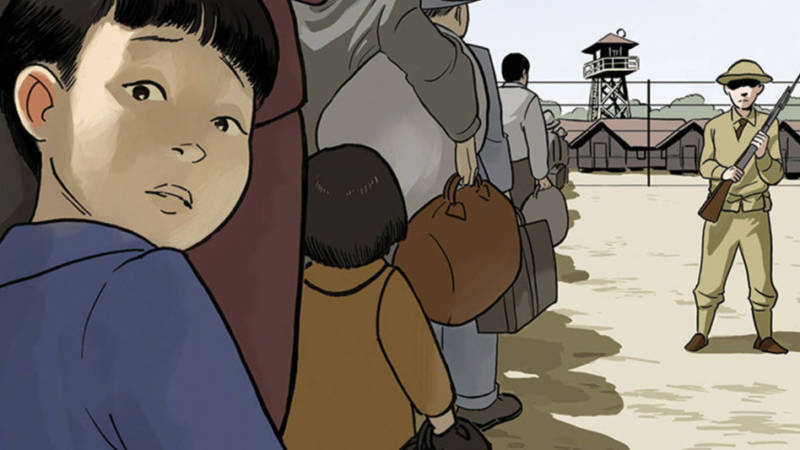
"caption": "George Takei, 'They Called Us Enemy.'",
"description": "George Takei, 'They Called Us Enemy.'",
"title": "theycalledusenemy-1-1024x533",
"credit": "IDW Publishing",
"status": "inherit",
"isLoading": false,
"fetchFailed": false
},
"arts_13861355": {
"type": "attachments",
"id": "arts_13861355",
"meta": {
"index": "attachments_1716263798",
"site": "arts",
"id": "13861355",
"found": true
},
"parent": 13861353,
"imgSizes": {
"thumbnail": {
"file": "https://ww2.kqed.org/app/uploads/sites/2/2019/07/Bisbee-4th-Row-160x90.jpeg",
"width": 160,
"mimeType": "image/jpeg",
"height": 90
},
"post-thumbnail": {
"file": "https://ww2.kqed.org/app/uploads/sites/2/2019/07/Bisbee-4th-Row-672x372.jpeg",
"width": 672,
"mimeType": "image/jpeg",
"height": 372
},
"kqedFullSize": {
"file": "https://ww2.kqed.org/app/uploads/sites/2/2019/07/Bisbee-4th-Row.jpeg",
"width": 1000,
"height": 562
},
"medium": {
"file": "https://ww2.kqed.org/app/uploads/sites/2/2019/07/Bisbee-4th-Row-800x450.jpeg",
"width": 800,
"mimeType": "image/jpeg",
"height": 450
},
"medium_large": {
"file": "https://ww2.kqed.org/app/uploads/sites/2/2019/07/Bisbee-4th-Row-768x432.jpeg",
"width": 768,
"mimeType": "image/jpeg",
"height": 432
}
},
"publishDate": 1563044586,
"modified": 1563045091,
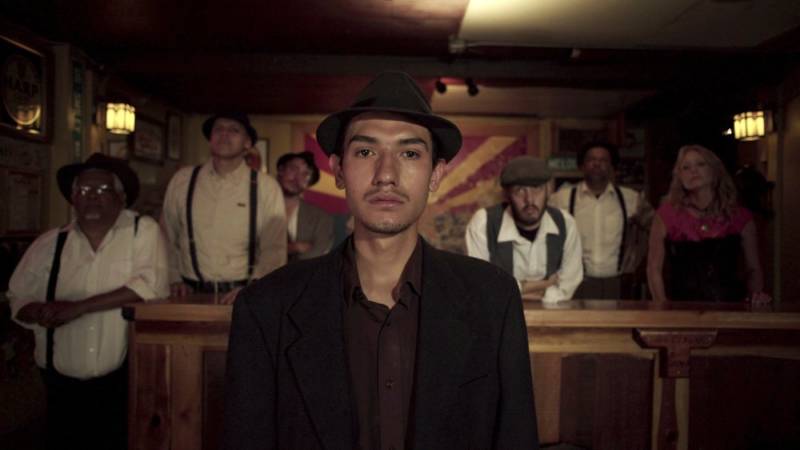
"caption": "1,200 miners, most of them immigrants, were pulled violently from their homes in Bisbee, Ariz., by a private police force and put on cattle cars for deportation to a desolate area of New Mexico in 1917.",
"description": "1,200 miners, most of them immigrants, were pulled violently from their homes in Bisbee, Ariz., by a private police force and put on cattle cars for deportation to a desolate area of New Mexico in 1917.",
"title": "Bisbee-4th-Row",
"credit": "Jarred Alterman/4th Row Films",
"status": "inherit",
"isLoading": false,
"fetchFailed": false
},
"arts_13860298": {
"type": "attachments",
"id": "arts_13860298",
"meta": {
"index": "attachments_1716263798",
"site": "arts",
"id": "13860298",
"found": true
},
"parent": 13860293,
"imgSizes": {
"twentyfourteen-full-width": {
"file": "https://ww2.kqed.org/app/uploads/sites/2/2019/06/Flying-Carpet-Festival-2018-1000x576.jpg",
"width": 1000,
"mimeType": "image/jpeg",
"height": 576
},
"thumbnail": {
"file": "https://ww2.kqed.org/app/uploads/sites/2/2019/06/Flying-Carpet-Festival-2018-160x107.jpg",
"width": 160,
"mimeType": "image/jpeg",
"height": 107
},
"post-thumbnail": {
"file": "https://ww2.kqed.org/app/uploads/sites/2/2019/06/Flying-Carpet-Festival-2018-672x372.jpg",
"width": 672,
"mimeType": "image/jpeg",
"height": 372
},
"kqedFullSize": {
"file": "https://ww2.kqed.org/app/uploads/sites/2/2019/06/Flying-Carpet-Festival-2018.jpg",
"width": 1000,
"height": 666
},
"medium": {
"file": "https://ww2.kqed.org/app/uploads/sites/2/2019/06/Flying-Carpet-Festival-2018-800x533.jpg",
"width": 800,
"mimeType": "image/jpeg",
"height": 533
},
"medium_large": {
"file": "https://ww2.kqed.org/app/uploads/sites/2/2019/06/Flying-Carpet-Festival-2018-768x511.jpg",
"width": 768,
"mimeType": "image/jpeg",
"height": 511
}
},
"publishDate": 1561574097,
"modified": 1561574097,
"caption": null,
"description": null,
"title": "Flying Carpet Festival 2018",
"credit": null,
"status": "inherit",
"isLoading": false,
"fetchFailed": false
},
"arts_13860004": {
"type": "attachments",
"id": "arts_13860004",
"meta": {
"index": "attachments_1716263798",
"site": "arts",
"id": "13860004",
"found": true
},
"parent": 13859794,
"imgSizes": {
"twentyfourteen-full-width": {
"file": "https://ww2.kqed.org/app/uploads/sites/2/2019/06/kronos-trio-da-kali-credit_Lenny_Gonzalez_13_12.7_0450B-1038x576.jpg",
"width": 1038,
"mimeType": "image/jpeg",
"height": 576
},
"thumbnail": {
"file": "https://ww2.kqed.org/app/uploads/sites/2/2019/06/kronos-trio-da-kali-credit_Lenny_Gonzalez_13_12.7_0450B-160x90.jpg",
"width": 160,
"mimeType": "image/jpeg",
"height": 90
},
"post-thumbnail": {
"file": "https://ww2.kqed.org/app/uploads/sites/2/2019/06/kronos-trio-da-kali-credit_Lenny_Gonzalez_13_12.7_0450B-672x372.jpg",
"width": 672,
"mimeType": "image/jpeg",
"height": 372
},
"kqedFullSize": {
"file": "https://ww2.kqed.org/app/uploads/sites/2/2019/06/kronos-trio-da-kali-credit_Lenny_Gonzalez_13_12.7_0450B.jpg",
"width": 1920,
"height": 1080
},
"large": {
"file": "https://ww2.kqed.org/app/uploads/sites/2/2019/06/kronos-trio-da-kali-credit_Lenny_Gonzalez_13_12.7_0450B-1020x574.jpg",
"width": 1020,
"mimeType": "image/jpeg",
"height": 574
},
"complete_open_graph": {
"file": "https://ww2.kqed.org/app/uploads/sites/2/2019/06/kronos-trio-da-kali-credit_Lenny_Gonzalez_13_12.7_0450B-1200x675.jpg",
"width": 1200,
"mimeType": "image/jpeg",
"height": 675
},
"full-width": {
"file": "https://ww2.kqed.org/app/uploads/sites/2/2019/06/kronos-trio-da-kali-credit_Lenny_Gonzalez_13_12.7_0450B-1920x1080.jpg",
"width": 1920,
"mimeType": "image/jpeg",
"height": 1080
},
"medium": {
"file": "https://ww2.kqed.org/app/uploads/sites/2/2019/06/kronos-trio-da-kali-credit_Lenny_Gonzalez_13_12.7_0450B-800x450.jpg",
"width": 800,
"mimeType": "image/jpeg",
"height": 450
},
"medium_large": {
"file": "https://ww2.kqed.org/app/uploads/sites/2/2019/06/kronos-trio-da-kali-credit_Lenny_Gonzalez_13_12.7_0450B-768x432.jpg",
"width": 768,
"mimeType": "image/jpeg",
"height": 432
}
},
"publishDate": 1561067016,
"modified": 1648071896,
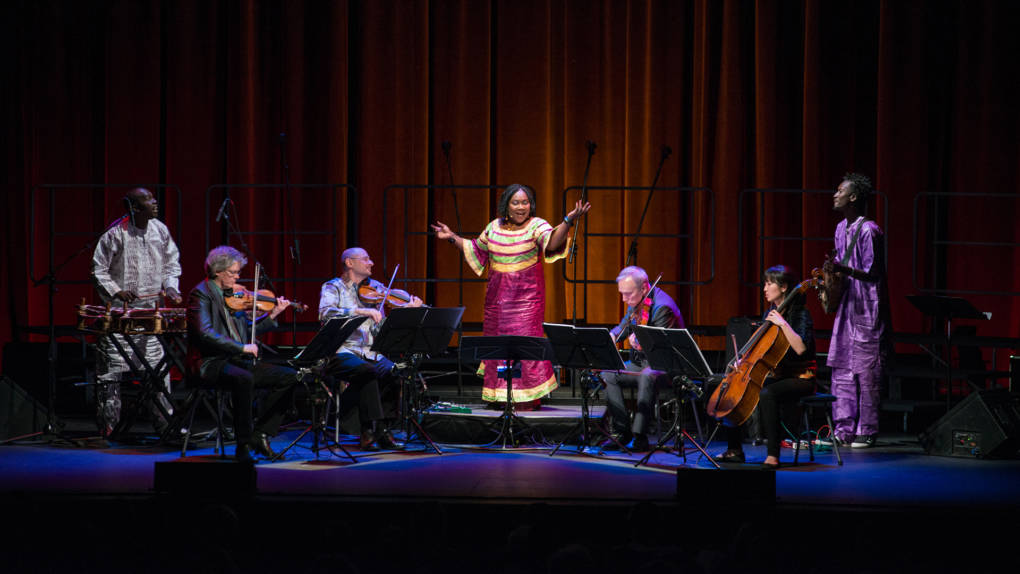
"caption": "Kronos Quartet performs with Trio Da Kali's Hawa Kassé Mady Diabaté.",
"description": "Kronos Quartet performs with Trio Da Kali. The singer, Hawa Kasse Mady Diabate, recently was unable to join them for a concert at SFJAZZ due to visa delays.",
"title": "kronos trio da kali credit_Lenny_Gonzalez_13_12.7_0450B",
"credit": "Lenny Gonzalez",
"status": "inherit",
"altTag": "Kronos Quartet performs with Trio Da Kali. The singer, Hawa Kasse Mady Diabate, recently was unable to join them for a concert at SFJAZZ due to visa delays.",
"isLoading": false,
"fetchFailed": false
},
"arts_13859591": {
"type": "attachments",
"id": "arts_13859591",
"meta": {
"index": "attachments_1716263798",
"site": "arts",
"id": "13859591",
"found": true
},
"parent": 13859566,
"imgSizes": {
"twentyfourteen-full-width": {
"file": "https://ww2.kqed.org/app/uploads/sites/2/2019/06/vic-mensa-still-1038x576.jpg",
"width": 1038,
"mimeType": "image/jpeg",
"height": 576
},
"thumbnail": {
"file": "https://ww2.kqed.org/app/uploads/sites/2/2019/06/vic-mensa-still-160x90.jpg",
"width": 160,
"mimeType": "image/jpeg",
"height": 90
},
"post-thumbnail": {
"file": "https://ww2.kqed.org/app/uploads/sites/2/2019/06/vic-mensa-still-672x372.jpg",
"width": 672,
"mimeType": "image/jpeg",
"height": 372
},
"kqedFullSize": {
"file": "https://ww2.kqed.org/app/uploads/sites/2/2019/06/vic-mensa-still.jpg",
"width": 1399,
"height": 787
},
"large": {
"file": "https://ww2.kqed.org/app/uploads/sites/2/2019/06/vic-mensa-still-1020x574.jpg",
"width": 1020,
"mimeType": "image/jpeg",
"height": 574
},
"complete_open_graph": {
"file": "https://ww2.kqed.org/app/uploads/sites/2/2019/06/vic-mensa-still-1200x675.jpg",
"width": 1200,
"mimeType": "image/jpeg",
"height": 675
},
"medium": {
"file": "https://ww2.kqed.org/app/uploads/sites/2/2019/06/vic-mensa-still-800x450.jpg",
"width": 800,
"mimeType": "image/jpeg",
"height": 450
},
"medium_large": {
"file": "https://ww2.kqed.org/app/uploads/sites/2/2019/06/vic-mensa-still-768x432.jpg",
"width": 768,
"mimeType": "image/jpeg",
"height": 432
}
},
"publishDate": 1560472747,
"modified": 1560472805,
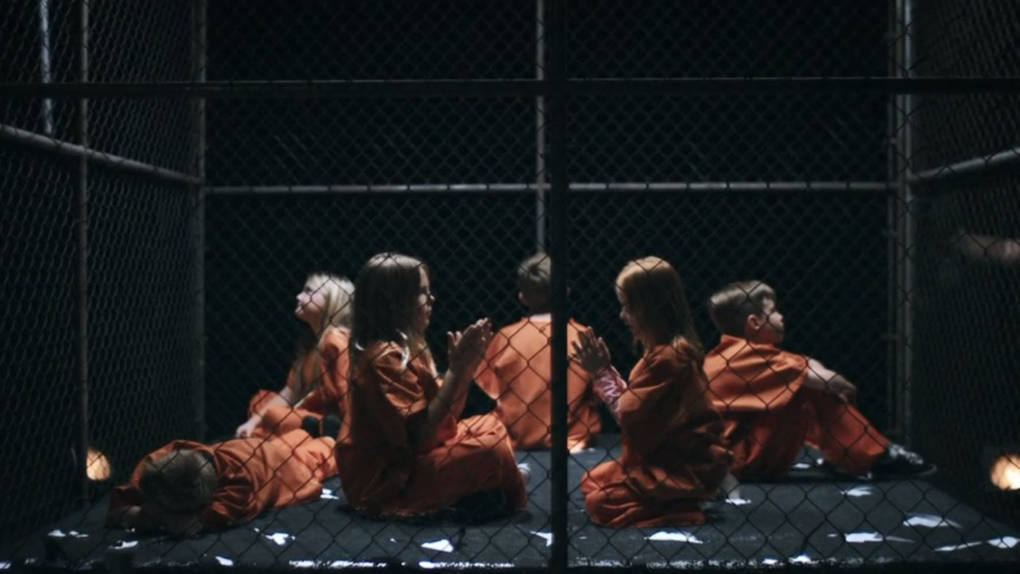
"caption": "Still from Vic Mensa's 'Camp America' music video, which features white children in ICE detention.",
"description": "Still from Vic Mensa's 'Camp America' music video, which features white children in ICE detention.",
"title": "vic mensa still",
"credit": "Vic Mensa/Roc Nation",
"status": "inherit",
"isLoading": false,
"fetchFailed": false
},
"arts_13854690": {
"type": "attachments",
"id": "arts_13854690",
"meta": {
"index": "attachments_1716263798",
"site": "arts",
"id": "13854690",
"found": true
},
"parent": 13854668,
"imgSizes": {
"twentyfourteen-full-width": {
"file": "https://ww2.kqed.org/app/uploads/sites/2/2019/04/Maria_Blanco_COVER-1038x576.jpg",
"width": 1038,
"mimeType": "image/jpeg",
"height": 576
},
"thumbnail": {
"file": "https://ww2.kqed.org/app/uploads/sites/2/2019/04/Maria_Blanco_COVER-160x90.jpg",
"width": 160,
"mimeType": "image/jpeg",
"height": 90
},
"post-thumbnail": {
"file": "https://ww2.kqed.org/app/uploads/sites/2/2019/04/Maria_Blanco_COVER-672x372.jpg",
"width": 672,
"mimeType": "image/jpeg",
"height": 372
},
"kqedFullSize": {
"file": "https://ww2.kqed.org/app/uploads/sites/2/2019/04/Maria_Blanco_COVER.jpg",
"width": 1920,
"height": 1080
},
"large": {
"file": "https://ww2.kqed.org/app/uploads/sites/2/2019/04/Maria_Blanco_COVER-1020x574.jpg",
"width": 1020,
"mimeType": "image/jpeg",
"height": 574
},
"complete_open_graph": {
"file": "https://ww2.kqed.org/app/uploads/sites/2/2019/04/Maria_Blanco_COVER-1200x675.jpg",
"width": 1200,
"mimeType": "image/jpeg",
"height": 675
},
"guest-author-50": {
"file": "https://ww2.kqed.org/app/uploads/sites/2/2019/04/Maria_Blanco_COVER-50x50.jpg",
"width": 50,
"mimeType": "image/jpeg",
"height": 50
},
"guest-author-96": {
"file": "https://ww2.kqed.org/app/uploads/sites/2/2019/04/Maria_Blanco_COVER-96x96.jpg",
"width": 96,
"mimeType": "image/jpeg",
"height": 96
},
"medium": {
"file": "https://ww2.kqed.org/app/uploads/sites/2/2019/04/Maria_Blanco_COVER-800x450.jpg",
"width": 800,
"mimeType": "image/jpeg",
"height": 450
},
"guest-author-64": {
"file": "https://ww2.kqed.org/app/uploads/sites/2/2019/04/Maria_Blanco_COVER-64x64.jpg",
"width": 64,
"mimeType": "image/jpeg",
"height": 64
},
"guest-author-32": {
"file": "https://ww2.kqed.org/app/uploads/sites/2/2019/04/Maria_Blanco_COVER-32x32.jpg",
"width": 32,
"mimeType": "image/jpeg",
"height": 32
},
"full-width": {
"file": "https://ww2.kqed.org/app/uploads/sites/2/2019/04/Maria_Blanco_COVER-1920x1080.jpg",
"width": 1920,
"mimeType": "image/jpeg",
"height": 1080
},
"medium_large": {
"file": "https://ww2.kqed.org/app/uploads/sites/2/2019/04/Maria_Blanco_COVER-768x432.jpg",
"width": 768,
"mimeType": "image/jpeg",
"height": 432
},
"guest-author-128": {
"file": "https://ww2.kqed.org/app/uploads/sites/2/2019/04/Maria_Blanco_COVER-128x128.jpg",
"width": 128,
"mimeType": "image/jpeg",
"height": 128
}
},
"publishDate": 1554918957,
"modified": 1554921146,
"caption": "María Blanco at the opening of 'Borders and Walls' at George Lawson Gallery.",
"description": "María Blanco at the opening of 'Borders and Walls' at George Lawson Gallery.",
"title": "Maria_Blanco_COVER",
"credit": "Photo: Carla Hernandez Ramirez ",
"status": "inherit",
"isLoading": false,
"fetchFailed": false
},
"arts_13854507": {
"type": "attachments",
"id": "arts_13854507",
"meta": {
"index": "attachments_1716263798",
"site": "arts",
"id": "13854507",
"found": true
},
"parent": 0,
"imgSizes": {
"twentyfourteen-full-width": {
"file": "https://ww2.kqed.org/app/uploads/sites/2/2019/04/Jungle.MAIN_-1038x576.jpg",
"width": 1038,
"mimeType": "image/jpeg",
"height": 576
},
"thumbnail": {
"file": "https://ww2.kqed.org/app/uploads/sites/2/2019/04/Jungle.MAIN_-160x90.jpg",
"width": 160,
"mimeType": "image/jpeg",
"height": 90
},
"post-thumbnail": {
"file": "https://ww2.kqed.org/app/uploads/sites/2/2019/04/Jungle.MAIN_-672x372.jpg",
"width": 672,
"mimeType": "image/jpeg",
"height": 372
},
"kqedFullSize": {
"file": "https://ww2.kqed.org/app/uploads/sites/2/2019/04/Jungle.MAIN_.jpg",
"width": 1920,
"height": 1080
},
"large": {
"file": "https://ww2.kqed.org/app/uploads/sites/2/2019/04/Jungle.MAIN_-1020x574.jpg",
"width": 1020,
"mimeType": "image/jpeg",
"height": 574
},
"complete_open_graph": {
"file": "https://ww2.kqed.org/app/uploads/sites/2/2019/04/Jungle.MAIN_-1200x675.jpg",
"width": 1200,
"mimeType": "image/jpeg",
"height": 675
},
"guest-author-50": {
"file": "https://ww2.kqed.org/app/uploads/sites/2/2019/04/Jungle.MAIN_-50x50.jpg",
"width": 50,
"mimeType": "image/jpeg",
"height": 50
},
"guest-author-96": {
"file": "https://ww2.kqed.org/app/uploads/sites/2/2019/04/Jungle.MAIN_-96x96.jpg",
"width": 96,
"mimeType": "image/jpeg",
"height": 96
},
"medium": {
"file": "https://ww2.kqed.org/app/uploads/sites/2/2019/04/Jungle.MAIN_-800x450.jpg",
"width": 800,
"mimeType": "image/jpeg",
"height": 450
},
"guest-author-64": {
"file": "https://ww2.kqed.org/app/uploads/sites/2/2019/04/Jungle.MAIN_-64x64.jpg",
"width": 64,
"mimeType": "image/jpeg",
"height": 64
},
"guest-author-32": {
"file": "https://ww2.kqed.org/app/uploads/sites/2/2019/04/Jungle.MAIN_-32x32.jpg",
"width": 32,
"mimeType": "image/jpeg",
"height": 32
},
"full-width": {
"file": "https://ww2.kqed.org/app/uploads/sites/2/2019/04/Jungle.MAIN_-1920x1080.jpg",
"width": 1920,
"mimeType": "image/jpeg",
"height": 1080
},
"medium_large": {
"file": "https://ww2.kqed.org/app/uploads/sites/2/2019/04/Jungle.MAIN_-768x432.jpg",
"width": 768,
"mimeType": "image/jpeg",
"height": 432
},
"guest-author-128": {
"file": "https://ww2.kqed.org/app/uploads/sites/2/2019/04/Jungle.MAIN_-128x128.jpg",
"width": 128,
"mimeType": "image/jpeg",
"height": 128
}
},
"publishDate": 1554753542,
"modified": 1554754182,
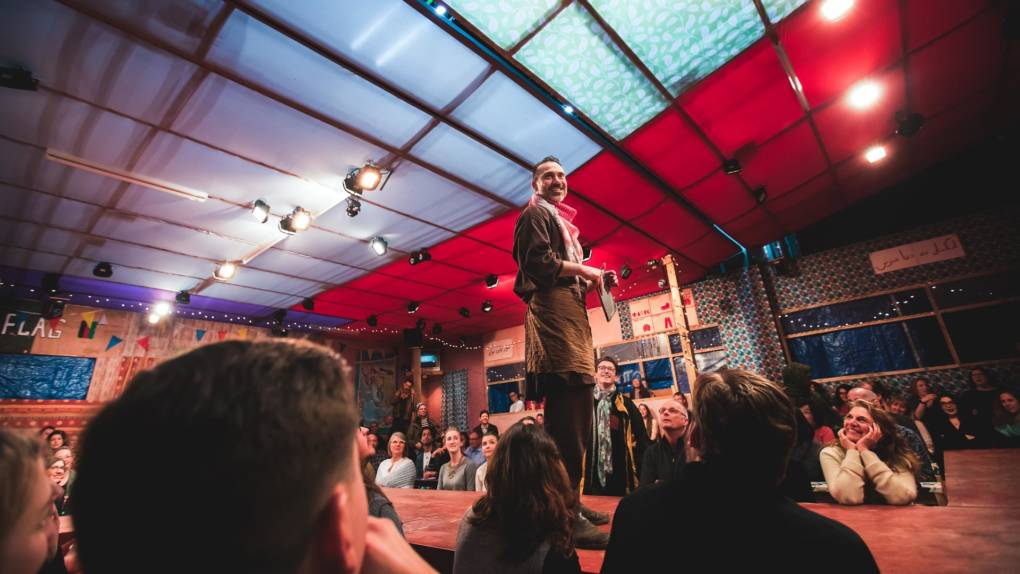
"caption": "Salar (Ben Turner) in 'The Jungle' at the Curran Theater.",
"description": "Salar (Ben Turner) in 'The Jungle' at the Curran Theater.",
"title": "Jungle.MAIN",
"credit": "Little Fang",
"status": "inherit",
"isLoading": false,
"fetchFailed": false
},
"arts_13848437": {
"type": "attachments",
"id": "arts_13848437",
"meta": {
"index": "attachments_1716263798",
"site": "arts",
"id": "13848437",
"found": true
},
"parent": 13848436,
"imgSizes": {
"thumbnail": {
"file": "https://ww2.kqed.org/app/uploads/sites/2/2019/01/kimscon2-2ab6e964e7a910db9a0949f63e52d207b8203981-160x120.png",
"width": 160,
"mimeType": "image/png",
"height": 120
},
"post-thumbnail": {
"file": "https://ww2.kqed.org/app/uploads/sites/2/2019/01/kimscon2-2ab6e964e7a910db9a0949f63e52d207b8203981-672x372.png",
"width": 672,
"mimeType": "image/png",
"height": 372
},
"kqedFullSize": {
"file": "https://ww2.kqed.org/app/uploads/sites/2/2019/01/kimscon2-2ab6e964e7a910db9a0949f63e52d207b8203981.png",
"width": 746,
"height": 559
},
"guest-author-50": {
"file": "https://ww2.kqed.org/app/uploads/sites/2/2019/01/kimscon2-2ab6e964e7a910db9a0949f63e52d207b8203981-50x50.png",
"width": 50,
"mimeType": "image/png",
"height": 50
},
"guest-author-96": {
"file": "https://ww2.kqed.org/app/uploads/sites/2/2019/01/kimscon2-2ab6e964e7a910db9a0949f63e52d207b8203981-96x96.png",
"width": 96,
"mimeType": "image/png",
"height": 96
},
"guest-author-64": {
"file": "https://ww2.kqed.org/app/uploads/sites/2/2019/01/kimscon2-2ab6e964e7a910db9a0949f63e52d207b8203981-64x64.png",
"width": 64,
"mimeType": "image/png",
"height": 64
},
"detail": {
"file": "https://ww2.kqed.org/app/uploads/sites/2/2019/01/kimscon2-2ab6e964e7a910db9a0949f63e52d207b8203981-150x150.png",
"width": 150,
"mimeType": "image/png",
"height": 150
},
"guest-author-32": {
"file": "https://ww2.kqed.org/app/uploads/sites/2/2019/01/kimscon2-2ab6e964e7a910db9a0949f63e52d207b8203981-32x32.png",
"width": 32,
"mimeType": "image/png",
"height": 32
},
"guest-author-128": {
"file": "https://ww2.kqed.org/app/uploads/sites/2/2019/01/kimscon2-2ab6e964e7a910db9a0949f63e52d207b8203981-128x128.png",
"width": 128,
"mimeType": "image/png",
"height": 128
}
},
"publishDate": 1547066799,
"modified": 1547066884,
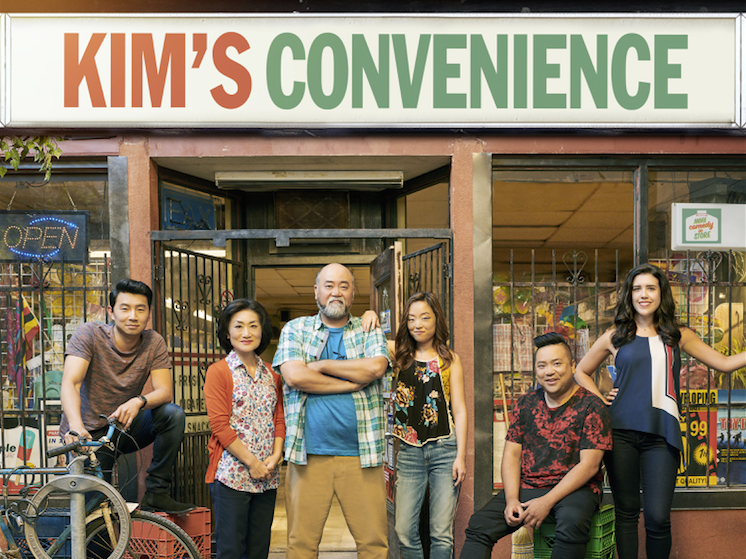
"caption": "The main cast of Kim's Convenience (from left): Simu Liu (Jung), Jean Yoon (Umma), Paul Sun-Hyung Lee (Appa), Andrea Bang (Janet), Andrew Phung (Kimchi), Nicole Power (Shannon Ross). Season 3 debuted on the CBC on Tuesday.",
"description": "The main cast of Kim's Convenience (from left): Simu Liu (Jung), Jean Yoon (Umma), Paul Sun-Hyung Lee (Appa), Andrea Bang (Janet), Andrew Phung (Kimchi), Nicole Power (Shannon Ross). Season 3 debuted on the CBC on Tuesday.",
"title": "The main cast of Kim's Convenience (from left): Simu Liu (Jung), Jean Yoon (Umma), Paul Sun-Hyung Lee (Appa), Andrea Bang (Janet), Andrew Phung (Kimchi), Nicole Power (Shannon Ross). Season 3 debuted on the CBC on Tuesday.",
"credit": "Canadian Broadcasting Corp.",
"status": "inherit",
"isLoading": false,
"fetchFailed": false
},
"arts_13845361": {
"type": "attachments",
"id": "arts_13845361",
"meta": {
"index": "attachments_1716263798",
"site": "arts",
"id": "13845361",
"found": true
},
"parent": 13845357,
"imgSizes": {
"small": {
"file": "https://ww2.kqed.org/app/uploads/sites/2/2018/11/Ficre_Nude-with-Bottle-Tree_COVER-520x292.jpg",
"width": 520,
"mimeType": "image/jpeg",
"height": 292
},
"twentyfourteen-full-width": {
"file": "https://ww2.kqed.org/app/uploads/sites/2/2018/11/Ficre_Nude-with-Bottle-Tree_COVER-1038x576.jpg",
"width": 1038,
"mimeType": "image/jpeg",
"height": 576
},
"thumbnail": {
"file": "https://ww2.kqed.org/app/uploads/sites/2/2018/11/Ficre_Nude-with-Bottle-Tree_COVER-160x90.jpg",
"width": 160,
"mimeType": "image/jpeg",
"height": 90
},
"fd-sm": {
"file": "https://ww2.kqed.org/app/uploads/sites/2/2018/11/Ficre_Nude-with-Bottle-Tree_COVER-960x540.jpg",
"width": 960,
"mimeType": "image/jpeg",
"height": 540
},
"post-thumbnail": {
"file": "https://ww2.kqed.org/app/uploads/sites/2/2018/11/Ficre_Nude-with-Bottle-Tree_COVER-672x372.jpg",
"width": 672,
"mimeType": "image/jpeg",
"height": 372
},
"xsmall": {
"file": "https://ww2.kqed.org/app/uploads/sites/2/2018/11/Ficre_Nude-with-Bottle-Tree_COVER-375x211.jpg",
"width": 375,
"mimeType": "image/jpeg",
"height": 211
},
"kqedFullSize": {
"file": "https://ww2.kqed.org/app/uploads/sites/2/2018/11/Ficre_Nude-with-Bottle-Tree_COVER.jpg",
"width": 2048,
"height": 1152
},
"large": {
"file": "https://ww2.kqed.org/app/uploads/sites/2/2018/11/Ficre_Nude-with-Bottle-Tree_COVER-1020x574.jpg",
"width": 1020,
"mimeType": "image/jpeg",
"height": 574
},
"xlarge": {
"file": "https://ww2.kqed.org/app/uploads/sites/2/2018/11/Ficre_Nude-with-Bottle-Tree_COVER-1180x664.jpg",
"width": 1180,
"mimeType": "image/jpeg",
"height": 664
},
"complete_open_graph": {
"file": "https://ww2.kqed.org/app/uploads/sites/2/2018/11/Ficre_Nude-with-Bottle-Tree_COVER-1200x675.jpg",
"width": 1200,
"mimeType": "image/jpeg",
"height": 675
},
"guest-author-50": {
"file": "https://ww2.kqed.org/app/uploads/sites/2/2018/11/Ficre_Nude-with-Bottle-Tree_COVER-50x50.jpg",
"width": 50,
"mimeType": "image/jpeg",
"height": 50
},
"guest-author-96": {
"file": "https://ww2.kqed.org/app/uploads/sites/2/2018/11/Ficre_Nude-with-Bottle-Tree_COVER-96x96.jpg",
"width": 96,
"mimeType": "image/jpeg",
"height": 96
},
"medium": {
"file": "https://ww2.kqed.org/app/uploads/sites/2/2018/11/Ficre_Nude-with-Bottle-Tree_COVER-800x450.jpg",
"width": 800,
"mimeType": "image/jpeg",
"height": 450
},
"guest-author-64": {
"file": "https://ww2.kqed.org/app/uploads/sites/2/2018/11/Ficre_Nude-with-Bottle-Tree_COVER-64x64.jpg",
"width": 64,
"mimeType": "image/jpeg",
"height": 64
},
"guest-author-32": {
"file": "https://ww2.kqed.org/app/uploads/sites/2/2018/11/Ficre_Nude-with-Bottle-Tree_COVER-32x32.jpg",
"width": 32,
"mimeType": "image/jpeg",
"height": 32
},
"fd-lrg": {
"file": "https://ww2.kqed.org/app/uploads/sites/2/2018/11/Ficre_Nude-with-Bottle-Tree_COVER-1920x1080.jpg",
"width": 1920,
"mimeType": "image/jpeg",
"height": 1080
},
"fd-med": {
"file": "https://ww2.kqed.org/app/uploads/sites/2/2018/11/Ficre_Nude-with-Bottle-Tree_COVER-1180x664.jpg",
"width": 1180,
"mimeType": "image/jpeg",
"height": 664
},
"full-width": {
"file": "https://ww2.kqed.org/app/uploads/sites/2/2018/11/Ficre_Nude-with-Bottle-Tree_COVER-1920x1080.jpg",
"width": 1920,
"mimeType": "image/jpeg",
"height": 1080
},
"detail": {
"file": "https://ww2.kqed.org/app/uploads/sites/2/2018/11/Ficre_Nude-with-Bottle-Tree_COVER-150x150.jpg",
"width": 150,
"mimeType": "image/jpeg",
"height": 150
},
"medium_large": {
"file": "https://ww2.kqed.org/app/uploads/sites/2/2018/11/Ficre_Nude-with-Bottle-Tree_COVER-768x432.jpg",
"width": 768,
"mimeType": "image/jpeg",
"height": 432
},
"guest-author-128": {
"file": "https://ww2.kqed.org/app/uploads/sites/2/2018/11/Ficre_Nude-with-Bottle-Tree_COVER-128x128.jpg",
"width": 128,
"mimeType": "image/jpeg",
"height": 128
},
"xxsmall": {
"file": "https://ww2.kqed.org/app/uploads/sites/2/2018/11/Ficre_Nude-with-Bottle-Tree_COVER-240x135.jpg",
"width": 240,
"mimeType": "image/jpeg",
"height": 135
}
},
"publishDate": 1542761536,
"modified": 1542762360,
"caption": "Ficre Ghebreyesus, Detail of 'Nude with Bottle Tree,' 2008.",
"description": "Ficre Ghebreyesus, Detail of 'Nude with Bottle Tree,' 2008.",
"title": "13-001 FGFA",
"credit": "Courtesy of the Estate of Ficre Ghebreyesus",
"status": "inherit",
"isLoading": false,
"fetchFailed": false
},
"arts_13842884": {
"type": "attachments",
"id": "arts_13842884",
"meta": {
"index": "attachments_1716263798",
"site": "arts",
"id": "13842884",
"found": true
},
"parent": 13842864,
"imgSizes": {
"small": {
"file": "https://ww2.kqed.org/app/uploads/sites/2/2018/10/MarioPina_COVER-520x293.jpg",
"width": 520,
"mimeType": "image/jpeg",
"height": 293
},
"twentyfourteen-full-width": {
"file": "https://ww2.kqed.org/app/uploads/sites/2/2018/10/MarioPina_COVER-1038x576.jpg",
"width": 1038,
"mimeType": "image/jpeg",
"height": 576
},
"thumbnail": {
"file": "https://ww2.kqed.org/app/uploads/sites/2/2018/10/MarioPina_COVER-160x90.jpg",
"width": 160,
"mimeType": "image/jpeg",
"height": 90
},
"fd-sm": {
"file": "https://ww2.kqed.org/app/uploads/sites/2/2018/10/MarioPina_COVER-960x540.jpg",
"width": 960,
"mimeType": "image/jpeg",
"height": 540
},
"post-thumbnail": {
"file": "https://ww2.kqed.org/app/uploads/sites/2/2018/10/MarioPina_COVER-672x372.jpg",
"width": 672,
"mimeType": "image/jpeg",
"height": 372
},
"xsmall": {
"file": "https://ww2.kqed.org/app/uploads/sites/2/2018/10/MarioPina_COVER-375x211.jpg",
"width": 375,
"mimeType": "image/jpeg",
"height": 211
},
"kqedFullSize": {
"file": "https://ww2.kqed.org/app/uploads/sites/2/2018/10/MarioPina_COVER.jpg",
"width": 1920,
"height": 1080
},
"large": {
"file": "https://ww2.kqed.org/app/uploads/sites/2/2018/10/MarioPina_COVER-1020x574.jpg",
"width": 1020,
"mimeType": "image/jpeg",
"height": 574
},
"xlarge": {
"file": "https://ww2.kqed.org/app/uploads/sites/2/2018/10/MarioPina_COVER-1180x664.jpg",
"width": 1180,
"mimeType": "image/jpeg",
"height": 664
},
"complete_open_graph": {
"file": "https://ww2.kqed.org/app/uploads/sites/2/2018/10/MarioPina_COVER-1200x675.jpg",
"width": 1200,
"mimeType": "image/jpeg",
"height": 675
},
"guest-author-50": {
"file": "https://ww2.kqed.org/app/uploads/sites/2/2018/10/MarioPina_COVER-50x50.jpg",
"width": 50,
"mimeType": "image/jpeg",
"height": 50
},
"guest-author-96": {
"file": "https://ww2.kqed.org/app/uploads/sites/2/2018/10/MarioPina_COVER-96x96.jpg",
"width": 96,
"mimeType": "image/jpeg",
"height": 96
},
"medium": {
"file": "https://ww2.kqed.org/app/uploads/sites/2/2018/10/MarioPina_COVER-800x450.jpg",
"width": 800,
"mimeType": "image/jpeg",
"height": 450
},
"guest-author-64": {
"file": "https://ww2.kqed.org/app/uploads/sites/2/2018/10/MarioPina_COVER-64x64.jpg",
"width": 64,
"mimeType": "image/jpeg",
"height": 64
},
"guest-author-32": {
"file": "https://ww2.kqed.org/app/uploads/sites/2/2018/10/MarioPina_COVER-32x32.jpg",
"width": 32,
"mimeType": "image/jpeg",
"height": 32
},
"fd-lrg": {
"file": "https://ww2.kqed.org/app/uploads/sites/2/2018/10/MarioPina_COVER-1920x1080.jpg",
"width": 1920,
"mimeType": "image/jpeg",
"height": 1080
},
"fd-med": {
"file": "https://ww2.kqed.org/app/uploads/sites/2/2018/10/MarioPina_COVER-1180x664.jpg",
"width": 1180,
"mimeType": "image/jpeg",
"height": 664
},
"full-width": {
"file": "https://ww2.kqed.org/app/uploads/sites/2/2018/10/MarioPina_COVER-1920x1080.jpg",
"width": 1920,
"mimeType": "image/jpeg",
"height": 1080
},
"detail": {
"file": "https://ww2.kqed.org/app/uploads/sites/2/2018/10/MarioPina_COVER-150x150.jpg",
"width": 150,
"mimeType": "image/jpeg",
"height": 150
},
"medium_large": {
"file": "https://ww2.kqed.org/app/uploads/sites/2/2018/10/MarioPina_COVER-768x432.jpg",
"width": 768,
"mimeType": "image/jpeg",
"height": 432
},
"guest-author-128": {
"file": "https://ww2.kqed.org/app/uploads/sites/2/2018/10/MarioPina_COVER-128x128.jpg",
"width": 128,
"mimeType": "image/jpeg",
"height": 128
},
"xxsmall": {
"file": "https://ww2.kqed.org/app/uploads/sites/2/2018/10/MarioPina_COVER-240x135.jpg",
"width": 240,
"mimeType": "image/jpeg",
"height": 135
}
},
"publishDate": 1539632802,
"modified": 1539632919,
"caption": "Mario Pina stands next to his painting in 'Undocumented Heart.'",
"description": "Mario Pina stands next to his painting in 'Undocumented Heart.'",
"title": "MarioPina_COVER",
"credit": "Azucena Rasilla",
"status": "inherit",
"isLoading": false,
"fetchFailed": false
},
"arts_13844961": {
"type": "attachments",
"id": "arts_13844961",
"meta": {
"index": "attachments_1716263798",
"site": "arts",
"id": "13844961",
"found": true
},
"parent": 13842424,
"imgSizes": {
"small": {
"file": "https://ww2.kqed.org/app/uploads/sites/2/2018/10/Pamela_BTL_Thumbnail-520x293.jpg",
"width": 520,
"mimeType": "image/jpeg",
"height": 293
},
"twentyfourteen-full-width": {
"file": "https://ww2.kqed.org/app/uploads/sites/2/2018/10/Pamela_BTL_Thumbnail-1038x576.jpg",
"width": 1038,
"mimeType": "image/jpeg",
"height": 576
},
"thumbnail": {
"file": "https://ww2.kqed.org/app/uploads/sites/2/2018/10/Pamela_BTL_Thumbnail-160x90.jpg",
"width": 160,
"mimeType": "image/jpeg",
"height": 90
},
"fd-sm": {
"file": "https://ww2.kqed.org/app/uploads/sites/2/2018/10/Pamela_BTL_Thumbnail-960x540.jpg",
"width": 960,
"mimeType": "image/jpeg",
"height": 540
},
"post-thumbnail": {
"file": "https://ww2.kqed.org/app/uploads/sites/2/2018/10/Pamela_BTL_Thumbnail-672x372.jpg",
"width": 672,
"mimeType": "image/jpeg",
"height": 372
},
"xsmall": {
"file": "https://ww2.kqed.org/app/uploads/sites/2/2018/10/Pamela_BTL_Thumbnail-375x211.jpg",
"width": 375,
"mimeType": "image/jpeg",
"height": 211
},
"kqedFullSize": {
"file": "https://ww2.kqed.org/app/uploads/sites/2/2018/10/Pamela_BTL_Thumbnail.jpg",
"width": 1920,
"height": 1080
},
"large": {
"file": "https://ww2.kqed.org/app/uploads/sites/2/2018/10/Pamela_BTL_Thumbnail-1020x574.jpg",
"width": 1020,
"mimeType": "image/jpeg",
"height": 574
},
"xlarge": {
"file": "https://ww2.kqed.org/app/uploads/sites/2/2018/10/Pamela_BTL_Thumbnail-1180x664.jpg",
"width": 1180,
"mimeType": "image/jpeg",
"height": 664
},
"complete_open_graph": {
"file": "https://ww2.kqed.org/app/uploads/sites/2/2018/10/Pamela_BTL_Thumbnail-1200x675.jpg",
"width": 1200,
"mimeType": "image/jpeg",
"height": 675
},
"guest-author-50": {
"file": "https://ww2.kqed.org/app/uploads/sites/2/2018/10/Pamela_BTL_Thumbnail-50x50.jpg",
"width": 50,
"mimeType": "image/jpeg",
"height": 50
},
"guest-author-96": {
"file": "https://ww2.kqed.org/app/uploads/sites/2/2018/10/Pamela_BTL_Thumbnail-96x96.jpg",
"width": 96,
"mimeType": "image/jpeg",
"height": 96
},
"medium": {
"file": "https://ww2.kqed.org/app/uploads/sites/2/2018/10/Pamela_BTL_Thumbnail-800x450.jpg",
"width": 800,
"mimeType": "image/jpeg",
"height": 450
},
"guest-author-64": {
"file": "https://ww2.kqed.org/app/uploads/sites/2/2018/10/Pamela_BTL_Thumbnail-64x64.jpg",
"width": 64,
"mimeType": "image/jpeg",
"height": 64
},
"guest-author-32": {
"file": "https://ww2.kqed.org/app/uploads/sites/2/2018/10/Pamela_BTL_Thumbnail-32x32.jpg",
"width": 32,
"mimeType": "image/jpeg",
"height": 32
},
"fd-lrg": {
"file": "https://ww2.kqed.org/app/uploads/sites/2/2018/10/Pamela_BTL_Thumbnail-1920x1080.jpg",
"width": 1920,
"mimeType": "image/jpeg",
"height": 1080
},
"fd-med": {
"file": "https://ww2.kqed.org/app/uploads/sites/2/2018/10/Pamela_BTL_Thumbnail-1180x664.jpg",
"width": 1180,
"mimeType": "image/jpeg",
"height": 664
},
"full-width": {
"file": "https://ww2.kqed.org/app/uploads/sites/2/2018/10/Pamela_BTL_Thumbnail-1920x1080.jpg",
"width": 1920,
"mimeType": "image/jpeg",
"height": 1080
},
"detail": {
"file": "https://ww2.kqed.org/app/uploads/sites/2/2018/10/Pamela_BTL_Thumbnail-150x150.jpg",
"width": 150,
"mimeType": "image/jpeg",
"height": 150
},
"medium_large": {
"file": "https://ww2.kqed.org/app/uploads/sites/2/2018/10/Pamela_BTL_Thumbnail-768x432.jpg",
"width": 768,
"mimeType": "image/jpeg",
"height": 432
},
"guest-author-128": {
"file": "https://ww2.kqed.org/app/uploads/sites/2/2018/10/Pamela_BTL_Thumbnail-128x128.jpg",
"width": 128,
"mimeType": "image/jpeg",
"height": 128
},
"xxsmall": {
"file": "https://ww2.kqed.org/app/uploads/sites/2/2018/10/Pamela_BTL_Thumbnail-240x135.jpg",
"width": 240,
"mimeType": "image/jpeg",
"height": 135
}
},
"publishDate": 1542245196,
"modified": 1542245196,
"caption": null,
"description": null,
"title": "Pamela_BTL_Thumbnail",
"credit": null,
"status": "inherit",
"isLoading": false,
"fetchFailed": false
},
"arts_13841119": {
"type": "attachments",
"id": "arts_13841119",
"meta": {
"index": "attachments_1716263798",
"site": "arts",
"id": "13841119",
"found": true
},
"parent": 13841108,
"imgSizes": {
"small": {
"file": "https://ww2.kqed.org/app/uploads/sites/2/2018/09/MCuwXGGA-520x293.jpeg",
"width": 520,
"mimeType": "image/jpeg",
"height": 293
},
"thumbnail": {
"file": "https://ww2.kqed.org/app/uploads/sites/2/2018/09/MCuwXGGA-160x90.jpeg",
"width": 160,
"mimeType": "image/jpeg",
"height": 90
},
"post-thumbnail": {
"file": "https://ww2.kqed.org/app/uploads/sites/2/2018/09/MCuwXGGA-672x372.jpeg",
"width": 672,
"mimeType": "image/jpeg",
"height": 372
},
"xsmall": {
"file": "https://ww2.kqed.org/app/uploads/sites/2/2018/09/MCuwXGGA-375x211.jpeg",
"width": 375,
"mimeType": "image/jpeg",
"height": 211
},
"kqedFullSize": {
"file": "https://ww2.kqed.org/app/uploads/sites/2/2018/09/MCuwXGGA.jpeg",
"width": 800,
"height": 450
},
"guest-author-50": {
"file": "https://ww2.kqed.org/app/uploads/sites/2/2018/09/MCuwXGGA-50x50.jpeg",
"width": 50,
"mimeType": "image/jpeg",
"height": 50
},
"guest-author-96": {
"file": "https://ww2.kqed.org/app/uploads/sites/2/2018/09/MCuwXGGA-96x96.jpeg",
"width": 96,
"mimeType": "image/jpeg",
"height": 96
},
"medium": {
"file": "https://ww2.kqed.org/app/uploads/sites/2/2018/09/MCuwXGGA-800x450.jpeg",
"width": 800,
"mimeType": "image/jpeg",
"height": 450
},
"guest-author-64": {
"file": "https://ww2.kqed.org/app/uploads/sites/2/2018/09/MCuwXGGA-64x64.jpeg",
"width": 64,
"mimeType": "image/jpeg",
"height": 64
},
"guest-author-32": {
"file": "https://ww2.kqed.org/app/uploads/sites/2/2018/09/MCuwXGGA-32x32.jpeg",
"width": 32,
"mimeType": "image/jpeg",
"height": 32
},
"detail": {
"file": "https://ww2.kqed.org/app/uploads/sites/2/2018/09/MCuwXGGA-150x150.jpeg",
"width": 150,
"mimeType": "image/jpeg",
"height": 150
},
"medium_large": {
"file": "https://ww2.kqed.org/app/uploads/sites/2/2018/09/MCuwXGGA-768x432.jpeg",
"width": 768,
"mimeType": "image/jpeg",
"height": 432
},
"guest-author-128": {
"file": "https://ww2.kqed.org/app/uploads/sites/2/2018/09/MCuwXGGA-128x128.jpeg",
"width": 128,
"mimeType": "image/jpeg",
"height": 128
},
"xxsmall": {
"file": "https://ww2.kqed.org/app/uploads/sites/2/2018/09/MCuwXGGA-240x135.jpeg",
"width": 240,
"mimeType": "image/jpeg",
"height": 135
}
},
"publishDate": 1537315817,
"modified": 1537315887,
"caption": "In his new memoir, journalist and activist Jose Antonio Vargas offers invaluable insights on what it's like to be undocumented in America. ",
"description": "In his new memoir, journalist and activist Jose Antonio Vargas offers invaluable insights on what it's like to be undocumented in America. ",
"title": "MCuwXGGA",
"credit": "Courtesy of Jose Antonio Vargas",
"status": "inherit",
"isLoading": false,
"fetchFailed": false
}
},
"audioPlayerReducer": {
"postId": "stream_live",
"isPaused": true,
"isPlaying": false,
"pfsActive": false,
"pledgeModalIsOpen": true,
"playerDrawerIsOpen": false,
"liveAudioPlayStartedAt": 0,
"liveAudioPlayContext": ""
},
"authorsReducer": {
"byline_arts_13861815": {
"type": "authors",
"id": "byline_arts_13861815",
"meta": {
"override": true
},
"slug": "byline_arts_13861815",
"name": "Etelka Lehoczky",
"isLoading": false
},
"byline_arts_13861353": {
"type": "authors",
"id": "byline_arts_13861353",
"meta": {
"override": true
},
"slug": "byline_arts_13861353",
"name": "Anita Snow, Associated Press",
"isLoading": false
},
"byline_arts_13854668": {
"type": "authors",
"id": "byline_arts_13854668",
"meta": {
"override": true
},
"slug": "byline_arts_13854668",
"name": "Azucena Rasilla",
"isLoading": false
},
"byline_arts_13848436": {
"type": "authors",
"id": "byline_arts_13848436",
"meta": {
"override": true
},
"slug": "byline_arts_13848436",
"name": "Ashley Westerman",
"isLoading": false
},
"byline_arts_13845357": {
"type": "authors",
"id": "byline_arts_13845357",
"meta": {
"override": true
},
"slug": "byline_arts_13845357",
"name": "Harry Tafoya",
"isLoading": false
},
"agilbert": {
"type": "authors",
"id": "86",
"meta": {
"index": "authors_1716337520",
"id": "86",
"found": true
},
"name": "Andrew Gilbert",
"firstName": "Andrew",
"lastName": "Gilbert",
"slug": "agilbert",
"email": "jazzscribe@aol.com",
"display_author_email": false,
"staff_mastheads": [],
"title": "KQED Contributor",
"bio": "A Los Angeles native based in the Berkeley area since 1996, Andrew Gilbert covers jazz, international music and dance for KQED's \u003ci>California Report, \u003c/i>the\u003ci> Mercury News\u003c/i>, \u003ci>San Francisco Chronicle\u003c/i>, \u003ci>Berkeleyside.com\u003c/i>, and other publications. He is available for weddings and bar and bat mitzvahs. #jazzscribe",
"avatar": "https://secure.gravatar.com/avatar/d7bcafdbefdd39e9a68f88724ca616eb4e7a5a6bff9cdfb62de652a1e1751471?s=600&d=blank&r=g",
"twitter": null,
"bluesky": null,
"facebook": null,
"instagram": null,
"linkedin": null,
"sites": [
{
"site": "arts",
"roles": [
"Contributor",
"author"
]
},
{
"site": "news",
"roles": [
"author"
]
}
],
"headData": {
"title": "Andrew Gilbert | KQED",
"description": "KQED Contributor",
"ogImgSrc": "https://secure.gravatar.com/avatar/d7bcafdbefdd39e9a68f88724ca616eb4e7a5a6bff9cdfb62de652a1e1751471?s=600&d=blank&r=g",
"twImgSrc": "https://secure.gravatar.com/avatar/d7bcafdbefdd39e9a68f88724ca616eb4e7a5a6bff9cdfb62de652a1e1751471?s=600&d=blank&r=g"
},
"isLoading": false,
"link": "/author/agilbert"
},
"gmeline": {
"type": "authors",
"id": "185",
"meta": {
"index": "authors_1716337520",
"id": "185",
"found": true
},
"name": "Gabe Meline",
"firstName": "Gabe",
"lastName": "Meline",
"slug": "gmeline",
"email": "gmeline@kqed.org",
"display_author_email": true,
"staff_mastheads": [
"arts"
],
"title": "Senior Editor, KQED Arts & Culture",
"bio": "Gabe Meline entered journalism at age 15 making photocopied zines, and has since earned awards from the Edward R. Murrow Awards, the Society for Professional Journalists, the Online Journalism Awards, the Association of Alternative Newsweeklies and the California Newspaper Publishers Association. Prior to KQED, he was the editor of the \u003cem>North Bay Bohemian\u003c/em> and a touring musician. He lives with his wife and daughter in his hometown of Santa Rosa, CA.",
"avatar": "https://secure.gravatar.com/avatar/5bebe57be0d8bc2dd318934feb47299e2d2d10cba28d09d8d7afb389a2ce2bdd?s=600&d=blank&r=g",
"twitter": null,
"bluesky": null,
"facebook": null,
"instagram": null,
"linkedin": null,
"sites": [
{
"site": "",
"roles": [
"editor"
]
},
{
"site": "arts",
"roles": [
"administrator"
]
},
{
"site": "artschool",
"roles": [
"editor"
]
},
{
"site": "news",
"roles": [
"author"
]
},
{
"site": "pop",
"roles": [
"editor"
]
},
{
"site": "bayareabites",
"roles": [
"editor"
]
},
{
"site": "food",
"roles": [
"editor"
]
},
{
"site": "forum",
"roles": [
"administrator"
]
},
{
"site": "liveblog",
"roles": [
"editor"
]
},
{
"site": "hiphop",
"roles": [
"editor"
]
}
],
"headData": {
"title": "Gabe Meline | KQED",
"description": "Senior Editor, KQED Arts & Culture",
"ogImgSrc": "https://secure.gravatar.com/avatar/5bebe57be0d8bc2dd318934feb47299e2d2d10cba28d09d8d7afb389a2ce2bdd?s=600&d=blank&r=g",
"twImgSrc": "https://secure.gravatar.com/avatar/5bebe57be0d8bc2dd318934feb47299e2d2d10cba28d09d8d7afb389a2ce2bdd?s=600&d=blank&r=g"
},
"isLoading": false,
"link": "/author/gmeline"
},
"cescobar": {
"type": "authors",
"id": "11241",
"meta": {
"index": "authors_1716337520",
"id": "11241",
"found": true
},
"name": "Claudia Escobar",
"firstName": "Claudia",
"lastName": "Escobar",
"slug": "cescobar",
"email": "cescobar@kqed.org",
"display_author_email": false,
"staff_mastheads": [],
"title": "KQED Contributor",
"bio": "Tropical latin visual story teller extraordinaire! bread maker apprentice.",
"avatar": "https://secure.gravatar.com/avatar/39af590a0e19126bafbf121ec9d891a77a3d680061d7cc03d720efe706992707?s=600&d=blank&r=g",
"twitter": null,
"bluesky": null,
"facebook": null,
"instagram": null,
"linkedin": null,
"sites": [
{
"site": "arts",
"roles": [
"subscriber"
]
},
{
"site": "news",
"roles": [
"author"
]
}
],
"headData": {
"title": "Claudia Escobar | KQED",
"description": "KQED Contributor",
"ogImgSrc": "https://secure.gravatar.com/avatar/39af590a0e19126bafbf121ec9d891a77a3d680061d7cc03d720efe706992707?s=600&d=blank&r=g",
"twImgSrc": "https://secure.gravatar.com/avatar/39af590a0e19126bafbf121ec9d891a77a3d680061d7cc03d720efe706992707?s=600&d=blank&r=g"
},
"isLoading": false,
"link": "/author/cescobar"
},
"nvoynovskaya": {
"type": "authors",
"id": "11387",
"meta": {
"index": "authors_1716337520",
"id": "11387",
"found": true
},
"name": "Nastia Voynovskaya",
"firstName": "Nastia",
"lastName": "Voynovskaya",
"slug": "nvoynovskaya",
"email": "nvoynovskaya@kqed.org",
"display_author_email": false,
"staff_mastheads": [
"arts"
],
"title": "Editor and reporter",
"bio": "Nastia Voynovskaya is a reporter, editor and host at KQED Arts & Culture. She's been covering the arts in the Bay Area for over a decade, with a focus on music, queer culture, labor issues and grassroots organizing. She has edited KQED story series such as Trans Bay: A History of San Francisco's Gender-Diverse Community, and co-created KQED's Bay Area hip-hop history project, That's My Word. Nastia's work has been recognized by the Society of Professional Journalists and San Francisco Press Club. She regularly appears on podcasts and radio programs, including NPR's All Songs Considered, and hosts live events where music, culture and conversation meet.",
"avatar": "https://secure.gravatar.com/avatar/5025ee460e5a85d69ca20ea6c6f2f80d7e17795c828f61ea3aecfcd924e9042e?s=600&d=blank&r=g",
"twitter": null,
"bluesky": null,
"facebook": null,
"instagram": "https://www.instagram.com/nananastia/",
"linkedin": null,
"sites": [
{
"site": "",
"roles": [
"editor"
]
},
{
"site": "arts",
"roles": [
"administrator"
]
},
{
"site": "news",
"roles": [
"editor"
]
},
{
"site": "pop",
"roles": [
"administrator"
]
},
{
"site": "bayareabites",
"roles": [
"editor"
]
},
{
"site": "podcasts",
"roles": [
"editor"
]
},
{
"site": "hiphop",
"roles": [
"editor"
]
}
],
"headData": {
"title": "Nastia Voynovskaya | KQED",
"description": "Editor and reporter",
"ogImgSrc": "https://secure.gravatar.com/avatar/5025ee460e5a85d69ca20ea6c6f2f80d7e17795c828f61ea3aecfcd924e9042e?s=600&d=blank&r=g",
"twImgSrc": "https://secure.gravatar.com/avatar/5025ee460e5a85d69ca20ea6c6f2f80d7e17795c828f61ea3aecfcd924e9042e?s=600&d=blank&r=g"
},
"isLoading": false,
"link": "/author/nvoynovskaya"
},
"azucenarasilla": {
"type": "authors",
"id": "11624",
"meta": {
"index": "authors_1716337520",
"id": "11624",
"found": true
},
"name": "Azucena Rasilla",
"firstName": "Azucena",
"lastName": "Rasilla",
"slug": "azucenarasilla",
"email": "azucena.rasilla@gmail.com",
"display_author_email": false,
"staff_mastheads": [],
"title": null,
"bio": "Freelance Journalist I former East Bay Express I DM/email music/arts/culture tips that I can turn into stories I azucena.rasilla@gmail.com",
"avatar": "https://secure.gravatar.com/avatar/451ecba09a36b5e0f6fbb13210621eea?s=600&d=blank&r=g",
"twitter": "chroniclesofazu",
"facebook": null,
"instagram": null,
"linkedin": null,
"sites": [
{
"site": "arts",
"roles": [
"contributor"
]
},
{
"site": "bayareabites",
"roles": [
"contributor"
]
}
],
"headData": {
"title": "Azucena Rasilla | KQED",
"description": null,
"ogImgSrc": "https://secure.gravatar.com/avatar/451ecba09a36b5e0f6fbb13210621eea?s=600&d=blank&r=g",
"twImgSrc": "https://secure.gravatar.com/avatar/451ecba09a36b5e0f6fbb13210621eea?s=600&d=blank&r=g"
},
"isLoading": false,
"link": "/author/azucenarasilla"
}
},
"pagesReducer": {
"arts_tag_immigration": {
"type": "terms",
"id": "arts_1773",
"meta": {
"index": "terms_1716263798",
"site": "arts",
"id": "1773",
"score": 6.906845
},
"featImg": null,
"name": "immigration",
"description": null,
"taxonomy": "tag",
"headData": {
"twImgId": null,
"twTitle": null,
"ogTitle": null,
"ogImgId": null,
"twDescription": null,
"description": null,
"title": "immigration Archives | KQED Arts",
"ogDescription": null
},
"ttid": 1785,
"slug": "immigration",
"isLoading": false,
"title": "immigration",
"pageMeta": {
"site": "arts",
"WpPageTemplate": "page-topic-editorial",
"currentPage": 5
},
"blocks": [
{
"blockName": "kqed/post-list",
"attrs": {
"layout": "cardArticle2",
"query": "posts/arts?tag=immigration",
"seeMore": false,
"paginated": true,
"page": 5
}
},
{
"blockName": "kqed/ad"
}
]
}
},
"pfsSessionReducer": {},
"postsReducer": {
"stream_live": {
"type": "live",
"id": "stream_live",
"audioUrl": "https://streams.kqed.org/kqedradio",
"title": "Live Stream",
"excerpt": "Live Stream information currently unavailable.",
"link": "/radio",
"featImg": "",
"label": {
"name": "KQED Live",
"link": "/"
}
},
"stream_kqedNewscast": {
"type": "posts",
"id": "stream_kqedNewscast",
"audioUrl": "https://www.kqed.org/.stream/anon/radio/RDnews/newscast.mp3?_=1",
"title": "KQED Newscast",
"featImg": "",
"label": {
"name": "88.5 FM",
"link": "/"
}
},
"arts_13861815": {
"type": "posts",
"id": "arts_13861815",
"meta": {
"index": "posts_1716263798",
"site": "arts",
"id": "13861815",
"score": null,
"sort": [
1563807656000
]
},
"guestAuthors": [],
"slug": "george-takei-recalls-time-in-an-american-internment-camp-in-they-called-us-enemy-2",
"title": "George Takei Recalls Time in an American Internment Camp in 'They Called Us Enemy'",
"publishDate": 1563807656,
"format": "standard",
"headTitle": "George Takei Recalls Time in an American Internment Camp in ‘They Called Us Enemy’ | KQED",
"labelTerm": {
"site": "arts"
},
"content": "\u003cp>“Shame is a cruel thing,” writes George Takei in \u003cem>They Called Us Enemy\u003c/em>, his new graphic novel about his childhood years in an American concentration camp during World War II. “It should rest on the perpetrators, but they don’t carry it the way the victims do.”\u003c/p>\n\u003cp>This irony becomes most evident at the conclusion of Takei’s book, where he depicts the U.S. government’s tardy attempts to establish a sense of collective shame about America’s wartime internment of Japanese Americans. “Here we admit a wrong: Here we reaffirm our commitment as a nation to equal justice under law,” President Reagan is shown saying in 1988. But no matter how polished his words — or how many zeros on the restitution check Takei receives in 1991 — such attempts at official remorse ring hollow. What the government did to Takei and some 120,000 other Japanese Americans can’t be undone, no matter how many speeches public officials deliver or how many checks they send. [aside postid='arts_13859566']\u003c/p>\n\u003cp>The very structure of Takei’s narrative underlines this fact more than a political speech ever could. It’s young George’s point of view that shapes the story, imbuing it with childlike energy. Even as the Takeis are wrenched from their home, transported hundreds of miles and forced to live in camps, young George’s openness and curiosity are unflagging. His outlook provides a striking contrast to government officials’ stale attempts to explain, excuse and ultimately seek forgiveness for the evil they’ve done.\u003c/p>\n\u003cp>\u003cimg loading=\"lazy\" decoding=\"async\" class=\"aligncenter size-medium wp-image-13861818\" src=\"https://ww2.kqed.org/arts/wp-content/uploads/sites/2/2019/07/takei3_custom-d82701819430df1e1e6572493bdefbe45f9b2d16-s1500-c85-800x248.jpg\" alt=\"\" width=\"800\" height=\"248\" srcset=\"https://cdn.kqed.org/wp-content/uploads/sites/2/2019/07/takei3_custom-d82701819430df1e1e6572493bdefbe45f9b2d16-s1500-c85-800x248.jpg 800w, https://cdn.kqed.org/wp-content/uploads/sites/2/2019/07/takei3_custom-d82701819430df1e1e6572493bdefbe45f9b2d16-s1500-c85-160x50.jpg 160w, https://cdn.kqed.org/wp-content/uploads/sites/2/2019/07/takei3_custom-d82701819430df1e1e6572493bdefbe45f9b2d16-s1500-c85-768x238.jpg 768w, https://cdn.kqed.org/wp-content/uploads/sites/2/2019/07/takei3_custom-d82701819430df1e1e6572493bdefbe45f9b2d16-s1500-c85.jpg 968w\" sizes=\"(max-width: 800px) 100vw, 800px\">\u003c/p>\n\u003cp>In fact, despite the grimness of its subject matter, \u003cem>They Called Us Enemy\u003c/em> is a lively, vibrant book. After years spent acting on stage and screen (he’s best known for his role as \u003cem>Star Trek\u003c/em>‘s Lieutenant Sulu), Takei has clearly learned a lot about shaping and directing his audience’s emotions. He’s helped by his co-writers, Justin Eisinger and Steven Scott, and artist Harmony Becker. It’s a shame Becker’s artwork isn’t in color, but she provides a master class on what one can do in a black-and-white format. By incorporating textures ranging from fine hatching to Ben Day dots, she demonstrates how digitally created drawings can have all the dimensionality of work drafted on paper. [aside postid='arts_13859794']\u003c/p>\n\u003cp>[ad fullwidth]\u003c/p>\n\u003cp>Becker also helps dramatize the contrast between George’s and his parents’ experiences of their ordeal. It’s spring of 1942 when Takei’s family is first taken from their Los Angeles home. Allowed to keep only what they can carry, Takei’s parents must sell off their belongings for next to nothing. At one point they’re forced to sleep in horses’ stalls, but George views this as an adventure: “We get to sleep where the horses slept! Fun!” For his parents, of course, it’s no such thing. “It was a devastating blow,” Takei writes. “They had worked so hard to buy a two-bedroom house and raise a family… Now we were crammed into a single, smelly horse stall.”\u003c/p>\n\u003cp>\u003cimg loading=\"lazy\" decoding=\"async\" class=\"aligncenter size-medium wp-image-13861817\" src=\"https://ww2.kqed.org/arts/wp-content/uploads/sites/2/2019/07/takei4_custom-5aa39eb42faa4e2b2d51b8ec4d513451189a2d36-s1500-c85-800x246.jpg\" alt=\"\" width=\"800\" height=\"246\" srcset=\"https://cdn.kqed.org/wp-content/uploads/sites/2/2019/07/takei4_custom-5aa39eb42faa4e2b2d51b8ec4d513451189a2d36-s1500-c85-800x246.jpg 800w, https://cdn.kqed.org/wp-content/uploads/sites/2/2019/07/takei4_custom-5aa39eb42faa4e2b2d51b8ec4d513451189a2d36-s1500-c85-160x49.jpg 160w, https://cdn.kqed.org/wp-content/uploads/sites/2/2019/07/takei4_custom-5aa39eb42faa4e2b2d51b8ec4d513451189a2d36-s1500-c85-768x236.jpg 768w, https://cdn.kqed.org/wp-content/uploads/sites/2/2019/07/takei4_custom-5aa39eb42faa4e2b2d51b8ec4d513451189a2d36-s1500-c85.jpg 968w\" sizes=\"(max-width: 800px) 100vw, 800px\">\u003c/p>\n\u003cp>That’s the first of numerous occasions when young George’s innocence protects him. When everyone is forced to wear tags — “to keep track of us, like cattle” — he thinks it’s just another train ticket. “I saw people crying and couldn’t understand why,” he remembers. At one camp, another boy tells him the barbed wire is there to keep dinosaurs out. For Takei’s parents, meanwhile, it’s a constant struggle to maintain a sense of order and humanity. Takei’s father helps other families settle in and serves as a translator and mediator, while Takei’s mother sews clothes and makes curtains and rugs.\u003c/p>\n\u003cp>The family’s ordeal doesn’t end in the camps. Once the Takeis are allowed to return to Los Angeles in 1945, they have to live on the street. Enrolled in public school, George endures discrimination from a racist teacher and begins to feel the shame his parents felt. “I was old enough by then to understand that camp was something like jail, but could not fully grasp what we had done to be sent there,” he remembers. As he grows up and becomes an actor, he fights a two-pronged battle: to overcome shame and to reconcile his experiences with America’s stated ideals.\u003c/p>\n\u003cp>It’s a struggle that can probably only be fully understood by a survivor of internment — and probably not by politicians seeking exculpation for acts of bureaucratic evil. But Takei hopes some of those politicians will try. He concludes \u003cem>They Called Us Enemy \u003c/em>with a critique of our current government’s policies treating certain people as “Enemy.”\u003c/p>\n\u003cp>Takei closes with a quote from President Obama saying, in part, that “history … must be a manual for how to avoid repeating the mistakes of the past.” It may be too late to undo what was done to Japanese Americans almost 70 years ago, but Takei suggests it’s not too late to learn from it.\u003c/p>\n\u003cp>\u003cimg loading=\"lazy\" decoding=\"async\" class=\"aligncenter size-medium wp-image-12935468\" src=\"https://ww2.kqed.org/arts/wp-content/uploads/sites/2/2017/03/Spine-800x42.jpg\" alt=\"\" width=\"800\" height=\"42\" srcset=\"https://cdn.kqed.org/wp-content/uploads/sites/2/2017/03/Spine.jpg 800w, https://cdn.kqed.org/wp-content/uploads/sites/2/2017/03/Spine-160x8.jpg 160w, https://cdn.kqed.org/wp-content/uploads/sites/2/2017/03/Spine-768x40.jpg 768w, https://cdn.kqed.org/wp-content/uploads/sites/2/2017/03/Spine-240x13.jpg 240w, https://cdn.kqed.org/wp-content/uploads/sites/2/2017/03/Spine-375x20.jpg 375w, https://cdn.kqed.org/wp-content/uploads/sites/2/2017/03/Spine-520x27.jpg 520w\" sizes=\"(max-width: 800px) 100vw, 800px\">\u003c/p>\n\u003cp>Copyright \u003ca href=\"http://npr.org\">NPR\u003c/a> 2019.\u003c/p>\n\u003cp>\u003c/p>\n\u003cp>\u003cem>Etelka Lehoczky has written about books for\u003c/em> The Atlantic, The Los Angeles Review of Books \u003cem>and\u003c/em> The New York Times. \u003cem>She tweets at\u003c/em> \u003ca href=\"https://urldefense.proofpoint.com/v2/url?u=https-3A__twitter.com_EtelkaL&d=DwMFaQ&c=E2nBno7hEddFhl23N5nD1Q&r=eDR3RhrQF9JBI8Rzx0SRPw&m=vR6dskFG6Pki76w8marL327xnaWSpIVAqnkFp2Pm3ak&s=Mdo8__hjawldjbQthelAboNsxAd-9SFUx24643NrlUM&e=\">@EtelkaL\u003c/a>.\u003c/p>\n\n",
"blocks": [],
"excerpt": "In his new graphic novel, George Takei recalls his childhood years in an American concentration camp during World War II.",
"status": "publish",
"parent": 0,
"modified": 1729111980,
"stats": {
"hasAudio": false,
"hasVideo": false,
"hasChartOrMap": false,
"iframeSrcs": [],
"hasGoogleForm": false,
"hasGallery": false,
"hasHearkenModule": false,
"hasPolis": false,
"paragraphCount": 16,
"wordCount": 937
},
"headData": {
"title": "George Takei Recalls Time in an American Internment Camp in 'They Called Us Enemy' | KQED",
"description": "In his new graphic novel, George Takei recalls his childhood years in an American concentration camp during World War II.",
"ogTitle": "",
"ogDescription": "",
"ogImgId": "",
"twTitle": "",
"twDescription": "",
"twImgId": "",
"schema": {
"@context": "https://schema.org",
"@type": "Article",
"headline": "George Takei Recalls Time in an American Internment Camp in 'They Called Us Enemy'",
"datePublished": "2019-07-22T08:00:56-07:00",
"dateModified": "2024-10-16T13:53:00-07:00",
"image": "https://cdn.kqed.org/wp-content/uploads/2020/02/KQED-OG-Image@1x.png"
}
},
"sticky": false,
"nprByline": "Etelka Lehoczky",
"path": "/arts/13861815/george-takei-recalls-time-in-an-american-internment-camp-in-they-called-us-enemy-2",
"audioTrackLength": null,
"parsedContent": [
{
"type": "contentString",
"content": "\u003cdiv class=\"post-body\">\u003cp>\u003cp>“Shame is a cruel thing,” writes George Takei in \u003cem>They Called Us Enemy\u003c/em>, his new graphic novel about his childhood years in an American concentration camp during World War II. “It should rest on the perpetrators, but they don’t carry it the way the victims do.”\u003c/p>\n\u003cp>This irony becomes most evident at the conclusion of Takei’s book, where he depicts the U.S. government’s tardy attempts to establish a sense of collective shame about America’s wartime internment of Japanese Americans. “Here we admit a wrong: Here we reaffirm our commitment as a nation to equal justice under law,” President Reagan is shown saying in 1988. But no matter how polished his words — or how many zeros on the restitution check Takei receives in 1991 — such attempts at official remorse ring hollow. What the government did to Takei and some 120,000 other Japanese Americans can’t be undone, no matter how many speeches public officials deliver or how many checks they send. \u003c/p>\u003c/div>",
"attributes": {
"named": {},
"numeric": []
}
},
{
"type": "component",
"content": "",
"name": "aside",
"attributes": {
"named": {
"postid": "arts_13859566",
"label": ""
},
"numeric": []
}
},
{
"type": "contentString",
"content": "\u003cdiv class=\"post-body\">\u003cp>\u003c/p>\n\u003cp>The very structure of Takei’s narrative underlines this fact more than a political speech ever could. It’s young George’s point of view that shapes the story, imbuing it with childlike energy. Even as the Takeis are wrenched from their home, transported hundreds of miles and forced to live in camps, young George’s openness and curiosity are unflagging. His outlook provides a striking contrast to government officials’ stale attempts to explain, excuse and ultimately seek forgiveness for the evil they’ve done.\u003c/p>\n\u003cp>\u003cimg loading=\"lazy\" decoding=\"async\" class=\"aligncenter size-medium wp-image-13861818\" src=\"https://ww2.kqed.org/arts/wp-content/uploads/sites/2/2019/07/takei3_custom-d82701819430df1e1e6572493bdefbe45f9b2d16-s1500-c85-800x248.jpg\" alt=\"\" width=\"800\" height=\"248\" srcset=\"https://cdn.kqed.org/wp-content/uploads/sites/2/2019/07/takei3_custom-d82701819430df1e1e6572493bdefbe45f9b2d16-s1500-c85-800x248.jpg 800w, https://cdn.kqed.org/wp-content/uploads/sites/2/2019/07/takei3_custom-d82701819430df1e1e6572493bdefbe45f9b2d16-s1500-c85-160x50.jpg 160w, https://cdn.kqed.org/wp-content/uploads/sites/2/2019/07/takei3_custom-d82701819430df1e1e6572493bdefbe45f9b2d16-s1500-c85-768x238.jpg 768w, https://cdn.kqed.org/wp-content/uploads/sites/2/2019/07/takei3_custom-d82701819430df1e1e6572493bdefbe45f9b2d16-s1500-c85.jpg 968w\" sizes=\"(max-width: 800px) 100vw, 800px\">\u003c/p>\n\u003cp>In fact, despite the grimness of its subject matter, \u003cem>They Called Us Enemy\u003c/em> is a lively, vibrant book. After years spent acting on stage and screen (he’s best known for his role as \u003cem>Star Trek\u003c/em>‘s Lieutenant Sulu), Takei has clearly learned a lot about shaping and directing his audience’s emotions. He’s helped by his co-writers, Justin Eisinger and Steven Scott, and artist Harmony Becker. It’s a shame Becker’s artwork isn’t in color, but she provides a master class on what one can do in a black-and-white format. By incorporating textures ranging from fine hatching to Ben Day dots, she demonstrates how digitally created drawings can have all the dimensionality of work drafted on paper. \u003c/p>\u003c/div>",
"attributes": {
"named": {},
"numeric": []
}
},
{
"type": "component",
"content": "",
"name": "aside",
"attributes": {
"named": {
"postid": "arts_13859794",
"label": ""
},
"numeric": []
}
},
{
"type": "contentString",
"content": "\u003cdiv class=\"post-body\">\u003cp>\u003c/p>\n\u003cp>\u003c/p>\u003c/div>",
"attributes": {
"named": {},
"numeric": []
}
},
{
"type": "component",
"content": "",
"name": "ad",
"attributes": {
"named": {
"label": "fullwidth"
},
"numeric": [
"fullwidth"
]
}
},
{
"type": "contentString",
"content": "\u003cdiv class=\"post-body\">\u003cp>\u003c/p>\n\u003cp>Becker also helps dramatize the contrast between George’s and his parents’ experiences of their ordeal. It’s spring of 1942 when Takei’s family is first taken from their Los Angeles home. Allowed to keep only what they can carry, Takei’s parents must sell off their belongings for next to nothing. At one point they’re forced to sleep in horses’ stalls, but George views this as an adventure: “We get to sleep where the horses slept! Fun!” For his parents, of course, it’s no such thing. “It was a devastating blow,” Takei writes. “They had worked so hard to buy a two-bedroom house and raise a family… Now we were crammed into a single, smelly horse stall.”\u003c/p>\n\u003cp>\u003cimg loading=\"lazy\" decoding=\"async\" class=\"aligncenter size-medium wp-image-13861817\" src=\"https://ww2.kqed.org/arts/wp-content/uploads/sites/2/2019/07/takei4_custom-5aa39eb42faa4e2b2d51b8ec4d513451189a2d36-s1500-c85-800x246.jpg\" alt=\"\" width=\"800\" height=\"246\" srcset=\"https://cdn.kqed.org/wp-content/uploads/sites/2/2019/07/takei4_custom-5aa39eb42faa4e2b2d51b8ec4d513451189a2d36-s1500-c85-800x246.jpg 800w, https://cdn.kqed.org/wp-content/uploads/sites/2/2019/07/takei4_custom-5aa39eb42faa4e2b2d51b8ec4d513451189a2d36-s1500-c85-160x49.jpg 160w, https://cdn.kqed.org/wp-content/uploads/sites/2/2019/07/takei4_custom-5aa39eb42faa4e2b2d51b8ec4d513451189a2d36-s1500-c85-768x236.jpg 768w, https://cdn.kqed.org/wp-content/uploads/sites/2/2019/07/takei4_custom-5aa39eb42faa4e2b2d51b8ec4d513451189a2d36-s1500-c85.jpg 968w\" sizes=\"(max-width: 800px) 100vw, 800px\">\u003c/p>\n\u003cp>That’s the first of numerous occasions when young George’s innocence protects him. When everyone is forced to wear tags — “to keep track of us, like cattle” — he thinks it’s just another train ticket. “I saw people crying and couldn’t understand why,” he remembers. At one camp, another boy tells him the barbed wire is there to keep dinosaurs out. For Takei’s parents, meanwhile, it’s a constant struggle to maintain a sense of order and humanity. Takei’s father helps other families settle in and serves as a translator and mediator, while Takei’s mother sews clothes and makes curtains and rugs.\u003c/p>\n\u003cp>The family’s ordeal doesn’t end in the camps. Once the Takeis are allowed to return to Los Angeles in 1945, they have to live on the street. Enrolled in public school, George endures discrimination from a racist teacher and begins to feel the shame his parents felt. “I was old enough by then to understand that camp was something like jail, but could not fully grasp what we had done to be sent there,” he remembers. As he grows up and becomes an actor, he fights a two-pronged battle: to overcome shame and to reconcile his experiences with America’s stated ideals.\u003c/p>\n\u003cp>It’s a struggle that can probably only be fully understood by a survivor of internment — and probably not by politicians seeking exculpation for acts of bureaucratic evil. But Takei hopes some of those politicians will try. He concludes \u003cem>They Called Us Enemy \u003c/em>with a critique of our current government’s policies treating certain people as “Enemy.”\u003c/p>\n\u003cp>Takei closes with a quote from President Obama saying, in part, that “history … must be a manual for how to avoid repeating the mistakes of the past.” It may be too late to undo what was done to Japanese Americans almost 70 years ago, but Takei suggests it’s not too late to learn from it.\u003c/p>\n\u003cp>\u003cimg loading=\"lazy\" decoding=\"async\" class=\"aligncenter size-medium wp-image-12935468\" src=\"https://ww2.kqed.org/arts/wp-content/uploads/sites/2/2017/03/Spine-800x42.jpg\" alt=\"\" width=\"800\" height=\"42\" srcset=\"https://cdn.kqed.org/wp-content/uploads/sites/2/2017/03/Spine.jpg 800w, https://cdn.kqed.org/wp-content/uploads/sites/2/2017/03/Spine-160x8.jpg 160w, https://cdn.kqed.org/wp-content/uploads/sites/2/2017/03/Spine-768x40.jpg 768w, https://cdn.kqed.org/wp-content/uploads/sites/2/2017/03/Spine-240x13.jpg 240w, https://cdn.kqed.org/wp-content/uploads/sites/2/2017/03/Spine-375x20.jpg 375w, https://cdn.kqed.org/wp-content/uploads/sites/2/2017/03/Spine-520x27.jpg 520w\" sizes=\"(max-width: 800px) 100vw, 800px\">\u003c/p>\n\u003cp>Copyright \u003ca href=\"http://npr.org\">NPR\u003c/a> 2019.\u003c/p>\n\u003cp>\u003c/p>\n\u003cp>\u003cem>Etelka Lehoczky has written about books for\u003c/em> The Atlantic, The Los Angeles Review of Books \u003cem>and\u003c/em> The New York Times. \u003cem>She tweets at\u003c/em> \u003ca href=\"https://urldefense.proofpoint.com/v2/url?u=https-3A__twitter.com_EtelkaL&d=DwMFaQ&c=E2nBno7hEddFhl23N5nD1Q&r=eDR3RhrQF9JBI8Rzx0SRPw&m=vR6dskFG6Pki76w8marL327xnaWSpIVAqnkFp2Pm3ak&s=Mdo8__hjawldjbQthelAboNsxAd-9SFUx24643NrlUM&e=\">@EtelkaL\u003c/a>.\u003c/p>\n\n\u003c/div>\u003c/p>",
"attributes": {
"named": {},
"numeric": []
}
}
],
"link": "/arts/13861815/george-takei-recalls-time-in-an-american-internment-camp-in-they-called-us-enemy-2",
"authors": [
"byline_arts_13861815"
],
"categories": [
"arts_73",
"arts_22352"
],
"tags": [
"arts_11323",
"arts_1118",
"arts_1773",
"arts_4922"
],
"featImg": "arts_13861821",
"label": "arts"
},
"arts_13861353": {
"type": "posts",
"id": "arts_13861353",
"meta": {
"index": "posts_1716263798",
"site": "arts",
"id": "13861353",
"score": null,
"sort": [
1563045120000
]
},
"guestAuthors": [],
"slug": "bisbee-17-recalls-one-citys-dark-deportation-history",
"title": "'Bisbee ’17' Recalls One City's Dark Deportation History",
"publishDate": 1563045120,
"format": "standard",
"headTitle": "‘Bisbee ’17’ Recalls One City’s Dark Deportation History | KQED",
"labelTerm": {
"term": 148,
"site": "arts"
},
"content": "\u003cp>BISBEE, Ariz. (AP) — The darkest, most violent chapter in the history of Bisbee was an open secret for decades in the funky old Arizona copper town 7 miles (11 kilometers) north of the U.S.-Mexico border.\u003c/p>\n\u003cp>But few residents knew the details of how about 1,200 miners, most of them immigrants, were pulled violently from their homes a century ago by a private police force and put on cattle cars for their deportation to a desolate area of New Mexico.\u003c/p>\n\u003cp>The filming of “Bisbee ’17,” a documentary about what happened July 12, 1917, was a history lesson for residents recruited to play historical figures in the production filmed exactly 100 years later that weds documentary and collective performance. It is, at turns, a Western, a musical and a ghost story.\u003c/p>\n\u003cp>https://youtu.be/XSs599e3yZ4\u003c/p>\n\u003cp>The film mixes the town’s past and present, the residents dressed in period clothing but moving through present-day Bisbee. Newly deputized strikebreakers with ancient guns stand in a classroom complete with an overhead projector and modern light figures. “Enjoy the AC while you’ve got it!” a man standing at the front of a modern bus tells residents dressed as miners as they travel to the rail cars for their deportation.\u003c/p>\n\u003cp>[ad fullwidth]\u003c/p>\n\u003cp>After premiering last year at the Sundance Film Festival, “Bisbee ’17” will be nationally broadcast for the first time Monday night on the PBS documentary series POV. In Arizona, it will be shown at 9 p.m.\u003c/p>\n\u003cp>It’s the sixth film for director Robert Greene, filmmaker-in-chief for the Murray Center for Documentary Journalism at the University of Missouri. A previous film “Kate Plays Christine” won a Jury Award for Writing at Sundance 2016. “Owning The Weather,” his first documentary, was screened at the COP15 Climate Change Conference in Copenhagen.\u003c/p>\n\u003cp>Greene said he learned of the town of Bisbee around 15 years ago when he first visited southeastern Arizona to help his then-future mother-in-law fix up an old cabin.\u003c/p>\n\u003cp>“I completely fell in love with the town,” Greene said of the quirky community of old hippies, immigrants, biker mechanics and descendants of miners and company executives. The town today leans to the political left and has an active cultural scene that includes live theatre. It features Victorian-style houses built on hilly terrain, along with other architectural gems. The gaping hole at Bisbee’s edge that was once the Lavender Pit copper mine is a constant reminder the area’s mining history.\u003c/p>\n\u003cp>Greene said he started thinking of ways to make a film about the Bisbee deportation shortly after learning about it. As the 100th anniversary approached two years ago, he said, “we knew it was time.”\u003c/p>\n\u003cp>The documentary tells how the bosses at the Phelps Dodge copper mining operation feared a strike by miners who sympathized with the “Wobblies,” members of the radical Industrial Workers of the World.\u003c/p>\n\u003cfigure id=\"attachment_13861357\" class=\"wp-caption alignleft\" style=\"max-width: 1000px\">\u003cimg loading=\"lazy\" decoding=\"async\" class=\"size-full wp-image-13861357\" src=\"https://ww2.kqed.org/arts/wp-content/uploads/sites/2/2019/07/Bisbee-4th-Row-2.jpeg\" alt=\"Town residents dressed in period costume stand in a modern day classroom in "Bisbee '17," as they re-enact the deputizing of a private police force that broke up a brewing strike at a copper mine on July 12, 1917.\" width=\"1000\" height=\"562\" srcset=\"https://cdn.kqed.org/wp-content/uploads/sites/2/2019/07/Bisbee-4th-Row-2.jpeg 1000w, https://cdn.kqed.org/wp-content/uploads/sites/2/2019/07/Bisbee-4th-Row-2-160x90.jpeg 160w, https://cdn.kqed.org/wp-content/uploads/sites/2/2019/07/Bisbee-4th-Row-2-800x450.jpeg 800w, https://cdn.kqed.org/wp-content/uploads/sites/2/2019/07/Bisbee-4th-Row-2-768x432.jpeg 768w\" sizes=\"(max-width: 1000px) 100vw, 1000px\">\u003cfigcaption class=\"wp-caption-text\">Town residents dressed in period costume stand in a modern day classroom in “Bisbee ’17,” as they re-enact the deputizing of a private police force that broke up a brewing strike at a copper mine on July 12, 1917. \u003ccite>(Jarred Alterman/4th Row Films)\u003c/cite>\u003c/figcaption>\u003c/figure>\n\u003cp>The U.S. had just entered World War I, and company executives worried that foreign-born miners would try to hamper the war effort.\u003c/p>\n\u003cp>Working with mining bosses, the local sheriff hastily deputized about 2,000 strikebreakers to round up about 1,200 miners, mostly immigrants from Mexico and eastern Europe. They were led by gunpoint to the baseball field in the nearby community of Warren, locked inside train cars and shipped off to Hermanas, New Mexico.\u003c/p>\n\u003cp>The narrative emerges through the residents’ personal stories: a woman whose grandfather deported his brother; a former mining company boss who remains convinced the deportation was justified; and Fernando Serrano, 23, whose mother had been deported back to her native Mexico and jailed on drug charges.\u003c/p>\n\u003cp>Viewers watch Serrano undergo a political awakening as he plays the role of a Mexican miner, singing the Spanish-language version of the union anthem “Solidarity Forever” to the tune of the “Battle Hymn of the Republic.”\u003c/p>\n\u003cp>While exorcising the demons of Bisbee’s past, the townspeople make a statement about today’s treatment of marginalized people, the filmmaker said.\u003c/p>\n\u003cp>“You cannot keep from what is happening at the border when you watch the film,” said Greene, referring to the chaos that has erupted along the U.S.-Mexico border as the Trump administration seeks to keep out a wave of asylum-seekers, mostly from Central America.\u003c/p>\n\u003cp>\u003c/p>\n\u003cp>“It echoes other moments in our nation’s history when fear was used to motivate opposition,” he said.\u003c/p>\n\u003cdiv id=\"ntv1097657-0-14501\" class=\"FeedCard WireStory with-image ntv-feed ntv1097657-0-14501 ntvClickOut\">\u003c/div>\n\n",
"blocks": [],
"excerpt": "Airing on PBS, \"Bisbee '17\" tells the story of how some 1,200 miners, most of them immigrants, were pulled violently from their homes in Bisbee, Ariz., by a private police force and put on cattle cars for deportation to a desolate area of New Mexico in 1917.",
"status": "publish",
"parent": 0,
"modified": 1729111981,
"stats": {
"hasAudio": false,
"hasVideo": false,
"hasChartOrMap": false,
"iframeSrcs": [],
"hasGoogleForm": false,
"hasGallery": false,
"hasHearkenModule": false,
"hasPolis": false,
"paragraphCount": 19,
"wordCount": 817
},
"headData": {
"title": "'Bisbee ’17' Recalls One City's Dark Deportation History | KQED",
"description": "Airing on PBS, "Bisbee '17" tells the story of how some 1,200 miners, most of them immigrants, were pulled violently from their homes in Bisbee, Ariz., by a private police force and put on cattle cars for deportation to a desolate area of New Mexico in 1917.",
"ogTitle": "",
"ogDescription": "",
"ogImgId": "",
"twTitle": "",
"twDescription": "",
"twImgId": "",
"schema": {
"@context": "https://schema.org",
"@type": "Article",
"headline": "'Bisbee ’17' Recalls One City's Dark Deportation History",
"datePublished": "2019-07-13T12:12:00-07:00",
"dateModified": "2024-10-16T13:53:01-07:00",
"image": "https://cdn.kqed.org/wp-content/uploads/2020/02/KQED-OG-Image@1x.png"
}
},
"sticky": false,
"nprByline": "Anita Snow, Associated Press",
"path": "/arts/13861353/bisbee-17-recalls-one-citys-dark-deportation-history",
"audioTrackLength": null,
"parsedContent": [
{
"type": "contentString",
"content": "\u003cdiv class=\"post-body\">\u003cp>\u003cp>BISBEE, Ariz. (AP) — The darkest, most violent chapter in the history of Bisbee was an open secret for decades in the funky old Arizona copper town 7 miles (11 kilometers) north of the U.S.-Mexico border.\u003c/p>\n\u003cp>But few residents knew the details of how about 1,200 miners, most of them immigrants, were pulled violently from their homes a century ago by a private police force and put on cattle cars for their deportation to a desolate area of New Mexico.\u003c/p>\n\u003cp>The filming of “Bisbee ’17,” a documentary about what happened July 12, 1917, was a history lesson for residents recruited to play historical figures in the production filmed exactly 100 years later that weds documentary and collective performance. It is, at turns, a Western, a musical and a ghost story.\u003c/p>\u003c/p>\u003cp>\u003cspan class='utils-parseShortcode-shortcodes-__youtubeShortcode__embedYoutube'>\n \u003cspan class='utils-parseShortcode-shortcodes-__youtubeShortcode__embedYoutubeInside'>\n \u003ciframe\n loading='lazy'\n class='utils-parseShortcode-shortcodes-__youtubeShortcode__youtubePlayer'\n type='text/html'\n src='//www.youtube.com/embed/XSs599e3yZ4'\n title='//www.youtube.com/embed/XSs599e3yZ4'\n allowfullscreen='true'\n style='border:0;'>\u003c/iframe>\n \u003c/span>\n \u003c/span>\u003c/p>\u003cp>\u003cp>The film mixes the town’s past and present, the residents dressed in period clothing but moving through present-day Bisbee. Newly deputized strikebreakers with ancient guns stand in a classroom complete with an overhead projector and modern light figures. “Enjoy the AC while you’ve got it!” a man standing at the front of a modern bus tells residents dressed as miners as they travel to the rail cars for their deportation.\u003c/p>\n\u003cp>\u003c/p>\u003c/div>",
"attributes": {
"named": {},
"numeric": []
}
},
{
"type": "component",
"content": "",
"name": "ad",
"attributes": {
"named": {
"label": "fullwidth"
},
"numeric": [
"fullwidth"
]
}
},
{
"type": "contentString",
"content": "\u003cdiv class=\"post-body\">\u003cp>\u003c/p>\n\u003cp>After premiering last year at the Sundance Film Festival, “Bisbee ’17” will be nationally broadcast for the first time Monday night on the PBS documentary series POV. In Arizona, it will be shown at 9 p.m.\u003c/p>\n\u003cp>It’s the sixth film for director Robert Greene, filmmaker-in-chief for the Murray Center for Documentary Journalism at the University of Missouri. A previous film “Kate Plays Christine” won a Jury Award for Writing at Sundance 2016. “Owning The Weather,” his first documentary, was screened at the COP15 Climate Change Conference in Copenhagen.\u003c/p>\n\u003cp>Greene said he learned of the town of Bisbee around 15 years ago when he first visited southeastern Arizona to help his then-future mother-in-law fix up an old cabin.\u003c/p>\n\u003cp>“I completely fell in love with the town,” Greene said of the quirky community of old hippies, immigrants, biker mechanics and descendants of miners and company executives. The town today leans to the political left and has an active cultural scene that includes live theatre. It features Victorian-style houses built on hilly terrain, along with other architectural gems. The gaping hole at Bisbee’s edge that was once the Lavender Pit copper mine is a constant reminder the area’s mining history.\u003c/p>\n\u003cp>Greene said he started thinking of ways to make a film about the Bisbee deportation shortly after learning about it. As the 100th anniversary approached two years ago, he said, “we knew it was time.”\u003c/p>\n\u003cp>The documentary tells how the bosses at the Phelps Dodge copper mining operation feared a strike by miners who sympathized with the “Wobblies,” members of the radical Industrial Workers of the World.\u003c/p>\n\u003cfigure id=\"attachment_13861357\" class=\"wp-caption alignleft\" style=\"max-width: 1000px\">\u003cimg loading=\"lazy\" decoding=\"async\" class=\"size-full wp-image-13861357\" src=\"https://ww2.kqed.org/arts/wp-content/uploads/sites/2/2019/07/Bisbee-4th-Row-2.jpeg\" alt=\"Town residents dressed in period costume stand in a modern day classroom in "Bisbee '17," as they re-enact the deputizing of a private police force that broke up a brewing strike at a copper mine on July 12, 1917.\" width=\"1000\" height=\"562\" srcset=\"https://cdn.kqed.org/wp-content/uploads/sites/2/2019/07/Bisbee-4th-Row-2.jpeg 1000w, https://cdn.kqed.org/wp-content/uploads/sites/2/2019/07/Bisbee-4th-Row-2-160x90.jpeg 160w, https://cdn.kqed.org/wp-content/uploads/sites/2/2019/07/Bisbee-4th-Row-2-800x450.jpeg 800w, https://cdn.kqed.org/wp-content/uploads/sites/2/2019/07/Bisbee-4th-Row-2-768x432.jpeg 768w\" sizes=\"(max-width: 1000px) 100vw, 1000px\">\u003cfigcaption class=\"wp-caption-text\">Town residents dressed in period costume stand in a modern day classroom in “Bisbee ’17,” as they re-enact the deputizing of a private police force that broke up a brewing strike at a copper mine on July 12, 1917. \u003ccite>(Jarred Alterman/4th Row Films)\u003c/cite>\u003c/figcaption>\u003c/figure>\n\u003cp>The U.S. had just entered World War I, and company executives worried that foreign-born miners would try to hamper the war effort.\u003c/p>\n\u003cp>Working with mining bosses, the local sheriff hastily deputized about 2,000 strikebreakers to round up about 1,200 miners, mostly immigrants from Mexico and eastern Europe. They were led by gunpoint to the baseball field in the nearby community of Warren, locked inside train cars and shipped off to Hermanas, New Mexico.\u003c/p>\n\u003cp>The narrative emerges through the residents’ personal stories: a woman whose grandfather deported his brother; a former mining company boss who remains convinced the deportation was justified; and Fernando Serrano, 23, whose mother had been deported back to her native Mexico and jailed on drug charges.\u003c/p>\n\u003cp>Viewers watch Serrano undergo a political awakening as he plays the role of a Mexican miner, singing the Spanish-language version of the union anthem “Solidarity Forever” to the tune of the “Battle Hymn of the Republic.”\u003c/p>\n\u003cp>While exorcising the demons of Bisbee’s past, the townspeople make a statement about today’s treatment of marginalized people, the filmmaker said.\u003c/p>\n\u003cp>“You cannot keep from what is happening at the border when you watch the film,” said Greene, referring to the chaos that has erupted along the U.S.-Mexico border as the Trump administration seeks to keep out a wave of asylum-seekers, mostly from Central America.\u003c/p>\n\u003cp>\u003c/p>\n\u003cp>“It echoes other moments in our nation’s history when fear was used to motivate opposition,” he said.\u003c/p>\n\u003cdiv id=\"ntv1097657-0-14501\" class=\"FeedCard WireStory with-image ntv-feed ntv1097657-0-14501 ntvClickOut\">\u003c/div>\n\n\u003c/div>\u003c/p>",
"attributes": {
"named": {},
"numeric": []
}
}
],
"link": "/arts/13861353/bisbee-17-recalls-one-citys-dark-deportation-history",
"authors": [
"byline_arts_13861353"
],
"categories": [
"arts_22352",
"arts_74",
"arts_235",
"arts_990"
],
"tags": [
"arts_1118",
"arts_1773",
"arts_746",
"arts_596",
"arts_4565"
],
"affiliates": [
"arts_148"
],
"featImg": "arts_13861355",
"label": "arts_148"
},
"arts_13860293": {
"type": "posts",
"id": "arts_13860293",
"meta": {
"index": "posts_1716263798",
"site": "arts",
"id": "13860293",
"score": null,
"sort": [
1562105586000
]
},
"guestAuthors": [],
"slug": "sahba-aminikias-flying-carpet-festival-brings-music-to-refugee-children-in-turkey",
"title": "Sahba Aminikia's Flying Carpet Festival Brings Music to Refugee Children in Turkey",
"publishDate": 1562105586,
"format": "standard",
"headTitle": "Sahba Aminikia’s Flying Carpet Festival Brings Music to Refugee Children in Turkey | KQED",
"labelTerm": {
"site": "arts"
},
"content": "\u003cp>\u003ca href=\"https://www.sahbakia.com\">Sahba Aminikia\u003c/a> hadn’t planned on dancing when he stopped by Club Deluxe in the Haight to unwind and hear a little jazz three years ago. But the band was swinging, and before long, he found himself boogieing with a young Italian woman. The Iranian-born composer was in a very good place in his career, teaching at the Academy of Art University while writing music performed by top-flight ensembles around the world, including \u003ca href=\"https://www.youtube.com/watch?v=ksR92_KJaC4\">Kronos Quartet\u003c/a>.\u003c/p>\n\u003cp>During a break in the music, the woman related a fantastical story about an organization teaching circus arts to children who’d fled war and repression in Syria, Iraq and Turkey. Forcefully struck by the unlikely vision, Aminikia set out on a quest that ultimately led him to give up his secure academic day job in San Francisco in order to establish the \u003ca href=\"https://www.mightycause.com/FlyingCarpet2019\">2018 Flying Carpet Festival\u003c/a> in the remote southeastern corner of Turkey.\u003c/p>\n\u003cp>\u003ca href=\"https://muzikhane.org/fcf\">Flying Carpet\u003c/a> returns for its second year Aug. 18-24, and Aminikia isn’t going alone. Drawing on his vast network of friends and colleagues, he’s recruited musicians, composers, and technicians from the Bay Area and far beyond to bring music to children unmoored by some of the world’s most harrowing conflicts.\u003c/p>\n\u003cp>“This young Italian woman started telling me about her sister who was a clown in a refugee camp,” Aminikia recalls. “That wasn’t exactly true. It’s not a refugee camp, but she forwarded me the Instagram account of this NGO called \u003ca href=\"https://heryerdesanat.org\">Sirkhane\u003c/a>, which means ‘House of Circus’ in Turkish and Arabic. I saw this incredible footage of a parade going through the most distant Kurdish villages. It was so mesmerizing and totally out of place, this crazy event happening somewhere where people are dealing with real issues and pain.”\u003c/p>\n\u003cp>Since he was already heading to the region to visit his family for Nowruz (Persian New Year) in March, Aminikia decided to take a detour to Mardin, the ancient town in southeastern Turkey where Sirkhane is based. The situation was tense upon his arrival, with tanks patrolling the streets of a city that was part of the Assyrian Empire in the 14th century BCE. Undaunted by the military presence, children quickly surrounded Aminikia “and every one of them wanted to sing,” he says. “I started to record them, and then I thought, ‘Maybe it’s not a great time for an American citizen to be recording.’ As I was leaving, the children were running after the car, still singing. It wasn’t a choice any more. I wanted to be involved.”\u003c/p>\n\u003cp>[ad fullwidth]\u003c/p>\n\u003cp>https://www.youtube.com/watch?time_continue=1&v=NKF7AF3-QFc\u003c/p>\n\u003cp>Returning to San Francisco, Aminikia left his job at the Academy and put out the word that he was looking for artists to help launch Flying Carpet in September, an absurdly abbreviated schedule for organizing an international arts festival. The plan got a major boost and cash infusion of $100,000 when he won a grant competition from the U.S. Embassy in Ankara, which allowed him to help cover traveling expenses. But it was Aminikia’s guileless wide-eyed pitch, a dream of bringing music to dispossessed kids, that proved most persuasive, says \u003ca href=\"http://www.helennewby.com\">cellist Helen Newby\u003c/a>.\u003c/p>\n\u003cp>A member of the \u003ca href=\"http://www.amaranthquartet.com\">Amaranth Quartet\u003c/a>, Newby got to know Aminikia when hers was one of several groups that performed his music as part of \u003ca href=\"https://kronosquartet.org/kronos-festival-2017\">Kronos Festival 2017: Here and Now\u003c/a>. Dubious about Flying Carpet when he approached her, she agreed to participate but was unsure of whether it would actually come to pass. “Lo and behold, I ended up getting a plane ticket in the mail,” she says. “I went into it not knowing a ton about what was going to happen. I knew it would involve working with kids and some performing, but it was taking a leap a faith. I thought, ‘I’ll regret it if I don’t.’”\u003c/p>\n\u003cp>She spent two weeks in the region, mostly in a village near the border with Syria, working with middle school kids in a choir that Aminikia created. Though there was a translator, the language barrier meant she was “always trying to find activities that didn’t require too much verbal interaction,” she says. “We had an instrument petting zoo. The first week was mostly doing these workshops with the kids, but the second week we were doing a lot more performing and rehearsing, with the occasional surprise concert: ‘By the way, you’re performing tonight for hundreds of people.’”\u003c/p>\n\u003cp>The experience proved impactful: after participating in Flying Carpet last year, Newby is heading back to Turkey again in August. \u003c/p>\n\u003cp>https://www.youtube.com/watch?v=dGOCeL8uBnw\u003c/p>\n\u003cp>Aminikia’s empathy for displaced children stems partly from his familiarity with unbridled government power. While visiting his family in Iran back in 2012, he was recording sounds for a piece commissioned by Kronos Quartet when three Revolutionary Guards abducted him at gunpoint and accused him of being an American spy. The guards beat him and put a gun in his mouth while forcing him to attest to his Baha’i faith (a religion \u003ca href=\"https://www.hrw.org/news/2018/10/16/iran-arrests-harassment-bahais\">actively repressed\u003c/a> by the Iranian government). Expecting summary execution, Aminikia was instead left on the outskirts of Tehran, stripped of his clothes and his eyes burning with mace.\u003c/p>\n\u003cp>Many of the artists who heeded Aminikia’s call bring their own experiences with dislocation. In the summer of 2017 Yugoslavian-born composer Aleksandra Vrebalov had watched thousands of refugees cross Serbia on their way to Germany. “When you witness it, seeing people sleeping in parks and walking on highways trying to get to a better life, it’s an amazing, painful thing to see,” she says. “I was very motivated to contribute to Flying Carpet.”\u003c/p>\n\u003cp>A world renowned composer with deep ties to the Bay Area, Vrebalov arrived in Mardin with a detailed array of expectations about what she would teach—expectations that she quickly discarded upon taking stock of the bare-bones situation. Traveling to one of three centers run by Sirkhane every day, she learned to adapt to the needs of the children who came to a workshop. The trait they all shared was an overwhelming desire for attention.\u003c/p>\n\u003cp>“When I got there I realized these kids were so energetic and intense,” she says. “They lived through hardships that we only read about, and the amount of energy and kind of connection that they wanted to establish individually with the guest artists was so humbling and moving. You can’t possibly do it. We invented music games where everybody could engage in some communal sense and a lot of energy would be spent. I taught for many years at different levels, and the kind of engagement and creativity that the circumstances demanded, I haven’t had that anywhere else.”\u003c/p>\n\u003cp>https://www.youtube.com/watch?v=XcRBoPANZe8\u003c/p>\n\u003cp>As the open call for artists to participate in this August’s Flying Carpet closes, Aminikia is busy reinventing the festival, looking to make it sustainable. Artists involved this year are paying their own way to Turkey. He’s drawing more on artists who live in the area, so that masters in traditional Kurdish, Turkish and Syrian music are featured in the festival, reflecting back to kids aspects of their own cultures. The festival includes an ensemble from Iran made up of fellow Baha’is “coming by bus 15 hours from Tehran, and first they have to get to Tehran,” he says. There are eight acrobats from Brazil who are fundraising to pay their own way to Turkey, two choreographers from Istanbul and a magician from the U.K. who works in refugee camps.\u003c/p>\n\u003cp>When talking about his vision for the Flying Carpet festival’s future, Aminikia sounds almost blissful to have stepped off the ordained path for a composer.\u003c/p>\n\u003cp>[ad floatright]\u003c/p>\n\u003cp>“This place kills your ego,” he says. “You see the actual needs of people who are hungry and in need of education. You start analyzing yourself about your expectations. Artists in the West don’t feel appreciated and useful. But in many ways this is a very American idea. Mardin is a house on the hill. And we’re determined to build something that will last.”\u003c/p>\n\n",
"blocks": [],
"excerpt": "The Iranian-born Bay Area composer left his job in San Francisco last year to establish the festival for children in Syria, Turkey and Iraq.",
"status": "publish",
"parent": 0,
"modified": 1729111983,
"stats": {
"hasAudio": false,
"hasVideo": true,
"hasChartOrMap": false,
"iframeSrcs": [],
"hasGoogleForm": false,
"hasGallery": false,
"hasHearkenModule": false,
"hasPolis": false,
"paragraphCount": 18,
"wordCount": 1431
},
"headData": {
"title": "Sahba Aminikia's Flying Carpet Festival Brings Music to Refugee Children in Turkey | KQED",
"description": "The Iranian-born Bay Area composer left his job in San Francisco last year to establish the festival for children in Syria, Turkey and Iraq.",
"ogTitle": "",
"ogDescription": "",
"ogImgId": "",
"twTitle": "",
"twDescription": "",
"twImgId": "",
"schema": {
"@context": "https://schema.org",
"@type": "Article",
"headline": "Sahba Aminikia's Flying Carpet Festival Brings Music to Refugee Children in Turkey",
"datePublished": "2019-07-02T15:13:06-07:00",
"dateModified": "2024-10-16T13:53:03-07:00",
"image": "https://cdn.kqed.org/wp-content/uploads/2020/02/KQED-OG-Image@1x.png"
}
},
"sticky": false,
"templateType": "standard",
"featuredImageType": "standard",
"path": "/arts/13860293/sahba-aminikias-flying-carpet-festival-brings-music-to-refugee-children-in-turkey",
"audioTrackLength": null,
"parsedContent": [
{
"type": "contentString",
"content": "\u003cdiv class=\"post-body\">\u003cp>\u003cp>\u003ca href=\"https://www.sahbakia.com\">Sahba Aminikia\u003c/a> hadn’t planned on dancing when he stopped by Club Deluxe in the Haight to unwind and hear a little jazz three years ago. But the band was swinging, and before long, he found himself boogieing with a young Italian woman. The Iranian-born composer was in a very good place in his career, teaching at the Academy of Art University while writing music performed by top-flight ensembles around the world, including \u003ca href=\"https://www.youtube.com/watch?v=ksR92_KJaC4\">Kronos Quartet\u003c/a>.\u003c/p>\n\u003cp>During a break in the music, the woman related a fantastical story about an organization teaching circus arts to children who’d fled war and repression in Syria, Iraq and Turkey. Forcefully struck by the unlikely vision, Aminikia set out on a quest that ultimately led him to give up his secure academic day job in San Francisco in order to establish the \u003ca href=\"https://www.mightycause.com/FlyingCarpet2019\">2018 Flying Carpet Festival\u003c/a> in the remote southeastern corner of Turkey.\u003c/p>\n\u003cp>\u003ca href=\"https://muzikhane.org/fcf\">Flying Carpet\u003c/a> returns for its second year Aug. 18-24, and Aminikia isn’t going alone. Drawing on his vast network of friends and colleagues, he’s recruited musicians, composers, and technicians from the Bay Area and far beyond to bring music to children unmoored by some of the world’s most harrowing conflicts.\u003c/p>\n\u003cp>“This young Italian woman started telling me about her sister who was a clown in a refugee camp,” Aminikia recalls. “That wasn’t exactly true. It’s not a refugee camp, but she forwarded me the Instagram account of this NGO called \u003ca href=\"https://heryerdesanat.org\">Sirkhane\u003c/a>, which means ‘House of Circus’ in Turkish and Arabic. I saw this incredible footage of a parade going through the most distant Kurdish villages. It was so mesmerizing and totally out of place, this crazy event happening somewhere where people are dealing with real issues and pain.”\u003c/p>\n\u003cp>Since he was already heading to the region to visit his family for Nowruz (Persian New Year) in March, Aminikia decided to take a detour to Mardin, the ancient town in southeastern Turkey where Sirkhane is based. The situation was tense upon his arrival, with tanks patrolling the streets of a city that was part of the Assyrian Empire in the 14th century BCE. Undaunted by the military presence, children quickly surrounded Aminikia “and every one of them wanted to sing,” he says. “I started to record them, and then I thought, ‘Maybe it’s not a great time for an American citizen to be recording.’ As I was leaving, the children were running after the car, still singing. It wasn’t a choice any more. I wanted to be involved.”\u003c/p>\n\u003cp>\u003c/p>\u003c/div>",
"attributes": {
"named": {},
"numeric": []
}
},
{
"type": "component",
"content": "",
"name": "ad",
"attributes": {
"named": {
"label": "fullwidth"
},
"numeric": [
"fullwidth"
]
}
},
{
"type": "contentString",
"content": "\u003cdiv class=\"post-body\">\u003cp>\u003c/p>\u003c/p>\u003cp>\u003cspan class='utils-parseShortcode-shortcodes-__youtubeShortcode__embedYoutube'>\n \u003cspan class='utils-parseShortcode-shortcodes-__youtubeShortcode__embedYoutubeInside'>\n \u003ciframe\n loading='lazy'\n class='utils-parseShortcode-shortcodes-__youtubeShortcode__youtubePlayer'\n type='text/html'\n src='//www.youtube.com/embed/NKF7AF3-QFc'\n title='//www.youtube.com/embed/NKF7AF3-QFc'\n allowfullscreen='true'\n style='border:0;'>\u003c/iframe>\n \u003c/span>\n \u003c/span>\u003c/p>\u003cp>\u003cp>Returning to San Francisco, Aminikia left his job at the Academy and put out the word that he was looking for artists to help launch Flying Carpet in September, an absurdly abbreviated schedule for organizing an international arts festival. The plan got a major boost and cash infusion of $100,000 when he won a grant competition from the U.S. Embassy in Ankara, which allowed him to help cover traveling expenses. But it was Aminikia’s guileless wide-eyed pitch, a dream of bringing music to dispossessed kids, that proved most persuasive, says \u003ca href=\"http://www.helennewby.com\">cellist Helen Newby\u003c/a>.\u003c/p>\n\u003cp>A member of the \u003ca href=\"http://www.amaranthquartet.com\">Amaranth Quartet\u003c/a>, Newby got to know Aminikia when hers was one of several groups that performed his music as part of \u003ca href=\"https://kronosquartet.org/kronos-festival-2017\">Kronos Festival 2017: Here and Now\u003c/a>. Dubious about Flying Carpet when he approached her, she agreed to participate but was unsure of whether it would actually come to pass. “Lo and behold, I ended up getting a plane ticket in the mail,” she says. “I went into it not knowing a ton about what was going to happen. I knew it would involve working with kids and some performing, but it was taking a leap a faith. I thought, ‘I’ll regret it if I don’t.’”\u003c/p>\n\u003cp>She spent two weeks in the region, mostly in a village near the border with Syria, working with middle school kids in a choir that Aminikia created. Though there was a translator, the language barrier meant she was “always trying to find activities that didn’t require too much verbal interaction,” she says. “We had an instrument petting zoo. The first week was mostly doing these workshops with the kids, but the second week we were doing a lot more performing and rehearsing, with the occasional surprise concert: ‘By the way, you’re performing tonight for hundreds of people.’”\u003c/p>\n\u003cp>The experience proved impactful: after participating in Flying Carpet last year, Newby is heading back to Turkey again in August. \u003c/p>\u003c/p>\u003cp>\u003cspan class='utils-parseShortcode-shortcodes-__youtubeShortcode__embedYoutube'>\n \u003cspan class='utils-parseShortcode-shortcodes-__youtubeShortcode__embedYoutubeInside'>\n \u003ciframe\n loading='lazy'\n class='utils-parseShortcode-shortcodes-__youtubeShortcode__youtubePlayer'\n type='text/html'\n src='//www.youtube.com/embed/dGOCeL8uBnw'\n title='//www.youtube.com/embed/dGOCeL8uBnw'\n allowfullscreen='true'\n style='border:0;'>\u003c/iframe>\n \u003c/span>\n \u003c/span>\u003c/p>\u003cp>\u003cp>Aminikia’s empathy for displaced children stems partly from his familiarity with unbridled government power. While visiting his family in Iran back in 2012, he was recording sounds for a piece commissioned by Kronos Quartet when three Revolutionary Guards abducted him at gunpoint and accused him of being an American spy. The guards beat him and put a gun in his mouth while forcing him to attest to his Baha’i faith (a religion \u003ca href=\"https://www.hrw.org/news/2018/10/16/iran-arrests-harassment-bahais\">actively repressed\u003c/a> by the Iranian government). Expecting summary execution, Aminikia was instead left on the outskirts of Tehran, stripped of his clothes and his eyes burning with mace.\u003c/p>\n\u003cp>Many of the artists who heeded Aminikia’s call bring their own experiences with dislocation. In the summer of 2017 Yugoslavian-born composer Aleksandra Vrebalov had watched thousands of refugees cross Serbia on their way to Germany. “When you witness it, seeing people sleeping in parks and walking on highways trying to get to a better life, it’s an amazing, painful thing to see,” she says. “I was very motivated to contribute to Flying Carpet.”\u003c/p>\n\u003cp>A world renowned composer with deep ties to the Bay Area, Vrebalov arrived in Mardin with a detailed array of expectations about what she would teach—expectations that she quickly discarded upon taking stock of the bare-bones situation. Traveling to one of three centers run by Sirkhane every day, she learned to adapt to the needs of the children who came to a workshop. The trait they all shared was an overwhelming desire for attention.\u003c/p>\n\u003cp>“When I got there I realized these kids were so energetic and intense,” she says. “They lived through hardships that we only read about, and the amount of energy and kind of connection that they wanted to establish individually with the guest artists was so humbling and moving. You can’t possibly do it. We invented music games where everybody could engage in some communal sense and a lot of energy would be spent. I taught for many years at different levels, and the kind of engagement and creativity that the circumstances demanded, I haven’t had that anywhere else.”\u003c/p>\u003c/p>\u003cp>\u003cspan class='utils-parseShortcode-shortcodes-__youtubeShortcode__embedYoutube'>\n \u003cspan class='utils-parseShortcode-shortcodes-__youtubeShortcode__embedYoutubeInside'>\n \u003ciframe\n loading='lazy'\n class='utils-parseShortcode-shortcodes-__youtubeShortcode__youtubePlayer'\n type='text/html'\n src='//www.youtube.com/embed/XcRBoPANZe8'\n title='//www.youtube.com/embed/XcRBoPANZe8'\n allowfullscreen='true'\n style='border:0;'>\u003c/iframe>\n \u003c/span>\n \u003c/span>\u003c/p>\u003cp>\u003cp>As the open call for artists to participate in this August’s Flying Carpet closes, Aminikia is busy reinventing the festival, looking to make it sustainable. Artists involved this year are paying their own way to Turkey. He’s drawing more on artists who live in the area, so that masters in traditional Kurdish, Turkish and Syrian music are featured in the festival, reflecting back to kids aspects of their own cultures. The festival includes an ensemble from Iran made up of fellow Baha’is “coming by bus 15 hours from Tehran, and first they have to get to Tehran,” he says. There are eight acrobats from Brazil who are fundraising to pay their own way to Turkey, two choreographers from Istanbul and a magician from the U.K. who works in refugee camps.\u003c/p>\n\u003cp>When talking about his vision for the Flying Carpet festival’s future, Aminikia sounds almost blissful to have stepped off the ordained path for a composer.\u003c/p>\n\u003cp>\u003c/p>\u003c/div>",
"attributes": {
"named": {},
"numeric": []
}
},
{
"type": "component",
"content": "",
"name": "ad",
"attributes": {
"named": {
"label": "floatright"
},
"numeric": [
"floatright"
]
}
},
{
"type": "contentString",
"content": "\u003cdiv class=\"post-body\">\u003cp>\u003c/p>\n\u003cp>“This place kills your ego,” he says. “You see the actual needs of people who are hungry and in need of education. You start analyzing yourself about your expectations. Artists in the West don’t feel appreciated and useful. But in many ways this is a very American idea. Mardin is a house on the hill. And we’re determined to build something that will last.”\u003c/p>\n\n\u003c/div>\u003c/p>",
"attributes": {
"named": {},
"numeric": []
}
}
],
"link": "/arts/13860293/sahba-aminikias-flying-carpet-festival-brings-music-to-refugee-children-in-turkey",
"authors": [
"86"
],
"categories": [
"arts_22352",
"arts_69",
"arts_235"
],
"tags": [
"arts_1118",
"arts_1773",
"arts_1494",
"arts_2244"
],
"featImg": "arts_13860298",
"label": "arts"
},
"arts_13859794": {
"type": "posts",
"id": "arts_13859794",
"meta": {
"index": "posts_1716263798",
"site": "arts",
"id": "13859794",
"score": null,
"sort": [
1561071013000
]
},
"guestAuthors": [],
"slug": "trumps-extreme-vetting-hurts-the-arts-discourages-cultural-exchange-experts-say",
"title": "Trump's 'Extreme Vetting' Hurts the Arts, Discourages Cultural Exchange, Experts Say",
"publishDate": 1561071013,
"format": "standard",
"headTitle": "Trump’s ‘Extreme Vetting’ Hurts the Arts, Discourages Cultural Exchange, Experts Say | KQED",
"labelTerm": {
"site": "arts"
},
"content": "\u003cp>Last month, the members of Kronos Quartet found themselves scrambling to change their festival’s itinerary after a headliner’s visa was unexpectedly delayed.\u003c/p>\n\u003cp>For their annual Kronos Festival, the string ensemble was set to premiere \u003cem>Tegere Tulon\u003c/em>, a new work they commissioned from Malian composer Hawa Kassé Mady Diabaté. Diabaté had been approved to come to the United States to perform and record in previous years, and Kronos Quartet expected her smooth arrival in San Francisco to premiere the piece at SFJAZZ on June 1.\u003c/p>\n\u003cp>But on May 22, State Department officials unexpectedly summoned Diabaté for additional questioning at the U.S. embassy in Bamako, Mali. She was asked to fill out a DS-5535, a form known to delay applications indefinitely. She had to miss the concert even though Kronos Quartet already paid for her travel and marketed the event using her name.\u003c/p>\n\u003cp>https://youtu.be/IzeVKYTMqww\u003c/p>\n\u003cp>Arts presenters and legal experts say delays in artist visas are becoming more common under the Trump administration’s “\u003ca href=\"https://www.cbsnews.com/news/what-is-extreme-vetting/\" target=\"_blank\" rel=\"noopener\">extreme vetting\u003c/a>” policies, which they argue hurt the performing arts and have chilling consequences for free speech. Indeed, the administration now requires nearly all visa applicants to answer detailed \u003ca href=\"https://www.cbsnews.com/news/state-department-now-requires-us-visa-applicants-to-share-social-media-accounts-2019-06-01/\" target=\"_blank\" rel=\"noopener\">questions about their social media activity\u003c/a>, raising alarms among the \u003ca href=\"https://www.aclu.org/press-releases/aclu-comment-state-department-notices-requiring-social-media-information-visa\" target=\"_blank\" rel=\"noopener\">ACLU\u003c/a> and other advocacy groups, who say these questions cause visa applicants to censor their online speech out of fear. Lawyers and talent bookers say the visa application process for international artists is opaque, arbitrary and inconsistent, and discourages much-needed cultural exchange at a time of anti-immigrant sentiment in the United States.\u003c/p>\n\u003cp>[ad fullwidth]\u003c/p>\n\u003cp>“The worry is that promoters, presenters and festival organizers will be worried about this happening and therefore will decide not to engage with certain kinds of artists,” says Janet Cowperthwaite, managing director of the Kronos Performing Arts Association. “There’s a whole domino effect that can take place, really upsetting the ecosystem of our field.”\u003c/p>\n\u003ch2>Artists from the Global South hit with delays\u003c/h2>\n\u003cp>Musician and lawyer \u003ca href=\"https://www.covey.law/matthew-covey/\" target=\"_blank\" rel=\"noopener\">Matthew Covey\u003c/a>, whose firm represents at least 4,000 international artists a year, including Diabaté, says that visa delays like the one Diabaté experienced have become more frequent over the last six months as State Department officials ramp up the use of the DS-5535 form for artists from African nations President Trump once derided as “shithole countries.”\u003c/p>\n\u003cp>[pullquote size='large']Lawyers and talent bookers say the visa application process for international artists is opaque, arbitrary and inconsistent, and discourages much-needed cultural exchange at a time of anti-immigrant sentiment in the United States.[/pullquote]\u003c/p>\n\u003cp>Typically, Covey says, the application for an O or P visa for visiting entertainers, athletes and scholars takes several weeks to get approved by U.S. Citizenship and Immigration Services and the State Department. But because it’s difficult to predict whether an artist will be asked to fill out a DS-5535 form, arts presenters have been running into unexpected visa delays that set off a chain reaction of lost revenue. When a show is abruptly canceled due to a visa delay, the concert presenter loses the money they invested in the artist’s visa application, legal fees and travel. The venue often sits empty, losing money from refunded concert tickets, with no ability to book another act to fill seats at short notice.\u003c/p>\n\u003cp>“When you see consistently artists from the Global South, the Middle East, from Latin America, from Africa are the ones who are principally running into these problems, the easiest way for arts presenters to minimize that risk is to not book artists from those parts of the world,” says Covey. “While it’s understandable, I think it’s tragic, because these are exactly the voices we need to be hearing in America culturally right now.”\u003c/p>\n\u003cfigure id=\"attachment_13860005\" class=\"wp-caption aligncenter\" style=\"max-width: 800px\">\u003cimg loading=\"lazy\" decoding=\"async\" class=\"size-medium wp-image-13860005\" src=\"https://ww2.kqed.org/arts/wp-content/uploads/sites/2/2019/06/trio-da-kali-800x660.jpg\" alt=\"Hawa Kasse Mady Diabate (left) of Trio Da Kali missed her June 1 performance with the Kronos Quartet due to an unexpected visa delay. Arts presenters say these are becoming more common under the Trump administration's "extreme vetting" policy.\" width=\"800\" height=\"660\" srcset=\"https://cdn.kqed.org/wp-content/uploads/sites/2/2019/06/trio-da-kali.jpg 800w, https://cdn.kqed.org/wp-content/uploads/sites/2/2019/06/trio-da-kali-160x132.jpg 160w, https://cdn.kqed.org/wp-content/uploads/sites/2/2019/06/trio-da-kali-768x634.jpg 768w\" sizes=\"(max-width: 800px) 100vw, 800px\">\u003cfigcaption class=\"wp-caption-text\">Hawa Kasse Mady Diabate (left) of Trio Da Kali missed her June 1 performance with the Kronos Quartet due to an unexpected visa delay. Arts presenters say these are becoming more common under the Trump administration’s “extreme vetting” policy. \u003ccite>(Courtesy of Trio Da Kali)\u003c/cite>\u003c/figcaption>\u003c/figure>\n\u003cp>Covey says that the U.S. government’s two main concerns in implementing the DS-5535—screening people who are likely to pose a security risk or overstay their visas and immigrate to the U.S. illegally—are often enforced in racially biased ways.\u003c/p>\n\u003cp>“It’s racism, and it’s economics, and it’s demographics,” says Covey, adding that artists from Africa and Latin America are seen as likelier to immigrate illegally, and Middle Eastern artists are stereotyped as potential terrorists. “The overlap of those Venn diagrams is enormous, and that’s why it’s hard to unravel this problem.”\u003c/p>\n\u003cp>State Department officials, however, contend that they implement the DS-5535 form on a case-by-case basis due to a variety of factors, not just an artist’s country of origin. “Many factors can trigger the need for additional processing, including when concerns are raised after the applicant’s biographic or biometric information is processed through national security screening tools, consular screening tools, or at the discretion of the interviewing officer,” a State Department offical told KQED via email.\u003c/p>\n\u003ch2>Seemingly arbitrary visa denials\u003c/h2>\n\u003cp>Covey says his clients, the Tanzanian electronic musicians \u003ca href=\"https://nyegenyegetapes.bandcamp.com/album/uingizaji-hewa\" target=\"_blank\" rel=\"noopener\">Duke\u003c/a> and MCZO, were denied artist visas in May because couldn’t sufficiently prove that they weren’t planning to immigrate to the United States illegally. Covey argues that Duke and MCZO have no incentive to immigrate: the two run a record label in their home country, where they regularly sell out stadium shows and have a much larger following than they do in the United States.\u003c/p>\n\u003cp>“In the end, NOTHING could prove that we did not intend to run away illegally once checked in at our Holiday Inn,” the artists wrote at the time in a \u003ca href=\"https://www.facebook.com/NyegeNyegeFestival/posts/2354051684616689?__tn__=K-R\" target=\"_blank\" rel=\"noopener\">statement on Facebook\u003c/a>. [aside postid='arts_13859890']\u003c/p>\n\u003cp>“The scenario has really changed in the past year. Things that were completely predictable, would routinely be approved, are now being called into question for reasons that—to me—are apparent and not necessarily written into law,” says talent booker Bill Smith of \u003ca href=\"http://www.riotartists.com/\" target=\"_blank\" rel=\"noopener\">Riot Artists\u003c/a>, who has been putting on U.S. tours for international artists for over 20 years. “Certainly people with Arabic names are unduly singled out—and frankly, they’re not necessarily applying the law. I think they’re applying the unspoken will of the administration.”\u003c/p>\n\u003cp>\u003ca href=\"http://www.billmartinez.com/\" target=\"_blank\" rel=\"noopener\">Bill Martinez\u003c/a>, a concert presenter and lawyer representing international artists, says that he has encountered visa issues with recent clients of his, including the Indian dance troupe \u003ca href=\"https://www.snda.in\" target=\"_blank\" rel=\"noopener\">Sumeet Nagdev Dance Arts\u003c/a>. Martinez says the U.S. government denied their visa because it determined that the dancers did not have enough money to support themselves during a short trip to Seattle. However, Martinez submitted evidence that the event presenter planned to pay for travel, room and board; a “per diem” allowance for food and expenses; plus an honorarium to compensate for the performance.\u003c/p>\n\u003cp>https://youtu.be/mH0Xfmotbfg\u003c/p>\n\u003cp>“It doesn’t make sense,” says Martinez. “But it’s exactly the frustrating reality we’re coping with. It causes consternation, doubts among the presenters who lose money doing the filings [for the artists’ visa applications].”\u003c/p>\n\u003cp>Still, despite recent difficulties in obtaining artist visas, some arts presenters aren’t deterred. SFJAZZ founder and executive artistic director Randall Kline says he’s determined to continue booking international artists from Africa and Latin America in particular as part of his organization’s mission to promote music from the African diaspora. He says the process has always been difficult during his 30 years as a concert presenter.\u003c/p>\n\u003cp>“The United States has never been easy with work visas for artists. While the climate is difficult now, it’s never been easy,” he says, adding that arts presenters must now allow for much more lead time when booking a concert to accommodate surprise visa delays. “It isn’t the plague descending on us right now.”\u003c/p>\n\u003ch2>‘Chilling’ consequences for free speech\u003c/h2>\n\u003cp>Arts presenters and legal experts also raise red flags about the addition of extensive questions about visiting artists’ (and scholars and athletes’) social media presence on visa applications. While State Department officials say that the U.S. government doesn’t deny visas based on political beliefs, critics argue that these questions can encourage self-censorship because of fear that what someone posts online can affect their application. [aside postid='arts_13859688']\u003c/p>\n\u003cp>“We’re not discounting the need for security, but that need needs to be balanced with freedom to express our thoughts, including criticism of the government,” says Martinez.\u003c/p>\n\u003cp>However, the State Department maintains that it’s not denying visas based on political beliefs. “Consular officers cannot deny visas based on applicants’ race, religion, ethnicity, national origin, political views, gender, or sexual orientation,” an official wrote via email. “The collection of social media identifiers is consistent with this.”\u003c/p>\n\u003cp>\u003cspan style=\"font-weight: 400\">[pullquote size='large' align='right' citation='Bill Smith, talent booker at Riot Artists']\u003c/span>“Certainly people with Arabic names are unduly singled out—and frankly, they’re not necessarily applying the law. I think they’re applying the unspoken will of the administration.”[/pullquote]\u003c/p>\n\u003cp>“Regardless of whether, when looking at social media, they make decisions based on what they see there, it clearly has to have a kind of chilling effect on freedom of expression by any artist planning to come to the U.S.,” says Covey. “Even if I’m a Norwegian opera singer, I’m going to think twice before going on my Facebook account and saying what I think about climate change because I don’t want to screw up my tour.”\u003c/p>\n\u003cp>He and other experts say that the U.S. government’s visa policies prevent cultural exchange, fueling the country’s xenophobic climate amid an anti-immigrant administration. “Nothing benefits from shutting doors,” says Martinez. “If you don’t have communication—which culture is—you don’t have these cultural exchanges, there is no hope.”\u003c/p>\n\u003cp>\u003cimg loading=\"lazy\" decoding=\"async\" class=\"aligncenter size-medium wp-image-12127869\" src=\"https://ww2.kqed.org/arts/wp-content/uploads/sites/2/2016/09/Q.Logo_.Break_-800x78.jpg\" alt=\"\" width=\"800\" height=\"78\" srcset=\"https://cdn.kqed.org/wp-content/uploads/sites/2/2016/09/Q.Logo_.Break_.jpg 800w, https://cdn.kqed.org/wp-content/uploads/sites/2/2016/09/Q.Logo_.Break_-400x39.jpg 400w, https://cdn.kqed.org/wp-content/uploads/sites/2/2016/09/Q.Logo_.Break_-768x75.jpg 768w\" sizes=\"(max-width: 800px) 100vw, 800px\">\u003c/p>\n\u003cp>[ad floatright]\u003c/p>\n\u003cp>\u003cem>\u003cstrong>Correction:\u003c/strong> This article incorrectly stated that the application for an O or P visa for visiting entertainers, athletes and scholars takes a week to ten days to get approved by U.S. Citizenship and Immigration Services and the State Department. In fact, it takes several weeks. \u003c/em>\u003c/p>\n\n",
"blocks": [],
"excerpt": "Lawyers and arts presenters report increased, unpredictable visa delays and denials for international artists. ",
"status": "publish",
"parent": 0,
"modified": 1729111985,
"stats": {
"hasAudio": false,
"hasVideo": false,
"hasChartOrMap": false,
"iframeSrcs": [],
"hasGoogleForm": false,
"hasGallery": false,
"hasHearkenModule": false,
"hasPolis": false,
"paragraphCount": 29,
"wordCount": 1802
},
"headData": {
"title": "Trump's 'Extreme Vetting' Hurts the Arts, Discourages Cultural Exchange, Experts Say | KQED",
"description": "Lawyers and arts presenters report increased, unpredictable visa delays and denials for international artists. ",
"ogTitle": "",
"ogDescription": "",
"ogImgId": "",
"twTitle": "",
"twDescription": "",
"twImgId": "",
"schema": {
"@context": "https://schema.org",
"@type": "Article",
"headline": "Trump's 'Extreme Vetting' Hurts the Arts, Discourages Cultural Exchange, Experts Say",
"datePublished": "2019-06-20T15:50:13-07:00",
"dateModified": "2024-10-16T13:53:05-07:00",
"image": "https://cdn.kqed.org/wp-content/uploads/2020/02/KQED-OG-Image@1x.png"
}
},
"sticky": false,
"path": "/arts/13859794/trumps-extreme-vetting-hurts-the-arts-discourages-cultural-exchange-experts-say",
"audioTrackLength": null,
"parsedContent": [
{
"type": "contentString",
"content": "\u003cdiv class=\"post-body\">\u003cp>\u003cp>Last month, the members of Kronos Quartet found themselves scrambling to change their festival’s itinerary after a headliner’s visa was unexpectedly delayed.\u003c/p>\n\u003cp>For their annual Kronos Festival, the string ensemble was set to premiere \u003cem>Tegere Tulon\u003c/em>, a new work they commissioned from Malian composer Hawa Kassé Mady Diabaté. Diabaté had been approved to come to the United States to perform and record in previous years, and Kronos Quartet expected her smooth arrival in San Francisco to premiere the piece at SFJAZZ on June 1.\u003c/p>\n\u003cp>But on May 22, State Department officials unexpectedly summoned Diabaté for additional questioning at the U.S. embassy in Bamako, Mali. She was asked to fill out a DS-5535, a form known to delay applications indefinitely. She had to miss the concert even though Kronos Quartet already paid for her travel and marketed the event using her name.\u003c/p>\u003c/p>\u003cp>\u003cspan class='utils-parseShortcode-shortcodes-__youtubeShortcode__embedYoutube'>\n \u003cspan class='utils-parseShortcode-shortcodes-__youtubeShortcode__embedYoutubeInside'>\n \u003ciframe\n loading='lazy'\n class='utils-parseShortcode-shortcodes-__youtubeShortcode__youtubePlayer'\n type='text/html'\n src='//www.youtube.com/embed/IzeVKYTMqww'\n title='//www.youtube.com/embed/IzeVKYTMqww'\n allowfullscreen='true'\n style='border:0;'>\u003c/iframe>\n \u003c/span>\n \u003c/span>\u003c/p>\u003cp>\u003cp>Arts presenters and legal experts say delays in artist visas are becoming more common under the Trump administration’s “\u003ca href=\"https://www.cbsnews.com/news/what-is-extreme-vetting/\" target=\"_blank\" rel=\"noopener\">extreme vetting\u003c/a>” policies, which they argue hurt the performing arts and have chilling consequences for free speech. Indeed, the administration now requires nearly all visa applicants to answer detailed \u003ca href=\"https://www.cbsnews.com/news/state-department-now-requires-us-visa-applicants-to-share-social-media-accounts-2019-06-01/\" target=\"_blank\" rel=\"noopener\">questions about their social media activity\u003c/a>, raising alarms among the \u003ca href=\"https://www.aclu.org/press-releases/aclu-comment-state-department-notices-requiring-social-media-information-visa\" target=\"_blank\" rel=\"noopener\">ACLU\u003c/a> and other advocacy groups, who say these questions cause visa applicants to censor their online speech out of fear. Lawyers and talent bookers say the visa application process for international artists is opaque, arbitrary and inconsistent, and discourages much-needed cultural exchange at a time of anti-immigrant sentiment in the United States.\u003c/p>\n\u003cp>\u003c/p>\u003c/div>",
"attributes": {
"named": {},
"numeric": []
}
},
{
"type": "component",
"content": "",
"name": "ad",
"attributes": {
"named": {
"label": "fullwidth"
},
"numeric": [
"fullwidth"
]
}
},
{
"type": "contentString",
"content": "\u003cdiv class=\"post-body\">\u003cp>\u003c/p>\n\u003cp>“The worry is that promoters, presenters and festival organizers will be worried about this happening and therefore will decide not to engage with certain kinds of artists,” says Janet Cowperthwaite, managing director of the Kronos Performing Arts Association. “There’s a whole domino effect that can take place, really upsetting the ecosystem of our field.”\u003c/p>\n\u003ch2>Artists from the Global South hit with delays\u003c/h2>\n\u003cp>Musician and lawyer \u003ca href=\"https://www.covey.law/matthew-covey/\" target=\"_blank\" rel=\"noopener\">Matthew Covey\u003c/a>, whose firm represents at least 4,000 international artists a year, including Diabaté, says that visa delays like the one Diabaté experienced have become more frequent over the last six months as State Department officials ramp up the use of the DS-5535 form for artists from African nations President Trump once derided as “shithole countries.”\u003c/p>\n\u003cp>\u003c/p>\u003c/div>",
"attributes": {
"named": {},
"numeric": []
}
},
{
"type": "component",
"content": "Lawyers and talent bookers say the visa application process for international artists is opaque, arbitrary and inconsistent, and discourages much-needed cultural exchange at a time of anti-immigrant sentiment in the United States.",
"name": "pullquote",
"attributes": {
"named": {
"size": "large",
"label": ""
},
"numeric": []
}
},
{
"type": "contentString",
"content": "\u003cdiv class=\"post-body\">\u003cp>\u003c/p>\n\u003cp>Typically, Covey says, the application for an O or P visa for visiting entertainers, athletes and scholars takes several weeks to get approved by U.S. Citizenship and Immigration Services and the State Department. But because it’s difficult to predict whether an artist will be asked to fill out a DS-5535 form, arts presenters have been running into unexpected visa delays that set off a chain reaction of lost revenue. When a show is abruptly canceled due to a visa delay, the concert presenter loses the money they invested in the artist’s visa application, legal fees and travel. The venue often sits empty, losing money from refunded concert tickets, with no ability to book another act to fill seats at short notice.\u003c/p>\n\u003cp>“When you see consistently artists from the Global South, the Middle East, from Latin America, from Africa are the ones who are principally running into these problems, the easiest way for arts presenters to minimize that risk is to not book artists from those parts of the world,” says Covey. “While it’s understandable, I think it’s tragic, because these are exactly the voices we need to be hearing in America culturally right now.”\u003c/p>\n\u003cfigure id=\"attachment_13860005\" class=\"wp-caption aligncenter\" style=\"max-width: 800px\">\u003cimg loading=\"lazy\" decoding=\"async\" class=\"size-medium wp-image-13860005\" src=\"https://ww2.kqed.org/arts/wp-content/uploads/sites/2/2019/06/trio-da-kali-800x660.jpg\" alt=\"Hawa Kasse Mady Diabate (left) of Trio Da Kali missed her June 1 performance with the Kronos Quartet due to an unexpected visa delay. Arts presenters say these are becoming more common under the Trump administration's "extreme vetting" policy.\" width=\"800\" height=\"660\" srcset=\"https://cdn.kqed.org/wp-content/uploads/sites/2/2019/06/trio-da-kali.jpg 800w, https://cdn.kqed.org/wp-content/uploads/sites/2/2019/06/trio-da-kali-160x132.jpg 160w, https://cdn.kqed.org/wp-content/uploads/sites/2/2019/06/trio-da-kali-768x634.jpg 768w\" sizes=\"(max-width: 800px) 100vw, 800px\">\u003cfigcaption class=\"wp-caption-text\">Hawa Kasse Mady Diabate (left) of Trio Da Kali missed her June 1 performance with the Kronos Quartet due to an unexpected visa delay. Arts presenters say these are becoming more common under the Trump administration’s “extreme vetting” policy. \u003ccite>(Courtesy of Trio Da Kali)\u003c/cite>\u003c/figcaption>\u003c/figure>\n\u003cp>Covey says that the U.S. government’s two main concerns in implementing the DS-5535—screening people who are likely to pose a security risk or overstay their visas and immigrate to the U.S. illegally—are often enforced in racially biased ways.\u003c/p>\n\u003cp>“It’s racism, and it’s economics, and it’s demographics,” says Covey, adding that artists from Africa and Latin America are seen as likelier to immigrate illegally, and Middle Eastern artists are stereotyped as potential terrorists. “The overlap of those Venn diagrams is enormous, and that’s why it’s hard to unravel this problem.”\u003c/p>\n\u003cp>State Department officials, however, contend that they implement the DS-5535 form on a case-by-case basis due to a variety of factors, not just an artist’s country of origin. “Many factors can trigger the need for additional processing, including when concerns are raised after the applicant’s biographic or biometric information is processed through national security screening tools, consular screening tools, or at the discretion of the interviewing officer,” a State Department offical told KQED via email.\u003c/p>\n\u003ch2>Seemingly arbitrary visa denials\u003c/h2>\n\u003cp>Covey says his clients, the Tanzanian electronic musicians \u003ca href=\"https://nyegenyegetapes.bandcamp.com/album/uingizaji-hewa\" target=\"_blank\" rel=\"noopener\">Duke\u003c/a> and MCZO, were denied artist visas in May because couldn’t sufficiently prove that they weren’t planning to immigrate to the United States illegally. Covey argues that Duke and MCZO have no incentive to immigrate: the two run a record label in their home country, where they regularly sell out stadium shows and have a much larger following than they do in the United States.\u003c/p>\n\u003cp>“In the end, NOTHING could prove that we did not intend to run away illegally once checked in at our Holiday Inn,” the artists wrote at the time in a \u003ca href=\"https://www.facebook.com/NyegeNyegeFestival/posts/2354051684616689?__tn__=K-R\" target=\"_blank\" rel=\"noopener\">statement on Facebook\u003c/a>. \u003c/p>\u003c/div>",
"attributes": {
"named": {},
"numeric": []
}
},
{
"type": "component",
"content": "",
"name": "aside",
"attributes": {
"named": {
"postid": "arts_13859890",
"label": ""
},
"numeric": []
}
},
{
"type": "contentString",
"content": "\u003cdiv class=\"post-body\">\u003cp>\u003c/p>\n\u003cp>“The scenario has really changed in the past year. Things that were completely predictable, would routinely be approved, are now being called into question for reasons that—to me—are apparent and not necessarily written into law,” says talent booker Bill Smith of \u003ca href=\"http://www.riotartists.com/\" target=\"_blank\" rel=\"noopener\">Riot Artists\u003c/a>, who has been putting on U.S. tours for international artists for over 20 years. “Certainly people with Arabic names are unduly singled out—and frankly, they’re not necessarily applying the law. I think they’re applying the unspoken will of the administration.”\u003c/p>\n\u003cp>\u003ca href=\"http://www.billmartinez.com/\" target=\"_blank\" rel=\"noopener\">Bill Martinez\u003c/a>, a concert presenter and lawyer representing international artists, says that he has encountered visa issues with recent clients of his, including the Indian dance troupe \u003ca href=\"https://www.snda.in\" target=\"_blank\" rel=\"noopener\">Sumeet Nagdev Dance Arts\u003c/a>. Martinez says the U.S. government denied their visa because it determined that the dancers did not have enough money to support themselves during a short trip to Seattle. However, Martinez submitted evidence that the event presenter planned to pay for travel, room and board; a “per diem” allowance for food and expenses; plus an honorarium to compensate for the performance.\u003c/p>\u003c/p>\u003cp>\u003cspan class='utils-parseShortcode-shortcodes-__youtubeShortcode__embedYoutube'>\n \u003cspan class='utils-parseShortcode-shortcodes-__youtubeShortcode__embedYoutubeInside'>\n \u003ciframe\n loading='lazy'\n class='utils-parseShortcode-shortcodes-__youtubeShortcode__youtubePlayer'\n type='text/html'\n src='//www.youtube.com/embed/mH0Xfmotbfg'\n title='//www.youtube.com/embed/mH0Xfmotbfg'\n allowfullscreen='true'\n style='border:0;'>\u003c/iframe>\n \u003c/span>\n \u003c/span>\u003c/p>\u003cp>\u003cp>“It doesn’t make sense,” says Martinez. “But it’s exactly the frustrating reality we’re coping with. It causes consternation, doubts among the presenters who lose money doing the filings [for the artists’ visa applications].”\u003c/p>\n\u003cp>Still, despite recent difficulties in obtaining artist visas, some arts presenters aren’t deterred. SFJAZZ founder and executive artistic director Randall Kline says he’s determined to continue booking international artists from Africa and Latin America in particular as part of his organization’s mission to promote music from the African diaspora. He says the process has always been difficult during his 30 years as a concert presenter.\u003c/p>\n\u003cp>“The United States has never been easy with work visas for artists. While the climate is difficult now, it’s never been easy,” he says, adding that arts presenters must now allow for much more lead time when booking a concert to accommodate surprise visa delays. “It isn’t the plague descending on us right now.”\u003c/p>\n\u003ch2>‘Chilling’ consequences for free speech\u003c/h2>\n\u003cp>Arts presenters and legal experts also raise red flags about the addition of extensive questions about visiting artists’ (and scholars and athletes’) social media presence on visa applications. While State Department officials say that the U.S. government doesn’t deny visas based on political beliefs, critics argue that these questions can encourage self-censorship because of fear that what someone posts online can affect their application. \u003c/p>\u003c/div>",
"attributes": {
"named": {},
"numeric": []
}
},
{
"type": "component",
"content": "",
"name": "aside",
"attributes": {
"named": {
"postid": "arts_13859688",
"label": ""
},
"numeric": []
}
},
{
"type": "contentString",
"content": "\u003cdiv class=\"post-body\">\u003cp>\u003c/p>\n\u003cp>“We’re not discounting the need for security, but that need needs to be balanced with freedom to express our thoughts, including criticism of the government,” says Martinez.\u003c/p>\n\u003cp>However, the State Department maintains that it’s not denying visas based on political beliefs. “Consular officers cannot deny visas based on applicants’ race, religion, ethnicity, national origin, political views, gender, or sexual orientation,” an official wrote via email. “The collection of social media identifiers is consistent with this.”\u003c/p>\n\u003cp>\u003cspan style=\"font-weight: 400\">\u003c/p>\u003c/div>",
"attributes": {
"named": {},
"numeric": []
}
},
{
"type": "component",
"content": "\u003c/span>“Certainly people with Arabic names are unduly singled out—and frankly, they’re not necessarily applying the law. I think they’re applying the unspoken will of the administration.”",
"name": "pullquote",
"attributes": {
"named": {
"size": "large",
"align": "right",
"citation": "Bill Smith, talent booker at Riot Artists",
"label": ""
},
"numeric": []
}
},
{
"type": "contentString",
"content": "\u003cdiv class=\"post-body\">\u003cp>\u003c/p>\n\u003cp>“Regardless of whether, when looking at social media, they make decisions based on what they see there, it clearly has to have a kind of chilling effect on freedom of expression by any artist planning to come to the U.S.,” says Covey. “Even if I’m a Norwegian opera singer, I’m going to think twice before going on my Facebook account and saying what I think about climate change because I don’t want to screw up my tour.”\u003c/p>\n\u003cp>He and other experts say that the U.S. government’s visa policies prevent cultural exchange, fueling the country’s xenophobic climate amid an anti-immigrant administration. “Nothing benefits from shutting doors,” says Martinez. “If you don’t have communication—which culture is—you don’t have these cultural exchanges, there is no hope.”\u003c/p>\n\u003cp>\u003cimg loading=\"lazy\" decoding=\"async\" class=\"aligncenter size-medium wp-image-12127869\" src=\"https://ww2.kqed.org/arts/wp-content/uploads/sites/2/2016/09/Q.Logo_.Break_-800x78.jpg\" alt=\"\" width=\"800\" height=\"78\" srcset=\"https://cdn.kqed.org/wp-content/uploads/sites/2/2016/09/Q.Logo_.Break_.jpg 800w, https://cdn.kqed.org/wp-content/uploads/sites/2/2016/09/Q.Logo_.Break_-400x39.jpg 400w, https://cdn.kqed.org/wp-content/uploads/sites/2/2016/09/Q.Logo_.Break_-768x75.jpg 768w\" sizes=\"(max-width: 800px) 100vw, 800px\">\u003c/p>\n\u003cp>\u003c/p>\u003c/div>",
"attributes": {
"named": {},
"numeric": []
}
},
{
"type": "component",
"content": "",
"name": "ad",
"attributes": {
"named": {
"label": "floatright"
},
"numeric": [
"floatright"
]
}
},
{
"type": "contentString",
"content": "\u003cdiv class=\"post-body\">\u003cp>\u003c/p>\n\u003cp>\u003cem>\u003cstrong>Correction:\u003c/strong> This article incorrectly stated that the application for an O or P visa for visiting entertainers, athletes and scholars takes a week to ten days to get approved by U.S. Citizenship and Immigration Services and the State Department. In fact, it takes several weeks. \u003c/em>\u003c/p>\n\n\u003c/div>\u003c/p>",
"attributes": {
"named": {},
"numeric": []
}
}
],
"link": "/arts/13859794/trumps-extreme-vetting-hurts-the-arts-discourages-cultural-exchange-experts-say",
"authors": [
"11387"
],
"categories": [
"arts_22352",
"arts_69",
"arts_235"
],
"tags": [
"arts_1753",
"arts_1118",
"arts_1773",
"arts_2244",
"arts_5849"
],
"featImg": "arts_13860004",
"label": "arts"
},
"arts_13859566": {
"type": "posts",
"id": "arts_13859566",
"meta": {
"index": "posts_1716263798",
"site": "arts",
"id": "13859566",
"score": null,
"sort": [
1560473753000
]
},
"guestAuthors": [],
"slug": "vic-mensa-calls-out-white-americas-empathy-gap-when-it-comes-to-migrant-children",
"title": "Vic Mensa Calls Out White America's Empathy Gap When it Comes to Migrant Children",
"publishDate": 1560473753,
"format": "standard",
"headTitle": "Vic Mensa Calls Out White America’s Empathy Gap When it Comes to Migrant Children | KQED",
"labelTerm": {
"site": "arts"
},
"content": "\u003cp>Within the 24-hour (or more like 24-minute) news cycle, everyone moves on to the next trending topic in a matter days and sometimes hours, making it particularly hard for activists to gather the numbers needed to sustain long-term organizing.\u003c/p>\n\u003cp>The crisis in United States immigration detention centers is no different. \u003ca href=\"https://www.nytimes.com/2018/06/18/us/immigrant-children-detention-center-audio.html\" target=\"_blank\" rel=\"noopener noreferrer\">ProPublica\u003c/a>‘s audio of sobbing children, separated from their parents and locked in cages, drew outcries when the outlet published it in June 2018. But a year later, news of deaths in ICE custody hardly gets a reaction from the public at large: earlier this month, only about 15 people attended \u003ca href=\"https://twitter.com/supermarke/status/1135633651608170496\" target=\"_blank\" rel=\"noopener noreferrer\">a protest\u003c/a> at ICE headquarters in San Francisco following the untimely passing of detained trans woman \u003ca href=\"https://www.theguardian.com/us-news/2019/jun/12/trans-woman-death-us-custody-ice-deportation\" target=\"_blank\" rel=\"noopener noreferrer\">Johana Medina Leon\u003c/a>.\u003c/p>\n\u003cp>Chicago rapper and singer Vic Mensa and his new band 93PUNX hope to draw attention back to the \u003ca href=\"https://www.huffpost.com/entry/undocumented-immigrant-children-detained-internment-camp_n_5d00ea38e4b0e7e781705ded\" target=\"_blank\" rel=\"noopener noreferrer\">13,000 immigrant children currently in U.S. immigration detention\u003c/a>—\u003ca href=\"https://www.apnews.com/5a49d65213b54043825acc282830b139\" target=\"_blank\" rel=\"noopener noreferrer\">five of whom\u003c/a> have died in custody within the last two years, and over \u003ca href=\"https://www.nytimes.com/2019/02/27/us/immigrant-children-sexual-abuse.html\" target=\"_blank\" rel=\"noopener noreferrer\">4,500 of whom\u003c/a> have reported sexual abuse in the last four years. The band’s new pop punk single “Camp America” riffs on ICE Deputy Director Matthew Albance’s (ridiculous) comparison of detention centers to summer camps. In a faux cheery voice reminiscent of Billy Joe Armstrong on Green Day’s \u003cem>American Idiot\u003c/em>, Mensa sings, “So much fun, you lose count of the days / Playing hide and go seek inside of your cage / Daddy loves you, so he sent you away / to Camp America.”\u003c/p>\n\u003cp>https://youtu.be/goLtgUwFLD0\u003c/p>\n\u003cp>In the music video, Mensa and director Titanic Sinclair point to white America’s \u003ca href=\"https://www.salon.com/2017/09/19/new-study-white-people-lack-empathy-across-the-socioeconomic-spectrum/\" target=\"_blank\" rel=\"noopener noreferrer\">empathy gap\u003c/a>. Notably, all the children in the video are white (unlike the mostly Central American kids in ICE detention), calling to mind the question: Would this human rights crisis sound more alarms if the children affected looked more like the ones of those in power?\u003c/p>\n\u003cp>“My intention for using white kids as opposed to minority children is to point out the blatantly obvious fact that this would never happen to white kids in this country or maybe anywhere on this earth,” Vic Mensa told \u003ca href=\"https://www.thedailybeast.com/inside-vic-mensa-led-93punxs-shocking-ice-inspired-rap-video-for-camp-america-featuring-white-kids-in-cages\" target=\"_blank\" rel=\"noopener noreferrer\">The Daily Beast\u003c/a>, which exclusively premiered the video (it officially drops on YouTube at 9pm Pacific). “Although the nature of the actions the kids were involved in were graphic or shocking, it was all taken from actual occurrences reported at ‘detention’ centers.”\u003c/p>\n\u003cp>[ad fullwidth]\u003c/p>\n\u003cp>\u003c/p>\n",
"blocks": [],
"excerpt": "His new music video with his band 93PUNX features white kids locked in ICE detention. ",
"status": "publish",
"parent": 0,
"modified": 1729111987,
"stats": {
"hasAudio": false,
"hasVideo": false,
"hasChartOrMap": false,
"iframeSrcs": [],
"hasGoogleForm": false,
"hasGallery": false,
"hasHearkenModule": false,
"hasPolis": false,
"paragraphCount": 7,
"wordCount": 415
},
"headData": {
"title": "Vic Mensa Calls Out White America's Empathy Gap When it Comes to Migrant Children | KQED",
"description": "His new music video with his band 93PUNX features white kids locked in ICE detention. ",
"ogTitle": "",
"ogDescription": "",
"ogImgId": "",
"twTitle": "",
"twDescription": "",
"twImgId": "",
"schema": {
"@context": "https://schema.org",
"@type": "Article",
"headline": "Vic Mensa Calls Out White America's Empathy Gap When it Comes to Migrant Children",
"datePublished": "2019-06-13T17:55:53-07:00",
"dateModified": "2024-10-16T13:53:07-07:00",
"image": "https://cdn.kqed.org/wp-content/uploads/2020/02/KQED-OG-Image@1x.png"
}
},
"sticky": false,
"excludeFromSiteSearch": "Include",
"articleAge": "0",
"path": "/arts/13859566/vic-mensa-calls-out-white-americas-empathy-gap-when-it-comes-to-migrant-children",
"audioTrackLength": null,
"parsedContent": [
{
"type": "contentString",
"content": "\u003cdiv class=\"post-body\">\u003cp>\u003cp>Within the 24-hour (or more like 24-minute) news cycle, everyone moves on to the next trending topic in a matter days and sometimes hours, making it particularly hard for activists to gather the numbers needed to sustain long-term organizing.\u003c/p>\n\u003cp>The crisis in United States immigration detention centers is no different. \u003ca href=\"https://www.nytimes.com/2018/06/18/us/immigrant-children-detention-center-audio.html\" target=\"_blank\" rel=\"noopener noreferrer\">ProPublica\u003c/a>‘s audio of sobbing children, separated from their parents and locked in cages, drew outcries when the outlet published it in June 2018. But a year later, news of deaths in ICE custody hardly gets a reaction from the public at large: earlier this month, only about 15 people attended \u003ca href=\"https://twitter.com/supermarke/status/1135633651608170496\" target=\"_blank\" rel=\"noopener noreferrer\">a protest\u003c/a> at ICE headquarters in San Francisco following the untimely passing of detained trans woman \u003ca href=\"https://www.theguardian.com/us-news/2019/jun/12/trans-woman-death-us-custody-ice-deportation\" target=\"_blank\" rel=\"noopener noreferrer\">Johana Medina Leon\u003c/a>.\u003c/p>\n\u003cp>Chicago rapper and singer Vic Mensa and his new band 93PUNX hope to draw attention back to the \u003ca href=\"https://www.huffpost.com/entry/undocumented-immigrant-children-detained-internment-camp_n_5d00ea38e4b0e7e781705ded\" target=\"_blank\" rel=\"noopener noreferrer\">13,000 immigrant children currently in U.S. immigration detention\u003c/a>—\u003ca href=\"https://www.apnews.com/5a49d65213b54043825acc282830b139\" target=\"_blank\" rel=\"noopener noreferrer\">five of whom\u003c/a> have died in custody within the last two years, and over \u003ca href=\"https://www.nytimes.com/2019/02/27/us/immigrant-children-sexual-abuse.html\" target=\"_blank\" rel=\"noopener noreferrer\">4,500 of whom\u003c/a> have reported sexual abuse in the last four years. The band’s new pop punk single “Camp America” riffs on ICE Deputy Director Matthew Albance’s (ridiculous) comparison of detention centers to summer camps. In a faux cheery voice reminiscent of Billy Joe Armstrong on Green Day’s \u003cem>American Idiot\u003c/em>, Mensa sings, “So much fun, you lose count of the days / Playing hide and go seek inside of your cage / Daddy loves you, so he sent you away / to Camp America.”\u003c/p>\u003c/p>\u003cp>\u003cspan class='utils-parseShortcode-shortcodes-__youtubeShortcode__embedYoutube'>\n \u003cspan class='utils-parseShortcode-shortcodes-__youtubeShortcode__embedYoutubeInside'>\n \u003ciframe\n loading='lazy'\n class='utils-parseShortcode-shortcodes-__youtubeShortcode__youtubePlayer'\n type='text/html'\n src='//www.youtube.com/embed/goLtgUwFLD0'\n title='//www.youtube.com/embed/goLtgUwFLD0'\n allowfullscreen='true'\n style='border:0;'>\u003c/iframe>\n \u003c/span>\n \u003c/span>\u003c/p>\u003cp>\u003cp>In the music video, Mensa and director Titanic Sinclair point to white America’s \u003ca href=\"https://www.salon.com/2017/09/19/new-study-white-people-lack-empathy-across-the-socioeconomic-spectrum/\" target=\"_blank\" rel=\"noopener noreferrer\">empathy gap\u003c/a>. Notably, all the children in the video are white (unlike the mostly Central American kids in ICE detention), calling to mind the question: Would this human rights crisis sound more alarms if the children affected looked more like the ones of those in power?\u003c/p>\n\u003cp>“My intention for using white kids as opposed to minority children is to point out the blatantly obvious fact that this would never happen to white kids in this country or maybe anywhere on this earth,” Vic Mensa told \u003ca href=\"https://www.thedailybeast.com/inside-vic-mensa-led-93punxs-shocking-ice-inspired-rap-video-for-camp-america-featuring-white-kids-in-cages\" target=\"_blank\" rel=\"noopener noreferrer\">The Daily Beast\u003c/a>, which exclusively premiered the video (it officially drops on YouTube at 9pm Pacific). “Although the nature of the actions the kids were involved in were graphic or shocking, it was all taken from actual occurrences reported at ‘detention’ centers.”\u003c/p>\n\u003cp>\u003c/p>\u003c/div>",
"attributes": {
"named": {},
"numeric": []
}
},
{
"type": "component",
"content": "",
"name": "ad",
"attributes": {
"named": {
"label": "fullwidth"
},
"numeric": [
"fullwidth"
]
}
},
{
"type": "contentString",
"content": "\u003cdiv class=\"post-body\">\u003cp>\u003c/p>\n\u003cp>\u003c/p>\n\u003c/div>\u003c/p>",
"attributes": {
"named": {},
"numeric": []
}
}
],
"link": "/arts/13859566/vic-mensa-calls-out-white-americas-empathy-gap-when-it-comes-to-migrant-children",
"authors": [
"11387"
],
"categories": [
"arts_2303",
"arts_22352",
"arts_69"
],
"tags": [
"arts_2767",
"arts_3914",
"arts_1773"
],
"featImg": "arts_13859591",
"label": "arts"
},
"arts_13854668": {
"type": "posts",
"id": "arts_13854668",
"meta": {
"index": "posts_1716263798",
"site": "arts",
"id": "13854668",
"score": null,
"sort": [
1554922853000
]
},
"guestAuthors": [],
"slug": "immigration-attorney-by-day-artist-by-night-maria-blanco-paints-a-landscape-divided",
"title": "Immigration Attorney by Day, Artist by Night, María Blanco Paints a Landscape Divided",
"publishDate": 1554922853,
"format": "standard",
"headTitle": "Immigration Attorney by Day, Artist by Night, María Blanco Paints a Landscape Divided | KQED",
"labelTerm": {
"term": 140,
"site": "arts"
},
"content": "\u003cp>Last week, Sean Hannity’s correspondent Lawrence Jones \u003ca href=\"https://twitter.com/LawrenceBJones3/status/1113763507101741056\" rel=\"noopener\" target=\"_blank\">tweeted\u003c/a> out a photo of himself at the U.S./Mexico border sporting what appeared to be a protective vest. According to Jones, he wore the tactical vest at the request of U.S. Customs and Border Protection (CBP). \u003c/p>\n\u003cp>The tweet sparked outrage on social media, especially among journalists who cover stories along the border. For many, the image simply spread misplaced hysteria around immigration issues, which the President calls “a national emergency.” \u003c/p>\n\u003cp>For \u003ca href=\"https://www.mariablancoart.com/?fbclid=IwAR3o87JtBloGWRw0jr-LClCyjvFjzIxGO_C_qpypo-OpSG9M4OvkuQPlHSc\" rel=\"noopener\" target=\"_blank\">María Blanco\u003c/a>, this exchange proved her first solo show at Emeryville’s \u003ca href=\"https://www.georgelawsongallery.com/current\" rel=\"noopener\" target=\"_blank\">George Lawson Gallery\u003c/a>, \u003cem>Borders and Walls\u003c/em>—on view through April 27—could not be more timely. In oil paintings, Blanco repeatedly represents the physical barrier of the border—her 20 years of experience as a civil rights litigator and advocate give her a far broader and more meaningful understanding of the region than any single photograph can provide.\u003c/p>\n\u003cp>\u003ci>Borders and Walls\u003c/i> shows the boundary as she remembers it from growing up in San Diego. The Mexican side is rendered in the vivid colors of the Tijuana landscape. Inspired by the repetition of Jasper Johns’ flag paintings and the simplified elements in \u003ca href=\"https://www.kqed.org/arts/10559647/journey-to-jacob-lawrences-promised-land-at-the-cantor\" rel=\"noopener\" target=\"_blank\">Jacob Lawrence\u003c/a>‘s \u003ci>Migration Series\u003c/i>, she seeks to capture the “extended life” of the border. \u003c/p>\n\u003cp>KQED Arts chatted with Blanco about her work as an artist and her day job as executive director of the \u003ca href=\"https://law.ucdavis.edu/ucimm/\" rel=\"noopener\" target=\"_blank\">Immigrant Student Legal Services Center\u003c/a>, which provides immigration-related legal services for undocumented students at nine University of California campuses. \u003c/p>\n\u003cfigure id=\"attachment_13854677\" class=\"wp-caption aligncenter\" style=\"max-width: 1200px\">\u003cimg loading=\"lazy\" decoding=\"async\" src=\"https://ww2.kqed.org/arts/wp-content/uploads/sites/2/2019/04/Blanco_Border2_1200.jpg\" alt=\"María Blanco, 'Borders and Walls #2,' 2018.\" width=\"1200\" height=\"720\" class=\"size-full wp-image-13854677\" srcset=\"https://cdn.kqed.org/wp-content/uploads/sites/2/2019/04/Blanco_Border2_1200.jpg 1200w, https://cdn.kqed.org/wp-content/uploads/sites/2/2019/04/Blanco_Border2_1200-160x96.jpg 160w, https://cdn.kqed.org/wp-content/uploads/sites/2/2019/04/Blanco_Border2_1200-800x480.jpg 800w, https://cdn.kqed.org/wp-content/uploads/sites/2/2019/04/Blanco_Border2_1200-768x461.jpg 768w, https://cdn.kqed.org/wp-content/uploads/sites/2/2019/04/Blanco_Border2_1200-1020x612.jpg 1020w\" sizes=\"(max-width: 1200px) 100vw, 1200px\">\u003cfigcaption class=\"wp-caption-text\">María Blanco, ‘Borders and Walls #2,’ 2018. \u003ccite>(Courtesy of George Lawson Gallery)\u003c/cite>\u003c/figcaption>\u003c/figure>\n\u003cp>\u003cstrong>The most fascinating aspect of your work is your background as an activist; immigration is part of your daily job. Now, you decided to paint. What made you want to get into painting, and specifically tackle this subject?\u003c/strong>\u003c/p>\n\u003cp>[ad fullwidth]\u003c/p>\n\u003cp>I started painting at a time that was really difficult for me. The painting was a way that I could be with myself, and take those thoughts and work through pain through paint, believe it or not. The ritual of paint is a meditative process. Because of my work on immigration, I’m very familiar with this area where Imperial Beach meets Playas de Tijuana. My thought really was, how can men be so arrogant that they can wall off the ocean? \u003c/p>\n\u003cp>\u003cstrong>Looking at the paintings, and thinking of the FOX correspondent who was at the border wearing a protective vest, and how he said that CBP made him wear it because of how dangerous the border is: Is it really that dangerous if you are at the edge of the ocean?\u003c/strong>\u003c/p>\n\u003cp>It is not like that, it’s total show. They make it more difficult to get to the U.S. side as now they have what seems like a double border. The Border Patrol will only let you get so many feet close to the wall. On the Mexican side, people can walk right up to it. For years, surfers have surfed that beach, Imperial Beach. With my paintings it was my attempt to say, “OK, what do you see? How does Mexico experience the fact that the beach is divided?” The U.S. side is mostly uninhabited, but the Mexican side, you go to Playas de Tijuana on a Sunday, people are out there with their beach towels and their beach umbrellas. It is very lived-in on the Mexican side. It’s not scary. \u003c/p>\n\u003cfigure id=\"attachment_13854696\" class=\"wp-caption aligncenter\" style=\"max-width: 640px\">\u003cimg loading=\"lazy\" decoding=\"async\" src=\"https://ww2.kqed.org/arts/wp-content/uploads/sites/2/2019/04/BordersAndWalls8.jpg\" alt=\"María Blanco, 'Borders and Walls #8,' 2019.\" width=\"640\" height=\"400\" class=\"size-full wp-image-13854696\" srcset=\"https://cdn.kqed.org/wp-content/uploads/sites/2/2019/04/BordersAndWalls8.jpg 640w, https://cdn.kqed.org/wp-content/uploads/sites/2/2019/04/BordersAndWalls8-160x100.jpg 160w\" sizes=\"(max-width: 640px) 100vw, 640px\">\u003cfigcaption class=\"wp-caption-text\">María Blanco, ‘Borders and Walls #8,’ 2019. \u003ccite>(Courtesy George Lawson Gallery)\u003c/cite>\u003c/figcaption>\u003c/figure>\n\u003cp>\u003cstrong>Walk me through your vision of how you choose colors for the paintings, and your thought process of each piece with the knowledge you have of the border?\u003c/strong>\u003c/p>\n\u003cp>The wall is really the main thing. What I was thinking with all of these paintings was how to portray the natural beauty which is the ocean, the sand and the colors of Mexico that I love. But then, every time I would get too carried away with the colors and the beauty, I would remind myself that what I was really trying to portray is this abomination that is destroying both the beauty of nature, and the man-made beauty of the buildings. \u003c/p>\n\u003cp>The point of these paintings is to really show how this wall has defaced nature. I spent all this time painting the ocean, thinking about waves and how the ocean gets thinner when it gets to the beach. And then, I have to put a wall on top of it. Every time I do this, and I have to paint the wall, I get so upset. Imagine if the wall wasn’t there, this would be one beautiful extended beach. \u003c/p>\n\u003cp>\u003cstrong>How did your day job affect you while you were working on these paintings?\u003c/strong>\u003c/p>\n\u003cp>In a way, these all got started after Trump got elected. On a daily basis, with the clients we serve who are undocumented, you sit there and listen to their stories of the border. One of the questions on our intake form that we have to always ask—because it matters for what can they do to adjust their [immigration] status—is, “How did you enter?” I don’t know if I could’ve painted these if I hadn’t been exposed to these stories. \u003c/p>\n\u003cp>\u003cimg loading=\"lazy\" decoding=\"async\" src=\"https://ww2.kqed.org/arts/wp-content/uploads/sites/2/2016/09/Q.Logo_.Break_.jpg\" alt=\"\" width=\"800\" height=\"78\" class=\"aligncenter size-full wp-image-12127869\" srcset=\"https://cdn.kqed.org/wp-content/uploads/sites/2/2016/09/Q.Logo_.Break_.jpg 800w, https://cdn.kqed.org/wp-content/uploads/sites/2/2016/09/Q.Logo_.Break_-400x39.jpg 400w, https://cdn.kqed.org/wp-content/uploads/sites/2/2016/09/Q.Logo_.Break_-768x75.jpg 768w\" sizes=\"(max-width: 800px) 100vw, 800px\">\u003c/p>\n\u003cp>\u003c/p>\n\u003cp>\u003ci>‘Borders and Walls’ is on view at George Lawson Gallery in Emeryville (1401 Park Avenue, #108) through April 27, 2019. \u003ca href=\"https://www.georgelawsongallery.com/\" rel=\"noopener\" target=\"_blank\">Details here\u003c/a>.\u003c/i> \u003c/p>\n\n",
"blocks": [],
"excerpt": "María Blanco, executive director of the UC Immigrant Student Legal Services Center, answers questions about her first solo show at Emeryville's George Lawson Gallery. ",
"status": "publish",
"parent": 0,
"modified": 1729111988,
"stats": {
"hasAudio": false,
"hasVideo": false,
"hasChartOrMap": false,
"iframeSrcs": [],
"hasGoogleForm": false,
"hasGallery": false,
"hasHearkenModule": false,
"hasPolis": false,
"paragraphCount": 18,
"wordCount": 930
},
"headData": {
"title": "Immigration Attorney by Day, Artist by Night, María Blanco Paints a Landscape Divided | KQED",
"description": "María Blanco, executive director of the UC Immigrant Student Legal Services Center, answers questions about her first solo show at Emeryville's George Lawson Gallery. ",
"ogTitle": "",
"ogDescription": "",
"ogImgId": "",
"twTitle": "",
"twDescription": "",
"twImgId": "",
"schema": {
"@context": "https://schema.org",
"@type": "Article",
"headline": "Immigration Attorney by Day, Artist by Night, María Blanco Paints a Landscape Divided",
"datePublished": "2019-04-10T12:00:53-07:00",
"dateModified": "2024-10-16T13:53:08-07:00",
"image": "https://cdn.kqed.org/wp-content/uploads/2020/02/KQED-OG-Image@1x.png"
}
},
"sticky": false,
"nprByline": "Azucena Rasilla",
"path": "/arts/13854668/immigration-attorney-by-day-artist-by-night-maria-blanco-paints-a-landscape-divided",
"audioTrackLength": null,
"parsedContent": [
{
"type": "contentString",
"content": "\u003cdiv class=\"post-body\">\u003cp>\u003cp>Last week, Sean Hannity’s correspondent Lawrence Jones \u003ca href=\"https://twitter.com/LawrenceBJones3/status/1113763507101741056\" rel=\"noopener\" target=\"_blank\">tweeted\u003c/a> out a photo of himself at the U.S./Mexico border sporting what appeared to be a protective vest. According to Jones, he wore the tactical vest at the request of U.S. Customs and Border Protection (CBP). \u003c/p>\n\u003cp>The tweet sparked outrage on social media, especially among journalists who cover stories along the border. For many, the image simply spread misplaced hysteria around immigration issues, which the President calls “a national emergency.” \u003c/p>\n\u003cp>For \u003ca href=\"https://www.mariablancoart.com/?fbclid=IwAR3o87JtBloGWRw0jr-LClCyjvFjzIxGO_C_qpypo-OpSG9M4OvkuQPlHSc\" rel=\"noopener\" target=\"_blank\">María Blanco\u003c/a>, this exchange proved her first solo show at Emeryville’s \u003ca href=\"https://www.georgelawsongallery.com/current\" rel=\"noopener\" target=\"_blank\">George Lawson Gallery\u003c/a>, \u003cem>Borders and Walls\u003c/em>—on view through April 27—could not be more timely. In oil paintings, Blanco repeatedly represents the physical barrier of the border—her 20 years of experience as a civil rights litigator and advocate give her a far broader and more meaningful understanding of the region than any single photograph can provide.\u003c/p>\n\u003cp>\u003ci>Borders and Walls\u003c/i> shows the boundary as she remembers it from growing up in San Diego. The Mexican side is rendered in the vivid colors of the Tijuana landscape. Inspired by the repetition of Jasper Johns’ flag paintings and the simplified elements in \u003ca href=\"https://www.kqed.org/arts/10559647/journey-to-jacob-lawrences-promised-land-at-the-cantor\" rel=\"noopener\" target=\"_blank\">Jacob Lawrence\u003c/a>‘s \u003ci>Migration Series\u003c/i>, she seeks to capture the “extended life” of the border. \u003c/p>\n\u003cp>KQED Arts chatted with Blanco about her work as an artist and her day job as executive director of the \u003ca href=\"https://law.ucdavis.edu/ucimm/\" rel=\"noopener\" target=\"_blank\">Immigrant Student Legal Services Center\u003c/a>, which provides immigration-related legal services for undocumented students at nine University of California campuses. \u003c/p>\n\u003cfigure id=\"attachment_13854677\" class=\"wp-caption aligncenter\" style=\"max-width: 1200px\">\u003cimg loading=\"lazy\" decoding=\"async\" src=\"https://ww2.kqed.org/arts/wp-content/uploads/sites/2/2019/04/Blanco_Border2_1200.jpg\" alt=\"María Blanco, 'Borders and Walls #2,' 2018.\" width=\"1200\" height=\"720\" class=\"size-full wp-image-13854677\" srcset=\"https://cdn.kqed.org/wp-content/uploads/sites/2/2019/04/Blanco_Border2_1200.jpg 1200w, https://cdn.kqed.org/wp-content/uploads/sites/2/2019/04/Blanco_Border2_1200-160x96.jpg 160w, https://cdn.kqed.org/wp-content/uploads/sites/2/2019/04/Blanco_Border2_1200-800x480.jpg 800w, https://cdn.kqed.org/wp-content/uploads/sites/2/2019/04/Blanco_Border2_1200-768x461.jpg 768w, https://cdn.kqed.org/wp-content/uploads/sites/2/2019/04/Blanco_Border2_1200-1020x612.jpg 1020w\" sizes=\"(max-width: 1200px) 100vw, 1200px\">\u003cfigcaption class=\"wp-caption-text\">María Blanco, ‘Borders and Walls #2,’ 2018. \u003ccite>(Courtesy of George Lawson Gallery)\u003c/cite>\u003c/figcaption>\u003c/figure>\n\u003cp>\u003cstrong>The most fascinating aspect of your work is your background as an activist; immigration is part of your daily job. Now, you decided to paint. What made you want to get into painting, and specifically tackle this subject?\u003c/strong>\u003c/p>\n\u003cp>\u003c/p>\u003c/div>",
"attributes": {
"named": {},
"numeric": []
}
},
{
"type": "component",
"content": "",
"name": "ad",
"attributes": {
"named": {
"label": "fullwidth"
},
"numeric": [
"fullwidth"
]
}
},
{
"type": "contentString",
"content": "\u003cdiv class=\"post-body\">\u003cp>\u003c/p>\n\u003cp>I started painting at a time that was really difficult for me. The painting was a way that I could be with myself, and take those thoughts and work through pain through paint, believe it or not. The ritual of paint is a meditative process. Because of my work on immigration, I’m very familiar with this area where Imperial Beach meets Playas de Tijuana. My thought really was, how can men be so arrogant that they can wall off the ocean? \u003c/p>\n\u003cp>\u003cstrong>Looking at the paintings, and thinking of the FOX correspondent who was at the border wearing a protective vest, and how he said that CBP made him wear it because of how dangerous the border is: Is it really that dangerous if you are at the edge of the ocean?\u003c/strong>\u003c/p>\n\u003cp>It is not like that, it’s total show. They make it more difficult to get to the U.S. side as now they have what seems like a double border. The Border Patrol will only let you get so many feet close to the wall. On the Mexican side, people can walk right up to it. For years, surfers have surfed that beach, Imperial Beach. With my paintings it was my attempt to say, “OK, what do you see? How does Mexico experience the fact that the beach is divided?” The U.S. side is mostly uninhabited, but the Mexican side, you go to Playas de Tijuana on a Sunday, people are out there with their beach towels and their beach umbrellas. It is very lived-in on the Mexican side. It’s not scary. \u003c/p>\n\u003cfigure id=\"attachment_13854696\" class=\"wp-caption aligncenter\" style=\"max-width: 640px\">\u003cimg loading=\"lazy\" decoding=\"async\" src=\"https://ww2.kqed.org/arts/wp-content/uploads/sites/2/2019/04/BordersAndWalls8.jpg\" alt=\"María Blanco, 'Borders and Walls #8,' 2019.\" width=\"640\" height=\"400\" class=\"size-full wp-image-13854696\" srcset=\"https://cdn.kqed.org/wp-content/uploads/sites/2/2019/04/BordersAndWalls8.jpg 640w, https://cdn.kqed.org/wp-content/uploads/sites/2/2019/04/BordersAndWalls8-160x100.jpg 160w\" sizes=\"(max-width: 640px) 100vw, 640px\">\u003cfigcaption class=\"wp-caption-text\">María Blanco, ‘Borders and Walls #8,’ 2019. \u003ccite>(Courtesy George Lawson Gallery)\u003c/cite>\u003c/figcaption>\u003c/figure>\n\u003cp>\u003cstrong>Walk me through your vision of how you choose colors for the paintings, and your thought process of each piece with the knowledge you have of the border?\u003c/strong>\u003c/p>\n\u003cp>The wall is really the main thing. What I was thinking with all of these paintings was how to portray the natural beauty which is the ocean, the sand and the colors of Mexico that I love. But then, every time I would get too carried away with the colors and the beauty, I would remind myself that what I was really trying to portray is this abomination that is destroying both the beauty of nature, and the man-made beauty of the buildings. \u003c/p>\n\u003cp>The point of these paintings is to really show how this wall has defaced nature. I spent all this time painting the ocean, thinking about waves and how the ocean gets thinner when it gets to the beach. And then, I have to put a wall on top of it. Every time I do this, and I have to paint the wall, I get so upset. Imagine if the wall wasn’t there, this would be one beautiful extended beach. \u003c/p>\n\u003cp>\u003cstrong>How did your day job affect you while you were working on these paintings?\u003c/strong>\u003c/p>\n\u003cp>In a way, these all got started after Trump got elected. On a daily basis, with the clients we serve who are undocumented, you sit there and listen to their stories of the border. One of the questions on our intake form that we have to always ask—because it matters for what can they do to adjust their [immigration] status—is, “How did you enter?” I don’t know if I could’ve painted these if I hadn’t been exposed to these stories. \u003c/p>\n\u003cp>\u003cimg loading=\"lazy\" decoding=\"async\" src=\"https://ww2.kqed.org/arts/wp-content/uploads/sites/2/2016/09/Q.Logo_.Break_.jpg\" alt=\"\" width=\"800\" height=\"78\" class=\"aligncenter size-full wp-image-12127869\" srcset=\"https://cdn.kqed.org/wp-content/uploads/sites/2/2016/09/Q.Logo_.Break_.jpg 800w, https://cdn.kqed.org/wp-content/uploads/sites/2/2016/09/Q.Logo_.Break_-400x39.jpg 400w, https://cdn.kqed.org/wp-content/uploads/sites/2/2016/09/Q.Logo_.Break_-768x75.jpg 768w\" sizes=\"(max-width: 800px) 100vw, 800px\">\u003c/p>\n\u003cp>\u003c/p>\n\u003cp>\u003ci>‘Borders and Walls’ is on view at George Lawson Gallery in Emeryville (1401 Park Avenue, #108) through April 27, 2019. \u003ca href=\"https://www.georgelawsongallery.com/\" rel=\"noopener\" target=\"_blank\">Details here\u003c/a>.\u003c/i> \u003c/p>\n\n\u003c/div>\u003c/p>",
"attributes": {
"named": {},
"numeric": []
}
}
],
"link": "/arts/13854668/immigration-attorney-by-day-artist-by-night-maria-blanco-paints-a-landscape-divided",
"authors": [
"byline_arts_13854668"
],
"programs": [
"arts_140"
],
"categories": [
"arts_22352",
"arts_70"
],
"tags": [
"arts_1118",
"arts_1773",
"arts_596",
"arts_2636",
"arts_989"
],
"featImg": "arts_13854690",
"label": "arts_140"
},
"arts_13854486": {
"type": "posts",
"id": "arts_13854486",
"meta": {
"index": "posts_1716263798",
"site": "arts",
"id": "13854486",
"score": null,
"sort": [
1554761337000
]
},
"guestAuthors": [],
"slug": "the-jungle-an-unforgettable-experience-inside-a-transformed-curran-theater",
"title": "'The Jungle' an Unforgettable Experience Inside a Transformed Curran Theater",
"publishDate": 1554761337,
"format": "standard",
"headTitle": "‘The Jungle’ an Unforgettable Experience Inside a Transformed Curran Theater | KQED",
"labelTerm": {
"term": 140,
"site": "arts"
},
"content": "\u003cp>It’s a cliché in theater at this point: waxing rhapsodic about spending two hours in the dark with strangers, sharing an experience that’s impossible to replicate, and walking out onto the sidewalk bonded over your collective transformation.\u003c/p>\n\u003cp>The thing about \u003cem>The Jungle\u003c/em>, currently at the Curran Theater, is it’s true.\u003c/p>\n\u003cfigure id=\"attachment_13854504\" class=\"wp-caption aligncenter\" style=\"max-width: 800px\">\u003cimg loading=\"lazy\" decoding=\"async\" src=\"https://ww2.kqed.org/arts/wp-content/uploads/sites/2/2019/04/JNGLPRO-19-800x533.jpg\" alt=\"Little Amal (Arya Rose Lohmor) and Norullah (Khaled Zahabi) in 'The Jungle' at the Curran Theater.\" width=\"800\" height=\"533\" class=\"size-medium wp-image-13854504\" srcset=\"https://cdn.kqed.org/wp-content/uploads/sites/2/2019/04/JNGLPRO-19-800x533.jpg 800w, https://cdn.kqed.org/wp-content/uploads/sites/2/2019/04/JNGLPRO-19-160x107.jpg 160w, https://cdn.kqed.org/wp-content/uploads/sites/2/2019/04/JNGLPRO-19-768x512.jpg 768w, https://cdn.kqed.org/wp-content/uploads/sites/2/2019/04/JNGLPRO-19-1020x680.jpg 1020w, https://cdn.kqed.org/wp-content/uploads/sites/2/2019/04/JNGLPRO-19-1200x800.jpg 1200w, https://cdn.kqed.org/wp-content/uploads/sites/2/2019/04/JNGLPRO-19.jpg 1920w\" sizes=\"(max-width: 800px) 100vw, 800px\">\u003cfigcaption class=\"wp-caption-text\">Little Amal (Arya Rose Lohmor) and Norullah (Khaled Zahabi) in ‘The Jungle’ at the Curran Theater. \u003ccite>(Little Fang)\u003c/cite>\u003c/figcaption>\u003c/figure>\n\u003cp>I cannot accurately convey the experience of seeing \u003cem>The Jungle\u003c/em>. Oh, sure, I can tell you that in order to immerse the audience inside a refugee camp, the interior of the Curran Theater has been completely transformed with a brand-new floor, walls, ceiling and set built on top of the theater’s orchestra seating. (See a time-lapse video of it \u003ca href=\"https://www.youtube.com/watch?v=Xka8veAE4rc\" rel=\"noopener\" target=\"_blank\">here\u003c/a>.) I can tell you that as attendees sit at tables in the theater, which has now become a restaurant, actors tumble into the audience, brush against seated attendee’s backs, spill water and oranges into their laps, and employ them to hold flashlights and drums. \u003c/p>\n\u003cp>But that doesn’t explain that this immersive set isn’t the gimmicky sort, utilized to augment a dull play. Rather, the wood bark on the floor, the ratty cardboard strewn about, the actual fruit flies inside the Curran—it all lends more impact to a story of refugees who, as one describes them, “are not people but between people, drowning in a sea of suffering.”\u003c/p>\n\u003cfigure id=\"attachment_13854505\" class=\"wp-caption aligncenter\" style=\"max-width: 800px\">\u003cimg loading=\"lazy\" decoding=\"async\" src=\"https://ww2.kqed.org/arts/wp-content/uploads/sites/2/2019/04/JNGLPRO-8-800x533.jpg\" alt=\"Okot (John Pfumojena) in 'The Jungle' at the Curran Theater.\" width=\"800\" height=\"533\" class=\"size-medium wp-image-13854505\" srcset=\"https://cdn.kqed.org/wp-content/uploads/sites/2/2019/04/JNGLPRO-8-800x533.jpg 800w, https://cdn.kqed.org/wp-content/uploads/sites/2/2019/04/JNGLPRO-8-160x107.jpg 160w, https://cdn.kqed.org/wp-content/uploads/sites/2/2019/04/JNGLPRO-8-768x512.jpg 768w, https://cdn.kqed.org/wp-content/uploads/sites/2/2019/04/JNGLPRO-8-1020x680.jpg 1020w, https://cdn.kqed.org/wp-content/uploads/sites/2/2019/04/JNGLPRO-8-1200x800.jpg 1200w, https://cdn.kqed.org/wp-content/uploads/sites/2/2019/04/JNGLPRO-8.jpg 1920w\" sizes=\"(max-width: 800px) 100vw, 800px\">\u003cfigcaption class=\"wp-caption-text\">Okot (John Pfumojena) in ‘The Jungle’ at the Curran Theater. \u003ccite>(Little Fang)\u003c/cite>\u003c/figcaption>\u003c/figure>\n\u003cp>\u003cem>The Jungle\u003c/em> takes place in the recent past, at a makeshift cafe in the refugee camp at Calais, France. Nestled among thousands of people hoping to get to the UK from over two dozen different countries, the cafe serves as a meeting place for leaders from different countries’ camps to help each other, hold celebrations, and plan against evictions over naan and tea.\u003c/p>\n\u003cp>[ad fullwidth]\u003c/p>\n\u003cp>Soon, young British activists arrive, swiftly apologize on behalf of their country, and set out to help. They bring optimism about successfully fighting eviction of the camp by French police, along with some naïvete of the harrowing path its residents have taken to get there. Over the course of the play’s events, with the set used to dramatic effect—at one key moment producing loud gasps—they are accepted and trusted.\u003c/p>\n\u003cfigure id=\"attachment_13854503\" class=\"wp-caption aligncenter\" style=\"max-width: 800px\">\u003cimg loading=\"lazy\" decoding=\"async\" src=\"https://ww2.kqed.org/arts/wp-content/uploads/sites/2/2019/04/JNGLPRO-31-800x533.jpg\" alt=\"Mohammed (Jonathan Nyati) and Salar (Ben Turner) in 'The Jungle' at the Curran Theater.\" width=\"800\" height=\"533\" class=\"size-medium wp-image-13854503\" srcset=\"https://cdn.kqed.org/wp-content/uploads/sites/2/2019/04/JNGLPRO-31-800x533.jpg 800w, https://cdn.kqed.org/wp-content/uploads/sites/2/2019/04/JNGLPRO-31-160x107.jpg 160w, https://cdn.kqed.org/wp-content/uploads/sites/2/2019/04/JNGLPRO-31-768x512.jpg 768w, https://cdn.kqed.org/wp-content/uploads/sites/2/2019/04/JNGLPRO-31-1020x680.jpg 1020w, https://cdn.kqed.org/wp-content/uploads/sites/2/2019/04/JNGLPRO-31-1200x800.jpg 1200w, https://cdn.kqed.org/wp-content/uploads/sites/2/2019/04/JNGLPRO-31.jpg 1920w\" sizes=\"(max-width: 800px) 100vw, 800px\">\u003cfigcaption class=\"wp-caption-text\">Mohammed (Jonathan Nyati) and Salar (Ben Turner) in ‘The Jungle’ at the Curran Theater. \u003ccite>(Little Fang)\u003c/cite>\u003c/figcaption>\u003c/figure>\n\u003cp>The ensemble cast here is top-notch, particularly cafe owner Salar (Ben Turner) and young, well-meaning Beth (Rachel Redford), whose inner turmoil over sending beaten, scarred refugee Okot (John Pfumojena) to be smuggled in a lorry across the English Channel is one of the play’s several emotional gut-punches.\u003c/p>\n\u003cp>Other highlights include Eton graduate Sam (Tommy Letts) as a one-man planning department, Hele (Nahel Tzegai) as the happy quitter who decides against immigrating to the UK due to its changing tolerance of immigrants, Boxer (Trevor Fox) as the camp’s drunken serenader and Little Amal (Zara Rasti) as the 6 year-old girl everyone knows they must protect. \u003c/p>\n\u003cp>It is impossible to watch \u003cem>The Jungle\u003c/em> without thinking of Brexit, or of Trump’s racist fearmongering over the U.S. border, or closer to home, the bulldozing of homeless camps in San Francisco. As the woman sitting next to me offered at intermission: “It’s so important, with everything that’s going on now. I’ve cried five times already.”\u003c/p>\n\u003cfigure id=\"attachment_13854508\" class=\"wp-caption aligncenter\" style=\"max-width: 800px\">\u003cimg loading=\"lazy\" decoding=\"async\" src=\"https://ww2.kqed.org/arts/wp-content/uploads/sites/2/2019/04/JNGLPRO-30-800x533.jpg\" alt=\"Beth (Rachel Redford) in 'The Jungle' at the Curran Theater.\" width=\"800\" height=\"533\" class=\"size-medium wp-image-13854508\" srcset=\"https://cdn.kqed.org/wp-content/uploads/sites/2/2019/04/JNGLPRO-30-800x533.jpg 800w, https://cdn.kqed.org/wp-content/uploads/sites/2/2019/04/JNGLPRO-30-160x107.jpg 160w, https://cdn.kqed.org/wp-content/uploads/sites/2/2019/04/JNGLPRO-30-768x512.jpg 768w, https://cdn.kqed.org/wp-content/uploads/sites/2/2019/04/JNGLPRO-30-1020x680.jpg 1020w, https://cdn.kqed.org/wp-content/uploads/sites/2/2019/04/JNGLPRO-30-1200x800.jpg 1200w, https://cdn.kqed.org/wp-content/uploads/sites/2/2019/04/JNGLPRO-30.jpg 1920w\" sizes=\"(max-width: 800px) 100vw, 800px\">\u003cfigcaption class=\"wp-caption-text\">Beth (Rachel Redford) in ‘The Jungle’ at the Curran Theater. \u003ccite>(Little Fang)\u003c/cite>\u003c/figcaption>\u003c/figure>\n\u003cp>What will ensure \u003cem>The Jungle\u003c/em> lasts in revivals when “everything that’s going on now” is a distant, shameful memory is the play’s innate understanding of grassroots organizing and communal living in desperate circumstances. \u003cem>The Jungle\u003c/em> is as much about activism’s unorganized hierarchy of responsibilities and duties as it is about refugees.\u003c/p>\n\u003cp>Inside the camp cafe, we see classic ego clashes, hair-brained schemes that actually work, fights driven by a shared passion, and hope in the face of insurmountable odds. Whether it be Calais, Occupy, the Dakota Access Pipeline or Ferguson, every movement has a similar array of figures and friction. Adding to the realism are two of the show’s actors, Yasin Moradi and Mohamed Sarrar, who actually lived in the camp in Calais upon which the play is based.\u003c/p>\n\u003cp>Despite a sudden shift in tone at the end (when Safi (Ammar Haj Ahmad) breaks the fourth wall to address the audience about ongoing grassroots efforts for refugees), \u003cem>The Jungle\u003c/em> creates a vivid world that’s intimate, raw, and real, particularly for those sitting among the action in the cafe’s table seating. It’s an incredible thing to be a part of for two and a half hours, and I can’t get it out of my head.\u003c/p>\n\u003cp>\u003cimg loading=\"lazy\" decoding=\"async\" src=\"https://ww2.kqed.org/arts/wp-content/uploads/sites/2/2016/09/Q.Logo_.Break_-800x78.jpg\" alt=\"\" width=\"800\" height=\"78\" class=\"aligncenter size-medium wp-image-12127869\" srcset=\"https://cdn.kqed.org/wp-content/uploads/sites/2/2016/09/Q.Logo_.Break_.jpg 800w, https://cdn.kqed.org/wp-content/uploads/sites/2/2016/09/Q.Logo_.Break_-400x39.jpg 400w, https://cdn.kqed.org/wp-content/uploads/sites/2/2016/09/Q.Logo_.Break_-768x75.jpg 768w\" sizes=\"(max-width: 800px) 100vw, 800px\">\u003c/p>\n\u003cp>\u003c/p>\n\u003cp>\u003cem>‘The Jungle’ runs through May 19 at the Curran Theater in San Francisco. \u003ca href=\"https://sfcurran.com/shows/the-jungle/\" rel=\"noopener\" target=\"_blank\">Details here\u003c/a>.\u003c/em>\u003c/p>\n\n",
"blocks": [],
"excerpt": "Inside a drastically changed Curran Theater, 'The Jungle' places the audience in a refugee camp that's intimate, raw, and real.",
"status": "publish",
"parent": 0,
"modified": 1729111990,
"stats": {
"hasAudio": false,
"hasVideo": false,
"hasChartOrMap": false,
"iframeSrcs": [],
"hasGoogleForm": false,
"hasGallery": false,
"hasHearkenModule": false,
"hasPolis": false,
"paragraphCount": 16,
"wordCount": 867
},
"headData": {
"title": "'The Jungle' an Unforgettable Experience Inside a Transformed Curran Theater | KQED",
"description": "Inside a drastically changed Curran Theater, 'The Jungle' places the audience in a refugee camp that's intimate, raw, and real.",
"ogTitle": "",
"ogDescription": "",
"ogImgId": "",
"twTitle": "",
"twDescription": "",
"twImgId": "",
"schema": {
"@context": "https://schema.org",
"@type": "Article",
"headline": "'The Jungle' an Unforgettable Experience Inside a Transformed Curran Theater",
"datePublished": "2019-04-08T15:08:57-07:00",
"dateModified": "2024-10-16T13:53:10-07:00",
"image": "https://cdn.kqed.org/wp-content/uploads/2020/02/KQED-OG-Image@1x.png"
}
},
"sticky": false,
"path": "/arts/13854486/the-jungle-an-unforgettable-experience-inside-a-transformed-curran-theater",
"audioTrackLength": null,
"parsedContent": [
{
"type": "contentString",
"content": "\u003cdiv class=\"post-body\">\u003cp>\u003cp>It’s a cliché in theater at this point: waxing rhapsodic about spending two hours in the dark with strangers, sharing an experience that’s impossible to replicate, and walking out onto the sidewalk bonded over your collective transformation.\u003c/p>\n\u003cp>The thing about \u003cem>The Jungle\u003c/em>, currently at the Curran Theater, is it’s true.\u003c/p>\n\u003cfigure id=\"attachment_13854504\" class=\"wp-caption aligncenter\" style=\"max-width: 800px\">\u003cimg loading=\"lazy\" decoding=\"async\" src=\"https://ww2.kqed.org/arts/wp-content/uploads/sites/2/2019/04/JNGLPRO-19-800x533.jpg\" alt=\"Little Amal (Arya Rose Lohmor) and Norullah (Khaled Zahabi) in 'The Jungle' at the Curran Theater.\" width=\"800\" height=\"533\" class=\"size-medium wp-image-13854504\" srcset=\"https://cdn.kqed.org/wp-content/uploads/sites/2/2019/04/JNGLPRO-19-800x533.jpg 800w, https://cdn.kqed.org/wp-content/uploads/sites/2/2019/04/JNGLPRO-19-160x107.jpg 160w, https://cdn.kqed.org/wp-content/uploads/sites/2/2019/04/JNGLPRO-19-768x512.jpg 768w, https://cdn.kqed.org/wp-content/uploads/sites/2/2019/04/JNGLPRO-19-1020x680.jpg 1020w, https://cdn.kqed.org/wp-content/uploads/sites/2/2019/04/JNGLPRO-19-1200x800.jpg 1200w, https://cdn.kqed.org/wp-content/uploads/sites/2/2019/04/JNGLPRO-19.jpg 1920w\" sizes=\"(max-width: 800px) 100vw, 800px\">\u003cfigcaption class=\"wp-caption-text\">Little Amal (Arya Rose Lohmor) and Norullah (Khaled Zahabi) in ‘The Jungle’ at the Curran Theater. \u003ccite>(Little Fang)\u003c/cite>\u003c/figcaption>\u003c/figure>\n\u003cp>I cannot accurately convey the experience of seeing \u003cem>The Jungle\u003c/em>. Oh, sure, I can tell you that in order to immerse the audience inside a refugee camp, the interior of the Curran Theater has been completely transformed with a brand-new floor, walls, ceiling and set built on top of the theater’s orchestra seating. (See a time-lapse video of it \u003ca href=\"https://www.youtube.com/watch?v=Xka8veAE4rc\" rel=\"noopener\" target=\"_blank\">here\u003c/a>.) I can tell you that as attendees sit at tables in the theater, which has now become a restaurant, actors tumble into the audience, brush against seated attendee’s backs, spill water and oranges into their laps, and employ them to hold flashlights and drums. \u003c/p>\n\u003cp>But that doesn’t explain that this immersive set isn’t the gimmicky sort, utilized to augment a dull play. Rather, the wood bark on the floor, the ratty cardboard strewn about, the actual fruit flies inside the Curran—it all lends more impact to a story of refugees who, as one describes them, “are not people but between people, drowning in a sea of suffering.”\u003c/p>\n\u003cfigure id=\"attachment_13854505\" class=\"wp-caption aligncenter\" style=\"max-width: 800px\">\u003cimg loading=\"lazy\" decoding=\"async\" src=\"https://ww2.kqed.org/arts/wp-content/uploads/sites/2/2019/04/JNGLPRO-8-800x533.jpg\" alt=\"Okot (John Pfumojena) in 'The Jungle' at the Curran Theater.\" width=\"800\" height=\"533\" class=\"size-medium wp-image-13854505\" srcset=\"https://cdn.kqed.org/wp-content/uploads/sites/2/2019/04/JNGLPRO-8-800x533.jpg 800w, https://cdn.kqed.org/wp-content/uploads/sites/2/2019/04/JNGLPRO-8-160x107.jpg 160w, https://cdn.kqed.org/wp-content/uploads/sites/2/2019/04/JNGLPRO-8-768x512.jpg 768w, https://cdn.kqed.org/wp-content/uploads/sites/2/2019/04/JNGLPRO-8-1020x680.jpg 1020w, https://cdn.kqed.org/wp-content/uploads/sites/2/2019/04/JNGLPRO-8-1200x800.jpg 1200w, https://cdn.kqed.org/wp-content/uploads/sites/2/2019/04/JNGLPRO-8.jpg 1920w\" sizes=\"(max-width: 800px) 100vw, 800px\">\u003cfigcaption class=\"wp-caption-text\">Okot (John Pfumojena) in ‘The Jungle’ at the Curran Theater. \u003ccite>(Little Fang)\u003c/cite>\u003c/figcaption>\u003c/figure>\n\u003cp>\u003cem>The Jungle\u003c/em> takes place in the recent past, at a makeshift cafe in the refugee camp at Calais, France. Nestled among thousands of people hoping to get to the UK from over two dozen different countries, the cafe serves as a meeting place for leaders from different countries’ camps to help each other, hold celebrations, and plan against evictions over naan and tea.\u003c/p>\n\u003cp>\u003c/p>\u003c/div>",
"attributes": {
"named": {},
"numeric": []
}
},
{
"type": "component",
"content": "",
"name": "ad",
"attributes": {
"named": {
"label": "fullwidth"
},
"numeric": [
"fullwidth"
]
}
},
{
"type": "contentString",
"content": "\u003cdiv class=\"post-body\">\u003cp>\u003c/p>\n\u003cp>Soon, young British activists arrive, swiftly apologize on behalf of their country, and set out to help. They bring optimism about successfully fighting eviction of the camp by French police, along with some naïvete of the harrowing path its residents have taken to get there. Over the course of the play’s events, with the set used to dramatic effect—at one key moment producing loud gasps—they are accepted and trusted.\u003c/p>\n\u003cfigure id=\"attachment_13854503\" class=\"wp-caption aligncenter\" style=\"max-width: 800px\">\u003cimg loading=\"lazy\" decoding=\"async\" src=\"https://ww2.kqed.org/arts/wp-content/uploads/sites/2/2019/04/JNGLPRO-31-800x533.jpg\" alt=\"Mohammed (Jonathan Nyati) and Salar (Ben Turner) in 'The Jungle' at the Curran Theater.\" width=\"800\" height=\"533\" class=\"size-medium wp-image-13854503\" srcset=\"https://cdn.kqed.org/wp-content/uploads/sites/2/2019/04/JNGLPRO-31-800x533.jpg 800w, https://cdn.kqed.org/wp-content/uploads/sites/2/2019/04/JNGLPRO-31-160x107.jpg 160w, https://cdn.kqed.org/wp-content/uploads/sites/2/2019/04/JNGLPRO-31-768x512.jpg 768w, https://cdn.kqed.org/wp-content/uploads/sites/2/2019/04/JNGLPRO-31-1020x680.jpg 1020w, https://cdn.kqed.org/wp-content/uploads/sites/2/2019/04/JNGLPRO-31-1200x800.jpg 1200w, https://cdn.kqed.org/wp-content/uploads/sites/2/2019/04/JNGLPRO-31.jpg 1920w\" sizes=\"(max-width: 800px) 100vw, 800px\">\u003cfigcaption class=\"wp-caption-text\">Mohammed (Jonathan Nyati) and Salar (Ben Turner) in ‘The Jungle’ at the Curran Theater. \u003ccite>(Little Fang)\u003c/cite>\u003c/figcaption>\u003c/figure>\n\u003cp>The ensemble cast here is top-notch, particularly cafe owner Salar (Ben Turner) and young, well-meaning Beth (Rachel Redford), whose inner turmoil over sending beaten, scarred refugee Okot (John Pfumojena) to be smuggled in a lorry across the English Channel is one of the play’s several emotional gut-punches.\u003c/p>\n\u003cp>Other highlights include Eton graduate Sam (Tommy Letts) as a one-man planning department, Hele (Nahel Tzegai) as the happy quitter who decides against immigrating to the UK due to its changing tolerance of immigrants, Boxer (Trevor Fox) as the camp’s drunken serenader and Little Amal (Zara Rasti) as the 6 year-old girl everyone knows they must protect. \u003c/p>\n\u003cp>It is impossible to watch \u003cem>The Jungle\u003c/em> without thinking of Brexit, or of Trump’s racist fearmongering over the U.S. border, or closer to home, the bulldozing of homeless camps in San Francisco. As the woman sitting next to me offered at intermission: “It’s so important, with everything that’s going on now. I’ve cried five times already.”\u003c/p>\n\u003cfigure id=\"attachment_13854508\" class=\"wp-caption aligncenter\" style=\"max-width: 800px\">\u003cimg loading=\"lazy\" decoding=\"async\" src=\"https://ww2.kqed.org/arts/wp-content/uploads/sites/2/2019/04/JNGLPRO-30-800x533.jpg\" alt=\"Beth (Rachel Redford) in 'The Jungle' at the Curran Theater.\" width=\"800\" height=\"533\" class=\"size-medium wp-image-13854508\" srcset=\"https://cdn.kqed.org/wp-content/uploads/sites/2/2019/04/JNGLPRO-30-800x533.jpg 800w, https://cdn.kqed.org/wp-content/uploads/sites/2/2019/04/JNGLPRO-30-160x107.jpg 160w, https://cdn.kqed.org/wp-content/uploads/sites/2/2019/04/JNGLPRO-30-768x512.jpg 768w, https://cdn.kqed.org/wp-content/uploads/sites/2/2019/04/JNGLPRO-30-1020x680.jpg 1020w, https://cdn.kqed.org/wp-content/uploads/sites/2/2019/04/JNGLPRO-30-1200x800.jpg 1200w, https://cdn.kqed.org/wp-content/uploads/sites/2/2019/04/JNGLPRO-30.jpg 1920w\" sizes=\"(max-width: 800px) 100vw, 800px\">\u003cfigcaption class=\"wp-caption-text\">Beth (Rachel Redford) in ‘The Jungle’ at the Curran Theater. \u003ccite>(Little Fang)\u003c/cite>\u003c/figcaption>\u003c/figure>\n\u003cp>What will ensure \u003cem>The Jungle\u003c/em> lasts in revivals when “everything that’s going on now” is a distant, shameful memory is the play’s innate understanding of grassroots organizing and communal living in desperate circumstances. \u003cem>The Jungle\u003c/em> is as much about activism’s unorganized hierarchy of responsibilities and duties as it is about refugees.\u003c/p>\n\u003cp>Inside the camp cafe, we see classic ego clashes, hair-brained schemes that actually work, fights driven by a shared passion, and hope in the face of insurmountable odds. Whether it be Calais, Occupy, the Dakota Access Pipeline or Ferguson, every movement has a similar array of figures and friction. Adding to the realism are two of the show’s actors, Yasin Moradi and Mohamed Sarrar, who actually lived in the camp in Calais upon which the play is based.\u003c/p>\n\u003cp>Despite a sudden shift in tone at the end (when Safi (Ammar Haj Ahmad) breaks the fourth wall to address the audience about ongoing grassroots efforts for refugees), \u003cem>The Jungle\u003c/em> creates a vivid world that’s intimate, raw, and real, particularly for those sitting among the action in the cafe’s table seating. It’s an incredible thing to be a part of for two and a half hours, and I can’t get it out of my head.\u003c/p>\n\u003cp>\u003cimg loading=\"lazy\" decoding=\"async\" src=\"https://ww2.kqed.org/arts/wp-content/uploads/sites/2/2016/09/Q.Logo_.Break_-800x78.jpg\" alt=\"\" width=\"800\" height=\"78\" class=\"aligncenter size-medium wp-image-12127869\" srcset=\"https://cdn.kqed.org/wp-content/uploads/sites/2/2016/09/Q.Logo_.Break_.jpg 800w, https://cdn.kqed.org/wp-content/uploads/sites/2/2016/09/Q.Logo_.Break_-400x39.jpg 400w, https://cdn.kqed.org/wp-content/uploads/sites/2/2016/09/Q.Logo_.Break_-768x75.jpg 768w\" sizes=\"(max-width: 800px) 100vw, 800px\">\u003c/p>\n\u003cp>\u003c/p>\n\u003cp>\u003cem>‘The Jungle’ runs through May 19 at the Curran Theater in San Francisco. \u003ca href=\"https://sfcurran.com/shows/the-jungle/\" rel=\"noopener\" target=\"_blank\">Details here\u003c/a>.\u003c/em>\u003c/p>\n\n\u003c/div>\u003c/p>",
"attributes": {
"named": {},
"numeric": []
}
}
],
"link": "/arts/13854486/the-jungle-an-unforgettable-experience-inside-a-transformed-curran-theater",
"authors": [
"185"
],
"programs": [
"arts_140"
],
"categories": [
"arts_22352",
"arts_967"
],
"tags": [
"arts_1238",
"arts_1789",
"arts_1118",
"arts_1773",
"arts_596",
"arts_769"
],
"featImg": "arts_13854507",
"label": "arts_140"
},
"arts_13848436": {
"type": "posts",
"id": "arts_13848436",
"meta": {
"index": "posts_1716263798",
"site": "arts",
"id": "13848436",
"score": null,
"sort": [
1547067191000
]
},
"guestAuthors": [],
"slug": "kims-convenience-is-a-sitcom-about-asian-immigrants-with-depth",
"title": "'Kim's Convenience' Is A Sitcom About Asian Immigrants — With Depth",
"publishDate": 1547067191,
"format": "standard",
"headTitle": "‘Kim’s Convenience’ Is A Sitcom About Asian Immigrants — With Depth | KQED",
"labelTerm": {
"term": 137,
"site": "arts"
},
"content": "\u003cp>Archetypes, not stereotypes.\u003c/p>\n\u003cp>That’s what the creators and cast of the hit play-turned-sitcom \u003cem>Kim’s Convenience\u003c/em>, the first Canadian TV show with an all-Asian lead cast, have striven for from the beginning. And as the series starts its third season, \u003ca href=\"https://www.cbc.ca/kimsconvenience/\">the CBC production\u003c/a> has found lasting success in being both funny and deep.\u003c/p>\n\u003cp>Creator Ins Choi, whose family moved from Korea and settled in Toronto when he was very young, started penning \u003cem>Kim’s Convenience \u003c/em>as a play in 2005. At the time, with his acting career off to a bumpy start, he was invited to join the playwriting unit at \u003ca href=\"https://www.fu-gen.org/\">fu-GEN\u003c/a>, a Toronto theater company dedicated to developing Asian-Canadian stories.\u003c/p>\n\u003cp>“I came in with an idea: Write what you know,” Choi says.\u003c/p>\n\u003cp>At the same time, Choi also felt the stage was missing stories like his.\u003c/p>\n\u003cp>[ad fullwidth]\u003c/p>\n\u003cp>“I wasn’t seeing Asians on stage, I wasn’t seeing Asian stories,” he says.\u003c/p>\n\u003cp>Indeed, \u003cem>Kim’s Convenience \u003c/em>— from its setting in a convenience store in downtown Toronto, to the generational differences between the immigrant parents and their children, to the prominence of the Korean church — is infused with the parts of Choi’s life that shaped him.\u003c/p>\n\u003cp>“My father’s a pastor. He used to be a pastor of an immigrant church in downtown Toronto,” Choi says. “All my friends growing up in the ’80s, ’90s, their parents owned convenience stores … I wanted it to be funny. My family’s funny.”\u003c/p>\n\u003cp>\u003c!-- iframe plugin v.4.3 wordpress.org/plugins/iframe/ -->\u003cbr>\n\u003ciframe loading=\"lazy\" src=\"https://www.npr.org/player/embed/682888290/683501489\" width=\"100%\" height=\"290\" frameborder=\"0\" scrolling=\"no\" class=\"iframe-class\">\u003c/iframe>\u003c/p>\n\u003cp>\u003cstrong>Play-turned-sitcom\u003c/strong>\u003c/p>\n\u003cp>The play took Choi about seven years to complete. It then became a hit at the Toronto Fringe Festival in 2011, which led to a years-long theater tour of Canada. \u003cem>Kim’s Convenience\u003c/em> was eventually adapted into a television show of the same name in 2016.\u003c/p>\n\u003cp>The story centers on the Kim family — Mr. Kim (or “Appa,” meaning father in Korean), played by Paul Sun-Hyung Lee; Mrs. Kim (or “Umma,” meaning mother in Korean), played by \u003ca href=\"https://twitter.com/jean_yoon\">Jean Yoon\u003c/a>; and their two grown children, Jung and Janet, played by \u003ca href=\"https://twitter.com/SimuLiu\">Simu Liu\u003c/a> and \u003ca href=\"https://twitter.com/iAndreaBang\">Andrea Bang\u003c/a>. The show draws laughs through the family’s interactions with each other, and also with their multicultural community. Between \u003ca href=\"https://www.youtube.com/watch?v=1bcoitiGDpU\">Appa’s antics\u003c/a> or Umma’s\u003ca href=\"https://www.youtube.com/watch?v=-8nLujVU3e0\"> approach to parenting\u003c/a>, the show is quippy and smartly written.\u003c/p>\n\u003cp>But looking past its formulaic sitcom structure, \u003cem>Kim’s Convenience \u003c/em>also offers something else: well-rounded Asian characters who have depth. Whether it’s the tense relationship between Appa and his estranged son Jung, or Janet’s constant struggle to get her parents to support her photography career, there’s no shortage of heavy story lines.\u003c/p>\n\u003cp>\u003ca href=\"https://twitter.com/bitterasiandude?ref_src=twsrc%5Egoogle%7Ctwcamp%5Eserp%7Ctwgr%5Eauthor\">Paul Sun-Hyung Lee\u003c/a> says he was able to connect almost immediately with Mr. Kim’s character.\u003c/p>\n\u003cp>“I read the first two scenes, and my heart — it exploded because that was my \u003cem>appa\u003c/em>,” Lee says. “And I’d never heard him represented that way before — and it was like a key turning in my head, and his voice just started coming out.”\u003c/p>\n\u003cp>Lee, who also moved to Canada from Korea when he was very young, and whose father ran a store, says he has channeled people throughout his life for the role of Appa. He drew inspiration from strong characters in his community growing up, like people in the Korean church his family attended. He draws the character’s temper from his \u003cem>umma \u003c/em>because his \u003cem>appa \u003c/em>“doesn’t get mad.”\u003c/p>\n\u003cp>“He’s very stoic, but when he does let loose, it’s apocalyptic,” Lee says.\u003c/p>\n\u003cp>There was one problem. At the outset of the show, Lee says he couldn’t do a Korean immigrant’s accent.\u003c/p>\n\u003cp>“And it was just a byproduct of denying my own heritage for so long, wanting to assimilate and be like all the other white kids,” he says. “I just wanted to fit in with everybody else.”\u003c/p>\n\u003cp>Lee would go on to \u003ca href=\"https://www.youtube.com/watch?v=h9ifO5bDoYM\">win the award\u003c/a> for best actor in a continuing comedy series at the 2017 Canadian Screen Awards. And luckily, he says, his parents’ only criticism of his performance as Appa has been his Korean.\u003c/p>\n\u003cfigure id=\"attachment_13848438\" class=\"wp-caption aligncenter\" style=\"max-width: 800px\">\u003cimg loading=\"lazy\" decoding=\"async\" class=\"size-medium wp-image-13848438\" src=\"https://ww2.kqed.org/arts/wp-content/uploads/sites/2/2019/01/kimscon1-80a83794f56f7c081df6efb53702e2e8c6d4def7-800x600.jpg\" alt=\"In Kim's Convenience, Umma (Jean Yoon, left) and Appa (Paul Sun-Hyung Lee) try to balance running their store and keeping up with their grown children. Season 3 of the CBC show debuts this week in Canada. The first two seasons can be streamed on Netflix.\" width=\"800\" height=\"600\">\u003cfigcaption class=\"wp-caption-text\">In Kim’s Convenience, Umma (Jean Yoon, left) and Appa (Paul Sun-Hyung Lee) try to balance running their store and keeping up with their grown children. Season 3 of the CBC show debuts this week in Canada. The first two seasons can be streamed on Netflix. \u003ccite>(Canadian Broadcasting Corp.)\u003c/cite>\u003c/figcaption>\u003c/figure>\n\u003cp>\u003cstrong>Archetype vs. stereotypes\u003c/strong>\u003c/p>\n\u003cp>In Canada, like the United States,\u003ca href=\"https://www12.statcan.gc.ca/census-recensement/2016/dp-pd/dv-vd/imm/index-eng.cfm\"> Asians are the fastest growing\u003c/a> minority group. According to \u003ca href=\"https://www12.statcan.gc.ca/census-recensement/2016/dp-pd/index-eng.cfm\">the latest Canadian Census\u003c/a>, Asians make up almost 18 percent of the country’s population.\u003c/p>\n\u003cp>This is why it’s important for viewers to see well-written and well-rounded roles for Asians, Lee says. He takes umbrage when people criticize the characters — especially their accents — on \u003cem>Kim’s Convenience. \u003c/em>Lee says they aren’t playing stereotypes that begin and end with one trait.\u003c/p>\n\u003cp>“They are archetypes,” Lee says. “They are three-dimensional characters with wants, with hopes, with needs, with fears. And that’s what’s so exciting about playing them as an actor of color, because we’ve been so cut off from playing real people.”\u003c/p>\n\u003cp>This kind of drama-comedy approach to Asian characters is refreshing, says Nancy Wang Yuen, a sociologist and the author of the book \u003cem>Reel Inequality. \u003c/em>Especially compared to U.S. family sitcoms with Asian-American families, she says.\u003c/p>\n\u003cp>“They [U.S. sitcoms] tend to resolve everything in one episode,” Yuen says, pointing to ABC’s \u003ca href=\"https://www.npr.org/2015/02/04/383785757/a-skilled-cast-perks-up-the-sweet-and-funny-fresh-off-the-boat\">Fresh Off The Boat\u003c/a> as an example. “And the humor, even when it takes on social kind of issues, they’re more, I guess, light? And I think that \u003cem>Kim’s Convenience\u003c/em> takes on a little more complex layers.”\u003c/p>\n\u003cp>Yuen says she first heard about \u003cem>Kim’s Convenience \u003c/em>from her own community here in the U.S. So when it came to Netflix over the summer, there was already anticipation building.\u003c/p>\n\u003cp>“When it finally came, I think people in the U.S. were just so excited to see yet another sitcom that seemed less clownish, that had kind of a tone that made people think,” Yuen says.\u003c/p>\n\u003cp>In Season 3, Ins Choi promises more of what the show is good at: smart comedy with authentic depth. But he also says the writers plan to expand the worlds of the characters and put them through more “high-stakes” situations.\u003c/p>\n\u003cp>“It’s a very, very funny season,” Choi says.\u003c/p>\n\u003cp>While watchers in the U.S. can binge the first two seasons on Netflix, the streaming service has not yet announced when Season 3 will be available.\u003c/p>\n\u003cp>[ad floatright]\u003c/p>\n\u003cp>\u003cem>Ted Robbins edited the broadcast version of this story.\u003c/em>\u003c/p>\n\u003cdiv class=\"fullattribution\">Copyright 2019 NPR. To see more, visit https://www.npr.org.\u003cimg decoding=\"async\" src=\"https://www.google-analytics.com/__utm.gif?utmac=UA-5828686-4&utmdt=%27Kim%27s+Convenience%27+Is+A+Sitcom+About+Asian+Immigrants+%E2%80%94+With+Depth&utme=8(APIKey)9(MDAxOTAwOTE4MDEyMTkxMDAzNjczZDljZA004)\">\u003c/div>\n\n",
"blocks": [],
"excerpt": "The Canadian television show, which centers on a Korean immigrant family in Toronto, is the country's first to have an all-Asian lead cast. Season 3 debuted Tuesday on the CBC. ",
"status": "publish",
"parent": 0,
"modified": 1729111992,
"stats": {
"hasAudio": false,
"hasVideo": false,
"hasChartOrMap": false,
"iframeSrcs": [],
"hasGoogleForm": false,
"hasGallery": false,
"hasHearkenModule": false,
"hasPolis": false,
"paragraphCount": 34,
"wordCount": 1202
},
"headData": {
"title": "'Kim's Convenience' Is A Sitcom About Asian Immigrants — With Depth | KQED",
"description": "The Canadian television show, which centers on a Korean immigrant family in Toronto, is the country's first to have an all-Asian lead cast. Season 3 debuted Tuesday on the CBC. ",
"ogTitle": "",
"ogDescription": "",
"ogImgId": "",
"twTitle": "",
"twDescription": "",
"twImgId": "",
"schema": {
"@context": "https://schema.org",
"@type": "Article",
"headline": "'Kim's Convenience' Is A Sitcom About Asian Immigrants — With Depth",
"datePublished": "2019-01-09T12:53:11-08:00",
"dateModified": "2024-10-16T13:53:12-07:00",
"image": "https://cdn.kqed.org/wp-content/uploads/2020/02/KQED-OG-Image@1x.png"
}
},
"sticky": false,
"nprByline": "Ashley Westerman",
"nprImageAgency": "Canadian Broadcasting Corp.",
"nprStoryId": "682888290",
"nprApiLink": "http://api.npr.org/query?id=682888290&apiKey=MDAxOTAwOTE4MDEyMTkxMDAzNjczZDljZA004",
"nprHtmlLink": "https://www.npr.org/2019/01/09/682888290/kim-s-convenience-is-a-sitcom-about-asian-immigrants-with-depth?ft=nprml&f=682888290",
"nprRetrievedStory": "1",
"nprPubDate": "Wed, 09 Jan 2019 14:32:00 -0500",
"nprStoryDate": "Wed, 09 Jan 2019 05:00:00 -0500",
"nprLastModifiedDate": "Wed, 09 Jan 2019 14:32:24 -0500",
"nprAudio": "https://ondemand.npr.org/anon.npr-mp3/npr/me/2019/01/20190109_me_kims_convenience_is_a_sitcom_about_asian_immigrants_with_depth.mp3?orgId=1&topicId=1138&d=232&p=3&story=682888290&ft=nprml&f=682888290",
"nprAudioM3u": "http://api.npr.org/m3u/1683501489-29e704.m3u?orgId=1&topicId=1138&d=232&p=3&story=682888290&ft=nprml&f=682888290",
"audioTrackLength": 233,
"path": "/arts/13848436/kims-convenience-is-a-sitcom-about-asian-immigrants-with-depth",
"audioUrl": "https://ondemand.npr.org/anon.npr-mp3/npr/me/2019/01/20190109_me_kims_convenience_is_a_sitcom_about_asian_immigrants_with_depth.mp3?orgId=1&topicId=1138&d=232&p=3&story=682888290&ft=nprml&f=682888290",
"parsedContent": [
{
"type": "contentString",
"content": "\u003cdiv class=\"post-body\">\u003cp>\u003cp>Archetypes, not stereotypes.\u003c/p>\n\u003cp>That’s what the creators and cast of the hit play-turned-sitcom \u003cem>Kim’s Convenience\u003c/em>, the first Canadian TV show with an all-Asian lead cast, have striven for from the beginning. And as the series starts its third season, \u003ca href=\"https://www.cbc.ca/kimsconvenience/\">the CBC production\u003c/a> has found lasting success in being both funny and deep.\u003c/p>\n\u003cp>Creator Ins Choi, whose family moved from Korea and settled in Toronto when he was very young, started penning \u003cem>Kim’s Convenience \u003c/em>as a play in 2005. At the time, with his acting career off to a bumpy start, he was invited to join the playwriting unit at \u003ca href=\"https://www.fu-gen.org/\">fu-GEN\u003c/a>, a Toronto theater company dedicated to developing Asian-Canadian stories.\u003c/p>\n\u003cp>“I came in with an idea: Write what you know,” Choi says.\u003c/p>\n\u003cp>At the same time, Choi also felt the stage was missing stories like his.\u003c/p>\n\u003cp>\u003c/p>\u003c/div>",
"attributes": {
"named": {},
"numeric": []
}
},
{
"type": "component",
"content": "",
"name": "ad",
"attributes": {
"named": {
"label": "fullwidth"
},
"numeric": [
"fullwidth"
]
}
},
{
"type": "contentString",
"content": "\u003cdiv class=\"post-body\">\u003cp>\u003c/p>\n\u003cp>“I wasn’t seeing Asians on stage, I wasn’t seeing Asian stories,” he says.\u003c/p>\n\u003cp>Indeed, \u003cem>Kim’s Convenience \u003c/em>— from its setting in a convenience store in downtown Toronto, to the generational differences between the immigrant parents and their children, to the prominence of the Korean church — is infused with the parts of Choi’s life that shaped him.\u003c/p>\n\u003cp>“My father’s a pastor. He used to be a pastor of an immigrant church in downtown Toronto,” Choi says. “All my friends growing up in the ’80s, ’90s, their parents owned convenience stores … I wanted it to be funny. My family’s funny.”\u003c/p>\n\u003cp>\u003c!-- iframe plugin v.4.3 wordpress.org/plugins/iframe/ -->\u003cbr>\n\u003ciframe loading=\"lazy\" src=\"https://www.npr.org/player/embed/682888290/683501489\" width=\"100%\" height=\"290\" frameborder=\"0\" scrolling=\"no\" class=\"iframe-class\">\u003c/iframe>\u003c/p>\n\u003cp>\u003cstrong>Play-turned-sitcom\u003c/strong>\u003c/p>\n\u003cp>The play took Choi about seven years to complete. It then became a hit at the Toronto Fringe Festival in 2011, which led to a years-long theater tour of Canada. \u003cem>Kim’s Convenience\u003c/em> was eventually adapted into a television show of the same name in 2016.\u003c/p>\n\u003cp>The story centers on the Kim family — Mr. Kim (or “Appa,” meaning father in Korean), played by Paul Sun-Hyung Lee; Mrs. Kim (or “Umma,” meaning mother in Korean), played by \u003ca href=\"https://twitter.com/jean_yoon\">Jean Yoon\u003c/a>; and their two grown children, Jung and Janet, played by \u003ca href=\"https://twitter.com/SimuLiu\">Simu Liu\u003c/a> and \u003ca href=\"https://twitter.com/iAndreaBang\">Andrea Bang\u003c/a>. The show draws laughs through the family’s interactions with each other, and also with their multicultural community. Between \u003ca href=\"https://www.youtube.com/watch?v=1bcoitiGDpU\">Appa’s antics\u003c/a> or Umma’s\u003ca href=\"https://www.youtube.com/watch?v=-8nLujVU3e0\"> approach to parenting\u003c/a>, the show is quippy and smartly written.\u003c/p>\n\u003cp>But looking past its formulaic sitcom structure, \u003cem>Kim’s Convenience \u003c/em>also offers something else: well-rounded Asian characters who have depth. Whether it’s the tense relationship between Appa and his estranged son Jung, or Janet’s constant struggle to get her parents to support her photography career, there’s no shortage of heavy story lines.\u003c/p>\n\u003cp>\u003ca href=\"https://twitter.com/bitterasiandude?ref_src=twsrc%5Egoogle%7Ctwcamp%5Eserp%7Ctwgr%5Eauthor\">Paul Sun-Hyung Lee\u003c/a> says he was able to connect almost immediately with Mr. Kim’s character.\u003c/p>\n\u003cp>“I read the first two scenes, and my heart — it exploded because that was my \u003cem>appa\u003c/em>,” Lee says. “And I’d never heard him represented that way before — and it was like a key turning in my head, and his voice just started coming out.”\u003c/p>\n\u003cp>Lee, who also moved to Canada from Korea when he was very young, and whose father ran a store, says he has channeled people throughout his life for the role of Appa. He drew inspiration from strong characters in his community growing up, like people in the Korean church his family attended. He draws the character’s temper from his \u003cem>umma \u003c/em>because his \u003cem>appa \u003c/em>“doesn’t get mad.”\u003c/p>\n\u003cp>“He’s very stoic, but when he does let loose, it’s apocalyptic,” Lee says.\u003c/p>\n\u003cp>There was one problem. At the outset of the show, Lee says he couldn’t do a Korean immigrant’s accent.\u003c/p>\n\u003cp>“And it was just a byproduct of denying my own heritage for so long, wanting to assimilate and be like all the other white kids,” he says. “I just wanted to fit in with everybody else.”\u003c/p>\n\u003cp>Lee would go on to \u003ca href=\"https://www.youtube.com/watch?v=h9ifO5bDoYM\">win the award\u003c/a> for best actor in a continuing comedy series at the 2017 Canadian Screen Awards. And luckily, he says, his parents’ only criticism of his performance as Appa has been his Korean.\u003c/p>\n\u003cfigure id=\"attachment_13848438\" class=\"wp-caption aligncenter\" style=\"max-width: 800px\">\u003cimg loading=\"lazy\" decoding=\"async\" class=\"size-medium wp-image-13848438\" src=\"https://ww2.kqed.org/arts/wp-content/uploads/sites/2/2019/01/kimscon1-80a83794f56f7c081df6efb53702e2e8c6d4def7-800x600.jpg\" alt=\"In Kim's Convenience, Umma (Jean Yoon, left) and Appa (Paul Sun-Hyung Lee) try to balance running their store and keeping up with their grown children. Season 3 of the CBC show debuts this week in Canada. The first two seasons can be streamed on Netflix.\" width=\"800\" height=\"600\">\u003cfigcaption class=\"wp-caption-text\">In Kim’s Convenience, Umma (Jean Yoon, left) and Appa (Paul Sun-Hyung Lee) try to balance running their store and keeping up with their grown children. Season 3 of the CBC show debuts this week in Canada. The first two seasons can be streamed on Netflix. \u003ccite>(Canadian Broadcasting Corp.)\u003c/cite>\u003c/figcaption>\u003c/figure>\n\u003cp>\u003cstrong>Archetype vs. stereotypes\u003c/strong>\u003c/p>\n\u003cp>In Canada, like the United States,\u003ca href=\"https://www12.statcan.gc.ca/census-recensement/2016/dp-pd/dv-vd/imm/index-eng.cfm\"> Asians are the fastest growing\u003c/a> minority group. According to \u003ca href=\"https://www12.statcan.gc.ca/census-recensement/2016/dp-pd/index-eng.cfm\">the latest Canadian Census\u003c/a>, Asians make up almost 18 percent of the country’s population.\u003c/p>\n\u003cp>This is why it’s important for viewers to see well-written and well-rounded roles for Asians, Lee says. He takes umbrage when people criticize the characters — especially their accents — on \u003cem>Kim’s Convenience. \u003c/em>Lee says they aren’t playing stereotypes that begin and end with one trait.\u003c/p>\n\u003cp>“They are archetypes,” Lee says. “They are three-dimensional characters with wants, with hopes, with needs, with fears. And that’s what’s so exciting about playing them as an actor of color, because we’ve been so cut off from playing real people.”\u003c/p>\n\u003cp>This kind of drama-comedy approach to Asian characters is refreshing, says Nancy Wang Yuen, a sociologist and the author of the book \u003cem>Reel Inequality. \u003c/em>Especially compared to U.S. family sitcoms with Asian-American families, she says.\u003c/p>\n\u003cp>“They [U.S. sitcoms] tend to resolve everything in one episode,” Yuen says, pointing to ABC’s \u003ca href=\"https://www.npr.org/2015/02/04/383785757/a-skilled-cast-perks-up-the-sweet-and-funny-fresh-off-the-boat\">Fresh Off The Boat\u003c/a> as an example. “And the humor, even when it takes on social kind of issues, they’re more, I guess, light? And I think that \u003cem>Kim’s Convenience\u003c/em> takes on a little more complex layers.”\u003c/p>\n\u003cp>Yuen says she first heard about \u003cem>Kim’s Convenience \u003c/em>from her own community here in the U.S. So when it came to Netflix over the summer, there was already anticipation building.\u003c/p>\n\u003cp>“When it finally came, I think people in the U.S. were just so excited to see yet another sitcom that seemed less clownish, that had kind of a tone that made people think,” Yuen says.\u003c/p>\n\u003cp>In Season 3, Ins Choi promises more of what the show is good at: smart comedy with authentic depth. But he also says the writers plan to expand the worlds of the characters and put them through more “high-stakes” situations.\u003c/p>\n\u003cp>“It’s a very, very funny season,” Choi says.\u003c/p>\n\u003cp>While watchers in the U.S. can binge the first two seasons on Netflix, the streaming service has not yet announced when Season 3 will be available.\u003c/p>\n\u003cp>\u003c/p>\u003c/div>",
"attributes": {
"named": {},
"numeric": []
}
},
{
"type": "component",
"content": "",
"name": "ad",
"attributes": {
"named": {
"label": "floatright"
},
"numeric": [
"floatright"
]
}
},
{
"type": "contentString",
"content": "\u003cdiv class=\"post-body\">\u003cp>\u003c/p>\n\u003cp>\u003cem>Ted Robbins edited the broadcast version of this story.\u003c/em>\u003c/p>\n\u003cdiv class=\"fullattribution\">Copyright 2019 NPR. To see more, visit https://www.npr.org.\u003cimg decoding=\"async\" src=\"https://www.google-analytics.com/__utm.gif?utmac=UA-5828686-4&utmdt=%27Kim%27s+Convenience%27+Is+A+Sitcom+About+Asian+Immigrants+%E2%80%94+With+Depth&utme=8(APIKey)9(MDAxOTAwOTE4MDEyMTkxMDAzNjczZDljZA004)\">\u003c/div>\n\n\u003c/div>\u003c/p>",
"attributes": {
"named": {},
"numeric": []
}
}
],
"link": "/arts/13848436/kims-convenience-is-a-sitcom-about-asian-immigrants-with-depth",
"authors": [
"byline_arts_13848436"
],
"categories": [
"arts_22352",
"arts_75",
"arts_990"
],
"tags": [
"arts_1297",
"arts_1773",
"arts_596"
],
"affiliates": [
"arts_137"
],
"featImg": "arts_13848437",
"label": "arts_137"
},
"arts_13845357": {
"type": "posts",
"id": "arts_13845357",
"meta": {
"index": "posts_1716263798",
"site": "arts",
"id": "13845357",
"score": null,
"sort": [
1542848432000
]
},
"guestAuthors": [],
"slug": "ficre-ghebreyesus-painted-blackness-as-a-rich-and-complex-landscape",
"title": "Ficre Ghebreyesus Painted Blackness as a Rich and Complex Landscape",
"publishDate": 1542848432,
"format": "image",
"headTitle": "Ficre Ghebreyesus Painted Blackness as a Rich and Complex Landscape | KQED",
"labelTerm": {
"site": "arts"
},
"content": "\u003cp>In her memoir, \u003cem>\u003ca href=\"https://www.npr.org/2015/08/11/431343279/the-kindness-of-strangers-connects-a-poet-to-her-own-grief\" rel=\"noopener\" target=\"_blank\">The Light of the World\u003c/a>\u003c/em>, the poet Elizabeth Alexander chronicles the ways that she and her husband, the late painter \u003ca href=\"http://www.ficre-ghebreyesus.com/\" rel=\"noopener\" target=\"_blank\">Ficre Ghebreyesus\u003c/a>, filled each other’s space to build a life and family together. Alexander’s book suggests that love is not blind, but actually a deeply visionary experience, a broadening of perspective that makes one alive to nuance in the world and in one’s self. \u003c/p>\n\u003cp>Their story is of an American woman and an Eritrean man who lived and worked in New Haven, Connecticut, and who reflected and refracted each other, finding new dimensions to not only sustain their marriage, but enrich their creative practices. \u003c/p>\n\u003cp>Ghebreyesus’ generosity is on full display in \u003cem>\u003ca href=\"https://www.moadsf.org/exhibition/ficre-ghebreyesus-city-with-a-river-running-through/\" rel=\"noopener\" target=\"_blank\">City With a River Running Through\u003c/a>\u003c/em>, a remarkable show of his work at San Francisco’s Museum of the African Diaspora (MoAD). \u003c/p>\n\u003cp>Working across styles, subjects and media, Ghebreyesus created from the currents of his own multifaceted identity, bringing the sum of his life as an artist, activist, refugee, chef, father, filmmaker and husband to each piece. He also brought with him his Blackness, which he understood in equally rich terms as a cultural inheritance and responsibility to kin, a bedrock of tradition that did not constrict, but celebrated what it meant to be free.\u003c/p>\n\u003cfigure id=\"attachment_13845365\" class=\"wp-caption aligncenter\" style=\"max-width: 1200px\">\u003cimg loading=\"lazy\" decoding=\"async\" src=\"https://ww2.kqed.org/arts/wp-content/uploads/sites/2/2018/11/Ficre_Mangia-Libro_1200.jpg\" alt=\"Ficre Ghebreyesus, 'Mangia Libro,' 2006.\" width=\"1200\" height=\"1361\" class=\"size-full wp-image-13845365\" srcset=\"https://cdn.kqed.org/wp-content/uploads/sites/2/2018/11/Ficre_Mangia-Libro_1200.jpg 1200w, https://cdn.kqed.org/wp-content/uploads/sites/2/2018/11/Ficre_Mangia-Libro_1200-160x181.jpg 160w, https://cdn.kqed.org/wp-content/uploads/sites/2/2018/11/Ficre_Mangia-Libro_1200-800x907.jpg 800w, https://cdn.kqed.org/wp-content/uploads/sites/2/2018/11/Ficre_Mangia-Libro_1200-768x871.jpg 768w, https://cdn.kqed.org/wp-content/uploads/sites/2/2018/11/Ficre_Mangia-Libro_1200-1020x1157.jpg 1020w, https://cdn.kqed.org/wp-content/uploads/sites/2/2018/11/Ficre_Mangia-Libro_1200-1058x1200.jpg 1058w\" sizes=\"(max-width: 1200px) 100vw, 1200px\">\u003cfigcaption class=\"wp-caption-text\">Ficre Ghebreyesus, ‘Mangia Libro,’ 2006. \u003ccite>(Courtesy of the Estate of Ficre Ghebreyesus)\u003c/cite>\u003c/figcaption>\u003c/figure>\n\u003cp>The freedom in a Ficre Ghebreyesus painting has something to do with movement and something to do with imagination. \u003cem>Mangia Libro\u003c/em> depicts the archetypal Ghebreyesus-ian hero, a boy reading a book as he walks away from his village and into a dreamscape. Translating to “book eater” in Italian, “mangia libro” was Ghebreyesus’ childhood nickname, a reference to his insatiable appetite for learning. The exhibition is full of similarly intimate journeys, even if most of the pieces are more abstract than the questing of that painting’s iconic young boy.\u003c/p>\n\u003cp>[ad fullwidth]\u003c/p>\n\u003cp>The bulk of \u003cem>City With a River\u003c/em> is made up of landscapes, but landscapes untethered from real geographic place. Instead, Ghebreyesus’ paintings form at the nexus of culture, history and memory, sprawling across the canvas, and flowing out into this and other worlds. \u003c/p>\n\u003cfigure id=\"attachment_13845362\" class=\"wp-caption aligncenter\" style=\"max-width: 1200px\">\u003cimg loading=\"lazy\" decoding=\"async\" src=\"https://ww2.kqed.org/arts/wp-content/uploads/sites/2/2018/11/Ficre_Zememesh-Behrs-Magic-Garden_1200.jpg\" alt=\"Ficre Ghebreyesus, 'Zememesh Berhe's Magic Garden,' 2009.\" width=\"1200\" height=\"608\" class=\"size-full wp-image-13845362\" srcset=\"https://cdn.kqed.org/wp-content/uploads/sites/2/2018/11/Ficre_Zememesh-Behrs-Magic-Garden_1200.jpg 1200w, https://cdn.kqed.org/wp-content/uploads/sites/2/2018/11/Ficre_Zememesh-Behrs-Magic-Garden_1200-160x81.jpg 160w, https://cdn.kqed.org/wp-content/uploads/sites/2/2018/11/Ficre_Zememesh-Behrs-Magic-Garden_1200-800x405.jpg 800w, https://cdn.kqed.org/wp-content/uploads/sites/2/2018/11/Ficre_Zememesh-Behrs-Magic-Garden_1200-768x389.jpg 768w, https://cdn.kqed.org/wp-content/uploads/sites/2/2018/11/Ficre_Zememesh-Behrs-Magic-Garden_1200-1020x517.jpg 1020w\" sizes=\"(max-width: 1200px) 100vw, 1200px\">\u003cfigcaption class=\"wp-caption-text\">Ficre Ghebreyesus, ‘Zememesh Berhe’s Magic Garden,’ 2009. \u003ccite>(Courtesy of the Estate of Ficre Ghebreyesus)\u003c/cite>\u003c/figcaption>\u003c/figure>\n\u003cp>The show’s titular piece and \u003cem>Zememesh Berhe’s Magic Garden\u003c/em> invoke specific locations that Ghebreyesus renders abstract with precisely mapped shapes and colors. The house and yard in \u003cem>Magic Garden\u003c/em> are carved out of shimmering, Klimt-esque blocks of gold, purple and brown by a door and cascading willow tree. As your eye moves across the painting, from the garden to home and back, you’re left contemplating the continuity and warmth of gorgeous interlocking squares. Zememesh Berhe was Ghebreyesus’ mother; his painting suggests that her garden grew both indoors and out.\u003c/p>\n\u003cp>For the warmth and dynamism of these works, Ghebreyesus packs a punch with stillness too. The surreal calm of \u003cem>Gate to the Compound\u003c/em> is made ominous by the presence of soldiers lurking in its upper corners, while the kaleidoscopic \u003cem>Solitary Boat (Reflected)\u003c/em> is as evocative of coral seas as it is of a sunken ghost ship. \u003c/p>\n\u003cfigure id=\"attachment_13845367\" class=\"wp-caption aligncenter\" style=\"max-width: 1200px\">\u003cimg loading=\"lazy\" decoding=\"async\" src=\"https://ww2.kqed.org/arts/wp-content/uploads/sites/2/2018/11/Ficre_Solitary-Boat-Reflected_1200.jpg\" alt=\"Ficre Ghebreyesus, 'Solitary Boat, Reflected,' 2008.\" width=\"1200\" height=\"897\" class=\"size-full wp-image-13845367\" srcset=\"https://cdn.kqed.org/wp-content/uploads/sites/2/2018/11/Ficre_Solitary-Boat-Reflected_1200.jpg 1200w, https://cdn.kqed.org/wp-content/uploads/sites/2/2018/11/Ficre_Solitary-Boat-Reflected_1200-160x120.jpg 160w, https://cdn.kqed.org/wp-content/uploads/sites/2/2018/11/Ficre_Solitary-Boat-Reflected_1200-800x598.jpg 800w, https://cdn.kqed.org/wp-content/uploads/sites/2/2018/11/Ficre_Solitary-Boat-Reflected_1200-768x574.jpg 768w, https://cdn.kqed.org/wp-content/uploads/sites/2/2018/11/Ficre_Solitary-Boat-Reflected_1200-1020x762.jpg 1020w\" sizes=\"(max-width: 1200px) 100vw, 1200px\">\u003cfigcaption class=\"wp-caption-text\">Ficre Ghebreyesus, ‘Solitary Boat, Reflected,’ 2008.\u003c/figcaption>\u003c/figure>\n\u003cp>But to my eye, it’s \u003cem>Solitary Boat (Adrift)\u003c/em> that is most disquieting. With its minimal fields of color, the painting conjures a bright horizon fading into the distance against punishing expanses of purple and blue. It is a sober work that remains devastatingly topical. Fleeing a government often compared to North Korea in its authoritarian rule, thousands of Eritreans have drowned in recent years in their pursuit of safety abroad.\u003c/p>\n\u003cp>Water is the motif common to almost all of Ghebreyesus’ paintings. It is treacherous in some, life-sustaining in others and downright mystical in one. In Ghebreyesus’ hands, water is the vehicle that connects and carries Black life, its traditions, traumas and riches. \u003c/p>\n\u003cfigure id=\"attachment_13845360\" class=\"wp-caption aligncenter\" style=\"max-width: 1200px\">\u003cimg loading=\"lazy\" decoding=\"async\" src=\"https://ww2.kqed.org/arts/wp-content/uploads/sites/2/2018/11/Ficre_City-with-a-River-Running-Through_1200.jpg\" alt=\"Ficre Ghebreyesus, 'City with a River Running Through,' 2011.\" width=\"1200\" height=\"389\" class=\"size-full wp-image-13845360\" srcset=\"https://cdn.kqed.org/wp-content/uploads/sites/2/2018/11/Ficre_City-with-a-River-Running-Through_1200.jpg 1200w, https://cdn.kqed.org/wp-content/uploads/sites/2/2018/11/Ficre_City-with-a-River-Running-Through_1200-160x52.jpg 160w, https://cdn.kqed.org/wp-content/uploads/sites/2/2018/11/Ficre_City-with-a-River-Running-Through_1200-800x259.jpg 800w, https://cdn.kqed.org/wp-content/uploads/sites/2/2018/11/Ficre_City-with-a-River-Running-Through_1200-768x249.jpg 768w, https://cdn.kqed.org/wp-content/uploads/sites/2/2018/11/Ficre_City-with-a-River-Running-Through_1200-1020x331.jpg 1020w\" sizes=\"(max-width: 1200px) 100vw, 1200px\">\u003cfigcaption class=\"wp-caption-text\">Ficre Ghebreyesus, ‘City with a River Running Through,’ 2011. \u003ccite>(Courtesy of the Estate of Ficre Ghebreyesus)\u003c/cite>\u003c/figcaption>\u003c/figure>\n\u003cp>Which brings us to the show’s title piece. The waterway of Ghebreyesus’ masterpiece is confined only to the painting’s first panel, but it is the point of entry to a dazzling metropolis. Mapping his elements with incredible precision, Ghebreyesus balances shapes and colors, patterns and prints in a breathtaking feat of composition. Warm reds, greens and blues seem to allude to \u003ca href=\"https://en.wikipedia.org/wiki/Flag_of_Eritrea#/media/File:Flag_of_Eritrea.svg\" rel=\"noopener\" target=\"_blank\">African flags\u003c/a> and textiles, while dashes of black and yellow remind of Arabic and Ge’ez script. \u003c/p>\n\u003cp>Like the rest of his work, Ghebreyesus’ city is dynamic, complicated and textually rich. It draws its power from its ability to be understood as multi-faceted and alive with difference, an accomplishment that inspires its own kind of love.\u003c/p>\n\u003cp>\u003cimg loading=\"lazy\" decoding=\"async\" src=\"https://ww2.kqed.org/arts/wp-content/uploads/sites/2/2016/09/Q.Logo_.Break_.jpg\" alt=\"\" width=\"800\" height=\"78\" class=\"aligncenter size-full wp-image-12127869\" srcset=\"https://cdn.kqed.org/wp-content/uploads/sites/2/2016/09/Q.Logo_.Break_.jpg 800w, https://cdn.kqed.org/wp-content/uploads/sites/2/2016/09/Q.Logo_.Break_-400x39.jpg 400w, https://cdn.kqed.org/wp-content/uploads/sites/2/2016/09/Q.Logo_.Break_-768x75.jpg 768w\" sizes=\"(max-width: 800px) 100vw, 800px\">\u003c/p>\n\u003cp>\u003c/p>\n\u003cp>\u003ci>‘City With a River Running Through’ is on view at the Museum of African Diaspora in San Francisco through Dec. 16, 2018. \u003ca href=\"https://www.moadsf.org/exhibition/ficre-ghebreyesus-city-with-a-river-running-through/\" rel=\"noopener\" target=\"_blank\">Details here\u003c/a>. \u003c/i>\u003c/p>\n\n",
"blocks": [],
"excerpt": "The late Eritrean painter's retrospective at the Museum of the African Diaspora is a celebration of his own multifaceted identity.",
"status": "publish",
"parent": 0,
"modified": 1729111994,
"stats": {
"hasAudio": false,
"hasVideo": false,
"hasChartOrMap": false,
"iframeSrcs": [],
"hasGoogleForm": false,
"hasGallery": false,
"hasHearkenModule": false,
"hasPolis": false,
"paragraphCount": 16,
"wordCount": 838
},
"headData": {
"title": "Ficre Ghebreyesus Painted Blackness as a Rich and Complex Landscape | KQED",
"description": "The late Eritrean painter's retrospective at the Museum of the African Diaspora is a celebration of his own multifaceted identity.",
"ogTitle": "",
"ogDescription": "",
"ogImgId": "",
"twTitle": "",
"twDescription": "",
"twImgId": "",
"schema": {
"@context": "https://schema.org",
"@type": "Article",
"headline": "Ficre Ghebreyesus Painted Blackness as a Rich and Complex Landscape",
"datePublished": "2018-11-21T17:00:32-08:00",
"dateModified": "2024-10-16T13:53:14-07:00",
"image": "https://cdn.kqed.org/wp-content/uploads/2020/02/KQED-OG-Image@1x.png"
}
},
"sticky": false,
"nprByline": "Harry Tafoya",
"path": "/arts/13845357/ficre-ghebreyesus-painted-blackness-as-a-rich-and-complex-landscape",
"audioTrackLength": null,
"parsedContent": [
{
"type": "contentString",
"content": "\u003cdiv class=\"post-body\">\u003cp>\u003cp>In her memoir, \u003cem>\u003ca href=\"https://www.npr.org/2015/08/11/431343279/the-kindness-of-strangers-connects-a-poet-to-her-own-grief\" rel=\"noopener\" target=\"_blank\">The Light of the World\u003c/a>\u003c/em>, the poet Elizabeth Alexander chronicles the ways that she and her husband, the late painter \u003ca href=\"http://www.ficre-ghebreyesus.com/\" rel=\"noopener\" target=\"_blank\">Ficre Ghebreyesus\u003c/a>, filled each other’s space to build a life and family together. Alexander’s book suggests that love is not blind, but actually a deeply visionary experience, a broadening of perspective that makes one alive to nuance in the world and in one’s self. \u003c/p>\n\u003cp>Their story is of an American woman and an Eritrean man who lived and worked in New Haven, Connecticut, and who reflected and refracted each other, finding new dimensions to not only sustain their marriage, but enrich their creative practices. \u003c/p>\n\u003cp>Ghebreyesus’ generosity is on full display in \u003cem>\u003ca href=\"https://www.moadsf.org/exhibition/ficre-ghebreyesus-city-with-a-river-running-through/\" rel=\"noopener\" target=\"_blank\">City With a River Running Through\u003c/a>\u003c/em>, a remarkable show of his work at San Francisco’s Museum of the African Diaspora (MoAD). \u003c/p>\n\u003cp>Working across styles, subjects and media, Ghebreyesus created from the currents of his own multifaceted identity, bringing the sum of his life as an artist, activist, refugee, chef, father, filmmaker and husband to each piece. He also brought with him his Blackness, which he understood in equally rich terms as a cultural inheritance and responsibility to kin, a bedrock of tradition that did not constrict, but celebrated what it meant to be free.\u003c/p>\n\u003cfigure id=\"attachment_13845365\" class=\"wp-caption aligncenter\" style=\"max-width: 1200px\">\u003cimg loading=\"lazy\" decoding=\"async\" src=\"https://ww2.kqed.org/arts/wp-content/uploads/sites/2/2018/11/Ficre_Mangia-Libro_1200.jpg\" alt=\"Ficre Ghebreyesus, 'Mangia Libro,' 2006.\" width=\"1200\" height=\"1361\" class=\"size-full wp-image-13845365\" srcset=\"https://cdn.kqed.org/wp-content/uploads/sites/2/2018/11/Ficre_Mangia-Libro_1200.jpg 1200w, https://cdn.kqed.org/wp-content/uploads/sites/2/2018/11/Ficre_Mangia-Libro_1200-160x181.jpg 160w, https://cdn.kqed.org/wp-content/uploads/sites/2/2018/11/Ficre_Mangia-Libro_1200-800x907.jpg 800w, https://cdn.kqed.org/wp-content/uploads/sites/2/2018/11/Ficre_Mangia-Libro_1200-768x871.jpg 768w, https://cdn.kqed.org/wp-content/uploads/sites/2/2018/11/Ficre_Mangia-Libro_1200-1020x1157.jpg 1020w, https://cdn.kqed.org/wp-content/uploads/sites/2/2018/11/Ficre_Mangia-Libro_1200-1058x1200.jpg 1058w\" sizes=\"(max-width: 1200px) 100vw, 1200px\">\u003cfigcaption class=\"wp-caption-text\">Ficre Ghebreyesus, ‘Mangia Libro,’ 2006. \u003ccite>(Courtesy of the Estate of Ficre Ghebreyesus)\u003c/cite>\u003c/figcaption>\u003c/figure>\n\u003cp>The freedom in a Ficre Ghebreyesus painting has something to do with movement and something to do with imagination. \u003cem>Mangia Libro\u003c/em> depicts the archetypal Ghebreyesus-ian hero, a boy reading a book as he walks away from his village and into a dreamscape. Translating to “book eater” in Italian, “mangia libro” was Ghebreyesus’ childhood nickname, a reference to his insatiable appetite for learning. The exhibition is full of similarly intimate journeys, even if most of the pieces are more abstract than the questing of that painting’s iconic young boy.\u003c/p>\n\u003cp>\u003c/p>\u003c/div>",
"attributes": {
"named": {},
"numeric": []
}
},
{
"type": "component",
"content": "",
"name": "ad",
"attributes": {
"named": {
"label": "fullwidth"
},
"numeric": [
"fullwidth"
]
}
},
{
"type": "contentString",
"content": "\u003cdiv class=\"post-body\">\u003cp>\u003c/p>\n\u003cp>The bulk of \u003cem>City With a River\u003c/em> is made up of landscapes, but landscapes untethered from real geographic place. Instead, Ghebreyesus’ paintings form at the nexus of culture, history and memory, sprawling across the canvas, and flowing out into this and other worlds. \u003c/p>\n\u003cfigure id=\"attachment_13845362\" class=\"wp-caption aligncenter\" style=\"max-width: 1200px\">\u003cimg loading=\"lazy\" decoding=\"async\" src=\"https://ww2.kqed.org/arts/wp-content/uploads/sites/2/2018/11/Ficre_Zememesh-Behrs-Magic-Garden_1200.jpg\" alt=\"Ficre Ghebreyesus, 'Zememesh Berhe's Magic Garden,' 2009.\" width=\"1200\" height=\"608\" class=\"size-full wp-image-13845362\" srcset=\"https://cdn.kqed.org/wp-content/uploads/sites/2/2018/11/Ficre_Zememesh-Behrs-Magic-Garden_1200.jpg 1200w, https://cdn.kqed.org/wp-content/uploads/sites/2/2018/11/Ficre_Zememesh-Behrs-Magic-Garden_1200-160x81.jpg 160w, https://cdn.kqed.org/wp-content/uploads/sites/2/2018/11/Ficre_Zememesh-Behrs-Magic-Garden_1200-800x405.jpg 800w, https://cdn.kqed.org/wp-content/uploads/sites/2/2018/11/Ficre_Zememesh-Behrs-Magic-Garden_1200-768x389.jpg 768w, https://cdn.kqed.org/wp-content/uploads/sites/2/2018/11/Ficre_Zememesh-Behrs-Magic-Garden_1200-1020x517.jpg 1020w\" sizes=\"(max-width: 1200px) 100vw, 1200px\">\u003cfigcaption class=\"wp-caption-text\">Ficre Ghebreyesus, ‘Zememesh Berhe’s Magic Garden,’ 2009. \u003ccite>(Courtesy of the Estate of Ficre Ghebreyesus)\u003c/cite>\u003c/figcaption>\u003c/figure>\n\u003cp>The show’s titular piece and \u003cem>Zememesh Berhe’s Magic Garden\u003c/em> invoke specific locations that Ghebreyesus renders abstract with precisely mapped shapes and colors. The house and yard in \u003cem>Magic Garden\u003c/em> are carved out of shimmering, Klimt-esque blocks of gold, purple and brown by a door and cascading willow tree. As your eye moves across the painting, from the garden to home and back, you’re left contemplating the continuity and warmth of gorgeous interlocking squares. Zememesh Berhe was Ghebreyesus’ mother; his painting suggests that her garden grew both indoors and out.\u003c/p>\n\u003cp>For the warmth and dynamism of these works, Ghebreyesus packs a punch with stillness too. The surreal calm of \u003cem>Gate to the Compound\u003c/em> is made ominous by the presence of soldiers lurking in its upper corners, while the kaleidoscopic \u003cem>Solitary Boat (Reflected)\u003c/em> is as evocative of coral seas as it is of a sunken ghost ship. \u003c/p>\n\u003cfigure id=\"attachment_13845367\" class=\"wp-caption aligncenter\" style=\"max-width: 1200px\">\u003cimg loading=\"lazy\" decoding=\"async\" src=\"https://ww2.kqed.org/arts/wp-content/uploads/sites/2/2018/11/Ficre_Solitary-Boat-Reflected_1200.jpg\" alt=\"Ficre Ghebreyesus, 'Solitary Boat, Reflected,' 2008.\" width=\"1200\" height=\"897\" class=\"size-full wp-image-13845367\" srcset=\"https://cdn.kqed.org/wp-content/uploads/sites/2/2018/11/Ficre_Solitary-Boat-Reflected_1200.jpg 1200w, https://cdn.kqed.org/wp-content/uploads/sites/2/2018/11/Ficre_Solitary-Boat-Reflected_1200-160x120.jpg 160w, https://cdn.kqed.org/wp-content/uploads/sites/2/2018/11/Ficre_Solitary-Boat-Reflected_1200-800x598.jpg 800w, https://cdn.kqed.org/wp-content/uploads/sites/2/2018/11/Ficre_Solitary-Boat-Reflected_1200-768x574.jpg 768w, https://cdn.kqed.org/wp-content/uploads/sites/2/2018/11/Ficre_Solitary-Boat-Reflected_1200-1020x762.jpg 1020w\" sizes=\"(max-width: 1200px) 100vw, 1200px\">\u003cfigcaption class=\"wp-caption-text\">Ficre Ghebreyesus, ‘Solitary Boat, Reflected,’ 2008.\u003c/figcaption>\u003c/figure>\n\u003cp>But to my eye, it’s \u003cem>Solitary Boat (Adrift)\u003c/em> that is most disquieting. With its minimal fields of color, the painting conjures a bright horizon fading into the distance against punishing expanses of purple and blue. It is a sober work that remains devastatingly topical. Fleeing a government often compared to North Korea in its authoritarian rule, thousands of Eritreans have drowned in recent years in their pursuit of safety abroad.\u003c/p>\n\u003cp>Water is the motif common to almost all of Ghebreyesus’ paintings. It is treacherous in some, life-sustaining in others and downright mystical in one. In Ghebreyesus’ hands, water is the vehicle that connects and carries Black life, its traditions, traumas and riches. \u003c/p>\n\u003cfigure id=\"attachment_13845360\" class=\"wp-caption aligncenter\" style=\"max-width: 1200px\">\u003cimg loading=\"lazy\" decoding=\"async\" src=\"https://ww2.kqed.org/arts/wp-content/uploads/sites/2/2018/11/Ficre_City-with-a-River-Running-Through_1200.jpg\" alt=\"Ficre Ghebreyesus, 'City with a River Running Through,' 2011.\" width=\"1200\" height=\"389\" class=\"size-full wp-image-13845360\" srcset=\"https://cdn.kqed.org/wp-content/uploads/sites/2/2018/11/Ficre_City-with-a-River-Running-Through_1200.jpg 1200w, https://cdn.kqed.org/wp-content/uploads/sites/2/2018/11/Ficre_City-with-a-River-Running-Through_1200-160x52.jpg 160w, https://cdn.kqed.org/wp-content/uploads/sites/2/2018/11/Ficre_City-with-a-River-Running-Through_1200-800x259.jpg 800w, https://cdn.kqed.org/wp-content/uploads/sites/2/2018/11/Ficre_City-with-a-River-Running-Through_1200-768x249.jpg 768w, https://cdn.kqed.org/wp-content/uploads/sites/2/2018/11/Ficre_City-with-a-River-Running-Through_1200-1020x331.jpg 1020w\" sizes=\"(max-width: 1200px) 100vw, 1200px\">\u003cfigcaption class=\"wp-caption-text\">Ficre Ghebreyesus, ‘City with a River Running Through,’ 2011. \u003ccite>(Courtesy of the Estate of Ficre Ghebreyesus)\u003c/cite>\u003c/figcaption>\u003c/figure>\n\u003cp>Which brings us to the show’s title piece. The waterway of Ghebreyesus’ masterpiece is confined only to the painting’s first panel, but it is the point of entry to a dazzling metropolis. Mapping his elements with incredible precision, Ghebreyesus balances shapes and colors, patterns and prints in a breathtaking feat of composition. Warm reds, greens and blues seem to allude to \u003ca href=\"https://en.wikipedia.org/wiki/Flag_of_Eritrea#/media/File:Flag_of_Eritrea.svg\" rel=\"noopener\" target=\"_blank\">African flags\u003c/a> and textiles, while dashes of black and yellow remind of Arabic and Ge’ez script. \u003c/p>\n\u003cp>Like the rest of his work, Ghebreyesus’ city is dynamic, complicated and textually rich. It draws its power from its ability to be understood as multi-faceted and alive with difference, an accomplishment that inspires its own kind of love.\u003c/p>\n\u003cp>\u003cimg loading=\"lazy\" decoding=\"async\" src=\"https://ww2.kqed.org/arts/wp-content/uploads/sites/2/2016/09/Q.Logo_.Break_.jpg\" alt=\"\" width=\"800\" height=\"78\" class=\"aligncenter size-full wp-image-12127869\" srcset=\"https://cdn.kqed.org/wp-content/uploads/sites/2/2016/09/Q.Logo_.Break_.jpg 800w, https://cdn.kqed.org/wp-content/uploads/sites/2/2016/09/Q.Logo_.Break_-400x39.jpg 400w, https://cdn.kqed.org/wp-content/uploads/sites/2/2016/09/Q.Logo_.Break_-768x75.jpg 768w\" sizes=\"(max-width: 800px) 100vw, 800px\">\u003c/p>\n\u003cp>\u003c/p>\n\u003cp>\u003ci>‘City With a River Running Through’ is on view at the Museum of African Diaspora in San Francisco through Dec. 16, 2018. \u003ca href=\"https://www.moadsf.org/exhibition/ficre-ghebreyesus-city-with-a-river-running-through/\" rel=\"noopener\" target=\"_blank\">Details here\u003c/a>. \u003c/i>\u003c/p>\n\n\u003c/div>\u003c/p>",
"attributes": {
"named": {},
"numeric": []
}
}
],
"link": "/arts/13845357/ficre-ghebreyesus-painted-blackness-as-a-rich-and-complex-landscape",
"authors": [
"byline_arts_13845357"
],
"categories": [
"arts_22352",
"arts_70"
],
"tags": [
"arts_1118",
"arts_1773",
"arts_1987",
"arts_769"
],
"featImg": "arts_13845361",
"label": "arts"
},
"arts_13842864": {
"type": "posts",
"id": "arts_13842864",
"meta": {
"index": "posts_1716263798",
"site": "arts",
"id": "13842864",
"score": null,
"sort": [
1539640822000
]
},
"guestAuthors": [],
"slug": "in-undocumented-heart-day-laborers-turn-their-migration-stories-into-art",
"title": "In 'Undocumented Heart,' Day Laborers Turn their Migration Stories into Art",
"publishDate": 1539640822,
"format": "image",
"headTitle": "In ‘Undocumented Heart,’ Day Laborers Turn their Migration Stories into Art | KQED",
"labelTerm": {
"site": "arts"
},
"content": "\u003cp>On the same day demonstrators took over the steps of the Supreme Court in Washington, D.C. to protest the confirmation of controversial Supreme Court Justice Brett Kavanaugh, across the country in Oakland, a group of day laborers presented their own protest in the form of art.\u003c/p>\n\u003cp>A total of 13 day laborers are part of Peralta Hacienda Historical Park’s newest indoor and outdoor exhibition, \u003cem>\u003ca href=\"http://www.peraltahacienda.org/pages/main.php?pageid=118&pagecategory=7\" target=\"_blank\" rel=\"noopener noreferrer\">Undocumented Heart: Oakland Day Laborers Tell Their Stories\u003c/a>\u003c/em>. The artists are all members of the Oakland Workers Collective (a division of \u003ca href=\"http://streetlevelhealthproject.org/about-the-immigrant-rights-and-empowerment-program/\" target=\"_blank\" rel=\"noopener noreferrer\">Street Level Health Project\u003c/a>), a nonprofit organization that works directly with day laborers to ensure they are not exploited by employers, despite their lack of legal immigration documents.\u003c/p>\n\u003cp>Through the use of textiles, paintings and oral storytelling, the exhibition’s participants share heartfelt accounts of their own lives, detailing when they decided to migrate and what they went through to cross the border. While none of the members of the group consider themselves artists, hidden creativity results in a fascinating display of beauty. Artists Marion Coleman and Ramon Carrillo worked with the group for a year on depictions of personal struggles, resilience, the desire to survive, the consequences of separation, and the need to thrive despite the current anti-immigrant climate. What results is a display that starts a conversation: about the complexity of a broken immigration system and about the historical and political reasons behind individuals’ decisions to immigrate to the United States.\u003c/p>\n\u003cfigure id=\"attachment_13842886\" class=\"wp-caption aligncenter\" style=\"max-width: 1200px\">\u003cimg loading=\"lazy\" decoding=\"async\" class=\"size-full wp-image-13842886\" src=\"https://ww2.kqed.org/arts/wp-content/uploads/sites/2/2018/10/MariaNatividadSantiago_1200.jpg\" alt=\"Santiago stands in front of the outdoor portion of the 'Undocumented Heart' exhibition.\" width=\"1200\" height=\"900\" srcset=\"https://cdn.kqed.org/wp-content/uploads/sites/2/2018/10/MariaNatividadSantiago_1200.jpg 1200w, https://cdn.kqed.org/wp-content/uploads/sites/2/2018/10/MariaNatividadSantiago_1200-160x120.jpg 160w, https://cdn.kqed.org/wp-content/uploads/sites/2/2018/10/MariaNatividadSantiago_1200-800x600.jpg 800w, https://cdn.kqed.org/wp-content/uploads/sites/2/2018/10/MariaNatividadSantiago_1200-768x576.jpg 768w, https://cdn.kqed.org/wp-content/uploads/sites/2/2018/10/MariaNatividadSantiago_1200-1020x765.jpg 1020w, https://cdn.kqed.org/wp-content/uploads/sites/2/2018/10/MariaNatividadSantiago_1200-1180x885.jpg 1180w, https://cdn.kqed.org/wp-content/uploads/sites/2/2018/10/MariaNatividadSantiago_1200-960x720.jpg 960w, https://cdn.kqed.org/wp-content/uploads/sites/2/2018/10/MariaNatividadSantiago_1200-240x180.jpg 240w, https://cdn.kqed.org/wp-content/uploads/sites/2/2018/10/MariaNatividadSantiago_1200-375x281.jpg 375w, https://cdn.kqed.org/wp-content/uploads/sites/2/2018/10/MariaNatividadSantiago_1200-520x390.jpg 520w\" sizes=\"(max-width: 1200px) 100vw, 1200px\">\u003cfigcaption class=\"wp-caption-text\">María Natividad Santiago stands in front of the outdoor portion of the ‘Undocumented Heart’ exhibition. \u003ccite>(Azucena Rasilla)\u003c/cite>\u003c/figcaption>\u003c/figure>\n\u003cp>\u003ci>Undocumented Heart\u003c/i> is divided into two sections—the outdoor portion consists of enormous vinyl banners, the indoor portion houses the day laborers’ actual artwork. Outside, the banners hang in chronological order starting with the story of the first laborer who moved to the States. Running along the bottom of these narratives is a timeline detailing what was going on in the United States, Mexico and Central America when each laborer migrated.\u003c/p>\n\u003cp>One of the most poignant voices in the exhibition is that of Mario Pina, a Mexican father who immigrated to the United States in 2004 from the state of Guerrero. Pina worked as a gardener, a job that allowed him to send a significant amount of money home—but when the company he worked for enforced the verification of immigration paperwork, he had to quit. “It was last year when they started checking papers,” Pina says of the moment he knew his livelihood was in jeopardy. He found support in the Oakland Workers Collective. “The [collective] helped us find jobs, and make sure that people we work for pay for our labor.”\u003c/p>\n\u003cfigure id=\"attachment_13842883\" class=\"wp-caption aligncenter\" style=\"max-width: 1824px\">\u003cimg loading=\"lazy\" decoding=\"async\" class=\"size-full wp-image-13842883\" src=\"https://ww2.kqed.org/arts/wp-content/uploads/sites/2/2018/10/PinaPainting_1200.jpg\" alt=\"A painting by Mario Pina.\" width=\"1824\" height=\"1282\" srcset=\"https://cdn.kqed.org/wp-content/uploads/sites/2/2018/10/PinaPainting_1200.jpg 1824w, https://cdn.kqed.org/wp-content/uploads/sites/2/2018/10/PinaPainting_1200-160x112.jpg 160w, https://cdn.kqed.org/wp-content/uploads/sites/2/2018/10/PinaPainting_1200-800x562.jpg 800w, https://cdn.kqed.org/wp-content/uploads/sites/2/2018/10/PinaPainting_1200-768x540.jpg 768w, https://cdn.kqed.org/wp-content/uploads/sites/2/2018/10/PinaPainting_1200-1020x717.jpg 1020w, https://cdn.kqed.org/wp-content/uploads/sites/2/2018/10/PinaPainting_1200-1200x843.jpg 1200w, https://cdn.kqed.org/wp-content/uploads/sites/2/2018/10/PinaPainting_1200-1180x829.jpg 1180w, https://cdn.kqed.org/wp-content/uploads/sites/2/2018/10/PinaPainting_1200-960x675.jpg 960w, https://cdn.kqed.org/wp-content/uploads/sites/2/2018/10/PinaPainting_1200-240x169.jpg 240w, https://cdn.kqed.org/wp-content/uploads/sites/2/2018/10/PinaPainting_1200-375x264.jpg 375w, https://cdn.kqed.org/wp-content/uploads/sites/2/2018/10/PinaPainting_1200-520x365.jpg 520w\" sizes=\"(max-width: 1824px) 100vw, 1824px\">\u003cfigcaption class=\"wp-caption-text\">A painting by Mario Pina. \u003ccite>(Azucena Rasilla)\u003c/cite>\u003c/figcaption>\u003c/figure>\n\u003cp>“When I was approached about the project I told them that I’m not an artist, and I didn’t go to school,” Pina says. “But they told me, we want you to tell your story.”\u003c/p>\n\u003cp>[ad fullwidth]\u003c/p>\n\u003cp>At the end of their workdays, Pina and the other participants would head to Peralta Hacienda for watercolor and textile workshops organized by Coleman and Carrillo. “Now seeing the end result of my hard work, I’m very proud of telling my story,” Pina says. “I want to make sure that people know that we are not criminals. We are hardworking people who come here out of necessity.”\u003c/p>\n\u003cfigure id=\"attachment_13842882\" class=\"wp-caption aligncenter\" style=\"max-width: 1200px\">\u003cimg loading=\"lazy\" decoding=\"async\" class=\"size-full wp-image-13842882\" src=\"https://ww2.kqed.org/arts/wp-content/uploads/sites/2/2018/10/PinaTextile_1200cc.jpg\" alt=\"A textile by Mario Pina.\" width=\"1200\" height=\"886\" srcset=\"https://cdn.kqed.org/wp-content/uploads/sites/2/2018/10/PinaTextile_1200cc.jpg 1200w, https://cdn.kqed.org/wp-content/uploads/sites/2/2018/10/PinaTextile_1200cc-160x118.jpg 160w, https://cdn.kqed.org/wp-content/uploads/sites/2/2018/10/PinaTextile_1200cc-800x591.jpg 800w, https://cdn.kqed.org/wp-content/uploads/sites/2/2018/10/PinaTextile_1200cc-768x567.jpg 768w, https://cdn.kqed.org/wp-content/uploads/sites/2/2018/10/PinaTextile_1200cc-1020x753.jpg 1020w, https://cdn.kqed.org/wp-content/uploads/sites/2/2018/10/PinaTextile_1200cc-1180x871.jpg 1180w, https://cdn.kqed.org/wp-content/uploads/sites/2/2018/10/PinaTextile_1200cc-960x709.jpg 960w, https://cdn.kqed.org/wp-content/uploads/sites/2/2018/10/PinaTextile_1200cc-240x177.jpg 240w, https://cdn.kqed.org/wp-content/uploads/sites/2/2018/10/PinaTextile_1200cc-375x277.jpg 375w, https://cdn.kqed.org/wp-content/uploads/sites/2/2018/10/PinaTextile_1200cc-520x384.jpg 520w\" sizes=\"(max-width: 1200px) 100vw, 1200px\">\u003cfigcaption class=\"wp-caption-text\">A textile by Mario Pina. \u003ccite>(Azucena Rasilla)\u003c/cite>\u003c/figcaption>\u003c/figure>\n\u003cp>Pina is proud to talk about how his arduous work as a gardener paid for his children’s college degrees, including one who lives with him in the U.S. “Oftentimes people [like me] with a lack of proper legal status feel like everything is impossible. But as human beings, we have the same rights, papers or not,” he says. He beams with pride talking about both the physical work he does and the people he’s now reached through his art.\u003c/p>\n\u003cp>Similarly captivating is the story of María Natividad Santiago, who emigrated from Guadalajara, Jalisco in 1984. In the United States, she worked in the fields and as a domestic worker. At the opening of \u003ci>Undocumented Heart\u003c/i>, during a moving spoken word and music performance, Santiago sang a song about birds freely roaming the skies, alluding to the fact that migration is a natural occurrence for all species, including humans.\u003c/p>\n\u003cfigure id=\"attachment_13842885\" class=\"wp-caption aligncenter\" style=\"max-width: 1200px\">\u003cimg loading=\"lazy\" decoding=\"async\" class=\"size-full wp-image-13842885\" src=\"https://ww2.kqed.org/arts/wp-content/uploads/sites/2/2018/10/MariaTextile_1200.jpg\" alt=\"A textile piece by María Natividad Santiago in 'Undocumented Heart.'\" width=\"1200\" height=\"919\" srcset=\"https://cdn.kqed.org/wp-content/uploads/sites/2/2018/10/MariaTextile_1200.jpg 1200w, https://cdn.kqed.org/wp-content/uploads/sites/2/2018/10/MariaTextile_1200-160x123.jpg 160w, https://cdn.kqed.org/wp-content/uploads/sites/2/2018/10/MariaTextile_1200-800x613.jpg 800w, https://cdn.kqed.org/wp-content/uploads/sites/2/2018/10/MariaTextile_1200-768x588.jpg 768w, https://cdn.kqed.org/wp-content/uploads/sites/2/2018/10/MariaTextile_1200-1020x781.jpg 1020w, https://cdn.kqed.org/wp-content/uploads/sites/2/2018/10/MariaTextile_1200-1180x904.jpg 1180w, https://cdn.kqed.org/wp-content/uploads/sites/2/2018/10/MariaTextile_1200-960x735.jpg 960w, https://cdn.kqed.org/wp-content/uploads/sites/2/2018/10/MariaTextile_1200-240x184.jpg 240w, https://cdn.kqed.org/wp-content/uploads/sites/2/2018/10/MariaTextile_1200-375x287.jpg 375w, https://cdn.kqed.org/wp-content/uploads/sites/2/2018/10/MariaTextile_1200-520x398.jpg 520w\" sizes=\"(max-width: 1200px) 100vw, 1200px\">\u003cfigcaption class=\"wp-caption-text\">A textile piece by María Natividad Santiago in ‘Undocumented Heart.’ \u003ccite>(Azucena Rasilla)\u003c/cite>\u003c/figcaption>\u003c/figure>\n\u003cp>As people walk through the exhibition and read these migration stories, the setting of Peralta Hacienda, familiar and intimate, emerges as the perfect place to house the artwork the day laborers created in their year of workshops. Their paintings show homes and family members left behind, the textiles show expanses of desert—the settings of harrowing journeys. It’s easy to see their works and feel despair at the thought of the current administration’s attitudes and policies towards migrants. Yet while every colorful stroke of paint and every stitch represents agony and frustration, these marks also speak to an undeniable resilience.\u003c/p>\n\u003cp>\u003cimg loading=\"lazy\" decoding=\"async\" class=\"aligncenter size-full wp-image-12127869\" src=\"https://ww2.kqed.org/arts/wp-content/uploads/sites/2/2016/09/Q.Logo_.Break_.jpg\" alt=\"\" width=\"800\" height=\"78\" srcset=\"https://cdn.kqed.org/wp-content/uploads/sites/2/2016/09/Q.Logo_.Break_.jpg 800w, https://cdn.kqed.org/wp-content/uploads/sites/2/2016/09/Q.Logo_.Break_-400x39.jpg 400w, https://cdn.kqed.org/wp-content/uploads/sites/2/2016/09/Q.Logo_.Break_-768x75.jpg 768w\" sizes=\"(max-width: 800px) 100vw, 800px\">\u003c/p>\n\u003cp>\u003c/p>\n\u003cp>\u003ci>‘Undocumented Heart: Oakland Day Laborers Tell Their Stories’ is on view at Peralta Hacienda Historical House through Jan. 9, 2019. \u003ca href=\"http://www.peraltahacienda.org/pages/main.php?pageid=118&pagecategory=7\" target=\"_blank\" rel=\"noopener noreferrer\">Details here\u003c/a>.\u003c/i>\u003c/p>\n\n",
"blocks": [],
"excerpt": "Peralta Hacienda Historical Park exhibits the paintings, textiles and oral histories of Oakland day laborers, illustrating journeys of hope and resilience.",
"status": "publish",
"parent": 0,
"modified": 1729111996,
"stats": {
"hasAudio": false,
"hasVideo": false,
"hasChartOrMap": false,
"iframeSrcs": [],
"hasGoogleForm": false,
"hasGallery": false,
"hasHearkenModule": false,
"hasPolis": false,
"paragraphCount": 14,
"wordCount": 888
},
"headData": {
"title": "In 'Undocumented Heart,' Day Laborers Turn their Migration Stories into Art | KQED",
"description": "Peralta Hacienda Historical Park exhibits the paintings, textiles and oral histories of Oakland day laborers, illustrating journeys of hope and resilience.",
"ogTitle": "",
"ogDescription": "",
"ogImgId": "",
"twTitle": "",
"twDescription": "",
"twImgId": "",
"schema": {
"@context": "https://schema.org",
"@type": "Article",
"headline": "In 'Undocumented Heart,' Day Laborers Turn their Migration Stories into Art",
"datePublished": "2018-10-15T15:00:22-07:00",
"dateModified": "2024-10-16T13:53:16-07:00",
"image": "https://cdn.kqed.org/wp-content/uploads/2020/02/KQED-OG-Image@1x.png"
}
},
"sticky": false,
"path": "/arts/13842864/in-undocumented-heart-day-laborers-turn-their-migration-stories-into-art",
"audioTrackLength": null,
"parsedContent": [
{
"type": "contentString",
"content": "\u003cdiv class=\"post-body\">\u003cp>\u003cp>On the same day demonstrators took over the steps of the Supreme Court in Washington, D.C. to protest the confirmation of controversial Supreme Court Justice Brett Kavanaugh, across the country in Oakland, a group of day laborers presented their own protest in the form of art.\u003c/p>\n\u003cp>A total of 13 day laborers are part of Peralta Hacienda Historical Park’s newest indoor and outdoor exhibition, \u003cem>\u003ca href=\"http://www.peraltahacienda.org/pages/main.php?pageid=118&pagecategory=7\" target=\"_blank\" rel=\"noopener noreferrer\">Undocumented Heart: Oakland Day Laborers Tell Their Stories\u003c/a>\u003c/em>. The artists are all members of the Oakland Workers Collective (a division of \u003ca href=\"http://streetlevelhealthproject.org/about-the-immigrant-rights-and-empowerment-program/\" target=\"_blank\" rel=\"noopener noreferrer\">Street Level Health Project\u003c/a>), a nonprofit organization that works directly with day laborers to ensure they are not exploited by employers, despite their lack of legal immigration documents.\u003c/p>\n\u003cp>Through the use of textiles, paintings and oral storytelling, the exhibition’s participants share heartfelt accounts of their own lives, detailing when they decided to migrate and what they went through to cross the border. While none of the members of the group consider themselves artists, hidden creativity results in a fascinating display of beauty. Artists Marion Coleman and Ramon Carrillo worked with the group for a year on depictions of personal struggles, resilience, the desire to survive, the consequences of separation, and the need to thrive despite the current anti-immigrant climate. What results is a display that starts a conversation: about the complexity of a broken immigration system and about the historical and political reasons behind individuals’ decisions to immigrate to the United States.\u003c/p>\n\u003cfigure id=\"attachment_13842886\" class=\"wp-caption aligncenter\" style=\"max-width: 1200px\">\u003cimg loading=\"lazy\" decoding=\"async\" class=\"size-full wp-image-13842886\" src=\"https://ww2.kqed.org/arts/wp-content/uploads/sites/2/2018/10/MariaNatividadSantiago_1200.jpg\" alt=\"Santiago stands in front of the outdoor portion of the 'Undocumented Heart' exhibition.\" width=\"1200\" height=\"900\" srcset=\"https://cdn.kqed.org/wp-content/uploads/sites/2/2018/10/MariaNatividadSantiago_1200.jpg 1200w, https://cdn.kqed.org/wp-content/uploads/sites/2/2018/10/MariaNatividadSantiago_1200-160x120.jpg 160w, https://cdn.kqed.org/wp-content/uploads/sites/2/2018/10/MariaNatividadSantiago_1200-800x600.jpg 800w, https://cdn.kqed.org/wp-content/uploads/sites/2/2018/10/MariaNatividadSantiago_1200-768x576.jpg 768w, https://cdn.kqed.org/wp-content/uploads/sites/2/2018/10/MariaNatividadSantiago_1200-1020x765.jpg 1020w, https://cdn.kqed.org/wp-content/uploads/sites/2/2018/10/MariaNatividadSantiago_1200-1180x885.jpg 1180w, https://cdn.kqed.org/wp-content/uploads/sites/2/2018/10/MariaNatividadSantiago_1200-960x720.jpg 960w, https://cdn.kqed.org/wp-content/uploads/sites/2/2018/10/MariaNatividadSantiago_1200-240x180.jpg 240w, https://cdn.kqed.org/wp-content/uploads/sites/2/2018/10/MariaNatividadSantiago_1200-375x281.jpg 375w, https://cdn.kqed.org/wp-content/uploads/sites/2/2018/10/MariaNatividadSantiago_1200-520x390.jpg 520w\" sizes=\"(max-width: 1200px) 100vw, 1200px\">\u003cfigcaption class=\"wp-caption-text\">María Natividad Santiago stands in front of the outdoor portion of the ‘Undocumented Heart’ exhibition. \u003ccite>(Azucena Rasilla)\u003c/cite>\u003c/figcaption>\u003c/figure>\n\u003cp>\u003ci>Undocumented Heart\u003c/i> is divided into two sections—the outdoor portion consists of enormous vinyl banners, the indoor portion houses the day laborers’ actual artwork. Outside, the banners hang in chronological order starting with the story of the first laborer who moved to the States. Running along the bottom of these narratives is a timeline detailing what was going on in the United States, Mexico and Central America when each laborer migrated.\u003c/p>\n\u003cp>One of the most poignant voices in the exhibition is that of Mario Pina, a Mexican father who immigrated to the United States in 2004 from the state of Guerrero. Pina worked as a gardener, a job that allowed him to send a significant amount of money home—but when the company he worked for enforced the verification of immigration paperwork, he had to quit. “It was last year when they started checking papers,” Pina says of the moment he knew his livelihood was in jeopardy. He found support in the Oakland Workers Collective. “The [collective] helped us find jobs, and make sure that people we work for pay for our labor.”\u003c/p>\n\u003cfigure id=\"attachment_13842883\" class=\"wp-caption aligncenter\" style=\"max-width: 1824px\">\u003cimg loading=\"lazy\" decoding=\"async\" class=\"size-full wp-image-13842883\" src=\"https://ww2.kqed.org/arts/wp-content/uploads/sites/2/2018/10/PinaPainting_1200.jpg\" alt=\"A painting by Mario Pina.\" width=\"1824\" height=\"1282\" srcset=\"https://cdn.kqed.org/wp-content/uploads/sites/2/2018/10/PinaPainting_1200.jpg 1824w, https://cdn.kqed.org/wp-content/uploads/sites/2/2018/10/PinaPainting_1200-160x112.jpg 160w, https://cdn.kqed.org/wp-content/uploads/sites/2/2018/10/PinaPainting_1200-800x562.jpg 800w, https://cdn.kqed.org/wp-content/uploads/sites/2/2018/10/PinaPainting_1200-768x540.jpg 768w, https://cdn.kqed.org/wp-content/uploads/sites/2/2018/10/PinaPainting_1200-1020x717.jpg 1020w, https://cdn.kqed.org/wp-content/uploads/sites/2/2018/10/PinaPainting_1200-1200x843.jpg 1200w, https://cdn.kqed.org/wp-content/uploads/sites/2/2018/10/PinaPainting_1200-1180x829.jpg 1180w, https://cdn.kqed.org/wp-content/uploads/sites/2/2018/10/PinaPainting_1200-960x675.jpg 960w, https://cdn.kqed.org/wp-content/uploads/sites/2/2018/10/PinaPainting_1200-240x169.jpg 240w, https://cdn.kqed.org/wp-content/uploads/sites/2/2018/10/PinaPainting_1200-375x264.jpg 375w, https://cdn.kqed.org/wp-content/uploads/sites/2/2018/10/PinaPainting_1200-520x365.jpg 520w\" sizes=\"(max-width: 1824px) 100vw, 1824px\">\u003cfigcaption class=\"wp-caption-text\">A painting by Mario Pina. \u003ccite>(Azucena Rasilla)\u003c/cite>\u003c/figcaption>\u003c/figure>\n\u003cp>“When I was approached about the project I told them that I’m not an artist, and I didn’t go to school,” Pina says. “But they told me, we want you to tell your story.”\u003c/p>\n\u003cp>\u003c/p>\u003c/div>",
"attributes": {
"named": {},
"numeric": []
}
},
{
"type": "component",
"content": "",
"name": "ad",
"attributes": {
"named": {
"label": "fullwidth"
},
"numeric": [
"fullwidth"
]
}
},
{
"type": "contentString",
"content": "\u003cdiv class=\"post-body\">\u003cp>\u003c/p>\n\u003cp>At the end of their workdays, Pina and the other participants would head to Peralta Hacienda for watercolor and textile workshops organized by Coleman and Carrillo. “Now seeing the end result of my hard work, I’m very proud of telling my story,” Pina says. “I want to make sure that people know that we are not criminals. We are hardworking people who come here out of necessity.”\u003c/p>\n\u003cfigure id=\"attachment_13842882\" class=\"wp-caption aligncenter\" style=\"max-width: 1200px\">\u003cimg loading=\"lazy\" decoding=\"async\" class=\"size-full wp-image-13842882\" src=\"https://ww2.kqed.org/arts/wp-content/uploads/sites/2/2018/10/PinaTextile_1200cc.jpg\" alt=\"A textile by Mario Pina.\" width=\"1200\" height=\"886\" srcset=\"https://cdn.kqed.org/wp-content/uploads/sites/2/2018/10/PinaTextile_1200cc.jpg 1200w, https://cdn.kqed.org/wp-content/uploads/sites/2/2018/10/PinaTextile_1200cc-160x118.jpg 160w, https://cdn.kqed.org/wp-content/uploads/sites/2/2018/10/PinaTextile_1200cc-800x591.jpg 800w, https://cdn.kqed.org/wp-content/uploads/sites/2/2018/10/PinaTextile_1200cc-768x567.jpg 768w, https://cdn.kqed.org/wp-content/uploads/sites/2/2018/10/PinaTextile_1200cc-1020x753.jpg 1020w, https://cdn.kqed.org/wp-content/uploads/sites/2/2018/10/PinaTextile_1200cc-1180x871.jpg 1180w, https://cdn.kqed.org/wp-content/uploads/sites/2/2018/10/PinaTextile_1200cc-960x709.jpg 960w, https://cdn.kqed.org/wp-content/uploads/sites/2/2018/10/PinaTextile_1200cc-240x177.jpg 240w, https://cdn.kqed.org/wp-content/uploads/sites/2/2018/10/PinaTextile_1200cc-375x277.jpg 375w, https://cdn.kqed.org/wp-content/uploads/sites/2/2018/10/PinaTextile_1200cc-520x384.jpg 520w\" sizes=\"(max-width: 1200px) 100vw, 1200px\">\u003cfigcaption class=\"wp-caption-text\">A textile by Mario Pina. \u003ccite>(Azucena Rasilla)\u003c/cite>\u003c/figcaption>\u003c/figure>\n\u003cp>Pina is proud to talk about how his arduous work as a gardener paid for his children’s college degrees, including one who lives with him in the U.S. “Oftentimes people [like me] with a lack of proper legal status feel like everything is impossible. But as human beings, we have the same rights, papers or not,” he says. He beams with pride talking about both the physical work he does and the people he’s now reached through his art.\u003c/p>\n\u003cp>Similarly captivating is the story of María Natividad Santiago, who emigrated from Guadalajara, Jalisco in 1984. In the United States, she worked in the fields and as a domestic worker. At the opening of \u003ci>Undocumented Heart\u003c/i>, during a moving spoken word and music performance, Santiago sang a song about birds freely roaming the skies, alluding to the fact that migration is a natural occurrence for all species, including humans.\u003c/p>\n\u003cfigure id=\"attachment_13842885\" class=\"wp-caption aligncenter\" style=\"max-width: 1200px\">\u003cimg loading=\"lazy\" decoding=\"async\" class=\"size-full wp-image-13842885\" src=\"https://ww2.kqed.org/arts/wp-content/uploads/sites/2/2018/10/MariaTextile_1200.jpg\" alt=\"A textile piece by María Natividad Santiago in 'Undocumented Heart.'\" width=\"1200\" height=\"919\" srcset=\"https://cdn.kqed.org/wp-content/uploads/sites/2/2018/10/MariaTextile_1200.jpg 1200w, https://cdn.kqed.org/wp-content/uploads/sites/2/2018/10/MariaTextile_1200-160x123.jpg 160w, https://cdn.kqed.org/wp-content/uploads/sites/2/2018/10/MariaTextile_1200-800x613.jpg 800w, https://cdn.kqed.org/wp-content/uploads/sites/2/2018/10/MariaTextile_1200-768x588.jpg 768w, https://cdn.kqed.org/wp-content/uploads/sites/2/2018/10/MariaTextile_1200-1020x781.jpg 1020w, https://cdn.kqed.org/wp-content/uploads/sites/2/2018/10/MariaTextile_1200-1180x904.jpg 1180w, https://cdn.kqed.org/wp-content/uploads/sites/2/2018/10/MariaTextile_1200-960x735.jpg 960w, https://cdn.kqed.org/wp-content/uploads/sites/2/2018/10/MariaTextile_1200-240x184.jpg 240w, https://cdn.kqed.org/wp-content/uploads/sites/2/2018/10/MariaTextile_1200-375x287.jpg 375w, https://cdn.kqed.org/wp-content/uploads/sites/2/2018/10/MariaTextile_1200-520x398.jpg 520w\" sizes=\"(max-width: 1200px) 100vw, 1200px\">\u003cfigcaption class=\"wp-caption-text\">A textile piece by María Natividad Santiago in ‘Undocumented Heart.’ \u003ccite>(Azucena Rasilla)\u003c/cite>\u003c/figcaption>\u003c/figure>\n\u003cp>As people walk through the exhibition and read these migration stories, the setting of Peralta Hacienda, familiar and intimate, emerges as the perfect place to house the artwork the day laborers created in their year of workshops. Their paintings show homes and family members left behind, the textiles show expanses of desert—the settings of harrowing journeys. It’s easy to see their works and feel despair at the thought of the current administration’s attitudes and policies towards migrants. Yet while every colorful stroke of paint and every stitch represents agony and frustration, these marks also speak to an undeniable resilience.\u003c/p>\n\u003cp>\u003cimg loading=\"lazy\" decoding=\"async\" class=\"aligncenter size-full wp-image-12127869\" src=\"https://ww2.kqed.org/arts/wp-content/uploads/sites/2/2016/09/Q.Logo_.Break_.jpg\" alt=\"\" width=\"800\" height=\"78\" srcset=\"https://cdn.kqed.org/wp-content/uploads/sites/2/2016/09/Q.Logo_.Break_.jpg 800w, https://cdn.kqed.org/wp-content/uploads/sites/2/2016/09/Q.Logo_.Break_-400x39.jpg 400w, https://cdn.kqed.org/wp-content/uploads/sites/2/2016/09/Q.Logo_.Break_-768x75.jpg 768w\" sizes=\"(max-width: 800px) 100vw, 800px\">\u003c/p>\n\u003cp>\u003c/p>\n\u003cp>\u003ci>‘Undocumented Heart: Oakland Day Laborers Tell Their Stories’ is on view at Peralta Hacienda Historical House through Jan. 9, 2019. \u003ca href=\"http://www.peraltahacienda.org/pages/main.php?pageid=118&pagecategory=7\" target=\"_blank\" rel=\"noopener noreferrer\">Details here\u003c/a>.\u003c/i>\u003c/p>\n\n\u003c/div>\u003c/p>",
"attributes": {
"named": {},
"numeric": []
}
}
],
"link": "/arts/13842864/in-undocumented-heart-day-laborers-turn-their-migration-stories-into-art",
"authors": [
"11624"
],
"categories": [
"arts_1",
"arts_22352",
"arts_235",
"arts_70"
],
"tags": [
"arts_1118",
"arts_1773",
"arts_596",
"arts_769"
],
"featImg": "arts_13842884",
"label": "arts"
},
"arts_13842424": {
"type": "posts",
"id": "arts_13842424",
"meta": {
"index": "posts_1716263798",
"site": "arts",
"id": "13842424",
"score": null,
"sort": [
1539122423000
]
},
"guestAuthors": [],
"slug": "behind-the-lens-pamela-chavez",
"title": "Pamela Chavez Translates Her Own Immigration Story into a Magical Animation",
"publishDate": 1539122423,
"format": "video",
"headTitle": "Pamela Chavez Translates Her Own Immigration Story into a Magical Animation | KQED",
"labelTerm": {
"term": 3500,
"site": "arts"
},
"content": "\u003cp>\u003cem>Editor’s Note: \u003ca href=\"https://www.kqed.org/arts/series/behind-the-lens\" target=\"_blank\" rel=\"noopener noreferrer\">Behind the Lens\u003c/a> is a digital video series featuring bold California indie filmmakers pushing the boundaries of their craft. Each episode captures the personal experiences that inform a filmmaker’s work and the risks they take to bring stories to the screen.\u003c/em>\u003c/p>\n\u003cp>Pamela Chavez was very comfortable in the role of “illustrator and animator.” And as she worked on her first animated film, \u003cem>Caracol Cruzando,\u003c/em> a 16-minute short about a young Costa Rican girl emigrating to the United States, she grew into the role of writer as well.\u003c/p>\n\u003cp>But directing, she remembers, that part was hard. “I hadn’t done anything of this magnitude before,” she says of the four-year-long project. The evolution from illustrator to director, Chavez says, “has been the biggest, with the biggest reward.”\u003c/p>\n\u003cp>\u003cem>Caracol Cruzando\u003c/em> translates memories of her own childhood into a magical story of migration and resilience. As Chavez assembled a team of talented animators, sound designers and story editors, it was important to her to have diverse, often marginalized perspectives represented behind the scenes—not just in the story she wanted to tell.\u003c/p>\n\u003cp>Chavez sat down with KQED Arts to talk about her inspirations, lessons she’s learned through filmmaking and what she hopes to see more of in the future.\u003c/p>\n\u003cp>[ad fullwidth]\u003c/p>\n\u003cp>\u003cstrong>How did you get your start in film?\u003c/strong>\u003c/p>\n\u003cp>This is my first major film project. I studied at the Rhode Island School of Design and I wrote \u003cem> Caracol Cruzando\u003c/em> while I was in school. Right around when I graduated in 2015, I received the grant [from Latino Public Broadcasting] to make this film.\u003c/p>\n\u003cp>\u003cstrong>How do you define success for yourself?\u003c/strong>\u003c/p>\n\u003cp>Success is being personally challenged to rise to the occasion to believe in myself to be a leader, to trust that I’m a good person to work with and that I have a lot of creative ideas to add to the world. And I think that’s my personal goal, to believe in the power of my creative voice and to trust and to continue trusting my process.\u003c/p>\n\u003cfigure id=\"attachment_13842431\" class=\"wp-caption aligncenter\" style=\"max-width: 800px\">\u003cimg loading=\"lazy\" decoding=\"async\" class=\"size-medium wp-image-13842431\" src=\"https://ww2.kqed.org/arts/wp-content/uploads/sites/2/2018/10/Screen-Shot-2018-10-09-at-2.24.48-PM-800x449.png\" alt=\"Still from Caracol Cruzando, courtesy of Pamela Chavez\" width=\"800\" height=\"449\" srcset=\"https://cdn.kqed.org/wp-content/uploads/sites/2/2018/10/Screen-Shot-2018-10-09-at-2.24.48-PM-800x449.png 800w, https://cdn.kqed.org/wp-content/uploads/sites/2/2018/10/Screen-Shot-2018-10-09-at-2.24.48-PM-160x90.png 160w, https://cdn.kqed.org/wp-content/uploads/sites/2/2018/10/Screen-Shot-2018-10-09-at-2.24.48-PM-768x431.png 768w, https://cdn.kqed.org/wp-content/uploads/sites/2/2018/10/Screen-Shot-2018-10-09-at-2.24.48-PM-1020x573.png 1020w, https://cdn.kqed.org/wp-content/uploads/sites/2/2018/10/Screen-Shot-2018-10-09-at-2.24.48-PM-1200x674.png 1200w, https://cdn.kqed.org/wp-content/uploads/sites/2/2018/10/Screen-Shot-2018-10-09-at-2.24.48-PM-1920x1078.png 1920w, https://cdn.kqed.org/wp-content/uploads/sites/2/2018/10/Screen-Shot-2018-10-09-at-2.24.48-PM-1180x663.png 1180w, https://cdn.kqed.org/wp-content/uploads/sites/2/2018/10/Screen-Shot-2018-10-09-at-2.24.48-PM-960x539.png 960w, https://cdn.kqed.org/wp-content/uploads/sites/2/2018/10/Screen-Shot-2018-10-09-at-2.24.48-PM-240x135.png 240w, https://cdn.kqed.org/wp-content/uploads/sites/2/2018/10/Screen-Shot-2018-10-09-at-2.24.48-PM-375x211.png 375w, https://cdn.kqed.org/wp-content/uploads/sites/2/2018/10/Screen-Shot-2018-10-09-at-2.24.48-PM-520x292.png 520w, https://cdn.kqed.org/wp-content/uploads/sites/2/2018/10/Screen-Shot-2018-10-09-at-2.24.48-PM.png 2048w\" sizes=\"(max-width: 800px) 100vw, 800px\">\u003cfigcaption class=\"wp-caption-text\">Still from Caracol Cruzando, courtesy of Pamela Chavez\u003c/figcaption>\u003c/figure>\n\u003cp>\u003cstrong>What it something you wish you could say to your younger yourself?\u003c/strong>\u003c/p>\n\u003cp>As a queer woman of color, it’s difficult to find confidence sometimes in the work that we do. I think telling myself I’m doing the most that I can, putting my whole heart into the process, my creative heart, my intellectual heart, all those parts to me, and not to put pressure on myself to create something that’s totally perfect.\u003c/p>\n\u003cp>\u003cstrong>What is a source of inspiration to you that might be surprising other people?\u003c/strong>\u003c/p>\n\u003cp>Marjane Satrapi, the Iranian-born French writer and director of animation. She wrote the animated film \u003cem>Persepolis\u003c/em>. People are always surprised to hear that, because it’s not directly linked to the stories I tell. But I think that finding yourself in other voices is really important in finding your intersection between community struggles. This is really what solidarity and intersectionality is about.\u003c/p>\n\u003cp>\u003cstrong>What does future of filmmaking look like in your ideal world?\u003c/strong>\u003c/p>\n\u003cp>In my ideal world, I would see—and I’m speaking primarily to the animation community—stories and films from indigenous, Asian-American and Latino populations given equal voice in funding, perspective, leadership and teams, in a way that hasn’t been seen before. It’s not just about having diversity to check a box for a studio or a company, but telling stories in legitimate, honest ways, spearheaded and written by communities of color, queer folks and folks who’ve been marginalized. So it is beyond just having representation, but about the stories and who is given creative input. — \u003cem>Interview by Rachel Boyoung Kim\u003c/em>\u003c/p>\n\u003cp>\u003c/p>\n\u003cp>\u003ca href=\"http://www.pbs.org/filmfestival/2018-festival/caracol-cruzando/\" target=\"_blank\" rel=\"noopener noreferrer\">\u003cem>Caracol Cruzando \u003c/em>\u003c/a>is streaming as part of the 2018 PBS Online Film Festival.\u003c/p>\n\n",
"blocks": [],
"excerpt": "Step behind the lens with the director of 'Caracol Cruzando.'",
"status": "publish",
"parent": 0,
"modified": 1729111998,
"stats": {
"hasAudio": false,
"hasVideo": false,
"hasChartOrMap": false,
"iframeSrcs": [],
"hasGoogleForm": false,
"hasGallery": false,
"hasHearkenModule": false,
"hasPolis": false,
"paragraphCount": 18,
"wordCount": 666
},
"headData": {
"title": "Pamela Chavez Translates Her Own Immigration Story into a Magical Animation | KQED",
"description": "Step behind the lens with the director of 'Caracol Cruzando.'",
"ogTitle": "",
"ogDescription": "",
"ogImgId": "",
"twTitle": "",
"twDescription": "",
"twImgId": "",
"schema": {
"@context": "https://schema.org",
"@type": "Article",
"headline": "Pamela Chavez Translates Her Own Immigration Story into a Magical Animation",
"datePublished": "2018-10-09T15:00:23-07:00",
"dateModified": "2024-10-16T13:53:18-07:00",
"image": "https://cdn.kqed.org/wp-content/uploads/2020/02/KQED-OG-Image@1x.png"
}
},
"videoEmbed": "https://vimeo.com/293205110",
"pbsMediaId": "3018293970",
"sticky": false,
"excludeFromSiteSearch": "Include",
"path": "/arts/13842424/behind-the-lens-pamela-chavez",
"audioTrackLength": null,
"parsedContent": [
{
"type": "contentString",
"content": "\u003cdiv class=\"post-body\">\u003cp>\u003cp>\u003cem>Editor’s Note: \u003ca href=\"https://www.kqed.org/arts/series/behind-the-lens\" target=\"_blank\" rel=\"noopener noreferrer\">Behind the Lens\u003c/a> is a digital video series featuring bold California indie filmmakers pushing the boundaries of their craft. Each episode captures the personal experiences that inform a filmmaker’s work and the risks they take to bring stories to the screen.\u003c/em>\u003c/p>\n\u003cp>Pamela Chavez was very comfortable in the role of “illustrator and animator.” And as she worked on her first animated film, \u003cem>Caracol Cruzando,\u003c/em> a 16-minute short about a young Costa Rican girl emigrating to the United States, she grew into the role of writer as well.\u003c/p>\n\u003cp>But directing, she remembers, that part was hard. “I hadn’t done anything of this magnitude before,” she says of the four-year-long project. The evolution from illustrator to director, Chavez says, “has been the biggest, with the biggest reward.”\u003c/p>\n\u003cp>\u003cem>Caracol Cruzando\u003c/em> translates memories of her own childhood into a magical story of migration and resilience. As Chavez assembled a team of talented animators, sound designers and story editors, it was important to her to have diverse, often marginalized perspectives represented behind the scenes—not just in the story she wanted to tell.\u003c/p>\n\u003cp>Chavez sat down with KQED Arts to talk about her inspirations, lessons she’s learned through filmmaking and what she hopes to see more of in the future.\u003c/p>\n\u003cp>\u003c/p>\u003c/div>",
"attributes": {
"named": {},
"numeric": []
}
},
{
"type": "component",
"content": "",
"name": "ad",
"attributes": {
"named": {
"label": "fullwidth"
},
"numeric": [
"fullwidth"
]
}
},
{
"type": "contentString",
"content": "\u003cdiv class=\"post-body\">\u003cp>\u003c/p>\n\u003cp>\u003cstrong>How did you get your start in film?\u003c/strong>\u003c/p>\n\u003cp>This is my first major film project. I studied at the Rhode Island School of Design and I wrote \u003cem> Caracol Cruzando\u003c/em> while I was in school. Right around when I graduated in 2015, I received the grant [from Latino Public Broadcasting] to make this film.\u003c/p>\n\u003cp>\u003cstrong>How do you define success for yourself?\u003c/strong>\u003c/p>\n\u003cp>Success is being personally challenged to rise to the occasion to believe in myself to be a leader, to trust that I’m a good person to work with and that I have a lot of creative ideas to add to the world. And I think that’s my personal goal, to believe in the power of my creative voice and to trust and to continue trusting my process.\u003c/p>\n\u003cfigure id=\"attachment_13842431\" class=\"wp-caption aligncenter\" style=\"max-width: 800px\">\u003cimg loading=\"lazy\" decoding=\"async\" class=\"size-medium wp-image-13842431\" src=\"https://ww2.kqed.org/arts/wp-content/uploads/sites/2/2018/10/Screen-Shot-2018-10-09-at-2.24.48-PM-800x449.png\" alt=\"Still from Caracol Cruzando, courtesy of Pamela Chavez\" width=\"800\" height=\"449\" srcset=\"https://cdn.kqed.org/wp-content/uploads/sites/2/2018/10/Screen-Shot-2018-10-09-at-2.24.48-PM-800x449.png 800w, https://cdn.kqed.org/wp-content/uploads/sites/2/2018/10/Screen-Shot-2018-10-09-at-2.24.48-PM-160x90.png 160w, https://cdn.kqed.org/wp-content/uploads/sites/2/2018/10/Screen-Shot-2018-10-09-at-2.24.48-PM-768x431.png 768w, https://cdn.kqed.org/wp-content/uploads/sites/2/2018/10/Screen-Shot-2018-10-09-at-2.24.48-PM-1020x573.png 1020w, https://cdn.kqed.org/wp-content/uploads/sites/2/2018/10/Screen-Shot-2018-10-09-at-2.24.48-PM-1200x674.png 1200w, https://cdn.kqed.org/wp-content/uploads/sites/2/2018/10/Screen-Shot-2018-10-09-at-2.24.48-PM-1920x1078.png 1920w, https://cdn.kqed.org/wp-content/uploads/sites/2/2018/10/Screen-Shot-2018-10-09-at-2.24.48-PM-1180x663.png 1180w, https://cdn.kqed.org/wp-content/uploads/sites/2/2018/10/Screen-Shot-2018-10-09-at-2.24.48-PM-960x539.png 960w, https://cdn.kqed.org/wp-content/uploads/sites/2/2018/10/Screen-Shot-2018-10-09-at-2.24.48-PM-240x135.png 240w, https://cdn.kqed.org/wp-content/uploads/sites/2/2018/10/Screen-Shot-2018-10-09-at-2.24.48-PM-375x211.png 375w, https://cdn.kqed.org/wp-content/uploads/sites/2/2018/10/Screen-Shot-2018-10-09-at-2.24.48-PM-520x292.png 520w, https://cdn.kqed.org/wp-content/uploads/sites/2/2018/10/Screen-Shot-2018-10-09-at-2.24.48-PM.png 2048w\" sizes=\"(max-width: 800px) 100vw, 800px\">\u003cfigcaption class=\"wp-caption-text\">Still from Caracol Cruzando, courtesy of Pamela Chavez\u003c/figcaption>\u003c/figure>\n\u003cp>\u003cstrong>What it something you wish you could say to your younger yourself?\u003c/strong>\u003c/p>\n\u003cp>As a queer woman of color, it’s difficult to find confidence sometimes in the work that we do. I think telling myself I’m doing the most that I can, putting my whole heart into the process, my creative heart, my intellectual heart, all those parts to me, and not to put pressure on myself to create something that’s totally perfect.\u003c/p>\n\u003cp>\u003cstrong>What is a source of inspiration to you that might be surprising other people?\u003c/strong>\u003c/p>\n\u003cp>Marjane Satrapi, the Iranian-born French writer and director of animation. She wrote the animated film \u003cem>Persepolis\u003c/em>. People are always surprised to hear that, because it’s not directly linked to the stories I tell. But I think that finding yourself in other voices is really important in finding your intersection between community struggles. This is really what solidarity and intersectionality is about.\u003c/p>\n\u003cp>\u003cstrong>What does future of filmmaking look like in your ideal world?\u003c/strong>\u003c/p>\n\u003cp>In my ideal world, I would see—and I’m speaking primarily to the animation community—stories and films from indigenous, Asian-American and Latino populations given equal voice in funding, perspective, leadership and teams, in a way that hasn’t been seen before. It’s not just about having diversity to check a box for a studio or a company, but telling stories in legitimate, honest ways, spearheaded and written by communities of color, queer folks and folks who’ve been marginalized. So it is beyond just having representation, but about the stories and who is given creative input. — \u003cem>Interview by Rachel Boyoung Kim\u003c/em>\u003c/p>\n\u003cp>\u003c/p>\n\u003cp>\u003ca href=\"http://www.pbs.org/filmfestival/2018-festival/caracol-cruzando/\" target=\"_blank\" rel=\"noopener noreferrer\">\u003cem>Caracol Cruzando \u003c/em>\u003c/a>is streaming as part of the 2018 PBS Online Film Festival.\u003c/p>\n\n\u003c/div>\u003c/p>",
"attributes": {
"named": {},
"numeric": []
}
}
],
"link": "/arts/13842424/behind-the-lens-pamela-chavez",
"authors": [
"11241"
],
"series": [
"arts_3500"
],
"categories": [
"arts_22352",
"arts_74"
],
"tags": [
"arts_2771",
"arts_1118",
"arts_977",
"arts_3852",
"arts_1773",
"arts_5747",
"arts_596",
"arts_1007"
],
"featImg": "arts_13844961",
"label": "arts_3500"
},
"arts_13841108": {
"type": "posts",
"id": "arts_13841108",
"meta": {
"index": "posts_1716263798",
"site": "arts",
"id": "13841108",
"score": null,
"sort": [
1537317185000
]
},
"guestAuthors": [],
"slug": "jose-antonio-vargas-dear-america-humanizes-the-immigration-debate",
"title": "Jose Antonio Vargas' 'Dear America' Humanizes the Immigration Debate",
"publishDate": 1537317185,
"format": "standard",
"headTitle": "Jose Antonio Vargas’ ‘Dear America’ Humanizes the Immigration Debate | KQED",
"labelTerm": {
"site": "arts"
},
"content": "\u003cp>“There is no line! There is no line! There is no line!” writes Jose Antonio Vargas in his new memoir, \u003cem>\u003ca href=\"https://www.harpercollins.com/9780062851352/dear-america/\" target=\"_blank\" rel=\"noopener noreferrer\">Dear America: Notes of an Undocumented Citizen\u003c/a>, \u003c/em>his frustration practically leaping off the page.\u003c/p>\n\u003cp>This \u003ca href=\"https://www.youtube.com/watch?v=VpZ3-z1XHt4\" target=\"_blank\" rel=\"noopener noreferrer\">supposed line\u003c/a>—where immigrants queue up in an orderly fashion to become citizens—is a favored rhetorical device of conservative pundits who often ignore the lived realities of undocumented immigrants fleeing poverty, violence, gangs and persecution. In the book, Vargas argues that, for many, a viable pathway to citizenship doesn’t exist.\u003cimg loading=\"lazy\" decoding=\"async\" class=\"alignright size-medium wp-image-13841110\" src=\"https://ww2.kqed.org/arts/wp-content/uploads/sites/2/2018/09/NCkNAr2w-800x1208.jpeg\" alt=\"\" width=\"800\" height=\"1208\" srcset=\"https://cdn.kqed.org/wp-content/uploads/sites/2/2018/09/NCkNAr2w-800x1208.jpeg 800w, https://cdn.kqed.org/wp-content/uploads/sites/2/2018/09/NCkNAr2w-160x242.jpeg 160w, https://cdn.kqed.org/wp-content/uploads/sites/2/2018/09/NCkNAr2w-768x1160.jpeg 768w, https://cdn.kqed.org/wp-content/uploads/sites/2/2018/09/NCkNAr2w-1020x1541.jpeg 1020w, https://cdn.kqed.org/wp-content/uploads/sites/2/2018/09/NCkNAr2w-795x1200.jpeg 795w, https://cdn.kqed.org/wp-content/uploads/sites/2/2018/09/NCkNAr2w-1180x1782.jpeg 1180w, https://cdn.kqed.org/wp-content/uploads/sites/2/2018/09/NCkNAr2w-960x1450.jpeg 960w, https://cdn.kqed.org/wp-content/uploads/sites/2/2018/09/NCkNAr2w-240x362.jpeg 240w, https://cdn.kqed.org/wp-content/uploads/sites/2/2018/09/NCkNAr2w-375x566.jpeg 375w, https://cdn.kqed.org/wp-content/uploads/sites/2/2018/09/NCkNAr2w-520x785.jpeg 520w, https://cdn.kqed.org/wp-content/uploads/sites/2/2018/09/NCkNAr2w.jpeg 1356w\" sizes=\"(max-width: 800px) 100vw, 800px\">\u003c/p>\n\u003cp>Vargas, a Pulitzer Prize-winning journalist, filmmaker and co-founder of media nonprofit Define American, publicly revealed his undocumented status in 2011 in a heart-wrenching \u003ca href=\"https://www.nytimes.com/2011/06/26/magazine/my-life-as-an-undocumented-immigrant.html\" target=\"_blank\" rel=\"noopener noreferrer\">essay\u003c/a> in \u003cem>The New York Times Magazine\u003c/em>. Since then, he’s made it his mission to help the American public understand the lives of the 11 million undocumented immigrants currently residing in the United States. The support systems that help them survive legal hurdles and an anti-immigrant political climate are a crucial part of that story.\u003c/p>\n\u003cp>“When people want to help, how do you receive that help?” asks Vargas in an interview with KQED Arts. His own support system includes his immediate Filipino family, as well as his teachers, editors and hometown friends from Mountain View. For Vargas, these crucial supporters aren’t just political allies: he jokingly refers to them as his “white family.”\u003c/p>\n\u003cp>“When we use the term ally, I don’t think it’s enough,” he says. “I don’t think it’s enough in terms of what is being done and what is at stake.”\u003c/p>\n\u003cp>[ad fullwidth]\u003c/p>\n\u003cp>At a time when white nationalism has seeped into mainstream political discourse and the current administration fuels anti-immigrant rhetoric, Vargas argues that it’s important for Americans, regardless of race, to speak out against injustices and use their privilege to help the voiceless. In \u003cem>Dear America\u003c/em>, Vargas writes: “The centrality of whiteness—how it constructed white versus black, legal versus illegal—hurts not only people of color who aren’t white, but also white people who can’t carry the burden of what they’ve constructed.”[contextly_sidebar id=”zENoOdsjWVGdBt4hWmer5pXLL0zPT8fQ”]\u003c/p>\n\u003cp>Questions of race and immigration status are only two of the complex identity issues Vargas has faced. He is also a gay man who has had to navigate homophobia within the immigrant rights movement. “As much as people in the movement think they know me, they actually don’t,” Vargas says. “And, how painful it has been for me. It’s been so isolating.”\u003c/p>\n\u003cfigure id=\"attachment_13841111\" class=\"wp-caption aligncenter\" style=\"max-width: 800px\">\u003cimg loading=\"lazy\" decoding=\"async\" class=\"size-medium wp-image-13841111\" src=\"https://ww2.kqed.org/arts/wp-content/uploads/sites/2/2018/09/SEpa0otA-800x502.jpeg\" alt=\"Jose Antonio Vargas as a child with his mother and grandmother in the Philippines. \" width=\"800\" height=\"502\" srcset=\"https://cdn.kqed.org/wp-content/uploads/sites/2/2018/09/SEpa0otA-800x502.jpeg 800w, https://cdn.kqed.org/wp-content/uploads/sites/2/2018/09/SEpa0otA-160x100.jpeg 160w, https://cdn.kqed.org/wp-content/uploads/sites/2/2018/09/SEpa0otA-768x482.jpeg 768w, https://cdn.kqed.org/wp-content/uploads/sites/2/2018/09/SEpa0otA-1020x640.jpeg 1020w, https://cdn.kqed.org/wp-content/uploads/sites/2/2018/09/SEpa0otA-960x602.jpeg 960w, https://cdn.kqed.org/wp-content/uploads/sites/2/2018/09/SEpa0otA-240x151.jpeg 240w, https://cdn.kqed.org/wp-content/uploads/sites/2/2018/09/SEpa0otA-375x235.jpeg 375w, https://cdn.kqed.org/wp-content/uploads/sites/2/2018/09/SEpa0otA-520x326.jpeg 520w, https://cdn.kqed.org/wp-content/uploads/sites/2/2018/09/SEpa0otA.jpeg 1041w\" sizes=\"(max-width: 800px) 100vw, 800px\">\u003cfigcaption class=\"wp-caption-text\">Jose Antonio Vargas as a child with his mother and grandmother in the Philippines. \u003ccite>(Courtesy of Jose Antonio Vargas)\u003c/cite>\u003c/figcaption>\u003c/figure>\n\u003cp>In \u003cem>Dear America\u003c/em>, Vargas goes into detail about facing his his lolo and lola’s (grandpa and grandma’s) disappointment when he came out about his sexuality in 1999. Their wish was for Vargas to eventually fall in love with and marry a woman to legalize his immigration status. Instead, Vargas had to navigate this part of himself on his own.\u003c/p>\n\u003cp>“Writing this book, I owed it to myself,” Vargas says. “I had to write it in a way that was honest.”\u003c/p>\n\u003cp>In one chapter, Vargas describes the profound impact of the 1997 \u003cem>Time\u003c/em> magazine cover where Ellen DeGeneres came out as gay. Years later, in 2012, Vargas and a group of Dreamers came out as undocumented on the cover of \u003cem>Time\u003c/em>.[contextly_sidebar id=”ybeL5u93OfuhIva9AAznLVPadyGsw8jB”]\u003c/p>\n\u003cp>Although \u003cem>Dear America\u003c/em> is a memoir, the struggles Vargas describes in the book—from the moment he left the Phillipines at 12 years old in 1993 to the day he got \u003ca href=\"https://www.nytimes.com/video/us/100000003001675/immigration-activist-jose-antonio-vargas-detained-in-texas.html\" target=\"_blank\" rel=\"noopener noreferrer\">arrested\u003c/a> on immigration violation charges in July 2014—lend insight into the plight of other undocumented immigrants. “Legality has forever been a construct of power,” Vargas writes. His words serve as a reminder that “legal” and “moral” aren’t always synonyms.\u003c/p>\n\u003cp>In the book, Vargas describes in detail how his lolo obtained fake documents to get him into the country. The ordeal is not an isolated case; many undocumented immigrants use falsified Social Security numbers to work in the United States. Vargas uses this example to debunk the myth that undocumented immigrants take resources from American taxpayers. Indeed, a 2016 \u003ca href=\"https://itep.org/wp-content/uploads/immigration2016.pdf\" target=\"_blank\" rel=\"noopener noreferrer\">report\u003c/a> from The Institute on Taxation & Economic Policy (ITEP) reveals that undocumented immigrants pay $11.64 billion in state and local taxes every year.\u003c/p>\n\u003cfigure id=\"attachment_13841112\" class=\"wp-caption aligncenter\" style=\"max-width: 800px\">\u003cimg loading=\"lazy\" decoding=\"async\" class=\"size-medium wp-image-13841112\" src=\"https://ww2.kqed.org/arts/wp-content/uploads/sites/2/2018/09/XbLVLW4w-800x544.jpeg\" alt=\"Jose Antonio Vargas at his high school graduation in Mountain View, California. \" width=\"800\" height=\"544\" srcset=\"https://cdn.kqed.org/wp-content/uploads/sites/2/2018/09/XbLVLW4w-800x544.jpeg 800w, https://cdn.kqed.org/wp-content/uploads/sites/2/2018/09/XbLVLW4w-160x109.jpeg 160w, https://cdn.kqed.org/wp-content/uploads/sites/2/2018/09/XbLVLW4w-768x522.jpeg 768w, https://cdn.kqed.org/wp-content/uploads/sites/2/2018/09/XbLVLW4w-1020x694.jpeg 1020w, https://cdn.kqed.org/wp-content/uploads/sites/2/2018/09/XbLVLW4w-1200x816.jpeg 1200w, https://cdn.kqed.org/wp-content/uploads/sites/2/2018/09/XbLVLW4w-1180x803.jpeg 1180w, https://cdn.kqed.org/wp-content/uploads/sites/2/2018/09/XbLVLW4w-960x653.jpeg 960w, https://cdn.kqed.org/wp-content/uploads/sites/2/2018/09/XbLVLW4w-240x163.jpeg 240w, https://cdn.kqed.org/wp-content/uploads/sites/2/2018/09/XbLVLW4w-375x255.jpeg 375w, https://cdn.kqed.org/wp-content/uploads/sites/2/2018/09/XbLVLW4w-520x354.jpeg 520w, https://cdn.kqed.org/wp-content/uploads/sites/2/2018/09/XbLVLW4w.jpeg 1763w\" sizes=\"(max-width: 800px) 100vw, 800px\">\u003cfigcaption class=\"wp-caption-text\">Jose Antonio Vargas at his high school graduation in Mountain View, California. \u003ccite>(Courtesy of Jose Antonio Vargas)\u003c/cite>\u003c/figcaption>\u003c/figure>\n\u003cp>\u003cem>Dear America\u003c/em> also deals with the psychological consequences of family separation. Vargas delves deep into his complicated relationship with his mother, whom he hasn’t seen since he left the Philippines as a child. “Separation not only divides families,” he writes, “Separation buries emotion, buries it so far down you can’t touch it.”\u003c/p>\n\u003cp>Oftentimes, undocumented immigrants can only connect with family members back home via technology; if a loved one dies, they often can’t return home for fear of being barred from the United States. These experiences take a toll on one’s mental health.\u003c/p>\n\u003cfigure id=\"attachment_13841113\" class=\"wp-caption aligncenter\" style=\"max-width: 800px\">\u003cimg loading=\"lazy\" decoding=\"async\" class=\"size-medium wp-image-13841113\" src=\"https://ww2.kqed.org/arts/wp-content/uploads/sites/2/2018/09/xzr2Mdlg-800x548.jpeg\" alt=\"Jose Antonio Vargas was detained near the U.S.-Mexico border in 2014. \" width=\"800\" height=\"548\" srcset=\"https://cdn.kqed.org/wp-content/uploads/sites/2/2018/09/xzr2Mdlg-800x548.jpeg 800w, https://cdn.kqed.org/wp-content/uploads/sites/2/2018/09/xzr2Mdlg-160x110.jpeg 160w, https://cdn.kqed.org/wp-content/uploads/sites/2/2018/09/xzr2Mdlg-768x526.jpeg 768w, https://cdn.kqed.org/wp-content/uploads/sites/2/2018/09/xzr2Mdlg-1020x699.jpeg 1020w, https://cdn.kqed.org/wp-content/uploads/sites/2/2018/09/xzr2Mdlg-1200x822.jpeg 1200w, https://cdn.kqed.org/wp-content/uploads/sites/2/2018/09/xzr2Mdlg-1180x809.jpeg 1180w, https://cdn.kqed.org/wp-content/uploads/sites/2/2018/09/xzr2Mdlg-960x658.jpeg 960w, https://cdn.kqed.org/wp-content/uploads/sites/2/2018/09/xzr2Mdlg-240x164.jpeg 240w, https://cdn.kqed.org/wp-content/uploads/sites/2/2018/09/xzr2Mdlg-375x257.jpeg 375w, https://cdn.kqed.org/wp-content/uploads/sites/2/2018/09/xzr2Mdlg-520x356.jpeg 520w, https://cdn.kqed.org/wp-content/uploads/sites/2/2018/09/xzr2Mdlg.jpeg 1862w\" sizes=\"(max-width: 800px) 100vw, 800px\">\u003cfigcaption class=\"wp-caption-text\">Jose Antonio Vargas was detained near the U.S.-Mexico border in 2014. \u003ccite>(Courtesy of Jose Antonio Vargas)\u003c/cite>\u003c/figcaption>\u003c/figure>\n\u003cp>Don’t read \u003cem>Dear America\u003c/em> expecting direct digs at the Trump administration. Beyond presenting a compelling personal account, \u003cem>Dear America\u003c/em> serves as a history lesson on the complexity of the U.S. immigration system—how different presidents have tackled this issue and how the mainstream media perpetuates revisionist histories. It takes an incisive storyteller like Vargas to engage in that conversation.\u003c/p>\n\u003cp>“You have a lot of progressive people out there who don’t know that immigration has been a moral crisis since the Clinton era,” Vargas says. “They don’t want to face what happened during the Obama era; they don’t want to remember that George Bush was actually relatively good on this issue.”[contextly_sidebar id=”rIqIMqrTB6CceTAjQv0ySIlIBIjfB5Qb”]\u003c/p>\n\u003cp>In aiming to educate the wider American public, Vargas has learned where to channel his anger. “I didn’t want it to be an angry manifesto,” he says. “It’s bigger than that. There’s so many themes in the book that I wanted to explain. Even the theme of looking at America beyond this black-and-white binary.”\u003c/p>\n\u003cp>At its core, \u003cem>Dear America\u003c/em> is a heartrending book that poses important questions of why and how people migrate to the United States, and how a broken immigration system affects everyday families.\u003c/p>\n\u003cp>“Immigration is more than just immigration. It’s about what the country looks like and feels like,” Vargas says. “To me, the biggest question is, what are we trying to build together? What vision are we trying to offer each other?”\u003c/p>\n\u003cp>\u003cimg loading=\"lazy\" decoding=\"async\" class=\"aligncenter size-medium wp-image-12127869\" src=\"https://ww2.kqed.org/arts/wp-content/uploads/sites/2/2016/09/Q.Logo_.Break_-800x78.jpg\" alt=\"\" width=\"800\" height=\"78\" srcset=\"https://cdn.kqed.org/wp-content/uploads/sites/2/2016/09/Q.Logo_.Break_.jpg 800w, https://cdn.kqed.org/wp-content/uploads/sites/2/2016/09/Q.Logo_.Break_-400x39.jpg 400w, https://cdn.kqed.org/wp-content/uploads/sites/2/2016/09/Q.Logo_.Break_-768x75.jpg 768w\" sizes=\"(max-width: 800px) 100vw, 800px\">\u003c/p>\n\u003cp>[ad floatright]\u003c/p>\n\u003cp>\u003cem>Jose Antonio Vargas reads from \u003c/em>Dear America: Notes of an Undocumented Citizen\u003cem> on Sept. 29 at \u003ca href=\"https://www.eventbrite.com/e/jose-antonio-vargas-with-sabaa-tahir-tickets-48285672747\" target=\"_blank\" rel=\"noopener noreferrer\">Aragon High School in Theater\u003c/a> in San Mateo and Sept. 30 at Book Passage in \u003ca href=\"https://www.bookpassage.com/event/jose-antonio-vargas-dear-america-corte-madera-store\" target=\"_blank\" rel=\"noopener noreferrer\">Corte Madera\u003c/a>.\u003c/em>\u003c/p>\n\n",
"blocks": [],
"excerpt": "The Pulitzer Prize-winning journalist's new memoir answers essential questions amid an incoherent national conversation. ",
"status": "publish",
"parent": 0,
"modified": 1729112000,
"stats": {
"hasAudio": false,
"hasVideo": false,
"hasChartOrMap": false,
"iframeSrcs": [],
"hasGoogleForm": false,
"hasGallery": false,
"hasHearkenModule": false,
"hasPolis": false,
"paragraphCount": 23,
"wordCount": 1224
},
"headData": {
"title": "Jose Antonio Vargas' 'Dear America' Humanizes the Immigration Debate | KQED",
"description": "The Pulitzer Prize-winning journalist's new memoir answers essential questions amid an incoherent national conversation. ",
"ogTitle": "",
"ogDescription": "",
"ogImgId": "",
"twTitle": "",
"twDescription": "",
"twImgId": "",
"schema": {
"@context": "https://schema.org",
"@type": "Article",
"headline": "Jose Antonio Vargas' 'Dear America' Humanizes the Immigration Debate",
"datePublished": "2018-09-18T17:33:05-07:00",
"dateModified": "2024-10-16T13:53:20-07:00",
"image": "https://cdn.kqed.org/wp-content/uploads/2020/02/KQED-OG-Image@1x.png"
}
},
"sticky": false,
"path": "/arts/13841108/jose-antonio-vargas-dear-america-humanizes-the-immigration-debate",
"audioTrackLength": null,
"parsedContent": [
{
"type": "contentString",
"content": "\u003cdiv class=\"post-body\">\u003cp>\u003cp>“There is no line! There is no line! There is no line!” writes Jose Antonio Vargas in his new memoir, \u003cem>\u003ca href=\"https://www.harpercollins.com/9780062851352/dear-america/\" target=\"_blank\" rel=\"noopener noreferrer\">Dear America: Notes of an Undocumented Citizen\u003c/a>, \u003c/em>his frustration practically leaping off the page.\u003c/p>\n\u003cp>This \u003ca href=\"https://www.youtube.com/watch?v=VpZ3-z1XHt4\" target=\"_blank\" rel=\"noopener noreferrer\">supposed line\u003c/a>—where immigrants queue up in an orderly fashion to become citizens—is a favored rhetorical device of conservative pundits who often ignore the lived realities of undocumented immigrants fleeing poverty, violence, gangs and persecution. In the book, Vargas argues that, for many, a viable pathway to citizenship doesn’t exist.\u003cimg loading=\"lazy\" decoding=\"async\" class=\"alignright size-medium wp-image-13841110\" src=\"https://ww2.kqed.org/arts/wp-content/uploads/sites/2/2018/09/NCkNAr2w-800x1208.jpeg\" alt=\"\" width=\"800\" height=\"1208\" srcset=\"https://cdn.kqed.org/wp-content/uploads/sites/2/2018/09/NCkNAr2w-800x1208.jpeg 800w, https://cdn.kqed.org/wp-content/uploads/sites/2/2018/09/NCkNAr2w-160x242.jpeg 160w, https://cdn.kqed.org/wp-content/uploads/sites/2/2018/09/NCkNAr2w-768x1160.jpeg 768w, https://cdn.kqed.org/wp-content/uploads/sites/2/2018/09/NCkNAr2w-1020x1541.jpeg 1020w, https://cdn.kqed.org/wp-content/uploads/sites/2/2018/09/NCkNAr2w-795x1200.jpeg 795w, https://cdn.kqed.org/wp-content/uploads/sites/2/2018/09/NCkNAr2w-1180x1782.jpeg 1180w, https://cdn.kqed.org/wp-content/uploads/sites/2/2018/09/NCkNAr2w-960x1450.jpeg 960w, https://cdn.kqed.org/wp-content/uploads/sites/2/2018/09/NCkNAr2w-240x362.jpeg 240w, https://cdn.kqed.org/wp-content/uploads/sites/2/2018/09/NCkNAr2w-375x566.jpeg 375w, https://cdn.kqed.org/wp-content/uploads/sites/2/2018/09/NCkNAr2w-520x785.jpeg 520w, https://cdn.kqed.org/wp-content/uploads/sites/2/2018/09/NCkNAr2w.jpeg 1356w\" sizes=\"(max-width: 800px) 100vw, 800px\">\u003c/p>\n\u003cp>Vargas, a Pulitzer Prize-winning journalist, filmmaker and co-founder of media nonprofit Define American, publicly revealed his undocumented status in 2011 in a heart-wrenching \u003ca href=\"https://www.nytimes.com/2011/06/26/magazine/my-life-as-an-undocumented-immigrant.html\" target=\"_blank\" rel=\"noopener noreferrer\">essay\u003c/a> in \u003cem>The New York Times Magazine\u003c/em>. Since then, he’s made it his mission to help the American public understand the lives of the 11 million undocumented immigrants currently residing in the United States. The support systems that help them survive legal hurdles and an anti-immigrant political climate are a crucial part of that story.\u003c/p>\n\u003cp>“When people want to help, how do you receive that help?” asks Vargas in an interview with KQED Arts. His own support system includes his immediate Filipino family, as well as his teachers, editors and hometown friends from Mountain View. For Vargas, these crucial supporters aren’t just political allies: he jokingly refers to them as his “white family.”\u003c/p>\n\u003cp>“When we use the term ally, I don’t think it’s enough,” he says. “I don’t think it’s enough in terms of what is being done and what is at stake.”\u003c/p>\n\u003cp>\u003c/p>\u003c/div>",
"attributes": {
"named": {},
"numeric": []
}
},
{
"type": "component",
"content": "",
"name": "ad",
"attributes": {
"named": {
"label": "fullwidth"
},
"numeric": [
"fullwidth"
]
}
},
{
"type": "contentString",
"content": "\u003cdiv class=\"post-body\">\u003cp>\u003c/p>\n\u003cp>At a time when white nationalism has seeped into mainstream political discourse and the current administration fuels anti-immigrant rhetoric, Vargas argues that it’s important for Americans, regardless of race, to speak out against injustices and use their privilege to help the voiceless. In \u003cem>Dear America\u003c/em>, Vargas writes: “The centrality of whiteness—how it constructed white versus black, legal versus illegal—hurts not only people of color who aren’t white, but also white people who can’t carry the burden of what they’ve constructed.”\u003c/p>\u003cp>\u003c/p>\u003cp>\u003c/p>\n\u003cp>Questions of race and immigration status are only two of the complex identity issues Vargas has faced. He is also a gay man who has had to navigate homophobia within the immigrant rights movement. “As much as people in the movement think they know me, they actually don’t,” Vargas says. “And, how painful it has been for me. It’s been so isolating.”\u003c/p>\n\u003cfigure id=\"attachment_13841111\" class=\"wp-caption aligncenter\" style=\"max-width: 800px\">\u003cimg loading=\"lazy\" decoding=\"async\" class=\"size-medium wp-image-13841111\" src=\"https://ww2.kqed.org/arts/wp-content/uploads/sites/2/2018/09/SEpa0otA-800x502.jpeg\" alt=\"Jose Antonio Vargas as a child with his mother and grandmother in the Philippines. \" width=\"800\" height=\"502\" srcset=\"https://cdn.kqed.org/wp-content/uploads/sites/2/2018/09/SEpa0otA-800x502.jpeg 800w, https://cdn.kqed.org/wp-content/uploads/sites/2/2018/09/SEpa0otA-160x100.jpeg 160w, https://cdn.kqed.org/wp-content/uploads/sites/2/2018/09/SEpa0otA-768x482.jpeg 768w, https://cdn.kqed.org/wp-content/uploads/sites/2/2018/09/SEpa0otA-1020x640.jpeg 1020w, https://cdn.kqed.org/wp-content/uploads/sites/2/2018/09/SEpa0otA-960x602.jpeg 960w, https://cdn.kqed.org/wp-content/uploads/sites/2/2018/09/SEpa0otA-240x151.jpeg 240w, https://cdn.kqed.org/wp-content/uploads/sites/2/2018/09/SEpa0otA-375x235.jpeg 375w, https://cdn.kqed.org/wp-content/uploads/sites/2/2018/09/SEpa0otA-520x326.jpeg 520w, https://cdn.kqed.org/wp-content/uploads/sites/2/2018/09/SEpa0otA.jpeg 1041w\" sizes=\"(max-width: 800px) 100vw, 800px\">\u003cfigcaption class=\"wp-caption-text\">Jose Antonio Vargas as a child with his mother and grandmother in the Philippines. \u003ccite>(Courtesy of Jose Antonio Vargas)\u003c/cite>\u003c/figcaption>\u003c/figure>\n\u003cp>In \u003cem>Dear America\u003c/em>, Vargas goes into detail about facing his his lolo and lola’s (grandpa and grandma’s) disappointment when he came out about his sexuality in 1999. Their wish was for Vargas to eventually fall in love with and marry a woman to legalize his immigration status. Instead, Vargas had to navigate this part of himself on his own.\u003c/p>\n\u003cp>“Writing this book, I owed it to myself,” Vargas says. “I had to write it in a way that was honest.”\u003c/p>\n\u003cp>In one chapter, Vargas describes the profound impact of the 1997 \u003cem>Time\u003c/em> magazine cover where Ellen DeGeneres came out as gay. Years later, in 2012, Vargas and a group of Dreamers came out as undocumented on the cover of \u003cem>Time\u003c/em>.\u003c/p>\u003cp>\u003c/p>\u003cp>\u003c/p>\n\u003cp>Although \u003cem>Dear America\u003c/em> is a memoir, the struggles Vargas describes in the book—from the moment he left the Phillipines at 12 years old in 1993 to the day he got \u003ca href=\"https://www.nytimes.com/video/us/100000003001675/immigration-activist-jose-antonio-vargas-detained-in-texas.html\" target=\"_blank\" rel=\"noopener noreferrer\">arrested\u003c/a> on immigration violation charges in July 2014—lend insight into the plight of other undocumented immigrants. “Legality has forever been a construct of power,” Vargas writes. His words serve as a reminder that “legal” and “moral” aren’t always synonyms.\u003c/p>\n\u003cp>In the book, Vargas describes in detail how his lolo obtained fake documents to get him into the country. The ordeal is not an isolated case; many undocumented immigrants use falsified Social Security numbers to work in the United States. Vargas uses this example to debunk the myth that undocumented immigrants take resources from American taxpayers. Indeed, a 2016 \u003ca href=\"https://itep.org/wp-content/uploads/immigration2016.pdf\" target=\"_blank\" rel=\"noopener noreferrer\">report\u003c/a> from The Institute on Taxation & Economic Policy (ITEP) reveals that undocumented immigrants pay $11.64 billion in state and local taxes every year.\u003c/p>\n\u003cfigure id=\"attachment_13841112\" class=\"wp-caption aligncenter\" style=\"max-width: 800px\">\u003cimg loading=\"lazy\" decoding=\"async\" class=\"size-medium wp-image-13841112\" src=\"https://ww2.kqed.org/arts/wp-content/uploads/sites/2/2018/09/XbLVLW4w-800x544.jpeg\" alt=\"Jose Antonio Vargas at his high school graduation in Mountain View, California. \" width=\"800\" height=\"544\" srcset=\"https://cdn.kqed.org/wp-content/uploads/sites/2/2018/09/XbLVLW4w-800x544.jpeg 800w, https://cdn.kqed.org/wp-content/uploads/sites/2/2018/09/XbLVLW4w-160x109.jpeg 160w, https://cdn.kqed.org/wp-content/uploads/sites/2/2018/09/XbLVLW4w-768x522.jpeg 768w, https://cdn.kqed.org/wp-content/uploads/sites/2/2018/09/XbLVLW4w-1020x694.jpeg 1020w, https://cdn.kqed.org/wp-content/uploads/sites/2/2018/09/XbLVLW4w-1200x816.jpeg 1200w, https://cdn.kqed.org/wp-content/uploads/sites/2/2018/09/XbLVLW4w-1180x803.jpeg 1180w, https://cdn.kqed.org/wp-content/uploads/sites/2/2018/09/XbLVLW4w-960x653.jpeg 960w, https://cdn.kqed.org/wp-content/uploads/sites/2/2018/09/XbLVLW4w-240x163.jpeg 240w, https://cdn.kqed.org/wp-content/uploads/sites/2/2018/09/XbLVLW4w-375x255.jpeg 375w, https://cdn.kqed.org/wp-content/uploads/sites/2/2018/09/XbLVLW4w-520x354.jpeg 520w, https://cdn.kqed.org/wp-content/uploads/sites/2/2018/09/XbLVLW4w.jpeg 1763w\" sizes=\"(max-width: 800px) 100vw, 800px\">\u003cfigcaption class=\"wp-caption-text\">Jose Antonio Vargas at his high school graduation in Mountain View, California. \u003ccite>(Courtesy of Jose Antonio Vargas)\u003c/cite>\u003c/figcaption>\u003c/figure>\n\u003cp>\u003cem>Dear America\u003c/em> also deals with the psychological consequences of family separation. Vargas delves deep into his complicated relationship with his mother, whom he hasn’t seen since he left the Philippines as a child. “Separation not only divides families,” he writes, “Separation buries emotion, buries it so far down you can’t touch it.”\u003c/p>\n\u003cp>Oftentimes, undocumented immigrants can only connect with family members back home via technology; if a loved one dies, they often can’t return home for fear of being barred from the United States. These experiences take a toll on one’s mental health.\u003c/p>\n\u003cfigure id=\"attachment_13841113\" class=\"wp-caption aligncenter\" style=\"max-width: 800px\">\u003cimg loading=\"lazy\" decoding=\"async\" class=\"size-medium wp-image-13841113\" src=\"https://ww2.kqed.org/arts/wp-content/uploads/sites/2/2018/09/xzr2Mdlg-800x548.jpeg\" alt=\"Jose Antonio Vargas was detained near the U.S.-Mexico border in 2014. \" width=\"800\" height=\"548\" srcset=\"https://cdn.kqed.org/wp-content/uploads/sites/2/2018/09/xzr2Mdlg-800x548.jpeg 800w, https://cdn.kqed.org/wp-content/uploads/sites/2/2018/09/xzr2Mdlg-160x110.jpeg 160w, https://cdn.kqed.org/wp-content/uploads/sites/2/2018/09/xzr2Mdlg-768x526.jpeg 768w, https://cdn.kqed.org/wp-content/uploads/sites/2/2018/09/xzr2Mdlg-1020x699.jpeg 1020w, https://cdn.kqed.org/wp-content/uploads/sites/2/2018/09/xzr2Mdlg-1200x822.jpeg 1200w, https://cdn.kqed.org/wp-content/uploads/sites/2/2018/09/xzr2Mdlg-1180x809.jpeg 1180w, https://cdn.kqed.org/wp-content/uploads/sites/2/2018/09/xzr2Mdlg-960x658.jpeg 960w, https://cdn.kqed.org/wp-content/uploads/sites/2/2018/09/xzr2Mdlg-240x164.jpeg 240w, https://cdn.kqed.org/wp-content/uploads/sites/2/2018/09/xzr2Mdlg-375x257.jpeg 375w, https://cdn.kqed.org/wp-content/uploads/sites/2/2018/09/xzr2Mdlg-520x356.jpeg 520w, https://cdn.kqed.org/wp-content/uploads/sites/2/2018/09/xzr2Mdlg.jpeg 1862w\" sizes=\"(max-width: 800px) 100vw, 800px\">\u003cfigcaption class=\"wp-caption-text\">Jose Antonio Vargas was detained near the U.S.-Mexico border in 2014. \u003ccite>(Courtesy of Jose Antonio Vargas)\u003c/cite>\u003c/figcaption>\u003c/figure>\n\u003cp>Don’t read \u003cem>Dear America\u003c/em> expecting direct digs at the Trump administration. Beyond presenting a compelling personal account, \u003cem>Dear America\u003c/em> serves as a history lesson on the complexity of the U.S. immigration system—how different presidents have tackled this issue and how the mainstream media perpetuates revisionist histories. It takes an incisive storyteller like Vargas to engage in that conversation.\u003c/p>\n\u003cp>“You have a lot of progressive people out there who don’t know that immigration has been a moral crisis since the Clinton era,” Vargas says. “They don’t want to face what happened during the Obama era; they don’t want to remember that George Bush was actually relatively good on this issue.”\u003c/p>\u003cp>\u003c/p>\u003cp>\u003c/p>\n\u003cp>In aiming to educate the wider American public, Vargas has learned where to channel his anger. “I didn’t want it to be an angry manifesto,” he says. “It’s bigger than that. There’s so many themes in the book that I wanted to explain. Even the theme of looking at America beyond this black-and-white binary.”\u003c/p>\n\u003cp>At its core, \u003cem>Dear America\u003c/em> is a heartrending book that poses important questions of why and how people migrate to the United States, and how a broken immigration system affects everyday families.\u003c/p>\n\u003cp>“Immigration is more than just immigration. It’s about what the country looks like and feels like,” Vargas says. “To me, the biggest question is, what are we trying to build together? What vision are we trying to offer each other?”\u003c/p>\n\u003cp>\u003cimg loading=\"lazy\" decoding=\"async\" class=\"aligncenter size-medium wp-image-12127869\" src=\"https://ww2.kqed.org/arts/wp-content/uploads/sites/2/2016/09/Q.Logo_.Break_-800x78.jpg\" alt=\"\" width=\"800\" height=\"78\" srcset=\"https://cdn.kqed.org/wp-content/uploads/sites/2/2016/09/Q.Logo_.Break_.jpg 800w, https://cdn.kqed.org/wp-content/uploads/sites/2/2016/09/Q.Logo_.Break_-400x39.jpg 400w, https://cdn.kqed.org/wp-content/uploads/sites/2/2016/09/Q.Logo_.Break_-768x75.jpg 768w\" sizes=\"(max-width: 800px) 100vw, 800px\">\u003c/p>\n\u003cp>\u003c/p>\u003c/div>",
"attributes": {
"named": {},
"numeric": []
}
},
{
"type": "component",
"content": "",
"name": "ad",
"attributes": {
"named": {
"label": "floatright"
},
"numeric": [
"floatright"
]
}
},
{
"type": "contentString",
"content": "\u003cdiv class=\"post-body\">\u003cp>\u003c/p>\n\u003cp>\u003cem>Jose Antonio Vargas reads from \u003c/em>Dear America: Notes of an Undocumented Citizen\u003cem> on Sept. 29 at \u003ca href=\"https://www.eventbrite.com/e/jose-antonio-vargas-with-sabaa-tahir-tickets-48285672747\" target=\"_blank\" rel=\"noopener noreferrer\">Aragon High School in Theater\u003c/a> in San Mateo and Sept. 30 at Book Passage in \u003ca href=\"https://www.bookpassage.com/event/jose-antonio-vargas-dear-america-corte-madera-store\" target=\"_blank\" rel=\"noopener noreferrer\">Corte Madera\u003c/a>.\u003c/em>\u003c/p>\n\n\u003c/div>\u003c/p>",
"attributes": {
"named": {},
"numeric": []
}
}
],
"link": "/arts/13841108/jose-antonio-vargas-dear-america-humanizes-the-immigration-debate",
"authors": [
"11624"
],
"categories": [
"arts_73",
"arts_22352"
],
"tags": [
"arts_1118",
"arts_1773",
"arts_596"
],
"featImg": "arts_13841119",
"label": "arts"
}
},
"podcastsReducer": {
"isFetching": false,
"fetchFailed": false,
"hasFetched": false,
"podcasts": {}
},
"radioProgramsReducer": {
"isFetching": false,
"fetchFailed": false,
"hasFetched": false,
"radioPrograms": {}
},
"radioSearchSegmentsReducer": {},
"programsReducer": {
"all-things-considered": {
"id": "all-things-considered",
"title": "All Things Considered",
"info": "Every weekday, \u003cem>All Things Considered\u003c/em> hosts Robert Siegel, Audie Cornish, Ari Shapiro, and Kelly McEvers present the program's trademark mix of news, interviews, commentaries, reviews, and offbeat features. Michel Martin hosts on the weekends.",
"airtime": "MON-FRI 1pm-2pm, 4:30pm-6:30pm\u003cbr />SAT-SUN 5pm-6pm",
"imageSrc": "https://cdn.kqed.org/wp-content/uploads/2024/04/All-Things-Considered-Podcast-Tile-360x360-1.jpg",
"officialWebsiteLink": "https://www.npr.org/programs/all-things-considered/",
"meta": {
"site": "news",
"source": "npr"
},
"link": "/radio/program/all-things-considered"
},
"american-suburb-podcast": {
"id": "american-suburb-podcast",
"title": "American Suburb: The Podcast",
"tagline": "The flip side of gentrification, told through one town",
"info": "Gentrification is changing cities across America, forcing people from neighborhoods they have long called home. Call them the displaced. Now those priced out of the Bay Area are looking for a better life in an unlikely place. American Suburb follows this migration to one California town along the Delta, 45 miles from San Francisco. But is this once sleepy suburb ready for them?",
"imageSrc": "https://cdn.kqed.org/wp-content/uploads/2024/04/American-Suburb-Podcast-Tile-703x703-1.jpg",
"officialWebsiteLink": "/news/series/american-suburb-podcast",
"meta": {
"site": "news",
"source": "kqed",
"order": 19
},
"link": "/news/series/american-suburb-podcast/",
"subscribe": {
"npr": "https://rpb3r.app.goo.gl/RBrW",
"apple": "https://itunes.apple.com/WebObjects/MZStore.woa/wa/viewPodcast?mt=2&id=1287748328",
"tuneIn": "https://tunein.com/radio/American-Suburb-p1086805/",
"rss": "https://ww2.kqed.org/news/series/american-suburb-podcast/feed/podcast",
"google": "https://podcasts.google.com/feed/aHR0cHM6Ly9mZWVkcy5tZWdhcGhvbmUuZm0vS1FJTkMzMDExODgxNjA5"
}
},
"baycurious": {
"id": "baycurious",
"title": "Bay Curious",
"tagline": "Exploring the Bay Area, one question at a time",
"info": "KQED’s new podcast, Bay Curious, gets to the bottom of the mysteries — both profound and peculiar — that give the Bay Area its unique identity. And we’ll do it with your help! You ask the questions. You decide what Bay Curious investigates. And you join us on the journey to find the answers.",
"imageSrc": "https://cdn.kqed.org/wp-content/uploads/2024/04/Bay-Curious-Podcast-Tile-703x703-1.jpg",
"imageAlt": "KQED Bay Curious",
"officialWebsiteLink": "/news/series/baycurious",
"meta": {
"site": "news",
"source": "kqed",
"order": 3
},
"link": "/podcasts/baycurious",
"subscribe": {
"apple": "https://podcasts.apple.com/us/podcast/bay-curious/id1172473406",
"npr": "https://www.npr.org/podcasts/500557090/bay-curious",
"rss": "https://ww2.kqed.org/news/category/bay-curious-podcast/feed/podcast",
"amazon": "https://music.amazon.com/podcasts/9a90d476-aa04-455d-9a4c-0871ed6216d4/bay-curious",
"stitcher": "https://www.stitcher.com/podcast/kqed/bay-curious",
"spotify": "https://open.spotify.com/show/6O76IdmhixfijmhTZLIJ8k"
}
},
"bbc-world-service": {
"id": "bbc-world-service",
"title": "BBC World Service",
"info": "The day's top stories from BBC News compiled twice daily in the week, once at weekends.",
"airtime": "MON-FRI 9pm-10pm, TUE-FRI 1am-2am",
"imageSrc": "https://cdn.kqed.org/wp-content/uploads/2024/04/BBC-World-Service-Podcast-Tile-360x360-1.jpg",
"officialWebsiteLink": "https://www.bbc.co.uk/sounds/play/live:bbc_world_service",
"meta": {
"site": "news",
"source": "BBC World Service"
},
"link": "/radio/program/bbc-world-service",
"subscribe": {
"apple": "https://itunes.apple.com/us/podcast/global-news-podcast/id135067274?mt=2",
"tuneIn": "https://tunein.com/radio/BBC-World-Service-p455581/",
"rss": "https://podcasts.files.bbci.co.uk/p02nq0gn.rss"
}
},
"californiareport": {
"id": "californiareport",
"title": "The California Report",
"tagline": "California, day by day",
"info": "KQED’s statewide radio news program providing daily coverage of issues, trends and public policy decisions.",
"imageSrc": "https://cdn.kqed.org/wp-content/uploads/2024/04/The-California-Report-Podcast-Tile-703x703-1.jpg",
"imageAlt": "KQED The California Report",
"officialWebsiteLink": "/californiareport",
"meta": {
"site": "news",
"source": "kqed",
"order": 8
},
"link": "/californiareport",
"subscribe": {
"apple": "https://podcasts.apple.com/us/podcast/kqeds-the-california-report/id79681292",
"amazon": "https://music.amazon.com/podcasts/26099305-72af-4542-9dde-ac1807fe36d5/kqed-s-the-california-report",
"npr": "https://www.npr.org/podcasts/432285393/the-california-report",
"stitcher": "https://www.stitcher.com/podcast/kqedfm-kqeds-the-california-report-podcast-8838",
"rss": "https://ww2.kqed.org/news/tag/tcram/feed/podcast"
}
},
"californiareportmagazine": {
"id": "californiareportmagazine",
"title": "The California Report Magazine",
"tagline": "Your state, your stories",
"info": "Every week, The California Report Magazine takes you on a road trip for the ears: to visit the places and meet the people who make California unique. The in-depth storytelling podcast from the California Report.",
"airtime": "FRI 4:30pm-5pm, 6:30pm-7pm, 11pm-11:30pm",
"imageSrc": "https://cdn.kqed.org/wp-content/uploads/2024/04/The-California-Report-Magazine-Podcast-Tile-703x703-1.jpg",
"imageAlt": "KQED The California Report Magazine",
"officialWebsiteLink": "/californiareportmagazine",
"meta": {
"site": "news",
"source": "kqed",
"order": 10
},
"link": "/californiareportmagazine",
"subscribe": {
"apple": "https://podcasts.apple.com/us/podcast/the-california-report-magazine/id1314750545",
"google": "https://podcasts.google.com/feed/aHR0cHM6Ly9mZWVkcy5tZWdhcGhvbmUuZm0vS1FJTkM3NjkwNjk1OTAz",
"npr": "https://www.npr.org/podcasts/564733126/the-california-report-magazine",
"stitcher": "https://www.stitcher.com/podcast/kqed/the-california-report-magazine",
"rss": "https://ww2.kqed.org/news/tag/tcrmag/feed/podcast"
}
},
"city-arts": {
"id": "city-arts",
"title": "City Arts & Lectures",
"info": "A one-hour radio program to hear celebrated writers, artists and thinkers address contemporary ideas and values, often discussing the creative process. Please note: tapes or transcripts are not available",
"imageSrc": "https://ww2.kqed.org/radio/wp-content/uploads/sites/50/2018/05/cityartsandlecture-300x300.jpg",
"officialWebsiteLink": "https://www.cityarts.net/",
"airtime": "SUN 1pm-2pm, TUE 10pm, WED 1am",
"meta": {
"site": "news",
"source": "City Arts & Lectures"
},
"link": "https://www.cityarts.net",
"subscribe": {
"tuneIn": "https://tunein.com/radio/City-Arts-and-Lectures-p692/",
"rss": "https://www.cityarts.net/feed/"
}
},
"closealltabs": {
"id": "closealltabs",
"title": "Close All Tabs",
"tagline": "Your irreverent guide to the trends redefining our world",
"info": "Close All Tabs breaks down how digital culture shapes our world through thoughtful insights and irreverent humor.",
"imageSrc": "https://cdn.kqed.org/wp-content/uploads/2025/02/CAT_2_Tile-scaled.jpg",
"imageAlt": "KQED Close All Tabs",
"officialWebsiteLink": "/podcasts/closealltabs",
"meta": {
"site": "news",
"source": "kqed",
"order": 1
},
"link": "/podcasts/closealltabs",
"subscribe": {
"apple": "https://podcasts.apple.com/us/podcast/close-all-tabs/id214663465",
"rss": "https://feeds.megaphone.fm/KQINC6993880386",
"amazon": "https://music.amazon.com/podcasts/92d9d4ac-67a3-4eed-b10a-fb45d45b1ef2/close-all-tabs",
"spotify": "https://open.spotify.com/show/6LAJFHnGK1pYXYzv6SIol6?si=deb0cae19813417c"
}
},
"code-switch-life-kit": {
"id": "code-switch-life-kit",
"title": "Code Switch / Life Kit",
"info": "\u003cem>Code Switch\u003c/em>, which listeners will hear in the first part of the hour, has fearless and much-needed conversations about race. Hosted by journalists of color, the show tackles the subject of race head-on, exploring how it impacts every part of society — from politics and pop culture to history, sports and more.\u003cbr />\u003cbr />\u003cem>Life Kit\u003c/em>, which will be in the second part of the hour, guides you through spaces and feelings no one prepares you for — from finances to mental health, from workplace microaggressions to imposter syndrome, from relationships to parenting. The show features experts with real world experience and shares their knowledge. Because everyone needs a little help being human.\u003cbr />\u003cbr />\u003ca href=\"https://www.npr.org/podcasts/510312/codeswitch\">\u003cem>Code Switch\u003c/em> offical site and podcast\u003c/a>\u003cbr />\u003ca href=\"https://www.npr.org/lifekit\">\u003cem>Life Kit\u003c/em> offical site and podcast\u003c/a>\u003cbr />",
"airtime": "SUN 9pm-10pm",
"imageSrc": "https://cdn.kqed.org/wp-content/uploads/2024/04/Code-Switch-Life-Kit-Podcast-Tile-360x360-1.jpg",
"meta": {
"site": "radio",
"source": "npr"
},
"link": "/radio/program/code-switch-life-kit",
"subscribe": {
"apple": "https://podcasts.apple.com/podcast/1112190608?mt=2&at=11l79Y&ct=nprdirectory",
"google": "https://podcasts.google.com/feed/aHR0cHM6Ly93d3cubnByLm9yZy9yc3MvcG9kY2FzdC5waHA_aWQ9NTEwMzEy",
"spotify": "https://open.spotify.com/show/3bExJ9JQpkwNhoHvaIIuyV",
"rss": "https://feeds.npr.org/510312/podcast.xml"
}
},
"commonwealth-club": {
"id": "commonwealth-club",
"title": "Commonwealth Club of California Podcast",
"info": "The Commonwealth Club of California is the nation's oldest and largest public affairs forum. As a non-partisan forum, The Club brings to the public airwaves diverse viewpoints on important topics. The Club's weekly radio broadcast - the oldest in the U.S., dating back to 1924 - is carried across the nation on public radio stations and is now podcasting. Our website archive features audio of our recent programs, as well as selected speeches from our long and distinguished history. This podcast feed is usually updated twice a week and is always un-edited.",
"airtime": "THU 10pm, FRI 1am",
"imageSrc": "https://cdn.kqed.org/wp-content/uploads/2024/04/Commonwealth-Club-Podcast-Tile-360x360-1.jpg",
"officialWebsiteLink": "https://www.commonwealthclub.org/podcasts",
"meta": {
"site": "news",
"source": "Commonwealth Club of California"
},
"link": "/radio/program/commonwealth-club",
"subscribe": {
"apple": "https://itunes.apple.com/us/podcast/commonwealth-club-of-california-podcast/id976334034?mt=2",
"google": "https://podcasts.google.com/feed/aHR0cDovL3d3dy5jb21tb253ZWFsdGhjbHViLm9yZy9hdWRpby9wb2RjYXN0L3dlZWtseS54bWw",
"tuneIn": "https://tunein.com/radio/Commonwealth-Club-of-California-p1060/"
}
},
"forum": {
"id": "forum",
"title": "Forum",
"tagline": "The conversation starts here",
"info": "KQED’s live call-in program discussing local, state, national and international issues, as well as in-depth interviews.",
"airtime": "MON-FRI 9am-11am, 10pm-11pm",
"imageSrc": "https://cdn.kqed.org/wp-content/uploads/2024/04/Forum-Podcast-Tile-703x703-1.jpg",
"imageAlt": "KQED Forum with Mina Kim and Alexis Madrigal",
"officialWebsiteLink": "/forum",
"meta": {
"site": "news",
"source": "kqed",
"order": 9
},
"link": "/forum",
"subscribe": {
"apple": "https://podcasts.apple.com/us/podcast/kqeds-forum/id73329719",
"google": "https://podcasts.google.com/feed/aHR0cHM6Ly9mZWVkcy5tZWdhcGhvbmUuZm0vS1FJTkM5NTU3MzgxNjMz",
"npr": "https://www.npr.org/podcasts/432307980/forum",
"stitcher": "https://www.stitcher.com/podcast/kqedfm-kqeds-forum-podcast",
"rss": "https://feeds.megaphone.fm/KQINC9557381633"
}
},
"freakonomics-radio": {
"id": "freakonomics-radio",
"title": "Freakonomics Radio",
"info": "Freakonomics Radio is a one-hour award-winning podcast and public-radio project hosted by Stephen Dubner, with co-author Steve Levitt as a regular guest. It is produced in partnership with WNYC.",
"imageSrc": "https://ww2.kqed.org/news/wp-content/uploads/sites/10/2018/05/freakonomicsRadio.png",
"officialWebsiteLink": "http://freakonomics.com/",
"airtime": "SUN 1am-2am, SAT 3pm-4pm",
"meta": {
"site": "radio",
"source": "WNYC"
},
"link": "/radio/program/freakonomics-radio",
"subscribe": {
"npr": "https://rpb3r.app.goo.gl/4s8b",
"apple": "https://itunes.apple.com/us/podcast/freakonomics-radio/id354668519",
"tuneIn": "https://tunein.com/podcasts/WNYC-Podcasts/Freakonomics-Radio-p272293/",
"rss": "https://feeds.feedburner.com/freakonomicsradio"
}
},
"fresh-air": {
"id": "fresh-air",
"title": "Fresh Air",
"info": "Hosted by Terry Gross, \u003cem>Fresh Air from WHYY\u003c/em> is the Peabody Award-winning weekday magazine of contemporary arts and issues. One of public radio's most popular programs, Fresh Air features intimate conversations with today's biggest luminaries.",
"airtime": "MON-FRI 7pm-8pm",
"imageSrc": "https://cdn.kqed.org/wp-content/uploads/2024/04/Fresh-Air-Podcast-Tile-360x360-1.jpg",
"officialWebsiteLink": "https://www.npr.org/programs/fresh-air/",
"meta": {
"site": "radio",
"source": "npr"
},
"link": "/radio/program/fresh-air",
"subscribe": {
"npr": "https://rpb3r.app.goo.gl/4s8b",
"apple": "https://itunes.apple.com/WebObjects/MZStore.woa/wa/viewPodcast?s=143441&mt=2&id=214089682&at=11l79Y&ct=nprdirectory",
"tuneIn": "https://tunein.com/radio/Fresh-Air-p17/",
"rss": "https://feeds.npr.org/381444908/podcast.xml"
}
},
"here-and-now": {
"id": "here-and-now",
"title": "Here & Now",
"info": "A live production of NPR and WBUR Boston, in collaboration with stations across the country, Here & Now reflects the fluid world of news as it's happening in the middle of the day, with timely, in-depth news, interviews and conversation. Hosted by Robin Young, Jeremy Hobson and Tonya Mosley.",
"airtime": "MON-THU 11am-12pm",
"imageSrc": "https://cdn.kqed.org/wp-content/uploads/2024/04/Here-And-Now-Podcast-Tile-360x360-1.jpg",
"officialWebsiteLink": "http://www.wbur.org/hereandnow",
"meta": {
"site": "news",
"source": "npr"
},
"link": "/radio/program/here-and-now",
"subsdcribe": {
"apple": "https://itunes.apple.com/WebObjects/MZStore.woa/wa/viewPodcast?mt=2&id=426698661",
"tuneIn": "https://tunein.com/radio/Here--Now-p211/",
"rss": "https://feeds.npr.org/510051/podcast.xml"
}
},
"hidden-brain": {
"id": "hidden-brain",
"title": "Hidden Brain",
"info": "Shankar Vedantam uses science and storytelling to reveal the unconscious patterns that drive human behavior, shape our choices and direct our relationships.",
"imageSrc": "https://ww2.kqed.org/radio/wp-content/uploads/sites/50/2018/05/hiddenbrain.jpg",
"officialWebsiteLink": "https://www.npr.org/series/423302056/hidden-brain",
"airtime": "SUN 7pm-8pm",
"meta": {
"site": "news",
"source": "NPR"
},
"link": "/radio/program/hidden-brain",
"subscribe": {
"apple": "https://itunes.apple.com/us/podcast/hidden-brain/id1028908750?mt=2",
"tuneIn": "https://tunein.com/podcasts/Science-Podcasts/Hidden-Brain-p787503/",
"rss": "https://feeds.npr.org/510308/podcast.xml"
}
},
"how-i-built-this": {
"id": "how-i-built-this",
"title": "How I Built This with Guy Raz",
"info": "Guy Raz dives into the stories behind some of the world's best known companies. How I Built This weaves a narrative journey about innovators, entrepreneurs and idealists—and the movements they built.",
"imageSrc": "https://ww2.kqed.org/news/wp-content/uploads/sites/10/2018/05/howIBuiltThis.png",
"officialWebsiteLink": "https://www.npr.org/podcasts/510313/how-i-built-this",
"airtime": "SUN 7:30pm-8pm",
"meta": {
"site": "news",
"source": "npr"
},
"link": "/radio/program/how-i-built-this",
"subscribe": {
"npr": "https://rpb3r.app.goo.gl/3zxy",
"apple": "https://itunes.apple.com/us/podcast/how-i-built-this-with-guy-raz/id1150510297?mt=2",
"tuneIn": "https://tunein.com/podcasts/Arts--Culture-Podcasts/How-I-Built-This-p910896/",
"rss": "https://feeds.npr.org/510313/podcast.xml"
}
},
"hyphenacion": {
"id": "hyphenacion",
"title": "Hyphenación",
"tagline": "Where conversation and cultura meet",
"info": "What kind of no sabo word is Hyphenación? For us, it’s about living within a hyphenation. Like being a third-gen Mexican-American from the Texas border now living that Bay Area Chicano life. Like Xorje! Each week we bring together a couple of hyphenated Latinos to talk all about personal life choices: family, careers, relationships, belonging … everything is on the table. ",
"imageSrc": "https://cdn.kqed.org/wp-content/uploads/2025/03/Hyphenacion_FinalAssets_PodcastTile.png",
"imageAlt": "KQED Hyphenación",
"officialWebsiteLink": "/podcasts/hyphenacion",
"meta": {
"site": "news",
"source": "kqed",
"order": 15
},
"link": "/podcasts/hyphenacion",
"subscribe": {
"apple": "https://podcasts.apple.com/us/podcast/hyphenaci%C3%B3n/id1191591838",
"spotify": "https://open.spotify.com/show/2p3Fifq96nw9BPcmFdIq0o?si=39209f7b25774f38",
"youtube": "https://www.youtube.com/c/kqedarts",
"amazon": "https://music.amazon.com/podcasts/6c3dd23c-93fb-4aab-97ba-1725fa6315f1/hyphenaci%C3%B3n",
"rss": "https://feeds.megaphone.fm/KQINC2275451163"
}
},
"jerrybrown": {
"id": "jerrybrown",
"title": "The Political Mind of Jerry Brown",
"tagline": "Lessons from a lifetime in politics",
"info": "The Political Mind of Jerry Brown brings listeners the wisdom of the former Governor, Mayor, and presidential candidate. Scott Shafer interviewed Brown for more than 40 hours, covering the former governor's life and half-century in the political game – and Brown has some lessons he'd like to share. ",
"imageSrc": "https://cdn.kqed.org/wp-content/uploads/2024/04/The-Political-Mind-of-Jerry-Brown-Podcast-Tile-703x703-1.jpg",
"imageAlt": "KQED The Political Mind of Jerry Brown",
"officialWebsiteLink": "/podcasts/jerrybrown",
"meta": {
"site": "news",
"source": "kqed",
"order": 18
},
"link": "/podcasts/jerrybrown",
"subscribe": {
"npr": "https://www.npr.org/podcasts/790253322/the-political-mind-of-jerry-brown",
"apple": "https://itunes.apple.com/us/podcast/id1492194549",
"rss": "https://ww2.kqed.org/news/series/jerrybrown/feed/podcast/",
"tuneIn": "http://tun.in/pjGcK",
"stitcher": "https://www.stitcher.com/podcast/kqed/the-political-mind-of-jerry-brown",
"spotify": "https://open.spotify.com/show/54C1dmuyFyKMFttY6X2j6r?si=K8SgRCoISNK6ZbjpXrX5-w",
"amazon": "https://music.amazon.com/podcasts/44420f75-3b0e-4301-ab3b-16da6b09e543/the-political-mind-of-jerry-brown"
}
},
"latino-usa": {
"id": "latino-usa",
"title": "Latino USA",
"airtime": "MON 1am-2am, SUN 6pm-7pm",
"info": "Latino USA, the radio journal of news and culture, is the only national, English-language radio program produced from a Latino perspective.",
"imageSrc": "https://ww2.kqed.org/radio/wp-content/uploads/sites/50/2018/04/latinoUsa.jpg",
"officialWebsiteLink": "http://latinousa.org/",
"meta": {
"site": "news",
"source": "npr"
},
"link": "/radio/program/latino-usa",
"subscribe": {
"npr": "https://rpb3r.app.goo.gl/xtTd",
"apple": "https://itunes.apple.com/WebObjects/MZStore.woa/wa/viewPodcast?s=143441&mt=2&id=79681317&at=11l79Y&ct=nprdirectory",
"tuneIn": "https://tunein.com/radio/Latino-USA-p621/",
"rss": "https://feeds.npr.org/510016/podcast.xml"
}
},
"marketplace": {
"id": "marketplace",
"title": "Marketplace",
"info": "Our flagship program, helmed by Kai Ryssdal, examines what the day in money delivered, through stories, conversations, newsworthy numbers and more. Updated Monday through Friday at about 3:30 p.m. PT.",
"airtime": "MON-FRI 4pm-4:30pm, MON-WED 6:30pm-7pm",
"imageSrc": "https://cdn.kqed.org/wp-content/uploads/2024/04/Marketplace-Podcast-Tile-360x360-1.jpg",
"officialWebsiteLink": "https://www.marketplace.org/",
"meta": {
"site": "news",
"source": "American Public Media"
},
"link": "/radio/program/marketplace",
"subscribe": {
"apple": "https://itunes.apple.com/WebObjects/MZStore.woa/wa/viewPodcast?s=143441&mt=2&id=201853034&at=11l79Y&ct=nprdirectory",
"tuneIn": "https://tunein.com/radio/APM-Marketplace-p88/",
"rss": "https://feeds.publicradio.org/public_feeds/marketplace-pm/rss/rss"
}
},
"masters-of-scale": {
"id": "masters-of-scale",
"title": "Masters of Scale",
"info": "Masters of Scale is an original podcast in which LinkedIn co-founder and Greylock Partner Reid Hoffman sets out to describe and prove theories that explain how great entrepreneurs take their companies from zero to a gazillion in ingenious fashion.",
"airtime": "Every other Wednesday June 12 through October 16 at 8pm (repeats Thursdays at 2am)",
"imageSrc": "https://cdn.kqed.org/wp-content/uploads/2024/04/Masters-of-Scale-Podcast-Tile-360x360-1.jpg",
"officialWebsiteLink": "https://mastersofscale.com/",
"meta": {
"site": "radio",
"source": "WaitWhat"
},
"link": "/radio/program/masters-of-scale",
"subscribe": {
"apple": "http://mastersofscale.app.link/",
"rss": "https://rss.art19.com/masters-of-scale"
}
},
"mindshift": {
"id": "mindshift",
"title": "MindShift",
"tagline": "A podcast about the future of learning and how we raise our kids",
"info": "The MindShift podcast explores the innovations in education that are shaping how kids learn. Hosts Ki Sung and Katrina Schwartz introduce listeners to educators, researchers, parents and students who are developing effective ways to improve how kids learn. We cover topics like how fed-up administrators are developing surprising tactics to deal with classroom disruptions; how listening to podcasts are helping kids develop reading skills; the consequences of overparenting; and why interdisciplinary learning can engage students on all ends of the traditional achievement spectrum. This podcast is part of the MindShift education site, a division of KQED News. KQED is an NPR/PBS member station based in San Francisco. You can also visit the MindShift website for episodes and supplemental blog posts or tweet us \u003ca href=\"https://twitter.com/MindShiftKQED\">@MindShiftKQED\u003c/a> or visit us at \u003ca href=\"/mindshift\">MindShift.KQED.org\u003c/a>",
"imageSrc": "https://cdn.kqed.org/wp-content/uploads/2024/04/Mindshift-Podcast-Tile-703x703-1.jpg",
"imageAlt": "KQED MindShift: How We Will Learn",
"officialWebsiteLink": "/mindshift/",
"meta": {
"site": "news",
"source": "kqed",
"order": 12
},
"link": "/podcasts/mindshift",
"subscribe": {
"apple": "https://podcasts.apple.com/us/podcast/mindshift-podcast/id1078765985",
"google": "https://podcasts.google.com/feed/aHR0cHM6Ly9mZWVkcy5tZWdhcGhvbmUuZm0vS1FJTkM1NzY0NjAwNDI5",
"npr": "https://www.npr.org/podcasts/464615685/mind-shift-podcast",
"stitcher": "https://www.stitcher.com/podcast/kqed/stories-teachers-share",
"spotify": "https://open.spotify.com/show/0MxSpNYZKNprFLCl7eEtyx"
}
},
"morning-edition": {
"id": "morning-edition",
"title": "Morning Edition",
"info": "\u003cem>Morning Edition\u003c/em> takes listeners around the country and the world with multi-faceted stories and commentaries every weekday. Hosts Steve Inskeep, David Greene and Rachel Martin bring you the latest breaking news and features to prepare you for the day.",
"airtime": "MON-FRI 3am-9am",
"imageSrc": "https://cdn.kqed.org/wp-content/uploads/2024/04/Morning-Edition-Podcast-Tile-360x360-1.jpg",
"officialWebsiteLink": "https://www.npr.org/programs/morning-edition/",
"meta": {
"site": "news",
"source": "npr"
},
"link": "/radio/program/morning-edition"
},
"onourwatch": {
"id": "onourwatch",
"title": "On Our Watch",
"tagline": "Deeply-reported investigative journalism",
"info": "For decades, the process for how police police themselves has been inconsistent – if not opaque. In some states, like California, these proceedings were completely hidden. After a new police transparency law unsealed scores of internal affairs files, our reporters set out to examine these cases and the shadow world of police discipline. On Our Watch brings listeners into the rooms where officers are questioned and witnesses are interrogated to find out who this system is really protecting. Is it the officers, or the public they've sworn to serve?",
"imageSrc": "https://cdn.kqed.org/wp-content/uploads/2024/04/On-Our-Watch-Podcast-Tile-703x703-1.jpg",
"imageAlt": "On Our Watch from NPR and KQED",
"officialWebsiteLink": "/podcasts/onourwatch",
"meta": {
"site": "news",
"source": "kqed",
"order": 11
},
"link": "/podcasts/onourwatch",
"subscribe": {
"apple": "https://podcasts.apple.com/podcast/id1567098962",
"google": "https://podcasts.google.com/feed/aHR0cHM6Ly9mZWVkcy5ucHIub3JnLzUxMDM2MC9wb2RjYXN0LnhtbD9zYz1nb29nbGVwb2RjYXN0cw",
"npr": "https://rpb3r.app.goo.gl/onourwatch",
"spotify": "https://open.spotify.com/show/0OLWoyizopu6tY1XiuX70x",
"tuneIn": "https://tunein.com/radio/On-Our-Watch-p1436229/",
"stitcher": "https://www.stitcher.com/show/on-our-watch",
"rss": "https://feeds.npr.org/510360/podcast.xml"
}
},
"on-the-media": {
"id": "on-the-media",
"title": "On The Media",
"info": "Our weekly podcast explores how the media 'sausage' is made, casts an incisive eye on fluctuations in the marketplace of ideas, and examines threats to the freedom of information and expression in America and abroad. For one hour a week, the show tries to lift the veil from the process of \"making media,\" especially news media, because it's through that lens that we see the world and the world sees us",
"airtime": "SUN 2pm-3pm, MON 12am-1am",
"imageSrc": "https://ww2.kqed.org/radio/wp-content/uploads/sites/50/2018/04/onTheMedia.png",
"officialWebsiteLink": "https://www.wnycstudios.org/shows/otm",
"meta": {
"site": "news",
"source": "wnyc"
},
"link": "/radio/program/on-the-media",
"subscribe": {
"apple": "https://itunes.apple.com/us/podcast/on-the-media/id73330715?mt=2",
"tuneIn": "https://tunein.com/radio/On-the-Media-p69/",
"rss": "http://feeds.wnyc.org/onthemedia"
}
},
"pbs-newshour": {
"id": "pbs-newshour",
"title": "PBS NewsHour",
"info": "Analysis, background reports and updates from the PBS NewsHour putting today's news in context.",
"airtime": "MON-FRI 3pm-4pm",
"imageSrc": "https://cdn.kqed.org/wp-content/uploads/2024/04/PBS-News-Hour-Podcast-Tile-360x360-1.jpg",
"officialWebsiteLink": "https://www.pbs.org/newshour/",
"meta": {
"site": "news",
"source": "pbs"
},
"link": "/radio/program/pbs-newshour",
"subscribe": {
"apple": "https://itunes.apple.com/us/podcast/pbs-newshour-full-show/id394432287?mt=2",
"tuneIn": "https://tunein.com/radio/PBS-NewsHour---Full-Show-p425698/",
"rss": "https://www.pbs.org/newshour/feeds/rss/podcasts/show"
}
},
"perspectives": {
"id": "perspectives",
"title": "Perspectives",
"tagline": "KQED's series of daily listener commentaries since 1991",
"info": "KQED's series of daily listener commentaries since 1991.",
"imageSrc": "https://cdn.kqed.org/wp-content/uploads/2025/01/Perspectives_Tile_Final.jpg",
"imageAlt": "KQED Perspectives",
"officialWebsiteLink": "/perspectives/",
"meta": {
"site": "radio",
"source": "kqed",
"order": 14
},
"link": "/perspectives",
"subscribe": {
"apple": "https://podcasts.apple.com/us/podcast/id73801135",
"npr": "https://www.npr.org/podcasts/432309616/perspectives",
"rss": "https://ww2.kqed.org/perspectives/category/perspectives/feed/",
"google": "https://podcasts.google.com/feed/aHR0cHM6Ly93dzIua3FlZC5vcmcvcGVyc3BlY3RpdmVzL2NhdGVnb3J5L3BlcnNwZWN0aXZlcy9mZWVkLw"
}
},
"planet-money": {
"id": "planet-money",
"title": "Planet Money",
"info": "The economy explained. Imagine you could call up a friend and say, Meet me at the bar and tell me what's going on with the economy. Now imagine that's actually a fun evening.",
"airtime": "SUN 3pm-4pm",
"imageSrc": "https://ww2.kqed.org/radio/wp-content/uploads/sites/50/2018/04/planetmoney.jpg",
"officialWebsiteLink": "https://www.npr.org/sections/money/",
"meta": {
"site": "news",
"source": "npr"
},
"link": "/radio/program/planet-money",
"subscribe": {
"npr": "https://rpb3r.app.goo.gl/M4f5",
"apple": "https://itunes.apple.com/us/podcast/planet-money/id290783428?mt=2",
"tuneIn": "https://tunein.com/podcasts/Business--Economics-Podcasts/Planet-Money-p164680/",
"rss": "https://feeds.npr.org/510289/podcast.xml"
}
},
"politicalbreakdown": {
"id": "politicalbreakdown",
"title": "Political Breakdown",
"tagline": "Politics from a personal perspective",
"info": "Political Breakdown is a new series that explores the political intersection of California and the nation. Each week hosts Scott Shafer and Marisa Lagos are joined with a new special guest to unpack politics -- with personality — and offer an insider’s glimpse at how politics happens.",
"airtime": "THU 6:30pm-7pm",
"imageSrc": "https://cdn.kqed.org/wp-content/uploads/2024/04/Political-Breakdown-2024-Podcast-Tile-703x703-1.jpg",
"imageAlt": "KQED Political Breakdown",
"officialWebsiteLink": "/podcasts/politicalbreakdown",
"meta": {
"site": "radio",
"source": "kqed",
"order": 5
},
"link": "/podcasts/politicalbreakdown",
"subscribe": {
"apple": "https://podcasts.apple.com/us/podcast/political-breakdown/id1327641087",
"amazon": "https://music.amazon.com/podcasts/e0c2d153-ad36-4c8d-901d-f1da6a724824/political-breakdown",
"npr": "https://www.npr.org/podcasts/572155894/political-breakdown",
"stitcher": "https://www.stitcher.com/podcast/kqed/political-breakdown",
"spotify": "https://open.spotify.com/show/07RVyIjIdk2WDuVehvBMoN",
"rss": "https://ww2.kqed.org/news/tag/political-breakdown/feed/podcast"
}
},
"possible": {
"id": "possible",
"title": "Possible",
"info": "Possible is hosted by entrepreneur Reid Hoffman and writer Aria Finger. Together in Possible, Hoffman and Finger lead enlightening discussions about building a brighter collective future. The show features interviews with visionary guests like Trevor Noah, Sam Altman and Janette Sadik-Khan. Possible paints an optimistic portrait of the world we can create through science, policy, business, art and our shared humanity. It asks: What if everything goes right for once? How can we get there? Each episode also includes a short fiction story generated by advanced AI GPT-4, serving as a thought-provoking springboard to speculate how humanity could leverage technology for good.",
"airtime": "SUN 2pm",
"imageSrc": "https://cdn.kqed.org/wp-content/uploads/2024/04/Possible-Podcast-Tile-360x360-1.jpg",
"officialWebsiteLink": "https://www.possible.fm/",
"meta": {
"site": "news",
"source": "Possible"
},
"link": "/radio/program/possible",
"subscribe": {
"apple": "https://podcasts.apple.com/us/podcast/possible/id1677184070",
"spotify": "https://open.spotify.com/show/730YpdUSNlMyPQwNnyjp4k"
}
},
"pri-the-world": {
"id": "pri-the-world",
"title": "PRI's The World: Latest Edition",
"info": "Each weekday, host Marco Werman and his team of producers bring you the world's most interesting stories in an hour of radio that reminds us just how small our planet really is.",
"airtime": "MON-FRI 2pm-3pm",
"imageSrc": "https://cdn.kqed.org/wp-content/uploads/2024/04/The-World-Podcast-Tile-360x360-1.jpg",
"officialWebsiteLink": "https://www.pri.org/programs/the-world",
"meta": {
"site": "news",
"source": "PRI"
},
"link": "/radio/program/pri-the-world",
"subscribe": {
"apple": "https://itunes.apple.com/us/podcast/pris-the-world-latest-edition/id278196007?mt=2",
"tuneIn": "https://tunein.com/podcasts/News--Politics-Podcasts/PRIs-The-World-p24/",
"rss": "http://feeds.feedburner.com/pri/theworld"
}
},
"radiolab": {
"id": "radiolab",
"title": "Radiolab",
"info": "A two-time Peabody Award-winner, Radiolab is an investigation told through sounds and stories, and centered around one big idea. In the Radiolab world, information sounds like music and science and culture collide. Hosted by Jad Abumrad and Robert Krulwich, the show is designed for listeners who demand skepticism, but appreciate wonder. WNYC Studios is the producer of other leading podcasts including Freakonomics Radio, Death, Sex & Money, On the Media and many more.",
"airtime": "SUN 12am-1am, SAT 2pm-3pm",
"imageSrc": "https://ww2.kqed.org/radio/wp-content/uploads/sites/50/2018/04/radiolab1400.png",
"officialWebsiteLink": "https://www.wnycstudios.org/shows/radiolab/",
"meta": {
"site": "science",
"source": "WNYC"
},
"link": "/radio/program/radiolab",
"subscribe": {
"apple": "https://itunes.apple.com/us/podcast/radiolab/id152249110?mt=2",
"tuneIn": "https://tunein.com/radio/RadioLab-p68032/",
"rss": "https://feeds.wnyc.org/radiolab"
}
},
"reveal": {
"id": "reveal",
"title": "Reveal",
"info": "Created by The Center for Investigative Reporting and PRX, Reveal is public radios first one-hour weekly radio show and podcast dedicated to investigative reporting. Credible, fact based and without a partisan agenda, Reveal combines the power and artistry of driveway moment storytelling with data-rich reporting on critically important issues. The result is stories that inform and inspire, arming our listeners with information to right injustices, hold the powerful accountable and improve lives.Reveal is hosted by Al Letson and showcases the award-winning work of CIR and newsrooms large and small across the nation. In a radio and podcast market crowded with choices, Reveal focuses on important and often surprising stories that illuminate the world for our listeners.",
"airtime": "SAT 4pm-5pm",
"imageSrc": "https://ww2.kqed.org/radio/wp-content/uploads/sites/50/2018/04/reveal300px.png",
"officialWebsiteLink": "https://www.revealnews.org/episodes/",
"meta": {
"site": "news",
"source": "npr"
},
"link": "/radio/program/reveal",
"subscribe": {
"apple": "https://itunes.apple.com/us/podcast/reveal/id886009669",
"tuneIn": "https://tunein.com/radio/Reveal-p679597/",
"rss": "http://feeds.revealradio.org/revealpodcast"
}
},
"rightnowish": {
"id": "rightnowish",
"title": "Rightnowish",
"tagline": "Art is where you find it",
"info": "Rightnowish digs into life in the Bay Area right now… ish. Journalist Pendarvis Harshaw takes us to galleries painted on the sides of liquor stores in West Oakland. We'll dance in warehouses in the Bayview, make smoothies with kids in South Berkeley, and listen to classical music in a 1984 Cutlass Supreme in Richmond. Every week, Pen talks to movers and shakers about how the Bay Area shapes what they create, and how they shape the place we call home.",
"imageSrc": "https://cdn.kqed.org/wp-content/uploads/2024/04/Rightnowish-Podcast-Tile-500x500-1.jpg",
"imageAlt": "KQED Rightnowish with Pendarvis Harshaw",
"officialWebsiteLink": "/podcasts/rightnowish",
"meta": {
"site": "arts",
"source": "kqed",
"order": 16
},
"link": "/podcasts/rightnowish",
"subscribe": {
"npr": "https://www.npr.org/podcasts/721590300/rightnowish",
"rss": "https://ww2.kqed.org/arts/programs/rightnowish/feed/podcast",
"apple": "https://podcasts.apple.com/us/podcast/rightnowish/id1482187648",
"stitcher": "https://www.stitcher.com/podcast/kqed/rightnowish",
"google": "https://podcasts.google.com/feed/aHR0cHM6Ly9mZWVkcy5tZWdhcGhvbmUuZm0vS1FJTkMxMjU5MTY3NDc4",
"spotify": "https://open.spotify.com/show/7kEJuafTzTVan7B78ttz1I"
}
},
"science-friday": {
"id": "science-friday",
"title": "Science Friday",
"info": "Science Friday is a weekly science talk show, broadcast live over public radio stations nationwide. Each week, the show focuses on science topics that are in the news and tries to bring an educated, balanced discussion to bear on the scientific issues at hand. Panels of expert guests join host Ira Flatow, a veteran science journalist, to discuss science and to take questions from listeners during the call-in portion of the program.",
"airtime": "FRI 11am-1pm",
"imageSrc": "https://cdn.kqed.org/wp-content/uploads/2024/04/Science-Friday-Podcast-Tile-360x360-1.jpg",
"officialWebsiteLink": "https://www.wnycstudios.org/shows/science-friday",
"meta": {
"site": "news",
"source": "npr"
},
"link": "/radio/program/science-friday",
"subscribe": {
"apple": "https://itunes.apple.com/WebObjects/MZStore.woa/wa/viewPodcast?s=143441&mt=2&id=73329284&at=11l79Y&ct=nprdirectory",
"tuneIn": "https://tunein.com/radio/Science-Friday-p394/",
"rss": "http://feeds.wnyc.org/science-friday"
}
},
"snap-judgment": {
"id": "snap-judgment",
"title": "Snap Judgment",
"tagline": "Real stories with killer beats",
"info": "The Snap Judgment radio show and podcast mixes real stories with killer beats to produce cinematic, dramatic radio. Snap's musical brand of storytelling dares listeners to see the world through the eyes of another. This is storytelling... with a BEAT!! Snap first aired on public radio stations nationwide in July 2010. Today, Snap Judgment airs on over 450 public radio stations and is brought to the airwaves by KQED & PRX.",
"airtime": "SAT 1pm-2pm, 9pm-10pm",
"imageSrc": "https://cdn.kqed.org/wp-content/uploads/2024/05/Snap-Judgment-Podcast-Tile-703x703-1.jpg",
"imageAlt": "KQED Snap Judgment",
"officialWebsiteLink": "https://snapjudgment.org",
"meta": {
"site": "arts",
"source": "kqed",
"order": 4
},
"link": "https://snapjudgment.org",
"subscribe": {
"apple": "https://podcasts.apple.com/us/podcast/snap-judgment/id283657561",
"npr": "https://www.npr.org/podcasts/449018144/snap-judgment",
"stitcher": "https://www.pandora.com/podcast/snap-judgment/PC:241?source=stitcher-sunset",
"spotify": "https://open.spotify.com/show/3Cct7ZWmxHNAtLgBTqjC5v",
"rss": "https://snap.feed.snapjudgment.org/"
}
},
"soldout": {
"id": "soldout",
"title": "SOLD OUT: Rethinking Housing in America",
"tagline": "A new future for housing",
"info": "Sold Out: Rethinking Housing in America",
"imageSrc": "https://cdn.kqed.org/wp-content/uploads/2024/04/Sold-Out-Podcast-Tile-703x703-1.jpg",
"imageAlt": "KQED Sold Out: Rethinking Housing in America",
"officialWebsiteLink": "/podcasts/soldout",
"meta": {
"site": "news",
"source": "kqed",
"order": 13
},
"link": "/podcasts/soldout",
"subscribe": {
"npr": "https://www.npr.org/podcasts/911586047/s-o-l-d-o-u-t-a-new-future-for-housing",
"apple": "https://podcasts.apple.com/us/podcast/introducing-sold-out-rethinking-housing-in-america/id1531354937",
"rss": "https://feeds.megaphone.fm/soldout",
"spotify": "https://open.spotify.com/show/38dTBSk2ISFoPiyYNoKn1X",
"stitcher": "https://www.stitcher.com/podcast/kqed/sold-out-rethinking-housing-in-america",
"tunein": "https://tunein.com/radio/SOLD-OUT-Rethinking-Housing-in-America-p1365871/"
}
},
"spooked": {
"id": "spooked",
"title": "Spooked",
"tagline": "True-life supernatural stories",
"info": "",
"imageSrc": "https://cdn.kqed.org/wp-content/uploads/2024/10/Spooked-Podcast-Tile-703x703-1.jpg",
"imageAlt": "KQED Spooked",
"officialWebsiteLink": "https://spookedpodcast.org/",
"meta": {
"site": "news",
"source": "kqed",
"order": 7
},
"link": "https://spookedpodcast.org/",
"subscribe": {
"apple": "https://podcasts.apple.com/us/podcast/spooked/id1279361017",
"npr": "https://www.npr.org/podcasts/549547848/snap-judgment-presents-spooked",
"spotify": "https://open.spotify.com/show/76571Rfl3m7PLJQZKQIGCT",
"rss": "https://feeds.simplecast.com/TBotaapn"
}
},
"tech-nation": {
"id": "tech-nation",
"title": "Tech Nation Radio Podcast",
"info": "Tech Nation is a weekly public radio program, hosted by Dr. Moira Gunn. Founded in 1993, it has grown from a simple interview show to a multi-faceted production, featuring conversations with noted technology and science leaders, and a weekly science and technology-related commentary.",
"airtime": "FRI 10pm",
"imageSrc": "https://cdn.kqed.org/wp-content/uploads/2024/04/Tech-Nation-Radio-Podcast-Tile-360x360-1.jpg",
"officialWebsiteLink": "http://technation.podomatic.com/",
"meta": {
"site": "science",
"source": "Tech Nation Media"
},
"link": "/radio/program/tech-nation",
"subscribe": {
"rss": "https://technation.podomatic.com/rss2.xml"
}
},
"ted-radio-hour": {
"id": "ted-radio-hour",
"title": "TED Radio Hour",
"info": "The TED Radio Hour is a journey through fascinating ideas, astonishing inventions, fresh approaches to old problems, and new ways to think and create.",
"airtime": "SUN 3pm-4pm, SAT 10pm-11pm",
"imageSrc": "https://ww2.kqed.org/radio/wp-content/uploads/sites/50/2018/04/tedRadioHour.jpg",
"officialWebsiteLink": "https://www.npr.org/programs/ted-radio-hour/?showDate=2018-06-22",
"meta": {
"site": "news",
"source": "npr"
},
"link": "/radio/program/ted-radio-hour",
"subscribe": {
"npr": "https://rpb3r.app.goo.gl/8vsS",
"apple": "https://itunes.apple.com/WebObjects/MZStore.woa/wa/viewPodcast?s=143441&mt=2&id=523121474&at=11l79Y&ct=nprdirectory",
"tuneIn": "https://tunein.com/radio/TED-Radio-Hour-p418021/",
"rss": "https://feeds.npr.org/510298/podcast.xml"
}
},
"thebay": {
"id": "thebay",
"title": "The Bay",
"tagline": "Local news to keep you rooted",
"info": "Host Devin Katayama walks you through the biggest story of the day with reporters and newsmakers.",
"imageSrc": "https://cdn.kqed.org/wp-content/uploads/2024/04/The-Bay-Podcast-Tile-703x703-1.jpg",
"imageAlt": "KQED The Bay",
"officialWebsiteLink": "/podcasts/thebay",
"meta": {
"site": "radio",
"source": "kqed",
"order": 2
},
"link": "/podcasts/thebay",
"subscribe": {
"apple": "https://podcasts.apple.com/us/podcast/the-bay/id1350043452",
"amazon": "https://music.amazon.com/podcasts/d800ea4c-7a2c-42f2-b861-edaf78a5db0b/the-bay",
"npr": "https://www.npr.org/podcasts/586725995/the-bay",
"stitcher": "https://www.stitcher.com/podcast/kqed/the-bay",
"spotify": "https://open.spotify.com/show/4BIKBKIujizLHlIlBNaAqQ",
"rss": "https://feeds.megaphone.fm/KQINC8259786327"
}
},
"thelatest": {
"id": "thelatest",
"title": "The Latest",
"tagline": "Trusted local news in real time",
"info": "",
"imageSrc": "https://cdn.kqed.org/wp-content/uploads/2025/05/The-Latest-2025-Podcast-Tile-703x703-1.jpg",
"imageAlt": "KQED The Latest",
"officialWebsiteLink": "/thelatest",
"meta": {
"site": "news",
"source": "kqed",
"order": 6
},
"link": "/thelatest",
"subscribe": {
"apple": "https://podcasts.apple.com/us/podcast/the-latest-from-kqed/id1197721799",
"npr": "https://www.npr.org/podcasts/1257949365/the-latest-from-k-q-e-d",
"spotify": "https://open.spotify.com/show/5KIIXMgM9GTi5AepwOYvIZ?si=bd3053fec7244dba",
"rss": "https://feeds.megaphone.fm/KQINC9137121918"
}
},
"theleap": {
"id": "theleap",
"title": "The Leap",
"tagline": "What if you closed your eyes, and jumped?",
"info": "Stories about people making dramatic, risky changes, told by award-winning public radio reporter Judy Campbell.",
"imageSrc": "https://cdn.kqed.org/wp-content/uploads/2024/04/The-Leap-Podcast-Tile-703x703-1.jpg",
"imageAlt": "KQED The Leap",
"officialWebsiteLink": "/podcasts/theleap",
"meta": {
"site": "news",
"source": "kqed",
"order": 17
},
"link": "/podcasts/theleap",
"subscribe": {
"apple": "https://podcasts.apple.com/us/podcast/the-leap/id1046668171",
"npr": "https://www.npr.org/podcasts/447248267/the-leap",
"stitcher": "https://www.stitcher.com/podcast/kqed/the-leap",
"spotify": "https://open.spotify.com/show/3sSlVHHzU0ytLwuGs1SD1U",
"rss": "https://ww2.kqed.org/news/programs/the-leap/feed/podcast"
}
},
"the-moth-radio-hour": {
"id": "the-moth-radio-hour",
"title": "The Moth Radio Hour",
"info": "Since its launch in 1997, The Moth has presented thousands of true stories, told live and without notes, to standing-room-only crowds worldwide. Moth storytellers stand alone, under a spotlight, with only a microphone and a roomful of strangers. The storyteller and the audience embark on a high-wire act of shared experience which is both terrifying and exhilarating. Since 2008, The Moth podcast has featured many of our favorite stories told live on Moth stages around the country. For information on all of our programs and live events, visit themoth.org.",
"airtime": "SAT 8pm-9pm and SUN 11am-12pm",
"imageSrc": "https://ww2.kqed.org/radio/wp-content/uploads/sites/50/2018/04/theMoth.jpg",
"officialWebsiteLink": "https://themoth.org/",
"meta": {
"site": "arts",
"source": "prx"
},
"link": "/radio/program/the-moth-radio-hour",
"subscribe": {
"apple": "https://itunes.apple.com/us/podcast/the-moth-podcast/id275699983?mt=2",
"tuneIn": "https://tunein.com/radio/The-Moth-p273888/",
"rss": "http://feeds.themoth.org/themothpodcast"
}
},
"the-new-yorker-radio-hour": {
"id": "the-new-yorker-radio-hour",
"title": "The New Yorker Radio Hour",
"info": "The New Yorker Radio Hour is a weekly program presented by the magazine's editor, David Remnick, and produced by WNYC Studios and The New Yorker. Each episode features a diverse mix of interviews, profiles, storytelling, and an occasional burst of humor inspired by the magazine, and shaped by its writers, artists, and editors. This isn't a radio version of a magazine, but something all its own, reflecting the rich possibilities of audio storytelling and conversation. Theme music for the show was composed and performed by Merrill Garbus of tUnE-YArDs.",
"airtime": "SAT 10am-11am",
"imageSrc": "https://cdn.kqed.org/wp-content/uploads/2024/04/The-New-Yorker-Podcast-Tile-360x360-1.jpg",
"officialWebsiteLink": "https://www.wnycstudios.org/shows/tnyradiohour",
"meta": {
"site": "arts",
"source": "WNYC"
},
"link": "/radio/program/the-new-yorker-radio-hour",
"subscribe": {
"apple": "https://itunes.apple.com/us/podcast/id1050430296",
"tuneIn": "https://tunein.com/podcasts/WNYC-Podcasts/New-Yorker-Radio-Hour-p803804/",
"rss": "https://feeds.feedburner.com/newyorkerradiohour"
}
},
"the-sam-sanders-show": {
"id": "the-sam-sanders-show",
"title": "The Sam Sanders Show",
"info": "One of public radio's most dynamic voices, Sam Sanders helped launch The NPR Politics Podcast and hosted NPR's hit show It's Been A Minute. Now, the award-winning host returns with something brand new, The Sam Sanders Show. Every week, Sam Sanders and friends dig into the culture that shapes our lives: what's driving the biggest trends, how artists really think, and even the memes you can't stop scrolling past. Sam is beloved for his way of unpacking the world and bringing you up close to fresh currents and engaging conversations. The Sam Sanders Show is smart, funny and always a good time.",
"airtime": "FRI 12-1pm AND SAT 11am-12pm",
"imageSrc": "https://cdn.kqed.org/wp-content/uploads/2025/11/The-Sam-Sanders-Show-Podcast-Tile-400x400-1.jpg",
"officialWebsiteLink": "https://www.kcrw.com/shows/the-sam-sanders-show/latest",
"meta": {
"site": "arts",
"source": "KCRW"
},
"link": "https://www.kcrw.com/shows/the-sam-sanders-show/latest",
"subscribe": {
"rss": "https://feed.cdnstream1.com/zjb/feed/download/ac/28/59/ac28594c-e1d0-4231-8728-61865cdc80e8.xml"
}
},
"the-splendid-table": {
"id": "the-splendid-table",
"title": "The Splendid Table",
"info": "\u003cem>The Splendid Table\u003c/em> hosts our nation's conversations about cooking, sustainability and food culture.",
"imageSrc": "https://cdn.kqed.org/wp-content/uploads/2024/04/The-Splendid-Table-Podcast-Tile-360x360-1.jpg",
"officialWebsiteLink": "https://www.splendidtable.org/",
"airtime": "SUN 10-11 pm",
"meta": {
"site": "radio",
"source": "npr"
},
"link": "/radio/program/the-splendid-table"
},
"this-american-life": {
"id": "this-american-life",
"title": "This American Life",
"info": "This American Life is a weekly public radio show, heard by 2.2 million people on more than 500 stations. Another 2.5 million people download the weekly podcast. It is hosted by Ira Glass, produced in collaboration with Chicago Public Media, delivered to stations by PRX The Public Radio Exchange, and has won all of the major broadcasting awards.",
"airtime": "SAT 12pm-1pm, 7pm-8pm",
"imageSrc": "https://ww2.kqed.org/radio/wp-content/uploads/sites/50/2018/04/thisAmericanLife.png",
"officialWebsiteLink": "https://www.thisamericanlife.org/",
"meta": {
"site": "news",
"source": "wbez"
},
"link": "/radio/program/this-american-life",
"subscribe": {
"apple": "https://itunes.apple.com/WebObjects/MZStore.woa/wa/viewPodcast?s=143441&mt=2&id=201671138&at=11l79Y&ct=nprdirectory",
"rss": "https://www.thisamericanlife.org/podcast/rss.xml"
}
},
"tinydeskradio": {
"id": "tinydeskradio",
"title": "Tiny Desk Radio",
"info": "We're bringing the best of Tiny Desk to the airwaves, only on public radio.",
"airtime": "SUN 8pm and SAT 9pm",
"imageSrc": "https://cdn.kqed.org/wp-content/uploads/2025/04/300x300-For-Member-Station-Logo-Tiny-Desk-Radio-@2x.png",
"officialWebsiteLink": "https://www.npr.org/series/g-s1-52030/tiny-desk-radio",
"meta": {
"site": "news",
"source": "npr"
},
"link": "/radio/program/tinydeskradio",
"subscribe": {
"rss": "https://feeds.npr.org/g-s1-52030/rss.xml"
}
},
"wait-wait-dont-tell-me": {
"id": "wait-wait-dont-tell-me",
"title": "Wait Wait... Don't Tell Me!",
"info": "Peter Sagal and Bill Kurtis host the weekly NPR News quiz show alongside some of the best and brightest news and entertainment personalities.",
"airtime": "SUN 10am-11am, SAT 11am-12pm, SAT 6pm-7pm",
"imageSrc": "https://cdn.kqed.org/wp-content/uploads/2024/04/Wait-Wait-Podcast-Tile-300x300-1.jpg",
"officialWebsiteLink": "https://www.npr.org/programs/wait-wait-dont-tell-me/",
"meta": {
"site": "news",
"source": "npr"
},
"link": "/radio/program/wait-wait-dont-tell-me",
"subscribe": {
"npr": "https://rpb3r.app.goo.gl/Xogv",
"apple": "https://itunes.apple.com/WebObjects/MZStore.woa/wa/viewPodcast?s=143441&mt=2&id=121493804&at=11l79Y&ct=nprdirectory",
"tuneIn": "https://tunein.com/radio/Wait-Wait-Dont-Tell-Me-p46/",
"rss": "https://feeds.npr.org/344098539/podcast.xml"
}
},
"weekend-edition-saturday": {
"id": "weekend-edition-saturday",
"title": "Weekend Edition Saturday",
"info": "Weekend Edition Saturday wraps up the week's news and offers a mix of analysis and features on a wide range of topics, including arts, sports, entertainment, and human interest stories. The two-hour program is hosted by NPR's Peabody Award-winning Scott Simon.",
"airtime": "SAT 5am-10am",
"imageSrc": "https://cdn.kqed.org/wp-content/uploads/2024/04/Weekend-Edition-Podcast-Tile-360x360-1.jpg",
"officialWebsiteLink": "https://www.npr.org/programs/weekend-edition-saturday/",
"meta": {
"site": "news",
"source": "npr"
},
"link": "/radio/program/weekend-edition-saturday"
},
"weekend-edition-sunday": {
"id": "weekend-edition-sunday",
"title": "Weekend Edition Sunday",
"info": "Weekend Edition Sunday features interviews with newsmakers, artists, scientists, politicians, musicians, writers, theologians and historians. The program has covered news events from Nelson Mandela's 1990 release from a South African prison to the capture of Saddam Hussein.",
"airtime": "SUN 5am-10am",
"imageSrc": "https://cdn.kqed.org/wp-content/uploads/2024/04/Weekend-Edition-Podcast-Tile-360x360-1.jpg",
"officialWebsiteLink": "https://www.npr.org/programs/weekend-edition-sunday/",
"meta": {
"site": "news",
"source": "npr"
},
"link": "/radio/program/weekend-edition-sunday"
}
},
"racesReducer": {},
"racesGenElectionReducer": {},
"racesGenElection2026Reducer": {},
"radioSchedulesReducer": {},
"listsReducer": {
"posts/arts?tag=immigration": {
"isFetching": false,
"latestQuery": {
"from": 48,
"size": 12
},
"vitalsOnly": false,
"totalRequested": 12,
"isLoading": false,
"isLoadingMore": true,
"total": {
"value": 85,
"relation": "eq"
},
"items": [
"arts_13861815",
"arts_13861353",
"arts_13860293",
"arts_13859794",
"arts_13859566",
"arts_13854668",
"arts_13854486",
"arts_13848436",
"arts_13845357",
"arts_13842864",
"arts_13842424",
"arts_13841108"
],
"complete": true
}
},
"recallGuideReducer": {
"intros": {},
"policy": {},
"candidates": {}
},
"savedArticleReducer": {
"articles": [],
"status": {}
},
"newslettersReducer": {
"isFetching": false,
"fetchFailed": false,
"hasFetched": false,
"newsletters": {},
"isSubscribing": false,
"isUnsubscribing": false,
"subscribedNewsletters": {}
},
"termsReducer": {
"about": {
"name": "About",
"type": "terms",
"id": "about",
"slug": "about",
"link": "/about",
"taxonomy": "site"
},
"arts": {
"name": "Arts & Culture",
"grouping": [
"arts",
"pop",
"trulyca"
],
"description": "KQED Arts provides daily in-depth coverage of the Bay Area's music, art, film, performing arts, literature and arts news, as well as cultural commentary and criticism.",
"type": "terms",
"id": "arts",
"slug": "arts",
"link": "/arts",
"taxonomy": "site"
},
"artschool": {
"name": "Art School",
"parent": "arts",
"type": "terms",
"id": "artschool",
"slug": "artschool",
"link": "/artschool",
"taxonomy": "site"
},
"bayareabites": {
"name": "KQED food",
"grouping": [
"food",
"bayareabites",
"checkplease"
],
"parent": "food",
"type": "terms",
"id": "bayareabites",
"slug": "bayareabites",
"link": "/food",
"taxonomy": "site"
},
"bayareahiphop": {
"name": "Bay Area Hiphop",
"type": "terms",
"id": "bayareahiphop",
"slug": "bayareahiphop",
"link": "/bayareahiphop",
"taxonomy": "site"
},
"campaign21": {
"name": "Campaign 21",
"type": "terms",
"id": "campaign21",
"slug": "campaign21",
"link": "/campaign21",
"taxonomy": "site"
},
"careers": {
"name": "Careers",
"type": "terms",
"id": "careers",
"slug": "careers",
"link": "/careers",
"taxonomy": "site"
},
"checkplease": {
"name": "KQED food",
"grouping": [
"food",
"bayareabites",
"checkplease"
],
"parent": "food",
"type": "terms",
"id": "checkplease",
"slug": "checkplease",
"link": "/food",
"taxonomy": "site"
},
"education": {
"name": "Education",
"grouping": [
"education"
],
"type": "terms",
"id": "education",
"slug": "education",
"link": "/education",
"taxonomy": "site"
},
"elections": {
"name": "Elections",
"type": "terms",
"id": "elections",
"slug": "elections",
"link": "/elections",
"taxonomy": "site"
},
"events": {
"name": "Events",
"type": "terms",
"id": "events",
"slug": "events",
"link": "/events",
"taxonomy": "site"
},
"event": {
"name": "Event",
"alias": "events",
"type": "terms",
"id": "event",
"slug": "event",
"link": "/event",
"taxonomy": "site"
},
"filmschoolshorts": {
"name": "Film School Shorts",
"type": "terms",
"id": "filmschoolshorts",
"slug": "filmschoolshorts",
"link": "/filmschoolshorts",
"taxonomy": "site"
},
"food": {
"name": "KQED food",
"grouping": [
"food",
"bayareabites",
"checkplease"
],
"type": "terms",
"id": "food",
"slug": "food",
"link": "/food",
"taxonomy": "site"
},
"forum": {
"name": "Forum",
"relatedContentQuery": "posts/forum?",
"parent": "news",
"type": "terms",
"id": "forum",
"slug": "forum",
"link": "/forum",
"taxonomy": "site"
},
"futureofyou": {
"name": "Future of You",
"grouping": [
"science",
"futureofyou"
],
"parent": "science",
"type": "terms",
"id": "futureofyou",
"slug": "futureofyou",
"link": "/futureofyou",
"taxonomy": "site"
},
"jpepinheart": {
"name": "KQED food",
"relatedContentQuery": "posts/food,bayareabites,checkplease",
"parent": "food",
"type": "terms",
"id": "jpepinheart",
"slug": "jpepinheart",
"link": "/food",
"taxonomy": "site"
},
"liveblog": {
"name": "Live Blog",
"type": "terms",
"id": "liveblog",
"slug": "liveblog",
"link": "/liveblog",
"taxonomy": "site"
},
"livetv": {
"name": "Live TV",
"parent": "tv",
"type": "terms",
"id": "livetv",
"slug": "livetv",
"link": "/livetv",
"taxonomy": "site"
},
"lowdown": {
"name": "The Lowdown",
"relatedContentQuery": "posts/lowdown?",
"parent": "news",
"type": "terms",
"id": "lowdown",
"slug": "lowdown",
"link": "/lowdown",
"taxonomy": "site"
},
"mindshift": {
"name": "Mindshift",
"parent": "news",
"description": "MindShift explores the future of education by highlighting the innovative – and sometimes counterintuitive – ways educators and parents are helping all children succeed.",
"type": "terms",
"id": "mindshift",
"slug": "mindshift",
"link": "/mindshift",
"taxonomy": "site"
},
"news": {
"name": "News",
"grouping": [
"news",
"forum"
],
"type": "terms",
"id": "news",
"slug": "news",
"link": "/news",
"taxonomy": "site"
},
"newsletters": {
"name": "newsletters",
"type": "terms",
"id": "newsletters",
"slug": "newsletters",
"link": "/newsletters",
"taxonomy": "site"
},
"perspectives": {
"name": "Perspectives",
"parent": "radio",
"type": "terms",
"id": "perspectives",
"slug": "perspectives",
"link": "/perspectives",
"taxonomy": "site"
},
"podcasts": {
"name": "Podcasts",
"type": "terms",
"id": "podcasts",
"slug": "podcasts",
"link": "/podcasts",
"taxonomy": "site"
},
"pop": {
"name": "Pop",
"parent": "arts",
"type": "terms",
"id": "pop",
"slug": "pop",
"link": "/pop",
"taxonomy": "site"
},
"pressroom": {
"name": "Pressroom",
"type": "terms",
"id": "pressroom",
"slug": "pressroom",
"link": "/pressroom",
"taxonomy": "site"
},
"quest": {
"name": "Quest",
"parent": "science",
"type": "terms",
"id": "quest",
"slug": "quest",
"link": "/quest",
"taxonomy": "site"
},
"radio": {
"name": "Radio",
"grouping": [
"forum",
"perspectives"
],
"description": "Listen to KQED Public Radio – home of Forum and The California Report – on 88.5 FM in San Francisco, 89.3 FM in Sacramento, 88.3 FM in Santa Rosa and 88.1 FM in Martinez.",
"type": "terms",
"id": "radio",
"slug": "radio",
"link": "/radio",
"taxonomy": "site"
},
"root": {
"name": "KQED",
"image": "https://ww2.kqed.org/app/uploads/2020/02/KQED-OG-Image@1x.png",
"imageWidth": 1200,
"imageHeight": 630,
"headData": {
"title": "KQED | News, Radio, Podcasts, TV | Public Media for Northern California",
"description": "KQED provides public radio, television, and independent reporting on issues that matter to the Bay Area. We’re the NPR and PBS member station for Northern California."
},
"type": "terms",
"id": "root",
"slug": "root",
"link": "/root",
"taxonomy": "site"
},
"science": {
"name": "Science",
"grouping": [
"science",
"futureofyou"
],
"description": "KQED Science brings you award-winning science and environment coverage from the Bay Area and beyond.",
"type": "terms",
"id": "science",
"slug": "science",
"link": "/science",
"taxonomy": "site"
},
"stateofhealth": {
"name": "State of Health",
"parent": "science",
"type": "terms",
"id": "stateofhealth",
"slug": "stateofhealth",
"link": "/stateofhealth",
"taxonomy": "site"
},
"support": {
"name": "Support",
"type": "terms",
"id": "support",
"slug": "support",
"link": "/support",
"taxonomy": "site"
},
"thedolist": {
"name": "The Do List",
"parent": "arts",
"type": "terms",
"id": "thedolist",
"slug": "thedolist",
"link": "/thedolist",
"taxonomy": "site"
},
"trulyca": {
"name": "Truly CA",
"grouping": [
"arts",
"pop",
"trulyca"
],
"parent": "arts",
"type": "terms",
"id": "trulyca",
"slug": "trulyca",
"link": "/trulyca",
"taxonomy": "site"
},
"tv": {
"name": "TV",
"type": "terms",
"id": "tv",
"slug": "tv",
"link": "/tv",
"taxonomy": "site"
},
"voterguide": {
"name": "Voter Guide",
"parent": "elections",
"alias": "elections",
"type": "terms",
"id": "voterguide",
"slug": "voterguide",
"link": "/voterguide",
"taxonomy": "site"
},
"guiaelectoral": {
"name": "Guia Electoral",
"parent": "elections",
"alias": "elections",
"type": "terms",
"id": "guiaelectoral",
"slug": "guiaelectoral",
"link": "/guiaelectoral",
"taxonomy": "site"
},
"arts_tag_immigration": {
"isLoading": true
},
"arts_1773": {
"type": "terms",
"id": "arts_1773",
"meta": {
"index": "terms_1716263798",
"site": "arts",
"id": "1773",
"found": true
},
"relationships": {},
"featImg": null,
"name": "immigration",
"description": null,
"taxonomy": "tag",
"headData": {
"twImgId": null,
"twTitle": null,
"ogTitle": null,
"ogImgId": null,
"twDescription": null,
"description": null,
"title": "immigration Archives | KQED Arts",
"ogDescription": null
},
"ttid": 1785,
"slug": "immigration",
"isLoading": false,
"link": "/arts/tag/immigration"
},
"arts_73": {
"type": "terms",
"id": "arts_73",
"meta": {
"index": "terms_1716263798",
"site": "arts",
"id": "73",
"found": true
},
"relationships": {},
"featImg": null,
"name": "Books",
"description": null,
"taxonomy": "category",
"headData": {
"twImgId": null,
"twTitle": null,
"ogTitle": null,
"ogImgId": null,
"twDescription": null,
"description": null,
"title": "Books Archives | KQED Arts",
"ogDescription": null
},
"ttid": 74,
"slug": "literature",
"isLoading": false,
"link": "/arts/category/literature"
},
"arts_22352": {
"type": "terms",
"id": "arts_22352",
"meta": {
"index": "terms_1716263798",
"site": "arts",
"id": "22352",
"found": true
},
"relationships": {},
"name": "Immigration",
"slug": "immigration",
"taxonomy": "category",
"description": null,
"featImg": null,
"headData": {
"title": "Immigration | KQED Arts",
"description": null,
"ogTitle": null,
"ogDescription": null,
"ogImgId": null,
"twTitle": null,
"twDescription": null,
"twImgId": null
},
"ttid": 22364,
"isLoading": false,
"link": "/arts/category/immigration"
},
"arts_11323": {
"type": "terms",
"id": "arts_11323",
"meta": {
"index": "terms_1716263798",
"site": "arts",
"id": "11323",
"found": true
},
"relationships": {},
"featImg": null,
"name": "celebrities",
"description": null,
"taxonomy": "tag",
"headData": {
"twImgId": null,
"twTitle": null,
"ogTitle": null,
"ogImgId": null,
"twDescription": null,
"description": null,
"title": "celebrities Archives | KQED Arts",
"ogDescription": null
},
"ttid": 11335,
"slug": "celebrities",
"isLoading": false,
"link": "/arts/tag/celebrities"
},
"arts_1118": {
"type": "terms",
"id": "arts_1118",
"meta": {
"index": "terms_1716263798",
"site": "arts",
"id": "1118",
"found": true
},
"relationships": {},
"featImg": null,
"name": "featured",
"description": null,
"taxonomy": "tag",
"headData": {
"twImgId": null,
"twTitle": null,
"ogTitle": null,
"ogImgId": null,
"twDescription": null,
"description": null,
"title": "featured Archives | KQED Arts",
"ogDescription": null
},
"ttid": 1135,
"slug": "featured",
"isLoading": false,
"link": "/arts/tag/featured"
},
"arts_4922": {
"type": "terms",
"id": "arts_4922",
"meta": {
"index": "terms_1716263798",
"site": "arts",
"id": "4922",
"found": true
},
"relationships": {},
"featImg": null,
"name": "japanese internment",
"description": null,
"taxonomy": "tag",
"headData": {
"twImgId": null,
"twTitle": null,
"ogTitle": null,
"ogImgId": null,
"twDescription": null,
"description": null,
"title": "japanese internment Archives | KQED Arts",
"ogDescription": null
},
"ttid": 4934,
"slug": "japanese-internment",
"isLoading": false,
"link": "/arts/tag/japanese-internment"
},
"arts_74": {
"type": "terms",
"id": "arts_74",
"meta": {
"index": "terms_1716263798",
"site": "arts",
"id": "74",
"found": true
},
"relationships": {},
"featImg": null,
"name": "Movies",
"description": null,
"taxonomy": "category",
"headData": {
"twImgId": null,
"twTitle": null,
"ogTitle": null,
"ogImgId": null,
"twDescription": null,
"description": null,
"title": "Movies Archives | KQED Arts",
"ogDescription": null
},
"ttid": 75,
"slug": "movies",
"isLoading": false,
"link": "/arts/category/movies"
},
"arts_235": {
"type": "terms",
"id": "arts_235",
"meta": {
"index": "terms_1716263798",
"site": "arts",
"id": "235",
"found": true
},
"relationships": {},
"featImg": null,
"name": "News",
"description": null,
"taxonomy": "category",
"headData": {
"twImgId": null,
"twTitle": null,
"ogTitle": null,
"ogImgId": null,
"twDescription": null,
"description": null,
"title": "News Archives | KQED Arts",
"ogDescription": null
},
"ttid": 236,
"slug": "news",
"isLoading": false,
"link": "/arts/category/news"
},
"arts_990": {
"type": "terms",
"id": "arts_990",
"meta": {
"index": "terms_1716263798",
"site": "arts",
"id": "990",
"found": true
},
"relationships": {},
"featImg": null,
"name": "TV",
"description": null,
"taxonomy": "category",
"headData": {
"twImgId": null,
"twTitle": null,
"ogTitle": null,
"ogImgId": null,
"twDescription": null,
"description": null,
"title": "TV Archives | KQED Arts",
"ogDescription": null
},
"ttid": 1008,
"slug": "tv",
"isLoading": false,
"link": "/arts/category/tv"
},
"arts_746": {
"type": "terms",
"id": "arts_746",
"meta": {
"index": "terms_1716263798",
"site": "arts",
"id": "746",
"found": true
},
"relationships": {},
"featImg": null,
"name": "news",
"description": null,
"taxonomy": "tag",
"headData": {
"twImgId": null,
"twTitle": null,
"ogTitle": null,
"ogImgId": null,
"twDescription": null,
"description": null,
"title": "news Archives | KQED Arts",
"ogDescription": null
},
"ttid": 764,
"slug": "news-2",
"isLoading": false,
"link": "/arts/tag/news-2"
},
"arts_596": {
"type": "terms",
"id": "arts_596",
"meta": {
"index": "terms_1716263798",
"site": "arts",
"id": "596",
"found": true
},
"relationships": {},
"featImg": null,
"name": "ntv",
"description": null,
"taxonomy": "tag",
"headData": {
"twImgId": null,
"twTitle": null,
"ogTitle": null,
"ogImgId": null,
"twDescription": null,
"description": null,
"title": "ntv Archives | KQED Arts",
"ogDescription": null
},
"ttid": 602,
"slug": "ntv",
"isLoading": false,
"link": "/arts/tag/ntv"
},
"arts_4565": {
"type": "terms",
"id": "arts_4565",
"meta": {
"index": "terms_1716263798",
"site": "arts",
"id": "4565",
"found": true
},
"relationships": {},
"featImg": null,
"name": "pbs",
"description": null,
"taxonomy": "tag",
"headData": {
"twImgId": null,
"twTitle": null,
"ogTitle": null,
"ogImgId": null,
"twDescription": null,
"description": null,
"title": "pbs Archives | KQED Arts",
"ogDescription": null
},
"ttid": 4577,
"slug": "pbs",
"isLoading": false,
"link": "/arts/tag/pbs"
},
"arts_148": {
"type": "terms",
"id": "arts_148",
"meta": {
"index": "terms_1716263798",
"site": "arts",
"id": "148",
"found": true
},
"relationships": {},
"featImg": "https://ww2.kqed.org/app/uploads/sites/2/2014/04/logo-pbs-lg1.png",
"name": "PBS",
"description": null,
"taxonomy": "affiliate",
"headData": {
"twImgId": null,
"twTitle": null,
"ogTitle": null,
"ogImgId": null,
"twDescription": null,
"description": null,
"title": "PBS Archives | KQED Arts",
"ogDescription": null
},
"ttid": 149,
"slug": "pbs",
"isLoading": false,
"link": "/arts/affiliate/pbs"
},
"arts_69": {
"type": "terms",
"id": "arts_69",
"meta": {
"index": "terms_1716263798",
"site": "arts",
"id": "69",
"found": true
},
"relationships": {},
"featImg": null,
"name": "Music",
"description": null,
"taxonomy": "category",
"headData": {
"twImgId": null,
"twTitle": null,
"ogTitle": null,
"ogImgId": null,
"twDescription": null,
"description": null,
"title": "Music Archives | KQED Arts",
"ogDescription": null
},
"ttid": 70,
"slug": "music",
"isLoading": false,
"link": "/arts/category/music"
},
"arts_1494": {
"type": "terms",
"id": "arts_1494",
"meta": {
"index": "terms_1716263798",
"site": "arts",
"id": "1494",
"found": true
},
"relationships": {},
"featImg": null,
"name": "Iran",
"description": null,
"taxonomy": "tag",
"headData": {
"twImgId": null,
"twTitle": null,
"ogTitle": null,
"ogImgId": null,
"twDescription": null,
"description": null,
"title": "Iran Archives | KQED Arts",
"ogDescription": null
},
"ttid": 1506,
"slug": "iran",
"isLoading": false,
"link": "/arts/tag/iran"
},
"arts_2244": {
"type": "terms",
"id": "arts_2244",
"meta": {
"index": "terms_1716263798",
"site": "arts",
"id": "2244",
"found": true
},
"relationships": {},
"featImg": null,
"name": "Kronos Quartet",
"description": null,
"taxonomy": "tag",
"headData": {
"twImgId": null,
"twTitle": null,
"ogTitle": null,
"ogImgId": null,
"twDescription": null,
"description": null,
"title": "Kronos Quartet Archives | KQED Arts",
"ogDescription": null
},
"ttid": 2256,
"slug": "kronos-quartet",
"isLoading": false,
"link": "/arts/tag/kronos-quartet"
},
"arts_1753": {
"type": "terms",
"id": "arts_1753",
"meta": {
"index": "terms_1716263798",
"site": "arts",
"id": "1753",
"found": true
},
"relationships": {},
"featImg": null,
"name": "Donald Trump",
"description": null,
"taxonomy": "tag",
"headData": {
"twImgId": null,
"twTitle": null,
"ogTitle": null,
"ogImgId": null,
"twDescription": null,
"description": null,
"title": "Donald Trump Archives | KQED Arts",
"ogDescription": null
},
"ttid": 1765,
"slug": "donald-trump",
"isLoading": false,
"link": "/arts/tag/donald-trump"
},
"arts_5849": {
"type": "terms",
"id": "arts_5849",
"meta": {
"index": "terms_1716263798",
"site": "arts",
"id": "5849",
"found": true
},
"relationships": {},
"featImg": null,
"name": "long",
"description": null,
"taxonomy": "tag",
"headData": {
"twImgId": null,
"twTitle": null,
"ogTitle": null,
"ogImgId": null,
"twDescription": null,
"description": null,
"title": "long Archives | KQED Arts",
"ogDescription": null
},
"ttid": 5861,
"slug": "long",
"isLoading": false,
"link": "/arts/tag/long"
},
"arts_2303": {
"type": "terms",
"id": "arts_2303",
"meta": {
"index": "terms_1716263798",
"site": "arts",
"id": "2303",
"found": true
},
"relationships": {},
"featImg": null,
"name": "Commentary",
"description": null,
"taxonomy": "category",
"headData": {
"twImgId": null,
"twTitle": null,
"ogTitle": null,
"ogImgId": null,
"twDescription": null,
"description": null,
"title": "Commentary Archives | KQED Arts",
"ogDescription": null
},
"ttid": 2315,
"slug": "commentary",
"isLoading": false,
"link": "/arts/category/commentary"
},
"arts_2767": {
"type": "terms",
"id": "arts_2767",
"meta": {
"index": "terms_1716263798",
"site": "arts",
"id": "2767",
"found": true
},
"relationships": {},
"featImg": null,
"name": "commentary",
"description": null,
"taxonomy": "tag",
"headData": {
"twImgId": null,
"twTitle": null,
"ogTitle": null,
"ogImgId": null,
"twDescription": null,
"description": null,
"title": "commentary Archives | KQED Arts",
"ogDescription": null
},
"ttid": 2779,
"slug": "commentary",
"isLoading": false,
"link": "/arts/tag/commentary"
},
"arts_3914": {
"type": "terms",
"id": "arts_3914",
"meta": {
"index": "terms_1716263798",
"site": "arts",
"id": "3914",
"found": true
},
"relationships": {},
"featImg": null,
"name": "ICE",
"description": null,
"taxonomy": "tag",
"headData": {
"twImgId": null,
"twTitle": null,
"ogTitle": null,
"ogImgId": null,
"twDescription": null,
"description": null,
"title": "ICE Archives | KQED Arts",
"ogDescription": null
},
"ttid": 3926,
"slug": "ice",
"isLoading": false,
"link": "/arts/tag/ice"
},
"arts_140": {
"type": "terms",
"id": "arts_140",
"meta": {
"index": "terms_1716263798",
"site": "arts",
"id": "140",
"found": true
},
"relationships": {},
"name": "The Do List",
"slug": "the-do-list",
"taxonomy": "program",
"description": null,
"featImg": "https://cdn.kqed.org/wp-content/uploads/sites/2/2015/11/The-Do-LIst-logo-2014-horizontal-015.png",
"headData": {
"title": "The Do List Archives | KQED Arts",
"description": null,
"ogTitle": null,
"ogDescription": null,
"ogImgId": null,
"twTitle": null,
"twDescription": null,
"twImgId": null
},
"ttid": 141,
"isLoading": false,
"link": "/arts/program/the-do-list"
},
"arts_70": {
"type": "terms",
"id": "arts_70",
"meta": {
"index": "terms_1716263798",
"site": "arts",
"id": "70",
"found": true
},
"relationships": {},
"featImg": null,
"name": "Visual Arts",
"description": null,
"taxonomy": "category",
"headData": {
"twImgId": null,
"twTitle": null,
"ogTitle": null,
"ogImgId": null,
"twDescription": null,
"description": null,
"title": "Visual Arts Archives | KQED Arts",
"ogDescription": null
},
"ttid": 71,
"slug": "visualarts",
"isLoading": false,
"link": "/arts/category/visualarts"
},
"arts_2636": {
"type": "terms",
"id": "arts_2636",
"meta": {
"index": "terms_1716263798",
"site": "arts",
"id": "2636",
"found": true
},
"relationships": {},
"featImg": null,
"name": "painting",
"description": null,
"taxonomy": "tag",
"headData": {
"twImgId": null,
"twTitle": null,
"ogTitle": null,
"ogImgId": null,
"twDescription": null,
"description": null,
"title": "painting Archives | KQED Arts",
"ogDescription": null
},
"ttid": 2648,
"slug": "painting",
"isLoading": false,
"link": "/arts/tag/painting"
},
"arts_989": {
"type": "terms",
"id": "arts_989",
"meta": {
"index": "terms_1716263798",
"site": "arts",
"id": "989",
"found": true
},
"relationships": {},
"featImg": null,
"name": "Q&A",
"description": null,
"taxonomy": "tag",
"headData": {
"twImgId": null,
"twTitle": null,
"ogTitle": null,
"ogImgId": null,
"twDescription": null,
"description": null,
"title": "Q&A Archives | KQED Arts",
"ogDescription": null
},
"ttid": 1007,
"slug": "qa",
"isLoading": false,
"link": "/arts/tag/qa"
},
"arts_967": {
"type": "terms",
"id": "arts_967",
"meta": {
"index": "terms_1716263798",
"site": "arts",
"id": "967",
"found": true
},
"relationships": {},
"featImg": null,
"name": "Theater",
"description": null,
"taxonomy": "category",
"headData": {
"twImgId": null,
"twTitle": null,
"ogTitle": null,
"ogImgId": null,
"twDescription": null,
"description": null,
"title": "Theater Archives | KQED Arts",
"ogDescription": null
},
"ttid": 985,
"slug": "theater",
"isLoading": false,
"link": "/arts/category/theater"
},
"arts_1238": {
"type": "terms",
"id": "arts_1238",
"meta": {
"index": "terms_1716263798",
"site": "arts",
"id": "1238",
"found": true
},
"relationships": {},
"featImg": null,
"name": "ACT",
"description": null,
"taxonomy": "tag",
"headData": {
"twImgId": null,
"twTitle": null,
"ogTitle": null,
"ogImgId": null,
"twDescription": null,
"description": null,
"title": "ACT Archives | KQED Arts",
"ogDescription": null
},
"ttid": 1250,
"slug": "act",
"isLoading": false,
"link": "/arts/tag/act"
},
"arts_1789": {
"type": "terms",
"id": "arts_1789",
"meta": {
"index": "terms_1716263798",
"site": "arts",
"id": "1789",
"found": true
},
"relationships": {},
"featImg": null,
"name": "curran theater",
"description": null,
"taxonomy": "tag",
"headData": {
"twImgId": null,
"twTitle": null,
"ogTitle": null,
"ogImgId": null,
"twDescription": null,
"description": null,
"title": "curran theater Archives | KQED Arts",
"ogDescription": null
},
"ttid": 1801,
"slug": "curran-theater",
"isLoading": false,
"link": "/arts/tag/curran-theater"
},
"arts_769": {
"type": "terms",
"id": "arts_769",
"meta": {
"index": "terms_1716263798",
"site": "arts",
"id": "769",
"found": true
},
"relationships": {},
"featImg": null,
"name": "review",
"description": null,
"taxonomy": "tag",
"headData": {
"twImgId": null,
"twTitle": null,
"ogTitle": null,
"ogImgId": null,
"twDescription": null,
"description": null,
"title": "review Archives | KQED Arts",
"ogDescription": null
},
"ttid": 787,
"slug": "review",
"isLoading": false,
"link": "/arts/tag/review"
},
"arts_75": {
"type": "terms",
"id": "arts_75",
"meta": {
"index": "terms_1716263798",
"site": "arts",
"id": "75",
"found": true
},
"relationships": {},
"featImg": null,
"name": "Pop Culture",
"description": null,
"taxonomy": "category",
"headData": {
"twImgId": null,
"twTitle": null,
"ogTitle": null,
"ogImgId": null,
"twDescription": null,
"description": null,
"title": "Pop Culture Archives | KQED Arts",
"ogDescription": null
},
"ttid": 76,
"slug": "popculture",
"isLoading": false,
"link": "/arts/category/popculture"
},
"arts_1297": {
"type": "terms",
"id": "arts_1297",
"meta": {
"index": "terms_1716263798",
"site": "arts",
"id": "1297",
"found": true
},
"relationships": {},
"featImg": null,
"name": "food",
"description": null,
"taxonomy": "tag",
"headData": {
"twImgId": null,
"twTitle": null,
"ogTitle": null,
"ogImgId": null,
"twDescription": null,
"description": null,
"title": "food Archives | KQED Arts",
"ogDescription": null
},
"ttid": 1309,
"slug": "food",
"isLoading": false,
"link": "/arts/tag/food"
},
"arts_137": {
"type": "terms",
"id": "arts_137",
"meta": {
"index": "terms_1716263798",
"site": "arts",
"id": "137",
"found": true
},
"relationships": {},
"featImg": "https://ww2.kqed.org/app/uploads/sites/2/2014/04/logo-npr-lg1.png",
"name": "NPR",
"description": null,
"taxonomy": "affiliate",
"headData": {
"twImgId": null,
"twTitle": null,
"ogTitle": null,
"ogImgId": null,
"twDescription": null,
"description": null,
"title": "NPR Archives | KQED Arts",
"ogDescription": null
},
"ttid": 138,
"slug": "npr",
"isLoading": false,
"link": "/arts/affiliate/npr"
},
"arts_1987": {
"type": "terms",
"id": "arts_1987",
"meta": {
"index": "terms_1716263798",
"site": "arts",
"id": "1987",
"found": true
},
"relationships": {},
"featImg": null,
"name": "Museum of the African Diaspora",
"description": null,
"taxonomy": "tag",
"headData": {
"twImgId": null,
"twTitle": null,
"ogTitle": null,
"ogImgId": null,
"twDescription": null,
"description": null,
"title": "Museum of the African Diaspora Archives | KQED Arts",
"ogDescription": null
},
"ttid": 1999,
"slug": "museum-of-the-african-diaspora",
"isLoading": false,
"link": "/arts/tag/museum-of-the-african-diaspora"
},
"arts_1": {
"type": "terms",
"id": "arts_1",
"meta": {
"index": "terms_1716263798",
"site": "arts",
"id": "1",
"found": true
},
"relationships": {},
"featImg": null,
"name": "Arts",
"description": null,
"taxonomy": "category",
"headData": {
"twImgId": null,
"twTitle": null,
"ogTitle": null,
"ogImgId": null,
"twDescription": null,
"description": null,
"title": "Arts Archives | KQED Arts",
"ogDescription": null
},
"ttid": 1,
"slug": "arts",
"isLoading": false,
"link": "/arts/category/arts"
},
"arts_3500": {
"type": "terms",
"id": "arts_3500",
"meta": {
"index": "terms_1716263798",
"site": "arts",
"id": "3500",
"found": true
},
"relationships": {},
"featImg": "https://ww2.kqed.org/app/uploads/sites/2/2017/12/MosesFinal.jpg",
"name": "Behind the Lens",
"description": "\u003cstrong>\u003cem>Behind the Lens\u003c/em>\u003c/strong> is a KQED Arts web video series featuring up and coming Bay Area documentary and narrative filmmakers, committed to telling compelling stories about our communities and their aspirations.",
"taxonomy": "series",
"headData": {
"twImgId": null,
"twTitle": null,
"ogTitle": null,
"ogImgId": null,
"twDescription": null,
"description": "Behind the Lens is a KQED Arts web video series featuring up and coming Bay Area documentary and narrative filmmakers, committed to telling compelling stories about our communities and their aspirations.",
"title": "Behind the Lens Archives | KQED Arts",
"ogDescription": null
},
"ttid": 3512,
"slug": "behind-the-lens",
"isLoading": false,
"link": "/arts/series/behind-the-lens"
},
"arts_2771": {
"type": "terms",
"id": "arts_2771",
"meta": {
"index": "terms_1716263798",
"site": "arts",
"id": "2771",
"found": true
},
"relationships": {},
"featImg": null,
"name": "behind the lens",
"description": null,
"taxonomy": "tag",
"headData": {
"twImgId": null,
"twTitle": null,
"ogTitle": null,
"ogImgId": null,
"twDescription": null,
"description": null,
"title": "behind the lens Archives | KQED Arts",
"ogDescription": null
},
"ttid": 2783,
"slug": "behind-the-lens",
"isLoading": false,
"link": "/arts/tag/behind-the-lens"
},
"arts_977": {
"type": "terms",
"id": "arts_977",
"meta": {
"index": "terms_1716263798",
"site": "arts",
"id": "977",
"found": true
},
"relationships": {},
"name": "Film",
"slug": "film",
"taxonomy": "tag",
"description": null,
"featImg": null,
"headData": {
"title": "Film Archives | KQED Arts",
"description": null,
"ogTitle": null,
"ogDescription": null,
"ogImgId": null,
"twTitle": null,
"twDescription": null,
"twImgId": null
},
"ttid": 995,
"isLoading": false,
"link": "/arts/tag/film"
},
"arts_3852": {
"type": "terms",
"id": "arts_3852",
"meta": {
"index": "terms_1716263798",
"site": "arts",
"id": "3852",
"found": true
},
"relationships": {},
"featImg": null,
"name": "filmmaking",
"description": null,
"taxonomy": "tag",
"headData": {
"twImgId": null,
"twTitle": null,
"ogTitle": null,
"ogImgId": null,
"twDescription": null,
"description": null,
"title": "filmmaking Archives | KQED Arts",
"ogDescription": null
},
"ttid": 3864,
"slug": "filmmaking",
"isLoading": false,
"link": "/arts/tag/filmmaking"
},
"arts_5747": {
"type": "terms",
"id": "arts_5747",
"meta": {
"index": "terms_1716263798",
"site": "arts",
"id": "5747",
"found": true
},
"relationships": {},
"featImg": null,
"name": "latinx",
"description": null,
"taxonomy": "tag",
"headData": {
"twImgId": null,
"twTitle": null,
"ogTitle": null,
"ogImgId": null,
"twDescription": null,
"description": null,
"title": "latinx Archives | KQED Arts",
"ogDescription": null
},
"ttid": 5759,
"slug": "latinx",
"isLoading": false,
"link": "/arts/tag/latinx"
},
"arts_1007": {
"type": "terms",
"id": "arts_1007",
"meta": {
"index": "terms_1716263798",
"site": "arts",
"id": "1007",
"found": true
},
"relationships": {},
"featImg": null,
"name": "video",
"description": null,
"taxonomy": "tag",
"headData": {
"twImgId": null,
"twTitle": null,
"ogTitle": null,
"ogImgId": null,
"twDescription": null,
"description": null,
"title": "video Archives | KQED Arts",
"ogDescription": null
},
"ttid": 1024,
"slug": "video",
"isLoading": false,
"link": "/arts/tag/video"
}
},
"userPermissionsReducer": {
"wpLoggedIn": false
},
"eventsReducer": {},
"fssReducer": {},
"tvDailyScheduleReducer": {},
"tvWeeklyScheduleReducer": {},
"tvPrimetimeScheduleReducer": {},
"tvMonthlyScheduleReducer": {},
"userAccountReducer": {
"user": {
"email": null,
"emailStatus": "EMAIL_UNVALIDATED",
"loggedStatus": "LOGGED_OUT",
"loggingChecked": false,
"articles": [],
"firstName": null,
"lastName": null,
"phoneNumber": null,
"fetchingMembership": false,
"membershipError": false,
"memberships": [
{
"id": null,
"startDate": null,
"firstName": null,
"lastName": null,
"familyNumber": null,
"memberNumber": null,
"memberSince": null,
"expirationDate": null,
"pfsEligible": false,
"isSustaining": false,
"membershipLevel": "Prospect",
"membershipStatus": "Non Member",
"lastGiftDate": null,
"renewalDate": null,
"lastDonationAmount": null
}
]
},
"authModal": {
"isOpen": false,
"view": "LANDING_VIEW"
},
"error": null
},
"youthMediaReducer": {},
"checkPleaseReducer": {
"filterData": {
"region": {
"key": "Restaurant Region",
"filters": [
"Any Region"
]
},
"cuisine": {
"key": "Restaurant Cuisine",
"filters": [
"Any Cuisine"
]
}
},
"restaurantDataById": {},
"restaurantIdsSorted": [],
"error": null
},
"userAgentReducer": {
"userAgent": "Mozilla/5.0 AppleWebKit/537.36 (KHTML, like Gecko; compatible; ClaudeBot/1.0; +claudebot@anthropic.com)",
"isBot": true
},
"requestOutcomesReducer": {
"notFound": []
}
}