window.__IS_SSR__=true
window.__INITIAL_STATE__={
"attachmentsReducer": {
"audio_0": {
"type": "attachments",
"id": "audio_0",
"imgSizes": {
"kqedFullSize": {
"file": "https://ww2.kqed.org/news/wp-content/themes/KQED-unified/img/audio_bgs/background0.jpg"
}
}
},
"audio_1": {
"type": "attachments",
"id": "audio_1",
"imgSizes": {
"kqedFullSize": {
"file": "https://ww2.kqed.org/news/wp-content/themes/KQED-unified/img/audio_bgs/background1.jpg"
}
}
},
"audio_2": {
"type": "attachments",
"id": "audio_2",
"imgSizes": {
"kqedFullSize": {
"file": "https://ww2.kqed.org/news/wp-content/themes/KQED-unified/img/audio_bgs/background2.jpg"
}
}
},
"audio_3": {
"type": "attachments",
"id": "audio_3",
"imgSizes": {
"kqedFullSize": {
"file": "https://ww2.kqed.org/news/wp-content/themes/KQED-unified/img/audio_bgs/background3.jpg"
}
}
},
"audio_4": {
"type": "attachments",
"id": "audio_4",
"imgSizes": {
"kqedFullSize": {
"file": "https://ww2.kqed.org/news/wp-content/themes/KQED-unified/img/audio_bgs/background4.jpg"
}
}
},
"placeholder": {
"type": "attachments",
"id": "placeholder",
"imgSizes": {
"thumbnail": {
"file": "https://cdn.kqed.org/wp-content/uploads/2024/12/KQED-Default-Image-816638274-2000x1333-1-160x107.jpg",
"width": 160,
"height": 107,
"mimeType": "image/jpeg"
},
"medium": {
"file": "https://cdn.kqed.org/wp-content/uploads/2024/12/KQED-Default-Image-816638274-2000x1333-1-800x533.jpg",
"width": 800,
"height": 533,
"mimeType": "image/jpeg"
},
"medium_large": {
"file": "https://cdn.kqed.org/wp-content/uploads/2024/12/KQED-Default-Image-816638274-2000x1333-1-768x512.jpg",
"width": 768,
"height": 512,
"mimeType": "image/jpeg"
},
"large": {
"file": "https://cdn.kqed.org/wp-content/uploads/2024/12/KQED-Default-Image-816638274-2000x1333-1-1020x680.jpg",
"width": 1020,
"height": 680,
"mimeType": "image/jpeg"
},
"1536x1536": {
"file": "https://cdn.kqed.org/wp-content/uploads/2024/12/KQED-Default-Image-816638274-2000x1333-1-1536x1024.jpg",
"width": 1536,
"height": 1024,
"mimeType": "image/jpeg"
},
"fd-lrg": {
"file": "https://cdn.kqed.org/wp-content/uploads/2024/12/KQED-Default-Image-816638274-2000x1333-1-1536x1024.jpg",
"width": 1536,
"height": 1024,
"mimeType": "image/jpeg"
},
"fd-med": {
"file": "https://cdn.kqed.org/wp-content/uploads/2024/12/KQED-Default-Image-816638274-2000x1333-1-1020x680.jpg",
"width": 1020,
"height": 680,
"mimeType": "image/jpeg"
},
"fd-sm": {
"file": "https://cdn.kqed.org/wp-content/uploads/2024/12/KQED-Default-Image-816638274-2000x1333-1-800x533.jpg",
"width": 800,
"height": 533,
"mimeType": "image/jpeg"
},
"post-thumbnail": {
"file": "https://cdn.kqed.org/wp-content/uploads/2024/12/KQED-Default-Image-816638274-2000x1333-1-672x372.jpg",
"width": 672,
"height": 372,
"mimeType": "image/jpeg"
},
"twentyfourteen-full-width": {
"file": "https://cdn.kqed.org/wp-content/uploads/2024/12/KQED-Default-Image-816638274-2000x1333-1-1038x576.jpg",
"width": 1038,
"height": 576,
"mimeType": "image/jpeg"
},
"xxsmall": {
"file": "https://cdn.kqed.org/wp-content/uploads/2024/12/KQED-Default-Image-816638274-2000x1333-1-160x107.jpg",
"width": 160,
"height": 107,
"mimeType": "image/jpeg"
},
"xsmall": {
"file": "https://cdn.kqed.org/wp-content/uploads/2024/12/KQED-Default-Image-816638274-2000x1333-1-672x372.jpg",
"width": 672,
"height": 372,
"mimeType": "image/jpeg"
},
"small": {
"file": "https://cdn.kqed.org/wp-content/uploads/2024/12/KQED-Default-Image-816638274-2000x1333-1-672x372.jpg",
"width": 672,
"height": 372,
"mimeType": "image/jpeg"
},
"xlarge": {
"file": "https://cdn.kqed.org/wp-content/uploads/2024/12/KQED-Default-Image-816638274-2000x1333-1-1020x680.jpg",
"width": 1020,
"height": 680,
"mimeType": "image/jpeg"
},
"full-width": {
"file": "https://cdn.kqed.org/wp-content/uploads/2024/12/KQED-Default-Image-816638274-2000x1333-1-1920x1280.jpg",
"width": 1920,
"height": 1280,
"mimeType": "image/jpeg"
},
"guest-author-32": {
"file": "https://cdn.kqed.org/wp-content/uploads/2025/01/KQED-Default-Image-816638274-1333x1333-1-160x160.jpg",
"width": 32,
"height": 32,
"mimeType": "image/jpeg"
},
"guest-author-50": {
"file": "https://cdn.kqed.org/wp-content/uploads/2025/01/KQED-Default-Image-816638274-1333x1333-1-160x160.jpg",
"width": 50,
"height": 50,
"mimeType": "image/jpeg"
},
"guest-author-64": {
"file": "https://cdn.kqed.org/wp-content/uploads/2025/01/KQED-Default-Image-816638274-1333x1333-1-160x160.jpg",
"width": 64,
"height": 64,
"mimeType": "image/jpeg"
},
"guest-author-96": {
"file": "https://cdn.kqed.org/wp-content/uploads/2025/01/KQED-Default-Image-816638274-1333x1333-1-160x160.jpg",
"width": 96,
"height": 96,
"mimeType": "image/jpeg"
},
"guest-author-128": {
"file": "https://cdn.kqed.org/wp-content/uploads/2025/01/KQED-Default-Image-816638274-1333x1333-1-160x160.jpg",
"width": 128,
"height": 128,
"mimeType": "image/jpeg"
},
"detail": {
"file": "https://cdn.kqed.org/wp-content/uploads/2025/01/KQED-Default-Image-816638274-1333x1333-1-160x160.jpg",
"width": 160,
"height": 160,
"mimeType": "image/jpeg"
},
"kqedFullSize": {
"file": "https://cdn.kqed.org/wp-content/uploads/2024/12/KQED-Default-Image-816638274-2000x1333-1.jpg",
"width": 2000,
"height": 1333
}
}
},
"arts_13855145": {
"type": "attachments",
"id": "arts_13855145",
"meta": {
"index": "attachments_1716263798",
"site": "arts",
"id": "13855145",
"found": true
},
"parent": 13855139,
"imgSizes": {
"twentyfourteen-full-width": {
"file": "https://ww2.kqed.org/app/uploads/sites/2/2019/04/DownHereBelow_Kimberly-Daniels-Mama-Gwen-Dorian-Lockett-Jones-and-John-Mercer-12-Step_credit_Jose-Manuel-Moctezuma-1038x576.jpg",
"width": 1038,
"mimeType": "image/jpeg",
"height": 576
},
"thumbnail": {
"file": "https://ww2.kqed.org/app/uploads/sites/2/2019/04/DownHereBelow_Kimberly-Daniels-Mama-Gwen-Dorian-Lockett-Jones-and-John-Mercer-12-Step_credit_Jose-Manuel-Moctezuma-160x107.jpg",
"width": 160,
"mimeType": "image/jpeg",
"height": 107
},
"post-thumbnail": {
"file": "https://ww2.kqed.org/app/uploads/sites/2/2019/04/DownHereBelow_Kimberly-Daniels-Mama-Gwen-Dorian-Lockett-Jones-and-John-Mercer-12-Step_credit_Jose-Manuel-Moctezuma-672x372.jpg",
"width": 672,
"mimeType": "image/jpeg",
"height": 372
},
"kqedFullSize": {
"file": "https://ww2.kqed.org/app/uploads/sites/2/2019/04/DownHereBelow_Kimberly-Daniels-Mama-Gwen-Dorian-Lockett-Jones-and-John-Mercer-12-Step_credit_Jose-Manuel-Moctezuma.jpg",
"width": 2000,
"height": 1333
},
"large": {
"file": "https://ww2.kqed.org/app/uploads/sites/2/2019/04/DownHereBelow_Kimberly-Daniels-Mama-Gwen-Dorian-Lockett-Jones-and-John-Mercer-12-Step_credit_Jose-Manuel-Moctezuma-1020x680.jpg",
"width": 1020,
"mimeType": "image/jpeg",
"height": 680
},
"complete_open_graph": {
"file": "https://ww2.kqed.org/app/uploads/sites/2/2019/04/DownHereBelow_Kimberly-Daniels-Mama-Gwen-Dorian-Lockett-Jones-and-John-Mercer-12-Step_credit_Jose-Manuel-Moctezuma-1200x800.jpg",
"width": 1200,
"mimeType": "image/jpeg",
"height": 800
},
"full-width": {
"file": "https://ww2.kqed.org/app/uploads/sites/2/2019/04/DownHereBelow_Kimberly-Daniels-Mama-Gwen-Dorian-Lockett-Jones-and-John-Mercer-12-Step_credit_Jose-Manuel-Moctezuma-1920x1280.jpg",
"width": 1920,
"mimeType": "image/jpeg",
"height": 1280
},
"medium": {
"file": "https://ww2.kqed.org/app/uploads/sites/2/2019/04/DownHereBelow_Kimberly-Daniels-Mama-Gwen-Dorian-Lockett-Jones-and-John-Mercer-12-Step_credit_Jose-Manuel-Moctezuma-800x533.jpg",
"width": 800,
"mimeType": "image/jpeg",
"height": 533
},
"medium_large": {
"file": "https://ww2.kqed.org/app/uploads/sites/2/2019/04/DownHereBelow_Kimberly-Daniels-Mama-Gwen-Dorian-Lockett-Jones-and-John-Mercer-12-Step_credit_Jose-Manuel-Moctezuma-768x512.jpg",
"width": 768,
"mimeType": "image/jpeg",
"height": 512
}
},
"publishDate": 1555353081,
"modified": 1555353436,
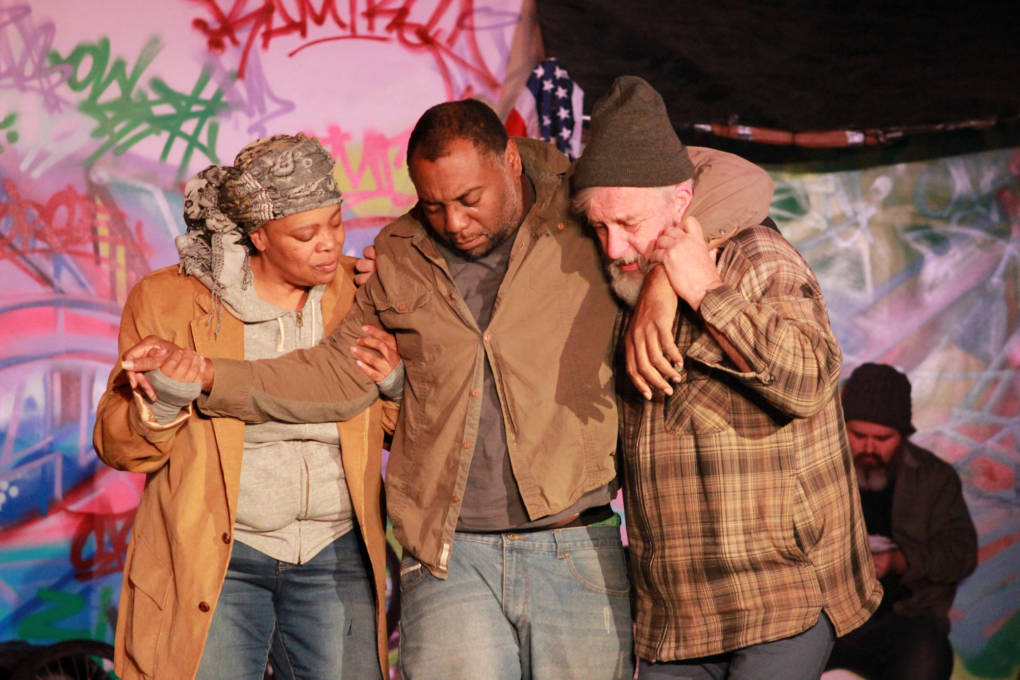
"caption": "Mama Gwen (Kimberly Daniels), Jones (Dorian Lockett), and 12-Step (John Mercer) in the Village of Radical Acceptance. ",
"description": "Mama Gwen (Kimberly Daniels), Jones (Dorian Lockett), and 12-Step (John Mercer) in the Village of Radical Acceptance. ",
"title": "DownHereBelow_Kimberly Daniels (Mama Gwen), Dorian Lockett (Jones) and John Mercer (12 Step)_credit_Jose Manuel Moctezuma",
"credit": "Jose Manuel Moctezuma",
"status": "inherit",
"isLoading": false,
"fetchFailed": false
},
"arts_13853399": {
"type": "attachments",
"id": "arts_13853399",
"meta": {
"index": "attachments_1716263798",
"site": "arts",
"id": "13853399",
"found": true
},
"parent": 0,
"imgSizes": {
"twentyfourteen-full-width": {
"file": "https://ww2.kqed.org/app/uploads/sites/2/2019/03/Brick-and-Mortar-Music-Hall-2-Feb-18-1038x576.jpg",
"width": 1038,
"mimeType": "image/jpeg",
"height": 576
},
"thumbnail": {
"file": "https://ww2.kqed.org/app/uploads/sites/2/2019/03/Brick-and-Mortar-Music-Hall-2-Feb-18-160x90.jpg",
"width": 160,
"mimeType": "image/jpeg",
"height": 90
},
"post-thumbnail": {
"file": "https://ww2.kqed.org/app/uploads/sites/2/2019/03/Brick-and-Mortar-Music-Hall-2-Feb-18-672x372.jpg",
"width": 672,
"mimeType": "image/jpeg",
"height": 372
},
"kqedFullSize": {
"file": "https://ww2.kqed.org/app/uploads/sites/2/2019/03/Brick-and-Mortar-Music-Hall-2-Feb-18.jpg",
"width": 1920,
"height": 1080
},
"large": {
"file": "https://ww2.kqed.org/app/uploads/sites/2/2019/03/Brick-and-Mortar-Music-Hall-2-Feb-18-1020x574.jpg",
"width": 1020,
"mimeType": "image/jpeg",
"height": 574
},
"complete_open_graph": {
"file": "https://ww2.kqed.org/app/uploads/sites/2/2019/03/Brick-and-Mortar-Music-Hall-2-Feb-18-1200x675.jpg",
"width": 1200,
"mimeType": "image/jpeg",
"height": 675
},
"guest-author-50": {
"file": "https://ww2.kqed.org/app/uploads/sites/2/2019/03/Brick-and-Mortar-Music-Hall-2-Feb-18-50x50.jpg",
"width": 50,
"mimeType": "image/jpeg",
"height": 50
},
"guest-author-96": {
"file": "https://ww2.kqed.org/app/uploads/sites/2/2019/03/Brick-and-Mortar-Music-Hall-2-Feb-18-96x96.jpg",
"width": 96,
"mimeType": "image/jpeg",
"height": 96
},
"medium": {
"file": "https://ww2.kqed.org/app/uploads/sites/2/2019/03/Brick-and-Mortar-Music-Hall-2-Feb-18-800x450.jpg",
"width": 800,
"mimeType": "image/jpeg",
"height": 450
},
"guest-author-64": {
"file": "https://ww2.kqed.org/app/uploads/sites/2/2019/03/Brick-and-Mortar-Music-Hall-2-Feb-18-64x64.jpg",
"width": 64,
"mimeType": "image/jpeg",
"height": 64
},
"guest-author-32": {
"file": "https://ww2.kqed.org/app/uploads/sites/2/2019/03/Brick-and-Mortar-Music-Hall-2-Feb-18-32x32.jpg",
"width": 32,
"mimeType": "image/jpeg",
"height": 32
},
"full-width": {
"file": "https://ww2.kqed.org/app/uploads/sites/2/2019/03/Brick-and-Mortar-Music-Hall-2-Feb-18-1920x1080.jpg",
"width": 1920,
"mimeType": "image/jpeg",
"height": 1080
},
"medium_large": {
"file": "https://ww2.kqed.org/app/uploads/sites/2/2019/03/Brick-and-Mortar-Music-Hall-2-Feb-18-768x432.jpg",
"width": 768,
"mimeType": "image/jpeg",
"height": 432
},
"guest-author-128": {
"file": "https://ww2.kqed.org/app/uploads/sites/2/2019/03/Brick-and-Mortar-Music-Hall-2-Feb-18-128x128.jpg",
"width": 128,
"mimeType": "image/jpeg",
"height": 128
}
},
"publishDate": 1553124879,
"modified": 1581465417,
"caption": "The Brick & Mortar Music Hall in San Francisco.",
"description": "The Brick & Mortar Music Hall in San Francisco.",
"title": "Jason-Perkins-Brick-and-Mortar-Music-Hall",
"credit": "Sam Lefebvre/KQED",
"status": "inherit",
"isLoading": false,
"fetchFailed": false
},
"arts_13848772": {
"type": "attachments",
"id": "arts_13848772",
"meta": {
"index": "attachments_1716263798",
"site": "arts",
"id": "13848772",
"found": true
},
"parent": 13848767,
"imgSizes": {
"small": {
"file": "https://ww2.kqed.org/app/uploads/sites/2/2019/01/Jayne_County__The_Electric_Chairs_2012-520x293.jpg",
"width": 520,
"mimeType": "image/jpeg",
"height": 293
},
"thumbnail": {
"file": "https://ww2.kqed.org/app/uploads/sites/2/2019/01/Jayne_County__The_Electric_Chairs_2012-160x90.jpg",
"width": 160,
"mimeType": "image/jpeg",
"height": 90
},
"fd-sm": {
"file": "https://ww2.kqed.org/app/uploads/sites/2/2019/01/Jayne_County__The_Electric_Chairs_2012-960x540.jpg",
"width": 960,
"mimeType": "image/jpeg",
"height": 540
},
"post-thumbnail": {
"file": "https://ww2.kqed.org/app/uploads/sites/2/2019/01/Jayne_County__The_Electric_Chairs_2012-672x372.jpg",
"width": 672,
"mimeType": "image/jpeg",
"height": 372
},
"xsmall": {
"file": "https://ww2.kqed.org/app/uploads/sites/2/2019/01/Jayne_County__The_Electric_Chairs_2012-375x211.jpg",
"width": 375,
"mimeType": "image/jpeg",
"height": 211
},
"kqedFullSize": {
"file": "https://ww2.kqed.org/app/uploads/sites/2/2019/01/Jayne_County__The_Electric_Chairs_2012.jpg",
"width": 1009,
"height": 568
},
"guest-author-50": {
"file": "https://ww2.kqed.org/app/uploads/sites/2/2019/01/Jayne_County__The_Electric_Chairs_2012-50x50.jpg",
"width": 50,
"mimeType": "image/jpeg",
"height": 50
},
"guest-author-96": {
"file": "https://ww2.kqed.org/app/uploads/sites/2/2019/01/Jayne_County__The_Electric_Chairs_2012-96x96.jpg",
"width": 96,
"mimeType": "image/jpeg",
"height": 96
},
"medium": {
"file": "https://ww2.kqed.org/app/uploads/sites/2/2019/01/Jayne_County__The_Electric_Chairs_2012-800x450.jpg",
"width": 800,
"mimeType": "image/jpeg",
"height": 450
},
"guest-author-64": {
"file": "https://ww2.kqed.org/app/uploads/sites/2/2019/01/Jayne_County__The_Electric_Chairs_2012-64x64.jpg",
"width": 64,
"mimeType": "image/jpeg",
"height": 64
},
"guest-author-32": {
"file": "https://ww2.kqed.org/app/uploads/sites/2/2019/01/Jayne_County__The_Electric_Chairs_2012-32x32.jpg",
"width": 32,
"mimeType": "image/jpeg",
"height": 32
},
"detail": {
"file": "https://ww2.kqed.org/app/uploads/sites/2/2019/01/Jayne_County__The_Electric_Chairs_2012-150x150.jpg",
"width": 150,
"mimeType": "image/jpeg",
"height": 150
},
"medium_large": {
"file": "https://ww2.kqed.org/app/uploads/sites/2/2019/01/Jayne_County__The_Electric_Chairs_2012-768x432.jpg",
"width": 768,
"mimeType": "image/jpeg",
"height": 432
},
"guest-author-128": {
"file": "https://ww2.kqed.org/app/uploads/sites/2/2019/01/Jayne_County__The_Electric_Chairs_2012-128x128.jpg",
"width": 128,
"mimeType": "image/jpeg",
"height": 128
},
"xxsmall": {
"file": "https://ww2.kqed.org/app/uploads/sites/2/2019/01/Jayne_County__The_Electric_Chairs_2012-240x135.jpg",
"width": 240,
"mimeType": "image/jpeg",
"height": 135
}
},
"publishDate": 1547515482,
"modified": 1547515543,
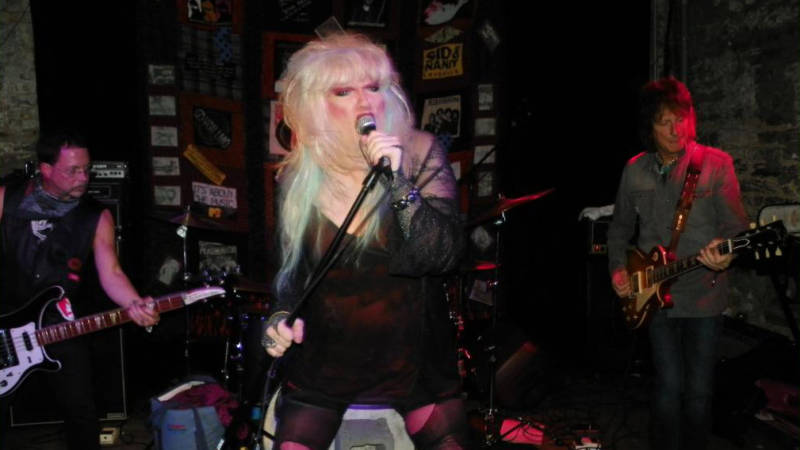
"caption": "Jayne County & the Electric Chairs are set to perform at the 2019 Burger Boogaloo. ",
"description": "Jayne County & the Electric Chairs are set to perform at the 2019 Burger Boogaloo. ",
"title": "Jayne_County_&_The_Electric_Chairs_2012",
"credit": "Wikimedia Commons ",
"status": "inherit",
"isLoading": false,
"fetchFailed": false
},
"arts_13840658": {
"type": "attachments",
"id": "arts_13840658",
"meta": {
"index": "attachments_1716263798",
"site": "arts",
"id": "13840658",
"found": true
},
"parent": 13840655,
"imgSizes": {
"small": {
"file": "https://ww2.kqed.org/app/uploads/sites/2/2018/09/This-Cart-is-My-Home-by-Joan-Gallego-520x358.jpg",
"width": 520,
"mimeType": "image/jpeg",
"height": 358
},
"twentyfourteen-full-width": {
"file": "https://ww2.kqed.org/app/uploads/sites/2/2018/09/This-Cart-is-My-Home-by-Joan-Gallego-1038x576.jpg",
"width": 1038,
"mimeType": "image/jpeg",
"height": 576
},
"thumbnail": {
"file": "https://ww2.kqed.org/app/uploads/sites/2/2018/09/This-Cart-is-My-Home-by-Joan-Gallego-160x110.jpg",
"width": 160,
"mimeType": "image/jpeg",
"height": 110
},
"fd-sm": {
"file": "https://ww2.kqed.org/app/uploads/sites/2/2018/09/This-Cart-is-My-Home-by-Joan-Gallego-960x660.jpg",
"width": 960,
"mimeType": "image/jpeg",
"height": 660
},
"post-thumbnail": {
"file": "https://ww2.kqed.org/app/uploads/sites/2/2018/09/This-Cart-is-My-Home-by-Joan-Gallego-672x372.jpg",
"width": 672,
"mimeType": "image/jpeg",
"height": 372
},
"xsmall": {
"file": "https://ww2.kqed.org/app/uploads/sites/2/2018/09/This-Cart-is-My-Home-by-Joan-Gallego-375x258.jpg",
"width": 375,
"mimeType": "image/jpeg",
"height": 258
},
"kqedFullSize": {
"file": "https://ww2.kqed.org/app/uploads/sites/2/2018/09/This-Cart-is-My-Home-by-Joan-Gallego.jpg",
"width": 1224,
"height": 842
},
"large": {
"file": "https://ww2.kqed.org/app/uploads/sites/2/2018/09/This-Cart-is-My-Home-by-Joan-Gallego-1020x702.jpg",
"width": 1020,
"mimeType": "image/jpeg",
"height": 702
},
"xlarge": {
"file": "https://ww2.kqed.org/app/uploads/sites/2/2018/09/This-Cart-is-My-Home-by-Joan-Gallego-1180x812.jpg",
"width": 1180,
"mimeType": "image/jpeg",
"height": 812
},
"complete_open_graph": {
"file": "https://ww2.kqed.org/app/uploads/sites/2/2018/09/This-Cart-is-My-Home-by-Joan-Gallego-1200x825.jpg",
"width": 1200,
"mimeType": "image/jpeg",
"height": 825
},
"guest-author-50": {
"file": "https://ww2.kqed.org/app/uploads/sites/2/2018/09/This-Cart-is-My-Home-by-Joan-Gallego-50x50.jpg",
"width": 50,
"mimeType": "image/jpeg",
"height": 50
},
"guest-author-96": {
"file": "https://ww2.kqed.org/app/uploads/sites/2/2018/09/This-Cart-is-My-Home-by-Joan-Gallego-96x96.jpg",
"width": 96,
"mimeType": "image/jpeg",
"height": 96
},
"medium": {
"file": "https://ww2.kqed.org/app/uploads/sites/2/2018/09/This-Cart-is-My-Home-by-Joan-Gallego-800x550.jpg",
"width": 800,
"mimeType": "image/jpeg",
"height": 550
},
"guest-author-64": {
"file": "https://ww2.kqed.org/app/uploads/sites/2/2018/09/This-Cart-is-My-Home-by-Joan-Gallego-64x64.jpg",
"width": 64,
"mimeType": "image/jpeg",
"height": 64
},
"guest-author-32": {
"file": "https://ww2.kqed.org/app/uploads/sites/2/2018/09/This-Cart-is-My-Home-by-Joan-Gallego-32x32.jpg",
"width": 32,
"mimeType": "image/jpeg",
"height": 32
},
"fd-med": {
"file": "https://ww2.kqed.org/app/uploads/sites/2/2018/09/This-Cart-is-My-Home-by-Joan-Gallego-1180x812.jpg",
"width": 1180,
"mimeType": "image/jpeg",
"height": 812
},
"detail": {
"file": "https://ww2.kqed.org/app/uploads/sites/2/2018/09/This-Cart-is-My-Home-by-Joan-Gallego-150x150.jpg",
"width": 150,
"mimeType": "image/jpeg",
"height": 150
},
"medium_large": {
"file": "https://ww2.kqed.org/app/uploads/sites/2/2018/09/This-Cart-is-My-Home-by-Joan-Gallego-768x528.jpg",
"width": 768,
"mimeType": "image/jpeg",
"height": 528
},
"guest-author-128": {
"file": "https://ww2.kqed.org/app/uploads/sites/2/2018/09/This-Cart-is-My-Home-by-Joan-Gallego-128x128.jpg",
"width": 128,
"mimeType": "image/jpeg",
"height": 128
},
"xxsmall": {
"file": "https://ww2.kqed.org/app/uploads/sites/2/2018/09/This-Cart-is-My-Home-by-Joan-Gallego-240x165.jpg",
"width": 240,
"mimeType": "image/jpeg",
"height": 165
}
},
"publishDate": 1536688257,
"modified": 1536688304,
"caption": "\"This Cart is My Home\" by Joan Gallego.",
"description": "\"This Cart is My Home\" by Joan Gallego.",
"title": "This Cart is My Home by Joan Gallego",
"credit": "Courtesy Coalition on Homelessness",
"status": "inherit",
"isLoading": false,
"fetchFailed": false
},
"arts_13565334": {
"type": "attachments",
"id": "arts_13565334",
"meta": {
"index": "attachments_1716263798",
"site": "arts",
"id": "13565334",
"found": true
},
"parent": 13569504,
"imgSizes": {
"small": {
"file": "https://ww2.kqed.org/app/uploads/sites/2/2017/07/Iggy-Pop2USE-520x293.jpg",
"width": 520,
"mimeType": "image/jpeg",
"height": 293
},
"twentyfourteen-full-width": {
"file": "https://ww2.kqed.org/app/uploads/sites/2/2017/07/Iggy-Pop2USE-1038x576.jpg",
"width": 1038,
"mimeType": "image/jpeg",
"height": 576
},
"thumbnail": {
"file": "https://ww2.kqed.org/app/uploads/sites/2/2017/07/Iggy-Pop2USE-160x90.jpg",
"width": 160,
"mimeType": "image/jpeg",
"height": 90
},
"fd-sm": {
"file": "https://ww2.kqed.org/app/uploads/sites/2/2017/07/Iggy-Pop2USE-960x540.jpg",
"width": 960,
"mimeType": "image/jpeg",
"height": 540
},
"post-thumbnail": {
"file": "https://ww2.kqed.org/app/uploads/sites/2/2017/07/Iggy-Pop2USE-672x372.jpg",
"width": 672,
"mimeType": "image/jpeg",
"height": 372
},
"xsmall": {
"file": "https://ww2.kqed.org/app/uploads/sites/2/2017/07/Iggy-Pop2USE-375x211.jpg",
"width": 375,
"mimeType": "image/jpeg",
"height": 211
},
"kqedFullSize": {
"file": "https://ww2.kqed.org/app/uploads/sites/2/2017/07/Iggy-Pop2USE.jpg",
"width": 1920,
"height": 1080
},
"large": {
"file": "https://ww2.kqed.org/app/uploads/sites/2/2017/07/Iggy-Pop2USE-1020x574.jpg",
"width": 1020,
"mimeType": "image/jpeg",
"height": 574
},
"xlarge": {
"file": "https://ww2.kqed.org/app/uploads/sites/2/2017/07/Iggy-Pop2USE-1180x664.jpg",
"width": 1180,
"mimeType": "image/jpeg",
"height": 664
},
"guest-author-50": {
"file": "https://ww2.kqed.org/app/uploads/sites/2/2017/07/Iggy-Pop2USE-50x50.jpg",
"width": 50,
"mimeType": "image/jpeg",
"height": 50
},
"guest-author-96": {
"file": "https://ww2.kqed.org/app/uploads/sites/2/2017/07/Iggy-Pop2USE-96x96.jpg",
"width": 96,
"mimeType": "image/jpeg",
"height": 96
},
"medium": {
"file": "https://ww2.kqed.org/app/uploads/sites/2/2017/07/Iggy-Pop2USE-800x450.jpg",
"width": 800,
"mimeType": "image/jpeg",
"height": 450
},
"guest-author-64": {
"file": "https://ww2.kqed.org/app/uploads/sites/2/2017/07/Iggy-Pop2USE-64x64.jpg",
"width": 64,
"mimeType": "image/jpeg",
"height": 64
},
"guest-author-32": {
"file": "https://ww2.kqed.org/app/uploads/sites/2/2017/07/Iggy-Pop2USE-32x32.jpg",
"width": 32,
"mimeType": "image/jpeg",
"height": 32
},
"fd-lrg": {
"file": "https://ww2.kqed.org/app/uploads/sites/2/2017/07/Iggy-Pop2USE-1920x1080.jpg",
"width": 1920,
"mimeType": "image/jpeg",
"height": 1080
},
"fd-med": {
"file": "https://ww2.kqed.org/app/uploads/sites/2/2017/07/Iggy-Pop2USE-1180x664.jpg",
"width": 1180,
"mimeType": "image/jpeg",
"height": 664
},
"full-width": {
"file": "https://ww2.kqed.org/app/uploads/sites/2/2017/07/Iggy-Pop2USE-1920x1080.jpg",
"width": 1920,
"mimeType": "image/jpeg",
"height": 1080
},
"detail": {
"file": "https://ww2.kqed.org/app/uploads/sites/2/2017/07/Iggy-Pop2USE-150x150.jpg",
"width": 150,
"mimeType": "image/jpeg",
"height": 150
},
"medium_large": {
"file": "https://ww2.kqed.org/app/uploads/sites/2/2017/07/Iggy-Pop2USE-768x432.jpg",
"width": 768,
"mimeType": "image/jpeg",
"height": 432
},
"guest-author-128": {
"file": "https://ww2.kqed.org/app/uploads/sites/2/2017/07/Iggy-Pop2USE-128x128.jpg",
"width": 128,
"mimeType": "image/jpeg",
"height": 128
},
"xxsmall": {
"file": "https://ww2.kqed.org/app/uploads/sites/2/2017/07/Iggy-Pop2USE-240x135.jpg",
"width": 240,
"mimeType": "image/jpeg",
"height": 135
}
},
"publishDate": 1498986403,
"modified": 1531952179,
"caption": "Iggy Pop and band performing at Burger Boogaloo in 2017.",
"description": "Iggy Pop and band performing at Burger Boogaloo in 2017.",
"title": "Iggy Pop2USE",
"credit": "Kevin L. Jones/KQED",
"status": "inherit",
"isLoading": false,
"fetchFailed": false
},
"arts_13829849": {
"type": "attachments",
"id": "arts_13829849",
"meta": {
"index": "attachments_1716263798",
"site": "arts",
"id": "13829849",
"found": true
},
"parent": 13829836,
"imgSizes": {
"small": {
"file": "https://ww2.kqed.org/app/uploads/sites/2/2018/04/carmen-lomas-garza-sandia-1997_41146281702_o-e1524094659683-520x353.jpg",
"width": 520,
"mimeType": "image/jpeg",
"height": 353
},
"twentyfourteen-full-width": {
"file": "https://ww2.kqed.org/app/uploads/sites/2/2018/04/carmen-lomas-garza-sandia-1997_41146281702_o-e1524094659683-1038x576.jpg",
"width": 1038,
"mimeType": "image/jpeg",
"height": 576
},
"thumbnail": {
"file": "https://ww2.kqed.org/app/uploads/sites/2/2018/04/carmen-lomas-garza-sandia-1997_41146281702_o-e1524094659683-160x109.jpg",
"width": 160,
"mimeType": "image/jpeg",
"height": 109
},
"fd-sm": {
"file": "https://ww2.kqed.org/app/uploads/sites/2/2018/04/carmen-lomas-garza-sandia-1997_41146281702_o-e1524094659683-960x653.jpg",
"width": 960,
"mimeType": "image/jpeg",
"height": 653
},
"post-thumbnail": {
"file": "https://ww2.kqed.org/app/uploads/sites/2/2018/04/carmen-lomas-garza-sandia-1997_41146281702_o-e1524094659683-672x372.jpg",
"width": 672,
"mimeType": "image/jpeg",
"height": 372
},
"xsmall": {
"file": "https://ww2.kqed.org/app/uploads/sites/2/2018/04/carmen-lomas-garza-sandia-1997_41146281702_o-e1524094659683-375x255.jpg",
"width": 375,
"mimeType": "image/jpeg",
"height": 255
},
"kqedFullSize": {
"file": "https://ww2.kqed.org/app/uploads/sites/2/2018/04/carmen-lomas-garza-sandia-1997_41146281702_o-e1524094659683.jpg",
"width": 2048,
"height": 1392
},
"large": {
"file": "https://ww2.kqed.org/app/uploads/sites/2/2018/04/carmen-lomas-garza-sandia-1997_41146281702_o-e1524094659683-1020x693.jpg",
"width": 1020,
"mimeType": "image/jpeg",
"height": 693
},
"xlarge": {
"file": "https://ww2.kqed.org/app/uploads/sites/2/2018/04/carmen-lomas-garza-sandia-1997_41146281702_o-e1524094659683-1180x802.jpg",
"width": 1180,
"mimeType": "image/jpeg",
"height": 802
},
"complete_open_graph": {
"file": "https://ww2.kqed.org/app/uploads/sites/2/2018/04/carmen-lomas-garza-sandia-1997_41146281702_o-e1524094659683-1200x816.jpg",
"width": 1200,
"mimeType": "image/jpeg",
"height": 816
},
"guest-author-50": {
"file": "https://ww2.kqed.org/app/uploads/sites/2/2018/04/carmen-lomas-garza-sandia-1997_41146281702_o-e1524094659683-50x50.jpg",
"width": 50,
"mimeType": "image/jpeg",
"height": 50
},
"guest-author-96": {
"file": "https://ww2.kqed.org/app/uploads/sites/2/2018/04/carmen-lomas-garza-sandia-1997_41146281702_o-e1524094659683-96x96.jpg",
"width": 96,
"mimeType": "image/jpeg",
"height": 96
},
"medium": {
"file": "https://ww2.kqed.org/app/uploads/sites/2/2018/04/carmen-lomas-garza-sandia-1997_41146281702_o-e1524094659683-800x544.jpg",
"width": 800,
"mimeType": "image/jpeg",
"height": 544
},
"guest-author-64": {
"file": "https://ww2.kqed.org/app/uploads/sites/2/2018/04/carmen-lomas-garza-sandia-1997_41146281702_o-e1524094659683-64x64.jpg",
"width": 64,
"mimeType": "image/jpeg",
"height": 64
},
"guest-author-32": {
"file": "https://ww2.kqed.org/app/uploads/sites/2/2018/04/carmen-lomas-garza-sandia-1997_41146281702_o-e1524094659683-32x32.jpg",
"width": 32,
"mimeType": "image/jpeg",
"height": 32
},
"fd-lrg": {
"file": "https://ww2.kqed.org/app/uploads/sites/2/2018/04/carmen-lomas-garza-sandia-1997_41146281702_o-e1524094659683-1920x1305.jpg",
"width": 1920,
"mimeType": "image/jpeg",
"height": 1305
},
"fd-med": {
"file": "https://ww2.kqed.org/app/uploads/sites/2/2018/04/carmen-lomas-garza-sandia-1997_41146281702_o-e1524094659683-1180x802.jpg",
"width": 1180,
"mimeType": "image/jpeg",
"height": 802
},
"full-width": {
"file": "https://ww2.kqed.org/app/uploads/sites/2/2018/04/carmen-lomas-garza-sandia-1997_41146281702_o-e1524094659683-1920x1305.jpg",
"width": 1920,
"mimeType": "image/jpeg",
"height": 1305
},
"detail": {
"file": "https://ww2.kqed.org/app/uploads/sites/2/2018/04/carmen-lomas-garza-sandia-1997_41146281702_o-e1524094659683-150x150.jpg",
"width": 150,
"mimeType": "image/jpeg",
"height": 150
},
"medium_large": {
"file": "https://ww2.kqed.org/app/uploads/sites/2/2018/04/carmen-lomas-garza-sandia-1997_41146281702_o-e1524094659683-768x522.jpg",
"width": 768,
"mimeType": "image/jpeg",
"height": 522
},
"guest-author-128": {
"file": "https://ww2.kqed.org/app/uploads/sites/2/2018/04/carmen-lomas-garza-sandia-1997_41146281702_o-e1524094659683-128x128.jpg",
"width": 128,
"mimeType": "image/jpeg",
"height": 128
},
"xxsmall": {
"file": "https://ww2.kqed.org/app/uploads/sites/2/2018/04/carmen-lomas-garza-sandia-1997_41146281702_o-e1524094659683-240x163.jpg",
"width": 240,
"mimeType": "image/jpeg",
"height": 163
}
},
"publishDate": 1524094436,
"modified": 1524094690,
"caption": "‘Sandía/ Watermelon‘ by Carmen Lomas Garza is part of the exhibit ‘The House Imaginary‘ at the San Jose Museum of Art",
"description": "‘Sandía/ Watermelon‘ by Carmen Lomas Garza is part of the exhibit ‘The House Imaginary‘ at the San Jose Museum of Art",
"title": "‘Sandía/ Watermelon‘ by Carmen Lomas Garza is part of the exhibit ‘The House Imaginary‘ at the San Jose Museum of Art",
"credit": "Courtesy of the San Jose Museum of Art",
"status": "inherit",
"isLoading": false,
"fetchFailed": false
},
"arts_13828842": {
"type": "attachments",
"id": "arts_13828842",
"meta": {
"index": "attachments_1716263798",
"site": "arts",
"id": "13828842",
"found": true
},
"parent": 13828811,
"imgSizes": {
"small": {
"file": "https://ww2.kqed.org/app/uploads/sites/2/2018/04/DSCF8635-1-520x293.jpg",
"width": 520,
"mimeType": "image/jpeg",
"height": 293
},
"twentyfourteen-full-width": {
"file": "https://ww2.kqed.org/app/uploads/sites/2/2018/04/DSCF8635-1-1038x576.jpg",
"width": 1038,
"mimeType": "image/jpeg",
"height": 576
},
"thumbnail": {
"file": "https://ww2.kqed.org/app/uploads/sites/2/2018/04/DSCF8635-1-160x90.jpg",
"width": 160,
"mimeType": "image/jpeg",
"height": 90
},
"fd-sm": {
"file": "https://ww2.kqed.org/app/uploads/sites/2/2018/04/DSCF8635-1-960x540.jpg",
"width": 960,
"mimeType": "image/jpeg",
"height": 540
},
"post-thumbnail": {
"file": "https://ww2.kqed.org/app/uploads/sites/2/2018/04/DSCF8635-1-672x372.jpg",
"width": 672,
"mimeType": "image/jpeg",
"height": 372
},
"xsmall": {
"file": "https://ww2.kqed.org/app/uploads/sites/2/2018/04/DSCF8635-1-375x211.jpg",
"width": 375,
"mimeType": "image/jpeg",
"height": 211
},
"kqedFullSize": {
"file": "https://ww2.kqed.org/app/uploads/sites/2/2018/04/DSCF8635-1.jpg",
"width": 1920,
"height": 1080
},
"large": {
"file": "https://ww2.kqed.org/app/uploads/sites/2/2018/04/DSCF8635-1-1020x574.jpg",
"width": 1020,
"mimeType": "image/jpeg",
"height": 574
},
"xlarge": {
"file": "https://ww2.kqed.org/app/uploads/sites/2/2018/04/DSCF8635-1-1180x664.jpg",
"width": 1180,
"mimeType": "image/jpeg",
"height": 664
},
"guest-author-50": {
"file": "https://ww2.kqed.org/app/uploads/sites/2/2018/04/DSCF8635-1-50x50.jpg",
"width": 50,
"mimeType": "image/jpeg",
"height": 50
},
"guest-author-96": {
"file": "https://ww2.kqed.org/app/uploads/sites/2/2018/04/DSCF8635-1-96x96.jpg",
"width": 96,
"mimeType": "image/jpeg",
"height": 96
},
"medium": {
"file": "https://ww2.kqed.org/app/uploads/sites/2/2018/04/DSCF8635-1-800x450.jpg",
"width": 800,
"mimeType": "image/jpeg",
"height": 450
},
"guest-author-64": {
"file": "https://ww2.kqed.org/app/uploads/sites/2/2018/04/DSCF8635-1-64x64.jpg",
"width": 64,
"mimeType": "image/jpeg",
"height": 64
},
"guest-author-32": {
"file": "https://ww2.kqed.org/app/uploads/sites/2/2018/04/DSCF8635-1-32x32.jpg",
"width": 32,
"mimeType": "image/jpeg",
"height": 32
},
"fd-lrg": {
"file": "https://ww2.kqed.org/app/uploads/sites/2/2018/04/DSCF8635-1-1920x1080.jpg",
"width": 1920,
"mimeType": "image/jpeg",
"height": 1080
},
"fd-med": {
"file": "https://ww2.kqed.org/app/uploads/sites/2/2018/04/DSCF8635-1-1180x664.jpg",
"width": 1180,
"mimeType": "image/jpeg",
"height": 664
},
"full-width": {
"file": "https://ww2.kqed.org/app/uploads/sites/2/2018/04/DSCF8635-1-1920x1080.jpg",
"width": 1920,
"mimeType": "image/jpeg",
"height": 1080
},
"detail": {
"file": "https://ww2.kqed.org/app/uploads/sites/2/2018/04/DSCF8635-1-150x150.jpg",
"width": 150,
"mimeType": "image/jpeg",
"height": 150
},
"medium_large": {
"file": "https://ww2.kqed.org/app/uploads/sites/2/2018/04/DSCF8635-1-768x432.jpg",
"width": 768,
"mimeType": "image/jpeg",
"height": 432
},
"guest-author-128": {
"file": "https://ww2.kqed.org/app/uploads/sites/2/2018/04/DSCF8635-1-128x128.jpg",
"width": 128,
"mimeType": "image/jpeg",
"height": 128
},
"xxsmall": {
"file": "https://ww2.kqed.org/app/uploads/sites/2/2018/04/DSCF8635-1-240x135.jpg",
"width": 240,
"mimeType": "image/jpeg",
"height": 135
}
},
"publishDate": 1522970861,
"modified": 1522973230,
"caption": "Keta Price, Candice Elder and Nick Houston (left to right) spearhead grassroots efforts to help the homeless through the East Oakland Collective. ",
"description": "Keeta Price, Candice Elder and Nick Houston (left to right) spearhead grassroots efforts to help the homeless through the East Oakland Collective. ",
"title": "DSCF8635",
"credit": "Charles Lee/@picturemesirius",
"status": "inherit",
"isLoading": false,
"fetchFailed": false
},
"arts_13823209": {
"type": "attachments",
"id": "arts_13823209",
"meta": {
"index": "attachments_1716263798",
"site": "arts",
"id": "13823209",
"found": true
},
"parent": 13823151,
"imgSizes": {
"small": {
"file": "https://ww2.kqed.org/app/uploads/sites/2/2018/01/Tiffany.Emily_.MAIN_-520x293.jpg",
"width": 520,
"mimeType": "image/jpeg",
"height": 293
},
"twentyfourteen-full-width": {
"file": "https://ww2.kqed.org/app/uploads/sites/2/2018/01/Tiffany.Emily_.MAIN_-1038x576.jpg",
"width": 1038,
"mimeType": "image/jpeg",
"height": 576
},
"thumbnail": {
"file": "https://ww2.kqed.org/app/uploads/sites/2/2018/01/Tiffany.Emily_.MAIN_-160x90.jpg",
"width": 160,
"mimeType": "image/jpeg",
"height": 90
},
"fd-sm": {
"file": "https://ww2.kqed.org/app/uploads/sites/2/2018/01/Tiffany.Emily_.MAIN_-960x540.jpg",
"width": 960,
"mimeType": "image/jpeg",
"height": 540
},
"post-thumbnail": {
"file": "https://ww2.kqed.org/app/uploads/sites/2/2018/01/Tiffany.Emily_.MAIN_-672x372.jpg",
"width": 672,
"mimeType": "image/jpeg",
"height": 372
},
"xsmall": {
"file": "https://ww2.kqed.org/app/uploads/sites/2/2018/01/Tiffany.Emily_.MAIN_-375x211.jpg",
"width": 375,
"mimeType": "image/jpeg",
"height": 211
},
"kqedFullSize": {
"file": "https://ww2.kqed.org/app/uploads/sites/2/2018/01/Tiffany.Emily_.MAIN_.jpg",
"width": 1920,
"height": 1080
},
"large": {
"file": "https://ww2.kqed.org/app/uploads/sites/2/2018/01/Tiffany.Emily_.MAIN_-1020x574.jpg",
"width": 1020,
"mimeType": "image/jpeg",
"height": 574
},
"xlarge": {
"file": "https://ww2.kqed.org/app/uploads/sites/2/2018/01/Tiffany.Emily_.MAIN_-1180x664.jpg",
"width": 1180,
"mimeType": "image/jpeg",
"height": 664
},
"guest-author-50": {
"file": "https://ww2.kqed.org/app/uploads/sites/2/2018/01/Tiffany.Emily_.MAIN_-50x50.jpg",
"width": 50,
"mimeType": "image/jpeg",
"height": 50
},
"guest-author-96": {
"file": "https://ww2.kqed.org/app/uploads/sites/2/2018/01/Tiffany.Emily_.MAIN_-96x96.jpg",
"width": 96,
"mimeType": "image/jpeg",
"height": 96
},
"medium": {
"file": "https://ww2.kqed.org/app/uploads/sites/2/2018/01/Tiffany.Emily_.MAIN_-800x450.jpg",
"width": 800,
"mimeType": "image/jpeg",
"height": 450
},
"guest-author-64": {
"file": "https://ww2.kqed.org/app/uploads/sites/2/2018/01/Tiffany.Emily_.MAIN_-64x64.jpg",
"width": 64,
"mimeType": "image/jpeg",
"height": 64
},
"guest-author-32": {
"file": "https://ww2.kqed.org/app/uploads/sites/2/2018/01/Tiffany.Emily_.MAIN_-32x32.jpg",
"width": 32,
"mimeType": "image/jpeg",
"height": 32
},
"fd-lrg": {
"file": "https://ww2.kqed.org/app/uploads/sites/2/2018/01/Tiffany.Emily_.MAIN_-1920x1080.jpg",
"width": 1920,
"mimeType": "image/jpeg",
"height": 1080
},
"fd-med": {
"file": "https://ww2.kqed.org/app/uploads/sites/2/2018/01/Tiffany.Emily_.MAIN_-1180x664.jpg",
"width": 1180,
"mimeType": "image/jpeg",
"height": 664
},
"full-width": {
"file": "https://ww2.kqed.org/app/uploads/sites/2/2018/01/Tiffany.Emily_.MAIN_-1920x1080.jpg",
"width": 1920,
"mimeType": "image/jpeg",
"height": 1080
},
"detail": {
"file": "https://ww2.kqed.org/app/uploads/sites/2/2018/01/Tiffany.Emily_.MAIN_-150x150.jpg",
"width": 150,
"mimeType": "image/jpeg",
"height": 150
},
"medium_large": {
"file": "https://ww2.kqed.org/app/uploads/sites/2/2018/01/Tiffany.Emily_.MAIN_-768x432.jpg",
"width": 768,
"mimeType": "image/jpeg",
"height": 432
},
"guest-author-128": {
"file": "https://ww2.kqed.org/app/uploads/sites/2/2018/01/Tiffany.Emily_.MAIN_-128x128.jpg",
"width": 128,
"mimeType": "image/jpeg",
"height": 128
},
"xxsmall": {
"file": "https://ww2.kqed.org/app/uploads/sites/2/2018/01/Tiffany.Emily_.MAIN_-240x135.jpg",
"width": 240,
"mimeType": "image/jpeg",
"height": 135
}
},
"publishDate": 1517364366,
"modified": 1517364450,
"caption": "Tiffany McClendon, right, with daughter Emily in the documentary 'Tender Souls.'",
"description": "Tiffany McClendon, right, with daughter Emily in the documentary 'Tender Souls.'",
"title": "Tiffany.Emily.MAIN",
"credit": "Brenton Gieser",
"status": "inherit",
"isLoading": false,
"fetchFailed": false
},
"arts_13815959": {
"type": "attachments",
"id": "arts_13815959",
"meta": {
"index": "attachments_1716263798",
"site": "arts",
"id": "13815959",
"found": true
},
"parent": 13815934,
"imgSizes": {
"small": {
"file": "https://ww2.kqed.org/app/uploads/sites/2/2017/11/FromShadowsKQED-520x293.jpg",
"width": 520,
"mimeType": "image/jpeg",
"height": 293
},
"twentyfourteen-full-width": {
"file": "https://ww2.kqed.org/app/uploads/sites/2/2017/11/FromShadowsKQED-1038x576.jpg",
"width": 1038,
"mimeType": "image/jpeg",
"height": 576
},
"thumbnail": {
"file": "https://ww2.kqed.org/app/uploads/sites/2/2017/11/FromShadowsKQED-160x90.jpg",
"width": 160,
"mimeType": "image/jpeg",
"height": 90
},
"fd-sm": {
"file": "https://ww2.kqed.org/app/uploads/sites/2/2017/11/FromShadowsKQED-960x540.jpg",
"width": 960,
"mimeType": "image/jpeg",
"height": 540
},
"post-thumbnail": {
"file": "https://ww2.kqed.org/app/uploads/sites/2/2017/11/FromShadowsKQED-672x372.jpg",
"width": 672,
"mimeType": "image/jpeg",
"height": 372
},
"xsmall": {
"file": "https://ww2.kqed.org/app/uploads/sites/2/2017/11/FromShadowsKQED-375x211.jpg",
"width": 375,
"mimeType": "image/jpeg",
"height": 211
},
"kqedFullSize": {
"file": "https://ww2.kqed.org/app/uploads/sites/2/2017/11/FromShadowsKQED.jpg",
"width": 1920,
"height": 1080
},
"large": {
"file": "https://ww2.kqed.org/app/uploads/sites/2/2017/11/FromShadowsKQED-1020x574.jpg",
"width": 1020,
"mimeType": "image/jpeg",
"height": 574
},
"xlarge": {
"file": "https://ww2.kqed.org/app/uploads/sites/2/2017/11/FromShadowsKQED-1180x664.jpg",
"width": 1180,
"mimeType": "image/jpeg",
"height": 664
},
"guest-author-50": {
"file": "https://ww2.kqed.org/app/uploads/sites/2/2017/11/FromShadowsKQED-50x50.jpg",
"width": 50,
"mimeType": "image/jpeg",
"height": 50
},
"guest-author-96": {
"file": "https://ww2.kqed.org/app/uploads/sites/2/2017/11/FromShadowsKQED-96x96.jpg",
"width": 96,
"mimeType": "image/jpeg",
"height": 96
},
"medium": {
"file": "https://ww2.kqed.org/app/uploads/sites/2/2017/11/FromShadowsKQED-800x450.jpg",
"width": 800,
"mimeType": "image/jpeg",
"height": 450
},
"guest-author-64": {
"file": "https://ww2.kqed.org/app/uploads/sites/2/2017/11/FromShadowsKQED-64x64.jpg",
"width": 64,
"mimeType": "image/jpeg",
"height": 64
},
"guest-author-32": {
"file": "https://ww2.kqed.org/app/uploads/sites/2/2017/11/FromShadowsKQED-32x32.jpg",
"width": 32,
"mimeType": "image/jpeg",
"height": 32
},
"fd-lrg": {
"file": "https://ww2.kqed.org/app/uploads/sites/2/2017/11/FromShadowsKQED-1920x1080.jpg",
"width": 1920,
"mimeType": "image/jpeg",
"height": 1080
},
"fd-med": {
"file": "https://ww2.kqed.org/app/uploads/sites/2/2017/11/FromShadowsKQED-1180x664.jpg",
"width": 1180,
"mimeType": "image/jpeg",
"height": 664
},
"full-width": {
"file": "https://ww2.kqed.org/app/uploads/sites/2/2017/11/FromShadowsKQED-1920x1080.jpg",
"width": 1920,
"mimeType": "image/jpeg",
"height": 1080
},
"detail": {
"file": "https://ww2.kqed.org/app/uploads/sites/2/2017/11/FromShadowsKQED-150x150.jpg",
"width": 150,
"mimeType": "image/jpeg",
"height": 150
},
"medium_large": {
"file": "https://ww2.kqed.org/app/uploads/sites/2/2017/11/FromShadowsKQED-768x432.jpg",
"width": 768,
"mimeType": "image/jpeg",
"height": 432
},
"guest-author-128": {
"file": "https://ww2.kqed.org/app/uploads/sites/2/2017/11/FromShadowsKQED-128x128.jpg",
"width": 128,
"mimeType": "image/jpeg",
"height": 128
},
"xxsmall": {
"file": "https://ww2.kqed.org/app/uploads/sites/2/2017/11/FromShadowsKQED-240x135.jpg",
"width": 240,
"mimeType": "image/jpeg",
"height": 135
}
},
"publishDate": 1511842816,
"modified": 1511842877,
"caption": null,
"description": "A scene of \"From Shadows,\" a ballet about homelessness",
"title": "FromShadowsKQED",
"credit": null,
"status": "inherit",
"isLoading": false,
"fetchFailed": false
},
"arts_13844966": {
"type": "attachments",
"id": "arts_13844966",
"meta": {
"index": "attachments_1716263798",
"site": "arts",
"id": "13844966",
"found": true
},
"parent": 13811487,
"imgSizes": {
"small": {
"file": "https://ww2.kqed.org/app/uploads/sites/2/2017/10/Moses_BTL_Thumbnail-520x293.jpg",
"width": 520,
"mimeType": "image/jpeg",
"height": 293
},
"twentyfourteen-full-width": {
"file": "https://ww2.kqed.org/app/uploads/sites/2/2017/10/Moses_BTL_Thumbnail-1038x576.jpg",
"width": 1038,
"mimeType": "image/jpeg",
"height": 576
},
"thumbnail": {
"file": "https://ww2.kqed.org/app/uploads/sites/2/2017/10/Moses_BTL_Thumbnail-160x90.jpg",
"width": 160,
"mimeType": "image/jpeg",
"height": 90
},
"fd-sm": {
"file": "https://ww2.kqed.org/app/uploads/sites/2/2017/10/Moses_BTL_Thumbnail-960x540.jpg",
"width": 960,
"mimeType": "image/jpeg",
"height": 540
},
"post-thumbnail": {
"file": "https://ww2.kqed.org/app/uploads/sites/2/2017/10/Moses_BTL_Thumbnail-672x372.jpg",
"width": 672,
"mimeType": "image/jpeg",
"height": 372
},
"xsmall": {
"file": "https://ww2.kqed.org/app/uploads/sites/2/2017/10/Moses_BTL_Thumbnail-375x211.jpg",
"width": 375,
"mimeType": "image/jpeg",
"height": 211
},
"kqedFullSize": {
"file": "https://ww2.kqed.org/app/uploads/sites/2/2017/10/Moses_BTL_Thumbnail.jpg",
"width": 1920,
"height": 1080
},
"large": {
"file": "https://ww2.kqed.org/app/uploads/sites/2/2017/10/Moses_BTL_Thumbnail-1020x574.jpg",
"width": 1020,
"mimeType": "image/jpeg",
"height": 574
},
"xlarge": {
"file": "https://ww2.kqed.org/app/uploads/sites/2/2017/10/Moses_BTL_Thumbnail-1180x664.jpg",
"width": 1180,
"mimeType": "image/jpeg",
"height": 664
},
"complete_open_graph": {
"file": "https://ww2.kqed.org/app/uploads/sites/2/2017/10/Moses_BTL_Thumbnail-1200x675.jpg",
"width": 1200,
"mimeType": "image/jpeg",
"height": 675
},
"guest-author-50": {
"file": "https://ww2.kqed.org/app/uploads/sites/2/2017/10/Moses_BTL_Thumbnail-50x50.jpg",
"width": 50,
"mimeType": "image/jpeg",
"height": 50
},
"guest-author-96": {
"file": "https://ww2.kqed.org/app/uploads/sites/2/2017/10/Moses_BTL_Thumbnail-96x96.jpg",
"width": 96,
"mimeType": "image/jpeg",
"height": 96
},
"medium": {
"file": "https://ww2.kqed.org/app/uploads/sites/2/2017/10/Moses_BTL_Thumbnail-800x450.jpg",
"width": 800,
"mimeType": "image/jpeg",
"height": 450
},
"guest-author-64": {
"file": "https://ww2.kqed.org/app/uploads/sites/2/2017/10/Moses_BTL_Thumbnail-64x64.jpg",
"width": 64,
"mimeType": "image/jpeg",
"height": 64
},
"guest-author-32": {
"file": "https://ww2.kqed.org/app/uploads/sites/2/2017/10/Moses_BTL_Thumbnail-32x32.jpg",
"width": 32,
"mimeType": "image/jpeg",
"height": 32
},
"fd-lrg": {
"file": "https://ww2.kqed.org/app/uploads/sites/2/2017/10/Moses_BTL_Thumbnail-1920x1080.jpg",
"width": 1920,
"mimeType": "image/jpeg",
"height": 1080
},
"fd-med": {
"file": "https://ww2.kqed.org/app/uploads/sites/2/2017/10/Moses_BTL_Thumbnail-1180x664.jpg",
"width": 1180,
"mimeType": "image/jpeg",
"height": 664
},
"full-width": {
"file": "https://ww2.kqed.org/app/uploads/sites/2/2017/10/Moses_BTL_Thumbnail-1920x1080.jpg",
"width": 1920,
"mimeType": "image/jpeg",
"height": 1080
},
"detail": {
"file": "https://ww2.kqed.org/app/uploads/sites/2/2017/10/Moses_BTL_Thumbnail-150x150.jpg",
"width": 150,
"mimeType": "image/jpeg",
"height": 150
},
"medium_large": {
"file": "https://ww2.kqed.org/app/uploads/sites/2/2017/10/Moses_BTL_Thumbnail-768x432.jpg",
"width": 768,
"mimeType": "image/jpeg",
"height": 432
},
"guest-author-128": {
"file": "https://ww2.kqed.org/app/uploads/sites/2/2017/10/Moses_BTL_Thumbnail-128x128.jpg",
"width": 128,
"mimeType": "image/jpeg",
"height": 128
},
"xxsmall": {
"file": "https://ww2.kqed.org/app/uploads/sites/2/2017/10/Moses_BTL_Thumbnail-240x135.jpg",
"width": 240,
"mimeType": "image/jpeg",
"height": 135
}
},
"publishDate": 1542248100,
"modified": 1542248100,
"caption": null,
"description": null,
"title": "Moses_BTL_Thumbnail",
"credit": null,
"status": "inherit",
"isLoading": false,
"fetchFailed": false
},
"arts_13911708": {
"type": "attachments",
"id": "arts_13911708",
"meta": {
"index": "attachments_1716263798",
"site": "arts",
"id": "13911708",
"found": true
},
"parent": 13911699,
"imgSizes": {
"twentyfourteen-full-width": {
"file": "https://ww2.kqed.org/app/uploads/sites/2/2022/04/18209259_10211377713176108_2159195679304479848_o-1038x576.jpg",
"width": 1038,
"mimeType": "image/jpeg",
"height": 576
},
"thumbnail": {
"file": "https://ww2.kqed.org/app/uploads/sites/2/2022/04/18209259_10211377713176108_2159195679304479848_o-160x90.jpg",
"width": 160,
"mimeType": "image/jpeg",
"height": 90
},
"post-thumbnail": {
"file": "https://ww2.kqed.org/app/uploads/sites/2/2022/04/18209259_10211377713176108_2159195679304479848_o-672x372.jpg",
"width": 672,
"mimeType": "image/jpeg",
"height": 372
},
"kqedFullSize": {
"file": "https://ww2.kqed.org/app/uploads/sites/2/2022/04/18209259_10211377713176108_2159195679304479848_o.jpg",
"width": 1920,
"height": 1080
},
"large": {
"file": "https://ww2.kqed.org/app/uploads/sites/2/2022/04/18209259_10211377713176108_2159195679304479848_o-1020x574.jpg",
"width": 1020,
"mimeType": "image/jpeg",
"height": 574
},
"1536x1536": {
"file": "https://ww2.kqed.org/app/uploads/sites/2/2022/04/18209259_10211377713176108_2159195679304479848_o-1536x864.jpg",
"width": 1536,
"mimeType": "image/jpeg",
"height": 864
},
"medium": {
"file": "https://ww2.kqed.org/app/uploads/sites/2/2022/04/18209259_10211377713176108_2159195679304479848_o-800x450.jpg",
"width": 800,
"mimeType": "image/jpeg",
"height": 450
},
"medium_large": {
"file": "https://ww2.kqed.org/app/uploads/sites/2/2022/04/18209259_10211377713176108_2159195679304479848_o-768x432.jpg",
"width": 768,
"mimeType": "image/jpeg",
"height": 432
}
},
"publishDate": 1649586006,
"modified": 1649586943,
"caption": "Courthouse Square on Friday, April 28, 2017, the night before its formal grand reunification ceremony. ",
"description": "Courthouse Square on Friday, April 28, 2017, the night before its formal grand reunification ceremony. ",
"title": "18209259_10211377713176108_2159195679304479848_o",
"credit": "Gabe Meline/KQED",
"status": "inherit",
"altTag": "A skyline at night with a clock tower, a moon, and a large bunya-bunya tree.",
"isLoading": false,
"fetchFailed": false
},
"arts_12451810": {
"type": "attachments",
"id": "arts_12451810",
"meta": {
"index": "attachments_1716263798",
"site": "arts",
"id": "12451810",
"found": true
},
"parent": 12451611,
"imgSizes": {
"small": {
"file": "https://ww2.kqed.org/app/uploads/sites/2/2016/12/Toilet-Sculpture-520x293.jpg",
"width": 520,
"mimeType": "image/jpeg",
"height": 293
},
"twentyfourteen-full-width": {
"file": "https://ww2.kqed.org/app/uploads/sites/2/2016/12/Toilet-Sculpture-1038x576.jpg",
"width": 1038,
"mimeType": "image/jpeg",
"height": 576
},
"thumbnail": {
"file": "https://ww2.kqed.org/app/uploads/sites/2/2016/12/Toilet-Sculpture-160x90.jpg",
"width": 160,
"mimeType": "image/jpeg",
"height": 90
},
"fd-sm": {
"file": "https://ww2.kqed.org/app/uploads/sites/2/2016/12/Toilet-Sculpture-960x540.jpg",
"width": 960,
"mimeType": "image/jpeg",
"height": 540
},
"post-thumbnail": {
"file": "https://ww2.kqed.org/app/uploads/sites/2/2016/12/Toilet-Sculpture-672x372.jpg",
"width": 672,
"mimeType": "image/jpeg",
"height": 372
},
"xsmall": {
"file": "https://ww2.kqed.org/app/uploads/sites/2/2016/12/Toilet-Sculpture-375x211.jpg",
"width": 375,
"mimeType": "image/jpeg",
"height": 211
},
"kqedFullSize": {
"file": "https://ww2.kqed.org/app/uploads/sites/2/2016/12/Toilet-Sculpture.jpg",
"width": 1920,
"height": 1080
},
"large": {
"file": "https://ww2.kqed.org/app/uploads/sites/2/2016/12/Toilet-Sculpture-1020x574.jpg",
"width": 1020,
"mimeType": "image/jpeg",
"height": 574
},
"xlarge": {
"file": "https://ww2.kqed.org/app/uploads/sites/2/2016/12/Toilet-Sculpture-1180x664.jpg",
"width": 1180,
"mimeType": "image/jpeg",
"height": 664
},
"guest-author-50": {
"file": "https://ww2.kqed.org/app/uploads/sites/2/2016/12/Toilet-Sculpture-50x50.jpg",
"width": 50,
"mimeType": "image/jpeg",
"height": 50
},
"guest-author-96": {
"file": "https://ww2.kqed.org/app/uploads/sites/2/2016/12/Toilet-Sculpture-96x96.jpg",
"width": 96,
"mimeType": "image/jpeg",
"height": 96
},
"medium": {
"file": "https://ww2.kqed.org/app/uploads/sites/2/2016/12/Toilet-Sculpture-800x450.jpg",
"width": 800,
"mimeType": "image/jpeg",
"height": 450
},
"guest-author-64": {
"file": "https://ww2.kqed.org/app/uploads/sites/2/2016/12/Toilet-Sculpture-64x64.jpg",
"width": 64,
"mimeType": "image/jpeg",
"height": 64
},
"guest-author-32": {
"file": "https://ww2.kqed.org/app/uploads/sites/2/2016/12/Toilet-Sculpture-32x32.jpg",
"width": 32,
"mimeType": "image/jpeg",
"height": 32
},
"fd-lrg": {
"file": "https://ww2.kqed.org/app/uploads/sites/2/2016/12/Toilet-Sculpture-1920x1080.jpg",
"width": 1920,
"mimeType": "image/jpeg",
"height": 1080
},
"fd-med": {
"file": "https://ww2.kqed.org/app/uploads/sites/2/2016/12/Toilet-Sculpture-1180x664.jpg",
"width": 1180,
"mimeType": "image/jpeg",
"height": 664
},
"full-width": {
"file": "https://ww2.kqed.org/app/uploads/sites/2/2016/12/Toilet-Sculpture-1920x1080.jpg",
"width": 1920,
"mimeType": "image/jpeg",
"height": 1080
},
"detail": {
"file": "https://ww2.kqed.org/app/uploads/sites/2/2016/12/Toilet-Sculpture-150x150.jpg",
"width": 150,
"mimeType": "image/jpeg",
"height": 150
},
"medium_large": {
"file": "https://ww2.kqed.org/app/uploads/sites/2/2016/12/Toilet-Sculpture-768x432.jpg",
"width": 768,
"mimeType": "image/jpeg",
"height": 432
},
"guest-author-128": {
"file": "https://ww2.kqed.org/app/uploads/sites/2/2016/12/Toilet-Sculpture-128x128.jpg",
"width": 128,
"mimeType": "image/jpeg",
"height": 128
},
"xxsmall": {
"file": "https://ww2.kqed.org/app/uploads/sites/2/2016/12/Toilet-Sculpture-240x135.jpg",
"width": 240,
"mimeType": "image/jpeg",
"height": 135
}
},
"publishDate": 1481152452,
"modified": 1481152480,
"caption": "A Giant Toilet in SF for World Toilet Day",
"description": "A Giant Toilet in SF for World Toilet Day",
"title": "A Giant Toilet in SF for World Toilet Day",
"credit": null,
"status": "inherit",
"isLoading": false,
"fetchFailed": false
}
},
"audioPlayerReducer": {
"postId": "stream_live",
"isPaused": true,
"isPlaying": false,
"pfsActive": false,
"pledgeModalIsOpen": true,
"playerDrawerIsOpen": false,
"liveAudioPlayStartedAt": 0,
"liveAudioPlayContext": ""
},
"authorsReducer": {
"byline_arts_13815934": {
"type": "authors",
"id": "byline_arts_13815934",
"meta": {
"override": true
},
"slug": "byline_arts_13815934",
"name": "Peter Ruocco",
"isLoading": false
},
"cmusiker": {
"type": "authors",
"id": "32",
"meta": {
"index": "authors_1716337520",
"id": "32",
"found": true
},
"name": "Cy Musiker",
"firstName": "Cy",
"lastName": "Musiker",
"slug": "cmusiker",
"email": "cmusiker@kqed.org",
"display_author_email": false,
"staff_mastheads": [],
"title": "KQED Contributor",
"bio": "Cy Musiker is a former co-host of The Do List and a former reporter covering the arts for KQED News and The California Report. He loves live performance, especially great theater, jazz, roots music, anything by Mahler. Cy has an MJ from UC Berkeley's School of Journalism, and got his BA from Hampshire College. His work has been recognized by the Society for Professional Journalists with their Sigma Delta Chi Award for Public Service in Journalism. When he can, Cy likes to swim in Tomales Bay, run with his dog in the East Bay Hills, and hike the Sierra.",
"avatar": "https://secure.gravatar.com/avatar/05eaba5c5696ce8f062e4ea2df428a43?s=600&d=blank&r=g",
"twitter": null,
"facebook": null,
"instagram": null,
"linkedin": null,
"sites": [
{
"site": "arts",
"roles": [
"Contributor",
"subscriber"
]
},
{
"site": "news",
"roles": [
"author"
]
},
{
"site": "bayareabites",
"roles": [
"contributor"
]
}
],
"headData": {
"title": "Cy Musiker | KQED",
"description": "KQED Contributor",
"ogImgSrc": "https://secure.gravatar.com/avatar/05eaba5c5696ce8f062e4ea2df428a43?s=600&d=blank&r=g",
"twImgSrc": "https://secure.gravatar.com/avatar/05eaba5c5696ce8f062e4ea2df428a43?s=600&d=blank&r=g"
},
"isLoading": false,
"link": "/author/cmusiker"
},
"kjones": {
"type": "authors",
"id": "93",
"meta": {
"index": "authors_1716337520",
"id": "93",
"found": true
},
"name": "Kevin L. Jones",
"firstName": "Kevin",
"lastName": "Jones",
"slug": "kjones",
"email": "kjones@kqed.org",
"display_author_email": false,
"staff_mastheads": [],
"title": null,
"bio": null,
"avatar": "https://secure.gravatar.com/avatar/12c65b5633ed39d0a59bb7f497eff645?s=600&d=blank&r=g",
"twitter": null,
"facebook": null,
"instagram": null,
"linkedin": null,
"sites": [
{
"site": "arts",
"roles": [
"subscriber"
]
},
{
"site": "styleguide",
"roles": [
"contributor"
]
},
{
"site": "artschool",
"roles": [
"subscriber"
]
},
{
"site": "news",
"roles": [
"subscriber"
]
},
{
"site": "pop",
"roles": [
"subscriber"
]
}
],
"headData": {
"title": "Kevin L. Jones | KQED",
"description": null,
"ogImgSrc": "https://secure.gravatar.com/avatar/12c65b5633ed39d0a59bb7f497eff645?s=600&d=blank&r=g",
"twImgSrc": "https://secure.gravatar.com/avatar/12c65b5633ed39d0a59bb7f497eff645?s=600&d=blank&r=g"
},
"isLoading": false,
"link": "/author/kjones"
},
"gmeline": {
"type": "authors",
"id": "185",
"meta": {
"index": "authors_1716337520",
"id": "185",
"found": true
},
"name": "Gabe Meline",
"firstName": "Gabe",
"lastName": "Meline",
"slug": "gmeline",
"email": "gmeline@kqed.org",
"display_author_email": true,
"staff_mastheads": [
"arts"
],
"title": "Senior Editor, KQED Arts & Culture",
"bio": "Gabe Meline entered journalism at age 15 making photocopied zines, and has since earned awards from the Edward R. Murrow Awards, the Society for Professional Journalists, the Online Journalism Awards, the Association of Alternative Newsweeklies and the California Newspaper Publishers Association. Prior to KQED, he was the editor of the \u003cem>North Bay Bohemian\u003c/em> and a touring musician. He lives with his wife and daughter in his hometown of Santa Rosa, CA.",
"avatar": "https://secure.gravatar.com/avatar/5bebe57be0d8bc2dd318934feb47299e2d2d10cba28d09d8d7afb389a2ce2bdd?s=600&d=blank&r=g",
"twitter": null,
"bluesky": null,
"facebook": null,
"instagram": null,
"linkedin": null,
"sites": [
{
"site": "",
"roles": [
"editor"
]
},
{
"site": "arts",
"roles": [
"administrator"
]
},
{
"site": "artschool",
"roles": [
"editor"
]
},
{
"site": "news",
"roles": [
"author"
]
},
{
"site": "pop",
"roles": [
"editor"
]
},
{
"site": "bayareabites",
"roles": [
"editor"
]
},
{
"site": "food",
"roles": [
"editor"
]
},
{
"site": "forum",
"roles": [
"administrator"
]
},
{
"site": "liveblog",
"roles": [
"editor"
]
},
{
"site": "hiphop",
"roles": [
"editor"
]
}
],
"headData": {
"title": "Gabe Meline | KQED",
"description": "Senior Editor, KQED Arts & Culture",
"ogImgSrc": "https://secure.gravatar.com/avatar/5bebe57be0d8bc2dd318934feb47299e2d2d10cba28d09d8d7afb389a2ce2bdd?s=600&d=blank&r=g",
"twImgSrc": "https://secure.gravatar.com/avatar/5bebe57be0d8bc2dd318934feb47299e2d2d10cba28d09d8d7afb389a2ce2bdd?s=600&d=blank&r=g"
},
"isLoading": false,
"link": "/author/gmeline"
},
"kwhalen": {
"type": "authors",
"id": "3248",
"meta": {
"index": "authors_1716337520",
"id": "3248",
"found": true
},
"name": "Kelly Whalen",
"firstName": "Kelly",
"lastName": "Whalen",
"slug": "kwhalen",
"email": "kwhalen@kqed.org",
"display_author_email": false,
"staff_mastheads": [],
"title": "Senior Video Producer",
"bio": "Kelly Whalen is a filmmaker and educator who directs and produces social justice documentaries and award-winning arts and culture web series. She is the creator of KQED Arts’ three-time Webby Award-winning YouTube series \u003cem>If Cities Could Dance\u003c/em>, featuring dancers across the country representing their cities’ signature moves, and the director of \u003cem>When the Waters Get Deep\u003c/em>, a documentary about Oakland-based artists SOL Development and their work toward healing their communities’ trauma from gun violence.",
"avatar": "https://secure.gravatar.com/avatar/1a2b57e8a13abdcfc3d4966d9c0e1512?s=600&d=blank&r=g",
"twitter": "kellyfilmmaker",
"facebook": null,
"instagram": null,
"linkedin": null,
"sites": [
{
"site": "arts",
"roles": [
"subscriber"
]
}
],
"headData": {
"title": "Kelly Whalen | KQED",
"description": "Senior Video Producer",
"ogImgSrc": "https://secure.gravatar.com/avatar/1a2b57e8a13abdcfc3d4966d9c0e1512?s=600&d=blank&r=g",
"twImgSrc": "https://secure.gravatar.com/avatar/1a2b57e8a13abdcfc3d4966d9c0e1512?s=600&d=blank&r=g"
},
"isLoading": false,
"link": "/author/kwhalen"
},
"slefebvre": {
"type": "authors",
"id": "11091",
"meta": {
"index": "authors_1716337520",
"id": "11091",
"found": true
},
"name": "Sam Lefebvre",
"firstName": "Sam",
"lastName": "Lefebvre",
"slug": "slefebvre",
"email": "sdlefebvre@gmail.com",
"display_author_email": false,
"staff_mastheads": [],
"title": "KQED Contributor",
"bio": "Sam Lefebvre is an award-winning reporter at KQED Arts. He has worked as an editor and columnist at the \u003cem>East Bay Express\u003c/em>, \u003cem>SF Weekly \u003c/em>and Impose Magazine, and his journalism and criticism has appeared in \u003cem>The New York Times\u003c/em>, the Guardian and Pitchfork.",
"avatar": "https://secure.gravatar.com/avatar/49d39b42930b77fb13784ddd9fa63fe780666b71bf289368509dba576b64e69b?s=600&d=blank&r=g",
"twitter": "Lefebvre_Sam",
"bluesky": null,
"facebook": null,
"instagram": null,
"linkedin": null,
"sites": [
{
"site": "arts",
"roles": [
"subscriber"
]
},
{
"site": "news",
"roles": [
"author"
]
}
],
"headData": {
"title": "Sam Lefebvre | KQED",
"description": "KQED Contributor",
"ogImgSrc": "https://secure.gravatar.com/avatar/49d39b42930b77fb13784ddd9fa63fe780666b71bf289368509dba576b64e69b?s=600&d=blank&r=g",
"twImgSrc": "https://secure.gravatar.com/avatar/49d39b42930b77fb13784ddd9fa63fe780666b71bf289368509dba576b64e69b?s=600&d=blank&r=g"
},
"isLoading": false,
"link": "/author/slefebvre"
},
"nvoynovskaya": {
"type": "authors",
"id": "11387",
"meta": {
"index": "authors_1716337520",
"id": "11387",
"found": true
},
"name": "Nastia Voynovskaya",
"firstName": "Nastia",
"lastName": "Voynovskaya",
"slug": "nvoynovskaya",
"email": "nvoynovskaya@kqed.org",
"display_author_email": false,
"staff_mastheads": [
"arts"
],
"title": "Editor and reporter",
"bio": "Nastia Voynovskaya is a reporter, editor and host at KQED Arts & Culture. She's been covering the arts in the Bay Area for over a decade, with a focus on music, queer culture, labor issues and grassroots organizing. She has edited KQED story series such as Trans Bay: A History of San Francisco's Gender-Diverse Community, and co-created KQED's Bay Area hip-hop history project, That's My Word. Nastia's work has been recognized by the Society of Professional Journalists and San Francisco Press Club. She regularly appears on podcasts and radio programs, including NPR's All Songs Considered, and hosts live events where music, culture and conversation meet.",
"avatar": "https://secure.gravatar.com/avatar/5025ee460e5a85d69ca20ea6c6f2f80d7e17795c828f61ea3aecfcd924e9042e?s=600&d=blank&r=g",
"twitter": null,
"bluesky": null,
"facebook": null,
"instagram": "https://www.instagram.com/nananastia/",
"linkedin": null,
"sites": [
{
"site": "",
"roles": [
"editor"
]
},
{
"site": "arts",
"roles": [
"administrator"
]
},
{
"site": "news",
"roles": [
"editor"
]
},
{
"site": "pop",
"roles": [
"administrator"
]
},
{
"site": "bayareabites",
"roles": [
"editor"
]
},
{
"site": "podcasts",
"roles": [
"editor"
]
},
{
"site": "hiphop",
"roles": [
"editor"
]
}
],
"headData": {
"title": "Nastia Voynovskaya | KQED",
"description": "Editor and reporter",
"ogImgSrc": "https://secure.gravatar.com/avatar/5025ee460e5a85d69ca20ea6c6f2f80d7e17795c828f61ea3aecfcd924e9042e?s=600&d=blank&r=g",
"twImgSrc": "https://secure.gravatar.com/avatar/5025ee460e5a85d69ca20ea6c6f2f80d7e17795c828f61ea3aecfcd924e9042e?s=600&d=blank&r=g"
},
"isLoading": false,
"link": "/author/nvoynovskaya"
},
"ogpenn": {
"type": "authors",
"id": "11491",
"meta": {
"index": "authors_1716337520",
"id": "11491",
"found": true
},
"name": "Pendarvis Harshaw",
"firstName": "Pendarvis",
"lastName": "Harshaw",
"slug": "ogpenn",
"email": "ogpenn@gmail.com",
"display_author_email": false,
"staff_mastheads": [
"arts"
],
"title": "Community Engagement Reporter",
"bio": "Pendarvis Harshaw is an educator, host and writer with KQED Arts.",
"avatar": "https://secure.gravatar.com/avatar/972b77ee8e3f346ae2b00622661187fbfabd059b5693bbdc1475ea7a722fd4cd?s=600&d=blank&r=g",
"twitter": null,
"bluesky": null,
"facebook": null,
"instagram": "ogpenn",
"linkedin": null,
"sites": [
{
"site": "arts",
"roles": [
"administrator"
]
},
{
"site": "news",
"roles": [
"editor"
]
},
{
"site": "bayareabites",
"roles": [
"author"
]
},
{
"site": "hiphop",
"roles": [
"editor"
]
}
],
"headData": {
"title": "Pendarvis Harshaw | KQED",
"description": "Community Engagement Reporter",
"ogImgSrc": "https://secure.gravatar.com/avatar/972b77ee8e3f346ae2b00622661187fbfabd059b5693bbdc1475ea7a722fd4cd?s=600&d=blank&r=g",
"twImgSrc": "https://secure.gravatar.com/avatar/972b77ee8e3f346ae2b00622661187fbfabd059b5693bbdc1475ea7a722fd4cd?s=600&d=blank&r=g"
},
"isLoading": false,
"link": "/author/ogpenn"
},
"ngluckstern": {
"type": "authors",
"id": "11497",
"meta": {
"index": "authors_1716337520",
"id": "11497",
"found": true
},
"name": "Nicole Gluckstern",
"firstName": "Nicole",
"lastName": "Gluckstern",
"slug": "ngluckstern",
"email": "gluckstern.nicole@gmail.com",
"display_author_email": false,
"staff_mastheads": [],
"title": "KQED Contributor",
"bio": null,
"avatar": "https://secure.gravatar.com/avatar/2c3d593194017bfe811a998ad03140909de330b22abebf4889e1a564ce5b3495?s=600&d=blank&r=g",
"twitter": null,
"bluesky": null,
"facebook": null,
"instagram": null,
"linkedin": null,
"sites": [
{
"site": "arts",
"roles": [
"contributor"
]
}
],
"headData": {
"title": "Nicole Gluckstern | KQED",
"description": "KQED Contributor",
"ogImgSrc": "https://secure.gravatar.com/avatar/2c3d593194017bfe811a998ad03140909de330b22abebf4889e1a564ce5b3495?s=600&d=blank&r=g",
"twImgSrc": "https://secure.gravatar.com/avatar/2c3d593194017bfe811a998ad03140909de330b22abebf4889e1a564ce5b3495?s=600&d=blank&r=g"
},
"isLoading": false,
"link": "/author/ngluckstern"
}
},
"pagesReducer": {
"arts_tag_homelessness": {
"type": "terms",
"id": "arts_1355",
"meta": {
"index": "terms_1716263798",
"site": "arts",
"id": "1355",
"score": 8.557992
},
"featImg": null,
"name": "homelessness",
"description": null,
"taxonomy": "tag",
"headData": {
"twImgId": null,
"twTitle": null,
"ogTitle": null,
"ogImgId": null,
"twDescription": null,
"description": null,
"title": "homelessness Archives | KQED Arts",
"ogDescription": null
},
"ttid": 1367,
"slug": "homelessness",
"isLoading": false,
"title": "homelessness",
"pageMeta": {
"site": "arts",
"WpPageTemplate": "page-topic-editorial",
"currentPage": 3
},
"blocks": [
{
"blockName": "kqed/post-list",
"attrs": {
"layout": "cardArticle2",
"query": "posts/arts?tag=homelessness",
"seeMore": false,
"paginated": true,
"page": 3
}
},
{
"blockName": "kqed/ad"
}
]
}
},
"pfsSessionReducer": {},
"postsReducer": {
"stream_live": {
"type": "live",
"id": "stream_live",
"audioUrl": "https://streams.kqed.org/kqedradio",
"title": "Live Stream",
"excerpt": "Live Stream information currently unavailable.",
"link": "/radio",
"featImg": "",
"label": {
"name": "KQED Live",
"link": "/"
}
},
"stream_kqedNewscast": {
"type": "posts",
"id": "stream_kqedNewscast",
"audioUrl": "https://www.kqed.org/.stream/anon/radio/RDnews/newscast.mp3?_=1",
"title": "KQED Newscast",
"featImg": "",
"label": {
"name": "88.5 FM",
"link": "/"
}
},
"arts_13855139": {
"type": "posts",
"id": "arts_13855139",
"meta": {
"index": "posts_1716263798",
"site": "arts",
"id": "13855139",
"score": null,
"sort": [
1555625495000
]
},
"parent": 0,
"labelTerm": {
"site": "arts",
"term": 140
},
"blocks": [],
"publishDate": 1555625495,
"format": "standard",
"title": "In New Play 'Down Here Below,' the Audience Becomes One With a Homeless Camp",
"headTitle": "In New Play ‘Down Here Below,’ the Audience Becomes One With a Homeless Camp | KQED",
"content": "\u003cp>For a show that didn’t have a confirmed venue until a couple weeks before opening night, it’s somewhat appropriate that the world-premiere production of \u003cem>Down Here Below\u003c/em>, from Oakland’s Ubuntu Theater Project, is set in a homeless encampment.\u003c/p>\n\u003cp>In Ubuntu’s production, situated in the loading zone of the Oakland branch of FLAX artist supply store, the cast occupies an ephemeral camp called the “Village of Radical Acceptance.” It’s a bare-bones suggestion of a camp, really, created from a few tarps and chairs, scattered milk crates, a refrigerator box, and graffiti-covered walls.\u003c/p>\n\u003cp>By serendipitous coincidence, Ubuntu’s run of \u003cem>Down Here Below—\u003c/em>an adaptation of Maxim Gorky’s \u003cem>The Lower Depths\u003c/em> by Ubuntu associate artist, Lisa Ramirez—coincides with that of \u003cem>The Jungle\u003c/em>, across the Bay at the Curran Theatre in San Francisco. Though \u003cem>The Jungle\u003c/em> has a bigger budget, and therefore a more realized immersive experience, both productions put their audience in the same physical and psychological space as the characters.\u003c/p>\n\u003cp>Upon walking into FLAX, the audience must navigate a path through the waiting performers, who ask for spare change and sandwiches. Once seated, hunched around the playing area as if at a bonfire, the audience is pulled into the daily routines of the camp and its denizens without the artificial distance of a proscenium stage. We are all a part of the story.\u003c/p>\n\u003cfigure id=\"attachment_13855144\" class=\"wp-caption aligncenter\" style=\"max-width: 800px\">\u003cimg loading=\"lazy\" decoding=\"async\" class=\"size-medium wp-image-13855144\" src=\"https://ww2.kqed.org/arts/wp-content/uploads/sites/2/2019/04/DownHereBelow_J-Jha-as-Zig-Zag-and-Margherita-Ventura-as-Chicken-Little_credit_Jose-Manuel-Moctezuma-800x534.jpg\" alt=\"\" width=\"800\" height=\"534\" srcset=\"https://cdn.kqed.org/wp-content/uploads/sites/2/2019/04/DownHereBelow_J-Jha-as-Zig-Zag-and-Margherita-Ventura-as-Chicken-Little_credit_Jose-Manuel-Moctezuma-800x534.jpg 800w, https://cdn.kqed.org/wp-content/uploads/sites/2/2019/04/DownHereBelow_J-Jha-as-Zig-Zag-and-Margherita-Ventura-as-Chicken-Little_credit_Jose-Manuel-Moctezuma-160x107.jpg 160w, https://cdn.kqed.org/wp-content/uploads/sites/2/2019/04/DownHereBelow_J-Jha-as-Zig-Zag-and-Margherita-Ventura-as-Chicken-Little_credit_Jose-Manuel-Moctezuma-768x512.jpg 768w, https://cdn.kqed.org/wp-content/uploads/sites/2/2019/04/DownHereBelow_J-Jha-as-Zig-Zag-and-Margherita-Ventura-as-Chicken-Little_credit_Jose-Manuel-Moctezuma.jpg 1000w\" sizes=\"(max-width: 800px) 100vw, 800px\">\u003cfigcaption class=\"wp-caption-text\">J Jha as Zig Zag and Margherita Ventura as Chicken Little in the Village of Radical Acceptance. \u003ccite>(Jose Manuel Monteczuma)\u003c/cite>\u003c/figcaption>\u003c/figure>\n\u003cp>That \u003cem>Down Here Below\u003c/em> is a story without a beginning or an end only adds to its immersive quality. The inhabitants of the Village are already familiar with each other, and therefore have no need to painstakingly lay out their backstories—at least not until their backstories come looking for them.\u003c/p>\n\u003cp>[ad fullwidth]\u003c/p>\n\u003cp>There’s the passionate activist rapper Goldilox (Abdulrahim Harara), who’s desperately trying to scrape together enough coin to record what he knows will be a hit. There’s the emotionally wounded Zig Zag (J Jha), who can’t help but lash out at others, propelled by their own pain. There’s the spaced-out psychic Chicken Little (Margherita Ventura), whose tenuous grasp on reality could be mistaken for a higher spirituality—or vice versa. And then there’s Jones (Dorian Lockett), who imagines he is performing Eugene O’Neill and Shakespeare—stumbling in desperate drunken circles, and calling fruitlessly for a line. Altogether, 20 actors are involved, giving stage time to a broad swath of the lower strata: street kids, veterans, dealers, recyclers, artists and auto-didacts.\u003c/p>\n\u003cfigure id=\"attachment_13855143\" class=\"wp-caption aligncenter\" style=\"max-width: 800px\">\u003cimg loading=\"lazy\" decoding=\"async\" class=\"size-medium wp-image-13855143\" src=\"https://ww2.kqed.org/arts/wp-content/uploads/sites/2/2019/04/DownHereBelow_Matt-Standley-GI-Joe-and-Kimberly-Daniels-Mama-Gwen_credit_Jose-Manuel-Moctezuma-800x533.jpg\" alt=\"\" width=\"800\" height=\"533\" srcset=\"https://cdn.kqed.org/wp-content/uploads/sites/2/2019/04/DownHereBelow_Matt-Standley-GI-Joe-and-Kimberly-Daniels-Mama-Gwen_credit_Jose-Manuel-Moctezuma-800x533.jpg 800w, https://cdn.kqed.org/wp-content/uploads/sites/2/2019/04/DownHereBelow_Matt-Standley-GI-Joe-and-Kimberly-Daniels-Mama-Gwen_credit_Jose-Manuel-Moctezuma-160x107.jpg 160w, https://cdn.kqed.org/wp-content/uploads/sites/2/2019/04/DownHereBelow_Matt-Standley-GI-Joe-and-Kimberly-Daniels-Mama-Gwen_credit_Jose-Manuel-Moctezuma-768x512.jpg 768w, https://cdn.kqed.org/wp-content/uploads/sites/2/2019/04/DownHereBelow_Matt-Standley-GI-Joe-and-Kimberly-Daniels-Mama-Gwen_credit_Jose-Manuel-Moctezuma-1020x680.jpg 1020w, https://cdn.kqed.org/wp-content/uploads/sites/2/2019/04/DownHereBelow_Matt-Standley-GI-Joe-and-Kimberly-Daniels-Mama-Gwen_credit_Jose-Manuel-Moctezuma-1200x800.jpg 1200w, https://cdn.kqed.org/wp-content/uploads/sites/2/2019/04/DownHereBelow_Matt-Standley-GI-Joe-and-Kimberly-Daniels-Mama-Gwen_credit_Jose-Manuel-Moctezuma-1920x1280.jpg 1920w, https://cdn.kqed.org/wp-content/uploads/sites/2/2019/04/DownHereBelow_Matt-Standley-GI-Joe-and-Kimberly-Daniels-Mama-Gwen_credit_Jose-Manuel-Moctezuma.jpg 2000w\" sizes=\"(max-width: 800px) 100vw, 800px\">\u003cfigcaption class=\"wp-caption-text\">GI Joe (Matt Standley), and Mama Gwen (Kimberly Daniels) in Lisa Ramirez’ ‘Down Here Below.’ \u003ccite>(Jose Manuel Monteczuma)\u003c/cite>\u003c/figcaption>\u003c/figure>\n\u003cp>While each character gets a moment in the spotlight, it’s the tight-knit family of camp “mayor” Mama Gwen (Kimberly Daniels) and her two children Blue (Rolanda D. Bell) and Little Bit (William Oliver III) who hold the center of both the play and the stage. The comfortable ease with which they communicate—whether mediating camp disputes, discussing family chores, or facing down city workers trying to sweep them out—speaks to the strength and dignity they cultivate in each other and, through their actions, impart to the camp at large.\u003c/p>\n\u003cp>When a third child Abbey (Champagne Hughes) comes to visit, she has her middle-class assumptions challenged by Blue, who calls the camp—but not her blood sister—her “family.” And like any family, despite the squabbles, tensions and addictions that plague its members, the Village offers at its core a vision of true acceptance. A vision in which it’s understood that no one person will ever know the whole of another’s life, but that within the context of a certain place and time, they can be a part of each other’s stories.\u003c/p>\n\u003cfigure id=\"attachment_13855142\" class=\"wp-caption aligncenter\" style=\"max-width: 800px\">\u003cimg loading=\"lazy\" decoding=\"async\" class=\"size-medium wp-image-13855142\" src=\"https://ww2.kqed.org/arts/wp-content/uploads/sites/2/2019/04/DownHereBelow_Champagne-Hughes-Abbey_credit_Jose-Manuel-Moctezuma-800x534.jpg\" alt=\"\" width=\"800\" height=\"534\" srcset=\"https://cdn.kqed.org/wp-content/uploads/sites/2/2019/04/DownHereBelow_Champagne-Hughes-Abbey_credit_Jose-Manuel-Moctezuma-800x534.jpg 800w, https://cdn.kqed.org/wp-content/uploads/sites/2/2019/04/DownHereBelow_Champagne-Hughes-Abbey_credit_Jose-Manuel-Moctezuma-160x107.jpg 160w, https://cdn.kqed.org/wp-content/uploads/sites/2/2019/04/DownHereBelow_Champagne-Hughes-Abbey_credit_Jose-Manuel-Moctezuma-768x512.jpg 768w, https://cdn.kqed.org/wp-content/uploads/sites/2/2019/04/DownHereBelow_Champagne-Hughes-Abbey_credit_Jose-Manuel-Moctezuma.jpg 1000w\" sizes=\"(max-width: 800px) 100vw, 800px\">\u003cfigcaption class=\"wp-caption-text\">Champagne Hughes as Abbey visits her sister Blue in the Village of Radical Acceptance. \u003ccite>(Jose Manuel Monteczuma)\u003c/cite>\u003c/figcaption>\u003c/figure>\n\u003cp>Directed by Michael French, \u003cem>Down Here Below\u003c/em> is a naturalistic doorway into an everyday milieu that’s disproportionately ignored by both our playwrights and politicians. As KQED \u003ca href=\"https://www.kqed.org/news/11739894/bay-area-has-3rd-largest-homeless-population-in-country-nearly-70-have-no-shelter\" rel=\"noopener\" target=\"_blank\">reported last week\u003c/a>, the Bay Area has the third-largest homeless population in the United States, with nearly 70% of the region’s homeless living unsheltered on the streets, in cars, in tents or elsewhere.\u003c/p>\n\u003cp>But the visibility of the homeless is a separate issue. With the action in \u003cem>Down Here Below\u003c/em> sprawled across the room in an almost haphazard manner, there’s no one seat in the house from which attendees can catch every moment of the play, mirroring our inability to absorb and understand every detail of our surroundings when out in the world.\u003c/p>\n\u003cp>Ultimately, we’re all limited by what we choose to see, and what chooses to be revealed to us. But as \u003cem>Down Here Below\u003c/em> suggests, the bigger picture of our shared humanity is well within our view.\u003c/p>\n\u003cp>\u003cimg loading=\"lazy\" decoding=\"async\" src=\"https://ww2.kqed.org/arts/wp-content/uploads/sites/2/2016/09/Q.Logo_.Break_.jpg\" alt=\"\" width=\"800\" height=\"78\" class=\"aligncenter size-full wp-image-12127869\" srcset=\"https://cdn.kqed.org/wp-content/uploads/sites/2/2016/09/Q.Logo_.Break_.jpg 800w, https://cdn.kqed.org/wp-content/uploads/sites/2/2016/09/Q.Logo_.Break_-400x39.jpg 400w, https://cdn.kqed.org/wp-content/uploads/sites/2/2016/09/Q.Logo_.Break_-768x75.jpg 768w\" sizes=\"(max-width: 800px) 100vw, 800px\">\u003c/p>\n\u003cp>\u003c/p>\n\u003cp>\u003cem>‘Down Here Below’ runs through April 28 at the FLAX Building (1501 Martin Luther King Jr. Way) in Oakland. \u003ca href=\"http://www.ubuntutheaterproject.com/below\" rel=\"noopener\" target=\"_blank\">Details here\u003c/a>.\u003c/em>\u003c/p>\n\n",
"stats": {
"hasVideo": false,
"hasChartOrMap": false,
"hasAudio": false,
"hasPolis": false,
"wordCount": 879,
"hasGoogleForm": false,
"hasGallery": false,
"hasHearkenModule": false,
"iframeSrcs": [],
"paragraphCount": 15
},
"modified": 1705026311,
"excerpt": "Ubuntu Theater Project's world premiere about a homeless encampment is staged inside the loading zone of a supply store.",
"headData": {
"twImgId": "",
"twTitle": "",
"ogTitle": "",
"ogImgId": "",
"twDescription": "",
"description": "Ubuntu Theater Project's world premiere about a homeless encampment is staged inside the loading zone of a supply store.",
"title": "In New Play 'Down Here Below,' the Audience Becomes One With a Homeless Camp | KQED",
"ogDescription": "",
"schema": {
"@context": "https://schema.org",
"@type": "Article",
"headline": "In New Play 'Down Here Below,' the Audience Becomes One With a Homeless Camp",
"datePublished": "2019-04-18T15:11:35-07:00",
"dateModified": "2024-01-11T18:25:11-08:00",
"image": "https://cdn.kqed.org/wp-content/uploads/2020/02/KQED-OG-Image@1x.png"
}
},
"guestAuthors": [],
"slug": "in-new-play-down-here-below-the-audience-becomes-one-with-a-homeless-camp",
"status": "publish",
"sticky": false,
"path": "/arts/13855139/in-new-play-down-here-below-the-audience-becomes-one-with-a-homeless-camp",
"audioTrackLength": null,
"parsedContent": [
{
"type": "contentString",
"content": "\u003cdiv class=\"post-body\">\u003cp>\u003cp>For a show that didn’t have a confirmed venue until a couple weeks before opening night, it’s somewhat appropriate that the world-premiere production of \u003cem>Down Here Below\u003c/em>, from Oakland’s Ubuntu Theater Project, is set in a homeless encampment.\u003c/p>\n\u003cp>In Ubuntu’s production, situated in the loading zone of the Oakland branch of FLAX artist supply store, the cast occupies an ephemeral camp called the “Village of Radical Acceptance.” It’s a bare-bones suggestion of a camp, really, created from a few tarps and chairs, scattered milk crates, a refrigerator box, and graffiti-covered walls.\u003c/p>\n\u003cp>By serendipitous coincidence, Ubuntu’s run of \u003cem>Down Here Below—\u003c/em>an adaptation of Maxim Gorky’s \u003cem>The Lower Depths\u003c/em> by Ubuntu associate artist, Lisa Ramirez—coincides with that of \u003cem>The Jungle\u003c/em>, across the Bay at the Curran Theatre in San Francisco. Though \u003cem>The Jungle\u003c/em> has a bigger budget, and therefore a more realized immersive experience, both productions put their audience in the same physical and psychological space as the characters.\u003c/p>\n\u003cp>Upon walking into FLAX, the audience must navigate a path through the waiting performers, who ask for spare change and sandwiches. Once seated, hunched around the playing area as if at a bonfire, the audience is pulled into the daily routines of the camp and its denizens without the artificial distance of a proscenium stage. We are all a part of the story.\u003c/p>\n\u003cfigure id=\"attachment_13855144\" class=\"wp-caption aligncenter\" style=\"max-width: 800px\">\u003cimg loading=\"lazy\" decoding=\"async\" class=\"size-medium wp-image-13855144\" src=\"https://ww2.kqed.org/arts/wp-content/uploads/sites/2/2019/04/DownHereBelow_J-Jha-as-Zig-Zag-and-Margherita-Ventura-as-Chicken-Little_credit_Jose-Manuel-Moctezuma-800x534.jpg\" alt=\"\" width=\"800\" height=\"534\" srcset=\"https://cdn.kqed.org/wp-content/uploads/sites/2/2019/04/DownHereBelow_J-Jha-as-Zig-Zag-and-Margherita-Ventura-as-Chicken-Little_credit_Jose-Manuel-Moctezuma-800x534.jpg 800w, https://cdn.kqed.org/wp-content/uploads/sites/2/2019/04/DownHereBelow_J-Jha-as-Zig-Zag-and-Margherita-Ventura-as-Chicken-Little_credit_Jose-Manuel-Moctezuma-160x107.jpg 160w, https://cdn.kqed.org/wp-content/uploads/sites/2/2019/04/DownHereBelow_J-Jha-as-Zig-Zag-and-Margherita-Ventura-as-Chicken-Little_credit_Jose-Manuel-Moctezuma-768x512.jpg 768w, https://cdn.kqed.org/wp-content/uploads/sites/2/2019/04/DownHereBelow_J-Jha-as-Zig-Zag-and-Margherita-Ventura-as-Chicken-Little_credit_Jose-Manuel-Moctezuma.jpg 1000w\" sizes=\"(max-width: 800px) 100vw, 800px\">\u003cfigcaption class=\"wp-caption-text\">J Jha as Zig Zag and Margherita Ventura as Chicken Little in the Village of Radical Acceptance. \u003ccite>(Jose Manuel Monteczuma)\u003c/cite>\u003c/figcaption>\u003c/figure>\n\u003cp>That \u003cem>Down Here Below\u003c/em> is a story without a beginning or an end only adds to its immersive quality. The inhabitants of the Village are already familiar with each other, and therefore have no need to painstakingly lay out their backstories—at least not until their backstories come looking for them.\u003c/p>\n\u003cp>\u003c/p>\u003c/div>",
"attributes": {
"named": {},
"numeric": []
}
},
{
"type": "component",
"content": "",
"name": "ad",
"attributes": {
"named": {
"label": "fullwidth"
},
"numeric": [
"fullwidth"
]
}
},
{
"type": "contentString",
"content": "\u003cdiv class=\"post-body\">\u003cp>\u003c/p>\n\u003cp>There’s the passionate activist rapper Goldilox (Abdulrahim Harara), who’s desperately trying to scrape together enough coin to record what he knows will be a hit. There’s the emotionally wounded Zig Zag (J Jha), who can’t help but lash out at others, propelled by their own pain. There’s the spaced-out psychic Chicken Little (Margherita Ventura), whose tenuous grasp on reality could be mistaken for a higher spirituality—or vice versa. And then there’s Jones (Dorian Lockett), who imagines he is performing Eugene O’Neill and Shakespeare—stumbling in desperate drunken circles, and calling fruitlessly for a line. Altogether, 20 actors are involved, giving stage time to a broad swath of the lower strata: street kids, veterans, dealers, recyclers, artists and auto-didacts.\u003c/p>\n\u003cfigure id=\"attachment_13855143\" class=\"wp-caption aligncenter\" style=\"max-width: 800px\">\u003cimg loading=\"lazy\" decoding=\"async\" class=\"size-medium wp-image-13855143\" src=\"https://ww2.kqed.org/arts/wp-content/uploads/sites/2/2019/04/DownHereBelow_Matt-Standley-GI-Joe-and-Kimberly-Daniels-Mama-Gwen_credit_Jose-Manuel-Moctezuma-800x533.jpg\" alt=\"\" width=\"800\" height=\"533\" srcset=\"https://cdn.kqed.org/wp-content/uploads/sites/2/2019/04/DownHereBelow_Matt-Standley-GI-Joe-and-Kimberly-Daniels-Mama-Gwen_credit_Jose-Manuel-Moctezuma-800x533.jpg 800w, https://cdn.kqed.org/wp-content/uploads/sites/2/2019/04/DownHereBelow_Matt-Standley-GI-Joe-and-Kimberly-Daniels-Mama-Gwen_credit_Jose-Manuel-Moctezuma-160x107.jpg 160w, https://cdn.kqed.org/wp-content/uploads/sites/2/2019/04/DownHereBelow_Matt-Standley-GI-Joe-and-Kimberly-Daniels-Mama-Gwen_credit_Jose-Manuel-Moctezuma-768x512.jpg 768w, https://cdn.kqed.org/wp-content/uploads/sites/2/2019/04/DownHereBelow_Matt-Standley-GI-Joe-and-Kimberly-Daniels-Mama-Gwen_credit_Jose-Manuel-Moctezuma-1020x680.jpg 1020w, https://cdn.kqed.org/wp-content/uploads/sites/2/2019/04/DownHereBelow_Matt-Standley-GI-Joe-and-Kimberly-Daniels-Mama-Gwen_credit_Jose-Manuel-Moctezuma-1200x800.jpg 1200w, https://cdn.kqed.org/wp-content/uploads/sites/2/2019/04/DownHereBelow_Matt-Standley-GI-Joe-and-Kimberly-Daniels-Mama-Gwen_credit_Jose-Manuel-Moctezuma-1920x1280.jpg 1920w, https://cdn.kqed.org/wp-content/uploads/sites/2/2019/04/DownHereBelow_Matt-Standley-GI-Joe-and-Kimberly-Daniels-Mama-Gwen_credit_Jose-Manuel-Moctezuma.jpg 2000w\" sizes=\"(max-width: 800px) 100vw, 800px\">\u003cfigcaption class=\"wp-caption-text\">GI Joe (Matt Standley), and Mama Gwen (Kimberly Daniels) in Lisa Ramirez’ ‘Down Here Below.’ \u003ccite>(Jose Manuel Monteczuma)\u003c/cite>\u003c/figcaption>\u003c/figure>\n\u003cp>While each character gets a moment in the spotlight, it’s the tight-knit family of camp “mayor” Mama Gwen (Kimberly Daniels) and her two children Blue (Rolanda D. Bell) and Little Bit (William Oliver III) who hold the center of both the play and the stage. The comfortable ease with which they communicate—whether mediating camp disputes, discussing family chores, or facing down city workers trying to sweep them out—speaks to the strength and dignity they cultivate in each other and, through their actions, impart to the camp at large.\u003c/p>\n\u003cp>When a third child Abbey (Champagne Hughes) comes to visit, she has her middle-class assumptions challenged by Blue, who calls the camp—but not her blood sister—her “family.” And like any family, despite the squabbles, tensions and addictions that plague its members, the Village offers at its core a vision of true acceptance. A vision in which it’s understood that no one person will ever know the whole of another’s life, but that within the context of a certain place and time, they can be a part of each other’s stories.\u003c/p>\n\u003cfigure id=\"attachment_13855142\" class=\"wp-caption aligncenter\" style=\"max-width: 800px\">\u003cimg loading=\"lazy\" decoding=\"async\" class=\"size-medium wp-image-13855142\" src=\"https://ww2.kqed.org/arts/wp-content/uploads/sites/2/2019/04/DownHereBelow_Champagne-Hughes-Abbey_credit_Jose-Manuel-Moctezuma-800x534.jpg\" alt=\"\" width=\"800\" height=\"534\" srcset=\"https://cdn.kqed.org/wp-content/uploads/sites/2/2019/04/DownHereBelow_Champagne-Hughes-Abbey_credit_Jose-Manuel-Moctezuma-800x534.jpg 800w, https://cdn.kqed.org/wp-content/uploads/sites/2/2019/04/DownHereBelow_Champagne-Hughes-Abbey_credit_Jose-Manuel-Moctezuma-160x107.jpg 160w, https://cdn.kqed.org/wp-content/uploads/sites/2/2019/04/DownHereBelow_Champagne-Hughes-Abbey_credit_Jose-Manuel-Moctezuma-768x512.jpg 768w, https://cdn.kqed.org/wp-content/uploads/sites/2/2019/04/DownHereBelow_Champagne-Hughes-Abbey_credit_Jose-Manuel-Moctezuma.jpg 1000w\" sizes=\"(max-width: 800px) 100vw, 800px\">\u003cfigcaption class=\"wp-caption-text\">Champagne Hughes as Abbey visits her sister Blue in the Village of Radical Acceptance. \u003ccite>(Jose Manuel Monteczuma)\u003c/cite>\u003c/figcaption>\u003c/figure>\n\u003cp>Directed by Michael French, \u003cem>Down Here Below\u003c/em> is a naturalistic doorway into an everyday milieu that’s disproportionately ignored by both our playwrights and politicians. As KQED \u003ca href=\"https://www.kqed.org/news/11739894/bay-area-has-3rd-largest-homeless-population-in-country-nearly-70-have-no-shelter\" rel=\"noopener\" target=\"_blank\">reported last week\u003c/a>, the Bay Area has the third-largest homeless population in the United States, with nearly 70% of the region’s homeless living unsheltered on the streets, in cars, in tents or elsewhere.\u003c/p>\n\u003cp>But the visibility of the homeless is a separate issue. With the action in \u003cem>Down Here Below\u003c/em> sprawled across the room in an almost haphazard manner, there’s no one seat in the house from which attendees can catch every moment of the play, mirroring our inability to absorb and understand every detail of our surroundings when out in the world.\u003c/p>\n\u003cp>Ultimately, we’re all limited by what we choose to see, and what chooses to be revealed to us. But as \u003cem>Down Here Below\u003c/em> suggests, the bigger picture of our shared humanity is well within our view.\u003c/p>\n\u003cp>\u003cimg loading=\"lazy\" decoding=\"async\" src=\"https://ww2.kqed.org/arts/wp-content/uploads/sites/2/2016/09/Q.Logo_.Break_.jpg\" alt=\"\" width=\"800\" height=\"78\" class=\"aligncenter size-full wp-image-12127869\" srcset=\"https://cdn.kqed.org/wp-content/uploads/sites/2/2016/09/Q.Logo_.Break_.jpg 800w, https://cdn.kqed.org/wp-content/uploads/sites/2/2016/09/Q.Logo_.Break_-400x39.jpg 400w, https://cdn.kqed.org/wp-content/uploads/sites/2/2016/09/Q.Logo_.Break_-768x75.jpg 768w\" sizes=\"(max-width: 800px) 100vw, 800px\">\u003c/p>\n\u003cp>\u003c/p>\n\u003cp>\u003cem>‘Down Here Below’ runs through April 28 at the FLAX Building (1501 Martin Luther King Jr. Way) in Oakland. \u003ca href=\"http://www.ubuntutheaterproject.com/below\" rel=\"noopener\" target=\"_blank\">Details here\u003c/a>.\u003c/em>\u003c/p>\n\n\u003c/div>\u003c/p>",
"attributes": {
"named": {},
"numeric": []
}
}
],
"link": "/arts/13855139/in-new-play-down-here-below-the-audience-becomes-one-with-a-homeless-camp",
"authors": [
"11497"
],
"programs": [
"arts_140"
],
"categories": [
"arts_967"
],
"tags": [
"arts_1118",
"arts_5209",
"arts_1355",
"arts_596",
"arts_1072",
"arts_3879"
],
"featImg": "arts_13855145",
"label": "arts_140"
},
"arts_13853477": {
"type": "posts",
"id": "arts_13853477",
"meta": {
"index": "posts_1716263798",
"site": "arts",
"id": "13853477",
"score": null,
"sort": [
1553558445000
]
},
"parent": 0,
"labelTerm": {
"site": "arts"
},
"blocks": [],
"publishDate": 1553558445,
"format": "standard",
"title": "How a Club Owner Raised Ticket Fees, Pocketed Bonuses, and Lost Big in Court",
"headTitle": "How a Club Owner Raised Ticket Fees, Pocketed Bonuses, and Lost Big in Court | KQED",
"content": "\u003cp>A Bay Area nightclub owner who increased service fees on tickets in order to pay for a large bonus for himself has been defeated in a pair of costly breach-of-contract lawsuits.\u003c/p>\n\u003cp>For music fans, including thousands who purchased online tickets to the nightclubs involved, the lawsuits illustrate little-known details of the online ticketing industry—including signing bonuses and advances for small club owners, and how they can increase the dreaded “convenience” fee paid by ordinary ticket buyers.\u003c/p>\n\u003cp>The lawsuits go back to 2014, when the \u003ca href=\"https://www.thenewparish.com/\" rel=\"noopener\" target=\"_blank\">New Parish\u003c/a> in Oakland and the \u003ca href=\"https://brickandmortarmusic.com/\" rel=\"noopener\" target=\"_blank\">Brick & Mortar Music Hall\u003c/a> in San Francisco’s Mission District began using a different company to sell advance online tickets for shows. Fans had previously bought tickets through San Francisco-based online ticket provider Ticketfly, but the clubs’ co-owner Jason Perkins dropped the company after a competing ticket provider, Crowdtorch, offered a signing bonus and advance totaling $500,000.\u003c/p>\n\u003cp>With the change in providers and the large signing bonus for himself, Perkins effectively increased the service fees paid by ticket buyers by as much as 50 percent.\u003c/p>\n\u003cp>But that decision is about to cost greatly for Perkins, a controversial figure in the local music community. Perkins for years has made headlines across Bay Area media for sparring with \u003ca href=\"https://www.sfgate.com/bayarea/article/Brick-amp-Mortar-Music-Hall-sounds-off-4744795.php\" rel=\"noopener\" target=\"_blank\">city officials\u003c/a>, \u003ca href=\"https://sanfrancisco.cbslocal.com/2015/08/25/oakland-music-venue-claims-illegal-shut-down-after-alleged-police-raid/\" rel=\"noopener\" target=\"_blank\">police and fire departments\u003c/a> and, in one case, \u003ca href=\"http://www.sfcritic.com/2017/04/19/mixing-business-with-poison-why-readers-cant-trust-sf-sounds/29467\" rel=\"noopener\" target=\"_blank\">a popular local band\u003c/a>. (Last year, in a widely publicized incident, he was shown on \u003ca href=\"http://www.sfexaminer.com/nightclub-owner-accused-threats-attack-homeless-man-surveillance-video-surfaces/\" rel=\"noopener\" target=\"_blank\">leaked security footage\u003c/a> in a physical altercation with a homeless man.)\u003c/p>\n\u003cp>[ad fullwidth]\u003c/p>\n\u003cp>Both Ticketfly and Crowdtorch sued Perkins and his business partner Michael O’Connor for breach of contract. In its filing, Crowdtorch alleged a pattern by Perkins of “taking hundreds of thousands of dollars in signing bonuses from an online ticketing provider and then abandoning the provider without paying back any of the bonuses.”\u003c/p>\n\u003cp>Crowdtorch won judgment in 2017 for $323,000. And last month, after the court admonished Perkins for withholding evidence, a ruling favoring Ticketfly opened the door to another six-figure judgment. Should a judge award full damages claimed, Perkins and O’Connor will be on the hook for over $738,000. \u003c/p>\n\u003cfigure id=\"attachment_13853667\" class=\"wp-caption aligncenter\" style=\"max-width: 800px\">\u003cimg loading=\"lazy\" decoding=\"async\" src=\"https://ww2.kqed.org/arts/wp-content/uploads/sites/2/2019/03/NewParish-800x598.jpg\" alt=\"The New Parish in Oakland is one of the clubs involved in the Ticketfly and Crowdtorch lawsuits. Jason Perkins has reportedly since sold his stake in the popular club.\" width=\"800\" height=\"598\" class=\"size-medium wp-image-13853667\" srcset=\"https://cdn.kqed.org/wp-content/uploads/sites/2/2019/03/NewParish.jpg 800w, https://cdn.kqed.org/wp-content/uploads/sites/2/2019/03/NewParish-160x120.jpg 160w, https://cdn.kqed.org/wp-content/uploads/sites/2/2019/03/NewParish-768x574.jpg 768w\" sizes=\"(max-width: 800px) 100vw, 800px\">\u003cfigcaption class=\"wp-caption-text\">The New Parish in Oakland is one of the clubs involved in the Ticketfly and Crowdtorch lawsuits. Jason Perkins has since sold his stake in the popular club. \u003ccite>(Pendarvis Harshaw/KQED)\u003c/cite>\u003c/figcaption>\u003c/figure>\n\u003ch2>Passing Along Large Bonuses to Fans\u003c/h2>\n\u003cp>The lawsuits stem from a 2014 agreement between Perkins and Ticketfly, now owned by Eventbrite, to provide ticketing services for Parish Entertainment Group venues, including the Brick & Mortar and New Parish through 2019. The five-year contract included a perk more commonly associated with professional sports: a $110,000 signing bonus.\u003c/p>\n\u003cp>Ticketing companies are widely reviled for their high “convenience” fees tacked on to the face value of a ticket. But the contract also outlined one of the industry’s secrets: the practice of venue owners receiving a cut of each ticket’s service fees. In the agreement, Ticketfly established a split: for a $10 ticket, for example, the service charge would be $2, of which the venue owners would receive $.25.\u003c/p>\n\u003cp>Perkins signed the five-year Ticketfly agreement on April 7, 2014. But nine days later, on April 16, according to court filings, Perkins told a Crowdtorch representative that he was “entertaining offers,” and began bargaining with the company weeks after contracting with Ticketfly. \u003c/p>\n\u003cp>“Throughout the sales process, Mr. Perkins made reference to other vendors he was considering for ticketing services, and even rejected our first offer as not competitive ‘with the vendors we have whittled down to consider,’” the Crowdtorch employee wrote in a sworn declaration. \u003c/p>\n\u003cp>In September 2014, Perkins signed a four-year agreement with Crowdtorch, court filings show, with highly favorable terms: a $150,000 signing bonus, plus a $350,000 advance on ticket sales.\u003c/p>\n\u003cp>To help pay for Perkins’ large bonus and advance, the contract included an increased service charge on tickets, passed along to fans at checkout. The $2 surcharge on a $10 ticket rose by 50 percent, to $3, costing fans a total of $13 before an additional 3 percent credit card fee. The club’s cut of the surcharge, meanwhile, rose by 500 percent to $1.50. (Service fees varied by face value, but their increase did not: a $50 ticket, for example, came with a Ticketfly service fee of $6, which with Crowdfire rose 50 percent to $9.)\u003c/p>\n\u003cp>Throughout this time, Perkins remained under contract to Ticketfly, who had paid him its own signing bonus. In December 2014, as emails surfaced in litigation show, Crowdtorch agreed to wire $250,000 earlier than previously arranged if Perkins confirmed that his Ticketfly contract was “null and void.” “I agree with all points below,” Perkins responded. “I appreciate the timely release of funds[.]” \u003c/p>\n\u003cp>Ticketfly sued Perkins and O’Connor three months later. \u003c/p>\n\u003ch2>‘False and Evasive’ Responses\u003c/h2>\n\u003cp>Last month, the San Francisco judge granted Ticketfly legal fees and “terminating sanctions,” effectively ending the case in the company’s favor. The dollar amount of damages to be paid by Perkins and O’Connor will be determined at a future date, but Ticketfly claims it’s owed more than $400,000. Combined with the Crowdtorch judgment, that would bring the total in damages to be paid by Perkins and O’Connor to more than $723,000.\u003c/p>\n\u003cp>Reached by email, Perkins did not provide comment on the ruling. The attorney representing Perkins and O’Connor did not respond to multiple requests for comment. \u003c/p>\n\u003cp>During the four-year lawsuit, Ticketfly’s attorney Nitoj Singh accused Perkins of strategically “keep[ing] this case barely alive” by “avoiding default time and time again…in an apparent effort to delay a resolution,” a charge with which the judge agreed.\u003c/p>\n\u003cp>“Defendants’ repeated failures to provide timely discovery responses and to comply with the Court’s orders constitute willful, repeated, and egregious misuse of the discovery process,” wrote San Francisco Superior Court Judge Ethan Schulman in the order filed Feb. 28, 2019. Schulman also criticized Perkins and O’Connor for “false and evasive discovery responses [and] their admitted spoliation or loss of relevant documents.” \u003c/p>\n\u003cp>“We’re pleased that this has finally come to resolution with the court dismissing the case in our favor, awarding Ticketfly terminating and monetary sanctions,” the company said in a statement.\u003c/p>\n\u003cfigure id=\"attachment_13853687\" class=\"wp-caption aligncenter\" style=\"max-width: 800px\">\u003cimg loading=\"lazy\" decoding=\"async\" src=\"https://ww2.kqed.org/arts/wp-content/uploads/sites/2/2019/03/Ticketfly-800x558.jpg\" alt=\"Ticketfly was granted "terminating sanctions" in a judge's decision in February. \" width=\"800\" height=\"558\" class=\"size-medium wp-image-13853687\" srcset=\"https://cdn.kqed.org/wp-content/uploads/sites/2/2019/03/Ticketfly.jpg 800w, https://cdn.kqed.org/wp-content/uploads/sites/2/2019/03/Ticketfly-160x112.jpg 160w, https://cdn.kqed.org/wp-content/uploads/sites/2/2019/03/Ticketfly-768x536.jpg 768w\" sizes=\"(max-width: 800px) 100vw, 800px\">\u003cfigcaption class=\"wp-caption-text\">Ticketfly was granted “terminating sanctions” in a judge’s decision in February. \u003ccite>(Gabe Meline/KQED)\u003c/cite>\u003c/figcaption>\u003c/figure>\n\u003ch2>‘A Pattern and Practice’\u003c/h2>\n\u003cp>Evidently, Ticketfly’s lawsuit did not deter Perkins from signing with yet another ticketing company while under contract to Crowdtorch.\u003c/p>\n\u003cp>Crowdtorch, now a part of San Francisco company Vendini, filed its suit in 2016 alleging the same type of contract breach, saying Perkins collected the bonus it paid to him before signing with a third ticketing company. “Defendants’ conduct was malicious and intentional, and consistent with a pattern and practice,” Crowdtorch’s attorneys wrote.\u003c/p>\n\u003cp>The 2017 judgement in favor of Crowdtorch, for $323,000, was later sustained in appellate court. It is unclear in the lawsuit which ticketing company Perkins signed with while under contract to Crowdtorch, or if he received yet another large signing bonus when he did.\u003c/p>\n\u003cp>Brick & Mortar’s current online ticketing provider is Ticketmaster subsidiary Ticketweb.\u003c/p>\n\u003ch2>A History of Conflict\u003c/h2>\n\u003cp>Perkins, whose ventures have also included Leo’s Music Club in Oakland and the Crafty Fox alehouse in San Francisco, has a well-documented history of conflict with city officials in various departments. In addition to media coverage in several Bay Area outlets, he published the defunct tabloid \u003cem>SF Sounds\u003c/em>, using unsigned editorials to \u003ca href=\"https://www.kqed.org/arts/10973414/entertainment-commission-nightlife-heroes-or-instrument-of-destruction\" rel=\"noopener\" target=\"_blank\">criticize the San Francisco Entertainment Commission\u003c/a> and, in one article, \u003ca href=\"http://www.sfcritic.com/2017/04/19/mixing-business-with-poison-why-readers-cant-trust-sf-sounds/29467\" rel=\"noopener\" target=\"_blank\">appearing to fabricate quotes disparaging Brothers Comatose\u003c/a>, a local bluegrass group. \u003c/p>\n\u003cp>But he’s kept a low profile since Twitter users dubbed him “\u003ca href=\"https://twitter.com/search?f=tweets&vertical=default&q=%23valenciavigilante&src=typd\" rel=\"noopener\" target=\"_blank\">#ValenciaVigilante\u003c/a>,” mimicking the viral hashtags used last year to describe filmed incidents of street harassment around Lake Merritt by “#JoggerJoe” and “#BBQBecky.” \u003c/p>\n\u003cp>The \u003ca href=\"https://twitter.com/search?f=tweets&vertical=default&q=%23valenciavigilante&src=typd\">hashtag\u003c/a> spread last year after leaked security footage showed an \u003ca href=\"https://www.eastbayexpress.com/SevenDays/archives/2018/06/14/jason-perkins-of-parish-entertainment-group-dubbed-valenciavigilante-accused-of-accosting-homeless-man\">altercation\u003c/a> between Perkins and a homeless man outside his Mission District venue. A former employee, David Palmer, then \u003ca href=\"http://www.sfexaminer.com/ex-employee-comes-forward-id-club-owner-threats-burn-homeless-encampment/\">provided screenshots\u003c/a> of text exchanges that he said showed Perkins taking credit for \u003ca href=\"https://kmel.iheart.com/featured/the-sana-g-morning-show/content/2018-06-19-bay-area-club-owner-exposed-for-threatening-homeless-valenciavigilante/#.WywSt6kJOKw.twitter\" rel=\"noopener\" target=\"_blank\">leaving threatening notes\u003c/a>, specific language of which echoed Perkins’ social media posts, on nearby tents. \u003c/p>\n\u003cp>(At the time, Perkins denied leaving the notes, and said the video showed self-defense.)\u003c/p>\n\u003cp>Following public outcry, O’Connor \u003ca href=\"https://www.eastbayexpress.com/oakland/parish-entertainment-group-dissolves-amid-allegations-against-jason-perkins/Content?oid=17480110\">dissolved\u003c/a> the Parish Entertainment Group, the moniker for his partnership with Perkins, although he and Perkins remained co-owners of Brick & Mortar, he said. It was then reported that Allen Scott of Another Planet Entertainment had \u003ca href=\"https://www.billboard.com/articles/business/8473757/new-parish-oakland-sold-allen-scott-another-planet-entertainment\">bought out\u003c/a> Perkins’ stake in the New Parish. \u003c/p>\n\u003cp>[ad floatright]\u003c/p>\n\u003cp>In a declaration in the Ticketfly case, Perkins wrote that he now lives with his family in Israel.\u003c/p>\n\n",
"stats": {
"hasVideo": false,
"hasChartOrMap": false,
"hasAudio": false,
"hasPolis": false,
"wordCount": 1525,
"hasGoogleForm": false,
"hasGallery": false,
"hasHearkenModule": false,
"iframeSrcs": [],
"paragraphCount": 32
},
"modified": 1705026435,
"excerpt": "In two separate lawsuits, Brick & Mortar Music Hall co-owner Jason Perkins was found in breach of contract.",
"headData": {
"twImgId": "",
"twTitle": "",
"ogTitle": "",
"ogImgId": "",
"twDescription": "",
"description": "In two separate lawsuits, Brick & Mortar Music Hall co-owner Jason Perkins was found in breach of contract.",
"title": "How a Club Owner Raised Ticket Fees, Pocketed Bonuses, and Lost Big in Court | KQED",
"ogDescription": "",
"schema": {
"@context": "https://schema.org",
"@type": "Article",
"headline": "How a Club Owner Raised Ticket Fees, Pocketed Bonuses, and Lost Big in Court",
"datePublished": "2019-03-25T17:00:45-07:00",
"dateModified": "2024-01-11T18:27:15-08:00",
"image": "https://cdn.kqed.org/wp-content/uploads/2020/02/KQED-OG-Image@1x.png"
}
},
"guestAuthors": [],
"slug": "how-a-club-owner-raised-ticket-fees-pocketed-bonuses-and-lost-big-in-court",
"status": "publish",
"sticky": false,
"path": "/arts/13853477/how-a-club-owner-raised-ticket-fees-pocketed-bonuses-and-lost-big-in-court",
"audioTrackLength": null,
"parsedContent": [
{
"type": "contentString",
"content": "\u003cdiv class=\"post-body\">\u003cp>\u003cp>A Bay Area nightclub owner who increased service fees on tickets in order to pay for a large bonus for himself has been defeated in a pair of costly breach-of-contract lawsuits.\u003c/p>\n\u003cp>For music fans, including thousands who purchased online tickets to the nightclubs involved, the lawsuits illustrate little-known details of the online ticketing industry—including signing bonuses and advances for small club owners, and how they can increase the dreaded “convenience” fee paid by ordinary ticket buyers.\u003c/p>\n\u003cp>The lawsuits go back to 2014, when the \u003ca href=\"https://www.thenewparish.com/\" rel=\"noopener\" target=\"_blank\">New Parish\u003c/a> in Oakland and the \u003ca href=\"https://brickandmortarmusic.com/\" rel=\"noopener\" target=\"_blank\">Brick & Mortar Music Hall\u003c/a> in San Francisco’s Mission District began using a different company to sell advance online tickets for shows. Fans had previously bought tickets through San Francisco-based online ticket provider Ticketfly, but the clubs’ co-owner Jason Perkins dropped the company after a competing ticket provider, Crowdtorch, offered a signing bonus and advance totaling $500,000.\u003c/p>\n\u003cp>With the change in providers and the large signing bonus for himself, Perkins effectively increased the service fees paid by ticket buyers by as much as 50 percent.\u003c/p>\n\u003cp>But that decision is about to cost greatly for Perkins, a controversial figure in the local music community. Perkins for years has made headlines across Bay Area media for sparring with \u003ca href=\"https://www.sfgate.com/bayarea/article/Brick-amp-Mortar-Music-Hall-sounds-off-4744795.php\" rel=\"noopener\" target=\"_blank\">city officials\u003c/a>, \u003ca href=\"https://sanfrancisco.cbslocal.com/2015/08/25/oakland-music-venue-claims-illegal-shut-down-after-alleged-police-raid/\" rel=\"noopener\" target=\"_blank\">police and fire departments\u003c/a> and, in one case, \u003ca href=\"http://www.sfcritic.com/2017/04/19/mixing-business-with-poison-why-readers-cant-trust-sf-sounds/29467\" rel=\"noopener\" target=\"_blank\">a popular local band\u003c/a>. (Last year, in a widely publicized incident, he was shown on \u003ca href=\"http://www.sfexaminer.com/nightclub-owner-accused-threats-attack-homeless-man-surveillance-video-surfaces/\" rel=\"noopener\" target=\"_blank\">leaked security footage\u003c/a> in a physical altercation with a homeless man.)\u003c/p>\n\u003cp>\u003c/p>\u003c/div>",
"attributes": {
"named": {},
"numeric": []
}
},
{
"type": "component",
"content": "",
"name": "ad",
"attributes": {
"named": {
"label": "fullwidth"
},
"numeric": [
"fullwidth"
]
}
},
{
"type": "contentString",
"content": "\u003cdiv class=\"post-body\">\u003cp>\u003c/p>\n\u003cp>Both Ticketfly and Crowdtorch sued Perkins and his business partner Michael O’Connor for breach of contract. In its filing, Crowdtorch alleged a pattern by Perkins of “taking hundreds of thousands of dollars in signing bonuses from an online ticketing provider and then abandoning the provider without paying back any of the bonuses.”\u003c/p>\n\u003cp>Crowdtorch won judgment in 2017 for $323,000. And last month, after the court admonished Perkins for withholding evidence, a ruling favoring Ticketfly opened the door to another six-figure judgment. Should a judge award full damages claimed, Perkins and O’Connor will be on the hook for over $738,000. \u003c/p>\n\u003cfigure id=\"attachment_13853667\" class=\"wp-caption aligncenter\" style=\"max-width: 800px\">\u003cimg loading=\"lazy\" decoding=\"async\" src=\"https://ww2.kqed.org/arts/wp-content/uploads/sites/2/2019/03/NewParish-800x598.jpg\" alt=\"The New Parish in Oakland is one of the clubs involved in the Ticketfly and Crowdtorch lawsuits. Jason Perkins has reportedly since sold his stake in the popular club.\" width=\"800\" height=\"598\" class=\"size-medium wp-image-13853667\" srcset=\"https://cdn.kqed.org/wp-content/uploads/sites/2/2019/03/NewParish.jpg 800w, https://cdn.kqed.org/wp-content/uploads/sites/2/2019/03/NewParish-160x120.jpg 160w, https://cdn.kqed.org/wp-content/uploads/sites/2/2019/03/NewParish-768x574.jpg 768w\" sizes=\"(max-width: 800px) 100vw, 800px\">\u003cfigcaption class=\"wp-caption-text\">The New Parish in Oakland is one of the clubs involved in the Ticketfly and Crowdtorch lawsuits. Jason Perkins has since sold his stake in the popular club. \u003ccite>(Pendarvis Harshaw/KQED)\u003c/cite>\u003c/figcaption>\u003c/figure>\n\u003ch2>Passing Along Large Bonuses to Fans\u003c/h2>\n\u003cp>The lawsuits stem from a 2014 agreement between Perkins and Ticketfly, now owned by Eventbrite, to provide ticketing services for Parish Entertainment Group venues, including the Brick & Mortar and New Parish through 2019. The five-year contract included a perk more commonly associated with professional sports: a $110,000 signing bonus.\u003c/p>\n\u003cp>Ticketing companies are widely reviled for their high “convenience” fees tacked on to the face value of a ticket. But the contract also outlined one of the industry’s secrets: the practice of venue owners receiving a cut of each ticket’s service fees. In the agreement, Ticketfly established a split: for a $10 ticket, for example, the service charge would be $2, of which the venue owners would receive $.25.\u003c/p>\n\u003cp>Perkins signed the five-year Ticketfly agreement on April 7, 2014. But nine days later, on April 16, according to court filings, Perkins told a Crowdtorch representative that he was “entertaining offers,” and began bargaining with the company weeks after contracting with Ticketfly. \u003c/p>\n\u003cp>“Throughout the sales process, Mr. Perkins made reference to other vendors he was considering for ticketing services, and even rejected our first offer as not competitive ‘with the vendors we have whittled down to consider,’” the Crowdtorch employee wrote in a sworn declaration. \u003c/p>\n\u003cp>In September 2014, Perkins signed a four-year agreement with Crowdtorch, court filings show, with highly favorable terms: a $150,000 signing bonus, plus a $350,000 advance on ticket sales.\u003c/p>\n\u003cp>To help pay for Perkins’ large bonus and advance, the contract included an increased service charge on tickets, passed along to fans at checkout. The $2 surcharge on a $10 ticket rose by 50 percent, to $3, costing fans a total of $13 before an additional 3 percent credit card fee. The club’s cut of the surcharge, meanwhile, rose by 500 percent to $1.50. (Service fees varied by face value, but their increase did not: a $50 ticket, for example, came with a Ticketfly service fee of $6, which with Crowdfire rose 50 percent to $9.)\u003c/p>\n\u003cp>Throughout this time, Perkins remained under contract to Ticketfly, who had paid him its own signing bonus. In December 2014, as emails surfaced in litigation show, Crowdtorch agreed to wire $250,000 earlier than previously arranged if Perkins confirmed that his Ticketfly contract was “null and void.” “I agree with all points below,” Perkins responded. “I appreciate the timely release of funds[.]” \u003c/p>\n\u003cp>Ticketfly sued Perkins and O’Connor three months later. \u003c/p>\n\u003ch2>‘False and Evasive’ Responses\u003c/h2>\n\u003cp>Last month, the San Francisco judge granted Ticketfly legal fees and “terminating sanctions,” effectively ending the case in the company’s favor. The dollar amount of damages to be paid by Perkins and O’Connor will be determined at a future date, but Ticketfly claims it’s owed more than $400,000. Combined with the Crowdtorch judgment, that would bring the total in damages to be paid by Perkins and O’Connor to more than $723,000.\u003c/p>\n\u003cp>Reached by email, Perkins did not provide comment on the ruling. The attorney representing Perkins and O’Connor did not respond to multiple requests for comment. \u003c/p>\n\u003cp>During the four-year lawsuit, Ticketfly’s attorney Nitoj Singh accused Perkins of strategically “keep[ing] this case barely alive” by “avoiding default time and time again…in an apparent effort to delay a resolution,” a charge with which the judge agreed.\u003c/p>\n\u003cp>“Defendants’ repeated failures to provide timely discovery responses and to comply with the Court’s orders constitute willful, repeated, and egregious misuse of the discovery process,” wrote San Francisco Superior Court Judge Ethan Schulman in the order filed Feb. 28, 2019. Schulman also criticized Perkins and O’Connor for “false and evasive discovery responses [and] their admitted spoliation or loss of relevant documents.” \u003c/p>\n\u003cp>“We’re pleased that this has finally come to resolution with the court dismissing the case in our favor, awarding Ticketfly terminating and monetary sanctions,” the company said in a statement.\u003c/p>\n\u003cfigure id=\"attachment_13853687\" class=\"wp-caption aligncenter\" style=\"max-width: 800px\">\u003cimg loading=\"lazy\" decoding=\"async\" src=\"https://ww2.kqed.org/arts/wp-content/uploads/sites/2/2019/03/Ticketfly-800x558.jpg\" alt=\"Ticketfly was granted "terminating sanctions" in a judge's decision in February. \" width=\"800\" height=\"558\" class=\"size-medium wp-image-13853687\" srcset=\"https://cdn.kqed.org/wp-content/uploads/sites/2/2019/03/Ticketfly.jpg 800w, https://cdn.kqed.org/wp-content/uploads/sites/2/2019/03/Ticketfly-160x112.jpg 160w, https://cdn.kqed.org/wp-content/uploads/sites/2/2019/03/Ticketfly-768x536.jpg 768w\" sizes=\"(max-width: 800px) 100vw, 800px\">\u003cfigcaption class=\"wp-caption-text\">Ticketfly was granted “terminating sanctions” in a judge’s decision in February. \u003ccite>(Gabe Meline/KQED)\u003c/cite>\u003c/figcaption>\u003c/figure>\n\u003ch2>‘A Pattern and Practice’\u003c/h2>\n\u003cp>Evidently, Ticketfly’s lawsuit did not deter Perkins from signing with yet another ticketing company while under contract to Crowdtorch.\u003c/p>\n\u003cp>Crowdtorch, now a part of San Francisco company Vendini, filed its suit in 2016 alleging the same type of contract breach, saying Perkins collected the bonus it paid to him before signing with a third ticketing company. “Defendants’ conduct was malicious and intentional, and consistent with a pattern and practice,” Crowdtorch’s attorneys wrote.\u003c/p>\n\u003cp>The 2017 judgement in favor of Crowdtorch, for $323,000, was later sustained in appellate court. It is unclear in the lawsuit which ticketing company Perkins signed with while under contract to Crowdtorch, or if he received yet another large signing bonus when he did.\u003c/p>\n\u003cp>Brick & Mortar’s current online ticketing provider is Ticketmaster subsidiary Ticketweb.\u003c/p>\n\u003ch2>A History of Conflict\u003c/h2>\n\u003cp>Perkins, whose ventures have also included Leo’s Music Club in Oakland and the Crafty Fox alehouse in San Francisco, has a well-documented history of conflict with city officials in various departments. In addition to media coverage in several Bay Area outlets, he published the defunct tabloid \u003cem>SF Sounds\u003c/em>, using unsigned editorials to \u003ca href=\"https://www.kqed.org/arts/10973414/entertainment-commission-nightlife-heroes-or-instrument-of-destruction\" rel=\"noopener\" target=\"_blank\">criticize the San Francisco Entertainment Commission\u003c/a> and, in one article, \u003ca href=\"http://www.sfcritic.com/2017/04/19/mixing-business-with-poison-why-readers-cant-trust-sf-sounds/29467\" rel=\"noopener\" target=\"_blank\">appearing to fabricate quotes disparaging Brothers Comatose\u003c/a>, a local bluegrass group. \u003c/p>\n\u003cp>But he’s kept a low profile since Twitter users dubbed him “\u003ca href=\"https://twitter.com/search?f=tweets&vertical=default&q=%23valenciavigilante&src=typd\" rel=\"noopener\" target=\"_blank\">#ValenciaVigilante\u003c/a>,” mimicking the viral hashtags used last year to describe filmed incidents of street harassment around Lake Merritt by “#JoggerJoe” and “#BBQBecky.” \u003c/p>\n\u003cp>The \u003ca href=\"https://twitter.com/search?f=tweets&vertical=default&q=%23valenciavigilante&src=typd\">hashtag\u003c/a> spread last year after leaked security footage showed an \u003ca href=\"https://www.eastbayexpress.com/SevenDays/archives/2018/06/14/jason-perkins-of-parish-entertainment-group-dubbed-valenciavigilante-accused-of-accosting-homeless-man\">altercation\u003c/a> between Perkins and a homeless man outside his Mission District venue. A former employee, David Palmer, then \u003ca href=\"http://www.sfexaminer.com/ex-employee-comes-forward-id-club-owner-threats-burn-homeless-encampment/\">provided screenshots\u003c/a> of text exchanges that he said showed Perkins taking credit for \u003ca href=\"https://kmel.iheart.com/featured/the-sana-g-morning-show/content/2018-06-19-bay-area-club-owner-exposed-for-threatening-homeless-valenciavigilante/#.WywSt6kJOKw.twitter\" rel=\"noopener\" target=\"_blank\">leaving threatening notes\u003c/a>, specific language of which echoed Perkins’ social media posts, on nearby tents. \u003c/p>\n\u003cp>(At the time, Perkins denied leaving the notes, and said the video showed self-defense.)\u003c/p>\n\u003cp>Following public outcry, O’Connor \u003ca href=\"https://www.eastbayexpress.com/oakland/parish-entertainment-group-dissolves-amid-allegations-against-jason-perkins/Content?oid=17480110\">dissolved\u003c/a> the Parish Entertainment Group, the moniker for his partnership with Perkins, although he and Perkins remained co-owners of Brick & Mortar, he said. It was then reported that Allen Scott of Another Planet Entertainment had \u003ca href=\"https://www.billboard.com/articles/business/8473757/new-parish-oakland-sold-allen-scott-another-planet-entertainment\">bought out\u003c/a> Perkins’ stake in the New Parish. \u003c/p>\n\u003cp>\u003c/p>\u003c/div>",
"attributes": {
"named": {},
"numeric": []
}
},
{
"type": "component",
"content": "",
"name": "ad",
"attributes": {
"named": {
"label": "floatright"
},
"numeric": [
"floatright"
]
}
},
{
"type": "contentString",
"content": "\u003cdiv class=\"post-body\">\u003cp>\u003c/p>\n\u003cp>In a declaration in the Ticketfly case, Perkins wrote that he now lives with his family in Israel.\u003c/p>\n\n\u003c/div>\u003c/p>",
"attributes": {
"named": {},
"numeric": []
}
}
],
"link": "/arts/13853477/how-a-club-owner-raised-ticket-fees-pocketed-bonuses-and-lost-big-in-court",
"authors": [
"11091"
],
"categories": [
"arts_69",
"arts_235"
],
"tags": [
"arts_1118",
"arts_1355",
"arts_6742",
"arts_5849",
"arts_1220",
"arts_746",
"arts_596"
],
"featImg": "arts_13853399",
"label": "arts"
},
"arts_13848767": {
"type": "posts",
"id": "arts_13848767",
"meta": {
"index": "posts_1716263798",
"site": "arts",
"id": "13848767",
"score": null,
"sort": [
1547568009000
]
},
"parent": 0,
"labelTerm": {
"site": "arts"
},
"blocks": [],
"publishDate": 1547568009,
"format": "standard",
"title": "The Jesus and Mary Chain, The Scientists to Headline Burger Boogaloo",
"headTitle": "The Jesus and Mary Chain, The Scientists to Headline Burger Boogaloo | KQED",
"content": "\u003cp>\u003ca href=\"https://www.eventbrite.com/e/2019-burger-boogaloo-tickets-47604699939\" target=\"_blank\" rel=\"noopener\">Burger Boogaloo\u003c/a>, the annual fest celebrating all things vintage rock ‘n’ roll, returns to Oakland’s Mosswood Park for its 10th edition on July 6 and 7 with John Waters as host.\u003c/p>\n\u003cp>This year’s event boasts several acts that shaped the course of underground music in the ’60s, ’70s and ’80s, including British shoegaze pioneers \u003ca href=\"https://www.youtube.com/watch?v=7EgB__YratE\" target=\"_blank\" rel=\"noopener\">The Jesus and Mary Chain \u003c/a>and OG punk bands \u003ca href=\"https://www.youtube.com/watch?v=UpE8OIgaokY\" target=\"_blank\" rel=\"noopener\">The Scientists\u003c/a>, \u003ca href=\"https://www.youtube.com/watch?v=30bv915bDtY\" target=\"_blank\" rel=\"noopener\">Dead Boys\u003c/a> and \u003ca href=\"https://www.youtube.com/watch?v=e0aEXNelAGM\" target=\"_blank\" rel=\"noopener\">Jayne County & the Electric Chairs\u003c/a>. The lineup also features power pop vet \u003ca href=\"https://www.youtube.com/watch?v=3OWEBzO-La4\" target=\"_blank\" rel=\"noopener\">Nikki Corvette\u003c/a>, surf-rock band \u003ca href=\"https://www.youtube.com/watch?v=-rDQzmeEsr0\" target=\"_blank\" rel=\"noopener\">Phantom Surfers\u003c/a>, prolific interdisciplinary artist \u003ca href=\"https://www.youtube.com/watch?v=_sWHjwJwah8\" target=\"_blank\" rel=\"noopener\">Billy Childish\u003c/a> and Derv Gordon of ’60s anti-racist pop rock band \u003ca href=\"https://www.youtube.com/watch?v=y5B_U8ejClg\" target=\"_blank\" rel=\"noopener\">The Equals\u003c/a>.\u003c/p>\n\u003cp>In addition to shining a spotlight on these influential but oft-overlooked artists, the 2019 festival includes several newer acts: Oakland garage rockers \u003ca href=\"http://shannonandtheclams.com/\" target=\"_blank\" rel=\"noopener\">Shannon and the Clams\u003c/a>, Philly’s explosive \u003ca href=\"https://sheermag.bandcamp.com/\" target=\"_blank\" rel=\"noopener\">Sheer Mag\u003c/a>, Australian punks \u003ca href=\"https://amylandthesniffers.bandcamp.com/\" target=\"_blank\" rel=\"noopener\">Amyl and the Sniffers\u003c/a> and garage pop duo \u003ca href=\"https://tuffbreak.bandcamp.com/album/terry-louie-can-ya-tell-me-how-life-goes-on-45-single\" target=\"_blank\" rel=\"noopener\">Terry & Louie\u003c/a>, the new-ish project of Terry Six and King Louie Bankston from the \u003ca href=\"https://pitchfork.com/news/56798-the-exploding-hearts-terry-six-and-king-louie-bankston-reunite-share-im-lookin-for-a-heart/\" target=\"_blank\" rel=\"noopener\">Exploding Hearts\u003c/a>.\u003c/p>\n\u003cp>In 2018, Burger Boogaloo encountered backlash online after the City of Oakland forced the 20 or so unsheltered people living in Mosswood Park to relocate just days ahead of the fest. (Assistant City Administrator Joe DeVries \u003ca href=\"https://www.kqed.org/arts/13836097/homeless-cleared-from-mosswood-park-ahead-of-burger-boogaloo\" target=\"_blank\" rel=\"noopener\">said at the time\u003c/a> that the sweep was to make room for a camp for youth with disabilities.)\u003c/p>\n\u003cp>This year, Burger Boogaloo has partnered with the \u003ca href=\"http://homelessactioncenter.org\" target=\"_blank\" rel=\"noopener\">Homeless Action Center\u003c/a>, a nonprofit that provides free legal assistance to people experiencing homelessness. Showgoers have the option of donating to Homeless Action Center with their ticket purchase or at booths at the fest.\u003c/p>\n\u003cp>[ad fullwidth]\u003c/p>\n\u003cp>“While the dramatic increase in the park’s encampment population prior to last year’s festival caught us off guard, it wasn’t our decision nor our desire to have the park’s residents permanently removed,” writes Burger Boogaloo publicist Jim DeLuca in an email. “The festival was one of many events and programs that factored into the city’s decision to do so; however, this year we’re doing everything we can to make sure that the only impact we have is a positive one.”\u003c/p>\n\u003cp>DeLuca says that this year, the festival is considering downsizing stages so as not to infringe on the homeless encampment in Mosswood Park. “We’re in talks with the parks district about restructuring the festival’s layout in hopes that we can meet legal safety requirements without impacting the park’s new encampments,” he writes.\u003c/p>\n\u003cp>\u003cimg loading=\"lazy\" decoding=\"async\" class=\"aligncenter size-medium wp-image-12127869\" src=\"https://ww2.kqed.org/arts/wp-content/uploads/sites/2/2016/09/Q.Logo_.Break_-800x78.jpg\" alt=\"\" width=\"800\" height=\"78\" srcset=\"https://cdn.kqed.org/wp-content/uploads/sites/2/2016/09/Q.Logo_.Break_.jpg 800w, https://cdn.kqed.org/wp-content/uploads/sites/2/2016/09/Q.Logo_.Break_-400x39.jpg 400w, https://cdn.kqed.org/wp-content/uploads/sites/2/2016/09/Q.Logo_.Break_-768x75.jpg 768w\" sizes=\"(max-width: 800px) 100vw, 800px\">\u003c/p>\n\u003cp>\u003c/p>\n\u003cp>\u003cem>This post was updated to include quotes from Jim DeLuca. \u003c/em>\u003c/p>\n\n",
"stats": {
"hasVideo": false,
"hasChartOrMap": false,
"hasAudio": false,
"hasPolis": false,
"wordCount": 446,
"hasGoogleForm": false,
"hasGallery": false,
"hasHearkenModule": false,
"iframeSrcs": [],
"paragraphCount": 11
},
"modified": 1705026752,
"excerpt": "For its 10th anniversary, the garage rock fest partnered with the Homeless Action Center. ",
"headData": {
"twImgId": "",
"twTitle": "",
"ogTitle": "",
"ogImgId": "",
"twDescription": "",
"description": "For its 10th anniversary, the garage rock fest partnered with the Homeless Action Center. ",
"title": "The Jesus and Mary Chain, The Scientists to Headline Burger Boogaloo | KQED",
"ogDescription": "",
"schema": {
"@context": "https://schema.org",
"@type": "Article",
"headline": "The Jesus and Mary Chain, The Scientists to Headline Burger Boogaloo",
"datePublished": "2019-01-15T08:00:09-08:00",
"dateModified": "2024-01-11T18:32:32-08:00",
"image": "https://cdn.kqed.org/wp-content/uploads/2020/02/KQED-OG-Image@1x.png"
}
},
"guestAuthors": [],
"slug": "the-jesus-and-mary-chain-the-scientists-to-headline-burger-boogaloo",
"status": "publish",
"sticky": false,
"path": "/arts/13848767/the-jesus-and-mary-chain-the-scientists-to-headline-burger-boogaloo",
"audioTrackLength": null,
"parsedContent": [
{
"type": "contentString",
"content": "\u003cdiv class=\"post-body\">\u003cp>\u003cp>\u003ca href=\"https://www.eventbrite.com/e/2019-burger-boogaloo-tickets-47604699939\" target=\"_blank\" rel=\"noopener\">Burger Boogaloo\u003c/a>, the annual fest celebrating all things vintage rock ‘n’ roll, returns to Oakland’s Mosswood Park for its 10th edition on July 6 and 7 with John Waters as host.\u003c/p>\n\u003cp>This year’s event boasts several acts that shaped the course of underground music in the ’60s, ’70s and ’80s, including British shoegaze pioneers \u003ca href=\"https://www.youtube.com/watch?v=7EgB__YratE\" target=\"_blank\" rel=\"noopener\">The Jesus and Mary Chain \u003c/a>and OG punk bands \u003ca href=\"https://www.youtube.com/watch?v=UpE8OIgaokY\" target=\"_blank\" rel=\"noopener\">The Scientists\u003c/a>, \u003ca href=\"https://www.youtube.com/watch?v=30bv915bDtY\" target=\"_blank\" rel=\"noopener\">Dead Boys\u003c/a> and \u003ca href=\"https://www.youtube.com/watch?v=e0aEXNelAGM\" target=\"_blank\" rel=\"noopener\">Jayne County & the Electric Chairs\u003c/a>. The lineup also features power pop vet \u003ca href=\"https://www.youtube.com/watch?v=3OWEBzO-La4\" target=\"_blank\" rel=\"noopener\">Nikki Corvette\u003c/a>, surf-rock band \u003ca href=\"https://www.youtube.com/watch?v=-rDQzmeEsr0\" target=\"_blank\" rel=\"noopener\">Phantom Surfers\u003c/a>, prolific interdisciplinary artist \u003ca href=\"https://www.youtube.com/watch?v=_sWHjwJwah8\" target=\"_blank\" rel=\"noopener\">Billy Childish\u003c/a> and Derv Gordon of ’60s anti-racist pop rock band \u003ca href=\"https://www.youtube.com/watch?v=y5B_U8ejClg\" target=\"_blank\" rel=\"noopener\">The Equals\u003c/a>.\u003c/p>\n\u003cp>In addition to shining a spotlight on these influential but oft-overlooked artists, the 2019 festival includes several newer acts: Oakland garage rockers \u003ca href=\"http://shannonandtheclams.com/\" target=\"_blank\" rel=\"noopener\">Shannon and the Clams\u003c/a>, Philly’s explosive \u003ca href=\"https://sheermag.bandcamp.com/\" target=\"_blank\" rel=\"noopener\">Sheer Mag\u003c/a>, Australian punks \u003ca href=\"https://amylandthesniffers.bandcamp.com/\" target=\"_blank\" rel=\"noopener\">Amyl and the Sniffers\u003c/a> and garage pop duo \u003ca href=\"https://tuffbreak.bandcamp.com/album/terry-louie-can-ya-tell-me-how-life-goes-on-45-single\" target=\"_blank\" rel=\"noopener\">Terry & Louie\u003c/a>, the new-ish project of Terry Six and King Louie Bankston from the \u003ca href=\"https://pitchfork.com/news/56798-the-exploding-hearts-terry-six-and-king-louie-bankston-reunite-share-im-lookin-for-a-heart/\" target=\"_blank\" rel=\"noopener\">Exploding Hearts\u003c/a>.\u003c/p>\n\u003cp>In 2018, Burger Boogaloo encountered backlash online after the City of Oakland forced the 20 or so unsheltered people living in Mosswood Park to relocate just days ahead of the fest. (Assistant City Administrator Joe DeVries \u003ca href=\"https://www.kqed.org/arts/13836097/homeless-cleared-from-mosswood-park-ahead-of-burger-boogaloo\" target=\"_blank\" rel=\"noopener\">said at the time\u003c/a> that the sweep was to make room for a camp for youth with disabilities.)\u003c/p>\n\u003cp>This year, Burger Boogaloo has partnered with the \u003ca href=\"http://homelessactioncenter.org\" target=\"_blank\" rel=\"noopener\">Homeless Action Center\u003c/a>, a nonprofit that provides free legal assistance to people experiencing homelessness. Showgoers have the option of donating to Homeless Action Center with their ticket purchase or at booths at the fest.\u003c/p>\n\u003cp>\u003c/p>\u003c/div>",
"attributes": {
"named": {},
"numeric": []
}
},
{
"type": "component",
"content": "",
"name": "ad",
"attributes": {
"named": {
"label": "fullwidth"
},
"numeric": [
"fullwidth"
]
}
},
{
"type": "contentString",
"content": "\u003cdiv class=\"post-body\">\u003cp>\u003c/p>\n\u003cp>“While the dramatic increase in the park’s encampment population prior to last year’s festival caught us off guard, it wasn’t our decision nor our desire to have the park’s residents permanently removed,” writes Burger Boogaloo publicist Jim DeLuca in an email. “The festival was one of many events and programs that factored into the city’s decision to do so; however, this year we’re doing everything we can to make sure that the only impact we have is a positive one.”\u003c/p>\n\u003cp>DeLuca says that this year, the festival is considering downsizing stages so as not to infringe on the homeless encampment in Mosswood Park. “We’re in talks with the parks district about restructuring the festival’s layout in hopes that we can meet legal safety requirements without impacting the park’s new encampments,” he writes.\u003c/p>\n\u003cp>\u003cimg loading=\"lazy\" decoding=\"async\" class=\"aligncenter size-medium wp-image-12127869\" src=\"https://ww2.kqed.org/arts/wp-content/uploads/sites/2/2016/09/Q.Logo_.Break_-800x78.jpg\" alt=\"\" width=\"800\" height=\"78\" srcset=\"https://cdn.kqed.org/wp-content/uploads/sites/2/2016/09/Q.Logo_.Break_.jpg 800w, https://cdn.kqed.org/wp-content/uploads/sites/2/2016/09/Q.Logo_.Break_-400x39.jpg 400w, https://cdn.kqed.org/wp-content/uploads/sites/2/2016/09/Q.Logo_.Break_-768x75.jpg 768w\" sizes=\"(max-width: 800px) 100vw, 800px\">\u003c/p>\n\u003cp>\u003c/p>\n\u003cp>\u003cem>This post was updated to include quotes from Jim DeLuca. \u003c/em>\u003c/p>\n\n\u003c/div>\u003c/p>",
"attributes": {
"named": {},
"numeric": []
}
}
],
"link": "/arts/13848767/the-jesus-and-mary-chain-the-scientists-to-headline-burger-boogaloo",
"authors": [
"11387"
],
"categories": [
"arts_69",
"arts_235"
],
"tags": [
"arts_1693",
"arts_1355",
"arts_21788",
"arts_3823"
],
"featImg": "arts_13848772",
"label": "arts"
},
"arts_13840655": {
"type": "posts",
"id": "arts_13840655",
"meta": {
"index": "posts_1716263798",
"site": "arts",
"id": "13840655",
"score": null,
"sort": [
1536695276000
]
},
"parent": 0,
"labelTerm": {
"site": "arts",
"term": 140
},
"blocks": [],
"publishDate": 1536695276,
"format": "standard",
"title": "Coalition on Homelessness’ Annual Art Auction Fundraiser at SOMArts",
"headTitle": "Coalition on Homelessness’ Annual Art Auction Fundraiser at SOMArts | KQED",
"content": "\u003cp>On Thursday, Sept. 13 at SOMArts Cultural Center, hundreds of artworks will be auctioned to benefit the Coalition on Homelessness, a grassroots social-justice organization working at the levels of policy and outreach to address homelessness in San Francisco. More than 200 artists—including Emory Douglas, Eric Dyer, Jeffrey Cheung, and Micah Bazant—donated work for the 18th annual event, which also features performances by Oakland R&B outfit The Onyx and Tenderloin dance program Skywatchers. \u003ca href=\"https://aa18.brownpapertickets.com/\">Tickets\u003c/a> range $40-$250 and include dinner and drinks, though no one will be turned away for lack of funds. \u003c/p>\n\u003cp>The \u003ca href=\"http://www.cohsf.org/\">Coalition on Homelessness\u003c/a> has a dozen paid part- and full-time staffers, about half of whom have experienced homelessness, and relies on individual donations for approximately 60 percent of its budget. Formed in 1987, the nonprofit publishes \u003cem>Street Sheet\u003c/em>; homeless and low-income vendors receive free copies and sell the newspaper for a suggested donation of $2, keeping the proceeds. Staffers and volunteers support the homeless during sweeps, and promote pro-renter initiatives such as a right to counsel for tenants facing eviction. The current \u003cem>Street Sheet\u003c/em> features art available at the auction. \u003c/p>\n\u003cp>[ad fullwidth]\u003c/p>\u003cp>\u003c/p>\n",
"stats": {
"hasVideo": false,
"hasChartOrMap": false,
"hasAudio": false,
"hasPolis": false,
"wordCount": 195,
"hasGoogleForm": false,
"hasGallery": false,
"hasHearkenModule": false,
"iframeSrcs": [],
"paragraphCount": 4
},
"modified": 1705027261,
"excerpt": "Participating artists include Emory Douglas, Eric Dyer, and Jeffrey Cheung.",
"headData": {
"twImgId": "",
"twTitle": "",
"ogTitle": "",
"ogImgId": "",
"twDescription": "",
"description": "Participating artists include Emory Douglas, Eric Dyer, and Jeffrey Cheung.",
"title": "Coalition on Homelessness’ Annual Art Auction Fundraiser at SOMArts | KQED",
"ogDescription": "",
"schema": {
"@context": "https://schema.org",
"@type": "Article",
"headline": "Coalition on Homelessness’ Annual Art Auction Fundraiser at SOMArts",
"datePublished": "2018-09-11T12:47:56-07:00",
"dateModified": "2024-01-11T18:41:01-08:00",
"image": "https://cdn.kqed.org/wp-content/uploads/2020/02/KQED-OG-Image@1x.png"
}
},
"guestAuthors": [],
"slug": "coalition-on-homelessness-annual-art-auction-fundraiser-at-somarts",
"status": "publish",
"sticky": false,
"path": "/arts/13840655/coalition-on-homelessness-annual-art-auction-fundraiser-at-somarts",
"audioTrackLength": null,
"parsedContent": [
{
"type": "contentString",
"content": "\u003cdiv class=\"post-body\">\u003cp>\u003cp>On Thursday, Sept. 13 at SOMArts Cultural Center, hundreds of artworks will be auctioned to benefit the Coalition on Homelessness, a grassroots social-justice organization working at the levels of policy and outreach to address homelessness in San Francisco. More than 200 artists—including Emory Douglas, Eric Dyer, Jeffrey Cheung, and Micah Bazant—donated work for the 18th annual event, which also features performances by Oakland R&B outfit The Onyx and Tenderloin dance program Skywatchers. \u003ca href=\"https://aa18.brownpapertickets.com/\">Tickets\u003c/a> range $40-$250 and include dinner and drinks, though no one will be turned away for lack of funds. \u003c/p>\n\u003cp>The \u003ca href=\"http://www.cohsf.org/\">Coalition on Homelessness\u003c/a> has a dozen paid part- and full-time staffers, about half of whom have experienced homelessness, and relies on individual donations for approximately 60 percent of its budget. Formed in 1987, the nonprofit publishes \u003cem>Street Sheet\u003c/em>; homeless and low-income vendors receive free copies and sell the newspaper for a suggested donation of $2, keeping the proceeds. Staffers and volunteers support the homeless during sweeps, and promote pro-renter initiatives such as a right to counsel for tenants facing eviction. The current \u003cem>Street Sheet\u003c/em> features art available at the auction. \u003c/p>\n\u003cp>\u003c/p>\u003c/div>",
"attributes": {
"named": {},
"numeric": []
}
},
{
"type": "component",
"content": "",
"name": "ad",
"attributes": {
"named": {
"label": "fullwidth"
},
"numeric": [
"fullwidth"
]
}
},
{
"type": "contentString",
"content": "\u003cdiv class=\"post-body\">\u003cp>\u003c/p>\u003cp>\u003c/p>\n\u003c/div>\u003c/p>",
"attributes": {
"named": {},
"numeric": []
}
}
],
"link": "/arts/13840655/coalition-on-homelessness-annual-art-auction-fundraiser-at-somarts",
"authors": [
"11091"
],
"programs": [
"arts_140"
],
"categories": [
"arts_1",
"arts_70"
],
"tags": [
"arts_1355",
"arts_596",
"arts_2207"
],
"featImg": "arts_13840658",
"label": "arts_140"
},
"arts_13836097": {
"type": "posts",
"id": "arts_13836097",
"meta": {
"index": "posts_1716263798",
"site": "arts",
"id": "13836097",
"score": null,
"sort": [
1530149266000
]
},
"guestAuthors": [],
"slug": "homeless-cleared-from-mosswood-park-ahead-of-burger-boogaloo",
"title": "Homeless Cleared from Oakland's Mosswood Park Ahead of Burger Boogaloo",
"publishDate": 1530149266,
"format": "standard",
"headTitle": "Homeless Cleared from Oakland’s Mosswood Park Ahead of Burger Boogaloo | KQED",
"labelTerm": {
"site": "arts"
},
"content": "\u003cp>Oakland police officers cleared out homeless camps at Oakland’s Mosswood Park Tuesday, days before the popular punk festival Burger Boogaloo.\u003c/p>\n\u003cp>The sweep removed an estimated 20 people living in tents on the park grounds, according to Joe DeVries, assistant to the Oakland City Administrator. While the removal occurred just days before Burger Boogaloo, DeVries said that the city cleared the homeless in preparation for a program serving disabled youth. The program, which had been on hiatus since 2016 following a fire at the park’s recreation center, expects 150 participants next month.\u003c/p>\n\u003cp>Concerns over issues created by the encampment, such as the sizable amount of syringes littering the grounds, led to the city clearing the park, a decision DeVries said was announced four months ago.\u003c/p>\n\u003cp>“We can’t have 150 disabled students recreating in a park where we routinely collect hundreds of hypodermic needles,” DeVries \u003ca href=\"https://www.eastbaytimes.com/2018/06/26/homeless-cleared-out-of-north-oakland-park/\" rel=\"noopener\" target=\"_blank\">told the \u003cem>East Bay Times\u003c/em>\u003c/a>. \u003c/p>\n\u003cp>Meanwhile, news of the sweep \u003ca href=\"https://twitter.com/Indybay/status/1011699489332068356\" rel=\"noopener\" target=\"_blank\">spread on social media\u003c/a>, where \u003ca href=\"https://www.facebook.com/totaltrashproductions/\" rel=\"noopener\" target=\"_blank\">Burger Boogaloo promoters\u003c/a> came under \u003ca href=\"https://twitter.com/charmainesnames/status/1011821672775630854\" rel=\"noopener\" target=\"_blank\">criticism\u003c/a>. \u003c/p>\n\u003cp>[ad fullwidth]\u003c/p>\n\u003cp>Burger Boogaloo released an official statement Wednesday afternoon.\u003c/p>\n\u003cp>“Burger Boogaloo is pained by the ongoing homeless crisis in Oakland and everywhere,” it read. “As a consequence of events and programs planned at Mosswood Park, including our permitted event, people living there were asked to leave by Oakland Police. Prior to the Tuesday expulsion, Burger Boogaloo staff spent time assisting people in the park with the move.”\u003c/p>\n\u003cp>Burger Boogaloo also stated that it had donated to \u003ca href=\"http://apcollaborative.org/\" rel=\"noopener\" target=\"_blank\">Alameda Point Collaborative\u003c/a> and \u003ca href=\"http://www.homeaway.org/\" rel=\"noopener\" target=\"_blank\">A Home Away From Homelessness\u003c/a>, two homeless assistance organizations, adding that “we encourage our friends and anyone concerned about the plight of people here in our community to do the same.”\u003c/p>\n\u003cp>The festival further announced that the \u003ca href=\"http://homelessactioncenter.org/\" rel=\"noopener\" target=\"_blank\">Homeless Action Center\u003c/a> will have a presence at the two-day festival, with members collecting donations.\u003c/p>\n\u003cp>Calls to Boogaloo founder Marcos Ribak were not returned at press time.\u003c/p>\n\u003cp>Issues of homelessness have overlapped with the local music scene in recent weeks, with Jason Perkins of local venues the New Parish and Brick & Mortar Music Hall \u003ca href=\"https://www.eastbayexpress.com/SevenDays/archives/2018/06/14/jason-perkins-of-parish-entertainment-group-dubbed-valenciavigilante-accused-of-accosting-homeless-man\" rel=\"noopener\" target=\"_blank\">caught on security video pepper-spraying a homeless man\u003c/a>. Some say Perkins also appears to have been behind flyers posted around the Brick & Mortar Music Hall which called for homeless people to clear out, and \u003ca href=\"https://www.eastbayexpress.com/SevenDays/archives/2018/06/14/jason-perkins-of-parish-entertainment-group-dubbed-valenciavigilante-accused-of-accosting-homeless-man\" rel=\"noopener\" target=\"_blank\">threatened physical violence and burning\u003c/a> for those who did not. (A homeless benefit featuring Equipto, La Misa Negra and Mistah F.A.B. scheduled at the New Parish was \u003ca href=\"https://www.kqed.org/arts/13835668/with-latest-album-equipto-calls-out-housing-crisis-and-gentrification\" rel=\"noopener\" target=\"_blank\">moved to a different venue\u003c/a> in response.)\u003c/p>\n\u003cp>Aleksander Prechtl, friend of Ribak and singer for the band Battleship, who are scheduled to perform at the festival this weekend, told KQED that he was “confident” Boogaloo’s organizers “advocated the city on behalf of the homeless and would assist in minimizing the disruption to their lives.”\u003c/p>\n\u003cp>“I’ve known Marcos for many years and have no reason to think he’d be anything but kind and generous to everyone, especially the homeless,” Prechtl wrote in an email.\u003c/p>\n\u003cp>Prechtl opined that because the festival uses only half the park, an option might have been to move the encampment to another site in the park, but away from the festival. He added that it’s on the city to “treat the housing crisis as the emergency it is.”\u003c/p>\n\u003cp>“We should not allow homelessness to be ever seen as normal nor acceptable. We, as a society, need to treat housing and healthcare as the human rights that they are,” Prechtl wrote. \u003c/p>\n\u003cp> \u003c/p>\n\u003cp>\u003c/p>\n\u003cp>\u003cem>This story has been updated.\u003c/em>\u003c/p>\n\n",
"blocks": [],
"excerpt": "The festival came under criticism after Oakland Police cleared an estimated 20 homeless people living in tents this week.",
"status": "publish",
"parent": 0,
"modified": 1726771056,
"stats": {
"hasAudio": false,
"hasVideo": false,
"hasChartOrMap": false,
"iframeSrcs": [],
"hasGoogleForm": false,
"hasGallery": false,
"hasHearkenModule": false,
"hasPolis": false,
"paragraphCount": 18,
"wordCount": 604
},
"headData": {
"title": "Homeless Cleared from Oakland's Mosswood Park Ahead of Burger Boogaloo | KQED",
"description": "The festival came under criticism after Oakland Police cleared an estimated 20 homeless people living in tents this week.",
"ogTitle": "",
"ogDescription": "",
"ogImgId": "",
"twTitle": "",
"twDescription": "",
"twImgId": "",
"schema": {
"@context": "https://schema.org",
"@type": "Article",
"headline": "Homeless Cleared from Oakland's Mosswood Park Ahead of Burger Boogaloo",
"datePublished": "2018-06-27T18:27:46-07:00",
"dateModified": "2024-09-19T11:37:36-07:00",
"image": "https://cdn.kqed.org/wp-content/uploads/2020/02/KQED-OG-Image@1x.png"
}
},
"sticky": false,
"path": "/arts/13836097/homeless-cleared-from-mosswood-park-ahead-of-burger-boogaloo",
"audioTrackLength": null,
"parsedContent": [
{
"type": "contentString",
"content": "\u003cdiv class=\"post-body\">\u003cp>\u003cp>Oakland police officers cleared out homeless camps at Oakland’s Mosswood Park Tuesday, days before the popular punk festival Burger Boogaloo.\u003c/p>\n\u003cp>The sweep removed an estimated 20 people living in tents on the park grounds, according to Joe DeVries, assistant to the Oakland City Administrator. While the removal occurred just days before Burger Boogaloo, DeVries said that the city cleared the homeless in preparation for a program serving disabled youth. The program, which had been on hiatus since 2016 following a fire at the park’s recreation center, expects 150 participants next month.\u003c/p>\n\u003cp>Concerns over issues created by the encampment, such as the sizable amount of syringes littering the grounds, led to the city clearing the park, a decision DeVries said was announced four months ago.\u003c/p>\n\u003cp>“We can’t have 150 disabled students recreating in a park where we routinely collect hundreds of hypodermic needles,” DeVries \u003ca href=\"https://www.eastbaytimes.com/2018/06/26/homeless-cleared-out-of-north-oakland-park/\" rel=\"noopener\" target=\"_blank\">told the \u003cem>East Bay Times\u003c/em>\u003c/a>. \u003c/p>\n\u003cp>Meanwhile, news of the sweep \u003ca href=\"https://twitter.com/Indybay/status/1011699489332068356\" rel=\"noopener\" target=\"_blank\">spread on social media\u003c/a>, where \u003ca href=\"https://www.facebook.com/totaltrashproductions/\" rel=\"noopener\" target=\"_blank\">Burger Boogaloo promoters\u003c/a> came under \u003ca href=\"https://twitter.com/charmainesnames/status/1011821672775630854\" rel=\"noopener\" target=\"_blank\">criticism\u003c/a>. \u003c/p>\n\u003cp>\u003c/p>\u003c/div>",
"attributes": {
"named": {},
"numeric": []
}
},
{
"type": "component",
"content": "",
"name": "ad",
"attributes": {
"named": {
"label": "fullwidth"
},
"numeric": [
"fullwidth"
]
}
},
{
"type": "contentString",
"content": "\u003cdiv class=\"post-body\">\u003cp>\u003c/p>\n\u003cp>Burger Boogaloo released an official statement Wednesday afternoon.\u003c/p>\n\u003cp>“Burger Boogaloo is pained by the ongoing homeless crisis in Oakland and everywhere,” it read. “As a consequence of events and programs planned at Mosswood Park, including our permitted event, people living there were asked to leave by Oakland Police. Prior to the Tuesday expulsion, Burger Boogaloo staff spent time assisting people in the park with the move.”\u003c/p>\n\u003cp>Burger Boogaloo also stated that it had donated to \u003ca href=\"http://apcollaborative.org/\" rel=\"noopener\" target=\"_blank\">Alameda Point Collaborative\u003c/a> and \u003ca href=\"http://www.homeaway.org/\" rel=\"noopener\" target=\"_blank\">A Home Away From Homelessness\u003c/a>, two homeless assistance organizations, adding that “we encourage our friends and anyone concerned about the plight of people here in our community to do the same.”\u003c/p>\n\u003cp>The festival further announced that the \u003ca href=\"http://homelessactioncenter.org/\" rel=\"noopener\" target=\"_blank\">Homeless Action Center\u003c/a> will have a presence at the two-day festival, with members collecting donations.\u003c/p>\n\u003cp>Calls to Boogaloo founder Marcos Ribak were not returned at press time.\u003c/p>\n\u003cp>Issues of homelessness have overlapped with the local music scene in recent weeks, with Jason Perkins of local venues the New Parish and Brick & Mortar Music Hall \u003ca href=\"https://www.eastbayexpress.com/SevenDays/archives/2018/06/14/jason-perkins-of-parish-entertainment-group-dubbed-valenciavigilante-accused-of-accosting-homeless-man\" rel=\"noopener\" target=\"_blank\">caught on security video pepper-spraying a homeless man\u003c/a>. Some say Perkins also appears to have been behind flyers posted around the Brick & Mortar Music Hall which called for homeless people to clear out, and \u003ca href=\"https://www.eastbayexpress.com/SevenDays/archives/2018/06/14/jason-perkins-of-parish-entertainment-group-dubbed-valenciavigilante-accused-of-accosting-homeless-man\" rel=\"noopener\" target=\"_blank\">threatened physical violence and burning\u003c/a> for those who did not. (A homeless benefit featuring Equipto, La Misa Negra and Mistah F.A.B. scheduled at the New Parish was \u003ca href=\"https://www.kqed.org/arts/13835668/with-latest-album-equipto-calls-out-housing-crisis-and-gentrification\" rel=\"noopener\" target=\"_blank\">moved to a different venue\u003c/a> in response.)\u003c/p>\n\u003cp>Aleksander Prechtl, friend of Ribak and singer for the band Battleship, who are scheduled to perform at the festival this weekend, told KQED that he was “confident” Boogaloo’s organizers “advocated the city on behalf of the homeless and would assist in minimizing the disruption to their lives.”\u003c/p>\n\u003cp>“I’ve known Marcos for many years and have no reason to think he’d be anything but kind and generous to everyone, especially the homeless,” Prechtl wrote in an email.\u003c/p>\n\u003cp>Prechtl opined that because the festival uses only half the park, an option might have been to move the encampment to another site in the park, but away from the festival. He added that it’s on the city to “treat the housing crisis as the emergency it is.”\u003c/p>\n\u003cp>“We should not allow homelessness to be ever seen as normal nor acceptable. We, as a society, need to treat housing and healthcare as the human rights that they are,” Prechtl wrote. \u003c/p>\n\u003cp> \u003c/p>\n\u003cp>\u003c/p>\n\u003cp>\u003cem>This story has been updated.\u003c/em>\u003c/p>\n\n\u003c/div>\u003c/p>",
"attributes": {
"named": {},
"numeric": []
}
}
],
"link": "/arts/13836097/homeless-cleared-from-mosswood-park-ahead-of-burger-boogaloo",
"authors": [
"93"
],
"categories": [
"arts_69",
"arts_235"
],
"tags": [
"arts_1448",
"arts_1693",
"arts_5209",
"arts_1355",
"arts_4165",
"arts_1143",
"arts_4730",
"arts_5183"
],
"featImg": "arts_13565334",
"label": "arts"
},
"arts_13829836": {
"type": "posts",
"id": "arts_13829836",
"meta": {
"index": "posts_1716263798",
"site": "arts",
"id": "13829836",
"score": null,
"sort": [
1524095850000
]
},
"guestAuthors": [],
"slug": "the-meaning-of-the-elusive-single-family-home-at-the-san-jose-museum-of-art",
"title": "The Meaning of the Elusive Single Family Home at the San Jose Museum of Art",
"publishDate": 1524095850,
"format": "standard",
"headTitle": "The Meaning of the Elusive Single Family Home at the San Jose Museum of Art | KQED",
"labelTerm": {
"term": 140,
"site": "arts"
},
"content": "\u003cp>My daughter has a close friend who often says, “I’m a millennial, which means I’ll never own a home.” What a sad comment. But it’s pretty realistic here in the Bay Area, with its elusive and over-priced homes. So that makes \u003cem>The House Imaginary\u003c/em>, the new show at the San Jose Museum of Art, among the most important of the year.\u003c/p>\n\u003cp>Curator Lauren Shell Dickens says she began with the question: what does a single family home mean in the Bay Area today?\u003c/p>\n\u003cp>“In terms of today’s housing crisis, but also in terms of today’s era of mobility, and immigration,” she said. “And how can a house signify both stability and a place of refuge, but also such uncertainty in today’s world?”\u003c/p>\n\u003cfigure id=\"attachment_13829851\" class=\"wp-caption aligncenter\" style=\"max-width: 800px\">\u003cimg loading=\"lazy\" decoding=\"async\" class=\"size-medium wp-image-13829851\" src=\"https://ww2.kqed.org/arts/wp-content/uploads/sites/2/2018/04/tabaimo-dolefullhouse-2007_40295249865_o-800x550.jpg\" alt=\"Tabaimo‘s ‘Dolefullhouse‘\" width=\"800\" height=\"550\" srcset=\"https://cdn.kqed.org/wp-content/uploads/sites/2/2018/04/tabaimo-dolefullhouse-2007_40295249865_o-800x550.jpg 800w, https://cdn.kqed.org/wp-content/uploads/sites/2/2018/04/tabaimo-dolefullhouse-2007_40295249865_o-160x110.jpg 160w, https://cdn.kqed.org/wp-content/uploads/sites/2/2018/04/tabaimo-dolefullhouse-2007_40295249865_o-768x528.jpg 768w, https://cdn.kqed.org/wp-content/uploads/sites/2/2018/04/tabaimo-dolefullhouse-2007_40295249865_o-1020x701.jpg 1020w, https://cdn.kqed.org/wp-content/uploads/sites/2/2018/04/tabaimo-dolefullhouse-2007_40295249865_o-1200x825.jpg 1200w, https://cdn.kqed.org/wp-content/uploads/sites/2/2018/04/tabaimo-dolefullhouse-2007_40295249865_o-1920x1320.jpg 1920w, https://cdn.kqed.org/wp-content/uploads/sites/2/2018/04/tabaimo-dolefullhouse-2007_40295249865_o-1180x811.jpg 1180w, https://cdn.kqed.org/wp-content/uploads/sites/2/2018/04/tabaimo-dolefullhouse-2007_40295249865_o-960x660.jpg 960w, https://cdn.kqed.org/wp-content/uploads/sites/2/2018/04/tabaimo-dolefullhouse-2007_40295249865_o-240x165.jpg 240w, https://cdn.kqed.org/wp-content/uploads/sites/2/2018/04/tabaimo-dolefullhouse-2007_40295249865_o-375x258.jpg 375w, https://cdn.kqed.org/wp-content/uploads/sites/2/2018/04/tabaimo-dolefullhouse-2007_40295249865_o-520x357.jpg 520w, https://cdn.kqed.org/wp-content/uploads/sites/2/2018/04/tabaimo-dolefullhouse-2007_40295249865_o.jpg 2048w\" sizes=\"(max-width: 800px) 100vw, 800px\">\u003cfigcaption class=\"wp-caption-text\">Tabaimo‘s ‘Dolefullhouse‘ \u003ccite>(Courtesy of the San Jose Museum of Art)\u003c/cite>\u003c/figcaption>\u003c/figure>\n\u003cp>Among the pieces in the show is an illustration by Carmen Lomas Garza of a Latino family eating watermelon on their front porch (above), and it’s a serene image of safety and family togetherness. And then, for contrast, there’s a drawing by Roger Shimomura of a pleasant room with a birthday cake and barbed wire visible outside the window. It’s a memory of Shimomura’s time in an Idaho internment camp during World War II, showing how a house can sometimes be a cruel prison.\u003c/p>\n\u003cfigure id=\"attachment_13829850\" class=\"wp-caption aligncenter\" style=\"max-width: 800px\">\u003cimg loading=\"lazy\" decoding=\"async\" class=\"size-medium wp-image-13829850\" src=\"https://ww2.kqed.org/arts/wp-content/uploads/sites/2/2018/04/larry-sultan-mom-posing-by-green-wall-and-dad-watching-tv-1984_41146283242_o-800x680.jpg\" alt=\"California artist Larry Sultans ‘Mom Posing by A Green Wall‘ from 1984\" width=\"800\" height=\"680\" srcset=\"https://cdn.kqed.org/wp-content/uploads/sites/2/2018/04/larry-sultan-mom-posing-by-green-wall-and-dad-watching-tv-1984_41146283242_o-800x680.jpg 800w, https://cdn.kqed.org/wp-content/uploads/sites/2/2018/04/larry-sultan-mom-posing-by-green-wall-and-dad-watching-tv-1984_41146283242_o-160x136.jpg 160w, https://cdn.kqed.org/wp-content/uploads/sites/2/2018/04/larry-sultan-mom-posing-by-green-wall-and-dad-watching-tv-1984_41146283242_o-768x653.jpg 768w, https://cdn.kqed.org/wp-content/uploads/sites/2/2018/04/larry-sultan-mom-posing-by-green-wall-and-dad-watching-tv-1984_41146283242_o-1020x867.jpg 1020w, https://cdn.kqed.org/wp-content/uploads/sites/2/2018/04/larry-sultan-mom-posing-by-green-wall-and-dad-watching-tv-1984_41146283242_o-1200x1020.jpg 1200w, https://cdn.kqed.org/wp-content/uploads/sites/2/2018/04/larry-sultan-mom-posing-by-green-wall-and-dad-watching-tv-1984_41146283242_o-1920x1632.jpg 1920w, https://cdn.kqed.org/wp-content/uploads/sites/2/2018/04/larry-sultan-mom-posing-by-green-wall-and-dad-watching-tv-1984_41146283242_o-1180x1003.jpg 1180w, https://cdn.kqed.org/wp-content/uploads/sites/2/2018/04/larry-sultan-mom-posing-by-green-wall-and-dad-watching-tv-1984_41146283242_o-960x816.jpg 960w, https://cdn.kqed.org/wp-content/uploads/sites/2/2018/04/larry-sultan-mom-posing-by-green-wall-and-dad-watching-tv-1984_41146283242_o-240x204.jpg 240w, https://cdn.kqed.org/wp-content/uploads/sites/2/2018/04/larry-sultan-mom-posing-by-green-wall-and-dad-watching-tv-1984_41146283242_o-375x319.jpg 375w, https://cdn.kqed.org/wp-content/uploads/sites/2/2018/04/larry-sultan-mom-posing-by-green-wall-and-dad-watching-tv-1984_41146283242_o-520x442.jpg 520w, https://cdn.kqed.org/wp-content/uploads/sites/2/2018/04/larry-sultan-mom-posing-by-green-wall-and-dad-watching-tv-1984_41146283242_o.jpg 2048w\" sizes=\"(max-width: 800px) 100vw, 800px\">\u003cfigcaption class=\"wp-caption-text\">California artist Larry Sultans ‘Mom Posing by A Green Wall‘ from 1984 \u003ccite>(Courtesy of The San Jose Museum of Art)\u003c/cite>\u003c/figcaption>\u003c/figure>\n\u003cp>The museum is also presenting a double feature on May 17 of the horror films \u003cem>Get Out\u003c/em>, Jordan Peele’s creepy-home story of last year; and \u003cem>The Shining\u003c/em>, Stanley Kubrick’s gothic masterpiece set in an old hotel from 1980.\u003c/p>\n\u003cp>[ad fullwidth]\u003c/p>\n\u003cp>\u003c/p>\n\u003cp>Coming back to the theme of the Bay Area’s housing crisis, Dickens will join Megan Colvard, regional director of People Assisting the Homeless for a gallery talk about the show. Dickens notes that the museum’s portico is often a shelter for the homeless at night and during the rainy season. \u003cem>The House Imaginary\u003c/em> opens April 20 and continues through August 19. \u003ca href=\"https://sjmusart.org/exhibition/house-imaginary\" target=\"_blank\" rel=\"noopener\">Details here.\u003c/a>\u003c/p>\n\n",
"blocks": [],
"excerpt": "The meaning of the single family home on display at the San Jose Museum of Art.",
"status": "publish",
"parent": 0,
"modified": 1726771156,
"stats": {
"hasAudio": false,
"hasVideo": false,
"hasChartOrMap": false,
"iframeSrcs": [],
"hasGoogleForm": false,
"hasGallery": false,
"hasHearkenModule": false,
"hasPolis": false,
"paragraphCount": 8,
"wordCount": 384
},
"headData": {
"title": "The Meaning of the Elusive Single Family Home at the San Jose Museum of Art | KQED",
"description": "The meaning of the single family home on display at the San Jose Museum of Art.",
"ogTitle": "",
"ogDescription": "",
"ogImgId": "",
"twTitle": "",
"twDescription": "",
"twImgId": "",
"schema": {
"@context": "https://schema.org",
"@type": "Article",
"headline": "The Meaning of the Elusive Single Family Home at the San Jose Museum of Art",
"datePublished": "2018-04-18T16:57:30-07:00",
"dateModified": "2024-09-19T11:39:16-07:00",
"image": "https://cdn.kqed.org/wp-content/uploads/2020/02/KQED-OG-Image@1x.png"
}
},
"sticky": false,
"path": "/arts/13829836/the-meaning-of-the-elusive-single-family-home-at-the-san-jose-museum-of-art",
"audioTrackLength": null,
"parsedContent": [
{
"type": "contentString",
"content": "\u003cdiv class=\"post-body\">\u003cp>\u003cp>My daughter has a close friend who often says, “I’m a millennial, which means I’ll never own a home.” What a sad comment. But it’s pretty realistic here in the Bay Area, with its elusive and over-priced homes. So that makes \u003cem>The House Imaginary\u003c/em>, the new show at the San Jose Museum of Art, among the most important of the year.\u003c/p>\n\u003cp>Curator Lauren Shell Dickens says she began with the question: what does a single family home mean in the Bay Area today?\u003c/p>\n\u003cp>“In terms of today’s housing crisis, but also in terms of today’s era of mobility, and immigration,” she said. “And how can a house signify both stability and a place of refuge, but also such uncertainty in today’s world?”\u003c/p>\n\u003cfigure id=\"attachment_13829851\" class=\"wp-caption aligncenter\" style=\"max-width: 800px\">\u003cimg loading=\"lazy\" decoding=\"async\" class=\"size-medium wp-image-13829851\" src=\"https://ww2.kqed.org/arts/wp-content/uploads/sites/2/2018/04/tabaimo-dolefullhouse-2007_40295249865_o-800x550.jpg\" alt=\"Tabaimo‘s ‘Dolefullhouse‘\" width=\"800\" height=\"550\" srcset=\"https://cdn.kqed.org/wp-content/uploads/sites/2/2018/04/tabaimo-dolefullhouse-2007_40295249865_o-800x550.jpg 800w, https://cdn.kqed.org/wp-content/uploads/sites/2/2018/04/tabaimo-dolefullhouse-2007_40295249865_o-160x110.jpg 160w, https://cdn.kqed.org/wp-content/uploads/sites/2/2018/04/tabaimo-dolefullhouse-2007_40295249865_o-768x528.jpg 768w, https://cdn.kqed.org/wp-content/uploads/sites/2/2018/04/tabaimo-dolefullhouse-2007_40295249865_o-1020x701.jpg 1020w, https://cdn.kqed.org/wp-content/uploads/sites/2/2018/04/tabaimo-dolefullhouse-2007_40295249865_o-1200x825.jpg 1200w, https://cdn.kqed.org/wp-content/uploads/sites/2/2018/04/tabaimo-dolefullhouse-2007_40295249865_o-1920x1320.jpg 1920w, https://cdn.kqed.org/wp-content/uploads/sites/2/2018/04/tabaimo-dolefullhouse-2007_40295249865_o-1180x811.jpg 1180w, https://cdn.kqed.org/wp-content/uploads/sites/2/2018/04/tabaimo-dolefullhouse-2007_40295249865_o-960x660.jpg 960w, https://cdn.kqed.org/wp-content/uploads/sites/2/2018/04/tabaimo-dolefullhouse-2007_40295249865_o-240x165.jpg 240w, https://cdn.kqed.org/wp-content/uploads/sites/2/2018/04/tabaimo-dolefullhouse-2007_40295249865_o-375x258.jpg 375w, https://cdn.kqed.org/wp-content/uploads/sites/2/2018/04/tabaimo-dolefullhouse-2007_40295249865_o-520x357.jpg 520w, https://cdn.kqed.org/wp-content/uploads/sites/2/2018/04/tabaimo-dolefullhouse-2007_40295249865_o.jpg 2048w\" sizes=\"(max-width: 800px) 100vw, 800px\">\u003cfigcaption class=\"wp-caption-text\">Tabaimo‘s ‘Dolefullhouse‘ \u003ccite>(Courtesy of the San Jose Museum of Art)\u003c/cite>\u003c/figcaption>\u003c/figure>\n\u003cp>Among the pieces in the show is an illustration by Carmen Lomas Garza of a Latino family eating watermelon on their front porch (above), and it’s a serene image of safety and family togetherness. And then, for contrast, there’s a drawing by Roger Shimomura of a pleasant room with a birthday cake and barbed wire visible outside the window. It’s a memory of Shimomura’s time in an Idaho internment camp during World War II, showing how a house can sometimes be a cruel prison.\u003c/p>\n\u003cfigure id=\"attachment_13829850\" class=\"wp-caption aligncenter\" style=\"max-width: 800px\">\u003cimg loading=\"lazy\" decoding=\"async\" class=\"size-medium wp-image-13829850\" src=\"https://ww2.kqed.org/arts/wp-content/uploads/sites/2/2018/04/larry-sultan-mom-posing-by-green-wall-and-dad-watching-tv-1984_41146283242_o-800x680.jpg\" alt=\"California artist Larry Sultans ‘Mom Posing by A Green Wall‘ from 1984\" width=\"800\" height=\"680\" srcset=\"https://cdn.kqed.org/wp-content/uploads/sites/2/2018/04/larry-sultan-mom-posing-by-green-wall-and-dad-watching-tv-1984_41146283242_o-800x680.jpg 800w, https://cdn.kqed.org/wp-content/uploads/sites/2/2018/04/larry-sultan-mom-posing-by-green-wall-and-dad-watching-tv-1984_41146283242_o-160x136.jpg 160w, https://cdn.kqed.org/wp-content/uploads/sites/2/2018/04/larry-sultan-mom-posing-by-green-wall-and-dad-watching-tv-1984_41146283242_o-768x653.jpg 768w, https://cdn.kqed.org/wp-content/uploads/sites/2/2018/04/larry-sultan-mom-posing-by-green-wall-and-dad-watching-tv-1984_41146283242_o-1020x867.jpg 1020w, https://cdn.kqed.org/wp-content/uploads/sites/2/2018/04/larry-sultan-mom-posing-by-green-wall-and-dad-watching-tv-1984_41146283242_o-1200x1020.jpg 1200w, https://cdn.kqed.org/wp-content/uploads/sites/2/2018/04/larry-sultan-mom-posing-by-green-wall-and-dad-watching-tv-1984_41146283242_o-1920x1632.jpg 1920w, https://cdn.kqed.org/wp-content/uploads/sites/2/2018/04/larry-sultan-mom-posing-by-green-wall-and-dad-watching-tv-1984_41146283242_o-1180x1003.jpg 1180w, https://cdn.kqed.org/wp-content/uploads/sites/2/2018/04/larry-sultan-mom-posing-by-green-wall-and-dad-watching-tv-1984_41146283242_o-960x816.jpg 960w, https://cdn.kqed.org/wp-content/uploads/sites/2/2018/04/larry-sultan-mom-posing-by-green-wall-and-dad-watching-tv-1984_41146283242_o-240x204.jpg 240w, https://cdn.kqed.org/wp-content/uploads/sites/2/2018/04/larry-sultan-mom-posing-by-green-wall-and-dad-watching-tv-1984_41146283242_o-375x319.jpg 375w, https://cdn.kqed.org/wp-content/uploads/sites/2/2018/04/larry-sultan-mom-posing-by-green-wall-and-dad-watching-tv-1984_41146283242_o-520x442.jpg 520w, https://cdn.kqed.org/wp-content/uploads/sites/2/2018/04/larry-sultan-mom-posing-by-green-wall-and-dad-watching-tv-1984_41146283242_o.jpg 2048w\" sizes=\"(max-width: 800px) 100vw, 800px\">\u003cfigcaption class=\"wp-caption-text\">California artist Larry Sultans ‘Mom Posing by A Green Wall‘ from 1984 \u003ccite>(Courtesy of The San Jose Museum of Art)\u003c/cite>\u003c/figcaption>\u003c/figure>\n\u003cp>The museum is also presenting a double feature on May 17 of the horror films \u003cem>Get Out\u003c/em>, Jordan Peele’s creepy-home story of last year; and \u003cem>The Shining\u003c/em>, Stanley Kubrick’s gothic masterpiece set in an old hotel from 1980.\u003c/p>\n\u003cp>\u003c/p>\u003c/div>",
"attributes": {
"named": {},
"numeric": []
}
},
{
"type": "component",
"content": "",
"name": "ad",
"attributes": {
"named": {
"label": "fullwidth"
},
"numeric": [
"fullwidth"
]
}
},
{
"type": "contentString",
"content": "\u003cdiv class=\"post-body\">\u003cp>\u003c/p>\n\u003cp>\u003c/p>\n\u003cp>Coming back to the theme of the Bay Area’s housing crisis, Dickens will join Megan Colvard, regional director of People Assisting the Homeless for a gallery talk about the show. Dickens notes that the museum’s portico is often a shelter for the homeless at night and during the rainy season. \u003cem>The House Imaginary\u003c/em> opens April 20 and continues through August 19. \u003ca href=\"https://sjmusart.org/exhibition/house-imaginary\" target=\"_blank\" rel=\"noopener\">Details here.\u003c/a>\u003c/p>\n\n\u003c/div>\u003c/p>",
"attributes": {
"named": {},
"numeric": []
}
}
],
"link": "/arts/13829836/the-meaning-of-the-elusive-single-family-home-at-the-san-jose-museum-of-art",
"authors": [
"32"
],
"programs": [
"arts_140"
],
"categories": [
"arts_70"
],
"tags": [
"arts_1006",
"arts_1355",
"arts_4544",
"arts_1187"
],
"featImg": "arts_13829849",
"label": "arts_140"
},
"arts_13828811": {
"type": "posts",
"id": "arts_13828811",
"meta": {
"index": "posts_1716263798",
"site": "arts",
"id": "13828811",
"score": null,
"sort": [
1522972832000
]
},
"parent": 0,
"labelTerm": {
"site": "arts"
},
"blocks": [],
"publishDate": 1522972832,
"format": "image",
"title": "In the Field with The East Oakland Collective, a Grassroots Group Aiding the Homeless",
"headTitle": "In the Field with The East Oakland Collective, a Grassroots Group Aiding the Homeless | KQED",
"content": "\u003cp>\u003cspan style=\"font-size: 4.6875em;float: left;line-height: 0.733em;padding: 0.05em 0.1em 0 0;font-family: times, serif, georgia\">A\u003c/span>s a kid, I vividly remember asking myself, how does someone end up homeless? How could you collect change all day and not have enough for a place to stay? How could there be so many empty buildings downtown, with the lights on at night, while there are people sleeping outside?\u003c/p>\n\u003cp>\u003cimg loading=\"lazy\" decoding=\"async\" class=\"alignright size-thumbnail wp-image-13833985\" src=\"https://ww2.kqed.org/arts/wp-content/uploads/sites/2/2018/05/OGPenn.Cap_-160x184.jpg\" alt=\"\" width=\"160\" height=\"184\" srcset=\"https://cdn.kqed.org/wp-content/uploads/sites/2/2018/05/OGPenn.Cap_-160x184.jpg 160w, https://cdn.kqed.org/wp-content/uploads/sites/2/2018/05/OGPenn.Cap_.jpg 180w\" sizes=\"(max-width: 160px) 100vw, 160px\">\u003c/p>\n\u003cp>I never brought those questions to the people sleeping at the bus stop, surviving under the freeway or living in temporary shelters on the sidewalk. But I should’ve asked. That’s how to get the real story about how someone becomes homeless, and how we can help them.\u003c/p>\n\u003cp>Last month, I sat at a 20-foot-long brown lunch table in the multipurpose room of Oakland SOL Middle School in East Oakland as Mitzi Lewis, a formerly unsheltered woman, engaged in a dialogue with over 40 students.\u003c/p>\n\u003cp>After an eager trio of students asked the first questions, the rest of the inquisitive 6\u003csup>th\u003c/sup> graders rapidly followed suit. It was like watching a pack of post-game reporters.\u003c/p>\n\u003cp>[ad fullwidth]\u003c/p>\n\u003cp>“Do unsheltered students go to school?” and “What can the Oakland SOL math class do to help the unsheltered?” the kids asked.\u003c/p>\n\u003cp>Lewis used her lived experience to provide answers.\u003c/p>\n\u003cfigure id=\"attachment_13828844\" class=\"wp-caption aligncenter\" style=\"max-width: 800px\">\u003cimg loading=\"lazy\" decoding=\"async\" class=\"size-medium wp-image-13828844\" src=\"https://ww2.kqed.org/arts/wp-content/uploads/sites/2/2018/04/Image-uploaded-from-iOS-3-800x600.jpg\" alt=\"Mitzi Lewis, a formerly homeless Oakland resident, talks about her life experiences with students from Sol Middle School in East Oakland.\" width=\"800\" height=\"600\" srcset=\"https://cdn.kqed.org/wp-content/uploads/sites/2/2018/04/Image-uploaded-from-iOS-3-800x600.jpg 800w, https://cdn.kqed.org/wp-content/uploads/sites/2/2018/04/Image-uploaded-from-iOS-3-160x120.jpg 160w, https://cdn.kqed.org/wp-content/uploads/sites/2/2018/04/Image-uploaded-from-iOS-3-768x576.jpg 768w, https://cdn.kqed.org/wp-content/uploads/sites/2/2018/04/Image-uploaded-from-iOS-3-1020x765.jpg 1020w, https://cdn.kqed.org/wp-content/uploads/sites/2/2018/04/Image-uploaded-from-iOS-3.jpg 1920w, https://cdn.kqed.org/wp-content/uploads/sites/2/2018/04/Image-uploaded-from-iOS-3-1180x885.jpg 1180w, https://cdn.kqed.org/wp-content/uploads/sites/2/2018/04/Image-uploaded-from-iOS-3-960x720.jpg 960w, https://cdn.kqed.org/wp-content/uploads/sites/2/2018/04/Image-uploaded-from-iOS-3-240x180.jpg 240w, https://cdn.kqed.org/wp-content/uploads/sites/2/2018/04/Image-uploaded-from-iOS-3-375x281.jpg 375w, https://cdn.kqed.org/wp-content/uploads/sites/2/2018/04/Image-uploaded-from-iOS-3-520x390.jpg 520w\" sizes=\"(max-width: 800px) 100vw, 800px\">\u003cfigcaption class=\"wp-caption-text\">Mitzi Lewis, a formerly homeless Oakland resident, talks about her life experiences with students from Oakland SOL Middle School in East Oakland. \u003ccite>(Pendarvis Harshaw )\u003c/cite>\u003c/figcaption>\u003c/figure>\n\u003cp>“I’ve never stayed at a shelter,” said Lewis. “Some are safe, some aren’t. Especially for women.”\u003c/p>\n\u003cp>She told them about dialing 2-1-1 on these ancient things called pay phones to get information on food and health services. She mentioned the double standard of churches, “where they tell you to ‘come as you are’ but judge you when you walk in the door.”\u003c/p>\n\u003cp>She told them about the compromise people face when they send their kid to school while homeless; fearing that if a staff member finds out, they’ll report the family and have child taken away.\u003c/p>\n\u003cp>She mentioned the unexpected death of one of her daughters and the depression that came thereafter. That depression led to lack of motivation, and subsequent unpaid bills, which ultimately led to homelessness.\u003c/p>\n\u003cp>\u003cspan style=\"font-size: 4.6875em;float: left;line-height: 0.733em;padding: 0.05em 0.1em 0 0;font-family: times, serif, georgia\">L\u003c/span>ewis spoke at Oakland SOL Middle School with Nick Houston, who serves as the Community Engagement Officer for The East Oakland Collective, an organization that works on a multi-tiered approach for community betterment, through civic engagement, economic empowerment and initiatives on homelessness.\u003c/p>\n\u003cp>The collective has only been around for just over two years, but during that short time, it has become a conduit for local residents to voice their concerns and take action. There’s the \u003ca href=\"https://www.facebook.com/eoakcollective/\" target=\"_blank\" rel=\"noopener noreferrer\">Facebook\u003c/a> page, which is updated multiple times per day. There are community forums, where politicians listen to their constituents. And then there are the food giveaways, the most recent of which brought out over 300 people to make lunches and toiletry bags at 7am on the Oakland SOL campus. The next one, on Apr. 15 , is expecting even more volunteers. (You can \u003ca href=\"http://bit.ly/feedthehood5\" target=\"_blank\" rel=\"noopener noreferrer\">sign up here\u003c/a>).\u003c/p>\n\u003cp>The collective even worked with Lewis to get her off the street and back on her feet by running a successful GoFundMe campaign. Lewis got the keys to her new house just days prior to speaking to the students.\u003c/p>\n\u003cfigure id=\"attachment_13828845\" class=\"wp-caption aligncenter\" style=\"max-width: 800px\">\u003cimg loading=\"lazy\" decoding=\"async\" class=\"size-medium wp-image-13828845\" src=\"https://ww2.kqed.org/arts/wp-content/uploads/sites/2/2018/04/Image-uploaded-from-iOS-2-800x600.jpg\" alt=\"Nick Houston of East Oakland Collective checks on the homeless encampments in East Oakland once a week to assess residents' needs.\" width=\"800\" height=\"600\" srcset=\"https://cdn.kqed.org/wp-content/uploads/sites/2/2018/04/Image-uploaded-from-iOS-2-800x600.jpg 800w, https://cdn.kqed.org/wp-content/uploads/sites/2/2018/04/Image-uploaded-from-iOS-2-160x120.jpg 160w, https://cdn.kqed.org/wp-content/uploads/sites/2/2018/04/Image-uploaded-from-iOS-2-768x576.jpg 768w, https://cdn.kqed.org/wp-content/uploads/sites/2/2018/04/Image-uploaded-from-iOS-2-1020x765.jpg 1020w, https://cdn.kqed.org/wp-content/uploads/sites/2/2018/04/Image-uploaded-from-iOS-2.jpg 1920w, https://cdn.kqed.org/wp-content/uploads/sites/2/2018/04/Image-uploaded-from-iOS-2-1180x885.jpg 1180w, https://cdn.kqed.org/wp-content/uploads/sites/2/2018/04/Image-uploaded-from-iOS-2-960x720.jpg 960w, https://cdn.kqed.org/wp-content/uploads/sites/2/2018/04/Image-uploaded-from-iOS-2-240x180.jpg 240w, https://cdn.kqed.org/wp-content/uploads/sites/2/2018/04/Image-uploaded-from-iOS-2-375x281.jpg 375w, https://cdn.kqed.org/wp-content/uploads/sites/2/2018/04/Image-uploaded-from-iOS-2-520x390.jpg 520w\" sizes=\"(max-width: 800px) 100vw, 800px\">\u003cfigcaption class=\"wp-caption-text\">Nick Houston of The East Oakland Collective checks on the homeless encampments in East Oakland once a week to assess residents’ needs. \u003ccite>(Pendarvis Harshaw )\u003c/cite>\u003c/figcaption>\u003c/figure>\n\u003cp>\u003cspan style=\"font-size: 4.6875em;float: left;line-height: 0.733em;padding: 0.05em 0.1em 0 0;font-family: times, serif, georgia\">L\u003c/span>ess than an hour after Lewis’ talk with the preteens concluded, Houston and I were on the streets of East Oakland. He allowed me to come along during a check-in on a nearby encampment. This is something he does a couple of times per week, sometimes during his off day from his full-time job or after work.\u003c/p>\n\u003cp>“I’ve been checking in the Deep East Oakland encampments; they’re the most overlooked encampments in Oakland,” said Houston. “But I’ve touched every encampment in Oakland.”\u003c/p>\n\u003cp>He told me about the work he does as we walked through the rain-soaked grounds. The fraught landscape looked almost like another country.\u003c/p>\n\u003cp>We came to a plot of land bordered by train tracks ran to our right and busy San Leandro Street to our left. Houses made of plywood and camping tents stood adjacent to a mound of old bike parts. There was a noticeable spot where a fire had recently occurred, one of the many encampment fires as of late.\u003c/p>\n\u003cp>“The misnomer is that the homeless population are drunks or on drugs. Most of these folks work or have income,” Houston told me as a BART train ran overhead. “They just can’t afford $2,200 for a one bedroom, or $6,000 to move in! I can’t even afford that.”\u003c/p>\n\u003cp>He followed up by telling me another reason he does the work, “For one, people don’t look at them like they’re human. And for two: shit, this could be us!”\u003c/p>\n\u003cfigure id=\"attachment_13828846\" class=\"wp-caption aligncenter\" style=\"max-width: 800px\">\u003cimg loading=\"lazy\" decoding=\"async\" class=\"size-medium wp-image-13828846\" src=\"https://ww2.kqed.org/arts/wp-content/uploads/sites/2/2018/04/Image-uploaded-from-iOS-1-800x600.jpg\" alt=\"A temporary shelter near a creek at a homeless encampment in East Oakland.\" width=\"800\" height=\"600\" srcset=\"https://cdn.kqed.org/wp-content/uploads/sites/2/2018/04/Image-uploaded-from-iOS-1-800x600.jpg 800w, https://cdn.kqed.org/wp-content/uploads/sites/2/2018/04/Image-uploaded-from-iOS-1-160x120.jpg 160w, https://cdn.kqed.org/wp-content/uploads/sites/2/2018/04/Image-uploaded-from-iOS-1-768x576.jpg 768w, https://cdn.kqed.org/wp-content/uploads/sites/2/2018/04/Image-uploaded-from-iOS-1-1020x765.jpg 1020w, https://cdn.kqed.org/wp-content/uploads/sites/2/2018/04/Image-uploaded-from-iOS-1.jpg 1920w, https://cdn.kqed.org/wp-content/uploads/sites/2/2018/04/Image-uploaded-from-iOS-1-1180x885.jpg 1180w, https://cdn.kqed.org/wp-content/uploads/sites/2/2018/04/Image-uploaded-from-iOS-1-960x720.jpg 960w, https://cdn.kqed.org/wp-content/uploads/sites/2/2018/04/Image-uploaded-from-iOS-1-240x180.jpg 240w, https://cdn.kqed.org/wp-content/uploads/sites/2/2018/04/Image-uploaded-from-iOS-1-375x281.jpg 375w, https://cdn.kqed.org/wp-content/uploads/sites/2/2018/04/Image-uploaded-from-iOS-1-520x390.jpg 520w\" sizes=\"(max-width: 800px) 100vw, 800px\">\u003cfigcaption class=\"wp-caption-text\">A temporary shelter near a creek at a homeless encampment in East Oakland. \u003ccite>(Pendarvis Harshaw )\u003c/cite>\u003c/figcaption>\u003c/figure>\n\u003cp>\u003cspan style=\"font-size: 4.6875em;float: left;line-height: 0.733em;padding: 0.05em 0.1em 0 0;font-family: times, serif, georgia\">T\u003c/span>he problem of homelessness is multilayered and needs to be tackled on multiple levels. So while Houston is checking encampments, Marquita “Keta” Price, an Oakland native who serves as the collective’s Urban and Regional Planning Officer, is networking with other stakeholders. Price says that The East Oakland Collective has worked with Alameda County Flood Control & Water Conservation District, BART and the East Bay MUD, to name a few.\u003c/p>\n\u003cp>“The networking has been the greatest gain,” Price told me over the phone. “The networking has allowed us to gain insight on what these agencies are doing.”\u003c/p>\n\u003cp>Price, a college student who works with Oakland City Councilmember Abel Guillen says, “on my lunch break, I’m taking calls for EOC.”\u003c/p>\n\u003cp>She finished by telling me that The East Oakland Collective provided an opportunity for her to apply her vision for cooperative economics, and she credits Candice Elder for that.\u003c/p>\n\u003cp>Elder is the founder and director of the East Oakland Collective. She’s a former paralegal and President of the Museum of African Diaspora Vanguard Board. She left her job to do work full-time in the community she grew up in.\u003c/p>\n\u003caside class=\"pullquote alignright\">‘We want dedicated folks who want to make change in East Oakland.’ — Candice Elder, founder of The East Oakland Collective\u003c/aside>\n\u003cp>“Driving through the East, going down Hegenberger and commuting to S.F., I could see the lack of resources,” Elder told me. “Nothing has changed, as far as development, in years. All these places I remember fondly as a child, and they were thriving. This area is the last frontier. We have to do something, I have to do something.”\u003c/p>\n\u003cp>She simply started with a Facebook group. “If I’m feeling this way, I wonder how many other people of like mind are feeling this way?” She questioned.\u003c/p>\n\u003cp>And from that, a grassroots organization grew. It’s membership based, with an application process, but fees are waived. “We are more concerned about building community power than charging people,” says Elder.\u003c/p>\n\u003cp>“We want dedicated folks who want to make change in East Oakland.”\u003c/p>\n\u003cp>What better people than the youth? And what better way to inform their efforts to create change than to give them firsthand accounts of the issues at hand?\u003c/p>\n\u003cfigure id=\"attachment_13828860\" class=\"wp-caption aligncenter\" style=\"max-width: 800px\">\u003cimg loading=\"lazy\" decoding=\"async\" class=\"size-medium wp-image-13828860\" src=\"https://ww2.kqed.org/arts/wp-content/uploads/sites/2/2018/04/DSCF8602-800x533.jpg\" alt=\"East Oakland Collective started out as a Facebook group but quickly grew into a multi-tiered action network.\" width=\"800\" height=\"533\" srcset=\"https://cdn.kqed.org/wp-content/uploads/sites/2/2018/04/DSCF8602-800x533.jpg 800w, https://cdn.kqed.org/wp-content/uploads/sites/2/2018/04/DSCF8602-160x107.jpg 160w, https://cdn.kqed.org/wp-content/uploads/sites/2/2018/04/DSCF8602-768x512.jpg 768w, https://cdn.kqed.org/wp-content/uploads/sites/2/2018/04/DSCF8602-1020x680.jpg 1020w, https://cdn.kqed.org/wp-content/uploads/sites/2/2018/04/DSCF8602.jpg 1920w, https://cdn.kqed.org/wp-content/uploads/sites/2/2018/04/DSCF8602-1180x787.jpg 1180w, https://cdn.kqed.org/wp-content/uploads/sites/2/2018/04/DSCF8602-960x640.jpg 960w, https://cdn.kqed.org/wp-content/uploads/sites/2/2018/04/DSCF8602-240x160.jpg 240w, https://cdn.kqed.org/wp-content/uploads/sites/2/2018/04/DSCF8602-375x250.jpg 375w, https://cdn.kqed.org/wp-content/uploads/sites/2/2018/04/DSCF8602-520x347.jpg 520w\" sizes=\"(max-width: 800px) 100vw, 800px\">\u003cfigcaption class=\"wp-caption-text\">East Oakland Collective started out as a Facebook group but quickly grew into a multi-tiered action network. \u003ccite>(Charles Lee/@picturemesirius)\u003c/cite>\u003c/figcaption>\u003c/figure>\n\u003cp>\u003cspan style=\"font-size: 4.6875em;float: left;line-height: 0.733em;padding: 0.05em 0.1em 0 0;font-family: times, serif, georgia\">G\u003c/span>oing back to the conversation between Mitzi Lewis and the students, there was an exchange that I heard just before leaving the campus of Oakland SOL Middle School that still resonates with me.\u003c/p>\n\u003cp>“What do our unsheltered neighbors need?” One student asked toward the end of the discussion.\u003c/p>\n\u003cp>“Other than housing,” Nick Houston added.\u003c/p>\n\u003cp>“Peace of mind,” said Lewis. Adding that a simple “hello” goes a long way.\u003c/p>\n\u003cp>Lewis concluded by saying, “You go back to your parents and tell them, just because we look different and don’t have housing, don’t judge us by the way we look.”\u003c/p>\n\u003cp>Like most kids, I was taught to not talk to strangers, and to be aware of “crazy” people. And I don’t wholeheartedly disagree with that philosophy, as safety is a priority. But, if I would’ve had a platform to engage in dialogue with people from my community, I bet it would’ve erased some of the “stranger danger,” the fear or preconceived notions surrounding homelessness — and that might have opened up more channels to assist people.\u003c/p>\n\u003cp>\u003cimg loading=\"lazy\" decoding=\"async\" class=\"aligncenter size-medium wp-image-12127869\" src=\"https://ww2.kqed.org/arts/wp-content/uploads/sites/2/2016/09/Q.Logo_.Break_-800x78.jpg\" alt=\"\" width=\"800\" height=\"78\" srcset=\"https://cdn.kqed.org/wp-content/uploads/sites/2/2016/09/Q.Logo_.Break_.jpg 800w, https://cdn.kqed.org/wp-content/uploads/sites/2/2016/09/Q.Logo_.Break_-400x39.jpg 400w, https://cdn.kqed.org/wp-content/uploads/sites/2/2016/09/Q.Logo_.Break_-768x75.jpg 768w\" sizes=\"(max-width: 800px) 100vw, 800px\">\u003c/p>\n\u003cp>[ad floatright]\u003c/p>\n\u003cp>\u003cem>Pendarvis Harshaw is the author of ‘\u003ca href=\"http://www.latimes.com/local/abcarian/la-me-abcarian-og-harshaw-20170409-story.html\" target=\"_blank\" rel=\"noopener noreferrer\">OG Told Me\u003c/a>,’ a memoir about growing up in Oakland. Find him on Twitter \u003ca href=\"https://twitter.com/ogpenn\" target=\"_blank\" rel=\"noopener noreferrer\">here\u003c/a>.\u003c/em>\u003c/p>\n\n",
"stats": {
"hasVideo": false,
"hasChartOrMap": false,
"hasAudio": false,
"hasPolis": false,
"wordCount": 1511,
"hasGoogleForm": false,
"hasGallery": false,
"hasHearkenModule": false,
"iframeSrcs": [],
"paragraphCount": 40
},
"modified": 1705028118,
"excerpt": "East Oakland Collective, a group of passionate local residents, organize their community to aid those without shelter.",
"headData": {
"twImgId": "",
"twTitle": "",
"ogTitle": "",
"ogImgId": "",
"twDescription": "",
"description": "East Oakland Collective, a group of passionate local residents, organize their community to aid those without shelter.",
"title": "In the Field with The East Oakland Collective, a Grassroots Group Aiding the Homeless | KQED",
"ogDescription": "",
"schema": {
"@context": "https://schema.org",
"@type": "Article",
"headline": "In the Field with The East Oakland Collective, a Grassroots Group Aiding the Homeless",
"datePublished": "2018-04-05T17:00:32-07:00",
"dateModified": "2024-01-11T18:55:18-08:00",
"image": "https://cdn.kqed.org/wp-content/uploads/2020/02/KQED-OG-Image@1x.png"
}
},
"guestAuthors": [],
"slug": "in-the-field-with-east-oakland-collective-a-grassroots-group-aiding-the-homeless",
"status": "publish",
"excludeFromSiteSearch": "Include",
"sticky": false,
"articleAge": "0",
"path": "/arts/13828811/in-the-field-with-east-oakland-collective-a-grassroots-group-aiding-the-homeless",
"audioTrackLength": null,
"parsedContent": [
{
"type": "contentString",
"content": "\u003cdiv class=\"post-body\">\u003cp>\u003cp>\u003cspan style=\"font-size: 4.6875em;float: left;line-height: 0.733em;padding: 0.05em 0.1em 0 0;font-family: times, serif, georgia\">A\u003c/span>s a kid, I vividly remember asking myself, how does someone end up homeless? How could you collect change all day and not have enough for a place to stay? How could there be so many empty buildings downtown, with the lights on at night, while there are people sleeping outside?\u003c/p>\n\u003cp>\u003cimg loading=\"lazy\" decoding=\"async\" class=\"alignright size-thumbnail wp-image-13833985\" src=\"https://ww2.kqed.org/arts/wp-content/uploads/sites/2/2018/05/OGPenn.Cap_-160x184.jpg\" alt=\"\" width=\"160\" height=\"184\" srcset=\"https://cdn.kqed.org/wp-content/uploads/sites/2/2018/05/OGPenn.Cap_-160x184.jpg 160w, https://cdn.kqed.org/wp-content/uploads/sites/2/2018/05/OGPenn.Cap_.jpg 180w\" sizes=\"(max-width: 160px) 100vw, 160px\">\u003c/p>\n\u003cp>I never brought those questions to the people sleeping at the bus stop, surviving under the freeway or living in temporary shelters on the sidewalk. But I should’ve asked. That’s how to get the real story about how someone becomes homeless, and how we can help them.\u003c/p>\n\u003cp>Last month, I sat at a 20-foot-long brown lunch table in the multipurpose room of Oakland SOL Middle School in East Oakland as Mitzi Lewis, a formerly unsheltered woman, engaged in a dialogue with over 40 students.\u003c/p>\n\u003cp>After an eager trio of students asked the first questions, the rest of the inquisitive 6\u003csup>th\u003c/sup> graders rapidly followed suit. It was like watching a pack of post-game reporters.\u003c/p>\n\u003cp>\u003c/p>\u003c/div>",
"attributes": {
"named": {},
"numeric": []
}
},
{
"type": "component",
"content": "",
"name": "ad",
"attributes": {
"named": {
"label": "fullwidth"
},
"numeric": [
"fullwidth"
]
}
},
{
"type": "contentString",
"content": "\u003cdiv class=\"post-body\">\u003cp>\u003c/p>\n\u003cp>“Do unsheltered students go to school?” and “What can the Oakland SOL math class do to help the unsheltered?” the kids asked.\u003c/p>\n\u003cp>Lewis used her lived experience to provide answers.\u003c/p>\n\u003cfigure id=\"attachment_13828844\" class=\"wp-caption aligncenter\" style=\"max-width: 800px\">\u003cimg loading=\"lazy\" decoding=\"async\" class=\"size-medium wp-image-13828844\" src=\"https://ww2.kqed.org/arts/wp-content/uploads/sites/2/2018/04/Image-uploaded-from-iOS-3-800x600.jpg\" alt=\"Mitzi Lewis, a formerly homeless Oakland resident, talks about her life experiences with students from Sol Middle School in East Oakland.\" width=\"800\" height=\"600\" srcset=\"https://cdn.kqed.org/wp-content/uploads/sites/2/2018/04/Image-uploaded-from-iOS-3-800x600.jpg 800w, https://cdn.kqed.org/wp-content/uploads/sites/2/2018/04/Image-uploaded-from-iOS-3-160x120.jpg 160w, https://cdn.kqed.org/wp-content/uploads/sites/2/2018/04/Image-uploaded-from-iOS-3-768x576.jpg 768w, https://cdn.kqed.org/wp-content/uploads/sites/2/2018/04/Image-uploaded-from-iOS-3-1020x765.jpg 1020w, https://cdn.kqed.org/wp-content/uploads/sites/2/2018/04/Image-uploaded-from-iOS-3.jpg 1920w, https://cdn.kqed.org/wp-content/uploads/sites/2/2018/04/Image-uploaded-from-iOS-3-1180x885.jpg 1180w, https://cdn.kqed.org/wp-content/uploads/sites/2/2018/04/Image-uploaded-from-iOS-3-960x720.jpg 960w, https://cdn.kqed.org/wp-content/uploads/sites/2/2018/04/Image-uploaded-from-iOS-3-240x180.jpg 240w, https://cdn.kqed.org/wp-content/uploads/sites/2/2018/04/Image-uploaded-from-iOS-3-375x281.jpg 375w, https://cdn.kqed.org/wp-content/uploads/sites/2/2018/04/Image-uploaded-from-iOS-3-520x390.jpg 520w\" sizes=\"(max-width: 800px) 100vw, 800px\">\u003cfigcaption class=\"wp-caption-text\">Mitzi Lewis, a formerly homeless Oakland resident, talks about her life experiences with students from Oakland SOL Middle School in East Oakland. \u003ccite>(Pendarvis Harshaw )\u003c/cite>\u003c/figcaption>\u003c/figure>\n\u003cp>“I’ve never stayed at a shelter,” said Lewis. “Some are safe, some aren’t. Especially for women.”\u003c/p>\n\u003cp>She told them about dialing 2-1-1 on these ancient things called pay phones to get information on food and health services. She mentioned the double standard of churches, “where they tell you to ‘come as you are’ but judge you when you walk in the door.”\u003c/p>\n\u003cp>She told them about the compromise people face when they send their kid to school while homeless; fearing that if a staff member finds out, they’ll report the family and have child taken away.\u003c/p>\n\u003cp>She mentioned the unexpected death of one of her daughters and the depression that came thereafter. That depression led to lack of motivation, and subsequent unpaid bills, which ultimately led to homelessness.\u003c/p>\n\u003cp>\u003cspan style=\"font-size: 4.6875em;float: left;line-height: 0.733em;padding: 0.05em 0.1em 0 0;font-family: times, serif, georgia\">L\u003c/span>ewis spoke at Oakland SOL Middle School with Nick Houston, who serves as the Community Engagement Officer for The East Oakland Collective, an organization that works on a multi-tiered approach for community betterment, through civic engagement, economic empowerment and initiatives on homelessness.\u003c/p>\n\u003cp>The collective has only been around for just over two years, but during that short time, it has become a conduit for local residents to voice their concerns and take action. There’s the \u003ca href=\"https://www.facebook.com/eoakcollective/\" target=\"_blank\" rel=\"noopener noreferrer\">Facebook\u003c/a> page, which is updated multiple times per day. There are community forums, where politicians listen to their constituents. And then there are the food giveaways, the most recent of which brought out over 300 people to make lunches and toiletry bags at 7am on the Oakland SOL campus. The next one, on Apr. 15 , is expecting even more volunteers. (You can \u003ca href=\"http://bit.ly/feedthehood5\" target=\"_blank\" rel=\"noopener noreferrer\">sign up here\u003c/a>).\u003c/p>\n\u003cp>The collective even worked with Lewis to get her off the street and back on her feet by running a successful GoFundMe campaign. Lewis got the keys to her new house just days prior to speaking to the students.\u003c/p>\n\u003cfigure id=\"attachment_13828845\" class=\"wp-caption aligncenter\" style=\"max-width: 800px\">\u003cimg loading=\"lazy\" decoding=\"async\" class=\"size-medium wp-image-13828845\" src=\"https://ww2.kqed.org/arts/wp-content/uploads/sites/2/2018/04/Image-uploaded-from-iOS-2-800x600.jpg\" alt=\"Nick Houston of East Oakland Collective checks on the homeless encampments in East Oakland once a week to assess residents' needs.\" width=\"800\" height=\"600\" srcset=\"https://cdn.kqed.org/wp-content/uploads/sites/2/2018/04/Image-uploaded-from-iOS-2-800x600.jpg 800w, https://cdn.kqed.org/wp-content/uploads/sites/2/2018/04/Image-uploaded-from-iOS-2-160x120.jpg 160w, https://cdn.kqed.org/wp-content/uploads/sites/2/2018/04/Image-uploaded-from-iOS-2-768x576.jpg 768w, https://cdn.kqed.org/wp-content/uploads/sites/2/2018/04/Image-uploaded-from-iOS-2-1020x765.jpg 1020w, https://cdn.kqed.org/wp-content/uploads/sites/2/2018/04/Image-uploaded-from-iOS-2.jpg 1920w, https://cdn.kqed.org/wp-content/uploads/sites/2/2018/04/Image-uploaded-from-iOS-2-1180x885.jpg 1180w, https://cdn.kqed.org/wp-content/uploads/sites/2/2018/04/Image-uploaded-from-iOS-2-960x720.jpg 960w, https://cdn.kqed.org/wp-content/uploads/sites/2/2018/04/Image-uploaded-from-iOS-2-240x180.jpg 240w, https://cdn.kqed.org/wp-content/uploads/sites/2/2018/04/Image-uploaded-from-iOS-2-375x281.jpg 375w, https://cdn.kqed.org/wp-content/uploads/sites/2/2018/04/Image-uploaded-from-iOS-2-520x390.jpg 520w\" sizes=\"(max-width: 800px) 100vw, 800px\">\u003cfigcaption class=\"wp-caption-text\">Nick Houston of The East Oakland Collective checks on the homeless encampments in East Oakland once a week to assess residents’ needs. \u003ccite>(Pendarvis Harshaw )\u003c/cite>\u003c/figcaption>\u003c/figure>\n\u003cp>\u003cspan style=\"font-size: 4.6875em;float: left;line-height: 0.733em;padding: 0.05em 0.1em 0 0;font-family: times, serif, georgia\">L\u003c/span>ess than an hour after Lewis’ talk with the preteens concluded, Houston and I were on the streets of East Oakland. He allowed me to come along during a check-in on a nearby encampment. This is something he does a couple of times per week, sometimes during his off day from his full-time job or after work.\u003c/p>\n\u003cp>“I’ve been checking in the Deep East Oakland encampments; they’re the most overlooked encampments in Oakland,” said Houston. “But I’ve touched every encampment in Oakland.”\u003c/p>\n\u003cp>He told me about the work he does as we walked through the rain-soaked grounds. The fraught landscape looked almost like another country.\u003c/p>\n\u003cp>We came to a plot of land bordered by train tracks ran to our right and busy San Leandro Street to our left. Houses made of plywood and camping tents stood adjacent to a mound of old bike parts. There was a noticeable spot where a fire had recently occurred, one of the many encampment fires as of late.\u003c/p>\n\u003cp>“The misnomer is that the homeless population are drunks or on drugs. Most of these folks work or have income,” Houston told me as a BART train ran overhead. “They just can’t afford $2,200 for a one bedroom, or $6,000 to move in! I can’t even afford that.”\u003c/p>\n\u003cp>He followed up by telling me another reason he does the work, “For one, people don’t look at them like they’re human. And for two: shit, this could be us!”\u003c/p>\n\u003cfigure id=\"attachment_13828846\" class=\"wp-caption aligncenter\" style=\"max-width: 800px\">\u003cimg loading=\"lazy\" decoding=\"async\" class=\"size-medium wp-image-13828846\" src=\"https://ww2.kqed.org/arts/wp-content/uploads/sites/2/2018/04/Image-uploaded-from-iOS-1-800x600.jpg\" alt=\"A temporary shelter near a creek at a homeless encampment in East Oakland.\" width=\"800\" height=\"600\" srcset=\"https://cdn.kqed.org/wp-content/uploads/sites/2/2018/04/Image-uploaded-from-iOS-1-800x600.jpg 800w, https://cdn.kqed.org/wp-content/uploads/sites/2/2018/04/Image-uploaded-from-iOS-1-160x120.jpg 160w, https://cdn.kqed.org/wp-content/uploads/sites/2/2018/04/Image-uploaded-from-iOS-1-768x576.jpg 768w, https://cdn.kqed.org/wp-content/uploads/sites/2/2018/04/Image-uploaded-from-iOS-1-1020x765.jpg 1020w, https://cdn.kqed.org/wp-content/uploads/sites/2/2018/04/Image-uploaded-from-iOS-1.jpg 1920w, https://cdn.kqed.org/wp-content/uploads/sites/2/2018/04/Image-uploaded-from-iOS-1-1180x885.jpg 1180w, https://cdn.kqed.org/wp-content/uploads/sites/2/2018/04/Image-uploaded-from-iOS-1-960x720.jpg 960w, https://cdn.kqed.org/wp-content/uploads/sites/2/2018/04/Image-uploaded-from-iOS-1-240x180.jpg 240w, https://cdn.kqed.org/wp-content/uploads/sites/2/2018/04/Image-uploaded-from-iOS-1-375x281.jpg 375w, https://cdn.kqed.org/wp-content/uploads/sites/2/2018/04/Image-uploaded-from-iOS-1-520x390.jpg 520w\" sizes=\"(max-width: 800px) 100vw, 800px\">\u003cfigcaption class=\"wp-caption-text\">A temporary shelter near a creek at a homeless encampment in East Oakland. \u003ccite>(Pendarvis Harshaw )\u003c/cite>\u003c/figcaption>\u003c/figure>\n\u003cp>\u003cspan style=\"font-size: 4.6875em;float: left;line-height: 0.733em;padding: 0.05em 0.1em 0 0;font-family: times, serif, georgia\">T\u003c/span>he problem of homelessness is multilayered and needs to be tackled on multiple levels. So while Houston is checking encampments, Marquita “Keta” Price, an Oakland native who serves as the collective’s Urban and Regional Planning Officer, is networking with other stakeholders. Price says that The East Oakland Collective has worked with Alameda County Flood Control & Water Conservation District, BART and the East Bay MUD, to name a few.\u003c/p>\n\u003cp>“The networking has been the greatest gain,” Price told me over the phone. “The networking has allowed us to gain insight on what these agencies are doing.”\u003c/p>\n\u003cp>Price, a college student who works with Oakland City Councilmember Abel Guillen says, “on my lunch break, I’m taking calls for EOC.”\u003c/p>\n\u003cp>She finished by telling me that The East Oakland Collective provided an opportunity for her to apply her vision for cooperative economics, and she credits Candice Elder for that.\u003c/p>\n\u003cp>Elder is the founder and director of the East Oakland Collective. She’s a former paralegal and President of the Museum of African Diaspora Vanguard Board. She left her job to do work full-time in the community she grew up in.\u003c/p>\n\u003caside class=\"pullquote alignright\">‘We want dedicated folks who want to make change in East Oakland.’ — Candice Elder, founder of The East Oakland Collective\u003c/aside>\n\u003cp>“Driving through the East, going down Hegenberger and commuting to S.F., I could see the lack of resources,” Elder told me. “Nothing has changed, as far as development, in years. All these places I remember fondly as a child, and they were thriving. This area is the last frontier. We have to do something, I have to do something.”\u003c/p>\n\u003cp>She simply started with a Facebook group. “If I’m feeling this way, I wonder how many other people of like mind are feeling this way?” She questioned.\u003c/p>\n\u003cp>And from that, a grassroots organization grew. It’s membership based, with an application process, but fees are waived. “We are more concerned about building community power than charging people,” says Elder.\u003c/p>\n\u003cp>“We want dedicated folks who want to make change in East Oakland.”\u003c/p>\n\u003cp>What better people than the youth? And what better way to inform their efforts to create change than to give them firsthand accounts of the issues at hand?\u003c/p>\n\u003cfigure id=\"attachment_13828860\" class=\"wp-caption aligncenter\" style=\"max-width: 800px\">\u003cimg loading=\"lazy\" decoding=\"async\" class=\"size-medium wp-image-13828860\" src=\"https://ww2.kqed.org/arts/wp-content/uploads/sites/2/2018/04/DSCF8602-800x533.jpg\" alt=\"East Oakland Collective started out as a Facebook group but quickly grew into a multi-tiered action network.\" width=\"800\" height=\"533\" srcset=\"https://cdn.kqed.org/wp-content/uploads/sites/2/2018/04/DSCF8602-800x533.jpg 800w, https://cdn.kqed.org/wp-content/uploads/sites/2/2018/04/DSCF8602-160x107.jpg 160w, https://cdn.kqed.org/wp-content/uploads/sites/2/2018/04/DSCF8602-768x512.jpg 768w, https://cdn.kqed.org/wp-content/uploads/sites/2/2018/04/DSCF8602-1020x680.jpg 1020w, https://cdn.kqed.org/wp-content/uploads/sites/2/2018/04/DSCF8602.jpg 1920w, https://cdn.kqed.org/wp-content/uploads/sites/2/2018/04/DSCF8602-1180x787.jpg 1180w, https://cdn.kqed.org/wp-content/uploads/sites/2/2018/04/DSCF8602-960x640.jpg 960w, https://cdn.kqed.org/wp-content/uploads/sites/2/2018/04/DSCF8602-240x160.jpg 240w, https://cdn.kqed.org/wp-content/uploads/sites/2/2018/04/DSCF8602-375x250.jpg 375w, https://cdn.kqed.org/wp-content/uploads/sites/2/2018/04/DSCF8602-520x347.jpg 520w\" sizes=\"(max-width: 800px) 100vw, 800px\">\u003cfigcaption class=\"wp-caption-text\">East Oakland Collective started out as a Facebook group but quickly grew into a multi-tiered action network. \u003ccite>(Charles Lee/@picturemesirius)\u003c/cite>\u003c/figcaption>\u003c/figure>\n\u003cp>\u003cspan style=\"font-size: 4.6875em;float: left;line-height: 0.733em;padding: 0.05em 0.1em 0 0;font-family: times, serif, georgia\">G\u003c/span>oing back to the conversation between Mitzi Lewis and the students, there was an exchange that I heard just before leaving the campus of Oakland SOL Middle School that still resonates with me.\u003c/p>\n\u003cp>“What do our unsheltered neighbors need?” One student asked toward the end of the discussion.\u003c/p>\n\u003cp>“Other than housing,” Nick Houston added.\u003c/p>\n\u003cp>“Peace of mind,” said Lewis. Adding that a simple “hello” goes a long way.\u003c/p>\n\u003cp>Lewis concluded by saying, “You go back to your parents and tell them, just because we look different and don’t have housing, don’t judge us by the way we look.”\u003c/p>\n\u003cp>Like most kids, I was taught to not talk to strangers, and to be aware of “crazy” people. And I don’t wholeheartedly disagree with that philosophy, as safety is a priority. But, if I would’ve had a platform to engage in dialogue with people from my community, I bet it would’ve erased some of the “stranger danger,” the fear or preconceived notions surrounding homelessness — and that might have opened up more channels to assist people.\u003c/p>\n\u003cp>\u003cimg loading=\"lazy\" decoding=\"async\" class=\"aligncenter size-medium wp-image-12127869\" src=\"https://ww2.kqed.org/arts/wp-content/uploads/sites/2/2016/09/Q.Logo_.Break_-800x78.jpg\" alt=\"\" width=\"800\" height=\"78\" srcset=\"https://cdn.kqed.org/wp-content/uploads/sites/2/2016/09/Q.Logo_.Break_.jpg 800w, https://cdn.kqed.org/wp-content/uploads/sites/2/2016/09/Q.Logo_.Break_-400x39.jpg 400w, https://cdn.kqed.org/wp-content/uploads/sites/2/2016/09/Q.Logo_.Break_-768x75.jpg 768w\" sizes=\"(max-width: 800px) 100vw, 800px\">\u003c/p>\n\u003cp>\u003c/p>\u003c/div>",
"attributes": {
"named": {},
"numeric": []
}
},
{
"type": "component",
"content": "",
"name": "ad",
"attributes": {
"named": {
"label": "floatright"
},
"numeric": [
"floatright"
]
}
},
{
"type": "contentString",
"content": "\u003cdiv class=\"post-body\">\u003cp>\u003c/p>\n\u003cp>\u003cem>Pendarvis Harshaw is the author of ‘\u003ca href=\"http://www.latimes.com/local/abcarian/la-me-abcarian-og-harshaw-20170409-story.html\" target=\"_blank\" rel=\"noopener noreferrer\">OG Told Me\u003c/a>,’ a memoir about growing up in Oakland. Find him on Twitter \u003ca href=\"https://twitter.com/ogpenn\" target=\"_blank\" rel=\"noopener noreferrer\">here\u003c/a>.\u003c/em>\u003c/p>\n\n\u003c/div>\u003c/p>",
"attributes": {
"named": {},
"numeric": []
}
}
],
"link": "/arts/13828811/in-the-field-with-east-oakland-collective-a-grassroots-group-aiding-the-homeless",
"authors": [
"11491"
],
"categories": [
"arts_2303"
],
"tags": [
"arts_4459",
"arts_2767",
"arts_1118",
"arts_1355",
"arts_596",
"arts_1143",
"arts_5183"
],
"featImg": "arts_13828842",
"label": "arts"
},
"arts_13823151": {
"type": "posts",
"id": "arts_13823151",
"meta": {
"index": "posts_1716263798",
"site": "arts",
"id": "13823151",
"score": null,
"sort": [
1517365293000
]
},
"parent": 0,
"labelTerm": {
"site": "arts"
},
"blocks": [],
"publishDate": 1517365293,
"format": "image",
"title": "The Rough Stories Behind the Tender Souls",
"headTitle": "The Rough Stories Behind the Tender Souls | KQED",
"content": "\u003cp>\u003cspan style=\"font-size: 4.6875em;float: left;line-height: 0.733em;padding: 0.05em 0.1em 0 0;font-family: times, serif, georgia\">T\u003c/span>here’s a scene in Brenton Gieser’s documentary film \u003cem>\u003ca href=\"https://vimeo.com/238410662\" target=\"_blank\" rel=\"noopener noreferrer\">Tender Souls\u003c/a>\u003c/em> in which a young girl named Emily walks down the street, with her mother at her side, as she celebrates her third birthday.\u003c/p>\n\u003cp>\u003cimg loading=\"lazy\" decoding=\"async\" class=\"alignright size-thumbnail wp-image-13833985\" src=\"https://ww2.kqed.org/arts/wp-content/uploads/sites/2/2018/05/OGPenn.Cap_-160x184.jpg\" alt=\"\" width=\"160\" height=\"184\" srcset=\"https://cdn.kqed.org/wp-content/uploads/sites/2/2018/05/OGPenn.Cap_-160x184.jpg 160w, https://cdn.kqed.org/wp-content/uploads/sites/2/2018/05/OGPenn.Cap_.jpg 180w\" sizes=\"(max-width: 160px) 100vw, 160px\">\u003c/p>\n\u003cp>The duo ventures through San Francisco’s notoriously rough Tenderloin neighborhood, holding colorful celebratory bags, toward a crowd of people posted on a corner. The crowd gives warning the little girl is coming. Not so they can cue up a sing-along to “Happy Birthday” (although one man does eventually sing to her), but to make sure that all the drugs are put away and the corner is a kid-friendly environment — if only for a moment.\u003c/p>\n\u003cp>This scene is symbolic of the film as a whole. It shows kindness in the middle of this “rough” community. It shows people taking time to understand and respect the presence of this little girl. And most importantly, it shows the significance of understanding someone’s life story, even if only for a few moments on their third birthday.\u003c/p>\n\u003cfigure id=\"attachment_13823206\" class=\"wp-caption aligncenter\" style=\"max-width: 1100px\">\u003cimg loading=\"lazy\" decoding=\"async\" class=\"size-full wp-image-13823206\" src=\"https://ww2.kqed.org/arts/wp-content/uploads/sites/2/2018/01/CoreyJackson.jpg\" alt=\"Corey Jackson in the documentary 'Tender Souls.'\" width=\"1100\" height=\"619\" srcset=\"https://cdn.kqed.org/wp-content/uploads/sites/2/2018/01/CoreyJackson.jpg 1100w, https://cdn.kqed.org/wp-content/uploads/sites/2/2018/01/CoreyJackson-160x90.jpg 160w, https://cdn.kqed.org/wp-content/uploads/sites/2/2018/01/CoreyJackson-800x450.jpg 800w, https://cdn.kqed.org/wp-content/uploads/sites/2/2018/01/CoreyJackson-768x432.jpg 768w, https://cdn.kqed.org/wp-content/uploads/sites/2/2018/01/CoreyJackson-1020x574.jpg 1020w, https://cdn.kqed.org/wp-content/uploads/sites/2/2018/01/CoreyJackson-960x540.jpg 960w, https://cdn.kqed.org/wp-content/uploads/sites/2/2018/01/CoreyJackson-240x135.jpg 240w, https://cdn.kqed.org/wp-content/uploads/sites/2/2018/01/CoreyJackson-375x211.jpg 375w, https://cdn.kqed.org/wp-content/uploads/sites/2/2018/01/CoreyJackson-520x293.jpg 520w\" sizes=\"(max-width: 1100px) 100vw, 1100px\">\u003cfigcaption class=\"wp-caption-text\">Corey Jackson in the documentary ‘Tender Souls.’ \u003ccite>(Brenton Gieser)\u003c/cite>\u003c/figcaption>\u003c/figure>\n\u003cp>\u003cspan style=\"font-size: 4.6875em;float: left;line-height: 0.733em;padding: 0.05em 0.1em 0 0;font-family: times, serif, georgia\">S\u003c/span>ociety has developed a number of ways to assist people living in “rough” neighborhoods, in the margins of society, in the shadows of Silicon Valley and on the streets of San Francisco. There are outreach and intake programs, mental health offices and drug addiction clinics, halfway houses and houses of the lord.\u003c/p>\n\u003cp>[ad fullwidth]\u003c/p>\n\u003cp>There are short-term remedies: In Oakland, there are people \u003ca href=\"http://sanfrancisco.cbslocal.com/2017/11/29/oakland-tuff-sheds-homeless/\" target=\"_blank\" rel=\"noopener noreferrer\">living in Tuff Sheds\u003c/a>. In San Jose, people are \u003ca href=\"https://ww2.kqed.org/news/2017/07/19/on-peninsula-and-in-south-bay-rvs-have-become-symbol-of-homelessness/\" target=\"_blank\" rel=\"noopener noreferrer\">living in RVs and trailers\u003c/a>. In San Diego, hundreds of people are \u003ca href=\"http://www.sandiegouniontribune.com/news/homelessness/sd-me-tent-opening-20171130-story.html\" target=\"_blank\" rel=\"noopener noreferrer\">living in one big-ass tent\u003c/a>.\u003c/p>\n\u003caside class=\"pullquote alignright\">It makes absolutely no sense why the disparity in wealth is so geographically close.\u003c/aside>\n\u003cp>There are legislators, both on a local and statewide level, who seem to care. But last week, during his State of the State speech, Governor Jerry Brown failed to mention rising homelessness in California, completely avoiding one of the biggest issues in the state. That same week, Leilani Farha, the United Nations’ special rapporteur on the right to housing, visited Oakland and San Francisco. She was \u003ca href=\"https://www.eastbayexpress.com/SevenDays/archives/2018/01/21/united-nations-expert-describes-oakland-and-californias-homeless-crisis-as-cruel\" target=\"_blank\" rel=\"noopener noreferrer\">appalled at the way people were living\u003c/a>.\u003c/p>\n\u003cp>To her credit, Farha didn’t just drive by and shake her head at the shantytown-like compounds of tents and other makeshift structures, cropping up with increasing regularity in the Bay Area. Instead, she spoke to the people living in them, and got an understanding of their stories.\u003c/p>\n\u003cp>And that’s what \u003cem>Tender Souls\u003c/em> does: seeks understanding in order to puts these stories in context.\u003c/p>\n\u003cfigure id=\"attachment_13823211\" class=\"wp-caption alignright\" style=\"max-width: 478px\">\u003cimg loading=\"lazy\" decoding=\"async\" class=\"size-full wp-image-13823211\" src=\"https://ww2.kqed.org/arts/wp-content/uploads/sites/2/2018/01/unnamed-1.jpg\" alt=\"Brenton Gieser, director of 'Tender Souls.'\" width=\"478\" height=\"623\" srcset=\"https://cdn.kqed.org/wp-content/uploads/sites/2/2018/01/unnamed-1.jpg 478w, https://cdn.kqed.org/wp-content/uploads/sites/2/2018/01/unnamed-1-160x209.jpg 160w, https://cdn.kqed.org/wp-content/uploads/sites/2/2018/01/unnamed-1-240x313.jpg 240w, https://cdn.kqed.org/wp-content/uploads/sites/2/2018/01/unnamed-1-375x489.jpg 375w\" sizes=\"(max-width: 478px) 100vw, 478px\">\u003cfigcaption class=\"wp-caption-text\">Brenton Gieser, director of ‘Tender Souls.’ \u003ccite>(Courtesy Brenton Gieser)\u003c/cite>\u003c/figcaption>\u003c/figure>\n\u003cp>Filmmaker and photographer Brenton Gieser uses the analogy of a funnel to describe the process of addressing the needs of those living in poor housing situations. “The movement toward change starts with stories,” Gieser says. He believes that understanding the background of someone’s life story is imperative to assisting them. “And then, you get more narrow, where the actual change happens.”\u003c/p>\n\u003cp>He knows that it’s not just a matter of hearing someone’s story and then, \u003cem>voilà!\u003c/em>, problem solved. “I think soulful change is a multifaceted thing,” says Gieser. “It can’t just be ‘hey, make a nice film’ and that’s it. ”\u003c/p>\n\u003cp>Gieser, 32, has been working as a documentarian in the Tenderloin for two and a half years. He’s also behind the \u003ca href=\"https://www.tendersoulsproject.com/about\" target=\"_blank\" rel=\"noopener noreferrer\">Tender Souls photo project\u003c/a> with collaborator Felix Uribe, and has represented the younger generation on a special committee at Glide Memorial Church.\u003c/p>\n\u003cp>With the help of \u003ca href=\"https://www.citychurchsf.org/City-Hope-Home\" target=\"_blank\" rel=\"noopener noreferrer\">City Hope\u003c/a> as executive producers, Gieser and his team made \u003cem>Tender Souls\u003c/em> on a shoestring budget, shot it just over a week, and although he’s had multiple screenings and has accumulated \u003ca href=\"https://vimeo.com/238410662\" target=\"_blank\" rel=\"noopener noreferrer\">over 35,000 views on Vimeo\u003c/a>, he has made no money off the film.\u003c/p>\n\u003cp>And yet through making “a nice film,” he has the chance to reach audiences who might have the resources to assist — you know, the people who just drive/bus/rideshare past the shantytown-like villages under freeway overpasses on their way to their well-paying jobs.\u003c/p>\n\u003cfigure id=\"attachment_13823208\" class=\"wp-caption aligncenter\" style=\"max-width: 1100px\">\u003cimg loading=\"lazy\" decoding=\"async\" class=\"size-full wp-image-13823208\" src=\"https://ww2.kqed.org/arts/wp-content/uploads/sites/2/2018/01/CurtisBradford.jpg\" alt=\"Curtis Bradford in the documentary 'Tender Souls,' about life on the margins in the Tenderloin.\" width=\"1100\" height=\"619\" srcset=\"https://cdn.kqed.org/wp-content/uploads/sites/2/2018/01/CurtisBradford.jpg 1100w, https://cdn.kqed.org/wp-content/uploads/sites/2/2018/01/CurtisBradford-160x90.jpg 160w, https://cdn.kqed.org/wp-content/uploads/sites/2/2018/01/CurtisBradford-800x450.jpg 800w, https://cdn.kqed.org/wp-content/uploads/sites/2/2018/01/CurtisBradford-768x432.jpg 768w, https://cdn.kqed.org/wp-content/uploads/sites/2/2018/01/CurtisBradford-1020x574.jpg 1020w, https://cdn.kqed.org/wp-content/uploads/sites/2/2018/01/CurtisBradford-960x540.jpg 960w, https://cdn.kqed.org/wp-content/uploads/sites/2/2018/01/CurtisBradford-240x135.jpg 240w, https://cdn.kqed.org/wp-content/uploads/sites/2/2018/01/CurtisBradford-375x211.jpg 375w, https://cdn.kqed.org/wp-content/uploads/sites/2/2018/01/CurtisBradford-520x293.jpg 520w\" sizes=\"(max-width: 1100px) 100vw, 1100px\">\u003cfigcaption class=\"wp-caption-text\">Curtis Bradford in the documentary ‘Tender Souls,’ about life on the margins in the Tenderloin. \u003ccite>(Brenton Gieser)\u003c/cite>\u003c/figcaption>\u003c/figure>\n\u003cp>\u003cspan style=\"font-size: 4.6875em;float: left;line-height: 0.733em;padding: 0.05em 0.1em 0 0;font-family: times, serif, georgia\">A\u003c/span> person could stand in the heart of the Tenderloin and throw a crack rock to the doorstep of some of the wealthiest businesses in the world. It makes absolutely no sense why the disparity in wealth is so geographically close. Gieser wants to change that. “With tech being the pervasive culture, we’re seeing the polarization of different cultures between the haves and have nots. It’s important to capture the attention of the people who \u003cem>aren’t\u003c/em> walking through the Tenderloin.”\u003c/p>\n\u003cp>Gieser is just one of the many individuals and organizations who do this work. In San Francisco, \u003ca href=\"https://www.glide.org/\" target=\"_blank\" rel=\"noopener noreferrer\">Glide Memorial\u003c/a> has been a cornerstone for eons. On my side of the Bay, in Oakland, the work of organizations such as \u003ca href=\"https://www.facebook.com/The-Village-in-Oakland-feedthepeople-731643677003021/?fref=mentions&pnref=story.unseen-section\" target=\"_blank\" rel=\"noopener noreferrer\">The Village\u003c/a> in Oakland, the \u003ca href=\"https://www.facebook.com/groups/eastoakcollective/\" target=\"_blank\" rel=\"noopener noreferrer\">East Oakland Collective\u003c/a> and the \u003ca href=\"https://shadowproof.com/2017/09/12/inspired-black-panthers-peoples-breakfast-oakland-helps-neglected-government/\" target=\"_blank\" rel=\"noopener noreferrer\">People’s Breakfast Oakland\u003c/a> is more than necessary. As Gieser said, it’s going to take a multifaceted effort. It’s going to take legislation and healthcare. It’s going to take organized religion and random individuals. And it’s going to take understanding and compassion.\u003c/p>\n\u003cfigure id=\"attachment_13823210\" class=\"wp-caption aligncenter\" style=\"max-width: 1100px\">\u003cimg loading=\"lazy\" decoding=\"async\" class=\"size-full wp-image-13823210\" src=\"https://ww2.kqed.org/arts/wp-content/uploads/sites/2/2018/01/Tiffeny.Emily_.Embed_.jpg\" alt=\"Tiffany McClendon and daughter Emily in the documentary 'Tender Souls.'\" width=\"1100\" height=\"619\" srcset=\"https://cdn.kqed.org/wp-content/uploads/sites/2/2018/01/Tiffeny.Emily_.Embed_.jpg 1100w, https://cdn.kqed.org/wp-content/uploads/sites/2/2018/01/Tiffeny.Emily_.Embed_-160x90.jpg 160w, https://cdn.kqed.org/wp-content/uploads/sites/2/2018/01/Tiffeny.Emily_.Embed_-800x450.jpg 800w, https://cdn.kqed.org/wp-content/uploads/sites/2/2018/01/Tiffeny.Emily_.Embed_-768x432.jpg 768w, https://cdn.kqed.org/wp-content/uploads/sites/2/2018/01/Tiffeny.Emily_.Embed_-1020x574.jpg 1020w, https://cdn.kqed.org/wp-content/uploads/sites/2/2018/01/Tiffeny.Emily_.Embed_-960x540.jpg 960w, https://cdn.kqed.org/wp-content/uploads/sites/2/2018/01/Tiffeny.Emily_.Embed_-240x135.jpg 240w, https://cdn.kqed.org/wp-content/uploads/sites/2/2018/01/Tiffeny.Emily_.Embed_-375x211.jpg 375w, https://cdn.kqed.org/wp-content/uploads/sites/2/2018/01/Tiffeny.Emily_.Embed_-520x293.jpg 520w\" sizes=\"(max-width: 1100px) 100vw, 1100px\">\u003cfigcaption class=\"wp-caption-text\">Tiffany McClendon and daughter Emily in the documentary ‘Tender Souls.’ \u003ccite>(Brenton Gieser)\u003c/cite>\u003c/figcaption>\u003c/figure>\n\u003cp>But before all that, at the wider end of the funnel, Gieser remains a firm believer that the power of empathy can alter the situation. To that end, he’ll continue to screen his film and work in the neighborhood.\u003c/p>\n\u003cp>“Stories have the power to not only educate,” he says, “but to open hearts, and to break hearts.”\u003c/p>\n\u003cp>\u003cimg loading=\"lazy\" decoding=\"async\" class=\"aligncenter size-medium wp-image-12127869\" src=\"https://ww2.kqed.org/arts/wp-content/uploads/sites/2/2016/09/Q.Logo_.Break_-800x78.jpg\" alt=\"\" width=\"800\" height=\"78\" srcset=\"https://cdn.kqed.org/wp-content/uploads/sites/2/2016/09/Q.Logo_.Break_.jpg 800w, https://cdn.kqed.org/wp-content/uploads/sites/2/2016/09/Q.Logo_.Break_-400x39.jpg 400w, https://cdn.kqed.org/wp-content/uploads/sites/2/2016/09/Q.Logo_.Break_-768x75.jpg 768w\" sizes=\"(max-width: 800px) 100vw, 800px\">\u003c/p>\n\u003cp>\u003c/p>\n\u003cp>\u003cem>Pendarvis Harshaw is the author of ‘\u003ca href=\"http://www.latimes.com/local/abcarian/la-me-abcarian-og-harshaw-20170409-story.html\" target=\"_blank\" rel=\"noopener noreferrer\">OG Told Me\u003c/a>,’ a memoir about growing up in Oakland. Find him on Twitter \u003ca href=\"https://twitter.com/ogpenn\" target=\"_blank\" rel=\"noopener noreferrer\">here\u003c/a>.\u003c/em>\u003c/p>\n\n",
"stats": {
"hasVideo": false,
"hasChartOrMap": false,
"hasAudio": false,
"hasPolis": false,
"wordCount": 1025,
"hasGoogleForm": false,
"hasGallery": false,
"hasHearkenModule": false,
"iframeSrcs": [],
"paragraphCount": 22
},
"modified": 1705028644,
"excerpt": "In Brenton Gieser's documentary of life in the Tenderloin, the human spirit persists against rising inequity in the Bay Area.",
"headData": {
"twImgId": "",
"twTitle": "",
"ogTitle": "",
"ogImgId": "",
"twDescription": "",
"description": "In Brenton Gieser's documentary of life in the Tenderloin, the human spirit persists against rising inequity in the Bay Area.",
"title": "The Rough Stories Behind the Tender Souls | KQED",
"ogDescription": "",
"schema": {
"@context": "https://schema.org",
"@type": "Article",
"headline": "The Rough Stories Behind the Tender Souls",
"datePublished": "2018-01-30T18:21:33-08:00",
"dateModified": "2024-01-11T19:04:04-08:00",
"image": "https://cdn.kqed.org/wp-content/uploads/2020/02/KQED-OG-Image@1x.png"
}
},
"guestAuthors": [],
"slug": "the-rough-stories-behind-the-tender-souls",
"status": "publish",
"excludeFromSiteSearch": "Include",
"sticky": false,
"articleAge": "0",
"path": "/arts/13823151/the-rough-stories-behind-the-tender-souls",
"audioTrackLength": null,
"parsedContent": [
{
"type": "contentString",
"content": "\u003cdiv class=\"post-body\">\u003cp>\u003cp>\u003cspan style=\"font-size: 4.6875em;float: left;line-height: 0.733em;padding: 0.05em 0.1em 0 0;font-family: times, serif, georgia\">T\u003c/span>here’s a scene in Brenton Gieser’s documentary film \u003cem>\u003ca href=\"https://vimeo.com/238410662\" target=\"_blank\" rel=\"noopener noreferrer\">Tender Souls\u003c/a>\u003c/em> in which a young girl named Emily walks down the street, with her mother at her side, as she celebrates her third birthday.\u003c/p>\n\u003cp>\u003cimg loading=\"lazy\" decoding=\"async\" class=\"alignright size-thumbnail wp-image-13833985\" src=\"https://ww2.kqed.org/arts/wp-content/uploads/sites/2/2018/05/OGPenn.Cap_-160x184.jpg\" alt=\"\" width=\"160\" height=\"184\" srcset=\"https://cdn.kqed.org/wp-content/uploads/sites/2/2018/05/OGPenn.Cap_-160x184.jpg 160w, https://cdn.kqed.org/wp-content/uploads/sites/2/2018/05/OGPenn.Cap_.jpg 180w\" sizes=\"(max-width: 160px) 100vw, 160px\">\u003c/p>\n\u003cp>The duo ventures through San Francisco’s notoriously rough Tenderloin neighborhood, holding colorful celebratory bags, toward a crowd of people posted on a corner. The crowd gives warning the little girl is coming. Not so they can cue up a sing-along to “Happy Birthday” (although one man does eventually sing to her), but to make sure that all the drugs are put away and the corner is a kid-friendly environment — if only for a moment.\u003c/p>\n\u003cp>This scene is symbolic of the film as a whole. It shows kindness in the middle of this “rough” community. It shows people taking time to understand and respect the presence of this little girl. And most importantly, it shows the significance of understanding someone’s life story, even if only for a few moments on their third birthday.\u003c/p>\n\u003cfigure id=\"attachment_13823206\" class=\"wp-caption aligncenter\" style=\"max-width: 1100px\">\u003cimg loading=\"lazy\" decoding=\"async\" class=\"size-full wp-image-13823206\" src=\"https://ww2.kqed.org/arts/wp-content/uploads/sites/2/2018/01/CoreyJackson.jpg\" alt=\"Corey Jackson in the documentary 'Tender Souls.'\" width=\"1100\" height=\"619\" srcset=\"https://cdn.kqed.org/wp-content/uploads/sites/2/2018/01/CoreyJackson.jpg 1100w, https://cdn.kqed.org/wp-content/uploads/sites/2/2018/01/CoreyJackson-160x90.jpg 160w, https://cdn.kqed.org/wp-content/uploads/sites/2/2018/01/CoreyJackson-800x450.jpg 800w, https://cdn.kqed.org/wp-content/uploads/sites/2/2018/01/CoreyJackson-768x432.jpg 768w, https://cdn.kqed.org/wp-content/uploads/sites/2/2018/01/CoreyJackson-1020x574.jpg 1020w, https://cdn.kqed.org/wp-content/uploads/sites/2/2018/01/CoreyJackson-960x540.jpg 960w, https://cdn.kqed.org/wp-content/uploads/sites/2/2018/01/CoreyJackson-240x135.jpg 240w, https://cdn.kqed.org/wp-content/uploads/sites/2/2018/01/CoreyJackson-375x211.jpg 375w, https://cdn.kqed.org/wp-content/uploads/sites/2/2018/01/CoreyJackson-520x293.jpg 520w\" sizes=\"(max-width: 1100px) 100vw, 1100px\">\u003cfigcaption class=\"wp-caption-text\">Corey Jackson in the documentary ‘Tender Souls.’ \u003ccite>(Brenton Gieser)\u003c/cite>\u003c/figcaption>\u003c/figure>\n\u003cp>\u003cspan style=\"font-size: 4.6875em;float: left;line-height: 0.733em;padding: 0.05em 0.1em 0 0;font-family: times, serif, georgia\">S\u003c/span>ociety has developed a number of ways to assist people living in “rough” neighborhoods, in the margins of society, in the shadows of Silicon Valley and on the streets of San Francisco. There are outreach and intake programs, mental health offices and drug addiction clinics, halfway houses and houses of the lord.\u003c/p>\n\u003cp>\u003c/p>\u003c/div>",
"attributes": {
"named": {},
"numeric": []
}
},
{
"type": "component",
"content": "",
"name": "ad",
"attributes": {
"named": {
"label": "fullwidth"
},
"numeric": [
"fullwidth"
]
}
},
{
"type": "contentString",
"content": "\u003cdiv class=\"post-body\">\u003cp>\u003c/p>\n\u003cp>There are short-term remedies: In Oakland, there are people \u003ca href=\"http://sanfrancisco.cbslocal.com/2017/11/29/oakland-tuff-sheds-homeless/\" target=\"_blank\" rel=\"noopener noreferrer\">living in Tuff Sheds\u003c/a>. In San Jose, people are \u003ca href=\"https://ww2.kqed.org/news/2017/07/19/on-peninsula-and-in-south-bay-rvs-have-become-symbol-of-homelessness/\" target=\"_blank\" rel=\"noopener noreferrer\">living in RVs and trailers\u003c/a>. In San Diego, hundreds of people are \u003ca href=\"http://www.sandiegouniontribune.com/news/homelessness/sd-me-tent-opening-20171130-story.html\" target=\"_blank\" rel=\"noopener noreferrer\">living in one big-ass tent\u003c/a>.\u003c/p>\n\u003caside class=\"pullquote alignright\">It makes absolutely no sense why the disparity in wealth is so geographically close.\u003c/aside>\n\u003cp>There are legislators, both on a local and statewide level, who seem to care. But last week, during his State of the State speech, Governor Jerry Brown failed to mention rising homelessness in California, completely avoiding one of the biggest issues in the state. That same week, Leilani Farha, the United Nations’ special rapporteur on the right to housing, visited Oakland and San Francisco. She was \u003ca href=\"https://www.eastbayexpress.com/SevenDays/archives/2018/01/21/united-nations-expert-describes-oakland-and-californias-homeless-crisis-as-cruel\" target=\"_blank\" rel=\"noopener noreferrer\">appalled at the way people were living\u003c/a>.\u003c/p>\n\u003cp>To her credit, Farha didn’t just drive by and shake her head at the shantytown-like compounds of tents and other makeshift structures, cropping up with increasing regularity in the Bay Area. Instead, she spoke to the people living in them, and got an understanding of their stories.\u003c/p>\n\u003cp>And that’s what \u003cem>Tender Souls\u003c/em> does: seeks understanding in order to puts these stories in context.\u003c/p>\n\u003cfigure id=\"attachment_13823211\" class=\"wp-caption alignright\" style=\"max-width: 478px\">\u003cimg loading=\"lazy\" decoding=\"async\" class=\"size-full wp-image-13823211\" src=\"https://ww2.kqed.org/arts/wp-content/uploads/sites/2/2018/01/unnamed-1.jpg\" alt=\"Brenton Gieser, director of 'Tender Souls.'\" width=\"478\" height=\"623\" srcset=\"https://cdn.kqed.org/wp-content/uploads/sites/2/2018/01/unnamed-1.jpg 478w, https://cdn.kqed.org/wp-content/uploads/sites/2/2018/01/unnamed-1-160x209.jpg 160w, https://cdn.kqed.org/wp-content/uploads/sites/2/2018/01/unnamed-1-240x313.jpg 240w, https://cdn.kqed.org/wp-content/uploads/sites/2/2018/01/unnamed-1-375x489.jpg 375w\" sizes=\"(max-width: 478px) 100vw, 478px\">\u003cfigcaption class=\"wp-caption-text\">Brenton Gieser, director of ‘Tender Souls.’ \u003ccite>(Courtesy Brenton Gieser)\u003c/cite>\u003c/figcaption>\u003c/figure>\n\u003cp>Filmmaker and photographer Brenton Gieser uses the analogy of a funnel to describe the process of addressing the needs of those living in poor housing situations. “The movement toward change starts with stories,” Gieser says. He believes that understanding the background of someone’s life story is imperative to assisting them. “And then, you get more narrow, where the actual change happens.”\u003c/p>\n\u003cp>He knows that it’s not just a matter of hearing someone’s story and then, \u003cem>voilà!\u003c/em>, problem solved. “I think soulful change is a multifaceted thing,” says Gieser. “It can’t just be ‘hey, make a nice film’ and that’s it. ”\u003c/p>\n\u003cp>Gieser, 32, has been working as a documentarian in the Tenderloin for two and a half years. He’s also behind the \u003ca href=\"https://www.tendersoulsproject.com/about\" target=\"_blank\" rel=\"noopener noreferrer\">Tender Souls photo project\u003c/a> with collaborator Felix Uribe, and has represented the younger generation on a special committee at Glide Memorial Church.\u003c/p>\n\u003cp>With the help of \u003ca href=\"https://www.citychurchsf.org/City-Hope-Home\" target=\"_blank\" rel=\"noopener noreferrer\">City Hope\u003c/a> as executive producers, Gieser and his team made \u003cem>Tender Souls\u003c/em> on a shoestring budget, shot it just over a week, and although he’s had multiple screenings and has accumulated \u003ca href=\"https://vimeo.com/238410662\" target=\"_blank\" rel=\"noopener noreferrer\">over 35,000 views on Vimeo\u003c/a>, he has made no money off the film.\u003c/p>\n\u003cp>And yet through making “a nice film,” he has the chance to reach audiences who might have the resources to assist — you know, the people who just drive/bus/rideshare past the shantytown-like villages under freeway overpasses on their way to their well-paying jobs.\u003c/p>\n\u003cfigure id=\"attachment_13823208\" class=\"wp-caption aligncenter\" style=\"max-width: 1100px\">\u003cimg loading=\"lazy\" decoding=\"async\" class=\"size-full wp-image-13823208\" src=\"https://ww2.kqed.org/arts/wp-content/uploads/sites/2/2018/01/CurtisBradford.jpg\" alt=\"Curtis Bradford in the documentary 'Tender Souls,' about life on the margins in the Tenderloin.\" width=\"1100\" height=\"619\" srcset=\"https://cdn.kqed.org/wp-content/uploads/sites/2/2018/01/CurtisBradford.jpg 1100w, https://cdn.kqed.org/wp-content/uploads/sites/2/2018/01/CurtisBradford-160x90.jpg 160w, https://cdn.kqed.org/wp-content/uploads/sites/2/2018/01/CurtisBradford-800x450.jpg 800w, https://cdn.kqed.org/wp-content/uploads/sites/2/2018/01/CurtisBradford-768x432.jpg 768w, https://cdn.kqed.org/wp-content/uploads/sites/2/2018/01/CurtisBradford-1020x574.jpg 1020w, https://cdn.kqed.org/wp-content/uploads/sites/2/2018/01/CurtisBradford-960x540.jpg 960w, https://cdn.kqed.org/wp-content/uploads/sites/2/2018/01/CurtisBradford-240x135.jpg 240w, https://cdn.kqed.org/wp-content/uploads/sites/2/2018/01/CurtisBradford-375x211.jpg 375w, https://cdn.kqed.org/wp-content/uploads/sites/2/2018/01/CurtisBradford-520x293.jpg 520w\" sizes=\"(max-width: 1100px) 100vw, 1100px\">\u003cfigcaption class=\"wp-caption-text\">Curtis Bradford in the documentary ‘Tender Souls,’ about life on the margins in the Tenderloin. \u003ccite>(Brenton Gieser)\u003c/cite>\u003c/figcaption>\u003c/figure>\n\u003cp>\u003cspan style=\"font-size: 4.6875em;float: left;line-height: 0.733em;padding: 0.05em 0.1em 0 0;font-family: times, serif, georgia\">A\u003c/span> person could stand in the heart of the Tenderloin and throw a crack rock to the doorstep of some of the wealthiest businesses in the world. It makes absolutely no sense why the disparity in wealth is so geographically close. Gieser wants to change that. “With tech being the pervasive culture, we’re seeing the polarization of different cultures between the haves and have nots. It’s important to capture the attention of the people who \u003cem>aren’t\u003c/em> walking through the Tenderloin.”\u003c/p>\n\u003cp>Gieser is just one of the many individuals and organizations who do this work. In San Francisco, \u003ca href=\"https://www.glide.org/\" target=\"_blank\" rel=\"noopener noreferrer\">Glide Memorial\u003c/a> has been a cornerstone for eons. On my side of the Bay, in Oakland, the work of organizations such as \u003ca href=\"https://www.facebook.com/The-Village-in-Oakland-feedthepeople-731643677003021/?fref=mentions&pnref=story.unseen-section\" target=\"_blank\" rel=\"noopener noreferrer\">The Village\u003c/a> in Oakland, the \u003ca href=\"https://www.facebook.com/groups/eastoakcollective/\" target=\"_blank\" rel=\"noopener noreferrer\">East Oakland Collective\u003c/a> and the \u003ca href=\"https://shadowproof.com/2017/09/12/inspired-black-panthers-peoples-breakfast-oakland-helps-neglected-government/\" target=\"_blank\" rel=\"noopener noreferrer\">People’s Breakfast Oakland\u003c/a> is more than necessary. As Gieser said, it’s going to take a multifaceted effort. It’s going to take legislation and healthcare. It’s going to take organized religion and random individuals. And it’s going to take understanding and compassion.\u003c/p>\n\u003cfigure id=\"attachment_13823210\" class=\"wp-caption aligncenter\" style=\"max-width: 1100px\">\u003cimg loading=\"lazy\" decoding=\"async\" class=\"size-full wp-image-13823210\" src=\"https://ww2.kqed.org/arts/wp-content/uploads/sites/2/2018/01/Tiffeny.Emily_.Embed_.jpg\" alt=\"Tiffany McClendon and daughter Emily in the documentary 'Tender Souls.'\" width=\"1100\" height=\"619\" srcset=\"https://cdn.kqed.org/wp-content/uploads/sites/2/2018/01/Tiffeny.Emily_.Embed_.jpg 1100w, https://cdn.kqed.org/wp-content/uploads/sites/2/2018/01/Tiffeny.Emily_.Embed_-160x90.jpg 160w, https://cdn.kqed.org/wp-content/uploads/sites/2/2018/01/Tiffeny.Emily_.Embed_-800x450.jpg 800w, https://cdn.kqed.org/wp-content/uploads/sites/2/2018/01/Tiffeny.Emily_.Embed_-768x432.jpg 768w, https://cdn.kqed.org/wp-content/uploads/sites/2/2018/01/Tiffeny.Emily_.Embed_-1020x574.jpg 1020w, https://cdn.kqed.org/wp-content/uploads/sites/2/2018/01/Tiffeny.Emily_.Embed_-960x540.jpg 960w, https://cdn.kqed.org/wp-content/uploads/sites/2/2018/01/Tiffeny.Emily_.Embed_-240x135.jpg 240w, https://cdn.kqed.org/wp-content/uploads/sites/2/2018/01/Tiffeny.Emily_.Embed_-375x211.jpg 375w, https://cdn.kqed.org/wp-content/uploads/sites/2/2018/01/Tiffeny.Emily_.Embed_-520x293.jpg 520w\" sizes=\"(max-width: 1100px) 100vw, 1100px\">\u003cfigcaption class=\"wp-caption-text\">Tiffany McClendon and daughter Emily in the documentary ‘Tender Souls.’ \u003ccite>(Brenton Gieser)\u003c/cite>\u003c/figcaption>\u003c/figure>\n\u003cp>But before all that, at the wider end of the funnel, Gieser remains a firm believer that the power of empathy can alter the situation. To that end, he’ll continue to screen his film and work in the neighborhood.\u003c/p>\n\u003cp>“Stories have the power to not only educate,” he says, “but to open hearts, and to break hearts.”\u003c/p>\n\u003cp>\u003cimg loading=\"lazy\" decoding=\"async\" class=\"aligncenter size-medium wp-image-12127869\" src=\"https://ww2.kqed.org/arts/wp-content/uploads/sites/2/2016/09/Q.Logo_.Break_-800x78.jpg\" alt=\"\" width=\"800\" height=\"78\" srcset=\"https://cdn.kqed.org/wp-content/uploads/sites/2/2016/09/Q.Logo_.Break_.jpg 800w, https://cdn.kqed.org/wp-content/uploads/sites/2/2016/09/Q.Logo_.Break_-400x39.jpg 400w, https://cdn.kqed.org/wp-content/uploads/sites/2/2016/09/Q.Logo_.Break_-768x75.jpg 768w\" sizes=\"(max-width: 800px) 100vw, 800px\">\u003c/p>\n\u003cp>\u003c/p>\n\u003cp>\u003cem>Pendarvis Harshaw is the author of ‘\u003ca href=\"http://www.latimes.com/local/abcarian/la-me-abcarian-og-harshaw-20170409-story.html\" target=\"_blank\" rel=\"noopener noreferrer\">OG Told Me\u003c/a>,’ a memoir about growing up in Oakland. Find him on Twitter \u003ca href=\"https://twitter.com/ogpenn\" target=\"_blank\" rel=\"noopener noreferrer\">here\u003c/a>.\u003c/em>\u003c/p>\n\n\u003c/div>\u003c/p>",
"attributes": {
"named": {},
"numeric": []
}
}
],
"link": "/arts/13823151/the-rough-stories-behind-the-tender-souls",
"authors": [
"11491"
],
"categories": [
"arts_2303"
],
"tags": [
"arts_2767",
"arts_13672",
"arts_1118",
"arts_1355",
"arts_596",
"arts_1020"
],
"featImg": "arts_13823209",
"label": "arts"
},
"arts_13815934": {
"type": "posts",
"id": "arts_13815934",
"meta": {
"index": "posts_1716263798",
"site": "arts",
"id": "13815934",
"score": null,
"sort": [
1511910027000
]
},
"parent": 0,
"labelTerm": {
"site": "arts"
},
"blocks": [],
"publishDate": 1511910027,
"format": "video",
"title": "A Ballet About Homelessness Wants You to See People, Not Look Away",
"headTitle": "A Ballet About Homelessness Wants You to See People, Not Look Away | KQED",
"content": "\u003cp>Can a ballet make an audience more empathetic? San Francisco-based choreographer Marika Brussel hopes her new piece, \u003cem>From Shadows\u003c/em>, will do just that.\u003c/p>\n\u003cp>Brussel’s ballet tells the story of a family ripped apart by addiction — and of a young girl searching for her father in the faces of those who live on the streets. For Brussel the dance carries both local significance — she regularly passes homeless encampments on her way to and from the ODC dance studios — and personal weight. She, too, loved someone who lost several years of their life to homelessness.\u003c/p>\n\u003cp>“It’s much easier just to close down, and to not look at other people’s pain,” Brussel says. “I don’t want to \u003cem>not\u003c/em> have those feelings, so I made this dance.”\u003c/p>\n\u003cp>Watch dancers transform the pain of invisibility and neglect into a beautiful dance in \u003cem>From Shadows\u003c/em>. \u003cem>— Text by Sarah Hotchkiss\u003c/em>\u003c/p>\n\u003cp> \u003c/p>\n\u003cp>[ad fullwidth]\u003c/p>\u003cp>\u003c/p>\n",
"stats": {
"hasVideo": false,
"hasChartOrMap": false,
"hasAudio": false,
"hasPolis": false,
"wordCount": 164,
"hasGoogleForm": false,
"hasGallery": false,
"hasHearkenModule": false,
"iframeSrcs": [],
"paragraphCount": 6
},
"modified": 1705029029,
"excerpt": "SF Choreographer Marika Brussel tells the story of a young girl searching for her father in the faces of those who live on the streets.",
"headData": {
"twImgId": "",
"twTitle": "",
"ogTitle": "",
"ogImgId": "",
"twDescription": "",
"description": "SF Choreographer Marika Brussel tells the story of a young girl searching for her father in the faces of those who live on the streets.",
"title": "A Ballet About Homelessness Wants You to See People, Not Look Away | KQED",
"ogDescription": "",
"schema": {
"@context": "https://schema.org",
"@type": "Article",
"headline": "A Ballet About Homelessness Wants You to See People, Not Look Away",
"datePublished": "2017-11-28T15:00:27-08:00",
"dateModified": "2024-01-11T19:10:29-08:00",
"image": "https://cdn.kqed.org/wp-content/uploads/2020/02/KQED-OG-Image@1x.png"
}
},
"guestAuthors": [],
"slug": "a-ballet-about-homelessness-wants-you-to-see-people-not-look-away",
"status": "publish",
"videoEmbed": "https://vimeo.com/244752238",
"nprByline": "Peter Ruocco",
"sticky": false,
"path": "/arts/13815934/a-ballet-about-homelessness-wants-you-to-see-people-not-look-away",
"audioTrackLength": null,
"parsedContent": [
{
"type": "contentString",
"content": "\u003cdiv class=\"post-body\">\u003cp>\u003cp>Can a ballet make an audience more empathetic? San Francisco-based choreographer Marika Brussel hopes her new piece, \u003cem>From Shadows\u003c/em>, will do just that.\u003c/p>\n\u003cp>Brussel’s ballet tells the story of a family ripped apart by addiction — and of a young girl searching for her father in the faces of those who live on the streets. For Brussel the dance carries both local significance — she regularly passes homeless encampments on her way to and from the ODC dance studios — and personal weight. She, too, loved someone who lost several years of their life to homelessness.\u003c/p>\n\u003cp>“It’s much easier just to close down, and to not look at other people’s pain,” Brussel says. “I don’t want to \u003cem>not\u003c/em> have those feelings, so I made this dance.”\u003c/p>\n\u003cp>Watch dancers transform the pain of invisibility and neglect into a beautiful dance in \u003cem>From Shadows\u003c/em>. \u003cem>— Text by Sarah Hotchkiss\u003c/em>\u003c/p>\n\u003cp> \u003c/p>\n\u003cp>\u003c/p>\u003c/div>",
"attributes": {
"named": {},
"numeric": []
}
},
{
"type": "component",
"content": "",
"name": "ad",
"attributes": {
"named": {
"label": "fullwidth"
},
"numeric": [
"fullwidth"
]
}
},
{
"type": "contentString",
"content": "\u003cdiv class=\"post-body\">\u003cp>\u003c/p>\u003cp>\u003c/p>\n\u003c/div>\u003c/p>",
"attributes": {
"named": {},
"numeric": []
}
}
],
"link": "/arts/13815934/a-ballet-about-homelessness-wants-you-to-see-people-not-look-away",
"authors": [
"byline_arts_13815934"
],
"categories": [
"arts_966"
],
"tags": [
"arts_3245",
"arts_3137",
"arts_1118",
"arts_1355",
"arts_596",
"arts_1007"
],
"featImg": "arts_13815959",
"label": "arts"
},
"arts_13811487": {
"type": "posts",
"id": "arts_13811487",
"meta": {
"index": "posts_1716263798",
"site": "arts",
"id": "13811487",
"score": null,
"sort": [
1507848953000
]
},
"parent": 0,
"labelTerm": {
"site": "arts",
"term": 3500
},
"blocks": [],
"publishDate": 1507848953,
"format": "video",
"title": "'Moses' Documentary Changes Lead Character and Filmmakers’ Lives",
"headTitle": "‘Moses’ Documentary Changes Lead Character and Filmmakers’ Lives | KQED",
"content": "\u003cp>\u003cem>Editor’s Note: \u003ca href=\"https://www.kqed.org/arts/series/behind-the-lens\" target=\"_blank\" rel=\"noopener noreferrer\">Behind the Lens\u003c/a> is a digital video series featuring bold California indie filmmakers pushing the boundaries of their craft. Each episode captures the personal experiences that inform a filmmaker’s work and the risks they take to bring stories to the screen.\u003c/em>\u003c/p>\n\u003cp>Alvin Carbins, otherwise known as “Moses,” an artist who spent nearly two decades struggling with addiction and homelessness on the streets of San Francisco, is also a movie star.\u003c/p>\n\u003cp>He’s the subject of \u003ca href=\"http://moses.movie\" target=\"_blank\" rel=\"noopener noreferrer\">\u003cem>Moses\u003c/em>\u003c/a>, a feature-length documentary made by director Fran Guijarro and producer Diya Guha over the course of 10 years. They both met Carbins in his “office,” the corner of New Montgomery and Jessie streets, and what started as a short student film turned into a long-term project that transformed all of their lives.\u003c/p>\n\u003cp>Today, Carbins is the house manager of a clean and sober living facility; \u003cem>Moses\u003c/em> documents his struggle to overcome addiction and reclaim his life. Guijarro and Guha’s support of that journey closes the distance between documentary filmmaker and subject, and serves as a testament to the transformative power of storytelling. As immigrants trying to forge connections in their adopted home of San Francisco, Guijarro and Guha now relate to Carbins as family. They celebrate holidays and even take a trip together every year.\u003c/p>\n\u003cp>\u003cem>Moses\u003c/em> premieres in 2018; Guijarro and Guha continue to tell the stories of people experiencing homelessness with their project \u003ca href=\"https://storiesbehindthefog.tumblr.com\" target=\"_blank\" rel=\"noopener noreferrer\">\u003cem>Stories Behind the Fog\u003c/em>\u003c/a>. \u003cem>– Sarah Hotchkiss\u003c/em>\u003c/p>\n\u003cp>[ad fullwidth]\u003c/p>\n\u003cp>\u003c/p>\n\u003cp>\u003cem>This is the first installation of Behind the Lens, a series of web videos featuring independent Bay Area filmmakers and their work. \u003c/em>\u003c/p>\n\n",
"stats": {
"hasVideo": false,
"hasChartOrMap": false,
"hasAudio": false,
"hasPolis": false,
"wordCount": 283,
"hasGoogleForm": false,
"hasGallery": false,
"hasHearkenModule": false,
"iframeSrcs": [],
"paragraphCount": 8
},
"modified": 1705029349,
"excerpt": "Filmmakers Fran Guijarro and Diya Guha’s work following one man’s journey off the streets of San Francisco serves a testament to the transformative power of storytelling.",
"headData": {
"twImgId": "",
"twTitle": "",
"ogTitle": "",
"ogImgId": "",
"twDescription": "",
"description": "Filmmakers Fran Guijarro and Diya Guha’s work following one man’s journey off the streets of San Francisco serves a testament to the transformative power of storytelling.",
"title": "'Moses' Documentary Changes Lead Character and Filmmakers’ Lives | KQED",
"ogDescription": "",
"schema": {
"@context": "https://schema.org",
"@type": "Article",
"headline": "'Moses' Documentary Changes Lead Character and Filmmakers’ Lives",
"datePublished": "2017-10-12T15:55:53-07:00",
"dateModified": "2024-01-11T19:15:49-08:00",
"image": "https://cdn.kqed.org/wp-content/uploads/2020/02/KQED-OG-Image@1x.png"
}
},
"guestAuthors": [],
"slug": "moses-documentary-changes-lead-character-and-filmmakers-lives",
"status": "publish",
"videoEmbed": "https://vimeo.com/237988097",
"excludeFromSiteSearch": "Include",
"pbsMediaId": "3018300928",
"sticky": false,
"path": "/arts/13811487/moses-documentary-changes-lead-character-and-filmmakers-lives",
"audioTrackLength": null,
"parsedContent": [
{
"type": "contentString",
"content": "\u003cdiv class=\"post-body\">\u003cp>\u003cp>\u003cem>Editor’s Note: \u003ca href=\"https://www.kqed.org/arts/series/behind-the-lens\" target=\"_blank\" rel=\"noopener noreferrer\">Behind the Lens\u003c/a> is a digital video series featuring bold California indie filmmakers pushing the boundaries of their craft. Each episode captures the personal experiences that inform a filmmaker’s work and the risks they take to bring stories to the screen.\u003c/em>\u003c/p>\n\u003cp>Alvin Carbins, otherwise known as “Moses,” an artist who spent nearly two decades struggling with addiction and homelessness on the streets of San Francisco, is also a movie star.\u003c/p>\n\u003cp>He’s the subject of \u003ca href=\"http://moses.movie\" target=\"_blank\" rel=\"noopener noreferrer\">\u003cem>Moses\u003c/em>\u003c/a>, a feature-length documentary made by director Fran Guijarro and producer Diya Guha over the course of 10 years. They both met Carbins in his “office,” the corner of New Montgomery and Jessie streets, and what started as a short student film turned into a long-term project that transformed all of their lives.\u003c/p>\n\u003cp>Today, Carbins is the house manager of a clean and sober living facility; \u003cem>Moses\u003c/em> documents his struggle to overcome addiction and reclaim his life. Guijarro and Guha’s support of that journey closes the distance between documentary filmmaker and subject, and serves as a testament to the transformative power of storytelling. As immigrants trying to forge connections in their adopted home of San Francisco, Guijarro and Guha now relate to Carbins as family. They celebrate holidays and even take a trip together every year.\u003c/p>\n\u003cp>\u003cem>Moses\u003c/em> premieres in 2018; Guijarro and Guha continue to tell the stories of people experiencing homelessness with their project \u003ca href=\"https://storiesbehindthefog.tumblr.com\" target=\"_blank\" rel=\"noopener noreferrer\">\u003cem>Stories Behind the Fog\u003c/em>\u003c/a>. \u003cem>– Sarah Hotchkiss\u003c/em>\u003c/p>\n\u003cp>\u003c/p>\u003c/div>",
"attributes": {
"named": {},
"numeric": []
}
},
{
"type": "component",
"content": "",
"name": "ad",
"attributes": {
"named": {
"label": "fullwidth"
},
"numeric": [
"fullwidth"
]
}
},
{
"type": "contentString",
"content": "\u003cdiv class=\"post-body\">\u003cp>\u003c/p>\n\u003cp>\u003c/p>\n\u003cp>\u003cem>This is the first installation of Behind the Lens, a series of web videos featuring independent Bay Area filmmakers and their work. \u003c/em>\u003c/p>\n\n\u003c/div>\u003c/p>",
"attributes": {
"named": {},
"numeric": []
}
}
],
"link": "/arts/13811487/moses-documentary-changes-lead-character-and-filmmakers-lives",
"authors": [
"3248"
],
"series": [
"arts_3500"
],
"categories": [
"arts_74",
"arts_70"
],
"tags": [
"arts_2771",
"arts_1118",
"arts_977",
"arts_1355",
"arts_596",
"arts_1007"
],
"featImg": "arts_13844966",
"label": "arts_3500"
},
"arts_13911699": {
"type": "posts",
"id": "arts_13911699",
"meta": {
"index": "posts_1716263798",
"site": "arts",
"id": "13911699",
"score": null,
"sort": [
1493481606000
]
},
"parent": 0,
"labelTerm": {
"site": "arts"
},
"blocks": [],
"publishDate": 1493481606,
"format": "standard",
"title": "The Calm of Courthouse Square",
"headTitle": "The Calm of Courthouse Square | KQED",
"content": "\u003cp>Liz and Lena and I walked down to Courthouse Square last night. Today’s the \u003ca href=\"https://www.pressdemocrat.com/article/news/reunified-old-courthouse-square-poised-to-make-its-debut-in-downtown-santa/?ref=related\" target=\"_blank\" rel=\"noopener noreferrer\">grand opening\u003c/a> ceremony with Chris Coursey and Gaye Lebaron and other official speeches, but we’d heard the fences were already down, and I couldn’t wait. Patching up a scar through he heart of the city is something I’d already waited for — for, oh, about 27 years.\u003c/p>\n\u003cp>Kids tumbled on the brand-new grass. Dogs ran circles around each other. Everyone turned around in a panoramic circle, pointing out new features, or trying to estimate where the old ones had been. There was a sense of hesitant excitement.\u003c/p>\n\u003cp>I overheard one guy nearby, sitting on benches, who shrugged. “I don’t know if I like it,” he said.\u003c/p>\n\u003cp>“Yeah,” his friend replied. “I’ll give it time, though.”\u003c/p>\n\u003cp>To those who grumble at the new square — a flat, expensive patch of concrete, they say — that may be my best advice. Give this new Courthouse Square time. We’ve got a lot of it.\u003c/p>\n\u003cp>[ad fullwidth]\u003c/p>\n\u003cp>\u003cimg loading=\"lazy\" decoding=\"async\" class=\"aligncenter size-full wp-image-13911700\" src=\"https://ww2.kqed.org/app/uploads/sites/2/2022/04/18157782_10211377597133207_2734933436833314751_n.jpg\" alt=\"\" width=\"800\" height=\"76\" srcset=\"https://cdn.kqed.org/wp-content/uploads/sites/2/2022/04/18157782_10211377597133207_2734933436833314751_n.jpg 800w, https://cdn.kqed.org/wp-content/uploads/sites/2/2022/04/18157782_10211377597133207_2734933436833314751_n-160x15.jpg 160w, https://cdn.kqed.org/wp-content/uploads/sites/2/2022/04/18157782_10211377597133207_2734933436833314751_n-768x73.jpg 768w\" sizes=\"(max-width: 800px) 100vw, 800px\">\u003c/p>\n\u003cp>You know the story by now: in 1966, the county outgrew its old courthouse, which anchored the center of Santa Rosa. The stately building was torn down, but instead of turning the land into an open park downtown, city planners ran Santa Rosa’s busiest street through it, squeezed some park features on either side, and, with a giant pair of scissors on opening day, cut a proud ribbon. It read: “Symbol of Progress.”\u003c/p>\n\u003cp>\u003cimg loading=\"lazy\" decoding=\"async\" class=\"aligncenter size-medium wp-image-13911701\" src=\"https://ww2.kqed.org/app/uploads/sites/2/2022/04/18156578_10211377613053605_8536823908719878453_o-800x701.jpg\" alt=\"\" width=\"800\" height=\"701\" srcset=\"https://cdn.kqed.org/wp-content/uploads/sites/2/2022/04/18156578_10211377613053605_8536823908719878453_o-800x701.jpg 800w, https://cdn.kqed.org/wp-content/uploads/sites/2/2022/04/18156578_10211377613053605_8536823908719878453_o-1020x894.jpg 1020w, https://cdn.kqed.org/wp-content/uploads/sites/2/2022/04/18156578_10211377613053605_8536823908719878453_o-160x140.jpg 160w, https://cdn.kqed.org/wp-content/uploads/sites/2/2022/04/18156578_10211377613053605_8536823908719878453_o-768x673.jpg 768w, https://cdn.kqed.org/wp-content/uploads/sites/2/2022/04/18156578_10211377613053605_8536823908719878453_o.jpg 1189w\" sizes=\"(max-width: 800px) 100vw, 800px\">\u003c/p>\n\u003cp>By the 1990s, that “progress” looked more like de-evolution. The mall had been built, putting mom ‘n’ pop stores out of business all over downtown, and a huge cluster of megastores like Best Buy and Costco had been erected on Santa Rosa Avenue. The street that was paved through Courthouse Square — which had doubled as the transit hub for the city’s loud, noxious city buses — played host to a \u003ca href=\"https://www.youtube.com/watch?v=AYz_iXO5Qjk\" target=\"_blank\" rel=\"noopener noreferrer\">constant stream of traffic, speeding right past\u003c/a>.\u003c/p>\n\u003cp>\u003cimg loading=\"lazy\" decoding=\"async\" class=\"aligncenter size-medium wp-image-13911702\" src=\"https://ww2.kqed.org/app/uploads/sites/2/2022/04/18192447_10211377718816249_3016441479001586066_o-800x568.jpg\" alt=\"\" width=\"800\" height=\"568\" srcset=\"https://cdn.kqed.org/wp-content/uploads/sites/2/2022/04/18192447_10211377718816249_3016441479001586066_o-800x568.jpg 800w, https://cdn.kqed.org/wp-content/uploads/sites/2/2022/04/18192447_10211377718816249_3016441479001586066_o-1020x725.jpg 1020w, https://cdn.kqed.org/wp-content/uploads/sites/2/2022/04/18192447_10211377718816249_3016441479001586066_o-160x114.jpg 160w, https://cdn.kqed.org/wp-content/uploads/sites/2/2022/04/18192447_10211377718816249_3016441479001586066_o-768x546.jpg 768w, https://cdn.kqed.org/wp-content/uploads/sites/2/2022/04/18192447_10211377718816249_3016441479001586066_o-1536x1091.jpg 1536w, https://cdn.kqed.org/wp-content/uploads/sites/2/2022/04/18192447_10211377718816249_3016441479001586066_o-1920x1364.jpg 1920w, https://cdn.kqed.org/wp-content/uploads/sites/2/2022/04/18192447_10211377718816249_3016441479001586066_o.jpg 2048w\" sizes=\"(max-width: 800px) 100vw, 800px\">\u003c/p>\n\u003cp>I started to loudly declare that Courthouse Square should be reunified — in my zine, in letters to the mayor, at parties. I was “that guy.” I had no hope that it would actually happen, but at least discovered I wasn’t alone: cutting Courthouse Square in half was cited, with ever more frequency, as one of Santa Rosa’s famous mistakes. One that maybe could be fixed. Demolishing the mall or re-routing the freeway were unfeasible pipe dreams. But reuniting Courthouse Square, as I learned through donating to various fundraisers and commissions and think-tanks, wasn’t such an unobtainable goal.\u003c/p>\n\u003cp>It took a long time. It only happened because of the \u003ca href=\"https://www.pressdemocrat.com/article/news/reunified-old-courthouse-square-poised-to-make-its-debut-in-downtown-santa/\" target=\"_blank\" rel=\"noopener noreferrer\">rare confluence\u003c/a> of a united city council, the right amount of funds at the right time, and a collective will to finally go for it. Today they open it officially, and cut a new kind of ribbon. One that might as well say: “Whoops, Progress Was Right Under Our Nose All Along.”\u003c/p>\n\u003cp>\u003cimg loading=\"lazy\" decoding=\"async\" class=\"aligncenter size-full wp-image-13911700\" src=\"https://ww2.kqed.org/app/uploads/sites/2/2022/04/18157782_10211377597133207_2734933436833314751_n.jpg\" alt=\"\" width=\"800\" height=\"76\" srcset=\"https://cdn.kqed.org/wp-content/uploads/sites/2/2022/04/18157782_10211377597133207_2734933436833314751_n.jpg 800w, https://cdn.kqed.org/wp-content/uploads/sites/2/2022/04/18157782_10211377597133207_2734933436833314751_n-160x15.jpg 160w, https://cdn.kqed.org/wp-content/uploads/sites/2/2022/04/18157782_10211377597133207_2734933436833314751_n-768x73.jpg 768w\" sizes=\"(max-width: 800px) 100vw, 800px\">\u003c/p>\n\u003cp>It’s intermission time. Some favorite memories of Courthouse Square:\u003c/p>\n\u003cp>1. The time the city tried putting speakers in the trees to pipe classical music into the square in an attempt to drive teenage punk rockers and derelicts out. (The idea failed spectacularly; in a \u003cem>Press Democrat\u003c/em> story about its efficacy, a homeless person was quoted: “I like it, but I wish they’d play some Mahler or Shostakovich. Beethoven is so \u003cem>common\u003c/em>.”) My friend Donovan was there the day that one of the speakers fell out of the tree and onto the ground. A group of punks ran over and started kicking it, until one of them said, “Hey, this is a nice speaker, it’s probably worth some money,” and they picked it up and ran off.\u003c/p>\n\u003cp>\u003cimg loading=\"lazy\" decoding=\"async\" class=\"aligncenter size-medium wp-image-13911703\" src=\"https://ww2.kqed.org/app/uploads/sites/2/2022/04/18199347_10211377825858925_7681476918943987217_n-800x600.jpg\" alt=\"\" width=\"800\" height=\"600\" srcset=\"https://cdn.kqed.org/wp-content/uploads/sites/2/2022/04/18199347_10211377825858925_7681476918943987217_n-800x600.jpg 800w, https://cdn.kqed.org/wp-content/uploads/sites/2/2022/04/18199347_10211377825858925_7681476918943987217_n-160x120.jpg 160w, https://cdn.kqed.org/wp-content/uploads/sites/2/2022/04/18199347_10211377825858925_7681476918943987217_n-768x576.jpg 768w, https://cdn.kqed.org/wp-content/uploads/sites/2/2022/04/18199347_10211377825858925_7681476918943987217_n.jpg 960w\" sizes=\"(max-width: 800px) 100vw, 800px\">\u003c/p>\n\u003cp>2. Jumping into the circular Rosenberg fountain with Evan late one night. We’d been walking around, complaining about how we were tired of observing the world from a distance, as teenagers do, and how we wanted to live more \u003cem>in\u003c/em> the world. We threw pebbles in the water and watched the ripples bounce off of the walls and overlap, discussing how every action has an impact. It was all very deep. Then I realized we were doing exactly what we’d been complaining about earlier — observing something, instead of living in it — and I turned around and dramatically fell backwards into the fountain. I made Evan do it too. We walked home soaked, determined from then onward to live differently.\u003c/p>\n\u003cp>3. Cutting school for a Gulf War protest in the square, 1991. The square was not only physically divided but politically divided: pro-war people on the East side, antiwar people on the West, both shouting at each other. I was sitting listening to speakers talk about oil and Middle East relations and Kuwait, when suddenly my mom appeared. “I thought I’d find you here!” she shouted across the crowd, pointing at me. I was busted for cutting school… or so I thought. My mom came over, sat down, put her arm around me and said she was proud of me. We hung out downtown the rest of the day.\u003c/p>\n\u003cp>\u003cimg loading=\"lazy\" decoding=\"async\" class=\"aligncenter size-medium wp-image-13911704\" src=\"https://ww2.kqed.org/app/uploads/sites/2/2022/04/18238100_10211377698575743_4982369222838759827_o-800x600.jpg\" alt=\"\" width=\"800\" height=\"600\" srcset=\"https://cdn.kqed.org/wp-content/uploads/sites/2/2022/04/18238100_10211377698575743_4982369222838759827_o-800x600.jpg 800w, https://cdn.kqed.org/wp-content/uploads/sites/2/2022/04/18238100_10211377698575743_4982369222838759827_o-1020x765.jpg 1020w, https://cdn.kqed.org/wp-content/uploads/sites/2/2022/04/18238100_10211377698575743_4982369222838759827_o-160x120.jpg 160w, https://cdn.kqed.org/wp-content/uploads/sites/2/2022/04/18238100_10211377698575743_4982369222838759827_o-768x576.jpg 768w, https://cdn.kqed.org/wp-content/uploads/sites/2/2022/04/18238100_10211377698575743_4982369222838759827_o-1536x1152.jpg 1536w, https://cdn.kqed.org/wp-content/uploads/sites/2/2022/04/18238100_10211377698575743_4982369222838759827_o.jpg 1920w\" sizes=\"(max-width: 800px) 100vw, 800px\">\u003c/p>\n\u003cp>4. Playing on Courthouse Square’s stage with my band Santiago, celebrating the release of our album about Santa Rosa, \u003cem>Rosenberg’s After Dark\u003c/em>. (I’d recorded the intro late at night sitting on a bench near the Rosenberg fountain; you can \u003ca href=\"https://www.youtube.com/watch?v=AYz_iXO5Qjk\" target=\"_blank\" rel=\"noopener noreferrer\">hear cars driving on the fake cobblestone\u003c/a> of the now-removed street in the background.) We brought Madigan’s Stationery and Eggen & Lance Mortuary signs to flank the stage. We had a song called “\u003ca href=\"https://www.youtube.com/watch?v=BY7g50PzgwQ\" target=\"_blank\" rel=\"noopener noreferrer\">The Calm of Courthouse Square\u003c/a>,” about finding peace in the square on Christmas morning after breaking up with a girl who’d wanted me to decide between staying in Santa Rosa or following her to a bigger, more exciting city. We opened \u003cem>and\u003c/em> closed our set with it. I’ve played at famous clubs from CBGB to the Fillmore, but headlining Courthouse Square was more special.\u003c/p>\n\u003cp>5. Finding \u003ca href=\"https://www.facebook.com/photo.php?fbid=10202580895261158&set=p.10202580895261158&type=1&theater\" target=\"_blank\" rel=\"noopener noreferrer\">two pot plants growing in Courthouse Square\u003c/a>! Crazy! They were only about six inches tall. I uprooted them and carried them home, where I planted them in larger and larger pots and watered them in our backyard until they grew taller than me. I don’t really smoke weed at all, but how often do you find it growing right in the middle of downtown? I gave away a lot of “Courthouse Kush” to friends that year.\u003c/p>\n\u003cp>6. Driving Lena home from the hospital when she was just one day old, and parking in front of Treehorn Books. “I’ll be right back,” I told Liz. I ran to the fountain and pooled some water in my hands, and walked back to the car, and to our new child. I trickled some of the water on her soft forehead. “Welcome to town,” I whispered.\u003c/p>\n\u003cp>\u003cimg loading=\"lazy\" decoding=\"async\" class=\"aligncenter size-full wp-image-13911700\" src=\"https://ww2.kqed.org/app/uploads/sites/2/2022/04/18157782_10211377597133207_2734933436833314751_n.jpg\" alt=\"\" width=\"800\" height=\"76\" srcset=\"https://cdn.kqed.org/wp-content/uploads/sites/2/2022/04/18157782_10211377597133207_2734933436833314751_n.jpg 800w, https://cdn.kqed.org/wp-content/uploads/sites/2/2022/04/18157782_10211377597133207_2734933436833314751_n-160x15.jpg 160w, https://cdn.kqed.org/wp-content/uploads/sites/2/2022/04/18157782_10211377597133207_2734933436833314751_n-768x73.jpg 768w\" sizes=\"(max-width: 800px) 100vw, 800px\">\u003c/p>\n\u003cp>I, of all people, should be sad and upset that the old square is gone. People who know my propensity for living in the past have joked that I was already nostalgic for the old square the minute they brought in the tractors. It’s true. I can’t help looking back.\u003c/p>\n\u003cp>But like the man said, nostalgia ain’t what it used to be. Santa Rosa has stayed the same, more or less, for the past 15 years, and I’m ready for some newness. Now, suddenly, we’re on a precipice of some major changes. The square is one of them. The SMART train is another. And lots of other changes add up to what could quickly be a very different Santa Rosa than the one we’ve known.\u003c/p>\n\u003cp>Around the square, a \u003ca href=\"https://www.pressdemocrat.com/article/news/hotel-plans-taking-shape-on-santa-rosas-old-courthouse-square/\" target=\"_blank\" rel=\"noopener noreferrer\">boutique hotel for tourists\u003c/a> complete with valet parking is coming soon. \u003ca href=\"https://www.sonomamag.com/category/biteclub?fbclid=IwAR1ATFQT6JJwmc6MhBQr0zefZLLcqGQpForARsZsG3KaVpGR6Qc06dk3_x8\" target=\"_blank\" rel=\"noopener noreferrer\">Eight new restaurants\u003c/a> are opening downtown in the next few months, bringing more handcrafted cocktails and artisanal menus. Even the Astro Motel is \u003ca href=\"https://www.pressdemocrat.com/article/news/spinster-sisters-restaurant-owners-buy-astro-motel-in-santa-rosa/\" target=\"_blank\" rel=\"noopener noreferrer\">being remodeled and reopening soon\u003c/a> as another boutique destination.\u003c/p>\n\u003cp>\u003cimg loading=\"lazy\" decoding=\"async\" class=\"aligncenter size-medium wp-image-13911705\" src=\"https://ww2.kqed.org/app/uploads/sites/2/2022/04/18192450_10211377705335912_6964387410853039091_o-800x600.jpg\" alt=\"\" width=\"800\" height=\"600\" srcset=\"https://cdn.kqed.org/wp-content/uploads/sites/2/2022/04/18192450_10211377705335912_6964387410853039091_o-800x600.jpg 800w, https://cdn.kqed.org/wp-content/uploads/sites/2/2022/04/18192450_10211377705335912_6964387410853039091_o-1020x765.jpg 1020w, https://cdn.kqed.org/wp-content/uploads/sites/2/2022/04/18192450_10211377705335912_6964387410853039091_o-160x120.jpg 160w, https://cdn.kqed.org/wp-content/uploads/sites/2/2022/04/18192450_10211377705335912_6964387410853039091_o-768x576.jpg 768w, https://cdn.kqed.org/wp-content/uploads/sites/2/2022/04/18192450_10211377705335912_6964387410853039091_o-1536x1152.jpg 1536w, https://cdn.kqed.org/wp-content/uploads/sites/2/2022/04/18192450_10211377705335912_6964387410853039091_o.jpg 1920w\" sizes=\"(max-width: 800px) 100vw, 800px\">\u003c/p>\n\u003cp>More and more, we find ourselves on “Best Places to Live” lists. The Russian River Brewing Co. is ground zero for our status as the \u003ca href=\"https://www.sfgate.com/beer/article/Santa-Rosa-dubbed-microbrew-capital-of-the-U-S-11084669.php?fbclid=IwAR2iJljIYdTBEJ5DYevugSf9BOS1knZ3Pf4XoZPIzFEywjU1fB0IX5_ooNg\" target=\"_blank\" rel=\"noopener noreferrer\">capital of craft beer\u003c/a>. Next door, what used to be Sawyer’s News selling magazines, racing forms and cigarettes is now an English-style tea parlor and a real estate sales office. Up the block, a storefront that sold shoes is now a financial planning service. Arrigoni’s, the 77-year-old family deli, is now a create-your-own-pizza place. And a restaurant from Healdsburg will soon take the place of La Bufa, the no-frills, family-run Mexican joint which \u003ca href=\"https://www.pressdemocrat.com/article/lifestyle/la-bufa-mexican-restaurant-in-santa-rosa-closing-after-42-years/\" target=\"_blank\" rel=\"noopener noreferrer\">closes Sunday after almost 45 years\u003c/a>.\u003c/p>\n\u003cp>Have you seen Clover’s new billboards? The ones that used to feature a cartoon cow and silly puns, and now present elegant phrases about their milk’s “mouthfeel”?\u003c/p>\n\u003cp>Santa Rosa has been on this trajectory for a while, transforming from the Redwood Empire to Wine Country. But it’s gonna come extra fast and hard in the next year or so.\u003c/p>\n\u003cp>\u003cimg loading=\"lazy\" decoding=\"async\" class=\"aligncenter size-full wp-image-13911700\" src=\"https://ww2.kqed.org/app/uploads/sites/2/2022/04/18157782_10211377597133207_2734933436833314751_n.jpg\" alt=\"\" width=\"800\" height=\"76\" srcset=\"https://cdn.kqed.org/wp-content/uploads/sites/2/2022/04/18157782_10211377597133207_2734933436833314751_n.jpg 800w, https://cdn.kqed.org/wp-content/uploads/sites/2/2022/04/18157782_10211377597133207_2734933436833314751_n-160x15.jpg 160w, https://cdn.kqed.org/wp-content/uploads/sites/2/2022/04/18157782_10211377597133207_2734933436833314751_n-768x73.jpg 768w\" sizes=\"(max-width: 800px) 100vw, 800px\">\u003c/p>\n\u003cp>Meanwhile, mere hours after the square’s fences came down yesterday, a man slept in a sleeping bag under the redwood trees. Twenty minutes later, Liz and I watched as a cop came and rustled him awake, and pulled out his ticket book.\u003c/p>\n\u003cp>We have an enormous housing problem in Santa Rosa, and more homeless than I can ever remember. I don’t know what to say to those who complain about homeless people without seeing the connection to the luxurification of Santa Rosa, except that you can only have so many landlords \u003ca href=\"https://www.airbnb.com/santa-rosa-ca/stays\" target=\"_blank\" rel=\"noopener noreferrer\">turning their units into permanent Airbnbs\u003c/a> for Pliny the Younger fans before there’s no place for people who grew up here to live.\u003c/p>\n\u003cp>\u003cimg loading=\"lazy\" decoding=\"async\" class=\"aligncenter size-medium wp-image-13911706\" src=\"https://ww2.kqed.org/app/uploads/sites/2/2022/04/18238440_10211377647174458_537120752881380645_o-800x450.jpg\" alt=\"\" width=\"800\" height=\"450\" srcset=\"https://cdn.kqed.org/wp-content/uploads/sites/2/2022/04/18238440_10211377647174458_537120752881380645_o-800x450.jpg 800w, https://cdn.kqed.org/wp-content/uploads/sites/2/2022/04/18238440_10211377647174458_537120752881380645_o-1020x574.jpg 1020w, https://cdn.kqed.org/wp-content/uploads/sites/2/2022/04/18238440_10211377647174458_537120752881380645_o-160x90.jpg 160w, https://cdn.kqed.org/wp-content/uploads/sites/2/2022/04/18238440_10211377647174458_537120752881380645_o-768x432.jpg 768w, https://cdn.kqed.org/wp-content/uploads/sites/2/2022/04/18238440_10211377647174458_537120752881380645_o-1536x864.jpg 1536w, https://cdn.kqed.org/wp-content/uploads/sites/2/2022/04/18238440_10211377647174458_537120752881380645_o.jpg 1920w\" sizes=\"(max-width: 800px) 100vw, 800px\">\u003c/p>\n\u003cp>Home sales here have hit their \u003ca href=\"https://www.pressdemocrat.com/article/news/sonoma-county-home-sales-median-price-fall-in-april/\" target=\"_blank\" rel=\"noopener noreferrer\">highest median price in history\u003c/a>, out of range for the average first-time buyer. Rents have skyrocketed, completely out of reach for most of my friends. And the freeway underpasses on Sixth Street and Ninth Street have become mini-villages of homeless people who simply can’t afford a basic roof over their head.\u003c/p>\n\u003cp>The city knows this, and is \u003ca href=\"https://www.pressdemocrat.com/article/news/santa-rosa-thinks-granny-units-could-help-solve-housing-crisis/?artslide=0&fbclid=IwAR0S-oYaMNSNxMn6BF4DvNsoCu9ZWooP8ZjGJBbPOiQ8uxhTIj-T0i2L6QE\" target=\"_blank\" rel=\"noopener noreferrer\">trying\u003c/a> to \u003ca href=\"https://www.facebook.com/FairandAffordableSantaRosa/\" target=\"_blank\" rel=\"noopener noreferrer\">address\u003c/a> it. But the changes Santa Rosa faces are going to come much faster than city policy. Meanwhile, the city wants the square to succeed, and an important part of that — in the eyes of many — is to keep it “nice,” “clean,” and “welcoming.”\u003c/p>\n\u003cp>In other words: clear of homeless people. I mean, we witnessed it right there, firsthand, after the square opened, as if on cue.\u003c/p>\n\u003cp>\u003cimg loading=\"lazy\" decoding=\"async\" class=\"aligncenter size-full wp-image-13911700\" src=\"https://ww2.kqed.org/app/uploads/sites/2/2022/04/18157782_10211377597133207_2734933436833314751_n.jpg\" alt=\"\" width=\"800\" height=\"76\" srcset=\"https://cdn.kqed.org/wp-content/uploads/sites/2/2022/04/18157782_10211377597133207_2734933436833314751_n.jpg 800w, https://cdn.kqed.org/wp-content/uploads/sites/2/2022/04/18157782_10211377597133207_2734933436833314751_n-160x15.jpg 160w, https://cdn.kqed.org/wp-content/uploads/sites/2/2022/04/18157782_10211377597133207_2734933436833314751_n-768x73.jpg 768w\" sizes=\"(max-width: 800px) 100vw, 800px\">\u003c/p>\n\u003cp>I’m nervous. I’m also excited. I don’t know what’s gonna happen. I do know that I love this city, and that today is a historic day for Santa Rosa. To the critics of the new square’s design, I say: It’s a canvas. I know of no construction project that doesn’t go in phases. (And, $10 million is cheap. \u003ca href=\"https://www.pressdemocrat.com/article/news/sonoma-states-120-million-green-center-takes-center-stage/?ref=related&gallery=2358864&artslide=0&fbclid=IwAR1XlYEGAuT4I8Z4J2V0TX8bJJmjw4bENE4LVH0beoqNveS57GeIDm_cGqk\" target=\"_blank\" rel=\"noopener noreferrer\">Really\u003c/a>.) Look at the photo earlier for what the square looked like when it opened in the early ’70s: flat, empty, a lot of concrete. Things adapt. Trees grow.\u003c/p>\n\u003cp>Ultimately, a town square is just that — a place. What makes it special are the people, and what they do with it. And time will tell what we do with this square. Some modern-looking LED towers are on the way. The \u003ca href=\"https://www.kqed.org/arts/11665156/ruth-asawa-fountain-delicately-removed-preserved-in-santa-rosa\" target=\"_blank\" rel=\"noopener noreferrer\">Ruth Asawa fountain will be reinstalled\u003c/a>. I, for one, would love to add a gazebo or permanent stage for speakers and musical performances.\u003c/p>\n\u003cp>But last night, as I noticed new plaques commemorating the old Rosenberg fountain and the current city council, I was glad to see an older plaque that someone decided to keep. Giving a brief history of the square, it includes the name “J. Carrillo.” That’s Julio Carrillo, someone I’ve written about at length, who donated his family’s land to help lay the foundation for Santa Rosa — including the land for the square. Developers and businessmen did their thing, and Santa Rosa flourished. Julio Carrillo, the son of Spanish settlers who drank and gambled as much as he believed in high-minded ideas, went broke.\u003c/p>\n\u003cp>\u003cimg loading=\"lazy\" decoding=\"async\" class=\"aligncenter size-medium wp-image-13911707\" src=\"https://ww2.kqed.org/app/uploads/sites/2/2022/04/18156338_10211377723096356_1643596746478933906_o-800x600.jpg\" alt=\"\" width=\"800\" height=\"600\" srcset=\"https://cdn.kqed.org/wp-content/uploads/sites/2/2022/04/18156338_10211377723096356_1643596746478933906_o-800x600.jpg 800w, https://cdn.kqed.org/wp-content/uploads/sites/2/2022/04/18156338_10211377723096356_1643596746478933906_o-1020x765.jpg 1020w, https://cdn.kqed.org/wp-content/uploads/sites/2/2022/04/18156338_10211377723096356_1643596746478933906_o-160x120.jpg 160w, https://cdn.kqed.org/wp-content/uploads/sites/2/2022/04/18156338_10211377723096356_1643596746478933906_o-768x576.jpg 768w, https://cdn.kqed.org/wp-content/uploads/sites/2/2022/04/18156338_10211377723096356_1643596746478933906_o-1536x1152.jpg 1536w, https://cdn.kqed.org/wp-content/uploads/sites/2/2022/04/18156338_10211377723096356_1643596746478933906_o.jpg 1920w\" sizes=\"(max-width: 800px) 100vw, 800px\">\u003c/p>\n\u003cp>Near the end of his life, Carrillo, basically penniless, worked as a janitor for the courthouse. By day, he and his wife sold tamales on the sidewalk to help support their large family. All this on valuable land he’d once owned, and naively signed over in service of a high-minded idea called Santa Rosa.\u003c/p>\n\u003cp>Change comes fast. Carrillo eventually got a prince’s funeral, with a huge crowd in the square, and a parade to the cemetery. And his name – some of it, at least – is memorialized on a plaque in this new, reunified square. But just like it was in Carrillo’s day, Santa Rosa is still a city of the haves and the have-nots.\u003c/p>\n\u003cp>There’s a grand metaphor to be made here about reunifying the square and reunifying our splintered city, divided by wealth and class and race, but I just can’t bring myself to be that hopeful. Not yet. But I’ll give it time.\u003c/p>\n\u003cp>As for today, and the big celebration in the new (finally!) reunified Courthouse Square, and this new era of downtown, whatever it may bring?\u003c/p>\n\u003cp>It’s our city. Our square. Let’s make it great. I’ll see you there.\u003c/p>\n\u003cp>[ad floatright]\u003c/p>\n\u003cp>\u003cimg loading=\"lazy\" decoding=\"async\" class=\"aligncenter size-full wp-image-13911700\" src=\"https://ww2.kqed.org/app/uploads/sites/2/2022/04/18157782_10211377597133207_2734933436833314751_n.jpg\" alt=\"\" width=\"800\" height=\"76\" srcset=\"https://cdn.kqed.org/wp-content/uploads/sites/2/2022/04/18157782_10211377597133207_2734933436833314751_n.jpg 800w, https://cdn.kqed.org/wp-content/uploads/sites/2/2022/04/18157782_10211377597133207_2734933436833314751_n-160x15.jpg 160w, https://cdn.kqed.org/wp-content/uploads/sites/2/2022/04/18157782_10211377597133207_2734933436833314751_n-768x73.jpg 768w\" sizes=\"(max-width: 800px) 100vw, 800px\">\u003c/p>\n\n",
"stats": {
"hasVideo": false,
"hasChartOrMap": false,
"hasAudio": false,
"hasPolis": false,
"wordCount": 2334,
"hasGoogleForm": false,
"hasGallery": false,
"hasHearkenModule": false,
"iframeSrcs": [],
"paragraphCount": 50
},
"modified": 1705030801,
"excerpt": "Gabe Meline, born and raised in Santa Rosa, reflects on the importance of reunifying Courthouse Square.",
"headData": {
"twImgId": "",
"twTitle": "",
"ogTitle": "",
"ogImgId": "",
"twDescription": "",
"description": "Gabe Meline, born and raised in Santa Rosa, reflects on the importance of reunifying Courthouse Square.",
"title": "The Calm of Courthouse Square | KQED",
"ogDescription": "",
"schema": {
"@context": "https://schema.org",
"@type": "Article",
"headline": "The Calm of Courthouse Square",
"datePublished": "2017-04-29T09:00:06-07:00",
"dateModified": "2024-01-11T19:40:01-08:00",
"image": "https://cdn.kqed.org/wp-content/uploads/2020/02/KQED-OG-Image@1x.png"
}
},
"guestAuthors": [],
"slug": "the-calm-of-courthouse-square",
"status": "publish",
"templateType": "standard",
"excludeFromSiteSearch": "Include",
"featuredImageType": "standard",
"sticky": false,
"articleAge": "0",
"path": "/arts/13911699/the-calm-of-courthouse-square",
"audioTrackLength": null,
"parsedContent": [
{
"type": "contentString",
"content": "\u003cdiv class=\"post-body\">\u003cp>\u003cp>Liz and Lena and I walked down to Courthouse Square last night. Today’s the \u003ca href=\"https://www.pressdemocrat.com/article/news/reunified-old-courthouse-square-poised-to-make-its-debut-in-downtown-santa/?ref=related\" target=\"_blank\" rel=\"noopener noreferrer\">grand opening\u003c/a> ceremony with Chris Coursey and Gaye Lebaron and other official speeches, but we’d heard the fences were already down, and I couldn’t wait. Patching up a scar through he heart of the city is something I’d already waited for — for, oh, about 27 years.\u003c/p>\n\u003cp>Kids tumbled on the brand-new grass. Dogs ran circles around each other. Everyone turned around in a panoramic circle, pointing out new features, or trying to estimate where the old ones had been. There was a sense of hesitant excitement.\u003c/p>\n\u003cp>I overheard one guy nearby, sitting on benches, who shrugged. “I don’t know if I like it,” he said.\u003c/p>\n\u003cp>“Yeah,” his friend replied. “I’ll give it time, though.”\u003c/p>\n\u003cp>To those who grumble at the new square — a flat, expensive patch of concrete, they say — that may be my best advice. Give this new Courthouse Square time. We’ve got a lot of it.\u003c/p>\n\u003cp>\u003c/p>\u003c/div>",
"attributes": {
"named": {},
"numeric": []
}
},
{
"type": "component",
"content": "",
"name": "ad",
"attributes": {
"named": {
"label": "fullwidth"
},
"numeric": [
"fullwidth"
]
}
},
{
"type": "contentString",
"content": "\u003cdiv class=\"post-body\">\u003cp>\u003c/p>\n\u003cp>\u003cimg loading=\"lazy\" decoding=\"async\" class=\"aligncenter size-full wp-image-13911700\" src=\"https://ww2.kqed.org/app/uploads/sites/2/2022/04/18157782_10211377597133207_2734933436833314751_n.jpg\" alt=\"\" width=\"800\" height=\"76\" srcset=\"https://cdn.kqed.org/wp-content/uploads/sites/2/2022/04/18157782_10211377597133207_2734933436833314751_n.jpg 800w, https://cdn.kqed.org/wp-content/uploads/sites/2/2022/04/18157782_10211377597133207_2734933436833314751_n-160x15.jpg 160w, https://cdn.kqed.org/wp-content/uploads/sites/2/2022/04/18157782_10211377597133207_2734933436833314751_n-768x73.jpg 768w\" sizes=\"(max-width: 800px) 100vw, 800px\">\u003c/p>\n\u003cp>You know the story by now: in 1966, the county outgrew its old courthouse, which anchored the center of Santa Rosa. The stately building was torn down, but instead of turning the land into an open park downtown, city planners ran Santa Rosa’s busiest street through it, squeezed some park features on either side, and, with a giant pair of scissors on opening day, cut a proud ribbon. It read: “Symbol of Progress.”\u003c/p>\n\u003cp>\u003cimg loading=\"lazy\" decoding=\"async\" class=\"aligncenter size-medium wp-image-13911701\" src=\"https://ww2.kqed.org/app/uploads/sites/2/2022/04/18156578_10211377613053605_8536823908719878453_o-800x701.jpg\" alt=\"\" width=\"800\" height=\"701\" srcset=\"https://cdn.kqed.org/wp-content/uploads/sites/2/2022/04/18156578_10211377613053605_8536823908719878453_o-800x701.jpg 800w, https://cdn.kqed.org/wp-content/uploads/sites/2/2022/04/18156578_10211377613053605_8536823908719878453_o-1020x894.jpg 1020w, https://cdn.kqed.org/wp-content/uploads/sites/2/2022/04/18156578_10211377613053605_8536823908719878453_o-160x140.jpg 160w, https://cdn.kqed.org/wp-content/uploads/sites/2/2022/04/18156578_10211377613053605_8536823908719878453_o-768x673.jpg 768w, https://cdn.kqed.org/wp-content/uploads/sites/2/2022/04/18156578_10211377613053605_8536823908719878453_o.jpg 1189w\" sizes=\"(max-width: 800px) 100vw, 800px\">\u003c/p>\n\u003cp>By the 1990s, that “progress” looked more like de-evolution. The mall had been built, putting mom ‘n’ pop stores out of business all over downtown, and a huge cluster of megastores like Best Buy and Costco had been erected on Santa Rosa Avenue. The street that was paved through Courthouse Square — which had doubled as the transit hub for the city’s loud, noxious city buses — played host to a \u003ca href=\"https://www.youtube.com/watch?v=AYz_iXO5Qjk\" target=\"_blank\" rel=\"noopener noreferrer\">constant stream of traffic, speeding right past\u003c/a>.\u003c/p>\n\u003cp>\u003cimg loading=\"lazy\" decoding=\"async\" class=\"aligncenter size-medium wp-image-13911702\" src=\"https://ww2.kqed.org/app/uploads/sites/2/2022/04/18192447_10211377718816249_3016441479001586066_o-800x568.jpg\" alt=\"\" width=\"800\" height=\"568\" srcset=\"https://cdn.kqed.org/wp-content/uploads/sites/2/2022/04/18192447_10211377718816249_3016441479001586066_o-800x568.jpg 800w, https://cdn.kqed.org/wp-content/uploads/sites/2/2022/04/18192447_10211377718816249_3016441479001586066_o-1020x725.jpg 1020w, https://cdn.kqed.org/wp-content/uploads/sites/2/2022/04/18192447_10211377718816249_3016441479001586066_o-160x114.jpg 160w, https://cdn.kqed.org/wp-content/uploads/sites/2/2022/04/18192447_10211377718816249_3016441479001586066_o-768x546.jpg 768w, https://cdn.kqed.org/wp-content/uploads/sites/2/2022/04/18192447_10211377718816249_3016441479001586066_o-1536x1091.jpg 1536w, https://cdn.kqed.org/wp-content/uploads/sites/2/2022/04/18192447_10211377718816249_3016441479001586066_o-1920x1364.jpg 1920w, https://cdn.kqed.org/wp-content/uploads/sites/2/2022/04/18192447_10211377718816249_3016441479001586066_o.jpg 2048w\" sizes=\"(max-width: 800px) 100vw, 800px\">\u003c/p>\n\u003cp>I started to loudly declare that Courthouse Square should be reunified — in my zine, in letters to the mayor, at parties. I was “that guy.” I had no hope that it would actually happen, but at least discovered I wasn’t alone: cutting Courthouse Square in half was cited, with ever more frequency, as one of Santa Rosa’s famous mistakes. One that maybe could be fixed. Demolishing the mall or re-routing the freeway were unfeasible pipe dreams. But reuniting Courthouse Square, as I learned through donating to various fundraisers and commissions and think-tanks, wasn’t such an unobtainable goal.\u003c/p>\n\u003cp>It took a long time. It only happened because of the \u003ca href=\"https://www.pressdemocrat.com/article/news/reunified-old-courthouse-square-poised-to-make-its-debut-in-downtown-santa/\" target=\"_blank\" rel=\"noopener noreferrer\">rare confluence\u003c/a> of a united city council, the right amount of funds at the right time, and a collective will to finally go for it. Today they open it officially, and cut a new kind of ribbon. One that might as well say: “Whoops, Progress Was Right Under Our Nose All Along.”\u003c/p>\n\u003cp>\u003cimg loading=\"lazy\" decoding=\"async\" class=\"aligncenter size-full wp-image-13911700\" src=\"https://ww2.kqed.org/app/uploads/sites/2/2022/04/18157782_10211377597133207_2734933436833314751_n.jpg\" alt=\"\" width=\"800\" height=\"76\" srcset=\"https://cdn.kqed.org/wp-content/uploads/sites/2/2022/04/18157782_10211377597133207_2734933436833314751_n.jpg 800w, https://cdn.kqed.org/wp-content/uploads/sites/2/2022/04/18157782_10211377597133207_2734933436833314751_n-160x15.jpg 160w, https://cdn.kqed.org/wp-content/uploads/sites/2/2022/04/18157782_10211377597133207_2734933436833314751_n-768x73.jpg 768w\" sizes=\"(max-width: 800px) 100vw, 800px\">\u003c/p>\n\u003cp>It’s intermission time. Some favorite memories of Courthouse Square:\u003c/p>\n\u003cp>1. The time the city tried putting speakers in the trees to pipe classical music into the square in an attempt to drive teenage punk rockers and derelicts out. (The idea failed spectacularly; in a \u003cem>Press Democrat\u003c/em> story about its efficacy, a homeless person was quoted: “I like it, but I wish they’d play some Mahler or Shostakovich. Beethoven is so \u003cem>common\u003c/em>.”) My friend Donovan was there the day that one of the speakers fell out of the tree and onto the ground. A group of punks ran over and started kicking it, until one of them said, “Hey, this is a nice speaker, it’s probably worth some money,” and they picked it up and ran off.\u003c/p>\n\u003cp>\u003cimg loading=\"lazy\" decoding=\"async\" class=\"aligncenter size-medium wp-image-13911703\" src=\"https://ww2.kqed.org/app/uploads/sites/2/2022/04/18199347_10211377825858925_7681476918943987217_n-800x600.jpg\" alt=\"\" width=\"800\" height=\"600\" srcset=\"https://cdn.kqed.org/wp-content/uploads/sites/2/2022/04/18199347_10211377825858925_7681476918943987217_n-800x600.jpg 800w, https://cdn.kqed.org/wp-content/uploads/sites/2/2022/04/18199347_10211377825858925_7681476918943987217_n-160x120.jpg 160w, https://cdn.kqed.org/wp-content/uploads/sites/2/2022/04/18199347_10211377825858925_7681476918943987217_n-768x576.jpg 768w, https://cdn.kqed.org/wp-content/uploads/sites/2/2022/04/18199347_10211377825858925_7681476918943987217_n.jpg 960w\" sizes=\"(max-width: 800px) 100vw, 800px\">\u003c/p>\n\u003cp>2. Jumping into the circular Rosenberg fountain with Evan late one night. We’d been walking around, complaining about how we were tired of observing the world from a distance, as teenagers do, and how we wanted to live more \u003cem>in\u003c/em> the world. We threw pebbles in the water and watched the ripples bounce off of the walls and overlap, discussing how every action has an impact. It was all very deep. Then I realized we were doing exactly what we’d been complaining about earlier — observing something, instead of living in it — and I turned around and dramatically fell backwards into the fountain. I made Evan do it too. We walked home soaked, determined from then onward to live differently.\u003c/p>\n\u003cp>3. Cutting school for a Gulf War protest in the square, 1991. The square was not only physically divided but politically divided: pro-war people on the East side, antiwar people on the West, both shouting at each other. I was sitting listening to speakers talk about oil and Middle East relations and Kuwait, when suddenly my mom appeared. “I thought I’d find you here!” she shouted across the crowd, pointing at me. I was busted for cutting school… or so I thought. My mom came over, sat down, put her arm around me and said she was proud of me. We hung out downtown the rest of the day.\u003c/p>\n\u003cp>\u003cimg loading=\"lazy\" decoding=\"async\" class=\"aligncenter size-medium wp-image-13911704\" src=\"https://ww2.kqed.org/app/uploads/sites/2/2022/04/18238100_10211377698575743_4982369222838759827_o-800x600.jpg\" alt=\"\" width=\"800\" height=\"600\" srcset=\"https://cdn.kqed.org/wp-content/uploads/sites/2/2022/04/18238100_10211377698575743_4982369222838759827_o-800x600.jpg 800w, https://cdn.kqed.org/wp-content/uploads/sites/2/2022/04/18238100_10211377698575743_4982369222838759827_o-1020x765.jpg 1020w, https://cdn.kqed.org/wp-content/uploads/sites/2/2022/04/18238100_10211377698575743_4982369222838759827_o-160x120.jpg 160w, https://cdn.kqed.org/wp-content/uploads/sites/2/2022/04/18238100_10211377698575743_4982369222838759827_o-768x576.jpg 768w, https://cdn.kqed.org/wp-content/uploads/sites/2/2022/04/18238100_10211377698575743_4982369222838759827_o-1536x1152.jpg 1536w, https://cdn.kqed.org/wp-content/uploads/sites/2/2022/04/18238100_10211377698575743_4982369222838759827_o.jpg 1920w\" sizes=\"(max-width: 800px) 100vw, 800px\">\u003c/p>\n\u003cp>4. Playing on Courthouse Square’s stage with my band Santiago, celebrating the release of our album about Santa Rosa, \u003cem>Rosenberg’s After Dark\u003c/em>. (I’d recorded the intro late at night sitting on a bench near the Rosenberg fountain; you can \u003ca href=\"https://www.youtube.com/watch?v=AYz_iXO5Qjk\" target=\"_blank\" rel=\"noopener noreferrer\">hear cars driving on the fake cobblestone\u003c/a> of the now-removed street in the background.) We brought Madigan’s Stationery and Eggen & Lance Mortuary signs to flank the stage. We had a song called “\u003ca href=\"https://www.youtube.com/watch?v=BY7g50PzgwQ\" target=\"_blank\" rel=\"noopener noreferrer\">The Calm of Courthouse Square\u003c/a>,” about finding peace in the square on Christmas morning after breaking up with a girl who’d wanted me to decide between staying in Santa Rosa or following her to a bigger, more exciting city. We opened \u003cem>and\u003c/em> closed our set with it. I’ve played at famous clubs from CBGB to the Fillmore, but headlining Courthouse Square was more special.\u003c/p>\n\u003cp>5. Finding \u003ca href=\"https://www.facebook.com/photo.php?fbid=10202580895261158&set=p.10202580895261158&type=1&theater\" target=\"_blank\" rel=\"noopener noreferrer\">two pot plants growing in Courthouse Square\u003c/a>! Crazy! They were only about six inches tall. I uprooted them and carried them home, where I planted them in larger and larger pots and watered them in our backyard until they grew taller than me. I don’t really smoke weed at all, but how often do you find it growing right in the middle of downtown? I gave away a lot of “Courthouse Kush” to friends that year.\u003c/p>\n\u003cp>6. Driving Lena home from the hospital when she was just one day old, and parking in front of Treehorn Books. “I’ll be right back,” I told Liz. I ran to the fountain and pooled some water in my hands, and walked back to the car, and to our new child. I trickled some of the water on her soft forehead. “Welcome to town,” I whispered.\u003c/p>\n\u003cp>\u003cimg loading=\"lazy\" decoding=\"async\" class=\"aligncenter size-full wp-image-13911700\" src=\"https://ww2.kqed.org/app/uploads/sites/2/2022/04/18157782_10211377597133207_2734933436833314751_n.jpg\" alt=\"\" width=\"800\" height=\"76\" srcset=\"https://cdn.kqed.org/wp-content/uploads/sites/2/2022/04/18157782_10211377597133207_2734933436833314751_n.jpg 800w, https://cdn.kqed.org/wp-content/uploads/sites/2/2022/04/18157782_10211377597133207_2734933436833314751_n-160x15.jpg 160w, https://cdn.kqed.org/wp-content/uploads/sites/2/2022/04/18157782_10211377597133207_2734933436833314751_n-768x73.jpg 768w\" sizes=\"(max-width: 800px) 100vw, 800px\">\u003c/p>\n\u003cp>I, of all people, should be sad and upset that the old square is gone. People who know my propensity for living in the past have joked that I was already nostalgic for the old square the minute they brought in the tractors. It’s true. I can’t help looking back.\u003c/p>\n\u003cp>But like the man said, nostalgia ain’t what it used to be. Santa Rosa has stayed the same, more or less, for the past 15 years, and I’m ready for some newness. Now, suddenly, we’re on a precipice of some major changes. The square is one of them. The SMART train is another. And lots of other changes add up to what could quickly be a very different Santa Rosa than the one we’ve known.\u003c/p>\n\u003cp>Around the square, a \u003ca href=\"https://www.pressdemocrat.com/article/news/hotel-plans-taking-shape-on-santa-rosas-old-courthouse-square/\" target=\"_blank\" rel=\"noopener noreferrer\">boutique hotel for tourists\u003c/a> complete with valet parking is coming soon. \u003ca href=\"https://www.sonomamag.com/category/biteclub?fbclid=IwAR1ATFQT6JJwmc6MhBQr0zefZLLcqGQpForARsZsG3KaVpGR6Qc06dk3_x8\" target=\"_blank\" rel=\"noopener noreferrer\">Eight new restaurants\u003c/a> are opening downtown in the next few months, bringing more handcrafted cocktails and artisanal menus. Even the Astro Motel is \u003ca href=\"https://www.pressdemocrat.com/article/news/spinster-sisters-restaurant-owners-buy-astro-motel-in-santa-rosa/\" target=\"_blank\" rel=\"noopener noreferrer\">being remodeled and reopening soon\u003c/a> as another boutique destination.\u003c/p>\n\u003cp>\u003cimg loading=\"lazy\" decoding=\"async\" class=\"aligncenter size-medium wp-image-13911705\" src=\"https://ww2.kqed.org/app/uploads/sites/2/2022/04/18192450_10211377705335912_6964387410853039091_o-800x600.jpg\" alt=\"\" width=\"800\" height=\"600\" srcset=\"https://cdn.kqed.org/wp-content/uploads/sites/2/2022/04/18192450_10211377705335912_6964387410853039091_o-800x600.jpg 800w, https://cdn.kqed.org/wp-content/uploads/sites/2/2022/04/18192450_10211377705335912_6964387410853039091_o-1020x765.jpg 1020w, https://cdn.kqed.org/wp-content/uploads/sites/2/2022/04/18192450_10211377705335912_6964387410853039091_o-160x120.jpg 160w, https://cdn.kqed.org/wp-content/uploads/sites/2/2022/04/18192450_10211377705335912_6964387410853039091_o-768x576.jpg 768w, https://cdn.kqed.org/wp-content/uploads/sites/2/2022/04/18192450_10211377705335912_6964387410853039091_o-1536x1152.jpg 1536w, https://cdn.kqed.org/wp-content/uploads/sites/2/2022/04/18192450_10211377705335912_6964387410853039091_o.jpg 1920w\" sizes=\"(max-width: 800px) 100vw, 800px\">\u003c/p>\n\u003cp>More and more, we find ourselves on “Best Places to Live” lists. The Russian River Brewing Co. is ground zero for our status as the \u003ca href=\"https://www.sfgate.com/beer/article/Santa-Rosa-dubbed-microbrew-capital-of-the-U-S-11084669.php?fbclid=IwAR2iJljIYdTBEJ5DYevugSf9BOS1knZ3Pf4XoZPIzFEywjU1fB0IX5_ooNg\" target=\"_blank\" rel=\"noopener noreferrer\">capital of craft beer\u003c/a>. Next door, what used to be Sawyer’s News selling magazines, racing forms and cigarettes is now an English-style tea parlor and a real estate sales office. Up the block, a storefront that sold shoes is now a financial planning service. Arrigoni’s, the 77-year-old family deli, is now a create-your-own-pizza place. And a restaurant from Healdsburg will soon take the place of La Bufa, the no-frills, family-run Mexican joint which \u003ca href=\"https://www.pressdemocrat.com/article/lifestyle/la-bufa-mexican-restaurant-in-santa-rosa-closing-after-42-years/\" target=\"_blank\" rel=\"noopener noreferrer\">closes Sunday after almost 45 years\u003c/a>.\u003c/p>\n\u003cp>Have you seen Clover’s new billboards? The ones that used to feature a cartoon cow and silly puns, and now present elegant phrases about their milk’s “mouthfeel”?\u003c/p>\n\u003cp>Santa Rosa has been on this trajectory for a while, transforming from the Redwood Empire to Wine Country. But it’s gonna come extra fast and hard in the next year or so.\u003c/p>\n\u003cp>\u003cimg loading=\"lazy\" decoding=\"async\" class=\"aligncenter size-full wp-image-13911700\" src=\"https://ww2.kqed.org/app/uploads/sites/2/2022/04/18157782_10211377597133207_2734933436833314751_n.jpg\" alt=\"\" width=\"800\" height=\"76\" srcset=\"https://cdn.kqed.org/wp-content/uploads/sites/2/2022/04/18157782_10211377597133207_2734933436833314751_n.jpg 800w, https://cdn.kqed.org/wp-content/uploads/sites/2/2022/04/18157782_10211377597133207_2734933436833314751_n-160x15.jpg 160w, https://cdn.kqed.org/wp-content/uploads/sites/2/2022/04/18157782_10211377597133207_2734933436833314751_n-768x73.jpg 768w\" sizes=\"(max-width: 800px) 100vw, 800px\">\u003c/p>\n\u003cp>Meanwhile, mere hours after the square’s fences came down yesterday, a man slept in a sleeping bag under the redwood trees. Twenty minutes later, Liz and I watched as a cop came and rustled him awake, and pulled out his ticket book.\u003c/p>\n\u003cp>We have an enormous housing problem in Santa Rosa, and more homeless than I can ever remember. I don’t know what to say to those who complain about homeless people without seeing the connection to the luxurification of Santa Rosa, except that you can only have so many landlords \u003ca href=\"https://www.airbnb.com/santa-rosa-ca/stays\" target=\"_blank\" rel=\"noopener noreferrer\">turning their units into permanent Airbnbs\u003c/a> for Pliny the Younger fans before there’s no place for people who grew up here to live.\u003c/p>\n\u003cp>\u003cimg loading=\"lazy\" decoding=\"async\" class=\"aligncenter size-medium wp-image-13911706\" src=\"https://ww2.kqed.org/app/uploads/sites/2/2022/04/18238440_10211377647174458_537120752881380645_o-800x450.jpg\" alt=\"\" width=\"800\" height=\"450\" srcset=\"https://cdn.kqed.org/wp-content/uploads/sites/2/2022/04/18238440_10211377647174458_537120752881380645_o-800x450.jpg 800w, https://cdn.kqed.org/wp-content/uploads/sites/2/2022/04/18238440_10211377647174458_537120752881380645_o-1020x574.jpg 1020w, https://cdn.kqed.org/wp-content/uploads/sites/2/2022/04/18238440_10211377647174458_537120752881380645_o-160x90.jpg 160w, https://cdn.kqed.org/wp-content/uploads/sites/2/2022/04/18238440_10211377647174458_537120752881380645_o-768x432.jpg 768w, https://cdn.kqed.org/wp-content/uploads/sites/2/2022/04/18238440_10211377647174458_537120752881380645_o-1536x864.jpg 1536w, https://cdn.kqed.org/wp-content/uploads/sites/2/2022/04/18238440_10211377647174458_537120752881380645_o.jpg 1920w\" sizes=\"(max-width: 800px) 100vw, 800px\">\u003c/p>\n\u003cp>Home sales here have hit their \u003ca href=\"https://www.pressdemocrat.com/article/news/sonoma-county-home-sales-median-price-fall-in-april/\" target=\"_blank\" rel=\"noopener noreferrer\">highest median price in history\u003c/a>, out of range for the average first-time buyer. Rents have skyrocketed, completely out of reach for most of my friends. And the freeway underpasses on Sixth Street and Ninth Street have become mini-villages of homeless people who simply can’t afford a basic roof over their head.\u003c/p>\n\u003cp>The city knows this, and is \u003ca href=\"https://www.pressdemocrat.com/article/news/santa-rosa-thinks-granny-units-could-help-solve-housing-crisis/?artslide=0&fbclid=IwAR0S-oYaMNSNxMn6BF4DvNsoCu9ZWooP8ZjGJBbPOiQ8uxhTIj-T0i2L6QE\" target=\"_blank\" rel=\"noopener noreferrer\">trying\u003c/a> to \u003ca href=\"https://www.facebook.com/FairandAffordableSantaRosa/\" target=\"_blank\" rel=\"noopener noreferrer\">address\u003c/a> it. But the changes Santa Rosa faces are going to come much faster than city policy. Meanwhile, the city wants the square to succeed, and an important part of that — in the eyes of many — is to keep it “nice,” “clean,” and “welcoming.”\u003c/p>\n\u003cp>In other words: clear of homeless people. I mean, we witnessed it right there, firsthand, after the square opened, as if on cue.\u003c/p>\n\u003cp>\u003cimg loading=\"lazy\" decoding=\"async\" class=\"aligncenter size-full wp-image-13911700\" src=\"https://ww2.kqed.org/app/uploads/sites/2/2022/04/18157782_10211377597133207_2734933436833314751_n.jpg\" alt=\"\" width=\"800\" height=\"76\" srcset=\"https://cdn.kqed.org/wp-content/uploads/sites/2/2022/04/18157782_10211377597133207_2734933436833314751_n.jpg 800w, https://cdn.kqed.org/wp-content/uploads/sites/2/2022/04/18157782_10211377597133207_2734933436833314751_n-160x15.jpg 160w, https://cdn.kqed.org/wp-content/uploads/sites/2/2022/04/18157782_10211377597133207_2734933436833314751_n-768x73.jpg 768w\" sizes=\"(max-width: 800px) 100vw, 800px\">\u003c/p>\n\u003cp>I’m nervous. I’m also excited. I don’t know what’s gonna happen. I do know that I love this city, and that today is a historic day for Santa Rosa. To the critics of the new square’s design, I say: It’s a canvas. I know of no construction project that doesn’t go in phases. (And, $10 million is cheap. \u003ca href=\"https://www.pressdemocrat.com/article/news/sonoma-states-120-million-green-center-takes-center-stage/?ref=related&gallery=2358864&artslide=0&fbclid=IwAR1XlYEGAuT4I8Z4J2V0TX8bJJmjw4bENE4LVH0beoqNveS57GeIDm_cGqk\" target=\"_blank\" rel=\"noopener noreferrer\">Really\u003c/a>.) Look at the photo earlier for what the square looked like when it opened in the early ’70s: flat, empty, a lot of concrete. Things adapt. Trees grow.\u003c/p>\n\u003cp>Ultimately, a town square is just that — a place. What makes it special are the people, and what they do with it. And time will tell what we do with this square. Some modern-looking LED towers are on the way. The \u003ca href=\"https://www.kqed.org/arts/11665156/ruth-asawa-fountain-delicately-removed-preserved-in-santa-rosa\" target=\"_blank\" rel=\"noopener noreferrer\">Ruth Asawa fountain will be reinstalled\u003c/a>. I, for one, would love to add a gazebo or permanent stage for speakers and musical performances.\u003c/p>\n\u003cp>But last night, as I noticed new plaques commemorating the old Rosenberg fountain and the current city council, I was glad to see an older plaque that someone decided to keep. Giving a brief history of the square, it includes the name “J. Carrillo.” That’s Julio Carrillo, someone I’ve written about at length, who donated his family’s land to help lay the foundation for Santa Rosa — including the land for the square. Developers and businessmen did their thing, and Santa Rosa flourished. Julio Carrillo, the son of Spanish settlers who drank and gambled as much as he believed in high-minded ideas, went broke.\u003c/p>\n\u003cp>\u003cimg loading=\"lazy\" decoding=\"async\" class=\"aligncenter size-medium wp-image-13911707\" src=\"https://ww2.kqed.org/app/uploads/sites/2/2022/04/18156338_10211377723096356_1643596746478933906_o-800x600.jpg\" alt=\"\" width=\"800\" height=\"600\" srcset=\"https://cdn.kqed.org/wp-content/uploads/sites/2/2022/04/18156338_10211377723096356_1643596746478933906_o-800x600.jpg 800w, https://cdn.kqed.org/wp-content/uploads/sites/2/2022/04/18156338_10211377723096356_1643596746478933906_o-1020x765.jpg 1020w, https://cdn.kqed.org/wp-content/uploads/sites/2/2022/04/18156338_10211377723096356_1643596746478933906_o-160x120.jpg 160w, https://cdn.kqed.org/wp-content/uploads/sites/2/2022/04/18156338_10211377723096356_1643596746478933906_o-768x576.jpg 768w, https://cdn.kqed.org/wp-content/uploads/sites/2/2022/04/18156338_10211377723096356_1643596746478933906_o-1536x1152.jpg 1536w, https://cdn.kqed.org/wp-content/uploads/sites/2/2022/04/18156338_10211377723096356_1643596746478933906_o.jpg 1920w\" sizes=\"(max-width: 800px) 100vw, 800px\">\u003c/p>\n\u003cp>Near the end of his life, Carrillo, basically penniless, worked as a janitor for the courthouse. By day, he and his wife sold tamales on the sidewalk to help support their large family. All this on valuable land he’d once owned, and naively signed over in service of a high-minded idea called Santa Rosa.\u003c/p>\n\u003cp>Change comes fast. Carrillo eventually got a prince’s funeral, with a huge crowd in the square, and a parade to the cemetery. And his name – some of it, at least – is memorialized on a plaque in this new, reunified square. But just like it was in Carrillo’s day, Santa Rosa is still a city of the haves and the have-nots.\u003c/p>\n\u003cp>There’s a grand metaphor to be made here about reunifying the square and reunifying our splintered city, divided by wealth and class and race, but I just can’t bring myself to be that hopeful. Not yet. But I’ll give it time.\u003c/p>\n\u003cp>As for today, and the big celebration in the new (finally!) reunified Courthouse Square, and this new era of downtown, whatever it may bring?\u003c/p>\n\u003cp>It’s our city. Our square. Let’s make it great. I’ll see you there.\u003c/p>\n\u003cp>\u003c/p>\u003c/div>",
"attributes": {
"named": {},
"numeric": []
}
},
{
"type": "component",
"content": "",
"name": "ad",
"attributes": {
"named": {
"label": "floatright"
},
"numeric": [
"floatright"
]
}
},
{
"type": "contentString",
"content": "\u003cdiv class=\"post-body\">\u003cp>\u003c/p>\n\u003cp>\u003cimg loading=\"lazy\" decoding=\"async\" class=\"aligncenter size-full wp-image-13911700\" src=\"https://ww2.kqed.org/app/uploads/sites/2/2022/04/18157782_10211377597133207_2734933436833314751_n.jpg\" alt=\"\" width=\"800\" height=\"76\" srcset=\"https://cdn.kqed.org/wp-content/uploads/sites/2/2022/04/18157782_10211377597133207_2734933436833314751_n.jpg 800w, https://cdn.kqed.org/wp-content/uploads/sites/2/2022/04/18157782_10211377597133207_2734933436833314751_n-160x15.jpg 160w, https://cdn.kqed.org/wp-content/uploads/sites/2/2022/04/18157782_10211377597133207_2734933436833314751_n-768x73.jpg 768w\" sizes=\"(max-width: 800px) 100vw, 800px\">\u003c/p>\n\n\u003c/div>\u003c/p>",
"attributes": {
"named": {},
"numeric": []
}
}
],
"link": "/arts/13911699/the-calm-of-courthouse-square",
"authors": [
"185"
],
"categories": [
"arts_1",
"arts_2303",
"arts_7862"
],
"tags": [
"arts_2767",
"arts_1332",
"arts_2640",
"arts_1355",
"arts_2721",
"arts_3217",
"arts_12237",
"arts_2845"
],
"featImg": "arts_13911708",
"label": "arts"
},
"arts_12451611": {
"type": "posts",
"id": "arts_12451611",
"meta": {
"index": "posts_1716263798",
"site": "arts",
"id": "12451611",
"score": null,
"sort": [
1481152885000
]
},
"guestAuthors": [],
"slug": "giant-toilet-inspires-conversations-about-homeless-sanitation-in-sf",
"title": "Giant Toilet Inspires Conversations about Homeless Sanitation in SF",
"publishDate": 1481152885,
"format": "video",
"headTitle": "Giant Toilet Inspires Conversations about Homeless Sanitation in SF | KQED",
"labelTerm": {
"site": "arts"
},
"content": "\u003cp>When a giant toilet sculpture made of clear plastic sheeting and PVC piping appeared in San Francisco’s Hayes Valley neighborhood on a recent Saturday morning, it inspired passersby to have conversations about a topic that most of us never think about: what it’s like to be homeless and have no access to a bathroom.\u003c/p>\n\u003cp>“I think the perception is that people are defecating and urinating in the streets because they want to, because they are lazy,” says Doniece Sandoval, founder of \u003ca href=\"http://lavamae.org/\" target=\"_blank\" rel=\"noopener\">Lava Mae\u003c/a>, a non-profit which turns old buses into mobile bathrooms and showers to serve the estimated 7,500 people living on the streets in San Francisco. “But the truth is that they don’t have access to safe, reliable sanitation.”\u003c/p>\n\u003cp>Sandoval is a former marketing executive. To mark the United Nations’ \u003ca href=\"http://www.worldtoiletday.info\" target=\"_blank\" rel=\"noopener\">World Toilet Day\u003c/a> (Nov. 19) she reached out to Oakland artist Robin Lasser with the idea of building a giant toilet. Lasser is known for creating temporary public sculptures — “\u003ca href=\"http://www.robinlasser.com/artwork/dress_images.html\">dress tents\u003c/a>” — that tackle social issues, and loved the idea. The artist quickly recruited her neighbor Sean Collins, a plumber, to build the toilet frame with PVC piping, and collaborator Rachel Richardson, a fashion designer, to design the plastic seat and clear vinyl shell.\u003c/p>\n\u003cp>“There is a little humor in this giant 14-foot toilet,” Lasser says. “But standing inside what feels like a giant toilet bowl, you hear the very poignant stories of Lava Mae clients who share about what it is like to live on the streets, to never have privacy. It’s almost like you are in a fishbowl.”\u003c/p>\n\u003cdiv class=\"yj6qo ajU\">\u003c/div>\n\u003cp>[ad fullwidth]\u003c/p>\u003cp>\u003c/p>\n",
"blocks": [],
"excerpt": "Made of clear plastic sheeting and PVC piping in honor of World Toilet Day, the enormous sculpture got people thinking about a topic that most of us never consider: what it’s like to be homeless and have no access to a bathroom.",
"status": "publish",
"parent": 0,
"modified": 1726699971,
"stats": {
"hasAudio": false,
"hasVideo": false,
"hasChartOrMap": false,
"iframeSrcs": [],
"hasGoogleForm": false,
"hasGallery": false,
"hasHearkenModule": false,
"hasPolis": false,
"paragraphCount": 6,
"wordCount": 292
},
"headData": {
"title": "Giant Toilet Inspires Conversations about Homeless Sanitation in SF | KQED",
"description": "Made of clear plastic sheeting and PVC piping in honor of World Toilet Day, the enormous sculpture got people thinking about a topic that most of us never consider: what it’s like to be homeless and have no access to a bathroom.",
"ogTitle": "",
"ogDescription": "",
"ogImgId": "",
"twTitle": "",
"twDescription": "",
"twImgId": "",
"schema": {
"@context": "https://schema.org",
"@type": "Article",
"headline": "Giant Toilet Inspires Conversations about Homeless Sanitation in SF",
"datePublished": "2016-12-07T15:21:25-08:00",
"dateModified": "2024-09-18T15:52:51-07:00",
"image": "https://cdn.kqed.org/wp-content/uploads/2020/02/KQED-OG-Image@1x.png"
}
},
"videoEmbed": "https://youtu.be/arncayEEJ38",
"sticky": false,
"path": "/arts/12451611/giant-toilet-inspires-conversations-about-homeless-sanitation-in-sf",
"audioTrackLength": null,
"parsedContent": [
{
"type": "contentString",
"content": "\u003cdiv class=\"post-body\">\u003cp>\u003cp>When a giant toilet sculpture made of clear plastic sheeting and PVC piping appeared in San Francisco’s Hayes Valley neighborhood on a recent Saturday morning, it inspired passersby to have conversations about a topic that most of us never think about: what it’s like to be homeless and have no access to a bathroom.\u003c/p>\n\u003cp>“I think the perception is that people are defecating and urinating in the streets because they want to, because they are lazy,” says Doniece Sandoval, founder of \u003ca href=\"http://lavamae.org/\" target=\"_blank\" rel=\"noopener\">Lava Mae\u003c/a>, a non-profit which turns old buses into mobile bathrooms and showers to serve the estimated 7,500 people living on the streets in San Francisco. “But the truth is that they don’t have access to safe, reliable sanitation.”\u003c/p>\n\u003cp>Sandoval is a former marketing executive. To mark the United Nations’ \u003ca href=\"http://www.worldtoiletday.info\" target=\"_blank\" rel=\"noopener\">World Toilet Day\u003c/a> (Nov. 19) she reached out to Oakland artist Robin Lasser with the idea of building a giant toilet. Lasser is known for creating temporary public sculptures — “\u003ca href=\"http://www.robinlasser.com/artwork/dress_images.html\">dress tents\u003c/a>” — that tackle social issues, and loved the idea. The artist quickly recruited her neighbor Sean Collins, a plumber, to build the toilet frame with PVC piping, and collaborator Rachel Richardson, a fashion designer, to design the plastic seat and clear vinyl shell.\u003c/p>\n\u003cp>“There is a little humor in this giant 14-foot toilet,” Lasser says. “But standing inside what feels like a giant toilet bowl, you hear the very poignant stories of Lava Mae clients who share about what it is like to live on the streets, to never have privacy. It’s almost like you are in a fishbowl.”\u003c/p>\n\u003cdiv class=\"yj6qo ajU\">\u003c/div>\n\u003cp>\u003c/p>\u003c/div>",
"attributes": {
"named": {},
"numeric": []
}
},
{
"type": "component",
"content": "",
"name": "ad",
"attributes": {
"named": {
"label": "fullwidth"
},
"numeric": [
"fullwidth"
]
}
},
{
"type": "contentString",
"content": "\u003cdiv class=\"post-body\">\u003cp>\u003c/p>\u003cp>\u003c/p>\n\u003c/div>\u003c/p>",
"attributes": {
"named": {},
"numeric": []
}
}
],
"link": "/arts/12451611/giant-toilet-inspires-conversations-about-homeless-sanitation-in-sf",
"authors": [
"3248"
],
"categories": [
"arts_70"
],
"tags": [
"arts_1118",
"arts_1355",
"arts_596",
"arts_1007"
],
"featImg": "arts_12451810",
"label": "arts"
}
},
"podcastsReducer": {
"isFetching": false,
"fetchFailed": false,
"hasFetched": false,
"podcasts": {}
},
"radioProgramsReducer": {
"isFetching": false,
"fetchFailed": false,
"hasFetched": false,
"radioPrograms": {}
},
"radioSearchSegmentsReducer": {},
"programsReducer": {
"all-things-considered": {
"id": "all-things-considered",
"title": "All Things Considered",
"info": "Every weekday, \u003cem>All Things Considered\u003c/em> hosts Robert Siegel, Audie Cornish, Ari Shapiro, and Kelly McEvers present the program's trademark mix of news, interviews, commentaries, reviews, and offbeat features. Michel Martin hosts on the weekends.",
"airtime": "MON-FRI 1pm-2pm, 4:30pm-6:30pm\u003cbr />SAT-SUN 5pm-6pm",
"imageSrc": "https://cdn.kqed.org/wp-content/uploads/2024/04/All-Things-Considered-Podcast-Tile-360x360-1.jpg",
"officialWebsiteLink": "https://www.npr.org/programs/all-things-considered/",
"meta": {
"site": "news",
"source": "npr"
},
"link": "/radio/program/all-things-considered"
},
"american-suburb-podcast": {
"id": "american-suburb-podcast",
"title": "American Suburb: The Podcast",
"tagline": "The flip side of gentrification, told through one town",
"info": "Gentrification is changing cities across America, forcing people from neighborhoods they have long called home. Call them the displaced. Now those priced out of the Bay Area are looking for a better life in an unlikely place. American Suburb follows this migration to one California town along the Delta, 45 miles from San Francisco. But is this once sleepy suburb ready for them?",
"imageSrc": "https://cdn.kqed.org/wp-content/uploads/2024/04/American-Suburb-Podcast-Tile-703x703-1.jpg",
"officialWebsiteLink": "/news/series/american-suburb-podcast",
"meta": {
"site": "news",
"source": "kqed",
"order": 19
},
"link": "/news/series/american-suburb-podcast/",
"subscribe": {
"npr": "https://rpb3r.app.goo.gl/RBrW",
"apple": "https://itunes.apple.com/WebObjects/MZStore.woa/wa/viewPodcast?mt=2&id=1287748328",
"tuneIn": "https://tunein.com/radio/American-Suburb-p1086805/",
"rss": "https://ww2.kqed.org/news/series/american-suburb-podcast/feed/podcast",
"google": "https://podcasts.google.com/feed/aHR0cHM6Ly9mZWVkcy5tZWdhcGhvbmUuZm0vS1FJTkMzMDExODgxNjA5"
}
},
"baycurious": {
"id": "baycurious",
"title": "Bay Curious",
"tagline": "Exploring the Bay Area, one question at a time",
"info": "KQED’s new podcast, Bay Curious, gets to the bottom of the mysteries — both profound and peculiar — that give the Bay Area its unique identity. And we’ll do it with your help! You ask the questions. You decide what Bay Curious investigates. And you join us on the journey to find the answers.",
"imageSrc": "https://cdn.kqed.org/wp-content/uploads/2024/04/Bay-Curious-Podcast-Tile-703x703-1.jpg",
"imageAlt": "KQED Bay Curious",
"officialWebsiteLink": "/news/series/baycurious",
"meta": {
"site": "news",
"source": "kqed",
"order": 3
},
"link": "/podcasts/baycurious",
"subscribe": {
"apple": "https://podcasts.apple.com/us/podcast/bay-curious/id1172473406",
"npr": "https://www.npr.org/podcasts/500557090/bay-curious",
"rss": "https://ww2.kqed.org/news/category/bay-curious-podcast/feed/podcast",
"amazon": "https://music.amazon.com/podcasts/9a90d476-aa04-455d-9a4c-0871ed6216d4/bay-curious",
"stitcher": "https://www.stitcher.com/podcast/kqed/bay-curious",
"spotify": "https://open.spotify.com/show/6O76IdmhixfijmhTZLIJ8k"
}
},
"bbc-world-service": {
"id": "bbc-world-service",
"title": "BBC World Service",
"info": "The day's top stories from BBC News compiled twice daily in the week, once at weekends.",
"airtime": "MON-FRI 9pm-10pm, TUE-FRI 1am-2am",
"imageSrc": "https://cdn.kqed.org/wp-content/uploads/2024/04/BBC-World-Service-Podcast-Tile-360x360-1.jpg",
"officialWebsiteLink": "https://www.bbc.co.uk/sounds/play/live:bbc_world_service",
"meta": {
"site": "news",
"source": "BBC World Service"
},
"link": "/radio/program/bbc-world-service",
"subscribe": {
"apple": "https://itunes.apple.com/us/podcast/global-news-podcast/id135067274?mt=2",
"tuneIn": "https://tunein.com/radio/BBC-World-Service-p455581/",
"rss": "https://podcasts.files.bbci.co.uk/p02nq0gn.rss"
}
},
"californiareport": {
"id": "californiareport",
"title": "The California Report",
"tagline": "California, day by day",
"info": "KQED’s statewide radio news program providing daily coverage of issues, trends and public policy decisions.",
"imageSrc": "https://cdn.kqed.org/wp-content/uploads/2024/04/The-California-Report-Podcast-Tile-703x703-1.jpg",
"imageAlt": "KQED The California Report",
"officialWebsiteLink": "/californiareport",
"meta": {
"site": "news",
"source": "kqed",
"order": 8
},
"link": "/californiareport",
"subscribe": {
"apple": "https://podcasts.apple.com/us/podcast/kqeds-the-california-report/id79681292",
"amazon": "https://music.amazon.com/podcasts/26099305-72af-4542-9dde-ac1807fe36d5/kqed-s-the-california-report",
"npr": "https://www.npr.org/podcasts/432285393/the-california-report",
"stitcher": "https://www.stitcher.com/podcast/kqedfm-kqeds-the-california-report-podcast-8838",
"rss": "https://ww2.kqed.org/news/tag/tcram/feed/podcast"
}
},
"californiareportmagazine": {
"id": "californiareportmagazine",
"title": "The California Report Magazine",
"tagline": "Your state, your stories",
"info": "Every week, The California Report Magazine takes you on a road trip for the ears: to visit the places and meet the people who make California unique. The in-depth storytelling podcast from the California Report.",
"airtime": "FRI 4:30pm-5pm, 6:30pm-7pm, 11pm-11:30pm",
"imageSrc": "https://cdn.kqed.org/wp-content/uploads/2024/04/The-California-Report-Magazine-Podcast-Tile-703x703-1.jpg",
"imageAlt": "KQED The California Report Magazine",
"officialWebsiteLink": "/californiareportmagazine",
"meta": {
"site": "news",
"source": "kqed",
"order": 10
},
"link": "/californiareportmagazine",
"subscribe": {
"apple": "https://podcasts.apple.com/us/podcast/the-california-report-magazine/id1314750545",
"google": "https://podcasts.google.com/feed/aHR0cHM6Ly9mZWVkcy5tZWdhcGhvbmUuZm0vS1FJTkM3NjkwNjk1OTAz",
"npr": "https://www.npr.org/podcasts/564733126/the-california-report-magazine",
"stitcher": "https://www.stitcher.com/podcast/kqed/the-california-report-magazine",
"rss": "https://ww2.kqed.org/news/tag/tcrmag/feed/podcast"
}
},
"city-arts": {
"id": "city-arts",
"title": "City Arts & Lectures",
"info": "A one-hour radio program to hear celebrated writers, artists and thinkers address contemporary ideas and values, often discussing the creative process. Please note: tapes or transcripts are not available",
"imageSrc": "https://ww2.kqed.org/radio/wp-content/uploads/sites/50/2018/05/cityartsandlecture-300x300.jpg",
"officialWebsiteLink": "https://www.cityarts.net/",
"airtime": "SUN 1pm-2pm, TUE 10pm, WED 1am",
"meta": {
"site": "news",
"source": "City Arts & Lectures"
},
"link": "https://www.cityarts.net",
"subscribe": {
"tuneIn": "https://tunein.com/radio/City-Arts-and-Lectures-p692/",
"rss": "https://www.cityarts.net/feed/"
}
},
"closealltabs": {
"id": "closealltabs",
"title": "Close All Tabs",
"tagline": "Your irreverent guide to the trends redefining our world",
"info": "Close All Tabs breaks down how digital culture shapes our world through thoughtful insights and irreverent humor.",
"imageSrc": "https://cdn.kqed.org/wp-content/uploads/2025/02/CAT_2_Tile-scaled.jpg",
"imageAlt": "KQED Close All Tabs",
"officialWebsiteLink": "/podcasts/closealltabs",
"meta": {
"site": "news",
"source": "kqed",
"order": 1
},
"link": "/podcasts/closealltabs",
"subscribe": {
"apple": "https://podcasts.apple.com/us/podcast/close-all-tabs/id214663465",
"rss": "https://feeds.megaphone.fm/KQINC6993880386",
"amazon": "https://music.amazon.com/podcasts/92d9d4ac-67a3-4eed-b10a-fb45d45b1ef2/close-all-tabs",
"spotify": "https://open.spotify.com/show/6LAJFHnGK1pYXYzv6SIol6?si=deb0cae19813417c"
}
},
"code-switch-life-kit": {
"id": "code-switch-life-kit",
"title": "Code Switch / Life Kit",
"info": "\u003cem>Code Switch\u003c/em>, which listeners will hear in the first part of the hour, has fearless and much-needed conversations about race. Hosted by journalists of color, the show tackles the subject of race head-on, exploring how it impacts every part of society — from politics and pop culture to history, sports and more.\u003cbr />\u003cbr />\u003cem>Life Kit\u003c/em>, which will be in the second part of the hour, guides you through spaces and feelings no one prepares you for — from finances to mental health, from workplace microaggressions to imposter syndrome, from relationships to parenting. The show features experts with real world experience and shares their knowledge. Because everyone needs a little help being human.\u003cbr />\u003cbr />\u003ca href=\"https://www.npr.org/podcasts/510312/codeswitch\">\u003cem>Code Switch\u003c/em> offical site and podcast\u003c/a>\u003cbr />\u003ca href=\"https://www.npr.org/lifekit\">\u003cem>Life Kit\u003c/em> offical site and podcast\u003c/a>\u003cbr />",
"airtime": "SUN 9pm-10pm",
"imageSrc": "https://cdn.kqed.org/wp-content/uploads/2024/04/Code-Switch-Life-Kit-Podcast-Tile-360x360-1.jpg",
"meta": {
"site": "radio",
"source": "npr"
},
"link": "/radio/program/code-switch-life-kit",
"subscribe": {
"apple": "https://podcasts.apple.com/podcast/1112190608?mt=2&at=11l79Y&ct=nprdirectory",
"google": "https://podcasts.google.com/feed/aHR0cHM6Ly93d3cubnByLm9yZy9yc3MvcG9kY2FzdC5waHA_aWQ9NTEwMzEy",
"spotify": "https://open.spotify.com/show/3bExJ9JQpkwNhoHvaIIuyV",
"rss": "https://feeds.npr.org/510312/podcast.xml"
}
},
"commonwealth-club": {
"id": "commonwealth-club",
"title": "Commonwealth Club of California Podcast",
"info": "The Commonwealth Club of California is the nation's oldest and largest public affairs forum. As a non-partisan forum, The Club brings to the public airwaves diverse viewpoints on important topics. The Club's weekly radio broadcast - the oldest in the U.S., dating back to 1924 - is carried across the nation on public radio stations and is now podcasting. Our website archive features audio of our recent programs, as well as selected speeches from our long and distinguished history. This podcast feed is usually updated twice a week and is always un-edited.",
"airtime": "THU 10pm, FRI 1am",
"imageSrc": "https://cdn.kqed.org/wp-content/uploads/2024/04/Commonwealth-Club-Podcast-Tile-360x360-1.jpg",
"officialWebsiteLink": "https://www.commonwealthclub.org/podcasts",
"meta": {
"site": "news",
"source": "Commonwealth Club of California"
},
"link": "/radio/program/commonwealth-club",
"subscribe": {
"apple": "https://itunes.apple.com/us/podcast/commonwealth-club-of-california-podcast/id976334034?mt=2",
"google": "https://podcasts.google.com/feed/aHR0cDovL3d3dy5jb21tb253ZWFsdGhjbHViLm9yZy9hdWRpby9wb2RjYXN0L3dlZWtseS54bWw",
"tuneIn": "https://tunein.com/radio/Commonwealth-Club-of-California-p1060/"
}
},
"forum": {
"id": "forum",
"title": "Forum",
"tagline": "The conversation starts here",
"info": "KQED’s live call-in program discussing local, state, national and international issues, as well as in-depth interviews.",
"airtime": "MON-FRI 9am-11am, 10pm-11pm",
"imageSrc": "https://cdn.kqed.org/wp-content/uploads/2024/04/Forum-Podcast-Tile-703x703-1.jpg",
"imageAlt": "KQED Forum with Mina Kim and Alexis Madrigal",
"officialWebsiteLink": "/forum",
"meta": {
"site": "news",
"source": "kqed",
"order": 9
},
"link": "/forum",
"subscribe": {
"apple": "https://podcasts.apple.com/us/podcast/kqeds-forum/id73329719",
"google": "https://podcasts.google.com/feed/aHR0cHM6Ly9mZWVkcy5tZWdhcGhvbmUuZm0vS1FJTkM5NTU3MzgxNjMz",
"npr": "https://www.npr.org/podcasts/432307980/forum",
"stitcher": "https://www.stitcher.com/podcast/kqedfm-kqeds-forum-podcast",
"rss": "https://feeds.megaphone.fm/KQINC9557381633"
}
},
"freakonomics-radio": {
"id": "freakonomics-radio",
"title": "Freakonomics Radio",
"info": "Freakonomics Radio is a one-hour award-winning podcast and public-radio project hosted by Stephen Dubner, with co-author Steve Levitt as a regular guest. It is produced in partnership with WNYC.",
"imageSrc": "https://ww2.kqed.org/news/wp-content/uploads/sites/10/2018/05/freakonomicsRadio.png",
"officialWebsiteLink": "http://freakonomics.com/",
"airtime": "SUN 1am-2am, SAT 3pm-4pm",
"meta": {
"site": "radio",
"source": "WNYC"
},
"link": "/radio/program/freakonomics-radio",
"subscribe": {
"npr": "https://rpb3r.app.goo.gl/4s8b",
"apple": "https://itunes.apple.com/us/podcast/freakonomics-radio/id354668519",
"tuneIn": "https://tunein.com/podcasts/WNYC-Podcasts/Freakonomics-Radio-p272293/",
"rss": "https://feeds.feedburner.com/freakonomicsradio"
}
},
"fresh-air": {
"id": "fresh-air",
"title": "Fresh Air",
"info": "Hosted by Terry Gross, \u003cem>Fresh Air from WHYY\u003c/em> is the Peabody Award-winning weekday magazine of contemporary arts and issues. One of public radio's most popular programs, Fresh Air features intimate conversations with today's biggest luminaries.",
"airtime": "MON-FRI 7pm-8pm",
"imageSrc": "https://cdn.kqed.org/wp-content/uploads/2024/04/Fresh-Air-Podcast-Tile-360x360-1.jpg",
"officialWebsiteLink": "https://www.npr.org/programs/fresh-air/",
"meta": {
"site": "radio",
"source": "npr"
},
"link": "/radio/program/fresh-air",
"subscribe": {
"npr": "https://rpb3r.app.goo.gl/4s8b",
"apple": "https://itunes.apple.com/WebObjects/MZStore.woa/wa/viewPodcast?s=143441&mt=2&id=214089682&at=11l79Y&ct=nprdirectory",
"tuneIn": "https://tunein.com/radio/Fresh-Air-p17/",
"rss": "https://feeds.npr.org/381444908/podcast.xml"
}
},
"here-and-now": {
"id": "here-and-now",
"title": "Here & Now",
"info": "A live production of NPR and WBUR Boston, in collaboration with stations across the country, Here & Now reflects the fluid world of news as it's happening in the middle of the day, with timely, in-depth news, interviews and conversation. Hosted by Robin Young, Jeremy Hobson and Tonya Mosley.",
"airtime": "MON-THU 11am-12pm",
"imageSrc": "https://cdn.kqed.org/wp-content/uploads/2024/04/Here-And-Now-Podcast-Tile-360x360-1.jpg",
"officialWebsiteLink": "http://www.wbur.org/hereandnow",
"meta": {
"site": "news",
"source": "npr"
},
"link": "/radio/program/here-and-now",
"subsdcribe": {
"apple": "https://itunes.apple.com/WebObjects/MZStore.woa/wa/viewPodcast?mt=2&id=426698661",
"tuneIn": "https://tunein.com/radio/Here--Now-p211/",
"rss": "https://feeds.npr.org/510051/podcast.xml"
}
},
"hidden-brain": {
"id": "hidden-brain",
"title": "Hidden Brain",
"info": "Shankar Vedantam uses science and storytelling to reveal the unconscious patterns that drive human behavior, shape our choices and direct our relationships.",
"imageSrc": "https://ww2.kqed.org/radio/wp-content/uploads/sites/50/2018/05/hiddenbrain.jpg",
"officialWebsiteLink": "https://www.npr.org/series/423302056/hidden-brain",
"airtime": "SUN 7pm-8pm",
"meta": {
"site": "news",
"source": "NPR"
},
"link": "/radio/program/hidden-brain",
"subscribe": {
"apple": "https://itunes.apple.com/us/podcast/hidden-brain/id1028908750?mt=2",
"tuneIn": "https://tunein.com/podcasts/Science-Podcasts/Hidden-Brain-p787503/",
"rss": "https://feeds.npr.org/510308/podcast.xml"
}
},
"how-i-built-this": {
"id": "how-i-built-this",
"title": "How I Built This with Guy Raz",
"info": "Guy Raz dives into the stories behind some of the world's best known companies. How I Built This weaves a narrative journey about innovators, entrepreneurs and idealists—and the movements they built.",
"imageSrc": "https://ww2.kqed.org/news/wp-content/uploads/sites/10/2018/05/howIBuiltThis.png",
"officialWebsiteLink": "https://www.npr.org/podcasts/510313/how-i-built-this",
"airtime": "SUN 7:30pm-8pm",
"meta": {
"site": "news",
"source": "npr"
},
"link": "/radio/program/how-i-built-this",
"subscribe": {
"npr": "https://rpb3r.app.goo.gl/3zxy",
"apple": "https://itunes.apple.com/us/podcast/how-i-built-this-with-guy-raz/id1150510297?mt=2",
"tuneIn": "https://tunein.com/podcasts/Arts--Culture-Podcasts/How-I-Built-This-p910896/",
"rss": "https://feeds.npr.org/510313/podcast.xml"
}
},
"hyphenacion": {
"id": "hyphenacion",
"title": "Hyphenación",
"tagline": "Where conversation and cultura meet",
"info": "What kind of no sabo word is Hyphenación? For us, it’s about living within a hyphenation. Like being a third-gen Mexican-American from the Texas border now living that Bay Area Chicano life. Like Xorje! Each week we bring together a couple of hyphenated Latinos to talk all about personal life choices: family, careers, relationships, belonging … everything is on the table. ",
"imageSrc": "https://cdn.kqed.org/wp-content/uploads/2025/03/Hyphenacion_FinalAssets_PodcastTile.png",
"imageAlt": "KQED Hyphenación",
"officialWebsiteLink": "/podcasts/hyphenacion",
"meta": {
"site": "news",
"source": "kqed",
"order": 15
},
"link": "/podcasts/hyphenacion",
"subscribe": {
"apple": "https://podcasts.apple.com/us/podcast/hyphenaci%C3%B3n/id1191591838",
"spotify": "https://open.spotify.com/show/2p3Fifq96nw9BPcmFdIq0o?si=39209f7b25774f38",
"youtube": "https://www.youtube.com/c/kqedarts",
"amazon": "https://music.amazon.com/podcasts/6c3dd23c-93fb-4aab-97ba-1725fa6315f1/hyphenaci%C3%B3n",
"rss": "https://feeds.megaphone.fm/KQINC2275451163"
}
},
"jerrybrown": {
"id": "jerrybrown",
"title": "The Political Mind of Jerry Brown",
"tagline": "Lessons from a lifetime in politics",
"info": "The Political Mind of Jerry Brown brings listeners the wisdom of the former Governor, Mayor, and presidential candidate. Scott Shafer interviewed Brown for more than 40 hours, covering the former governor's life and half-century in the political game – and Brown has some lessons he'd like to share. ",
"imageSrc": "https://cdn.kqed.org/wp-content/uploads/2024/04/The-Political-Mind-of-Jerry-Brown-Podcast-Tile-703x703-1.jpg",
"imageAlt": "KQED The Political Mind of Jerry Brown",
"officialWebsiteLink": "/podcasts/jerrybrown",
"meta": {
"site": "news",
"source": "kqed",
"order": 18
},
"link": "/podcasts/jerrybrown",
"subscribe": {
"npr": "https://www.npr.org/podcasts/790253322/the-political-mind-of-jerry-brown",
"apple": "https://itunes.apple.com/us/podcast/id1492194549",
"rss": "https://ww2.kqed.org/news/series/jerrybrown/feed/podcast/",
"tuneIn": "http://tun.in/pjGcK",
"stitcher": "https://www.stitcher.com/podcast/kqed/the-political-mind-of-jerry-brown",
"spotify": "https://open.spotify.com/show/54C1dmuyFyKMFttY6X2j6r?si=K8SgRCoISNK6ZbjpXrX5-w",
"amazon": "https://music.amazon.com/podcasts/44420f75-3b0e-4301-ab3b-16da6b09e543/the-political-mind-of-jerry-brown"
}
},
"latino-usa": {
"id": "latino-usa",
"title": "Latino USA",
"airtime": "MON 1am-2am, SUN 6pm-7pm",
"info": "Latino USA, the radio journal of news and culture, is the only national, English-language radio program produced from a Latino perspective.",
"imageSrc": "https://ww2.kqed.org/radio/wp-content/uploads/sites/50/2018/04/latinoUsa.jpg",
"officialWebsiteLink": "http://latinousa.org/",
"meta": {
"site": "news",
"source": "npr"
},
"link": "/radio/program/latino-usa",
"subscribe": {
"npr": "https://rpb3r.app.goo.gl/xtTd",
"apple": "https://itunes.apple.com/WebObjects/MZStore.woa/wa/viewPodcast?s=143441&mt=2&id=79681317&at=11l79Y&ct=nprdirectory",
"tuneIn": "https://tunein.com/radio/Latino-USA-p621/",
"rss": "https://feeds.npr.org/510016/podcast.xml"
}
},
"marketplace": {
"id": "marketplace",
"title": "Marketplace",
"info": "Our flagship program, helmed by Kai Ryssdal, examines what the day in money delivered, through stories, conversations, newsworthy numbers and more. Updated Monday through Friday at about 3:30 p.m. PT.",
"airtime": "MON-FRI 4pm-4:30pm, MON-WED 6:30pm-7pm",
"imageSrc": "https://cdn.kqed.org/wp-content/uploads/2024/04/Marketplace-Podcast-Tile-360x360-1.jpg",
"officialWebsiteLink": "https://www.marketplace.org/",
"meta": {
"site": "news",
"source": "American Public Media"
},
"link": "/radio/program/marketplace",
"subscribe": {
"apple": "https://itunes.apple.com/WebObjects/MZStore.woa/wa/viewPodcast?s=143441&mt=2&id=201853034&at=11l79Y&ct=nprdirectory",
"tuneIn": "https://tunein.com/radio/APM-Marketplace-p88/",
"rss": "https://feeds.publicradio.org/public_feeds/marketplace-pm/rss/rss"
}
},
"masters-of-scale": {
"id": "masters-of-scale",
"title": "Masters of Scale",
"info": "Masters of Scale is an original podcast in which LinkedIn co-founder and Greylock Partner Reid Hoffman sets out to describe and prove theories that explain how great entrepreneurs take their companies from zero to a gazillion in ingenious fashion.",
"airtime": "Every other Wednesday June 12 through October 16 at 8pm (repeats Thursdays at 2am)",
"imageSrc": "https://cdn.kqed.org/wp-content/uploads/2024/04/Masters-of-Scale-Podcast-Tile-360x360-1.jpg",
"officialWebsiteLink": "https://mastersofscale.com/",
"meta": {
"site": "radio",
"source": "WaitWhat"
},
"link": "/radio/program/masters-of-scale",
"subscribe": {
"apple": "http://mastersofscale.app.link/",
"rss": "https://rss.art19.com/masters-of-scale"
}
},
"mindshift": {
"id": "mindshift",
"title": "MindShift",
"tagline": "A podcast about the future of learning and how we raise our kids",
"info": "The MindShift podcast explores the innovations in education that are shaping how kids learn. Hosts Ki Sung and Katrina Schwartz introduce listeners to educators, researchers, parents and students who are developing effective ways to improve how kids learn. We cover topics like how fed-up administrators are developing surprising tactics to deal with classroom disruptions; how listening to podcasts are helping kids develop reading skills; the consequences of overparenting; and why interdisciplinary learning can engage students on all ends of the traditional achievement spectrum. This podcast is part of the MindShift education site, a division of KQED News. KQED is an NPR/PBS member station based in San Francisco. You can also visit the MindShift website for episodes and supplemental blog posts or tweet us \u003ca href=\"https://twitter.com/MindShiftKQED\">@MindShiftKQED\u003c/a> or visit us at \u003ca href=\"/mindshift\">MindShift.KQED.org\u003c/a>",
"imageSrc": "https://cdn.kqed.org/wp-content/uploads/2024/04/Mindshift-Podcast-Tile-703x703-1.jpg",
"imageAlt": "KQED MindShift: How We Will Learn",
"officialWebsiteLink": "/mindshift/",
"meta": {
"site": "news",
"source": "kqed",
"order": 12
},
"link": "/podcasts/mindshift",
"subscribe": {
"apple": "https://podcasts.apple.com/us/podcast/mindshift-podcast/id1078765985",
"google": "https://podcasts.google.com/feed/aHR0cHM6Ly9mZWVkcy5tZWdhcGhvbmUuZm0vS1FJTkM1NzY0NjAwNDI5",
"npr": "https://www.npr.org/podcasts/464615685/mind-shift-podcast",
"stitcher": "https://www.stitcher.com/podcast/kqed/stories-teachers-share",
"spotify": "https://open.spotify.com/show/0MxSpNYZKNprFLCl7eEtyx"
}
},
"morning-edition": {
"id": "morning-edition",
"title": "Morning Edition",
"info": "\u003cem>Morning Edition\u003c/em> takes listeners around the country and the world with multi-faceted stories and commentaries every weekday. Hosts Steve Inskeep, David Greene and Rachel Martin bring you the latest breaking news and features to prepare you for the day.",
"airtime": "MON-FRI 3am-9am",
"imageSrc": "https://cdn.kqed.org/wp-content/uploads/2024/04/Morning-Edition-Podcast-Tile-360x360-1.jpg",
"officialWebsiteLink": "https://www.npr.org/programs/morning-edition/",
"meta": {
"site": "news",
"source": "npr"
},
"link": "/radio/program/morning-edition"
},
"onourwatch": {
"id": "onourwatch",
"title": "On Our Watch",
"tagline": "Deeply-reported investigative journalism",
"info": "For decades, the process for how police police themselves has been inconsistent – if not opaque. In some states, like California, these proceedings were completely hidden. After a new police transparency law unsealed scores of internal affairs files, our reporters set out to examine these cases and the shadow world of police discipline. On Our Watch brings listeners into the rooms where officers are questioned and witnesses are interrogated to find out who this system is really protecting. Is it the officers, or the public they've sworn to serve?",
"imageSrc": "https://cdn.kqed.org/wp-content/uploads/2024/04/On-Our-Watch-Podcast-Tile-703x703-1.jpg",
"imageAlt": "On Our Watch from NPR and KQED",
"officialWebsiteLink": "/podcasts/onourwatch",
"meta": {
"site": "news",
"source": "kqed",
"order": 11
},
"link": "/podcasts/onourwatch",
"subscribe": {
"apple": "https://podcasts.apple.com/podcast/id1567098962",
"google": "https://podcasts.google.com/feed/aHR0cHM6Ly9mZWVkcy5ucHIub3JnLzUxMDM2MC9wb2RjYXN0LnhtbD9zYz1nb29nbGVwb2RjYXN0cw",
"npr": "https://rpb3r.app.goo.gl/onourwatch",
"spotify": "https://open.spotify.com/show/0OLWoyizopu6tY1XiuX70x",
"tuneIn": "https://tunein.com/radio/On-Our-Watch-p1436229/",
"stitcher": "https://www.stitcher.com/show/on-our-watch",
"rss": "https://feeds.npr.org/510360/podcast.xml"
}
},
"on-the-media": {
"id": "on-the-media",
"title": "On The Media",
"info": "Our weekly podcast explores how the media 'sausage' is made, casts an incisive eye on fluctuations in the marketplace of ideas, and examines threats to the freedom of information and expression in America and abroad. For one hour a week, the show tries to lift the veil from the process of \"making media,\" especially news media, because it's through that lens that we see the world and the world sees us",
"airtime": "SUN 2pm-3pm, MON 12am-1am",
"imageSrc": "https://ww2.kqed.org/radio/wp-content/uploads/sites/50/2018/04/onTheMedia.png",
"officialWebsiteLink": "https://www.wnycstudios.org/shows/otm",
"meta": {
"site": "news",
"source": "wnyc"
},
"link": "/radio/program/on-the-media",
"subscribe": {
"apple": "https://itunes.apple.com/us/podcast/on-the-media/id73330715?mt=2",
"tuneIn": "https://tunein.com/radio/On-the-Media-p69/",
"rss": "http://feeds.wnyc.org/onthemedia"
}
},
"pbs-newshour": {
"id": "pbs-newshour",
"title": "PBS NewsHour",
"info": "Analysis, background reports and updates from the PBS NewsHour putting today's news in context.",
"airtime": "MON-FRI 3pm-4pm",
"imageSrc": "https://cdn.kqed.org/wp-content/uploads/2024/04/PBS-News-Hour-Podcast-Tile-360x360-1.jpg",
"officialWebsiteLink": "https://www.pbs.org/newshour/",
"meta": {
"site": "news",
"source": "pbs"
},
"link": "/radio/program/pbs-newshour",
"subscribe": {
"apple": "https://itunes.apple.com/us/podcast/pbs-newshour-full-show/id394432287?mt=2",
"tuneIn": "https://tunein.com/radio/PBS-NewsHour---Full-Show-p425698/",
"rss": "https://www.pbs.org/newshour/feeds/rss/podcasts/show"
}
},
"perspectives": {
"id": "perspectives",
"title": "Perspectives",
"tagline": "KQED's series of daily listener commentaries since 1991",
"info": "KQED's series of daily listener commentaries since 1991.",
"imageSrc": "https://cdn.kqed.org/wp-content/uploads/2025/01/Perspectives_Tile_Final.jpg",
"imageAlt": "KQED Perspectives",
"officialWebsiteLink": "/perspectives/",
"meta": {
"site": "radio",
"source": "kqed",
"order": 14
},
"link": "/perspectives",
"subscribe": {
"apple": "https://podcasts.apple.com/us/podcast/id73801135",
"npr": "https://www.npr.org/podcasts/432309616/perspectives",
"rss": "https://ww2.kqed.org/perspectives/category/perspectives/feed/",
"google": "https://podcasts.google.com/feed/aHR0cHM6Ly93dzIua3FlZC5vcmcvcGVyc3BlY3RpdmVzL2NhdGVnb3J5L3BlcnNwZWN0aXZlcy9mZWVkLw"
}
},
"planet-money": {
"id": "planet-money",
"title": "Planet Money",
"info": "The economy explained. Imagine you could call up a friend and say, Meet me at the bar and tell me what's going on with the economy. Now imagine that's actually a fun evening.",
"airtime": "SUN 3pm-4pm",
"imageSrc": "https://ww2.kqed.org/radio/wp-content/uploads/sites/50/2018/04/planetmoney.jpg",
"officialWebsiteLink": "https://www.npr.org/sections/money/",
"meta": {
"site": "news",
"source": "npr"
},
"link": "/radio/program/planet-money",
"subscribe": {
"npr": "https://rpb3r.app.goo.gl/M4f5",
"apple": "https://itunes.apple.com/us/podcast/planet-money/id290783428?mt=2",
"tuneIn": "https://tunein.com/podcasts/Business--Economics-Podcasts/Planet-Money-p164680/",
"rss": "https://feeds.npr.org/510289/podcast.xml"
}
},
"politicalbreakdown": {
"id": "politicalbreakdown",
"title": "Political Breakdown",
"tagline": "Politics from a personal perspective",
"info": "Political Breakdown is a new series that explores the political intersection of California and the nation. Each week hosts Scott Shafer and Marisa Lagos are joined with a new special guest to unpack politics -- with personality — and offer an insider’s glimpse at how politics happens.",
"airtime": "THU 6:30pm-7pm",
"imageSrc": "https://cdn.kqed.org/wp-content/uploads/2024/04/Political-Breakdown-2024-Podcast-Tile-703x703-1.jpg",
"imageAlt": "KQED Political Breakdown",
"officialWebsiteLink": "/podcasts/politicalbreakdown",
"meta": {
"site": "radio",
"source": "kqed",
"order": 5
},
"link": "/podcasts/politicalbreakdown",
"subscribe": {
"apple": "https://podcasts.apple.com/us/podcast/political-breakdown/id1327641087",
"amazon": "https://music.amazon.com/podcasts/e0c2d153-ad36-4c8d-901d-f1da6a724824/political-breakdown",
"npr": "https://www.npr.org/podcasts/572155894/political-breakdown",
"stitcher": "https://www.stitcher.com/podcast/kqed/political-breakdown",
"spotify": "https://open.spotify.com/show/07RVyIjIdk2WDuVehvBMoN",
"rss": "https://ww2.kqed.org/news/tag/political-breakdown/feed/podcast"
}
},
"possible": {
"id": "possible",
"title": "Possible",
"info": "Possible is hosted by entrepreneur Reid Hoffman and writer Aria Finger. Together in Possible, Hoffman and Finger lead enlightening discussions about building a brighter collective future. The show features interviews with visionary guests like Trevor Noah, Sam Altman and Janette Sadik-Khan. Possible paints an optimistic portrait of the world we can create through science, policy, business, art and our shared humanity. It asks: What if everything goes right for once? How can we get there? Each episode also includes a short fiction story generated by advanced AI GPT-4, serving as a thought-provoking springboard to speculate how humanity could leverage technology for good.",
"airtime": "SUN 2pm",
"imageSrc": "https://cdn.kqed.org/wp-content/uploads/2024/04/Possible-Podcast-Tile-360x360-1.jpg",
"officialWebsiteLink": "https://www.possible.fm/",
"meta": {
"site": "news",
"source": "Possible"
},
"link": "/radio/program/possible",
"subscribe": {
"apple": "https://podcasts.apple.com/us/podcast/possible/id1677184070",
"spotify": "https://open.spotify.com/show/730YpdUSNlMyPQwNnyjp4k"
}
},
"pri-the-world": {
"id": "pri-the-world",
"title": "PRI's The World: Latest Edition",
"info": "Each weekday, host Marco Werman and his team of producers bring you the world's most interesting stories in an hour of radio that reminds us just how small our planet really is.",
"airtime": "MON-FRI 2pm-3pm",
"imageSrc": "https://cdn.kqed.org/wp-content/uploads/2024/04/The-World-Podcast-Tile-360x360-1.jpg",
"officialWebsiteLink": "https://www.pri.org/programs/the-world",
"meta": {
"site": "news",
"source": "PRI"
},
"link": "/radio/program/pri-the-world",
"subscribe": {
"apple": "https://itunes.apple.com/us/podcast/pris-the-world-latest-edition/id278196007?mt=2",
"tuneIn": "https://tunein.com/podcasts/News--Politics-Podcasts/PRIs-The-World-p24/",
"rss": "http://feeds.feedburner.com/pri/theworld"
}
},
"radiolab": {
"id": "radiolab",
"title": "Radiolab",
"info": "A two-time Peabody Award-winner, Radiolab is an investigation told through sounds and stories, and centered around one big idea. In the Radiolab world, information sounds like music and science and culture collide. Hosted by Jad Abumrad and Robert Krulwich, the show is designed for listeners who demand skepticism, but appreciate wonder. WNYC Studios is the producer of other leading podcasts including Freakonomics Radio, Death, Sex & Money, On the Media and many more.",
"airtime": "SUN 12am-1am, SAT 2pm-3pm",
"imageSrc": "https://ww2.kqed.org/radio/wp-content/uploads/sites/50/2018/04/radiolab1400.png",
"officialWebsiteLink": "https://www.wnycstudios.org/shows/radiolab/",
"meta": {
"site": "science",
"source": "WNYC"
},
"link": "/radio/program/radiolab",
"subscribe": {
"apple": "https://itunes.apple.com/us/podcast/radiolab/id152249110?mt=2",
"tuneIn": "https://tunein.com/radio/RadioLab-p68032/",
"rss": "https://feeds.wnyc.org/radiolab"
}
},
"reveal": {
"id": "reveal",
"title": "Reveal",
"info": "Created by The Center for Investigative Reporting and PRX, Reveal is public radios first one-hour weekly radio show and podcast dedicated to investigative reporting. Credible, fact based and without a partisan agenda, Reveal combines the power and artistry of driveway moment storytelling with data-rich reporting on critically important issues. The result is stories that inform and inspire, arming our listeners with information to right injustices, hold the powerful accountable and improve lives.Reveal is hosted by Al Letson and showcases the award-winning work of CIR and newsrooms large and small across the nation. In a radio and podcast market crowded with choices, Reveal focuses on important and often surprising stories that illuminate the world for our listeners.",
"airtime": "SAT 4pm-5pm",
"imageSrc": "https://ww2.kqed.org/radio/wp-content/uploads/sites/50/2018/04/reveal300px.png",
"officialWebsiteLink": "https://www.revealnews.org/episodes/",
"meta": {
"site": "news",
"source": "npr"
},
"link": "/radio/program/reveal",
"subscribe": {
"apple": "https://itunes.apple.com/us/podcast/reveal/id886009669",
"tuneIn": "https://tunein.com/radio/Reveal-p679597/",
"rss": "http://feeds.revealradio.org/revealpodcast"
}
},
"rightnowish": {
"id": "rightnowish",
"title": "Rightnowish",
"tagline": "Art is where you find it",
"info": "Rightnowish digs into life in the Bay Area right now… ish. Journalist Pendarvis Harshaw takes us to galleries painted on the sides of liquor stores in West Oakland. We'll dance in warehouses in the Bayview, make smoothies with kids in South Berkeley, and listen to classical music in a 1984 Cutlass Supreme in Richmond. Every week, Pen talks to movers and shakers about how the Bay Area shapes what they create, and how they shape the place we call home.",
"imageSrc": "https://cdn.kqed.org/wp-content/uploads/2024/04/Rightnowish-Podcast-Tile-500x500-1.jpg",
"imageAlt": "KQED Rightnowish with Pendarvis Harshaw",
"officialWebsiteLink": "/podcasts/rightnowish",
"meta": {
"site": "arts",
"source": "kqed",
"order": 16
},
"link": "/podcasts/rightnowish",
"subscribe": {
"npr": "https://www.npr.org/podcasts/721590300/rightnowish",
"rss": "https://ww2.kqed.org/arts/programs/rightnowish/feed/podcast",
"apple": "https://podcasts.apple.com/us/podcast/rightnowish/id1482187648",
"stitcher": "https://www.stitcher.com/podcast/kqed/rightnowish",
"google": "https://podcasts.google.com/feed/aHR0cHM6Ly9mZWVkcy5tZWdhcGhvbmUuZm0vS1FJTkMxMjU5MTY3NDc4",
"spotify": "https://open.spotify.com/show/7kEJuafTzTVan7B78ttz1I"
}
},
"science-friday": {
"id": "science-friday",
"title": "Science Friday",
"info": "Science Friday is a weekly science talk show, broadcast live over public radio stations nationwide. Each week, the show focuses on science topics that are in the news and tries to bring an educated, balanced discussion to bear on the scientific issues at hand. Panels of expert guests join host Ira Flatow, a veteran science journalist, to discuss science and to take questions from listeners during the call-in portion of the program.",
"airtime": "FRI 11am-1pm",
"imageSrc": "https://cdn.kqed.org/wp-content/uploads/2024/04/Science-Friday-Podcast-Tile-360x360-1.jpg",
"officialWebsiteLink": "https://www.wnycstudios.org/shows/science-friday",
"meta": {
"site": "news",
"source": "npr"
},
"link": "/radio/program/science-friday",
"subscribe": {
"apple": "https://itunes.apple.com/WebObjects/MZStore.woa/wa/viewPodcast?s=143441&mt=2&id=73329284&at=11l79Y&ct=nprdirectory",
"tuneIn": "https://tunein.com/radio/Science-Friday-p394/",
"rss": "http://feeds.wnyc.org/science-friday"
}
},
"snap-judgment": {
"id": "snap-judgment",
"title": "Snap Judgment",
"tagline": "Real stories with killer beats",
"info": "The Snap Judgment radio show and podcast mixes real stories with killer beats to produce cinematic, dramatic radio. Snap's musical brand of storytelling dares listeners to see the world through the eyes of another. This is storytelling... with a BEAT!! Snap first aired on public radio stations nationwide in July 2010. Today, Snap Judgment airs on over 450 public radio stations and is brought to the airwaves by KQED & PRX.",
"airtime": "SAT 1pm-2pm, 9pm-10pm",
"imageSrc": "https://cdn.kqed.org/wp-content/uploads/2024/05/Snap-Judgment-Podcast-Tile-703x703-1.jpg",
"imageAlt": "KQED Snap Judgment",
"officialWebsiteLink": "https://snapjudgment.org",
"meta": {
"site": "arts",
"source": "kqed",
"order": 4
},
"link": "https://snapjudgment.org",
"subscribe": {
"apple": "https://podcasts.apple.com/us/podcast/snap-judgment/id283657561",
"npr": "https://www.npr.org/podcasts/449018144/snap-judgment",
"stitcher": "https://www.pandora.com/podcast/snap-judgment/PC:241?source=stitcher-sunset",
"spotify": "https://open.spotify.com/show/3Cct7ZWmxHNAtLgBTqjC5v",
"rss": "https://snap.feed.snapjudgment.org/"
}
},
"soldout": {
"id": "soldout",
"title": "SOLD OUT: Rethinking Housing in America",
"tagline": "A new future for housing",
"info": "Sold Out: Rethinking Housing in America",
"imageSrc": "https://cdn.kqed.org/wp-content/uploads/2024/04/Sold-Out-Podcast-Tile-703x703-1.jpg",
"imageAlt": "KQED Sold Out: Rethinking Housing in America",
"officialWebsiteLink": "/podcasts/soldout",
"meta": {
"site": "news",
"source": "kqed",
"order": 13
},
"link": "/podcasts/soldout",
"subscribe": {
"npr": "https://www.npr.org/podcasts/911586047/s-o-l-d-o-u-t-a-new-future-for-housing",
"apple": "https://podcasts.apple.com/us/podcast/introducing-sold-out-rethinking-housing-in-america/id1531354937",
"rss": "https://feeds.megaphone.fm/soldout",
"spotify": "https://open.spotify.com/show/38dTBSk2ISFoPiyYNoKn1X",
"stitcher": "https://www.stitcher.com/podcast/kqed/sold-out-rethinking-housing-in-america",
"tunein": "https://tunein.com/radio/SOLD-OUT-Rethinking-Housing-in-America-p1365871/"
}
},
"spooked": {
"id": "spooked",
"title": "Spooked",
"tagline": "True-life supernatural stories",
"info": "",
"imageSrc": "https://cdn.kqed.org/wp-content/uploads/2024/10/Spooked-Podcast-Tile-703x703-1.jpg",
"imageAlt": "KQED Spooked",
"officialWebsiteLink": "https://spookedpodcast.org/",
"meta": {
"site": "news",
"source": "kqed",
"order": 7
},
"link": "https://spookedpodcast.org/",
"subscribe": {
"apple": "https://podcasts.apple.com/us/podcast/spooked/id1279361017",
"npr": "https://www.npr.org/podcasts/549547848/snap-judgment-presents-spooked",
"spotify": "https://open.spotify.com/show/76571Rfl3m7PLJQZKQIGCT",
"rss": "https://feeds.simplecast.com/TBotaapn"
}
},
"tech-nation": {
"id": "tech-nation",
"title": "Tech Nation Radio Podcast",
"info": "Tech Nation is a weekly public radio program, hosted by Dr. Moira Gunn. Founded in 1993, it has grown from a simple interview show to a multi-faceted production, featuring conversations with noted technology and science leaders, and a weekly science and technology-related commentary.",
"airtime": "FRI 10pm",
"imageSrc": "https://cdn.kqed.org/wp-content/uploads/2024/04/Tech-Nation-Radio-Podcast-Tile-360x360-1.jpg",
"officialWebsiteLink": "http://technation.podomatic.com/",
"meta": {
"site": "science",
"source": "Tech Nation Media"
},
"link": "/radio/program/tech-nation",
"subscribe": {
"rss": "https://technation.podomatic.com/rss2.xml"
}
},
"ted-radio-hour": {
"id": "ted-radio-hour",
"title": "TED Radio Hour",
"info": "The TED Radio Hour is a journey through fascinating ideas, astonishing inventions, fresh approaches to old problems, and new ways to think and create.",
"airtime": "SUN 3pm-4pm, SAT 10pm-11pm",
"imageSrc": "https://ww2.kqed.org/radio/wp-content/uploads/sites/50/2018/04/tedRadioHour.jpg",
"officialWebsiteLink": "https://www.npr.org/programs/ted-radio-hour/?showDate=2018-06-22",
"meta": {
"site": "news",
"source": "npr"
},
"link": "/radio/program/ted-radio-hour",
"subscribe": {
"npr": "https://rpb3r.app.goo.gl/8vsS",
"apple": "https://itunes.apple.com/WebObjects/MZStore.woa/wa/viewPodcast?s=143441&mt=2&id=523121474&at=11l79Y&ct=nprdirectory",
"tuneIn": "https://tunein.com/radio/TED-Radio-Hour-p418021/",
"rss": "https://feeds.npr.org/510298/podcast.xml"
}
},
"thebay": {
"id": "thebay",
"title": "The Bay",
"tagline": "Local news to keep you rooted",
"info": "Host Devin Katayama walks you through the biggest story of the day with reporters and newsmakers.",
"imageSrc": "https://cdn.kqed.org/wp-content/uploads/2024/04/The-Bay-Podcast-Tile-703x703-1.jpg",
"imageAlt": "KQED The Bay",
"officialWebsiteLink": "/podcasts/thebay",
"meta": {
"site": "radio",
"source": "kqed",
"order": 2
},
"link": "/podcasts/thebay",
"subscribe": {
"apple": "https://podcasts.apple.com/us/podcast/the-bay/id1350043452",
"amazon": "https://music.amazon.com/podcasts/d800ea4c-7a2c-42f2-b861-edaf78a5db0b/the-bay",
"npr": "https://www.npr.org/podcasts/586725995/the-bay",
"stitcher": "https://www.stitcher.com/podcast/kqed/the-bay",
"spotify": "https://open.spotify.com/show/4BIKBKIujizLHlIlBNaAqQ",
"rss": "https://feeds.megaphone.fm/KQINC8259786327"
}
},
"thelatest": {
"id": "thelatest",
"title": "The Latest",
"tagline": "Trusted local news in real time",
"info": "",
"imageSrc": "https://cdn.kqed.org/wp-content/uploads/2025/05/The-Latest-2025-Podcast-Tile-703x703-1.jpg",
"imageAlt": "KQED The Latest",
"officialWebsiteLink": "/thelatest",
"meta": {
"site": "news",
"source": "kqed",
"order": 6
},
"link": "/thelatest",
"subscribe": {
"apple": "https://podcasts.apple.com/us/podcast/the-latest-from-kqed/id1197721799",
"npr": "https://www.npr.org/podcasts/1257949365/the-latest-from-k-q-e-d",
"spotify": "https://open.spotify.com/show/5KIIXMgM9GTi5AepwOYvIZ?si=bd3053fec7244dba",
"rss": "https://feeds.megaphone.fm/KQINC9137121918"
}
},
"theleap": {
"id": "theleap",
"title": "The Leap",
"tagline": "What if you closed your eyes, and jumped?",
"info": "Stories about people making dramatic, risky changes, told by award-winning public radio reporter Judy Campbell.",
"imageSrc": "https://cdn.kqed.org/wp-content/uploads/2024/04/The-Leap-Podcast-Tile-703x703-1.jpg",
"imageAlt": "KQED The Leap",
"officialWebsiteLink": "/podcasts/theleap",
"meta": {
"site": "news",
"source": "kqed",
"order": 17
},
"link": "/podcasts/theleap",
"subscribe": {
"apple": "https://podcasts.apple.com/us/podcast/the-leap/id1046668171",
"npr": "https://www.npr.org/podcasts/447248267/the-leap",
"stitcher": "https://www.stitcher.com/podcast/kqed/the-leap",
"spotify": "https://open.spotify.com/show/3sSlVHHzU0ytLwuGs1SD1U",
"rss": "https://ww2.kqed.org/news/programs/the-leap/feed/podcast"
}
},
"the-moth-radio-hour": {
"id": "the-moth-radio-hour",
"title": "The Moth Radio Hour",
"info": "Since its launch in 1997, The Moth has presented thousands of true stories, told live and without notes, to standing-room-only crowds worldwide. Moth storytellers stand alone, under a spotlight, with only a microphone and a roomful of strangers. The storyteller and the audience embark on a high-wire act of shared experience which is both terrifying and exhilarating. Since 2008, The Moth podcast has featured many of our favorite stories told live on Moth stages around the country. For information on all of our programs and live events, visit themoth.org.",
"airtime": "SAT 8pm-9pm and SUN 11am-12pm",
"imageSrc": "https://ww2.kqed.org/radio/wp-content/uploads/sites/50/2018/04/theMoth.jpg",
"officialWebsiteLink": "https://themoth.org/",
"meta": {
"site": "arts",
"source": "prx"
},
"link": "/radio/program/the-moth-radio-hour",
"subscribe": {
"apple": "https://itunes.apple.com/us/podcast/the-moth-podcast/id275699983?mt=2",
"tuneIn": "https://tunein.com/radio/The-Moth-p273888/",
"rss": "http://feeds.themoth.org/themothpodcast"
}
},
"the-new-yorker-radio-hour": {
"id": "the-new-yorker-radio-hour",
"title": "The New Yorker Radio Hour",
"info": "The New Yorker Radio Hour is a weekly program presented by the magazine's editor, David Remnick, and produced by WNYC Studios and The New Yorker. Each episode features a diverse mix of interviews, profiles, storytelling, and an occasional burst of humor inspired by the magazine, and shaped by its writers, artists, and editors. This isn't a radio version of a magazine, but something all its own, reflecting the rich possibilities of audio storytelling and conversation. Theme music for the show was composed and performed by Merrill Garbus of tUnE-YArDs.",
"airtime": "SAT 10am-11am",
"imageSrc": "https://cdn.kqed.org/wp-content/uploads/2024/04/The-New-Yorker-Podcast-Tile-360x360-1.jpg",
"officialWebsiteLink": "https://www.wnycstudios.org/shows/tnyradiohour",
"meta": {
"site": "arts",
"source": "WNYC"
},
"link": "/radio/program/the-new-yorker-radio-hour",
"subscribe": {
"apple": "https://itunes.apple.com/us/podcast/id1050430296",
"tuneIn": "https://tunein.com/podcasts/WNYC-Podcasts/New-Yorker-Radio-Hour-p803804/",
"rss": "https://feeds.feedburner.com/newyorkerradiohour"
}
},
"the-sam-sanders-show": {
"id": "the-sam-sanders-show",
"title": "The Sam Sanders Show",
"info": "One of public radio's most dynamic voices, Sam Sanders helped launch The NPR Politics Podcast and hosted NPR's hit show It's Been A Minute. Now, the award-winning host returns with something brand new, The Sam Sanders Show. Every week, Sam Sanders and friends dig into the culture that shapes our lives: what's driving the biggest trends, how artists really think, and even the memes you can't stop scrolling past. Sam is beloved for his way of unpacking the world and bringing you up close to fresh currents and engaging conversations. The Sam Sanders Show is smart, funny and always a good time.",
"airtime": "FRI 12-1pm AND SAT 11am-12pm",
"imageSrc": "https://cdn.kqed.org/wp-content/uploads/2025/11/The-Sam-Sanders-Show-Podcast-Tile-400x400-1.jpg",
"officialWebsiteLink": "https://www.kcrw.com/shows/the-sam-sanders-show/latest",
"meta": {
"site": "arts",
"source": "KCRW"
},
"link": "https://www.kcrw.com/shows/the-sam-sanders-show/latest",
"subscribe": {
"rss": "https://feed.cdnstream1.com/zjb/feed/download/ac/28/59/ac28594c-e1d0-4231-8728-61865cdc80e8.xml"
}
},
"the-splendid-table": {
"id": "the-splendid-table",
"title": "The Splendid Table",
"info": "\u003cem>The Splendid Table\u003c/em> hosts our nation's conversations about cooking, sustainability and food culture.",
"imageSrc": "https://cdn.kqed.org/wp-content/uploads/2024/04/The-Splendid-Table-Podcast-Tile-360x360-1.jpg",
"officialWebsiteLink": "https://www.splendidtable.org/",
"airtime": "SUN 10-11 pm",
"meta": {
"site": "radio",
"source": "npr"
},
"link": "/radio/program/the-splendid-table"
},
"this-american-life": {
"id": "this-american-life",
"title": "This American Life",
"info": "This American Life is a weekly public radio show, heard by 2.2 million people on more than 500 stations. Another 2.5 million people download the weekly podcast. It is hosted by Ira Glass, produced in collaboration with Chicago Public Media, delivered to stations by PRX The Public Radio Exchange, and has won all of the major broadcasting awards.",
"airtime": "SAT 12pm-1pm, 7pm-8pm",
"imageSrc": "https://ww2.kqed.org/radio/wp-content/uploads/sites/50/2018/04/thisAmericanLife.png",
"officialWebsiteLink": "https://www.thisamericanlife.org/",
"meta": {
"site": "news",
"source": "wbez"
},
"link": "/radio/program/this-american-life",
"subscribe": {
"apple": "https://itunes.apple.com/WebObjects/MZStore.woa/wa/viewPodcast?s=143441&mt=2&id=201671138&at=11l79Y&ct=nprdirectory",
"rss": "https://www.thisamericanlife.org/podcast/rss.xml"
}
},
"tinydeskradio": {
"id": "tinydeskradio",
"title": "Tiny Desk Radio",
"info": "We're bringing the best of Tiny Desk to the airwaves, only on public radio.",
"airtime": "SUN 8pm and SAT 9pm",
"imageSrc": "https://cdn.kqed.org/wp-content/uploads/2025/04/300x300-For-Member-Station-Logo-Tiny-Desk-Radio-@2x.png",
"officialWebsiteLink": "https://www.npr.org/series/g-s1-52030/tiny-desk-radio",
"meta": {
"site": "news",
"source": "npr"
},
"link": "/radio/program/tinydeskradio",
"subscribe": {
"rss": "https://feeds.npr.org/g-s1-52030/rss.xml"
}
},
"wait-wait-dont-tell-me": {
"id": "wait-wait-dont-tell-me",
"title": "Wait Wait... Don't Tell Me!",
"info": "Peter Sagal and Bill Kurtis host the weekly NPR News quiz show alongside some of the best and brightest news and entertainment personalities.",
"airtime": "SUN 10am-11am, SAT 11am-12pm, SAT 6pm-7pm",
"imageSrc": "https://cdn.kqed.org/wp-content/uploads/2024/04/Wait-Wait-Podcast-Tile-300x300-1.jpg",
"officialWebsiteLink": "https://www.npr.org/programs/wait-wait-dont-tell-me/",
"meta": {
"site": "news",
"source": "npr"
},
"link": "/radio/program/wait-wait-dont-tell-me",
"subscribe": {
"npr": "https://rpb3r.app.goo.gl/Xogv",
"apple": "https://itunes.apple.com/WebObjects/MZStore.woa/wa/viewPodcast?s=143441&mt=2&id=121493804&at=11l79Y&ct=nprdirectory",
"tuneIn": "https://tunein.com/radio/Wait-Wait-Dont-Tell-Me-p46/",
"rss": "https://feeds.npr.org/344098539/podcast.xml"
}
},
"weekend-edition-saturday": {
"id": "weekend-edition-saturday",
"title": "Weekend Edition Saturday",
"info": "Weekend Edition Saturday wraps up the week's news and offers a mix of analysis and features on a wide range of topics, including arts, sports, entertainment, and human interest stories. The two-hour program is hosted by NPR's Peabody Award-winning Scott Simon.",
"airtime": "SAT 5am-10am",
"imageSrc": "https://cdn.kqed.org/wp-content/uploads/2024/04/Weekend-Edition-Podcast-Tile-360x360-1.jpg",
"officialWebsiteLink": "https://www.npr.org/programs/weekend-edition-saturday/",
"meta": {
"site": "news",
"source": "npr"
},
"link": "/radio/program/weekend-edition-saturday"
},
"weekend-edition-sunday": {
"id": "weekend-edition-sunday",
"title": "Weekend Edition Sunday",
"info": "Weekend Edition Sunday features interviews with newsmakers, artists, scientists, politicians, musicians, writers, theologians and historians. The program has covered news events from Nelson Mandela's 1990 release from a South African prison to the capture of Saddam Hussein.",
"airtime": "SUN 5am-10am",
"imageSrc": "https://cdn.kqed.org/wp-content/uploads/2024/04/Weekend-Edition-Podcast-Tile-360x360-1.jpg",
"officialWebsiteLink": "https://www.npr.org/programs/weekend-edition-sunday/",
"meta": {
"site": "news",
"source": "npr"
},
"link": "/radio/program/weekend-edition-sunday"
}
},
"racesReducer": {},
"racesGenElectionReducer": {},
"racesGenElection2026Reducer": {},
"radioSchedulesReducer": {},
"listsReducer": {
"posts/arts?tag=homelessness": {
"isFetching": false,
"latestQuery": {
"from": 24,
"size": 12
},
"vitalsOnly": false,
"totalRequested": 12,
"isLoading": false,
"isLoadingMore": true,
"total": {
"value": 37,
"relation": "eq"
},
"items": [
"arts_13855139",
"arts_13853477",
"arts_13848767",
"arts_13840655",
"arts_13836097",
"arts_13829836",
"arts_13828811",
"arts_13823151",
"arts_13815934",
"arts_13811487",
"arts_13911699",
"arts_12451611"
],
"complete": true
}
},
"recallGuideReducer": {
"intros": {},
"policy": {},
"candidates": {}
},
"savedArticleReducer": {
"articles": [],
"status": {}
},
"newslettersReducer": {
"isFetching": false,
"fetchFailed": false,
"hasFetched": false,
"newsletters": {},
"isSubscribing": false,
"isUnsubscribing": false,
"subscribedNewsletters": {}
},
"termsReducer": {
"about": {
"name": "About",
"type": "terms",
"id": "about",
"slug": "about",
"link": "/about",
"taxonomy": "site"
},
"arts": {
"name": "Arts & Culture",
"grouping": [
"arts",
"pop",
"trulyca"
],
"description": "KQED Arts provides daily in-depth coverage of the Bay Area's music, art, film, performing arts, literature and arts news, as well as cultural commentary and criticism.",
"type": "terms",
"id": "arts",
"slug": "arts",
"link": "/arts",
"taxonomy": "site"
},
"artschool": {
"name": "Art School",
"parent": "arts",
"type": "terms",
"id": "artschool",
"slug": "artschool",
"link": "/artschool",
"taxonomy": "site"
},
"bayareabites": {
"name": "KQED food",
"grouping": [
"food",
"bayareabites",
"checkplease"
],
"parent": "food",
"type": "terms",
"id": "bayareabites",
"slug": "bayareabites",
"link": "/food",
"taxonomy": "site"
},
"bayareahiphop": {
"name": "Bay Area Hiphop",
"type": "terms",
"id": "bayareahiphop",
"slug": "bayareahiphop",
"link": "/bayareahiphop",
"taxonomy": "site"
},
"campaign21": {
"name": "Campaign 21",
"type": "terms",
"id": "campaign21",
"slug": "campaign21",
"link": "/campaign21",
"taxonomy": "site"
},
"careers": {
"name": "Careers",
"type": "terms",
"id": "careers",
"slug": "careers",
"link": "/careers",
"taxonomy": "site"
},
"checkplease": {
"name": "KQED food",
"grouping": [
"food",
"bayareabites",
"checkplease"
],
"parent": "food",
"type": "terms",
"id": "checkplease",
"slug": "checkplease",
"link": "/food",
"taxonomy": "site"
},
"education": {
"name": "Education",
"grouping": [
"education"
],
"type": "terms",
"id": "education",
"slug": "education",
"link": "/education",
"taxonomy": "site"
},
"elections": {
"name": "Elections",
"type": "terms",
"id": "elections",
"slug": "elections",
"link": "/elections",
"taxonomy": "site"
},
"events": {
"name": "Events",
"type": "terms",
"id": "events",
"slug": "events",
"link": "/events",
"taxonomy": "site"
},
"event": {
"name": "Event",
"alias": "events",
"type": "terms",
"id": "event",
"slug": "event",
"link": "/event",
"taxonomy": "site"
},
"filmschoolshorts": {
"name": "Film School Shorts",
"type": "terms",
"id": "filmschoolshorts",
"slug": "filmschoolshorts",
"link": "/filmschoolshorts",
"taxonomy": "site"
},
"food": {
"name": "KQED food",
"grouping": [
"food",
"bayareabites",
"checkplease"
],
"type": "terms",
"id": "food",
"slug": "food",
"link": "/food",
"taxonomy": "site"
},
"forum": {
"name": "Forum",
"relatedContentQuery": "posts/forum?",
"parent": "news",
"type": "terms",
"id": "forum",
"slug": "forum",
"link": "/forum",
"taxonomy": "site"
},
"futureofyou": {
"name": "Future of You",
"grouping": [
"science",
"futureofyou"
],
"parent": "science",
"type": "terms",
"id": "futureofyou",
"slug": "futureofyou",
"link": "/futureofyou",
"taxonomy": "site"
},
"jpepinheart": {
"name": "KQED food",
"relatedContentQuery": "posts/food,bayareabites,checkplease",
"parent": "food",
"type": "terms",
"id": "jpepinheart",
"slug": "jpepinheart",
"link": "/food",
"taxonomy": "site"
},
"liveblog": {
"name": "Live Blog",
"type": "terms",
"id": "liveblog",
"slug": "liveblog",
"link": "/liveblog",
"taxonomy": "site"
},
"livetv": {
"name": "Live TV",
"parent": "tv",
"type": "terms",
"id": "livetv",
"slug": "livetv",
"link": "/livetv",
"taxonomy": "site"
},
"lowdown": {
"name": "The Lowdown",
"relatedContentQuery": "posts/lowdown?",
"parent": "news",
"type": "terms",
"id": "lowdown",
"slug": "lowdown",
"link": "/lowdown",
"taxonomy": "site"
},
"mindshift": {
"name": "Mindshift",
"parent": "news",
"description": "MindShift explores the future of education by highlighting the innovative – and sometimes counterintuitive – ways educators and parents are helping all children succeed.",
"type": "terms",
"id": "mindshift",
"slug": "mindshift",
"link": "/mindshift",
"taxonomy": "site"
},
"news": {
"name": "News",
"grouping": [
"news",
"forum"
],
"type": "terms",
"id": "news",
"slug": "news",
"link": "/news",
"taxonomy": "site"
},
"newsletters": {
"name": "newsletters",
"type": "terms",
"id": "newsletters",
"slug": "newsletters",
"link": "/newsletters",
"taxonomy": "site"
},
"perspectives": {
"name": "Perspectives",
"parent": "radio",
"type": "terms",
"id": "perspectives",
"slug": "perspectives",
"link": "/perspectives",
"taxonomy": "site"
},
"podcasts": {
"name": "Podcasts",
"type": "terms",
"id": "podcasts",
"slug": "podcasts",
"link": "/podcasts",
"taxonomy": "site"
},
"pop": {
"name": "Pop",
"parent": "arts",
"type": "terms",
"id": "pop",
"slug": "pop",
"link": "/pop",
"taxonomy": "site"
},
"pressroom": {
"name": "Pressroom",
"type": "terms",
"id": "pressroom",
"slug": "pressroom",
"link": "/pressroom",
"taxonomy": "site"
},
"quest": {
"name": "Quest",
"parent": "science",
"type": "terms",
"id": "quest",
"slug": "quest",
"link": "/quest",
"taxonomy": "site"
},
"radio": {
"name": "Radio",
"grouping": [
"forum",
"perspectives"
],
"description": "Listen to KQED Public Radio – home of Forum and The California Report – on 88.5 FM in San Francisco, 89.3 FM in Sacramento, 88.3 FM in Santa Rosa and 88.1 FM in Martinez.",
"type": "terms",
"id": "radio",
"slug": "radio",
"link": "/radio",
"taxonomy": "site"
},
"root": {
"name": "KQED",
"image": "https://ww2.kqed.org/app/uploads/2020/02/KQED-OG-Image@1x.png",
"imageWidth": 1200,
"imageHeight": 630,
"headData": {
"title": "KQED | News, Radio, Podcasts, TV | Public Media for Northern California",
"description": "KQED provides public radio, television, and independent reporting on issues that matter to the Bay Area. We’re the NPR and PBS member station for Northern California."
},
"type": "terms",
"id": "root",
"slug": "root",
"link": "/root",
"taxonomy": "site"
},
"science": {
"name": "Science",
"grouping": [
"science",
"futureofyou"
],
"description": "KQED Science brings you award-winning science and environment coverage from the Bay Area and beyond.",
"type": "terms",
"id": "science",
"slug": "science",
"link": "/science",
"taxonomy": "site"
},
"stateofhealth": {
"name": "State of Health",
"parent": "science",
"type": "terms",
"id": "stateofhealth",
"slug": "stateofhealth",
"link": "/stateofhealth",
"taxonomy": "site"
},
"support": {
"name": "Support",
"type": "terms",
"id": "support",
"slug": "support",
"link": "/support",
"taxonomy": "site"
},
"thedolist": {
"name": "The Do List",
"parent": "arts",
"type": "terms",
"id": "thedolist",
"slug": "thedolist",
"link": "/thedolist",
"taxonomy": "site"
},
"trulyca": {
"name": "Truly CA",
"grouping": [
"arts",
"pop",
"trulyca"
],
"parent": "arts",
"type": "terms",
"id": "trulyca",
"slug": "trulyca",
"link": "/trulyca",
"taxonomy": "site"
},
"tv": {
"name": "TV",
"type": "terms",
"id": "tv",
"slug": "tv",
"link": "/tv",
"taxonomy": "site"
},
"voterguide": {
"name": "Voter Guide",
"parent": "elections",
"alias": "elections",
"type": "terms",
"id": "voterguide",
"slug": "voterguide",
"link": "/voterguide",
"taxonomy": "site"
},
"guiaelectoral": {
"name": "Guia Electoral",
"parent": "elections",
"alias": "elections",
"type": "terms",
"id": "guiaelectoral",
"slug": "guiaelectoral",
"link": "/guiaelectoral",
"taxonomy": "site"
},
"arts_tag_homelessness": {
"isLoading": true
},
"arts_1355": {
"type": "terms",
"id": "arts_1355",
"meta": {
"index": "terms_1716263798",
"site": "arts",
"id": "1355",
"found": true
},
"relationships": {},
"featImg": null,
"name": "homelessness",
"description": null,
"taxonomy": "tag",
"headData": {
"twImgId": null,
"twTitle": null,
"ogTitle": null,
"ogImgId": null,
"twDescription": null,
"description": null,
"title": "homelessness Archives | KQED Arts",
"ogDescription": null
},
"ttid": 1367,
"slug": "homelessness",
"isLoading": false,
"link": "/arts/tag/homelessness"
},
"arts_140": {
"type": "terms",
"id": "arts_140",
"meta": {
"index": "terms_1716263798",
"site": "arts",
"id": "140",
"found": true
},
"relationships": {},
"name": "The Do List",
"slug": "the-do-list",
"taxonomy": "program",
"description": null,
"featImg": "https://cdn.kqed.org/wp-content/uploads/sites/2/2015/11/The-Do-LIst-logo-2014-horizontal-015.png",
"headData": {
"title": "The Do List Archives | KQED Arts",
"description": null,
"ogTitle": null,
"ogDescription": null,
"ogImgId": null,
"twTitle": null,
"twDescription": null,
"twImgId": null
},
"ttid": 141,
"isLoading": false,
"link": "/arts/program/the-do-list"
},
"arts_967": {
"type": "terms",
"id": "arts_967",
"meta": {
"index": "terms_1716263798",
"site": "arts",
"id": "967",
"found": true
},
"relationships": {},
"featImg": null,
"name": "Theater",
"description": null,
"taxonomy": "category",
"headData": {
"twImgId": null,
"twTitle": null,
"ogTitle": null,
"ogImgId": null,
"twDescription": null,
"description": null,
"title": "Theater Archives | KQED Arts",
"ogDescription": null
},
"ttid": 985,
"slug": "theater",
"isLoading": false,
"link": "/arts/category/theater"
},
"arts_1118": {
"type": "terms",
"id": "arts_1118",
"meta": {
"index": "terms_1716263798",
"site": "arts",
"id": "1118",
"found": true
},
"relationships": {},
"featImg": null,
"name": "featured",
"description": null,
"taxonomy": "tag",
"headData": {
"twImgId": null,
"twTitle": null,
"ogTitle": null,
"ogImgId": null,
"twDescription": null,
"description": null,
"title": "featured Archives | KQED Arts",
"ogDescription": null
},
"ttid": 1135,
"slug": "featured",
"isLoading": false,
"link": "/arts/tag/featured"
},
"arts_5209": {
"type": "terms",
"id": "arts_5209",
"meta": {
"index": "terms_1716263798",
"site": "arts",
"id": "5209",
"found": true
},
"relationships": {},
"featImg": null,
"name": "homeless",
"description": null,
"taxonomy": "tag",
"headData": {
"twImgId": null,
"twTitle": null,
"ogTitle": null,
"ogImgId": null,
"twDescription": null,
"description": null,
"title": "homeless Archives | KQED Arts",
"ogDescription": null
},
"ttid": 5221,
"slug": "homeless",
"isLoading": false,
"link": "/arts/tag/homeless"
},
"arts_596": {
"type": "terms",
"id": "arts_596",
"meta": {
"index": "terms_1716263798",
"site": "arts",
"id": "596",
"found": true
},
"relationships": {},
"featImg": null,
"name": "ntv",
"description": null,
"taxonomy": "tag",
"headData": {
"twImgId": null,
"twTitle": null,
"ogTitle": null,
"ogImgId": null,
"twDescription": null,
"description": null,
"title": "ntv Archives | KQED Arts",
"ogDescription": null
},
"ttid": 602,
"slug": "ntv",
"isLoading": false,
"link": "/arts/tag/ntv"
},
"arts_1072": {
"type": "terms",
"id": "arts_1072",
"meta": {
"index": "terms_1716263798",
"site": "arts",
"id": "1072",
"found": true
},
"relationships": {},
"featImg": null,
"name": "theater",
"description": null,
"taxonomy": "tag",
"headData": {
"twImgId": null,
"twTitle": null,
"ogTitle": null,
"ogImgId": null,
"twDescription": null,
"description": null,
"title": "theater Archives | KQED Arts",
"ogDescription": null
},
"ttid": 1089,
"slug": "theater",
"isLoading": false,
"link": "/arts/tag/theater"
},
"arts_3879": {
"type": "terms",
"id": "arts_3879",
"meta": {
"index": "terms_1716263798",
"site": "arts",
"id": "3879",
"found": true
},
"relationships": {},
"featImg": null,
"name": "Ubuntu Theater Project",
"description": null,
"taxonomy": "tag",
"headData": {
"twImgId": null,
"twTitle": null,
"ogTitle": null,
"ogImgId": null,
"twDescription": null,
"description": null,
"title": "Ubuntu Theater Project Archives | KQED Arts",
"ogDescription": null
},
"ttid": 3891,
"slug": "ubuntu-theater-project",
"isLoading": false,
"link": "/arts/tag/ubuntu-theater-project"
},
"arts_69": {
"type": "terms",
"id": "arts_69",
"meta": {
"index": "terms_1716263798",
"site": "arts",
"id": "69",
"found": true
},
"relationships": {},
"featImg": null,
"name": "Music",
"description": null,
"taxonomy": "category",
"headData": {
"twImgId": null,
"twTitle": null,
"ogTitle": null,
"ogImgId": null,
"twDescription": null,
"description": null,
"title": "Music Archives | KQED Arts",
"ogDescription": null
},
"ttid": 70,
"slug": "music",
"isLoading": false,
"link": "/arts/category/music"
},
"arts_235": {
"type": "terms",
"id": "arts_235",
"meta": {
"index": "terms_1716263798",
"site": "arts",
"id": "235",
"found": true
},
"relationships": {},
"featImg": null,
"name": "News",
"description": null,
"taxonomy": "category",
"headData": {
"twImgId": null,
"twTitle": null,
"ogTitle": null,
"ogImgId": null,
"twDescription": null,
"description": null,
"title": "News Archives | KQED Arts",
"ogDescription": null
},
"ttid": 236,
"slug": "news",
"isLoading": false,
"link": "/arts/category/news"
},
"arts_6742": {
"type": "terms",
"id": "arts_6742",
"meta": {
"index": "terms_1716263798",
"site": "arts",
"id": "6742",
"found": true
},
"relationships": {},
"featImg": null,
"name": "lawsuit",
"description": null,
"taxonomy": "tag",
"headData": {
"twImgId": null,
"twTitle": null,
"ogTitle": null,
"ogImgId": null,
"twDescription": null,
"description": null,
"title": "lawsuit Archives | KQED Arts",
"ogDescription": null
},
"ttid": 6754,
"slug": "lawsuit",
"isLoading": false,
"link": "/arts/tag/lawsuit"
},
"arts_5849": {
"type": "terms",
"id": "arts_5849",
"meta": {
"index": "terms_1716263798",
"site": "arts",
"id": "5849",
"found": true
},
"relationships": {},
"featImg": null,
"name": "long",
"description": null,
"taxonomy": "tag",
"headData": {
"twImgId": null,
"twTitle": null,
"ogTitle": null,
"ogImgId": null,
"twDescription": null,
"description": null,
"title": "long Archives | KQED Arts",
"ogDescription": null
},
"ttid": 5861,
"slug": "long",
"isLoading": false,
"link": "/arts/tag/long"
},
"arts_1220": {
"type": "terms",
"id": "arts_1220",
"meta": {
"index": "terms_1716263798",
"site": "arts",
"id": "1220",
"found": true
},
"relationships": {},
"featImg": null,
"name": "New Parish",
"description": null,
"taxonomy": "tag",
"headData": {
"twImgId": null,
"twTitle": null,
"ogTitle": null,
"ogImgId": null,
"twDescription": null,
"description": null,
"title": "New Parish Archives | KQED Arts",
"ogDescription": null
},
"ttid": 1232,
"slug": "new-parish",
"isLoading": false,
"link": "/arts/tag/new-parish"
},
"arts_746": {
"type": "terms",
"id": "arts_746",
"meta": {
"index": "terms_1716263798",
"site": "arts",
"id": "746",
"found": true
},
"relationships": {},
"featImg": null,
"name": "news",
"description": null,
"taxonomy": "tag",
"headData": {
"twImgId": null,
"twTitle": null,
"ogTitle": null,
"ogImgId": null,
"twDescription": null,
"description": null,
"title": "news Archives | KQED Arts",
"ogDescription": null
},
"ttid": 764,
"slug": "news-2",
"isLoading": false,
"link": "/arts/tag/news-2"
},
"arts_1693": {
"type": "terms",
"id": "arts_1693",
"meta": {
"index": "terms_1716263798",
"site": "arts",
"id": "1693",
"found": true
},
"relationships": {},
"featImg": null,
"name": "burger boogaloo",
"description": null,
"taxonomy": "tag",
"headData": {
"twImgId": null,
"twTitle": null,
"ogTitle": null,
"ogImgId": null,
"twDescription": null,
"description": null,
"title": "burger boogaloo Archives | KQED Arts",
"ogDescription": null
},
"ttid": 1705,
"slug": "burger-boogaloo",
"isLoading": false,
"link": "/arts/tag/burger-boogaloo"
},
"arts_21788": {
"type": "terms",
"id": "arts_21788",
"meta": {
"index": "terms_1716263798",
"site": "arts",
"id": "21788",
"found": true
},
"relationships": {},
"featImg": null,
"name": "indie rock",
"description": null,
"taxonomy": "tag",
"headData": {
"twImgId": null,
"twTitle": null,
"ogTitle": null,
"ogImgId": null,
"twDescription": null,
"description": null,
"title": "indie rock Archives | KQED Arts",
"ogDescription": null
},
"ttid": 21800,
"slug": "indie-rock",
"isLoading": false,
"link": "/arts/tag/indie-rock"
},
"arts_3823": {
"type": "terms",
"id": "arts_3823",
"meta": {
"index": "terms_1716263798",
"site": "arts",
"id": "3823",
"found": true
},
"relationships": {},
"featImg": null,
"name": "Shannon and the Clams",
"description": null,
"taxonomy": "tag",
"headData": {
"twImgId": null,
"twTitle": null,
"ogTitle": null,
"ogImgId": null,
"twDescription": null,
"description": null,
"title": "Shannon and the Clams Archives | KQED Arts",
"ogDescription": null
},
"ttid": 3835,
"slug": "shannon-and-the-clams",
"isLoading": false,
"link": "/arts/tag/shannon-and-the-clams"
},
"arts_1": {
"type": "terms",
"id": "arts_1",
"meta": {
"index": "terms_1716263798",
"site": "arts",
"id": "1",
"found": true
},
"relationships": {},
"featImg": null,
"name": "Arts",
"description": null,
"taxonomy": "category",
"headData": {
"twImgId": null,
"twTitle": null,
"ogTitle": null,
"ogImgId": null,
"twDescription": null,
"description": null,
"title": "Arts Archives | KQED Arts",
"ogDescription": null
},
"ttid": 1,
"slug": "arts",
"isLoading": false,
"link": "/arts/category/arts"
},
"arts_70": {
"type": "terms",
"id": "arts_70",
"meta": {
"index": "terms_1716263798",
"site": "arts",
"id": "70",
"found": true
},
"relationships": {},
"featImg": null,
"name": "Visual Arts",
"description": null,
"taxonomy": "category",
"headData": {
"twImgId": null,
"twTitle": null,
"ogTitle": null,
"ogImgId": null,
"twDescription": null,
"description": null,
"title": "Visual Arts Archives | KQED Arts",
"ogDescription": null
},
"ttid": 71,
"slug": "visualarts",
"isLoading": false,
"link": "/arts/category/visualarts"
},
"arts_2207": {
"type": "terms",
"id": "arts_2207",
"meta": {
"index": "terms_1716263798",
"site": "arts",
"id": "2207",
"found": true
},
"relationships": {},
"featImg": null,
"name": "SOMArts",
"description": null,
"taxonomy": "tag",
"headData": {
"twImgId": null,
"twTitle": null,
"ogTitle": null,
"ogImgId": null,
"twDescription": null,
"description": null,
"title": "SOMArts Archives | KQED Arts",
"ogDescription": null
},
"ttid": 2219,
"slug": "somarts",
"isLoading": false,
"link": "/arts/tag/somarts"
},
"arts_1448": {
"type": "terms",
"id": "arts_1448",
"meta": {
"index": "terms_1716263798",
"site": "arts",
"id": "1448",
"found": true
},
"relationships": {},
"featImg": null,
"name": "art wire",
"description": null,
"taxonomy": "tag",
"headData": {
"twImgId": null,
"twTitle": null,
"ogTitle": null,
"ogImgId": null,
"twDescription": null,
"description": null,
"title": "art wire Archives | KQED Arts",
"ogDescription": null
},
"ttid": 1460,
"slug": "art-wire",
"isLoading": false,
"link": "/arts/tag/art-wire"
},
"arts_4165": {
"type": "terms",
"id": "arts_4165",
"meta": {
"index": "terms_1716263798",
"site": "arts",
"id": "4165",
"found": true
},
"relationships": {},
"featImg": null,
"name": "mosswood park",
"description": null,
"taxonomy": "tag",
"headData": {
"twImgId": null,
"twTitle": null,
"ogTitle": null,
"ogImgId": null,
"twDescription": null,
"description": null,
"title": "mosswood park Archives | KQED Arts",
"ogDescription": null
},
"ttid": 4177,
"slug": "mosswood-park",
"isLoading": false,
"link": "/arts/tag/mosswood-park"
},
"arts_1143": {
"type": "terms",
"id": "arts_1143",
"meta": {
"index": "terms_1716263798",
"site": "arts",
"id": "1143",
"found": true
},
"relationships": {},
"featImg": null,
"name": "Oakland",
"description": null,
"taxonomy": "tag",
"headData": {
"twImgId": null,
"twTitle": null,
"ogTitle": null,
"ogImgId": null,
"twDescription": null,
"description": null,
"title": "Oakland Archives | KQED Arts",
"ogDescription": null
},
"ttid": 692,
"slug": "oakland",
"isLoading": false,
"link": "/arts/tag/oakland"
},
"arts_4730": {
"type": "terms",
"id": "arts_4730",
"meta": {
"index": "terms_1716263798",
"site": "arts",
"id": "4730",
"found": true
},
"relationships": {},
"featImg": null,
"name": "police",
"description": null,
"taxonomy": "tag",
"headData": {
"twImgId": null,
"twTitle": null,
"ogTitle": null,
"ogImgId": null,
"twDescription": null,
"description": null,
"title": "police Archives | KQED Arts",
"ogDescription": null
},
"ttid": 4742,
"slug": "police",
"isLoading": false,
"link": "/arts/tag/police"
},
"arts_5183": {
"type": "terms",
"id": "arts_5183",
"meta": {
"index": "terms_1716263798",
"site": "arts",
"id": "5183",
"found": true
},
"relationships": {},
"featImg": null,
"name": "SF Homeless Project",
"description": null,
"taxonomy": "tag",
"headData": {
"twImgId": null,
"twTitle": null,
"ogTitle": null,
"ogImgId": null,
"twDescription": null,
"description": null,
"title": "SF Homeless Project Archives | KQED Arts",
"ogDescription": null
},
"ttid": 5195,
"slug": "sf-homeless-project",
"isLoading": false,
"link": "/arts/tag/sf-homeless-project"
},
"arts_1006": {
"type": "terms",
"id": "arts_1006",
"meta": {
"index": "terms_1716263798",
"site": "arts",
"id": "1006",
"found": true
},
"relationships": {},
"featImg": null,
"name": "guide",
"description": null,
"taxonomy": "tag",
"headData": {
"twImgId": null,
"twTitle": null,
"ogTitle": null,
"ogImgId": null,
"twDescription": null,
"description": null,
"title": "guide Archives | KQED Arts",
"ogDescription": null
},
"ttid": 1023,
"slug": "guide",
"isLoading": false,
"link": "/arts/tag/guide"
},
"arts_4544": {
"type": "terms",
"id": "arts_4544",
"meta": {
"index": "terms_1716263798",
"site": "arts",
"id": "4544",
"found": true
},
"relationships": {},
"featImg": null,
"name": "Housing",
"description": null,
"taxonomy": "tag",
"headData": {
"twImgId": null,
"twTitle": null,
"ogTitle": null,
"ogImgId": null,
"twDescription": null,
"description": null,
"title": "Housing Archives | KQED Arts",
"ogDescription": null
},
"ttid": 4556,
"slug": "housing",
"isLoading": false,
"link": "/arts/tag/housing"
},
"arts_1187": {
"type": "terms",
"id": "arts_1187",
"meta": {
"index": "terms_1716263798",
"site": "arts",
"id": "1187",
"found": true
},
"relationships": {},
"name": "San José Museum of Art",
"slug": "san-jose-museum-of-art",
"taxonomy": "tag",
"description": null,
"featImg": null,
"headData": {
"title": "San José Museum of Art | KQED Arts",
"description": null,
"ogTitle": null,
"ogDescription": null,
"ogImgId": null,
"twTitle": null,
"twDescription": null,
"twImgId": null
},
"ttid": 1199,
"isLoading": false,
"link": "/arts/tag/san-jose-museum-of-art"
},
"arts_2303": {
"type": "terms",
"id": "arts_2303",
"meta": {
"index": "terms_1716263798",
"site": "arts",
"id": "2303",
"found": true
},
"relationships": {},
"featImg": null,
"name": "Commentary",
"description": null,
"taxonomy": "category",
"headData": {
"twImgId": null,
"twTitle": null,
"ogTitle": null,
"ogImgId": null,
"twDescription": null,
"description": null,
"title": "Commentary Archives | KQED Arts",
"ogDescription": null
},
"ttid": 2315,
"slug": "commentary",
"isLoading": false,
"link": "/arts/category/commentary"
},
"arts_4459": {
"type": "terms",
"id": "arts_4459",
"meta": {
"index": "terms_1716263798",
"site": "arts",
"id": "4459",
"found": true
},
"relationships": {},
"featImg": null,
"name": "activism",
"description": null,
"taxonomy": "tag",
"headData": {
"twImgId": null,
"twTitle": null,
"ogTitle": null,
"ogImgId": null,
"twDescription": null,
"description": null,
"title": "activism Archives | KQED Arts",
"ogDescription": null
},
"ttid": 4471,
"slug": "activism",
"isLoading": false,
"link": "/arts/tag/activism"
},
"arts_2767": {
"type": "terms",
"id": "arts_2767",
"meta": {
"index": "terms_1716263798",
"site": "arts",
"id": "2767",
"found": true
},
"relationships": {},
"featImg": null,
"name": "commentary",
"description": null,
"taxonomy": "tag",
"headData": {
"twImgId": null,
"twTitle": null,
"ogTitle": null,
"ogImgId": null,
"twDescription": null,
"description": null,
"title": "commentary Archives | KQED Arts",
"ogDescription": null
},
"ttid": 2779,
"slug": "commentary",
"isLoading": false,
"link": "/arts/tag/commentary"
},
"arts_13672": {
"type": "terms",
"id": "arts_13672",
"meta": {
"index": "terms_1716263798",
"site": "arts",
"id": "13672",
"found": true
},
"relationships": {},
"name": "Documentaries",
"slug": "documentaries",
"taxonomy": "tag",
"description": null,
"featImg": null,
"headData": {
"title": "Documentaries | KQED Arts",
"description": null,
"ogTitle": null,
"ogDescription": null,
"ogImgId": null,
"twTitle": null,
"twDescription": null,
"twImgId": null
},
"ttid": 13684,
"isLoading": false,
"link": "/arts/tag/documentaries"
},
"arts_1020": {
"type": "terms",
"id": "arts_1020",
"meta": {
"index": "terms_1716263798",
"site": "arts",
"id": "1020",
"found": true
},
"relationships": {},
"featImg": null,
"name": "Tenderloin",
"description": null,
"taxonomy": "tag",
"headData": {
"twImgId": null,
"twTitle": null,
"ogTitle": null,
"ogImgId": null,
"twDescription": null,
"description": null,
"title": "Tenderloin Archives | KQED Arts",
"ogDescription": null
},
"ttid": 1037,
"slug": "tenderloin",
"isLoading": false,
"link": "/arts/tag/tenderloin"
},
"arts_966": {
"type": "terms",
"id": "arts_966",
"meta": {
"index": "terms_1716263798",
"site": "arts",
"id": "966",
"found": true
},
"relationships": {},
"featImg": null,
"name": "Dance",
"description": null,
"taxonomy": "category",
"headData": {
"twImgId": null,
"twTitle": null,
"ogTitle": null,
"ogImgId": null,
"twDescription": null,
"description": null,
"title": "Dance Archives | KQED Arts",
"ogDescription": null
},
"ttid": 984,
"slug": "dance",
"isLoading": false,
"link": "/arts/category/dance"
},
"arts_3245": {
"type": "terms",
"id": "arts_3245",
"meta": {
"index": "terms_1716263798",
"site": "arts",
"id": "3245",
"found": true
},
"relationships": {},
"featImg": null,
"name": "ballet",
"description": null,
"taxonomy": "tag",
"headData": {
"twImgId": null,
"twTitle": null,
"ogTitle": null,
"ogImgId": null,
"twDescription": null,
"description": null,
"title": "ballet Archives | KQED Arts",
"ogDescription": null
},
"ttid": 3257,
"slug": "ballet",
"isLoading": false,
"link": "/arts/tag/ballet"
},
"arts_3137": {
"type": "terms",
"id": "arts_3137",
"meta": {
"index": "terms_1716263798",
"site": "arts",
"id": "3137",
"found": true
},
"relationships": {},
"featImg": null,
"name": "close up",
"description": null,
"taxonomy": "tag",
"headData": {
"twImgId": null,
"twTitle": null,
"ogTitle": null,
"ogImgId": null,
"twDescription": null,
"description": null,
"title": "close up Archives | KQED Arts",
"ogDescription": null
},
"ttid": 3149,
"slug": "close-up",
"isLoading": false,
"link": "/arts/tag/close-up"
},
"arts_1007": {
"type": "terms",
"id": "arts_1007",
"meta": {
"index": "terms_1716263798",
"site": "arts",
"id": "1007",
"found": true
},
"relationships": {},
"featImg": null,
"name": "video",
"description": null,
"taxonomy": "tag",
"headData": {
"twImgId": null,
"twTitle": null,
"ogTitle": null,
"ogImgId": null,
"twDescription": null,
"description": null,
"title": "video Archives | KQED Arts",
"ogDescription": null
},
"ttid": 1024,
"slug": "video",
"isLoading": false,
"link": "/arts/tag/video"
},
"arts_3500": {
"type": "terms",
"id": "arts_3500",
"meta": {
"index": "terms_1716263798",
"site": "arts",
"id": "3500",
"found": true
},
"relationships": {},
"featImg": "https://ww2.kqed.org/app/uploads/sites/2/2017/12/MosesFinal.jpg",
"name": "Behind the Lens",
"description": "\u003cstrong>\u003cem>Behind the Lens\u003c/em>\u003c/strong> is a KQED Arts web video series featuring up and coming Bay Area documentary and narrative filmmakers, committed to telling compelling stories about our communities and their aspirations.",
"taxonomy": "series",
"headData": {
"twImgId": null,
"twTitle": null,
"ogTitle": null,
"ogImgId": null,
"twDescription": null,
"description": "Behind the Lens is a KQED Arts web video series featuring up and coming Bay Area documentary and narrative filmmakers, committed to telling compelling stories about our communities and their aspirations.",
"title": "Behind the Lens Archives | KQED Arts",
"ogDescription": null
},
"ttid": 3512,
"slug": "behind-the-lens",
"isLoading": false,
"link": "/arts/series/behind-the-lens"
},
"arts_74": {
"type": "terms",
"id": "arts_74",
"meta": {
"index": "terms_1716263798",
"site": "arts",
"id": "74",
"found": true
},
"relationships": {},
"featImg": null,
"name": "Movies",
"description": null,
"taxonomy": "category",
"headData": {
"twImgId": null,
"twTitle": null,
"ogTitle": null,
"ogImgId": null,
"twDescription": null,
"description": null,
"title": "Movies Archives | KQED Arts",
"ogDescription": null
},
"ttid": 75,
"slug": "movies",
"isLoading": false,
"link": "/arts/category/movies"
},
"arts_2771": {
"type": "terms",
"id": "arts_2771",
"meta": {
"index": "terms_1716263798",
"site": "arts",
"id": "2771",
"found": true
},
"relationships": {},
"featImg": null,
"name": "behind the lens",
"description": null,
"taxonomy": "tag",
"headData": {
"twImgId": null,
"twTitle": null,
"ogTitle": null,
"ogImgId": null,
"twDescription": null,
"description": null,
"title": "behind the lens Archives | KQED Arts",
"ogDescription": null
},
"ttid": 2783,
"slug": "behind-the-lens",
"isLoading": false,
"link": "/arts/tag/behind-the-lens"
},
"arts_977": {
"type": "terms",
"id": "arts_977",
"meta": {
"index": "terms_1716263798",
"site": "arts",
"id": "977",
"found": true
},
"relationships": {},
"name": "Film",
"slug": "film",
"taxonomy": "tag",
"description": null,
"featImg": null,
"headData": {
"title": "Film Archives | KQED Arts",
"description": null,
"ogTitle": null,
"ogDescription": null,
"ogImgId": null,
"twTitle": null,
"twDescription": null,
"twImgId": null
},
"ttid": 995,
"isLoading": false,
"link": "/arts/tag/film"
},
"arts_7862": {
"type": "terms",
"id": "arts_7862",
"meta": {
"index": "terms_1716263798",
"site": "arts",
"id": "7862",
"found": true
},
"relationships": {},
"featImg": null,
"name": "History",
"description": null,
"taxonomy": "category",
"headData": {
"twImgId": null,
"twTitle": null,
"ogTitle": null,
"ogImgId": null,
"twDescription": null,
"description": null,
"title": "History Archives | KQED Arts",
"ogDescription": null
},
"ttid": 7874,
"slug": "history",
"isLoading": false,
"link": "/arts/category/history"
},
"arts_1332": {
"type": "terms",
"id": "arts_1332",
"meta": {
"index": "terms_1716263798",
"site": "arts",
"id": "1332",
"found": true
},
"relationships": {},
"featImg": null,
"name": "gentrification",
"description": null,
"taxonomy": "tag",
"headData": {
"twImgId": null,
"twTitle": null,
"ogTitle": null,
"ogImgId": null,
"twDescription": null,
"description": null,
"title": "gentrification Archives | KQED Arts",
"ogDescription": null
},
"ttid": 1344,
"slug": "gentrification",
"isLoading": false,
"link": "/arts/tag/gentrification"
},
"arts_2640": {
"type": "terms",
"id": "arts_2640",
"meta": {
"index": "terms_1716263798",
"site": "arts",
"id": "2640",
"found": true
},
"relationships": {},
"featImg": null,
"name": "history",
"description": null,
"taxonomy": "tag",
"headData": {
"twImgId": null,
"twTitle": null,
"ogTitle": null,
"ogImgId": null,
"twDescription": null,
"description": null,
"title": "history Archives | KQED Arts",
"ogDescription": null
},
"ttid": 2652,
"slug": "history",
"isLoading": false,
"link": "/arts/tag/history"
},
"arts_2721": {
"type": "terms",
"id": "arts_2721",
"meta": {
"index": "terms_1716263798",
"site": "arts",
"id": "2721",
"found": true
},
"relationships": {},
"featImg": null,
"name": "Santa Rosa",
"description": null,
"taxonomy": "tag",
"headData": {
"twImgId": null,
"twTitle": null,
"ogTitle": null,
"ogImgId": null,
"twDescription": null,
"description": null,
"title": "Santa Rosa Archives | KQED Arts",
"ogDescription": null
},
"ttid": 2733,
"slug": "santa-rosa",
"isLoading": false,
"link": "/arts/tag/santa-rosa"
},
"arts_3217": {
"type": "terms",
"id": "arts_3217",
"meta": {
"index": "terms_1716263798",
"site": "arts",
"id": "3217",
"found": true
},
"relationships": {},
"featImg": null,
"name": "sonoma county",
"description": null,
"taxonomy": "tag",
"headData": {
"twImgId": null,
"twTitle": null,
"ogTitle": null,
"ogImgId": null,
"twDescription": null,
"description": null,
"title": "sonoma county Archives | KQED Arts",
"ogDescription": null
},
"ttid": 3229,
"slug": "sonoma-county",
"isLoading": false,
"link": "/arts/tag/sonoma-county"
},
"arts_12237": {
"type": "terms",
"id": "arts_12237",
"meta": {
"index": "terms_1716263798",
"site": "arts",
"id": "12237",
"found": true
},
"relationships": {},
"featImg": null,
"name": "tourism",
"description": null,
"taxonomy": "tag",
"headData": {
"twImgId": null,
"twTitle": null,
"ogTitle": null,
"ogImgId": null,
"twDescription": null,
"description": null,
"title": "tourism Archives | KQED Arts",
"ogDescription": null
},
"ttid": 12249,
"slug": "tourism",
"isLoading": false,
"link": "/arts/tag/tourism"
},
"arts_2845": {
"type": "terms",
"id": "arts_2845",
"meta": {
"index": "terms_1716263798",
"site": "arts",
"id": "2845",
"found": true
},
"relationships": {},
"featImg": null,
"name": "wine country",
"description": null,
"taxonomy": "tag",
"headData": {
"twImgId": null,
"twTitle": null,
"ogTitle": null,
"ogImgId": null,
"twDescription": null,
"description": null,
"title": "wine country Archives | KQED Arts",
"ogDescription": null
},
"ttid": 2857,
"slug": "wine-country",
"isLoading": false,
"link": "/arts/tag/wine-country"
}
},
"userPermissionsReducer": {
"wpLoggedIn": false
},
"eventsReducer": {},
"fssReducer": {},
"tvDailyScheduleReducer": {},
"tvWeeklyScheduleReducer": {},
"tvPrimetimeScheduleReducer": {},
"tvMonthlyScheduleReducer": {},
"userAccountReducer": {
"user": {
"email": null,
"emailStatus": "EMAIL_UNVALIDATED",
"loggedStatus": "LOGGED_OUT",
"loggingChecked": false,
"articles": [],
"firstName": null,
"lastName": null,
"phoneNumber": null,
"fetchingMembership": false,
"membershipError": false,
"memberships": [
{
"id": null,
"startDate": null,
"firstName": null,
"lastName": null,
"familyNumber": null,
"memberNumber": null,
"memberSince": null,
"expirationDate": null,
"pfsEligible": false,
"isSustaining": false,
"membershipLevel": "Prospect",
"membershipStatus": "Non Member",
"lastGiftDate": null,
"renewalDate": null,
"lastDonationAmount": null
}
]
},
"authModal": {
"isOpen": false,
"view": "LANDING_VIEW"
},
"error": null
},
"youthMediaReducer": {},
"checkPleaseReducer": {
"filterData": {
"region": {
"key": "Restaurant Region",
"filters": [
"Any Region"
]
},
"cuisine": {
"key": "Restaurant Cuisine",
"filters": [
"Any Cuisine"
]
}
},
"restaurantDataById": {},
"restaurantIdsSorted": [],
"error": null
},
"userAgentReducer": {
"userAgent": "Mozilla/5.0 AppleWebKit/537.36 (KHTML, like Gecko; compatible; ClaudeBot/1.0; +claudebot@anthropic.com)",
"isBot": true
},
"requestOutcomesReducer": {
"notFound": []
}
}