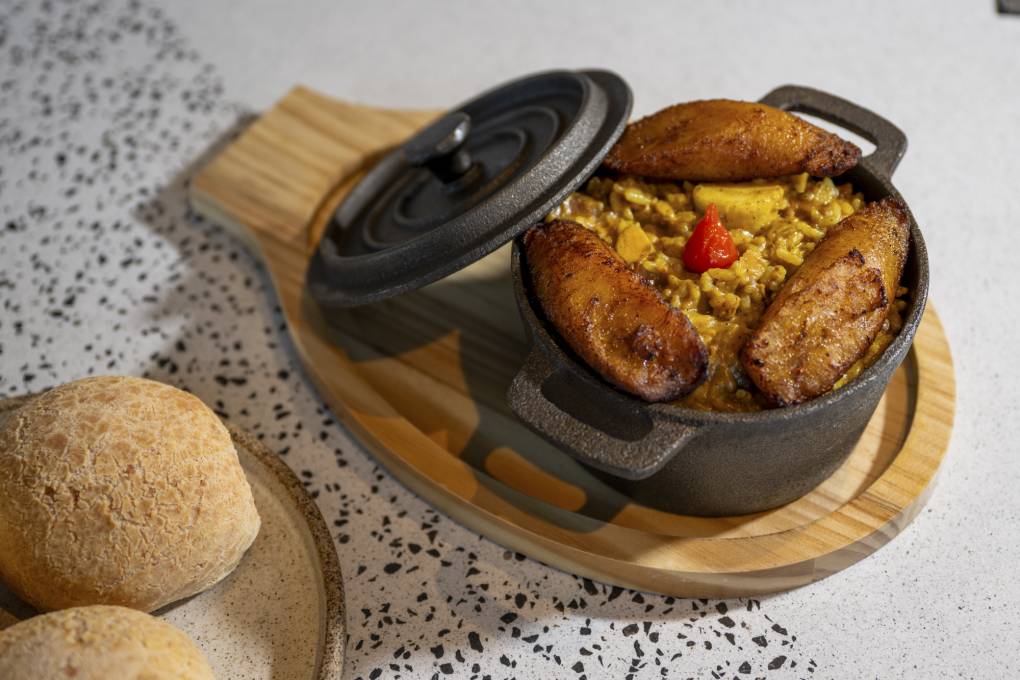
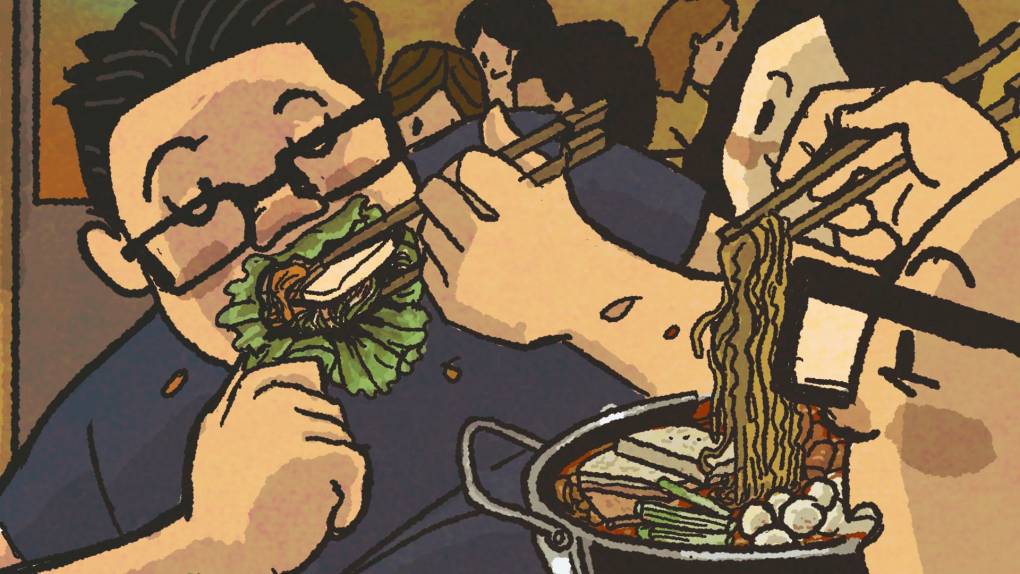
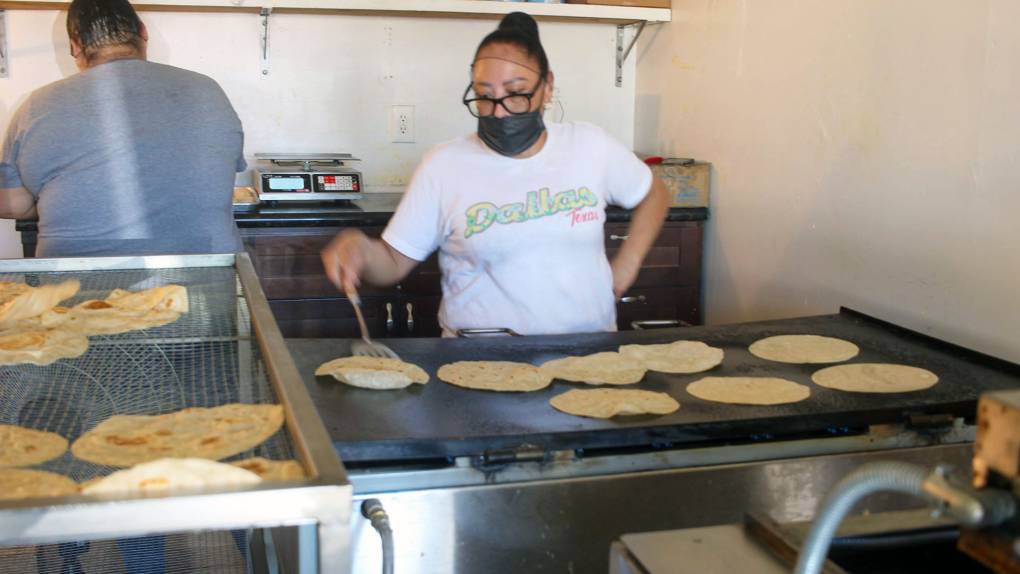
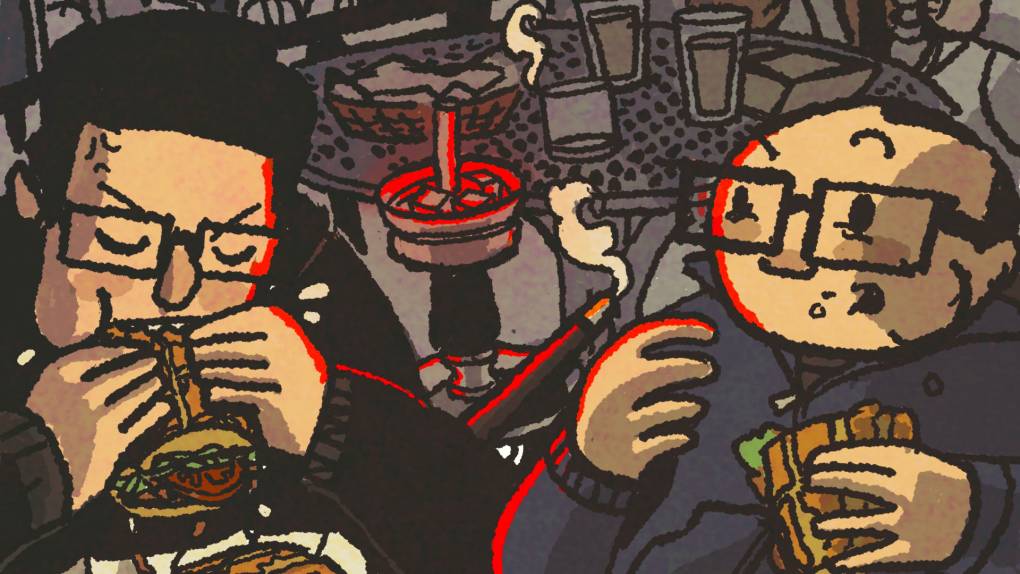
window.__IS_SSR__=true
window.__INITIAL_STATE__={
"attachmentsReducer": {
"audio_0": {
"type": "attachments",
"id": "audio_0",
"imgSizes": {
"kqedFullSize": {
"file": "https://ww2.kqed.org/news/wp-content/themes/KQED-unified/img/audio_bgs/background0.jpg"
}
}
},
"audio_1": {
"type": "attachments",
"id": "audio_1",
"imgSizes": {
"kqedFullSize": {
"file": "https://ww2.kqed.org/news/wp-content/themes/KQED-unified/img/audio_bgs/background1.jpg"
}
}
},
"audio_2": {
"type": "attachments",
"id": "audio_2",
"imgSizes": {
"kqedFullSize": {
"file": "https://ww2.kqed.org/news/wp-content/themes/KQED-unified/img/audio_bgs/background2.jpg"
}
}
},
"audio_3": {
"type": "attachments",
"id": "audio_3",
"imgSizes": {
"kqedFullSize": {
"file": "https://ww2.kqed.org/news/wp-content/themes/KQED-unified/img/audio_bgs/background3.jpg"
}
}
},
"audio_4": {
"type": "attachments",
"id": "audio_4",
"imgSizes": {
"kqedFullSize": {
"file": "https://ww2.kqed.org/news/wp-content/themes/KQED-unified/img/audio_bgs/background4.jpg"
}
}
},
"placeholder": {
"type": "attachments",
"id": "placeholder",
"imgSizes": {
"thumbnail": {
"file": "https://cdn.kqed.org/wp-content/uploads/2024/12/KQED-Default-Image-816638274-2000x1333-1-160x107.jpg",
"width": 160,
"height": 107,
"mimeType": "image/jpeg"
},
"medium": {
"file": "https://cdn.kqed.org/wp-content/uploads/2024/12/KQED-Default-Image-816638274-2000x1333-1-800x533.jpg",
"width": 800,
"height": 533,
"mimeType": "image/jpeg"
},
"medium_large": {
"file": "https://cdn.kqed.org/wp-content/uploads/2024/12/KQED-Default-Image-816638274-2000x1333-1-768x512.jpg",
"width": 768,
"height": 512,
"mimeType": "image/jpeg"
},
"large": {
"file": "https://cdn.kqed.org/wp-content/uploads/2024/12/KQED-Default-Image-816638274-2000x1333-1-1020x680.jpg",
"width": 1020,
"height": 680,
"mimeType": "image/jpeg"
},
"1536x1536": {
"file": "https://cdn.kqed.org/wp-content/uploads/2024/12/KQED-Default-Image-816638274-2000x1333-1-1536x1024.jpg",
"width": 1536,
"height": 1024,
"mimeType": "image/jpeg"
},
"fd-lrg": {
"file": "https://cdn.kqed.org/wp-content/uploads/2024/12/KQED-Default-Image-816638274-2000x1333-1-1536x1024.jpg",
"width": 1536,
"height": 1024,
"mimeType": "image/jpeg"
},
"fd-med": {
"file": "https://cdn.kqed.org/wp-content/uploads/2024/12/KQED-Default-Image-816638274-2000x1333-1-1020x680.jpg",
"width": 1020,
"height": 680,
"mimeType": "image/jpeg"
},
"fd-sm": {
"file": "https://cdn.kqed.org/wp-content/uploads/2024/12/KQED-Default-Image-816638274-2000x1333-1-800x533.jpg",
"width": 800,
"height": 533,
"mimeType": "image/jpeg"
},
"post-thumbnail": {
"file": "https://cdn.kqed.org/wp-content/uploads/2024/12/KQED-Default-Image-816638274-2000x1333-1-672x372.jpg",
"width": 672,
"height": 372,
"mimeType": "image/jpeg"
},
"twentyfourteen-full-width": {
"file": "https://cdn.kqed.org/wp-content/uploads/2024/12/KQED-Default-Image-816638274-2000x1333-1-1038x576.jpg",
"width": 1038,
"height": 576,
"mimeType": "image/jpeg"
},
"xxsmall": {
"file": "https://cdn.kqed.org/wp-content/uploads/2024/12/KQED-Default-Image-816638274-2000x1333-1-160x107.jpg",
"width": 160,
"height": 107,
"mimeType": "image/jpeg"
},
"xsmall": {
"file": "https://cdn.kqed.org/wp-content/uploads/2024/12/KQED-Default-Image-816638274-2000x1333-1-672x372.jpg",
"width": 672,
"height": 372,
"mimeType": "image/jpeg"
},
"small": {
"file": "https://cdn.kqed.org/wp-content/uploads/2024/12/KQED-Default-Image-816638274-2000x1333-1-672x372.jpg",
"width": 672,
"height": 372,
"mimeType": "image/jpeg"
},
"xlarge": {
"file": "https://cdn.kqed.org/wp-content/uploads/2024/12/KQED-Default-Image-816638274-2000x1333-1-1020x680.jpg",
"width": 1020,
"height": 680,
"mimeType": "image/jpeg"
},
"full-width": {
"file": "https://cdn.kqed.org/wp-content/uploads/2024/12/KQED-Default-Image-816638274-2000x1333-1-1920x1280.jpg",
"width": 1920,
"height": 1280,
"mimeType": "image/jpeg"
},
"guest-author-32": {
"file": "https://cdn.kqed.org/wp-content/uploads/2025/01/KQED-Default-Image-816638274-1333x1333-1-160x160.jpg",
"width": 32,
"height": 32,
"mimeType": "image/jpeg"
},
"guest-author-50": {
"file": "https://cdn.kqed.org/wp-content/uploads/2025/01/KQED-Default-Image-816638274-1333x1333-1-160x160.jpg",
"width": 50,
"height": 50,
"mimeType": "image/jpeg"
},
"guest-author-64": {
"file": "https://cdn.kqed.org/wp-content/uploads/2025/01/KQED-Default-Image-816638274-1333x1333-1-160x160.jpg",
"width": 64,
"height": 64,
"mimeType": "image/jpeg"
},
"guest-author-96": {
"file": "https://cdn.kqed.org/wp-content/uploads/2025/01/KQED-Default-Image-816638274-1333x1333-1-160x160.jpg",
"width": 96,
"height": 96,
"mimeType": "image/jpeg"
},
"guest-author-128": {
"file": "https://cdn.kqed.org/wp-content/uploads/2025/01/KQED-Default-Image-816638274-1333x1333-1-160x160.jpg",
"width": 128,
"height": 128,
"mimeType": "image/jpeg"
},
"detail": {
"file": "https://cdn.kqed.org/wp-content/uploads/2025/01/KQED-Default-Image-816638274-1333x1333-1-160x160.jpg",
"width": 160,
"height": 160,
"mimeType": "image/jpeg"
},
"kqedFullSize": {
"file": "https://cdn.kqed.org/wp-content/uploads/2024/12/KQED-Default-Image-816638274-2000x1333-1.jpg",
"width": 2000,
"height": 1333
}
}
},
"arts_13961257": {
"type": "attachments",
"id": "arts_13961257",
"meta": {
"index": "attachments_1716263798",
"site": "arts",
"id": "13961257",
"found": true
},
"title": "240711-BRAZILIANFOODBOOM-09-BL-KQED",
"publishDate": 1721237870,
"status": "inherit",
"parent": 0,
"modified": 1721413076,
"caption": "Cafe de Casa's arroz nordestino, one of the traditional lunch dishes the Brazilian restaurant serves at its new flagship location on Fisherman's Wharf. On the side: pao de queijo, a.k.a. cheese bread, one of the first Brazilian dishes to achieve mainstream popularity.",
"credit": "Beth LaBerge/KQED",
"altTag": "Rice, beans and plantains in a small black pot.",
"description": null,
"imgSizes": {
"medium": {
"file": "https://cdn.kqed.org/wp-content/uploads/sites/2/2024/07/240711-BRAZILIANFOODBOOM-09-BL-KQED-800x533.jpg",
"width": 800,
"height": 533,
"mimeType": "image/jpeg"
},
"large": {
"file": "https://cdn.kqed.org/wp-content/uploads/sites/2/2024/07/240711-BRAZILIANFOODBOOM-09-BL-KQED-1020x680.jpg",
"width": 1020,
"height": 680,
"mimeType": "image/jpeg"
},
"thumbnail": {
"file": "https://cdn.kqed.org/wp-content/uploads/sites/2/2024/07/240711-BRAZILIANFOODBOOM-09-BL-KQED-160x107.jpg",
"width": 160,
"height": 107,
"mimeType": "image/jpeg"
},
"medium_large": {
"file": "https://cdn.kqed.org/wp-content/uploads/sites/2/2024/07/240711-BRAZILIANFOODBOOM-09-BL-KQED-768x512.jpg",
"width": 768,
"height": 512,
"mimeType": "image/jpeg"
},
"1536x1536": {
"file": "https://cdn.kqed.org/wp-content/uploads/sites/2/2024/07/240711-BRAZILIANFOODBOOM-09-BL-KQED-1536x1024.jpg",
"width": 1536,
"height": 1024,
"mimeType": "image/jpeg"
},
"post-thumbnail": {
"file": "https://cdn.kqed.org/wp-content/uploads/sites/2/2024/07/240711-BRAZILIANFOODBOOM-09-BL-KQED-672x372.jpg",
"width": 672,
"height": 372,
"mimeType": "image/jpeg"
},
"twentyfourteen-full-width": {
"file": "https://cdn.kqed.org/wp-content/uploads/sites/2/2024/07/240711-BRAZILIANFOODBOOM-09-BL-KQED-1038x576.jpg",
"width": 1038,
"height": 576,
"mimeType": "image/jpeg"
},
"full-width": {
"file": "https://cdn.kqed.org/wp-content/uploads/sites/2/2024/07/240711-BRAZILIANFOODBOOM-09-BL-KQED-1920x1280.jpg",
"width": 1920,
"height": 1280,
"mimeType": "image/jpeg"
},
"kqedFullSize": {
"file": "https://cdn.kqed.org/wp-content/uploads/sites/2/2024/07/240711-BRAZILIANFOODBOOM-09-BL-KQED.jpg",
"width": 2000,
"height": 1333
}
},
"isLoading": false,
"fetchFailed": false
},
"arts_13961330": {
"type": "attachments",
"id": "arts_13961330",
"meta": {
"index": "attachments_1716263798",
"site": "arts",
"id": "13961330",
"found": true
},
"title": "Untitled_Artwork-1-crop",
"publishDate": 1721348441,
"status": "inherit",
"parent": 13961328,
"modified": 1721348592,
"caption": "Bay Pocha sets itself apart from the crowd of Korean pubs by serving big, shareable, celebratory dishes like its bossam (pork belly wraps). The San Francisco restaurant is open until 1 a.m. on weekends.",
"credit": "Thien Pham",
"altTag": "Illustration: One diner at a Korean restaurant shoves a lettuce wrap into his mouth while another eats noodles from a pot of stew.",
"description": null,
"imgSizes": {
"medium": {
"file": "https://cdn.kqed.org/wp-content/uploads/sites/2/2024/07/Untitled_Artwork-1-crop-800x450.jpg",
"width": 800,
"height": 450,
"mimeType": "image/jpeg"
},
"large": {
"file": "https://cdn.kqed.org/wp-content/uploads/sites/2/2024/07/Untitled_Artwork-1-crop-1020x574.jpg",
"width": 1020,
"height": 574,
"mimeType": "image/jpeg"
},
"thumbnail": {
"file": "https://cdn.kqed.org/wp-content/uploads/sites/2/2024/07/Untitled_Artwork-1-crop-160x90.jpg",
"width": 160,
"height": 90,
"mimeType": "image/jpeg"
},
"medium_large": {
"file": "https://cdn.kqed.org/wp-content/uploads/sites/2/2024/07/Untitled_Artwork-1-crop-768x432.jpg",
"width": 768,
"height": 432,
"mimeType": "image/jpeg"
},
"1536x1536": {
"file": "https://cdn.kqed.org/wp-content/uploads/sites/2/2024/07/Untitled_Artwork-1-crop-1536x864.jpg",
"width": 1536,
"height": 864,
"mimeType": "image/jpeg"
},
"post-thumbnail": {
"file": "https://cdn.kqed.org/wp-content/uploads/sites/2/2024/07/Untitled_Artwork-1-crop-672x372.jpg",
"width": 672,
"height": 372,
"mimeType": "image/jpeg"
},
"twentyfourteen-full-width": {
"file": "https://cdn.kqed.org/wp-content/uploads/sites/2/2024/07/Untitled_Artwork-1-crop-1038x576.jpg",
"width": 1038,
"height": 576,
"mimeType": "image/jpeg"
},
"kqedFullSize": {
"file": "https://cdn.kqed.org/wp-content/uploads/sites/2/2024/07/Untitled_Artwork-1-crop.jpg",
"width": 1920,
"height": 1080
}
},
"isLoading": false,
"fetchFailed": false
},
"arts_13961222": {
"type": "attachments",
"id": "arts_13961222",
"meta": {
"index": "attachments_1716263798",
"site": "arts",
"id": "13961222",
"found": true
},
"title": "mirandas tortillas - featured",
"publishDate": 1721159280,
"status": "inherit",
"parent": 13961214,
"modified": 1721161811,
"caption": "An employee at Miranda's Tortillas flips a fresh batch of flour tortillas on the comal. The tortilleria specializes in Sonoran-style flour tortillas.",
"credit": "Octavio Peña",
"altTag": "A woman in a black face mask flips flour tortillas cooking on a griddle.",
"description": null,
"imgSizes": {
"medium": {
"file": "https://cdn.kqed.org/wp-content/uploads/sites/2/2024/07/mirandas-tortillas-featured-800x450.jpg",
"width": 800,
"height": 450,
"mimeType": "image/jpeg"
},
"large": {
"file": "https://cdn.kqed.org/wp-content/uploads/sites/2/2024/07/mirandas-tortillas-featured-1020x574.jpg",
"width": 1020,
"height": 574,
"mimeType": "image/jpeg"
},
"thumbnail": {
"file": "https://cdn.kqed.org/wp-content/uploads/sites/2/2024/07/mirandas-tortillas-featured-160x90.jpg",
"width": 160,
"height": 90,
"mimeType": "image/jpeg"
},
"medium_large": {
"file": "https://cdn.kqed.org/wp-content/uploads/sites/2/2024/07/mirandas-tortillas-featured-768x432.jpg",
"width": 768,
"height": 432,
"mimeType": "image/jpeg"
},
"1536x1536": {
"file": "https://cdn.kqed.org/wp-content/uploads/sites/2/2024/07/mirandas-tortillas-featured-1536x864.jpg",
"width": 1536,
"height": 864,
"mimeType": "image/jpeg"
},
"post-thumbnail": {
"file": "https://cdn.kqed.org/wp-content/uploads/sites/2/2024/07/mirandas-tortillas-featured-672x372.jpg",
"width": 672,
"height": 372,
"mimeType": "image/jpeg"
},
"twentyfourteen-full-width": {
"file": "https://cdn.kqed.org/wp-content/uploads/sites/2/2024/07/mirandas-tortillas-featured-1038x576.jpg",
"width": 1038,
"height": 576,
"mimeType": "image/jpeg"
},
"full-width": {
"file": "https://cdn.kqed.org/wp-content/uploads/sites/2/2024/07/mirandas-tortillas-featured-1920x1080.jpg",
"width": 1920,
"height": 1080,
"mimeType": "image/jpeg"
},
"kqedFullSize": {
"file": "https://cdn.kqed.org/wp-content/uploads/sites/2/2024/07/mirandas-tortillas-featured.jpg",
"width": 2000,
"height": 1125
}
},
"isLoading": false,
"fetchFailed": false
},
"arts_13961063": {
"type": "attachments",
"id": "arts_13961063",
"meta": {
"index": "attachments_1716263798",
"site": "arts",
"id": "13961063",
"found": true
},
"title": "S&H_crop",
"publishDate": 1720743564,
"status": "inherit",
"parent": 13961051,
"modified": 1720743589,
"caption": "Redwood City's The Sandwich Spot is a combination deli and late-night hookah lounge.",
"credit": "Thien Pham",
"altTag": null,
"description": null,
"imgSizes": {
"medium": {
"file": "https://cdn.kqed.org/wp-content/uploads/sites/2/2024/07/SH_crop-800x450.jpg",
"width": 800,
"height": 450,
"mimeType": "image/jpeg"
},
"large": {
"file": "https://cdn.kqed.org/wp-content/uploads/sites/2/2024/07/SH_crop-1020x574.jpg",
"width": 1020,
"height": 574,
"mimeType": "image/jpeg"
},
"thumbnail": {
"file": "https://cdn.kqed.org/wp-content/uploads/sites/2/2024/07/SH_crop-160x90.jpg",
"width": 160,
"height": 90,
"mimeType": "image/jpeg"
},
"medium_large": {
"file": "https://cdn.kqed.org/wp-content/uploads/sites/2/2024/07/SH_crop-768x432.jpg",
"width": 768,
"height": 432,
"mimeType": "image/jpeg"
},
"1536x1536": {
"file": "https://cdn.kqed.org/wp-content/uploads/sites/2/2024/07/SH_crop-1536x864.jpg",
"width": 1536,
"height": 864,
"mimeType": "image/jpeg"
},
"post-thumbnail": {
"file": "https://cdn.kqed.org/wp-content/uploads/sites/2/2024/07/SH_crop-672x372.jpg",
"width": 672,
"height": 372,
"mimeType": "image/jpeg"
},
"twentyfourteen-full-width": {
"file": "https://cdn.kqed.org/wp-content/uploads/sites/2/2024/07/SH_crop-1038x576.jpg",
"width": 1038,
"height": 576,
"mimeType": "image/jpeg"
},
"kqedFullSize": {
"file": "https://cdn.kqed.org/wp-content/uploads/sites/2/2024/07/SH_crop.jpg",
"width": 1920,
"height": 1080
}
},
"isLoading": false,
"fetchFailed": false
},
"arts_13960943": {
"type": "attachments",
"id": "arts_13960943",
"meta": {
"index": "attachments_1716263798",
"site": "arts",
"id": "13960943",
"found": true
},
"title": "240709-ManMustWak2-45-BL_qed",
"publishDate": 1720644853,
"status": "inherit",
"parent": 0,
"modified": 1720656196,
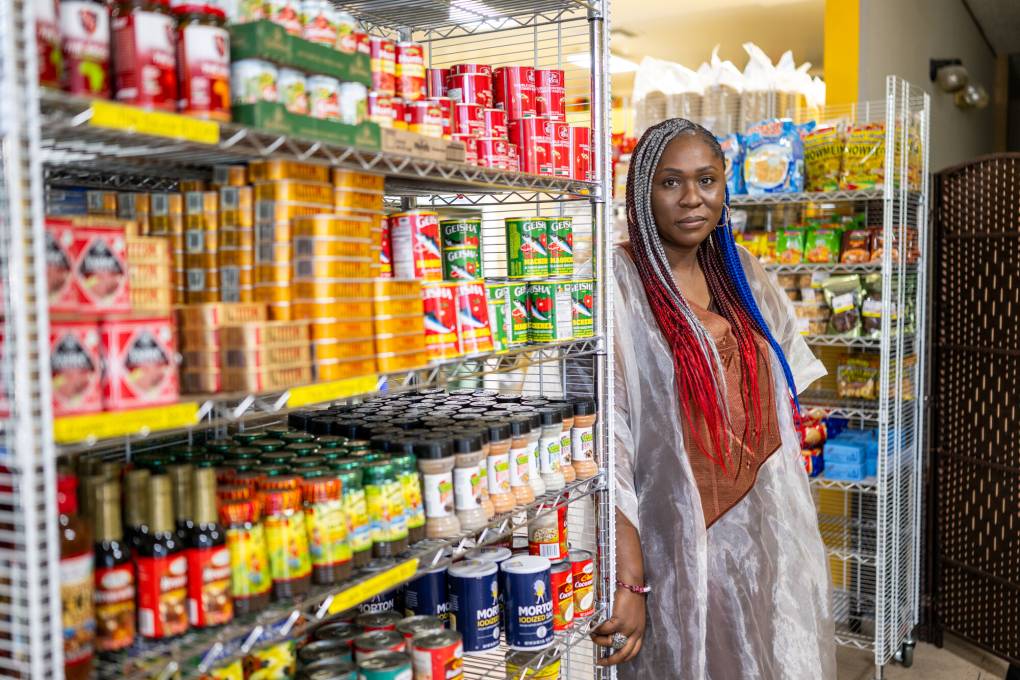
"caption": "Owner Queenkay Amamgbo at the E. 18th Street location of Man Must Wak, an Afro-Caribbean market, in Oakland on July 9, 2024. Amamgbo opened the second location of the market near Lake Merritt in June of 2024.",
"credit": "Beth LaBerge/KQED",
"altTag": "A woman with long red, white and blue braids poses next to a display of spices and tinned fish inside an African market.",
"description": null,
"imgSizes": {
"medium": {
"file": "https://cdn.kqed.org/wp-content/uploads/sites/2/2024/07/240709-ManMustWak2-45-BL_qed-800x533.jpg",
"width": 800,
"height": 533,
"mimeType": "image/jpeg"
},
"large": {
"file": "https://cdn.kqed.org/wp-content/uploads/sites/2/2024/07/240709-ManMustWak2-45-BL_qed-1020x680.jpg",
"width": 1020,
"height": 680,
"mimeType": "image/jpeg"
},
"thumbnail": {
"file": "https://cdn.kqed.org/wp-content/uploads/sites/2/2024/07/240709-ManMustWak2-45-BL_qed-160x107.jpg",
"width": 160,
"height": 107,
"mimeType": "image/jpeg"
},
"medium_large": {
"file": "https://cdn.kqed.org/wp-content/uploads/sites/2/2024/07/240709-ManMustWak2-45-BL_qed-768x512.jpg",
"width": 768,
"height": 512,
"mimeType": "image/jpeg"
},
"1536x1536": {
"file": "https://cdn.kqed.org/wp-content/uploads/sites/2/2024/07/240709-ManMustWak2-45-BL_qed-1536x1024.jpg",
"width": 1536,
"height": 1024,
"mimeType": "image/jpeg"
},
"post-thumbnail": {
"file": "https://cdn.kqed.org/wp-content/uploads/sites/2/2024/07/240709-ManMustWak2-45-BL_qed-672x372.jpg",
"width": 672,
"height": 372,
"mimeType": "image/jpeg"
},
"twentyfourteen-full-width": {
"file": "https://cdn.kqed.org/wp-content/uploads/sites/2/2024/07/240709-ManMustWak2-45-BL_qed-1038x576.jpg",
"width": 1038,
"height": 576,
"mimeType": "image/jpeg"
},
"full-width": {
"file": "https://cdn.kqed.org/wp-content/uploads/sites/2/2024/07/240709-ManMustWak2-45-BL_qed-1920x1280.jpg",
"width": 1920,
"height": 1280,
"mimeType": "image/jpeg"
},
"kqedFullSize": {
"file": "https://cdn.kqed.org/wp-content/uploads/sites/2/2024/07/240709-ManMustWak2-45-BL_qed.jpg",
"width": 2000,
"height": 1333
}
},
"isLoading": false,
"fetchFailed": false
},
"arts_13960583": {
"type": "attachments",
"id": "arts_13960583",
"meta": {
"index": "attachments_1716263798",
"site": "arts",
"id": "13960583",
"found": true
},
"title": "jollof kitchen crop",
"publishDate": 1719617887,
"status": "inherit",
"parent": 13960580,
"modified": 1719617999,
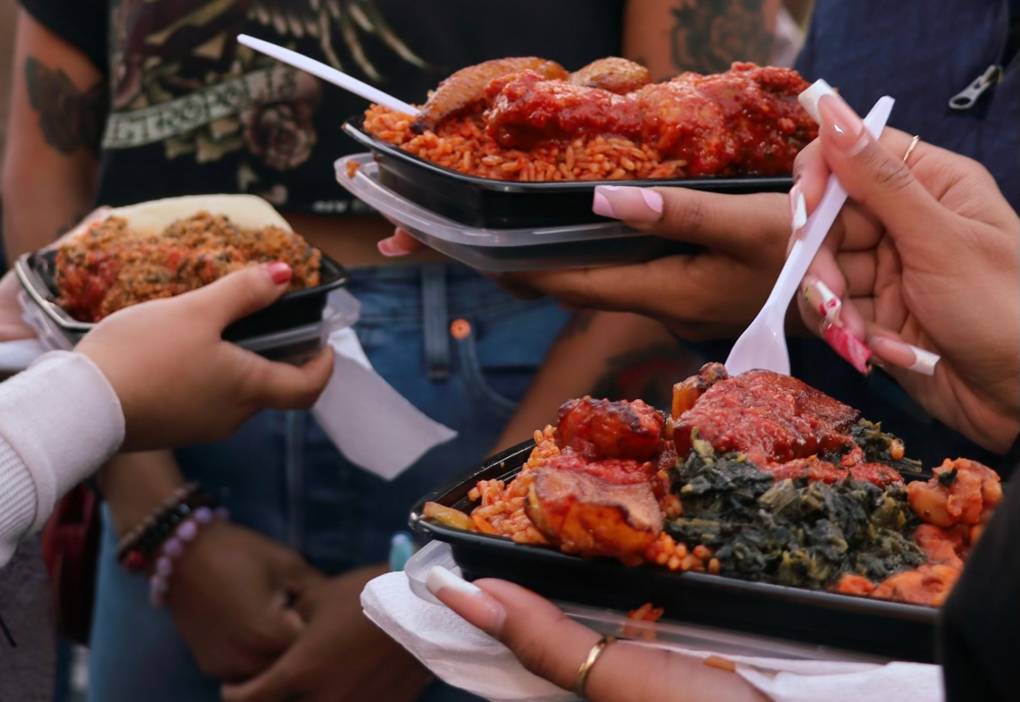
"caption": "Customers enjoying their orders of Jollof Kitchen's Nigerian-style jollof rice. Owner Kemi Tijaniqudus won the Oakland edition of Jollof Festival in 2021 and 2023.",
"credit": "Courtesy of Jollof Kitchen",
"altTag": "Customers eating jollof rice out of black plastic takeout containers.",
"description": null,
"imgSizes": {
"medium": {
"file": "https://cdn.kqed.org/wp-content/uploads/sites/2/2024/07/jollof-kitchen-crop-800x550.jpg",
"width": 800,
"height": 550,
"mimeType": "image/jpeg"
},
"large": {
"file": "https://cdn.kqed.org/wp-content/uploads/sites/2/2024/07/jollof-kitchen-crop-1020x702.jpg",
"width": 1020,
"height": 702,
"mimeType": "image/jpeg"
},
"thumbnail": {
"file": "https://cdn.kqed.org/wp-content/uploads/sites/2/2024/07/jollof-kitchen-crop-160x110.jpg",
"width": 160,
"height": 110,
"mimeType": "image/jpeg"
},
"medium_large": {
"file": "https://cdn.kqed.org/wp-content/uploads/sites/2/2024/07/jollof-kitchen-crop-768x528.jpg",
"width": 768,
"height": 528,
"mimeType": "image/jpeg"
},
"1536x1536": {
"file": "https://cdn.kqed.org/wp-content/uploads/sites/2/2024/07/jollof-kitchen-crop-1536x1057.jpg",
"width": 1536,
"height": 1057,
"mimeType": "image/jpeg"
},
"post-thumbnail": {
"file": "https://cdn.kqed.org/wp-content/uploads/sites/2/2024/07/jollof-kitchen-crop-672x372.jpg",
"width": 672,
"height": 372,
"mimeType": "image/jpeg"
},
"twentyfourteen-full-width": {
"file": "https://cdn.kqed.org/wp-content/uploads/sites/2/2024/07/jollof-kitchen-crop-1038x576.jpg",
"width": 1038,
"height": 576,
"mimeType": "image/jpeg"
},
"kqedFullSize": {
"file": "https://cdn.kqed.org/wp-content/uploads/sites/2/2024/07/jollof-kitchen-crop.jpg",
"width": 1920,
"height": 1321
}
},
"isLoading": false,
"fetchFailed": false
},
"arts_13960348": {
"type": "attachments",
"id": "arts_13960348",
"meta": {
"index": "attachments_1716263798",
"site": "arts",
"id": "13960348",
"found": true
},
"title": "boriqua roberto clemente crop",
"publishDate": 1719429036,
"status": "inherit",
"parent": 13960344,
"modified": 1719429163,
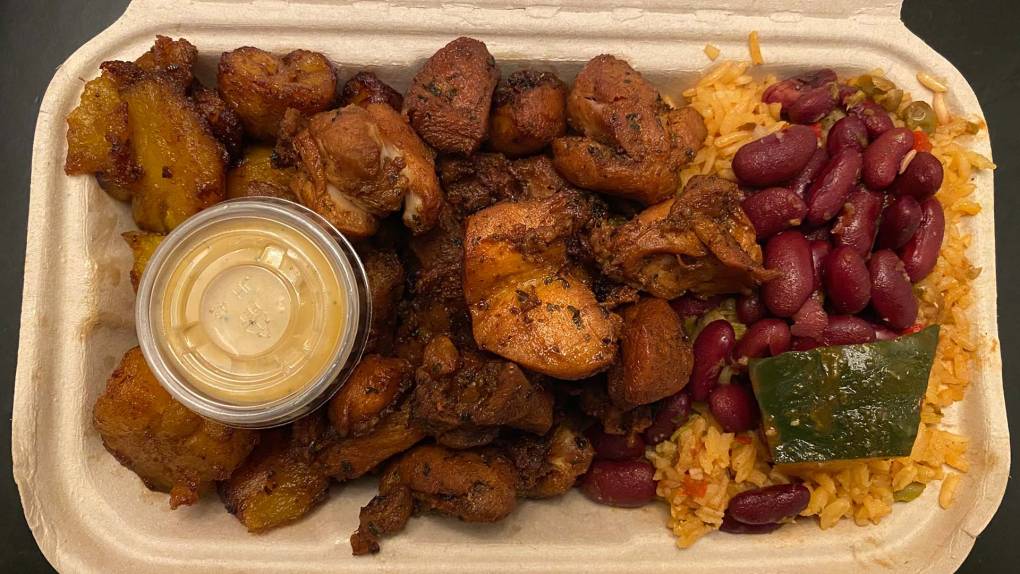
"caption": "The #21 Roberto Clemente is the bestseller at Boriqua Kitchen. The Puerto Rican food truck plans to reopen in July 2024 after a three-month hiatus.",
"credit": "Luke Tsai/KQED",
"altTag": "Chunks of fried chicken with red beans and yellow rice in a takeout carton.",
"description": null,
"imgSizes": {
"medium": {
"file": "https://cdn.kqed.org/wp-content/uploads/sites/2/2024/06/boriqua-roberto-clemente-crop-800x450.jpg",
"width": 800,
"height": 450,
"mimeType": "image/jpeg"
},
"large": {
"file": "https://cdn.kqed.org/wp-content/uploads/sites/2/2024/06/boriqua-roberto-clemente-crop-1020x574.jpg",
"width": 1020,
"height": 574,
"mimeType": "image/jpeg"
},
"thumbnail": {
"file": "https://cdn.kqed.org/wp-content/uploads/sites/2/2024/06/boriqua-roberto-clemente-crop-160x90.jpg",
"width": 160,
"height": 90,
"mimeType": "image/jpeg"
},
"medium_large": {
"file": "https://cdn.kqed.org/wp-content/uploads/sites/2/2024/06/boriqua-roberto-clemente-crop-768x432.jpg",
"width": 768,
"height": 432,
"mimeType": "image/jpeg"
},
"1536x1536": {
"file": "https://cdn.kqed.org/wp-content/uploads/sites/2/2024/06/boriqua-roberto-clemente-crop-1536x864.jpg",
"width": 1536,
"height": 864,
"mimeType": "image/jpeg"
},
"post-thumbnail": {
"file": "https://cdn.kqed.org/wp-content/uploads/sites/2/2024/06/boriqua-roberto-clemente-crop-672x372.jpg",
"width": 672,
"height": 372,
"mimeType": "image/jpeg"
},
"twentyfourteen-full-width": {
"file": "https://cdn.kqed.org/wp-content/uploads/sites/2/2024/06/boriqua-roberto-clemente-crop-1038x576.jpg",
"width": 1038,
"height": 576,
"mimeType": "image/jpeg"
},
"kqedFullSize": {
"file": "https://cdn.kqed.org/wp-content/uploads/sites/2/2024/06/boriqua-roberto-clemente-crop.jpg",
"width": 1920,
"height": 1080
}
},
"isLoading": false,
"fetchFailed": false
},
"arts_13959810": {
"type": "attachments",
"id": "arts_13959810",
"meta": {
"index": "attachments_1716263798",
"site": "arts",
"id": "13959810",
"found": true
},
"title": "Goldenboy2-crop",
"publishDate": 1718310707,
"status": "inherit",
"parent": 13959808,
"modified": 1718310939,
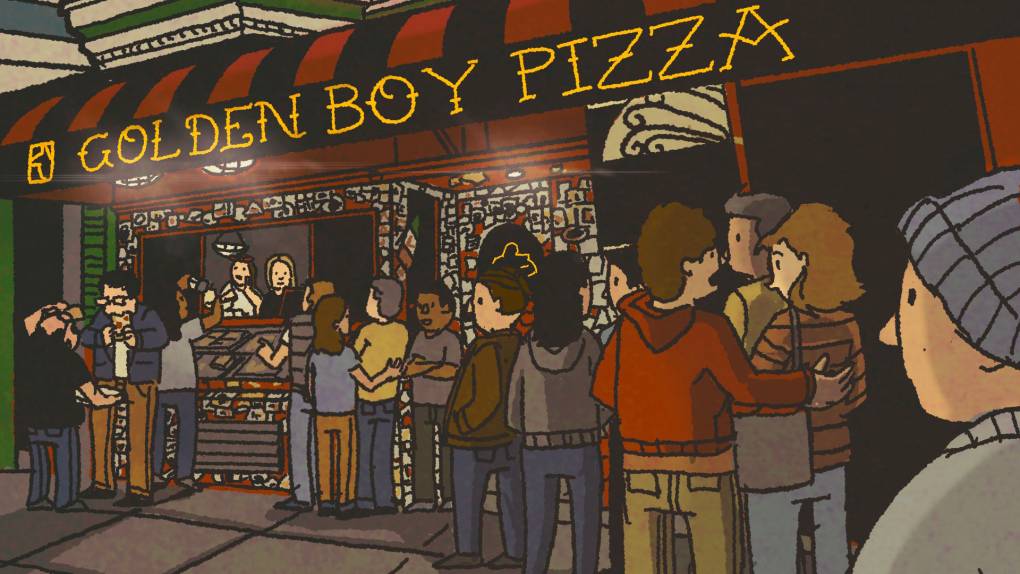
"caption": "Even though it's no longer open past 2 a.m. on the weekend, Golden Boy Pizza remains a popular late-night destination in North Beach.",
"credit": "Thien Pham",
"altTag": "Illustration: A line of customers waiting outside of Golden Boy Pizza.",
"description": null,
"imgSizes": {
"medium": {
"file": "https://cdn.kqed.org/wp-content/uploads/sites/2/2024/06/Goldenboy2-crop-800x450.jpg",
"width": 800,
"height": 450,
"mimeType": "image/jpeg"
},
"large": {
"file": "https://cdn.kqed.org/wp-content/uploads/sites/2/2024/06/Goldenboy2-crop-1020x574.jpg",
"width": 1020,
"height": 574,
"mimeType": "image/jpeg"
},
"thumbnail": {
"file": "https://cdn.kqed.org/wp-content/uploads/sites/2/2024/06/Goldenboy2-crop-160x90.jpg",
"width": 160,
"height": 90,
"mimeType": "image/jpeg"
},
"medium_large": {
"file": "https://cdn.kqed.org/wp-content/uploads/sites/2/2024/06/Goldenboy2-crop-768x432.jpg",
"width": 768,
"height": 432,
"mimeType": "image/jpeg"
},
"1536x1536": {
"file": "https://cdn.kqed.org/wp-content/uploads/sites/2/2024/06/Goldenboy2-crop-1536x864.jpg",
"width": 1536,
"height": 864,
"mimeType": "image/jpeg"
},
"post-thumbnail": {
"file": "https://cdn.kqed.org/wp-content/uploads/sites/2/2024/06/Goldenboy2-crop-672x372.jpg",
"width": 672,
"height": 372,
"mimeType": "image/jpeg"
},
"twentyfourteen-full-width": {
"file": "https://cdn.kqed.org/wp-content/uploads/sites/2/2024/06/Goldenboy2-crop-1038x576.jpg",
"width": 1038,
"height": 576,
"mimeType": "image/jpeg"
},
"kqedFullSize": {
"file": "https://cdn.kqed.org/wp-content/uploads/sites/2/2024/06/Goldenboy2-crop.jpg",
"width": 1920,
"height": 1080
}
},
"isLoading": false,
"fetchFailed": false
},
"arts_13957301": {
"type": "attachments",
"id": "arts_13957301",
"meta": {
"index": "attachments_1716263798",
"site": "arts",
"id": "13957301",
"found": true
},
"title": "240503-TIPUNAN-35-BL-KQED",
"publishDate": 1715030088,
"status": "inherit",
"parent": 0,
"modified": 1718306268,
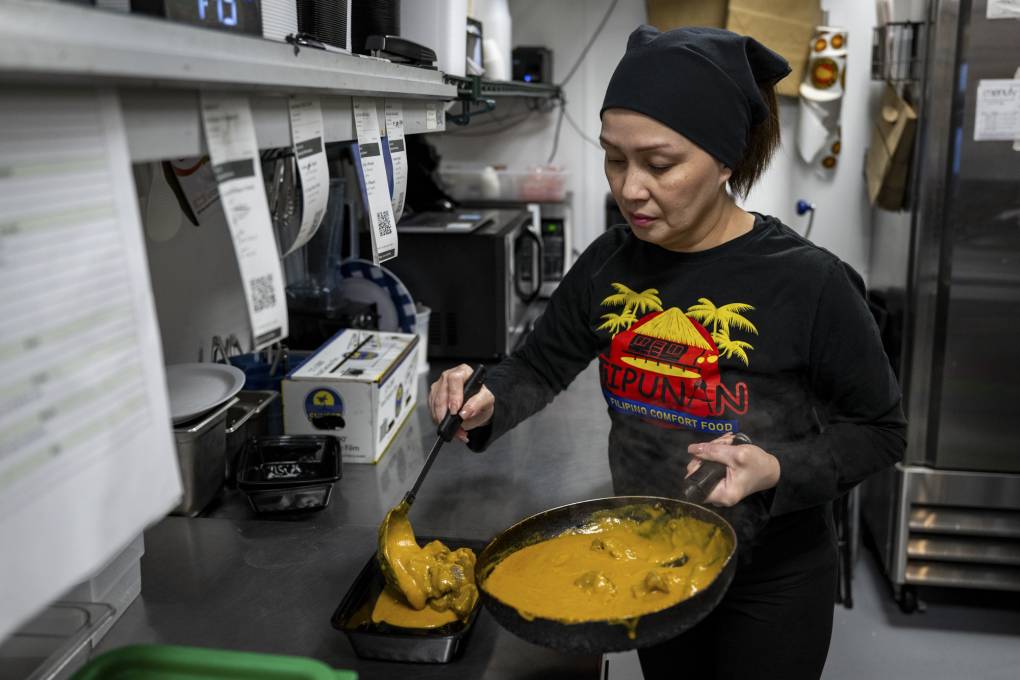
"caption": "Executive Chef Kai Torres-Cansino prepares an order of kare-kare in the kitchen of Tipunan, a restaurant serving Filipino comfort food at the Oakland Food Hall ghost kitchen facility on May 3, 2024. ",
"credit": "Beth LaBerge/KQED",
"altTag": "A woman in a black headwrap prepares Filipino food inside a restaurant kitchen.",
"description": null,
"imgSizes": {
"medium": {
"file": "https://cdn.kqed.org/wp-content/uploads/sites/2/2024/05/240503-TIPUNAN-35-BL-KQED-800x533.jpg",
"width": 800,
"height": 533,
"mimeType": "image/jpeg"
},
"large": {
"file": "https://cdn.kqed.org/wp-content/uploads/sites/2/2024/05/240503-TIPUNAN-35-BL-KQED-1020x680.jpg",
"width": 1020,
"height": 680,
"mimeType": "image/jpeg"
},
"thumbnail": {
"file": "https://cdn.kqed.org/wp-content/uploads/sites/2/2024/05/240503-TIPUNAN-35-BL-KQED-160x107.jpg",
"width": 160,
"height": 107,
"mimeType": "image/jpeg"
},
"medium_large": {
"file": "https://cdn.kqed.org/wp-content/uploads/sites/2/2024/05/240503-TIPUNAN-35-BL-KQED-768x512.jpg",
"width": 768,
"height": 512,
"mimeType": "image/jpeg"
},
"1536x1536": {
"file": "https://cdn.kqed.org/wp-content/uploads/sites/2/2024/05/240503-TIPUNAN-35-BL-KQED-1536x1024.jpg",
"width": 1536,
"height": 1024,
"mimeType": "image/jpeg"
},
"post-thumbnail": {
"file": "https://cdn.kqed.org/wp-content/uploads/sites/2/2024/05/240503-TIPUNAN-35-BL-KQED-672x372.jpg",
"width": 672,
"height": 372,
"mimeType": "image/jpeg"
},
"twentyfourteen-full-width": {
"file": "https://cdn.kqed.org/wp-content/uploads/sites/2/2024/05/240503-TIPUNAN-35-BL-KQED-1038x576.jpg",
"width": 1038,
"height": 576,
"mimeType": "image/jpeg"
},
"full-width": {
"file": "https://cdn.kqed.org/wp-content/uploads/sites/2/2024/05/240503-TIPUNAN-35-BL-KQED-1920x1280.jpg",
"width": 1920,
"height": 1280,
"mimeType": "image/jpeg"
},
"kqedFullSize": {
"file": "https://cdn.kqed.org/wp-content/uploads/sites/2/2024/05/240503-TIPUNAN-35-BL-KQED.jpg",
"width": 2000,
"height": 1333
}
},
"isLoading": false,
"fetchFailed": false
},
"arts_13959436": {
"type": "attachments",
"id": "arts_13959436",
"meta": {
"index": "attachments_1716263798",
"site": "arts",
"id": "13959436",
"found": true
},
"title": "kinda2-crop",
"publishDate": 1717718002,
"status": "inherit",
"parent": 13959432,
"modified": 1717718191,
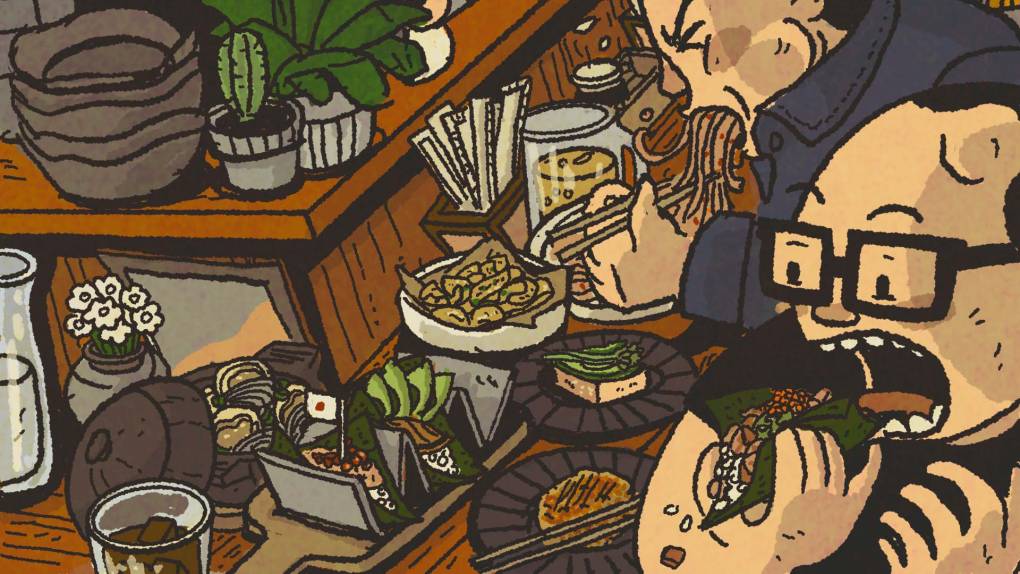
"caption": "Berkeley's Kinda Izakaya stands apart from the masses of expensive and overly precious izakayas in the Bay Area.",
"credit": "Thien Pham",
"altTag": "Illustration: Two men eating noodles and sushi hand rolls at a bar counter.",
"description": null,
"imgSizes": {
"medium": {
"file": "https://cdn.kqed.org/wp-content/uploads/sites/2/2024/06/kinda2-crop-800x450.jpg",
"width": 800,
"height": 450,
"mimeType": "image/jpeg"
},
"large": {
"file": "https://cdn.kqed.org/wp-content/uploads/sites/2/2024/06/kinda2-crop-1020x574.jpg",
"width": 1020,
"height": 574,
"mimeType": "image/jpeg"
},
"thumbnail": {
"file": "https://cdn.kqed.org/wp-content/uploads/sites/2/2024/06/kinda2-crop-160x90.jpg",
"width": 160,
"height": 90,
"mimeType": "image/jpeg"
},
"medium_large": {
"file": "https://cdn.kqed.org/wp-content/uploads/sites/2/2024/06/kinda2-crop-768x432.jpg",
"width": 768,
"height": 432,
"mimeType": "image/jpeg"
},
"1536x1536": {
"file": "https://cdn.kqed.org/wp-content/uploads/sites/2/2024/06/kinda2-crop-1536x864.jpg",
"width": 1536,
"height": 864,
"mimeType": "image/jpeg"
},
"post-thumbnail": {
"file": "https://cdn.kqed.org/wp-content/uploads/sites/2/2024/06/kinda2-crop-672x372.jpg",
"width": 672,
"height": 372,
"mimeType": "image/jpeg"
},
"twentyfourteen-full-width": {
"file": "https://cdn.kqed.org/wp-content/uploads/sites/2/2024/06/kinda2-crop-1038x576.jpg",
"width": 1038,
"height": 576,
"mimeType": "image/jpeg"
},
"kqedFullSize": {
"file": "https://cdn.kqed.org/wp-content/uploads/sites/2/2024/06/kinda2-crop.jpg",
"width": 1920,
"height": 1080
}
},
"isLoading": false,
"fetchFailed": false
},
"arts_13959265": {
"type": "attachments",
"id": "arts_13959265",
"meta": {
"index": "attachments_1716263798",
"site": "arts",
"id": "13959265",
"found": true
},
"title": "Coverphotooption11_crop",
"publishDate": 1717612055,
"status": "inherit",
"parent": 13959259,
"modified": 1717612309,
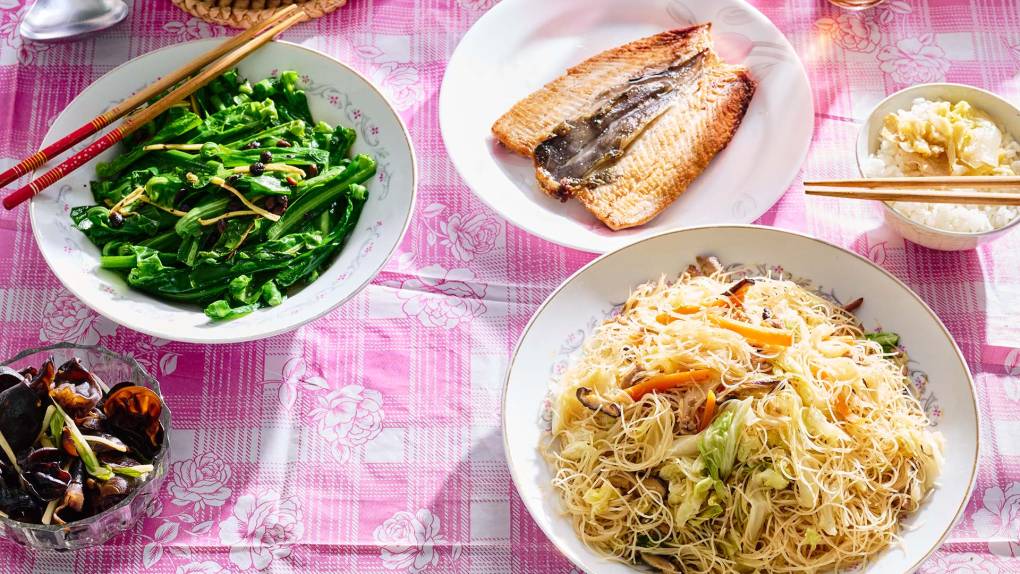
"caption": "A spread of homestyle Taiwanese dishes from Clarissa Wei's new cookbook, 'Made in Taiwan.'",
"credit": "Ryan Chen and Yen Wei",
"altTag": "A spread of homestyle Taiwanese dishes laid out on a pink and white checked tablecloth.",
"description": null,
"imgSizes": {
"medium": {
"file": "https://cdn.kqed.org/wp-content/uploads/sites/2/2024/06/Coverphotooption11_crop-800x450.jpg",
"width": 800,
"height": 450,
"mimeType": "image/jpeg"
},
"large": {
"file": "https://cdn.kqed.org/wp-content/uploads/sites/2/2024/06/Coverphotooption11_crop-1020x574.jpg",
"width": 1020,
"height": 574,
"mimeType": "image/jpeg"
},
"thumbnail": {
"file": "https://cdn.kqed.org/wp-content/uploads/sites/2/2024/06/Coverphotooption11_crop-160x90.jpg",
"width": 160,
"height": 90,
"mimeType": "image/jpeg"
},
"medium_large": {
"file": "https://cdn.kqed.org/wp-content/uploads/sites/2/2024/06/Coverphotooption11_crop-768x432.jpg",
"width": 768,
"height": 432,
"mimeType": "image/jpeg"
},
"1536x1536": {
"file": "https://cdn.kqed.org/wp-content/uploads/sites/2/2024/06/Coverphotooption11_crop-1536x864.jpg",
"width": 1536,
"height": 864,
"mimeType": "image/jpeg"
},
"post-thumbnail": {
"file": "https://cdn.kqed.org/wp-content/uploads/sites/2/2024/06/Coverphotooption11_crop-672x372.jpg",
"width": 672,
"height": 372,
"mimeType": "image/jpeg"
},
"twentyfourteen-full-width": {
"file": "https://cdn.kqed.org/wp-content/uploads/sites/2/2024/06/Coverphotooption11_crop-1038x576.jpg",
"width": 1038,
"height": 576,
"mimeType": "image/jpeg"
},
"kqedFullSize": {
"file": "https://cdn.kqed.org/wp-content/uploads/sites/2/2024/06/Coverphotooption11_crop.jpg",
"width": 1920,
"height": 1080
}
},
"isLoading": false,
"fetchFailed": false
},
"arts_13958940": {
"type": "attachments",
"id": "arts_13958940",
"meta": {
"index": "attachments_1716263798",
"site": "arts",
"id": "13958940",
"found": true
},
"title": "Nations_2 crop",
"publishDate": 1717182305,
"status": "inherit",
"parent": 13958926,
"modified": 1717182340,
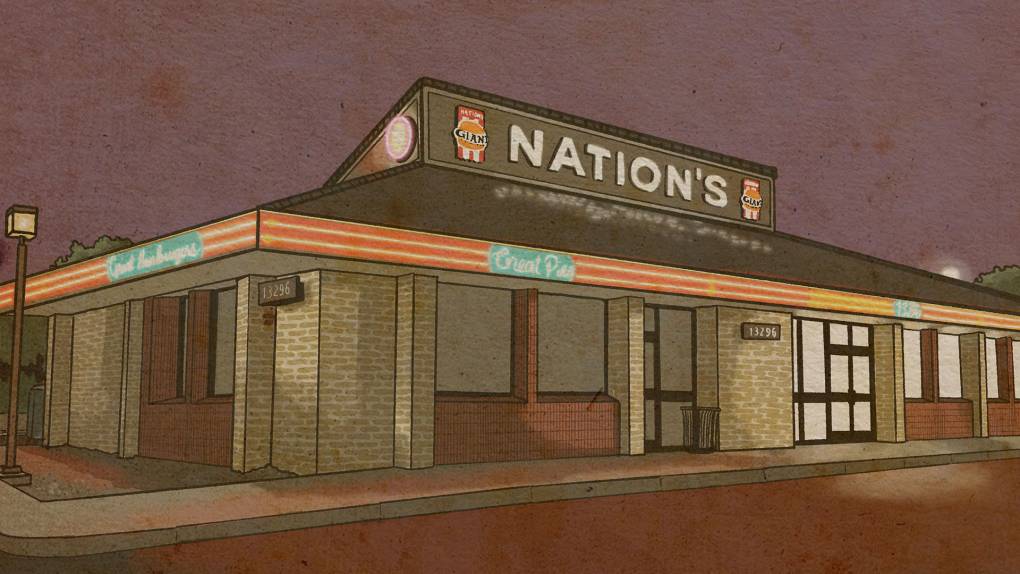
"caption": "The original San Pablo location of Nation's is still open 24/7.",
"credit": "Briana Loewinsohn",
"altTag": "Illustration: The exterior of a Nation's fast food burger restaurant, lit up in neon at night.",
"description": null,
"imgSizes": {
"medium": {
"file": "https://cdn.kqed.org/wp-content/uploads/sites/2/2024/05/Nations_2-crop-800x450.jpg",
"width": 800,
"height": 450,
"mimeType": "image/jpeg"
},
"large": {
"file": "https://cdn.kqed.org/wp-content/uploads/sites/2/2024/05/Nations_2-crop-1020x574.jpg",
"width": 1020,
"height": 574,
"mimeType": "image/jpeg"
},
"thumbnail": {
"file": "https://cdn.kqed.org/wp-content/uploads/sites/2/2024/05/Nations_2-crop-160x90.jpg",
"width": 160,
"height": 90,
"mimeType": "image/jpeg"
},
"medium_large": {
"file": "https://cdn.kqed.org/wp-content/uploads/sites/2/2024/05/Nations_2-crop-768x432.jpg",
"width": 768,
"height": 432,
"mimeType": "image/jpeg"
},
"1536x1536": {
"file": "https://cdn.kqed.org/wp-content/uploads/sites/2/2024/05/Nations_2-crop-1536x864.jpg",
"width": 1536,
"height": 864,
"mimeType": "image/jpeg"
},
"post-thumbnail": {
"file": "https://cdn.kqed.org/wp-content/uploads/sites/2/2024/05/Nations_2-crop-672x372.jpg",
"width": 672,
"height": 372,
"mimeType": "image/jpeg"
},
"twentyfourteen-full-width": {
"file": "https://cdn.kqed.org/wp-content/uploads/sites/2/2024/05/Nations_2-crop-1038x576.jpg",
"width": 1038,
"height": 576,
"mimeType": "image/jpeg"
},
"kqedFullSize": {
"file": "https://cdn.kqed.org/wp-content/uploads/sites/2/2024/05/Nations_2-crop.jpg",
"width": 1920,
"height": 1080
}
},
"isLoading": false,
"fetchFailed": false
}
},
"audioPlayerReducer": {
"postId": "stream_live",
"isPaused": true,
"isPlaying": false,
"pfsActive": false,
"pledgeModalIsOpen": true,
"playerDrawerIsOpen": false,
"liveAudioPlayStartedAt": 0,
"liveAudioPlayContext": ""
},
"authorsReducer": {
"byline_arts_13961345": {
"type": "authors",
"id": "byline_arts_13961345",
"meta": {
"override": true
},
"slug": "byline_arts_13961345",
"name": "Adrian Spinelli",
"isLoading": false
},
"ltsai": {
"type": "authors",
"id": "11743",
"meta": {
"index": "authors_1716337520",
"id": "11743",
"found": true
},
"name": "Luke Tsai",
"firstName": "Luke",
"lastName": "Tsai",
"slug": "ltsai",
"email": "ltsai@kqed.org",
"display_author_email": true,
"staff_mastheads": [
"arts"
],
"title": "Food Editor",
"bio": "Luke Tsai is KQED's food editor and resident stinky tofu connoisseur. Prior to KQED, he was an editor at Eater SF, \u003cem>San Francisco \u003c/em>magazine, and the \u003cem>East Bay Express\u003c/em>, and his work has also appeared in TASTE, the \u003cem>San Francisco Chronicle\u003c/em>, and the \u003cem>Best Food Writing\u003c/em> anthology. When he isn't writing or editing, you'll find him eating most everything he can get his hands on.",
"avatar": "https://secure.gravatar.com/avatar/1e59b45bf191526e7339d6ba46e33a57b2030d25c27660ecc64ea3cb863e34f7?s=600&d=blank&r=g",
"twitter": "theluketsai",
"bluesky": null,
"facebook": null,
"instagram": null,
"linkedin": null,
"sites": [
{
"site": "",
"roles": [
"editor"
]
},
{
"site": "arts",
"roles": [
"administrator"
]
},
{
"site": "news",
"roles": [
"editor",
"contributor"
]
},
{
"site": "bayareabites",
"roles": [
"editor"
]
},
{
"site": "food",
"roles": [
"editor"
]
}
],
"headData": {
"title": "Luke Tsai | KQED",
"description": "Food Editor",
"ogImgSrc": "https://secure.gravatar.com/avatar/1e59b45bf191526e7339d6ba46e33a57b2030d25c27660ecc64ea3cb863e34f7?s=600&d=blank&r=g",
"twImgSrc": "https://secure.gravatar.com/avatar/1e59b45bf191526e7339d6ba46e33a57b2030d25c27660ecc64ea3cb863e34f7?s=600&d=blank&r=g"
},
"isLoading": false,
"link": "/author/ltsai"
},
"tpham": {
"type": "authors",
"id": "11753",
"meta": {
"index": "authors_1716337520",
"id": "11753",
"found": true
},
"name": "Thien Pham",
"firstName": "Thien",
"lastName": "Pham",
"slug": "tpham",
"email": "thiendog@gmail.com",
"display_author_email": false,
"staff_mastheads": [],
"title": "KQED Contributor",
"bio": null,
"avatar": "https://secure.gravatar.com/avatar/a5b4729969ad46d88e7b9ec9dd4f3fa6af84dd0fa8fa91f01d8d9481694999bc?s=600&d=blank&r=g",
"twitter": null,
"bluesky": null,
"facebook": null,
"instagram": null,
"linkedin": null,
"sites": [
{
"site": "arts",
"roles": [
"contributor"
]
}
],
"headData": {
"title": "Thien Pham | KQED",
"description": "KQED Contributor",
"ogImgSrc": "https://secure.gravatar.com/avatar/a5b4729969ad46d88e7b9ec9dd4f3fa6af84dd0fa8fa91f01d8d9481694999bc?s=600&d=blank&r=g",
"twImgSrc": "https://secure.gravatar.com/avatar/a5b4729969ad46d88e7b9ec9dd4f3fa6af84dd0fa8fa91f01d8d9481694999bc?s=600&d=blank&r=g"
},
"isLoading": false,
"link": "/author/tpham"
},
"rockyrivera": {
"type": "authors",
"id": "11846",
"meta": {
"index": "authors_1716337520",
"id": "11846",
"found": true
},
"name": "Rocky Rivera",
"firstName": "Rocky",
"lastName": "Rivera",
"slug": "rockyrivera",
"email": "ms.rocky.rivera@gmail.com",
"display_author_email": false,
"staff_mastheads": [],
"title": "KQED Contributor",
"bio": "Rocky Rivera is a journalist, emcee, author and activist from San Francisco. She has released four albums through her label, Beatrock Music, and a ten-volume mixtape series with DJ Roza. She released her first book in 2021, entitled \u003cem>Snakeskin: Essays by Rocky Rivera\u003c/em>. Her latest album dropped in September 2024 and is called \"Long Kiss Goodnight\" with emcee/producer Otayo Dubb. She currently writes the Frisco Foodies column as a love letter to her hometown.",
"avatar": "https://secure.gravatar.com/avatar/946241ee2c59e6040607dfc75240d91b?s=600&d=blank&r=g",
"twitter": null,
"facebook": "https://m.facebook.com/rockyriveramusic",
"instagram": "https://instagram.com/rockyrivera",
"linkedin": "https://www.linkedin.com/in/krishtinedeleon/",
"sites": [
{
"site": "arts",
"roles": [
"author"
]
}
],
"headData": {
"title": "Rocky Rivera | KQED",
"description": "KQED Contributor",
"ogImgSrc": "https://secure.gravatar.com/avatar/946241ee2c59e6040607dfc75240d91b?s=600&d=blank&r=g",
"twImgSrc": "https://secure.gravatar.com/avatar/946241ee2c59e6040607dfc75240d91b?s=600&d=blank&r=g"
},
"isLoading": false,
"link": "/author/rockyrivera"
},
"bduffett": {
"type": "authors",
"id": "11902",
"meta": {
"index": "authors_1716337520",
"id": "11902",
"found": true
},
"name": "Becky Duffett",
"firstName": "Becky",
"lastName": "Duffett",
"slug": "bduffett",
"email": "duffettr@gmail.com",
"display_author_email": false,
"staff_mastheads": [],
"title": "KQED Contributor",
"bio": null,
"avatar": "https://secure.gravatar.com/avatar/e5baf1733e81ecc5f55104a3c095028c?s=600&d=blank&r=g",
"twitter": null,
"facebook": null,
"instagram": null,
"linkedin": null,
"sites": [
{
"site": "arts",
"roles": [
"contributor"
]
}
],
"headData": {
"title": "Becky Duffett | KQED",
"description": "KQED Contributor",
"ogImgSrc": "https://secure.gravatar.com/avatar/e5baf1733e81ecc5f55104a3c095028c?s=600&d=blank&r=g",
"twImgSrc": "https://secure.gravatar.com/avatar/e5baf1733e81ecc5f55104a3c095028c?s=600&d=blank&r=g"
},
"isLoading": false,
"link": "/author/bduffett"
},
"opena": {
"type": "authors",
"id": "11903",
"meta": {
"index": "authors_1716337520",
"id": "11903",
"found": true
},
"name": "Octavio Peña",
"firstName": "Octavio",
"lastName": "Peña",
"slug": "opena",
"email": "octaviopenagutierrez@gmail.com",
"display_author_email": false,
"staff_mastheads": [],
"title": "KQED Contributor",
"bio": null,
"avatar": "https://secure.gravatar.com/avatar/62850791380238ea3945ee72a3d56056477904792b41daaf11effa8780bab75d?s=600&d=blank&r=g",
"twitter": null,
"bluesky": null,
"facebook": null,
"instagram": null,
"linkedin": null,
"sites": [
{
"site": "arts",
"roles": [
"contributor"
]
}
],
"headData": {
"title": "Octavio Peña | KQED",
"description": "KQED Contributor",
"ogImgSrc": "https://secure.gravatar.com/avatar/62850791380238ea3945ee72a3d56056477904792b41daaf11effa8780bab75d?s=600&d=blank&r=g",
"twImgSrc": "https://secure.gravatar.com/avatar/62850791380238ea3945ee72a3d56056477904792b41daaf11effa8780bab75d?s=600&d=blank&r=g"
},
"isLoading": false,
"link": "/author/opena"
},
"bloewinsohn": {
"type": "authors",
"id": "11904",
"meta": {
"index": "authors_1716337520",
"id": "11904",
"found": true
},
"name": "Briana Loewinsohn",
"firstName": "Briana",
"lastName": "Loewinsohn",
"slug": "bloewinsohn",
"email": "brianabreaks@gmail.com",
"display_author_email": false,
"staff_mastheads": [],
"title": "KQED Contributor",
"bio": null,
"avatar": "https://secure.gravatar.com/avatar/939d84e992d1263b5df583828709edae706c0bba1db57ec593f24f34274ef0ec?s=600&d=blank&r=g",
"twitter": null,
"bluesky": null,
"facebook": null,
"instagram": null,
"linkedin": null,
"sites": [
{
"site": "arts",
"roles": [
"contributor"
]
}
],
"headData": {
"title": "Briana Loewinsohn | KQED",
"description": "KQED Contributor",
"ogImgSrc": "https://secure.gravatar.com/avatar/939d84e992d1263b5df583828709edae706c0bba1db57ec593f24f34274ef0ec?s=600&d=blank&r=g",
"twImgSrc": "https://secure.gravatar.com/avatar/939d84e992d1263b5df583828709edae706c0bba1db57ec593f24f34274ef0ec?s=600&d=blank&r=g"
},
"isLoading": false,
"link": "/author/bloewinsohn"
}
},
"pagesReducer": {
"arts_tag_food": {
"type": "terms",
"id": "arts_1297",
"meta": {
"index": "terms_1716263798",
"site": "arts",
"id": "1297",
"score": 7.4242826
},
"featImg": null,
"name": "food",
"description": null,
"taxonomy": "tag",
"headData": {
"twImgId": null,
"twTitle": null,
"ogTitle": null,
"ogImgId": null,
"twDescription": null,
"description": null,
"title": "food Archives | KQED Arts",
"ogDescription": null
},
"ttid": 1309,
"slug": "food",
"isLoading": false,
"title": "food",
"pageMeta": {
"site": "arts",
"WpPageTemplate": "page-topic-editorial",
"currentPage": 16
},
"blocks": [
{
"blockName": "kqed/post-list",
"attrs": {
"layout": "cardArticle2",
"query": "posts/arts?tag=food",
"seeMore": false,
"paginated": true,
"page": 16
}
},
{
"blockName": "kqed/ad"
}
]
}
},
"pfsSessionReducer": {},
"postsReducer": {
"stream_live": {
"type": "live",
"id": "stream_live",
"audioUrl": "https://streams.kqed.org/kqedradio",
"title": "Live Stream",
"excerpt": "Live Stream information currently unavailable.",
"link": "/radio",
"featImg": "",
"label": {
"name": "KQED Live",
"link": "/"
}
},
"stream_kqedNewscast": {
"type": "posts",
"id": "stream_kqedNewscast",
"audioUrl": "https://www.kqed.org/.stream/anon/radio/RDnews/newscast.mp3?_=1",
"title": "KQED Newscast",
"featImg": "",
"label": {
"name": "88.5 FM",
"link": "/"
}
},
"arts_13961345": {
"type": "posts",
"id": "arts_13961345",
"meta": {
"index": "posts_1716263798",
"site": "arts",
"id": "13961345",
"score": null,
"sort": [
1721414797000
]
},
"guestAuthors": [],
"slug": "brazilian-food-boom-sf-bay-area-cafe-de-casa-brazilian-bbq",
"title": "The Golden Age of Brazilian Food in the Bay Area Is Here",
"publishDate": 1721414797,
"format": "standard",
"headTitle": "The Golden Age of Brazilian Food in the Bay Area Is Here | KQED",
"labelTerm": {},
"content": "\u003cp>[dropcap]A[/dropcap]cross the street from the Buena Vista Cafe’s white-coated bartenders pouring San Francisco’s most famous Irish coffee and the gobs of tourists stepping off the Powell/Hyde Cable Car turnaround, there’s an unexpected new addition to the neighborhood: a Brazilian restaurant.\u003c/p>\n\u003cp>But this isn’t just \u003ci>any\u003c/i> Brazilian restaurant. It’s \u003ca href=\"https://www.sfchronicle.com/food/restaurants/article/She-was-an-underground-food-legend-in-S-F-Now-16206269.php\">Cafe De Casa’s\u003c/a> third location in the Bay Area, an unprecedented milestone for Brazilian food around these parts. The stylishly-designed, 5,000-square-foot former Starbucks on Fisherman’s Wharf represents a massive expansion from the cozy grab-and-go shop that Cafe de Casa had around the corner for eight years. This is now a full-blown Brazilian food emporium, offering a bevy of savory pastries like pão de queijo (aka “PDQ,” or cheese bread) and creamy, chicken-filled coxinhas, chewy-crispy stuffed tapioca crepes, lunch plates, açai bowls, fresh juices and coffee drinks galore. Now there are even packages of Cafe de Casa frozen PDQs to bake at home, along with branded malagueta pepper hot sauce and artisan ceramics.\u003c/p>\n\u003cp>It’s a stark contrast from when I moved to San Francisco 15 years ago and my quests to find the hearty homestyle Brazilian lunch plates that I ate every day growing up were largely fruitless. If I wanted Brazilian food, the options were limited to steakhouses (usually a big meal for special occasions) or açai bowls (a snack) from a cafe on Valencia Street that promised for years to start a lunch service but never did. Where was the everyday food and staple rice and beans?\u003c/p>\n\u003cp>So when I stumbled upon Cafe de Casa’s original tiny yellow house in South San Francisco in the 2010s serving legit home cooked classics, it was the only place that would effectively quell my “saudades” (deep longing) for flavors from back home in Brazil.\u003c/p>\n\u003cfigure id=\"attachment_13961263\" class=\"wp-caption alignnone\" style=\"max-width: 2000px\">\u003cimg loading=\"lazy\" decoding=\"async\" class=\"size-full wp-image-13961263\" src=\"https://cdn.kqed.org/wp-content/uploads/sites/2/2024/07/240711-BRAZILIANFOODBOOM-42-BL-KQED.jpg\" alt=\"A woman and young boy peruse the pastry case at Cafe de Casa.\" width=\"2000\" height=\"1333\" srcset=\"https://cdn.kqed.org/wp-content/uploads/sites/2/2024/07/240711-BRAZILIANFOODBOOM-42-BL-KQED.jpg 2000w, https://cdn.kqed.org/wp-content/uploads/sites/2/2024/07/240711-BRAZILIANFOODBOOM-42-BL-KQED-800x533.jpg 800w, https://cdn.kqed.org/wp-content/uploads/sites/2/2024/07/240711-BRAZILIANFOODBOOM-42-BL-KQED-1020x680.jpg 1020w, https://cdn.kqed.org/wp-content/uploads/sites/2/2024/07/240711-BRAZILIANFOODBOOM-42-BL-KQED-160x107.jpg 160w, https://cdn.kqed.org/wp-content/uploads/sites/2/2024/07/240711-BRAZILIANFOODBOOM-42-BL-KQED-768x512.jpg 768w, https://cdn.kqed.org/wp-content/uploads/sites/2/2024/07/240711-BRAZILIANFOODBOOM-42-BL-KQED-1536x1024.jpg 1536w, https://cdn.kqed.org/wp-content/uploads/sites/2/2024/07/240711-BRAZILIANFOODBOOM-42-BL-KQED-1920x1280.jpg 1920w\" sizes=\"(max-width: 2000px) 100vw, 2000px\">\u003cfigcaption class=\"wp-caption-text\">A family looks at the pastry display case at Cafe de Casa on July 11, 2024. \u003ccite>(Beth LaBerge/KQED)\u003c/cite>\u003c/figcaption>\u003c/figure>\n\u003cp>Now, more than a decade later, that dearth of Brazilian food options in the Bay is a thing of the past. From my home on the edge of Noe Valley and Bernal Heights, for example, there are no less than a half dozen places within ten minutes of my doorstep. I make an easy pit stop when I bike by \u003ca href=\"https://www.sfchronicle.com/food/restaurants/article/brazilian-spot-sf-buffet-18175531.php\">The Brazilian Spot\u003c/a> on Valencia near 24th Street to grab a quick PDQ or a buffet lunch on Fridays. I can walk to \u003ca href=\"https://www.sfchronicle.com/food/article/At-S-F-s-Noeteca-Italian-wine-goes-hand-in-hand-16409455.php\">Noeteca\u003c/a> on Dolores Street for hearty lunch plates during the week, and I know I can get coxinhas in a pinch at Brazilian-owned Bernal Heights Pizza down the street. There’s another sleek Cafe De Casa in the Castro, Pebbles in Glen Park has sneaky-good PDQ and \u003ca href=\"https://www.kqed.org/arts/13935344/brazuca-brazilian-burger-acai-food-truck-richmond\">Brazuca’s\u003c/a> Brazi-Mex fusion food truck is a short jaunt away in the Dogpatch. And just last month, I discovered Vaulin’s Taproom on Bryant and 9th for a lunch plate with authentic Brazilian rice and beans, sauteed beef with caramelized onions, a fried egg and farofa.\u003c/p>\n\u003cp>[ad fullwidth]\u003c/p>\n\u003cp>It feels like nothing short of a golden age to be (and eat) Brazilian in San Francisco — and I’m not even counting the number of other options in Daly City or the East Bay.\u003c/p>\n\u003cp>But if Cafe de Casa’s expansion among this growing trend of Brazilian food businesses in a multitude of neighborhoods tells us anything, it’s that they’re very much not just feeding Brazilians. Through the years, the clientele at Cafe de Casa has become increasingly non-Brazilian, making it an important entry point to the cuisine.\u003c/p>\n\u003cp>“We wanted to make for Americans what Brazilians love,” says Amanda Moreira, who co-owns Cafe de Casa with her mother and sister. “Brazilian food is very agreeable to the palette. It’s flavorful, and not overly spicy.”\u003c/p>\n\u003cp>And while I typically introduce folks to Brazilian food via the crispy, gooey, cheesy PDQ, Moreira says the coxinha — a fried dough ball shaped like a chicken leg, filled with velvety seasoned chicken — is the perfect gateway. “I’ve never seen anyone not like a coxinha,” she says.\u003c/p>\n\u003cfigure id=\"attachment_13961258\" class=\"wp-caption alignnone\" style=\"max-width: 2000px\">\u003cimg loading=\"lazy\" decoding=\"async\" class=\"size-full wp-image-13961258\" src=\"https://cdn.kqed.org/wp-content/uploads/sites/2/2024/07/240711-BRAZILIANFOODBOOM-11-BL-KQED.jpg\" alt=\"Three triangular fried pastries on a plate.\" width=\"2000\" height=\"1333\" srcset=\"https://cdn.kqed.org/wp-content/uploads/sites/2/2024/07/240711-BRAZILIANFOODBOOM-11-BL-KQED.jpg 2000w, https://cdn.kqed.org/wp-content/uploads/sites/2/2024/07/240711-BRAZILIANFOODBOOM-11-BL-KQED-800x533.jpg 800w, https://cdn.kqed.org/wp-content/uploads/sites/2/2024/07/240711-BRAZILIANFOODBOOM-11-BL-KQED-1020x680.jpg 1020w, https://cdn.kqed.org/wp-content/uploads/sites/2/2024/07/240711-BRAZILIANFOODBOOM-11-BL-KQED-160x107.jpg 160w, https://cdn.kqed.org/wp-content/uploads/sites/2/2024/07/240711-BRAZILIANFOODBOOM-11-BL-KQED-768x512.jpg 768w, https://cdn.kqed.org/wp-content/uploads/sites/2/2024/07/240711-BRAZILIANFOODBOOM-11-BL-KQED-1536x1024.jpg 1536w, https://cdn.kqed.org/wp-content/uploads/sites/2/2024/07/240711-BRAZILIANFOODBOOM-11-BL-KQED-1920x1280.jpg 1920w\" sizes=\"(max-width: 2000px) 100vw, 2000px\">\u003cfigcaption class=\"wp-caption-text\">Cafe de Casa’s version of coxinha, a traditional Brazilian pastry. \u003ccite>(Beth LaBerge/KQED)\u003c/cite>\u003c/figcaption>\u003c/figure>\n\u003cfigure id=\"attachment_13961356\" class=\"wp-caption alignnone\" style=\"max-width: 1999px\">\u003cimg loading=\"lazy\" decoding=\"async\" class=\"size-full wp-image-13961356\" src=\"https://cdn.kqed.org/wp-content/uploads/sites/2/2024/07/240711-BrazilianFoodBoom-19-BL_qed.jpg\" alt=\"A Brazilian chicken pastry cut open to reveal its creamy filling.\" width=\"1999\" height=\"1333\" srcset=\"https://cdn.kqed.org/wp-content/uploads/sites/2/2024/07/240711-BrazilianFoodBoom-19-BL_qed.jpg 1999w, https://cdn.kqed.org/wp-content/uploads/sites/2/2024/07/240711-BrazilianFoodBoom-19-BL_qed-800x533.jpg 800w, https://cdn.kqed.org/wp-content/uploads/sites/2/2024/07/240711-BrazilianFoodBoom-19-BL_qed-1020x680.jpg 1020w, https://cdn.kqed.org/wp-content/uploads/sites/2/2024/07/240711-BrazilianFoodBoom-19-BL_qed-160x107.jpg 160w, https://cdn.kqed.org/wp-content/uploads/sites/2/2024/07/240711-BrazilianFoodBoom-19-BL_qed-768x512.jpg 768w, https://cdn.kqed.org/wp-content/uploads/sites/2/2024/07/240711-BrazilianFoodBoom-19-BL_qed-1536x1024.jpg 1536w, https://cdn.kqed.org/wp-content/uploads/sites/2/2024/07/240711-BrazilianFoodBoom-19-BL_qed-1920x1280.jpg 1920w\" sizes=\"(max-width: 1999px) 100vw, 1999px\">\u003cfigcaption class=\"wp-caption-text\">The pastry’s velvety chicken-and-cream-cheese filling. \u003ccite>(Beth LaBerge/KQED)\u003c/cite>\u003c/figcaption>\u003c/figure>\n\u003cp>Cafe De Casa even sells its coxinhas and other savory pastries to smaller Brazilian cafes around the Bay, most of which tend to cater to the growing number of expats in the region, who number somewhere between 15,000 and 40,000. But non-Brazilian clientele really started to take notice of Cafe de Casa’s offerings, Moreira explains, during the surging health food movement in the mid-to-late 2010s. Words like “gluten-free” and “antioxidant” were definitely en vogue in the Bay Area, and Cafe de Casa — with its gluten-free PDQs, tapioca crepes and proprietary açai blend — was well-positioned to be discovered by new customers.\u003c/p>\n\u003cp>“Açai was already having its moment in the health craze, but we were the first ones doing tapioca crepes in the area,” Moreria says. “Like the pão de queijo and tapioca crepes that are naturally gluten-free — it wasn’t \u003ci>engineered\u003c/i> to be that way. And there’s no sugar or milk in the tapiocas either, and people are after that, especially in these parts of California. When people with food allergies come searching for gluten-free and dairy-free, we show them an entire page of options and they’re blown away.”\u003c/p>\n\u003ch2>\u003cb>A Growing Community and Culture\u003c/b>\u003c/h2>\n\u003cp>Moreira moved to San Francisco in 2009 from the state of Goias, where a great majority of Brazilians in the Bay Area are from. Back then, most Brazilians out here were working blue-collared jobs like delivering pizzas or cleaning houses. These days, pizza delivery has been replaced by driving for Uber or DoorDash as a predominant job for Brazilians just arriving. Brazilians come to the Bay to stay as long as possible and make as much money to either take back home or, in cases like Moreira’s, to build a life here.\u003c/p>\n\u003cp>Moreira’s mother, Lucimar Canedo, was an early innovator when it came to Brazilian food in the Bay. After arriving in 2004, she’d sell her savory pastries out of a pizzeria she worked at and eventually settled into building the Cafe de Casa business in earnest with her daughters in 2011. But while Canedo and Moreira’s paths have led to the growth of their own business, the culture and communities that have grown around them along the way comprise an even bigger shift in the overall Brazilian food scene.\u003c/p>\n\u003cfigure id=\"attachment_13961259\" class=\"wp-caption alignnone\" style=\"max-width: 2000px\">\u003cimg loading=\"lazy\" decoding=\"async\" class=\"size-full wp-image-13961259\" src=\"https://cdn.kqed.org/wp-content/uploads/sites/2/2024/07/240711-BRAZILIANFOODBOOM-26-BL-KQED.jpg\" alt=\"A spread of pastries inside a display case.\" width=\"2000\" height=\"1333\" srcset=\"https://cdn.kqed.org/wp-content/uploads/sites/2/2024/07/240711-BRAZILIANFOODBOOM-26-BL-KQED.jpg 2000w, https://cdn.kqed.org/wp-content/uploads/sites/2/2024/07/240711-BRAZILIANFOODBOOM-26-BL-KQED-800x533.jpg 800w, https://cdn.kqed.org/wp-content/uploads/sites/2/2024/07/240711-BRAZILIANFOODBOOM-26-BL-KQED-1020x680.jpg 1020w, https://cdn.kqed.org/wp-content/uploads/sites/2/2024/07/240711-BRAZILIANFOODBOOM-26-BL-KQED-160x107.jpg 160w, https://cdn.kqed.org/wp-content/uploads/sites/2/2024/07/240711-BRAZILIANFOODBOOM-26-BL-KQED-768x512.jpg 768w, https://cdn.kqed.org/wp-content/uploads/sites/2/2024/07/240711-BRAZILIANFOODBOOM-26-BL-KQED-1536x1024.jpg 1536w, https://cdn.kqed.org/wp-content/uploads/sites/2/2024/07/240711-BRAZILIANFOODBOOM-26-BL-KQED-1920x1280.jpg 1920w\" sizes=\"(max-width: 2000px) 100vw, 2000px\">\u003cfigcaption class=\"wp-caption-text\">The impressive spread of pastries available at Cafe de Casa’s Fisherman’s Wharf location. \u003ccite>(Beth LaBerge/KQED)\u003c/cite>\u003c/figcaption>\u003c/figure>\n\u003cfigure id=\"attachment_13961358\" class=\"wp-caption alignnone\" style=\"max-width: 2000px\">\u003cimg loading=\"lazy\" decoding=\"async\" class=\"size-full wp-image-13961358\" src=\"https://cdn.kqed.org/wp-content/uploads/sites/2/2024/07/CafedeCasa_WEB-11_qed.jpg\" alt=\"Portrait of a woman (center) and her two adult daughters, all posing in jeans and blazers.\" width=\"2000\" height=\"1333\" srcset=\"https://cdn.kqed.org/wp-content/uploads/sites/2/2024/07/CafedeCasa_WEB-11_qed.jpg 2000w, https://cdn.kqed.org/wp-content/uploads/sites/2/2024/07/CafedeCasa_WEB-11_qed-800x533.jpg 800w, https://cdn.kqed.org/wp-content/uploads/sites/2/2024/07/CafedeCasa_WEB-11_qed-1020x680.jpg 1020w, https://cdn.kqed.org/wp-content/uploads/sites/2/2024/07/CafedeCasa_WEB-11_qed-160x107.jpg 160w, https://cdn.kqed.org/wp-content/uploads/sites/2/2024/07/CafedeCasa_WEB-11_qed-768x512.jpg 768w, https://cdn.kqed.org/wp-content/uploads/sites/2/2024/07/CafedeCasa_WEB-11_qed-1536x1024.jpg 1536w, https://cdn.kqed.org/wp-content/uploads/sites/2/2024/07/CafedeCasa_WEB-11_qed-1920x1280.jpg 1920w\" sizes=\"(max-width: 2000px) 100vw, 2000px\">\u003cfigcaption class=\"wp-caption-text\">Lucimar Canedo (center) and her daughters Amanda Moreira (left) and Thais Moreira pose for a portrait. \u003ccite>(Courtesy of Cafe de Casa)\u003c/cite>\u003c/figcaption>\u003c/figure>\n\u003cp>“The population is getting bigger out here for sure,” says Vaulin Silva of \u003ca href=\"https://sanfranciscobrazilianrestaurant.com/\">Vaulin’s Taproom\u003c/a> in SoMa. Silva owned the Inner Richmond’s Brazil-centric Sunstream Cafe for 15 years before selling it in 2020, so he knows a thing or two about Brazilians walking through his door. It’s one of the reasons he leveled up to a full-service food and beer operation in Vaulin’s.\u003c/p>\n\u003cp>Vaulin’s offers an extensive menu of Brazilian classics — including discounted lunch plates for ride-share and delivery drivers — as well as shareable bar food typical of Brazil’s gastropub culture to go along with a slew of beers on tap. Fostering community is on his mind, and now on weekends, Vaulin’s has live Brazilian music on the restaurant’s modest stage. “Brazilians kept coming [to the Bay], and they asked for more offerings like we have in Brazil,” he sums up, adding that his goal is to eventually attract more non-Brazilians too.\u003c/p>\n\u003ch2>\u003cb>Red Light/Green Light\u003c/b>\u003c/h2>\n\u003cp>Before places like Cafe de Casa, El Cerrito’s Brazil Bistro and Oakland’s Paulista Kitchen & Taproom came along serving everyday Brazilian staples, Brazilian barbecue (churrasco) was the first thing that came to mind when non-Brazilians in the Bay Area thought about Brazilian food. Espetus has been slicing meats off of large skewers tableside on Market Street since 2003 and opened an even more popular San Mateo location in 2008. International chain Fogo de Chão came to SOMA in 2016.\u003c/p>\n\u003cp>Celso Mattos is a veteran of churrascarias. He moved from Brazil’s barbecue mecca in Southern Brazil to Texas, where he started working at Fogo de Chão. When he came to the Bay Area, he served as the manager of Napa’s Galpão Gaucho, one of the barbecue chain’s seven restaurants across the country, mainly in California. He set out on his own in 2022 to open the modest Show de Carnes Express in Vacaville, before opening up a full-blown 200-seat \u003ca href=\"https://www.instagram.com/showdecarnesusa/?hl=en\">Show de Carnes\u003c/a> steakhouse in Sausalito in early 2023. He hasn’t looked back.\u003c/p>\n\u003cfigure id=\"attachment_13961373\" class=\"wp-caption alignnone\" style=\"max-width: 2000px\">\u003cimg loading=\"lazy\" decoding=\"async\" class=\"size-full wp-image-13961373\" src=\"https://cdn.kqed.org/wp-content/uploads/sites/2/2024/07/sdc-beef.jpg\" alt=\"Steak ready to be cut off the spit, at a Brazilian barbecue restaurant.\" width=\"2000\" height=\"1958\" srcset=\"https://cdn.kqed.org/wp-content/uploads/sites/2/2024/07/sdc-beef.jpg 2000w, https://cdn.kqed.org/wp-content/uploads/sites/2/2024/07/sdc-beef-800x783.jpg 800w, https://cdn.kqed.org/wp-content/uploads/sites/2/2024/07/sdc-beef-1020x999.jpg 1020w, https://cdn.kqed.org/wp-content/uploads/sites/2/2024/07/sdc-beef-160x157.jpg 160w, https://cdn.kqed.org/wp-content/uploads/sites/2/2024/07/sdc-beef-768x752.jpg 768w, https://cdn.kqed.org/wp-content/uploads/sites/2/2024/07/sdc-beef-1536x1504.jpg 1536w, https://cdn.kqed.org/wp-content/uploads/sites/2/2024/07/sdc-beef-1920x1880.jpg 1920w\" sizes=\"(max-width: 2000px) 100vw, 2000px\">\u003cfigcaption class=\"wp-caption-text\">Ribeye steak ready to be sliced off the skewer at Show de Carnes, a Brazilian barbecue restaurant in Sausalito. \u003ccite>(Courtesy of Show de Carnes)\u003c/cite>\u003c/figcaption>\u003c/figure>\n\u003cp>On a recent Tuesday night, Show de Carnes is humming. The smells of traditional Southern Brazilian–style grilled meats greet you as soon as you walk into the elegant dining room. Families, corporate dinners and birthday parties are filling the long group-friendly tables along one half of the room while two- and four-tops sip caipirinhas and take trips to the loaded salad bar on the other. Meat carvers make their hypnotic shuffle from table to table looking for the green-colored side of an indicator that you’re ready to be served, and slice meats like picanha, pork ribs and chicken hearts right onto your plate (the red side tells them you’re full or need a break.) And while this is an authentically Brazilian experience, most of the clientele is not.\u003c/p>\n\u003cp>\u003cstrong>\u003cspan style=\"font-weight: 400\">[aside postID='arts_13935344,arts_13960360,arts_13930138']\u003c/span>\u003c/strong>“90% of our clientele is American,” Mattos says. “Business has been very good right off the bat, truly beyond our expectations. But I really didn’t expect things to go this well in our first year, mainly because it didn’t happen that way in any of the other locations I opened with other companies I’ve worked with.”\u003c/p>\n\u003cp>Mattos says the Sausalito location made sense because there wasn’t a Brazilian steakhouse between Napa and San Francisco. Marin County, with its nearly 300,000 people who skew high-income, was attractive. “Generally speaking, there aren’t really that many churrascarias in the Bay for the number of people here,” Mattos explains.\u003c/p>\n\u003cp>While Brazilians in the Bay are usually looking for more everyday food than churrascarias, the strength of the concept forged on Brazilian hospitality is palpable among the masses. In fact, Show de Carnes is set to open \u003ca href=\"https://www.instagram.com/showdecarnesusa/p/C4rps1MsJez/\">another location in Palo Alto later this summer\u003c/a>, because whether they’re Brazilian or not, people in the Bay Area can’t seem to get enough Brazilian food right now.\u003c/p>\n\u003cfigure id=\"attachment_13961260\" class=\"wp-caption alignnone\" style=\"max-width: 2000px\">\u003cimg loading=\"lazy\" decoding=\"async\" class=\"size-full wp-image-13961260\" src=\"https://cdn.kqed.org/wp-content/uploads/sites/2/2024/07/240711-BRAZILIANFOODBOOM-30-BL-KQED.jpg\" alt=\"Customers eating lunch inside a busy Brazilian cafe.\" width=\"2000\" height=\"1333\" srcset=\"https://cdn.kqed.org/wp-content/uploads/sites/2/2024/07/240711-BRAZILIANFOODBOOM-30-BL-KQED.jpg 2000w, https://cdn.kqed.org/wp-content/uploads/sites/2/2024/07/240711-BRAZILIANFOODBOOM-30-BL-KQED-800x533.jpg 800w, https://cdn.kqed.org/wp-content/uploads/sites/2/2024/07/240711-BRAZILIANFOODBOOM-30-BL-KQED-1020x680.jpg 1020w, https://cdn.kqed.org/wp-content/uploads/sites/2/2024/07/240711-BRAZILIANFOODBOOM-30-BL-KQED-160x107.jpg 160w, https://cdn.kqed.org/wp-content/uploads/sites/2/2024/07/240711-BRAZILIANFOODBOOM-30-BL-KQED-768x512.jpg 768w, https://cdn.kqed.org/wp-content/uploads/sites/2/2024/07/240711-BRAZILIANFOODBOOM-30-BL-KQED-1536x1024.jpg 1536w, https://cdn.kqed.org/wp-content/uploads/sites/2/2024/07/240711-BRAZILIANFOODBOOM-30-BL-KQED-1920x1280.jpg 1920w\" sizes=\"(max-width: 2000px) 100vw, 2000px\">\u003cfigcaption class=\"wp-caption-text\">The lunch crowd at Cafe de Casa. \u003ccite>(Beth LaBerge/KQED)\u003c/cite>\u003c/figcaption>\u003c/figure>\n\u003cp>Indeed, Brazilian steakhouses have historically been the entry points to Brazilian food in America. Miguel Do Rego was a manager at Espetus for six years before opening The Brazilian Spot, the Mission District cafe and Brazilian food market,in 2022. He says the increasing popularity of establishments like his is a direct result of the longtime presence of Brazilian steakhouses in the Bay Area.\u003c/p>\n\u003cp>“When I was at Espetus, we were easily serving over 1,000 people a day on busy weekends between lunch and dinner at both locations,” Do Rego says. “Think about that. Every single weekend 3,000+ mostly non-Brazilian people were getting exposed to Brazilian food in this area. And more importantly, we served the PDQ as appetizers. So everyone knows about the ‘Brazilian cheese bread’ because of the steakhouses.”\u003c/p>\n\u003cp>Even Trader Joe’s now sells their own version of par-baked PDQs (spoiler alert: they’re just OK), and one company went on \u003ci>Shark Tank\u003c/i> a decade ago \u003ca href=\"https://www.foodrepublic.com/1424764/brazi-bites-shark-tank-now/\">effectively exploding the frozen PDQ market\u003c/a> everywhere from Whole Foods to Costco nationwide. The increased availability of this decidedly Brazilian product has led to a much more friendly environment for Brazilian cafes in places like the Bay Area.\u003c/p>\n\u003cfigure id=\"attachment_13961264\" class=\"wp-caption alignnone\" style=\"max-width: 2000px\">\u003cimg loading=\"lazy\" decoding=\"async\" class=\"size-full wp-image-13961264\" src=\"https://cdn.kqed.org/wp-content/uploads/sites/2/2024/07/240711-BRAZILIANFOODBOOM-49-BL-KQED.jpg\" alt=\"A woman smiles behind the counter while working at a cafe.\" width=\"2000\" height=\"1333\" srcset=\"https://cdn.kqed.org/wp-content/uploads/sites/2/2024/07/240711-BRAZILIANFOODBOOM-49-BL-KQED.jpg 2000w, https://cdn.kqed.org/wp-content/uploads/sites/2/2024/07/240711-BRAZILIANFOODBOOM-49-BL-KQED-800x533.jpg 800w, https://cdn.kqed.org/wp-content/uploads/sites/2/2024/07/240711-BRAZILIANFOODBOOM-49-BL-KQED-1020x680.jpg 1020w, https://cdn.kqed.org/wp-content/uploads/sites/2/2024/07/240711-BRAZILIANFOODBOOM-49-BL-KQED-160x107.jpg 160w, https://cdn.kqed.org/wp-content/uploads/sites/2/2024/07/240711-BRAZILIANFOODBOOM-49-BL-KQED-768x512.jpg 768w, https://cdn.kqed.org/wp-content/uploads/sites/2/2024/07/240711-BRAZILIANFOODBOOM-49-BL-KQED-1536x1024.jpg 1536w, https://cdn.kqed.org/wp-content/uploads/sites/2/2024/07/240711-BRAZILIANFOODBOOM-49-BL-KQED-1920x1280.jpg 1920w\" sizes=\"(max-width: 2000px) 100vw, 2000px\">\u003cfigcaption class=\"wp-caption-text\">“We wanted to make for Americans what Brazilians love,” says Amanda Moreira, who runs Cafe de Casa along with with her sister and mother. \u003ccite>(Beth LaBerge/KQED)\u003c/cite>\u003c/figcaption>\u003c/figure>\n\u003cp>And as the Bay Area’s history with Brazilian food now reaches back over 20 years since the first steakhouse opened and Cafe de Casa’s matriarch moved to the Bay, we’re seeing the results of these portals into Brazilian food laying lasting roots. With these hubs of culinary culture continuing to sprout and flourish, everyone in the Bay — no matter where they’re from — is seeing how Brazilian food is as vibrant as the country’s people. There’s a whole other world out there beyond just the barbecue that’s now easier to find than ever.\u003c/p>\n\u003cp>[ad floatright]\u003c/p>\n\u003cp>“My mom always said that all I need is for someone to walk through my door,” Moreira says back at Cafe de Casa. “Once they’re in, I’ll get to work, and once they’re done eating, I know they’re going to come back.”\u003c/p>\n\n",
"blocks": [],
"excerpt": "A new wave of restaurants is going beyond just açai bowls and Brazilian barbecue.",
"status": "publish",
"parent": 0,
"modified": 1725910336,
"stats": {
"hasAudio": false,
"hasVideo": false,
"hasChartOrMap": false,
"iframeSrcs": [],
"hasGoogleForm": false,
"hasGallery": false,
"hasHearkenModule": false,
"hasPolis": false,
"paragraphCount": 28,
"wordCount": 2359
},
"headData": {
"title": "The Golden Age of Brazilian Food in the SF Bay Area | KQED",
"description": "A new wave of restaurants is going beyond just açai bowls and Brazilian barbecue.",
"ogTitle": "The Golden Age of Brazilian Food in the Bay Area Is Here",
"ogDescription": "",
"ogImgId": "",
"twTitle": "The Golden Age of Brazilian Food in the Bay Area Is Here",
"twDescription": "",
"twImgId": "",
"socialTitle": "The Golden Age of Brazilian Food in the SF Bay Area %%page%% %%sep%% KQED",
"schema": {
"@context": "https://schema.org",
"@type": "Article",
"headline": "The Golden Age of Brazilian Food in the Bay Area Is Here",
"datePublished": "2024-07-19T11:46:37-07:00",
"dateModified": "2024-09-09T12:32:16-07:00",
"image": "https://cdn.kqed.org/wp-content/uploads/2020/02/KQED-OG-Image@1x.png"
}
},
"source": "Food",
"sourceUrl": "https://www.kqed.org/food",
"sticky": false,
"nprByline": "Adrian Spinelli",
"nprStoryId": "kqed-13961345",
"excludeFromSiteSearch": "Include",
"showOnAuthorArchivePages": "No",
"articleAge": "0",
"path": "/arts/13961345/brazilian-food-boom-sf-bay-area-cafe-de-casa-brazilian-bbq",
"audioTrackLength": null,
"parsedContent": [
{
"type": "contentString",
"content": "\u003cdiv class=\"post-body\">\u003cp>\u003cp>\u003c/p>\u003cp>\u003cspan class=\"utils-parseShortcode-shortcodes-__dropcapShortcode__dropcap\">A\u003c/span>\u003c/p>\u003cp>cross the street from the Buena Vista Cafe’s white-coated bartenders pouring San Francisco’s most famous Irish coffee and the gobs of tourists stepping off the Powell/Hyde Cable Car turnaround, there’s an unexpected new addition to the neighborhood: a Brazilian restaurant.\u003c/p>\n\u003cp>But this isn’t just \u003ci>any\u003c/i> Brazilian restaurant. It’s \u003ca href=\"https://www.sfchronicle.com/food/restaurants/article/She-was-an-underground-food-legend-in-S-F-Now-16206269.php\">Cafe De Casa’s\u003c/a> third location in the Bay Area, an unprecedented milestone for Brazilian food around these parts. The stylishly-designed, 5,000-square-foot former Starbucks on Fisherman’s Wharf represents a massive expansion from the cozy grab-and-go shop that Cafe de Casa had around the corner for eight years. This is now a full-blown Brazilian food emporium, offering a bevy of savory pastries like pão de queijo (aka “PDQ,” or cheese bread) and creamy, chicken-filled coxinhas, chewy-crispy stuffed tapioca crepes, lunch plates, açai bowls, fresh juices and coffee drinks galore. Now there are even packages of Cafe de Casa frozen PDQs to bake at home, along with branded malagueta pepper hot sauce and artisan ceramics.\u003c/p>\n\u003cp>It’s a stark contrast from when I moved to San Francisco 15 years ago and my quests to find the hearty homestyle Brazilian lunch plates that I ate every day growing up were largely fruitless. If I wanted Brazilian food, the options were limited to steakhouses (usually a big meal for special occasions) or açai bowls (a snack) from a cafe on Valencia Street that promised for years to start a lunch service but never did. Where was the everyday food and staple rice and beans?\u003c/p>\n\u003cp>So when I stumbled upon Cafe de Casa’s original tiny yellow house in South San Francisco in the 2010s serving legit home cooked classics, it was the only place that would effectively quell my “saudades” (deep longing) for flavors from back home in Brazil.\u003c/p>\n\u003cfigure id=\"attachment_13961263\" class=\"wp-caption alignnone\" style=\"max-width: 2000px\">\u003cimg loading=\"lazy\" decoding=\"async\" class=\"size-full wp-image-13961263\" src=\"https://cdn.kqed.org/wp-content/uploads/sites/2/2024/07/240711-BRAZILIANFOODBOOM-42-BL-KQED.jpg\" alt=\"A woman and young boy peruse the pastry case at Cafe de Casa.\" width=\"2000\" height=\"1333\" srcset=\"https://cdn.kqed.org/wp-content/uploads/sites/2/2024/07/240711-BRAZILIANFOODBOOM-42-BL-KQED.jpg 2000w, https://cdn.kqed.org/wp-content/uploads/sites/2/2024/07/240711-BRAZILIANFOODBOOM-42-BL-KQED-800x533.jpg 800w, https://cdn.kqed.org/wp-content/uploads/sites/2/2024/07/240711-BRAZILIANFOODBOOM-42-BL-KQED-1020x680.jpg 1020w, https://cdn.kqed.org/wp-content/uploads/sites/2/2024/07/240711-BRAZILIANFOODBOOM-42-BL-KQED-160x107.jpg 160w, https://cdn.kqed.org/wp-content/uploads/sites/2/2024/07/240711-BRAZILIANFOODBOOM-42-BL-KQED-768x512.jpg 768w, https://cdn.kqed.org/wp-content/uploads/sites/2/2024/07/240711-BRAZILIANFOODBOOM-42-BL-KQED-1536x1024.jpg 1536w, https://cdn.kqed.org/wp-content/uploads/sites/2/2024/07/240711-BRAZILIANFOODBOOM-42-BL-KQED-1920x1280.jpg 1920w\" sizes=\"(max-width: 2000px) 100vw, 2000px\">\u003cfigcaption class=\"wp-caption-text\">A family looks at the pastry display case at Cafe de Casa on July 11, 2024. \u003ccite>(Beth LaBerge/KQED)\u003c/cite>\u003c/figcaption>\u003c/figure>\n\u003cp>Now, more than a decade later, that dearth of Brazilian food options in the Bay is a thing of the past. From my home on the edge of Noe Valley and Bernal Heights, for example, there are no less than a half dozen places within ten minutes of my doorstep. I make an easy pit stop when I bike by \u003ca href=\"https://www.sfchronicle.com/food/restaurants/article/brazilian-spot-sf-buffet-18175531.php\">The Brazilian Spot\u003c/a> on Valencia near 24th Street to grab a quick PDQ or a buffet lunch on Fridays. I can walk to \u003ca href=\"https://www.sfchronicle.com/food/article/At-S-F-s-Noeteca-Italian-wine-goes-hand-in-hand-16409455.php\">Noeteca\u003c/a> on Dolores Street for hearty lunch plates during the week, and I know I can get coxinhas in a pinch at Brazilian-owned Bernal Heights Pizza down the street. There’s another sleek Cafe De Casa in the Castro, Pebbles in Glen Park has sneaky-good PDQ and \u003ca href=\"https://www.kqed.org/arts/13935344/brazuca-brazilian-burger-acai-food-truck-richmond\">Brazuca’s\u003c/a> Brazi-Mex fusion food truck is a short jaunt away in the Dogpatch. And just last month, I discovered Vaulin’s Taproom on Bryant and 9th for a lunch plate with authentic Brazilian rice and beans, sauteed beef with caramelized onions, a fried egg and farofa.\u003c/p>\n\u003cp>\u003c/p>\u003c/div>",
"attributes": {
"named": {},
"numeric": []
}
},
{
"type": "component",
"content": "",
"name": "ad",
"attributes": {
"named": {
"label": "fullwidth"
},
"numeric": [
"fullwidth"
]
}
},
{
"type": "contentString",
"content": "\u003cdiv class=\"post-body\">\u003cp>\u003c/p>\n\u003cp>It feels like nothing short of a golden age to be (and eat) Brazilian in San Francisco — and I’m not even counting the number of other options in Daly City or the East Bay.\u003c/p>\n\u003cp>But if Cafe de Casa’s expansion among this growing trend of Brazilian food businesses in a multitude of neighborhoods tells us anything, it’s that they’re very much not just feeding Brazilians. Through the years, the clientele at Cafe de Casa has become increasingly non-Brazilian, making it an important entry point to the cuisine.\u003c/p>\n\u003cp>“We wanted to make for Americans what Brazilians love,” says Amanda Moreira, who co-owns Cafe de Casa with her mother and sister. “Brazilian food is very agreeable to the palette. It’s flavorful, and not overly spicy.”\u003c/p>\n\u003cp>And while I typically introduce folks to Brazilian food via the crispy, gooey, cheesy PDQ, Moreira says the coxinha — a fried dough ball shaped like a chicken leg, filled with velvety seasoned chicken — is the perfect gateway. “I’ve never seen anyone not like a coxinha,” she says.\u003c/p>\n\u003cfigure id=\"attachment_13961258\" class=\"wp-caption alignnone\" style=\"max-width: 2000px\">\u003cimg loading=\"lazy\" decoding=\"async\" class=\"size-full wp-image-13961258\" src=\"https://cdn.kqed.org/wp-content/uploads/sites/2/2024/07/240711-BRAZILIANFOODBOOM-11-BL-KQED.jpg\" alt=\"Three triangular fried pastries on a plate.\" width=\"2000\" height=\"1333\" srcset=\"https://cdn.kqed.org/wp-content/uploads/sites/2/2024/07/240711-BRAZILIANFOODBOOM-11-BL-KQED.jpg 2000w, https://cdn.kqed.org/wp-content/uploads/sites/2/2024/07/240711-BRAZILIANFOODBOOM-11-BL-KQED-800x533.jpg 800w, https://cdn.kqed.org/wp-content/uploads/sites/2/2024/07/240711-BRAZILIANFOODBOOM-11-BL-KQED-1020x680.jpg 1020w, https://cdn.kqed.org/wp-content/uploads/sites/2/2024/07/240711-BRAZILIANFOODBOOM-11-BL-KQED-160x107.jpg 160w, https://cdn.kqed.org/wp-content/uploads/sites/2/2024/07/240711-BRAZILIANFOODBOOM-11-BL-KQED-768x512.jpg 768w, https://cdn.kqed.org/wp-content/uploads/sites/2/2024/07/240711-BRAZILIANFOODBOOM-11-BL-KQED-1536x1024.jpg 1536w, https://cdn.kqed.org/wp-content/uploads/sites/2/2024/07/240711-BRAZILIANFOODBOOM-11-BL-KQED-1920x1280.jpg 1920w\" sizes=\"(max-width: 2000px) 100vw, 2000px\">\u003cfigcaption class=\"wp-caption-text\">Cafe de Casa’s version of coxinha, a traditional Brazilian pastry. \u003ccite>(Beth LaBerge/KQED)\u003c/cite>\u003c/figcaption>\u003c/figure>\n\u003cfigure id=\"attachment_13961356\" class=\"wp-caption alignnone\" style=\"max-width: 1999px\">\u003cimg loading=\"lazy\" decoding=\"async\" class=\"size-full wp-image-13961356\" src=\"https://cdn.kqed.org/wp-content/uploads/sites/2/2024/07/240711-BrazilianFoodBoom-19-BL_qed.jpg\" alt=\"A Brazilian chicken pastry cut open to reveal its creamy filling.\" width=\"1999\" height=\"1333\" srcset=\"https://cdn.kqed.org/wp-content/uploads/sites/2/2024/07/240711-BrazilianFoodBoom-19-BL_qed.jpg 1999w, https://cdn.kqed.org/wp-content/uploads/sites/2/2024/07/240711-BrazilianFoodBoom-19-BL_qed-800x533.jpg 800w, https://cdn.kqed.org/wp-content/uploads/sites/2/2024/07/240711-BrazilianFoodBoom-19-BL_qed-1020x680.jpg 1020w, https://cdn.kqed.org/wp-content/uploads/sites/2/2024/07/240711-BrazilianFoodBoom-19-BL_qed-160x107.jpg 160w, https://cdn.kqed.org/wp-content/uploads/sites/2/2024/07/240711-BrazilianFoodBoom-19-BL_qed-768x512.jpg 768w, https://cdn.kqed.org/wp-content/uploads/sites/2/2024/07/240711-BrazilianFoodBoom-19-BL_qed-1536x1024.jpg 1536w, https://cdn.kqed.org/wp-content/uploads/sites/2/2024/07/240711-BrazilianFoodBoom-19-BL_qed-1920x1280.jpg 1920w\" sizes=\"(max-width: 1999px) 100vw, 1999px\">\u003cfigcaption class=\"wp-caption-text\">The pastry’s velvety chicken-and-cream-cheese filling. \u003ccite>(Beth LaBerge/KQED)\u003c/cite>\u003c/figcaption>\u003c/figure>\n\u003cp>Cafe De Casa even sells its coxinhas and other savory pastries to smaller Brazilian cafes around the Bay, most of which tend to cater to the growing number of expats in the region, who number somewhere between 15,000 and 40,000. But non-Brazilian clientele really started to take notice of Cafe de Casa’s offerings, Moreira explains, during the surging health food movement in the mid-to-late 2010s. Words like “gluten-free” and “antioxidant” were definitely en vogue in the Bay Area, and Cafe de Casa — with its gluten-free PDQs, tapioca crepes and proprietary açai blend — was well-positioned to be discovered by new customers.\u003c/p>\n\u003cp>“Açai was already having its moment in the health craze, but we were the first ones doing tapioca crepes in the area,” Moreria says. “Like the pão de queijo and tapioca crepes that are naturally gluten-free — it wasn’t \u003ci>engineered\u003c/i> to be that way. And there’s no sugar or milk in the tapiocas either, and people are after that, especially in these parts of California. When people with food allergies come searching for gluten-free and dairy-free, we show them an entire page of options and they’re blown away.”\u003c/p>\n\u003ch2>\u003cb>A Growing Community and Culture\u003c/b>\u003c/h2>\n\u003cp>Moreira moved to San Francisco in 2009 from the state of Goias, where a great majority of Brazilians in the Bay Area are from. Back then, most Brazilians out here were working blue-collared jobs like delivering pizzas or cleaning houses. These days, pizza delivery has been replaced by driving for Uber or DoorDash as a predominant job for Brazilians just arriving. Brazilians come to the Bay to stay as long as possible and make as much money to either take back home or, in cases like Moreira’s, to build a life here.\u003c/p>\n\u003cp>Moreira’s mother, Lucimar Canedo, was an early innovator when it came to Brazilian food in the Bay. After arriving in 2004, she’d sell her savory pastries out of a pizzeria she worked at and eventually settled into building the Cafe de Casa business in earnest with her daughters in 2011. But while Canedo and Moreira’s paths have led to the growth of their own business, the culture and communities that have grown around them along the way comprise an even bigger shift in the overall Brazilian food scene.\u003c/p>\n\u003cfigure id=\"attachment_13961259\" class=\"wp-caption alignnone\" style=\"max-width: 2000px\">\u003cimg loading=\"lazy\" decoding=\"async\" class=\"size-full wp-image-13961259\" src=\"https://cdn.kqed.org/wp-content/uploads/sites/2/2024/07/240711-BRAZILIANFOODBOOM-26-BL-KQED.jpg\" alt=\"A spread of pastries inside a display case.\" width=\"2000\" height=\"1333\" srcset=\"https://cdn.kqed.org/wp-content/uploads/sites/2/2024/07/240711-BRAZILIANFOODBOOM-26-BL-KQED.jpg 2000w, https://cdn.kqed.org/wp-content/uploads/sites/2/2024/07/240711-BRAZILIANFOODBOOM-26-BL-KQED-800x533.jpg 800w, https://cdn.kqed.org/wp-content/uploads/sites/2/2024/07/240711-BRAZILIANFOODBOOM-26-BL-KQED-1020x680.jpg 1020w, https://cdn.kqed.org/wp-content/uploads/sites/2/2024/07/240711-BRAZILIANFOODBOOM-26-BL-KQED-160x107.jpg 160w, https://cdn.kqed.org/wp-content/uploads/sites/2/2024/07/240711-BRAZILIANFOODBOOM-26-BL-KQED-768x512.jpg 768w, https://cdn.kqed.org/wp-content/uploads/sites/2/2024/07/240711-BRAZILIANFOODBOOM-26-BL-KQED-1536x1024.jpg 1536w, https://cdn.kqed.org/wp-content/uploads/sites/2/2024/07/240711-BRAZILIANFOODBOOM-26-BL-KQED-1920x1280.jpg 1920w\" sizes=\"(max-width: 2000px) 100vw, 2000px\">\u003cfigcaption class=\"wp-caption-text\">The impressive spread of pastries available at Cafe de Casa’s Fisherman’s Wharf location. \u003ccite>(Beth LaBerge/KQED)\u003c/cite>\u003c/figcaption>\u003c/figure>\n\u003cfigure id=\"attachment_13961358\" class=\"wp-caption alignnone\" style=\"max-width: 2000px\">\u003cimg loading=\"lazy\" decoding=\"async\" class=\"size-full wp-image-13961358\" src=\"https://cdn.kqed.org/wp-content/uploads/sites/2/2024/07/CafedeCasa_WEB-11_qed.jpg\" alt=\"Portrait of a woman (center) and her two adult daughters, all posing in jeans and blazers.\" width=\"2000\" height=\"1333\" srcset=\"https://cdn.kqed.org/wp-content/uploads/sites/2/2024/07/CafedeCasa_WEB-11_qed.jpg 2000w, https://cdn.kqed.org/wp-content/uploads/sites/2/2024/07/CafedeCasa_WEB-11_qed-800x533.jpg 800w, https://cdn.kqed.org/wp-content/uploads/sites/2/2024/07/CafedeCasa_WEB-11_qed-1020x680.jpg 1020w, https://cdn.kqed.org/wp-content/uploads/sites/2/2024/07/CafedeCasa_WEB-11_qed-160x107.jpg 160w, https://cdn.kqed.org/wp-content/uploads/sites/2/2024/07/CafedeCasa_WEB-11_qed-768x512.jpg 768w, https://cdn.kqed.org/wp-content/uploads/sites/2/2024/07/CafedeCasa_WEB-11_qed-1536x1024.jpg 1536w, https://cdn.kqed.org/wp-content/uploads/sites/2/2024/07/CafedeCasa_WEB-11_qed-1920x1280.jpg 1920w\" sizes=\"(max-width: 2000px) 100vw, 2000px\">\u003cfigcaption class=\"wp-caption-text\">Lucimar Canedo (center) and her daughters Amanda Moreira (left) and Thais Moreira pose for a portrait. \u003ccite>(Courtesy of Cafe de Casa)\u003c/cite>\u003c/figcaption>\u003c/figure>\n\u003cp>“The population is getting bigger out here for sure,” says Vaulin Silva of \u003ca href=\"https://sanfranciscobrazilianrestaurant.com/\">Vaulin’s Taproom\u003c/a> in SoMa. Silva owned the Inner Richmond’s Brazil-centric Sunstream Cafe for 15 years before selling it in 2020, so he knows a thing or two about Brazilians walking through his door. It’s one of the reasons he leveled up to a full-service food and beer operation in Vaulin’s.\u003c/p>\n\u003cp>Vaulin’s offers an extensive menu of Brazilian classics — including discounted lunch plates for ride-share and delivery drivers — as well as shareable bar food typical of Brazil’s gastropub culture to go along with a slew of beers on tap. Fostering community is on his mind, and now on weekends, Vaulin’s has live Brazilian music on the restaurant’s modest stage. “Brazilians kept coming [to the Bay], and they asked for more offerings like we have in Brazil,” he sums up, adding that his goal is to eventually attract more non-Brazilians too.\u003c/p>\n\u003ch2>\u003cb>Red Light/Green Light\u003c/b>\u003c/h2>\n\u003cp>Before places like Cafe de Casa, El Cerrito’s Brazil Bistro and Oakland’s Paulista Kitchen & Taproom came along serving everyday Brazilian staples, Brazilian barbecue (churrasco) was the first thing that came to mind when non-Brazilians in the Bay Area thought about Brazilian food. Espetus has been slicing meats off of large skewers tableside on Market Street since 2003 and opened an even more popular San Mateo location in 2008. International chain Fogo de Chão came to SOMA in 2016.\u003c/p>\n\u003cp>Celso Mattos is a veteran of churrascarias. He moved from Brazil’s barbecue mecca in Southern Brazil to Texas, where he started working at Fogo de Chão. When he came to the Bay Area, he served as the manager of Napa’s Galpão Gaucho, one of the barbecue chain’s seven restaurants across the country, mainly in California. He set out on his own in 2022 to open the modest Show de Carnes Express in Vacaville, before opening up a full-blown 200-seat \u003ca href=\"https://www.instagram.com/showdecarnesusa/?hl=en\">Show de Carnes\u003c/a> steakhouse in Sausalito in early 2023. He hasn’t looked back.\u003c/p>\n\u003cfigure id=\"attachment_13961373\" class=\"wp-caption alignnone\" style=\"max-width: 2000px\">\u003cimg loading=\"lazy\" decoding=\"async\" class=\"size-full wp-image-13961373\" src=\"https://cdn.kqed.org/wp-content/uploads/sites/2/2024/07/sdc-beef.jpg\" alt=\"Steak ready to be cut off the spit, at a Brazilian barbecue restaurant.\" width=\"2000\" height=\"1958\" srcset=\"https://cdn.kqed.org/wp-content/uploads/sites/2/2024/07/sdc-beef.jpg 2000w, https://cdn.kqed.org/wp-content/uploads/sites/2/2024/07/sdc-beef-800x783.jpg 800w, https://cdn.kqed.org/wp-content/uploads/sites/2/2024/07/sdc-beef-1020x999.jpg 1020w, https://cdn.kqed.org/wp-content/uploads/sites/2/2024/07/sdc-beef-160x157.jpg 160w, https://cdn.kqed.org/wp-content/uploads/sites/2/2024/07/sdc-beef-768x752.jpg 768w, https://cdn.kqed.org/wp-content/uploads/sites/2/2024/07/sdc-beef-1536x1504.jpg 1536w, https://cdn.kqed.org/wp-content/uploads/sites/2/2024/07/sdc-beef-1920x1880.jpg 1920w\" sizes=\"(max-width: 2000px) 100vw, 2000px\">\u003cfigcaption class=\"wp-caption-text\">Ribeye steak ready to be sliced off the skewer at Show de Carnes, a Brazilian barbecue restaurant in Sausalito. \u003ccite>(Courtesy of Show de Carnes)\u003c/cite>\u003c/figcaption>\u003c/figure>\n\u003cp>On a recent Tuesday night, Show de Carnes is humming. The smells of traditional Southern Brazilian–style grilled meats greet you as soon as you walk into the elegant dining room. Families, corporate dinners and birthday parties are filling the long group-friendly tables along one half of the room while two- and four-tops sip caipirinhas and take trips to the loaded salad bar on the other. Meat carvers make their hypnotic shuffle from table to table looking for the green-colored side of an indicator that you’re ready to be served, and slice meats like picanha, pork ribs and chicken hearts right onto your plate (the red side tells them you’re full or need a break.) And while this is an authentically Brazilian experience, most of the clientele is not.\u003c/p>\n\u003cp>\u003cstrong>\u003cspan style=\"font-weight: 400\">\u003c/p>\u003c/div>",
"attributes": {
"named": {},
"numeric": []
}
},
{
"type": "component",
"content": "",
"name": "aside",
"attributes": {
"named": {
"postid": "arts_13935344,arts_13960360,arts_13930138",
"label": ""
},
"numeric": []
}
},
{
"type": "contentString",
"content": "\u003cdiv class=\"post-body\">\u003cp>\u003c/span>\u003c/strong>“90% of our clientele is American,” Mattos says. “Business has been very good right off the bat, truly beyond our expectations. But I really didn’t expect things to go this well in our first year, mainly because it didn’t happen that way in any of the other locations I opened with other companies I’ve worked with.”\u003c/p>\n\u003cp>Mattos says the Sausalito location made sense because there wasn’t a Brazilian steakhouse between Napa and San Francisco. Marin County, with its nearly 300,000 people who skew high-income, was attractive. “Generally speaking, there aren’t really that many churrascarias in the Bay for the number of people here,” Mattos explains.\u003c/p>\n\u003cp>While Brazilians in the Bay are usually looking for more everyday food than churrascarias, the strength of the concept forged on Brazilian hospitality is palpable among the masses. In fact, Show de Carnes is set to open \u003ca href=\"https://www.instagram.com/showdecarnesusa/p/C4rps1MsJez/\">another location in Palo Alto later this summer\u003c/a>, because whether they’re Brazilian or not, people in the Bay Area can’t seem to get enough Brazilian food right now.\u003c/p>\n\u003cfigure id=\"attachment_13961260\" class=\"wp-caption alignnone\" style=\"max-width: 2000px\">\u003cimg loading=\"lazy\" decoding=\"async\" class=\"size-full wp-image-13961260\" src=\"https://cdn.kqed.org/wp-content/uploads/sites/2/2024/07/240711-BRAZILIANFOODBOOM-30-BL-KQED.jpg\" alt=\"Customers eating lunch inside a busy Brazilian cafe.\" width=\"2000\" height=\"1333\" srcset=\"https://cdn.kqed.org/wp-content/uploads/sites/2/2024/07/240711-BRAZILIANFOODBOOM-30-BL-KQED.jpg 2000w, https://cdn.kqed.org/wp-content/uploads/sites/2/2024/07/240711-BRAZILIANFOODBOOM-30-BL-KQED-800x533.jpg 800w, https://cdn.kqed.org/wp-content/uploads/sites/2/2024/07/240711-BRAZILIANFOODBOOM-30-BL-KQED-1020x680.jpg 1020w, https://cdn.kqed.org/wp-content/uploads/sites/2/2024/07/240711-BRAZILIANFOODBOOM-30-BL-KQED-160x107.jpg 160w, https://cdn.kqed.org/wp-content/uploads/sites/2/2024/07/240711-BRAZILIANFOODBOOM-30-BL-KQED-768x512.jpg 768w, https://cdn.kqed.org/wp-content/uploads/sites/2/2024/07/240711-BRAZILIANFOODBOOM-30-BL-KQED-1536x1024.jpg 1536w, https://cdn.kqed.org/wp-content/uploads/sites/2/2024/07/240711-BRAZILIANFOODBOOM-30-BL-KQED-1920x1280.jpg 1920w\" sizes=\"(max-width: 2000px) 100vw, 2000px\">\u003cfigcaption class=\"wp-caption-text\">The lunch crowd at Cafe de Casa. \u003ccite>(Beth LaBerge/KQED)\u003c/cite>\u003c/figcaption>\u003c/figure>\n\u003cp>Indeed, Brazilian steakhouses have historically been the entry points to Brazilian food in America. Miguel Do Rego was a manager at Espetus for six years before opening The Brazilian Spot, the Mission District cafe and Brazilian food market,in 2022. He says the increasing popularity of establishments like his is a direct result of the longtime presence of Brazilian steakhouses in the Bay Area.\u003c/p>\n\u003cp>“When I was at Espetus, we were easily serving over 1,000 people a day on busy weekends between lunch and dinner at both locations,” Do Rego says. “Think about that. Every single weekend 3,000+ mostly non-Brazilian people were getting exposed to Brazilian food in this area. And more importantly, we served the PDQ as appetizers. So everyone knows about the ‘Brazilian cheese bread’ because of the steakhouses.”\u003c/p>\n\u003cp>Even Trader Joe’s now sells their own version of par-baked PDQs (spoiler alert: they’re just OK), and one company went on \u003ci>Shark Tank\u003c/i> a decade ago \u003ca href=\"https://www.foodrepublic.com/1424764/brazi-bites-shark-tank-now/\">effectively exploding the frozen PDQ market\u003c/a> everywhere from Whole Foods to Costco nationwide. The increased availability of this decidedly Brazilian product has led to a much more friendly environment for Brazilian cafes in places like the Bay Area.\u003c/p>\n\u003cfigure id=\"attachment_13961264\" class=\"wp-caption alignnone\" style=\"max-width: 2000px\">\u003cimg loading=\"lazy\" decoding=\"async\" class=\"size-full wp-image-13961264\" src=\"https://cdn.kqed.org/wp-content/uploads/sites/2/2024/07/240711-BRAZILIANFOODBOOM-49-BL-KQED.jpg\" alt=\"A woman smiles behind the counter while working at a cafe.\" width=\"2000\" height=\"1333\" srcset=\"https://cdn.kqed.org/wp-content/uploads/sites/2/2024/07/240711-BRAZILIANFOODBOOM-49-BL-KQED.jpg 2000w, https://cdn.kqed.org/wp-content/uploads/sites/2/2024/07/240711-BRAZILIANFOODBOOM-49-BL-KQED-800x533.jpg 800w, https://cdn.kqed.org/wp-content/uploads/sites/2/2024/07/240711-BRAZILIANFOODBOOM-49-BL-KQED-1020x680.jpg 1020w, https://cdn.kqed.org/wp-content/uploads/sites/2/2024/07/240711-BRAZILIANFOODBOOM-49-BL-KQED-160x107.jpg 160w, https://cdn.kqed.org/wp-content/uploads/sites/2/2024/07/240711-BRAZILIANFOODBOOM-49-BL-KQED-768x512.jpg 768w, https://cdn.kqed.org/wp-content/uploads/sites/2/2024/07/240711-BRAZILIANFOODBOOM-49-BL-KQED-1536x1024.jpg 1536w, https://cdn.kqed.org/wp-content/uploads/sites/2/2024/07/240711-BRAZILIANFOODBOOM-49-BL-KQED-1920x1280.jpg 1920w\" sizes=\"(max-width: 2000px) 100vw, 2000px\">\u003cfigcaption class=\"wp-caption-text\">“We wanted to make for Americans what Brazilians love,” says Amanda Moreira, who runs Cafe de Casa along with with her sister and mother. \u003ccite>(Beth LaBerge/KQED)\u003c/cite>\u003c/figcaption>\u003c/figure>\n\u003cp>And as the Bay Area’s history with Brazilian food now reaches back over 20 years since the first steakhouse opened and Cafe de Casa’s matriarch moved to the Bay, we’re seeing the results of these portals into Brazilian food laying lasting roots. With these hubs of culinary culture continuing to sprout and flourish, everyone in the Bay — no matter where they’re from — is seeing how Brazilian food is as vibrant as the country’s people. There’s a whole other world out there beyond just the barbecue that’s now easier to find than ever.\u003c/p>\n\u003cp>\u003c/p>\u003c/div>",
"attributes": {
"named": {},
"numeric": []
}
},
{
"type": "component",
"content": "",
"name": "ad",
"attributes": {
"named": {
"label": "floatright"
},
"numeric": [
"floatright"
]
}
},
{
"type": "contentString",
"content": "\u003cdiv class=\"post-body\">\u003cp>\u003c/p>\n\u003cp>“My mom always said that all I need is for someone to walk through my door,” Moreira says back at Cafe de Casa. “Once they’re in, I’ll get to work, and once they’re done eating, I know they’re going to come back.”\u003c/p>\n\n\u003c/div>\u003c/p>",
"attributes": {
"named": {},
"numeric": []
}
}
],
"link": "/arts/13961345/brazilian-food-boom-sf-bay-area-cafe-de-casa-brazilian-bbq",
"authors": [
"byline_arts_13961345"
],
"categories": [
"arts_1",
"arts_12276"
],
"tags": [
"arts_13831",
"arts_22300",
"arts_10278",
"arts_22220",
"arts_1297",
"arts_14801",
"arts_1146"
],
"featImg": "arts_13961257",
"label": "source_arts_13961345"
},
"arts_13961328": {
"type": "posts",
"id": "arts_13961328",
"meta": {
"index": "posts_1716263798",
"site": "arts",
"id": "13961328",
"score": null,
"sort": [
1721349570000
]
},
"guestAuthors": [],
"slug": "bay-pocha-late-night-korean-pub-bossam-army-stew-sf",
"title": "Bay Pocha Was Made for a Late-Night Feast With Friends",
"publishDate": 1721349570,
"format": "aside",
"headTitle": "Bay Pocha Was Made for a Late-Night Feast With Friends | KQED",
"labelTerm": {},
"content": "\u003cfigure id=\"attachment_13961332\" class=\"wp-caption alignnone\" style=\"max-width: 1920px\">\u003cimg loading=\"lazy\" decoding=\"async\" class=\"size-full wp-image-13961332\" src=\"https://cdn.kqed.org/wp-content/uploads/sites/2/2024/07/Untitled_Artwork-1.jpg\" alt=\"Illustration: One diner at a Korean restaurant shoves a lettuce wrap into his mouth while another eats noodles from a pot of stew.\" width=\"1920\" height=\"1920\" srcset=\"https://cdn.kqed.org/wp-content/uploads/sites/2/2024/07/Untitled_Artwork-1.jpg 1920w, https://cdn.kqed.org/wp-content/uploads/sites/2/2024/07/Untitled_Artwork-1-800x800.jpg 800w, https://cdn.kqed.org/wp-content/uploads/sites/2/2024/07/Untitled_Artwork-1-1020x1020.jpg 1020w, https://cdn.kqed.org/wp-content/uploads/sites/2/2024/07/Untitled_Artwork-1-160x160.jpg 160w, https://cdn.kqed.org/wp-content/uploads/sites/2/2024/07/Untitled_Artwork-1-768x768.jpg 768w, https://cdn.kqed.org/wp-content/uploads/sites/2/2024/07/Untitled_Artwork-1-1536x1536.jpg 1536w\" sizes=\"(max-width: 1920px) 100vw, 1920px\">\u003cfigcaption class=\"wp-caption-text\">Bay Pocha sets itself apart from the crowd of Korean pubs by serving big, shareable, celebratory dishes like its bossam (pork belly wraps). The San Francisco restaurant is open until 1 a.m. on weekends. \u003ccite>(Thien Pham)\u003c/cite>\u003c/figcaption>\u003c/figure>\n\u003cp>\u003ca href=\"https://www.kqed.org/arts/tag/the-midnight-diners\">\u003ci>The Midnight Diners\u003c/i>\u003c/a>\u003ci> is a regular collaboration between KQED food editor Luke Tsai and graphic novelist \u003c/i>\u003ca href=\"https://www.instagram.com/thiendog/?hl=en\">\u003ci>Thien Pham\u003c/i>\u003c/a>\u003ci>. Follow them each week as they explore the hot pot restaurants, taco carts and 24-hour casino buffets that make up the Bay Area’s after-hours dining scene.\u003c/i>\u003c/p>\n\u003cp>Back in college, my friends and I would eat at the Fontainbleau Diner in Piscataway, New Jersey, every Thursday night after our weekly club meeting. This meant 10 or 20 of us, mostly Asian American, rolling in at 10 p.m. to commandeer a row of pushed-together two-tops. We were loud and giddy, reveling in our Monte Cristos, chicken fingers and root beer floats.\u003c/p>\n\u003cp>Unfortunately, here in the Bay Area, a lot of the late-night restaurants aren’t built for that kind of large-group merrymaking — not when you’re squished up at a \u003ca href=\"https://www.kqed.org/arts/13957143/late-night-japanese-whisky-highball-karaage-sunnyvale-nokori\">tiny bar counter\u003c/a> or, in some cases, there \u003ca href=\"https://www.kqed.org/arts/13959808/golden-boy-pizza-north-beach-sf-late-night\">isn’t any seating at all\u003c/a>.\u003c/p>\n\u003cp>\u003ca href=\"https://baypocha.menu11.com/\">Bay Pocha\u003c/a>, a Korean pub on Ocean Avenue near Stonestown, is the exception that proves the rule. Even though it isn’t a particularly big restaurant, a long communal table, spacious enough to fit 20 people, runs down the center of the dining room, and the menu skews toward hearty, shareable dishes: bubbling stews and hot pots, and big platters piled high with braised and stir-fried meats.\u003c/p>\n\u003cp>Named after Korea’s famed “pocha” (or \u003ca href=\"https://la.eater.com/2020/8/13/21366722/koreatown-pojangmacha-street-food-parking-look-outdoor-dining-los-angeles\">pojangmacha\u003c/a>) street carts and semi-outdoor food stalls, Bay Pocha has a similar aesthetic to \u003ca href=\"https://www.kqed.org/arts/13952823/zzan-korean-fried-chicken-late-night-san-francisco\">other Korean pubs in the Bay Area\u003c/a> with its cheery K-pop soundtrack and neon-lit signs advertising soju and Korean beer brands. On weekends, it’s open until 1 a.m. and, on a recent Friday night, it only seemed to get busier and more rambunctious as the night got later.\u003c/p>\n\u003cp>[ad fullwidth]\u003c/p>\n\u003cp>The broad menu runs through the greatest hits of the kind of booze-friendly food you would find at your standard Bay Area soju bang: Korean fried chicken, cheese corn, tteokbokki. But where Bay Pocha sets itself apart is in its selection of big, celebratory dishes — the kind you’re surprised and delighted to be able to share with a group of friends at 11 o’clock at night. That includes harder-to-find dishes like spicy stir-fried chicken feet and jokbal, a.k.a. braised pig trotters, which Bay Pocha offers in both spicy and non-spicy versions.\u003c/p>\n\u003cfigure id=\"attachment_13961334\" class=\"wp-caption alignnone\" style=\"max-width: 1920px\">\u003cimg loading=\"lazy\" decoding=\"async\" class=\"size-full wp-image-13961334\" src=\"https://cdn.kqed.org/wp-content/uploads/sites/2/2024/07/Untitled_Artwork-2.jpg\" alt='Illustration: Facade of a Korean restaurant; the sign reads, \"Bay Pocha.\"' width=\"1920\" height=\"1920\" srcset=\"https://cdn.kqed.org/wp-content/uploads/sites/2/2024/07/Untitled_Artwork-2.jpg 1920w, https://cdn.kqed.org/wp-content/uploads/sites/2/2024/07/Untitled_Artwork-2-800x800.jpg 800w, https://cdn.kqed.org/wp-content/uploads/sites/2/2024/07/Untitled_Artwork-2-1020x1020.jpg 1020w, https://cdn.kqed.org/wp-content/uploads/sites/2/2024/07/Untitled_Artwork-2-160x160.jpg 160w, https://cdn.kqed.org/wp-content/uploads/sites/2/2024/07/Untitled_Artwork-2-768x768.jpg 768w, https://cdn.kqed.org/wp-content/uploads/sites/2/2024/07/Untitled_Artwork-2-1536x1536.jpg 1536w\" sizes=\"(max-width: 1920px) 100vw, 1920px\">\u003cfigcaption class=\"wp-caption-text\">The restaurant is perfect for a late meal with a big group of friends. \u003ccite>(Thien Pham)\u003c/cite>\u003c/figcaption>\u003c/figure>\n\u003cp>But we had mainly come for the hidden star of the menu, the bossam, or braised pork belly wraps, which is probably the dish Bay Pocha is best known for, even though it isn’t listed on the menu — you have to know to ask for it. It’s a huge platter of tender, fatty meat, cut into thick slices and fanned out like a beautiful flower, with a salad of thinly slivered scallions piled in the center. Make sure you also order the ssam set — a plate of lettuce, raw and pickled jalapeños, raw garlic and spicy ssamjang sauce — so that you can eat the pork belly Korean-style, as lettuce wraps.\u003c/p>\n\u003cp>\u003cspan style=\"font-weight: 400\">\u003cspan style=\"color: #2b2b2b;font-weight: 400\">[aside postID='arts_13961051,arts_13959808,arts_13956218']\u003c/span>\u003c/span>For each ssam, you’ll want a couple of slices of pork, a tangle of scallion salad, a smear of ssamjang, maybe some kimchi and, if you’re like me, an unconscionable amount of garlic. Build each wrap on your plate or do it “freestyle,” the way I learned from watching too many Korean dramas, holding the lettuce leaf in front of your mouth like you’re setting a trap, then \u003ca href=\"https://www.tiktok.com/@plumsoju/video/6799690626007977221?lang=en\">chopsticking all of the other ingredients into the leaf in one smooth motion\u003c/a>. Take it down in one bite if you can. Either way, the result is delicious — unctuous and meaty, spicy and sharp, with enough freshness from the lettuce that you don’t feel weighed down.\u003c/p>\n\u003cp>The other thing the restaurant does well is its ample selection of shareable stews and hot pots, the most striking of which is the army stew, or budae jjigae, a Korean pub staple whose use of American processed foods has its \u003ca href=\"https://www.atlasobscura.com/foods/budae-jjigae-army-stew-spam\">roots in the U.S. post-war military occupation of South Korea\u003c/a>. At Bay Pocha, they light up a portable gas burner, then bring the big pot of bubbling red broth to your table to finish cooking. The soup comes loaded with spicy pork, Spam, sliced up hot dogs, onions, kimchi, tofu, two different kinds of rice cakes, and a big block of instant ramen topped with two slices of American cheese. It is \u003ci>a lot\u003c/i>. But for us, it was pure comfort food. The salty, spicy broth got more and more flavorful as the night went on, and with some white rice on the side to soak up the soup, we stretched the leftovers into two more meals.\u003c/p>\n\u003cp>As if on cue, toward the end of the night, a boisterous, Cantonese-speaking adult volleyball or baseball team in matching red jackets came in and spread themselves out at the long communal table — the same kind of squad I’d go on those late-night diner runs with in college. They were celebrating, or consoling themselves, with a bubbling pot of galbijjim (short rib stew) that the server ceremoniously scorched with a blow torch until the cheese on top was brown-speckled and melty. I wasn’t sure how their night had gone up until then, but it seemed clear that they were ending it in the best possible way.\u003c/p>\n\u003chr>\n\u003cp>\u003c/p>\n\u003cp>\u003ca href=\"https://www.instagram.com/baypocha/\">\u003ci>Bay Pocha\u003c/i>\u003c/a>\u003ci> is located at 2642 Ocean Ave. in San Francisco. The restaurant is open Monday through Thursday from 5 p.m.–midnight, Friday and Saturday 5 p.m.–1 a.m. and Sunday 5–11:30 p.m.; it’s also open for lunch 11 a.m.–2 p.m. daily.\u003c/i>\u003c/p>\n\n",
"blocks": [],
"excerpt": "The Korean pub on Ocean Avenue in SF is known for its bossam pork belly wraps and hearty, shareable soups.",
"status": "publish",
"parent": 0,
"modified": 1726786300,
"stats": {
"hasAudio": false,
"hasVideo": false,
"hasChartOrMap": false,
"iframeSrcs": [],
"hasGoogleForm": false,
"hasGallery": false,
"hasHearkenModule": false,
"hasPolis": false,
"paragraphCount": 13,
"wordCount": 1049
},
"headData": {
"title": "Bay Pocha in SF Is a Korean Pub Made for Late-Night Feasts | KQED",
"description": "The Korean pub on Ocean Avenue in SF is known for its bossam pork belly wraps and hearty, shareable soups.",
"ogTitle": "Bay Pocha Was Made for a Late-Night Feast With Friends",
"ogDescription": "",
"ogImgId": "",
"twTitle": "Bay Pocha Was Made for a Late-Night Feast With Friends",
"twDescription": "",
"twImgId": "",
"socialTitle": "Bay Pocha in SF Is a Korean Pub Made for Late-Night Feasts %%page%% %%sep%% KQED",
"schema": {
"@context": "https://schema.org",
"@type": "Article",
"headline": "Bay Pocha Was Made for a Late-Night Feast With Friends",
"datePublished": "2024-07-18T17:39:30-07:00",
"dateModified": "2024-09-19T15:51:40-07:00",
"image": "https://cdn.kqed.org/wp-content/uploads/2020/02/KQED-OG-Image@1x.png"
}
},
"source": "The Midnight Diners",
"sourceUrl": "https://www.kqed.org/arts/tag/the-midnight-diners",
"sticky": false,
"nprStoryId": "kqed-13961328",
"excludeFromSiteSearch": "Include",
"articleAge": "0",
"path": "/arts/13961328/bay-pocha-late-night-korean-pub-bossam-army-stew-sf",
"audioTrackLength": null,
"parsedContent": [
{
"type": "contentString",
"content": "\u003cdiv class=\"post-body\">\u003cp>\u003cfigure id=\"attachment_13961332\" class=\"wp-caption alignnone\" style=\"max-width: 1920px\">\u003cimg loading=\"lazy\" decoding=\"async\" class=\"size-full wp-image-13961332\" src=\"https://cdn.kqed.org/wp-content/uploads/sites/2/2024/07/Untitled_Artwork-1.jpg\" alt=\"Illustration: One diner at a Korean restaurant shoves a lettuce wrap into his mouth while another eats noodles from a pot of stew.\" width=\"1920\" height=\"1920\" srcset=\"https://cdn.kqed.org/wp-content/uploads/sites/2/2024/07/Untitled_Artwork-1.jpg 1920w, https://cdn.kqed.org/wp-content/uploads/sites/2/2024/07/Untitled_Artwork-1-800x800.jpg 800w, https://cdn.kqed.org/wp-content/uploads/sites/2/2024/07/Untitled_Artwork-1-1020x1020.jpg 1020w, https://cdn.kqed.org/wp-content/uploads/sites/2/2024/07/Untitled_Artwork-1-160x160.jpg 160w, https://cdn.kqed.org/wp-content/uploads/sites/2/2024/07/Untitled_Artwork-1-768x768.jpg 768w, https://cdn.kqed.org/wp-content/uploads/sites/2/2024/07/Untitled_Artwork-1-1536x1536.jpg 1536w\" sizes=\"(max-width: 1920px) 100vw, 1920px\">\u003cfigcaption class=\"wp-caption-text\">Bay Pocha sets itself apart from the crowd of Korean pubs by serving big, shareable, celebratory dishes like its bossam (pork belly wraps). The San Francisco restaurant is open until 1 a.m. on weekends. \u003ccite>(Thien Pham)\u003c/cite>\u003c/figcaption>\u003c/figure>\n\u003cp>\u003ca href=\"https://www.kqed.org/arts/tag/the-midnight-diners\">\u003ci>The Midnight Diners\u003c/i>\u003c/a>\u003ci> is a regular collaboration between KQED food editor Luke Tsai and graphic novelist \u003c/i>\u003ca href=\"https://www.instagram.com/thiendog/?hl=en\">\u003ci>Thien Pham\u003c/i>\u003c/a>\u003ci>. Follow them each week as they explore the hot pot restaurants, taco carts and 24-hour casino buffets that make up the Bay Area’s after-hours dining scene.\u003c/i>\u003c/p>\n\u003cp>Back in college, my friends and I would eat at the Fontainbleau Diner in Piscataway, New Jersey, every Thursday night after our weekly club meeting. This meant 10 or 20 of us, mostly Asian American, rolling in at 10 p.m. to commandeer a row of pushed-together two-tops. We were loud and giddy, reveling in our Monte Cristos, chicken fingers and root beer floats.\u003c/p>\n\u003cp>Unfortunately, here in the Bay Area, a lot of the late-night restaurants aren’t built for that kind of large-group merrymaking — not when you’re squished up at a \u003ca href=\"https://www.kqed.org/arts/13957143/late-night-japanese-whisky-highball-karaage-sunnyvale-nokori\">tiny bar counter\u003c/a> or, in some cases, there \u003ca href=\"https://www.kqed.org/arts/13959808/golden-boy-pizza-north-beach-sf-late-night\">isn’t any seating at all\u003c/a>.\u003c/p>\n\u003cp>\u003ca href=\"https://baypocha.menu11.com/\">Bay Pocha\u003c/a>, a Korean pub on Ocean Avenue near Stonestown, is the exception that proves the rule. Even though it isn’t a particularly big restaurant, a long communal table, spacious enough to fit 20 people, runs down the center of the dining room, and the menu skews toward hearty, shareable dishes: bubbling stews and hot pots, and big platters piled high with braised and stir-fried meats.\u003c/p>\n\u003cp>Named after Korea’s famed “pocha” (or \u003ca href=\"https://la.eater.com/2020/8/13/21366722/koreatown-pojangmacha-street-food-parking-look-outdoor-dining-los-angeles\">pojangmacha\u003c/a>) street carts and semi-outdoor food stalls, Bay Pocha has a similar aesthetic to \u003ca href=\"https://www.kqed.org/arts/13952823/zzan-korean-fried-chicken-late-night-san-francisco\">other Korean pubs in the Bay Area\u003c/a> with its cheery K-pop soundtrack and neon-lit signs advertising soju and Korean beer brands. On weekends, it’s open until 1 a.m. and, on a recent Friday night, it only seemed to get busier and more rambunctious as the night got later.\u003c/p>\n\u003cp>\u003c/p>\u003c/div>",
"attributes": {
"named": {},
"numeric": []
}
},
{
"type": "component",
"content": "",
"name": "ad",
"attributes": {
"named": {
"label": "fullwidth"
},
"numeric": [
"fullwidth"
]
}
},
{
"type": "contentString",
"content": "\u003cdiv class=\"post-body\">\u003cp>\u003c/p>\n\u003cp>The broad menu runs through the greatest hits of the kind of booze-friendly food you would find at your standard Bay Area soju bang: Korean fried chicken, cheese corn, tteokbokki. But where Bay Pocha sets itself apart is in its selection of big, celebratory dishes — the kind you’re surprised and delighted to be able to share with a group of friends at 11 o’clock at night. That includes harder-to-find dishes like spicy stir-fried chicken feet and jokbal, a.k.a. braised pig trotters, which Bay Pocha offers in both spicy and non-spicy versions.\u003c/p>\n\u003cfigure id=\"attachment_13961334\" class=\"wp-caption alignnone\" style=\"max-width: 1920px\">\u003cimg loading=\"lazy\" decoding=\"async\" class=\"size-full wp-image-13961334\" src=\"https://cdn.kqed.org/wp-content/uploads/sites/2/2024/07/Untitled_Artwork-2.jpg\" alt='Illustration: Facade of a Korean restaurant; the sign reads, \"Bay Pocha.\"' width=\"1920\" height=\"1920\" srcset=\"https://cdn.kqed.org/wp-content/uploads/sites/2/2024/07/Untitled_Artwork-2.jpg 1920w, https://cdn.kqed.org/wp-content/uploads/sites/2/2024/07/Untitled_Artwork-2-800x800.jpg 800w, https://cdn.kqed.org/wp-content/uploads/sites/2/2024/07/Untitled_Artwork-2-1020x1020.jpg 1020w, https://cdn.kqed.org/wp-content/uploads/sites/2/2024/07/Untitled_Artwork-2-160x160.jpg 160w, https://cdn.kqed.org/wp-content/uploads/sites/2/2024/07/Untitled_Artwork-2-768x768.jpg 768w, https://cdn.kqed.org/wp-content/uploads/sites/2/2024/07/Untitled_Artwork-2-1536x1536.jpg 1536w\" sizes=\"(max-width: 1920px) 100vw, 1920px\">\u003cfigcaption class=\"wp-caption-text\">The restaurant is perfect for a late meal with a big group of friends. \u003ccite>(Thien Pham)\u003c/cite>\u003c/figcaption>\u003c/figure>\n\u003cp>But we had mainly come for the hidden star of the menu, the bossam, or braised pork belly wraps, which is probably the dish Bay Pocha is best known for, even though it isn’t listed on the menu — you have to know to ask for it. It’s a huge platter of tender, fatty meat, cut into thick slices and fanned out like a beautiful flower, with a salad of thinly slivered scallions piled in the center. Make sure you also order the ssam set — a plate of lettuce, raw and pickled jalapeños, raw garlic and spicy ssamjang sauce — so that you can eat the pork belly Korean-style, as lettuce wraps.\u003c/p>\n\u003cp>\u003cspan style=\"font-weight: 400\">\u003cspan style=\"color: #2b2b2b;font-weight: 400\">\u003c/p>\u003c/div>",
"attributes": {
"named": {},
"numeric": []
}
},
{
"type": "component",
"content": "",
"name": "aside",
"attributes": {
"named": {
"postid": "arts_13961051,arts_13959808,arts_13956218",
"label": ""
},
"numeric": []
}
},
{
"type": "contentString",
"content": "\u003cdiv class=\"post-body\">\u003cp>\u003c/span>\u003c/span>For each ssam, you’ll want a couple of slices of pork, a tangle of scallion salad, a smear of ssamjang, maybe some kimchi and, if you’re like me, an unconscionable amount of garlic. Build each wrap on your plate or do it “freestyle,” the way I learned from watching too many Korean dramas, holding the lettuce leaf in front of your mouth like you’re setting a trap, then \u003ca href=\"https://www.tiktok.com/@plumsoju/video/6799690626007977221?lang=en\">chopsticking all of the other ingredients into the leaf in one smooth motion\u003c/a>. Take it down in one bite if you can. Either way, the result is delicious — unctuous and meaty, spicy and sharp, with enough freshness from the lettuce that you don’t feel weighed down.\u003c/p>\n\u003cp>The other thing the restaurant does well is its ample selection of shareable stews and hot pots, the most striking of which is the army stew, or budae jjigae, a Korean pub staple whose use of American processed foods has its \u003ca href=\"https://www.atlasobscura.com/foods/budae-jjigae-army-stew-spam\">roots in the U.S. post-war military occupation of South Korea\u003c/a>. At Bay Pocha, they light up a portable gas burner, then bring the big pot of bubbling red broth to your table to finish cooking. The soup comes loaded with spicy pork, Spam, sliced up hot dogs, onions, kimchi, tofu, two different kinds of rice cakes, and a big block of instant ramen topped with two slices of American cheese. It is \u003ci>a lot\u003c/i>. But for us, it was pure comfort food. The salty, spicy broth got more and more flavorful as the night went on, and with some white rice on the side to soak up the soup, we stretched the leftovers into two more meals.\u003c/p>\n\u003cp>As if on cue, toward the end of the night, a boisterous, Cantonese-speaking adult volleyball or baseball team in matching red jackets came in and spread themselves out at the long communal table — the same kind of squad I’d go on those late-night diner runs with in college. They were celebrating, or consoling themselves, with a bubbling pot of galbijjim (short rib stew) that the server ceremoniously scorched with a blow torch until the cheese on top was brown-speckled and melty. I wasn’t sure how their night had gone up until then, but it seemed clear that they were ending it in the best possible way.\u003c/p>\n\u003chr>\n\u003cp>\u003c/p>\n\u003cp>\u003ca href=\"https://www.instagram.com/baypocha/\">\u003ci>Bay Pocha\u003c/i>\u003c/a>\u003ci> is located at 2642 Ocean Ave. in San Francisco. The restaurant is open Monday through Thursday from 5 p.m.–midnight, Friday and Saturday 5 p.m.–1 a.m. and Sunday 5–11:30 p.m.; it’s also open for lunch 11 a.m.–2 p.m. daily.\u003c/i>\u003c/p>\n\n\u003c/div>\u003c/p>",
"attributes": {
"named": {},
"numeric": []
}
}
],
"link": "/arts/13961328/bay-pocha-late-night-korean-pub-bossam-army-stew-sf",
"authors": [
"11743",
"11753"
],
"series": [
"arts_22316"
],
"categories": [
"arts_1",
"arts_12276"
],
"tags": [
"arts_10278",
"arts_1297",
"arts_15803",
"arts_8805",
"arts_1146",
"arts_21928"
],
"featImg": "arts_13961330",
"label": "source_arts_13961328"
},
"arts_13961214": {
"type": "posts",
"id": "arts_13961214",
"meta": {
"index": "posts_1716263798",
"site": "arts",
"id": "13961214",
"score": null,
"sort": [
1721160305000
]
},
"guestAuthors": [],
"slug": "sonoran-flour-tortillas-san-jose-mirandas",
"title": "This San Jose Tortilleria Makes the Best Sonoran Flour Tortillas in the South Bay",
"publishDate": 1721160305,
"format": "standard",
"headTitle": "This San Jose Tortilleria Makes the Best Sonoran Flour Tortillas in the South Bay | KQED",
"labelTerm": {},
"content": "\u003cp>In the United States, many Mexican food enthusiasts don’t consider flour tortillas to be as “authentic” as corn tortillas, \u003ca href=\"https://www.splendidtable.org/story/2018/04/19/in-defense-of-flour-tortillas-an-origin-story-with-gustavo-arellano\">arguing that they’re not a real part of the cuisine\u003c/a>. And it’s true that the mass-produced flour tortillas you find in a Crunchwrap Supreme or packaged at the grocery store tend to compromise everything in favor of shelf stability. They have the same texture and flavor profile as a sheet of paper.\u003c/p>\n\u003cp>But in the state of Sonora, in northern Mexico, flour tortillas are a centuries-long tradition. These handmade tortillas are both chewy and delicate, and they take on the subtle flavor of the fat used to make them.\u003c/p>\n\u003cp>When Diana Miranda Benitez moved from Ciudad Obregón, Sonora, to San Jose, she grew frustrated with the poor imitations sold at the local markets. “I couldn’t find a quality flour tortilla in the U.S.,” she says, “and I always had this idea of starting a tortilleria.” At the time, Benitez worked at a Jack in the Box while doing housekeeping gigs on the side. She learned how to make tortillas from her sister-in-law, who also introduced her to a man in the mechanical tortilla press industry. After some hesitation, she purchased an industrial-grade tortilla press from Sonora and started her business — \u003ca href=\"https://www.instagram.com/mirandas_tortillas_/\">Miranda’s Tortillas\u003c/a> — in 2022.\u003c/p>\n\u003cp>These days, Benitez and her team produce roughly 200 eight-inch tortillas per hour in assembly-line fashion. Benitez dances along to the rhythm of the machine, quickly swapping each newly flattened tortilla with a pre-portioned ball of dough. The raw tortilla is transferred to a hot comal and cooked on both sides until it’s covered in brown spots. Once it puffs up, it’s placed on a wire rack to cool. Miranda’s sells tortillas by the dozen, producing a minimum of 35 packs a day.\u003c/p>\n\u003cfigure id=\"attachment_13961225\" class=\"wp-caption alignnone\" style=\"max-width: 2000px\">\u003cimg loading=\"lazy\" decoding=\"async\" class=\"size-full wp-image-13961225\" src=\"https://cdn.kqed.org/wp-content/uploads/sites/2/2024/07/Flour-Tortillas.jpg\" alt=\"A stack of flour tortillas, blistered in spots.\" width=\"2000\" height=\"1333\" srcset=\"https://cdn.kqed.org/wp-content/uploads/sites/2/2024/07/Flour-Tortillas.jpg 2000w, https://cdn.kqed.org/wp-content/uploads/sites/2/2024/07/Flour-Tortillas-800x533.jpg 800w, https://cdn.kqed.org/wp-content/uploads/sites/2/2024/07/Flour-Tortillas-1020x680.jpg 1020w, https://cdn.kqed.org/wp-content/uploads/sites/2/2024/07/Flour-Tortillas-160x107.jpg 160w, https://cdn.kqed.org/wp-content/uploads/sites/2/2024/07/Flour-Tortillas-768x512.jpg 768w, https://cdn.kqed.org/wp-content/uploads/sites/2/2024/07/Flour-Tortillas-1536x1024.jpg 1536w, https://cdn.kqed.org/wp-content/uploads/sites/2/2024/07/Flour-Tortillas-1920x1280.jpg 1920w\" sizes=\"(max-width: 2000px) 100vw, 2000px\">\u003cfigcaption class=\"wp-caption-text\">A stack of Miranda’s fresh flour tortillas, which are chewy and delicate, with a rich flavor from the addition of butter and shortening. \u003ccite>(Octavio Peña)\u003c/cite>\u003c/figcaption>\u003c/figure>\n\u003cp>Every week, new customers find Benitez through Instagram and word of mouth. Her reputation? That she makes the best flour tortillas in the San Jose area.\u003c/p>\n\u003cp>[ad fullwidth]\u003c/p>\n\u003cp>Benitez is proud of her tortillas’ texture and their ability to maintain their quality over time. “Flour tortillas don’t get hard, and when you warm them up, it’s as if they’re freshly cooked,” she says. The tortillas are rich from the inclusion of both vegetable shortening and butter. They’re also pliable, so you can use them to make a burrito with a double scoop of rice and beans without worrying about tearing. To truly savor the tortillas’ flavor, gently reheat one on a comal — or in a nonstick pan — and enjoy it with some melted butter and a pinch of salt.\u003c/p>\n\u003cp>\u003cspan style=\"font-weight: 400\">\u003cspan style=\"color: #2b2b2b;font-weight: 400\">[aside postID='arts_13960139,arts_13958466,arts_13958172']\u003c/span>\u003c/span>For now, Benitez only sells the one size and style of flour tortilla. But she also provides a direct link to the flavors of Sonora in other ways. She sells ingredients imported from the region like machaca, a dehydrated shredded meat popular in the region. And she keeps a stock of what is considered to be the mother of all chiles — \u003ca href=\"https://www.bonappetit.com/story/what-are-chiltepin-chiles\">chiltepín\u003c/a>. The chiles are worth picking up because they’re rare in California, and they’re great for making a salsa to pair with those flour tortillas.\u003c/p>\n\u003cp>For Mexican food lovers accustomed to only eating corn tortillas, these homemade flour tortillas offer an entirely different taste experience: They’re larger and chewier, and have an extra richness thanks to the addition of fat. In many ways, flour tortillas in the Bay Area are now following a similar path that corn tortillas did during their renaissance, in the 2010s, when the improving quality of the masa available here made the way for tortillas that taste closer to the ones you find in Mexico.\u003c/p>\n\u003cfigure id=\"attachment_13961226\" class=\"wp-caption alignnone\" style=\"max-width: 2000px\">\u003cimg loading=\"lazy\" decoding=\"async\" class=\"size-full wp-image-13961226\" src=\"https://cdn.kqed.org/wp-content/uploads/sites/2/2024/07/Tortilla-Press.jpg\" alt=\"Flattened tortilla dough on an industrial tortilla press.\" width=\"2000\" height=\"1333\" srcset=\"https://cdn.kqed.org/wp-content/uploads/sites/2/2024/07/Tortilla-Press.jpg 2000w, https://cdn.kqed.org/wp-content/uploads/sites/2/2024/07/Tortilla-Press-800x533.jpg 800w, https://cdn.kqed.org/wp-content/uploads/sites/2/2024/07/Tortilla-Press-1020x680.jpg 1020w, https://cdn.kqed.org/wp-content/uploads/sites/2/2024/07/Tortilla-Press-160x107.jpg 160w, https://cdn.kqed.org/wp-content/uploads/sites/2/2024/07/Tortilla-Press-768x512.jpg 768w, https://cdn.kqed.org/wp-content/uploads/sites/2/2024/07/Tortilla-Press-1536x1024.jpg 1536w, https://cdn.kqed.org/wp-content/uploads/sites/2/2024/07/Tortilla-Press-1920x1280.jpg 1920w\" sizes=\"(max-width: 2000px) 100vw, 2000px\">\u003cfigcaption class=\"wp-caption-text\">Diana Miranda Benitez and her team can make about 200 tortillas in an hour, assembly line–style. \u003ccite>(Octavio Peña)\u003c/cite>\u003c/figcaption>\u003c/figure>\n\u003cp>In the same way, the Bay Area’s emerging \u003ca href=\"https://www.sfchronicle.com/food/restaurants/article/flour-tortillas-bay-area-xulo-semilla-mamacuca-17001425.php\">artisanal flour tortilla\u003c/a> scene is also driven by experimentation and the desire to recreate a taste of home. \u003ca href=\"https://sf.eater.com/2020/12/16/22177318/xulo-flour-tortillas-berkeley-pop-up-michael-de-la-torre\">Xulo\u003c/a> — a Berkeley-born pop-up whose flour tortillas are now sold at mainstream grocery stores like Berkeley Bowl— offers tortillas made with traditional manteca (pork fat), but also versions that swap it out for olive oil, duck fat and grass-fed butter. At East Oakland’s \u003ca href=\"https://www.sfchronicle.com/food/restaurants/article/tacos-mama-cuca-oakland-19379525.php\">Tacos Mama Cuca\u003c/a>, the flour tortillas the chef uses to make her Sonoran-style tacos are a tether to her home and family.\u003c/p>\n\u003cp>Meanwhile, Miranda’s Tortillas appears to be the first business to bring these high-quality Sonoran flour tortillas to San Jose.\u003c/p>\n\u003cp>Many of Benitez’s customers are Sonoran immigrants who couldn’t find the tortillas they were used to back home. But the buzz around Miranda’s isn’t limited to people looking for a taste of nostalgia. “A lot of people who buy my tortillas are from Sonora,” says Benitez, “but I also get customers who are from other parts of Mexico and even other countries.” Local taquerias have also started buying her tortillas to use in their burritos.\u003c/p>\n\u003cp>Eventually, Benitez hopes to put a flour tortilla on everyone’s table. “I’m working on getting a trailer,” Benitez says. “In the future, I’d like for my tortillas to be sold in grocery stores.”\u003c/p>\n\u003chr>\n\u003cp>\u003c/p>\n\u003cp>\u003ci>Miranda’s Tortillas is open Tuesday–Saturday from 10 a.m. to 7 p.m. Text 408-690-6565 or send a message on \u003c/i>\u003ca href=\"https://www.instagram.com/mirandas_tortillas_/\">\u003ci>Instagram\u003c/i>\u003c/a> t\u003ci>o place an order (and for the exact pickup location in San Jose)\u003c/i>\u003ci>. Tortillas are $8 per dozen.\u003c/i>\u003c/p>\n\n",
"blocks": [],
"excerpt": "Miranda's Tortillas is part of a growing movement of artisanal flour tortilla makers in the Bay Area.",
"status": "publish",
"parent": 0,
"modified": 1721161837,
"stats": {
"hasAudio": false,
"hasVideo": false,
"hasChartOrMap": false,
"iframeSrcs": [],
"hasGoogleForm": false,
"hasGallery": false,
"hasHearkenModule": false,
"hasPolis": false,
"paragraphCount": 15,
"wordCount": 1007
},
"headData": {
"title": "Where to Get the Best Sonoran Flour Tortillas in San Jose | KQED",
"description": "Miranda's Tortillas is part of a growing movement of artisanal flour tortilla makers in the Bay Area.",
"ogTitle": "This San Jose Tortilleria Makes the Best Sonoran Flour Tortillas in the South Bay",
"ogDescription": "",
"ogImgId": "",
"twTitle": "This San Jose Tortilleria Makes the Best Sonoran Flour Tortillas in the South Bay",
"twDescription": "",
"twImgId": "",
"socialTitle": "Where to Get the Best Sonoran Flour Tortillas in San Jose %%page%% %%sep%% KQED",
"schema": {
"@context": "https://schema.org",
"@type": "Article",
"headline": "This San Jose Tortilleria Makes the Best Sonoran Flour Tortillas in the South Bay",
"datePublished": "2024-07-16T13:05:05-07:00",
"dateModified": "2024-07-16T13:30:37-07:00",
"image": "https://cdn.kqed.org/wp-content/uploads/2020/02/KQED-OG-Image@1x.png"
}
},
"source": "Food",
"sourceUrl": "https://www.kqed.org/food",
"sticky": false,
"nprStoryId": "kqed-13961214",
"excludeFromSiteSearch": "Include",
"articleAge": "0",
"path": "/arts/13961214/sonoran-flour-tortillas-san-jose-mirandas",
"audioTrackLength": null,
"parsedContent": [
{
"type": "contentString",
"content": "\u003cdiv class=\"post-body\">\u003cp>\u003cp>In the United States, many Mexican food enthusiasts don’t consider flour tortillas to be as “authentic” as corn tortillas, \u003ca href=\"https://www.splendidtable.org/story/2018/04/19/in-defense-of-flour-tortillas-an-origin-story-with-gustavo-arellano\">arguing that they’re not a real part of the cuisine\u003c/a>. And it’s true that the mass-produced flour tortillas you find in a Crunchwrap Supreme or packaged at the grocery store tend to compromise everything in favor of shelf stability. They have the same texture and flavor profile as a sheet of paper.\u003c/p>\n\u003cp>But in the state of Sonora, in northern Mexico, flour tortillas are a centuries-long tradition. These handmade tortillas are both chewy and delicate, and they take on the subtle flavor of the fat used to make them.\u003c/p>\n\u003cp>When Diana Miranda Benitez moved from Ciudad Obregón, Sonora, to San Jose, she grew frustrated with the poor imitations sold at the local markets. “I couldn’t find a quality flour tortilla in the U.S.,” she says, “and I always had this idea of starting a tortilleria.” At the time, Benitez worked at a Jack in the Box while doing housekeeping gigs on the side. She learned how to make tortillas from her sister-in-law, who also introduced her to a man in the mechanical tortilla press industry. After some hesitation, she purchased an industrial-grade tortilla press from Sonora and started her business — \u003ca href=\"https://www.instagram.com/mirandas_tortillas_/\">Miranda’s Tortillas\u003c/a> — in 2022.\u003c/p>\n\u003cp>These days, Benitez and her team produce roughly 200 eight-inch tortillas per hour in assembly-line fashion. Benitez dances along to the rhythm of the machine, quickly swapping each newly flattened tortilla with a pre-portioned ball of dough. The raw tortilla is transferred to a hot comal and cooked on both sides until it’s covered in brown spots. Once it puffs up, it’s placed on a wire rack to cool. Miranda’s sells tortillas by the dozen, producing a minimum of 35 packs a day.\u003c/p>\n\u003cfigure id=\"attachment_13961225\" class=\"wp-caption alignnone\" style=\"max-width: 2000px\">\u003cimg loading=\"lazy\" decoding=\"async\" class=\"size-full wp-image-13961225\" src=\"https://cdn.kqed.org/wp-content/uploads/sites/2/2024/07/Flour-Tortillas.jpg\" alt=\"A stack of flour tortillas, blistered in spots.\" width=\"2000\" height=\"1333\" srcset=\"https://cdn.kqed.org/wp-content/uploads/sites/2/2024/07/Flour-Tortillas.jpg 2000w, https://cdn.kqed.org/wp-content/uploads/sites/2/2024/07/Flour-Tortillas-800x533.jpg 800w, https://cdn.kqed.org/wp-content/uploads/sites/2/2024/07/Flour-Tortillas-1020x680.jpg 1020w, https://cdn.kqed.org/wp-content/uploads/sites/2/2024/07/Flour-Tortillas-160x107.jpg 160w, https://cdn.kqed.org/wp-content/uploads/sites/2/2024/07/Flour-Tortillas-768x512.jpg 768w, https://cdn.kqed.org/wp-content/uploads/sites/2/2024/07/Flour-Tortillas-1536x1024.jpg 1536w, https://cdn.kqed.org/wp-content/uploads/sites/2/2024/07/Flour-Tortillas-1920x1280.jpg 1920w\" sizes=\"(max-width: 2000px) 100vw, 2000px\">\u003cfigcaption class=\"wp-caption-text\">A stack of Miranda’s fresh flour tortillas, which are chewy and delicate, with a rich flavor from the addition of butter and shortening. \u003ccite>(Octavio Peña)\u003c/cite>\u003c/figcaption>\u003c/figure>\n\u003cp>Every week, new customers find Benitez through Instagram and word of mouth. Her reputation? That she makes the best flour tortillas in the San Jose area.\u003c/p>\n\u003cp>\u003c/p>\u003c/div>",
"attributes": {
"named": {},
"numeric": []
}
},
{
"type": "component",
"content": "",
"name": "ad",
"attributes": {
"named": {
"label": "fullwidth"
},
"numeric": [
"fullwidth"
]
}
},
{
"type": "contentString",
"content": "\u003cdiv class=\"post-body\">\u003cp>\u003c/p>\n\u003cp>Benitez is proud of her tortillas’ texture and their ability to maintain their quality over time. “Flour tortillas don’t get hard, and when you warm them up, it’s as if they’re freshly cooked,” she says. The tortillas are rich from the inclusion of both vegetable shortening and butter. They’re also pliable, so you can use them to make a burrito with a double scoop of rice and beans without worrying about tearing. To truly savor the tortillas’ flavor, gently reheat one on a comal — or in a nonstick pan — and enjoy it with some melted butter and a pinch of salt.\u003c/p>\n\u003cp>\u003cspan style=\"font-weight: 400\">\u003cspan style=\"color: #2b2b2b;font-weight: 400\">\u003c/p>\u003c/div>",
"attributes": {
"named": {},
"numeric": []
}
},
{
"type": "component",
"content": "",
"name": "aside",
"attributes": {
"named": {
"postid": "arts_13960139,arts_13958466,arts_13958172",
"label": ""
},
"numeric": []
}
},
{
"type": "contentString",
"content": "\u003cdiv class=\"post-body\">\u003cp>\u003c/span>\u003c/span>For now, Benitez only sells the one size and style of flour tortilla. But she also provides a direct link to the flavors of Sonora in other ways. She sells ingredients imported from the region like machaca, a dehydrated shredded meat popular in the region. And she keeps a stock of what is considered to be the mother of all chiles — \u003ca href=\"https://www.bonappetit.com/story/what-are-chiltepin-chiles\">chiltepín\u003c/a>. The chiles are worth picking up because they’re rare in California, and they’re great for making a salsa to pair with those flour tortillas.\u003c/p>\n\u003cp>For Mexican food lovers accustomed to only eating corn tortillas, these homemade flour tortillas offer an entirely different taste experience: They’re larger and chewier, and have an extra richness thanks to the addition of fat. In many ways, flour tortillas in the Bay Area are now following a similar path that corn tortillas did during their renaissance, in the 2010s, when the improving quality of the masa available here made the way for tortillas that taste closer to the ones you find in Mexico.\u003c/p>\n\u003cfigure id=\"attachment_13961226\" class=\"wp-caption alignnone\" style=\"max-width: 2000px\">\u003cimg loading=\"lazy\" decoding=\"async\" class=\"size-full wp-image-13961226\" src=\"https://cdn.kqed.org/wp-content/uploads/sites/2/2024/07/Tortilla-Press.jpg\" alt=\"Flattened tortilla dough on an industrial tortilla press.\" width=\"2000\" height=\"1333\" srcset=\"https://cdn.kqed.org/wp-content/uploads/sites/2/2024/07/Tortilla-Press.jpg 2000w, https://cdn.kqed.org/wp-content/uploads/sites/2/2024/07/Tortilla-Press-800x533.jpg 800w, https://cdn.kqed.org/wp-content/uploads/sites/2/2024/07/Tortilla-Press-1020x680.jpg 1020w, https://cdn.kqed.org/wp-content/uploads/sites/2/2024/07/Tortilla-Press-160x107.jpg 160w, https://cdn.kqed.org/wp-content/uploads/sites/2/2024/07/Tortilla-Press-768x512.jpg 768w, https://cdn.kqed.org/wp-content/uploads/sites/2/2024/07/Tortilla-Press-1536x1024.jpg 1536w, https://cdn.kqed.org/wp-content/uploads/sites/2/2024/07/Tortilla-Press-1920x1280.jpg 1920w\" sizes=\"(max-width: 2000px) 100vw, 2000px\">\u003cfigcaption class=\"wp-caption-text\">Diana Miranda Benitez and her team can make about 200 tortillas in an hour, assembly line–style. \u003ccite>(Octavio Peña)\u003c/cite>\u003c/figcaption>\u003c/figure>\n\u003cp>In the same way, the Bay Area’s emerging \u003ca href=\"https://www.sfchronicle.com/food/restaurants/article/flour-tortillas-bay-area-xulo-semilla-mamacuca-17001425.php\">artisanal flour tortilla\u003c/a> scene is also driven by experimentation and the desire to recreate a taste of home. \u003ca href=\"https://sf.eater.com/2020/12/16/22177318/xulo-flour-tortillas-berkeley-pop-up-michael-de-la-torre\">Xulo\u003c/a> — a Berkeley-born pop-up whose flour tortillas are now sold at mainstream grocery stores like Berkeley Bowl— offers tortillas made with traditional manteca (pork fat), but also versions that swap it out for olive oil, duck fat and grass-fed butter. At East Oakland’s \u003ca href=\"https://www.sfchronicle.com/food/restaurants/article/tacos-mama-cuca-oakland-19379525.php\">Tacos Mama Cuca\u003c/a>, the flour tortillas the chef uses to make her Sonoran-style tacos are a tether to her home and family.\u003c/p>\n\u003cp>Meanwhile, Miranda’s Tortillas appears to be the first business to bring these high-quality Sonoran flour tortillas to San Jose.\u003c/p>\n\u003cp>Many of Benitez’s customers are Sonoran immigrants who couldn’t find the tortillas they were used to back home. But the buzz around Miranda’s isn’t limited to people looking for a taste of nostalgia. “A lot of people who buy my tortillas are from Sonora,” says Benitez, “but I also get customers who are from other parts of Mexico and even other countries.” Local taquerias have also started buying her tortillas to use in their burritos.\u003c/p>\n\u003cp>Eventually, Benitez hopes to put a flour tortilla on everyone’s table. “I’m working on getting a trailer,” Benitez says. “In the future, I’d like for my tortillas to be sold in grocery stores.”\u003c/p>\n\u003chr>\n\u003cp>\u003c/p>\n\u003cp>\u003ci>Miranda’s Tortillas is open Tuesday–Saturday from 10 a.m. to 7 p.m. Text 408-690-6565 or send a message on \u003c/i>\u003ca href=\"https://www.instagram.com/mirandas_tortillas_/\">\u003ci>Instagram\u003c/i>\u003c/a> t\u003ci>o place an order (and for the exact pickup location in San Jose)\u003c/i>\u003ci>. Tortillas are $8 per dozen.\u003c/i>\u003c/p>\n\n\u003c/div>\u003c/p>",
"attributes": {
"named": {},
"numeric": []
}
}
],
"link": "/arts/13961214/sonoran-flour-tortillas-san-jose-mirandas",
"authors": [
"11903"
],
"categories": [
"arts_1",
"arts_12276"
],
"tags": [
"arts_10278",
"arts_1297",
"arts_14985",
"arts_1084"
],
"featImg": "arts_13961222",
"label": "source_arts_13961214"
},
"arts_13961051": {
"type": "posts",
"id": "arts_13961051",
"meta": {
"index": "posts_1716263798",
"site": "arts",
"id": "13961051",
"score": null,
"sort": [
1720744143000
]
},
"guestAuthors": [],
"slug": "sandwich-spot-hookah-lounge-redwood-city-late-night",
"title": "This Hookah Sandwich Lounge Is Redwood City’s Buzziest Late-Night Hotspot",
"publishDate": 1720744143,
"format": "aside",
"headTitle": "This Hookah Sandwich Lounge Is Redwood City’s Buzziest Late-Night Hotspot | KQED",
"labelTerm": {},
"content": "\u003cfigure id=\"attachment_13961061\" class=\"wp-caption alignnone\" style=\"max-width: 1920px\">\u003cimg loading=\"lazy\" decoding=\"async\" class=\"size-full wp-image-13961061\" src=\"https://cdn.kqed.org/wp-content/uploads/sites/2/2024/07/SH.jpg\" alt=\"Illustration: two men eat sandwiches on Dutch Crunch bread while a hookah pipe lets off a wisp of smoke behind them.\" width=\"1920\" height=\"1920\" srcset=\"https://cdn.kqed.org/wp-content/uploads/sites/2/2024/07/SH.jpg 1920w, https://cdn.kqed.org/wp-content/uploads/sites/2/2024/07/SH-800x800.jpg 800w, https://cdn.kqed.org/wp-content/uploads/sites/2/2024/07/SH-1020x1020.jpg 1020w, https://cdn.kqed.org/wp-content/uploads/sites/2/2024/07/SH-160x160.jpg 160w, https://cdn.kqed.org/wp-content/uploads/sites/2/2024/07/SH-768x768.jpg 768w, https://cdn.kqed.org/wp-content/uploads/sites/2/2024/07/SH-1536x1536.jpg 1536w\" sizes=\"(max-width: 1920px) 100vw, 1920px\">\u003cfigcaption class=\"wp-caption-text\">Redwood City’s The Sandwich Spot is a combination deli and late-night hookah lounge. \u003ccite>(Thien Pham)\u003c/cite>\u003c/figcaption>\u003c/figure>\n\u003cp>\u003ca href=\"https://www.kqed.org/arts/tag/the-midnight-diners\">\u003ci>The Midnight Diners\u003c/i>\u003c/a>\u003ci> is a regular collaboration between KQED food editor Luke Tsai and graphic novelist \u003c/i>\u003ca href=\"https://www.instagram.com/thiendog/?hl=en\">\u003ci>Thien Pham\u003c/i>\u003c/a>\u003ci>. Follow them each week as they explore the hot pot restaurants, taco carts and 24-hour casino buffets that make up the Bay Area’s after-hours dining scene.\u003c/i>\u003c/p>\n\u003cp>I’m no \u003ca href=\"https://www.reddit.com/r/hookah/comments/4qc1zg/food_and_shisha_pairings/\">hookah food-pairing\u003c/a> expert, but I never would have guessed that a hot Dutch Crunch deli sandwich, dripping with garlic sauce, would be the perfect match for an hour-long session with the shisha pipe.\u003c/p>\n\u003cp>But that is the premise — and the genius — of \u003ca href=\"https://www.thesandwichspotrwc.com/\">The Sandwich Spot\u003c/a> in downtown Redwood City, a \u003ca href=\"https://www.thesandwichspot.com/about\">deli chain\u003c/a> outpost that stands apart from all of its sister locations in two important ways: 1) it’s open until at least midnight every night (1 a.m. on the weekend), and 2) the restaurant doubles as a vibey, slightly raucous hookah lounge in the evenings.\u003c/p>\n\u003cp>When we walked in at around 10:30 on a Friday night, it felt a little bit like we were pulling up to the club. On the left was a regular old sandwich counter, and there was a full bar on the right. But most of the real action was happening on the restaurant’s spacious covered patio, where the sound system blasted Kendrick Lamar and a mix of upbeat, danceable Arabic pop music while colorful disco lights made the floor and walls sparkle. Here, and in the long spillover tent on the sidewalk outside, big groups of twenty- and thirtysomethings sat around just kicking it — gossiping, talking shit and, of course, chomping down on some enormous sandwiches. Every once in a while, someone would take a deep drag on their hookah pipe and blow out a thick plume of smoke.\u003c/p>\n\u003cp>The place was so packed and boisterous, it felt like every single young(ish) person in Redwood City was there.\u003c/p>\n\u003cp>[ad fullwidth]\u003c/p>\n\u003cp>Truth be told, even just having the option to get a good, fresh sandwich — especially a hot one — at 11 o’clock at night feels nearly miraculous in the Bay Area. (Plenty of customers came through just to pick up takeout orders to bring home.) With \u003ca href=\"https://www.thesandwichspot.com/copy-of-menu-locations-1\">30 locations\u003c/a> mostly spread around California, The Sandwich Spot belongs in the Ike’s-like genre of uniquely Northern Californian deli chains, with its unusual ingredient combinations; quirky, localized names (the “Bumgarner,” the “Smokin’ Sequoia”); variously zesty, spicy and garlicky sauces; and excellent Dutch Crunch bread.\u003c/p>\n\u003cfigure id=\"attachment_13961065\" class=\"wp-caption alignnone\" style=\"max-width: 1920px\">\u003cimg loading=\"lazy\" decoding=\"async\" class=\"size-full wp-image-13961065\" src=\"https://cdn.kqed.org/wp-content/uploads/sites/2/2024/07/SH2.jpg\" alt=\"Illustration: Inside a bar, groups of friends chat. Hookah pipes with glowing red coals are placed next to the tables.\" width=\"1920\" height=\"1920\" srcset=\"https://cdn.kqed.org/wp-content/uploads/sites/2/2024/07/SH2.jpg 1920w, https://cdn.kqed.org/wp-content/uploads/sites/2/2024/07/SH2-800x800.jpg 800w, https://cdn.kqed.org/wp-content/uploads/sites/2/2024/07/SH2-1020x1020.jpg 1020w, https://cdn.kqed.org/wp-content/uploads/sites/2/2024/07/SH2-160x160.jpg 160w, https://cdn.kqed.org/wp-content/uploads/sites/2/2024/07/SH2-768x768.jpg 768w, https://cdn.kqed.org/wp-content/uploads/sites/2/2024/07/SH2-1536x1536.jpg 1536w\" sizes=\"(max-width: 1920px) 100vw, 1920px\">\u003cfigcaption class=\"wp-caption-text\">It felt like every young(ish) person in Redwood City was there — especially young Arab Americans and South Asians. \u003ccite>(Thien Pham)\u003c/cite>\u003c/figcaption>\u003c/figure>\n\u003cp>A sandwich called The Hangover was like a slightly funkified Bay Area take on a club sandwich, with hot turkey, cream cheese, avocado, “Bomb” sauce (like a tangy hot sauce), garlicky Kassi sauce, and a lot of crispy bacon — extremely satisfying on warm Dutch Crunch. The equally tasty Purple Koosh, an original Redwood City creation available only on Fridays, was a smoky variation on a similarly saucy theme, featuring house-smoked chicken, fried onion strings and a tangle of purple coleslaw. To round out the meal, we had air-fried Cajun fries, which came out hot and crispy even if they didn’t seem particularly Cajun, with a side of \u003ca href=\"https://www.kqed.org/arts/13894684/toum-shawarmaji-jordanian-restaurant-oakland-garlic-sauce\">toum-like\u003c/a> garlic dipping sauce — a nod to the restaurant’s \u003ca href=\"https://www.thesandwichspotrwc.com/about\">Lebanese ownership\u003c/a>, perhaps — that made everything taste five times more delicious.\u003c/p>\n\u003cp>\u003cspan style=\"font-weight: 400\">\u003cspan style=\"color: #2b2b2b;font-weight: 400\">[aside postID='arts_13960432,arts_13958926,arts_13955884']\u003c/span>\u003c/span>All the while we fiddled, like the total amateurs we were, with the hookah pipe we’d ordered — trying and failing and then finally succeeding at getting a decent puff of the mango mint flavored tobacco that we’d chosen, the little cubes of charcoal on top of the bowl glowing bright red as we got deeper into the night. The truth was, we felt a little bit out of place at first in this crowd of mostly college kids and recent college grads. Call it “Portrait of Two Lonely Middle-Aged Men at the Hookah Bar.”\u003c/p>\n\u003cp>But even if we’d started out a bit dubious about the hookah/sandwich concept, it didn’t take long for us to get caught up in the mood. I’ll leave it to the medical experts to pontificate on the \u003ca href=\"https://www.cdc.gov/tobacco/data_statistics/fact_sheets/tobacco_industry/hookahs/\">health risks\u003c/a> associated with long-term hookah use, but the water pipe’s efficacy as a social lubricant and builder of community and feel-good vibes seems self-evident — especially among the \u003ca href=\"https://www.nytimes.com/interactive/2023/07/20/style/hookah-dearborn-michigan.html\">young Arab Americans\u003c/a> and South Asians who made up a large chunk of The Sandwich Spot’s late-night crowd.\u003c/p>\n\u003cp>Sitting out on one of the sidewalk tables, with a cool breeze blowing through, we watched all those big groups of friends laughing and talking deep into the night, relaxed as can be, taking big bites of their sandwiches and blowing out even bigger puffs of smoke. Before long, we were already planning our return visit — because past 10 or 11 o’clock in Redwood City, what better way is there to pass a couple of pleasant hours with friends?\u003c/p>\n\u003chr>\n\u003cp>\u003c/p>\n\u003cp>\u003ca href=\"https://www.thesandwichspotrwc.com/\">\u003ci>The Sandwich Spot\u003c/i>\u003c/a>\u003ci> is open Monday through Thursday from 10 a.m.–midnight, Friday and Saturday 10 a.m.–1 a.m. and Sunday 11 a.m.–midnight at 2420 Broadway in Redwood City. After 5 p.m., when the lounge starts serving hookah, it’s a 21-and-over-only venue, and the kitchen closes at 11 p.m. daily.\u003c/i>\u003c/p>\n\n",
"blocks": [],
"excerpt": "Smoke, vibes and good Dutch Crunch at The Sandwich Spot.",
"status": "publish",
"parent": 0,
"modified": 1726786304,
"stats": {
"hasAudio": false,
"hasVideo": false,
"hasChartOrMap": false,
"iframeSrcs": [],
"hasGoogleForm": false,
"hasGallery": false,
"hasHearkenModule": false,
"hasPolis": false,
"paragraphCount": 13,
"wordCount": 953
},
"headData": {
"title": "The Sandwich Spot Hookah Lounge Is Redwood City’s Late-Night Hotspot | KQED",
"description": "Smoke, vibes and good Dutch Crunch at The Sandwich Spot.",
"ogTitle": "This Hookah Sandwich Lounge Is Redwood City’s Buzziest Late-Night Hotspot",
"ogDescription": "",
"ogImgId": "",
"twTitle": "This Hookah Sandwich Lounge Is Redwood City’s Buzziest Late-Night Hotspot",
"twDescription": "",
"twImgId": "",
"socialTitle": "The Sandwich Spot Hookah Lounge Is Redwood City’s Late-Night Hotspot %%page%% %%sep%% KQED",
"schema": {
"@context": "https://schema.org",
"@type": "Article",
"headline": "This Hookah Sandwich Lounge Is Redwood City’s Buzziest Late-Night Hotspot",
"datePublished": "2024-07-11T17:29:03-07:00",
"dateModified": "2024-09-19T15:51:44-07:00",
"image": "https://cdn.kqed.org/wp-content/uploads/2020/02/KQED-OG-Image@1x.png"
}
},
"source": "The Midnight Diners",
"sourceUrl": "https://www.kqed.org/arts/tag/the-midnight-diners",
"sticky": false,
"nprStoryId": "kqed-13961051",
"excludeFromSiteSearch": "Include",
"articleAge": "0",
"path": "/arts/13961051/sandwich-spot-hookah-lounge-redwood-city-late-night",
"audioTrackLength": null,
"parsedContent": [
{
"type": "contentString",
"content": "\u003cdiv class=\"post-body\">\u003cp>\u003cfigure id=\"attachment_13961061\" class=\"wp-caption alignnone\" style=\"max-width: 1920px\">\u003cimg loading=\"lazy\" decoding=\"async\" class=\"size-full wp-image-13961061\" src=\"https://cdn.kqed.org/wp-content/uploads/sites/2/2024/07/SH.jpg\" alt=\"Illustration: two men eat sandwiches on Dutch Crunch bread while a hookah pipe lets off a wisp of smoke behind them.\" width=\"1920\" height=\"1920\" srcset=\"https://cdn.kqed.org/wp-content/uploads/sites/2/2024/07/SH.jpg 1920w, https://cdn.kqed.org/wp-content/uploads/sites/2/2024/07/SH-800x800.jpg 800w, https://cdn.kqed.org/wp-content/uploads/sites/2/2024/07/SH-1020x1020.jpg 1020w, https://cdn.kqed.org/wp-content/uploads/sites/2/2024/07/SH-160x160.jpg 160w, https://cdn.kqed.org/wp-content/uploads/sites/2/2024/07/SH-768x768.jpg 768w, https://cdn.kqed.org/wp-content/uploads/sites/2/2024/07/SH-1536x1536.jpg 1536w\" sizes=\"(max-width: 1920px) 100vw, 1920px\">\u003cfigcaption class=\"wp-caption-text\">Redwood City’s The Sandwich Spot is a combination deli and late-night hookah lounge. \u003ccite>(Thien Pham)\u003c/cite>\u003c/figcaption>\u003c/figure>\n\u003cp>\u003ca href=\"https://www.kqed.org/arts/tag/the-midnight-diners\">\u003ci>The Midnight Diners\u003c/i>\u003c/a>\u003ci> is a regular collaboration between KQED food editor Luke Tsai and graphic novelist \u003c/i>\u003ca href=\"https://www.instagram.com/thiendog/?hl=en\">\u003ci>Thien Pham\u003c/i>\u003c/a>\u003ci>. Follow them each week as they explore the hot pot restaurants, taco carts and 24-hour casino buffets that make up the Bay Area’s after-hours dining scene.\u003c/i>\u003c/p>\n\u003cp>I’m no \u003ca href=\"https://www.reddit.com/r/hookah/comments/4qc1zg/food_and_shisha_pairings/\">hookah food-pairing\u003c/a> expert, but I never would have guessed that a hot Dutch Crunch deli sandwich, dripping with garlic sauce, would be the perfect match for an hour-long session with the shisha pipe.\u003c/p>\n\u003cp>But that is the premise — and the genius — of \u003ca href=\"https://www.thesandwichspotrwc.com/\">The Sandwich Spot\u003c/a> in downtown Redwood City, a \u003ca href=\"https://www.thesandwichspot.com/about\">deli chain\u003c/a> outpost that stands apart from all of its sister locations in two important ways: 1) it’s open until at least midnight every night (1 a.m. on the weekend), and 2) the restaurant doubles as a vibey, slightly raucous hookah lounge in the evenings.\u003c/p>\n\u003cp>When we walked in at around 10:30 on a Friday night, it felt a little bit like we were pulling up to the club. On the left was a regular old sandwich counter, and there was a full bar on the right. But most of the real action was happening on the restaurant’s spacious covered patio, where the sound system blasted Kendrick Lamar and a mix of upbeat, danceable Arabic pop music while colorful disco lights made the floor and walls sparkle. Here, and in the long spillover tent on the sidewalk outside, big groups of twenty- and thirtysomethings sat around just kicking it — gossiping, talking shit and, of course, chomping down on some enormous sandwiches. Every once in a while, someone would take a deep drag on their hookah pipe and blow out a thick plume of smoke.\u003c/p>\n\u003cp>The place was so packed and boisterous, it felt like every single young(ish) person in Redwood City was there.\u003c/p>\n\u003cp>\u003c/p>\u003c/div>",
"attributes": {
"named": {},
"numeric": []
}
},
{
"type": "component",
"content": "",
"name": "ad",
"attributes": {
"named": {
"label": "fullwidth"
},
"numeric": [
"fullwidth"
]
}
},
{
"type": "contentString",
"content": "\u003cdiv class=\"post-body\">\u003cp>\u003c/p>\n\u003cp>Truth be told, even just having the option to get a good, fresh sandwich — especially a hot one — at 11 o’clock at night feels nearly miraculous in the Bay Area. (Plenty of customers came through just to pick up takeout orders to bring home.) With \u003ca href=\"https://www.thesandwichspot.com/copy-of-menu-locations-1\">30 locations\u003c/a> mostly spread around California, The Sandwich Spot belongs in the Ike’s-like genre of uniquely Northern Californian deli chains, with its unusual ingredient combinations; quirky, localized names (the “Bumgarner,” the “Smokin’ Sequoia”); variously zesty, spicy and garlicky sauces; and excellent Dutch Crunch bread.\u003c/p>\n\u003cfigure id=\"attachment_13961065\" class=\"wp-caption alignnone\" style=\"max-width: 1920px\">\u003cimg loading=\"lazy\" decoding=\"async\" class=\"size-full wp-image-13961065\" src=\"https://cdn.kqed.org/wp-content/uploads/sites/2/2024/07/SH2.jpg\" alt=\"Illustration: Inside a bar, groups of friends chat. Hookah pipes with glowing red coals are placed next to the tables.\" width=\"1920\" height=\"1920\" srcset=\"https://cdn.kqed.org/wp-content/uploads/sites/2/2024/07/SH2.jpg 1920w, https://cdn.kqed.org/wp-content/uploads/sites/2/2024/07/SH2-800x800.jpg 800w, https://cdn.kqed.org/wp-content/uploads/sites/2/2024/07/SH2-1020x1020.jpg 1020w, https://cdn.kqed.org/wp-content/uploads/sites/2/2024/07/SH2-160x160.jpg 160w, https://cdn.kqed.org/wp-content/uploads/sites/2/2024/07/SH2-768x768.jpg 768w, https://cdn.kqed.org/wp-content/uploads/sites/2/2024/07/SH2-1536x1536.jpg 1536w\" sizes=\"(max-width: 1920px) 100vw, 1920px\">\u003cfigcaption class=\"wp-caption-text\">It felt like every young(ish) person in Redwood City was there — especially young Arab Americans and South Asians. \u003ccite>(Thien Pham)\u003c/cite>\u003c/figcaption>\u003c/figure>\n\u003cp>A sandwich called The Hangover was like a slightly funkified Bay Area take on a club sandwich, with hot turkey, cream cheese, avocado, “Bomb” sauce (like a tangy hot sauce), garlicky Kassi sauce, and a lot of crispy bacon — extremely satisfying on warm Dutch Crunch. The equally tasty Purple Koosh, an original Redwood City creation available only on Fridays, was a smoky variation on a similarly saucy theme, featuring house-smoked chicken, fried onion strings and a tangle of purple coleslaw. To round out the meal, we had air-fried Cajun fries, which came out hot and crispy even if they didn’t seem particularly Cajun, with a side of \u003ca href=\"https://www.kqed.org/arts/13894684/toum-shawarmaji-jordanian-restaurant-oakland-garlic-sauce\">toum-like\u003c/a> garlic dipping sauce — a nod to the restaurant’s \u003ca href=\"https://www.thesandwichspotrwc.com/about\">Lebanese ownership\u003c/a>, perhaps — that made everything taste five times more delicious.\u003c/p>\n\u003cp>\u003cspan style=\"font-weight: 400\">\u003cspan style=\"color: #2b2b2b;font-weight: 400\">\u003c/p>\u003c/div>",
"attributes": {
"named": {},
"numeric": []
}
},
{
"type": "component",
"content": "",
"name": "aside",
"attributes": {
"named": {
"postid": "arts_13960432,arts_13958926,arts_13955884",
"label": ""
},
"numeric": []
}
},
{
"type": "contentString",
"content": "\u003cdiv class=\"post-body\">\u003cp>\u003c/span>\u003c/span>All the while we fiddled, like the total amateurs we were, with the hookah pipe we’d ordered — trying and failing and then finally succeeding at getting a decent puff of the mango mint flavored tobacco that we’d chosen, the little cubes of charcoal on top of the bowl glowing bright red as we got deeper into the night. The truth was, we felt a little bit out of place at first in this crowd of mostly college kids and recent college grads. Call it “Portrait of Two Lonely Middle-Aged Men at the Hookah Bar.”\u003c/p>\n\u003cp>But even if we’d started out a bit dubious about the hookah/sandwich concept, it didn’t take long for us to get caught up in the mood. I’ll leave it to the medical experts to pontificate on the \u003ca href=\"https://www.cdc.gov/tobacco/data_statistics/fact_sheets/tobacco_industry/hookahs/\">health risks\u003c/a> associated with long-term hookah use, but the water pipe’s efficacy as a social lubricant and builder of community and feel-good vibes seems self-evident — especially among the \u003ca href=\"https://www.nytimes.com/interactive/2023/07/20/style/hookah-dearborn-michigan.html\">young Arab Americans\u003c/a> and South Asians who made up a large chunk of The Sandwich Spot’s late-night crowd.\u003c/p>\n\u003cp>Sitting out on one of the sidewalk tables, with a cool breeze blowing through, we watched all those big groups of friends laughing and talking deep into the night, relaxed as can be, taking big bites of their sandwiches and blowing out even bigger puffs of smoke. Before long, we were already planning our return visit — because past 10 or 11 o’clock in Redwood City, what better way is there to pass a couple of pleasant hours with friends?\u003c/p>\n\u003chr>\n\u003cp>\u003c/p>\n\u003cp>\u003ca href=\"https://www.thesandwichspotrwc.com/\">\u003ci>The Sandwich Spot\u003c/i>\u003c/a>\u003ci> is open Monday through Thursday from 10 a.m.–midnight, Friday and Saturday 10 a.m.–1 a.m. and Sunday 11 a.m.–midnight at 2420 Broadway in Redwood City. After 5 p.m., when the lounge starts serving hookah, it’s a 21-and-over-only venue, and the kitchen closes at 11 p.m. daily.\u003c/i>\u003c/p>\n\n\u003c/div>\u003c/p>",
"attributes": {
"named": {},
"numeric": []
}
}
],
"link": "/arts/13961051/sandwich-spot-hookah-lounge-redwood-city-late-night",
"authors": [
"11743",
"11753"
],
"series": [
"arts_22316"
],
"categories": [
"arts_1",
"arts_12276"
],
"tags": [
"arts_22245",
"arts_22213",
"arts_10278",
"arts_1297",
"arts_8805",
"arts_22210",
"arts_4076",
"arts_22211",
"arts_21928"
],
"featImg": "arts_13961063",
"label": "source_arts_13961051"
},
"arts_13960933": {
"type": "posts",
"id": "arts_13960933",
"meta": {
"index": "posts_1716263798",
"site": "arts",
"id": "13960933",
"score": null,
"sort": [
1720711853000
]
},
"guestAuthors": [],
"slug": "man-must-wak-west-african-market-a-new-restaurant-oakland-lake-merritt",
"title": "Beloved African and Caribbean Market Is Opening a New Restaurant in Oakland",
"publishDate": 1720711853,
"format": "standard",
"headTitle": "Beloved African and Caribbean Market Is Opening a New Restaurant in Oakland | KQED",
"labelTerm": {},
"content": "\u003cp>A few weeks ago on a formerly quiet corner near Lake Merritt, anyone buzzing by on 18th Street might have spotted a freshly painted building in juicy mango yellow. A small crowd gathered around a colorful mural while tables and umbrellas spilled across the parking lot and the smoky scent of jollof rice and jerk chicken filled the air.\u003c/p>\n\u003cp>Welcome to the new flagship for \u003ca href=\"https://manmustwak.net\">Man Must Wak\u003c/a>, one of the few African and Caribbean markets in the Bay Area. The store celebrated the grand opening of its new Oakland location on Saturday, June 15, and announced plans to build out a fast-casual restaurant on the premises by summer 2025. “This is a decades-long dream,” says owner Queenkay Amamgbo. “I wanted a place where I could have a kitchen and a parking lot.”\u003c/p>\n\u003cp>Man Must Wak has been serving the community for 26 years. “It’s one of the first African grocery stores in the Bay Area,” says Kemi Tijaniqudus of \u003ca href=\"https://thejollofkitchen.com\">Jollof Kitchen\u003c/a>, the Nigerian food truck. “That’s where I started going since the minute I stepped into this country.” She’s one of many local chefs who are regulars, along with Frantz Felix of \u003ca href=\"https://www.kqed.org/arts/13936332/tchaka-haitian-restaurant-oakland\">T’chaka\u003c/a> and Roxanne Mosley of \u003ca href=\"https://sweetfingersrestaurant.com\">Sweet Fingers\u003c/a>. The original market on 8th Street in Old Oakland is the place to go for hard-to-find ingredients that offer a taste of home, like goat, stockfish, egusi (melon seeds) and plantain chips.\u003c/p>\n\u003cp>Amamgbo, the owner, grew up in Lagos and comes from the Igbo tribe of southeast Nigeria. She moved to the States when she was 18 to live with an aunt in Washington, D.C., before continuing to Hollywood to pursue a career in acting. There she met her first husband Charles Emeka Amamgbo, a businessman headed to Holland or back to Nigeria. The couple compromised and settled in the Bay Area.\u003c/p>\n\u003cfigure id=\"attachment_13960959\" class=\"wp-caption alignnone\" style=\"max-width: 2000px\">\u003cimg loading=\"lazy\" decoding=\"async\" class=\"size-full wp-image-13960959\" src=\"https://cdn.kqed.org/wp-content/uploads/sites/2/2024/07/240709-ManMustWak2-42-BL_qed.jpg\" alt=\"Afro-Caribbean market Man Must Wak's bright yellow storefront with a mural depicting a woman strolling through a bustling African outdoor market.\" width=\"2000\" height=\"1333\" srcset=\"https://cdn.kqed.org/wp-content/uploads/sites/2/2024/07/240709-ManMustWak2-42-BL_qed.jpg 2000w, https://cdn.kqed.org/wp-content/uploads/sites/2/2024/07/240709-ManMustWak2-42-BL_qed-800x533.jpg 800w, https://cdn.kqed.org/wp-content/uploads/sites/2/2024/07/240709-ManMustWak2-42-BL_qed-1020x680.jpg 1020w, https://cdn.kqed.org/wp-content/uploads/sites/2/2024/07/240709-ManMustWak2-42-BL_qed-160x107.jpg 160w, https://cdn.kqed.org/wp-content/uploads/sites/2/2024/07/240709-ManMustWak2-42-BL_qed-768x512.jpg 768w, https://cdn.kqed.org/wp-content/uploads/sites/2/2024/07/240709-ManMustWak2-42-BL_qed-1536x1024.jpg 1536w, https://cdn.kqed.org/wp-content/uploads/sites/2/2024/07/240709-ManMustWak2-42-BL_qed-1920x1280.jpg 1920w\" sizes=\"(max-width: 2000px) 100vw, 2000px\">\u003cfigcaption class=\"wp-caption-text\">The market’s new location — just a couple of blocks away from Lake Merritt — will eventually feature a fast-casual restaurant. \u003ccite>(Beth LaBerge/KQED)\u003c/cite>\u003c/figcaption>\u003c/figure>\n\u003cp>Charles opened the original Man Must Wak in downtown Oakland in 1998. Amamgbo says he was tired of working for European companies and loved serving the West African community. “He liked to help people. People came in for advice and to seek solace,” Amamgbo says. “I learned a lot from him, that you should have a safe space for people to come to.” The name Man Must Wak literally means “man must eat” in Nigerian Pidgin, so it’s slang for a universal truth: “Whether you’re paying with EBT or an Amex Black Card, we’ve all gotta eat.”\u003c/p>\n\u003cp>[ad fullwidth]\u003c/p>\n\u003cp>Charles died from leukemia in 2007 at only 43 years old. Amamgbo became a young widow at 33, with their two little boys then six and three. She had been busy working a corporate job and taking care of a sick husband. She knew the vendors and customers at the market but hadn’t looked at the books. When she inherited Man Must Wak, she realized the business was $100,000 in debt, had not paid taxes for four or five years, and was behind on payments to vendors.\u003c/p>\n\u003cp>\u003cspan style=\"font-weight: 400\">\u003cspan style=\"color: #2b2b2b;font-weight: 400\">[aside postID='arts_13936332,arts_13960580']\u003c/span>\u003c/span>She ran Man Must Wak by herself as a single mom for the next decade, with the support of close family and friends and loyal employees. In the beginning, she heard some people placed bets on how many months she would last before she closed shop and moved back to L.A. “I just went tunnel-vision and focused on survival mode,” Amamgbo says. “It’s through tragedy or loss that you know who really cares about you.”\u003c/p>\n\u003cp>Years later, a lady from church told Amamgbo to get coffee with this “really nice guy.” Amamgbo recognized Dennis Itua, a former customer who had moved away for a few years. She liked his dimples and creative streak as an interior designer, but wasn’t convinced — “he was very quiet.” When they did finally get together, Itua said, “You just be your Oprah, and I’ll be your Stedman,” referring to the TV star’s longtime partner. A couple of years ago, when the real Stedman Graham came into Man Must Wak, Itua happened to be in the shop to casually greet the celebrity. Shoppers in the store were delighted and it blew up on Facebook.\u003c/p>\n\u003cfigure id=\"attachment_13960860\" class=\"wp-caption alignnone\" style=\"max-width: 2000px\">\u003cimg loading=\"lazy\" decoding=\"async\" class=\"size-full wp-image-13960860\" src=\"https://cdn.kqed.org/wp-content/uploads/sites/2/2024/07/240709-ManMustWak2-12-BL.jpg\" alt=\"A married couple shares a laugh while standing behind the counter inside the market they run.\" width=\"2000\" height=\"1333\" srcset=\"https://cdn.kqed.org/wp-content/uploads/sites/2/2024/07/240709-ManMustWak2-12-BL.jpg 2000w, https://cdn.kqed.org/wp-content/uploads/sites/2/2024/07/240709-ManMustWak2-12-BL-800x533.jpg 800w, https://cdn.kqed.org/wp-content/uploads/sites/2/2024/07/240709-ManMustWak2-12-BL-1020x680.jpg 1020w, https://cdn.kqed.org/wp-content/uploads/sites/2/2024/07/240709-ManMustWak2-12-BL-160x107.jpg 160w, https://cdn.kqed.org/wp-content/uploads/sites/2/2024/07/240709-ManMustWak2-12-BL-768x512.jpg 768w, https://cdn.kqed.org/wp-content/uploads/sites/2/2024/07/240709-ManMustWak2-12-BL-1536x1024.jpg 1536w, https://cdn.kqed.org/wp-content/uploads/sites/2/2024/07/240709-ManMustWak2-12-BL-1920x1280.jpg 1920w\" sizes=\"(max-width: 2000px) 100vw, 2000px\">\u003cfigcaption class=\"wp-caption-text\">Amamgbo and husband Dennis Itua stand behind the counter at the E. 18th Street location of Man Must Wak. \u003ccite>(Beth LaBerge/KQED)\u003c/cite>\u003c/figcaption>\u003c/figure>\n\u003cp>The couple got married in 2017, and Itua has been an integral part of the business ever since. Along with their three boys: Chika Amamgbo (22 years old) recently graduated from Howard University, Lota Amamgbo (19) is going to study arts at SF State and Ero Itua (20) is at film school in L.A. They’ve all worked weekends and summers stocking shelves and bagging groceries. “We want to build a strong, solid legacy,” Amamgbo says. “You don’t have to work here, but this is going to be something you can be part of and run.”\u003c/p>\n\u003cp>The new market by Lake Merritt will eventually be triple the size of the original. Amamgbo took out an SBA loan to buy the entire standalone building. The market itself is 7,500 square feet, the parking lot is 2,000 square feet and they plan to build out and up, adding an extension and rooftop deck. For now, they started with a fresh coat of yellow paint and rolled in shelves. Amamgbo’s nephew, the artist Gabriel Olubori Babaoye, painted the mural on the storefront, inspired by an African woman wading through a bustling market. The big renovation is still to come, but the vision for the fast-casual restaurant is a hot bar lined with steaming trays of grilled meats, fried rice and more. So you’ll swing through the door, hit the hot bar right in the center, peruse the market over to the left, and snag a seat at one of the tables outside.\u003c/p>\n\u003cfigure id=\"attachment_13960962\" class=\"wp-caption alignnone\" style=\"max-width: 1600px\">\u003cimg loading=\"lazy\" decoding=\"async\" class=\"size-full wp-image-13960962\" src=\"https://cdn.kqed.org/wp-content/uploads/sites/2/2024/07/A7400282_websize.jpg\" alt=\"Meat cooking on a grill.\" width=\"1600\" height=\"1067\" srcset=\"https://cdn.kqed.org/wp-content/uploads/sites/2/2024/07/A7400282_websize.jpg 1600w, https://cdn.kqed.org/wp-content/uploads/sites/2/2024/07/A7400282_websize-800x534.jpg 800w, https://cdn.kqed.org/wp-content/uploads/sites/2/2024/07/A7400282_websize-1020x680.jpg 1020w, https://cdn.kqed.org/wp-content/uploads/sites/2/2024/07/A7400282_websize-160x107.jpg 160w, https://cdn.kqed.org/wp-content/uploads/sites/2/2024/07/A7400282_websize-768x512.jpg 768w, https://cdn.kqed.org/wp-content/uploads/sites/2/2024/07/A7400282_websize-1536x1024.jpg 1536w\" sizes=\"(max-width: 1600px) 100vw, 1600px\">\u003cfigcaption class=\"wp-caption-text\">Meat sizzling on the grill during Man Must Wak’s grand opening event on June 15, 2024. \u003ccite>(Joseph Sintum Photography, courtesy of Man Must Wak)\u003c/cite>\u003c/figcaption>\u003c/figure>\n\u003cfigure id=\"attachment_13960946\" class=\"wp-caption alignnone\" style=\"max-width: 2000px\">\u003cimg loading=\"lazy\" decoding=\"async\" class=\"size-full wp-image-13960946\" src=\"https://cdn.kqed.org/wp-content/uploads/sites/2/2024/07/240709-ManMustWak2-26-BL_qed.jpg\" alt=\"A woman shows off a bag of Scotch bonnet peppers.\" width=\"2000\" height=\"1333\" srcset=\"https://cdn.kqed.org/wp-content/uploads/sites/2/2024/07/240709-ManMustWak2-26-BL_qed.jpg 2000w, https://cdn.kqed.org/wp-content/uploads/sites/2/2024/07/240709-ManMustWak2-26-BL_qed-800x533.jpg 800w, https://cdn.kqed.org/wp-content/uploads/sites/2/2024/07/240709-ManMustWak2-26-BL_qed-1020x680.jpg 1020w, https://cdn.kqed.org/wp-content/uploads/sites/2/2024/07/240709-ManMustWak2-26-BL_qed-160x107.jpg 160w, https://cdn.kqed.org/wp-content/uploads/sites/2/2024/07/240709-ManMustWak2-26-BL_qed-768x512.jpg 768w, https://cdn.kqed.org/wp-content/uploads/sites/2/2024/07/240709-ManMustWak2-26-BL_qed-1536x1024.jpg 1536w, https://cdn.kqed.org/wp-content/uploads/sites/2/2024/07/240709-ManMustWak2-26-BL_qed-1920x1280.jpg 1920w\" sizes=\"(max-width: 2000px) 100vw, 2000px\">\u003cfigcaption class=\"wp-caption-text\">Amamgbo shows off a package of frozen Scotch bonnet peppers — just one of the many Afro-Caribbean specialty ingredients her market carries. \u003ccite>(Beth LaBerge/KQED)\u003c/cite>\u003c/figcaption>\u003c/figure>\n\u003cp>They plan to add the restaurant by summer 2025. Itua, the chef of the family, grew up in hospitality — his father owned hotels, restaurants and bakeries in Nigeria. He’s been cooking behind the scenes for years, handling all of the prepared foods and catering. “It’ll be a fusion of African and Caribbean cuisine,” Amamgbo says. “The best of both worlds.” She’s already talking big game about their jollof rice. “The best Nigerian jollof rice. Period.” Itua’s specialty is a whole fish which he seasons and grills “to perfection.” Jamaican favorites will include curry goat and jerk chicken, along with spinach sauce, okra sauce and moi moi (bean pudding).\u003c/p>\n\u003cp>For longtime fans of the Man Must Wak, it’ll be exciting to swing by and try hot items for the first time. And for a whole new audience of Oakland diners, it’s a rare opportunity to taste West African home cooking in a central location. Star chef Pierre Thiam, who just made the \u003ca href=\"https://www.instagram.com/p/C8J_y75yhdm/?hl=en&img_index=1\">James Beard Cookbook Hall of Fame\u003c/a>, says he can’t wait. “West African cuisine is finally getting recognized worldwide,” Thiam says. He cites restaurants like \u003ca href=\"https://www.tatiananyc.com\">Tatiana\u003c/a> in New York, an impossible-to-get reservation, and \u003ca href=\"https://guide.michelin.com/us/en/greater-london/london/restaurant/ikoyi\">Ikoyi\u003c/a> and \u003ca href=\"https://guide.michelin.com/us/en/greater-london/london/restaurant/akoko\">Akoko\u003c/a> in London, which finally snagged Michelin stars, and insists it’s just as important to have an accessible market and restaurant in the heart of Oakland.\u003c/p>\n\u003cp>“She’s a strong personality. She’s a queen,” he says of Amamgbo. “You have to respect that … Culture is so powerful, and that really is a blessing for us West Africans to have a place like that, and it’s a blessing for others who haven’t experienced it before.”\u003c/p>\n\u003cfigure id=\"attachment_13960964\" class=\"wp-caption alignnone\" style=\"max-width: 1999px\">\u003cimg loading=\"lazy\" decoding=\"async\" class=\"size-full wp-image-13960964\" src=\"https://cdn.kqed.org/wp-content/uploads/sites/2/2024/07/240709-ManMustWak2-08-BL_qed.jpg\" alt=\"A man and woman stand in front of the yellow mural that decorates the front of their Afro-Caribbean market.\" width=\"1999\" height=\"1333\" srcset=\"https://cdn.kqed.org/wp-content/uploads/sites/2/2024/07/240709-ManMustWak2-08-BL_qed.jpg 1999w, https://cdn.kqed.org/wp-content/uploads/sites/2/2024/07/240709-ManMustWak2-08-BL_qed-800x533.jpg 800w, https://cdn.kqed.org/wp-content/uploads/sites/2/2024/07/240709-ManMustWak2-08-BL_qed-1020x680.jpg 1020w, https://cdn.kqed.org/wp-content/uploads/sites/2/2024/07/240709-ManMustWak2-08-BL_qed-160x107.jpg 160w, https://cdn.kqed.org/wp-content/uploads/sites/2/2024/07/240709-ManMustWak2-08-BL_qed-768x512.jpg 768w, https://cdn.kqed.org/wp-content/uploads/sites/2/2024/07/240709-ManMustWak2-08-BL_qed-1536x1024.jpg 1536w, https://cdn.kqed.org/wp-content/uploads/sites/2/2024/07/240709-ManMustWak2-08-BL_qed-1920x1280.jpg 1920w\" sizes=\"(max-width: 1999px) 100vw, 1999px\">\u003cfigcaption class=\"wp-caption-text\">Amamgbo and Itua stand in front of their new Lake Merritt storefront. The restaurant portion of the business is expected to open in summer 2025. \u003ccite>(Beth LaBerge/KQED)\u003c/cite>\u003c/figcaption>\u003c/figure>\n\u003cp>In the meantime, while the restaurant is still in the works, Amamgbo plans to get this party started. The new market is already fully open for business, and Itua will be firing up the grill for more events in the parking lot this summer.\u003c/p>\n\u003cp>“We are your home away from home, a place where you go to feel loved and accepted,” Amamgbo says. “You’re not judged for being too loud, because we are loud.”\u003c/p>\n\u003chr>\n\u003cp>[ad floatright]\u003c/p>\n\u003cp>\u003ci>Man Must Wak’s new market and forthcoming restaurant is located at 401 E. 18th St. in Oakland, near Lake Merritt; its current hours are 9:30 a.m. to 6:30 p.m. daily. The original Old Oakland location remains open 9:30 a.m. to 6:30 p.m. daily at 547 8th St. Follow the market’s \u003c/i>\u003ca href=\"https://www.instagram.com/manmustwak/?hl=en\">\u003ci>Instagram\u003c/i>\u003c/a>\u003ci> page for updates and details about upcoming events.\u003c/i>\u003c/p>\n\n",
"blocks": [],
"excerpt": "Man Must Wak opened a new market location on June 15 and plans to add a fast-casual restaurant by summer 2025.",
"status": "publish",
"parent": 0,
"modified": 1720802579,
"stats": {
"hasAudio": false,
"hasVideo": false,
"hasChartOrMap": false,
"iframeSrcs": [],
"hasGoogleForm": false,
"hasGallery": false,
"hasHearkenModule": false,
"hasPolis": false,
"paragraphCount": 18,
"wordCount": 1595
},
"headData": {
"title": "Beloved Afro-Caribbean Market Will Open a Restaurant in Oakland | KQED",
"description": "Man Must Wak opened a new market location on June 15 and plans to add a fast-casual restaurant by summer 2025.",
"ogTitle": "Beloved African and Caribbean Market Is Opening a New Restaurant in Oakland",
"ogDescription": "",
"ogImgId": "",
"twTitle": "Beloved African and Caribbean Market Is Opening a New Restaurant in Oakland",
"twDescription": "",
"twImgId": "",
"socialTitle": "Beloved Afro-Caribbean Market Will Open a Restaurant in Oakland %%page%% %%sep%% KQED",
"schema": {
"@context": "https://schema.org",
"@type": "Article",
"headline": "Beloved African and Caribbean Market Is Opening a New Restaurant in Oakland",
"datePublished": "2024-07-11T08:30:53-07:00",
"dateModified": "2024-07-12T09:42:59-07:00",
"image": "https://cdn.kqed.org/wp-content/uploads/2020/02/KQED-OG-Image@1x.png"
}
},
"source": "Food",
"sourceUrl": "https://www.kqed.org/food",
"sticky": false,
"nprStoryId": "kqed-13960933",
"excludeFromSiteSearch": "Include",
"articleAge": "0",
"path": "/arts/13960933/man-must-wak-west-african-market-a-new-restaurant-oakland-lake-merritt",
"audioTrackLength": null,
"parsedContent": [
{
"type": "contentString",
"content": "\u003cdiv class=\"post-body\">\u003cp>\u003cp>A few weeks ago on a formerly quiet corner near Lake Merritt, anyone buzzing by on 18th Street might have spotted a freshly painted building in juicy mango yellow. A small crowd gathered around a colorful mural while tables and umbrellas spilled across the parking lot and the smoky scent of jollof rice and jerk chicken filled the air.\u003c/p>\n\u003cp>Welcome to the new flagship for \u003ca href=\"https://manmustwak.net\">Man Must Wak\u003c/a>, one of the few African and Caribbean markets in the Bay Area. The store celebrated the grand opening of its new Oakland location on Saturday, June 15, and announced plans to build out a fast-casual restaurant on the premises by summer 2025. “This is a decades-long dream,” says owner Queenkay Amamgbo. “I wanted a place where I could have a kitchen and a parking lot.”\u003c/p>\n\u003cp>Man Must Wak has been serving the community for 26 years. “It’s one of the first African grocery stores in the Bay Area,” says Kemi Tijaniqudus of \u003ca href=\"https://thejollofkitchen.com\">Jollof Kitchen\u003c/a>, the Nigerian food truck. “That’s where I started going since the minute I stepped into this country.” She’s one of many local chefs who are regulars, along with Frantz Felix of \u003ca href=\"https://www.kqed.org/arts/13936332/tchaka-haitian-restaurant-oakland\">T’chaka\u003c/a> and Roxanne Mosley of \u003ca href=\"https://sweetfingersrestaurant.com\">Sweet Fingers\u003c/a>. The original market on 8th Street in Old Oakland is the place to go for hard-to-find ingredients that offer a taste of home, like goat, stockfish, egusi (melon seeds) and plantain chips.\u003c/p>\n\u003cp>Amamgbo, the owner, grew up in Lagos and comes from the Igbo tribe of southeast Nigeria. She moved to the States when she was 18 to live with an aunt in Washington, D.C., before continuing to Hollywood to pursue a career in acting. There she met her first husband Charles Emeka Amamgbo, a businessman headed to Holland or back to Nigeria. The couple compromised and settled in the Bay Area.\u003c/p>\n\u003cfigure id=\"attachment_13960959\" class=\"wp-caption alignnone\" style=\"max-width: 2000px\">\u003cimg loading=\"lazy\" decoding=\"async\" class=\"size-full wp-image-13960959\" src=\"https://cdn.kqed.org/wp-content/uploads/sites/2/2024/07/240709-ManMustWak2-42-BL_qed.jpg\" alt=\"Afro-Caribbean market Man Must Wak's bright yellow storefront with a mural depicting a woman strolling through a bustling African outdoor market.\" width=\"2000\" height=\"1333\" srcset=\"https://cdn.kqed.org/wp-content/uploads/sites/2/2024/07/240709-ManMustWak2-42-BL_qed.jpg 2000w, https://cdn.kqed.org/wp-content/uploads/sites/2/2024/07/240709-ManMustWak2-42-BL_qed-800x533.jpg 800w, https://cdn.kqed.org/wp-content/uploads/sites/2/2024/07/240709-ManMustWak2-42-BL_qed-1020x680.jpg 1020w, https://cdn.kqed.org/wp-content/uploads/sites/2/2024/07/240709-ManMustWak2-42-BL_qed-160x107.jpg 160w, https://cdn.kqed.org/wp-content/uploads/sites/2/2024/07/240709-ManMustWak2-42-BL_qed-768x512.jpg 768w, https://cdn.kqed.org/wp-content/uploads/sites/2/2024/07/240709-ManMustWak2-42-BL_qed-1536x1024.jpg 1536w, https://cdn.kqed.org/wp-content/uploads/sites/2/2024/07/240709-ManMustWak2-42-BL_qed-1920x1280.jpg 1920w\" sizes=\"(max-width: 2000px) 100vw, 2000px\">\u003cfigcaption class=\"wp-caption-text\">The market’s new location — just a couple of blocks away from Lake Merritt — will eventually feature a fast-casual restaurant. \u003ccite>(Beth LaBerge/KQED)\u003c/cite>\u003c/figcaption>\u003c/figure>\n\u003cp>Charles opened the original Man Must Wak in downtown Oakland in 1998. Amamgbo says he was tired of working for European companies and loved serving the West African community. “He liked to help people. People came in for advice and to seek solace,” Amamgbo says. “I learned a lot from him, that you should have a safe space for people to come to.” The name Man Must Wak literally means “man must eat” in Nigerian Pidgin, so it’s slang for a universal truth: “Whether you’re paying with EBT or an Amex Black Card, we’ve all gotta eat.”\u003c/p>\n\u003cp>\u003c/p>\u003c/div>",
"attributes": {
"named": {},
"numeric": []
}
},
{
"type": "component",
"content": "",
"name": "ad",
"attributes": {
"named": {
"label": "fullwidth"
},
"numeric": [
"fullwidth"
]
}
},
{
"type": "contentString",
"content": "\u003cdiv class=\"post-body\">\u003cp>\u003c/p>\n\u003cp>Charles died from leukemia in 2007 at only 43 years old. Amamgbo became a young widow at 33, with their two little boys then six and three. She had been busy working a corporate job and taking care of a sick husband. She knew the vendors and customers at the market but hadn’t looked at the books. When she inherited Man Must Wak, she realized the business was $100,000 in debt, had not paid taxes for four or five years, and was behind on payments to vendors.\u003c/p>\n\u003cp>\u003cspan style=\"font-weight: 400\">\u003cspan style=\"color: #2b2b2b;font-weight: 400\">\u003c/p>\u003c/div>",
"attributes": {
"named": {},
"numeric": []
}
},
{
"type": "component",
"content": "",
"name": "aside",
"attributes": {
"named": {
"postid": "arts_13936332,arts_13960580",
"label": ""
},
"numeric": []
}
},
{
"type": "contentString",
"content": "\u003cdiv class=\"post-body\">\u003cp>\u003c/span>\u003c/span>She ran Man Must Wak by herself as a single mom for the next decade, with the support of close family and friends and loyal employees. In the beginning, she heard some people placed bets on how many months she would last before she closed shop and moved back to L.A. “I just went tunnel-vision and focused on survival mode,” Amamgbo says. “It’s through tragedy or loss that you know who really cares about you.”\u003c/p>\n\u003cp>Years later, a lady from church told Amamgbo to get coffee with this “really nice guy.” Amamgbo recognized Dennis Itua, a former customer who had moved away for a few years. She liked his dimples and creative streak as an interior designer, but wasn’t convinced — “he was very quiet.” When they did finally get together, Itua said, “You just be your Oprah, and I’ll be your Stedman,” referring to the TV star’s longtime partner. A couple of years ago, when the real Stedman Graham came into Man Must Wak, Itua happened to be in the shop to casually greet the celebrity. Shoppers in the store were delighted and it blew up on Facebook.\u003c/p>\n\u003cfigure id=\"attachment_13960860\" class=\"wp-caption alignnone\" style=\"max-width: 2000px\">\u003cimg loading=\"lazy\" decoding=\"async\" class=\"size-full wp-image-13960860\" src=\"https://cdn.kqed.org/wp-content/uploads/sites/2/2024/07/240709-ManMustWak2-12-BL.jpg\" alt=\"A married couple shares a laugh while standing behind the counter inside the market they run.\" width=\"2000\" height=\"1333\" srcset=\"https://cdn.kqed.org/wp-content/uploads/sites/2/2024/07/240709-ManMustWak2-12-BL.jpg 2000w, https://cdn.kqed.org/wp-content/uploads/sites/2/2024/07/240709-ManMustWak2-12-BL-800x533.jpg 800w, https://cdn.kqed.org/wp-content/uploads/sites/2/2024/07/240709-ManMustWak2-12-BL-1020x680.jpg 1020w, https://cdn.kqed.org/wp-content/uploads/sites/2/2024/07/240709-ManMustWak2-12-BL-160x107.jpg 160w, https://cdn.kqed.org/wp-content/uploads/sites/2/2024/07/240709-ManMustWak2-12-BL-768x512.jpg 768w, https://cdn.kqed.org/wp-content/uploads/sites/2/2024/07/240709-ManMustWak2-12-BL-1536x1024.jpg 1536w, https://cdn.kqed.org/wp-content/uploads/sites/2/2024/07/240709-ManMustWak2-12-BL-1920x1280.jpg 1920w\" sizes=\"(max-width: 2000px) 100vw, 2000px\">\u003cfigcaption class=\"wp-caption-text\">Amamgbo and husband Dennis Itua stand behind the counter at the E. 18th Street location of Man Must Wak. \u003ccite>(Beth LaBerge/KQED)\u003c/cite>\u003c/figcaption>\u003c/figure>\n\u003cp>The couple got married in 2017, and Itua has been an integral part of the business ever since. Along with their three boys: Chika Amamgbo (22 years old) recently graduated from Howard University, Lota Amamgbo (19) is going to study arts at SF State and Ero Itua (20) is at film school in L.A. They’ve all worked weekends and summers stocking shelves and bagging groceries. “We want to build a strong, solid legacy,” Amamgbo says. “You don’t have to work here, but this is going to be something you can be part of and run.”\u003c/p>\n\u003cp>The new market by Lake Merritt will eventually be triple the size of the original. Amamgbo took out an SBA loan to buy the entire standalone building. The market itself is 7,500 square feet, the parking lot is 2,000 square feet and they plan to build out and up, adding an extension and rooftop deck. For now, they started with a fresh coat of yellow paint and rolled in shelves. Amamgbo’s nephew, the artist Gabriel Olubori Babaoye, painted the mural on the storefront, inspired by an African woman wading through a bustling market. The big renovation is still to come, but the vision for the fast-casual restaurant is a hot bar lined with steaming trays of grilled meats, fried rice and more. So you’ll swing through the door, hit the hot bar right in the center, peruse the market over to the left, and snag a seat at one of the tables outside.\u003c/p>\n\u003cfigure id=\"attachment_13960962\" class=\"wp-caption alignnone\" style=\"max-width: 1600px\">\u003cimg loading=\"lazy\" decoding=\"async\" class=\"size-full wp-image-13960962\" src=\"https://cdn.kqed.org/wp-content/uploads/sites/2/2024/07/A7400282_websize.jpg\" alt=\"Meat cooking on a grill.\" width=\"1600\" height=\"1067\" srcset=\"https://cdn.kqed.org/wp-content/uploads/sites/2/2024/07/A7400282_websize.jpg 1600w, https://cdn.kqed.org/wp-content/uploads/sites/2/2024/07/A7400282_websize-800x534.jpg 800w, https://cdn.kqed.org/wp-content/uploads/sites/2/2024/07/A7400282_websize-1020x680.jpg 1020w, https://cdn.kqed.org/wp-content/uploads/sites/2/2024/07/A7400282_websize-160x107.jpg 160w, https://cdn.kqed.org/wp-content/uploads/sites/2/2024/07/A7400282_websize-768x512.jpg 768w, https://cdn.kqed.org/wp-content/uploads/sites/2/2024/07/A7400282_websize-1536x1024.jpg 1536w\" sizes=\"(max-width: 1600px) 100vw, 1600px\">\u003cfigcaption class=\"wp-caption-text\">Meat sizzling on the grill during Man Must Wak’s grand opening event on June 15, 2024. \u003ccite>(Joseph Sintum Photography, courtesy of Man Must Wak)\u003c/cite>\u003c/figcaption>\u003c/figure>\n\u003cfigure id=\"attachment_13960946\" class=\"wp-caption alignnone\" style=\"max-width: 2000px\">\u003cimg loading=\"lazy\" decoding=\"async\" class=\"size-full wp-image-13960946\" src=\"https://cdn.kqed.org/wp-content/uploads/sites/2/2024/07/240709-ManMustWak2-26-BL_qed.jpg\" alt=\"A woman shows off a bag of Scotch bonnet peppers.\" width=\"2000\" height=\"1333\" srcset=\"https://cdn.kqed.org/wp-content/uploads/sites/2/2024/07/240709-ManMustWak2-26-BL_qed.jpg 2000w, https://cdn.kqed.org/wp-content/uploads/sites/2/2024/07/240709-ManMustWak2-26-BL_qed-800x533.jpg 800w, https://cdn.kqed.org/wp-content/uploads/sites/2/2024/07/240709-ManMustWak2-26-BL_qed-1020x680.jpg 1020w, https://cdn.kqed.org/wp-content/uploads/sites/2/2024/07/240709-ManMustWak2-26-BL_qed-160x107.jpg 160w, https://cdn.kqed.org/wp-content/uploads/sites/2/2024/07/240709-ManMustWak2-26-BL_qed-768x512.jpg 768w, https://cdn.kqed.org/wp-content/uploads/sites/2/2024/07/240709-ManMustWak2-26-BL_qed-1536x1024.jpg 1536w, https://cdn.kqed.org/wp-content/uploads/sites/2/2024/07/240709-ManMustWak2-26-BL_qed-1920x1280.jpg 1920w\" sizes=\"(max-width: 2000px) 100vw, 2000px\">\u003cfigcaption class=\"wp-caption-text\">Amamgbo shows off a package of frozen Scotch bonnet peppers — just one of the many Afro-Caribbean specialty ingredients her market carries. \u003ccite>(Beth LaBerge/KQED)\u003c/cite>\u003c/figcaption>\u003c/figure>\n\u003cp>They plan to add the restaurant by summer 2025. Itua, the chef of the family, grew up in hospitality — his father owned hotels, restaurants and bakeries in Nigeria. He’s been cooking behind the scenes for years, handling all of the prepared foods and catering. “It’ll be a fusion of African and Caribbean cuisine,” Amamgbo says. “The best of both worlds.” She’s already talking big game about their jollof rice. “The best Nigerian jollof rice. Period.” Itua’s specialty is a whole fish which he seasons and grills “to perfection.” Jamaican favorites will include curry goat and jerk chicken, along with spinach sauce, okra sauce and moi moi (bean pudding).\u003c/p>\n\u003cp>For longtime fans of the Man Must Wak, it’ll be exciting to swing by and try hot items for the first time. And for a whole new audience of Oakland diners, it’s a rare opportunity to taste West African home cooking in a central location. Star chef Pierre Thiam, who just made the \u003ca href=\"https://www.instagram.com/p/C8J_y75yhdm/?hl=en&img_index=1\">James Beard Cookbook Hall of Fame\u003c/a>, says he can’t wait. “West African cuisine is finally getting recognized worldwide,” Thiam says. He cites restaurants like \u003ca href=\"https://www.tatiananyc.com\">Tatiana\u003c/a> in New York, an impossible-to-get reservation, and \u003ca href=\"https://guide.michelin.com/us/en/greater-london/london/restaurant/ikoyi\">Ikoyi\u003c/a> and \u003ca href=\"https://guide.michelin.com/us/en/greater-london/london/restaurant/akoko\">Akoko\u003c/a> in London, which finally snagged Michelin stars, and insists it’s just as important to have an accessible market and restaurant in the heart of Oakland.\u003c/p>\n\u003cp>“She’s a strong personality. She’s a queen,” he says of Amamgbo. “You have to respect that … Culture is so powerful, and that really is a blessing for us West Africans to have a place like that, and it’s a blessing for others who haven’t experienced it before.”\u003c/p>\n\u003cfigure id=\"attachment_13960964\" class=\"wp-caption alignnone\" style=\"max-width: 1999px\">\u003cimg loading=\"lazy\" decoding=\"async\" class=\"size-full wp-image-13960964\" src=\"https://cdn.kqed.org/wp-content/uploads/sites/2/2024/07/240709-ManMustWak2-08-BL_qed.jpg\" alt=\"A man and woman stand in front of the yellow mural that decorates the front of their Afro-Caribbean market.\" width=\"1999\" height=\"1333\" srcset=\"https://cdn.kqed.org/wp-content/uploads/sites/2/2024/07/240709-ManMustWak2-08-BL_qed.jpg 1999w, https://cdn.kqed.org/wp-content/uploads/sites/2/2024/07/240709-ManMustWak2-08-BL_qed-800x533.jpg 800w, https://cdn.kqed.org/wp-content/uploads/sites/2/2024/07/240709-ManMustWak2-08-BL_qed-1020x680.jpg 1020w, https://cdn.kqed.org/wp-content/uploads/sites/2/2024/07/240709-ManMustWak2-08-BL_qed-160x107.jpg 160w, https://cdn.kqed.org/wp-content/uploads/sites/2/2024/07/240709-ManMustWak2-08-BL_qed-768x512.jpg 768w, https://cdn.kqed.org/wp-content/uploads/sites/2/2024/07/240709-ManMustWak2-08-BL_qed-1536x1024.jpg 1536w, https://cdn.kqed.org/wp-content/uploads/sites/2/2024/07/240709-ManMustWak2-08-BL_qed-1920x1280.jpg 1920w\" sizes=\"(max-width: 1999px) 100vw, 1999px\">\u003cfigcaption class=\"wp-caption-text\">Amamgbo and Itua stand in front of their new Lake Merritt storefront. The restaurant portion of the business is expected to open in summer 2025. \u003ccite>(Beth LaBerge/KQED)\u003c/cite>\u003c/figcaption>\u003c/figure>\n\u003cp>In the meantime, while the restaurant is still in the works, Amamgbo plans to get this party started. The new market is already fully open for business, and Itua will be firing up the grill for more events in the parking lot this summer.\u003c/p>\n\u003cp>“We are your home away from home, a place where you go to feel loved and accepted,” Amamgbo says. “You’re not judged for being too loud, because we are loud.”\u003c/p>\n\u003chr>\n\u003cp>\u003c/p>\u003c/div>",
"attributes": {
"named": {},
"numeric": []
}
},
{
"type": "component",
"content": "",
"name": "ad",
"attributes": {
"named": {
"label": "floatright"
},
"numeric": [
"floatright"
]
}
},
{
"type": "contentString",
"content": "\u003cdiv class=\"post-body\">\u003cp>\u003c/p>\n\u003cp>\u003ci>Man Must Wak’s new market and forthcoming restaurant is located at 401 E. 18th St. in Oakland, near Lake Merritt; its current hours are 9:30 a.m. to 6:30 p.m. daily. The original Old Oakland location remains open 9:30 a.m. to 6:30 p.m. daily at 547 8th St. Follow the market’s \u003c/i>\u003ca href=\"https://www.instagram.com/manmustwak/?hl=en\">\u003ci>Instagram\u003c/i>\u003c/a>\u003ci> page for updates and details about upcoming events.\u003c/i>\u003c/p>\n\n\u003c/div>\u003c/p>",
"attributes": {
"named": {},
"numeric": []
}
}
],
"link": "/arts/13960933/man-must-wak-west-african-market-a-new-restaurant-oakland-lake-merritt",
"authors": [
"11902"
],
"categories": [
"arts_1",
"arts_12276"
],
"tags": [
"arts_2438",
"arts_21619",
"arts_10278",
"arts_1297",
"arts_1785",
"arts_1143",
"arts_15755",
"arts_21774"
],
"featImg": "arts_13960943",
"label": "source_arts_13960933"
},
"arts_13960580": {
"type": "posts",
"id": "arts_13960580",
"meta": {
"index": "posts_1716263798",
"site": "arts",
"id": "13960580",
"score": null,
"sort": [
1719936049000
]
},
"guestAuthors": [],
"slug": "jollof-festival-oakland-west-african-food-competition-nigerian-sierra-leone",
"title": "At Jollof Festival Oakland, West African Chefs Face Off in a Battle Royale of Rice",
"publishDate": 1719936049,
"format": "standard",
"headTitle": "At Jollof Festival Oakland, West African Chefs Face Off in a Battle Royale of Rice | KQED",
"labelTerm": {},
"content": "\u003cp>In West African diasporic communities, jollof rice isn’t just a delicious dish. It’s the red-tinged subject of a thousand dinner table squabbles, Facebook group feuds and friendly trash-talk sessions. Who makes it best? Is it Gambia or Senegal, where \u003ca href=\"https://trtafrika.com/lifestyle/the-unending-spicy-debate-on-west-africas-jollof-rice-17657471\">jollof rice is believed to have originated\u003c/a>? Or is it Nigeria or Ghana or one the many other countries across West Africa that have embraced and added their own unique twists to the beloved staple dish?\u003c/p>\n\u003cp>That eternal debate is the basis of \u003ca href=\"https://jolloffestival.com/\">Jollof Festival\u003c/a>, a touring nationwide cultural celebration and nationality-based jollof rice competition that will stop in 12 different cities this year, including Oakland on July 13.\u003c/p>\n\u003cp>Kemi Tijaniqudus, who runs the Nigerian food truck \u003ca href=\"https://www.instagram.com/jollofkitchen/\">Jollof Kitchen\u003c/a>, won the Oakland edition both years she competed, 2021 and 2023. Her victories are a point of pride, not just for herself but for the Bay Area’s broader Nigerian community.\u003c/p>\n\u003cp>As she puts it, “People have different opinions, but hey, we always win. You can choose whatever you like, but I know I will take the crown.” In fact, Tijaniqudus says part of the reason she has retired from the competition and won’t be competing this year is because it’s unfair: “I already know Nigerian jollof is going to win.”\u003c/p>\n\u003cp>If those sound like fighting words, that’s all part of the fun — and the friendly but heated rivalry — of Jollof Festival, where delicious food meets a healthy dose of cultural and nationalistic pride.\u003c/p>\n\u003cp>[ad fullwidth]\u003c/p>\n\u003cp>Co-produced by Jollof Festival founder Ishmael Osekre and two local collaborators — Quiana Webster and Dj Leone, both active participants in Oakland’s Afrobeats and R&B scenes — the Oakland event will feature local chefs and caterers competing on behalf of Ghana, Nigeria, Liberia, Senegal and Sierra Leone.\u003c/p>\n\u003cp>\u003cspan style=\"font-weight: 400\">\u003cspan style=\"color: #2b2b2b;font-weight: 400\">[aside postID='arts_13896069,arts_13953866,arts_13954267']\u003c/span>\u003c/span>Here’s how it works: Anyone can pay a $10 general admission ticket to take part in the day’s festivities, which will include a range of West African food vendors; booths selling clothing, jewelry and art; and various cultural performances and family-friendly activities. But attendees who want a vote will have to buy a higher-tier ($45) ticket, which gives access to a blind tasting of jollof rice samples from each of the competitors.\u003c/p>\n\u003cp>Since it’s a blind tasting, a voter with roots in, say, Ghana technically wouldn’t be able to just automatically vote for the Ghanaian entry. The judging should be based on taste alone — though savvy jollof heads might still be able to sniff out their own mother country’s representative. For instance, Tijaniqudus explains that Nigerian jollof is famous for its telltale smokiness, so anyone familiar with that taste would have recognized her entry last year after taking one bite: “Oh shit, this is Nigerian jollof!” And Ralphina Seymoun, who represented Gambia at last year’s competition along with her husband Mohamed Bereteh, says she served a special white jollof — made with broken jasmine rice and no tomatoes — that you would only find in Gambia.\u003c/p>\n\u003cfigure id=\"attachment_13960585\" class=\"wp-caption alignnone\" style=\"max-width: 1920px\">\u003cimg loading=\"lazy\" decoding=\"async\" class=\"size-full wp-image-13960585\" src=\"https://cdn.kqed.org/wp-content/uploads/sites/2/2024/07/tutti-fruti-jollof.jpg\" alt=\"A takeout container of jollof rice and two plastic bags of juice.\" width=\"1920\" height=\"1920\" srcset=\"https://cdn.kqed.org/wp-content/uploads/sites/2/2024/07/tutti-fruti-jollof.jpg 1920w, https://cdn.kqed.org/wp-content/uploads/sites/2/2024/07/tutti-fruti-jollof-800x800.jpg 800w, https://cdn.kqed.org/wp-content/uploads/sites/2/2024/07/tutti-fruti-jollof-1020x1020.jpg 1020w, https://cdn.kqed.org/wp-content/uploads/sites/2/2024/07/tutti-fruti-jollof-160x160.jpg 160w, https://cdn.kqed.org/wp-content/uploads/sites/2/2024/07/tutti-fruti-jollof-768x768.jpg 768w, https://cdn.kqed.org/wp-content/uploads/sites/2/2024/07/tutti-fruti-jollof-1536x1536.jpg 1536w\" sizes=\"(max-width: 1920px) 100vw, 1920px\">\u003cfigcaption class=\"wp-caption-text\">Gambian-style white jollof rice courtesy of San Jose’s Ralphina Seymoun and Mohamed Bereteh. \u003ccite>(Courtesy of Tutti Fruti Kitchen)\u003c/cite>\u003c/figcaption>\u003c/figure>\n\u003cp>Seymon’s San Jose–based catering business, Tutti Fruti Kitchen, didn’t win last year’s Jollof Festival. Gambia is such a tiny country, she explains, that it would be tough to beat out Nigeria in a popularity contest. “But we sold out first,” she says with evident pride. This year Seymoun and her husband will switch gears and compete on behalf of Bereteh’s native Sierra Leone. It’s a simpler style of red rice, Seymoun explains, with its main distinguishing feature that the meat and gravy are cooked separately and served on top instead of everything getting stir-fried together.\u003c/p>\n\u003cp>While the names of her rivals have yet to be released, she’s sure to be up against stiff competition — again, with contenders representing Ghana, Nigeria, Liberia and Senegal also gunning for the crown. Will Seymon’s second time be the charm, allowing Sierra Leone to hoist up the final trophy this year?\u003c/p>\n\u003cp>The only way to find out, as the event organizers like to say, is to let the jollof wars begin.\u003c/p>\n\u003chr>\n\u003cp>\u003c/p>\n\u003cp>\u003ca href=\"https://jolloffestival.com/\">\u003ci>Jollof Festival Oakland\u003c/i>\u003c/a>\u003ci> will take place on Saturday, July 13, 2–7 p.m., at 7th West (1255 7th St.) in West Oakland — though, as the event organizers’\u003c/i>\u003ca href=\"https://events.eventnoire.com/e/jollof-festival-oak24/tickets\"> \u003ci>disclaimer\u003c/i>\u003c/a>\u003ci> notes, “This is an African event, things may run on African time.” Tickets start at $10 — $45 if you want to participate (and vote) in the blind tasting of the competitors’ jollof entries.\u003c/i>\u003c/p>\n\n",
"blocks": [],
"excerpt": "In this traveling jollof war, only one nation can reign supreme. ",
"status": "publish",
"parent": 0,
"modified": 1719944959,
"stats": {
"hasAudio": false,
"hasVideo": false,
"hasChartOrMap": false,
"iframeSrcs": [],
"hasGoogleForm": false,
"hasGallery": false,
"hasHearkenModule": false,
"hasPolis": false,
"paragraphCount": 14,
"wordCount": 810
},
"headData": {
"title": "At Jollof Festival Oakland, West African Chefs Face Off in a Battle Royale of Rice | KQED",
"description": "In this traveling jollof war, only one nation can reign supreme. ",
"ogTitle": "",
"ogDescription": "",
"ogImgId": "",
"twTitle": "",
"twDescription": "",
"twImgId": "",
"schema": {
"@context": "https://schema.org",
"@type": "Article",
"headline": "At Jollof Festival Oakland, West African Chefs Face Off in a Battle Royale of Rice",
"datePublished": "2024-07-02T09:00:49-07:00",
"dateModified": "2024-07-02T11:29:19-07:00",
"image": "https://cdn.kqed.org/wp-content/uploads/2020/02/KQED-OG-Image@1x.png"
}
},
"source": "Food",
"sourceUrl": "https://www.kqed.org/food",
"sticky": false,
"nprStoryId": "kqed-13960580",
"excludeFromSiteSearch": "Include",
"articleAge": "0",
"path": "/arts/13960580/jollof-festival-oakland-west-african-food-competition-nigerian-sierra-leone",
"audioTrackLength": null,
"parsedContent": [
{
"type": "contentString",
"content": "\u003cdiv class=\"post-body\">\u003cp>\u003cp>In West African diasporic communities, jollof rice isn’t just a delicious dish. It’s the red-tinged subject of a thousand dinner table squabbles, Facebook group feuds and friendly trash-talk sessions. Who makes it best? Is it Gambia or Senegal, where \u003ca href=\"https://trtafrika.com/lifestyle/the-unending-spicy-debate-on-west-africas-jollof-rice-17657471\">jollof rice is believed to have originated\u003c/a>? Or is it Nigeria or Ghana or one the many other countries across West Africa that have embraced and added their own unique twists to the beloved staple dish?\u003c/p>\n\u003cp>That eternal debate is the basis of \u003ca href=\"https://jolloffestival.com/\">Jollof Festival\u003c/a>, a touring nationwide cultural celebration and nationality-based jollof rice competition that will stop in 12 different cities this year, including Oakland on July 13.\u003c/p>\n\u003cp>Kemi Tijaniqudus, who runs the Nigerian food truck \u003ca href=\"https://www.instagram.com/jollofkitchen/\">Jollof Kitchen\u003c/a>, won the Oakland edition both years she competed, 2021 and 2023. Her victories are a point of pride, not just for herself but for the Bay Area’s broader Nigerian community.\u003c/p>\n\u003cp>As she puts it, “People have different opinions, but hey, we always win. You can choose whatever you like, but I know I will take the crown.” In fact, Tijaniqudus says part of the reason she has retired from the competition and won’t be competing this year is because it’s unfair: “I already know Nigerian jollof is going to win.”\u003c/p>\n\u003cp>If those sound like fighting words, that’s all part of the fun — and the friendly but heated rivalry — of Jollof Festival, where delicious food meets a healthy dose of cultural and nationalistic pride.\u003c/p>\n\u003cp>\u003c/p>\u003c/div>",
"attributes": {
"named": {},
"numeric": []
}
},
{
"type": "component",
"content": "",
"name": "ad",
"attributes": {
"named": {
"label": "fullwidth"
},
"numeric": [
"fullwidth"
]
}
},
{
"type": "contentString",
"content": "\u003cdiv class=\"post-body\">\u003cp>\u003c/p>\n\u003cp>Co-produced by Jollof Festival founder Ishmael Osekre and two local collaborators — Quiana Webster and Dj Leone, both active participants in Oakland’s Afrobeats and R&B scenes — the Oakland event will feature local chefs and caterers competing on behalf of Ghana, Nigeria, Liberia, Senegal and Sierra Leone.\u003c/p>\n\u003cp>\u003cspan style=\"font-weight: 400\">\u003cspan style=\"color: #2b2b2b;font-weight: 400\">\u003c/p>\u003c/div>",
"attributes": {
"named": {},
"numeric": []
}
},
{
"type": "component",
"content": "",
"name": "aside",
"attributes": {
"named": {
"postid": "arts_13896069,arts_13953866,arts_13954267",
"label": ""
},
"numeric": []
}
},
{
"type": "contentString",
"content": "\u003cdiv class=\"post-body\">\u003cp>\u003c/span>\u003c/span>Here’s how it works: Anyone can pay a $10 general admission ticket to take part in the day’s festivities, which will include a range of West African food vendors; booths selling clothing, jewelry and art; and various cultural performances and family-friendly activities. But attendees who want a vote will have to buy a higher-tier ($45) ticket, which gives access to a blind tasting of jollof rice samples from each of the competitors.\u003c/p>\n\u003cp>Since it’s a blind tasting, a voter with roots in, say, Ghana technically wouldn’t be able to just automatically vote for the Ghanaian entry. The judging should be based on taste alone — though savvy jollof heads might still be able to sniff out their own mother country’s representative. For instance, Tijaniqudus explains that Nigerian jollof is famous for its telltale smokiness, so anyone familiar with that taste would have recognized her entry last year after taking one bite: “Oh shit, this is Nigerian jollof!” And Ralphina Seymoun, who represented Gambia at last year’s competition along with her husband Mohamed Bereteh, says she served a special white jollof — made with broken jasmine rice and no tomatoes — that you would only find in Gambia.\u003c/p>\n\u003cfigure id=\"attachment_13960585\" class=\"wp-caption alignnone\" style=\"max-width: 1920px\">\u003cimg loading=\"lazy\" decoding=\"async\" class=\"size-full wp-image-13960585\" src=\"https://cdn.kqed.org/wp-content/uploads/sites/2/2024/07/tutti-fruti-jollof.jpg\" alt=\"A takeout container of jollof rice and two plastic bags of juice.\" width=\"1920\" height=\"1920\" srcset=\"https://cdn.kqed.org/wp-content/uploads/sites/2/2024/07/tutti-fruti-jollof.jpg 1920w, https://cdn.kqed.org/wp-content/uploads/sites/2/2024/07/tutti-fruti-jollof-800x800.jpg 800w, https://cdn.kqed.org/wp-content/uploads/sites/2/2024/07/tutti-fruti-jollof-1020x1020.jpg 1020w, https://cdn.kqed.org/wp-content/uploads/sites/2/2024/07/tutti-fruti-jollof-160x160.jpg 160w, https://cdn.kqed.org/wp-content/uploads/sites/2/2024/07/tutti-fruti-jollof-768x768.jpg 768w, https://cdn.kqed.org/wp-content/uploads/sites/2/2024/07/tutti-fruti-jollof-1536x1536.jpg 1536w\" sizes=\"(max-width: 1920px) 100vw, 1920px\">\u003cfigcaption class=\"wp-caption-text\">Gambian-style white jollof rice courtesy of San Jose’s Ralphina Seymoun and Mohamed Bereteh. \u003ccite>(Courtesy of Tutti Fruti Kitchen)\u003c/cite>\u003c/figcaption>\u003c/figure>\n\u003cp>Seymon’s San Jose–based catering business, Tutti Fruti Kitchen, didn’t win last year’s Jollof Festival. Gambia is such a tiny country, she explains, that it would be tough to beat out Nigeria in a popularity contest. “But we sold out first,” she says with evident pride. This year Seymoun and her husband will switch gears and compete on behalf of Bereteh’s native Sierra Leone. It’s a simpler style of red rice, Seymoun explains, with its main distinguishing feature that the meat and gravy are cooked separately and served on top instead of everything getting stir-fried together.\u003c/p>\n\u003cp>While the names of her rivals have yet to be released, she’s sure to be up against stiff competition — again, with contenders representing Ghana, Nigeria, Liberia and Senegal also gunning for the crown. Will Seymon’s second time be the charm, allowing Sierra Leone to hoist up the final trophy this year?\u003c/p>\n\u003cp>The only way to find out, as the event organizers like to say, is to let the jollof wars begin.\u003c/p>\n\u003chr>\n\u003cp>\u003c/p>\n\u003cp>\u003ca href=\"https://jolloffestival.com/\">\u003ci>Jollof Festival Oakland\u003c/i>\u003c/a>\u003ci> will take place on Saturday, July 13, 2–7 p.m., at 7th West (1255 7th St.) in West Oakland — though, as the event organizers’\u003c/i>\u003ca href=\"https://events.eventnoire.com/e/jollof-festival-oak24/tickets\"> \u003ci>disclaimer\u003c/i>\u003c/a>\u003ci> notes, “This is an African event, things may run on African time.” Tickets start at $10 — $45 if you want to participate (and vote) in the blind tasting of the competitors’ jollof entries.\u003c/i>\u003c/p>\n\n\u003c/div>\u003c/p>",
"attributes": {
"named": {},
"numeric": []
}
}
],
"link": "/arts/13960580/jollof-festival-oakland-west-african-food-competition-nigerian-sierra-leone",
"authors": [
"11743"
],
"programs": [
"arts_140"
],
"categories": [
"arts_1",
"arts_12276"
],
"tags": [
"arts_2438",
"arts_11374",
"arts_1297",
"arts_1143",
"arts_585",
"arts_21774",
"arts_2533"
],
"featImg": "arts_13960583",
"label": "source_arts_13960580"
},
"arts_13960344": {
"type": "posts",
"id": "arts_13960344",
"meta": {
"index": "posts_1716263798",
"site": "arts",
"id": "13960344",
"score": null,
"sort": [
1719429710000
]
},
"guestAuthors": [],
"slug": "puerto-rican-food-truck-boriqua-kitchen-bay-area-richmond",
"title": "The Bay Area’s Only Puerto Rican Food Truck Is Coming Back",
"publishDate": 1719429710,
"format": "standard",
"headTitle": "The Bay Area’s Only Puerto Rican Food Truck Is Coming Back | KQED",
"labelTerm": {},
"content": "\u003cp>Many Friday nights, I’ve pulled up to the \u003ca href=\"https://www.kqed.org/arts/tag/richmond\">Richmond\u003c/a> Costco to grab a quick, comforting dinner — not of the warehouse retailer’s famously cheap hot dogs and rotisserie chicken, but something much better: a heaping arroz con gandules combo plate from the food truck parked outside.\u003c/p>\n\u003cp>Such are the pleasures of \u003ca href=\"https://www.instagram.com/boriquakitchen/\">Boriqua Kitchen\u003c/a>. As the Bay Area’s only Puerto Rican food truck, it has routinely drawn big crowds at its regular stops — in Richmond, Vallejo and Oakland — where customers line up for chef-owner Darren Anthony Lamboy’s signature “#21 Roberto Clemente” (fried boneless chicken thigh pieces with rice, beans and sweet plantains); its crisp, garlicky tostones; and perhaps my favorite empanadas in the Bay — the deep-fried Puerto Rican variety, stuffed chock-full with incredibly juicy, well-seasoned ground beef.\u003c/p>\n\u003cfigure id=\"attachment_13960349\" class=\"wp-caption alignleft\" style=\"max-width: 800px\">\u003cimg loading=\"lazy\" decoding=\"async\" class=\"wp-image-13960349 size-medium\" src=\"https://cdn.kqed.org/wp-content/uploads/sites/2/2024/06/boriqua-sign-800x1067.jpg\" alt='A wooden menu signboard reads \"Puerto Rican Street Food\" at the top.' width=\"800\" height=\"1067\" srcset=\"https://cdn.kqed.org/wp-content/uploads/sites/2/2024/06/boriqua-sign-800x1067.jpg 800w, https://cdn.kqed.org/wp-content/uploads/sites/2/2024/06/boriqua-sign-1020x1360.jpg 1020w, https://cdn.kqed.org/wp-content/uploads/sites/2/2024/06/boriqua-sign-160x213.jpg 160w, https://cdn.kqed.org/wp-content/uploads/sites/2/2024/06/boriqua-sign-768x1024.jpg 768w, https://cdn.kqed.org/wp-content/uploads/sites/2/2024/06/boriqua-sign-1152x1536.jpg 1152w, https://cdn.kqed.org/wp-content/uploads/sites/2/2024/06/boriqua-sign-1536x2048.jpg 1536w, https://cdn.kqed.org/wp-content/uploads/sites/2/2024/06/boriqua-sign.jpg 1920w\" sizes=\"(max-width: 800px) 100vw, 800px\">\u003cfigcaption class=\"wp-caption-text\">Boriqua 2.0 will expand on its old menu (pictured here) with a number of homestyle specials. \u003ccite>(Luke Tsai/KQED)\u003c/cite>\u003c/figcaption>\u003c/figure>\n\u003cp>All until this past spring, anyway, when Lamboy \u003ca href=\"https://www.instagram.com/p/C4v8Sy9v91g/?img_index=1\">announced that the business was closing\u003c/a>, at least until he was able to secure enough funds to purchase a new food truck.\u003c/p>\n\u003cp>Good news, though, for longtime customers in need of their sofrito and mayuketchup fix: Just three months later, Lamboy was in fact able to buy that new truck. Now, if all goes according to plan, the chef will launch Boriqua Kitchen 2.0 in the next couple of weeks — with an updated menu he promises will be bigger and better than ever.\u003c/p>\n\u003cp>Born and raised in Jersey City, New Jersey (with its robust Puerto Rican community), Lamboy has been a staple of the Bay Area’s small but growing Puerto Rican food scene since the mid-2010s. He briefly helped out at \u003ca href=\"https://eastbayexpress.com/borinquen-soul-dishes-out-puerto-rican-grandma-food-inside-an-oakland-convenience-store-2-1/\">Borinquen Soul\u003c/a> — a legendary, now-shuttered spot inside an Oakland convenience store — before attending culinary school and then launching Boriqua Kitchen in 2017.\u003c/p>\n\u003cp>[ad fullwidth]\u003c/p>\n\u003cp>But after six and a half years, the old trailer had accumulated a lot of wear and tear and needed to be brought up to code, Lamboy explains. “It served its purpose,” he says. “It was time to get a new one.”\u003c/p>\n\u003cp>Part of what the shiny new truck, along with a new commissary kitchen in Albany̦, will allow Lamboy to do is expand his menu beyond its six or seven best-known staples. So he plans to bring back his alcapurria — the custardy, oblong beef picadillo fritters — which many regard to be the \u003ca href=\"https://sf.eater.com/2019/9/24/20881911/puerto-rican-food-alcapurrias-bay-area-food-truck-boriqua-kitchen\">best in the Bay Area\u003c/a>, but rarely showed up on the menu the past couple of years. He’ll serve mini mofongos (mashed fried plantains) and, as an occasional special, the slow-roasted, crispy-skinned pork shoulder known as pernil.\u003c/p>\n\u003cfigure id=\"attachment_13960350\" class=\"wp-caption alignnone\" style=\"max-width: 1920px\">\u003cimg loading=\"lazy\" decoding=\"async\" class=\"size-full wp-image-13960350\" src=\"https://cdn.kqed.org/wp-content/uploads/sites/2/2024/06/boriqua-pork-chop.jpg\" alt=\"Fried pork chops over yellow rice in a takeout carton.\" width=\"1920\" height=\"1440\" srcset=\"https://cdn.kqed.org/wp-content/uploads/sites/2/2024/06/boriqua-pork-chop.jpg 1920w, https://cdn.kqed.org/wp-content/uploads/sites/2/2024/06/boriqua-pork-chop-800x600.jpg 800w, https://cdn.kqed.org/wp-content/uploads/sites/2/2024/06/boriqua-pork-chop-1020x765.jpg 1020w, https://cdn.kqed.org/wp-content/uploads/sites/2/2024/06/boriqua-pork-chop-160x120.jpg 160w, https://cdn.kqed.org/wp-content/uploads/sites/2/2024/06/boriqua-pork-chop-768x576.jpg 768w, https://cdn.kqed.org/wp-content/uploads/sites/2/2024/06/boriqua-pork-chop-1536x1152.jpg 1536w\" sizes=\"(max-width: 1920px) 100vw, 1920px\">\u003cfigcaption class=\"wp-caption-text\">The ‘piñones’ fried pork chop meal. \u003ccite>(Luke Tsai/KQED)\u003c/cite>\u003c/figcaption>\u003c/figure>\n\u003cp>\u003cspan style=\"font-weight: 400\">\u003cspan style=\"color: #2b2b2b;font-weight: 400\">[aside postID='arts_13919177,arts_13920581']\u003c/span>\u003c/span>Indeed, Lamboy says he’s most excited about the opportunity to offer more “authentic” homestyle chef’s specials — dishes like sancocho, a hearty meat-and-vegetable stew, and his homemade rum cake. “That’s what I want to be known for: being authentic and consistent,” Lamboy says. “Those are the two things I take to the heart.”\u003c/p>\n\u003cp>As for Boriqua Kitchen’s grand reopening, Lamboy says the new truck is currently en route. If there isn’t an unexpected delay, he hopes to relaunch the business with an all-day celebration in the park — maybe at Lake Merritt, though he hasn’t yet decided on the exact time and place.\u003c/p>\n\u003chr>\n\u003cp>\u003c/p>\n\u003cp>\u003ca href=\"https://www.instagram.com/boriquakitchen/\">\u003ci>Follow Boriqua Kitchen on Instagram\u003c/i>\u003c/a>\u003ci> for updates on the food truck’s schedule and reopening date.\u003c/i>\u003c/p>\n\n",
"blocks": [],
"excerpt": "After a three-month hiatus, Boriqua Kitchen will once again roll out the pernil and the ‘Roberto Clemente.’ ",
"status": "publish",
"parent": 0,
"modified": 1719433759,
"stats": {
"hasAudio": false,
"hasVideo": false,
"hasChartOrMap": false,
"iframeSrcs": [],
"hasGoogleForm": false,
"hasGallery": false,
"hasHearkenModule": false,
"hasPolis": false,
"paragraphCount": 12,
"wordCount": 622
},
"headData": {
"title": "The Bay Area’s Only Puerto Rican Food Truck Is Coming Back | KQED",
"description": "After a three-month hiatus, Boriqua Kitchen will once again roll out the pernil and the ‘Roberto Clemente.’ ",
"ogTitle": "",
"ogDescription": "",
"ogImgId": "",
"twTitle": "",
"twDescription": "",
"twImgId": "",
"socialTitle": "The Bay Area’s Only Puerto Rican Food Truck Is Coming Back %%page%% %%sep%% KQED",
"schema": {
"@context": "https://schema.org",
"@type": "Article",
"headline": "The Bay Area’s Only Puerto Rican Food Truck Is Coming Back",
"datePublished": "2024-06-26T12:21:50-07:00",
"dateModified": "2024-06-26T13:29:19-07:00",
"image": "https://cdn.kqed.org/wp-content/uploads/2020/02/KQED-OG-Image@1x.png"
}
},
"source": "Food",
"sourceUrl": "https://www.kqed.org/food/",
"sticky": false,
"nprStoryId": "kqed-13960344",
"excludeFromSiteSearch": "Include",
"articleAge": "0",
"path": "/arts/13960344/puerto-rican-food-truck-boriqua-kitchen-bay-area-richmond",
"audioTrackLength": null,
"parsedContent": [
{
"type": "contentString",
"content": "\u003cdiv class=\"post-body\">\u003cp>\u003cp>Many Friday nights, I’ve pulled up to the \u003ca href=\"https://www.kqed.org/arts/tag/richmond\">Richmond\u003c/a> Costco to grab a quick, comforting dinner — not of the warehouse retailer’s famously cheap hot dogs and rotisserie chicken, but something much better: a heaping arroz con gandules combo plate from the food truck parked outside.\u003c/p>\n\u003cp>Such are the pleasures of \u003ca href=\"https://www.instagram.com/boriquakitchen/\">Boriqua Kitchen\u003c/a>. As the Bay Area’s only Puerto Rican food truck, it has routinely drawn big crowds at its regular stops — in Richmond, Vallejo and Oakland — where customers line up for chef-owner Darren Anthony Lamboy’s signature “#21 Roberto Clemente” (fried boneless chicken thigh pieces with rice, beans and sweet plantains); its crisp, garlicky tostones; and perhaps my favorite empanadas in the Bay — the deep-fried Puerto Rican variety, stuffed chock-full with incredibly juicy, well-seasoned ground beef.\u003c/p>\n\u003cfigure id=\"attachment_13960349\" class=\"wp-caption alignleft\" style=\"max-width: 800px\">\u003cimg loading=\"lazy\" decoding=\"async\" class=\"wp-image-13960349 size-medium\" src=\"https://cdn.kqed.org/wp-content/uploads/sites/2/2024/06/boriqua-sign-800x1067.jpg\" alt='A wooden menu signboard reads \"Puerto Rican Street Food\" at the top.' width=\"800\" height=\"1067\" srcset=\"https://cdn.kqed.org/wp-content/uploads/sites/2/2024/06/boriqua-sign-800x1067.jpg 800w, https://cdn.kqed.org/wp-content/uploads/sites/2/2024/06/boriqua-sign-1020x1360.jpg 1020w, https://cdn.kqed.org/wp-content/uploads/sites/2/2024/06/boriqua-sign-160x213.jpg 160w, https://cdn.kqed.org/wp-content/uploads/sites/2/2024/06/boriqua-sign-768x1024.jpg 768w, https://cdn.kqed.org/wp-content/uploads/sites/2/2024/06/boriqua-sign-1152x1536.jpg 1152w, https://cdn.kqed.org/wp-content/uploads/sites/2/2024/06/boriqua-sign-1536x2048.jpg 1536w, https://cdn.kqed.org/wp-content/uploads/sites/2/2024/06/boriqua-sign.jpg 1920w\" sizes=\"(max-width: 800px) 100vw, 800px\">\u003cfigcaption class=\"wp-caption-text\">Boriqua 2.0 will expand on its old menu (pictured here) with a number of homestyle specials. \u003ccite>(Luke Tsai/KQED)\u003c/cite>\u003c/figcaption>\u003c/figure>\n\u003cp>All until this past spring, anyway, when Lamboy \u003ca href=\"https://www.instagram.com/p/C4v8Sy9v91g/?img_index=1\">announced that the business was closing\u003c/a>, at least until he was able to secure enough funds to purchase a new food truck.\u003c/p>\n\u003cp>Good news, though, for longtime customers in need of their sofrito and mayuketchup fix: Just three months later, Lamboy was in fact able to buy that new truck. Now, if all goes according to plan, the chef will launch Boriqua Kitchen 2.0 in the next couple of weeks — with an updated menu he promises will be bigger and better than ever.\u003c/p>\n\u003cp>Born and raised in Jersey City, New Jersey (with its robust Puerto Rican community), Lamboy has been a staple of the Bay Area’s small but growing Puerto Rican food scene since the mid-2010s. He briefly helped out at \u003ca href=\"https://eastbayexpress.com/borinquen-soul-dishes-out-puerto-rican-grandma-food-inside-an-oakland-convenience-store-2-1/\">Borinquen Soul\u003c/a> — a legendary, now-shuttered spot inside an Oakland convenience store — before attending culinary school and then launching Boriqua Kitchen in 2017.\u003c/p>\n\u003cp>\u003c/p>\u003c/div>",
"attributes": {
"named": {},
"numeric": []
}
},
{
"type": "component",
"content": "",
"name": "ad",
"attributes": {
"named": {
"label": "fullwidth"
},
"numeric": [
"fullwidth"
]
}
},
{
"type": "contentString",
"content": "\u003cdiv class=\"post-body\">\u003cp>\u003c/p>\n\u003cp>But after six and a half years, the old trailer had accumulated a lot of wear and tear and needed to be brought up to code, Lamboy explains. “It served its purpose,” he says. “It was time to get a new one.”\u003c/p>\n\u003cp>Part of what the shiny new truck, along with a new commissary kitchen in Albany̦, will allow Lamboy to do is expand his menu beyond its six or seven best-known staples. So he plans to bring back his alcapurria — the custardy, oblong beef picadillo fritters — which many regard to be the \u003ca href=\"https://sf.eater.com/2019/9/24/20881911/puerto-rican-food-alcapurrias-bay-area-food-truck-boriqua-kitchen\">best in the Bay Area\u003c/a>, but rarely showed up on the menu the past couple of years. He’ll serve mini mofongos (mashed fried plantains) and, as an occasional special, the slow-roasted, crispy-skinned pork shoulder known as pernil.\u003c/p>\n\u003cfigure id=\"attachment_13960350\" class=\"wp-caption alignnone\" style=\"max-width: 1920px\">\u003cimg loading=\"lazy\" decoding=\"async\" class=\"size-full wp-image-13960350\" src=\"https://cdn.kqed.org/wp-content/uploads/sites/2/2024/06/boriqua-pork-chop.jpg\" alt=\"Fried pork chops over yellow rice in a takeout carton.\" width=\"1920\" height=\"1440\" srcset=\"https://cdn.kqed.org/wp-content/uploads/sites/2/2024/06/boriqua-pork-chop.jpg 1920w, https://cdn.kqed.org/wp-content/uploads/sites/2/2024/06/boriqua-pork-chop-800x600.jpg 800w, https://cdn.kqed.org/wp-content/uploads/sites/2/2024/06/boriqua-pork-chop-1020x765.jpg 1020w, https://cdn.kqed.org/wp-content/uploads/sites/2/2024/06/boriqua-pork-chop-160x120.jpg 160w, https://cdn.kqed.org/wp-content/uploads/sites/2/2024/06/boriqua-pork-chop-768x576.jpg 768w, https://cdn.kqed.org/wp-content/uploads/sites/2/2024/06/boriqua-pork-chop-1536x1152.jpg 1536w\" sizes=\"(max-width: 1920px) 100vw, 1920px\">\u003cfigcaption class=\"wp-caption-text\">The ‘piñones’ fried pork chop meal. \u003ccite>(Luke Tsai/KQED)\u003c/cite>\u003c/figcaption>\u003c/figure>\n\u003cp>\u003cspan style=\"font-weight: 400\">\u003cspan style=\"color: #2b2b2b;font-weight: 400\">\u003c/p>\u003c/div>",
"attributes": {
"named": {},
"numeric": []
}
},
{
"type": "component",
"content": "",
"name": "aside",
"attributes": {
"named": {
"postid": "arts_13919177,arts_13920581",
"label": ""
},
"numeric": []
}
},
{
"type": "contentString",
"content": "\u003cdiv class=\"post-body\">\u003cp>\u003c/span>\u003c/span>Indeed, Lamboy says he’s most excited about the opportunity to offer more “authentic” homestyle chef’s specials — dishes like sancocho, a hearty meat-and-vegetable stew, and his homemade rum cake. “That’s what I want to be known for: being authentic and consistent,” Lamboy says. “Those are the two things I take to the heart.”\u003c/p>\n\u003cp>As for Boriqua Kitchen’s grand reopening, Lamboy says the new truck is currently en route. If there isn’t an unexpected delay, he hopes to relaunch the business with an all-day celebration in the park — maybe at Lake Merritt, though he hasn’t yet decided on the exact time and place.\u003c/p>\n\u003chr>\n\u003cp>\u003c/p>\n\u003cp>\u003ca href=\"https://www.instagram.com/boriquakitchen/\">\u003ci>Follow Boriqua Kitchen on Instagram\u003c/i>\u003c/a>\u003ci> for updates on the food truck’s schedule and reopening date.\u003c/i>\u003c/p>\n\n\u003c/div>\u003c/p>",
"attributes": {
"named": {},
"numeric": []
}
}
],
"link": "/arts/13960344/puerto-rican-food-truck-boriqua-kitchen-bay-area-richmond",
"authors": [
"11743"
],
"programs": [
"arts_140"
],
"categories": [
"arts_1",
"arts_12276"
],
"tags": [
"arts_10278",
"arts_1297",
"arts_22196",
"arts_1143",
"arts_4244",
"arts_2479",
"arts_585"
],
"featImg": "arts_13960348",
"label": "source_arts_13960344"
},
"arts_13959808": {
"type": "posts",
"id": "arts_13959808",
"meta": {
"index": "posts_1716263798",
"site": "arts",
"id": "13959808",
"score": null,
"sort": [
1718311524000
]
},
"guestAuthors": [],
"slug": "golden-boy-pizza-north-beach-sf-late-night",
"title": "Golden Boy Pizza Is Where You Want To End Your Night",
"publishDate": 1718311524,
"format": "aside",
"headTitle": "Golden Boy Pizza Is Where You Want To End Your Night | KQED",
"labelTerm": {},
"content": "\u003cfigure id=\"attachment_13959812\" class=\"wp-caption alignnone\" style=\"max-width: 1920px\">\u003cimg loading=\"lazy\" decoding=\"async\" class=\"size-full wp-image-13959812\" src=\"https://cdn.kqed.org/wp-content/uploads/sites/2/2024/06/Goldenboy.jpg\" alt=\"Two men devour a pizza straight out of the box while standing in a crowd of other customers.\" width=\"1920\" height=\"1920\" srcset=\"https://cdn.kqed.org/wp-content/uploads/sites/2/2024/06/Goldenboy.jpg 1920w, https://cdn.kqed.org/wp-content/uploads/sites/2/2024/06/Goldenboy-800x800.jpg 800w, https://cdn.kqed.org/wp-content/uploads/sites/2/2024/06/Goldenboy-1020x1020.jpg 1020w, https://cdn.kqed.org/wp-content/uploads/sites/2/2024/06/Goldenboy-160x160.jpg 160w, https://cdn.kqed.org/wp-content/uploads/sites/2/2024/06/Goldenboy-768x768.jpg 768w, https://cdn.kqed.org/wp-content/uploads/sites/2/2024/06/Goldenboy-1536x1536.jpg 1536w\" sizes=\"(max-width: 1920px) 100vw, 1920px\">\u003cfigcaption class=\"wp-caption-text\">Eating a Golden Boy slice while standing on the sidewalk late at night is an indelible San Francisco experience. \u003ccite>(Thien Pham)\u003c/cite>\u003c/figcaption>\u003c/figure>\n\u003cp>\u003ca href=\"https://www.kqed.org/arts/tag/the-midnight-diners\">\u003ci>The Midnight Diners\u003c/i>\u003c/a>\u003ci> is a regular collaboration between KQED food editor Luke Tsai and graphic novelist \u003c/i>\u003ca href=\"https://www.instagram.com/thiendog/?hl=en\">\u003ci>Thien Pham\u003c/i>\u003c/a>\u003ci>. Follow them each week as they explore the hot pot restaurants, taco carts and 24-hour casino buffets that make up the Bay Area’s after-hours dining scene.\u003c/i>\u003c/p>\n\u003cp>If you’re a lifelong San Franciscan, chances are you’ve grabbed a slice at \u003ca href=\"https://goldenboypizza.com/\">Golden Boy Pizza\u003c/a>.\u003c/p>\n\u003cp>Or to be more specific: If your misspent youth involved hanging around the vicinity of North Beach late at night, you’ve probably burned the roof of your mouth scarfing down a Golden Boy clam-and-garlic slice while standing on the sidewalk well past midnight.\u003c/p>\n\u003cp>Ever since Golden Boy’s original Green Street location opened in 1978, the pizzeria has been an indelible fixture of San Francisco’s late-night scene. Pre-pandemic, and for the bulk of its 40-plus-year heyday as an after-hours hangout, Golden Boy was open past 2 a.m. on the weekend, making it the ideal place to hit up after a punk show or a reckless night of bar-hopping. Back then, the restaurant itself doubled as a neighborhood dive bar of sorts, with pizza eaters squeezing shoulder-to-shoulder at the counter to enjoy pitchers of cold Stella and a thrash metal–heavy playlist with their meal.\u003c/p>\n\u003cp>Times change, of course. These days, Golden Boy is strictly takeout only. It now closes at 9 p.m. on weekdays, and 11 p.m. on weekends. But even in its streamlined form, the restaurant remains one of the best spots in the city to grab a bite late at night. At a little before 10 o’clock on a recent Friday night, you could still spot the pizzeria’s iconic neon sign (an enormous hand, lit up in red and green, its index finger pointing the way) from several blocks away. The line outside seemed as long as it had ever been, maybe nine or 10 customers deep — an ethnically diverse crowd, mostly in their 20s or 30s. Because there isn’t any dine-in option, some took off in their cars as they’d gotten their pizzas. A few took their slices into the cocktail bar next door; a few more, like us, found a spot on the sidewalk where they could lean against a wall and eat their pizza standing up, like a proper street food.\u003c/p>\n\u003cfigure id=\"attachment_13959811\" class=\"wp-caption alignnone\" style=\"max-width: 1920px\">\u003cimg loading=\"lazy\" decoding=\"async\" class=\"size-full wp-image-13959811\" src=\"https://cdn.kqed.org/wp-content/uploads/sites/2/2024/06/Goldenboy2.jpg\" alt=\"Illustration: A line of customers waiting outside of Golden Boy Pizza.\" width=\"1920\" height=\"1920\" srcset=\"https://cdn.kqed.org/wp-content/uploads/sites/2/2024/06/Goldenboy2.jpg 1920w, https://cdn.kqed.org/wp-content/uploads/sites/2/2024/06/Goldenboy2-800x800.jpg 800w, https://cdn.kqed.org/wp-content/uploads/sites/2/2024/06/Goldenboy2-1020x1020.jpg 1020w, https://cdn.kqed.org/wp-content/uploads/sites/2/2024/06/Goldenboy2-160x160.jpg 160w, https://cdn.kqed.org/wp-content/uploads/sites/2/2024/06/Goldenboy2-768x768.jpg 768w, https://cdn.kqed.org/wp-content/uploads/sites/2/2024/06/Goldenboy2-1536x1536.jpg 1536w\" sizes=\"(max-width: 1920px) 100vw, 1920px\">\u003cfigcaption class=\"wp-caption-text\">Even though it’s no longer open past 2 a.m. on the weekend, Golden Boy Pizza remains a popular late-night destination in North Beach. \u003ccite>(Thien Pham)\u003c/cite>\u003c/figcaption>\u003c/figure>\n\u003cp>What I love about Golden Boy is its commitment to selling just pizza, nothing else — no perfunctory salad or chicken wings. (If you want a balanced, multicourse meal, there are plenty of other places in North Beach that’ll do the job.)\u003c/p>\n\u003cp>[ad fullwidth]\u003c/p>\n\u003cp>The pizza, meanwhile, is uniquely and idiosyncratically Bay Area. A Golden Boy pie’s thick crust and rectangular shape predate the region’s recent wave of trendy, right-angled Detroit-style pizzas by about 40 years — though no one would confuse the two styles. According to its official backstory, a Golden Boy “San Francilian” pie is basically “\u003ca href=\"https://www.goldenboypizza.com/sanfrancisco.php\">focaccia with pizza topping\u003c/a>.” That description might lead you to imagine a pizza with a spongy or bready texture, but the most remarkable thing about a Golden Boy slice is how light and airy it is once you’ve bitten into its golden-brown, impeccably crunchy bottom. Though I’ve never tested the theory, I \u003ci>feel\u003c/i> like I could eat 100 slices without feeling uncomfortably full.\u003c/p>\n\u003cp>\u003cspan style=\"font-weight: 400\">\u003cspan style=\"color: #2b2b2b;font-weight: 400\">[aside postID='arts_13958926,arts_13958466,arts_13954597']\u003c/span>\u003c/span>It’s a tempting prospect, too, because the pizza’s components are so well-balanced and delicious — the juicy, thick red sauce (hands-down one of the best in the Bay); the generous amount of stretchy cheese; the charred, squared-off edges on each coveted corner slice. The toppings list is short and sweet, not veering far beyond pepperoni, sausage and a few simple vegetables. The clam-and-garlic pie is the cult favorite of the bunch, topped with chewy baby clams, enough garlic to bowl you over and linger on your breath, and a flurry of chopped parsley to act as a fresh counterpoint. How good is it? If we were sculpting a Mount Rushmore of Bay Area pizzas, it would easily snag one of the four spots.\u003c/p>\n\u003cp>Golden Boy also does a more standard combination pizza, as well as a tasty vegetarian pie that subs in pesto for the red sauce. During our recent visit, however, we found ourselves gravitating toward the simplest pizzas — the plain cheese slice and the classic, no-frills pepperoni. Without any fussy toppings to distract, we marinated in that perfect union of cheese, sauce and ethereal crust.\u003c/p>\n\u003cp>I don’t know if this is the best slice in San Francisco, but it sure \u003ci>felt\u003c/i> like it was. Standing there hunched over outside in the lamplight, balancing the pizza box in one hand and a can of soda in the other while we ate. Cars whizzed past. A saxophone guy on the opposite street corner was playing something plaintive and jazzy. In that moment, it was hard to imagine anything better.\u003c/p>\n\u003chr>\n\u003cp>\u003c/p>\n\u003cp>\u003ca href=\"https://goldenboypizza.com/\">\u003ci>Golden Boy Pizza’s\u003c/i>\u003c/a>\u003ci> original North Beach location is open Sunday through Thursday 11:30 a.m.–9 p.m. and Friday to Saturday 11:30 a.m.–11 p.m. at 542 Green St. in San Francisco. There’s also a San Mateo location and a forthcoming location at 1447 Taraval St., in the Parkside neighborhood of SF.\u003c/i>\u003c/p>\n\n",
"blocks": [],
"excerpt": "The legendary North Beach pizzeria is still drawing long lines and serving delicious, square late-night slices. ",
"status": "publish",
"parent": 0,
"modified": 1726786312,
"stats": {
"hasAudio": false,
"hasVideo": false,
"hasChartOrMap": false,
"iframeSrcs": [],
"hasGoogleForm": false,
"hasGallery": false,
"hasHearkenModule": false,
"hasPolis": false,
"paragraphCount": 13,
"wordCount": 981
},
"headData": {
"title": "Golden Boy Pizza Is a Late-Night Classic in San Francisco | KQED",
"description": "The legendary North Beach pizzeria is still drawing long lines and serving delicious, square late-night slices. ",
"ogTitle": "Golden Boy Pizza Is Where You Want To End Your Night",
"ogDescription": "",
"ogImgId": "",
"twTitle": "Golden Boy Pizza Is Where You Want To End Your Night",
"twDescription": "",
"twImgId": "",
"socialTitle": "Golden Boy Pizza Is a Late-Night Classic in San Francisco %%page%% %%sep%% KQED",
"schema": {
"@context": "https://schema.org",
"@type": "Article",
"headline": "Golden Boy Pizza Is Where You Want To End Your Night",
"datePublished": "2024-06-13T13:45:24-07:00",
"dateModified": "2024-09-19T15:51:52-07:00",
"image": "https://cdn.kqed.org/wp-content/uploads/2020/02/KQED-OG-Image@1x.png"
}
},
"source": "The Midnight Diners",
"sourceUrl": "https://www.kqed.org/arts/tag/the-midnight-diners",
"sticky": false,
"nprStoryId": "kqed-13959808",
"excludeFromSiteSearch": "Include",
"articleAge": "0",
"path": "/arts/13959808/golden-boy-pizza-north-beach-sf-late-night",
"audioTrackLength": null,
"parsedContent": [
{
"type": "contentString",
"content": "\u003cdiv class=\"post-body\">\u003cp>\u003cfigure id=\"attachment_13959812\" class=\"wp-caption alignnone\" style=\"max-width: 1920px\">\u003cimg loading=\"lazy\" decoding=\"async\" class=\"size-full wp-image-13959812\" src=\"https://cdn.kqed.org/wp-content/uploads/sites/2/2024/06/Goldenboy.jpg\" alt=\"Two men devour a pizza straight out of the box while standing in a crowd of other customers.\" width=\"1920\" height=\"1920\" srcset=\"https://cdn.kqed.org/wp-content/uploads/sites/2/2024/06/Goldenboy.jpg 1920w, https://cdn.kqed.org/wp-content/uploads/sites/2/2024/06/Goldenboy-800x800.jpg 800w, https://cdn.kqed.org/wp-content/uploads/sites/2/2024/06/Goldenboy-1020x1020.jpg 1020w, https://cdn.kqed.org/wp-content/uploads/sites/2/2024/06/Goldenboy-160x160.jpg 160w, https://cdn.kqed.org/wp-content/uploads/sites/2/2024/06/Goldenboy-768x768.jpg 768w, https://cdn.kqed.org/wp-content/uploads/sites/2/2024/06/Goldenboy-1536x1536.jpg 1536w\" sizes=\"(max-width: 1920px) 100vw, 1920px\">\u003cfigcaption class=\"wp-caption-text\">Eating a Golden Boy slice while standing on the sidewalk late at night is an indelible San Francisco experience. \u003ccite>(Thien Pham)\u003c/cite>\u003c/figcaption>\u003c/figure>\n\u003cp>\u003ca href=\"https://www.kqed.org/arts/tag/the-midnight-diners\">\u003ci>The Midnight Diners\u003c/i>\u003c/a>\u003ci> is a regular collaboration between KQED food editor Luke Tsai and graphic novelist \u003c/i>\u003ca href=\"https://www.instagram.com/thiendog/?hl=en\">\u003ci>Thien Pham\u003c/i>\u003c/a>\u003ci>. Follow them each week as they explore the hot pot restaurants, taco carts and 24-hour casino buffets that make up the Bay Area’s after-hours dining scene.\u003c/i>\u003c/p>\n\u003cp>If you’re a lifelong San Franciscan, chances are you’ve grabbed a slice at \u003ca href=\"https://goldenboypizza.com/\">Golden Boy Pizza\u003c/a>.\u003c/p>\n\u003cp>Or to be more specific: If your misspent youth involved hanging around the vicinity of North Beach late at night, you’ve probably burned the roof of your mouth scarfing down a Golden Boy clam-and-garlic slice while standing on the sidewalk well past midnight.\u003c/p>\n\u003cp>Ever since Golden Boy’s original Green Street location opened in 1978, the pizzeria has been an indelible fixture of San Francisco’s late-night scene. Pre-pandemic, and for the bulk of its 40-plus-year heyday as an after-hours hangout, Golden Boy was open past 2 a.m. on the weekend, making it the ideal place to hit up after a punk show or a reckless night of bar-hopping. Back then, the restaurant itself doubled as a neighborhood dive bar of sorts, with pizza eaters squeezing shoulder-to-shoulder at the counter to enjoy pitchers of cold Stella and a thrash metal–heavy playlist with their meal.\u003c/p>\n\u003cp>Times change, of course. These days, Golden Boy is strictly takeout only. It now closes at 9 p.m. on weekdays, and 11 p.m. on weekends. But even in its streamlined form, the restaurant remains one of the best spots in the city to grab a bite late at night. At a little before 10 o’clock on a recent Friday night, you could still spot the pizzeria’s iconic neon sign (an enormous hand, lit up in red and green, its index finger pointing the way) from several blocks away. The line outside seemed as long as it had ever been, maybe nine or 10 customers deep — an ethnically diverse crowd, mostly in their 20s or 30s. Because there isn’t any dine-in option, some took off in their cars as they’d gotten their pizzas. A few took their slices into the cocktail bar next door; a few more, like us, found a spot on the sidewalk where they could lean against a wall and eat their pizza standing up, like a proper street food.\u003c/p>\n\u003cfigure id=\"attachment_13959811\" class=\"wp-caption alignnone\" style=\"max-width: 1920px\">\u003cimg loading=\"lazy\" decoding=\"async\" class=\"size-full wp-image-13959811\" src=\"https://cdn.kqed.org/wp-content/uploads/sites/2/2024/06/Goldenboy2.jpg\" alt=\"Illustration: A line of customers waiting outside of Golden Boy Pizza.\" width=\"1920\" height=\"1920\" srcset=\"https://cdn.kqed.org/wp-content/uploads/sites/2/2024/06/Goldenboy2.jpg 1920w, https://cdn.kqed.org/wp-content/uploads/sites/2/2024/06/Goldenboy2-800x800.jpg 800w, https://cdn.kqed.org/wp-content/uploads/sites/2/2024/06/Goldenboy2-1020x1020.jpg 1020w, https://cdn.kqed.org/wp-content/uploads/sites/2/2024/06/Goldenboy2-160x160.jpg 160w, https://cdn.kqed.org/wp-content/uploads/sites/2/2024/06/Goldenboy2-768x768.jpg 768w, https://cdn.kqed.org/wp-content/uploads/sites/2/2024/06/Goldenboy2-1536x1536.jpg 1536w\" sizes=\"(max-width: 1920px) 100vw, 1920px\">\u003cfigcaption class=\"wp-caption-text\">Even though it’s no longer open past 2 a.m. on the weekend, Golden Boy Pizza remains a popular late-night destination in North Beach. \u003ccite>(Thien Pham)\u003c/cite>\u003c/figcaption>\u003c/figure>\n\u003cp>What I love about Golden Boy is its commitment to selling just pizza, nothing else — no perfunctory salad or chicken wings. (If you want a balanced, multicourse meal, there are plenty of other places in North Beach that’ll do the job.)\u003c/p>\n\u003cp>\u003c/p>\u003c/div>",
"attributes": {
"named": {},
"numeric": []
}
},
{
"type": "component",
"content": "",
"name": "ad",
"attributes": {
"named": {
"label": "fullwidth"
},
"numeric": [
"fullwidth"
]
}
},
{
"type": "contentString",
"content": "\u003cdiv class=\"post-body\">\u003cp>\u003c/p>\n\u003cp>The pizza, meanwhile, is uniquely and idiosyncratically Bay Area. A Golden Boy pie’s thick crust and rectangular shape predate the region’s recent wave of trendy, right-angled Detroit-style pizzas by about 40 years — though no one would confuse the two styles. According to its official backstory, a Golden Boy “San Francilian” pie is basically “\u003ca href=\"https://www.goldenboypizza.com/sanfrancisco.php\">focaccia with pizza topping\u003c/a>.” That description might lead you to imagine a pizza with a spongy or bready texture, but the most remarkable thing about a Golden Boy slice is how light and airy it is once you’ve bitten into its golden-brown, impeccably crunchy bottom. Though I’ve never tested the theory, I \u003ci>feel\u003c/i> like I could eat 100 slices without feeling uncomfortably full.\u003c/p>\n\u003cp>\u003cspan style=\"font-weight: 400\">\u003cspan style=\"color: #2b2b2b;font-weight: 400\">\u003c/p>\u003c/div>",
"attributes": {
"named": {},
"numeric": []
}
},
{
"type": "component",
"content": "",
"name": "aside",
"attributes": {
"named": {
"postid": "arts_13958926,arts_13958466,arts_13954597",
"label": ""
},
"numeric": []
}
},
{
"type": "contentString",
"content": "\u003cdiv class=\"post-body\">\u003cp>\u003c/span>\u003c/span>It’s a tempting prospect, too, because the pizza’s components are so well-balanced and delicious — the juicy, thick red sauce (hands-down one of the best in the Bay); the generous amount of stretchy cheese; the charred, squared-off edges on each coveted corner slice. The toppings list is short and sweet, not veering far beyond pepperoni, sausage and a few simple vegetables. The clam-and-garlic pie is the cult favorite of the bunch, topped with chewy baby clams, enough garlic to bowl you over and linger on your breath, and a flurry of chopped parsley to act as a fresh counterpoint. How good is it? If we were sculpting a Mount Rushmore of Bay Area pizzas, it would easily snag one of the four spots.\u003c/p>\n\u003cp>Golden Boy also does a more standard combination pizza, as well as a tasty vegetarian pie that subs in pesto for the red sauce. During our recent visit, however, we found ourselves gravitating toward the simplest pizzas — the plain cheese slice and the classic, no-frills pepperoni. Without any fussy toppings to distract, we marinated in that perfect union of cheese, sauce and ethereal crust.\u003c/p>\n\u003cp>I don’t know if this is the best slice in San Francisco, but it sure \u003ci>felt\u003c/i> like it was. Standing there hunched over outside in the lamplight, balancing the pizza box in one hand and a can of soda in the other while we ate. Cars whizzed past. A saxophone guy on the opposite street corner was playing something plaintive and jazzy. In that moment, it was hard to imagine anything better.\u003c/p>\n\u003chr>\n\u003cp>\u003c/p>\n\u003cp>\u003ca href=\"https://goldenboypizza.com/\">\u003ci>Golden Boy Pizza’s\u003c/i>\u003c/a>\u003ci> original North Beach location is open Sunday through Thursday 11:30 a.m.–9 p.m. and Friday to Saturday 11:30 a.m.–11 p.m. at 542 Green St. in San Francisco. There’s also a San Mateo location and a forthcoming location at 1447 Taraval St., in the Parkside neighborhood of SF.\u003c/i>\u003c/p>\n\n\u003c/div>\u003c/p>",
"attributes": {
"named": {},
"numeric": []
}
}
],
"link": "/arts/13959808/golden-boy-pizza-north-beach-sf-late-night",
"authors": [
"11743",
"11753"
],
"series": [
"arts_22316"
],
"categories": [
"arts_1",
"arts_12276"
],
"tags": [
"arts_10278",
"arts_1297",
"arts_8805",
"arts_5732",
"arts_14730",
"arts_1146",
"arts_21928"
],
"featImg": "arts_13959810",
"label": "source_arts_13959808"
},
"arts_13959765": {
"type": "posts",
"id": "arts_13959765",
"meta": {
"index": "posts_1716263798",
"site": "arts",
"id": "13959765",
"score": null,
"sort": [
1718308825000
]
},
"guestAuthors": [],
"slug": "best-filipino-restaurant-oakland-tipunan-ghost-kitchen",
"title": "The Best Filipino Restaurant in the Bay Area Isn’t a Restaurant at All",
"publishDate": 1718308825,
"format": "standard",
"headTitle": "The Best Filipino Restaurant in the Bay Area Isn’t a Restaurant at All | KQED",
"labelTerm": {},
"content": "\u003cp>\u003cstrong>\u003cem>Frisco Foodies is a recurring column in which a San Francisco local shares food memories of growing up in a now rapidly changing city.\u003c/em>\u003c/strong>\u003c/p>\n\u003cp>[dropcap]I[/dropcap]n 1986, when my family first moved to San Francisco from Angeles City, in the Philippines, we were enamored with American fast food: seafood pizza at Shakey’s and Uno’s deep dish on Friday nights, a bucket of KFC with corn and coleslaw, and a “choco shake” from the “McDo’s” drive-thru on Gellert on the way to Lolo’s house.\u003c/p>\n\u003cp>But on special occasions, we would gather the family for a big Filipino feast. We’d head to Fiesta Filipina in Daly City and eat pancit palabok and lechon kawali in an upscale setting, amongst other Filipinos who longed for that sense of community. I remember shifting uncomfortably on the bamboo chairs that mirrored my own living room set at home, my mom always urging me to order the fresh young coconut juice with the red straw peeking out of its top hat, and the halo-halo for dessert. Though we usually ate these dishes at home, the experience of enjoying them out among our people was what made growing up Pinay in The City feel special.\u003c/p>\n\u003cp>Back then, there were so many big Filipino family restaurants to choose from. If you grew up Filipino on the Peninsula in the ’80s and ’90s, you know how to finish the vintage restaurant jingle, “Tito Rey’s…” To this day, any Gen Xer or elder Millennial worth their soy sauce will respond, “…Night or Day!” The bustling 200-seat eatery-turned-nightclub in South San Francisco, with its full bar and ballroom, accommodated the large wave of Filipinos who immigrated to the Bay Area after World War II, increasing the population fivefold. Sadly, the restaurant is no longer around, but the memories of that jingle — and a time when newly-immigrated parents like mine had a place to dine, drink and dance the night away — are burned into my brain.\u003c/p>\n\u003cfigure id=\"attachment_13959780\" class=\"wp-caption alignnone\" style=\"max-width: 2000px\">\u003cimg loading=\"lazy\" decoding=\"async\" class=\"size-full wp-image-13959780\" src=\"https://cdn.kqed.org/wp-content/uploads/sites/2/2024/06/FF-5-1980s-filipino-restaurant.jpg\" alt=\"Vintage photo of a man singing karaoke at a Filipino restaurant in the 1980s. A group of children seated at a table look on.\" width=\"2000\" height=\"1372\" srcset=\"https://cdn.kqed.org/wp-content/uploads/sites/2/2024/06/FF-5-1980s-filipino-restaurant.jpg 2000w, https://cdn.kqed.org/wp-content/uploads/sites/2/2024/06/FF-5-1980s-filipino-restaurant-800x549.jpg 800w, https://cdn.kqed.org/wp-content/uploads/sites/2/2024/06/FF-5-1980s-filipino-restaurant-1020x700.jpg 1020w, https://cdn.kqed.org/wp-content/uploads/sites/2/2024/06/FF-5-1980s-filipino-restaurant-160x110.jpg 160w, https://cdn.kqed.org/wp-content/uploads/sites/2/2024/06/FF-5-1980s-filipino-restaurant-768x527.jpg 768w, https://cdn.kqed.org/wp-content/uploads/sites/2/2024/06/FF-5-1980s-filipino-restaurant-1536x1054.jpg 1536w, https://cdn.kqed.org/wp-content/uploads/sites/2/2024/06/FF-5-1980s-filipino-restaurant-1920x1317.jpg 1920w\" sizes=\"(max-width: 2000px) 100vw, 2000px\">\u003cfigcaption class=\"wp-caption-text\">A young Rocky Rivera (2nd from the right, in green) watches a karaoke singer at a restaurant in Angeles City in the Philippines during the mid-1980s. \u003ccite>(Courtesy of Rocky Rivera)\u003c/cite>\u003c/figcaption>\u003c/figure>\n\u003cp>And as we grew older, it was South City establishments like Tito Rey’s and Solita’s that allowed my dance troupe to use their restaurant as a venue because they always had a ballroom — or, at the very least, a dance floor. It was there that I learned that a “Filipino goodbye” was the opposite of an \u003ca href=\"https://slate.com/human-interest/2023/09/irish-goodbye-exit-why-chronic-illness.html\">Irish one\u003c/a>. Kids like me would whine to their parents “Can we go now?” while they made their leisurely rounds bidding farewell.\u003c/p>\n\u003cp>[ad fullwidth]\u003c/p>\n\u003cp>It’s hard to imagine doing the same now that I’m the parent. It seems like most of today’s Filipino restaurants have either gone fine dining or fast fusion — and, in the meantime, all of those big, family-focused spots have closed. None of the new places are jumping on a Saturday night with a live cover band and couples dressed to the nines, cha-cha-ing it up to the latest hits. Those “third places” for Bay Area Filipinos have largely disappeared, even as our food has finally hit the mainstream. Few places are providing for our need to be fed \u003ci>and\u003c/i> entertained.\u003c/p>\n\u003cp>To be honest, not many of them are serving the kind of Filipino food I want to eat either. This upbringing of abundance made my palate sharp, discerning and always waxing nostalgic. I constantly compare the food at local Fil-Am restaurants to my own mother or grandmother’s style of cooking. And since both sides of my family hail from Pampanga, the culinary capital of the Philippines, I’m not often impressed.\u003c/p>\n\u003cfigure id=\"attachment_13957299\" class=\"wp-caption alignnone\" style=\"max-width: 2000px\">\u003cimg loading=\"lazy\" decoding=\"async\" class=\"size-full wp-image-13957299\" src=\"https://cdn.kqed.org/wp-content/uploads/sites/2/2024/05/240503-TIPUNAN-16-BL-KQED.jpg\" alt=\"Pork sisig in a plastic takeout container.\" width=\"2000\" height=\"1333\" srcset=\"https://cdn.kqed.org/wp-content/uploads/sites/2/2024/05/240503-TIPUNAN-16-BL-KQED.jpg 2000w, https://cdn.kqed.org/wp-content/uploads/sites/2/2024/05/240503-TIPUNAN-16-BL-KQED-800x533.jpg 800w, https://cdn.kqed.org/wp-content/uploads/sites/2/2024/05/240503-TIPUNAN-16-BL-KQED-1020x680.jpg 1020w, https://cdn.kqed.org/wp-content/uploads/sites/2/2024/05/240503-TIPUNAN-16-BL-KQED-160x107.jpg 160w, https://cdn.kqed.org/wp-content/uploads/sites/2/2024/05/240503-TIPUNAN-16-BL-KQED-768x512.jpg 768w, https://cdn.kqed.org/wp-content/uploads/sites/2/2024/05/240503-TIPUNAN-16-BL-KQED-1536x1024.jpg 1536w, https://cdn.kqed.org/wp-content/uploads/sites/2/2024/05/240503-TIPUNAN-16-BL-KQED-1920x1280.jpg 1920w\" sizes=\"(max-width: 2000px) 100vw, 2000px\">\u003cfigcaption class=\"wp-caption-text\">An order of Tipunan’s pork sisig, served in a takeout container. \u003ccite>(Beth LaBerge/KQED)\u003c/cite>\u003c/figcaption>\u003c/figure>\n\u003cp>Until one day in 2020 when I \u003ca href=\"https://www.kqed.org/arts/13921079/mom-tribute-dia-de-los-muertos-filipino-food-altar-frisco-foodies\">really needed a plate of comfort food\u003c/a> and found it at Tipunan in Oakland — in my opinion, the best classic Filipino food in all of the Bay Area. Deep in the throes of the pandemic, the restaurant’s rich pork belly kare-kare and tangy sinigang provided solace when I was grieving the loss of my mother, strengthening my connection to the motherland that I felt was jeopardized after her passing. And when my father-in-law passed six months after that, we put a plate of his favorite — pork sisig — on our family altar, again courtesy of Tipunan. We ate a lot of takeout during that time, with condolences offered in the form of Venmo pings and food delivery gift cards. It was the ideal consolation for the void we all felt, except for one thing: The place didn’t exist. Which is to say, it didn’t have a physical restaurant space beyond its DoorDash ordering menu.\u003c/p>\n\u003cp style=\"text-align: center\">***\u003c/p>\n\u003cp>On a recent Friday, Chef Kai Torres-Cansino meets me in the small dining area of Oakland Food Hall, a ghost kitchen facility off East 12th, along with her partner in life and business, Jojo Cansino. They are the founders of Tipunan, which in Tagalog means “gathering place”— an irony not lost on me when I made a vow to finally track them down. Before they moved into this new space in Jingletown, there was no dine-in portion of the restaurant, just a kitchen a few blocks away off East 18th. Even now, the handful of picnic tables outside their new facility are mostly occupied by DoorDash drivers rather than actual customers.\u003c/p>\n\u003cfigure id=\"attachment_13957303\" class=\"wp-caption alignnone\" style=\"max-width: 2000px\">\u003cimg loading=\"lazy\" decoding=\"async\" class=\"size-full wp-image-13957303\" src=\"https://cdn.kqed.org/wp-content/uploads/sites/2/2024/05/240503-TIPUNAN-43-BL-KQED.jpg\" alt=\"Exterior of the Oakland Food Hall ghost kitchen facility.\" width=\"2000\" height=\"1333\" srcset=\"https://cdn.kqed.org/wp-content/uploads/sites/2/2024/05/240503-TIPUNAN-43-BL-KQED.jpg 2000w, https://cdn.kqed.org/wp-content/uploads/sites/2/2024/05/240503-TIPUNAN-43-BL-KQED-800x533.jpg 800w, https://cdn.kqed.org/wp-content/uploads/sites/2/2024/05/240503-TIPUNAN-43-BL-KQED-1020x680.jpg 1020w, https://cdn.kqed.org/wp-content/uploads/sites/2/2024/05/240503-TIPUNAN-43-BL-KQED-160x107.jpg 160w, https://cdn.kqed.org/wp-content/uploads/sites/2/2024/05/240503-TIPUNAN-43-BL-KQED-768x512.jpg 768w, https://cdn.kqed.org/wp-content/uploads/sites/2/2024/05/240503-TIPUNAN-43-BL-KQED-1536x1024.jpg 1536w, https://cdn.kqed.org/wp-content/uploads/sites/2/2024/05/240503-TIPUNAN-43-BL-KQED-1920x1280.jpg 1920w\" sizes=\"(max-width: 2000px) 100vw, 2000px\">\u003cfigcaption class=\"wp-caption-text\">The exterior of Oakland Food Hall, which markets itself as a “restaurant co-op” primarily specializing in to-go meals. \u003ccite>(Beth LaBerge/KQED)\u003c/cite>\u003c/figcaption>\u003c/figure>\n\u003cp>Inside these ghost kitchens, Chef Kai cooks her homestyle dishes from Bicol and Pampanga, the cities in the Philippines where her mother and father grew up, respectively. These recipes were passed down from generation to generation, and growing up, she remembers experiencing them most vividly during big reunions with her father’s side of the family in Pampanga.\u003c/p>\n\u003cp>“Have you tried my tocino?” she asks, referring to the specialty dish of sweet marinated pork. “I really love it because it’s really Kapampangan tocino.” She tells me about how she tweaked the recipe to make it taste more similar to the carabao style that’s popular in her hometown. “It’s a little bit sweet-and-sour taste but very Kapampangan. It’s so good,” she says with pride.\u003c/p>\n\u003cp>Growing up, she learned how to cook from her mom: first chopping tomatoes, then moving up to boiling water and, later, sautéeing and grilling. Her family owned bowling lanes in Manila and Pampanga, so they always ran a cafe on-site, giving Kai the experience to know what good food should taste like — and, more importantly, how to make it to order.\u003c/p>\n\u003cfigure id=\"attachment_13957298\" class=\"wp-caption alignnone\" style=\"max-width: 2000px\">\u003cimg loading=\"lazy\" decoding=\"async\" class=\"size-full wp-image-13957298\" src=\"https://cdn.kqed.org/wp-content/uploads/sites/2/2024/05/240503-TIPUNAN-14-BL-KQED.jpg\" alt=\"\" width=\"2000\" height=\"1333\" srcset=\"https://cdn.kqed.org/wp-content/uploads/sites/2/2024/05/240503-TIPUNAN-14-BL-KQED.jpg 2000w, https://cdn.kqed.org/wp-content/uploads/sites/2/2024/05/240503-TIPUNAN-14-BL-KQED-800x533.jpg 800w, https://cdn.kqed.org/wp-content/uploads/sites/2/2024/05/240503-TIPUNAN-14-BL-KQED-1020x680.jpg 1020w, https://cdn.kqed.org/wp-content/uploads/sites/2/2024/05/240503-TIPUNAN-14-BL-KQED-160x107.jpg 160w, https://cdn.kqed.org/wp-content/uploads/sites/2/2024/05/240503-TIPUNAN-14-BL-KQED-768x512.jpg 768w, https://cdn.kqed.org/wp-content/uploads/sites/2/2024/05/240503-TIPUNAN-14-BL-KQED-1536x1024.jpg 1536w, https://cdn.kqed.org/wp-content/uploads/sites/2/2024/05/240503-TIPUNAN-14-BL-KQED-1920x1280.jpg 1920w\" sizes=\"(max-width: 2000px) 100vw, 2000px\">\u003cfigcaption class=\"wp-caption-text\">A spread of Filipino dishes includes kare-kare, a classic stew with a thick savory peanut sauce. For dining in, the Oakland Food Hall offers a handful of seats inside and several picnic tables outside — though often these are occupied by delivery app drivers. \u003ccite>(Beth LaBerge/KQED)\u003c/cite>\u003c/figcaption>\u003c/figure>\n\u003cp>During this visit to Tipunan, I’ve ordered my usuals: pork rib sinigang, pork sisig, crispy pork belly kare-kare and turon, or caramelized banana lumpia, for dessert. As usual, the sinigang is perfectly sour with tamarind. The kare-kare comes with its savory peanut sauce, bok choy and cabbage kept separate from the ulam, like my Lola used to do, to prevent it from getting soggy — and of course, the crispy pork belly, which takes at least 24 hours to prepare, is spectacular. They also offer healthier tofu versions of their sisig and kare-kare, though Chef Kai stresses that she’s “not a fan of fusion.” “That’s why the food is very classic,” she says.\u003c/p>\n\u003cp>Serving classic Filipino food is easier said than done, as many in the diaspora are extra harsh on businesses that don’t match their taste of home cooking. Any Filipino restaurant will share the same review: “It’s good, but not as good as my Nanay’s and Lola’s.” But Tipunan’s many four- and five-star reviews on DoorDash differ, likening the chef’s cooking to their own family’s spread, a feeling that hits the heart as much as it fills the stomach.\u003c/p>\n\u003cp>While Chef Kai has the seasoned palate, her partner, Jojo, is the one who surprised her with a business proposal. “The idea came about because at home, I don’t do any of the cooking because I am usually busy at work,”Jojo explains. “My wife does all the cooking.” So Jojo proposed starting their own business, at first just selling Kai’s prized banana bread and then, eventually, her Filipino home cooking.\u003c/p>\n\u003cfigure id=\"attachment_13957302\" class=\"wp-caption alignnone\" style=\"max-width: 2000px\">\u003cimg loading=\"lazy\" decoding=\"async\" class=\"size-full wp-image-13957302\" src=\"https://cdn.kqed.org/wp-content/uploads/sites/2/2024/05/240503-TIPUNAN-38-BL-KQED.jpg\" alt=\"A touch screen menu for a Filipino restaurant.\" width=\"2000\" height=\"1333\" srcset=\"https://cdn.kqed.org/wp-content/uploads/sites/2/2024/05/240503-TIPUNAN-38-BL-KQED.jpg 2000w, https://cdn.kqed.org/wp-content/uploads/sites/2/2024/05/240503-TIPUNAN-38-BL-KQED-800x533.jpg 800w, https://cdn.kqed.org/wp-content/uploads/sites/2/2024/05/240503-TIPUNAN-38-BL-KQED-1020x680.jpg 1020w, https://cdn.kqed.org/wp-content/uploads/sites/2/2024/05/240503-TIPUNAN-38-BL-KQED-160x107.jpg 160w, https://cdn.kqed.org/wp-content/uploads/sites/2/2024/05/240503-TIPUNAN-38-BL-KQED-768x512.jpg 768w, https://cdn.kqed.org/wp-content/uploads/sites/2/2024/05/240503-TIPUNAN-38-BL-KQED-1536x1024.jpg 1536w, https://cdn.kqed.org/wp-content/uploads/sites/2/2024/05/240503-TIPUNAN-38-BL-KQED-1920x1280.jpg 1920w\" sizes=\"(max-width: 2000px) 100vw, 2000px\">\u003cfigcaption class=\"wp-caption-text\">At Oakland Food Hall, food from over 20 restaurants can be ordered online or on a touchscreen. \u003ccite>(Beth LaBerge/KQED)\u003c/cite>\u003c/figcaption>\u003c/figure>\n\u003cp>“I have the spirit of an entrepreneur and I’ve been working for myself for, maybe, fifteen years. And [Kai] was working for a corporate food service,” Jojo recalls. She says she inherited that knack for business from her grandmother, Corazon M. Espino, the first woman governor of the Nueva Vizcaya province in the Philippines. Because she and Kai started the business during the pandemic, they prioritized starting small with a kitchen that had a low start-up cost. For a whole year, it was just the two of them working late into the night and washing dishes afterward. When they got an opportunity to relocate to Oakland Food Hall, it was the streamlined system and better access point for delivery drivers that sealed the deal.\u003c/p>\n\u003cp>I must admit that I panicked during the time Tipunan went offline to move locations. I thought to myself that it was too good to be true, wondering about the volatility of starting their business in Oakland, which only has two other traditional Filipino restaurants in the entire city. When they finally went back online, I vowed to track down who was behind this mysterious restaurant with zero social media presence and not even a storefront to promote their business. But now, seeing Tipunan thrive amongst the other kitchens in the food hall, I have hope in this scrappy contender borne from a shared entrepreneurial spirit and love for our culture’s traditional recipes.\u003c/p>\n\u003cp>\u003cspan style=\"font-weight: 400\">[aside postID='arts_13921079,arts_13939383,arts_13956683']\u003c/span>As I look around the massive building that houses over twenty partner restaurants in one place, I marvel at its capacity to feed the community, while also employing multiple businesses in one location. It touts itself as a “restaurant co-op” whose mission is “to become your go-to spot for to-go meal.” Inside is a maze of kitchens that are more similar to studios in Hollywood lots than actual restaurants. It’s hard to tell if these “cloud” or “ghost kitchens” are good or bad for the actual workers, but they were a necessity during the pandemic when we were all forced to stay at home indefinitely.\u003c/p>\n\u003cp>And since Tipunan moved in from their previous ghost kitchen in May of 2022, they’ve increased their staff to five and expanded their menu to include bulgogi tacos and burritos. “Some people lost their job and closed their restaurants during the pandemic, and we were the lucky ones because that’s when Tipunan was born,” says Kai. Unlike a full-service restaurant, they’ve been able to experiment with new items and ideas with lower risk, first introducing them to existing customers before branching out.\u003c/p>\n\u003cp>Deep down, however, Jojo still wishes they could open a dine-in location. In fact, the couple first met at a \u003ca href=\"https://thefortsf.com/\">Filipino restaurant on the Peninsula \u003c/a>— one that still has events and live music on Saturday nights. “I want to have a space like that, where people on the weekends say, ‘Hey what are you doing? Let’s go hang out at Tipunan. Let’s get something to eat.’ And when you get there, there’s entertainment, we have fun and we create memories,” she says. The most important thing, however, is that they now have a business that’s able to support five employees. “That to me, is rewarding by itself.”\u003c/p>\n\u003cfigure id=\"attachment_13957300\" class=\"wp-caption alignnone\" style=\"max-width: 2000px\">\u003cimg loading=\"lazy\" decoding=\"async\" class=\"size-full wp-image-13957300\" src=\"https://cdn.kqed.org/wp-content/uploads/sites/2/2024/05/240503-TIPUNAN-20-BL-KQED.jpg\" alt='Two Filipino women in black \"Tipunan\" shirts sit laughinh on a picnic table.' width=\"2000\" height=\"1333\" srcset=\"https://cdn.kqed.org/wp-content/uploads/sites/2/2024/05/240503-TIPUNAN-20-BL-KQED.jpg 2000w, https://cdn.kqed.org/wp-content/uploads/sites/2/2024/05/240503-TIPUNAN-20-BL-KQED-800x533.jpg 800w, https://cdn.kqed.org/wp-content/uploads/sites/2/2024/05/240503-TIPUNAN-20-BL-KQED-1020x680.jpg 1020w, https://cdn.kqed.org/wp-content/uploads/sites/2/2024/05/240503-TIPUNAN-20-BL-KQED-160x107.jpg 160w, https://cdn.kqed.org/wp-content/uploads/sites/2/2024/05/240503-TIPUNAN-20-BL-KQED-768x512.jpg 768w, https://cdn.kqed.org/wp-content/uploads/sites/2/2024/05/240503-TIPUNAN-20-BL-KQED-1536x1024.jpg 1536w, https://cdn.kqed.org/wp-content/uploads/sites/2/2024/05/240503-TIPUNAN-20-BL-KQED-1920x1280.jpg 1920w\" sizes=\"(max-width: 2000px) 100vw, 2000px\">\u003cfigcaption class=\"wp-caption-text\">Founders Jojo Cansino (left) and Chef Kai Torres-Cansino sit on a picnic table outside of Tipunan’s ghost kitchen facility. \u003ccite>(Beth LaBerge/KQED)\u003c/cite>\u003c/figcaption>\u003c/figure>\n\u003cp>With so many full-fledged restaurants in the Bay Area still unable to operate seven days a week, those childhood memories of being out and about eating FIlipino food with my family feel like \u003ca href=\"https://www.foundsf.org/index.php?title=DALY_CITY:_THE_NEW_FILIPINOTOWN\">ancient history\u003c/a>. Hearing elders belt out karaoke hits, their voices hoarse with raucous laughter and drowned in San Miguel beer, felt like a piece of home — except it was right there in South City. A place to find the love of your life, even, like Kai and Jojo did.\u003c/p>\n\u003cp>For now, I’m just grateful that a place like Tipunan exists to preserve those old recipes and to feed us during all of those important family celebrations — even if we’re laying out the takeout cartons on the dining room table at home.\u003c/p>\n\u003cp>And, for Chef Kai, at least, the idea of running one of those big family restaurants that used to rule the Bay Area’s Filipino scene is more than a little daunting. “At this kitchen, we’re already here 12 hours a day. How much more at a dine-in to maintain the consistency and quality, and then have the entertainment and bar? I’m gonna be drunk every night!” she laughs.\u003c/p>\n\u003chr>\n\u003cp>\u003ca href=\"https://tipunan.com/\">\u003ci>Tipunan\u003c/i>\u003c/a>\u003ci> is open for \u003c/i>\u003ca href=\"https://tipunan.com/order-online\">\u003ci>online orders\u003c/i>\u003c/a>\u003ci>, with pickup available at 2353 E.12th St. in Oakland.\u003c/i>\u003c/p>\n\u003cp>[ad floatright]\u003c/p>\n\u003cp>\u003cem>\u003ca href=\"https://www.kqed.org/arts/13921079/mom-tribute-dia-de-los-muertos-filipino-food-altar-frisco-foodies\">Rocky Rivera\u003c/a> is a journalist, emcee, author and activist from San Francisco. She has four musical projects out, three of those with her label Beatrock Music. She released her first book, entitled \u003c/em>Snakeskin: Essays by Rocky Rivera, \u003cem> in 2021\u003c/em>\u003cem>.\u003c/em>\u003c/p>\n\n",
"blocks": [],
"excerpt": "Tipunan is serving the Bay's most delicious, most traditional Filipino food out of an Oakland ghost kitchen.",
"status": "publish",
"parent": 0,
"modified": 1718559219,
"stats": {
"hasAudio": false,
"hasVideo": false,
"hasChartOrMap": false,
"iframeSrcs": [],
"hasGoogleForm": false,
"hasGallery": false,
"hasHearkenModule": false,
"hasPolis": false,
"paragraphCount": 27,
"wordCount": 2438
},
"headData": {
"title": "The Bay Area's Best Filipino Restaurant Is Run Out of a Ghost Kitchen | KQED",
"description": "Tipunan is serving the Bay's most delicious, most traditional Filipino food out of an Oakland ghost kitchen.",
"ogTitle": "The Best Filipino Restaurant in the Bay Area Isn’t a Restaurant at All",
"ogDescription": "",
"ogImgId": "",
"twTitle": "The Best Filipino Restaurant in the Bay Area Isn’t a Restaurant at All",
"twDescription": "",
"twImgId": "",
"socialTitle": "The Bay Area's Best Filipino Restaurant Is Run Out of a Ghost Kitchen %%page%% %%sep%% KQED",
"schema": {
"@context": "https://schema.org",
"@type": "Article",
"headline": "The Best Filipino Restaurant in the Bay Area Isn’t a Restaurant at All",
"datePublished": "2024-06-13T13:00:25-07:00",
"dateModified": "2024-06-16T10:33:39-07:00",
"image": "https://cdn.kqed.org/wp-content/uploads/2020/02/KQED-OG-Image@1x.png"
}
},
"source": "Frisco Foodies",
"sourceUrl": "https://www.kqed.org/arts/tag/frisco-foodies",
"sticky": false,
"nprStoryId": "kqed-13959765",
"templateType": "standard",
"featuredImageType": "standard",
"excludeFromSiteSearch": "Include",
"articleAge": "0",
"path": "/arts/13959765/best-filipino-restaurant-oakland-tipunan-ghost-kitchen",
"audioTrackLength": null,
"parsedContent": [
{
"type": "contentString",
"content": "\u003cdiv class=\"post-body\">\u003cp>\u003cp>\u003cstrong>\u003cem>Frisco Foodies is a recurring column in which a San Francisco local shares food memories of growing up in a now rapidly changing city.\u003c/em>\u003c/strong>\u003c/p>\n\u003cp>\u003c/p>\u003cp>\u003cspan class=\"utils-parseShortcode-shortcodes-__dropcapShortcode__dropcap\">I\u003c/span>\u003c/p>\u003cp>n 1986, when my family first moved to San Francisco from Angeles City, in the Philippines, we were enamored with American fast food: seafood pizza at Shakey’s and Uno’s deep dish on Friday nights, a bucket of KFC with corn and coleslaw, and a “choco shake” from the “McDo’s” drive-thru on Gellert on the way to Lolo’s house.\u003c/p>\n\u003cp>But on special occasions, we would gather the family for a big Filipino feast. We’d head to Fiesta Filipina in Daly City and eat pancit palabok and lechon kawali in an upscale setting, amongst other Filipinos who longed for that sense of community. I remember shifting uncomfortably on the bamboo chairs that mirrored my own living room set at home, my mom always urging me to order the fresh young coconut juice with the red straw peeking out of its top hat, and the halo-halo for dessert. Though we usually ate these dishes at home, the experience of enjoying them out among our people was what made growing up Pinay in The City feel special.\u003c/p>\n\u003cp>Back then, there were so many big Filipino family restaurants to choose from. If you grew up Filipino on the Peninsula in the ’80s and ’90s, you know how to finish the vintage restaurant jingle, “Tito Rey’s…” To this day, any Gen Xer or elder Millennial worth their soy sauce will respond, “…Night or Day!” The bustling 200-seat eatery-turned-nightclub in South San Francisco, with its full bar and ballroom, accommodated the large wave of Filipinos who immigrated to the Bay Area after World War II, increasing the population fivefold. Sadly, the restaurant is no longer around, but the memories of that jingle — and a time when newly-immigrated parents like mine had a place to dine, drink and dance the night away — are burned into my brain.\u003c/p>\n\u003cfigure id=\"attachment_13959780\" class=\"wp-caption alignnone\" style=\"max-width: 2000px\">\u003cimg loading=\"lazy\" decoding=\"async\" class=\"size-full wp-image-13959780\" src=\"https://cdn.kqed.org/wp-content/uploads/sites/2/2024/06/FF-5-1980s-filipino-restaurant.jpg\" alt=\"Vintage photo of a man singing karaoke at a Filipino restaurant in the 1980s. A group of children seated at a table look on.\" width=\"2000\" height=\"1372\" srcset=\"https://cdn.kqed.org/wp-content/uploads/sites/2/2024/06/FF-5-1980s-filipino-restaurant.jpg 2000w, https://cdn.kqed.org/wp-content/uploads/sites/2/2024/06/FF-5-1980s-filipino-restaurant-800x549.jpg 800w, https://cdn.kqed.org/wp-content/uploads/sites/2/2024/06/FF-5-1980s-filipino-restaurant-1020x700.jpg 1020w, https://cdn.kqed.org/wp-content/uploads/sites/2/2024/06/FF-5-1980s-filipino-restaurant-160x110.jpg 160w, https://cdn.kqed.org/wp-content/uploads/sites/2/2024/06/FF-5-1980s-filipino-restaurant-768x527.jpg 768w, https://cdn.kqed.org/wp-content/uploads/sites/2/2024/06/FF-5-1980s-filipino-restaurant-1536x1054.jpg 1536w, https://cdn.kqed.org/wp-content/uploads/sites/2/2024/06/FF-5-1980s-filipino-restaurant-1920x1317.jpg 1920w\" sizes=\"(max-width: 2000px) 100vw, 2000px\">\u003cfigcaption class=\"wp-caption-text\">A young Rocky Rivera (2nd from the right, in green) watches a karaoke singer at a restaurant in Angeles City in the Philippines during the mid-1980s. \u003ccite>(Courtesy of Rocky Rivera)\u003c/cite>\u003c/figcaption>\u003c/figure>\n\u003cp>And as we grew older, it was South City establishments like Tito Rey’s and Solita’s that allowed my dance troupe to use their restaurant as a venue because they always had a ballroom — or, at the very least, a dance floor. It was there that I learned that a “Filipino goodbye” was the opposite of an \u003ca href=\"https://slate.com/human-interest/2023/09/irish-goodbye-exit-why-chronic-illness.html\">Irish one\u003c/a>. Kids like me would whine to their parents “Can we go now?” while they made their leisurely rounds bidding farewell.\u003c/p>\n\u003cp>\u003c/p>\u003c/div>",
"attributes": {
"named": {},
"numeric": []
}
},
{
"type": "component",
"content": "",
"name": "ad",
"attributes": {
"named": {
"label": "fullwidth"
},
"numeric": [
"fullwidth"
]
}
},
{
"type": "contentString",
"content": "\u003cdiv class=\"post-body\">\u003cp>\u003c/p>\n\u003cp>It’s hard to imagine doing the same now that I’m the parent. It seems like most of today’s Filipino restaurants have either gone fine dining or fast fusion — and, in the meantime, all of those big, family-focused spots have closed. None of the new places are jumping on a Saturday night with a live cover band and couples dressed to the nines, cha-cha-ing it up to the latest hits. Those “third places” for Bay Area Filipinos have largely disappeared, even as our food has finally hit the mainstream. Few places are providing for our need to be fed \u003ci>and\u003c/i> entertained.\u003c/p>\n\u003cp>To be honest, not many of them are serving the kind of Filipino food I want to eat either. This upbringing of abundance made my palate sharp, discerning and always waxing nostalgic. I constantly compare the food at local Fil-Am restaurants to my own mother or grandmother’s style of cooking. And since both sides of my family hail from Pampanga, the culinary capital of the Philippines, I’m not often impressed.\u003c/p>\n\u003cfigure id=\"attachment_13957299\" class=\"wp-caption alignnone\" style=\"max-width: 2000px\">\u003cimg loading=\"lazy\" decoding=\"async\" class=\"size-full wp-image-13957299\" src=\"https://cdn.kqed.org/wp-content/uploads/sites/2/2024/05/240503-TIPUNAN-16-BL-KQED.jpg\" alt=\"Pork sisig in a plastic takeout container.\" width=\"2000\" height=\"1333\" srcset=\"https://cdn.kqed.org/wp-content/uploads/sites/2/2024/05/240503-TIPUNAN-16-BL-KQED.jpg 2000w, https://cdn.kqed.org/wp-content/uploads/sites/2/2024/05/240503-TIPUNAN-16-BL-KQED-800x533.jpg 800w, https://cdn.kqed.org/wp-content/uploads/sites/2/2024/05/240503-TIPUNAN-16-BL-KQED-1020x680.jpg 1020w, https://cdn.kqed.org/wp-content/uploads/sites/2/2024/05/240503-TIPUNAN-16-BL-KQED-160x107.jpg 160w, https://cdn.kqed.org/wp-content/uploads/sites/2/2024/05/240503-TIPUNAN-16-BL-KQED-768x512.jpg 768w, https://cdn.kqed.org/wp-content/uploads/sites/2/2024/05/240503-TIPUNAN-16-BL-KQED-1536x1024.jpg 1536w, https://cdn.kqed.org/wp-content/uploads/sites/2/2024/05/240503-TIPUNAN-16-BL-KQED-1920x1280.jpg 1920w\" sizes=\"(max-width: 2000px) 100vw, 2000px\">\u003cfigcaption class=\"wp-caption-text\">An order of Tipunan’s pork sisig, served in a takeout container. \u003ccite>(Beth LaBerge/KQED)\u003c/cite>\u003c/figcaption>\u003c/figure>\n\u003cp>Until one day in 2020 when I \u003ca href=\"https://www.kqed.org/arts/13921079/mom-tribute-dia-de-los-muertos-filipino-food-altar-frisco-foodies\">really needed a plate of comfort food\u003c/a> and found it at Tipunan in Oakland — in my opinion, the best classic Filipino food in all of the Bay Area. Deep in the throes of the pandemic, the restaurant’s rich pork belly kare-kare and tangy sinigang provided solace when I was grieving the loss of my mother, strengthening my connection to the motherland that I felt was jeopardized after her passing. And when my father-in-law passed six months after that, we put a plate of his favorite — pork sisig — on our family altar, again courtesy of Tipunan. We ate a lot of takeout during that time, with condolences offered in the form of Venmo pings and food delivery gift cards. It was the ideal consolation for the void we all felt, except for one thing: The place didn’t exist. Which is to say, it didn’t have a physical restaurant space beyond its DoorDash ordering menu.\u003c/p>\n\u003cp style=\"text-align: center\">***\u003c/p>\n\u003cp>On a recent Friday, Chef Kai Torres-Cansino meets me in the small dining area of Oakland Food Hall, a ghost kitchen facility off East 12th, along with her partner in life and business, Jojo Cansino. They are the founders of Tipunan, which in Tagalog means “gathering place”— an irony not lost on me when I made a vow to finally track them down. Before they moved into this new space in Jingletown, there was no dine-in portion of the restaurant, just a kitchen a few blocks away off East 18th. Even now, the handful of picnic tables outside their new facility are mostly occupied by DoorDash drivers rather than actual customers.\u003c/p>\n\u003cfigure id=\"attachment_13957303\" class=\"wp-caption alignnone\" style=\"max-width: 2000px\">\u003cimg loading=\"lazy\" decoding=\"async\" class=\"size-full wp-image-13957303\" src=\"https://cdn.kqed.org/wp-content/uploads/sites/2/2024/05/240503-TIPUNAN-43-BL-KQED.jpg\" alt=\"Exterior of the Oakland Food Hall ghost kitchen facility.\" width=\"2000\" height=\"1333\" srcset=\"https://cdn.kqed.org/wp-content/uploads/sites/2/2024/05/240503-TIPUNAN-43-BL-KQED.jpg 2000w, https://cdn.kqed.org/wp-content/uploads/sites/2/2024/05/240503-TIPUNAN-43-BL-KQED-800x533.jpg 800w, https://cdn.kqed.org/wp-content/uploads/sites/2/2024/05/240503-TIPUNAN-43-BL-KQED-1020x680.jpg 1020w, https://cdn.kqed.org/wp-content/uploads/sites/2/2024/05/240503-TIPUNAN-43-BL-KQED-160x107.jpg 160w, https://cdn.kqed.org/wp-content/uploads/sites/2/2024/05/240503-TIPUNAN-43-BL-KQED-768x512.jpg 768w, https://cdn.kqed.org/wp-content/uploads/sites/2/2024/05/240503-TIPUNAN-43-BL-KQED-1536x1024.jpg 1536w, https://cdn.kqed.org/wp-content/uploads/sites/2/2024/05/240503-TIPUNAN-43-BL-KQED-1920x1280.jpg 1920w\" sizes=\"(max-width: 2000px) 100vw, 2000px\">\u003cfigcaption class=\"wp-caption-text\">The exterior of Oakland Food Hall, which markets itself as a “restaurant co-op” primarily specializing in to-go meals. \u003ccite>(Beth LaBerge/KQED)\u003c/cite>\u003c/figcaption>\u003c/figure>\n\u003cp>Inside these ghost kitchens, Chef Kai cooks her homestyle dishes from Bicol and Pampanga, the cities in the Philippines where her mother and father grew up, respectively. These recipes were passed down from generation to generation, and growing up, she remembers experiencing them most vividly during big reunions with her father’s side of the family in Pampanga.\u003c/p>\n\u003cp>“Have you tried my tocino?” she asks, referring to the specialty dish of sweet marinated pork. “I really love it because it’s really Kapampangan tocino.” She tells me about how she tweaked the recipe to make it taste more similar to the carabao style that’s popular in her hometown. “It’s a little bit sweet-and-sour taste but very Kapampangan. It’s so good,” she says with pride.\u003c/p>\n\u003cp>Growing up, she learned how to cook from her mom: first chopping tomatoes, then moving up to boiling water and, later, sautéeing and grilling. Her family owned bowling lanes in Manila and Pampanga, so they always ran a cafe on-site, giving Kai the experience to know what good food should taste like — and, more importantly, how to make it to order.\u003c/p>\n\u003cfigure id=\"attachment_13957298\" class=\"wp-caption alignnone\" style=\"max-width: 2000px\">\u003cimg loading=\"lazy\" decoding=\"async\" class=\"size-full wp-image-13957298\" src=\"https://cdn.kqed.org/wp-content/uploads/sites/2/2024/05/240503-TIPUNAN-14-BL-KQED.jpg\" alt=\"\" width=\"2000\" height=\"1333\" srcset=\"https://cdn.kqed.org/wp-content/uploads/sites/2/2024/05/240503-TIPUNAN-14-BL-KQED.jpg 2000w, https://cdn.kqed.org/wp-content/uploads/sites/2/2024/05/240503-TIPUNAN-14-BL-KQED-800x533.jpg 800w, https://cdn.kqed.org/wp-content/uploads/sites/2/2024/05/240503-TIPUNAN-14-BL-KQED-1020x680.jpg 1020w, https://cdn.kqed.org/wp-content/uploads/sites/2/2024/05/240503-TIPUNAN-14-BL-KQED-160x107.jpg 160w, https://cdn.kqed.org/wp-content/uploads/sites/2/2024/05/240503-TIPUNAN-14-BL-KQED-768x512.jpg 768w, https://cdn.kqed.org/wp-content/uploads/sites/2/2024/05/240503-TIPUNAN-14-BL-KQED-1536x1024.jpg 1536w, https://cdn.kqed.org/wp-content/uploads/sites/2/2024/05/240503-TIPUNAN-14-BL-KQED-1920x1280.jpg 1920w\" sizes=\"(max-width: 2000px) 100vw, 2000px\">\u003cfigcaption class=\"wp-caption-text\">A spread of Filipino dishes includes kare-kare, a classic stew with a thick savory peanut sauce. For dining in, the Oakland Food Hall offers a handful of seats inside and several picnic tables outside — though often these are occupied by delivery app drivers. \u003ccite>(Beth LaBerge/KQED)\u003c/cite>\u003c/figcaption>\u003c/figure>\n\u003cp>During this visit to Tipunan, I’ve ordered my usuals: pork rib sinigang, pork sisig, crispy pork belly kare-kare and turon, or caramelized banana lumpia, for dessert. As usual, the sinigang is perfectly sour with tamarind. The kare-kare comes with its savory peanut sauce, bok choy and cabbage kept separate from the ulam, like my Lola used to do, to prevent it from getting soggy — and of course, the crispy pork belly, which takes at least 24 hours to prepare, is spectacular. They also offer healthier tofu versions of their sisig and kare-kare, though Chef Kai stresses that she’s “not a fan of fusion.” “That’s why the food is very classic,” she says.\u003c/p>\n\u003cp>Serving classic Filipino food is easier said than done, as many in the diaspora are extra harsh on businesses that don’t match their taste of home cooking. Any Filipino restaurant will share the same review: “It’s good, but not as good as my Nanay’s and Lola’s.” But Tipunan’s many four- and five-star reviews on DoorDash differ, likening the chef’s cooking to their own family’s spread, a feeling that hits the heart as much as it fills the stomach.\u003c/p>\n\u003cp>While Chef Kai has the seasoned palate, her partner, Jojo, is the one who surprised her with a business proposal. “The idea came about because at home, I don’t do any of the cooking because I am usually busy at work,”Jojo explains. “My wife does all the cooking.” So Jojo proposed starting their own business, at first just selling Kai’s prized banana bread and then, eventually, her Filipino home cooking.\u003c/p>\n\u003cfigure id=\"attachment_13957302\" class=\"wp-caption alignnone\" style=\"max-width: 2000px\">\u003cimg loading=\"lazy\" decoding=\"async\" class=\"size-full wp-image-13957302\" src=\"https://cdn.kqed.org/wp-content/uploads/sites/2/2024/05/240503-TIPUNAN-38-BL-KQED.jpg\" alt=\"A touch screen menu for a Filipino restaurant.\" width=\"2000\" height=\"1333\" srcset=\"https://cdn.kqed.org/wp-content/uploads/sites/2/2024/05/240503-TIPUNAN-38-BL-KQED.jpg 2000w, https://cdn.kqed.org/wp-content/uploads/sites/2/2024/05/240503-TIPUNAN-38-BL-KQED-800x533.jpg 800w, https://cdn.kqed.org/wp-content/uploads/sites/2/2024/05/240503-TIPUNAN-38-BL-KQED-1020x680.jpg 1020w, https://cdn.kqed.org/wp-content/uploads/sites/2/2024/05/240503-TIPUNAN-38-BL-KQED-160x107.jpg 160w, https://cdn.kqed.org/wp-content/uploads/sites/2/2024/05/240503-TIPUNAN-38-BL-KQED-768x512.jpg 768w, https://cdn.kqed.org/wp-content/uploads/sites/2/2024/05/240503-TIPUNAN-38-BL-KQED-1536x1024.jpg 1536w, https://cdn.kqed.org/wp-content/uploads/sites/2/2024/05/240503-TIPUNAN-38-BL-KQED-1920x1280.jpg 1920w\" sizes=\"(max-width: 2000px) 100vw, 2000px\">\u003cfigcaption class=\"wp-caption-text\">At Oakland Food Hall, food from over 20 restaurants can be ordered online or on a touchscreen. \u003ccite>(Beth LaBerge/KQED)\u003c/cite>\u003c/figcaption>\u003c/figure>\n\u003cp>“I have the spirit of an entrepreneur and I’ve been working for myself for, maybe, fifteen years. And [Kai] was working for a corporate food service,” Jojo recalls. She says she inherited that knack for business from her grandmother, Corazon M. Espino, the first woman governor of the Nueva Vizcaya province in the Philippines. Because she and Kai started the business during the pandemic, they prioritized starting small with a kitchen that had a low start-up cost. For a whole year, it was just the two of them working late into the night and washing dishes afterward. When they got an opportunity to relocate to Oakland Food Hall, it was the streamlined system and better access point for delivery drivers that sealed the deal.\u003c/p>\n\u003cp>I must admit that I panicked during the time Tipunan went offline to move locations. I thought to myself that it was too good to be true, wondering about the volatility of starting their business in Oakland, which only has two other traditional Filipino restaurants in the entire city. When they finally went back online, I vowed to track down who was behind this mysterious restaurant with zero social media presence and not even a storefront to promote their business. But now, seeing Tipunan thrive amongst the other kitchens in the food hall, I have hope in this scrappy contender borne from a shared entrepreneurial spirit and love for our culture’s traditional recipes.\u003c/p>\n\u003cp>\u003cspan style=\"font-weight: 400\">\u003c/p>\u003c/div>",
"attributes": {
"named": {},
"numeric": []
}
},
{
"type": "component",
"content": "",
"name": "aside",
"attributes": {
"named": {
"postid": "arts_13921079,arts_13939383,arts_13956683",
"label": ""
},
"numeric": []
}
},
{
"type": "contentString",
"content": "\u003cdiv class=\"post-body\">\u003cp>\u003c/span>As I look around the massive building that houses over twenty partner restaurants in one place, I marvel at its capacity to feed the community, while also employing multiple businesses in one location. It touts itself as a “restaurant co-op” whose mission is “to become your go-to spot for to-go meal.” Inside is a maze of kitchens that are more similar to studios in Hollywood lots than actual restaurants. It’s hard to tell if these “cloud” or “ghost kitchens” are good or bad for the actual workers, but they were a necessity during the pandemic when we were all forced to stay at home indefinitely.\u003c/p>\n\u003cp>And since Tipunan moved in from their previous ghost kitchen in May of 2022, they’ve increased their staff to five and expanded their menu to include bulgogi tacos and burritos. “Some people lost their job and closed their restaurants during the pandemic, and we were the lucky ones because that’s when Tipunan was born,” says Kai. Unlike a full-service restaurant, they’ve been able to experiment with new items and ideas with lower risk, first introducing them to existing customers before branching out.\u003c/p>\n\u003cp>Deep down, however, Jojo still wishes they could open a dine-in location. In fact, the couple first met at a \u003ca href=\"https://thefortsf.com/\">Filipino restaurant on the Peninsula \u003c/a>— one that still has events and live music on Saturday nights. “I want to have a space like that, where people on the weekends say, ‘Hey what are you doing? Let’s go hang out at Tipunan. Let’s get something to eat.’ And when you get there, there’s entertainment, we have fun and we create memories,” she says. The most important thing, however, is that they now have a business that’s able to support five employees. “That to me, is rewarding by itself.”\u003c/p>\n\u003cfigure id=\"attachment_13957300\" class=\"wp-caption alignnone\" style=\"max-width: 2000px\">\u003cimg loading=\"lazy\" decoding=\"async\" class=\"size-full wp-image-13957300\" src=\"https://cdn.kqed.org/wp-content/uploads/sites/2/2024/05/240503-TIPUNAN-20-BL-KQED.jpg\" alt='Two Filipino women in black \"Tipunan\" shirts sit laughinh on a picnic table.' width=\"2000\" height=\"1333\" srcset=\"https://cdn.kqed.org/wp-content/uploads/sites/2/2024/05/240503-TIPUNAN-20-BL-KQED.jpg 2000w, https://cdn.kqed.org/wp-content/uploads/sites/2/2024/05/240503-TIPUNAN-20-BL-KQED-800x533.jpg 800w, https://cdn.kqed.org/wp-content/uploads/sites/2/2024/05/240503-TIPUNAN-20-BL-KQED-1020x680.jpg 1020w, https://cdn.kqed.org/wp-content/uploads/sites/2/2024/05/240503-TIPUNAN-20-BL-KQED-160x107.jpg 160w, https://cdn.kqed.org/wp-content/uploads/sites/2/2024/05/240503-TIPUNAN-20-BL-KQED-768x512.jpg 768w, https://cdn.kqed.org/wp-content/uploads/sites/2/2024/05/240503-TIPUNAN-20-BL-KQED-1536x1024.jpg 1536w, https://cdn.kqed.org/wp-content/uploads/sites/2/2024/05/240503-TIPUNAN-20-BL-KQED-1920x1280.jpg 1920w\" sizes=\"(max-width: 2000px) 100vw, 2000px\">\u003cfigcaption class=\"wp-caption-text\">Founders Jojo Cansino (left) and Chef Kai Torres-Cansino sit on a picnic table outside of Tipunan’s ghost kitchen facility. \u003ccite>(Beth LaBerge/KQED)\u003c/cite>\u003c/figcaption>\u003c/figure>\n\u003cp>With so many full-fledged restaurants in the Bay Area still unable to operate seven days a week, those childhood memories of being out and about eating FIlipino food with my family feel like \u003ca href=\"https://www.foundsf.org/index.php?title=DALY_CITY:_THE_NEW_FILIPINOTOWN\">ancient history\u003c/a>. Hearing elders belt out karaoke hits, their voices hoarse with raucous laughter and drowned in San Miguel beer, felt like a piece of home — except it was right there in South City. A place to find the love of your life, even, like Kai and Jojo did.\u003c/p>\n\u003cp>For now, I’m just grateful that a place like Tipunan exists to preserve those old recipes and to feed us during all of those important family celebrations — even if we’re laying out the takeout cartons on the dining room table at home.\u003c/p>\n\u003cp>And, for Chef Kai, at least, the idea of running one of those big family restaurants that used to rule the Bay Area’s Filipino scene is more than a little daunting. “At this kitchen, we’re already here 12 hours a day. How much more at a dine-in to maintain the consistency and quality, and then have the entertainment and bar? I’m gonna be drunk every night!” she laughs.\u003c/p>\n\u003chr>\n\u003cp>\u003ca href=\"https://tipunan.com/\">\u003ci>Tipunan\u003c/i>\u003c/a>\u003ci> is open for \u003c/i>\u003ca href=\"https://tipunan.com/order-online\">\u003ci>online orders\u003c/i>\u003c/a>\u003ci>, with pickup available at 2353 E.12th St. in Oakland.\u003c/i>\u003c/p>\n\u003cp>\u003c/p>\u003c/div>",
"attributes": {
"named": {},
"numeric": []
}
},
{
"type": "component",
"content": "",
"name": "ad",
"attributes": {
"named": {
"label": "floatright"
},
"numeric": [
"floatright"
]
}
},
{
"type": "contentString",
"content": "\u003cdiv class=\"post-body\">\u003cp>\u003c/p>\n\u003cp>\u003cem>\u003ca href=\"https://www.kqed.org/arts/13921079/mom-tribute-dia-de-los-muertos-filipino-food-altar-frisco-foodies\">Rocky Rivera\u003c/a> is a journalist, emcee, author and activist from San Francisco. She has four musical projects out, three of those with her label Beatrock Music. She released her first book, entitled \u003c/em>Snakeskin: Essays by Rocky Rivera, \u003cem> in 2021\u003c/em>\u003cem>.\u003c/em>\u003c/p>\n\n\u003c/div>\u003c/p>",
"attributes": {
"named": {},
"numeric": []
}
}
],
"link": "/arts/13959765/best-filipino-restaurant-oakland-tipunan-ghost-kitchen",
"authors": [
"11846"
],
"categories": [
"arts_1",
"arts_12276"
],
"tags": [
"arts_10278",
"arts_14183",
"arts_1297",
"arts_18971",
"arts_1143",
"arts_4200"
],
"featImg": "arts_13957301",
"label": "source_arts_13959765"
},
"arts_13959432": {
"type": "posts",
"id": "arts_13959432",
"meta": {
"index": "posts_1716263798",
"site": "arts",
"id": "13959432",
"score": null,
"sort": [
1717718705000
]
},
"guestAuthors": [],
"slug": "kinda-izakaya-berkeley-japanese-restaurant-late-night",
"title": "Kinda Is Bringing the Fun Back to Bay Area Izakaya",
"publishDate": 1717718705,
"format": "aside",
"headTitle": "Kinda Is Bringing the Fun Back to Bay Area Izakaya | KQED",
"labelTerm": {},
"content": "\u003cfigure id=\"attachment_13959437\" class=\"wp-caption alignnone\" style=\"max-width: 1920px\">\u003cimg loading=\"lazy\" decoding=\"async\" class=\"size-full wp-image-13959437\" src=\"https://cdn.kqed.org/wp-content/uploads/sites/2/2024/06/kinda2.jpg\" alt=\"Illustration: Two men eating noodles and sushi hand rolls at a bar counter.\" width=\"1920\" height=\"1920\" srcset=\"https://cdn.kqed.org/wp-content/uploads/sites/2/2024/06/kinda2.jpg 1920w, https://cdn.kqed.org/wp-content/uploads/sites/2/2024/06/kinda2-800x800.jpg 800w, https://cdn.kqed.org/wp-content/uploads/sites/2/2024/06/kinda2-1020x1020.jpg 1020w, https://cdn.kqed.org/wp-content/uploads/sites/2/2024/06/kinda2-160x160.jpg 160w, https://cdn.kqed.org/wp-content/uploads/sites/2/2024/06/kinda2-768x768.jpg 768w, https://cdn.kqed.org/wp-content/uploads/sites/2/2024/06/kinda2-1536x1536.jpg 1536w\" sizes=\"(max-width: 1920px) 100vw, 1920px\">\u003cfigcaption class=\"wp-caption-text\">Berkeley’s Kinda Izakaya stands apart from the masses of expensive and overly precious izakayas in the Bay Area. \u003ccite>(Thien Pham)\u003c/cite>\u003c/figcaption>\u003c/figure>\n\u003cp>\u003ca href=\"https://www.kqed.org/arts/tag/the-midnight-diners\">\u003ci>The Midnight Diners\u003c/i>\u003c/a>\u003ci> is a regular collaboration between KQED food editor Luke Tsai and graphic novelist \u003c/i>\u003ca href=\"https://www.instagram.com/thiendog/?hl=en\">\u003ci>Thien Pham\u003c/i>\u003c/a>\u003ci>. Follow them each week as they explore the hot pot restaurants, taco carts and 24-hour casino buffets that make up the Bay Area’s after-hours dining scene.\u003c/i>\u003c/p>\n\u003cp>Based on vibes alone, I knew \u003ca href=\"https://www.instagram.com/kinda.izakaya/\">Kinda Izakaya\u003c/a> was going to be my kind of spot the moment I walked in. The walls were papered over with manga panels and vintage-y beer posters featuring sumo wrestlers and lucky cats. Yellow Asahi beer crates had been flipped upside down to use as stools. Strings of paper lanterns and colorful little flags gave the feeling of dining outdoors in an alleyway.\u003c/p>\n\u003cp>I took one whiff of the smoke coming off the charcoal grill, and all of the pleasure receptors in my brain started firing.\u003c/p>\n\u003cp>Open since last summer, Kinda is Berkeley’s newest izakaya — which, broadly defined, is a kind of Japanese pub that serves food that goes well with beer and sake. It’s one of my favorite restaurant genres. But with a few notable \u003ca href=\"https://eastbayexpress.com/review-abura-ya-a-punk-rock-fried-chicken-pop-up-1/\">exceptions\u003c/a>, Bay Area restaurateurs have tended to reinterpret the izakaya to mean an upscale bar that traffics in $15 meat skewers and stingily-portioned $25 plates of raw fish — and closes well before 10 p.m., as if to add insult to injury.\u003c/p>\n\u003cp>What Kinda seems to understand on a molecular level is that izakaya culture is meant to be fun, a little bit boisterous and very, very casual. The restaurant is open until midnight on weekends, and at a little past 9 o’clock on a recent Friday night, the place was packed — a mix of middle-aged couples seated shoulder to shoulder at the bar and groups of twenty- and thirtysomethings chatting happily as they split a big spread of dishes. The dining room thrummed with upbeat J-pop that made you want to dance.\u003c/p>\n\u003cfigure id=\"attachment_13959438\" class=\"wp-caption alignnone\" style=\"max-width: 1920px\">\u003cimg loading=\"lazy\" decoding=\"async\" class=\"size-full wp-image-13959438\" src=\"https://cdn.kqed.org/wp-content/uploads/sites/2/2024/06/kinda.jpg\" alt=\"Illustration: View of a Japanese izakaya from outside the front window. Paper lanterns and flags are hung up both inside and out.\" width=\"1920\" height=\"1920\" srcset=\"https://cdn.kqed.org/wp-content/uploads/sites/2/2024/06/kinda.jpg 1920w, https://cdn.kqed.org/wp-content/uploads/sites/2/2024/06/kinda-800x800.jpg 800w, https://cdn.kqed.org/wp-content/uploads/sites/2/2024/06/kinda-1020x1020.jpg 1020w, https://cdn.kqed.org/wp-content/uploads/sites/2/2024/06/kinda-160x160.jpg 160w, https://cdn.kqed.org/wp-content/uploads/sites/2/2024/06/kinda-768x768.jpg 768w, https://cdn.kqed.org/wp-content/uploads/sites/2/2024/06/kinda-1536x1536.jpg 1536w\" sizes=\"(max-width: 1920px) 100vw, 1920px\">\u003cfigcaption class=\"wp-caption-text\">On weekends, Kinda is open — and lively — until midnight. \u003ccite>(Thien Pham)\u003c/cite>\u003c/figcaption>\u003c/figure>\n\u003cp>Kinda has the fun and casual part down, even if it isn’t exactly a cheap restaurant; it’d still be a splurge for most college students schlepping over from Cal’s campus, which is a few blocks away. That said, you can buy a big-ass pitcher of cold beer for $24. And the menu is broad and varied enough to make it just as easy to piece together a tasty meal for about $30 a person as it is to ball out and drop a couple hundred bucks.\u003c/p>\n\u003cp>[ad fullwidth]\u003c/p>\n\u003cp>Most importantly, the menu runs the gamut of typical izakaya food categories — raw seafood, salads, skewers, fried things, skewers, rice bowls, noodles and more — with enough verve and creativity to keep things interesting. If anything, the menu is so long, and everything sounds so fun, that you might be hit with decision-making panic. “Golden spoons” with ikura, uni and Hokkaido scallops? Grilled beef tongue with ponzu, egg yolk and fresh wasabi? That same tongue served on a curry plate? With sufficient stomach space and a more robust budget, we would have ordered it all.\u003c/p>\n\u003cp>\u003cspan style=\"font-weight: 400\">\u003cspan style=\"color: #2b2b2b;font-weight: 400\">[aside postID='arts_13958926,arts_13957599,arts_13955884']\u003c/span>\u003c/span>Most everything we did order hit the spot. There was a block of cold tofu topped with sweet seaweed and salmon roe, equal parts briny and refreshing. There was a big bowl of fried chicken skin (at $10, the deal of the night), as immaculately crunchy as the wonton strips they serve at Americanized Chinese restaurants, which was the ideal match for cold beer. There were hand rolls piled high with grilled eel and ponzu-kissed raw yellowtail. Our favorite was a bowl of udon carbonara topped with bonito flakes and spicy, bright-orange cod roe — a creamy, buttery taste of the sea.\u003c/p>\n\u003cp>We finished with a grilled rice ball that had been brushed with a sweet soy sauce glaze and cooked over hot charcoal until it was smoky and crunchy and perfectly golden-brown: an elite-tier final bite.\u003c/p>\n\u003cp>Kinda is also the rare Bay Area restaurant that feels tailor-made for a solo (midnight) diner — where you can swing by after work, grab a seat at the bar, order a couple of cold appetizers and a plate of mentaiko pasta, and feel completely comfortable and unhurried. I think we can all toast to that.\u003c/p>\n\u003chr>\n\u003cp>\u003c/p>\n\u003cp>\u003ca href=\"https://kindaizakaya.com/\">\u003ci>Kinda Izakaya\u003c/i>\u003c/a>\u003ci> is open Monday through Thursday 5:30–11 p.m. and Friday to Saturday 5:30 p.m.–midnight at 1941 University Ave. in Berkeley.\u003c/i>\u003c/p>\n\n",
"blocks": [],
"excerpt": "The year-old Berkeley Japanese restaurant keeps it casual — and mostly not too expensive.",
"status": "publish",
"parent": 0,
"modified": 1726786316,
"stats": {
"hasAudio": false,
"hasVideo": false,
"hasChartOrMap": false,
"iframeSrcs": [],
"hasGoogleForm": false,
"hasGallery": false,
"hasHearkenModule": false,
"hasPolis": false,
"paragraphCount": 13,
"wordCount": 787
},
"headData": {
"title": "Kinda Izakaya in Berkeley Is a Fun, Late-Night Japanese Restaurant | KQED",
"description": "The year-old Berkeley Japanese restaurant keeps it casual — and mostly not too expensive.",
"ogTitle": "Kinda Is Bringing the Fun Back to Bay Area Izakaya",
"ogDescription": "",
"ogImgId": "",
"twTitle": "Kinda Is Bringing the Fun Back to Bay Area Izakaya",
"twDescription": "",
"twImgId": "",
"socialTitle": "Kinda Izakaya in Berkeley Is a Fun, Late-Night Japanese Restaurant %%page%% %%sep%% KQED",
"schema": {
"@context": "https://schema.org",
"@type": "Article",
"headline": "Kinda Is Bringing the Fun Back to Bay Area Izakaya",
"datePublished": "2024-06-06T17:05:05-07:00",
"dateModified": "2024-09-19T15:51:56-07:00",
"image": "https://cdn.kqed.org/wp-content/uploads/2020/02/KQED-OG-Image@1x.png"
}
},
"source": "The Midnight Diners",
"sourceUrl": "https://www.kqed.org/arts/tag/the-midnight-diners",
"sticky": false,
"nprStoryId": "kqed-13959432",
"excludeFromSiteSearch": "Include",
"articleAge": "0",
"path": "/arts/13959432/kinda-izakaya-berkeley-japanese-restaurant-late-night",
"audioTrackLength": null,
"parsedContent": [
{
"type": "contentString",
"content": "\u003cdiv class=\"post-body\">\u003cp>\u003cfigure id=\"attachment_13959437\" class=\"wp-caption alignnone\" style=\"max-width: 1920px\">\u003cimg loading=\"lazy\" decoding=\"async\" class=\"size-full wp-image-13959437\" src=\"https://cdn.kqed.org/wp-content/uploads/sites/2/2024/06/kinda2.jpg\" alt=\"Illustration: Two men eating noodles and sushi hand rolls at a bar counter.\" width=\"1920\" height=\"1920\" srcset=\"https://cdn.kqed.org/wp-content/uploads/sites/2/2024/06/kinda2.jpg 1920w, https://cdn.kqed.org/wp-content/uploads/sites/2/2024/06/kinda2-800x800.jpg 800w, https://cdn.kqed.org/wp-content/uploads/sites/2/2024/06/kinda2-1020x1020.jpg 1020w, https://cdn.kqed.org/wp-content/uploads/sites/2/2024/06/kinda2-160x160.jpg 160w, https://cdn.kqed.org/wp-content/uploads/sites/2/2024/06/kinda2-768x768.jpg 768w, https://cdn.kqed.org/wp-content/uploads/sites/2/2024/06/kinda2-1536x1536.jpg 1536w\" sizes=\"(max-width: 1920px) 100vw, 1920px\">\u003cfigcaption class=\"wp-caption-text\">Berkeley’s Kinda Izakaya stands apart from the masses of expensive and overly precious izakayas in the Bay Area. \u003ccite>(Thien Pham)\u003c/cite>\u003c/figcaption>\u003c/figure>\n\u003cp>\u003ca href=\"https://www.kqed.org/arts/tag/the-midnight-diners\">\u003ci>The Midnight Diners\u003c/i>\u003c/a>\u003ci> is a regular collaboration between KQED food editor Luke Tsai and graphic novelist \u003c/i>\u003ca href=\"https://www.instagram.com/thiendog/?hl=en\">\u003ci>Thien Pham\u003c/i>\u003c/a>\u003ci>. Follow them each week as they explore the hot pot restaurants, taco carts and 24-hour casino buffets that make up the Bay Area’s after-hours dining scene.\u003c/i>\u003c/p>\n\u003cp>Based on vibes alone, I knew \u003ca href=\"https://www.instagram.com/kinda.izakaya/\">Kinda Izakaya\u003c/a> was going to be my kind of spot the moment I walked in. The walls were papered over with manga panels and vintage-y beer posters featuring sumo wrestlers and lucky cats. Yellow Asahi beer crates had been flipped upside down to use as stools. Strings of paper lanterns and colorful little flags gave the feeling of dining outdoors in an alleyway.\u003c/p>\n\u003cp>I took one whiff of the smoke coming off the charcoal grill, and all of the pleasure receptors in my brain started firing.\u003c/p>\n\u003cp>Open since last summer, Kinda is Berkeley’s newest izakaya — which, broadly defined, is a kind of Japanese pub that serves food that goes well with beer and sake. It’s one of my favorite restaurant genres. But with a few notable \u003ca href=\"https://eastbayexpress.com/review-abura-ya-a-punk-rock-fried-chicken-pop-up-1/\">exceptions\u003c/a>, Bay Area restaurateurs have tended to reinterpret the izakaya to mean an upscale bar that traffics in $15 meat skewers and stingily-portioned $25 plates of raw fish — and closes well before 10 p.m., as if to add insult to injury.\u003c/p>\n\u003cp>What Kinda seems to understand on a molecular level is that izakaya culture is meant to be fun, a little bit boisterous and very, very casual. The restaurant is open until midnight on weekends, and at a little past 9 o’clock on a recent Friday night, the place was packed — a mix of middle-aged couples seated shoulder to shoulder at the bar and groups of twenty- and thirtysomethings chatting happily as they split a big spread of dishes. The dining room thrummed with upbeat J-pop that made you want to dance.\u003c/p>\n\u003cfigure id=\"attachment_13959438\" class=\"wp-caption alignnone\" style=\"max-width: 1920px\">\u003cimg loading=\"lazy\" decoding=\"async\" class=\"size-full wp-image-13959438\" src=\"https://cdn.kqed.org/wp-content/uploads/sites/2/2024/06/kinda.jpg\" alt=\"Illustration: View of a Japanese izakaya from outside the front window. Paper lanterns and flags are hung up both inside and out.\" width=\"1920\" height=\"1920\" srcset=\"https://cdn.kqed.org/wp-content/uploads/sites/2/2024/06/kinda.jpg 1920w, https://cdn.kqed.org/wp-content/uploads/sites/2/2024/06/kinda-800x800.jpg 800w, https://cdn.kqed.org/wp-content/uploads/sites/2/2024/06/kinda-1020x1020.jpg 1020w, https://cdn.kqed.org/wp-content/uploads/sites/2/2024/06/kinda-160x160.jpg 160w, https://cdn.kqed.org/wp-content/uploads/sites/2/2024/06/kinda-768x768.jpg 768w, https://cdn.kqed.org/wp-content/uploads/sites/2/2024/06/kinda-1536x1536.jpg 1536w\" sizes=\"(max-width: 1920px) 100vw, 1920px\">\u003cfigcaption class=\"wp-caption-text\">On weekends, Kinda is open — and lively — until midnight. \u003ccite>(Thien Pham)\u003c/cite>\u003c/figcaption>\u003c/figure>\n\u003cp>Kinda has the fun and casual part down, even if it isn’t exactly a cheap restaurant; it’d still be a splurge for most college students schlepping over from Cal’s campus, which is a few blocks away. That said, you can buy a big-ass pitcher of cold beer for $24. And the menu is broad and varied enough to make it just as easy to piece together a tasty meal for about $30 a person as it is to ball out and drop a couple hundred bucks.\u003c/p>\n\u003cp>\u003c/p>\u003c/div>",
"attributes": {
"named": {},
"numeric": []
}
},
{
"type": "component",
"content": "",
"name": "ad",
"attributes": {
"named": {
"label": "fullwidth"
},
"numeric": [
"fullwidth"
]
}
},
{
"type": "contentString",
"content": "\u003cdiv class=\"post-body\">\u003cp>\u003c/p>\n\u003cp>Most importantly, the menu runs the gamut of typical izakaya food categories — raw seafood, salads, skewers, fried things, skewers, rice bowls, noodles and more — with enough verve and creativity to keep things interesting. If anything, the menu is so long, and everything sounds so fun, that you might be hit with decision-making panic. “Golden spoons” with ikura, uni and Hokkaido scallops? Grilled beef tongue with ponzu, egg yolk and fresh wasabi? That same tongue served on a curry plate? With sufficient stomach space and a more robust budget, we would have ordered it all.\u003c/p>\n\u003cp>\u003cspan style=\"font-weight: 400\">\u003cspan style=\"color: #2b2b2b;font-weight: 400\">\u003c/p>\u003c/div>",
"attributes": {
"named": {},
"numeric": []
}
},
{
"type": "component",
"content": "",
"name": "aside",
"attributes": {
"named": {
"postid": "arts_13958926,arts_13957599,arts_13955884",
"label": ""
},
"numeric": []
}
},
{
"type": "contentString",
"content": "\u003cdiv class=\"post-body\">\u003cp>\u003c/span>\u003c/span>Most everything we did order hit the spot. There was a block of cold tofu topped with sweet seaweed and salmon roe, equal parts briny and refreshing. There was a big bowl of fried chicken skin (at $10, the deal of the night), as immaculately crunchy as the wonton strips they serve at Americanized Chinese restaurants, which was the ideal match for cold beer. There were hand rolls piled high with grilled eel and ponzu-kissed raw yellowtail. Our favorite was a bowl of udon carbonara topped with bonito flakes and spicy, bright-orange cod roe — a creamy, buttery taste of the sea.\u003c/p>\n\u003cp>We finished with a grilled rice ball that had been brushed with a sweet soy sauce glaze and cooked over hot charcoal until it was smoky and crunchy and perfectly golden-brown: an elite-tier final bite.\u003c/p>\n\u003cp>Kinda is also the rare Bay Area restaurant that feels tailor-made for a solo (midnight) diner — where you can swing by after work, grab a seat at the bar, order a couple of cold appetizers and a plate of mentaiko pasta, and feel completely comfortable and unhurried. I think we can all toast to that.\u003c/p>\n\u003chr>\n\u003cp>\u003c/p>\n\u003cp>\u003ca href=\"https://kindaizakaya.com/\">\u003ci>Kinda Izakaya\u003c/i>\u003c/a>\u003ci> is open Monday through Thursday 5:30–11 p.m. and Friday to Saturday 5:30 p.m.–midnight at 1941 University Ave. in Berkeley.\u003c/i>\u003c/p>\n\n\u003c/div>\u003c/p>",
"attributes": {
"named": {},
"numeric": []
}
}
],
"link": "/arts/13959432/kinda-izakaya-berkeley-japanese-restaurant-late-night",
"authors": [
"11743",
"11753"
],
"series": [
"arts_22316"
],
"categories": [
"arts_1",
"arts_12276"
],
"tags": [
"arts_1270",
"arts_10278",
"arts_1297",
"arts_21732",
"arts_8805",
"arts_21928"
],
"featImg": "arts_13959436",
"label": "source_arts_13959432"
},
"arts_13959259": {
"type": "posts",
"id": "arts_13959259",
"meta": {
"index": "posts_1716263798",
"site": "arts",
"id": "13959259",
"score": null,
"sort": [
1717615700000
]
},
"guestAuthors": [],
"slug": "taiwanese-cookbook-clarissa-wei-interview-sf-bay-area",
"title": "Clarissa’s Wei’s ‘Made in Taiwan’ Is the Taiwanese Cookbook I’ve Always Wanted",
"publishDate": 1717615700,
"format": "aside",
"headTitle": "Clarissa’s Wei’s ‘Made in Taiwan’ Is the Taiwanese Cookbook I’ve Always Wanted | KQED",
"labelTerm": {},
"content": "\u003cfigure id=\"attachment_13959272\" class=\"wp-caption alignnone\" style=\"max-width: 1920px\">\u003cimg loading=\"lazy\" decoding=\"async\" class=\"size-full wp-image-13959272\" src=\"https://cdn.kqed.org/wp-content/uploads/sites/2/2024/06/Coverphotooption11_16x11.jpg\" alt=\"A spread of homestyle Taiwanese dishes laid out on a pink and white checked tablecloth.\" width=\"1920\" height=\"1320\" srcset=\"https://cdn.kqed.org/wp-content/uploads/sites/2/2024/06/Coverphotooption11_16x11.jpg 1920w, https://cdn.kqed.org/wp-content/uploads/sites/2/2024/06/Coverphotooption11_16x11-800x550.jpg 800w, https://cdn.kqed.org/wp-content/uploads/sites/2/2024/06/Coverphotooption11_16x11-1020x701.jpg 1020w, https://cdn.kqed.org/wp-content/uploads/sites/2/2024/06/Coverphotooption11_16x11-160x110.jpg 160w, https://cdn.kqed.org/wp-content/uploads/sites/2/2024/06/Coverphotooption11_16x11-768x528.jpg 768w, https://cdn.kqed.org/wp-content/uploads/sites/2/2024/06/Coverphotooption11_16x11-1536x1056.jpg 1536w\" sizes=\"(max-width: 1920px) 100vw, 1920px\">\u003cfigcaption class=\"wp-caption-text\">A spread of family-style Taiwanese dishes from Clarissa Wei’s cookbook, ‘Made in Taiwan.’ \u003ccite>(Ryan Chen and Yen Wei)\u003c/cite>\u003c/figcaption>\u003c/figure>\n\u003cp>As a homesick Taiwanese American, \u003ca href=\"https://www.kqed.org/arts/13897272/bay-area-taiwanese-food-scene-nostalgia\">I spent years\u003c/a> scouring the Asian strip malls of Fremont and Milpitas for passable versions of my \u003ca href=\"https://www.kqed.org/eatingtaiwanese\">favorite Taiwanese dishes\u003c/a> — beef noodle soup and fat-slicked \u003ca href=\"https://www.kqed.org/arts/13897498/mama-liu-lu-rou-fan-taiwanese-food-comic\">lu rou fan\u003c/a> — before I came to what might seem like an obvious realization: I could just try cooking the dishes myself.\u003c/p>\n\u003cp>And in the eight months since I started cooking my way through Clarissa Wei’s wonderful, \u003ca href=\"https://www.jamesbeard.org/blog/2024-media-award-nominees\">James Beard Award–nominated\u003c/a> cookbook, \u003ca href=\"https://clarissawei.com/madeintaiwan\">\u003ci>Made in Taiwan: Recipes and Stories from the Island Nation\u003c/i>\u003c/a>, which was published this past September, I’ve been eating nostalgic dishes from my childhood more frequently than ever. Thanks to the careful and precise instruction from Wei and her co-author, the Taiwanese cooking instructor \u003ca href=\"https://kitchenivy.com/i\">Ivy Chen\u003c/a>, I’ve been frying up pork chops that taste just like the \u003ca href=\"https://www.eater.com/2019/3/6/18241749/bento-box-best-food-train-stations-taiwan\">bento boxes\u003c/a> I remember buying at the train station in Taipei. I cooked a plate of wok-kissed clams and basil that reminded me of seaside day trips on the island.\u003c/p>\n\u003cp>And in the process, I’ve learned so many things I never knew about my native country’s cuisine — about the vast differences between Chinese and Taiwanese soy sauces, and the island’s rich culture of beer-friendly outdoor “rechao” restaurants I’d always walked past but felt too out of my depth to patronize.\u003c/p>\n\u003cp>\u003cimg loading=\"lazy\" decoding=\"async\" class=\"alignright wp-image-13959274\" src=\"https://cdn.kqed.org/wp-content/uploads/sites/2/2024/06/made-in-taiwan-9781982198978_hr-1020x1268.jpg\" alt=\"The green cover of the cookbook 'Made in Taiwan,' which shows a spread of beer-friendly dishes \" width=\"430\" height=\"534\" srcset=\"https://cdn.kqed.org/wp-content/uploads/sites/2/2024/06/made-in-taiwan-9781982198978_hr-1020x1268.jpg 1020w, https://cdn.kqed.org/wp-content/uploads/sites/2/2024/06/made-in-taiwan-9781982198978_hr-800x994.jpg 800w, https://cdn.kqed.org/wp-content/uploads/sites/2/2024/06/made-in-taiwan-9781982198978_hr-160x199.jpg 160w, https://cdn.kqed.org/wp-content/uploads/sites/2/2024/06/made-in-taiwan-9781982198978_hr-768x954.jpg 768w, https://cdn.kqed.org/wp-content/uploads/sites/2/2024/06/made-in-taiwan-9781982198978_hr-1236x1536.jpg 1236w, https://cdn.kqed.org/wp-content/uploads/sites/2/2024/06/made-in-taiwan-9781982198978_hr-1648x2048.jpg 1648w, https://cdn.kqed.org/wp-content/uploads/sites/2/2024/06/made-in-taiwan-9781982198978_hr.jpg 1920w\" sizes=\"(max-width: 430px) 100vw, 430px\">This came as no surprise. Over the past decade, Wei, who grew up in Southern California’s San Gabriel Valley, has built a reputation as one of English-language media’s foremost experts on Taiwanese food — someone who, in her writing about the cuisine, has always expanded the conversation beyond the most obvious handful of dishes.\u003c/p>\n\u003cp>Since moving to Taipei in 2020, Wei says her first-hand experience with the island’s highly globalized, ever-evolving food scene has dispelled any notion she had that there’s such a thing as “authentic” Taiwanese cuisine. At the same time, \u003ci>Made in Taiwan \u003c/i>reads differently from the current wave of Asian American cookbooks that lean into a more diasporic, Americanized point of view. In addition to enlisting Chen, an ace local chef, as her co-author, Wei recruited an all-local team of Taiwanese researchers, food stylists and photographers. She often traveled to distant corners of the island to track down a chef’s authoritative, regionally specific recipe for a dish.\u003c/p>\n\u003cp>[ad fullwidth]\u003c/p>\n\u003cp>And at this political moment, when the Chinese government’s refusal to recognize Taiwanese sovereignty and cultural identity makes \u003ca href=\"https://newbloommag.net/2024/06/02/taiwanese-entertainers-post-lai/\">daily\u003c/a> \u003ca href=\"https://www.nytimes.com/2024/05/22/world/asia/china-taiwan-drills.html\">headlines\u003c/a>, \u003ci>Made in Taiwan\u003c/i> makes an eloquent \u003ca href=\"https://foreignpolicy.com/2024/05/19/taiwan-lai-ching-te-president-inauguration-banquet-food-china-culture-democracy/?tpcc=recirc_latest062921\">“soft power” argument\u003c/a> by elucidating, from cover to cover, the breadth and beauty of Taiwan’s own distinct cuisine — a cuisine shaped by centuries of colonization, migration and cultural intermingling that isn’t “just another provincial expression of Chinese food at large.”\u003c/p>\n\u003cp>“All I can do is celebrate our humanity through the lens of food,” Wei writes in the book’s introduction. “I hope the world can see Taiwan as more than just a geopolitical chess piece or a controversial island near China with great night markets.”\u003c/p>\n\u003cp>Ahead of Wei’s two in-person Bay Area appearances on June 10 and 11, in \u003ca href=\"https://www.eventbrite.com/e/liangs-village-made-in-taiwan-happy-hour-with-clarissa-wei-tickets-902012783517?aff=oddtdtcreator\">Cupertino\u003c/a> and \u003ca href=\"https://www.eventbrite.com/e/liangs-village-made-in-taiwan-happy-hour-with-clarissa-wei-tickets-902012783517?aff=oddtdtcreator\">Emeryville\u003c/a> respectively, I chatted with her about cookbook diplomacy, Taiwan’s distinct “kou wei,” and the next step in the evolution of Taiwanese restaurants in the U.S.\u003c/p>\n\u003cp>\u003ci>The following interview has been edited for length and clarity.\u003c/i>\u003c/p>\n\u003cp style=\"text-align: center\">***\u003c/p>\n\u003cp>\u003cb>Luke Tsai: It seems like something every Taiwanese cookbook for a U.S. audience needs to do is to delineate what Taiwanese food is and how it’s distinct from Chinese food. How much of a political act do you feel it is to write a book like \u003c/b>\u003cb>\u003ci>Made in Taiwan\u003c/i>\u003c/b>\u003cb> that, at this particular moment, essentially argues, “Taiwanese food is its own separate thing.”\u003c/b>\u003c/p>\n\u003cp>\u003cb>Clarissa Wei:\u003c/b> I think if one is subscribing to the China narrative, anything that talks about Taiwanese identity is inherently political. Because I had to write the book for an international audience, and because Taiwan’s standing on the international stage is murky, I have to inhabit that stance.\u003c/p>\n\u003cp>But as a Taiwanese person living here in Taiwan, talking about how these different strains or influences are what makes up Taiwanese cuisine is completely normal and not a political thing.\u003c/p>\n\u003cp>For the average person here, it’s just reality.\u003c/p>\n\u003cp>So it is kind of fascinating when I’m talking about my book to people here versus when I have to present it to the outside world. It’s a very different tone.\u003c/p>\n\u003cfigure id=\"attachment_13959302\" class=\"wp-caption alignnone\" style=\"max-width: 1920px\">\u003cimg loading=\"lazy\" decoding=\"async\" class=\"wp-image-13959302 size-full\" src=\"https://cdn.kqed.org/wp-content/uploads/sites/2/2024/06/189188230_hr_1920px.jpg\" alt=\"Headshot portrait of food writer Clarissa Wei, in her kitchen wearing a yellow apron.\" width=\"1920\" height=\"2160\" srcset=\"https://cdn.kqed.org/wp-content/uploads/sites/2/2024/06/189188230_hr_1920px.jpg 1920w, https://cdn.kqed.org/wp-content/uploads/sites/2/2024/06/189188230_hr_1920px-800x900.jpg 800w, https://cdn.kqed.org/wp-content/uploads/sites/2/2024/06/189188230_hr_1920px-1020x1148.jpg 1020w, https://cdn.kqed.org/wp-content/uploads/sites/2/2024/06/189188230_hr_1920px-160x180.jpg 160w, https://cdn.kqed.org/wp-content/uploads/sites/2/2024/06/189188230_hr_1920px-768x864.jpg 768w, https://cdn.kqed.org/wp-content/uploads/sites/2/2024/06/189188230_hr_1920px-1365x1536.jpg 1365w, https://cdn.kqed.org/wp-content/uploads/sites/2/2024/06/189188230_hr_1920px-1820x2048.jpg 1820w\" sizes=\"(max-width: 1920px) 100vw, 1920px\">\u003cfigcaption class=\"wp-caption-text\">Wei, who has lived in Taipei since 2020, wrote ‘Made in Taiwan’ in collaboration with an all-local Taiwanese team. \u003ccite>(Ryan Chen and Yen Wei)\u003c/cite>\u003c/figcaption>\u003c/figure>\n\u003cp>\u003cb>How \u003c/b>\u003cb>\u003ci>has \u003c/i>\u003c/b>\u003cb>the book been received in Taiwan?\u003c/b>\u003c/p>\n\u003cp>It has surprisingly been received really well. I didn’t think people here would read it or care because, again, this isn’t news here — and it’s obviously not written in Chinese. But there are food writers and food influencers here who will recommend it, and some restaurants will have it in their store. Anyone here who’s trying to promote Taiwanese cuisine on the international stage seems to be aware of the book.\u003c/p>\n\u003cp>I was just at the \u003ca href=\"https://foreignpolicy.com/2024/05/19/taiwan-lai-ching-te-president-inauguration-banquet-food-china-culture-democracy/?tpcc=recirc_latest062921\">Taiwanese presidential inauguration\u003c/a>, and one of the staffers for the Democratic Progressive Party [which won the presidential election] told me that the Vice President, Hsiao Bi-khim, really likes my book and that she’s been showing it to foreign dignitaries and giving it to them as a gift.\u003c/p>\n\u003cp>\u003cb>One of the big themes in your work is how there is so much more to Taiwanese food than just the most obvious things — more than beef noodle soup and boba and soymilk breakfasts. Why is that important to you, and how did that affect the way you approached the cookbook? \u003c/b>\u003c/p>\n\u003cp>I think it’s important to have the greatest hits because if I didn’t include tapioca pearls or beef noodle soup or xiaolongbao, I think the average person would be confused. But I also tried to push the conversation a little bit more by including dishes that I think are much more influential here in Taiwan. For example, I do a lot of rice-based pastries, or kueh, and the braised pork belly over rice, which I guess now that’s pretty common in the States.\u003c/p>\n\u003cp>\u003cspan style=\"color: #2b2b2b;font-weight: 400\">\u003cb>\u003cstrong>\u003cspan style=\"font-weight: 400\">[aside postID='arts_13897936,arts_13956218,arts_13897498']\u003c/span>\u003c/strong>\u003c/b>\u003c/span>One thing I didn’t include in the book is the Southeast Asian influences on modern Taiwanese cuisine, which has been prevalent since the ’90s but hasn’t made it abroad yet. Southeast Asian immigrants make up 80% of our foreign population, and they’ve opened a lot of restaurants. So there are dishes like a sweet-and-sour cold-poached chicken or a Thai-style shrimp cake that’s served at every single Thai restaurant here, but that they don’t really have in Thailand. It’s very special and just as Taiwanese as any other dish.\u003c/p>\n\u003cp>In Taiwan, people will alter their dishes so it caters to the tastes here. Things become sweeter or less spicy, or ingredients change a little bit, so everything has a Taiwan “kou wei,” or Taiwanese flavor.\u003c/p>\n\u003cp>\u003cb>How do you see the cuisine evolving in the Bay Area or more broadly in the U.S.? Are there places that are starting to serve more regional things, or things that are more in line with what’s new and popular in Taiwan right now? \u003c/b>\u003c/p>\n\u003cp>If anything, people are better at storytelling or identifying the origins of their food. \u003ca href=\"https://www.kqed.org/arts/13932035/taiwanese-barbecue-grilling-good-to-eat-dumplings-emeryville\">Good to Eat\u003c/a> in Emeryville, where I’m doing one of my events, is such a good example. It’s so fascinating how the owners moved over from Taiwan, and now they’re specializing in bando. Bando is a very niche subset of Taiwanese cuisine — a style of \u003ca href=\"https://nspp.mofa.gov.tw/nsppe/news.php?post=238127&unit=410&unitname=Stories&postname=Banquet-Time!-P%C4%81n-toh-Culture-in-Taiwan\">outdoor banquet food\u003c/a> that’s been around for hundreds of years. Chef Tony will come to Taiwan, she’ll study with these bando chefs, and then she’ll bring that spirit to the Bay Area and do these \u003ca href=\"https://www.goodtoeatdumplings.com/ja-ban-bae-tasting-menu\">tasting menus\u003c/a>.\u003c/p>\n\u003cp>So I think they’re really good at telling the story of Taiwan. Because I think when people think about Taiwanese food as a whole, they default to street food, or cheap eats, or big hearty bowls of things. But this style of bando is very refined. When people got married, they would shut down their streets and have a block party, and these banquet chefs would whip up these multicourse meals, completely outdoors. It’s so crazy to me that there’s a restaurant in the Bay Area that does this. You don’t even have restaurants in Taipei that specialize in this very esoteric but specialized type of dining.\u003c/p>\n\u003cfigure id=\"attachment_13921979\" class=\"wp-caption alignnone\" style=\"max-width: 1920px\">\u003cimg loading=\"lazy\" decoding=\"async\" class=\"size-full wp-image-13921979\" src=\"https://cdn.kqed.org/wp-content/uploads/sites/2/2022/11/good-to-eat_bbq.jpg\" alt=\"Small bowl of lu rou fan next to a plate of grilled chicken.\" width=\"1920\" height=\"1440\" srcset=\"https://cdn.kqed.org/wp-content/uploads/sites/2/2022/11/good-to-eat_bbq.jpg 1920w, https://cdn.kqed.org/wp-content/uploads/sites/2/2022/11/good-to-eat_bbq-800x600.jpg 800w, https://cdn.kqed.org/wp-content/uploads/sites/2/2022/11/good-to-eat_bbq-1020x765.jpg 1020w, https://cdn.kqed.org/wp-content/uploads/sites/2/2022/11/good-to-eat_bbq-160x120.jpg 160w, https://cdn.kqed.org/wp-content/uploads/sites/2/2022/11/good-to-eat_bbq-768x576.jpg 768w, https://cdn.kqed.org/wp-content/uploads/sites/2/2022/11/good-to-eat_bbq-1536x1152.jpg 1536w\" sizes=\"(max-width: 1920px) 100vw, 1920px\">\u003cfigcaption class=\"wp-caption-text\">Lu rou fan and Taiwanese-style grilled chicken served at a Taiwanese barbecue event on Good to Eat’s outdoor patio in Emeryville. \u003ccite>(Luke Tsai)\u003c/cite>\u003c/figcaption>\u003c/figure>\n\u003cp>In terms of storytelling, places like Liang’s Village in Cupertino, they’ve been around for a long time. But now the second generation, when they tell their story, they say, “We’re military village cuisine,” or cuisine that came over to Taiwan post-1949. Because Taiwan is a nation of immigrants, and depending on when people came over [from China], they brought very different styles of food. So Liang’s Village is talking about how their family’s food is post-1949 cuisine. No one did this when I was growing up in California.\u003c/p>\n\u003cp>In Chicago, now there’s a place that just specializes in this \u003ca href=\"https://chicago.eater.com/2024/2/28/24085676/minyoli-taiwanese-restaurant-beef-noodle-soup-juan-cun-andersonville-chicago\">military cuisine\u003c/a>. In New York, there’s \u003ca href=\"https://www.eighteightsix.com/\">886\u003c/a>, which does rechao food, which is stir-fried food that’s cooked in large woks and usually eaten outdoors.\u003c/p>\n\u003cp>The marketing for a lot of these restaurants might not outright say what they are, but if you talk to the chefs, they’re able to tell you which facet of Taiwanese cuisine they were the most inspired by. And I think that’s so special and something that’s only been apparent in the last decade.\u003c/p>\n\u003cfigure id=\"attachment_13959307\" class=\"wp-caption alignnone\" style=\"max-width: 1920px\">\u003cimg loading=\"lazy\" decoding=\"async\" class=\"wp-image-13959307 size-full\" src=\"https://cdn.kqed.org/wp-content/uploads/sites/2/2024/06/Daikon-And-Pork-Soup.jpg\" alt=\"\" width=\"1920\" height=\"2160\" srcset=\"https://cdn.kqed.org/wp-content/uploads/sites/2/2024/06/Daikon-And-Pork-Soup.jpg 1920w, https://cdn.kqed.org/wp-content/uploads/sites/2/2024/06/Daikon-And-Pork-Soup-800x900.jpg 800w, https://cdn.kqed.org/wp-content/uploads/sites/2/2024/06/Daikon-And-Pork-Soup-1020x1148.jpg 1020w, https://cdn.kqed.org/wp-content/uploads/sites/2/2024/06/Daikon-And-Pork-Soup-160x180.jpg 160w, https://cdn.kqed.org/wp-content/uploads/sites/2/2024/06/Daikon-And-Pork-Soup-768x864.jpg 768w, https://cdn.kqed.org/wp-content/uploads/sites/2/2024/06/Daikon-And-Pork-Soup-1365x1536.jpg 1365w, https://cdn.kqed.org/wp-content/uploads/sites/2/2024/06/Daikon-And-Pork-Soup-1820x2048.jpg 1820w\" sizes=\"(max-width: 1920px) 100vw, 1920px\">\u003cfigcaption class=\"wp-caption-text\">Wei’s Taiwanese-style daikon and pork soup, from ‘Made in Taiwan.’ \u003ccite>(Ryan Chen and Yen Wei)\u003c/cite>\u003c/figcaption>\u003c/figure>\n\u003cp>\u003cb>My favorite recipes in \u003c/b>\u003cb>\u003ci>Made in Taiwan\u003c/i>\u003c/b>\u003cb> that I keep coming back to all fall into the comfort food category — fried pork chops over rice, which I make along with your Taiwanese pickled cabbage. Or your daikon and pork rib soup, which got me through the winter. Do you have a favorite recipe, or a recipe that’s especially meaningful to you in the book?\u003c/b>\u003c/p>\n\u003cp>I always do the rou zao fan or lu rou fan [braised minced pork belly over rice], which is so easy to do. You can just put it in the Instant Pot. Growing up in Los Angeles, when I went to restaurants that served this dish, it seemed too complicated. People put too much stuff in it. When I was developing the recipe for the cookbook, I really wanted to channel that sort of flavor profile from the south of Taiwan, where this braise is just very simple: sugar, soy sauce, garlic, maybe a little bit of rice wine, and of course the main ingredient is pork belly. I feel like I figured it out because I went down south and found a chef that just specializes in this dish and, like, stared at him for a very long time and tried to figure out the proportions.\u003c/p>\n\u003cp>That’s a very comforting dish to me. I have really complicated recipes in the book that take a very long time or can be technically quite difficult. But I think the dishes that people will come back to are the comfort dishes their parents made for them, or their Taiwanese friend made, because that’s what you want. I just did the complicated dishes because I felt like if I didn’t document them, they might not ever be recorded in the English language.\u003c/p>\n\u003chr>\n\u003cp>[ad floatright]\u003c/p>\n\u003cp>\u003ci>Wei will host a meet-and-greet at Liang’s Village on Monday, June 10, 5:30–7:30 p.m. (A \u003c/i>\u003ca href=\"https://www.eventbrite.com/e/liangs-village-made-in-taiwan-happy-hour-with-clarissa-wei-tickets-902012783517?aff=oddtdtcreator\">\u003ci>$25 meal set inspired by ‘Made in Taiwan\u003c/i>\u003c/a>\u003ci>’ is already sold out, but the restaurant will still be open for regular dinner service.) On Tuesday, June 11, 7:30–9 p.m., Wei will participate in a free — but already fully sold out — \u003c/i>\u003ca href=\"https://www.exploretock.com/good-to-eat/event/private/efdd4ae3-1275-453b-9ae3-ccc2677e9ac0\">\u003ci>panel discussion\u003c/i>\u003c/a>\u003ci> that addresses the question, “What is Taiwanese cuisine?” at Good to Eat (1298 65th St., Emeryville). \u003c/i>\u003c/p>\n\n",
"blocks": [],
"excerpt": "The Taipei-based food writer’s book tour has two Bay Area stops.",
"status": "publish",
"parent": 0,
"modified": 1717624819,
"stats": {
"hasAudio": false,
"hasVideo": false,
"hasChartOrMap": false,
"iframeSrcs": [],
"hasGoogleForm": false,
"hasGallery": false,
"hasHearkenModule": false,
"hasPolis": false,
"paragraphCount": 33,
"wordCount": 2193
},
"headData": {
"title": "Clarissa’s Wei’s ‘Made in Taiwan’ Book Tour Comes to the Bay Area | KQED",
"description": "The Taipei-based food writer’s book tour has two Bay Area stops.",
"ogTitle": "Clarissa’s Wei’s ‘Made in Taiwan’ Is the Taiwanese Cookbook I’ve Always Wanted",
"ogDescription": "",
"ogImgId": "",
"twTitle": "Clarissa’s Wei’s ‘Made in Taiwan’ Is the Taiwanese Cookbook I’ve Always Wanted",
"twDescription": "",
"twImgId": "",
"socialTitle": "Clarissa’s Wei’s ‘Made in Taiwan’ Book Tour Comes to the Bay Area%%page%% %%sep%% KQED",
"schema": {
"@context": "https://schema.org",
"@type": "Article",
"headline": "Clarissa’s Wei’s ‘Made in Taiwan’ Is the Taiwanese Cookbook I’ve Always Wanted",
"datePublished": "2024-06-05T12:28:20-07:00",
"dateModified": "2024-06-05T15:00:19-07:00",
"image": "https://cdn.kqed.org/wp-content/uploads/2020/02/KQED-OG-Image@1x.png"
}
},
"source": "Food",
"sourceUrl": "https://www.kqed.org/food",
"sticky": false,
"nprStoryId": "kqed-13959259",
"excludeFromSiteSearch": "Include",
"articleAge": "0",
"path": "/arts/13959259/taiwanese-cookbook-clarissa-wei-interview-sf-bay-area",
"audioTrackLength": null,
"parsedContent": [
{
"type": "contentString",
"content": "\u003cdiv class=\"post-body\">\u003cp>\u003cfigure id=\"attachment_13959272\" class=\"wp-caption alignnone\" style=\"max-width: 1920px\">\u003cimg loading=\"lazy\" decoding=\"async\" class=\"size-full wp-image-13959272\" src=\"https://cdn.kqed.org/wp-content/uploads/sites/2/2024/06/Coverphotooption11_16x11.jpg\" alt=\"A spread of homestyle Taiwanese dishes laid out on a pink and white checked tablecloth.\" width=\"1920\" height=\"1320\" srcset=\"https://cdn.kqed.org/wp-content/uploads/sites/2/2024/06/Coverphotooption11_16x11.jpg 1920w, https://cdn.kqed.org/wp-content/uploads/sites/2/2024/06/Coverphotooption11_16x11-800x550.jpg 800w, https://cdn.kqed.org/wp-content/uploads/sites/2/2024/06/Coverphotooption11_16x11-1020x701.jpg 1020w, https://cdn.kqed.org/wp-content/uploads/sites/2/2024/06/Coverphotooption11_16x11-160x110.jpg 160w, https://cdn.kqed.org/wp-content/uploads/sites/2/2024/06/Coverphotooption11_16x11-768x528.jpg 768w, https://cdn.kqed.org/wp-content/uploads/sites/2/2024/06/Coverphotooption11_16x11-1536x1056.jpg 1536w\" sizes=\"(max-width: 1920px) 100vw, 1920px\">\u003cfigcaption class=\"wp-caption-text\">A spread of family-style Taiwanese dishes from Clarissa Wei’s cookbook, ‘Made in Taiwan.’ \u003ccite>(Ryan Chen and Yen Wei)\u003c/cite>\u003c/figcaption>\u003c/figure>\n\u003cp>As a homesick Taiwanese American, \u003ca href=\"https://www.kqed.org/arts/13897272/bay-area-taiwanese-food-scene-nostalgia\">I spent years\u003c/a> scouring the Asian strip malls of Fremont and Milpitas for passable versions of my \u003ca href=\"https://www.kqed.org/eatingtaiwanese\">favorite Taiwanese dishes\u003c/a> — beef noodle soup and fat-slicked \u003ca href=\"https://www.kqed.org/arts/13897498/mama-liu-lu-rou-fan-taiwanese-food-comic\">lu rou fan\u003c/a> — before I came to what might seem like an obvious realization: I could just try cooking the dishes myself.\u003c/p>\n\u003cp>And in the eight months since I started cooking my way through Clarissa Wei’s wonderful, \u003ca href=\"https://www.jamesbeard.org/blog/2024-media-award-nominees\">James Beard Award–nominated\u003c/a> cookbook, \u003ca href=\"https://clarissawei.com/madeintaiwan\">\u003ci>Made in Taiwan: Recipes and Stories from the Island Nation\u003c/i>\u003c/a>, which was published this past September, I’ve been eating nostalgic dishes from my childhood more frequently than ever. Thanks to the careful and precise instruction from Wei and her co-author, the Taiwanese cooking instructor \u003ca href=\"https://kitchenivy.com/i\">Ivy Chen\u003c/a>, I’ve been frying up pork chops that taste just like the \u003ca href=\"https://www.eater.com/2019/3/6/18241749/bento-box-best-food-train-stations-taiwan\">bento boxes\u003c/a> I remember buying at the train station in Taipei. I cooked a plate of wok-kissed clams and basil that reminded me of seaside day trips on the island.\u003c/p>\n\u003cp>And in the process, I’ve learned so many things I never knew about my native country’s cuisine — about the vast differences between Chinese and Taiwanese soy sauces, and the island’s rich culture of beer-friendly outdoor “rechao” restaurants I’d always walked past but felt too out of my depth to patronize.\u003c/p>\n\u003cp>\u003cimg loading=\"lazy\" decoding=\"async\" class=\"alignright wp-image-13959274\" src=\"https://cdn.kqed.org/wp-content/uploads/sites/2/2024/06/made-in-taiwan-9781982198978_hr-1020x1268.jpg\" alt=\"The green cover of the cookbook 'Made in Taiwan,' which shows a spread of beer-friendly dishes \" width=\"430\" height=\"534\" srcset=\"https://cdn.kqed.org/wp-content/uploads/sites/2/2024/06/made-in-taiwan-9781982198978_hr-1020x1268.jpg 1020w, https://cdn.kqed.org/wp-content/uploads/sites/2/2024/06/made-in-taiwan-9781982198978_hr-800x994.jpg 800w, https://cdn.kqed.org/wp-content/uploads/sites/2/2024/06/made-in-taiwan-9781982198978_hr-160x199.jpg 160w, https://cdn.kqed.org/wp-content/uploads/sites/2/2024/06/made-in-taiwan-9781982198978_hr-768x954.jpg 768w, https://cdn.kqed.org/wp-content/uploads/sites/2/2024/06/made-in-taiwan-9781982198978_hr-1236x1536.jpg 1236w, https://cdn.kqed.org/wp-content/uploads/sites/2/2024/06/made-in-taiwan-9781982198978_hr-1648x2048.jpg 1648w, https://cdn.kqed.org/wp-content/uploads/sites/2/2024/06/made-in-taiwan-9781982198978_hr.jpg 1920w\" sizes=\"(max-width: 430px) 100vw, 430px\">This came as no surprise. Over the past decade, Wei, who grew up in Southern California’s San Gabriel Valley, has built a reputation as one of English-language media’s foremost experts on Taiwanese food — someone who, in her writing about the cuisine, has always expanded the conversation beyond the most obvious handful of dishes.\u003c/p>\n\u003cp>Since moving to Taipei in 2020, Wei says her first-hand experience with the island’s highly globalized, ever-evolving food scene has dispelled any notion she had that there’s such a thing as “authentic” Taiwanese cuisine. At the same time, \u003ci>Made in Taiwan \u003c/i>reads differently from the current wave of Asian American cookbooks that lean into a more diasporic, Americanized point of view. In addition to enlisting Chen, an ace local chef, as her co-author, Wei recruited an all-local team of Taiwanese researchers, food stylists and photographers. She often traveled to distant corners of the island to track down a chef’s authoritative, regionally specific recipe for a dish.\u003c/p>\n\u003cp>\u003c/p>\u003c/div>",
"attributes": {
"named": {},
"numeric": []
}
},
{
"type": "component",
"content": "",
"name": "ad",
"attributes": {
"named": {
"label": "fullwidth"
},
"numeric": [
"fullwidth"
]
}
},
{
"type": "contentString",
"content": "\u003cdiv class=\"post-body\">\u003cp>\u003c/p>\n\u003cp>And at this political moment, when the Chinese government’s refusal to recognize Taiwanese sovereignty and cultural identity makes \u003ca href=\"https://newbloommag.net/2024/06/02/taiwanese-entertainers-post-lai/\">daily\u003c/a> \u003ca href=\"https://www.nytimes.com/2024/05/22/world/asia/china-taiwan-drills.html\">headlines\u003c/a>, \u003ci>Made in Taiwan\u003c/i> makes an eloquent \u003ca href=\"https://foreignpolicy.com/2024/05/19/taiwan-lai-ching-te-president-inauguration-banquet-food-china-culture-democracy/?tpcc=recirc_latest062921\">“soft power” argument\u003c/a> by elucidating, from cover to cover, the breadth and beauty of Taiwan’s own distinct cuisine — a cuisine shaped by centuries of colonization, migration and cultural intermingling that isn’t “just another provincial expression of Chinese food at large.”\u003c/p>\n\u003cp>“All I can do is celebrate our humanity through the lens of food,” Wei writes in the book’s introduction. “I hope the world can see Taiwan as more than just a geopolitical chess piece or a controversial island near China with great night markets.”\u003c/p>\n\u003cp>Ahead of Wei’s two in-person Bay Area appearances on June 10 and 11, in \u003ca href=\"https://www.eventbrite.com/e/liangs-village-made-in-taiwan-happy-hour-with-clarissa-wei-tickets-902012783517?aff=oddtdtcreator\">Cupertino\u003c/a> and \u003ca href=\"https://www.eventbrite.com/e/liangs-village-made-in-taiwan-happy-hour-with-clarissa-wei-tickets-902012783517?aff=oddtdtcreator\">Emeryville\u003c/a> respectively, I chatted with her about cookbook diplomacy, Taiwan’s distinct “kou wei,” and the next step in the evolution of Taiwanese restaurants in the U.S.\u003c/p>\n\u003cp>\u003ci>The following interview has been edited for length and clarity.\u003c/i>\u003c/p>\n\u003cp style=\"text-align: center\">***\u003c/p>\n\u003cp>\u003cb>Luke Tsai: It seems like something every Taiwanese cookbook for a U.S. audience needs to do is to delineate what Taiwanese food is and how it’s distinct from Chinese food. How much of a political act do you feel it is to write a book like \u003c/b>\u003cb>\u003ci>Made in Taiwan\u003c/i>\u003c/b>\u003cb> that, at this particular moment, essentially argues, “Taiwanese food is its own separate thing.”\u003c/b>\u003c/p>\n\u003cp>\u003cb>Clarissa Wei:\u003c/b> I think if one is subscribing to the China narrative, anything that talks about Taiwanese identity is inherently political. Because I had to write the book for an international audience, and because Taiwan’s standing on the international stage is murky, I have to inhabit that stance.\u003c/p>\n\u003cp>But as a Taiwanese person living here in Taiwan, talking about how these different strains or influences are what makes up Taiwanese cuisine is completely normal and not a political thing.\u003c/p>\n\u003cp>For the average person here, it’s just reality.\u003c/p>\n\u003cp>So it is kind of fascinating when I’m talking about my book to people here versus when I have to present it to the outside world. It’s a very different tone.\u003c/p>\n\u003cfigure id=\"attachment_13959302\" class=\"wp-caption alignnone\" style=\"max-width: 1920px\">\u003cimg loading=\"lazy\" decoding=\"async\" class=\"wp-image-13959302 size-full\" src=\"https://cdn.kqed.org/wp-content/uploads/sites/2/2024/06/189188230_hr_1920px.jpg\" alt=\"Headshot portrait of food writer Clarissa Wei, in her kitchen wearing a yellow apron.\" width=\"1920\" height=\"2160\" srcset=\"https://cdn.kqed.org/wp-content/uploads/sites/2/2024/06/189188230_hr_1920px.jpg 1920w, https://cdn.kqed.org/wp-content/uploads/sites/2/2024/06/189188230_hr_1920px-800x900.jpg 800w, https://cdn.kqed.org/wp-content/uploads/sites/2/2024/06/189188230_hr_1920px-1020x1148.jpg 1020w, https://cdn.kqed.org/wp-content/uploads/sites/2/2024/06/189188230_hr_1920px-160x180.jpg 160w, https://cdn.kqed.org/wp-content/uploads/sites/2/2024/06/189188230_hr_1920px-768x864.jpg 768w, https://cdn.kqed.org/wp-content/uploads/sites/2/2024/06/189188230_hr_1920px-1365x1536.jpg 1365w, https://cdn.kqed.org/wp-content/uploads/sites/2/2024/06/189188230_hr_1920px-1820x2048.jpg 1820w\" sizes=\"(max-width: 1920px) 100vw, 1920px\">\u003cfigcaption class=\"wp-caption-text\">Wei, who has lived in Taipei since 2020, wrote ‘Made in Taiwan’ in collaboration with an all-local Taiwanese team. \u003ccite>(Ryan Chen and Yen Wei)\u003c/cite>\u003c/figcaption>\u003c/figure>\n\u003cp>\u003cb>How \u003c/b>\u003cb>\u003ci>has \u003c/i>\u003c/b>\u003cb>the book been received in Taiwan?\u003c/b>\u003c/p>\n\u003cp>It has surprisingly been received really well. I didn’t think people here would read it or care because, again, this isn’t news here — and it’s obviously not written in Chinese. But there are food writers and food influencers here who will recommend it, and some restaurants will have it in their store. Anyone here who’s trying to promote Taiwanese cuisine on the international stage seems to be aware of the book.\u003c/p>\n\u003cp>I was just at the \u003ca href=\"https://foreignpolicy.com/2024/05/19/taiwan-lai-ching-te-president-inauguration-banquet-food-china-culture-democracy/?tpcc=recirc_latest062921\">Taiwanese presidential inauguration\u003c/a>, and one of the staffers for the Democratic Progressive Party [which won the presidential election] told me that the Vice President, Hsiao Bi-khim, really likes my book and that she’s been showing it to foreign dignitaries and giving it to them as a gift.\u003c/p>\n\u003cp>\u003cb>One of the big themes in your work is how there is so much more to Taiwanese food than just the most obvious things — more than beef noodle soup and boba and soymilk breakfasts. Why is that important to you, and how did that affect the way you approached the cookbook? \u003c/b>\u003c/p>\n\u003cp>I think it’s important to have the greatest hits because if I didn’t include tapioca pearls or beef noodle soup or xiaolongbao, I think the average person would be confused. But I also tried to push the conversation a little bit more by including dishes that I think are much more influential here in Taiwan. For example, I do a lot of rice-based pastries, or kueh, and the braised pork belly over rice, which I guess now that’s pretty common in the States.\u003c/p>\n\u003cp>\u003cspan style=\"color: #2b2b2b;font-weight: 400\">\u003cb>\u003cstrong>\u003cspan style=\"font-weight: 400\">\u003c/p>\u003c/div>",
"attributes": {
"named": {},
"numeric": []
}
},
{
"type": "component",
"content": "",
"name": "aside",
"attributes": {
"named": {
"postid": "arts_13897936,arts_13956218,arts_13897498",
"label": ""
},
"numeric": []
}
},
{
"type": "contentString",
"content": "\u003cdiv class=\"post-body\">\u003cp>\u003c/span>\u003c/strong>\u003c/b>\u003c/span>One thing I didn’t include in the book is the Southeast Asian influences on modern Taiwanese cuisine, which has been prevalent since the ’90s but hasn’t made it abroad yet. Southeast Asian immigrants make up 80% of our foreign population, and they’ve opened a lot of restaurants. So there are dishes like a sweet-and-sour cold-poached chicken or a Thai-style shrimp cake that’s served at every single Thai restaurant here, but that they don’t really have in Thailand. It’s very special and just as Taiwanese as any other dish.\u003c/p>\n\u003cp>In Taiwan, people will alter their dishes so it caters to the tastes here. Things become sweeter or less spicy, or ingredients change a little bit, so everything has a Taiwan “kou wei,” or Taiwanese flavor.\u003c/p>\n\u003cp>\u003cb>How do you see the cuisine evolving in the Bay Area or more broadly in the U.S.? Are there places that are starting to serve more regional things, or things that are more in line with what’s new and popular in Taiwan right now? \u003c/b>\u003c/p>\n\u003cp>If anything, people are better at storytelling or identifying the origins of their food. \u003ca href=\"https://www.kqed.org/arts/13932035/taiwanese-barbecue-grilling-good-to-eat-dumplings-emeryville\">Good to Eat\u003c/a> in Emeryville, where I’m doing one of my events, is such a good example. It’s so fascinating how the owners moved over from Taiwan, and now they’re specializing in bando. Bando is a very niche subset of Taiwanese cuisine — a style of \u003ca href=\"https://nspp.mofa.gov.tw/nsppe/news.php?post=238127&unit=410&unitname=Stories&postname=Banquet-Time!-P%C4%81n-toh-Culture-in-Taiwan\">outdoor banquet food\u003c/a> that’s been around for hundreds of years. Chef Tony will come to Taiwan, she’ll study with these bando chefs, and then she’ll bring that spirit to the Bay Area and do these \u003ca href=\"https://www.goodtoeatdumplings.com/ja-ban-bae-tasting-menu\">tasting menus\u003c/a>.\u003c/p>\n\u003cp>So I think they’re really good at telling the story of Taiwan. Because I think when people think about Taiwanese food as a whole, they default to street food, or cheap eats, or big hearty bowls of things. But this style of bando is very refined. When people got married, they would shut down their streets and have a block party, and these banquet chefs would whip up these multicourse meals, completely outdoors. It’s so crazy to me that there’s a restaurant in the Bay Area that does this. You don’t even have restaurants in Taipei that specialize in this very esoteric but specialized type of dining.\u003c/p>\n\u003cfigure id=\"attachment_13921979\" class=\"wp-caption alignnone\" style=\"max-width: 1920px\">\u003cimg loading=\"lazy\" decoding=\"async\" class=\"size-full wp-image-13921979\" src=\"https://cdn.kqed.org/wp-content/uploads/sites/2/2022/11/good-to-eat_bbq.jpg\" alt=\"Small bowl of lu rou fan next to a plate of grilled chicken.\" width=\"1920\" height=\"1440\" srcset=\"https://cdn.kqed.org/wp-content/uploads/sites/2/2022/11/good-to-eat_bbq.jpg 1920w, https://cdn.kqed.org/wp-content/uploads/sites/2/2022/11/good-to-eat_bbq-800x600.jpg 800w, https://cdn.kqed.org/wp-content/uploads/sites/2/2022/11/good-to-eat_bbq-1020x765.jpg 1020w, https://cdn.kqed.org/wp-content/uploads/sites/2/2022/11/good-to-eat_bbq-160x120.jpg 160w, https://cdn.kqed.org/wp-content/uploads/sites/2/2022/11/good-to-eat_bbq-768x576.jpg 768w, https://cdn.kqed.org/wp-content/uploads/sites/2/2022/11/good-to-eat_bbq-1536x1152.jpg 1536w\" sizes=\"(max-width: 1920px) 100vw, 1920px\">\u003cfigcaption class=\"wp-caption-text\">Lu rou fan and Taiwanese-style grilled chicken served at a Taiwanese barbecue event on Good to Eat’s outdoor patio in Emeryville. \u003ccite>(Luke Tsai)\u003c/cite>\u003c/figcaption>\u003c/figure>\n\u003cp>In terms of storytelling, places like Liang’s Village in Cupertino, they’ve been around for a long time. But now the second generation, when they tell their story, they say, “We’re military village cuisine,” or cuisine that came over to Taiwan post-1949. Because Taiwan is a nation of immigrants, and depending on when people came over [from China], they brought very different styles of food. So Liang’s Village is talking about how their family’s food is post-1949 cuisine. No one did this when I was growing up in California.\u003c/p>\n\u003cp>In Chicago, now there’s a place that just specializes in this \u003ca href=\"https://chicago.eater.com/2024/2/28/24085676/minyoli-taiwanese-restaurant-beef-noodle-soup-juan-cun-andersonville-chicago\">military cuisine\u003c/a>. In New York, there’s \u003ca href=\"https://www.eighteightsix.com/\">886\u003c/a>, which does rechao food, which is stir-fried food that’s cooked in large woks and usually eaten outdoors.\u003c/p>\n\u003cp>The marketing for a lot of these restaurants might not outright say what they are, but if you talk to the chefs, they’re able to tell you which facet of Taiwanese cuisine they were the most inspired by. And I think that’s so special and something that’s only been apparent in the last decade.\u003c/p>\n\u003cfigure id=\"attachment_13959307\" class=\"wp-caption alignnone\" style=\"max-width: 1920px\">\u003cimg loading=\"lazy\" decoding=\"async\" class=\"wp-image-13959307 size-full\" src=\"https://cdn.kqed.org/wp-content/uploads/sites/2/2024/06/Daikon-And-Pork-Soup.jpg\" alt=\"\" width=\"1920\" height=\"2160\" srcset=\"https://cdn.kqed.org/wp-content/uploads/sites/2/2024/06/Daikon-And-Pork-Soup.jpg 1920w, https://cdn.kqed.org/wp-content/uploads/sites/2/2024/06/Daikon-And-Pork-Soup-800x900.jpg 800w, https://cdn.kqed.org/wp-content/uploads/sites/2/2024/06/Daikon-And-Pork-Soup-1020x1148.jpg 1020w, https://cdn.kqed.org/wp-content/uploads/sites/2/2024/06/Daikon-And-Pork-Soup-160x180.jpg 160w, https://cdn.kqed.org/wp-content/uploads/sites/2/2024/06/Daikon-And-Pork-Soup-768x864.jpg 768w, https://cdn.kqed.org/wp-content/uploads/sites/2/2024/06/Daikon-And-Pork-Soup-1365x1536.jpg 1365w, https://cdn.kqed.org/wp-content/uploads/sites/2/2024/06/Daikon-And-Pork-Soup-1820x2048.jpg 1820w\" sizes=\"(max-width: 1920px) 100vw, 1920px\">\u003cfigcaption class=\"wp-caption-text\">Wei’s Taiwanese-style daikon and pork soup, from ‘Made in Taiwan.’ \u003ccite>(Ryan Chen and Yen Wei)\u003c/cite>\u003c/figcaption>\u003c/figure>\n\u003cp>\u003cb>My favorite recipes in \u003c/b>\u003cb>\u003ci>Made in Taiwan\u003c/i>\u003c/b>\u003cb> that I keep coming back to all fall into the comfort food category — fried pork chops over rice, which I make along with your Taiwanese pickled cabbage. Or your daikon and pork rib soup, which got me through the winter. Do you have a favorite recipe, or a recipe that’s especially meaningful to you in the book?\u003c/b>\u003c/p>\n\u003cp>I always do the rou zao fan or lu rou fan [braised minced pork belly over rice], which is so easy to do. You can just put it in the Instant Pot. Growing up in Los Angeles, when I went to restaurants that served this dish, it seemed too complicated. People put too much stuff in it. When I was developing the recipe for the cookbook, I really wanted to channel that sort of flavor profile from the south of Taiwan, where this braise is just very simple: sugar, soy sauce, garlic, maybe a little bit of rice wine, and of course the main ingredient is pork belly. I feel like I figured it out because I went down south and found a chef that just specializes in this dish and, like, stared at him for a very long time and tried to figure out the proportions.\u003c/p>\n\u003cp>That’s a very comforting dish to me. I have really complicated recipes in the book that take a very long time or can be technically quite difficult. But I think the dishes that people will come back to are the comfort dishes their parents made for them, or their Taiwanese friend made, because that’s what you want. I just did the complicated dishes because I felt like if I didn’t document them, they might not ever be recorded in the English language.\u003c/p>\n\u003chr>\n\u003cp>\u003c/p>\u003c/div>",
"attributes": {
"named": {},
"numeric": []
}
},
{
"type": "component",
"content": "",
"name": "ad",
"attributes": {
"named": {
"label": "floatright"
},
"numeric": [
"floatright"
]
}
},
{
"type": "contentString",
"content": "\u003cdiv class=\"post-body\">\u003cp>\u003c/p>\n\u003cp>\u003ci>Wei will host a meet-and-greet at Liang’s Village on Monday, June 10, 5:30–7:30 p.m. (A \u003c/i>\u003ca href=\"https://www.eventbrite.com/e/liangs-village-made-in-taiwan-happy-hour-with-clarissa-wei-tickets-902012783517?aff=oddtdtcreator\">\u003ci>$25 meal set inspired by ‘Made in Taiwan\u003c/i>\u003c/a>\u003ci>’ is already sold out, but the restaurant will still be open for regular dinner service.) On Tuesday, June 11, 7:30–9 p.m., Wei will participate in a free — but already fully sold out — \u003c/i>\u003ca href=\"https://www.exploretock.com/good-to-eat/event/private/efdd4ae3-1275-453b-9ae3-ccc2677e9ac0\">\u003ci>panel discussion\u003c/i>\u003c/a>\u003ci> that addresses the question, “What is Taiwanese cuisine?” at Good to Eat (1298 65th St., Emeryville). \u003c/i>\u003c/p>\n\n\u003c/div>\u003c/p>",
"attributes": {
"named": {},
"numeric": []
}
}
],
"link": "/arts/13959259/taiwanese-cookbook-clarissa-wei-interview-sf-bay-area",
"authors": [
"11743"
],
"programs": [
"arts_140"
],
"categories": [
"arts_1",
"arts_12276"
],
"tags": [
"arts_14125",
"arts_5391",
"arts_16106",
"arts_10278",
"arts_1297",
"arts_1050",
"arts_14398",
"arts_989",
"arts_11460",
"arts_14396",
"arts_15151",
"arts_585"
],
"featImg": "arts_13959265",
"label": "source_arts_13959259"
},
"arts_13958926": {
"type": "posts",
"id": "arts_13958926",
"meta": {
"index": "posts_1716263798",
"site": "arts",
"id": "13958926",
"score": null,
"sort": [
1717182913000
]
},
"guestAuthors": [],
"slug": "nations-burgers-pies-late-night-diner-san-pablo",
"title": "This 24-Hour Burger Chain Is a Late-Night Landmark in the Bay",
"publishDate": 1717182913,
"format": "aside",
"headTitle": "This 24-Hour Burger Chain Is a Late-Night Landmark in the Bay | KQED",
"labelTerm": {},
"content": "\u003cfigure id=\"attachment_13958934\" class=\"wp-caption alignnone\" style=\"max-width: 1920px\">\u003cimg loading=\"lazy\" decoding=\"async\" class=\"size-full wp-image-13958934\" src=\"https://cdn.kqed.org/wp-content/uploads/sites/2/2024/05/Nations_1-1.jpg\" alt=\"Illustration: Two men eating a spread of diner food (burger, onion rings, bacon, strawberry pie) while a woman approaches the table carrying more food on a tray.\" width=\"1920\" height=\"1920\" srcset=\"https://cdn.kqed.org/wp-content/uploads/sites/2/2024/05/Nations_1-1.jpg 1920w, https://cdn.kqed.org/wp-content/uploads/sites/2/2024/05/Nations_1-1-800x800.jpg 800w, https://cdn.kqed.org/wp-content/uploads/sites/2/2024/05/Nations_1-1-1020x1020.jpg 1020w, https://cdn.kqed.org/wp-content/uploads/sites/2/2024/05/Nations_1-1-160x160.jpg 160w, https://cdn.kqed.org/wp-content/uploads/sites/2/2024/05/Nations_1-1-768x768.jpg 768w, https://cdn.kqed.org/wp-content/uploads/sites/2/2024/05/Nations_1-1-1536x1536.jpg 1536w\" sizes=\"(max-width: 1920px) 100vw, 1920px\">\u003cfigcaption class=\"wp-caption-text\">Nation’s hefty cheeseburgers and glistening strawberry pies are classic Bay Area diner food. \u003ccite>(Briana Loewinsohn)\u003c/cite>\u003c/figcaption>\u003c/figure>\n\u003cp>\u003ca href=\"https://www.kqed.org/arts/tag/the-midnight-diners\">\u003ci>The Midnight Diners\u003c/i>\u003c/a>\u003ci> is a regular collaboration between KQED food editor Luke Tsai and graphic novelist \u003c/i>\u003ca href=\"https://www.instagram.com/thiendog/?hl=en\">\u003ci>Thien Pham\u003c/i>\u003c/a>\u003ci>. Follow them each week as they explore the hot pot restaurants, taco carts and 24-hour casino buffets that make up the Bay Area’s after-hours dining scene. This week, they were joined by guest artist — and longtime Nation’s enthusiast — Briana Loewinsohn. \u003c/i>\u003c/p>\n\u003cp>\u003ca href=\"https://nationsrestaurants.com\">Nation’s Giant Hamburgers and Great Pies\u003c/a> probably doesn’t need much of an introduction.\u003c/p>\n\u003cp>Particularly if you grew up in the East Bay, chances are there was one of these fast food diners in or near your hometown. Maybe it was where your family went to grab a quick dinner when no one felt like cooking, or where the Little League coach would bring the team for post-game burgers and shakes. In high school, you might have spent hours there after school, multiple times a week, just shooting the shit with friends.\u003c/p>\n\u003cp>And for a wide swath of the Bay, the local Nation’s was almost certainly one of the only places in town where you could order a slice of pie or a full breakfast plate at 1 or 2 o’clock in the morning.\u003c/p>\n\u003cp>So when we saw that the chain’s original location in San Pablo is still open 24/7, we knew we had to pay a visit. The restaurant opened in 1952 as a tiny, \u003ca href=\"https://nationsrestaurants.com/our-story\">six-stool hot dog counter\u003c/a> (originally called “\u003ca href=\"https://www.sfgate.com/food/article/Nations-Giant-Hamburgers-East-Bay-16211282.php\">Harvey’s\u003c/a>”). The current, and much larger, iteration of the building sits across the street from the (also 24-hour) San Pablo Lytton Casino, and when you pull up after dark, it looks very much like the image of the quintessential diner that I hold in my mind’s eye: a squat, brick-faced beacon in the night, all aglow with red and white neon.\u003c/p>\n\u003cfigure id=\"attachment_13958936\" class=\"wp-caption alignnone\" style=\"max-width: 1920px\">\u003cimg loading=\"lazy\" decoding=\"async\" class=\"size-full wp-image-13958936\" src=\"https://cdn.kqed.org/wp-content/uploads/sites/2/2024/05/Nations_2.jpg\" alt=\"Illustration: The exterior of a Nation's fast food burger restaurant, lit up in neon at night.\" width=\"1920\" height=\"1920\" srcset=\"https://cdn.kqed.org/wp-content/uploads/sites/2/2024/05/Nations_2.jpg 1920w, https://cdn.kqed.org/wp-content/uploads/sites/2/2024/05/Nations_2-800x800.jpg 800w, https://cdn.kqed.org/wp-content/uploads/sites/2/2024/05/Nations_2-1020x1020.jpg 1020w, https://cdn.kqed.org/wp-content/uploads/sites/2/2024/05/Nations_2-160x160.jpg 160w, https://cdn.kqed.org/wp-content/uploads/sites/2/2024/05/Nations_2-768x768.jpg 768w, https://cdn.kqed.org/wp-content/uploads/sites/2/2024/05/Nations_2-1536x1536.jpg 1536w\" sizes=\"(max-width: 1920px) 100vw, 1920px\">\u003cfigcaption class=\"wp-caption-text\">The original San Pablo location of Nation’s is still open 24/7. \u003ccite>(Briana Loewinsohn)\u003c/cite>\u003c/figcaption>\u003c/figure>\n\u003cp>On a recent Thursday night, the crowd inside was about 40% young families out late with their kids, 40% chatty high schoolers and 20% very hungry middle-aged men (salute to my people), with their diner breakfast plates \u003ci>and\u003c/i> chili con carne \u003ci>and\u003c/i> banana cream pie spread out on the table like some midcentury still life.\u003c/p>\n\u003cp>[ad fullwidth]\u003c/p>\n\u003cp>More than anything, it seemed to be a strictly locals kind of place – Nation’s, as a rule, is not much of a destination restaurant. “I guess you guys are from out of town,” the woman next to us in line said, laughing, not unkindly, when she saw us taking photos of the pie case and gawking at the menu with a little bit too much excitement.\u003c/p>\n\u003cp>If in doubt, you’ll probably just want to order a cheeseburger. So many Bay Area people talk up In-N-Out, our most celebrated SoCal import, that it’s easy to forget that Nation’s is the Bay’s own homegrown — and arguably superior — fast food burger chain.\u003c/p>\n\u003cp>A Nation’s cheeseburger has its own particular architecture. It has a surprising heft, mostly attributable to the thick, 5-ounce patty, but the main points of distinction are 1) the massive dollop of mayonnaise slathered underneath the patty and 2) the thick rounds of crunchy raw onion that provide a sharp counterpoint to the salty, fatty beef and cheese. (Ignore the wrongheaded people who try to convince you that it’s “too much onion.”) It’s a tasty, well-constructed burger — and if you’re feeling decadent, the fried egg and the uncommonly crispy bacon are both excellent add-ons.\u003c/p>\n\u003cp>\u003cspan style=\"font-weight: 400\">\u003cspan style=\"color: #2b2b2b;font-weight: 400\">[aside postID='arts_13958466,arts_13954597,arts_13956683']\u003c/span>\u003c/span>We found the rest of the menu to be a little bit hit or miss. The fries were mediocre. The onion rings, while piping hot, were crumbly and underseasoned, and fell apart when we tried to eat them. The Oreo milkshake, on the other hand, was fantastic, with the ideal, slurpable thickness. And the classic breakfast plates — available in One-Egger, Two-Egger and Three-Egger permutations — are as solid as they come for an after-midnight breakfast option, with properly runny fried eggs and more of that good bacon (even if the hash browns were a bit pale and limp).\u003c/p>\n\u003cp>Our apologies, though, that we’ve gone this far without talking about Nation’s second biggest claim to fame: its pies.To be more specific, the strawberry pies, which the chain sells each spring and early summer as part of a big seasonal promotion that also features strawberry pancakes, strawberry French toast, strawberry cheesecake and straight-up bowls of strawberries (the quaintest, and most Bay Area, option).\u003c/p>\n\u003cp>The stunner, though, is the individual-size strawberry tart: a fairly standard pie shell with a mound of whole, fresh strawberries piled probably six inches high, ringed with spray-can whipped cream and coated in goopy red glaze — a pleasing juxtaposition in the way it’s both natural \u003ci>and \u003c/i>unnatural. Despite the glop, the luxuriousness of this Nation’s pie is that you’re essentially just eating a whole pint’s worth of surprisingly sweet, ripe strawberries.\u003c/p>\n\u003cp>I suppose that’s Bay Area diner culture, in a nutshell. And to be able to eat such a pie, and such a burger, at 3 o’clock in the morning? It’s what makes Nation’s a Bay Area classic.\u003c/p>\n\u003chr>\n\u003cp>\u003c/p>\n\u003cp>\u003ca href=\"https://nationsrestaurants.com/\">\u003ci>Nation’s\u003c/i>\u003c/a>\u003ci> has 28 locations in Northern California, mostly concentrated in the East Bay (plus two in Texas). The original San Pablo location at 13296 San Pablo Dam Rd. is open 24/7.\u003c/i>\u003c/p>\n\n",
"blocks": [],
"excerpt": "Nation’s Giant Hamburgers has been a classic after-hours hangout spot for more than 70 years.",
"status": "publish",
"parent": 0,
"modified": 1726786319,
"stats": {
"hasAudio": false,
"hasVideo": false,
"hasChartOrMap": false,
"iframeSrcs": [],
"hasGoogleForm": false,
"hasGallery": false,
"hasHearkenModule": false,
"hasPolis": false,
"paragraphCount": 16,
"wordCount": 982
},
"headData": {
"title": "Nation's 24-Hour Burger Restaurant Is a Late-Night East Bay Landmark | KQED",
"description": "Nation’s Giant Hamburgers has been a classic after-hours hangout spot for more than 70 years.",
"ogTitle": "This 24-Hour Burger Chain Is a Late-Night Landmark in the Bay",
"ogDescription": "",
"ogImgId": "",
"twTitle": "This 24-Hour Burger Chain Is a Late-Night Landmark in the Bay",
"twDescription": "",
"twImgId": "",
"socialTitle": "Nation's 24-Hour Burger Restaurant Is a Late-Night East Bay Landmark %%page%% %%sep%% KQED",
"schema": {
"@context": "https://schema.org",
"@type": "Article",
"headline": "This 24-Hour Burger Chain Is a Late-Night Landmark in the Bay",
"datePublished": "2024-05-31T12:15:13-07:00",
"dateModified": "2024-09-19T15:51:59-07:00",
"image": "https://cdn.kqed.org/wp-content/uploads/2020/02/KQED-OG-Image@1x.png"
}
},
"source": "The Midnight Diners",
"sourceUrl": "https://www.kqed.org/arts/tag/the-midnight-diners",
"sticky": false,
"nprStoryId": "kqed-13958926",
"excludeFromSiteSearch": "Include",
"articleAge": "0",
"path": "/arts/13958926/nations-burgers-pies-late-night-diner-san-pablo",
"audioTrackLength": null,
"parsedContent": [
{
"type": "contentString",
"content": "\u003cdiv class=\"post-body\">\u003cp>\u003cfigure id=\"attachment_13958934\" class=\"wp-caption alignnone\" style=\"max-width: 1920px\">\u003cimg loading=\"lazy\" decoding=\"async\" class=\"size-full wp-image-13958934\" src=\"https://cdn.kqed.org/wp-content/uploads/sites/2/2024/05/Nations_1-1.jpg\" alt=\"Illustration: Two men eating a spread of diner food (burger, onion rings, bacon, strawberry pie) while a woman approaches the table carrying more food on a tray.\" width=\"1920\" height=\"1920\" srcset=\"https://cdn.kqed.org/wp-content/uploads/sites/2/2024/05/Nations_1-1.jpg 1920w, https://cdn.kqed.org/wp-content/uploads/sites/2/2024/05/Nations_1-1-800x800.jpg 800w, https://cdn.kqed.org/wp-content/uploads/sites/2/2024/05/Nations_1-1-1020x1020.jpg 1020w, https://cdn.kqed.org/wp-content/uploads/sites/2/2024/05/Nations_1-1-160x160.jpg 160w, https://cdn.kqed.org/wp-content/uploads/sites/2/2024/05/Nations_1-1-768x768.jpg 768w, https://cdn.kqed.org/wp-content/uploads/sites/2/2024/05/Nations_1-1-1536x1536.jpg 1536w\" sizes=\"(max-width: 1920px) 100vw, 1920px\">\u003cfigcaption class=\"wp-caption-text\">Nation’s hefty cheeseburgers and glistening strawberry pies are classic Bay Area diner food. \u003ccite>(Briana Loewinsohn)\u003c/cite>\u003c/figcaption>\u003c/figure>\n\u003cp>\u003ca href=\"https://www.kqed.org/arts/tag/the-midnight-diners\">\u003ci>The Midnight Diners\u003c/i>\u003c/a>\u003ci> is a regular collaboration between KQED food editor Luke Tsai and graphic novelist \u003c/i>\u003ca href=\"https://www.instagram.com/thiendog/?hl=en\">\u003ci>Thien Pham\u003c/i>\u003c/a>\u003ci>. Follow them each week as they explore the hot pot restaurants, taco carts and 24-hour casino buffets that make up the Bay Area’s after-hours dining scene. This week, they were joined by guest artist — and longtime Nation’s enthusiast — Briana Loewinsohn. \u003c/i>\u003c/p>\n\u003cp>\u003ca href=\"https://nationsrestaurants.com\">Nation’s Giant Hamburgers and Great Pies\u003c/a> probably doesn’t need much of an introduction.\u003c/p>\n\u003cp>Particularly if you grew up in the East Bay, chances are there was one of these fast food diners in or near your hometown. Maybe it was where your family went to grab a quick dinner when no one felt like cooking, or where the Little League coach would bring the team for post-game burgers and shakes. In high school, you might have spent hours there after school, multiple times a week, just shooting the shit with friends.\u003c/p>\n\u003cp>And for a wide swath of the Bay, the local Nation’s was almost certainly one of the only places in town where you could order a slice of pie or a full breakfast plate at 1 or 2 o’clock in the morning.\u003c/p>\n\u003cp>So when we saw that the chain’s original location in San Pablo is still open 24/7, we knew we had to pay a visit. The restaurant opened in 1952 as a tiny, \u003ca href=\"https://nationsrestaurants.com/our-story\">six-stool hot dog counter\u003c/a> (originally called “\u003ca href=\"https://www.sfgate.com/food/article/Nations-Giant-Hamburgers-East-Bay-16211282.php\">Harvey’s\u003c/a>”). The current, and much larger, iteration of the building sits across the street from the (also 24-hour) San Pablo Lytton Casino, and when you pull up after dark, it looks very much like the image of the quintessential diner that I hold in my mind’s eye: a squat, brick-faced beacon in the night, all aglow with red and white neon.\u003c/p>\n\u003cfigure id=\"attachment_13958936\" class=\"wp-caption alignnone\" style=\"max-width: 1920px\">\u003cimg loading=\"lazy\" decoding=\"async\" class=\"size-full wp-image-13958936\" src=\"https://cdn.kqed.org/wp-content/uploads/sites/2/2024/05/Nations_2.jpg\" alt=\"Illustration: The exterior of a Nation's fast food burger restaurant, lit up in neon at night.\" width=\"1920\" height=\"1920\" srcset=\"https://cdn.kqed.org/wp-content/uploads/sites/2/2024/05/Nations_2.jpg 1920w, https://cdn.kqed.org/wp-content/uploads/sites/2/2024/05/Nations_2-800x800.jpg 800w, https://cdn.kqed.org/wp-content/uploads/sites/2/2024/05/Nations_2-1020x1020.jpg 1020w, https://cdn.kqed.org/wp-content/uploads/sites/2/2024/05/Nations_2-160x160.jpg 160w, https://cdn.kqed.org/wp-content/uploads/sites/2/2024/05/Nations_2-768x768.jpg 768w, https://cdn.kqed.org/wp-content/uploads/sites/2/2024/05/Nations_2-1536x1536.jpg 1536w\" sizes=\"(max-width: 1920px) 100vw, 1920px\">\u003cfigcaption class=\"wp-caption-text\">The original San Pablo location of Nation’s is still open 24/7. \u003ccite>(Briana Loewinsohn)\u003c/cite>\u003c/figcaption>\u003c/figure>\n\u003cp>On a recent Thursday night, the crowd inside was about 40% young families out late with their kids, 40% chatty high schoolers and 20% very hungry middle-aged men (salute to my people), with their diner breakfast plates \u003ci>and\u003c/i> chili con carne \u003ci>and\u003c/i> banana cream pie spread out on the table like some midcentury still life.\u003c/p>\n\u003cp>\u003c/p>\u003c/div>",
"attributes": {
"named": {},
"numeric": []
}
},
{
"type": "component",
"content": "",
"name": "ad",
"attributes": {
"named": {
"label": "fullwidth"
},
"numeric": [
"fullwidth"
]
}
},
{
"type": "contentString",
"content": "\u003cdiv class=\"post-body\">\u003cp>\u003c/p>\n\u003cp>More than anything, it seemed to be a strictly locals kind of place – Nation’s, as a rule, is not much of a destination restaurant. “I guess you guys are from out of town,” the woman next to us in line said, laughing, not unkindly, when she saw us taking photos of the pie case and gawking at the menu with a little bit too much excitement.\u003c/p>\n\u003cp>If in doubt, you’ll probably just want to order a cheeseburger. So many Bay Area people talk up In-N-Out, our most celebrated SoCal import, that it’s easy to forget that Nation’s is the Bay’s own homegrown — and arguably superior — fast food burger chain.\u003c/p>\n\u003cp>A Nation’s cheeseburger has its own particular architecture. It has a surprising heft, mostly attributable to the thick, 5-ounce patty, but the main points of distinction are 1) the massive dollop of mayonnaise slathered underneath the patty and 2) the thick rounds of crunchy raw onion that provide a sharp counterpoint to the salty, fatty beef and cheese. (Ignore the wrongheaded people who try to convince you that it’s “too much onion.”) It’s a tasty, well-constructed burger — and if you’re feeling decadent, the fried egg and the uncommonly crispy bacon are both excellent add-ons.\u003c/p>\n\u003cp>\u003cspan style=\"font-weight: 400\">\u003cspan style=\"color: #2b2b2b;font-weight: 400\">\u003c/p>\u003c/div>",
"attributes": {
"named": {},
"numeric": []
}
},
{
"type": "component",
"content": "",
"name": "aside",
"attributes": {
"named": {
"postid": "arts_13958466,arts_13954597,arts_13956683",
"label": ""
},
"numeric": []
}
},
{
"type": "contentString",
"content": "\u003cdiv class=\"post-body\">\u003cp>\u003c/span>\u003c/span>We found the rest of the menu to be a little bit hit or miss. The fries were mediocre. The onion rings, while piping hot, were crumbly and underseasoned, and fell apart when we tried to eat them. The Oreo milkshake, on the other hand, was fantastic, with the ideal, slurpable thickness. And the classic breakfast plates — available in One-Egger, Two-Egger and Three-Egger permutations — are as solid as they come for an after-midnight breakfast option, with properly runny fried eggs and more of that good bacon (even if the hash browns were a bit pale and limp).\u003c/p>\n\u003cp>Our apologies, though, that we’ve gone this far without talking about Nation’s second biggest claim to fame: its pies.To be more specific, the strawberry pies, which the chain sells each spring and early summer as part of a big seasonal promotion that also features strawberry pancakes, strawberry French toast, strawberry cheesecake and straight-up bowls of strawberries (the quaintest, and most Bay Area, option).\u003c/p>\n\u003cp>The stunner, though, is the individual-size strawberry tart: a fairly standard pie shell with a mound of whole, fresh strawberries piled probably six inches high, ringed with spray-can whipped cream and coated in goopy red glaze — a pleasing juxtaposition in the way it’s both natural \u003ci>and \u003c/i>unnatural. Despite the glop, the luxuriousness of this Nation’s pie is that you’re essentially just eating a whole pint’s worth of surprisingly sweet, ripe strawberries.\u003c/p>\n\u003cp>I suppose that’s Bay Area diner culture, in a nutshell. And to be able to eat such a pie, and such a burger, at 3 o’clock in the morning? It’s what makes Nation’s a Bay Area classic.\u003c/p>\n\u003chr>\n\u003cp>\u003c/p>\n\u003cp>\u003ca href=\"https://nationsrestaurants.com/\">\u003ci>Nation’s\u003c/i>\u003c/a>\u003ci> has 28 locations in Northern California, mostly concentrated in the East Bay (plus two in Texas). The original San Pablo location at 13296 San Pablo Dam Rd. is open 24/7.\u003c/i>\u003c/p>\n\n\u003c/div>\u003c/p>",
"attributes": {
"named": {},
"numeric": []
}
}
],
"link": "/arts/13958926/nations-burgers-pies-late-night-diner-san-pablo",
"authors": [
"11743",
"11904"
],
"series": [
"arts_22316"
],
"categories": [
"arts_1",
"arts_12276"
],
"tags": [
"arts_21946",
"arts_22144",
"arts_5569",
"arts_10278",
"arts_1297",
"arts_8805",
"arts_22169",
"arts_21928"
],
"featImg": "arts_13958940",
"label": "source_arts_13958926"
}
},
"podcastsReducer": {
"isFetching": false,
"fetchFailed": false,
"hasFetched": false,
"podcasts": {}
},
"radioProgramsReducer": {
"isFetching": false,
"fetchFailed": false,
"hasFetched": false,
"radioPrograms": {}
},
"radioSearchSegmentsReducer": {},
"programsReducer": {
"all-things-considered": {
"id": "all-things-considered",
"title": "All Things Considered",
"info": "Every weekday, \u003cem>All Things Considered\u003c/em> hosts Robert Siegel, Audie Cornish, Ari Shapiro, and Kelly McEvers present the program's trademark mix of news, interviews, commentaries, reviews, and offbeat features. Michel Martin hosts on the weekends.",
"airtime": "MON-FRI 1pm-2pm, 4:30pm-6:30pm\u003cbr />SAT-SUN 5pm-6pm",
"imageSrc": "https://cdn.kqed.org/wp-content/uploads/2024/04/All-Things-Considered-Podcast-Tile-360x360-1.jpg",
"officialWebsiteLink": "https://www.npr.org/programs/all-things-considered/",
"meta": {
"site": "news",
"source": "npr"
},
"link": "/radio/program/all-things-considered"
},
"american-suburb-podcast": {
"id": "american-suburb-podcast",
"title": "American Suburb: The Podcast",
"tagline": "The flip side of gentrification, told through one town",
"info": "Gentrification is changing cities across America, forcing people from neighborhoods they have long called home. Call them the displaced. Now those priced out of the Bay Area are looking for a better life in an unlikely place. American Suburb follows this migration to one California town along the Delta, 45 miles from San Francisco. But is this once sleepy suburb ready for them?",
"imageSrc": "https://cdn.kqed.org/wp-content/uploads/2024/04/American-Suburb-Podcast-Tile-703x703-1.jpg",
"officialWebsiteLink": "/news/series/american-suburb-podcast",
"meta": {
"site": "news",
"source": "kqed",
"order": 19
},
"link": "/news/series/american-suburb-podcast/",
"subscribe": {
"npr": "https://rpb3r.app.goo.gl/RBrW",
"apple": "https://itunes.apple.com/WebObjects/MZStore.woa/wa/viewPodcast?mt=2&id=1287748328",
"tuneIn": "https://tunein.com/radio/American-Suburb-p1086805/",
"rss": "https://ww2.kqed.org/news/series/american-suburb-podcast/feed/podcast",
"google": "https://podcasts.google.com/feed/aHR0cHM6Ly9mZWVkcy5tZWdhcGhvbmUuZm0vS1FJTkMzMDExODgxNjA5"
}
},
"baycurious": {
"id": "baycurious",
"title": "Bay Curious",
"tagline": "Exploring the Bay Area, one question at a time",
"info": "KQED’s new podcast, Bay Curious, gets to the bottom of the mysteries — both profound and peculiar — that give the Bay Area its unique identity. And we’ll do it with your help! You ask the questions. You decide what Bay Curious investigates. And you join us on the journey to find the answers.",
"imageSrc": "https://cdn.kqed.org/wp-content/uploads/2024/04/Bay-Curious-Podcast-Tile-703x703-1.jpg",
"imageAlt": "KQED Bay Curious",
"officialWebsiteLink": "/news/series/baycurious",
"meta": {
"site": "news",
"source": "kqed",
"order": 3
},
"link": "/podcasts/baycurious",
"subscribe": {
"apple": "https://podcasts.apple.com/us/podcast/bay-curious/id1172473406",
"npr": "https://www.npr.org/podcasts/500557090/bay-curious",
"rss": "https://ww2.kqed.org/news/category/bay-curious-podcast/feed/podcast",
"amazon": "https://music.amazon.com/podcasts/9a90d476-aa04-455d-9a4c-0871ed6216d4/bay-curious",
"stitcher": "https://www.stitcher.com/podcast/kqed/bay-curious",
"spotify": "https://open.spotify.com/show/6O76IdmhixfijmhTZLIJ8k"
}
},
"bbc-world-service": {
"id": "bbc-world-service",
"title": "BBC World Service",
"info": "The day's top stories from BBC News compiled twice daily in the week, once at weekends.",
"airtime": "MON-FRI 9pm-10pm, TUE-FRI 1am-2am",
"imageSrc": "https://cdn.kqed.org/wp-content/uploads/2024/04/BBC-World-Service-Podcast-Tile-360x360-1.jpg",
"officialWebsiteLink": "https://www.bbc.co.uk/sounds/play/live:bbc_world_service",
"meta": {
"site": "news",
"source": "BBC World Service"
},
"link": "/radio/program/bbc-world-service",
"subscribe": {
"apple": "https://itunes.apple.com/us/podcast/global-news-podcast/id135067274?mt=2",
"tuneIn": "https://tunein.com/radio/BBC-World-Service-p455581/",
"rss": "https://podcasts.files.bbci.co.uk/p02nq0gn.rss"
}
},
"californiareport": {
"id": "californiareport",
"title": "The California Report",
"tagline": "California, day by day",
"info": "KQED’s statewide radio news program providing daily coverage of issues, trends and public policy decisions.",
"imageSrc": "https://cdn.kqed.org/wp-content/uploads/2024/04/The-California-Report-Podcast-Tile-703x703-1.jpg",
"imageAlt": "KQED The California Report",
"officialWebsiteLink": "/californiareport",
"meta": {
"site": "news",
"source": "kqed",
"order": 8
},
"link": "/californiareport",
"subscribe": {
"apple": "https://podcasts.apple.com/us/podcast/kqeds-the-california-report/id79681292",
"amazon": "https://music.amazon.com/podcasts/26099305-72af-4542-9dde-ac1807fe36d5/kqed-s-the-california-report",
"npr": "https://www.npr.org/podcasts/432285393/the-california-report",
"stitcher": "https://www.stitcher.com/podcast/kqedfm-kqeds-the-california-report-podcast-8838",
"rss": "https://ww2.kqed.org/news/tag/tcram/feed/podcast"
}
},
"californiareportmagazine": {
"id": "californiareportmagazine",
"title": "The California Report Magazine",
"tagline": "Your state, your stories",
"info": "Every week, The California Report Magazine takes you on a road trip for the ears: to visit the places and meet the people who make California unique. The in-depth storytelling podcast from the California Report.",
"airtime": "FRI 4:30pm-5pm, 6:30pm-7pm, 11pm-11:30pm",
"imageSrc": "https://cdn.kqed.org/wp-content/uploads/2024/04/The-California-Report-Magazine-Podcast-Tile-703x703-1.jpg",
"imageAlt": "KQED The California Report Magazine",
"officialWebsiteLink": "/californiareportmagazine",
"meta": {
"site": "news",
"source": "kqed",
"order": 10
},
"link": "/californiareportmagazine",
"subscribe": {
"apple": "https://podcasts.apple.com/us/podcast/the-california-report-magazine/id1314750545",
"google": "https://podcasts.google.com/feed/aHR0cHM6Ly9mZWVkcy5tZWdhcGhvbmUuZm0vS1FJTkM3NjkwNjk1OTAz",
"npr": "https://www.npr.org/podcasts/564733126/the-california-report-magazine",
"stitcher": "https://www.stitcher.com/podcast/kqed/the-california-report-magazine",
"rss": "https://ww2.kqed.org/news/tag/tcrmag/feed/podcast"
}
},
"city-arts": {
"id": "city-arts",
"title": "City Arts & Lectures",
"info": "A one-hour radio program to hear celebrated writers, artists and thinkers address contemporary ideas and values, often discussing the creative process. Please note: tapes or transcripts are not available",
"imageSrc": "https://ww2.kqed.org/radio/wp-content/uploads/sites/50/2018/05/cityartsandlecture-300x300.jpg",
"officialWebsiteLink": "https://www.cityarts.net/",
"airtime": "SUN 1pm-2pm, TUE 10pm, WED 1am",
"meta": {
"site": "news",
"source": "City Arts & Lectures"
},
"link": "https://www.cityarts.net",
"subscribe": {
"tuneIn": "https://tunein.com/radio/City-Arts-and-Lectures-p692/",
"rss": "https://www.cityarts.net/feed/"
}
},
"closealltabs": {
"id": "closealltabs",
"title": "Close All Tabs",
"tagline": "Your irreverent guide to the trends redefining our world",
"info": "Close All Tabs breaks down how digital culture shapes our world through thoughtful insights and irreverent humor.",
"imageSrc": "https://cdn.kqed.org/wp-content/uploads/2025/02/CAT_2_Tile-scaled.jpg",
"imageAlt": "KQED Close All Tabs",
"officialWebsiteLink": "/podcasts/closealltabs",
"meta": {
"site": "news",
"source": "kqed",
"order": 1
},
"link": "/podcasts/closealltabs",
"subscribe": {
"apple": "https://podcasts.apple.com/us/podcast/close-all-tabs/id214663465",
"rss": "https://feeds.megaphone.fm/KQINC6993880386",
"amazon": "https://music.amazon.com/podcasts/92d9d4ac-67a3-4eed-b10a-fb45d45b1ef2/close-all-tabs",
"spotify": "https://open.spotify.com/show/6LAJFHnGK1pYXYzv6SIol6?si=deb0cae19813417c"
}
},
"code-switch-life-kit": {
"id": "code-switch-life-kit",
"title": "Code Switch / Life Kit",
"info": "\u003cem>Code Switch\u003c/em>, which listeners will hear in the first part of the hour, has fearless and much-needed conversations about race. Hosted by journalists of color, the show tackles the subject of race head-on, exploring how it impacts every part of society — from politics and pop culture to history, sports and more.\u003cbr />\u003cbr />\u003cem>Life Kit\u003c/em>, which will be in the second part of the hour, guides you through spaces and feelings no one prepares you for — from finances to mental health, from workplace microaggressions to imposter syndrome, from relationships to parenting. The show features experts with real world experience and shares their knowledge. Because everyone needs a little help being human.\u003cbr />\u003cbr />\u003ca href=\"https://www.npr.org/podcasts/510312/codeswitch\">\u003cem>Code Switch\u003c/em> offical site and podcast\u003c/a>\u003cbr />\u003ca href=\"https://www.npr.org/lifekit\">\u003cem>Life Kit\u003c/em> offical site and podcast\u003c/a>\u003cbr />",
"airtime": "SUN 9pm-10pm",
"imageSrc": "https://cdn.kqed.org/wp-content/uploads/2024/04/Code-Switch-Life-Kit-Podcast-Tile-360x360-1.jpg",
"meta": {
"site": "radio",
"source": "npr"
},
"link": "/radio/program/code-switch-life-kit",
"subscribe": {
"apple": "https://podcasts.apple.com/podcast/1112190608?mt=2&at=11l79Y&ct=nprdirectory",
"google": "https://podcasts.google.com/feed/aHR0cHM6Ly93d3cubnByLm9yZy9yc3MvcG9kY2FzdC5waHA_aWQ9NTEwMzEy",
"spotify": "https://open.spotify.com/show/3bExJ9JQpkwNhoHvaIIuyV",
"rss": "https://feeds.npr.org/510312/podcast.xml"
}
},
"commonwealth-club": {
"id": "commonwealth-club",
"title": "Commonwealth Club of California Podcast",
"info": "The Commonwealth Club of California is the nation's oldest and largest public affairs forum. As a non-partisan forum, The Club brings to the public airwaves diverse viewpoints on important topics. The Club's weekly radio broadcast - the oldest in the U.S., dating back to 1924 - is carried across the nation on public radio stations and is now podcasting. Our website archive features audio of our recent programs, as well as selected speeches from our long and distinguished history. This podcast feed is usually updated twice a week and is always un-edited.",
"airtime": "THU 10pm, FRI 1am",
"imageSrc": "https://cdn.kqed.org/wp-content/uploads/2024/04/Commonwealth-Club-Podcast-Tile-360x360-1.jpg",
"officialWebsiteLink": "https://www.commonwealthclub.org/podcasts",
"meta": {
"site": "news",
"source": "Commonwealth Club of California"
},
"link": "/radio/program/commonwealth-club",
"subscribe": {
"apple": "https://itunes.apple.com/us/podcast/commonwealth-club-of-california-podcast/id976334034?mt=2",
"google": "https://podcasts.google.com/feed/aHR0cDovL3d3dy5jb21tb253ZWFsdGhjbHViLm9yZy9hdWRpby9wb2RjYXN0L3dlZWtseS54bWw",
"tuneIn": "https://tunein.com/radio/Commonwealth-Club-of-California-p1060/"
}
},
"forum": {
"id": "forum",
"title": "Forum",
"tagline": "The conversation starts here",
"info": "KQED’s live call-in program discussing local, state, national and international issues, as well as in-depth interviews.",
"airtime": "MON-FRI 9am-11am, 10pm-11pm",
"imageSrc": "https://cdn.kqed.org/wp-content/uploads/2024/04/Forum-Podcast-Tile-703x703-1.jpg",
"imageAlt": "KQED Forum with Mina Kim and Alexis Madrigal",
"officialWebsiteLink": "/forum",
"meta": {
"site": "news",
"source": "kqed",
"order": 9
},
"link": "/forum",
"subscribe": {
"apple": "https://podcasts.apple.com/us/podcast/kqeds-forum/id73329719",
"google": "https://podcasts.google.com/feed/aHR0cHM6Ly9mZWVkcy5tZWdhcGhvbmUuZm0vS1FJTkM5NTU3MzgxNjMz",
"npr": "https://www.npr.org/podcasts/432307980/forum",
"stitcher": "https://www.stitcher.com/podcast/kqedfm-kqeds-forum-podcast",
"rss": "https://feeds.megaphone.fm/KQINC9557381633"
}
},
"freakonomics-radio": {
"id": "freakonomics-radio",
"title": "Freakonomics Radio",
"info": "Freakonomics Radio is a one-hour award-winning podcast and public-radio project hosted by Stephen Dubner, with co-author Steve Levitt as a regular guest. It is produced in partnership with WNYC.",
"imageSrc": "https://ww2.kqed.org/news/wp-content/uploads/sites/10/2018/05/freakonomicsRadio.png",
"officialWebsiteLink": "http://freakonomics.com/",
"airtime": "SUN 1am-2am, SAT 3pm-4pm",
"meta": {
"site": "radio",
"source": "WNYC"
},
"link": "/radio/program/freakonomics-radio",
"subscribe": {
"npr": "https://rpb3r.app.goo.gl/4s8b",
"apple": "https://itunes.apple.com/us/podcast/freakonomics-radio/id354668519",
"tuneIn": "https://tunein.com/podcasts/WNYC-Podcasts/Freakonomics-Radio-p272293/",
"rss": "https://feeds.feedburner.com/freakonomicsradio"
}
},
"fresh-air": {
"id": "fresh-air",
"title": "Fresh Air",
"info": "Hosted by Terry Gross, \u003cem>Fresh Air from WHYY\u003c/em> is the Peabody Award-winning weekday magazine of contemporary arts and issues. One of public radio's most popular programs, Fresh Air features intimate conversations with today's biggest luminaries.",
"airtime": "MON-FRI 7pm-8pm",
"imageSrc": "https://cdn.kqed.org/wp-content/uploads/2024/04/Fresh-Air-Podcast-Tile-360x360-1.jpg",
"officialWebsiteLink": "https://www.npr.org/programs/fresh-air/",
"meta": {
"site": "radio",
"source": "npr"
},
"link": "/radio/program/fresh-air",
"subscribe": {
"npr": "https://rpb3r.app.goo.gl/4s8b",
"apple": "https://itunes.apple.com/WebObjects/MZStore.woa/wa/viewPodcast?s=143441&mt=2&id=214089682&at=11l79Y&ct=nprdirectory",
"tuneIn": "https://tunein.com/radio/Fresh-Air-p17/",
"rss": "https://feeds.npr.org/381444908/podcast.xml"
}
},
"here-and-now": {
"id": "here-and-now",
"title": "Here & Now",
"info": "A live production of NPR and WBUR Boston, in collaboration with stations across the country, Here & Now reflects the fluid world of news as it's happening in the middle of the day, with timely, in-depth news, interviews and conversation. Hosted by Robin Young, Jeremy Hobson and Tonya Mosley.",
"airtime": "MON-THU 11am-12pm",
"imageSrc": "https://cdn.kqed.org/wp-content/uploads/2024/04/Here-And-Now-Podcast-Tile-360x360-1.jpg",
"officialWebsiteLink": "http://www.wbur.org/hereandnow",
"meta": {
"site": "news",
"source": "npr"
},
"link": "/radio/program/here-and-now",
"subsdcribe": {
"apple": "https://itunes.apple.com/WebObjects/MZStore.woa/wa/viewPodcast?mt=2&id=426698661",
"tuneIn": "https://tunein.com/radio/Here--Now-p211/",
"rss": "https://feeds.npr.org/510051/podcast.xml"
}
},
"hidden-brain": {
"id": "hidden-brain",
"title": "Hidden Brain",
"info": "Shankar Vedantam uses science and storytelling to reveal the unconscious patterns that drive human behavior, shape our choices and direct our relationships.",
"imageSrc": "https://ww2.kqed.org/radio/wp-content/uploads/sites/50/2018/05/hiddenbrain.jpg",
"officialWebsiteLink": "https://www.npr.org/series/423302056/hidden-brain",
"airtime": "SUN 7pm-8pm",
"meta": {
"site": "news",
"source": "NPR"
},
"link": "/radio/program/hidden-brain",
"subscribe": {
"apple": "https://itunes.apple.com/us/podcast/hidden-brain/id1028908750?mt=2",
"tuneIn": "https://tunein.com/podcasts/Science-Podcasts/Hidden-Brain-p787503/",
"rss": "https://feeds.npr.org/510308/podcast.xml"
}
},
"how-i-built-this": {
"id": "how-i-built-this",
"title": "How I Built This with Guy Raz",
"info": "Guy Raz dives into the stories behind some of the world's best known companies. How I Built This weaves a narrative journey about innovators, entrepreneurs and idealists—and the movements they built.",
"imageSrc": "https://ww2.kqed.org/news/wp-content/uploads/sites/10/2018/05/howIBuiltThis.png",
"officialWebsiteLink": "https://www.npr.org/podcasts/510313/how-i-built-this",
"airtime": "SUN 7:30pm-8pm",
"meta": {
"site": "news",
"source": "npr"
},
"link": "/radio/program/how-i-built-this",
"subscribe": {
"npr": "https://rpb3r.app.goo.gl/3zxy",
"apple": "https://itunes.apple.com/us/podcast/how-i-built-this-with-guy-raz/id1150510297?mt=2",
"tuneIn": "https://tunein.com/podcasts/Arts--Culture-Podcasts/How-I-Built-This-p910896/",
"rss": "https://feeds.npr.org/510313/podcast.xml"
}
},
"hyphenacion": {
"id": "hyphenacion",
"title": "Hyphenación",
"tagline": "Where conversation and cultura meet",
"info": "What kind of no sabo word is Hyphenación? For us, it’s about living within a hyphenation. Like being a third-gen Mexican-American from the Texas border now living that Bay Area Chicano life. Like Xorje! Each week we bring together a couple of hyphenated Latinos to talk all about personal life choices: family, careers, relationships, belonging … everything is on the table. ",
"imageSrc": "https://cdn.kqed.org/wp-content/uploads/2025/03/Hyphenacion_FinalAssets_PodcastTile.png",
"imageAlt": "KQED Hyphenación",
"officialWebsiteLink": "/podcasts/hyphenacion",
"meta": {
"site": "news",
"source": "kqed",
"order": 15
},
"link": "/podcasts/hyphenacion",
"subscribe": {
"apple": "https://podcasts.apple.com/us/podcast/hyphenaci%C3%B3n/id1191591838",
"spotify": "https://open.spotify.com/show/2p3Fifq96nw9BPcmFdIq0o?si=39209f7b25774f38",
"youtube": "https://www.youtube.com/c/kqedarts",
"amazon": "https://music.amazon.com/podcasts/6c3dd23c-93fb-4aab-97ba-1725fa6315f1/hyphenaci%C3%B3n",
"rss": "https://feeds.megaphone.fm/KQINC2275451163"
}
},
"jerrybrown": {
"id": "jerrybrown",
"title": "The Political Mind of Jerry Brown",
"tagline": "Lessons from a lifetime in politics",
"info": "The Political Mind of Jerry Brown brings listeners the wisdom of the former Governor, Mayor, and presidential candidate. Scott Shafer interviewed Brown for more than 40 hours, covering the former governor's life and half-century in the political game – and Brown has some lessons he'd like to share. ",
"imageSrc": "https://cdn.kqed.org/wp-content/uploads/2024/04/The-Political-Mind-of-Jerry-Brown-Podcast-Tile-703x703-1.jpg",
"imageAlt": "KQED The Political Mind of Jerry Brown",
"officialWebsiteLink": "/podcasts/jerrybrown",
"meta": {
"site": "news",
"source": "kqed",
"order": 18
},
"link": "/podcasts/jerrybrown",
"subscribe": {
"npr": "https://www.npr.org/podcasts/790253322/the-political-mind-of-jerry-brown",
"apple": "https://itunes.apple.com/us/podcast/id1492194549",
"rss": "https://ww2.kqed.org/news/series/jerrybrown/feed/podcast/",
"tuneIn": "http://tun.in/pjGcK",
"stitcher": "https://www.stitcher.com/podcast/kqed/the-political-mind-of-jerry-brown",
"spotify": "https://open.spotify.com/show/54C1dmuyFyKMFttY6X2j6r?si=K8SgRCoISNK6ZbjpXrX5-w",
"amazon": "https://music.amazon.com/podcasts/44420f75-3b0e-4301-ab3b-16da6b09e543/the-political-mind-of-jerry-brown"
}
},
"latino-usa": {
"id": "latino-usa",
"title": "Latino USA",
"airtime": "MON 1am-2am, SUN 6pm-7pm",
"info": "Latino USA, the radio journal of news and culture, is the only national, English-language radio program produced from a Latino perspective.",
"imageSrc": "https://ww2.kqed.org/radio/wp-content/uploads/sites/50/2018/04/latinoUsa.jpg",
"officialWebsiteLink": "http://latinousa.org/",
"meta": {
"site": "news",
"source": "npr"
},
"link": "/radio/program/latino-usa",
"subscribe": {
"npr": "https://rpb3r.app.goo.gl/xtTd",
"apple": "https://itunes.apple.com/WebObjects/MZStore.woa/wa/viewPodcast?s=143441&mt=2&id=79681317&at=11l79Y&ct=nprdirectory",
"tuneIn": "https://tunein.com/radio/Latino-USA-p621/",
"rss": "https://feeds.npr.org/510016/podcast.xml"
}
},
"marketplace": {
"id": "marketplace",
"title": "Marketplace",
"info": "Our flagship program, helmed by Kai Ryssdal, examines what the day in money delivered, through stories, conversations, newsworthy numbers and more. Updated Monday through Friday at about 3:30 p.m. PT.",
"airtime": "MON-FRI 4pm-4:30pm, MON-WED 6:30pm-7pm",
"imageSrc": "https://cdn.kqed.org/wp-content/uploads/2024/04/Marketplace-Podcast-Tile-360x360-1.jpg",
"officialWebsiteLink": "https://www.marketplace.org/",
"meta": {
"site": "news",
"source": "American Public Media"
},
"link": "/radio/program/marketplace",
"subscribe": {
"apple": "https://itunes.apple.com/WebObjects/MZStore.woa/wa/viewPodcast?s=143441&mt=2&id=201853034&at=11l79Y&ct=nprdirectory",
"tuneIn": "https://tunein.com/radio/APM-Marketplace-p88/",
"rss": "https://feeds.publicradio.org/public_feeds/marketplace-pm/rss/rss"
}
},
"masters-of-scale": {
"id": "masters-of-scale",
"title": "Masters of Scale",
"info": "Masters of Scale is an original podcast in which LinkedIn co-founder and Greylock Partner Reid Hoffman sets out to describe and prove theories that explain how great entrepreneurs take their companies from zero to a gazillion in ingenious fashion.",
"airtime": "Every other Wednesday June 12 through October 16 at 8pm (repeats Thursdays at 2am)",
"imageSrc": "https://cdn.kqed.org/wp-content/uploads/2024/04/Masters-of-Scale-Podcast-Tile-360x360-1.jpg",
"officialWebsiteLink": "https://mastersofscale.com/",
"meta": {
"site": "radio",
"source": "WaitWhat"
},
"link": "/radio/program/masters-of-scale",
"subscribe": {
"apple": "http://mastersofscale.app.link/",
"rss": "https://rss.art19.com/masters-of-scale"
}
},
"mindshift": {
"id": "mindshift",
"title": "MindShift",
"tagline": "A podcast about the future of learning and how we raise our kids",
"info": "The MindShift podcast explores the innovations in education that are shaping how kids learn. Hosts Ki Sung and Katrina Schwartz introduce listeners to educators, researchers, parents and students who are developing effective ways to improve how kids learn. We cover topics like how fed-up administrators are developing surprising tactics to deal with classroom disruptions; how listening to podcasts are helping kids develop reading skills; the consequences of overparenting; and why interdisciplinary learning can engage students on all ends of the traditional achievement spectrum. This podcast is part of the MindShift education site, a division of KQED News. KQED is an NPR/PBS member station based in San Francisco. You can also visit the MindShift website for episodes and supplemental blog posts or tweet us \u003ca href=\"https://twitter.com/MindShiftKQED\">@MindShiftKQED\u003c/a> or visit us at \u003ca href=\"/mindshift\">MindShift.KQED.org\u003c/a>",
"imageSrc": "https://cdn.kqed.org/wp-content/uploads/2024/04/Mindshift-Podcast-Tile-703x703-1.jpg",
"imageAlt": "KQED MindShift: How We Will Learn",
"officialWebsiteLink": "/mindshift/",
"meta": {
"site": "news",
"source": "kqed",
"order": 12
},
"link": "/podcasts/mindshift",
"subscribe": {
"apple": "https://podcasts.apple.com/us/podcast/mindshift-podcast/id1078765985",
"google": "https://podcasts.google.com/feed/aHR0cHM6Ly9mZWVkcy5tZWdhcGhvbmUuZm0vS1FJTkM1NzY0NjAwNDI5",
"npr": "https://www.npr.org/podcasts/464615685/mind-shift-podcast",
"stitcher": "https://www.stitcher.com/podcast/kqed/stories-teachers-share",
"spotify": "https://open.spotify.com/show/0MxSpNYZKNprFLCl7eEtyx"
}
},
"morning-edition": {
"id": "morning-edition",
"title": "Morning Edition",
"info": "\u003cem>Morning Edition\u003c/em> takes listeners around the country and the world with multi-faceted stories and commentaries every weekday. Hosts Steve Inskeep, David Greene and Rachel Martin bring you the latest breaking news and features to prepare you for the day.",
"airtime": "MON-FRI 3am-9am",
"imageSrc": "https://cdn.kqed.org/wp-content/uploads/2024/04/Morning-Edition-Podcast-Tile-360x360-1.jpg",
"officialWebsiteLink": "https://www.npr.org/programs/morning-edition/",
"meta": {
"site": "news",
"source": "npr"
},
"link": "/radio/program/morning-edition"
},
"onourwatch": {
"id": "onourwatch",
"title": "On Our Watch",
"tagline": "Deeply-reported investigative journalism",
"info": "For decades, the process for how police police themselves has been inconsistent – if not opaque. In some states, like California, these proceedings were completely hidden. After a new police transparency law unsealed scores of internal affairs files, our reporters set out to examine these cases and the shadow world of police discipline. On Our Watch brings listeners into the rooms where officers are questioned and witnesses are interrogated to find out who this system is really protecting. Is it the officers, or the public they've sworn to serve?",
"imageSrc": "https://cdn.kqed.org/wp-content/uploads/2024/04/On-Our-Watch-Podcast-Tile-703x703-1.jpg",
"imageAlt": "On Our Watch from NPR and KQED",
"officialWebsiteLink": "/podcasts/onourwatch",
"meta": {
"site": "news",
"source": "kqed",
"order": 11
},
"link": "/podcasts/onourwatch",
"subscribe": {
"apple": "https://podcasts.apple.com/podcast/id1567098962",
"google": "https://podcasts.google.com/feed/aHR0cHM6Ly9mZWVkcy5ucHIub3JnLzUxMDM2MC9wb2RjYXN0LnhtbD9zYz1nb29nbGVwb2RjYXN0cw",
"npr": "https://rpb3r.app.goo.gl/onourwatch",
"spotify": "https://open.spotify.com/show/0OLWoyizopu6tY1XiuX70x",
"tuneIn": "https://tunein.com/radio/On-Our-Watch-p1436229/",
"stitcher": "https://www.stitcher.com/show/on-our-watch",
"rss": "https://feeds.npr.org/510360/podcast.xml"
}
},
"on-the-media": {
"id": "on-the-media",
"title": "On The Media",
"info": "Our weekly podcast explores how the media 'sausage' is made, casts an incisive eye on fluctuations in the marketplace of ideas, and examines threats to the freedom of information and expression in America and abroad. For one hour a week, the show tries to lift the veil from the process of \"making media,\" especially news media, because it's through that lens that we see the world and the world sees us",
"airtime": "SUN 2pm-3pm, MON 12am-1am",
"imageSrc": "https://ww2.kqed.org/radio/wp-content/uploads/sites/50/2018/04/onTheMedia.png",
"officialWebsiteLink": "https://www.wnycstudios.org/shows/otm",
"meta": {
"site": "news",
"source": "wnyc"
},
"link": "/radio/program/on-the-media",
"subscribe": {
"apple": "https://itunes.apple.com/us/podcast/on-the-media/id73330715?mt=2",
"tuneIn": "https://tunein.com/radio/On-the-Media-p69/",
"rss": "http://feeds.wnyc.org/onthemedia"
}
},
"pbs-newshour": {
"id": "pbs-newshour",
"title": "PBS NewsHour",
"info": "Analysis, background reports and updates from the PBS NewsHour putting today's news in context.",
"airtime": "MON-FRI 3pm-4pm",
"imageSrc": "https://cdn.kqed.org/wp-content/uploads/2024/04/PBS-News-Hour-Podcast-Tile-360x360-1.jpg",
"officialWebsiteLink": "https://www.pbs.org/newshour/",
"meta": {
"site": "news",
"source": "pbs"
},
"link": "/radio/program/pbs-newshour",
"subscribe": {
"apple": "https://itunes.apple.com/us/podcast/pbs-newshour-full-show/id394432287?mt=2",
"tuneIn": "https://tunein.com/radio/PBS-NewsHour---Full-Show-p425698/",
"rss": "https://www.pbs.org/newshour/feeds/rss/podcasts/show"
}
},
"perspectives": {
"id": "perspectives",
"title": "Perspectives",
"tagline": "KQED's series of daily listener commentaries since 1991",
"info": "KQED's series of daily listener commentaries since 1991.",
"imageSrc": "https://cdn.kqed.org/wp-content/uploads/2025/01/Perspectives_Tile_Final.jpg",
"imageAlt": "KQED Perspectives",
"officialWebsiteLink": "/perspectives/",
"meta": {
"site": "radio",
"source": "kqed",
"order": 14
},
"link": "/perspectives",
"subscribe": {
"apple": "https://podcasts.apple.com/us/podcast/id73801135",
"npr": "https://www.npr.org/podcasts/432309616/perspectives",
"rss": "https://ww2.kqed.org/perspectives/category/perspectives/feed/",
"google": "https://podcasts.google.com/feed/aHR0cHM6Ly93dzIua3FlZC5vcmcvcGVyc3BlY3RpdmVzL2NhdGVnb3J5L3BlcnNwZWN0aXZlcy9mZWVkLw"
}
},
"planet-money": {
"id": "planet-money",
"title": "Planet Money",
"info": "The economy explained. Imagine you could call up a friend and say, Meet me at the bar and tell me what's going on with the economy. Now imagine that's actually a fun evening.",
"airtime": "SUN 3pm-4pm",
"imageSrc": "https://ww2.kqed.org/radio/wp-content/uploads/sites/50/2018/04/planetmoney.jpg",
"officialWebsiteLink": "https://www.npr.org/sections/money/",
"meta": {
"site": "news",
"source": "npr"
},
"link": "/radio/program/planet-money",
"subscribe": {
"npr": "https://rpb3r.app.goo.gl/M4f5",
"apple": "https://itunes.apple.com/us/podcast/planet-money/id290783428?mt=2",
"tuneIn": "https://tunein.com/podcasts/Business--Economics-Podcasts/Planet-Money-p164680/",
"rss": "https://feeds.npr.org/510289/podcast.xml"
}
},
"politicalbreakdown": {
"id": "politicalbreakdown",
"title": "Political Breakdown",
"tagline": "Politics from a personal perspective",
"info": "Political Breakdown is a new series that explores the political intersection of California and the nation. Each week hosts Scott Shafer and Marisa Lagos are joined with a new special guest to unpack politics -- with personality — and offer an insider’s glimpse at how politics happens.",
"airtime": "THU 6:30pm-7pm",
"imageSrc": "https://cdn.kqed.org/wp-content/uploads/2024/04/Political-Breakdown-2024-Podcast-Tile-703x703-1.jpg",
"imageAlt": "KQED Political Breakdown",
"officialWebsiteLink": "/podcasts/politicalbreakdown",
"meta": {
"site": "radio",
"source": "kqed",
"order": 5
},
"link": "/podcasts/politicalbreakdown",
"subscribe": {
"apple": "https://podcasts.apple.com/us/podcast/political-breakdown/id1327641087",
"amazon": "https://music.amazon.com/podcasts/e0c2d153-ad36-4c8d-901d-f1da6a724824/political-breakdown",
"npr": "https://www.npr.org/podcasts/572155894/political-breakdown",
"stitcher": "https://www.stitcher.com/podcast/kqed/political-breakdown",
"spotify": "https://open.spotify.com/show/07RVyIjIdk2WDuVehvBMoN",
"rss": "https://ww2.kqed.org/news/tag/political-breakdown/feed/podcast"
}
},
"possible": {
"id": "possible",
"title": "Possible",
"info": "Possible is hosted by entrepreneur Reid Hoffman and writer Aria Finger. Together in Possible, Hoffman and Finger lead enlightening discussions about building a brighter collective future. The show features interviews with visionary guests like Trevor Noah, Sam Altman and Janette Sadik-Khan. Possible paints an optimistic portrait of the world we can create through science, policy, business, art and our shared humanity. It asks: What if everything goes right for once? How can we get there? Each episode also includes a short fiction story generated by advanced AI GPT-4, serving as a thought-provoking springboard to speculate how humanity could leverage technology for good.",
"airtime": "SUN 2pm",
"imageSrc": "https://cdn.kqed.org/wp-content/uploads/2024/04/Possible-Podcast-Tile-360x360-1.jpg",
"officialWebsiteLink": "https://www.possible.fm/",
"meta": {
"site": "news",
"source": "Possible"
},
"link": "/radio/program/possible",
"subscribe": {
"apple": "https://podcasts.apple.com/us/podcast/possible/id1677184070",
"spotify": "https://open.spotify.com/show/730YpdUSNlMyPQwNnyjp4k"
}
},
"pri-the-world": {
"id": "pri-the-world",
"title": "PRI's The World: Latest Edition",
"info": "Each weekday, host Marco Werman and his team of producers bring you the world's most interesting stories in an hour of radio that reminds us just how small our planet really is.",
"airtime": "MON-FRI 2pm-3pm",
"imageSrc": "https://cdn.kqed.org/wp-content/uploads/2024/04/The-World-Podcast-Tile-360x360-1.jpg",
"officialWebsiteLink": "https://www.pri.org/programs/the-world",
"meta": {
"site": "news",
"source": "PRI"
},
"link": "/radio/program/pri-the-world",
"subscribe": {
"apple": "https://itunes.apple.com/us/podcast/pris-the-world-latest-edition/id278196007?mt=2",
"tuneIn": "https://tunein.com/podcasts/News--Politics-Podcasts/PRIs-The-World-p24/",
"rss": "http://feeds.feedburner.com/pri/theworld"
}
},
"radiolab": {
"id": "radiolab",
"title": "Radiolab",
"info": "A two-time Peabody Award-winner, Radiolab is an investigation told through sounds and stories, and centered around one big idea. In the Radiolab world, information sounds like music and science and culture collide. Hosted by Jad Abumrad and Robert Krulwich, the show is designed for listeners who demand skepticism, but appreciate wonder. WNYC Studios is the producer of other leading podcasts including Freakonomics Radio, Death, Sex & Money, On the Media and many more.",
"airtime": "SUN 12am-1am, SAT 2pm-3pm",
"imageSrc": "https://ww2.kqed.org/radio/wp-content/uploads/sites/50/2018/04/radiolab1400.png",
"officialWebsiteLink": "https://www.wnycstudios.org/shows/radiolab/",
"meta": {
"site": "science",
"source": "WNYC"
},
"link": "/radio/program/radiolab",
"subscribe": {
"apple": "https://itunes.apple.com/us/podcast/radiolab/id152249110?mt=2",
"tuneIn": "https://tunein.com/radio/RadioLab-p68032/",
"rss": "https://feeds.wnyc.org/radiolab"
}
},
"reveal": {
"id": "reveal",
"title": "Reveal",
"info": "Created by The Center for Investigative Reporting and PRX, Reveal is public radios first one-hour weekly radio show and podcast dedicated to investigative reporting. Credible, fact based and without a partisan agenda, Reveal combines the power and artistry of driveway moment storytelling with data-rich reporting on critically important issues. The result is stories that inform and inspire, arming our listeners with information to right injustices, hold the powerful accountable and improve lives.Reveal is hosted by Al Letson and showcases the award-winning work of CIR and newsrooms large and small across the nation. In a radio and podcast market crowded with choices, Reveal focuses on important and often surprising stories that illuminate the world for our listeners.",
"airtime": "SAT 4pm-5pm",
"imageSrc": "https://ww2.kqed.org/radio/wp-content/uploads/sites/50/2018/04/reveal300px.png",
"officialWebsiteLink": "https://www.revealnews.org/episodes/",
"meta": {
"site": "news",
"source": "npr"
},
"link": "/radio/program/reveal",
"subscribe": {
"apple": "https://itunes.apple.com/us/podcast/reveal/id886009669",
"tuneIn": "https://tunein.com/radio/Reveal-p679597/",
"rss": "http://feeds.revealradio.org/revealpodcast"
}
},
"rightnowish": {
"id": "rightnowish",
"title": "Rightnowish",
"tagline": "Art is where you find it",
"info": "Rightnowish digs into life in the Bay Area right now… ish. Journalist Pendarvis Harshaw takes us to galleries painted on the sides of liquor stores in West Oakland. We'll dance in warehouses in the Bayview, make smoothies with kids in South Berkeley, and listen to classical music in a 1984 Cutlass Supreme in Richmond. Every week, Pen talks to movers and shakers about how the Bay Area shapes what they create, and how they shape the place we call home.",
"imageSrc": "https://cdn.kqed.org/wp-content/uploads/2024/04/Rightnowish-Podcast-Tile-500x500-1.jpg",
"imageAlt": "KQED Rightnowish with Pendarvis Harshaw",
"officialWebsiteLink": "/podcasts/rightnowish",
"meta": {
"site": "arts",
"source": "kqed",
"order": 16
},
"link": "/podcasts/rightnowish",
"subscribe": {
"npr": "https://www.npr.org/podcasts/721590300/rightnowish",
"rss": "https://ww2.kqed.org/arts/programs/rightnowish/feed/podcast",
"apple": "https://podcasts.apple.com/us/podcast/rightnowish/id1482187648",
"stitcher": "https://www.stitcher.com/podcast/kqed/rightnowish",
"google": "https://podcasts.google.com/feed/aHR0cHM6Ly9mZWVkcy5tZWdhcGhvbmUuZm0vS1FJTkMxMjU5MTY3NDc4",
"spotify": "https://open.spotify.com/show/7kEJuafTzTVan7B78ttz1I"
}
},
"science-friday": {
"id": "science-friday",
"title": "Science Friday",
"info": "Science Friday is a weekly science talk show, broadcast live over public radio stations nationwide. Each week, the show focuses on science topics that are in the news and tries to bring an educated, balanced discussion to bear on the scientific issues at hand. Panels of expert guests join host Ira Flatow, a veteran science journalist, to discuss science and to take questions from listeners during the call-in portion of the program.",
"airtime": "FRI 11am-1pm",
"imageSrc": "https://cdn.kqed.org/wp-content/uploads/2024/04/Science-Friday-Podcast-Tile-360x360-1.jpg",
"officialWebsiteLink": "https://www.wnycstudios.org/shows/science-friday",
"meta": {
"site": "news",
"source": "npr"
},
"link": "/radio/program/science-friday",
"subscribe": {
"apple": "https://itunes.apple.com/WebObjects/MZStore.woa/wa/viewPodcast?s=143441&mt=2&id=73329284&at=11l79Y&ct=nprdirectory",
"tuneIn": "https://tunein.com/radio/Science-Friday-p394/",
"rss": "http://feeds.wnyc.org/science-friday"
}
},
"snap-judgment": {
"id": "snap-judgment",
"title": "Snap Judgment",
"tagline": "Real stories with killer beats",
"info": "The Snap Judgment radio show and podcast mixes real stories with killer beats to produce cinematic, dramatic radio. Snap's musical brand of storytelling dares listeners to see the world through the eyes of another. This is storytelling... with a BEAT!! Snap first aired on public radio stations nationwide in July 2010. Today, Snap Judgment airs on over 450 public radio stations and is brought to the airwaves by KQED & PRX.",
"airtime": "SAT 1pm-2pm, 9pm-10pm",
"imageSrc": "https://cdn.kqed.org/wp-content/uploads/2024/05/Snap-Judgment-Podcast-Tile-703x703-1.jpg",
"imageAlt": "KQED Snap Judgment",
"officialWebsiteLink": "https://snapjudgment.org",
"meta": {
"site": "arts",
"source": "kqed",
"order": 4
},
"link": "https://snapjudgment.org",
"subscribe": {
"apple": "https://podcasts.apple.com/us/podcast/snap-judgment/id283657561",
"npr": "https://www.npr.org/podcasts/449018144/snap-judgment",
"stitcher": "https://www.pandora.com/podcast/snap-judgment/PC:241?source=stitcher-sunset",
"spotify": "https://open.spotify.com/show/3Cct7ZWmxHNAtLgBTqjC5v",
"rss": "https://snap.feed.snapjudgment.org/"
}
},
"soldout": {
"id": "soldout",
"title": "SOLD OUT: Rethinking Housing in America",
"tagline": "A new future for housing",
"info": "Sold Out: Rethinking Housing in America",
"imageSrc": "https://cdn.kqed.org/wp-content/uploads/2024/04/Sold-Out-Podcast-Tile-703x703-1.jpg",
"imageAlt": "KQED Sold Out: Rethinking Housing in America",
"officialWebsiteLink": "/podcasts/soldout",
"meta": {
"site": "news",
"source": "kqed",
"order": 13
},
"link": "/podcasts/soldout",
"subscribe": {
"npr": "https://www.npr.org/podcasts/911586047/s-o-l-d-o-u-t-a-new-future-for-housing",
"apple": "https://podcasts.apple.com/us/podcast/introducing-sold-out-rethinking-housing-in-america/id1531354937",
"rss": "https://feeds.megaphone.fm/soldout",
"spotify": "https://open.spotify.com/show/38dTBSk2ISFoPiyYNoKn1X",
"stitcher": "https://www.stitcher.com/podcast/kqed/sold-out-rethinking-housing-in-america",
"tunein": "https://tunein.com/radio/SOLD-OUT-Rethinking-Housing-in-America-p1365871/"
}
},
"spooked": {
"id": "spooked",
"title": "Spooked",
"tagline": "True-life supernatural stories",
"info": "",
"imageSrc": "https://cdn.kqed.org/wp-content/uploads/2024/10/Spooked-Podcast-Tile-703x703-1.jpg",
"imageAlt": "KQED Spooked",
"officialWebsiteLink": "https://spookedpodcast.org/",
"meta": {
"site": "news",
"source": "kqed",
"order": 7
},
"link": "https://spookedpodcast.org/",
"subscribe": {
"apple": "https://podcasts.apple.com/us/podcast/spooked/id1279361017",
"npr": "https://www.npr.org/podcasts/549547848/snap-judgment-presents-spooked",
"spotify": "https://open.spotify.com/show/76571Rfl3m7PLJQZKQIGCT",
"rss": "https://feeds.simplecast.com/TBotaapn"
}
},
"tech-nation": {
"id": "tech-nation",
"title": "Tech Nation Radio Podcast",
"info": "Tech Nation is a weekly public radio program, hosted by Dr. Moira Gunn. Founded in 1993, it has grown from a simple interview show to a multi-faceted production, featuring conversations with noted technology and science leaders, and a weekly science and technology-related commentary.",
"airtime": "FRI 10pm",
"imageSrc": "https://cdn.kqed.org/wp-content/uploads/2024/04/Tech-Nation-Radio-Podcast-Tile-360x360-1.jpg",
"officialWebsiteLink": "http://technation.podomatic.com/",
"meta": {
"site": "science",
"source": "Tech Nation Media"
},
"link": "/radio/program/tech-nation",
"subscribe": {
"rss": "https://technation.podomatic.com/rss2.xml"
}
},
"ted-radio-hour": {
"id": "ted-radio-hour",
"title": "TED Radio Hour",
"info": "The TED Radio Hour is a journey through fascinating ideas, astonishing inventions, fresh approaches to old problems, and new ways to think and create.",
"airtime": "SUN 3pm-4pm, SAT 10pm-11pm",
"imageSrc": "https://ww2.kqed.org/radio/wp-content/uploads/sites/50/2018/04/tedRadioHour.jpg",
"officialWebsiteLink": "https://www.npr.org/programs/ted-radio-hour/?showDate=2018-06-22",
"meta": {
"site": "news",
"source": "npr"
},
"link": "/radio/program/ted-radio-hour",
"subscribe": {
"npr": "https://rpb3r.app.goo.gl/8vsS",
"apple": "https://itunes.apple.com/WebObjects/MZStore.woa/wa/viewPodcast?s=143441&mt=2&id=523121474&at=11l79Y&ct=nprdirectory",
"tuneIn": "https://tunein.com/radio/TED-Radio-Hour-p418021/",
"rss": "https://feeds.npr.org/510298/podcast.xml"
}
},
"thebay": {
"id": "thebay",
"title": "The Bay",
"tagline": "Local news to keep you rooted",
"info": "Host Devin Katayama walks you through the biggest story of the day with reporters and newsmakers.",
"imageSrc": "https://cdn.kqed.org/wp-content/uploads/2024/04/The-Bay-Podcast-Tile-703x703-1.jpg",
"imageAlt": "KQED The Bay",
"officialWebsiteLink": "/podcasts/thebay",
"meta": {
"site": "radio",
"source": "kqed",
"order": 2
},
"link": "/podcasts/thebay",
"subscribe": {
"apple": "https://podcasts.apple.com/us/podcast/the-bay/id1350043452",
"amazon": "https://music.amazon.com/podcasts/d800ea4c-7a2c-42f2-b861-edaf78a5db0b/the-bay",
"npr": "https://www.npr.org/podcasts/586725995/the-bay",
"stitcher": "https://www.stitcher.com/podcast/kqed/the-bay",
"spotify": "https://open.spotify.com/show/4BIKBKIujizLHlIlBNaAqQ",
"rss": "https://feeds.megaphone.fm/KQINC8259786327"
}
},
"thelatest": {
"id": "thelatest",
"title": "The Latest",
"tagline": "Trusted local news in real time",
"info": "",
"imageSrc": "https://cdn.kqed.org/wp-content/uploads/2025/05/The-Latest-2025-Podcast-Tile-703x703-1.jpg",
"imageAlt": "KQED The Latest",
"officialWebsiteLink": "/thelatest",
"meta": {
"site": "news",
"source": "kqed",
"order": 6
},
"link": "/thelatest",
"subscribe": {
"apple": "https://podcasts.apple.com/us/podcast/the-latest-from-kqed/id1197721799",
"npr": "https://www.npr.org/podcasts/1257949365/the-latest-from-k-q-e-d",
"spotify": "https://open.spotify.com/show/5KIIXMgM9GTi5AepwOYvIZ?si=bd3053fec7244dba",
"rss": "https://feeds.megaphone.fm/KQINC9137121918"
}
},
"theleap": {
"id": "theleap",
"title": "The Leap",
"tagline": "What if you closed your eyes, and jumped?",
"info": "Stories about people making dramatic, risky changes, told by award-winning public radio reporter Judy Campbell.",
"imageSrc": "https://cdn.kqed.org/wp-content/uploads/2024/04/The-Leap-Podcast-Tile-703x703-1.jpg",
"imageAlt": "KQED The Leap",
"officialWebsiteLink": "/podcasts/theleap",
"meta": {
"site": "news",
"source": "kqed",
"order": 17
},
"link": "/podcasts/theleap",
"subscribe": {
"apple": "https://podcasts.apple.com/us/podcast/the-leap/id1046668171",
"npr": "https://www.npr.org/podcasts/447248267/the-leap",
"stitcher": "https://www.stitcher.com/podcast/kqed/the-leap",
"spotify": "https://open.spotify.com/show/3sSlVHHzU0ytLwuGs1SD1U",
"rss": "https://ww2.kqed.org/news/programs/the-leap/feed/podcast"
}
},
"the-moth-radio-hour": {
"id": "the-moth-radio-hour",
"title": "The Moth Radio Hour",
"info": "Since its launch in 1997, The Moth has presented thousands of true stories, told live and without notes, to standing-room-only crowds worldwide. Moth storytellers stand alone, under a spotlight, with only a microphone and a roomful of strangers. The storyteller and the audience embark on a high-wire act of shared experience which is both terrifying and exhilarating. Since 2008, The Moth podcast has featured many of our favorite stories told live on Moth stages around the country. For information on all of our programs and live events, visit themoth.org.",
"airtime": "SAT 8pm-9pm and SUN 11am-12pm",
"imageSrc": "https://ww2.kqed.org/radio/wp-content/uploads/sites/50/2018/04/theMoth.jpg",
"officialWebsiteLink": "https://themoth.org/",
"meta": {
"site": "arts",
"source": "prx"
},
"link": "/radio/program/the-moth-radio-hour",
"subscribe": {
"apple": "https://itunes.apple.com/us/podcast/the-moth-podcast/id275699983?mt=2",
"tuneIn": "https://tunein.com/radio/The-Moth-p273888/",
"rss": "http://feeds.themoth.org/themothpodcast"
}
},
"the-new-yorker-radio-hour": {
"id": "the-new-yorker-radio-hour",
"title": "The New Yorker Radio Hour",
"info": "The New Yorker Radio Hour is a weekly program presented by the magazine's editor, David Remnick, and produced by WNYC Studios and The New Yorker. Each episode features a diverse mix of interviews, profiles, storytelling, and an occasional burst of humor inspired by the magazine, and shaped by its writers, artists, and editors. This isn't a radio version of a magazine, but something all its own, reflecting the rich possibilities of audio storytelling and conversation. Theme music for the show was composed and performed by Merrill Garbus of tUnE-YArDs.",
"airtime": "SAT 10am-11am",
"imageSrc": "https://cdn.kqed.org/wp-content/uploads/2024/04/The-New-Yorker-Podcast-Tile-360x360-1.jpg",
"officialWebsiteLink": "https://www.wnycstudios.org/shows/tnyradiohour",
"meta": {
"site": "arts",
"source": "WNYC"
},
"link": "/radio/program/the-new-yorker-radio-hour",
"subscribe": {
"apple": "https://itunes.apple.com/us/podcast/id1050430296",
"tuneIn": "https://tunein.com/podcasts/WNYC-Podcasts/New-Yorker-Radio-Hour-p803804/",
"rss": "https://feeds.feedburner.com/newyorkerradiohour"
}
},
"the-sam-sanders-show": {
"id": "the-sam-sanders-show",
"title": "The Sam Sanders Show",
"info": "One of public radio's most dynamic voices, Sam Sanders helped launch The NPR Politics Podcast and hosted NPR's hit show It's Been A Minute. Now, the award-winning host returns with something brand new, The Sam Sanders Show. Every week, Sam Sanders and friends dig into the culture that shapes our lives: what's driving the biggest trends, how artists really think, and even the memes you can't stop scrolling past. Sam is beloved for his way of unpacking the world and bringing you up close to fresh currents and engaging conversations. The Sam Sanders Show is smart, funny and always a good time.",
"airtime": "FRI 12-1pm AND SAT 11am-12pm",
"imageSrc": "https://cdn.kqed.org/wp-content/uploads/2025/11/The-Sam-Sanders-Show-Podcast-Tile-400x400-1.jpg",
"officialWebsiteLink": "https://www.kcrw.com/shows/the-sam-sanders-show/latest",
"meta": {
"site": "arts",
"source": "KCRW"
},
"link": "https://www.kcrw.com/shows/the-sam-sanders-show/latest",
"subscribe": {
"rss": "https://feed.cdnstream1.com/zjb/feed/download/ac/28/59/ac28594c-e1d0-4231-8728-61865cdc80e8.xml"
}
},
"the-splendid-table": {
"id": "the-splendid-table",
"title": "The Splendid Table",
"info": "\u003cem>The Splendid Table\u003c/em> hosts our nation's conversations about cooking, sustainability and food culture.",
"imageSrc": "https://cdn.kqed.org/wp-content/uploads/2024/04/The-Splendid-Table-Podcast-Tile-360x360-1.jpg",
"officialWebsiteLink": "https://www.splendidtable.org/",
"airtime": "SUN 10-11 pm",
"meta": {
"site": "radio",
"source": "npr"
},
"link": "/radio/program/the-splendid-table"
},
"this-american-life": {
"id": "this-american-life",
"title": "This American Life",
"info": "This American Life is a weekly public radio show, heard by 2.2 million people on more than 500 stations. Another 2.5 million people download the weekly podcast. It is hosted by Ira Glass, produced in collaboration with Chicago Public Media, delivered to stations by PRX The Public Radio Exchange, and has won all of the major broadcasting awards.",
"airtime": "SAT 12pm-1pm, 7pm-8pm",
"imageSrc": "https://ww2.kqed.org/radio/wp-content/uploads/sites/50/2018/04/thisAmericanLife.png",
"officialWebsiteLink": "https://www.thisamericanlife.org/",
"meta": {
"site": "news",
"source": "wbez"
},
"link": "/radio/program/this-american-life",
"subscribe": {
"apple": "https://itunes.apple.com/WebObjects/MZStore.woa/wa/viewPodcast?s=143441&mt=2&id=201671138&at=11l79Y&ct=nprdirectory",
"rss": "https://www.thisamericanlife.org/podcast/rss.xml"
}
},
"tinydeskradio": {
"id": "tinydeskradio",
"title": "Tiny Desk Radio",
"info": "We're bringing the best of Tiny Desk to the airwaves, only on public radio.",
"airtime": "SUN 8pm and SAT 9pm",
"imageSrc": "https://cdn.kqed.org/wp-content/uploads/2025/04/300x300-For-Member-Station-Logo-Tiny-Desk-Radio-@2x.png",
"officialWebsiteLink": "https://www.npr.org/series/g-s1-52030/tiny-desk-radio",
"meta": {
"site": "news",
"source": "npr"
},
"link": "/radio/program/tinydeskradio",
"subscribe": {
"rss": "https://feeds.npr.org/g-s1-52030/rss.xml"
}
},
"wait-wait-dont-tell-me": {
"id": "wait-wait-dont-tell-me",
"title": "Wait Wait... Don't Tell Me!",
"info": "Peter Sagal and Bill Kurtis host the weekly NPR News quiz show alongside some of the best and brightest news and entertainment personalities.",
"airtime": "SUN 10am-11am, SAT 11am-12pm, SAT 6pm-7pm",
"imageSrc": "https://cdn.kqed.org/wp-content/uploads/2024/04/Wait-Wait-Podcast-Tile-300x300-1.jpg",
"officialWebsiteLink": "https://www.npr.org/programs/wait-wait-dont-tell-me/",
"meta": {
"site": "news",
"source": "npr"
},
"link": "/radio/program/wait-wait-dont-tell-me",
"subscribe": {
"npr": "https://rpb3r.app.goo.gl/Xogv",
"apple": "https://itunes.apple.com/WebObjects/MZStore.woa/wa/viewPodcast?s=143441&mt=2&id=121493804&at=11l79Y&ct=nprdirectory",
"tuneIn": "https://tunein.com/radio/Wait-Wait-Dont-Tell-Me-p46/",
"rss": "https://feeds.npr.org/344098539/podcast.xml"
}
},
"weekend-edition-saturday": {
"id": "weekend-edition-saturday",
"title": "Weekend Edition Saturday",
"info": "Weekend Edition Saturday wraps up the week's news and offers a mix of analysis and features on a wide range of topics, including arts, sports, entertainment, and human interest stories. The two-hour program is hosted by NPR's Peabody Award-winning Scott Simon.",
"airtime": "SAT 5am-10am",
"imageSrc": "https://cdn.kqed.org/wp-content/uploads/2024/04/Weekend-Edition-Podcast-Tile-360x360-1.jpg",
"officialWebsiteLink": "https://www.npr.org/programs/weekend-edition-saturday/",
"meta": {
"site": "news",
"source": "npr"
},
"link": "/radio/program/weekend-edition-saturday"
},
"weekend-edition-sunday": {
"id": "weekend-edition-sunday",
"title": "Weekend Edition Sunday",
"info": "Weekend Edition Sunday features interviews with newsmakers, artists, scientists, politicians, musicians, writers, theologians and historians. The program has covered news events from Nelson Mandela's 1990 release from a South African prison to the capture of Saddam Hussein.",
"airtime": "SUN 5am-10am",
"imageSrc": "https://cdn.kqed.org/wp-content/uploads/2024/04/Weekend-Edition-Podcast-Tile-360x360-1.jpg",
"officialWebsiteLink": "https://www.npr.org/programs/weekend-edition-sunday/",
"meta": {
"site": "news",
"source": "npr"
},
"link": "/radio/program/weekend-edition-sunday"
}
},
"racesReducer": {},
"racesGenElectionReducer": {},
"racesGenElection2026Reducer": {},
"radioSchedulesReducer": {},
"listsReducer": {
"posts/arts?tag=food": {
"isFetching": false,
"latestQuery": {
"from": 180,
"size": 12
},
"vitalsOnly": false,
"totalRequested": 12,
"isLoading": false,
"isLoadingMore": true,
"total": {
"value": 481,
"relation": "eq"
},
"items": [
"arts_13961345",
"arts_13961328",
"arts_13961214",
"arts_13961051",
"arts_13960933",
"arts_13960580",
"arts_13960344",
"arts_13959808",
"arts_13959765",
"arts_13959432",
"arts_13959259",
"arts_13958926"
],
"complete": true
}
},
"recallGuideReducer": {
"intros": {},
"policy": {},
"candidates": {}
},
"savedArticleReducer": {
"articles": [],
"status": {}
},
"newslettersReducer": {
"isFetching": false,
"fetchFailed": false,
"hasFetched": false,
"newsletters": {},
"isSubscribing": false,
"isUnsubscribing": false,
"subscribedNewsletters": {}
},
"termsReducer": {
"about": {
"name": "About",
"type": "terms",
"id": "about",
"slug": "about",
"link": "/about",
"taxonomy": "site"
},
"arts": {
"name": "Arts & Culture",
"grouping": [
"arts",
"pop",
"trulyca"
],
"description": "KQED Arts provides daily in-depth coverage of the Bay Area's music, art, film, performing arts, literature and arts news, as well as cultural commentary and criticism.",
"type": "terms",
"id": "arts",
"slug": "arts",
"link": "/arts",
"taxonomy": "site"
},
"artschool": {
"name": "Art School",
"parent": "arts",
"type": "terms",
"id": "artschool",
"slug": "artschool",
"link": "/artschool",
"taxonomy": "site"
},
"bayareabites": {
"name": "KQED food",
"grouping": [
"food",
"bayareabites",
"checkplease"
],
"parent": "food",
"type": "terms",
"id": "bayareabites",
"slug": "bayareabites",
"link": "/food",
"taxonomy": "site"
},
"bayareahiphop": {
"name": "Bay Area Hiphop",
"type": "terms",
"id": "bayareahiphop",
"slug": "bayareahiphop",
"link": "/bayareahiphop",
"taxonomy": "site"
},
"campaign21": {
"name": "Campaign 21",
"type": "terms",
"id": "campaign21",
"slug": "campaign21",
"link": "/campaign21",
"taxonomy": "site"
},
"careers": {
"name": "Careers",
"type": "terms",
"id": "careers",
"slug": "careers",
"link": "/careers",
"taxonomy": "site"
},
"checkplease": {
"name": "KQED food",
"grouping": [
"food",
"bayareabites",
"checkplease"
],
"parent": "food",
"type": "terms",
"id": "checkplease",
"slug": "checkplease",
"link": "/food",
"taxonomy": "site"
},
"education": {
"name": "Education",
"grouping": [
"education"
],
"type": "terms",
"id": "education",
"slug": "education",
"link": "/education",
"taxonomy": "site"
},
"elections": {
"name": "Elections",
"type": "terms",
"id": "elections",
"slug": "elections",
"link": "/elections",
"taxonomy": "site"
},
"events": {
"name": "Events",
"type": "terms",
"id": "events",
"slug": "events",
"link": "/events",
"taxonomy": "site"
},
"event": {
"name": "Event",
"alias": "events",
"type": "terms",
"id": "event",
"slug": "event",
"link": "/event",
"taxonomy": "site"
},
"filmschoolshorts": {
"name": "Film School Shorts",
"type": "terms",
"id": "filmschoolshorts",
"slug": "filmschoolshorts",
"link": "/filmschoolshorts",
"taxonomy": "site"
},
"food": {
"name": "KQED food",
"grouping": [
"food",
"bayareabites",
"checkplease"
],
"type": "terms",
"id": "food",
"slug": "food",
"link": "/food",
"taxonomy": "site"
},
"forum": {
"name": "Forum",
"relatedContentQuery": "posts/forum?",
"parent": "news",
"type": "terms",
"id": "forum",
"slug": "forum",
"link": "/forum",
"taxonomy": "site"
},
"futureofyou": {
"name": "Future of You",
"grouping": [
"science",
"futureofyou"
],
"parent": "science",
"type": "terms",
"id": "futureofyou",
"slug": "futureofyou",
"link": "/futureofyou",
"taxonomy": "site"
},
"jpepinheart": {
"name": "KQED food",
"relatedContentQuery": "posts/food,bayareabites,checkplease",
"parent": "food",
"type": "terms",
"id": "jpepinheart",
"slug": "jpepinheart",
"link": "/food",
"taxonomy": "site"
},
"liveblog": {
"name": "Live Blog",
"type": "terms",
"id": "liveblog",
"slug": "liveblog",
"link": "/liveblog",
"taxonomy": "site"
},
"livetv": {
"name": "Live TV",
"parent": "tv",
"type": "terms",
"id": "livetv",
"slug": "livetv",
"link": "/livetv",
"taxonomy": "site"
},
"lowdown": {
"name": "The Lowdown",
"relatedContentQuery": "posts/lowdown?",
"parent": "news",
"type": "terms",
"id": "lowdown",
"slug": "lowdown",
"link": "/lowdown",
"taxonomy": "site"
},
"mindshift": {
"name": "Mindshift",
"parent": "news",
"description": "MindShift explores the future of education by highlighting the innovative – and sometimes counterintuitive – ways educators and parents are helping all children succeed.",
"type": "terms",
"id": "mindshift",
"slug": "mindshift",
"link": "/mindshift",
"taxonomy": "site"
},
"news": {
"name": "News",
"grouping": [
"news",
"forum"
],
"type": "terms",
"id": "news",
"slug": "news",
"link": "/news",
"taxonomy": "site"
},
"newsletters": {
"name": "newsletters",
"type": "terms",
"id": "newsletters",
"slug": "newsletters",
"link": "/newsletters",
"taxonomy": "site"
},
"perspectives": {
"name": "Perspectives",
"parent": "radio",
"type": "terms",
"id": "perspectives",
"slug": "perspectives",
"link": "/perspectives",
"taxonomy": "site"
},
"podcasts": {
"name": "Podcasts",
"type": "terms",
"id": "podcasts",
"slug": "podcasts",
"link": "/podcasts",
"taxonomy": "site"
},
"pop": {
"name": "Pop",
"parent": "arts",
"type": "terms",
"id": "pop",
"slug": "pop",
"link": "/pop",
"taxonomy": "site"
},
"pressroom": {
"name": "Pressroom",
"type": "terms",
"id": "pressroom",
"slug": "pressroom",
"link": "/pressroom",
"taxonomy": "site"
},
"quest": {
"name": "Quest",
"parent": "science",
"type": "terms",
"id": "quest",
"slug": "quest",
"link": "/quest",
"taxonomy": "site"
},
"radio": {
"name": "Radio",
"grouping": [
"forum",
"perspectives"
],
"description": "Listen to KQED Public Radio – home of Forum and The California Report – on 88.5 FM in San Francisco, 89.3 FM in Sacramento, 88.3 FM in Santa Rosa and 88.1 FM in Martinez.",
"type": "terms",
"id": "radio",
"slug": "radio",
"link": "/radio",
"taxonomy": "site"
},
"root": {
"name": "KQED",
"image": "https://ww2.kqed.org/app/uploads/2020/02/KQED-OG-Image@1x.png",
"imageWidth": 1200,
"imageHeight": 630,
"headData": {
"title": "KQED | News, Radio, Podcasts, TV | Public Media for Northern California",
"description": "KQED provides public radio, television, and independent reporting on issues that matter to the Bay Area. We’re the NPR and PBS member station for Northern California."
},
"type": "terms",
"id": "root",
"slug": "root",
"link": "/root",
"taxonomy": "site"
},
"science": {
"name": "Science",
"grouping": [
"science",
"futureofyou"
],
"description": "KQED Science brings you award-winning science and environment coverage from the Bay Area and beyond.",
"type": "terms",
"id": "science",
"slug": "science",
"link": "/science",
"taxonomy": "site"
},
"stateofhealth": {
"name": "State of Health",
"parent": "science",
"type": "terms",
"id": "stateofhealth",
"slug": "stateofhealth",
"link": "/stateofhealth",
"taxonomy": "site"
},
"support": {
"name": "Support",
"type": "terms",
"id": "support",
"slug": "support",
"link": "/support",
"taxonomy": "site"
},
"thedolist": {
"name": "The Do List",
"parent": "arts",
"type": "terms",
"id": "thedolist",
"slug": "thedolist",
"link": "/thedolist",
"taxonomy": "site"
},
"trulyca": {
"name": "Truly CA",
"grouping": [
"arts",
"pop",
"trulyca"
],
"parent": "arts",
"type": "terms",
"id": "trulyca",
"slug": "trulyca",
"link": "/trulyca",
"taxonomy": "site"
},
"tv": {
"name": "TV",
"type": "terms",
"id": "tv",
"slug": "tv",
"link": "/tv",
"taxonomy": "site"
},
"voterguide": {
"name": "Voter Guide",
"parent": "elections",
"alias": "elections",
"type": "terms",
"id": "voterguide",
"slug": "voterguide",
"link": "/voterguide",
"taxonomy": "site"
},
"guiaelectoral": {
"name": "Guia Electoral",
"parent": "elections",
"alias": "elections",
"type": "terms",
"id": "guiaelectoral",
"slug": "guiaelectoral",
"link": "/guiaelectoral",
"taxonomy": "site"
},
"arts_tag_food": {
"isLoading": true
},
"arts_1297": {
"type": "terms",
"id": "arts_1297",
"meta": {
"index": "terms_1716263798",
"site": "arts",
"id": "1297",
"found": true
},
"relationships": {},
"featImg": null,
"name": "food",
"description": null,
"taxonomy": "tag",
"headData": {
"twImgId": null,
"twTitle": null,
"ogTitle": null,
"ogImgId": null,
"twDescription": null,
"description": null,
"title": "food Archives | KQED Arts",
"ogDescription": null
},
"ttid": 1309,
"slug": "food",
"isLoading": false,
"link": "/arts/tag/food"
},
"source_arts_13961345": {
"type": "terms",
"id": "source_arts_13961345",
"meta": {
"override": true
},
"name": "Food",
"link": "https://www.kqed.org/food",
"isLoading": false
},
"source_arts_13961328": {
"type": "terms",
"id": "source_arts_13961328",
"meta": {
"override": true
},
"name": "The Midnight Diners",
"link": "https://www.kqed.org/arts/tag/the-midnight-diners",
"isLoading": false
},
"source_arts_13961214": {
"type": "terms",
"id": "source_arts_13961214",
"meta": {
"override": true
},
"name": "Food",
"link": "https://www.kqed.org/food",
"isLoading": false
},
"source_arts_13961051": {
"type": "terms",
"id": "source_arts_13961051",
"meta": {
"override": true
},
"name": "The Midnight Diners",
"link": "https://www.kqed.org/arts/tag/the-midnight-diners",
"isLoading": false
},
"source_arts_13960933": {
"type": "terms",
"id": "source_arts_13960933",
"meta": {
"override": true
},
"name": "Food",
"link": "https://www.kqed.org/food",
"isLoading": false
},
"source_arts_13960580": {
"type": "terms",
"id": "source_arts_13960580",
"meta": {
"override": true
},
"name": "Food",
"link": "https://www.kqed.org/food",
"isLoading": false
},
"source_arts_13960344": {
"type": "terms",
"id": "source_arts_13960344",
"meta": {
"override": true
},
"name": "Food",
"link": "https://www.kqed.org/food/",
"isLoading": false
},
"source_arts_13959808": {
"type": "terms",
"id": "source_arts_13959808",
"meta": {
"override": true
},
"name": "The Midnight Diners",
"link": "https://www.kqed.org/arts/tag/the-midnight-diners",
"isLoading": false
},
"source_arts_13959765": {
"type": "terms",
"id": "source_arts_13959765",
"meta": {
"override": true
},
"name": "Frisco Foodies",
"link": "https://www.kqed.org/arts/tag/frisco-foodies",
"isLoading": false
},
"source_arts_13959432": {
"type": "terms",
"id": "source_arts_13959432",
"meta": {
"override": true
},
"name": "The Midnight Diners",
"link": "https://www.kqed.org/arts/tag/the-midnight-diners",
"isLoading": false
},
"source_arts_13959259": {
"type": "terms",
"id": "source_arts_13959259",
"meta": {
"override": true
},
"name": "Food",
"link": "https://www.kqed.org/food",
"isLoading": false
},
"source_arts_13958926": {
"type": "terms",
"id": "source_arts_13958926",
"meta": {
"override": true
},
"name": "The Midnight Diners",
"link": "https://www.kqed.org/arts/tag/the-midnight-diners",
"isLoading": false
},
"arts_1": {
"type": "terms",
"id": "arts_1",
"meta": {
"index": "terms_1716263798",
"site": "arts",
"id": "1",
"found": true
},
"relationships": {},
"featImg": null,
"name": "Arts",
"description": null,
"taxonomy": "category",
"headData": {
"twImgId": null,
"twTitle": null,
"ogTitle": null,
"ogImgId": null,
"twDescription": null,
"description": null,
"title": "Arts Archives | KQED Arts",
"ogDescription": null
},
"ttid": 1,
"slug": "arts",
"isLoading": false,
"link": "/arts/category/arts"
},
"arts_12276": {
"type": "terms",
"id": "arts_12276",
"meta": {
"index": "terms_1716263798",
"site": "arts",
"id": "12276",
"found": true
},
"relationships": {},
"featImg": null,
"name": "Food",
"description": null,
"taxonomy": "category",
"headData": {
"twImgId": null,
"twTitle": null,
"ogTitle": null,
"ogImgId": null,
"twDescription": null,
"description": "Explore the Bay Area culinary scene through KQED's food stories, recipes, dining experiences, and stories from the diverse tastemakers that define the Bay's cuisines.",
"title": "Bay Area Food Archives, Articles, News, and Reviews | KQED",
"ogDescription": null
},
"ttid": 12288,
"slug": "food",
"isLoading": false,
"link": "/arts/category/food"
},
"arts_13831": {
"type": "terms",
"id": "arts_13831",
"meta": {
"index": "terms_1716263798",
"site": "arts",
"id": "13831",
"found": true
},
"relationships": {},
"featImg": null,
"name": "barbecue",
"description": null,
"taxonomy": "tag",
"headData": {
"twImgId": null,
"twTitle": null,
"ogTitle": null,
"ogImgId": null,
"twDescription": null,
"description": null,
"title": "barbecue Archives | KQED Arts",
"ogDescription": null
},
"ttid": 13843,
"slug": "barbecue",
"isLoading": false,
"link": "/arts/tag/barbecue"
},
"arts_22300": {
"type": "terms",
"id": "arts_22300",
"meta": {
"index": "terms_1716263798",
"site": "arts",
"id": "22300",
"found": true
},
"relationships": {},
"name": "brazilian food",
"slug": "brazilian-food",
"taxonomy": "tag",
"description": null,
"featImg": null,
"headData": {
"title": "brazilian food | KQED Arts",
"description": null,
"ogTitle": null,
"ogDescription": null,
"ogImgId": null,
"twTitle": null,
"twDescription": null,
"twImgId": null
},
"ttid": 22312,
"isLoading": false,
"link": "/arts/tag/brazilian-food"
},
"arts_10278": {
"type": "terms",
"id": "arts_10278",
"meta": {
"index": "terms_1716263798",
"site": "arts",
"id": "10278",
"found": true
},
"relationships": {},
"featImg": null,
"name": "featured-arts",
"description": null,
"taxonomy": "tag",
"headData": {
"twImgId": null,
"twTitle": null,
"ogTitle": null,
"ogImgId": null,
"twDescription": null,
"description": null,
"title": "featured-arts Archives | KQED Arts",
"ogDescription": null
},
"ttid": 10290,
"slug": "featured-arts",
"isLoading": false,
"link": "/arts/tag/featured-arts"
},
"arts_22220": {
"type": "terms",
"id": "arts_22220",
"meta": {
"index": "terms_1716263798",
"site": "arts",
"id": "22220",
"found": true
},
"relationships": {},
"name": "Fisherman's Wharf",
"slug": "fishermans-wharf",
"taxonomy": "tag",
"description": null,
"featImg": null,
"headData": {
"title": "Fisherman's Wharf Archives | KQED Arts",
"description": null,
"ogTitle": null,
"ogDescription": null,
"ogImgId": null,
"twTitle": null,
"twDescription": null,
"twImgId": null
},
"ttid": 22232,
"isLoading": false,
"link": "/arts/tag/fishermans-wharf"
},
"arts_14801": {
"type": "terms",
"id": "arts_14801",
"meta": {
"index": "terms_1716263798",
"site": "arts",
"id": "14801",
"found": true
},
"relationships": {},
"featImg": null,
"name": "latin america",
"description": null,
"taxonomy": "tag",
"headData": {
"twImgId": null,
"twTitle": null,
"ogTitle": null,
"ogImgId": null,
"twDescription": null,
"description": null,
"title": "latin america Archives | KQED Arts",
"ogDescription": null
},
"ttid": 14813,
"slug": "latin-america",
"isLoading": false,
"link": "/arts/tag/latin-america"
},
"arts_1146": {
"type": "terms",
"id": "arts_1146",
"meta": {
"index": "terms_1716263798",
"site": "arts",
"id": "1146",
"found": true
},
"relationships": {},
"featImg": null,
"name": "San Francisco",
"description": null,
"taxonomy": "tag",
"headData": {
"twImgId": null,
"twTitle": null,
"ogTitle": null,
"ogImgId": null,
"twDescription": null,
"description": null,
"title": "San Francisco Archives | KQED Arts",
"ogDescription": null
},
"ttid": 701,
"slug": "san-francisco",
"isLoading": false,
"link": "/arts/tag/san-francisco"
},
"arts_21866": {
"type": "terms",
"id": "arts_21866",
"meta": {
"index": "terms_1716263798",
"site": "arts",
"id": "21866",
"found": true
},
"relationships": {},
"featImg": null,
"name": "Arts and Culture",
"description": null,
"taxonomy": "interest",
"headData": {
"twImgId": null,
"twTitle": null,
"ogTitle": null,
"ogImgId": null,
"twDescription": null,
"description": null,
"title": "Arts and Culture Archives | KQED Arts",
"ogDescription": null
},
"ttid": 21878,
"slug": "arts-and-culture",
"isLoading": false,
"link": "/arts/interest/arts-and-culture"
},
"arts_21868": {
"type": "terms",
"id": "arts_21868",
"meta": {
"index": "terms_1716263798",
"site": "arts",
"id": "21868",
"found": true
},
"relationships": {},
"featImg": null,
"name": "California",
"description": null,
"taxonomy": "interest",
"headData": {
"twImgId": null,
"twTitle": null,
"ogTitle": null,
"ogImgId": null,
"twDescription": null,
"description": null,
"title": "California Archives | KQED Arts",
"ogDescription": null
},
"ttid": 21880,
"slug": "california",
"isLoading": false,
"link": "/arts/interest/california"
},
"arts_21871": {
"type": "terms",
"id": "arts_21871",
"meta": {
"index": "terms_1716263798",
"site": "arts",
"id": "21871",
"found": true
},
"relationships": {},
"featImg": null,
"name": "East Bay",
"description": null,
"taxonomy": "interest",
"headData": {
"twImgId": null,
"twTitle": null,
"ogTitle": null,
"ogImgId": null,
"twDescription": null,
"description": null,
"title": "East Bay Archives | KQED Arts",
"ogDescription": null
},
"ttid": 21883,
"slug": "east-bay",
"isLoading": false,
"link": "/arts/interest/east-bay"
},
"arts_21865": {
"type": "terms",
"id": "arts_21865",
"meta": {
"index": "terms_1716263798",
"site": "arts",
"id": "21865",
"found": true
},
"relationships": {},
"featImg": null,
"name": "Food and Drink",
"description": null,
"taxonomy": "interest",
"headData": {
"twImgId": null,
"twTitle": null,
"ogTitle": null,
"ogImgId": null,
"twDescription": null,
"description": null,
"title": "Food and Drink Archives | KQED Arts",
"ogDescription": null
},
"ttid": 21877,
"slug": "food-and-drink",
"isLoading": false,
"link": "/arts/interest/food-and-drink"
},
"arts_21878": {
"type": "terms",
"id": "arts_21878",
"meta": {
"index": "terms_1716263798",
"site": "arts",
"id": "21878",
"found": true
},
"relationships": {},
"featImg": null,
"name": "Immigration",
"description": null,
"taxonomy": "interest",
"headData": {
"twImgId": null,
"twTitle": null,
"ogTitle": null,
"ogImgId": null,
"twDescription": null,
"description": null,
"title": "Immigration Archives | KQED Arts",
"ogDescription": null
},
"ttid": 21890,
"slug": "immigration",
"isLoading": false,
"link": "/arts/interest/immigration"
},
"arts_21873": {
"type": "terms",
"id": "arts_21873",
"meta": {
"index": "terms_1716263798",
"site": "arts",
"id": "21873",
"found": true
},
"relationships": {},
"featImg": null,
"name": "North Bay",
"description": null,
"taxonomy": "interest",
"headData": {
"twImgId": null,
"twTitle": null,
"ogTitle": null,
"ogImgId": null,
"twDescription": null,
"description": null,
"title": "North Bay Archives | KQED Arts",
"ogDescription": null
},
"ttid": 21885,
"slug": "north-bay",
"isLoading": false,
"link": "/arts/interest/north-bay"
},
"arts_21859": {
"type": "terms",
"id": "arts_21859",
"meta": {
"index": "terms_1716263798",
"site": "arts",
"id": "21859",
"found": true
},
"relationships": {},
"featImg": null,
"name": "San Francisco",
"description": null,
"taxonomy": "interest",
"headData": {
"twImgId": null,
"twTitle": null,
"ogTitle": null,
"ogImgId": null,
"twDescription": null,
"description": null,
"title": "San Francisco Archives | KQED Arts",
"ogDescription": null
},
"ttid": 21871,
"slug": "san-francisco",
"isLoading": false,
"link": "/arts/interest/san-francisco"
},
"arts_22316": {
"type": "terms",
"id": "arts_22316",
"meta": {
"index": "terms_1716263798",
"site": "arts",
"id": "22316",
"found": true
},
"relationships": {},
"name": "The Midnight Diners",
"slug": "midnight-diners",
"taxonomy": "series",
"description": null,
"featImg": null,
"headData": {
"title": "The Midnight Diners | KQED Arts",
"description": null,
"ogTitle": null,
"ogDescription": null,
"ogImgId": null,
"twTitle": null,
"twDescription": null,
"twImgId": null
},
"ttid": 22328,
"isLoading": false,
"link": "/arts/series/midnight-diners"
},
"arts_15803": {
"type": "terms",
"id": "arts_15803",
"meta": {
"index": "terms_1716263798",
"site": "arts",
"id": "15803",
"found": true
},
"relationships": {},
"featImg": null,
"name": "korean food",
"description": null,
"taxonomy": "tag",
"headData": {
"twImgId": null,
"twTitle": null,
"ogTitle": null,
"ogImgId": null,
"twDescription": null,
"description": null,
"title": "korean food Archives | KQED Arts",
"ogDescription": null
},
"ttid": 15815,
"slug": "korean-food",
"isLoading": false,
"link": "/arts/tag/korean-food"
},
"arts_8805": {
"type": "terms",
"id": "arts_8805",
"meta": {
"index": "terms_1716263798",
"site": "arts",
"id": "8805",
"found": true
},
"relationships": {},
"featImg": null,
"name": "late night",
"description": null,
"taxonomy": "tag",
"headData": {
"twImgId": null,
"twTitle": null,
"ogTitle": null,
"ogImgId": null,
"twDescription": null,
"description": null,
"title": "late night Archives | KQED Arts",
"ogDescription": null
},
"ttid": 8817,
"slug": "late-night",
"isLoading": false,
"link": "/arts/tag/late-night"
},
"arts_21928": {
"type": "terms",
"id": "arts_21928",
"meta": {
"index": "terms_1716263798",
"site": "arts",
"id": "21928",
"found": true
},
"relationships": {},
"featImg": null,
"name": "The Midnight Diners",
"description": "The Midnight Diners is a regular collaboration between KQED food editor Luke Tsai and artist Thien Pham. Follow them each week as they explore the hot pot restaurants, taco carts and 24-hour casino buffets that make up the Bay Area’s after-hours dining scene.",
"taxonomy": "tag",
"headData": {
"twImgId": null,
"twTitle": null,
"ogTitle": null,
"ogImgId": null,
"twDescription": null,
"description": "The Midnight Diners is a regular collaboration between KQED food editor Luke Tsai and artist Thien Pham. Follow them each week as they explore the hot pot restaurants, taco carts and 24-hour casino buffets that make up the Bay Area’s after-hours dining scene.",
"title": "The Midnight Diners Archives | KQED Arts",
"ogDescription": null
},
"ttid": 21940,
"slug": "the-midnight-diners",
"isLoading": false,
"link": "/arts/tag/the-midnight-diners"
},
"arts_21879": {
"type": "terms",
"id": "arts_21879",
"meta": {
"index": "terms_1716263798",
"site": "arts",
"id": "21879",
"found": true
},
"relationships": {},
"featImg": null,
"name": "Entertainment",
"description": null,
"taxonomy": "interest",
"headData": {
"twImgId": null,
"twTitle": null,
"ogTitle": null,
"ogImgId": null,
"twDescription": null,
"description": null,
"title": "Entertainment Archives | KQED Arts",
"ogDescription": null
},
"ttid": 21891,
"slug": "entertainment",
"isLoading": false,
"link": "/arts/interest/entertainment"
},
"arts_14985": {
"type": "terms",
"id": "arts_14985",
"meta": {
"index": "terms_1716263798",
"site": "arts",
"id": "14985",
"found": true
},
"relationships": {},
"featImg": null,
"name": "mexican food",
"description": null,
"taxonomy": "tag",
"headData": {
"twImgId": null,
"twTitle": null,
"ogTitle": null,
"ogImgId": null,
"twDescription": null,
"description": null,
"title": "mexican food Archives | KQED Arts",
"ogDescription": null
},
"ttid": 14997,
"slug": "mexican-food",
"isLoading": false,
"link": "/arts/tag/mexican-food"
},
"arts_1084": {
"type": "terms",
"id": "arts_1084",
"meta": {
"index": "terms_1716263798",
"site": "arts",
"id": "1084",
"found": true
},
"relationships": {},
"featImg": null,
"name": "San Jose",
"description": null,
"taxonomy": "tag",
"headData": {
"twImgId": null,
"twTitle": null,
"ogTitle": null,
"ogImgId": null,
"twDescription": null,
"description": null,
"title": "San Jose Archives | KQED Arts",
"ogDescription": null
},
"ttid": 1101,
"slug": "san-jose",
"isLoading": false,
"link": "/arts/tag/san-jose"
},
"arts_21861": {
"type": "terms",
"id": "arts_21861",
"meta": {
"index": "terms_1716263798",
"site": "arts",
"id": "21861",
"found": true
},
"relationships": {},
"featImg": null,
"name": "South Bay",
"description": null,
"taxonomy": "interest",
"headData": {
"twImgId": null,
"twTitle": null,
"ogTitle": null,
"ogImgId": null,
"twDescription": null,
"description": null,
"title": "South Bay Archives | KQED Arts",
"ogDescription": null
},
"ttid": 21873,
"slug": "south-bay",
"isLoading": false,
"link": "/arts/interest/south-bay"
},
"arts_22245": {
"type": "terms",
"id": "arts_22245",
"meta": {
"index": "terms_1716263798",
"site": "arts",
"id": "22245",
"found": true
},
"relationships": {},
"name": "bar",
"slug": "bar",
"taxonomy": "tag",
"description": null,
"featImg": null,
"headData": {
"title": "bar Archives | KQED Arts",
"description": null,
"ogTitle": null,
"ogDescription": null,
"ogImgId": null,
"twTitle": null,
"twDescription": null,
"twImgId": null
},
"ttid": 22257,
"isLoading": false,
"link": "/arts/tag/bar"
},
"arts_22213": {
"type": "terms",
"id": "arts_22213",
"meta": {
"index": "terms_1716263798",
"site": "arts",
"id": "22213",
"found": true
},
"relationships": {},
"name": "dutch crunch",
"slug": "dutch-crunch",
"taxonomy": "tag",
"description": null,
"featImg": null,
"headData": {
"title": "dutch crunch Archives | KQED Arts",
"description": null,
"ogTitle": null,
"ogDescription": null,
"ogImgId": null,
"twTitle": null,
"twDescription": null,
"twImgId": null
},
"ttid": 22225,
"isLoading": false,
"link": "/arts/tag/dutch-crunch"
},
"arts_22210": {
"type": "terms",
"id": "arts_22210",
"meta": {
"index": "terms_1716263798",
"site": "arts",
"id": "22210",
"found": true
},
"relationships": {},
"name": "Peninsula",
"slug": "peninsula",
"taxonomy": "tag",
"description": null,
"featImg": null,
"headData": {
"title": "Peninsula Archives | KQED Arts",
"description": null,
"ogTitle": null,
"ogDescription": null,
"ogImgId": null,
"twTitle": null,
"twDescription": null,
"twImgId": null
},
"ttid": 22222,
"isLoading": false,
"link": "/arts/tag/peninsula"
},
"arts_4076": {
"type": "terms",
"id": "arts_4076",
"meta": {
"index": "terms_1716263798",
"site": "arts",
"id": "4076",
"found": true
},
"relationships": {},
"featImg": null,
"name": "Redwood City",
"description": null,
"taxonomy": "tag",
"headData": {
"twImgId": null,
"twTitle": null,
"ogTitle": null,
"ogImgId": null,
"twDescription": null,
"description": null,
"title": "Redwood City Archives | KQED Arts",
"ogDescription": null
},
"ttid": 4088,
"slug": "redwood-city",
"isLoading": false,
"link": "/arts/tag/redwood-city"
},
"arts_22211": {
"type": "terms",
"id": "arts_22211",
"meta": {
"index": "terms_1716263798",
"site": "arts",
"id": "22211",
"found": true
},
"relationships": {},
"name": "sandwiches",
"slug": "sandwiches",
"taxonomy": "tag",
"description": null,
"featImg": null,
"headData": {
"title": "sandwiches Archives | KQED Arts",
"description": null,
"ogTitle": null,
"ogDescription": null,
"ogImgId": null,
"twTitle": null,
"twDescription": null,
"twImgId": null
},
"ttid": 22223,
"isLoading": false,
"link": "/arts/tag/sandwiches"
},
"arts_21874": {
"type": "terms",
"id": "arts_21874",
"meta": {
"index": "terms_1716263798",
"site": "arts",
"id": "21874",
"found": true
},
"relationships": {},
"featImg": null,
"name": "Peninsula",
"description": null,
"taxonomy": "interest",
"headData": {
"twImgId": null,
"twTitle": null,
"ogTitle": null,
"ogImgId": null,
"twDescription": null,
"description": null,
"title": "Peninsula Archives | KQED Arts",
"ogDescription": null
},
"ttid": 21886,
"slug": "peninsula",
"isLoading": false,
"link": "/arts/interest/peninsula"
},
"arts_2438": {
"type": "terms",
"id": "arts_2438",
"meta": {
"index": "terms_1716263798",
"site": "arts",
"id": "2438",
"found": true
},
"relationships": {},
"featImg": null,
"name": "African diaspora",
"description": null,
"taxonomy": "tag",
"headData": {
"twImgId": null,
"twTitle": null,
"ogTitle": null,
"ogImgId": null,
"twDescription": null,
"description": null,
"title": "African diaspora Archives | KQED Arts",
"ogDescription": null
},
"ttid": 2450,
"slug": "african-diaspora",
"isLoading": false,
"link": "/arts/tag/african-diaspora"
},
"arts_21619": {
"type": "terms",
"id": "arts_21619",
"meta": {
"index": "terms_1716263798",
"site": "arts",
"id": "21619",
"found": true
},
"relationships": {},
"featImg": null,
"name": "caribbean food",
"description": null,
"taxonomy": "tag",
"headData": {
"twImgId": null,
"twTitle": null,
"ogTitle": null,
"ogImgId": null,
"twDescription": null,
"description": null,
"title": "caribbean food Archives | KQED Arts",
"ogDescription": null
},
"ttid": 21631,
"slug": "caribbean-food",
"isLoading": false,
"link": "/arts/tag/caribbean-food"
},
"arts_1785": {
"type": "terms",
"id": "arts_1785",
"meta": {
"index": "terms_1716263798",
"site": "arts",
"id": "1785",
"found": true
},
"relationships": {},
"featImg": null,
"name": "lake merritt",
"description": null,
"taxonomy": "tag",
"headData": {
"twImgId": null,
"twTitle": null,
"ogTitle": null,
"ogImgId": null,
"twDescription": null,
"description": null,
"title": "lake merritt Archives | KQED Arts",
"ogDescription": null
},
"ttid": 1797,
"slug": "lake-merritt",
"isLoading": false,
"link": "/arts/tag/lake-merritt"
},
"arts_1143": {
"type": "terms",
"id": "arts_1143",
"meta": {
"index": "terms_1716263798",
"site": "arts",
"id": "1143",
"found": true
},
"relationships": {},
"featImg": null,
"name": "Oakland",
"description": null,
"taxonomy": "tag",
"headData": {
"twImgId": null,
"twTitle": null,
"ogTitle": null,
"ogImgId": null,
"twDescription": null,
"description": null,
"title": "Oakland Archives | KQED Arts",
"ogDescription": null
},
"ttid": 692,
"slug": "oakland",
"isLoading": false,
"link": "/arts/tag/oakland"
},
"arts_15755": {
"type": "terms",
"id": "arts_15755",
"meta": {
"index": "terms_1716263798",
"site": "arts",
"id": "15755",
"found": true
},
"relationships": {},
"featImg": null,
"name": "Old Oakland",
"description": null,
"taxonomy": "tag",
"headData": {
"twImgId": null,
"twTitle": null,
"ogTitle": null,
"ogImgId": null,
"twDescription": null,
"description": null,
"title": "Old Oakland Archives | KQED Arts",
"ogDescription": null
},
"ttid": 15767,
"slug": "old-oakland",
"isLoading": false,
"link": "/arts/tag/old-oakland"
},
"arts_21774": {
"type": "terms",
"id": "arts_21774",
"meta": {
"index": "terms_1716263798",
"site": "arts",
"id": "21774",
"found": true
},
"relationships": {},
"featImg": null,
"name": "west african",
"description": null,
"taxonomy": "tag",
"headData": {
"twImgId": null,
"twTitle": null,
"ogTitle": null,
"ogImgId": null,
"twDescription": null,
"description": null,
"title": "west african Archives | KQED Arts",
"ogDescription": null
},
"ttid": 21786,
"slug": "west-african",
"isLoading": false,
"link": "/arts/tag/west-african"
},
"arts_21863": {
"type": "terms",
"id": "arts_21863",
"meta": {
"index": "terms_1716263798",
"site": "arts",
"id": "21863",
"found": true
},
"relationships": {},
"featImg": null,
"name": "News",
"description": null,
"taxonomy": "interest",
"headData": {
"twImgId": null,
"twTitle": null,
"ogTitle": null,
"ogImgId": null,
"twDescription": null,
"description": null,
"title": "News Archives | KQED Arts",
"ogDescription": null
},
"ttid": 21875,
"slug": "news",
"isLoading": false,
"link": "/arts/interest/news"
},
"arts_21860": {
"type": "terms",
"id": "arts_21860",
"meta": {
"index": "terms_1716263798",
"site": "arts",
"id": "21860",
"found": true
},
"relationships": {},
"featImg": null,
"name": "Oakland",
"description": null,
"taxonomy": "interest",
"headData": {
"twImgId": null,
"twTitle": null,
"ogTitle": null,
"ogImgId": null,
"twDescription": null,
"description": null,
"title": "Oakland Archives | KQED Arts",
"ogDescription": null
},
"ttid": 21872,
"slug": "oakland",
"isLoading": false,
"link": "/arts/interest/oakland"
},
"arts_140": {
"type": "terms",
"id": "arts_140",
"meta": {
"index": "terms_1716263798",
"site": "arts",
"id": "140",
"found": true
},
"relationships": {},
"name": "The Do List",
"slug": "the-do-list",
"taxonomy": "program",
"description": null,
"featImg": "https://cdn.kqed.org/wp-content/uploads/sites/2/2015/11/The-Do-LIst-logo-2014-horizontal-015.png",
"headData": {
"title": "The Do List Archives | KQED Arts",
"description": null,
"ogTitle": null,
"ogDescription": null,
"ogImgId": null,
"twTitle": null,
"twDescription": null,
"twImgId": null
},
"ttid": 141,
"isLoading": false,
"link": "/arts/program/the-do-list"
},
"arts_11374": {
"type": "terms",
"id": "arts_11374",
"meta": {
"index": "terms_1716263798",
"site": "arts",
"id": "11374",
"found": true
},
"relationships": {},
"featImg": null,
"name": "arts-featured",
"description": null,
"taxonomy": "tag",
"headData": {
"twImgId": null,
"twTitle": null,
"ogTitle": null,
"ogImgId": null,
"twDescription": null,
"description": null,
"title": "arts-featured Archives | KQED Arts",
"ogDescription": null
},
"ttid": 11386,
"slug": "arts-featured",
"isLoading": false,
"link": "/arts/tag/arts-featured"
},
"arts_585": {
"type": "terms",
"id": "arts_585",
"meta": {
"index": "terms_1716263798",
"site": "arts",
"id": "585",
"found": true
},
"relationships": {},
"featImg": null,
"name": "thedolist",
"description": null,
"taxonomy": "tag",
"headData": {
"twImgId": null,
"twTitle": null,
"ogTitle": null,
"ogImgId": null,
"twDescription": null,
"description": null,
"title": "thedolist Archives | KQED Arts",
"ogDescription": null
},
"ttid": 590,
"slug": "thedolist",
"isLoading": false,
"link": "/arts/tag/thedolist"
},
"arts_2533": {
"type": "terms",
"id": "arts_2533",
"meta": {
"index": "terms_1716263798",
"site": "arts",
"id": "2533",
"found": true
},
"relationships": {},
"featImg": null,
"name": "West Oakland",
"description": null,
"taxonomy": "tag",
"headData": {
"twImgId": null,
"twTitle": null,
"ogTitle": null,
"ogImgId": null,
"twDescription": null,
"description": null,
"title": "West Oakland Archives | KQED Arts",
"ogDescription": null
},
"ttid": 2545,
"slug": "west-oakland",
"isLoading": false,
"link": "/arts/tag/west-oakland"
},
"arts_21870": {
"type": "terms",
"id": "arts_21870",
"meta": {
"index": "terms_1716263798",
"site": "arts",
"id": "21870",
"found": true
},
"relationships": {},
"featImg": null,
"name": "Events",
"description": null,
"taxonomy": "interest",
"headData": {
"twImgId": null,
"twTitle": null,
"ogTitle": null,
"ogImgId": null,
"twDescription": null,
"description": null,
"title": "Events Archives | KQED Arts",
"ogDescription": null
},
"ttid": 21882,
"slug": "events",
"isLoading": false,
"link": "/arts/interest/events"
},
"arts_22196": {
"type": "terms",
"id": "arts_22196",
"meta": {
"index": "terms_1716263798",
"site": "arts",
"id": "22196",
"found": true
},
"relationships": {},
"name": "food truck",
"slug": "food-truck",
"taxonomy": "tag",
"description": null,
"featImg": null,
"headData": {
"title": "food truck Archives | KQED Arts",
"description": null,
"ogTitle": null,
"ogDescription": null,
"ogImgId": null,
"twTitle": null,
"twDescription": null,
"twImgId": null
},
"ttid": 22208,
"isLoading": false,
"link": "/arts/tag/food-truck"
},
"arts_4244": {
"type": "terms",
"id": "arts_4244",
"meta": {
"index": "terms_1716263798",
"site": "arts",
"id": "4244",
"found": true
},
"relationships": {},
"featImg": null,
"name": "Puerto Rico",
"description": null,
"taxonomy": "tag",
"headData": {
"twImgId": null,
"twTitle": null,
"ogTitle": null,
"ogImgId": null,
"twDescription": null,
"description": null,
"title": "Puerto Rico Archives | KQED Arts",
"ogDescription": null
},
"ttid": 4256,
"slug": "puerto-rico",
"isLoading": false,
"link": "/arts/tag/puerto-rico"
},
"arts_2479": {
"type": "terms",
"id": "arts_2479",
"meta": {
"index": "terms_1716263798",
"site": "arts",
"id": "2479",
"found": true
},
"relationships": {},
"featImg": null,
"name": "Richmond",
"description": null,
"taxonomy": "tag",
"headData": {
"twImgId": null,
"twTitle": null,
"ogTitle": null,
"ogImgId": null,
"twDescription": null,
"description": null,
"title": "Richmond Archives | KQED Arts",
"ogDescription": null
},
"ttid": 2491,
"slug": "richmond",
"isLoading": false,
"link": "/arts/tag/richmond"
},
"arts_5732": {
"type": "terms",
"id": "arts_5732",
"meta": {
"index": "terms_1716263798",
"site": "arts",
"id": "5732",
"found": true
},
"relationships": {},
"featImg": null,
"name": "north beach",
"description": null,
"taxonomy": "tag",
"headData": {
"twImgId": null,
"twTitle": null,
"ogTitle": null,
"ogImgId": null,
"twDescription": null,
"description": null,
"title": "north beach Archives | KQED Arts",
"ogDescription": null
},
"ttid": 5744,
"slug": "north-beach",
"isLoading": false,
"link": "/arts/tag/north-beach"
},
"arts_14730": {
"type": "terms",
"id": "arts_14730",
"meta": {
"index": "terms_1716263798",
"site": "arts",
"id": "14730",
"found": true
},
"relationships": {},
"featImg": null,
"name": "pizza",
"description": null,
"taxonomy": "tag",
"headData": {
"twImgId": null,
"twTitle": null,
"ogTitle": null,
"ogImgId": null,
"twDescription": null,
"description": null,
"title": "pizza Archives | KQED Arts",
"ogDescription": null
},
"ttid": 14742,
"slug": "pizza",
"isLoading": false,
"link": "/arts/tag/pizza"
},
"arts_14183": {
"type": "terms",
"id": "arts_14183",
"meta": {
"index": "terms_1716263798",
"site": "arts",
"id": "14183",
"found": true
},
"relationships": {},
"featImg": null,
"name": "Filipino food",
"description": null,
"taxonomy": "tag",
"headData": {
"twImgId": null,
"twTitle": null,
"ogTitle": null,
"ogImgId": null,
"twDescription": null,
"description": null,
"title": "Filipino food Archives | KQED Arts",
"ogDescription": null
},
"ttid": 14195,
"slug": "filipino-food",
"isLoading": false,
"link": "/arts/tag/filipino-food"
},
"arts_18971": {
"type": "terms",
"id": "arts_18971",
"meta": {
"index": "terms_1716263798",
"site": "arts",
"id": "18971",
"found": true
},
"relationships": {},
"featImg": null,
"name": "frisco foodies",
"description": null,
"taxonomy": "tag",
"headData": {
"twImgId": null,
"twTitle": null,
"ogTitle": null,
"ogImgId": null,
"twDescription": null,
"description": null,
"title": "frisco foodies Archives | KQED Arts",
"ogDescription": null
},
"ttid": 18983,
"slug": "frisco-foodies",
"isLoading": false,
"link": "/arts/tag/frisco-foodies"
},
"arts_4200": {
"type": "terms",
"id": "arts_4200",
"meta": {
"index": "terms_1716263798",
"site": "arts",
"id": "4200",
"found": true
},
"relationships": {},
"featImg": null,
"name": "South San Francisco",
"description": null,
"taxonomy": "tag",
"headData": {
"twImgId": null,
"twTitle": null,
"ogTitle": null,
"ogImgId": null,
"twDescription": null,
"description": null,
"title": "South San Francisco Archives | KQED Arts",
"ogDescription": null
},
"ttid": 4212,
"slug": "south-san-francisco",
"isLoading": false,
"link": "/arts/tag/south-san-francisco"
},
"arts_1270": {
"type": "terms",
"id": "arts_1270",
"meta": {
"index": "terms_1716263798",
"site": "arts",
"id": "1270",
"found": true
},
"relationships": {},
"featImg": null,
"name": "Berkeley",
"description": null,
"taxonomy": "tag",
"headData": {
"twImgId": null,
"twTitle": null,
"ogTitle": null,
"ogImgId": null,
"twDescription": null,
"description": null,
"title": "Berkeley Archives | KQED Arts",
"ogDescription": null
},
"ttid": 1282,
"slug": "berkeley",
"isLoading": false,
"link": "/arts/tag/berkeley"
},
"arts_21732": {
"type": "terms",
"id": "arts_21732",
"meta": {
"index": "terms_1716263798",
"site": "arts",
"id": "21732",
"found": true
},
"relationships": {},
"featImg": null,
"name": "japanese food",
"description": null,
"taxonomy": "tag",
"headData": {
"twImgId": null,
"twTitle": null,
"ogTitle": null,
"ogImgId": null,
"twDescription": null,
"description": null,
"title": "japanese food Archives | KQED Arts",
"ogDescription": null
},
"ttid": 21744,
"slug": "japanese-food",
"isLoading": false,
"link": "/arts/tag/japanese-food"
},
"arts_21872": {
"type": "terms",
"id": "arts_21872",
"meta": {
"index": "terms_1716263798",
"site": "arts",
"id": "21872",
"found": true
},
"relationships": {},
"featImg": null,
"name": "Berkeley",
"description": null,
"taxonomy": "interest",
"headData": {
"twImgId": null,
"twTitle": null,
"ogTitle": null,
"ogImgId": null,
"twDescription": null,
"description": null,
"title": "Berkeley Archives | KQED Arts",
"ogDescription": null
},
"ttid": 21884,
"slug": "berkeley",
"isLoading": false,
"link": "/arts/interest/berkeley"
},
"arts_14125": {
"type": "terms",
"id": "arts_14125",
"meta": {
"index": "terms_1716263798",
"site": "arts",
"id": "14125",
"found": true
},
"relationships": {},
"featImg": null,
"name": "beef noodle soup",
"description": null,
"taxonomy": "tag",
"headData": {
"twImgId": null,
"twTitle": null,
"ogTitle": null,
"ogImgId": null,
"twDescription": null,
"description": null,
"title": "beef noodle soup Archives | KQED Arts",
"ogDescription": null
},
"ttid": 14137,
"slug": "beef-noodle-soup",
"isLoading": false,
"link": "/arts/tag/beef-noodle-soup"
},
"arts_5391": {
"type": "terms",
"id": "arts_5391",
"meta": {
"index": "terms_1716263798",
"site": "arts",
"id": "5391",
"found": true
},
"relationships": {},
"featImg": null,
"name": "china",
"description": null,
"taxonomy": "tag",
"headData": {
"twImgId": null,
"twTitle": null,
"ogTitle": null,
"ogImgId": null,
"twDescription": null,
"description": null,
"title": "china Archives | KQED Arts",
"ogDescription": null
},
"ttid": 5403,
"slug": "china",
"isLoading": false,
"link": "/arts/tag/china"
},
"arts_16106": {
"type": "terms",
"id": "arts_16106",
"meta": {
"index": "terms_1716263798",
"site": "arts",
"id": "16106",
"found": true
},
"relationships": {},
"featImg": null,
"name": "cookbook",
"description": null,
"taxonomy": "tag",
"headData": {
"twImgId": null,
"twTitle": null,
"ogTitle": null,
"ogImgId": null,
"twDescription": null,
"description": null,
"title": "cookbook Archives | KQED Arts",
"ogDescription": null
},
"ttid": 16118,
"slug": "cookbook",
"isLoading": false,
"link": "/arts/tag/cookbook"
},
"arts_1050": {
"type": "terms",
"id": "arts_1050",
"meta": {
"index": "terms_1716263798",
"site": "arts",
"id": "1050",
"found": true
},
"relationships": {},
"featImg": null,
"name": "interview",
"description": null,
"taxonomy": "tag",
"headData": {
"twImgId": null,
"twTitle": null,
"ogTitle": null,
"ogImgId": null,
"twDescription": null,
"description": null,
"title": "interview Archives | KQED Arts",
"ogDescription": null
},
"ttid": 1067,
"slug": "interview",
"isLoading": false,
"link": "/arts/tag/interview"
},
"arts_14398": {
"type": "terms",
"id": "arts_14398",
"meta": {
"index": "terms_1716263798",
"site": "arts",
"id": "14398",
"found": true
},
"relationships": {},
"featImg": null,
"name": "lu rou fan",
"description": null,
"taxonomy": "tag",
"headData": {
"twImgId": null,
"twTitle": null,
"ogTitle": null,
"ogImgId": null,
"twDescription": null,
"description": null,
"title": "lu rou fan Archives | KQED Arts",
"ogDescription": null
},
"ttid": 14410,
"slug": "lu-rou-fan",
"isLoading": false,
"link": "/arts/tag/lu-rou-fan"
},
"arts_989": {
"type": "terms",
"id": "arts_989",
"meta": {
"index": "terms_1716263798",
"site": "arts",
"id": "989",
"found": true
},
"relationships": {},
"featImg": null,
"name": "Q&A",
"description": null,
"taxonomy": "tag",
"headData": {
"twImgId": null,
"twTitle": null,
"ogTitle": null,
"ogImgId": null,
"twDescription": null,
"description": null,
"title": "Q&A Archives | KQED Arts",
"ogDescription": null
},
"ttid": 1007,
"slug": "qa",
"isLoading": false,
"link": "/arts/tag/qa"
},
"arts_11460": {
"type": "terms",
"id": "arts_11460",
"meta": {
"index": "terms_1716263798",
"site": "arts",
"id": "11460",
"found": true
},
"relationships": {},
"featImg": null,
"name": "Taiwan",
"description": null,
"taxonomy": "tag",
"headData": {
"twImgId": null,
"twTitle": null,
"ogTitle": null,
"ogImgId": null,
"twDescription": null,
"description": null,
"title": "Taiwan Archives | KQED Arts",
"ogDescription": null
},
"ttid": 11472,
"slug": "taiwan",
"isLoading": false,
"link": "/arts/tag/taiwan"
},
"arts_14396": {
"type": "terms",
"id": "arts_14396",
"meta": {
"index": "terms_1716263798",
"site": "arts",
"id": "14396",
"found": true
},
"relationships": {},
"featImg": null,
"name": "taiwanese",
"description": null,
"taxonomy": "tag",
"headData": {
"twImgId": null,
"twTitle": null,
"ogTitle": null,
"ogImgId": null,
"twDescription": null,
"description": null,
"title": "taiwanese Archives | KQED Arts",
"ogDescription": null
},
"ttid": 14408,
"slug": "taiwanese",
"isLoading": false,
"link": "/arts/tag/taiwanese"
},
"arts_15151": {
"type": "terms",
"id": "arts_15151",
"meta": {
"index": "terms_1716263798",
"site": "arts",
"id": "15151",
"found": true
},
"relationships": {},
"featImg": null,
"name": "taiwanese food",
"description": null,
"taxonomy": "tag",
"headData": {
"twImgId": null,
"twTitle": null,
"ogTitle": null,
"ogImgId": null,
"twDescription": null,
"description": null,
"title": "taiwanese food Archives | KQED Arts",
"ogDescription": null
},
"ttid": 15163,
"slug": "taiwanese-food",
"isLoading": false,
"link": "/arts/tag/taiwanese-food"
},
"arts_21946": {
"type": "terms",
"id": "arts_21946",
"meta": {
"index": "terms_1716263798",
"site": "arts",
"id": "21946",
"found": true
},
"relationships": {},
"featImg": null,
"name": "burger",
"description": null,
"taxonomy": "tag",
"headData": {
"twImgId": null,
"twTitle": null,
"ogTitle": null,
"ogImgId": null,
"twDescription": null,
"description": null,
"title": "burger Archives | KQED Arts",
"ogDescription": null
},
"ttid": 21958,
"slug": "burger",
"isLoading": false,
"link": "/arts/tag/burger"
},
"arts_22144": {
"type": "terms",
"id": "arts_22144",
"meta": {
"index": "terms_1716263798",
"site": "arts",
"id": "22144",
"found": true
},
"relationships": {},
"featImg": null,
"name": "dessert",
"description": null,
"taxonomy": "tag",
"headData": {
"twImgId": null,
"twTitle": null,
"ogTitle": null,
"ogImgId": null,
"twDescription": null,
"description": null,
"title": "dessert Archives | KQED Arts",
"ogDescription": null
},
"ttid": 22156,
"slug": "dessert",
"isLoading": false,
"link": "/arts/tag/dessert"
},
"arts_5569": {
"type": "terms",
"id": "arts_5569",
"meta": {
"index": "terms_1716263798",
"site": "arts",
"id": "5569",
"found": true
},
"relationships": {},
"featImg": null,
"name": "east bay",
"description": null,
"taxonomy": "tag",
"headData": {
"twImgId": null,
"twTitle": null,
"ogTitle": null,
"ogImgId": null,
"twDescription": null,
"description": null,
"title": "east bay Archives | KQED Arts",
"ogDescription": null
},
"ttid": 5581,
"slug": "east-bay",
"isLoading": false,
"link": "/arts/tag/east-bay"
},
"arts_22169": {
"type": "terms",
"id": "arts_22169",
"meta": {
"index": "terms_1716263798",
"site": "arts",
"id": "22169",
"found": true
},
"relationships": {},
"name": "San Pablo",
"slug": "san-pablo",
"taxonomy": "tag",
"description": null,
"featImg": null,
"headData": {
"title": "San Pablo Archives | KQED Arts",
"description": null,
"ogTitle": null,
"ogDescription": null,
"ogImgId": null,
"twTitle": null,
"twDescription": null,
"twImgId": null
},
"ttid": 22181,
"isLoading": false,
"link": "/arts/tag/san-pablo"
}
},
"userPermissionsReducer": {
"wpLoggedIn": false
},
"eventsReducer": {},
"fssReducer": {},
"tvDailyScheduleReducer": {},
"tvWeeklyScheduleReducer": {},
"tvPrimetimeScheduleReducer": {},
"tvMonthlyScheduleReducer": {},
"userAccountReducer": {
"user": {
"email": null,
"emailStatus": "EMAIL_UNVALIDATED",
"loggedStatus": "LOGGED_OUT",
"loggingChecked": false,
"articles": [],
"firstName": null,
"lastName": null,
"phoneNumber": null,
"fetchingMembership": false,
"membershipError": false,
"memberships": [
{
"id": null,
"startDate": null,
"firstName": null,
"lastName": null,
"familyNumber": null,
"memberNumber": null,
"memberSince": null,
"expirationDate": null,
"pfsEligible": false,
"isSustaining": false,
"membershipLevel": "Prospect",
"membershipStatus": "Non Member",
"lastGiftDate": null,
"renewalDate": null,
"lastDonationAmount": null
}
]
},
"authModal": {
"isOpen": false,
"view": "LANDING_VIEW"
},
"error": null
},
"youthMediaReducer": {},
"checkPleaseReducer": {
"filterData": {
"region": {
"key": "Restaurant Region",
"filters": [
"Any Region"
]
},
"cuisine": {
"key": "Restaurant Cuisine",
"filters": [
"Any Cuisine"
]
}
},
"restaurantDataById": {},
"restaurantIdsSorted": [],
"error": null
},
"userAgentReducer": {
"userAgent": "Mozilla/5.0 AppleWebKit/537.36 (KHTML, like Gecko; compatible; ClaudeBot/1.0; +claudebot@anthropic.com)",
"isBot": true
},
"requestOutcomesReducer": {
"notFound": []
}
}