window.__IS_SSR__=true
window.__INITIAL_STATE__={
"attachmentsReducer": {
"audio_0": {
"type": "attachments",
"id": "audio_0",
"imgSizes": {
"kqedFullSize": {
"file": "https://ww2.kqed.org/news/wp-content/themes/KQED-unified/img/audio_bgs/background0.jpg"
}
}
},
"audio_1": {
"type": "attachments",
"id": "audio_1",
"imgSizes": {
"kqedFullSize": {
"file": "https://ww2.kqed.org/news/wp-content/themes/KQED-unified/img/audio_bgs/background1.jpg"
}
}
},
"audio_2": {
"type": "attachments",
"id": "audio_2",
"imgSizes": {
"kqedFullSize": {
"file": "https://ww2.kqed.org/news/wp-content/themes/KQED-unified/img/audio_bgs/background2.jpg"
}
}
},
"audio_3": {
"type": "attachments",
"id": "audio_3",
"imgSizes": {
"kqedFullSize": {
"file": "https://ww2.kqed.org/news/wp-content/themes/KQED-unified/img/audio_bgs/background3.jpg"
}
}
},
"audio_4": {
"type": "attachments",
"id": "audio_4",
"imgSizes": {
"kqedFullSize": {
"file": "https://ww2.kqed.org/news/wp-content/themes/KQED-unified/img/audio_bgs/background4.jpg"
}
}
},
"placeholder": {
"type": "attachments",
"id": "placeholder",
"imgSizes": {
"thumbnail": {
"file": "https://cdn.kqed.org/wp-content/uploads/2024/12/KQED-Default-Image-816638274-2000x1333-1-160x107.jpg",
"width": 160,
"height": 107,
"mimeType": "image/jpeg"
},
"medium": {
"file": "https://cdn.kqed.org/wp-content/uploads/2024/12/KQED-Default-Image-816638274-2000x1333-1-800x533.jpg",
"width": 800,
"height": 533,
"mimeType": "image/jpeg"
},
"medium_large": {
"file": "https://cdn.kqed.org/wp-content/uploads/2024/12/KQED-Default-Image-816638274-2000x1333-1-768x512.jpg",
"width": 768,
"height": 512,
"mimeType": "image/jpeg"
},
"large": {
"file": "https://cdn.kqed.org/wp-content/uploads/2024/12/KQED-Default-Image-816638274-2000x1333-1-1020x680.jpg",
"width": 1020,
"height": 680,
"mimeType": "image/jpeg"
},
"1536x1536": {
"file": "https://cdn.kqed.org/wp-content/uploads/2024/12/KQED-Default-Image-816638274-2000x1333-1-1536x1024.jpg",
"width": 1536,
"height": 1024,
"mimeType": "image/jpeg"
},
"fd-lrg": {
"file": "https://cdn.kqed.org/wp-content/uploads/2024/12/KQED-Default-Image-816638274-2000x1333-1-1536x1024.jpg",
"width": 1536,
"height": 1024,
"mimeType": "image/jpeg"
},
"fd-med": {
"file": "https://cdn.kqed.org/wp-content/uploads/2024/12/KQED-Default-Image-816638274-2000x1333-1-1020x680.jpg",
"width": 1020,
"height": 680,
"mimeType": "image/jpeg"
},
"fd-sm": {
"file": "https://cdn.kqed.org/wp-content/uploads/2024/12/KQED-Default-Image-816638274-2000x1333-1-800x533.jpg",
"width": 800,
"height": 533,
"mimeType": "image/jpeg"
},
"post-thumbnail": {
"file": "https://cdn.kqed.org/wp-content/uploads/2024/12/KQED-Default-Image-816638274-2000x1333-1-672x372.jpg",
"width": 672,
"height": 372,
"mimeType": "image/jpeg"
},
"twentyfourteen-full-width": {
"file": "https://cdn.kqed.org/wp-content/uploads/2024/12/KQED-Default-Image-816638274-2000x1333-1-1038x576.jpg",
"width": 1038,
"height": 576,
"mimeType": "image/jpeg"
},
"xxsmall": {
"file": "https://cdn.kqed.org/wp-content/uploads/2024/12/KQED-Default-Image-816638274-2000x1333-1-160x107.jpg",
"width": 160,
"height": 107,
"mimeType": "image/jpeg"
},
"xsmall": {
"file": "https://cdn.kqed.org/wp-content/uploads/2024/12/KQED-Default-Image-816638274-2000x1333-1-672x372.jpg",
"width": 672,
"height": 372,
"mimeType": "image/jpeg"
},
"small": {
"file": "https://cdn.kqed.org/wp-content/uploads/2024/12/KQED-Default-Image-816638274-2000x1333-1-672x372.jpg",
"width": 672,
"height": 372,
"mimeType": "image/jpeg"
},
"xlarge": {
"file": "https://cdn.kqed.org/wp-content/uploads/2024/12/KQED-Default-Image-816638274-2000x1333-1-1020x680.jpg",
"width": 1020,
"height": 680,
"mimeType": "image/jpeg"
},
"full-width": {
"file": "https://cdn.kqed.org/wp-content/uploads/2024/12/KQED-Default-Image-816638274-2000x1333-1-1920x1280.jpg",
"width": 1920,
"height": 1280,
"mimeType": "image/jpeg"
},
"guest-author-32": {
"file": "https://cdn.kqed.org/wp-content/uploads/2025/01/KQED-Default-Image-816638274-1333x1333-1-160x160.jpg",
"width": 32,
"height": 32,
"mimeType": "image/jpeg"
},
"guest-author-50": {
"file": "https://cdn.kqed.org/wp-content/uploads/2025/01/KQED-Default-Image-816638274-1333x1333-1-160x160.jpg",
"width": 50,
"height": 50,
"mimeType": "image/jpeg"
},
"guest-author-64": {
"file": "https://cdn.kqed.org/wp-content/uploads/2025/01/KQED-Default-Image-816638274-1333x1333-1-160x160.jpg",
"width": 64,
"height": 64,
"mimeType": "image/jpeg"
},
"guest-author-96": {
"file": "https://cdn.kqed.org/wp-content/uploads/2025/01/KQED-Default-Image-816638274-1333x1333-1-160x160.jpg",
"width": 96,
"height": 96,
"mimeType": "image/jpeg"
},
"guest-author-128": {
"file": "https://cdn.kqed.org/wp-content/uploads/2025/01/KQED-Default-Image-816638274-1333x1333-1-160x160.jpg",
"width": 128,
"height": 128,
"mimeType": "image/jpeg"
},
"detail": {
"file": "https://cdn.kqed.org/wp-content/uploads/2025/01/KQED-Default-Image-816638274-1333x1333-1-160x160.jpg",
"width": 160,
"height": 160,
"mimeType": "image/jpeg"
},
"kqedFullSize": {
"file": "https://cdn.kqed.org/wp-content/uploads/2024/12/KQED-Default-Image-816638274-2000x1333-1.jpg",
"width": 2000,
"height": 1333
}
}
},
"arts_13963441": {
"type": "attachments",
"id": "arts_13963441",
"meta": {
"index": "attachments_1716263798",
"site": "arts",
"id": "13963441",
"found": true
},
"title": "Emmys-crop",
"publishDate": 1724975141,
"status": "inherit",
"parent": 13963437,
"modified": 1724975264,
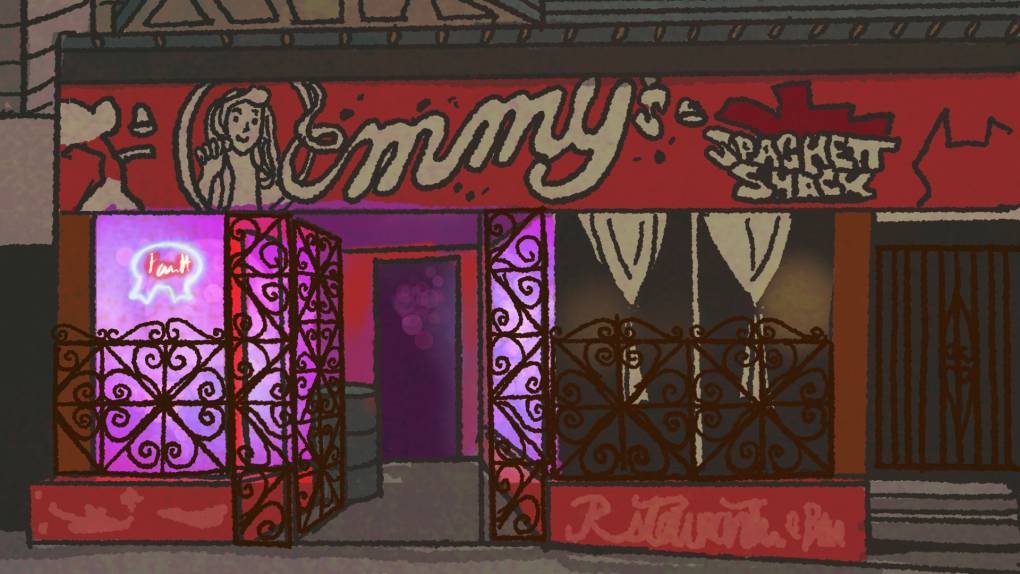
"caption": "Emmy's Spaghetti Shack has been open in the Mission Bernal area of San Francisco for more than 20 years.",
"credit": "Thien Pham",
"altTag": "Illustration: red and purple front facade of a restaurant at nighttime. The sign reads, \"Emmy's\" in cursive.",
"description": null,
"imgSizes": {
"medium": {
"file": "https://cdn.kqed.org/wp-content/uploads/sites/2/2024/08/Emmys-crop-800x450.jpg",
"width": 800,
"height": 450,
"mimeType": "image/jpeg"
},
"large": {
"file": "https://cdn.kqed.org/wp-content/uploads/sites/2/2024/08/Emmys-crop-1020x574.jpg",
"width": 1020,
"height": 574,
"mimeType": "image/jpeg"
},
"thumbnail": {
"file": "https://cdn.kqed.org/wp-content/uploads/sites/2/2024/08/Emmys-crop-160x90.jpg",
"width": 160,
"height": 90,
"mimeType": "image/jpeg"
},
"medium_large": {
"file": "https://cdn.kqed.org/wp-content/uploads/sites/2/2024/08/Emmys-crop-768x432.jpg",
"width": 768,
"height": 432,
"mimeType": "image/jpeg"
},
"1536x1536": {
"file": "https://cdn.kqed.org/wp-content/uploads/sites/2/2024/08/Emmys-crop-1536x864.jpg",
"width": 1536,
"height": 864,
"mimeType": "image/jpeg"
},
"post-thumbnail": {
"file": "https://cdn.kqed.org/wp-content/uploads/sites/2/2024/08/Emmys-crop-672x372.jpg",
"width": 672,
"height": 372,
"mimeType": "image/jpeg"
},
"twentyfourteen-full-width": {
"file": "https://cdn.kqed.org/wp-content/uploads/sites/2/2024/08/Emmys-crop-1038x576.jpg",
"width": 1038,
"height": 576,
"mimeType": "image/jpeg"
},
"kqedFullSize": {
"file": "https://cdn.kqed.org/wp-content/uploads/sites/2/2024/08/Emmys-crop.jpg",
"width": 1920,
"height": 1080
}
},
"isLoading": false,
"fetchFailed": false
},
"arts_13963232": {
"type": "attachments",
"id": "arts_13963232",
"meta": {
"index": "attachments_1716263798",
"site": "arts",
"id": "13963232",
"found": true
},
"title": "Server plating Klepon (Indo Dessert) crop",
"publishDate": 1724781543,
"status": "inherit",
"parent": 13963228,
"modified": 1724781708,
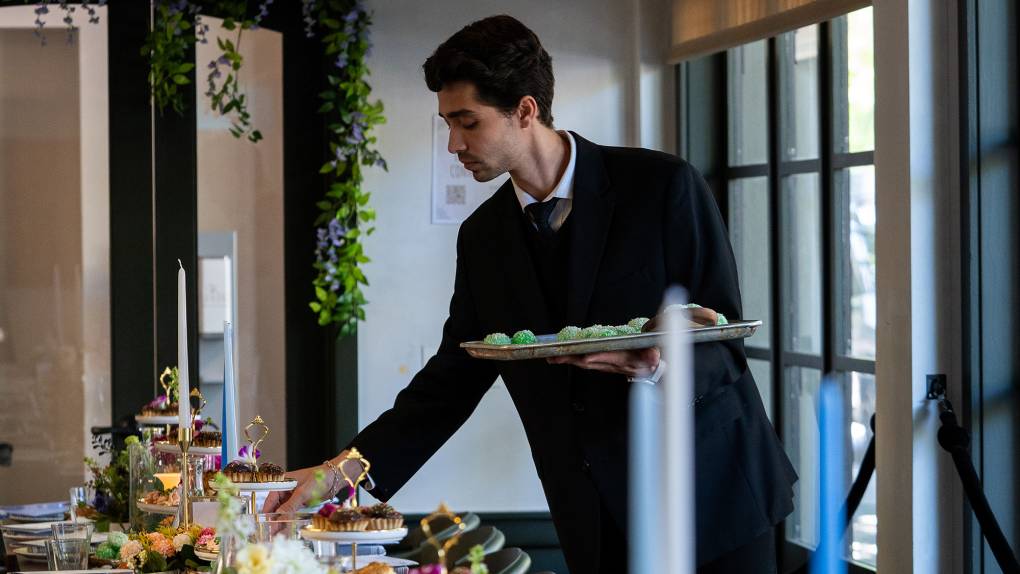
"caption": "A server serves klepon, a kind of sweet Indonesian rice cake. The treats were part of one of Kopi Bar and Sandai's Indonesian-inspired high tea events in Walnut Creek.",
"credit": "Matchbook Media",
"altTag": "A server in a formal black suit serves a platter of pale green rice cakes.",
"description": null,
"imgSizes": {
"medium": {
"file": "https://cdn.kqed.org/wp-content/uploads/sites/2/2024/08/Server-plating-Klepon-Indo-Dessert-crop-800x450.jpg",
"width": 800,
"height": 450,
"mimeType": "image/jpeg"
},
"large": {
"file": "https://cdn.kqed.org/wp-content/uploads/sites/2/2024/08/Server-plating-Klepon-Indo-Dessert-crop-1020x574.jpg",
"width": 1020,
"height": 574,
"mimeType": "image/jpeg"
},
"thumbnail": {
"file": "https://cdn.kqed.org/wp-content/uploads/sites/2/2024/08/Server-plating-Klepon-Indo-Dessert-crop-160x90.jpg",
"width": 160,
"height": 90,
"mimeType": "image/jpeg"
},
"medium_large": {
"file": "https://cdn.kqed.org/wp-content/uploads/sites/2/2024/08/Server-plating-Klepon-Indo-Dessert-crop-768x432.jpg",
"width": 768,
"height": 432,
"mimeType": "image/jpeg"
},
"1536x1536": {
"file": "https://cdn.kqed.org/wp-content/uploads/sites/2/2024/08/Server-plating-Klepon-Indo-Dessert-crop-1536x864.jpg",
"width": 1536,
"height": 864,
"mimeType": "image/jpeg"
},
"post-thumbnail": {
"file": "https://cdn.kqed.org/wp-content/uploads/sites/2/2024/08/Server-plating-Klepon-Indo-Dessert-crop-672x372.jpg",
"width": 672,
"height": 372,
"mimeType": "image/jpeg"
},
"twentyfourteen-full-width": {
"file": "https://cdn.kqed.org/wp-content/uploads/sites/2/2024/08/Server-plating-Klepon-Indo-Dessert-crop-1038x576.jpg",
"width": 1038,
"height": 576,
"mimeType": "image/jpeg"
},
"full-width": {
"file": "https://cdn.kqed.org/wp-content/uploads/sites/2/2024/08/Server-plating-Klepon-Indo-Dessert-crop-1920x1080.jpg",
"width": 1920,
"height": 1080,
"mimeType": "image/jpeg"
},
"kqedFullSize": {
"file": "https://cdn.kqed.org/wp-content/uploads/sites/2/2024/08/Server-plating-Klepon-Indo-Dessert-crop.jpg",
"width": 2000,
"height": 1125
}
},
"isLoading": false,
"fetchFailed": false
},
"arts_13963095": {
"type": "attachments",
"id": "arts_13963095",
"meta": {
"index": "attachments_1716263798",
"site": "arts",
"id": "13963095",
"found": true
},
"title": "supreme crab_crop",
"publishDate": 1724372604,
"status": "inherit",
"parent": 13963093,
"modified": 1724372680,
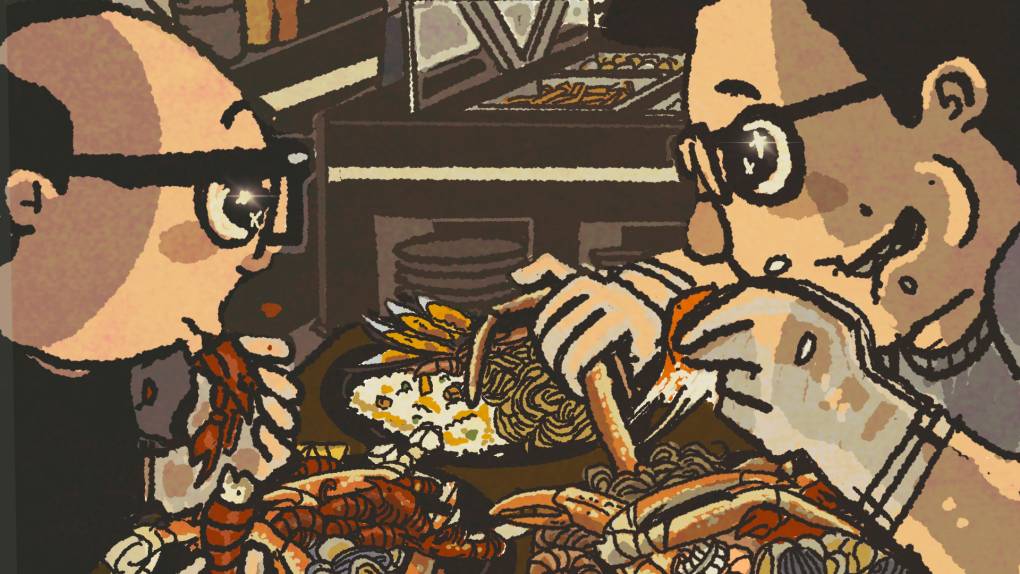
"caption": "Redwood City's Supreme Crab Buffet is known for its Cajun-style crab legs.",
"credit": "Thien Pham",
"altTag": "Illustration: Two men look starry-eyed with happiness as they devour plates of crab, shimp and other seafood.",
"description": null,
"imgSizes": {
"medium": {
"file": "https://cdn.kqed.org/wp-content/uploads/sites/2/2024/08/supreme-crab_crop-800x450.jpg",
"width": 800,
"height": 450,
"mimeType": "image/jpeg"
},
"large": {
"file": "https://cdn.kqed.org/wp-content/uploads/sites/2/2024/08/supreme-crab_crop-1020x574.jpg",
"width": 1020,
"height": 574,
"mimeType": "image/jpeg"
},
"thumbnail": {
"file": "https://cdn.kqed.org/wp-content/uploads/sites/2/2024/08/supreme-crab_crop-160x90.jpg",
"width": 160,
"height": 90,
"mimeType": "image/jpeg"
},
"medium_large": {
"file": "https://cdn.kqed.org/wp-content/uploads/sites/2/2024/08/supreme-crab_crop-768x432.jpg",
"width": 768,
"height": 432,
"mimeType": "image/jpeg"
},
"1536x1536": {
"file": "https://cdn.kqed.org/wp-content/uploads/sites/2/2024/08/supreme-crab_crop-1536x864.jpg",
"width": 1536,
"height": 864,
"mimeType": "image/jpeg"
},
"post-thumbnail": {
"file": "https://cdn.kqed.org/wp-content/uploads/sites/2/2024/08/supreme-crab_crop-672x372.jpg",
"width": 672,
"height": 372,
"mimeType": "image/jpeg"
},
"twentyfourteen-full-width": {
"file": "https://cdn.kqed.org/wp-content/uploads/sites/2/2024/08/supreme-crab_crop-1038x576.jpg",
"width": 1038,
"height": 576,
"mimeType": "image/jpeg"
},
"kqedFullSize": {
"file": "https://cdn.kqed.org/wp-content/uploads/sites/2/2024/08/supreme-crab_crop.jpg",
"width": 1920,
"height": 1080
}
},
"isLoading": false,
"fetchFailed": false
},
"arts_13962762": {
"type": "attachments",
"id": "arts_13962762",
"meta": {
"index": "attachments_1716263798",
"site": "arts",
"id": "13962762",
"found": true
},
"title": "Viridian1_crop",
"publishDate": 1723768577,
"status": "inherit",
"parent": 13962759,
"modified": 1723768749,
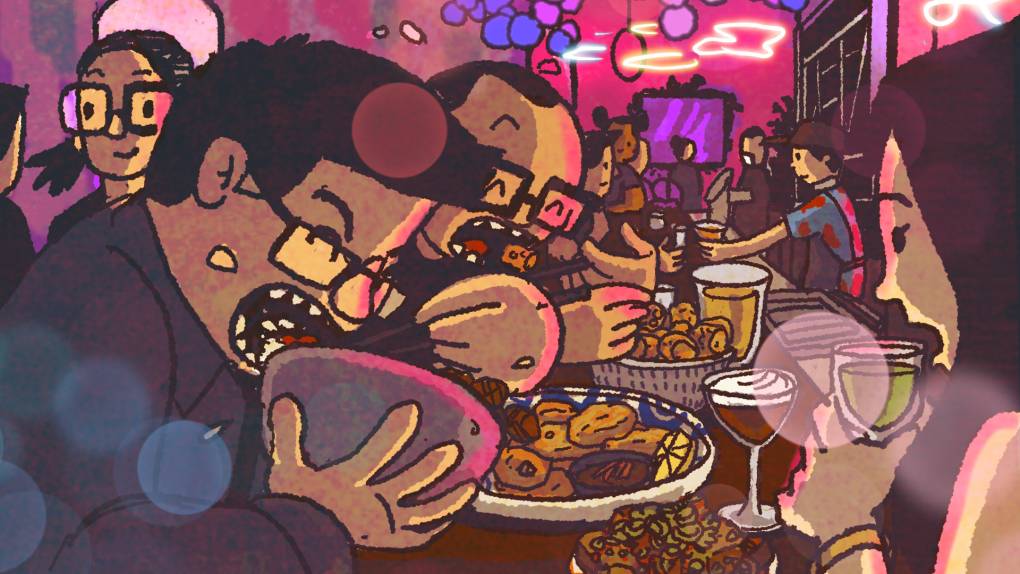
"caption": "At Viridian, we filled every available inch of our assigned counter space with plates and bowls piled high with food. The Oakland bar is best known for its cocktails.",
"credit": "Thien Pham",
"altTag": "Illustration: Two men devour a spread of food while seated inside a neon-lit cocktail bar.",
"description": null,
"imgSizes": {
"medium": {
"file": "https://cdn.kqed.org/wp-content/uploads/sites/2/2024/08/Viridian1_crop-800x450.jpg",
"width": 800,
"height": 450,
"mimeType": "image/jpeg"
},
"large": {
"file": "https://cdn.kqed.org/wp-content/uploads/sites/2/2024/08/Viridian1_crop-1020x574.jpg",
"width": 1020,
"height": 574,
"mimeType": "image/jpeg"
},
"thumbnail": {
"file": "https://cdn.kqed.org/wp-content/uploads/sites/2/2024/08/Viridian1_crop-160x90.jpg",
"width": 160,
"height": 90,
"mimeType": "image/jpeg"
},
"medium_large": {
"file": "https://cdn.kqed.org/wp-content/uploads/sites/2/2024/08/Viridian1_crop-768x432.jpg",
"width": 768,
"height": 432,
"mimeType": "image/jpeg"
},
"1536x1536": {
"file": "https://cdn.kqed.org/wp-content/uploads/sites/2/2024/08/Viridian1_crop-1536x864.jpg",
"width": 1536,
"height": 864,
"mimeType": "image/jpeg"
},
"post-thumbnail": {
"file": "https://cdn.kqed.org/wp-content/uploads/sites/2/2024/08/Viridian1_crop-672x372.jpg",
"width": 672,
"height": 372,
"mimeType": "image/jpeg"
},
"twentyfourteen-full-width": {
"file": "https://cdn.kqed.org/wp-content/uploads/sites/2/2024/08/Viridian1_crop-1038x576.jpg",
"width": 1038,
"height": 576,
"mimeType": "image/jpeg"
},
"kqedFullSize": {
"file": "https://cdn.kqed.org/wp-content/uploads/sites/2/2024/08/Viridian1_crop.jpg",
"width": 1920,
"height": 1080
}
},
"isLoading": false,
"fetchFailed": false
},
"arts_13962375": {
"type": "attachments",
"id": "arts_13962375",
"meta": {
"index": "attachments_1716263798",
"site": "arts",
"id": "13962375",
"found": true
},
"title": "habibi-lead",
"publishDate": 1723229081,
"status": "inherit",
"parent": 13962355,
"modified": 1723237407,
"caption": "Campbell studio Habibi Ceramics' Falastin collection features a design inspired by Palestinian keffiyeh scarves.",
"credit": "Céline Steen, courtesy of Habibi",
"altTag": "A tableau of ceramics with a keffiyeh-inspired checkerboard design, white roses and slices of watermelon, all on a rustic wooden table.",
"description": null,
"imgSizes": {
"medium": {
"file": "https://cdn.kqed.org/wp-content/uploads/sites/2/2024/08/habibi-lead-800x450.jpg",
"width": 800,
"height": 450,
"mimeType": "image/jpeg"
},
"large": {
"file": "https://cdn.kqed.org/wp-content/uploads/sites/2/2024/08/habibi-lead-1020x574.jpg",
"width": 1020,
"height": 574,
"mimeType": "image/jpeg"
},
"thumbnail": {
"file": "https://cdn.kqed.org/wp-content/uploads/sites/2/2024/08/habibi-lead-160x90.jpg",
"width": 160,
"height": 90,
"mimeType": "image/jpeg"
},
"medium_large": {
"file": "https://cdn.kqed.org/wp-content/uploads/sites/2/2024/08/habibi-lead-768x432.jpg",
"width": 768,
"height": 432,
"mimeType": "image/jpeg"
},
"1536x1536": {
"file": "https://cdn.kqed.org/wp-content/uploads/sites/2/2024/08/habibi-lead-1536x864.jpg",
"width": 1536,
"height": 864,
"mimeType": "image/jpeg"
},
"post-thumbnail": {
"file": "https://cdn.kqed.org/wp-content/uploads/sites/2/2024/08/habibi-lead-672x372.jpg",
"width": 672,
"height": 372,
"mimeType": "image/jpeg"
},
"twentyfourteen-full-width": {
"file": "https://cdn.kqed.org/wp-content/uploads/sites/2/2024/08/habibi-lead-1038x576.jpg",
"width": 1038,
"height": 576,
"mimeType": "image/jpeg"
},
"full-width": {
"file": "https://cdn.kqed.org/wp-content/uploads/sites/2/2024/08/habibi-lead-1920x1080.jpg",
"width": 1920,
"height": 1080,
"mimeType": "image/jpeg"
},
"kqedFullSize": {
"file": "https://cdn.kqed.org/wp-content/uploads/sites/2/2024/08/habibi-lead.jpg",
"width": 2000,
"height": 1125
}
},
"isLoading": false,
"fetchFailed": false
},
"arts_13962344": {
"type": "attachments",
"id": "arts_13962344",
"meta": {
"index": "attachments_1716263798",
"site": "arts",
"id": "13962344",
"found": true
},
"title": "SH 2-crop",
"publishDate": 1723163036,
"status": "inherit",
"parent": 13962340,
"modified": 1723163150,
"caption": "Open late in a Palo Alto strip mall, SH Hawaiian BBQ & Donuts specializes in hearty Hawaiian plate lunches.",
"credit": "Thien Pham",
"altTag": "Illustration: Two men seen through the window of a doughnut shop. They're devouring doughnuts and plates of Hawaiian barbecue.",
"description": null,
"imgSizes": {
"medium": {
"file": "https://cdn.kqed.org/wp-content/uploads/sites/2/2024/08/SH-2-crop-800x450.jpg",
"width": 800,
"height": 450,
"mimeType": "image/jpeg"
},
"large": {
"file": "https://cdn.kqed.org/wp-content/uploads/sites/2/2024/08/SH-2-crop-1020x574.jpg",
"width": 1020,
"height": 574,
"mimeType": "image/jpeg"
},
"thumbnail": {
"file": "https://cdn.kqed.org/wp-content/uploads/sites/2/2024/08/SH-2-crop-160x90.jpg",
"width": 160,
"height": 90,
"mimeType": "image/jpeg"
},
"medium_large": {
"file": "https://cdn.kqed.org/wp-content/uploads/sites/2/2024/08/SH-2-crop-768x432.jpg",
"width": 768,
"height": 432,
"mimeType": "image/jpeg"
},
"1536x1536": {
"file": "https://cdn.kqed.org/wp-content/uploads/sites/2/2024/08/SH-2-crop-1536x864.jpg",
"width": 1536,
"height": 864,
"mimeType": "image/jpeg"
},
"post-thumbnail": {
"file": "https://cdn.kqed.org/wp-content/uploads/sites/2/2024/08/SH-2-crop-672x372.jpg",
"width": 672,
"height": 372,
"mimeType": "image/jpeg"
},
"twentyfourteen-full-width": {
"file": "https://cdn.kqed.org/wp-content/uploads/sites/2/2024/08/SH-2-crop-1038x576.jpg",
"width": 1038,
"height": 576,
"mimeType": "image/jpeg"
},
"kqedFullSize": {
"file": "https://cdn.kqed.org/wp-content/uploads/sites/2/2024/08/SH-2-crop.jpg",
"width": 1920,
"height": 1080
}
},
"isLoading": false,
"fetchFailed": false
},
"arts_13962178": {
"type": "attachments",
"id": "arts_13962178",
"meta": {
"index": "attachments_1716263798",
"site": "arts",
"id": "13962178",
"found": true
},
"title": "20240804_KQED_FIKSCUE_ML_0219-KQED-2",
"publishDate": 1722981695,
"status": "inherit",
"parent": 0,
"modified": 1733336493,
"caption": "A dino beef rib at Fikscue in Alameda on August 4, 2024. Husband-and-wife team Fik and Reka Saleh opened the restaurant as an Instagram-based pop-up in 2020 before they began serving Texas-style barbecue and Indonesian dishes from their current brick-and-mortar restaurant last November.",
"credit": "Marissa Leshnov for KQED",
"altTag": "A huge smoked \"dinosaur\" beef rib on a paper-lined tray.",
"description": null,
"imgSizes": {
"medium": {
"file": "https://cdn.kqed.org/wp-content/uploads/sites/2/2024/08/20240804_KQED_FIKSCUE_ML_0219-KQED-2-800x533.jpg",
"width": 800,
"height": 533,
"mimeType": "image/jpeg"
},
"large": {
"file": "https://cdn.kqed.org/wp-content/uploads/sites/2/2024/08/20240804_KQED_FIKSCUE_ML_0219-KQED-2-1020x680.jpg",
"width": 1020,
"height": 680,
"mimeType": "image/jpeg"
},
"thumbnail": {
"file": "https://cdn.kqed.org/wp-content/uploads/sites/2/2024/08/20240804_KQED_FIKSCUE_ML_0219-KQED-2-160x107.jpg",
"width": 160,
"height": 107,
"mimeType": "image/jpeg"
},
"medium_large": {
"file": "https://cdn.kqed.org/wp-content/uploads/sites/2/2024/08/20240804_KQED_FIKSCUE_ML_0219-KQED-2-768x512.jpg",
"width": 768,
"height": 512,
"mimeType": "image/jpeg"
},
"1536x1536": {
"file": "https://cdn.kqed.org/wp-content/uploads/sites/2/2024/08/20240804_KQED_FIKSCUE_ML_0219-KQED-2-1536x1024.jpg",
"width": 1536,
"height": 1024,
"mimeType": "image/jpeg"
},
"post-thumbnail": {
"file": "https://cdn.kqed.org/wp-content/uploads/sites/2/2024/08/20240804_KQED_FIKSCUE_ML_0219-KQED-2-672x372.jpg",
"width": 672,
"height": 372,
"mimeType": "image/jpeg"
},
"twentyfourteen-full-width": {
"file": "https://cdn.kqed.org/wp-content/uploads/sites/2/2024/08/20240804_KQED_FIKSCUE_ML_0219-KQED-2-1038x576.jpg",
"width": 1038,
"height": 576,
"mimeType": "image/jpeg"
},
"full-width": {
"file": "https://cdn.kqed.org/wp-content/uploads/sites/2/2024/08/20240804_KQED_FIKSCUE_ML_0219-KQED-2-1920x1280.jpg",
"width": 1920,
"height": 1280,
"mimeType": "image/jpeg"
},
"kqedFullSize": {
"file": "https://cdn.kqed.org/wp-content/uploads/sites/2/2024/08/20240804_KQED_FIKSCUE_ML_0219-KQED-2.jpg",
"width": 2000,
"height": 1333
}
},
"isLoading": false,
"fetchFailed": false
},
"arts_13962005": {
"type": "attachments",
"id": "arts_13962005",
"meta": {
"index": "attachments_1716263798",
"site": "arts",
"id": "13962005",
"found": true
},
"title": "BrazenHead2-crop",
"publishDate": 1722620248,
"status": "inherit",
"parent": 13961997,
"modified": 1722620371,
"caption": "The food at Brazen Head is delightfully old-school. The Cow Hollow pub is one of San Francisco's best late-night restaurants.",
"credit": "Thien Pham",
"altTag": "Illustration: A man eating a bowl of French onion soup, pulling up a long strand of melted cheese.",
"description": null,
"imgSizes": {
"medium": {
"file": "https://cdn.kqed.org/wp-content/uploads/sites/2/2024/08/BrazenHead2-crop-800x450.jpg",
"width": 800,
"height": 450,
"mimeType": "image/jpeg"
},
"large": {
"file": "https://cdn.kqed.org/wp-content/uploads/sites/2/2024/08/BrazenHead2-crop-1020x574.jpg",
"width": 1020,
"height": 574,
"mimeType": "image/jpeg"
},
"thumbnail": {
"file": "https://cdn.kqed.org/wp-content/uploads/sites/2/2024/08/BrazenHead2-crop-160x90.jpg",
"width": 160,
"height": 90,
"mimeType": "image/jpeg"
},
"medium_large": {
"file": "https://cdn.kqed.org/wp-content/uploads/sites/2/2024/08/BrazenHead2-crop-768x432.jpg",
"width": 768,
"height": 432,
"mimeType": "image/jpeg"
},
"1536x1536": {
"file": "https://cdn.kqed.org/wp-content/uploads/sites/2/2024/08/BrazenHead2-crop-1536x864.jpg",
"width": 1536,
"height": 864,
"mimeType": "image/jpeg"
},
"post-thumbnail": {
"file": "https://cdn.kqed.org/wp-content/uploads/sites/2/2024/08/BrazenHead2-crop-672x372.jpg",
"width": 672,
"height": 372,
"mimeType": "image/jpeg"
},
"twentyfourteen-full-width": {
"file": "https://cdn.kqed.org/wp-content/uploads/sites/2/2024/08/BrazenHead2-crop-1038x576.jpg",
"width": 1038,
"height": 576,
"mimeType": "image/jpeg"
},
"kqedFullSize": {
"file": "https://cdn.kqed.org/wp-content/uploads/sites/2/2024/08/BrazenHead2-crop.jpg",
"width": 1920,
"height": 1080
}
},
"isLoading": false,
"fetchFailed": false
},
"arts_13961870": {
"type": "attachments",
"id": "arts_13961870",
"meta": {
"index": "attachments_1716263798",
"site": "arts",
"id": "13961870",
"found": true
},
"title": "2",
"publishDate": 1722460637,
"status": "inherit",
"parent": 13961696,
"modified": 1722461712,
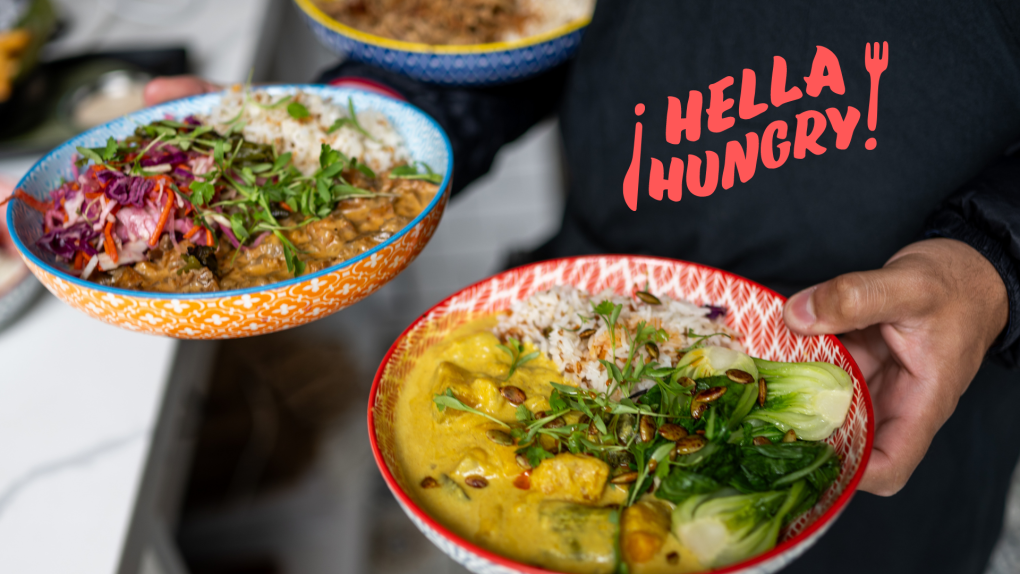
"caption": "Mestiza, the newly reopened Filipino restaurant in San Francisco's SoMa district, features fresh, plant-leaning dishes like a calabasa coconut curry (pictured on the right).",
"credit": "Beth LaBerge/KQED",
"altTag": "A chef holding two Filipino dishes, including a coconut curry topped with bok choy.",
"description": null,
"imgSizes": {
"medium": {
"file": "https://cdn.kqed.org/wp-content/uploads/sites/2/2024/07/2-800x450.png",
"width": 800,
"height": 450,
"mimeType": "image/png"
},
"large": {
"file": "https://cdn.kqed.org/wp-content/uploads/sites/2/2024/07/2-1020x574.png",
"width": 1020,
"height": 574,
"mimeType": "image/png"
},
"thumbnail": {
"file": "https://cdn.kqed.org/wp-content/uploads/sites/2/2024/07/2-160x90.png",
"width": 160,
"height": 90,
"mimeType": "image/png"
},
"medium_large": {
"file": "https://cdn.kqed.org/wp-content/uploads/sites/2/2024/07/2-768x432.png",
"width": 768,
"height": 432,
"mimeType": "image/png"
},
"1536x1536": {
"file": "https://cdn.kqed.org/wp-content/uploads/sites/2/2024/07/2-1536x864.png",
"width": 1536,
"height": 864,
"mimeType": "image/png"
},
"post-thumbnail": {
"file": "https://cdn.kqed.org/wp-content/uploads/sites/2/2024/07/2-672x372.png",
"width": 672,
"height": 372,
"mimeType": "image/png"
},
"twentyfourteen-full-width": {
"file": "https://cdn.kqed.org/wp-content/uploads/sites/2/2024/07/2-1038x576.png",
"width": 1038,
"height": 576,
"mimeType": "image/png"
},
"kqedFullSize": {
"file": "https://cdn.kqed.org/wp-content/uploads/sites/2/2024/07/2.png",
"width": 1920,
"height": 1080
}
},
"isLoading": false,
"fetchFailed": false
},
"arts_13957510": {
"type": "attachments",
"id": "arts_13957510",
"meta": {
"index": "attachments_1716263798",
"site": "arts",
"id": "13957510",
"found": true
},
"title": "20240506_NAILTECHFOODIE-16-KQED",
"publishDate": 1715207256,
"status": "inherit",
"parent": 0,
"modified": 1722297416,
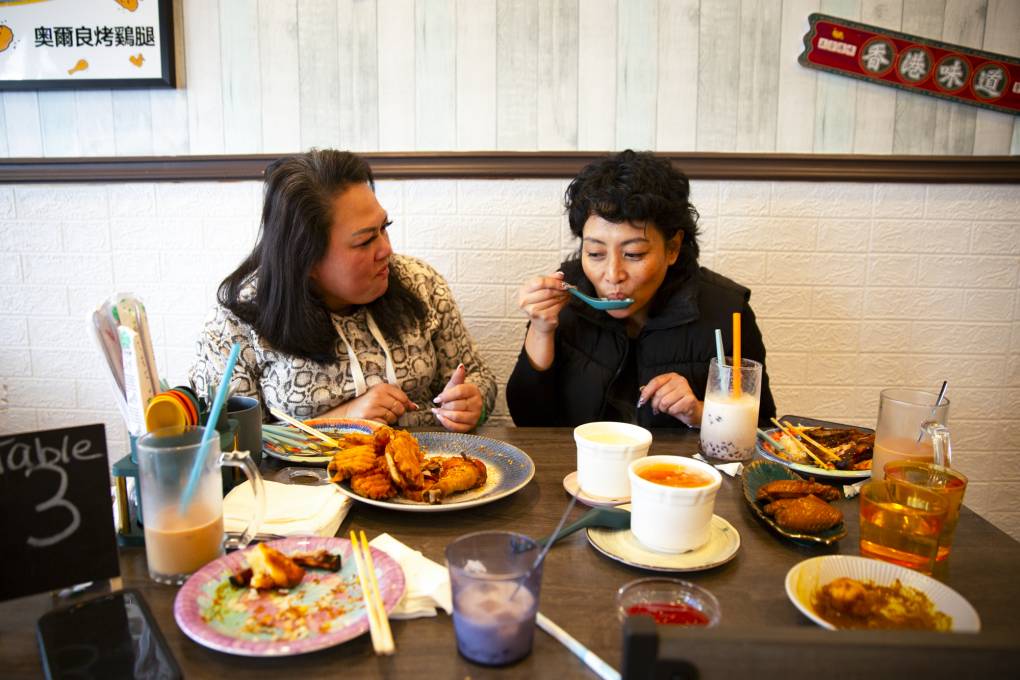
"caption": "Chris Phung, left, and Rocky Rivera, right, eat at Little Sweet, a restaurant serving Hong Kong-style dishes, on Monday, May 6, 2024.",
"credit": "Gina Castro/KQED",
"altTag": "Two women sit at a large round table inside a Chinese restaurant, a spread of chicken wings and other dishes in front of them.",
"description": null,
"imgSizes": {
"medium": {
"file": "https://cdn.kqed.org/wp-content/uploads/sites/2/2024/05/20240506_NAILTECHFOODIE-16-KQED-800x533.jpg",
"width": 800,
"height": 533,
"mimeType": "image/jpeg"
},
"large": {
"file": "https://cdn.kqed.org/wp-content/uploads/sites/2/2024/05/20240506_NAILTECHFOODIE-16-KQED-1020x680.jpg",
"width": 1020,
"height": 680,
"mimeType": "image/jpeg"
},
"thumbnail": {
"file": "https://cdn.kqed.org/wp-content/uploads/sites/2/2024/05/20240506_NAILTECHFOODIE-16-KQED-160x107.jpg",
"width": 160,
"height": 107,
"mimeType": "image/jpeg"
},
"medium_large": {
"file": "https://cdn.kqed.org/wp-content/uploads/sites/2/2024/05/20240506_NAILTECHFOODIE-16-KQED-768x512.jpg",
"width": 768,
"height": 512,
"mimeType": "image/jpeg"
},
"1536x1536": {
"file": "https://cdn.kqed.org/wp-content/uploads/sites/2/2024/05/20240506_NAILTECHFOODIE-16-KQED-1536x1024.jpg",
"width": 1536,
"height": 1024,
"mimeType": "image/jpeg"
},
"post-thumbnail": {
"file": "https://cdn.kqed.org/wp-content/uploads/sites/2/2024/05/20240506_NAILTECHFOODIE-16-KQED-672x372.jpg",
"width": 672,
"height": 372,
"mimeType": "image/jpeg"
},
"twentyfourteen-full-width": {
"file": "https://cdn.kqed.org/wp-content/uploads/sites/2/2024/05/20240506_NAILTECHFOODIE-16-KQED-1038x576.jpg",
"width": 1038,
"height": 576,
"mimeType": "image/jpeg"
},
"full-width": {
"file": "https://cdn.kqed.org/wp-content/uploads/sites/2/2024/05/20240506_NAILTECHFOODIE-16-KQED-1920x1280.jpg",
"width": 1920,
"height": 1280,
"mimeType": "image/jpeg"
},
"kqedFullSize": {
"file": "https://cdn.kqed.org/wp-content/uploads/sites/2/2024/05/20240506_NAILTECHFOODIE-16-KQED.jpg",
"width": 2000,
"height": 1333
}
},
"isLoading": false,
"fetchFailed": false
},
"arts_13961616": {
"type": "attachments",
"id": "arts_13961616",
"meta": {
"index": "attachments_1716263798",
"site": "arts",
"id": "13961616",
"found": true
},
"title": "Zareen's 2 crop",
"publishDate": 1721952503,
"status": "inherit",
"parent": 13961613,
"modified": 1721952591,
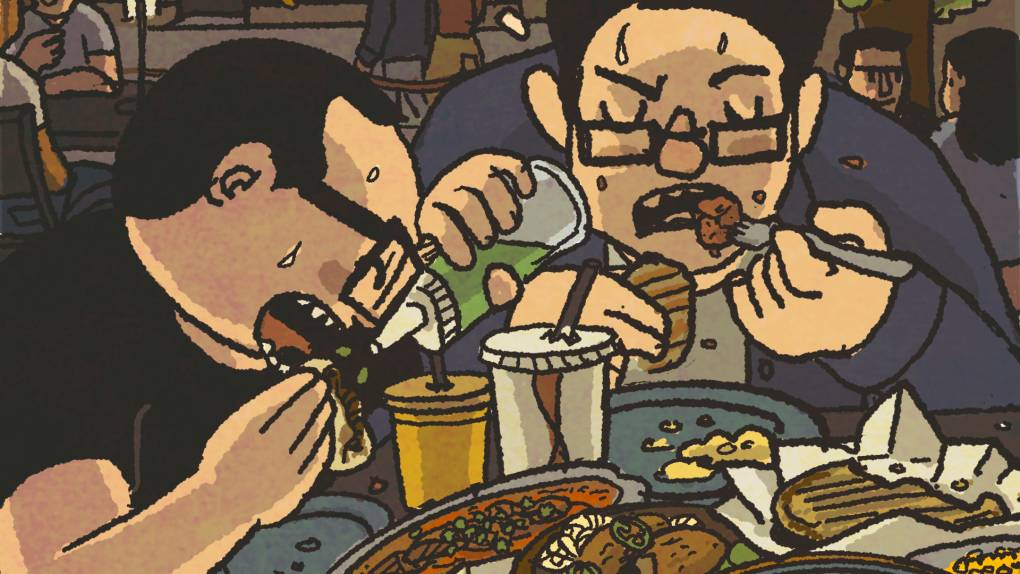
"caption": "Zareen's has been a beloved Peninsula institution for the past 10 years, known for its homestyle Pakistani and Indian dishes.",
"credit": "Thien Pham",
"altTag": "Illustration: Two men sweating while they eat Indian/Pakistani food.",
"description": null,
"imgSizes": {
"medium": {
"file": "https://cdn.kqed.org/wp-content/uploads/sites/2/2024/07/Zareens-2-crop-800x450.jpg",
"width": 800,
"height": 450,
"mimeType": "image/jpeg"
},
"large": {
"file": "https://cdn.kqed.org/wp-content/uploads/sites/2/2024/07/Zareens-2-crop-1020x574.jpg",
"width": 1020,
"height": 574,
"mimeType": "image/jpeg"
},
"thumbnail": {
"file": "https://cdn.kqed.org/wp-content/uploads/sites/2/2024/07/Zareens-2-crop-160x90.jpg",
"width": 160,
"height": 90,
"mimeType": "image/jpeg"
},
"medium_large": {
"file": "https://cdn.kqed.org/wp-content/uploads/sites/2/2024/07/Zareens-2-crop-768x432.jpg",
"width": 768,
"height": 432,
"mimeType": "image/jpeg"
},
"1536x1536": {
"file": "https://cdn.kqed.org/wp-content/uploads/sites/2/2024/07/Zareens-2-crop-1536x864.jpg",
"width": 1536,
"height": 864,
"mimeType": "image/jpeg"
},
"post-thumbnail": {
"file": "https://cdn.kqed.org/wp-content/uploads/sites/2/2024/07/Zareens-2-crop-672x372.jpg",
"width": 672,
"height": 372,
"mimeType": "image/jpeg"
},
"twentyfourteen-full-width": {
"file": "https://cdn.kqed.org/wp-content/uploads/sites/2/2024/07/Zareens-2-crop-1038x576.jpg",
"width": 1038,
"height": 576,
"mimeType": "image/jpeg"
},
"kqedFullSize": {
"file": "https://cdn.kqed.org/wp-content/uploads/sites/2/2024/07/Zareens-2-crop.jpg",
"width": 1920,
"height": 1080
}
},
"isLoading": false,
"fetchFailed": false
},
"arts_13961552": {
"type": "attachments",
"id": "arts_13961552",
"meta": {
"index": "attachments_1716263798",
"site": "arts",
"id": "13961552",
"found": true
},
"title": "230818-HetSayRestaurant-22-BL_qed",
"publishDate": 1721928320,
"status": "inherit",
"parent": 13961537,
"modified": 1721928586,
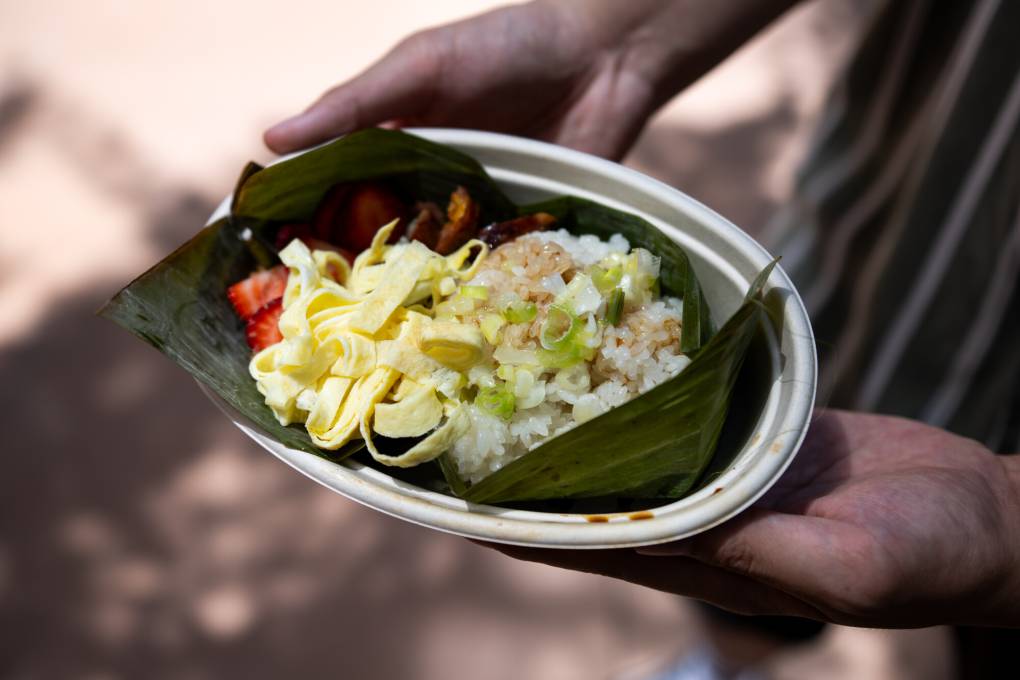
"caption": "A bowl of the Hết Sẩy savory sticky rice at the pop-up restaurant's Kaiser Farmers' Market booth in Santa Clara on Aug. 18, 2023. Hết Sẩy is one of the local Vietnames vendors that will be featured at San Jose's new Story Road Night Market.",
"credit": "Beth LaBerge/KQED",
"altTag": "A bowl of Vietnamese sticky rice wrapped in a banana leaf.",
"description": null,
"imgSizes": {
"medium": {
"file": "https://cdn.kqed.org/wp-content/uploads/sites/2/2024/07/230818-HetSayRestaurant-22-BL_qed-800x533.jpg",
"width": 800,
"height": 533,
"mimeType": "image/jpeg"
},
"large": {
"file": "https://cdn.kqed.org/wp-content/uploads/sites/2/2024/07/230818-HetSayRestaurant-22-BL_qed-1020x680.jpg",
"width": 1020,
"height": 680,
"mimeType": "image/jpeg"
},
"thumbnail": {
"file": "https://cdn.kqed.org/wp-content/uploads/sites/2/2024/07/230818-HetSayRestaurant-22-BL_qed-160x107.jpg",
"width": 160,
"height": 107,
"mimeType": "image/jpeg"
},
"medium_large": {
"file": "https://cdn.kqed.org/wp-content/uploads/sites/2/2024/07/230818-HetSayRestaurant-22-BL_qed-768x512.jpg",
"width": 768,
"height": 512,
"mimeType": "image/jpeg"
},
"1536x1536": {
"file": "https://cdn.kqed.org/wp-content/uploads/sites/2/2024/07/230818-HetSayRestaurant-22-BL_qed-1536x1024.jpg",
"width": 1536,
"height": 1024,
"mimeType": "image/jpeg"
},
"post-thumbnail": {
"file": "https://cdn.kqed.org/wp-content/uploads/sites/2/2024/07/230818-HetSayRestaurant-22-BL_qed-672x372.jpg",
"width": 672,
"height": 372,
"mimeType": "image/jpeg"
},
"twentyfourteen-full-width": {
"file": "https://cdn.kqed.org/wp-content/uploads/sites/2/2024/07/230818-HetSayRestaurant-22-BL_qed-1038x576.jpg",
"width": 1038,
"height": 576,
"mimeType": "image/jpeg"
},
"full-width": {
"file": "https://cdn.kqed.org/wp-content/uploads/sites/2/2024/07/230818-HetSayRestaurant-22-BL_qed-1920x1280.jpg",
"width": 1920,
"height": 1280,
"mimeType": "image/jpeg"
},
"kqedFullSize": {
"file": "https://cdn.kqed.org/wp-content/uploads/sites/2/2024/07/230818-HetSayRestaurant-22-BL_qed.jpg",
"width": 2000,
"height": 1333
}
},
"isLoading": false,
"fetchFailed": false
}
},
"audioPlayerReducer": {
"postId": "stream_live",
"isPaused": true,
"isPlaying": false,
"pfsActive": false,
"pledgeModalIsOpen": true,
"playerDrawerIsOpen": false,
"liveAudioPlayStartedAt": 0,
"liveAudioPlayContext": ""
},
"authorsReducer": {
"ltsai": {
"type": "authors",
"id": "11743",
"meta": {
"index": "authors_1716337520",
"id": "11743",
"found": true
},
"name": "Luke Tsai",
"firstName": "Luke",
"lastName": "Tsai",
"slug": "ltsai",
"email": "ltsai@kqed.org",
"display_author_email": true,
"staff_mastheads": [
"arts"
],
"title": "Food Editor",
"bio": "Luke Tsai is KQED's food editor and resident stinky tofu connoisseur. Prior to KQED, he was an editor at Eater SF, \u003cem>San Francisco \u003c/em>magazine, and the \u003cem>East Bay Express\u003c/em>, and his work has also appeared in TASTE, the \u003cem>San Francisco Chronicle\u003c/em>, and the \u003cem>Best Food Writing\u003c/em> anthology. When he isn't writing or editing, you'll find him eating most everything he can get his hands on.",
"avatar": "https://secure.gravatar.com/avatar/1e59b45bf191526e7339d6ba46e33a57b2030d25c27660ecc64ea3cb863e34f7?s=600&d=blank&r=g",
"twitter": "theluketsai",
"bluesky": null,
"facebook": null,
"instagram": null,
"linkedin": null,
"sites": [
{
"site": "",
"roles": [
"editor"
]
},
{
"site": "arts",
"roles": [
"administrator"
]
},
{
"site": "news",
"roles": [
"editor",
"contributor"
]
},
{
"site": "bayareabites",
"roles": [
"editor"
]
},
{
"site": "food",
"roles": [
"editor"
]
}
],
"headData": {
"title": "Luke Tsai | KQED",
"description": "Food Editor",
"ogImgSrc": "https://secure.gravatar.com/avatar/1e59b45bf191526e7339d6ba46e33a57b2030d25c27660ecc64ea3cb863e34f7?s=600&d=blank&r=g",
"twImgSrc": "https://secure.gravatar.com/avatar/1e59b45bf191526e7339d6ba46e33a57b2030d25c27660ecc64ea3cb863e34f7?s=600&d=blank&r=g"
},
"isLoading": false,
"link": "/author/ltsai"
},
"achazaro": {
"type": "authors",
"id": "11748",
"meta": {
"index": "authors_1716337520",
"id": "11748",
"found": true
},
"name": "Alan Chazaro",
"firstName": "Alan",
"lastName": "Chazaro",
"slug": "achazaro",
"email": "agchazaro@gmail.com",
"display_author_email": true,
"staff_mastheads": [],
"title": "Food Writer and Reporter",
"bio": "Alan Chazaro is the author of \u003cem>This Is Not a Frank Ocean Cover Album\u003c/em> (Black Lawrence Press, 2019), \u003cem>Piñata Theory\u003c/em> (Black Lawrence Press, 2020), and \u003cem>Notes from the Eastern Span of the Bay Bridge\u003c/em> (Ghost City Press, 2021). He is a graduate of June Jordan’s Poetry for the People program at UC Berkeley and a former Lawrence Ferlinghetti Fellow at the University of San Francisco. He writes about sports, food, art, music, education, and culture while repping the Bay on \u003ca href=\"https://twitter.com/alan_chazaro\">Twitter\u003c/a> and \u003ca href=\"https://www.instagram.com/alan_chazaro/?hl=en\">Instagram\u003c/a> at @alan_chazaro.",
"avatar": "https://secure.gravatar.com/avatar/ea8b6dd970fc5c29e7a188e7d5861df7?s=600&d=blank&r=g",
"twitter": "alan_chazaro",
"facebook": null,
"instagram": null,
"linkedin": null,
"sites": [
{
"site": "arts",
"roles": [
"contributor"
]
},
{
"site": "news",
"roles": [
"editor"
]
}
],
"headData": {
"title": "Alan Chazaro | KQED",
"description": "Food Writer and Reporter",
"ogImgSrc": "https://secure.gravatar.com/avatar/ea8b6dd970fc5c29e7a188e7d5861df7?s=600&d=blank&r=g",
"twImgSrc": "https://secure.gravatar.com/avatar/ea8b6dd970fc5c29e7a188e7d5861df7?s=600&d=blank&r=g"
},
"isLoading": false,
"link": "/author/achazaro"
},
"tpham": {
"type": "authors",
"id": "11753",
"meta": {
"index": "authors_1716337520",
"id": "11753",
"found": true
},
"name": "Thien Pham",
"firstName": "Thien",
"lastName": "Pham",
"slug": "tpham",
"email": "thiendog@gmail.com",
"display_author_email": false,
"staff_mastheads": [],
"title": "KQED Contributor",
"bio": null,
"avatar": "https://secure.gravatar.com/avatar/a5b4729969ad46d88e7b9ec9dd4f3fa6af84dd0fa8fa91f01d8d9481694999bc?s=600&d=blank&r=g",
"twitter": null,
"bluesky": null,
"facebook": null,
"instagram": null,
"linkedin": null,
"sites": [
{
"site": "arts",
"roles": [
"contributor"
]
}
],
"headData": {
"title": "Thien Pham | KQED",
"description": "KQED Contributor",
"ogImgSrc": "https://secure.gravatar.com/avatar/a5b4729969ad46d88e7b9ec9dd4f3fa6af84dd0fa8fa91f01d8d9481694999bc?s=600&d=blank&r=g",
"twImgSrc": "https://secure.gravatar.com/avatar/a5b4729969ad46d88e7b9ec9dd4f3fa6af84dd0fa8fa91f01d8d9481694999bc?s=600&d=blank&r=g"
},
"isLoading": false,
"link": "/author/tpham"
},
"rockyrivera": {
"type": "authors",
"id": "11846",
"meta": {
"index": "authors_1716337520",
"id": "11846",
"found": true
},
"name": "Rocky Rivera",
"firstName": "Rocky",
"lastName": "Rivera",
"slug": "rockyrivera",
"email": "ms.rocky.rivera@gmail.com",
"display_author_email": false,
"staff_mastheads": [],
"title": "KQED Contributor",
"bio": "Rocky Rivera is a journalist, emcee, author and activist from San Francisco. She has released four albums through her label, Beatrock Music, and a ten-volume mixtape series with DJ Roza. She released her first book in 2021, entitled \u003cem>Snakeskin: Essays by Rocky Rivera\u003c/em>. Her latest album dropped in September 2024 and is called \"Long Kiss Goodnight\" with emcee/producer Otayo Dubb. She currently writes the Frisco Foodies column as a love letter to her hometown.",
"avatar": "https://secure.gravatar.com/avatar/946241ee2c59e6040607dfc75240d91b?s=600&d=blank&r=g",
"twitter": null,
"facebook": "https://m.facebook.com/rockyriveramusic",
"instagram": "https://instagram.com/rockyrivera",
"linkedin": "https://www.linkedin.com/in/krishtinedeleon/",
"sites": [
{
"site": "arts",
"roles": [
"author"
]
}
],
"headData": {
"title": "Rocky Rivera | KQED",
"description": "KQED Contributor",
"ogImgSrc": "https://secure.gravatar.com/avatar/946241ee2c59e6040607dfc75240d91b?s=600&d=blank&r=g",
"twImgSrc": "https://secure.gravatar.com/avatar/946241ee2c59e6040607dfc75240d91b?s=600&d=blank&r=g"
},
"isLoading": false,
"link": "/author/rockyrivera"
},
"pbicchieri": {
"type": "authors",
"id": "11932",
"meta": {
"index": "authors_1716337520",
"id": "11932",
"found": true
},
"name": "Paolo Bicchieri",
"firstName": "Paolo",
"lastName": "Bicchieri",
"slug": "pbicchieri",
"email": "paolobicchieri1306@gmail.com",
"display_author_email": false,
"staff_mastheads": [],
"title": "KQED Contributor",
"bio": null,
"avatar": "https://secure.gravatar.com/avatar/becbc05ff49115d4a6aabb839979fd66?s=600&d=blank&r=g",
"twitter": null,
"facebook": null,
"instagram": null,
"linkedin": null,
"sites": [
{
"site": "arts",
"roles": [
"author"
]
}
],
"headData": {
"title": "Paolo Bicchieri | KQED",
"description": "KQED Contributor",
"ogImgSrc": "https://secure.gravatar.com/avatar/becbc05ff49115d4a6aabb839979fd66?s=600&d=blank&r=g",
"twImgSrc": "https://secure.gravatar.com/avatar/becbc05ff49115d4a6aabb839979fd66?s=600&d=blank&r=g"
},
"isLoading": false,
"link": "/author/pbicchieri"
}
},
"pagesReducer": {
"arts_tag_food": {
"type": "terms",
"id": "arts_1297",
"meta": {
"index": "terms_1716263798",
"site": "arts",
"id": "1297",
"score": 7.4242826
},
"featImg": null,
"name": "food",
"description": null,
"taxonomy": "tag",
"headData": {
"twImgId": null,
"twTitle": null,
"ogTitle": null,
"ogImgId": null,
"twDescription": null,
"description": null,
"title": "food Archives | KQED Arts",
"ogDescription": null
},
"ttid": 1309,
"slug": "food",
"isLoading": false,
"title": "food",
"pageMeta": {
"site": "arts",
"WpPageTemplate": "page-topic-editorial",
"currentPage": 15
},
"blocks": [
{
"blockName": "kqed/post-list",
"attrs": {
"layout": "cardArticle2",
"query": "posts/arts?tag=food",
"seeMore": false,
"paginated": true,
"page": 15
}
},
{
"blockName": "kqed/ad"
}
]
}
},
"pfsSessionReducer": {},
"postsReducer": {
"stream_live": {
"type": "live",
"id": "stream_live",
"audioUrl": "https://streams.kqed.org/kqedradio",
"title": "Live Stream",
"excerpt": "Live Stream information currently unavailable.",
"link": "/radio",
"featImg": "",
"label": {
"name": "KQED Live",
"link": "/"
}
},
"stream_kqedNewscast": {
"type": "posts",
"id": "stream_kqedNewscast",
"audioUrl": "https://www.kqed.org/.stream/anon/radio/RDnews/newscast.mp3?_=1",
"title": "KQED Newscast",
"featImg": "",
"label": {
"name": "88.5 FM",
"link": "/"
}
},
"arts_13963437": {
"type": "posts",
"id": "arts_13963437",
"meta": {
"index": "posts_1716263798",
"site": "arts",
"id": "13963437",
"score": null,
"sort": [
1724976003000
]
},
"guestAuthors": [],
"slug": "emmys-spaghetti-shack-late-night-san-francisco-mission-bernal",
"title": "San Francisco’s Favorite Spaghetti Shack Has a New Late-Night Menu",
"publishDate": 1724976003,
"format": "aside",
"headTitle": "San Francisco’s Favorite Spaghetti Shack Has a New Late-Night Menu | KQED",
"labelTerm": {},
"content": "\u003cfigure id=\"attachment_13963442\" class=\"wp-caption alignnone\" style=\"max-width: 1920px\">\u003cimg loading=\"lazy\" decoding=\"async\" class=\"size-full wp-image-13963442\" src=\"https://cdn.kqed.org/wp-content/uploads/sites/2/2024/08/Emmys2.jpg\" alt=\"Illustration: Two men in a funkily decorated restaurant. They're devouring spaghetti, mozzarella balls, and a large meatball hero.\" width=\"1920\" height=\"1920\" srcset=\"https://cdn.kqed.org/wp-content/uploads/sites/2/2024/08/Emmys2.jpg 1920w, https://cdn.kqed.org/wp-content/uploads/sites/2/2024/08/Emmys2-800x800.jpg 800w, https://cdn.kqed.org/wp-content/uploads/sites/2/2024/08/Emmys2-1020x1020.jpg 1020w, https://cdn.kqed.org/wp-content/uploads/sites/2/2024/08/Emmys2-160x160.jpg 160w, https://cdn.kqed.org/wp-content/uploads/sites/2/2024/08/Emmys2-768x768.jpg 768w, https://cdn.kqed.org/wp-content/uploads/sites/2/2024/08/Emmys2-1536x1536.jpg 1536w\" sizes=\"(max-width: 1920px) 100vw, 1920px\">\u003cfigcaption class=\"wp-caption-text\">Highlights of the new late-night menu at Emmy’s Spaghetti Shack include $9 spaghetti and a spectacular meatball hero. \u003ccite>(Thien Pham)\u003c/cite>\u003c/figcaption>\u003c/figure>\n\u003cp>\u003ca href=\"https://www.kqed.org/arts/tag/the-midnight-diners\">\u003ci>The Midnight Diners\u003c/i>\u003c/a>\u003ci> is a regular collaboration between KQED food editor Luke Tsai and graphic novelist \u003c/i>\u003ca href=\"https://www.instagram.com/thiendog/?hl=en\">\u003ci>Thien Pham\u003c/i>\u003c/a>\u003ci>. Follow them each week as they explore the hot pot restaurants, taco carts and 24-hour casino buffets that make up the Bay Area’s after-hours dining scene.\u003c/i>\u003c/p>\n\u003cp>\u003ca href=\"https://www.instagram.com/emmysspaghettishack/\">Emmy’s Spaghetti Shack\u003c/a> certainly isn’t the only spot in San Francisco serving an old-school Italian American menu. But it might be the only one I would describe as a punk rock red-sauce Italian dive bar. With its rainbow disco lights and weird chandeliers, its pinball machines and shrine of framed Dolly Parton photographs, the restaurant has the eclectic, lived-in quality of a place where someone — say, a fun aunt — has collected all the things they love.\u003c/p>\n\u003cp>For more than 20 years, founder (and namesake) Emmy Kaplan \u003ci>was \u003c/i>that “fun aunt,” and under her warm-hearted watch, the restaurant played great music every night, sold probably a million plates of spaghetti and meatballs, and cemented its reputation as a quintessentially \u003ca href=\"https://www.sfgate.com/food/article/sf-emmys-spaghetti-shack-17632474.php\">fun and casual neighborhood joint\u003c/a> on the edge of the Mission and Bernal Heights. A legit San Francisco classic.\u003c/p>\n\u003cp>Then, a few weeks ago, Kaplan \u003ca href=\"https://brokeassstuart.com/2024/08/02/emmys-spaghetti-shack-is-being-sold-and-this-is-good-news/\">announced that she had sold Emmy’s\u003c/a> to Mike Irish, the restaurant’s bar manager for the past several years. To everyone’s great relief, the upshot of that sale appears to be that precisely nothing will change. Well, almost nothing. The menu has a few crowd-pleasing additions (lasagna! shrimp cocktail!). And, at least on Fridays and Saturdays, the restaurant now stays open until midnight — a throwback to the early-2000s incarnation of the spaghetti shack, when it was one of the only casual sit-down restaurants in the neighborhood that was open late.\u003c/p>\n\u003cp>More to the point: On those nights, starting at 9:30, the restaurant serves a special late-night menu, which includes a $9 plate of spaghetti and a meatball parm hero that — spoiler alert — immediately ranks among San Francisco’s most appealing late-night dishes.\u003c/p>\n\u003cp>[ad fullwidth]\u003c/p>\n\u003cp>Which is what brought us into Emmy’s sparkly, tinsel- and string light–bedecked dining room on a recent Friday night. The restaurant was only one or two weeks into its new late-night offerings, but the prospect of good red sauce Italian after 10 p.m. had a gravitational pull too heavy for us to resist.\u003c/p>\n\u003cp>Maybe the most impressive thing about Emmy’s is how the restaurant has been a master of capturing so many different demographics. We arrived a few minutes before it shifted over to the late-night menu, and the dining room was a multicultural mix of all different types of parties: young couples, older couples, families with exceptionally hungry teenagers, and swagged-out college kids pregaming on their way to the club.\u003c/p>\n\u003cp>Emmy’s is known as one of the city’s most family-friendly restaurants, with a longstanding “kids eat free” deal on Tuesdays. It’s also an enormously popular date-night spot — and just doubled down by \u003ca href=\"https://www.sfgate.com/food/article/offbeat-sf-restaurant-best-deal-19626297.php\">launching a $60 “Monday Is for Lovers” prix-fixe for two\u003c/a> that comes with a bottle of wine. In many ways, then, the new late-night hours are just the latest extension of the restaurant’s ongoing effort to provide things the community really wants — which, in this case, happens to be hearty red sauce Italian at midnight.\u003c/p>\n\u003cfigure id=\"attachment_13963444\" class=\"wp-caption alignnone\" style=\"max-width: 1920px\">\u003cimg loading=\"lazy\" decoding=\"async\" class=\"size-full wp-image-13963444\" src=\"https://cdn.kqed.org/wp-content/uploads/sites/2/2024/08/Emmys.jpg\" alt=\"Illustration: red and purple front facade of a restaurant at nighttime. The sign reads, "Emmy's" in cursive.\" width=\"1920\" height=\"1920\" srcset=\"https://cdn.kqed.org/wp-content/uploads/sites/2/2024/08/Emmys.jpg 1920w, https://cdn.kqed.org/wp-content/uploads/sites/2/2024/08/Emmys-800x800.jpg 800w, https://cdn.kqed.org/wp-content/uploads/sites/2/2024/08/Emmys-1020x1020.jpg 1020w, https://cdn.kqed.org/wp-content/uploads/sites/2/2024/08/Emmys-160x160.jpg 160w, https://cdn.kqed.org/wp-content/uploads/sites/2/2024/08/Emmys-768x768.jpg 768w, https://cdn.kqed.org/wp-content/uploads/sites/2/2024/08/Emmys-1536x1536.jpg 1536w\" sizes=\"(max-width: 1920px) 100vw, 1920px\">\u003cfigcaption class=\"wp-caption-text\">The restaurant has been open in San Francisco’s Mission Bernal neighborhood for more than 20 years. \u003ccite>(Thien Pham)\u003c/cite>\u003c/figcaption>\u003c/figure>\n\u003cp>Because we arrived a little early, we were able to try the new “Cadillac lasagna” from the regular dinner menu. It was kind of a “deconstructed” version, the pasta sheets arranged in a loose pile rather than cut into a neatly layered square. But the combination of flavors — the rich vodka meat sauce, dollops of sunflower seed pesto and cool ricotta — were just as homey and nostalgic as we’d hoped.\u003c/p>\n\u003cp>As it turns out, though, it’s easy enough to cobble together a delicious meal ordering exclusively off the new late-night menu, which offers a mix of new dishes and Emmy’s classics. We started with a standard (and perfectly satisfying) version of shrimp cocktail and the crowd favorite cauliflower balls — oozy, stretchy, spherical mozzarella sticks, essentially, with bits of cauliflower mixed in for health (?) and textural interest.\u003c/p>\n\u003cp>\u003cspan style=\"font-weight: 400\">\u003cspan style=\"color: #2b2b2b;font-weight: 400\">[aside postID='arts_13963093,arts_13961997,arts_13959808']\u003c/span>\u003c/span>While you can dine at Emmy’s at any time of night and find at least one massive plate of spaghetti and meatballs on every table, the late-night menu gives you the opportunity to order a smaller (but still not exactly petite) order of that red sauce spaghetti — for just $9, with the option to add on a meatball (or vegan meatball). It had been a number of years since I’d had a plate of Emmy’s spaghetti, but we were hooked from the first piping hot, eminently slurpable bite.\u003c/p>\n\u003cp>The showstopper is that new meatball hero, which repurposes several of the restaurant’s staple ingredients — vodka sauce, pesto, stretchy cheese and maybe the best meatballs in town — and serves them hot on a toasty sesame roll. The sandwich comes with a little squeeze bottle of Calabrian hot sauce, which you don’t really need. The real pro hack is to scoop some spaghetti into the hero so you get a bit of extra sauciness in every bite. This is it: the Platonic ideal of late-night drunk food.\u003c/p>\n\u003cp>Emmy’s hasn’t done a ton of advertising for the new late-night menu on its \u003ca href=\"https://www.instagram.com/emmysspaghettishack/\">social media\u003c/a>, and for a while it seemed like maybe we were the only ones who knew about it. But by the time we left, around 11 o’clock, they’d curtained off the front room and turned up the music, and the restaurant had once again started to fill up. The playlist shuffled from MF Doom to Bo Diddley to a plaintive country ballad, and the night owls sipped Cosmos and dug into their plates of spaghetti. And for at least one night, in this one spot, it felt like San Francisco’s late-night scene hadn’t ever died at all.\u003c/p>\n\u003chr>\n\u003cp>[ad floatright]\u003c/p>\n\u003cp>\u003ca href=\"https://sfspaghettishack.com/\">\u003ci>Emmy’s Spaghetti Shack\u003c/i>\u003c/a>\u003ci> is open Sun.–Thu. 5–9:30 p.m. and Fri.–Sat. 5 p.m.–midnight at 3230 Mission St. in San Francisco. On Fridays and Saturdays, it serves a special late-night menu starting at 9:30 p.m.\u003c/i>\u003c/p>\n\n",
"blocks": [],
"excerpt": "Emmy’s Spaghetti Shack now serves meatball heroes and red sauce spaghetti until midnight on weekends.",
"status": "publish",
"parent": 0,
"modified": 1726786278,
"stats": {
"hasAudio": false,
"hasVideo": false,
"hasChartOrMap": false,
"iframeSrcs": [],
"hasGoogleForm": false,
"hasGallery": false,
"hasHearkenModule": false,
"hasPolis": false,
"paragraphCount": 16,
"wordCount": 1152
},
"headData": {
"title": "Emmy's Spaghetti Shack Has One of SF's Best Late-Night Menus | KQED",
"description": "Emmy’s Spaghetti Shack now serves meatball heroes and red sauce spaghetti until midnight on weekends.",
"ogTitle": "San Francisco’s Favorite Spaghetti Shack Has a New Late-Night Menu",
"ogDescription": "",
"ogImgId": "",
"twTitle": "San Francisco’s Favorite Spaghetti Shack Has a New Late-Night Menu",
"twDescription": "",
"twImgId": "",
"socialTitle": "Emmy's Spaghetti Shack Has One of SF's Best Late-Night Menus %%page%% %%sep%% KQED",
"schema": {
"@context": "https://schema.org",
"@type": "Article",
"headline": "San Francisco’s Favorite Spaghetti Shack Has a New Late-Night Menu",
"datePublished": "2024-08-29T17:00:03-07:00",
"dateModified": "2024-09-19T15:51:18-07:00",
"image": "https://cdn.kqed.org/wp-content/uploads/2020/02/KQED-OG-Image@1x.png"
}
},
"source": "The Midnight Diners",
"sourceUrl": "https://www.kqed.org/arts/tag/the-midnight-diners",
"sticky": false,
"nprStoryId": "kqed-13963437",
"excludeFromSiteSearch": "Include",
"articleAge": "0",
"path": "/arts/13963437/emmys-spaghetti-shack-late-night-san-francisco-mission-bernal",
"audioTrackLength": null,
"parsedContent": [
{
"type": "contentString",
"content": "\u003cdiv class=\"post-body\">\u003cp>\u003cfigure id=\"attachment_13963442\" class=\"wp-caption alignnone\" style=\"max-width: 1920px\">\u003cimg loading=\"lazy\" decoding=\"async\" class=\"size-full wp-image-13963442\" src=\"https://cdn.kqed.org/wp-content/uploads/sites/2/2024/08/Emmys2.jpg\" alt=\"Illustration: Two men in a funkily decorated restaurant. They're devouring spaghetti, mozzarella balls, and a large meatball hero.\" width=\"1920\" height=\"1920\" srcset=\"https://cdn.kqed.org/wp-content/uploads/sites/2/2024/08/Emmys2.jpg 1920w, https://cdn.kqed.org/wp-content/uploads/sites/2/2024/08/Emmys2-800x800.jpg 800w, https://cdn.kqed.org/wp-content/uploads/sites/2/2024/08/Emmys2-1020x1020.jpg 1020w, https://cdn.kqed.org/wp-content/uploads/sites/2/2024/08/Emmys2-160x160.jpg 160w, https://cdn.kqed.org/wp-content/uploads/sites/2/2024/08/Emmys2-768x768.jpg 768w, https://cdn.kqed.org/wp-content/uploads/sites/2/2024/08/Emmys2-1536x1536.jpg 1536w\" sizes=\"(max-width: 1920px) 100vw, 1920px\">\u003cfigcaption class=\"wp-caption-text\">Highlights of the new late-night menu at Emmy’s Spaghetti Shack include $9 spaghetti and a spectacular meatball hero. \u003ccite>(Thien Pham)\u003c/cite>\u003c/figcaption>\u003c/figure>\n\u003cp>\u003ca href=\"https://www.kqed.org/arts/tag/the-midnight-diners\">\u003ci>The Midnight Diners\u003c/i>\u003c/a>\u003ci> is a regular collaboration between KQED food editor Luke Tsai and graphic novelist \u003c/i>\u003ca href=\"https://www.instagram.com/thiendog/?hl=en\">\u003ci>Thien Pham\u003c/i>\u003c/a>\u003ci>. Follow them each week as they explore the hot pot restaurants, taco carts and 24-hour casino buffets that make up the Bay Area’s after-hours dining scene.\u003c/i>\u003c/p>\n\u003cp>\u003ca href=\"https://www.instagram.com/emmysspaghettishack/\">Emmy’s Spaghetti Shack\u003c/a> certainly isn’t the only spot in San Francisco serving an old-school Italian American menu. But it might be the only one I would describe as a punk rock red-sauce Italian dive bar. With its rainbow disco lights and weird chandeliers, its pinball machines and shrine of framed Dolly Parton photographs, the restaurant has the eclectic, lived-in quality of a place where someone — say, a fun aunt — has collected all the things they love.\u003c/p>\n\u003cp>For more than 20 years, founder (and namesake) Emmy Kaplan \u003ci>was \u003c/i>that “fun aunt,” and under her warm-hearted watch, the restaurant played great music every night, sold probably a million plates of spaghetti and meatballs, and cemented its reputation as a quintessentially \u003ca href=\"https://www.sfgate.com/food/article/sf-emmys-spaghetti-shack-17632474.php\">fun and casual neighborhood joint\u003c/a> on the edge of the Mission and Bernal Heights. A legit San Francisco classic.\u003c/p>\n\u003cp>Then, a few weeks ago, Kaplan \u003ca href=\"https://brokeassstuart.com/2024/08/02/emmys-spaghetti-shack-is-being-sold-and-this-is-good-news/\">announced that she had sold Emmy’s\u003c/a> to Mike Irish, the restaurant’s bar manager for the past several years. To everyone’s great relief, the upshot of that sale appears to be that precisely nothing will change. Well, almost nothing. The menu has a few crowd-pleasing additions (lasagna! shrimp cocktail!). And, at least on Fridays and Saturdays, the restaurant now stays open until midnight — a throwback to the early-2000s incarnation of the spaghetti shack, when it was one of the only casual sit-down restaurants in the neighborhood that was open late.\u003c/p>\n\u003cp>More to the point: On those nights, starting at 9:30, the restaurant serves a special late-night menu, which includes a $9 plate of spaghetti and a meatball parm hero that — spoiler alert — immediately ranks among San Francisco’s most appealing late-night dishes.\u003c/p>\n\u003cp>\u003c/p>\u003c/div>",
"attributes": {
"named": {},
"numeric": []
}
},
{
"type": "component",
"content": "",
"name": "ad",
"attributes": {
"named": {
"label": "fullwidth"
},
"numeric": [
"fullwidth"
]
}
},
{
"type": "contentString",
"content": "\u003cdiv class=\"post-body\">\u003cp>\u003c/p>\n\u003cp>Which is what brought us into Emmy’s sparkly, tinsel- and string light–bedecked dining room on a recent Friday night. The restaurant was only one or two weeks into its new late-night offerings, but the prospect of good red sauce Italian after 10 p.m. had a gravitational pull too heavy for us to resist.\u003c/p>\n\u003cp>Maybe the most impressive thing about Emmy’s is how the restaurant has been a master of capturing so many different demographics. We arrived a few minutes before it shifted over to the late-night menu, and the dining room was a multicultural mix of all different types of parties: young couples, older couples, families with exceptionally hungry teenagers, and swagged-out college kids pregaming on their way to the club.\u003c/p>\n\u003cp>Emmy’s is known as one of the city’s most family-friendly restaurants, with a longstanding “kids eat free” deal on Tuesdays. It’s also an enormously popular date-night spot — and just doubled down by \u003ca href=\"https://www.sfgate.com/food/article/offbeat-sf-restaurant-best-deal-19626297.php\">launching a $60 “Monday Is for Lovers” prix-fixe for two\u003c/a> that comes with a bottle of wine. In many ways, then, the new late-night hours are just the latest extension of the restaurant’s ongoing effort to provide things the community really wants — which, in this case, happens to be hearty red sauce Italian at midnight.\u003c/p>\n\u003cfigure id=\"attachment_13963444\" class=\"wp-caption alignnone\" style=\"max-width: 1920px\">\u003cimg loading=\"lazy\" decoding=\"async\" class=\"size-full wp-image-13963444\" src=\"https://cdn.kqed.org/wp-content/uploads/sites/2/2024/08/Emmys.jpg\" alt=\"Illustration: red and purple front facade of a restaurant at nighttime. The sign reads, "Emmy's" in cursive.\" width=\"1920\" height=\"1920\" srcset=\"https://cdn.kqed.org/wp-content/uploads/sites/2/2024/08/Emmys.jpg 1920w, https://cdn.kqed.org/wp-content/uploads/sites/2/2024/08/Emmys-800x800.jpg 800w, https://cdn.kqed.org/wp-content/uploads/sites/2/2024/08/Emmys-1020x1020.jpg 1020w, https://cdn.kqed.org/wp-content/uploads/sites/2/2024/08/Emmys-160x160.jpg 160w, https://cdn.kqed.org/wp-content/uploads/sites/2/2024/08/Emmys-768x768.jpg 768w, https://cdn.kqed.org/wp-content/uploads/sites/2/2024/08/Emmys-1536x1536.jpg 1536w\" sizes=\"(max-width: 1920px) 100vw, 1920px\">\u003cfigcaption class=\"wp-caption-text\">The restaurant has been open in San Francisco’s Mission Bernal neighborhood for more than 20 years. \u003ccite>(Thien Pham)\u003c/cite>\u003c/figcaption>\u003c/figure>\n\u003cp>Because we arrived a little early, we were able to try the new “Cadillac lasagna” from the regular dinner menu. It was kind of a “deconstructed” version, the pasta sheets arranged in a loose pile rather than cut into a neatly layered square. But the combination of flavors — the rich vodka meat sauce, dollops of sunflower seed pesto and cool ricotta — were just as homey and nostalgic as we’d hoped.\u003c/p>\n\u003cp>As it turns out, though, it’s easy enough to cobble together a delicious meal ordering exclusively off the new late-night menu, which offers a mix of new dishes and Emmy’s classics. We started with a standard (and perfectly satisfying) version of shrimp cocktail and the crowd favorite cauliflower balls — oozy, stretchy, spherical mozzarella sticks, essentially, with bits of cauliflower mixed in for health (?) and textural interest.\u003c/p>\n\u003cp>\u003cspan style=\"font-weight: 400\">\u003cspan style=\"color: #2b2b2b;font-weight: 400\">\u003c/p>\u003c/div>",
"attributes": {
"named": {},
"numeric": []
}
},
{
"type": "component",
"content": "",
"name": "aside",
"attributes": {
"named": {
"postid": "arts_13963093,arts_13961997,arts_13959808",
"label": ""
},
"numeric": []
}
},
{
"type": "contentString",
"content": "\u003cdiv class=\"post-body\">\u003cp>\u003c/span>\u003c/span>While you can dine at Emmy’s at any time of night and find at least one massive plate of spaghetti and meatballs on every table, the late-night menu gives you the opportunity to order a smaller (but still not exactly petite) order of that red sauce spaghetti — for just $9, with the option to add on a meatball (or vegan meatball). It had been a number of years since I’d had a plate of Emmy’s spaghetti, but we were hooked from the first piping hot, eminently slurpable bite.\u003c/p>\n\u003cp>The showstopper is that new meatball hero, which repurposes several of the restaurant’s staple ingredients — vodka sauce, pesto, stretchy cheese and maybe the best meatballs in town — and serves them hot on a toasty sesame roll. The sandwich comes with a little squeeze bottle of Calabrian hot sauce, which you don’t really need. The real pro hack is to scoop some spaghetti into the hero so you get a bit of extra sauciness in every bite. This is it: the Platonic ideal of late-night drunk food.\u003c/p>\n\u003cp>Emmy’s hasn’t done a ton of advertising for the new late-night menu on its \u003ca href=\"https://www.instagram.com/emmysspaghettishack/\">social media\u003c/a>, and for a while it seemed like maybe we were the only ones who knew about it. But by the time we left, around 11 o’clock, they’d curtained off the front room and turned up the music, and the restaurant had once again started to fill up. The playlist shuffled from MF Doom to Bo Diddley to a plaintive country ballad, and the night owls sipped Cosmos and dug into their plates of spaghetti. And for at least one night, in this one spot, it felt like San Francisco’s late-night scene hadn’t ever died at all.\u003c/p>\n\u003chr>\n\u003cp>\u003c/p>\u003c/div>",
"attributes": {
"named": {},
"numeric": []
}
},
{
"type": "component",
"content": "",
"name": "ad",
"attributes": {
"named": {
"label": "floatright"
},
"numeric": [
"floatright"
]
}
},
{
"type": "contentString",
"content": "\u003cdiv class=\"post-body\">\u003cp>\u003c/p>\n\u003cp>\u003ca href=\"https://sfspaghettishack.com/\">\u003ci>Emmy’s Spaghetti Shack\u003c/i>\u003c/a>\u003ci> is open Sun.–Thu. 5–9:30 p.m. and Fri.–Sat. 5 p.m.–midnight at 3230 Mission St. in San Francisco. On Fridays and Saturdays, it serves a special late-night menu starting at 9:30 p.m.\u003c/i>\u003c/p>\n\n\u003c/div>\u003c/p>",
"attributes": {
"named": {},
"numeric": []
}
}
],
"link": "/arts/13963437/emmys-spaghetti-shack-late-night-san-francisco-mission-bernal",
"authors": [
"11743",
"11753"
],
"series": [
"arts_22316"
],
"categories": [
"arts_1",
"arts_12276"
],
"tags": [
"arts_22286",
"arts_10278",
"arts_1297",
"arts_8805",
"arts_1257",
"arts_1146",
"arts_21928"
],
"featImg": "arts_13963441",
"label": "source_arts_13963437"
},
"arts_13963228": {
"type": "posts",
"id": "arts_13963228",
"meta": {
"index": "posts_1716263798",
"site": "arts",
"id": "13963228",
"score": null,
"sort": [
1724782684000
]
},
"guestAuthors": [],
"slug": "indonesian-high-tea-kopi-bar-sandai-walnut-creek",
"title": "This Indonesian Coffee Shop Puts a Glam Twist on High Tea",
"publishDate": 1724782684,
"format": "aside",
"headTitle": "This Indonesian Coffee Shop Puts a Glam Twist on High Tea | KQED",
"labelTerm": {},
"content": "\u003cfigure id=\"attachment_13963234\" class=\"wp-caption alignnone\" style=\"max-width: 1920px\">\u003cimg loading=\"lazy\" decoding=\"async\" class=\"size-full wp-image-13963234\" src=\"https://cdn.kqed.org/wp-content/uploads/sites/2/2024/08/Server-plating-Klepon-Indo-Dessert.jpg\" alt=\"A server in a formal black suit serves a platter of pale green rice cakes.\" width=\"1920\" height=\"2169\" srcset=\"https://cdn.kqed.org/wp-content/uploads/sites/2/2024/08/Server-plating-Klepon-Indo-Dessert.jpg 1920w, https://cdn.kqed.org/wp-content/uploads/sites/2/2024/08/Server-plating-Klepon-Indo-Dessert-800x904.jpg 800w, https://cdn.kqed.org/wp-content/uploads/sites/2/2024/08/Server-plating-Klepon-Indo-Dessert-1020x1152.jpg 1020w, https://cdn.kqed.org/wp-content/uploads/sites/2/2024/08/Server-plating-Klepon-Indo-Dessert-160x181.jpg 160w, https://cdn.kqed.org/wp-content/uploads/sites/2/2024/08/Server-plating-Klepon-Indo-Dessert-768x868.jpg 768w, https://cdn.kqed.org/wp-content/uploads/sites/2/2024/08/Server-plating-Klepon-Indo-Dessert-1360x1536.jpg 1360w, https://cdn.kqed.org/wp-content/uploads/sites/2/2024/08/Server-plating-Klepon-Indo-Dessert-1813x2048.jpg 1813w\" sizes=\"(max-width: 1920px) 100vw, 1920px\">\u003cfigcaption class=\"wp-caption-text\">A server serves klepon, a kind of sweet Indonesian rice cake. The treats were part of one of Kopi Bar and Sandai’s Indonesian-inspired high tea events in Walnut Creek. \u003ccite>(Matchbook Media)\u003c/cite>\u003c/figcaption>\u003c/figure>\n\u003cp>The newest contender in the Bay Area’s frill-bedecked world of afternoon tea has all the accoutrements an Anglophile could ask for: dainty finger sandwiches, elegant three-tier cake stands piled high with fresh-baked cakes and pastries and, of course, actually good tea.\u003c/p>\n\u003cp>The only difference? At \u003ca href=\"https://www.instagram.com/kopibar.us/\">Kopi Bar\u003c/a> and \u003ca href=\"https://www.instagram.com/sandai.us/?hl=en\">SanDai’s\u003c/a> monthly Indonesian-inspired \u003ca href=\"https://www.instagram.com/p/C4LmpQuxfEr/\">high tea series\u003c/a> in Walnut Creek, finger sandwiches come spiced up with a hit of sambal. Scones and croissants are infused with pandan or rose syrup. And the tea itself comes sweetened with condensed milk by default, just like how you’d get it in Singapore or Malaysia.\u003c/p>\n\u003cp>The events are the brainchild of chef Nora Haron, and they’re very much in keeping with Haron’s overarching vision for Cali-\u003ca href=\"https://www.worldgastronomy.org/post/nusantara-cuisine-food-that-transcends-southeast-asia-s-borders\">Nusantara\u003c/a> cuisine — food that draws on the flavors of the region encompassing Indonesia, Malaysia and Singapore. In March of 2023, Haron and owner Amanda Toh Steckler opened Kopi Bar as an Indonesian-inspired coffee shop, specializing in croissants and other \u003ca href=\"https://www.instagram.com/p/C6umOYoLy0N/\">Western pastries that incorporate Nusantara flavors and ingredients\u003c/a>.\u003c/p>\n\u003cfigure id=\"attachment_13963231\" class=\"wp-caption alignnone\" style=\"max-width: 2000px\">\u003cimg loading=\"lazy\" decoding=\"async\" class=\"size-full wp-image-13963231\" src=\"https://cdn.kqed.org/wp-content/uploads/sites/2/2024/08/sandai-high-tea-crop.jpg\" alt=\"A three-tiered cake stand loaded with pastries and finger sandwiches.\" width=\"2000\" height=\"1375\" srcset=\"https://cdn.kqed.org/wp-content/uploads/sites/2/2024/08/sandai-high-tea-crop.jpg 2000w, https://cdn.kqed.org/wp-content/uploads/sites/2/2024/08/sandai-high-tea-crop-800x550.jpg 800w, https://cdn.kqed.org/wp-content/uploads/sites/2/2024/08/sandai-high-tea-crop-1020x701.jpg 1020w, https://cdn.kqed.org/wp-content/uploads/sites/2/2024/08/sandai-high-tea-crop-160x110.jpg 160w, https://cdn.kqed.org/wp-content/uploads/sites/2/2024/08/sandai-high-tea-crop-768x528.jpg 768w, https://cdn.kqed.org/wp-content/uploads/sites/2/2024/08/sandai-high-tea-crop-1536x1056.jpg 1536w, https://cdn.kqed.org/wp-content/uploads/sites/2/2024/08/sandai-high-tea-crop-1920x1320.jpg 1920w\" sizes=\"(max-width: 2000px) 100vw, 2000px\">\u003cfigcaption class=\"wp-caption-text\">The pastries and finger sandwiches are infused with Nusantara ingredients like pandan and sambal. \u003ccite>(Matchbook Media)\u003c/cite>\u003c/figcaption>\u003c/figure>\n\u003cp>Inspired by coffee culture in Bali, she also creates original drinks for the shop, like a coconut cappuccino and the “Kopi Avocado” — a blend of fresh avocado, coconut condensed milk and espresso. “It’s so, so good, and we sell so much of it,” Haron says.\u003c/p>\n\u003cp>Just a week after Kopi Bar’s launch, Haron and Toh Steckler opened \u003ca href=\"https://www.instagram.com/sandai.us/?hl=en\">SanDai\u003c/a>, a full-fledged Nusantara Californian restaurant, right next door. It’s one of a handful of new spots in the East Bay serving modern, California-inflected interpretations of \u003ca href=\"https://www.kqed.org/arts/13962220/fikscue-best-indonesian-texas-barbecue-smoked-brisket-alameda\">Indonesian\u003c/a>, \u003ca href=\"https://www.kqed.org/arts/13895713/lion-dance-cafe-shawarmaji-vegan-shawarma-seitan-oakland\">Singaporean\u003c/a> and \u003ca href=\"https://www.kqed.org/arts/13953078/curry-puff-malaysian-damansara-sf-noe-valley\">Malaysian\u003c/a> food.\u003c/p>\n\u003cp>[ad fullwidth]\u003c/p>\n\u003cp>The high tea events — which are really \u003ca href=\"https://www.thespruceeats.com/afternoon-vs-high-tea-difference-435327\">afternoon tea, if we’re being technical\u003c/a> — were born during a rough patch this past spring, when walk-in business had slowed to a trickle at both the coffee shop and restaurant. International Women’s Day was coming up on March 8, and Haron thought about the women in her life who love going out for afternoon tea. Back in Singapore, where she grew up, British-style tea parties were a hugely popular remnant of the island’s colonial history. She remembers attending a particularly grand high tea at Raffles Hotel where they served local foods — mee goreng and nasi lemak — along with little Western finger sandwiches and desserts. There, too, well-dressed guests would sip their tea with their pinkies out.\u003c/p>\n\u003cp>So, Haron thought, “I want to do a one-day high tea to celebrate women — just one day, let’s do it.” After she \u003ca href=\"https://www.instagram.com/p/C3-2ZMcP5fH/?img_index=1\">posted the event\u003c/a>, tickets sold out by the end of the day. Thinking she might be onto something, she scheduled a high tea service every week for the rest of March — and the entire run sold out in two days. Now held on a monthly basis, the high tea series continues to rank among the restaurant’s most popular events. Earlier this summer, after the new season of \u003ci>Bridgerton \u003c/i>came out, Haron put together two \u003ci>Bridgerton\u003c/i>-themed tea parties, and “Oh my God, that thing went nuts,” she says. The outfits alone were \u003ca href=\"https://www.instagram.com/p/C8VpXMvvaU-/?img_index=3\">a sight to behold\u003c/a>.\u003c/p>\n\u003cp>The newest edition of the series has a Bollywood theme. Haron says she had the Indian diaspora on her mind after watching recent footage of the ultra-glamorous, Bollywood star–studded \u003ca href=\"https://www.vanityfair.com/style/story/inside-600-million-dollar-ambani-wedding-jewels-stars-party\">Ambani wedding\u003c/a> (“I was obsessed with it!”) and because of Vice President Kamala Harris’s emergent presidential campaign. (Haron is of Indonesian-Indian descent; her grandfathers on both sides of the family were Indian.)\u003c/p>\n\u003cfigure id=\"attachment_13963238\" class=\"wp-caption alignnone\" style=\"max-width: 1707px\">\u003cimg loading=\"lazy\" decoding=\"async\" class=\"size-full wp-image-13963238\" src=\"https://cdn.kqed.org/wp-content/uploads/sites/2/2024/08/High-Tea-Guests-2-scaled.jpg\" alt=\"Guests in formal attire seated at a long table covered with candles and three-tier cake stands.\" width=\"1707\" height=\"2560\" srcset=\"https://cdn.kqed.org/wp-content/uploads/sites/2/2024/08/High-Tea-Guests-2-scaled.jpg 1707w, https://cdn.kqed.org/wp-content/uploads/sites/2/2024/08/High-Tea-Guests-2-800x1200.jpg 800w, https://cdn.kqed.org/wp-content/uploads/sites/2/2024/08/High-Tea-Guests-2-1020x1530.jpg 1020w, https://cdn.kqed.org/wp-content/uploads/sites/2/2024/08/High-Tea-Guests-2-160x240.jpg 160w, https://cdn.kqed.org/wp-content/uploads/sites/2/2024/08/High-Tea-Guests-2-768x1152.jpg 768w, https://cdn.kqed.org/wp-content/uploads/sites/2/2024/08/High-Tea-Guests-2-1024x1536.jpg 1024w, https://cdn.kqed.org/wp-content/uploads/sites/2/2024/08/High-Tea-Guests-2-1365x2048.jpg 1365w\" sizes=\"(max-width: 1707px) 100vw, 1707px\">\u003cfigcaption class=\"wp-caption-text\">The scene at a ‘Bridgerton’-inspired high tea earlier this summer. \u003ccite>(Matchbook Media)\u003c/cite>\u003c/figcaption>\u003c/figure>\n\u003cp>More than anything, the Bollywood event is meant to be a lot of fun. The tea parties take place in SanDai’s sunny front room with open French doors, and Haron says she goes all out for the tablescapes and decor. For this edition, she expects many of the attendees will come decked out in their finest saris and lehengas. A Bollywood dance instructor will give guests a crash course in the expressive, high-energy moves they may have seen in their favorite Indian blockbusters.\u003c/p>\n\u003cp>\u003cspan style=\"font-weight: 400\">\u003cspan style=\"color: #2b2b2b;font-weight: 400\">[aside postID='arts_13962220,arts_13953078,arts_13908798']\u003c/span>\u003c/span>Foodwise, Haron says the Indian theme nods to the deep influence of \u003ca href=\"https://www.kqed.org/arts/13916794/azalina-malaysian-restaurant-reopening-tenderloin\">Mamak (i.e. Tamil Muslim with roots in India) cuisine\u003c/a> in Malaysia and Singapore. As with her previous high tea events, Haron will serve a full three-tier spread of California-Indonesian pastries, cakes and finger sandwiches, except with more Indian flavors. The hot ginger tea with condensed milk will be spiked with cardamom. Finger sandwiches will feature chicken curry instead of chicken with sambal, and cucumber chutney instead of plain cucumber. There will also be samosas, mee goreng (a Mamak Malaysian noodle stir-fry) and lentils with roti. Nearby restaurant \u003ca href=\"https://www.instagram.com/the_essence_cuisine/\">The Essence\u003c/a> will supply a variety of Indian sweets.\u003c/p>\n\u003cp>The event is likely to sell out quickly, Haron says, but those who miss out this time can look forward to similarly sumptuous takes on afternoon tea in the coming months — a reprise of the Bollywood theme, perhaps, and an \u003ci>Arabian Nights\u003c/i>-inspired cross-cultural edition.\u003c/p>\n\u003cp>“And I would love to do a full-blown Indonesian one where everyone comes in their \u003ca href=\"https://www.tatlerasia.com/style/fashion/8-indonesian-women-who-nailed-the-trendy-kebaya-look\">kebaya\u003c/a>,” Haron says.\u003c/p>\n\u003chr>\n\u003cp>\u003c/p>\n\u003cp>\u003ci>The \u003c/i>\u003ca href=\"https://www.instagram.com/p/C-35gs8Ptrh/\">\u003ci>Bollywood High Tea\u003c/i>\u003c/a>\u003ci> at SanDai and Kopi Bar will take place on Sunday, Sept. 1, noon–2 p.m., at 1526 N. Main St. in Walnut Creek. A limited number of tickets ($65) are available online via \u003c/i>\u003ca href=\"https://www.eventbrite.com/e/bollywood-high-tea-and-brunch-experience-walnut-creek-tickets-989719847707?aff=oddtdtcreator\">\u003ci>Eventbrite\u003c/i>\u003c/a>\u003ci>. The set menu includes a mimosa (or Prosecco) and a choice of coffee or tea. For updates on future high tea events, follow \u003c/i>\u003ca href=\"https://www.instagram.com/sandai.us/?hl=en\">\u003ci>SanDai\u003c/i>\u003c/a>\u003ci> and \u003c/i>\u003ca href=\"https://www.instagram.com/kopibar.us/\">\u003ci>Kopi Bar\u003c/i>\u003c/a>\u003ci> on Instagram.\u003c/i>\u003c/p>\n\n",
"blocks": [],
"excerpt": "Kopi Bar and SanDai are rolling out coconut cappuccinos and cucumber chutney finger sandwiches.",
"status": "publish",
"parent": 0,
"modified": 1724785180,
"stats": {
"hasAudio": false,
"hasVideo": false,
"hasChartOrMap": false,
"iframeSrcs": [],
"hasGoogleForm": false,
"hasGallery": false,
"hasHearkenModule": false,
"hasPolis": false,
"paragraphCount": 15,
"wordCount": 1024
},
"headData": {
"title": "This Indonesian Coffee Shop Serves High Tea in Walnut Creek | KQED",
"description": "Kopi Bar and SanDai are rolling out coconut cappuccinos and cucumber chutney finger sandwiches.",
"ogTitle": "This Indonesian Coffee Shop Puts a Glam Twist on High Tea",
"ogDescription": "",
"ogImgId": "",
"twTitle": "This Indonesian Coffee Shop Puts a Glam Twist on High Tea",
"twDescription": "",
"twImgId": "",
"socialTitle": "This Indonesian Coffee Shop Serves High Tea in Walnut Creek %%page%% %%sep%% KQED",
"schema": {
"@context": "https://schema.org",
"@type": "Article",
"headline": "This Indonesian Coffee Shop Puts a Glam Twist on High Tea",
"datePublished": "2024-08-27T11:18:04-07:00",
"dateModified": "2024-08-27T11:59:40-07:00",
"image": "https://cdn.kqed.org/wp-content/uploads/2020/02/KQED-OG-Image@1x.png"
}
},
"source": "Food",
"sourceUrl": "https://www.kqed.org/food",
"sticky": false,
"nprStoryId": "kqed-13963228",
"excludeFromSiteSearch": "Include",
"articleAge": "0",
"path": "/arts/13963228/indonesian-high-tea-kopi-bar-sandai-walnut-creek",
"audioTrackLength": null,
"parsedContent": [
{
"type": "contentString",
"content": "\u003cdiv class=\"post-body\">\u003cp>\u003cfigure id=\"attachment_13963234\" class=\"wp-caption alignnone\" style=\"max-width: 1920px\">\u003cimg loading=\"lazy\" decoding=\"async\" class=\"size-full wp-image-13963234\" src=\"https://cdn.kqed.org/wp-content/uploads/sites/2/2024/08/Server-plating-Klepon-Indo-Dessert.jpg\" alt=\"A server in a formal black suit serves a platter of pale green rice cakes.\" width=\"1920\" height=\"2169\" srcset=\"https://cdn.kqed.org/wp-content/uploads/sites/2/2024/08/Server-plating-Klepon-Indo-Dessert.jpg 1920w, https://cdn.kqed.org/wp-content/uploads/sites/2/2024/08/Server-plating-Klepon-Indo-Dessert-800x904.jpg 800w, https://cdn.kqed.org/wp-content/uploads/sites/2/2024/08/Server-plating-Klepon-Indo-Dessert-1020x1152.jpg 1020w, https://cdn.kqed.org/wp-content/uploads/sites/2/2024/08/Server-plating-Klepon-Indo-Dessert-160x181.jpg 160w, https://cdn.kqed.org/wp-content/uploads/sites/2/2024/08/Server-plating-Klepon-Indo-Dessert-768x868.jpg 768w, https://cdn.kqed.org/wp-content/uploads/sites/2/2024/08/Server-plating-Klepon-Indo-Dessert-1360x1536.jpg 1360w, https://cdn.kqed.org/wp-content/uploads/sites/2/2024/08/Server-plating-Klepon-Indo-Dessert-1813x2048.jpg 1813w\" sizes=\"(max-width: 1920px) 100vw, 1920px\">\u003cfigcaption class=\"wp-caption-text\">A server serves klepon, a kind of sweet Indonesian rice cake. The treats were part of one of Kopi Bar and Sandai’s Indonesian-inspired high tea events in Walnut Creek. \u003ccite>(Matchbook Media)\u003c/cite>\u003c/figcaption>\u003c/figure>\n\u003cp>The newest contender in the Bay Area’s frill-bedecked world of afternoon tea has all the accoutrements an Anglophile could ask for: dainty finger sandwiches, elegant three-tier cake stands piled high with fresh-baked cakes and pastries and, of course, actually good tea.\u003c/p>\n\u003cp>The only difference? At \u003ca href=\"https://www.instagram.com/kopibar.us/\">Kopi Bar\u003c/a> and \u003ca href=\"https://www.instagram.com/sandai.us/?hl=en\">SanDai’s\u003c/a> monthly Indonesian-inspired \u003ca href=\"https://www.instagram.com/p/C4LmpQuxfEr/\">high tea series\u003c/a> in Walnut Creek, finger sandwiches come spiced up with a hit of sambal. Scones and croissants are infused with pandan or rose syrup. And the tea itself comes sweetened with condensed milk by default, just like how you’d get it in Singapore or Malaysia.\u003c/p>\n\u003cp>The events are the brainchild of chef Nora Haron, and they’re very much in keeping with Haron’s overarching vision for Cali-\u003ca href=\"https://www.worldgastronomy.org/post/nusantara-cuisine-food-that-transcends-southeast-asia-s-borders\">Nusantara\u003c/a> cuisine — food that draws on the flavors of the region encompassing Indonesia, Malaysia and Singapore. In March of 2023, Haron and owner Amanda Toh Steckler opened Kopi Bar as an Indonesian-inspired coffee shop, specializing in croissants and other \u003ca href=\"https://www.instagram.com/p/C6umOYoLy0N/\">Western pastries that incorporate Nusantara flavors and ingredients\u003c/a>.\u003c/p>\n\u003cfigure id=\"attachment_13963231\" class=\"wp-caption alignnone\" style=\"max-width: 2000px\">\u003cimg loading=\"lazy\" decoding=\"async\" class=\"size-full wp-image-13963231\" src=\"https://cdn.kqed.org/wp-content/uploads/sites/2/2024/08/sandai-high-tea-crop.jpg\" alt=\"A three-tiered cake stand loaded with pastries and finger sandwiches.\" width=\"2000\" height=\"1375\" srcset=\"https://cdn.kqed.org/wp-content/uploads/sites/2/2024/08/sandai-high-tea-crop.jpg 2000w, https://cdn.kqed.org/wp-content/uploads/sites/2/2024/08/sandai-high-tea-crop-800x550.jpg 800w, https://cdn.kqed.org/wp-content/uploads/sites/2/2024/08/sandai-high-tea-crop-1020x701.jpg 1020w, https://cdn.kqed.org/wp-content/uploads/sites/2/2024/08/sandai-high-tea-crop-160x110.jpg 160w, https://cdn.kqed.org/wp-content/uploads/sites/2/2024/08/sandai-high-tea-crop-768x528.jpg 768w, https://cdn.kqed.org/wp-content/uploads/sites/2/2024/08/sandai-high-tea-crop-1536x1056.jpg 1536w, https://cdn.kqed.org/wp-content/uploads/sites/2/2024/08/sandai-high-tea-crop-1920x1320.jpg 1920w\" sizes=\"(max-width: 2000px) 100vw, 2000px\">\u003cfigcaption class=\"wp-caption-text\">The pastries and finger sandwiches are infused with Nusantara ingredients like pandan and sambal. \u003ccite>(Matchbook Media)\u003c/cite>\u003c/figcaption>\u003c/figure>\n\u003cp>Inspired by coffee culture in Bali, she also creates original drinks for the shop, like a coconut cappuccino and the “Kopi Avocado” — a blend of fresh avocado, coconut condensed milk and espresso. “It’s so, so good, and we sell so much of it,” Haron says.\u003c/p>\n\u003cp>Just a week after Kopi Bar’s launch, Haron and Toh Steckler opened \u003ca href=\"https://www.instagram.com/sandai.us/?hl=en\">SanDai\u003c/a>, a full-fledged Nusantara Californian restaurant, right next door. It’s one of a handful of new spots in the East Bay serving modern, California-inflected interpretations of \u003ca href=\"https://www.kqed.org/arts/13962220/fikscue-best-indonesian-texas-barbecue-smoked-brisket-alameda\">Indonesian\u003c/a>, \u003ca href=\"https://www.kqed.org/arts/13895713/lion-dance-cafe-shawarmaji-vegan-shawarma-seitan-oakland\">Singaporean\u003c/a> and \u003ca href=\"https://www.kqed.org/arts/13953078/curry-puff-malaysian-damansara-sf-noe-valley\">Malaysian\u003c/a> food.\u003c/p>\n\u003cp>\u003c/p>\u003c/div>",
"attributes": {
"named": {},
"numeric": []
}
},
{
"type": "component",
"content": "",
"name": "ad",
"attributes": {
"named": {
"label": "fullwidth"
},
"numeric": [
"fullwidth"
]
}
},
{
"type": "contentString",
"content": "\u003cdiv class=\"post-body\">\u003cp>\u003c/p>\n\u003cp>The high tea events — which are really \u003ca href=\"https://www.thespruceeats.com/afternoon-vs-high-tea-difference-435327\">afternoon tea, if we’re being technical\u003c/a> — were born during a rough patch this past spring, when walk-in business had slowed to a trickle at both the coffee shop and restaurant. International Women’s Day was coming up on March 8, and Haron thought about the women in her life who love going out for afternoon tea. Back in Singapore, where she grew up, British-style tea parties were a hugely popular remnant of the island’s colonial history. She remembers attending a particularly grand high tea at Raffles Hotel where they served local foods — mee goreng and nasi lemak — along with little Western finger sandwiches and desserts. There, too, well-dressed guests would sip their tea with their pinkies out.\u003c/p>\n\u003cp>So, Haron thought, “I want to do a one-day high tea to celebrate women — just one day, let’s do it.” After she \u003ca href=\"https://www.instagram.com/p/C3-2ZMcP5fH/?img_index=1\">posted the event\u003c/a>, tickets sold out by the end of the day. Thinking she might be onto something, she scheduled a high tea service every week for the rest of March — and the entire run sold out in two days. Now held on a monthly basis, the high tea series continues to rank among the restaurant’s most popular events. Earlier this summer, after the new season of \u003ci>Bridgerton \u003c/i>came out, Haron put together two \u003ci>Bridgerton\u003c/i>-themed tea parties, and “Oh my God, that thing went nuts,” she says. The outfits alone were \u003ca href=\"https://www.instagram.com/p/C8VpXMvvaU-/?img_index=3\">a sight to behold\u003c/a>.\u003c/p>\n\u003cp>The newest edition of the series has a Bollywood theme. Haron says she had the Indian diaspora on her mind after watching recent footage of the ultra-glamorous, Bollywood star–studded \u003ca href=\"https://www.vanityfair.com/style/story/inside-600-million-dollar-ambani-wedding-jewels-stars-party\">Ambani wedding\u003c/a> (“I was obsessed with it!”) and because of Vice President Kamala Harris’s emergent presidential campaign. (Haron is of Indonesian-Indian descent; her grandfathers on both sides of the family were Indian.)\u003c/p>\n\u003cfigure id=\"attachment_13963238\" class=\"wp-caption alignnone\" style=\"max-width: 1707px\">\u003cimg loading=\"lazy\" decoding=\"async\" class=\"size-full wp-image-13963238\" src=\"https://cdn.kqed.org/wp-content/uploads/sites/2/2024/08/High-Tea-Guests-2-scaled.jpg\" alt=\"Guests in formal attire seated at a long table covered with candles and three-tier cake stands.\" width=\"1707\" height=\"2560\" srcset=\"https://cdn.kqed.org/wp-content/uploads/sites/2/2024/08/High-Tea-Guests-2-scaled.jpg 1707w, https://cdn.kqed.org/wp-content/uploads/sites/2/2024/08/High-Tea-Guests-2-800x1200.jpg 800w, https://cdn.kqed.org/wp-content/uploads/sites/2/2024/08/High-Tea-Guests-2-1020x1530.jpg 1020w, https://cdn.kqed.org/wp-content/uploads/sites/2/2024/08/High-Tea-Guests-2-160x240.jpg 160w, https://cdn.kqed.org/wp-content/uploads/sites/2/2024/08/High-Tea-Guests-2-768x1152.jpg 768w, https://cdn.kqed.org/wp-content/uploads/sites/2/2024/08/High-Tea-Guests-2-1024x1536.jpg 1024w, https://cdn.kqed.org/wp-content/uploads/sites/2/2024/08/High-Tea-Guests-2-1365x2048.jpg 1365w\" sizes=\"(max-width: 1707px) 100vw, 1707px\">\u003cfigcaption class=\"wp-caption-text\">The scene at a ‘Bridgerton’-inspired high tea earlier this summer. \u003ccite>(Matchbook Media)\u003c/cite>\u003c/figcaption>\u003c/figure>\n\u003cp>More than anything, the Bollywood event is meant to be a lot of fun. The tea parties take place in SanDai’s sunny front room with open French doors, and Haron says she goes all out for the tablescapes and decor. For this edition, she expects many of the attendees will come decked out in their finest saris and lehengas. A Bollywood dance instructor will give guests a crash course in the expressive, high-energy moves they may have seen in their favorite Indian blockbusters.\u003c/p>\n\u003cp>\u003cspan style=\"font-weight: 400\">\u003cspan style=\"color: #2b2b2b;font-weight: 400\">\u003c/p>\u003c/div>",
"attributes": {
"named": {},
"numeric": []
}
},
{
"type": "component",
"content": "",
"name": "aside",
"attributes": {
"named": {
"postid": "arts_13962220,arts_13953078,arts_13908798",
"label": ""
},
"numeric": []
}
},
{
"type": "contentString",
"content": "\u003cdiv class=\"post-body\">\u003cp>\u003c/span>\u003c/span>Foodwise, Haron says the Indian theme nods to the deep influence of \u003ca href=\"https://www.kqed.org/arts/13916794/azalina-malaysian-restaurant-reopening-tenderloin\">Mamak (i.e. Tamil Muslim with roots in India) cuisine\u003c/a> in Malaysia and Singapore. As with her previous high tea events, Haron will serve a full three-tier spread of California-Indonesian pastries, cakes and finger sandwiches, except with more Indian flavors. The hot ginger tea with condensed milk will be spiked with cardamom. Finger sandwiches will feature chicken curry instead of chicken with sambal, and cucumber chutney instead of plain cucumber. There will also be samosas, mee goreng (a Mamak Malaysian noodle stir-fry) and lentils with roti. Nearby restaurant \u003ca href=\"https://www.instagram.com/the_essence_cuisine/\">The Essence\u003c/a> will supply a variety of Indian sweets.\u003c/p>\n\u003cp>The event is likely to sell out quickly, Haron says, but those who miss out this time can look forward to similarly sumptuous takes on afternoon tea in the coming months — a reprise of the Bollywood theme, perhaps, and an \u003ci>Arabian Nights\u003c/i>-inspired cross-cultural edition.\u003c/p>\n\u003cp>“And I would love to do a full-blown Indonesian one where everyone comes in their \u003ca href=\"https://www.tatlerasia.com/style/fashion/8-indonesian-women-who-nailed-the-trendy-kebaya-look\">kebaya\u003c/a>,” Haron says.\u003c/p>\n\u003chr>\n\u003cp>\u003c/p>\n\u003cp>\u003ci>The \u003c/i>\u003ca href=\"https://www.instagram.com/p/C-35gs8Ptrh/\">\u003ci>Bollywood High Tea\u003c/i>\u003c/a>\u003ci> at SanDai and Kopi Bar will take place on Sunday, Sept. 1, noon–2 p.m., at 1526 N. Main St. in Walnut Creek. A limited number of tickets ($65) are available online via \u003c/i>\u003ca href=\"https://www.eventbrite.com/e/bollywood-high-tea-and-brunch-experience-walnut-creek-tickets-989719847707?aff=oddtdtcreator\">\u003ci>Eventbrite\u003c/i>\u003c/a>\u003ci>. The set menu includes a mimosa (or Prosecco) and a choice of coffee or tea. For updates on future high tea events, follow \u003c/i>\u003ca href=\"https://www.instagram.com/sandai.us/?hl=en\">\u003ci>SanDai\u003c/i>\u003c/a>\u003ci> and \u003c/i>\u003ca href=\"https://www.instagram.com/kopibar.us/\">\u003ci>Kopi Bar\u003c/i>\u003c/a>\u003ci> on Instagram.\u003c/i>\u003c/p>\n\n\u003c/div>\u003c/p>",
"attributes": {
"named": {},
"numeric": []
}
}
],
"link": "/arts/13963228/indonesian-high-tea-kopi-bar-sandai-walnut-creek",
"authors": [
"11743"
],
"programs": [
"arts_140"
],
"categories": [
"arts_1",
"arts_12276"
],
"tags": [
"arts_20950",
"arts_5569",
"arts_10278",
"arts_1297",
"arts_4670",
"arts_16154",
"arts_22255",
"arts_585",
"arts_21957"
],
"featImg": "arts_13963232",
"label": "source_arts_13963228"
},
"arts_13963093": {
"type": "posts",
"id": "arts_13963093",
"meta": {
"index": "posts_1716263798",
"site": "arts",
"id": "13963093",
"score": null,
"sort": [
1724373389000
]
},
"guestAuthors": [],
"slug": "supreme-crab-asian-cajun-ayce-buffet-crab-legs-redwood-city",
"title": "This All-You-Can-Eat Cajun Crab Buffet Is for Serious Eaters Only",
"publishDate": 1724373389,
"format": "aside",
"headTitle": "This All-You-Can-Eat Cajun Crab Buffet Is for Serious Eaters Only | KQED",
"labelTerm": {},
"content": "\u003cfigure id=\"attachment_13963096\" class=\"wp-caption alignnone\" style=\"max-width: 1920px\">\u003cimg loading=\"lazy\" decoding=\"async\" class=\"size-full wp-image-13963096\" src=\"https://cdn.kqed.org/wp-content/uploads/sites/2/2024/08/supreme-crab.jpg\" alt=\"Illustration: Two men look starry-eyed with happiness as they devour plates of crab, shimp and other seafood.\" width=\"1920\" height=\"1920\" srcset=\"https://cdn.kqed.org/wp-content/uploads/sites/2/2024/08/supreme-crab.jpg 1920w, https://cdn.kqed.org/wp-content/uploads/sites/2/2024/08/supreme-crab-800x800.jpg 800w, https://cdn.kqed.org/wp-content/uploads/sites/2/2024/08/supreme-crab-1020x1020.jpg 1020w, https://cdn.kqed.org/wp-content/uploads/sites/2/2024/08/supreme-crab-160x160.jpg 160w, https://cdn.kqed.org/wp-content/uploads/sites/2/2024/08/supreme-crab-768x768.jpg 768w, https://cdn.kqed.org/wp-content/uploads/sites/2/2024/08/supreme-crab-1536x1536.jpg 1536w\" sizes=\"(max-width: 1920px) 100vw, 1920px\">\u003cfigcaption class=\"wp-caption-text\">Redwood City’s Supreme Crab Buffet is known for its Cajun-style crab legs. \u003ccite>(Thien Pham)\u003c/cite>\u003c/figcaption>\u003c/figure>\n\u003cp>\u003ca href=\"https://www.kqed.org/arts/tag/the-midnight-diners\">\u003ci>The Midnight Diners\u003c/i>\u003c/a>\u003ci> is a regular collaboration between KQED food editor Luke Tsai and graphic novelist \u003c/i>\u003ca href=\"https://www.instagram.com/thiendog/?hl=en\">\u003ci>Thien Pham\u003c/i>\u003c/a>\u003ci>. Follow them each week as they explore the hot pot restaurants, taco carts and 24-hour casino buffets that make up the Bay Area’s after-hours dining scene.\u003c/i>\u003c/p>\n\u003cp>They say that \u003ca href=\"https://sf.eater.com/2020/5/19/21259918/sweet-tomatoes-hometown-buffet-silicon-valley-asian-american\">COVID killed the buffet restaurant\u003c/a>. But don’t tell that to the dozens of eager seafood lovers we saw standing in line at Supreme Crab Buffet at 9 o’clock on a Friday night.\u003c/p>\n\u003cp>We’d been searching for an all-you-can-eat spot that was open late, and this popular Redwood City Asian Cajun spot seemed to check all the boxes: It features two serve-yourself hot food buffet counters, a salad bar, a dessert station, and, oh, did I mention that the crab legs, too, are all-you-can-eat? All that for just over $30 a person, and it’s open until 10:30 every night.\u003c/p>\n\u003cp>The fact that the place has the cheesy charm of a theme restaurant — a super-sized inflatable crawfish that greets you at the door, and all manner of maritime paraphernalia — is just an added bonus.\u003c/p>\n\u003cp>Even more than your average buffet restaurant, Supreme Crab isn’t for the faint of heart. At about half past 9, no one in Supreme Crab Buffet’s dining room looked like they had come to partake in fun conversation. These were serious eaters only. A sisterhood of pre-loosened pants strings. A convocation of hawk-eyed killers ready to clear that fresh tray of crab legs as soon as it hit the buffet counter. (Special shout-out to the \u003ci>solo\u003c/i> diners at a buffet restaurant, like the slender Filipino gentleman we saw who appeared to be loading plate after plate with crawfish exclusively. That guy will eat you under the table.)\u003c/p>\n\u003cp>[ad fullwidth]\u003c/p>\n\u003cp>Any AYCE enthusiast can tell you about the folly of hitting up a buffet without a strategy, which is to say, without a firm commitment to avoid filling up on low-value carbs. And Supreme Crab does offer plenty of carb options to tempt you: garlic bread, fried rice, potstickers, at least two or three different kinds of potato and, for some reason (it’s a trap!), pizza. The two I couldn’t resist were the \u003ca href=\"https://www.kqed.org/arts/13900855/garlic-noodles-sf-bay-area-iconic-foods-thanh-long-smellys\">garlic noodles\u003c/a> and the plain white rice, both of which go so well with all of that saucy, spicy seafood — especially when you ladle a little bit of extra garlic butter or Cajun sauce on top.\u003c/p>\n\u003cp>The two main hot food counters are laden with many of the staple dishes you can find at any Asian American buffet: beef and broccoli, teriyaki chicken, General Tso’s and a panoply of assorted batter-fried things. There were dim sum–style sesame balls. There were leathery kalbi-style short ribs. There was even a whole corner of the salad bar dedicated to Korean banchan — a tasty baby octopus salad and better-than-you’d-expect kimchi.\u003c/p>\n\u003cfigure id=\"attachment_13963099\" class=\"wp-caption alignnone\" style=\"max-width: 1920px\">\u003cimg loading=\"lazy\" decoding=\"async\" class=\"size-full wp-image-13963099\" src=\"https://cdn.kqed.org/wp-content/uploads/sites/2/2024/08/supremecrab2.jpg\" alt=\"An giant inflatable crawfish decorates a restaurant's front entrance.\" width=\"1920\" height=\"1920\" srcset=\"https://cdn.kqed.org/wp-content/uploads/sites/2/2024/08/supremecrab2.jpg 1920w, https://cdn.kqed.org/wp-content/uploads/sites/2/2024/08/supremecrab2-800x800.jpg 800w, https://cdn.kqed.org/wp-content/uploads/sites/2/2024/08/supremecrab2-1020x1020.jpg 1020w, https://cdn.kqed.org/wp-content/uploads/sites/2/2024/08/supremecrab2-160x160.jpg 160w, https://cdn.kqed.org/wp-content/uploads/sites/2/2024/08/supremecrab2-768x768.jpg 768w, https://cdn.kqed.org/wp-content/uploads/sites/2/2024/08/supremecrab2-1536x1536.jpg 1536w\" sizes=\"(max-width: 1920px) 100vw, 1920px\">\u003cfigcaption class=\"wp-caption-text\">Supreme Crab has the cheesy charm of a theme restaurant. It’s open until 10:30 p.m. daily. \u003ccite>(Thien Pham)\u003c/cite>\u003c/figcaption>\u003c/figure>\n\u003cp>Listen: You should eat whatever you love. But in our professional opinion, you’re wasting precious stomach space if you stray too far away from Supreme Crab’s most prized offerings — its many different varieties of shellfish.\u003c/p>\n\u003cp>\u003cspan style=\"font-weight: 400\">\u003cspan style=\"color: #2b2b2b;font-weight: 400\">[aside postID='arts_13962759,arts_13954983,arts_13956683']\u003c/span>\u003c/span>In this regard, the restaurant more than met our expectations. We piled our plates high with crawfish and juicy garlic-butter clams. We must have taken down a dozen cheesy mussels, that Asian buffet staple, each plump specimen topped with a comforting layer of mayo and Parmesan. And we feasted on a half-dozen different varieties of shrimp, each one more delicious than the last: cocktail shrimp; easy-peel garlic-butter shrimp; crispy salt-and-pepper shrimp whose heads we bit off and devoured, shells and all; and head-on Cajun seafood boil–style shrimp, whose juices were especially tasty soaked into a mound of steamed rice. We left a fearsome stack of crustacean carcasses in our wake.\u003c/p>\n\u003cp>(You can also order your seafood boil by the bag, a la carte, if that seems like a better value proposition for your party — or if you like your crawfish spicier than the relatively mild heat level they default to on the buffet table.)\u003c/p>\n\u003cp>All of it was great, but none greater than the restaurant’s biggest star attraction: the long and spindly snow crab legs, whose tray at the buffet station we monitored at all times so we could snag a plateful whenever the staff unloaded a fresh supply. (This is a “snooze you lose” situation; we watched a whole batch get cleared out in less than 10 minutes.) These, too, were cooked Cajun-style, with lots of garlic and a mild chili heat. We’d suck all the flavor off of the shell, then work our forks inside, jostling them around until it popped open. When we did it just right, the crab’s sweet, succulent flesh would pull out intact, ready to be dipped in butter or lemon juice.\u003c/p>\n\u003cp>For certain immigrant communities in the Bay, in particular, there’s no bite of food that feels more luxurious.\u003c/p>\n\u003cp>Which is maybe a good time to mention that Supreme Crab Buffet was one of the most diverse restaurants we’ve visited recently, with an even split of Black, brown and Asian American customers. Here in the multicultural Bay Area, it seems, there are few things that bring our communities together quite like the promise of all-you-can-eat crab legs.\u003c/p>\n\u003cp>For anyone who’s ever gone out to eat at a trendy upscale restaurant, looked around the lily-white dining room and wondered, “Where are all my POC at?” — the answer might be that they’ve got their disposable gloves on and are absolutely going to town on a big plate of seafood at Supreme Crab. And they’re probably having a better time than you.\u003c/p>\n\u003chr>\n\u003cp>[ad floatright]\u003c/p>\n\u003cp>\u003ca href=\"https://www.instagram.com/supremecrabbuffet/?hl=en\">\u003ci>Supreme Crab Buffet\u003c/i>\u003c/a>\u003ci> is open Mon.–Sat. 11 a.m.–10:30 p.m. and Sun. 10 a.m.–10:30 p.m. at 373 Main St. in Redwood City. (The buffet stations close at around 10 p.m.) There’s also a \u003c/i>\u003ca href=\"https://www.instagram.com/supremecrabbuffet/?hl=en\">\u003ci>San Francisco location\u003c/i>\u003c/a>\u003ci>, in Fisherman’s Wharf, that isn’t open as late.\u003c/i>\u003c/p>\n\n",
"blocks": [],
"excerpt": "Supreme Crab in Redwood City is a paradise for shellfish lovers.",
"status": "publish",
"parent": 0,
"modified": 1726786282,
"stats": {
"hasAudio": false,
"hasVideo": false,
"hasChartOrMap": false,
"iframeSrcs": [],
"hasGoogleForm": false,
"hasGallery": false,
"hasHearkenModule": false,
"hasPolis": false,
"paragraphCount": 17,
"wordCount": 1115
},
"headData": {
"title": "Supreme Crab Buffet Serves AYCE Cajun Crab Legs | KQED",
"description": "Supreme Crab in Redwood City is a paradise for shellfish lovers.",
"ogTitle": "This All-You-Can-Eat Cajun Crab Buffet Is for Serious Eaters Only",
"ogDescription": "",
"ogImgId": "",
"twTitle": "This All-You-Can-Eat Cajun Crab Buffet Is for Serious Eaters Only",
"twDescription": "",
"twImgId": "",
"socialTitle": "Supreme Crab Buffet Serves AYCE Cajun Crab Legs %%page%% %%sep%% KQED",
"schema": {
"@context": "https://schema.org",
"@type": "Article",
"headline": "This All-You-Can-Eat Cajun Crab Buffet Is for Serious Eaters Only",
"datePublished": "2024-08-22T17:36:29-07:00",
"dateModified": "2024-09-19T15:51:22-07:00",
"image": "https://cdn.kqed.org/wp-content/uploads/2020/02/KQED-OG-Image@1x.png"
}
},
"source": "The Midnight Diners",
"sourceUrl": "https://www.kqed.org/arts/tag/the-midnight-diners",
"sticky": false,
"nprStoryId": "kqed-13963093",
"excludeFromSiteSearch": "Include",
"articleAge": "0",
"path": "/arts/13963093/supreme-crab-asian-cajun-ayce-buffet-crab-legs-redwood-city",
"audioTrackLength": null,
"parsedContent": [
{
"type": "contentString",
"content": "\u003cdiv class=\"post-body\">\u003cp>\u003cfigure id=\"attachment_13963096\" class=\"wp-caption alignnone\" style=\"max-width: 1920px\">\u003cimg loading=\"lazy\" decoding=\"async\" class=\"size-full wp-image-13963096\" src=\"https://cdn.kqed.org/wp-content/uploads/sites/2/2024/08/supreme-crab.jpg\" alt=\"Illustration: Two men look starry-eyed with happiness as they devour plates of crab, shimp and other seafood.\" width=\"1920\" height=\"1920\" srcset=\"https://cdn.kqed.org/wp-content/uploads/sites/2/2024/08/supreme-crab.jpg 1920w, https://cdn.kqed.org/wp-content/uploads/sites/2/2024/08/supreme-crab-800x800.jpg 800w, https://cdn.kqed.org/wp-content/uploads/sites/2/2024/08/supreme-crab-1020x1020.jpg 1020w, https://cdn.kqed.org/wp-content/uploads/sites/2/2024/08/supreme-crab-160x160.jpg 160w, https://cdn.kqed.org/wp-content/uploads/sites/2/2024/08/supreme-crab-768x768.jpg 768w, https://cdn.kqed.org/wp-content/uploads/sites/2/2024/08/supreme-crab-1536x1536.jpg 1536w\" sizes=\"(max-width: 1920px) 100vw, 1920px\">\u003cfigcaption class=\"wp-caption-text\">Redwood City’s Supreme Crab Buffet is known for its Cajun-style crab legs. \u003ccite>(Thien Pham)\u003c/cite>\u003c/figcaption>\u003c/figure>\n\u003cp>\u003ca href=\"https://www.kqed.org/arts/tag/the-midnight-diners\">\u003ci>The Midnight Diners\u003c/i>\u003c/a>\u003ci> is a regular collaboration between KQED food editor Luke Tsai and graphic novelist \u003c/i>\u003ca href=\"https://www.instagram.com/thiendog/?hl=en\">\u003ci>Thien Pham\u003c/i>\u003c/a>\u003ci>. Follow them each week as they explore the hot pot restaurants, taco carts and 24-hour casino buffets that make up the Bay Area’s after-hours dining scene.\u003c/i>\u003c/p>\n\u003cp>They say that \u003ca href=\"https://sf.eater.com/2020/5/19/21259918/sweet-tomatoes-hometown-buffet-silicon-valley-asian-american\">COVID killed the buffet restaurant\u003c/a>. But don’t tell that to the dozens of eager seafood lovers we saw standing in line at Supreme Crab Buffet at 9 o’clock on a Friday night.\u003c/p>\n\u003cp>We’d been searching for an all-you-can-eat spot that was open late, and this popular Redwood City Asian Cajun spot seemed to check all the boxes: It features two serve-yourself hot food buffet counters, a salad bar, a dessert station, and, oh, did I mention that the crab legs, too, are all-you-can-eat? All that for just over $30 a person, and it’s open until 10:30 every night.\u003c/p>\n\u003cp>The fact that the place has the cheesy charm of a theme restaurant — a super-sized inflatable crawfish that greets you at the door, and all manner of maritime paraphernalia — is just an added bonus.\u003c/p>\n\u003cp>Even more than your average buffet restaurant, Supreme Crab isn’t for the faint of heart. At about half past 9, no one in Supreme Crab Buffet’s dining room looked like they had come to partake in fun conversation. These were serious eaters only. A sisterhood of pre-loosened pants strings. A convocation of hawk-eyed killers ready to clear that fresh tray of crab legs as soon as it hit the buffet counter. (Special shout-out to the \u003ci>solo\u003c/i> diners at a buffet restaurant, like the slender Filipino gentleman we saw who appeared to be loading plate after plate with crawfish exclusively. That guy will eat you under the table.)\u003c/p>\n\u003cp>\u003c/p>\u003c/div>",
"attributes": {
"named": {},
"numeric": []
}
},
{
"type": "component",
"content": "",
"name": "ad",
"attributes": {
"named": {
"label": "fullwidth"
},
"numeric": [
"fullwidth"
]
}
},
{
"type": "contentString",
"content": "\u003cdiv class=\"post-body\">\u003cp>\u003c/p>\n\u003cp>Any AYCE enthusiast can tell you about the folly of hitting up a buffet without a strategy, which is to say, without a firm commitment to avoid filling up on low-value carbs. And Supreme Crab does offer plenty of carb options to tempt you: garlic bread, fried rice, potstickers, at least two or three different kinds of potato and, for some reason (it’s a trap!), pizza. The two I couldn’t resist were the \u003ca href=\"https://www.kqed.org/arts/13900855/garlic-noodles-sf-bay-area-iconic-foods-thanh-long-smellys\">garlic noodles\u003c/a> and the plain white rice, both of which go so well with all of that saucy, spicy seafood — especially when you ladle a little bit of extra garlic butter or Cajun sauce on top.\u003c/p>\n\u003cp>The two main hot food counters are laden with many of the staple dishes you can find at any Asian American buffet: beef and broccoli, teriyaki chicken, General Tso’s and a panoply of assorted batter-fried things. There were dim sum–style sesame balls. There were leathery kalbi-style short ribs. There was even a whole corner of the salad bar dedicated to Korean banchan — a tasty baby octopus salad and better-than-you’d-expect kimchi.\u003c/p>\n\u003cfigure id=\"attachment_13963099\" class=\"wp-caption alignnone\" style=\"max-width: 1920px\">\u003cimg loading=\"lazy\" decoding=\"async\" class=\"size-full wp-image-13963099\" src=\"https://cdn.kqed.org/wp-content/uploads/sites/2/2024/08/supremecrab2.jpg\" alt=\"An giant inflatable crawfish decorates a restaurant's front entrance.\" width=\"1920\" height=\"1920\" srcset=\"https://cdn.kqed.org/wp-content/uploads/sites/2/2024/08/supremecrab2.jpg 1920w, https://cdn.kqed.org/wp-content/uploads/sites/2/2024/08/supremecrab2-800x800.jpg 800w, https://cdn.kqed.org/wp-content/uploads/sites/2/2024/08/supremecrab2-1020x1020.jpg 1020w, https://cdn.kqed.org/wp-content/uploads/sites/2/2024/08/supremecrab2-160x160.jpg 160w, https://cdn.kqed.org/wp-content/uploads/sites/2/2024/08/supremecrab2-768x768.jpg 768w, https://cdn.kqed.org/wp-content/uploads/sites/2/2024/08/supremecrab2-1536x1536.jpg 1536w\" sizes=\"(max-width: 1920px) 100vw, 1920px\">\u003cfigcaption class=\"wp-caption-text\">Supreme Crab has the cheesy charm of a theme restaurant. It’s open until 10:30 p.m. daily. \u003ccite>(Thien Pham)\u003c/cite>\u003c/figcaption>\u003c/figure>\n\u003cp>Listen: You should eat whatever you love. But in our professional opinion, you’re wasting precious stomach space if you stray too far away from Supreme Crab’s most prized offerings — its many different varieties of shellfish.\u003c/p>\n\u003cp>\u003cspan style=\"font-weight: 400\">\u003cspan style=\"color: #2b2b2b;font-weight: 400\">\u003c/p>\u003c/div>",
"attributes": {
"named": {},
"numeric": []
}
},
{
"type": "component",
"content": "",
"name": "aside",
"attributes": {
"named": {
"postid": "arts_13962759,arts_13954983,arts_13956683",
"label": ""
},
"numeric": []
}
},
{
"type": "contentString",
"content": "\u003cdiv class=\"post-body\">\u003cp>\u003c/span>\u003c/span>In this regard, the restaurant more than met our expectations. We piled our plates high with crawfish and juicy garlic-butter clams. We must have taken down a dozen cheesy mussels, that Asian buffet staple, each plump specimen topped with a comforting layer of mayo and Parmesan. And we feasted on a half-dozen different varieties of shrimp, each one more delicious than the last: cocktail shrimp; easy-peel garlic-butter shrimp; crispy salt-and-pepper shrimp whose heads we bit off and devoured, shells and all; and head-on Cajun seafood boil–style shrimp, whose juices were especially tasty soaked into a mound of steamed rice. We left a fearsome stack of crustacean carcasses in our wake.\u003c/p>\n\u003cp>(You can also order your seafood boil by the bag, a la carte, if that seems like a better value proposition for your party — or if you like your crawfish spicier than the relatively mild heat level they default to on the buffet table.)\u003c/p>\n\u003cp>All of it was great, but none greater than the restaurant’s biggest star attraction: the long and spindly snow crab legs, whose tray at the buffet station we monitored at all times so we could snag a plateful whenever the staff unloaded a fresh supply. (This is a “snooze you lose” situation; we watched a whole batch get cleared out in less than 10 minutes.) These, too, were cooked Cajun-style, with lots of garlic and a mild chili heat. We’d suck all the flavor off of the shell, then work our forks inside, jostling them around until it popped open. When we did it just right, the crab’s sweet, succulent flesh would pull out intact, ready to be dipped in butter or lemon juice.\u003c/p>\n\u003cp>For certain immigrant communities in the Bay, in particular, there’s no bite of food that feels more luxurious.\u003c/p>\n\u003cp>Which is maybe a good time to mention that Supreme Crab Buffet was one of the most diverse restaurants we’ve visited recently, with an even split of Black, brown and Asian American customers. Here in the multicultural Bay Area, it seems, there are few things that bring our communities together quite like the promise of all-you-can-eat crab legs.\u003c/p>\n\u003cp>For anyone who’s ever gone out to eat at a trendy upscale restaurant, looked around the lily-white dining room and wondered, “Where are all my POC at?” — the answer might be that they’ve got their disposable gloves on and are absolutely going to town on a big plate of seafood at Supreme Crab. And they’re probably having a better time than you.\u003c/p>\n\u003chr>\n\u003cp>\u003c/p>\u003c/div>",
"attributes": {
"named": {},
"numeric": []
}
},
{
"type": "component",
"content": "",
"name": "ad",
"attributes": {
"named": {
"label": "floatright"
},
"numeric": [
"floatright"
]
}
},
{
"type": "contentString",
"content": "\u003cdiv class=\"post-body\">\u003cp>\u003c/p>\n\u003cp>\u003ca href=\"https://www.instagram.com/supremecrabbuffet/?hl=en\">\u003ci>Supreme Crab Buffet\u003c/i>\u003c/a>\u003ci> is open Mon.–Sat. 11 a.m.–10:30 p.m. and Sun. 10 a.m.–10:30 p.m. at 373 Main St. in Redwood City. (The buffet stations close at around 10 p.m.) There’s also a \u003c/i>\u003ca href=\"https://www.instagram.com/supremecrabbuffet/?hl=en\">\u003ci>San Francisco location\u003c/i>\u003c/a>\u003ci>, in Fisherman’s Wharf, that isn’t open as late.\u003c/i>\u003c/p>\n\n\u003c/div>\u003c/p>",
"attributes": {
"named": {},
"numeric": []
}
}
],
"link": "/arts/13963093/supreme-crab-asian-cajun-ayce-buffet-crab-legs-redwood-city",
"authors": [
"11743",
"11753"
],
"series": [
"arts_22316"
],
"categories": [
"arts_1",
"arts_12276"
],
"tags": [
"arts_5620",
"arts_10278",
"arts_1297",
"arts_8805",
"arts_22210",
"arts_4076",
"arts_21928"
],
"featImg": "arts_13963095",
"label": "source_arts_13963093"
},
"arts_13962759": {
"type": "posts",
"id": "arts_13962759",
"meta": {
"index": "posts_1716263798",
"site": "arts",
"id": "13962759",
"score": null,
"sort": [
1723769069000
]
},
"guestAuthors": [],
"slug": "viridian-asian-american-cocktail-bar-late-night-food-oakland",
"title": "We Hung Out With the Cool Kids at This Vibe-y Asian American Cocktail Bar",
"publishDate": 1723769069,
"format": "aside",
"headTitle": "We Hung Out With the Cool Kids at This Vibe-y Asian American Cocktail Bar | KQED",
"labelTerm": {},
"content": "\u003cfigure id=\"attachment_13962763\" class=\"wp-caption alignnone\" style=\"max-width: 1920px\">\u003cimg loading=\"lazy\" decoding=\"async\" class=\"size-full wp-image-13962763\" src=\"https://cdn.kqed.org/wp-content/uploads/sites/2/2024/08/Viridian1.jpg\" alt=\"\" width=\"1920\" height=\"1920\" srcset=\"https://cdn.kqed.org/wp-content/uploads/sites/2/2024/08/Viridian1.jpg 1920w, https://cdn.kqed.org/wp-content/uploads/sites/2/2024/08/Viridian1-800x800.jpg 800w, https://cdn.kqed.org/wp-content/uploads/sites/2/2024/08/Viridian1-1020x1020.jpg 1020w, https://cdn.kqed.org/wp-content/uploads/sites/2/2024/08/Viridian1-160x160.jpg 160w, https://cdn.kqed.org/wp-content/uploads/sites/2/2024/08/Viridian1-768x768.jpg 768w, https://cdn.kqed.org/wp-content/uploads/sites/2/2024/08/Viridian1-1536x1536.jpg 1536w\" sizes=\"(max-width: 1920px) 100vw, 1920px\">\u003cfigcaption class=\"wp-caption-text\">At Viridian, we filled every available inch of our assigned counter space with plates and bowls piled high with food. The Oakland bar is best known for its cocktails. \u003ccite>(Thien Pham)\u003c/cite>\u003c/figcaption>\u003c/figure>\n\u003cp>\u003ca href=\"https://www.kqed.org/arts/tag/the-midnight-diners\">\u003ci>The Midnight Diners\u003c/i>\u003c/a>\u003ci> is a regular collaboration between KQED food editor Luke Tsai and graphic novelist \u003c/i>\u003ca href=\"https://www.instagram.com/thiendog/?hl=en\">\u003ci>Thien Pham\u003c/i>\u003c/a>\u003ci>. Follow them each week as they explore the hot pot restaurants, taco carts and 24-hour casino buffets that make up the Bay Area’s after-hours dining scene.\u003c/i>\u003c/p>\n\u003cp>The list of Bay Area hotspots that I don’t feel cool enough to frequent is too long to enumerate, but suffice it to say that \u003ca href=\"https://www.instagram.com/viridianbar/\">Viridian\u003c/a>, Uptown Oakland’s sleek Asian American cocktail bar, is near the top. With its pulsing electronic music, purple-pink neon glow, abundance of paper lanterns and psychedelic light show projected onto the walls, the vibe at Viridian is somewhere between a moody Wong Kar-wai film set (one of the owners’ \u003ca href=\"https://sf.eater.com/2020/2/3/21119819/viridian-uptown-oakland-bar-cocktails-desserts-asian-photos\">stated inspirations\u003c/a>) and a particularly stylish rave.\u003c/p>\n\u003cp>The main thing you notice, though, is how impeccably cool and well-dressed everyone is, from the bar staff to the patrons. Viridian draws an ethnically diverse crowd, but the clientele does skew young (20s and 30s), and it especially skews toward the demographic I’ve always referred to as the Cool Asian, in every single strand: good-looking Cool Asians in designer black-framed glasses, in muscle shirts or showing off intricate full sleeve tattoos. Cool Asians wearing trucker hats or vintage Japanese denim.\u003c/p>\n\u003cp>The one thing that made us feel we hadn’t come to the wrong place at 9 o’clock on a Friday night? The fact that the bar also serves some of Oakland’s best late-night food.\u003c/p>\n\u003cp>To be fair, Viridian only qualifies as a late-night restaurant if you’re grading on a bit of a \u003ca href=\"https://www.kqed.org/arts/13951382/chinese-skewers-are-the-last-bastion-of-late-night-dining-in-the-bay\">Bay Area curve\u003c/a>. The bar is always open late, so you can stay and nibble at your plate of garlic noodles for as long as you like. But the latest the kitchen ever stays open is 10 p.m., and that’s only on weekends. During our recent visit, a server started politely collecting last-call orders at 9:30 sharp.\u003c/p>\n\u003cp>[ad fullwidth]\u003c/p>\n\u003cp>Not that it mattered much: We appeared to be the only customers in the entire bustling, fully packed bar who had ordered any food whatsoever. No one else had purchased even a single lonely bowl of tater tots. Meanwhile, in typical fashion, we’d filled every available inch of our assigned counter space with plates and bowls piled high with braised meats and pickled greens.\u003c/p>\n\u003cp>Anyway, I get it. The vibes at Viridian are great, and the cocktails are spectacular — and I say this as someone who’d never describe themselves as a cocktail person. The signature Tomato Beef, a magically crystal-clear tequila drink that tastes like the purest essence of a ripe summer tomato, might be my favorite cocktail in the Bay Area. For a change of pace, this time I tried the Cafe Sữa Đáddy, a jet-black iced coffee concoction topped with a thick, fluffy cloud of egg foam. It was dangerously sweet and smooth.\u003c/p>\n\u003cp>What we’re here to tell you, though, is that you shouldn’t skip out on the food — that, in fact, Viridian is well worth a dinner or after-dinner-snack visit even if you don’t drink at all.\u003c/p>\n\u003cfigure id=\"attachment_13962765\" class=\"wp-caption alignnone\" style=\"max-width: 1920px\">\u003cimg loading=\"lazy\" decoding=\"async\" class=\"size-full wp-image-13962765\" src=\"https://cdn.kqed.org/wp-content/uploads/sites/2/2024/08/Viridian2.jpg\" alt=\"Exterior facade of Viridian cocktail bar at night, lit up inside in purple neon.\" width=\"1920\" height=\"1920\" srcset=\"https://cdn.kqed.org/wp-content/uploads/sites/2/2024/08/Viridian2.jpg 1920w, https://cdn.kqed.org/wp-content/uploads/sites/2/2024/08/Viridian2-800x800.jpg 800w, https://cdn.kqed.org/wp-content/uploads/sites/2/2024/08/Viridian2-1020x1020.jpg 1020w, https://cdn.kqed.org/wp-content/uploads/sites/2/2024/08/Viridian2-160x160.jpg 160w, https://cdn.kqed.org/wp-content/uploads/sites/2/2024/08/Viridian2-768x768.jpg 768w, https://cdn.kqed.org/wp-content/uploads/sites/2/2024/08/Viridian2-1536x1536.jpg 1536w\" sizes=\"(max-width: 1920px) 100vw, 1920px\">\u003cfigcaption class=\"wp-caption-text\">The vibe at Viridian is somewhere between a moody Wong Kar-wai film set and a particularly stylish rave. \u003ccite>(Thien Pham)\u003c/cite>\u003c/figcaption>\u003c/figure>\n\u003cp>This is at least the third or fourth permutation that Viridian’s distinctly Asian American food program has gone through. When the bar first opened in early 2020, just a month before the start of the pandemic, it served almost exclusively desserts — elegant pandan custard pies and Thai tea tiramisu. It went through a period when the kitchen mostly served fancy reinterpretations of dim sum, and then various stretches when every intricately plated dish would have looked right at home at any three-star palace of fine dining.\u003c/p>\n\u003cp>The current food menu, which launched just a few weeks ago, is probably the simplest, most bar-snacky edition yet, leaning toward homey diasporic Asian flavors in a way we found especially enjoyable. There was piping-hot “mala spice chicken tempura,” which turned out to be spicy chicken nuggets, essentially, served with a carrot-flecked sweet chili dipping sauce — but such a tasty rendition that McDonald’s really should have consulted with \u003ci>them\u003c/i> before launching its own tepid version. There were tater tots served with a sour cream, chili crisp and chive dip. It wasn’t anything fancy, but a must-order for anyone who likes munching on hot, crunchy carbs when they drink.\u003c/p>\n\u003cp>\u003cspan style=\"font-weight: 400\">\u003cspan style=\"color: #2b2b2b;font-weight: 400\">[aside postID='arts_13962340,arts_13961997,arts_13956218']\u003c/span>\u003c/span>Our favorite dish might have been the huge mound of cucumbers that came coated with a thick layer of fiery, extra-crunchy chili crunch — the ideal bar snack. As delicious as it was, the portion was so abundant that we still wound up taking half of it home.\u003c/p>\n\u003cp>Meanwhile, the best thing to order if you want a hearty \u003ci>dinner-\u003c/i>dinner, or to just sample a few different things, is the donburi. The rice bowl comes topped with a generous portion of mirin-glazed pork, crushed peanuts, pickled mustard greens topped with pork floss, and fresh cilantro. Taken all together, it was just like eating a deconstructed gua bao (pork belly bun) — pure comfort to my Taiwanese American soul.\u003c/p>\n\u003cp>We must have looked like we were having a good time, because toward the end of the night, one of those Cool Asians (black dress, tattoos) sitting just down the counter from us leaned over to ask what we’d recommend from the food menu. She and her date had already eaten before they came, but they’d noticed how delicious we made everything look when we were eating it. (This is, in the end, our one specialized skill.) So, we talked up the cucumbers, and the donburi, and the chicken, and…\u003c/p>\n\u003cp>“So everything’s good,” she said, laughing. And you could tell she believed us, too.\u003c/p>\n\u003chr>\n\u003cp>[ad floatright]\u003c/p>\n\u003cp>\u003ci>\u003ca href=\"https://www.viridianbar.com/\">Viridian\u003c/a> is open Fri.–Sat. 5 p.m.–2 a.m. and Wed., Thu. and Sun. 5 p.m.–midnight at 2216 Broadway in Oakland. The kitchen closes at 9 p.m. except for on Fridays and Saturdays, when it’s open until 10 p.m. \u003c/i>\u003c/p>\n\n",
"blocks": [],
"excerpt": "Oakland's Viridian isn’t best known for its food. But maybe it should be.",
"status": "publish",
"parent": 0,
"modified": 1726786286,
"stats": {
"hasAudio": false,
"hasVideo": false,
"hasChartOrMap": false,
"iframeSrcs": [],
"hasGoogleForm": false,
"hasGallery": false,
"hasHearkenModule": false,
"hasPolis": false,
"paragraphCount": 17,
"wordCount": 1110
},
"headData": {
"title": "Viridian Is an Asian American Cocktail Bar That Serves Great Food | KQED",
"description": "Oakland's Viridian isn’t best known for its food. But maybe it should be.",
"ogTitle": "We Hung Out With the Cool Kids at This Vibe-y Asian American Cocktail Bar",
"ogDescription": "",
"ogImgId": "",
"twTitle": "We Hung Out With the Cool Kids at This Vibe-y Asian American Cocktail Bar",
"twDescription": "",
"twImgId": "",
"socialTitle": "Viridian Is an Asian American Cocktail Bar That Serves Great Food %%page%% %%sep%% KQED",
"schema": {
"@context": "https://schema.org",
"@type": "Article",
"headline": "We Hung Out With the Cool Kids at This Vibe-y Asian American Cocktail Bar",
"datePublished": "2024-08-15T17:44:29-07:00",
"dateModified": "2024-09-19T15:51:26-07:00",
"image": "https://cdn.kqed.org/wp-content/uploads/2020/02/KQED-OG-Image@1x.png"
}
},
"source": "The Midnight Diners",
"sourceUrl": "https://www.kqed.org/arts/tag/the-midnight-diners",
"sticky": false,
"nprStoryId": "kqed-13962759",
"excludeFromSiteSearch": "Include",
"articleAge": "0",
"path": "/arts/13962759/viridian-asian-american-cocktail-bar-late-night-food-oakland",
"audioTrackLength": null,
"parsedContent": [
{
"type": "contentString",
"content": "\u003cdiv class=\"post-body\">\u003cp>\u003cfigure id=\"attachment_13962763\" class=\"wp-caption alignnone\" style=\"max-width: 1920px\">\u003cimg loading=\"lazy\" decoding=\"async\" class=\"size-full wp-image-13962763\" src=\"https://cdn.kqed.org/wp-content/uploads/sites/2/2024/08/Viridian1.jpg\" alt=\"\" width=\"1920\" height=\"1920\" srcset=\"https://cdn.kqed.org/wp-content/uploads/sites/2/2024/08/Viridian1.jpg 1920w, https://cdn.kqed.org/wp-content/uploads/sites/2/2024/08/Viridian1-800x800.jpg 800w, https://cdn.kqed.org/wp-content/uploads/sites/2/2024/08/Viridian1-1020x1020.jpg 1020w, https://cdn.kqed.org/wp-content/uploads/sites/2/2024/08/Viridian1-160x160.jpg 160w, https://cdn.kqed.org/wp-content/uploads/sites/2/2024/08/Viridian1-768x768.jpg 768w, https://cdn.kqed.org/wp-content/uploads/sites/2/2024/08/Viridian1-1536x1536.jpg 1536w\" sizes=\"(max-width: 1920px) 100vw, 1920px\">\u003cfigcaption class=\"wp-caption-text\">At Viridian, we filled every available inch of our assigned counter space with plates and bowls piled high with food. The Oakland bar is best known for its cocktails. \u003ccite>(Thien Pham)\u003c/cite>\u003c/figcaption>\u003c/figure>\n\u003cp>\u003ca href=\"https://www.kqed.org/arts/tag/the-midnight-diners\">\u003ci>The Midnight Diners\u003c/i>\u003c/a>\u003ci> is a regular collaboration between KQED food editor Luke Tsai and graphic novelist \u003c/i>\u003ca href=\"https://www.instagram.com/thiendog/?hl=en\">\u003ci>Thien Pham\u003c/i>\u003c/a>\u003ci>. Follow them each week as they explore the hot pot restaurants, taco carts and 24-hour casino buffets that make up the Bay Area’s after-hours dining scene.\u003c/i>\u003c/p>\n\u003cp>The list of Bay Area hotspots that I don’t feel cool enough to frequent is too long to enumerate, but suffice it to say that \u003ca href=\"https://www.instagram.com/viridianbar/\">Viridian\u003c/a>, Uptown Oakland’s sleek Asian American cocktail bar, is near the top. With its pulsing electronic music, purple-pink neon glow, abundance of paper lanterns and psychedelic light show projected onto the walls, the vibe at Viridian is somewhere between a moody Wong Kar-wai film set (one of the owners’ \u003ca href=\"https://sf.eater.com/2020/2/3/21119819/viridian-uptown-oakland-bar-cocktails-desserts-asian-photos\">stated inspirations\u003c/a>) and a particularly stylish rave.\u003c/p>\n\u003cp>The main thing you notice, though, is how impeccably cool and well-dressed everyone is, from the bar staff to the patrons. Viridian draws an ethnically diverse crowd, but the clientele does skew young (20s and 30s), and it especially skews toward the demographic I’ve always referred to as the Cool Asian, in every single strand: good-looking Cool Asians in designer black-framed glasses, in muscle shirts or showing off intricate full sleeve tattoos. Cool Asians wearing trucker hats or vintage Japanese denim.\u003c/p>\n\u003cp>The one thing that made us feel we hadn’t come to the wrong place at 9 o’clock on a Friday night? The fact that the bar also serves some of Oakland’s best late-night food.\u003c/p>\n\u003cp>To be fair, Viridian only qualifies as a late-night restaurant if you’re grading on a bit of a \u003ca href=\"https://www.kqed.org/arts/13951382/chinese-skewers-are-the-last-bastion-of-late-night-dining-in-the-bay\">Bay Area curve\u003c/a>. The bar is always open late, so you can stay and nibble at your plate of garlic noodles for as long as you like. But the latest the kitchen ever stays open is 10 p.m., and that’s only on weekends. During our recent visit, a server started politely collecting last-call orders at 9:30 sharp.\u003c/p>\n\u003cp>\u003c/p>\u003c/div>",
"attributes": {
"named": {},
"numeric": []
}
},
{
"type": "component",
"content": "",
"name": "ad",
"attributes": {
"named": {
"label": "fullwidth"
},
"numeric": [
"fullwidth"
]
}
},
{
"type": "contentString",
"content": "\u003cdiv class=\"post-body\">\u003cp>\u003c/p>\n\u003cp>Not that it mattered much: We appeared to be the only customers in the entire bustling, fully packed bar who had ordered any food whatsoever. No one else had purchased even a single lonely bowl of tater tots. Meanwhile, in typical fashion, we’d filled every available inch of our assigned counter space with plates and bowls piled high with braised meats and pickled greens.\u003c/p>\n\u003cp>Anyway, I get it. The vibes at Viridian are great, and the cocktails are spectacular — and I say this as someone who’d never describe themselves as a cocktail person. The signature Tomato Beef, a magically crystal-clear tequila drink that tastes like the purest essence of a ripe summer tomato, might be my favorite cocktail in the Bay Area. For a change of pace, this time I tried the Cafe Sữa Đáddy, a jet-black iced coffee concoction topped with a thick, fluffy cloud of egg foam. It was dangerously sweet and smooth.\u003c/p>\n\u003cp>What we’re here to tell you, though, is that you shouldn’t skip out on the food — that, in fact, Viridian is well worth a dinner or after-dinner-snack visit even if you don’t drink at all.\u003c/p>\n\u003cfigure id=\"attachment_13962765\" class=\"wp-caption alignnone\" style=\"max-width: 1920px\">\u003cimg loading=\"lazy\" decoding=\"async\" class=\"size-full wp-image-13962765\" src=\"https://cdn.kqed.org/wp-content/uploads/sites/2/2024/08/Viridian2.jpg\" alt=\"Exterior facade of Viridian cocktail bar at night, lit up inside in purple neon.\" width=\"1920\" height=\"1920\" srcset=\"https://cdn.kqed.org/wp-content/uploads/sites/2/2024/08/Viridian2.jpg 1920w, https://cdn.kqed.org/wp-content/uploads/sites/2/2024/08/Viridian2-800x800.jpg 800w, https://cdn.kqed.org/wp-content/uploads/sites/2/2024/08/Viridian2-1020x1020.jpg 1020w, https://cdn.kqed.org/wp-content/uploads/sites/2/2024/08/Viridian2-160x160.jpg 160w, https://cdn.kqed.org/wp-content/uploads/sites/2/2024/08/Viridian2-768x768.jpg 768w, https://cdn.kqed.org/wp-content/uploads/sites/2/2024/08/Viridian2-1536x1536.jpg 1536w\" sizes=\"(max-width: 1920px) 100vw, 1920px\">\u003cfigcaption class=\"wp-caption-text\">The vibe at Viridian is somewhere between a moody Wong Kar-wai film set and a particularly stylish rave. \u003ccite>(Thien Pham)\u003c/cite>\u003c/figcaption>\u003c/figure>\n\u003cp>This is at least the third or fourth permutation that Viridian’s distinctly Asian American food program has gone through. When the bar first opened in early 2020, just a month before the start of the pandemic, it served almost exclusively desserts — elegant pandan custard pies and Thai tea tiramisu. It went through a period when the kitchen mostly served fancy reinterpretations of dim sum, and then various stretches when every intricately plated dish would have looked right at home at any three-star palace of fine dining.\u003c/p>\n\u003cp>The current food menu, which launched just a few weeks ago, is probably the simplest, most bar-snacky edition yet, leaning toward homey diasporic Asian flavors in a way we found especially enjoyable. There was piping-hot “mala spice chicken tempura,” which turned out to be spicy chicken nuggets, essentially, served with a carrot-flecked sweet chili dipping sauce — but such a tasty rendition that McDonald’s really should have consulted with \u003ci>them\u003c/i> before launching its own tepid version. There were tater tots served with a sour cream, chili crisp and chive dip. It wasn’t anything fancy, but a must-order for anyone who likes munching on hot, crunchy carbs when they drink.\u003c/p>\n\u003cp>\u003cspan style=\"font-weight: 400\">\u003cspan style=\"color: #2b2b2b;font-weight: 400\">\u003c/p>\u003c/div>",
"attributes": {
"named": {},
"numeric": []
}
},
{
"type": "component",
"content": "",
"name": "aside",
"attributes": {
"named": {
"postid": "arts_13962340,arts_13961997,arts_13956218",
"label": ""
},
"numeric": []
}
},
{
"type": "contentString",
"content": "\u003cdiv class=\"post-body\">\u003cp>\u003c/span>\u003c/span>Our favorite dish might have been the huge mound of cucumbers that came coated with a thick layer of fiery, extra-crunchy chili crunch — the ideal bar snack. As delicious as it was, the portion was so abundant that we still wound up taking half of it home.\u003c/p>\n\u003cp>Meanwhile, the best thing to order if you want a hearty \u003ci>dinner-\u003c/i>dinner, or to just sample a few different things, is the donburi. The rice bowl comes topped with a generous portion of mirin-glazed pork, crushed peanuts, pickled mustard greens topped with pork floss, and fresh cilantro. Taken all together, it was just like eating a deconstructed gua bao (pork belly bun) — pure comfort to my Taiwanese American soul.\u003c/p>\n\u003cp>We must have looked like we were having a good time, because toward the end of the night, one of those Cool Asians (black dress, tattoos) sitting just down the counter from us leaned over to ask what we’d recommend from the food menu. She and her date had already eaten before they came, but they’d noticed how delicious we made everything look when we were eating it. (This is, in the end, our one specialized skill.) So, we talked up the cucumbers, and the donburi, and the chicken, and…\u003c/p>\n\u003cp>“So everything’s good,” she said, laughing. And you could tell she believed us, too.\u003c/p>\n\u003chr>\n\u003cp>\u003c/p>\u003c/div>",
"attributes": {
"named": {},
"numeric": []
}
},
{
"type": "component",
"content": "",
"name": "ad",
"attributes": {
"named": {
"label": "floatright"
},
"numeric": [
"floatright"
]
}
},
{
"type": "contentString",
"content": "\u003cdiv class=\"post-body\">\u003cp>\u003c/p>\n\u003cp>\u003ci>\u003ca href=\"https://www.viridianbar.com/\">Viridian\u003c/a> is open Fri.–Sat. 5 p.m.–2 a.m. and Wed., Thu. and Sun. 5 p.m.–midnight at 2216 Broadway in Oakland. The kitchen closes at 9 p.m. except for on Fridays and Saturdays, when it’s open until 10 p.m. \u003c/i>\u003c/p>\n\n\u003c/div>\u003c/p>",
"attributes": {
"named": {},
"numeric": []
}
}
],
"link": "/arts/13962759/viridian-asian-american-cocktail-bar-late-night-food-oakland",
"authors": [
"11743",
"11753"
],
"series": [
"arts_22316"
],
"categories": [
"arts_1",
"arts_12276"
],
"tags": [
"arts_4672",
"arts_22055",
"arts_10278",
"arts_1297",
"arts_8805",
"arts_1143",
"arts_21928"
],
"featImg": "arts_13962762",
"label": "source_arts_13962759"
},
"arts_13962355": {
"type": "posts",
"id": "arts_13962355",
"meta": {
"index": "posts_1716263798",
"site": "arts",
"id": "13962355",
"score": null,
"sort": [
1723231030000
]
},
"guestAuthors": [],
"slug": "habibi-palestinian-ceramics-keffiyeh-reems-port-of-mokha-campbell",
"title": "Meet the Palestinian Artist Making Keffiyeh-Inspired Ceramics for Bay Area Restaurants",
"publishDate": 1723231030,
"format": "standard",
"headTitle": "Meet the Palestinian Artist Making Keffiyeh-Inspired Ceramics for Bay Area Restaurants | KQED",
"labelTerm": {},
"content": "\u003cp>Even while she dreamed of numbers at her job in corporate tech, Nadia Elgan would fawn over elegant hand-poured ceramics. On her honeymoon in Cuba, she made her husband take her to all the local pottery studios they passed. And after her daughter was born, something in her succumbed to that desire to make something with her hands. Her first time at the wheel while on a ceramics studio date night sealed the deal: It was love at first touch.\u003c/p>\n\u003cfigure id=\"attachment_13962376\" class=\"wp-caption alignright\" style=\"max-width: 640px\">\u003cimg loading=\"lazy\" decoding=\"async\" class=\"size-large wp-image-13962376\" src=\"https://cdn.kqed.org/wp-content/uploads/sites/2/2024/08/nadia-elgan-portrait-1020x1530.jpg\" alt=\"A ceramicist in a pink jumpsuit poses for a portrait while looking down at a large pink bowl.\" width=\"640\" height=\"960\" srcset=\"https://cdn.kqed.org/wp-content/uploads/sites/2/2024/08/nadia-elgan-portrait-1020x1530.jpg 1020w, https://cdn.kqed.org/wp-content/uploads/sites/2/2024/08/nadia-elgan-portrait-800x1200.jpg 800w, https://cdn.kqed.org/wp-content/uploads/sites/2/2024/08/nadia-elgan-portrait-160x240.jpg 160w, https://cdn.kqed.org/wp-content/uploads/sites/2/2024/08/nadia-elgan-portrait-768x1152.jpg 768w, https://cdn.kqed.org/wp-content/uploads/sites/2/2024/08/nadia-elgan-portrait-1024x1536.jpg 1024w, https://cdn.kqed.org/wp-content/uploads/sites/2/2024/08/nadia-elgan-portrait-1365x2048.jpg 1365w, https://cdn.kqed.org/wp-content/uploads/sites/2/2024/08/nadia-elgan-portrait-scaled.jpg 1707w\" sizes=\"(max-width: 640px) 100vw, 640px\">\u003cfigcaption class=\"wp-caption-text\">Palestinian Filipina ceramicist Nadia Elgan left a career in corporate tech to start her own ceramics studio. \u003ccite>(Céline Steen, courtesy of Habibi)\u003c/cite>\u003c/figcaption>\u003c/figure>\n\u003cp>Now throwing at her own studio, \u003ca href=\"https://habibiceramics.com/\">Habibi Ceramics\u003c/a>, the Campbell-based Palestinian Filipina ceramicist — “Pali-Pina” as she describes herself — has designed cups and plates for popular Bay Area restaurants and cafes like \u003ca href=\"https://www.instagram.com/reemscalifornia/\">Reem’s\u003c/a> and \u003ca href=\"https://www.thecaffeoak.com/\">the Caffè by Mr. Espresso\u003c/a>.\u003c/p>\n\u003cp>Lately, Elgan’s art has turned toward Gaza.\u003c/p>\n\u003cp>In June, she released her \u003ca href=\"https://www.instagram.com/p/C78ongDuU6o/\">Falastin series\u003c/a> at West Coast Craft’s summer crafts market. The \u003ca href=\"https://habibiceramics.com/products/keffiyeh-cup\">cups\u003c/a> and plates are polka-dotted in a black-and-white pattern reminiscent of a keffiyeh scarf, one of the most visible displays of Palestinian resistance. In an era dominated by mass production, she throws each piece by hand, imbuing it with a sense of place and purpose.\u003c/p>\n\u003cp>The keffiyeh-inspired Falastin collection is now available for purchase via \u003ca href=\"https://habibiceramics.com/products/keffiyeh-cup\">Habibi Ceramics’ website\u003c/a> and at superstar chef Reem Assil’s \u003ca href=\"https://www.reemscalifornia.com/\">two San Francisco restaurants\u003c/a>, on Mission Street and in the Ferry Building, with proceeds going toward the \u003ca href=\"https://www.mecaforpeace.org/\">Middle East Children’s Alliance\u003c/a>’s Gaza relief fund. In addition, Elgan will soon kick off a new series of Palestine-focused collaborations with Arab American chefs and artists, who will sell those pieces exclusively through their own storefronts. The initial set of cups for Assil, for instance, will display a \u003ca href=\"https://www.metmuseum.org/perspectives/articles/2024/07/tatreez-in-time\">Tatreez pattern\u003c/a>, a kind of Palestinian embroidery. That collection will be available later this fall at both Reem’s outposts. It will also include plates and a mezze bowl for zeit and zataar — a smaller version of a prior Habibi dish that \u003ca href=\"https://nymag.com/strategist/article/reem-assil-favorite-things.html\">caught Assil’s eye\u003c/a>.\u003c/p>\n\u003cp>[ad fullwidth]\u003c/p>\n\u003cp>Elgan’s fall collection — which she’s calling the Habibi Passion Drops — will be co-curated by Antonio Diaz, the editor of \u003ca href=\"https://lifeandthyme.com/\">Life & Thyme magazine\u003c/a>, who helped connect the ceramicist with interested chefs. She’s also planning to include collaborations with coffee wizard \u003ca href=\"https://www.kqed.org/forum/2010101863628/dave-eggers-explores-the-american-dream-through-the-intricacies-of-coffee\">Mokhtar Alkhanshali\u003c/a> (of \u003ca href=\"https://www.instagram.com/portofmokha/?hl=en\">Port of Mokha\u003c/a>) and chef Fadi Kattan, who wrote \u003ci>Bethlehem: A Celebration of Palestinian Food\u003c/i>.\u003c/p>\n\u003cp>Since its June 8 release, the Falastin collection has already \u003ca href=\"https://www.instagram.com/p/C9gfnUfpJTb/?hl=en&img_index=1\">raised $29,000\u003c/a>, via the fundraising platform \u003ca href=\"https://www.instagram.com/_stillwerise/?hl=en\">Still We Rise\u003c/a>, to benefit organizations directly helping families in Palestine. Beyond that, Elgan’s biggest hope is for the Palestinian-inspired ceramics to inspire solidarity in joy, resistance in color, and celebration. “That’s really the heart of the collection,” she says. “To celebrate those traditions and create those connections.”\u003c/p>\n\u003cfigure id=\"attachment_13962379\" class=\"wp-caption alignleft\" style=\"max-width: 640px\">\u003cimg loading=\"lazy\" decoding=\"async\" class=\"size-large wp-image-13962379\" src=\"https://cdn.kqed.org/wp-content/uploads/sites/2/2024/08/keffiyeh-cups-1020x1360.jpg\" alt=\"Coffee cups with a black-and-white checked pattern, placed on top of a keffiyeh scarf with a similar design.\" width=\"640\" height=\"853\" srcset=\"https://cdn.kqed.org/wp-content/uploads/sites/2/2024/08/keffiyeh-cups-1020x1360.jpg 1020w, https://cdn.kqed.org/wp-content/uploads/sites/2/2024/08/keffiyeh-cups-800x1067.jpg 800w, https://cdn.kqed.org/wp-content/uploads/sites/2/2024/08/keffiyeh-cups-160x213.jpg 160w, https://cdn.kqed.org/wp-content/uploads/sites/2/2024/08/keffiyeh-cups-768x1024.jpg 768w, https://cdn.kqed.org/wp-content/uploads/sites/2/2024/08/keffiyeh-cups-1152x1536.jpg 1152w, https://cdn.kqed.org/wp-content/uploads/sites/2/2024/08/keffiyeh-cups-1536x2048.jpg 1536w, https://cdn.kqed.org/wp-content/uploads/sites/2/2024/08/keffiyeh-cups.jpg 1920w\" sizes=\"(max-width: 640px) 100vw, 640px\">\u003cfigcaption class=\"wp-caption-text\">Elgan drew inspiration from the keffiyeh scarf, a visible symbol of Palestinian resistance. \u003ccite>(Céline Steen, courtesy of Habibi)\u003c/cite>\u003c/figcaption>\u003c/figure>\n\u003cp>The timing of these releases is not lost on anyone who has watched the ongoing crisis in Palestine unfold. As the Israeli military offensive in the region continues, spreading into Lebanon and Jordan, the Palestinian death toll has reached nearly 40,000 with at least 15,000 children dead, according to \u003ca href=\"https://www.aljazeera.com/news/longform/2023/10/9/israel-hamas-war-in-maps-and-charts-live-tracker\">Gazan health officials\u003c/a>. That impact has been felt hard by the Bay’s diasporic Arabic communities.\u003c/p>\n\u003cp>Elgan herself grew up in Amman, Jordan; her family is from Jenin, in the West Bank. For her, these ceramics have been the way she’s found to express her sense of solidarity — and to share a side of Palestinian culture that’s too often overlooked.\u003c/p>\n\u003cp>“My art is my highest form of expression,” Elgan says. “I really want to highlight the joy Palestinians have when they host family and friends and connect around food.”\u003c/p>\n\u003cp>She understands that joy and has built a life around sharing it. Born in Southern California, she moved back to Los Angeles from Jordan when she was 13 years old. Eventually, she got a degree in international development from UC Berkeley before working at nonprofits and tech companies. In 2018, she took that first ceramics class and, shortly after, made a deal with Los Gatos’s \u003ca href=\"https://blossomhillcrafts.com/index.html#/\">Blossom Hill Crafts\u003c/a> to do side work in exchange for free studio time. It would be two or three in the morning when she’d finally leave the ceramics studio each night, losing track of time as she learned about glazing, throwing and the intricacies of wabi-sabi — the Japanese philosophy celebrating the beauty of imperfections.\u003c/p>\n\u003cp>\u003cspan style=\"font-weight: 400\">[aside postID='arts_13931303,arts_13954260,arts_13952460']\u003c/span>Then, during the pandemic, her restaurant collabs went major. The team at Campbell’s upscale \u003ca href=\"https://www.orchardcitykitchen.com/\">Orchard City Kitchen\u003c/a> had gorgeous cocktails that inspired Elgan; she pitched the team on cups that would represent the cocktails themselves. Their love of her designs gave her a surge of energy and inspiration. She’s since placed work at Berkeley’s \u003ca href=\"https://www.elaichico.com/\">Elaichi Co.\u003c/a>, Oaxaca’s \u003ca href=\"https://www.instagram.com/el_parian_atelier/\">El Parian Atelier\u003c/a> and many more, with North Beach’s \u003ca href=\"https://www.cassavasf.com/\">Cassava\u003c/a> soon to join the ranks. Even Madewell and Anthropologie are customers.\u003c/p>\n\u003cp>Mokhtar’s Alkhanshali says there’s no one like Elgan in the scene. “Nadia’s work not only honors the past but also pushes the boundaries of traditional pottery, making her a standout in her field,” he says.\u003c/p>\n\u003cp>The ongoing hardships for her community haven’t daunted Elgan’s success, nor her optimism. When she was growing up in Jordan, her sitti (grandmother) would look out the window and call for her home in Palestine. This vivid memory of her family looking so happy, so at peace, continues to guide her work.\u003c/p>\n\u003cp>“To be Palestinian means to be in a constant state of grief,” Elgan says. “It’s not just about property and land. Palestine is a part of our soul. The events since October 7 have been shattering. There’s a responsibility to preserve our culture and share our story.”\u003c/p>\n\u003chr>\n\u003cp>\u003c/p>\n\u003cp>\u003ci>Customers can order pieces from the Falastin collection \u003c/i>\u003ci>directly through the\u003c/i> \u003ci>Habibi\u003c/i>\u003ci> Ceramics \u003ca href=\"https://habibiceramics.com/\">website\u003c/a> or at participating restaurants.\u003c/i>\u003c/p>\n\n",
"blocks": [],
"excerpt": "Habibi Ceramics’ Nadia Elgan is collaborating with Arab American culinary stars like Reem’s and Port of Mokha.",
"status": "publish",
"parent": 0,
"modified": 1730760659,
"stats": {
"hasAudio": false,
"hasVideo": false,
"hasChartOrMap": false,
"iframeSrcs": [],
"hasGoogleForm": false,
"hasGallery": false,
"hasHearkenModule": false,
"hasPolis": false,
"paragraphCount": 18,
"wordCount": 1071
},
"headData": {
"title": "Meet the Palestinian Artist Making Keffiyeh-Inspired Ceramics for Bay Area Restaurants | KQED",
"description": "Habibi Ceramics’ Nadia Elgan is collaborating with Arab American culinary stars like Reem’s and Port of Mokha.",
"ogTitle": "",
"ogDescription": "",
"ogImgId": "",
"twTitle": "",
"twDescription": "",
"twImgId": "",
"schema": {
"@context": "https://schema.org",
"@type": "Article",
"headline": "Meet the Palestinian Artist Making Keffiyeh-Inspired Ceramics for Bay Area Restaurants",
"datePublished": "2024-08-09T12:17:10-07:00",
"dateModified": "2024-11-04T14:50:59-08:00",
"image": "https://cdn.kqed.org/wp-content/uploads/2020/02/KQED-OG-Image@1x.png"
}
},
"source": "Food",
"sourceUrl": "https://www.kqed.org/food",
"sticky": false,
"nprStoryId": "kqed-13962355",
"excludeFromSiteSearch": "Include",
"showOnAuthorArchivePages": "No",
"articleAge": "0",
"path": "/arts/13962355/habibi-palestinian-ceramics-keffiyeh-reems-port-of-mokha-campbell",
"audioTrackLength": null,
"parsedContent": [
{
"type": "contentString",
"content": "\u003cdiv class=\"post-body\">\u003cp>\u003cp>Even while she dreamed of numbers at her job in corporate tech, Nadia Elgan would fawn over elegant hand-poured ceramics. On her honeymoon in Cuba, she made her husband take her to all the local pottery studios they passed. And after her daughter was born, something in her succumbed to that desire to make something with her hands. Her first time at the wheel while on a ceramics studio date night sealed the deal: It was love at first touch.\u003c/p>\n\u003cfigure id=\"attachment_13962376\" class=\"wp-caption alignright\" style=\"max-width: 640px\">\u003cimg loading=\"lazy\" decoding=\"async\" class=\"size-large wp-image-13962376\" src=\"https://cdn.kqed.org/wp-content/uploads/sites/2/2024/08/nadia-elgan-portrait-1020x1530.jpg\" alt=\"A ceramicist in a pink jumpsuit poses for a portrait while looking down at a large pink bowl.\" width=\"640\" height=\"960\" srcset=\"https://cdn.kqed.org/wp-content/uploads/sites/2/2024/08/nadia-elgan-portrait-1020x1530.jpg 1020w, https://cdn.kqed.org/wp-content/uploads/sites/2/2024/08/nadia-elgan-portrait-800x1200.jpg 800w, https://cdn.kqed.org/wp-content/uploads/sites/2/2024/08/nadia-elgan-portrait-160x240.jpg 160w, https://cdn.kqed.org/wp-content/uploads/sites/2/2024/08/nadia-elgan-portrait-768x1152.jpg 768w, https://cdn.kqed.org/wp-content/uploads/sites/2/2024/08/nadia-elgan-portrait-1024x1536.jpg 1024w, https://cdn.kqed.org/wp-content/uploads/sites/2/2024/08/nadia-elgan-portrait-1365x2048.jpg 1365w, https://cdn.kqed.org/wp-content/uploads/sites/2/2024/08/nadia-elgan-portrait-scaled.jpg 1707w\" sizes=\"(max-width: 640px) 100vw, 640px\">\u003cfigcaption class=\"wp-caption-text\">Palestinian Filipina ceramicist Nadia Elgan left a career in corporate tech to start her own ceramics studio. \u003ccite>(Céline Steen, courtesy of Habibi)\u003c/cite>\u003c/figcaption>\u003c/figure>\n\u003cp>Now throwing at her own studio, \u003ca href=\"https://habibiceramics.com/\">Habibi Ceramics\u003c/a>, the Campbell-based Palestinian Filipina ceramicist — “Pali-Pina” as she describes herself — has designed cups and plates for popular Bay Area restaurants and cafes like \u003ca href=\"https://www.instagram.com/reemscalifornia/\">Reem’s\u003c/a> and \u003ca href=\"https://www.thecaffeoak.com/\">the Caffè by Mr. Espresso\u003c/a>.\u003c/p>\n\u003cp>Lately, Elgan’s art has turned toward Gaza.\u003c/p>\n\u003cp>In June, she released her \u003ca href=\"https://www.instagram.com/p/C78ongDuU6o/\">Falastin series\u003c/a> at West Coast Craft’s summer crafts market. The \u003ca href=\"https://habibiceramics.com/products/keffiyeh-cup\">cups\u003c/a> and plates are polka-dotted in a black-and-white pattern reminiscent of a keffiyeh scarf, one of the most visible displays of Palestinian resistance. In an era dominated by mass production, she throws each piece by hand, imbuing it with a sense of place and purpose.\u003c/p>\n\u003cp>The keffiyeh-inspired Falastin collection is now available for purchase via \u003ca href=\"https://habibiceramics.com/products/keffiyeh-cup\">Habibi Ceramics’ website\u003c/a> and at superstar chef Reem Assil’s \u003ca href=\"https://www.reemscalifornia.com/\">two San Francisco restaurants\u003c/a>, on Mission Street and in the Ferry Building, with proceeds going toward the \u003ca href=\"https://www.mecaforpeace.org/\">Middle East Children’s Alliance\u003c/a>’s Gaza relief fund. In addition, Elgan will soon kick off a new series of Palestine-focused collaborations with Arab American chefs and artists, who will sell those pieces exclusively through their own storefronts. The initial set of cups for Assil, for instance, will display a \u003ca href=\"https://www.metmuseum.org/perspectives/articles/2024/07/tatreez-in-time\">Tatreez pattern\u003c/a>, a kind of Palestinian embroidery. That collection will be available later this fall at both Reem’s outposts. It will also include plates and a mezze bowl for zeit and zataar — a smaller version of a prior Habibi dish that \u003ca href=\"https://nymag.com/strategist/article/reem-assil-favorite-things.html\">caught Assil’s eye\u003c/a>.\u003c/p>\n\u003cp>\u003c/p>\u003c/div>",
"attributes": {
"named": {},
"numeric": []
}
},
{
"type": "component",
"content": "",
"name": "ad",
"attributes": {
"named": {
"label": "fullwidth"
},
"numeric": [
"fullwidth"
]
}
},
{
"type": "contentString",
"content": "\u003cdiv class=\"post-body\">\u003cp>\u003c/p>\n\u003cp>Elgan’s fall collection — which she’s calling the Habibi Passion Drops — will be co-curated by Antonio Diaz, the editor of \u003ca href=\"https://lifeandthyme.com/\">Life & Thyme magazine\u003c/a>, who helped connect the ceramicist with interested chefs. She’s also planning to include collaborations with coffee wizard \u003ca href=\"https://www.kqed.org/forum/2010101863628/dave-eggers-explores-the-american-dream-through-the-intricacies-of-coffee\">Mokhtar Alkhanshali\u003c/a> (of \u003ca href=\"https://www.instagram.com/portofmokha/?hl=en\">Port of Mokha\u003c/a>) and chef Fadi Kattan, who wrote \u003ci>Bethlehem: A Celebration of Palestinian Food\u003c/i>.\u003c/p>\n\u003cp>Since its June 8 release, the Falastin collection has already \u003ca href=\"https://www.instagram.com/p/C9gfnUfpJTb/?hl=en&img_index=1\">raised $29,000\u003c/a>, via the fundraising platform \u003ca href=\"https://www.instagram.com/_stillwerise/?hl=en\">Still We Rise\u003c/a>, to benefit organizations directly helping families in Palestine. Beyond that, Elgan’s biggest hope is for the Palestinian-inspired ceramics to inspire solidarity in joy, resistance in color, and celebration. “That’s really the heart of the collection,” she says. “To celebrate those traditions and create those connections.”\u003c/p>\n\u003cfigure id=\"attachment_13962379\" class=\"wp-caption alignleft\" style=\"max-width: 640px\">\u003cimg loading=\"lazy\" decoding=\"async\" class=\"size-large wp-image-13962379\" src=\"https://cdn.kqed.org/wp-content/uploads/sites/2/2024/08/keffiyeh-cups-1020x1360.jpg\" alt=\"Coffee cups with a black-and-white checked pattern, placed on top of a keffiyeh scarf with a similar design.\" width=\"640\" height=\"853\" srcset=\"https://cdn.kqed.org/wp-content/uploads/sites/2/2024/08/keffiyeh-cups-1020x1360.jpg 1020w, https://cdn.kqed.org/wp-content/uploads/sites/2/2024/08/keffiyeh-cups-800x1067.jpg 800w, https://cdn.kqed.org/wp-content/uploads/sites/2/2024/08/keffiyeh-cups-160x213.jpg 160w, https://cdn.kqed.org/wp-content/uploads/sites/2/2024/08/keffiyeh-cups-768x1024.jpg 768w, https://cdn.kqed.org/wp-content/uploads/sites/2/2024/08/keffiyeh-cups-1152x1536.jpg 1152w, https://cdn.kqed.org/wp-content/uploads/sites/2/2024/08/keffiyeh-cups-1536x2048.jpg 1536w, https://cdn.kqed.org/wp-content/uploads/sites/2/2024/08/keffiyeh-cups.jpg 1920w\" sizes=\"(max-width: 640px) 100vw, 640px\">\u003cfigcaption class=\"wp-caption-text\">Elgan drew inspiration from the keffiyeh scarf, a visible symbol of Palestinian resistance. \u003ccite>(Céline Steen, courtesy of Habibi)\u003c/cite>\u003c/figcaption>\u003c/figure>\n\u003cp>The timing of these releases is not lost on anyone who has watched the ongoing crisis in Palestine unfold. As the Israeli military offensive in the region continues, spreading into Lebanon and Jordan, the Palestinian death toll has reached nearly 40,000 with at least 15,000 children dead, according to \u003ca href=\"https://www.aljazeera.com/news/longform/2023/10/9/israel-hamas-war-in-maps-and-charts-live-tracker\">Gazan health officials\u003c/a>. That impact has been felt hard by the Bay’s diasporic Arabic communities.\u003c/p>\n\u003cp>Elgan herself grew up in Amman, Jordan; her family is from Jenin, in the West Bank. For her, these ceramics have been the way she’s found to express her sense of solidarity — and to share a side of Palestinian culture that’s too often overlooked.\u003c/p>\n\u003cp>“My art is my highest form of expression,” Elgan says. “I really want to highlight the joy Palestinians have when they host family and friends and connect around food.”\u003c/p>\n\u003cp>She understands that joy and has built a life around sharing it. Born in Southern California, she moved back to Los Angeles from Jordan when she was 13 years old. Eventually, she got a degree in international development from UC Berkeley before working at nonprofits and tech companies. In 2018, she took that first ceramics class and, shortly after, made a deal with Los Gatos’s \u003ca href=\"https://blossomhillcrafts.com/index.html#/\">Blossom Hill Crafts\u003c/a> to do side work in exchange for free studio time. It would be two or three in the morning when she’d finally leave the ceramics studio each night, losing track of time as she learned about glazing, throwing and the intricacies of wabi-sabi — the Japanese philosophy celebrating the beauty of imperfections.\u003c/p>\n\u003cp>\u003cspan style=\"font-weight: 400\">\u003c/p>\u003c/div>",
"attributes": {
"named": {},
"numeric": []
}
},
{
"type": "component",
"content": "",
"name": "aside",
"attributes": {
"named": {
"postid": "arts_13931303,arts_13954260,arts_13952460",
"label": ""
},
"numeric": []
}
},
{
"type": "contentString",
"content": "\u003cdiv class=\"post-body\">\u003cp>\u003c/span>Then, during the pandemic, her restaurant collabs went major. The team at Campbell’s upscale \u003ca href=\"https://www.orchardcitykitchen.com/\">Orchard City Kitchen\u003c/a> had gorgeous cocktails that inspired Elgan; she pitched the team on cups that would represent the cocktails themselves. Their love of her designs gave her a surge of energy and inspiration. She’s since placed work at Berkeley’s \u003ca href=\"https://www.elaichico.com/\">Elaichi Co.\u003c/a>, Oaxaca’s \u003ca href=\"https://www.instagram.com/el_parian_atelier/\">El Parian Atelier\u003c/a> and many more, with North Beach’s \u003ca href=\"https://www.cassavasf.com/\">Cassava\u003c/a> soon to join the ranks. Even Madewell and Anthropologie are customers.\u003c/p>\n\u003cp>Mokhtar’s Alkhanshali says there’s no one like Elgan in the scene. “Nadia’s work not only honors the past but also pushes the boundaries of traditional pottery, making her a standout in her field,” he says.\u003c/p>\n\u003cp>The ongoing hardships for her community haven’t daunted Elgan’s success, nor her optimism. When she was growing up in Jordan, her sitti (grandmother) would look out the window and call for her home in Palestine. This vivid memory of her family looking so happy, so at peace, continues to guide her work.\u003c/p>\n\u003cp>“To be Palestinian means to be in a constant state of grief,” Elgan says. “It’s not just about property and land. Palestine is a part of our soul. The events since October 7 have been shattering. There’s a responsibility to preserve our culture and share our story.”\u003c/p>\n\u003chr>\n\u003cp>\u003c/p>\n\u003cp>\u003ci>Customers can order pieces from the Falastin collection \u003c/i>\u003ci>directly through the\u003c/i> \u003ci>Habibi\u003c/i>\u003ci> Ceramics \u003ca href=\"https://habibiceramics.com/\">website\u003c/a> or at participating restaurants.\u003c/i>\u003c/p>\n\n\u003c/div>\u003c/p>",
"attributes": {
"named": {},
"numeric": []
}
}
],
"link": "/arts/13962355/habibi-palestinian-ceramics-keffiyeh-reems-port-of-mokha-campbell",
"authors": [
"11932"
],
"categories": [
"arts_1",
"arts_12276",
"arts_70"
],
"tags": [
"arts_22257",
"arts_20950",
"arts_10278",
"arts_1297",
"arts_8838",
"arts_21682",
"arts_22154",
"arts_12480"
],
"featImg": "arts_13962375",
"label": "source_arts_13962355"
},
"arts_13962340": {
"type": "posts",
"id": "arts_13962340",
"meta": {
"index": "posts_1716263798",
"site": "arts",
"id": "13962340",
"score": null,
"sort": [
1723163564000
]
},
"guestAuthors": [],
"slug": "late-night-hawaiian-barbecue-donuts-palo-alto",
"title": "Hawaiian Barbecue Is This Late-Night Doughnut Shop’s Secret Weapon",
"publishDate": 1723163564,
"format": "aside",
"headTitle": "Hawaiian Barbecue Is This Late-Night Doughnut Shop’s Secret Weapon | KQED",
"labelTerm": {},
"content": "\u003cfigure id=\"attachment_13962345\" class=\"wp-caption alignnone\" style=\"max-width: 1920px\">\u003cimg loading=\"lazy\" decoding=\"async\" class=\"size-full wp-image-13962345\" src=\"https://cdn.kqed.org/wp-content/uploads/sites/2/2024/08/Sams-2.jpg\" alt=\"Illustration: Two men seen through the window of a doughnut shop. They're devouring doughnuts and plates of Hawaiian barbecue.\" width=\"1920\" height=\"1920\" srcset=\"https://cdn.kqed.org/wp-content/uploads/sites/2/2024/08/Sams-2.jpg 1920w, https://cdn.kqed.org/wp-content/uploads/sites/2/2024/08/Sams-2-800x800.jpg 800w, https://cdn.kqed.org/wp-content/uploads/sites/2/2024/08/Sams-2-1020x1020.jpg 1020w, https://cdn.kqed.org/wp-content/uploads/sites/2/2024/08/Sams-2-160x160.jpg 160w, https://cdn.kqed.org/wp-content/uploads/sites/2/2024/08/Sams-2-768x768.jpg 768w, https://cdn.kqed.org/wp-content/uploads/sites/2/2024/08/Sams-2-1536x1536.jpg 1536w\" sizes=\"(max-width: 1920px) 100vw, 1920px\">\u003cfigcaption class=\"wp-caption-text\">Open late in a Palo Alto strip mall, SH Hawaiian BBQ & Donuts specializes in hearty Hawaiian plate lunches. \u003ccite>(Thien Pham)\u003c/cite>\u003c/figcaption>\u003c/figure>\n\u003cp>\u003ca href=\"https://www.kqed.org/arts/tag/the-midnight-diners\">\u003ci>The Midnight Diners\u003c/i>\u003c/a>\u003ci> is a regular collaboration between KQED food editor Luke Tsai and graphic novelist \u003c/i>\u003ca href=\"https://www.instagram.com/thiendog/?hl=en\">\u003ci>Thien Pham\u003c/i>\u003c/a>\u003ci>. Follow them each week as they explore the hot pot restaurants, taco carts and 24-hour casino buffets that make up the Bay Area’s after-hours dining scene.\u003c/i>\u003c/p>\n\u003cp>In our quest to document the Bay Area’s sweetest and most sacred late-night haunts, let us not forget the humble doughnut shop. Temples to sweet-tooth possessors, havens for night owls and scratch lotto addicts, these fried pastry purveyors are often the only food business within a several-mile radius that’s open past midnight.\u003c/p>\n\u003cp>Located in a quiet Palo Alto strip mall, SH Hawaiian BBQ & Donuts isn’t a colorful, bustling hangout spot like a \u003ca href=\"https://www.instagram.com/bobsdonuts/?hl=en\">Bob’s\u003c/a>. (During our visit on a recent Friday night, it was almost completely empty.) It doesn’t have the surreal weirdness of a Silver Crest Donut Shop (\u003ca href=\"https://www.kqed.org/arts/13961794/silver-crest-closed-sf-donut-shop\">R.I.P.\u003c/a>). It isn’t quite open 24 hours. It doesn’t even sell lotto scratchers.\u003c/p>\n\u003cp>The one thing the doughnut shop/Hawaiian barbecue hybrid is committed to, though, is feeding anyone with a case of late-night munchies — and not just with doughnuts, but noodle soups, rice bowls and full-on Hawaiian plate lunches.\u003c/p>\n\u003cp>The restaurant falls vaguely in the same category as the kind of \u003ca href=\"https://eastbayexpress.com/doughnuts-and-barbecue-1/\">Cambodian-owned doughnut shop\u003c/a> that sells lemongrass-scented meat skewers and sticky-sweet chicken wings on the side — except the savory food menu is even broader and more eclectic. As its name indicates, the shop is best known for \u003ca href=\"https://www.kqed.org/arts/13911062/hawaiian-barbecue-bay-area-multicultural-oakland-ilava\">Hawaiian barbecue\u003c/a>, but like other Bay Area restaurants in this genre, it rounds out its menu with a wide array of Hawaiian and Chinese American takeout standards. There’s Spam musubi, of course, along with other comfort food favorites like loco moco and kalua pork. You can order a Hawaiian-Japanese beef curry plate, a bowl of wonton soup, and about a half-dozen different variations on saimin (Hawaii’s homegrown, ramen-like noodle soup).\u003c/p>\n\u003cp>[ad fullwidth]\u003c/p>\n\u003cp>There’s even Vietnamese pho on the menu, even if we weren’t quite feeling frisky enough to try it on this particular visit. The dining room looks the part, too: the bottles of sriracha and sweet chili sauce (and, why not, green Tabasco) on every table, the flatscreen TV perpetually tuned to cable news, and the Christmas decorations still lit up in the middle of July. It’s a pleasantly chill late-night coffee shop vibe (though the place seems to mostly do a lot of takeout business).\u003c/p>\n\u003cfigure id=\"attachment_13962346\" class=\"wp-caption alignnone\" style=\"max-width: 1920px\">\u003cimg loading=\"lazy\" decoding=\"async\" class=\"size-full wp-image-13962346\" src=\"https://cdn.kqed.org/wp-content/uploads/sites/2/2024/08/Sams.jpg\" alt=\"Illustration: The facade of SH Hawaiian BBQ & Donuts, lit up at night.\" width=\"1920\" height=\"1920\" srcset=\"https://cdn.kqed.org/wp-content/uploads/sites/2/2024/08/Sams.jpg 1920w, https://cdn.kqed.org/wp-content/uploads/sites/2/2024/08/Sams-800x800.jpg 800w, https://cdn.kqed.org/wp-content/uploads/sites/2/2024/08/Sams-1020x1020.jpg 1020w, https://cdn.kqed.org/wp-content/uploads/sites/2/2024/08/Sams-160x160.jpg 160w, https://cdn.kqed.org/wp-content/uploads/sites/2/2024/08/Sams-768x768.jpg 768w, https://cdn.kqed.org/wp-content/uploads/sites/2/2024/08/Sams-1536x1536.jpg 1536w\" sizes=\"(max-width: 1920px) 100vw, 1920px\">\u003cfigcaption class=\"wp-caption-text\">The restaurant has a pleasantly chill late-night coffee shop vibe. \u003ccite>(Thien Pham)\u003c/cite>\u003c/figcaption>\u003c/figure>\n\u003cp>In any case, if you’re in the mood for a big, meaty Hawaiian plate lunch at 2 o’clock in the morning — and you won’t believe how often I get this \u003ci>specific\u003c/i> late-night craving — this is your spot. The good news is that the food at SH is as tasty as we had hoped, especially if you stick to the straightforward offerings on the barbecue side of the menu.\u003c/p>\n\u003cp>If you’re feeling particularly famished, go for the “BBQ Mix” plate, which for about $17 comes jam-packed with teriyaki-glazed grilled chicken, beef and kalbi-style on-the-bone short ribs, two scoops of rice, and one scoop of excellent, mayonnaise-y mac salad. The chicken and the short ribs, in particular, were excellent — juicy and flavorful with a nicely caramelized char. It was such a generous plate of food, the takeout carton still had an impressive heft to it even after we’d eaten half of it.\u003c/p>\n\u003cp>\u003cspan style=\"font-weight: 400\">\u003cspan style=\"color: #2b2b2b;font-weight: 400\">[aside postID='arts_13961997,arts_13961613,arts_13911062']\u003c/span>\u003c/span>Maybe it was the lateness of the hour, but SH’s version of even something as ubiquitous as Spam musubi impressed us. Past midnight, where else can you get musubi where the Spam comes hot off the grill and the crisp nori is freshly toasted?\u003c/p>\n\u003cp>Of course, we couldn’t visit a late-night doughnut shop without scoring at least a couple of doughnuts, and in this regard too, SH’s offerings seemed to be a few notches better and more varied than the norm. In addition to the standard doughnut purveyor’s selection of crullers, cake doughnuts, variously-filled-and-glazed raised doughnuts, and croissant breakfast sandwiches, the shop also sells trendier items — maple-bacon bars, for instance, and doughnuts topped with ube-taro, Fruity Pebbles or Cinnamon Toast Crunch. (“Some young person is affiliated with this business,” I wrote in my notes.)\u003c/p>\n\u003cp>In the end, I opted for a classic apple fritter — a gargantuan specimen, and one of several different fritter varieties on offer. The first bite was the best bite: those wonderfully crisp edges, rich and oily without being too sweet. The sudden urge I felt to scratch off a lotto ticket notwithstanding, it was the perfect way to close out the night.\u003c/p>\n\u003chr>\n\u003cp>\u003c/p>\n\u003cp>\u003ci>SH Hawaiian BBQ & Donuts (3890 El Camino Real, Palo Alto) is open Mon.–Wed. 9 a.m.–2 a.m., Thu.–Sat. 8 a.m.–3 a.m. and Sun. 8 a.m.–2 a.m.\u003c/i>\u003c/p>\n\n",
"blocks": [],
"excerpt": "SH Hawaiian BBQ & Donuts is feeding Palo Alto’s hungry night owls.",
"status": "publish",
"parent": 0,
"modified": 1726786289,
"stats": {
"hasAudio": false,
"hasVideo": false,
"hasChartOrMap": false,
"iframeSrcs": [],
"hasGoogleForm": false,
"hasGallery": false,
"hasHearkenModule": false,
"hasPolis": false,
"paragraphCount": 14,
"wordCount": 909
},
"headData": {
"title": "This Late-Night Palo Alto Donut Shop Serves Hawaiian BBQ | KQED",
"description": "SH Hawaiian BBQ & Donuts is feeding Palo Alto’s hungry night owls.",
"ogTitle": "Hawaiian Barbecue Is This Late-Night Doughnut Shop’s Secret Weapon",
"ogDescription": "",
"ogImgId": "",
"twTitle": "Hawaiian Barbecue Is This Late-Night Doughnut Shop’s Secret Weapon",
"twDescription": "",
"twImgId": "",
"socialTitle": "This Late-Night Palo Alto Donut Shop Serves Hawaiian BBQ %%page%% %%sep%% KQED",
"schema": {
"@context": "https://schema.org",
"@type": "Article",
"headline": "Hawaiian Barbecue Is This Late-Night Doughnut Shop’s Secret Weapon",
"datePublished": "2024-08-08T17:32:44-07:00",
"dateModified": "2024-09-19T15:51:29-07:00",
"image": "https://cdn.kqed.org/wp-content/uploads/2020/02/KQED-OG-Image@1x.png"
}
},
"source": "The Midnight Diners",
"sourceUrl": "https://www.kqed.org/arts/tag/the-midnight-diners",
"sticky": false,
"nprStoryId": "kqed-13962340",
"excludeFromSiteSearch": "Include",
"articleAge": "0",
"path": "/arts/13962340/late-night-hawaiian-barbecue-donuts-palo-alto",
"audioTrackLength": null,
"parsedContent": [
{
"type": "contentString",
"content": "\u003cdiv class=\"post-body\">\u003cp>\u003cfigure id=\"attachment_13962345\" class=\"wp-caption alignnone\" style=\"max-width: 1920px\">\u003cimg loading=\"lazy\" decoding=\"async\" class=\"size-full wp-image-13962345\" src=\"https://cdn.kqed.org/wp-content/uploads/sites/2/2024/08/Sams-2.jpg\" alt=\"Illustration: Two men seen through the window of a doughnut shop. They're devouring doughnuts and plates of Hawaiian barbecue.\" width=\"1920\" height=\"1920\" srcset=\"https://cdn.kqed.org/wp-content/uploads/sites/2/2024/08/Sams-2.jpg 1920w, https://cdn.kqed.org/wp-content/uploads/sites/2/2024/08/Sams-2-800x800.jpg 800w, https://cdn.kqed.org/wp-content/uploads/sites/2/2024/08/Sams-2-1020x1020.jpg 1020w, https://cdn.kqed.org/wp-content/uploads/sites/2/2024/08/Sams-2-160x160.jpg 160w, https://cdn.kqed.org/wp-content/uploads/sites/2/2024/08/Sams-2-768x768.jpg 768w, https://cdn.kqed.org/wp-content/uploads/sites/2/2024/08/Sams-2-1536x1536.jpg 1536w\" sizes=\"(max-width: 1920px) 100vw, 1920px\">\u003cfigcaption class=\"wp-caption-text\">Open late in a Palo Alto strip mall, SH Hawaiian BBQ & Donuts specializes in hearty Hawaiian plate lunches. \u003ccite>(Thien Pham)\u003c/cite>\u003c/figcaption>\u003c/figure>\n\u003cp>\u003ca href=\"https://www.kqed.org/arts/tag/the-midnight-diners\">\u003ci>The Midnight Diners\u003c/i>\u003c/a>\u003ci> is a regular collaboration between KQED food editor Luke Tsai and graphic novelist \u003c/i>\u003ca href=\"https://www.instagram.com/thiendog/?hl=en\">\u003ci>Thien Pham\u003c/i>\u003c/a>\u003ci>. Follow them each week as they explore the hot pot restaurants, taco carts and 24-hour casino buffets that make up the Bay Area’s after-hours dining scene.\u003c/i>\u003c/p>\n\u003cp>In our quest to document the Bay Area’s sweetest and most sacred late-night haunts, let us not forget the humble doughnut shop. Temples to sweet-tooth possessors, havens for night owls and scratch lotto addicts, these fried pastry purveyors are often the only food business within a several-mile radius that’s open past midnight.\u003c/p>\n\u003cp>Located in a quiet Palo Alto strip mall, SH Hawaiian BBQ & Donuts isn’t a colorful, bustling hangout spot like a \u003ca href=\"https://www.instagram.com/bobsdonuts/?hl=en\">Bob’s\u003c/a>. (During our visit on a recent Friday night, it was almost completely empty.) It doesn’t have the surreal weirdness of a Silver Crest Donut Shop (\u003ca href=\"https://www.kqed.org/arts/13961794/silver-crest-closed-sf-donut-shop\">R.I.P.\u003c/a>). It isn’t quite open 24 hours. It doesn’t even sell lotto scratchers.\u003c/p>\n\u003cp>The one thing the doughnut shop/Hawaiian barbecue hybrid is committed to, though, is feeding anyone with a case of late-night munchies — and not just with doughnuts, but noodle soups, rice bowls and full-on Hawaiian plate lunches.\u003c/p>\n\u003cp>The restaurant falls vaguely in the same category as the kind of \u003ca href=\"https://eastbayexpress.com/doughnuts-and-barbecue-1/\">Cambodian-owned doughnut shop\u003c/a> that sells lemongrass-scented meat skewers and sticky-sweet chicken wings on the side — except the savory food menu is even broader and more eclectic. As its name indicates, the shop is best known for \u003ca href=\"https://www.kqed.org/arts/13911062/hawaiian-barbecue-bay-area-multicultural-oakland-ilava\">Hawaiian barbecue\u003c/a>, but like other Bay Area restaurants in this genre, it rounds out its menu with a wide array of Hawaiian and Chinese American takeout standards. There’s Spam musubi, of course, along with other comfort food favorites like loco moco and kalua pork. You can order a Hawaiian-Japanese beef curry plate, a bowl of wonton soup, and about a half-dozen different variations on saimin (Hawaii’s homegrown, ramen-like noodle soup).\u003c/p>\n\u003cp>\u003c/p>\u003c/div>",
"attributes": {
"named": {},
"numeric": []
}
},
{
"type": "component",
"content": "",
"name": "ad",
"attributes": {
"named": {
"label": "fullwidth"
},
"numeric": [
"fullwidth"
]
}
},
{
"type": "contentString",
"content": "\u003cdiv class=\"post-body\">\u003cp>\u003c/p>\n\u003cp>There’s even Vietnamese pho on the menu, even if we weren’t quite feeling frisky enough to try it on this particular visit. The dining room looks the part, too: the bottles of sriracha and sweet chili sauce (and, why not, green Tabasco) on every table, the flatscreen TV perpetually tuned to cable news, and the Christmas decorations still lit up in the middle of July. It’s a pleasantly chill late-night coffee shop vibe (though the place seems to mostly do a lot of takeout business).\u003c/p>\n\u003cfigure id=\"attachment_13962346\" class=\"wp-caption alignnone\" style=\"max-width: 1920px\">\u003cimg loading=\"lazy\" decoding=\"async\" class=\"size-full wp-image-13962346\" src=\"https://cdn.kqed.org/wp-content/uploads/sites/2/2024/08/Sams.jpg\" alt=\"Illustration: The facade of SH Hawaiian BBQ & Donuts, lit up at night.\" width=\"1920\" height=\"1920\" srcset=\"https://cdn.kqed.org/wp-content/uploads/sites/2/2024/08/Sams.jpg 1920w, https://cdn.kqed.org/wp-content/uploads/sites/2/2024/08/Sams-800x800.jpg 800w, https://cdn.kqed.org/wp-content/uploads/sites/2/2024/08/Sams-1020x1020.jpg 1020w, https://cdn.kqed.org/wp-content/uploads/sites/2/2024/08/Sams-160x160.jpg 160w, https://cdn.kqed.org/wp-content/uploads/sites/2/2024/08/Sams-768x768.jpg 768w, https://cdn.kqed.org/wp-content/uploads/sites/2/2024/08/Sams-1536x1536.jpg 1536w\" sizes=\"(max-width: 1920px) 100vw, 1920px\">\u003cfigcaption class=\"wp-caption-text\">The restaurant has a pleasantly chill late-night coffee shop vibe. \u003ccite>(Thien Pham)\u003c/cite>\u003c/figcaption>\u003c/figure>\n\u003cp>In any case, if you’re in the mood for a big, meaty Hawaiian plate lunch at 2 o’clock in the morning — and you won’t believe how often I get this \u003ci>specific\u003c/i> late-night craving — this is your spot. The good news is that the food at SH is as tasty as we had hoped, especially if you stick to the straightforward offerings on the barbecue side of the menu.\u003c/p>\n\u003cp>If you’re feeling particularly famished, go for the “BBQ Mix” plate, which for about $17 comes jam-packed with teriyaki-glazed grilled chicken, beef and kalbi-style on-the-bone short ribs, two scoops of rice, and one scoop of excellent, mayonnaise-y mac salad. The chicken and the short ribs, in particular, were excellent — juicy and flavorful with a nicely caramelized char. It was such a generous plate of food, the takeout carton still had an impressive heft to it even after we’d eaten half of it.\u003c/p>\n\u003cp>\u003cspan style=\"font-weight: 400\">\u003cspan style=\"color: #2b2b2b;font-weight: 400\">\u003c/p>\u003c/div>",
"attributes": {
"named": {},
"numeric": []
}
},
{
"type": "component",
"content": "",
"name": "aside",
"attributes": {
"named": {
"postid": "arts_13961997,arts_13961613,arts_13911062",
"label": ""
},
"numeric": []
}
},
{
"type": "contentString",
"content": "\u003cdiv class=\"post-body\">\u003cp>\u003c/span>\u003c/span>Maybe it was the lateness of the hour, but SH’s version of even something as ubiquitous as Spam musubi impressed us. Past midnight, where else can you get musubi where the Spam comes hot off the grill and the crisp nori is freshly toasted?\u003c/p>\n\u003cp>Of course, we couldn’t visit a late-night doughnut shop without scoring at least a couple of doughnuts, and in this regard too, SH’s offerings seemed to be a few notches better and more varied than the norm. In addition to the standard doughnut purveyor’s selection of crullers, cake doughnuts, variously-filled-and-glazed raised doughnuts, and croissant breakfast sandwiches, the shop also sells trendier items — maple-bacon bars, for instance, and doughnuts topped with ube-taro, Fruity Pebbles or Cinnamon Toast Crunch. (“Some young person is affiliated with this business,” I wrote in my notes.)\u003c/p>\n\u003cp>In the end, I opted for a classic apple fritter — a gargantuan specimen, and one of several different fritter varieties on offer. The first bite was the best bite: those wonderfully crisp edges, rich and oily without being too sweet. The sudden urge I felt to scratch off a lotto ticket notwithstanding, it was the perfect way to close out the night.\u003c/p>\n\u003chr>\n\u003cp>\u003c/p>\n\u003cp>\u003ci>SH Hawaiian BBQ & Donuts (3890 El Camino Real, Palo Alto) is open Mon.–Wed. 9 a.m.–2 a.m., Thu.–Sat. 8 a.m.–3 a.m. and Sun. 8 a.m.–2 a.m.\u003c/i>\u003c/p>\n\n\u003c/div>\u003c/p>",
"attributes": {
"named": {},
"numeric": []
}
}
],
"link": "/arts/13962340/late-night-hawaiian-barbecue-donuts-palo-alto",
"authors": [
"11743",
"11753"
],
"series": [
"arts_22316"
],
"categories": [
"arts_1",
"arts_12276"
],
"tags": [
"arts_10278",
"arts_1297",
"arts_17041",
"arts_8805",
"arts_1315",
"arts_21928"
],
"featImg": "arts_13962344",
"label": "source_arts_13962340"
},
"arts_13962220": {
"type": "posts",
"id": "arts_13962220",
"meta": {
"index": "posts_1716263798",
"site": "arts",
"id": "13962220",
"score": null,
"sort": [
1723061523000
]
},
"guestAuthors": [],
"slug": "fikscue-best-indonesian-texas-barbecue-smoked-brisket-alameda",
"title": "Fikscue’s Indo-Tex BBQ Is a Quintessentially Bay Area Creation",
"publishDate": 1723061523,
"format": "standard",
"headTitle": "Fikscue’s Indo-Tex BBQ Is a Quintessentially Bay Area Creation | KQED",
"labelTerm": {},
"content": "\u003cp>[dropcap]B[/dropcap]efore I visited \u003ca href=\"https://www.fikscue.com/\">Fikscue\u003c/a>, I had never eaten Texas barbecue in combination with homestyle Indonesian food — thick, jiggly slices of smoked brisket paired with a peanut-sauce slaw, or bites of a prehistoric-sized beef rib interspersed with fragrant nasi goreng fried rice. But by the time I’d finished my lunch, I was convinced this was just about the most ingenious act of culinary fusion anyone had ever concocted.\u003c/p>\n\u003cp>Clearly, I’m not the only one. At around 11:30 on a recent Sunday morning, a half hour before Fikscue’s tiny Alameda storefront opened for business, the queue along Park Street already stretched most of the way down the block. It’s been like this ever since husband-and-wife owners Fik and Reka Saleh opened their brick-and-mortar spot this past November. The restaurant is only open on Saturdays and Sundays, and just for lunch. By 3:30, they’re completely sold out — and even earlier for hot-ticket items like the dino ribs and beef back ribs.\u003c/p>\n\u003cp>Given how delicious the barbecue is — and it’s as good as any I’ve tasted in Northern California — it’s remarkable that Fik, the restaurant’s pitmaster and namesake, only started honing his craft about six years ago, after a life-changing trip to the barbecue heartlands of Austin, Texas. He taught himself how to smoke brisket by watching \u003ca href=\"https://www.youtube.com/user/bbqwithfranklin\">Aaron Franklin videos\u003c/a> on YouTube and began making it at home for friends and family in a backyard offset smoker. He’d nerd out over barbecue minutiae, developing a fondness for the “mohawk” of the brisket — a part most pitmasters trimmed off that made for the \u003ca href=\"https://www.instagram.com/fikscue/reel/CsT8WvApffH/\">best burnt ends\u003c/a>, he discovered.\u003c/p>\n\u003cp>He got good, too. Good enough that when he lost his day job at the start of the pandemic, he asked himself, “Why not?” He started selling brisket via \u003ca href=\"https://www.instagram.com/fikscue/\">Instagram\u003c/a> under the name Fikscue in June of 2020.\u003c/p>\n\u003cfigure id=\"attachment_13962172\" class=\"wp-caption alignnone\" style=\"max-width: 2000px\">\u003cimg loading=\"lazy\" decoding=\"async\" class=\"size-full wp-image-13962172\" src=\"https://cdn.kqed.org/wp-content/uploads/sites/2/2024/08/20240804_KQED_FIKSCUE_ML_0092-KQED.jpg\" alt=\"A long line of people on a sidewalk waiting to get into a restaurant\" width=\"2000\" height=\"1333\" srcset=\"https://cdn.kqed.org/wp-content/uploads/sites/2/2024/08/20240804_KQED_FIKSCUE_ML_0092-KQED.jpg 2000w, https://cdn.kqed.org/wp-content/uploads/sites/2/2024/08/20240804_KQED_FIKSCUE_ML_0092-KQED-800x533.jpg 800w, https://cdn.kqed.org/wp-content/uploads/sites/2/2024/08/20240804_KQED_FIKSCUE_ML_0092-KQED-1020x680.jpg 1020w, https://cdn.kqed.org/wp-content/uploads/sites/2/2024/08/20240804_KQED_FIKSCUE_ML_0092-KQED-160x107.jpg 160w, https://cdn.kqed.org/wp-content/uploads/sites/2/2024/08/20240804_KQED_FIKSCUE_ML_0092-KQED-768x512.jpg 768w, https://cdn.kqed.org/wp-content/uploads/sites/2/2024/08/20240804_KQED_FIKSCUE_ML_0092-KQED-1536x1024.jpg 1536w, https://cdn.kqed.org/wp-content/uploads/sites/2/2024/08/20240804_KQED_FIKSCUE_ML_0092-KQED-1920x1280.jpg 1920w\" sizes=\"(max-width: 2000px) 100vw, 2000px\">\u003cfigcaption class=\"wp-caption-text\">Customers often wait an hour or longer to put in their orders. By 3:30 p.m. — or earlier —the restaurant is usually completely sold out. \u003ccite>(Marissa Leshnov for KQED)\u003c/cite>\u003c/figcaption>\u003c/figure>\n\u003cfigure id=\"attachment_13962171\" class=\"wp-caption alignnone\" style=\"max-width: 2000px\">\u003cimg loading=\"lazy\" decoding=\"async\" class=\"size-full wp-image-13962171\" src=\"https://cdn.kqed.org/wp-content/uploads/sites/2/2024/08/20240804_KQED_FIKSCUE_ML_0077-KQED.jpg\" alt=\"A barbecue chef in a black apron passes out samples to customers waiting in line.\" width=\"2000\" height=\"1333\" srcset=\"https://cdn.kqed.org/wp-content/uploads/sites/2/2024/08/20240804_KQED_FIKSCUE_ML_0077-KQED.jpg 2000w, https://cdn.kqed.org/wp-content/uploads/sites/2/2024/08/20240804_KQED_FIKSCUE_ML_0077-KQED-800x533.jpg 800w, https://cdn.kqed.org/wp-content/uploads/sites/2/2024/08/20240804_KQED_FIKSCUE_ML_0077-KQED-1020x680.jpg 1020w, https://cdn.kqed.org/wp-content/uploads/sites/2/2024/08/20240804_KQED_FIKSCUE_ML_0077-KQED-160x107.jpg 160w, https://cdn.kqed.org/wp-content/uploads/sites/2/2024/08/20240804_KQED_FIKSCUE_ML_0077-KQED-768x512.jpg 768w, https://cdn.kqed.org/wp-content/uploads/sites/2/2024/08/20240804_KQED_FIKSCUE_ML_0077-KQED-1536x1024.jpg 1536w, https://cdn.kqed.org/wp-content/uploads/sites/2/2024/08/20240804_KQED_FIKSCUE_ML_0077-KQED-1920x1280.jpg 1920w\" sizes=\"(max-width: 2000px) 100vw, 2000px\">\u003cfigcaption class=\"wp-caption-text\">Fik Saleh hands out samples of smoked brisket for people waiting in line before opening. \u003ccite>(Marissa Leshnov for KQED)\u003c/cite>\u003c/figcaption>\u003c/figure>\n\u003cp>Meanwhile, Reka had made a study of incorporating leftover brisket into Indonesian food. She launched her own parallel Instagram pop-up, \u003ca href=\"https://www.instagram.com/gurih.table/\">Gurih Table\u003c/a>, selling traditional dishes alongside the couple’s earliest attempts at fusion, including a smoked brisket rendang plate she still considers her proudest creation. When the opportunity to open a full-on brick-and-mortar restaurant presented itself, it was an easy decision to combine the two concepts.\u003c/p>\n\u003cp>[ad fullwidth]\u003c/p>\n\u003cp>According to Reka and Fik, there isn’t really any culture of smoking meat in Indonesia, where both of them were born. But Fik, who grew up in Jakarta until his senior year of high school, remembers how everywhere he went there’d be street food vendors selling satay, Indonesia’s version of grilled meat on a stick. It’s part of what turned him into a “backyard person” — the designated steak-griller and burger-flipper at any outdoor function — once he moved to the Bay Area.\u003c/p>\n\u003cp>Put in that context, Fikscue’s hybridized cuisine just makes sense. I, too, was raised on the kind of first-generation \u003ca href=\"https://www.kqed.org/arts/13915306/bbq-in-the-bay-series-intro-multicultural-barbecue-bay-area\">Asian American immigrant cookout\u003c/a> where we’d pair grilled meats with \u003ca href=\"https://tastecooking.com/jif-peanut-butter-cold-sesame-noodles/\">garlicky cold noodles\u003c/a>, and wash our hot dogs down with lemon aiyu ladled from a punch bowl.\u003c/p>\n\u003cfigure id=\"attachment_13962169\" class=\"wp-caption alignnone\" style=\"max-width: 2000px\">\u003cimg loading=\"lazy\" decoding=\"async\" class=\"size-full wp-image-13962169\" src=\"https://cdn.kqed.org/wp-content/uploads/sites/2/2024/08/20240804_KQED_FIKSCUE_ML_0064-KQED.jpg\" alt=\"A barbecue pitmaster slices brisket on a wooden chopping block.\" width=\"2000\" height=\"1333\" srcset=\"https://cdn.kqed.org/wp-content/uploads/sites/2/2024/08/20240804_KQED_FIKSCUE_ML_0064-KQED.jpg 2000w, https://cdn.kqed.org/wp-content/uploads/sites/2/2024/08/20240804_KQED_FIKSCUE_ML_0064-KQED-800x533.jpg 800w, https://cdn.kqed.org/wp-content/uploads/sites/2/2024/08/20240804_KQED_FIKSCUE_ML_0064-KQED-1020x680.jpg 1020w, https://cdn.kqed.org/wp-content/uploads/sites/2/2024/08/20240804_KQED_FIKSCUE_ML_0064-KQED-160x107.jpg 160w, https://cdn.kqed.org/wp-content/uploads/sites/2/2024/08/20240804_KQED_FIKSCUE_ML_0064-KQED-768x512.jpg 768w, https://cdn.kqed.org/wp-content/uploads/sites/2/2024/08/20240804_KQED_FIKSCUE_ML_0064-KQED-1536x1024.jpg 1536w, https://cdn.kqed.org/wp-content/uploads/sites/2/2024/08/20240804_KQED_FIKSCUE_ML_0064-KQED-1920x1280.jpg 1920w\" sizes=\"(max-width: 2000px) 100vw, 2000px\">\u003cfigcaption class=\"wp-caption-text\">Cutting the brisket. \u003ccite>(Marissa Leshnov for KQED)\u003c/cite>\u003c/figcaption>\u003c/figure>\n\u003cfigure id=\"attachment_13962167\" class=\"wp-caption alignnone\" style=\"max-width: 2000px\">\u003cimg loading=\"lazy\" decoding=\"async\" class=\"size-full wp-image-13962167\" src=\"https://cdn.kqed.org/wp-content/uploads/sites/2/2024/08/20240804_KQED_FIKSCUE_ML_0012-KQED.jpg\" alt=\"A chef dumps a tray of cubed brisket into a pot of brown stew.\" width=\"2000\" height=\"1333\" srcset=\"https://cdn.kqed.org/wp-content/uploads/sites/2/2024/08/20240804_KQED_FIKSCUE_ML_0012-KQED.jpg 2000w, https://cdn.kqed.org/wp-content/uploads/sites/2/2024/08/20240804_KQED_FIKSCUE_ML_0012-KQED-800x533.jpg 800w, https://cdn.kqed.org/wp-content/uploads/sites/2/2024/08/20240804_KQED_FIKSCUE_ML_0012-KQED-1020x680.jpg 1020w, https://cdn.kqed.org/wp-content/uploads/sites/2/2024/08/20240804_KQED_FIKSCUE_ML_0012-KQED-160x107.jpg 160w, https://cdn.kqed.org/wp-content/uploads/sites/2/2024/08/20240804_KQED_FIKSCUE_ML_0012-KQED-768x512.jpg 768w, https://cdn.kqed.org/wp-content/uploads/sites/2/2024/08/20240804_KQED_FIKSCUE_ML_0012-KQED-1536x1024.jpg 1536w, https://cdn.kqed.org/wp-content/uploads/sites/2/2024/08/20240804_KQED_FIKSCUE_ML_0012-KQED-1920x1280.jpg 1920w\" sizes=\"(max-width: 2000px) 100vw, 2000px\">\u003cfigcaption class=\"wp-caption-text\">Reka Saleh prepares adds cubes of smoked brisket to batch of rendang — a unique Indo-Tex interpretation of the classic Indonesian stew. \u003ccite>(Marissa Leshnov for KQED)\u003c/cite>\u003c/figcaption>\u003c/figure>\n\u003cp>So, for me, the food at Fikscue was doubly enjoyable. Again, the barbecue itself is pure Texas style: The dino beef ribs aren’t just jaw-droppingly large; they’re smoked to a wobbly, luxurious tenderness you can cut through with a fork. The beef back ribs, a relative rarity in the \u003ca href=\"https://www.kqed.org/bbq\">Bay Area barbecue scene\u003c/a>, are all crisp, chewy edges — a sheer delight to gnaw off the bone. And, of course, that smoked brisket is as good as advertised, juicy and full-flavored even without sauce, especially if you land a fatty, extra-jiggly slice.\u003c/p>\n\u003cp>\u003cspan style=\"font-weight: 400\">\u003cspan style=\"color: #2b2b2b;font-weight: 400\">[aside postID='arts_13915312,arts_13954939,arts_13908798']\u003c/span>\u003c/span>What I loved even more was eating these smoked meats in combination with the various Indonesian side dishes — an experience that, for me, felt both nostalgic and thrillingly new. Eaten on its own, barbecue can be a little bit too rich and salty to enjoy in large quantities. What a marvel it was, then, to take a bite of brisket or beef rib and then cleanse my palate with Fikscue’s sweet, peanutty, Indonesian-inspired cucumber-and-cabbage slaw studded with chunks of fresh pineapple — so much more interesting than your standard vinegar-based slaw. And who knew that fried rice laced with fish sauce and corned beef, served fresh out of a hot wok, would be the perfect accompaniment to Texas-style ’cue?\u003c/p>\n\u003cp>One of the most enjoyable dishes was also the most overt in its Indo-Texan fusion. The balado plate looks indistinguishable from a classic Indonesian lunch: a mound of rice, a puffy and frilly-edged fried egg, luscious creamed-kale curry (maybe the most compulsively eatable thing on the plate), a pile of colorful garlic chips and a big hunk of smoked brisket or chicken tossed in fiery-red sambal. Somehow, the combination of flavors couldn’t have felt more natural.\u003c/p>\n\u003cfigure id=\"attachment_13962177\" class=\"wp-caption alignnone\" style=\"max-width: 2000px\">\u003cimg loading=\"lazy\" decoding=\"async\" class=\"size-full wp-image-13962177\" src=\"https://cdn.kqed.org/wp-content/uploads/sites/2/2024/08/20240804_KQED_FIKSCUE_ML_0223-KQED_1.jpg\" alt=\"A tray of barbecue includes a dino beef rib, a slice of brisket, a sausage, and a cardboard try of fried rice.\" width=\"2000\" height=\"1333\" srcset=\"https://cdn.kqed.org/wp-content/uploads/sites/2/2024/08/20240804_KQED_FIKSCUE_ML_0223-KQED_1.jpg 2000w, https://cdn.kqed.org/wp-content/uploads/sites/2/2024/08/20240804_KQED_FIKSCUE_ML_0223-KQED_1-800x533.jpg 800w, https://cdn.kqed.org/wp-content/uploads/sites/2/2024/08/20240804_KQED_FIKSCUE_ML_0223-KQED_1-1020x680.jpg 1020w, https://cdn.kqed.org/wp-content/uploads/sites/2/2024/08/20240804_KQED_FIKSCUE_ML_0223-KQED_1-160x107.jpg 160w, https://cdn.kqed.org/wp-content/uploads/sites/2/2024/08/20240804_KQED_FIKSCUE_ML_0223-KQED_1-768x512.jpg 768w, https://cdn.kqed.org/wp-content/uploads/sites/2/2024/08/20240804_KQED_FIKSCUE_ML_0223-KQED_1-1536x1024.jpg 1536w, https://cdn.kqed.org/wp-content/uploads/sites/2/2024/08/20240804_KQED_FIKSCUE_ML_0223-KQED_1-1920x1280.jpg 1920w\" sizes=\"(max-width: 2000px) 100vw, 2000px\">\u003cfigcaption class=\"wp-caption-text\">The perfect combination: smoked brisket, jalapeño-cheese beef sausage, a dino beef rib and a sleeve of Indonesian nasi goreng fried rice. \u003ccite>(Marissa Leshnov for KQED)\u003c/cite>\u003c/figcaption>\u003c/figure>\n\u003cp>During my recent Sunday lunchtime visit, the crowd looked to be about 90% Asian American, which the Salehs say isn’t atypical, though the particular mix of people varies from week to week. But no matter a customer’s background, a meal at Fikscue is likely to introduce them to something new. Barbecue aficionados might be trying Indonesian food for the first time. Folks who come for the Asian food might get their first taste of legit Texas-style barbecue. And since the restaurant is 100% halal, it also attracts Muslim customers who might be new to both cuisines.\u003c/p>\n\u003cp>As Reka puts it, “Our whole goal is to bridge these two food cultures and introduce [them] to the community.”\u003c/p>\n\u003cp>Perhaps the only thing keeping Indo-Tex barbecue from becoming the biggest thing in the Bay Area food scene right now? The long lines and limited hours mean the current iteration of Fikscue is mostly for the diehards — folks willing to plan a big chunk of their weekend around the experience, basically.\u003c/p>\n\u003cfigure id=\"attachment_13962236\" class=\"wp-caption alignnone\" style=\"max-width: 2000px\">\u003cimg loading=\"lazy\" decoding=\"async\" class=\"size-full wp-image-13962236\" src=\"https://cdn.kqed.org/wp-content/uploads/sites/2/2024/08/20240804_KQED_Fikscue_ML_0201_qed.jpg\" alt=\"A paper sleeve of cucumber and cabbage slaw.\" width=\"2000\" height=\"1333\" srcset=\"https://cdn.kqed.org/wp-content/uploads/sites/2/2024/08/20240804_KQED_Fikscue_ML_0201_qed.jpg 2000w, https://cdn.kqed.org/wp-content/uploads/sites/2/2024/08/20240804_KQED_Fikscue_ML_0201_qed-800x533.jpg 800w, https://cdn.kqed.org/wp-content/uploads/sites/2/2024/08/20240804_KQED_Fikscue_ML_0201_qed-1020x680.jpg 1020w, https://cdn.kqed.org/wp-content/uploads/sites/2/2024/08/20240804_KQED_Fikscue_ML_0201_qed-160x107.jpg 160w, https://cdn.kqed.org/wp-content/uploads/sites/2/2024/08/20240804_KQED_Fikscue_ML_0201_qed-768x512.jpg 768w, https://cdn.kqed.org/wp-content/uploads/sites/2/2024/08/20240804_KQED_Fikscue_ML_0201_qed-1536x1024.jpg 1536w, https://cdn.kqed.org/wp-content/uploads/sites/2/2024/08/20240804_KQED_Fikscue_ML_0201_qed-1920x1280.jpg 1920w\" sizes=\"(max-width: 2000px) 100vw, 2000px\">\u003cfigcaption class=\"wp-caption-text\">Fikscue’s peanutty rujak slaw has the flavor profile of an Indonesian fruit salad. \u003ccite>(Marissa Leshnov for KQED)\u003c/cite>\u003c/figcaption>\u003c/figure>\n\u003cfigure id=\"attachment_13962175\" class=\"wp-caption alignnone\" style=\"max-width: 2000px\">\u003cimg loading=\"lazy\" decoding=\"async\" class=\"size-full wp-image-13962175\" src=\"https://cdn.kqed.org/wp-content/uploads/sites/2/2024/08/20240804_KQED_FIKSCUE_ML_0213-KQED.jpg\" alt=\"Customers order at the front counter of a barbecue restaurant.\" width=\"2000\" height=\"1333\" srcset=\"https://cdn.kqed.org/wp-content/uploads/sites/2/2024/08/20240804_KQED_FIKSCUE_ML_0213-KQED.jpg 2000w, https://cdn.kqed.org/wp-content/uploads/sites/2/2024/08/20240804_KQED_FIKSCUE_ML_0213-KQED-800x533.jpg 800w, https://cdn.kqed.org/wp-content/uploads/sites/2/2024/08/20240804_KQED_FIKSCUE_ML_0213-KQED-1020x680.jpg 1020w, https://cdn.kqed.org/wp-content/uploads/sites/2/2024/08/20240804_KQED_FIKSCUE_ML_0213-KQED-160x107.jpg 160w, https://cdn.kqed.org/wp-content/uploads/sites/2/2024/08/20240804_KQED_FIKSCUE_ML_0213-KQED-768x512.jpg 768w, https://cdn.kqed.org/wp-content/uploads/sites/2/2024/08/20240804_KQED_FIKSCUE_ML_0213-KQED-1536x1024.jpg 1536w, https://cdn.kqed.org/wp-content/uploads/sites/2/2024/08/20240804_KQED_FIKSCUE_ML_0213-KQED-1920x1280.jpg 1920w\" sizes=\"(max-width: 2000px) 100vw, 2000px\">\u003cfigcaption class=\"wp-caption-text\">Another busy Sunday at Fikscue. \u003ccite>(Marissa Leshnov for KQED)\u003c/cite>\u003c/figcaption>\u003c/figure>\n\u003cp>At first, the Salehs had hoped to stay open three or four days a week, but a (still unresolved) permitting snafu put a dent in those plans, preventing them from operating their smoker on-site. In the coming months, they’d like to add at least one more day to their weekly schedule — perhaps a non-barbecue dinner service focused on Indonesian-style satay grilling. In past pop-ups, they’ve grilled skewers of cubed, smoked brisket to great acclaim, and Reka has been doing R&D to try to perfect a version of ayam bakar, a classic Indonesian grilled chicken dish with wonderfully caramelized skin. They’d also like to serve Indonesian oxtail soup, but with smoked oxtail to give the dish a Fikscue-style twist.\u003c/p>\n\u003cp>“I think we’ve only scratched the surface of what we can offer,” Fik says.\u003c/p>\n\u003cp>As for those intimidatingly long lines, Fik says he’s always thinking about ways to make the restaurant more accessible to newcomers. But he’s also reminded of the fact that in Texas, it isn’t too uncommon to find barbecue spots set up the same way as theirs — open just two or three days a week with a limited supply of meat and, often, lines that stretch as long as four or five hours. For truly outstanding barbecue, people are willing to wait.\u003c/p>\n\u003cp>With that point of comparison, Fik says with a sheepish laugh, “I think an hour’s not too bad.”\u003c/p>\n\u003cfigure id=\"attachment_13962173\" class=\"wp-caption alignnone\" style=\"max-width: 2000px\">\u003cimg loading=\"lazy\" decoding=\"async\" class=\"size-full wp-image-13962173\" src=\"https://cdn.kqed.org/wp-content/uploads/sites/2/2024/08/20240804_KQED_FIKSCUE_ML_0109-KQED.jpg\" alt='A woman and a man pose for a portrait, both wearing black and gold \"Fikscue\" baseball caps.' width=\"2000\" height=\"1333\" srcset=\"https://cdn.kqed.org/wp-content/uploads/sites/2/2024/08/20240804_KQED_FIKSCUE_ML_0109-KQED.jpg 2000w, https://cdn.kqed.org/wp-content/uploads/sites/2/2024/08/20240804_KQED_FIKSCUE_ML_0109-KQED-800x533.jpg 800w, https://cdn.kqed.org/wp-content/uploads/sites/2/2024/08/20240804_KQED_FIKSCUE_ML_0109-KQED-1020x680.jpg 1020w, https://cdn.kqed.org/wp-content/uploads/sites/2/2024/08/20240804_KQED_FIKSCUE_ML_0109-KQED-160x107.jpg 160w, https://cdn.kqed.org/wp-content/uploads/sites/2/2024/08/20240804_KQED_FIKSCUE_ML_0109-KQED-768x512.jpg 768w, https://cdn.kqed.org/wp-content/uploads/sites/2/2024/08/20240804_KQED_FIKSCUE_ML_0109-KQED-1536x1024.jpg 1536w, https://cdn.kqed.org/wp-content/uploads/sites/2/2024/08/20240804_KQED_FIKSCUE_ML_0109-KQED-1920x1280.jpg 1920w\" sizes=\"(max-width: 2000px) 100vw, 2000px\">\u003cfigcaption class=\"wp-caption-text\">The husband-and-wife team: Fik Saleh (right) is a self-taught barbecue pitmaster. And Reka Saleh has mastered the art of incorporating leftover barbecue into traditional Indonesian dishes. \u003ccite>(Marissa Leshnov for KQED)\u003c/cite>\u003c/figcaption>\u003c/figure>\n\u003chr>\n\u003cp>[ad floatright]\u003c/p>\n\u003cp>\u003ca href=\"https://www.instagram.com/fikscue/\">\u003ci>Fikscue\u003c/i>\u003c/a>\u003ci> is open on Saturdays and Sundays, from noon–4 p.m. (or until sold out), at 1708 Park St. Ste. 120 in Alameda. The restaurant has a few tables set up in its small outdoor courtyard; otherwise, dine-in customers can bring their food into Alameda Island Brewing next door if they purchase a drink.\u003c/i>\u003c/p>\n\n",
"blocks": [],
"excerpt": "This tiny barbecue joint in Alameda is one of the hottest restaurants in the Bay.",
"status": "publish",
"parent": 0,
"modified": 1723136373,
"stats": {
"hasAudio": false,
"hasVideo": false,
"hasChartOrMap": false,
"iframeSrcs": [],
"hasGoogleForm": false,
"hasGallery": false,
"hasHearkenModule": false,
"hasPolis": false,
"paragraphCount": 20,
"wordCount": 1545
},
"headData": {
"title": "This Indonesian-Texan Barbecue Spot Is One of the Bay Area's Hottest Restaurants | KQED",
"description": "This tiny barbecue joint in Alameda is one of the hottest restaurants in the Bay.",
"ogTitle": "Fikscue’s Indo-Tex BBQ Is a Quintessentially Bay Area Creation",
"ogDescription": "",
"ogImgId": "arts_13962178",
"twTitle": "Fikscue’s Indo-Tex BBQ Is a Quintessentially Bay Area Creation",
"twDescription": "",
"twImgId": "arts_13962178",
"socialTitle": "This Indonesian-Texan Barbecue Spot Is One of the Bay Area's Hottest Restaurants %%page%% %%sep%% KQED",
"schema": {
"@context": "https://schema.org",
"@type": "Article",
"headline": "Fikscue’s Indo-Tex BBQ Is a Quintessentially Bay Area Creation",
"datePublished": "2024-08-07T13:12:03-07:00",
"dateModified": "2024-08-08T09:59:33-07:00",
"image": "https://cdn.kqed.org/wp-content/uploads/2020/02/KQED-OG-Image@1x.png"
}
},
"source": "Food",
"sourceUrl": "https://www.kqed.org/food",
"sticky": false,
"nprStoryId": "kqed-13962220",
"excludeFromSiteSearch": "Include",
"articleAge": "0",
"path": "/arts/13962220/fikscue-best-indonesian-texas-barbecue-smoked-brisket-alameda",
"audioTrackLength": null,
"parsedContent": [
{
"type": "contentString",
"content": "\u003cdiv class=\"post-body\">\u003cp>\u003cp>\u003c/p>\u003cp>\u003cspan class=\"utils-parseShortcode-shortcodes-__dropcapShortcode__dropcap\">B\u003c/span>\u003c/p>\u003cp>efore I visited \u003ca href=\"https://www.fikscue.com/\">Fikscue\u003c/a>, I had never eaten Texas barbecue in combination with homestyle Indonesian food — thick, jiggly slices of smoked brisket paired with a peanut-sauce slaw, or bites of a prehistoric-sized beef rib interspersed with fragrant nasi goreng fried rice. But by the time I’d finished my lunch, I was convinced this was just about the most ingenious act of culinary fusion anyone had ever concocted.\u003c/p>\n\u003cp>Clearly, I’m not the only one. At around 11:30 on a recent Sunday morning, a half hour before Fikscue’s tiny Alameda storefront opened for business, the queue along Park Street already stretched most of the way down the block. It’s been like this ever since husband-and-wife owners Fik and Reka Saleh opened their brick-and-mortar spot this past November. The restaurant is only open on Saturdays and Sundays, and just for lunch. By 3:30, they’re completely sold out — and even earlier for hot-ticket items like the dino ribs and beef back ribs.\u003c/p>\n\u003cp>Given how delicious the barbecue is — and it’s as good as any I’ve tasted in Northern California — it’s remarkable that Fik, the restaurant’s pitmaster and namesake, only started honing his craft about six years ago, after a life-changing trip to the barbecue heartlands of Austin, Texas. He taught himself how to smoke brisket by watching \u003ca href=\"https://www.youtube.com/user/bbqwithfranklin\">Aaron Franklin videos\u003c/a> on YouTube and began making it at home for friends and family in a backyard offset smoker. He’d nerd out over barbecue minutiae, developing a fondness for the “mohawk” of the brisket — a part most pitmasters trimmed off that made for the \u003ca href=\"https://www.instagram.com/fikscue/reel/CsT8WvApffH/\">best burnt ends\u003c/a>, he discovered.\u003c/p>\n\u003cp>He got good, too. Good enough that when he lost his day job at the start of the pandemic, he asked himself, “Why not?” He started selling brisket via \u003ca href=\"https://www.instagram.com/fikscue/\">Instagram\u003c/a> under the name Fikscue in June of 2020.\u003c/p>\n\u003cfigure id=\"attachment_13962172\" class=\"wp-caption alignnone\" style=\"max-width: 2000px\">\u003cimg loading=\"lazy\" decoding=\"async\" class=\"size-full wp-image-13962172\" src=\"https://cdn.kqed.org/wp-content/uploads/sites/2/2024/08/20240804_KQED_FIKSCUE_ML_0092-KQED.jpg\" alt=\"A long line of people on a sidewalk waiting to get into a restaurant\" width=\"2000\" height=\"1333\" srcset=\"https://cdn.kqed.org/wp-content/uploads/sites/2/2024/08/20240804_KQED_FIKSCUE_ML_0092-KQED.jpg 2000w, https://cdn.kqed.org/wp-content/uploads/sites/2/2024/08/20240804_KQED_FIKSCUE_ML_0092-KQED-800x533.jpg 800w, https://cdn.kqed.org/wp-content/uploads/sites/2/2024/08/20240804_KQED_FIKSCUE_ML_0092-KQED-1020x680.jpg 1020w, https://cdn.kqed.org/wp-content/uploads/sites/2/2024/08/20240804_KQED_FIKSCUE_ML_0092-KQED-160x107.jpg 160w, https://cdn.kqed.org/wp-content/uploads/sites/2/2024/08/20240804_KQED_FIKSCUE_ML_0092-KQED-768x512.jpg 768w, https://cdn.kqed.org/wp-content/uploads/sites/2/2024/08/20240804_KQED_FIKSCUE_ML_0092-KQED-1536x1024.jpg 1536w, https://cdn.kqed.org/wp-content/uploads/sites/2/2024/08/20240804_KQED_FIKSCUE_ML_0092-KQED-1920x1280.jpg 1920w\" sizes=\"(max-width: 2000px) 100vw, 2000px\">\u003cfigcaption class=\"wp-caption-text\">Customers often wait an hour or longer to put in their orders. By 3:30 p.m. — or earlier —the restaurant is usually completely sold out. \u003ccite>(Marissa Leshnov for KQED)\u003c/cite>\u003c/figcaption>\u003c/figure>\n\u003cfigure id=\"attachment_13962171\" class=\"wp-caption alignnone\" style=\"max-width: 2000px\">\u003cimg loading=\"lazy\" decoding=\"async\" class=\"size-full wp-image-13962171\" src=\"https://cdn.kqed.org/wp-content/uploads/sites/2/2024/08/20240804_KQED_FIKSCUE_ML_0077-KQED.jpg\" alt=\"A barbecue chef in a black apron passes out samples to customers waiting in line.\" width=\"2000\" height=\"1333\" srcset=\"https://cdn.kqed.org/wp-content/uploads/sites/2/2024/08/20240804_KQED_FIKSCUE_ML_0077-KQED.jpg 2000w, https://cdn.kqed.org/wp-content/uploads/sites/2/2024/08/20240804_KQED_FIKSCUE_ML_0077-KQED-800x533.jpg 800w, https://cdn.kqed.org/wp-content/uploads/sites/2/2024/08/20240804_KQED_FIKSCUE_ML_0077-KQED-1020x680.jpg 1020w, https://cdn.kqed.org/wp-content/uploads/sites/2/2024/08/20240804_KQED_FIKSCUE_ML_0077-KQED-160x107.jpg 160w, https://cdn.kqed.org/wp-content/uploads/sites/2/2024/08/20240804_KQED_FIKSCUE_ML_0077-KQED-768x512.jpg 768w, https://cdn.kqed.org/wp-content/uploads/sites/2/2024/08/20240804_KQED_FIKSCUE_ML_0077-KQED-1536x1024.jpg 1536w, https://cdn.kqed.org/wp-content/uploads/sites/2/2024/08/20240804_KQED_FIKSCUE_ML_0077-KQED-1920x1280.jpg 1920w\" sizes=\"(max-width: 2000px) 100vw, 2000px\">\u003cfigcaption class=\"wp-caption-text\">Fik Saleh hands out samples of smoked brisket for people waiting in line before opening. \u003ccite>(Marissa Leshnov for KQED)\u003c/cite>\u003c/figcaption>\u003c/figure>\n\u003cp>Meanwhile, Reka had made a study of incorporating leftover brisket into Indonesian food. She launched her own parallel Instagram pop-up, \u003ca href=\"https://www.instagram.com/gurih.table/\">Gurih Table\u003c/a>, selling traditional dishes alongside the couple’s earliest attempts at fusion, including a smoked brisket rendang plate she still considers her proudest creation. When the opportunity to open a full-on brick-and-mortar restaurant presented itself, it was an easy decision to combine the two concepts.\u003c/p>\n\u003cp>\u003c/p>\u003c/div>",
"attributes": {
"named": {},
"numeric": []
}
},
{
"type": "component",
"content": "",
"name": "ad",
"attributes": {
"named": {
"label": "fullwidth"
},
"numeric": [
"fullwidth"
]
}
},
{
"type": "contentString",
"content": "\u003cdiv class=\"post-body\">\u003cp>\u003c/p>\n\u003cp>According to Reka and Fik, there isn’t really any culture of smoking meat in Indonesia, where both of them were born. But Fik, who grew up in Jakarta until his senior year of high school, remembers how everywhere he went there’d be street food vendors selling satay, Indonesia’s version of grilled meat on a stick. It’s part of what turned him into a “backyard person” — the designated steak-griller and burger-flipper at any outdoor function — once he moved to the Bay Area.\u003c/p>\n\u003cp>Put in that context, Fikscue’s hybridized cuisine just makes sense. I, too, was raised on the kind of first-generation \u003ca href=\"https://www.kqed.org/arts/13915306/bbq-in-the-bay-series-intro-multicultural-barbecue-bay-area\">Asian American immigrant cookout\u003c/a> where we’d pair grilled meats with \u003ca href=\"https://tastecooking.com/jif-peanut-butter-cold-sesame-noodles/\">garlicky cold noodles\u003c/a>, and wash our hot dogs down with lemon aiyu ladled from a punch bowl.\u003c/p>\n\u003cfigure id=\"attachment_13962169\" class=\"wp-caption alignnone\" style=\"max-width: 2000px\">\u003cimg loading=\"lazy\" decoding=\"async\" class=\"size-full wp-image-13962169\" src=\"https://cdn.kqed.org/wp-content/uploads/sites/2/2024/08/20240804_KQED_FIKSCUE_ML_0064-KQED.jpg\" alt=\"A barbecue pitmaster slices brisket on a wooden chopping block.\" width=\"2000\" height=\"1333\" srcset=\"https://cdn.kqed.org/wp-content/uploads/sites/2/2024/08/20240804_KQED_FIKSCUE_ML_0064-KQED.jpg 2000w, https://cdn.kqed.org/wp-content/uploads/sites/2/2024/08/20240804_KQED_FIKSCUE_ML_0064-KQED-800x533.jpg 800w, https://cdn.kqed.org/wp-content/uploads/sites/2/2024/08/20240804_KQED_FIKSCUE_ML_0064-KQED-1020x680.jpg 1020w, https://cdn.kqed.org/wp-content/uploads/sites/2/2024/08/20240804_KQED_FIKSCUE_ML_0064-KQED-160x107.jpg 160w, https://cdn.kqed.org/wp-content/uploads/sites/2/2024/08/20240804_KQED_FIKSCUE_ML_0064-KQED-768x512.jpg 768w, https://cdn.kqed.org/wp-content/uploads/sites/2/2024/08/20240804_KQED_FIKSCUE_ML_0064-KQED-1536x1024.jpg 1536w, https://cdn.kqed.org/wp-content/uploads/sites/2/2024/08/20240804_KQED_FIKSCUE_ML_0064-KQED-1920x1280.jpg 1920w\" sizes=\"(max-width: 2000px) 100vw, 2000px\">\u003cfigcaption class=\"wp-caption-text\">Cutting the brisket. \u003ccite>(Marissa Leshnov for KQED)\u003c/cite>\u003c/figcaption>\u003c/figure>\n\u003cfigure id=\"attachment_13962167\" class=\"wp-caption alignnone\" style=\"max-width: 2000px\">\u003cimg loading=\"lazy\" decoding=\"async\" class=\"size-full wp-image-13962167\" src=\"https://cdn.kqed.org/wp-content/uploads/sites/2/2024/08/20240804_KQED_FIKSCUE_ML_0012-KQED.jpg\" alt=\"A chef dumps a tray of cubed brisket into a pot of brown stew.\" width=\"2000\" height=\"1333\" srcset=\"https://cdn.kqed.org/wp-content/uploads/sites/2/2024/08/20240804_KQED_FIKSCUE_ML_0012-KQED.jpg 2000w, https://cdn.kqed.org/wp-content/uploads/sites/2/2024/08/20240804_KQED_FIKSCUE_ML_0012-KQED-800x533.jpg 800w, https://cdn.kqed.org/wp-content/uploads/sites/2/2024/08/20240804_KQED_FIKSCUE_ML_0012-KQED-1020x680.jpg 1020w, https://cdn.kqed.org/wp-content/uploads/sites/2/2024/08/20240804_KQED_FIKSCUE_ML_0012-KQED-160x107.jpg 160w, https://cdn.kqed.org/wp-content/uploads/sites/2/2024/08/20240804_KQED_FIKSCUE_ML_0012-KQED-768x512.jpg 768w, https://cdn.kqed.org/wp-content/uploads/sites/2/2024/08/20240804_KQED_FIKSCUE_ML_0012-KQED-1536x1024.jpg 1536w, https://cdn.kqed.org/wp-content/uploads/sites/2/2024/08/20240804_KQED_FIKSCUE_ML_0012-KQED-1920x1280.jpg 1920w\" sizes=\"(max-width: 2000px) 100vw, 2000px\">\u003cfigcaption class=\"wp-caption-text\">Reka Saleh prepares adds cubes of smoked brisket to batch of rendang — a unique Indo-Tex interpretation of the classic Indonesian stew. \u003ccite>(Marissa Leshnov for KQED)\u003c/cite>\u003c/figcaption>\u003c/figure>\n\u003cp>So, for me, the food at Fikscue was doubly enjoyable. Again, the barbecue itself is pure Texas style: The dino beef ribs aren’t just jaw-droppingly large; they’re smoked to a wobbly, luxurious tenderness you can cut through with a fork. The beef back ribs, a relative rarity in the \u003ca href=\"https://www.kqed.org/bbq\">Bay Area barbecue scene\u003c/a>, are all crisp, chewy edges — a sheer delight to gnaw off the bone. And, of course, that smoked brisket is as good as advertised, juicy and full-flavored even without sauce, especially if you land a fatty, extra-jiggly slice.\u003c/p>\n\u003cp>\u003cspan style=\"font-weight: 400\">\u003cspan style=\"color: #2b2b2b;font-weight: 400\">\u003c/p>\u003c/div>",
"attributes": {
"named": {},
"numeric": []
}
},
{
"type": "component",
"content": "",
"name": "aside",
"attributes": {
"named": {
"postid": "arts_13915312,arts_13954939,arts_13908798",
"label": ""
},
"numeric": []
}
},
{
"type": "contentString",
"content": "\u003cdiv class=\"post-body\">\u003cp>\u003c/span>\u003c/span>What I loved even more was eating these smoked meats in combination with the various Indonesian side dishes — an experience that, for me, felt both nostalgic and thrillingly new. Eaten on its own, barbecue can be a little bit too rich and salty to enjoy in large quantities. What a marvel it was, then, to take a bite of brisket or beef rib and then cleanse my palate with Fikscue’s sweet, peanutty, Indonesian-inspired cucumber-and-cabbage slaw studded with chunks of fresh pineapple — so much more interesting than your standard vinegar-based slaw. And who knew that fried rice laced with fish sauce and corned beef, served fresh out of a hot wok, would be the perfect accompaniment to Texas-style ’cue?\u003c/p>\n\u003cp>One of the most enjoyable dishes was also the most overt in its Indo-Texan fusion. The balado plate looks indistinguishable from a classic Indonesian lunch: a mound of rice, a puffy and frilly-edged fried egg, luscious creamed-kale curry (maybe the most compulsively eatable thing on the plate), a pile of colorful garlic chips and a big hunk of smoked brisket or chicken tossed in fiery-red sambal. Somehow, the combination of flavors couldn’t have felt more natural.\u003c/p>\n\u003cfigure id=\"attachment_13962177\" class=\"wp-caption alignnone\" style=\"max-width: 2000px\">\u003cimg loading=\"lazy\" decoding=\"async\" class=\"size-full wp-image-13962177\" src=\"https://cdn.kqed.org/wp-content/uploads/sites/2/2024/08/20240804_KQED_FIKSCUE_ML_0223-KQED_1.jpg\" alt=\"A tray of barbecue includes a dino beef rib, a slice of brisket, a sausage, and a cardboard try of fried rice.\" width=\"2000\" height=\"1333\" srcset=\"https://cdn.kqed.org/wp-content/uploads/sites/2/2024/08/20240804_KQED_FIKSCUE_ML_0223-KQED_1.jpg 2000w, https://cdn.kqed.org/wp-content/uploads/sites/2/2024/08/20240804_KQED_FIKSCUE_ML_0223-KQED_1-800x533.jpg 800w, https://cdn.kqed.org/wp-content/uploads/sites/2/2024/08/20240804_KQED_FIKSCUE_ML_0223-KQED_1-1020x680.jpg 1020w, https://cdn.kqed.org/wp-content/uploads/sites/2/2024/08/20240804_KQED_FIKSCUE_ML_0223-KQED_1-160x107.jpg 160w, https://cdn.kqed.org/wp-content/uploads/sites/2/2024/08/20240804_KQED_FIKSCUE_ML_0223-KQED_1-768x512.jpg 768w, https://cdn.kqed.org/wp-content/uploads/sites/2/2024/08/20240804_KQED_FIKSCUE_ML_0223-KQED_1-1536x1024.jpg 1536w, https://cdn.kqed.org/wp-content/uploads/sites/2/2024/08/20240804_KQED_FIKSCUE_ML_0223-KQED_1-1920x1280.jpg 1920w\" sizes=\"(max-width: 2000px) 100vw, 2000px\">\u003cfigcaption class=\"wp-caption-text\">The perfect combination: smoked brisket, jalapeño-cheese beef sausage, a dino beef rib and a sleeve of Indonesian nasi goreng fried rice. \u003ccite>(Marissa Leshnov for KQED)\u003c/cite>\u003c/figcaption>\u003c/figure>\n\u003cp>During my recent Sunday lunchtime visit, the crowd looked to be about 90% Asian American, which the Salehs say isn’t atypical, though the particular mix of people varies from week to week. But no matter a customer’s background, a meal at Fikscue is likely to introduce them to something new. Barbecue aficionados might be trying Indonesian food for the first time. Folks who come for the Asian food might get their first taste of legit Texas-style barbecue. And since the restaurant is 100% halal, it also attracts Muslim customers who might be new to both cuisines.\u003c/p>\n\u003cp>As Reka puts it, “Our whole goal is to bridge these two food cultures and introduce [them] to the community.”\u003c/p>\n\u003cp>Perhaps the only thing keeping Indo-Tex barbecue from becoming the biggest thing in the Bay Area food scene right now? The long lines and limited hours mean the current iteration of Fikscue is mostly for the diehards — folks willing to plan a big chunk of their weekend around the experience, basically.\u003c/p>\n\u003cfigure id=\"attachment_13962236\" class=\"wp-caption alignnone\" style=\"max-width: 2000px\">\u003cimg loading=\"lazy\" decoding=\"async\" class=\"size-full wp-image-13962236\" src=\"https://cdn.kqed.org/wp-content/uploads/sites/2/2024/08/20240804_KQED_Fikscue_ML_0201_qed.jpg\" alt=\"A paper sleeve of cucumber and cabbage slaw.\" width=\"2000\" height=\"1333\" srcset=\"https://cdn.kqed.org/wp-content/uploads/sites/2/2024/08/20240804_KQED_Fikscue_ML_0201_qed.jpg 2000w, https://cdn.kqed.org/wp-content/uploads/sites/2/2024/08/20240804_KQED_Fikscue_ML_0201_qed-800x533.jpg 800w, https://cdn.kqed.org/wp-content/uploads/sites/2/2024/08/20240804_KQED_Fikscue_ML_0201_qed-1020x680.jpg 1020w, https://cdn.kqed.org/wp-content/uploads/sites/2/2024/08/20240804_KQED_Fikscue_ML_0201_qed-160x107.jpg 160w, https://cdn.kqed.org/wp-content/uploads/sites/2/2024/08/20240804_KQED_Fikscue_ML_0201_qed-768x512.jpg 768w, https://cdn.kqed.org/wp-content/uploads/sites/2/2024/08/20240804_KQED_Fikscue_ML_0201_qed-1536x1024.jpg 1536w, https://cdn.kqed.org/wp-content/uploads/sites/2/2024/08/20240804_KQED_Fikscue_ML_0201_qed-1920x1280.jpg 1920w\" sizes=\"(max-width: 2000px) 100vw, 2000px\">\u003cfigcaption class=\"wp-caption-text\">Fikscue’s peanutty rujak slaw has the flavor profile of an Indonesian fruit salad. \u003ccite>(Marissa Leshnov for KQED)\u003c/cite>\u003c/figcaption>\u003c/figure>\n\u003cfigure id=\"attachment_13962175\" class=\"wp-caption alignnone\" style=\"max-width: 2000px\">\u003cimg loading=\"lazy\" decoding=\"async\" class=\"size-full wp-image-13962175\" src=\"https://cdn.kqed.org/wp-content/uploads/sites/2/2024/08/20240804_KQED_FIKSCUE_ML_0213-KQED.jpg\" alt=\"Customers order at the front counter of a barbecue restaurant.\" width=\"2000\" height=\"1333\" srcset=\"https://cdn.kqed.org/wp-content/uploads/sites/2/2024/08/20240804_KQED_FIKSCUE_ML_0213-KQED.jpg 2000w, https://cdn.kqed.org/wp-content/uploads/sites/2/2024/08/20240804_KQED_FIKSCUE_ML_0213-KQED-800x533.jpg 800w, https://cdn.kqed.org/wp-content/uploads/sites/2/2024/08/20240804_KQED_FIKSCUE_ML_0213-KQED-1020x680.jpg 1020w, https://cdn.kqed.org/wp-content/uploads/sites/2/2024/08/20240804_KQED_FIKSCUE_ML_0213-KQED-160x107.jpg 160w, https://cdn.kqed.org/wp-content/uploads/sites/2/2024/08/20240804_KQED_FIKSCUE_ML_0213-KQED-768x512.jpg 768w, https://cdn.kqed.org/wp-content/uploads/sites/2/2024/08/20240804_KQED_FIKSCUE_ML_0213-KQED-1536x1024.jpg 1536w, https://cdn.kqed.org/wp-content/uploads/sites/2/2024/08/20240804_KQED_FIKSCUE_ML_0213-KQED-1920x1280.jpg 1920w\" sizes=\"(max-width: 2000px) 100vw, 2000px\">\u003cfigcaption class=\"wp-caption-text\">Another busy Sunday at Fikscue. \u003ccite>(Marissa Leshnov for KQED)\u003c/cite>\u003c/figcaption>\u003c/figure>\n\u003cp>At first, the Salehs had hoped to stay open three or four days a week, but a (still unresolved) permitting snafu put a dent in those plans, preventing them from operating their smoker on-site. In the coming months, they’d like to add at least one more day to their weekly schedule — perhaps a non-barbecue dinner service focused on Indonesian-style satay grilling. In past pop-ups, they’ve grilled skewers of cubed, smoked brisket to great acclaim, and Reka has been doing R&D to try to perfect a version of ayam bakar, a classic Indonesian grilled chicken dish with wonderfully caramelized skin. They’d also like to serve Indonesian oxtail soup, but with smoked oxtail to give the dish a Fikscue-style twist.\u003c/p>\n\u003cp>“I think we’ve only scratched the surface of what we can offer,” Fik says.\u003c/p>\n\u003cp>As for those intimidatingly long lines, Fik says he’s always thinking about ways to make the restaurant more accessible to newcomers. But he’s also reminded of the fact that in Texas, it isn’t too uncommon to find barbecue spots set up the same way as theirs — open just two or three days a week with a limited supply of meat and, often, lines that stretch as long as four or five hours. For truly outstanding barbecue, people are willing to wait.\u003c/p>\n\u003cp>With that point of comparison, Fik says with a sheepish laugh, “I think an hour’s not too bad.”\u003c/p>\n\u003cfigure id=\"attachment_13962173\" class=\"wp-caption alignnone\" style=\"max-width: 2000px\">\u003cimg loading=\"lazy\" decoding=\"async\" class=\"size-full wp-image-13962173\" src=\"https://cdn.kqed.org/wp-content/uploads/sites/2/2024/08/20240804_KQED_FIKSCUE_ML_0109-KQED.jpg\" alt='A woman and a man pose for a portrait, both wearing black and gold \"Fikscue\" baseball caps.' width=\"2000\" height=\"1333\" srcset=\"https://cdn.kqed.org/wp-content/uploads/sites/2/2024/08/20240804_KQED_FIKSCUE_ML_0109-KQED.jpg 2000w, https://cdn.kqed.org/wp-content/uploads/sites/2/2024/08/20240804_KQED_FIKSCUE_ML_0109-KQED-800x533.jpg 800w, https://cdn.kqed.org/wp-content/uploads/sites/2/2024/08/20240804_KQED_FIKSCUE_ML_0109-KQED-1020x680.jpg 1020w, https://cdn.kqed.org/wp-content/uploads/sites/2/2024/08/20240804_KQED_FIKSCUE_ML_0109-KQED-160x107.jpg 160w, https://cdn.kqed.org/wp-content/uploads/sites/2/2024/08/20240804_KQED_FIKSCUE_ML_0109-KQED-768x512.jpg 768w, https://cdn.kqed.org/wp-content/uploads/sites/2/2024/08/20240804_KQED_FIKSCUE_ML_0109-KQED-1536x1024.jpg 1536w, https://cdn.kqed.org/wp-content/uploads/sites/2/2024/08/20240804_KQED_FIKSCUE_ML_0109-KQED-1920x1280.jpg 1920w\" sizes=\"(max-width: 2000px) 100vw, 2000px\">\u003cfigcaption class=\"wp-caption-text\">The husband-and-wife team: Fik Saleh (right) is a self-taught barbecue pitmaster. And Reka Saleh has mastered the art of incorporating leftover barbecue into traditional Indonesian dishes. \u003ccite>(Marissa Leshnov for KQED)\u003c/cite>\u003c/figcaption>\u003c/figure>\n\u003chr>\n\u003cp>\u003c/p>\u003c/div>",
"attributes": {
"named": {},
"numeric": []
}
},
{
"type": "component",
"content": "",
"name": "ad",
"attributes": {
"named": {
"label": "floatright"
},
"numeric": [
"floatright"
]
}
},
{
"type": "contentString",
"content": "\u003cdiv class=\"post-body\">\u003cp>\u003c/p>\n\u003cp>\u003ca href=\"https://www.instagram.com/fikscue/\">\u003ci>Fikscue\u003c/i>\u003c/a>\u003ci> is open on Saturdays and Sundays, from noon–4 p.m. (or until sold out), at 1708 Park St. Ste. 120 in Alameda. The restaurant has a few tables set up in its small outdoor courtyard; otherwise, dine-in customers can bring their food into Alameda Island Brewing next door if they purchase a drink.\u003c/i>\u003c/p>\n\n\u003c/div>\u003c/p>",
"attributes": {
"named": {},
"numeric": []
}
}
],
"link": "/arts/13962220/fikscue-best-indonesian-texas-barbecue-smoked-brisket-alameda",
"authors": [
"11743"
],
"categories": [
"arts_1",
"arts_12276"
],
"tags": [
"arts_14987",
"arts_13831",
"arts_5569",
"arts_10278",
"arts_1297",
"arts_22255"
],
"featImg": "arts_13962178",
"label": "source_arts_13962220"
},
"arts_13961997": {
"type": "posts",
"id": "arts_13961997",
"meta": {
"index": "posts_1716263798",
"site": "arts",
"id": "13961997",
"score": null,
"sort": [
1722620939000
]
},
"guestAuthors": [],
"slug": "brazen-head-late-night-san-francisco-marina-cow-hollow",
"title": "Brazen Head Is San Francisco’s Most Delightful Late-Night Secret",
"publishDate": 1722620939,
"format": "aside",
"headTitle": "Brazen Head Is San Francisco’s Most Delightful Late-Night Secret | KQED",
"labelTerm": {},
"content": "\u003cfigure id=\"attachment_13962008\" class=\"wp-caption alignnone\" style=\"max-width: 1920px\">\u003cimg loading=\"lazy\" decoding=\"async\" class=\"size-full wp-image-13962008\" src=\"https://cdn.kqed.org/wp-content/uploads/sites/2/2024/08/BrazenHead2.jpg\" alt=\"Illustration: One man eats a bowl of French onion soup, pulling up a long strand of melted cheese. Another, in the foreground, forks escargots into his mouth.\" width=\"1920\" height=\"1920\" srcset=\"https://cdn.kqed.org/wp-content/uploads/sites/2/2024/08/BrazenHead2.jpg 1920w, https://cdn.kqed.org/wp-content/uploads/sites/2/2024/08/BrazenHead2-800x800.jpg 800w, https://cdn.kqed.org/wp-content/uploads/sites/2/2024/08/BrazenHead2-1020x1020.jpg 1020w, https://cdn.kqed.org/wp-content/uploads/sites/2/2024/08/BrazenHead2-160x160.jpg 160w, https://cdn.kqed.org/wp-content/uploads/sites/2/2024/08/BrazenHead2-768x768.jpg 768w, https://cdn.kqed.org/wp-content/uploads/sites/2/2024/08/BrazenHead2-1536x1536.jpg 1536w\" sizes=\"(max-width: 1920px) 100vw, 1920px\">\u003cfigcaption class=\"wp-caption-text\">The food at Brazen Head is delightfully old-school. The Cow Hollow pub is one of San Francisco’s best late-night restaurants. \u003ccite>(Thien Pham)\u003c/cite>\u003c/figcaption>\u003c/figure>\n\u003cp>\u003ca href=\"https://www.kqed.org/arts/tag/the-midnight-diners\">\u003ci>The Midnight Diners\u003c/i>\u003c/a>\u003ci> is a regular collaboration between KQED food editor Luke Tsai and graphic novelist \u003c/i>\u003ca href=\"https://www.instagram.com/thiendog/?hl=en\">\u003ci>Thien Pham\u003c/i>\u003c/a>\u003ci>. Follow them each week as they explore the hot pot restaurants, taco carts and 24-hour casino buffets that make up the Bay Area’s after-hours dining scene.\u003c/i>\u003c/p>\n\u003cp>One of San Francisco’s best-kept secrets is an unmarked Irish pub that serves French food until midnight — a dimly lit time capsule of a restaurant hidden away on a windswept corner of the Marina.\u003c/p>\n\u003cp>But maybe you already knew that.\u003c/p>\n\u003cp>In fact, what I love about \u003ca href=\"https://www.brazenheadsf.com/\">Brazen Head\u003c/a> — the Cow Hollow pub in question — is how the place is full of seeming contradictions. Start with how the restaurant still feels like a well-kept secret, unknown to wide swaths of San Franciscans — despite being, at the same time, a beloved local institution. Since we started this column, no other late-night spot in San Francisco has been recommended to us more frequently or with greater enthusiasm, in some cases by readers who’ve been frequenting the place since it first opened in the early ’80s. It’s your \u003ca href=\"https://blog.resy.com/2021/09/at-places-like-brazen-head-its-all-about-the-people/\">favorite chef’s favorite restaurant\u003c/a> — an IYKYK haunt for \u003ca href=\"https://www.sfchronicle.com/entertainment/article/The-old-fashioned-art-of-bartending-is-alive-at-13171622.php\">local food and beverage industry types\u003c/a>.\u003c/p>\n\u003cp>And it really \u003ci>is \u003c/i>popular. Even at 10 o’clock on a random Monday night, both the bar counter and dining room were almost fully packed, the whole place busy and buzzing with conversation.\u003c/p>\n\u003cp>[ad fullwidth]\u003c/p>\n\u003cp>But it’s also true that no one we knew personally had ever heard of Brazen Head, let alone eaten there. And the place is easy to miss, even if you’re already in the area. There’s no signage to speak of, other than a chalkboard specials sign posted on the sidewalk out front and a “B” and “H” on the old-timey stained-glass door panes. Pro tip: Look for the blue awning across the street from the Motel Capri.\u003c/p>\n\u003cfigure id=\"attachment_13962006\" class=\"wp-caption alignnone\" style=\"max-width: 1920px\">\u003cimg loading=\"lazy\" decoding=\"async\" class=\"size-full wp-image-13962006\" src=\"https://cdn.kqed.org/wp-content/uploads/sites/2/2024/08/BrazenHead.jpg\" alt=\"Illustration: The facade of an unmarked bar pictured late at night.\" width=\"1920\" height=\"1920\" srcset=\"https://cdn.kqed.org/wp-content/uploads/sites/2/2024/08/BrazenHead.jpg 1920w, https://cdn.kqed.org/wp-content/uploads/sites/2/2024/08/BrazenHead-800x800.jpg 800w, https://cdn.kqed.org/wp-content/uploads/sites/2/2024/08/BrazenHead-1020x1020.jpg 1020w, https://cdn.kqed.org/wp-content/uploads/sites/2/2024/08/BrazenHead-160x160.jpg 160w, https://cdn.kqed.org/wp-content/uploads/sites/2/2024/08/BrazenHead-768x768.jpg 768w, https://cdn.kqed.org/wp-content/uploads/sites/2/2024/08/BrazenHead-1536x1536.jpg 1536w\" sizes=\"(max-width: 1920px) 100vw, 1920px\">\u003cfigcaption class=\"wp-caption-text\">There’s no signage other than a sidewalk chalkboard listing the day’s specials. \u003ccite>(Thien Pham)\u003c/cite>\u003c/figcaption>\u003c/figure>\n\u003cp>Inside, Brazen Head’s aesthetics are those of an Irish pub even more ancient than its 40-plus years: wood paneling, thick velvet curtains and portraits of men in wigs reminiscent of the Elizabethan era. Dim orange lights suffuse the room with an eerie, Halloween-esque glow. The vibe is excellent — even if I’m convinced no human has ever taken a food photo here that doesn’t look like it was \u003ca href=\"https://www.instagram.com/brazenheadsf/\">shot in infrared\u003c/a>.\u003c/p>\n\u003cp>The menu, too, feels like a delightful time warp. It’s about evenly split between French bistro, Italian American and “classic American,” by which I mean the kind of old-school food that used to be ubiquitous at hotel restaurants in the 1980s — or the 1950s, even. When was the last time you saw escargots on the menu at a casual restaurant? Not some newfangled version topped with foam or microgreens, but the classic French style, in deep pools of hot, garlicky melted butter that you sop up with toasted sourdough.\u003c/p>\n\u003cp>\u003cspan style=\"font-weight: 400\">\u003cspan style=\"color: #2b2b2b;font-weight: 400\">[aside postID='arts_13961613,arts_13961328,arts_13959808']\u003c/span>\u003c/span>Or when was the last time you had beef Stroganoff, or even thought about the dish’s existence? (I’d probably have to go all the way back to my college struggle meals of Hamburger Helper.) Brazen Head’s version, a special on the night of our visit, featured tender chunks of filet mignon and fresh, handmade pappardelle, all tossed in a tangy sour cream sauce — a combination that was so wonderfully cozy and nostalgic, we couldn’t stop eating it.\u003c/p>\n\u003cp>French onion soup might seem like a perfunctory dish to put on a pub menu, but Brazen Head’s tastes like it was made with love — rich and melty, with a full-flavored broth that warmed us up from the inside. And even though most tables had ordered hefty prime rib plates (probably the restaurant’s most popular dish), we decided to go with another throwback: New York strip steak seared to an exquisitely tender and pink-centered medium rare, then bathed in a velvety black pepper au jus.\u003c/p>\n\u003cp>It felt extraordinarily luxurious to be eating food like this — escargots and handmade pasta! — at 11 o’clock on a weeknight. But the most surprising thing about Brazen Head was just how genuinely warm and friendly the service was — and, for a casual pub, how downright elegant. I wouldn’t have pegged this as the kind of restaurant where they swap out your plates and silverware between every course, and brush every stray crumb off the table. As soon as we mentioned to our server that we planned on sharing everything, she coursed out the entire meal, bringing one entree at a time, so that we could savor each dish at our own pace. All without the slightest hint of pretension.\u003c/p>\n\u003cp>No wonder the restaurant was still bustling even as the night wound down, a cross section of San Francisco all gathered in that hazy orange glow — young and septuagenarian; tourists and locals; couples dressed up for date night, and servers and line cooks just finished with their shift at some other restaurant. Everyone chatting up the bartender over cold martinis or polishing off the last bit of their prime rib plate. It was hard to imagine a more comfortable place.\u003c/p>\n\u003chr>\n\u003cp>\u003c/p>\n\u003cp>\u003ca href=\"https://www.instagram.com/brazenheadsf/?hl=en\">\u003ci>Brazen Head\u003c/i>\u003c/a>\u003ci> (3166 Buchanan St., San Francisco) serves dinner Mon. and Tue. from 5–11 p.m. and Wed.–Sun. from 5 p.m.–midnight. The bar is open until 2 a.m. daily. No reservations.\u003c/i>\u003c/p>\n\n",
"blocks": [],
"excerpt": "The Cow Hollow pub is unapologetically old-fashioned — but both its food and service are surprisingly elegant.",
"status": "publish",
"parent": 0,
"modified": 1726786293,
"stats": {
"hasAudio": false,
"hasVideo": false,
"hasChartOrMap": false,
"iframeSrcs": [],
"hasGoogleForm": false,
"hasGallery": false,
"hasHearkenModule": false,
"hasPolis": false,
"paragraphCount": 15,
"wordCount": 986
},
"headData": {
"title": "Brazen Head Is San Francisco’s Most Delightful Late-Night Secret | KQED",
"description": "The Cow Hollow pub is unapologetically old-fashioned — but both its food and service are surprisingly elegant.",
"ogTitle": "",
"ogDescription": "",
"ogImgId": "",
"twTitle": "",
"twDescription": "",
"twImgId": "",
"schema": {
"@context": "https://schema.org",
"@type": "Article",
"headline": "Brazen Head Is San Francisco’s Most Delightful Late-Night Secret",
"datePublished": "2024-08-02T10:48:59-07:00",
"dateModified": "2024-09-19T15:51:33-07:00",
"image": "https://cdn.kqed.org/wp-content/uploads/2020/02/KQED-OG-Image@1x.png"
}
},
"source": "The Midnight Diners",
"sourceUrl": "https://www.kqed.org/arts/tag/the-midnight-diners",
"sticky": false,
"nprStoryId": "kqed-13961997",
"excludeFromSiteSearch": "Include",
"articleAge": "0",
"path": "/arts/13961997/brazen-head-late-night-san-francisco-marina-cow-hollow",
"audioTrackLength": null,
"parsedContent": [
{
"type": "contentString",
"content": "\u003cdiv class=\"post-body\">\u003cp>\u003cfigure id=\"attachment_13962008\" class=\"wp-caption alignnone\" style=\"max-width: 1920px\">\u003cimg loading=\"lazy\" decoding=\"async\" class=\"size-full wp-image-13962008\" src=\"https://cdn.kqed.org/wp-content/uploads/sites/2/2024/08/BrazenHead2.jpg\" alt=\"Illustration: One man eats a bowl of French onion soup, pulling up a long strand of melted cheese. Another, in the foreground, forks escargots into his mouth.\" width=\"1920\" height=\"1920\" srcset=\"https://cdn.kqed.org/wp-content/uploads/sites/2/2024/08/BrazenHead2.jpg 1920w, https://cdn.kqed.org/wp-content/uploads/sites/2/2024/08/BrazenHead2-800x800.jpg 800w, https://cdn.kqed.org/wp-content/uploads/sites/2/2024/08/BrazenHead2-1020x1020.jpg 1020w, https://cdn.kqed.org/wp-content/uploads/sites/2/2024/08/BrazenHead2-160x160.jpg 160w, https://cdn.kqed.org/wp-content/uploads/sites/2/2024/08/BrazenHead2-768x768.jpg 768w, https://cdn.kqed.org/wp-content/uploads/sites/2/2024/08/BrazenHead2-1536x1536.jpg 1536w\" sizes=\"(max-width: 1920px) 100vw, 1920px\">\u003cfigcaption class=\"wp-caption-text\">The food at Brazen Head is delightfully old-school. The Cow Hollow pub is one of San Francisco’s best late-night restaurants. \u003ccite>(Thien Pham)\u003c/cite>\u003c/figcaption>\u003c/figure>\n\u003cp>\u003ca href=\"https://www.kqed.org/arts/tag/the-midnight-diners\">\u003ci>The Midnight Diners\u003c/i>\u003c/a>\u003ci> is a regular collaboration between KQED food editor Luke Tsai and graphic novelist \u003c/i>\u003ca href=\"https://www.instagram.com/thiendog/?hl=en\">\u003ci>Thien Pham\u003c/i>\u003c/a>\u003ci>. Follow them each week as they explore the hot pot restaurants, taco carts and 24-hour casino buffets that make up the Bay Area’s after-hours dining scene.\u003c/i>\u003c/p>\n\u003cp>One of San Francisco’s best-kept secrets is an unmarked Irish pub that serves French food until midnight — a dimly lit time capsule of a restaurant hidden away on a windswept corner of the Marina.\u003c/p>\n\u003cp>But maybe you already knew that.\u003c/p>\n\u003cp>In fact, what I love about \u003ca href=\"https://www.brazenheadsf.com/\">Brazen Head\u003c/a> — the Cow Hollow pub in question — is how the place is full of seeming contradictions. Start with how the restaurant still feels like a well-kept secret, unknown to wide swaths of San Franciscans — despite being, at the same time, a beloved local institution. Since we started this column, no other late-night spot in San Francisco has been recommended to us more frequently or with greater enthusiasm, in some cases by readers who’ve been frequenting the place since it first opened in the early ’80s. It’s your \u003ca href=\"https://blog.resy.com/2021/09/at-places-like-brazen-head-its-all-about-the-people/\">favorite chef’s favorite restaurant\u003c/a> — an IYKYK haunt for \u003ca href=\"https://www.sfchronicle.com/entertainment/article/The-old-fashioned-art-of-bartending-is-alive-at-13171622.php\">local food and beverage industry types\u003c/a>.\u003c/p>\n\u003cp>And it really \u003ci>is \u003c/i>popular. Even at 10 o’clock on a random Monday night, both the bar counter and dining room were almost fully packed, the whole place busy and buzzing with conversation.\u003c/p>\n\u003cp>\u003c/p>\u003c/div>",
"attributes": {
"named": {},
"numeric": []
}
},
{
"type": "component",
"content": "",
"name": "ad",
"attributes": {
"named": {
"label": "fullwidth"
},
"numeric": [
"fullwidth"
]
}
},
{
"type": "contentString",
"content": "\u003cdiv class=\"post-body\">\u003cp>\u003c/p>\n\u003cp>But it’s also true that no one we knew personally had ever heard of Brazen Head, let alone eaten there. And the place is easy to miss, even if you’re already in the area. There’s no signage to speak of, other than a chalkboard specials sign posted on the sidewalk out front and a “B” and “H” on the old-timey stained-glass door panes. Pro tip: Look for the blue awning across the street from the Motel Capri.\u003c/p>\n\u003cfigure id=\"attachment_13962006\" class=\"wp-caption alignnone\" style=\"max-width: 1920px\">\u003cimg loading=\"lazy\" decoding=\"async\" class=\"size-full wp-image-13962006\" src=\"https://cdn.kqed.org/wp-content/uploads/sites/2/2024/08/BrazenHead.jpg\" alt=\"Illustration: The facade of an unmarked bar pictured late at night.\" width=\"1920\" height=\"1920\" srcset=\"https://cdn.kqed.org/wp-content/uploads/sites/2/2024/08/BrazenHead.jpg 1920w, https://cdn.kqed.org/wp-content/uploads/sites/2/2024/08/BrazenHead-800x800.jpg 800w, https://cdn.kqed.org/wp-content/uploads/sites/2/2024/08/BrazenHead-1020x1020.jpg 1020w, https://cdn.kqed.org/wp-content/uploads/sites/2/2024/08/BrazenHead-160x160.jpg 160w, https://cdn.kqed.org/wp-content/uploads/sites/2/2024/08/BrazenHead-768x768.jpg 768w, https://cdn.kqed.org/wp-content/uploads/sites/2/2024/08/BrazenHead-1536x1536.jpg 1536w\" sizes=\"(max-width: 1920px) 100vw, 1920px\">\u003cfigcaption class=\"wp-caption-text\">There’s no signage other than a sidewalk chalkboard listing the day’s specials. \u003ccite>(Thien Pham)\u003c/cite>\u003c/figcaption>\u003c/figure>\n\u003cp>Inside, Brazen Head’s aesthetics are those of an Irish pub even more ancient than its 40-plus years: wood paneling, thick velvet curtains and portraits of men in wigs reminiscent of the Elizabethan era. Dim orange lights suffuse the room with an eerie, Halloween-esque glow. The vibe is excellent — even if I’m convinced no human has ever taken a food photo here that doesn’t look like it was \u003ca href=\"https://www.instagram.com/brazenheadsf/\">shot in infrared\u003c/a>.\u003c/p>\n\u003cp>The menu, too, feels like a delightful time warp. It’s about evenly split between French bistro, Italian American and “classic American,” by which I mean the kind of old-school food that used to be ubiquitous at hotel restaurants in the 1980s — or the 1950s, even. When was the last time you saw escargots on the menu at a casual restaurant? Not some newfangled version topped with foam or microgreens, but the classic French style, in deep pools of hot, garlicky melted butter that you sop up with toasted sourdough.\u003c/p>\n\u003cp>\u003cspan style=\"font-weight: 400\">\u003cspan style=\"color: #2b2b2b;font-weight: 400\">\u003c/p>\u003c/div>",
"attributes": {
"named": {},
"numeric": []
}
},
{
"type": "component",
"content": "",
"name": "aside",
"attributes": {
"named": {
"postid": "arts_13961613,arts_13961328,arts_13959808",
"label": ""
},
"numeric": []
}
},
{
"type": "contentString",
"content": "\u003cdiv class=\"post-body\">\u003cp>\u003c/span>\u003c/span>Or when was the last time you had beef Stroganoff, or even thought about the dish’s existence? (I’d probably have to go all the way back to my college struggle meals of Hamburger Helper.) Brazen Head’s version, a special on the night of our visit, featured tender chunks of filet mignon and fresh, handmade pappardelle, all tossed in a tangy sour cream sauce — a combination that was so wonderfully cozy and nostalgic, we couldn’t stop eating it.\u003c/p>\n\u003cp>French onion soup might seem like a perfunctory dish to put on a pub menu, but Brazen Head’s tastes like it was made with love — rich and melty, with a full-flavored broth that warmed us up from the inside. And even though most tables had ordered hefty prime rib plates (probably the restaurant’s most popular dish), we decided to go with another throwback: New York strip steak seared to an exquisitely tender and pink-centered medium rare, then bathed in a velvety black pepper au jus.\u003c/p>\n\u003cp>It felt extraordinarily luxurious to be eating food like this — escargots and handmade pasta! — at 11 o’clock on a weeknight. But the most surprising thing about Brazen Head was just how genuinely warm and friendly the service was — and, for a casual pub, how downright elegant. I wouldn’t have pegged this as the kind of restaurant where they swap out your plates and silverware between every course, and brush every stray crumb off the table. As soon as we mentioned to our server that we planned on sharing everything, she coursed out the entire meal, bringing one entree at a time, so that we could savor each dish at our own pace. All without the slightest hint of pretension.\u003c/p>\n\u003cp>No wonder the restaurant was still bustling even as the night wound down, a cross section of San Francisco all gathered in that hazy orange glow — young and septuagenarian; tourists and locals; couples dressed up for date night, and servers and line cooks just finished with their shift at some other restaurant. Everyone chatting up the bartender over cold martinis or polishing off the last bit of their prime rib plate. It was hard to imagine a more comfortable place.\u003c/p>\n\u003chr>\n\u003cp>\u003c/p>\n\u003cp>\u003ca href=\"https://www.instagram.com/brazenheadsf/?hl=en\">\u003ci>Brazen Head\u003c/i>\u003c/a>\u003ci> (3166 Buchanan St., San Francisco) serves dinner Mon. and Tue. from 5–11 p.m. and Wed.–Sun. from 5 p.m.–midnight. The bar is open until 2 a.m. daily. No reservations.\u003c/i>\u003c/p>\n\n\u003c/div>\u003c/p>",
"attributes": {
"named": {},
"numeric": []
}
}
],
"link": "/arts/13961997/brazen-head-late-night-san-francisco-marina-cow-hollow",
"authors": [
"11743",
"11753"
],
"series": [
"arts_22316"
],
"categories": [
"arts_1",
"arts_12276"
],
"tags": [
"arts_22245",
"arts_10278",
"arts_1297",
"arts_8805",
"arts_1146",
"arts_21928"
],
"featImg": "arts_13962005",
"label": "source_arts_13961997"
},
"arts_13961696": {
"type": "posts",
"id": "arts_13961696",
"meta": {
"index": "posts_1716263798",
"site": "arts",
"id": "13961696",
"score": null,
"sort": [
1722610802000
]
},
"guestAuthors": [],
"slug": "mestiza-filipino-vegan-restaurant-kamayan-soma-sf",
"title": "SF's Mestiza Returns With 13-Inch Lumpia and Vegan Filipino Bites",
"publishDate": 1722610802,
"format": "standard",
"headTitle": "SF’s Mestiza Returns With 13-Inch Lumpia and Vegan Filipino Bites | KQED",
"labelTerm": {},
"content": "\u003cp>\u003cstrong>\u003ca href=\"https://www.kqed.org/hellahungry\">\u003ci>¡Hella Hungry!\u003c/i>\u003c/a>\u003ci> is a series of interviews with Bay Area foodmakers exploring the region’s culinary innovations through the mouth of a first-generation local.\u003c/i>\u003c/strong>\u003c/p>\n\u003cp>[dropcap]O[/dropcap]perating a restaurant in San Francisco isn’t for the faint-hearted.\u003c/p>\n\u003cp>In a \u003ci>San Francisco Chronicle\u003c/i> column published earlier this year, former restaurant \u003ca href=\"https://www.sfchronicle.com/opinion/article/san-francisco-restaurant-small-business-18494773.php\">critic Soleil Ho outlined the debilitating costs of running a food business in a city\u003c/a> where even the most heralded institutions straddle a precarious tightrope “between stability and destitution.” In Ho’s eyes, the American notion of getting rewarded for hard work is merely a “fairy tale” — and that’s especially apparent in \u003ca href=\"https://www.sfchronicle.com/food/restaurants/article/sales-revenue-san-francisco-18659409.php\">the local restaurant industry’s recent struggles\u003c/a>.\u003c/p>\n\u003cp>Don’t tell Deanna Sison, though. As a savvy Filipina American hustler who operates a chicken-and-waffles spot (\u003ca href=\"https://www.instagram.com/littleskilletsf/?hl=en\">Little Skillet\u003c/a>) inside a cocktail bar (\u003ca href=\"https://www.instagram.com/victoryhallsf/?hl=en\">Victory Hall\u003c/a>) in Frisco’s SoMa district, Sison is far from feeble-spirited.\u003c/p>\n\u003cp>Now, she’s doubling — tripling? — down on her vision by re-launching Mestiza, the fast-casual Filipino noshery she opened in 2016. After the restaurant shuttered in 2020 due to the pandemic, most people would have just walked away. Not Sison.\u003c/p>\n\u003cfigure id=\"attachment_13961825\" class=\"wp-caption alignnone\" style=\"max-width: 2000px\">\u003cimg loading=\"lazy\" decoding=\"async\" class=\"size-full wp-image-13961825\" src=\"https://cdn.kqed.org/wp-content/uploads/sites/2/2024/07/240730-MESTIZA-07-BL-KQED.jpg\" alt=\"\" width=\"2000\" height=\"1333\" srcset=\"https://cdn.kqed.org/wp-content/uploads/sites/2/2024/07/240730-MESTIZA-07-BL-KQED.jpg 2000w, https://cdn.kqed.org/wp-content/uploads/sites/2/2024/07/240730-MESTIZA-07-BL-KQED-800x533.jpg 800w, https://cdn.kqed.org/wp-content/uploads/sites/2/2024/07/240730-MESTIZA-07-BL-KQED-1020x680.jpg 1020w, https://cdn.kqed.org/wp-content/uploads/sites/2/2024/07/240730-MESTIZA-07-BL-KQED-160x107.jpg 160w, https://cdn.kqed.org/wp-content/uploads/sites/2/2024/07/240730-MESTIZA-07-BL-KQED-768x512.jpg 768w, https://cdn.kqed.org/wp-content/uploads/sites/2/2024/07/240730-MESTIZA-07-BL-KQED-1536x1024.jpg 1536w, https://cdn.kqed.org/wp-content/uploads/sites/2/2024/07/240730-MESTIZA-07-BL-KQED-1920x1280.jpg 1920w\" sizes=\"(max-width: 2000px) 100vw, 2000px\">\u003cfigcaption class=\"wp-caption-text\">Deanna Sison poses for a portrait at her restaurant Mestiza, which reopened at a new location in SoMa in April 2024. \u003ccite>(Beth LaBerge/KQED)\u003c/cite>\u003c/figcaption>\u003c/figure>\n\u003cp>Open since April, Mestiza blooms again in a fresh, open-air venue with a vegetarian-friendly twist that isn’t usually at the forefront of Filipino cuisine. The revamped menu features a 13-inch lumpia roll stuffed with sweet potato, shaved Brussels sprouts and water chestnuts, served with pineapple-chili dipping sauce; flamed kofta skewers made from mashed chickpeas; crunchy quinoa-and-mint salad tossed with spicy mango-jalapeño slaw and tamarind vinaigrette; and for those with a sweet tooth, oat milk vanilla soft-serve doused with chili crisps.\u003c/p>\n\u003cp>[ad fullwidth]\u003c/p>\n\u003cp>The restaurant additionally offers a bold kamayan dinner meant to be eaten with one’s bare hands: an island-style platter for large groups served on giant banana leaves piled high with fish, fruit, vegetables and lumpia.\u003c/p>\n\u003cp>The vegan-leaning offerings are at once succulent, tropical and abundant — a reflection of both Sison’s health-conscious dietary shifts and chef Syl Mislang’s heritage as a Filipina Mexican. There’s also a hefty dose of savory proteins like pork adobo, grilled shrimp and cured pork belly.\u003c/p>\n\u003cp>When I visited Sison at the new location, I could see why she refused to let it all go. A sense of place (there’s a vibrant \u003ca href=\"https://www.instagram.com/indiangiver\">Cheyenne Randall\u003c/a> mural on the back wall) and family (Sison’s mother regularly visits to water the patio plants) was palpable.\u003c/p>\n\u003cp>For Sison, who has worked in SoMa since arriving in the Bay Area from Florida in 1999, Mestiza is about more than her culinary ambitions. It’s also a reflection of everything she has risked in pursuit of a fuller identity. She came to the Bay Area as a film student eager to build community, particularly among Pinoys, a group she admits was scarce in the American South of the ’80s. Decades later, in Sison’s homebase of San Francisco’s Filipino Cultural District, she hasn’t backed down from her original intentions.\u003c/p>\n\u003cfigure id=\"attachment_13961823\" class=\"wp-caption alignnone\" style=\"max-width: 2000px\">\u003cimg loading=\"lazy\" decoding=\"async\" class=\"size-full wp-image-13961823\" src=\"https://cdn.kqed.org/wp-content/uploads/sites/2/2024/07/240730-MESTIZA-02-BL-KQED.jpg\" alt=\"\" width=\"2000\" height=\"1333\" srcset=\"https://cdn.kqed.org/wp-content/uploads/sites/2/2024/07/240730-MESTIZA-02-BL-KQED.jpg 2000w, https://cdn.kqed.org/wp-content/uploads/sites/2/2024/07/240730-MESTIZA-02-BL-KQED-800x533.jpg 800w, https://cdn.kqed.org/wp-content/uploads/sites/2/2024/07/240730-MESTIZA-02-BL-KQED-1020x680.jpg 1020w, https://cdn.kqed.org/wp-content/uploads/sites/2/2024/07/240730-MESTIZA-02-BL-KQED-160x107.jpg 160w, https://cdn.kqed.org/wp-content/uploads/sites/2/2024/07/240730-MESTIZA-02-BL-KQED-768x512.jpg 768w, https://cdn.kqed.org/wp-content/uploads/sites/2/2024/07/240730-MESTIZA-02-BL-KQED-1536x1024.jpg 1536w, https://cdn.kqed.org/wp-content/uploads/sites/2/2024/07/240730-MESTIZA-02-BL-KQED-1920x1280.jpg 1920w\" sizes=\"(max-width: 2000px) 100vw, 2000px\">\u003cfigcaption class=\"wp-caption-text\">A mural by artist Cheyenne Randall titled ‘Vanilla Sky’ covers the back wall of the restaurant. The mural depicts the Filipina singer Grace Nono. \u003ccite>(Beth LaBerge/KQED)\u003c/cite>\u003c/figcaption>\u003c/figure>\n\u003cp>In its most elemental nature, Mestiza reminds us that, no matter the setbacks, our hunger should never go unattended — especially when that hunger feeds a sense of self.\u003c/p>\n\u003cp>\u003ci>This interview has been edited for length and clarity.\u003c/i>\u003c/p>\n\u003cp style=\"text-align: center\">********\u003c/p>\n\u003cp>\u003cb>Alan Chazaro: What’s your connection to SoMa? I know you’re proud of your roots here.\u003c/b>\u003c/p>\n\u003cp>\u003cb>Deanna Sison:\u003c/b> I was born in Florida, then moved to Germany when I was 10. I moved back to the U.S. when I went to college in Florida, but was always drawn to San Francisco. When I finished school, my one focus was to make it west: to go to San Francisco. The appeal was mainly around the diversity, but also the food culture. I came here in 1999 after college and have been here ever since. My first job was on Natoma Street. I had a Bachelor of Arts in film, and this neighborhood was a hub for independent filmmakers.\u003c/p>\n\u003cp>\u003cb>Whoa, I was not expecting that. What have been the biggest changes in the area since then?\u003c/b>\u003c/p>\n\u003cp>I’ve seen the whole neighborhood evolve and go through multiple changes. There are still some remnants from that time, but there was something about SoMa that used to feel very industrial and creative, filled with artists, working-class people. It had an edginess. Through the years it has turned into mostly a tech neighborhood with echoes of that gritty, innovative atmosphere.\u003c/p>\n\u003cp>To be here and have my own roots feels just as important because of Filipino Americans and their history in this neighborhood. I came to this city to connect with my Filipino roots. When the neighborhood was designated as the Filipino Cultural District in 2017, it was a reawakening for me. It actually coincided with the opening of the previous Mestiza. I had been open for a year and a half before that. It was a big moment of discovery, a journey to reconnect with what it meant to be Filipino American. To be in this neighborhood. To continue that legacy that preceded my time here. It was important for me to stay in this neighborhood for those cultural and practical reasons.\u003c/p>\n\u003cfigure id=\"attachment_13961824\" class=\"wp-caption alignnone\" style=\"max-width: 2000px\">\u003cimg loading=\"lazy\" decoding=\"async\" class=\"size-full wp-image-13961824\" src=\"https://cdn.kqed.org/wp-content/uploads/sites/2/2024/07/240730-MESTIZA-04-BL-KQED.jpg\" alt=\"\" width=\"2000\" height=\"1333\" srcset=\"https://cdn.kqed.org/wp-content/uploads/sites/2/2024/07/240730-MESTIZA-04-BL-KQED.jpg 2000w, https://cdn.kqed.org/wp-content/uploads/sites/2/2024/07/240730-MESTIZA-04-BL-KQED-800x533.jpg 800w, https://cdn.kqed.org/wp-content/uploads/sites/2/2024/07/240730-MESTIZA-04-BL-KQED-1020x680.jpg 1020w, https://cdn.kqed.org/wp-content/uploads/sites/2/2024/07/240730-MESTIZA-04-BL-KQED-160x107.jpg 160w, https://cdn.kqed.org/wp-content/uploads/sites/2/2024/07/240730-MESTIZA-04-BL-KQED-768x512.jpg 768w, https://cdn.kqed.org/wp-content/uploads/sites/2/2024/07/240730-MESTIZA-04-BL-KQED-1536x1024.jpg 1536w, https://cdn.kqed.org/wp-content/uploads/sites/2/2024/07/240730-MESTIZA-04-BL-KQED-1920x1280.jpg 1920w\" sizes=\"(max-width: 2000px) 100vw, 2000px\">\u003cfigcaption class=\"wp-caption-text\">Sison sits with her mother, who is a frequent presence at the restaurant. \u003ccite>(Beth LaBerge/KQED)\u003c/cite>\u003c/figcaption>\u003c/figure>\n\u003cp>\u003cb>I imagine Filipinos in Florida weren’t extremely visible back then. Or were they?\u003c/b>\u003c/p>\n\u003cp>It didn’t feel huge. In my younger years, the Filipinos would sometimes get together. It didn’t feel like I was hanging out with Filipinos a lot though. Only during family gatherings in the community. Maybe once a month at a local park. For important celebrations. But in my school there were only one or two others. It didn’t feel as prevalent [as it does in the Bay Area].\u003c/p>\n\u003cp>\u003cb>Your mom was watering the plants when I visited. She told me she grew up in the Philippines as one out of nine children. What’s her connection to this area?\u003c/b>\u003c/p>\n\u003cp>My mom was born in San Francisco and moved back to the Philippines and was raised there. But she came back to San Francisco eventually. There was just something in the ether about coming back here. It’s the only place I would choose to live anywhere in the country. Not LA. Not New York City. I actually did New York for a while. San Francisco is geographically my home.\u003c/p>\n\u003cp>\u003cb>Have you ever been to the Philippines? \u003c/b>\u003c/p>\n\u003cp>I’ve only been twice in my life. The first time I was seven years old. It was eye-opening. The role that food plays in everyday life is extremely important. It’s the connector between everyone. There was never a table that didn’t have food on it. As a kid, being at my aunt’s house, they’d go out and kill a chicken to put on the table that night. They made fresh coconut milk. All of the activities of making food: preparing it, serving it, enjoying it. Food is just such a big part of your daily experience. When I went back in my 20s, I basically went from one meal to the next. Big tables laden with food. Maybe coffee in between. Food is just a magnet to come and gather and connect. I remember that clearly. Memories are captured in the taste, flavors, smells of food. Sometimes no one even had to speak. We had food.\u003c/p>\n\u003cp>\u003cb>What’s your background in the culinary world? When did you get into the food industry?\u003c/b>\u003c/p>\n\u003cp>I always had second and third jobs in food service throughout my life. My first job was at Burger King. I worked in fast food, cocktailing, bussing, baking. On and on. I’ve had every role in a restaurant. Even when I was taking up jobs in film, I had a second or third job at a restaurant or bar. I found the perfect job on Craigslist working for an indie production company that created cooking shows. It was a PBS show. That was my favorite. I just wanted to watch those PBS cooking shows as a kid (laughs). Not cartoons.\u003c/p>\n\u003cp>The producer was at KQED, and she started \u003ca href=\"https://www.kqed.org/jacquespepin\">Jacques Pépin\u003c/a> and a few other series. They branched off to producing their own shows and distribution. They needed a production assistant. I ended up getting the job, and she was amazed at what I knew about cooking shows. I was there for five, six years. That was eye-opening for not just food and restaurants, but food culture. In that role I was able to go and read cookbooks, meet authors, professors, teachers. Cooking techniques. We were filming, but we had to prep a lot of food that would be aired on segments. I learned a lot that way.\u003c/p>\n\u003cfigure id=\"attachment_13961829\" class=\"wp-caption alignnone\" style=\"max-width: 2000px\">\u003cimg loading=\"lazy\" decoding=\"async\" class=\"size-full wp-image-13961829\" src=\"https://cdn.kqed.org/wp-content/uploads/sites/2/2024/07/240730-MESTIZA-16-BL-KQED.jpg\" alt=\"\" width=\"2000\" height=\"1333\" srcset=\"https://cdn.kqed.org/wp-content/uploads/sites/2/2024/07/240730-MESTIZA-16-BL-KQED.jpg 2000w, https://cdn.kqed.org/wp-content/uploads/sites/2/2024/07/240730-MESTIZA-16-BL-KQED-800x533.jpg 800w, https://cdn.kqed.org/wp-content/uploads/sites/2/2024/07/240730-MESTIZA-16-BL-KQED-1020x680.jpg 1020w, https://cdn.kqed.org/wp-content/uploads/sites/2/2024/07/240730-MESTIZA-16-BL-KQED-160x107.jpg 160w, https://cdn.kqed.org/wp-content/uploads/sites/2/2024/07/240730-MESTIZA-16-BL-KQED-768x512.jpg 768w, https://cdn.kqed.org/wp-content/uploads/sites/2/2024/07/240730-MESTIZA-16-BL-KQED-1536x1024.jpg 1536w, https://cdn.kqed.org/wp-content/uploads/sites/2/2024/07/240730-MESTIZA-16-BL-KQED-1920x1280.jpg 1920w\" sizes=\"(max-width: 2000px) 100vw, 2000px\">\u003cfigcaption class=\"wp-caption-text\">Chef Syl Mislang prepares an order of calabasa coconut curry. \u003ccite>(Beth LaBerge/KQED)\u003c/cite>\u003c/figcaption>\u003c/figure>\n\u003cp>\u003cb>How has the concept of Mestiza evolved over time, especially since closing in 2020? You took four years to re-open it.\u003c/b>\u003c/p>\n\u003cp>When I first opened, the space I took over was a taqueria that I knew from my time working in SoMa. I wanted to preserve that concept of a taqueria. Having experienced it in the neighborhood, I felt it was an important thing. But I wanted to bring my own heritage to the mix. That was the original Mestiza. It was a celebration of the Mexican and Filipino connection. There was a trade route for 200 years between Manila and Mexico, and we were both colonized by the Spaniards. We share a lot of cultural aspects. Catholicism. Holidays. Our names. Ingredients. So we made the menu around that fusion. Then we closed in 2020 because of the pandemic. We flirted with staying partially open, but it just didn’t work.\u003c/p>\n\u003cp>Until about 2022, I had been thinking about it but not really planning on reopening it. Some developers approached me to bring the concept to certain locations. It never felt right. Then, this spot around the corner from Little Skillet and Victory Hall opened up. I remember it from my 20s, a little Caribbean lunch spot with sangrias all day long that I enjoyed. It felt like it could be the perfect place for a new iteration of Mestiza.\u003c/p>\n\u003cp>\u003cb>Where did the idea of doing more plant-forward dishes originate? What are the joys and challenges with that — especially since Filipino food can be very meat-heavy?\u003c/b>\u003c/p>\n\u003cp>\u003cspan style=\"font-weight: 400\">[aside postID='arts_13938479,arts_13959765,arts_13956683']\u003c/span>That was a long process. COVID definitely was the only opportunity that I had to really evaluate my habits, our behaviors as a society. What do we put into our bodies? How important is our health? My dad had gout and high cholesterol and died of a heart attack. I have cousins with diabetes. So many of our illnesses are related to our diets. During COVID I experimented with all kinds of diets. Gluten-free. Plant-only. Plant-forward. Exercising. It had a profound impact on how I felt, my energy. Knowing I felt healthier during that scary time of sickness made me realize we should be healthier and better to ourselves. That informed my decision.\u003c/p>\n\u003cp>I thought about doing fully plant-based, but I felt, personally, that my body needs different kinds of protein. It doesn’t have to be such a drastic change in your diet. It can be incremental. It’s healthy for us, and the planet, to have choices. Being plant-forward means focusing on plants and minimizing the amount of meats we use, but it doesn’t completely exclude meat. I don’t know that going strictly plant based is 100% healthy for everyone’s body. But it’s lighter, easier to digest, and even more nurturing in some ways, with other nutritious vitamins and minerals.\u003c/p>\n\u003cfigure id=\"attachment_13961831\" class=\"wp-caption alignnone\" style=\"max-width: 2000px\">\u003cimg loading=\"lazy\" decoding=\"async\" class=\"size-full wp-image-13961831\" src=\"https://cdn.kqed.org/wp-content/uploads/sites/2/2024/07/240730-MESTIZA-29-BL-KQED.jpg\" alt=\"\" width=\"2000\" height=\"1333\" srcset=\"https://cdn.kqed.org/wp-content/uploads/sites/2/2024/07/240730-MESTIZA-29-BL-KQED.jpg 2000w, https://cdn.kqed.org/wp-content/uploads/sites/2/2024/07/240730-MESTIZA-29-BL-KQED-800x533.jpg 800w, https://cdn.kqed.org/wp-content/uploads/sites/2/2024/07/240730-MESTIZA-29-BL-KQED-1020x680.jpg 1020w, https://cdn.kqed.org/wp-content/uploads/sites/2/2024/07/240730-MESTIZA-29-BL-KQED-160x107.jpg 160w, https://cdn.kqed.org/wp-content/uploads/sites/2/2024/07/240730-MESTIZA-29-BL-KQED-768x512.jpg 768w, https://cdn.kqed.org/wp-content/uploads/sites/2/2024/07/240730-MESTIZA-29-BL-KQED-1536x1024.jpg 1536w, https://cdn.kqed.org/wp-content/uploads/sites/2/2024/07/240730-MESTIZA-29-BL-KQED-1920x1280.jpg 1920w\" sizes=\"(max-width: 2000px) 100vw, 2000px\">\u003cfigcaption class=\"wp-caption-text\">An abundant spread of pulled pork adobo and shrimp gambas. \u003ccite>(Beth LaBerge/KQED)\u003c/cite>\u003c/figcaption>\u003c/figure>\n\u003cp>\u003cb>Who else is doing plant-based Filipino cuisine around here?\u003c/b>\u003c/p>\n\u003cp>Reina [Montenegro] helped me in the beginning to go plant-based. \u003ca href=\"https://www.instagram.com/chef.reina/?hl=en\">Chef Reina\u003c/a> has a spot in Brisbane. It’s vegan Filipino. She helped me a lot in my exploration of that idea. Just trying to extract the best flavors and texture from Filipino food. Shout out Chef Reina.\u003c/p>\n\u003cp>\u003cb>What are your favorite places to get Filipino food in the Bay?\u003c/b>\u003c/p>\n\u003cp>There is a strong community of Filipino and Filipino Americans doing work right now in the Bay Area. We’re all pretty tight and encourage each other. Sarap Shop. Ox and Tiger. Abaca. That’s top-notch fine dining Filipino. It’s kind of its own genre. Chef Harold Villarosa helped me out; he has spots all over the country. Tselogs, a super solid restaurant with great food. I’m just impressed by the community we have in general. Everyone is super dope. [Chef Alex Retodo from] Lumpia Company has partnered with E-40, I love them. [They] bring so much of that Bay Area culture, and I respect them as business owners. Señor Sisig, with chefs Evan and Gil. Oh, and there was this one kamayan restaurant in SoMa. About six years ago, we took our whole staff there and it was a great experience that we still talk about.\u003c/p>\n\u003cp>\u003cb>Can you tell me more about the kamayan feast you host?\u003c/b>\u003c/p>\n\u003cp>Kamayan feast is offered any night of the week for a minimum reservation of four people or more. We used to only do it twice a week, but it’s so heavily requested now. It comes from the idea of hands, eating with your hands. The experience incorporates all of your senses. Seeing something gorgeous, touching it, tasting it, smelling it. It’s tactile. It’s communal and meant to be shared with others. It’s similar to sitting at my grandmother’s table. There’s something fulfilling when you share an experience full of joy with others. That creates memories, and it becomes an indelible memory when you use all of your sense. That’s what resonates. We love seeing people’s reactions when we bring a board to the table. We’re here in service of our community.\u003c/p>\n\u003cfigure id=\"attachment_13961827\" class=\"wp-caption alignnone\" style=\"max-width: 2000px\">\u003cimg loading=\"lazy\" decoding=\"async\" class=\"size-full wp-image-13961827\" src=\"https://cdn.kqed.org/wp-content/uploads/sites/2/2024/07/240730-MESTIZA-14-BL-KQED.jpg\" alt=\"\" width=\"2000\" height=\"1333\" srcset=\"https://cdn.kqed.org/wp-content/uploads/sites/2/2024/07/240730-MESTIZA-14-BL-KQED.jpg 2000w, https://cdn.kqed.org/wp-content/uploads/sites/2/2024/07/240730-MESTIZA-14-BL-KQED-800x533.jpg 800w, https://cdn.kqed.org/wp-content/uploads/sites/2/2024/07/240730-MESTIZA-14-BL-KQED-1020x680.jpg 1020w, https://cdn.kqed.org/wp-content/uploads/sites/2/2024/07/240730-MESTIZA-14-BL-KQED-160x107.jpg 160w, https://cdn.kqed.org/wp-content/uploads/sites/2/2024/07/240730-MESTIZA-14-BL-KQED-768x512.jpg 768w, https://cdn.kqed.org/wp-content/uploads/sites/2/2024/07/240730-MESTIZA-14-BL-KQED-1536x1024.jpg 1536w, https://cdn.kqed.org/wp-content/uploads/sites/2/2024/07/240730-MESTIZA-14-BL-KQED-1920x1280.jpg 1920w\" sizes=\"(max-width: 2000px) 100vw, 2000px\">\u003cfigcaption class=\"wp-caption-text\">The lumpia at Mestiza measure 13 inches long. \u003ccite>(Beth LaBerge/KQED)\u003c/cite>\u003c/figcaption>\u003c/figure>\n\u003cp>\u003cb>Very important question: How long is the lumpia at Mestiza? I’ve honestly never seen one that length. What’s your secret?\u003c/b>\u003c/p>\n\u003cp>Ummmm (laughs). I think it’s 13 inches. We just leave our ends open. I like those crispy ends. You have to get the filling to a right consistency so it doesn’t fall out. Roll it open ended. Frozen. And fried. I love it.\u003c/p>\n\u003chr>\n\u003cp>[ad floatright]\u003c/p>\n\u003cp>\u003ca href=\"https://www.instagram.com/mestizasf/?hl=en\">\u003ci>Mestiza\u003c/i>\u003c/a>\u003ci> (214 Townsend St., San Francisco) is open Tues. through Sat. from 11:30 a.m. to 7:30 p.m.\u003c/i>\u003c/p>\n\n",
"blocks": [],
"excerpt": "The restaurant has a new focus on plant-forward dining, kamayan feasts and devilishly appetizing desserts.",
"status": "publish",
"parent": 0,
"modified": 1727131743,
"stats": {
"hasAudio": false,
"hasVideo": false,
"hasChartOrMap": false,
"iframeSrcs": [],
"hasGoogleForm": false,
"hasGallery": false,
"hasHearkenModule": false,
"hasPolis": false,
"paragraphCount": 43,
"wordCount": 2580
},
"headData": {
"title": "SF's Mestiza Returns With 13-Inch Lumpia and Vegan Filipino Bites | KQED",
"description": "The restaurant has a new focus on plant-forward dining, kamayan feasts and devilishly appetizing desserts.",
"ogTitle": "",
"ogDescription": "",
"ogImgId": "",
"twTitle": "",
"twDescription": "",
"twImgId": "",
"schema": {
"@context": "https://schema.org",
"@type": "Article",
"headline": "SF's Mestiza Returns With 13-Inch Lumpia and Vegan Filipino Bites",
"datePublished": "2024-08-02T08:00:02-07:00",
"dateModified": "2024-09-23T15:49:03-07:00",
"image": "https://cdn.kqed.org/wp-content/uploads/2020/02/KQED-OG-Image@1x.png"
}
},
"source": "Food",
"sourceUrl": "https://www.kqed.org/food",
"sticky": false,
"nprStoryId": "kqed-13961696",
"excludeFromSiteSearch": "Include",
"articleAge": "0",
"path": "/arts/13961696/mestiza-filipino-vegan-restaurant-kamayan-soma-sf",
"audioTrackLength": null,
"parsedContent": [
{
"type": "contentString",
"content": "\u003cdiv class=\"post-body\">\u003cp>\u003cp>\u003cstrong>\u003ca href=\"https://www.kqed.org/hellahungry\">\u003ci>¡Hella Hungry!\u003c/i>\u003c/a>\u003ci> is a series of interviews with Bay Area foodmakers exploring the region’s culinary innovations through the mouth of a first-generation local.\u003c/i>\u003c/strong>\u003c/p>\n\u003cp>\u003c/p>\u003cp>\u003cspan class=\"utils-parseShortcode-shortcodes-__dropcapShortcode__dropcap\">O\u003c/span>\u003c/p>\u003cp>perating a restaurant in San Francisco isn’t for the faint-hearted.\u003c/p>\n\u003cp>In a \u003ci>San Francisco Chronicle\u003c/i> column published earlier this year, former restaurant \u003ca href=\"https://www.sfchronicle.com/opinion/article/san-francisco-restaurant-small-business-18494773.php\">critic Soleil Ho outlined the debilitating costs of running a food business in a city\u003c/a> where even the most heralded institutions straddle a precarious tightrope “between stability and destitution.” In Ho’s eyes, the American notion of getting rewarded for hard work is merely a “fairy tale” — and that’s especially apparent in \u003ca href=\"https://www.sfchronicle.com/food/restaurants/article/sales-revenue-san-francisco-18659409.php\">the local restaurant industry’s recent struggles\u003c/a>.\u003c/p>\n\u003cp>Don’t tell Deanna Sison, though. As a savvy Filipina American hustler who operates a chicken-and-waffles spot (\u003ca href=\"https://www.instagram.com/littleskilletsf/?hl=en\">Little Skillet\u003c/a>) inside a cocktail bar (\u003ca href=\"https://www.instagram.com/victoryhallsf/?hl=en\">Victory Hall\u003c/a>) in Frisco’s SoMa district, Sison is far from feeble-spirited.\u003c/p>\n\u003cp>Now, she’s doubling — tripling? — down on her vision by re-launching Mestiza, the fast-casual Filipino noshery she opened in 2016. After the restaurant shuttered in 2020 due to the pandemic, most people would have just walked away. Not Sison.\u003c/p>\n\u003cfigure id=\"attachment_13961825\" class=\"wp-caption alignnone\" style=\"max-width: 2000px\">\u003cimg loading=\"lazy\" decoding=\"async\" class=\"size-full wp-image-13961825\" src=\"https://cdn.kqed.org/wp-content/uploads/sites/2/2024/07/240730-MESTIZA-07-BL-KQED.jpg\" alt=\"\" width=\"2000\" height=\"1333\" srcset=\"https://cdn.kqed.org/wp-content/uploads/sites/2/2024/07/240730-MESTIZA-07-BL-KQED.jpg 2000w, https://cdn.kqed.org/wp-content/uploads/sites/2/2024/07/240730-MESTIZA-07-BL-KQED-800x533.jpg 800w, https://cdn.kqed.org/wp-content/uploads/sites/2/2024/07/240730-MESTIZA-07-BL-KQED-1020x680.jpg 1020w, https://cdn.kqed.org/wp-content/uploads/sites/2/2024/07/240730-MESTIZA-07-BL-KQED-160x107.jpg 160w, https://cdn.kqed.org/wp-content/uploads/sites/2/2024/07/240730-MESTIZA-07-BL-KQED-768x512.jpg 768w, https://cdn.kqed.org/wp-content/uploads/sites/2/2024/07/240730-MESTIZA-07-BL-KQED-1536x1024.jpg 1536w, https://cdn.kqed.org/wp-content/uploads/sites/2/2024/07/240730-MESTIZA-07-BL-KQED-1920x1280.jpg 1920w\" sizes=\"(max-width: 2000px) 100vw, 2000px\">\u003cfigcaption class=\"wp-caption-text\">Deanna Sison poses for a portrait at her restaurant Mestiza, which reopened at a new location in SoMa in April 2024. \u003ccite>(Beth LaBerge/KQED)\u003c/cite>\u003c/figcaption>\u003c/figure>\n\u003cp>Open since April, Mestiza blooms again in a fresh, open-air venue with a vegetarian-friendly twist that isn’t usually at the forefront of Filipino cuisine. The revamped menu features a 13-inch lumpia roll stuffed with sweet potato, shaved Brussels sprouts and water chestnuts, served with pineapple-chili dipping sauce; flamed kofta skewers made from mashed chickpeas; crunchy quinoa-and-mint salad tossed with spicy mango-jalapeño slaw and tamarind vinaigrette; and for those with a sweet tooth, oat milk vanilla soft-serve doused with chili crisps.\u003c/p>\n\u003cp>\u003c/p>\u003c/div>",
"attributes": {
"named": {},
"numeric": []
}
},
{
"type": "component",
"content": "",
"name": "ad",
"attributes": {
"named": {
"label": "fullwidth"
},
"numeric": [
"fullwidth"
]
}
},
{
"type": "contentString",
"content": "\u003cdiv class=\"post-body\">\u003cp>\u003c/p>\n\u003cp>The restaurant additionally offers a bold kamayan dinner meant to be eaten with one’s bare hands: an island-style platter for large groups served on giant banana leaves piled high with fish, fruit, vegetables and lumpia.\u003c/p>\n\u003cp>The vegan-leaning offerings are at once succulent, tropical and abundant — a reflection of both Sison’s health-conscious dietary shifts and chef Syl Mislang’s heritage as a Filipina Mexican. There’s also a hefty dose of savory proteins like pork adobo, grilled shrimp and cured pork belly.\u003c/p>\n\u003cp>When I visited Sison at the new location, I could see why she refused to let it all go. A sense of place (there’s a vibrant \u003ca href=\"https://www.instagram.com/indiangiver\">Cheyenne Randall\u003c/a> mural on the back wall) and family (Sison’s mother regularly visits to water the patio plants) was palpable.\u003c/p>\n\u003cp>For Sison, who has worked in SoMa since arriving in the Bay Area from Florida in 1999, Mestiza is about more than her culinary ambitions. It’s also a reflection of everything she has risked in pursuit of a fuller identity. She came to the Bay Area as a film student eager to build community, particularly among Pinoys, a group she admits was scarce in the American South of the ’80s. Decades later, in Sison’s homebase of San Francisco’s Filipino Cultural District, she hasn’t backed down from her original intentions.\u003c/p>\n\u003cfigure id=\"attachment_13961823\" class=\"wp-caption alignnone\" style=\"max-width: 2000px\">\u003cimg loading=\"lazy\" decoding=\"async\" class=\"size-full wp-image-13961823\" src=\"https://cdn.kqed.org/wp-content/uploads/sites/2/2024/07/240730-MESTIZA-02-BL-KQED.jpg\" alt=\"\" width=\"2000\" height=\"1333\" srcset=\"https://cdn.kqed.org/wp-content/uploads/sites/2/2024/07/240730-MESTIZA-02-BL-KQED.jpg 2000w, https://cdn.kqed.org/wp-content/uploads/sites/2/2024/07/240730-MESTIZA-02-BL-KQED-800x533.jpg 800w, https://cdn.kqed.org/wp-content/uploads/sites/2/2024/07/240730-MESTIZA-02-BL-KQED-1020x680.jpg 1020w, https://cdn.kqed.org/wp-content/uploads/sites/2/2024/07/240730-MESTIZA-02-BL-KQED-160x107.jpg 160w, https://cdn.kqed.org/wp-content/uploads/sites/2/2024/07/240730-MESTIZA-02-BL-KQED-768x512.jpg 768w, https://cdn.kqed.org/wp-content/uploads/sites/2/2024/07/240730-MESTIZA-02-BL-KQED-1536x1024.jpg 1536w, https://cdn.kqed.org/wp-content/uploads/sites/2/2024/07/240730-MESTIZA-02-BL-KQED-1920x1280.jpg 1920w\" sizes=\"(max-width: 2000px) 100vw, 2000px\">\u003cfigcaption class=\"wp-caption-text\">A mural by artist Cheyenne Randall titled ‘Vanilla Sky’ covers the back wall of the restaurant. The mural depicts the Filipina singer Grace Nono. \u003ccite>(Beth LaBerge/KQED)\u003c/cite>\u003c/figcaption>\u003c/figure>\n\u003cp>In its most elemental nature, Mestiza reminds us that, no matter the setbacks, our hunger should never go unattended — especially when that hunger feeds a sense of self.\u003c/p>\n\u003cp>\u003ci>This interview has been edited for length and clarity.\u003c/i>\u003c/p>\n\u003cp style=\"text-align: center\">********\u003c/p>\n\u003cp>\u003cb>Alan Chazaro: What’s your connection to SoMa? I know you’re proud of your roots here.\u003c/b>\u003c/p>\n\u003cp>\u003cb>Deanna Sison:\u003c/b> I was born in Florida, then moved to Germany when I was 10. I moved back to the U.S. when I went to college in Florida, but was always drawn to San Francisco. When I finished school, my one focus was to make it west: to go to San Francisco. The appeal was mainly around the diversity, but also the food culture. I came here in 1999 after college and have been here ever since. My first job was on Natoma Street. I had a Bachelor of Arts in film, and this neighborhood was a hub for independent filmmakers.\u003c/p>\n\u003cp>\u003cb>Whoa, I was not expecting that. What have been the biggest changes in the area since then?\u003c/b>\u003c/p>\n\u003cp>I’ve seen the whole neighborhood evolve and go through multiple changes. There are still some remnants from that time, but there was something about SoMa that used to feel very industrial and creative, filled with artists, working-class people. It had an edginess. Through the years it has turned into mostly a tech neighborhood with echoes of that gritty, innovative atmosphere.\u003c/p>\n\u003cp>To be here and have my own roots feels just as important because of Filipino Americans and their history in this neighborhood. I came to this city to connect with my Filipino roots. When the neighborhood was designated as the Filipino Cultural District in 2017, it was a reawakening for me. It actually coincided with the opening of the previous Mestiza. I had been open for a year and a half before that. It was a big moment of discovery, a journey to reconnect with what it meant to be Filipino American. To be in this neighborhood. To continue that legacy that preceded my time here. It was important for me to stay in this neighborhood for those cultural and practical reasons.\u003c/p>\n\u003cfigure id=\"attachment_13961824\" class=\"wp-caption alignnone\" style=\"max-width: 2000px\">\u003cimg loading=\"lazy\" decoding=\"async\" class=\"size-full wp-image-13961824\" src=\"https://cdn.kqed.org/wp-content/uploads/sites/2/2024/07/240730-MESTIZA-04-BL-KQED.jpg\" alt=\"\" width=\"2000\" height=\"1333\" srcset=\"https://cdn.kqed.org/wp-content/uploads/sites/2/2024/07/240730-MESTIZA-04-BL-KQED.jpg 2000w, https://cdn.kqed.org/wp-content/uploads/sites/2/2024/07/240730-MESTIZA-04-BL-KQED-800x533.jpg 800w, https://cdn.kqed.org/wp-content/uploads/sites/2/2024/07/240730-MESTIZA-04-BL-KQED-1020x680.jpg 1020w, https://cdn.kqed.org/wp-content/uploads/sites/2/2024/07/240730-MESTIZA-04-BL-KQED-160x107.jpg 160w, https://cdn.kqed.org/wp-content/uploads/sites/2/2024/07/240730-MESTIZA-04-BL-KQED-768x512.jpg 768w, https://cdn.kqed.org/wp-content/uploads/sites/2/2024/07/240730-MESTIZA-04-BL-KQED-1536x1024.jpg 1536w, https://cdn.kqed.org/wp-content/uploads/sites/2/2024/07/240730-MESTIZA-04-BL-KQED-1920x1280.jpg 1920w\" sizes=\"(max-width: 2000px) 100vw, 2000px\">\u003cfigcaption class=\"wp-caption-text\">Sison sits with her mother, who is a frequent presence at the restaurant. \u003ccite>(Beth LaBerge/KQED)\u003c/cite>\u003c/figcaption>\u003c/figure>\n\u003cp>\u003cb>I imagine Filipinos in Florida weren’t extremely visible back then. Or were they?\u003c/b>\u003c/p>\n\u003cp>It didn’t feel huge. In my younger years, the Filipinos would sometimes get together. It didn’t feel like I was hanging out with Filipinos a lot though. Only during family gatherings in the community. Maybe once a month at a local park. For important celebrations. But in my school there were only one or two others. It didn’t feel as prevalent [as it does in the Bay Area].\u003c/p>\n\u003cp>\u003cb>Your mom was watering the plants when I visited. She told me she grew up in the Philippines as one out of nine children. What’s her connection to this area?\u003c/b>\u003c/p>\n\u003cp>My mom was born in San Francisco and moved back to the Philippines and was raised there. But she came back to San Francisco eventually. There was just something in the ether about coming back here. It’s the only place I would choose to live anywhere in the country. Not LA. Not New York City. I actually did New York for a while. San Francisco is geographically my home.\u003c/p>\n\u003cp>\u003cb>Have you ever been to the Philippines? \u003c/b>\u003c/p>\n\u003cp>I’ve only been twice in my life. The first time I was seven years old. It was eye-opening. The role that food plays in everyday life is extremely important. It’s the connector between everyone. There was never a table that didn’t have food on it. As a kid, being at my aunt’s house, they’d go out and kill a chicken to put on the table that night. They made fresh coconut milk. All of the activities of making food: preparing it, serving it, enjoying it. Food is just such a big part of your daily experience. When I went back in my 20s, I basically went from one meal to the next. Big tables laden with food. Maybe coffee in between. Food is just a magnet to come and gather and connect. I remember that clearly. Memories are captured in the taste, flavors, smells of food. Sometimes no one even had to speak. We had food.\u003c/p>\n\u003cp>\u003cb>What’s your background in the culinary world? When did you get into the food industry?\u003c/b>\u003c/p>\n\u003cp>I always had second and third jobs in food service throughout my life. My first job was at Burger King. I worked in fast food, cocktailing, bussing, baking. On and on. I’ve had every role in a restaurant. Even when I was taking up jobs in film, I had a second or third job at a restaurant or bar. I found the perfect job on Craigslist working for an indie production company that created cooking shows. It was a PBS show. That was my favorite. I just wanted to watch those PBS cooking shows as a kid (laughs). Not cartoons.\u003c/p>\n\u003cp>The producer was at KQED, and she started \u003ca href=\"https://www.kqed.org/jacquespepin\">Jacques Pépin\u003c/a> and a few other series. They branched off to producing their own shows and distribution. They needed a production assistant. I ended up getting the job, and she was amazed at what I knew about cooking shows. I was there for five, six years. That was eye-opening for not just food and restaurants, but food culture. In that role I was able to go and read cookbooks, meet authors, professors, teachers. Cooking techniques. We were filming, but we had to prep a lot of food that would be aired on segments. I learned a lot that way.\u003c/p>\n\u003cfigure id=\"attachment_13961829\" class=\"wp-caption alignnone\" style=\"max-width: 2000px\">\u003cimg loading=\"lazy\" decoding=\"async\" class=\"size-full wp-image-13961829\" src=\"https://cdn.kqed.org/wp-content/uploads/sites/2/2024/07/240730-MESTIZA-16-BL-KQED.jpg\" alt=\"\" width=\"2000\" height=\"1333\" srcset=\"https://cdn.kqed.org/wp-content/uploads/sites/2/2024/07/240730-MESTIZA-16-BL-KQED.jpg 2000w, https://cdn.kqed.org/wp-content/uploads/sites/2/2024/07/240730-MESTIZA-16-BL-KQED-800x533.jpg 800w, https://cdn.kqed.org/wp-content/uploads/sites/2/2024/07/240730-MESTIZA-16-BL-KQED-1020x680.jpg 1020w, https://cdn.kqed.org/wp-content/uploads/sites/2/2024/07/240730-MESTIZA-16-BL-KQED-160x107.jpg 160w, https://cdn.kqed.org/wp-content/uploads/sites/2/2024/07/240730-MESTIZA-16-BL-KQED-768x512.jpg 768w, https://cdn.kqed.org/wp-content/uploads/sites/2/2024/07/240730-MESTIZA-16-BL-KQED-1536x1024.jpg 1536w, https://cdn.kqed.org/wp-content/uploads/sites/2/2024/07/240730-MESTIZA-16-BL-KQED-1920x1280.jpg 1920w\" sizes=\"(max-width: 2000px) 100vw, 2000px\">\u003cfigcaption class=\"wp-caption-text\">Chef Syl Mislang prepares an order of calabasa coconut curry. \u003ccite>(Beth LaBerge/KQED)\u003c/cite>\u003c/figcaption>\u003c/figure>\n\u003cp>\u003cb>How has the concept of Mestiza evolved over time, especially since closing in 2020? You took four years to re-open it.\u003c/b>\u003c/p>\n\u003cp>When I first opened, the space I took over was a taqueria that I knew from my time working in SoMa. I wanted to preserve that concept of a taqueria. Having experienced it in the neighborhood, I felt it was an important thing. But I wanted to bring my own heritage to the mix. That was the original Mestiza. It was a celebration of the Mexican and Filipino connection. There was a trade route for 200 years between Manila and Mexico, and we were both colonized by the Spaniards. We share a lot of cultural aspects. Catholicism. Holidays. Our names. Ingredients. So we made the menu around that fusion. Then we closed in 2020 because of the pandemic. We flirted with staying partially open, but it just didn’t work.\u003c/p>\n\u003cp>Until about 2022, I had been thinking about it but not really planning on reopening it. Some developers approached me to bring the concept to certain locations. It never felt right. Then, this spot around the corner from Little Skillet and Victory Hall opened up. I remember it from my 20s, a little Caribbean lunch spot with sangrias all day long that I enjoyed. It felt like it could be the perfect place for a new iteration of Mestiza.\u003c/p>\n\u003cp>\u003cb>Where did the idea of doing more plant-forward dishes originate? What are the joys and challenges with that — especially since Filipino food can be very meat-heavy?\u003c/b>\u003c/p>\n\u003cp>\u003cspan style=\"font-weight: 400\">\u003c/p>\u003c/div>",
"attributes": {
"named": {},
"numeric": []
}
},
{
"type": "component",
"content": "",
"name": "aside",
"attributes": {
"named": {
"postid": "arts_13938479,arts_13959765,arts_13956683",
"label": ""
},
"numeric": []
}
},
{
"type": "contentString",
"content": "\u003cdiv class=\"post-body\">\u003cp>\u003c/span>That was a long process. COVID definitely was the only opportunity that I had to really evaluate my habits, our behaviors as a society. What do we put into our bodies? How important is our health? My dad had gout and high cholesterol and died of a heart attack. I have cousins with diabetes. So many of our illnesses are related to our diets. During COVID I experimented with all kinds of diets. Gluten-free. Plant-only. Plant-forward. Exercising. It had a profound impact on how I felt, my energy. Knowing I felt healthier during that scary time of sickness made me realize we should be healthier and better to ourselves. That informed my decision.\u003c/p>\n\u003cp>I thought about doing fully plant-based, but I felt, personally, that my body needs different kinds of protein. It doesn’t have to be such a drastic change in your diet. It can be incremental. It’s healthy for us, and the planet, to have choices. Being plant-forward means focusing on plants and minimizing the amount of meats we use, but it doesn’t completely exclude meat. I don’t know that going strictly plant based is 100% healthy for everyone’s body. But it’s lighter, easier to digest, and even more nurturing in some ways, with other nutritious vitamins and minerals.\u003c/p>\n\u003cfigure id=\"attachment_13961831\" class=\"wp-caption alignnone\" style=\"max-width: 2000px\">\u003cimg loading=\"lazy\" decoding=\"async\" class=\"size-full wp-image-13961831\" src=\"https://cdn.kqed.org/wp-content/uploads/sites/2/2024/07/240730-MESTIZA-29-BL-KQED.jpg\" alt=\"\" width=\"2000\" height=\"1333\" srcset=\"https://cdn.kqed.org/wp-content/uploads/sites/2/2024/07/240730-MESTIZA-29-BL-KQED.jpg 2000w, https://cdn.kqed.org/wp-content/uploads/sites/2/2024/07/240730-MESTIZA-29-BL-KQED-800x533.jpg 800w, https://cdn.kqed.org/wp-content/uploads/sites/2/2024/07/240730-MESTIZA-29-BL-KQED-1020x680.jpg 1020w, https://cdn.kqed.org/wp-content/uploads/sites/2/2024/07/240730-MESTIZA-29-BL-KQED-160x107.jpg 160w, https://cdn.kqed.org/wp-content/uploads/sites/2/2024/07/240730-MESTIZA-29-BL-KQED-768x512.jpg 768w, https://cdn.kqed.org/wp-content/uploads/sites/2/2024/07/240730-MESTIZA-29-BL-KQED-1536x1024.jpg 1536w, https://cdn.kqed.org/wp-content/uploads/sites/2/2024/07/240730-MESTIZA-29-BL-KQED-1920x1280.jpg 1920w\" sizes=\"(max-width: 2000px) 100vw, 2000px\">\u003cfigcaption class=\"wp-caption-text\">An abundant spread of pulled pork adobo and shrimp gambas. \u003ccite>(Beth LaBerge/KQED)\u003c/cite>\u003c/figcaption>\u003c/figure>\n\u003cp>\u003cb>Who else is doing plant-based Filipino cuisine around here?\u003c/b>\u003c/p>\n\u003cp>Reina [Montenegro] helped me in the beginning to go plant-based. \u003ca href=\"https://www.instagram.com/chef.reina/?hl=en\">Chef Reina\u003c/a> has a spot in Brisbane. It’s vegan Filipino. She helped me a lot in my exploration of that idea. Just trying to extract the best flavors and texture from Filipino food. Shout out Chef Reina.\u003c/p>\n\u003cp>\u003cb>What are your favorite places to get Filipino food in the Bay?\u003c/b>\u003c/p>\n\u003cp>There is a strong community of Filipino and Filipino Americans doing work right now in the Bay Area. We’re all pretty tight and encourage each other. Sarap Shop. Ox and Tiger. Abaca. That’s top-notch fine dining Filipino. It’s kind of its own genre. Chef Harold Villarosa helped me out; he has spots all over the country. Tselogs, a super solid restaurant with great food. I’m just impressed by the community we have in general. Everyone is super dope. [Chef Alex Retodo from] Lumpia Company has partnered with E-40, I love them. [They] bring so much of that Bay Area culture, and I respect them as business owners. Señor Sisig, with chefs Evan and Gil. Oh, and there was this one kamayan restaurant in SoMa. About six years ago, we took our whole staff there and it was a great experience that we still talk about.\u003c/p>\n\u003cp>\u003cb>Can you tell me more about the kamayan feast you host?\u003c/b>\u003c/p>\n\u003cp>Kamayan feast is offered any night of the week for a minimum reservation of four people or more. We used to only do it twice a week, but it’s so heavily requested now. It comes from the idea of hands, eating with your hands. The experience incorporates all of your senses. Seeing something gorgeous, touching it, tasting it, smelling it. It’s tactile. It’s communal and meant to be shared with others. It’s similar to sitting at my grandmother’s table. There’s something fulfilling when you share an experience full of joy with others. That creates memories, and it becomes an indelible memory when you use all of your sense. That’s what resonates. We love seeing people’s reactions when we bring a board to the table. We’re here in service of our community.\u003c/p>\n\u003cfigure id=\"attachment_13961827\" class=\"wp-caption alignnone\" style=\"max-width: 2000px\">\u003cimg loading=\"lazy\" decoding=\"async\" class=\"size-full wp-image-13961827\" src=\"https://cdn.kqed.org/wp-content/uploads/sites/2/2024/07/240730-MESTIZA-14-BL-KQED.jpg\" alt=\"\" width=\"2000\" height=\"1333\" srcset=\"https://cdn.kqed.org/wp-content/uploads/sites/2/2024/07/240730-MESTIZA-14-BL-KQED.jpg 2000w, https://cdn.kqed.org/wp-content/uploads/sites/2/2024/07/240730-MESTIZA-14-BL-KQED-800x533.jpg 800w, https://cdn.kqed.org/wp-content/uploads/sites/2/2024/07/240730-MESTIZA-14-BL-KQED-1020x680.jpg 1020w, https://cdn.kqed.org/wp-content/uploads/sites/2/2024/07/240730-MESTIZA-14-BL-KQED-160x107.jpg 160w, https://cdn.kqed.org/wp-content/uploads/sites/2/2024/07/240730-MESTIZA-14-BL-KQED-768x512.jpg 768w, https://cdn.kqed.org/wp-content/uploads/sites/2/2024/07/240730-MESTIZA-14-BL-KQED-1536x1024.jpg 1536w, https://cdn.kqed.org/wp-content/uploads/sites/2/2024/07/240730-MESTIZA-14-BL-KQED-1920x1280.jpg 1920w\" sizes=\"(max-width: 2000px) 100vw, 2000px\">\u003cfigcaption class=\"wp-caption-text\">The lumpia at Mestiza measure 13 inches long. \u003ccite>(Beth LaBerge/KQED)\u003c/cite>\u003c/figcaption>\u003c/figure>\n\u003cp>\u003cb>Very important question: How long is the lumpia at Mestiza? I’ve honestly never seen one that length. What’s your secret?\u003c/b>\u003c/p>\n\u003cp>Ummmm (laughs). I think it’s 13 inches. We just leave our ends open. I like those crispy ends. You have to get the filling to a right consistency so it doesn’t fall out. Roll it open ended. Frozen. And fried. I love it.\u003c/p>\n\u003chr>\n\u003cp>\u003c/p>\u003c/div>",
"attributes": {
"named": {},
"numeric": []
}
},
{
"type": "component",
"content": "",
"name": "ad",
"attributes": {
"named": {
"label": "floatright"
},
"numeric": [
"floatright"
]
}
},
{
"type": "contentString",
"content": "\u003cdiv class=\"post-body\">\u003cp>\u003c/p>\n\u003cp>\u003ca href=\"https://www.instagram.com/mestizasf/?hl=en\">\u003ci>Mestiza\u003c/i>\u003c/a>\u003ci> (214 Townsend St., San Francisco) is open Tues. through Sat. from 11:30 a.m. to 7:30 p.m.\u003c/i>\u003c/p>\n\n\u003c/div>\u003c/p>",
"attributes": {
"named": {},
"numeric": []
}
}
],
"link": "/arts/13961696/mestiza-filipino-vegan-restaurant-kamayan-soma-sf",
"authors": [
"11748"
],
"series": [
"arts_22307"
],
"categories": [
"arts_1",
"arts_12276"
],
"tags": [
"arts_10278",
"arts_2855",
"arts_14183",
"arts_1176",
"arts_1297",
"arts_17573",
"arts_15892",
"arts_16375",
"arts_1146",
"arts_4903",
"arts_8836",
"arts_14087",
"arts_22075"
],
"featImg": "arts_13961870",
"label": "source_arts_13961696"
},
"arts_13961723": {
"type": "posts",
"id": "arts_13961723",
"meta": {
"index": "posts_1716263798",
"site": "arts",
"id": "13961723",
"score": null,
"sort": [
1722367444000
]
},
"guestAuthors": [],
"slug": "nail-tech-foodie-sf-ingleside-vietnamese-bay-area",
"title": "Why My Nail Tech Is My Favorite Bay Area Foodie",
"publishDate": 1722367444,
"format": "standard",
"headTitle": "Why My Nail Tech Is My Favorite Bay Area Foodie | KQED",
"labelTerm": {},
"content": "\u003cp>\u003cstrong>\u003cem>Frisco Foodies is a recurring column in which a San Francisco local shares food memories of growing up in a now rapidly changing city.\u003c/em>\u003c/strong>\u003c/p>\n\u003cp>[dropcap]I[/dropcap] got my first set of acrylic nails at a Vietnamese-owned nail shop at the corner of Persia and Mission: They were long and slightly curved, painted a frosty royal blue and emblazoned with white airbrush flames more suited to a Monte Carlo than a manicure. In a world before touchscreen ruled our devices, I loved the clickety-clack of plastic on computer keys. It was like having tiny masterpieces on the tips of my fingers.\u003c/p>\n\u003cp>As a lover of hip-hop streetwear, it was a necessary luxury — $20 for a full set, back then — that dressed up the baggiest of sweatpants. But going to the shop was rough. You might run into a drunk from the liquor store next door or get “hood-checked” waiting outside for your BFF to arrive on the bus. The corner was active, and the inside of the shop was even more chaotic and fraught with conflict.\u003c/p>\n\u003cfigure id=\"attachment_13961773\" class=\"wp-caption alignleft\" style=\"max-width: 800px\">\u003cimg loading=\"lazy\" decoding=\"async\" class=\"size-medium wp-image-13961773\" src=\"https://cdn.kqed.org/wp-content/uploads/sites/2/2024/07/Burton-Sr-Prom-800x800.jpg\" alt=\"A young women with intricately designed painted nails poses for a portrait with a young man.\" width=\"800\" height=\"800\" srcset=\"https://cdn.kqed.org/wp-content/uploads/sites/2/2024/07/Burton-Sr-Prom-800x800.jpg 800w, https://cdn.kqed.org/wp-content/uploads/sites/2/2024/07/Burton-Sr-Prom-1020x1020.jpg 1020w, https://cdn.kqed.org/wp-content/uploads/sites/2/2024/07/Burton-Sr-Prom-160x160.jpg 160w, https://cdn.kqed.org/wp-content/uploads/sites/2/2024/07/Burton-Sr-Prom-768x768.jpg 768w, https://cdn.kqed.org/wp-content/uploads/sites/2/2024/07/Burton-Sr-Prom-1536x1536.jpg 1536w, https://cdn.kqed.org/wp-content/uploads/sites/2/2024/07/Burton-Sr-Prom.jpg 1920w\" sizes=\"(max-width: 800px) 100vw, 800px\">\u003cfigcaption class=\"wp-caption-text\">On prom night, a young Rocky Rivera (right) shows off her intricately designed acrylic nails. \u003ccite>(Courtesy of Rocky Rivera)\u003c/cite>\u003c/figcaption>\u003c/figure>\n\u003cp>When there was a dispute about the cost or design, Asian service workers and their clientele sometimes lashed out at each other, and the language barrier rarely allowed the communication it takes to describe an intricate design. It was no wonder that friendships between nail techs and their customers rarely blossomed.\u003c/p>\n\u003cp>Nowadays, I have a standing three-week appointment at Linda’s Ocean Nails on Ocean and Ashton Avenue — one I haven’t broken since the start of the pandemic, when owner Christine “Chris” Phung reopened her Ingleside district shop for her regulars, and the two of us became friends. Our relationship solidified when she recreated my favorite car’s logo: an ’87 Buick Grand National orange-and-yellow arrow that mimicked the car’s legendary turbocharged V6 engine. Since then, we’ve collaborated on the gorgeous turquoise of a San Francisco garter snake and, \u003ca href=\"https://www.google.com/maps/contrib/112733447121314366844?hl=en-US&ved=1t:31294&ictx=111\">my personal favorite\u003c/a>, a matte military desert camouflage design that matched my Air Max 1s.\u003c/p>\n\u003cp>[ad fullwidth]\u003c/p>\n\u003cp>Every new design becomes our new favorite until the next. And our love for San Francisco and shared background growing up here made it easy for us to get along.\u003c/p>\n\u003cp>“I gotta like you to hold your hand for two hours,” she always tells me. It’s not often that locals like me stop on Ocean Avenue, even though it’s a main thoroughfare linking the 280 freeway entrance in Mission Terrace to the beach. The Ingleside neighborhood’s meandering stoplights, double-parked grocery trucks and heavy traffic create a stop-and-go situation that requires patience, not to mention a deft lane change from time to time. It’s not a destination, though people like Chris want to change that.\u003c/p>\n\u003cfigure id=\"attachment_13957506\" class=\"wp-caption alignnone\" style=\"max-width: 2000px\">\u003cimg loading=\"lazy\" decoding=\"async\" class=\"size-full wp-image-13957506\" src=\"https://cdn.kqed.org/wp-content/uploads/sites/2/2024/05/20240506_NAILTECHFOODIE-2-KQED.jpg\" alt=\"A nail salon worker works on a client's nails.\" width=\"2000\" height=\"1333\" srcset=\"https://cdn.kqed.org/wp-content/uploads/sites/2/2024/05/20240506_NAILTECHFOODIE-2-KQED.jpg 2000w, https://cdn.kqed.org/wp-content/uploads/sites/2/2024/05/20240506_NAILTECHFOODIE-2-KQED-800x533.jpg 800w, https://cdn.kqed.org/wp-content/uploads/sites/2/2024/05/20240506_NAILTECHFOODIE-2-KQED-1020x680.jpg 1020w, https://cdn.kqed.org/wp-content/uploads/sites/2/2024/05/20240506_NAILTECHFOODIE-2-KQED-160x107.jpg 160w, https://cdn.kqed.org/wp-content/uploads/sites/2/2024/05/20240506_NAILTECHFOODIE-2-KQED-768x512.jpg 768w, https://cdn.kqed.org/wp-content/uploads/sites/2/2024/05/20240506_NAILTECHFOODIE-2-KQED-1536x1024.jpg 1536w, https://cdn.kqed.org/wp-content/uploads/sites/2/2024/05/20240506_NAILTECHFOODIE-2-KQED-1920x1280.jpg 1920w\" sizes=\"(max-width: 2000px) 100vw, 2000px\">\u003cfigcaption class=\"wp-caption-text\">Chris Phung, a nail tech for over 20 years, works on Rocky Rivera’s nails at Linda’s Ocean Nails, her salon in San Francisco’s Ingleside neighborhood. \u003ccite>(Gina Castro/KQED)\u003c/cite>\u003c/figcaption>\u003c/figure>\n\u003cp>Chris is the ultimate foodie, too, often choosing her mom’s home cooking over the myriad Vietnamese restaurants in the city. When she does eat out, it’s for specialties she can only get at some particular spot, her taste honed from her years growing up in the Sunset district. Whether it’s the latest boba spot or a hot new dumpling shop, I trust her opinion on whether it’s worth all the hype.\u003c/p>\n\u003cp>On sunny Monday in May, the shop is closed for the day, and Chris is only doing my nails so we can hang out afterward at her favorite places on Ocean — a privilege I never thought I’d experience with my nail tech. I pull up a photo from my nail inspo board on IG and show it to her; she laughs and tells me her sister sent the same video just the day before. It’s proof to us that we are usually on the same wavelength when it comes to trendy design choices. We settle on a snake-inspired holographic design. She carefully applies a builder gel to the length of my existing natural nail, an upgrade from the acrylic tips we started out with when I first came to the shop.\u003c/p>\n\u003cfigure id=\"attachment_13957507\" class=\"wp-caption alignnone\" style=\"max-width: 2000px\">\u003cimg loading=\"lazy\" decoding=\"async\" class=\"size-full wp-image-13957507\" src=\"https://cdn.kqed.org/wp-content/uploads/sites/2/2024/05/20240506_NAILTECHFOODIE-3-KQED.jpg\" alt=\"Close-up of nails being finished with a black dots on a pink design.\" width=\"2000\" height=\"1354\" srcset=\"https://cdn.kqed.org/wp-content/uploads/sites/2/2024/05/20240506_NAILTECHFOODIE-3-KQED.jpg 2000w, https://cdn.kqed.org/wp-content/uploads/sites/2/2024/05/20240506_NAILTECHFOODIE-3-KQED-800x542.jpg 800w, https://cdn.kqed.org/wp-content/uploads/sites/2/2024/05/20240506_NAILTECHFOODIE-3-KQED-1020x691.jpg 1020w, https://cdn.kqed.org/wp-content/uploads/sites/2/2024/05/20240506_NAILTECHFOODIE-3-KQED-160x108.jpg 160w, https://cdn.kqed.org/wp-content/uploads/sites/2/2024/05/20240506_NAILTECHFOODIE-3-KQED-768x520.jpg 768w, https://cdn.kqed.org/wp-content/uploads/sites/2/2024/05/20240506_NAILTECHFOODIE-3-KQED-1536x1040.jpg 1536w, https://cdn.kqed.org/wp-content/uploads/sites/2/2024/05/20240506_NAILTECHFOODIE-3-KQED-1920x1300.jpg 1920w\" sizes=\"(max-width: 2000px) 100vw, 2000px\">\u003cfigcaption class=\"wp-caption-text\">‘Every new design becomes our new favorite until the next,’ Rivera writes of her collaborative relationship with Phung. \u003ccite>(Gina Castro/KQED)\u003c/cite>\u003c/figcaption>\u003c/figure>\n\u003cp>After we finish our set, we grab a bite across the street at Little Sweet, a Hong Kong street food eatery (not affiliated with the boba chain of the same name) that wound up closing in June. Chris had become friends with chef-owner Zoe Mak as a nail client, and Mak brought Chris dishes to test out before the business officially opened this past February.\u003c/p>\n\u003cp>Born and raised in Hong Kong before immigrating to the U.S. when she was 12 years old, Mak started the restaurant together with her bestie and business partner Flora Lam, a former marketing specialist whose husband is also from Hong Kong. The name, like the shop’s homemade milk tea, is “not too sweet” — the ultimate compliment for an Asian dessert.\u003c/p>\n\u003cp>Much of the signage and menu was in Chinese, so Chris orders me her faves from Little Sweet’s menu of Hong Kong-style dishes: the curry fish balls, garlic spareribs over rice, sticky soy sauce wings and, for dessert, an interestingly chewy papaya-and-sweet-fungus dish with a texture akin to tripe. The food is somewhere between post-bar-hop late-night munchies and the kind of snacks you’d find at a boba shop. Chris orders a side of rice to pour the extra curry over — her favorite menu hack. And while Mak is in the back, Chris herself attends to customers walking in.\u003c/p>\n\u003cfigure id=\"attachment_13957508\" class=\"wp-caption alignnone\" style=\"max-width: 2000px\">\u003cimg loading=\"lazy\" decoding=\"async\" class=\"size-full wp-image-13957508\" src=\"https://cdn.kqed.org/wp-content/uploads/sites/2/2024/05/20240506_NAILTECHFOODIE-12-KQED.jpg\" alt=\"A plate of soy-glazed and a small dish of curry.\" width=\"2000\" height=\"1318\" srcset=\"https://cdn.kqed.org/wp-content/uploads/sites/2/2024/05/20240506_NAILTECHFOODIE-12-KQED.jpg 2000w, https://cdn.kqed.org/wp-content/uploads/sites/2/2024/05/20240506_NAILTECHFOODIE-12-KQED-800x527.jpg 800w, https://cdn.kqed.org/wp-content/uploads/sites/2/2024/05/20240506_NAILTECHFOODIE-12-KQED-1020x672.jpg 1020w, https://cdn.kqed.org/wp-content/uploads/sites/2/2024/05/20240506_NAILTECHFOODIE-12-KQED-160x105.jpg 160w, https://cdn.kqed.org/wp-content/uploads/sites/2/2024/05/20240506_NAILTECHFOODIE-12-KQED-768x506.jpg 768w, https://cdn.kqed.org/wp-content/uploads/sites/2/2024/05/20240506_NAILTECHFOODIE-12-KQED-1536x1012.jpg 1536w, https://cdn.kqed.org/wp-content/uploads/sites/2/2024/05/20240506_NAILTECHFOODIE-12-KQED-1920x1265.jpg 1920w\" sizes=\"(max-width: 2000px) 100vw, 2000px\">\u003cfigcaption class=\"wp-caption-text\">Curry fishballs and special honey-flavored soy sauce wings at Little Sweet. \u003ccite>(Gina Castro/KQED)\u003c/cite>\u003c/figcaption>\u003c/figure>\n\u003cp>“I think it’s really important to love your neighbor and support them,” Mak says. She wanted a cafe in the Ingleside just like the ones she grew up going to in Hong Kong. “Maybe people know more Mission, but not Ingleside. We’re a little bit lost. We’re like a mystery place for people.”\u003c/p>\n\u003cp>In the end, all the local support still couldn’t save Little Sweet. From the very beginning, the shop suffered many setbacks, including an overnight burglary that delayed its opening. It wound up closing after just four months — news that devastates Chris when she hears it.\u003c/p>\n\u003cp>“I feel that she’s so young and works so hard, and she’s so passionate about the restaurant business, you know? I just wanted to see her succeed.”\u003c/p>\n\u003cfigure id=\"attachment_13961767\" class=\"wp-caption alignnone\" style=\"max-width: 2000px\">\u003cimg loading=\"lazy\" decoding=\"async\" class=\"size-full wp-image-13961767\" src=\"https://cdn.kqed.org/wp-content/uploads/sites/2/2024/07/20240506_NailTechFoodie-18_qed.jpg\" alt=\"Two Asian women with long hair pose for a portrait inside a restaurant.\" width=\"2000\" height=\"1333\" srcset=\"https://cdn.kqed.org/wp-content/uploads/sites/2/2024/07/20240506_NailTechFoodie-18_qed.jpg 2000w, https://cdn.kqed.org/wp-content/uploads/sites/2/2024/07/20240506_NailTechFoodie-18_qed-800x533.jpg 800w, https://cdn.kqed.org/wp-content/uploads/sites/2/2024/07/20240506_NailTechFoodie-18_qed-1020x680.jpg 1020w, https://cdn.kqed.org/wp-content/uploads/sites/2/2024/07/20240506_NailTechFoodie-18_qed-160x107.jpg 160w, https://cdn.kqed.org/wp-content/uploads/sites/2/2024/07/20240506_NailTechFoodie-18_qed-768x512.jpg 768w, https://cdn.kqed.org/wp-content/uploads/sites/2/2024/07/20240506_NailTechFoodie-18_qed-1536x1024.jpg 1536w, https://cdn.kqed.org/wp-content/uploads/sites/2/2024/07/20240506_NailTechFoodie-18_qed-1920x1280.jpg 1920w\" sizes=\"(max-width: 2000px) 100vw, 2000px\">\u003cfigcaption class=\"wp-caption-text\">Zoe Mak, left, chef of Little Sweet, and her business partner Flora Lam pose for a portrait inside Little Sweet. The Ingleside restaurant closed in June 2024. \u003ccite>(Gina Castro/KQED)\u003c/cite>\u003c/figcaption>\u003c/figure>\n\u003cp>[dropcap]I[/dropcap] knew Chris was like family to me when once, during a power outage, she grabbed her tools and invited me to her house. She spread a plastic tarp and did my fill-in right there on her dining room table. “Only for you, Rocky!” she said.\u003c/p>\n\u003cp>Born in Vietnam, Chris left her birth country after the war because her father was of Chinese descent and was no longer welcome. They went from refugee camp to refugee camp, even living in the Philippines for a time, before finally coming to America.\u003c/p>\n\u003cp>She grew up in the Sunset district, attending Jefferson Elementary, Hoover Middle and Lincoln High before heading down the street to attend San Francisco State. “When we first came, everything was very difficult. We were on all sorts of [financial] assistance,” she recalls. Both of her parents worked at a sewing factory and were on welfare.\u003c/p>\n\u003cp>\u003cspan style=\"font-weight: 400\">[aside postID='arts_13959765,arts_13929836,arts_13961328']\u003c/span>Before she opened Linda’s Ocean Nails, Chris worked at another nail salon down the street for 10 years alongside her mom while also working part-time at Wells Fargo. After majoring in accounting at San Francisco State, she decided to open the nail salon instead of becoming an accountant so that her mom could work for her and get the treatment she deserved. “I came back here and I decided to run the place myself because, you know, with the language barrier, my mom’s English was not that well, and I see her struggling with the business she’s at,” she remembers. That was in 1998. Her younger sisters, Bella and Cindy, joined them later after both acquired their cosmetology licenses.\u003c/p>\n\u003cp>At the time of our meeting, her mom and dad were in Vietnam on holiday, visiting friends and family they once left behind. Though it took tremendous sacrifice for Chris to keep the salon running during the pandemic and through her sisters’ multiple maternity leaves — at one point she was the shop’s lone nail tech — she was able to raise her two kids with her husband, with one daughter graduating from Lowell High School and UC Davis, while purchasing a home in the adjacent Lakeview district.\u003c/p>\n\u003cfigure id=\"attachment_13957511\" class=\"wp-caption alignnone\" style=\"max-width: 2000px\">\u003cimg loading=\"lazy\" decoding=\"async\" class=\"size-full wp-image-13957511\" src=\"https://cdn.kqed.org/wp-content/uploads/sites/2/2024/05/20240506_NAILTECHFOODIE-20-KQED.jpg\" alt=\"Two women sit at a booth and sip tea inside a restaurant.\" width=\"2000\" height=\"1333\" srcset=\"https://cdn.kqed.org/wp-content/uploads/sites/2/2024/05/20240506_NAILTECHFOODIE-20-KQED.jpg 2000w, https://cdn.kqed.org/wp-content/uploads/sites/2/2024/05/20240506_NAILTECHFOODIE-20-KQED-800x533.jpg 800w, https://cdn.kqed.org/wp-content/uploads/sites/2/2024/05/20240506_NAILTECHFOODIE-20-KQED-1020x680.jpg 1020w, https://cdn.kqed.org/wp-content/uploads/sites/2/2024/05/20240506_NAILTECHFOODIE-20-KQED-160x107.jpg 160w, https://cdn.kqed.org/wp-content/uploads/sites/2/2024/05/20240506_NAILTECHFOODIE-20-KQED-768x512.jpg 768w, https://cdn.kqed.org/wp-content/uploads/sites/2/2024/05/20240506_NAILTECHFOODIE-20-KQED-1536x1024.jpg 1536w, https://cdn.kqed.org/wp-content/uploads/sites/2/2024/05/20240506_NAILTECHFOODIE-20-KQED-1920x1280.jpg 1920w\" sizes=\"(max-width: 2000px) 100vw, 2000px\">\u003cfigcaption class=\"wp-caption-text\">Phung and Rivera sit inside Pho Ha Tien, a Vietnamese restaurant in Ingleside. \u003ccite>(Gina Castro/KQED)\u003c/cite>\u003c/figcaption>\u003c/figure>\n\u003cp>After our first lunch stop, we cross back over Ocean to Pho Ha Tien, the Vietnamese eatery right next to Chris’s shop, to meet owner Steve Cheng. Though I’m already pretty full, I always have room for pho, and their chicken pho broth turns out to be perfectly clear and abundantly seasoned. But the standout dish is their special five-spice chicken thigh, which comes deboned and served with rice — an easy dinner that Chris orders for her family every time her mom is out of the country.\u003c/p>\n\u003cp>Cheng also is a City kid, graduating from Redding Elementary in the Tenderloin, Marina Middle School and a year before Chris at Lincoln High. Like Chris, he took over the family business to “semi-retire” his parents, who now come in whenever they want to help or just hang out. “You can tell them to stay home and they’re like, ‘What am I gonna do at home?’” Cheng laughs. With three kids of his own, and two in their twenties, I ask if he wants to pass the business on to them. “To be honest, I don’t want them anywhere near the restaurant business,” he responds, shaking his head.\u003c/p>\n\u003cp>“It’s tough,” Chris agrees. During the pandemic, her landlord didn’t give the nail salon much of a break in rent, saying that they had bills to pay, too. It took a long nine months for her to open back up. In the case of Cheng’s restaurant, it took two months. He owed back pay, and the landlord still added the yearly rental increase. Both businesses just barely survived their hardest year to date, and it’s still unclear whether things are getting better or worse. “It is what it is, you just gotta weather through it,” says Cheng.\u003c/p>\n\u003cfigure id=\"attachment_13957512\" class=\"wp-caption alignnone\" style=\"max-width: 2000px\">\u003cimg loading=\"lazy\" decoding=\"async\" class=\"size-full wp-image-13957512\" src=\"https://cdn.kqed.org/wp-content/uploads/sites/2/2024/05/20240506_NAILTECHFOODIE-22-KQED.jpg\" alt=\"A spread of Vietnamese dishes, include pho, shrimp over vermicelli noodles, and grilled chicken thighs.\" width=\"2000\" height=\"1333\" srcset=\"https://cdn.kqed.org/wp-content/uploads/sites/2/2024/05/20240506_NAILTECHFOODIE-22-KQED.jpg 2000w, https://cdn.kqed.org/wp-content/uploads/sites/2/2024/05/20240506_NAILTECHFOODIE-22-KQED-800x533.jpg 800w, https://cdn.kqed.org/wp-content/uploads/sites/2/2024/05/20240506_NAILTECHFOODIE-22-KQED-1020x680.jpg 1020w, https://cdn.kqed.org/wp-content/uploads/sites/2/2024/05/20240506_NAILTECHFOODIE-22-KQED-160x107.jpg 160w, https://cdn.kqed.org/wp-content/uploads/sites/2/2024/05/20240506_NAILTECHFOODIE-22-KQED-768x512.jpg 768w, https://cdn.kqed.org/wp-content/uploads/sites/2/2024/05/20240506_NAILTECHFOODIE-22-KQED-1536x1024.jpg 1536w, https://cdn.kqed.org/wp-content/uploads/sites/2/2024/05/20240506_NAILTECHFOODIE-22-KQED-1920x1280.jpg 1920w\" sizes=\"(max-width: 2000px) 100vw, 2000px\">\u003cfigcaption class=\"wp-caption-text\">From left, five-spice chicken, chicken pho and a charbroiled shrimp vermicelli bowl are some of Pho Ha Tien’s homey Vietnamese dishes. \u003ccite>(Gina Castro/KQED)\u003c/cite>\u003c/figcaption>\u003c/figure>\n\u003cp>Though San Francisco allowed businesses to get out of long-term leases during the pandemic, it never gave shops like Linda’s Ocean Nails and Pho Ha Tien an incentive to stay. Once the CVS down across the street closed, Cheng noticed the decrease in foot traffic, and even more so when the Target down the block followed suit. “It’s kind of like a domino effect. You see these small businesses and it’s like, if these big franchises closed down, what chance do we have? Now every single block that you go to, there’s a minimum of three to five places shut down. You see, I can count it from here,” he says, gesturing toward the window.\u003c/p>\n\u003cp>Before, all three businesses were open late, and Chris would often unwind after work by ordering food and patronizing the nearby shops. There even used to be live music playing across the street. But now she takes her last client at 6:30 p.m. for safety reasons, wondering if Little Sweet’s late hours and frequent break-ins contributed to its closing. “We need mom-and-pop stores around here, especially on Ocean Ave.,” she says. But the neighborhood’s recent challenges need specialized attention from the city that goes beyond pandemic measures that many immigrant-run businesses did not take full advantage of anyway.\u003c/p>\n\u003cfigure id=\"attachment_13961768\" class=\"wp-caption alignnone\" style=\"max-width: 2000px\">\u003cimg loading=\"lazy\" decoding=\"async\" class=\"size-full wp-image-13961768\" src=\"https://cdn.kqed.org/wp-content/uploads/sites/2/2024/07/20240506_NailTechFoodie-25_qed.jpg\" alt=\"Two women eating noodles with a spread of Vietnamese food on the table in front of them.\" width=\"2000\" height=\"1333\" srcset=\"https://cdn.kqed.org/wp-content/uploads/sites/2/2024/07/20240506_NailTechFoodie-25_qed.jpg 2000w, https://cdn.kqed.org/wp-content/uploads/sites/2/2024/07/20240506_NailTechFoodie-25_qed-800x533.jpg 800w, https://cdn.kqed.org/wp-content/uploads/sites/2/2024/07/20240506_NailTechFoodie-25_qed-1020x680.jpg 1020w, https://cdn.kqed.org/wp-content/uploads/sites/2/2024/07/20240506_NailTechFoodie-25_qed-160x107.jpg 160w, https://cdn.kqed.org/wp-content/uploads/sites/2/2024/07/20240506_NailTechFoodie-25_qed-768x512.jpg 768w, https://cdn.kqed.org/wp-content/uploads/sites/2/2024/07/20240506_NailTechFoodie-25_qed-1536x1024.jpg 1536w, https://cdn.kqed.org/wp-content/uploads/sites/2/2024/07/20240506_NailTechFoodie-25_qed-1920x1280.jpg 1920w\" sizes=\"(max-width: 2000px) 100vw, 2000px\">\u003cfigcaption class=\"wp-caption-text\">‘I always have room for pho,’ Rivera says. \u003ccite>(Gina Castro/KQED)\u003c/cite>\u003c/figcaption>\u003c/figure>\n\u003cp>There are some glimmers of hope on the block, however. Some places were able to pivot, like the cafe owned by two brothers that switched up to a pizza shop when business opened back up, and the jumpy house across the street that’s promoting a night market.\u003c/p>\n\u003cp>“A night market would be excellent. It would draw people into Ocean Ave. and let them know we exist,” Chris says. But the little things also help — like word-of-mouth from her clients and the string of lights that the city recently installed along the avenue over the holidays. “They put ’em up and it makes it feel so bright and safe and nice. Just being there all those years, those changes make a huge difference.” She wants Ingleside to be a neighborhood where residents mingle and get to know each other.\u003c/p>\n\u003cp>“Like the Sunset, I want to be able to sit outside, drink coffee, enjoy the weather — well maybe not enjoy the weather,” she laughs, knowing she has to be realistic.\u003c/p>\n\u003cp>Though I’m hardly around Ocean Ave. in the evenings, this day in Ingleside makes me wonder about the potential of this part of the City I love. I don’t live here or even work here, but every three weeks, I drive across the bridge and make it my destination, rain or shine. Whether it’s for a chromed-out set of reptilian talons or a delicious steaming bowl of pho, I know with Chris working her magic, I’m in good hands.\u003c/p>\n\u003cfigure id=\"attachment_13961774\" class=\"wp-caption alignnone\" style=\"max-width: 1911px\">\u003cimg loading=\"lazy\" decoding=\"async\" class=\"size-full wp-image-13961774\" src=\"https://cdn.kqed.org/wp-content/uploads/sites/2/2024/07/20240506_NailTechFoodie-8_qed.jpg\" alt=\"A woman poses for a portrait in front of a sign inside her nail salon that lists the prices for various services.\" width=\"1911\" height=\"1333\" srcset=\"https://cdn.kqed.org/wp-content/uploads/sites/2/2024/07/20240506_NailTechFoodie-8_qed.jpg 1911w, https://cdn.kqed.org/wp-content/uploads/sites/2/2024/07/20240506_NailTechFoodie-8_qed-800x558.jpg 800w, https://cdn.kqed.org/wp-content/uploads/sites/2/2024/07/20240506_NailTechFoodie-8_qed-1020x711.jpg 1020w, https://cdn.kqed.org/wp-content/uploads/sites/2/2024/07/20240506_NailTechFoodie-8_qed-160x112.jpg 160w, https://cdn.kqed.org/wp-content/uploads/sites/2/2024/07/20240506_NailTechFoodie-8_qed-768x536.jpg 768w, https://cdn.kqed.org/wp-content/uploads/sites/2/2024/07/20240506_NailTechFoodie-8_qed-1536x1071.jpg 1536w\" sizes=\"(max-width: 1911px) 100vw, 1911px\">\u003cfigcaption class=\"wp-caption-text\">Phung poses for a portrait inside her family-ran nail salon in Ingleside. \u003ccite>(Gina Castro/KQED)\u003c/cite>\u003c/figcaption>\u003c/figure>\n\u003chr>\n\u003cp>[ad floatright]\u003c/p>\n\u003cp>\u003cem>\u003ca href=\"https://www.kqed.org/arts/13921079/mom-tribute-dia-de-los-muertos-filipino-food-altar-frisco-foodies\">Rocky Rivera\u003c/a> is a journalist, emcee, author and activist from San Francisco. She has four musical projects out, three of those with her label Beatrock Music. She released her first book, entitled \u003c/em>Snakeskin: Essays by Rocky Rivera, \u003cem>in 2021\u003c/em>\u003cem>.\u003c/em>\u003c/p>\n\n",
"blocks": [],
"excerpt": "A delicious food tour of San Francisco's Ingleside neighborhood.",
"status": "publish",
"parent": 0,
"modified": 1722368391,
"stats": {
"hasAudio": false,
"hasVideo": false,
"hasChartOrMap": false,
"iframeSrcs": [],
"hasGoogleForm": false,
"hasGallery": false,
"hasHearkenModule": false,
"hasPolis": false,
"paragraphCount": 32,
"wordCount": 2525
},
"headData": {
"title": "My Favorite Bay Area Foodie Is a Vietnamese American Nail Tech | KQED",
"description": "A delicious food tour of San Francisco's Ingleside neighborhood.",
"ogTitle": "Why My Nail Tech Is My Favorite Bay Area Foodie",
"ogDescription": "",
"ogImgId": "",
"twTitle": "Why My Nail Tech Is My Favorite Bay Area Foodie",
"twDescription": "",
"twImgId": "",
"socialTitle": "My Favorite Bay Area Foodie Is a Vietnamese American Nail Tech%%page%% %%sep%% KQED",
"schema": {
"@context": "https://schema.org",
"@type": "Article",
"headline": "Why My Nail Tech Is My Favorite Bay Area Foodie",
"datePublished": "2024-07-30T12:24:04-07:00",
"dateModified": "2024-07-30T12:39:51-07:00",
"image": "https://cdn.kqed.org/wp-content/uploads/2020/02/KQED-OG-Image@1x.png"
}
},
"source": "Frisco Foodies",
"sourceUrl": "https://www.kqed.org/arts/tag/frisco-foodies",
"sticky": false,
"nprStoryId": "kqed-13961723",
"excludeFromSiteSearch": "Include",
"articleAge": "0",
"path": "/arts/13961723/nail-tech-foodie-sf-ingleside-vietnamese-bay-area",
"audioTrackLength": null,
"parsedContent": [
{
"type": "contentString",
"content": "\u003cdiv class=\"post-body\">\u003cp>\u003cp>\u003cstrong>\u003cem>Frisco Foodies is a recurring column in which a San Francisco local shares food memories of growing up in a now rapidly changing city.\u003c/em>\u003c/strong>\u003c/p>\n\u003cp>\u003c/p>\u003cp>\u003cspan class=\"utils-parseShortcode-shortcodes-__dropcapShortcode__dropcap\">I\u003c/span>\u003c/p>\u003cp> got my first set of acrylic nails at a Vietnamese-owned nail shop at the corner of Persia and Mission: They were long and slightly curved, painted a frosty royal blue and emblazoned with white airbrush flames more suited to a Monte Carlo than a manicure. In a world before touchscreen ruled our devices, I loved the clickety-clack of plastic on computer keys. It was like having tiny masterpieces on the tips of my fingers.\u003c/p>\n\u003cp>As a lover of hip-hop streetwear, it was a necessary luxury — $20 for a full set, back then — that dressed up the baggiest of sweatpants. But going to the shop was rough. You might run into a drunk from the liquor store next door or get “hood-checked” waiting outside for your BFF to arrive on the bus. The corner was active, and the inside of the shop was even more chaotic and fraught with conflict.\u003c/p>\n\u003cfigure id=\"attachment_13961773\" class=\"wp-caption alignleft\" style=\"max-width: 800px\">\u003cimg loading=\"lazy\" decoding=\"async\" class=\"size-medium wp-image-13961773\" src=\"https://cdn.kqed.org/wp-content/uploads/sites/2/2024/07/Burton-Sr-Prom-800x800.jpg\" alt=\"A young women with intricately designed painted nails poses for a portrait with a young man.\" width=\"800\" height=\"800\" srcset=\"https://cdn.kqed.org/wp-content/uploads/sites/2/2024/07/Burton-Sr-Prom-800x800.jpg 800w, https://cdn.kqed.org/wp-content/uploads/sites/2/2024/07/Burton-Sr-Prom-1020x1020.jpg 1020w, https://cdn.kqed.org/wp-content/uploads/sites/2/2024/07/Burton-Sr-Prom-160x160.jpg 160w, https://cdn.kqed.org/wp-content/uploads/sites/2/2024/07/Burton-Sr-Prom-768x768.jpg 768w, https://cdn.kqed.org/wp-content/uploads/sites/2/2024/07/Burton-Sr-Prom-1536x1536.jpg 1536w, https://cdn.kqed.org/wp-content/uploads/sites/2/2024/07/Burton-Sr-Prom.jpg 1920w\" sizes=\"(max-width: 800px) 100vw, 800px\">\u003cfigcaption class=\"wp-caption-text\">On prom night, a young Rocky Rivera (right) shows off her intricately designed acrylic nails. \u003ccite>(Courtesy of Rocky Rivera)\u003c/cite>\u003c/figcaption>\u003c/figure>\n\u003cp>When there was a dispute about the cost or design, Asian service workers and their clientele sometimes lashed out at each other, and the language barrier rarely allowed the communication it takes to describe an intricate design. It was no wonder that friendships between nail techs and their customers rarely blossomed.\u003c/p>\n\u003cp>Nowadays, I have a standing three-week appointment at Linda’s Ocean Nails on Ocean and Ashton Avenue — one I haven’t broken since the start of the pandemic, when owner Christine “Chris” Phung reopened her Ingleside district shop for her regulars, and the two of us became friends. Our relationship solidified when she recreated my favorite car’s logo: an ’87 Buick Grand National orange-and-yellow arrow that mimicked the car’s legendary turbocharged V6 engine. Since then, we’ve collaborated on the gorgeous turquoise of a San Francisco garter snake and, \u003ca href=\"https://www.google.com/maps/contrib/112733447121314366844?hl=en-US&ved=1t:31294&ictx=111\">my personal favorite\u003c/a>, a matte military desert camouflage design that matched my Air Max 1s.\u003c/p>\n\u003cp>\u003c/p>\u003c/div>",
"attributes": {
"named": {},
"numeric": []
}
},
{
"type": "component",
"content": "",
"name": "ad",
"attributes": {
"named": {
"label": "fullwidth"
},
"numeric": [
"fullwidth"
]
}
},
{
"type": "contentString",
"content": "\u003cdiv class=\"post-body\">\u003cp>\u003c/p>\n\u003cp>Every new design becomes our new favorite until the next. And our love for San Francisco and shared background growing up here made it easy for us to get along.\u003c/p>\n\u003cp>“I gotta like you to hold your hand for two hours,” she always tells me. It’s not often that locals like me stop on Ocean Avenue, even though it’s a main thoroughfare linking the 280 freeway entrance in Mission Terrace to the beach. The Ingleside neighborhood’s meandering stoplights, double-parked grocery trucks and heavy traffic create a stop-and-go situation that requires patience, not to mention a deft lane change from time to time. It’s not a destination, though people like Chris want to change that.\u003c/p>\n\u003cfigure id=\"attachment_13957506\" class=\"wp-caption alignnone\" style=\"max-width: 2000px\">\u003cimg loading=\"lazy\" decoding=\"async\" class=\"size-full wp-image-13957506\" src=\"https://cdn.kqed.org/wp-content/uploads/sites/2/2024/05/20240506_NAILTECHFOODIE-2-KQED.jpg\" alt=\"A nail salon worker works on a client's nails.\" width=\"2000\" height=\"1333\" srcset=\"https://cdn.kqed.org/wp-content/uploads/sites/2/2024/05/20240506_NAILTECHFOODIE-2-KQED.jpg 2000w, https://cdn.kqed.org/wp-content/uploads/sites/2/2024/05/20240506_NAILTECHFOODIE-2-KQED-800x533.jpg 800w, https://cdn.kqed.org/wp-content/uploads/sites/2/2024/05/20240506_NAILTECHFOODIE-2-KQED-1020x680.jpg 1020w, https://cdn.kqed.org/wp-content/uploads/sites/2/2024/05/20240506_NAILTECHFOODIE-2-KQED-160x107.jpg 160w, https://cdn.kqed.org/wp-content/uploads/sites/2/2024/05/20240506_NAILTECHFOODIE-2-KQED-768x512.jpg 768w, https://cdn.kqed.org/wp-content/uploads/sites/2/2024/05/20240506_NAILTECHFOODIE-2-KQED-1536x1024.jpg 1536w, https://cdn.kqed.org/wp-content/uploads/sites/2/2024/05/20240506_NAILTECHFOODIE-2-KQED-1920x1280.jpg 1920w\" sizes=\"(max-width: 2000px) 100vw, 2000px\">\u003cfigcaption class=\"wp-caption-text\">Chris Phung, a nail tech for over 20 years, works on Rocky Rivera’s nails at Linda’s Ocean Nails, her salon in San Francisco’s Ingleside neighborhood. \u003ccite>(Gina Castro/KQED)\u003c/cite>\u003c/figcaption>\u003c/figure>\n\u003cp>Chris is the ultimate foodie, too, often choosing her mom’s home cooking over the myriad Vietnamese restaurants in the city. When she does eat out, it’s for specialties she can only get at some particular spot, her taste honed from her years growing up in the Sunset district. Whether it’s the latest boba spot or a hot new dumpling shop, I trust her opinion on whether it’s worth all the hype.\u003c/p>\n\u003cp>On sunny Monday in May, the shop is closed for the day, and Chris is only doing my nails so we can hang out afterward at her favorite places on Ocean — a privilege I never thought I’d experience with my nail tech. I pull up a photo from my nail inspo board on IG and show it to her; she laughs and tells me her sister sent the same video just the day before. It’s proof to us that we are usually on the same wavelength when it comes to trendy design choices. We settle on a snake-inspired holographic design. She carefully applies a builder gel to the length of my existing natural nail, an upgrade from the acrylic tips we started out with when I first came to the shop.\u003c/p>\n\u003cfigure id=\"attachment_13957507\" class=\"wp-caption alignnone\" style=\"max-width: 2000px\">\u003cimg loading=\"lazy\" decoding=\"async\" class=\"size-full wp-image-13957507\" src=\"https://cdn.kqed.org/wp-content/uploads/sites/2/2024/05/20240506_NAILTECHFOODIE-3-KQED.jpg\" alt=\"Close-up of nails being finished with a black dots on a pink design.\" width=\"2000\" height=\"1354\" srcset=\"https://cdn.kqed.org/wp-content/uploads/sites/2/2024/05/20240506_NAILTECHFOODIE-3-KQED.jpg 2000w, https://cdn.kqed.org/wp-content/uploads/sites/2/2024/05/20240506_NAILTECHFOODIE-3-KQED-800x542.jpg 800w, https://cdn.kqed.org/wp-content/uploads/sites/2/2024/05/20240506_NAILTECHFOODIE-3-KQED-1020x691.jpg 1020w, https://cdn.kqed.org/wp-content/uploads/sites/2/2024/05/20240506_NAILTECHFOODIE-3-KQED-160x108.jpg 160w, https://cdn.kqed.org/wp-content/uploads/sites/2/2024/05/20240506_NAILTECHFOODIE-3-KQED-768x520.jpg 768w, https://cdn.kqed.org/wp-content/uploads/sites/2/2024/05/20240506_NAILTECHFOODIE-3-KQED-1536x1040.jpg 1536w, https://cdn.kqed.org/wp-content/uploads/sites/2/2024/05/20240506_NAILTECHFOODIE-3-KQED-1920x1300.jpg 1920w\" sizes=\"(max-width: 2000px) 100vw, 2000px\">\u003cfigcaption class=\"wp-caption-text\">‘Every new design becomes our new favorite until the next,’ Rivera writes of her collaborative relationship with Phung. \u003ccite>(Gina Castro/KQED)\u003c/cite>\u003c/figcaption>\u003c/figure>\n\u003cp>After we finish our set, we grab a bite across the street at Little Sweet, a Hong Kong street food eatery (not affiliated with the boba chain of the same name) that wound up closing in June. Chris had become friends with chef-owner Zoe Mak as a nail client, and Mak brought Chris dishes to test out before the business officially opened this past February.\u003c/p>\n\u003cp>Born and raised in Hong Kong before immigrating to the U.S. when she was 12 years old, Mak started the restaurant together with her bestie and business partner Flora Lam, a former marketing specialist whose husband is also from Hong Kong. The name, like the shop’s homemade milk tea, is “not too sweet” — the ultimate compliment for an Asian dessert.\u003c/p>\n\u003cp>Much of the signage and menu was in Chinese, so Chris orders me her faves from Little Sweet’s menu of Hong Kong-style dishes: the curry fish balls, garlic spareribs over rice, sticky soy sauce wings and, for dessert, an interestingly chewy papaya-and-sweet-fungus dish with a texture akin to tripe. The food is somewhere between post-bar-hop late-night munchies and the kind of snacks you’d find at a boba shop. Chris orders a side of rice to pour the extra curry over — her favorite menu hack. And while Mak is in the back, Chris herself attends to customers walking in.\u003c/p>\n\u003cfigure id=\"attachment_13957508\" class=\"wp-caption alignnone\" style=\"max-width: 2000px\">\u003cimg loading=\"lazy\" decoding=\"async\" class=\"size-full wp-image-13957508\" src=\"https://cdn.kqed.org/wp-content/uploads/sites/2/2024/05/20240506_NAILTECHFOODIE-12-KQED.jpg\" alt=\"A plate of soy-glazed and a small dish of curry.\" width=\"2000\" height=\"1318\" srcset=\"https://cdn.kqed.org/wp-content/uploads/sites/2/2024/05/20240506_NAILTECHFOODIE-12-KQED.jpg 2000w, https://cdn.kqed.org/wp-content/uploads/sites/2/2024/05/20240506_NAILTECHFOODIE-12-KQED-800x527.jpg 800w, https://cdn.kqed.org/wp-content/uploads/sites/2/2024/05/20240506_NAILTECHFOODIE-12-KQED-1020x672.jpg 1020w, https://cdn.kqed.org/wp-content/uploads/sites/2/2024/05/20240506_NAILTECHFOODIE-12-KQED-160x105.jpg 160w, https://cdn.kqed.org/wp-content/uploads/sites/2/2024/05/20240506_NAILTECHFOODIE-12-KQED-768x506.jpg 768w, https://cdn.kqed.org/wp-content/uploads/sites/2/2024/05/20240506_NAILTECHFOODIE-12-KQED-1536x1012.jpg 1536w, https://cdn.kqed.org/wp-content/uploads/sites/2/2024/05/20240506_NAILTECHFOODIE-12-KQED-1920x1265.jpg 1920w\" sizes=\"(max-width: 2000px) 100vw, 2000px\">\u003cfigcaption class=\"wp-caption-text\">Curry fishballs and special honey-flavored soy sauce wings at Little Sweet. \u003ccite>(Gina Castro/KQED)\u003c/cite>\u003c/figcaption>\u003c/figure>\n\u003cp>“I think it’s really important to love your neighbor and support them,” Mak says. She wanted a cafe in the Ingleside just like the ones she grew up going to in Hong Kong. “Maybe people know more Mission, but not Ingleside. We’re a little bit lost. We’re like a mystery place for people.”\u003c/p>\n\u003cp>In the end, all the local support still couldn’t save Little Sweet. From the very beginning, the shop suffered many setbacks, including an overnight burglary that delayed its opening. It wound up closing after just four months — news that devastates Chris when she hears it.\u003c/p>\n\u003cp>“I feel that she’s so young and works so hard, and she’s so passionate about the restaurant business, you know? I just wanted to see her succeed.”\u003c/p>\n\u003cfigure id=\"attachment_13961767\" class=\"wp-caption alignnone\" style=\"max-width: 2000px\">\u003cimg loading=\"lazy\" decoding=\"async\" class=\"size-full wp-image-13961767\" src=\"https://cdn.kqed.org/wp-content/uploads/sites/2/2024/07/20240506_NailTechFoodie-18_qed.jpg\" alt=\"Two Asian women with long hair pose for a portrait inside a restaurant.\" width=\"2000\" height=\"1333\" srcset=\"https://cdn.kqed.org/wp-content/uploads/sites/2/2024/07/20240506_NailTechFoodie-18_qed.jpg 2000w, https://cdn.kqed.org/wp-content/uploads/sites/2/2024/07/20240506_NailTechFoodie-18_qed-800x533.jpg 800w, https://cdn.kqed.org/wp-content/uploads/sites/2/2024/07/20240506_NailTechFoodie-18_qed-1020x680.jpg 1020w, https://cdn.kqed.org/wp-content/uploads/sites/2/2024/07/20240506_NailTechFoodie-18_qed-160x107.jpg 160w, https://cdn.kqed.org/wp-content/uploads/sites/2/2024/07/20240506_NailTechFoodie-18_qed-768x512.jpg 768w, https://cdn.kqed.org/wp-content/uploads/sites/2/2024/07/20240506_NailTechFoodie-18_qed-1536x1024.jpg 1536w, https://cdn.kqed.org/wp-content/uploads/sites/2/2024/07/20240506_NailTechFoodie-18_qed-1920x1280.jpg 1920w\" sizes=\"(max-width: 2000px) 100vw, 2000px\">\u003cfigcaption class=\"wp-caption-text\">Zoe Mak, left, chef of Little Sweet, and her business partner Flora Lam pose for a portrait inside Little Sweet. The Ingleside restaurant closed in June 2024. \u003ccite>(Gina Castro/KQED)\u003c/cite>\u003c/figcaption>\u003c/figure>\n\u003cp>\u003c/p>\u003cp>\u003cspan class=\"utils-parseShortcode-shortcodes-__dropcapShortcode__dropcap\">I\u003c/span>\u003c/p>\u003cp> knew Chris was like family to me when once, during a power outage, she grabbed her tools and invited me to her house. She spread a plastic tarp and did my fill-in right there on her dining room table. “Only for you, Rocky!” she said.\u003c/p>\n\u003cp>Born in Vietnam, Chris left her birth country after the war because her father was of Chinese descent and was no longer welcome. They went from refugee camp to refugee camp, even living in the Philippines for a time, before finally coming to America.\u003c/p>\n\u003cp>She grew up in the Sunset district, attending Jefferson Elementary, Hoover Middle and Lincoln High before heading down the street to attend San Francisco State. “When we first came, everything was very difficult. We were on all sorts of [financial] assistance,” she recalls. Both of her parents worked at a sewing factory and were on welfare.\u003c/p>\n\u003cp>\u003cspan style=\"font-weight: 400\">\u003c/p>\u003c/div>",
"attributes": {
"named": {},
"numeric": []
}
},
{
"type": "component",
"content": "",
"name": "aside",
"attributes": {
"named": {
"postid": "arts_13959765,arts_13929836,arts_13961328",
"label": ""
},
"numeric": []
}
},
{
"type": "contentString",
"content": "\u003cdiv class=\"post-body\">\u003cp>\u003c/span>Before she opened Linda’s Ocean Nails, Chris worked at another nail salon down the street for 10 years alongside her mom while also working part-time at Wells Fargo. After majoring in accounting at San Francisco State, she decided to open the nail salon instead of becoming an accountant so that her mom could work for her and get the treatment she deserved. “I came back here and I decided to run the place myself because, you know, with the language barrier, my mom’s English was not that well, and I see her struggling with the business she’s at,” she remembers. That was in 1998. Her younger sisters, Bella and Cindy, joined them later after both acquired their cosmetology licenses.\u003c/p>\n\u003cp>At the time of our meeting, her mom and dad were in Vietnam on holiday, visiting friends and family they once left behind. Though it took tremendous sacrifice for Chris to keep the salon running during the pandemic and through her sisters’ multiple maternity leaves — at one point she was the shop’s lone nail tech — she was able to raise her two kids with her husband, with one daughter graduating from Lowell High School and UC Davis, while purchasing a home in the adjacent Lakeview district.\u003c/p>\n\u003cfigure id=\"attachment_13957511\" class=\"wp-caption alignnone\" style=\"max-width: 2000px\">\u003cimg loading=\"lazy\" decoding=\"async\" class=\"size-full wp-image-13957511\" src=\"https://cdn.kqed.org/wp-content/uploads/sites/2/2024/05/20240506_NAILTECHFOODIE-20-KQED.jpg\" alt=\"Two women sit at a booth and sip tea inside a restaurant.\" width=\"2000\" height=\"1333\" srcset=\"https://cdn.kqed.org/wp-content/uploads/sites/2/2024/05/20240506_NAILTECHFOODIE-20-KQED.jpg 2000w, https://cdn.kqed.org/wp-content/uploads/sites/2/2024/05/20240506_NAILTECHFOODIE-20-KQED-800x533.jpg 800w, https://cdn.kqed.org/wp-content/uploads/sites/2/2024/05/20240506_NAILTECHFOODIE-20-KQED-1020x680.jpg 1020w, https://cdn.kqed.org/wp-content/uploads/sites/2/2024/05/20240506_NAILTECHFOODIE-20-KQED-160x107.jpg 160w, https://cdn.kqed.org/wp-content/uploads/sites/2/2024/05/20240506_NAILTECHFOODIE-20-KQED-768x512.jpg 768w, https://cdn.kqed.org/wp-content/uploads/sites/2/2024/05/20240506_NAILTECHFOODIE-20-KQED-1536x1024.jpg 1536w, https://cdn.kqed.org/wp-content/uploads/sites/2/2024/05/20240506_NAILTECHFOODIE-20-KQED-1920x1280.jpg 1920w\" sizes=\"(max-width: 2000px) 100vw, 2000px\">\u003cfigcaption class=\"wp-caption-text\">Phung and Rivera sit inside Pho Ha Tien, a Vietnamese restaurant in Ingleside. \u003ccite>(Gina Castro/KQED)\u003c/cite>\u003c/figcaption>\u003c/figure>\n\u003cp>After our first lunch stop, we cross back over Ocean to Pho Ha Tien, the Vietnamese eatery right next to Chris’s shop, to meet owner Steve Cheng. Though I’m already pretty full, I always have room for pho, and their chicken pho broth turns out to be perfectly clear and abundantly seasoned. But the standout dish is their special five-spice chicken thigh, which comes deboned and served with rice — an easy dinner that Chris orders for her family every time her mom is out of the country.\u003c/p>\n\u003cp>Cheng also is a City kid, graduating from Redding Elementary in the Tenderloin, Marina Middle School and a year before Chris at Lincoln High. Like Chris, he took over the family business to “semi-retire” his parents, who now come in whenever they want to help or just hang out. “You can tell them to stay home and they’re like, ‘What am I gonna do at home?’” Cheng laughs. With three kids of his own, and two in their twenties, I ask if he wants to pass the business on to them. “To be honest, I don’t want them anywhere near the restaurant business,” he responds, shaking his head.\u003c/p>\n\u003cp>“It’s tough,” Chris agrees. During the pandemic, her landlord didn’t give the nail salon much of a break in rent, saying that they had bills to pay, too. It took a long nine months for her to open back up. In the case of Cheng’s restaurant, it took two months. He owed back pay, and the landlord still added the yearly rental increase. Both businesses just barely survived their hardest year to date, and it’s still unclear whether things are getting better or worse. “It is what it is, you just gotta weather through it,” says Cheng.\u003c/p>\n\u003cfigure id=\"attachment_13957512\" class=\"wp-caption alignnone\" style=\"max-width: 2000px\">\u003cimg loading=\"lazy\" decoding=\"async\" class=\"size-full wp-image-13957512\" src=\"https://cdn.kqed.org/wp-content/uploads/sites/2/2024/05/20240506_NAILTECHFOODIE-22-KQED.jpg\" alt=\"A spread of Vietnamese dishes, include pho, shrimp over vermicelli noodles, and grilled chicken thighs.\" width=\"2000\" height=\"1333\" srcset=\"https://cdn.kqed.org/wp-content/uploads/sites/2/2024/05/20240506_NAILTECHFOODIE-22-KQED.jpg 2000w, https://cdn.kqed.org/wp-content/uploads/sites/2/2024/05/20240506_NAILTECHFOODIE-22-KQED-800x533.jpg 800w, https://cdn.kqed.org/wp-content/uploads/sites/2/2024/05/20240506_NAILTECHFOODIE-22-KQED-1020x680.jpg 1020w, https://cdn.kqed.org/wp-content/uploads/sites/2/2024/05/20240506_NAILTECHFOODIE-22-KQED-160x107.jpg 160w, https://cdn.kqed.org/wp-content/uploads/sites/2/2024/05/20240506_NAILTECHFOODIE-22-KQED-768x512.jpg 768w, https://cdn.kqed.org/wp-content/uploads/sites/2/2024/05/20240506_NAILTECHFOODIE-22-KQED-1536x1024.jpg 1536w, https://cdn.kqed.org/wp-content/uploads/sites/2/2024/05/20240506_NAILTECHFOODIE-22-KQED-1920x1280.jpg 1920w\" sizes=\"(max-width: 2000px) 100vw, 2000px\">\u003cfigcaption class=\"wp-caption-text\">From left, five-spice chicken, chicken pho and a charbroiled shrimp vermicelli bowl are some of Pho Ha Tien’s homey Vietnamese dishes. \u003ccite>(Gina Castro/KQED)\u003c/cite>\u003c/figcaption>\u003c/figure>\n\u003cp>Though San Francisco allowed businesses to get out of long-term leases during the pandemic, it never gave shops like Linda’s Ocean Nails and Pho Ha Tien an incentive to stay. Once the CVS down across the street closed, Cheng noticed the decrease in foot traffic, and even more so when the Target down the block followed suit. “It’s kind of like a domino effect. You see these small businesses and it’s like, if these big franchises closed down, what chance do we have? Now every single block that you go to, there’s a minimum of three to five places shut down. You see, I can count it from here,” he says, gesturing toward the window.\u003c/p>\n\u003cp>Before, all three businesses were open late, and Chris would often unwind after work by ordering food and patronizing the nearby shops. There even used to be live music playing across the street. But now she takes her last client at 6:30 p.m. for safety reasons, wondering if Little Sweet’s late hours and frequent break-ins contributed to its closing. “We need mom-and-pop stores around here, especially on Ocean Ave.,” she says. But the neighborhood’s recent challenges need specialized attention from the city that goes beyond pandemic measures that many immigrant-run businesses did not take full advantage of anyway.\u003c/p>\n\u003cfigure id=\"attachment_13961768\" class=\"wp-caption alignnone\" style=\"max-width: 2000px\">\u003cimg loading=\"lazy\" decoding=\"async\" class=\"size-full wp-image-13961768\" src=\"https://cdn.kqed.org/wp-content/uploads/sites/2/2024/07/20240506_NailTechFoodie-25_qed.jpg\" alt=\"Two women eating noodles with a spread of Vietnamese food on the table in front of them.\" width=\"2000\" height=\"1333\" srcset=\"https://cdn.kqed.org/wp-content/uploads/sites/2/2024/07/20240506_NailTechFoodie-25_qed.jpg 2000w, https://cdn.kqed.org/wp-content/uploads/sites/2/2024/07/20240506_NailTechFoodie-25_qed-800x533.jpg 800w, https://cdn.kqed.org/wp-content/uploads/sites/2/2024/07/20240506_NailTechFoodie-25_qed-1020x680.jpg 1020w, https://cdn.kqed.org/wp-content/uploads/sites/2/2024/07/20240506_NailTechFoodie-25_qed-160x107.jpg 160w, https://cdn.kqed.org/wp-content/uploads/sites/2/2024/07/20240506_NailTechFoodie-25_qed-768x512.jpg 768w, https://cdn.kqed.org/wp-content/uploads/sites/2/2024/07/20240506_NailTechFoodie-25_qed-1536x1024.jpg 1536w, https://cdn.kqed.org/wp-content/uploads/sites/2/2024/07/20240506_NailTechFoodie-25_qed-1920x1280.jpg 1920w\" sizes=\"(max-width: 2000px) 100vw, 2000px\">\u003cfigcaption class=\"wp-caption-text\">‘I always have room for pho,’ Rivera says. \u003ccite>(Gina Castro/KQED)\u003c/cite>\u003c/figcaption>\u003c/figure>\n\u003cp>There are some glimmers of hope on the block, however. Some places were able to pivot, like the cafe owned by two brothers that switched up to a pizza shop when business opened back up, and the jumpy house across the street that’s promoting a night market.\u003c/p>\n\u003cp>“A night market would be excellent. It would draw people into Ocean Ave. and let them know we exist,” Chris says. But the little things also help — like word-of-mouth from her clients and the string of lights that the city recently installed along the avenue over the holidays. “They put ’em up and it makes it feel so bright and safe and nice. Just being there all those years, those changes make a huge difference.” She wants Ingleside to be a neighborhood where residents mingle and get to know each other.\u003c/p>\n\u003cp>“Like the Sunset, I want to be able to sit outside, drink coffee, enjoy the weather — well maybe not enjoy the weather,” she laughs, knowing she has to be realistic.\u003c/p>\n\u003cp>Though I’m hardly around Ocean Ave. in the evenings, this day in Ingleside makes me wonder about the potential of this part of the City I love. I don’t live here or even work here, but every three weeks, I drive across the bridge and make it my destination, rain or shine. Whether it’s for a chromed-out set of reptilian talons or a delicious steaming bowl of pho, I know with Chris working her magic, I’m in good hands.\u003c/p>\n\u003cfigure id=\"attachment_13961774\" class=\"wp-caption alignnone\" style=\"max-width: 1911px\">\u003cimg loading=\"lazy\" decoding=\"async\" class=\"size-full wp-image-13961774\" src=\"https://cdn.kqed.org/wp-content/uploads/sites/2/2024/07/20240506_NailTechFoodie-8_qed.jpg\" alt=\"A woman poses for a portrait in front of a sign inside her nail salon that lists the prices for various services.\" width=\"1911\" height=\"1333\" srcset=\"https://cdn.kqed.org/wp-content/uploads/sites/2/2024/07/20240506_NailTechFoodie-8_qed.jpg 1911w, https://cdn.kqed.org/wp-content/uploads/sites/2/2024/07/20240506_NailTechFoodie-8_qed-800x558.jpg 800w, https://cdn.kqed.org/wp-content/uploads/sites/2/2024/07/20240506_NailTechFoodie-8_qed-1020x711.jpg 1020w, https://cdn.kqed.org/wp-content/uploads/sites/2/2024/07/20240506_NailTechFoodie-8_qed-160x112.jpg 160w, https://cdn.kqed.org/wp-content/uploads/sites/2/2024/07/20240506_NailTechFoodie-8_qed-768x536.jpg 768w, https://cdn.kqed.org/wp-content/uploads/sites/2/2024/07/20240506_NailTechFoodie-8_qed-1536x1071.jpg 1536w\" sizes=\"(max-width: 1911px) 100vw, 1911px\">\u003cfigcaption class=\"wp-caption-text\">Phung poses for a portrait inside her family-ran nail salon in Ingleside. \u003ccite>(Gina Castro/KQED)\u003c/cite>\u003c/figcaption>\u003c/figure>\n\u003chr>\n\u003cp>\u003c/p>\u003c/div>",
"attributes": {
"named": {},
"numeric": []
}
},
{
"type": "component",
"content": "",
"name": "ad",
"attributes": {
"named": {
"label": "floatright"
},
"numeric": [
"floatright"
]
}
},
{
"type": "contentString",
"content": "\u003cdiv class=\"post-body\">\u003cp>\u003c/p>\n\u003cp>\u003cem>\u003ca href=\"https://www.kqed.org/arts/13921079/mom-tribute-dia-de-los-muertos-filipino-food-altar-frisco-foodies\">Rocky Rivera\u003c/a> is a journalist, emcee, author and activist from San Francisco. She has four musical projects out, three of those with her label Beatrock Music. She released her first book, entitled \u003c/em>Snakeskin: Essays by Rocky Rivera, \u003cem>in 2021\u003c/em>\u003cem>.\u003c/em>\u003c/p>\n\n\u003c/div>\u003c/p>",
"attributes": {
"named": {},
"numeric": []
}
}
],
"link": "/arts/13961723/nail-tech-foodie-sf-ingleside-vietnamese-bay-area",
"authors": [
"11846"
],
"categories": [
"arts_1",
"arts_12276"
],
"tags": [
"arts_21727",
"arts_991",
"arts_1696",
"arts_10278",
"arts_1297",
"arts_18971",
"arts_10426",
"arts_1146",
"arts_15126"
],
"featImg": "arts_13957510",
"label": "source_arts_13961723"
},
"arts_13961613": {
"type": "posts",
"id": "arts_13961613",
"meta": {
"index": "posts_1716263798",
"site": "arts",
"id": "13961613",
"score": null,
"sort": [
1721953246000
]
},
"guestAuthors": [],
"slug": "zareens-pakistani-indian-palo-alto-late-night",
"title": "Zareen’s Is a Late-Night Pakistani Food Gem in Palo Alto",
"publishDate": 1721953246,
"format": "aside",
"headTitle": "Zareen’s Is a Late-Night Pakistani Food Gem in Palo Alto | KQED",
"labelTerm": {},
"content": "\u003cfigure id=\"attachment_13961617\" class=\"wp-caption alignnone\" style=\"max-width: 1920px\">\u003cimg loading=\"lazy\" decoding=\"async\" class=\"size-full wp-image-13961617\" src=\"https://cdn.kqed.org/wp-content/uploads/sites/2/2024/07/Zareens-2.jpg\" alt=\"Illustration: Two men sweating while they eat Indian/Pakistani food.\" width=\"1920\" height=\"1920\" srcset=\"https://cdn.kqed.org/wp-content/uploads/sites/2/2024/07/Zareens-2.jpg 1920w, https://cdn.kqed.org/wp-content/uploads/sites/2/2024/07/Zareens-2-800x800.jpg 800w, https://cdn.kqed.org/wp-content/uploads/sites/2/2024/07/Zareens-2-1020x1020.jpg 1020w, https://cdn.kqed.org/wp-content/uploads/sites/2/2024/07/Zareens-2-160x160.jpg 160w, https://cdn.kqed.org/wp-content/uploads/sites/2/2024/07/Zareens-2-768x768.jpg 768w, https://cdn.kqed.org/wp-content/uploads/sites/2/2024/07/Zareens-2-1536x1536.jpg 1536w\" sizes=\"(max-width: 1920px) 100vw, 1920px\">\u003cfigcaption class=\"wp-caption-text\">Zareen’s has been a beloved Peninsula institution for the past 10 years, known for its homestyle Pakistani and Indian dishes. \u003ccite>(Thien Pham)\u003c/cite>\u003c/figcaption>\u003c/figure>\n\u003cp>\u003ca href=\"https://www.kqed.org/arts/tag/the-midnight-diners\">\u003ci>The Midnight Diners\u003c/i>\u003c/a>\u003ci> is a regular collaboration between KQED food editor Luke Tsai and graphic novelist \u003c/i>\u003ca href=\"https://www.instagram.com/thiendog/?hl=en\">\u003ci>Thien Pham\u003c/i>\u003c/a>\u003ci>. Follow them each week as they explore the hot pot restaurants, taco carts and 24-hour casino buffets that make up the Bay Area’s after-hours dining scene.\u003c/i>\u003c/p>\n\u003cp>For me, the most scenic vista in Palo Alto isn’t the view from the top of Hoover Tower, or within Gamble Garden’s immaculately manicured grounds, or deep inside a coastal redwood grove, lovely as all of those might be. As of last week, I’ve decided that the most beautiful sight in the entire city is the front patio at \u003ca href=\"https://www.instagram.com/zareensrestaurant/?hl=en\">Zareen’s\u003c/a> at 10 o’clock on a gorgeous mid-summer night, when the umbrella-bedecked picnic tables are lit up with string lights and bustling with dozens of contented kebab and curry eaters. The vibe was so choice, I started to fall in love even before I took my first bite.\u003c/p>\n\u003cp>The beloved Pakistani and Indian restaurant, a staple on the Peninsula for the past 10 years, has two other locations, including the Mountain View original, which opened in 2014. But the Palo Alto Zareen’s is the only one that’s open late — until midnight every day — so that’s where we headed on a recent Friday night, joining the long queue of customers waiting to order at the front counter.\u003c/p>\n\u003cp>\u003cspan style=\"font-weight: 400\">\u003cspan style=\"color: #2b2b2b;font-weight: 400\">[aside postID='arts_13961328,arts_13958041,arts_13952384']\u003c/span>\u003c/span>The menu covers a wide gamut of contemporary Pakistani and Indian food trends. There is, for instance, a whole section devoted to \u003ca href=\"https://www.kqed.org/arts/13952384/pakistani-desi-burger-fremont-late-night\">desi burgers\u003c/a>, naan wraps and other hybridized street foods that would fit in at any next-generation desi food truck — chapli burgers, fried chicken tikka sandwiches and so forth. Meanwhile, the traditional thali plates, which come with rice, pickles and lentil daal, are perfect for the solo diner.\u003c/p>\n\u003cp>We decided to stick to the kind of cozy, homestyle Indo-Pak dishes upon which Zareen’s first built its reputation. In many ways, the restaurant embodies the apotheosis of fast-casual dining: Within five minutes flat, our order arrives at our patio table piping hot, everything fresh and vibrant as a home-cooked meal. The chicken biryani, a specialty of the restaurant only available on Fridays, is an excellent version of the dish. Each grain of rice is perfectly toothsome, without any clumping, and we couldn’t stop eating the moist, well-spiced chicken and red-tinged potatoes buried underneath. Even better is the lamb gosht, with its tender chunks of meat and rich, savory gravy — the ideal vehicle for Zareen’s outrageously fluffy naan.\u003c/p>\n\u003cfigure id=\"attachment_13961619\" class=\"wp-caption alignnone\" style=\"max-width: 1920px\">\u003cimg loading=\"lazy\" decoding=\"async\" class=\"size-full wp-image-13961619\" src=\"https://cdn.kqed.org/wp-content/uploads/sites/2/2024/07/Zareens.jpg\" alt=\"Illustration: A bustling front patio of a restaurant (the sign reads, "Zareen's") lit up at night.\" width=\"1920\" height=\"1920\" srcset=\"https://cdn.kqed.org/wp-content/uploads/sites/2/2024/07/Zareens.jpg 1920w, https://cdn.kqed.org/wp-content/uploads/sites/2/2024/07/Zareens-800x800.jpg 800w, https://cdn.kqed.org/wp-content/uploads/sites/2/2024/07/Zareens-1020x1020.jpg 1020w, https://cdn.kqed.org/wp-content/uploads/sites/2/2024/07/Zareens-160x160.jpg 160w, https://cdn.kqed.org/wp-content/uploads/sites/2/2024/07/Zareens-768x768.jpg 768w, https://cdn.kqed.org/wp-content/uploads/sites/2/2024/07/Zareens-1536x1536.jpg 1536w\" sizes=\"(max-width: 1920px) 100vw, 1920px\">\u003cfigcaption class=\"wp-caption-text\">The front patio at Zareen’s. The restaurant’s Palo Alto location is open until midnight daily. \u003ccite>(Thien Pham)\u003c/cite>\u003c/figcaption>\u003c/figure>\n\u003cp>I have to admit that I may have been profiled just a bit: When I inquired about the gola kebab sizzler, the staff member at the front counter took a quick glance at me and suggested, not unkindly, that the dish might be too spicy for me. Of course — something something toxic masculinity — I couldn’t back down from that challenge. When the dish came out sizzling intensely, as promised, on a bed of grilled onions atop a cast iron plate, we took our first bite with more than a little trepidation. Thankfully, these beef meatballs were spicy enough to leave our tongues tingling but not so much that they set our mouths on fire. More importantly, they were \u003ci>delicious \u003c/i>— incredibly soft and flavorful. We smashed them onto pieces of sheermal, a slightly sweet, flaky flatbread that the restaurant suggests ordering to accompany its kebabs. It was a killer combo.\u003c/p>\n\u003cp>[ad fullwidth]\u003c/p>\n\u003cp>What we loved best, though, was the whole atmosphere of the place, whether you’re eating outside on the patio or inside the small but cozy dining room, with its chalkboard art and hanging, mobile-style lending library providing a spark of warmth and color. The vibe is equal parts relaxed and lively, but also cosmopolitan in that uniquely Bay Area way — the crowd is a mix of families with kids, tech workers, older white couples and groups of mostly South Asian teens and college kids.\u003c/p>\n\u003cp>On this particular night in Palo Alto, there wasn’t anywhere else we’d rather be.\u003c/p>\n\u003chr>\n\u003cp>\u003c/p>\n\u003cp>\u003ci>The Palo Alto location of \u003c/i>\u003ca href=\"https://www.instagram.com/zareensrestaurant/?hl=en\">\u003ci>Zareen’s\u003c/i>\u003c/a>\u003ci> (365 S. California Ave.) is open 11 a.m. to midnight daily (takeout only after 11 p.m.). The restaurant also has \u003c/i>\u003ca href=\"https://www.zareensrestaurant.com/locations\">\u003ci>locations in Mountain View and Redwood City\u003c/i>\u003c/a>\u003ci> that close earlier in the evening.\u003c/i>\u003c/p>\n\n",
"blocks": [],
"excerpt": "The beloved restaurant serves delicious, homestyle Indian and Pakistani dishes until midnight.",
"status": "publish",
"parent": 0,
"modified": 1726786296,
"stats": {
"hasAudio": false,
"hasVideo": false,
"hasChartOrMap": false,
"iframeSrcs": [],
"hasGoogleForm": false,
"hasGallery": false,
"hasHearkenModule": false,
"hasPolis": false,
"paragraphCount": 11,
"wordCount": 799
},
"headData": {
"title": "Zareen’s Is a Late-Night Pakistani and Indian Food Gem in Palo Alto | KQED",
"description": "The beloved restaurant serves delicious, homestyle Indian and Pakistani dishes until midnight.",
"ogTitle": "Zareen’s Is a Late-Night Pakistani Food Gem in Palo Alto",
"ogDescription": "",
"ogImgId": "",
"twTitle": "Zareen’s Is a Late-Night Pakistani Food Gem in Palo Alto",
"twDescription": "",
"twImgId": "",
"socialTitle": "Zareen’s Is a Late-Night Pakistani and Indian Food Gem in Palo Alto %%page%% %%sep%% KQED",
"schema": {
"@context": "https://schema.org",
"@type": "Article",
"headline": "Zareen’s Is a Late-Night Pakistani Food Gem in Palo Alto",
"datePublished": "2024-07-25T17:20:46-07:00",
"dateModified": "2024-09-19T15:51:36-07:00",
"image": "https://cdn.kqed.org/wp-content/uploads/2020/02/KQED-OG-Image@1x.png"
}
},
"source": "The Midnight Diners",
"sourceUrl": "https://www.kqed.org/arts/tag/the-midnight-diners",
"sticky": false,
"nprStoryId": "kqed-13961613",
"excludeFromSiteSearch": "Include",
"articleAge": "0",
"path": "/arts/13961613/zareens-pakistani-indian-palo-alto-late-night",
"audioTrackLength": null,
"parsedContent": [
{
"type": "contentString",
"content": "\u003cdiv class=\"post-body\">\u003cp>\u003cfigure id=\"attachment_13961617\" class=\"wp-caption alignnone\" style=\"max-width: 1920px\">\u003cimg loading=\"lazy\" decoding=\"async\" class=\"size-full wp-image-13961617\" src=\"https://cdn.kqed.org/wp-content/uploads/sites/2/2024/07/Zareens-2.jpg\" alt=\"Illustration: Two men sweating while they eat Indian/Pakistani food.\" width=\"1920\" height=\"1920\" srcset=\"https://cdn.kqed.org/wp-content/uploads/sites/2/2024/07/Zareens-2.jpg 1920w, https://cdn.kqed.org/wp-content/uploads/sites/2/2024/07/Zareens-2-800x800.jpg 800w, https://cdn.kqed.org/wp-content/uploads/sites/2/2024/07/Zareens-2-1020x1020.jpg 1020w, https://cdn.kqed.org/wp-content/uploads/sites/2/2024/07/Zareens-2-160x160.jpg 160w, https://cdn.kqed.org/wp-content/uploads/sites/2/2024/07/Zareens-2-768x768.jpg 768w, https://cdn.kqed.org/wp-content/uploads/sites/2/2024/07/Zareens-2-1536x1536.jpg 1536w\" sizes=\"(max-width: 1920px) 100vw, 1920px\">\u003cfigcaption class=\"wp-caption-text\">Zareen’s has been a beloved Peninsula institution for the past 10 years, known for its homestyle Pakistani and Indian dishes. \u003ccite>(Thien Pham)\u003c/cite>\u003c/figcaption>\u003c/figure>\n\u003cp>\u003ca href=\"https://www.kqed.org/arts/tag/the-midnight-diners\">\u003ci>The Midnight Diners\u003c/i>\u003c/a>\u003ci> is a regular collaboration between KQED food editor Luke Tsai and graphic novelist \u003c/i>\u003ca href=\"https://www.instagram.com/thiendog/?hl=en\">\u003ci>Thien Pham\u003c/i>\u003c/a>\u003ci>. Follow them each week as they explore the hot pot restaurants, taco carts and 24-hour casino buffets that make up the Bay Area’s after-hours dining scene.\u003c/i>\u003c/p>\n\u003cp>For me, the most scenic vista in Palo Alto isn’t the view from the top of Hoover Tower, or within Gamble Garden’s immaculately manicured grounds, or deep inside a coastal redwood grove, lovely as all of those might be. As of last week, I’ve decided that the most beautiful sight in the entire city is the front patio at \u003ca href=\"https://www.instagram.com/zareensrestaurant/?hl=en\">Zareen’s\u003c/a> at 10 o’clock on a gorgeous mid-summer night, when the umbrella-bedecked picnic tables are lit up with string lights and bustling with dozens of contented kebab and curry eaters. The vibe was so choice, I started to fall in love even before I took my first bite.\u003c/p>\n\u003cp>The beloved Pakistani and Indian restaurant, a staple on the Peninsula for the past 10 years, has two other locations, including the Mountain View original, which opened in 2014. But the Palo Alto Zareen’s is the only one that’s open late — until midnight every day — so that’s where we headed on a recent Friday night, joining the long queue of customers waiting to order at the front counter.\u003c/p>\n\u003cp>\u003cspan style=\"font-weight: 400\">\u003cspan style=\"color: #2b2b2b;font-weight: 400\">\u003c/p>\u003c/div>",
"attributes": {
"named": {},
"numeric": []
}
},
{
"type": "component",
"content": "",
"name": "aside",
"attributes": {
"named": {
"postid": "arts_13961328,arts_13958041,arts_13952384",
"label": ""
},
"numeric": []
}
},
{
"type": "contentString",
"content": "\u003cdiv class=\"post-body\">\u003cp>\u003c/span>\u003c/span>The menu covers a wide gamut of contemporary Pakistani and Indian food trends. There is, for instance, a whole section devoted to \u003ca href=\"https://www.kqed.org/arts/13952384/pakistani-desi-burger-fremont-late-night\">desi burgers\u003c/a>, naan wraps and other hybridized street foods that would fit in at any next-generation desi food truck — chapli burgers, fried chicken tikka sandwiches and so forth. Meanwhile, the traditional thali plates, which come with rice, pickles and lentil daal, are perfect for the solo diner.\u003c/p>\n\u003cp>We decided to stick to the kind of cozy, homestyle Indo-Pak dishes upon which Zareen’s first built its reputation. In many ways, the restaurant embodies the apotheosis of fast-casual dining: Within five minutes flat, our order arrives at our patio table piping hot, everything fresh and vibrant as a home-cooked meal. The chicken biryani, a specialty of the restaurant only available on Fridays, is an excellent version of the dish. Each grain of rice is perfectly toothsome, without any clumping, and we couldn’t stop eating the moist, well-spiced chicken and red-tinged potatoes buried underneath. Even better is the lamb gosht, with its tender chunks of meat and rich, savory gravy — the ideal vehicle for Zareen’s outrageously fluffy naan.\u003c/p>\n\u003cfigure id=\"attachment_13961619\" class=\"wp-caption alignnone\" style=\"max-width: 1920px\">\u003cimg loading=\"lazy\" decoding=\"async\" class=\"size-full wp-image-13961619\" src=\"https://cdn.kqed.org/wp-content/uploads/sites/2/2024/07/Zareens.jpg\" alt=\"Illustration: A bustling front patio of a restaurant (the sign reads, "Zareen's") lit up at night.\" width=\"1920\" height=\"1920\" srcset=\"https://cdn.kqed.org/wp-content/uploads/sites/2/2024/07/Zareens.jpg 1920w, https://cdn.kqed.org/wp-content/uploads/sites/2/2024/07/Zareens-800x800.jpg 800w, https://cdn.kqed.org/wp-content/uploads/sites/2/2024/07/Zareens-1020x1020.jpg 1020w, https://cdn.kqed.org/wp-content/uploads/sites/2/2024/07/Zareens-160x160.jpg 160w, https://cdn.kqed.org/wp-content/uploads/sites/2/2024/07/Zareens-768x768.jpg 768w, https://cdn.kqed.org/wp-content/uploads/sites/2/2024/07/Zareens-1536x1536.jpg 1536w\" sizes=\"(max-width: 1920px) 100vw, 1920px\">\u003cfigcaption class=\"wp-caption-text\">The front patio at Zareen’s. The restaurant’s Palo Alto location is open until midnight daily. \u003ccite>(Thien Pham)\u003c/cite>\u003c/figcaption>\u003c/figure>\n\u003cp>I have to admit that I may have been profiled just a bit: When I inquired about the gola kebab sizzler, the staff member at the front counter took a quick glance at me and suggested, not unkindly, that the dish might be too spicy for me. Of course — something something toxic masculinity — I couldn’t back down from that challenge. When the dish came out sizzling intensely, as promised, on a bed of grilled onions atop a cast iron plate, we took our first bite with more than a little trepidation. Thankfully, these beef meatballs were spicy enough to leave our tongues tingling but not so much that they set our mouths on fire. More importantly, they were \u003ci>delicious \u003c/i>— incredibly soft and flavorful. We smashed them onto pieces of sheermal, a slightly sweet, flaky flatbread that the restaurant suggests ordering to accompany its kebabs. It was a killer combo.\u003c/p>\n\u003cp>\u003c/p>\u003c/div>",
"attributes": {
"named": {},
"numeric": []
}
},
{
"type": "component",
"content": "",
"name": "ad",
"attributes": {
"named": {
"label": "fullwidth"
},
"numeric": [
"fullwidth"
]
}
},
{
"type": "contentString",
"content": "\u003cdiv class=\"post-body\">\u003cp>\u003c/p>\n\u003cp>What we loved best, though, was the whole atmosphere of the place, whether you’re eating outside on the patio or inside the small but cozy dining room, with its chalkboard art and hanging, mobile-style lending library providing a spark of warmth and color. The vibe is equal parts relaxed and lively, but also cosmopolitan in that uniquely Bay Area way — the crowd is a mix of families with kids, tech workers, older white couples and groups of mostly South Asian teens and college kids.\u003c/p>\n\u003cp>On this particular night in Palo Alto, there wasn’t anywhere else we’d rather be.\u003c/p>\n\u003chr>\n\u003cp>\u003c/p>\n\u003cp>\u003ci>The Palo Alto location of \u003c/i>\u003ca href=\"https://www.instagram.com/zareensrestaurant/?hl=en\">\u003ci>Zareen’s\u003c/i>\u003c/a>\u003ci> (365 S. California Ave.) is open 11 a.m. to midnight daily (takeout only after 11 p.m.). The restaurant also has \u003c/i>\u003ca href=\"https://www.zareensrestaurant.com/locations\">\u003ci>locations in Mountain View and Redwood City\u003c/i>\u003c/a>\u003ci> that close earlier in the evening.\u003c/i>\u003c/p>\n\n\u003c/div>\u003c/p>",
"attributes": {
"named": {},
"numeric": []
}
}
],
"link": "/arts/13961613/zareens-pakistani-indian-palo-alto-late-night",
"authors": [
"11743",
"11753"
],
"series": [
"arts_22316"
],
"categories": [
"arts_1",
"arts_12276"
],
"tags": [
"arts_10278",
"arts_1297",
"arts_4670",
"arts_8805",
"arts_1315",
"arts_22210",
"arts_16152",
"arts_21928"
],
"featImg": "arts_13961616",
"label": "source_arts_13961613"
},
"arts_13961537": {
"type": "posts",
"id": "arts_13961537",
"meta": {
"index": "posts_1716263798",
"site": "arts",
"id": "13961537",
"score": null,
"sort": [
1721931449000
]
},
"guestAuthors": [],
"slug": "san-jose-night-market-vietnamese-grand-century-mall",
"title": "San Jose’s Little Saigon Gets Its First Night Market",
"publishDate": 1721931449,
"format": "standard",
"headTitle": "San Jose’s Little Saigon Gets Its First Night Market | KQED",
"labelTerm": {},
"content": "\u003cp>For many Bay Area food lovers, it has been \u003ca href=\"https://www.kqed.org/arts/13957666/best-boba-shops-bay-area-berkeley-cupertino-sf\">cold boba summer\u003c/a>, a hot-dog-at-the-\u003ca href=\"https://www.kqed.org/arts/13960687/oakland-ballers-baseball-summertime-fans\">Ballers’-game\u003c/a> summer and, perhaps more than anything, a \u003ca href=\"https://www.sfchronicle.com/sf/article/night-markets-19497739.php\">summer of bustling outdoor night markets\u003c/a>. \u003ca href=\"https://oaklandside.org/2024/05/23/prescott-night-market-food-lineup-west-oakland/\">West Oakland\u003c/a> recently kicked off a food-centric, thrillingly multicultural monthly night market. San Francisco’s Sunset district will reprise a \u003ca href=\"https://www.sfchronicle.com/food/restaurants/article/sunset-night-market-vendors-19574731.php\">super-sized version\u003c/a> of its popular Irving Street night market in August and September, featuring as many as 150 vendors.\u003c/p>\n\u003cp>And now, for the first time, Eastside San Jose is getting its own night market: the \u003ca href=\"https://www.mvbl.co/storyroad/\">Story Road Night Market\u003c/a>, a heavily Vietnamese-focused event located in the Grand Century Mall parking lot. There, right in the heart of Little Saigon, food vendors will grill meat skewers and ladle out cups of cold chè while retail pop-ups sell trading cards, scented candles and handmade plushies — all amid a full lineup of cultural performances.\u003c/p>\n\u003cp>Co-produced by San Jose street food event organizer \u003ca href=\"https://www.mvbl.co/\">Moveable Feast\u003c/a>, the new night market will debut this weekend, July 26–27, with later editions scheduled for September and October.\u003c/p>\n\u003cp>Like many of the other Bay Area night market events, Story Road Night Market draws its inspiration from the lively late-night street markets that are a staple in cities throughout Asia. Ryan Sebastian, Moveable Feast’s founder and CEO, says his company’s night markets differ from its more standard, Off the Grid–style food truck events in terms of their larger scale and later hours, and also their inclusion of non-food retail vendors, many of which are part of San Jose’s vibrant pop-up maker community. It might not be \u003ci>quite\u003c/i> as sprawling and idiosyncratic as your average Taipei night market, but, as Sebastian puts it, “It’s not just eight food trucks in a parking lot.”\u003c/p>\n\u003cfigure id=\"attachment_13961555\" class=\"wp-caption alignnone\" style=\"max-width: 2000px\">\u003cimg loading=\"lazy\" decoding=\"async\" class=\"size-full wp-image-13961555\" src=\"https://cdn.kqed.org/wp-content/uploads/sites/2/2024/07/night-market-vendor.jpg\" alt=\"A market vendor sells plushies.\" width=\"2000\" height=\"1500\" srcset=\"https://cdn.kqed.org/wp-content/uploads/sites/2/2024/07/night-market-vendor.jpg 2000w, https://cdn.kqed.org/wp-content/uploads/sites/2/2024/07/night-market-vendor-800x600.jpg 800w, https://cdn.kqed.org/wp-content/uploads/sites/2/2024/07/night-market-vendor-1020x765.jpg 1020w, https://cdn.kqed.org/wp-content/uploads/sites/2/2024/07/night-market-vendor-160x120.jpg 160w, https://cdn.kqed.org/wp-content/uploads/sites/2/2024/07/night-market-vendor-768x576.jpg 768w, https://cdn.kqed.org/wp-content/uploads/sites/2/2024/07/night-market-vendor-1536x1152.jpg 1536w, https://cdn.kqed.org/wp-content/uploads/sites/2/2024/07/night-market-vendor-1920x1440.jpg 1920w\" sizes=\"(max-width: 2000px) 100vw, 2000px\">\u003cfigcaption class=\"wp-caption-text\">A vendor selling plushies at a past Moveable Feast night market event. \u003ccite>(Courtesy of Moveable Feast)\u003c/cite>\u003c/figcaption>\u003c/figure>\n\u003cp>Not all of the food vendors will be Vietnamese, or even Asian American, necessarily. There will also be food trucks slinging birria tacos and Nashville hot chicken sandwiches. But one of the virtues of the night market’s tighter cultural focus is the sheer variety of Vietnamese foods that will be on offer — not just the most famous dishes like phở and bánh mì, says Moveable Feast events manager Yaneth Lopez, but also other street food dishes that “go great with beer.” (There will be a beer garden on the premises, after all.)\u003c/p>\n\u003cp>[ad fullwidth]\u003c/p>\n\u003cp>\u003cspan style=\"font-weight: 400\">[aside postID='news_11963136,arts_13904913,arts_13954983']\u003c/span>Here’s where the location right outside \u003ca href=\"https://www.sanjose.org/attraction/grand-century-mall\">Grand Century\u003c/a> — a nearly all-Vietnamese shopping mall — really sets the night market apart. About a third of the food stalls will be occupied by traditional Vietnamese restaurants from the food court or the adjacent Vietnam Town shopping plaza.\u003c/p>\n\u003cp>So, on the one hand, Story Road Night Market visitors will be able to partake in the kind of trendy, hybridized food that you usually find at this kind of event: Portuguese egg tarts with Asian flavors like pandan and durian from \u003ca href=\"https://www.instagram.com/a.m.patisserie/?hl=en\">A&M Patisserie\u003c/a>, Filipino-Mexican fusion tacos from \u003ca href=\"https://www.instagram.com/loskuyas/?hl=en\">Los Kuyas\u003c/a> and, of course, \u003ca href=\"https://www.instagram.com/hotboichilioil/?hl=en\">artisanal chili crunch\u003c/a>.\u003c/p>\n\u003cp>At the same time, Grand Century food court staple Cháo Vịt Thanh Đa will be grilling skewered meat, snails and squid, perfuming the air with their enticing, smoky aroma. \u003ca href=\"https://www.instagram.com/anvatnhacam.sj/\">Ăn Vặt Nhà Cam\u003c/a>, a newcomer to Vietnam Town, will be on hand to sell, among other dishes, chicken feet in Thai sauce. Meanwhile, longtime farmers market pop-up darling \u003ca href=\"https://www.kqed.org/news/11963136/flavor-profile-beyond-banh-mi-san-jose-pop-up-plays-with-classics-of-vietnamese-cuisine\">Hết Sẩy\u003c/a> straddles the old and new, serving hard-to-find regional specialties from the Mekong River Delta, often with a Bay Area twist. At the night market, they’ll be serving their signature bánh mì thịt kho tàu, a sandwich filled with braised pork belly, chopped egg, pickled mustard greens and bird’s eye chilies. They’ll also be one of a couple vendors selling \u003ca href=\"https://www.kqed.org/arts/13904913/vietnamese-drinks-boba-che-guide-san-jose\">chè\u003c/a>, the dessert beverage made up of shaved ice and assorted fruits and jellies — the ideal summer refresher.\u003c/p>\n\u003cfigure id=\"attachment_13961557\" class=\"wp-caption alignnone\" style=\"max-width: 2000px\">\u003cimg loading=\"lazy\" decoding=\"async\" class=\"size-full wp-image-13961557\" src=\"https://cdn.kqed.org/wp-content/uploads/sites/2/2024/07/230818-HetSayRestaurant-05-BL_qed.jpg\" alt=\"A pop-up restaurant worker ladles broth over a banh mi sandwich.\" width=\"2000\" height=\"1333\" srcset=\"https://cdn.kqed.org/wp-content/uploads/sites/2/2024/07/230818-HetSayRestaurant-05-BL_qed.jpg 2000w, https://cdn.kqed.org/wp-content/uploads/sites/2/2024/07/230818-HetSayRestaurant-05-BL_qed-800x533.jpg 800w, https://cdn.kqed.org/wp-content/uploads/sites/2/2024/07/230818-HetSayRestaurant-05-BL_qed-1020x680.jpg 1020w, https://cdn.kqed.org/wp-content/uploads/sites/2/2024/07/230818-HetSayRestaurant-05-BL_qed-160x107.jpg 160w, https://cdn.kqed.org/wp-content/uploads/sites/2/2024/07/230818-HetSayRestaurant-05-BL_qed-768x512.jpg 768w, https://cdn.kqed.org/wp-content/uploads/sites/2/2024/07/230818-HetSayRestaurant-05-BL_qed-1536x1024.jpg 1536w, https://cdn.kqed.org/wp-content/uploads/sites/2/2024/07/230818-HetSayRestaurant-05-BL_qed-1920x1280.jpg 1920w\" sizes=\"(max-width: 2000px) 100vw, 2000px\">\u003cfigcaption class=\"wp-caption-text\">Hết Sẩy’s signature pork belly banh mi. \u003ccite>(Beth LaBerge/KQED)\u003c/cite>\u003c/figcaption>\u003c/figure>\n\u003cp>“The cool thing about having the vendors outside is you can actually see them making these things instead of just reading them on a menu,” says Natalie Truong, Moveable Feast’s catering and operations specialist. In other words, for visitors who aren’t already intimately familiar with Vietnamese cuisine, it will be a relatively unintimidating chance to try something new.\u003c/p>\n\u003cp>Sebastian says the Bay Area’s current night market renaissance can trace its roots back to the height of the pandemic, when all big community gatherings were shut down completely. As it turns out, night markets have been one of the best responses to the “need to establish community connection and combat loneliness,” he says. Meanwhile, as cities and neighborhoods launched successful night market events, everyone in the world of city economic development has been watching and learning. The upshot? Companies like Moveable Feast have been inundated with requests from cities that want to put money into launching a night market — more requests than they have the capacity to fulfill, Sebastian says.\u003c/p>\n\u003cfigure id=\"attachment_13961543\" class=\"wp-caption alignnone\" style=\"max-width: 1920px\">\u003cimg loading=\"lazy\" decoding=\"async\" class=\"size-full wp-image-13961543\" src=\"https://cdn.kqed.org/wp-content/uploads/sites/2/2024/07/moveable-night-market.jpg\" alt=\"Visitors to a night market. lit up against the darkness, eating and mingling at picnic tables.\" width=\"1920\" height=\"1081\" srcset=\"https://cdn.kqed.org/wp-content/uploads/sites/2/2024/07/moveable-night-market.jpg 1920w, https://cdn.kqed.org/wp-content/uploads/sites/2/2024/07/moveable-night-market-800x450.jpg 800w, https://cdn.kqed.org/wp-content/uploads/sites/2/2024/07/moveable-night-market-1020x574.jpg 1020w, https://cdn.kqed.org/wp-content/uploads/sites/2/2024/07/moveable-night-market-160x90.jpg 160w, https://cdn.kqed.org/wp-content/uploads/sites/2/2024/07/moveable-night-market-768x432.jpg 768w, https://cdn.kqed.org/wp-content/uploads/sites/2/2024/07/moveable-night-market-1536x865.jpg 1536w\" sizes=\"(max-width: 1920px) 100vw, 1920px\">\u003cfigcaption class=\"wp-caption-text\">The bustling scene after dark at one of Moveable Feast’s previous night market events. \u003ccite>(Courtesy of Moveable Feast)\u003c/cite>\u003c/figcaption>\u003c/figure>\n\u003cp>In fact, the Story Road Night Market series came about because of one such request: San Jose District 7 Councilmember Bien Doan reached out to Moveable Feast after raising some money to help fund the night market, and the newly formed Story Road Business Association also chipped in — all with the goal of building community, drawing new visitors to the district and creating some buzz.\u003c/p>\n\u003cp>“Little Saigon, it’s already known for its food,” Sebastian says. And if all goes according to plan, the night market should make a convincing case to newcomers for what most folks who live in San Jose already know — that this little half-mile stretch of Story Road has one of the greatest concentrations of delicious food in the entire Bay Area.\u003c/p>\n\u003chr>\n\u003cp>[ad floatright]\u003c/p>\n\u003cp>\u003ca href=\"https://www.mvbl.co/storyroad/#event-info\">\u003ci>Story Road Night Market\u003c/i>\u003c/a>\u003ci> will take place on Friday, July 26, and Saturday, July 27, from 4–10 p.m., in the Grand Century Mall’s (1111 Story Rd., San Jose) western parking lot — the side adjacent to Vietnam Town. Both parking and admission are free. The market will take place again Sept. 6–7 and Oct. 11–12.\u003c/i>\u003c/p>\n\n",
"blocks": [],
"excerpt": "Eastside San Jose’s debut Asian-style night market will have a strong focus on Vietnamese culture and food.",
"status": "publish",
"parent": 0,
"modified": 1728498839,
"stats": {
"hasAudio": false,
"hasVideo": false,
"hasChartOrMap": false,
"iframeSrcs": [],
"hasGoogleForm": false,
"hasGallery": false,
"hasHearkenModule": false,
"hasPolis": false,
"paragraphCount": 15,
"wordCount": 1124
},
"headData": {
"title": "San Jose’s Little Saigon Gets Its First Night Market | KQED",
"description": "Eastside San Jose’s debut Asian-style night market will have a strong focus on Vietnamese culture and food.",
"ogTitle": "",
"ogDescription": "",
"ogImgId": "",
"twTitle": "",
"twDescription": "",
"twImgId": "",
"schema": {
"@context": "https://schema.org",
"@type": "Article",
"headline": "San Jose’s Little Saigon Gets Its First Night Market",
"datePublished": "2024-07-25T11:17:29-07:00",
"dateModified": "2024-10-09T11:33:59-07:00",
"image": "https://cdn.kqed.org/wp-content/uploads/2020/02/KQED-OG-Image@1x.png"
}
},
"source": "Food",
"sourceUrl": "https://www.kqed.org/food/",
"sticky": false,
"nprStoryId": "kqed-13961537",
"templateType": "standard",
"featuredImageType": "standard",
"excludeFromSiteSearch": "Include",
"articleAge": "0",
"path": "/arts/13961537/san-jose-night-market-vietnamese-grand-century-mall",
"audioTrackLength": null,
"parsedContent": [
{
"type": "contentString",
"content": "\u003cdiv class=\"post-body\">\u003cp>\u003cp>For many Bay Area food lovers, it has been \u003ca href=\"https://www.kqed.org/arts/13957666/best-boba-shops-bay-area-berkeley-cupertino-sf\">cold boba summer\u003c/a>, a hot-dog-at-the-\u003ca href=\"https://www.kqed.org/arts/13960687/oakland-ballers-baseball-summertime-fans\">Ballers’-game\u003c/a> summer and, perhaps more than anything, a \u003ca href=\"https://www.sfchronicle.com/sf/article/night-markets-19497739.php\">summer of bustling outdoor night markets\u003c/a>. \u003ca href=\"https://oaklandside.org/2024/05/23/prescott-night-market-food-lineup-west-oakland/\">West Oakland\u003c/a> recently kicked off a food-centric, thrillingly multicultural monthly night market. San Francisco’s Sunset district will reprise a \u003ca href=\"https://www.sfchronicle.com/food/restaurants/article/sunset-night-market-vendors-19574731.php\">super-sized version\u003c/a> of its popular Irving Street night market in August and September, featuring as many as 150 vendors.\u003c/p>\n\u003cp>And now, for the first time, Eastside San Jose is getting its own night market: the \u003ca href=\"https://www.mvbl.co/storyroad/\">Story Road Night Market\u003c/a>, a heavily Vietnamese-focused event located in the Grand Century Mall parking lot. There, right in the heart of Little Saigon, food vendors will grill meat skewers and ladle out cups of cold chè while retail pop-ups sell trading cards, scented candles and handmade plushies — all amid a full lineup of cultural performances.\u003c/p>\n\u003cp>Co-produced by San Jose street food event organizer \u003ca href=\"https://www.mvbl.co/\">Moveable Feast\u003c/a>, the new night market will debut this weekend, July 26–27, with later editions scheduled for September and October.\u003c/p>\n\u003cp>Like many of the other Bay Area night market events, Story Road Night Market draws its inspiration from the lively late-night street markets that are a staple in cities throughout Asia. Ryan Sebastian, Moveable Feast’s founder and CEO, says his company’s night markets differ from its more standard, Off the Grid–style food truck events in terms of their larger scale and later hours, and also their inclusion of non-food retail vendors, many of which are part of San Jose’s vibrant pop-up maker community. It might not be \u003ci>quite\u003c/i> as sprawling and idiosyncratic as your average Taipei night market, but, as Sebastian puts it, “It’s not just eight food trucks in a parking lot.”\u003c/p>\n\u003cfigure id=\"attachment_13961555\" class=\"wp-caption alignnone\" style=\"max-width: 2000px\">\u003cimg loading=\"lazy\" decoding=\"async\" class=\"size-full wp-image-13961555\" src=\"https://cdn.kqed.org/wp-content/uploads/sites/2/2024/07/night-market-vendor.jpg\" alt=\"A market vendor sells plushies.\" width=\"2000\" height=\"1500\" srcset=\"https://cdn.kqed.org/wp-content/uploads/sites/2/2024/07/night-market-vendor.jpg 2000w, https://cdn.kqed.org/wp-content/uploads/sites/2/2024/07/night-market-vendor-800x600.jpg 800w, https://cdn.kqed.org/wp-content/uploads/sites/2/2024/07/night-market-vendor-1020x765.jpg 1020w, https://cdn.kqed.org/wp-content/uploads/sites/2/2024/07/night-market-vendor-160x120.jpg 160w, https://cdn.kqed.org/wp-content/uploads/sites/2/2024/07/night-market-vendor-768x576.jpg 768w, https://cdn.kqed.org/wp-content/uploads/sites/2/2024/07/night-market-vendor-1536x1152.jpg 1536w, https://cdn.kqed.org/wp-content/uploads/sites/2/2024/07/night-market-vendor-1920x1440.jpg 1920w\" sizes=\"(max-width: 2000px) 100vw, 2000px\">\u003cfigcaption class=\"wp-caption-text\">A vendor selling plushies at a past Moveable Feast night market event. \u003ccite>(Courtesy of Moveable Feast)\u003c/cite>\u003c/figcaption>\u003c/figure>\n\u003cp>Not all of the food vendors will be Vietnamese, or even Asian American, necessarily. There will also be food trucks slinging birria tacos and Nashville hot chicken sandwiches. But one of the virtues of the night market’s tighter cultural focus is the sheer variety of Vietnamese foods that will be on offer — not just the most famous dishes like phở and bánh mì, says Moveable Feast events manager Yaneth Lopez, but also other street food dishes that “go great with beer.” (There will be a beer garden on the premises, after all.)\u003c/p>\n\u003cp>\u003c/p>\u003c/div>",
"attributes": {
"named": {},
"numeric": []
}
},
{
"type": "component",
"content": "",
"name": "ad",
"attributes": {
"named": {
"label": "fullwidth"
},
"numeric": [
"fullwidth"
]
}
},
{
"type": "contentString",
"content": "\u003cdiv class=\"post-body\">\u003cp>\u003c/p>\n\u003cp>\u003cspan style=\"font-weight: 400\">\u003c/p>\u003c/div>",
"attributes": {
"named": {},
"numeric": []
}
},
{
"type": "component",
"content": "",
"name": "aside",
"attributes": {
"named": {
"postid": "news_11963136,arts_13904913,arts_13954983",
"label": ""
},
"numeric": []
}
},
{
"type": "contentString",
"content": "\u003cdiv class=\"post-body\">\u003cp>\u003c/span>Here’s where the location right outside \u003ca href=\"https://www.sanjose.org/attraction/grand-century-mall\">Grand Century\u003c/a> — a nearly all-Vietnamese shopping mall — really sets the night market apart. About a third of the food stalls will be occupied by traditional Vietnamese restaurants from the food court or the adjacent Vietnam Town shopping plaza.\u003c/p>\n\u003cp>So, on the one hand, Story Road Night Market visitors will be able to partake in the kind of trendy, hybridized food that you usually find at this kind of event: Portuguese egg tarts with Asian flavors like pandan and durian from \u003ca href=\"https://www.instagram.com/a.m.patisserie/?hl=en\">A&M Patisserie\u003c/a>, Filipino-Mexican fusion tacos from \u003ca href=\"https://www.instagram.com/loskuyas/?hl=en\">Los Kuyas\u003c/a> and, of course, \u003ca href=\"https://www.instagram.com/hotboichilioil/?hl=en\">artisanal chili crunch\u003c/a>.\u003c/p>\n\u003cp>At the same time, Grand Century food court staple Cháo Vịt Thanh Đa will be grilling skewered meat, snails and squid, perfuming the air with their enticing, smoky aroma. \u003ca href=\"https://www.instagram.com/anvatnhacam.sj/\">Ăn Vặt Nhà Cam\u003c/a>, a newcomer to Vietnam Town, will be on hand to sell, among other dishes, chicken feet in Thai sauce. Meanwhile, longtime farmers market pop-up darling \u003ca href=\"https://www.kqed.org/news/11963136/flavor-profile-beyond-banh-mi-san-jose-pop-up-plays-with-classics-of-vietnamese-cuisine\">Hết Sẩy\u003c/a> straddles the old and new, serving hard-to-find regional specialties from the Mekong River Delta, often with a Bay Area twist. At the night market, they’ll be serving their signature bánh mì thịt kho tàu, a sandwich filled with braised pork belly, chopped egg, pickled mustard greens and bird’s eye chilies. They’ll also be one of a couple vendors selling \u003ca href=\"https://www.kqed.org/arts/13904913/vietnamese-drinks-boba-che-guide-san-jose\">chè\u003c/a>, the dessert beverage made up of shaved ice and assorted fruits and jellies — the ideal summer refresher.\u003c/p>\n\u003cfigure id=\"attachment_13961557\" class=\"wp-caption alignnone\" style=\"max-width: 2000px\">\u003cimg loading=\"lazy\" decoding=\"async\" class=\"size-full wp-image-13961557\" src=\"https://cdn.kqed.org/wp-content/uploads/sites/2/2024/07/230818-HetSayRestaurant-05-BL_qed.jpg\" alt=\"A pop-up restaurant worker ladles broth over a banh mi sandwich.\" width=\"2000\" height=\"1333\" srcset=\"https://cdn.kqed.org/wp-content/uploads/sites/2/2024/07/230818-HetSayRestaurant-05-BL_qed.jpg 2000w, https://cdn.kqed.org/wp-content/uploads/sites/2/2024/07/230818-HetSayRestaurant-05-BL_qed-800x533.jpg 800w, https://cdn.kqed.org/wp-content/uploads/sites/2/2024/07/230818-HetSayRestaurant-05-BL_qed-1020x680.jpg 1020w, https://cdn.kqed.org/wp-content/uploads/sites/2/2024/07/230818-HetSayRestaurant-05-BL_qed-160x107.jpg 160w, https://cdn.kqed.org/wp-content/uploads/sites/2/2024/07/230818-HetSayRestaurant-05-BL_qed-768x512.jpg 768w, https://cdn.kqed.org/wp-content/uploads/sites/2/2024/07/230818-HetSayRestaurant-05-BL_qed-1536x1024.jpg 1536w, https://cdn.kqed.org/wp-content/uploads/sites/2/2024/07/230818-HetSayRestaurant-05-BL_qed-1920x1280.jpg 1920w\" sizes=\"(max-width: 2000px) 100vw, 2000px\">\u003cfigcaption class=\"wp-caption-text\">Hết Sẩy’s signature pork belly banh mi. \u003ccite>(Beth LaBerge/KQED)\u003c/cite>\u003c/figcaption>\u003c/figure>\n\u003cp>“The cool thing about having the vendors outside is you can actually see them making these things instead of just reading them on a menu,” says Natalie Truong, Moveable Feast’s catering and operations specialist. In other words, for visitors who aren’t already intimately familiar with Vietnamese cuisine, it will be a relatively unintimidating chance to try something new.\u003c/p>\n\u003cp>Sebastian says the Bay Area’s current night market renaissance can trace its roots back to the height of the pandemic, when all big community gatherings were shut down completely. As it turns out, night markets have been one of the best responses to the “need to establish community connection and combat loneliness,” he says. Meanwhile, as cities and neighborhoods launched successful night market events, everyone in the world of city economic development has been watching and learning. The upshot? Companies like Moveable Feast have been inundated with requests from cities that want to put money into launching a night market — more requests than they have the capacity to fulfill, Sebastian says.\u003c/p>\n\u003cfigure id=\"attachment_13961543\" class=\"wp-caption alignnone\" style=\"max-width: 1920px\">\u003cimg loading=\"lazy\" decoding=\"async\" class=\"size-full wp-image-13961543\" src=\"https://cdn.kqed.org/wp-content/uploads/sites/2/2024/07/moveable-night-market.jpg\" alt=\"Visitors to a night market. lit up against the darkness, eating and mingling at picnic tables.\" width=\"1920\" height=\"1081\" srcset=\"https://cdn.kqed.org/wp-content/uploads/sites/2/2024/07/moveable-night-market.jpg 1920w, https://cdn.kqed.org/wp-content/uploads/sites/2/2024/07/moveable-night-market-800x450.jpg 800w, https://cdn.kqed.org/wp-content/uploads/sites/2/2024/07/moveable-night-market-1020x574.jpg 1020w, https://cdn.kqed.org/wp-content/uploads/sites/2/2024/07/moveable-night-market-160x90.jpg 160w, https://cdn.kqed.org/wp-content/uploads/sites/2/2024/07/moveable-night-market-768x432.jpg 768w, https://cdn.kqed.org/wp-content/uploads/sites/2/2024/07/moveable-night-market-1536x865.jpg 1536w\" sizes=\"(max-width: 1920px) 100vw, 1920px\">\u003cfigcaption class=\"wp-caption-text\">The bustling scene after dark at one of Moveable Feast’s previous night market events. \u003ccite>(Courtesy of Moveable Feast)\u003c/cite>\u003c/figcaption>\u003c/figure>\n\u003cp>In fact, the Story Road Night Market series came about because of one such request: San Jose District 7 Councilmember Bien Doan reached out to Moveable Feast after raising some money to help fund the night market, and the newly formed Story Road Business Association also chipped in — all with the goal of building community, drawing new visitors to the district and creating some buzz.\u003c/p>\n\u003cp>“Little Saigon, it’s already known for its food,” Sebastian says. And if all goes according to plan, the night market should make a convincing case to newcomers for what most folks who live in San Jose already know — that this little half-mile stretch of Story Road has one of the greatest concentrations of delicious food in the entire Bay Area.\u003c/p>\n\u003chr>\n\u003cp>\u003c/p>\u003c/div>",
"attributes": {
"named": {},
"numeric": []
}
},
{
"type": "component",
"content": "",
"name": "ad",
"attributes": {
"named": {
"label": "floatright"
},
"numeric": [
"floatright"
]
}
},
{
"type": "contentString",
"content": "\u003cdiv class=\"post-body\">\u003cp>\u003c/p>\n\u003cp>\u003ca href=\"https://www.mvbl.co/storyroad/#event-info\">\u003ci>Story Road Night Market\u003c/i>\u003c/a>\u003ci> will take place on Friday, July 26, and Saturday, July 27, from 4–10 p.m., in the Grand Century Mall’s (1111 Story Rd., San Jose) western parking lot — the side adjacent to Vietnam Town. Both parking and admission are free. The market will take place again Sept. 6–7 and Oct. 11–12.\u003c/i>\u003c/p>\n\n\u003c/div>\u003c/p>",
"attributes": {
"named": {},
"numeric": []
}
}
],
"link": "/arts/13961537/san-jose-night-market-vietnamese-grand-century-mall",
"authors": [
"11743"
],
"programs": [
"arts_140"
],
"categories": [
"arts_1",
"arts_12276"
],
"tags": [
"arts_10278",
"arts_1297",
"arts_22196",
"arts_9773",
"arts_22344",
"arts_1084",
"arts_585",
"arts_4385",
"arts_15126"
],
"featImg": "arts_13961552",
"label": "source_arts_13961537"
}
},
"podcastsReducer": {
"isFetching": false,
"fetchFailed": false,
"hasFetched": false,
"podcasts": {}
},
"radioProgramsReducer": {
"isFetching": false,
"fetchFailed": false,
"hasFetched": false,
"radioPrograms": {}
},
"radioSearchSegmentsReducer": {},
"programsReducer": {
"all-things-considered": {
"id": "all-things-considered",
"title": "All Things Considered",
"info": "Every weekday, \u003cem>All Things Considered\u003c/em> hosts Robert Siegel, Audie Cornish, Ari Shapiro, and Kelly McEvers present the program's trademark mix of news, interviews, commentaries, reviews, and offbeat features. Michel Martin hosts on the weekends.",
"airtime": "MON-FRI 1pm-2pm, 4:30pm-6:30pm\u003cbr />SAT-SUN 5pm-6pm",
"imageSrc": "https://cdn.kqed.org/wp-content/uploads/2024/04/All-Things-Considered-Podcast-Tile-360x360-1.jpg",
"officialWebsiteLink": "https://www.npr.org/programs/all-things-considered/",
"meta": {
"site": "news",
"source": "npr"
},
"link": "/radio/program/all-things-considered"
},
"american-suburb-podcast": {
"id": "american-suburb-podcast",
"title": "American Suburb: The Podcast",
"tagline": "The flip side of gentrification, told through one town",
"info": "Gentrification is changing cities across America, forcing people from neighborhoods they have long called home. Call them the displaced. Now those priced out of the Bay Area are looking for a better life in an unlikely place. American Suburb follows this migration to one California town along the Delta, 45 miles from San Francisco. But is this once sleepy suburb ready for them?",
"imageSrc": "https://cdn.kqed.org/wp-content/uploads/2024/04/American-Suburb-Podcast-Tile-703x703-1.jpg",
"officialWebsiteLink": "/news/series/american-suburb-podcast",
"meta": {
"site": "news",
"source": "kqed",
"order": 19
},
"link": "/news/series/american-suburb-podcast/",
"subscribe": {
"npr": "https://rpb3r.app.goo.gl/RBrW",
"apple": "https://itunes.apple.com/WebObjects/MZStore.woa/wa/viewPodcast?mt=2&id=1287748328",
"tuneIn": "https://tunein.com/radio/American-Suburb-p1086805/",
"rss": "https://ww2.kqed.org/news/series/american-suburb-podcast/feed/podcast",
"google": "https://podcasts.google.com/feed/aHR0cHM6Ly9mZWVkcy5tZWdhcGhvbmUuZm0vS1FJTkMzMDExODgxNjA5"
}
},
"baycurious": {
"id": "baycurious",
"title": "Bay Curious",
"tagline": "Exploring the Bay Area, one question at a time",
"info": "KQED’s new podcast, Bay Curious, gets to the bottom of the mysteries — both profound and peculiar — that give the Bay Area its unique identity. And we’ll do it with your help! You ask the questions. You decide what Bay Curious investigates. And you join us on the journey to find the answers.",
"imageSrc": "https://cdn.kqed.org/wp-content/uploads/2024/04/Bay-Curious-Podcast-Tile-703x703-1.jpg",
"imageAlt": "KQED Bay Curious",
"officialWebsiteLink": "/news/series/baycurious",
"meta": {
"site": "news",
"source": "kqed",
"order": 3
},
"link": "/podcasts/baycurious",
"subscribe": {
"apple": "https://podcasts.apple.com/us/podcast/bay-curious/id1172473406",
"npr": "https://www.npr.org/podcasts/500557090/bay-curious",
"rss": "https://ww2.kqed.org/news/category/bay-curious-podcast/feed/podcast",
"amazon": "https://music.amazon.com/podcasts/9a90d476-aa04-455d-9a4c-0871ed6216d4/bay-curious",
"stitcher": "https://www.stitcher.com/podcast/kqed/bay-curious",
"spotify": "https://open.spotify.com/show/6O76IdmhixfijmhTZLIJ8k"
}
},
"bbc-world-service": {
"id": "bbc-world-service",
"title": "BBC World Service",
"info": "The day's top stories from BBC News compiled twice daily in the week, once at weekends.",
"airtime": "MON-FRI 9pm-10pm, TUE-FRI 1am-2am",
"imageSrc": "https://cdn.kqed.org/wp-content/uploads/2024/04/BBC-World-Service-Podcast-Tile-360x360-1.jpg",
"officialWebsiteLink": "https://www.bbc.co.uk/sounds/play/live:bbc_world_service",
"meta": {
"site": "news",
"source": "BBC World Service"
},
"link": "/radio/program/bbc-world-service",
"subscribe": {
"apple": "https://itunes.apple.com/us/podcast/global-news-podcast/id135067274?mt=2",
"tuneIn": "https://tunein.com/radio/BBC-World-Service-p455581/",
"rss": "https://podcasts.files.bbci.co.uk/p02nq0gn.rss"
}
},
"californiareport": {
"id": "californiareport",
"title": "The California Report",
"tagline": "California, day by day",
"info": "KQED’s statewide radio news program providing daily coverage of issues, trends and public policy decisions.",
"imageSrc": "https://cdn.kqed.org/wp-content/uploads/2024/04/The-California-Report-Podcast-Tile-703x703-1.jpg",
"imageAlt": "KQED The California Report",
"officialWebsiteLink": "/californiareport",
"meta": {
"site": "news",
"source": "kqed",
"order": 8
},
"link": "/californiareport",
"subscribe": {
"apple": "https://podcasts.apple.com/us/podcast/kqeds-the-california-report/id79681292",
"amazon": "https://music.amazon.com/podcasts/26099305-72af-4542-9dde-ac1807fe36d5/kqed-s-the-california-report",
"npr": "https://www.npr.org/podcasts/432285393/the-california-report",
"stitcher": "https://www.stitcher.com/podcast/kqedfm-kqeds-the-california-report-podcast-8838",
"rss": "https://ww2.kqed.org/news/tag/tcram/feed/podcast"
}
},
"californiareportmagazine": {
"id": "californiareportmagazine",
"title": "The California Report Magazine",
"tagline": "Your state, your stories",
"info": "Every week, The California Report Magazine takes you on a road trip for the ears: to visit the places and meet the people who make California unique. The in-depth storytelling podcast from the California Report.",
"airtime": "FRI 4:30pm-5pm, 6:30pm-7pm, 11pm-11:30pm",
"imageSrc": "https://cdn.kqed.org/wp-content/uploads/2024/04/The-California-Report-Magazine-Podcast-Tile-703x703-1.jpg",
"imageAlt": "KQED The California Report Magazine",
"officialWebsiteLink": "/californiareportmagazine",
"meta": {
"site": "news",
"source": "kqed",
"order": 10
},
"link": "/californiareportmagazine",
"subscribe": {
"apple": "https://podcasts.apple.com/us/podcast/the-california-report-magazine/id1314750545",
"google": "https://podcasts.google.com/feed/aHR0cHM6Ly9mZWVkcy5tZWdhcGhvbmUuZm0vS1FJTkM3NjkwNjk1OTAz",
"npr": "https://www.npr.org/podcasts/564733126/the-california-report-magazine",
"stitcher": "https://www.stitcher.com/podcast/kqed/the-california-report-magazine",
"rss": "https://ww2.kqed.org/news/tag/tcrmag/feed/podcast"
}
},
"city-arts": {
"id": "city-arts",
"title": "City Arts & Lectures",
"info": "A one-hour radio program to hear celebrated writers, artists and thinkers address contemporary ideas and values, often discussing the creative process. Please note: tapes or transcripts are not available",
"imageSrc": "https://ww2.kqed.org/radio/wp-content/uploads/sites/50/2018/05/cityartsandlecture-300x300.jpg",
"officialWebsiteLink": "https://www.cityarts.net/",
"airtime": "SUN 1pm-2pm, TUE 10pm, WED 1am",
"meta": {
"site": "news",
"source": "City Arts & Lectures"
},
"link": "https://www.cityarts.net",
"subscribe": {
"tuneIn": "https://tunein.com/radio/City-Arts-and-Lectures-p692/",
"rss": "https://www.cityarts.net/feed/"
}
},
"closealltabs": {
"id": "closealltabs",
"title": "Close All Tabs",
"tagline": "Your irreverent guide to the trends redefining our world",
"info": "Close All Tabs breaks down how digital culture shapes our world through thoughtful insights and irreverent humor.",
"imageSrc": "https://cdn.kqed.org/wp-content/uploads/2025/02/CAT_2_Tile-scaled.jpg",
"imageAlt": "KQED Close All Tabs",
"officialWebsiteLink": "/podcasts/closealltabs",
"meta": {
"site": "news",
"source": "kqed",
"order": 1
},
"link": "/podcasts/closealltabs",
"subscribe": {
"apple": "https://podcasts.apple.com/us/podcast/close-all-tabs/id214663465",
"rss": "https://feeds.megaphone.fm/KQINC6993880386",
"amazon": "https://music.amazon.com/podcasts/92d9d4ac-67a3-4eed-b10a-fb45d45b1ef2/close-all-tabs",
"spotify": "https://open.spotify.com/show/6LAJFHnGK1pYXYzv6SIol6?si=deb0cae19813417c"
}
},
"code-switch-life-kit": {
"id": "code-switch-life-kit",
"title": "Code Switch / Life Kit",
"info": "\u003cem>Code Switch\u003c/em>, which listeners will hear in the first part of the hour, has fearless and much-needed conversations about race. Hosted by journalists of color, the show tackles the subject of race head-on, exploring how it impacts every part of society — from politics and pop culture to history, sports and more.\u003cbr />\u003cbr />\u003cem>Life Kit\u003c/em>, which will be in the second part of the hour, guides you through spaces and feelings no one prepares you for — from finances to mental health, from workplace microaggressions to imposter syndrome, from relationships to parenting. The show features experts with real world experience and shares their knowledge. Because everyone needs a little help being human.\u003cbr />\u003cbr />\u003ca href=\"https://www.npr.org/podcasts/510312/codeswitch\">\u003cem>Code Switch\u003c/em> offical site and podcast\u003c/a>\u003cbr />\u003ca href=\"https://www.npr.org/lifekit\">\u003cem>Life Kit\u003c/em> offical site and podcast\u003c/a>\u003cbr />",
"airtime": "SUN 9pm-10pm",
"imageSrc": "https://cdn.kqed.org/wp-content/uploads/2024/04/Code-Switch-Life-Kit-Podcast-Tile-360x360-1.jpg",
"meta": {
"site": "radio",
"source": "npr"
},
"link": "/radio/program/code-switch-life-kit",
"subscribe": {
"apple": "https://podcasts.apple.com/podcast/1112190608?mt=2&at=11l79Y&ct=nprdirectory",
"google": "https://podcasts.google.com/feed/aHR0cHM6Ly93d3cubnByLm9yZy9yc3MvcG9kY2FzdC5waHA_aWQ9NTEwMzEy",
"spotify": "https://open.spotify.com/show/3bExJ9JQpkwNhoHvaIIuyV",
"rss": "https://feeds.npr.org/510312/podcast.xml"
}
},
"commonwealth-club": {
"id": "commonwealth-club",
"title": "Commonwealth Club of California Podcast",
"info": "The Commonwealth Club of California is the nation's oldest and largest public affairs forum. As a non-partisan forum, The Club brings to the public airwaves diverse viewpoints on important topics. The Club's weekly radio broadcast - the oldest in the U.S., dating back to 1924 - is carried across the nation on public radio stations and is now podcasting. Our website archive features audio of our recent programs, as well as selected speeches from our long and distinguished history. This podcast feed is usually updated twice a week and is always un-edited.",
"airtime": "THU 10pm, FRI 1am",
"imageSrc": "https://cdn.kqed.org/wp-content/uploads/2024/04/Commonwealth-Club-Podcast-Tile-360x360-1.jpg",
"officialWebsiteLink": "https://www.commonwealthclub.org/podcasts",
"meta": {
"site": "news",
"source": "Commonwealth Club of California"
},
"link": "/radio/program/commonwealth-club",
"subscribe": {
"apple": "https://itunes.apple.com/us/podcast/commonwealth-club-of-california-podcast/id976334034?mt=2",
"google": "https://podcasts.google.com/feed/aHR0cDovL3d3dy5jb21tb253ZWFsdGhjbHViLm9yZy9hdWRpby9wb2RjYXN0L3dlZWtseS54bWw",
"tuneIn": "https://tunein.com/radio/Commonwealth-Club-of-California-p1060/"
}
},
"forum": {
"id": "forum",
"title": "Forum",
"tagline": "The conversation starts here",
"info": "KQED’s live call-in program discussing local, state, national and international issues, as well as in-depth interviews.",
"airtime": "MON-FRI 9am-11am, 10pm-11pm",
"imageSrc": "https://cdn.kqed.org/wp-content/uploads/2024/04/Forum-Podcast-Tile-703x703-1.jpg",
"imageAlt": "KQED Forum with Mina Kim and Alexis Madrigal",
"officialWebsiteLink": "/forum",
"meta": {
"site": "news",
"source": "kqed",
"order": 9
},
"link": "/forum",
"subscribe": {
"apple": "https://podcasts.apple.com/us/podcast/kqeds-forum/id73329719",
"google": "https://podcasts.google.com/feed/aHR0cHM6Ly9mZWVkcy5tZWdhcGhvbmUuZm0vS1FJTkM5NTU3MzgxNjMz",
"npr": "https://www.npr.org/podcasts/432307980/forum",
"stitcher": "https://www.stitcher.com/podcast/kqedfm-kqeds-forum-podcast",
"rss": "https://feeds.megaphone.fm/KQINC9557381633"
}
},
"freakonomics-radio": {
"id": "freakonomics-radio",
"title": "Freakonomics Radio",
"info": "Freakonomics Radio is a one-hour award-winning podcast and public-radio project hosted by Stephen Dubner, with co-author Steve Levitt as a regular guest. It is produced in partnership with WNYC.",
"imageSrc": "https://ww2.kqed.org/news/wp-content/uploads/sites/10/2018/05/freakonomicsRadio.png",
"officialWebsiteLink": "http://freakonomics.com/",
"airtime": "SUN 1am-2am, SAT 3pm-4pm",
"meta": {
"site": "radio",
"source": "WNYC"
},
"link": "/radio/program/freakonomics-radio",
"subscribe": {
"npr": "https://rpb3r.app.goo.gl/4s8b",
"apple": "https://itunes.apple.com/us/podcast/freakonomics-radio/id354668519",
"tuneIn": "https://tunein.com/podcasts/WNYC-Podcasts/Freakonomics-Radio-p272293/",
"rss": "https://feeds.feedburner.com/freakonomicsradio"
}
},
"fresh-air": {
"id": "fresh-air",
"title": "Fresh Air",
"info": "Hosted by Terry Gross, \u003cem>Fresh Air from WHYY\u003c/em> is the Peabody Award-winning weekday magazine of contemporary arts and issues. One of public radio's most popular programs, Fresh Air features intimate conversations with today's biggest luminaries.",
"airtime": "MON-FRI 7pm-8pm",
"imageSrc": "https://cdn.kqed.org/wp-content/uploads/2024/04/Fresh-Air-Podcast-Tile-360x360-1.jpg",
"officialWebsiteLink": "https://www.npr.org/programs/fresh-air/",
"meta": {
"site": "radio",
"source": "npr"
},
"link": "/radio/program/fresh-air",
"subscribe": {
"npr": "https://rpb3r.app.goo.gl/4s8b",
"apple": "https://itunes.apple.com/WebObjects/MZStore.woa/wa/viewPodcast?s=143441&mt=2&id=214089682&at=11l79Y&ct=nprdirectory",
"tuneIn": "https://tunein.com/radio/Fresh-Air-p17/",
"rss": "https://feeds.npr.org/381444908/podcast.xml"
}
},
"here-and-now": {
"id": "here-and-now",
"title": "Here & Now",
"info": "A live production of NPR and WBUR Boston, in collaboration with stations across the country, Here & Now reflects the fluid world of news as it's happening in the middle of the day, with timely, in-depth news, interviews and conversation. Hosted by Robin Young, Jeremy Hobson and Tonya Mosley.",
"airtime": "MON-THU 11am-12pm",
"imageSrc": "https://cdn.kqed.org/wp-content/uploads/2024/04/Here-And-Now-Podcast-Tile-360x360-1.jpg",
"officialWebsiteLink": "http://www.wbur.org/hereandnow",
"meta": {
"site": "news",
"source": "npr"
},
"link": "/radio/program/here-and-now",
"subsdcribe": {
"apple": "https://itunes.apple.com/WebObjects/MZStore.woa/wa/viewPodcast?mt=2&id=426698661",
"tuneIn": "https://tunein.com/radio/Here--Now-p211/",
"rss": "https://feeds.npr.org/510051/podcast.xml"
}
},
"hidden-brain": {
"id": "hidden-brain",
"title": "Hidden Brain",
"info": "Shankar Vedantam uses science and storytelling to reveal the unconscious patterns that drive human behavior, shape our choices and direct our relationships.",
"imageSrc": "https://ww2.kqed.org/radio/wp-content/uploads/sites/50/2018/05/hiddenbrain.jpg",
"officialWebsiteLink": "https://www.npr.org/series/423302056/hidden-brain",
"airtime": "SUN 7pm-8pm",
"meta": {
"site": "news",
"source": "NPR"
},
"link": "/radio/program/hidden-brain",
"subscribe": {
"apple": "https://itunes.apple.com/us/podcast/hidden-brain/id1028908750?mt=2",
"tuneIn": "https://tunein.com/podcasts/Science-Podcasts/Hidden-Brain-p787503/",
"rss": "https://feeds.npr.org/510308/podcast.xml"
}
},
"how-i-built-this": {
"id": "how-i-built-this",
"title": "How I Built This with Guy Raz",
"info": "Guy Raz dives into the stories behind some of the world's best known companies. How I Built This weaves a narrative journey about innovators, entrepreneurs and idealists—and the movements they built.",
"imageSrc": "https://ww2.kqed.org/news/wp-content/uploads/sites/10/2018/05/howIBuiltThis.png",
"officialWebsiteLink": "https://www.npr.org/podcasts/510313/how-i-built-this",
"airtime": "SUN 7:30pm-8pm",
"meta": {
"site": "news",
"source": "npr"
},
"link": "/radio/program/how-i-built-this",
"subscribe": {
"npr": "https://rpb3r.app.goo.gl/3zxy",
"apple": "https://itunes.apple.com/us/podcast/how-i-built-this-with-guy-raz/id1150510297?mt=2",
"tuneIn": "https://tunein.com/podcasts/Arts--Culture-Podcasts/How-I-Built-This-p910896/",
"rss": "https://feeds.npr.org/510313/podcast.xml"
}
},
"hyphenacion": {
"id": "hyphenacion",
"title": "Hyphenación",
"tagline": "Where conversation and cultura meet",
"info": "What kind of no sabo word is Hyphenación? For us, it’s about living within a hyphenation. Like being a third-gen Mexican-American from the Texas border now living that Bay Area Chicano life. Like Xorje! Each week we bring together a couple of hyphenated Latinos to talk all about personal life choices: family, careers, relationships, belonging … everything is on the table. ",
"imageSrc": "https://cdn.kqed.org/wp-content/uploads/2025/03/Hyphenacion_FinalAssets_PodcastTile.png",
"imageAlt": "KQED Hyphenación",
"officialWebsiteLink": "/podcasts/hyphenacion",
"meta": {
"site": "news",
"source": "kqed",
"order": 15
},
"link": "/podcasts/hyphenacion",
"subscribe": {
"apple": "https://podcasts.apple.com/us/podcast/hyphenaci%C3%B3n/id1191591838",
"spotify": "https://open.spotify.com/show/2p3Fifq96nw9BPcmFdIq0o?si=39209f7b25774f38",
"youtube": "https://www.youtube.com/c/kqedarts",
"amazon": "https://music.amazon.com/podcasts/6c3dd23c-93fb-4aab-97ba-1725fa6315f1/hyphenaci%C3%B3n",
"rss": "https://feeds.megaphone.fm/KQINC2275451163"
}
},
"jerrybrown": {
"id": "jerrybrown",
"title": "The Political Mind of Jerry Brown",
"tagline": "Lessons from a lifetime in politics",
"info": "The Political Mind of Jerry Brown brings listeners the wisdom of the former Governor, Mayor, and presidential candidate. Scott Shafer interviewed Brown for more than 40 hours, covering the former governor's life and half-century in the political game – and Brown has some lessons he'd like to share. ",
"imageSrc": "https://cdn.kqed.org/wp-content/uploads/2024/04/The-Political-Mind-of-Jerry-Brown-Podcast-Tile-703x703-1.jpg",
"imageAlt": "KQED The Political Mind of Jerry Brown",
"officialWebsiteLink": "/podcasts/jerrybrown",
"meta": {
"site": "news",
"source": "kqed",
"order": 18
},
"link": "/podcasts/jerrybrown",
"subscribe": {
"npr": "https://www.npr.org/podcasts/790253322/the-political-mind-of-jerry-brown",
"apple": "https://itunes.apple.com/us/podcast/id1492194549",
"rss": "https://ww2.kqed.org/news/series/jerrybrown/feed/podcast/",
"tuneIn": "http://tun.in/pjGcK",
"stitcher": "https://www.stitcher.com/podcast/kqed/the-political-mind-of-jerry-brown",
"spotify": "https://open.spotify.com/show/54C1dmuyFyKMFttY6X2j6r?si=K8SgRCoISNK6ZbjpXrX5-w",
"amazon": "https://music.amazon.com/podcasts/44420f75-3b0e-4301-ab3b-16da6b09e543/the-political-mind-of-jerry-brown"
}
},
"latino-usa": {
"id": "latino-usa",
"title": "Latino USA",
"airtime": "MON 1am-2am, SUN 6pm-7pm",
"info": "Latino USA, the radio journal of news and culture, is the only national, English-language radio program produced from a Latino perspective.",
"imageSrc": "https://ww2.kqed.org/radio/wp-content/uploads/sites/50/2018/04/latinoUsa.jpg",
"officialWebsiteLink": "http://latinousa.org/",
"meta": {
"site": "news",
"source": "npr"
},
"link": "/radio/program/latino-usa",
"subscribe": {
"npr": "https://rpb3r.app.goo.gl/xtTd",
"apple": "https://itunes.apple.com/WebObjects/MZStore.woa/wa/viewPodcast?s=143441&mt=2&id=79681317&at=11l79Y&ct=nprdirectory",
"tuneIn": "https://tunein.com/radio/Latino-USA-p621/",
"rss": "https://feeds.npr.org/510016/podcast.xml"
}
},
"marketplace": {
"id": "marketplace",
"title": "Marketplace",
"info": "Our flagship program, helmed by Kai Ryssdal, examines what the day in money delivered, through stories, conversations, newsworthy numbers and more. Updated Monday through Friday at about 3:30 p.m. PT.",
"airtime": "MON-FRI 4pm-4:30pm, MON-WED 6:30pm-7pm",
"imageSrc": "https://cdn.kqed.org/wp-content/uploads/2024/04/Marketplace-Podcast-Tile-360x360-1.jpg",
"officialWebsiteLink": "https://www.marketplace.org/",
"meta": {
"site": "news",
"source": "American Public Media"
},
"link": "/radio/program/marketplace",
"subscribe": {
"apple": "https://itunes.apple.com/WebObjects/MZStore.woa/wa/viewPodcast?s=143441&mt=2&id=201853034&at=11l79Y&ct=nprdirectory",
"tuneIn": "https://tunein.com/radio/APM-Marketplace-p88/",
"rss": "https://feeds.publicradio.org/public_feeds/marketplace-pm/rss/rss"
}
},
"masters-of-scale": {
"id": "masters-of-scale",
"title": "Masters of Scale",
"info": "Masters of Scale is an original podcast in which LinkedIn co-founder and Greylock Partner Reid Hoffman sets out to describe and prove theories that explain how great entrepreneurs take their companies from zero to a gazillion in ingenious fashion.",
"airtime": "Every other Wednesday June 12 through October 16 at 8pm (repeats Thursdays at 2am)",
"imageSrc": "https://cdn.kqed.org/wp-content/uploads/2024/04/Masters-of-Scale-Podcast-Tile-360x360-1.jpg",
"officialWebsiteLink": "https://mastersofscale.com/",
"meta": {
"site": "radio",
"source": "WaitWhat"
},
"link": "/radio/program/masters-of-scale",
"subscribe": {
"apple": "http://mastersofscale.app.link/",
"rss": "https://rss.art19.com/masters-of-scale"
}
},
"mindshift": {
"id": "mindshift",
"title": "MindShift",
"tagline": "A podcast about the future of learning and how we raise our kids",
"info": "The MindShift podcast explores the innovations in education that are shaping how kids learn. Hosts Ki Sung and Katrina Schwartz introduce listeners to educators, researchers, parents and students who are developing effective ways to improve how kids learn. We cover topics like how fed-up administrators are developing surprising tactics to deal with classroom disruptions; how listening to podcasts are helping kids develop reading skills; the consequences of overparenting; and why interdisciplinary learning can engage students on all ends of the traditional achievement spectrum. This podcast is part of the MindShift education site, a division of KQED News. KQED is an NPR/PBS member station based in San Francisco. You can also visit the MindShift website for episodes and supplemental blog posts or tweet us \u003ca href=\"https://twitter.com/MindShiftKQED\">@MindShiftKQED\u003c/a> or visit us at \u003ca href=\"/mindshift\">MindShift.KQED.org\u003c/a>",
"imageSrc": "https://cdn.kqed.org/wp-content/uploads/2024/04/Mindshift-Podcast-Tile-703x703-1.jpg",
"imageAlt": "KQED MindShift: How We Will Learn",
"officialWebsiteLink": "/mindshift/",
"meta": {
"site": "news",
"source": "kqed",
"order": 12
},
"link": "/podcasts/mindshift",
"subscribe": {
"apple": "https://podcasts.apple.com/us/podcast/mindshift-podcast/id1078765985",
"google": "https://podcasts.google.com/feed/aHR0cHM6Ly9mZWVkcy5tZWdhcGhvbmUuZm0vS1FJTkM1NzY0NjAwNDI5",
"npr": "https://www.npr.org/podcasts/464615685/mind-shift-podcast",
"stitcher": "https://www.stitcher.com/podcast/kqed/stories-teachers-share",
"spotify": "https://open.spotify.com/show/0MxSpNYZKNprFLCl7eEtyx"
}
},
"morning-edition": {
"id": "morning-edition",
"title": "Morning Edition",
"info": "\u003cem>Morning Edition\u003c/em> takes listeners around the country and the world with multi-faceted stories and commentaries every weekday. Hosts Steve Inskeep, David Greene and Rachel Martin bring you the latest breaking news and features to prepare you for the day.",
"airtime": "MON-FRI 3am-9am",
"imageSrc": "https://cdn.kqed.org/wp-content/uploads/2024/04/Morning-Edition-Podcast-Tile-360x360-1.jpg",
"officialWebsiteLink": "https://www.npr.org/programs/morning-edition/",
"meta": {
"site": "news",
"source": "npr"
},
"link": "/radio/program/morning-edition"
},
"onourwatch": {
"id": "onourwatch",
"title": "On Our Watch",
"tagline": "Deeply-reported investigative journalism",
"info": "For decades, the process for how police police themselves has been inconsistent – if not opaque. In some states, like California, these proceedings were completely hidden. After a new police transparency law unsealed scores of internal affairs files, our reporters set out to examine these cases and the shadow world of police discipline. On Our Watch brings listeners into the rooms where officers are questioned and witnesses are interrogated to find out who this system is really protecting. Is it the officers, or the public they've sworn to serve?",
"imageSrc": "https://cdn.kqed.org/wp-content/uploads/2024/04/On-Our-Watch-Podcast-Tile-703x703-1.jpg",
"imageAlt": "On Our Watch from NPR and KQED",
"officialWebsiteLink": "/podcasts/onourwatch",
"meta": {
"site": "news",
"source": "kqed",
"order": 11
},
"link": "/podcasts/onourwatch",
"subscribe": {
"apple": "https://podcasts.apple.com/podcast/id1567098962",
"google": "https://podcasts.google.com/feed/aHR0cHM6Ly9mZWVkcy5ucHIub3JnLzUxMDM2MC9wb2RjYXN0LnhtbD9zYz1nb29nbGVwb2RjYXN0cw",
"npr": "https://rpb3r.app.goo.gl/onourwatch",
"spotify": "https://open.spotify.com/show/0OLWoyizopu6tY1XiuX70x",
"tuneIn": "https://tunein.com/radio/On-Our-Watch-p1436229/",
"stitcher": "https://www.stitcher.com/show/on-our-watch",
"rss": "https://feeds.npr.org/510360/podcast.xml"
}
},
"on-the-media": {
"id": "on-the-media",
"title": "On The Media",
"info": "Our weekly podcast explores how the media 'sausage' is made, casts an incisive eye on fluctuations in the marketplace of ideas, and examines threats to the freedom of information and expression in America and abroad. For one hour a week, the show tries to lift the veil from the process of \"making media,\" especially news media, because it's through that lens that we see the world and the world sees us",
"airtime": "SUN 2pm-3pm, MON 12am-1am",
"imageSrc": "https://ww2.kqed.org/radio/wp-content/uploads/sites/50/2018/04/onTheMedia.png",
"officialWebsiteLink": "https://www.wnycstudios.org/shows/otm",
"meta": {
"site": "news",
"source": "wnyc"
},
"link": "/radio/program/on-the-media",
"subscribe": {
"apple": "https://itunes.apple.com/us/podcast/on-the-media/id73330715?mt=2",
"tuneIn": "https://tunein.com/radio/On-the-Media-p69/",
"rss": "http://feeds.wnyc.org/onthemedia"
}
},
"pbs-newshour": {
"id": "pbs-newshour",
"title": "PBS NewsHour",
"info": "Analysis, background reports and updates from the PBS NewsHour putting today's news in context.",
"airtime": "MON-FRI 3pm-4pm",
"imageSrc": "https://cdn.kqed.org/wp-content/uploads/2024/04/PBS-News-Hour-Podcast-Tile-360x360-1.jpg",
"officialWebsiteLink": "https://www.pbs.org/newshour/",
"meta": {
"site": "news",
"source": "pbs"
},
"link": "/radio/program/pbs-newshour",
"subscribe": {
"apple": "https://itunes.apple.com/us/podcast/pbs-newshour-full-show/id394432287?mt=2",
"tuneIn": "https://tunein.com/radio/PBS-NewsHour---Full-Show-p425698/",
"rss": "https://www.pbs.org/newshour/feeds/rss/podcasts/show"
}
},
"perspectives": {
"id": "perspectives",
"title": "Perspectives",
"tagline": "KQED's series of daily listener commentaries since 1991",
"info": "KQED's series of daily listener commentaries since 1991.",
"imageSrc": "https://cdn.kqed.org/wp-content/uploads/2025/01/Perspectives_Tile_Final.jpg",
"imageAlt": "KQED Perspectives",
"officialWebsiteLink": "/perspectives/",
"meta": {
"site": "radio",
"source": "kqed",
"order": 14
},
"link": "/perspectives",
"subscribe": {
"apple": "https://podcasts.apple.com/us/podcast/id73801135",
"npr": "https://www.npr.org/podcasts/432309616/perspectives",
"rss": "https://ww2.kqed.org/perspectives/category/perspectives/feed/",
"google": "https://podcasts.google.com/feed/aHR0cHM6Ly93dzIua3FlZC5vcmcvcGVyc3BlY3RpdmVzL2NhdGVnb3J5L3BlcnNwZWN0aXZlcy9mZWVkLw"
}
},
"planet-money": {
"id": "planet-money",
"title": "Planet Money",
"info": "The economy explained. Imagine you could call up a friend and say, Meet me at the bar and tell me what's going on with the economy. Now imagine that's actually a fun evening.",
"airtime": "SUN 3pm-4pm",
"imageSrc": "https://ww2.kqed.org/radio/wp-content/uploads/sites/50/2018/04/planetmoney.jpg",
"officialWebsiteLink": "https://www.npr.org/sections/money/",
"meta": {
"site": "news",
"source": "npr"
},
"link": "/radio/program/planet-money",
"subscribe": {
"npr": "https://rpb3r.app.goo.gl/M4f5",
"apple": "https://itunes.apple.com/us/podcast/planet-money/id290783428?mt=2",
"tuneIn": "https://tunein.com/podcasts/Business--Economics-Podcasts/Planet-Money-p164680/",
"rss": "https://feeds.npr.org/510289/podcast.xml"
}
},
"politicalbreakdown": {
"id": "politicalbreakdown",
"title": "Political Breakdown",
"tagline": "Politics from a personal perspective",
"info": "Political Breakdown is a new series that explores the political intersection of California and the nation. Each week hosts Scott Shafer and Marisa Lagos are joined with a new special guest to unpack politics -- with personality — and offer an insider’s glimpse at how politics happens.",
"airtime": "THU 6:30pm-7pm",
"imageSrc": "https://cdn.kqed.org/wp-content/uploads/2024/04/Political-Breakdown-2024-Podcast-Tile-703x703-1.jpg",
"imageAlt": "KQED Political Breakdown",
"officialWebsiteLink": "/podcasts/politicalbreakdown",
"meta": {
"site": "radio",
"source": "kqed",
"order": 5
},
"link": "/podcasts/politicalbreakdown",
"subscribe": {
"apple": "https://podcasts.apple.com/us/podcast/political-breakdown/id1327641087",
"amazon": "https://music.amazon.com/podcasts/e0c2d153-ad36-4c8d-901d-f1da6a724824/political-breakdown",
"npr": "https://www.npr.org/podcasts/572155894/political-breakdown",
"stitcher": "https://www.stitcher.com/podcast/kqed/political-breakdown",
"spotify": "https://open.spotify.com/show/07RVyIjIdk2WDuVehvBMoN",
"rss": "https://ww2.kqed.org/news/tag/political-breakdown/feed/podcast"
}
},
"possible": {
"id": "possible",
"title": "Possible",
"info": "Possible is hosted by entrepreneur Reid Hoffman and writer Aria Finger. Together in Possible, Hoffman and Finger lead enlightening discussions about building a brighter collective future. The show features interviews with visionary guests like Trevor Noah, Sam Altman and Janette Sadik-Khan. Possible paints an optimistic portrait of the world we can create through science, policy, business, art and our shared humanity. It asks: What if everything goes right for once? How can we get there? Each episode also includes a short fiction story generated by advanced AI GPT-4, serving as a thought-provoking springboard to speculate how humanity could leverage technology for good.",
"airtime": "SUN 2pm",
"imageSrc": "https://cdn.kqed.org/wp-content/uploads/2024/04/Possible-Podcast-Tile-360x360-1.jpg",
"officialWebsiteLink": "https://www.possible.fm/",
"meta": {
"site": "news",
"source": "Possible"
},
"link": "/radio/program/possible",
"subscribe": {
"apple": "https://podcasts.apple.com/us/podcast/possible/id1677184070",
"spotify": "https://open.spotify.com/show/730YpdUSNlMyPQwNnyjp4k"
}
},
"pri-the-world": {
"id": "pri-the-world",
"title": "PRI's The World: Latest Edition",
"info": "Each weekday, host Marco Werman and his team of producers bring you the world's most interesting stories in an hour of radio that reminds us just how small our planet really is.",
"airtime": "MON-FRI 2pm-3pm",
"imageSrc": "https://cdn.kqed.org/wp-content/uploads/2024/04/The-World-Podcast-Tile-360x360-1.jpg",
"officialWebsiteLink": "https://www.pri.org/programs/the-world",
"meta": {
"site": "news",
"source": "PRI"
},
"link": "/radio/program/pri-the-world",
"subscribe": {
"apple": "https://itunes.apple.com/us/podcast/pris-the-world-latest-edition/id278196007?mt=2",
"tuneIn": "https://tunein.com/podcasts/News--Politics-Podcasts/PRIs-The-World-p24/",
"rss": "http://feeds.feedburner.com/pri/theworld"
}
},
"radiolab": {
"id": "radiolab",
"title": "Radiolab",
"info": "A two-time Peabody Award-winner, Radiolab is an investigation told through sounds and stories, and centered around one big idea. In the Radiolab world, information sounds like music and science and culture collide. Hosted by Jad Abumrad and Robert Krulwich, the show is designed for listeners who demand skepticism, but appreciate wonder. WNYC Studios is the producer of other leading podcasts including Freakonomics Radio, Death, Sex & Money, On the Media and many more.",
"airtime": "SUN 12am-1am, SAT 2pm-3pm",
"imageSrc": "https://ww2.kqed.org/radio/wp-content/uploads/sites/50/2018/04/radiolab1400.png",
"officialWebsiteLink": "https://www.wnycstudios.org/shows/radiolab/",
"meta": {
"site": "science",
"source": "WNYC"
},
"link": "/radio/program/radiolab",
"subscribe": {
"apple": "https://itunes.apple.com/us/podcast/radiolab/id152249110?mt=2",
"tuneIn": "https://tunein.com/radio/RadioLab-p68032/",
"rss": "https://feeds.wnyc.org/radiolab"
}
},
"reveal": {
"id": "reveal",
"title": "Reveal",
"info": "Created by The Center for Investigative Reporting and PRX, Reveal is public radios first one-hour weekly radio show and podcast dedicated to investigative reporting. Credible, fact based and without a partisan agenda, Reveal combines the power and artistry of driveway moment storytelling with data-rich reporting on critically important issues. The result is stories that inform and inspire, arming our listeners with information to right injustices, hold the powerful accountable and improve lives.Reveal is hosted by Al Letson and showcases the award-winning work of CIR and newsrooms large and small across the nation. In a radio and podcast market crowded with choices, Reveal focuses on important and often surprising stories that illuminate the world for our listeners.",
"airtime": "SAT 4pm-5pm",
"imageSrc": "https://ww2.kqed.org/radio/wp-content/uploads/sites/50/2018/04/reveal300px.png",
"officialWebsiteLink": "https://www.revealnews.org/episodes/",
"meta": {
"site": "news",
"source": "npr"
},
"link": "/radio/program/reveal",
"subscribe": {
"apple": "https://itunes.apple.com/us/podcast/reveal/id886009669",
"tuneIn": "https://tunein.com/radio/Reveal-p679597/",
"rss": "http://feeds.revealradio.org/revealpodcast"
}
},
"rightnowish": {
"id": "rightnowish",
"title": "Rightnowish",
"tagline": "Art is where you find it",
"info": "Rightnowish digs into life in the Bay Area right now… ish. Journalist Pendarvis Harshaw takes us to galleries painted on the sides of liquor stores in West Oakland. We'll dance in warehouses in the Bayview, make smoothies with kids in South Berkeley, and listen to classical music in a 1984 Cutlass Supreme in Richmond. Every week, Pen talks to movers and shakers about how the Bay Area shapes what they create, and how they shape the place we call home.",
"imageSrc": "https://cdn.kqed.org/wp-content/uploads/2024/04/Rightnowish-Podcast-Tile-500x500-1.jpg",
"imageAlt": "KQED Rightnowish with Pendarvis Harshaw",
"officialWebsiteLink": "/podcasts/rightnowish",
"meta": {
"site": "arts",
"source": "kqed",
"order": 16
},
"link": "/podcasts/rightnowish",
"subscribe": {
"npr": "https://www.npr.org/podcasts/721590300/rightnowish",
"rss": "https://ww2.kqed.org/arts/programs/rightnowish/feed/podcast",
"apple": "https://podcasts.apple.com/us/podcast/rightnowish/id1482187648",
"stitcher": "https://www.stitcher.com/podcast/kqed/rightnowish",
"google": "https://podcasts.google.com/feed/aHR0cHM6Ly9mZWVkcy5tZWdhcGhvbmUuZm0vS1FJTkMxMjU5MTY3NDc4",
"spotify": "https://open.spotify.com/show/7kEJuafTzTVan7B78ttz1I"
}
},
"science-friday": {
"id": "science-friday",
"title": "Science Friday",
"info": "Science Friday is a weekly science talk show, broadcast live over public radio stations nationwide. Each week, the show focuses on science topics that are in the news and tries to bring an educated, balanced discussion to bear on the scientific issues at hand. Panels of expert guests join host Ira Flatow, a veteran science journalist, to discuss science and to take questions from listeners during the call-in portion of the program.",
"airtime": "FRI 11am-1pm",
"imageSrc": "https://cdn.kqed.org/wp-content/uploads/2024/04/Science-Friday-Podcast-Tile-360x360-1.jpg",
"officialWebsiteLink": "https://www.wnycstudios.org/shows/science-friday",
"meta": {
"site": "news",
"source": "npr"
},
"link": "/radio/program/science-friday",
"subscribe": {
"apple": "https://itunes.apple.com/WebObjects/MZStore.woa/wa/viewPodcast?s=143441&mt=2&id=73329284&at=11l79Y&ct=nprdirectory",
"tuneIn": "https://tunein.com/radio/Science-Friday-p394/",
"rss": "http://feeds.wnyc.org/science-friday"
}
},
"snap-judgment": {
"id": "snap-judgment",
"title": "Snap Judgment",
"tagline": "Real stories with killer beats",
"info": "The Snap Judgment radio show and podcast mixes real stories with killer beats to produce cinematic, dramatic radio. Snap's musical brand of storytelling dares listeners to see the world through the eyes of another. This is storytelling... with a BEAT!! Snap first aired on public radio stations nationwide in July 2010. Today, Snap Judgment airs on over 450 public radio stations and is brought to the airwaves by KQED & PRX.",
"airtime": "SAT 1pm-2pm, 9pm-10pm",
"imageSrc": "https://cdn.kqed.org/wp-content/uploads/2024/05/Snap-Judgment-Podcast-Tile-703x703-1.jpg",
"imageAlt": "KQED Snap Judgment",
"officialWebsiteLink": "https://snapjudgment.org",
"meta": {
"site": "arts",
"source": "kqed",
"order": 4
},
"link": "https://snapjudgment.org",
"subscribe": {
"apple": "https://podcasts.apple.com/us/podcast/snap-judgment/id283657561",
"npr": "https://www.npr.org/podcasts/449018144/snap-judgment",
"stitcher": "https://www.pandora.com/podcast/snap-judgment/PC:241?source=stitcher-sunset",
"spotify": "https://open.spotify.com/show/3Cct7ZWmxHNAtLgBTqjC5v",
"rss": "https://snap.feed.snapjudgment.org/"
}
},
"soldout": {
"id": "soldout",
"title": "SOLD OUT: Rethinking Housing in America",
"tagline": "A new future for housing",
"info": "Sold Out: Rethinking Housing in America",
"imageSrc": "https://cdn.kqed.org/wp-content/uploads/2024/04/Sold-Out-Podcast-Tile-703x703-1.jpg",
"imageAlt": "KQED Sold Out: Rethinking Housing in America",
"officialWebsiteLink": "/podcasts/soldout",
"meta": {
"site": "news",
"source": "kqed",
"order": 13
},
"link": "/podcasts/soldout",
"subscribe": {
"npr": "https://www.npr.org/podcasts/911586047/s-o-l-d-o-u-t-a-new-future-for-housing",
"apple": "https://podcasts.apple.com/us/podcast/introducing-sold-out-rethinking-housing-in-america/id1531354937",
"rss": "https://feeds.megaphone.fm/soldout",
"spotify": "https://open.spotify.com/show/38dTBSk2ISFoPiyYNoKn1X",
"stitcher": "https://www.stitcher.com/podcast/kqed/sold-out-rethinking-housing-in-america",
"tunein": "https://tunein.com/radio/SOLD-OUT-Rethinking-Housing-in-America-p1365871/"
}
},
"spooked": {
"id": "spooked",
"title": "Spooked",
"tagline": "True-life supernatural stories",
"info": "",
"imageSrc": "https://cdn.kqed.org/wp-content/uploads/2024/10/Spooked-Podcast-Tile-703x703-1.jpg",
"imageAlt": "KQED Spooked",
"officialWebsiteLink": "https://spookedpodcast.org/",
"meta": {
"site": "news",
"source": "kqed",
"order": 7
},
"link": "https://spookedpodcast.org/",
"subscribe": {
"apple": "https://podcasts.apple.com/us/podcast/spooked/id1279361017",
"npr": "https://www.npr.org/podcasts/549547848/snap-judgment-presents-spooked",
"spotify": "https://open.spotify.com/show/76571Rfl3m7PLJQZKQIGCT",
"rss": "https://feeds.simplecast.com/TBotaapn"
}
},
"tech-nation": {
"id": "tech-nation",
"title": "Tech Nation Radio Podcast",
"info": "Tech Nation is a weekly public radio program, hosted by Dr. Moira Gunn. Founded in 1993, it has grown from a simple interview show to a multi-faceted production, featuring conversations with noted technology and science leaders, and a weekly science and technology-related commentary.",
"airtime": "FRI 10pm",
"imageSrc": "https://cdn.kqed.org/wp-content/uploads/2024/04/Tech-Nation-Radio-Podcast-Tile-360x360-1.jpg",
"officialWebsiteLink": "http://technation.podomatic.com/",
"meta": {
"site": "science",
"source": "Tech Nation Media"
},
"link": "/radio/program/tech-nation",
"subscribe": {
"rss": "https://technation.podomatic.com/rss2.xml"
}
},
"ted-radio-hour": {
"id": "ted-radio-hour",
"title": "TED Radio Hour",
"info": "The TED Radio Hour is a journey through fascinating ideas, astonishing inventions, fresh approaches to old problems, and new ways to think and create.",
"airtime": "SUN 3pm-4pm, SAT 10pm-11pm",
"imageSrc": "https://ww2.kqed.org/radio/wp-content/uploads/sites/50/2018/04/tedRadioHour.jpg",
"officialWebsiteLink": "https://www.npr.org/programs/ted-radio-hour/?showDate=2018-06-22",
"meta": {
"site": "news",
"source": "npr"
},
"link": "/radio/program/ted-radio-hour",
"subscribe": {
"npr": "https://rpb3r.app.goo.gl/8vsS",
"apple": "https://itunes.apple.com/WebObjects/MZStore.woa/wa/viewPodcast?s=143441&mt=2&id=523121474&at=11l79Y&ct=nprdirectory",
"tuneIn": "https://tunein.com/radio/TED-Radio-Hour-p418021/",
"rss": "https://feeds.npr.org/510298/podcast.xml"
}
},
"thebay": {
"id": "thebay",
"title": "The Bay",
"tagline": "Local news to keep you rooted",
"info": "Host Devin Katayama walks you through the biggest story of the day with reporters and newsmakers.",
"imageSrc": "https://cdn.kqed.org/wp-content/uploads/2024/04/The-Bay-Podcast-Tile-703x703-1.jpg",
"imageAlt": "KQED The Bay",
"officialWebsiteLink": "/podcasts/thebay",
"meta": {
"site": "radio",
"source": "kqed",
"order": 2
},
"link": "/podcasts/thebay",
"subscribe": {
"apple": "https://podcasts.apple.com/us/podcast/the-bay/id1350043452",
"amazon": "https://music.amazon.com/podcasts/d800ea4c-7a2c-42f2-b861-edaf78a5db0b/the-bay",
"npr": "https://www.npr.org/podcasts/586725995/the-bay",
"stitcher": "https://www.stitcher.com/podcast/kqed/the-bay",
"spotify": "https://open.spotify.com/show/4BIKBKIujizLHlIlBNaAqQ",
"rss": "https://feeds.megaphone.fm/KQINC8259786327"
}
},
"thelatest": {
"id": "thelatest",
"title": "The Latest",
"tagline": "Trusted local news in real time",
"info": "",
"imageSrc": "https://cdn.kqed.org/wp-content/uploads/2025/05/The-Latest-2025-Podcast-Tile-703x703-1.jpg",
"imageAlt": "KQED The Latest",
"officialWebsiteLink": "/thelatest",
"meta": {
"site": "news",
"source": "kqed",
"order": 6
},
"link": "/thelatest",
"subscribe": {
"apple": "https://podcasts.apple.com/us/podcast/the-latest-from-kqed/id1197721799",
"npr": "https://www.npr.org/podcasts/1257949365/the-latest-from-k-q-e-d",
"spotify": "https://open.spotify.com/show/5KIIXMgM9GTi5AepwOYvIZ?si=bd3053fec7244dba",
"rss": "https://feeds.megaphone.fm/KQINC9137121918"
}
},
"theleap": {
"id": "theleap",
"title": "The Leap",
"tagline": "What if you closed your eyes, and jumped?",
"info": "Stories about people making dramatic, risky changes, told by award-winning public radio reporter Judy Campbell.",
"imageSrc": "https://cdn.kqed.org/wp-content/uploads/2024/04/The-Leap-Podcast-Tile-703x703-1.jpg",
"imageAlt": "KQED The Leap",
"officialWebsiteLink": "/podcasts/theleap",
"meta": {
"site": "news",
"source": "kqed",
"order": 17
},
"link": "/podcasts/theleap",
"subscribe": {
"apple": "https://podcasts.apple.com/us/podcast/the-leap/id1046668171",
"npr": "https://www.npr.org/podcasts/447248267/the-leap",
"stitcher": "https://www.stitcher.com/podcast/kqed/the-leap",
"spotify": "https://open.spotify.com/show/3sSlVHHzU0ytLwuGs1SD1U",
"rss": "https://ww2.kqed.org/news/programs/the-leap/feed/podcast"
}
},
"the-moth-radio-hour": {
"id": "the-moth-radio-hour",
"title": "The Moth Radio Hour",
"info": "Since its launch in 1997, The Moth has presented thousands of true stories, told live and without notes, to standing-room-only crowds worldwide. Moth storytellers stand alone, under a spotlight, with only a microphone and a roomful of strangers. The storyteller and the audience embark on a high-wire act of shared experience which is both terrifying and exhilarating. Since 2008, The Moth podcast has featured many of our favorite stories told live on Moth stages around the country. For information on all of our programs and live events, visit themoth.org.",
"airtime": "SAT 8pm-9pm and SUN 11am-12pm",
"imageSrc": "https://ww2.kqed.org/radio/wp-content/uploads/sites/50/2018/04/theMoth.jpg",
"officialWebsiteLink": "https://themoth.org/",
"meta": {
"site": "arts",
"source": "prx"
},
"link": "/radio/program/the-moth-radio-hour",
"subscribe": {
"apple": "https://itunes.apple.com/us/podcast/the-moth-podcast/id275699983?mt=2",
"tuneIn": "https://tunein.com/radio/The-Moth-p273888/",
"rss": "http://feeds.themoth.org/themothpodcast"
}
},
"the-new-yorker-radio-hour": {
"id": "the-new-yorker-radio-hour",
"title": "The New Yorker Radio Hour",
"info": "The New Yorker Radio Hour is a weekly program presented by the magazine's editor, David Remnick, and produced by WNYC Studios and The New Yorker. Each episode features a diverse mix of interviews, profiles, storytelling, and an occasional burst of humor inspired by the magazine, and shaped by its writers, artists, and editors. This isn't a radio version of a magazine, but something all its own, reflecting the rich possibilities of audio storytelling and conversation. Theme music for the show was composed and performed by Merrill Garbus of tUnE-YArDs.",
"airtime": "SAT 10am-11am",
"imageSrc": "https://cdn.kqed.org/wp-content/uploads/2024/04/The-New-Yorker-Podcast-Tile-360x360-1.jpg",
"officialWebsiteLink": "https://www.wnycstudios.org/shows/tnyradiohour",
"meta": {
"site": "arts",
"source": "WNYC"
},
"link": "/radio/program/the-new-yorker-radio-hour",
"subscribe": {
"apple": "https://itunes.apple.com/us/podcast/id1050430296",
"tuneIn": "https://tunein.com/podcasts/WNYC-Podcasts/New-Yorker-Radio-Hour-p803804/",
"rss": "https://feeds.feedburner.com/newyorkerradiohour"
}
},
"the-sam-sanders-show": {
"id": "the-sam-sanders-show",
"title": "The Sam Sanders Show",
"info": "One of public radio's most dynamic voices, Sam Sanders helped launch The NPR Politics Podcast and hosted NPR's hit show It's Been A Minute. Now, the award-winning host returns with something brand new, The Sam Sanders Show. Every week, Sam Sanders and friends dig into the culture that shapes our lives: what's driving the biggest trends, how artists really think, and even the memes you can't stop scrolling past. Sam is beloved for his way of unpacking the world and bringing you up close to fresh currents and engaging conversations. The Sam Sanders Show is smart, funny and always a good time.",
"airtime": "FRI 12-1pm AND SAT 11am-12pm",
"imageSrc": "https://cdn.kqed.org/wp-content/uploads/2025/11/The-Sam-Sanders-Show-Podcast-Tile-400x400-1.jpg",
"officialWebsiteLink": "https://www.kcrw.com/shows/the-sam-sanders-show/latest",
"meta": {
"site": "arts",
"source": "KCRW"
},
"link": "https://www.kcrw.com/shows/the-sam-sanders-show/latest",
"subscribe": {
"rss": "https://feed.cdnstream1.com/zjb/feed/download/ac/28/59/ac28594c-e1d0-4231-8728-61865cdc80e8.xml"
}
},
"the-splendid-table": {
"id": "the-splendid-table",
"title": "The Splendid Table",
"info": "\u003cem>The Splendid Table\u003c/em> hosts our nation's conversations about cooking, sustainability and food culture.",
"imageSrc": "https://cdn.kqed.org/wp-content/uploads/2024/04/The-Splendid-Table-Podcast-Tile-360x360-1.jpg",
"officialWebsiteLink": "https://www.splendidtable.org/",
"airtime": "SUN 10-11 pm",
"meta": {
"site": "radio",
"source": "npr"
},
"link": "/radio/program/the-splendid-table"
},
"this-american-life": {
"id": "this-american-life",
"title": "This American Life",
"info": "This American Life is a weekly public radio show, heard by 2.2 million people on more than 500 stations. Another 2.5 million people download the weekly podcast. It is hosted by Ira Glass, produced in collaboration with Chicago Public Media, delivered to stations by PRX The Public Radio Exchange, and has won all of the major broadcasting awards.",
"airtime": "SAT 12pm-1pm, 7pm-8pm",
"imageSrc": "https://ww2.kqed.org/radio/wp-content/uploads/sites/50/2018/04/thisAmericanLife.png",
"officialWebsiteLink": "https://www.thisamericanlife.org/",
"meta": {
"site": "news",
"source": "wbez"
},
"link": "/radio/program/this-american-life",
"subscribe": {
"apple": "https://itunes.apple.com/WebObjects/MZStore.woa/wa/viewPodcast?s=143441&mt=2&id=201671138&at=11l79Y&ct=nprdirectory",
"rss": "https://www.thisamericanlife.org/podcast/rss.xml"
}
},
"tinydeskradio": {
"id": "tinydeskradio",
"title": "Tiny Desk Radio",
"info": "We're bringing the best of Tiny Desk to the airwaves, only on public radio.",
"airtime": "SUN 8pm and SAT 9pm",
"imageSrc": "https://cdn.kqed.org/wp-content/uploads/2025/04/300x300-For-Member-Station-Logo-Tiny-Desk-Radio-@2x.png",
"officialWebsiteLink": "https://www.npr.org/series/g-s1-52030/tiny-desk-radio",
"meta": {
"site": "news",
"source": "npr"
},
"link": "/radio/program/tinydeskradio",
"subscribe": {
"rss": "https://feeds.npr.org/g-s1-52030/rss.xml"
}
},
"wait-wait-dont-tell-me": {
"id": "wait-wait-dont-tell-me",
"title": "Wait Wait... Don't Tell Me!",
"info": "Peter Sagal and Bill Kurtis host the weekly NPR News quiz show alongside some of the best and brightest news and entertainment personalities.",
"airtime": "SUN 10am-11am, SAT 11am-12pm, SAT 6pm-7pm",
"imageSrc": "https://cdn.kqed.org/wp-content/uploads/2024/04/Wait-Wait-Podcast-Tile-300x300-1.jpg",
"officialWebsiteLink": "https://www.npr.org/programs/wait-wait-dont-tell-me/",
"meta": {
"site": "news",
"source": "npr"
},
"link": "/radio/program/wait-wait-dont-tell-me",
"subscribe": {
"npr": "https://rpb3r.app.goo.gl/Xogv",
"apple": "https://itunes.apple.com/WebObjects/MZStore.woa/wa/viewPodcast?s=143441&mt=2&id=121493804&at=11l79Y&ct=nprdirectory",
"tuneIn": "https://tunein.com/radio/Wait-Wait-Dont-Tell-Me-p46/",
"rss": "https://feeds.npr.org/344098539/podcast.xml"
}
},
"weekend-edition-saturday": {
"id": "weekend-edition-saturday",
"title": "Weekend Edition Saturday",
"info": "Weekend Edition Saturday wraps up the week's news and offers a mix of analysis and features on a wide range of topics, including arts, sports, entertainment, and human interest stories. The two-hour program is hosted by NPR's Peabody Award-winning Scott Simon.",
"airtime": "SAT 5am-10am",
"imageSrc": "https://cdn.kqed.org/wp-content/uploads/2024/04/Weekend-Edition-Podcast-Tile-360x360-1.jpg",
"officialWebsiteLink": "https://www.npr.org/programs/weekend-edition-saturday/",
"meta": {
"site": "news",
"source": "npr"
},
"link": "/radio/program/weekend-edition-saturday"
},
"weekend-edition-sunday": {
"id": "weekend-edition-sunday",
"title": "Weekend Edition Sunday",
"info": "Weekend Edition Sunday features interviews with newsmakers, artists, scientists, politicians, musicians, writers, theologians and historians. The program has covered news events from Nelson Mandela's 1990 release from a South African prison to the capture of Saddam Hussein.",
"airtime": "SUN 5am-10am",
"imageSrc": "https://cdn.kqed.org/wp-content/uploads/2024/04/Weekend-Edition-Podcast-Tile-360x360-1.jpg",
"officialWebsiteLink": "https://www.npr.org/programs/weekend-edition-sunday/",
"meta": {
"site": "news",
"source": "npr"
},
"link": "/radio/program/weekend-edition-sunday"
}
},
"racesReducer": {},
"racesGenElectionReducer": {},
"racesGenElection2026Reducer": {},
"radioSchedulesReducer": {},
"listsReducer": {
"posts/arts?tag=food": {
"isFetching": false,
"latestQuery": {
"from": 168,
"size": 12
},
"vitalsOnly": false,
"totalRequested": 12,
"isLoading": false,
"isLoadingMore": true,
"total": {
"value": 481,
"relation": "eq"
},
"items": [
"arts_13963437",
"arts_13963228",
"arts_13963093",
"arts_13962759",
"arts_13962355",
"arts_13962340",
"arts_13962220",
"arts_13961997",
"arts_13961696",
"arts_13961723",
"arts_13961613",
"arts_13961537"
],
"complete": true
}
},
"recallGuideReducer": {
"intros": {},
"policy": {},
"candidates": {}
},
"savedArticleReducer": {
"articles": [],
"status": {}
},
"newslettersReducer": {
"isFetching": false,
"fetchFailed": false,
"hasFetched": false,
"newsletters": {},
"isSubscribing": false,
"isUnsubscribing": false,
"subscribedNewsletters": {}
},
"termsReducer": {
"about": {
"name": "About",
"type": "terms",
"id": "about",
"slug": "about",
"link": "/about",
"taxonomy": "site"
},
"arts": {
"name": "Arts & Culture",
"grouping": [
"arts",
"pop",
"trulyca"
],
"description": "KQED Arts provides daily in-depth coverage of the Bay Area's music, art, film, performing arts, literature and arts news, as well as cultural commentary and criticism.",
"type": "terms",
"id": "arts",
"slug": "arts",
"link": "/arts",
"taxonomy": "site"
},
"artschool": {
"name": "Art School",
"parent": "arts",
"type": "terms",
"id": "artschool",
"slug": "artschool",
"link": "/artschool",
"taxonomy": "site"
},
"bayareabites": {
"name": "KQED food",
"grouping": [
"food",
"bayareabites",
"checkplease"
],
"parent": "food",
"type": "terms",
"id": "bayareabites",
"slug": "bayareabites",
"link": "/food",
"taxonomy": "site"
},
"bayareahiphop": {
"name": "Bay Area Hiphop",
"type": "terms",
"id": "bayareahiphop",
"slug": "bayareahiphop",
"link": "/bayareahiphop",
"taxonomy": "site"
},
"campaign21": {
"name": "Campaign 21",
"type": "terms",
"id": "campaign21",
"slug": "campaign21",
"link": "/campaign21",
"taxonomy": "site"
},
"careers": {
"name": "Careers",
"type": "terms",
"id": "careers",
"slug": "careers",
"link": "/careers",
"taxonomy": "site"
},
"checkplease": {
"name": "KQED food",
"grouping": [
"food",
"bayareabites",
"checkplease"
],
"parent": "food",
"type": "terms",
"id": "checkplease",
"slug": "checkplease",
"link": "/food",
"taxonomy": "site"
},
"education": {
"name": "Education",
"grouping": [
"education"
],
"type": "terms",
"id": "education",
"slug": "education",
"link": "/education",
"taxonomy": "site"
},
"elections": {
"name": "Elections",
"type": "terms",
"id": "elections",
"slug": "elections",
"link": "/elections",
"taxonomy": "site"
},
"events": {
"name": "Events",
"type": "terms",
"id": "events",
"slug": "events",
"link": "/events",
"taxonomy": "site"
},
"event": {
"name": "Event",
"alias": "events",
"type": "terms",
"id": "event",
"slug": "event",
"link": "/event",
"taxonomy": "site"
},
"filmschoolshorts": {
"name": "Film School Shorts",
"type": "terms",
"id": "filmschoolshorts",
"slug": "filmschoolshorts",
"link": "/filmschoolshorts",
"taxonomy": "site"
},
"food": {
"name": "KQED food",
"grouping": [
"food",
"bayareabites",
"checkplease"
],
"type": "terms",
"id": "food",
"slug": "food",
"link": "/food",
"taxonomy": "site"
},
"forum": {
"name": "Forum",
"relatedContentQuery": "posts/forum?",
"parent": "news",
"type": "terms",
"id": "forum",
"slug": "forum",
"link": "/forum",
"taxonomy": "site"
},
"futureofyou": {
"name": "Future of You",
"grouping": [
"science",
"futureofyou"
],
"parent": "science",
"type": "terms",
"id": "futureofyou",
"slug": "futureofyou",
"link": "/futureofyou",
"taxonomy": "site"
},
"jpepinheart": {
"name": "KQED food",
"relatedContentQuery": "posts/food,bayareabites,checkplease",
"parent": "food",
"type": "terms",
"id": "jpepinheart",
"slug": "jpepinheart",
"link": "/food",
"taxonomy": "site"
},
"liveblog": {
"name": "Live Blog",
"type": "terms",
"id": "liveblog",
"slug": "liveblog",
"link": "/liveblog",
"taxonomy": "site"
},
"livetv": {
"name": "Live TV",
"parent": "tv",
"type": "terms",
"id": "livetv",
"slug": "livetv",
"link": "/livetv",
"taxonomy": "site"
},
"lowdown": {
"name": "The Lowdown",
"relatedContentQuery": "posts/lowdown?",
"parent": "news",
"type": "terms",
"id": "lowdown",
"slug": "lowdown",
"link": "/lowdown",
"taxonomy": "site"
},
"mindshift": {
"name": "Mindshift",
"parent": "news",
"description": "MindShift explores the future of education by highlighting the innovative – and sometimes counterintuitive – ways educators and parents are helping all children succeed.",
"type": "terms",
"id": "mindshift",
"slug": "mindshift",
"link": "/mindshift",
"taxonomy": "site"
},
"news": {
"name": "News",
"grouping": [
"news",
"forum"
],
"type": "terms",
"id": "news",
"slug": "news",
"link": "/news",
"taxonomy": "site"
},
"newsletters": {
"name": "newsletters",
"type": "terms",
"id": "newsletters",
"slug": "newsletters",
"link": "/newsletters",
"taxonomy": "site"
},
"perspectives": {
"name": "Perspectives",
"parent": "radio",
"type": "terms",
"id": "perspectives",
"slug": "perspectives",
"link": "/perspectives",
"taxonomy": "site"
},
"podcasts": {
"name": "Podcasts",
"type": "terms",
"id": "podcasts",
"slug": "podcasts",
"link": "/podcasts",
"taxonomy": "site"
},
"pop": {
"name": "Pop",
"parent": "arts",
"type": "terms",
"id": "pop",
"slug": "pop",
"link": "/pop",
"taxonomy": "site"
},
"pressroom": {
"name": "Pressroom",
"type": "terms",
"id": "pressroom",
"slug": "pressroom",
"link": "/pressroom",
"taxonomy": "site"
},
"quest": {
"name": "Quest",
"parent": "science",
"type": "terms",
"id": "quest",
"slug": "quest",
"link": "/quest",
"taxonomy": "site"
},
"radio": {
"name": "Radio",
"grouping": [
"forum",
"perspectives"
],
"description": "Listen to KQED Public Radio – home of Forum and The California Report – on 88.5 FM in San Francisco, 89.3 FM in Sacramento, 88.3 FM in Santa Rosa and 88.1 FM in Martinez.",
"type": "terms",
"id": "radio",
"slug": "radio",
"link": "/radio",
"taxonomy": "site"
},
"root": {
"name": "KQED",
"image": "https://ww2.kqed.org/app/uploads/2020/02/KQED-OG-Image@1x.png",
"imageWidth": 1200,
"imageHeight": 630,
"headData": {
"title": "KQED | News, Radio, Podcasts, TV | Public Media for Northern California",
"description": "KQED provides public radio, television, and independent reporting on issues that matter to the Bay Area. We’re the NPR and PBS member station for Northern California."
},
"type": "terms",
"id": "root",
"slug": "root",
"link": "/root",
"taxonomy": "site"
},
"science": {
"name": "Science",
"grouping": [
"science",
"futureofyou"
],
"description": "KQED Science brings you award-winning science and environment coverage from the Bay Area and beyond.",
"type": "terms",
"id": "science",
"slug": "science",
"link": "/science",
"taxonomy": "site"
},
"stateofhealth": {
"name": "State of Health",
"parent": "science",
"type": "terms",
"id": "stateofhealth",
"slug": "stateofhealth",
"link": "/stateofhealth",
"taxonomy": "site"
},
"support": {
"name": "Support",
"type": "terms",
"id": "support",
"slug": "support",
"link": "/support",
"taxonomy": "site"
},
"thedolist": {
"name": "The Do List",
"parent": "arts",
"type": "terms",
"id": "thedolist",
"slug": "thedolist",
"link": "/thedolist",
"taxonomy": "site"
},
"trulyca": {
"name": "Truly CA",
"grouping": [
"arts",
"pop",
"trulyca"
],
"parent": "arts",
"type": "terms",
"id": "trulyca",
"slug": "trulyca",
"link": "/trulyca",
"taxonomy": "site"
},
"tv": {
"name": "TV",
"type": "terms",
"id": "tv",
"slug": "tv",
"link": "/tv",
"taxonomy": "site"
},
"voterguide": {
"name": "Voter Guide",
"parent": "elections",
"alias": "elections",
"type": "terms",
"id": "voterguide",
"slug": "voterguide",
"link": "/voterguide",
"taxonomy": "site"
},
"guiaelectoral": {
"name": "Guia Electoral",
"parent": "elections",
"alias": "elections",
"type": "terms",
"id": "guiaelectoral",
"slug": "guiaelectoral",
"link": "/guiaelectoral",
"taxonomy": "site"
},
"arts_tag_food": {
"isLoading": true
},
"arts_1297": {
"type": "terms",
"id": "arts_1297",
"meta": {
"index": "terms_1716263798",
"site": "arts",
"id": "1297",
"found": true
},
"relationships": {},
"featImg": null,
"name": "food",
"description": null,
"taxonomy": "tag",
"headData": {
"twImgId": null,
"twTitle": null,
"ogTitle": null,
"ogImgId": null,
"twDescription": null,
"description": null,
"title": "food Archives | KQED Arts",
"ogDescription": null
},
"ttid": 1309,
"slug": "food",
"isLoading": false,
"link": "/arts/tag/food"
},
"source_arts_13963437": {
"type": "terms",
"id": "source_arts_13963437",
"meta": {
"override": true
},
"name": "The Midnight Diners",
"link": "https://www.kqed.org/arts/tag/the-midnight-diners",
"isLoading": false
},
"source_arts_13963228": {
"type": "terms",
"id": "source_arts_13963228",
"meta": {
"override": true
},
"name": "Food",
"link": "https://www.kqed.org/food",
"isLoading": false
},
"source_arts_13963093": {
"type": "terms",
"id": "source_arts_13963093",
"meta": {
"override": true
},
"name": "The Midnight Diners",
"link": "https://www.kqed.org/arts/tag/the-midnight-diners",
"isLoading": false
},
"source_arts_13962759": {
"type": "terms",
"id": "source_arts_13962759",
"meta": {
"override": true
},
"name": "The Midnight Diners",
"link": "https://www.kqed.org/arts/tag/the-midnight-diners",
"isLoading": false
},
"source_arts_13962355": {
"type": "terms",
"id": "source_arts_13962355",
"meta": {
"override": true
},
"name": "Food",
"link": "https://www.kqed.org/food",
"isLoading": false
},
"source_arts_13962340": {
"type": "terms",
"id": "source_arts_13962340",
"meta": {
"override": true
},
"name": "The Midnight Diners",
"link": "https://www.kqed.org/arts/tag/the-midnight-diners",
"isLoading": false
},
"source_arts_13962220": {
"type": "terms",
"id": "source_arts_13962220",
"meta": {
"override": true
},
"name": "Food",
"link": "https://www.kqed.org/food",
"isLoading": false
},
"source_arts_13961997": {
"type": "terms",
"id": "source_arts_13961997",
"meta": {
"override": true
},
"name": "The Midnight Diners",
"link": "https://www.kqed.org/arts/tag/the-midnight-diners",
"isLoading": false
},
"source_arts_13961696": {
"type": "terms",
"id": "source_arts_13961696",
"meta": {
"override": true
},
"name": "Food",
"link": "https://www.kqed.org/food",
"isLoading": false
},
"source_arts_13961723": {
"type": "terms",
"id": "source_arts_13961723",
"meta": {
"override": true
},
"name": "Frisco Foodies",
"link": "https://www.kqed.org/arts/tag/frisco-foodies",
"isLoading": false
},
"source_arts_13961613": {
"type": "terms",
"id": "source_arts_13961613",
"meta": {
"override": true
},
"name": "The Midnight Diners",
"link": "https://www.kqed.org/arts/tag/the-midnight-diners",
"isLoading": false
},
"source_arts_13961537": {
"type": "terms",
"id": "source_arts_13961537",
"meta": {
"override": true
},
"name": "Food",
"link": "https://www.kqed.org/food/",
"isLoading": false
},
"arts_22316": {
"type": "terms",
"id": "arts_22316",
"meta": {
"index": "terms_1716263798",
"site": "arts",
"id": "22316",
"found": true
},
"relationships": {},
"name": "The Midnight Diners",
"slug": "midnight-diners",
"taxonomy": "series",
"description": null,
"featImg": null,
"headData": {
"title": "The Midnight Diners | KQED Arts",
"description": null,
"ogTitle": null,
"ogDescription": null,
"ogImgId": null,
"twTitle": null,
"twDescription": null,
"twImgId": null
},
"ttid": 22328,
"isLoading": false,
"link": "/arts/series/midnight-diners"
},
"arts_1": {
"type": "terms",
"id": "arts_1",
"meta": {
"index": "terms_1716263798",
"site": "arts",
"id": "1",
"found": true
},
"relationships": {},
"featImg": null,
"name": "Arts",
"description": null,
"taxonomy": "category",
"headData": {
"twImgId": null,
"twTitle": null,
"ogTitle": null,
"ogImgId": null,
"twDescription": null,
"description": null,
"title": "Arts Archives | KQED Arts",
"ogDescription": null
},
"ttid": 1,
"slug": "arts",
"isLoading": false,
"link": "/arts/category/arts"
},
"arts_12276": {
"type": "terms",
"id": "arts_12276",
"meta": {
"index": "terms_1716263798",
"site": "arts",
"id": "12276",
"found": true
},
"relationships": {},
"featImg": null,
"name": "Food",
"description": null,
"taxonomy": "category",
"headData": {
"twImgId": null,
"twTitle": null,
"ogTitle": null,
"ogImgId": null,
"twDescription": null,
"description": "Explore the Bay Area culinary scene through KQED's food stories, recipes, dining experiences, and stories from the diverse tastemakers that define the Bay's cuisines.",
"title": "Bay Area Food Archives, Articles, News, and Reviews | KQED",
"ogDescription": null
},
"ttid": 12288,
"slug": "food",
"isLoading": false,
"link": "/arts/category/food"
},
"arts_22286": {
"type": "terms",
"id": "arts_22286",
"meta": {
"index": "terms_1716263798",
"site": "arts",
"id": "22286",
"found": true
},
"relationships": {},
"name": "Bernal Heights",
"slug": "bernal-heights",
"taxonomy": "tag",
"description": null,
"featImg": null,
"headData": {
"title": "Bernal Heights | KQED Arts",
"description": null,
"ogTitle": null,
"ogDescription": null,
"ogImgId": null,
"twTitle": null,
"twDescription": null,
"twImgId": null
},
"ttid": 22298,
"isLoading": false,
"link": "/arts/tag/bernal-heights"
},
"arts_10278": {
"type": "terms",
"id": "arts_10278",
"meta": {
"index": "terms_1716263798",
"site": "arts",
"id": "10278",
"found": true
},
"relationships": {},
"featImg": null,
"name": "featured-arts",
"description": null,
"taxonomy": "tag",
"headData": {
"twImgId": null,
"twTitle": null,
"ogTitle": null,
"ogImgId": null,
"twDescription": null,
"description": null,
"title": "featured-arts Archives | KQED Arts",
"ogDescription": null
},
"ttid": 10290,
"slug": "featured-arts",
"isLoading": false,
"link": "/arts/tag/featured-arts"
},
"arts_8805": {
"type": "terms",
"id": "arts_8805",
"meta": {
"index": "terms_1716263798",
"site": "arts",
"id": "8805",
"found": true
},
"relationships": {},
"featImg": null,
"name": "late night",
"description": null,
"taxonomy": "tag",
"headData": {
"twImgId": null,
"twTitle": null,
"ogTitle": null,
"ogImgId": null,
"twDescription": null,
"description": null,
"title": "late night Archives | KQED Arts",
"ogDescription": null
},
"ttid": 8817,
"slug": "late-night",
"isLoading": false,
"link": "/arts/tag/late-night"
},
"arts_1257": {
"type": "terms",
"id": "arts_1257",
"meta": {
"index": "terms_1716263798",
"site": "arts",
"id": "1257",
"found": true
},
"relationships": {},
"featImg": null,
"name": "Mission District",
"description": null,
"taxonomy": "tag",
"headData": {
"twImgId": null,
"twTitle": null,
"ogTitle": null,
"ogImgId": null,
"twDescription": null,
"description": null,
"title": "Mission District Archives | KQED Arts",
"ogDescription": null
},
"ttid": 1269,
"slug": "mission-district",
"isLoading": false,
"link": "/arts/tag/mission-district"
},
"arts_1146": {
"type": "terms",
"id": "arts_1146",
"meta": {
"index": "terms_1716263798",
"site": "arts",
"id": "1146",
"found": true
},
"relationships": {},
"featImg": null,
"name": "San Francisco",
"description": null,
"taxonomy": "tag",
"headData": {
"twImgId": null,
"twTitle": null,
"ogTitle": null,
"ogImgId": null,
"twDescription": null,
"description": null,
"title": "San Francisco Archives | KQED Arts",
"ogDescription": null
},
"ttid": 701,
"slug": "san-francisco",
"isLoading": false,
"link": "/arts/tag/san-francisco"
},
"arts_21928": {
"type": "terms",
"id": "arts_21928",
"meta": {
"index": "terms_1716263798",
"site": "arts",
"id": "21928",
"found": true
},
"relationships": {},
"featImg": null,
"name": "The Midnight Diners",
"description": "The Midnight Diners is a regular collaboration between KQED food editor Luke Tsai and artist Thien Pham. Follow them each week as they explore the hot pot restaurants, taco carts and 24-hour casino buffets that make up the Bay Area’s after-hours dining scene.",
"taxonomy": "tag",
"headData": {
"twImgId": null,
"twTitle": null,
"ogTitle": null,
"ogImgId": null,
"twDescription": null,
"description": "The Midnight Diners is a regular collaboration between KQED food editor Luke Tsai and artist Thien Pham. Follow them each week as they explore the hot pot restaurants, taco carts and 24-hour casino buffets that make up the Bay Area’s after-hours dining scene.",
"title": "The Midnight Diners Archives | KQED Arts",
"ogDescription": null
},
"ttid": 21940,
"slug": "the-midnight-diners",
"isLoading": false,
"link": "/arts/tag/the-midnight-diners"
},
"arts_21866": {
"type": "terms",
"id": "arts_21866",
"meta": {
"index": "terms_1716263798",
"site": "arts",
"id": "21866",
"found": true
},
"relationships": {},
"featImg": null,
"name": "Arts and Culture",
"description": null,
"taxonomy": "interest",
"headData": {
"twImgId": null,
"twTitle": null,
"ogTitle": null,
"ogImgId": null,
"twDescription": null,
"description": null,
"title": "Arts and Culture Archives | KQED Arts",
"ogDescription": null
},
"ttid": 21878,
"slug": "arts-and-culture",
"isLoading": false,
"link": "/arts/interest/arts-and-culture"
},
"arts_21868": {
"type": "terms",
"id": "arts_21868",
"meta": {
"index": "terms_1716263798",
"site": "arts",
"id": "21868",
"found": true
},
"relationships": {},
"featImg": null,
"name": "California",
"description": null,
"taxonomy": "interest",
"headData": {
"twImgId": null,
"twTitle": null,
"ogTitle": null,
"ogImgId": null,
"twDescription": null,
"description": null,
"title": "California Archives | KQED Arts",
"ogDescription": null
},
"ttid": 21880,
"slug": "california",
"isLoading": false,
"link": "/arts/interest/california"
},
"arts_21865": {
"type": "terms",
"id": "arts_21865",
"meta": {
"index": "terms_1716263798",
"site": "arts",
"id": "21865",
"found": true
},
"relationships": {},
"featImg": null,
"name": "Food and Drink",
"description": null,
"taxonomy": "interest",
"headData": {
"twImgId": null,
"twTitle": null,
"ogTitle": null,
"ogImgId": null,
"twDescription": null,
"description": null,
"title": "Food and Drink Archives | KQED Arts",
"ogDescription": null
},
"ttid": 21877,
"slug": "food-and-drink",
"isLoading": false,
"link": "/arts/interest/food-and-drink"
},
"arts_21859": {
"type": "terms",
"id": "arts_21859",
"meta": {
"index": "terms_1716263798",
"site": "arts",
"id": "21859",
"found": true
},
"relationships": {},
"featImg": null,
"name": "San Francisco",
"description": null,
"taxonomy": "interest",
"headData": {
"twImgId": null,
"twTitle": null,
"ogTitle": null,
"ogImgId": null,
"twDescription": null,
"description": null,
"title": "San Francisco Archives | KQED Arts",
"ogDescription": null
},
"ttid": 21871,
"slug": "san-francisco",
"isLoading": false,
"link": "/arts/interest/san-francisco"
},
"arts_140": {
"type": "terms",
"id": "arts_140",
"meta": {
"index": "terms_1716263798",
"site": "arts",
"id": "140",
"found": true
},
"relationships": {},
"name": "The Do List",
"slug": "the-do-list",
"taxonomy": "program",
"description": null,
"featImg": "https://cdn.kqed.org/wp-content/uploads/sites/2/2015/11/The-Do-LIst-logo-2014-horizontal-015.png",
"headData": {
"title": "The Do List Archives | KQED Arts",
"description": null,
"ogTitle": null,
"ogDescription": null,
"ogImgId": null,
"twTitle": null,
"twDescription": null,
"twImgId": null
},
"ttid": 141,
"isLoading": false,
"link": "/arts/program/the-do-list"
},
"arts_20950": {
"type": "terms",
"id": "arts_20950",
"meta": {
"index": "terms_1716263798",
"site": "arts",
"id": "20950",
"found": true
},
"relationships": {},
"featImg": null,
"name": "coffee shops",
"description": null,
"taxonomy": "tag",
"headData": {
"twImgId": null,
"twTitle": null,
"ogTitle": null,
"ogImgId": null,
"twDescription": null,
"description": null,
"title": "coffee shops Archives | KQED Arts",
"ogDescription": null
},
"ttid": 20962,
"slug": "coffee-shops",
"isLoading": false,
"link": "/arts/tag/coffee-shops"
},
"arts_5569": {
"type": "terms",
"id": "arts_5569",
"meta": {
"index": "terms_1716263798",
"site": "arts",
"id": "5569",
"found": true
},
"relationships": {},
"featImg": null,
"name": "east bay",
"description": null,
"taxonomy": "tag",
"headData": {
"twImgId": null,
"twTitle": null,
"ogTitle": null,
"ogImgId": null,
"twDescription": null,
"description": null,
"title": "east bay Archives | KQED Arts",
"ogDescription": null
},
"ttid": 5581,
"slug": "east-bay",
"isLoading": false,
"link": "/arts/tag/east-bay"
},
"arts_4670": {
"type": "terms",
"id": "arts_4670",
"meta": {
"index": "terms_1716263798",
"site": "arts",
"id": "4670",
"found": true
},
"relationships": {},
"featImg": null,
"name": "Indian",
"description": null,
"taxonomy": "tag",
"headData": {
"twImgId": null,
"twTitle": null,
"ogTitle": null,
"ogImgId": null,
"twDescription": null,
"description": null,
"title": "Indian Archives | KQED Arts",
"ogDescription": null
},
"ttid": 4682,
"slug": "indian",
"isLoading": false,
"link": "/arts/tag/indian"
},
"arts_16154": {
"type": "terms",
"id": "arts_16154",
"meta": {
"index": "terms_1716263798",
"site": "arts",
"id": "16154",
"found": true
},
"relationships": {},
"featImg": null,
"name": "Indian diaspora",
"description": null,
"taxonomy": "tag",
"headData": {
"twImgId": null,
"twTitle": null,
"ogTitle": null,
"ogImgId": null,
"twDescription": null,
"description": null,
"title": "Indian diaspora Archives | KQED Arts",
"ogDescription": null
},
"ttid": 16166,
"slug": "indian-diaspora",
"isLoading": false,
"link": "/arts/tag/indian-diaspora"
},
"arts_22255": {
"type": "terms",
"id": "arts_22255",
"meta": {
"index": "terms_1716263798",
"site": "arts",
"id": "22255",
"found": true
},
"relationships": {},
"name": "indonesian food",
"slug": "indonesian-food",
"taxonomy": "tag",
"description": null,
"featImg": null,
"headData": {
"title": "indonesian food Archives | KQED Arts",
"description": null,
"ogTitle": null,
"ogDescription": null,
"ogImgId": null,
"twTitle": null,
"twDescription": null,
"twImgId": null
},
"ttid": 22267,
"isLoading": false,
"link": "/arts/tag/indonesian-food"
},
"arts_585": {
"type": "terms",
"id": "arts_585",
"meta": {
"index": "terms_1716263798",
"site": "arts",
"id": "585",
"found": true
},
"relationships": {},
"featImg": null,
"name": "thedolist",
"description": null,
"taxonomy": "tag",
"headData": {
"twImgId": null,
"twTitle": null,
"ogTitle": null,
"ogImgId": null,
"twDescription": null,
"description": null,
"title": "thedolist Archives | KQED Arts",
"ogDescription": null
},
"ttid": 590,
"slug": "thedolist",
"isLoading": false,
"link": "/arts/tag/thedolist"
},
"arts_21957": {
"type": "terms",
"id": "arts_21957",
"meta": {
"index": "terms_1716263798",
"site": "arts",
"id": "21957",
"found": true
},
"relationships": {},
"featImg": null,
"name": "Walnut Creek",
"description": null,
"taxonomy": "tag",
"headData": {
"twImgId": null,
"twTitle": null,
"ogTitle": null,
"ogImgId": null,
"twDescription": null,
"description": null,
"title": "Walnut Creek Archives | KQED Arts",
"ogDescription": null
},
"ttid": 21969,
"slug": "walnut-creek",
"isLoading": false,
"link": "/arts/tag/walnut-creek"
},
"arts_21871": {
"type": "terms",
"id": "arts_21871",
"meta": {
"index": "terms_1716263798",
"site": "arts",
"id": "21871",
"found": true
},
"relationships": {},
"featImg": null,
"name": "East Bay",
"description": null,
"taxonomy": "interest",
"headData": {
"twImgId": null,
"twTitle": null,
"ogTitle": null,
"ogImgId": null,
"twDescription": null,
"description": null,
"title": "East Bay Archives | KQED Arts",
"ogDescription": null
},
"ttid": 21883,
"slug": "east-bay",
"isLoading": false,
"link": "/arts/interest/east-bay"
},
"arts_21879": {
"type": "terms",
"id": "arts_21879",
"meta": {
"index": "terms_1716263798",
"site": "arts",
"id": "21879",
"found": true
},
"relationships": {},
"featImg": null,
"name": "Entertainment",
"description": null,
"taxonomy": "interest",
"headData": {
"twImgId": null,
"twTitle": null,
"ogTitle": null,
"ogImgId": null,
"twDescription": null,
"description": null,
"title": "Entertainment Archives | KQED Arts",
"ogDescription": null
},
"ttid": 21891,
"slug": "entertainment",
"isLoading": false,
"link": "/arts/interest/entertainment"
},
"arts_21870": {
"type": "terms",
"id": "arts_21870",
"meta": {
"index": "terms_1716263798",
"site": "arts",
"id": "21870",
"found": true
},
"relationships": {},
"featImg": null,
"name": "Events",
"description": null,
"taxonomy": "interest",
"headData": {
"twImgId": null,
"twTitle": null,
"ogTitle": null,
"ogImgId": null,
"twDescription": null,
"description": null,
"title": "Events Archives | KQED Arts",
"ogDescription": null
},
"ttid": 21882,
"slug": "events",
"isLoading": false,
"link": "/arts/interest/events"
},
"arts_5620": {
"type": "terms",
"id": "arts_5620",
"meta": {
"index": "terms_1716263798",
"site": "arts",
"id": "5620",
"found": true
},
"relationships": {},
"featImg": null,
"name": "cajun",
"description": null,
"taxonomy": "tag",
"headData": {
"twImgId": null,
"twTitle": null,
"ogTitle": null,
"ogImgId": null,
"twDescription": null,
"description": null,
"title": "cajun Archives | KQED Arts",
"ogDescription": null
},
"ttid": 5632,
"slug": "cajun",
"isLoading": false,
"link": "/arts/tag/cajun"
},
"arts_22210": {
"type": "terms",
"id": "arts_22210",
"meta": {
"index": "terms_1716263798",
"site": "arts",
"id": "22210",
"found": true
},
"relationships": {},
"name": "Peninsula",
"slug": "peninsula",
"taxonomy": "tag",
"description": null,
"featImg": null,
"headData": {
"title": "Peninsula Archives | KQED Arts",
"description": null,
"ogTitle": null,
"ogDescription": null,
"ogImgId": null,
"twTitle": null,
"twDescription": null,
"twImgId": null
},
"ttid": 22222,
"isLoading": false,
"link": "/arts/tag/peninsula"
},
"arts_4076": {
"type": "terms",
"id": "arts_4076",
"meta": {
"index": "terms_1716263798",
"site": "arts",
"id": "4076",
"found": true
},
"relationships": {},
"featImg": null,
"name": "Redwood City",
"description": null,
"taxonomy": "tag",
"headData": {
"twImgId": null,
"twTitle": null,
"ogTitle": null,
"ogImgId": null,
"twDescription": null,
"description": null,
"title": "Redwood City Archives | KQED Arts",
"ogDescription": null
},
"ttid": 4088,
"slug": "redwood-city",
"isLoading": false,
"link": "/arts/tag/redwood-city"
},
"arts_21874": {
"type": "terms",
"id": "arts_21874",
"meta": {
"index": "terms_1716263798",
"site": "arts",
"id": "21874",
"found": true
},
"relationships": {},
"featImg": null,
"name": "Peninsula",
"description": null,
"taxonomy": "interest",
"headData": {
"twImgId": null,
"twTitle": null,
"ogTitle": null,
"ogImgId": null,
"twDescription": null,
"description": null,
"title": "Peninsula Archives | KQED Arts",
"ogDescription": null
},
"ttid": 21886,
"slug": "peninsula",
"isLoading": false,
"link": "/arts/interest/peninsula"
},
"arts_21861": {
"type": "terms",
"id": "arts_21861",
"meta": {
"index": "terms_1716263798",
"site": "arts",
"id": "21861",
"found": true
},
"relationships": {},
"featImg": null,
"name": "South Bay",
"description": null,
"taxonomy": "interest",
"headData": {
"twImgId": null,
"twTitle": null,
"ogTitle": null,
"ogImgId": null,
"twDescription": null,
"description": null,
"title": "South Bay Archives | KQED Arts",
"ogDescription": null
},
"ttid": 21873,
"slug": "south-bay",
"isLoading": false,
"link": "/arts/interest/south-bay"
},
"arts_4672": {
"type": "terms",
"id": "arts_4672",
"meta": {
"index": "terms_1716263798",
"site": "arts",
"id": "4672",
"found": true
},
"relationships": {},
"featImg": null,
"name": "Asian American",
"description": null,
"taxonomy": "tag",
"headData": {
"twImgId": null,
"twTitle": null,
"ogTitle": null,
"ogImgId": null,
"twDescription": null,
"description": null,
"title": "Asian American Archives | KQED Arts",
"ogDescription": null
},
"ttid": 4684,
"slug": "asian-american",
"isLoading": false,
"link": "/arts/tag/asian-american"
},
"arts_22055": {
"type": "terms",
"id": "arts_22055",
"meta": {
"index": "terms_1716263798",
"site": "arts",
"id": "22055",
"found": true
},
"relationships": {},
"featImg": null,
"name": "cocktails",
"description": null,
"taxonomy": "tag",
"headData": {
"twImgId": null,
"twTitle": null,
"ogTitle": null,
"ogImgId": null,
"twDescription": null,
"description": null,
"title": "cocktails Archives | KQED Arts",
"ogDescription": null
},
"ttid": 22067,
"slug": "cocktails",
"isLoading": false,
"link": "/arts/tag/cocktails"
},
"arts_1143": {
"type": "terms",
"id": "arts_1143",
"meta": {
"index": "terms_1716263798",
"site": "arts",
"id": "1143",
"found": true
},
"relationships": {},
"featImg": null,
"name": "Oakland",
"description": null,
"taxonomy": "tag",
"headData": {
"twImgId": null,
"twTitle": null,
"ogTitle": null,
"ogImgId": null,
"twDescription": null,
"description": null,
"title": "Oakland Archives | KQED Arts",
"ogDescription": null
},
"ttid": 692,
"slug": "oakland",
"isLoading": false,
"link": "/arts/tag/oakland"
},
"arts_21860": {
"type": "terms",
"id": "arts_21860",
"meta": {
"index": "terms_1716263798",
"site": "arts",
"id": "21860",
"found": true
},
"relationships": {},
"featImg": null,
"name": "Oakland",
"description": null,
"taxonomy": "interest",
"headData": {
"twImgId": null,
"twTitle": null,
"ogTitle": null,
"ogImgId": null,
"twDescription": null,
"description": null,
"title": "Oakland Archives | KQED Arts",
"ogDescription": null
},
"ttid": 21872,
"slug": "oakland",
"isLoading": false,
"link": "/arts/interest/oakland"
},
"arts_70": {
"type": "terms",
"id": "arts_70",
"meta": {
"index": "terms_1716263798",
"site": "arts",
"id": "70",
"found": true
},
"relationships": {},
"featImg": null,
"name": "Visual Arts",
"description": null,
"taxonomy": "category",
"headData": {
"twImgId": null,
"twTitle": null,
"ogTitle": null,
"ogImgId": null,
"twDescription": null,
"description": null,
"title": "Visual Arts Archives | KQED Arts",
"ogDescription": null
},
"ttid": 71,
"slug": "visualarts",
"isLoading": false,
"link": "/arts/category/visualarts"
},
"arts_22257": {
"type": "terms",
"id": "arts_22257",
"meta": {
"index": "terms_1716263798",
"site": "arts",
"id": "22257",
"found": true
},
"relationships": {},
"name": "Campbell",
"slug": "campbell",
"taxonomy": "tag",
"description": null,
"featImg": null,
"headData": {
"title": "Campbell Archives | KQED Arts",
"description": null,
"ogTitle": null,
"ogDescription": null,
"ogImgId": null,
"twTitle": null,
"twDescription": null,
"twImgId": null
},
"ttid": 22269,
"isLoading": false,
"link": "/arts/tag/campbell"
},
"arts_8838": {
"type": "terms",
"id": "arts_8838",
"meta": {
"index": "terms_1716263798",
"site": "arts",
"id": "8838",
"found": true
},
"relationships": {},
"featImg": null,
"name": "gaza",
"description": null,
"taxonomy": "tag",
"headData": {
"twImgId": null,
"twTitle": null,
"ogTitle": null,
"ogImgId": null,
"twDescription": null,
"description": null,
"title": "gaza Archives | KQED Arts",
"ogDescription": null
},
"ttid": 8850,
"slug": "gaza",
"isLoading": false,
"link": "/arts/tag/gaza"
},
"arts_21682": {
"type": "terms",
"id": "arts_21682",
"meta": {
"index": "terms_1716263798",
"site": "arts",
"id": "21682",
"found": true
},
"relationships": {},
"featImg": null,
"name": "palestine",
"description": null,
"taxonomy": "tag",
"headData": {
"twImgId": null,
"twTitle": null,
"ogTitle": null,
"ogImgId": null,
"twDescription": null,
"description": null,
"title": "palestine Archives | KQED Arts",
"ogDescription": null
},
"ttid": 21694,
"slug": "palestine",
"isLoading": false,
"link": "/arts/tag/palestine"
},
"arts_22154": {
"type": "terms",
"id": "arts_22154",
"meta": {
"index": "terms_1716263798",
"site": "arts",
"id": "22154",
"found": true
},
"relationships": {},
"featImg": null,
"name": "reem assil",
"description": null,
"taxonomy": "tag",
"headData": {
"twImgId": null,
"twTitle": null,
"ogTitle": null,
"ogImgId": null,
"twDescription": null,
"description": null,
"title": "reem assil Archives | KQED Arts",
"ogDescription": null
},
"ttid": 22166,
"slug": "reem-assil",
"isLoading": false,
"link": "/arts/tag/reem-assil"
},
"arts_12480": {
"type": "terms",
"id": "arts_12480",
"meta": {
"index": "terms_1716263798",
"site": "arts",
"id": "12480",
"found": true
},
"relationships": {},
"featImg": null,
"name": "reem's california bakery",
"description": null,
"taxonomy": "tag",
"headData": {
"twImgId": null,
"twTitle": null,
"ogTitle": null,
"ogImgId": null,
"twDescription": null,
"description": null,
"title": "reem's california bakery Archives | KQED Arts",
"ogDescription": null
},
"ttid": 12492,
"slug": "reems-california-bakery",
"isLoading": false,
"link": "/arts/tag/reems-california-bakery"
},
"arts_17041": {
"type": "terms",
"id": "arts_17041",
"meta": {
"index": "terms_1716263798",
"site": "arts",
"id": "17041",
"found": true
},
"relationships": {},
"featImg": null,
"name": "hawaiian barbecue",
"description": null,
"taxonomy": "tag",
"headData": {
"twImgId": null,
"twTitle": null,
"ogTitle": null,
"ogImgId": null,
"twDescription": null,
"description": null,
"title": "hawaiian barbecue Archives | KQED Arts",
"ogDescription": null
},
"ttid": 17053,
"slug": "hawaiian-barbecue",
"isLoading": false,
"link": "/arts/tag/hawaiian-barbecue"
},
"arts_1315": {
"type": "terms",
"id": "arts_1315",
"meta": {
"index": "terms_1716263798",
"site": "arts",
"id": "1315",
"found": true
},
"relationships": {},
"featImg": null,
"name": "Palo Alto",
"description": null,
"taxonomy": "tag",
"headData": {
"twImgId": null,
"twTitle": null,
"ogTitle": null,
"ogImgId": null,
"twDescription": null,
"description": null,
"title": "Palo Alto Archives | KQED Arts",
"ogDescription": null
},
"ttid": 1327,
"slug": "palo-alto",
"isLoading": false,
"link": "/arts/tag/palo-alto"
},
"arts_14987": {
"type": "terms",
"id": "arts_14987",
"meta": {
"index": "terms_1716263798",
"site": "arts",
"id": "14987",
"found": true
},
"relationships": {},
"featImg": null,
"name": "Alameda",
"description": null,
"taxonomy": "tag",
"headData": {
"twImgId": null,
"twTitle": null,
"ogTitle": null,
"ogImgId": null,
"twDescription": null,
"description": null,
"title": "Alameda Archives | KQED Arts",
"ogDescription": null
},
"ttid": 14999,
"slug": "alameda",
"isLoading": false,
"link": "/arts/tag/alameda"
},
"arts_13831": {
"type": "terms",
"id": "arts_13831",
"meta": {
"index": "terms_1716263798",
"site": "arts",
"id": "13831",
"found": true
},
"relationships": {},
"featImg": null,
"name": "barbecue",
"description": null,
"taxonomy": "tag",
"headData": {
"twImgId": null,
"twTitle": null,
"ogTitle": null,
"ogImgId": null,
"twDescription": null,
"description": null,
"title": "barbecue Archives | KQED Arts",
"ogDescription": null
},
"ttid": 13843,
"slug": "barbecue",
"isLoading": false,
"link": "/arts/tag/barbecue"
},
"arts_22245": {
"type": "terms",
"id": "arts_22245",
"meta": {
"index": "terms_1716263798",
"site": "arts",
"id": "22245",
"found": true
},
"relationships": {},
"name": "bar",
"slug": "bar",
"taxonomy": "tag",
"description": null,
"featImg": null,
"headData": {
"title": "bar Archives | KQED Arts",
"description": null,
"ogTitle": null,
"ogDescription": null,
"ogImgId": null,
"twTitle": null,
"twDescription": null,
"twImgId": null
},
"ttid": 22257,
"isLoading": false,
"link": "/arts/tag/bar"
},
"arts_22307": {
"type": "terms",
"id": "arts_22307",
"meta": {
"index": "terms_1716263798",
"site": "arts",
"id": "22307",
"found": true
},
"relationships": {},
"name": "¡Hella Hungry!",
"slug": "hella-hungry",
"taxonomy": "series",
"description": null,
"featImg": null,
"headData": {
"title": "¡Hella Hungry! | KQED Arts",
"description": null,
"ogTitle": null,
"ogDescription": null,
"ogImgId": null,
"twTitle": null,
"twDescription": null,
"twImgId": null
},
"ttid": 22319,
"isLoading": false,
"link": "/arts/series/hella-hungry"
},
"arts_2855": {
"type": "terms",
"id": "arts_2855",
"meta": {
"index": "terms_1716263798",
"site": "arts",
"id": "2855",
"found": true
},
"relationships": {},
"featImg": null,
"name": "Filipino",
"description": null,
"taxonomy": "tag",
"headData": {
"twImgId": null,
"twTitle": null,
"ogTitle": null,
"ogImgId": null,
"twDescription": null,
"description": null,
"title": "Filipino Archives | KQED Arts",
"ogDescription": null
},
"ttid": 2867,
"slug": "filipino",
"isLoading": false,
"link": "/arts/tag/filipino"
},
"arts_14183": {
"type": "terms",
"id": "arts_14183",
"meta": {
"index": "terms_1716263798",
"site": "arts",
"id": "14183",
"found": true
},
"relationships": {},
"featImg": null,
"name": "Filipino food",
"description": null,
"taxonomy": "tag",
"headData": {
"twImgId": null,
"twTitle": null,
"ogTitle": null,
"ogImgId": null,
"twDescription": null,
"description": null,
"title": "Filipino food Archives | KQED Arts",
"ogDescription": null
},
"ttid": 14195,
"slug": "filipino-food",
"isLoading": false,
"link": "/arts/tag/filipino-food"
},
"arts_1176": {
"type": "terms",
"id": "arts_1176",
"meta": {
"index": "terms_1716263798",
"site": "arts",
"id": "1176",
"found": true
},
"relationships": {},
"featImg": null,
"name": "Filipino-American",
"description": null,
"taxonomy": "tag",
"headData": {
"twImgId": null,
"twTitle": null,
"ogTitle": null,
"ogImgId": null,
"twDescription": null,
"description": null,
"title": "Filipino-American Archives | KQED Arts",
"ogDescription": null
},
"ttid": 1188,
"slug": "filipino-american",
"isLoading": false,
"link": "/arts/tag/filipino-american"
},
"arts_17573": {
"type": "terms",
"id": "arts_17573",
"meta": {
"index": "terms_1716263798",
"site": "arts",
"id": "17573",
"found": true
},
"relationships": {},
"featImg": null,
"name": "hella hungry",
"description": null,
"taxonomy": "tag",
"headData": {
"twImgId": null,
"twTitle": null,
"socialTitle": "From Tamales to Trendy Toasts: Hella Hungry Tours Bay Area Flavors",
"ogTitle": null,
"ogImgId": null,
"twDescription": null,
"description": "KQED's food blog, Hella Hungry, dives into the Bay Area's diverse culinary scene. Discover hidden gems, meet passionate chefs, and explore the stories behind the flavors.",
"metaRobotsNoIndex": "index",
"title": "From Tamales to Trendy Toasts: Hella Hungry Tours Bay Area Flavors",
"ogDescription": null
},
"ttid": 17585,
"slug": "hella-hungry",
"isLoading": false,
"link": "/arts/tag/hella-hungry"
},
"arts_15892": {
"type": "terms",
"id": "arts_15892",
"meta": {
"index": "terms_1716263798",
"site": "arts",
"id": "15892",
"found": true
},
"relationships": {},
"featImg": null,
"name": "lumpia",
"description": null,
"taxonomy": "tag",
"headData": {
"twImgId": null,
"twTitle": null,
"ogTitle": null,
"ogImgId": null,
"twDescription": null,
"description": null,
"title": "lumpia Archives | KQED Arts",
"ogDescription": null
},
"ttid": 15904,
"slug": "lumpia",
"isLoading": false,
"link": "/arts/tag/lumpia"
},
"arts_16375": {
"type": "terms",
"id": "arts_16375",
"meta": {
"index": "terms_1716263798",
"site": "arts",
"id": "16375",
"found": true
},
"relationships": {},
"featImg": null,
"name": "lumpia company",
"description": null,
"taxonomy": "tag",
"headData": {
"twImgId": null,
"twTitle": null,
"ogTitle": null,
"ogImgId": null,
"twDescription": null,
"description": null,
"title": "lumpia company Archives | KQED Arts",
"ogDescription": null
},
"ttid": 16387,
"slug": "lumpia-company",
"isLoading": false,
"link": "/arts/tag/lumpia-company"
},
"arts_4903": {
"type": "terms",
"id": "arts_4903",
"meta": {
"index": "terms_1716263798",
"site": "arts",
"id": "4903",
"found": true
},
"relationships": {},
"featImg": null,
"name": "soma",
"description": null,
"taxonomy": "tag",
"headData": {
"twImgId": null,
"twTitle": null,
"ogTitle": null,
"ogImgId": null,
"twDescription": null,
"description": null,
"title": "soma Archives | KQED Arts",
"ogDescription": null
},
"ttid": 4915,
"slug": "soma",
"isLoading": false,
"link": "/arts/tag/soma"
},
"arts_8836": {
"type": "terms",
"id": "arts_8836",
"meta": {
"index": "terms_1716263798",
"site": "arts",
"id": "8836",
"found": true
},
"relationships": {},
"featImg": null,
"name": "SOMA Pilipinas",
"description": null,
"taxonomy": "tag",
"headData": {
"twImgId": null,
"twTitle": null,
"ogTitle": null,
"ogImgId": null,
"twDescription": null,
"description": null,
"title": "SOMA Pilipinas Archives | KQED Arts",
"ogDescription": null
},
"ttid": 8848,
"slug": "soma-pilipinas",
"isLoading": false,
"link": "/arts/tag/soma-pilipinas"
},
"arts_14087": {
"type": "terms",
"id": "arts_14087",
"meta": {
"index": "terms_1716263798",
"site": "arts",
"id": "14087",
"found": true
},
"relationships": {},
"featImg": null,
"name": "vegan",
"description": null,
"taxonomy": "tag",
"headData": {
"twImgId": null,
"twTitle": null,
"ogTitle": null,
"ogImgId": null,
"twDescription": null,
"description": null,
"title": "vegan Archives | KQED Arts",
"ogDescription": null
},
"ttid": 14099,
"slug": "vegan",
"isLoading": false,
"link": "/arts/tag/vegan"
},
"arts_22075": {
"type": "terms",
"id": "arts_22075",
"meta": {
"index": "terms_1716263798",
"site": "arts",
"id": "22075",
"found": true
},
"relationships": {},
"featImg": null,
"name": "vegetarian",
"description": null,
"taxonomy": "tag",
"headData": {
"twImgId": null,
"twTitle": null,
"ogTitle": null,
"ogImgId": null,
"twDescription": null,
"description": null,
"title": "vegetarian Archives | KQED Arts",
"ogDescription": null
},
"ttid": 22087,
"slug": "vegetarian",
"isLoading": false,
"link": "/arts/tag/vegetarian"
},
"arts_21727": {
"type": "terms",
"id": "arts_21727",
"meta": {
"index": "terms_1716263798",
"site": "arts",
"id": "21727",
"found": true
},
"relationships": {},
"featImg": null,
"name": "chinese food",
"description": null,
"taxonomy": "tag",
"headData": {
"twImgId": null,
"twTitle": null,
"ogTitle": null,
"ogImgId": null,
"twDescription": null,
"description": null,
"title": "chinese food Archives | KQED Arts",
"ogDescription": null
},
"ttid": 21739,
"slug": "chinese-food",
"isLoading": false,
"link": "/arts/tag/chinese-food"
},
"arts_991": {
"type": "terms",
"id": "arts_991",
"meta": {
"index": "terms_1716263798",
"site": "arts",
"id": "991",
"found": true
},
"relationships": {},
"featImg": null,
"name": "Essay",
"description": null,
"taxonomy": "tag",
"headData": {
"twImgId": null,
"twTitle": null,
"ogTitle": null,
"ogImgId": null,
"twDescription": null,
"description": null,
"title": "Essay Archives | KQED Arts",
"ogDescription": null
},
"ttid": 1009,
"slug": "essay",
"isLoading": false,
"link": "/arts/tag/essay"
},
"arts_1696": {
"type": "terms",
"id": "arts_1696",
"meta": {
"index": "terms_1716263798",
"site": "arts",
"id": "1696",
"found": true
},
"relationships": {},
"featImg": null,
"name": "fashion",
"description": null,
"taxonomy": "tag",
"headData": {
"twImgId": null,
"twTitle": null,
"ogTitle": null,
"ogImgId": null,
"twDescription": null,
"description": null,
"title": "fashion Archives | KQED Arts",
"ogDescription": null
},
"ttid": 1708,
"slug": "fashion",
"isLoading": false,
"link": "/arts/tag/fashion"
},
"arts_18971": {
"type": "terms",
"id": "arts_18971",
"meta": {
"index": "terms_1716263798",
"site": "arts",
"id": "18971",
"found": true
},
"relationships": {},
"featImg": null,
"name": "frisco foodies",
"description": null,
"taxonomy": "tag",
"headData": {
"twImgId": null,
"twTitle": null,
"ogTitle": null,
"ogImgId": null,
"twDescription": null,
"description": null,
"title": "frisco foodies Archives | KQED Arts",
"ogDescription": null
},
"ttid": 18983,
"slug": "frisco-foodies",
"isLoading": false,
"link": "/arts/tag/frisco-foodies"
},
"arts_10426": {
"type": "terms",
"id": "arts_10426",
"meta": {
"index": "terms_1716263798",
"site": "arts",
"id": "10426",
"found": true
},
"relationships": {},
"featImg": null,
"name": "personal essay",
"description": null,
"taxonomy": "tag",
"headData": {
"twImgId": null,
"twTitle": null,
"ogTitle": null,
"ogImgId": null,
"twDescription": null,
"description": null,
"title": "personal essay Archives | KQED Arts",
"ogDescription": null
},
"ttid": 10438,
"slug": "personal-essay",
"isLoading": false,
"link": "/arts/tag/personal-essay"
},
"arts_15126": {
"type": "terms",
"id": "arts_15126",
"meta": {
"index": "terms_1716263798",
"site": "arts",
"id": "15126",
"found": true
},
"relationships": {},
"featImg": null,
"name": "vietnamese food",
"description": null,
"taxonomy": "tag",
"headData": {
"twImgId": null,
"twTitle": null,
"ogTitle": null,
"ogImgId": null,
"twDescription": null,
"description": null,
"title": "vietnamese food Archives | KQED Arts",
"ogDescription": null
},
"ttid": 15138,
"slug": "vietnamese-food",
"isLoading": false,
"link": "/arts/tag/vietnamese-food"
},
"arts_16152": {
"type": "terms",
"id": "arts_16152",
"meta": {
"index": "terms_1716263798",
"site": "arts",
"id": "16152",
"found": true
},
"relationships": {},
"featImg": null,
"name": "South Asian",
"description": null,
"taxonomy": "tag",
"headData": {
"twImgId": null,
"twTitle": null,
"ogTitle": null,
"ogImgId": null,
"twDescription": null,
"description": null,
"title": "South Asian Archives | KQED Arts",
"ogDescription": null
},
"ttid": 16164,
"slug": "south-asian",
"isLoading": false,
"link": "/arts/tag/south-asian"
},
"arts_22196": {
"type": "terms",
"id": "arts_22196",
"meta": {
"index": "terms_1716263798",
"site": "arts",
"id": "22196",
"found": true
},
"relationships": {},
"name": "food truck",
"slug": "food-truck",
"taxonomy": "tag",
"description": null,
"featImg": null,
"headData": {
"title": "food truck Archives | KQED Arts",
"description": null,
"ogTitle": null,
"ogDescription": null,
"ogImgId": null,
"twTitle": null,
"twDescription": null,
"twImgId": null
},
"ttid": 22208,
"isLoading": false,
"link": "/arts/tag/food-truck"
},
"arts_9773": {
"type": "terms",
"id": "arts_9773",
"meta": {
"index": "terms_1716263798",
"site": "arts",
"id": "9773",
"found": true
},
"relationships": {},
"featImg": null,
"name": "Little Saigon",
"description": null,
"taxonomy": "tag",
"headData": {
"twImgId": null,
"twTitle": null,
"ogTitle": null,
"ogImgId": null,
"twDescription": null,
"description": null,
"title": "Little Saigon Archives | KQED Arts",
"ogDescription": null
},
"ttid": 9785,
"slug": "little-saigon",
"isLoading": false,
"link": "/arts/tag/little-saigon"
},
"arts_22344": {
"type": "terms",
"id": "arts_22344",
"meta": {
"index": "terms_1716263798",
"site": "arts",
"id": "22344",
"found": true
},
"relationships": {},
"name": "night market",
"slug": "night-market",
"taxonomy": "tag",
"description": null,
"featImg": null,
"headData": {
"title": "night market | KQED Arts",
"description": null,
"ogTitle": null,
"ogDescription": null,
"ogImgId": null,
"twTitle": null,
"twDescription": null,
"twImgId": null
},
"ttid": 22356,
"isLoading": false,
"link": "/arts/tag/night-market"
},
"arts_1084": {
"type": "terms",
"id": "arts_1084",
"meta": {
"index": "terms_1716263798",
"site": "arts",
"id": "1084",
"found": true
},
"relationships": {},
"featImg": null,
"name": "San Jose",
"description": null,
"taxonomy": "tag",
"headData": {
"twImgId": null,
"twTitle": null,
"ogTitle": null,
"ogImgId": null,
"twDescription": null,
"description": null,
"title": "San Jose Archives | KQED Arts",
"ogDescription": null
},
"ttid": 1101,
"slug": "san-jose",
"isLoading": false,
"link": "/arts/tag/san-jose"
},
"arts_4385": {
"type": "terms",
"id": "arts_4385",
"meta": {
"index": "terms_1716263798",
"site": "arts",
"id": "4385",
"found": true
},
"relationships": {},
"featImg": null,
"name": "Vietnamese",
"description": null,
"taxonomy": "tag",
"headData": {
"twImgId": null,
"twTitle": null,
"ogTitle": null,
"ogImgId": null,
"twDescription": null,
"description": null,
"title": "Vietnamese Archives | KQED Arts",
"ogDescription": null
},
"ttid": 4397,
"slug": "vietnamese",
"isLoading": false,
"link": "/arts/tag/vietnamese"
}
},
"userPermissionsReducer": {
"wpLoggedIn": false
},
"eventsReducer": {},
"fssReducer": {},
"tvDailyScheduleReducer": {},
"tvWeeklyScheduleReducer": {},
"tvPrimetimeScheduleReducer": {},
"tvMonthlyScheduleReducer": {},
"userAccountReducer": {
"user": {
"email": null,
"emailStatus": "EMAIL_UNVALIDATED",
"loggedStatus": "LOGGED_OUT",
"loggingChecked": false,
"articles": [],
"firstName": null,
"lastName": null,
"phoneNumber": null,
"fetchingMembership": false,
"membershipError": false,
"memberships": [
{
"id": null,
"startDate": null,
"firstName": null,
"lastName": null,
"familyNumber": null,
"memberNumber": null,
"memberSince": null,
"expirationDate": null,
"pfsEligible": false,
"isSustaining": false,
"membershipLevel": "Prospect",
"membershipStatus": "Non Member",
"lastGiftDate": null,
"renewalDate": null,
"lastDonationAmount": null
}
]
},
"authModal": {
"isOpen": false,
"view": "LANDING_VIEW"
},
"error": null
},
"youthMediaReducer": {},
"checkPleaseReducer": {
"filterData": {
"region": {
"key": "Restaurant Region",
"filters": [
"Any Region"
]
},
"cuisine": {
"key": "Restaurant Cuisine",
"filters": [
"Any Cuisine"
]
}
},
"restaurantDataById": {},
"restaurantIdsSorted": [],
"error": null
},
"userAgentReducer": {
"userAgent": "Mozilla/5.0 AppleWebKit/537.36 (KHTML, like Gecko; compatible; ClaudeBot/1.0; +claudebot@anthropic.com)",
"isBot": true
},
"requestOutcomesReducer": {
"notFound": []
}
}