window.__IS_SSR__=true
window.__INITIAL_STATE__={
"attachmentsReducer": {
"audio_0": {
"type": "attachments",
"id": "audio_0",
"imgSizes": {
"kqedFullSize": {
"file": "https://ww2.kqed.org/news/wp-content/themes/KQED-unified/img/audio_bgs/background0.jpg"
}
}
},
"audio_1": {
"type": "attachments",
"id": "audio_1",
"imgSizes": {
"kqedFullSize": {
"file": "https://ww2.kqed.org/news/wp-content/themes/KQED-unified/img/audio_bgs/background1.jpg"
}
}
},
"audio_2": {
"type": "attachments",
"id": "audio_2",
"imgSizes": {
"kqedFullSize": {
"file": "https://ww2.kqed.org/news/wp-content/themes/KQED-unified/img/audio_bgs/background2.jpg"
}
}
},
"audio_3": {
"type": "attachments",
"id": "audio_3",
"imgSizes": {
"kqedFullSize": {
"file": "https://ww2.kqed.org/news/wp-content/themes/KQED-unified/img/audio_bgs/background3.jpg"
}
}
},
"audio_4": {
"type": "attachments",
"id": "audio_4",
"imgSizes": {
"kqedFullSize": {
"file": "https://ww2.kqed.org/news/wp-content/themes/KQED-unified/img/audio_bgs/background4.jpg"
}
}
},
"placeholder": {
"type": "attachments",
"id": "placeholder",
"imgSizes": {
"thumbnail": {
"file": "https://cdn.kqed.org/wp-content/uploads/2024/12/KQED-Default-Image-816638274-2000x1333-1-160x107.jpg",
"width": 160,
"height": 107,
"mimeType": "image/jpeg"
},
"medium": {
"file": "https://cdn.kqed.org/wp-content/uploads/2024/12/KQED-Default-Image-816638274-2000x1333-1-800x533.jpg",
"width": 800,
"height": 533,
"mimeType": "image/jpeg"
},
"medium_large": {
"file": "https://cdn.kqed.org/wp-content/uploads/2024/12/KQED-Default-Image-816638274-2000x1333-1-768x512.jpg",
"width": 768,
"height": 512,
"mimeType": "image/jpeg"
},
"large": {
"file": "https://cdn.kqed.org/wp-content/uploads/2024/12/KQED-Default-Image-816638274-2000x1333-1-1020x680.jpg",
"width": 1020,
"height": 680,
"mimeType": "image/jpeg"
},
"1536x1536": {
"file": "https://cdn.kqed.org/wp-content/uploads/2024/12/KQED-Default-Image-816638274-2000x1333-1-1536x1024.jpg",
"width": 1536,
"height": 1024,
"mimeType": "image/jpeg"
},
"fd-lrg": {
"file": "https://cdn.kqed.org/wp-content/uploads/2024/12/KQED-Default-Image-816638274-2000x1333-1-1536x1024.jpg",
"width": 1536,
"height": 1024,
"mimeType": "image/jpeg"
},
"fd-med": {
"file": "https://cdn.kqed.org/wp-content/uploads/2024/12/KQED-Default-Image-816638274-2000x1333-1-1020x680.jpg",
"width": 1020,
"height": 680,
"mimeType": "image/jpeg"
},
"fd-sm": {
"file": "https://cdn.kqed.org/wp-content/uploads/2024/12/KQED-Default-Image-816638274-2000x1333-1-800x533.jpg",
"width": 800,
"height": 533,
"mimeType": "image/jpeg"
},
"post-thumbnail": {
"file": "https://cdn.kqed.org/wp-content/uploads/2024/12/KQED-Default-Image-816638274-2000x1333-1-672x372.jpg",
"width": 672,
"height": 372,
"mimeType": "image/jpeg"
},
"twentyfourteen-full-width": {
"file": "https://cdn.kqed.org/wp-content/uploads/2024/12/KQED-Default-Image-816638274-2000x1333-1-1038x576.jpg",
"width": 1038,
"height": 576,
"mimeType": "image/jpeg"
},
"xxsmall": {
"file": "https://cdn.kqed.org/wp-content/uploads/2024/12/KQED-Default-Image-816638274-2000x1333-1-160x107.jpg",
"width": 160,
"height": 107,
"mimeType": "image/jpeg"
},
"xsmall": {
"file": "https://cdn.kqed.org/wp-content/uploads/2024/12/KQED-Default-Image-816638274-2000x1333-1-672x372.jpg",
"width": 672,
"height": 372,
"mimeType": "image/jpeg"
},
"small": {
"file": "https://cdn.kqed.org/wp-content/uploads/2024/12/KQED-Default-Image-816638274-2000x1333-1-672x372.jpg",
"width": 672,
"height": 372,
"mimeType": "image/jpeg"
},
"xlarge": {
"file": "https://cdn.kqed.org/wp-content/uploads/2024/12/KQED-Default-Image-816638274-2000x1333-1-1020x680.jpg",
"width": 1020,
"height": 680,
"mimeType": "image/jpeg"
},
"full-width": {
"file": "https://cdn.kqed.org/wp-content/uploads/2024/12/KQED-Default-Image-816638274-2000x1333-1-1920x1280.jpg",
"width": 1920,
"height": 1280,
"mimeType": "image/jpeg"
},
"guest-author-32": {
"file": "https://cdn.kqed.org/wp-content/uploads/2025/01/KQED-Default-Image-816638274-1333x1333-1-160x160.jpg",
"width": 32,
"height": 32,
"mimeType": "image/jpeg"
},
"guest-author-50": {
"file": "https://cdn.kqed.org/wp-content/uploads/2025/01/KQED-Default-Image-816638274-1333x1333-1-160x160.jpg",
"width": 50,
"height": 50,
"mimeType": "image/jpeg"
},
"guest-author-64": {
"file": "https://cdn.kqed.org/wp-content/uploads/2025/01/KQED-Default-Image-816638274-1333x1333-1-160x160.jpg",
"width": 64,
"height": 64,
"mimeType": "image/jpeg"
},
"guest-author-96": {
"file": "https://cdn.kqed.org/wp-content/uploads/2025/01/KQED-Default-Image-816638274-1333x1333-1-160x160.jpg",
"width": 96,
"height": 96,
"mimeType": "image/jpeg"
},
"guest-author-128": {
"file": "https://cdn.kqed.org/wp-content/uploads/2025/01/KQED-Default-Image-816638274-1333x1333-1-160x160.jpg",
"width": 128,
"height": 128,
"mimeType": "image/jpeg"
},
"detail": {
"file": "https://cdn.kqed.org/wp-content/uploads/2025/01/KQED-Default-Image-816638274-1333x1333-1-160x160.jpg",
"width": 160,
"height": 160,
"mimeType": "image/jpeg"
},
"kqedFullSize": {
"file": "https://cdn.kqed.org/wp-content/uploads/2024/12/KQED-Default-Image-816638274-2000x1333-1.jpg",
"width": 2000,
"height": 1333
}
}
},
"arts_13966498": {
"type": "attachments",
"id": "arts_13966498",
"meta": {
"index": "attachments_1716263798",
"site": "arts",
"id": "13966498",
"found": true
},
"title": "Joyce Tang_photo credit Kevin Kwok",
"publishDate": 1728676992,
"status": "inherit",
"parent": 13966489,
"modified": 1728677330,
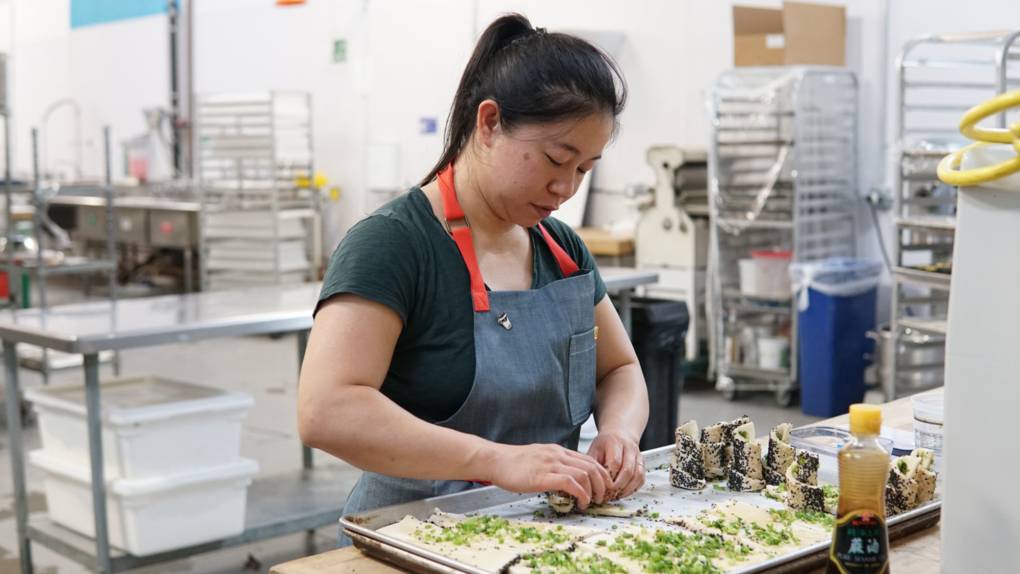
"caption": "Bake Sum pastry chef Joyce Tang prepares green onion croissants, one of her signature items. Tang will be one of the six Asian American chefs featured in a new workshop series hosted by Edge on the Square in San Francisco Chinatown.",
"credit": "Kevin Kwok",
"altTag": "In a bakery kitchen, an Asian woman rolls up pieces of dough covered with chopped scallions.",
"description": null,
"imgSizes": {
"medium": {
"file": "https://cdn.kqed.org/wp-content/uploads/sites/2/2024/10/Joyce-Tang_photo-credit-Kevin-Kwok-800x450.jpg",
"width": 800,
"height": 450,
"mimeType": "image/jpeg"
},
"large": {
"file": "https://cdn.kqed.org/wp-content/uploads/sites/2/2024/10/Joyce-Tang_photo-credit-Kevin-Kwok-1020x574.jpg",
"width": 1020,
"height": 574,
"mimeType": "image/jpeg"
},
"thumbnail": {
"file": "https://cdn.kqed.org/wp-content/uploads/sites/2/2024/10/Joyce-Tang_photo-credit-Kevin-Kwok-160x90.jpg",
"width": 160,
"height": 90,
"mimeType": "image/jpeg"
},
"medium_large": {
"file": "https://cdn.kqed.org/wp-content/uploads/sites/2/2024/10/Joyce-Tang_photo-credit-Kevin-Kwok-768x432.jpg",
"width": 768,
"height": 432,
"mimeType": "image/jpeg"
},
"1536x1536": {
"file": "https://cdn.kqed.org/wp-content/uploads/sites/2/2024/10/Joyce-Tang_photo-credit-Kevin-Kwok-1536x864.jpg",
"width": 1536,
"height": 864,
"mimeType": "image/jpeg"
},
"post-thumbnail": {
"file": "https://cdn.kqed.org/wp-content/uploads/sites/2/2024/10/Joyce-Tang_photo-credit-Kevin-Kwok-672x372.jpg",
"width": 672,
"height": 372,
"mimeType": "image/jpeg"
},
"twentyfourteen-full-width": {
"file": "https://cdn.kqed.org/wp-content/uploads/sites/2/2024/10/Joyce-Tang_photo-credit-Kevin-Kwok-1038x576.jpg",
"width": 1038,
"height": 576,
"mimeType": "image/jpeg"
},
"full-width": {
"file": "https://cdn.kqed.org/wp-content/uploads/sites/2/2024/10/Joyce-Tang_photo-credit-Kevin-Kwok-1920x1080.jpg",
"width": 1920,
"height": 1080,
"mimeType": "image/jpeg"
},
"kqedFullSize": {
"file": "https://cdn.kqed.org/wp-content/uploads/sites/2/2024/10/Joyce-Tang_photo-credit-Kevin-Kwok.jpg",
"width": 2000,
"height": 1125
}
},
"isLoading": false,
"fetchFailed": false
},
"arts_13966379": {
"type": "attachments",
"id": "arts_13966379",
"meta": {
"index": "attachments_1716263798",
"site": "arts",
"id": "13966379",
"found": true
},
"title": "Tokemoanas turkey tail bowl",
"publishDate": 1728516400,
"status": "inherit",
"parent": 13966361,
"modified": 1728516450,
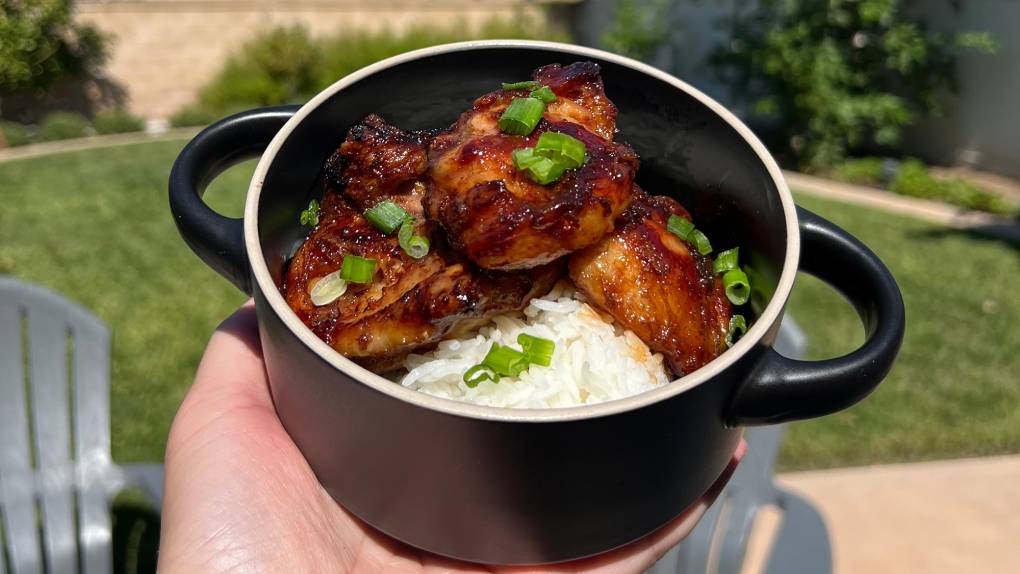
"caption": "Braised turkey tails over rice — a Tongan specialty courtesy of Tokemoana.",
"credit": "Courtesy of Tokemoana Foods",
"altTag": "Braised turkey tails over rice in a small pot.",
"description": null,
"imgSizes": {
"medium": {
"file": "https://cdn.kqed.org/wp-content/uploads/sites/2/2024/10/Tokemoanas-turkey-tail-bowl-800x450.jpg",
"width": 800,
"height": 450,
"mimeType": "image/jpeg"
},
"large": {
"file": "https://cdn.kqed.org/wp-content/uploads/sites/2/2024/10/Tokemoanas-turkey-tail-bowl-1020x574.jpg",
"width": 1020,
"height": 574,
"mimeType": "image/jpeg"
},
"thumbnail": {
"file": "https://cdn.kqed.org/wp-content/uploads/sites/2/2024/10/Tokemoanas-turkey-tail-bowl-160x90.jpg",
"width": 160,
"height": 90,
"mimeType": "image/jpeg"
},
"medium_large": {
"file": "https://cdn.kqed.org/wp-content/uploads/sites/2/2024/10/Tokemoanas-turkey-tail-bowl-768x432.jpg",
"width": 768,
"height": 432,
"mimeType": "image/jpeg"
},
"1536x1536": {
"file": "https://cdn.kqed.org/wp-content/uploads/sites/2/2024/10/Tokemoanas-turkey-tail-bowl-1536x865.jpg",
"width": 1536,
"height": 865,
"mimeType": "image/jpeg"
},
"post-thumbnail": {
"file": "https://cdn.kqed.org/wp-content/uploads/sites/2/2024/10/Tokemoanas-turkey-tail-bowl-672x372.jpg",
"width": 672,
"height": 372,
"mimeType": "image/jpeg"
},
"twentyfourteen-full-width": {
"file": "https://cdn.kqed.org/wp-content/uploads/sites/2/2024/10/Tokemoanas-turkey-tail-bowl-1038x576.jpg",
"width": 1038,
"height": 576,
"mimeType": "image/jpeg"
},
"full-width": {
"file": "https://cdn.kqed.org/wp-content/uploads/sites/2/2024/10/Tokemoanas-turkey-tail-bowl-1920x1081.jpg",
"width": 1920,
"height": 1081,
"mimeType": "image/jpeg"
},
"kqedFullSize": {
"file": "https://cdn.kqed.org/wp-content/uploads/sites/2/2024/10/Tokemoanas-turkey-tail-bowl.jpg",
"width": 2000,
"height": 1126
}
},
"isLoading": false,
"fetchFailed": false
},
"arts_13966231": {
"type": "attachments",
"id": "arts_13966231",
"meta": {
"index": "attachments_1716263798",
"site": "arts",
"id": "13966231",
"found": true
},
"title": "potstickers overhead",
"publishDate": 1728347207,
"status": "inherit",
"parent": 13966227,
"modified": 1728347350,
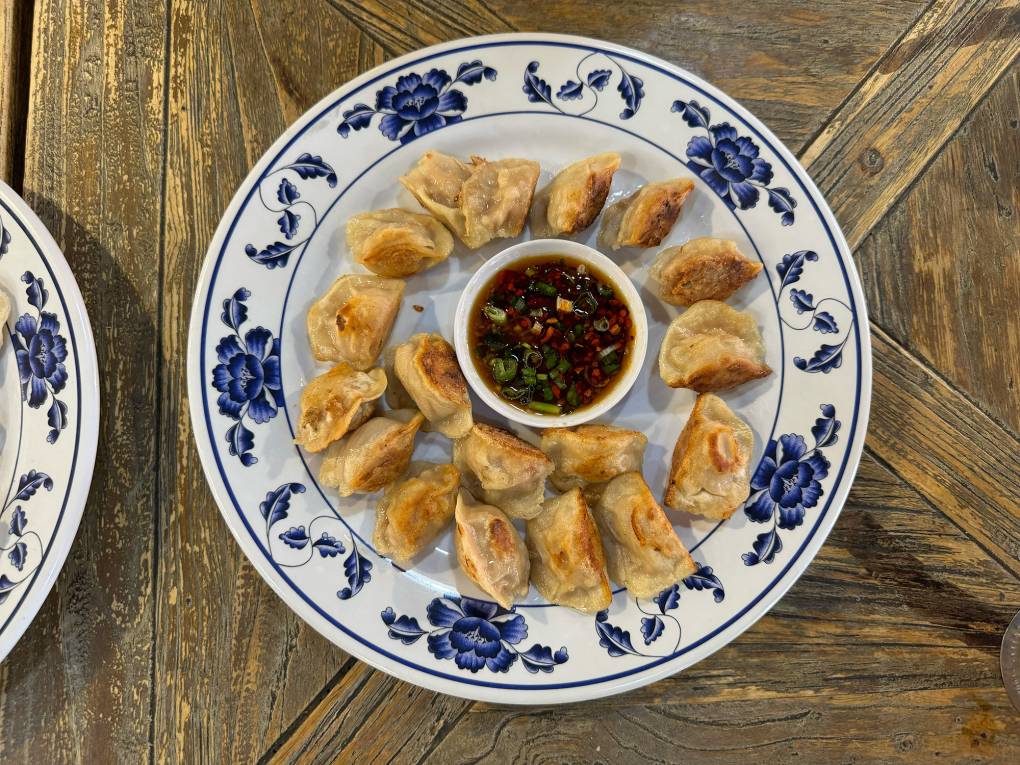
"caption": "Potstickers (pictured) and boiled dumplings are the specialty of the house at Huang Cheng Potsticker, a new restaurant in Swan's Market in Oakland that opened in September 2024.",
"credit": "Luke Tsai/KQED",
"altTag": "Overhead view of a plate of potstickers, with a chili-infused dipping sauce.",
"description": null,
"imgSizes": {
"medium": {
"file": "https://cdn.kqed.org/wp-content/uploads/sites/2/2024/10/potstickers-overhead-800x600.jpg",
"width": 800,
"height": 600,
"mimeType": "image/jpeg"
},
"large": {
"file": "https://cdn.kqed.org/wp-content/uploads/sites/2/2024/10/potstickers-overhead-1020x765.jpg",
"width": 1020,
"height": 765,
"mimeType": "image/jpeg"
},
"thumbnail": {
"file": "https://cdn.kqed.org/wp-content/uploads/sites/2/2024/10/potstickers-overhead-160x120.jpg",
"width": 160,
"height": 120,
"mimeType": "image/jpeg"
},
"medium_large": {
"file": "https://cdn.kqed.org/wp-content/uploads/sites/2/2024/10/potstickers-overhead-768x576.jpg",
"width": 768,
"height": 576,
"mimeType": "image/jpeg"
},
"1536x1536": {
"file": "https://cdn.kqed.org/wp-content/uploads/sites/2/2024/10/potstickers-overhead-1536x1152.jpg",
"width": 1536,
"height": 1152,
"mimeType": "image/jpeg"
},
"post-thumbnail": {
"file": "https://cdn.kqed.org/wp-content/uploads/sites/2/2024/10/potstickers-overhead-672x372.jpg",
"width": 672,
"height": 372,
"mimeType": "image/jpeg"
},
"twentyfourteen-full-width": {
"file": "https://cdn.kqed.org/wp-content/uploads/sites/2/2024/10/potstickers-overhead-1038x576.jpg",
"width": 1038,
"height": 576,
"mimeType": "image/jpeg"
},
"full-width": {
"file": "https://cdn.kqed.org/wp-content/uploads/sites/2/2024/10/potstickers-overhead-1920x1440.jpg",
"width": 1920,
"height": 1440,
"mimeType": "image/jpeg"
},
"kqedFullSize": {
"file": "https://cdn.kqed.org/wp-content/uploads/sites/2/2024/10/potstickers-overhead.jpg",
"width": 2000,
"height": 1500
}
},
"isLoading": false,
"fetchFailed": false
},
"arts_13966130": {
"type": "attachments",
"id": "arts_13966130",
"meta": {
"index": "attachments_1716263798",
"site": "arts",
"id": "13966130",
"found": true
},
"title": "Garnachas-featured",
"publishDate": 1728071994,
"status": "inherit",
"parent": 13966121,
"modified": 1728072428,
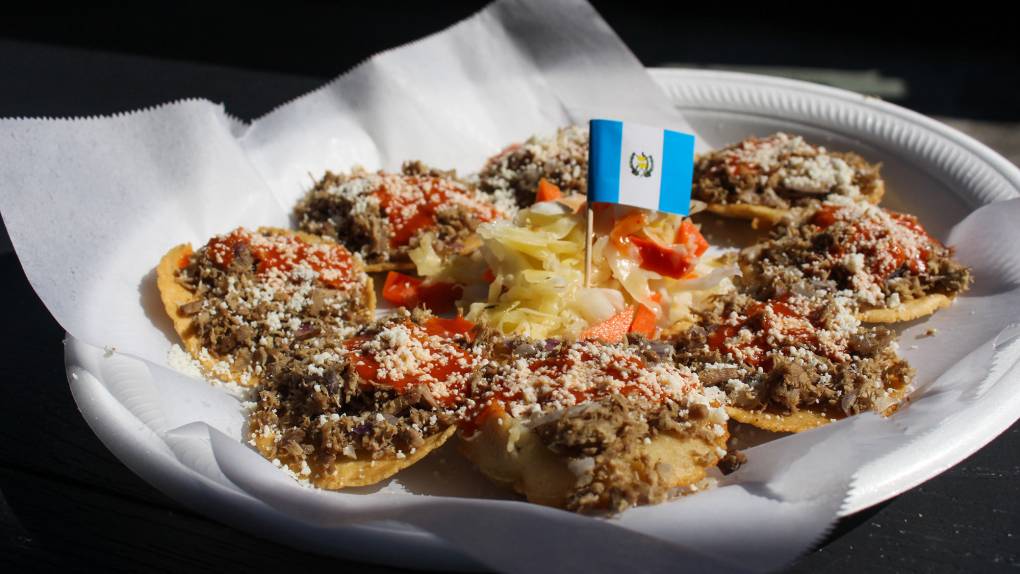
"caption": "Shaddai, a new Guatemalan food truck in San Jose, sells hard-to-find specialties like garnachas — essentially tortilla chips topped with shredded beef, salsa and curtido.",
"credit": "Octavio Peña",
"altTag": "A plate of garnachas (shredded beef topped tortilla chips), decorated with a Guatemalan toothpick flag.",
"description": null,
"imgSizes": {
"medium": {
"file": "https://cdn.kqed.org/wp-content/uploads/sites/2/2024/10/Garnachas-featured-800x450.jpg",
"width": 800,
"height": 450,
"mimeType": "image/jpeg"
},
"large": {
"file": "https://cdn.kqed.org/wp-content/uploads/sites/2/2024/10/Garnachas-featured-1020x574.jpg",
"width": 1020,
"height": 574,
"mimeType": "image/jpeg"
},
"thumbnail": {
"file": "https://cdn.kqed.org/wp-content/uploads/sites/2/2024/10/Garnachas-featured-160x90.jpg",
"width": 160,
"height": 90,
"mimeType": "image/jpeg"
},
"medium_large": {
"file": "https://cdn.kqed.org/wp-content/uploads/sites/2/2024/10/Garnachas-featured-768x432.jpg",
"width": 768,
"height": 432,
"mimeType": "image/jpeg"
},
"1536x1536": {
"file": "https://cdn.kqed.org/wp-content/uploads/sites/2/2024/10/Garnachas-featured-1536x864.jpg",
"width": 1536,
"height": 864,
"mimeType": "image/jpeg"
},
"post-thumbnail": {
"file": "https://cdn.kqed.org/wp-content/uploads/sites/2/2024/10/Garnachas-featured-672x372.jpg",
"width": 672,
"height": 372,
"mimeType": "image/jpeg"
},
"twentyfourteen-full-width": {
"file": "https://cdn.kqed.org/wp-content/uploads/sites/2/2024/10/Garnachas-featured-1038x576.jpg",
"width": 1038,
"height": 576,
"mimeType": "image/jpeg"
},
"full-width": {
"file": "https://cdn.kqed.org/wp-content/uploads/sites/2/2024/10/Garnachas-featured-1920x1080.jpg",
"width": 1920,
"height": 1080,
"mimeType": "image/jpeg"
},
"kqedFullSize": {
"file": "https://cdn.kqed.org/wp-content/uploads/sites/2/2024/10/Garnachas-featured.jpg",
"width": 2000,
"height": 1125
}
},
"isLoading": false,
"fetchFailed": false
},
"arts_13965614": {
"type": "attachments",
"id": "arts_13965614",
"meta": {
"index": "attachments_1716263798",
"site": "arts",
"id": "13965614",
"found": true
},
"title": "20240923_IranianMarket_GC-23",
"publishDate": 1727407897,
"status": "inherit",
"parent": 13965475,
"modified": 1727716514,
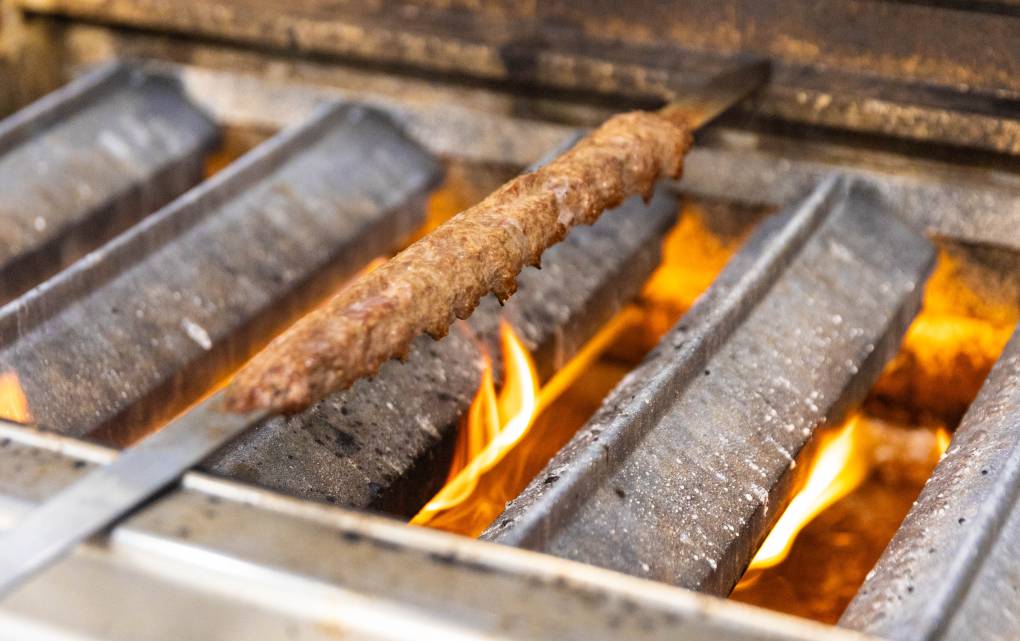
"caption": "Kabab koobideh on the grill at Rose International Market, a community fixture in Mountain View.",
"credit": "Gina Castro/KQED",
"altTag": null,
"description": null,
"imgSizes": {
"medium": {
"file": "https://cdn.kqed.org/wp-content/uploads/sites/2/2024/09/20240923_IranianMarket_GC-23-800x502.jpg",
"width": 800,
"height": 502,
"mimeType": "image/jpeg"
},
"large": {
"file": "https://cdn.kqed.org/wp-content/uploads/sites/2/2024/09/20240923_IranianMarket_GC-23-1020x641.jpg",
"width": 1020,
"height": 641,
"mimeType": "image/jpeg"
},
"thumbnail": {
"file": "https://cdn.kqed.org/wp-content/uploads/sites/2/2024/09/20240923_IranianMarket_GC-23-160x100.jpg",
"width": 160,
"height": 100,
"mimeType": "image/jpeg"
},
"medium_large": {
"file": "https://cdn.kqed.org/wp-content/uploads/sites/2/2024/09/20240923_IranianMarket_GC-23-768x482.jpg",
"width": 768,
"height": 482,
"mimeType": "image/jpeg"
},
"1536x1536": {
"file": "https://cdn.kqed.org/wp-content/uploads/sites/2/2024/09/20240923_IranianMarket_GC-23-1536x965.jpg",
"width": 1536,
"height": 965,
"mimeType": "image/jpeg"
},
"2048x2048": {
"file": "https://cdn.kqed.org/wp-content/uploads/sites/2/2024/09/20240923_IranianMarket_GC-23-2048x1286.jpg",
"width": 2048,
"height": 1286,
"mimeType": "image/jpeg"
},
"post-thumbnail": {
"file": "https://cdn.kqed.org/wp-content/uploads/sites/2/2024/09/20240923_IranianMarket_GC-23-672x372.jpg",
"width": 672,
"height": 372,
"mimeType": "image/jpeg"
},
"twentyfourteen-full-width": {
"file": "https://cdn.kqed.org/wp-content/uploads/sites/2/2024/09/20240923_IranianMarket_GC-23-1038x576.jpg",
"width": 1038,
"height": 576,
"mimeType": "image/jpeg"
},
"full-width": {
"file": "https://cdn.kqed.org/wp-content/uploads/sites/2/2024/09/20240923_IranianMarket_GC-23-1920x1206.jpg",
"width": 1920,
"height": 1206,
"mimeType": "image/jpeg"
},
"kqedFullSize": {
"file": "https://cdn.kqed.org/wp-content/uploads/sites/2/2024/09/20240923_IranianMarket_GC-23-scaled.jpg",
"width": 2560,
"height": 1608
}
},
"isLoading": false,
"fetchFailed": false
},
"arts_13965233": {
"type": "attachments",
"id": "arts_13965233",
"meta": {
"index": "attachments_1716263798",
"site": "arts",
"id": "13965233",
"found": true
},
"title": "mikiya2-crop",
"publishDate": 1726791371,
"status": "inherit",
"parent": 13965215,
"modified": 1726791494,
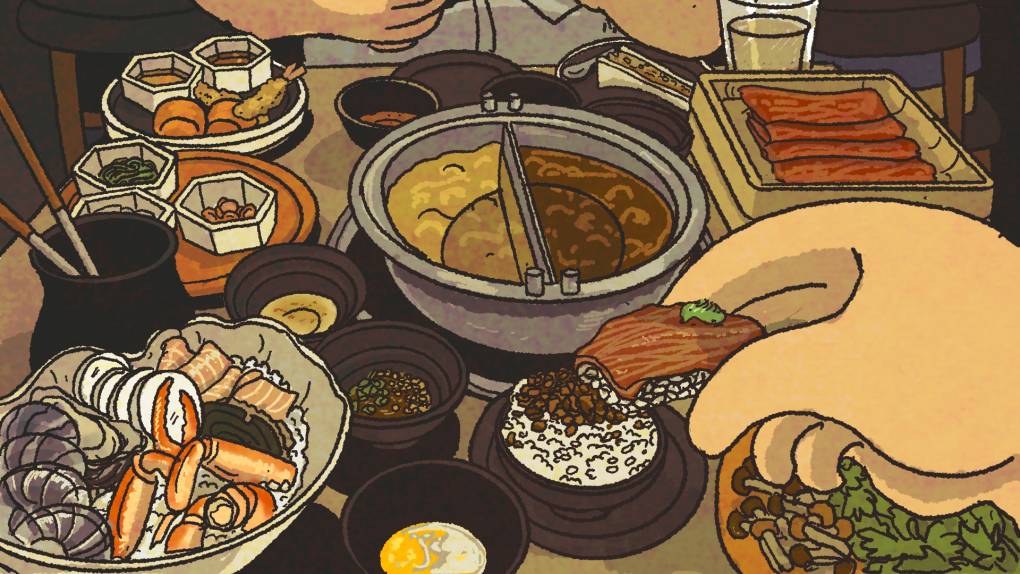
"caption": "At Santa Clara's Mikiya Wagyu Shabu House, unlimited quantities of wagyu beef are the main attraction.",
"credit": "Thien Pham",
"altTag": "Illustration: a spread of wagyu beef and other hot pot items at a shabu shabu restaurant.",
"description": null,
"imgSizes": {
"medium": {
"file": "https://cdn.kqed.org/wp-content/uploads/sites/2/2024/09/mikiya2-crop-800x450.jpg",
"width": 800,
"height": 450,
"mimeType": "image/jpeg"
},
"large": {
"file": "https://cdn.kqed.org/wp-content/uploads/sites/2/2024/09/mikiya2-crop-1020x574.jpg",
"width": 1020,
"height": 574,
"mimeType": "image/jpeg"
},
"thumbnail": {
"file": "https://cdn.kqed.org/wp-content/uploads/sites/2/2024/09/mikiya2-crop-160x90.jpg",
"width": 160,
"height": 90,
"mimeType": "image/jpeg"
},
"medium_large": {
"file": "https://cdn.kqed.org/wp-content/uploads/sites/2/2024/09/mikiya2-crop-768x432.jpg",
"width": 768,
"height": 432,
"mimeType": "image/jpeg"
},
"1536x1536": {
"file": "https://cdn.kqed.org/wp-content/uploads/sites/2/2024/09/mikiya2-crop-1536x864.jpg",
"width": 1536,
"height": 864,
"mimeType": "image/jpeg"
},
"post-thumbnail": {
"file": "https://cdn.kqed.org/wp-content/uploads/sites/2/2024/09/mikiya2-crop-672x372.jpg",
"width": 672,
"height": 372,
"mimeType": "image/jpeg"
},
"twentyfourteen-full-width": {
"file": "https://cdn.kqed.org/wp-content/uploads/sites/2/2024/09/mikiya2-crop-1038x576.jpg",
"width": 1038,
"height": 576,
"mimeType": "image/jpeg"
},
"kqedFullSize": {
"file": "https://cdn.kqed.org/wp-content/uploads/sites/2/2024/09/mikiya2-crop.jpg",
"width": 1920,
"height": 1080
}
},
"isLoading": false,
"fetchFailed": false
},
"arts_13964187": {
"type": "attachments",
"id": "arts_13964187",
"meta": {
"index": "attachments_1716263798",
"site": "arts",
"id": "13964187",
"found": true
},
"title": "jollof kitchen hero",
"publishDate": 1726179816,
"status": "inherit",
"parent": 13964180,
"modified": 1726179942,
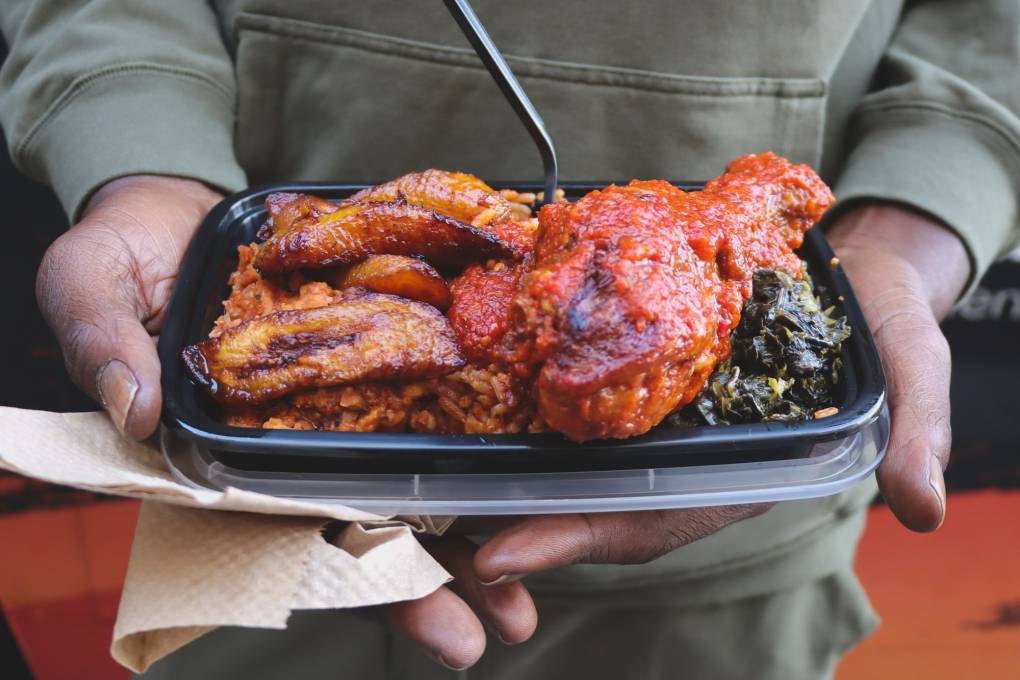
"caption": "Jollof Kitchen's locally famous jollof rice will be one of the many diasporic dishes featured at the first annual Bay Area African Restaurant Week, which runs Sept. 12–22, 2024.",
"credit": "Courtesy of Jollof Kitchen",
"altTag": "Man holding a takeout container of birght orange jollof rice with chicken and plantains.",
"description": null,
"imgSizes": {
"medium": {
"file": "https://cdn.kqed.org/wp-content/uploads/sites/2/2024/09/jollof-kitchen-hero-800x533.jpg",
"width": 800,
"height": 533,
"mimeType": "image/jpeg"
},
"large": {
"file": "https://cdn.kqed.org/wp-content/uploads/sites/2/2024/09/jollof-kitchen-hero-1020x680.jpg",
"width": 1020,
"height": 680,
"mimeType": "image/jpeg"
},
"thumbnail": {
"file": "https://cdn.kqed.org/wp-content/uploads/sites/2/2024/09/jollof-kitchen-hero-160x107.jpg",
"width": 160,
"height": 107,
"mimeType": "image/jpeg"
},
"medium_large": {
"file": "https://cdn.kqed.org/wp-content/uploads/sites/2/2024/09/jollof-kitchen-hero-768x512.jpg",
"width": 768,
"height": 512,
"mimeType": "image/jpeg"
},
"1536x1536": {
"file": "https://cdn.kqed.org/wp-content/uploads/sites/2/2024/09/jollof-kitchen-hero-1536x1024.jpg",
"width": 1536,
"height": 1024,
"mimeType": "image/jpeg"
},
"post-thumbnail": {
"file": "https://cdn.kqed.org/wp-content/uploads/sites/2/2024/09/jollof-kitchen-hero-672x372.jpg",
"width": 672,
"height": 372,
"mimeType": "image/jpeg"
},
"twentyfourteen-full-width": {
"file": "https://cdn.kqed.org/wp-content/uploads/sites/2/2024/09/jollof-kitchen-hero-1038x576.jpg",
"width": 1038,
"height": 576,
"mimeType": "image/jpeg"
},
"full-width": {
"file": "https://cdn.kqed.org/wp-content/uploads/sites/2/2024/09/jollof-kitchen-hero-1920x1280.jpg",
"width": 1920,
"height": 1280,
"mimeType": "image/jpeg"
},
"kqedFullSize": {
"file": "https://cdn.kqed.org/wp-content/uploads/sites/2/2024/09/jollof-kitchen-hero.jpg",
"width": 2000,
"height": 1333
}
},
"isLoading": false,
"fetchFailed": false
},
"arts_13963892": {
"type": "attachments",
"id": "arts_13963892",
"meta": {
"index": "attachments_1716263798",
"site": "arts",
"id": "13963892",
"found": true
},
"title": "Bacalhau in Bechamel",
"publishDate": 1725911818,
"status": "inherit",
"parent": 13963884,
"modified": 1725911997,
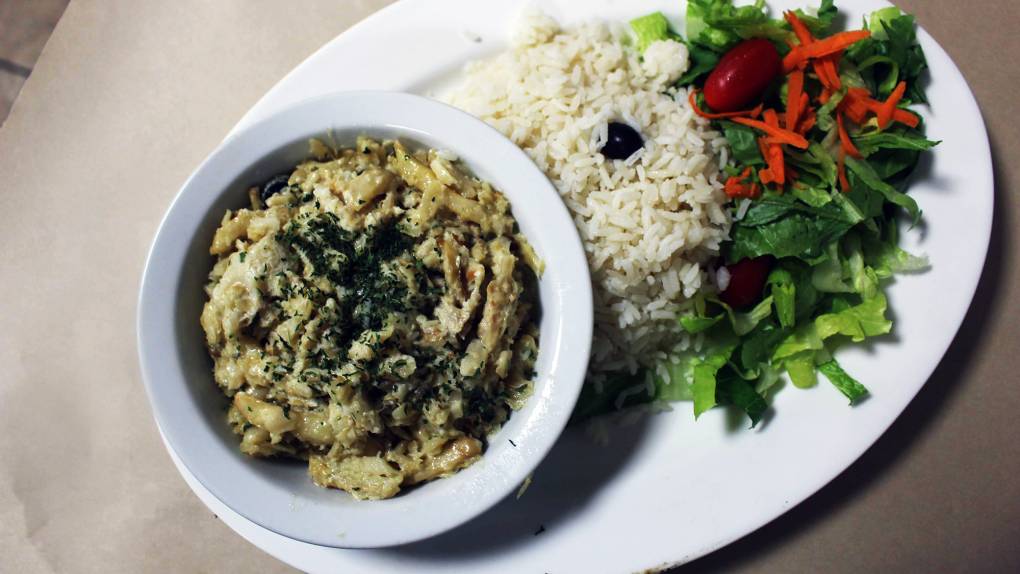
"caption": "Bacalhau in bechamel — one of the many versions of the Portuguese salt cod customers can find at Bacalhau Grill. The restaurant and market has been open in San Jose's Little Portugal neighborhood since 1945.",
"credit": "Octavio Peña",
"altTag": "A bowl of Portuguese salt cod with bechamel, served alongside a mount of rice and salad.",
"description": null,
"imgSizes": {
"medium": {
"file": "https://cdn.kqed.org/wp-content/uploads/sites/2/2024/09/Bacalhau-in-Bechamel-1-800x450.jpg",
"width": 800,
"height": 450,
"mimeType": "image/jpeg"
},
"large": {
"file": "https://cdn.kqed.org/wp-content/uploads/sites/2/2024/09/Bacalhau-in-Bechamel-1-1020x574.jpg",
"width": 1020,
"height": 574,
"mimeType": "image/jpeg"
},
"thumbnail": {
"file": "https://cdn.kqed.org/wp-content/uploads/sites/2/2024/09/Bacalhau-in-Bechamel-1-160x90.jpg",
"width": 160,
"height": 90,
"mimeType": "image/jpeg"
},
"medium_large": {
"file": "https://cdn.kqed.org/wp-content/uploads/sites/2/2024/09/Bacalhau-in-Bechamel-1-768x432.jpg",
"width": 768,
"height": 432,
"mimeType": "image/jpeg"
},
"1536x1536": {
"file": "https://cdn.kqed.org/wp-content/uploads/sites/2/2024/09/Bacalhau-in-Bechamel-1-1536x864.jpg",
"width": 1536,
"height": 864,
"mimeType": "image/jpeg"
},
"post-thumbnail": {
"file": "https://cdn.kqed.org/wp-content/uploads/sites/2/2024/09/Bacalhau-in-Bechamel-1-672x372.jpg",
"width": 672,
"height": 372,
"mimeType": "image/jpeg"
},
"twentyfourteen-full-width": {
"file": "https://cdn.kqed.org/wp-content/uploads/sites/2/2024/09/Bacalhau-in-Bechamel-1-1038x576.jpg",
"width": 1038,
"height": 576,
"mimeType": "image/jpeg"
},
"full-width": {
"file": "https://cdn.kqed.org/wp-content/uploads/sites/2/2024/09/Bacalhau-in-Bechamel-1-1920x1080.jpg",
"width": 1920,
"height": 1080,
"mimeType": "image/jpeg"
},
"kqedFullSize": {
"file": "https://cdn.kqed.org/wp-content/uploads/sites/2/2024/09/Bacalhau-in-Bechamel-1.jpg",
"width": 2000,
"height": 1125
}
},
"isLoading": false,
"fetchFailed": false
},
"arts_13963835": {
"type": "attachments",
"id": "arts_13963835",
"meta": {
"index": "attachments_1716263798",
"site": "arts",
"id": "13963835",
"found": true
},
"title": "El Rulas-crop",
"publishDate": 1725647352,
"status": "inherit",
"parent": 13963832,
"modified": 1725647447,
"caption": "At Tacos El Rulas' new brick-and-mortar taqueria, everything — from the tortas to the dining room — is uncommonly big.",
"credit": "Thien Pham",
"altTag": "Illustration: Two men eating tacos and tortas inside a dimly lit restaurant.",
"description": null,
"imgSizes": {
"medium": {
"file": "https://cdn.kqed.org/wp-content/uploads/sites/2/2024/09/El-Rulas-crop-800x450.jpg",
"width": 800,
"height": 450,
"mimeType": "image/jpeg"
},
"large": {
"file": "https://cdn.kqed.org/wp-content/uploads/sites/2/2024/09/El-Rulas-crop-1020x574.jpg",
"width": 1020,
"height": 574,
"mimeType": "image/jpeg"
},
"thumbnail": {
"file": "https://cdn.kqed.org/wp-content/uploads/sites/2/2024/09/El-Rulas-crop-160x90.jpg",
"width": 160,
"height": 90,
"mimeType": "image/jpeg"
},
"medium_large": {
"file": "https://cdn.kqed.org/wp-content/uploads/sites/2/2024/09/El-Rulas-crop-768x432.jpg",
"width": 768,
"height": 432,
"mimeType": "image/jpeg"
},
"1536x1536": {
"file": "https://cdn.kqed.org/wp-content/uploads/sites/2/2024/09/El-Rulas-crop-1536x864.jpg",
"width": 1536,
"height": 864,
"mimeType": "image/jpeg"
},
"post-thumbnail": {
"file": "https://cdn.kqed.org/wp-content/uploads/sites/2/2024/09/El-Rulas-crop-672x372.jpg",
"width": 672,
"height": 372,
"mimeType": "image/jpeg"
},
"twentyfourteen-full-width": {
"file": "https://cdn.kqed.org/wp-content/uploads/sites/2/2024/09/El-Rulas-crop-1038x576.jpg",
"width": 1038,
"height": 576,
"mimeType": "image/jpeg"
},
"kqedFullSize": {
"file": "https://cdn.kqed.org/wp-content/uploads/sites/2/2024/09/El-Rulas-crop.jpg",
"width": 1920,
"height": 1080
}
},
"isLoading": false,
"fetchFailed": false
},
"arts_13963728": {
"type": "attachments",
"id": "arts_13963728",
"meta": {
"index": "attachments_1716263798",
"site": "arts",
"id": "13963728",
"found": true
},
"title": "open test kitchen lead",
"publishDate": 1725566097,
"status": "inherit",
"parent": 13963726,
"modified": 1725577657,
"caption": "The owners of Asúkar, Café con Cariño and That Hausa Vegan — three of the new Open Test Kitchen restaurant's featured businesses — pose for a portrait inside the Old Oakland restaurant.",
"credit": "Courtesy of Oakland Bloom",
"altTag": "Four female chefs pose for a portrait inside a restaurant.",
"description": null,
"imgSizes": {
"medium": {
"file": "https://cdn.kqed.org/wp-content/uploads/sites/2/2024/09/open-test-kitchen-lead-800x450.jpg",
"width": 800,
"height": 450,
"mimeType": "image/jpeg"
},
"large": {
"file": "https://cdn.kqed.org/wp-content/uploads/sites/2/2024/09/open-test-kitchen-lead-1020x574.jpg",
"width": 1020,
"height": 574,
"mimeType": "image/jpeg"
},
"thumbnail": {
"file": "https://cdn.kqed.org/wp-content/uploads/sites/2/2024/09/open-test-kitchen-lead-160x90.jpg",
"width": 160,
"height": 90,
"mimeType": "image/jpeg"
},
"medium_large": {
"file": "https://cdn.kqed.org/wp-content/uploads/sites/2/2024/09/open-test-kitchen-lead-768x432.jpg",
"width": 768,
"height": 432,
"mimeType": "image/jpeg"
},
"1536x1536": {
"file": "https://cdn.kqed.org/wp-content/uploads/sites/2/2024/09/open-test-kitchen-lead-1536x864.jpg",
"width": 1536,
"height": 864,
"mimeType": "image/jpeg"
},
"post-thumbnail": {
"file": "https://cdn.kqed.org/wp-content/uploads/sites/2/2024/09/open-test-kitchen-lead-672x372.jpg",
"width": 672,
"height": 372,
"mimeType": "image/jpeg"
},
"twentyfourteen-full-width": {
"file": "https://cdn.kqed.org/wp-content/uploads/sites/2/2024/09/open-test-kitchen-lead-1038x576.jpg",
"width": 1038,
"height": 576,
"mimeType": "image/jpeg"
},
"full-width": {
"file": "https://cdn.kqed.org/wp-content/uploads/sites/2/2024/09/open-test-kitchen-lead-1920x1080.jpg",
"width": 1920,
"height": 1080,
"mimeType": "image/jpeg"
},
"kqedFullSize": {
"file": "https://cdn.kqed.org/wp-content/uploads/sites/2/2024/09/open-test-kitchen-lead.jpg",
"width": 2000,
"height": 1125
}
},
"isLoading": false,
"fetchFailed": false
},
"arts_13963613": {
"type": "attachments",
"id": "arts_13963613",
"meta": {
"index": "attachments_1716263798",
"site": "arts",
"id": "13963613",
"found": true
},
"title": "four kings - hella hungry - featured - juliana yamada",
"publishDate": 1725403765,
"status": "inherit",
"parent": 0,
"modified": 1725490019,
"caption": "The fried squab at Four Kings in San Francisco Chinatown on July 29, 2024. The dish, which takes a week to prepare and is only available in limited quantities, is one of the restaurant's biggest draws.",
"credit": "Juliana Yamada for KQED",
"altTag": "Spread of Cantonese dishes including whole fried squab with head and feet attached.",
"description": null,
"imgSizes": {
"medium": {
"file": "https://cdn.kqed.org/wp-content/uploads/sites/2/2024/09/four-kings-hella-hungry-featured-juliana-yamada-800x450.jpg",
"width": 800,
"height": 450,
"mimeType": "image/jpeg"
},
"large": {
"file": "https://cdn.kqed.org/wp-content/uploads/sites/2/2024/09/four-kings-hella-hungry-featured-juliana-yamada-1020x574.jpg",
"width": 1020,
"height": 574,
"mimeType": "image/jpeg"
},
"thumbnail": {
"file": "https://cdn.kqed.org/wp-content/uploads/sites/2/2024/09/four-kings-hella-hungry-featured-juliana-yamada-160x90.jpg",
"width": 160,
"height": 90,
"mimeType": "image/jpeg"
},
"medium_large": {
"file": "https://cdn.kqed.org/wp-content/uploads/sites/2/2024/09/four-kings-hella-hungry-featured-juliana-yamada-768x432.jpg",
"width": 768,
"height": 432,
"mimeType": "image/jpeg"
},
"1536x1536": {
"file": "https://cdn.kqed.org/wp-content/uploads/sites/2/2024/09/four-kings-hella-hungry-featured-juliana-yamada-1536x864.jpg",
"width": 1536,
"height": 864,
"mimeType": "image/jpeg"
},
"post-thumbnail": {
"file": "https://cdn.kqed.org/wp-content/uploads/sites/2/2024/09/four-kings-hella-hungry-featured-juliana-yamada-672x372.jpg",
"width": 672,
"height": 372,
"mimeType": "image/jpeg"
},
"twentyfourteen-full-width": {
"file": "https://cdn.kqed.org/wp-content/uploads/sites/2/2024/09/four-kings-hella-hungry-featured-juliana-yamada-1038x576.jpg",
"width": 1038,
"height": 576,
"mimeType": "image/jpeg"
},
"kqedFullSize": {
"file": "https://cdn.kqed.org/wp-content/uploads/sites/2/2024/09/four-kings-hella-hungry-featured-juliana-yamada.jpg",
"width": 1920,
"height": 1080
}
},
"isLoading": false,
"fetchFailed": false
},
"arts_13963485": {
"type": "attachments",
"id": "arts_13963485",
"meta": {
"index": "attachments_1716263798",
"site": "arts",
"id": "13963485",
"found": true
},
"title": "CREDIT Visionary Media Collective_The Bizerkeley Food Fest_Food 4",
"publishDate": 1725040532,
"status": "inherit",
"parent": 13963481,
"modified": 1725040673,
"caption": "One of the diverse vegan food offerings guests can expect to find at the Bizerkeley Food Festival, which returns to Berkeley this weekend.",
"credit": "Visionary Media Collective",
"altTag": "A takeout container with fried vegan shrimp, rice and salad.",
"description": null,
"imgSizes": {
"medium": {
"file": "https://cdn.kqed.org/wp-content/uploads/sites/2/2024/08/CREDIT-Visionary-Media-Collective_The-Bizerkeley-Food-Fest_Food-4-800x550.jpg",
"width": 800,
"height": 550,
"mimeType": "image/jpeg"
},
"large": {
"file": "https://cdn.kqed.org/wp-content/uploads/sites/2/2024/08/CREDIT-Visionary-Media-Collective_The-Bizerkeley-Food-Fest_Food-4-1020x701.jpg",
"width": 1020,
"height": 701,
"mimeType": "image/jpeg"
},
"thumbnail": {
"file": "https://cdn.kqed.org/wp-content/uploads/sites/2/2024/08/CREDIT-Visionary-Media-Collective_The-Bizerkeley-Food-Fest_Food-4-160x110.jpg",
"width": 160,
"height": 110,
"mimeType": "image/jpeg"
},
"medium_large": {
"file": "https://cdn.kqed.org/wp-content/uploads/sites/2/2024/08/CREDIT-Visionary-Media-Collective_The-Bizerkeley-Food-Fest_Food-4-768x528.jpg",
"width": 768,
"height": 528,
"mimeType": "image/jpeg"
},
"1536x1536": {
"file": "https://cdn.kqed.org/wp-content/uploads/sites/2/2024/08/CREDIT-Visionary-Media-Collective_The-Bizerkeley-Food-Fest_Food-4-1536x1056.jpg",
"width": 1536,
"height": 1056,
"mimeType": "image/jpeg"
},
"post-thumbnail": {
"file": "https://cdn.kqed.org/wp-content/uploads/sites/2/2024/08/CREDIT-Visionary-Media-Collective_The-Bizerkeley-Food-Fest_Food-4-672x372.jpg",
"width": 672,
"height": 372,
"mimeType": "image/jpeg"
},
"twentyfourteen-full-width": {
"file": "https://cdn.kqed.org/wp-content/uploads/sites/2/2024/08/CREDIT-Visionary-Media-Collective_The-Bizerkeley-Food-Fest_Food-4-1038x576.jpg",
"width": 1038,
"height": 576,
"mimeType": "image/jpeg"
},
"full-width": {
"file": "https://cdn.kqed.org/wp-content/uploads/sites/2/2024/08/CREDIT-Visionary-Media-Collective_The-Bizerkeley-Food-Fest_Food-4-1920x1320.jpg",
"width": 1920,
"height": 1320,
"mimeType": "image/jpeg"
},
"kqedFullSize": {
"file": "https://cdn.kqed.org/wp-content/uploads/sites/2/2024/08/CREDIT-Visionary-Media-Collective_The-Bizerkeley-Food-Fest_Food-4.jpg",
"width": 2000,
"height": 1375
}
},
"isLoading": false,
"fetchFailed": false
}
},
"audioPlayerReducer": {
"postId": "stream_live",
"isPaused": true,
"isPlaying": false,
"pfsActive": false,
"pledgeModalIsOpen": true,
"playerDrawerIsOpen": false,
"liveAudioPlayStartedAt": 0,
"liveAudioPlayContext": ""
},
"authorsReducer": {
"ltsai": {
"type": "authors",
"id": "11743",
"meta": {
"index": "authors_1716337520",
"id": "11743",
"found": true
},
"name": "Luke Tsai",
"firstName": "Luke",
"lastName": "Tsai",
"slug": "ltsai",
"email": "ltsai@kqed.org",
"display_author_email": true,
"staff_mastheads": [
"arts"
],
"title": "Food Editor",
"bio": "Luke Tsai is KQED's food editor and resident stinky tofu connoisseur. Prior to KQED, he was an editor at Eater SF, \u003cem>San Francisco \u003c/em>magazine, and the \u003cem>East Bay Express\u003c/em>, and his work has also appeared in TASTE, the \u003cem>San Francisco Chronicle\u003c/em>, and the \u003cem>Best Food Writing\u003c/em> anthology. When he isn't writing or editing, you'll find him eating most everything he can get his hands on.",
"avatar": "https://secure.gravatar.com/avatar/1e59b45bf191526e7339d6ba46e33a57b2030d25c27660ecc64ea3cb863e34f7?s=600&d=blank&r=g",
"twitter": "theluketsai",
"bluesky": null,
"facebook": null,
"instagram": null,
"linkedin": null,
"sites": [
{
"site": "",
"roles": [
"editor"
]
},
{
"site": "arts",
"roles": [
"administrator"
]
},
{
"site": "news",
"roles": [
"editor",
"contributor"
]
},
{
"site": "bayareabites",
"roles": [
"editor"
]
},
{
"site": "food",
"roles": [
"editor"
]
}
],
"headData": {
"title": "Luke Tsai | KQED",
"description": "Food Editor",
"ogImgSrc": "https://secure.gravatar.com/avatar/1e59b45bf191526e7339d6ba46e33a57b2030d25c27660ecc64ea3cb863e34f7?s=600&d=blank&r=g",
"twImgSrc": "https://secure.gravatar.com/avatar/1e59b45bf191526e7339d6ba46e33a57b2030d25c27660ecc64ea3cb863e34f7?s=600&d=blank&r=g"
},
"isLoading": false,
"link": "/author/ltsai"
},
"achazaro": {
"type": "authors",
"id": "11748",
"meta": {
"index": "authors_1716337520",
"id": "11748",
"found": true
},
"name": "Alan Chazaro",
"firstName": "Alan",
"lastName": "Chazaro",
"slug": "achazaro",
"email": "agchazaro@gmail.com",
"display_author_email": true,
"staff_mastheads": [],
"title": "Food Writer and Reporter",
"bio": "Alan Chazaro is the author of \u003cem>This Is Not a Frank Ocean Cover Album\u003c/em> (Black Lawrence Press, 2019), \u003cem>Piñata Theory\u003c/em> (Black Lawrence Press, 2020), and \u003cem>Notes from the Eastern Span of the Bay Bridge\u003c/em> (Ghost City Press, 2021). He is a graduate of June Jordan’s Poetry for the People program at UC Berkeley and a former Lawrence Ferlinghetti Fellow at the University of San Francisco. He writes about sports, food, art, music, education, and culture while repping the Bay on \u003ca href=\"https://twitter.com/alan_chazaro\">Twitter\u003c/a> and \u003ca href=\"https://www.instagram.com/alan_chazaro/?hl=en\">Instagram\u003c/a> at @alan_chazaro.",
"avatar": "https://secure.gravatar.com/avatar/ea8b6dd970fc5c29e7a188e7d5861df7?s=600&d=blank&r=g",
"twitter": "alan_chazaro",
"facebook": null,
"instagram": null,
"linkedin": null,
"sites": [
{
"site": "arts",
"roles": [
"contributor"
]
},
{
"site": "news",
"roles": [
"editor"
]
}
],
"headData": {
"title": "Alan Chazaro | KQED",
"description": "Food Writer and Reporter",
"ogImgSrc": "https://secure.gravatar.com/avatar/ea8b6dd970fc5c29e7a188e7d5861df7?s=600&d=blank&r=g",
"twImgSrc": "https://secure.gravatar.com/avatar/ea8b6dd970fc5c29e7a188e7d5861df7?s=600&d=blank&r=g"
},
"isLoading": false,
"link": "/author/achazaro"
},
"tpham": {
"type": "authors",
"id": "11753",
"meta": {
"index": "authors_1716337520",
"id": "11753",
"found": true
},
"name": "Thien Pham",
"firstName": "Thien",
"lastName": "Pham",
"slug": "tpham",
"email": "thiendog@gmail.com",
"display_author_email": false,
"staff_mastheads": [],
"title": "KQED Contributor",
"bio": null,
"avatar": "https://secure.gravatar.com/avatar/a5b4729969ad46d88e7b9ec9dd4f3fa6af84dd0fa8fa91f01d8d9481694999bc?s=600&d=blank&r=g",
"twitter": null,
"bluesky": null,
"facebook": null,
"instagram": null,
"linkedin": null,
"sites": [
{
"site": "arts",
"roles": [
"contributor"
]
}
],
"headData": {
"title": "Thien Pham | KQED",
"description": "KQED Contributor",
"ogImgSrc": "https://secure.gravatar.com/avatar/a5b4729969ad46d88e7b9ec9dd4f3fa6af84dd0fa8fa91f01d8d9481694999bc?s=600&d=blank&r=g",
"twImgSrc": "https://secure.gravatar.com/avatar/a5b4729969ad46d88e7b9ec9dd4f3fa6af84dd0fa8fa91f01d8d9481694999bc?s=600&d=blank&r=g"
},
"isLoading": false,
"link": "/author/tpham"
},
"opena": {
"type": "authors",
"id": "11903",
"meta": {
"index": "authors_1716337520",
"id": "11903",
"found": true
},
"name": "Octavio Peña",
"firstName": "Octavio",
"lastName": "Peña",
"slug": "opena",
"email": "octaviopenagutierrez@gmail.com",
"display_author_email": false,
"staff_mastheads": [],
"title": "KQED Contributor",
"bio": null,
"avatar": "https://secure.gravatar.com/avatar/62850791380238ea3945ee72a3d56056477904792b41daaf11effa8780bab75d?s=600&d=blank&r=g",
"twitter": null,
"bluesky": null,
"facebook": null,
"instagram": null,
"linkedin": null,
"sites": [
{
"site": "arts",
"roles": [
"contributor"
]
}
],
"headData": {
"title": "Octavio Peña | KQED",
"description": "KQED Contributor",
"ogImgSrc": "https://secure.gravatar.com/avatar/62850791380238ea3945ee72a3d56056477904792b41daaf11effa8780bab75d?s=600&d=blank&r=g",
"twImgSrc": "https://secure.gravatar.com/avatar/62850791380238ea3945ee72a3d56056477904792b41daaf11effa8780bab75d?s=600&d=blank&r=g"
},
"isLoading": false,
"link": "/author/opena"
}
},
"pagesReducer": {
"arts_tag_food": {
"type": "terms",
"id": "arts_1297",
"meta": {
"index": "terms_1716263798",
"site": "arts",
"id": "1297",
"score": 7.4243016
},
"featImg": null,
"name": "food",
"description": null,
"taxonomy": "tag",
"headData": {
"twImgId": null,
"twTitle": null,
"ogTitle": null,
"ogImgId": null,
"twDescription": null,
"description": null,
"title": "food Archives | KQED Arts",
"ogDescription": null
},
"ttid": 1309,
"slug": "food",
"isLoading": false,
"title": "food",
"pageMeta": {
"site": "arts",
"WpPageTemplate": "page-topic-editorial",
"currentPage": 14
},
"blocks": [
{
"blockName": "kqed/post-list",
"attrs": {
"layout": "cardArticle2",
"query": "posts/arts?tag=food",
"seeMore": false,
"paginated": true,
"page": 14
}
},
{
"blockName": "kqed/ad"
}
]
}
},
"pfsSessionReducer": {},
"postsReducer": {
"stream_live": {
"type": "live",
"id": "stream_live",
"audioUrl": "https://streams.kqed.org/kqedradio",
"title": "Live Stream",
"excerpt": "Live Stream information currently unavailable.",
"link": "/radio",
"featImg": "",
"label": {
"name": "KQED Live",
"link": "/"
}
},
"stream_kqedNewscast": {
"type": "posts",
"id": "stream_kqedNewscast",
"audioUrl": "https://www.kqed.org/.stream/anon/radio/RDnews/newscast.mp3?_=1",
"title": "KQED Newscast",
"featImg": "",
"label": {
"name": "88.5 FM",
"link": "/"
}
},
"arts_13966489": {
"type": "posts",
"id": "arts_13966489",
"meta": {
"index": "posts_1716263798",
"site": "arts",
"id": "13966489",
"score": null,
"sort": [
1728678162000
]
},
"guestAuthors": [],
"slug": "asian-american-chefs-msg-event-series-sf-chinatown-edge-on-the-square",
"title": "Asian American Chefs Talk MSG (Making, Sharing, Gathering) in SF Chinatown",
"publishDate": 1728678162,
"format": "standard",
"headTitle": "Asian American Chefs Talk MSG (Making, Sharing, Gathering) in SF Chinatown | KQED",
"labelTerm": {},
"content": "\u003cp>You don’t have to go far back to remember when MSG was the most vilified ingredient in America. At the peak of this hysteria, in the ’80s and ’90s, the flavor enhancer was frequently \u003ca href=\"https://www.smithsonianmag.com/arts-culture/its-the-umami-stupid-why-the-truth-about-msg-is-so-easy-to-swallow-180947626/\">maligned\u003c/a> as a grotesque transmitter of heart palpitations, migraine headaches and assorted other maladies — though, curiously, only when consumed in Chinese takeout and not, say, a \u003ca href=\"https://www.bonappetit.com/story/give-msg-a-chance\">bag of Doritos\u003c/a>. These days, of course, these sentiments have largely been debunked as \u003ca href=\"https://www.npr.org/sections/health-shots/2023/09/12/1197874002/umami-savory-taste-history\">bad science\u003c/a> (undergirded by a healthy dose of \u003ca href=\"https://www.cnn.com/2020/01/18/asia/chinese-restaurant-syndrome-msg-intl-hnk-scli/index.html\">racism\u003c/a>), and a new generation of young Asian American chefs have proudly taken up the MSG banner. (One \u003ca href=\"https://www.foodandwine.com/cook-with-msg-8421862\">trendy Cantonese American restaurant\u003c/a> in Brooklyn incorporates it into almost every dish.)\u003c/p>\n\u003cp>It’s with a knowing and pointed wink, then, that \u003ca href=\"https://www.edgeonthesquare.org/\">Edge on the Square\u003c/a>, a contemporary art hub in San Francisco Chinatown, named its new series of food workshops “MSG\u003ci>” \u003c/i>— only in this case, the letters stand for “making,” “sharing” and “gathering\u003ci>.\u003c/i>” And while monosodium glutamate itself won’t be a primary subject of discussion, those kinds of broader cultural narratives around Asian Americans and food very much \u003ci>are\u003c/i>.\u003c/p>\n\u003cp>In other words, says Edge on the Square head curator Candace Huey, “If food is your primary point of contact about this culture, what types of myths and stereotypes can we dispel?”\u003c/p>\n\u003cp>Toward that end, \u003ca href=\"https://www.edgeonthesquare.org/msg\">\u003ci>MSG: Making, Sharing, Gathering\u003c/i>\u003c/a> will feature six talented Asian American chefs, cookbook authors and pop-up entrepreneurs from around San Francisco and the East Bay, each of whom have their own particular relationships to food nostalgia, the Asian diaspora and, in some cases, San Francisco Chinatown itself. Joyce Tang, the Chinese American pastry chef behind Oakland’s \u003ca href=\"https://www.instagram.com/bakesumpastries/?hl=en\">Bake Sum\u003c/a>, will kick off the series on \u003ca href=\"https://www.edgeonthesquare.org/joyce-tang\">Saturday, Oct. 19\u003c/a>.\u003c/p>\n\u003cfigure id=\"attachment_13966499\" class=\"wp-caption alignnone\" style=\"max-width: 2000px\">\u003cimg loading=\"lazy\" decoding=\"async\" class=\"size-full wp-image-13966499\" src=\"https://cdn.kqed.org/wp-content/uploads/sites/2/2024/10/Joyce-Tang_@thejoycetang_1.jpg\" alt=\"A box of assorted pastries with Asian American flavors.\" width=\"2000\" height=\"1984\" srcset=\"https://cdn.kqed.org/wp-content/uploads/sites/2/2024/10/Joyce-Tang_@thejoycetang_1.jpg 2000w, https://cdn.kqed.org/wp-content/uploads/sites/2/2024/10/Joyce-Tang_@thejoycetang_1-800x794.jpg 800w, https://cdn.kqed.org/wp-content/uploads/sites/2/2024/10/Joyce-Tang_@thejoycetang_1-1020x1012.jpg 1020w, https://cdn.kqed.org/wp-content/uploads/sites/2/2024/10/Joyce-Tang_@thejoycetang_1-160x159.jpg 160w, https://cdn.kqed.org/wp-content/uploads/sites/2/2024/10/Joyce-Tang_@thejoycetang_1-768x762.jpg 768w, https://cdn.kqed.org/wp-content/uploads/sites/2/2024/10/Joyce-Tang_@thejoycetang_1-1536x1524.jpg 1536w, https://cdn.kqed.org/wp-content/uploads/sites/2/2024/10/Joyce-Tang_@thejoycetang_1-1920x1905.jpg 1920w\" sizes=\"(max-width: 2000px) 100vw, 2000px\">\u003cfigcaption class=\"wp-caption-text\">A box of assorted pastries from Bake Sum in Oakland. \u003ccite>(Courtesy of Joyce Tang)\u003c/cite>\u003c/figcaption>\u003c/figure>\n\u003cp>Future editions will star Tracy Goh of the Malaysian restaurant \u003ca href=\"https://www.kqed.org/arts/13953078/curry-puff-malaysian-damansara-sf-noe-valley\">Damansara\u003c/a> (Dec. 8), chef Babo Waheed of \u003ca href=\"https://www.instagram.com/babosconceptkitchen/\">Babo’s Kitchen\u003c/a> (Jan. 18), James Beard Award–winning cookbook author \u003ca href=\"https://eatchofood.com/\">Kristina Cho\u003c/a> (Feb. 8), \u003ca href=\"https://www.instagram.com/batikandbaker/?hl=en\">Batik and Baker’s\u003c/a> Audrey Tang (April 12) and Taiwanese dumpling specialist Henry Hsu of \u003ca href=\"https://www.instagram.com/eatoramasama/?hl=en\">Oramasama Dumplings\u003c/a> (May 18).\u003c/p>\n\u003cp>[ad fullwidth]\u003c/p>\n\u003cp>The workshops are meant to provide a critical lens on how food acts as an “identity marker” and how it helps shape the narrative of Asian America, Huey explains. “We’re thinking about questions related to immigrants and the different threads of colonization, as well as when you move through the pathway of diaspora, how that changes the rituals and the practices related to food preparation.”\u003c/p>\n\u003cp>\u003cspan style=\"font-weight: 400\">\u003cspan style=\"color: #2b2b2b;font-weight: 400\">[aside postID='arts_13962284,arts_13953078,arts_13924997']\u003c/span>\u003c/span>“Edge’s mission is always about how we can shift the narrative and how art” — and, in this case, food — “can be a vehicle for this widening of the aperture,” Huey says.\u003c/p>\n\u003cp>Each session will be different, but at the most basic level, there will always be a personal storytelling component and a Q&A. Each chef will share samples of their food (either cooked while guests watch or prepared ahead of time) that connect in some way to the story of their immigrant experience or their cultural heritage.\u003c/p>\n\u003cp>For the inaugural workshop, Bake Sum’s Tang will pass out a small box of pastries to help elucidate her theme of “Past, Present and Future.” Attendees will receive a green onion croissant that evokes Tang’s childhood memories of eating green onion pancakes in Chinatown, an okonomiyaki Danish that speaks to the present day and her interpretation of a mooncake, which points toward the future of Asian American diasporic cooking.\u003c/p>\n\u003cp>Guests will sit at long banquet tables inside the gallery, in the heart of Chinatown, surrounded by the artwork in Edge on the Square’s current exhibition, \u003ca href=\"https://www.edgeonthesquare.org/walking-stories\">\u003ci>Walking Stories\u003c/i>\u003c/a> — which, fittingly, is also centered on stories and storytellers.\u003c/p>\n\u003cfigure id=\"attachment_13963121\" class=\"wp-caption alignnone\" style=\"max-width: 2000px\">\u003cimg loading=\"lazy\" decoding=\"async\" class=\"size-full wp-image-13963121\" src=\"https://cdn.kqed.org/wp-content/uploads/sites/2/2024/08/HighFive_2000.jpg\" alt=\"image of crowd holding banners under Chinatown lanterns and an image of a projection on a building front\" width=\"2000\" height=\"864\" srcset=\"https://cdn.kqed.org/wp-content/uploads/sites/2/2024/08/HighFive_2000.jpg 2000w, https://cdn.kqed.org/wp-content/uploads/sites/2/2024/08/HighFive_2000-800x346.jpg 800w, https://cdn.kqed.org/wp-content/uploads/sites/2/2024/08/HighFive_2000-1020x441.jpg 1020w, https://cdn.kqed.org/wp-content/uploads/sites/2/2024/08/HighFive_2000-160x69.jpg 160w, https://cdn.kqed.org/wp-content/uploads/sites/2/2024/08/HighFive_2000-768x332.jpg 768w, https://cdn.kqed.org/wp-content/uploads/sites/2/2024/08/HighFive_2000-1536x664.jpg 1536w, https://cdn.kqed.org/wp-content/uploads/sites/2/2024/08/HighFive_2000-1920x829.jpg 1920w\" sizes=\"(max-width: 2000px) 100vw, 2000px\">\u003cfigcaption class=\"wp-caption-text\">Scene from ‘Under the Same Sun,’ a previous event hosted by Edge on the Square. \u003ccite>(Henrik Kam)\u003c/cite>\u003c/figcaption>\u003c/figure>\n\u003cp>Tickets for the workshops are pay-what-you-can, with a suggested donation of $20 — though Linda Lui, the art hub’s communications director, stresses that they don’t want the cost to deter anyone from coming. Past Edge on the Square events, like a mahjong night and a concept barter shop, have drawn college students, prominent Asian American intellectuals and activists, and the local “popo” who walks past the Chinatown gallery every night.\u003c/p>\n\u003cp>While the \u003ci>MSG \u003c/i>series itself will run through May, that won’t be the end of the project. Edge on the Square is also collaborating with the \u003ca href=\"https://www.goodmedicinefilms.com/forever-chinatown\">Emmy-nominated\u003c/a> San Francisco director James Q. Chan, who will be on hand to film the workshops, with plans to turn them into a six-part documentary series.\u003c/p>\n\u003chr>\n\u003cp>\u003c/p>\n\u003cp>\u003ci>The \u003c/i>\u003ca href=\"https://www.edgeonthesquare.org/msg\">MSG: Making, Sharing, Gathering\u003c/a>\u003ci> workshops will be held approximately once a month, through May 2025, at Edge on the Square (800 Grant Ave., San Francisco). Tickets for each session will be released online 30 days in advance. The first workshop, featuring Joyce Tang of Bake Sum, will be on Saturday, Oct. 19, 4–5 p.m. Tickets are pay-what-you-can, but must be \u003c/i>\u003ca href=\"https://www.edgeonthesquare.org/joyce-tang\">\u003ci>reserved ahead of time\u003c/i>\u003c/a>\u003ci>, as seating is extremely limited.\u003c/i>\u003c/p>\n\n",
"blocks": [],
"excerpt": "Six prominent chefs will share their stories — and tasty food — at Edge on the Square.",
"status": "publish",
"parent": 0,
"modified": 1728679139,
"stats": {
"hasAudio": false,
"hasVideo": false,
"hasChartOrMap": false,
"iframeSrcs": [],
"hasGoogleForm": false,
"hasGallery": false,
"hasHearkenModule": false,
"hasPolis": false,
"paragraphCount": 15,
"wordCount": 891
},
"headData": {
"title": "Asian American Chefs Talk MSG (Making, Sharing, Gathering) in SF Chinatown | KQED",
"description": "Six prominent chefs will share their stories — and tasty food — at Edge on the Square.",
"ogTitle": "",
"ogDescription": "",
"ogImgId": "",
"twTitle": "",
"twDescription": "",
"twImgId": "",
"schema": {
"@context": "https://schema.org",
"@type": "Article",
"headline": "Asian American Chefs Talk MSG (Making, Sharing, Gathering) in SF Chinatown",
"datePublished": "2024-10-11T13:22:42-07:00",
"dateModified": "2024-10-11T13:38:59-07:00",
"image": "https://cdn.kqed.org/wp-content/uploads/2020/02/KQED-OG-Image@1x.png"
}
},
"source": "Food",
"sourceUrl": "https://www.kqed.org/food",
"sticky": false,
"nprStoryId": "kqed-13966489",
"excludeFromSiteSearch": "Include",
"articleAge": "0",
"path": "/arts/13966489/asian-american-chefs-msg-event-series-sf-chinatown-edge-on-the-square",
"audioTrackLength": null,
"parsedContent": [
{
"type": "contentString",
"content": "\u003cdiv class=\"post-body\">\u003cp>\u003cp>You don’t have to go far back to remember when MSG was the most vilified ingredient in America. At the peak of this hysteria, in the ’80s and ’90s, the flavor enhancer was frequently \u003ca href=\"https://www.smithsonianmag.com/arts-culture/its-the-umami-stupid-why-the-truth-about-msg-is-so-easy-to-swallow-180947626/\">maligned\u003c/a> as a grotesque transmitter of heart palpitations, migraine headaches and assorted other maladies — though, curiously, only when consumed in Chinese takeout and not, say, a \u003ca href=\"https://www.bonappetit.com/story/give-msg-a-chance\">bag of Doritos\u003c/a>. These days, of course, these sentiments have largely been debunked as \u003ca href=\"https://www.npr.org/sections/health-shots/2023/09/12/1197874002/umami-savory-taste-history\">bad science\u003c/a> (undergirded by a healthy dose of \u003ca href=\"https://www.cnn.com/2020/01/18/asia/chinese-restaurant-syndrome-msg-intl-hnk-scli/index.html\">racism\u003c/a>), and a new generation of young Asian American chefs have proudly taken up the MSG banner. (One \u003ca href=\"https://www.foodandwine.com/cook-with-msg-8421862\">trendy Cantonese American restaurant\u003c/a> in Brooklyn incorporates it into almost every dish.)\u003c/p>\n\u003cp>It’s with a knowing and pointed wink, then, that \u003ca href=\"https://www.edgeonthesquare.org/\">Edge on the Square\u003c/a>, a contemporary art hub in San Francisco Chinatown, named its new series of food workshops “MSG\u003ci>” \u003c/i>— only in this case, the letters stand for “making,” “sharing” and “gathering\u003ci>.\u003c/i>” And while monosodium glutamate itself won’t be a primary subject of discussion, those kinds of broader cultural narratives around Asian Americans and food very much \u003ci>are\u003c/i>.\u003c/p>\n\u003cp>In other words, says Edge on the Square head curator Candace Huey, “If food is your primary point of contact about this culture, what types of myths and stereotypes can we dispel?”\u003c/p>\n\u003cp>Toward that end, \u003ca href=\"https://www.edgeonthesquare.org/msg\">\u003ci>MSG: Making, Sharing, Gathering\u003c/i>\u003c/a> will feature six talented Asian American chefs, cookbook authors and pop-up entrepreneurs from around San Francisco and the East Bay, each of whom have their own particular relationships to food nostalgia, the Asian diaspora and, in some cases, San Francisco Chinatown itself. Joyce Tang, the Chinese American pastry chef behind Oakland’s \u003ca href=\"https://www.instagram.com/bakesumpastries/?hl=en\">Bake Sum\u003c/a>, will kick off the series on \u003ca href=\"https://www.edgeonthesquare.org/joyce-tang\">Saturday, Oct. 19\u003c/a>.\u003c/p>\n\u003cfigure id=\"attachment_13966499\" class=\"wp-caption alignnone\" style=\"max-width: 2000px\">\u003cimg loading=\"lazy\" decoding=\"async\" class=\"size-full wp-image-13966499\" src=\"https://cdn.kqed.org/wp-content/uploads/sites/2/2024/10/Joyce-Tang_@thejoycetang_1.jpg\" alt=\"A box of assorted pastries with Asian American flavors.\" width=\"2000\" height=\"1984\" srcset=\"https://cdn.kqed.org/wp-content/uploads/sites/2/2024/10/Joyce-Tang_@thejoycetang_1.jpg 2000w, https://cdn.kqed.org/wp-content/uploads/sites/2/2024/10/Joyce-Tang_@thejoycetang_1-800x794.jpg 800w, https://cdn.kqed.org/wp-content/uploads/sites/2/2024/10/Joyce-Tang_@thejoycetang_1-1020x1012.jpg 1020w, https://cdn.kqed.org/wp-content/uploads/sites/2/2024/10/Joyce-Tang_@thejoycetang_1-160x159.jpg 160w, https://cdn.kqed.org/wp-content/uploads/sites/2/2024/10/Joyce-Tang_@thejoycetang_1-768x762.jpg 768w, https://cdn.kqed.org/wp-content/uploads/sites/2/2024/10/Joyce-Tang_@thejoycetang_1-1536x1524.jpg 1536w, https://cdn.kqed.org/wp-content/uploads/sites/2/2024/10/Joyce-Tang_@thejoycetang_1-1920x1905.jpg 1920w\" sizes=\"(max-width: 2000px) 100vw, 2000px\">\u003cfigcaption class=\"wp-caption-text\">A box of assorted pastries from Bake Sum in Oakland. \u003ccite>(Courtesy of Joyce Tang)\u003c/cite>\u003c/figcaption>\u003c/figure>\n\u003cp>Future editions will star Tracy Goh of the Malaysian restaurant \u003ca href=\"https://www.kqed.org/arts/13953078/curry-puff-malaysian-damansara-sf-noe-valley\">Damansara\u003c/a> (Dec. 8), chef Babo Waheed of \u003ca href=\"https://www.instagram.com/babosconceptkitchen/\">Babo’s Kitchen\u003c/a> (Jan. 18), James Beard Award–winning cookbook author \u003ca href=\"https://eatchofood.com/\">Kristina Cho\u003c/a> (Feb. 8), \u003ca href=\"https://www.instagram.com/batikandbaker/?hl=en\">Batik and Baker’s\u003c/a> Audrey Tang (April 12) and Taiwanese dumpling specialist Henry Hsu of \u003ca href=\"https://www.instagram.com/eatoramasama/?hl=en\">Oramasama Dumplings\u003c/a> (May 18).\u003c/p>\n\u003cp>\u003c/p>\u003c/div>",
"attributes": {
"named": {},
"numeric": []
}
},
{
"type": "component",
"content": "",
"name": "ad",
"attributes": {
"named": {
"label": "fullwidth"
},
"numeric": [
"fullwidth"
]
}
},
{
"type": "contentString",
"content": "\u003cdiv class=\"post-body\">\u003cp>\u003c/p>\n\u003cp>The workshops are meant to provide a critical lens on how food acts as an “identity marker” and how it helps shape the narrative of Asian America, Huey explains. “We’re thinking about questions related to immigrants and the different threads of colonization, as well as when you move through the pathway of diaspora, how that changes the rituals and the practices related to food preparation.”\u003c/p>\n\u003cp>\u003cspan style=\"font-weight: 400\">\u003cspan style=\"color: #2b2b2b;font-weight: 400\">\u003c/p>\u003c/div>",
"attributes": {
"named": {},
"numeric": []
}
},
{
"type": "component",
"content": "",
"name": "aside",
"attributes": {
"named": {
"postid": "arts_13962284,arts_13953078,arts_13924997",
"label": ""
},
"numeric": []
}
},
{
"type": "contentString",
"content": "\u003cdiv class=\"post-body\">\u003cp>\u003c/span>\u003c/span>“Edge’s mission is always about how we can shift the narrative and how art” — and, in this case, food — “can be a vehicle for this widening of the aperture,” Huey says.\u003c/p>\n\u003cp>Each session will be different, but at the most basic level, there will always be a personal storytelling component and a Q&A. Each chef will share samples of their food (either cooked while guests watch or prepared ahead of time) that connect in some way to the story of their immigrant experience or their cultural heritage.\u003c/p>\n\u003cp>For the inaugural workshop, Bake Sum’s Tang will pass out a small box of pastries to help elucidate her theme of “Past, Present and Future.” Attendees will receive a green onion croissant that evokes Tang’s childhood memories of eating green onion pancakes in Chinatown, an okonomiyaki Danish that speaks to the present day and her interpretation of a mooncake, which points toward the future of Asian American diasporic cooking.\u003c/p>\n\u003cp>Guests will sit at long banquet tables inside the gallery, in the heart of Chinatown, surrounded by the artwork in Edge on the Square’s current exhibition, \u003ca href=\"https://www.edgeonthesquare.org/walking-stories\">\u003ci>Walking Stories\u003c/i>\u003c/a> — which, fittingly, is also centered on stories and storytellers.\u003c/p>\n\u003cfigure id=\"attachment_13963121\" class=\"wp-caption alignnone\" style=\"max-width: 2000px\">\u003cimg loading=\"lazy\" decoding=\"async\" class=\"size-full wp-image-13963121\" src=\"https://cdn.kqed.org/wp-content/uploads/sites/2/2024/08/HighFive_2000.jpg\" alt=\"image of crowd holding banners under Chinatown lanterns and an image of a projection on a building front\" width=\"2000\" height=\"864\" srcset=\"https://cdn.kqed.org/wp-content/uploads/sites/2/2024/08/HighFive_2000.jpg 2000w, https://cdn.kqed.org/wp-content/uploads/sites/2/2024/08/HighFive_2000-800x346.jpg 800w, https://cdn.kqed.org/wp-content/uploads/sites/2/2024/08/HighFive_2000-1020x441.jpg 1020w, https://cdn.kqed.org/wp-content/uploads/sites/2/2024/08/HighFive_2000-160x69.jpg 160w, https://cdn.kqed.org/wp-content/uploads/sites/2/2024/08/HighFive_2000-768x332.jpg 768w, https://cdn.kqed.org/wp-content/uploads/sites/2/2024/08/HighFive_2000-1536x664.jpg 1536w, https://cdn.kqed.org/wp-content/uploads/sites/2/2024/08/HighFive_2000-1920x829.jpg 1920w\" sizes=\"(max-width: 2000px) 100vw, 2000px\">\u003cfigcaption class=\"wp-caption-text\">Scene from ‘Under the Same Sun,’ a previous event hosted by Edge on the Square. \u003ccite>(Henrik Kam)\u003c/cite>\u003c/figcaption>\u003c/figure>\n\u003cp>Tickets for the workshops are pay-what-you-can, with a suggested donation of $20 — though Linda Lui, the art hub’s communications director, stresses that they don’t want the cost to deter anyone from coming. Past Edge on the Square events, like a mahjong night and a concept barter shop, have drawn college students, prominent Asian American intellectuals and activists, and the local “popo” who walks past the Chinatown gallery every night.\u003c/p>\n\u003cp>While the \u003ci>MSG \u003c/i>series itself will run through May, that won’t be the end of the project. Edge on the Square is also collaborating with the \u003ca href=\"https://www.goodmedicinefilms.com/forever-chinatown\">Emmy-nominated\u003c/a> San Francisco director James Q. Chan, who will be on hand to film the workshops, with plans to turn them into a six-part documentary series.\u003c/p>\n\u003chr>\n\u003cp>\u003c/p>\n\u003cp>\u003ci>The \u003c/i>\u003ca href=\"https://www.edgeonthesquare.org/msg\">MSG: Making, Sharing, Gathering\u003c/a>\u003ci> workshops will be held approximately once a month, through May 2025, at Edge on the Square (800 Grant Ave., San Francisco). Tickets for each session will be released online 30 days in advance. The first workshop, featuring Joyce Tang of Bake Sum, will be on Saturday, Oct. 19, 4–5 p.m. Tickets are pay-what-you-can, but must be \u003c/i>\u003ca href=\"https://www.edgeonthesquare.org/joyce-tang\">\u003ci>reserved ahead of time\u003c/i>\u003c/a>\u003ci>, as seating is extremely limited.\u003c/i>\u003c/p>\n\n\u003c/div>\u003c/p>",
"attributes": {
"named": {},
"numeric": []
}
}
],
"link": "/arts/13966489/asian-american-chefs-msg-event-series-sf-chinatown-edge-on-the-square",
"authors": [
"11743"
],
"programs": [
"arts_140"
],
"categories": [
"arts_1",
"arts_12276",
"arts_22313"
],
"tags": [
"arts_4672",
"arts_2654",
"arts_21727",
"arts_22101",
"arts_10278",
"arts_1297",
"arts_1146",
"arts_585"
],
"featImg": "arts_13966498",
"label": "source_arts_13966489"
},
"arts_13966361": {
"type": "posts",
"id": "arts_13966361",
"meta": {
"index": "posts_1716263798",
"site": "arts",
"id": "13966361",
"score": null,
"sort": [
1728517221000
]
},
"guestAuthors": [],
"slug": "pacific-islander-night-market-food-festival-east-palo-alto",
"title": "This Night Market Puts Pacific Island Cuisine Front and Center",
"publishDate": 1728517221,
"format": "aside",
"headTitle": "This Night Market Puts Pacific Island Cuisine Front and Center | KQED",
"labelTerm": {},
"content": "\u003cfigure id=\"attachment_13966376\" class=\"wp-caption alignnone\" style=\"max-width: 2000px\">\u003cimg loading=\"lazy\" decoding=\"async\" class=\"size-full wp-image-13966376\" src=\"https://cdn.kqed.org/wp-content/uploads/sites/2/2024/10/Tomemoanas-poly-plate2.jpg\" alt=\"A platter of assorted Tongan stews and other Polynesian dishes.\" width=\"2000\" height=\"1608\" srcset=\"https://cdn.kqed.org/wp-content/uploads/sites/2/2024/10/Tomemoanas-poly-plate2.jpg 2000w, https://cdn.kqed.org/wp-content/uploads/sites/2/2024/10/Tomemoanas-poly-plate2-800x643.jpg 800w, https://cdn.kqed.org/wp-content/uploads/sites/2/2024/10/Tomemoanas-poly-plate2-1020x820.jpg 1020w, https://cdn.kqed.org/wp-content/uploads/sites/2/2024/10/Tomemoanas-poly-plate2-160x129.jpg 160w, https://cdn.kqed.org/wp-content/uploads/sites/2/2024/10/Tomemoanas-poly-plate2-768x617.jpg 768w, https://cdn.kqed.org/wp-content/uploads/sites/2/2024/10/Tomemoanas-poly-plate2-1536x1235.jpg 1536w, https://cdn.kqed.org/wp-content/uploads/sites/2/2024/10/Tomemoanas-poly-plate2-1920x1544.jpg 1920w\" sizes=\"(max-width: 2000px) 100vw, 2000px\">\u003cfigcaption class=\"wp-caption-text\">A mixed platter from Tokemoana. The Tongan food business is one of several Pacific Island eateries that will be featured at the South Pacific Food Fest night market in East Palo Alto. \u003ccite>(Courtesy of Tokemoana Foods)\u003c/cite>\u003c/figcaption>\u003c/figure>\n\u003cp>These days the Bay Area is awash with so many \u003ca href=\"https://www.kqed.org/arts/13963258/bay-area-night-markets-food-fall-guide-2024\">night markets\u003c/a>, it’s possible for a hardcore street food lover to hit one up almost every single weekend. But the latest market to touch down on the Peninsula is almost certainly the only one where hungry visitors can feast on Fijian meat pies, Tongan teriyaki-braised turkey tails and \u003ca href=\"https://www.instagram.com/p/DAwQyYUyxYK/?hl=en\">watermelon ’otai\u003c/a>, \u003ci>and \u003c/i>Hawaiian barbecue plate lunches.\u003c/p>\n\u003cp>In fact, \u003ca href=\"https://www.instagram.com/southpacificfoodfest/?hl=en\">South Pacific Food Fest\u003c/a> is the Bay Area’s only night market dedicated exclusively to Pacific Island culture and cuisine. The annual event’s second edition takes place this Saturday, Oct. 12, at \u003ca href=\"https://www.university-circle.com/\">University Circle\u003c/a> in East Palo Alto.\u003c/p>\n\u003cp>[aside postID='arts_13963258,arts_13911062']The night market is the brainchild of Fusi Taaga (of \u003ca href=\"https://www.instagram.com/tokemoanafoods/?hl=en\">Tokemoana Foods\u003c/a>) and Angelina Hurrell, both of whom have spent years selling their island dishes at food events all over Northern California.\u003c/p>\n\u003cp>As Taaga tells it, many Pacific Island food vendors are no stranger to the Bay Area festival circuit, but they’re often relegated to supporting actor status at big events (like, say, \u003ca href=\"https://sfoutsidelands.com/food-and-drink/taste-of-the-bay-area/\">Outside Lands\u003c/a>) where food isn’t the main focus. And while the Bay is home to plenty of large-scale AAPI food festivals, the reality is that these tend to be heavy on the “AA” and relatively light on the “PI,” with maybe only one or two vendors at the most representing all of the different islands in the South Pacific.\u003c/p>\n\u003cfigure id=\"attachment_13966381\" class=\"wp-caption alignnone\" style=\"max-width: 2000px\">\u003cimg loading=\"lazy\" decoding=\"async\" class=\"size-full wp-image-13966381\" src=\"https://cdn.kqed.org/wp-content/uploads/sites/2/2024/10/south-pacific-food-fest-vendor.jpg\" alt=\"A vendor selling traditional woven crafts at a Pacific Islander festival.\" width=\"2000\" height=\"1377\" srcset=\"https://cdn.kqed.org/wp-content/uploads/sites/2/2024/10/south-pacific-food-fest-vendor.jpg 2000w, https://cdn.kqed.org/wp-content/uploads/sites/2/2024/10/south-pacific-food-fest-vendor-800x551.jpg 800w, https://cdn.kqed.org/wp-content/uploads/sites/2/2024/10/south-pacific-food-fest-vendor-1020x702.jpg 1020w, https://cdn.kqed.org/wp-content/uploads/sites/2/2024/10/south-pacific-food-fest-vendor-160x110.jpg 160w, https://cdn.kqed.org/wp-content/uploads/sites/2/2024/10/south-pacific-food-fest-vendor-768x529.jpg 768w, https://cdn.kqed.org/wp-content/uploads/sites/2/2024/10/south-pacific-food-fest-vendor-1536x1058.jpg 1536w, https://cdn.kqed.org/wp-content/uploads/sites/2/2024/10/south-pacific-food-fest-vendor-1920x1322.jpg 1920w\" sizes=\"(max-width: 2000px) 100vw, 2000px\">\u003cfigcaption class=\"wp-caption-text\">A crafts vendor at last year’s inaugural South Pacific Food Fest. \u003ccite>(Courtesy of Tokemoana Foods)\u003c/cite>\u003c/figcaption>\u003c/figure>\n\u003cp>“In a lot of those spaces, the actual representation from Pacific Islanders is very minimal,” Taaga says. “It’s not really anyone’s fault.” So, she and Hurrell decided to create a space of their own — a festival where Polynesian/Pacific Islander cuisine would be front and center.\u003c/p>\n\u003cp>[ad fullwidth]\u003c/p>\n\u003cp>In short, Taaga says, “We wanted to create an event where Pacific Islanders do feel like it’s about them and this community.”\u003c/p>\n\u003cp>The night market aspect was mostly just to accommodate working people’s schedules and help create an atmosphere — with art, music and other cultural performances — where folks would want to stay and hang out for a while, instead of just grabbing a meal on the run.\u003c/p>\n\u003cp>This year’s South Pacific Food Fest will feature 16 food vendors, culled from over 60 applications—an outpouring of interest that speaks to the abundance of island food here in the Bay Area. In fact, the local Pacific Islander food scene’s robustness may come as a surprise to those outside of the community: Apart from the ubiquity of \u003ca href=\"https://www.kqed.org/arts/13911062/hawaiian-barbecue-bay-area-multicultural-oakland-ilava\">Hawaiian barbecue restaurants\u003c/a> across the region, many of these businesses are food trucks, pop-ups and catering operations. Often, they don’t have a brick-and-mortar presence and haven’t gotten a ton of press coverage.\u003c/p>\n\u003cfigure id=\"attachment_13966377\" class=\"wp-caption alignnone\" style=\"max-width: 2000px\">\u003cimg loading=\"lazy\" decoding=\"async\" class=\"size-full wp-image-13966377\" src=\"https://cdn.kqed.org/wp-content/uploads/sites/2/2024/10/Bula-mince-n-cheese-pie.jpg\" alt=\"Fijian meat pie cut open so that the meaty cross section is visible.\" width=\"2000\" height=\"2500\" srcset=\"https://cdn.kqed.org/wp-content/uploads/sites/2/2024/10/Bula-mince-n-cheese-pie.jpg 2000w, https://cdn.kqed.org/wp-content/uploads/sites/2/2024/10/Bula-mince-n-cheese-pie-800x1000.jpg 800w, https://cdn.kqed.org/wp-content/uploads/sites/2/2024/10/Bula-mince-n-cheese-pie-1020x1275.jpg 1020w, https://cdn.kqed.org/wp-content/uploads/sites/2/2024/10/Bula-mince-n-cheese-pie-160x200.jpg 160w, https://cdn.kqed.org/wp-content/uploads/sites/2/2024/10/Bula-mince-n-cheese-pie-768x960.jpg 768w, https://cdn.kqed.org/wp-content/uploads/sites/2/2024/10/Bula-mince-n-cheese-pie-1229x1536.jpg 1229w, https://cdn.kqed.org/wp-content/uploads/sites/2/2024/10/Bula-mince-n-cheese-pie-1638x2048.jpg 1638w, https://cdn.kqed.org/wp-content/uploads/sites/2/2024/10/Bula-mince-n-cheese-pie-1920x2400.jpg 1920w\" sizes=\"(max-width: 2000px) 100vw, 2000px\">\u003cfigcaption class=\"wp-caption-text\">A Fijian mince and cheese pie from Bula Pies Fiji. \u003ccite>(Courtesy of Bula Pies Fiji)\u003c/cite>\u003c/figcaption>\u003c/figure>\n\u003cp>What Taaga and Hurrell hope, then, is that the night market will help showcase the tremendous diversity of Pacific Island cuisine. Saturday’s food lineup will include flaky-crusted Fijian-style minced beef pies and smoked brisket pies from \u003ca href=\"https://www.instagram.com/bula.pies.fiji/?hl=en\">Bula Pies Fiji\u003c/a> and lamb curry from \u003ca href=\"https://www.instagram.com/fijianbbq/\">Fijian BBQ\u003c/a>. Tokemoana, whose brick-and-mortar restaurant in San Mateo closed last year, will sell Tongan braised turkey tails and feke (octopus in cream sauce). And the chef for \u003ca href=\"https://www.instagram.com/p/DA2RsuwPIfn/\">Saia’s Spot in East Palo Alto\u003c/a> — perhaps the Bay Area’s first Tongan restaurant whose heyday was during the early 2000s — is coming out of retirement to serve lu kapapulu, a Polynesian staple made with taro leaves and corned beef.\u003c/p>\n\u003cp>Meanwhile, other Pacific Islander–owned businesses will serve dishes not typically associated with the South Pacific — like \u003ca href=\"https://www.instagram.com/p/DAokxVUyJ2c/\">hibachi\u003c/a> plates and \u003ca href=\"https://www.instagram.com/p/DAhqJo7vZ6E/\">Cajun seafood boil\u003c/a>, prepared with an island twist. Dessert options will include \u003ca href=\"https://www.instagram.com/p/DAzWk1OSmO0/?hl=en\">Dole whip\u003c/a> and the Samoan cinnamon cake known as puligi. And yes, there will be plenty of \u003ca href=\"https://www.instagram.com/its_poly_bbq_/\">Hawaiian barbecue\u003c/a> too.\u003c/p>\n\u003cfigure id=\"attachment_13966379\" class=\"wp-caption alignnone\" style=\"max-width: 2000px\">\u003cimg loading=\"lazy\" decoding=\"async\" class=\"size-full wp-image-13966379\" src=\"https://cdn.kqed.org/wp-content/uploads/sites/2/2024/10/Tokemoanas-turkey-tail-bowl.jpg\" alt=\"Braised turkey tails over rice in a small pot.\" width=\"2000\" height=\"1126\" srcset=\"https://cdn.kqed.org/wp-content/uploads/sites/2/2024/10/Tokemoanas-turkey-tail-bowl.jpg 2000w, https://cdn.kqed.org/wp-content/uploads/sites/2/2024/10/Tokemoanas-turkey-tail-bowl-800x450.jpg 800w, https://cdn.kqed.org/wp-content/uploads/sites/2/2024/10/Tokemoanas-turkey-tail-bowl-1020x574.jpg 1020w, https://cdn.kqed.org/wp-content/uploads/sites/2/2024/10/Tokemoanas-turkey-tail-bowl-160x90.jpg 160w, https://cdn.kqed.org/wp-content/uploads/sites/2/2024/10/Tokemoanas-turkey-tail-bowl-768x432.jpg 768w, https://cdn.kqed.org/wp-content/uploads/sites/2/2024/10/Tokemoanas-turkey-tail-bowl-1536x865.jpg 1536w, https://cdn.kqed.org/wp-content/uploads/sites/2/2024/10/Tokemoanas-turkey-tail-bowl-1920x1081.jpg 1920w\" sizes=\"(max-width: 2000px) 100vw, 2000px\">\u003cfigcaption class=\"wp-caption-text\">Braised turkey tails over rice — a Tongan specialty courtesy of Tokemoana. \u003ccite>(Courtesy of Tokemoana Foods)\u003c/cite>\u003c/figcaption>\u003c/figure>\n\u003cp>Taaga recalls that when she first opened her diner-like San Mateo restaurant, so many American customers came and ordered things like teriyaki cheeseburgers and banana macadamia nut pancakes — in other words, dishes that aren’t really Tongan foods at all. But then they would see, and become curious about, the more traditional dishes on the menu.\u003c/p>\n\u003cp>She hopes the South Pacific Food Fest can function in a similar way. The event will, first and foremost, be an opportunity for the local Pacific Island community to come together. But she also hopes those outside of the community will come, perhaps drawn in by the promise of poke bowls and Hawaiian barbecue. And once they’re there? Hopefully, Taaga says, they’ll also try some of the lesser-known foods on offer.\u003c/p>\n\u003cp>“It’s an opportunity for these businesses to showcase their food and their culture to the outside world,” Taaga says.\u003c/p>\n\u003chr>\n\u003cp>\u003c/p>\n\u003cp>\u003ca href=\"https://www.eventbrite.com/e/south-pacific-food-fest-tickets-1039309180737?aff=oddtdtcreator\">\u003ci>South Pacific Food Fest\u003c/i>\u003c/a>\u003ci> will take place on Saturday, Oct. 12, from 4–10 p.m. at University Circle in East Palo Alto. Admission is free.\u003c/i>\u003c/p>\n\n",
"blocks": [],
"excerpt": "The second annual South Pacific Food Fest comes to East Palo Alto.",
"status": "publish",
"parent": 0,
"modified": 1728517516,
"stats": {
"hasAudio": false,
"hasVideo": false,
"hasChartOrMap": false,
"iframeSrcs": [],
"hasGoogleForm": false,
"hasGallery": false,
"hasHearkenModule": false,
"hasPolis": false,
"paragraphCount": 16,
"wordCount": 926
},
"headData": {
"title": "South Pacific Night Market Puts Polynesian Food Front and Center | KQED",
"description": "The second annual South Pacific Food Fest comes to East Palo Alto.",
"ogTitle": "This Night Market Puts Pacific Island Cuisine Front and Center",
"ogDescription": "",
"ogImgId": "",
"twTitle": "This Night Market Puts Pacific Island Cuisine Front and Center",
"twDescription": "",
"twImgId": "",
"socialTitle": "South Pacific Night Market Puts Polynesian Food Front and Center %%page%% %%sep%% KQED",
"schema": {
"@context": "https://schema.org",
"@type": "Article",
"headline": "This Night Market Puts Pacific Island Cuisine Front and Center",
"datePublished": "2024-10-09T16:40:21-07:00",
"dateModified": "2024-10-09T16:45:16-07:00",
"image": "https://cdn.kqed.org/wp-content/uploads/2020/02/KQED-OG-Image@1x.png"
}
},
"source": "Food",
"sourceUrl": "https://www.kqed.org/food",
"sticky": false,
"nprStoryId": "kqed-13966361",
"excludeFromSiteSearch": "Include",
"articleAge": "0",
"path": "/arts/13966361/pacific-islander-night-market-food-festival-east-palo-alto",
"audioTrackLength": null,
"parsedContent": [
{
"type": "contentString",
"content": "\u003cdiv class=\"post-body\">\u003cp>\u003cfigure id=\"attachment_13966376\" class=\"wp-caption alignnone\" style=\"max-width: 2000px\">\u003cimg loading=\"lazy\" decoding=\"async\" class=\"size-full wp-image-13966376\" src=\"https://cdn.kqed.org/wp-content/uploads/sites/2/2024/10/Tomemoanas-poly-plate2.jpg\" alt=\"A platter of assorted Tongan stews and other Polynesian dishes.\" width=\"2000\" height=\"1608\" srcset=\"https://cdn.kqed.org/wp-content/uploads/sites/2/2024/10/Tomemoanas-poly-plate2.jpg 2000w, https://cdn.kqed.org/wp-content/uploads/sites/2/2024/10/Tomemoanas-poly-plate2-800x643.jpg 800w, https://cdn.kqed.org/wp-content/uploads/sites/2/2024/10/Tomemoanas-poly-plate2-1020x820.jpg 1020w, https://cdn.kqed.org/wp-content/uploads/sites/2/2024/10/Tomemoanas-poly-plate2-160x129.jpg 160w, https://cdn.kqed.org/wp-content/uploads/sites/2/2024/10/Tomemoanas-poly-plate2-768x617.jpg 768w, https://cdn.kqed.org/wp-content/uploads/sites/2/2024/10/Tomemoanas-poly-plate2-1536x1235.jpg 1536w, https://cdn.kqed.org/wp-content/uploads/sites/2/2024/10/Tomemoanas-poly-plate2-1920x1544.jpg 1920w\" sizes=\"(max-width: 2000px) 100vw, 2000px\">\u003cfigcaption class=\"wp-caption-text\">A mixed platter from Tokemoana. The Tongan food business is one of several Pacific Island eateries that will be featured at the South Pacific Food Fest night market in East Palo Alto. \u003ccite>(Courtesy of Tokemoana Foods)\u003c/cite>\u003c/figcaption>\u003c/figure>\n\u003cp>These days the Bay Area is awash with so many \u003ca href=\"https://www.kqed.org/arts/13963258/bay-area-night-markets-food-fall-guide-2024\">night markets\u003c/a>, it’s possible for a hardcore street food lover to hit one up almost every single weekend. But the latest market to touch down on the Peninsula is almost certainly the only one where hungry visitors can feast on Fijian meat pies, Tongan teriyaki-braised turkey tails and \u003ca href=\"https://www.instagram.com/p/DAwQyYUyxYK/?hl=en\">watermelon ’otai\u003c/a>, \u003ci>and \u003c/i>Hawaiian barbecue plate lunches.\u003c/p>\n\u003cp>In fact, \u003ca href=\"https://www.instagram.com/southpacificfoodfest/?hl=en\">South Pacific Food Fest\u003c/a> is the Bay Area’s only night market dedicated exclusively to Pacific Island culture and cuisine. The annual event’s second edition takes place this Saturday, Oct. 12, at \u003ca href=\"https://www.university-circle.com/\">University Circle\u003c/a> in East Palo Alto.\u003c/p>\n\u003cp>\u003c/p>\u003c/div>",
"attributes": {
"named": {},
"numeric": []
}
},
{
"type": "component",
"content": "",
"name": "aside",
"attributes": {
"named": {
"postid": "arts_13963258,arts_13911062",
"label": ""
},
"numeric": []
}
},
{
"type": "contentString",
"content": "\u003cdiv class=\"post-body\">\u003cp>The night market is the brainchild of Fusi Taaga (of \u003ca href=\"https://www.instagram.com/tokemoanafoods/?hl=en\">Tokemoana Foods\u003c/a>) and Angelina Hurrell, both of whom have spent years selling their island dishes at food events all over Northern California.\u003c/p>\n\u003cp>As Taaga tells it, many Pacific Island food vendors are no stranger to the Bay Area festival circuit, but they’re often relegated to supporting actor status at big events (like, say, \u003ca href=\"https://sfoutsidelands.com/food-and-drink/taste-of-the-bay-area/\">Outside Lands\u003c/a>) where food isn’t the main focus. And while the Bay is home to plenty of large-scale AAPI food festivals, the reality is that these tend to be heavy on the “AA” and relatively light on the “PI,” with maybe only one or two vendors at the most representing all of the different islands in the South Pacific.\u003c/p>\n\u003cfigure id=\"attachment_13966381\" class=\"wp-caption alignnone\" style=\"max-width: 2000px\">\u003cimg loading=\"lazy\" decoding=\"async\" class=\"size-full wp-image-13966381\" src=\"https://cdn.kqed.org/wp-content/uploads/sites/2/2024/10/south-pacific-food-fest-vendor.jpg\" alt=\"A vendor selling traditional woven crafts at a Pacific Islander festival.\" width=\"2000\" height=\"1377\" srcset=\"https://cdn.kqed.org/wp-content/uploads/sites/2/2024/10/south-pacific-food-fest-vendor.jpg 2000w, https://cdn.kqed.org/wp-content/uploads/sites/2/2024/10/south-pacific-food-fest-vendor-800x551.jpg 800w, https://cdn.kqed.org/wp-content/uploads/sites/2/2024/10/south-pacific-food-fest-vendor-1020x702.jpg 1020w, https://cdn.kqed.org/wp-content/uploads/sites/2/2024/10/south-pacific-food-fest-vendor-160x110.jpg 160w, https://cdn.kqed.org/wp-content/uploads/sites/2/2024/10/south-pacific-food-fest-vendor-768x529.jpg 768w, https://cdn.kqed.org/wp-content/uploads/sites/2/2024/10/south-pacific-food-fest-vendor-1536x1058.jpg 1536w, https://cdn.kqed.org/wp-content/uploads/sites/2/2024/10/south-pacific-food-fest-vendor-1920x1322.jpg 1920w\" sizes=\"(max-width: 2000px) 100vw, 2000px\">\u003cfigcaption class=\"wp-caption-text\">A crafts vendor at last year’s inaugural South Pacific Food Fest. \u003ccite>(Courtesy of Tokemoana Foods)\u003c/cite>\u003c/figcaption>\u003c/figure>\n\u003cp>“In a lot of those spaces, the actual representation from Pacific Islanders is very minimal,” Taaga says. “It’s not really anyone’s fault.” So, she and Hurrell decided to create a space of their own — a festival where Polynesian/Pacific Islander cuisine would be front and center.\u003c/p>\n\u003cp>\u003c/p>\u003c/div>",
"attributes": {
"named": {},
"numeric": []
}
},
{
"type": "component",
"content": "",
"name": "ad",
"attributes": {
"named": {
"label": "fullwidth"
},
"numeric": [
"fullwidth"
]
}
},
{
"type": "contentString",
"content": "\u003cdiv class=\"post-body\">\u003cp>\u003c/p>\n\u003cp>In short, Taaga says, “We wanted to create an event where Pacific Islanders do feel like it’s about them and this community.”\u003c/p>\n\u003cp>The night market aspect was mostly just to accommodate working people’s schedules and help create an atmosphere — with art, music and other cultural performances — where folks would want to stay and hang out for a while, instead of just grabbing a meal on the run.\u003c/p>\n\u003cp>This year’s South Pacific Food Fest will feature 16 food vendors, culled from over 60 applications—an outpouring of interest that speaks to the abundance of island food here in the Bay Area. In fact, the local Pacific Islander food scene’s robustness may come as a surprise to those outside of the community: Apart from the ubiquity of \u003ca href=\"https://www.kqed.org/arts/13911062/hawaiian-barbecue-bay-area-multicultural-oakland-ilava\">Hawaiian barbecue restaurants\u003c/a> across the region, many of these businesses are food trucks, pop-ups and catering operations. Often, they don’t have a brick-and-mortar presence and haven’t gotten a ton of press coverage.\u003c/p>\n\u003cfigure id=\"attachment_13966377\" class=\"wp-caption alignnone\" style=\"max-width: 2000px\">\u003cimg loading=\"lazy\" decoding=\"async\" class=\"size-full wp-image-13966377\" src=\"https://cdn.kqed.org/wp-content/uploads/sites/2/2024/10/Bula-mince-n-cheese-pie.jpg\" alt=\"Fijian meat pie cut open so that the meaty cross section is visible.\" width=\"2000\" height=\"2500\" srcset=\"https://cdn.kqed.org/wp-content/uploads/sites/2/2024/10/Bula-mince-n-cheese-pie.jpg 2000w, https://cdn.kqed.org/wp-content/uploads/sites/2/2024/10/Bula-mince-n-cheese-pie-800x1000.jpg 800w, https://cdn.kqed.org/wp-content/uploads/sites/2/2024/10/Bula-mince-n-cheese-pie-1020x1275.jpg 1020w, https://cdn.kqed.org/wp-content/uploads/sites/2/2024/10/Bula-mince-n-cheese-pie-160x200.jpg 160w, https://cdn.kqed.org/wp-content/uploads/sites/2/2024/10/Bula-mince-n-cheese-pie-768x960.jpg 768w, https://cdn.kqed.org/wp-content/uploads/sites/2/2024/10/Bula-mince-n-cheese-pie-1229x1536.jpg 1229w, https://cdn.kqed.org/wp-content/uploads/sites/2/2024/10/Bula-mince-n-cheese-pie-1638x2048.jpg 1638w, https://cdn.kqed.org/wp-content/uploads/sites/2/2024/10/Bula-mince-n-cheese-pie-1920x2400.jpg 1920w\" sizes=\"(max-width: 2000px) 100vw, 2000px\">\u003cfigcaption class=\"wp-caption-text\">A Fijian mince and cheese pie from Bula Pies Fiji. \u003ccite>(Courtesy of Bula Pies Fiji)\u003c/cite>\u003c/figcaption>\u003c/figure>\n\u003cp>What Taaga and Hurrell hope, then, is that the night market will help showcase the tremendous diversity of Pacific Island cuisine. Saturday’s food lineup will include flaky-crusted Fijian-style minced beef pies and smoked brisket pies from \u003ca href=\"https://www.instagram.com/bula.pies.fiji/?hl=en\">Bula Pies Fiji\u003c/a> and lamb curry from \u003ca href=\"https://www.instagram.com/fijianbbq/\">Fijian BBQ\u003c/a>. Tokemoana, whose brick-and-mortar restaurant in San Mateo closed last year, will sell Tongan braised turkey tails and feke (octopus in cream sauce). And the chef for \u003ca href=\"https://www.instagram.com/p/DA2RsuwPIfn/\">Saia’s Spot in East Palo Alto\u003c/a> — perhaps the Bay Area’s first Tongan restaurant whose heyday was during the early 2000s — is coming out of retirement to serve lu kapapulu, a Polynesian staple made with taro leaves and corned beef.\u003c/p>\n\u003cp>Meanwhile, other Pacific Islander–owned businesses will serve dishes not typically associated with the South Pacific — like \u003ca href=\"https://www.instagram.com/p/DAokxVUyJ2c/\">hibachi\u003c/a> plates and \u003ca href=\"https://www.instagram.com/p/DAhqJo7vZ6E/\">Cajun seafood boil\u003c/a>, prepared with an island twist. Dessert options will include \u003ca href=\"https://www.instagram.com/p/DAzWk1OSmO0/?hl=en\">Dole whip\u003c/a> and the Samoan cinnamon cake known as puligi. And yes, there will be plenty of \u003ca href=\"https://www.instagram.com/its_poly_bbq_/\">Hawaiian barbecue\u003c/a> too.\u003c/p>\n\u003cfigure id=\"attachment_13966379\" class=\"wp-caption alignnone\" style=\"max-width: 2000px\">\u003cimg loading=\"lazy\" decoding=\"async\" class=\"size-full wp-image-13966379\" src=\"https://cdn.kqed.org/wp-content/uploads/sites/2/2024/10/Tokemoanas-turkey-tail-bowl.jpg\" alt=\"Braised turkey tails over rice in a small pot.\" width=\"2000\" height=\"1126\" srcset=\"https://cdn.kqed.org/wp-content/uploads/sites/2/2024/10/Tokemoanas-turkey-tail-bowl.jpg 2000w, https://cdn.kqed.org/wp-content/uploads/sites/2/2024/10/Tokemoanas-turkey-tail-bowl-800x450.jpg 800w, https://cdn.kqed.org/wp-content/uploads/sites/2/2024/10/Tokemoanas-turkey-tail-bowl-1020x574.jpg 1020w, https://cdn.kqed.org/wp-content/uploads/sites/2/2024/10/Tokemoanas-turkey-tail-bowl-160x90.jpg 160w, https://cdn.kqed.org/wp-content/uploads/sites/2/2024/10/Tokemoanas-turkey-tail-bowl-768x432.jpg 768w, https://cdn.kqed.org/wp-content/uploads/sites/2/2024/10/Tokemoanas-turkey-tail-bowl-1536x865.jpg 1536w, https://cdn.kqed.org/wp-content/uploads/sites/2/2024/10/Tokemoanas-turkey-tail-bowl-1920x1081.jpg 1920w\" sizes=\"(max-width: 2000px) 100vw, 2000px\">\u003cfigcaption class=\"wp-caption-text\">Braised turkey tails over rice — a Tongan specialty courtesy of Tokemoana. \u003ccite>(Courtesy of Tokemoana Foods)\u003c/cite>\u003c/figcaption>\u003c/figure>\n\u003cp>Taaga recalls that when she first opened her diner-like San Mateo restaurant, so many American customers came and ordered things like teriyaki cheeseburgers and banana macadamia nut pancakes — in other words, dishes that aren’t really Tongan foods at all. But then they would see, and become curious about, the more traditional dishes on the menu.\u003c/p>\n\u003cp>She hopes the South Pacific Food Fest can function in a similar way. The event will, first and foremost, be an opportunity for the local Pacific Island community to come together. But she also hopes those outside of the community will come, perhaps drawn in by the promise of poke bowls and Hawaiian barbecue. And once they’re there? Hopefully, Taaga says, they’ll also try some of the lesser-known foods on offer.\u003c/p>\n\u003cp>“It’s an opportunity for these businesses to showcase their food and their culture to the outside world,” Taaga says.\u003c/p>\n\u003chr>\n\u003cp>\u003c/p>\n\u003cp>\u003ca href=\"https://www.eventbrite.com/e/south-pacific-food-fest-tickets-1039309180737?aff=oddtdtcreator\">\u003ci>South Pacific Food Fest\u003c/i>\u003c/a>\u003ci> will take place on Saturday, Oct. 12, from 4–10 p.m. at University Circle in East Palo Alto. Admission is free.\u003c/i>\u003c/p>\n\n\u003c/div>\u003c/p>",
"attributes": {
"named": {},
"numeric": []
}
}
],
"link": "/arts/13966361/pacific-islander-night-market-food-festival-east-palo-alto",
"authors": [
"11743"
],
"programs": [
"arts_140"
],
"categories": [
"arts_1",
"arts_12276",
"arts_22313"
],
"tags": [
"arts_11007",
"arts_3315",
"arts_10278",
"arts_1297",
"arts_22196",
"arts_17041",
"arts_12982",
"arts_585"
],
"featImg": "arts_13966379",
"label": "source_arts_13966361"
},
"arts_13966227": {
"type": "posts",
"id": "arts_13966227",
"meta": {
"index": "posts_1716263798",
"site": "arts",
"id": "13966227",
"score": null,
"sort": [
1728401458000
]
},
"guestAuthors": [],
"slug": "huangcheng-potsticker-dumpling-shop-oakland-swans-market",
"title": "One of Oakland’s Top Noodle Makers Now Runs a Dumpling Shop",
"publishDate": 1728401458,
"format": "standard",
"headTitle": "One of Oakland’s Top Noodle Makers Now Runs a Dumpling Shop | KQED",
"labelTerm": {},
"content": "\u003cp>China’s northern Shanxi province is famous for its wheat-based cuisine, like the knife-shaved noodles that are the particular specialty of \u003ca href=\"https://www.instagram.com/huangchengnoodles/\">Huangcheng Noodle House\u003c/a> in Oakland. But what does a Shanxier eat when he isn’t in the mood for pasta?\u003c/p>\n\u003cp>In those cases, says Huangcheng chef-owner Jimmy Huang, a plate of dumplings is often the go-to meal. Which is why the third-generation noodle maker decided to expand his family’s \u003ca href=\"https://sf.eater.com/2022/10/17/23409456/kaokao-grill-berkeley-new-barbecue-restaurant\">burgeoning East Bay restaurant mini-empire\u003c/a> by opening \u003ca href=\"https://www.huangchengpotsticker.com/\">Huang Cheng Potsticker\u003c/a>, a food stall just down the hall from his \u003ca href=\"https://sf.eater.com/2021/1/25/22245029/huangcheng-noodle-house-opening-photos-oakland-shanxi-knife-cut-noodles\">flagship noodle shop\u003c/a> at \u003ca href=\"https://www.kqed.org/arts/13904416/old-oakland-block-party-international-food-swans-market\">Swan’s Market\u003c/a>. The new restaurant, which took over the old Dela Curo Curry/B-Dama spot, specializes in both boiled and pan-fried dumplings.\u003c/p>\n\u003cp>Huang, whose toothsome, pleasingly ruffle-edged noodles have built a cult following, says he always wanted to serve potstickers but never had the space at the noodle house. So he jumped at the opportunity to open a standalone dumpling shop. The menu is short and sweet: For now, there are only two types of dumplings, pork or shrimp, both available either boiled or pan-fried. As with Huang’s noodles, the foundation of the dumplings is the handmade dough for the wrappers, which is made from scratch in house. The fillings are simple, based on traditional Shanxi recipes — mostly meat, with a bit of very finely minced Napa cabbage and ginger mixed in.\u003c/p>\n\u003cfigure id=\"attachment_13966232\" class=\"wp-caption alignnone\" style=\"max-width: 2000px\">\u003cimg loading=\"lazy\" decoding=\"async\" class=\"size-full wp-image-13966232\" src=\"https://cdn.kqed.org/wp-content/uploads/sites/2/2024/10/overhead-spread.jpg\" alt=\"A spread of dumplings on a wood table.\" width=\"2000\" height=\"1125\" srcset=\"https://cdn.kqed.org/wp-content/uploads/sites/2/2024/10/overhead-spread.jpg 2000w, https://cdn.kqed.org/wp-content/uploads/sites/2/2024/10/overhead-spread-800x450.jpg 800w, https://cdn.kqed.org/wp-content/uploads/sites/2/2024/10/overhead-spread-1020x574.jpg 1020w, https://cdn.kqed.org/wp-content/uploads/sites/2/2024/10/overhead-spread-160x90.jpg 160w, https://cdn.kqed.org/wp-content/uploads/sites/2/2024/10/overhead-spread-768x432.jpg 768w, https://cdn.kqed.org/wp-content/uploads/sites/2/2024/10/overhead-spread-1536x864.jpg 1536w, https://cdn.kqed.org/wp-content/uploads/sites/2/2024/10/overhead-spread-1920x1080.jpg 1920w\" sizes=\"(max-width: 2000px) 100vw, 2000px\">\u003cfigcaption class=\"wp-caption-text\">The menu is simple and concise: two kinds of dumplings, available either boiled or pan-fried. \u003ccite>(Luke Tsai)\u003c/cite>\u003c/figcaption>\u003c/figure>\n\u003cp>[aside postID='arts_13962284,arts_13937806']These are plump little dumplings that come 18 to an order — two-bite dumplings at the most, each one not much larger in size than a fortune cookie. When I visited over the weekend, I was impressed with the pliant, supple texture of the boiled dumplings’ wrappers. When pan-fried in potsticker form, the well-browned, crunchy bottoms were a fantastic counterpoint to the juicy, super savory pork filling. In a bit of interprovincial fusion, Huang — who grew up in Shanxi but also has family roots in Sichuan — serves the potstickers with a spicy, chili- and scallion-infused dipping sauce that’s tasty enough to drink on its own.\u003c/p>\n\u003cp>The only problem with serving such cute little dumplings that are as delicious and light on the palate as they are? I felt like I could have eaten 100 of them. (You might consider ordering one more plate than you think you need.) The restaurant rounds out its concise menu with a refreshing cold cucumber appetizer and a chicken curry rice plate, which Huang makes with his own spice mix instead of a premade curry roux.\u003c/p>\n\u003cfigure id=\"attachment_13966237\" class=\"wp-caption alignnone\" style=\"max-width: 2000px\">\u003cimg loading=\"lazy\" decoding=\"async\" class=\"size-full wp-image-13966237\" src=\"https://cdn.kqed.org/wp-content/uploads/sites/2/2024/10/bitten-potsticker.jpg\" alt=\"A potsticker, bitten so that its meaty filling is visible.\" width=\"2000\" height=\"1375\" srcset=\"https://cdn.kqed.org/wp-content/uploads/sites/2/2024/10/bitten-potsticker.jpg 2000w, https://cdn.kqed.org/wp-content/uploads/sites/2/2024/10/bitten-potsticker-800x550.jpg 800w, https://cdn.kqed.org/wp-content/uploads/sites/2/2024/10/bitten-potsticker-1020x701.jpg 1020w, https://cdn.kqed.org/wp-content/uploads/sites/2/2024/10/bitten-potsticker-160x110.jpg 160w, https://cdn.kqed.org/wp-content/uploads/sites/2/2024/10/bitten-potsticker-768x528.jpg 768w, https://cdn.kqed.org/wp-content/uploads/sites/2/2024/10/bitten-potsticker-1536x1056.jpg 1536w, https://cdn.kqed.org/wp-content/uploads/sites/2/2024/10/bitten-potsticker-1920x1320.jpg 1920w\" sizes=\"(max-width: 2000px) 100vw, 2000px\">\u003cfigcaption class=\"wp-caption-text\">The pork potstickers feature a savory filling and well-browned, crunchy bottoms. \u003ccite>(Luke Tsai/KQED)\u003c/cite>\u003c/figcaption>\u003c/figure>\n\u003cp>Within China, Shanxi’s noodles and other wheat-based dishes are esteemed to be some of the best in the entire country. (One local source documented no fewer than \u003ca href=\"https://www.ft.com/content/86e7d353-27dc-4ce3-a60d-6304fc339571\">\u003ci>890\u003c/i> different “flour foods”\u003c/a> in the province.) In Huang’s view, all of these wheat-based foods, including the dumplings, are the kind of healthy, everyday dishes that make a person’s muscles stronger. In fact, he says matter-of-factly, a diet high in flour foods is why “Shanxi people are stronger than people from the south,” perhaps stoking the flames of China’s long-standing north-south rivalry. (The Guangdong rice-eating side of my family might take issue with this bit of northern folk wisdom, but I’ll grant that the chef’s past life as a \u003ca href=\"https://www.instagram.com/p/CmtBJSlOF4n/\">professional\u003c/a> \u003ca href=\"https://www.instagram.com/p/CBXe5xYBYPP/\">acrobat\u003c/a> lends a certain credibility to his muscle-making theories.)\u003c/p>\n\u003cp>[ad fullwidth]\u003c/p>\n\u003cp>Mostly, though, Huang just wants to introduce his American clientele to the flavors and textures of Shanxi cuisine. “I tell my customers I’m like a doctor for their appetite,” he says. “I open them up so that they can appreciate new tastes.”\u003c/p>\n\u003chr>\n\u003cp>\u003c/p>\n\u003cp>\u003ca href=\"https://www.huangchengpotsticker.com/\">\u003ci>Huang Cheng Potsticker\u003c/i>\u003c/a>\u003ci> is open Monday 11 a.m.–3 p.m. and Tuesday–Saturday 11 a.m.–8 p.m.\u003c/i>\u003c/p>\n\n",
"blocks": [],
"excerpt": "Huang Cheng Potsticker is the newest restaurant to debut at Swan’s Market.",
"status": "publish",
"parent": 0,
"modified": 1728407591,
"stats": {
"hasAudio": false,
"hasVideo": false,
"hasChartOrMap": false,
"iframeSrcs": [],
"hasGoogleForm": false,
"hasGallery": false,
"hasHearkenModule": false,
"hasPolis": false,
"paragraphCount": 10,
"wordCount": 695
},
"headData": {
"title": "One of Oakland’s Top Noodle Makers Now Runs a Dumpling Shop | KQED",
"description": "Huang Cheng Potsticker is the newest restaurant to debut at Swan’s Market.",
"ogTitle": "",
"ogDescription": "",
"ogImgId": "",
"twTitle": "",
"twDescription": "",
"twImgId": "",
"schema": {
"@context": "https://schema.org",
"@type": "Article",
"headline": "One of Oakland’s Top Noodle Makers Now Runs a Dumpling Shop",
"datePublished": "2024-10-08T08:30:58-07:00",
"dateModified": "2024-10-08T10:13:11-07:00",
"image": "https://cdn.kqed.org/wp-content/uploads/2020/02/KQED-OG-Image@1x.png"
}
},
"source": "Food",
"sourceUrl": "https://www.kqed.org/food",
"sticky": false,
"nprStoryId": "kqed-13966227",
"excludeFromSiteSearch": "Include",
"articleAge": "0",
"path": "/arts/13966227/huangcheng-potsticker-dumpling-shop-oakland-swans-market",
"audioTrackLength": null,
"parsedContent": [
{
"type": "contentString",
"content": "\u003cdiv class=\"post-body\">\u003cp>\u003cp>China’s northern Shanxi province is famous for its wheat-based cuisine, like the knife-shaved noodles that are the particular specialty of \u003ca href=\"https://www.instagram.com/huangchengnoodles/\">Huangcheng Noodle House\u003c/a> in Oakland. But what does a Shanxier eat when he isn’t in the mood for pasta?\u003c/p>\n\u003cp>In those cases, says Huangcheng chef-owner Jimmy Huang, a plate of dumplings is often the go-to meal. Which is why the third-generation noodle maker decided to expand his family’s \u003ca href=\"https://sf.eater.com/2022/10/17/23409456/kaokao-grill-berkeley-new-barbecue-restaurant\">burgeoning East Bay restaurant mini-empire\u003c/a> by opening \u003ca href=\"https://www.huangchengpotsticker.com/\">Huang Cheng Potsticker\u003c/a>, a food stall just down the hall from his \u003ca href=\"https://sf.eater.com/2021/1/25/22245029/huangcheng-noodle-house-opening-photos-oakland-shanxi-knife-cut-noodles\">flagship noodle shop\u003c/a> at \u003ca href=\"https://www.kqed.org/arts/13904416/old-oakland-block-party-international-food-swans-market\">Swan’s Market\u003c/a>. The new restaurant, which took over the old Dela Curo Curry/B-Dama spot, specializes in both boiled and pan-fried dumplings.\u003c/p>\n\u003cp>Huang, whose toothsome, pleasingly ruffle-edged noodles have built a cult following, says he always wanted to serve potstickers but never had the space at the noodle house. So he jumped at the opportunity to open a standalone dumpling shop. The menu is short and sweet: For now, there are only two types of dumplings, pork or shrimp, both available either boiled or pan-fried. As with Huang’s noodles, the foundation of the dumplings is the handmade dough for the wrappers, which is made from scratch in house. The fillings are simple, based on traditional Shanxi recipes — mostly meat, with a bit of very finely minced Napa cabbage and ginger mixed in.\u003c/p>\n\u003cfigure id=\"attachment_13966232\" class=\"wp-caption alignnone\" style=\"max-width: 2000px\">\u003cimg loading=\"lazy\" decoding=\"async\" class=\"size-full wp-image-13966232\" src=\"https://cdn.kqed.org/wp-content/uploads/sites/2/2024/10/overhead-spread.jpg\" alt=\"A spread of dumplings on a wood table.\" width=\"2000\" height=\"1125\" srcset=\"https://cdn.kqed.org/wp-content/uploads/sites/2/2024/10/overhead-spread.jpg 2000w, https://cdn.kqed.org/wp-content/uploads/sites/2/2024/10/overhead-spread-800x450.jpg 800w, https://cdn.kqed.org/wp-content/uploads/sites/2/2024/10/overhead-spread-1020x574.jpg 1020w, https://cdn.kqed.org/wp-content/uploads/sites/2/2024/10/overhead-spread-160x90.jpg 160w, https://cdn.kqed.org/wp-content/uploads/sites/2/2024/10/overhead-spread-768x432.jpg 768w, https://cdn.kqed.org/wp-content/uploads/sites/2/2024/10/overhead-spread-1536x864.jpg 1536w, https://cdn.kqed.org/wp-content/uploads/sites/2/2024/10/overhead-spread-1920x1080.jpg 1920w\" sizes=\"(max-width: 2000px) 100vw, 2000px\">\u003cfigcaption class=\"wp-caption-text\">The menu is simple and concise: two kinds of dumplings, available either boiled or pan-fried. \u003ccite>(Luke Tsai)\u003c/cite>\u003c/figcaption>\u003c/figure>\n\u003cp>\u003c/p>\u003c/div>",
"attributes": {
"named": {},
"numeric": []
}
},
{
"type": "component",
"content": "",
"name": "aside",
"attributes": {
"named": {
"postid": "arts_13962284,arts_13937806",
"label": ""
},
"numeric": []
}
},
{
"type": "contentString",
"content": "\u003cdiv class=\"post-body\">\u003cp>These are plump little dumplings that come 18 to an order — two-bite dumplings at the most, each one not much larger in size than a fortune cookie. When I visited over the weekend, I was impressed with the pliant, supple texture of the boiled dumplings’ wrappers. When pan-fried in potsticker form, the well-browned, crunchy bottoms were a fantastic counterpoint to the juicy, super savory pork filling. In a bit of interprovincial fusion, Huang — who grew up in Shanxi but also has family roots in Sichuan — serves the potstickers with a spicy, chili- and scallion-infused dipping sauce that’s tasty enough to drink on its own.\u003c/p>\n\u003cp>The only problem with serving such cute little dumplings that are as delicious and light on the palate as they are? I felt like I could have eaten 100 of them. (You might consider ordering one more plate than you think you need.) The restaurant rounds out its concise menu with a refreshing cold cucumber appetizer and a chicken curry rice plate, which Huang makes with his own spice mix instead of a premade curry roux.\u003c/p>\n\u003cfigure id=\"attachment_13966237\" class=\"wp-caption alignnone\" style=\"max-width: 2000px\">\u003cimg loading=\"lazy\" decoding=\"async\" class=\"size-full wp-image-13966237\" src=\"https://cdn.kqed.org/wp-content/uploads/sites/2/2024/10/bitten-potsticker.jpg\" alt=\"A potsticker, bitten so that its meaty filling is visible.\" width=\"2000\" height=\"1375\" srcset=\"https://cdn.kqed.org/wp-content/uploads/sites/2/2024/10/bitten-potsticker.jpg 2000w, https://cdn.kqed.org/wp-content/uploads/sites/2/2024/10/bitten-potsticker-800x550.jpg 800w, https://cdn.kqed.org/wp-content/uploads/sites/2/2024/10/bitten-potsticker-1020x701.jpg 1020w, https://cdn.kqed.org/wp-content/uploads/sites/2/2024/10/bitten-potsticker-160x110.jpg 160w, https://cdn.kqed.org/wp-content/uploads/sites/2/2024/10/bitten-potsticker-768x528.jpg 768w, https://cdn.kqed.org/wp-content/uploads/sites/2/2024/10/bitten-potsticker-1536x1056.jpg 1536w, https://cdn.kqed.org/wp-content/uploads/sites/2/2024/10/bitten-potsticker-1920x1320.jpg 1920w\" sizes=\"(max-width: 2000px) 100vw, 2000px\">\u003cfigcaption class=\"wp-caption-text\">The pork potstickers feature a savory filling and well-browned, crunchy bottoms. \u003ccite>(Luke Tsai/KQED)\u003c/cite>\u003c/figcaption>\u003c/figure>\n\u003cp>Within China, Shanxi’s noodles and other wheat-based dishes are esteemed to be some of the best in the entire country. (One local source documented no fewer than \u003ca href=\"https://www.ft.com/content/86e7d353-27dc-4ce3-a60d-6304fc339571\">\u003ci>890\u003c/i> different “flour foods”\u003c/a> in the province.) In Huang’s view, all of these wheat-based foods, including the dumplings, are the kind of healthy, everyday dishes that make a person’s muscles stronger. In fact, he says matter-of-factly, a diet high in flour foods is why “Shanxi people are stronger than people from the south,” perhaps stoking the flames of China’s long-standing north-south rivalry. (The Guangdong rice-eating side of my family might take issue with this bit of northern folk wisdom, but I’ll grant that the chef’s past life as a \u003ca href=\"https://www.instagram.com/p/CmtBJSlOF4n/\">professional\u003c/a> \u003ca href=\"https://www.instagram.com/p/CBXe5xYBYPP/\">acrobat\u003c/a> lends a certain credibility to his muscle-making theories.)\u003c/p>\n\u003cp>\u003c/p>\u003c/div>",
"attributes": {
"named": {},
"numeric": []
}
},
{
"type": "component",
"content": "",
"name": "ad",
"attributes": {
"named": {
"label": "fullwidth"
},
"numeric": [
"fullwidth"
]
}
},
{
"type": "contentString",
"content": "\u003cdiv class=\"post-body\">\u003cp>\u003c/p>\n\u003cp>Mostly, though, Huang just wants to introduce his American clientele to the flavors and textures of Shanxi cuisine. “I tell my customers I’m like a doctor for their appetite,” he says. “I open them up so that they can appreciate new tastes.”\u003c/p>\n\u003chr>\n\u003cp>\u003c/p>\n\u003cp>\u003ca href=\"https://www.huangchengpotsticker.com/\">\u003ci>Huang Cheng Potsticker\u003c/i>\u003c/a>\u003ci> is open Monday 11 a.m.–3 p.m. and Tuesday–Saturday 11 a.m.–8 p.m.\u003c/i>\u003c/p>\n\n\u003c/div>\u003c/p>",
"attributes": {
"named": {},
"numeric": []
}
}
],
"link": "/arts/13966227/huangcheng-potsticker-dumpling-shop-oakland-swans-market",
"authors": [
"11743"
],
"categories": [
"arts_1",
"arts_12276"
],
"tags": [
"arts_21727",
"arts_10278",
"arts_1297",
"arts_1143",
"arts_15755",
"arts_15752"
],
"featImg": "arts_13966231",
"label": "source_arts_13966227"
},
"arts_13966121": {
"type": "posts",
"id": "arts_13966121",
"meta": {
"index": "posts_1716263798",
"site": "arts",
"id": "13966121",
"score": null,
"sort": [
1728073404000
]
},
"guestAuthors": [],
"slug": "guatemalan-food-truck-san-jose-shaddai",
"title": "San Jose Gets a Guatemalan Food Truck",
"publishDate": 1728073404,
"format": "standard",
"headTitle": "San Jose Gets a Guatemalan Food Truck | KQED",
"labelTerm": {},
"content": "\u003cp>Food trucks tend to focus on meals that can be enjoyed on the go, so when I came across Shaddai, a new Guatemalan food truck in San Jose, I was shocked to see cooks walking steaming-hot bowls of pepián de gallina and caldo de res over to eager diners. More than that, the menu is huge — literally a banner as tall as the truck — and features hard-to-find specialties like chow mein tostadas and Guatemalan enchiladas.\u003c/p>\n\u003cp>Located in a bustling food truck park on the outskirts of downtown, Shaddai is the creation of Betxaida Lopez. Lopez and her family moved from the Guatemalan city of Tiquisate, Escuintla to San Jose when she was seven years old. As an adult, she started a housecleaning business with her mother, Irma Lopez. They often talked about opening a restaurant together but never expected the opportunity would come straight to their door.\u003c/p>\n\u003cp>“My brother is a contractor,” Lopez explains. “A guy who hired him couldn’t pay cash, so he offered him the truck.”\u003c/p>\n\u003cfigure id=\"attachment_13966136\" class=\"wp-caption alignnone\" style=\"max-width: 2000px\">\u003cimg loading=\"lazy\" decoding=\"async\" class=\"size-full wp-image-13966136\" src=\"https://cdn.kqed.org/wp-content/uploads/sites/2/2024/10/Truck.jpg\" alt='A food truck. The name on the logo reads, \"Shaddai Guatemalan Cuisine.\"' width=\"2000\" height=\"1333\" srcset=\"https://cdn.kqed.org/wp-content/uploads/sites/2/2024/10/Truck.jpg 2000w, https://cdn.kqed.org/wp-content/uploads/sites/2/2024/10/Truck-800x533.jpg 800w, https://cdn.kqed.org/wp-content/uploads/sites/2/2024/10/Truck-1020x680.jpg 1020w, https://cdn.kqed.org/wp-content/uploads/sites/2/2024/10/Truck-160x107.jpg 160w, https://cdn.kqed.org/wp-content/uploads/sites/2/2024/10/Truck-768x512.jpg 768w, https://cdn.kqed.org/wp-content/uploads/sites/2/2024/10/Truck-1536x1024.jpg 1536w, https://cdn.kqed.org/wp-content/uploads/sites/2/2024/10/Truck-1920x1280.jpg 1920w\" sizes=\"(max-width: 2000px) 100vw, 2000px\">\u003cfigcaption class=\"wp-caption-text\">The truck is located in a food truck park just outside of downtown San Jose. \u003ccite>(Octavio Peña)\u003c/cite>\u003c/figcaption>\u003c/figure>\n\u003cp>Although Lopez’s professional kitchen experience up until that point was limited to a few months at a local pizzeria, she jumped at the opportunity. In the months before the truck launched, she and her mother cooked side by side until Lopez felt she had mastered her mother’s repertoire of traditional recipes and techniques.\u003c/p>\n\u003cp>Her hard work has paid off. The churrasco chapin at Shaddai feels like a plate you might be offered at a Lopez family barbecue. While it resembles the kind of carne asada plate you might find at other Latin American restaurants, the flavors and textures are distinctly Guatemalan. The grilled steak is loaded with chirmol, a charred tomato salsa; the black beans have been blended to a thick, pudding-like consistency; and the rice is speckled with peas and carrots. If you want the full family party experience, visit Shaddai on the weekends and sit under the gazebo adorned with string lights while brave diners sing Spanish oldies at the outdoor karaoke station and children play in the bounce house.\u003c/p>\n\u003cfigure id=\"attachment_13966137\" class=\"wp-caption alignnone\" style=\"max-width: 2000px\">\u003cimg loading=\"lazy\" decoding=\"async\" class=\"size-full wp-image-13966137\" src=\"https://cdn.kqed.org/wp-content/uploads/sites/2/2024/10/Churrasco-Chapin.jpg\" alt=\"A Styrofoam plate with salsa-covered steak, rice, puréed beans and a side of tortillas.\" width=\"2000\" height=\"1333\" srcset=\"https://cdn.kqed.org/wp-content/uploads/sites/2/2024/10/Churrasco-Chapin.jpg 2000w, https://cdn.kqed.org/wp-content/uploads/sites/2/2024/10/Churrasco-Chapin-800x533.jpg 800w, https://cdn.kqed.org/wp-content/uploads/sites/2/2024/10/Churrasco-Chapin-1020x680.jpg 1020w, https://cdn.kqed.org/wp-content/uploads/sites/2/2024/10/Churrasco-Chapin-160x107.jpg 160w, https://cdn.kqed.org/wp-content/uploads/sites/2/2024/10/Churrasco-Chapin-768x512.jpg 768w, https://cdn.kqed.org/wp-content/uploads/sites/2/2024/10/Churrasco-Chapin-1536x1024.jpg 1536w, https://cdn.kqed.org/wp-content/uploads/sites/2/2024/10/Churrasco-Chapin-1920x1280.jpg 1920w\" sizes=\"(max-width: 2000px) 100vw, 2000px\">\u003cfigcaption class=\"wp-caption-text\">The churrasco chapin is a distinctly Guatemalan take on the typical carne asada plate. \u003ccite>(Octavio Peña)\u003c/cite>\u003c/figcaption>\u003c/figure>\n\u003cp>I heard one customer exclaim, “¡A la gran puchica voz!” (essentially, “damn!”) just from reading a sticker on Shaddai’s window — a reflection, perhaps, of how excited locals are to have a Guatemalan food option close to home.\u003c/p>\n\u003cp>[ad fullwidth]\u003c/p>\n\u003cp>“Most of our customers are Guatemalan,” says Lopez. “There’s no food truck or restaurant that’s Guatemalan in San Jose. People tell us they would travel to San Francisco, but now it’s here.” (While there are a small handful of \u003ca href=\"https://www.yelp.com/biz/antojitos-chapines-guatemala-and-mexican-food-san-jose\">Guatemalan-owned food businesses\u003c/a> in the area, none of them serve a full-fledged, exclusively Guatemalan menu like Shaddai’s.)\u003c/p>\n\u003cp>Since Shaddai is located in a parking lot packed with a variety of other food trucks, it also attracts a fair number of wandering customers unfamiliar with the cuisine. After all, it’s hard to walk past a menu promoting tostadas topped with chow mein and dry, salted cheese without doing a double-take. While that particular dish sounds like a strange, modern fusion, chow mein tostadas actually have roots in Guatemala’s Chinese immigrant community going back to the \u003ca href=\"http://web.archive.org/web/20130912105353/http://publicogt.com/2013/06/05/migraciaon-china-en-guatemala/\">early 1900s\u003c/a>. They remain a \u003ca href=\"https://lamag.com/news/essential-t-chow-mein-tostadas-at-guatemalteca-bakery-restaurant\">popular street food item\u003c/a> to this day. Another notable variation on tostadas is Shaddai’s garnachas: fresh tortilla chips topped with shredded beef along with the same salsa and curtido that accompany pupusas.\u003c/p>\n\u003cfigure id=\"attachment_13966138\" class=\"wp-caption alignnone\" style=\"max-width: 2000px\">\u003cimg loading=\"lazy\" decoding=\"async\" class=\"size-full wp-image-13966138\" src=\"https://cdn.kqed.org/wp-content/uploads/sites/2/2024/10/Enchilada.jpg\" alt=\"A tostada topped with ground beef, pickled beets and a slice of hard-boiled egg.\" width=\"2000\" height=\"1333\" srcset=\"https://cdn.kqed.org/wp-content/uploads/sites/2/2024/10/Enchilada.jpg 2000w, https://cdn.kqed.org/wp-content/uploads/sites/2/2024/10/Enchilada-800x533.jpg 800w, https://cdn.kqed.org/wp-content/uploads/sites/2/2024/10/Enchilada-1020x680.jpg 1020w, https://cdn.kqed.org/wp-content/uploads/sites/2/2024/10/Enchilada-160x107.jpg 160w, https://cdn.kqed.org/wp-content/uploads/sites/2/2024/10/Enchilada-768x512.jpg 768w, https://cdn.kqed.org/wp-content/uploads/sites/2/2024/10/Enchilada-1536x1024.jpg 1536w, https://cdn.kqed.org/wp-content/uploads/sites/2/2024/10/Enchilada-1920x1280.jpg 1920w\" sizes=\"(max-width: 2000px) 100vw, 2000px\">\u003cfigcaption class=\"wp-caption-text\">Guatemala’s version of enchiladas consists of a tostada topped with ground beef, pickled beets and a slice of hard-boiled egg. \u003ccite>(Octavio Peña)\u003c/cite>\u003c/figcaption>\u003c/figure>\n\u003cp>When Lopez mentioned that her favorite dish is enchiladas, I nodded along in agreement, thinking of the saucy fried tortillas my family enjoys each week. Then Lopez clarified, “It’s way different from Mexican enchiladas.” As it turns out, the Guatemalan version is made by tossing ground meat in tomato sauce and loading it onto a tostada with mayo, lettuce, pickled beets and slices of hard-boiled egg. Every bite is fresh, bright and savory.\u003c/p>\n\u003cp>[aside postID='arts_13923359,arts_13954112,arts_13925233']Some items like pepián de gallina, a chicken stew made with pumpkin seeds and sesame seeds, are only available on weekends when the truck is fully staffed. “Pepián is our signature dish in Guatemala,” says Lopez. “It’s like the mole for Mexico. We would love to have it every day, but it’s delicate.”\u003c/p>\n\u003cp>There’s also always a surprise or two on the menu each weekend. In past weeks, Lopez has made frijol colorado con costillas, chiles rellenos, and an incredibly crisp version of fried chicken. I’ve tried almost everything. Among the weekend specials, one of my favorites is the rellenitos — plump, fried, sugar-coated ovals made from plantains and stuffed with sweet beans or manjar (a milk-based filling).\u003c/p>\n\u003cfigure id=\"attachment_13966140\" class=\"wp-caption alignnone\" style=\"max-width: 2000px\">\u003cimg loading=\"lazy\" decoding=\"async\" class=\"size-full wp-image-13966140\" src=\"https://cdn.kqed.org/wp-content/uploads/sites/2/2024/10/Rellenitos.jpg\" alt=\"Sugar-coated rellenitos, a fried plantain pastry.\" width=\"2000\" height=\"1125\" srcset=\"https://cdn.kqed.org/wp-content/uploads/sites/2/2024/10/Rellenitos.jpg 2000w, https://cdn.kqed.org/wp-content/uploads/sites/2/2024/10/Rellenitos-800x450.jpg 800w, https://cdn.kqed.org/wp-content/uploads/sites/2/2024/10/Rellenitos-1020x574.jpg 1020w, https://cdn.kqed.org/wp-content/uploads/sites/2/2024/10/Rellenitos-160x90.jpg 160w, https://cdn.kqed.org/wp-content/uploads/sites/2/2024/10/Rellenitos-768x432.jpg 768w, https://cdn.kqed.org/wp-content/uploads/sites/2/2024/10/Rellenitos-1536x864.jpg 1536w, https://cdn.kqed.org/wp-content/uploads/sites/2/2024/10/Rellenitos-1920x1080.jpg 1920w\" sizes=\"(max-width: 2000px) 100vw, 2000px\">\u003cfigcaption class=\"wp-caption-text\">Rellenitos, a sugar-coated dessert made with fried mashed plantains. \u003ccite>(Octavio Peña)\u003c/cite>\u003c/figcaption>\u003c/figure>\n\u003cp>Each plate of food at Shaddai comes staked with a toothpick that proudly waves a Guatemalan flag. It’s a reflection of Lopez’s pride for her home country and excitement to share the cuisine with the South Bay. These days, she and her mother cook together on the truck six days a week — a fulfillment of the elder Lopez’s lifelong dream.\u003c/p>\n\u003cp>“At a young age, my mom taught me to shoot for the stars,” Lopez says. “Little by little we’re getting there. It feels nice to say I’m a business owner.”\u003c/p>\n\u003chr>\n\u003cp>\u003c/p>\n\u003cp>\u003ca href=\"https://www.instagram.com/shaddai.cuisine/\">\u003ci>Shaddai Guatemalan Cuisine\u003c/i>\u003c/a>\u003ci> (1302 South 1st St., San Jose) is open Tuesday–Friday 11 a.m to 8 p.m., Saturday and Sunday 11 a.m.–10 p.m. Cash only.\u003c/i>\u003c/p>\n\u003cfigure id=\"attachment_13966134\" class=\"wp-caption alignnone\" style=\"max-width: 2000px\">\u003cimg loading=\"lazy\" decoding=\"async\" class=\"size-full wp-image-13966134\" src=\"https://cdn.kqed.org/wp-content/uploads/sites/2/2024/10/Irma-Left-and-Betxaida-Right-Lopez.jpg\" alt=\"Two women — the operators of the Shaddai food truck — pose for a portrait in front of the truck.\" width=\"2000\" height=\"1373\" srcset=\"https://cdn.kqed.org/wp-content/uploads/sites/2/2024/10/Irma-Left-and-Betxaida-Right-Lopez.jpg 2000w, https://cdn.kqed.org/wp-content/uploads/sites/2/2024/10/Irma-Left-and-Betxaida-Right-Lopez-800x549.jpg 800w, https://cdn.kqed.org/wp-content/uploads/sites/2/2024/10/Irma-Left-and-Betxaida-Right-Lopez-1020x700.jpg 1020w, https://cdn.kqed.org/wp-content/uploads/sites/2/2024/10/Irma-Left-and-Betxaida-Right-Lopez-160x110.jpg 160w, https://cdn.kqed.org/wp-content/uploads/sites/2/2024/10/Irma-Left-and-Betxaida-Right-Lopez-768x527.jpg 768w, https://cdn.kqed.org/wp-content/uploads/sites/2/2024/10/Irma-Left-and-Betxaida-Right-Lopez-1536x1054.jpg 1536w, https://cdn.kqed.org/wp-content/uploads/sites/2/2024/10/Irma-Left-and-Betxaida-Right-Lopez-1920x1318.jpg 1920w\" sizes=\"(max-width: 2000px) 100vw, 2000px\">\u003cfigcaption class=\"wp-caption-text\">Irma (lef) and Betxaida Lopez. \u003ccite>(Courtesy of Shaddai)\u003c/cite>\u003c/figcaption>\u003c/figure>\n\n",
"blocks": [],
"excerpt": "Shaddai serves an expansive menu of hard-to-find traditional dishes like garnachas and chow mein tostadas.",
"status": "publish",
"parent": 0,
"modified": 1728074051,
"stats": {
"hasAudio": false,
"hasVideo": false,
"hasChartOrMap": false,
"iframeSrcs": [],
"hasGoogleForm": false,
"hasGallery": false,
"hasHearkenModule": false,
"hasPolis": false,
"paragraphCount": 16,
"wordCount": 1039
},
"headData": {
"title": "San Jose Gets a Guatemalan Food Truck | KQED",
"description": "Shaddai serves an expansive menu of hard-to-find traditional dishes like garnachas and chow mein tostadas.",
"ogTitle": "",
"ogDescription": "",
"ogImgId": "",
"twTitle": "",
"twDescription": "",
"twImgId": "",
"schema": {
"@context": "https://schema.org",
"@type": "Article",
"headline": "San Jose Gets a Guatemalan Food Truck",
"datePublished": "2024-10-04T13:23:24-07:00",
"dateModified": "2024-10-04T13:34:11-07:00",
"image": "https://cdn.kqed.org/wp-content/uploads/2020/02/KQED-OG-Image@1x.png"
}
},
"source": "Food",
"sourceUrl": "https://www.kqed.org/food",
"sticky": false,
"nprStoryId": "kqed-13966121",
"excludeFromSiteSearch": "Include",
"articleAge": "0",
"path": "/arts/13966121/guatemalan-food-truck-san-jose-shaddai",
"audioTrackLength": null,
"parsedContent": [
{
"type": "contentString",
"content": "\u003cdiv class=\"post-body\">\u003cp>\u003cp>Food trucks tend to focus on meals that can be enjoyed on the go, so when I came across Shaddai, a new Guatemalan food truck in San Jose, I was shocked to see cooks walking steaming-hot bowls of pepián de gallina and caldo de res over to eager diners. More than that, the menu is huge — literally a banner as tall as the truck — and features hard-to-find specialties like chow mein tostadas and Guatemalan enchiladas.\u003c/p>\n\u003cp>Located in a bustling food truck park on the outskirts of downtown, Shaddai is the creation of Betxaida Lopez. Lopez and her family moved from the Guatemalan city of Tiquisate, Escuintla to San Jose when she was seven years old. As an adult, she started a housecleaning business with her mother, Irma Lopez. They often talked about opening a restaurant together but never expected the opportunity would come straight to their door.\u003c/p>\n\u003cp>“My brother is a contractor,” Lopez explains. “A guy who hired him couldn’t pay cash, so he offered him the truck.”\u003c/p>\n\u003cfigure id=\"attachment_13966136\" class=\"wp-caption alignnone\" style=\"max-width: 2000px\">\u003cimg loading=\"lazy\" decoding=\"async\" class=\"size-full wp-image-13966136\" src=\"https://cdn.kqed.org/wp-content/uploads/sites/2/2024/10/Truck.jpg\" alt='A food truck. The name on the logo reads, \"Shaddai Guatemalan Cuisine.\"' width=\"2000\" height=\"1333\" srcset=\"https://cdn.kqed.org/wp-content/uploads/sites/2/2024/10/Truck.jpg 2000w, https://cdn.kqed.org/wp-content/uploads/sites/2/2024/10/Truck-800x533.jpg 800w, https://cdn.kqed.org/wp-content/uploads/sites/2/2024/10/Truck-1020x680.jpg 1020w, https://cdn.kqed.org/wp-content/uploads/sites/2/2024/10/Truck-160x107.jpg 160w, https://cdn.kqed.org/wp-content/uploads/sites/2/2024/10/Truck-768x512.jpg 768w, https://cdn.kqed.org/wp-content/uploads/sites/2/2024/10/Truck-1536x1024.jpg 1536w, https://cdn.kqed.org/wp-content/uploads/sites/2/2024/10/Truck-1920x1280.jpg 1920w\" sizes=\"(max-width: 2000px) 100vw, 2000px\">\u003cfigcaption class=\"wp-caption-text\">The truck is located in a food truck park just outside of downtown San Jose. \u003ccite>(Octavio Peña)\u003c/cite>\u003c/figcaption>\u003c/figure>\n\u003cp>Although Lopez’s professional kitchen experience up until that point was limited to a few months at a local pizzeria, she jumped at the opportunity. In the months before the truck launched, she and her mother cooked side by side until Lopez felt she had mastered her mother’s repertoire of traditional recipes and techniques.\u003c/p>\n\u003cp>Her hard work has paid off. The churrasco chapin at Shaddai feels like a plate you might be offered at a Lopez family barbecue. While it resembles the kind of carne asada plate you might find at other Latin American restaurants, the flavors and textures are distinctly Guatemalan. The grilled steak is loaded with chirmol, a charred tomato salsa; the black beans have been blended to a thick, pudding-like consistency; and the rice is speckled with peas and carrots. If you want the full family party experience, visit Shaddai on the weekends and sit under the gazebo adorned with string lights while brave diners sing Spanish oldies at the outdoor karaoke station and children play in the bounce house.\u003c/p>\n\u003cfigure id=\"attachment_13966137\" class=\"wp-caption alignnone\" style=\"max-width: 2000px\">\u003cimg loading=\"lazy\" decoding=\"async\" class=\"size-full wp-image-13966137\" src=\"https://cdn.kqed.org/wp-content/uploads/sites/2/2024/10/Churrasco-Chapin.jpg\" alt=\"A Styrofoam plate with salsa-covered steak, rice, puréed beans and a side of tortillas.\" width=\"2000\" height=\"1333\" srcset=\"https://cdn.kqed.org/wp-content/uploads/sites/2/2024/10/Churrasco-Chapin.jpg 2000w, https://cdn.kqed.org/wp-content/uploads/sites/2/2024/10/Churrasco-Chapin-800x533.jpg 800w, https://cdn.kqed.org/wp-content/uploads/sites/2/2024/10/Churrasco-Chapin-1020x680.jpg 1020w, https://cdn.kqed.org/wp-content/uploads/sites/2/2024/10/Churrasco-Chapin-160x107.jpg 160w, https://cdn.kqed.org/wp-content/uploads/sites/2/2024/10/Churrasco-Chapin-768x512.jpg 768w, https://cdn.kqed.org/wp-content/uploads/sites/2/2024/10/Churrasco-Chapin-1536x1024.jpg 1536w, https://cdn.kqed.org/wp-content/uploads/sites/2/2024/10/Churrasco-Chapin-1920x1280.jpg 1920w\" sizes=\"(max-width: 2000px) 100vw, 2000px\">\u003cfigcaption class=\"wp-caption-text\">The churrasco chapin is a distinctly Guatemalan take on the typical carne asada plate. \u003ccite>(Octavio Peña)\u003c/cite>\u003c/figcaption>\u003c/figure>\n\u003cp>I heard one customer exclaim, “¡A la gran puchica voz!” (essentially, “damn!”) just from reading a sticker on Shaddai’s window — a reflection, perhaps, of how excited locals are to have a Guatemalan food option close to home.\u003c/p>\n\u003cp>\u003c/p>\u003c/div>",
"attributes": {
"named": {},
"numeric": []
}
},
{
"type": "component",
"content": "",
"name": "ad",
"attributes": {
"named": {
"label": "fullwidth"
},
"numeric": [
"fullwidth"
]
}
},
{
"type": "contentString",
"content": "\u003cdiv class=\"post-body\">\u003cp>\u003c/p>\n\u003cp>“Most of our customers are Guatemalan,” says Lopez. “There’s no food truck or restaurant that’s Guatemalan in San Jose. People tell us they would travel to San Francisco, but now it’s here.” (While there are a small handful of \u003ca href=\"https://www.yelp.com/biz/antojitos-chapines-guatemala-and-mexican-food-san-jose\">Guatemalan-owned food businesses\u003c/a> in the area, none of them serve a full-fledged, exclusively Guatemalan menu like Shaddai’s.)\u003c/p>\n\u003cp>Since Shaddai is located in a parking lot packed with a variety of other food trucks, it also attracts a fair number of wandering customers unfamiliar with the cuisine. After all, it’s hard to walk past a menu promoting tostadas topped with chow mein and dry, salted cheese without doing a double-take. While that particular dish sounds like a strange, modern fusion, chow mein tostadas actually have roots in Guatemala’s Chinese immigrant community going back to the \u003ca href=\"http://web.archive.org/web/20130912105353/http://publicogt.com/2013/06/05/migraciaon-china-en-guatemala/\">early 1900s\u003c/a>. They remain a \u003ca href=\"https://lamag.com/news/essential-t-chow-mein-tostadas-at-guatemalteca-bakery-restaurant\">popular street food item\u003c/a> to this day. Another notable variation on tostadas is Shaddai’s garnachas: fresh tortilla chips topped with shredded beef along with the same salsa and curtido that accompany pupusas.\u003c/p>\n\u003cfigure id=\"attachment_13966138\" class=\"wp-caption alignnone\" style=\"max-width: 2000px\">\u003cimg loading=\"lazy\" decoding=\"async\" class=\"size-full wp-image-13966138\" src=\"https://cdn.kqed.org/wp-content/uploads/sites/2/2024/10/Enchilada.jpg\" alt=\"A tostada topped with ground beef, pickled beets and a slice of hard-boiled egg.\" width=\"2000\" height=\"1333\" srcset=\"https://cdn.kqed.org/wp-content/uploads/sites/2/2024/10/Enchilada.jpg 2000w, https://cdn.kqed.org/wp-content/uploads/sites/2/2024/10/Enchilada-800x533.jpg 800w, https://cdn.kqed.org/wp-content/uploads/sites/2/2024/10/Enchilada-1020x680.jpg 1020w, https://cdn.kqed.org/wp-content/uploads/sites/2/2024/10/Enchilada-160x107.jpg 160w, https://cdn.kqed.org/wp-content/uploads/sites/2/2024/10/Enchilada-768x512.jpg 768w, https://cdn.kqed.org/wp-content/uploads/sites/2/2024/10/Enchilada-1536x1024.jpg 1536w, https://cdn.kqed.org/wp-content/uploads/sites/2/2024/10/Enchilada-1920x1280.jpg 1920w\" sizes=\"(max-width: 2000px) 100vw, 2000px\">\u003cfigcaption class=\"wp-caption-text\">Guatemala’s version of enchiladas consists of a tostada topped with ground beef, pickled beets and a slice of hard-boiled egg. \u003ccite>(Octavio Peña)\u003c/cite>\u003c/figcaption>\u003c/figure>\n\u003cp>When Lopez mentioned that her favorite dish is enchiladas, I nodded along in agreement, thinking of the saucy fried tortillas my family enjoys each week. Then Lopez clarified, “It’s way different from Mexican enchiladas.” As it turns out, the Guatemalan version is made by tossing ground meat in tomato sauce and loading it onto a tostada with mayo, lettuce, pickled beets and slices of hard-boiled egg. Every bite is fresh, bright and savory.\u003c/p>\n\u003cp>\u003c/p>\u003c/div>",
"attributes": {
"named": {},
"numeric": []
}
},
{
"type": "component",
"content": "",
"name": "aside",
"attributes": {
"named": {
"postid": "arts_13923359,arts_13954112,arts_13925233",
"label": ""
},
"numeric": []
}
},
{
"type": "contentString",
"content": "\u003cdiv class=\"post-body\">\u003cp>Some items like pepián de gallina, a chicken stew made with pumpkin seeds and sesame seeds, are only available on weekends when the truck is fully staffed. “Pepián is our signature dish in Guatemala,” says Lopez. “It’s like the mole for Mexico. We would love to have it every day, but it’s delicate.”\u003c/p>\n\u003cp>There’s also always a surprise or two on the menu each weekend. In past weeks, Lopez has made frijol colorado con costillas, chiles rellenos, and an incredibly crisp version of fried chicken. I’ve tried almost everything. Among the weekend specials, one of my favorites is the rellenitos — plump, fried, sugar-coated ovals made from plantains and stuffed with sweet beans or manjar (a milk-based filling).\u003c/p>\n\u003cfigure id=\"attachment_13966140\" class=\"wp-caption alignnone\" style=\"max-width: 2000px\">\u003cimg loading=\"lazy\" decoding=\"async\" class=\"size-full wp-image-13966140\" src=\"https://cdn.kqed.org/wp-content/uploads/sites/2/2024/10/Rellenitos.jpg\" alt=\"Sugar-coated rellenitos, a fried plantain pastry.\" width=\"2000\" height=\"1125\" srcset=\"https://cdn.kqed.org/wp-content/uploads/sites/2/2024/10/Rellenitos.jpg 2000w, https://cdn.kqed.org/wp-content/uploads/sites/2/2024/10/Rellenitos-800x450.jpg 800w, https://cdn.kqed.org/wp-content/uploads/sites/2/2024/10/Rellenitos-1020x574.jpg 1020w, https://cdn.kqed.org/wp-content/uploads/sites/2/2024/10/Rellenitos-160x90.jpg 160w, https://cdn.kqed.org/wp-content/uploads/sites/2/2024/10/Rellenitos-768x432.jpg 768w, https://cdn.kqed.org/wp-content/uploads/sites/2/2024/10/Rellenitos-1536x864.jpg 1536w, https://cdn.kqed.org/wp-content/uploads/sites/2/2024/10/Rellenitos-1920x1080.jpg 1920w\" sizes=\"(max-width: 2000px) 100vw, 2000px\">\u003cfigcaption class=\"wp-caption-text\">Rellenitos, a sugar-coated dessert made with fried mashed plantains. \u003ccite>(Octavio Peña)\u003c/cite>\u003c/figcaption>\u003c/figure>\n\u003cp>Each plate of food at Shaddai comes staked with a toothpick that proudly waves a Guatemalan flag. It’s a reflection of Lopez’s pride for her home country and excitement to share the cuisine with the South Bay. These days, she and her mother cook together on the truck six days a week — a fulfillment of the elder Lopez’s lifelong dream.\u003c/p>\n\u003cp>“At a young age, my mom taught me to shoot for the stars,” Lopez says. “Little by little we’re getting there. It feels nice to say I’m a business owner.”\u003c/p>\n\u003chr>\n\u003cp>\u003c/p>\n\u003cp>\u003ca href=\"https://www.instagram.com/shaddai.cuisine/\">\u003ci>Shaddai Guatemalan Cuisine\u003c/i>\u003c/a>\u003ci> (1302 South 1st St., San Jose) is open Tuesday–Friday 11 a.m to 8 p.m., Saturday and Sunday 11 a.m.–10 p.m. Cash only.\u003c/i>\u003c/p>\n\u003cfigure id=\"attachment_13966134\" class=\"wp-caption alignnone\" style=\"max-width: 2000px\">\u003cimg loading=\"lazy\" decoding=\"async\" class=\"size-full wp-image-13966134\" src=\"https://cdn.kqed.org/wp-content/uploads/sites/2/2024/10/Irma-Left-and-Betxaida-Right-Lopez.jpg\" alt=\"Two women — the operators of the Shaddai food truck — pose for a portrait in front of the truck.\" width=\"2000\" height=\"1373\" srcset=\"https://cdn.kqed.org/wp-content/uploads/sites/2/2024/10/Irma-Left-and-Betxaida-Right-Lopez.jpg 2000w, https://cdn.kqed.org/wp-content/uploads/sites/2/2024/10/Irma-Left-and-Betxaida-Right-Lopez-800x549.jpg 800w, https://cdn.kqed.org/wp-content/uploads/sites/2/2024/10/Irma-Left-and-Betxaida-Right-Lopez-1020x700.jpg 1020w, https://cdn.kqed.org/wp-content/uploads/sites/2/2024/10/Irma-Left-and-Betxaida-Right-Lopez-160x110.jpg 160w, https://cdn.kqed.org/wp-content/uploads/sites/2/2024/10/Irma-Left-and-Betxaida-Right-Lopez-768x527.jpg 768w, https://cdn.kqed.org/wp-content/uploads/sites/2/2024/10/Irma-Left-and-Betxaida-Right-Lopez-1536x1054.jpg 1536w, https://cdn.kqed.org/wp-content/uploads/sites/2/2024/10/Irma-Left-and-Betxaida-Right-Lopez-1920x1318.jpg 1920w\" sizes=\"(max-width: 2000px) 100vw, 2000px\">\u003cfigcaption class=\"wp-caption-text\">Irma (lef) and Betxaida Lopez. \u003ccite>(Courtesy of Shaddai)\u003c/cite>\u003c/figcaption>\u003c/figure>\n\n\u003c/div>\u003c/p>",
"attributes": {
"named": {},
"numeric": []
}
}
],
"link": "/arts/13966121/guatemalan-food-truck-san-jose-shaddai",
"authors": [
"11903"
],
"categories": [
"arts_1",
"arts_12276"
],
"tags": [
"arts_10278",
"arts_1297",
"arts_22196",
"arts_14801",
"arts_1084"
],
"featImg": "arts_13966130",
"label": "source_arts_13966121"
},
"arts_13965475": {
"type": "posts",
"id": "arts_13965475",
"meta": {
"index": "posts_1716263798",
"site": "arts",
"id": "13965475",
"score": null,
"sort": [
1727366360000
]
},
"guestAuthors": [],
"slug": "rose-market-iranian-persian-food-mountain-view",
"title": "This 36-Year-Old Market Is a Homey Destination for Iranian Food",
"publishDate": 1727366360,
"format": "standard",
"headTitle": "This 36-Year-Old Market Is a Homey Destination for Iranian Food | KQED",
"labelTerm": {},
"content": "\u003cp>\u003cem>KQED’s \u003ca href=\"https://www.kqed.org/siliconvalleyunseen\">Silicon Valley Unseen\u003c/a> is a series of photo essays, original reporting and underreported histories that survey the tech capital’s overlooked communities and subcultures from a local perspective.\u003c/em>\u003c/p>\n\u003cp>My earliest childhood memories revolve around an apartment building near downtown Mountain View, populated by immigrant Asian families and, for a time, my Mexican dad. I vividly recall its details: tight quarters, cockroaches scattering between tiles, a shared backyard and the overpowering aroma of mixed diasporas trying to cook their way back to some faraway homeland.\u003c/p>\n\u003cp>[aside postID='arts_13964538']The most distinct sensory detail, though — one I’ve literally dreamt of as an adult — was the daily, charcoal-thick waft from the Persian market across the street, where Middle Eastern spices commingled with joojeh kabab and koobideh.\u003c/p>\n\u003cp>Rose Market is where we’d go for everything from bubblegum and Tahitian punch soda to fresh veggies and poultry. It was among the few places I was allowed to walk to, on my own or with my older brother. Though we moved out of those apartments in the late ’90s, my memory of that market has endured.\u003c/p>\n\u003cfigure id=\"attachment_13965454\" class=\"wp-caption alignnone\" style=\"max-width: 2000px\">\u003cimg loading=\"lazy\" decoding=\"async\" class=\"size-full wp-image-13965454\" src=\"https://cdn.kqed.org/wp-content/uploads/sites/2/2024/09/20240923_IRANIANMARKET_GC-12-KQED.jpg\" alt=\"\" width=\"2000\" height=\"1333\" srcset=\"https://cdn.kqed.org/wp-content/uploads/sites/2/2024/09/20240923_IRANIANMARKET_GC-12-KQED.jpg 2000w, https://cdn.kqed.org/wp-content/uploads/sites/2/2024/09/20240923_IRANIANMARKET_GC-12-KQED-800x533.jpg 800w, https://cdn.kqed.org/wp-content/uploads/sites/2/2024/09/20240923_IRANIANMARKET_GC-12-KQED-1020x680.jpg 1020w, https://cdn.kqed.org/wp-content/uploads/sites/2/2024/09/20240923_IRANIANMARKET_GC-12-KQED-160x107.jpg 160w, https://cdn.kqed.org/wp-content/uploads/sites/2/2024/09/20240923_IRANIANMARKET_GC-12-KQED-768x512.jpg 768w, https://cdn.kqed.org/wp-content/uploads/sites/2/2024/09/20240923_IRANIANMARKET_GC-12-KQED-1536x1024.jpg 1536w, https://cdn.kqed.org/wp-content/uploads/sites/2/2024/09/20240923_IRANIANMARKET_GC-12-KQED-1920x1280.jpg 1920w\" sizes=\"auto, (max-width: 2000px) 100vw, 2000px\">\u003cfigcaption class=\"wp-caption-text\">Middle Eastern spices and seasonings greet customers inside the newly renovated Rose International Market on El Camino Real in Mountain View. \u003ccite>(Gina Castro/KQED)\u003c/cite>\u003c/figcaption>\u003c/figure>\n\u003cp>Rose Market stood in that same location for decades. At the height of its popularity, Middle Eastern families would visit from all over the region. The market eventually expanded to nearby Saratoga, becoming Silicon Valley’s definitive outlet for Iranian foods and groceries.\u003c/p>\n\u003cp>[ad fullwidth]\u003c/p>\n\u003cp>But over the years, as Silicon Valley underwent drastic redevelopment and a tech-induced real estate land grab, some smaller businesses clustered near Rose Market — including Clarke’s Burgers, Le’s Alterations, an auto shop and a liquor store — receded from the landscape. Clarke’s had been a no-frills neighborhood institution, and it was where my single dad would often take us to watch 49ers games. Prior to its closing in 2020, \u003ca href=\"https://www.sfgate.com/food/article/Clarkes-Charcoal-Broiler-Mountain-View-closes-75-15184803.php\">near the start of the pandemic\u003c/a>, it had been the oldest restaurant in all of Mountain View, and perhaps the most universally beloved.\u003c/p>\n\u003cp>By then, Rose had also disappeared in Mountain View. From 2015 to 2019, as rents skyrocketed and trendier properties sprouted up nearby, the humble Iranian market closed its doors, making way for a ritzy mixed-use apartment complex. For nearly half a decade, there was no scent of Persian-style kebabs in Mountain View.\u003c/p>\n\u003cp>Due to public outcry, however, the developer \u003ca href=\"https://www.paloaltoonline.com/blogs/2019/02/14/rose-international-market-returns-to-mountain-view/\">signed long-term leases for a handful of small businesses\u003c/a>, including Rose, to remain on the ground floor once construction was complete. Through all of those back-and-forth negotiations, and a temporary relocation to Cupertino, Rose Market was one of the lucky ones, able to endure.\u003c/p>\n\u003cfigure id=\"attachment_13965462\" class=\"wp-caption alignnone\" style=\"max-width: 2000px\">\u003cimg loading=\"lazy\" decoding=\"async\" class=\"size-full wp-image-13965462\" src=\"https://cdn.kqed.org/wp-content/uploads/sites/2/2024/09/20240923_IRANIANMARKET_GC-59-KQED.jpg\" alt=\"\" width=\"2000\" height=\"1333\" srcset=\"https://cdn.kqed.org/wp-content/uploads/sites/2/2024/09/20240923_IRANIANMARKET_GC-59-KQED.jpg 2000w, https://cdn.kqed.org/wp-content/uploads/sites/2/2024/09/20240923_IRANIANMARKET_GC-59-KQED-800x533.jpg 800w, https://cdn.kqed.org/wp-content/uploads/sites/2/2024/09/20240923_IRANIANMARKET_GC-59-KQED-1020x680.jpg 1020w, https://cdn.kqed.org/wp-content/uploads/sites/2/2024/09/20240923_IRANIANMARKET_GC-59-KQED-160x107.jpg 160w, https://cdn.kqed.org/wp-content/uploads/sites/2/2024/09/20240923_IRANIANMARKET_GC-59-KQED-768x512.jpg 768w, https://cdn.kqed.org/wp-content/uploads/sites/2/2024/09/20240923_IRANIANMARKET_GC-59-KQED-1536x1024.jpg 1536w, https://cdn.kqed.org/wp-content/uploads/sites/2/2024/09/20240923_IRANIANMARKET_GC-59-KQED-1920x1280.jpg 1920w\" sizes=\"auto, (max-width: 2000px) 100vw, 2000px\">\u003cfigcaption class=\"wp-caption-text\">Rose International Market’s new look is drastically different from its humble beginnings in 1988. \u003ccite>(Gina Castro/KQED)\u003c/cite>\u003c/figcaption>\u003c/figure>\n\u003cp>In 2019, Rose finally reopened at the new site. Its exterior is modernized, an extension of a sterile, swanky campus-like structure, similar to those of adjacent small businesses like Le’s Alterations, the Asian-owned dry cleaner from my childhood.\u003c/p>\n\u003cp>Fortunately, Rose Market continues to supply a busy clientele with imported specialty products, like Persian pistachio ice cream sandwiches and an extensive selection of hard-to-find teas from abroad. Though unfamiliar in its updated appearance, it still delivers the same aromatic sensory overload of the old market, offering a soupçon of Iranian culture I’ve always associated with my South Bay upbringing.\u003c/p>\n\u003cp>\u003cimg loading=\"lazy\" decoding=\"async\" class=\"alignnone size-full wp-image-13965311\" src=\"https://cdn.kqed.org/wp-content/uploads/sites/2/2024/09/SVU.LogoBreak.computer.jpg\" alt=\"\" width=\"800\" height=\"78\" srcset=\"https://cdn.kqed.org/wp-content/uploads/sites/2/2024/09/SVU.LogoBreak.computer.jpg 800w, https://cdn.kqed.org/wp-content/uploads/sites/2/2024/09/SVU.LogoBreak.computer-160x16.jpg 160w, https://cdn.kqed.org/wp-content/uploads/sites/2/2024/09/SVU.LogoBreak.computer-768x75.jpg 768w\" sizes=\"auto, (max-width: 800px) 100vw, 800px\">\u003c/p>\n\u003cp>The Bay Area — and Silicon Valley, in particular — has been a hotbed for Iranian immigrants and refugees for over half a century. The initial wave of Persians \u003ca href=\"https://newsroom.ucla.edu/stories/mapping-the-iranian-diaspora-in-america\">mass migrated to the United States in 1979 as a result of the Islamic Revolution\u003c/a>, with the highest concentrations in Los Angeles and San Jose. From 1980 to 1988, during the Iran-Iraq War, even more Iranians left their homeland for California. Today, the state boasts the highest population of Iranians nationwide with over 200,000 estimated residents (as the \u003ca href=\"https://cids.sfsu.edu/background-center\">Center for Iranian Diaspora Studies reports\u003c/a>, no official census data exists for Iranian Americans).\u003c/p>\n\u003cfigure id=\"attachment_13965493\" class=\"wp-caption alignnone\" style=\"max-width: 2560px\">\u003cimg loading=\"lazy\" decoding=\"async\" class=\"size-full wp-image-13965493\" src=\"https://cdn.kqed.org/wp-content/uploads/sites/2/2024/09/20240923_IranianMarket_GC-10-scaled.jpg\" alt=\"\" width=\"2560\" height=\"1684\" srcset=\"https://cdn.kqed.org/wp-content/uploads/sites/2/2024/09/20240923_IranianMarket_GC-10-scaled.jpg 2560w, https://cdn.kqed.org/wp-content/uploads/sites/2/2024/09/20240923_IranianMarket_GC-10-800x526.jpg 800w, https://cdn.kqed.org/wp-content/uploads/sites/2/2024/09/20240923_IranianMarket_GC-10-1020x671.jpg 1020w, https://cdn.kqed.org/wp-content/uploads/sites/2/2024/09/20240923_IranianMarket_GC-10-160x105.jpg 160w, https://cdn.kqed.org/wp-content/uploads/sites/2/2024/09/20240923_IranianMarket_GC-10-768x505.jpg 768w, https://cdn.kqed.org/wp-content/uploads/sites/2/2024/09/20240923_IranianMarket_GC-10-1536x1010.jpg 1536w, https://cdn.kqed.org/wp-content/uploads/sites/2/2024/09/20240923_IranianMarket_GC-10-2048x1347.jpg 2048w, https://cdn.kqed.org/wp-content/uploads/sites/2/2024/09/20240923_IranianMarket_GC-10-1920x1263.jpg 1920w\" sizes=\"auto, (max-width: 2560px) 100vw, 2560px\">\u003cfigcaption class=\"wp-caption-text\">Rose water for sale at Rose International Market in Mountain View. The region has been home to one of the nation’s largest Iranian populations for nearly half a century. \u003ccite>(Gina Castro/KQED)\u003c/cite>\u003c/figcaption>\u003c/figure>\n\u003cp>After leaving Iran, Saied Mehranfar cofounded Rose Market with his brothers in 1988. You can usually find him bustling around the market, delegating tasks and overseeing the business. His English is limited and his storytelling is sparse, but during a recent visit he gave me a tour around the shop, pointing out the different sections of fresh produce, imported beverages and the store’s upgraded kitchen. He then directed me to his nephew, Ramin, a second-generation Iranian American who helps run daily operations.\u003c/p>\n\u003cp>“The developer came and bought up all this property piece by piece, and everything closed down for a few years,” Ramin said, recalling the period of time when the market’s future in Mountain View was uncertain. “[But] this place was always meant for us to come back.”\u003c/p>\n\u003cp>“Mountain View had the first Rose Market,” he continued, referring to the shop’s previous iteration in another part of Mountain View. “Then [we] got a bigger place, and then the one that everybody knows from over 35 years ago.”\u003c/p>\n\u003cfigure id=\"attachment_13965460\" class=\"wp-caption alignnone\" style=\"max-width: 2000px\">\u003cimg loading=\"lazy\" decoding=\"async\" class=\"size-full wp-image-13965460\" src=\"https://cdn.kqed.org/wp-content/uploads/sites/2/2024/09/20240923_IRANIANMARKET_GC-40-KQED.jpg\" alt=\"\" width=\"2000\" height=\"1333\" srcset=\"https://cdn.kqed.org/wp-content/uploads/sites/2/2024/09/20240923_IRANIANMARKET_GC-40-KQED.jpg 2000w, https://cdn.kqed.org/wp-content/uploads/sites/2/2024/09/20240923_IRANIANMARKET_GC-40-KQED-800x533.jpg 800w, https://cdn.kqed.org/wp-content/uploads/sites/2/2024/09/20240923_IRANIANMARKET_GC-40-KQED-1020x680.jpg 1020w, https://cdn.kqed.org/wp-content/uploads/sites/2/2024/09/20240923_IRANIANMARKET_GC-40-KQED-160x107.jpg 160w, https://cdn.kqed.org/wp-content/uploads/sites/2/2024/09/20240923_IRANIANMARKET_GC-40-KQED-768x512.jpg 768w, https://cdn.kqed.org/wp-content/uploads/sites/2/2024/09/20240923_IRANIANMARKET_GC-40-KQED-1536x1024.jpg 1536w, https://cdn.kqed.org/wp-content/uploads/sites/2/2024/09/20240923_IRANIANMARKET_GC-40-KQED-1920x1280.jpg 1920w\" sizes=\"auto, (max-width: 2000px) 100vw, 2000px\">\u003cfigcaption class=\"wp-caption-text\">Mohsen Amiri, right, smiles at Ramin Mehranfar, both employees at Rose International Market in Mountain View. Ramin’s uncle, Saied, is an original co-owner who sometimes appears at the market. \u003ccite>(Gina Castro/KQED)\u003c/cite>\u003c/figcaption>\u003c/figure>\n\u003cp>I was one of those who grew up knowing Rose on Castro Street and Victor Way, when smells from the market wandered through my second-floor apartment’s bedroom window. (The view to the market has since been obstructed by a cookie-cutter development of homes in the adjacent lot, once a dirt field wonderland for kids like me.) Just as Rose offers a sense of connection to a lost homeland for Iranians and Middle Eastern immigrants, it simultaneously connects me to my own upbringing in pre-Googleplex Mountain View.\u003c/p>\n\u003cfigure id=\"attachment_13965453\" class=\"wp-caption alignnone\" style=\"max-width: 2000px\">\u003cimg loading=\"lazy\" decoding=\"async\" class=\"size-full wp-image-13965453\" src=\"https://cdn.kqed.org/wp-content/uploads/sites/2/2024/09/20240923_IRANIANMARKET_GC-6-KQED.jpg\" alt=\"\" width=\"2000\" height=\"1333\" srcset=\"https://cdn.kqed.org/wp-content/uploads/sites/2/2024/09/20240923_IRANIANMARKET_GC-6-KQED.jpg 2000w, https://cdn.kqed.org/wp-content/uploads/sites/2/2024/09/20240923_IRANIANMARKET_GC-6-KQED-800x533.jpg 800w, https://cdn.kqed.org/wp-content/uploads/sites/2/2024/09/20240923_IRANIANMARKET_GC-6-KQED-1020x680.jpg 1020w, https://cdn.kqed.org/wp-content/uploads/sites/2/2024/09/20240923_IRANIANMARKET_GC-6-KQED-160x107.jpg 160w, https://cdn.kqed.org/wp-content/uploads/sites/2/2024/09/20240923_IRANIANMARKET_GC-6-KQED-768x512.jpg 768w, https://cdn.kqed.org/wp-content/uploads/sites/2/2024/09/20240923_IRANIANMARKET_GC-6-KQED-1536x1024.jpg 1536w, https://cdn.kqed.org/wp-content/uploads/sites/2/2024/09/20240923_IRANIANMARKET_GC-6-KQED-1920x1280.jpg 1920w\" sizes=\"auto, (max-width: 2000px) 100vw, 2000px\">\u003cfigcaption class=\"wp-caption-text\">Middle Eastern stew at Rose International Market, a 37-year-old Iranian market, in Mountain View on September 23, 2024. \u003ccite>(Gina Castro/KQED)\u003c/cite>\u003c/figcaption>\u003c/figure>\n\u003cp>\u003ca href=\"https://www.instagram.com/mohammad.earth/\">Mohammad Gorjestani\u003c/a> can relate. \u003cspan style=\"font-weight: 400\">An \u003c/span>\u003ca href=\"https://www.instagram.com/mohammad.earth/\">\u003cspan style=\"font-weight: 400\">Iranian born filmmaker\u003c/span>\u003c/a>\u003cspan style=\"font-weight: 400\">, artist, and founder of production company and creative studio \u003ca href=\"https://www.instagram.com/evenodd.studio/?hl=en\">Even/Odd\u003c/a> in San Francisco, Gorjestani grew up in West San Jose immersed in Iranian traditions. After he and his parents arrived to the Bay Area from Iran in 1988, places like Rose Market became a destination.\u003c/span>\u003c/p>\n\u003cp>“It was a little far from The Gardens [a Section 8 apartment complex in San Jose where many Iranian families lived], \u003cspan style=\"font-weight: 400\">but we would pick up food often at places like Chelokebabi, Yas, or Rose Market and picnic at Shoreline,\u003c/span>” says Gorjestani. “That was a tradition.”\u003c/p>\n\u003cp>As a filmmaker who spent this past summer in Iran capturing the nation’s affinity for wrestling during the 2024 Olympics, Gorjestani is aware of the various complexities and nuances that surround Iran, its migrants and its cultural norms. While the slang and customs have morphed in Iran — a nation which Gorjestani admits is “like a black box to Americans,” \u003cspan style=\"font-weight: 400\">due its portrayal, restricted access, and heavy Western sanctions — Iranians in the diaspora have been more stuck in a time of the past.\u003c/span>\u003c/p>\n\u003cfigure id=\"attachment_13965459\" class=\"wp-caption alignnone\" style=\"max-width: 2000px\">\u003cimg loading=\"lazy\" decoding=\"async\" class=\"size-full wp-image-13965459\" src=\"https://cdn.kqed.org/wp-content/uploads/sites/2/2024/09/20240923_IRANIANMARKET_GC-37-KQED.jpg\" alt=\"\" width=\"2000\" height=\"1333\" srcset=\"https://cdn.kqed.org/wp-content/uploads/sites/2/2024/09/20240923_IRANIANMARKET_GC-37-KQED.jpg 2000w, https://cdn.kqed.org/wp-content/uploads/sites/2/2024/09/20240923_IRANIANMARKET_GC-37-KQED-800x533.jpg 800w, https://cdn.kqed.org/wp-content/uploads/sites/2/2024/09/20240923_IRANIANMARKET_GC-37-KQED-1020x680.jpg 1020w, https://cdn.kqed.org/wp-content/uploads/sites/2/2024/09/20240923_IRANIANMARKET_GC-37-KQED-160x107.jpg 160w, https://cdn.kqed.org/wp-content/uploads/sites/2/2024/09/20240923_IRANIANMARKET_GC-37-KQED-768x512.jpg 768w, https://cdn.kqed.org/wp-content/uploads/sites/2/2024/09/20240923_IRANIANMARKET_GC-37-KQED-1536x1024.jpg 1536w, https://cdn.kqed.org/wp-content/uploads/sites/2/2024/09/20240923_IRANIANMARKET_GC-37-KQED-1920x1280.jpg 1920w\" sizes=\"auto, (max-width: 2000px) 100vw, 2000px\">\u003cfigcaption class=\"wp-caption-text\">Ibrahim Almamori, a Rose International Market employee of over 30 years, makes Kabob Koubideh, in Mountain View on September 23, 2024. \u003ccite>(Gina Castro/KQED)\u003c/cite>\u003c/figcaption>\u003c/figure>\n\u003cp>\u003cspan style=\"font-weight: 400\">“Iran has evolved, but the people who immigrated here are still mimicking what they left behind, I think it’s a natural way of finding comfort for my parents’ generation especially” he told me over the phone while still overseas. “There’s a curtain drawn around Iran by the West. It’s very particular what is seen and shared. That’s why, even being there, it’s like being in a portal. You feel totally transported.”\u003c/span>\u003c/p>\n\u003cp>\u003cspan style=\"font-weight: 400\">Gorjestani reflected on his recent trip to Tehran, Iran’s metropolitan capital, and how it was filled with younger “new wave” efforts, such as craft coffee shops and eateries excited to offer pizzas and burgers. He sees the art and culinary scene in Tehran as eclectic, worldly, experimental — on par with other major cities in the world. In Northern Iran, known for its food and especially sour flavor profiles, Gorjestani experienced things he didn’t even know existed like “Chanar,” distinctly regional dessert shops focused on creating pomegranate-only concoctions of shaved ice, slushies and regional lavashak (“fruit roll-ups”) that he’s never seen. It’s not the Iran that his parents or former generations may have remembered or ever known.\u003c/span>\u003c/p>\n\u003cp>\u003cspan style=\"font-weight: 400\">There’s even a word commonly used (“sonnati”) for anything traditional. It’s not that traditional foods and customs are no longer revered; they’re just no longer the \u003c/span>\u003ci>\u003cspan style=\"font-weight: 400\">only\u003c/span>\u003c/i>\u003cspan style=\"font-weight: 400\"> defining aspects of define Iran’s burgeoning multi-generational identity. \u003c/span>\u003c/p>\n\u003cp>\u003cspan style=\"font-weight: 400\">“When I was going out over there, people would ask, do you want to go to a sonnati — like a traditional place — or do you want to go to a contemporary place, like a fast food spot? I got asked that a lot by all the gracious hosts I had” he says.\u003c/span>\u003c/p>\n\u003cp>\u003cspan style=\"font-weight: 400\">For Gorjestani, Rose Market is more sonnati. It’s a reflection of a time left behind by a certain generation.\u003c/span>\u003c/p>\n\u003cfigure id=\"attachment_13965492\" class=\"wp-caption alignnone\" style=\"max-width: 2560px\">\u003cimg loading=\"lazy\" decoding=\"async\" class=\"size-full wp-image-13965492\" src=\"https://cdn.kqed.org/wp-content/uploads/sites/2/2024/09/20240923_IranianMarket_GC-55-scaled.jpg\" alt=\"\" width=\"2560\" height=\"1707\" srcset=\"https://cdn.kqed.org/wp-content/uploads/sites/2/2024/09/20240923_IranianMarket_GC-55-scaled.jpg 2560w, https://cdn.kqed.org/wp-content/uploads/sites/2/2024/09/20240923_IranianMarket_GC-55-800x533.jpg 800w, https://cdn.kqed.org/wp-content/uploads/sites/2/2024/09/20240923_IranianMarket_GC-55-1020x680.jpg 1020w, https://cdn.kqed.org/wp-content/uploads/sites/2/2024/09/20240923_IranianMarket_GC-55-160x107.jpg 160w, https://cdn.kqed.org/wp-content/uploads/sites/2/2024/09/20240923_IranianMarket_GC-55-768x512.jpg 768w, https://cdn.kqed.org/wp-content/uploads/sites/2/2024/09/20240923_IranianMarket_GC-55-1536x1024.jpg 1536w, https://cdn.kqed.org/wp-content/uploads/sites/2/2024/09/20240923_IranianMarket_GC-55-2048x1365.jpg 2048w, https://cdn.kqed.org/wp-content/uploads/sites/2/2024/09/20240923_IranianMarket_GC-55-1920x1280.jpg 1920w\" sizes=\"auto, (max-width: 2560px) 100vw, 2560px\">\u003cfigcaption class=\"wp-caption-text\">Traditional Middle Eastern pastries are plentiful at Rose International Market. The shop offers a variety of Iranian sweets. \u003ccite>(Gina Castro/KQED)\u003c/cite>\u003c/figcaption>\u003c/figure>\n\u003cp>\u003cspan style=\"font-weight: 400\">“These Iranian markets [in Silicon Valley] were new at the time,” says Gorjestani. “These places were [being opened by] immigrants in their twenties, thirties, maybe forties and fifties if you’re pushing it. They had this energy to create something for the diaspora here and for themselves to deal with being homesick. Then they get older, their businesses get older, and maybe their kids don’t want to run a family business or do their own thing. They’re not as connected to the homeland as their parents are, and things start to fade, assimilate, move on. It’s natural for the ebb and flow of any diaspora. But I’m so grateful for places like Rose Market who kept us connected to our Vatan [motherland]. ”\u003c/span>\u003c/p>\n\u003cp>Dinner at Rose Market might begin with fesenjan, a sweet pomegranate stew bathing thick, uneven chunks of chicken and mixed with ground walnut. When scooped on top of an order of cabbage rice, it smacks harder than just about any dish I’ve ever had. You can pair that with koofteh Tabrizi, a delectable meatball bigger — and meatier — than my balled up fist. The saffron and cinnamon mingle with fresh herbs, onions and prunes, while a massive walnut stuffed at its core awaits. Unlike the average American meatball, which usually functions as a sidekick to pasta, the Iranian koofteh is a meal unto itself. Served in its own juices, it needn’t be accompanied by much more than your appetite.\u003c/p>\n\u003cp>But you’ll want to add more anyway: ghormeh sabzi (a zesty, lemony stew of kidney beans and tender beef), kalam polo (rice and cabbage fried to a golden, auburn hue), tabouli salad, tahdig (crisp, pan-burnt rice), and the showstopping varieties of kebab plated in a to-go box with a generous side of traditional Persian lavash.\u003c/p>\n\u003cp>These items won’t just fill an empty stomach. They’ll bring you closer to enlightenment, reminding you of all things good and holy about our corporeal existence. In that sense, Rose Market is about timelessness, and perhaps that’s why it has lasted for nearly 40 years.\u003c/p>\n\u003cfigure id=\"attachment_13965494\" class=\"wp-caption alignnone\" style=\"max-width: 2560px\">\u003cimg loading=\"lazy\" decoding=\"async\" class=\"size-full wp-image-13965494\" src=\"https://cdn.kqed.org/wp-content/uploads/sites/2/2024/09/20240923_IranianMarket_GC-25-scaled.jpg\" alt=\"\" width=\"2560\" height=\"1707\" srcset=\"https://cdn.kqed.org/wp-content/uploads/sites/2/2024/09/20240923_IranianMarket_GC-25-scaled.jpg 2560w, https://cdn.kqed.org/wp-content/uploads/sites/2/2024/09/20240923_IranianMarket_GC-25-800x533.jpg 800w, https://cdn.kqed.org/wp-content/uploads/sites/2/2024/09/20240923_IranianMarket_GC-25-1020x680.jpg 1020w, https://cdn.kqed.org/wp-content/uploads/sites/2/2024/09/20240923_IranianMarket_GC-25-160x107.jpg 160w, https://cdn.kqed.org/wp-content/uploads/sites/2/2024/09/20240923_IranianMarket_GC-25-768x512.jpg 768w, https://cdn.kqed.org/wp-content/uploads/sites/2/2024/09/20240923_IranianMarket_GC-25-1536x1024.jpg 1536w, https://cdn.kqed.org/wp-content/uploads/sites/2/2024/09/20240923_IranianMarket_GC-25-2048x1365.jpg 2048w, https://cdn.kqed.org/wp-content/uploads/sites/2/2024/09/20240923_IranianMarket_GC-25-1920x1280.jpg 1920w\" sizes=\"auto, (max-width: 2560px) 100vw, 2560px\">\u003cfigcaption class=\"wp-caption-text\">Pistachios are a favorite at Rose International Market. In addition to fresh items and produce, the hot food counter at the back of the shop is a key attraction at the longstanding grocery store. \u003ccite>(Gina Castro/KQED)\u003c/cite>\u003c/figcaption>\u003c/figure>\n\u003cp>In Silicon Valley — hyper-forward thinking, constantly transmorphing — sonnati is necessary. Rose Market may be stuck on a different Iranian timeline, but it represents a more tender version of Silicon Valley, before the dot-com arms race seized this region’s image, and dictated who gets to live and eat here.\u003c/p>\n\u003cp>When I walk into Rose Market now — as an adult, father, and journalist — it teleports me to a quondam time and place that I can never let go of. These days, that’s the kind of nourishment I rarely get anywhere else.\u003c/p>\n\u003cp>[ad floatright]\u003c/p>\n\u003cp>\u003cimg loading=\"lazy\" decoding=\"async\" class=\"alignnone size-full wp-image-13965311\" src=\"https://cdn.kqed.org/wp-content/uploads/sites/2/2024/09/SVU.LogoBreak.computer.jpg\" alt=\"\" width=\"800\" height=\"78\" srcset=\"https://cdn.kqed.org/wp-content/uploads/sites/2/2024/09/SVU.LogoBreak.computer.jpg 800w, https://cdn.kqed.org/wp-content/uploads/sites/2/2024/09/SVU.LogoBreak.computer-160x16.jpg 160w, https://cdn.kqed.org/wp-content/uploads/sites/2/2024/09/SVU.LogoBreak.computer-768x75.jpg 768w\" sizes=\"auto, (max-width: 800px) 100vw, 800px\">\u003c/p>\n\u003cdiv dir=\"auto\">\u003cem>Rose International Market (801 W El Camino Real Suite B, Mountain View) is open daily for groceries from 9 a.m. to 8 p.m. and hot food from 11 a.m. to 7 p.m.\u003c/em>\u003c/div>\n\n",
"blocks": [],
"excerpt": "A Mountain View staple, Rose Market fulfills Persian immigrants’ complicated longings for past comforts.",
"status": "publish",
"parent": 0,
"modified": 1773870297,
"stats": {
"hasAudio": false,
"hasVideo": false,
"hasChartOrMap": false,
"iframeSrcs": [],
"hasGoogleForm": false,
"hasGallery": false,
"hasHearkenModule": false,
"hasPolis": false,
"paragraphCount": 33,
"wordCount": 2195
},
"headData": {
"title": "This 36-Year-Old Market Is a Homey Destination for Iranian Food | KQED",
"description": "A Mountain View staple, Rose Market fulfills Persian immigrants’ complicated longings for past comforts.",
"ogTitle": "",
"ogDescription": "",
"ogImgId": "",
"twTitle": "",
"twDescription": "",
"twImgId": "",
"schema": {
"@context": "https://schema.org",
"@type": "Article",
"headline": "This 36-Year-Old Market Is a Homey Destination for Iranian Food",
"datePublished": "2024-09-26T08:59:20-07:00",
"dateModified": "2026-03-18T14:44:57-07:00",
"image": "https://cdn.kqed.org/wp-content/uploads/2020/02/KQED-OG-Image@1x.png"
}
},
"primaryCategory": {
"termId": 1,
"slug": "arts",
"name": "Arts"
},
"source": "Silicon Valley Unseen",
"sourceUrl": "https://www.kqed.org/siliconvalleyunseen/",
"sticky": false,
"nprStoryId": "kqed-13965475",
"templateType": "standard",
"featuredImageType": "standard",
"excludeFromSiteSearch": "Include",
"articleAge": "0",
"path": "/arts/13965475/rose-market-iranian-persian-food-mountain-view",
"audioTrackLength": null,
"parsedContent": [
{
"type": "contentString",
"content": "\u003cdiv class=\"post-body\">\u003cp>\u003cp>\u003cem>KQED’s \u003ca href=\"https://www.kqed.org/siliconvalleyunseen\">Silicon Valley Unseen\u003c/a> is a series of photo essays, original reporting and underreported histories that survey the tech capital’s overlooked communities and subcultures from a local perspective.\u003c/em>\u003c/p>\n\u003cp>My earliest childhood memories revolve around an apartment building near downtown Mountain View, populated by immigrant Asian families and, for a time, my Mexican dad. I vividly recall its details: tight quarters, cockroaches scattering between tiles, a shared backyard and the overpowering aroma of mixed diasporas trying to cook their way back to some faraway homeland.\u003c/p>\n\u003cp>\u003c/p>\u003c/div>",
"attributes": {
"named": {},
"numeric": []
}
},
{
"type": "component",
"content": "",
"name": "aside",
"attributes": {
"named": {
"postid": "arts_13964538",
"label": ""
},
"numeric": []
}
},
{
"type": "contentString",
"content": "\u003cdiv class=\"post-body\">\u003cp>The most distinct sensory detail, though — one I’ve literally dreamt of as an adult — was the daily, charcoal-thick waft from the Persian market across the street, where Middle Eastern spices commingled with joojeh kabab and koobideh.\u003c/p>\n\u003cp>Rose Market is where we’d go for everything from bubblegum and Tahitian punch soda to fresh veggies and poultry. It was among the few places I was allowed to walk to, on my own or with my older brother. Though we moved out of those apartments in the late ’90s, my memory of that market has endured.\u003c/p>\n\u003cfigure id=\"attachment_13965454\" class=\"wp-caption alignnone\" style=\"max-width: 2000px\">\u003cimg loading=\"lazy\" decoding=\"async\" class=\"size-full wp-image-13965454\" src=\"https://cdn.kqed.org/wp-content/uploads/sites/2/2024/09/20240923_IRANIANMARKET_GC-12-KQED.jpg\" alt=\"\" width=\"2000\" height=\"1333\" srcset=\"https://cdn.kqed.org/wp-content/uploads/sites/2/2024/09/20240923_IRANIANMARKET_GC-12-KQED.jpg 2000w, https://cdn.kqed.org/wp-content/uploads/sites/2/2024/09/20240923_IRANIANMARKET_GC-12-KQED-800x533.jpg 800w, https://cdn.kqed.org/wp-content/uploads/sites/2/2024/09/20240923_IRANIANMARKET_GC-12-KQED-1020x680.jpg 1020w, https://cdn.kqed.org/wp-content/uploads/sites/2/2024/09/20240923_IRANIANMARKET_GC-12-KQED-160x107.jpg 160w, https://cdn.kqed.org/wp-content/uploads/sites/2/2024/09/20240923_IRANIANMARKET_GC-12-KQED-768x512.jpg 768w, https://cdn.kqed.org/wp-content/uploads/sites/2/2024/09/20240923_IRANIANMARKET_GC-12-KQED-1536x1024.jpg 1536w, https://cdn.kqed.org/wp-content/uploads/sites/2/2024/09/20240923_IRANIANMARKET_GC-12-KQED-1920x1280.jpg 1920w\" sizes=\"auto, (max-width: 2000px) 100vw, 2000px\">\u003cfigcaption class=\"wp-caption-text\">Middle Eastern spices and seasonings greet customers inside the newly renovated Rose International Market on El Camino Real in Mountain View. \u003ccite>(Gina Castro/KQED)\u003c/cite>\u003c/figcaption>\u003c/figure>\n\u003cp>Rose Market stood in that same location for decades. At the height of its popularity, Middle Eastern families would visit from all over the region. The market eventually expanded to nearby Saratoga, becoming Silicon Valley’s definitive outlet for Iranian foods and groceries.\u003c/p>\n\u003cp>\u003c/p>\u003c/div>",
"attributes": {
"named": {},
"numeric": []
}
},
{
"type": "component",
"content": "",
"name": "ad",
"attributes": {
"named": {
"label": "fullwidth"
},
"numeric": [
"fullwidth"
]
}
},
{
"type": "contentString",
"content": "\u003cdiv class=\"post-body\">\u003cp>\u003c/p>\n\u003cp>But over the years, as Silicon Valley underwent drastic redevelopment and a tech-induced real estate land grab, some smaller businesses clustered near Rose Market — including Clarke’s Burgers, Le’s Alterations, an auto shop and a liquor store — receded from the landscape. Clarke’s had been a no-frills neighborhood institution, and it was where my single dad would often take us to watch 49ers games. Prior to its closing in 2020, \u003ca href=\"https://www.sfgate.com/food/article/Clarkes-Charcoal-Broiler-Mountain-View-closes-75-15184803.php\">near the start of the pandemic\u003c/a>, it had been the oldest restaurant in all of Mountain View, and perhaps the most universally beloved.\u003c/p>\n\u003cp>By then, Rose had also disappeared in Mountain View. From 2015 to 2019, as rents skyrocketed and trendier properties sprouted up nearby, the humble Iranian market closed its doors, making way for a ritzy mixed-use apartment complex. For nearly half a decade, there was no scent of Persian-style kebabs in Mountain View.\u003c/p>\n\u003cp>Due to public outcry, however, the developer \u003ca href=\"https://www.paloaltoonline.com/blogs/2019/02/14/rose-international-market-returns-to-mountain-view/\">signed long-term leases for a handful of small businesses\u003c/a>, including Rose, to remain on the ground floor once construction was complete. Through all of those back-and-forth negotiations, and a temporary relocation to Cupertino, Rose Market was one of the lucky ones, able to endure.\u003c/p>\n\u003cfigure id=\"attachment_13965462\" class=\"wp-caption alignnone\" style=\"max-width: 2000px\">\u003cimg loading=\"lazy\" decoding=\"async\" class=\"size-full wp-image-13965462\" src=\"https://cdn.kqed.org/wp-content/uploads/sites/2/2024/09/20240923_IRANIANMARKET_GC-59-KQED.jpg\" alt=\"\" width=\"2000\" height=\"1333\" srcset=\"https://cdn.kqed.org/wp-content/uploads/sites/2/2024/09/20240923_IRANIANMARKET_GC-59-KQED.jpg 2000w, https://cdn.kqed.org/wp-content/uploads/sites/2/2024/09/20240923_IRANIANMARKET_GC-59-KQED-800x533.jpg 800w, https://cdn.kqed.org/wp-content/uploads/sites/2/2024/09/20240923_IRANIANMARKET_GC-59-KQED-1020x680.jpg 1020w, https://cdn.kqed.org/wp-content/uploads/sites/2/2024/09/20240923_IRANIANMARKET_GC-59-KQED-160x107.jpg 160w, https://cdn.kqed.org/wp-content/uploads/sites/2/2024/09/20240923_IRANIANMARKET_GC-59-KQED-768x512.jpg 768w, https://cdn.kqed.org/wp-content/uploads/sites/2/2024/09/20240923_IRANIANMARKET_GC-59-KQED-1536x1024.jpg 1536w, https://cdn.kqed.org/wp-content/uploads/sites/2/2024/09/20240923_IRANIANMARKET_GC-59-KQED-1920x1280.jpg 1920w\" sizes=\"auto, (max-width: 2000px) 100vw, 2000px\">\u003cfigcaption class=\"wp-caption-text\">Rose International Market’s new look is drastically different from its humble beginnings in 1988. \u003ccite>(Gina Castro/KQED)\u003c/cite>\u003c/figcaption>\u003c/figure>\n\u003cp>In 2019, Rose finally reopened at the new site. Its exterior is modernized, an extension of a sterile, swanky campus-like structure, similar to those of adjacent small businesses like Le’s Alterations, the Asian-owned dry cleaner from my childhood.\u003c/p>\n\u003cp>Fortunately, Rose Market continues to supply a busy clientele with imported specialty products, like Persian pistachio ice cream sandwiches and an extensive selection of hard-to-find teas from abroad. Though unfamiliar in its updated appearance, it still delivers the same aromatic sensory overload of the old market, offering a soupçon of Iranian culture I’ve always associated with my South Bay upbringing.\u003c/p>\n\u003cp>\u003cimg loading=\"lazy\" decoding=\"async\" class=\"alignnone size-full wp-image-13965311\" src=\"https://cdn.kqed.org/wp-content/uploads/sites/2/2024/09/SVU.LogoBreak.computer.jpg\" alt=\"\" width=\"800\" height=\"78\" srcset=\"https://cdn.kqed.org/wp-content/uploads/sites/2/2024/09/SVU.LogoBreak.computer.jpg 800w, https://cdn.kqed.org/wp-content/uploads/sites/2/2024/09/SVU.LogoBreak.computer-160x16.jpg 160w, https://cdn.kqed.org/wp-content/uploads/sites/2/2024/09/SVU.LogoBreak.computer-768x75.jpg 768w\" sizes=\"auto, (max-width: 800px) 100vw, 800px\">\u003c/p>\n\u003cp>The Bay Area — and Silicon Valley, in particular — has been a hotbed for Iranian immigrants and refugees for over half a century. The initial wave of Persians \u003ca href=\"https://newsroom.ucla.edu/stories/mapping-the-iranian-diaspora-in-america\">mass migrated to the United States in 1979 as a result of the Islamic Revolution\u003c/a>, with the highest concentrations in Los Angeles and San Jose. From 1980 to 1988, during the Iran-Iraq War, even more Iranians left their homeland for California. Today, the state boasts the highest population of Iranians nationwide with over 200,000 estimated residents (as the \u003ca href=\"https://cids.sfsu.edu/background-center\">Center for Iranian Diaspora Studies reports\u003c/a>, no official census data exists for Iranian Americans).\u003c/p>\n\u003cfigure id=\"attachment_13965493\" class=\"wp-caption alignnone\" style=\"max-width: 2560px\">\u003cimg loading=\"lazy\" decoding=\"async\" class=\"size-full wp-image-13965493\" src=\"https://cdn.kqed.org/wp-content/uploads/sites/2/2024/09/20240923_IranianMarket_GC-10-scaled.jpg\" alt=\"\" width=\"2560\" height=\"1684\" srcset=\"https://cdn.kqed.org/wp-content/uploads/sites/2/2024/09/20240923_IranianMarket_GC-10-scaled.jpg 2560w, https://cdn.kqed.org/wp-content/uploads/sites/2/2024/09/20240923_IranianMarket_GC-10-800x526.jpg 800w, https://cdn.kqed.org/wp-content/uploads/sites/2/2024/09/20240923_IranianMarket_GC-10-1020x671.jpg 1020w, https://cdn.kqed.org/wp-content/uploads/sites/2/2024/09/20240923_IranianMarket_GC-10-160x105.jpg 160w, https://cdn.kqed.org/wp-content/uploads/sites/2/2024/09/20240923_IranianMarket_GC-10-768x505.jpg 768w, https://cdn.kqed.org/wp-content/uploads/sites/2/2024/09/20240923_IranianMarket_GC-10-1536x1010.jpg 1536w, https://cdn.kqed.org/wp-content/uploads/sites/2/2024/09/20240923_IranianMarket_GC-10-2048x1347.jpg 2048w, https://cdn.kqed.org/wp-content/uploads/sites/2/2024/09/20240923_IranianMarket_GC-10-1920x1263.jpg 1920w\" sizes=\"auto, (max-width: 2560px) 100vw, 2560px\">\u003cfigcaption class=\"wp-caption-text\">Rose water for sale at Rose International Market in Mountain View. The region has been home to one of the nation’s largest Iranian populations for nearly half a century. \u003ccite>(Gina Castro/KQED)\u003c/cite>\u003c/figcaption>\u003c/figure>\n\u003cp>After leaving Iran, Saied Mehranfar cofounded Rose Market with his brothers in 1988. You can usually find him bustling around the market, delegating tasks and overseeing the business. His English is limited and his storytelling is sparse, but during a recent visit he gave me a tour around the shop, pointing out the different sections of fresh produce, imported beverages and the store’s upgraded kitchen. He then directed me to his nephew, Ramin, a second-generation Iranian American who helps run daily operations.\u003c/p>\n\u003cp>“The developer came and bought up all this property piece by piece, and everything closed down for a few years,” Ramin said, recalling the period of time when the market’s future in Mountain View was uncertain. “[But] this place was always meant for us to come back.”\u003c/p>\n\u003cp>“Mountain View had the first Rose Market,” he continued, referring to the shop’s previous iteration in another part of Mountain View. “Then [we] got a bigger place, and then the one that everybody knows from over 35 years ago.”\u003c/p>\n\u003cfigure id=\"attachment_13965460\" class=\"wp-caption alignnone\" style=\"max-width: 2000px\">\u003cimg loading=\"lazy\" decoding=\"async\" class=\"size-full wp-image-13965460\" src=\"https://cdn.kqed.org/wp-content/uploads/sites/2/2024/09/20240923_IRANIANMARKET_GC-40-KQED.jpg\" alt=\"\" width=\"2000\" height=\"1333\" srcset=\"https://cdn.kqed.org/wp-content/uploads/sites/2/2024/09/20240923_IRANIANMARKET_GC-40-KQED.jpg 2000w, https://cdn.kqed.org/wp-content/uploads/sites/2/2024/09/20240923_IRANIANMARKET_GC-40-KQED-800x533.jpg 800w, https://cdn.kqed.org/wp-content/uploads/sites/2/2024/09/20240923_IRANIANMARKET_GC-40-KQED-1020x680.jpg 1020w, https://cdn.kqed.org/wp-content/uploads/sites/2/2024/09/20240923_IRANIANMARKET_GC-40-KQED-160x107.jpg 160w, https://cdn.kqed.org/wp-content/uploads/sites/2/2024/09/20240923_IRANIANMARKET_GC-40-KQED-768x512.jpg 768w, https://cdn.kqed.org/wp-content/uploads/sites/2/2024/09/20240923_IRANIANMARKET_GC-40-KQED-1536x1024.jpg 1536w, https://cdn.kqed.org/wp-content/uploads/sites/2/2024/09/20240923_IRANIANMARKET_GC-40-KQED-1920x1280.jpg 1920w\" sizes=\"auto, (max-width: 2000px) 100vw, 2000px\">\u003cfigcaption class=\"wp-caption-text\">Mohsen Amiri, right, smiles at Ramin Mehranfar, both employees at Rose International Market in Mountain View. Ramin’s uncle, Saied, is an original co-owner who sometimes appears at the market. \u003ccite>(Gina Castro/KQED)\u003c/cite>\u003c/figcaption>\u003c/figure>\n\u003cp>I was one of those who grew up knowing Rose on Castro Street and Victor Way, when smells from the market wandered through my second-floor apartment’s bedroom window. (The view to the market has since been obstructed by a cookie-cutter development of homes in the adjacent lot, once a dirt field wonderland for kids like me.) Just as Rose offers a sense of connection to a lost homeland for Iranians and Middle Eastern immigrants, it simultaneously connects me to my own upbringing in pre-Googleplex Mountain View.\u003c/p>\n\u003cfigure id=\"attachment_13965453\" class=\"wp-caption alignnone\" style=\"max-width: 2000px\">\u003cimg loading=\"lazy\" decoding=\"async\" class=\"size-full wp-image-13965453\" src=\"https://cdn.kqed.org/wp-content/uploads/sites/2/2024/09/20240923_IRANIANMARKET_GC-6-KQED.jpg\" alt=\"\" width=\"2000\" height=\"1333\" srcset=\"https://cdn.kqed.org/wp-content/uploads/sites/2/2024/09/20240923_IRANIANMARKET_GC-6-KQED.jpg 2000w, https://cdn.kqed.org/wp-content/uploads/sites/2/2024/09/20240923_IRANIANMARKET_GC-6-KQED-800x533.jpg 800w, https://cdn.kqed.org/wp-content/uploads/sites/2/2024/09/20240923_IRANIANMARKET_GC-6-KQED-1020x680.jpg 1020w, https://cdn.kqed.org/wp-content/uploads/sites/2/2024/09/20240923_IRANIANMARKET_GC-6-KQED-160x107.jpg 160w, https://cdn.kqed.org/wp-content/uploads/sites/2/2024/09/20240923_IRANIANMARKET_GC-6-KQED-768x512.jpg 768w, https://cdn.kqed.org/wp-content/uploads/sites/2/2024/09/20240923_IRANIANMARKET_GC-6-KQED-1536x1024.jpg 1536w, https://cdn.kqed.org/wp-content/uploads/sites/2/2024/09/20240923_IRANIANMARKET_GC-6-KQED-1920x1280.jpg 1920w\" sizes=\"auto, (max-width: 2000px) 100vw, 2000px\">\u003cfigcaption class=\"wp-caption-text\">Middle Eastern stew at Rose International Market, a 37-year-old Iranian market, in Mountain View on September 23, 2024. \u003ccite>(Gina Castro/KQED)\u003c/cite>\u003c/figcaption>\u003c/figure>\n\u003cp>\u003ca href=\"https://www.instagram.com/mohammad.earth/\">Mohammad Gorjestani\u003c/a> can relate. \u003cspan style=\"font-weight: 400\">An \u003c/span>\u003ca href=\"https://www.instagram.com/mohammad.earth/\">\u003cspan style=\"font-weight: 400\">Iranian born filmmaker\u003c/span>\u003c/a>\u003cspan style=\"font-weight: 400\">, artist, and founder of production company and creative studio \u003ca href=\"https://www.instagram.com/evenodd.studio/?hl=en\">Even/Odd\u003c/a> in San Francisco, Gorjestani grew up in West San Jose immersed in Iranian traditions. After he and his parents arrived to the Bay Area from Iran in 1988, places like Rose Market became a destination.\u003c/span>\u003c/p>\n\u003cp>“It was a little far from The Gardens [a Section 8 apartment complex in San Jose where many Iranian families lived], \u003cspan style=\"font-weight: 400\">but we would pick up food often at places like Chelokebabi, Yas, or Rose Market and picnic at Shoreline,\u003c/span>” says Gorjestani. “That was a tradition.”\u003c/p>\n\u003cp>As a filmmaker who spent this past summer in Iran capturing the nation’s affinity for wrestling during the 2024 Olympics, Gorjestani is aware of the various complexities and nuances that surround Iran, its migrants and its cultural norms. While the slang and customs have morphed in Iran — a nation which Gorjestani admits is “like a black box to Americans,” \u003cspan style=\"font-weight: 400\">due its portrayal, restricted access, and heavy Western sanctions — Iranians in the diaspora have been more stuck in a time of the past.\u003c/span>\u003c/p>\n\u003cfigure id=\"attachment_13965459\" class=\"wp-caption alignnone\" style=\"max-width: 2000px\">\u003cimg loading=\"lazy\" decoding=\"async\" class=\"size-full wp-image-13965459\" src=\"https://cdn.kqed.org/wp-content/uploads/sites/2/2024/09/20240923_IRANIANMARKET_GC-37-KQED.jpg\" alt=\"\" width=\"2000\" height=\"1333\" srcset=\"https://cdn.kqed.org/wp-content/uploads/sites/2/2024/09/20240923_IRANIANMARKET_GC-37-KQED.jpg 2000w, https://cdn.kqed.org/wp-content/uploads/sites/2/2024/09/20240923_IRANIANMARKET_GC-37-KQED-800x533.jpg 800w, https://cdn.kqed.org/wp-content/uploads/sites/2/2024/09/20240923_IRANIANMARKET_GC-37-KQED-1020x680.jpg 1020w, https://cdn.kqed.org/wp-content/uploads/sites/2/2024/09/20240923_IRANIANMARKET_GC-37-KQED-160x107.jpg 160w, https://cdn.kqed.org/wp-content/uploads/sites/2/2024/09/20240923_IRANIANMARKET_GC-37-KQED-768x512.jpg 768w, https://cdn.kqed.org/wp-content/uploads/sites/2/2024/09/20240923_IRANIANMARKET_GC-37-KQED-1536x1024.jpg 1536w, https://cdn.kqed.org/wp-content/uploads/sites/2/2024/09/20240923_IRANIANMARKET_GC-37-KQED-1920x1280.jpg 1920w\" sizes=\"auto, (max-width: 2000px) 100vw, 2000px\">\u003cfigcaption class=\"wp-caption-text\">Ibrahim Almamori, a Rose International Market employee of over 30 years, makes Kabob Koubideh, in Mountain View on September 23, 2024. \u003ccite>(Gina Castro/KQED)\u003c/cite>\u003c/figcaption>\u003c/figure>\n\u003cp>\u003cspan style=\"font-weight: 400\">“Iran has evolved, but the people who immigrated here are still mimicking what they left behind, I think it’s a natural way of finding comfort for my parents’ generation especially” he told me over the phone while still overseas. “There’s a curtain drawn around Iran by the West. It’s very particular what is seen and shared. That’s why, even being there, it’s like being in a portal. You feel totally transported.”\u003c/span>\u003c/p>\n\u003cp>\u003cspan style=\"font-weight: 400\">Gorjestani reflected on his recent trip to Tehran, Iran’s metropolitan capital, and how it was filled with younger “new wave” efforts, such as craft coffee shops and eateries excited to offer pizzas and burgers. He sees the art and culinary scene in Tehran as eclectic, worldly, experimental — on par with other major cities in the world. In Northern Iran, known for its food and especially sour flavor profiles, Gorjestani experienced things he didn’t even know existed like “Chanar,” distinctly regional dessert shops focused on creating pomegranate-only concoctions of shaved ice, slushies and regional lavashak (“fruit roll-ups”) that he’s never seen. It’s not the Iran that his parents or former generations may have remembered or ever known.\u003c/span>\u003c/p>\n\u003cp>\u003cspan style=\"font-weight: 400\">There’s even a word commonly used (“sonnati”) for anything traditional. It’s not that traditional foods and customs are no longer revered; they’re just no longer the \u003c/span>\u003ci>\u003cspan style=\"font-weight: 400\">only\u003c/span>\u003c/i>\u003cspan style=\"font-weight: 400\"> defining aspects of define Iran’s burgeoning multi-generational identity. \u003c/span>\u003c/p>\n\u003cp>\u003cspan style=\"font-weight: 400\">“When I was going out over there, people would ask, do you want to go to a sonnati — like a traditional place — or do you want to go to a contemporary place, like a fast food spot? I got asked that a lot by all the gracious hosts I had” he says.\u003c/span>\u003c/p>\n\u003cp>\u003cspan style=\"font-weight: 400\">For Gorjestani, Rose Market is more sonnati. It’s a reflection of a time left behind by a certain generation.\u003c/span>\u003c/p>\n\u003cfigure id=\"attachment_13965492\" class=\"wp-caption alignnone\" style=\"max-width: 2560px\">\u003cimg loading=\"lazy\" decoding=\"async\" class=\"size-full wp-image-13965492\" src=\"https://cdn.kqed.org/wp-content/uploads/sites/2/2024/09/20240923_IranianMarket_GC-55-scaled.jpg\" alt=\"\" width=\"2560\" height=\"1707\" srcset=\"https://cdn.kqed.org/wp-content/uploads/sites/2/2024/09/20240923_IranianMarket_GC-55-scaled.jpg 2560w, https://cdn.kqed.org/wp-content/uploads/sites/2/2024/09/20240923_IranianMarket_GC-55-800x533.jpg 800w, https://cdn.kqed.org/wp-content/uploads/sites/2/2024/09/20240923_IranianMarket_GC-55-1020x680.jpg 1020w, https://cdn.kqed.org/wp-content/uploads/sites/2/2024/09/20240923_IranianMarket_GC-55-160x107.jpg 160w, https://cdn.kqed.org/wp-content/uploads/sites/2/2024/09/20240923_IranianMarket_GC-55-768x512.jpg 768w, https://cdn.kqed.org/wp-content/uploads/sites/2/2024/09/20240923_IranianMarket_GC-55-1536x1024.jpg 1536w, https://cdn.kqed.org/wp-content/uploads/sites/2/2024/09/20240923_IranianMarket_GC-55-2048x1365.jpg 2048w, https://cdn.kqed.org/wp-content/uploads/sites/2/2024/09/20240923_IranianMarket_GC-55-1920x1280.jpg 1920w\" sizes=\"auto, (max-width: 2560px) 100vw, 2560px\">\u003cfigcaption class=\"wp-caption-text\">Traditional Middle Eastern pastries are plentiful at Rose International Market. The shop offers a variety of Iranian sweets. \u003ccite>(Gina Castro/KQED)\u003c/cite>\u003c/figcaption>\u003c/figure>\n\u003cp>\u003cspan style=\"font-weight: 400\">“These Iranian markets [in Silicon Valley] were new at the time,” says Gorjestani. “These places were [being opened by] immigrants in their twenties, thirties, maybe forties and fifties if you’re pushing it. They had this energy to create something for the diaspora here and for themselves to deal with being homesick. Then they get older, their businesses get older, and maybe their kids don’t want to run a family business or do their own thing. They’re not as connected to the homeland as their parents are, and things start to fade, assimilate, move on. It’s natural for the ebb and flow of any diaspora. But I’m so grateful for places like Rose Market who kept us connected to our Vatan [motherland]. ”\u003c/span>\u003c/p>\n\u003cp>Dinner at Rose Market might begin with fesenjan, a sweet pomegranate stew bathing thick, uneven chunks of chicken and mixed with ground walnut. When scooped on top of an order of cabbage rice, it smacks harder than just about any dish I’ve ever had. You can pair that with koofteh Tabrizi, a delectable meatball bigger — and meatier — than my balled up fist. The saffron and cinnamon mingle with fresh herbs, onions and prunes, while a massive walnut stuffed at its core awaits. Unlike the average American meatball, which usually functions as a sidekick to pasta, the Iranian koofteh is a meal unto itself. Served in its own juices, it needn’t be accompanied by much more than your appetite.\u003c/p>\n\u003cp>But you’ll want to add more anyway: ghormeh sabzi (a zesty, lemony stew of kidney beans and tender beef), kalam polo (rice and cabbage fried to a golden, auburn hue), tabouli salad, tahdig (crisp, pan-burnt rice), and the showstopping varieties of kebab plated in a to-go box with a generous side of traditional Persian lavash.\u003c/p>\n\u003cp>These items won’t just fill an empty stomach. They’ll bring you closer to enlightenment, reminding you of all things good and holy about our corporeal existence. In that sense, Rose Market is about timelessness, and perhaps that’s why it has lasted for nearly 40 years.\u003c/p>\n\u003cfigure id=\"attachment_13965494\" class=\"wp-caption alignnone\" style=\"max-width: 2560px\">\u003cimg loading=\"lazy\" decoding=\"async\" class=\"size-full wp-image-13965494\" src=\"https://cdn.kqed.org/wp-content/uploads/sites/2/2024/09/20240923_IranianMarket_GC-25-scaled.jpg\" alt=\"\" width=\"2560\" height=\"1707\" srcset=\"https://cdn.kqed.org/wp-content/uploads/sites/2/2024/09/20240923_IranianMarket_GC-25-scaled.jpg 2560w, https://cdn.kqed.org/wp-content/uploads/sites/2/2024/09/20240923_IranianMarket_GC-25-800x533.jpg 800w, https://cdn.kqed.org/wp-content/uploads/sites/2/2024/09/20240923_IranianMarket_GC-25-1020x680.jpg 1020w, https://cdn.kqed.org/wp-content/uploads/sites/2/2024/09/20240923_IranianMarket_GC-25-160x107.jpg 160w, https://cdn.kqed.org/wp-content/uploads/sites/2/2024/09/20240923_IranianMarket_GC-25-768x512.jpg 768w, https://cdn.kqed.org/wp-content/uploads/sites/2/2024/09/20240923_IranianMarket_GC-25-1536x1024.jpg 1536w, https://cdn.kqed.org/wp-content/uploads/sites/2/2024/09/20240923_IranianMarket_GC-25-2048x1365.jpg 2048w, https://cdn.kqed.org/wp-content/uploads/sites/2/2024/09/20240923_IranianMarket_GC-25-1920x1280.jpg 1920w\" sizes=\"auto, (max-width: 2560px) 100vw, 2560px\">\u003cfigcaption class=\"wp-caption-text\">Pistachios are a favorite at Rose International Market. In addition to fresh items and produce, the hot food counter at the back of the shop is a key attraction at the longstanding grocery store. \u003ccite>(Gina Castro/KQED)\u003c/cite>\u003c/figcaption>\u003c/figure>\n\u003cp>In Silicon Valley — hyper-forward thinking, constantly transmorphing — sonnati is necessary. Rose Market may be stuck on a different Iranian timeline, but it represents a more tender version of Silicon Valley, before the dot-com arms race seized this region’s image, and dictated who gets to live and eat here.\u003c/p>\n\u003cp>When I walk into Rose Market now — as an adult, father, and journalist — it teleports me to a quondam time and place that I can never let go of. These days, that’s the kind of nourishment I rarely get anywhere else.\u003c/p>\n\u003cp>\u003c/p>\u003c/div>",
"attributes": {
"named": {},
"numeric": []
}
},
{
"type": "component",
"content": "",
"name": "ad",
"attributes": {
"named": {
"label": "floatright"
},
"numeric": [
"floatright"
]
}
},
{
"type": "contentString",
"content": "\u003cdiv class=\"post-body\">\u003cp>\u003c/p>\n\u003cp>\u003cimg loading=\"lazy\" decoding=\"async\" class=\"alignnone size-full wp-image-13965311\" src=\"https://cdn.kqed.org/wp-content/uploads/sites/2/2024/09/SVU.LogoBreak.computer.jpg\" alt=\"\" width=\"800\" height=\"78\" srcset=\"https://cdn.kqed.org/wp-content/uploads/sites/2/2024/09/SVU.LogoBreak.computer.jpg 800w, https://cdn.kqed.org/wp-content/uploads/sites/2/2024/09/SVU.LogoBreak.computer-160x16.jpg 160w, https://cdn.kqed.org/wp-content/uploads/sites/2/2024/09/SVU.LogoBreak.computer-768x75.jpg 768w\" sizes=\"auto, (max-width: 800px) 100vw, 800px\">\u003c/p>\n\u003cdiv dir=\"auto\">\u003cem>Rose International Market (801 W El Camino Real Suite B, Mountain View) is open daily for groceries from 9 a.m. to 8 p.m. and hot food from 11 a.m. to 7 p.m.\u003c/em>\u003c/div>\n\n\u003c/div>\u003c/p>",
"attributes": {
"named": {},
"numeric": []
}
}
],
"link": "/arts/13965475/rose-market-iranian-persian-food-mountain-view",
"authors": [
"11748"
],
"series": [
"arts_22322"
],
"categories": [
"arts_1",
"arts_12276"
],
"tags": [
"arts_10278",
"arts_1297",
"arts_1494",
"arts_2286",
"arts_3001",
"arts_2475"
],
"featImg": "arts_13965614",
"label": "source_arts_13965475"
},
"arts_13965215": {
"type": "posts",
"id": "arts_13965215",
"meta": {
"index": "posts_1716263798",
"site": "arts",
"id": "13965215",
"score": null,
"sort": [
1726792044000
]
},
"guestAuthors": [],
"slug": "all-you-can-eat-wagyu-beef-hot-pot-shabu-shabu-mikiya-santa-clara",
"title": "This Hot Pot Restaurant Serves All-You-Can-Eat Wagyu Beef",
"publishDate": 1726792044,
"format": "aside",
"headTitle": "This Hot Pot Restaurant Serves All-You-Can-Eat Wagyu Beef | KQED",
"labelTerm": {},
"content": "\u003cfigure id=\"attachment_13965236\" class=\"wp-caption alignnone\" style=\"max-width: 1920px\">\u003cimg loading=\"lazy\" decoding=\"async\" class=\"size-full wp-image-13965236\" src=\"https://cdn.kqed.org/wp-content/uploads/sites/2/2024/09/mikiya2.jpg\" alt=\"Illustration: A man chows down on a spread of wagyu beef and other hot pot items at a shabu shabu restaurant.\" width=\"1920\" height=\"1920\" srcset=\"https://cdn.kqed.org/wp-content/uploads/sites/2/2024/09/mikiya2.jpg 1920w, https://cdn.kqed.org/wp-content/uploads/sites/2/2024/09/mikiya2-800x800.jpg 800w, https://cdn.kqed.org/wp-content/uploads/sites/2/2024/09/mikiya2-1020x1020.jpg 1020w, https://cdn.kqed.org/wp-content/uploads/sites/2/2024/09/mikiya2-160x160.jpg 160w, https://cdn.kqed.org/wp-content/uploads/sites/2/2024/09/mikiya2-768x768.jpg 768w, https://cdn.kqed.org/wp-content/uploads/sites/2/2024/09/mikiya2-1536x1536.jpg 1536w\" sizes=\"(max-width: 1920px) 100vw, 1920px\">\u003cfigcaption class=\"wp-caption-text\">At Santa Clara’s Mikiya Wagyu Shabu House, unlimited quantities of wagyu beef are the main attraction. \u003ccite>(Thien Pham)\u003c/cite>\u003c/figcaption>\u003c/figure>\n\u003cp>\u003ca href=\"https://www.kqed.org/arts/tag/the-midnight-diners\">\u003ci>The Midnight Diners\u003c/i>\u003c/a>\u003ci> is a regular collaboration between KQED food editor Luke Tsai and graphic novelist \u003c/i>\u003ca href=\"https://www.instagram.com/thiendog/?hl=en\">\u003ci>Thien Pham\u003c/i>\u003c/a>\u003ci>. Follow them each week as they explore the hot pot restaurants, taco carts and 24-hour casino buffets that make up the Bay Area’s after-hours dining scene.\u003c/i>\u003c/p>\n\u003cp>I’m old enough to remember how Americans used to talk about wagyu beef like it was the most rarefied foodstuff in the world — the manna of the gods butchered from some miniscule number of Japanese cattle who’d spent their entire lives being pampered with \u003ca href=\"https://www.youtube.com/watch?v=VSU5Iu9Z9qI\">massages and beer\u003c/a>. But at some point in the past decade, wagyu (and \u003ca href=\"https://www.seriouseats.com/fake-kobe-wagyu-beef-japanese-steak\">pseudo-wagyu\u003c/a>) became \u003ci>the\u003c/i> number one signifier of bourgeois dining aspirations, to the point that we now have dumpling houses and fast-casual burger joints that churn through hundreds of pounds of the stuff each day.\u003c/p>\n\u003cp>I’ve mostly been agnostic on the trend — but not so much so that I was immune to the inherent appeal of an (\u003ca href=\"https://x.com/NYTIMESALLCAPS\">all caps\u003c/a>) ALL-YOU-CAN-EAT WAGYU BEEF HOT POT restaurant, especially one that stays open until 11 o’clock at night.\u003c/p>\n\u003cp>Which is how we found ourselves at Mikiya Wagyu Shabu House at 9:30 on a recent Friday, having had the foresight to put ourselves on Yelp’s remote online waiting list about two and a half hours before we arrived. (Apparently, this is how things are after the hype has already died down a bit. According to our server, four-hour wait times were routine just a few months ago.)\u003c/p>\n\u003cp>For now, the Santa Clara shop is the only Bay Area outpost for a \u003ca href=\"https://chubbygroup.com/\">conglomerate of assorted high-end wagyu beef restaurants\u003c/a>, with locations in Las Vegas, Honolulu and all over Southern California, each \u003ca href=\"https://thexpot.com/\">new dining concept\u003c/a> swankier than the last.\u003c/p>\n\u003cp>[ad fullwidth]\u003c/p>\n\u003cp>And Mikiya is \u003ci>pretty\u003c/i> swanky, starting with the massive, theatrically lit display case full of imported A5 Japanese wagyu beef roasts that greeted us at the front entrance. Inside, the overall aesthetic is something akin to a bustling cyberpunk night market: bright neon signs, moody red backlighting and vaguely pagoda-like design features. The dining room was packed with groups of youngish, professional-looking types, and, for what it’s worth, I don’t know if I saw a non-Asian person the entire time.\u003c/p>\n\u003cp>Speaking as an Asian: We do \u003ca href=\"https://www.kqed.org/arts/13963093/supreme-crab-asian-cajun-ayce-buffet-crab-legs-redwood-city\">know our way around a buffet\u003c/a>. Even before the first tray of extravagantly marbled wagyu hits the table, you can tell that Mikiya is the kind of high-class Asian buffet that’s so ubiquitous in cities like Singapore and Taipei. The self-serve condiment, noodle and vegetable stations are immaculate — piles of chrysanthemum greens and pristine, unblemished Napa cabbage leaves refilled with such unflagging consistency that they never seemed to diminish. There’s an entire fridge full of pasteurized eggs so you can use the raw yolk as a “sauce” to pair with the sukiyaki broth. There’s a hot cauldron of saucy minced wagyu for you to ladle over rice — as many mini beef donburi as you have stomach space to eat. Cold appetizers like spicy clams and wasabi-spiked raw octopus were so tasty, I would have happily ordered them as a stand-alone at a nice, non-buffet restaurant.\u003c/p>\n\u003cp>A host of other fun touches feel similarly extravagant — the all-you-can-drink Assam milk tea dispenser, the freezer full of mini-cartons of Häagen-Dazs (i.e. the Rolls Royce of buffet ice cream).\u003c/p>\n\u003cfigure id=\"attachment_13965238\" class=\"wp-caption alignnone\" style=\"max-width: 1920px\">\u003cimg loading=\"lazy\" decoding=\"async\" class=\"size-full wp-image-13965238\" src=\"https://cdn.kqed.org/wp-content/uploads/sites/2/2024/09/mikiya.jpg\" alt=\"Illustration: The exterior of a restaurant at night. Inside, a display case of meat is lit up.\" width=\"1920\" height=\"1920\" srcset=\"https://cdn.kqed.org/wp-content/uploads/sites/2/2024/09/mikiya.jpg 1920w, https://cdn.kqed.org/wp-content/uploads/sites/2/2024/09/mikiya-800x800.jpg 800w, https://cdn.kqed.org/wp-content/uploads/sites/2/2024/09/mikiya-1020x1020.jpg 1020w, https://cdn.kqed.org/wp-content/uploads/sites/2/2024/09/mikiya-160x160.jpg 160w, https://cdn.kqed.org/wp-content/uploads/sites/2/2024/09/mikiya-768x768.jpg 768w, https://cdn.kqed.org/wp-content/uploads/sites/2/2024/09/mikiya-1536x1536.jpg 1536w\" sizes=\"(max-width: 1920px) 100vw, 1920px\">\u003cfigcaption class=\"wp-caption-text\">Mikiya epitomizes swanky Asian buffet culture. \u003ccite>(Thien Pham)\u003c/cite>\u003c/figcaption>\u003c/figure>\n\u003cp>All this, and we haven’t even gotten to the beef! Everything except alcohol is included with the price of admission, but deciding on which specific \u003ci>tier \u003c/i>of all-you-can-eat hot pot experience you want can still be confusing, as there are “silver,” “gold” and “diamond” options that vary in price from $55 to $98 in person, and mostly differ in terms of the grade of wagyu offered and a few other super-premium items.\u003c/p>\n\u003cp>Trust me when I say that the silver tier is already plenty premium. You start the meal by choosing two soup bases for the split pot, and we opted for the most classic options: the slightly sweet, soy sauce–based sukiyaki broth (my favorite) and a clear shabu shabu broth — the most wholesome choice for hot pot eaters whose favorite part of the meal is drinking the soup at the end.\u003c/p>\n\u003cp>\u003cspan style=\"font-weight: 400\">\u003cspan style=\"color: #2b2b2b;font-weight: 400\">[aside postID='arts_13963832,arts_13963093,arts_13960432']\u003c/span>\u003c/span>Then comes the parade of meats. Tray after tray of wagyu brisket, shoulder and ribeye sliced nearly paper-thin for you to dip into the hot broth for just a few seconds, then into your sauce of choice: just raw egg yolk for richness if you want to eat it sukiyaki style, or maybe a nutty sesame dressing or a bracing ponzu spiked with garlic and chilies.\u003c/p>\n\u003cp>Of course, the hallmark of high-quality wagyu beef is its gorgeously fatty white marbling, which is the source of the meat’s rich flavor as well as its tenderness: The fat melts at a much lower temperature than most American beef fat, so you barely need to chew it. At the $55 tier, we were eating Australian wagyu beef, which was less sumptuously marbled than the higher-grade A5 Japanese wagyu available at the other price points, and already, each slice was unspeakably soft and buttery. (I would have argued that the extra marbling of the A5 wouldn’t make much difference at all when eaten in hot pot, but then we received one tray of it by accident — and oh, it \u003ci>did\u003c/i>.)\u003c/p>\n\u003cp>The meal also came with an equally luxurious tray of raw seafood to cook in the hot pot broth (scallops! crab legs! abalone!) and our choice of special stand-alone items — a wagyu marrow bone and seared-wagyu nigiri, both delicious but somewhat superfluous given the amount of beef we were already consuming.\u003c/p>\n\u003cp>There is a slightly grating tech-y aspect to Mikiya, from the \u003ca href=\"https://chubbyclub.com/\">NFT-based memberships\u003c/a> (?!) to the unfailingly cheerful AI bot that responds to literally every single Yelp review. But once we sat down for our meal in person, the servers were all so friendly and attentive, and the whole dining experience was seamless and comfortable. Though I don’t know if I’m a full-on wagyu convert yet, I saw that Mikiya also sells an annual (non-NFT) membership that offers discounted rates for $28 a year. And I really, really thought about it. Honestly, I’m still thinking about it.\u003c/p>\n\u003chr>\n\u003cp>[ad floatright]\u003c/p>\n\u003cp>\u003ca href=\"https://www.instagram.com/mikiyanorthcalifornia/\">Mikiya Wagyu Shabu House\u003c/a>\u003ci> is open Monday–Thursday 11:30 a.m.–10 p.m., Friday and Saturday 11 a.m.–11 p.m. and Sunday 11 a.m.–10 p.m. at 3590 Homestead Rd. in Santa Clara. \u003c/i>\u003c/p>\n\n",
"blocks": [],
"excerpt": "Mikiya Wagyu Shabu House is the South Bay’s swankiest Asian buffet.",
"status": "publish",
"parent": 0,
"modified": 1726793245,
"stats": {
"hasAudio": false,
"hasVideo": false,
"hasChartOrMap": false,
"iframeSrcs": [],
"hasGoogleForm": false,
"hasGallery": false,
"hasHearkenModule": false,
"hasPolis": false,
"paragraphCount": 17,
"wordCount": 1190
},
"headData": {
"title": "This South Bay Hot Pot Restaurant Serves AYCE Wagyu Beef | KQED",
"description": "Mikiya Wagyu Shabu House is the South Bay’s swankiest Asian buffet.",
"ogTitle": "This Hot Pot Restaurant Serves All-You-Can-Eat Wagyu Beef",
"ogDescription": "",
"ogImgId": "",
"twTitle": "This Hot Pot Restaurant Serves All-You-Can-Eat Wagyu Beef",
"twDescription": "",
"twImgId": "",
"socialTitle": "This South Bay Hot Pot Restaurant Serves AYCE Wagyu Beef %%page%% %%sep%% KQED",
"schema": {
"@context": "https://schema.org",
"@type": "Article",
"headline": "This Hot Pot Restaurant Serves All-You-Can-Eat Wagyu Beef",
"datePublished": "2024-09-19T17:27:24-07:00",
"dateModified": "2024-09-19T17:47:25-07:00",
"image": "https://cdn.kqed.org/wp-content/uploads/2020/02/KQED-OG-Image@1x.png"
}
},
"source": "The Midnight Diners",
"sourceUrl": "https://www.kqed.org/arts/tag/the-midnight-diners",
"sticky": false,
"nprStoryId": "kqed-13965215",
"excludeFromSiteSearch": "Include",
"articleAge": "0",
"path": "/arts/13965215/all-you-can-eat-wagyu-beef-hot-pot-shabu-shabu-mikiya-santa-clara",
"audioTrackLength": null,
"parsedContent": [
{
"type": "contentString",
"content": "\u003cdiv class=\"post-body\">\u003cp>\u003cfigure id=\"attachment_13965236\" class=\"wp-caption alignnone\" style=\"max-width: 1920px\">\u003cimg loading=\"lazy\" decoding=\"async\" class=\"size-full wp-image-13965236\" src=\"https://cdn.kqed.org/wp-content/uploads/sites/2/2024/09/mikiya2.jpg\" alt=\"Illustration: A man chows down on a spread of wagyu beef and other hot pot items at a shabu shabu restaurant.\" width=\"1920\" height=\"1920\" srcset=\"https://cdn.kqed.org/wp-content/uploads/sites/2/2024/09/mikiya2.jpg 1920w, https://cdn.kqed.org/wp-content/uploads/sites/2/2024/09/mikiya2-800x800.jpg 800w, https://cdn.kqed.org/wp-content/uploads/sites/2/2024/09/mikiya2-1020x1020.jpg 1020w, https://cdn.kqed.org/wp-content/uploads/sites/2/2024/09/mikiya2-160x160.jpg 160w, https://cdn.kqed.org/wp-content/uploads/sites/2/2024/09/mikiya2-768x768.jpg 768w, https://cdn.kqed.org/wp-content/uploads/sites/2/2024/09/mikiya2-1536x1536.jpg 1536w\" sizes=\"(max-width: 1920px) 100vw, 1920px\">\u003cfigcaption class=\"wp-caption-text\">At Santa Clara’s Mikiya Wagyu Shabu House, unlimited quantities of wagyu beef are the main attraction. \u003ccite>(Thien Pham)\u003c/cite>\u003c/figcaption>\u003c/figure>\n\u003cp>\u003ca href=\"https://www.kqed.org/arts/tag/the-midnight-diners\">\u003ci>The Midnight Diners\u003c/i>\u003c/a>\u003ci> is a regular collaboration between KQED food editor Luke Tsai and graphic novelist \u003c/i>\u003ca href=\"https://www.instagram.com/thiendog/?hl=en\">\u003ci>Thien Pham\u003c/i>\u003c/a>\u003ci>. Follow them each week as they explore the hot pot restaurants, taco carts and 24-hour casino buffets that make up the Bay Area’s after-hours dining scene.\u003c/i>\u003c/p>\n\u003cp>I’m old enough to remember how Americans used to talk about wagyu beef like it was the most rarefied foodstuff in the world — the manna of the gods butchered from some miniscule number of Japanese cattle who’d spent their entire lives being pampered with \u003ca href=\"https://www.youtube.com/watch?v=VSU5Iu9Z9qI\">massages and beer\u003c/a>. But at some point in the past decade, wagyu (and \u003ca href=\"https://www.seriouseats.com/fake-kobe-wagyu-beef-japanese-steak\">pseudo-wagyu\u003c/a>) became \u003ci>the\u003c/i> number one signifier of bourgeois dining aspirations, to the point that we now have dumpling houses and fast-casual burger joints that churn through hundreds of pounds of the stuff each day.\u003c/p>\n\u003cp>I’ve mostly been agnostic on the trend — but not so much so that I was immune to the inherent appeal of an (\u003ca href=\"https://x.com/NYTIMESALLCAPS\">all caps\u003c/a>) ALL-YOU-CAN-EAT WAGYU BEEF HOT POT restaurant, especially one that stays open until 11 o’clock at night.\u003c/p>\n\u003cp>Which is how we found ourselves at Mikiya Wagyu Shabu House at 9:30 on a recent Friday, having had the foresight to put ourselves on Yelp’s remote online waiting list about two and a half hours before we arrived. (Apparently, this is how things are after the hype has already died down a bit. According to our server, four-hour wait times were routine just a few months ago.)\u003c/p>\n\u003cp>For now, the Santa Clara shop is the only Bay Area outpost for a \u003ca href=\"https://chubbygroup.com/\">conglomerate of assorted high-end wagyu beef restaurants\u003c/a>, with locations in Las Vegas, Honolulu and all over Southern California, each \u003ca href=\"https://thexpot.com/\">new dining concept\u003c/a> swankier than the last.\u003c/p>\n\u003cp>\u003c/p>\u003c/div>",
"attributes": {
"named": {},
"numeric": []
}
},
{
"type": "component",
"content": "",
"name": "ad",
"attributes": {
"named": {
"label": "fullwidth"
},
"numeric": [
"fullwidth"
]
}
},
{
"type": "contentString",
"content": "\u003cdiv class=\"post-body\">\u003cp>\u003c/p>\n\u003cp>And Mikiya is \u003ci>pretty\u003c/i> swanky, starting with the massive, theatrically lit display case full of imported A5 Japanese wagyu beef roasts that greeted us at the front entrance. Inside, the overall aesthetic is something akin to a bustling cyberpunk night market: bright neon signs, moody red backlighting and vaguely pagoda-like design features. The dining room was packed with groups of youngish, professional-looking types, and, for what it’s worth, I don’t know if I saw a non-Asian person the entire time.\u003c/p>\n\u003cp>Speaking as an Asian: We do \u003ca href=\"https://www.kqed.org/arts/13963093/supreme-crab-asian-cajun-ayce-buffet-crab-legs-redwood-city\">know our way around a buffet\u003c/a>. Even before the first tray of extravagantly marbled wagyu hits the table, you can tell that Mikiya is the kind of high-class Asian buffet that’s so ubiquitous in cities like Singapore and Taipei. The self-serve condiment, noodle and vegetable stations are immaculate — piles of chrysanthemum greens and pristine, unblemished Napa cabbage leaves refilled with such unflagging consistency that they never seemed to diminish. There’s an entire fridge full of pasteurized eggs so you can use the raw yolk as a “sauce” to pair with the sukiyaki broth. There’s a hot cauldron of saucy minced wagyu for you to ladle over rice — as many mini beef donburi as you have stomach space to eat. Cold appetizers like spicy clams and wasabi-spiked raw octopus were so tasty, I would have happily ordered them as a stand-alone at a nice, non-buffet restaurant.\u003c/p>\n\u003cp>A host of other fun touches feel similarly extravagant — the all-you-can-drink Assam milk tea dispenser, the freezer full of mini-cartons of Häagen-Dazs (i.e. the Rolls Royce of buffet ice cream).\u003c/p>\n\u003cfigure id=\"attachment_13965238\" class=\"wp-caption alignnone\" style=\"max-width: 1920px\">\u003cimg loading=\"lazy\" decoding=\"async\" class=\"size-full wp-image-13965238\" src=\"https://cdn.kqed.org/wp-content/uploads/sites/2/2024/09/mikiya.jpg\" alt=\"Illustration: The exterior of a restaurant at night. Inside, a display case of meat is lit up.\" width=\"1920\" height=\"1920\" srcset=\"https://cdn.kqed.org/wp-content/uploads/sites/2/2024/09/mikiya.jpg 1920w, https://cdn.kqed.org/wp-content/uploads/sites/2/2024/09/mikiya-800x800.jpg 800w, https://cdn.kqed.org/wp-content/uploads/sites/2/2024/09/mikiya-1020x1020.jpg 1020w, https://cdn.kqed.org/wp-content/uploads/sites/2/2024/09/mikiya-160x160.jpg 160w, https://cdn.kqed.org/wp-content/uploads/sites/2/2024/09/mikiya-768x768.jpg 768w, https://cdn.kqed.org/wp-content/uploads/sites/2/2024/09/mikiya-1536x1536.jpg 1536w\" sizes=\"(max-width: 1920px) 100vw, 1920px\">\u003cfigcaption class=\"wp-caption-text\">Mikiya epitomizes swanky Asian buffet culture. \u003ccite>(Thien Pham)\u003c/cite>\u003c/figcaption>\u003c/figure>\n\u003cp>All this, and we haven’t even gotten to the beef! Everything except alcohol is included with the price of admission, but deciding on which specific \u003ci>tier \u003c/i>of all-you-can-eat hot pot experience you want can still be confusing, as there are “silver,” “gold” and “diamond” options that vary in price from $55 to $98 in person, and mostly differ in terms of the grade of wagyu offered and a few other super-premium items.\u003c/p>\n\u003cp>Trust me when I say that the silver tier is already plenty premium. You start the meal by choosing two soup bases for the split pot, and we opted for the most classic options: the slightly sweet, soy sauce–based sukiyaki broth (my favorite) and a clear shabu shabu broth — the most wholesome choice for hot pot eaters whose favorite part of the meal is drinking the soup at the end.\u003c/p>\n\u003cp>\u003cspan style=\"font-weight: 400\">\u003cspan style=\"color: #2b2b2b;font-weight: 400\">\u003c/p>\u003c/div>",
"attributes": {
"named": {},
"numeric": []
}
},
{
"type": "component",
"content": "",
"name": "aside",
"attributes": {
"named": {
"postid": "arts_13963832,arts_13963093,arts_13960432",
"label": ""
},
"numeric": []
}
},
{
"type": "contentString",
"content": "\u003cdiv class=\"post-body\">\u003cp>\u003c/span>\u003c/span>Then comes the parade of meats. Tray after tray of wagyu brisket, shoulder and ribeye sliced nearly paper-thin for you to dip into the hot broth for just a few seconds, then into your sauce of choice: just raw egg yolk for richness if you want to eat it sukiyaki style, or maybe a nutty sesame dressing or a bracing ponzu spiked with garlic and chilies.\u003c/p>\n\u003cp>Of course, the hallmark of high-quality wagyu beef is its gorgeously fatty white marbling, which is the source of the meat’s rich flavor as well as its tenderness: The fat melts at a much lower temperature than most American beef fat, so you barely need to chew it. At the $55 tier, we were eating Australian wagyu beef, which was less sumptuously marbled than the higher-grade A5 Japanese wagyu available at the other price points, and already, each slice was unspeakably soft and buttery. (I would have argued that the extra marbling of the A5 wouldn’t make much difference at all when eaten in hot pot, but then we received one tray of it by accident — and oh, it \u003ci>did\u003c/i>.)\u003c/p>\n\u003cp>The meal also came with an equally luxurious tray of raw seafood to cook in the hot pot broth (scallops! crab legs! abalone!) and our choice of special stand-alone items — a wagyu marrow bone and seared-wagyu nigiri, both delicious but somewhat superfluous given the amount of beef we were already consuming.\u003c/p>\n\u003cp>There is a slightly grating tech-y aspect to Mikiya, from the \u003ca href=\"https://chubbyclub.com/\">NFT-based memberships\u003c/a> (?!) to the unfailingly cheerful AI bot that responds to literally every single Yelp review. But once we sat down for our meal in person, the servers were all so friendly and attentive, and the whole dining experience was seamless and comfortable. Though I don’t know if I’m a full-on wagyu convert yet, I saw that Mikiya also sells an annual (non-NFT) membership that offers discounted rates for $28 a year. And I really, really thought about it. Honestly, I’m still thinking about it.\u003c/p>\n\u003chr>\n\u003cp>\u003c/p>\u003c/div>",
"attributes": {
"named": {},
"numeric": []
}
},
{
"type": "component",
"content": "",
"name": "ad",
"attributes": {
"named": {
"label": "floatright"
},
"numeric": [
"floatright"
]
}
},
{
"type": "contentString",
"content": "\u003cdiv class=\"post-body\">\u003cp>\u003c/p>\n\u003cp>\u003ca href=\"https://www.instagram.com/mikiyanorthcalifornia/\">Mikiya Wagyu Shabu House\u003c/a>\u003ci> is open Monday–Thursday 11:30 a.m.–10 p.m., Friday and Saturday 11 a.m.–11 p.m. and Sunday 11 a.m.–10 p.m. at 3590 Homestead Rd. in Santa Clara. \u003c/i>\u003c/p>\n\n\u003c/div>\u003c/p>",
"attributes": {
"named": {},
"numeric": []
}
}
],
"link": "/arts/13965215/all-you-can-eat-wagyu-beef-hot-pot-shabu-shabu-mikiya-santa-clara",
"authors": [
"11743",
"11753"
],
"series": [
"arts_22316"
],
"categories": [
"arts_1",
"arts_12276"
],
"tags": [
"arts_10278",
"arts_1297",
"arts_8805",
"arts_22323",
"arts_2475",
"arts_21928"
],
"featImg": "arts_13965233",
"label": "source_arts_13965215"
},
"arts_13964180": {
"type": "posts",
"id": "arts_13964180",
"meta": {
"index": "posts_1716263798",
"site": "arts",
"id": "13964180",
"score": null,
"sort": [
1726180752000
]
},
"guestAuthors": [],
"slug": "bay-area-african-restaurant-week-nigerian-ethiopian-jollof-oakland",
"title": "The Bay’s First African Restaurant Week Celebrates the Whole Continent",
"publishDate": 1726180752,
"format": "standard",
"headTitle": "The Bay’s First African Restaurant Week Celebrates the Whole Continent | KQED",
"labelTerm": {},
"content": "\u003cp>The Bay Area is home to decades-old \u003ca href=\"https://www.kqed.org/arts/13905230/zeni-ethiopian-restaurant-san-jose\">kitfo houses\u003c/a>, spirited \u003ca href=\"https://www.kqed.org/arts/13960580/jollof-festival-oakland-west-african-food-competition-nigerian-sierra-leone\">jollof rivalries\u003c/a> and innovative \u003ca href=\"https://www.kqed.org/arts/13938506/cafe-colucci-pop-up-oakland-ethiopian-ghanaian-selasie-dotse\">Ghanaian-Ethiopian fine dining mashups\u003c/a>. But it has never had an entire week dedicated to celebrating the African continent’s diverse and varied cuisines.\u003c/p>\n\u003cp>Until now, that is. Today, the first ever \u003ca href=\"https://africanrestaurantweek.com/bayarea/\">Bay Area African Restaurant Week\u003c/a> kicks off with a slew of prix-fixe meal deals and pop-up events, mostly spread across the East Bay and San Francisco. Organizers hope the ten-day promotion, which runs from Sept. 12–22, will give a boost to some of the region’s up-and-coming African and Afro-Caribbean food businesses — and that it will be the start of a rich and flavor-packed annual tradition.\u003c/p>\n\u003cp>\u003cspan style=\"font-weight: 400\">[aside postID='arts_13960580']\u003c/span>Co-organizer Kemi Tijaniqudus of the Nigerian food truck \u003ca href=\"https://www.instagram.com/jollofkitchen/\">Jollof Kitchen\u003c/a> says she first started thinking about organizing some kind of African food festival as early as 2015. Her idea, she says, was to bring greater visibility to cuisines from across the continent — “west, east, north, south” — beyond the handful of African dishes, like jollof rice and the \u003ca href=\"https://eastbayexpress.com/the-curious-history-of-the-eritrean-and-ethiopian-veggie-combo-2-1/\">Ethiopian veggie combo\u003c/a>, that have already gained mainstream traction.\u003c/p>\n\u003cp>“People know Ethiopian food and West African food, but you hardly hear people talk about Zimbabwe, South Africa or Rwanda,” she says.\u003c/p>\n\u003cp>For several years, though, the everyday demands of operating a food truck business didn’t leave Tijaniqudus with enough bandwidth to put together an event on the scale and scope she was imagining. Then she heard about \u003ca href=\"https://africanrestaurantweek.com/\">African Restaurant Week\u003c/a>, a national organization based in New York that has been hosting weeklong African restaurant promotions in cities across the country \u003ca href=\"https://www.prlog.org/12215599-nyc-celebrates-its-first-ever-african-restaurant-week-2013.html\">since 2013\u003c/a>. Why not pool resources with a group that was already doing the work to highlight African food and culture, and had experience with the logistics of putting a large-scale event like this together? So, Tijaniqudus reached out and initiated a collaboration with African Restaurant Week founder Akin Akinsanya.\u003c/p>\n\u003cp>[ad fullwidth]\u003c/p>\n\u003cp>The resulting Bay Area African Restaurant Week is a cross between a traditional restaurant week promotion and the kind of grand, one-day festival that Tijaniqudus had initially envisioned. As with any other restaurant week, the 25 African restaurants who have currently signed up to participate will offer special discounted meal deals over the course of those ten days. But the event will also be bookended with big, audacious kickoff and closing parties that spotlight food trucks, caterers and other smaller vendors that don’t have a regular brick-and-mortar location. Like other African Restaurant Week events across the country, the Bay Area iteration will also showcase cuisines from across the African diaspora, particularly the Afro-Caribbean islands.\u003c/p>\n\u003cfigure id=\"attachment_13954275\" class=\"wp-caption alignnone\" style=\"max-width: 2000px\">\u003cimg loading=\"lazy\" decoding=\"async\" class=\"size-full wp-image-13954275\" src=\"https://cdn.kqed.org/wp-content/uploads/sites/2/2024/03/swahili-spot-beef-bowl.jpg\" alt=\"Beef curry bowl loaded with beans and greens.\" width=\"2000\" height=\"1500\" srcset=\"https://cdn.kqed.org/wp-content/uploads/sites/2/2024/03/swahili-spot-beef-bowl.jpg 2000w, https://cdn.kqed.org/wp-content/uploads/sites/2/2024/03/swahili-spot-beef-bowl-800x600.jpg 800w, https://cdn.kqed.org/wp-content/uploads/sites/2/2024/03/swahili-spot-beef-bowl-1020x765.jpg 1020w, https://cdn.kqed.org/wp-content/uploads/sites/2/2024/03/swahili-spot-beef-bowl-160x120.jpg 160w, https://cdn.kqed.org/wp-content/uploads/sites/2/2024/03/swahili-spot-beef-bowl-768x576.jpg 768w, https://cdn.kqed.org/wp-content/uploads/sites/2/2024/03/swahili-spot-beef-bowl-1536x1152.jpg 1536w, https://cdn.kqed.org/wp-content/uploads/sites/2/2024/03/swahili-spot-beef-bowl-1920x1440.jpg 1920w\" sizes=\"(max-width: 2000px) 100vw, 2000px\">\u003cfigcaption class=\"wp-caption-text\">A Tanzanian beef curry bowl at Oakland’s Swahili Spot, one of the local restaurants participating in African Restaurant Week. \u003ccite>(Luke Tsai/KQED)\u003c/cite>\u003c/figcaption>\u003c/figure>\n\u003cp>The \u003ca href=\"https://www.eventbrite.com/e/kick-off-bay-area-african-restaurant-week-2024-tickets-1004733172967?aff=oddtdtcreator\">Sept. 13 kickoff event\u003c/a> at Oakland’s Parliament nightclub, for instance, will feature Ghanaian jollof from \u003ca href=\"https://www.instagram.com/jaybabas_kitchen/\">JayBaba’s Kitchen\u003c/a>, Zimbabwean sadza (cornmeal mash) served with sardines or peanut butter chicken from \u003ca href=\"https://nendoro.co/pages/vumba-mts-kitchen-menu?srsltid=AfmBOop-PsKc0ODvL7d101ykUHRrcIKFse4G-vqP8-cLrlylMXmqH2vu\">Vumba Mts Kitchen\u003c/a>, Gambian food from San Jose-based Tutti Fruti Kitchen and Nigerian food from \u003ca href=\"https://www.instagram.com/thegrubrepublic_/?hl=en\">The Grub Republic\u003c/a> — plus music from a lineup of local AfroBeats DJs. \u003ca href=\"https://www.instagram.com/p/C_uOK2xM79i/?img_index=1\">Another pop-up\u003c/a>, held on Sept. 14 at Oakland’s Zanzi dance club, will focus on Nigeria’s street food–style grilled meats known as suya.\u003c/p>\n\u003cp>\u003cspan style=\"font-weight: 400\">[aside postID='arts_13960933,arts_13954267']\u003c/span>Meanwhile, the \u003ca href=\"https://www.eventbrite.com/e/bay-area-african-restaurant-week-festival-2024-tickets-944469241927?aff=oddtdtcreator\">Sept. 22 close-out event\u003c/a> at \u003ca href=\"https://www.instagram.com/fortheculture701/?hl=en\">For the Culture\u003c/a> will be even larger in scale, with restaurants like Swahili Spot (the \u003ca href=\"https://www.kqed.org/arts/13954267/tanzanian-restaurant-swahili-spot-west-oakland-curry\">Bay Area’s only Tanzanian restaurant\u003c/a>) and Tijaniqudus’ own \u003ca href=\"https://www.kqed.org/arts/13960580/jollof-festival-oakland-west-african-food-competition-nigerian-sierra-leone\">jollof championship–winning truck\u003c/a>, Jollof Kitchen, joining the festivities, along with a cooking competition for home cooks, a retail marketplace, and an array of cultural performances.\u003c/p>\n\u003cp>\u003ca href=\"https://africanrestaurantweek.com/bayarea/\">Most of the restaurants participating in the ten-day promotion\u003c/a> will offer a 10% discount to customers who mention African Restaurant Week. That includes high-profile spots like \u003ca href=\"https://azizasf.com/\">Aziza\u003c/a>, the upscale Moroccan restaurant in San Francisco’s Outer Richmond neighborhood, as well as relative newcomers like \u003ca href=\"https://www.kqed.org/arts/13936332/tchaka-haitian-restaurant-oakland\">T’Chaka\u003c/a>, the Haitian standout in Old Oakland. A few, like Oakland’s Trinidadian hot spot, \u003ca href=\"https://www.instagram.com/cocobreezeco/?hl=en\">Cocobreeze\u003c/a>, will also offer special combo meals and a prix-fixe deal — $65 for a four-course meal for two. And Golden Safari, a popular Nigerian restaurant in Hayward, will give away hand-crafted commemorative Nigerian plateware as a souvenir.\u003c/p>\n\u003cfigure id=\"attachment_13936339\" class=\"wp-caption alignnone\" style=\"max-width: 2000px\">\u003cimg loading=\"lazy\" decoding=\"async\" class=\"size-full wp-image-13936339\" src=\"https://cdn.kqed.org/wp-content/uploads/sites/2/2023/10/tchaka_griot.jpg\" alt=\"Fried pork, rice, plantains and pikliz (pickled cabbage and carrots) on a dark blue plate.\" width=\"2000\" height=\"1375\" srcset=\"https://cdn.kqed.org/wp-content/uploads/sites/2/2023/10/tchaka_griot.jpg 2000w, https://cdn.kqed.org/wp-content/uploads/sites/2/2023/10/tchaka_griot-800x550.jpg 800w, https://cdn.kqed.org/wp-content/uploads/sites/2/2023/10/tchaka_griot-1020x701.jpg 1020w, https://cdn.kqed.org/wp-content/uploads/sites/2/2023/10/tchaka_griot-160x110.jpg 160w, https://cdn.kqed.org/wp-content/uploads/sites/2/2023/10/tchaka_griot-768x528.jpg 768w, https://cdn.kqed.org/wp-content/uploads/sites/2/2023/10/tchaka_griot-1536x1056.jpg 1536w, https://cdn.kqed.org/wp-content/uploads/sites/2/2023/10/tchaka_griot-1920x1320.jpg 1920w\" sizes=\"(max-width: 2000px) 100vw, 2000px\">\u003cfigcaption class=\"wp-caption-text\">Griot, a citrus-marinated fried pork dish, is one of the Haitian specialties served at T’chaka in Old Oakland. \u003ccite>(Luke Tsai/KQED)\u003c/cite>\u003c/figcaption>\u003c/figure>\n\u003cfigure id=\"attachment_13964189\" class=\"wp-caption alignnone\" style=\"max-width: 2000px\">\u003cimg loading=\"lazy\" decoding=\"async\" class=\"size-full wp-image-13964189\" src=\"https://cdn.kqed.org/wp-content/uploads/sites/2/2024/09/Oxtails-and-Curry-Goat-Best-of-Both-Worlds-Combo.jpg\" alt=\"Takeout container with curry goat, braised oxtails, plantains, and rice and peas.\" width=\"2000\" height=\"1250\" srcset=\"https://cdn.kqed.org/wp-content/uploads/sites/2/2024/09/Oxtails-and-Curry-Goat-Best-of-Both-Worlds-Combo.jpg 2000w, https://cdn.kqed.org/wp-content/uploads/sites/2/2024/09/Oxtails-and-Curry-Goat-Best-of-Both-Worlds-Combo-800x500.jpg 800w, https://cdn.kqed.org/wp-content/uploads/sites/2/2024/09/Oxtails-and-Curry-Goat-Best-of-Both-Worlds-Combo-1020x638.jpg 1020w, https://cdn.kqed.org/wp-content/uploads/sites/2/2024/09/Oxtails-and-Curry-Goat-Best-of-Both-Worlds-Combo-160x100.jpg 160w, https://cdn.kqed.org/wp-content/uploads/sites/2/2024/09/Oxtails-and-Curry-Goat-Best-of-Both-Worlds-Combo-768x480.jpg 768w, https://cdn.kqed.org/wp-content/uploads/sites/2/2024/09/Oxtails-and-Curry-Goat-Best-of-Both-Worlds-Combo-1536x960.jpg 1536w, https://cdn.kqed.org/wp-content/uploads/sites/2/2024/09/Oxtails-and-Curry-Goat-Best-of-Both-Worlds-Combo-1920x1200.jpg 1920w\" sizes=\"(max-width: 2000px) 100vw, 2000px\">\u003cfigcaption class=\"wp-caption-text\">A “Best of Both Worlds” combo plate with oxtails and curry goat — one of Cocobreeze’s African Restaurant Week specials. \u003ccite>(Courtesy of Cocobreeze)\u003c/cite>\u003c/figcaption>\u003c/figure>\n\u003cp>In many ways, the very existence of Bay Area African Restaurant Week is a testament to how much more mainstream exposure the cuisines of the African diaspora have achieved over the past several years. An event of this scale would have been almost inconceivable in the Bay Area even a decade ago, when very few of these cuisines had received much local recognition or coverage outside of the immigrant communities themselves.\u003c/p>\n\u003cp>Tijaniqudus says that as much as she has always loved sharing her own Nigerian culture and food, she hopes this restaurant week will help take the Bay Area’s African food scene to the next level.\u003c/p>\n\u003cp>“People know jollof, jollof, jollof,” she says. “We want people to taste all of the African foods.”\u003c/p>\n\u003chr>\n\u003cp>\u003c/p>\n\u003cp>\u003ci>Bay Area African Restaurant Week will run from Sept. 12–22. An updated (and growing) list of participating restaurants is available on the \u003c/i>\u003ca href=\"https://africanrestaurantweek.com/bayarea/\">\u003ci>African Restaurant Week website\u003c/i>\u003c/a>\u003ci>. The \u003c/i>\u003ca href=\"https://www.eventbrite.com/e/kick-off-bay-area-african-restaurant-week-2024-tickets-1004733172967?aff=oddtdtcreator\">\u003ci>kickoff party\u003c/i>\u003c/a>\u003ci> will be held on Friday, Sept. 13 from 6–10 p.m. at Parliament (811 Washington St., Oakland). The \u003c/i>\u003ca href=\"https://www.eventbrite.com/e/bay-area-african-restaurant-week-festival-2024-tickets-944469241927?aff=oddtdtcreator\">\u003ci>closing festival\u003c/i>\u003c/a>\u003ci> at For the Culture (701 Clay St., Oakland) will be held on Sunday, Sept. 22 from noon–7 p.m. Tickets for both events are currently free when reserved in advance; food and beverages will be sold a la carte.\u003c/i>\u003c/p>\n\n",
"blocks": [],
"excerpt": "A stacked lineup of pop-ups, dance parties and discounted menu items will highlight both wildly popular and lesser known national cuisines.",
"status": "publish",
"parent": 0,
"modified": 1726247527,
"stats": {
"hasAudio": false,
"hasVideo": false,
"hasChartOrMap": false,
"iframeSrcs": [],
"hasGoogleForm": false,
"hasGallery": false,
"hasHearkenModule": false,
"hasPolis": false,
"paragraphCount": 15,
"wordCount": 1018
},
"headData": {
"title": "The First Bay Area African Restaurant Week Celebrates the Whole Continent | KQED",
"description": "A stacked lineup of pop-ups, dance parties and discounted menu items will highlight both wildly popular and lesser known national cuisines.",
"ogTitle": "The Bay’s First African Restaurant Week Celebrates the Whole Continent",
"ogDescription": "",
"ogImgId": "",
"twTitle": "The Bay’s First African Restaurant Week Celebrates the Whole Continent",
"twDescription": "",
"twImgId": "",
"socialTitle": "The First Bay Area African Restaurant Week Celebrates the Whole Continent %%page%% %%sep%% KQED",
"schema": {
"@context": "https://schema.org",
"@type": "Article",
"headline": "The Bay’s First African Restaurant Week Celebrates the Whole Continent",
"datePublished": "2024-09-12T15:39:12-07:00",
"dateModified": "2024-09-13T10:12:07-07:00",
"image": "https://cdn.kqed.org/wp-content/uploads/2020/02/KQED-OG-Image@1x.png"
}
},
"source": "Food",
"sourceUrl": "https://www.kqed.org/food",
"sticky": false,
"nprStoryId": "kqed-13964180",
"excludeFromSiteSearch": "Include",
"articleAge": "0",
"path": "/arts/13964180/bay-area-african-restaurant-week-nigerian-ethiopian-jollof-oakland",
"audioTrackLength": null,
"parsedContent": [
{
"type": "contentString",
"content": "\u003cdiv class=\"post-body\">\u003cp>\u003cp>The Bay Area is home to decades-old \u003ca href=\"https://www.kqed.org/arts/13905230/zeni-ethiopian-restaurant-san-jose\">kitfo houses\u003c/a>, spirited \u003ca href=\"https://www.kqed.org/arts/13960580/jollof-festival-oakland-west-african-food-competition-nigerian-sierra-leone\">jollof rivalries\u003c/a> and innovative \u003ca href=\"https://www.kqed.org/arts/13938506/cafe-colucci-pop-up-oakland-ethiopian-ghanaian-selasie-dotse\">Ghanaian-Ethiopian fine dining mashups\u003c/a>. But it has never had an entire week dedicated to celebrating the African continent’s diverse and varied cuisines.\u003c/p>\n\u003cp>Until now, that is. Today, the first ever \u003ca href=\"https://africanrestaurantweek.com/bayarea/\">Bay Area African Restaurant Week\u003c/a> kicks off with a slew of prix-fixe meal deals and pop-up events, mostly spread across the East Bay and San Francisco. Organizers hope the ten-day promotion, which runs from Sept. 12–22, will give a boost to some of the region’s up-and-coming African and Afro-Caribbean food businesses — and that it will be the start of a rich and flavor-packed annual tradition.\u003c/p>\n\u003cp>\u003cspan style=\"font-weight: 400\">\u003c/p>\u003c/div>",
"attributes": {
"named": {},
"numeric": []
}
},
{
"type": "component",
"content": "",
"name": "aside",
"attributes": {
"named": {
"postid": "arts_13960580",
"label": ""
},
"numeric": []
}
},
{
"type": "contentString",
"content": "\u003cdiv class=\"post-body\">\u003cp>\u003c/span>Co-organizer Kemi Tijaniqudus of the Nigerian food truck \u003ca href=\"https://www.instagram.com/jollofkitchen/\">Jollof Kitchen\u003c/a> says she first started thinking about organizing some kind of African food festival as early as 2015. Her idea, she says, was to bring greater visibility to cuisines from across the continent — “west, east, north, south” — beyond the handful of African dishes, like jollof rice and the \u003ca href=\"https://eastbayexpress.com/the-curious-history-of-the-eritrean-and-ethiopian-veggie-combo-2-1/\">Ethiopian veggie combo\u003c/a>, that have already gained mainstream traction.\u003c/p>\n\u003cp>“People know Ethiopian food and West African food, but you hardly hear people talk about Zimbabwe, South Africa or Rwanda,” she says.\u003c/p>\n\u003cp>For several years, though, the everyday demands of operating a food truck business didn’t leave Tijaniqudus with enough bandwidth to put together an event on the scale and scope she was imagining. Then she heard about \u003ca href=\"https://africanrestaurantweek.com/\">African Restaurant Week\u003c/a>, a national organization based in New York that has been hosting weeklong African restaurant promotions in cities across the country \u003ca href=\"https://www.prlog.org/12215599-nyc-celebrates-its-first-ever-african-restaurant-week-2013.html\">since 2013\u003c/a>. Why not pool resources with a group that was already doing the work to highlight African food and culture, and had experience with the logistics of putting a large-scale event like this together? So, Tijaniqudus reached out and initiated a collaboration with African Restaurant Week founder Akin Akinsanya.\u003c/p>\n\u003cp>\u003c/p>\u003c/div>",
"attributes": {
"named": {},
"numeric": []
}
},
{
"type": "component",
"content": "",
"name": "ad",
"attributes": {
"named": {
"label": "fullwidth"
},
"numeric": [
"fullwidth"
]
}
},
{
"type": "contentString",
"content": "\u003cdiv class=\"post-body\">\u003cp>\u003c/p>\n\u003cp>The resulting Bay Area African Restaurant Week is a cross between a traditional restaurant week promotion and the kind of grand, one-day festival that Tijaniqudus had initially envisioned. As with any other restaurant week, the 25 African restaurants who have currently signed up to participate will offer special discounted meal deals over the course of those ten days. But the event will also be bookended with big, audacious kickoff and closing parties that spotlight food trucks, caterers and other smaller vendors that don’t have a regular brick-and-mortar location. Like other African Restaurant Week events across the country, the Bay Area iteration will also showcase cuisines from across the African diaspora, particularly the Afro-Caribbean islands.\u003c/p>\n\u003cfigure id=\"attachment_13954275\" class=\"wp-caption alignnone\" style=\"max-width: 2000px\">\u003cimg loading=\"lazy\" decoding=\"async\" class=\"size-full wp-image-13954275\" src=\"https://cdn.kqed.org/wp-content/uploads/sites/2/2024/03/swahili-spot-beef-bowl.jpg\" alt=\"Beef curry bowl loaded with beans and greens.\" width=\"2000\" height=\"1500\" srcset=\"https://cdn.kqed.org/wp-content/uploads/sites/2/2024/03/swahili-spot-beef-bowl.jpg 2000w, https://cdn.kqed.org/wp-content/uploads/sites/2/2024/03/swahili-spot-beef-bowl-800x600.jpg 800w, https://cdn.kqed.org/wp-content/uploads/sites/2/2024/03/swahili-spot-beef-bowl-1020x765.jpg 1020w, https://cdn.kqed.org/wp-content/uploads/sites/2/2024/03/swahili-spot-beef-bowl-160x120.jpg 160w, https://cdn.kqed.org/wp-content/uploads/sites/2/2024/03/swahili-spot-beef-bowl-768x576.jpg 768w, https://cdn.kqed.org/wp-content/uploads/sites/2/2024/03/swahili-spot-beef-bowl-1536x1152.jpg 1536w, https://cdn.kqed.org/wp-content/uploads/sites/2/2024/03/swahili-spot-beef-bowl-1920x1440.jpg 1920w\" sizes=\"(max-width: 2000px) 100vw, 2000px\">\u003cfigcaption class=\"wp-caption-text\">A Tanzanian beef curry bowl at Oakland’s Swahili Spot, one of the local restaurants participating in African Restaurant Week. \u003ccite>(Luke Tsai/KQED)\u003c/cite>\u003c/figcaption>\u003c/figure>\n\u003cp>The \u003ca href=\"https://www.eventbrite.com/e/kick-off-bay-area-african-restaurant-week-2024-tickets-1004733172967?aff=oddtdtcreator\">Sept. 13 kickoff event\u003c/a> at Oakland’s Parliament nightclub, for instance, will feature Ghanaian jollof from \u003ca href=\"https://www.instagram.com/jaybabas_kitchen/\">JayBaba’s Kitchen\u003c/a>, Zimbabwean sadza (cornmeal mash) served with sardines or peanut butter chicken from \u003ca href=\"https://nendoro.co/pages/vumba-mts-kitchen-menu?srsltid=AfmBOop-PsKc0ODvL7d101ykUHRrcIKFse4G-vqP8-cLrlylMXmqH2vu\">Vumba Mts Kitchen\u003c/a>, Gambian food from San Jose-based Tutti Fruti Kitchen and Nigerian food from \u003ca href=\"https://www.instagram.com/thegrubrepublic_/?hl=en\">The Grub Republic\u003c/a> — plus music from a lineup of local AfroBeats DJs. \u003ca href=\"https://www.instagram.com/p/C_uOK2xM79i/?img_index=1\">Another pop-up\u003c/a>, held on Sept. 14 at Oakland’s Zanzi dance club, will focus on Nigeria’s street food–style grilled meats known as suya.\u003c/p>\n\u003cp>\u003cspan style=\"font-weight: 400\">\u003c/p>\u003c/div>",
"attributes": {
"named": {},
"numeric": []
}
},
{
"type": "component",
"content": "",
"name": "aside",
"attributes": {
"named": {
"postid": "arts_13960933,arts_13954267",
"label": ""
},
"numeric": []
}
},
{
"type": "contentString",
"content": "\u003cdiv class=\"post-body\">\u003cp>\u003c/span>Meanwhile, the \u003ca href=\"https://www.eventbrite.com/e/bay-area-african-restaurant-week-festival-2024-tickets-944469241927?aff=oddtdtcreator\">Sept. 22 close-out event\u003c/a> at \u003ca href=\"https://www.instagram.com/fortheculture701/?hl=en\">For the Culture\u003c/a> will be even larger in scale, with restaurants like Swahili Spot (the \u003ca href=\"https://www.kqed.org/arts/13954267/tanzanian-restaurant-swahili-spot-west-oakland-curry\">Bay Area’s only Tanzanian restaurant\u003c/a>) and Tijaniqudus’ own \u003ca href=\"https://www.kqed.org/arts/13960580/jollof-festival-oakland-west-african-food-competition-nigerian-sierra-leone\">jollof championship–winning truck\u003c/a>, Jollof Kitchen, joining the festivities, along with a cooking competition for home cooks, a retail marketplace, and an array of cultural performances.\u003c/p>\n\u003cp>\u003ca href=\"https://africanrestaurantweek.com/bayarea/\">Most of the restaurants participating in the ten-day promotion\u003c/a> will offer a 10% discount to customers who mention African Restaurant Week. That includes high-profile spots like \u003ca href=\"https://azizasf.com/\">Aziza\u003c/a>, the upscale Moroccan restaurant in San Francisco’s Outer Richmond neighborhood, as well as relative newcomers like \u003ca href=\"https://www.kqed.org/arts/13936332/tchaka-haitian-restaurant-oakland\">T’Chaka\u003c/a>, the Haitian standout in Old Oakland. A few, like Oakland’s Trinidadian hot spot, \u003ca href=\"https://www.instagram.com/cocobreezeco/?hl=en\">Cocobreeze\u003c/a>, will also offer special combo meals and a prix-fixe deal — $65 for a four-course meal for two. And Golden Safari, a popular Nigerian restaurant in Hayward, will give away hand-crafted commemorative Nigerian plateware as a souvenir.\u003c/p>\n\u003cfigure id=\"attachment_13936339\" class=\"wp-caption alignnone\" style=\"max-width: 2000px\">\u003cimg loading=\"lazy\" decoding=\"async\" class=\"size-full wp-image-13936339\" src=\"https://cdn.kqed.org/wp-content/uploads/sites/2/2023/10/tchaka_griot.jpg\" alt=\"Fried pork, rice, plantains and pikliz (pickled cabbage and carrots) on a dark blue plate.\" width=\"2000\" height=\"1375\" srcset=\"https://cdn.kqed.org/wp-content/uploads/sites/2/2023/10/tchaka_griot.jpg 2000w, https://cdn.kqed.org/wp-content/uploads/sites/2/2023/10/tchaka_griot-800x550.jpg 800w, https://cdn.kqed.org/wp-content/uploads/sites/2/2023/10/tchaka_griot-1020x701.jpg 1020w, https://cdn.kqed.org/wp-content/uploads/sites/2/2023/10/tchaka_griot-160x110.jpg 160w, https://cdn.kqed.org/wp-content/uploads/sites/2/2023/10/tchaka_griot-768x528.jpg 768w, https://cdn.kqed.org/wp-content/uploads/sites/2/2023/10/tchaka_griot-1536x1056.jpg 1536w, https://cdn.kqed.org/wp-content/uploads/sites/2/2023/10/tchaka_griot-1920x1320.jpg 1920w\" sizes=\"(max-width: 2000px) 100vw, 2000px\">\u003cfigcaption class=\"wp-caption-text\">Griot, a citrus-marinated fried pork dish, is one of the Haitian specialties served at T’chaka in Old Oakland. \u003ccite>(Luke Tsai/KQED)\u003c/cite>\u003c/figcaption>\u003c/figure>\n\u003cfigure id=\"attachment_13964189\" class=\"wp-caption alignnone\" style=\"max-width: 2000px\">\u003cimg loading=\"lazy\" decoding=\"async\" class=\"size-full wp-image-13964189\" src=\"https://cdn.kqed.org/wp-content/uploads/sites/2/2024/09/Oxtails-and-Curry-Goat-Best-of-Both-Worlds-Combo.jpg\" alt=\"Takeout container with curry goat, braised oxtails, plantains, and rice and peas.\" width=\"2000\" height=\"1250\" srcset=\"https://cdn.kqed.org/wp-content/uploads/sites/2/2024/09/Oxtails-and-Curry-Goat-Best-of-Both-Worlds-Combo.jpg 2000w, https://cdn.kqed.org/wp-content/uploads/sites/2/2024/09/Oxtails-and-Curry-Goat-Best-of-Both-Worlds-Combo-800x500.jpg 800w, https://cdn.kqed.org/wp-content/uploads/sites/2/2024/09/Oxtails-and-Curry-Goat-Best-of-Both-Worlds-Combo-1020x638.jpg 1020w, https://cdn.kqed.org/wp-content/uploads/sites/2/2024/09/Oxtails-and-Curry-Goat-Best-of-Both-Worlds-Combo-160x100.jpg 160w, https://cdn.kqed.org/wp-content/uploads/sites/2/2024/09/Oxtails-and-Curry-Goat-Best-of-Both-Worlds-Combo-768x480.jpg 768w, https://cdn.kqed.org/wp-content/uploads/sites/2/2024/09/Oxtails-and-Curry-Goat-Best-of-Both-Worlds-Combo-1536x960.jpg 1536w, https://cdn.kqed.org/wp-content/uploads/sites/2/2024/09/Oxtails-and-Curry-Goat-Best-of-Both-Worlds-Combo-1920x1200.jpg 1920w\" sizes=\"(max-width: 2000px) 100vw, 2000px\">\u003cfigcaption class=\"wp-caption-text\">A “Best of Both Worlds” combo plate with oxtails and curry goat — one of Cocobreeze’s African Restaurant Week specials. \u003ccite>(Courtesy of Cocobreeze)\u003c/cite>\u003c/figcaption>\u003c/figure>\n\u003cp>In many ways, the very existence of Bay Area African Restaurant Week is a testament to how much more mainstream exposure the cuisines of the African diaspora have achieved over the past several years. An event of this scale would have been almost inconceivable in the Bay Area even a decade ago, when very few of these cuisines had received much local recognition or coverage outside of the immigrant communities themselves.\u003c/p>\n\u003cp>Tijaniqudus says that as much as she has always loved sharing her own Nigerian culture and food, she hopes this restaurant week will help take the Bay Area’s African food scene to the next level.\u003c/p>\n\u003cp>“People know jollof, jollof, jollof,” she says. “We want people to taste all of the African foods.”\u003c/p>\n\u003chr>\n\u003cp>\u003c/p>\n\u003cp>\u003ci>Bay Area African Restaurant Week will run from Sept. 12–22. An updated (and growing) list of participating restaurants is available on the \u003c/i>\u003ca href=\"https://africanrestaurantweek.com/bayarea/\">\u003ci>African Restaurant Week website\u003c/i>\u003c/a>\u003ci>. The \u003c/i>\u003ca href=\"https://www.eventbrite.com/e/kick-off-bay-area-african-restaurant-week-2024-tickets-1004733172967?aff=oddtdtcreator\">\u003ci>kickoff party\u003c/i>\u003c/a>\u003ci> will be held on Friday, Sept. 13 from 6–10 p.m. at Parliament (811 Washington St., Oakland). The \u003c/i>\u003ca href=\"https://www.eventbrite.com/e/bay-area-african-restaurant-week-festival-2024-tickets-944469241927?aff=oddtdtcreator\">\u003ci>closing festival\u003c/i>\u003c/a>\u003ci> at For the Culture (701 Clay St., Oakland) will be held on Sunday, Sept. 22 from noon–7 p.m. Tickets for both events are currently free when reserved in advance; food and beverages will be sold a la carte.\u003c/i>\u003c/p>\n\n\u003c/div>\u003c/p>",
"attributes": {
"named": {},
"numeric": []
}
}
],
"link": "/arts/13964180/bay-area-african-restaurant-week-nigerian-ethiopian-jollof-oakland",
"authors": [
"11743"
],
"programs": [
"arts_140"
],
"categories": [
"arts_1",
"arts_12276"
],
"tags": [
"arts_2438",
"arts_21761",
"arts_10278",
"arts_1297",
"arts_1143",
"arts_1146",
"arts_585",
"arts_21774"
],
"featImg": "arts_13964187",
"label": "source_arts_13964180"
},
"arts_13963884": {
"type": "posts",
"id": "arts_13963884",
"meta": {
"index": "posts_1716263798",
"site": "arts",
"id": "13963884",
"score": null,
"sort": [
1725912624000
]
},
"guestAuthors": [],
"slug": "san-jose-portuguese-restaurant-grocery-bacalhau-grill-brazilian-little-portugal",
"title": "This San Jose Restaurant Has Been Feeding Portuguese Immigrants for Nearly 80 Years",
"publishDate": 1725912624,
"format": "standard",
"headTitle": "This San Jose Restaurant Has Been Feeding Portuguese Immigrants for Nearly 80 Years | KQED",
"labelTerm": {},
"content": "\u003cp>In the heart of San Jose’s Little Portugal, a grocery store the size of a 7-Eleven features a wall of Ports and Vinho Verdes, stacks of garlicky linguiça and cases of imported cheese. But Bacalhau Grill isn’t just a specialty food market. If you peek over the shelves, you’ll see a full-fledged restaurant dining room with tables covered with checkered tablecloths. On a recent Friday afternoon, one diner was making quick work of a plate of picanha and fries while a couple split a pizza over a bottle of wine. A bakery display case was filled with flaky pastel de nata and Brazilian-style empanadas.\u003c/p>\n\u003cp>“It’s the most complete [Portuguese] market in California,” says owner Mauricio da Silva.\u003c/p>\n\u003cp>Bacalhau Grill has been feeding the city’s Portuguese families since 1945, when the original owners, John and Lucile Rose, opened it under the name Trade Rite Market. The Brazilian component to the store wouldn’t be added until the late 90s. Over the years, the shop has also come to function as a cherished gathering place for the South Bay’s Portuguese and Brazilian communities.\u003c/p>\n\u003cp>\u003cspan style=\"color: #2b2b2b;font-weight: 400\">\u003cb>\u003cstrong>\u003cspan style=\"font-weight: 400\">[aside postID='arts_13904835']\u003c/span>\u003c/strong>\u003c/b>\u003c/span>These days, San Jose is known as \u003ca href=\"https://www.kqed.org/arts/13904835/san-jose-immigrant-food\">one of the Bay Area’s most vibrant immigrant hubs\u003c/a>, with locally famous Vietnamese, Mexican and Ethiopian food scenes. In comparison, Little Portugal — and the fact that San Jose is home to one of the largest and oldest Portuguese communities on the West Coast — flies relatively under the radar. Davide Vieira from San Jose’s nonprofit \u003ca href=\"https://portuguesecenter.org/about/\">Portuguese Organization for Social Services and Opportunities\u003c/a> explains that California’s earliest Portuguese immigrants jumped off whaling ships and landed in San Francisco, lured by the Gold Rush, as early as the 1830s. The opening of the Five Wounds Portuguese National Parish in East San Jose in 1919 served as an anchor for the local Portuguese community. Around it, Little Portugal flourished with businesses like Trade Rite Market, which catered to some of San Jose’s earliest Portuguese families.\u003c/p>\n\u003cp>“It’s one of the lone existing businesses from that era in Little Portugal,” Vieira says.\u003c/p>\n\u003cfigure id=\"attachment_13963893\" class=\"wp-caption alignnone\" style=\"max-width: 2000px\">\u003cimg loading=\"lazy\" decoding=\"async\" class=\"size-full wp-image-13963893\" src=\"https://cdn.kqed.org/wp-content/uploads/sites/2/2024/09/Bacalhaus-Storefront.jpg\" alt='Exterior facade of a restaurant and market. The sign above reads \"Bacalhau Grill.\"' width=\"2000\" height=\"1333\" srcset=\"https://cdn.kqed.org/wp-content/uploads/sites/2/2024/09/Bacalhaus-Storefront.jpg 2000w, https://cdn.kqed.org/wp-content/uploads/sites/2/2024/09/Bacalhaus-Storefront-800x533.jpg 800w, https://cdn.kqed.org/wp-content/uploads/sites/2/2024/09/Bacalhaus-Storefront-1020x680.jpg 1020w, https://cdn.kqed.org/wp-content/uploads/sites/2/2024/09/Bacalhaus-Storefront-160x107.jpg 160w, https://cdn.kqed.org/wp-content/uploads/sites/2/2024/09/Bacalhaus-Storefront-768x512.jpg 768w, https://cdn.kqed.org/wp-content/uploads/sites/2/2024/09/Bacalhaus-Storefront-1536x1024.jpg 1536w, https://cdn.kqed.org/wp-content/uploads/sites/2/2024/09/Bacalhaus-Storefront-1920x1280.jpg 1920w\" sizes=\"(max-width: 2000px) 100vw, 2000px\">\u003cfigcaption class=\"wp-caption-text\">The market’s original name was Trade Rite Market. It didn’t start selling Brazilian foods until the late 1990s. \u003ccite>(Octavio Peña)\u003c/cite>\u003c/figcaption>\u003c/figure>\n\u003cp>The store was eventually passed down to John and Lucile’s son, Harold Vieira, and his wife Elaine. Since then, it has transferred ownership several times. Up until the ’80s, it was strictly a grocery store. The restaurant aspect, along with the name “Bacalhau Grill,” didn’t come about until after the business was sold out of the family.\u003c/p>\n\u003cp>[ad fullwidth]\u003c/p>\n\u003cp>The restaurant is probably best known for its namesake dish, bacalhau, a salt cod many consider to be the national dish of Portugal. At Bacalhau Grill, you can select a precise cut of the fish at the butcher counter for use in home cooking, or enjoy it tossed with onions, garlic and peppers or coated in a bechamel sauce. The salting and drying procedure maintains the cod’s tender flakiness while concentrating its fishy flavor. The shop also operates a bakery where they make pastel de nata — bite-size tarts filled with caramelized egg custard.\u003c/p>\n\u003cp>“Our shoppers are mostly Brazilian and Portuguese,” says restaurant manager Sidinaldo Silva. “A lot of people come for the market, but stop by first for lunch or dinner.” The menu is evenly split between Portuguese and Brazilian dishes, which share many similarities due to Portugal’s lengthy colonization of Brazil. Sidinaldo explains that Bacalhau Grill’s goal is to offer a more affordable dining experience compared to the area’s upscale Portuguese restaurants and Brazilian steakhouses. All of the food feels very much like you’re eating at someone’s house — it’s all served homestyle, with sides like rice and beans.\u003c/p>\n\u003cfigure id=\"attachment_13963890\" class=\"wp-caption alignnone\" style=\"max-width: 2000px\">\u003cimg loading=\"lazy\" decoding=\"async\" class=\"size-full wp-image-13963890\" src=\"https://cdn.kqed.org/wp-content/uploads/sites/2/2024/09/Chicken-and-cheese-pastel.jpg\" alt=\"Cheesy fried pastry on checkered paper.\" width=\"2000\" height=\"1333\" srcset=\"https://cdn.kqed.org/wp-content/uploads/sites/2/2024/09/Chicken-and-cheese-pastel.jpg 2000w, https://cdn.kqed.org/wp-content/uploads/sites/2/2024/09/Chicken-and-cheese-pastel-800x533.jpg 800w, https://cdn.kqed.org/wp-content/uploads/sites/2/2024/09/Chicken-and-cheese-pastel-1020x680.jpg 1020w, https://cdn.kqed.org/wp-content/uploads/sites/2/2024/09/Chicken-and-cheese-pastel-160x107.jpg 160w, https://cdn.kqed.org/wp-content/uploads/sites/2/2024/09/Chicken-and-cheese-pastel-768x512.jpg 768w, https://cdn.kqed.org/wp-content/uploads/sites/2/2024/09/Chicken-and-cheese-pastel-1536x1024.jpg 1536w, https://cdn.kqed.org/wp-content/uploads/sites/2/2024/09/Chicken-and-cheese-pastel-1920x1280.jpg 1920w\" sizes=\"(max-width: 2000px) 100vw, 2000px\">\u003cfigcaption class=\"wp-caption-text\">The chicken and cheese pastel is one of the restaurant’s popular Brazilian pastries. \u003ccite>(Octavio Peña)\u003c/cite>\u003c/figcaption>\u003c/figure>\n\u003cp>While you won’t see any servers walking around with a towering steak skewer, the restaurant’s Brazilian menu does revolve around picanha, a cut of sirloin with a fat cap. “We’re importing a lot of steak from Brazil. There’s so many Brazilian steakhouses around — we’re in the middle,” Sidinaldo says. “You can have a great steak at a fair price.” For a complete traditional meal, order the Brazilian Experience platter, which comes with picanha, toscana sausage, grilled cheese curds, fried yucca, fried banana and farofa. Another highlight is the chicken and cheese pasteles, a crackly pastry with an exterior similar to a bubbly fried wonton. Pair your meal with a can of Guaraná Antarctica, a popular Brazilian soda made from the seeds of the tropical guaraná fruit.\u003c/p>\n\u003cp>\u003cspan style=\"color: #2b2b2b;font-weight: 400\">\u003cb>\u003cstrong>\u003cspan style=\"font-weight: 400\">[aside postID='arts_13961214,arts_13958172']\u003c/span>\u003c/strong>\u003c/b>\u003c/span>Bacalhau Grill’s newest venture is the Brazilian pizzeria they opened inside the restaurant in February. The pizzas are topped with ingredients from Brazil like calabresa sausage and catupiry, a Brazilian processed cheese with a consistency similar to cream cheese. Another typical Brazilian pizza comes dressed up with corn, peas, palm hearts, oregano and olives.\u003c/p>\n\u003cp>The shop also makes traditional fresh tropical juices, the most unique of which is made from cashew fruit. Its nutty flavor tastes a bit like a cross between bell pepper and mango.\u003c/p>\n\u003cp>If Little Portugal is a monument to the history of San Jose’s Portuguese community, then Bacalhau Grill serves as the neighborhood’s food-centric hub. It provides the flavors of home and a familiar place to sit down for a meal, for both recent immigrants and families who have been in the city for generations. And it also invites those who are unfamiliar with the cuisine to explore and try something new.\u003c/p>\n\u003cp>“We aren’t only cooking for Portuguese and Brazilian people,” says Sidinaldo. “Everybody loves this food.”\u003c/p>\n\u003chr>\n\u003cp>\u003c/p>\n\u003cp>\u003ca href=\"https://www.bacalhaugrillsj.com/home\">\u003ci>Bacalhau Grill \u003c/i>\u003c/a>\u003ci>(1555 Alum Rock Avenue, San Jose) is open daily 9 a.m to 9 p.m. The kitchen opens at 11 a.m.\u003c/i>\u003c/p>\n\n",
"blocks": [],
"excerpt": "Bacalhau Grill is a Little Portugal staple for salt cod, egg tarts and Brazilian steaks.",
"status": "publish",
"parent": 0,
"modified": 1725912624,
"stats": {
"hasAudio": false,
"hasVideo": false,
"hasChartOrMap": false,
"iframeSrcs": [],
"hasGoogleForm": false,
"hasGallery": false,
"hasHearkenModule": false,
"hasPolis": false,
"paragraphCount": 16,
"wordCount": 1048
},
"headData": {
"title": "This San Jose Restaurant Has Fed Portuguese Immigrants for 80 Years | KQED",
"description": "Bacalhau Grill is a Little Portugal staple for salt cod, egg tarts and Brazilian steaks.",
"ogTitle": "This San Jose Restaurant Has Been Feeding Portuguese Immigrants for Nearly 80 Years",
"ogDescription": "",
"ogImgId": "",
"twTitle": "This San Jose Restaurant Has Been Feeding Portuguese Immigrants for Nearly 80 Years",
"twDescription": "",
"twImgId": "",
"socialTitle": "This San Jose Restaurant Has Fed Portuguese Immigrants for 80 Years %%page%% %%sep%% KQED",
"schema": {
"@context": "https://schema.org",
"@type": "Article",
"headline": "This San Jose Restaurant Has Been Feeding Portuguese Immigrants for Nearly 80 Years",
"datePublished": "2024-09-09T13:10:24-07:00",
"dateModified": "2024-09-09T13:10:24-07:00",
"image": "https://cdn.kqed.org/wp-content/uploads/2020/02/KQED-OG-Image@1x.png"
}
},
"source": "Food",
"sourceUrl": "https://www.kqed.org/food",
"sticky": false,
"nprStoryId": "kqed-13963884",
"excludeFromSiteSearch": "Include",
"articleAge": "0",
"path": "/arts/13963884/san-jose-portuguese-restaurant-grocery-bacalhau-grill-brazilian-little-portugal",
"audioTrackLength": null,
"parsedContent": [
{
"type": "contentString",
"content": "\u003cdiv class=\"post-body\">\u003cp>\u003cp>In the heart of San Jose’s Little Portugal, a grocery store the size of a 7-Eleven features a wall of Ports and Vinho Verdes, stacks of garlicky linguiça and cases of imported cheese. But Bacalhau Grill isn’t just a specialty food market. If you peek over the shelves, you’ll see a full-fledged restaurant dining room with tables covered with checkered tablecloths. On a recent Friday afternoon, one diner was making quick work of a plate of picanha and fries while a couple split a pizza over a bottle of wine. A bakery display case was filled with flaky pastel de nata and Brazilian-style empanadas.\u003c/p>\n\u003cp>“It’s the most complete [Portuguese] market in California,” says owner Mauricio da Silva.\u003c/p>\n\u003cp>Bacalhau Grill has been feeding the city’s Portuguese families since 1945, when the original owners, John and Lucile Rose, opened it under the name Trade Rite Market. The Brazilian component to the store wouldn’t be added until the late 90s. Over the years, the shop has also come to function as a cherished gathering place for the South Bay’s Portuguese and Brazilian communities.\u003c/p>\n\u003cp>\u003cspan style=\"color: #2b2b2b;font-weight: 400\">\u003cb>\u003cstrong>\u003cspan style=\"font-weight: 400\">\u003c/p>\u003c/div>",
"attributes": {
"named": {},
"numeric": []
}
},
{
"type": "component",
"content": "",
"name": "aside",
"attributes": {
"named": {
"postid": "arts_13904835",
"label": ""
},
"numeric": []
}
},
{
"type": "contentString",
"content": "\u003cdiv class=\"post-body\">\u003cp>\u003c/span>\u003c/strong>\u003c/b>\u003c/span>These days, San Jose is known as \u003ca href=\"https://www.kqed.org/arts/13904835/san-jose-immigrant-food\">one of the Bay Area’s most vibrant immigrant hubs\u003c/a>, with locally famous Vietnamese, Mexican and Ethiopian food scenes. In comparison, Little Portugal — and the fact that San Jose is home to one of the largest and oldest Portuguese communities on the West Coast — flies relatively under the radar. Davide Vieira from San Jose’s nonprofit \u003ca href=\"https://portuguesecenter.org/about/\">Portuguese Organization for Social Services and Opportunities\u003c/a> explains that California’s earliest Portuguese immigrants jumped off whaling ships and landed in San Francisco, lured by the Gold Rush, as early as the 1830s. The opening of the Five Wounds Portuguese National Parish in East San Jose in 1919 served as an anchor for the local Portuguese community. Around it, Little Portugal flourished with businesses like Trade Rite Market, which catered to some of San Jose’s earliest Portuguese families.\u003c/p>\n\u003cp>“It’s one of the lone existing businesses from that era in Little Portugal,” Vieira says.\u003c/p>\n\u003cfigure id=\"attachment_13963893\" class=\"wp-caption alignnone\" style=\"max-width: 2000px\">\u003cimg loading=\"lazy\" decoding=\"async\" class=\"size-full wp-image-13963893\" src=\"https://cdn.kqed.org/wp-content/uploads/sites/2/2024/09/Bacalhaus-Storefront.jpg\" alt='Exterior facade of a restaurant and market. The sign above reads \"Bacalhau Grill.\"' width=\"2000\" height=\"1333\" srcset=\"https://cdn.kqed.org/wp-content/uploads/sites/2/2024/09/Bacalhaus-Storefront.jpg 2000w, https://cdn.kqed.org/wp-content/uploads/sites/2/2024/09/Bacalhaus-Storefront-800x533.jpg 800w, https://cdn.kqed.org/wp-content/uploads/sites/2/2024/09/Bacalhaus-Storefront-1020x680.jpg 1020w, https://cdn.kqed.org/wp-content/uploads/sites/2/2024/09/Bacalhaus-Storefront-160x107.jpg 160w, https://cdn.kqed.org/wp-content/uploads/sites/2/2024/09/Bacalhaus-Storefront-768x512.jpg 768w, https://cdn.kqed.org/wp-content/uploads/sites/2/2024/09/Bacalhaus-Storefront-1536x1024.jpg 1536w, https://cdn.kqed.org/wp-content/uploads/sites/2/2024/09/Bacalhaus-Storefront-1920x1280.jpg 1920w\" sizes=\"(max-width: 2000px) 100vw, 2000px\">\u003cfigcaption class=\"wp-caption-text\">The market’s original name was Trade Rite Market. It didn’t start selling Brazilian foods until the late 1990s. \u003ccite>(Octavio Peña)\u003c/cite>\u003c/figcaption>\u003c/figure>\n\u003cp>The store was eventually passed down to John and Lucile’s son, Harold Vieira, and his wife Elaine. Since then, it has transferred ownership several times. Up until the ’80s, it was strictly a grocery store. The restaurant aspect, along with the name “Bacalhau Grill,” didn’t come about until after the business was sold out of the family.\u003c/p>\n\u003cp>\u003c/p>\u003c/div>",
"attributes": {
"named": {},
"numeric": []
}
},
{
"type": "component",
"content": "",
"name": "ad",
"attributes": {
"named": {
"label": "fullwidth"
},
"numeric": [
"fullwidth"
]
}
},
{
"type": "contentString",
"content": "\u003cdiv class=\"post-body\">\u003cp>\u003c/p>\n\u003cp>The restaurant is probably best known for its namesake dish, bacalhau, a salt cod many consider to be the national dish of Portugal. At Bacalhau Grill, you can select a precise cut of the fish at the butcher counter for use in home cooking, or enjoy it tossed with onions, garlic and peppers or coated in a bechamel sauce. The salting and drying procedure maintains the cod’s tender flakiness while concentrating its fishy flavor. The shop also operates a bakery where they make pastel de nata — bite-size tarts filled with caramelized egg custard.\u003c/p>\n\u003cp>“Our shoppers are mostly Brazilian and Portuguese,” says restaurant manager Sidinaldo Silva. “A lot of people come for the market, but stop by first for lunch or dinner.” The menu is evenly split between Portuguese and Brazilian dishes, which share many similarities due to Portugal’s lengthy colonization of Brazil. Sidinaldo explains that Bacalhau Grill’s goal is to offer a more affordable dining experience compared to the area’s upscale Portuguese restaurants and Brazilian steakhouses. All of the food feels very much like you’re eating at someone’s house — it’s all served homestyle, with sides like rice and beans.\u003c/p>\n\u003cfigure id=\"attachment_13963890\" class=\"wp-caption alignnone\" style=\"max-width: 2000px\">\u003cimg loading=\"lazy\" decoding=\"async\" class=\"size-full wp-image-13963890\" src=\"https://cdn.kqed.org/wp-content/uploads/sites/2/2024/09/Chicken-and-cheese-pastel.jpg\" alt=\"Cheesy fried pastry on checkered paper.\" width=\"2000\" height=\"1333\" srcset=\"https://cdn.kqed.org/wp-content/uploads/sites/2/2024/09/Chicken-and-cheese-pastel.jpg 2000w, https://cdn.kqed.org/wp-content/uploads/sites/2/2024/09/Chicken-and-cheese-pastel-800x533.jpg 800w, https://cdn.kqed.org/wp-content/uploads/sites/2/2024/09/Chicken-and-cheese-pastel-1020x680.jpg 1020w, https://cdn.kqed.org/wp-content/uploads/sites/2/2024/09/Chicken-and-cheese-pastel-160x107.jpg 160w, https://cdn.kqed.org/wp-content/uploads/sites/2/2024/09/Chicken-and-cheese-pastel-768x512.jpg 768w, https://cdn.kqed.org/wp-content/uploads/sites/2/2024/09/Chicken-and-cheese-pastel-1536x1024.jpg 1536w, https://cdn.kqed.org/wp-content/uploads/sites/2/2024/09/Chicken-and-cheese-pastel-1920x1280.jpg 1920w\" sizes=\"(max-width: 2000px) 100vw, 2000px\">\u003cfigcaption class=\"wp-caption-text\">The chicken and cheese pastel is one of the restaurant’s popular Brazilian pastries. \u003ccite>(Octavio Peña)\u003c/cite>\u003c/figcaption>\u003c/figure>\n\u003cp>While you won’t see any servers walking around with a towering steak skewer, the restaurant’s Brazilian menu does revolve around picanha, a cut of sirloin with a fat cap. “We’re importing a lot of steak from Brazil. There’s so many Brazilian steakhouses around — we’re in the middle,” Sidinaldo says. “You can have a great steak at a fair price.” For a complete traditional meal, order the Brazilian Experience platter, which comes with picanha, toscana sausage, grilled cheese curds, fried yucca, fried banana and farofa. Another highlight is the chicken and cheese pasteles, a crackly pastry with an exterior similar to a bubbly fried wonton. Pair your meal with a can of Guaraná Antarctica, a popular Brazilian soda made from the seeds of the tropical guaraná fruit.\u003c/p>\n\u003cp>\u003cspan style=\"color: #2b2b2b;font-weight: 400\">\u003cb>\u003cstrong>\u003cspan style=\"font-weight: 400\">\u003c/p>\u003c/div>",
"attributes": {
"named": {},
"numeric": []
}
},
{
"type": "component",
"content": "",
"name": "aside",
"attributes": {
"named": {
"postid": "arts_13961214,arts_13958172",
"label": ""
},
"numeric": []
}
},
{
"type": "contentString",
"content": "\u003cdiv class=\"post-body\">\u003cp>\u003c/span>\u003c/strong>\u003c/b>\u003c/span>Bacalhau Grill’s newest venture is the Brazilian pizzeria they opened inside the restaurant in February. The pizzas are topped with ingredients from Brazil like calabresa sausage and catupiry, a Brazilian processed cheese with a consistency similar to cream cheese. Another typical Brazilian pizza comes dressed up with corn, peas, palm hearts, oregano and olives.\u003c/p>\n\u003cp>The shop also makes traditional fresh tropical juices, the most unique of which is made from cashew fruit. Its nutty flavor tastes a bit like a cross between bell pepper and mango.\u003c/p>\n\u003cp>If Little Portugal is a monument to the history of San Jose’s Portuguese community, then Bacalhau Grill serves as the neighborhood’s food-centric hub. It provides the flavors of home and a familiar place to sit down for a meal, for both recent immigrants and families who have been in the city for generations. And it also invites those who are unfamiliar with the cuisine to explore and try something new.\u003c/p>\n\u003cp>“We aren’t only cooking for Portuguese and Brazilian people,” says Sidinaldo. “Everybody loves this food.”\u003c/p>\n\u003chr>\n\u003cp>\u003c/p>\n\u003cp>\u003ca href=\"https://www.bacalhaugrillsj.com/home\">\u003ci>Bacalhau Grill \u003c/i>\u003c/a>\u003ci>(1555 Alum Rock Avenue, San Jose) is open daily 9 a.m to 9 p.m. The kitchen opens at 11 a.m.\u003c/i>\u003c/p>\n\n\u003c/div>\u003c/p>",
"attributes": {
"named": {},
"numeric": []
}
}
],
"link": "/arts/13963884/san-jose-portuguese-restaurant-grocery-bacalhau-grill-brazilian-little-portugal",
"authors": [
"11903"
],
"categories": [
"arts_1",
"arts_12276"
],
"tags": [
"arts_22300",
"arts_10278",
"arts_1297",
"arts_16105",
"arts_1084"
],
"featImg": "arts_13963892",
"label": "source_arts_13963884"
},
"arts_13963832": {
"type": "posts",
"id": "arts_13963832",
"meta": {
"index": "posts_1716263798",
"site": "arts",
"id": "13963832",
"score": null,
"sort": [
1725648022000
]
},
"guestAuthors": [],
"slug": "tacos-el-rulas-richmond-late-night-taqueria-midnight-diners",
"title": "Richmond’s New Late-Night Taqueria Goes Big",
"publishDate": 1725648022,
"format": "aside",
"headTitle": "Richmond’s New Late-Night Taqueria Goes Big | KQED",
"labelTerm": {},
"content": "\u003cfigure id=\"attachment_13963836\" class=\"wp-caption alignnone\" style=\"max-width: 1920px\">\u003cimg loading=\"lazy\" decoding=\"async\" class=\"size-full wp-image-13963836\" src=\"https://cdn.kqed.org/wp-content/uploads/sites/2/2024/09/El-Rulas.jpg\" alt=\"Illustration: Two men eating tacos and tortas inside a dimly lit restaurant.\" width=\"1920\" height=\"1920\" srcset=\"https://cdn.kqed.org/wp-content/uploads/sites/2/2024/09/El-Rulas.jpg 1920w, https://cdn.kqed.org/wp-content/uploads/sites/2/2024/09/El-Rulas-800x800.jpg 800w, https://cdn.kqed.org/wp-content/uploads/sites/2/2024/09/El-Rulas-1020x1020.jpg 1020w, https://cdn.kqed.org/wp-content/uploads/sites/2/2024/09/El-Rulas-160x160.jpg 160w, https://cdn.kqed.org/wp-content/uploads/sites/2/2024/09/El-Rulas-768x768.jpg 768w, https://cdn.kqed.org/wp-content/uploads/sites/2/2024/09/El-Rulas-1536x1536.jpg 1536w\" sizes=\"(max-width: 1920px) 100vw, 1920px\">\u003cfigcaption class=\"wp-caption-text\">At Tacos El Rulas’ new brick-and-mortar taqueria, everything — from the tortas to the dining room — is uncommonly big. \u003ccite>(Thien Pham)\u003c/cite>\u003c/figcaption>\u003c/figure>\n\u003cp>\u003ca href=\"https://www.kqed.org/arts/tag/the-midnight-diners\">\u003ci>The Midnight Diners\u003c/i>\u003c/a>\u003ci> is a regular collaboration between KQED food editor Luke Tsai and graphic novelist \u003c/i>\u003ca href=\"https://www.instagram.com/thiendog/?hl=en\">\u003ci>Thien Pham\u003c/i>\u003c/a>\u003ci>. Follow them each week as they explore the hot pot restaurants, taco carts and 24-hour casino buffets that make up the Bay Area’s after-hours dining scene.\u003c/i>\u003c/p>\n\u003cp>The thing to know about Richmond’s newest late-night taqueria, \u003ca href=\"https://www.instagram.com/tacoselrulas/?hl=en\">Tacos El Rulas\u003c/a>, is that everything about it is big.\u003c/p>\n\u003cp>Start with the space itself, which is, in a word, cavernous. Located on the southern edge of Richmond’s \u003ca href=\"https://eastbayexpress.com/a-richmond-taco-crawl-2-1/\">23rd Street taco corridor\u003c/a>, it’s a high-ceilinged barn of a building that used to house a Mexican grocery store. Every square inch of wall space is covered with colorful blinking lights, neon signs (“Save Water, Drink Micheladas”), Mexican flags and larger-than-life murals depicting Selena, Jenni Rivera and other Mexican American musical icons. At around 9:30 on a Wednesday night, Colombian salsa music was blasting over the speakers while a group of coworkers threw back a $100 round of tequila shots served atop a \u003ca href=\"https://www.instagram.com/p/C_bc6q4yf6D/?hl=en\">miniature combi bus lit up with sparklers\u003c/a>. The overall vibe was somewhere between rowdy cafeteria and cool, dimly neon-lit nightclub.\u003c/p>\n\u003cp>In short, it might not be the best place to visit if you’re trying to avoid overstimulation.\u003c/p>\n\u003cp>Veteran East Bay taco eaters may recall that El Rulas \u003ca href=\"https://www.kqed.org/arts/13931115/tacos-el-rulas-richmond-taco-truck-alambre-papa-loca-instagram-food-influencer\">started out as a taco truck\u003c/a> — which currently sits idle in its old spot in the restaurant’s parking lot. The truck was popular in part because of its block-party-meets-backyard-barbecue atmosphere, perfuming the neighborhood with the smell of charred meat late into the night. Its success was also largely a product of social media: Every item on the menu seemed specifically engineered to go viral on Instagram, from the red-tinged, dripping-wet quesabirria tacos to the monstrous (and since discontinued) three-foot-long burritos.\u003c/p>\n\u003cp>[ad fullwidth]\u003c/p>\n\u003cp>At the new brick-and-mortar Tacos El Rulas, too, much of the food is comically oversized — and all of it is available until midnight every night. We started with one of the restaurant’s Instagram hits, the papas locas, a.k.a. the Mexican American answer to a loaded baked potato, except that El Rulas’ version comes pre-smashed, sans skin, in an aluminum tray. It comes topped with your choice of protein (I recommend the supremely well-seasoned al pastor), butter, bacon, more butter, two big dollops of guacamole and a metric ton of stretchy melted cheese. Order this with a side of handmade tortillas to scoop it all up, and the dish is hearty enough to feed two or three hungry diners all by itself.\u003c/p>\n\u003cfigure id=\"attachment_13963838\" class=\"wp-caption alignnone\" style=\"max-width: 1920px\">\u003cimg loading=\"lazy\" decoding=\"async\" class=\"size-full wp-image-13963838\" src=\"https://cdn.kqed.org/wp-content/uploads/sites/2/2024/09/El-Rulas2.jpg\" alt='Exterior of a restaurant bathed in neon light at nighttime. The sign above reads, \"Tacos El Rulas.\"' width=\"1920\" height=\"1920\" srcset=\"https://cdn.kqed.org/wp-content/uploads/sites/2/2024/09/El-Rulas2.jpg 1920w, https://cdn.kqed.org/wp-content/uploads/sites/2/2024/09/El-Rulas2-800x800.jpg 800w, https://cdn.kqed.org/wp-content/uploads/sites/2/2024/09/El-Rulas2-1020x1020.jpg 1020w, https://cdn.kqed.org/wp-content/uploads/sites/2/2024/09/El-Rulas2-160x160.jpg 160w, https://cdn.kqed.org/wp-content/uploads/sites/2/2024/09/El-Rulas2-768x768.jpg 768w, https://cdn.kqed.org/wp-content/uploads/sites/2/2024/09/El-Rulas2-1536x1536.jpg 1536w\" sizes=\"(max-width: 1920px) 100vw, 1920px\">\u003cfigcaption class=\"wp-caption-text\">The longtime taco truck has taken over a cavernous space on the southern edge of Richmond’s 23rd Street taco corridor. \u003ccite>(Thien Pham)\u003c/cite>\u003c/figcaption>\u003c/figure>\n\u003cp>The El Rulas taco truck’s \u003ca href=\"https://sf.eater.com/2021/2/11/22275500/tacos-el-rulas-truck-berkeley-quesabirria-torta-cubana-handmade-tortillas\">first claim to fame\u003c/a>, long before it became a darling of Bay Area food influencers, was that it sold some of the biggest and tastiest tortas in our region. The restaurant makes a whopping 18 different varieties. And to this day, one of the most delicious things on the menu, pound for pound, is the torta Cubana. This is a sandwich the literal size of a football, layered so thick with meat that we practically had to unhinge our jaws in order to take a bite. The funny thing about El Rulas’ Cubana is that they seem to make it a little bit differently every time I order it, depending on what they have available in the kitchen. The most recent edition was crammed to overflowing with ham, four or five fried beef cutlets, a fried egg and stretchy mozzarella cheese — and no detectable vegetable matter whatsoever. (Other times, the sandwich has included some combination of lettuce, ham, chorizo and queso fresco.) Regardless: It’s a spectacular sandwich, especially after we doused it with some red salsa from the self-serve salsa station. And we still couldn’t finish even half.\u003c/p>\n\u003cp>\u003cspan style=\"font-weight: 400\">\u003cspan style=\"color: #2b2b2b;font-weight: 400\">[aside postID='arts_13963437,arts_13958926,arts_13958466']\u003c/span>\u003c/span>The closest thing to a normally-portioned dish that we ordered was the ribeye tacos. Reasonable people might quibble over whether they’re worth the $6-a-taco price tag, but the thick cubes of steak were as buttery and tender as we could have hoped.\u003c/p>\n\u003cp>If there’s a downside to Tacos El Rulas, it’s that the place has been so infected by the social media brain worm that some of the offerings veer a little bit too close to \u003ca href=\"https://www.kqed.org/arts/13936325/social-media-biggest-pupusas-burritos-instagram-tiktok-latinextravagant-bay-area\">stunt food territory\u003c/a>. The menu is loaded with luxe upgrades that aren’t really necessary for you to have a good experience — though I’ll admit that ribeye papas locas \u003ci>do \u003c/i>sound pretty great.\u003c/p>\n\u003cp>My advice? Come with a group that likes to share, because you’re going to want to sample a few items. A solo diner can really only handle one of El Rulas’ special, over-the-top creations — and then you’re going to be eating one dish for a solid 40 minutes, and you still probably won’t finish.\u003c/p>\n\u003cp>On weekend nights, the restaurant tends to fill up with the party crowd. The lines get long, and things can get a little bit chaotic. Late on a random weeknight, though? It’s a lot of families with kids, and coworkers stopping by for a drink and a meal at the end of their shift. Neon lights, gargantuan sandwiches and sensory overload notwithstanding, it’s actually a pretty chill place to grab a bite.\u003c/p>\n\u003chr>\n\u003cp>\u003c/p>\n\u003cp>\u003ca href=\"https://www.instagram.com/tacoselrulas/?hl=en\">\u003ci>Tacos El Rulas\u003c/i>\u003c/a>\u003ci> is open 11 a.m.–midnight daily at 232 23rd St. in Richmond. \u003c/i>\u003c/p>\n\n",
"blocks": [],
"excerpt": "Tacos El Rulas serves the East Bay’s largest tortas and most decadent loaded baked potatoes. ",
"status": "publish",
"parent": 0,
"modified": 1726786273,
"stats": {
"hasAudio": false,
"hasVideo": false,
"hasChartOrMap": false,
"iframeSrcs": [],
"hasGoogleForm": false,
"hasGallery": false,
"hasHearkenModule": false,
"hasPolis": false,
"paragraphCount": 14,
"wordCount": 990
},
"headData": {
"title": "Tacos El Rulas Is Richmond’s New Late-Night Taqueria | KQED",
"description": "Tacos El Rulas serves the East Bay’s largest tortas and most decadent loaded baked potatoes. ",
"ogTitle": "Richmond’s New Late-Night Taqueria Goes Big",
"ogDescription": "",
"ogImgId": "",
"twTitle": "Richmond’s New Late-Night Taqueria Goes Big",
"twDescription": "",
"twImgId": "",
"socialTitle": "Tacos El Rulas Is Richmond’s New Late-Night Taqueria %%page%% %%sep%% KQED",
"schema": {
"@context": "https://schema.org",
"@type": "Article",
"headline": "Richmond’s New Late-Night Taqueria Goes Big",
"datePublished": "2024-09-06T11:40:22-07:00",
"dateModified": "2024-09-19T15:51:13-07:00",
"image": "https://cdn.kqed.org/wp-content/uploads/2020/02/KQED-OG-Image@1x.png"
}
},
"source": "The Midnight Diners",
"sourceUrl": "https://www.kqed.org/arts/tag/the-midnight-diners",
"sticky": false,
"nprStoryId": "kqed-13963832",
"excludeFromSiteSearch": "Include",
"articleAge": "0",
"path": "/arts/13963832/tacos-el-rulas-richmond-late-night-taqueria-midnight-diners",
"audioTrackLength": null,
"parsedContent": [
{
"type": "contentString",
"content": "\u003cdiv class=\"post-body\">\u003cp>\u003cfigure id=\"attachment_13963836\" class=\"wp-caption alignnone\" style=\"max-width: 1920px\">\u003cimg loading=\"lazy\" decoding=\"async\" class=\"size-full wp-image-13963836\" src=\"https://cdn.kqed.org/wp-content/uploads/sites/2/2024/09/El-Rulas.jpg\" alt=\"Illustration: Two men eating tacos and tortas inside a dimly lit restaurant.\" width=\"1920\" height=\"1920\" srcset=\"https://cdn.kqed.org/wp-content/uploads/sites/2/2024/09/El-Rulas.jpg 1920w, https://cdn.kqed.org/wp-content/uploads/sites/2/2024/09/El-Rulas-800x800.jpg 800w, https://cdn.kqed.org/wp-content/uploads/sites/2/2024/09/El-Rulas-1020x1020.jpg 1020w, https://cdn.kqed.org/wp-content/uploads/sites/2/2024/09/El-Rulas-160x160.jpg 160w, https://cdn.kqed.org/wp-content/uploads/sites/2/2024/09/El-Rulas-768x768.jpg 768w, https://cdn.kqed.org/wp-content/uploads/sites/2/2024/09/El-Rulas-1536x1536.jpg 1536w\" sizes=\"(max-width: 1920px) 100vw, 1920px\">\u003cfigcaption class=\"wp-caption-text\">At Tacos El Rulas’ new brick-and-mortar taqueria, everything — from the tortas to the dining room — is uncommonly big. \u003ccite>(Thien Pham)\u003c/cite>\u003c/figcaption>\u003c/figure>\n\u003cp>\u003ca href=\"https://www.kqed.org/arts/tag/the-midnight-diners\">\u003ci>The Midnight Diners\u003c/i>\u003c/a>\u003ci> is a regular collaboration between KQED food editor Luke Tsai and graphic novelist \u003c/i>\u003ca href=\"https://www.instagram.com/thiendog/?hl=en\">\u003ci>Thien Pham\u003c/i>\u003c/a>\u003ci>. Follow them each week as they explore the hot pot restaurants, taco carts and 24-hour casino buffets that make up the Bay Area’s after-hours dining scene.\u003c/i>\u003c/p>\n\u003cp>The thing to know about Richmond’s newest late-night taqueria, \u003ca href=\"https://www.instagram.com/tacoselrulas/?hl=en\">Tacos El Rulas\u003c/a>, is that everything about it is big.\u003c/p>\n\u003cp>Start with the space itself, which is, in a word, cavernous. Located on the southern edge of Richmond’s \u003ca href=\"https://eastbayexpress.com/a-richmond-taco-crawl-2-1/\">23rd Street taco corridor\u003c/a>, it’s a high-ceilinged barn of a building that used to house a Mexican grocery store. Every square inch of wall space is covered with colorful blinking lights, neon signs (“Save Water, Drink Micheladas”), Mexican flags and larger-than-life murals depicting Selena, Jenni Rivera and other Mexican American musical icons. At around 9:30 on a Wednesday night, Colombian salsa music was blasting over the speakers while a group of coworkers threw back a $100 round of tequila shots served atop a \u003ca href=\"https://www.instagram.com/p/C_bc6q4yf6D/?hl=en\">miniature combi bus lit up with sparklers\u003c/a>. The overall vibe was somewhere between rowdy cafeteria and cool, dimly neon-lit nightclub.\u003c/p>\n\u003cp>In short, it might not be the best place to visit if you’re trying to avoid overstimulation.\u003c/p>\n\u003cp>Veteran East Bay taco eaters may recall that El Rulas \u003ca href=\"https://www.kqed.org/arts/13931115/tacos-el-rulas-richmond-taco-truck-alambre-papa-loca-instagram-food-influencer\">started out as a taco truck\u003c/a> — which currently sits idle in its old spot in the restaurant’s parking lot. The truck was popular in part because of its block-party-meets-backyard-barbecue atmosphere, perfuming the neighborhood with the smell of charred meat late into the night. Its success was also largely a product of social media: Every item on the menu seemed specifically engineered to go viral on Instagram, from the red-tinged, dripping-wet quesabirria tacos to the monstrous (and since discontinued) three-foot-long burritos.\u003c/p>\n\u003cp>\u003c/p>\u003c/div>",
"attributes": {
"named": {},
"numeric": []
}
},
{
"type": "component",
"content": "",
"name": "ad",
"attributes": {
"named": {
"label": "fullwidth"
},
"numeric": [
"fullwidth"
]
}
},
{
"type": "contentString",
"content": "\u003cdiv class=\"post-body\">\u003cp>\u003c/p>\n\u003cp>At the new brick-and-mortar Tacos El Rulas, too, much of the food is comically oversized — and all of it is available until midnight every night. We started with one of the restaurant’s Instagram hits, the papas locas, a.k.a. the Mexican American answer to a loaded baked potato, except that El Rulas’ version comes pre-smashed, sans skin, in an aluminum tray. It comes topped with your choice of protein (I recommend the supremely well-seasoned al pastor), butter, bacon, more butter, two big dollops of guacamole and a metric ton of stretchy melted cheese. Order this with a side of handmade tortillas to scoop it all up, and the dish is hearty enough to feed two or three hungry diners all by itself.\u003c/p>\n\u003cfigure id=\"attachment_13963838\" class=\"wp-caption alignnone\" style=\"max-width: 1920px\">\u003cimg loading=\"lazy\" decoding=\"async\" class=\"size-full wp-image-13963838\" src=\"https://cdn.kqed.org/wp-content/uploads/sites/2/2024/09/El-Rulas2.jpg\" alt='Exterior of a restaurant bathed in neon light at nighttime. The sign above reads, \"Tacos El Rulas.\"' width=\"1920\" height=\"1920\" srcset=\"https://cdn.kqed.org/wp-content/uploads/sites/2/2024/09/El-Rulas2.jpg 1920w, https://cdn.kqed.org/wp-content/uploads/sites/2/2024/09/El-Rulas2-800x800.jpg 800w, https://cdn.kqed.org/wp-content/uploads/sites/2/2024/09/El-Rulas2-1020x1020.jpg 1020w, https://cdn.kqed.org/wp-content/uploads/sites/2/2024/09/El-Rulas2-160x160.jpg 160w, https://cdn.kqed.org/wp-content/uploads/sites/2/2024/09/El-Rulas2-768x768.jpg 768w, https://cdn.kqed.org/wp-content/uploads/sites/2/2024/09/El-Rulas2-1536x1536.jpg 1536w\" sizes=\"(max-width: 1920px) 100vw, 1920px\">\u003cfigcaption class=\"wp-caption-text\">The longtime taco truck has taken over a cavernous space on the southern edge of Richmond’s 23rd Street taco corridor. \u003ccite>(Thien Pham)\u003c/cite>\u003c/figcaption>\u003c/figure>\n\u003cp>The El Rulas taco truck’s \u003ca href=\"https://sf.eater.com/2021/2/11/22275500/tacos-el-rulas-truck-berkeley-quesabirria-torta-cubana-handmade-tortillas\">first claim to fame\u003c/a>, long before it became a darling of Bay Area food influencers, was that it sold some of the biggest and tastiest tortas in our region. The restaurant makes a whopping 18 different varieties. And to this day, one of the most delicious things on the menu, pound for pound, is the torta Cubana. This is a sandwich the literal size of a football, layered so thick with meat that we practically had to unhinge our jaws in order to take a bite. The funny thing about El Rulas’ Cubana is that they seem to make it a little bit differently every time I order it, depending on what they have available in the kitchen. The most recent edition was crammed to overflowing with ham, four or five fried beef cutlets, a fried egg and stretchy mozzarella cheese — and no detectable vegetable matter whatsoever. (Other times, the sandwich has included some combination of lettuce, ham, chorizo and queso fresco.) Regardless: It’s a spectacular sandwich, especially after we doused it with some red salsa from the self-serve salsa station. And we still couldn’t finish even half.\u003c/p>\n\u003cp>\u003cspan style=\"font-weight: 400\">\u003cspan style=\"color: #2b2b2b;font-weight: 400\">\u003c/p>\u003c/div>",
"attributes": {
"named": {},
"numeric": []
}
},
{
"type": "component",
"content": "",
"name": "aside",
"attributes": {
"named": {
"postid": "arts_13963437,arts_13958926,arts_13958466",
"label": ""
},
"numeric": []
}
},
{
"type": "contentString",
"content": "\u003cdiv class=\"post-body\">\u003cp>\u003c/span>\u003c/span>The closest thing to a normally-portioned dish that we ordered was the ribeye tacos. Reasonable people might quibble over whether they’re worth the $6-a-taco price tag, but the thick cubes of steak were as buttery and tender as we could have hoped.\u003c/p>\n\u003cp>If there’s a downside to Tacos El Rulas, it’s that the place has been so infected by the social media brain worm that some of the offerings veer a little bit too close to \u003ca href=\"https://www.kqed.org/arts/13936325/social-media-biggest-pupusas-burritos-instagram-tiktok-latinextravagant-bay-area\">stunt food territory\u003c/a>. The menu is loaded with luxe upgrades that aren’t really necessary for you to have a good experience — though I’ll admit that ribeye papas locas \u003ci>do \u003c/i>sound pretty great.\u003c/p>\n\u003cp>My advice? Come with a group that likes to share, because you’re going to want to sample a few items. A solo diner can really only handle one of El Rulas’ special, over-the-top creations — and then you’re going to be eating one dish for a solid 40 minutes, and you still probably won’t finish.\u003c/p>\n\u003cp>On weekend nights, the restaurant tends to fill up with the party crowd. The lines get long, and things can get a little bit chaotic. Late on a random weeknight, though? It’s a lot of families with kids, and coworkers stopping by for a drink and a meal at the end of their shift. Neon lights, gargantuan sandwiches and sensory overload notwithstanding, it’s actually a pretty chill place to grab a bite.\u003c/p>\n\u003chr>\n\u003cp>\u003c/p>\n\u003cp>\u003ca href=\"https://www.instagram.com/tacoselrulas/?hl=en\">\u003ci>Tacos El Rulas\u003c/i>\u003c/a>\u003ci> is open 11 a.m.–midnight daily at 232 23rd St. in Richmond. \u003c/i>\u003c/p>\n\n\u003c/div>\u003c/p>",
"attributes": {
"named": {},
"numeric": []
}
}
],
"link": "/arts/13963832/tacos-el-rulas-richmond-late-night-taqueria-midnight-diners",
"authors": [
"11743",
"11753"
],
"series": [
"arts_22316"
],
"categories": [
"arts_1",
"arts_12276"
],
"tags": [
"arts_10278",
"arts_1297",
"arts_8805",
"arts_14985",
"arts_2479",
"arts_2137",
"arts_14984",
"arts_21928"
],
"featImg": "arts_13963835",
"label": "source_arts_13963832"
},
"arts_13963726": {
"type": "posts",
"id": "arts_13963726",
"meta": {
"index": "posts_1716263798",
"site": "arts",
"id": "13963726",
"score": null,
"sort": [
1725575103000
]
},
"guestAuthors": [],
"slug": "oakland-bloom-open-test-kitchen-incubator-restaurant-understory",
"title": "An Immigrant-Focused Kitchen Incubator Opens a Restaurant in Oakland",
"publishDate": 1725575103,
"format": "standard",
"headTitle": "An Immigrant-Focused Kitchen Incubator Opens a Restaurant in Oakland | KQED",
"labelTerm": {},
"content": "\u003cp>Oakland’s newest restaurant features a rotating lineup of mostly immigrant and refugee chefs of color. It has a cafe program whose mission is to make specialty coffee more fun and accessible to marginalized communities. And it’s one of the only places in the Bay Area where an adventurous eater can snag vegan Nigerian and Palestinian Cuban fusion dishes on the regular.\u003c/p>\n\u003cp>\u003ca href=\"https://www.instagram.com/otk_eats/?hl=en\">Open Test Kitchen\u003c/a>, or OTK, also isn’t exactly a traditional restaurant. Rather, it’s an expansion on the nonprofit \u003ca href=\"https://oaklandbloom.org/\">Oakland Bloom’s\u003c/a> long-standing Open Test Kitchen incubator program, which has trained dozens of immigrant, refugee and working-class chefs of color over the past 10 years. Starting with a relaunch party on Saturday, Sept. 7, at the nonprofit’s 8th Street kitchen space in Oakland, the incubator will enter a new phase — as a full-fledged restaurant staffed by participants in the training program.\u003c/p>\n\u003cp>Of course, 528 8th St. was recently home to \u003ci>another\u003c/i> prominent social justice–oriented restaurant, \u003ca href=\"https://www.instagram.com/understoryoakland/\">Understory\u003c/a>, a worker-owned spot that operated \u003ca href=\"https://www.kqed.org/arts/13903133/oakland-bloom-understory-primas-corner-asukar-cuban-palestinian-pop-up\">in partnership with Oakland Bloom’s incubator program\u003c/a> and even won a James Beard Award in 2022 for its \u003ca href=\"https://www.sfchronicle.com/food/article/understory-bay-area-radical-restaurant-17314790.php\">radical, worker-friendly business model\u003c/a>. In May, however, Understory \u003ca href=\"https://www.instagram.com/understoryoakland/p/C7VB5Esy4fH/?img_index=1\">announced that it was closing\u003c/a>, and launched a \u003ca href=\"https://www.gofundme.com/f/support-understory-workers-in-transition\">fundraiser\u003c/a> to work toward eventually rebuilding the business at a new location.\u003c/p>\n\u003cp>Diana Wu, Oakland Bloom’s executive director, says that when the nonprofit opened up the 8th Street kitchen space in 2020, Understory was “our first iteration of really thinking about alternative food business models.” During those first few years, Oakland Bloom’s Open Test Kitchen incubator program and Understory \u003ca href=\"https://www.kqed.org/arts/13903133/oakland-bloom-understory-primas-corner-asukar-cuban-palestinian-pop-up\">operated in parallel\u003c/a>: Understory’s worker-owners helped train the kitchen incubator’s aspiring chefs, and then those trainees would take turns holding pop-ups at the restaurant, usually on Saturday nights.\u003c/p>\n\u003cfigure id=\"attachment_13963734\" class=\"wp-caption alignnone\" style=\"max-width: 2000px\">\u003cimg loading=\"lazy\" decoding=\"async\" class=\"size-full wp-image-13963734\" src=\"https://cdn.kqed.org/wp-content/uploads/sites/2/2024/09/azucar-fusion.jpg\" alt=\"A tostone slider on a plate.\" width=\"2000\" height=\"1500\" srcset=\"https://cdn.kqed.org/wp-content/uploads/sites/2/2024/09/azucar-fusion.jpg 2000w, https://cdn.kqed.org/wp-content/uploads/sites/2/2024/09/azucar-fusion-800x600.jpg 800w, https://cdn.kqed.org/wp-content/uploads/sites/2/2024/09/azucar-fusion-1020x765.jpg 1020w, https://cdn.kqed.org/wp-content/uploads/sites/2/2024/09/azucar-fusion-160x120.jpg 160w, https://cdn.kqed.org/wp-content/uploads/sites/2/2024/09/azucar-fusion-768x576.jpg 768w, https://cdn.kqed.org/wp-content/uploads/sites/2/2024/09/azucar-fusion-1536x1152.jpg 1536w, https://cdn.kqed.org/wp-content/uploads/sites/2/2024/09/azucar-fusion-1920x1440.jpg 1920w\" sizes=\"(max-width: 2000px) 100vw, 2000px\">\u003cfigcaption class=\"wp-caption-text\">Asúkar’s Palestian Cuban fusion dishes will be one of the featured cusines. \u003ccite>(Courtesy of Oakland Bloom)\u003c/cite>\u003c/figcaption>\u003c/figure>\n\u003cp>Wu didn’t elaborate on the reason for Understory’s sudden departure, but said it made sense to her that a collective-owned restaurant with a strong identity would want to move into a space that is “wholly their own.” For Oakland Bloom, however, the transition provided an opportunity to rethink its training program’s relationship to the more public-facing restaurant dining room. What would it look like if the Open Test Kitchen program itself operated the restaurant, not just on Saturdays but throughout the week? “I think that’s what is exciting for me, just seeing how Open Test Kitchen is an umbrella under which different chefs can take off and experiment and really showcase their work,” Wu says.\u003c/p>\n\u003cp>[ad fullwidth]\u003c/p>\n\u003cp>And so, after taking the summer off to think it through, Oakland Bloom will relaunch the new restaurant version of Open Test Kitchen this Saturday.\u003c/p>\n\u003cp>\u003cspan style=\"font-weight: 400\">[aside postID='arts_13903133,arts_13960933,news_11988111']\u003c/span>Which isn’t to say that OTK will be a direct replacement for Understory. Rather than a single restaurant concept with one unified menu, the Open Test Kitchen restaurant is still more of a cobbled-together patchwork of distinct food businesses — so, depending on what time or which day of the week a customer comes, they may find a completely different cuisine on the menu. Sitalbanat Muktari, one of the Open Test Kitchen chefs, likened it to a smaller-scale version of the \u003ca href=\"https://www.kqed.org/arts/13895067/la-cocina-municipal-marketplace-food-hall-opening-tenderloin\">food hall\u003c/a> that San Francisco’s La Cocina kitchen incubator ran in the Tenderloin until last fall.\u003c/p>\n\u003cp>“It’s like a mini public market, but because the place isn’t large enough, you’re not going to find all the chefs there at the same time,” Muktari says. “Hopefully in the future, we can get a bigger space.”\u003c/p>\n\u003cp>For the month of September, Muktari’s Northern Nigerian vegan food business, \u003ca href=\"https://www.instagram.com/thathausavegan/\">That Hausa Vegan\u003c/a>, will serve brunch on Sundays and dinner on Thursdays and Fridays, during which time customers will find things like grilled oyster mushroom suya and savory Nigerian hand pies on the menu. Other nights, Palestinian Cuban pop-up \u003ca href=\"https://www.instagram.com/palestinian_cuban_fusion/?hl=en\">Asúkar\u003c/a> will serve fusion dishes like \u003ca href=\"https://www.instagram.com/p/Cxjo-eZLQyZ/?hl=en\">kufta tostone sliders\u003c/a>. And the coffee pop-up \u003ca href=\"https://www.instagram.com/cafeconcarino_oak/\">Café con Cariño\u003c/a> will operate a daily cafe, collaborating with other Open Test Kitchen chefs to offer multicultural lunch options — \u003ca href=\"https://www.instagram.com/primascorner/\">vegan Cuban dishes\u003c/a> and \u003ca href=\"https://www.instagram.com/rufiscacao/\">Oaxacan tamales\u003c/a> to start out. Meanwhile, Saturday nights will be reserved for special events and rotating pop-ups featuring some of the incubator’s \u003ca href=\"https://oaklandbloom.org/chef-stories/\">other vendors\u003c/a>.\u003c/p>\n\u003cfigure id=\"attachment_13963735\" class=\"wp-caption alignnone\" style=\"max-width: 2000px\">\u003cimg loading=\"lazy\" decoding=\"async\" class=\"size-full wp-image-13963735\" src=\"https://cdn.kqed.org/wp-content/uploads/sites/2/2024/09/cafe-con-carino.jpg\" alt=\"A coffee shop owner in a face mask poses for a portrait behind the counter.\" width=\"2000\" height=\"2000\" srcset=\"https://cdn.kqed.org/wp-content/uploads/sites/2/2024/09/cafe-con-carino.jpg 2000w, https://cdn.kqed.org/wp-content/uploads/sites/2/2024/09/cafe-con-carino-800x800.jpg 800w, https://cdn.kqed.org/wp-content/uploads/sites/2/2024/09/cafe-con-carino-1020x1020.jpg 1020w, https://cdn.kqed.org/wp-content/uploads/sites/2/2024/09/cafe-con-carino-160x160.jpg 160w, https://cdn.kqed.org/wp-content/uploads/sites/2/2024/09/cafe-con-carino-768x768.jpg 768w, https://cdn.kqed.org/wp-content/uploads/sites/2/2024/09/cafe-con-carino-1536x1536.jpg 1536w, https://cdn.kqed.org/wp-content/uploads/sites/2/2024/09/cafe-con-carino-1920x1920.jpg 1920w\" sizes=\"(max-width: 2000px) 100vw, 2000px\">\u003cfigcaption class=\"wp-caption-text\">Café con Cariño’s Claudia Luz Suarez will run a coffee shop in the space in the mornings. \u003ccite>(Courtesy of Oakland Bloom)\u003c/cite>\u003c/figcaption>\u003c/figure>\n\u003cp>Saturday’s launch party will spotlight several of those cuisines, with That Hausa Vegan, Asúkar and Café con Cariño providing the food and drink. Even more importantly, though, the Oakland Bloom incubator’s chefs hope to reestablish the restaurant as a real community hub. One of the chefs in the incubator program will perform a ceremonial blessing and limpia on the space. There will also be dancing, a DJ, a poetry reading and a community market.\u003c/p>\n\u003cp>“All of a sudden, this place that people really love [closed], and it’s like, okay, we’re all going through this transition. There’s also just a lot happening in the world, and our communities are really hurting,” says Café con Cariño co-founder Claudia Luz Suarez, who is also Oakland Bloom’s program director.\u003c/p>\n\u003cp>“We wanted to create an opening event that was rooted in really coming together and being intentional about what it means to step into a new era,” Suarez says.\u003c/p>\n\u003chr>\n\u003cp>\u003c/p>\n\u003cp>\u003ca href=\"https://www.instagram.com/p/C-wB85HyLeq/?img_index=1\">\u003ci>Open Test Kitchen’s launch party\u003c/i>\u003c/a>\u003ci> will be on Saturday, Sept. 7, 11 a.m.–4 p.m. at 528 8th St. in Oakland. Moving forward, the restaurant will be open for cafe hours Wednesday through Friday 8 a.m.–2 p.m., for dinner Wednesday–Saturday from 5–9 p.m., and Saturday–Sunday for weekend brunch 11 a.m.–3 p.m. Check the \u003c/i>\u003ca href=\"https://www.instagram.com/oaklandbloom/?hl=en\">\u003ci>Oakland Bloom\u003c/i>\u003c/a>\u003ci> and \u003c/i>\u003ca href=\"https://www.instagram.com/otk_eats/?hl=en\">\u003ci>Open Test Kitchen\u003c/i>\u003c/a>\u003ci> social media pages for updates on the restaurant’s weekly schedule.\u003c/i>\u003c/p>\n\n",
"blocks": [],
"excerpt": "Oakland Bloom is leveling up its Open Test Kitchen pop-up program.",
"status": "publish",
"parent": 0,
"modified": 1725577786,
"stats": {
"hasAudio": false,
"hasVideo": false,
"hasChartOrMap": false,
"iframeSrcs": [],
"hasGoogleForm": false,
"hasGallery": false,
"hasHearkenModule": false,
"hasPolis": false,
"paragraphCount": 15,
"wordCount": 1067
},
"headData": {
"title": "An Immigrant-Focused Kitchen Incubator Opens a Restaurant in Oakland | KQED",
"description": "Oakland Bloom is leveling up its Open Test Kitchen pop-up program.",
"ogTitle": "",
"ogDescription": "",
"ogImgId": "",
"twTitle": "",
"twDescription": "",
"twImgId": "",
"schema": {
"@context": "https://schema.org",
"@type": "Article",
"headline": "An Immigrant-Focused Kitchen Incubator Opens a Restaurant in Oakland",
"datePublished": "2024-09-05T15:25:03-07:00",
"dateModified": "2024-09-05T16:09:46-07:00",
"image": "https://cdn.kqed.org/wp-content/uploads/2020/02/KQED-OG-Image@1x.png"
}
},
"source": "Food",
"sourceUrl": "https://www.kqed.org/food",
"sticky": false,
"nprStoryId": "kqed-13963726",
"templateType": "standard",
"featuredImageType": "standard",
"excludeFromSiteSearch": "Include",
"articleAge": "0",
"path": "/arts/13963726/oakland-bloom-open-test-kitchen-incubator-restaurant-understory",
"audioTrackLength": null,
"parsedContent": [
{
"type": "contentString",
"content": "\u003cdiv class=\"post-body\">\u003cp>\u003cp>Oakland’s newest restaurant features a rotating lineup of mostly immigrant and refugee chefs of color. It has a cafe program whose mission is to make specialty coffee more fun and accessible to marginalized communities. And it’s one of the only places in the Bay Area where an adventurous eater can snag vegan Nigerian and Palestinian Cuban fusion dishes on the regular.\u003c/p>\n\u003cp>\u003ca href=\"https://www.instagram.com/otk_eats/?hl=en\">Open Test Kitchen\u003c/a>, or OTK, also isn’t exactly a traditional restaurant. Rather, it’s an expansion on the nonprofit \u003ca href=\"https://oaklandbloom.org/\">Oakland Bloom’s\u003c/a> long-standing Open Test Kitchen incubator program, which has trained dozens of immigrant, refugee and working-class chefs of color over the past 10 years. Starting with a relaunch party on Saturday, Sept. 7, at the nonprofit’s 8th Street kitchen space in Oakland, the incubator will enter a new phase — as a full-fledged restaurant staffed by participants in the training program.\u003c/p>\n\u003cp>Of course, 528 8th St. was recently home to \u003ci>another\u003c/i> prominent social justice–oriented restaurant, \u003ca href=\"https://www.instagram.com/understoryoakland/\">Understory\u003c/a>, a worker-owned spot that operated \u003ca href=\"https://www.kqed.org/arts/13903133/oakland-bloom-understory-primas-corner-asukar-cuban-palestinian-pop-up\">in partnership with Oakland Bloom’s incubator program\u003c/a> and even won a James Beard Award in 2022 for its \u003ca href=\"https://www.sfchronicle.com/food/article/understory-bay-area-radical-restaurant-17314790.php\">radical, worker-friendly business model\u003c/a>. In May, however, Understory \u003ca href=\"https://www.instagram.com/understoryoakland/p/C7VB5Esy4fH/?img_index=1\">announced that it was closing\u003c/a>, and launched a \u003ca href=\"https://www.gofundme.com/f/support-understory-workers-in-transition\">fundraiser\u003c/a> to work toward eventually rebuilding the business at a new location.\u003c/p>\n\u003cp>Diana Wu, Oakland Bloom’s executive director, says that when the nonprofit opened up the 8th Street kitchen space in 2020, Understory was “our first iteration of really thinking about alternative food business models.” During those first few years, Oakland Bloom’s Open Test Kitchen incubator program and Understory \u003ca href=\"https://www.kqed.org/arts/13903133/oakland-bloom-understory-primas-corner-asukar-cuban-palestinian-pop-up\">operated in parallel\u003c/a>: Understory’s worker-owners helped train the kitchen incubator’s aspiring chefs, and then those trainees would take turns holding pop-ups at the restaurant, usually on Saturday nights.\u003c/p>\n\u003cfigure id=\"attachment_13963734\" class=\"wp-caption alignnone\" style=\"max-width: 2000px\">\u003cimg loading=\"lazy\" decoding=\"async\" class=\"size-full wp-image-13963734\" src=\"https://cdn.kqed.org/wp-content/uploads/sites/2/2024/09/azucar-fusion.jpg\" alt=\"A tostone slider on a plate.\" width=\"2000\" height=\"1500\" srcset=\"https://cdn.kqed.org/wp-content/uploads/sites/2/2024/09/azucar-fusion.jpg 2000w, https://cdn.kqed.org/wp-content/uploads/sites/2/2024/09/azucar-fusion-800x600.jpg 800w, https://cdn.kqed.org/wp-content/uploads/sites/2/2024/09/azucar-fusion-1020x765.jpg 1020w, https://cdn.kqed.org/wp-content/uploads/sites/2/2024/09/azucar-fusion-160x120.jpg 160w, https://cdn.kqed.org/wp-content/uploads/sites/2/2024/09/azucar-fusion-768x576.jpg 768w, https://cdn.kqed.org/wp-content/uploads/sites/2/2024/09/azucar-fusion-1536x1152.jpg 1536w, https://cdn.kqed.org/wp-content/uploads/sites/2/2024/09/azucar-fusion-1920x1440.jpg 1920w\" sizes=\"(max-width: 2000px) 100vw, 2000px\">\u003cfigcaption class=\"wp-caption-text\">Asúkar’s Palestian Cuban fusion dishes will be one of the featured cusines. \u003ccite>(Courtesy of Oakland Bloom)\u003c/cite>\u003c/figcaption>\u003c/figure>\n\u003cp>Wu didn’t elaborate on the reason for Understory’s sudden departure, but said it made sense to her that a collective-owned restaurant with a strong identity would want to move into a space that is “wholly their own.” For Oakland Bloom, however, the transition provided an opportunity to rethink its training program’s relationship to the more public-facing restaurant dining room. What would it look like if the Open Test Kitchen program itself operated the restaurant, not just on Saturdays but throughout the week? “I think that’s what is exciting for me, just seeing how Open Test Kitchen is an umbrella under which different chefs can take off and experiment and really showcase their work,” Wu says.\u003c/p>\n\u003cp>\u003c/p>\u003c/div>",
"attributes": {
"named": {},
"numeric": []
}
},
{
"type": "component",
"content": "",
"name": "ad",
"attributes": {
"named": {
"label": "fullwidth"
},
"numeric": [
"fullwidth"
]
}
},
{
"type": "contentString",
"content": "\u003cdiv class=\"post-body\">\u003cp>\u003c/p>\n\u003cp>And so, after taking the summer off to think it through, Oakland Bloom will relaunch the new restaurant version of Open Test Kitchen this Saturday.\u003c/p>\n\u003cp>\u003cspan style=\"font-weight: 400\">\u003c/p>\u003c/div>",
"attributes": {
"named": {},
"numeric": []
}
},
{
"type": "component",
"content": "",
"name": "aside",
"attributes": {
"named": {
"postid": "arts_13903133,arts_13960933,news_11988111",
"label": ""
},
"numeric": []
}
},
{
"type": "contentString",
"content": "\u003cdiv class=\"post-body\">\u003cp>\u003c/span>Which isn’t to say that OTK will be a direct replacement for Understory. Rather than a single restaurant concept with one unified menu, the Open Test Kitchen restaurant is still more of a cobbled-together patchwork of distinct food businesses — so, depending on what time or which day of the week a customer comes, they may find a completely different cuisine on the menu. Sitalbanat Muktari, one of the Open Test Kitchen chefs, likened it to a smaller-scale version of the \u003ca href=\"https://www.kqed.org/arts/13895067/la-cocina-municipal-marketplace-food-hall-opening-tenderloin\">food hall\u003c/a> that San Francisco’s La Cocina kitchen incubator ran in the Tenderloin until last fall.\u003c/p>\n\u003cp>“It’s like a mini public market, but because the place isn’t large enough, you’re not going to find all the chefs there at the same time,” Muktari says. “Hopefully in the future, we can get a bigger space.”\u003c/p>\n\u003cp>For the month of September, Muktari’s Northern Nigerian vegan food business, \u003ca href=\"https://www.instagram.com/thathausavegan/\">That Hausa Vegan\u003c/a>, will serve brunch on Sundays and dinner on Thursdays and Fridays, during which time customers will find things like grilled oyster mushroom suya and savory Nigerian hand pies on the menu. Other nights, Palestinian Cuban pop-up \u003ca href=\"https://www.instagram.com/palestinian_cuban_fusion/?hl=en\">Asúkar\u003c/a> will serve fusion dishes like \u003ca href=\"https://www.instagram.com/p/Cxjo-eZLQyZ/?hl=en\">kufta tostone sliders\u003c/a>. And the coffee pop-up \u003ca href=\"https://www.instagram.com/cafeconcarino_oak/\">Café con Cariño\u003c/a> will operate a daily cafe, collaborating with other Open Test Kitchen chefs to offer multicultural lunch options — \u003ca href=\"https://www.instagram.com/primascorner/\">vegan Cuban dishes\u003c/a> and \u003ca href=\"https://www.instagram.com/rufiscacao/\">Oaxacan tamales\u003c/a> to start out. Meanwhile, Saturday nights will be reserved for special events and rotating pop-ups featuring some of the incubator’s \u003ca href=\"https://oaklandbloom.org/chef-stories/\">other vendors\u003c/a>.\u003c/p>\n\u003cfigure id=\"attachment_13963735\" class=\"wp-caption alignnone\" style=\"max-width: 2000px\">\u003cimg loading=\"lazy\" decoding=\"async\" class=\"size-full wp-image-13963735\" src=\"https://cdn.kqed.org/wp-content/uploads/sites/2/2024/09/cafe-con-carino.jpg\" alt=\"A coffee shop owner in a face mask poses for a portrait behind the counter.\" width=\"2000\" height=\"2000\" srcset=\"https://cdn.kqed.org/wp-content/uploads/sites/2/2024/09/cafe-con-carino.jpg 2000w, https://cdn.kqed.org/wp-content/uploads/sites/2/2024/09/cafe-con-carino-800x800.jpg 800w, https://cdn.kqed.org/wp-content/uploads/sites/2/2024/09/cafe-con-carino-1020x1020.jpg 1020w, https://cdn.kqed.org/wp-content/uploads/sites/2/2024/09/cafe-con-carino-160x160.jpg 160w, https://cdn.kqed.org/wp-content/uploads/sites/2/2024/09/cafe-con-carino-768x768.jpg 768w, https://cdn.kqed.org/wp-content/uploads/sites/2/2024/09/cafe-con-carino-1536x1536.jpg 1536w, https://cdn.kqed.org/wp-content/uploads/sites/2/2024/09/cafe-con-carino-1920x1920.jpg 1920w\" sizes=\"(max-width: 2000px) 100vw, 2000px\">\u003cfigcaption class=\"wp-caption-text\">Café con Cariño’s Claudia Luz Suarez will run a coffee shop in the space in the mornings. \u003ccite>(Courtesy of Oakland Bloom)\u003c/cite>\u003c/figcaption>\u003c/figure>\n\u003cp>Saturday’s launch party will spotlight several of those cuisines, with That Hausa Vegan, Asúkar and Café con Cariño providing the food and drink. Even more importantly, though, the Oakland Bloom incubator’s chefs hope to reestablish the restaurant as a real community hub. One of the chefs in the incubator program will perform a ceremonial blessing and limpia on the space. There will also be dancing, a DJ, a poetry reading and a community market.\u003c/p>\n\u003cp>“All of a sudden, this place that people really love [closed], and it’s like, okay, we’re all going through this transition. There’s also just a lot happening in the world, and our communities are really hurting,” says Café con Cariño co-founder Claudia Luz Suarez, who is also Oakland Bloom’s program director.\u003c/p>\n\u003cp>“We wanted to create an opening event that was rooted in really coming together and being intentional about what it means to step into a new era,” Suarez says.\u003c/p>\n\u003chr>\n\u003cp>\u003c/p>\n\u003cp>\u003ca href=\"https://www.instagram.com/p/C-wB85HyLeq/?img_index=1\">\u003ci>Open Test Kitchen’s launch party\u003c/i>\u003c/a>\u003ci> will be on Saturday, Sept. 7, 11 a.m.–4 p.m. at 528 8th St. in Oakland. Moving forward, the restaurant will be open for cafe hours Wednesday through Friday 8 a.m.–2 p.m., for dinner Wednesday–Saturday from 5–9 p.m., and Saturday–Sunday for weekend brunch 11 a.m.–3 p.m. Check the \u003c/i>\u003ca href=\"https://www.instagram.com/oaklandbloom/?hl=en\">\u003ci>Oakland Bloom\u003c/i>\u003c/a>\u003ci> and \u003c/i>\u003ca href=\"https://www.instagram.com/otk_eats/?hl=en\">\u003ci>Open Test Kitchen\u003c/i>\u003c/a>\u003ci> social media pages for updates on the restaurant’s weekly schedule.\u003c/i>\u003c/p>\n\n\u003c/div>\u003c/p>",
"attributes": {
"named": {},
"numeric": []
}
}
],
"link": "/arts/13963726/oakland-bloom-open-test-kitchen-incubator-restaurant-understory",
"authors": [
"11743"
],
"programs": [
"arts_140"
],
"categories": [
"arts_1",
"arts_12276"
],
"tags": [
"arts_20950",
"arts_1297",
"arts_1143",
"arts_15755",
"arts_14089",
"arts_5265",
"arts_585"
],
"featImg": "arts_13963728",
"label": "source_arts_13963726"
},
"arts_13962284": {
"type": "posts",
"id": "arts_13962284",
"meta": {
"index": "posts_1716263798",
"site": "arts",
"id": "13962284",
"score": null,
"sort": [
1725475357000
]
},
"guestAuthors": [],
"slug": "four-kings-hong-kong-restaurant-san-francisco-chinatown-hella-hungry-interview",
"title": "This Hong Kong-Inspired Hot Spot Abounds With Cantonese Soul",
"publishDate": 1725475357,
"format": "standard",
"headTitle": "This Hong Kong-Inspired Hot Spot Abounds With Cantonese Soul | KQED",
"labelTerm": {},
"content": "\u003cp>[dropcap]I[/dropcap]’ve never actually been to Hong Kong. How fortunate, then, that a multiverse portal to a 1990s Cantopop-themed iteration of the island city has ripped through the Bay Area’s space-time continuum.\u003c/p>\n\u003cp>On a hilly, jam-packed street in San Francisco’s Chinatown, Four Kings beckons. Led by chefs Franky Ho and Mike Long and their partners Lucy Li and Millie Boonkokua, the five-month-old restaurant is where the past, present and future of San Franciscan Cantonese food abounds.\u003c/p>\n\u003cp>Nightly, not one but \u003ci>two\u003c/i> queues of curious locals overflow down opposite ends of the tiny block. Once seated inside, you’ll quickly surrender to the temptations of the casually upscale hot spot’s culinary éclat and abundance.\u003c/p>\n\u003cp>This is where you go when you want to feast on HK favorites — saucy pork chop rice, succulent black pepper steak and fusion offerings like mapo spaghetti or XO escargot — while industrial kitchen appliances hum around you, longtime friends chatter nearby and the immortal Wong Ka Kui croons over the speakers. If you’re savvy, you’ll enjoy a glass of monkey-picked oolong tea, a boozy Chinese almond milk highball or a crisp Taiwanese lager brewed with discarded bread crusts while observing the bustling energy from an intimately tight spot at the counter.\u003c/p>\n\u003cfigure id=\"attachment_13961953\" class=\"wp-caption alignnone\" style=\"max-width: 2000px\">\u003cimg loading=\"lazy\" decoding=\"async\" class=\"size-full wp-image-13961953\" src=\"https://cdn.kqed.org/wp-content/uploads/sites/2/2024/08/20240729-HELLAHUNGRYFOURKINGS-JY-012-KQED.jpg\" alt=\"\" width=\"2000\" height=\"1333\" srcset=\"https://cdn.kqed.org/wp-content/uploads/sites/2/2024/08/20240729-HELLAHUNGRYFOURKINGS-JY-012-KQED.jpg 2000w, https://cdn.kqed.org/wp-content/uploads/sites/2/2024/08/20240729-HELLAHUNGRYFOURKINGS-JY-012-KQED-800x533.jpg 800w, https://cdn.kqed.org/wp-content/uploads/sites/2/2024/08/20240729-HELLAHUNGRYFOURKINGS-JY-012-KQED-1020x680.jpg 1020w, https://cdn.kqed.org/wp-content/uploads/sites/2/2024/08/20240729-HELLAHUNGRYFOURKINGS-JY-012-KQED-160x107.jpg 160w, https://cdn.kqed.org/wp-content/uploads/sites/2/2024/08/20240729-HELLAHUNGRYFOURKINGS-JY-012-KQED-768x512.jpg 768w, https://cdn.kqed.org/wp-content/uploads/sites/2/2024/08/20240729-HELLAHUNGRYFOURKINGS-JY-012-KQED-1536x1024.jpg 1536w, https://cdn.kqed.org/wp-content/uploads/sites/2/2024/08/20240729-HELLAHUNGRYFOURKINGS-JY-012-KQED-1920x1280.jpg 1920w\" sizes=\"(max-width: 2000px) 100vw, 2000px\">\u003cfigcaption class=\"wp-caption-text\">The pork chop rice with tomato egg — Four Kings’ take on a classic Hong Kong cha chaan teng–style dish. \u003ccite>(Juliana Yamada for KQED)\u003c/cite>\u003c/figcaption>\u003c/figure>\n\u003cp>And just when you’ve finally begun to settle in and appreciate the restaurant’s funkier elements (unframed posters of Cantopop celebrities, golden maneki-neko playfully waving their paws, a kitschy array of knickknacks bathed in neon-lit perfection), a plate of fried squab arrives to recenter your attention.\u003c/p>\n\u003cp>[ad fullwidth]\u003c/p>\n\u003cp>That squab is the headlining draw at Four Kings, and, like the rest of the menu here, it’s both an ode to and a deviation from traditional Cantonese fare. The malt-sugar-brushed bird comes with its claws and beak intact, and you’ll need to properly angle it with your hands to get a piece of thigh — the best part, I’m told.\u003c/p>\n\u003cfigure id=\"attachment_13961950\" class=\"wp-caption alignnone\" style=\"max-width: 2000px\">\u003cimg loading=\"lazy\" decoding=\"async\" class=\"size-full wp-image-13961950\" src=\"https://cdn.kqed.org/wp-content/uploads/sites/2/2024/08/20240729-HELLAHUNGRYFOURKINGS-JY-001-KQED.jpg\" alt=\"\" width=\"2000\" height=\"1333\" srcset=\"https://cdn.kqed.org/wp-content/uploads/sites/2/2024/08/20240729-HELLAHUNGRYFOURKINGS-JY-001-KQED.jpg 2000w, https://cdn.kqed.org/wp-content/uploads/sites/2/2024/08/20240729-HELLAHUNGRYFOURKINGS-JY-001-KQED-800x533.jpg 800w, https://cdn.kqed.org/wp-content/uploads/sites/2/2024/08/20240729-HELLAHUNGRYFOURKINGS-JY-001-KQED-1020x680.jpg 1020w, https://cdn.kqed.org/wp-content/uploads/sites/2/2024/08/20240729-HELLAHUNGRYFOURKINGS-JY-001-KQED-160x107.jpg 160w, https://cdn.kqed.org/wp-content/uploads/sites/2/2024/08/20240729-HELLAHUNGRYFOURKINGS-JY-001-KQED-768x512.jpg 768w, https://cdn.kqed.org/wp-content/uploads/sites/2/2024/08/20240729-HELLAHUNGRYFOURKINGS-JY-001-KQED-1536x1024.jpg 1536w, https://cdn.kqed.org/wp-content/uploads/sites/2/2024/08/20240729-HELLAHUNGRYFOURKINGS-JY-001-KQED-1920x1280.jpg 1920w\" sizes=\"(max-width: 2000px) 100vw, 2000px\">\u003cfigcaption class=\"wp-caption-text\">Salted egg squash croquettes. \u003ccite>(Juliana Yamada for KQED)\u003c/cite>\u003c/figcaption>\u003c/figure>\n\u003cp>Having grown up in Chinatown after immigrating from China, Ho is serving heat in the neighborhood where he was raised by his grandmother and mother, who still regularly drops off homemade soup at the restaurant in the mornings. While working as a chef at Mister Jiu’s, he struck up a friendship with Long, who brings his Los Angeles flare and memories of living in Hong Kong to Four Kings, which the duo started as a pop-up last year. With Li running the business end and Boonkokua greeting guests as the hostess, the team of four has overtaken San Francisco’s dining scene like a monsoon.\u003c/p>\n\u003cp>Built on a shared sense of childhood nostalgia, migratory friendships and the comfort of home away from home, Four Kings has an anima — a deep soulfulness — that can only be unlocked after living abroad, after tasting a homeland. It’s hot mustard jellyfish salad and sweet red bean shaved ice for the soul.\u003c/p>\n\u003cp>Four Kings isn’t the traditional dining experience you might encounter in the historic center of Chinatown. Instead, it’s like being inside the culinary fever dream of first-generation Cantonese millennials — where plates of sensory-overloading goodness keep piling up in front of you, and where you’re lavished with attention as the royal guest of honor.\u003c/p>\n\u003cp>\u003ci>This interview has been edited for length and clarity.\u003c/i>\u003c/p>\n\u003cp style=\"text-align: center\">********\u003c/p>\n\u003cfigure id=\"attachment_13961956\" class=\"wp-caption alignnone\" style=\"max-width: 2000px\">\u003cimg loading=\"lazy\" decoding=\"async\" class=\"size-full wp-image-13961956\" src=\"https://cdn.kqed.org/wp-content/uploads/sites/2/2024/08/20240729-HELLAHUNGRYFOURKINGS-JY-022-KQED.jpg\" alt=\"\" width=\"2000\" height=\"1333\" srcset=\"https://cdn.kqed.org/wp-content/uploads/sites/2/2024/08/20240729-HELLAHUNGRYFOURKINGS-JY-022-KQED.jpg 2000w, https://cdn.kqed.org/wp-content/uploads/sites/2/2024/08/20240729-HELLAHUNGRYFOURKINGS-JY-022-KQED-800x533.jpg 800w, https://cdn.kqed.org/wp-content/uploads/sites/2/2024/08/20240729-HELLAHUNGRYFOURKINGS-JY-022-KQED-1020x680.jpg 1020w, https://cdn.kqed.org/wp-content/uploads/sites/2/2024/08/20240729-HELLAHUNGRYFOURKINGS-JY-022-KQED-160x107.jpg 160w, https://cdn.kqed.org/wp-content/uploads/sites/2/2024/08/20240729-HELLAHUNGRYFOURKINGS-JY-022-KQED-768x512.jpg 768w, https://cdn.kqed.org/wp-content/uploads/sites/2/2024/08/20240729-HELLAHUNGRYFOURKINGS-JY-022-KQED-1536x1024.jpg 1536w, https://cdn.kqed.org/wp-content/uploads/sites/2/2024/08/20240729-HELLAHUNGRYFOURKINGS-JY-022-KQED-1920x1280.jpg 1920w\" sizes=\"(max-width: 2000px) 100vw, 2000px\">\u003cfigcaption class=\"wp-caption-text\">A full house of customers. Since opening in the spring of 2024, Four Kings has been one of San Francisco’s buzziest restaurants. \u003ccite>(Juliana Yamada for KQED)\u003c/cite>\u003c/figcaption>\u003c/figure>\n\u003cp>\u003cb>Alan Chazaro: Cantopop music is a major element at Four Kings. How did you get into that genre and how does it fit with your concept? Also, any Cantopop recommendations?\u003c/b>\u003c/p>\n\u003cp>\u003cb>Mike Long:\u003c/b> Cantopop is huge for Cantonese kids. Our parents play it all the time on TVB — that’s the channel for Cantonese stuff. Beyond is my favorite group.\u003c/p>\n\u003cp>\u003cb>Lucy Li: \u003c/b>Our name, Four Kings, references the Four Heavenly Kings, which is a specific group of Cantopop stars from the ’90s. They’re not an actual group, but they were dubbed as the four. It’s like Britney or Christina, but this is for four men in Cantopop [Jacky Cheung, Andy Lau, Leon Lai and Aaron Kwok]. Out of those four, I like Jacky Cheung’s music the best.\u003c/p>\n\u003cp>When we used to all hang out before we worked together, we would always listen to a Chinese playlist, and then we just kept adding to it. So that’s what started it. We were like, oh, we should just play this at our future restaurant because we like it so much.\u003c/p>\n\u003cp>\u003cb>Millie Boonkokua::\u003c/b> We have \u003ca href=\"https://open.spotify.com/playlist/7m5GmSTmYNqJ0VpZFyPG6A?si=c8282f11eef64212&nd=1&dlsi=d4a6f3ea1bdf4a88\">a Cantopop playlist\u003c/a> that we’re happy to share with customers if they ask about it at the restaurant.\u003c/p>\n\u003cp>\u003c!-- iframe plugin v.4.3 wordpress.org/plugins/iframe/ -->\u003cbr>\n\u003ciframe style=\"border-radius:12px\" src=\"https://open.spotify.com/embed/playlist/7m5GmSTmYNqJ0VpZFyPG6A?utm_source=generator\" width=\"100%\" height=\"352\" frameborder=\"0\" allowfullscreen allow=\"autoplay; clipboard-write; encrypted-media; fullscreen; picture-in-picture\" loading=\"lazy\" scrolling=\"yes\" class=\"iframe-class\">\u003c/iframe>\u003c/p>\n\u003cp>\u003cb>How are you all feeling a few months into your successful opening? You entered this endeavor as friends and life partners, so I’m sure there have been plenty of highlights and struggles in running your first food business in San Francisco.\u003c/b>\u003c/p>\n\u003cp>\u003cb>Mike:\u003c/b> The struggle has always been there, and it’s probably going to keep going, but the reward has definitely been amazing. We spent a lot of time in our careers working for other people, and Franky and I transitioned from fine dining to where we’re at now. That has always been a goal of ours, to open a more low-key, casual, approachable spot. But the whole journey has been really good. It really helps to have this team right here: Lucy, Millie, Franky. Each one of us brings a different strength to this team. Without it, this isn’t doable. It’s a lot easier to do it together.\u003c/p>\n\u003cp>\u003cb>Lucy:\u003c/b> It might look like we have a big team from the outside, but it’s really just the four of us. I’m doing press and accounting. I have no PR training. Millie is doing everything. She’s making drinks and serving. Mike and Franky are in the kitchen. Mike \u003ca href=\"https://www.itsfourkings.com/menu\">designed our menu\u003c/a>. And we love our staff. They’re amazing, and we can’t do this without them.\u003c/p>\n\u003cp>\u003cb>Franky:\u003c/b> Yes, I agree. [Group laughs].\u003c/p>\n\u003cp>\u003cb>Millie: \u003c/b>I just want to say, as the person who does the hosting and works the front every day, I just feel overwhelmed with joy. I get to be the one who physically opens our door every night, and sometimes there are 40 people or more waiting outside. It really is just a feeling of joy.\u003c/p>\n\u003cfigure id=\"attachment_13962301\" class=\"wp-caption alignnone\" style=\"max-width: 2560px\">\u003cimg loading=\"lazy\" decoding=\"async\" class=\"size-full wp-image-13962301\" src=\"https://cdn.kqed.org/wp-content/uploads/sites/2/2024/08/20240729-HellaHungryFourKings-JY-003-scaled.jpg\" alt=\"\" width=\"2560\" height=\"1707\" srcset=\"https://cdn.kqed.org/wp-content/uploads/sites/2/2024/08/20240729-HellaHungryFourKings-JY-003-scaled.jpg 2560w, https://cdn.kqed.org/wp-content/uploads/sites/2/2024/08/20240729-HellaHungryFourKings-JY-003-800x533.jpg 800w, https://cdn.kqed.org/wp-content/uploads/sites/2/2024/08/20240729-HellaHungryFourKings-JY-003-1020x680.jpg 1020w, https://cdn.kqed.org/wp-content/uploads/sites/2/2024/08/20240729-HellaHungryFourKings-JY-003-160x107.jpg 160w, https://cdn.kqed.org/wp-content/uploads/sites/2/2024/08/20240729-HellaHungryFourKings-JY-003-768x512.jpg 768w, https://cdn.kqed.org/wp-content/uploads/sites/2/2024/08/20240729-HellaHungryFourKings-JY-003-1536x1024.jpg 1536w, https://cdn.kqed.org/wp-content/uploads/sites/2/2024/08/20240729-HellaHungryFourKings-JY-003-2048x1365.jpg 2048w, https://cdn.kqed.org/wp-content/uploads/sites/2/2024/08/20240729-HellaHungryFourKings-JY-003-1920x1280.jpg 1920w\" sizes=\"(max-width: 2560px) 100vw, 2560px\">\u003cfigcaption class=\"wp-caption-text\">KQED Arts Reporter Alan Chazaro eats the hot mustard jellyfish salad. \u003ccite>(Juliana Yamada for KQED)\u003c/cite>\u003c/figcaption>\u003c/figure>\n\u003cp>\u003cb>When I visited, I could definitely feel that vibe of deep friendship and teamwork. You all seem to be doing multiple things at once.\u003c/b>\u003c/p>\n\u003cp>\u003cb>Mike:\u003c/b> The big ethos of our restaurant is that no one person is doing just one specific task. We want our kitchen to kind of operate in a way where each person gets each other’s back and everyone’s able to flow into helping one another out. A lot of traditional restaurants have a disconnect between front and back of the house. But for us, in a way, we’re like, hey, they’re a little busy right now. We’re going to help run food. And that’s kind of also what we want to encourage, that engagement with our guests and being able to drop off some food, check in on everyone.\u003c/p>\n\u003cp>\u003cb>What did you all learn from running a pop-up together?\u003c/b>\u003c/p>\n\u003cp>\u003cb>Franky:\u003c/b> Our pop-up was extremely busy. There were long lines and we would run out of food. We were very short-staffed.\u003c/p>\n\u003cp>\u003cb>Lucy:\u003c/b> It was just the four of us [laughs].\u003c/p>\n\u003cp>\u003cb>Mike: \u003c/b>Yeah, and the dishwasher had to be downstairs. So with running up and down the stairs to do that on top of cooking and serving, it was pretty rough. We were a little…\u003c/p>\n\u003cp>\u003cb>Lucy:\u003c/b> Very slammed. But the reception, seeing people line up, was a good indicator of like, okay, maybe we’re doing something right. And then seeing continued interest only further confirmed that. That energy we had during the pop-up never went away. It just kept increasing.\u003c/p>\n\u003cp>\u003cb>I love pop-ups. A lot can be learned and creatively developed at that stage.\u003c/b>\u003c/p>\n\u003cp>\u003cb>Mike: \u003c/b>With our pop-up, we had this idea of doing a Cantonese izakaya–style concept. But I think initially, it was a hard image for a lot of people to think about. But by doing our pop-up slowly, people began to recognize what we were trying to do. And it’s the same for ourselves, too, right? It allows us to start actually seeing what we had planned.\u003c/p>\n\u003cp>Up until now, even with the brick-and-mortar, we are still trying to realize that goal. It wasn’t until our opening night and seeing guests here that it really felt like we hit it. That’s when we felt like, okay, this is the spot where we want to be. A lot of energy and people just having a good time in a casual neighborhood spot. Sharing small-plate foods, enjoying everything. I think it’s through the pop-up phase that we were able to learn all that.\u003c/p>\n\u003cfigure id=\"attachment_13961955\" class=\"wp-caption alignnone\" style=\"max-width: 2000px\">\u003cimg loading=\"lazy\" decoding=\"async\" class=\"size-full wp-image-13961955\" src=\"https://cdn.kqed.org/wp-content/uploads/sites/2/2024/08/20240729-HELLAHUNGRYFOURKINGS-JY-016-KQED.jpg\" alt=\"\" width=\"2000\" height=\"1333\" srcset=\"https://cdn.kqed.org/wp-content/uploads/sites/2/2024/08/20240729-HELLAHUNGRYFOURKINGS-JY-016-KQED.jpg 2000w, https://cdn.kqed.org/wp-content/uploads/sites/2/2024/08/20240729-HELLAHUNGRYFOURKINGS-JY-016-KQED-800x533.jpg 800w, https://cdn.kqed.org/wp-content/uploads/sites/2/2024/08/20240729-HELLAHUNGRYFOURKINGS-JY-016-KQED-1020x680.jpg 1020w, https://cdn.kqed.org/wp-content/uploads/sites/2/2024/08/20240729-HELLAHUNGRYFOURKINGS-JY-016-KQED-160x107.jpg 160w, https://cdn.kqed.org/wp-content/uploads/sites/2/2024/08/20240729-HELLAHUNGRYFOURKINGS-JY-016-KQED-768x512.jpg 768w, https://cdn.kqed.org/wp-content/uploads/sites/2/2024/08/20240729-HELLAHUNGRYFOURKINGS-JY-016-KQED-1536x1024.jpg 1536w, https://cdn.kqed.org/wp-content/uploads/sites/2/2024/08/20240729-HELLAHUNGRYFOURKINGS-JY-016-KQED-1920x1280.jpg 1920w\" sizes=\"(max-width: 2000px) 100vw, 2000px\">\u003cfigcaption class=\"wp-caption-text\">KQED Arts Reporter Alan Chazaro waits in line outside the Chinatown restaurant with Four Kings co-owner Lucy Li. \u003ccite>(Juliana Yamada for KQED)\u003c/cite>\u003c/figcaption>\u003c/figure>\n\u003cp>\u003cb>And you’re doing it all in San Francisco’s Chinatown, the neighborhood where Franky grew up. How does it feel being there and what’s your relationship with this community? \u003c/b>\u003c/p>\n\u003cp>\u003cb>Franky:\u003c/b> It’s been nice coming back and having a restaurant where [my family and I] first immigrated to [from Guangdong province of China]. We really like the neighborhood. We try to support a lot of the local producers and the produce people. We get a lot of our live seafood from Chinatown, and our noodles are all made in Chinatown. We weren’t specifically looking to be in Chinatown, but we just somehow ended up in the perfect space.\u003c/p>\n\u003cp>\u003cb>\u003cspan style=\"font-weight: 400\">[aside postID='arts_13961696,arts_13950866,arts_13924997']\u003c/span>Mike: \u003c/b>Our building used to be an old shrimp company. When our landlord took over the space years ago, his wife wanted to build a Kumon. The space downstairs became a restaurant prior to us taking over. I definitely feel very honored to be in Chinatown. Being in this space, you see more and more of the culture. Just walking from the parking lot [beneath Portsmouth Square] to the restaurant, you see all the grandmas and grandpas playing chess and cards in the park. It’s dope to see everyday.\u003c/p>\n\u003cp>\u003cb>Lucy:\u003c/b> It’s a vibrant community.\u003c/p>\n\u003cp>\u003cb>Mike:\u003c/b> Yeah. It gives you glimpses of the vibes of being in Hong Kong. Especially if you go down Stockton Street. When I think about Hong Kong, it’s walking down crowded streets. It’s hot, it’s humid. And then you have AC blasting from the storefronts, and they’re just selling random knickknacks. Sometimes when you walk down Chinatown in San Francisco, you hit those same feelings.\u003c/p>\n\u003cp>\u003cb>Have you been back to Hong Kong recently? \u003c/b>\u003ca href=\"https://video.kqed.org/video/crackdown-1710973659/\">\u003cb>The government has implemented new national security laws\u003c/b>\u003c/a>\u003cb>. What’s the political climate there right now?\u003c/b>\u003c/p>\n\u003cp>\u003cb>Mike:\u003c/b> Lucy and I actually went [a year ago]. Politics isn’t necessarily what you see on the streets. It doesn’t really affect tourism, doesn’t affect visitors. But you do see it in the families. like for me and my relatives. There’s a divide between people who are pro-China and people who are in support of the youth movements for liberation and democracy. So you definitely see the tension within families, but not necessarily out in the streets.\u003c/p>\n\u003cp>\u003cb>Do you all have any go-to spots in Chinatown or nearby? How is being here a source of culinary inspiration?\u003c/b>\u003c/p>\n\u003cp>\u003cb>Mike:\u003c/b> We go out in Chinatown all the time. Every Monday night after service, after a long week, we take our staff to eat dinner at like 2 a.m., and the only spot that’s open, which happens, in our opinion, to be the best place in Chinatown is \u003ca href=\"https://maps.app.goo.gl/Q3TFUs2W6LRwHMQS6\">Taishan Cuisine\u003c/a> on Broadway. We also go to Hon’s Wun-Tun around the corner. They have two locations. But yeah, we definitely eat out in Chinatown for sure.\u003c/p>\n\u003cfigure id=\"attachment_13961957\" class=\"wp-caption alignnone\" style=\"max-width: 2000px\">\u003cimg loading=\"lazy\" decoding=\"async\" class=\"size-full wp-image-13961957\" src=\"https://cdn.kqed.org/wp-content/uploads/sites/2/2024/08/20240729-HELLAHUNGRYFOURKINGS-JY-027-KQED.jpg\" alt=\"\" width=\"2000\" height=\"1333\" srcset=\"https://cdn.kqed.org/wp-content/uploads/sites/2/2024/08/20240729-HELLAHUNGRYFOURKINGS-JY-027-KQED.jpg 2000w, https://cdn.kqed.org/wp-content/uploads/sites/2/2024/08/20240729-HELLAHUNGRYFOURKINGS-JY-027-KQED-800x533.jpg 800w, https://cdn.kqed.org/wp-content/uploads/sites/2/2024/08/20240729-HELLAHUNGRYFOURKINGS-JY-027-KQED-1020x680.jpg 1020w, https://cdn.kqed.org/wp-content/uploads/sites/2/2024/08/20240729-HELLAHUNGRYFOURKINGS-JY-027-KQED-160x107.jpg 160w, https://cdn.kqed.org/wp-content/uploads/sites/2/2024/08/20240729-HELLAHUNGRYFOURKINGS-JY-027-KQED-768x512.jpg 768w, https://cdn.kqed.org/wp-content/uploads/sites/2/2024/08/20240729-HELLAHUNGRYFOURKINGS-JY-027-KQED-1536x1024.jpg 1536w, https://cdn.kqed.org/wp-content/uploads/sites/2/2024/08/20240729-HELLAHUNGRYFOURKINGS-JY-027-KQED-1920x1280.jpg 1920w\" sizes=\"(max-width: 2000px) 100vw, 2000px\">\u003cfigcaption class=\"wp-caption-text\">Line cook Brenda Lau plates a dessert. \u003ccite>(Juliana Yamada for KQED)\u003c/cite>\u003c/figcaption>\u003c/figure>\n\u003cp>\u003cb>Have other chefs or business owners in the area stopped by since you’ve moved in?\u003c/b>\u003c/p>\n\u003cp>\u003cb>Lucy: \u003c/b>One of our big inspirations in the Bay Area is actually \u003ca href=\"https://sf.eater.com/2022/6/8/23160058/chome-izakaya-san-francisco-mission\">Chome\u003c/a>. They’re a Japanese izakaya [in the Mission], and we’ve been there plenty. They actually came to eat at Four Kings since we opened, and it was really cute. We love Chome.\u003c/p>\n\u003cp>\u003cb>Franky:\u003c/b> R & G Lounge has stopped by. They’re right near to us.\u003c/p>\n\u003cp>\u003cb>Mike:\u003c/b> Mow Lee [Shing Kee & Company]. They’re very established and do Chinese charcuterie plates just up the street. The owner’s son has eaten here. There has been a lot of support in general.\u003c/p>\n\u003cp>\u003cb>Franky, you’ve been in Chinatown the longest. How has the area changed over time?\u003c/b>\u003c/p>\n\u003cp>\u003cb>Franky: \u003c/b>It changed a lot for a while, but I feel like it’s back to where it was when [my family and I] first immigrated here. We’re getting a lot more people again, and all the vendors are busy, the streets are busy. I feel like a couple of years ago it was pretty dead. And a lot of restaurants and businesses were closing, but it seems like it’s back to where it was from what I remember. I see a lot of the younger generations coming back to hang out in Chinatown.\u003c/p>\n\u003cp>\u003ca href=\"https://www.itsfourkings.com/about\">\u003cb>Your amazing website\u003c/b>\u003c/a>\u003cb> lists Franky as being better than “a walking encyclopedia of Chinese food knowledge.” So I humbly ask, what defines Cantonese food for you, Franky?\u003c/b>\u003c/p>\n\u003cp>\u003cb>Franky:\u003c/b> There’s a few descriptions and explanations for Cantonese food. In China, Cantonese food is pure food. They don’t add a lot of seasoning. Everything is fresh. That’s why many things are steamed or blanched. But when you move towards Hong Kong or Macau, Cantonese food becomes fusion food. A mixture of French cuisine. British influences. It can be more flavorful.\u003c/p>\n\u003cp>\u003cb>What dish do you serve at Four Kings that most embodies your version of Cantonese food?\u003c/b>\u003c/p>\n\u003cp>\u003cb>Mike:\u003c/b> The pork chop rice. The inspiration for ours comes from cha chaan teng, which are the Hong Kong-style cafes we go to. One of our favorite orders that we get there is this big pork chop on either rice or spaghetti. And that’s kind of our take on it for our restaurant. We really needed to be able to bring something that’s nostalgic. It hits home for us and for a lot of young Cantonese kids, too.\u003c/p>\n\u003cp>\u003cb>Lucy:\u003c/b> The dish also takes inspiration from Japanese katsudon.\u003c/p>\n\u003cp>\u003cb>Mike: \u003c/b>Yeah, so we bread it with panko and deep-fry our pork chops after we brine it for a few days. And then we serve it with a tomato egg slurry versus the traditional sauce.\u003c/p>\n\u003cp>\u003cb>Franky:\u003c/b> I also really like our take on a Hong Kong version of a Sichuan fish dish, which is fermented mustard greens and fried fish. I guess we do a San Francisco version of it. And we add butter, which is from the French influence.\u003c/p>\n\u003cp>\u003cb>Mike:\u003c/b> The fried squab is also an easy answer.\u003c/p>\n\u003cfigure id=\"attachment_13962300\" class=\"wp-caption alignnone\" style=\"max-width: 2560px\">\u003cimg loading=\"lazy\" decoding=\"async\" class=\"size-full wp-image-13962300\" src=\"https://cdn.kqed.org/wp-content/uploads/sites/2/2024/08/20240729-HellaHungryFourKings-JY-019-scaled.jpg\" alt=\"\" width=\"2560\" height=\"1707\" srcset=\"https://cdn.kqed.org/wp-content/uploads/sites/2/2024/08/20240729-HellaHungryFourKings-JY-019-scaled.jpg 2560w, https://cdn.kqed.org/wp-content/uploads/sites/2/2024/08/20240729-HellaHungryFourKings-JY-019-800x533.jpg 800w, https://cdn.kqed.org/wp-content/uploads/sites/2/2024/08/20240729-HellaHungryFourKings-JY-019-1020x680.jpg 1020w, https://cdn.kqed.org/wp-content/uploads/sites/2/2024/08/20240729-HellaHungryFourKings-JY-019-160x107.jpg 160w, https://cdn.kqed.org/wp-content/uploads/sites/2/2024/08/20240729-HellaHungryFourKings-JY-019-768x512.jpg 768w, https://cdn.kqed.org/wp-content/uploads/sites/2/2024/08/20240729-HellaHungryFourKings-JY-019-1536x1024.jpg 1536w, https://cdn.kqed.org/wp-content/uploads/sites/2/2024/08/20240729-HellaHungryFourKings-JY-019-2048x1365.jpg 2048w, https://cdn.kqed.org/wp-content/uploads/sites/2/2024/08/20240729-HellaHungryFourKings-JY-019-1920x1280.jpg 1920w\" sizes=\"(max-width: 2560px) 100vw, 2560px\">\u003cfigcaption class=\"wp-caption-text\">Fried squab hanging in the kitchen. \u003ccite>(Juliana Yamada for KQED)\u003c/cite>\u003c/figcaption>\u003c/figure>\n\u003cp>\u003cb>For those who don’t know, what exactly is squab, and why isn’t it more commonly served in the U.S.?\u003c/b>\u003c/p>\n\u003cp>\u003cb>Franky:\u003c/b> I feel like a lot of people don’t really eat squab because they’re pigeons. But a good amount of fine dining restaurants use them.\u003c/p>\n\u003cp>\u003cb>Mike: \u003c/b>There aren’t any farms for squab. So the general price for it is pretty expensive. And I guess for most people to get a smaller bird for that price, it’s not ideal. Hence, it’s a harder protein to sell at a restaurant because it always comes with a higher price tag.\u003c/p>\n\u003cp>\u003cb>Lucy: \u003c/b>Franky, you have a personal connection to squab.\u003c/p>\n\u003cp>\u003cb>Franky:\u003c/b> Yeah, so in my hometown in China, we’re famous for our squab. Our dialect is squab, or “squab speak” in Chinese. Most banquets will serve one fried squab per person. We wanted to bring that here. We also really want people to eat it with their hands, to just devour it.\u003c/p>\n\u003cp>\u003cb>Mike:\u003c/b> The squab is ideal for our restaurant concept because we want to serve smaller plates for our size [the building is narrow]. It’s my favorite course from a Cantonese banquet. All the kids always fight for the squab.\u003c/p>\n\u003chr>\n\u003cp>[ad floatright]\u003c/p>\n\u003cp>\u003ci>Four Kings (710 Commercial St., San Francisco) is open Thurs. through Mon. from 6 to 11 p.m. \u003c/i>\u003ca href=\"https://www.opentable.com/restref/client/?restref=1329550&lang=en-US&ot_source=Restaurant%20website&corrid=ba87a81d-b5c9-4732-9555-dbc3fd2783f1\">\u003ci>Reservations\u003c/i>\u003c/a>\u003ci> are recommended up to three weeks in advance; walk-in counter seating is available on a limited basis. Fried squab is offered in small quantities on a first-come, first-served basis.\u003c/i>\u003c/p>\n\n",
"blocks": [],
"excerpt": "Four Kings buzzes with funky ebullience and inventive spirit in SF Chinatown — and there’s fried squab.",
"status": "publish",
"parent": 0,
"modified": 1727131728,
"stats": {
"hasAudio": false,
"hasVideo": false,
"hasChartOrMap": false,
"iframeSrcs": [],
"hasGoogleForm": false,
"hasGallery": false,
"hasHearkenModule": false,
"hasPolis": false,
"paragraphCount": 63,
"wordCount": 2969
},
"headData": {
"title": "Four Kings Abounds With Cantonese Soul in SF Chinatown | KQED",
"description": "Four Kings buzzes with funky ebullience and inventive spirit in SF Chinatown — and there’s fried squab.",
"ogTitle": "This Hong Kong-Inspired Hot Spot Abounds With Cantonese Soul",
"ogDescription": "",
"ogImgId": "",
"twTitle": "This Hong Kong-Inspired Hot Spot Abounds With Cantonese Soul",
"twDescription": "",
"twImgId": "",
"socialTitle": "Four Kings Abounds With Cantonese Soul in SF Chinatown %%page%% %%sep%% KQED",
"schema": {
"@context": "https://schema.org",
"@type": "Article",
"headline": "This Hong Kong-Inspired Hot Spot Abounds With Cantonese Soul",
"datePublished": "2024-09-04T11:42:37-07:00",
"dateModified": "2024-09-23T15:48:48-07:00",
"image": "https://cdn.kqed.org/wp-content/uploads/2020/02/KQED-OG-Image@1x.png"
}
},
"source": "¡Hella Hungry!",
"sourceUrl": "https://www.kqed.org/hellahungry",
"sticky": false,
"nprStoryId": "kqed-13962284",
"excludeFromSiteSearch": "Include",
"articleAge": "0",
"path": "/arts/13962284/four-kings-hong-kong-restaurant-san-francisco-chinatown-hella-hungry-interview",
"audioTrackLength": null,
"parsedContent": [
{
"type": "contentString",
"content": "\u003cdiv class=\"post-body\">\u003cp>\u003cp>\u003c/p>\u003cp>\u003cspan class=\"utils-parseShortcode-shortcodes-__dropcapShortcode__dropcap\">I\u003c/span>\u003c/p>\u003cp>’ve never actually been to Hong Kong. How fortunate, then, that a multiverse portal to a 1990s Cantopop-themed iteration of the island city has ripped through the Bay Area’s space-time continuum.\u003c/p>\n\u003cp>On a hilly, jam-packed street in San Francisco’s Chinatown, Four Kings beckons. Led by chefs Franky Ho and Mike Long and their partners Lucy Li and Millie Boonkokua, the five-month-old restaurant is where the past, present and future of San Franciscan Cantonese food abounds.\u003c/p>\n\u003cp>Nightly, not one but \u003ci>two\u003c/i> queues of curious locals overflow down opposite ends of the tiny block. Once seated inside, you’ll quickly surrender to the temptations of the casually upscale hot spot’s culinary éclat and abundance.\u003c/p>\n\u003cp>This is where you go when you want to feast on HK favorites — saucy pork chop rice, succulent black pepper steak and fusion offerings like mapo spaghetti or XO escargot — while industrial kitchen appliances hum around you, longtime friends chatter nearby and the immortal Wong Ka Kui croons over the speakers. If you’re savvy, you’ll enjoy a glass of monkey-picked oolong tea, a boozy Chinese almond milk highball or a crisp Taiwanese lager brewed with discarded bread crusts while observing the bustling energy from an intimately tight spot at the counter.\u003c/p>\n\u003cfigure id=\"attachment_13961953\" class=\"wp-caption alignnone\" style=\"max-width: 2000px\">\u003cimg loading=\"lazy\" decoding=\"async\" class=\"size-full wp-image-13961953\" src=\"https://cdn.kqed.org/wp-content/uploads/sites/2/2024/08/20240729-HELLAHUNGRYFOURKINGS-JY-012-KQED.jpg\" alt=\"\" width=\"2000\" height=\"1333\" srcset=\"https://cdn.kqed.org/wp-content/uploads/sites/2/2024/08/20240729-HELLAHUNGRYFOURKINGS-JY-012-KQED.jpg 2000w, https://cdn.kqed.org/wp-content/uploads/sites/2/2024/08/20240729-HELLAHUNGRYFOURKINGS-JY-012-KQED-800x533.jpg 800w, https://cdn.kqed.org/wp-content/uploads/sites/2/2024/08/20240729-HELLAHUNGRYFOURKINGS-JY-012-KQED-1020x680.jpg 1020w, https://cdn.kqed.org/wp-content/uploads/sites/2/2024/08/20240729-HELLAHUNGRYFOURKINGS-JY-012-KQED-160x107.jpg 160w, https://cdn.kqed.org/wp-content/uploads/sites/2/2024/08/20240729-HELLAHUNGRYFOURKINGS-JY-012-KQED-768x512.jpg 768w, https://cdn.kqed.org/wp-content/uploads/sites/2/2024/08/20240729-HELLAHUNGRYFOURKINGS-JY-012-KQED-1536x1024.jpg 1536w, https://cdn.kqed.org/wp-content/uploads/sites/2/2024/08/20240729-HELLAHUNGRYFOURKINGS-JY-012-KQED-1920x1280.jpg 1920w\" sizes=\"(max-width: 2000px) 100vw, 2000px\">\u003cfigcaption class=\"wp-caption-text\">The pork chop rice with tomato egg — Four Kings’ take on a classic Hong Kong cha chaan teng–style dish. \u003ccite>(Juliana Yamada for KQED)\u003c/cite>\u003c/figcaption>\u003c/figure>\n\u003cp>And just when you’ve finally begun to settle in and appreciate the restaurant’s funkier elements (unframed posters of Cantopop celebrities, golden maneki-neko playfully waving their paws, a kitschy array of knickknacks bathed in neon-lit perfection), a plate of fried squab arrives to recenter your attention.\u003c/p>\n\u003cp>\u003c/p>\u003c/div>",
"attributes": {
"named": {},
"numeric": []
}
},
{
"type": "component",
"content": "",
"name": "ad",
"attributes": {
"named": {
"label": "fullwidth"
},
"numeric": [
"fullwidth"
]
}
},
{
"type": "contentString",
"content": "\u003cdiv class=\"post-body\">\u003cp>\u003c/p>\n\u003cp>That squab is the headlining draw at Four Kings, and, like the rest of the menu here, it’s both an ode to and a deviation from traditional Cantonese fare. The malt-sugar-brushed bird comes with its claws and beak intact, and you’ll need to properly angle it with your hands to get a piece of thigh — the best part, I’m told.\u003c/p>\n\u003cfigure id=\"attachment_13961950\" class=\"wp-caption alignnone\" style=\"max-width: 2000px\">\u003cimg loading=\"lazy\" decoding=\"async\" class=\"size-full wp-image-13961950\" src=\"https://cdn.kqed.org/wp-content/uploads/sites/2/2024/08/20240729-HELLAHUNGRYFOURKINGS-JY-001-KQED.jpg\" alt=\"\" width=\"2000\" height=\"1333\" srcset=\"https://cdn.kqed.org/wp-content/uploads/sites/2/2024/08/20240729-HELLAHUNGRYFOURKINGS-JY-001-KQED.jpg 2000w, https://cdn.kqed.org/wp-content/uploads/sites/2/2024/08/20240729-HELLAHUNGRYFOURKINGS-JY-001-KQED-800x533.jpg 800w, https://cdn.kqed.org/wp-content/uploads/sites/2/2024/08/20240729-HELLAHUNGRYFOURKINGS-JY-001-KQED-1020x680.jpg 1020w, https://cdn.kqed.org/wp-content/uploads/sites/2/2024/08/20240729-HELLAHUNGRYFOURKINGS-JY-001-KQED-160x107.jpg 160w, https://cdn.kqed.org/wp-content/uploads/sites/2/2024/08/20240729-HELLAHUNGRYFOURKINGS-JY-001-KQED-768x512.jpg 768w, https://cdn.kqed.org/wp-content/uploads/sites/2/2024/08/20240729-HELLAHUNGRYFOURKINGS-JY-001-KQED-1536x1024.jpg 1536w, https://cdn.kqed.org/wp-content/uploads/sites/2/2024/08/20240729-HELLAHUNGRYFOURKINGS-JY-001-KQED-1920x1280.jpg 1920w\" sizes=\"(max-width: 2000px) 100vw, 2000px\">\u003cfigcaption class=\"wp-caption-text\">Salted egg squash croquettes. \u003ccite>(Juliana Yamada for KQED)\u003c/cite>\u003c/figcaption>\u003c/figure>\n\u003cp>Having grown up in Chinatown after immigrating from China, Ho is serving heat in the neighborhood where he was raised by his grandmother and mother, who still regularly drops off homemade soup at the restaurant in the mornings. While working as a chef at Mister Jiu’s, he struck up a friendship with Long, who brings his Los Angeles flare and memories of living in Hong Kong to Four Kings, which the duo started as a pop-up last year. With Li running the business end and Boonkokua greeting guests as the hostess, the team of four has overtaken San Francisco’s dining scene like a monsoon.\u003c/p>\n\u003cp>Built on a shared sense of childhood nostalgia, migratory friendships and the comfort of home away from home, Four Kings has an anima — a deep soulfulness — that can only be unlocked after living abroad, after tasting a homeland. It’s hot mustard jellyfish salad and sweet red bean shaved ice for the soul.\u003c/p>\n\u003cp>Four Kings isn’t the traditional dining experience you might encounter in the historic center of Chinatown. Instead, it’s like being inside the culinary fever dream of first-generation Cantonese millennials — where plates of sensory-overloading goodness keep piling up in front of you, and where you’re lavished with attention as the royal guest of honor.\u003c/p>\n\u003cp>\u003ci>This interview has been edited for length and clarity.\u003c/i>\u003c/p>\n\u003cp style=\"text-align: center\">********\u003c/p>\n\u003cfigure id=\"attachment_13961956\" class=\"wp-caption alignnone\" style=\"max-width: 2000px\">\u003cimg loading=\"lazy\" decoding=\"async\" class=\"size-full wp-image-13961956\" src=\"https://cdn.kqed.org/wp-content/uploads/sites/2/2024/08/20240729-HELLAHUNGRYFOURKINGS-JY-022-KQED.jpg\" alt=\"\" width=\"2000\" height=\"1333\" srcset=\"https://cdn.kqed.org/wp-content/uploads/sites/2/2024/08/20240729-HELLAHUNGRYFOURKINGS-JY-022-KQED.jpg 2000w, https://cdn.kqed.org/wp-content/uploads/sites/2/2024/08/20240729-HELLAHUNGRYFOURKINGS-JY-022-KQED-800x533.jpg 800w, https://cdn.kqed.org/wp-content/uploads/sites/2/2024/08/20240729-HELLAHUNGRYFOURKINGS-JY-022-KQED-1020x680.jpg 1020w, https://cdn.kqed.org/wp-content/uploads/sites/2/2024/08/20240729-HELLAHUNGRYFOURKINGS-JY-022-KQED-160x107.jpg 160w, https://cdn.kqed.org/wp-content/uploads/sites/2/2024/08/20240729-HELLAHUNGRYFOURKINGS-JY-022-KQED-768x512.jpg 768w, https://cdn.kqed.org/wp-content/uploads/sites/2/2024/08/20240729-HELLAHUNGRYFOURKINGS-JY-022-KQED-1536x1024.jpg 1536w, https://cdn.kqed.org/wp-content/uploads/sites/2/2024/08/20240729-HELLAHUNGRYFOURKINGS-JY-022-KQED-1920x1280.jpg 1920w\" sizes=\"(max-width: 2000px) 100vw, 2000px\">\u003cfigcaption class=\"wp-caption-text\">A full house of customers. Since opening in the spring of 2024, Four Kings has been one of San Francisco’s buzziest restaurants. \u003ccite>(Juliana Yamada for KQED)\u003c/cite>\u003c/figcaption>\u003c/figure>\n\u003cp>\u003cb>Alan Chazaro: Cantopop music is a major element at Four Kings. How did you get into that genre and how does it fit with your concept? Also, any Cantopop recommendations?\u003c/b>\u003c/p>\n\u003cp>\u003cb>Mike Long:\u003c/b> Cantopop is huge for Cantonese kids. Our parents play it all the time on TVB — that’s the channel for Cantonese stuff. Beyond is my favorite group.\u003c/p>\n\u003cp>\u003cb>Lucy Li: \u003c/b>Our name, Four Kings, references the Four Heavenly Kings, which is a specific group of Cantopop stars from the ’90s. They’re not an actual group, but they were dubbed as the four. It’s like Britney or Christina, but this is for four men in Cantopop [Jacky Cheung, Andy Lau, Leon Lai and Aaron Kwok]. Out of those four, I like Jacky Cheung’s music the best.\u003c/p>\n\u003cp>When we used to all hang out before we worked together, we would always listen to a Chinese playlist, and then we just kept adding to it. So that’s what started it. We were like, oh, we should just play this at our future restaurant because we like it so much.\u003c/p>\n\u003cp>\u003cb>Millie Boonkokua::\u003c/b> We have \u003ca href=\"https://open.spotify.com/playlist/7m5GmSTmYNqJ0VpZFyPG6A?si=c8282f11eef64212&nd=1&dlsi=d4a6f3ea1bdf4a88\">a Cantopop playlist\u003c/a> that we’re happy to share with customers if they ask about it at the restaurant.\u003c/p>\n\u003cp>\u003c!-- iframe plugin v.4.3 wordpress.org/plugins/iframe/ -->\u003cbr>\n\u003ciframe style=\"border-radius:12px\" src=\"https://open.spotify.com/embed/playlist/7m5GmSTmYNqJ0VpZFyPG6A?utm_source=generator\" width=\"100%\" height=\"352\" frameborder=\"0\" allowfullscreen allow=\"autoplay; clipboard-write; encrypted-media; fullscreen; picture-in-picture\" loading=\"lazy\" scrolling=\"yes\" class=\"iframe-class\">\u003c/iframe>\u003c/p>\n\u003cp>\u003cb>How are you all feeling a few months into your successful opening? You entered this endeavor as friends and life partners, so I’m sure there have been plenty of highlights and struggles in running your first food business in San Francisco.\u003c/b>\u003c/p>\n\u003cp>\u003cb>Mike:\u003c/b> The struggle has always been there, and it’s probably going to keep going, but the reward has definitely been amazing. We spent a lot of time in our careers working for other people, and Franky and I transitioned from fine dining to where we’re at now. That has always been a goal of ours, to open a more low-key, casual, approachable spot. But the whole journey has been really good. It really helps to have this team right here: Lucy, Millie, Franky. Each one of us brings a different strength to this team. Without it, this isn’t doable. It’s a lot easier to do it together.\u003c/p>\n\u003cp>\u003cb>Lucy:\u003c/b> It might look like we have a big team from the outside, but it’s really just the four of us. I’m doing press and accounting. I have no PR training. Millie is doing everything. She’s making drinks and serving. Mike and Franky are in the kitchen. Mike \u003ca href=\"https://www.itsfourkings.com/menu\">designed our menu\u003c/a>. And we love our staff. They’re amazing, and we can’t do this without them.\u003c/p>\n\u003cp>\u003cb>Franky:\u003c/b> Yes, I agree. [Group laughs].\u003c/p>\n\u003cp>\u003cb>Millie: \u003c/b>I just want to say, as the person who does the hosting and works the front every day, I just feel overwhelmed with joy. I get to be the one who physically opens our door every night, and sometimes there are 40 people or more waiting outside. It really is just a feeling of joy.\u003c/p>\n\u003cfigure id=\"attachment_13962301\" class=\"wp-caption alignnone\" style=\"max-width: 2560px\">\u003cimg loading=\"lazy\" decoding=\"async\" class=\"size-full wp-image-13962301\" src=\"https://cdn.kqed.org/wp-content/uploads/sites/2/2024/08/20240729-HellaHungryFourKings-JY-003-scaled.jpg\" alt=\"\" width=\"2560\" height=\"1707\" srcset=\"https://cdn.kqed.org/wp-content/uploads/sites/2/2024/08/20240729-HellaHungryFourKings-JY-003-scaled.jpg 2560w, https://cdn.kqed.org/wp-content/uploads/sites/2/2024/08/20240729-HellaHungryFourKings-JY-003-800x533.jpg 800w, https://cdn.kqed.org/wp-content/uploads/sites/2/2024/08/20240729-HellaHungryFourKings-JY-003-1020x680.jpg 1020w, https://cdn.kqed.org/wp-content/uploads/sites/2/2024/08/20240729-HellaHungryFourKings-JY-003-160x107.jpg 160w, https://cdn.kqed.org/wp-content/uploads/sites/2/2024/08/20240729-HellaHungryFourKings-JY-003-768x512.jpg 768w, https://cdn.kqed.org/wp-content/uploads/sites/2/2024/08/20240729-HellaHungryFourKings-JY-003-1536x1024.jpg 1536w, https://cdn.kqed.org/wp-content/uploads/sites/2/2024/08/20240729-HellaHungryFourKings-JY-003-2048x1365.jpg 2048w, https://cdn.kqed.org/wp-content/uploads/sites/2/2024/08/20240729-HellaHungryFourKings-JY-003-1920x1280.jpg 1920w\" sizes=\"(max-width: 2560px) 100vw, 2560px\">\u003cfigcaption class=\"wp-caption-text\">KQED Arts Reporter Alan Chazaro eats the hot mustard jellyfish salad. \u003ccite>(Juliana Yamada for KQED)\u003c/cite>\u003c/figcaption>\u003c/figure>\n\u003cp>\u003cb>When I visited, I could definitely feel that vibe of deep friendship and teamwork. You all seem to be doing multiple things at once.\u003c/b>\u003c/p>\n\u003cp>\u003cb>Mike:\u003c/b> The big ethos of our restaurant is that no one person is doing just one specific task. We want our kitchen to kind of operate in a way where each person gets each other’s back and everyone’s able to flow into helping one another out. A lot of traditional restaurants have a disconnect between front and back of the house. But for us, in a way, we’re like, hey, they’re a little busy right now. We’re going to help run food. And that’s kind of also what we want to encourage, that engagement with our guests and being able to drop off some food, check in on everyone.\u003c/p>\n\u003cp>\u003cb>What did you all learn from running a pop-up together?\u003c/b>\u003c/p>\n\u003cp>\u003cb>Franky:\u003c/b> Our pop-up was extremely busy. There were long lines and we would run out of food. We were very short-staffed.\u003c/p>\n\u003cp>\u003cb>Lucy:\u003c/b> It was just the four of us [laughs].\u003c/p>\n\u003cp>\u003cb>Mike: \u003c/b>Yeah, and the dishwasher had to be downstairs. So with running up and down the stairs to do that on top of cooking and serving, it was pretty rough. We were a little…\u003c/p>\n\u003cp>\u003cb>Lucy:\u003c/b> Very slammed. But the reception, seeing people line up, was a good indicator of like, okay, maybe we’re doing something right. And then seeing continued interest only further confirmed that. That energy we had during the pop-up never went away. It just kept increasing.\u003c/p>\n\u003cp>\u003cb>I love pop-ups. A lot can be learned and creatively developed at that stage.\u003c/b>\u003c/p>\n\u003cp>\u003cb>Mike: \u003c/b>With our pop-up, we had this idea of doing a Cantonese izakaya–style concept. But I think initially, it was a hard image for a lot of people to think about. But by doing our pop-up slowly, people began to recognize what we were trying to do. And it’s the same for ourselves, too, right? It allows us to start actually seeing what we had planned.\u003c/p>\n\u003cp>Up until now, even with the brick-and-mortar, we are still trying to realize that goal. It wasn’t until our opening night and seeing guests here that it really felt like we hit it. That’s when we felt like, okay, this is the spot where we want to be. A lot of energy and people just having a good time in a casual neighborhood spot. Sharing small-plate foods, enjoying everything. I think it’s through the pop-up phase that we were able to learn all that.\u003c/p>\n\u003cfigure id=\"attachment_13961955\" class=\"wp-caption alignnone\" style=\"max-width: 2000px\">\u003cimg loading=\"lazy\" decoding=\"async\" class=\"size-full wp-image-13961955\" src=\"https://cdn.kqed.org/wp-content/uploads/sites/2/2024/08/20240729-HELLAHUNGRYFOURKINGS-JY-016-KQED.jpg\" alt=\"\" width=\"2000\" height=\"1333\" srcset=\"https://cdn.kqed.org/wp-content/uploads/sites/2/2024/08/20240729-HELLAHUNGRYFOURKINGS-JY-016-KQED.jpg 2000w, https://cdn.kqed.org/wp-content/uploads/sites/2/2024/08/20240729-HELLAHUNGRYFOURKINGS-JY-016-KQED-800x533.jpg 800w, https://cdn.kqed.org/wp-content/uploads/sites/2/2024/08/20240729-HELLAHUNGRYFOURKINGS-JY-016-KQED-1020x680.jpg 1020w, https://cdn.kqed.org/wp-content/uploads/sites/2/2024/08/20240729-HELLAHUNGRYFOURKINGS-JY-016-KQED-160x107.jpg 160w, https://cdn.kqed.org/wp-content/uploads/sites/2/2024/08/20240729-HELLAHUNGRYFOURKINGS-JY-016-KQED-768x512.jpg 768w, https://cdn.kqed.org/wp-content/uploads/sites/2/2024/08/20240729-HELLAHUNGRYFOURKINGS-JY-016-KQED-1536x1024.jpg 1536w, https://cdn.kqed.org/wp-content/uploads/sites/2/2024/08/20240729-HELLAHUNGRYFOURKINGS-JY-016-KQED-1920x1280.jpg 1920w\" sizes=\"(max-width: 2000px) 100vw, 2000px\">\u003cfigcaption class=\"wp-caption-text\">KQED Arts Reporter Alan Chazaro waits in line outside the Chinatown restaurant with Four Kings co-owner Lucy Li. \u003ccite>(Juliana Yamada for KQED)\u003c/cite>\u003c/figcaption>\u003c/figure>\n\u003cp>\u003cb>And you’re doing it all in San Francisco’s Chinatown, the neighborhood where Franky grew up. How does it feel being there and what’s your relationship with this community? \u003c/b>\u003c/p>\n\u003cp>\u003cb>Franky:\u003c/b> It’s been nice coming back and having a restaurant where [my family and I] first immigrated to [from Guangdong province of China]. We really like the neighborhood. We try to support a lot of the local producers and the produce people. We get a lot of our live seafood from Chinatown, and our noodles are all made in Chinatown. We weren’t specifically looking to be in Chinatown, but we just somehow ended up in the perfect space.\u003c/p>\n\u003cp>\u003cb>\u003cspan style=\"font-weight: 400\">\u003c/p>\u003c/div>",
"attributes": {
"named": {},
"numeric": []
}
},
{
"type": "component",
"content": "",
"name": "aside",
"attributes": {
"named": {
"postid": "arts_13961696,arts_13950866,arts_13924997",
"label": ""
},
"numeric": []
}
},
{
"type": "contentString",
"content": "\u003cdiv class=\"post-body\">\u003cp>\u003c/span>Mike: \u003c/b>Our building used to be an old shrimp company. When our landlord took over the space years ago, his wife wanted to build a Kumon. The space downstairs became a restaurant prior to us taking over. I definitely feel very honored to be in Chinatown. Being in this space, you see more and more of the culture. Just walking from the parking lot [beneath Portsmouth Square] to the restaurant, you see all the grandmas and grandpas playing chess and cards in the park. It’s dope to see everyday.\u003c/p>\n\u003cp>\u003cb>Lucy:\u003c/b> It’s a vibrant community.\u003c/p>\n\u003cp>\u003cb>Mike:\u003c/b> Yeah. It gives you glimpses of the vibes of being in Hong Kong. Especially if you go down Stockton Street. When I think about Hong Kong, it’s walking down crowded streets. It’s hot, it’s humid. And then you have AC blasting from the storefronts, and they’re just selling random knickknacks. Sometimes when you walk down Chinatown in San Francisco, you hit those same feelings.\u003c/p>\n\u003cp>\u003cb>Have you been back to Hong Kong recently? \u003c/b>\u003ca href=\"https://video.kqed.org/video/crackdown-1710973659/\">\u003cb>The government has implemented new national security laws\u003c/b>\u003c/a>\u003cb>. What’s the political climate there right now?\u003c/b>\u003c/p>\n\u003cp>\u003cb>Mike:\u003c/b> Lucy and I actually went [a year ago]. Politics isn’t necessarily what you see on the streets. It doesn’t really affect tourism, doesn’t affect visitors. But you do see it in the families. like for me and my relatives. There’s a divide between people who are pro-China and people who are in support of the youth movements for liberation and democracy. So you definitely see the tension within families, but not necessarily out in the streets.\u003c/p>\n\u003cp>\u003cb>Do you all have any go-to spots in Chinatown or nearby? How is being here a source of culinary inspiration?\u003c/b>\u003c/p>\n\u003cp>\u003cb>Mike:\u003c/b> We go out in Chinatown all the time. Every Monday night after service, after a long week, we take our staff to eat dinner at like 2 a.m., and the only spot that’s open, which happens, in our opinion, to be the best place in Chinatown is \u003ca href=\"https://maps.app.goo.gl/Q3TFUs2W6LRwHMQS6\">Taishan Cuisine\u003c/a> on Broadway. We also go to Hon’s Wun-Tun around the corner. They have two locations. But yeah, we definitely eat out in Chinatown for sure.\u003c/p>\n\u003cfigure id=\"attachment_13961957\" class=\"wp-caption alignnone\" style=\"max-width: 2000px\">\u003cimg loading=\"lazy\" decoding=\"async\" class=\"size-full wp-image-13961957\" src=\"https://cdn.kqed.org/wp-content/uploads/sites/2/2024/08/20240729-HELLAHUNGRYFOURKINGS-JY-027-KQED.jpg\" alt=\"\" width=\"2000\" height=\"1333\" srcset=\"https://cdn.kqed.org/wp-content/uploads/sites/2/2024/08/20240729-HELLAHUNGRYFOURKINGS-JY-027-KQED.jpg 2000w, https://cdn.kqed.org/wp-content/uploads/sites/2/2024/08/20240729-HELLAHUNGRYFOURKINGS-JY-027-KQED-800x533.jpg 800w, https://cdn.kqed.org/wp-content/uploads/sites/2/2024/08/20240729-HELLAHUNGRYFOURKINGS-JY-027-KQED-1020x680.jpg 1020w, https://cdn.kqed.org/wp-content/uploads/sites/2/2024/08/20240729-HELLAHUNGRYFOURKINGS-JY-027-KQED-160x107.jpg 160w, https://cdn.kqed.org/wp-content/uploads/sites/2/2024/08/20240729-HELLAHUNGRYFOURKINGS-JY-027-KQED-768x512.jpg 768w, https://cdn.kqed.org/wp-content/uploads/sites/2/2024/08/20240729-HELLAHUNGRYFOURKINGS-JY-027-KQED-1536x1024.jpg 1536w, https://cdn.kqed.org/wp-content/uploads/sites/2/2024/08/20240729-HELLAHUNGRYFOURKINGS-JY-027-KQED-1920x1280.jpg 1920w\" sizes=\"(max-width: 2000px) 100vw, 2000px\">\u003cfigcaption class=\"wp-caption-text\">Line cook Brenda Lau plates a dessert. \u003ccite>(Juliana Yamada for KQED)\u003c/cite>\u003c/figcaption>\u003c/figure>\n\u003cp>\u003cb>Have other chefs or business owners in the area stopped by since you’ve moved in?\u003c/b>\u003c/p>\n\u003cp>\u003cb>Lucy: \u003c/b>One of our big inspirations in the Bay Area is actually \u003ca href=\"https://sf.eater.com/2022/6/8/23160058/chome-izakaya-san-francisco-mission\">Chome\u003c/a>. They’re a Japanese izakaya [in the Mission], and we’ve been there plenty. They actually came to eat at Four Kings since we opened, and it was really cute. We love Chome.\u003c/p>\n\u003cp>\u003cb>Franky:\u003c/b> R & G Lounge has stopped by. They’re right near to us.\u003c/p>\n\u003cp>\u003cb>Mike:\u003c/b> Mow Lee [Shing Kee & Company]. They’re very established and do Chinese charcuterie plates just up the street. The owner’s son has eaten here. There has been a lot of support in general.\u003c/p>\n\u003cp>\u003cb>Franky, you’ve been in Chinatown the longest. How has the area changed over time?\u003c/b>\u003c/p>\n\u003cp>\u003cb>Franky: \u003c/b>It changed a lot for a while, but I feel like it’s back to where it was when [my family and I] first immigrated here. We’re getting a lot more people again, and all the vendors are busy, the streets are busy. I feel like a couple of years ago it was pretty dead. And a lot of restaurants and businesses were closing, but it seems like it’s back to where it was from what I remember. I see a lot of the younger generations coming back to hang out in Chinatown.\u003c/p>\n\u003cp>\u003ca href=\"https://www.itsfourkings.com/about\">\u003cb>Your amazing website\u003c/b>\u003c/a>\u003cb> lists Franky as being better than “a walking encyclopedia of Chinese food knowledge.” So I humbly ask, what defines Cantonese food for you, Franky?\u003c/b>\u003c/p>\n\u003cp>\u003cb>Franky:\u003c/b> There’s a few descriptions and explanations for Cantonese food. In China, Cantonese food is pure food. They don’t add a lot of seasoning. Everything is fresh. That’s why many things are steamed or blanched. But when you move towards Hong Kong or Macau, Cantonese food becomes fusion food. A mixture of French cuisine. British influences. It can be more flavorful.\u003c/p>\n\u003cp>\u003cb>What dish do you serve at Four Kings that most embodies your version of Cantonese food?\u003c/b>\u003c/p>\n\u003cp>\u003cb>Mike:\u003c/b> The pork chop rice. The inspiration for ours comes from cha chaan teng, which are the Hong Kong-style cafes we go to. One of our favorite orders that we get there is this big pork chop on either rice or spaghetti. And that’s kind of our take on it for our restaurant. We really needed to be able to bring something that’s nostalgic. It hits home for us and for a lot of young Cantonese kids, too.\u003c/p>\n\u003cp>\u003cb>Lucy:\u003c/b> The dish also takes inspiration from Japanese katsudon.\u003c/p>\n\u003cp>\u003cb>Mike: \u003c/b>Yeah, so we bread it with panko and deep-fry our pork chops after we brine it for a few days. And then we serve it with a tomato egg slurry versus the traditional sauce.\u003c/p>\n\u003cp>\u003cb>Franky:\u003c/b> I also really like our take on a Hong Kong version of a Sichuan fish dish, which is fermented mustard greens and fried fish. I guess we do a San Francisco version of it. And we add butter, which is from the French influence.\u003c/p>\n\u003cp>\u003cb>Mike:\u003c/b> The fried squab is also an easy answer.\u003c/p>\n\u003cfigure id=\"attachment_13962300\" class=\"wp-caption alignnone\" style=\"max-width: 2560px\">\u003cimg loading=\"lazy\" decoding=\"async\" class=\"size-full wp-image-13962300\" src=\"https://cdn.kqed.org/wp-content/uploads/sites/2/2024/08/20240729-HellaHungryFourKings-JY-019-scaled.jpg\" alt=\"\" width=\"2560\" height=\"1707\" srcset=\"https://cdn.kqed.org/wp-content/uploads/sites/2/2024/08/20240729-HellaHungryFourKings-JY-019-scaled.jpg 2560w, https://cdn.kqed.org/wp-content/uploads/sites/2/2024/08/20240729-HellaHungryFourKings-JY-019-800x533.jpg 800w, https://cdn.kqed.org/wp-content/uploads/sites/2/2024/08/20240729-HellaHungryFourKings-JY-019-1020x680.jpg 1020w, https://cdn.kqed.org/wp-content/uploads/sites/2/2024/08/20240729-HellaHungryFourKings-JY-019-160x107.jpg 160w, https://cdn.kqed.org/wp-content/uploads/sites/2/2024/08/20240729-HellaHungryFourKings-JY-019-768x512.jpg 768w, https://cdn.kqed.org/wp-content/uploads/sites/2/2024/08/20240729-HellaHungryFourKings-JY-019-1536x1024.jpg 1536w, https://cdn.kqed.org/wp-content/uploads/sites/2/2024/08/20240729-HellaHungryFourKings-JY-019-2048x1365.jpg 2048w, https://cdn.kqed.org/wp-content/uploads/sites/2/2024/08/20240729-HellaHungryFourKings-JY-019-1920x1280.jpg 1920w\" sizes=\"(max-width: 2560px) 100vw, 2560px\">\u003cfigcaption class=\"wp-caption-text\">Fried squab hanging in the kitchen. \u003ccite>(Juliana Yamada for KQED)\u003c/cite>\u003c/figcaption>\u003c/figure>\n\u003cp>\u003cb>For those who don’t know, what exactly is squab, and why isn’t it more commonly served in the U.S.?\u003c/b>\u003c/p>\n\u003cp>\u003cb>Franky:\u003c/b> I feel like a lot of people don’t really eat squab because they’re pigeons. But a good amount of fine dining restaurants use them.\u003c/p>\n\u003cp>\u003cb>Mike: \u003c/b>There aren’t any farms for squab. So the general price for it is pretty expensive. And I guess for most people to get a smaller bird for that price, it’s not ideal. Hence, it’s a harder protein to sell at a restaurant because it always comes with a higher price tag.\u003c/p>\n\u003cp>\u003cb>Lucy: \u003c/b>Franky, you have a personal connection to squab.\u003c/p>\n\u003cp>\u003cb>Franky:\u003c/b> Yeah, so in my hometown in China, we’re famous for our squab. Our dialect is squab, or “squab speak” in Chinese. Most banquets will serve one fried squab per person. We wanted to bring that here. We also really want people to eat it with their hands, to just devour it.\u003c/p>\n\u003cp>\u003cb>Mike:\u003c/b> The squab is ideal for our restaurant concept because we want to serve smaller plates for our size [the building is narrow]. It’s my favorite course from a Cantonese banquet. All the kids always fight for the squab.\u003c/p>\n\u003chr>\n\u003cp>\u003c/p>\u003c/div>",
"attributes": {
"named": {},
"numeric": []
}
},
{
"type": "component",
"content": "",
"name": "ad",
"attributes": {
"named": {
"label": "floatright"
},
"numeric": [
"floatright"
]
}
},
{
"type": "contentString",
"content": "\u003cdiv class=\"post-body\">\u003cp>\u003c/p>\n\u003cp>\u003ci>Four Kings (710 Commercial St., San Francisco) is open Thurs. through Mon. from 6 to 11 p.m. \u003c/i>\u003ca href=\"https://www.opentable.com/restref/client/?restref=1329550&lang=en-US&ot_source=Restaurant%20website&corrid=ba87a81d-b5c9-4732-9555-dbc3fd2783f1\">\u003ci>Reservations\u003c/i>\u003c/a>\u003ci> are recommended up to three weeks in advance; walk-in counter seating is available on a limited basis. Fried squab is offered in small quantities on a first-come, first-served basis.\u003c/i>\u003c/p>\n\n\u003c/div>\u003c/p>",
"attributes": {
"named": {},
"numeric": []
}
}
],
"link": "/arts/13962284/four-kings-hong-kong-restaurant-san-francisco-chinatown-hella-hungry-interview",
"authors": [
"11748"
],
"series": [
"arts_22307"
],
"categories": [
"arts_1",
"arts_12276"
],
"tags": [
"arts_4672",
"arts_2654",
"arts_21727",
"arts_10278",
"arts_1297",
"arts_17573",
"arts_1050",
"arts_8805",
"arts_1146"
],
"featImg": "arts_13963613",
"label": "source_arts_13962284"
},
"arts_13963481": {
"type": "posts",
"id": "arts_13963481",
"meta": {
"index": "posts_1716263798",
"site": "arts",
"id": "13963481",
"score": null,
"sort": [
1725050050000
]
},
"guestAuthors": [],
"slug": "bizerkeley-vegan-food-festival-berkeley-2024",
"title": "The Bay Area’s Largest Vegan Food Festival Is Also Its Most Diverse",
"publishDate": 1725050050,
"format": "standard",
"headTitle": "The Bay Area’s Largest Vegan Food Festival Is Also Its Most Diverse | KQED",
"labelTerm": {},
"content": "\u003cp>This weekend, one of the Bay Area’s biggest and most forward-thinking food festivals gets underway in downtown Berkeley, offering a multicultural smorgasbord of jollof, lumpia, curry rice bowls, Cajun fried chicken and Dole Whip–style soft serve. Add in an array of mostly local art, apparel and wellness brands, and there will be about 100 vendors in all, the vast majority of which are owner-operated small businesses run by people of color.\u003c/p>\n\u003cp>The biggest catch? Everything will be 100% vegan.\u003c/p>\n\u003cp>\u003cspan style=\"font-weight: 400\">[aside postID='forum_2010101887767,arts_13916044,arts_13915889']\u003c/span>That’s \u003ca href=\"https://www.thebizerkeleyvegan.com/bizerkeley-food-fest-2024\">Bizerkeley Food Festival\u003c/a> in a nutshell. The annual vegan food festival returns to Berkeley’s Martin Luther King Jr. Civic Center Park for its fourth edition this Sunday, Sept. 1. Founder \u003ca href=\"https://www.kqed.org/arts/13915889/berkeley-vegan-food-festival-bizerkeley-vegan\">Erika Hazel\u003c/a>, a Berkeley-born educator and \u003ca href=\"https://thebizerkeleyvegan.weebly.com/\">vegan food blogger\u003c/a>, is committed to showing not only that veganism can be delicious, but also that there’s more to the food than just crunchy granola and microgreens. That it \u003ca href=\"https://www.kqed.org/forum/2010101887767/the-bay-areas-new-and-evolving-vegan-scene-with-luke-tsai\">isn’t a lifestyle \u003ci>only\u003c/i> suitable for affluent white hippies\u003c/a>.\u003c/p>\n\u003cp>So yes, there will be plenty of kombucha on tap at the festival — but also soul food from \u003ca href=\"https://www.instagram.com/theveganhoodchefs/?hl=en\">The Vegan Hood Chefs\u003c/a>, Nigerian fufu and oyster mushroom suya from \u003ca href=\"https://www.instagram.com/thathausavegan/?hl=en\">That Hausa Vegan\u003c/a>, and fusion (plant-based) shrimp po’boy sushi rolls from Sacramento’s \u003ca href=\"https://www.instagram.com/chefj.redd/?hl=en\">Chef J. Redd\u003c/a>. And a number of prominent non-vegan restaurants and food trucks will adapt their menus in order to provide strictly plant-based offerings. \u003ca href=\"https://www.kqed.org/arts/13960580/jollof-festival-oakland-west-african-food-competition-nigerian-sierra-leone\">Championship-pedigreed\u003c/a> jollof rice truck \u003ca href=\"https://www.instagram.com/jollofkitchen/?hl=en\">Jollof Kitchen\u003c/a>, Trinidadian comfort food spot \u003ca href=\"https://www.instagram.com/cocobreezeco/?hl=en\">Cocobreeze\u003c/a> and Filipino street food innovator \u003ca href=\"https://www.instagram.com/thesarapshop/?hl=en\">Sarap Shop\u003c/a> are just a few of the vendors that are sure to attract long lines.\u003c/p>\n\u003cfigure id=\"attachment_13963486\" class=\"wp-caption alignnone\" style=\"max-width: 2000px\">\u003cimg loading=\"lazy\" decoding=\"async\" class=\"size-full wp-image-13963486\" src=\"https://cdn.kqed.org/wp-content/uploads/sites/2/2024/08/CREDIT-Visionary-Media-Collective_The-Bizerkeley-Food-Fest_Food-2.jpg\" alt=\"Crowd of people at an outdoor food festival.\" width=\"2000\" height=\"1333\" srcset=\"https://cdn.kqed.org/wp-content/uploads/sites/2/2024/08/CREDIT-Visionary-Media-Collective_The-Bizerkeley-Food-Fest_Food-2.jpg 2000w, https://cdn.kqed.org/wp-content/uploads/sites/2/2024/08/CREDIT-Visionary-Media-Collective_The-Bizerkeley-Food-Fest_Food-2-800x533.jpg 800w, https://cdn.kqed.org/wp-content/uploads/sites/2/2024/08/CREDIT-Visionary-Media-Collective_The-Bizerkeley-Food-Fest_Food-2-1020x680.jpg 1020w, https://cdn.kqed.org/wp-content/uploads/sites/2/2024/08/CREDIT-Visionary-Media-Collective_The-Bizerkeley-Food-Fest_Food-2-160x107.jpg 160w, https://cdn.kqed.org/wp-content/uploads/sites/2/2024/08/CREDIT-Visionary-Media-Collective_The-Bizerkeley-Food-Fest_Food-2-768x512.jpg 768w, https://cdn.kqed.org/wp-content/uploads/sites/2/2024/08/CREDIT-Visionary-Media-Collective_The-Bizerkeley-Food-Fest_Food-2-1536x1024.jpg 1536w, https://cdn.kqed.org/wp-content/uploads/sites/2/2024/08/CREDIT-Visionary-Media-Collective_The-Bizerkeley-Food-Fest_Food-2-1920x1280.jpg 1920w\" sizes=\"(max-width: 2000px) 100vw, 2000px\">\u003cfigcaption class=\"wp-caption-text\">Bizerkeley is the Bay Area’s largest vegan food festival. \u003ccite>(Visionary Media Collective)\u003c/cite>\u003c/figcaption>\u003c/figure>\n\u003cp>All in all, the Bizerkeley festival almost certainly features the most diverse, boldly flavored vegan food lineup you’ll encounter in Northern California this year — the one least likely to leave you asking, “\u003ca href=\"https://www.bonappetit.com/story/white-people-food-meme-explained\">Where’s the seasoning?\u003c/a>”\u003c/p>\n\u003cp>[ad fullwidth]\u003c/p>\n\u003cp>Meanwhile, it’s also probably the only vegan festival you’ll attend this year headlined by one of the rising stars of Bay Area rap: \u003ca href=\"https://www.kqed.org/arts/13900085/stunnaman02-and-the-big-steppin-energy-in-the-room\">big-steppin’ Stunnaman02\u003c/a> himself. The San Francisco rapper will take the stage to perform his most recent single, “Eat a Salad,” with its very festival-appropriate lyrics: “Your life would hit different if you kept your diet balanced / That poison in your body got your mind filled with malice / Put the bullshit down and go and eat a salad, come on.”\u003c/p>\n\u003cp>As it turns out, Stunnaman02 isn’t coming to Bizerkeley Fest just to perform. As a \u003ca href=\"https://www.kqed.org/arts/13907726/e-40-goon-with-the-spoon-bay-area-rappers-food-entrepreneurs-hustle\">budding food entrepreneur\u003c/a> himself, he’ll also be on hand to sell his \u003ca href=\"https://www.stunnaman02.com/02-juice\">02 Juice\u003c/a> line of limeades.\u003c/p>\n\u003chr>\n\u003cp>\u003c/p>\n\u003cp>\u003ci>Bizerkeley Food Festival takes place on Sunday, Sept. 1, noon–6 p.m., at 2151 Martin Luther King Jr. Way. \u003c/i>\u003ca href=\"https://www.eventbrite.com/e/4th-annual-bizerkeley-food-fest-tickets-828035836477\">\u003ci>Tickets\u003c/i>\u003c/a>\u003ci> start at $10.49, with free admission for children 12 years old and younger.\u003c/i>\u003c/p>\n\n",
"blocks": [],
"excerpt": "Bizerkeley Food Fest returns to Berkeley on Sept. 1.",
"status": "publish",
"parent": 0,
"modified": 1725050691,
"stats": {
"hasAudio": false,
"hasVideo": false,
"hasChartOrMap": false,
"iframeSrcs": [],
"hasGoogleForm": false,
"hasGallery": false,
"hasHearkenModule": false,
"hasPolis": false,
"paragraphCount": 10,
"wordCount": 504
},
"headData": {
"title": "The Bay Area’s Largest Vegan Food Festival Is Also Its Most Diverse | KQED",
"description": "Bizerkeley Food Fest returns to Berkeley on Sept. 1.",
"ogTitle": "",
"ogDescription": "",
"ogImgId": "",
"twTitle": "",
"twDescription": "",
"twImgId": "",
"schema": {
"@context": "https://schema.org",
"@type": "Article",
"headline": "The Bay Area’s Largest Vegan Food Festival Is Also Its Most Diverse",
"datePublished": "2024-08-30T13:34:10-07:00",
"dateModified": "2024-08-30T13:44:51-07:00",
"image": "https://cdn.kqed.org/wp-content/uploads/2020/02/KQED-OG-Image@1x.png"
}
},
"source": "Food",
"sourceUrl": "https://www.kqed.org/food",
"sticky": false,
"nprStoryId": "kqed-13963481",
"templateType": "standard",
"featuredImageType": "standard",
"excludeFromSiteSearch": "Include",
"articleAge": "0",
"path": "/arts/13963481/bizerkeley-vegan-food-festival-berkeley-2024",
"audioTrackLength": null,
"parsedContent": [
{
"type": "contentString",
"content": "\u003cdiv class=\"post-body\">\u003cp>\u003cp>This weekend, one of the Bay Area’s biggest and most forward-thinking food festivals gets underway in downtown Berkeley, offering a multicultural smorgasbord of jollof, lumpia, curry rice bowls, Cajun fried chicken and Dole Whip–style soft serve. Add in an array of mostly local art, apparel and wellness brands, and there will be about 100 vendors in all, the vast majority of which are owner-operated small businesses run by people of color.\u003c/p>\n\u003cp>The biggest catch? Everything will be 100% vegan.\u003c/p>\n\u003cp>\u003cspan style=\"font-weight: 400\">\u003c/p>\u003c/div>",
"attributes": {
"named": {},
"numeric": []
}
},
{
"type": "component",
"content": "",
"name": "aside",
"attributes": {
"named": {
"postid": "forum_2010101887767,arts_13916044,arts_13915889",
"label": ""
},
"numeric": []
}
},
{
"type": "contentString",
"content": "\u003cdiv class=\"post-body\">\u003cp>\u003c/span>That’s \u003ca href=\"https://www.thebizerkeleyvegan.com/bizerkeley-food-fest-2024\">Bizerkeley Food Festival\u003c/a> in a nutshell. The annual vegan food festival returns to Berkeley’s Martin Luther King Jr. Civic Center Park for its fourth edition this Sunday, Sept. 1. Founder \u003ca href=\"https://www.kqed.org/arts/13915889/berkeley-vegan-food-festival-bizerkeley-vegan\">Erika Hazel\u003c/a>, a Berkeley-born educator and \u003ca href=\"https://thebizerkeleyvegan.weebly.com/\">vegan food blogger\u003c/a>, is committed to showing not only that veganism can be delicious, but also that there’s more to the food than just crunchy granola and microgreens. That it \u003ca href=\"https://www.kqed.org/forum/2010101887767/the-bay-areas-new-and-evolving-vegan-scene-with-luke-tsai\">isn’t a lifestyle \u003ci>only\u003c/i> suitable for affluent white hippies\u003c/a>.\u003c/p>\n\u003cp>So yes, there will be plenty of kombucha on tap at the festival — but also soul food from \u003ca href=\"https://www.instagram.com/theveganhoodchefs/?hl=en\">The Vegan Hood Chefs\u003c/a>, Nigerian fufu and oyster mushroom suya from \u003ca href=\"https://www.instagram.com/thathausavegan/?hl=en\">That Hausa Vegan\u003c/a>, and fusion (plant-based) shrimp po’boy sushi rolls from Sacramento’s \u003ca href=\"https://www.instagram.com/chefj.redd/?hl=en\">Chef J. Redd\u003c/a>. And a number of prominent non-vegan restaurants and food trucks will adapt their menus in order to provide strictly plant-based offerings. \u003ca href=\"https://www.kqed.org/arts/13960580/jollof-festival-oakland-west-african-food-competition-nigerian-sierra-leone\">Championship-pedigreed\u003c/a> jollof rice truck \u003ca href=\"https://www.instagram.com/jollofkitchen/?hl=en\">Jollof Kitchen\u003c/a>, Trinidadian comfort food spot \u003ca href=\"https://www.instagram.com/cocobreezeco/?hl=en\">Cocobreeze\u003c/a> and Filipino street food innovator \u003ca href=\"https://www.instagram.com/thesarapshop/?hl=en\">Sarap Shop\u003c/a> are just a few of the vendors that are sure to attract long lines.\u003c/p>\n\u003cfigure id=\"attachment_13963486\" class=\"wp-caption alignnone\" style=\"max-width: 2000px\">\u003cimg loading=\"lazy\" decoding=\"async\" class=\"size-full wp-image-13963486\" src=\"https://cdn.kqed.org/wp-content/uploads/sites/2/2024/08/CREDIT-Visionary-Media-Collective_The-Bizerkeley-Food-Fest_Food-2.jpg\" alt=\"Crowd of people at an outdoor food festival.\" width=\"2000\" height=\"1333\" srcset=\"https://cdn.kqed.org/wp-content/uploads/sites/2/2024/08/CREDIT-Visionary-Media-Collective_The-Bizerkeley-Food-Fest_Food-2.jpg 2000w, https://cdn.kqed.org/wp-content/uploads/sites/2/2024/08/CREDIT-Visionary-Media-Collective_The-Bizerkeley-Food-Fest_Food-2-800x533.jpg 800w, https://cdn.kqed.org/wp-content/uploads/sites/2/2024/08/CREDIT-Visionary-Media-Collective_The-Bizerkeley-Food-Fest_Food-2-1020x680.jpg 1020w, https://cdn.kqed.org/wp-content/uploads/sites/2/2024/08/CREDIT-Visionary-Media-Collective_The-Bizerkeley-Food-Fest_Food-2-160x107.jpg 160w, https://cdn.kqed.org/wp-content/uploads/sites/2/2024/08/CREDIT-Visionary-Media-Collective_The-Bizerkeley-Food-Fest_Food-2-768x512.jpg 768w, https://cdn.kqed.org/wp-content/uploads/sites/2/2024/08/CREDIT-Visionary-Media-Collective_The-Bizerkeley-Food-Fest_Food-2-1536x1024.jpg 1536w, https://cdn.kqed.org/wp-content/uploads/sites/2/2024/08/CREDIT-Visionary-Media-Collective_The-Bizerkeley-Food-Fest_Food-2-1920x1280.jpg 1920w\" sizes=\"(max-width: 2000px) 100vw, 2000px\">\u003cfigcaption class=\"wp-caption-text\">Bizerkeley is the Bay Area’s largest vegan food festival. \u003ccite>(Visionary Media Collective)\u003c/cite>\u003c/figcaption>\u003c/figure>\n\u003cp>All in all, the Bizerkeley festival almost certainly features the most diverse, boldly flavored vegan food lineup you’ll encounter in Northern California this year — the one least likely to leave you asking, “\u003ca href=\"https://www.bonappetit.com/story/white-people-food-meme-explained\">Where’s the seasoning?\u003c/a>”\u003c/p>\n\u003cp>\u003c/p>\u003c/div>",
"attributes": {
"named": {},
"numeric": []
}
},
{
"type": "component",
"content": "",
"name": "ad",
"attributes": {
"named": {
"label": "fullwidth"
},
"numeric": [
"fullwidth"
]
}
},
{
"type": "contentString",
"content": "\u003cdiv class=\"post-body\">\u003cp>\u003c/p>\n\u003cp>Meanwhile, it’s also probably the only vegan festival you’ll attend this year headlined by one of the rising stars of Bay Area rap: \u003ca href=\"https://www.kqed.org/arts/13900085/stunnaman02-and-the-big-steppin-energy-in-the-room\">big-steppin’ Stunnaman02\u003c/a> himself. The San Francisco rapper will take the stage to perform his most recent single, “Eat a Salad,” with its very festival-appropriate lyrics: “Your life would hit different if you kept your diet balanced / That poison in your body got your mind filled with malice / Put the bullshit down and go and eat a salad, come on.”\u003c/p>\n\u003cp>As it turns out, Stunnaman02 isn’t coming to Bizerkeley Fest just to perform. As a \u003ca href=\"https://www.kqed.org/arts/13907726/e-40-goon-with-the-spoon-bay-area-rappers-food-entrepreneurs-hustle\">budding food entrepreneur\u003c/a> himself, he’ll also be on hand to sell his \u003ca href=\"https://www.stunnaman02.com/02-juice\">02 Juice\u003c/a> line of limeades.\u003c/p>\n\u003chr>\n\u003cp>\u003c/p>\n\u003cp>\u003ci>Bizerkeley Food Festival takes place on Sunday, Sept. 1, noon–6 p.m., at 2151 Martin Luther King Jr. Way. \u003c/i>\u003ca href=\"https://www.eventbrite.com/e/4th-annual-bizerkeley-food-fest-tickets-828035836477\">\u003ci>Tickets\u003c/i>\u003c/a>\u003ci> start at $10.49, with free admission for children 12 years old and younger.\u003c/i>\u003c/p>\n\n\u003c/div>\u003c/p>",
"attributes": {
"named": {},
"numeric": []
}
}
],
"link": "/arts/13963481/bizerkeley-vegan-food-festival-berkeley-2024",
"authors": [
"11743"
],
"programs": [
"arts_140"
],
"categories": [
"arts_1",
"arts_12276"
],
"tags": [
"arts_1270",
"arts_22101",
"arts_1297",
"arts_16222",
"arts_585",
"arts_14087"
],
"featImg": "arts_13963485",
"label": "source_arts_13963481"
}
},
"podcastsReducer": {
"isFetching": false,
"fetchFailed": false,
"hasFetched": false,
"podcasts": {}
},
"radioProgramsReducer": {
"isFetching": false,
"fetchFailed": false,
"hasFetched": false,
"radioPrograms": {}
},
"radioSearchSegmentsReducer": {},
"programsReducer": {
"all-things-considered": {
"id": "all-things-considered",
"title": "All Things Considered",
"info": "Every weekday, \u003cem>All Things Considered\u003c/em> hosts Robert Siegel, Audie Cornish, Ari Shapiro, and Kelly McEvers present the program's trademark mix of news, interviews, commentaries, reviews, and offbeat features. Michel Martin hosts on the weekends.",
"airtime": "MON-FRI 1pm-2pm, 4:30pm-6:30pm\u003cbr />SAT-SUN 5pm-6pm",
"imageSrc": "https://cdn.kqed.org/wp-content/uploads/2024/04/All-Things-Considered-Podcast-Tile-360x360-1.jpg",
"officialWebsiteLink": "https://www.npr.org/programs/all-things-considered/",
"meta": {
"site": "news",
"source": "npr"
},
"link": "/radio/program/all-things-considered"
},
"american-suburb-podcast": {
"id": "american-suburb-podcast",
"title": "American Suburb: The Podcast",
"tagline": "The flip side of gentrification, told through one town",
"info": "Gentrification is changing cities across America, forcing people from neighborhoods they have long called home. Call them the displaced. Now those priced out of the Bay Area are looking for a better life in an unlikely place. American Suburb follows this migration to one California town along the Delta, 45 miles from San Francisco. But is this once sleepy suburb ready for them?",
"imageSrc": "https://cdn.kqed.org/wp-content/uploads/2024/04/American-Suburb-Podcast-Tile-703x703-1.jpg",
"officialWebsiteLink": "/news/series/american-suburb-podcast",
"meta": {
"site": "news",
"source": "kqed",
"order": 19
},
"link": "/news/series/american-suburb-podcast/",
"subscribe": {
"npr": "https://rpb3r.app.goo.gl/RBrW",
"apple": "https://itunes.apple.com/WebObjects/MZStore.woa/wa/viewPodcast?mt=2&id=1287748328",
"tuneIn": "https://tunein.com/radio/American-Suburb-p1086805/",
"rss": "https://ww2.kqed.org/news/series/american-suburb-podcast/feed/podcast",
"google": "https://podcasts.google.com/feed/aHR0cHM6Ly9mZWVkcy5tZWdhcGhvbmUuZm0vS1FJTkMzMDExODgxNjA5"
}
},
"baycurious": {
"id": "baycurious",
"title": "Bay Curious",
"tagline": "Exploring the Bay Area, one question at a time",
"info": "KQED’s new podcast, Bay Curious, gets to the bottom of the mysteries — both profound and peculiar — that give the Bay Area its unique identity. And we’ll do it with your help! You ask the questions. You decide what Bay Curious investigates. And you join us on the journey to find the answers.",
"imageSrc": "https://cdn.kqed.org/wp-content/uploads/2024/04/Bay-Curious-Podcast-Tile-703x703-1.jpg",
"imageAlt": "KQED Bay Curious",
"officialWebsiteLink": "/news/series/baycurious",
"meta": {
"site": "news",
"source": "kqed",
"order": 3
},
"link": "/podcasts/baycurious",
"subscribe": {
"apple": "https://podcasts.apple.com/us/podcast/bay-curious/id1172473406",
"npr": "https://www.npr.org/podcasts/500557090/bay-curious",
"rss": "https://ww2.kqed.org/news/category/bay-curious-podcast/feed/podcast",
"amazon": "https://music.amazon.com/podcasts/9a90d476-aa04-455d-9a4c-0871ed6216d4/bay-curious",
"stitcher": "https://www.stitcher.com/podcast/kqed/bay-curious",
"spotify": "https://open.spotify.com/show/6O76IdmhixfijmhTZLIJ8k"
}
},
"bbc-world-service": {
"id": "bbc-world-service",
"title": "BBC World Service",
"info": "The day's top stories from BBC News compiled twice daily in the week, once at weekends.",
"airtime": "MON-FRI 9pm-10pm, TUE-FRI 1am-2am",
"imageSrc": "https://cdn.kqed.org/wp-content/uploads/2024/04/BBC-World-Service-Podcast-Tile-360x360-1.jpg",
"officialWebsiteLink": "https://www.bbc.co.uk/sounds/play/live:bbc_world_service",
"meta": {
"site": "news",
"source": "BBC World Service"
},
"link": "/radio/program/bbc-world-service",
"subscribe": {
"apple": "https://itunes.apple.com/us/podcast/global-news-podcast/id135067274?mt=2",
"tuneIn": "https://tunein.com/radio/BBC-World-Service-p455581/",
"rss": "https://podcasts.files.bbci.co.uk/p02nq0gn.rss"
}
},
"californiareport": {
"id": "californiareport",
"title": "The California Report",
"tagline": "California, day by day",
"info": "KQED’s statewide radio news program providing daily coverage of issues, trends and public policy decisions.",
"imageSrc": "https://cdn.kqed.org/wp-content/uploads/2024/04/The-California-Report-Podcast-Tile-703x703-1.jpg",
"imageAlt": "KQED The California Report",
"officialWebsiteLink": "/californiareport",
"meta": {
"site": "news",
"source": "kqed",
"order": 8
},
"link": "/californiareport",
"subscribe": {
"apple": "https://podcasts.apple.com/us/podcast/kqeds-the-california-report/id79681292",
"amazon": "https://music.amazon.com/podcasts/26099305-72af-4542-9dde-ac1807fe36d5/kqed-s-the-california-report",
"npr": "https://www.npr.org/podcasts/432285393/the-california-report",
"stitcher": "https://www.stitcher.com/podcast/kqedfm-kqeds-the-california-report-podcast-8838",
"rss": "https://ww2.kqed.org/news/tag/tcram/feed/podcast"
}
},
"californiareportmagazine": {
"id": "californiareportmagazine",
"title": "The California Report Magazine",
"tagline": "Your state, your stories",
"info": "Every week, The California Report Magazine takes you on a road trip for the ears: to visit the places and meet the people who make California unique. The in-depth storytelling podcast from the California Report.",
"airtime": "FRI 4:30pm-5pm, 6:30pm-7pm, 11pm-11:30pm",
"imageSrc": "https://cdn.kqed.org/wp-content/uploads/2024/04/The-California-Report-Magazine-Podcast-Tile-703x703-1.jpg",
"imageAlt": "KQED The California Report Magazine",
"officialWebsiteLink": "/californiareportmagazine",
"meta": {
"site": "news",
"source": "kqed",
"order": 10
},
"link": "/californiareportmagazine",
"subscribe": {
"apple": "https://podcasts.apple.com/us/podcast/the-california-report-magazine/id1314750545",
"google": "https://podcasts.google.com/feed/aHR0cHM6Ly9mZWVkcy5tZWdhcGhvbmUuZm0vS1FJTkM3NjkwNjk1OTAz",
"npr": "https://www.npr.org/podcasts/564733126/the-california-report-magazine",
"stitcher": "https://www.stitcher.com/podcast/kqed/the-california-report-magazine",
"rss": "https://ww2.kqed.org/news/tag/tcrmag/feed/podcast"
}
},
"city-arts": {
"id": "city-arts",
"title": "City Arts & Lectures",
"info": "A one-hour radio program to hear celebrated writers, artists and thinkers address contemporary ideas and values, often discussing the creative process. Please note: tapes or transcripts are not available",
"imageSrc": "https://ww2.kqed.org/radio/wp-content/uploads/sites/50/2018/05/cityartsandlecture-300x300.jpg",
"officialWebsiteLink": "https://www.cityarts.net/",
"airtime": "SUN 1pm-2pm, TUE 10pm, WED 1am",
"meta": {
"site": "news",
"source": "City Arts & Lectures"
},
"link": "https://www.cityarts.net",
"subscribe": {
"tuneIn": "https://tunein.com/radio/City-Arts-and-Lectures-p692/",
"rss": "https://www.cityarts.net/feed/"
}
},
"closealltabs": {
"id": "closealltabs",
"title": "Close All Tabs",
"tagline": "Your irreverent guide to the trends redefining our world",
"info": "Close All Tabs breaks down how digital culture shapes our world through thoughtful insights and irreverent humor.",
"imageSrc": "https://cdn.kqed.org/wp-content/uploads/2025/02/CAT_2_Tile-scaled.jpg",
"imageAlt": "KQED Close All Tabs",
"officialWebsiteLink": "/podcasts/closealltabs",
"meta": {
"site": "news",
"source": "kqed",
"order": 1
},
"link": "/podcasts/closealltabs",
"subscribe": {
"apple": "https://podcasts.apple.com/us/podcast/close-all-tabs/id214663465",
"rss": "https://feeds.megaphone.fm/KQINC6993880386",
"amazon": "https://music.amazon.com/podcasts/92d9d4ac-67a3-4eed-b10a-fb45d45b1ef2/close-all-tabs",
"spotify": "https://open.spotify.com/show/6LAJFHnGK1pYXYzv6SIol6?si=deb0cae19813417c"
}
},
"code-switch-life-kit": {
"id": "code-switch-life-kit",
"title": "Code Switch / Life Kit",
"info": "\u003cem>Code Switch\u003c/em>, which listeners will hear in the first part of the hour, has fearless and much-needed conversations about race. Hosted by journalists of color, the show tackles the subject of race head-on, exploring how it impacts every part of society — from politics and pop culture to history, sports and more.\u003cbr />\u003cbr />\u003cem>Life Kit\u003c/em>, which will be in the second part of the hour, guides you through spaces and feelings no one prepares you for — from finances to mental health, from workplace microaggressions to imposter syndrome, from relationships to parenting. The show features experts with real world experience and shares their knowledge. Because everyone needs a little help being human.\u003cbr />\u003cbr />\u003ca href=\"https://www.npr.org/podcasts/510312/codeswitch\">\u003cem>Code Switch\u003c/em> offical site and podcast\u003c/a>\u003cbr />\u003ca href=\"https://www.npr.org/lifekit\">\u003cem>Life Kit\u003c/em> offical site and podcast\u003c/a>\u003cbr />",
"airtime": "SUN 9pm-10pm",
"imageSrc": "https://cdn.kqed.org/wp-content/uploads/2024/04/Code-Switch-Life-Kit-Podcast-Tile-360x360-1.jpg",
"meta": {
"site": "radio",
"source": "npr"
},
"link": "/radio/program/code-switch-life-kit",
"subscribe": {
"apple": "https://podcasts.apple.com/podcast/1112190608?mt=2&at=11l79Y&ct=nprdirectory",
"google": "https://podcasts.google.com/feed/aHR0cHM6Ly93d3cubnByLm9yZy9yc3MvcG9kY2FzdC5waHA_aWQ9NTEwMzEy",
"spotify": "https://open.spotify.com/show/3bExJ9JQpkwNhoHvaIIuyV",
"rss": "https://feeds.npr.org/510312/podcast.xml"
}
},
"commonwealth-club": {
"id": "commonwealth-club",
"title": "Commonwealth Club of California Podcast",
"info": "The Commonwealth Club of California is the nation's oldest and largest public affairs forum. As a non-partisan forum, The Club brings to the public airwaves diverse viewpoints on important topics. The Club's weekly radio broadcast - the oldest in the U.S., dating back to 1924 - is carried across the nation on public radio stations and is now podcasting. Our website archive features audio of our recent programs, as well as selected speeches from our long and distinguished history. This podcast feed is usually updated twice a week and is always un-edited.",
"airtime": "THU 10pm, FRI 1am",
"imageSrc": "https://cdn.kqed.org/wp-content/uploads/2024/04/Commonwealth-Club-Podcast-Tile-360x360-1.jpg",
"officialWebsiteLink": "https://www.commonwealthclub.org/podcasts",
"meta": {
"site": "news",
"source": "Commonwealth Club of California"
},
"link": "/radio/program/commonwealth-club",
"subscribe": {
"apple": "https://itunes.apple.com/us/podcast/commonwealth-club-of-california-podcast/id976334034?mt=2",
"google": "https://podcasts.google.com/feed/aHR0cDovL3d3dy5jb21tb253ZWFsdGhjbHViLm9yZy9hdWRpby9wb2RjYXN0L3dlZWtseS54bWw",
"tuneIn": "https://tunein.com/radio/Commonwealth-Club-of-California-p1060/"
}
},
"forum": {
"id": "forum",
"title": "Forum",
"tagline": "The conversation starts here",
"info": "KQED’s live call-in program discussing local, state, national and international issues, as well as in-depth interviews.",
"airtime": "MON-FRI 9am-11am, 10pm-11pm",
"imageSrc": "https://cdn.kqed.org/wp-content/uploads/2024/04/Forum-Podcast-Tile-703x703-1.jpg",
"imageAlt": "KQED Forum with Mina Kim and Alexis Madrigal",
"officialWebsiteLink": "/forum",
"meta": {
"site": "news",
"source": "kqed",
"order": 9
},
"link": "/forum",
"subscribe": {
"apple": "https://podcasts.apple.com/us/podcast/kqeds-forum/id73329719",
"google": "https://podcasts.google.com/feed/aHR0cHM6Ly9mZWVkcy5tZWdhcGhvbmUuZm0vS1FJTkM5NTU3MzgxNjMz",
"npr": "https://www.npr.org/podcasts/432307980/forum",
"stitcher": "https://www.stitcher.com/podcast/kqedfm-kqeds-forum-podcast",
"rss": "https://feeds.megaphone.fm/KQINC9557381633"
}
},
"freakonomics-radio": {
"id": "freakonomics-radio",
"title": "Freakonomics Radio",
"info": "Freakonomics Radio is a one-hour award-winning podcast and public-radio project hosted by Stephen Dubner, with co-author Steve Levitt as a regular guest. It is produced in partnership with WNYC.",
"imageSrc": "https://ww2.kqed.org/news/wp-content/uploads/sites/10/2018/05/freakonomicsRadio.png",
"officialWebsiteLink": "http://freakonomics.com/",
"airtime": "SUN 1am-2am, SAT 3pm-4pm",
"meta": {
"site": "radio",
"source": "WNYC"
},
"link": "/radio/program/freakonomics-radio",
"subscribe": {
"npr": "https://rpb3r.app.goo.gl/4s8b",
"apple": "https://itunes.apple.com/us/podcast/freakonomics-radio/id354668519",
"tuneIn": "https://tunein.com/podcasts/WNYC-Podcasts/Freakonomics-Radio-p272293/",
"rss": "https://feeds.feedburner.com/freakonomicsradio"
}
},
"fresh-air": {
"id": "fresh-air",
"title": "Fresh Air",
"info": "Hosted by Terry Gross, \u003cem>Fresh Air from WHYY\u003c/em> is the Peabody Award-winning weekday magazine of contemporary arts and issues. One of public radio's most popular programs, Fresh Air features intimate conversations with today's biggest luminaries.",
"airtime": "MON-FRI 7pm-8pm",
"imageSrc": "https://cdn.kqed.org/wp-content/uploads/2024/04/Fresh-Air-Podcast-Tile-360x360-1.jpg",
"officialWebsiteLink": "https://www.npr.org/programs/fresh-air/",
"meta": {
"site": "radio",
"source": "npr"
},
"link": "/radio/program/fresh-air",
"subscribe": {
"npr": "https://rpb3r.app.goo.gl/4s8b",
"apple": "https://itunes.apple.com/WebObjects/MZStore.woa/wa/viewPodcast?s=143441&mt=2&id=214089682&at=11l79Y&ct=nprdirectory",
"tuneIn": "https://tunein.com/radio/Fresh-Air-p17/",
"rss": "https://feeds.npr.org/381444908/podcast.xml"
}
},
"here-and-now": {
"id": "here-and-now",
"title": "Here & Now",
"info": "A live production of NPR and WBUR Boston, in collaboration with stations across the country, Here & Now reflects the fluid world of news as it's happening in the middle of the day, with timely, in-depth news, interviews and conversation. Hosted by Robin Young, Jeremy Hobson and Tonya Mosley.",
"airtime": "MON-THU 11am-12pm",
"imageSrc": "https://cdn.kqed.org/wp-content/uploads/2024/04/Here-And-Now-Podcast-Tile-360x360-1.jpg",
"officialWebsiteLink": "http://www.wbur.org/hereandnow",
"meta": {
"site": "news",
"source": "npr"
},
"link": "/radio/program/here-and-now",
"subsdcribe": {
"apple": "https://itunes.apple.com/WebObjects/MZStore.woa/wa/viewPodcast?mt=2&id=426698661",
"tuneIn": "https://tunein.com/radio/Here--Now-p211/",
"rss": "https://feeds.npr.org/510051/podcast.xml"
}
},
"hidden-brain": {
"id": "hidden-brain",
"title": "Hidden Brain",
"info": "Shankar Vedantam uses science and storytelling to reveal the unconscious patterns that drive human behavior, shape our choices and direct our relationships.",
"imageSrc": "https://ww2.kqed.org/radio/wp-content/uploads/sites/50/2018/05/hiddenbrain.jpg",
"officialWebsiteLink": "https://www.npr.org/series/423302056/hidden-brain",
"airtime": "SUN 7pm-8pm",
"meta": {
"site": "news",
"source": "NPR"
},
"link": "/radio/program/hidden-brain",
"subscribe": {
"apple": "https://itunes.apple.com/us/podcast/hidden-brain/id1028908750?mt=2",
"tuneIn": "https://tunein.com/podcasts/Science-Podcasts/Hidden-Brain-p787503/",
"rss": "https://feeds.npr.org/510308/podcast.xml"
}
},
"how-i-built-this": {
"id": "how-i-built-this",
"title": "How I Built This with Guy Raz",
"info": "Guy Raz dives into the stories behind some of the world's best known companies. How I Built This weaves a narrative journey about innovators, entrepreneurs and idealists—and the movements they built.",
"imageSrc": "https://ww2.kqed.org/news/wp-content/uploads/sites/10/2018/05/howIBuiltThis.png",
"officialWebsiteLink": "https://www.npr.org/podcasts/510313/how-i-built-this",
"airtime": "SUN 7:30pm-8pm",
"meta": {
"site": "news",
"source": "npr"
},
"link": "/radio/program/how-i-built-this",
"subscribe": {
"npr": "https://rpb3r.app.goo.gl/3zxy",
"apple": "https://itunes.apple.com/us/podcast/how-i-built-this-with-guy-raz/id1150510297?mt=2",
"tuneIn": "https://tunein.com/podcasts/Arts--Culture-Podcasts/How-I-Built-This-p910896/",
"rss": "https://feeds.npr.org/510313/podcast.xml"
}
},
"hyphenacion": {
"id": "hyphenacion",
"title": "Hyphenación",
"tagline": "Where conversation and cultura meet",
"info": "What kind of no sabo word is Hyphenación? For us, it’s about living within a hyphenation. Like being a third-gen Mexican-American from the Texas border now living that Bay Area Chicano life. Like Xorje! Each week we bring together a couple of hyphenated Latinos to talk all about personal life choices: family, careers, relationships, belonging … everything is on the table. ",
"imageSrc": "https://cdn.kqed.org/wp-content/uploads/2025/03/Hyphenacion_FinalAssets_PodcastTile.png",
"imageAlt": "KQED Hyphenación",
"officialWebsiteLink": "/podcasts/hyphenacion",
"meta": {
"site": "news",
"source": "kqed",
"order": 15
},
"link": "/podcasts/hyphenacion",
"subscribe": {
"apple": "https://podcasts.apple.com/us/podcast/hyphenaci%C3%B3n/id1191591838",
"spotify": "https://open.spotify.com/show/2p3Fifq96nw9BPcmFdIq0o?si=39209f7b25774f38",
"youtube": "https://www.youtube.com/c/kqedarts",
"amazon": "https://music.amazon.com/podcasts/6c3dd23c-93fb-4aab-97ba-1725fa6315f1/hyphenaci%C3%B3n",
"rss": "https://feeds.megaphone.fm/KQINC2275451163"
}
},
"jerrybrown": {
"id": "jerrybrown",
"title": "The Political Mind of Jerry Brown",
"tagline": "Lessons from a lifetime in politics",
"info": "The Political Mind of Jerry Brown brings listeners the wisdom of the former Governor, Mayor, and presidential candidate. Scott Shafer interviewed Brown for more than 40 hours, covering the former governor's life and half-century in the political game – and Brown has some lessons he'd like to share. ",
"imageSrc": "https://cdn.kqed.org/wp-content/uploads/2024/04/The-Political-Mind-of-Jerry-Brown-Podcast-Tile-703x703-1.jpg",
"imageAlt": "KQED The Political Mind of Jerry Brown",
"officialWebsiteLink": "/podcasts/jerrybrown",
"meta": {
"site": "news",
"source": "kqed",
"order": 18
},
"link": "/podcasts/jerrybrown",
"subscribe": {
"npr": "https://www.npr.org/podcasts/790253322/the-political-mind-of-jerry-brown",
"apple": "https://itunes.apple.com/us/podcast/id1492194549",
"rss": "https://ww2.kqed.org/news/series/jerrybrown/feed/podcast/",
"tuneIn": "http://tun.in/pjGcK",
"stitcher": "https://www.stitcher.com/podcast/kqed/the-political-mind-of-jerry-brown",
"spotify": "https://open.spotify.com/show/54C1dmuyFyKMFttY6X2j6r?si=K8SgRCoISNK6ZbjpXrX5-w",
"amazon": "https://music.amazon.com/podcasts/44420f75-3b0e-4301-ab3b-16da6b09e543/the-political-mind-of-jerry-brown"
}
},
"latino-usa": {
"id": "latino-usa",
"title": "Latino USA",
"airtime": "MON 1am-2am, SUN 6pm-7pm",
"info": "Latino USA, the radio journal of news and culture, is the only national, English-language radio program produced from a Latino perspective.",
"imageSrc": "https://ww2.kqed.org/radio/wp-content/uploads/sites/50/2018/04/latinoUsa.jpg",
"officialWebsiteLink": "http://latinousa.org/",
"meta": {
"site": "news",
"source": "npr"
},
"link": "/radio/program/latino-usa",
"subscribe": {
"npr": "https://rpb3r.app.goo.gl/xtTd",
"apple": "https://itunes.apple.com/WebObjects/MZStore.woa/wa/viewPodcast?s=143441&mt=2&id=79681317&at=11l79Y&ct=nprdirectory",
"tuneIn": "https://tunein.com/radio/Latino-USA-p621/",
"rss": "https://feeds.npr.org/510016/podcast.xml"
}
},
"marketplace": {
"id": "marketplace",
"title": "Marketplace",
"info": "Our flagship program, helmed by Kai Ryssdal, examines what the day in money delivered, through stories, conversations, newsworthy numbers and more. Updated Monday through Friday at about 3:30 p.m. PT.",
"airtime": "MON-FRI 4pm-4:30pm, MON-WED 6:30pm-7pm",
"imageSrc": "https://cdn.kqed.org/wp-content/uploads/2024/04/Marketplace-Podcast-Tile-360x360-1.jpg",
"officialWebsiteLink": "https://www.marketplace.org/",
"meta": {
"site": "news",
"source": "American Public Media"
},
"link": "/radio/program/marketplace",
"subscribe": {
"apple": "https://itunes.apple.com/WebObjects/MZStore.woa/wa/viewPodcast?s=143441&mt=2&id=201853034&at=11l79Y&ct=nprdirectory",
"tuneIn": "https://tunein.com/radio/APM-Marketplace-p88/",
"rss": "https://feeds.publicradio.org/public_feeds/marketplace-pm/rss/rss"
}
},
"masters-of-scale": {
"id": "masters-of-scale",
"title": "Masters of Scale",
"info": "Masters of Scale is an original podcast in which LinkedIn co-founder and Greylock Partner Reid Hoffman sets out to describe and prove theories that explain how great entrepreneurs take their companies from zero to a gazillion in ingenious fashion.",
"airtime": "Every other Wednesday June 12 through October 16 at 8pm (repeats Thursdays at 2am)",
"imageSrc": "https://cdn.kqed.org/wp-content/uploads/2024/04/Masters-of-Scale-Podcast-Tile-360x360-1.jpg",
"officialWebsiteLink": "https://mastersofscale.com/",
"meta": {
"site": "radio",
"source": "WaitWhat"
},
"link": "/radio/program/masters-of-scale",
"subscribe": {
"apple": "http://mastersofscale.app.link/",
"rss": "https://rss.art19.com/masters-of-scale"
}
},
"mindshift": {
"id": "mindshift",
"title": "MindShift",
"tagline": "A podcast about the future of learning and how we raise our kids",
"info": "The MindShift podcast explores the innovations in education that are shaping how kids learn. Hosts Ki Sung and Katrina Schwartz introduce listeners to educators, researchers, parents and students who are developing effective ways to improve how kids learn. We cover topics like how fed-up administrators are developing surprising tactics to deal with classroom disruptions; how listening to podcasts are helping kids develop reading skills; the consequences of overparenting; and why interdisciplinary learning can engage students on all ends of the traditional achievement spectrum. This podcast is part of the MindShift education site, a division of KQED News. KQED is an NPR/PBS member station based in San Francisco. You can also visit the MindShift website for episodes and supplemental blog posts or tweet us \u003ca href=\"https://twitter.com/MindShiftKQED\">@MindShiftKQED\u003c/a> or visit us at \u003ca href=\"/mindshift\">MindShift.KQED.org\u003c/a>",
"imageSrc": "https://cdn.kqed.org/wp-content/uploads/2024/04/Mindshift-Podcast-Tile-703x703-1.jpg",
"imageAlt": "KQED MindShift: How We Will Learn",
"officialWebsiteLink": "/mindshift/",
"meta": {
"site": "news",
"source": "kqed",
"order": 12
},
"link": "/podcasts/mindshift",
"subscribe": {
"apple": "https://podcasts.apple.com/us/podcast/mindshift-podcast/id1078765985",
"google": "https://podcasts.google.com/feed/aHR0cHM6Ly9mZWVkcy5tZWdhcGhvbmUuZm0vS1FJTkM1NzY0NjAwNDI5",
"npr": "https://www.npr.org/podcasts/464615685/mind-shift-podcast",
"stitcher": "https://www.stitcher.com/podcast/kqed/stories-teachers-share",
"spotify": "https://open.spotify.com/show/0MxSpNYZKNprFLCl7eEtyx"
}
},
"morning-edition": {
"id": "morning-edition",
"title": "Morning Edition",
"info": "\u003cem>Morning Edition\u003c/em> takes listeners around the country and the world with multi-faceted stories and commentaries every weekday. Hosts Steve Inskeep, David Greene and Rachel Martin bring you the latest breaking news and features to prepare you for the day.",
"airtime": "MON-FRI 3am-9am",
"imageSrc": "https://cdn.kqed.org/wp-content/uploads/2024/04/Morning-Edition-Podcast-Tile-360x360-1.jpg",
"officialWebsiteLink": "https://www.npr.org/programs/morning-edition/",
"meta": {
"site": "news",
"source": "npr"
},
"link": "/radio/program/morning-edition"
},
"onourwatch": {
"id": "onourwatch",
"title": "On Our Watch",
"tagline": "Deeply-reported investigative journalism",
"info": "For decades, the process for how police police themselves has been inconsistent – if not opaque. In some states, like California, these proceedings were completely hidden. After a new police transparency law unsealed scores of internal affairs files, our reporters set out to examine these cases and the shadow world of police discipline. On Our Watch brings listeners into the rooms where officers are questioned and witnesses are interrogated to find out who this system is really protecting. Is it the officers, or the public they've sworn to serve?",
"imageSrc": "https://cdn.kqed.org/wp-content/uploads/2024/04/On-Our-Watch-Podcast-Tile-703x703-1.jpg",
"imageAlt": "On Our Watch from NPR and KQED",
"officialWebsiteLink": "/podcasts/onourwatch",
"meta": {
"site": "news",
"source": "kqed",
"order": 11
},
"link": "/podcasts/onourwatch",
"subscribe": {
"apple": "https://podcasts.apple.com/podcast/id1567098962",
"google": "https://podcasts.google.com/feed/aHR0cHM6Ly9mZWVkcy5ucHIub3JnLzUxMDM2MC9wb2RjYXN0LnhtbD9zYz1nb29nbGVwb2RjYXN0cw",
"npr": "https://rpb3r.app.goo.gl/onourwatch",
"spotify": "https://open.spotify.com/show/0OLWoyizopu6tY1XiuX70x",
"tuneIn": "https://tunein.com/radio/On-Our-Watch-p1436229/",
"stitcher": "https://www.stitcher.com/show/on-our-watch",
"rss": "https://feeds.npr.org/510360/podcast.xml"
}
},
"on-the-media": {
"id": "on-the-media",
"title": "On The Media",
"info": "Our weekly podcast explores how the media 'sausage' is made, casts an incisive eye on fluctuations in the marketplace of ideas, and examines threats to the freedom of information and expression in America and abroad. For one hour a week, the show tries to lift the veil from the process of \"making media,\" especially news media, because it's through that lens that we see the world and the world sees us",
"airtime": "SUN 2pm-3pm, MON 12am-1am",
"imageSrc": "https://ww2.kqed.org/radio/wp-content/uploads/sites/50/2018/04/onTheMedia.png",
"officialWebsiteLink": "https://www.wnycstudios.org/shows/otm",
"meta": {
"site": "news",
"source": "wnyc"
},
"link": "/radio/program/on-the-media",
"subscribe": {
"apple": "https://itunes.apple.com/us/podcast/on-the-media/id73330715?mt=2",
"tuneIn": "https://tunein.com/radio/On-the-Media-p69/",
"rss": "http://feeds.wnyc.org/onthemedia"
}
},
"pbs-newshour": {
"id": "pbs-newshour",
"title": "PBS NewsHour",
"info": "Analysis, background reports and updates from the PBS NewsHour putting today's news in context.",
"airtime": "MON-FRI 3pm-4pm",
"imageSrc": "https://cdn.kqed.org/wp-content/uploads/2024/04/PBS-News-Hour-Podcast-Tile-360x360-1.jpg",
"officialWebsiteLink": "https://www.pbs.org/newshour/",
"meta": {
"site": "news",
"source": "pbs"
},
"link": "/radio/program/pbs-newshour",
"subscribe": {
"apple": "https://itunes.apple.com/us/podcast/pbs-newshour-full-show/id394432287?mt=2",
"tuneIn": "https://tunein.com/radio/PBS-NewsHour---Full-Show-p425698/",
"rss": "https://www.pbs.org/newshour/feeds/rss/podcasts/show"
}
},
"perspectives": {
"id": "perspectives",
"title": "Perspectives",
"tagline": "KQED's series of daily listener commentaries since 1991",
"info": "KQED's series of daily listener commentaries since 1991.",
"imageSrc": "https://cdn.kqed.org/wp-content/uploads/2025/01/Perspectives_Tile_Final.jpg",
"imageAlt": "KQED Perspectives",
"officialWebsiteLink": "/perspectives/",
"meta": {
"site": "radio",
"source": "kqed",
"order": 14
},
"link": "/perspectives",
"subscribe": {
"apple": "https://podcasts.apple.com/us/podcast/id73801135",
"npr": "https://www.npr.org/podcasts/432309616/perspectives",
"rss": "https://ww2.kqed.org/perspectives/category/perspectives/feed/",
"google": "https://podcasts.google.com/feed/aHR0cHM6Ly93dzIua3FlZC5vcmcvcGVyc3BlY3RpdmVzL2NhdGVnb3J5L3BlcnNwZWN0aXZlcy9mZWVkLw"
}
},
"planet-money": {
"id": "planet-money",
"title": "Planet Money",
"info": "The economy explained. Imagine you could call up a friend and say, Meet me at the bar and tell me what's going on with the economy. Now imagine that's actually a fun evening.",
"airtime": "SUN 3pm-4pm",
"imageSrc": "https://ww2.kqed.org/radio/wp-content/uploads/sites/50/2018/04/planetmoney.jpg",
"officialWebsiteLink": "https://www.npr.org/sections/money/",
"meta": {
"site": "news",
"source": "npr"
},
"link": "/radio/program/planet-money",
"subscribe": {
"npr": "https://rpb3r.app.goo.gl/M4f5",
"apple": "https://itunes.apple.com/us/podcast/planet-money/id290783428?mt=2",
"tuneIn": "https://tunein.com/podcasts/Business--Economics-Podcasts/Planet-Money-p164680/",
"rss": "https://feeds.npr.org/510289/podcast.xml"
}
},
"politicalbreakdown": {
"id": "politicalbreakdown",
"title": "Political Breakdown",
"tagline": "Politics from a personal perspective",
"info": "Political Breakdown is a new series that explores the political intersection of California and the nation. Each week hosts Scott Shafer and Marisa Lagos are joined with a new special guest to unpack politics -- with personality — and offer an insider’s glimpse at how politics happens.",
"airtime": "THU 6:30pm-7pm",
"imageSrc": "https://cdn.kqed.org/wp-content/uploads/2024/04/Political-Breakdown-2024-Podcast-Tile-703x703-1.jpg",
"imageAlt": "KQED Political Breakdown",
"officialWebsiteLink": "/podcasts/politicalbreakdown",
"meta": {
"site": "radio",
"source": "kqed",
"order": 5
},
"link": "/podcasts/politicalbreakdown",
"subscribe": {
"apple": "https://podcasts.apple.com/us/podcast/political-breakdown/id1327641087",
"amazon": "https://music.amazon.com/podcasts/e0c2d153-ad36-4c8d-901d-f1da6a724824/political-breakdown",
"npr": "https://www.npr.org/podcasts/572155894/political-breakdown",
"stitcher": "https://www.stitcher.com/podcast/kqed/political-breakdown",
"spotify": "https://open.spotify.com/show/07RVyIjIdk2WDuVehvBMoN",
"rss": "https://ww2.kqed.org/news/tag/political-breakdown/feed/podcast"
}
},
"possible": {
"id": "possible",
"title": "Possible",
"info": "Possible is hosted by entrepreneur Reid Hoffman and writer Aria Finger. Together in Possible, Hoffman and Finger lead enlightening discussions about building a brighter collective future. The show features interviews with visionary guests like Trevor Noah, Sam Altman and Janette Sadik-Khan. Possible paints an optimistic portrait of the world we can create through science, policy, business, art and our shared humanity. It asks: What if everything goes right for once? How can we get there? Each episode also includes a short fiction story generated by advanced AI GPT-4, serving as a thought-provoking springboard to speculate how humanity could leverage technology for good.",
"airtime": "SUN 2pm",
"imageSrc": "https://cdn.kqed.org/wp-content/uploads/2024/04/Possible-Podcast-Tile-360x360-1.jpg",
"officialWebsiteLink": "https://www.possible.fm/",
"meta": {
"site": "news",
"source": "Possible"
},
"link": "/radio/program/possible",
"subscribe": {
"apple": "https://podcasts.apple.com/us/podcast/possible/id1677184070",
"spotify": "https://open.spotify.com/show/730YpdUSNlMyPQwNnyjp4k"
}
},
"pri-the-world": {
"id": "pri-the-world",
"title": "PRI's The World: Latest Edition",
"info": "Each weekday, host Marco Werman and his team of producers bring you the world's most interesting stories in an hour of radio that reminds us just how small our planet really is.",
"airtime": "MON-FRI 2pm-3pm",
"imageSrc": "https://cdn.kqed.org/wp-content/uploads/2024/04/The-World-Podcast-Tile-360x360-1.jpg",
"officialWebsiteLink": "https://www.pri.org/programs/the-world",
"meta": {
"site": "news",
"source": "PRI"
},
"link": "/radio/program/pri-the-world",
"subscribe": {
"apple": "https://itunes.apple.com/us/podcast/pris-the-world-latest-edition/id278196007?mt=2",
"tuneIn": "https://tunein.com/podcasts/News--Politics-Podcasts/PRIs-The-World-p24/",
"rss": "http://feeds.feedburner.com/pri/theworld"
}
},
"radiolab": {
"id": "radiolab",
"title": "Radiolab",
"info": "A two-time Peabody Award-winner, Radiolab is an investigation told through sounds and stories, and centered around one big idea. In the Radiolab world, information sounds like music and science and culture collide. Hosted by Jad Abumrad and Robert Krulwich, the show is designed for listeners who demand skepticism, but appreciate wonder. WNYC Studios is the producer of other leading podcasts including Freakonomics Radio, Death, Sex & Money, On the Media and many more.",
"airtime": "SUN 12am-1am, SAT 2pm-3pm",
"imageSrc": "https://ww2.kqed.org/radio/wp-content/uploads/sites/50/2018/04/radiolab1400.png",
"officialWebsiteLink": "https://www.wnycstudios.org/shows/radiolab/",
"meta": {
"site": "science",
"source": "WNYC"
},
"link": "/radio/program/radiolab",
"subscribe": {
"apple": "https://itunes.apple.com/us/podcast/radiolab/id152249110?mt=2",
"tuneIn": "https://tunein.com/radio/RadioLab-p68032/",
"rss": "https://feeds.wnyc.org/radiolab"
}
},
"reveal": {
"id": "reveal",
"title": "Reveal",
"info": "Created by The Center for Investigative Reporting and PRX, Reveal is public radios first one-hour weekly radio show and podcast dedicated to investigative reporting. Credible, fact based and without a partisan agenda, Reveal combines the power and artistry of driveway moment storytelling with data-rich reporting on critically important issues. The result is stories that inform and inspire, arming our listeners with information to right injustices, hold the powerful accountable and improve lives.Reveal is hosted by Al Letson and showcases the award-winning work of CIR and newsrooms large and small across the nation. In a radio and podcast market crowded with choices, Reveal focuses on important and often surprising stories that illuminate the world for our listeners.",
"airtime": "SAT 4pm-5pm",
"imageSrc": "https://ww2.kqed.org/radio/wp-content/uploads/sites/50/2018/04/reveal300px.png",
"officialWebsiteLink": "https://www.revealnews.org/episodes/",
"meta": {
"site": "news",
"source": "npr"
},
"link": "/radio/program/reveal",
"subscribe": {
"apple": "https://itunes.apple.com/us/podcast/reveal/id886009669",
"tuneIn": "https://tunein.com/radio/Reveal-p679597/",
"rss": "http://feeds.revealradio.org/revealpodcast"
}
},
"rightnowish": {
"id": "rightnowish",
"title": "Rightnowish",
"tagline": "Art is where you find it",
"info": "Rightnowish digs into life in the Bay Area right now… ish. Journalist Pendarvis Harshaw takes us to galleries painted on the sides of liquor stores in West Oakland. We'll dance in warehouses in the Bayview, make smoothies with kids in South Berkeley, and listen to classical music in a 1984 Cutlass Supreme in Richmond. Every week, Pen talks to movers and shakers about how the Bay Area shapes what they create, and how they shape the place we call home.",
"imageSrc": "https://cdn.kqed.org/wp-content/uploads/2024/04/Rightnowish-Podcast-Tile-500x500-1.jpg",
"imageAlt": "KQED Rightnowish with Pendarvis Harshaw",
"officialWebsiteLink": "/podcasts/rightnowish",
"meta": {
"site": "arts",
"source": "kqed",
"order": 16
},
"link": "/podcasts/rightnowish",
"subscribe": {
"npr": "https://www.npr.org/podcasts/721590300/rightnowish",
"rss": "https://ww2.kqed.org/arts/programs/rightnowish/feed/podcast",
"apple": "https://podcasts.apple.com/us/podcast/rightnowish/id1482187648",
"stitcher": "https://www.stitcher.com/podcast/kqed/rightnowish",
"google": "https://podcasts.google.com/feed/aHR0cHM6Ly9mZWVkcy5tZWdhcGhvbmUuZm0vS1FJTkMxMjU5MTY3NDc4",
"spotify": "https://open.spotify.com/show/7kEJuafTzTVan7B78ttz1I"
}
},
"science-friday": {
"id": "science-friday",
"title": "Science Friday",
"info": "Science Friday is a weekly science talk show, broadcast live over public radio stations nationwide. Each week, the show focuses on science topics that are in the news and tries to bring an educated, balanced discussion to bear on the scientific issues at hand. Panels of expert guests join host Ira Flatow, a veteran science journalist, to discuss science and to take questions from listeners during the call-in portion of the program.",
"airtime": "FRI 11am-1pm",
"imageSrc": "https://cdn.kqed.org/wp-content/uploads/2024/04/Science-Friday-Podcast-Tile-360x360-1.jpg",
"officialWebsiteLink": "https://www.wnycstudios.org/shows/science-friday",
"meta": {
"site": "news",
"source": "npr"
},
"link": "/radio/program/science-friday",
"subscribe": {
"apple": "https://itunes.apple.com/WebObjects/MZStore.woa/wa/viewPodcast?s=143441&mt=2&id=73329284&at=11l79Y&ct=nprdirectory",
"tuneIn": "https://tunein.com/radio/Science-Friday-p394/",
"rss": "http://feeds.wnyc.org/science-friday"
}
},
"snap-judgment": {
"id": "snap-judgment",
"title": "Snap Judgment",
"tagline": "Real stories with killer beats",
"info": "The Snap Judgment radio show and podcast mixes real stories with killer beats to produce cinematic, dramatic radio. Snap's musical brand of storytelling dares listeners to see the world through the eyes of another. This is storytelling... with a BEAT!! Snap first aired on public radio stations nationwide in July 2010. Today, Snap Judgment airs on over 450 public radio stations and is brought to the airwaves by KQED & PRX.",
"airtime": "SAT 1pm-2pm, 9pm-10pm",
"imageSrc": "https://cdn.kqed.org/wp-content/uploads/2024/05/Snap-Judgment-Podcast-Tile-703x703-1.jpg",
"imageAlt": "KQED Snap Judgment",
"officialWebsiteLink": "https://snapjudgment.org",
"meta": {
"site": "arts",
"source": "kqed",
"order": 4
},
"link": "https://snapjudgment.org",
"subscribe": {
"apple": "https://podcasts.apple.com/us/podcast/snap-judgment/id283657561",
"npr": "https://www.npr.org/podcasts/449018144/snap-judgment",
"stitcher": "https://www.pandora.com/podcast/snap-judgment/PC:241?source=stitcher-sunset",
"spotify": "https://open.spotify.com/show/3Cct7ZWmxHNAtLgBTqjC5v",
"rss": "https://snap.feed.snapjudgment.org/"
}
},
"soldout": {
"id": "soldout",
"title": "SOLD OUT: Rethinking Housing in America",
"tagline": "A new future for housing",
"info": "Sold Out: Rethinking Housing in America",
"imageSrc": "https://cdn.kqed.org/wp-content/uploads/2024/04/Sold-Out-Podcast-Tile-703x703-1.jpg",
"imageAlt": "KQED Sold Out: Rethinking Housing in America",
"officialWebsiteLink": "/podcasts/soldout",
"meta": {
"site": "news",
"source": "kqed",
"order": 13
},
"link": "/podcasts/soldout",
"subscribe": {
"npr": "https://www.npr.org/podcasts/911586047/s-o-l-d-o-u-t-a-new-future-for-housing",
"apple": "https://podcasts.apple.com/us/podcast/introducing-sold-out-rethinking-housing-in-america/id1531354937",
"rss": "https://feeds.megaphone.fm/soldout",
"spotify": "https://open.spotify.com/show/38dTBSk2ISFoPiyYNoKn1X",
"stitcher": "https://www.stitcher.com/podcast/kqed/sold-out-rethinking-housing-in-america",
"tunein": "https://tunein.com/radio/SOLD-OUT-Rethinking-Housing-in-America-p1365871/"
}
},
"spooked": {
"id": "spooked",
"title": "Spooked",
"tagline": "True-life supernatural stories",
"info": "",
"imageSrc": "https://cdn.kqed.org/wp-content/uploads/2024/10/Spooked-Podcast-Tile-703x703-1.jpg",
"imageAlt": "KQED Spooked",
"officialWebsiteLink": "https://spookedpodcast.org/",
"meta": {
"site": "news",
"source": "kqed",
"order": 7
},
"link": "https://spookedpodcast.org/",
"subscribe": {
"apple": "https://podcasts.apple.com/us/podcast/spooked/id1279361017",
"npr": "https://www.npr.org/podcasts/549547848/snap-judgment-presents-spooked",
"spotify": "https://open.spotify.com/show/76571Rfl3m7PLJQZKQIGCT",
"rss": "https://feeds.simplecast.com/TBotaapn"
}
},
"tech-nation": {
"id": "tech-nation",
"title": "Tech Nation Radio Podcast",
"info": "Tech Nation is a weekly public radio program, hosted by Dr. Moira Gunn. Founded in 1993, it has grown from a simple interview show to a multi-faceted production, featuring conversations with noted technology and science leaders, and a weekly science and technology-related commentary.",
"airtime": "FRI 10pm",
"imageSrc": "https://cdn.kqed.org/wp-content/uploads/2024/04/Tech-Nation-Radio-Podcast-Tile-360x360-1.jpg",
"officialWebsiteLink": "http://technation.podomatic.com/",
"meta": {
"site": "science",
"source": "Tech Nation Media"
},
"link": "/radio/program/tech-nation",
"subscribe": {
"rss": "https://technation.podomatic.com/rss2.xml"
}
},
"ted-radio-hour": {
"id": "ted-radio-hour",
"title": "TED Radio Hour",
"info": "The TED Radio Hour is a journey through fascinating ideas, astonishing inventions, fresh approaches to old problems, and new ways to think and create.",
"airtime": "SUN 3pm-4pm, SAT 10pm-11pm",
"imageSrc": "https://ww2.kqed.org/radio/wp-content/uploads/sites/50/2018/04/tedRadioHour.jpg",
"officialWebsiteLink": "https://www.npr.org/programs/ted-radio-hour/?showDate=2018-06-22",
"meta": {
"site": "news",
"source": "npr"
},
"link": "/radio/program/ted-radio-hour",
"subscribe": {
"npr": "https://rpb3r.app.goo.gl/8vsS",
"apple": "https://itunes.apple.com/WebObjects/MZStore.woa/wa/viewPodcast?s=143441&mt=2&id=523121474&at=11l79Y&ct=nprdirectory",
"tuneIn": "https://tunein.com/radio/TED-Radio-Hour-p418021/",
"rss": "https://feeds.npr.org/510298/podcast.xml"
}
},
"thebay": {
"id": "thebay",
"title": "The Bay",
"tagline": "Local news to keep you rooted",
"info": "Host Devin Katayama walks you through the biggest story of the day with reporters and newsmakers.",
"imageSrc": "https://cdn.kqed.org/wp-content/uploads/2024/04/The-Bay-Podcast-Tile-703x703-1.jpg",
"imageAlt": "KQED The Bay",
"officialWebsiteLink": "/podcasts/thebay",
"meta": {
"site": "radio",
"source": "kqed",
"order": 2
},
"link": "/podcasts/thebay",
"subscribe": {
"apple": "https://podcasts.apple.com/us/podcast/the-bay/id1350043452",
"amazon": "https://music.amazon.com/podcasts/d800ea4c-7a2c-42f2-b861-edaf78a5db0b/the-bay",
"npr": "https://www.npr.org/podcasts/586725995/the-bay",
"stitcher": "https://www.stitcher.com/podcast/kqed/the-bay",
"spotify": "https://open.spotify.com/show/4BIKBKIujizLHlIlBNaAqQ",
"rss": "https://feeds.megaphone.fm/KQINC8259786327"
}
},
"thelatest": {
"id": "thelatest",
"title": "The Latest",
"tagline": "Trusted local news in real time",
"info": "",
"imageSrc": "https://cdn.kqed.org/wp-content/uploads/2025/05/The-Latest-2025-Podcast-Tile-703x703-1.jpg",
"imageAlt": "KQED The Latest",
"officialWebsiteLink": "/thelatest",
"meta": {
"site": "news",
"source": "kqed",
"order": 6
},
"link": "/thelatest",
"subscribe": {
"apple": "https://podcasts.apple.com/us/podcast/the-latest-from-kqed/id1197721799",
"npr": "https://www.npr.org/podcasts/1257949365/the-latest-from-k-q-e-d",
"spotify": "https://open.spotify.com/show/5KIIXMgM9GTi5AepwOYvIZ?si=bd3053fec7244dba",
"rss": "https://feeds.megaphone.fm/KQINC9137121918"
}
},
"theleap": {
"id": "theleap",
"title": "The Leap",
"tagline": "What if you closed your eyes, and jumped?",
"info": "Stories about people making dramatic, risky changes, told by award-winning public radio reporter Judy Campbell.",
"imageSrc": "https://cdn.kqed.org/wp-content/uploads/2024/04/The-Leap-Podcast-Tile-703x703-1.jpg",
"imageAlt": "KQED The Leap",
"officialWebsiteLink": "/podcasts/theleap",
"meta": {
"site": "news",
"source": "kqed",
"order": 17
},
"link": "/podcasts/theleap",
"subscribe": {
"apple": "https://podcasts.apple.com/us/podcast/the-leap/id1046668171",
"npr": "https://www.npr.org/podcasts/447248267/the-leap",
"stitcher": "https://www.stitcher.com/podcast/kqed/the-leap",
"spotify": "https://open.spotify.com/show/3sSlVHHzU0ytLwuGs1SD1U",
"rss": "https://ww2.kqed.org/news/programs/the-leap/feed/podcast"
}
},
"the-moth-radio-hour": {
"id": "the-moth-radio-hour",
"title": "The Moth Radio Hour",
"info": "Since its launch in 1997, The Moth has presented thousands of true stories, told live and without notes, to standing-room-only crowds worldwide. Moth storytellers stand alone, under a spotlight, with only a microphone and a roomful of strangers. The storyteller and the audience embark on a high-wire act of shared experience which is both terrifying and exhilarating. Since 2008, The Moth podcast has featured many of our favorite stories told live on Moth stages around the country. For information on all of our programs and live events, visit themoth.org.",
"airtime": "SAT 8pm-9pm and SUN 11am-12pm",
"imageSrc": "https://ww2.kqed.org/radio/wp-content/uploads/sites/50/2018/04/theMoth.jpg",
"officialWebsiteLink": "https://themoth.org/",
"meta": {
"site": "arts",
"source": "prx"
},
"link": "/radio/program/the-moth-radio-hour",
"subscribe": {
"apple": "https://itunes.apple.com/us/podcast/the-moth-podcast/id275699983?mt=2",
"tuneIn": "https://tunein.com/radio/The-Moth-p273888/",
"rss": "http://feeds.themoth.org/themothpodcast"
}
},
"the-new-yorker-radio-hour": {
"id": "the-new-yorker-radio-hour",
"title": "The New Yorker Radio Hour",
"info": "The New Yorker Radio Hour is a weekly program presented by the magazine's editor, David Remnick, and produced by WNYC Studios and The New Yorker. Each episode features a diverse mix of interviews, profiles, storytelling, and an occasional burst of humor inspired by the magazine, and shaped by its writers, artists, and editors. This isn't a radio version of a magazine, but something all its own, reflecting the rich possibilities of audio storytelling and conversation. Theme music for the show was composed and performed by Merrill Garbus of tUnE-YArDs.",
"airtime": "SAT 10am-11am",
"imageSrc": "https://cdn.kqed.org/wp-content/uploads/2024/04/The-New-Yorker-Podcast-Tile-360x360-1.jpg",
"officialWebsiteLink": "https://www.wnycstudios.org/shows/tnyradiohour",
"meta": {
"site": "arts",
"source": "WNYC"
},
"link": "/radio/program/the-new-yorker-radio-hour",
"subscribe": {
"apple": "https://itunes.apple.com/us/podcast/id1050430296",
"tuneIn": "https://tunein.com/podcasts/WNYC-Podcasts/New-Yorker-Radio-Hour-p803804/",
"rss": "https://feeds.feedburner.com/newyorkerradiohour"
}
},
"the-sam-sanders-show": {
"id": "the-sam-sanders-show",
"title": "The Sam Sanders Show",
"info": "One of public radio's most dynamic voices, Sam Sanders helped launch The NPR Politics Podcast and hosted NPR's hit show It's Been A Minute. Now, the award-winning host returns with something brand new, The Sam Sanders Show. Every week, Sam Sanders and friends dig into the culture that shapes our lives: what's driving the biggest trends, how artists really think, and even the memes you can't stop scrolling past. Sam is beloved for his way of unpacking the world and bringing you up close to fresh currents and engaging conversations. The Sam Sanders Show is smart, funny and always a good time.",
"airtime": "FRI 12-1pm AND SAT 11am-12pm",
"imageSrc": "https://cdn.kqed.org/wp-content/uploads/2025/11/The-Sam-Sanders-Show-Podcast-Tile-400x400-1.jpg",
"officialWebsiteLink": "https://www.kcrw.com/shows/the-sam-sanders-show/latest",
"meta": {
"site": "arts",
"source": "KCRW"
},
"link": "https://www.kcrw.com/shows/the-sam-sanders-show/latest",
"subscribe": {
"rss": "https://feed.cdnstream1.com/zjb/feed/download/ac/28/59/ac28594c-e1d0-4231-8728-61865cdc80e8.xml"
}
},
"the-splendid-table": {
"id": "the-splendid-table",
"title": "The Splendid Table",
"info": "\u003cem>The Splendid Table\u003c/em> hosts our nation's conversations about cooking, sustainability and food culture.",
"imageSrc": "https://cdn.kqed.org/wp-content/uploads/2024/04/The-Splendid-Table-Podcast-Tile-360x360-1.jpg",
"officialWebsiteLink": "https://www.splendidtable.org/",
"airtime": "SUN 10-11 pm",
"meta": {
"site": "radio",
"source": "npr"
},
"link": "/radio/program/the-splendid-table"
},
"this-american-life": {
"id": "this-american-life",
"title": "This American Life",
"info": "This American Life is a weekly public radio show, heard by 2.2 million people on more than 500 stations. Another 2.5 million people download the weekly podcast. It is hosted by Ira Glass, produced in collaboration with Chicago Public Media, delivered to stations by PRX The Public Radio Exchange, and has won all of the major broadcasting awards.",
"airtime": "SAT 12pm-1pm, 7pm-8pm",
"imageSrc": "https://ww2.kqed.org/radio/wp-content/uploads/sites/50/2018/04/thisAmericanLife.png",
"officialWebsiteLink": "https://www.thisamericanlife.org/",
"meta": {
"site": "news",
"source": "wbez"
},
"link": "/radio/program/this-american-life",
"subscribe": {
"apple": "https://itunes.apple.com/WebObjects/MZStore.woa/wa/viewPodcast?s=143441&mt=2&id=201671138&at=11l79Y&ct=nprdirectory",
"rss": "https://www.thisamericanlife.org/podcast/rss.xml"
}
},
"tinydeskradio": {
"id": "tinydeskradio",
"title": "Tiny Desk Radio",
"info": "We're bringing the best of Tiny Desk to the airwaves, only on public radio.",
"airtime": "SUN 8pm and SAT 9pm",
"imageSrc": "https://cdn.kqed.org/wp-content/uploads/2025/04/300x300-For-Member-Station-Logo-Tiny-Desk-Radio-@2x.png",
"officialWebsiteLink": "https://www.npr.org/series/g-s1-52030/tiny-desk-radio",
"meta": {
"site": "news",
"source": "npr"
},
"link": "/radio/program/tinydeskradio",
"subscribe": {
"rss": "https://feeds.npr.org/g-s1-52030/rss.xml"
}
},
"wait-wait-dont-tell-me": {
"id": "wait-wait-dont-tell-me",
"title": "Wait Wait... Don't Tell Me!",
"info": "Peter Sagal and Bill Kurtis host the weekly NPR News quiz show alongside some of the best and brightest news and entertainment personalities.",
"airtime": "SUN 10am-11am, SAT 11am-12pm, SAT 6pm-7pm",
"imageSrc": "https://cdn.kqed.org/wp-content/uploads/2024/04/Wait-Wait-Podcast-Tile-300x300-1.jpg",
"officialWebsiteLink": "https://www.npr.org/programs/wait-wait-dont-tell-me/",
"meta": {
"site": "news",
"source": "npr"
},
"link": "/radio/program/wait-wait-dont-tell-me",
"subscribe": {
"npr": "https://rpb3r.app.goo.gl/Xogv",
"apple": "https://itunes.apple.com/WebObjects/MZStore.woa/wa/viewPodcast?s=143441&mt=2&id=121493804&at=11l79Y&ct=nprdirectory",
"tuneIn": "https://tunein.com/radio/Wait-Wait-Dont-Tell-Me-p46/",
"rss": "https://feeds.npr.org/344098539/podcast.xml"
}
},
"weekend-edition-saturday": {
"id": "weekend-edition-saturday",
"title": "Weekend Edition Saturday",
"info": "Weekend Edition Saturday wraps up the week's news and offers a mix of analysis and features on a wide range of topics, including arts, sports, entertainment, and human interest stories. The two-hour program is hosted by NPR's Peabody Award-winning Scott Simon.",
"airtime": "SAT 5am-10am",
"imageSrc": "https://cdn.kqed.org/wp-content/uploads/2024/04/Weekend-Edition-Podcast-Tile-360x360-1.jpg",
"officialWebsiteLink": "https://www.npr.org/programs/weekend-edition-saturday/",
"meta": {
"site": "news",
"source": "npr"
},
"link": "/radio/program/weekend-edition-saturday"
},
"weekend-edition-sunday": {
"id": "weekend-edition-sunday",
"title": "Weekend Edition Sunday",
"info": "Weekend Edition Sunday features interviews with newsmakers, artists, scientists, politicians, musicians, writers, theologians and historians. The program has covered news events from Nelson Mandela's 1990 release from a South African prison to the capture of Saddam Hussein.",
"airtime": "SUN 5am-10am",
"imageSrc": "https://cdn.kqed.org/wp-content/uploads/2024/04/Weekend-Edition-Podcast-Tile-360x360-1.jpg",
"officialWebsiteLink": "https://www.npr.org/programs/weekend-edition-sunday/",
"meta": {
"site": "news",
"source": "npr"
},
"link": "/radio/program/weekend-edition-sunday"
}
},
"racesReducer": {},
"racesGenElectionReducer": {},
"racesGenElection2026Reducer": {},
"radioSchedulesReducer": {},
"listsReducer": {
"posts/arts?tag=food": {
"isFetching": false,
"latestQuery": {
"from": 156,
"size": 12
},
"vitalsOnly": false,
"totalRequested": 12,
"isLoading": false,
"isLoadingMore": true,
"total": {
"value": 481,
"relation": "eq"
},
"items": [
"arts_13966489",
"arts_13966361",
"arts_13966227",
"arts_13966121",
"arts_13965475",
"arts_13965215",
"arts_13964180",
"arts_13963884",
"arts_13963832",
"arts_13963726",
"arts_13962284",
"arts_13963481"
],
"complete": true
}
},
"recallGuideReducer": {
"intros": {},
"policy": {},
"candidates": {}
},
"savedArticleReducer": {
"articles": [],
"status": {}
},
"newslettersReducer": {
"isFetching": false,
"fetchFailed": false,
"hasFetched": false,
"newsletters": {},
"isSubscribing": false,
"isUnsubscribing": false,
"subscribedNewsletters": {}
},
"termsReducer": {
"about": {
"name": "About",
"type": "terms",
"id": "about",
"slug": "about",
"link": "/about",
"taxonomy": "site"
},
"arts": {
"name": "Arts & Culture",
"grouping": [
"arts",
"pop",
"trulyca"
],
"description": "KQED Arts provides daily in-depth coverage of the Bay Area's music, art, film, performing arts, literature and arts news, as well as cultural commentary and criticism.",
"type": "terms",
"id": "arts",
"slug": "arts",
"link": "/arts",
"taxonomy": "site"
},
"artschool": {
"name": "Art School",
"parent": "arts",
"type": "terms",
"id": "artschool",
"slug": "artschool",
"link": "/artschool",
"taxonomy": "site"
},
"bayareabites": {
"name": "KQED food",
"grouping": [
"food",
"bayareabites",
"checkplease"
],
"parent": "food",
"type": "terms",
"id": "bayareabites",
"slug": "bayareabites",
"link": "/food",
"taxonomy": "site"
},
"bayareahiphop": {
"name": "Bay Area Hiphop",
"type": "terms",
"id": "bayareahiphop",
"slug": "bayareahiphop",
"link": "/bayareahiphop",
"taxonomy": "site"
},
"campaign21": {
"name": "Campaign 21",
"type": "terms",
"id": "campaign21",
"slug": "campaign21",
"link": "/campaign21",
"taxonomy": "site"
},
"careers": {
"name": "Careers",
"type": "terms",
"id": "careers",
"slug": "careers",
"link": "/careers",
"taxonomy": "site"
},
"checkplease": {
"name": "KQED food",
"grouping": [
"food",
"bayareabites",
"checkplease"
],
"parent": "food",
"type": "terms",
"id": "checkplease",
"slug": "checkplease",
"link": "/food",
"taxonomy": "site"
},
"education": {
"name": "Education",
"grouping": [
"education"
],
"type": "terms",
"id": "education",
"slug": "education",
"link": "/education",
"taxonomy": "site"
},
"elections": {
"name": "Elections",
"type": "terms",
"id": "elections",
"slug": "elections",
"link": "/elections",
"taxonomy": "site"
},
"events": {
"name": "Events",
"type": "terms",
"id": "events",
"slug": "events",
"link": "/events",
"taxonomy": "site"
},
"event": {
"name": "Event",
"alias": "events",
"type": "terms",
"id": "event",
"slug": "event",
"link": "/event",
"taxonomy": "site"
},
"filmschoolshorts": {
"name": "Film School Shorts",
"type": "terms",
"id": "filmschoolshorts",
"slug": "filmschoolshorts",
"link": "/filmschoolshorts",
"taxonomy": "site"
},
"food": {
"name": "KQED food",
"grouping": [
"food",
"bayareabites",
"checkplease"
],
"type": "terms",
"id": "food",
"slug": "food",
"link": "/food",
"taxonomy": "site"
},
"forum": {
"name": "Forum",
"relatedContentQuery": "posts/forum?",
"parent": "news",
"type": "terms",
"id": "forum",
"slug": "forum",
"link": "/forum",
"taxonomy": "site"
},
"futureofyou": {
"name": "Future of You",
"grouping": [
"science",
"futureofyou"
],
"parent": "science",
"type": "terms",
"id": "futureofyou",
"slug": "futureofyou",
"link": "/futureofyou",
"taxonomy": "site"
},
"jpepinheart": {
"name": "KQED food",
"relatedContentQuery": "posts/food,bayareabites,checkplease",
"parent": "food",
"type": "terms",
"id": "jpepinheart",
"slug": "jpepinheart",
"link": "/food",
"taxonomy": "site"
},
"liveblog": {
"name": "Live Blog",
"type": "terms",
"id": "liveblog",
"slug": "liveblog",
"link": "/liveblog",
"taxonomy": "site"
},
"livetv": {
"name": "Live TV",
"parent": "tv",
"type": "terms",
"id": "livetv",
"slug": "livetv",
"link": "/livetv",
"taxonomy": "site"
},
"lowdown": {
"name": "The Lowdown",
"relatedContentQuery": "posts/lowdown?",
"parent": "news",
"type": "terms",
"id": "lowdown",
"slug": "lowdown",
"link": "/lowdown",
"taxonomy": "site"
},
"mindshift": {
"name": "Mindshift",
"parent": "news",
"description": "MindShift explores the future of education by highlighting the innovative – and sometimes counterintuitive – ways educators and parents are helping all children succeed.",
"type": "terms",
"id": "mindshift",
"slug": "mindshift",
"link": "/mindshift",
"taxonomy": "site"
},
"news": {
"name": "News",
"grouping": [
"news",
"forum"
],
"type": "terms",
"id": "news",
"slug": "news",
"link": "/news",
"taxonomy": "site"
},
"newsletters": {
"name": "newsletters",
"type": "terms",
"id": "newsletters",
"slug": "newsletters",
"link": "/newsletters",
"taxonomy": "site"
},
"perspectives": {
"name": "Perspectives",
"parent": "radio",
"type": "terms",
"id": "perspectives",
"slug": "perspectives",
"link": "/perspectives",
"taxonomy": "site"
},
"podcasts": {
"name": "Podcasts",
"type": "terms",
"id": "podcasts",
"slug": "podcasts",
"link": "/podcasts",
"taxonomy": "site"
},
"pop": {
"name": "Pop",
"parent": "arts",
"type": "terms",
"id": "pop",
"slug": "pop",
"link": "/pop",
"taxonomy": "site"
},
"pressroom": {
"name": "Pressroom",
"type": "terms",
"id": "pressroom",
"slug": "pressroom",
"link": "/pressroom",
"taxonomy": "site"
},
"quest": {
"name": "Quest",
"parent": "science",
"type": "terms",
"id": "quest",
"slug": "quest",
"link": "/quest",
"taxonomy": "site"
},
"radio": {
"name": "Radio",
"grouping": [
"forum",
"perspectives"
],
"description": "Listen to KQED Public Radio – home of Forum and The California Report – on 88.5 FM in San Francisco, 89.3 FM in Sacramento, 88.3 FM in Santa Rosa and 88.1 FM in Martinez.",
"type": "terms",
"id": "radio",
"slug": "radio",
"link": "/radio",
"taxonomy": "site"
},
"root": {
"name": "KQED",
"image": "https://ww2.kqed.org/app/uploads/2020/02/KQED-OG-Image@1x.png",
"imageWidth": 1200,
"imageHeight": 630,
"headData": {
"title": "KQED | News, Radio, Podcasts, TV | Public Media for Northern California",
"description": "KQED provides public radio, television, and independent reporting on issues that matter to the Bay Area. We’re the NPR and PBS member station for Northern California."
},
"type": "terms",
"id": "root",
"slug": "root",
"link": "/root",
"taxonomy": "site"
},
"science": {
"name": "Science",
"grouping": [
"science",
"futureofyou"
],
"description": "KQED Science brings you award-winning science and environment coverage from the Bay Area and beyond.",
"type": "terms",
"id": "science",
"slug": "science",
"link": "/science",
"taxonomy": "site"
},
"stateofhealth": {
"name": "State of Health",
"parent": "science",
"type": "terms",
"id": "stateofhealth",
"slug": "stateofhealth",
"link": "/stateofhealth",
"taxonomy": "site"
},
"support": {
"name": "Support",
"type": "terms",
"id": "support",
"slug": "support",
"link": "/support",
"taxonomy": "site"
},
"thedolist": {
"name": "The Do List",
"parent": "arts",
"type": "terms",
"id": "thedolist",
"slug": "thedolist",
"link": "/thedolist",
"taxonomy": "site"
},
"trulyca": {
"name": "Truly CA",
"grouping": [
"arts",
"pop",
"trulyca"
],
"parent": "arts",
"type": "terms",
"id": "trulyca",
"slug": "trulyca",
"link": "/trulyca",
"taxonomy": "site"
},
"tv": {
"name": "TV",
"type": "terms",
"id": "tv",
"slug": "tv",
"link": "/tv",
"taxonomy": "site"
},
"voterguide": {
"name": "Voter Guide",
"parent": "elections",
"alias": "elections",
"type": "terms",
"id": "voterguide",
"slug": "voterguide",
"link": "/voterguide",
"taxonomy": "site"
},
"guiaelectoral": {
"name": "Guia Electoral",
"parent": "elections",
"alias": "elections",
"type": "terms",
"id": "guiaelectoral",
"slug": "guiaelectoral",
"link": "/guiaelectoral",
"taxonomy": "site"
},
"arts_tag_food": {
"isLoading": true
},
"arts_1297": {
"type": "terms",
"id": "arts_1297",
"meta": {
"index": "terms_1716263798",
"site": "arts",
"id": "1297",
"found": true
},
"relationships": {},
"featImg": null,
"name": "food",
"description": null,
"taxonomy": "tag",
"headData": {
"twImgId": null,
"twTitle": null,
"ogTitle": null,
"ogImgId": null,
"twDescription": null,
"description": null,
"title": "food Archives | KQED Arts",
"ogDescription": null
},
"ttid": 1309,
"slug": "food",
"isLoading": false,
"link": "/arts/tag/food"
},
"source_arts_13966489": {
"type": "terms",
"id": "source_arts_13966489",
"meta": {
"override": true
},
"name": "Food",
"link": "https://www.kqed.org/food",
"isLoading": false
},
"source_arts_13966361": {
"type": "terms",
"id": "source_arts_13966361",
"meta": {
"override": true
},
"name": "Food",
"link": "https://www.kqed.org/food",
"isLoading": false
},
"source_arts_13966227": {
"type": "terms",
"id": "source_arts_13966227",
"meta": {
"override": true
},
"name": "Food",
"link": "https://www.kqed.org/food",
"isLoading": false
},
"source_arts_13966121": {
"type": "terms",
"id": "source_arts_13966121",
"meta": {
"override": true
},
"name": "Food",
"link": "https://www.kqed.org/food",
"isLoading": false
},
"source_arts_13965475": {
"type": "terms",
"id": "source_arts_13965475",
"meta": {
"override": true
},
"name": "Silicon Valley Unseen",
"link": "https://www.kqed.org/siliconvalleyunseen/",
"isLoading": false
},
"source_arts_13965215": {
"type": "terms",
"id": "source_arts_13965215",
"meta": {
"override": true
},
"name": "The Midnight Diners",
"link": "https://www.kqed.org/arts/tag/the-midnight-diners",
"isLoading": false
},
"source_arts_13964180": {
"type": "terms",
"id": "source_arts_13964180",
"meta": {
"override": true
},
"name": "Food",
"link": "https://www.kqed.org/food",
"isLoading": false
},
"source_arts_13963884": {
"type": "terms",
"id": "source_arts_13963884",
"meta": {
"override": true
},
"name": "Food",
"link": "https://www.kqed.org/food",
"isLoading": false
},
"source_arts_13963832": {
"type": "terms",
"id": "source_arts_13963832",
"meta": {
"override": true
},
"name": "The Midnight Diners",
"link": "https://www.kqed.org/arts/tag/the-midnight-diners",
"isLoading": false
},
"source_arts_13963726": {
"type": "terms",
"id": "source_arts_13963726",
"meta": {
"override": true
},
"name": "Food",
"link": "https://www.kqed.org/food",
"isLoading": false
},
"source_arts_13962284": {
"type": "terms",
"id": "source_arts_13962284",
"meta": {
"override": true
},
"name": "¡Hella Hungry!",
"link": "https://www.kqed.org/hellahungry",
"isLoading": false
},
"source_arts_13963481": {
"type": "terms",
"id": "source_arts_13963481",
"meta": {
"override": true
},
"name": "Food",
"link": "https://www.kqed.org/food",
"isLoading": false
},
"arts_140": {
"type": "terms",
"id": "arts_140",
"meta": {
"index": "terms_1716263798",
"site": "arts",
"id": "140",
"found": true
},
"relationships": {},
"name": "The Do List",
"slug": "the-do-list",
"taxonomy": "program",
"description": null,
"featImg": "https://cdn.kqed.org/wp-content/uploads/sites/2/2015/11/The-Do-LIst-logo-2014-horizontal-015.png",
"headData": {
"title": "The Do List Archives | KQED Arts",
"description": null,
"ogTitle": null,
"ogDescription": null,
"ogImgId": null,
"twTitle": null,
"twDescription": null,
"twImgId": null
},
"ttid": 141,
"isLoading": false,
"link": "/arts/program/the-do-list"
},
"arts_1": {
"type": "terms",
"id": "arts_1",
"meta": {
"index": "terms_1716263798",
"site": "arts",
"id": "1",
"found": true
},
"relationships": {},
"featImg": null,
"name": "Arts",
"description": null,
"taxonomy": "category",
"headData": {
"twImgId": null,
"twTitle": null,
"ogTitle": null,
"ogImgId": null,
"twDescription": null,
"description": null,
"title": "Arts Archives | KQED Arts",
"ogDescription": null
},
"ttid": 1,
"slug": "arts",
"isLoading": false,
"link": "/arts/category/arts"
},
"arts_12276": {
"type": "terms",
"id": "arts_12276",
"meta": {
"index": "terms_1716263798",
"site": "arts",
"id": "12276",
"found": true
},
"relationships": {},
"featImg": null,
"name": "Food",
"description": null,
"taxonomy": "category",
"headData": {
"twImgId": null,
"twTitle": null,
"ogTitle": null,
"ogImgId": null,
"twDescription": null,
"description": "Explore the Bay Area culinary scene through KQED's food stories, recipes, dining experiences, and stories from the diverse tastemakers that define the Bay's cuisines.",
"title": "Bay Area Food Archives, Articles, News, and Reviews | KQED",
"ogDescription": null
},
"ttid": 12288,
"slug": "food",
"isLoading": false,
"link": "/arts/category/food"
},
"arts_22313": {
"type": "terms",
"id": "arts_22313",
"meta": {
"index": "terms_1716263798",
"site": "arts",
"id": "22313",
"found": true
},
"relationships": {},
"name": "The Do List",
"slug": "the-do-list",
"taxonomy": "category",
"description": null,
"featImg": null,
"headData": {
"title": "The Do List | KQED Arts",
"description": null,
"ogTitle": null,
"ogDescription": null,
"ogImgId": null,
"twTitle": null,
"twDescription": null,
"twImgId": null
},
"ttid": 22325,
"isLoading": false,
"link": "/arts/category/the-do-list"
},
"arts_4672": {
"type": "terms",
"id": "arts_4672",
"meta": {
"index": "terms_1716263798",
"site": "arts",
"id": "4672",
"found": true
},
"relationships": {},
"featImg": null,
"name": "Asian American",
"description": null,
"taxonomy": "tag",
"headData": {
"twImgId": null,
"twTitle": null,
"ogTitle": null,
"ogImgId": null,
"twDescription": null,
"description": null,
"title": "Asian American Archives | KQED Arts",
"ogDescription": null
},
"ttid": 4684,
"slug": "asian-american",
"isLoading": false,
"link": "/arts/tag/asian-american"
},
"arts_2654": {
"type": "terms",
"id": "arts_2654",
"meta": {
"index": "terms_1716263798",
"site": "arts",
"id": "2654",
"found": true
},
"relationships": {},
"featImg": null,
"name": "chinatown",
"description": null,
"taxonomy": "tag",
"headData": {
"twImgId": null,
"twTitle": null,
"ogTitle": null,
"ogImgId": null,
"twDescription": null,
"description": null,
"title": "chinatown Archives | KQED Arts",
"ogDescription": null
},
"ttid": 2666,
"slug": "chinatown",
"isLoading": false,
"link": "/arts/tag/chinatown"
},
"arts_21727": {
"type": "terms",
"id": "arts_21727",
"meta": {
"index": "terms_1716263798",
"site": "arts",
"id": "21727",
"found": true
},
"relationships": {},
"featImg": null,
"name": "chinese food",
"description": null,
"taxonomy": "tag",
"headData": {
"twImgId": null,
"twTitle": null,
"ogTitle": null,
"ogImgId": null,
"twDescription": null,
"description": null,
"title": "chinese food Archives | KQED Arts",
"ogDescription": null
},
"ttid": 21739,
"slug": "chinese-food",
"isLoading": false,
"link": "/arts/tag/chinese-food"
},
"arts_22101": {
"type": "terms",
"id": "arts_22101",
"meta": {
"index": "terms_1716263798",
"site": "arts",
"id": "22101",
"found": true
},
"relationships": {},
"featImg": null,
"name": "Event",
"description": null,
"taxonomy": "tag",
"headData": {
"twImgId": null,
"twTitle": null,
"ogTitle": null,
"ogImgId": null,
"twDescription": null,
"description": null,
"title": "Event Archives | KQED Arts",
"ogDescription": null
},
"ttid": 22113,
"slug": "event",
"isLoading": false,
"link": "/arts/tag/event"
},
"arts_10278": {
"type": "terms",
"id": "arts_10278",
"meta": {
"index": "terms_1716263798",
"site": "arts",
"id": "10278",
"found": true
},
"relationships": {},
"featImg": null,
"name": "featured-arts",
"description": null,
"taxonomy": "tag",
"headData": {
"twImgId": null,
"twTitle": null,
"ogTitle": null,
"ogImgId": null,
"twDescription": null,
"description": null,
"title": "featured-arts Archives | KQED Arts",
"ogDescription": null
},
"ttid": 10290,
"slug": "featured-arts",
"isLoading": false,
"link": "/arts/tag/featured-arts"
},
"arts_1146": {
"type": "terms",
"id": "arts_1146",
"meta": {
"index": "terms_1716263798",
"site": "arts",
"id": "1146",
"found": true
},
"relationships": {},
"featImg": null,
"name": "San Francisco",
"description": null,
"taxonomy": "tag",
"headData": {
"twImgId": null,
"twTitle": null,
"ogTitle": null,
"ogImgId": null,
"twDescription": null,
"description": null,
"title": "San Francisco Archives | KQED Arts",
"ogDescription": null
},
"ttid": 701,
"slug": "san-francisco",
"isLoading": false,
"link": "/arts/tag/san-francisco"
},
"arts_585": {
"type": "terms",
"id": "arts_585",
"meta": {
"index": "terms_1716263798",
"site": "arts",
"id": "585",
"found": true
},
"relationships": {},
"featImg": null,
"name": "thedolist",
"description": null,
"taxonomy": "tag",
"headData": {
"twImgId": null,
"twTitle": null,
"ogTitle": null,
"ogImgId": null,
"twDescription": null,
"description": null,
"title": "thedolist Archives | KQED Arts",
"ogDescription": null
},
"ttid": 590,
"slug": "thedolist",
"isLoading": false,
"link": "/arts/tag/thedolist"
},
"arts_21866": {
"type": "terms",
"id": "arts_21866",
"meta": {
"index": "terms_1716263798",
"site": "arts",
"id": "21866",
"found": true
},
"relationships": {},
"featImg": null,
"name": "Arts and Culture",
"description": null,
"taxonomy": "interest",
"headData": {
"twImgId": null,
"twTitle": null,
"ogTitle": null,
"ogImgId": null,
"twDescription": null,
"description": null,
"title": "Arts and Culture Archives | KQED Arts",
"ogDescription": null
},
"ttid": 21878,
"slug": "arts-and-culture",
"isLoading": false,
"link": "/arts/interest/arts-and-culture"
},
"arts_21868": {
"type": "terms",
"id": "arts_21868",
"meta": {
"index": "terms_1716263798",
"site": "arts",
"id": "21868",
"found": true
},
"relationships": {},
"featImg": null,
"name": "California",
"description": null,
"taxonomy": "interest",
"headData": {
"twImgId": null,
"twTitle": null,
"ogTitle": null,
"ogImgId": null,
"twDescription": null,
"description": null,
"title": "California Archives | KQED Arts",
"ogDescription": null
},
"ttid": 21880,
"slug": "california",
"isLoading": false,
"link": "/arts/interest/california"
},
"arts_21870": {
"type": "terms",
"id": "arts_21870",
"meta": {
"index": "terms_1716263798",
"site": "arts",
"id": "21870",
"found": true
},
"relationships": {},
"featImg": null,
"name": "Events",
"description": null,
"taxonomy": "interest",
"headData": {
"twImgId": null,
"twTitle": null,
"ogTitle": null,
"ogImgId": null,
"twDescription": null,
"description": null,
"title": "Events Archives | KQED Arts",
"ogDescription": null
},
"ttid": 21882,
"slug": "events",
"isLoading": false,
"link": "/arts/interest/events"
},
"arts_21865": {
"type": "terms",
"id": "arts_21865",
"meta": {
"index": "terms_1716263798",
"site": "arts",
"id": "21865",
"found": true
},
"relationships": {},
"featImg": null,
"name": "Food and Drink",
"description": null,
"taxonomy": "interest",
"headData": {
"twImgId": null,
"twTitle": null,
"ogTitle": null,
"ogImgId": null,
"twDescription": null,
"description": null,
"title": "Food and Drink Archives | KQED Arts",
"ogDescription": null
},
"ttid": 21877,
"slug": "food-and-drink",
"isLoading": false,
"link": "/arts/interest/food-and-drink"
},
"arts_21878": {
"type": "terms",
"id": "arts_21878",
"meta": {
"index": "terms_1716263798",
"site": "arts",
"id": "21878",
"found": true
},
"relationships": {},
"featImg": null,
"name": "Immigration",
"description": null,
"taxonomy": "interest",
"headData": {
"twImgId": null,
"twTitle": null,
"ogTitle": null,
"ogImgId": null,
"twDescription": null,
"description": null,
"title": "Immigration Archives | KQED Arts",
"ogDescription": null
},
"ttid": 21890,
"slug": "immigration",
"isLoading": false,
"link": "/arts/interest/immigration"
},
"arts_21859": {
"type": "terms",
"id": "arts_21859",
"meta": {
"index": "terms_1716263798",
"site": "arts",
"id": "21859",
"found": true
},
"relationships": {},
"featImg": null,
"name": "San Francisco",
"description": null,
"taxonomy": "interest",
"headData": {
"twImgId": null,
"twTitle": null,
"ogTitle": null,
"ogImgId": null,
"twDescription": null,
"description": null,
"title": "San Francisco Archives | KQED Arts",
"ogDescription": null
},
"ttid": 21871,
"slug": "san-francisco",
"isLoading": false,
"link": "/arts/interest/san-francisco"
},
"arts_11007": {
"type": "terms",
"id": "arts_11007",
"meta": {
"index": "terms_1716263798",
"site": "arts",
"id": "11007",
"found": true
},
"relationships": {},
"featImg": null,
"name": "AAPI",
"description": null,
"taxonomy": "tag",
"headData": {
"twImgId": null,
"twTitle": null,
"ogTitle": null,
"ogImgId": null,
"twDescription": null,
"description": null,
"title": "AAPI Archives | KQED Arts",
"ogDescription": null
},
"ttid": 11019,
"slug": "aapi",
"isLoading": false,
"link": "/arts/tag/aapi"
},
"arts_3315": {
"type": "terms",
"id": "arts_3315",
"meta": {
"index": "terms_1716263798",
"site": "arts",
"id": "3315",
"found": true
},
"relationships": {},
"featImg": null,
"name": "East Palo Alto",
"description": null,
"taxonomy": "tag",
"headData": {
"twImgId": null,
"twTitle": null,
"ogTitle": null,
"ogImgId": null,
"twDescription": null,
"description": null,
"title": "East Palo Alto Archives | KQED Arts",
"ogDescription": null
},
"ttid": 3327,
"slug": "east-palo-alto",
"isLoading": false,
"link": "/arts/tag/east-palo-alto"
},
"arts_22196": {
"type": "terms",
"id": "arts_22196",
"meta": {
"index": "terms_1716263798",
"site": "arts",
"id": "22196",
"found": true
},
"relationships": {},
"name": "food truck",
"slug": "food-truck",
"taxonomy": "tag",
"description": null,
"featImg": null,
"headData": {
"title": "food truck Archives | KQED Arts",
"description": null,
"ogTitle": null,
"ogDescription": null,
"ogImgId": null,
"twTitle": null,
"twDescription": null,
"twImgId": null
},
"ttid": 22208,
"isLoading": false,
"link": "/arts/tag/food-truck"
},
"arts_17041": {
"type": "terms",
"id": "arts_17041",
"meta": {
"index": "terms_1716263798",
"site": "arts",
"id": "17041",
"found": true
},
"relationships": {},
"featImg": null,
"name": "hawaiian barbecue",
"description": null,
"taxonomy": "tag",
"headData": {
"twImgId": null,
"twTitle": null,
"ogTitle": null,
"ogImgId": null,
"twDescription": null,
"description": null,
"title": "hawaiian barbecue Archives | KQED Arts",
"ogDescription": null
},
"ttid": 17053,
"slug": "hawaiian-barbecue",
"isLoading": false,
"link": "/arts/tag/hawaiian-barbecue"
},
"arts_12982": {
"type": "terms",
"id": "arts_12982",
"meta": {
"index": "terms_1716263798",
"site": "arts",
"id": "12982",
"found": true
},
"relationships": {},
"featImg": null,
"name": "street vendors",
"description": null,
"taxonomy": "tag",
"headData": {
"twImgId": null,
"twTitle": null,
"ogTitle": null,
"ogImgId": null,
"twDescription": null,
"description": null,
"title": "street vendors Archives | KQED Arts",
"ogDescription": null
},
"ttid": 12994,
"slug": "street-vendors",
"isLoading": false,
"link": "/arts/tag/street-vendors"
},
"arts_21879": {
"type": "terms",
"id": "arts_21879",
"meta": {
"index": "terms_1716263798",
"site": "arts",
"id": "21879",
"found": true
},
"relationships": {},
"featImg": null,
"name": "Entertainment",
"description": null,
"taxonomy": "interest",
"headData": {
"twImgId": null,
"twTitle": null,
"ogTitle": null,
"ogImgId": null,
"twDescription": null,
"description": null,
"title": "Entertainment Archives | KQED Arts",
"ogDescription": null
},
"ttid": 21891,
"slug": "entertainment",
"isLoading": false,
"link": "/arts/interest/entertainment"
},
"arts_21874": {
"type": "terms",
"id": "arts_21874",
"meta": {
"index": "terms_1716263798",
"site": "arts",
"id": "21874",
"found": true
},
"relationships": {},
"featImg": null,
"name": "Peninsula",
"description": null,
"taxonomy": "interest",
"headData": {
"twImgId": null,
"twTitle": null,
"ogTitle": null,
"ogImgId": null,
"twDescription": null,
"description": null,
"title": "Peninsula Archives | KQED Arts",
"ogDescription": null
},
"ttid": 21886,
"slug": "peninsula",
"isLoading": false,
"link": "/arts/interest/peninsula"
},
"arts_1143": {
"type": "terms",
"id": "arts_1143",
"meta": {
"index": "terms_1716263798",
"site": "arts",
"id": "1143",
"found": true
},
"relationships": {},
"featImg": null,
"name": "Oakland",
"description": null,
"taxonomy": "tag",
"headData": {
"twImgId": null,
"twTitle": null,
"ogTitle": null,
"ogImgId": null,
"twDescription": null,
"description": null,
"title": "Oakland Archives | KQED Arts",
"ogDescription": null
},
"ttid": 692,
"slug": "oakland",
"isLoading": false,
"link": "/arts/tag/oakland"
},
"arts_15755": {
"type": "terms",
"id": "arts_15755",
"meta": {
"index": "terms_1716263798",
"site": "arts",
"id": "15755",
"found": true
},
"relationships": {},
"featImg": null,
"name": "Old Oakland",
"description": null,
"taxonomy": "tag",
"headData": {
"twImgId": null,
"twTitle": null,
"ogTitle": null,
"ogImgId": null,
"twDescription": null,
"description": null,
"title": "Old Oakland Archives | KQED Arts",
"ogDescription": null
},
"ttid": 15767,
"slug": "old-oakland",
"isLoading": false,
"link": "/arts/tag/old-oakland"
},
"arts_15752": {
"type": "terms",
"id": "arts_15752",
"meta": {
"index": "terms_1716263798",
"site": "arts",
"id": "15752",
"found": true
},
"relationships": {},
"featImg": null,
"name": "Swan's Market",
"description": null,
"taxonomy": "tag",
"headData": {
"twImgId": null,
"twTitle": null,
"ogTitle": null,
"ogImgId": null,
"twDescription": null,
"description": null,
"title": "Swan's Market Archives | KQED Arts",
"ogDescription": null
},
"ttid": 15764,
"slug": "swans-market",
"isLoading": false,
"link": "/arts/tag/swans-market"
},
"arts_21871": {
"type": "terms",
"id": "arts_21871",
"meta": {
"index": "terms_1716263798",
"site": "arts",
"id": "21871",
"found": true
},
"relationships": {},
"featImg": null,
"name": "East Bay",
"description": null,
"taxonomy": "interest",
"headData": {
"twImgId": null,
"twTitle": null,
"ogTitle": null,
"ogImgId": null,
"twDescription": null,
"description": null,
"title": "East Bay Archives | KQED Arts",
"ogDescription": null
},
"ttid": 21883,
"slug": "east-bay",
"isLoading": false,
"link": "/arts/interest/east-bay"
},
"arts_21860": {
"type": "terms",
"id": "arts_21860",
"meta": {
"index": "terms_1716263798",
"site": "arts",
"id": "21860",
"found": true
},
"relationships": {},
"featImg": null,
"name": "Oakland",
"description": null,
"taxonomy": "interest",
"headData": {
"twImgId": null,
"twTitle": null,
"ogTitle": null,
"ogImgId": null,
"twDescription": null,
"description": null,
"title": "Oakland Archives | KQED Arts",
"ogDescription": null
},
"ttid": 21872,
"slug": "oakland",
"isLoading": false,
"link": "/arts/interest/oakland"
},
"arts_14801": {
"type": "terms",
"id": "arts_14801",
"meta": {
"index": "terms_1716263798",
"site": "arts",
"id": "14801",
"found": true
},
"relationships": {},
"featImg": null,
"name": "latin america",
"description": null,
"taxonomy": "tag",
"headData": {
"twImgId": null,
"twTitle": null,
"ogTitle": null,
"ogImgId": null,
"twDescription": null,
"description": null,
"title": "latin america Archives | KQED Arts",
"ogDescription": null
},
"ttid": 14813,
"slug": "latin-america",
"isLoading": false,
"link": "/arts/tag/latin-america"
},
"arts_1084": {
"type": "terms",
"id": "arts_1084",
"meta": {
"index": "terms_1716263798",
"site": "arts",
"id": "1084",
"found": true
},
"relationships": {},
"featImg": null,
"name": "San Jose",
"description": null,
"taxonomy": "tag",
"headData": {
"twImgId": null,
"twTitle": null,
"ogTitle": null,
"ogImgId": null,
"twDescription": null,
"description": null,
"title": "San Jose Archives | KQED Arts",
"ogDescription": null
},
"ttid": 1101,
"slug": "san-jose",
"isLoading": false,
"link": "/arts/tag/san-jose"
},
"arts_21861": {
"type": "terms",
"id": "arts_21861",
"meta": {
"index": "terms_1716263798",
"site": "arts",
"id": "21861",
"found": true
},
"relationships": {},
"featImg": null,
"name": "South Bay",
"description": null,
"taxonomy": "interest",
"headData": {
"twImgId": null,
"twTitle": null,
"ogTitle": null,
"ogImgId": null,
"twDescription": null,
"description": null,
"title": "South Bay Archives | KQED Arts",
"ogDescription": null
},
"ttid": 21873,
"slug": "south-bay",
"isLoading": false,
"link": "/arts/interest/south-bay"
},
"arts_22322": {
"type": "terms",
"id": "arts_22322",
"meta": {
"index": "terms_1716263798",
"site": "arts",
"id": "22322",
"found": true
},
"relationships": {},
"name": "Silicon Valley Unseen",
"slug": "silicon-valley-unseen",
"taxonomy": "series",
"description": null,
"featImg": null,
"headData": {
"title": "Silicon Valley Unseen | KQED Arts",
"description": null,
"ogTitle": null,
"ogDescription": null,
"ogImgId": null,
"twTitle": null,
"twDescription": null,
"twImgId": null
},
"ttid": 22334,
"isLoading": false,
"link": "/arts/series/silicon-valley-unseen"
},
"arts_1494": {
"type": "terms",
"id": "arts_1494",
"meta": {
"index": "terms_1716263798",
"site": "arts",
"id": "1494",
"found": true
},
"relationships": {},
"featImg": null,
"name": "Iran",
"description": null,
"taxonomy": "tag",
"headData": {
"twImgId": null,
"twTitle": null,
"ogTitle": null,
"ogImgId": null,
"twDescription": null,
"description": null,
"title": "Iran Archives | KQED Arts",
"ogDescription": null
},
"ttid": 1506,
"slug": "iran",
"isLoading": false,
"link": "/arts/tag/iran"
},
"arts_2286": {
"type": "terms",
"id": "arts_2286",
"meta": {
"index": "terms_1716263798",
"site": "arts",
"id": "2286",
"found": true
},
"relationships": {},
"featImg": null,
"name": "Mountain View",
"description": null,
"taxonomy": "tag",
"headData": {
"twImgId": null,
"twTitle": null,
"ogTitle": null,
"ogImgId": null,
"twDescription": null,
"description": null,
"title": "Mountain View Archives | KQED Arts",
"ogDescription": null
},
"ttid": 2298,
"slug": "mountain-view",
"isLoading": false,
"link": "/arts/tag/mountain-view"
},
"arts_3001": {
"type": "terms",
"id": "arts_3001",
"meta": {
"index": "terms_1716263798",
"site": "arts",
"id": "3001",
"found": true
},
"relationships": {},
"featImg": null,
"name": "silicon valley",
"description": null,
"taxonomy": "tag",
"headData": {
"twImgId": null,
"twTitle": null,
"ogTitle": null,
"ogImgId": null,
"twDescription": null,
"description": null,
"title": "silicon valley Archives | KQED Arts",
"ogDescription": null
},
"ttid": 3013,
"slug": "silicon-valley",
"isLoading": false,
"link": "/arts/tag/silicon-valley"
},
"arts_2475": {
"type": "terms",
"id": "arts_2475",
"meta": {
"index": "terms_1716263798",
"site": "arts",
"id": "2475",
"found": true
},
"relationships": {},
"featImg": null,
"name": "South Bay",
"description": null,
"taxonomy": "tag",
"headData": {
"twImgId": null,
"twTitle": null,
"ogTitle": null,
"ogImgId": null,
"twDescription": null,
"description": null,
"title": "South Bay Archives | KQED Arts",
"ogDescription": null
},
"ttid": 2487,
"slug": "south-bay",
"isLoading": false,
"link": "/arts/tag/south-bay"
},
"arts_22316": {
"type": "terms",
"id": "arts_22316",
"meta": {
"index": "terms_1716263798",
"site": "arts",
"id": "22316",
"found": true
},
"relationships": {},
"name": "The Midnight Diners",
"slug": "midnight-diners",
"taxonomy": "series",
"description": null,
"featImg": null,
"headData": {
"title": "The Midnight Diners | KQED Arts",
"description": null,
"ogTitle": null,
"ogDescription": null,
"ogImgId": null,
"twTitle": null,
"twDescription": null,
"twImgId": null
},
"ttid": 22328,
"isLoading": false,
"link": "/arts/series/midnight-diners"
},
"arts_8805": {
"type": "terms",
"id": "arts_8805",
"meta": {
"index": "terms_1716263798",
"site": "arts",
"id": "8805",
"found": true
},
"relationships": {},
"featImg": null,
"name": "late night",
"description": null,
"taxonomy": "tag",
"headData": {
"twImgId": null,
"twTitle": null,
"ogTitle": null,
"ogImgId": null,
"twDescription": null,
"description": null,
"title": "late night Archives | KQED Arts",
"ogDescription": null
},
"ttid": 8817,
"slug": "late-night",
"isLoading": false,
"link": "/arts/tag/late-night"
},
"arts_22323": {
"type": "terms",
"id": "arts_22323",
"meta": {
"index": "terms_1716263798",
"site": "arts",
"id": "22323",
"found": true
},
"relationships": {},
"name": "Santa Clara",
"slug": "santa-clara",
"taxonomy": "tag",
"description": null,
"featImg": null,
"headData": {
"title": "Santa Clara | KQED Arts",
"description": null,
"ogTitle": null,
"ogDescription": null,
"ogImgId": null,
"twTitle": null,
"twDescription": null,
"twImgId": null
},
"ttid": 22335,
"isLoading": false,
"link": "/arts/tag/santa-clara"
},
"arts_21928": {
"type": "terms",
"id": "arts_21928",
"meta": {
"index": "terms_1716263798",
"site": "arts",
"id": "21928",
"found": true
},
"relationships": {},
"featImg": null,
"name": "The Midnight Diners",
"description": "The Midnight Diners is a regular collaboration between KQED food editor Luke Tsai and artist Thien Pham. Follow them each week as they explore the hot pot restaurants, taco carts and 24-hour casino buffets that make up the Bay Area’s after-hours dining scene.",
"taxonomy": "tag",
"headData": {
"twImgId": null,
"twTitle": null,
"ogTitle": null,
"ogImgId": null,
"twDescription": null,
"description": "The Midnight Diners is a regular collaboration between KQED food editor Luke Tsai and artist Thien Pham. Follow them each week as they explore the hot pot restaurants, taco carts and 24-hour casino buffets that make up the Bay Area’s after-hours dining scene.",
"title": "The Midnight Diners Archives | KQED Arts",
"ogDescription": null
},
"ttid": 21940,
"slug": "the-midnight-diners",
"isLoading": false,
"link": "/arts/tag/the-midnight-diners"
},
"arts_2438": {
"type": "terms",
"id": "arts_2438",
"meta": {
"index": "terms_1716263798",
"site": "arts",
"id": "2438",
"found": true
},
"relationships": {},
"featImg": null,
"name": "African diaspora",
"description": null,
"taxonomy": "tag",
"headData": {
"twImgId": null,
"twTitle": null,
"ogTitle": null,
"ogImgId": null,
"twDescription": null,
"description": null,
"title": "African diaspora Archives | KQED Arts",
"ogDescription": null
},
"ttid": 2450,
"slug": "african-diaspora",
"isLoading": false,
"link": "/arts/tag/african-diaspora"
},
"arts_21761": {
"type": "terms",
"id": "arts_21761",
"meta": {
"index": "terms_1716263798",
"site": "arts",
"id": "21761",
"found": true
},
"relationships": {},
"featImg": null,
"name": "ethiopian food",
"description": null,
"taxonomy": "tag",
"headData": {
"twImgId": null,
"twTitle": null,
"ogTitle": null,
"ogImgId": null,
"twDescription": null,
"description": null,
"title": "ethiopian food Archives | KQED Arts",
"ogDescription": null
},
"ttid": 21773,
"slug": "ethiopian-food",
"isLoading": false,
"link": "/arts/tag/ethiopian-food"
},
"arts_21774": {
"type": "terms",
"id": "arts_21774",
"meta": {
"index": "terms_1716263798",
"site": "arts",
"id": "21774",
"found": true
},
"relationships": {},
"featImg": null,
"name": "west african",
"description": null,
"taxonomy": "tag",
"headData": {
"twImgId": null,
"twTitle": null,
"ogTitle": null,
"ogImgId": null,
"twDescription": null,
"description": null,
"title": "west african Archives | KQED Arts",
"ogDescription": null
},
"ttid": 21786,
"slug": "west-african",
"isLoading": false,
"link": "/arts/tag/west-african"
},
"arts_22300": {
"type": "terms",
"id": "arts_22300",
"meta": {
"index": "terms_1716263798",
"site": "arts",
"id": "22300",
"found": true
},
"relationships": {},
"name": "brazilian food",
"slug": "brazilian-food",
"taxonomy": "tag",
"description": null,
"featImg": null,
"headData": {
"title": "brazilian food | KQED Arts",
"description": null,
"ogTitle": null,
"ogDescription": null,
"ogImgId": null,
"twTitle": null,
"twDescription": null,
"twImgId": null
},
"ttid": 22312,
"isLoading": false,
"link": "/arts/tag/brazilian-food"
},
"arts_16105": {
"type": "terms",
"id": "arts_16105",
"meta": {
"index": "terms_1716263798",
"site": "arts",
"id": "16105",
"found": true
},
"relationships": {},
"featImg": null,
"name": "immigrants",
"description": null,
"taxonomy": "tag",
"headData": {
"twImgId": null,
"twTitle": null,
"ogTitle": null,
"ogImgId": null,
"twDescription": null,
"description": null,
"title": "immigrants Archives | KQED Arts",
"ogDescription": null
},
"ttid": 16117,
"slug": "immigrants",
"isLoading": false,
"link": "/arts/tag/immigrants"
},
"arts_14985": {
"type": "terms",
"id": "arts_14985",
"meta": {
"index": "terms_1716263798",
"site": "arts",
"id": "14985",
"found": true
},
"relationships": {},
"featImg": null,
"name": "mexican food",
"description": null,
"taxonomy": "tag",
"headData": {
"twImgId": null,
"twTitle": null,
"ogTitle": null,
"ogImgId": null,
"twDescription": null,
"description": null,
"title": "mexican food Archives | KQED Arts",
"ogDescription": null
},
"ttid": 14997,
"slug": "mexican-food",
"isLoading": false,
"link": "/arts/tag/mexican-food"
},
"arts_2479": {
"type": "terms",
"id": "arts_2479",
"meta": {
"index": "terms_1716263798",
"site": "arts",
"id": "2479",
"found": true
},
"relationships": {},
"featImg": null,
"name": "Richmond",
"description": null,
"taxonomy": "tag",
"headData": {
"twImgId": null,
"twTitle": null,
"ogTitle": null,
"ogImgId": null,
"twDescription": null,
"description": null,
"title": "Richmond Archives | KQED Arts",
"ogDescription": null
},
"ttid": 2491,
"slug": "richmond",
"isLoading": false,
"link": "/arts/tag/richmond"
},
"arts_2137": {
"type": "terms",
"id": "arts_2137",
"meta": {
"index": "terms_1716263798",
"site": "arts",
"id": "2137",
"found": true
},
"relationships": {},
"featImg": null,
"name": "social media",
"description": null,
"taxonomy": "tag",
"headData": {
"twImgId": null,
"twTitle": null,
"ogTitle": null,
"ogImgId": null,
"twDescription": null,
"description": null,
"title": "social media Archives | KQED Arts",
"ogDescription": null
},
"ttid": 2149,
"slug": "social-media",
"isLoading": false,
"link": "/arts/tag/social-media"
},
"arts_14984": {
"type": "terms",
"id": "arts_14984",
"meta": {
"index": "terms_1716263798",
"site": "arts",
"id": "14984",
"found": true
},
"relationships": {},
"featImg": null,
"name": "tacos",
"description": null,
"taxonomy": "tag",
"headData": {
"twImgId": null,
"twTitle": null,
"ogTitle": null,
"ogImgId": null,
"twDescription": null,
"description": null,
"title": "tacos Archives | KQED Arts",
"ogDescription": null
},
"ttid": 14996,
"slug": "tacos",
"isLoading": false,
"link": "/arts/tag/tacos"
},
"arts_20950": {
"type": "terms",
"id": "arts_20950",
"meta": {
"index": "terms_1716263798",
"site": "arts",
"id": "20950",
"found": true
},
"relationships": {},
"featImg": null,
"name": "coffee shops",
"description": null,
"taxonomy": "tag",
"headData": {
"twImgId": null,
"twTitle": null,
"ogTitle": null,
"ogImgId": null,
"twDescription": null,
"description": null,
"title": "coffee shops Archives | KQED Arts",
"ogDescription": null
},
"ttid": 20962,
"slug": "coffee-shops",
"isLoading": false,
"link": "/arts/tag/coffee-shops"
},
"arts_14089": {
"type": "terms",
"id": "arts_14089",
"meta": {
"index": "terms_1716263798",
"site": "arts",
"id": "14089",
"found": true
},
"relationships": {},
"featImg": null,
"name": "pop-up",
"description": null,
"taxonomy": "tag",
"headData": {
"twImgId": null,
"twTitle": null,
"ogTitle": null,
"ogImgId": null,
"twDescription": null,
"description": null,
"title": "pop-up Archives | KQED Arts",
"ogDescription": null
},
"ttid": 14101,
"slug": "pop-up",
"isLoading": false,
"link": "/arts/tag/pop-up"
},
"arts_5265": {
"type": "terms",
"id": "arts_5265",
"meta": {
"index": "terms_1716263798",
"site": "arts",
"id": "5265",
"found": true
},
"relationships": {},
"featImg": null,
"name": "social justice",
"description": null,
"taxonomy": "tag",
"headData": {
"twImgId": null,
"twTitle": null,
"ogTitle": null,
"ogImgId": null,
"twDescription": null,
"description": null,
"title": "social justice Archives | KQED Arts",
"ogDescription": null
},
"ttid": 5277,
"slug": "social-justice",
"isLoading": false,
"link": "/arts/tag/social-justice"
},
"arts_22307": {
"type": "terms",
"id": "arts_22307",
"meta": {
"index": "terms_1716263798",
"site": "arts",
"id": "22307",
"found": true
},
"relationships": {},
"name": "¡Hella Hungry!",
"slug": "hella-hungry",
"taxonomy": "series",
"description": null,
"featImg": null,
"headData": {
"title": "¡Hella Hungry! | KQED Arts",
"description": null,
"ogTitle": null,
"ogDescription": null,
"ogImgId": null,
"twTitle": null,
"twDescription": null,
"twImgId": null
},
"ttid": 22319,
"isLoading": false,
"link": "/arts/series/hella-hungry"
},
"arts_17573": {
"type": "terms",
"id": "arts_17573",
"meta": {
"index": "terms_1716263798",
"site": "arts",
"id": "17573",
"found": true
},
"relationships": {},
"featImg": null,
"name": "hella hungry",
"description": null,
"taxonomy": "tag",
"headData": {
"twImgId": null,
"twTitle": null,
"socialTitle": "From Tamales to Trendy Toasts: Hella Hungry Tours Bay Area Flavors",
"ogTitle": null,
"ogImgId": null,
"twDescription": null,
"description": "KQED's food blog, Hella Hungry, dives into the Bay Area's diverse culinary scene. Discover hidden gems, meet passionate chefs, and explore the stories behind the flavors.",
"metaRobotsNoIndex": "index",
"title": "From Tamales to Trendy Toasts: Hella Hungry Tours Bay Area Flavors",
"ogDescription": null
},
"ttid": 17585,
"slug": "hella-hungry",
"isLoading": false,
"link": "/arts/tag/hella-hungry"
},
"arts_1050": {
"type": "terms",
"id": "arts_1050",
"meta": {
"index": "terms_1716263798",
"site": "arts",
"id": "1050",
"found": true
},
"relationships": {},
"featImg": null,
"name": "interview",
"description": null,
"taxonomy": "tag",
"headData": {
"twImgId": null,
"twTitle": null,
"ogTitle": null,
"ogImgId": null,
"twDescription": null,
"description": null,
"title": "interview Archives | KQED Arts",
"ogDescription": null
},
"ttid": 1067,
"slug": "interview",
"isLoading": false,
"link": "/arts/tag/interview"
},
"arts_1270": {
"type": "terms",
"id": "arts_1270",
"meta": {
"index": "terms_1716263798",
"site": "arts",
"id": "1270",
"found": true
},
"relationships": {},
"featImg": null,
"name": "Berkeley",
"description": null,
"taxonomy": "tag",
"headData": {
"twImgId": null,
"twTitle": null,
"ogTitle": null,
"ogImgId": null,
"twDescription": null,
"description": null,
"title": "Berkeley Archives | KQED Arts",
"ogDescription": null
},
"ttid": 1282,
"slug": "berkeley",
"isLoading": false,
"link": "/arts/tag/berkeley"
},
"arts_16222": {
"type": "terms",
"id": "arts_16222",
"meta": {
"index": "terms_1716263798",
"site": "arts",
"id": "16222",
"found": true
},
"relationships": {},
"featImg": null,
"name": "Stunnaman02",
"description": null,
"taxonomy": "tag",
"headData": {
"twImgId": null,
"twTitle": null,
"ogTitle": null,
"ogImgId": null,
"twDescription": null,
"description": null,
"title": "Stunnaman02 Archives | KQED Arts",
"ogDescription": null
},
"ttid": 16234,
"slug": "stunnaman02",
"isLoading": false,
"link": "/arts/tag/stunnaman02"
},
"arts_14087": {
"type": "terms",
"id": "arts_14087",
"meta": {
"index": "terms_1716263798",
"site": "arts",
"id": "14087",
"found": true
},
"relationships": {},
"featImg": null,
"name": "vegan",
"description": null,
"taxonomy": "tag",
"headData": {
"twImgId": null,
"twTitle": null,
"ogTitle": null,
"ogImgId": null,
"twDescription": null,
"description": null,
"title": "vegan Archives | KQED Arts",
"ogDescription": null
},
"ttid": 14099,
"slug": "vegan",
"isLoading": false,
"link": "/arts/tag/vegan"
},
"arts_21872": {
"type": "terms",
"id": "arts_21872",
"meta": {
"index": "terms_1716263798",
"site": "arts",
"id": "21872",
"found": true
},
"relationships": {},
"featImg": null,
"name": "Berkeley",
"description": null,
"taxonomy": "interest",
"headData": {
"twImgId": null,
"twTitle": null,
"ogTitle": null,
"ogImgId": null,
"twDescription": null,
"description": null,
"title": "Berkeley Archives | KQED Arts",
"ogDescription": null
},
"ttid": 21884,
"slug": "berkeley",
"isLoading": false,
"link": "/arts/interest/berkeley"
},
"arts_21877": {
"type": "terms",
"id": "arts_21877",
"meta": {
"index": "terms_1716263798",
"site": "arts",
"id": "21877",
"found": true
},
"relationships": {},
"featImg": null,
"name": "Health",
"description": null,
"taxonomy": "interest",
"headData": {
"twImgId": null,
"twTitle": null,
"ogTitle": null,
"ogImgId": null,
"twDescription": null,
"description": null,
"title": "Health Archives | KQED Arts",
"ogDescription": null
},
"ttid": 21889,
"slug": "health",
"isLoading": false,
"link": "/arts/interest/health"
}
},
"userPermissionsReducer": {
"wpLoggedIn": false
},
"eventsReducer": {},
"fssReducer": {},
"tvDailyScheduleReducer": {},
"tvWeeklyScheduleReducer": {},
"tvPrimetimeScheduleReducer": {},
"tvMonthlyScheduleReducer": {},
"userAccountReducer": {
"user": {
"email": null,
"emailStatus": "EMAIL_UNVALIDATED",
"loggedStatus": "LOGGED_OUT",
"loggingChecked": false,
"articles": [],
"firstName": null,
"lastName": null,
"phoneNumber": null,
"fetchingMembership": false,
"membershipError": false,
"memberships": [
{
"id": null,
"startDate": null,
"firstName": null,
"lastName": null,
"familyNumber": null,
"memberNumber": null,
"memberSince": null,
"expirationDate": null,
"pfsEligible": false,
"isSustaining": false,
"membershipLevel": "Prospect",
"membershipStatus": "Non Member",
"lastGiftDate": null,
"renewalDate": null,
"lastDonationAmount": null
}
]
},
"authModal": {
"isOpen": false,
"view": "LANDING_VIEW"
},
"error": null
},
"youthMediaReducer": {},
"checkPleaseReducer": {
"filterData": {
"region": {
"key": "Restaurant Region",
"filters": [
"Any Region"
]
},
"cuisine": {
"key": "Restaurant Cuisine",
"filters": [
"Any Cuisine"
]
}
},
"restaurantDataById": {},
"restaurantIdsSorted": [],
"error": null
},
"userAgentReducer": {
"userAgent": "Mozilla/5.0 AppleWebKit/537.36 (KHTML, like Gecko; compatible; ClaudeBot/1.0; +claudebot@anthropic.com)",
"isBot": true
},
"requestOutcomesReducer": {
"notFound": []
}
}