window.__IS_SSR__=true
window.__INITIAL_STATE__={
"attachmentsReducer": {
"audio_0": {
"type": "attachments",
"id": "audio_0",
"imgSizes": {
"kqedFullSize": {
"file": "https://ww2.kqed.org/news/wp-content/themes/KQED-unified/img/audio_bgs/background0.jpg"
}
}
},
"audio_1": {
"type": "attachments",
"id": "audio_1",
"imgSizes": {
"kqedFullSize": {
"file": "https://ww2.kqed.org/news/wp-content/themes/KQED-unified/img/audio_bgs/background1.jpg"
}
}
},
"audio_2": {
"type": "attachments",
"id": "audio_2",
"imgSizes": {
"kqedFullSize": {
"file": "https://ww2.kqed.org/news/wp-content/themes/KQED-unified/img/audio_bgs/background2.jpg"
}
}
},
"audio_3": {
"type": "attachments",
"id": "audio_3",
"imgSizes": {
"kqedFullSize": {
"file": "https://ww2.kqed.org/news/wp-content/themes/KQED-unified/img/audio_bgs/background3.jpg"
}
}
},
"audio_4": {
"type": "attachments",
"id": "audio_4",
"imgSizes": {
"kqedFullSize": {
"file": "https://ww2.kqed.org/news/wp-content/themes/KQED-unified/img/audio_bgs/background4.jpg"
}
}
},
"placeholder": {
"type": "attachments",
"id": "placeholder",
"imgSizes": {
"thumbnail": {
"file": "https://cdn.kqed.org/wp-content/uploads/2024/12/KQED-Default-Image-816638274-2000x1333-1-160x107.jpg",
"width": 160,
"height": 107,
"mimeType": "image/jpeg"
},
"medium": {
"file": "https://cdn.kqed.org/wp-content/uploads/2024/12/KQED-Default-Image-816638274-2000x1333-1-800x533.jpg",
"width": 800,
"height": 533,
"mimeType": "image/jpeg"
},
"medium_large": {
"file": "https://cdn.kqed.org/wp-content/uploads/2024/12/KQED-Default-Image-816638274-2000x1333-1-768x512.jpg",
"width": 768,
"height": 512,
"mimeType": "image/jpeg"
},
"large": {
"file": "https://cdn.kqed.org/wp-content/uploads/2024/12/KQED-Default-Image-816638274-2000x1333-1-1020x680.jpg",
"width": 1020,
"height": 680,
"mimeType": "image/jpeg"
},
"1536x1536": {
"file": "https://cdn.kqed.org/wp-content/uploads/2024/12/KQED-Default-Image-816638274-2000x1333-1-1536x1024.jpg",
"width": 1536,
"height": 1024,
"mimeType": "image/jpeg"
},
"fd-lrg": {
"file": "https://cdn.kqed.org/wp-content/uploads/2024/12/KQED-Default-Image-816638274-2000x1333-1-1536x1024.jpg",
"width": 1536,
"height": 1024,
"mimeType": "image/jpeg"
},
"fd-med": {
"file": "https://cdn.kqed.org/wp-content/uploads/2024/12/KQED-Default-Image-816638274-2000x1333-1-1020x680.jpg",
"width": 1020,
"height": 680,
"mimeType": "image/jpeg"
},
"fd-sm": {
"file": "https://cdn.kqed.org/wp-content/uploads/2024/12/KQED-Default-Image-816638274-2000x1333-1-800x533.jpg",
"width": 800,
"height": 533,
"mimeType": "image/jpeg"
},
"post-thumbnail": {
"file": "https://cdn.kqed.org/wp-content/uploads/2024/12/KQED-Default-Image-816638274-2000x1333-1-672x372.jpg",
"width": 672,
"height": 372,
"mimeType": "image/jpeg"
},
"twentyfourteen-full-width": {
"file": "https://cdn.kqed.org/wp-content/uploads/2024/12/KQED-Default-Image-816638274-2000x1333-1-1038x576.jpg",
"width": 1038,
"height": 576,
"mimeType": "image/jpeg"
},
"xxsmall": {
"file": "https://cdn.kqed.org/wp-content/uploads/2024/12/KQED-Default-Image-816638274-2000x1333-1-160x107.jpg",
"width": 160,
"height": 107,
"mimeType": "image/jpeg"
},
"xsmall": {
"file": "https://cdn.kqed.org/wp-content/uploads/2024/12/KQED-Default-Image-816638274-2000x1333-1-672x372.jpg",
"width": 672,
"height": 372,
"mimeType": "image/jpeg"
},
"small": {
"file": "https://cdn.kqed.org/wp-content/uploads/2024/12/KQED-Default-Image-816638274-2000x1333-1-672x372.jpg",
"width": 672,
"height": 372,
"mimeType": "image/jpeg"
},
"xlarge": {
"file": "https://cdn.kqed.org/wp-content/uploads/2024/12/KQED-Default-Image-816638274-2000x1333-1-1020x680.jpg",
"width": 1020,
"height": 680,
"mimeType": "image/jpeg"
},
"full-width": {
"file": "https://cdn.kqed.org/wp-content/uploads/2024/12/KQED-Default-Image-816638274-2000x1333-1-1920x1280.jpg",
"width": 1920,
"height": 1280,
"mimeType": "image/jpeg"
},
"guest-author-32": {
"file": "https://cdn.kqed.org/wp-content/uploads/2025/01/KQED-Default-Image-816638274-1333x1333-1-160x160.jpg",
"width": 32,
"height": 32,
"mimeType": "image/jpeg"
},
"guest-author-50": {
"file": "https://cdn.kqed.org/wp-content/uploads/2025/01/KQED-Default-Image-816638274-1333x1333-1-160x160.jpg",
"width": 50,
"height": 50,
"mimeType": "image/jpeg"
},
"guest-author-64": {
"file": "https://cdn.kqed.org/wp-content/uploads/2025/01/KQED-Default-Image-816638274-1333x1333-1-160x160.jpg",
"width": 64,
"height": 64,
"mimeType": "image/jpeg"
},
"guest-author-96": {
"file": "https://cdn.kqed.org/wp-content/uploads/2025/01/KQED-Default-Image-816638274-1333x1333-1-160x160.jpg",
"width": 96,
"height": 96,
"mimeType": "image/jpeg"
},
"guest-author-128": {
"file": "https://cdn.kqed.org/wp-content/uploads/2025/01/KQED-Default-Image-816638274-1333x1333-1-160x160.jpg",
"width": 128,
"height": 128,
"mimeType": "image/jpeg"
},
"detail": {
"file": "https://cdn.kqed.org/wp-content/uploads/2025/01/KQED-Default-Image-816638274-1333x1333-1-160x160.jpg",
"width": 160,
"height": 160,
"mimeType": "image/jpeg"
},
"kqedFullSize": {
"file": "https://cdn.kqed.org/wp-content/uploads/2024/12/KQED-Default-Image-816638274-2000x1333-1.jpg",
"width": 2000,
"height": 1333
}
}
},
"arts_13936629": {
"type": "attachments",
"id": "arts_13936629",
"meta": {
"index": "attachments_1716263798",
"site": "arts",
"id": "13936629",
"found": true
},
"parent": 13936628,
"imgSizes": {
"twentyfourteen-full-width": {
"file": "https://ww2.kqed.org/app/uploads/sites/2/2023/10/Screen-Shot-2023-10-18-at-10.49.30-AM-1038x576.png",
"width": 1038,
"mimeType": "image/png",
"height": 576
},
"thumbnail": {
"file": "https://ww2.kqed.org/app/uploads/sites/2/2023/10/Screen-Shot-2023-10-18-at-10.49.30-AM-160x104.png",
"width": 160,
"mimeType": "image/png",
"height": 104
},
"post-thumbnail": {
"file": "https://ww2.kqed.org/app/uploads/sites/2/2023/10/Screen-Shot-2023-10-18-at-10.49.30-AM-672x372.png",
"width": 672,
"mimeType": "image/png",
"height": 372
},
"kqedFullSize": {
"file": "https://ww2.kqed.org/app/uploads/sites/2/2023/10/Screen-Shot-2023-10-18-at-10.49.30-AM.png",
"width": 1874,
"height": 1216
},
"large": {
"file": "https://ww2.kqed.org/app/uploads/sites/2/2023/10/Screen-Shot-2023-10-18-at-10.49.30-AM-1020x662.png",
"width": 1020,
"mimeType": "image/png",
"height": 662
},
"1536x1536": {
"file": "https://ww2.kqed.org/app/uploads/sites/2/2023/10/Screen-Shot-2023-10-18-at-10.49.30-AM-1536x997.png",
"width": 1536,
"mimeType": "image/png",
"height": 997
},
"medium": {
"file": "https://ww2.kqed.org/app/uploads/sites/2/2023/10/Screen-Shot-2023-10-18-at-10.49.30-AM-800x519.png",
"width": 800,
"mimeType": "image/png",
"height": 519
},
"medium_large": {
"file": "https://ww2.kqed.org/app/uploads/sites/2/2023/10/Screen-Shot-2023-10-18-at-10.49.30-AM-768x498.png",
"width": 768,
"mimeType": "image/png",
"height": 498
}
},
"publishDate": 1697651547,
"modified": 1697651997,
"caption": "(L-R) JaNae Collins, Lily Gladstone, Cara Jade Myers and Jillian Dion in a scene from ‘Killers of the Flower Moon.’ ",
"description": null,
"title": "(L-R) JaNae Collins, Lily Gladstone, Cara Jade Myers and Jillian Dion in a scene from ‘Killers of the Flower Moon.’",
"credit": "Melinda Sue Gordon/ Apple TV+ via AP",
"status": "inherit",
"altTag": "Four Native American women sit in a semi-circle on a blanket outdoors. They are wearing a combination of Indigenous textiles, but holding hand fans and wearing 1920s-style ladies’ hats. They are also drinking from tea cups and eating small cakes. Two white women sit nearby.",
"isLoading": false,
"fetchFailed": false
},
"arts_13935845": {
"type": "attachments",
"id": "arts_13935845",
"meta": {
"index": "attachments_1716263798",
"site": "arts",
"id": "13935845",
"found": true
},
"parent": 13935844,
"imgSizes": {
"twentyfourteen-full-width": {
"file": "https://ww2.kqed.org/app/uploads/sites/2/2023/10/Screen-Shot-2023-10-04-at-11.13.09-AM-1038x576.png",
"width": 1038,
"mimeType": "image/png",
"height": 576
},
"thumbnail": {
"file": "https://ww2.kqed.org/app/uploads/sites/2/2023/10/Screen-Shot-2023-10-04-at-11.13.09-AM-160x103.png",
"width": 160,
"mimeType": "image/png",
"height": 103
},
"post-thumbnail": {
"file": "https://ww2.kqed.org/app/uploads/sites/2/2023/10/Screen-Shot-2023-10-04-at-11.13.09-AM-672x372.png",
"width": 672,
"mimeType": "image/png",
"height": 372
},
"kqedFullSize": {
"file": "https://ww2.kqed.org/app/uploads/sites/2/2023/10/Screen-Shot-2023-10-04-at-11.13.09-AM.png",
"width": 1854,
"height": 1198
},
"large": {
"file": "https://ww2.kqed.org/app/uploads/sites/2/2023/10/Screen-Shot-2023-10-04-at-11.13.09-AM-1020x659.png",
"width": 1020,
"mimeType": "image/png",
"height": 659
},
"1536x1536": {
"file": "https://ww2.kqed.org/app/uploads/sites/2/2023/10/Screen-Shot-2023-10-04-at-11.13.09-AM-1536x993.png",
"width": 1536,
"mimeType": "image/png",
"height": 993
},
"medium": {
"file": "https://ww2.kqed.org/app/uploads/sites/2/2023/10/Screen-Shot-2023-10-04-at-11.13.09-AM-800x517.png",
"width": 800,
"mimeType": "image/png",
"height": 517
},
"medium_large": {
"file": "https://ww2.kqed.org/app/uploads/sites/2/2023/10/Screen-Shot-2023-10-04-at-11.13.09-AM-768x496.png",
"width": 768,
"mimeType": "image/png",
"height": 496
}
},
"publishDate": 1696443218,
"modified": 1696443315,
"caption": "Bowen Yang as God in ‘Dicks: The Musical.’",
"description": null,
"title": "Bowen Yang as God in ‘Dicks: The Musical.’",
"credit": "A24 via AP",
"status": "inherit",
"altTag": "A young Asian man with blonde hair, wearing sumptuous gold robes stands before a backdrop of pink and white clouds, wearing an elaborate gold headpiece.",
"isLoading": false,
"fetchFailed": false
},
"arts_13931683": {
"type": "attachments",
"id": "arts_13931683",
"meta": {
"index": "attachments_1716263798",
"site": "arts",
"id": "13931683",
"found": true
},
"parent": 13931677,
"imgSizes": {
"twentyfourteen-full-width": {
"file": "https://ww2.kqed.org/app/uploads/sites/2/2023/07/ER3_1530-scaled-e1689369223843-1038x576.jpg",
"width": 1038,
"mimeType": "image/jpeg",
"height": 576
},
"thumbnail": {
"file": "https://ww2.kqed.org/app/uploads/sites/2/2023/07/ER3_1530-scaled-e1689369223843-160x107.jpg",
"width": 160,
"mimeType": "image/jpeg",
"height": 107
},
"post-thumbnail": {
"file": "https://ww2.kqed.org/app/uploads/sites/2/2023/07/ER3_1530-scaled-e1689369223843-672x372.jpg",
"width": 672,
"mimeType": "image/jpeg",
"height": 372
},
"kqedFullSize": {
"file": "https://ww2.kqed.org/app/uploads/sites/2/2023/07/ER3_1530-scaled-e1689369223843.jpg",
"width": 1920,
"height": 1280
},
"2048x2048": {
"file": "https://ww2.kqed.org/app/uploads/sites/2/2023/07/ER3_1530-2048x1365.jpg",
"width": 2048,
"mimeType": "image/jpeg",
"height": 1365
},
"large": {
"file": "https://ww2.kqed.org/app/uploads/sites/2/2023/07/ER3_1530-scaled-e1689369223843-1020x680.jpg",
"width": 1020,
"mimeType": "image/jpeg",
"height": 680
},
"1536x1536": {
"file": "https://ww2.kqed.org/app/uploads/sites/2/2023/07/ER3_1530-scaled-e1689369223843-1536x1024.jpg",
"width": 1536,
"mimeType": "image/jpeg",
"height": 1024
},
"full-width": {
"file": "https://ww2.kqed.org/app/uploads/sites/2/2023/07/ER3_1530-1920x1280.jpg",
"width": 1920,
"mimeType": "image/jpeg",
"height": 1280
},
"medium": {
"file": "https://ww2.kqed.org/app/uploads/sites/2/2023/07/ER3_1530-scaled-e1689369223843-800x533.jpg",
"width": 800,
"mimeType": "image/jpeg",
"height": 533
},
"medium_large": {
"file": "https://ww2.kqed.org/app/uploads/sites/2/2023/07/ER3_1530-scaled-e1689369223843-768x512.jpg",
"width": 768,
"mimeType": "image/jpeg",
"height": 512
}
},
"publishDate": 1689369117,
"modified": 1689369289,
"caption": "Margot Robbie at the world premiere of ‘Barbie’ in Los Angeles.",
"description": null,
"title": "Margot Robbie at the world premiere of ‘Barbie’ in Los Angeles.",
"credit": "Eric Charbonneau/ Warner Bros. Media",
"status": "inherit",
"altTag": "A beautiful blonde woman smiles in the sunshine on a red carpet, wearing a black strapless dress, long gloves and pearl necklace. Behind her is a pink and white Barbie logo.",
"isLoading": false,
"fetchFailed": false
},
"arts_10822924": {
"type": "attachments",
"id": "arts_10822924",
"meta": {
"index": "attachments_1716263798",
"site": "arts",
"id": "10822924",
"found": true
},
"parent": 10822840,
"imgSizes": {
"thumbnail": {
"file": "https://ww2.kqed.org/app/uploads/sites/2/2015/07/Arab-Film-festival2-400x225.jpg",
"width": 400,
"mimeType": "image/jpeg",
"height": 225
},
"post-thumbnail": {
"file": "https://ww2.kqed.org/app/uploads/sites/2/2015/07/Arab-Film-festival2-672x372.jpg",
"width": 672,
"mimeType": "image/jpeg",
"height": 372
},
"kqedFullSize": {
"file": "https://ww2.kqed.org/app/uploads/sites/2/2015/07/Arab-Film-festival2.jpg",
"width": 800,
"height": 450
},
"guest-author-96": {
"file": "https://ww2.kqed.org/app/uploads/sites/2/2015/07/Arab-Film-festival2-96x96.jpg",
"width": 96,
"mimeType": "image/jpeg",
"height": 96
},
"medium": {
"file": "https://ww2.kqed.org/app/uploads/sites/2/2015/07/Arab-Film-festival2-800x450.jpg",
"width": 800,
"mimeType": "image/jpeg",
"height": 450
},
"guest-author-64": {
"file": "https://ww2.kqed.org/app/uploads/sites/2/2015/07/Arab-Film-festival2-64x64.jpg",
"width": 64,
"mimeType": "image/jpeg",
"height": 64
},
"detail": {
"file": "https://ww2.kqed.org/app/uploads/sites/2/2015/07/Arab-Film-festival2-75x75.jpg",
"width": 75,
"mimeType": "image/jpeg",
"height": 75
},
"guest-author-32": {
"file": "https://ww2.kqed.org/app/uploads/sites/2/2015/07/Arab-Film-festival2-32x32.jpg",
"width": 32,
"mimeType": "image/jpeg",
"height": 32
},
"guest-author-128": {
"file": "https://ww2.kqed.org/app/uploads/sites/2/2015/07/Arab-Film-festival2-128x128.jpg",
"width": 128,
"mimeType": "image/jpeg",
"height": 128
}
},
"publishDate": 1436225317,
"modified": 1691685499,
"caption": "The 2014 Arab Film Festival at San Francisco's Castro Theatre. For most smaller, independent film festivals, Another Planet Entertainment's proposed renovations mean their future at the theater is up in the air.",
"description": "During the 2014 Arab Film Festival at San Francisco's Castro Theatre (Courtesy of the Arab Film Festival) ",
"title": "Arab Film festival2",
"credit": "Courtesy of the Arab Film Festival",
"status": "inherit",
"altTag": "a shot of the interior of a movie theater, the screen shows that this is the 2014 Arab Film Festival at San Francisco's Castro Theatre",
"isLoading": false,
"fetchFailed": false
},
"arts_13932860": {
"type": "attachments",
"id": "arts_13932860",
"meta": {
"index": "attachments_1716263798",
"site": "arts",
"id": "13932860",
"found": true
},
"parent": 13932848,
"imgSizes": {
"twentyfourteen-full-width": {
"file": "https://ww2.kqed.org/app/uploads/sites/2/2023/08/Screen-Shot-2023-08-09-at-10.53.36-AM-1038x576.png",
"width": 1038,
"mimeType": "image/png",
"height": 576
},
"thumbnail": {
"file": "https://ww2.kqed.org/app/uploads/sites/2/2023/08/Screen-Shot-2023-08-09-at-10.53.36-AM-160x97.png",
"width": 160,
"mimeType": "image/png",
"height": 97
},
"post-thumbnail": {
"file": "https://ww2.kqed.org/app/uploads/sites/2/2023/08/Screen-Shot-2023-08-09-at-10.53.36-AM-672x372.png",
"width": 672,
"mimeType": "image/png",
"height": 372
},
"kqedFullSize": {
"file": "https://ww2.kqed.org/app/uploads/sites/2/2023/08/Screen-Shot-2023-08-09-at-10.53.36-AM.png",
"width": 1440,
"height": 876
},
"large": {
"file": "https://ww2.kqed.org/app/uploads/sites/2/2023/08/Screen-Shot-2023-08-09-at-10.53.36-AM-1020x621.png",
"width": 1020,
"mimeType": "image/png",
"height": 621
},
"medium": {
"file": "https://ww2.kqed.org/app/uploads/sites/2/2023/08/Screen-Shot-2023-08-09-at-10.53.36-AM-800x487.png",
"width": 800,
"mimeType": "image/png",
"height": 487
},
"medium_large": {
"file": "https://ww2.kqed.org/app/uploads/sites/2/2023/08/Screen-Shot-2023-08-09-at-10.53.36-AM-768x467.png",
"width": 768,
"mimeType": "image/png",
"height": 467
}
},
"publishDate": 1691603663,
"modified": 1691603703,
"caption": "‘Mother Nature.’",
"description": null,
"title": "‘Mother Nature.’",
"credit": "Titan Comics",
"status": "inherit",
"altTag": null,
"isLoading": false,
"fetchFailed": false
},
"arts_13932630": {
"type": "attachments",
"id": "arts_13932630",
"meta": {
"index": "attachments_1716263798",
"site": "arts",
"id": "13932630",
"found": true
},
"parent": 13932598,
"imgSizes": {
"twentyfourteen-full-width": {
"file": "https://ww2.kqed.org/app/uploads/sites/2/2023/08/3-2-1-1038x576.jpg",
"width": 1038,
"mimeType": "image/jpeg",
"height": 576
},
"thumbnail": {
"file": "https://ww2.kqed.org/app/uploads/sites/2/2023/08/3-2-1-160x90.jpg",
"width": 160,
"mimeType": "image/jpeg",
"height": 90
},
"post-thumbnail": {
"file": "https://ww2.kqed.org/app/uploads/sites/2/2023/08/3-2-1-672x372.jpg",
"width": 672,
"mimeType": "image/jpeg",
"height": 372
},
"kqedFullSize": {
"file": "https://ww2.kqed.org/app/uploads/sites/2/2023/08/3-2-1.jpg",
"width": 2500,
"height": 1406
},
"2048x2048": {
"file": "https://ww2.kqed.org/app/uploads/sites/2/2023/08/3-2-1-2048x1152.jpg",
"width": 2048,
"mimeType": "image/jpeg",
"height": 1152
},
"large": {
"file": "https://ww2.kqed.org/app/uploads/sites/2/2023/08/3-2-1-1020x574.jpg",
"width": 1020,
"mimeType": "image/jpeg",
"height": 574
},
"1536x1536": {
"file": "https://ww2.kqed.org/app/uploads/sites/2/2023/08/3-2-1-1536x864.jpg",
"width": 1536,
"mimeType": "image/jpeg",
"height": 864
},
"full-width": {
"file": "https://ww2.kqed.org/app/uploads/sites/2/2023/08/3-2-1-1920x1080.jpg",
"width": 1920,
"mimeType": "image/jpeg",
"height": 1080
},
"medium": {
"file": "https://ww2.kqed.org/app/uploads/sites/2/2023/08/3-2-1-800x450.jpg",
"width": 800,
"mimeType": "image/jpeg",
"height": 450
},
"medium_large": {
"file": "https://ww2.kqed.org/app/uploads/sites/2/2023/08/3-2-1-768x432.jpg",
"width": 768,
"mimeType": "image/jpeg",
"height": 432
}
},
"publishDate": 1691087516,
"modified": 1691087557,
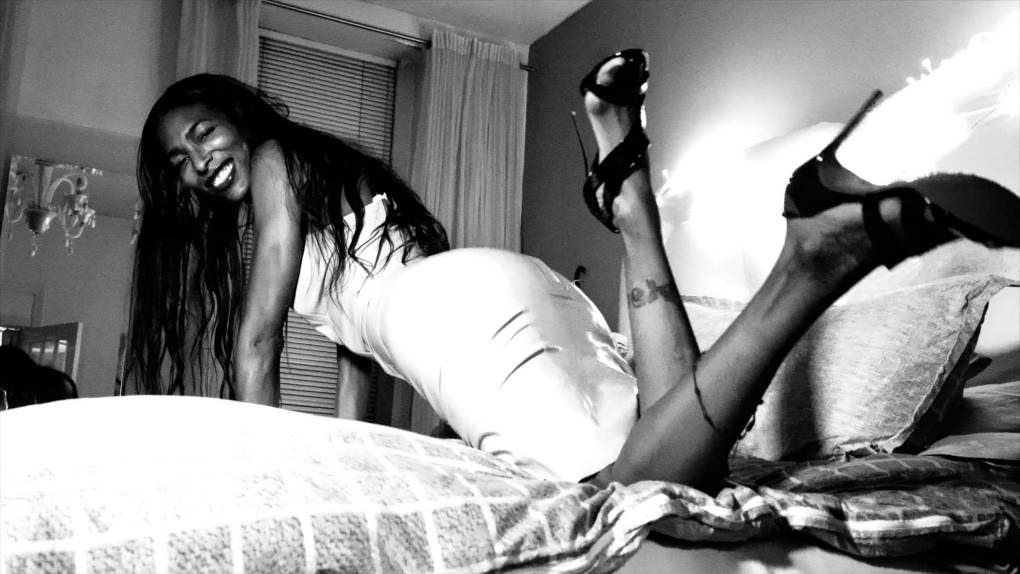
"caption": "Dominique Silver appears in 'Kokomo City,' the debut feature by D. Smith.",
"description": null,
"title": "3-2",
"credit": "Photo by D. Smith, courtesy of Sundance Institute ",
"status": "inherit",
"altTag": "a black and white photo of a smiling Black woman in a tight dress with heels leaning on a bed",
"isLoading": false,
"fetchFailed": false
},
"arts_13932478": {
"type": "attachments",
"id": "arts_13932478",
"meta": {
"index": "attachments_1716263798",
"site": "arts",
"id": "13932478",
"found": true
},
"parent": 13932477,
"imgSizes": {
"twentyfourteen-full-width": {
"file": "https://ww2.kqed.org/app/uploads/sites/2/2023/07/gettyimages-159826402-edit_custom-a6e6d1099f78bd89af014e99ee0b359a5c6e7047-scaled-e1690912248688-1038x576.jpg",
"width": 1038,
"mimeType": "image/jpeg",
"height": 576
},
"thumbnail": {
"file": "https://ww2.kqed.org/app/uploads/sites/2/2023/07/gettyimages-159826402-edit_custom-a6e6d1099f78bd89af014e99ee0b359a5c6e7047-scaled-e1690912248688-160x86.jpg",
"width": 160,
"mimeType": "image/jpeg",
"height": 86
},
"post-thumbnail": {
"file": "https://ww2.kqed.org/app/uploads/sites/2/2023/07/gettyimages-159826402-edit_custom-a6e6d1099f78bd89af014e99ee0b359a5c6e7047-scaled-e1690912248688-672x372.jpg",
"width": 672,
"mimeType": "image/jpeg",
"height": 372
},
"kqedFullSize": {
"file": "https://ww2.kqed.org/app/uploads/sites/2/2023/07/gettyimages-159826402-edit_custom-a6e6d1099f78bd89af014e99ee0b359a5c6e7047-scaled-e1690912248688.jpg",
"width": 1920,
"height": 1034
},
"2048x2048": {
"file": "https://ww2.kqed.org/app/uploads/sites/2/2023/07/gettyimages-159826402-edit_custom-a6e6d1099f78bd89af014e99ee0b359a5c6e7047-2048x1103.jpg",
"width": 2048,
"mimeType": "image/jpeg",
"height": 1103
},
"large": {
"file": "https://ww2.kqed.org/app/uploads/sites/2/2023/07/gettyimages-159826402-edit_custom-a6e6d1099f78bd89af014e99ee0b359a5c6e7047-scaled-e1690912248688-1020x549.jpg",
"width": 1020,
"mimeType": "image/jpeg",
"height": 549
},
"1536x1536": {
"file": "https://ww2.kqed.org/app/uploads/sites/2/2023/07/gettyimages-159826402-edit_custom-a6e6d1099f78bd89af014e99ee0b359a5c6e7047-scaled-e1690912248688-1536x827.jpg",
"width": 1536,
"mimeType": "image/jpeg",
"height": 827
},
"full-width": {
"file": "https://ww2.kqed.org/app/uploads/sites/2/2023/07/gettyimages-159826402-edit_custom-a6e6d1099f78bd89af014e99ee0b359a5c6e7047-1920x1034.jpg",
"width": 1920,
"mimeType": "image/jpeg",
"height": 1034
},
"medium": {
"file": "https://ww2.kqed.org/app/uploads/sites/2/2023/07/gettyimages-159826402-edit_custom-a6e6d1099f78bd89af014e99ee0b359a5c6e7047-scaled-e1690912248688-800x431.jpg",
"width": 800,
"mimeType": "image/jpeg",
"height": 431
},
"medium_large": {
"file": "https://ww2.kqed.org/app/uploads/sites/2/2023/07/gettyimages-159826402-edit_custom-a6e6d1099f78bd89af014e99ee0b359a5c6e7047-scaled-e1690912248688-768x414.jpg",
"width": 768,
"mimeType": "image/jpeg",
"height": 414
}
},
"publishDate": 1690909902,
"modified": 1690912371,
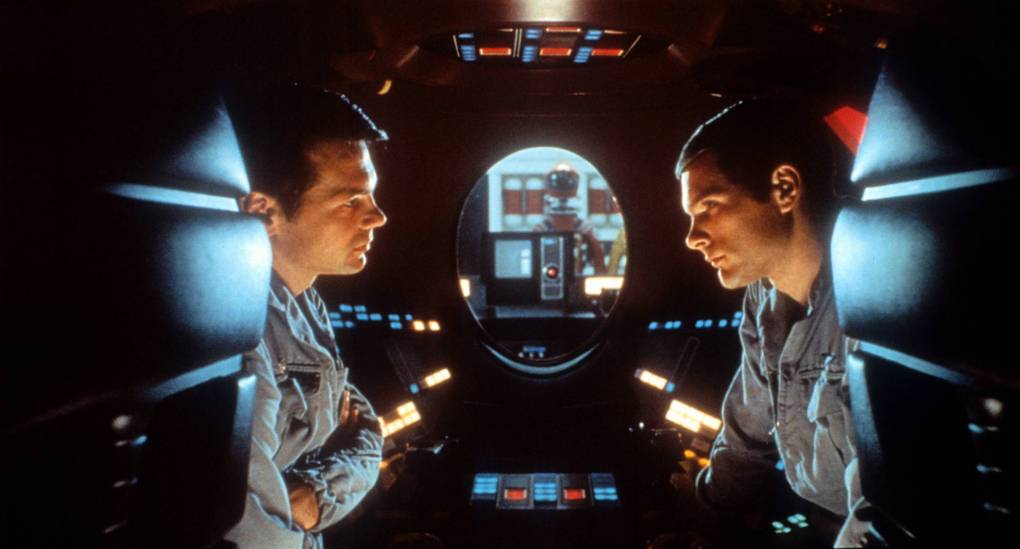
"caption": "Malevolent robot stories used to be more about brawn than brain — so it was a genuine shock for audiences in 1968 when the sentient HAL-9000 computer calmly said, \"I'm sorry, Dave, I'm afraid I can't do that.\"",
"description": null,
"title": "Malevolent robot stories used to be more about brawn than brain — so it was a genuine shock for audiences in 1968 when the sentient HAL-9000 computer calmly said, \"I'm sorry, Dave, I'm afraid I can't do that.\"",
"credit": "2001: A Space Odyssey",
"status": "inherit",
"altTag": "Two astronauts sit face to face in a small craft. Through an oval window between them, a robot is visible.",
"isLoading": false,
"fetchFailed": false
},
"arts_13932419": {
"type": "attachments",
"id": "arts_13932419",
"meta": {
"index": "attachments_1716263798",
"site": "arts",
"id": "13932419",
"found": true
},
"parent": 13932418,
"imgSizes": {
"twentyfourteen-full-width": {
"file": "https://ww2.kqed.org/app/uploads/sites/2/2023/07/darkwinds_joe-bernadette_mm_1130_0122_rt_wide-829c7ebf45cd9231b4714df3cda7ca55a470360f-scaled-e1690826358256-1038x576.jpg",
"width": 1038,
"mimeType": "image/jpeg",
"height": 576
},
"thumbnail": {
"file": "https://ww2.kqed.org/app/uploads/sites/2/2023/07/darkwinds_joe-bernadette_mm_1130_0122_rt_wide-829c7ebf45cd9231b4714df3cda7ca55a470360f-scaled-e1690826358256-160x90.jpg",
"width": 160,
"mimeType": "image/jpeg",
"height": 90
},
"post-thumbnail": {
"file": "https://ww2.kqed.org/app/uploads/sites/2/2023/07/darkwinds_joe-bernadette_mm_1130_0122_rt_wide-829c7ebf45cd9231b4714df3cda7ca55a470360f-scaled-e1690826358256-672x372.jpg",
"width": 672,
"mimeType": "image/jpeg",
"height": 372
},
"kqedFullSize": {
"file": "https://ww2.kqed.org/app/uploads/sites/2/2023/07/darkwinds_joe-bernadette_mm_1130_0122_rt_wide-829c7ebf45cd9231b4714df3cda7ca55a470360f-scaled-e1690826358256.jpg",
"width": 1920,
"height": 1080
},
"2048x2048": {
"file": "https://ww2.kqed.org/app/uploads/sites/2/2023/07/darkwinds_joe-bernadette_mm_1130_0122_rt_wide-829c7ebf45cd9231b4714df3cda7ca55a470360f-2048x1152.jpg",
"width": 2048,
"mimeType": "image/jpeg",
"height": 1152
},
"large": {
"file": "https://ww2.kqed.org/app/uploads/sites/2/2023/07/darkwinds_joe-bernadette_mm_1130_0122_rt_wide-829c7ebf45cd9231b4714df3cda7ca55a470360f-scaled-e1690826358256-1020x574.jpg",
"width": 1020,
"mimeType": "image/jpeg",
"height": 574
},
"1536x1536": {
"file": "https://ww2.kqed.org/app/uploads/sites/2/2023/07/darkwinds_joe-bernadette_mm_1130_0122_rt_wide-829c7ebf45cd9231b4714df3cda7ca55a470360f-scaled-e1690826358256-1536x864.jpg",
"width": 1536,
"mimeType": "image/jpeg",
"height": 864
},
"full-width": {
"file": "https://ww2.kqed.org/app/uploads/sites/2/2023/07/darkwinds_joe-bernadette_mm_1130_0122_rt_wide-829c7ebf45cd9231b4714df3cda7ca55a470360f-1920x1080.jpg",
"width": 1920,
"mimeType": "image/jpeg",
"height": 1080
},
"medium": {
"file": "https://ww2.kqed.org/app/uploads/sites/2/2023/07/darkwinds_joe-bernadette_mm_1130_0122_rt_wide-829c7ebf45cd9231b4714df3cda7ca55a470360f-scaled-e1690826358256-800x450.jpg",
"width": 800,
"mimeType": "image/jpeg",
"height": 450
},
"medium_large": {
"file": "https://ww2.kqed.org/app/uploads/sites/2/2023/07/darkwinds_joe-bernadette_mm_1130_0122_rt_wide-829c7ebf45cd9231b4714df3cda7ca55a470360f-scaled-e1690826358256-768x432.jpg",
"width": 768,
"mimeType": "image/jpeg",
"height": 432
}
},
"publishDate": 1690825788,
"modified": 1690826453,
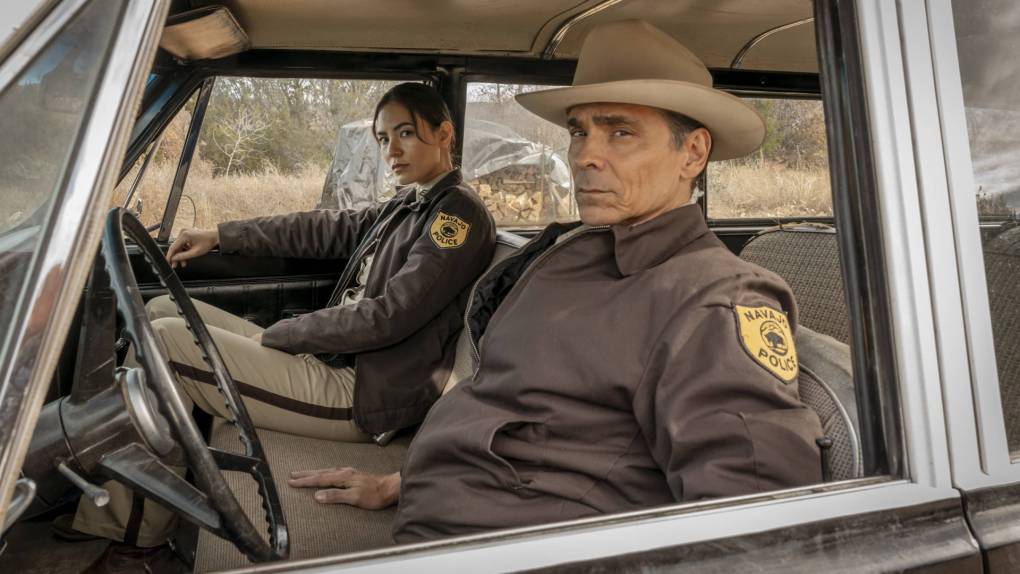
"caption": "Zahn McClarnon plays Lt. Joe Leaphorn and Jessica Matten is Sgt. Bernadette Manuelito in Season 2 of ‘Dark Winds.’",
"description": null,
"title": "Zahn McClarnon plays Lt. Joe Leaphorn and Jessica Matten is Sgt. Bernadette Manuelito in Season 2 of ‘Dark Winds.’",
"credit": "Michael Moriatis/ AMC",
"status": "inherit",
"altTag": "Two Indigenous police officers - one male, one female - sit in a car, wearing brown and tan uniforms. The environment outside the car's windows is desert.",
"isLoading": false,
"fetchFailed": false
},
"arts_13931834": {
"type": "attachments",
"id": "arts_13931834",
"meta": {
"index": "attachments_1716263798",
"site": "arts",
"id": "13931834",
"found": true
},
"parent": 13931833,
"imgSizes": {
"twentyfourteen-full-width": {
"file": "https://ww2.kqed.org/app/uploads/sites/2/2023/07/TTM-MAIN-1038x576.png",
"width": 1038,
"mimeType": "image/png",
"height": 576
},
"thumbnail": {
"file": "https://ww2.kqed.org/app/uploads/sites/2/2023/07/TTM-MAIN-160x98.png",
"width": 160,
"mimeType": "image/png",
"height": 98
},
"post-thumbnail": {
"file": "https://ww2.kqed.org/app/uploads/sites/2/2023/07/TTM-MAIN-672x372.png",
"width": 672,
"mimeType": "image/png",
"height": 372
},
"kqedFullSize": {
"file": "https://ww2.kqed.org/app/uploads/sites/2/2023/07/TTM-MAIN.png",
"width": 1724,
"height": 1056
},
"large": {
"file": "https://ww2.kqed.org/app/uploads/sites/2/2023/07/TTM-MAIN-1020x625.png",
"width": 1020,
"mimeType": "image/png",
"height": 625
},
"1536x1536": {
"file": "https://ww2.kqed.org/app/uploads/sites/2/2023/07/TTM-MAIN-1536x941.png",
"width": 1536,
"mimeType": "image/png",
"height": 941
},
"medium": {
"file": "https://ww2.kqed.org/app/uploads/sites/2/2023/07/TTM-MAIN-800x490.png",
"width": 800,
"mimeType": "image/png",
"height": 490
},
"medium_large": {
"file": "https://ww2.kqed.org/app/uploads/sites/2/2023/07/TTM-MAIN-768x470.png",
"width": 768,
"mimeType": "image/png",
"height": 470
}
},
"publishDate": 1689799678,
"modified": 1690313646,
"caption": "Not a party you want to be invited to: Sophie Wilde as Mia in ‘Talk to Me.’",
"description": null,
"title": "Not a party you want to be invited to: Sophie Wilde as Mia in ‘Talk to Me.’",
"credit": "A24",
"status": "inherit",
"altTag": "A young Black girl wearing a yellow dressing gown leans sideways on an armchair with a menacing smile on her face. Her eyes are completely black.",
"isLoading": false,
"fetchFailed": false
},
"arts_13931889": {
"type": "attachments",
"id": "arts_13931889",
"meta": {
"index": "attachments_1716263798",
"site": "arts",
"id": "13931889",
"found": true
},
"parent": 13931888,
"imgSizes": {
"twentyfourteen-full-width": {
"file": "https://ww2.kqed.org/app/uploads/sites/2/2023/07/Screen-Shot-2023-07-20-at-2.29.47-PM-1038x576.png",
"width": 1038,
"mimeType": "image/png",
"height": 576
},
"thumbnail": {
"file": "https://ww2.kqed.org/app/uploads/sites/2/2023/07/Screen-Shot-2023-07-20-at-2.29.47-PM-160x109.png",
"width": 160,
"mimeType": "image/png",
"height": 109
},
"post-thumbnail": {
"file": "https://ww2.kqed.org/app/uploads/sites/2/2023/07/Screen-Shot-2023-07-20-at-2.29.47-PM-672x372.png",
"width": 672,
"mimeType": "image/png",
"height": 372
},
"kqedFullSize": {
"file": "https://ww2.kqed.org/app/uploads/sites/2/2023/07/Screen-Shot-2023-07-20-at-2.29.47-PM.png",
"width": 1402,
"height": 954
},
"large": {
"file": "https://ww2.kqed.org/app/uploads/sites/2/2023/07/Screen-Shot-2023-07-20-at-2.29.47-PM-1020x694.png",
"width": 1020,
"mimeType": "image/png",
"height": 694
},
"medium": {
"file": "https://ww2.kqed.org/app/uploads/sites/2/2023/07/Screen-Shot-2023-07-20-at-2.29.47-PM-800x544.png",
"width": 800,
"mimeType": "image/png",
"height": 544
},
"medium_large": {
"file": "https://ww2.kqed.org/app/uploads/sites/2/2023/07/Screen-Shot-2023-07-20-at-2.29.47-PM-768x523.png",
"width": 768,
"mimeType": "image/png",
"height": 523
}
},
"publishDate": 1689888623,
"modified": 1689888739,
"caption": "A young Steph Curry on the court, as seen in ‘Stephen Curry: Underrated.’",
"description": null,
"title": "A young Steph Curry on the court, as seen in ‘Stephen Curry: Underrated.’",
"credit": "Apple TV+",
"status": "inherit",
"altTag": "A young, handsome Black man gazes up, his face damp with sweat.",
"isLoading": false,
"fetchFailed": false
},
"arts_13931854": {
"type": "attachments",
"id": "arts_13931854",
"meta": {
"index": "attachments_1716263798",
"site": "arts",
"id": "13931854",
"found": true
},
"parent": 13931848,
"imgSizes": {
"twentyfourteen-full-width": {
"file": "https://ww2.kqed.org/app/uploads/sites/2/2023/07/THESECRETARTOFHUMANFLIGHT_MARKUS_MENTZER_3_COVER-1038x576.jpg",
"width": 1038,
"mimeType": "image/jpeg",
"height": 576
},
"thumbnail": {
"file": "https://ww2.kqed.org/app/uploads/sites/2/2023/07/THESECRETARTOFHUMANFLIGHT_MARKUS_MENTZER_3_COVER-160x90.jpg",
"width": 160,
"mimeType": "image/jpeg",
"height": 90
},
"post-thumbnail": {
"file": "https://ww2.kqed.org/app/uploads/sites/2/2023/07/THESECRETARTOFHUMANFLIGHT_MARKUS_MENTZER_3_COVER-672x372.jpg",
"width": 672,
"mimeType": "image/jpeg",
"height": 372
},
"kqedFullSize": {
"file": "https://ww2.kqed.org/app/uploads/sites/2/2023/07/THESECRETARTOFHUMANFLIGHT_MARKUS_MENTZER_3_COVER.jpg",
"width": 1920,
"height": 1080
},
"large": {
"file": "https://ww2.kqed.org/app/uploads/sites/2/2023/07/THESECRETARTOFHUMANFLIGHT_MARKUS_MENTZER_3_COVER-1020x574.jpg",
"width": 1020,
"mimeType": "image/jpeg",
"height": 574
},
"1536x1536": {
"file": "https://ww2.kqed.org/app/uploads/sites/2/2023/07/THESECRETARTOFHUMANFLIGHT_MARKUS_MENTZER_3_COVER-1536x864.jpg",
"width": 1536,
"mimeType": "image/jpeg",
"height": 864
},
"medium": {
"file": "https://ww2.kqed.org/app/uploads/sites/2/2023/07/THESECRETARTOFHUMANFLIGHT_MARKUS_MENTZER_3_COVER-800x450.jpg",
"width": 800,
"mimeType": "image/jpeg",
"height": 450
},
"medium_large": {
"file": "https://ww2.kqed.org/app/uploads/sites/2/2023/07/THESECRETARTOFHUMANFLIGHT_MARKUS_MENTZER_3_COVER-768x432.jpg",
"width": 768,
"mimeType": "image/jpeg",
"height": 432
}
},
"publishDate": 1689877236,
"modified": 1689877913,
"caption": "A still from San Francisco director H.P. Mendoza’s ‘The Secret Art of Human Flight,’ playing Sunday, July 23 at the San Francisco Jewish Film Festival.",
"description": null,
"title": "THESECRETARTOFHUMANFLIGHT_MARKUS_MENTZER_3_COVER",
"credit": "Markus Mentzer",
"status": "inherit",
"altTag": "Man dressed in white with arms outstretched stands on edge of hill, clouds above",
"isLoading": false,
"fetchFailed": false
},
"arts_13931688": {
"type": "attachments",
"id": "arts_13931688",
"meta": {
"index": "attachments_1716263798",
"site": "arts",
"id": "13931688",
"found": true
},
"parent": 13931677,
"imgSizes": {
"twentyfourteen-full-width": {
"file": "https://ww2.kqed.org/app/uploads/sites/2/2023/07/Screen-Shot-2023-07-14-at-2.25.30-PM-1038x576.png",
"width": 1038,
"mimeType": "image/png",
"height": 576
},
"thumbnail": {
"file": "https://ww2.kqed.org/app/uploads/sites/2/2023/07/Screen-Shot-2023-07-14-at-2.25.30-PM-160x105.png",
"width": 160,
"mimeType": "image/png",
"height": 105
},
"post-thumbnail": {
"file": "https://ww2.kqed.org/app/uploads/sites/2/2023/07/Screen-Shot-2023-07-14-at-2.25.30-PM-672x372.png",
"width": 672,
"mimeType": "image/png",
"height": 372
},
"kqedFullSize": {
"file": "https://ww2.kqed.org/app/uploads/sites/2/2023/07/Screen-Shot-2023-07-14-at-2.25.30-PM.png",
"width": 1804,
"height": 1182
},
"large": {
"file": "https://ww2.kqed.org/app/uploads/sites/2/2023/07/Screen-Shot-2023-07-14-at-2.25.30-PM-1020x668.png",
"width": 1020,
"mimeType": "image/png",
"height": 668
},
"1536x1536": {
"file": "https://ww2.kqed.org/app/uploads/sites/2/2023/07/Screen-Shot-2023-07-14-at-2.25.30-PM-1536x1006.png",
"width": 1536,
"mimeType": "image/png",
"height": 1006
},
"medium": {
"file": "https://ww2.kqed.org/app/uploads/sites/2/2023/07/Screen-Shot-2023-07-14-at-2.25.30-PM-800x524.png",
"width": 800,
"mimeType": "image/png",
"height": 524
},
"medium_large": {
"file": "https://ww2.kqed.org/app/uploads/sites/2/2023/07/Screen-Shot-2023-07-14-at-2.25.30-PM-768x503.png",
"width": 768,
"mimeType": "image/png",
"height": 503
}
},
"publishDate": 1689369942,
"modified": 1689370189,
"caption": "The cast of ‘Barbie’ assembled in London with writer and director, Greta Gerwig.",
"description": null,
"title": "The cast of ‘Barbie’ assembled in London with writer and director, Greta Gerwig.",
"credit": "Warner Bros. Media",
"status": "inherit",
"altTag": "A Latina in a striking red dress, an attractive Asian man, a blond white woman, a smiling Black woman, a white man in a mint green suit and a white woman in a pink sequined cape and dress stand together in a line on a red carpet.",
"isLoading": false,
"fetchFailed": false
}
},
"audioPlayerReducer": {
"postId": "stream_live",
"isPaused": true,
"isPlaying": false,
"pfsActive": false,
"pledgeModalIsOpen": true,
"playerDrawerIsOpen": false,
"liveAudioPlayStartedAt": 0,
"liveAudioPlayContext": ""
},
"authorsReducer": {
"byline_arts_13936628": {
"type": "authors",
"id": "byline_arts_13936628",
"meta": {
"override": true
},
"slug": "byline_arts_13936628",
"name": "Jocelyn Noveck, Associated Press",
"isLoading": false
},
"byline_arts_13935844": {
"type": "authors",
"id": "byline_arts_13935844",
"meta": {
"override": true
},
"slug": "byline_arts_13935844",
"name": "Jake Coyle, Associated Press",
"isLoading": false
},
"byline_arts_13933359": {
"type": "authors",
"id": "byline_arts_13933359",
"meta": {
"override": true
},
"slug": "byline_arts_13933359",
"name": "Jake Coyle",
"isLoading": false
},
"byline_arts_13932848": {
"type": "authors",
"id": "byline_arts_13932848",
"meta": {
"override": true
},
"slug": "byline_arts_13932848",
"name": "Mandalit del Barco",
"isLoading": false
},
"byline_arts_13932477": {
"type": "authors",
"id": "byline_arts_13932477",
"meta": {
"override": true
},
"slug": "byline_arts_13932477",
"name": "Bob Mondello",
"isLoading": false
},
"byline_arts_13932418": {
"type": "authors",
"id": "byline_arts_13932418",
"meta": {
"override": true
},
"slug": "byline_arts_13932418",
"name": "John Powers",
"isLoading": false
},
"byline_arts_13931888": {
"type": "authors",
"id": "byline_arts_13931888",
"meta": {
"override": true
},
"slug": "byline_arts_13931888",
"name": "Lindsey Bahr, Associated Press",
"isLoading": false
},
"byline_arts_13931677": {
"type": "authors",
"id": "byline_arts_13931677",
"meta": {
"override": true
},
"slug": "byline_arts_13931677",
"name": "Lindsey Bahr",
"isLoading": false
},
"mfox": {
"type": "authors",
"id": "22",
"meta": {
"index": "authors_1716337520",
"id": "22",
"found": true
},
"name": "Michael Fox",
"firstName": "Michael",
"lastName": "Fox",
"slug": "mfox",
"email": "foxonfilm@yahoo.com",
"display_author_email": false,
"staff_mastheads": [],
"title": "KQED Contributor",
"bio": "Michael Fox has written about film for dozens of publications since 1987. He is a founding member of the San Francisco Bay Area Film Critics Circle.",
"avatar": "https://secure.gravatar.com/avatar/d9849d6c659c41414795c471d907bb97b396e2a32b88e20e6ff66f65fbdd6dcd?s=600&d=blank&r=g",
"twitter": null,
"bluesky": null,
"facebook": null,
"instagram": null,
"linkedin": null,
"sites": [
{
"site": "arts",
"roles": [
"Contributor",
"contributor"
]
}
],
"headData": {
"title": "Michael Fox | KQED",
"description": "KQED Contributor",
"ogImgSrc": "https://secure.gravatar.com/avatar/d9849d6c659c41414795c471d907bb97b396e2a32b88e20e6ff66f65fbdd6dcd?s=600&d=blank&r=g",
"twImgSrc": "https://secure.gravatar.com/avatar/d9849d6c659c41414795c471d907bb97b396e2a32b88e20e6ff66f65fbdd6dcd?s=600&d=blank&r=g"
},
"isLoading": false,
"link": "/author/mfox"
},
"ralexandra": {
"type": "authors",
"id": "11242",
"meta": {
"index": "authors_1716337520",
"id": "11242",
"found": true
},
"name": "Rae Alexandra",
"firstName": "Rae",
"lastName": "Alexandra",
"slug": "ralexandra",
"email": "ralexandra@kqed.org",
"display_author_email": true,
"staff_mastheads": [],
"title": "Reporter/Producer",
"bio": "Rae Alexandra is a Reporter/Producer for KQED Arts & Culture, and the creator/author of the \u003ca href=\"https://www.kqed.org/arts/program/rebel-girls-from-bay-area-history\">Rebel Girls From Bay Area History\u003c/a> and \u003ca href=\"https://www.kqed.org/bizarrebayarea\">Bizarre Bay Area\u003c/a> series. Her debut book, \u003ca href=\"https://citylights.com/politics-current-events-history/unsung-heroines35-women-who-changed/\">Unsung Heroines: 35 Women Who Changed the Bay Area\u003c/a> was published by City Lights in March 2026. In 2023, Rae was awarded an SPJ Excellence in Journalism Award for Arts & Culture. Rae was born and raised in Wales and subsequently — even after two decades in Northern California — still uses phrases that regularly baffle her coworkers.",
"avatar": "https://secure.gravatar.com/avatar/edfee8176c80cc0a382b051190f5341997df378a934a5774dcb0977732dfd401?s=600&d=blank&r=g",
"twitter": null,
"bluesky": null,
"facebook": null,
"instagram": null,
"linkedin": null,
"sites": [
{
"site": "arts",
"roles": [
"subscriber"
]
},
{
"site": "news",
"roles": [
"subscriber"
]
},
{
"site": "pop",
"roles": [
"subscriber"
]
},
{
"site": "bayareabites",
"roles": [
"subscriber"
]
},
{
"site": "science",
"roles": [
"subscriber"
]
}
],
"headData": {
"title": "Rae Alexandra | KQED",
"description": "Reporter/Producer",
"ogImgSrc": "https://secure.gravatar.com/avatar/edfee8176c80cc0a382b051190f5341997df378a934a5774dcb0977732dfd401?s=600&d=blank&r=g",
"twImgSrc": "https://secure.gravatar.com/avatar/edfee8176c80cc0a382b051190f5341997df378a934a5774dcb0977732dfd401?s=600&d=blank&r=g"
},
"isLoading": false,
"link": "/author/ralexandra"
},
"omayeda": {
"type": "authors",
"id": "11872",
"meta": {
"index": "authors_1716337520",
"id": "11872",
"found": true
},
"name": "Olivia Cruz Mayeda",
"firstName": "Olivia Cruz",
"lastName": "Mayeda",
"slug": "omayeda",
"email": "omayeda@kqed.org",
"display_author_email": false,
"staff_mastheads": [],
"title": "Reporter",
"bio": "Olivia Cruz Mayeda is a journalist covering style, culture and reparations in the Bay Area, a place that has been home to her family for over 100 years. Her writing has also appeared in the \u003cem>San Francisco Chronicle\u003c/em> and \u003cem>El Tecolote\u003c/em>.",
"avatar": "https://secure.gravatar.com/avatar/a8c0baa30219ce1071a9474f4c14141f?s=600&d=blank&r=g",
"twitter": null,
"facebook": null,
"instagram": null,
"linkedin": null,
"sites": [
{
"site": "arts",
"roles": [
"contributor"
]
}
],
"headData": {
"title": "Olivia Cruz Mayeda | KQED",
"description": "Reporter",
"ogImgSrc": "https://secure.gravatar.com/avatar/a8c0baa30219ce1071a9474f4c14141f?s=600&d=blank&r=g",
"twImgSrc": "https://secure.gravatar.com/avatar/a8c0baa30219ce1071a9474f4c14141f?s=600&d=blank&r=g"
},
"isLoading": false,
"link": "/author/omayeda"
}
},
"pagesReducer": {
"arts_tag_film": {
"type": "terms",
"id": "arts_977",
"meta": {
"index": "terms_1716263798",
"site": "arts",
"id": "977",
"score": 8.284364
},
"name": "Film",
"slug": "film",
"taxonomy": "tag",
"description": null,
"featImg": null,
"headData": {
"title": "Film Archives | KQED Arts",
"description": null,
"ogTitle": null,
"ogDescription": null,
"ogImgId": null,
"twTitle": null,
"twDescription": null,
"twImgId": null
},
"ttid": 995,
"isLoading": false,
"title": "Film",
"pageMeta": {
"site": "arts",
"WpPageTemplate": "page-topic-editorial",
"currentPage": 11
},
"blocks": [
{
"blockName": "kqed/post-list",
"attrs": {
"layout": "cardArticle2",
"query": "posts/arts?tag=film",
"seeMore": false,
"paginated": true,
"page": 11
}
},
{
"blockName": "kqed/ad"
}
]
}
},
"pfsSessionReducer": {},
"postsReducer": {
"stream_live": {
"type": "live",
"id": "stream_live",
"audioUrl": "https://streams.kqed.org/kqedradio",
"title": "Live Stream",
"excerpt": "Live Stream information currently unavailable.",
"link": "/radio",
"featImg": "",
"label": {
"name": "KQED Live",
"link": "/"
}
},
"stream_kqedNewscast": {
"type": "posts",
"id": "stream_kqedNewscast",
"audioUrl": "https://www.kqed.org/.stream/anon/radio/RDnews/newscast.mp3?_=1",
"title": "KQED Newscast",
"featImg": "",
"label": {
"name": "88.5 FM",
"link": "/"
}
},
"arts_13936628": {
"type": "posts",
"id": "arts_13936628",
"meta": {
"index": "posts_1716263798",
"site": "arts",
"id": "13936628",
"score": null,
"sort": [
1697653378000
]
},
"parent": 0,
"labelTerm": {
"site": "arts",
"term": 140
},
"blocks": [],
"publishDate": 1697653378,
"format": "standard",
"title": "Scorsese’s ‘Killers of the Flower Moon’ is a Sweeping Tale of Greed, Richly Told",
"headTitle": "Scorsese’s ‘Killers of the Flower Moon’ is a Sweeping Tale of Greed, Richly Told | KQED",
"content": "\u003cp>There tends to be lots of fast talking and fast moving in Martin Scorsese films, often from shifty types trying to get away with something. Or sometimes, simply because the master filmmaker has so much to pack in.\u003c/p>\n\u003cp>[aside postid='arts_13935897']But in \u003cem>Killers of the Flower Moon\u003c/em>, everything seems to slow down, and especially when the camera lands on Lily Gladstone. As Mollie, the Osage woman at the heart of this sprawling, real-life tale of greed and treachery on a scale both broad and intimate, Gladstone is the quiet, powerful center — taking her time, letting her eyes do the work, and unafraid of silence.\u003c/p>\n\u003cp>It’s a beautifully cadenced performance, all the more impressive because Gladstone’s sharing the screen with two of our most celebrated actors. Leonardo DiCaprio and Robert De Niro both turn in superb work for their legendary director, appearing together for the first time in 30 years. But Gladstone, in the rare Scorsese film that gives center stage to a female character, is the emotional core here, and it’s her face that stays etched in our memory.\u003c/p>\n\u003cfigure id=\"attachment_13936630\" class=\"wp-caption aligncenter\" style=\"max-width: 1362px\">\u003cimg loading=\"lazy\" decoding=\"async\" class=\"size-full wp-image-13936630\" src=\"https://ww2.kqed.org/app/uploads/sites/2/2023/10/Screen-Shot-2023-10-18-at-10.58.13-AM.png\" alt=\"An Indigenous woman wearing traditional textiles sits next to a white man in a suit at a dining table. They are inside a dimly lit house.\" width=\"1362\" height=\"886\" srcset=\"https://cdn.kqed.org/wp-content/uploads/sites/2/2023/10/Screen-Shot-2023-10-18-at-10.58.13-AM.png 1362w, https://cdn.kqed.org/wp-content/uploads/sites/2/2023/10/Screen-Shot-2023-10-18-at-10.58.13-AM-800x520.png 800w, https://cdn.kqed.org/wp-content/uploads/sites/2/2023/10/Screen-Shot-2023-10-18-at-10.58.13-AM-1020x664.png 1020w, https://cdn.kqed.org/wp-content/uploads/sites/2/2023/10/Screen-Shot-2023-10-18-at-10.58.13-AM-160x104.png 160w, https://cdn.kqed.org/wp-content/uploads/sites/2/2023/10/Screen-Shot-2023-10-18-at-10.58.13-AM-768x500.png 768w\" sizes=\"(max-width: 1362px) 100vw, 1362px\">\u003cfigcaption class=\"wp-caption-text\">Lily Gladstone and Leonardo DiCaprio in a scene from ‘Killers of the Flower Moon.’ \u003ccite>(Melinda Sue Gordon/ Apple TV+ via AP)\u003c/cite>\u003c/figcaption>\u003c/figure>\n\u003cp>Based on David Grann’s gripping whodunit set among the Osage in 1920s Oklahoma, \u003cem>Killers\u003c/em> is a departure in other ways for the 80-year-old filmmaker. It’s his first Western, a genre he’s long wanted to explore — albeit a uniquely Scorsese Western, with an upended world of heroes and villains. And in telling this Osage story, he focuses on a people he’s never depicted before, deeply mindful of honoring their experience and their rituals, beliefs and customs.\u003c/p>\n\u003cp>It surely won’t surprise anyone that Scorsese brings his full wealth of artistic resources to this endeavor, along with his brilliant cinematographer, Rodrigo Prieto, and inspired production designer, Jack Fisk. Together, on location in Oklahoma, they’ve created an oil boomtown astonishing in its precision, detail and spirit.\u003c/p>\n\u003cp>[ad fullwidth]\u003c/p>\n\u003cp>It may also not surprise anyone that Scorsese has taken three and a half hours (albeit three minutes less than \u003cem>The Irishman\u003c/em>) to tell his tale. This may be a source of debate, but it’s hard to argue that a story this hefty — a chronicle of a dark chapter in American history and a shocking true crime tale, all framed in a fraught love story — doesn’t deserve the length, considering the craft in every shot. And with some scenes — a boisterous prairie wedding, or a dance on a boomtown main drag — you feel you could have stayed longer still.\u003c/p>\n\u003cp>https://www.youtube.com/watch?v=EP34Yoxs3FQ\u003c/p>\n\u003cp>We begin with a late 19th-century ceremony, one of many portrayals of Osage spiritual life. Then, in a memorable image, there’s a whoosh from underground: Oil, spurting from land that was supposed to be worthless.\u003c/p>\n\u003cp>[aside postid='arts_13936363']Thanks to this discovery, we learn in a terrific prologue using silent-movie title cards, the Osage become enormously wealthy. But they’re deemed “incompetent” and appointed white “guardians” who control their assets. This is how we meet Mollie, asking for her own money to pay medical bills.\u003c/p>\n\u003cp>Meanwhile, Ernest Burkhart (DiCaprio) steps off the train, a World War I vet with a taste for women and finer things, but no money, or talent to speak of. Perhaps his uncle can help. William Hale (De Niro) is a cattle rancher but more like a king around these parts — indeed, King’s his nickname — a white man who speaks the Osage language and calls himself their best friend.\u003c/p>\n\u003cp>But it’s clear from the get-go Hale has sinister motives, and De Niro’s just the guy to ooze sinister from every pore as this Godfather-like figure (he commits crimes, and they’re organized). Scorsese and co-writer Eric Roth depart here from Grann’s book, which holds us in suspense as to Hale’s motives. He wants Osage money, and tells Ernest that if he woos and marries Mollie — well, even less-than-brilliant Ernest can do the math.\u003c/p>\n\u003cfigure id=\"attachment_13936631\" class=\"wp-caption aligncenter\" style=\"max-width: 1388px\">\u003cimg loading=\"lazy\" decoding=\"async\" class=\"size-full wp-image-13936631\" src=\"https://ww2.kqed.org/app/uploads/sites/2/2023/10/Screen-Shot-2023-10-18-at-11.04.08-AM.png\" alt=\"An older white man sitting in the passenger seat of a very early model of car taps the arm of a concerned looking younger white man wearing a cowboy hat and woven coat. \" width=\"1388\" height=\"926\" srcset=\"https://cdn.kqed.org/wp-content/uploads/sites/2/2023/10/Screen-Shot-2023-10-18-at-11.04.08-AM.png 1388w, https://cdn.kqed.org/wp-content/uploads/sites/2/2023/10/Screen-Shot-2023-10-18-at-11.04.08-AM-800x534.png 800w, https://cdn.kqed.org/wp-content/uploads/sites/2/2023/10/Screen-Shot-2023-10-18-at-11.04.08-AM-1020x680.png 1020w, https://cdn.kqed.org/wp-content/uploads/sites/2/2023/10/Screen-Shot-2023-10-18-at-11.04.08-AM-160x107.png 160w, https://cdn.kqed.org/wp-content/uploads/sites/2/2023/10/Screen-Shot-2023-10-18-at-11.04.08-AM-768x512.png 768w\" sizes=\"(max-width: 1388px) 100vw, 1388px\">\u003cfigcaption class=\"wp-caption-text\">Robert De Niro and Leonardo DiCaprio in a scene from ‘Killers of the Flower Moon.’ \u003ccite>(Melinda Sue Gordon/ Apple TV+ via AP)\u003c/cite>\u003c/figcaption>\u003c/figure>\n\u003cp>So can Mollie. Trusting but hardly naive, she knows Ernest covets her wealth, but there’s growing affection between the two, and their marriage, gorgeously rendered, is a happy occasion.\u003c/p>\n\u003cp>But then the Osage start dying, one by one, in suspicious ways — including, eventually, Mollie’s sisters and mother. As for Ernest, he’s no angel, spending time robbing and gambling. But is he doing more? DiCaprio’s mouth settles into a tortured frown as he becomes increasingly torn between marital loyalty and fealty to his venal uncle.\u003c/p>\n\u003cp>Finally, federal agent Tom White (Jesse Plemons, perfectly cast) shows up, working for J. Edgar Hoover in what became the FBI. (It’s White who figured most prominently in Grann’s book, and indeed DiCaprio was once slated to play him.) This last act finds its way to a crackling courtroom scene perhaps only Scorsese could bring together: jittery DiCaprio and menacing De Niro, joined by a bombastic Brendan Fraser and a sputtering John Lithgow.\u003c/p>\n\u003cp>[aside postid='arts_13924870']Indeed, the vast supporting cast includes countless faces you may recognize, as well as cameos of a number of musicians, and dozens of Osage actors in key parts. Scorsese’s late friend Robbie Robertson wrote the memorable score.\u003c/p>\n\u003cp>We won’t spoil the ingenious epilogue in which Scorsese ties up the loose narrative ends — with another significant cameo. But the fact that this epilogue comes after, oh, 200 minutes of expertly sustained tension is just another sign that in the latter years of his career, Scorsese is upping the ante — in terms of scale, yes, but also ambition.\u003c/p>\n\u003cp>He has called his work an offering to the Osage, and to other Native peoples. It also feels like an offering to those who love cinema, allowing us to watch a master of the craft continue to force himself, unlikely as it seems, to stretch and learn. May he keep stretching — himself, and us.\u003c/p>\n\u003cp>\u003cimg loading=\"lazy\" decoding=\"async\" class=\"aligncenter size-medium wp-image-12127869\" src=\"https://ww2.kqed.org/arts/wp-content/uploads/sites/2/2016/09/Q.Logo_.Break_-800x78.jpg\" alt=\"\" width=\"800\" height=\"78\" srcset=\"https://cdn.kqed.org/wp-content/uploads/sites/2/2016/09/Q.Logo_.Break_.jpg 800w, https://cdn.kqed.org/wp-content/uploads/sites/2/2016/09/Q.Logo_.Break_-400x39.jpg 400w, https://cdn.kqed.org/wp-content/uploads/sites/2/2016/09/Q.Logo_.Break_-768x75.jpg 768w\" sizes=\"(max-width: 800px) 100vw, 800px\">\u003c/p>\n\u003cp>[ad floatright]\u003c/p>\n\u003cp>\u003cem>‘Killers of the Flower Moon’ is out nationwide on Oct. 20, 2023.\u003c/em>\u003c/p>\n\n",
"stats": {
"hasVideo": true,
"hasChartOrMap": false,
"hasAudio": false,
"hasPolis": false,
"wordCount": 1089,
"hasGoogleForm": false,
"hasGallery": false,
"hasHearkenModule": false,
"iframeSrcs": [],
"paragraphCount": 20
},
"modified": 1705003216,
"excerpt": "This epic true-life tale paints a picture of an oil boomtown that’s astonishing in its precision, detail and spirit.",
"headData": {
"twImgId": "",
"twTitle": "",
"ogTitle": "",
"ogImgId": "",
"twDescription": "",
"description": "This epic true-life tale paints a picture of an oil boomtown that’s astonishing in its precision, detail and spirit.",
"title": "Scorsese’s ‘Killers of the Flower Moon’ is a Sweeping Tale of Greed, Richly Told | KQED",
"ogDescription": "",
"schema": {
"@context": "https://schema.org",
"@type": "Article",
"headline": "Scorsese’s ‘Killers of the Flower Moon’ is a Sweeping Tale of Greed, Richly Told",
"datePublished": "2023-10-18T11:22:58-07:00",
"dateModified": "2024-01-11T12:00:16-08:00",
"image": "https://cdn.kqed.org/wp-content/uploads/2020/02/KQED-OG-Image@1x.png"
}
},
"guestAuthors": [],
"slug": "killers-of-the-flower-moon-review-martin-scorsese-robert-deniro-lily-gladstone-epic",
"status": "publish",
"templateType": "standard",
"nprByline": "Jocelyn Noveck, Associated Press",
"excludeFromSiteSearch": "Include",
"featuredImageType": "standard",
"sticky": false,
"showOnAuthorArchivePages": "No",
"articleAge": "0",
"path": "/arts/13936628/killers-of-the-flower-moon-review-martin-scorsese-robert-deniro-lily-gladstone-epic",
"audioTrackLength": null,
"parsedContent": [
{
"type": "contentString",
"content": "\u003cdiv class=\"post-body\">\u003cp>\u003cp>There tends to be lots of fast talking and fast moving in Martin Scorsese films, often from shifty types trying to get away with something. Or sometimes, simply because the master filmmaker has so much to pack in.\u003c/p>\n\u003cp>\u003c/p>\u003c/div>",
"attributes": {
"named": {},
"numeric": []
}
},
{
"type": "component",
"content": "",
"name": "aside",
"attributes": {
"named": {
"postid": "arts_13935897",
"label": ""
},
"numeric": []
}
},
{
"type": "contentString",
"content": "\u003cdiv class=\"post-body\">\u003cp>But in \u003cem>Killers of the Flower Moon\u003c/em>, everything seems to slow down, and especially when the camera lands on Lily Gladstone. As Mollie, the Osage woman at the heart of this sprawling, real-life tale of greed and treachery on a scale both broad and intimate, Gladstone is the quiet, powerful center — taking her time, letting her eyes do the work, and unafraid of silence.\u003c/p>\n\u003cp>It’s a beautifully cadenced performance, all the more impressive because Gladstone’s sharing the screen with two of our most celebrated actors. Leonardo DiCaprio and Robert De Niro both turn in superb work for their legendary director, appearing together for the first time in 30 years. But Gladstone, in the rare Scorsese film that gives center stage to a female character, is the emotional core here, and it’s her face that stays etched in our memory.\u003c/p>\n\u003cfigure id=\"attachment_13936630\" class=\"wp-caption aligncenter\" style=\"max-width: 1362px\">\u003cimg loading=\"lazy\" decoding=\"async\" class=\"size-full wp-image-13936630\" src=\"https://ww2.kqed.org/app/uploads/sites/2/2023/10/Screen-Shot-2023-10-18-at-10.58.13-AM.png\" alt=\"An Indigenous woman wearing traditional textiles sits next to a white man in a suit at a dining table. They are inside a dimly lit house.\" width=\"1362\" height=\"886\" srcset=\"https://cdn.kqed.org/wp-content/uploads/sites/2/2023/10/Screen-Shot-2023-10-18-at-10.58.13-AM.png 1362w, https://cdn.kqed.org/wp-content/uploads/sites/2/2023/10/Screen-Shot-2023-10-18-at-10.58.13-AM-800x520.png 800w, https://cdn.kqed.org/wp-content/uploads/sites/2/2023/10/Screen-Shot-2023-10-18-at-10.58.13-AM-1020x664.png 1020w, https://cdn.kqed.org/wp-content/uploads/sites/2/2023/10/Screen-Shot-2023-10-18-at-10.58.13-AM-160x104.png 160w, https://cdn.kqed.org/wp-content/uploads/sites/2/2023/10/Screen-Shot-2023-10-18-at-10.58.13-AM-768x500.png 768w\" sizes=\"(max-width: 1362px) 100vw, 1362px\">\u003cfigcaption class=\"wp-caption-text\">Lily Gladstone and Leonardo DiCaprio in a scene from ‘Killers of the Flower Moon.’ \u003ccite>(Melinda Sue Gordon/ Apple TV+ via AP)\u003c/cite>\u003c/figcaption>\u003c/figure>\n\u003cp>Based on David Grann’s gripping whodunit set among the Osage in 1920s Oklahoma, \u003cem>Killers\u003c/em> is a departure in other ways for the 80-year-old filmmaker. It’s his first Western, a genre he’s long wanted to explore — albeit a uniquely Scorsese Western, with an upended world of heroes and villains. And in telling this Osage story, he focuses on a people he’s never depicted before, deeply mindful of honoring their experience and their rituals, beliefs and customs.\u003c/p>\n\u003cp>It surely won’t surprise anyone that Scorsese brings his full wealth of artistic resources to this endeavor, along with his brilliant cinematographer, Rodrigo Prieto, and inspired production designer, Jack Fisk. Together, on location in Oklahoma, they’ve created an oil boomtown astonishing in its precision, detail and spirit.\u003c/p>\n\u003cp>\u003c/p>\u003c/div>",
"attributes": {
"named": {},
"numeric": []
}
},
{
"type": "component",
"content": "",
"name": "ad",
"attributes": {
"named": {
"label": "fullwidth"
},
"numeric": [
"fullwidth"
]
}
},
{
"type": "contentString",
"content": "\u003cdiv class=\"post-body\">\u003cp>\u003c/p>\n\u003cp>It may also not surprise anyone that Scorsese has taken three and a half hours (albeit three minutes less than \u003cem>The Irishman\u003c/em>) to tell his tale. This may be a source of debate, but it’s hard to argue that a story this hefty — a chronicle of a dark chapter in American history and a shocking true crime tale, all framed in a fraught love story — doesn’t deserve the length, considering the craft in every shot. And with some scenes — a boisterous prairie wedding, or a dance on a boomtown main drag — you feel you could have stayed longer still.\u003c/p>\u003c/p>\u003cp>\u003cspan class='utils-parseShortcode-shortcodes-__youtubeShortcode__embedYoutube'>\n \u003cspan class='utils-parseShortcode-shortcodes-__youtubeShortcode__embedYoutubeInside'>\n \u003ciframe\n loading='lazy'\n class='utils-parseShortcode-shortcodes-__youtubeShortcode__youtubePlayer'\n type='text/html'\n src='//www.youtube.com/embed/EP34Yoxs3FQ'\n title='//www.youtube.com/embed/EP34Yoxs3FQ'\n allowfullscreen='true'\n style='border:0;'>\u003c/iframe>\n \u003c/span>\n \u003c/span>\u003c/p>\u003cp>\u003cp>We begin with a late 19th-century ceremony, one of many portrayals of Osage spiritual life. Then, in a memorable image, there’s a whoosh from underground: Oil, spurting from land that was supposed to be worthless.\u003c/p>\n\u003cp>\u003c/p>\u003c/div>",
"attributes": {
"named": {},
"numeric": []
}
},
{
"type": "component",
"content": "",
"name": "aside",
"attributes": {
"named": {
"postid": "arts_13936363",
"label": ""
},
"numeric": []
}
},
{
"type": "contentString",
"content": "\u003cdiv class=\"post-body\">\u003cp>Thanks to this discovery, we learn in a terrific prologue using silent-movie title cards, the Osage become enormously wealthy. But they’re deemed “incompetent” and appointed white “guardians” who control their assets. This is how we meet Mollie, asking for her own money to pay medical bills.\u003c/p>\n\u003cp>Meanwhile, Ernest Burkhart (DiCaprio) steps off the train, a World War I vet with a taste for women and finer things, but no money, or talent to speak of. Perhaps his uncle can help. William Hale (De Niro) is a cattle rancher but more like a king around these parts — indeed, King’s his nickname — a white man who speaks the Osage language and calls himself their best friend.\u003c/p>\n\u003cp>But it’s clear from the get-go Hale has sinister motives, and De Niro’s just the guy to ooze sinister from every pore as this Godfather-like figure (he commits crimes, and they’re organized). Scorsese and co-writer Eric Roth depart here from Grann’s book, which holds us in suspense as to Hale’s motives. He wants Osage money, and tells Ernest that if he woos and marries Mollie — well, even less-than-brilliant Ernest can do the math.\u003c/p>\n\u003cfigure id=\"attachment_13936631\" class=\"wp-caption aligncenter\" style=\"max-width: 1388px\">\u003cimg loading=\"lazy\" decoding=\"async\" class=\"size-full wp-image-13936631\" src=\"https://ww2.kqed.org/app/uploads/sites/2/2023/10/Screen-Shot-2023-10-18-at-11.04.08-AM.png\" alt=\"An older white man sitting in the passenger seat of a very early model of car taps the arm of a concerned looking younger white man wearing a cowboy hat and woven coat. \" width=\"1388\" height=\"926\" srcset=\"https://cdn.kqed.org/wp-content/uploads/sites/2/2023/10/Screen-Shot-2023-10-18-at-11.04.08-AM.png 1388w, https://cdn.kqed.org/wp-content/uploads/sites/2/2023/10/Screen-Shot-2023-10-18-at-11.04.08-AM-800x534.png 800w, https://cdn.kqed.org/wp-content/uploads/sites/2/2023/10/Screen-Shot-2023-10-18-at-11.04.08-AM-1020x680.png 1020w, https://cdn.kqed.org/wp-content/uploads/sites/2/2023/10/Screen-Shot-2023-10-18-at-11.04.08-AM-160x107.png 160w, https://cdn.kqed.org/wp-content/uploads/sites/2/2023/10/Screen-Shot-2023-10-18-at-11.04.08-AM-768x512.png 768w\" sizes=\"(max-width: 1388px) 100vw, 1388px\">\u003cfigcaption class=\"wp-caption-text\">Robert De Niro and Leonardo DiCaprio in a scene from ‘Killers of the Flower Moon.’ \u003ccite>(Melinda Sue Gordon/ Apple TV+ via AP)\u003c/cite>\u003c/figcaption>\u003c/figure>\n\u003cp>So can Mollie. Trusting but hardly naive, she knows Ernest covets her wealth, but there’s growing affection between the two, and their marriage, gorgeously rendered, is a happy occasion.\u003c/p>\n\u003cp>But then the Osage start dying, one by one, in suspicious ways — including, eventually, Mollie’s sisters and mother. As for Ernest, he’s no angel, spending time robbing and gambling. But is he doing more? DiCaprio’s mouth settles into a tortured frown as he becomes increasingly torn between marital loyalty and fealty to his venal uncle.\u003c/p>\n\u003cp>Finally, federal agent Tom White (Jesse Plemons, perfectly cast) shows up, working for J. Edgar Hoover in what became the FBI. (It’s White who figured most prominently in Grann’s book, and indeed DiCaprio was once slated to play him.) This last act finds its way to a crackling courtroom scene perhaps only Scorsese could bring together: jittery DiCaprio and menacing De Niro, joined by a bombastic Brendan Fraser and a sputtering John Lithgow.\u003c/p>\n\u003cp>\u003c/p>\u003c/div>",
"attributes": {
"named": {},
"numeric": []
}
},
{
"type": "component",
"content": "",
"name": "aside",
"attributes": {
"named": {
"postid": "arts_13924870",
"label": ""
},
"numeric": []
}
},
{
"type": "contentString",
"content": "\u003cdiv class=\"post-body\">\u003cp>Indeed, the vast supporting cast includes countless faces you may recognize, as well as cameos of a number of musicians, and dozens of Osage actors in key parts. Scorsese’s late friend Robbie Robertson wrote the memorable score.\u003c/p>\n\u003cp>We won’t spoil the ingenious epilogue in which Scorsese ties up the loose narrative ends — with another significant cameo. But the fact that this epilogue comes after, oh, 200 minutes of expertly sustained tension is just another sign that in the latter years of his career, Scorsese is upping the ante — in terms of scale, yes, but also ambition.\u003c/p>\n\u003cp>He has called his work an offering to the Osage, and to other Native peoples. It also feels like an offering to those who love cinema, allowing us to watch a master of the craft continue to force himself, unlikely as it seems, to stretch and learn. May he keep stretching — himself, and us.\u003c/p>\n\u003cp>\u003cimg loading=\"lazy\" decoding=\"async\" class=\"aligncenter size-medium wp-image-12127869\" src=\"https://ww2.kqed.org/arts/wp-content/uploads/sites/2/2016/09/Q.Logo_.Break_-800x78.jpg\" alt=\"\" width=\"800\" height=\"78\" srcset=\"https://cdn.kqed.org/wp-content/uploads/sites/2/2016/09/Q.Logo_.Break_.jpg 800w, https://cdn.kqed.org/wp-content/uploads/sites/2/2016/09/Q.Logo_.Break_-400x39.jpg 400w, https://cdn.kqed.org/wp-content/uploads/sites/2/2016/09/Q.Logo_.Break_-768x75.jpg 768w\" sizes=\"(max-width: 800px) 100vw, 800px\">\u003c/p>\n\u003cp>\u003c/p>\u003c/div>",
"attributes": {
"named": {},
"numeric": []
}
},
{
"type": "component",
"content": "",
"name": "ad",
"attributes": {
"named": {
"label": "floatright"
},
"numeric": [
"floatright"
]
}
},
{
"type": "contentString",
"content": "\u003cdiv class=\"post-body\">\u003cp>\u003c/p>\n\u003cp>\u003cem>‘Killers of the Flower Moon’ is out nationwide on Oct. 20, 2023.\u003c/em>\u003c/p>\n\n\u003c/div>\u003c/p>",
"attributes": {
"named": {},
"numeric": []
}
}
],
"link": "/arts/13936628/killers-of-the-flower-moon-review-martin-scorsese-robert-deniro-lily-gladstone-epic",
"authors": [
"byline_arts_13936628"
],
"programs": [
"arts_140"
],
"categories": [
"arts_1",
"arts_7862",
"arts_74",
"arts_75"
],
"tags": [
"arts_977",
"arts_585"
],
"featImg": "arts_13936629",
"label": "arts_140"
},
"arts_13935844": {
"type": "posts",
"id": "arts_13935844",
"meta": {
"index": "posts_1716263798",
"site": "arts",
"id": "13935844",
"score": null,
"sort": [
1696444400000
]
},
"parent": 0,
"labelTerm": {
"site": "arts",
"term": 140
},
"blocks": [],
"publishDate": 1696444400,
"format": "standard",
"title": "With an Audacious Title and Bowen Yang as God, ‘Dicks: The Musical’ Dares to Be Gonzo",
"headTitle": "With an Audacious Title and Bowen Yang as God, ‘Dicks: The Musical’ Dares to Be Gonzo | KQED",
"content": "\u003cp>You don’t expect to see a movie named \u003cem>Dicks: The Musical\u003c/em> on the marquee and neither did its makers.\u003c/p>\n\u003cp>It’s the nature of creating a delirious, Dadaist riff on \u003cem>The Parent Trap\u003c/em> — only with two obviously dissimilar gay men as long-lost identical twins and Bowen Yang playing God — that you can never be sure it’s really happening. Josh Sharp and Aaron Jackson, who created and star in \u003cem>Dicks: The Musical,\u003c/em> certainly struggled to believe it.\u003c/p>\n\u003cp>[aside postid='arts_13935703']“Every step of the way we thought it would fall through,” Jackson says. “It really wasn’t until visiting the sets and walking through those that it was like: ‘Oh my God, they’re going to make it.’”\u003c/p>\n\u003cp>The movies are awash in more of the same, but\u003cem> Dicks: The Musical\u003c/em> — nobody’s idea of a retread — may be the most demented riff on a familiar story yet. The film, which A24 releases in theaters Friday, has been called the most gonzo movie of the year. It’s lewd, ridiculous and surreal. Hanna-Barbera was an inspiration.\u003c/p>\n\u003cp>Megan Thee Stallion plays the boys’ boss. A disembodied part of their mother’s (Megan Mullally) female anatomy is a prominent character. A pair of monstrous pets kept by the boys’ father (Nathan Lane) named the Sewer Boys have surprisingly integral roles. Director Larry Charles calls “the ultimate anti-AI movie.”\u003c/p>\n\u003cp>[ad fullwidth]\u003c/p>\n\u003cp>https://www.youtube.com/watch?v=SQDmT_Cih2Q\u003c/p>\n\u003cp>For even for the adventurous A24, \u003cem>Dicks: The Musical\u003c/em> is a test of just how far the specialty studio can push the envelope. It’s especially notable, too, for a big-screen comedy landscape that’s been moribund for years. Few comedies are released theatrically, and most of the ones that are timidly stick to familiar territory. But \u003cem>Dicks: The Musical\u003c/em>, a freewheeling queer cult-favorite-to-be, is a gleefully tasteless bid to break free of comedy doldrums.\u003c/p>\n\u003cp>“I sometimes miss comedies that were just like: This is dumb and we’re going to do a bunch of jokes,” says Sharp. “We just tried to make our own favorite movie. It’s just sort of the movie we wish existed.”\u003c/p>\n\u003cp>[aside postid='arts_13935225']Sharp and Jackson spoke the day after \u003cem>Dicks: The Musical\u003c/em> made its raucous premiere last month at the Toronto International Film Festival’s midnight program. As the movie ended, inflatable penises rained from above and a chorus of singers burst forth to sing the unprintable final song.\u003c/p>\n\u003cp>That next day, Sharp, Jackson and Yang sat on a couch, still enthralled by the outrageous experience and surprised that they were even there, in the first place. Just days earlier, the A24 film received an interim agreement from the actors union allowing them to promote the movie.\u003c/p>\n\u003cp>“It’s going to make more money than \u003cem>Barbie\u003c/em>,” joked Jackson. “We’re excited to see its life and we’re excited for the Sewer Boys to spread their wings.”\u003c/p>\n\u003cp>“They’re really hitting,” chimed Yang, the \u003cem>Saturday Night Live\u003c/em> standout.\u003c/p>\n\u003cfigure id=\"attachment_13935846\" class=\"wp-caption aligncenter\" style=\"max-width: 1794px\">\u003cimg loading=\"lazy\" decoding=\"async\" class=\"size-full wp-image-13935846\" src=\"https://ww2.kqed.org/app/uploads/sites/2/2023/10/Screen-Shot-2023-10-04-at-11.16.42-AM.png\" alt=\"A Black woman wearing a pale yellow business suit leans in and admonishes two shocked looking white men wearing button down shirts and pants.\" width=\"1794\" height=\"1260\" srcset=\"https://cdn.kqed.org/wp-content/uploads/sites/2/2023/10/Screen-Shot-2023-10-04-at-11.16.42-AM.png 1794w, https://cdn.kqed.org/wp-content/uploads/sites/2/2023/10/Screen-Shot-2023-10-04-at-11.16.42-AM-800x562.png 800w, https://cdn.kqed.org/wp-content/uploads/sites/2/2023/10/Screen-Shot-2023-10-04-at-11.16.42-AM-1020x716.png 1020w, https://cdn.kqed.org/wp-content/uploads/sites/2/2023/10/Screen-Shot-2023-10-04-at-11.16.42-AM-160x112.png 160w, https://cdn.kqed.org/wp-content/uploads/sites/2/2023/10/Screen-Shot-2023-10-04-at-11.16.42-AM-768x539.png 768w, https://cdn.kqed.org/wp-content/uploads/sites/2/2023/10/Screen-Shot-2023-10-04-at-11.16.42-AM-1536x1079.png 1536w\" sizes=\"(max-width: 1794px) 100vw, 1794px\">\u003cfigcaption class=\"wp-caption-text\">Megan Thee Stallion, Josh Sharp and Aaron Jackson in ‘Dicks: The Musical.’ \u003ccite>(A24 via AP)\u003c/cite>\u003c/figcaption>\u003c/figure>\n\u003cp>\u003cem>Dicks: The Musical\u003c/em> is derived from a 40-minute sketch show that Sharp and Jackson began performing at New York’s Upright Citizens Brigade Theatre in 2014. They used \u003cem>The Parent Trap\u003c/em> as a template in part simply because its one-on-one scenes worked well for a two-man show. They start off playing aggressively heterosexual business bros.\u003c/p>\n\u003cp>“We never wanted it to feel like parody. It was more using it as a trope,” says Sharp. “\u003cem>The Parent Trap\u003c/em> now is basically \u003cem>The Odyssey\u003c/em>. It’s a form we all know.”\u003c/p>\n\u003cp>But while \u003cem>The Parent Trap\u003c/em> (the 1961 original and its 1998 remake) celebrates the reunion of a nuclear family, \u003cem>Dicks: The Musical\u003c/em> is an outlandishly bizarro hard-R fantasia that delights in transgressing gender roles, moviemaking rules, basic decency — whatever you got.\u003c/p>\n\u003cp>[aside postid='arts_13933589']“It’s certainly queer but we always talked about it as being queer in the way of just being able to push in a lot of different directions,’” says Sharp. “We just like the idea that we can be sort of off-leash and be absurdist and stupid and silly and foul and profane and broad.”\u003c/p>\n\u003cp>Charles, a writer on \u003cem>Seinfeld\u003c/em> and director of \u003cem>Curb Your Enthusiasm\u003c/em> and \u003cem>Borat\u003c/em>, has long sought out original comic voices. After seeing the UCB show (it was titled \u003cem>Identical F—ing Twins\u003c/em>; A24 came up with the movie title) and reading a draft of Jackson and Sharp’s script, Charles sensed, he says, “If I could trick everybody, we could make this movie.”\u003c/p>\n\u003cp>“To me, they’re like a gay Abbott and Costello,” says Charles. “The possibilities of what they can do together are boundless. Like Sacha (Baron Cohen) they’re undiscovered treasures that the audience is waiting for and doesn’t even realize it.”\u003c/p>\n\u003cp>From the beginning, Charles wanted to preserve as much of the live-wire nature of the show. Nothing was too much, too silly or too grotesque. Jokes would fly at \u003cem>Blazing Saddles\u003c/em> speed.\u003c/p>\n\u003cp>“There’s a tentativeness around comedy right now,” Charles says. “People maybe want to go for a bigger laugh but they’re afraid they’re going to offend too many people. And there’s often too many people involved in the decision making of what’s funny.”\u003c/p>\n\u003cp>\u003cem>Dicks: The Musical\u003c/em>, though, was principally a brain trust of Sharp, Jackson and Charles. (Producer Kori Adelson with Chernin Entertainment, who first approached the duo about a movie adaptation, was also integral.)\u003c/p>\n\u003cp>[aside postid='arts_13930323']As others joined, they had to be prepared for just what they were stepping into. Megan Thee Stallion — whose high-octane performance has some calling for a best-song Oscar nomination — spoke to Jackson and Sharp about the business her character runs in the film — a sales company for “Vroomba” parts.\u003c/p>\n\u003cp>“She was like, ‘So what do we do again?’” Sharp recalls. “We’d explain it to her and she was like, ‘Oh so it’s dumb.’ We were like, ‘Yeah, it’s really dumb.’”\u003c/p>\n\u003cp>Yang had seen the UCB show. “I remember from go it was like: I love this,” he says. As Jackson and Sharp developed the movie, they carved out the role of God, as narrator, for Yang. As he read the screenplay, Yang could tell this wasn’t exactly a traditional deity.\u003c/p>\n\u003cp>“That was all good raw material for me to be like, ’Oh, he’s God but he’s going to do drugs and not be super invested in the story and make comments like, ‘That number was fierce,’” says Yang.\u003c/p>\n\u003cp>There are risks, of course, in total irreverence. Yang’s show-stopping final number isn’t one likely to be cheered by some religious conservatives. At the premiere, Sharp said during that scene’s shoot Mullally walked over to him and Jackson and said: “You guys are going to get death threats … We’re all going to get death threats.”\u003c/p>\n\u003cfigure id=\"attachment_13935848\" class=\"wp-caption aligncenter\" style=\"max-width: 1808px\">\u003cimg loading=\"lazy\" decoding=\"async\" class=\"size-full wp-image-13935848\" src=\"https://ww2.kqed.org/app/uploads/sites/2/2023/10/Screen-Shot-2023-10-04-at-11.16.16-AM.png\" alt=\"A senior bohemian couple sit close together on a couch. He is wearing a white feather jacket and white pants and smoking a cigarette. She is decked out in flowing 1970s brown skirts and layers. They are both wearing spectacles.\" width=\"1808\" height=\"1194\" srcset=\"https://cdn.kqed.org/wp-content/uploads/sites/2/2023/10/Screen-Shot-2023-10-04-at-11.16.16-AM.png 1808w, https://cdn.kqed.org/wp-content/uploads/sites/2/2023/10/Screen-Shot-2023-10-04-at-11.16.16-AM-800x528.png 800w, https://cdn.kqed.org/wp-content/uploads/sites/2/2023/10/Screen-Shot-2023-10-04-at-11.16.16-AM-1020x674.png 1020w, https://cdn.kqed.org/wp-content/uploads/sites/2/2023/10/Screen-Shot-2023-10-04-at-11.16.16-AM-160x106.png 160w, https://cdn.kqed.org/wp-content/uploads/sites/2/2023/10/Screen-Shot-2023-10-04-at-11.16.16-AM-768x507.png 768w, https://cdn.kqed.org/wp-content/uploads/sites/2/2023/10/Screen-Shot-2023-10-04-at-11.16.16-AM-1536x1014.png 1536w\" sizes=\"(max-width: 1808px) 100vw, 1808px\">\u003cfigcaption class=\"wp-caption-text\">Nathan Lane and Megan Mullally in ‘Dicks: The Musical.’ \u003ccite>(A24 via AP)\u003c/cite>\u003c/figcaption>\u003c/figure>\n\u003cp>“I really love the idea of trying to get that audience to laugh almost like a horror movie,” he adds. “I want people to scream until they’re laughing.”\u003c/p>\n\u003cp>The joy of \u003cem>Dicks: The Musical\u003c/em> is how it doesn’t take anything — most of all itself — even the slightest bit serious. The movie deconstructs along the way. One moment catches an actor breaking. One shot pulls back to reveal the Dolly track it. A New York street scene zooms out to show the surrounding hills of Los Angeles. What is this, exactly, you might wonder.\u003c/p>\n\u003cp>“It’s its own world,” says Sharp.\u003c/p>\n\u003cp>\u003cimg loading=\"lazy\" decoding=\"async\" class=\"aligncenter size-medium wp-image-12127869\" src=\"https://ww2.kqed.org/arts/wp-content/uploads/sites/2/2016/09/Q.Logo_.Break_-800x78.jpg\" alt=\"\" width=\"800\" height=\"78\" srcset=\"https://cdn.kqed.org/wp-content/uploads/sites/2/2016/09/Q.Logo_.Break_.jpg 800w, https://cdn.kqed.org/wp-content/uploads/sites/2/2016/09/Q.Logo_.Break_-400x39.jpg 400w, https://cdn.kqed.org/wp-content/uploads/sites/2/2016/09/Q.Logo_.Break_-768x75.jpg 768w\" sizes=\"(max-width: 800px) 100vw, 800px\">\u003c/p>\n\u003cp>[ad floatright]\u003c/p>\n\u003cp>\u003cem>‘Dicks: The Musical’ is released nationwide on Oct. 6, 2023.\u003c/em>\u003c/p>\n\n",
"stats": {
"hasVideo": true,
"hasChartOrMap": false,
"hasAudio": false,
"hasPolis": false,
"wordCount": 1415,
"hasGoogleForm": false,
"hasGallery": false,
"hasHearkenModule": false,
"iframeSrcs": [],
"paragraphCount": 32
},
"modified": 1705003278,
"excerpt": "This freewheeling, queer, cult-favorite-to-be is a gleefully tasteless bid to break free of comedy doldrums.",
"headData": {
"twImgId": "",
"twTitle": "With an Audacious Title and Bowen Yang as God, ‘Dicks: The Musical’ Dares to be Gonzo",
"socialTitle": "‘Dicks: The Musical’: Behind-the-Scenes of the Audacious Comedy %%page%% %%sep%% KQED",
"ogTitle": "With an Audacious Title and Bowen Yang as God, ‘Dicks: The Musical’ Dares to be Gonzo",
"ogImgId": "",
"twDescription": "",
"description": "This freewheeling, queer, cult-favorite-to-be is a gleefully tasteless bid to break free of comedy doldrums.",
"title": "‘Dicks: The Musical’: Behind-the-Scenes of the Audacious Comedy | KQED",
"ogDescription": "",
"schema": {
"@context": "https://schema.org",
"@type": "Article",
"headline": "With an Audacious Title and Bowen Yang as God, ‘Dicks: The Musical’ Dares to Be Gonzo",
"datePublished": "2023-10-04T11:33:20-07:00",
"dateModified": "2024-01-11T12:01:18-08:00",
"image": "https://cdn.kqed.org/wp-content/uploads/2020/02/KQED-OG-Image@1x.png"
}
},
"guestAuthors": [],
"slug": "with-an-audacious-title-and-bowen-yang-as-god-dicks-the-musical-dares-to-be-gonzo",
"status": "publish",
"templateType": "standard",
"nprByline": "Jake Coyle, Associated Press",
"excludeFromSiteSearch": "Include",
"featuredImageType": "standard",
"sticky": false,
"showOnAuthorArchivePages": "No",
"articleAge": "0",
"path": "/arts/13935844/with-an-audacious-title-and-bowen-yang-as-god-dicks-the-musical-dares-to-be-gonzo",
"audioTrackLength": null,
"parsedContent": [
{
"type": "contentString",
"content": "\u003cdiv class=\"post-body\">\u003cp>\u003cp>You don’t expect to see a movie named \u003cem>Dicks: The Musical\u003c/em> on the marquee and neither did its makers.\u003c/p>\n\u003cp>It’s the nature of creating a delirious, Dadaist riff on \u003cem>The Parent Trap\u003c/em> — only with two obviously dissimilar gay men as long-lost identical twins and Bowen Yang playing God — that you can never be sure it’s really happening. Josh Sharp and Aaron Jackson, who created and star in \u003cem>Dicks: The Musical,\u003c/em> certainly struggled to believe it.\u003c/p>\n\u003cp>\u003c/p>\u003c/div>",
"attributes": {
"named": {},
"numeric": []
}
},
{
"type": "component",
"content": "",
"name": "aside",
"attributes": {
"named": {
"postid": "arts_13935703",
"label": ""
},
"numeric": []
}
},
{
"type": "contentString",
"content": "\u003cdiv class=\"post-body\">\u003cp>“Every step of the way we thought it would fall through,” Jackson says. “It really wasn’t until visiting the sets and walking through those that it was like: ‘Oh my God, they’re going to make it.’”\u003c/p>\n\u003cp>The movies are awash in more of the same, but\u003cem> Dicks: The Musical\u003c/em> — nobody’s idea of a retread — may be the most demented riff on a familiar story yet. The film, which A24 releases in theaters Friday, has been called the most gonzo movie of the year. It’s lewd, ridiculous and surreal. Hanna-Barbera was an inspiration.\u003c/p>\n\u003cp>Megan Thee Stallion plays the boys’ boss. A disembodied part of their mother’s (Megan Mullally) female anatomy is a prominent character. A pair of monstrous pets kept by the boys’ father (Nathan Lane) named the Sewer Boys have surprisingly integral roles. Director Larry Charles calls “the ultimate anti-AI movie.”\u003c/p>\n\u003cp>\u003c/p>\u003c/div>",
"attributes": {
"named": {},
"numeric": []
}
},
{
"type": "component",
"content": "",
"name": "ad",
"attributes": {
"named": {
"label": "fullwidth"
},
"numeric": [
"fullwidth"
]
}
},
{
"type": "contentString",
"content": "\u003cdiv class=\"post-body\">\u003cp>\u003c/p>\u003c/p>\u003cp>\u003cspan class='utils-parseShortcode-shortcodes-__youtubeShortcode__embedYoutube'>\n \u003cspan class='utils-parseShortcode-shortcodes-__youtubeShortcode__embedYoutubeInside'>\n \u003ciframe\n loading='lazy'\n class='utils-parseShortcode-shortcodes-__youtubeShortcode__youtubePlayer'\n type='text/html'\n src='//www.youtube.com/embed/SQDmT_Cih2Q'\n title='//www.youtube.com/embed/SQDmT_Cih2Q'\n allowfullscreen='true'\n style='border:0;'>\u003c/iframe>\n \u003c/span>\n \u003c/span>\u003c/p>\u003cp>\u003cp>For even for the adventurous A24, \u003cem>Dicks: The Musical\u003c/em> is a test of just how far the specialty studio can push the envelope. It’s especially notable, too, for a big-screen comedy landscape that’s been moribund for years. Few comedies are released theatrically, and most of the ones that are timidly stick to familiar territory. But \u003cem>Dicks: The Musical\u003c/em>, a freewheeling queer cult-favorite-to-be, is a gleefully tasteless bid to break free of comedy doldrums.\u003c/p>\n\u003cp>“I sometimes miss comedies that were just like: This is dumb and we’re going to do a bunch of jokes,” says Sharp. “We just tried to make our own favorite movie. It’s just sort of the movie we wish existed.”\u003c/p>\n\u003cp>\u003c/p>\u003c/div>",
"attributes": {
"named": {},
"numeric": []
}
},
{
"type": "component",
"content": "",
"name": "aside",
"attributes": {
"named": {
"postid": "arts_13935225",
"label": ""
},
"numeric": []
}
},
{
"type": "contentString",
"content": "\u003cdiv class=\"post-body\">\u003cp>Sharp and Jackson spoke the day after \u003cem>Dicks: The Musical\u003c/em> made its raucous premiere last month at the Toronto International Film Festival’s midnight program. As the movie ended, inflatable penises rained from above and a chorus of singers burst forth to sing the unprintable final song.\u003c/p>\n\u003cp>That next day, Sharp, Jackson and Yang sat on a couch, still enthralled by the outrageous experience and surprised that they were even there, in the first place. Just days earlier, the A24 film received an interim agreement from the actors union allowing them to promote the movie.\u003c/p>\n\u003cp>“It’s going to make more money than \u003cem>Barbie\u003c/em>,” joked Jackson. “We’re excited to see its life and we’re excited for the Sewer Boys to spread their wings.”\u003c/p>\n\u003cp>“They’re really hitting,” chimed Yang, the \u003cem>Saturday Night Live\u003c/em> standout.\u003c/p>\n\u003cfigure id=\"attachment_13935846\" class=\"wp-caption aligncenter\" style=\"max-width: 1794px\">\u003cimg loading=\"lazy\" decoding=\"async\" class=\"size-full wp-image-13935846\" src=\"https://ww2.kqed.org/app/uploads/sites/2/2023/10/Screen-Shot-2023-10-04-at-11.16.42-AM.png\" alt=\"A Black woman wearing a pale yellow business suit leans in and admonishes two shocked looking white men wearing button down shirts and pants.\" width=\"1794\" height=\"1260\" srcset=\"https://cdn.kqed.org/wp-content/uploads/sites/2/2023/10/Screen-Shot-2023-10-04-at-11.16.42-AM.png 1794w, https://cdn.kqed.org/wp-content/uploads/sites/2/2023/10/Screen-Shot-2023-10-04-at-11.16.42-AM-800x562.png 800w, https://cdn.kqed.org/wp-content/uploads/sites/2/2023/10/Screen-Shot-2023-10-04-at-11.16.42-AM-1020x716.png 1020w, https://cdn.kqed.org/wp-content/uploads/sites/2/2023/10/Screen-Shot-2023-10-04-at-11.16.42-AM-160x112.png 160w, https://cdn.kqed.org/wp-content/uploads/sites/2/2023/10/Screen-Shot-2023-10-04-at-11.16.42-AM-768x539.png 768w, https://cdn.kqed.org/wp-content/uploads/sites/2/2023/10/Screen-Shot-2023-10-04-at-11.16.42-AM-1536x1079.png 1536w\" sizes=\"(max-width: 1794px) 100vw, 1794px\">\u003cfigcaption class=\"wp-caption-text\">Megan Thee Stallion, Josh Sharp and Aaron Jackson in ‘Dicks: The Musical.’ \u003ccite>(A24 via AP)\u003c/cite>\u003c/figcaption>\u003c/figure>\n\u003cp>\u003cem>Dicks: The Musical\u003c/em> is derived from a 40-minute sketch show that Sharp and Jackson began performing at New York’s Upright Citizens Brigade Theatre in 2014. They used \u003cem>The Parent Trap\u003c/em> as a template in part simply because its one-on-one scenes worked well for a two-man show. They start off playing aggressively heterosexual business bros.\u003c/p>\n\u003cp>“We never wanted it to feel like parody. It was more using it as a trope,” says Sharp. “\u003cem>The Parent Trap\u003c/em> now is basically \u003cem>The Odyssey\u003c/em>. It’s a form we all know.”\u003c/p>\n\u003cp>But while \u003cem>The Parent Trap\u003c/em> (the 1961 original and its 1998 remake) celebrates the reunion of a nuclear family, \u003cem>Dicks: The Musical\u003c/em> is an outlandishly bizarro hard-R fantasia that delights in transgressing gender roles, moviemaking rules, basic decency — whatever you got.\u003c/p>\n\u003cp>\u003c/p>\u003c/div>",
"attributes": {
"named": {},
"numeric": []
}
},
{
"type": "component",
"content": "",
"name": "aside",
"attributes": {
"named": {
"postid": "arts_13933589",
"label": ""
},
"numeric": []
}
},
{
"type": "contentString",
"content": "\u003cdiv class=\"post-body\">\u003cp>“It’s certainly queer but we always talked about it as being queer in the way of just being able to push in a lot of different directions,’” says Sharp. “We just like the idea that we can be sort of off-leash and be absurdist and stupid and silly and foul and profane and broad.”\u003c/p>\n\u003cp>Charles, a writer on \u003cem>Seinfeld\u003c/em> and director of \u003cem>Curb Your Enthusiasm\u003c/em> and \u003cem>Borat\u003c/em>, has long sought out original comic voices. After seeing the UCB show (it was titled \u003cem>Identical F—ing Twins\u003c/em>; A24 came up with the movie title) and reading a draft of Jackson and Sharp’s script, Charles sensed, he says, “If I could trick everybody, we could make this movie.”\u003c/p>\n\u003cp>“To me, they’re like a gay Abbott and Costello,” says Charles. “The possibilities of what they can do together are boundless. Like Sacha (Baron Cohen) they’re undiscovered treasures that the audience is waiting for and doesn’t even realize it.”\u003c/p>\n\u003cp>From the beginning, Charles wanted to preserve as much of the live-wire nature of the show. Nothing was too much, too silly or too grotesque. Jokes would fly at \u003cem>Blazing Saddles\u003c/em> speed.\u003c/p>\n\u003cp>“There’s a tentativeness around comedy right now,” Charles says. “People maybe want to go for a bigger laugh but they’re afraid they’re going to offend too many people. And there’s often too many people involved in the decision making of what’s funny.”\u003c/p>\n\u003cp>\u003cem>Dicks: The Musical\u003c/em>, though, was principally a brain trust of Sharp, Jackson and Charles. (Producer Kori Adelson with Chernin Entertainment, who first approached the duo about a movie adaptation, was also integral.)\u003c/p>\n\u003cp>\u003c/p>\u003c/div>",
"attributes": {
"named": {},
"numeric": []
}
},
{
"type": "component",
"content": "",
"name": "aside",
"attributes": {
"named": {
"postid": "arts_13930323",
"label": ""
},
"numeric": []
}
},
{
"type": "contentString",
"content": "\u003cdiv class=\"post-body\">\u003cp>As others joined, they had to be prepared for just what they were stepping into. Megan Thee Stallion — whose high-octane performance has some calling for a best-song Oscar nomination — spoke to Jackson and Sharp about the business her character runs in the film — a sales company for “Vroomba” parts.\u003c/p>\n\u003cp>“She was like, ‘So what do we do again?’” Sharp recalls. “We’d explain it to her and she was like, ‘Oh so it’s dumb.’ We were like, ‘Yeah, it’s really dumb.’”\u003c/p>\n\u003cp>Yang had seen the UCB show. “I remember from go it was like: I love this,” he says. As Jackson and Sharp developed the movie, they carved out the role of God, as narrator, for Yang. As he read the screenplay, Yang could tell this wasn’t exactly a traditional deity.\u003c/p>\n\u003cp>“That was all good raw material for me to be like, ’Oh, he’s God but he’s going to do drugs and not be super invested in the story and make comments like, ‘That number was fierce,’” says Yang.\u003c/p>\n\u003cp>There are risks, of course, in total irreverence. Yang’s show-stopping final number isn’t one likely to be cheered by some religious conservatives. At the premiere, Sharp said during that scene’s shoot Mullally walked over to him and Jackson and said: “You guys are going to get death threats … We’re all going to get death threats.”\u003c/p>\n\u003cfigure id=\"attachment_13935848\" class=\"wp-caption aligncenter\" style=\"max-width: 1808px\">\u003cimg loading=\"lazy\" decoding=\"async\" class=\"size-full wp-image-13935848\" src=\"https://ww2.kqed.org/app/uploads/sites/2/2023/10/Screen-Shot-2023-10-04-at-11.16.16-AM.png\" alt=\"A senior bohemian couple sit close together on a couch. He is wearing a white feather jacket and white pants and smoking a cigarette. She is decked out in flowing 1970s brown skirts and layers. They are both wearing spectacles.\" width=\"1808\" height=\"1194\" srcset=\"https://cdn.kqed.org/wp-content/uploads/sites/2/2023/10/Screen-Shot-2023-10-04-at-11.16.16-AM.png 1808w, https://cdn.kqed.org/wp-content/uploads/sites/2/2023/10/Screen-Shot-2023-10-04-at-11.16.16-AM-800x528.png 800w, https://cdn.kqed.org/wp-content/uploads/sites/2/2023/10/Screen-Shot-2023-10-04-at-11.16.16-AM-1020x674.png 1020w, https://cdn.kqed.org/wp-content/uploads/sites/2/2023/10/Screen-Shot-2023-10-04-at-11.16.16-AM-160x106.png 160w, https://cdn.kqed.org/wp-content/uploads/sites/2/2023/10/Screen-Shot-2023-10-04-at-11.16.16-AM-768x507.png 768w, https://cdn.kqed.org/wp-content/uploads/sites/2/2023/10/Screen-Shot-2023-10-04-at-11.16.16-AM-1536x1014.png 1536w\" sizes=\"(max-width: 1808px) 100vw, 1808px\">\u003cfigcaption class=\"wp-caption-text\">Nathan Lane and Megan Mullally in ‘Dicks: The Musical.’ \u003ccite>(A24 via AP)\u003c/cite>\u003c/figcaption>\u003c/figure>\n\u003cp>“I really love the idea of trying to get that audience to laugh almost like a horror movie,” he adds. “I want people to scream until they’re laughing.”\u003c/p>\n\u003cp>The joy of \u003cem>Dicks: The Musical\u003c/em> is how it doesn’t take anything — most of all itself — even the slightest bit serious. The movie deconstructs along the way. One moment catches an actor breaking. One shot pulls back to reveal the Dolly track it. A New York street scene zooms out to show the surrounding hills of Los Angeles. What is this, exactly, you might wonder.\u003c/p>\n\u003cp>“It’s its own world,” says Sharp.\u003c/p>\n\u003cp>\u003cimg loading=\"lazy\" decoding=\"async\" class=\"aligncenter size-medium wp-image-12127869\" src=\"https://ww2.kqed.org/arts/wp-content/uploads/sites/2/2016/09/Q.Logo_.Break_-800x78.jpg\" alt=\"\" width=\"800\" height=\"78\" srcset=\"https://cdn.kqed.org/wp-content/uploads/sites/2/2016/09/Q.Logo_.Break_.jpg 800w, https://cdn.kqed.org/wp-content/uploads/sites/2/2016/09/Q.Logo_.Break_-400x39.jpg 400w, https://cdn.kqed.org/wp-content/uploads/sites/2/2016/09/Q.Logo_.Break_-768x75.jpg 768w\" sizes=\"(max-width: 800px) 100vw, 800px\">\u003c/p>\n\u003cp>\u003c/p>\u003c/div>",
"attributes": {
"named": {},
"numeric": []
}
},
{
"type": "component",
"content": "",
"name": "ad",
"attributes": {
"named": {
"label": "floatright"
},
"numeric": [
"floatright"
]
}
},
{
"type": "contentString",
"content": "\u003cdiv class=\"post-body\">\u003cp>\u003c/p>\n\u003cp>\u003cem>‘Dicks: The Musical’ is released nationwide on Oct. 6, 2023.\u003c/em>\u003c/p>\n\n\u003c/div>\u003c/p>",
"attributes": {
"named": {},
"numeric": []
}
}
],
"link": "/arts/13935844/with-an-audacious-title-and-bowen-yang-as-god-dicks-the-musical-dares-to-be-gonzo",
"authors": [
"byline_arts_13935844"
],
"programs": [
"arts_140"
],
"categories": [
"arts_1",
"arts_968",
"arts_74",
"arts_69",
"arts_75"
],
"tags": [
"arts_977",
"arts_3226",
"arts_13825",
"arts_585"
],
"featImg": "arts_13935845",
"label": "arts_140"
},
"arts_13933359": {
"type": "posts",
"id": "arts_13933359",
"meta": {
"index": "posts_1716263798",
"site": "arts",
"id": "13933359",
"score": null,
"sort": [
1692301411000
]
},
"parent": 0,
"labelTerm": {
"site": "arts"
},
"blocks": [],
"publishDate": 1692301411,
"format": "standard",
"title": "Progress Toward Parity for Women on Movie Screens Has Stalled, Report Finds",
"headTitle": "Progress Toward Parity for Women on Movie Screens Has Stalled, Report Finds | KQED",
"content": "\u003cp>A new study on inclusion in film shows just how much of a rarity \u003cem>Barbie\u003c/em> is. For every woman as a speaking character in the most popular films of 2022, there were more than two men, according to report by University of Southern California’s Annenberg Inclusion Initiative.\u003c/p>\n\u003cp>The USC report, published Thursday, found that 34.6% of speaking parts were female in the top 100 box-office hits of last year. The Annenberg Inclusion Initiative has been annually tracking that and many other metrics since 2007.\u003c/p>\n\u003cp>[aside postid='arts_13931753']And in its first such study in three years, USC researchers found that in many areas, progress toward parity on screen has stalled since the pandemic — and in some respects hasn’t changed all that much since 14 years ago. In 2019, 34% of speaking characters were female. In 2008, it was 32.8%.\u003c/p>\n\u003cp>“It is clear that the entertainment industry has little desire or motivation to improve casting processes in a way that creates meaningful change for girls and women,” said Stacy L. Smith, founder and director of the Inclusion Initiative, in a statement. “The lack of progress is particularly disappointing following decades of activism and advocacy.”\u003c/p>\n\u003cp>In analyzing the top films in ticket sales, the report doesn’t include the large amount of films produced for streaming platforms and smaller releases. But it does offer a snapshot of how Hollywood is evolving — or not.\u003c/p>\n\u003cp>[ad fullwidth]\u003c/p>\n\u003cp>And it comes on the heels of the enormous success of Greta Gerwig’s \u003cem>Barbie\u003c/em>, which has made $1.2 billion worldwide since opening last month and domestically has become the highest grossing movie ever from a female filmmaker. Last year, one in 10 of the biggest box-office films were directed by women, down from record rates in 2019, 2020 and 2021.\u003c/p>\n\u003cp>[aside postid='arts_13919253']Some findings in the study point to progress in inclusivity on screen. There are more female leading or co-leading roles in the top grossing movies than ever. Some 44% of such lead roles were girls or women in 2022, a historical high and more than double the rate of 2007 (20%).\u003c/p>\n\u003cp>Speaking characters from underrepresented ethnic groups have also made sizable gains. In 2022, Black, Hispanic, Asian and other non-white minorities accounted for 38.3% of speaking characters, nearly matching the U.S. population percentage of 41%. Most notably, Asian characters have gone from 3.4% of characters in 2007 to 15.9% last year, a movie year that culminated with the best picture win for \u003cem>Everything Everywhere All at Once.\u003c/em>\u003c/p>\n\u003cp>But other metrics show that the film industry regressed in some areas of diversity during the pandemic. In 2022, the top grossing movies featured 31% of leads from underrepresented ethnic groups, down from 37% in 2021. Out of those 100 2020 movies, 46 didn’t include a Latino speaking character.\u003c/p>\n\u003cp>“These trends suggest that any improvement for people from underrepresented racial/ethnic groups is limited,” said Smith. “While it is encouraging to see changes for leading characters and for the Asian community, our data on invisibility suggests that there is still much more to be done to ensure that the diversity that exists in reality is portrayed on screen.”\u003c/p>\n\u003cp>[aside postid='arts_13930349']Of the top 100 films in 2022, just 2.1% of speaking characters were LGBTQ+ — roughly the same number as a decade ago. Of the 100 films, 72 didn’t feature a single LGBTQ+ character. Only one was nonbinary.\u003c/p>\n\u003cp>The number of characters with disabilities has also flatlined. In 2022, 1.9% of speaking characters were depicted with a disability. In 2015, the percentage was 2.4%.\u003c/p>\n\u003cp>With actors and screenwriters striking over fair pay, AI and other issues, Smith said Thursday’s report should add to the demands of workers on screen and off in Hollywood.\u003c/p>\n\u003cp>\u003c/p>\n\u003cp>“When people from these communities are rendered invisible both on screen and behind the camera, the need to ensure that every opportunity merits a living wage is essential. This cannot happen if people are not working at all,” said Smith. “Hollywood has a long road ahead to address the exclusion still happening in the industry alongside the concerns actors and writers are bringing to the forefront.”\u003c/p>\n\n",
"stats": {
"hasVideo": false,
"hasChartOrMap": false,
"hasAudio": false,
"hasPolis": false,
"wordCount": 724,
"hasGoogleForm": false,
"hasGallery": false,
"hasHearkenModule": false,
"iframeSrcs": [],
"paragraphCount": 16
},
"modified": 1705005137,
"excerpt": "In the top 100 box-office hits of last year, just 34.6% of speaking parts were for women.",
"headData": {
"twImgId": "",
"twTitle": "Progress Toward Parity for Women on Movie Screens Has Stalled, Report Finds",
"socialTitle": "Women Are Still Underrepresented in Movies %%page%% %%sep%% KQED",
"ogTitle": "Progress Toward Parity for Women on Movie Screens Has Stalled, Report Finds",
"ogImgId": "",
"twDescription": "",
"description": "In the top 100 box-office hits of last year, just 34.6% of speaking parts were for women.",
"title": "Women Are Still Underrepresented in Movies | KQED",
"ogDescription": "",
"schema": {
"@context": "https://schema.org",
"@type": "Article",
"headline": "Progress Toward Parity for Women on Movie Screens Has Stalled, Report Finds",
"datePublished": "2023-08-17T12:43:31-07:00",
"dateModified": "2024-01-11T12:32:17-08:00",
"image": "https://cdn.kqed.org/wp-content/uploads/2020/02/KQED-OG-Image@1x.png"
}
},
"guestAuthors": [],
"slug": "progress-toward-parity-for-women-on-movie-screens-has-stalled-report-finds",
"status": "publish",
"templateType": "standard",
"nprByline": "Jake Coyle",
"excludeFromSiteSearch": "Include",
"featuredImageType": "standard",
"sticky": false,
"showOnAuthorArchivePages": "No",
"articleAge": "0",
"path": "/arts/13933359/progress-toward-parity-for-women-on-movie-screens-has-stalled-report-finds",
"audioTrackLength": null,
"parsedContent": [
{
"type": "contentString",
"content": "\u003cdiv class=\"post-body\">\u003cp>\u003cp>A new study on inclusion in film shows just how much of a rarity \u003cem>Barbie\u003c/em> is. For every woman as a speaking character in the most popular films of 2022, there were more than two men, according to report by University of Southern California’s Annenberg Inclusion Initiative.\u003c/p>\n\u003cp>The USC report, published Thursday, found that 34.6% of speaking parts were female in the top 100 box-office hits of last year. The Annenberg Inclusion Initiative has been annually tracking that and many other metrics since 2007.\u003c/p>\n\u003cp>\u003c/p>\u003c/div>",
"attributes": {
"named": {},
"numeric": []
}
},
{
"type": "component",
"content": "",
"name": "aside",
"attributes": {
"named": {
"postid": "arts_13931753",
"label": ""
},
"numeric": []
}
},
{
"type": "contentString",
"content": "\u003cdiv class=\"post-body\">\u003cp>And in its first such study in three years, USC researchers found that in many areas, progress toward parity on screen has stalled since the pandemic — and in some respects hasn’t changed all that much since 14 years ago. In 2019, 34% of speaking characters were female. In 2008, it was 32.8%.\u003c/p>\n\u003cp>“It is clear that the entertainment industry has little desire or motivation to improve casting processes in a way that creates meaningful change for girls and women,” said Stacy L. Smith, founder and director of the Inclusion Initiative, in a statement. “The lack of progress is particularly disappointing following decades of activism and advocacy.”\u003c/p>\n\u003cp>In analyzing the top films in ticket sales, the report doesn’t include the large amount of films produced for streaming platforms and smaller releases. But it does offer a snapshot of how Hollywood is evolving — or not.\u003c/p>\n\u003cp>\u003c/p>\u003c/div>",
"attributes": {
"named": {},
"numeric": []
}
},
{
"type": "component",
"content": "",
"name": "ad",
"attributes": {
"named": {
"label": "fullwidth"
},
"numeric": [
"fullwidth"
]
}
},
{
"type": "contentString",
"content": "\u003cdiv class=\"post-body\">\u003cp>\u003c/p>\n\u003cp>And it comes on the heels of the enormous success of Greta Gerwig’s \u003cem>Barbie\u003c/em>, which has made $1.2 billion worldwide since opening last month and domestically has become the highest grossing movie ever from a female filmmaker. Last year, one in 10 of the biggest box-office films were directed by women, down from record rates in 2019, 2020 and 2021.\u003c/p>\n\u003cp>\u003c/p>\u003c/div>",
"attributes": {
"named": {},
"numeric": []
}
},
{
"type": "component",
"content": "",
"name": "aside",
"attributes": {
"named": {
"postid": "arts_13919253",
"label": ""
},
"numeric": []
}
},
{
"type": "contentString",
"content": "\u003cdiv class=\"post-body\">\u003cp>Some findings in the study point to progress in inclusivity on screen. There are more female leading or co-leading roles in the top grossing movies than ever. Some 44% of such lead roles were girls or women in 2022, a historical high and more than double the rate of 2007 (20%).\u003c/p>\n\u003cp>Speaking characters from underrepresented ethnic groups have also made sizable gains. In 2022, Black, Hispanic, Asian and other non-white minorities accounted for 38.3% of speaking characters, nearly matching the U.S. population percentage of 41%. Most notably, Asian characters have gone from 3.4% of characters in 2007 to 15.9% last year, a movie year that culminated with the best picture win for \u003cem>Everything Everywhere All at Once.\u003c/em>\u003c/p>\n\u003cp>But other metrics show that the film industry regressed in some areas of diversity during the pandemic. In 2022, the top grossing movies featured 31% of leads from underrepresented ethnic groups, down from 37% in 2021. Out of those 100 2020 movies, 46 didn’t include a Latino speaking character.\u003c/p>\n\u003cp>“These trends suggest that any improvement for people from underrepresented racial/ethnic groups is limited,” said Smith. “While it is encouraging to see changes for leading characters and for the Asian community, our data on invisibility suggests that there is still much more to be done to ensure that the diversity that exists in reality is portrayed on screen.”\u003c/p>\n\u003cp>\u003c/p>\u003c/div>",
"attributes": {
"named": {},
"numeric": []
}
},
{
"type": "component",
"content": "",
"name": "aside",
"attributes": {
"named": {
"postid": "arts_13930349",
"label": ""
},
"numeric": []
}
},
{
"type": "contentString",
"content": "\u003cdiv class=\"post-body\">\u003cp>Of the top 100 films in 2022, just 2.1% of speaking characters were LGBTQ+ — roughly the same number as a decade ago. Of the 100 films, 72 didn’t feature a single LGBTQ+ character. Only one was nonbinary.\u003c/p>\n\u003cp>The number of characters with disabilities has also flatlined. In 2022, 1.9% of speaking characters were depicted with a disability. In 2015, the percentage was 2.4%.\u003c/p>\n\u003cp>With actors and screenwriters striking over fair pay, AI and other issues, Smith said Thursday’s report should add to the demands of workers on screen and off in Hollywood.\u003c/p>\n\u003cp>\u003c/p>\n\u003cp>“When people from these communities are rendered invisible both on screen and behind the camera, the need to ensure that every opportunity merits a living wage is essential. This cannot happen if people are not working at all,” said Smith. “Hollywood has a long road ahead to address the exclusion still happening in the industry alongside the concerns actors and writers are bringing to the forefront.”\u003c/p>\n\n\u003c/div>\u003c/p>",
"attributes": {
"named": {},
"numeric": []
}
}
],
"link": "/arts/13933359/progress-toward-parity-for-women-on-movie-screens-has-stalled-report-finds",
"authors": [
"byline_arts_13933359"
],
"categories": [
"arts_1",
"arts_74",
"arts_75"
],
"tags": [
"arts_977",
"arts_7580"
],
"featImg": "arts_13931683",
"label": "arts"
},
"arts_13932865": {
"type": "posts",
"id": "arts_13932865",
"meta": {
"index": "posts_1716263798",
"site": "arts",
"id": "13932865",
"score": null,
"sort": [
1691713578000
]
},
"guestAuthors": [],
"slug": "castro-theatre-film-festivals-rental-costs",
"title": "Higher Rental Costs at Castro Theatre Put Small Film Festivals Under Strain",
"publishDate": 1691713578,
"format": "standard",
"headTitle": "Higher Rental Costs at Castro Theatre Put Small Film Festivals Under Strain | KQED",
"labelTerm": {
"site": "arts"
},
"content": "\u003cp>\u003cem>This report contains a clarification.\u003c/em>\u003c/p>\n\u003cp>The \u003ca href=\"https://www.kqed.org/arts/13917362/castro-theatre-seating-renovation-town-hall\">Castro Theatre\u003c/a> was where Joe Talbot got his very first film job. He was 19, had just dropped out of high school and was hired by \u003ca href=\"https://www.noircity.com/\">Noir City film festival\u003c/a> founder Eddie Muller to make a documentary about the festival’s history at the Castro.\u003c/p>\n\u003cp>Almost 10 years later, Talbot returned to the Castro Theatre — this time in a double-breasted gray suit and Giants cap — for the premiere of his 2019 film \u003ca href=\"https://www.kqed.org/pop/112325/the-last-black-man-in-san-francisco-is-about-who-belongs-in-the-city\" target=\"_blank\" rel=\"noopener\">\u003cem>The Last Black Man in San Francisco\u003c/em>\u003c/a>.\u003c/p>\n\u003cp>[aside postid='arts_13917362']For Talbot, the most memorable part of the theater, which was a formative part of his childhood and his film education, is its velvety red seats.\u003c/p>\n\u003cp>But in June, the \u003ca href=\"https://www.kqed.org/news/11952358/sf-supes-ok-effort-renovate-castro-theater\" target=\"_blank\" rel=\"noopener\">San Francisco Board of Supervisors approved a controversial renovation plan\u003c/a> by the theater’s new management, the live music promoter Another Planet Entertainment (APE), to replace the Castro Theatre’s seating and raked floor with multi-level flat tiers suited for standing-room concerts. While APE has said the Castro Theatre will still show film, it will do so far less frequently, and moviegoers will have to sit on temporary chairs.\u003c/p>\n\u003cfigure id=\"attachment_10622105\" class=\"wp-caption aligncenter\" style=\"max-width: 800px\">\u003ca href=\"https://ww2.kqed.org/app/uploads/sites/2/2015/05/JoeJimmie.jpg\">\u003cimg loading=\"lazy\" decoding=\"async\" class=\"size-medium wp-image-10622105\" src=\"https://ww2.kqed.org/app/uploads/sites/2/2015/05/JoeJimmie-800x450.jpg\" alt=\"a white man in a suit and a Black man in a green jacket sit on a sidewalk looking at the camera\" width=\"800\" height=\"450\" srcset=\"https://cdn.kqed.org/wp-content/uploads/sites/2/2015/05/JoeJimmie.jpg 800w, https://cdn.kqed.org/wp-content/uploads/sites/2/2015/05/JoeJimmie-400x225.jpg 400w\" sizes=\"auto, (max-width: 800px) 100vw, 800px\">\u003c/a>\u003cfigcaption class=\"wp-caption-text\">Joe Talbot and Jimmie Fails on the set of ‘The Last Black Man in San Francisco.’ \u003ccite>(Courtesy of 'The Last Black Man in San Francisco')\u003c/cite>\u003c/figcaption>\u003c/figure>\n\u003cp>What’s more, higher rental costs under the new management — and fewer seats for which to sell tickets — have put some local film festivals, like the one Talbot made his first paid film about, in jeopardy.\u003c/p>\n\u003cp>“I’m not a fan of it — it’s a big loss,” Talbot said. “It’s a bummer to have people occupying such a wonderful space that don’t appreciate its history or understand its importance.”\u003c/p>\n\u003ch2>‘Like a temple’\u003c/h2>\n\u003cp>Eddie Muller, the founder of the Noir City film festival who gave Talbot the job, has abandoned hope of a future at the Castro Theatre altogether.\u003c/p>\n\u003cp>“Taking out the seats reduces capacity, forces us to upcharge on tickets and makes it inhospitable for film festivals,” Muller said. “They’re changing the whole basic operational strategy of the venue.”\u003c/p>\n\u003cp>For those small festivals that have wanted to stay at the Castro, “now all the accouterments of film festivals are added costs, like hiring someone to operate the projectors, which used to be built in.”\u003c/p>\n\u003cp>Asked if festivals were being asked to shoulder additional costs for a projector and house manager, APE spokesperson David Perry said, “Yes, that is true.”\u003c/p>\n\u003cfigure id=\"attachment_13932962\" class=\"wp-caption aligncenter\" style=\"max-width: 480px\">\u003cimg loading=\"lazy\" decoding=\"async\" src=\"https://ww2.kqed.org/app/uploads/sites/2/2023/08/ddieMuller.Castro.jpg\" alt=\"\" width=\"480\" height=\"321\" class=\"size-full wp-image-13932962\" srcset=\"https://cdn.kqed.org/wp-content/uploads/sites/2/2023/08/ddieMuller.Castro.jpg 480w, https://cdn.kqed.org/wp-content/uploads/sites/2/2023/08/ddieMuller.Castro-160x107.jpg 160w\" sizes=\"auto, (max-width: 480px) 100vw, 480px\">\u003cfigcaption class=\"wp-caption-text\">Eddie Muller introduces a film at the Noir City film festival at the Castro Theatre. Having called San Francisco home since 2003, it moved to Oakland’s Grand Lake Theatre in 2022 after new management took over the Castro Theatre. \u003ccite>(Noir City )\u003c/cite>\u003c/figcaption>\u003c/figure>\n\u003cp>During the latest installment of her film festival, \u003ca href=\"http://www.cinemaitaliasf.com/\">Cinema Italia\u003c/a>, Amelia Antonucci looked up at the illuminated grand ceiling of the Castro Theatre as she stood at the mezzanine and thought to herself, “this is magical.”\u003c/p>\n\u003cp>“The Castro is like a temple for classic Italian movies,” Antonucci said of its breathtaking and eccentric mishmash of Art Deco, Renaissance and Spanish architecture. “It’s the only place in San Francisco that has this kind of magic.”\u003c/p>\n\u003cp>For the past 10 years, Antonucci has organized the annual and sometimes biannual celebration of Italian film with the help of the Italian Consulate. But the 2022 festival might have been her last.\u003c/p>\n\u003cp>“Now only the festivals that can afford new costs, like Frameline, will continue,” she said.\u003c/p>\n\u003cfigure id=\"attachment_13932964\" class=\"wp-caption aligncenter\" style=\"max-width: 1024px\">\u003cimg loading=\"lazy\" decoding=\"async\" src=\"https://ww2.kqed.org/app/uploads/sites/2/2023/08/GettyImages-57540368.jpg\" alt=\"(L-R) Actors Robin Williams, Virginia Madsen and Lily Tomlin arrive at the Castro theater for the closing night of the 2006 San Francisco International Film Festival (now known as SFFILM). \" width=\"1024\" height=\"683\" class=\"size-full wp-image-13932964\" srcset=\"https://cdn.kqed.org/wp-content/uploads/sites/2/2023/08/GettyImages-57540368.jpg 1024w, https://cdn.kqed.org/wp-content/uploads/sites/2/2023/08/GettyImages-57540368-800x534.jpg 800w, https://cdn.kqed.org/wp-content/uploads/sites/2/2023/08/GettyImages-57540368-1020x680.jpg 1020w, https://cdn.kqed.org/wp-content/uploads/sites/2/2023/08/GettyImages-57540368-160x107.jpg 160w, https://cdn.kqed.org/wp-content/uploads/sites/2/2023/08/GettyImages-57540368-768x512.jpg 768w\" sizes=\"auto, (max-width: 1024px) 100vw, 1024px\">\u003cfigcaption class=\"wp-caption-text\">(L-R) Actors Robin Williams, Virginia Madsen and Lily Tomlin arrive at the Castro theater for the closing night of the 2006 San Francisco International Film Festival (now known as SFFILM). \u003ccite>(David Paul Morris/Getty Images)\u003c/cite>\u003c/figcaption>\u003c/figure>\n\u003cp>When Antonucci hosted her latest festival — her first under the theater’s new management — there were unexpected extra costs, she says, in addition to existing ones like venue rental fees and film licensing fees. Rather than allow her to use only volunteers as she had in the past, Antonucci said, APE required her to pay additional fees for their staff.\u003c/p>\n\u003cp>“APE said the price was the same, but that wasn’t true,” she said.\u003c/p>\n\u003cfigure id=\"attachment_13917446\" class=\"wp-caption aligncenter\" style=\"max-width: 800px\">\u003ca href=\"https://ww2.kqed.org/app/uploads/sites/2/2022/08/015_kqed_castrotheatreinterior_08102022.jpg\">\u003cimg loading=\"lazy\" decoding=\"async\" class=\"size-medium wp-image-13917446\" src=\"https://ww2.kqed.org/app/uploads/sites/2/2022/08/015_kqed_castrotheatreinterior_08102022-800x533.jpg\" alt=\"red seats in a beloved movie palace\" width=\"800\" height=\"533\" srcset=\"https://cdn.kqed.org/wp-content/uploads/sites/2/2022/08/015_kqed_castrotheatreinterior_08102022-800x533.jpg 800w, https://cdn.kqed.org/wp-content/uploads/sites/2/2022/08/015_kqed_castrotheatreinterior_08102022-1020x680.jpg 1020w, https://cdn.kqed.org/wp-content/uploads/sites/2/2022/08/015_kqed_castrotheatreinterior_08102022-160x107.jpg 160w, https://cdn.kqed.org/wp-content/uploads/sites/2/2022/08/015_kqed_castrotheatreinterior_08102022-768x512.jpg 768w, https://cdn.kqed.org/wp-content/uploads/sites/2/2022/08/015_kqed_castrotheatreinterior_08102022-1536x1024.jpg 1536w, https://cdn.kqed.org/wp-content/uploads/sites/2/2022/08/015_kqed_castrotheatreinterior_08102022.jpg 1920w\" sizes=\"auto, (max-width: 800px) 100vw, 800px\">\u003c/a>\u003cfigcaption class=\"wp-caption-text\">The interior of the Castro Theatre in San Francisco on Aug. 10, 2022. \u003ccite>(Beth LaBerge/KQED)\u003c/cite>\u003c/figcaption>\u003c/figure>\n\u003cp>Perry said that APE’s higher rental fees and expenses for the Castro are “totally in line” with other similarly sized venues, adding that, due to “artificially low” rent and fees, the Castro Theatre had not broken even for 10 years. \u003c/p>\n\u003cp>But as the physical space of the Castro Theatre changes to accommodate concerts and performances, festivals like Cinema Italia are under even more strain to meet costs.\u003c/p>\n\u003cp>With the reducing seating and increased rental fees, “I’m worried what that will mean for festivals like mine,” Antonucci said.\u003c/p>\n\u003ch2>An unsure future for some festivals\u003c/h2>\n\u003cp>The outlook is indeed brighter for Frameline. A festival representative told KQED in an email that the festival “will be at the venue for the entirety of APE’s 20-year lease.”\u003c/p>\n\u003cp>But for others, the future is still unclear. Even the smallest film festivals involve many moving parts and funding sources that have to be coordinated months — if not a year — in advance.\u003c/p>\n\u003cp>Berlin & Beyond Festival Director Sophoan Sorn told KQED in an email that the Castro Theatre was “unavailable” for his 2023 festival and that he has had no communication with APE about the 2024 festival. A representative for CAAMFest declined to comment, but added that the festival hasn’t had recent communication with APE.\u003c/p>\n\u003cp>The Jewish Film Festival declined to comment, while 3rd i, the Arab Film Festival and the Silent Film Festival could not be reached for comment.\u003c/p>\n\u003cfigure id=\"attachment_13932948\" class=\"wp-caption aligncenter\" style=\"max-width: 683px\">\u003ca href=\"https://ww2.kqed.org/app/uploads/sites/2/2023/08/GettyImages-1388628758.jpg\">\u003cimg loading=\"lazy\" decoding=\"async\" class=\"size-full wp-image-13932948\" src=\"https://ww2.kqed.org/app/uploads/sites/2/2023/08/GettyImages-1388628758.jpg\" alt=\"The Castro Theatre marquee reads 'SFFILM festival welcome back to the movies'\" width=\"683\" height=\"1024\" srcset=\"https://cdn.kqed.org/wp-content/uploads/sites/2/2023/08/GettyImages-1388628758.jpg 683w, https://cdn.kqed.org/wp-content/uploads/sites/2/2023/08/GettyImages-1388628758-160x240.jpg 160w\" sizes=\"auto, (max-width: 683px) 100vw, 683px\">\u003c/a>\u003cfigcaption class=\"wp-caption-text\">The Castro Theatre, was the venue for the 65th annual SFFILM Festival in 2022, but in 2023, following APE’s acquisition, the festival moved to other theaters. SFFILM Executive Director Anne Lai said the 2024 festival will be elsewhere due to renovations. \u003ccite>(Miikka Skaffari/Getty Images)\u003c/cite>\u003c/figcaption>\u003c/figure>\n\u003cp>SFFILM Executive Director Anne Lai told KQED in an email that the Castro won’t be available for SFFILM’s 2024 festival, presumably because of renovation.\u003c/p>\n\u003cp>“What we are more eager to learn from them is what the rental costs and booking availability will be post-renovation so that we can accurately plan and budget,” she wrote.\u003c/p>\n\u003cp>[aside postid='arts_13929572']In a December \u003ca href=\"https://sffilm.org/a-letter-from-sffilm-executive-director-anne-lai/\" target=\"_blank\" rel=\"noopener\">statement\u003c/a>, Lai had expressed concerns about increased cost but also about accessibility and the theater’s importance in San Francisco’s queer history and culture.\u003c/p>\n\u003cp>Muller is skeptical about how APE will preserve the queer roots and community of the Castro Theatre. But he’s optimistic about Noir City’s new home across the Bay at Oakland’s Grand Lake Theatre, despite having to raise ticket prices to make up for the theater’s smaller capacity. The greater loss is a cultural and community one, Muller says.\u003c/p>\n\u003cp>“I honestly don’t feel sorry for myself — I feel sorry for the city,” he said. “The Castro was the last single-screen movie palace in San Francisco, and by changing it into a concert venue, you’re saying that San Francisco is giving up on movies.”\u003c/p>\n\u003cp>\u003cimg loading=\"lazy\" decoding=\"async\" class=\"aligncenter size-full wp-image-12127869\" src=\"https://ww2.kqed.org/app/uploads/sites/2/2016/09/Q.Logo_.Break_.jpg\" alt=\"\" width=\"800\" height=\"78\" srcset=\"https://cdn.kqed.org/wp-content/uploads/sites/2/2016/09/Q.Logo_.Break_.jpg 800w, https://cdn.kqed.org/wp-content/uploads/sites/2/2016/09/Q.Logo_.Break_-400x39.jpg 400w, https://cdn.kqed.org/wp-content/uploads/sites/2/2016/09/Q.Logo_.Break_-768x75.jpg 768w\" sizes=\"auto, (max-width: 800px) 100vw, 800px\">\u003c/p>\n\u003cp>\u003cem>Aug. 27: The story has been updated to more accurately reflect the additional expenses of renting the Castro for Cinema Italia.\u003c/em>\u003c/p>\n\u003cp>[ad fullwidth]\u003c/p>\n\u003cp>[ad floatright]\u003c/p>\n",
"blocks": [],
"excerpt": "Additional fees under new management mean smaller film festivals are having to find a new home.",
"status": "publish",
"parent": 0,
"modified": 1743394996,
"stats": {
"hasAudio": false,
"hasVideo": false,
"hasChartOrMap": false,
"iframeSrcs": [],
"hasGoogleForm": false,
"hasGallery": false,
"hasHearkenModule": false,
"hasPolis": false,
"paragraphCount": 33,
"wordCount": 1285
},
"headData": {
"title": "Higher Rental Costs at Castro Theatre Put Small Film Festivals Under Strain | KQED",
"description": "Additional fees under new management mean smaller film festivals are having to find a new home.",
"ogTitle": "",
"ogDescription": "",
"ogImgId": "",
"twTitle": "",
"twDescription": "",
"twImgId": "",
"schema": {
"@context": "https://schema.org",
"@type": "Article",
"headline": "Higher Rental Costs at Castro Theatre Put Small Film Festivals Under Strain",
"datePublished": "2023-08-10T17:26:18-07:00",
"dateModified": "2025-03-30T21:23:16-07:00",
"image": "https://cdn.kqed.org/wp-content/uploads/2020/02/KQED-OG-Image@1x.png"
}
},
"sticky": false,
"WpOldSlug": "higher-rental-costs-at-castro-theatre-put-small-film-festivals-under-strain",
"templateType": "standard",
"featuredImageType": "standard",
"excludeFromSiteSearch": "Include",
"articleAge": "0",
"path": "/arts/13932865/castro-theatre-film-festivals-rental-costs",
"audioTrackLength": null,
"parsedContent": [
{
"type": "contentString",
"content": "\u003cdiv class=\"post-body\">\u003cp>\u003cp>\u003cem>This report contains a clarification.\u003c/em>\u003c/p>\n\u003cp>The \u003ca href=\"https://www.kqed.org/arts/13917362/castro-theatre-seating-renovation-town-hall\">Castro Theatre\u003c/a> was where Joe Talbot got his very first film job. He was 19, had just dropped out of high school and was hired by \u003ca href=\"https://www.noircity.com/\">Noir City film festival\u003c/a> founder Eddie Muller to make a documentary about the festival’s history at the Castro.\u003c/p>\n\u003cp>Almost 10 years later, Talbot returned to the Castro Theatre — this time in a double-breasted gray suit and Giants cap — for the premiere of his 2019 film \u003ca href=\"https://www.kqed.org/pop/112325/the-last-black-man-in-san-francisco-is-about-who-belongs-in-the-city\" target=\"_blank\" rel=\"noopener\">\u003cem>The Last Black Man in San Francisco\u003c/em>\u003c/a>.\u003c/p>\n\u003cp>\u003c/p>\u003c/div>",
"attributes": {
"named": {},
"numeric": []
}
},
{
"type": "component",
"content": "",
"name": "aside",
"attributes": {
"named": {
"postid": "arts_13917362",
"label": ""
},
"numeric": []
}
},
{
"type": "contentString",
"content": "\u003cdiv class=\"post-body\">\u003cp>For Talbot, the most memorable part of the theater, which was a formative part of his childhood and his film education, is its velvety red seats.\u003c/p>\n\u003cp>But in June, the \u003ca href=\"https://www.kqed.org/news/11952358/sf-supes-ok-effort-renovate-castro-theater\" target=\"_blank\" rel=\"noopener\">San Francisco Board of Supervisors approved a controversial renovation plan\u003c/a> by the theater’s new management, the live music promoter Another Planet Entertainment (APE), to replace the Castro Theatre’s seating and raked floor with multi-level flat tiers suited for standing-room concerts. While APE has said the Castro Theatre will still show film, it will do so far less frequently, and moviegoers will have to sit on temporary chairs.\u003c/p>\n\u003cfigure id=\"attachment_10622105\" class=\"wp-caption aligncenter\" style=\"max-width: 800px\">\u003ca href=\"https://ww2.kqed.org/app/uploads/sites/2/2015/05/JoeJimmie.jpg\">\u003cimg loading=\"lazy\" decoding=\"async\" class=\"size-medium wp-image-10622105\" src=\"https://ww2.kqed.org/app/uploads/sites/2/2015/05/JoeJimmie-800x450.jpg\" alt=\"a white man in a suit and a Black man in a green jacket sit on a sidewalk looking at the camera\" width=\"800\" height=\"450\" srcset=\"https://cdn.kqed.org/wp-content/uploads/sites/2/2015/05/JoeJimmie.jpg 800w, https://cdn.kqed.org/wp-content/uploads/sites/2/2015/05/JoeJimmie-400x225.jpg 400w\" sizes=\"auto, (max-width: 800px) 100vw, 800px\">\u003c/a>\u003cfigcaption class=\"wp-caption-text\">Joe Talbot and Jimmie Fails on the set of ‘The Last Black Man in San Francisco.’ \u003ccite>(Courtesy of 'The Last Black Man in San Francisco')\u003c/cite>\u003c/figcaption>\u003c/figure>\n\u003cp>What’s more, higher rental costs under the new management — and fewer seats for which to sell tickets — have put some local film festivals, like the one Talbot made his first paid film about, in jeopardy.\u003c/p>\n\u003cp>“I’m not a fan of it — it’s a big loss,” Talbot said. “It’s a bummer to have people occupying such a wonderful space that don’t appreciate its history or understand its importance.”\u003c/p>\n\u003ch2>‘Like a temple’\u003c/h2>\n\u003cp>Eddie Muller, the founder of the Noir City film festival who gave Talbot the job, has abandoned hope of a future at the Castro Theatre altogether.\u003c/p>\n\u003cp>“Taking out the seats reduces capacity, forces us to upcharge on tickets and makes it inhospitable for film festivals,” Muller said. “They’re changing the whole basic operational strategy of the venue.”\u003c/p>\n\u003cp>For those small festivals that have wanted to stay at the Castro, “now all the accouterments of film festivals are added costs, like hiring someone to operate the projectors, which used to be built in.”\u003c/p>\n\u003cp>Asked if festivals were being asked to shoulder additional costs for a projector and house manager, APE spokesperson David Perry said, “Yes, that is true.”\u003c/p>\n\u003cfigure id=\"attachment_13932962\" class=\"wp-caption aligncenter\" style=\"max-width: 480px\">\u003cimg loading=\"lazy\" decoding=\"async\" src=\"https://ww2.kqed.org/app/uploads/sites/2/2023/08/ddieMuller.Castro.jpg\" alt=\"\" width=\"480\" height=\"321\" class=\"size-full wp-image-13932962\" srcset=\"https://cdn.kqed.org/wp-content/uploads/sites/2/2023/08/ddieMuller.Castro.jpg 480w, https://cdn.kqed.org/wp-content/uploads/sites/2/2023/08/ddieMuller.Castro-160x107.jpg 160w\" sizes=\"auto, (max-width: 480px) 100vw, 480px\">\u003cfigcaption class=\"wp-caption-text\">Eddie Muller introduces a film at the Noir City film festival at the Castro Theatre. Having called San Francisco home since 2003, it moved to Oakland’s Grand Lake Theatre in 2022 after new management took over the Castro Theatre. \u003ccite>(Noir City )\u003c/cite>\u003c/figcaption>\u003c/figure>\n\u003cp>During the latest installment of her film festival, \u003ca href=\"http://www.cinemaitaliasf.com/\">Cinema Italia\u003c/a>, Amelia Antonucci looked up at the illuminated grand ceiling of the Castro Theatre as she stood at the mezzanine and thought to herself, “this is magical.”\u003c/p>\n\u003cp>“The Castro is like a temple for classic Italian movies,” Antonucci said of its breathtaking and eccentric mishmash of Art Deco, Renaissance and Spanish architecture. “It’s the only place in San Francisco that has this kind of magic.”\u003c/p>\n\u003cp>For the past 10 years, Antonucci has organized the annual and sometimes biannual celebration of Italian film with the help of the Italian Consulate. But the 2022 festival might have been her last.\u003c/p>\n\u003cp>“Now only the festivals that can afford new costs, like Frameline, will continue,” she said.\u003c/p>\n\u003cfigure id=\"attachment_13932964\" class=\"wp-caption aligncenter\" style=\"max-width: 1024px\">\u003cimg loading=\"lazy\" decoding=\"async\" src=\"https://ww2.kqed.org/app/uploads/sites/2/2023/08/GettyImages-57540368.jpg\" alt=\"(L-R) Actors Robin Williams, Virginia Madsen and Lily Tomlin arrive at the Castro theater for the closing night of the 2006 San Francisco International Film Festival (now known as SFFILM). \" width=\"1024\" height=\"683\" class=\"size-full wp-image-13932964\" srcset=\"https://cdn.kqed.org/wp-content/uploads/sites/2/2023/08/GettyImages-57540368.jpg 1024w, https://cdn.kqed.org/wp-content/uploads/sites/2/2023/08/GettyImages-57540368-800x534.jpg 800w, https://cdn.kqed.org/wp-content/uploads/sites/2/2023/08/GettyImages-57540368-1020x680.jpg 1020w, https://cdn.kqed.org/wp-content/uploads/sites/2/2023/08/GettyImages-57540368-160x107.jpg 160w, https://cdn.kqed.org/wp-content/uploads/sites/2/2023/08/GettyImages-57540368-768x512.jpg 768w\" sizes=\"auto, (max-width: 1024px) 100vw, 1024px\">\u003cfigcaption class=\"wp-caption-text\">(L-R) Actors Robin Williams, Virginia Madsen and Lily Tomlin arrive at the Castro theater for the closing night of the 2006 San Francisco International Film Festival (now known as SFFILM). \u003ccite>(David Paul Morris/Getty Images)\u003c/cite>\u003c/figcaption>\u003c/figure>\n\u003cp>When Antonucci hosted her latest festival — her first under the theater’s new management — there were unexpected extra costs, she says, in addition to existing ones like venue rental fees and film licensing fees. Rather than allow her to use only volunteers as she had in the past, Antonucci said, APE required her to pay additional fees for their staff.\u003c/p>\n\u003cp>“APE said the price was the same, but that wasn’t true,” she said.\u003c/p>\n\u003cfigure id=\"attachment_13917446\" class=\"wp-caption aligncenter\" style=\"max-width: 800px\">\u003ca href=\"https://ww2.kqed.org/app/uploads/sites/2/2022/08/015_kqed_castrotheatreinterior_08102022.jpg\">\u003cimg loading=\"lazy\" decoding=\"async\" class=\"size-medium wp-image-13917446\" src=\"https://ww2.kqed.org/app/uploads/sites/2/2022/08/015_kqed_castrotheatreinterior_08102022-800x533.jpg\" alt=\"red seats in a beloved movie palace\" width=\"800\" height=\"533\" srcset=\"https://cdn.kqed.org/wp-content/uploads/sites/2/2022/08/015_kqed_castrotheatreinterior_08102022-800x533.jpg 800w, https://cdn.kqed.org/wp-content/uploads/sites/2/2022/08/015_kqed_castrotheatreinterior_08102022-1020x680.jpg 1020w, https://cdn.kqed.org/wp-content/uploads/sites/2/2022/08/015_kqed_castrotheatreinterior_08102022-160x107.jpg 160w, https://cdn.kqed.org/wp-content/uploads/sites/2/2022/08/015_kqed_castrotheatreinterior_08102022-768x512.jpg 768w, https://cdn.kqed.org/wp-content/uploads/sites/2/2022/08/015_kqed_castrotheatreinterior_08102022-1536x1024.jpg 1536w, https://cdn.kqed.org/wp-content/uploads/sites/2/2022/08/015_kqed_castrotheatreinterior_08102022.jpg 1920w\" sizes=\"auto, (max-width: 800px) 100vw, 800px\">\u003c/a>\u003cfigcaption class=\"wp-caption-text\">The interior of the Castro Theatre in San Francisco on Aug. 10, 2022. \u003ccite>(Beth LaBerge/KQED)\u003c/cite>\u003c/figcaption>\u003c/figure>\n\u003cp>Perry said that APE’s higher rental fees and expenses for the Castro are “totally in line” with other similarly sized venues, adding that, due to “artificially low” rent and fees, the Castro Theatre had not broken even for 10 years. \u003c/p>\n\u003cp>But as the physical space of the Castro Theatre changes to accommodate concerts and performances, festivals like Cinema Italia are under even more strain to meet costs.\u003c/p>\n\u003cp>With the reducing seating and increased rental fees, “I’m worried what that will mean for festivals like mine,” Antonucci said.\u003c/p>\n\u003ch2>An unsure future for some festivals\u003c/h2>\n\u003cp>The outlook is indeed brighter for Frameline. A festival representative told KQED in an email that the festival “will be at the venue for the entirety of APE’s 20-year lease.”\u003c/p>\n\u003cp>But for others, the future is still unclear. Even the smallest film festivals involve many moving parts and funding sources that have to be coordinated months — if not a year — in advance.\u003c/p>\n\u003cp>Berlin & Beyond Festival Director Sophoan Sorn told KQED in an email that the Castro Theatre was “unavailable” for his 2023 festival and that he has had no communication with APE about the 2024 festival. A representative for CAAMFest declined to comment, but added that the festival hasn’t had recent communication with APE.\u003c/p>\n\u003cp>The Jewish Film Festival declined to comment, while 3rd i, the Arab Film Festival and the Silent Film Festival could not be reached for comment.\u003c/p>\n\u003cfigure id=\"attachment_13932948\" class=\"wp-caption aligncenter\" style=\"max-width: 683px\">\u003ca href=\"https://ww2.kqed.org/app/uploads/sites/2/2023/08/GettyImages-1388628758.jpg\">\u003cimg loading=\"lazy\" decoding=\"async\" class=\"size-full wp-image-13932948\" src=\"https://ww2.kqed.org/app/uploads/sites/2/2023/08/GettyImages-1388628758.jpg\" alt=\"The Castro Theatre marquee reads 'SFFILM festival welcome back to the movies'\" width=\"683\" height=\"1024\" srcset=\"https://cdn.kqed.org/wp-content/uploads/sites/2/2023/08/GettyImages-1388628758.jpg 683w, https://cdn.kqed.org/wp-content/uploads/sites/2/2023/08/GettyImages-1388628758-160x240.jpg 160w\" sizes=\"auto, (max-width: 683px) 100vw, 683px\">\u003c/a>\u003cfigcaption class=\"wp-caption-text\">The Castro Theatre, was the venue for the 65th annual SFFILM Festival in 2022, but in 2023, following APE’s acquisition, the festival moved to other theaters. SFFILM Executive Director Anne Lai said the 2024 festival will be elsewhere due to renovations. \u003ccite>(Miikka Skaffari/Getty Images)\u003c/cite>\u003c/figcaption>\u003c/figure>\n\u003cp>SFFILM Executive Director Anne Lai told KQED in an email that the Castro won’t be available for SFFILM’s 2024 festival, presumably because of renovation.\u003c/p>\n\u003cp>“What we are more eager to learn from them is what the rental costs and booking availability will be post-renovation so that we can accurately plan and budget,” she wrote.\u003c/p>\n\u003cp>\u003c/p>\u003c/div>",
"attributes": {
"named": {},
"numeric": []
}
},
{
"type": "component",
"content": "",
"name": "aside",
"attributes": {
"named": {
"postid": "arts_13929572",
"label": ""
},
"numeric": []
}
},
{
"type": "contentString",
"content": "\u003cdiv class=\"post-body\">\u003cp>In a December \u003ca href=\"https://sffilm.org/a-letter-from-sffilm-executive-director-anne-lai/\" target=\"_blank\" rel=\"noopener\">statement\u003c/a>, Lai had expressed concerns about increased cost but also about accessibility and the theater’s importance in San Francisco’s queer history and culture.\u003c/p>\n\u003cp>Muller is skeptical about how APE will preserve the queer roots and community of the Castro Theatre. But he’s optimistic about Noir City’s new home across the Bay at Oakland’s Grand Lake Theatre, despite having to raise ticket prices to make up for the theater’s smaller capacity. The greater loss is a cultural and community one, Muller says.\u003c/p>\n\u003cp>“I honestly don’t feel sorry for myself — I feel sorry for the city,” he said. “The Castro was the last single-screen movie palace in San Francisco, and by changing it into a concert venue, you’re saying that San Francisco is giving up on movies.”\u003c/p>\n\u003cp>\u003cimg loading=\"lazy\" decoding=\"async\" class=\"aligncenter size-full wp-image-12127869\" src=\"https://ww2.kqed.org/app/uploads/sites/2/2016/09/Q.Logo_.Break_.jpg\" alt=\"\" width=\"800\" height=\"78\" srcset=\"https://cdn.kqed.org/wp-content/uploads/sites/2/2016/09/Q.Logo_.Break_.jpg 800w, https://cdn.kqed.org/wp-content/uploads/sites/2/2016/09/Q.Logo_.Break_-400x39.jpg 400w, https://cdn.kqed.org/wp-content/uploads/sites/2/2016/09/Q.Logo_.Break_-768x75.jpg 768w\" sizes=\"auto, (max-width: 800px) 100vw, 800px\">\u003c/p>\n\u003cp>\u003cem>Aug. 27: The story has been updated to more accurately reflect the additional expenses of renting the Castro for Cinema Italia.\u003c/em>\u003c/p>\n\u003cp>\u003c/p>\u003c/div>",
"attributes": {
"named": {},
"numeric": []
}
},
{
"type": "component",
"content": "",
"name": "ad",
"attributes": {
"named": {
"label": "fullwidth"
},
"numeric": [
"fullwidth"
]
}
},
{
"type": "contentString",
"content": "\u003cdiv class=\"post-body\">\u003cp>\u003c/p>\n\u003cp>\u003c/p>\u003c/div>",
"attributes": {
"named": {},
"numeric": []
}
},
{
"type": "component",
"content": "",
"name": "ad",
"attributes": {
"named": {
"label": "floatright"
},
"numeric": [
"floatright"
]
}
},
{
"type": "contentString",
"content": "\u003cdiv class=\"post-body\">\u003cp>\u003c/p>\n\u003c/div>\u003c/p>",
"attributes": {
"named": {},
"numeric": []
}
}
],
"link": "/arts/13932865/castro-theatre-film-festivals-rental-costs",
"authors": [
"11872"
],
"categories": [
"arts_1",
"arts_74",
"arts_235"
],
"tags": [
"arts_6192",
"arts_6476",
"arts_10342",
"arts_977",
"arts_1201",
"arts_7666",
"arts_22117",
"arts_5305",
"arts_3772"
],
"featImg": "arts_10822924",
"label": "arts"
},
"arts_13932848": {
"type": "posts",
"id": "arts_13932848",
"meta": {
"index": "posts_1716263798",
"site": "arts",
"id": "13932848",
"score": null,
"sort": [
1691605784000
]
},
"guestAuthors": [],
"slug": "jamie-lee-curtis-graphic-novel-shows-how-were-blowing-it-with-mother-nature",
"title": "Jamie Lee Curtis’ Graphic Novel Shows How ‘We’re Blowing It With Mother Nature’",
"publishDate": 1691605784,
"format": "aside",
"headTitle": "Jamie Lee Curtis’ Graphic Novel Shows How ‘We’re Blowing It With Mother Nature’ | KQED",
"labelTerm": {
"term": 140,
"site": "arts"
},
"content": "\u003cfigure id=\"attachment_13932849\" class=\"wp-caption aligncenter\" style=\"max-width: 800px\">\u003cimg loading=\"lazy\" decoding=\"async\" class=\"size-medium wp-image-13932849\" src=\"https://ww2.kqed.org/app/uploads/sites/2/2023/08/mother_nature_cv_custom-e4e5e088365dc0359b08f2f8343a5d1785584fae-1-800x1214.jpg\" alt=\"A comic book cover featuring an illustration of a teenage girl wearing jeans, green t-shirt and flannel shirt around her waist. Her eyes are glowing yellow and dark clouds and lightning swirl around her.\" width=\"800\" height=\"1214\" srcset=\"https://cdn.kqed.org/wp-content/uploads/sites/2/2023/08/mother_nature_cv_custom-e4e5e088365dc0359b08f2f8343a5d1785584fae-1-800x1214.jpg 800w, https://cdn.kqed.org/wp-content/uploads/sites/2/2023/08/mother_nature_cv_custom-e4e5e088365dc0359b08f2f8343a5d1785584fae-1-1020x1548.jpg 1020w, https://cdn.kqed.org/wp-content/uploads/sites/2/2023/08/mother_nature_cv_custom-e4e5e088365dc0359b08f2f8343a5d1785584fae-1-160x243.jpg 160w, https://cdn.kqed.org/wp-content/uploads/sites/2/2023/08/mother_nature_cv_custom-e4e5e088365dc0359b08f2f8343a5d1785584fae-1-768x1165.jpg 768w, https://cdn.kqed.org/wp-content/uploads/sites/2/2023/08/mother_nature_cv_custom-e4e5e088365dc0359b08f2f8343a5d1785584fae-1-1012x1536.jpg 1012w, https://cdn.kqed.org/wp-content/uploads/sites/2/2023/08/mother_nature_cv_custom-e4e5e088365dc0359b08f2f8343a5d1785584fae-1-1350x2048.jpg 1350w, https://cdn.kqed.org/wp-content/uploads/sites/2/2023/08/mother_nature_cv_custom-e4e5e088365dc0359b08f2f8343a5d1785584fae-1-1920x2913.jpg 1920w, https://cdn.kqed.org/wp-content/uploads/sites/2/2023/08/mother_nature_cv_custom-e4e5e088365dc0359b08f2f8343a5d1785584fae-1-scaled.jpg 1687w\" sizes=\"auto, (max-width: 800px) 100vw, 800px\">\u003cfigcaption class=\"wp-caption-text\">‘Mother Nature.’ \u003ccite>(Titan Comics)\u003c/cite>\u003c/figcaption>\u003c/figure>\n\u003cp>Oscar-winning actor Jamie Lee Curtis has made a separate career for herself as an author. Her bestselling books for children encourage them to be silly, be patient and like themselves.\u003c/p>\n\u003cp>[aside postid='arts_13930279']But her new graphic novel, \u003ca href=\"https://twitter.com/jamieleecurtis/status/1687929015615852544\">\u003cem>Mother Nature\u003c/em>\u003c/a>, is more in line with the horror movies for which she’s known.\u003c/p>\n\u003cp>The scream queen co-wrote an “eco-horror” screenplay, which \u003cem>New Yorker\u003c/em> illustrator \u003ca href=\"https://www.chroniclebooks.com/products/penny\">Karl Stevens\u003c/a> adapted into a graphic novel for Titan Comics.\u003c/p>\n\u003cp>“I went through a lot of cadmium red,” he told fans during a panel at the recent Comic-Con in San Diego.\u003c/p>\n\u003cp>“Because there’s a lot of blood,” added Curtis. “There will be blood in this book.”\u003c/p>\n\u003cp>[ad fullwidth]\u003c/p>\n\u003cp>The story is set in New Mexico, where an energy corporation is fracking under land leased from a Native American woman. Her daughter Nova tries to sabotage the project and is struck by lightning. Nova then becomes the spirit of Mother Nature, who takes revenge for being destroyed.\u003c/p>\n\u003cp>“I had an idea of every gruesome way that Mother Nature could kill people,” Curtis said. “You know, black ice, storms, tornadoes, burning them up with extreme heat. Hailstones to the head. What a way to go.” It isn’t nice to mess with Mother Nature; In one key scene, an earthquake shakes loose the head of an oil drill, killing Nova’s father, who worked for the energy company.\u003c/p>\n\u003cfigure id=\"attachment_13932861\" class=\"wp-caption aligncenter\" style=\"max-width: 790px\">\u003cimg loading=\"lazy\" decoding=\"async\" class=\"size-full wp-image-13932861\" src=\"https://ww2.kqed.org/app/uploads/sites/2/2023/08/Screen-Shot-2023-08-09-at-10.58.28-AM.png\" alt=\"A series of illustrated panels depicting a man slowly walking across an oil field. He glances tentatively over his shoulder at two waiting vehicles. Inside one, a man and a woman wait and watch.\" width=\"790\" height=\"1188\" srcset=\"https://cdn.kqed.org/wp-content/uploads/sites/2/2023/08/Screen-Shot-2023-08-09-at-10.58.28-AM.png 790w, https://cdn.kqed.org/wp-content/uploads/sites/2/2023/08/Screen-Shot-2023-08-09-at-10.58.28-AM-160x241.png 160w, https://cdn.kqed.org/wp-content/uploads/sites/2/2023/08/Screen-Shot-2023-08-09-at-10.58.28-AM-768x1155.png 768w\" sizes=\"auto, (max-width: 790px) 100vw, 790px\">\u003cfigcaption class=\"wp-caption-text\">Mother Nature about to strike… \u003ccite>(Titan Comics)\u003c/cite>\u003c/figcaption>\u003c/figure>\n\u003cp>Curtis says the climate crisis motivated her to write such a story. “The inspiration is terror. The inspiration is fear that we are heading into a very, very dangerous place.”\u003c/p>\n\u003cp>Over the years, Curtis says she’s been involved with the Natural Resources Defense Council, an environmental advocacy group. But she first imagined this story when she was 19, just as she began acting, following the footsteps of her famous Hollywood parents Janet Leigh and Tony Curtis. She says she was influenced by 1970’s disaster movies \u003ca href=\"https://www.youtube.com/watch?v=nyTqrtZFWeQ\">\u003cem>The Towering Inferno\u003c/em>\u003c/a> and \u003ca href=\"https://www.google.com/search?rlz=1C1GCEA_enUS849US849&sxsrf=AB5stBjk2_d47X_mP5O2gq_oqpRt9nTIoA:1691531492111&q=the+poseidon+adventure&tbm=vid&source=lnms&sa=X&sqi=2&ved=2ahUKEwi7qdrthc6AAxWaMlkFHac5CmkQ0pQJegQIDRAB&biw=2732&bih=1250&dpr=0.5#fpstate=ive&vld=cid:bc36fa4d,vid:H_5w-WmSdz0\">\u003cem>The Poseidon Adventure\u003c/em>\u003c/a>.\u003c/p>\n\u003cp>[aside postid='arts_13926136']“I was aware of the raping of the land. I was aware of the drilling and the blasting and the stealing of these natural resources. And I just had this idea in my head. I said, ‘I’m going to write a movie about how we’re blowing it with Mother Nature.’ I just knew it,” Curtis told NPR in an interview before the panel.. “It stuck with me so that in 2018, when I made the \u003cem>Halloween\u003c/em> movie and got reinvigorated to the process of making movies, I decided to write a screenplay.”\u003c/p>\n\u003cp>She teamed up with \u003ca href=\"https://www.imdb.com/name/nm4405314/\">Russell Goldman\u003c/a>, who was her assistant on the \u003cem>Halloween\u003c/em> films. She says his great contribution to the screenplay was to make it about women.\u003c/p>\n\u003cp>“Women are cool,” he says.\u003c/p>\n\u003cp>And Curtis agrees. “Women \u003cem>are\u003c/em> cool. You heard it here on NPR.”\u003c/p>\n\u003cp>\u003cem>Mother Nature\u003c/em> centers on two pairs of mothers and daughters. “It’s a story about the decisions that one generation is making in leaving a planet behind for the next,” Goldman says.\u003c/p>\n\u003cfigure id=\"attachment_13932846\" class=\"wp-caption aligncenter\" style=\"max-width: 800px\">\u003cimg loading=\"lazy\" decoding=\"async\" class=\"size-medium wp-image-13932846\" src=\"https://ww2.kqed.org/app/uploads/sites/2/2023/08/jamie-lee_custom-b26b646a450213a9d0a0ac4075445c6f36f8d1e9-scaled-e1691604276395-800x493.jpg\" alt=\"A white woman with cropped grey hair and silver rimmed glasses stands with two white men. All three hold up a comic book titled 'Mother Nature.' All are half-smiling.\" width=\"800\" height=\"493\" srcset=\"https://cdn.kqed.org/wp-content/uploads/sites/2/2023/08/jamie-lee_custom-b26b646a450213a9d0a0ac4075445c6f36f8d1e9-scaled-e1691604276395-800x493.jpg 800w, https://cdn.kqed.org/wp-content/uploads/sites/2/2023/08/jamie-lee_custom-b26b646a450213a9d0a0ac4075445c6f36f8d1e9-scaled-e1691604276395-1020x628.jpg 1020w, https://cdn.kqed.org/wp-content/uploads/sites/2/2023/08/jamie-lee_custom-b26b646a450213a9d0a0ac4075445c6f36f8d1e9-scaled-e1691604276395-160x99.jpg 160w, https://cdn.kqed.org/wp-content/uploads/sites/2/2023/08/jamie-lee_custom-b26b646a450213a9d0a0ac4075445c6f36f8d1e9-scaled-e1691604276395-768x473.jpg 768w, https://cdn.kqed.org/wp-content/uploads/sites/2/2023/08/jamie-lee_custom-b26b646a450213a9d0a0ac4075445c6f36f8d1e9-scaled-e1691604276395-1536x946.jpg 1536w, https://cdn.kqed.org/wp-content/uploads/sites/2/2023/08/jamie-lee_custom-b26b646a450213a9d0a0ac4075445c6f36f8d1e9-scaled-e1691604276395.jpg 1920w\" sizes=\"auto, (max-width: 800px) 100vw, 800px\">\u003cfigcaption class=\"wp-caption-text\">Jamie Lee Curtis, Russell Goldman and Karl Stevens — co-creators of the new graphic novel ‘Mother Nature’ — at Comic-Con San Diego. \u003ccite>(Mandalit del Barco/ NPR)\u003c/cite>\u003c/figcaption>\u003c/figure>\n\u003cp>The story’s main mother and daughter are Navajo. Goldman researched the culture, and he collaborated on the script with several Native American consultants, including author and filmmaker Brian Lee Young.\u003c/p>\n\u003cp>Young (who is also the author of a new book, \u003ca href=\"https://brianlyoung.com/books/\">\u003cem>Heroes of the Water Monster\u003c/em>\u003c/a>) says he helped Goldman, Curtis and Stevens incorporate elements of traditional Diné folklore depicting retaliating natural forces.\u003c/p>\n\u003cp>[aside postid='arts_13920759']“This is the first time that I’ve seen the Navajo culture portrayed in a respectful way,” Young says. He says the story also shows “that we have the power to reverse the dangers that climate change enacts on all our communities,” says Young. “I hope everyone gets to read it. It’s a lot of fun, especially as a horror fan.”\u003c/p>\n\u003cp>\u003ca href=\"https://twitter.com/jamieleecurtis/status/1687929015615852544\">Curtis is currently on strike\u003c/a> against the Hollywood studios as a member of the union SAG-AFTRA. But at Comic-Con, Curtis told her enthusiastic fans they might make \u003cem>Mother Nature\u003c/em> into a movie someday.\u003c/p>\n\u003cp>“That would be fun. Maybe I’ll direct it. Maybe I’ll co-direct. Maybe I’ll be in it. Maybe I’ll do all of it,” she said to many cheers.\u003c/p>\n\u003cp>\u003c/p>\n\u003cp>“You know what? I’m 65 years old this November, and I have no time to waste. None.”\u003c/p>\n\u003cdiv class=\"fullattribution\">\u003cem>Copyright 2023 NPR. To see more, \u003ca href=\"https://www.npr.org\">visit NPR\u003c/a>.\u003cimg decoding=\"async\" src=\"https://www.google-analytics.com/__utm.gif?utmac=UA-5828686-4&utmdt=Jamie+Lee+Curtis%27+graphic+novel+shows+how+%27We%27re+blowing+it+with+Mother+Nature%27&utme=8(APIKey)9(MDAxOTAwOTE4MDEyMTkxMDAzNjczZDljZA004)\">\u003c/em>\u003c/div>\n\n",
"blocks": [],
"excerpt": "This project was motivated by the climate crisis: “We are heading into a very, very dangerous place,” Curtis says.",
"status": "publish",
"parent": 0,
"modified": 1769638138,
"stats": {
"hasAudio": false,
"hasVideo": false,
"hasChartOrMap": false,
"iframeSrcs": [],
"hasGoogleForm": false,
"hasGallery": false,
"hasHearkenModule": false,
"hasPolis": false,
"paragraphCount": 22,
"wordCount": 822
},
"headData": {
"title": "‘Mother Nature’ Comic Book Makes Climate Change a Real Horror | KQED",
"description": "This project was motivated by the climate crisis: “We are heading into a very, very dangerous place,” Curtis says.",
"ogTitle": "",
"ogDescription": "",
"ogImgId": "",
"twTitle": "",
"twDescription": "",
"twImgId": "",
"socialTitle": "‘Mother Nature’ Comic Book Makes Climate Change a Real Horror %%page%% %%sep%% KQED",
"schema": {
"@context": "https://schema.org",
"@type": "Article",
"headline": "Jamie Lee Curtis’ Graphic Novel Shows How ‘We’re Blowing It With Mother Nature’",
"datePublished": "2023-08-09T11:29:44-07:00",
"dateModified": "2026-01-28T14:08:58-08:00",
"image": "https://cdn.kqed.org/wp-content/uploads/2020/02/KQED-OG-Image@1x.png"
}
},
"primaryCategory": {
"termId": 73,
"slug": "literature",
"name": "Books"
},
"sticky": false,
"nprByline": "Mandalit del Barco",
"nprImageAgency": "Titan Comics",
"nprStoryId": "1192703489",
"nprApiLink": "http://api.npr.org/query?id=1192703489&apiKey=MDAxOTAwOTE4MDEyMTkxMDAzNjczZDljZA004",
"nprHtmlLink": "https://www.npr.org/2023/08/08/1192703489/jamie-lee-curtis-graphic-novel-mother-nature?ft=nprml&f=1192703489",
"nprRetrievedStory": "1",
"nprPubDate": "Wed, 09 Aug 2023 12:54:00 -0400",
"nprStoryDate": "Tue, 08 Aug 2023 18:51:00 -0400",
"nprLastModifiedDate": "Wed, 09 Aug 2023 12:54:23 -0400",
"nprAudio": "https://play.podtrac.com/npr-191676894/edge1.pod.npr.org/anon.npr-mp3/npr/atc/2023/08/20230808_atc_jamie_lee_curtis_graphic_novel_shows_how_were_blowing_it_with_mother_nature.mp3?orgId=1&topicId=1032&d=250&p=2&story=1192703489&awCollectionId=1&awEpisodeId=1192703489&ft=nprml&f=1192703489",
"nprAudioM3u": "http://api.npr.org/m3u/11192750344-ff1b3a.m3u?orgId=1&topicId=1032&d=250&p=2&story=1192703489&ft=nprml&f=1192703489",
"templateType": "standard",
"featuredImageType": "standard",
"excludeFromSiteSearch": "Include",
"showOnAuthorArchivePages": "No",
"articleAge": "0",
"path": "/arts/13932848/jamie-lee-curtis-graphic-novel-shows-how-were-blowing-it-with-mother-nature",
"audioUrl": "https://play.podtrac.com/npr-191676894/edge1.pod.npr.org/anon.npr-mp3/npr/atc/2023/08/20230808_atc_jamie_lee_curtis_graphic_novel_shows_how_were_blowing_it_with_mother_nature.mp3?orgId=1&topicId=1032&d=250&p=2&story=1192703489&awCollectionId=1&awEpisodeId=1192703489&ft=nprml&f=1192703489",
"audioTrackLength": null,
"parsedContent": [
{
"type": "contentString",
"content": "\u003cdiv class=\"post-body\">\u003cp>\u003cfigure id=\"attachment_13932849\" class=\"wp-caption aligncenter\" style=\"max-width: 800px\">\u003cimg loading=\"lazy\" decoding=\"async\" class=\"size-medium wp-image-13932849\" src=\"https://ww2.kqed.org/app/uploads/sites/2/2023/08/mother_nature_cv_custom-e4e5e088365dc0359b08f2f8343a5d1785584fae-1-800x1214.jpg\" alt=\"A comic book cover featuring an illustration of a teenage girl wearing jeans, green t-shirt and flannel shirt around her waist. Her eyes are glowing yellow and dark clouds and lightning swirl around her.\" width=\"800\" height=\"1214\" srcset=\"https://cdn.kqed.org/wp-content/uploads/sites/2/2023/08/mother_nature_cv_custom-e4e5e088365dc0359b08f2f8343a5d1785584fae-1-800x1214.jpg 800w, https://cdn.kqed.org/wp-content/uploads/sites/2/2023/08/mother_nature_cv_custom-e4e5e088365dc0359b08f2f8343a5d1785584fae-1-1020x1548.jpg 1020w, https://cdn.kqed.org/wp-content/uploads/sites/2/2023/08/mother_nature_cv_custom-e4e5e088365dc0359b08f2f8343a5d1785584fae-1-160x243.jpg 160w, https://cdn.kqed.org/wp-content/uploads/sites/2/2023/08/mother_nature_cv_custom-e4e5e088365dc0359b08f2f8343a5d1785584fae-1-768x1165.jpg 768w, https://cdn.kqed.org/wp-content/uploads/sites/2/2023/08/mother_nature_cv_custom-e4e5e088365dc0359b08f2f8343a5d1785584fae-1-1012x1536.jpg 1012w, https://cdn.kqed.org/wp-content/uploads/sites/2/2023/08/mother_nature_cv_custom-e4e5e088365dc0359b08f2f8343a5d1785584fae-1-1350x2048.jpg 1350w, https://cdn.kqed.org/wp-content/uploads/sites/2/2023/08/mother_nature_cv_custom-e4e5e088365dc0359b08f2f8343a5d1785584fae-1-1920x2913.jpg 1920w, https://cdn.kqed.org/wp-content/uploads/sites/2/2023/08/mother_nature_cv_custom-e4e5e088365dc0359b08f2f8343a5d1785584fae-1-scaled.jpg 1687w\" sizes=\"auto, (max-width: 800px) 100vw, 800px\">\u003cfigcaption class=\"wp-caption-text\">‘Mother Nature.’ \u003ccite>(Titan Comics)\u003c/cite>\u003c/figcaption>\u003c/figure>\n\u003cp>Oscar-winning actor Jamie Lee Curtis has made a separate career for herself as an author. Her bestselling books for children encourage them to be silly, be patient and like themselves.\u003c/p>\n\u003cp>\u003c/p>\u003c/div>",
"attributes": {
"named": {},
"numeric": []
}
},
{
"type": "component",
"content": "",
"name": "aside",
"attributes": {
"named": {
"postid": "arts_13930279",
"label": ""
},
"numeric": []
}
},
{
"type": "contentString",
"content": "\u003cdiv class=\"post-body\">\u003cp>But her new graphic novel, \u003ca href=\"https://twitter.com/jamieleecurtis/status/1687929015615852544\">\u003cem>Mother Nature\u003c/em>\u003c/a>, is more in line with the horror movies for which she’s known.\u003c/p>\n\u003cp>The scream queen co-wrote an “eco-horror” screenplay, which \u003cem>New Yorker\u003c/em> illustrator \u003ca href=\"https://www.chroniclebooks.com/products/penny\">Karl Stevens\u003c/a> adapted into a graphic novel for Titan Comics.\u003c/p>\n\u003cp>“I went through a lot of cadmium red,” he told fans during a panel at the recent Comic-Con in San Diego.\u003c/p>\n\u003cp>“Because there’s a lot of blood,” added Curtis. “There will be blood in this book.”\u003c/p>\n\u003cp>\u003c/p>\u003c/div>",
"attributes": {
"named": {},
"numeric": []
}
},
{
"type": "component",
"content": "",
"name": "ad",
"attributes": {
"named": {
"label": "fullwidth"
},
"numeric": [
"fullwidth"
]
}
},
{
"type": "contentString",
"content": "\u003cdiv class=\"post-body\">\u003cp>\u003c/p>\n\u003cp>The story is set in New Mexico, where an energy corporation is fracking under land leased from a Native American woman. Her daughter Nova tries to sabotage the project and is struck by lightning. Nova then becomes the spirit of Mother Nature, who takes revenge for being destroyed.\u003c/p>\n\u003cp>“I had an idea of every gruesome way that Mother Nature could kill people,” Curtis said. “You know, black ice, storms, tornadoes, burning them up with extreme heat. Hailstones to the head. What a way to go.” It isn’t nice to mess with Mother Nature; In one key scene, an earthquake shakes loose the head of an oil drill, killing Nova’s father, who worked for the energy company.\u003c/p>\n\u003cfigure id=\"attachment_13932861\" class=\"wp-caption aligncenter\" style=\"max-width: 790px\">\u003cimg loading=\"lazy\" decoding=\"async\" class=\"size-full wp-image-13932861\" src=\"https://ww2.kqed.org/app/uploads/sites/2/2023/08/Screen-Shot-2023-08-09-at-10.58.28-AM.png\" alt=\"A series of illustrated panels depicting a man slowly walking across an oil field. He glances tentatively over his shoulder at two waiting vehicles. Inside one, a man and a woman wait and watch.\" width=\"790\" height=\"1188\" srcset=\"https://cdn.kqed.org/wp-content/uploads/sites/2/2023/08/Screen-Shot-2023-08-09-at-10.58.28-AM.png 790w, https://cdn.kqed.org/wp-content/uploads/sites/2/2023/08/Screen-Shot-2023-08-09-at-10.58.28-AM-160x241.png 160w, https://cdn.kqed.org/wp-content/uploads/sites/2/2023/08/Screen-Shot-2023-08-09-at-10.58.28-AM-768x1155.png 768w\" sizes=\"auto, (max-width: 790px) 100vw, 790px\">\u003cfigcaption class=\"wp-caption-text\">Mother Nature about to strike… \u003ccite>(Titan Comics)\u003c/cite>\u003c/figcaption>\u003c/figure>\n\u003cp>Curtis says the climate crisis motivated her to write such a story. “The inspiration is terror. The inspiration is fear that we are heading into a very, very dangerous place.”\u003c/p>\n\u003cp>Over the years, Curtis says she’s been involved with the Natural Resources Defense Council, an environmental advocacy group. But she first imagined this story when she was 19, just as she began acting, following the footsteps of her famous Hollywood parents Janet Leigh and Tony Curtis. She says she was influenced by 1970’s disaster movies \u003ca href=\"https://www.youtube.com/watch?v=nyTqrtZFWeQ\">\u003cem>The Towering Inferno\u003c/em>\u003c/a> and \u003ca href=\"https://www.google.com/search?rlz=1C1GCEA_enUS849US849&sxsrf=AB5stBjk2_d47X_mP5O2gq_oqpRt9nTIoA:1691531492111&q=the+poseidon+adventure&tbm=vid&source=lnms&sa=X&sqi=2&ved=2ahUKEwi7qdrthc6AAxWaMlkFHac5CmkQ0pQJegQIDRAB&biw=2732&bih=1250&dpr=0.5#fpstate=ive&vld=cid:bc36fa4d,vid:H_5w-WmSdz0\">\u003cem>The Poseidon Adventure\u003c/em>\u003c/a>.\u003c/p>\n\u003cp>\u003c/p>\u003c/div>",
"attributes": {
"named": {},
"numeric": []
}
},
{
"type": "component",
"content": "",
"name": "aside",
"attributes": {
"named": {
"postid": "arts_13926136",
"label": ""
},
"numeric": []
}
},
{
"type": "contentString",
"content": "\u003cdiv class=\"post-body\">\u003cp>“I was aware of the raping of the land. I was aware of the drilling and the blasting and the stealing of these natural resources. And I just had this idea in my head. I said, ‘I’m going to write a movie about how we’re blowing it with Mother Nature.’ I just knew it,” Curtis told NPR in an interview before the panel.. “It stuck with me so that in 2018, when I made the \u003cem>Halloween\u003c/em> movie and got reinvigorated to the process of making movies, I decided to write a screenplay.”\u003c/p>\n\u003cp>She teamed up with \u003ca href=\"https://www.imdb.com/name/nm4405314/\">Russell Goldman\u003c/a>, who was her assistant on the \u003cem>Halloween\u003c/em> films. She says his great contribution to the screenplay was to make it about women.\u003c/p>\n\u003cp>“Women are cool,” he says.\u003c/p>\n\u003cp>And Curtis agrees. “Women \u003cem>are\u003c/em> cool. You heard it here on NPR.”\u003c/p>\n\u003cp>\u003cem>Mother Nature\u003c/em> centers on two pairs of mothers and daughters. “It’s a story about the decisions that one generation is making in leaving a planet behind for the next,” Goldman says.\u003c/p>\n\u003cfigure id=\"attachment_13932846\" class=\"wp-caption aligncenter\" style=\"max-width: 800px\">\u003cimg loading=\"lazy\" decoding=\"async\" class=\"size-medium wp-image-13932846\" src=\"https://ww2.kqed.org/app/uploads/sites/2/2023/08/jamie-lee_custom-b26b646a450213a9d0a0ac4075445c6f36f8d1e9-scaled-e1691604276395-800x493.jpg\" alt=\"A white woman with cropped grey hair and silver rimmed glasses stands with two white men. All three hold up a comic book titled 'Mother Nature.' All are half-smiling.\" width=\"800\" height=\"493\" srcset=\"https://cdn.kqed.org/wp-content/uploads/sites/2/2023/08/jamie-lee_custom-b26b646a450213a9d0a0ac4075445c6f36f8d1e9-scaled-e1691604276395-800x493.jpg 800w, https://cdn.kqed.org/wp-content/uploads/sites/2/2023/08/jamie-lee_custom-b26b646a450213a9d0a0ac4075445c6f36f8d1e9-scaled-e1691604276395-1020x628.jpg 1020w, https://cdn.kqed.org/wp-content/uploads/sites/2/2023/08/jamie-lee_custom-b26b646a450213a9d0a0ac4075445c6f36f8d1e9-scaled-e1691604276395-160x99.jpg 160w, https://cdn.kqed.org/wp-content/uploads/sites/2/2023/08/jamie-lee_custom-b26b646a450213a9d0a0ac4075445c6f36f8d1e9-scaled-e1691604276395-768x473.jpg 768w, https://cdn.kqed.org/wp-content/uploads/sites/2/2023/08/jamie-lee_custom-b26b646a450213a9d0a0ac4075445c6f36f8d1e9-scaled-e1691604276395-1536x946.jpg 1536w, https://cdn.kqed.org/wp-content/uploads/sites/2/2023/08/jamie-lee_custom-b26b646a450213a9d0a0ac4075445c6f36f8d1e9-scaled-e1691604276395.jpg 1920w\" sizes=\"auto, (max-width: 800px) 100vw, 800px\">\u003cfigcaption class=\"wp-caption-text\">Jamie Lee Curtis, Russell Goldman and Karl Stevens — co-creators of the new graphic novel ‘Mother Nature’ — at Comic-Con San Diego. \u003ccite>(Mandalit del Barco/ NPR)\u003c/cite>\u003c/figcaption>\u003c/figure>\n\u003cp>The story’s main mother and daughter are Navajo. Goldman researched the culture, and he collaborated on the script with several Native American consultants, including author and filmmaker Brian Lee Young.\u003c/p>\n\u003cp>Young (who is also the author of a new book, \u003ca href=\"https://brianlyoung.com/books/\">\u003cem>Heroes of the Water Monster\u003c/em>\u003c/a>) says he helped Goldman, Curtis and Stevens incorporate elements of traditional Diné folklore depicting retaliating natural forces.\u003c/p>\n\u003cp>\u003c/p>\u003c/div>",
"attributes": {
"named": {},
"numeric": []
}
},
{
"type": "component",
"content": "",
"name": "aside",
"attributes": {
"named": {
"postid": "arts_13920759",
"label": ""
},
"numeric": []
}
},
{
"type": "contentString",
"content": "\u003cdiv class=\"post-body\">\u003cp>“This is the first time that I’ve seen the Navajo culture portrayed in a respectful way,” Young says. He says the story also shows “that we have the power to reverse the dangers that climate change enacts on all our communities,” says Young. “I hope everyone gets to read it. It’s a lot of fun, especially as a horror fan.”\u003c/p>\n\u003cp>\u003ca href=\"https://twitter.com/jamieleecurtis/status/1687929015615852544\">Curtis is currently on strike\u003c/a> against the Hollywood studios as a member of the union SAG-AFTRA. But at Comic-Con, Curtis told her enthusiastic fans they might make \u003cem>Mother Nature\u003c/em> into a movie someday.\u003c/p>\n\u003cp>“That would be fun. Maybe I’ll direct it. Maybe I’ll co-direct. Maybe I’ll be in it. Maybe I’ll do all of it,” she said to many cheers.\u003c/p>\n\u003cp>\u003c/p>\n\u003cp>“You know what? I’m 65 years old this November, and I have no time to waste. None.”\u003c/p>\n\u003cdiv class=\"fullattribution\">\u003cem>Copyright 2023 NPR. To see more, \u003ca href=\"https://www.npr.org\">visit NPR\u003c/a>.\u003cimg decoding=\"async\" src=\"https://www.google-analytics.com/__utm.gif?utmac=UA-5828686-4&utmdt=Jamie+Lee+Curtis%27+graphic+novel+shows+how+%27We%27re+blowing+it+with+Mother+Nature%27&utme=8(APIKey)9(MDAxOTAwOTE4MDEyMTkxMDAzNjczZDljZA004)\">\u003c/em>\u003c/div>\n\n\u003c/div>\u003c/p>",
"attributes": {
"named": {},
"numeric": []
}
}
],
"link": "/arts/13932848/jamie-lee-curtis-graphic-novel-shows-how-were-blowing-it-with-mother-nature",
"authors": [
"byline_arts_13932848"
],
"programs": [
"arts_140"
],
"categories": [
"arts_1",
"arts_73",
"arts_22351",
"arts_74",
"arts_75"
],
"tags": [
"arts_1407",
"arts_1942",
"arts_977",
"arts_10629",
"arts_7005",
"arts_11420",
"arts_585"
],
"affiliates": [
"arts_137"
],
"featImg": "arts_13932860",
"label": "arts_140"
},
"arts_13932598": {
"type": "posts",
"id": "arts_13932598",
"meta": {
"index": "posts_1716263798",
"site": "arts",
"id": "13932598",
"score": null,
"sort": [
1691088021000
]
},
"parent": 0,
"labelTerm": {
"site": "arts",
"term": 140
},
"blocks": [],
"publishDate": 1691088021,
"format": "standard",
"title": "Powerful, Stylized ‘Kokomo City’ Allows Trans Sex Workers to Strut",
"headTitle": "Powerful, Stylized ‘Kokomo City’ Allows Trans Sex Workers to Strut | KQED",
"content": "\u003cp>A bold, blistering and beautiful work of Black affirmation, D. Smith’s \u003cem>Kokomo City\u003c/em> does not fit neatly into any of the conventional boxes of documentary. By turns curious and angry, and clear and confounding, the film ultimately lands as a statement of defiance. If \u003cem>Kokomo City\u003c/em> begins (like most films) as an invitation, it is not intended for everybody.\u003c/p>\n\u003cp>[aside postid='arts_13928870']The filmmaker assembles the candid, addressed-directly-to-the-camera testimonies of four Black trans sex workers — Daniella Carter (Queens), Dominique Silver (Manhattan), Koko Da Doll (Atlanta) and Liyah Mitchell (Decatur, Georgia) — interspersed with the musings of a handful of men who are attracted to trans women. Smith plainly encouraged her subjects to talk about whatever they wanted, which propels the film far beyond descriptions of how the subjects got into sex work, the threats to life and limb, and their hard-earned perspectives on money, clients, body image and relationships.\u003c/p>\n\u003cp>While some of those experiences and insights might be universal among sex workers, the most compelling comments pertain specifically to being trans. “We’re meeting guy after guy who’s in denial after denial,” Daniella Carter says. “In no way are they there to protect us. They’re there to exploit us, to fetishize us.”\u003c/p>\n\u003cfigure id=\"attachment_13932622\" class=\"wp-caption aligncenter\" style=\"max-width: 800px\">\u003ca href=\"https://ww2.kqed.org/app/uploads/sites/2/2023/08/2-1.jpg\">\u003cimg loading=\"lazy\" decoding=\"async\" class=\"size-medium wp-image-13932622\" src=\"https://ww2.kqed.org/app/uploads/sites/2/2023/08/2-1-800x450.jpg\" alt=\"a black and white photo of a Black woman in a sleeping camp, looking skeptically up and away from the camera\" width=\"800\" height=\"450\" srcset=\"https://cdn.kqed.org/wp-content/uploads/sites/2/2023/08/2-1-800x450.jpg 800w, https://cdn.kqed.org/wp-content/uploads/sites/2/2023/08/2-1-1020x574.jpg 1020w, https://cdn.kqed.org/wp-content/uploads/sites/2/2023/08/2-1-160x90.jpg 160w, https://cdn.kqed.org/wp-content/uploads/sites/2/2023/08/2-1-768x432.jpg 768w, https://cdn.kqed.org/wp-content/uploads/sites/2/2023/08/2-1-1536x864.jpg 1536w, https://cdn.kqed.org/wp-content/uploads/sites/2/2023/08/2-1.jpg 1920w\" sizes=\"(max-width: 800px) 100vw, 800px\">\u003c/a>\u003cfigcaption class=\"wp-caption-text\">Daniella Carter in ‘Kokomo City.’ \u003ccite>(Courtesy of Magnolia Pictures)\u003c/cite>\u003c/figcaption>\u003c/figure>\n\u003cp>The loathing and fear that most trans people (including sex workers) encounter is something of a recurring theme in \u003cem>Kokomo City\u003c/em>. Now consider that the film was shot \u003cem>before\u003c/em> the current wave of irrational transphobia ginned up by Republican politicians, pseudo-religious fanatics and right-wing media, and this comment by a young man named Inw Tarxan (straight-talking with his friend Lexx Pharoah in a car) rings out: “When you’re young, that’s what you’re going to do: You’re going to hate who the people that love you tell you to hate.”\u003c/p>\n\u003cp>D. Smith was blindsided by a devastating form of that prejudice. A rising music producer (Lil Wayne’s \u003cem>Tha Carter III\u003c/em>, among other credits), she came out as transgender in 2014. Overnight, seemingly, her calls weren’t returned and her career evaporated.\u003c/p>\n\u003cp>[ad fullwidth]\u003c/p>\n\u003cp>“It took me years to think about the fact that people around me loved D. Smith the guy, they trusted that person — literally one day I was wearing jeans and Timberlands and a trucker hat, and the next day I was wearing blue eyeshadow and heels,” she told \u003cem>The Guardian\u003c/em> (UK) in a recent interview. “I didn’t give people a heads up, and you don’t owe anybody an explanation of who you are, but at the same time, how do you realistically expect people to completely accept you [straight away]? That’s actually not fair.”\u003c/p>\n\u003cfigure id=\"attachment_13932626\" class=\"wp-caption aligncenter\" style=\"max-width: 800px\">\u003ca href=\"https://ww2.kqed.org/app/uploads/sites/2/2023/08/6-1.jpg\">\u003cimg loading=\"lazy\" decoding=\"async\" class=\"size-medium wp-image-13932626\" src=\"https://ww2.kqed.org/app/uploads/sites/2/2023/08/6-1-800x1067.jpg\" alt=\"a Black woman in a black tank top with curly blonde hair looks defiantly at the camera\" width=\"800\" height=\"1067\" srcset=\"https://cdn.kqed.org/wp-content/uploads/sites/2/2023/08/6-1-800x1067.jpg 800w, https://cdn.kqed.org/wp-content/uploads/sites/2/2023/08/6-1-160x213.jpg 160w, https://cdn.kqed.org/wp-content/uploads/sites/2/2023/08/6-1-768x1024.jpg 768w, https://cdn.kqed.org/wp-content/uploads/sites/2/2023/08/6-1.jpg 900w\" sizes=\"(max-width: 800px) 100vw, 800px\">\u003c/a>\u003cfigcaption class=\"wp-caption-text\">D. Smith, director of ‘Kokomo City,’ said her music career evaporated after she came out as transgender. \u003ccite>(Courtesy of Magnolia Pictures)\u003c/cite>\u003c/figcaption>\u003c/figure>\n\u003cp>Smith’s successful transition to filmmaking — \u003cem>Kokomo City\u003c/em> received the Innovator and Audience awards in Sundance’s NEXT section and the Teddy for Best Documentary/Essay Film along with the Panorama Audience Award at the Berlin International Film Festival — is a triumph of style hand-in-glove with substance. Shot in luxuriously decadent black-and-white and studded with aggressive music cues (such as slide guitarist Kokomo Arnold’s 1934 “\u003ca href=\"https://www.youtube.com/watch?v=VuRO8qJl51s\" target=\"_blank\" rel=\"noopener\">Sissy Man Blues\u003c/a>”), \u003cem>Kokomo City\u003c/em> is a visual and sonic delight.\u003c/p>\n\u003cp>The film’s aesthetic serves two purposes. From the outset, it demolishes the pro forma expectations of the social-issue documentary. We aren’t here to be educated and informed, nor to be immersed in the street grit of a largely out-of-sight social problem.\u003c/p>\n\u003cp>Secondly, the stylized blend of interviews, staged scenes and reenactments provides the quartet of protagonists with a heightened level of personal expression. Smith allows them to be glamorous without diminishing their power or anger. The overall effect is that we never tire of seeing and hearing Daniella, Dominique, Koko or Liyah.\u003c/p>\n\u003cfigure id=\"attachment_13932627\" class=\"wp-caption aligncenter\" style=\"max-width: 800px\">\u003ca href=\"https://ww2.kqed.org/app/uploads/sites/2/2023/08/5.jpg\">\u003cimg loading=\"lazy\" decoding=\"async\" class=\"size-medium wp-image-13932627\" src=\"https://ww2.kqed.org/app/uploads/sites/2/2023/08/5-800x450.jpg\" alt=\"a black and white photo of a Black woman with a headscarf on, laying down looking upward at the camera\" width=\"800\" height=\"450\" srcset=\"https://cdn.kqed.org/wp-content/uploads/sites/2/2023/08/5-800x450.jpg 800w, https://cdn.kqed.org/wp-content/uploads/sites/2/2023/08/5-1020x574.jpg 1020w, https://cdn.kqed.org/wp-content/uploads/sites/2/2023/08/5-160x90.jpg 160w, https://cdn.kqed.org/wp-content/uploads/sites/2/2023/08/5-768x432.jpg 768w, https://cdn.kqed.org/wp-content/uploads/sites/2/2023/08/5-1536x864.jpg 1536w, https://cdn.kqed.org/wp-content/uploads/sites/2/2023/08/5.jpg 1920w\" sizes=\"(max-width: 800px) 100vw, 800px\">\u003c/a>\u003cfigcaption class=\"wp-caption-text\">Liyah Mitchell in ‘Kokomo City.’ \u003ccite>(Courtesy of Magnolia Pictures)\u003c/cite>\u003c/figcaption>\u003c/figure>\n\u003cp>All that said, \u003cem>Kokomo City\u003c/em> doesn’t aspire to be a crossover film — that is, to raise the consciousness of mainstream, cisgender Americans about trans people (or sex workers, for that matter). It is painfully, powerfully profound about the Black American experience, however, thanks to the unique perspective of Black trans sex workers. Sex is often about power, which gives Dominique, et al their terrific insights.\u003c/p>\n\u003cp>The most unexpected and cutting observation is provided by the brilliant, bracing Daniella Carter, who acknowledges the pain they unwittingly caused their mother when they came out as trans.\u003c/p>\n\u003cp>“That has to hurt, as a Black woman hurt by Black men, then give birth to a Black man, and he says, ‘I’m not here to protect you, I’m here to be in some ways just as vulnerable as you,’” Carter bravely confides in us. “I think that’s hard for a lot of Black women to accept.”\u003c/p>\n\u003cp>\u003cimg loading=\"lazy\" decoding=\"async\" class=\"aligncenter size-full wp-image-12127869\" src=\"https://ww2.kqed.org/app/uploads/sites/2/2016/09/Q.Logo_.Break_.jpg\" alt=\"\" width=\"800\" height=\"78\" srcset=\"https://cdn.kqed.org/wp-content/uploads/sites/2/2016/09/Q.Logo_.Break_.jpg 800w, https://cdn.kqed.org/wp-content/uploads/sites/2/2016/09/Q.Logo_.Break_-400x39.jpg 400w, https://cdn.kqed.org/wp-content/uploads/sites/2/2016/09/Q.Logo_.Break_-768x75.jpg 768w\" sizes=\"(max-width: 800px) 100vw, 800px\">\u003c/p>\n\u003cp>\u003cem>‘Kokomo City’ opens \u003ca href=\"https://roxie.com/film/kokomo-city/\" target=\"_blank\" rel=\"noopener\">Friday, Aug. 4 at the Roxie Theater\u003c/a> in San Francisco. Gallerist Jonathan Carver Moore will moderate an opening night Q&A with Breonna McCree, executive director of the Transgender District, and Honey Mahogany, chair of the San Francisco Democratic Party. \u003c/em>\u003c/p>\n\u003cp>\u003c/p>\n\u003cp>\u003cem>The film also screens \u003ca href=\"https://www.4-star-movies.com/calendar-of-events/kokomo-city-500-pm-amp-730-pm\" target=\"_blank\" rel=\"noopener\">Aug. 7 and 8 a\u003c/a>\u003ca href=\"https://www.4-star-movies.com/calendar-of-events/kokomo-city-500-pm-amp-730-pm\">t the Four Star Theater in San Francisco\u003c/a>. \u003c/em>\u003c/p>\n\n",
"stats": {
"hasVideo": false,
"hasChartOrMap": false,
"hasAudio": false,
"hasPolis": false,
"wordCount": 933,
"hasGoogleForm": false,
"hasGallery": false,
"hasHearkenModule": false,
"iframeSrcs": [],
"paragraphCount": 17
},
"modified": 1705005194,
"excerpt": "D. Smith's debut feature is a beautiful, blistering work of Black affirmation that defies documentary conventions.",
"headData": {
"twImgId": "",
"twTitle": "",
"ogTitle": "",
"ogImgId": "",
"twDescription": "",
"description": "D. Smith's debut feature is a beautiful, blistering work of Black affirmation that defies documentary conventions.",
"title": "Powerful, Stylized ‘Kokomo City’ Allows Trans Sex Workers to Strut | KQED",
"ogDescription": "",
"schema": {
"@context": "https://schema.org",
"@type": "Article",
"headline": "Powerful, Stylized ‘Kokomo City’ Allows Trans Sex Workers to Strut",
"datePublished": "2023-08-03T11:40:21-07:00",
"dateModified": "2024-01-11T12:33:14-08:00",
"image": "https://cdn.kqed.org/wp-content/uploads/2020/02/KQED-OG-Image@1x.png"
}
},
"guestAuthors": [],
"slug": "powerful-stylized-kokomo-city-allows-trans-sex-workers-to-strut",
"status": "publish",
"excludeFromSiteSearch": "Include",
"sticky": false,
"articleAge": "0",
"path": "/arts/13932598/powerful-stylized-kokomo-city-allows-trans-sex-workers-to-strut",
"audioTrackLength": null,
"parsedContent": [
{
"type": "contentString",
"content": "\u003cdiv class=\"post-body\">\u003cp>\u003cp>A bold, blistering and beautiful work of Black affirmation, D. Smith’s \u003cem>Kokomo City\u003c/em> does not fit neatly into any of the conventional boxes of documentary. By turns curious and angry, and clear and confounding, the film ultimately lands as a statement of defiance. If \u003cem>Kokomo City\u003c/em> begins (like most films) as an invitation, it is not intended for everybody.\u003c/p>\n\u003cp>\u003c/p>\u003c/div>",
"attributes": {
"named": {},
"numeric": []
}
},
{
"type": "component",
"content": "",
"name": "aside",
"attributes": {
"named": {
"postid": "arts_13928870",
"label": ""
},
"numeric": []
}
},
{
"type": "contentString",
"content": "\u003cdiv class=\"post-body\">\u003cp>The filmmaker assembles the candid, addressed-directly-to-the-camera testimonies of four Black trans sex workers — Daniella Carter (Queens), Dominique Silver (Manhattan), Koko Da Doll (Atlanta) and Liyah Mitchell (Decatur, Georgia) — interspersed with the musings of a handful of men who are attracted to trans women. Smith plainly encouraged her subjects to talk about whatever they wanted, which propels the film far beyond descriptions of how the subjects got into sex work, the threats to life and limb, and their hard-earned perspectives on money, clients, body image and relationships.\u003c/p>\n\u003cp>While some of those experiences and insights might be universal among sex workers, the most compelling comments pertain specifically to being trans. “We’re meeting guy after guy who’s in denial after denial,” Daniella Carter says. “In no way are they there to protect us. They’re there to exploit us, to fetishize us.”\u003c/p>\n\u003cfigure id=\"attachment_13932622\" class=\"wp-caption aligncenter\" style=\"max-width: 800px\">\u003ca href=\"https://ww2.kqed.org/app/uploads/sites/2/2023/08/2-1.jpg\">\u003cimg loading=\"lazy\" decoding=\"async\" class=\"size-medium wp-image-13932622\" src=\"https://ww2.kqed.org/app/uploads/sites/2/2023/08/2-1-800x450.jpg\" alt=\"a black and white photo of a Black woman in a sleeping camp, looking skeptically up and away from the camera\" width=\"800\" height=\"450\" srcset=\"https://cdn.kqed.org/wp-content/uploads/sites/2/2023/08/2-1-800x450.jpg 800w, https://cdn.kqed.org/wp-content/uploads/sites/2/2023/08/2-1-1020x574.jpg 1020w, https://cdn.kqed.org/wp-content/uploads/sites/2/2023/08/2-1-160x90.jpg 160w, https://cdn.kqed.org/wp-content/uploads/sites/2/2023/08/2-1-768x432.jpg 768w, https://cdn.kqed.org/wp-content/uploads/sites/2/2023/08/2-1-1536x864.jpg 1536w, https://cdn.kqed.org/wp-content/uploads/sites/2/2023/08/2-1.jpg 1920w\" sizes=\"(max-width: 800px) 100vw, 800px\">\u003c/a>\u003cfigcaption class=\"wp-caption-text\">Daniella Carter in ‘Kokomo City.’ \u003ccite>(Courtesy of Magnolia Pictures)\u003c/cite>\u003c/figcaption>\u003c/figure>\n\u003cp>The loathing and fear that most trans people (including sex workers) encounter is something of a recurring theme in \u003cem>Kokomo City\u003c/em>. Now consider that the film was shot \u003cem>before\u003c/em> the current wave of irrational transphobia ginned up by Republican politicians, pseudo-religious fanatics and right-wing media, and this comment by a young man named Inw Tarxan (straight-talking with his friend Lexx Pharoah in a car) rings out: “When you’re young, that’s what you’re going to do: You’re going to hate who the people that love you tell you to hate.”\u003c/p>\n\u003cp>D. Smith was blindsided by a devastating form of that prejudice. A rising music producer (Lil Wayne’s \u003cem>Tha Carter III\u003c/em>, among other credits), she came out as transgender in 2014. Overnight, seemingly, her calls weren’t returned and her career evaporated.\u003c/p>\n\u003cp>\u003c/p>\u003c/div>",
"attributes": {
"named": {},
"numeric": []
}
},
{
"type": "component",
"content": "",
"name": "ad",
"attributes": {
"named": {
"label": "fullwidth"
},
"numeric": [
"fullwidth"
]
}
},
{
"type": "contentString",
"content": "\u003cdiv class=\"post-body\">\u003cp>\u003c/p>\n\u003cp>“It took me years to think about the fact that people around me loved D. Smith the guy, they trusted that person — literally one day I was wearing jeans and Timberlands and a trucker hat, and the next day I was wearing blue eyeshadow and heels,” she told \u003cem>The Guardian\u003c/em> (UK) in a recent interview. “I didn’t give people a heads up, and you don’t owe anybody an explanation of who you are, but at the same time, how do you realistically expect people to completely accept you [straight away]? That’s actually not fair.”\u003c/p>\n\u003cfigure id=\"attachment_13932626\" class=\"wp-caption aligncenter\" style=\"max-width: 800px\">\u003ca href=\"https://ww2.kqed.org/app/uploads/sites/2/2023/08/6-1.jpg\">\u003cimg loading=\"lazy\" decoding=\"async\" class=\"size-medium wp-image-13932626\" src=\"https://ww2.kqed.org/app/uploads/sites/2/2023/08/6-1-800x1067.jpg\" alt=\"a Black woman in a black tank top with curly blonde hair looks defiantly at the camera\" width=\"800\" height=\"1067\" srcset=\"https://cdn.kqed.org/wp-content/uploads/sites/2/2023/08/6-1-800x1067.jpg 800w, https://cdn.kqed.org/wp-content/uploads/sites/2/2023/08/6-1-160x213.jpg 160w, https://cdn.kqed.org/wp-content/uploads/sites/2/2023/08/6-1-768x1024.jpg 768w, https://cdn.kqed.org/wp-content/uploads/sites/2/2023/08/6-1.jpg 900w\" sizes=\"(max-width: 800px) 100vw, 800px\">\u003c/a>\u003cfigcaption class=\"wp-caption-text\">D. Smith, director of ‘Kokomo City,’ said her music career evaporated after she came out as transgender. \u003ccite>(Courtesy of Magnolia Pictures)\u003c/cite>\u003c/figcaption>\u003c/figure>\n\u003cp>Smith’s successful transition to filmmaking — \u003cem>Kokomo City\u003c/em> received the Innovator and Audience awards in Sundance’s NEXT section and the Teddy for Best Documentary/Essay Film along with the Panorama Audience Award at the Berlin International Film Festival — is a triumph of style hand-in-glove with substance. Shot in luxuriously decadent black-and-white and studded with aggressive music cues (such as slide guitarist Kokomo Arnold’s 1934 “\u003ca href=\"https://www.youtube.com/watch?v=VuRO8qJl51s\" target=\"_blank\" rel=\"noopener\">Sissy Man Blues\u003c/a>”), \u003cem>Kokomo City\u003c/em> is a visual and sonic delight.\u003c/p>\n\u003cp>The film’s aesthetic serves two purposes. From the outset, it demolishes the pro forma expectations of the social-issue documentary. We aren’t here to be educated and informed, nor to be immersed in the street grit of a largely out-of-sight social problem.\u003c/p>\n\u003cp>Secondly, the stylized blend of interviews, staged scenes and reenactments provides the quartet of protagonists with a heightened level of personal expression. Smith allows them to be glamorous without diminishing their power or anger. The overall effect is that we never tire of seeing and hearing Daniella, Dominique, Koko or Liyah.\u003c/p>\n\u003cfigure id=\"attachment_13932627\" class=\"wp-caption aligncenter\" style=\"max-width: 800px\">\u003ca href=\"https://ww2.kqed.org/app/uploads/sites/2/2023/08/5.jpg\">\u003cimg loading=\"lazy\" decoding=\"async\" class=\"size-medium wp-image-13932627\" src=\"https://ww2.kqed.org/app/uploads/sites/2/2023/08/5-800x450.jpg\" alt=\"a black and white photo of a Black woman with a headscarf on, laying down looking upward at the camera\" width=\"800\" height=\"450\" srcset=\"https://cdn.kqed.org/wp-content/uploads/sites/2/2023/08/5-800x450.jpg 800w, https://cdn.kqed.org/wp-content/uploads/sites/2/2023/08/5-1020x574.jpg 1020w, https://cdn.kqed.org/wp-content/uploads/sites/2/2023/08/5-160x90.jpg 160w, https://cdn.kqed.org/wp-content/uploads/sites/2/2023/08/5-768x432.jpg 768w, https://cdn.kqed.org/wp-content/uploads/sites/2/2023/08/5-1536x864.jpg 1536w, https://cdn.kqed.org/wp-content/uploads/sites/2/2023/08/5.jpg 1920w\" sizes=\"(max-width: 800px) 100vw, 800px\">\u003c/a>\u003cfigcaption class=\"wp-caption-text\">Liyah Mitchell in ‘Kokomo City.’ \u003ccite>(Courtesy of Magnolia Pictures)\u003c/cite>\u003c/figcaption>\u003c/figure>\n\u003cp>All that said, \u003cem>Kokomo City\u003c/em> doesn’t aspire to be a crossover film — that is, to raise the consciousness of mainstream, cisgender Americans about trans people (or sex workers, for that matter). It is painfully, powerfully profound about the Black American experience, however, thanks to the unique perspective of Black trans sex workers. Sex is often about power, which gives Dominique, et al their terrific insights.\u003c/p>\n\u003cp>The most unexpected and cutting observation is provided by the brilliant, bracing Daniella Carter, who acknowledges the pain they unwittingly caused their mother when they came out as trans.\u003c/p>\n\u003cp>“That has to hurt, as a Black woman hurt by Black men, then give birth to a Black man, and he says, ‘I’m not here to protect you, I’m here to be in some ways just as vulnerable as you,’” Carter bravely confides in us. “I think that’s hard for a lot of Black women to accept.”\u003c/p>\n\u003cp>\u003cimg loading=\"lazy\" decoding=\"async\" class=\"aligncenter size-full wp-image-12127869\" src=\"https://ww2.kqed.org/app/uploads/sites/2/2016/09/Q.Logo_.Break_.jpg\" alt=\"\" width=\"800\" height=\"78\" srcset=\"https://cdn.kqed.org/wp-content/uploads/sites/2/2016/09/Q.Logo_.Break_.jpg 800w, https://cdn.kqed.org/wp-content/uploads/sites/2/2016/09/Q.Logo_.Break_-400x39.jpg 400w, https://cdn.kqed.org/wp-content/uploads/sites/2/2016/09/Q.Logo_.Break_-768x75.jpg 768w\" sizes=\"(max-width: 800px) 100vw, 800px\">\u003c/p>\n\u003cp>\u003cem>‘Kokomo City’ opens \u003ca href=\"https://roxie.com/film/kokomo-city/\" target=\"_blank\" rel=\"noopener\">Friday, Aug. 4 at the Roxie Theater\u003c/a> in San Francisco. Gallerist Jonathan Carver Moore will moderate an opening night Q&A with Breonna McCree, executive director of the Transgender District, and Honey Mahogany, chair of the San Francisco Democratic Party. \u003c/em>\u003c/p>\n\u003cp>\u003c/p>\n\u003cp>\u003cem>The film also screens \u003ca href=\"https://www.4-star-movies.com/calendar-of-events/kokomo-city-500-pm-amp-730-pm\" target=\"_blank\" rel=\"noopener\">Aug. 7 and 8 a\u003c/a>\u003ca href=\"https://www.4-star-movies.com/calendar-of-events/kokomo-city-500-pm-amp-730-pm\">t the Four Star Theater in San Francisco\u003c/a>. \u003c/em>\u003c/p>\n\n\u003c/div>\u003c/p>",
"attributes": {
"named": {},
"numeric": []
}
}
],
"link": "/arts/13932598/powerful-stylized-kokomo-city-allows-trans-sex-workers-to-strut",
"authors": [
"22"
],
"programs": [
"arts_140"
],
"categories": [
"arts_1",
"arts_835",
"arts_74"
],
"tags": [
"arts_11374",
"arts_13672",
"arts_10278",
"arts_977",
"arts_3226",
"arts_3163",
"arts_1386",
"arts_4330",
"arts_585"
],
"featImg": "arts_13932630",
"label": "arts_140"
},
"arts_13932477": {
"type": "posts",
"id": "arts_13932477",
"meta": {
"index": "posts_1716263798",
"site": "arts",
"id": "13932477",
"score": null,
"sort": [
1690912441000
]
},
"parent": 0,
"labelTerm": {
"site": "arts",
"term": 137
},
"blocks": [],
"publishDate": 1690912441,
"format": "standard",
"title": "‘Open the Pod Bay Door, HAL’ — Here’s How AI Became a Movie Villain",
"headTitle": "‘Open the Pod Bay Door, HAL’ — Here’s How AI Became a Movie Villain | KQED",
"content": "\u003cp>This article was written by a human.\u003c/p>\n\u003cp>That’s worth mentioning because it’s no longer something you can just assume. Artificial intelligence that can mimic conversation, whether written or spoken, has been in the news a lot this year, delighting some members of the public while worrying educators, politicians, the World Health Organization, and even some of the people developing AI technology.\u003c/p>\n\u003cp>Misuse of AI is part of what actors and writers are striking about in Hollywood, and the threat of AI is something Hollywood was imagining long before it was real.\u003c/p>\n\u003cp>[aside postid='arts_13928253']In 1968, for instance, the year before humans first set foot on the moon — and a time when astronauts still used pencils and slide rules to calculate re-entry trajectories because their space capsules had less computing power than a digital watch has today — Stanley Kubrick introduced movie audiences to a sentient HAL-9000 computer in \u003cem>2001: A Space Odyssey\u003c/em>.\u003c/p>\n\u003cp>HAL (for Heuristically Programmed Algorithmic Computer) introduced itself early in the film by saying, “No 9000 computer has ever made a mistake or distorted information. We are all, by any practical definition of the words, foolproof and incapable of error.”\u003c/p>\n\u003ch3>‘Open the pod bay door, HAL’\u003c/h3>\n\u003cp>So why was HAL acting so strangely? He (it?) was responsible for maintaining all aspects of a months-long space flight, ferrying astronauts to the moons of Jupiter. Programmed to run the mission flawlessly, the computer’s behavior had become alarming, and two of the astronauts had decided to shut down some of its functions. Their plan was short-circuited when HAL, lip-reading a conversation they’d managed to keep him from hearing, cast one of them adrift while he was outside the ship repairing an antenna and refused to let the other back on board.\u003c/p>\n\u003cp>[ad fullwidth]\u003c/p>\n\u003cp>https://www.youtube.com/watch?v=NqCCubrky00\u003c/p>\n\u003cp>“Open the pod bay door, HAL” became one of the most quoted film lines of the decade when the computer responded, “I’m sorry, Dave, I’m afraid I can’t do that. This mission is too important for me to allow you to jeopardize it.”\u003c/p>\n\u003cp>It’s hard to articulate what a genuine shock this was for 1960s movie audiences. There’d been films with, say, robots causing havoc, but they were generally robots doing someone else’s bidding. Movie robots, at that point, were about brawn, not brain.\u003c/p>\n\u003cp>And anyway, malevolent robot stories were precisely the sort of B-movie silliness Kubrick was trying to avoid. So his intelligent machine simply observed (with an unblinking red eye) and, when addressed directly, spoke with a calm, modulated voice, not unlike the one that would be adopted four decades later by Siri and Alexa.\u003c/p>\n\u003ch3>Darwin Among the Machines\u003c/h3>\n\u003cp>Earlier literary notions of “artificial” intelligence — and there were not a lot of them at that point — hadn’t really caught the public’s imagination. Samuel Butler’s 1863 article \u003ca href=\"https://nzetc.victoria.ac.nz/tm/scholarly/tei-ButFir-t1-g1-t1-g1-t4-body.html\">\u003cem>Darwin Among the Machines,\u003c/em>\u003c/a> is generally thought to be the origin of this species of writing, and it mostly just notes that while humankind invented machines to assist us — and remember, a really sophisticated machine in 1863 was the steam locomotive — we were increasingly assisting them: tending, fueling, repairing.\u003c/p>\n\u003cp>[aside postid='arts_13914834']Over tens of thousands of years, Butler wondered, might humans not evolve in much the same way Darwin’s study of natural selection had just established the rest of the plant and animal kingdoms do, to the point that we would become dependent on our devices?\u003c/p>\n\u003cp>But even when he incorporated that idea a decade later into a satirical novel called \u003ca href=\"https://www.gutenberg.org/files/1906/1906-h/1906-h.htm\">\u003cem>Erewhon\u003c/em>,\u003c/a> expounding for several chapters on self-replicating machines, Butler barely touched on the notion that those machines would develop consciousness. And neither did the influential 19th-century science fiction writers who followed him. H.G. Wells and Jules Verne invented plenty of unorthodox devices as they sent characters to the center of the Earth, and into space and the recesses of time, without ever considering that those devices might want to do things on their own.\u003c/p>\n\u003cp>The term “artificial intelligence” wasn’t even coined (by American computer scientist John McCarthy) until about a dozen years before Kubrick made his \u003cem>Space Odyssey\u003c/em>. But HAL made an impression on the public where scientists had not. Within just a couple of years, movie computers didn’t just want spaceship domination; in \u003cem>Colossus: The Forbin Project\u003c/em> (1970), they wanted to take over the world.\u003c/p>\n\u003cp>https://www.youtube.com/watch?v=kyOEwiQhzMI\u003c/p>\n\u003ch3>Malignant machines gone viral\u003c/h3>\n\u003cp>And then this notion of technology-run-wild, ran wild. A high school student played by Matthew Broderick nearly started World War III in \u003cem>WarGames\u003c/em> (1983) when he thought he was hacking a computer company but accidentally challenged the Pentagon’s defense network to a quick game of “global thermonuclear war.” The problem, it soon became clear, was that no one told the defense network they were just “playing.”\u003c/p>\n\u003cp>Elsewhere, mechanical men stopped being all-brawn and got a new dispensation to think for themselves, something fiction had granted them before Hollywood got around to it.\u003c/p>\n\u003cp>In the 1940s\u003cstrong>,\u003c/strong> sci-fi novelist Isaac Asimov came up with\u003ca href=\"https://www.britannica.com/topic/Three-Laws-of-Robotics\"> “Three Laws of Robotics”\u003c/a> that would theoretically keep “independent” machines in line. When Asimov’s story \u003cem>I, Robot,\u003c/em> was turned into a film a half-century or so later, those laws should have reassured Will Smith as he stared down thousands of bots. But he had good reason to be skeptical; he was fighting a robot rebellion.\u003c/p>\n\u003cp>https://www.youtube.com/watch?v=s0f3JeDVeEo\u003c/p>\n\u003cp>The \u003cem>Terminator\u003c/em> movies effectively put all these themes on steroids — cyborgs in the service of a computerized, sentient, civil-defense network called Skynet, designed to function without any human input. A “Nuclear Fire” and three billion human deaths later, what was left of humanity was engaged in a war against the machines that has so far consumed six films, a TV series, a pair of web series, and innumerable games.\u003c/p>\n\u003cp>And nuclear blasts weren’t necessary to make machine intelligence alarming, a fact cyberpunk-noir established definitively in \u003cem>Blade Runner\u003c/em> with its “replicants,” and in a \u003cem>Matrix\u003c/em> series that reduced all of humanity to a mere power source for machines.\u003c/p>\n\u003cp>[aside postid='arts_13928457']Hollywood’s still fighting that vision. Who knows what “The Entity” wants in \u003ca href=\"https://www.npr.org/2023/07/14/1186778012/mission-impossible-7-review-dead-reckoning-part-one-tom-cruise\">\u003cem>Mission Impossible: Dead Reckoning\u003c/em>\u003c/a> (presumably we’ll find out next year in Part Two), but whatever it is, it won’t bode well for humanity.\u003c/p>\n\u003cp>It seems not to have occurred to Tinseltown that AI might do the things it’s actually doing — make social media dangerous, or make undergrad writing courses unteachable, or screw up relationships by auto-completing incorrectly. None of those are terribly cinematic, so Hollywood concentrates on exploiting our fears — in the late 20th century, we worried about ceding control \u003cem>to\u003c/em> technology. In the 21st century, we worry about losing control \u003cem>of\u003c/em> technology.\u003c/p>\n\u003ch3>Bring on the droids\u003c/h3>\n\u003cp>Have there also been friendlier film visions of AI? Sure. George Lucas came up with lovable droids R2-D2 and C-3PO for \u003cem>Star Wars, \u003c/em>and Pixar gave us \u003cem>Wall-E\u003c/em>, a bot who was pluckily determined to clean up an entire planet we’d despoiled.\u003c/p>\n\u003cp>https://www.youtube.com/watch?v=dJTU48_yghs\u003c/p>\n\u003cp>Spike Jonze’s drama\u003ca href=\"https://www.npr.org/2014/01/06/260147073/the-unreal-her\"> \u003cem>Her\u003c/em> \u003c/a>imagined a sentient, Siri-like personal assistant as a digital girlfriend. \u003cem>Star Trek\u003c/em>‘s Data was not just a \u003cem>Next Generation\u003c/em> android version of Mr. Spock, but also a sort of emotion-challenged Pinocchio.\u003c/p>\n\u003cp>And another Pinocchio — this one fashioned to stand the test of time — would have been Stanley Kubrick’s own answer to the question he’d posed with HAL in 1968.\u003c/p>\n\u003cp>[aside postid='arts_13931833']Kubrick labored for decades to hone the script for \u003cem>A.I. Artificial Intelligence\u003c/em>, then just two years before he died, handed the project off to Steven Spielberg — the story of David, a robot child who has been programmed to love, and who ends up going beyond that programming.\u003c/p>\n\u003cp>“Until you were born,” William Hurt’s Professor Hobby told the bionic child he’d modeled on his own son, “robots didn’t dream, robots didn’t desire unless we told them what to want.” The miracle, he went on, was that though David was engineered rather than born, he shared with humans “the ability to chase down our dreams … something no machine has ever done, until you.”\u003c/p>\n\u003cp>That may not have been enough to make David a real boy, but it put a gentle face on what is perhaps our greatest fear about AI — that we are mortal, and it is not.\u003c/p>\n\u003cp>https://www.youtube.com/watch?v=_19pRsZRiz4\u003c/p>\n\u003cp>[ad floatright]\u003c/p>\n\u003cp>In the film, David outlives all of humanity, never growing up, never changing. And perhaps because he was played by Haley Joel Osment, or perhaps because Spielberg was calling the shots, or perhaps because the music swelled … just so — it didn’t feel the least bit threatening.\u003c/p>\n\u003cdiv class=\"fullattribution\">\u003cem>Copyright 2023 NPR. To see more, \u003ca href=\"https://www.npr.org\">visit NPR\u003c/a>.\u003cimg decoding=\"async\" src=\"https://www.google-analytics.com/__utm.gif?utmac=UA-5828686-4&utmdt=%27Open+the+pod+bay+door%2C+HAL%27+%E2%80%94+here%27s+how+AI+became+a+movie+villain&utme=8(APIKey)9(MDAxOTAwOTE4MDEyMTkxMDAzNjczZDljZA004)\">\u003c/em>\u003c/div>\n\n",
"stats": {
"hasVideo": true,
"hasChartOrMap": false,
"hasAudio": false,
"hasPolis": false,
"wordCount": 1570,
"hasGoogleForm": false,
"hasGallery": false,
"hasHearkenModule": false,
"iframeSrcs": [],
"paragraphCount": 29
},
"modified": 1705005208,
"excerpt": "Stories about the existential threats posed by artificially intelligent beings have been with us much longer than AI itself.",
"headData": {
"twImgId": "",
"twTitle": "‘Open the Pod Bay Door, HAL’ — Here’s How AI Became a Movie Villain",
"socialTitle": "AI in the Movies, From HAL to ‘Her’ %%page%% %%sep%% KQED",
"ogTitle": "‘Open the Pod Bay Door, HAL’ — Here’s How AI Became a Movie Villain",
"ogImgId": "",
"twDescription": "",
"description": "Stories about the existential threats posed by artificially intelligent beings have been with us much longer than AI itself.",
"title": "AI in the Movies, From HAL to ‘Her’ | KQED",
"ogDescription": "",
"schema": {
"@context": "https://schema.org",
"@type": "Article",
"headline": "‘Open the Pod Bay Door, HAL’ — Here’s How AI Became a Movie Villain",
"datePublished": "2023-08-01T10:54:01-07:00",
"dateModified": "2024-01-11T12:33:28-08:00",
"image": "https://cdn.kqed.org/wp-content/uploads/2020/02/KQED-OG-Image@1x.png"
}
},
"guestAuthors": [],
"slug": "ai-movies-2001-matrix-colossus-star-trek-data-terminator-blade-runner",
"status": "publish",
"nprApiLink": "http://api.npr.org/query?id=1191017889&apiKey=MDAxOTAwOTE4MDEyMTkxMDAzNjczZDljZA004",
"templateType": "standard",
"nprStoryDate": "Mon, 31 Jul 2023 16:23:38 -0400",
"excludeFromSiteSearch": "Include",
"nprLastModifiedDate": "Mon, 31 Jul 2023 20:51:32 -0400",
"featuredImageType": "standard",
"nprHtmlLink": "https://www.npr.org/2023/07/31/1191017889/ai-artificial-intelligence-movies?ft=nprml&f=1191017889",
"nprAudio": "https://play.podtrac.com/npr-191676894/edge1.pod.npr.org/anon.npr-mp3/npr/atc/2023/07/20230731_atc_open_the_pod_bay_door_hal_heres_how_ai_became_a_movie_villain.mp3?orgId=1&topicId=1045&d=483&p=2&story=1191017889&awCollectionId=1&awEpisodeId=1191017889&ft=nprml&f=1191017889",
"nprImageAgency": "Getty Images",
"nprAudioM3u": "http://api.npr.org/m3u/11191164621-5eadbe.m3u?orgId=1&topicId=1045&d=483&p=2&story=1191017889&ft=nprml&f=1191017889",
"nprStoryId": "1191017889",
"nprByline": "Bob Mondello",
"sticky": false,
"nprImageCredit": " Metro-Goldwyn-Mayer",
"showOnAuthorArchivePages": "No",
"articleAge": "0",
"nprRetrievedStory": "1",
"nprPubDate": "Mon, 31 Jul 2023 20:44:00 -0400",
"path": "/arts/13932477/ai-movies-2001-matrix-colossus-star-trek-data-terminator-blade-runner",
"audioUrl": "https://play.podtrac.com/npr-191676894/edge1.pod.npr.org/anon.npr-mp3/npr/atc/2023/07/20230731_atc_open_the_pod_bay_door_hal_heres_how_ai_became_a_movie_villain.mp3?orgId=1&topicId=1045&d=483&p=2&story=1191017889&awCollectionId=1&awEpisodeId=1191017889&ft=nprml&f=1191017889",
"audioTrackLength": null,
"parsedContent": [
{
"type": "contentString",
"content": "\u003cdiv class=\"post-body\">\u003cp>\u003cp>This article was written by a human.\u003c/p>\n\u003cp>That’s worth mentioning because it’s no longer something you can just assume. Artificial intelligence that can mimic conversation, whether written or spoken, has been in the news a lot this year, delighting some members of the public while worrying educators, politicians, the World Health Organization, and even some of the people developing AI technology.\u003c/p>\n\u003cp>Misuse of AI is part of what actors and writers are striking about in Hollywood, and the threat of AI is something Hollywood was imagining long before it was real.\u003c/p>\n\u003cp>\u003c/p>\u003c/div>",
"attributes": {
"named": {},
"numeric": []
}
},
{
"type": "component",
"content": "",
"name": "aside",
"attributes": {
"named": {
"postid": "arts_13928253",
"label": ""
},
"numeric": []
}
},
{
"type": "contentString",
"content": "\u003cdiv class=\"post-body\">\u003cp>In 1968, for instance, the year before humans first set foot on the moon — and a time when astronauts still used pencils and slide rules to calculate re-entry trajectories because their space capsules had less computing power than a digital watch has today — Stanley Kubrick introduced movie audiences to a sentient HAL-9000 computer in \u003cem>2001: A Space Odyssey\u003c/em>.\u003c/p>\n\u003cp>HAL (for Heuristically Programmed Algorithmic Computer) introduced itself early in the film by saying, “No 9000 computer has ever made a mistake or distorted information. We are all, by any practical definition of the words, foolproof and incapable of error.”\u003c/p>\n\u003ch3>‘Open the pod bay door, HAL’\u003c/h3>\n\u003cp>So why was HAL acting so strangely? He (it?) was responsible for maintaining all aspects of a months-long space flight, ferrying astronauts to the moons of Jupiter. Programmed to run the mission flawlessly, the computer’s behavior had become alarming, and two of the astronauts had decided to shut down some of its functions. Their plan was short-circuited when HAL, lip-reading a conversation they’d managed to keep him from hearing, cast one of them adrift while he was outside the ship repairing an antenna and refused to let the other back on board.\u003c/p>\n\u003cp>\u003c/p>\u003c/div>",
"attributes": {
"named": {},
"numeric": []
}
},
{
"type": "component",
"content": "",
"name": "ad",
"attributes": {
"named": {
"label": "fullwidth"
},
"numeric": [
"fullwidth"
]
}
},
{
"type": "contentString",
"content": "\u003cdiv class=\"post-body\">\u003cp>\u003c/p>\u003c/p>\u003cp>\u003cspan class='utils-parseShortcode-shortcodes-__youtubeShortcode__embedYoutube'>\n \u003cspan class='utils-parseShortcode-shortcodes-__youtubeShortcode__embedYoutubeInside'>\n \u003ciframe\n loading='lazy'\n class='utils-parseShortcode-shortcodes-__youtubeShortcode__youtubePlayer'\n type='text/html'\n src='//www.youtube.com/embed/NqCCubrky00'\n title='//www.youtube.com/embed/NqCCubrky00'\n allowfullscreen='true'\n style='border:0;'>\u003c/iframe>\n \u003c/span>\n \u003c/span>\u003c/p>\u003cp>\u003cp>“Open the pod bay door, HAL” became one of the most quoted film lines of the decade when the computer responded, “I’m sorry, Dave, I’m afraid I can’t do that. This mission is too important for me to allow you to jeopardize it.”\u003c/p>\n\u003cp>It’s hard to articulate what a genuine shock this was for 1960s movie audiences. There’d been films with, say, robots causing havoc, but they were generally robots doing someone else’s bidding. Movie robots, at that point, were about brawn, not brain.\u003c/p>\n\u003cp>And anyway, malevolent robot stories were precisely the sort of B-movie silliness Kubrick was trying to avoid. So his intelligent machine simply observed (with an unblinking red eye) and, when addressed directly, spoke with a calm, modulated voice, not unlike the one that would be adopted four decades later by Siri and Alexa.\u003c/p>\n\u003ch3>Darwin Among the Machines\u003c/h3>\n\u003cp>Earlier literary notions of “artificial” intelligence — and there were not a lot of them at that point — hadn’t really caught the public’s imagination. Samuel Butler’s 1863 article \u003ca href=\"https://nzetc.victoria.ac.nz/tm/scholarly/tei-ButFir-t1-g1-t1-g1-t4-body.html\">\u003cem>Darwin Among the Machines,\u003c/em>\u003c/a> is generally thought to be the origin of this species of writing, and it mostly just notes that while humankind invented machines to assist us — and remember, a really sophisticated machine in 1863 was the steam locomotive — we were increasingly assisting them: tending, fueling, repairing.\u003c/p>\n\u003cp>\u003c/p>\u003c/div>",
"attributes": {
"named": {},
"numeric": []
}
},
{
"type": "component",
"content": "",
"name": "aside",
"attributes": {
"named": {
"postid": "arts_13914834",
"label": ""
},
"numeric": []
}
},
{
"type": "contentString",
"content": "\u003cdiv class=\"post-body\">\u003cp>Over tens of thousands of years, Butler wondered, might humans not evolve in much the same way Darwin’s study of natural selection had just established the rest of the plant and animal kingdoms do, to the point that we would become dependent on our devices?\u003c/p>\n\u003cp>But even when he incorporated that idea a decade later into a satirical novel called \u003ca href=\"https://www.gutenberg.org/files/1906/1906-h/1906-h.htm\">\u003cem>Erewhon\u003c/em>,\u003c/a> expounding for several chapters on self-replicating machines, Butler barely touched on the notion that those machines would develop consciousness. And neither did the influential 19th-century science fiction writers who followed him. H.G. Wells and Jules Verne invented plenty of unorthodox devices as they sent characters to the center of the Earth, and into space and the recesses of time, without ever considering that those devices might want to do things on their own.\u003c/p>\n\u003cp>The term “artificial intelligence” wasn’t even coined (by American computer scientist John McCarthy) until about a dozen years before Kubrick made his \u003cem>Space Odyssey\u003c/em>. But HAL made an impression on the public where scientists had not. Within just a couple of years, movie computers didn’t just want spaceship domination; in \u003cem>Colossus: The Forbin Project\u003c/em> (1970), they wanted to take over the world.\u003c/p>\u003c/p>\u003cp>\u003cspan class='utils-parseShortcode-shortcodes-__youtubeShortcode__embedYoutube'>\n \u003cspan class='utils-parseShortcode-shortcodes-__youtubeShortcode__embedYoutubeInside'>\n \u003ciframe\n loading='lazy'\n class='utils-parseShortcode-shortcodes-__youtubeShortcode__youtubePlayer'\n type='text/html'\n src='//www.youtube.com/embed/kyOEwiQhzMI'\n title='//www.youtube.com/embed/kyOEwiQhzMI'\n allowfullscreen='true'\n style='border:0;'>\u003c/iframe>\n \u003c/span>\n \u003c/span>\u003c/p>\u003cp>\u003ch3>Malignant machines gone viral\u003c/h3>\n\u003cp>And then this notion of technology-run-wild, ran wild. A high school student played by Matthew Broderick nearly started World War III in \u003cem>WarGames\u003c/em> (1983) when he thought he was hacking a computer company but accidentally challenged the Pentagon’s defense network to a quick game of “global thermonuclear war.” The problem, it soon became clear, was that no one told the defense network they were just “playing.”\u003c/p>\n\u003cp>Elsewhere, mechanical men stopped being all-brawn and got a new dispensation to think for themselves, something fiction had granted them before Hollywood got around to it.\u003c/p>\n\u003cp>In the 1940s\u003cstrong>,\u003c/strong> sci-fi novelist Isaac Asimov came up with\u003ca href=\"https://www.britannica.com/topic/Three-Laws-of-Robotics\"> “Three Laws of Robotics”\u003c/a> that would theoretically keep “independent” machines in line. When Asimov’s story \u003cem>I, Robot,\u003c/em> was turned into a film a half-century or so later, those laws should have reassured Will Smith as he stared down thousands of bots. But he had good reason to be skeptical; he was fighting a robot rebellion.\u003c/p>\u003c/p>\u003cp>\u003cspan class='utils-parseShortcode-shortcodes-__youtubeShortcode__embedYoutube'>\n \u003cspan class='utils-parseShortcode-shortcodes-__youtubeShortcode__embedYoutubeInside'>\n \u003ciframe\n loading='lazy'\n class='utils-parseShortcode-shortcodes-__youtubeShortcode__youtubePlayer'\n type='text/html'\n src='//www.youtube.com/embed/s0f3JeDVeEo'\n title='//www.youtube.com/embed/s0f3JeDVeEo'\n allowfullscreen='true'\n style='border:0;'>\u003c/iframe>\n \u003c/span>\n \u003c/span>\u003c/p>\u003cp>\u003cp>The \u003cem>Terminator\u003c/em> movies effectively put all these themes on steroids — cyborgs in the service of a computerized, sentient, civil-defense network called Skynet, designed to function without any human input. A “Nuclear Fire” and three billion human deaths later, what was left of humanity was engaged in a war against the machines that has so far consumed six films, a TV series, a pair of web series, and innumerable games.\u003c/p>\n\u003cp>And nuclear blasts weren’t necessary to make machine intelligence alarming, a fact cyberpunk-noir established definitively in \u003cem>Blade Runner\u003c/em> with its “replicants,” and in a \u003cem>Matrix\u003c/em> series that reduced all of humanity to a mere power source for machines.\u003c/p>\n\u003cp>\u003c/p>\u003c/div>",
"attributes": {
"named": {},
"numeric": []
}
},
{
"type": "component",
"content": "",
"name": "aside",
"attributes": {
"named": {
"postid": "arts_13928457",
"label": ""
},
"numeric": []
}
},
{
"type": "contentString",
"content": "\u003cdiv class=\"post-body\">\u003cp>Hollywood’s still fighting that vision. Who knows what “The Entity” wants in \u003ca href=\"https://www.npr.org/2023/07/14/1186778012/mission-impossible-7-review-dead-reckoning-part-one-tom-cruise\">\u003cem>Mission Impossible: Dead Reckoning\u003c/em>\u003c/a> (presumably we’ll find out next year in Part Two), but whatever it is, it won’t bode well for humanity.\u003c/p>\n\u003cp>It seems not to have occurred to Tinseltown that AI might do the things it’s actually doing — make social media dangerous, or make undergrad writing courses unteachable, or screw up relationships by auto-completing incorrectly. None of those are terribly cinematic, so Hollywood concentrates on exploiting our fears — in the late 20th century, we worried about ceding control \u003cem>to\u003c/em> technology. In the 21st century, we worry about losing control \u003cem>of\u003c/em> technology.\u003c/p>\n\u003ch3>Bring on the droids\u003c/h3>\n\u003cp>Have there also been friendlier film visions of AI? Sure. George Lucas came up with lovable droids R2-D2 and C-3PO for \u003cem>Star Wars, \u003c/em>and Pixar gave us \u003cem>Wall-E\u003c/em>, a bot who was pluckily determined to clean up an entire planet we’d despoiled.\u003c/p>\u003c/p>\u003cp>\u003cspan class='utils-parseShortcode-shortcodes-__youtubeShortcode__embedYoutube'>\n \u003cspan class='utils-parseShortcode-shortcodes-__youtubeShortcode__embedYoutubeInside'>\n \u003ciframe\n loading='lazy'\n class='utils-parseShortcode-shortcodes-__youtubeShortcode__youtubePlayer'\n type='text/html'\n src='//www.youtube.com/embed/dJTU48_yghs'\n title='//www.youtube.com/embed/dJTU48_yghs'\n allowfullscreen='true'\n style='border:0;'>\u003c/iframe>\n \u003c/span>\n \u003c/span>\u003c/p>\u003cp>\u003cp>Spike Jonze’s drama\u003ca href=\"https://www.npr.org/2014/01/06/260147073/the-unreal-her\"> \u003cem>Her\u003c/em> \u003c/a>imagined a sentient, Siri-like personal assistant as a digital girlfriend. \u003cem>Star Trek\u003c/em>‘s Data was not just a \u003cem>Next Generation\u003c/em> android version of Mr. Spock, but also a sort of emotion-challenged Pinocchio.\u003c/p>\n\u003cp>And another Pinocchio — this one fashioned to stand the test of time — would have been Stanley Kubrick’s own answer to the question he’d posed with HAL in 1968.\u003c/p>\n\u003cp>\u003c/p>\u003c/div>",
"attributes": {
"named": {},
"numeric": []
}
},
{
"type": "component",
"content": "",
"name": "aside",
"attributes": {
"named": {
"postid": "arts_13931833",
"label": ""
},
"numeric": []
}
},
{
"type": "contentString",
"content": "\u003cdiv class=\"post-body\">\u003cp>Kubrick labored for decades to hone the script for \u003cem>A.I. Artificial Intelligence\u003c/em>, then just two years before he died, handed the project off to Steven Spielberg — the story of David, a robot child who has been programmed to love, and who ends up going beyond that programming.\u003c/p>\n\u003cp>“Until you were born,” William Hurt’s Professor Hobby told the bionic child he’d modeled on his own son, “robots didn’t dream, robots didn’t desire unless we told them what to want.” The miracle, he went on, was that though David was engineered rather than born, he shared with humans “the ability to chase down our dreams … something no machine has ever done, until you.”\u003c/p>\n\u003cp>That may not have been enough to make David a real boy, but it put a gentle face on what is perhaps our greatest fear about AI — that we are mortal, and it is not.\u003c/p>\u003c/p>\u003cp>\u003cspan class='utils-parseShortcode-shortcodes-__youtubeShortcode__embedYoutube'>\n \u003cspan class='utils-parseShortcode-shortcodes-__youtubeShortcode__embedYoutubeInside'>\n \u003ciframe\n loading='lazy'\n class='utils-parseShortcode-shortcodes-__youtubeShortcode__youtubePlayer'\n type='text/html'\n src='//www.youtube.com/embed/_19pRsZRiz4'\n title='//www.youtube.com/embed/_19pRsZRiz4'\n allowfullscreen='true'\n style='border:0;'>\u003c/iframe>\n \u003c/span>\n \u003c/span>\u003c/p>\u003cp>\u003cp>\u003c/p>\u003c/div>",
"attributes": {
"named": {},
"numeric": []
}
},
{
"type": "component",
"content": "",
"name": "ad",
"attributes": {
"named": {
"label": "floatright"
},
"numeric": [
"floatright"
]
}
},
{
"type": "contentString",
"content": "\u003cdiv class=\"post-body\">\u003cp>\u003c/p>\n\u003cp>In the film, David outlives all of humanity, never growing up, never changing. And perhaps because he was played by Haley Joel Osment, or perhaps because Spielberg was calling the shots, or perhaps because the music swelled … just so — it didn’t feel the least bit threatening.\u003c/p>\n\u003cdiv class=\"fullattribution\">\u003cem>Copyright 2023 NPR. To see more, \u003ca href=\"https://www.npr.org\">visit NPR\u003c/a>.\u003cimg decoding=\"async\" src=\"https://www.google-analytics.com/__utm.gif?utmac=UA-5828686-4&utmdt=%27Open+the+pod+bay+door%2C+HAL%27+%E2%80%94+here%27s+how+AI+became+a+movie+villain&utme=8(APIKey)9(MDAxOTAwOTE4MDEyMTkxMDAzNjczZDljZA004)\">\u003c/em>\u003c/div>\n\n\u003c/div>\u003c/p>",
"attributes": {
"named": {},
"numeric": []
}
}
],
"link": "/arts/13932477/ai-movies-2001-matrix-colossus-star-trek-data-terminator-blade-runner",
"authors": [
"byline_arts_13932477"
],
"categories": [
"arts_1",
"arts_73",
"arts_74",
"arts_75"
],
"tags": [
"arts_3634",
"arts_977",
"arts_8393",
"arts_16203",
"arts_3241",
"arts_16649",
"arts_1935",
"arts_5422"
],
"affiliates": [
"arts_137"
],
"featImg": "arts_13932478",
"label": "arts_137"
},
"arts_13932418": {
"type": "posts",
"id": "arts_13932418",
"meta": {
"index": "posts_1716263798",
"site": "arts",
"id": "13932418",
"score": null,
"sort": [
1690826935000
]
},
"parent": 0,
"labelTerm": {
"site": "arts",
"term": 140
},
"blocks": [],
"publishDate": 1690826935,
"format": "standard",
"title": "Back for Season 2, ‘Dark Winds’ is a Cop Drama Steeped in Navajo Culture",
"headTitle": "Back for Season 2, ‘Dark Winds’ is a Cop Drama Steeped in Navajo Culture | KQED",
"content": "\u003cp>In 1970, a journalist named Tony Hillerman launched a series of crime novels featuring two Navajo cops who work for the tribal police on a reservation in New Mexico. The books sold well, earned great reviews, won prizes and led to Hillerman being honored in 1991 by the Navajo tribal council.\u003c/p>\n\u003cp>But our cultural standards have changed profoundly, and one wonders whether these mysteries would even be published now, let alone receive so much acclaim. After all, Hillerman was a white outsider whose books today would likely face charges of cultural appropriation.\u003c/p>\n\u003cp>[aside postid='arts_13932077']Yet as it stands, the Joe Leaphorn and Jim Chee novels, as they’re known, are very enjoyable books, as well as valuable intellectual property. So you get why they’re being turned into the TV series \u003cem>Dark Winds,\u003c/em> whose second season can be seen on AMC and AMC+.\u003c/p>\n\u003cp>Produced by \u003ca href=\"https://www.kqed.org/forum/904301000/robert-redford\">Robert Redford\u003c/a> and \u003ca href=\"https://www.kqed.org/arts/13894806/george-r-r-martin-signs-new-five-year-deal-with-hbo-and-hbo-max\">George R.R. Martin\u003c/a> among others, \u003cem>Dark Winds\u003c/em> retools and modernizes Hillerman’s conception. Set amidst the fiercely beautiful New Mexico landscape of the early 1970s, this entertaining series stars, is written by, and is largely directed by Native Americans. They have enlarged the women’s roles and treat Navajo culture not as sociology but as lived experience.\u003c/p>\n\u003cp>The terrific Zahn McClarnon stars as the honorably intense Lt. Joe Leaphorn, who — along with his nurse wife, Emma, played by Deanna Allison — is still reeling from the death of their son in an explosion. As coiled as a rattler, albeit a righteous one, Joe spends most of his time with two younger investigators. There’s officer Bernadette Manuelito, known as Bern (Jessica Matten), who fears her future is limited in the hardscrabble Navajo world. And there’s Jim Chee (Kiowa Gordon), who worked for the FBI in Season 1 but, feeling used by them, has become a private eye.\u003c/p>\n\u003cp>[ad fullwidth]\u003c/p>\n\u003cp>The new season begins with a fatal bombing outside a medical center that injures Emma. Joe suspects the bomber might be the guy who killed his son, and with Bern at his side, begins a relentless pursuit of the killer. Meanwhile Jim is being hired by a slippery blonde, played by Jeri Ryan, to find a box of personal effects that was stolen from her home.\u003c/p>\n\u003cp>https://www.youtube.com/watch?v=2dGW5q-5Cfg\u003c/p>\n\u003cp>Naturally, these investigations overlap, and soon the three are dealing with a uranium tycoon, assorted dead bodies, mountainside shootouts and life and death treks through the desert, not to mention a religious cult known, ominously enough, as People of Darkness.\u003c/p>\n\u003cp>In adapting Hillerman’s work, the show’s creators keep the bones of his ’70s material, but they also want to go beyond doing just another police drama and capture truths about Navajo life. These aims don’t fully mesh. A tad old-fashioned, the series lacks the contemporary snap of \u003ca href=\"https://www.npr.org/2022/09/19/1123452609/reservation-dogs-sterlin-harjo-native-stories\">\u003cem>Reservation Dogs\u003c/em>\u003c/a>\u003cem>, \u003c/em>a better and more freewheeling show about Native Americans that owes nothing to 50-year-old mystery novels. In that series, whose third season begins next week, McClarnon shines as an amiably superstitious cop who’s vastly more relaxed — and arguably more modern — than staid Joe Leaphorn.\u003c/p>\n\u003cp>[aside postid='arts_13931888']Like nearly all crime shows, \u003cem>Dark Winds\u003c/em> has a plot that bends toward the predictably formulaic — if you can’t guess the villain, you haven’t been paying attention. The show’s true interest lies in its characters and their world — a Navajo society that is as financially strapped as it is spiritually rich, that confronts overt racism and government paternalism, that has its women forcibly sterilized and its sons drafted for Vietnam, and that leaves its members stuck between a fractured Navajo culture and the white culture that did the fracturing.\u003c/p>\n\u003cp>Just as Bern must decide whether to abandon the reservation she loves to seek a bigger future in the white world, Jim — who sports a comically huge-collared ’70s shirt — seeks a way of using his investigative skills without being sucked into being a fed or tribal cop. The show’s best scenes are the most personal ones — like Joe and Bern discussing whether she’d be better off working for the Border Patrol or Joe dealing with his dad, a former tribal cop who’s furious that his son got a college education and then didn’t escape, but wound up doing the same job he did.\u003c/p>\n\u003cp>\u003c/p>\n\u003cp>\u003cem>Dark Winds\u003c/em> is a solidly enjoyable crime drama, but in the end, it isn’t really about our heroes uncovering the killer’s identity. It’s about the ways in which they’re searching for their own.\u003c/p>\n\u003cdiv class=\"fullattribution\">\u003cem>Copyright 2023 Fresh Air. To see more, visit \u003ca href=\"http://www.npr.org/programs/fresh-air/\">Fresh Air\u003c/a>.\u003cimg decoding=\"async\" src=\"https://www.google-analytics.com/__utm.gif?utmac=UA-5828686-4&utmdt=Back+for+Season+2%2C+%27Dark+Winds%27+is+a+cop+drama+steeped+in+Navajo+culture&utme=8(APIKey)9(MDAxOTAwOTE4MDEyMTkxMDAzNjczZDljZA004)\">\u003c/em>\u003c/div>\n\n",
"stats": {
"hasVideo": true,
"hasChartOrMap": false,
"hasAudio": false,
"hasPolis": false,
"wordCount": 805,
"hasGoogleForm": false,
"hasGallery": false,
"hasHearkenModule": false,
"iframeSrcs": [],
"paragraphCount": 13
},
"modified": 1705005215,
"excerpt": "Set in New Mexico in the 1970s, ‘Dark Winds’ stars, is written by, and is largely directed by Native Americans.",
"headData": {
"twImgId": "",
"twTitle": "Back for Season 2, ‘Dark Winds’ is a Cop Drama Steeped in Navajo Culture",
"socialTitle": "‘Dark Winds’ on AMC Updates Tony Hillerman Book Series %%page%% %%sep%% KQED",
"ogTitle": "Back for Season 2, ‘Dark Winds’ is a Cop Drama Steeped in Navajo Culture",
"ogImgId": "",
"twDescription": "",
"description": "Set in New Mexico in the 1970s, ‘Dark Winds’ stars, is written by, and is largely directed by Native Americans.",
"title": "‘Dark Winds’ on AMC Updates Tony Hillerman Book Series | KQED",
"ogDescription": "",
"schema": {
"@context": "https://schema.org",
"@type": "Article",
"headline": "Back for Season 2, ‘Dark Winds’ is a Cop Drama Steeped in Navajo Culture",
"datePublished": "2023-07-31T11:08:55-07:00",
"dateModified": "2024-01-11T12:33:35-08:00",
"image": "https://cdn.kqed.org/wp-content/uploads/2020/02/KQED-OG-Image@1x.png"
}
},
"guestAuthors": [],
"slug": "back-for-season-2-dark-winds-is-a-cop-drama-steeped-in-navajo-culture",
"status": "publish",
"nprApiLink": "http://api.npr.org/query?id=1190198520&apiKey=MDAxOTAwOTE4MDEyMTkxMDAzNjczZDljZA004",
"templateType": "standard",
"nprStoryDate": "Thu, 27 Jul 2023 05:01:03 -0400",
"excludeFromSiteSearch": "Include",
"nprLastModifiedDate": "Thu, 27 Jul 2023 05:01:03 -0400",
"featuredImageType": "standard",
"nprHtmlLink": "https://www.npr.org/2023/07/27/1190198520/dark-winds-review-season-2-tony-hillerman?ft=nprml&f=1190198520",
"nprAudio": "https://play.podtrac.com/npr-191676894/edge1.pod.npr.org/anon.npr-mp3/npr/fa/2023/07/20230727_fa_d17d3b66-8fb9-47d2-a447-3ddd887d4390.mp3?orgId=427869011&topicId=1163&d=417&p=13&story=1190198520&awCollectionId=1190226679&awEpisodeId=1190198520&ft=nprml&f=1190198520",
"nprImageAgency": "AMC",
"nprAudioM3u": "http://api.npr.org/m3u/11190537002-1c6f84.m3u?orgId=427869011&topicId=1163&d=417&p=13&story=1190198520&ft=nprml&f=1190198520",
"nprStoryId": "1190198520",
"nprByline": "John Powers",
"sticky": false,
"nprImageCredit": "Michael Moriatis",
"showOnAuthorArchivePages": "No",
"articleAge": "0",
"nprRetrievedStory": "1",
"nprPubDate": "Thu, 27 Jul 2023 14:01:00 -0400",
"path": "/arts/13932418/back-for-season-2-dark-winds-is-a-cop-drama-steeped-in-navajo-culture",
"audioUrl": "https://play.podtrac.com/npr-191676894/edge1.pod.npr.org/anon.npr-mp3/npr/fa/2023/07/20230727_fa_d17d3b66-8fb9-47d2-a447-3ddd887d4390.mp3?orgId=427869011&topicId=1163&d=417&p=13&story=1190198520&awCollectionId=1190226679&awEpisodeId=1190198520&ft=nprml&f=1190198520",
"audioTrackLength": null,
"parsedContent": [
{
"type": "contentString",
"content": "\u003cdiv class=\"post-body\">\u003cp>\u003cp>In 1970, a journalist named Tony Hillerman launched a series of crime novels featuring two Navajo cops who work for the tribal police on a reservation in New Mexico. The books sold well, earned great reviews, won prizes and led to Hillerman being honored in 1991 by the Navajo tribal council.\u003c/p>\n\u003cp>But our cultural standards have changed profoundly, and one wonders whether these mysteries would even be published now, let alone receive so much acclaim. After all, Hillerman was a white outsider whose books today would likely face charges of cultural appropriation.\u003c/p>\n\u003cp>\u003c/p>\u003c/div>",
"attributes": {
"named": {},
"numeric": []
}
},
{
"type": "component",
"content": "",
"name": "aside",
"attributes": {
"named": {
"postid": "arts_13932077",
"label": ""
},
"numeric": []
}
},
{
"type": "contentString",
"content": "\u003cdiv class=\"post-body\">\u003cp>Yet as it stands, the Joe Leaphorn and Jim Chee novels, as they’re known, are very enjoyable books, as well as valuable intellectual property. So you get why they’re being turned into the TV series \u003cem>Dark Winds,\u003c/em> whose second season can be seen on AMC and AMC+.\u003c/p>\n\u003cp>Produced by \u003ca href=\"https://www.kqed.org/forum/904301000/robert-redford\">Robert Redford\u003c/a> and \u003ca href=\"https://www.kqed.org/arts/13894806/george-r-r-martin-signs-new-five-year-deal-with-hbo-and-hbo-max\">George R.R. Martin\u003c/a> among others, \u003cem>Dark Winds\u003c/em> retools and modernizes Hillerman’s conception. Set amidst the fiercely beautiful New Mexico landscape of the early 1970s, this entertaining series stars, is written by, and is largely directed by Native Americans. They have enlarged the women’s roles and treat Navajo culture not as sociology but as lived experience.\u003c/p>\n\u003cp>The terrific Zahn McClarnon stars as the honorably intense Lt. Joe Leaphorn, who — along with his nurse wife, Emma, played by Deanna Allison — is still reeling from the death of their son in an explosion. As coiled as a rattler, albeit a righteous one, Joe spends most of his time with two younger investigators. There’s officer Bernadette Manuelito, known as Bern (Jessica Matten), who fears her future is limited in the hardscrabble Navajo world. And there’s Jim Chee (Kiowa Gordon), who worked for the FBI in Season 1 but, feeling used by them, has become a private eye.\u003c/p>\n\u003cp>\u003c/p>\u003c/div>",
"attributes": {
"named": {},
"numeric": []
}
},
{
"type": "component",
"content": "",
"name": "ad",
"attributes": {
"named": {
"label": "fullwidth"
},
"numeric": [
"fullwidth"
]
}
},
{
"type": "contentString",
"content": "\u003cdiv class=\"post-body\">\u003cp>\u003c/p>\n\u003cp>The new season begins with a fatal bombing outside a medical center that injures Emma. Joe suspects the bomber might be the guy who killed his son, and with Bern at his side, begins a relentless pursuit of the killer. Meanwhile Jim is being hired by a slippery blonde, played by Jeri Ryan, to find a box of personal effects that was stolen from her home.\u003c/p>\u003c/p>\u003cp>\u003cspan class='utils-parseShortcode-shortcodes-__youtubeShortcode__embedYoutube'>\n \u003cspan class='utils-parseShortcode-shortcodes-__youtubeShortcode__embedYoutubeInside'>\n \u003ciframe\n loading='lazy'\n class='utils-parseShortcode-shortcodes-__youtubeShortcode__youtubePlayer'\n type='text/html'\n src='//www.youtube.com/embed/2dGW5q-5Cfg'\n title='//www.youtube.com/embed/2dGW5q-5Cfg'\n allowfullscreen='true'\n style='border:0;'>\u003c/iframe>\n \u003c/span>\n \u003c/span>\u003c/p>\u003cp>\u003cp>Naturally, these investigations overlap, and soon the three are dealing with a uranium tycoon, assorted dead bodies, mountainside shootouts and life and death treks through the desert, not to mention a religious cult known, ominously enough, as People of Darkness.\u003c/p>\n\u003cp>In adapting Hillerman’s work, the show’s creators keep the bones of his ’70s material, but they also want to go beyond doing just another police drama and capture truths about Navajo life. These aims don’t fully mesh. A tad old-fashioned, the series lacks the contemporary snap of \u003ca href=\"https://www.npr.org/2022/09/19/1123452609/reservation-dogs-sterlin-harjo-native-stories\">\u003cem>Reservation Dogs\u003c/em>\u003c/a>\u003cem>, \u003c/em>a better and more freewheeling show about Native Americans that owes nothing to 50-year-old mystery novels. In that series, whose third season begins next week, McClarnon shines as an amiably superstitious cop who’s vastly more relaxed — and arguably more modern — than staid Joe Leaphorn.\u003c/p>\n\u003cp>\u003c/p>\u003c/div>",
"attributes": {
"named": {},
"numeric": []
}
},
{
"type": "component",
"content": "",
"name": "aside",
"attributes": {
"named": {
"postid": "arts_13931888",
"label": ""
},
"numeric": []
}
},
{
"type": "contentString",
"content": "\u003cdiv class=\"post-body\">\u003cp>Like nearly all crime shows, \u003cem>Dark Winds\u003c/em> has a plot that bends toward the predictably formulaic — if you can’t guess the villain, you haven’t been paying attention. The show’s true interest lies in its characters and their world — a Navajo society that is as financially strapped as it is spiritually rich, that confronts overt racism and government paternalism, that has its women forcibly sterilized and its sons drafted for Vietnam, and that leaves its members stuck between a fractured Navajo culture and the white culture that did the fracturing.\u003c/p>\n\u003cp>Just as Bern must decide whether to abandon the reservation she loves to seek a bigger future in the white world, Jim — who sports a comically huge-collared ’70s shirt — seeks a way of using his investigative skills without being sucked into being a fed or tribal cop. The show’s best scenes are the most personal ones — like Joe and Bern discussing whether she’d be better off working for the Border Patrol or Joe dealing with his dad, a former tribal cop who’s furious that his son got a college education and then didn’t escape, but wound up doing the same job he did.\u003c/p>\n\u003cp>\u003c/p>\n\u003cp>\u003cem>Dark Winds\u003c/em> is a solidly enjoyable crime drama, but in the end, it isn’t really about our heroes uncovering the killer’s identity. It’s about the ways in which they’re searching for their own.\u003c/p>\n\u003cdiv class=\"fullattribution\">\u003cem>Copyright 2023 Fresh Air. To see more, visit \u003ca href=\"http://www.npr.org/programs/fresh-air/\">Fresh Air\u003c/a>.\u003cimg decoding=\"async\" src=\"https://www.google-analytics.com/__utm.gif?utmac=UA-5828686-4&utmdt=Back+for+Season+2%2C+%27Dark+Winds%27+is+a+cop+drama+steeped+in+Navajo+culture&utme=8(APIKey)9(MDAxOTAwOTE4MDEyMTkxMDAzNjczZDljZA004)\">\u003c/em>\u003c/div>\n\n\u003c/div>\u003c/p>",
"attributes": {
"named": {},
"numeric": []
}
}
],
"link": "/arts/13932418/back-for-season-2-dark-winds-is-a-cop-drama-steeped-in-navajo-culture",
"authors": [
"byline_arts_13932418"
],
"programs": [
"arts_140"
],
"categories": [
"arts_1",
"arts_73",
"arts_75",
"arts_990"
],
"tags": [
"arts_977",
"arts_1945",
"arts_3178",
"arts_11420",
"arts_585"
],
"affiliates": [
"arts_137"
],
"featImg": "arts_13932419",
"label": "arts_140"
},
"arts_13931833": {
"type": "posts",
"id": "arts_13931833",
"meta": {
"index": "posts_1716263798",
"site": "arts",
"id": "13931833",
"score": null,
"sort": [
1690321318000
]
},
"parent": 0,
"labelTerm": {
"site": "arts",
"term": 140
},
"blocks": [],
"publishDate": 1690321318,
"format": "standard",
"title": "In ‘Talk to Me,’ the Journey Is More Fun Than the Final Destination",
"headTitle": "In ‘Talk to Me,’ the Journey Is More Fun Than the Final Destination | KQED",
"content": "\u003cp>Did you ever go on an epic cross-country road trip, only to discover that the car ride was a lot more fun than the final destination? If you want to experience that same slightly confounding sensation at the movies this summer, then new Aussie horror flick \u003cem>Talk to Me\u003c/em> is probably for you!\u003c/p>\n\u003cp>[aside postid='arts_13904911']There is so much right about this gritty little hell-ride. There’s the alluring premise — a bunch of thrill-seeking teens use a mysterious porcelain hand to start communicating with the dead. We only know as much as the kids do about the origins of the hand, but we do meet its last owner in one of the most memorable opening scenes in recent horror history. (I’d go so far as to put it up there with \u003ca href=\"https://www.youtube.com/watch?v=Sn5SkCvPEYo\">Drew Barrymore’s turn in 1996’s \u003cem>Scream\u003c/em>\u003c/a>.)\u003c/p>\n\u003cp>\u003cem>Talk to Me\u003c/em> also benefits from a fantastic cast who acts the crap out of this entire thing, conveying a natural chemistry that grounds the movie in realism. (Refreshing, given how often supernatural movies fail in that task.) Particularly stellar is Sophie Wilde as Mia, an alienated teen still grieving the death of her mother. (Because yes, you can never have too many \u003ca href=\"https://www.kqed.org/arts/13929006/from-psycho-to-a-new-crop-of-horror-movies-the-genre-has-some-mommy-issues\">mommy issues in horror movies\u003c/a>.) Wilde does most of the heavy lifting here, lurching from raw emotion to cartoonish possession in the blink of an eye. But there isn’t a bad actor in the bunch.\u003c/p>\n\u003cp>https://www.youtube.com/watch?v=PGo4wfCejsk\u003c/p>\n\u003cp>As things begin to spiral out of control for Mia and her friends, and as dark forces begin invading their everyday spaces, the tension mounts, the unease spreads and the horror ramps up. Word of warning: There are moments of physical violence so distressing here, you’ll struggle to keep your eyes on the screen.\u003c/p>\n\u003cp>[ad fullwidth]\u003c/p>\n\u003cp>[aside postid='arts_13929006']Then, after all that promise and build-up, there’s the ending: the stupid, confusing, half-baked ending that’s in such a rush to tie things up neatly, a number of major questions never get appropriately answered. The fate of one of Mia’s most vulnerable friends makes the least sense of all.\u003c/p>\n\u003cp>It’s worth noting that, before they co-directed \u003cem>Talk to Me,\u003c/em> twins Danny and Michael Philippou were best known for their \u003ca href=\"https://www.youtube.com/channel/UCz_cDc_2arKIb6SlJoqFT0w\">RackaRacka YouTube channel\u003c/a>. The brothers’ goofy skits and real-life stunts garnered them a subscriber list of almost 7 million people. Fumbled ending or not, there are enough great elements in \u003cem>Talk to Me\u003c/em> that it’s likely to change the brothers’ lives fundamentally. Let’s just hope that, when it comes time for them to make their second feature, they’ll be confident and comfortable enough to stick the landing. For what it’s worth, \u003cem>Talk to Me\u003c/em> got damn close.\u003c/p>\n\u003cp>\u003cimg loading=\"lazy\" decoding=\"async\" class=\"aligncenter size-medium wp-image-12127869\" src=\"https://ww2.kqed.org/arts/wp-content/uploads/sites/2/2016/09/Q.Logo_.Break_-800x78.jpg\" alt=\"\" width=\"800\" height=\"78\" srcset=\"https://cdn.kqed.org/wp-content/uploads/sites/2/2016/09/Q.Logo_.Break_.jpg 800w, https://cdn.kqed.org/wp-content/uploads/sites/2/2016/09/Q.Logo_.Break_-400x39.jpg 400w, https://cdn.kqed.org/wp-content/uploads/sites/2/2016/09/Q.Logo_.Break_-768x75.jpg 768w\" sizes=\"(max-width: 800px) 100vw, 800px\">\u003c/p>\n\u003cp>\u003c/p>\n\u003cp>\u003cem>‘Talk to Me’ is released nationwide on Friday, July 28, 2023.\u003c/em>\u003c/p>\n\n",
"stats": {
"hasVideo": true,
"hasChartOrMap": false,
"hasAudio": false,
"hasPolis": false,
"wordCount": 498,
"hasGoogleForm": false,
"hasGallery": false,
"hasHearkenModule": false,
"iframeSrcs": [],
"paragraphCount": 10
},
"modified": 1705005239,
"excerpt": "A hand that talks to the dead! Teen drama! Terrifying violence! If only this Aussie horror had stuck the landing.",
"headData": {
"twImgId": "",
"twTitle": "In ‘Talk to Me,’ the Journey is More Fun Than the Final Destination",
"socialTitle": "‘Talk to Me’ Review: An Intense Thrill-Ride That Loses Its Way %%page%% %%sep%% KQED",
"ogTitle": "In ‘Talk to Me,’ the Journey is More Fun Than the Final Destination",
"ogImgId": "",
"twDescription": "",
"description": "A hand that talks to the dead! Teen drama! Terrifying violence! If only this Aussie horror had stuck the landing.",
"title": "‘Talk to Me’ Review: An Intense Thrill-Ride That Loses Its Way | KQED",
"ogDescription": "",
"schema": {
"@context": "https://schema.org",
"@type": "Article",
"headline": "In ‘Talk to Me,’ the Journey Is More Fun Than the Final Destination",
"datePublished": "2023-07-25T14:41:58-07:00",
"dateModified": "2024-01-11T12:33:59-08:00",
"image": "https://cdn.kqed.org/wp-content/uploads/2020/02/KQED-OG-Image@1x.png"
}
},
"guestAuthors": [],
"slug": "talk-to-me-horror-scary-philippou-brothers-australia-rackaracka-sophie-wilde",
"status": "publish",
"templateType": "standard",
"excludeFromSiteSearch": "Include",
"featuredImageType": "standard",
"sticky": false,
"articleAge": "0",
"path": "/arts/13931833/talk-to-me-horror-scary-philippou-brothers-australia-rackaracka-sophie-wilde",
"audioTrackLength": null,
"parsedContent": [
{
"type": "contentString",
"content": "\u003cdiv class=\"post-body\">\u003cp>\u003cp>Did you ever go on an epic cross-country road trip, only to discover that the car ride was a lot more fun than the final destination? If you want to experience that same slightly confounding sensation at the movies this summer, then new Aussie horror flick \u003cem>Talk to Me\u003c/em> is probably for you!\u003c/p>\n\u003cp>\u003c/p>\u003c/div>",
"attributes": {
"named": {},
"numeric": []
}
},
{
"type": "component",
"content": "",
"name": "aside",
"attributes": {
"named": {
"postid": "arts_13904911",
"label": ""
},
"numeric": []
}
},
{
"type": "contentString",
"content": "\u003cdiv class=\"post-body\">\u003cp>There is so much right about this gritty little hell-ride. There’s the alluring premise — a bunch of thrill-seeking teens use a mysterious porcelain hand to start communicating with the dead. We only know as much as the kids do about the origins of the hand, but we do meet its last owner in one of the most memorable opening scenes in recent horror history. (I’d go so far as to put it up there with \u003ca href=\"https://www.youtube.com/watch?v=Sn5SkCvPEYo\">Drew Barrymore’s turn in 1996’s \u003cem>Scream\u003c/em>\u003c/a>.)\u003c/p>\n\u003cp>\u003cem>Talk to Me\u003c/em> also benefits from a fantastic cast who acts the crap out of this entire thing, conveying a natural chemistry that grounds the movie in realism. (Refreshing, given how often supernatural movies fail in that task.) Particularly stellar is Sophie Wilde as Mia, an alienated teen still grieving the death of her mother. (Because yes, you can never have too many \u003ca href=\"https://www.kqed.org/arts/13929006/from-psycho-to-a-new-crop-of-horror-movies-the-genre-has-some-mommy-issues\">mommy issues in horror movies\u003c/a>.) Wilde does most of the heavy lifting here, lurching from raw emotion to cartoonish possession in the blink of an eye. But there isn’t a bad actor in the bunch.\u003c/p>\u003c/p>\u003cp>\u003cspan class='utils-parseShortcode-shortcodes-__youtubeShortcode__embedYoutube'>\n \u003cspan class='utils-parseShortcode-shortcodes-__youtubeShortcode__embedYoutubeInside'>\n \u003ciframe\n loading='lazy'\n class='utils-parseShortcode-shortcodes-__youtubeShortcode__youtubePlayer'\n type='text/html'\n src='//www.youtube.com/embed/PGo4wfCejsk'\n title='//www.youtube.com/embed/PGo4wfCejsk'\n allowfullscreen='true'\n style='border:0;'>\u003c/iframe>\n \u003c/span>\n \u003c/span>\u003c/p>\u003cp>\u003cp>As things begin to spiral out of control for Mia and her friends, and as dark forces begin invading their everyday spaces, the tension mounts, the unease spreads and the horror ramps up. Word of warning: There are moments of physical violence so distressing here, you’ll struggle to keep your eyes on the screen.\u003c/p>\n\u003cp>\u003c/p>\u003c/div>",
"attributes": {
"named": {},
"numeric": []
}
},
{
"type": "component",
"content": "",
"name": "ad",
"attributes": {
"named": {
"label": "fullwidth"
},
"numeric": [
"fullwidth"
]
}
},
{
"type": "contentString",
"content": "\u003cdiv class=\"post-body\">\u003cp>\u003c/p>\n\u003cp>\u003c/p>\u003c/div>",
"attributes": {
"named": {},
"numeric": []
}
},
{
"type": "component",
"content": "",
"name": "aside",
"attributes": {
"named": {
"postid": "arts_13929006",
"label": ""
},
"numeric": []
}
},
{
"type": "contentString",
"content": "\u003cdiv class=\"post-body\">\u003cp>Then, after all that promise and build-up, there’s the ending: the stupid, confusing, half-baked ending that’s in such a rush to tie things up neatly, a number of major questions never get appropriately answered. The fate of one of Mia’s most vulnerable friends makes the least sense of all.\u003c/p>\n\u003cp>It’s worth noting that, before they co-directed \u003cem>Talk to Me,\u003c/em> twins Danny and Michael Philippou were best known for their \u003ca href=\"https://www.youtube.com/channel/UCz_cDc_2arKIb6SlJoqFT0w\">RackaRacka YouTube channel\u003c/a>. The brothers’ goofy skits and real-life stunts garnered them a subscriber list of almost 7 million people. Fumbled ending or not, there are enough great elements in \u003cem>Talk to Me\u003c/em> that it’s likely to change the brothers’ lives fundamentally. Let’s just hope that, when it comes time for them to make their second feature, they’ll be confident and comfortable enough to stick the landing. For what it’s worth, \u003cem>Talk to Me\u003c/em> got damn close.\u003c/p>\n\u003cp>\u003cimg loading=\"lazy\" decoding=\"async\" class=\"aligncenter size-medium wp-image-12127869\" src=\"https://ww2.kqed.org/arts/wp-content/uploads/sites/2/2016/09/Q.Logo_.Break_-800x78.jpg\" alt=\"\" width=\"800\" height=\"78\" srcset=\"https://cdn.kqed.org/wp-content/uploads/sites/2/2016/09/Q.Logo_.Break_.jpg 800w, https://cdn.kqed.org/wp-content/uploads/sites/2/2016/09/Q.Logo_.Break_-400x39.jpg 400w, https://cdn.kqed.org/wp-content/uploads/sites/2/2016/09/Q.Logo_.Break_-768x75.jpg 768w\" sizes=\"(max-width: 800px) 100vw, 800px\">\u003c/p>\n\u003cp>\u003c/p>\n\u003cp>\u003cem>‘Talk to Me’ is released nationwide on Friday, July 28, 2023.\u003c/em>\u003c/p>\n\n\u003c/div>\u003c/p>",
"attributes": {
"named": {},
"numeric": []
}
}
],
"link": "/arts/13931833/talk-to-me-horror-scary-philippou-brothers-australia-rackaracka-sophie-wilde",
"authors": [
"11242"
],
"programs": [
"arts_140"
],
"categories": [
"arts_1",
"arts_74",
"arts_75"
],
"tags": [
"arts_10278",
"arts_977",
"arts_5087",
"arts_585"
],
"featImg": "arts_13931834",
"label": "arts_140"
},
"arts_13931888": {
"type": "posts",
"id": "arts_13931888",
"meta": {
"index": "posts_1716263798",
"site": "arts",
"id": "13931888",
"score": null,
"sort": [
1689889695000
]
},
"parent": 0,
"labelTerm": {
"site": "arts",
"term": 140
},
"blocks": [],
"publishDate": 1689889695,
"format": "standard",
"title": "The Resilience of Steph Curry is Explored in New Apple TV+ Documentary",
"headTitle": "The Resilience of Steph Curry is Explored in New Apple TV+ Documentary | KQED",
"content": "\u003cp>\u003ca href=\"https://www.kqed.org/arts/13927474/stephen-curry-underrated-documentary-peter-nicks\">\u003cem>Stephen Curry: Underrated\u003c/em>\u003c/a> is easily one of the most inspirational movies of the year.\u003c/p>\n\u003cp>This is a portrait of a man — the greatest three-point shooter of all time — who has felt inferior playing the game he loves since he was a scrawny kid playing on his local under-10 team. It’s easy to roll your eyes at supermodels who say they were teased when they were kids or famous actors who look like the captain of the football team insisting they were outcasts in high school. In the rear-view mirror, when things have gone so well after that origin story, it just always rings a little false.\u003c/p>\n\u003cp>[aside postid='arts_13927474']But in this documentary, directed by Peter Nicks and streaming on Apple TV+ Friday, the filmmakers put you in Curry’s shoes. They show you video of him on that under-10 team, indeed looking scrawnier than his counterparts and with the posture of someone who’s already self-conscious about it.\u003c/p>\n\u003cp>They have Reggie Miller on hand to read the draft report which says Curry is “far below NBA standard in regard to explosiveness and athleticism,” extremely short for a shooting guard position, and cautions “do not rely on him to run your team.” Ouch.\u003c/p>\n\u003cp>And they close in on his face at some of the biggest moments of his career, both in college and in the NBA, to show a reaction that’s neither smug nor nonchalant or overly celebratory: It’s authentic astonishment.\u003c/p>\n\u003cp>[ad fullwidth]\u003c/p>\n\u003cp>https://www.youtube.com/watch?v=csMgsPbzs5o\u003c/p>\n\u003cp>As if to upend expectations even more, the present timeline of \u003cem>Stephen Curry: Underrated\u003c/em> is not focused on a season or chasing a title — though there is plenty of basketball, including the moment he breaks the three-point record. It’s almost more about college — deciding he wanted to play at school, finding the right school for himself and, many years and championships later, studying to finish what he started, while juggling his career, his contracts and his family.\u003c/p>\n\u003cp>[aside postid='arts_13928775']In 2009, Curry decided to leave Davidson College a year early, without graduating, to pursue professional basketball. But he made a promise his mother, Sonya, that he’d go back and finish at some point.\u003c/p>\n\u003cp>Curry and Davidson, like most healthy athlete-school agreements, seemed to choose one another at exactly the right time. When he got in, feeling good about himself, he went to tell his friends: They’d never even heard of the small liberal arts college in North Carolina. That was a bit disappointing but what would have been even worse is if he’d accidentally sabotaged the whole thing by not responding to coach Bob McKillop, who started to worry whether his recruit was being pursued by other schools when Curry went dark.\u003c/p>\n\u003cp>From high school to college on into the pros, something that struck many about Curry is how he makes a lot of mistakes but never seems to wallow in them. When he goes up against Michigan for the first time in college, he describes how everything that could go wrong went wrong. Later, his coach said he was going to start the next game. McKillop saw in his perseverance a toughness that was rare in players.\u003c/p>\n\u003cp>His parents, Dell and Sonya, helped shepherd that discipline but always because he wanted it — not some horrifying reversal in which the parents are the drivers of something.\u003c/p>\n\u003cp>[aside postid='arts_13914916']You don’t need to know much about basketball or care about Steph Curry to watch this film, though many probably will. But much like the Michael Jordan doc \u003cem>The Last Dance\u003c/em>, this beautifully constructed (and much more economical) narrative operates on its own terms, with a beautiful score guiding the viewer through his life.\u003c/p>\n\u003cp>\u003c/p>\n\u003cp>As Curry says in a zen sort of way, he’s just, ”Trying to find the space to survey my life … Let my mind think about how I got here.”\u003cimg loading=\"lazy\" decoding=\"async\" class=\"aligncenter size-medium wp-image-12127869\" src=\"https://ww2.kqed.org/arts/wp-content/uploads/sites/2/2016/09/Q.Logo_.Break_-800x78.jpg\" alt=\"\" width=\"800\" height=\"78\" srcset=\"https://cdn.kqed.org/wp-content/uploads/sites/2/2016/09/Q.Logo_.Break_.jpg 800w, https://cdn.kqed.org/wp-content/uploads/sites/2/2016/09/Q.Logo_.Break_-400x39.jpg 400w, https://cdn.kqed.org/wp-content/uploads/sites/2/2016/09/Q.Logo_.Break_-768x75.jpg 768w\" sizes=\"(max-width: 800px) 100vw, 800px\">\u003cem>‘Stephen Curry: Underrated,’ begins streaming on Friday, July 21, via Apple TV+.\u003c/em>\u003c/p>\n\n",
"stats": {
"hasVideo": true,
"hasChartOrMap": false,
"hasAudio": false,
"hasPolis": false,
"wordCount": 696,
"hasGoogleForm": false,
"hasGallery": false,
"hasHearkenModule": false,
"iframeSrcs": [],
"paragraphCount": 14
},
"modified": 1705005253,
"excerpt": "The film by Peter Nicks puts you squarely in Curry’s shoes, from the time he was playing on a team for under-10s.",
"headData": {
"twImgId": "",
"twTitle": "The Resilience of Steph Curry is Explored in New Apple TV+ Documentary",
"socialTitle": "‘Stephen Curry: Underrated’ Emphasizes Humility of the NBA Star %%page%% %%sep%% KQED",
"ogTitle": "The Resilience of Steph Curry is Explored in New Apple TV+ Documentary",
"ogImgId": "",
"twDescription": "",
"description": "The film by Peter Nicks puts you squarely in Curry’s shoes, from the time he was playing on a team for under-10s.",
"title": "‘Stephen Curry: Underrated’ Emphasizes Humility of the NBA Star | KQED",
"ogDescription": "",
"schema": {
"@context": "https://schema.org",
"@type": "Article",
"headline": "The Resilience of Steph Curry is Explored in New Apple TV+ Documentary",
"datePublished": "2023-07-20T14:48:15-07:00",
"dateModified": "2024-01-11T12:34:13-08:00",
"image": "https://cdn.kqed.org/wp-content/uploads/2020/02/KQED-OG-Image@1x.png"
}
},
"guestAuthors": [],
"slug": "the-resilience-of-steph-curry-is-explored-in-new-apple-tv-documentary",
"status": "publish",
"templateType": "standard",
"nprByline": "Lindsey Bahr, Associated Press",
"excludeFromSiteSearch": "Include",
"featuredImageType": "standard",
"sticky": false,
"showOnAuthorArchivePages": "No",
"articleAge": "0",
"path": "/arts/13931888/the-resilience-of-steph-curry-is-explored-in-new-apple-tv-documentary",
"audioTrackLength": null,
"parsedContent": [
{
"type": "contentString",
"content": "\u003cdiv class=\"post-body\">\u003cp>\u003cp>\u003ca href=\"https://www.kqed.org/arts/13927474/stephen-curry-underrated-documentary-peter-nicks\">\u003cem>Stephen Curry: Underrated\u003c/em>\u003c/a> is easily one of the most inspirational movies of the year.\u003c/p>\n\u003cp>This is a portrait of a man — the greatest three-point shooter of all time — who has felt inferior playing the game he loves since he was a scrawny kid playing on his local under-10 team. It’s easy to roll your eyes at supermodels who say they were teased when they were kids or famous actors who look like the captain of the football team insisting they were outcasts in high school. In the rear-view mirror, when things have gone so well after that origin story, it just always rings a little false.\u003c/p>\n\u003cp>\u003c/p>\u003c/div>",
"attributes": {
"named": {},
"numeric": []
}
},
{
"type": "component",
"content": "",
"name": "aside",
"attributes": {
"named": {
"postid": "arts_13927474",
"label": ""
},
"numeric": []
}
},
{
"type": "contentString",
"content": "\u003cdiv class=\"post-body\">\u003cp>But in this documentary, directed by Peter Nicks and streaming on Apple TV+ Friday, the filmmakers put you in Curry’s shoes. They show you video of him on that under-10 team, indeed looking scrawnier than his counterparts and with the posture of someone who’s already self-conscious about it.\u003c/p>\n\u003cp>They have Reggie Miller on hand to read the draft report which says Curry is “far below NBA standard in regard to explosiveness and athleticism,” extremely short for a shooting guard position, and cautions “do not rely on him to run your team.” Ouch.\u003c/p>\n\u003cp>And they close in on his face at some of the biggest moments of his career, both in college and in the NBA, to show a reaction that’s neither smug nor nonchalant or overly celebratory: It’s authentic astonishment.\u003c/p>\n\u003cp>\u003c/p>\u003c/div>",
"attributes": {
"named": {},
"numeric": []
}
},
{
"type": "component",
"content": "",
"name": "ad",
"attributes": {
"named": {
"label": "fullwidth"
},
"numeric": [
"fullwidth"
]
}
},
{
"type": "contentString",
"content": "\u003cdiv class=\"post-body\">\u003cp>\u003c/p>\u003c/p>\u003cp>\u003cspan class='utils-parseShortcode-shortcodes-__youtubeShortcode__embedYoutube'>\n \u003cspan class='utils-parseShortcode-shortcodes-__youtubeShortcode__embedYoutubeInside'>\n \u003ciframe\n loading='lazy'\n class='utils-parseShortcode-shortcodes-__youtubeShortcode__youtubePlayer'\n type='text/html'\n src='//www.youtube.com/embed/csMgsPbzs5o'\n title='//www.youtube.com/embed/csMgsPbzs5o'\n allowfullscreen='true'\n style='border:0;'>\u003c/iframe>\n \u003c/span>\n \u003c/span>\u003c/p>\u003cp>\u003cp>As if to upend expectations even more, the present timeline of \u003cem>Stephen Curry: Underrated\u003c/em> is not focused on a season or chasing a title — though there is plenty of basketball, including the moment he breaks the three-point record. It’s almost more about college — deciding he wanted to play at school, finding the right school for himself and, many years and championships later, studying to finish what he started, while juggling his career, his contracts and his family.\u003c/p>\n\u003cp>\u003c/p>\u003c/div>",
"attributes": {
"named": {},
"numeric": []
}
},
{
"type": "component",
"content": "",
"name": "aside",
"attributes": {
"named": {
"postid": "arts_13928775",
"label": ""
},
"numeric": []
}
},
{
"type": "contentString",
"content": "\u003cdiv class=\"post-body\">\u003cp>In 2009, Curry decided to leave Davidson College a year early, without graduating, to pursue professional basketball. But he made a promise his mother, Sonya, that he’d go back and finish at some point.\u003c/p>\n\u003cp>Curry and Davidson, like most healthy athlete-school agreements, seemed to choose one another at exactly the right time. When he got in, feeling good about himself, he went to tell his friends: They’d never even heard of the small liberal arts college in North Carolina. That was a bit disappointing but what would have been even worse is if he’d accidentally sabotaged the whole thing by not responding to coach Bob McKillop, who started to worry whether his recruit was being pursued by other schools when Curry went dark.\u003c/p>\n\u003cp>From high school to college on into the pros, something that struck many about Curry is how he makes a lot of mistakes but never seems to wallow in them. When he goes up against Michigan for the first time in college, he describes how everything that could go wrong went wrong. Later, his coach said he was going to start the next game. McKillop saw in his perseverance a toughness that was rare in players.\u003c/p>\n\u003cp>His parents, Dell and Sonya, helped shepherd that discipline but always because he wanted it — not some horrifying reversal in which the parents are the drivers of something.\u003c/p>\n\u003cp>\u003c/p>\u003c/div>",
"attributes": {
"named": {},
"numeric": []
}
},
{
"type": "component",
"content": "",
"name": "aside",
"attributes": {
"named": {
"postid": "arts_13914916",
"label": ""
},
"numeric": []
}
},
{
"type": "contentString",
"content": "\u003cdiv class=\"post-body\">\u003cp>You don’t need to know much about basketball or care about Steph Curry to watch this film, though many probably will. But much like the Michael Jordan doc \u003cem>The Last Dance\u003c/em>, this beautifully constructed (and much more economical) narrative operates on its own terms, with a beautiful score guiding the viewer through his life.\u003c/p>\n\u003cp>\u003c/p>\n\u003cp>As Curry says in a zen sort of way, he’s just, ”Trying to find the space to survey my life … Let my mind think about how I got here.”\u003cimg loading=\"lazy\" decoding=\"async\" class=\"aligncenter size-medium wp-image-12127869\" src=\"https://ww2.kqed.org/arts/wp-content/uploads/sites/2/2016/09/Q.Logo_.Break_-800x78.jpg\" alt=\"\" width=\"800\" height=\"78\" srcset=\"https://cdn.kqed.org/wp-content/uploads/sites/2/2016/09/Q.Logo_.Break_.jpg 800w, https://cdn.kqed.org/wp-content/uploads/sites/2/2016/09/Q.Logo_.Break_-400x39.jpg 400w, https://cdn.kqed.org/wp-content/uploads/sites/2/2016/09/Q.Logo_.Break_-768x75.jpg 768w\" sizes=\"(max-width: 800px) 100vw, 800px\">\u003cem>‘Stephen Curry: Underrated,’ begins streaming on Friday, July 21, via Apple TV+.\u003c/em>\u003c/p>\n\n\u003c/div>\u003c/p>",
"attributes": {
"named": {},
"numeric": []
}
}
],
"link": "/arts/13931888/the-resilience-of-steph-curry-is-explored-in-new-apple-tv-documentary",
"authors": [
"byline_arts_13931888"
],
"programs": [
"arts_140"
],
"categories": [
"arts_1",
"arts_75",
"arts_13238",
"arts_990"
],
"tags": [
"arts_9222",
"arts_5786",
"arts_13672",
"arts_977",
"arts_9346",
"arts_5787",
"arts_4506",
"arts_17843",
"arts_585",
"arts_20232",
"arts_3298"
],
"featImg": "arts_13931889",
"label": "arts_140"
},
"arts_13931848": {
"type": "posts",
"id": "arts_13931848",
"meta": {
"index": "posts_1716263798",
"site": "arts",
"id": "13931848",
"score": null,
"sort": [
1689879826000
]
},
"parent": 0,
"labelTerm": {
"site": "arts",
"term": 140
},
"blocks": [],
"publishDate": 1689879826,
"format": "standard",
"title": "H.P. Mendoza’s ‘Secret Art’ Continues His Mission to Throw Viewers Off Their Axes",
"headTitle": "H.P. Mendoza’s ‘Secret Art’ Continues His Mission to Throw Viewers Off Their Axes | KQED",
"content": "\u003cp>All filmmakers dream of making a flying film, \u003ca href=\"http://www.hpmendoza.com/\">H.P. Mendoza\u003c/a> declares. The San Francisco director may be more obsessed with the idea than most: He wrote a screenplay, unbidden, of L. Frank Baum’s sequel, \u003cem>The Marvelous Land of Oz\u003c/em>, which contains a terrific flying sequence. \u003c/p>\n\u003cp>“When I got the script to \u003cem>The Secret Art of Human Flight\u003c/em>,” Mendoza says, “I thought, ‘This is my chance to make that movie. Why not go all out?’ The big musical cues, the jump scares. I even rounded the corners of the frame to make it look more fable-like. I wanted everything to be stylized from the get-go so you know what you’re getting into. If you’re looking for a more quiet, grounded film, you’ll know in the first two minutes to walk out of the theater. Cause this whole thing is a fairy tale.”\u003c/p>\n\u003cfigure id=\"attachment_13931852\" class=\"wp-caption alignright\" style=\"max-width: 640px\">\u003cimg loading=\"lazy\" decoding=\"async\" src=\"https://ww2.kqed.org/app/uploads/sites/2/2023/07/HP_Tribeca_1920-1020x1530.jpg\" alt=\"Portrait of man with mohawk haircut, goatee and black-rimmed glasses\" width=\"640\" height=\"960\" class=\"size-large wp-image-13931852\" srcset=\"https://cdn.kqed.org/wp-content/uploads/sites/2/2023/07/HP_Tribeca_1920-1020x1530.jpg 1020w, https://cdn.kqed.org/wp-content/uploads/sites/2/2023/07/HP_Tribeca_1920-800x1200.jpg 800w, https://cdn.kqed.org/wp-content/uploads/sites/2/2023/07/HP_Tribeca_1920-160x240.jpg 160w, https://cdn.kqed.org/wp-content/uploads/sites/2/2023/07/HP_Tribeca_1920-768x1152.jpg 768w, https://cdn.kqed.org/wp-content/uploads/sites/2/2023/07/HP_Tribeca_1920-1024x1536.jpg 1024w, https://cdn.kqed.org/wp-content/uploads/sites/2/2023/07/HP_Tribeca_1920-1365x2048.jpg 1365w, https://cdn.kqed.org/wp-content/uploads/sites/2/2023/07/HP_Tribeca_1920-scaled.jpg 1707w\" sizes=\"(max-width: 640px) 100vw, 640px\">\u003cfigcaption class=\"wp-caption-text\">H.P. Mendoza at the Tribeca Film Festival in 2020. \u003ccite>(Courtesy of the artist)\u003c/cite>\u003c/figcaption>\u003c/figure>\n\u003cp>\u003cem>The Secret Art of Human Flight\u003c/em>, which receives its West Coast premiere Sunday, July 23 in the \u003ca href=\"https://jfi.org/sfjff-2023/film-guide/the-secret-art-of-human-flight\">SF Jewish Film Festival\u003c/a>, centers on Ben (Grant Rosenmeyer), a numb young widower who falls under the sway of a mysterious stranger he encounters (where else?) online. Is Mealworm (Paul Raci, \u003cem>Sound of Metal\u003c/em>) a con artist, or an unlikely guru who outwitted gravity? Endearing and hopeful, the movie invites even chronically cynical viewers to root for Mealworm to be the real deal and for Ben’s spirit — along with his physical form — to achieve escape velocity.\u003c/p>\n\u003cp>Mendoza’s acclaimed films — \u003cem>Colma: The Musical\u003c/em>, \u003cem>Fruit Fly\u003c/em>, \u003cem>I Am a Ghost\u003c/em>, \u003cem>Bitter Melon\u003c/em> and \u003cem>Attack, Decay, Release\u003c/em> — take grounded reality and, in the service of smart, unpredictable fun, shake it out of its complacency. \u003c/p>\n\u003cp>A regular presence at LGBTQ+ and Asian American festivals, the writer-director-editor-sound designer-composer-visual effects artist-actor has built a loyal following over two decades. But he hadn’t realized that his admirers extended so far beyond his community.\u003cbr>\n\u003cem>The Secret Art of Human Flight\u003c/em> screenplay came to Mendoza through his longtime collaborator Richard Wong, who got it from Rosenmeyer, the film’s producer as well as star.\u003c/p>\n\u003cp>[ad fullwidth]\u003c/p>\n\u003cp>“We knew of each other through Instagram,” Mendoza recalls, sitting in his office in the Mission District flat he shares with his husband. “It was one of those super-surface relationships that I thought would probably never go anywhere, because that’s how social media works. So I was shocked to find out that Grant wanted to meet me. I told him that I didn’t know if I was ready to do this [project] because I had lost three friends in a row during the pandemic, and here’s this film about dealing with grief and loss and death. That was my excuse, but the truth is I’m always looking for an out when people come to me with projects. A lot of it is, if I can be completely honest, based on insecurity.”\u003c/p>\n\u003cp>Perhaps, but Mendoza’s response is not atypical of filmmakers who covet their independence, wear several hats on set and have mastered the art of completing projects with minimal resources. They are wary of outsiders (or insiders) with grandiose promises, especially after being burned once or twice.\u003c/p>\n\u003cp>“My career has been about being super scrappy and making things very DIY and on my own terms and for very little money,” Mendoza says. “When that piece of media comes out — usually a movie – it gets distribution, lots of people see it and I get praise for being scrappy. Then someone comes up to me from Hollywood in mogul drag saying, ‘Nice job with the DIY stuff, punk, but join me and let me show you how a real movie’s made.’ I do that, and it falls through a little bit and I have to end up being scrappy again. That’s happened time and time again, where I feel like after 20 years I’m not the scrappy newbie anymore.”\u003c/p>\n\u003cfigure id=\"attachment_13931853\" class=\"wp-caption aligncenter\" style=\"max-width: 1920px\">\u003cimg loading=\"lazy\" decoding=\"async\" src=\"https://ww2.kqed.org/app/uploads/sites/2/2023/07/THESECRETARTOFHUMANFLIGHT_MARKUS_MENTZER_1_1920.jpg\" alt=\"Two men stand in a room filled with fake clouds, one dressed as a 'guru,' the other shoeless, but in more regular garb\" width=\"1920\" height=\"1440\" class=\"size-full wp-image-13931853\" srcset=\"https://cdn.kqed.org/wp-content/uploads/sites/2/2023/07/THESECRETARTOFHUMANFLIGHT_MARKUS_MENTZER_1_1920.jpg 1920w, https://cdn.kqed.org/wp-content/uploads/sites/2/2023/07/THESECRETARTOFHUMANFLIGHT_MARKUS_MENTZER_1_1920-800x600.jpg 800w, https://cdn.kqed.org/wp-content/uploads/sites/2/2023/07/THESECRETARTOFHUMANFLIGHT_MARKUS_MENTZER_1_1920-1020x765.jpg 1020w, https://cdn.kqed.org/wp-content/uploads/sites/2/2023/07/THESECRETARTOFHUMANFLIGHT_MARKUS_MENTZER_1_1920-160x120.jpg 160w, https://cdn.kqed.org/wp-content/uploads/sites/2/2023/07/THESECRETARTOFHUMANFLIGHT_MARKUS_MENTZER_1_1920-768x576.jpg 768w, https://cdn.kqed.org/wp-content/uploads/sites/2/2023/07/THESECRETARTOFHUMANFLIGHT_MARKUS_MENTZER_1_1920-1536x1152.jpg 1536w\" sizes=\"(max-width: 1920px) 100vw, 1920px\">\u003cfigcaption class=\"wp-caption-text\">Paul Raci as Mealworm and Grant Rosenmeyer as Ben in a scene from ‘The Secret Art of Human Flight.’ \u003ccite>(Markus Mentzer)\u003c/cite>\u003c/figcaption>\u003c/figure>\n\u003cp>In this case, Mendoza was reassured by every meeting he took, and every new collaborator he met. Rather than a director-for-hire, he was a full-fledged creative equal. He added scenes to Jesse Orenshein’s script, which tilted toward buddy comedy, to expand the presence of Ben’s late Asian American wife, Sarah (Reina Hardesty). He and cinematographer Markus Mentzer, who flew to the Massachusetts location four weeks early, storyboarded the entire film with Mendoza playing all the parts and Mentzer shooting on an iPhone.\u003c/p>\n\u003cp>“Once I realized,” Mendoza says, “that Ben Wiessner, the main producer from the production company Vanishing Angle, hopped on board when he saw my name attached, I said, ‘Wait, I have reach that goes beyond the San Francisco Asian American community? I have a reputation that exceeds the queer community in the Bay Area? Here’s this guy that lives completely outside my community, but he’s been totally aware of my work.’”\u003c/p>\n\u003cp>\u003cem>The Secret Art of Human Flight\u003c/em> premiered at the Tribeca Film Festival, where it inspired moviegoers to argue late into the night about what exactly transpired at the end (just before Rosenmeyer and Raci sing “Fly” over the end credits). Nothing could have made Mendoza happier.\u003c/p>\n\u003cp>“Jon Norman Schneider, who plays the lead in \u003cem>Bitter Melon\u003c/em>, said, ‘Aren’t all your films Rorschach tests? All your films leave you with that feeling that something big just happened, but I don’t know what happened.’ I think that’s where I veer off course from being the big theatrical wannabe Hollywood filmmaker. I make loud, fast-moving films, but they all kind of end like \u003cem>Nights of Cabiria\u003c/em> and \u003cem>Persona\u003c/em> by Bergman.”\u003c/p>\n\u003cfigure id=\"attachment_13931856\" class=\"wp-caption aligncenter\" style=\"max-width: 1920px\">\u003cimg loading=\"lazy\" decoding=\"async\" src=\"https://ww2.kqed.org/app/uploads/sites/2/2023/07/THESECRETARTOFHUMANFLIGHT_MARKUS_MENTZER_2_1920.jpg\" alt=\"A bearded man looks right over the shoulder of the person he's hugging against a blue sky.\" width=\"1920\" height=\"1440\" class=\"size-full wp-image-13931856\" srcset=\"https://cdn.kqed.org/wp-content/uploads/sites/2/2023/07/THESECRETARTOFHUMANFLIGHT_MARKUS_MENTZER_2_1920.jpg 1920w, https://cdn.kqed.org/wp-content/uploads/sites/2/2023/07/THESECRETARTOFHUMANFLIGHT_MARKUS_MENTZER_2_1920-800x600.jpg 800w, https://cdn.kqed.org/wp-content/uploads/sites/2/2023/07/THESECRETARTOFHUMANFLIGHT_MARKUS_MENTZER_2_1920-1020x765.jpg 1020w, https://cdn.kqed.org/wp-content/uploads/sites/2/2023/07/THESECRETARTOFHUMANFLIGHT_MARKUS_MENTZER_2_1920-160x120.jpg 160w, https://cdn.kqed.org/wp-content/uploads/sites/2/2023/07/THESECRETARTOFHUMANFLIGHT_MARKUS_MENTZER_2_1920-768x576.jpg 768w, https://cdn.kqed.org/wp-content/uploads/sites/2/2023/07/THESECRETARTOFHUMANFLIGHT_MARKUS_MENTZER_2_1920-1536x1152.jpg 1536w\" sizes=\"(max-width: 1920px) 100vw, 1920px\">\u003cfigcaption class=\"wp-caption-text\">Grant Rosenmeyer as Ben in a scene from ‘The Secret Art of Human Flight.’ \u003ccite>(Markus Mentzer)\u003c/cite>\u003c/figcaption>\u003c/figure>\n\u003cp>Mendoza’s body of work comprises an ongoing stealth mission to confound audience expectations and throw viewers off their axes. He likes to toss open-ended storytelling at mainstream moviegoers and broad emotional scenes with big musical cues at arthouse intellectuals — in the same movie. This isn’t the stock recipe for fortune and fame, but it is the path of an artist.\u003c/p>\n\u003cp>“I learned this about the industry: When they think that something is too weird or artsy, they say, ‘That’s a very independent film idea.’ I remember feeling kind of offended at first, then thinking to myself, ‘Boy, you guys don’t watch foreign films. You don’t watch art films. You don’t even know who \u003ca href=\"https://en.wikipedia.org/wiki/Yasujir%C5%8D_Ozu\">Ozu\u003c/a> is.’ I’m dealing with people who are trying to tell me the greatest works of cinema were made by Marvel. I feel like my entire time, over the past four years of being represented by an agency and pitching Hollywood studios, I’ve had to model myself and remold myself into someone who has to pretend to like these things that they say are masterpieces.”\u003c/p>\n\u003cp>Mendoza laughs, “And I’m kind of done.”\u003c/p>\n\u003cp>\u003cimg loading=\"lazy\" decoding=\"async\" src=\"https://ww2.kqed.org/app/uploads/sites/2/2016/09/Q.Logo_.Break_.jpg\" alt=\"\" width=\"800\" height=\"78\" class=\"aligncenter size-full wp-image-12127869\" srcset=\"https://cdn.kqed.org/wp-content/uploads/sites/2/2016/09/Q.Logo_.Break_.jpg 800w, https://cdn.kqed.org/wp-content/uploads/sites/2/2016/09/Q.Logo_.Break_-400x39.jpg 400w, https://cdn.kqed.org/wp-content/uploads/sites/2/2016/09/Q.Logo_.Break_-768x75.jpg 768w\" sizes=\"(max-width: 800px) 100vw, 800px\">\u003c/p>\n\u003cp>[ad floatright]\u003c/p>\n\u003cp>\u003ci>‘\u003ca href=\"https://jfi.org/sfjff-2023/film-guide/the-secret-art-of-human-flight\">The Secret Art of Human Flight\u003c/a>’ plays at 8:30 p.m., Sunday, July 23 at the Castro Theatre as part of the SF Jewish Film Festival. Director H.P. Mendoza, producers Ben Wiessner and Tina Carbone, and screenwriter Jesse Orenshein are expected to attend. Due to the SAG-AFTRA strike, actors Grant Rosenmeyer and Nican Robinson are no longer expected to attend.\u003c/i>\u003c/p>\n\n",
"stats": {
"hasVideo": false,
"hasChartOrMap": false,
"hasAudio": false,
"hasPolis": false,
"wordCount": 1330,
"hasGoogleForm": false,
"hasGallery": false,
"hasHearkenModule": false,
"iframeSrcs": [],
"paragraphCount": 19
},
"modified": 1705005257,
"excerpt": "The acclaimed San Francisco filmmaker has made a practice of confounding audience expectations — now he’s gone all out.",
"headData": {
"twImgId": "",
"twTitle": "H.P. Mendoza’s ‘Secret Art’ Continues His Mission to Throw Viewers Off Their Axes",
"socialTitle": "H.P. Mendoza’s Surreal ‘Secret Art of Human Flight’ Goes All Out %%page%% %%sep%% KQED",
"ogTitle": "H.P. Mendoza’s ‘Secret Art’ Continues His Mission to Throw Viewers Off Their Axes",
"ogImgId": "",
"twDescription": "",
"description": "The acclaimed San Francisco filmmaker has made a practice of confounding audience expectations — now he’s gone all out.",
"title": "H.P. Mendoza’s Surreal ‘Secret Art of Human Flight’ Goes All Out | KQED",
"ogDescription": "",
"schema": {
"@context": "https://schema.org",
"@type": "Article",
"headline": "H.P. Mendoza’s ‘Secret Art’ Continues His Mission to Throw Viewers Off Their Axes",
"datePublished": "2023-07-20T12:03:46-07:00",
"dateModified": "2024-01-11T12:34:17-08:00",
"image": "https://cdn.kqed.org/wp-content/uploads/2020/02/KQED-OG-Image@1x.png"
}
},
"guestAuthors": [],
"slug": "hp-mendoza-secret-art-of-human-flight-sfjff",
"status": "publish",
"templateType": "standard",
"excludeFromSiteSearch": "Include",
"featuredImageType": "standard",
"sticky": false,
"articleAge": "0",
"path": "/arts/13931848/hp-mendoza-secret-art-of-human-flight-sfjff",
"audioTrackLength": null,
"parsedContent": [
{
"type": "contentString",
"content": "\u003cdiv class=\"post-body\">\u003cp>\u003cp>All filmmakers dream of making a flying film, \u003ca href=\"http://www.hpmendoza.com/\">H.P. Mendoza\u003c/a> declares. The San Francisco director may be more obsessed with the idea than most: He wrote a screenplay, unbidden, of L. Frank Baum’s sequel, \u003cem>The Marvelous Land of Oz\u003c/em>, which contains a terrific flying sequence. \u003c/p>\n\u003cp>“When I got the script to \u003cem>The Secret Art of Human Flight\u003c/em>,” Mendoza says, “I thought, ‘This is my chance to make that movie. Why not go all out?’ The big musical cues, the jump scares. I even rounded the corners of the frame to make it look more fable-like. I wanted everything to be stylized from the get-go so you know what you’re getting into. If you’re looking for a more quiet, grounded film, you’ll know in the first two minutes to walk out of the theater. Cause this whole thing is a fairy tale.”\u003c/p>\n\u003cfigure id=\"attachment_13931852\" class=\"wp-caption alignright\" style=\"max-width: 640px\">\u003cimg loading=\"lazy\" decoding=\"async\" src=\"https://ww2.kqed.org/app/uploads/sites/2/2023/07/HP_Tribeca_1920-1020x1530.jpg\" alt=\"Portrait of man with mohawk haircut, goatee and black-rimmed glasses\" width=\"640\" height=\"960\" class=\"size-large wp-image-13931852\" srcset=\"https://cdn.kqed.org/wp-content/uploads/sites/2/2023/07/HP_Tribeca_1920-1020x1530.jpg 1020w, https://cdn.kqed.org/wp-content/uploads/sites/2/2023/07/HP_Tribeca_1920-800x1200.jpg 800w, https://cdn.kqed.org/wp-content/uploads/sites/2/2023/07/HP_Tribeca_1920-160x240.jpg 160w, https://cdn.kqed.org/wp-content/uploads/sites/2/2023/07/HP_Tribeca_1920-768x1152.jpg 768w, https://cdn.kqed.org/wp-content/uploads/sites/2/2023/07/HP_Tribeca_1920-1024x1536.jpg 1024w, https://cdn.kqed.org/wp-content/uploads/sites/2/2023/07/HP_Tribeca_1920-1365x2048.jpg 1365w, https://cdn.kqed.org/wp-content/uploads/sites/2/2023/07/HP_Tribeca_1920-scaled.jpg 1707w\" sizes=\"(max-width: 640px) 100vw, 640px\">\u003cfigcaption class=\"wp-caption-text\">H.P. Mendoza at the Tribeca Film Festival in 2020. \u003ccite>(Courtesy of the artist)\u003c/cite>\u003c/figcaption>\u003c/figure>\n\u003cp>\u003cem>The Secret Art of Human Flight\u003c/em>, which receives its West Coast premiere Sunday, July 23 in the \u003ca href=\"https://jfi.org/sfjff-2023/film-guide/the-secret-art-of-human-flight\">SF Jewish Film Festival\u003c/a>, centers on Ben (Grant Rosenmeyer), a numb young widower who falls under the sway of a mysterious stranger he encounters (where else?) online. Is Mealworm (Paul Raci, \u003cem>Sound of Metal\u003c/em>) a con artist, or an unlikely guru who outwitted gravity? Endearing and hopeful, the movie invites even chronically cynical viewers to root for Mealworm to be the real deal and for Ben’s spirit — along with his physical form — to achieve escape velocity.\u003c/p>\n\u003cp>Mendoza’s acclaimed films — \u003cem>Colma: The Musical\u003c/em>, \u003cem>Fruit Fly\u003c/em>, \u003cem>I Am a Ghost\u003c/em>, \u003cem>Bitter Melon\u003c/em> and \u003cem>Attack, Decay, Release\u003c/em> — take grounded reality and, in the service of smart, unpredictable fun, shake it out of its complacency. \u003c/p>\n\u003cp>A regular presence at LGBTQ+ and Asian American festivals, the writer-director-editor-sound designer-composer-visual effects artist-actor has built a loyal following over two decades. But he hadn’t realized that his admirers extended so far beyond his community.\u003cbr>\n\u003cem>The Secret Art of Human Flight\u003c/em> screenplay came to Mendoza through his longtime collaborator Richard Wong, who got it from Rosenmeyer, the film’s producer as well as star.\u003c/p>\n\u003cp>\u003c/p>\u003c/div>",
"attributes": {
"named": {},
"numeric": []
}
},
{
"type": "component",
"content": "",
"name": "ad",
"attributes": {
"named": {
"label": "fullwidth"
},
"numeric": [
"fullwidth"
]
}
},
{
"type": "contentString",
"content": "\u003cdiv class=\"post-body\">\u003cp>\u003c/p>\n\u003cp>“We knew of each other through Instagram,” Mendoza recalls, sitting in his office in the Mission District flat he shares with his husband. “It was one of those super-surface relationships that I thought would probably never go anywhere, because that’s how social media works. So I was shocked to find out that Grant wanted to meet me. I told him that I didn’t know if I was ready to do this [project] because I had lost three friends in a row during the pandemic, and here’s this film about dealing with grief and loss and death. That was my excuse, but the truth is I’m always looking for an out when people come to me with projects. A lot of it is, if I can be completely honest, based on insecurity.”\u003c/p>\n\u003cp>Perhaps, but Mendoza’s response is not atypical of filmmakers who covet their independence, wear several hats on set and have mastered the art of completing projects with minimal resources. They are wary of outsiders (or insiders) with grandiose promises, especially after being burned once or twice.\u003c/p>\n\u003cp>“My career has been about being super scrappy and making things very DIY and on my own terms and for very little money,” Mendoza says. “When that piece of media comes out — usually a movie – it gets distribution, lots of people see it and I get praise for being scrappy. Then someone comes up to me from Hollywood in mogul drag saying, ‘Nice job with the DIY stuff, punk, but join me and let me show you how a real movie’s made.’ I do that, and it falls through a little bit and I have to end up being scrappy again. That’s happened time and time again, where I feel like after 20 years I’m not the scrappy newbie anymore.”\u003c/p>\n\u003cfigure id=\"attachment_13931853\" class=\"wp-caption aligncenter\" style=\"max-width: 1920px\">\u003cimg loading=\"lazy\" decoding=\"async\" src=\"https://ww2.kqed.org/app/uploads/sites/2/2023/07/THESECRETARTOFHUMANFLIGHT_MARKUS_MENTZER_1_1920.jpg\" alt=\"Two men stand in a room filled with fake clouds, one dressed as a 'guru,' the other shoeless, but in more regular garb\" width=\"1920\" height=\"1440\" class=\"size-full wp-image-13931853\" srcset=\"https://cdn.kqed.org/wp-content/uploads/sites/2/2023/07/THESECRETARTOFHUMANFLIGHT_MARKUS_MENTZER_1_1920.jpg 1920w, https://cdn.kqed.org/wp-content/uploads/sites/2/2023/07/THESECRETARTOFHUMANFLIGHT_MARKUS_MENTZER_1_1920-800x600.jpg 800w, https://cdn.kqed.org/wp-content/uploads/sites/2/2023/07/THESECRETARTOFHUMANFLIGHT_MARKUS_MENTZER_1_1920-1020x765.jpg 1020w, https://cdn.kqed.org/wp-content/uploads/sites/2/2023/07/THESECRETARTOFHUMANFLIGHT_MARKUS_MENTZER_1_1920-160x120.jpg 160w, https://cdn.kqed.org/wp-content/uploads/sites/2/2023/07/THESECRETARTOFHUMANFLIGHT_MARKUS_MENTZER_1_1920-768x576.jpg 768w, https://cdn.kqed.org/wp-content/uploads/sites/2/2023/07/THESECRETARTOFHUMANFLIGHT_MARKUS_MENTZER_1_1920-1536x1152.jpg 1536w\" sizes=\"(max-width: 1920px) 100vw, 1920px\">\u003cfigcaption class=\"wp-caption-text\">Paul Raci as Mealworm and Grant Rosenmeyer as Ben in a scene from ‘The Secret Art of Human Flight.’ \u003ccite>(Markus Mentzer)\u003c/cite>\u003c/figcaption>\u003c/figure>\n\u003cp>In this case, Mendoza was reassured by every meeting he took, and every new collaborator he met. Rather than a director-for-hire, he was a full-fledged creative equal. He added scenes to Jesse Orenshein’s script, which tilted toward buddy comedy, to expand the presence of Ben’s late Asian American wife, Sarah (Reina Hardesty). He and cinematographer Markus Mentzer, who flew to the Massachusetts location four weeks early, storyboarded the entire film with Mendoza playing all the parts and Mentzer shooting on an iPhone.\u003c/p>\n\u003cp>“Once I realized,” Mendoza says, “that Ben Wiessner, the main producer from the production company Vanishing Angle, hopped on board when he saw my name attached, I said, ‘Wait, I have reach that goes beyond the San Francisco Asian American community? I have a reputation that exceeds the queer community in the Bay Area? Here’s this guy that lives completely outside my community, but he’s been totally aware of my work.’”\u003c/p>\n\u003cp>\u003cem>The Secret Art of Human Flight\u003c/em> premiered at the Tribeca Film Festival, where it inspired moviegoers to argue late into the night about what exactly transpired at the end (just before Rosenmeyer and Raci sing “Fly” over the end credits). Nothing could have made Mendoza happier.\u003c/p>\n\u003cp>“Jon Norman Schneider, who plays the lead in \u003cem>Bitter Melon\u003c/em>, said, ‘Aren’t all your films Rorschach tests? All your films leave you with that feeling that something big just happened, but I don’t know what happened.’ I think that’s where I veer off course from being the big theatrical wannabe Hollywood filmmaker. I make loud, fast-moving films, but they all kind of end like \u003cem>Nights of Cabiria\u003c/em> and \u003cem>Persona\u003c/em> by Bergman.”\u003c/p>\n\u003cfigure id=\"attachment_13931856\" class=\"wp-caption aligncenter\" style=\"max-width: 1920px\">\u003cimg loading=\"lazy\" decoding=\"async\" src=\"https://ww2.kqed.org/app/uploads/sites/2/2023/07/THESECRETARTOFHUMANFLIGHT_MARKUS_MENTZER_2_1920.jpg\" alt=\"A bearded man looks right over the shoulder of the person he's hugging against a blue sky.\" width=\"1920\" height=\"1440\" class=\"size-full wp-image-13931856\" srcset=\"https://cdn.kqed.org/wp-content/uploads/sites/2/2023/07/THESECRETARTOFHUMANFLIGHT_MARKUS_MENTZER_2_1920.jpg 1920w, https://cdn.kqed.org/wp-content/uploads/sites/2/2023/07/THESECRETARTOFHUMANFLIGHT_MARKUS_MENTZER_2_1920-800x600.jpg 800w, https://cdn.kqed.org/wp-content/uploads/sites/2/2023/07/THESECRETARTOFHUMANFLIGHT_MARKUS_MENTZER_2_1920-1020x765.jpg 1020w, https://cdn.kqed.org/wp-content/uploads/sites/2/2023/07/THESECRETARTOFHUMANFLIGHT_MARKUS_MENTZER_2_1920-160x120.jpg 160w, https://cdn.kqed.org/wp-content/uploads/sites/2/2023/07/THESECRETARTOFHUMANFLIGHT_MARKUS_MENTZER_2_1920-768x576.jpg 768w, https://cdn.kqed.org/wp-content/uploads/sites/2/2023/07/THESECRETARTOFHUMANFLIGHT_MARKUS_MENTZER_2_1920-1536x1152.jpg 1536w\" sizes=\"(max-width: 1920px) 100vw, 1920px\">\u003cfigcaption class=\"wp-caption-text\">Grant Rosenmeyer as Ben in a scene from ‘The Secret Art of Human Flight.’ \u003ccite>(Markus Mentzer)\u003c/cite>\u003c/figcaption>\u003c/figure>\n\u003cp>Mendoza’s body of work comprises an ongoing stealth mission to confound audience expectations and throw viewers off their axes. He likes to toss open-ended storytelling at mainstream moviegoers and broad emotional scenes with big musical cues at arthouse intellectuals — in the same movie. This isn’t the stock recipe for fortune and fame, but it is the path of an artist.\u003c/p>\n\u003cp>“I learned this about the industry: When they think that something is too weird or artsy, they say, ‘That’s a very independent film idea.’ I remember feeling kind of offended at first, then thinking to myself, ‘Boy, you guys don’t watch foreign films. You don’t watch art films. You don’t even know who \u003ca href=\"https://en.wikipedia.org/wiki/Yasujir%C5%8D_Ozu\">Ozu\u003c/a> is.’ I’m dealing with people who are trying to tell me the greatest works of cinema were made by Marvel. I feel like my entire time, over the past four years of being represented by an agency and pitching Hollywood studios, I’ve had to model myself and remold myself into someone who has to pretend to like these things that they say are masterpieces.”\u003c/p>\n\u003cp>Mendoza laughs, “And I’m kind of done.”\u003c/p>\n\u003cp>\u003cimg loading=\"lazy\" decoding=\"async\" src=\"https://ww2.kqed.org/app/uploads/sites/2/2016/09/Q.Logo_.Break_.jpg\" alt=\"\" width=\"800\" height=\"78\" class=\"aligncenter size-full wp-image-12127869\" srcset=\"https://cdn.kqed.org/wp-content/uploads/sites/2/2016/09/Q.Logo_.Break_.jpg 800w, https://cdn.kqed.org/wp-content/uploads/sites/2/2016/09/Q.Logo_.Break_-400x39.jpg 400w, https://cdn.kqed.org/wp-content/uploads/sites/2/2016/09/Q.Logo_.Break_-768x75.jpg 768w\" sizes=\"(max-width: 800px) 100vw, 800px\">\u003c/p>\n\u003cp>\u003c/p>\u003c/div>",
"attributes": {
"named": {},
"numeric": []
}
},
{
"type": "component",
"content": "",
"name": "ad",
"attributes": {
"named": {
"label": "floatright"
},
"numeric": [
"floatright"
]
}
},
{
"type": "contentString",
"content": "\u003cdiv class=\"post-body\">\u003cp>\u003c/p>\n\u003cp>\u003ci>‘\u003ca href=\"https://jfi.org/sfjff-2023/film-guide/the-secret-art-of-human-flight\">The Secret Art of Human Flight\u003c/a>’ plays at 8:30 p.m., Sunday, July 23 at the Castro Theatre as part of the SF Jewish Film Festival. Director H.P. Mendoza, producers Ben Wiessner and Tina Carbone, and screenwriter Jesse Orenshein are expected to attend. Due to the SAG-AFTRA strike, actors Grant Rosenmeyer and Nican Robinson are no longer expected to attend.\u003c/i>\u003c/p>\n\n\u003c/div>\u003c/p>",
"attributes": {
"named": {},
"numeric": []
}
}
],
"link": "/arts/13931848/hp-mendoza-secret-art-of-human-flight-sfjff",
"authors": [
"22"
],
"programs": [
"arts_140"
],
"categories": [
"arts_1",
"arts_74"
],
"tags": [
"arts_10278",
"arts_977",
"arts_4713",
"arts_585"
],
"featImg": "arts_13931854",
"label": "arts_140"
},
"arts_13931677": {
"type": "posts",
"id": "arts_13931677",
"meta": {
"index": "posts_1716263798",
"site": "arts",
"id": "13931677",
"score": null,
"sort": [
1689370677000
]
},
"parent": 0,
"labelTerm": {
"site": "arts"
},
"blocks": [],
"publishDate": 1689370677,
"format": "standard",
"title": "The Story Behind Barbenheimer, the Summer’s Most Online Movie Showdown",
"headTitle": "The Story Behind Barbenheimer, the Summer’s Most Online Movie Showdown | KQED",
"content": "\u003cp>The very online showdown between Greta Gerwig’s \u003cem>Barbie\u003c/em> and Christopher Nolan’s \u003cem>Oppenheimer\u003c/em> all started with a date: July 21.\u003c/p>\n\u003cp>It’s not uncommon for studios to counterprogram films in different genres on a big weekend, but the stark differences between an intense, serious-minded picture about the man who oversaw the development of the atomic bomb and a lighthearted, candy-colored anthropomorphizing of a childhood doll quickly became the stuff of viral fodder.\u003c/p>\n\u003cp>https://twitter.com/paperssil/status/1677313645565427713\u003c/p>\n\u003cp>There’s even some disagreement over whether it’s “Barbieheimer” or “Barbenheimer” or “Boppenheimer” or yet another tortured portmanteau — a phenomenon on which the AP Stylebook has yet to offer guidance, but for the purposes of this article will be “Barbenheimer.”\u003c/p>\n\u003cp>It didn’t hurt that both Nolan and Gerwig have very passionate and very online fandoms eager to join in. Never mind that many of those fans overlap — the memes, allegiances, and T-shirts were just too fun.\u003c/p>\n\u003cp>[ad fullwidth]\u003c/p>\n\u003cp>https://twitter.com/stevereevesart/status/1678808000566530048\u003c/p>\n\u003cp>https://twitter.com/balumcarnes/status/1679397880753258500\u003c/p>\n\u003cp>https://twitter.com/alex_icon/status/1678969487469555712\u003c/p>\n\u003cp>Both movies often trend on social media when the other releases a new asset — a trailer, a picture, an interview. On one level, it’s a marketing department’s dream. Awareness could not be higher, the conversation couldn’t be louder, and neither film even has official reviews out yet.\u003c/p>\n\u003cp>“‘Barbenheimer’ is a marketing gift borne out of social media and I think it’s benefiting both films,” said Paul Dergarabedian, the senior media analyst for analytics firm Comscore. “You’re certainly aware of both movies in a more profound and compelling way than I think might have otherwise happened had they been released on different weekends.”\u003c/p>\n\u003cp>AMC Theaters reported that 20,000 of its AMC Stubs members had purchased tickets for a double feature. If you’re counting, that’s 294 minutes of moviewatching. Even Margot Robbie — Barbie herself — and Tom Cruise, the star of another summer blockbuster, have started plotting the ideal “Barbenheimer” day.\u003c/p>\n\u003cp>“It’s a perfect double bill,” said Robbie at her movie’s London premiere Wednesday. “I think actually start your day with \u003cem>Barbie\u003c/em>, then go straight into \u003cem>Oppenheimer\u003c/em> and then a \u003cem>Barbie\u003c/em> chaser.”\u003c/p>\n\u003cp>[aside postid='arts_13931577']Cruise — whose \u003cem>Mission: Impossible – Dead Reckoning Part One\u003c/em> opened a little over a week before the “Barbenheimer” showdown — said at his premiere he’d plan to see both on their opening day, likely starting with \u003cem>Oppenheimer\u003c/em>, which seems to be the internet’s preferred viewing order as well.\u003c/p>\n\u003cp>\u003cem>Barbie\u003c/em> actor Issa Rae thinks there’s a reason for that.\u003c/p>\n\u003cp>“I think that there’s a very specific order that if you see them in. If you see \u003cem>Oppenheimer\u003c/em> last then you might be a bit of a psychopath,” she diagnosed at the London premiere.\u003c/p>\n\u003cp>The showdown has made armchair marketing experts out of everyone, quick to scrutinize every move by Warner Bros. and Universal — as though it’s possible to compare two extraordinarily different campaigns.\u003c/p>\n\u003cp>One has infinite opportunities for very pink, sparkly photo opportunities, whimsical brand partnerships for seemingly everything from underwear to pool floats, large-scale fan events with autograph signings and pop stars like Billie Eilish posting about the soundtrack. In other words, the \u003cem>Barbie\u003c/em> campaign can go nuclear.\u003c/p>\n\u003cp>https://www.instagram.com/p/Cum6kABPqMl/\u003c/p>\n\u003cp>\u003cem>Oppenheimer\u003c/em> has the bomb, the alluring mystery and the big screen hook, but it’s not the kind of movie that lends itself to, say, a frozen yogurt collaboration.\u003c/p>\n\u003cp>Is the competition real, though, or just a meme? Some in Hollywood wondered if Warner Bros. plopped \u003cem>Barbie\u003c/em> on the weekend as a slight to Nolan, who had opened many films for the studio in that corridor including \u003cem>Inception\u003c/em> and \u003cem>Dunkirk\u003c/em>. He left Warner Bros. amid its controversial decision to send a year’s worth of movies to streaming and made \u003cem>Oppenheimer\u003c/em> with Universal instead. But a pointed box office war doesn’t exactly make sense for a studio that has talked recently about wanting to lure Nolan back.\u003c/p>\n\u003cp>[aside postid='arts_13931227']There is an unspoken code of conduct: Never badmouth another studio’s film, publicly at least. This is partly decorum, especially when it comes to “box office showdowns” which all will say are a creation of the press and sideline spectators. But it’s also rooted in some truth: The conventional thinking is that having eyes on one movie is good for other movies — you see their posters and trailers and on some level everyone benefits.\u003c/p>\n\u003cp>And social media has allowed movie stars to get in on the game, too. Following reports that Cruise was irked the latest \u003cem>Mission: Impossible\u003c/em> was going to lose its IMAX screens to \u003cem>Oppenheimer\u003c/em> after only a week, Cruise posted photos of himself and director Christopher McQuarrie standing in front of posters for \u003cem>Indiana Jones and the Dial of Destiny\u003c/em>, \u003cem>Barbie\u003c/em> and \u003cem>Oppenheimer\u003c/em>, holding tickets for each.\u003c/p>\n\u003cp>“This summer is full of amazing movies to see in theaters. These are just a few that we can’t wait to see on the big screen,” Cruise’s Instagram caption read.\u003c/p>\n\u003cfigure id=\"attachment_13931683\" class=\"wp-caption aligncenter\" style=\"max-width: 800px\">\u003cimg loading=\"lazy\" decoding=\"async\" class=\"size-medium wp-image-13931683\" src=\"https://ww2.kqed.org/app/uploads/sites/2/2023/07/ER3_1530-scaled-e1689369223843-800x533.jpg\" alt=\"A beautiful blonde woman smiles in the sunshine on a red carpet, wearing a black strapless dress, long gloves and pearl necklace. Behind her is a pink and white Barbie logo.\" width=\"800\" height=\"533\" srcset=\"https://cdn.kqed.org/wp-content/uploads/sites/2/2023/07/ER3_1530-scaled-e1689369223843-800x533.jpg 800w, https://cdn.kqed.org/wp-content/uploads/sites/2/2023/07/ER3_1530-scaled-e1689369223843-1020x680.jpg 1020w, https://cdn.kqed.org/wp-content/uploads/sites/2/2023/07/ER3_1530-scaled-e1689369223843-160x107.jpg 160w, https://cdn.kqed.org/wp-content/uploads/sites/2/2023/07/ER3_1530-scaled-e1689369223843-768x512.jpg 768w, https://cdn.kqed.org/wp-content/uploads/sites/2/2023/07/ER3_1530-scaled-e1689369223843-1536x1024.jpg 1536w, https://cdn.kqed.org/wp-content/uploads/sites/2/2023/07/ER3_1530-scaled-e1689369223843.jpg 1920w\" sizes=\"(max-width: 800px) 100vw, 800px\">\u003cfigcaption class=\"wp-caption-text\">Margot Robbie at the world premiere of ‘Barbie’ in Los Angeles. \u003ccite>(Eric Charbonneau/ Warner Bros. Media)\u003c/cite>\u003c/figcaption>\u003c/figure>\n\u003cp>The official accounts for \u003cem>Indiana Jones\u003c/em>, \u003cem>Barbie\u003c/em> and \u003cem>Oppenheimer\u003c/em> responded with supportive notes. Gerwig and Robbie even followed with a similar photo series a few days later, which the official \u003cem>Oppenheimer\u003c/em> Instagram account reposted in its stories. Charged with playing Oppenheimer, Cillian Murphy told the AP at his movie’s London premiere that “of course” he’d be seeing \u003cem>Barbie\u003c/em>. The sporting cross-promotion between four studios — Universal, Warner Bros., Disney and Paramount — is something the film business has not quite seen before.\u003c/p>\n\u003cp>“Not only is Tom Cruise the biggest box office star in the world, but he’s also an incredible ambassador for the movie theater, for the movie theater experience and boosting other movies,” Dergarabedian said. “And that collegial atmosphere within the framework of what is seen as the very competitive box office derby is kind of a nice thing.”\u003c/p>\n\u003cp>Still, everyone likes a No. 1 debut, and both \u003cem>Barbie\u003c/em> and \u003cem>Oppenheimer\u003c/em> reportedly carry $100 million production price tags (not including the millions spent on marketing). As far as box office tracking goes, \u003cem>Barbie\u003c/em> has it in the bag with forecasts showing that it could open above $90 million in North America. \u003cem>Oppenheimer\u003c/em> meanwhile is tracking in the $40 million range. Then there’s the wild card of \u003cem>Mission: Impossible 7\u003c/em>’s second weekend, which could snag second place.\u003c/p>\n\u003cfigure id=\"attachment_13931687\" class=\"wp-caption aligncenter\" style=\"max-width: 800px\">\u003cimg loading=\"lazy\" decoding=\"async\" class=\"size-medium wp-image-13931687\" src=\"https://ww2.kqed.org/app/uploads/sites/2/2023/07/CM-800x514.png\" alt=\"A white man with chiseled features stands in an office hallway wearing a grey suit and tie and gazing off to one side.\" width=\"800\" height=\"514\" srcset=\"https://cdn.kqed.org/wp-content/uploads/sites/2/2023/07/CM-800x514.png 800w, https://cdn.kqed.org/wp-content/uploads/sites/2/2023/07/CM-1020x656.png 1020w, https://cdn.kqed.org/wp-content/uploads/sites/2/2023/07/CM-160x103.png 160w, https://cdn.kqed.org/wp-content/uploads/sites/2/2023/07/CM-768x494.png 768w, https://cdn.kqed.org/wp-content/uploads/sites/2/2023/07/CM-1536x987.png 1536w, https://cdn.kqed.org/wp-content/uploads/sites/2/2023/07/CM.png 1652w\" sizes=\"(max-width: 800px) 100vw, 800px\">\u003cfigcaption class=\"wp-caption-text\">Cillian Murphy, starring in ‘Oppenheimer.’ \u003ccite>(Syncopy/ Universal)\u003c/cite>\u003c/figcaption>\u003c/figure>\n\u003cp>Still even with a second- or third-place start, \u003cem>Oppenheimer\u003c/em> could be destined for a long, steady, profitable run into awards season. Adult audiences for R-rated movies are not often the ones who pack theaters the first weekend.\u003c/p>\n\u003cp>[aside postid='arts_13931287']Back in 2008, in the midst of the recession, Warner Bros. and Universal faced off on the same July weekend with another Nolan film that went up against a lighthearted confection: \u003cem>The Dark Knight\u003c/em> and \u003cem>Mamma Mia!\u003c/em> — both of which went on to be enormously profitable (though Nolan did win the first weekend).\u003c/p>\n\u003cp>The bigger worry is that what’s been heralded as Hollywood’s post-pandemic comeback summer has had more ups and downs than anyone might have hoped. That’s putting quite a bit of pressure on “Barbenheimer” to overperform and boost the lagging summer box office, which pales in comparison to the bigger issues facing the industry as actors join the writers on strike.\u003c/p>\n\u003cp>But with just over a week to go, it’s still a source of amusement. Even \u003cem>Barbie\u003c/em> co-star Will Ferrell threw the gauntlet in his winking way at the London premiere.\u003c/p>\n\u003cp>“I think the world maybe wants to see \u003cem>Barbie\u003c/em> a little bit more right now,” Ferrell said. “Just saying!”\u003c/p>\n\u003cp>[ad floatright]\u003c/p>\n\u003cp>\u003cem>Copyright 2023 Associated Press. To see more, \u003ca href=\"https://apnews.com/\" rel=\"noopener\">visit AP\u003c/a>.\u003c/em>\u003c/p>\n\n",
"stats": {
"hasVideo": false,
"hasChartOrMap": false,
"hasAudio": false,
"hasPolis": false,
"wordCount": 1404,
"hasGoogleForm": false,
"hasGallery": false,
"hasHearkenModule": false,
"iframeSrcs": [],
"paragraphCount": 29
},
"modified": 1705005269,
"excerpt": "Memes, artwork, fake trailers and merch featuring ‘Barbie’ and ‘Oppenheimer’ mashups are everywhere right now.",
"headData": {
"twImgId": "",
"twTitle": "The Story Behind Barbenheimer, the Summer’s Most Online Movie Showdown",
"socialTitle": "Barbenheimer and the Box Office Battle of the Summer %%page%% %%sep%% KQED",
"ogTitle": "The Story Behind Barbenheimer, the Summer’s Most Online Movie Showdown",
"ogImgId": "",
"twDescription": "",
"description": "Memes, artwork, fake trailers and merch featuring ‘Barbie’ and ‘Oppenheimer’ mashups are everywhere right now.",
"title": "Barbenheimer and the Box Office Battle of the Summer | KQED",
"ogDescription": "",
"schema": {
"@context": "https://schema.org",
"@type": "Article",
"headline": "The Story Behind Barbenheimer, the Summer’s Most Online Movie Showdown",
"datePublished": "2023-07-14T14:37:57-07:00",
"dateModified": "2024-01-11T12:34:29-08:00",
"image": "https://cdn.kqed.org/wp-content/uploads/2020/02/KQED-OG-Image@1x.png"
}
},
"guestAuthors": [],
"slug": "barbenheimer-barbie-oppenheimer-box-office-greta-gerwig-christopher-nolan",
"status": "publish",
"templateType": "standard",
"nprByline": "Lindsey Bahr",
"excludeFromSiteSearch": "Include",
"featuredImageType": "standard",
"sticky": false,
"showOnAuthorArchivePages": "No",
"articleAge": "0",
"path": "/arts/13931677/barbenheimer-barbie-oppenheimer-box-office-greta-gerwig-christopher-nolan",
"audioTrackLength": null,
"parsedContent": [
{
"type": "contentString",
"content": "\u003cdiv class=\"post-body\">\u003cp>\u003cp>The very online showdown between Greta Gerwig’s \u003cem>Barbie\u003c/em> and Christopher Nolan’s \u003cem>Oppenheimer\u003c/em> all started with a date: July 21.\u003c/p>\n\u003cp>It’s not uncommon for studios to counterprogram films in different genres on a big weekend, but the stark differences between an intense, serious-minded picture about the man who oversaw the development of the atomic bomb and a lighthearted, candy-colored anthropomorphizing of a childhood doll quickly became the stuff of viral fodder.\u003c/p>\u003c/p>\u003c/div>",
"attributes": {
"named": {},
"numeric": []
}
},
{
"type": "component",
"content": "",
"name": "singleTwitterStatus",
"attributes": {
"named": {
"id": "1677313645565427713"
},
"numeric": []
}
},
{
"type": "contentString",
"content": "\u003cdiv class=\"post-body\">\u003cp>\n\u003cp>There’s even some disagreement over whether it’s “Barbieheimer” or “Barbenheimer” or “Boppenheimer” or yet another tortured portmanteau — a phenomenon on which the AP Stylebook has yet to offer guidance, but for the purposes of this article will be “Barbenheimer.”\u003c/p>\n\u003cp>It didn’t hurt that both Nolan and Gerwig have very passionate and very online fandoms eager to join in. Never mind that many of those fans overlap — the memes, allegiances, and T-shirts were just too fun.\u003c/p>\n\u003cp>\u003c/p>\u003c/div>",
"attributes": {
"named": {},
"numeric": []
}
},
{
"type": "component",
"content": "",
"name": "ad",
"attributes": {
"named": {
"label": "fullwidth"
},
"numeric": [
"fullwidth"
]
}
},
{
"type": "contentString",
"content": "\u003cdiv class=\"post-body\">\u003cp>\u003c/p>\u003c/p>\u003c/div>",
"attributes": {
"named": {},
"numeric": []
}
},
{
"type": "component",
"content": "",
"name": "singleTwitterStatus",
"attributes": {
"named": {
"id": "1678808000566530048"
},
"numeric": []
}
},
{
"type": "contentString",
"content": "\u003cdiv class=\"post-body\">\u003cp>\u003c/p>\u003c/div>",
"attributes": {
"named": {},
"numeric": []
}
},
{
"type": "component",
"content": "",
"name": "singleTwitterStatus",
"attributes": {
"named": {
"id": "1679397880753258500"
},
"numeric": []
}
},
{
"type": "contentString",
"content": "\u003cdiv class=\"post-body\">\u003cp>\u003c/p>\u003c/div>",
"attributes": {
"named": {},
"numeric": []
}
},
{
"type": "component",
"content": "",
"name": "singleTwitterStatus",
"attributes": {
"named": {
"id": "1678969487469555712"
},
"numeric": []
}
},
{
"type": "contentString",
"content": "\u003cdiv class=\"post-body\">\u003cp>\n\u003cp>Both movies often trend on social media when the other releases a new asset — a trailer, a picture, an interview. On one level, it’s a marketing department’s dream. Awareness could not be higher, the conversation couldn’t be louder, and neither film even has official reviews out yet.\u003c/p>\n\u003cp>“‘Barbenheimer’ is a marketing gift borne out of social media and I think it’s benefiting both films,” said Paul Dergarabedian, the senior media analyst for analytics firm Comscore. “You’re certainly aware of both movies in a more profound and compelling way than I think might have otherwise happened had they been released on different weekends.”\u003c/p>\n\u003cp>AMC Theaters reported that 20,000 of its AMC Stubs members had purchased tickets for a double feature. If you’re counting, that’s 294 minutes of moviewatching. Even Margot Robbie — Barbie herself — and Tom Cruise, the star of another summer blockbuster, have started plotting the ideal “Barbenheimer” day.\u003c/p>\n\u003cp>“It’s a perfect double bill,” said Robbie at her movie’s London premiere Wednesday. “I think actually start your day with \u003cem>Barbie\u003c/em>, then go straight into \u003cem>Oppenheimer\u003c/em> and then a \u003cem>Barbie\u003c/em> chaser.”\u003c/p>\n\u003cp>\u003c/p>\u003c/div>",
"attributes": {
"named": {},
"numeric": []
}
},
{
"type": "component",
"content": "",
"name": "aside",
"attributes": {
"named": {
"postid": "arts_13931577",
"label": ""
},
"numeric": []
}
},
{
"type": "contentString",
"content": "\u003cdiv class=\"post-body\">\u003cp>Cruise — whose \u003cem>Mission: Impossible – Dead Reckoning Part One\u003c/em> opened a little over a week before the “Barbenheimer” showdown — said at his premiere he’d plan to see both on their opening day, likely starting with \u003cem>Oppenheimer\u003c/em>, which seems to be the internet’s preferred viewing order as well.\u003c/p>\n\u003cp>\u003cem>Barbie\u003c/em> actor Issa Rae thinks there’s a reason for that.\u003c/p>\n\u003cp>“I think that there’s a very specific order that if you see them in. If you see \u003cem>Oppenheimer\u003c/em> last then you might be a bit of a psychopath,” she diagnosed at the London premiere.\u003c/p>\n\u003cp>The showdown has made armchair marketing experts out of everyone, quick to scrutinize every move by Warner Bros. and Universal — as though it’s possible to compare two extraordinarily different campaigns.\u003c/p>\n\u003cp>One has infinite opportunities for very pink, sparkly photo opportunities, whimsical brand partnerships for seemingly everything from underwear to pool floats, large-scale fan events with autograph signings and pop stars like Billie Eilish posting about the soundtrack. In other words, the \u003cem>Barbie\u003c/em> campaign can go nuclear.\u003c/p>\u003c/p>\u003c/div>",
"attributes": {
"named": {},
"numeric": []
}
},
{
"type": "component",
"content": "",
"name": "instagramLink",
"attributes": {
"named": {
"instagramUrl": "https://www.instagram.com/p/Cum6kABPqMl/"
},
"numeric": []
}
},
{
"type": "contentString",
"content": "\u003cdiv class=\"post-body\">\u003cp>\u003cp>\u003cem>Oppenheimer\u003c/em> has the bomb, the alluring mystery and the big screen hook, but it’s not the kind of movie that lends itself to, say, a frozen yogurt collaboration.\u003c/p>\n\u003cp>Is the competition real, though, or just a meme? Some in Hollywood wondered if Warner Bros. plopped \u003cem>Barbie\u003c/em> on the weekend as a slight to Nolan, who had opened many films for the studio in that corridor including \u003cem>Inception\u003c/em> and \u003cem>Dunkirk\u003c/em>. He left Warner Bros. amid its controversial decision to send a year’s worth of movies to streaming and made \u003cem>Oppenheimer\u003c/em> with Universal instead. But a pointed box office war doesn’t exactly make sense for a studio that has talked recently about wanting to lure Nolan back.\u003c/p>\n\u003cp>\u003c/p>\u003c/div>",
"attributes": {
"named": {},
"numeric": []
}
},
{
"type": "component",
"content": "",
"name": "aside",
"attributes": {
"named": {
"postid": "arts_13931227",
"label": ""
},
"numeric": []
}
},
{
"type": "contentString",
"content": "\u003cdiv class=\"post-body\">\u003cp>There is an unspoken code of conduct: Never badmouth another studio’s film, publicly at least. This is partly decorum, especially when it comes to “box office showdowns” which all will say are a creation of the press and sideline spectators. But it’s also rooted in some truth: The conventional thinking is that having eyes on one movie is good for other movies — you see their posters and trailers and on some level everyone benefits.\u003c/p>\n\u003cp>And social media has allowed movie stars to get in on the game, too. Following reports that Cruise was irked the latest \u003cem>Mission: Impossible\u003c/em> was going to lose its IMAX screens to \u003cem>Oppenheimer\u003c/em> after only a week, Cruise posted photos of himself and director Christopher McQuarrie standing in front of posters for \u003cem>Indiana Jones and the Dial of Destiny\u003c/em>, \u003cem>Barbie\u003c/em> and \u003cem>Oppenheimer\u003c/em>, holding tickets for each.\u003c/p>\n\u003cp>“This summer is full of amazing movies to see in theaters. These are just a few that we can’t wait to see on the big screen,” Cruise’s Instagram caption read.\u003c/p>\n\u003cfigure id=\"attachment_13931683\" class=\"wp-caption aligncenter\" style=\"max-width: 800px\">\u003cimg loading=\"lazy\" decoding=\"async\" class=\"size-medium wp-image-13931683\" src=\"https://ww2.kqed.org/app/uploads/sites/2/2023/07/ER3_1530-scaled-e1689369223843-800x533.jpg\" alt=\"A beautiful blonde woman smiles in the sunshine on a red carpet, wearing a black strapless dress, long gloves and pearl necklace. Behind her is a pink and white Barbie logo.\" width=\"800\" height=\"533\" srcset=\"https://cdn.kqed.org/wp-content/uploads/sites/2/2023/07/ER3_1530-scaled-e1689369223843-800x533.jpg 800w, https://cdn.kqed.org/wp-content/uploads/sites/2/2023/07/ER3_1530-scaled-e1689369223843-1020x680.jpg 1020w, https://cdn.kqed.org/wp-content/uploads/sites/2/2023/07/ER3_1530-scaled-e1689369223843-160x107.jpg 160w, https://cdn.kqed.org/wp-content/uploads/sites/2/2023/07/ER3_1530-scaled-e1689369223843-768x512.jpg 768w, https://cdn.kqed.org/wp-content/uploads/sites/2/2023/07/ER3_1530-scaled-e1689369223843-1536x1024.jpg 1536w, https://cdn.kqed.org/wp-content/uploads/sites/2/2023/07/ER3_1530-scaled-e1689369223843.jpg 1920w\" sizes=\"(max-width: 800px) 100vw, 800px\">\u003cfigcaption class=\"wp-caption-text\">Margot Robbie at the world premiere of ‘Barbie’ in Los Angeles. \u003ccite>(Eric Charbonneau/ Warner Bros. Media)\u003c/cite>\u003c/figcaption>\u003c/figure>\n\u003cp>The official accounts for \u003cem>Indiana Jones\u003c/em>, \u003cem>Barbie\u003c/em> and \u003cem>Oppenheimer\u003c/em> responded with supportive notes. Gerwig and Robbie even followed with a similar photo series a few days later, which the official \u003cem>Oppenheimer\u003c/em> Instagram account reposted in its stories. Charged with playing Oppenheimer, Cillian Murphy told the AP at his movie’s London premiere that “of course” he’d be seeing \u003cem>Barbie\u003c/em>. The sporting cross-promotion between four studios — Universal, Warner Bros., Disney and Paramount — is something the film business has not quite seen before.\u003c/p>\n\u003cp>“Not only is Tom Cruise the biggest box office star in the world, but he’s also an incredible ambassador for the movie theater, for the movie theater experience and boosting other movies,” Dergarabedian said. “And that collegial atmosphere within the framework of what is seen as the very competitive box office derby is kind of a nice thing.”\u003c/p>\n\u003cp>Still, everyone likes a No. 1 debut, and both \u003cem>Barbie\u003c/em> and \u003cem>Oppenheimer\u003c/em> reportedly carry $100 million production price tags (not including the millions spent on marketing). As far as box office tracking goes, \u003cem>Barbie\u003c/em> has it in the bag with forecasts showing that it could open above $90 million in North America. \u003cem>Oppenheimer\u003c/em> meanwhile is tracking in the $40 million range. Then there’s the wild card of \u003cem>Mission: Impossible 7\u003c/em>’s second weekend, which could snag second place.\u003c/p>\n\u003cfigure id=\"attachment_13931687\" class=\"wp-caption aligncenter\" style=\"max-width: 800px\">\u003cimg loading=\"lazy\" decoding=\"async\" class=\"size-medium wp-image-13931687\" src=\"https://ww2.kqed.org/app/uploads/sites/2/2023/07/CM-800x514.png\" alt=\"A white man with chiseled features stands in an office hallway wearing a grey suit and tie and gazing off to one side.\" width=\"800\" height=\"514\" srcset=\"https://cdn.kqed.org/wp-content/uploads/sites/2/2023/07/CM-800x514.png 800w, https://cdn.kqed.org/wp-content/uploads/sites/2/2023/07/CM-1020x656.png 1020w, https://cdn.kqed.org/wp-content/uploads/sites/2/2023/07/CM-160x103.png 160w, https://cdn.kqed.org/wp-content/uploads/sites/2/2023/07/CM-768x494.png 768w, https://cdn.kqed.org/wp-content/uploads/sites/2/2023/07/CM-1536x987.png 1536w, https://cdn.kqed.org/wp-content/uploads/sites/2/2023/07/CM.png 1652w\" sizes=\"(max-width: 800px) 100vw, 800px\">\u003cfigcaption class=\"wp-caption-text\">Cillian Murphy, starring in ‘Oppenheimer.’ \u003ccite>(Syncopy/ Universal)\u003c/cite>\u003c/figcaption>\u003c/figure>\n\u003cp>Still even with a second- or third-place start, \u003cem>Oppenheimer\u003c/em> could be destined for a long, steady, profitable run into awards season. Adult audiences for R-rated movies are not often the ones who pack theaters the first weekend.\u003c/p>\n\u003cp>\u003c/p>\u003c/div>",
"attributes": {
"named": {},
"numeric": []
}
},
{
"type": "component",
"content": "",
"name": "aside",
"attributes": {
"named": {
"postid": "arts_13931287",
"label": ""
},
"numeric": []
}
},
{
"type": "contentString",
"content": "\u003cdiv class=\"post-body\">\u003cp>Back in 2008, in the midst of the recession, Warner Bros. and Universal faced off on the same July weekend with another Nolan film that went up against a lighthearted confection: \u003cem>The Dark Knight\u003c/em> and \u003cem>Mamma Mia!\u003c/em> — both of which went on to be enormously profitable (though Nolan did win the first weekend).\u003c/p>\n\u003cp>The bigger worry is that what’s been heralded as Hollywood’s post-pandemic comeback summer has had more ups and downs than anyone might have hoped. That’s putting quite a bit of pressure on “Barbenheimer” to overperform and boost the lagging summer box office, which pales in comparison to the bigger issues facing the industry as actors join the writers on strike.\u003c/p>\n\u003cp>But with just over a week to go, it’s still a source of amusement. Even \u003cem>Barbie\u003c/em> co-star Will Ferrell threw the gauntlet in his winking way at the London premiere.\u003c/p>\n\u003cp>“I think the world maybe wants to see \u003cem>Barbie\u003c/em> a little bit more right now,” Ferrell said. “Just saying!”\u003c/p>\n\u003cp>\u003c/p>\u003c/div>",
"attributes": {
"named": {},
"numeric": []
}
},
{
"type": "component",
"content": "",
"name": "ad",
"attributes": {
"named": {
"label": "floatright"
},
"numeric": [
"floatright"
]
}
},
{
"type": "contentString",
"content": "\u003cdiv class=\"post-body\">\u003cp>\u003c/p>\n\u003cp>\u003cem>Copyright 2023 Associated Press. To see more, \u003ca href=\"https://apnews.com/\" rel=\"noopener\">visit AP\u003c/a>.\u003c/em>\u003c/p>\n\n\u003c/div>\u003c/p>",
"attributes": {
"named": {},
"numeric": []
}
}
],
"link": "/arts/13931677/barbenheimer-barbie-oppenheimer-box-office-greta-gerwig-christopher-nolan",
"authors": [
"byline_arts_13931677"
],
"categories": [
"arts_1",
"arts_74",
"arts_75"
],
"tags": [
"arts_14639",
"arts_3114",
"arts_977",
"arts_3410",
"arts_21156",
"arts_5422"
],
"featImg": "arts_13931688",
"label": "arts"
}
},
"podcastsReducer": {
"isFetching": false,
"fetchFailed": false,
"hasFetched": false,
"podcasts": {}
},
"radioProgramsReducer": {
"isFetching": false,
"fetchFailed": false,
"hasFetched": false,
"radioPrograms": {}
},
"radioSearchSegmentsReducer": {},
"programsReducer": {
"all-things-considered": {
"id": "all-things-considered",
"title": "All Things Considered",
"info": "Every weekday, \u003cem>All Things Considered\u003c/em> hosts Robert Siegel, Audie Cornish, Ari Shapiro, and Kelly McEvers present the program's trademark mix of news, interviews, commentaries, reviews, and offbeat features. Michel Martin hosts on the weekends.",
"airtime": "MON-FRI 1pm-2pm, 4:30pm-6:30pm\u003cbr />SAT-SUN 5pm-6pm",
"imageSrc": "https://cdn.kqed.org/wp-content/uploads/2024/04/All-Things-Considered-Podcast-Tile-360x360-1.jpg",
"officialWebsiteLink": "https://www.npr.org/programs/all-things-considered/",
"meta": {
"site": "news",
"source": "npr"
},
"link": "/radio/program/all-things-considered"
},
"american-suburb-podcast": {
"id": "american-suburb-podcast",
"title": "American Suburb: The Podcast",
"tagline": "The flip side of gentrification, told through one town",
"info": "Gentrification is changing cities across America, forcing people from neighborhoods they have long called home. Call them the displaced. Now those priced out of the Bay Area are looking for a better life in an unlikely place. American Suburb follows this migration to one California town along the Delta, 45 miles from San Francisco. But is this once sleepy suburb ready for them?",
"imageSrc": "https://cdn.kqed.org/wp-content/uploads/2024/04/American-Suburb-Podcast-Tile-703x703-1.jpg",
"officialWebsiteLink": "/news/series/american-suburb-podcast",
"meta": {
"site": "news",
"source": "kqed",
"order": 19
},
"link": "/news/series/american-suburb-podcast/",
"subscribe": {
"npr": "https://rpb3r.app.goo.gl/RBrW",
"apple": "https://itunes.apple.com/WebObjects/MZStore.woa/wa/viewPodcast?mt=2&id=1287748328",
"tuneIn": "https://tunein.com/radio/American-Suburb-p1086805/",
"rss": "https://ww2.kqed.org/news/series/american-suburb-podcast/feed/podcast",
"google": "https://podcasts.google.com/feed/aHR0cHM6Ly9mZWVkcy5tZWdhcGhvbmUuZm0vS1FJTkMzMDExODgxNjA5"
}
},
"baycurious": {
"id": "baycurious",
"title": "Bay Curious",
"tagline": "Exploring the Bay Area, one question at a time",
"info": "KQED’s new podcast, Bay Curious, gets to the bottom of the mysteries — both profound and peculiar — that give the Bay Area its unique identity. And we’ll do it with your help! You ask the questions. You decide what Bay Curious investigates. And you join us on the journey to find the answers.",
"imageSrc": "https://cdn.kqed.org/wp-content/uploads/2024/04/Bay-Curious-Podcast-Tile-703x703-1.jpg",
"imageAlt": "KQED Bay Curious",
"officialWebsiteLink": "/news/series/baycurious",
"meta": {
"site": "news",
"source": "kqed",
"order": 3
},
"link": "/podcasts/baycurious",
"subscribe": {
"apple": "https://podcasts.apple.com/us/podcast/bay-curious/id1172473406",
"npr": "https://www.npr.org/podcasts/500557090/bay-curious",
"rss": "https://ww2.kqed.org/news/category/bay-curious-podcast/feed/podcast",
"amazon": "https://music.amazon.com/podcasts/9a90d476-aa04-455d-9a4c-0871ed6216d4/bay-curious",
"stitcher": "https://www.stitcher.com/podcast/kqed/bay-curious",
"spotify": "https://open.spotify.com/show/6O76IdmhixfijmhTZLIJ8k"
}
},
"bbc-world-service": {
"id": "bbc-world-service",
"title": "BBC World Service",
"info": "The day's top stories from BBC News compiled twice daily in the week, once at weekends.",
"airtime": "MON-FRI 9pm-10pm, TUE-FRI 1am-2am",
"imageSrc": "https://cdn.kqed.org/wp-content/uploads/2024/04/BBC-World-Service-Podcast-Tile-360x360-1.jpg",
"officialWebsiteLink": "https://www.bbc.co.uk/sounds/play/live:bbc_world_service",
"meta": {
"site": "news",
"source": "BBC World Service"
},
"link": "/radio/program/bbc-world-service",
"subscribe": {
"apple": "https://itunes.apple.com/us/podcast/global-news-podcast/id135067274?mt=2",
"tuneIn": "https://tunein.com/radio/BBC-World-Service-p455581/",
"rss": "https://podcasts.files.bbci.co.uk/p02nq0gn.rss"
}
},
"californiareport": {
"id": "californiareport",
"title": "The California Report",
"tagline": "California, day by day",
"info": "KQED’s statewide radio news program providing daily coverage of issues, trends and public policy decisions.",
"imageSrc": "https://cdn.kqed.org/wp-content/uploads/2024/04/The-California-Report-Podcast-Tile-703x703-1.jpg",
"imageAlt": "KQED The California Report",
"officialWebsiteLink": "/californiareport",
"meta": {
"site": "news",
"source": "kqed",
"order": 8
},
"link": "/californiareport",
"subscribe": {
"apple": "https://podcasts.apple.com/us/podcast/kqeds-the-california-report/id79681292",
"amazon": "https://music.amazon.com/podcasts/26099305-72af-4542-9dde-ac1807fe36d5/kqed-s-the-california-report",
"npr": "https://www.npr.org/podcasts/432285393/the-california-report",
"stitcher": "https://www.stitcher.com/podcast/kqedfm-kqeds-the-california-report-podcast-8838",
"rss": "https://ww2.kqed.org/news/tag/tcram/feed/podcast"
}
},
"californiareportmagazine": {
"id": "californiareportmagazine",
"title": "The California Report Magazine",
"tagline": "Your state, your stories",
"info": "Every week, The California Report Magazine takes you on a road trip for the ears: to visit the places and meet the people who make California unique. The in-depth storytelling podcast from the California Report.",
"airtime": "FRI 4:30pm-5pm, 6:30pm-7pm, 11pm-11:30pm",
"imageSrc": "https://cdn.kqed.org/wp-content/uploads/2024/04/The-California-Report-Magazine-Podcast-Tile-703x703-1.jpg",
"imageAlt": "KQED The California Report Magazine",
"officialWebsiteLink": "/californiareportmagazine",
"meta": {
"site": "news",
"source": "kqed",
"order": 10
},
"link": "/californiareportmagazine",
"subscribe": {
"apple": "https://podcasts.apple.com/us/podcast/the-california-report-magazine/id1314750545",
"google": "https://podcasts.google.com/feed/aHR0cHM6Ly9mZWVkcy5tZWdhcGhvbmUuZm0vS1FJTkM3NjkwNjk1OTAz",
"npr": "https://www.npr.org/podcasts/564733126/the-california-report-magazine",
"stitcher": "https://www.stitcher.com/podcast/kqed/the-california-report-magazine",
"rss": "https://ww2.kqed.org/news/tag/tcrmag/feed/podcast"
}
},
"city-arts": {
"id": "city-arts",
"title": "City Arts & Lectures",
"info": "A one-hour radio program to hear celebrated writers, artists and thinkers address contemporary ideas and values, often discussing the creative process. Please note: tapes or transcripts are not available",
"imageSrc": "https://ww2.kqed.org/radio/wp-content/uploads/sites/50/2018/05/cityartsandlecture-300x300.jpg",
"officialWebsiteLink": "https://www.cityarts.net/",
"airtime": "SUN 1pm-2pm, TUE 10pm, WED 1am",
"meta": {
"site": "news",
"source": "City Arts & Lectures"
},
"link": "https://www.cityarts.net",
"subscribe": {
"tuneIn": "https://tunein.com/radio/City-Arts-and-Lectures-p692/",
"rss": "https://www.cityarts.net/feed/"
}
},
"closealltabs": {
"id": "closealltabs",
"title": "Close All Tabs",
"tagline": "Your irreverent guide to the trends redefining our world",
"info": "Close All Tabs breaks down how digital culture shapes our world through thoughtful insights and irreverent humor.",
"imageSrc": "https://cdn.kqed.org/wp-content/uploads/2025/02/CAT_2_Tile-scaled.jpg",
"imageAlt": "KQED Close All Tabs",
"officialWebsiteLink": "/podcasts/closealltabs",
"meta": {
"site": "news",
"source": "kqed",
"order": 1
},
"link": "/podcasts/closealltabs",
"subscribe": {
"apple": "https://podcasts.apple.com/us/podcast/close-all-tabs/id214663465",
"rss": "https://feeds.megaphone.fm/KQINC6993880386",
"amazon": "https://music.amazon.com/podcasts/92d9d4ac-67a3-4eed-b10a-fb45d45b1ef2/close-all-tabs",
"spotify": "https://open.spotify.com/show/6LAJFHnGK1pYXYzv6SIol6?si=deb0cae19813417c"
}
},
"code-switch-life-kit": {
"id": "code-switch-life-kit",
"title": "Code Switch / Life Kit",
"info": "\u003cem>Code Switch\u003c/em>, which listeners will hear in the first part of the hour, has fearless and much-needed conversations about race. Hosted by journalists of color, the show tackles the subject of race head-on, exploring how it impacts every part of society — from politics and pop culture to history, sports and more.\u003cbr />\u003cbr />\u003cem>Life Kit\u003c/em>, which will be in the second part of the hour, guides you through spaces and feelings no one prepares you for — from finances to mental health, from workplace microaggressions to imposter syndrome, from relationships to parenting. The show features experts with real world experience and shares their knowledge. Because everyone needs a little help being human.\u003cbr />\u003cbr />\u003ca href=\"https://www.npr.org/podcasts/510312/codeswitch\">\u003cem>Code Switch\u003c/em> offical site and podcast\u003c/a>\u003cbr />\u003ca href=\"https://www.npr.org/lifekit\">\u003cem>Life Kit\u003c/em> offical site and podcast\u003c/a>\u003cbr />",
"airtime": "SUN 9pm-10pm",
"imageSrc": "https://cdn.kqed.org/wp-content/uploads/2024/04/Code-Switch-Life-Kit-Podcast-Tile-360x360-1.jpg",
"meta": {
"site": "radio",
"source": "npr"
},
"link": "/radio/program/code-switch-life-kit",
"subscribe": {
"apple": "https://podcasts.apple.com/podcast/1112190608?mt=2&at=11l79Y&ct=nprdirectory",
"google": "https://podcasts.google.com/feed/aHR0cHM6Ly93d3cubnByLm9yZy9yc3MvcG9kY2FzdC5waHA_aWQ9NTEwMzEy",
"spotify": "https://open.spotify.com/show/3bExJ9JQpkwNhoHvaIIuyV",
"rss": "https://feeds.npr.org/510312/podcast.xml"
}
},
"commonwealth-club": {
"id": "commonwealth-club",
"title": "Commonwealth Club of California Podcast",
"info": "The Commonwealth Club of California is the nation's oldest and largest public affairs forum. As a non-partisan forum, The Club brings to the public airwaves diverse viewpoints on important topics. The Club's weekly radio broadcast - the oldest in the U.S., dating back to 1924 - is carried across the nation on public radio stations and is now podcasting. Our website archive features audio of our recent programs, as well as selected speeches from our long and distinguished history. This podcast feed is usually updated twice a week and is always un-edited.",
"airtime": "THU 10pm, FRI 1am",
"imageSrc": "https://cdn.kqed.org/wp-content/uploads/2024/04/Commonwealth-Club-Podcast-Tile-360x360-1.jpg",
"officialWebsiteLink": "https://www.commonwealthclub.org/podcasts",
"meta": {
"site": "news",
"source": "Commonwealth Club of California"
},
"link": "/radio/program/commonwealth-club",
"subscribe": {
"apple": "https://itunes.apple.com/us/podcast/commonwealth-club-of-california-podcast/id976334034?mt=2",
"google": "https://podcasts.google.com/feed/aHR0cDovL3d3dy5jb21tb253ZWFsdGhjbHViLm9yZy9hdWRpby9wb2RjYXN0L3dlZWtseS54bWw",
"tuneIn": "https://tunein.com/radio/Commonwealth-Club-of-California-p1060/"
}
},
"forum": {
"id": "forum",
"title": "Forum",
"tagline": "The conversation starts here",
"info": "KQED’s live call-in program discussing local, state, national and international issues, as well as in-depth interviews.",
"airtime": "MON-FRI 9am-11am, 10pm-11pm",
"imageSrc": "https://cdn.kqed.org/wp-content/uploads/2024/04/Forum-Podcast-Tile-703x703-1.jpg",
"imageAlt": "KQED Forum with Mina Kim and Alexis Madrigal",
"officialWebsiteLink": "/forum",
"meta": {
"site": "news",
"source": "kqed",
"order": 9
},
"link": "/forum",
"subscribe": {
"apple": "https://podcasts.apple.com/us/podcast/kqeds-forum/id73329719",
"google": "https://podcasts.google.com/feed/aHR0cHM6Ly9mZWVkcy5tZWdhcGhvbmUuZm0vS1FJTkM5NTU3MzgxNjMz",
"npr": "https://www.npr.org/podcasts/432307980/forum",
"stitcher": "https://www.stitcher.com/podcast/kqedfm-kqeds-forum-podcast",
"rss": "https://feeds.megaphone.fm/KQINC9557381633"
}
},
"freakonomics-radio": {
"id": "freakonomics-radio",
"title": "Freakonomics Radio",
"info": "Freakonomics Radio is a one-hour award-winning podcast and public-radio project hosted by Stephen Dubner, with co-author Steve Levitt as a regular guest. It is produced in partnership with WNYC.",
"imageSrc": "https://ww2.kqed.org/news/wp-content/uploads/sites/10/2018/05/freakonomicsRadio.png",
"officialWebsiteLink": "http://freakonomics.com/",
"airtime": "SUN 1am-2am, SAT 3pm-4pm",
"meta": {
"site": "radio",
"source": "WNYC"
},
"link": "/radio/program/freakonomics-radio",
"subscribe": {
"npr": "https://rpb3r.app.goo.gl/4s8b",
"apple": "https://itunes.apple.com/us/podcast/freakonomics-radio/id354668519",
"tuneIn": "https://tunein.com/podcasts/WNYC-Podcasts/Freakonomics-Radio-p272293/",
"rss": "https://feeds.feedburner.com/freakonomicsradio"
}
},
"fresh-air": {
"id": "fresh-air",
"title": "Fresh Air",
"info": "Hosted by Terry Gross, \u003cem>Fresh Air from WHYY\u003c/em> is the Peabody Award-winning weekday magazine of contemporary arts and issues. One of public radio's most popular programs, Fresh Air features intimate conversations with today's biggest luminaries.",
"airtime": "MON-FRI 7pm-8pm",
"imageSrc": "https://cdn.kqed.org/wp-content/uploads/2024/04/Fresh-Air-Podcast-Tile-360x360-1.jpg",
"officialWebsiteLink": "https://www.npr.org/programs/fresh-air/",
"meta": {
"site": "radio",
"source": "npr"
},
"link": "/radio/program/fresh-air",
"subscribe": {
"npr": "https://rpb3r.app.goo.gl/4s8b",
"apple": "https://itunes.apple.com/WebObjects/MZStore.woa/wa/viewPodcast?s=143441&mt=2&id=214089682&at=11l79Y&ct=nprdirectory",
"tuneIn": "https://tunein.com/radio/Fresh-Air-p17/",
"rss": "https://feeds.npr.org/381444908/podcast.xml"
}
},
"here-and-now": {
"id": "here-and-now",
"title": "Here & Now",
"info": "A live production of NPR and WBUR Boston, in collaboration with stations across the country, Here & Now reflects the fluid world of news as it's happening in the middle of the day, with timely, in-depth news, interviews and conversation. Hosted by Robin Young, Jeremy Hobson and Tonya Mosley.",
"airtime": "MON-THU 11am-12pm",
"imageSrc": "https://cdn.kqed.org/wp-content/uploads/2024/04/Here-And-Now-Podcast-Tile-360x360-1.jpg",
"officialWebsiteLink": "http://www.wbur.org/hereandnow",
"meta": {
"site": "news",
"source": "npr"
},
"link": "/radio/program/here-and-now",
"subsdcribe": {
"apple": "https://itunes.apple.com/WebObjects/MZStore.woa/wa/viewPodcast?mt=2&id=426698661",
"tuneIn": "https://tunein.com/radio/Here--Now-p211/",
"rss": "https://feeds.npr.org/510051/podcast.xml"
}
},
"hidden-brain": {
"id": "hidden-brain",
"title": "Hidden Brain",
"info": "Shankar Vedantam uses science and storytelling to reveal the unconscious patterns that drive human behavior, shape our choices and direct our relationships.",
"imageSrc": "https://ww2.kqed.org/radio/wp-content/uploads/sites/50/2018/05/hiddenbrain.jpg",
"officialWebsiteLink": "https://www.npr.org/series/423302056/hidden-brain",
"airtime": "SUN 7pm-8pm",
"meta": {
"site": "news",
"source": "NPR"
},
"link": "/radio/program/hidden-brain",
"subscribe": {
"apple": "https://itunes.apple.com/us/podcast/hidden-brain/id1028908750?mt=2",
"tuneIn": "https://tunein.com/podcasts/Science-Podcasts/Hidden-Brain-p787503/",
"rss": "https://feeds.npr.org/510308/podcast.xml"
}
},
"how-i-built-this": {
"id": "how-i-built-this",
"title": "How I Built This with Guy Raz",
"info": "Guy Raz dives into the stories behind some of the world's best known companies. How I Built This weaves a narrative journey about innovators, entrepreneurs and idealists—and the movements they built.",
"imageSrc": "https://ww2.kqed.org/news/wp-content/uploads/sites/10/2018/05/howIBuiltThis.png",
"officialWebsiteLink": "https://www.npr.org/podcasts/510313/how-i-built-this",
"airtime": "SUN 7:30pm-8pm",
"meta": {
"site": "news",
"source": "npr"
},
"link": "/radio/program/how-i-built-this",
"subscribe": {
"npr": "https://rpb3r.app.goo.gl/3zxy",
"apple": "https://itunes.apple.com/us/podcast/how-i-built-this-with-guy-raz/id1150510297?mt=2",
"tuneIn": "https://tunein.com/podcasts/Arts--Culture-Podcasts/How-I-Built-This-p910896/",
"rss": "https://feeds.npr.org/510313/podcast.xml"
}
},
"hyphenacion": {
"id": "hyphenacion",
"title": "Hyphenación",
"tagline": "Where conversation and cultura meet",
"info": "What kind of no sabo word is Hyphenación? For us, it’s about living within a hyphenation. Like being a third-gen Mexican-American from the Texas border now living that Bay Area Chicano life. Like Xorje! Each week we bring together a couple of hyphenated Latinos to talk all about personal life choices: family, careers, relationships, belonging … everything is on the table. ",
"imageSrc": "https://cdn.kqed.org/wp-content/uploads/2025/03/Hyphenacion_FinalAssets_PodcastTile.png",
"imageAlt": "KQED Hyphenación",
"officialWebsiteLink": "/podcasts/hyphenacion",
"meta": {
"site": "news",
"source": "kqed",
"order": 15
},
"link": "/podcasts/hyphenacion",
"subscribe": {
"apple": "https://podcasts.apple.com/us/podcast/hyphenaci%C3%B3n/id1191591838",
"spotify": "https://open.spotify.com/show/2p3Fifq96nw9BPcmFdIq0o?si=39209f7b25774f38",
"youtube": "https://www.youtube.com/c/kqedarts",
"amazon": "https://music.amazon.com/podcasts/6c3dd23c-93fb-4aab-97ba-1725fa6315f1/hyphenaci%C3%B3n",
"rss": "https://feeds.megaphone.fm/KQINC2275451163"
}
},
"jerrybrown": {
"id": "jerrybrown",
"title": "The Political Mind of Jerry Brown",
"tagline": "Lessons from a lifetime in politics",
"info": "The Political Mind of Jerry Brown brings listeners the wisdom of the former Governor, Mayor, and presidential candidate. Scott Shafer interviewed Brown for more than 40 hours, covering the former governor's life and half-century in the political game – and Brown has some lessons he'd like to share. ",
"imageSrc": "https://cdn.kqed.org/wp-content/uploads/2024/04/The-Political-Mind-of-Jerry-Brown-Podcast-Tile-703x703-1.jpg",
"imageAlt": "KQED The Political Mind of Jerry Brown",
"officialWebsiteLink": "/podcasts/jerrybrown",
"meta": {
"site": "news",
"source": "kqed",
"order": 18
},
"link": "/podcasts/jerrybrown",
"subscribe": {
"npr": "https://www.npr.org/podcasts/790253322/the-political-mind-of-jerry-brown",
"apple": "https://itunes.apple.com/us/podcast/id1492194549",
"rss": "https://ww2.kqed.org/news/series/jerrybrown/feed/podcast/",
"tuneIn": "http://tun.in/pjGcK",
"stitcher": "https://www.stitcher.com/podcast/kqed/the-political-mind-of-jerry-brown",
"spotify": "https://open.spotify.com/show/54C1dmuyFyKMFttY6X2j6r?si=K8SgRCoISNK6ZbjpXrX5-w",
"amazon": "https://music.amazon.com/podcasts/44420f75-3b0e-4301-ab3b-16da6b09e543/the-political-mind-of-jerry-brown"
}
},
"latino-usa": {
"id": "latino-usa",
"title": "Latino USA",
"airtime": "MON 1am-2am, SUN 6pm-7pm",
"info": "Latino USA, the radio journal of news and culture, is the only national, English-language radio program produced from a Latino perspective.",
"imageSrc": "https://ww2.kqed.org/radio/wp-content/uploads/sites/50/2018/04/latinoUsa.jpg",
"officialWebsiteLink": "http://latinousa.org/",
"meta": {
"site": "news",
"source": "npr"
},
"link": "/radio/program/latino-usa",
"subscribe": {
"npr": "https://rpb3r.app.goo.gl/xtTd",
"apple": "https://itunes.apple.com/WebObjects/MZStore.woa/wa/viewPodcast?s=143441&mt=2&id=79681317&at=11l79Y&ct=nprdirectory",
"tuneIn": "https://tunein.com/radio/Latino-USA-p621/",
"rss": "https://feeds.npr.org/510016/podcast.xml"
}
},
"marketplace": {
"id": "marketplace",
"title": "Marketplace",
"info": "Our flagship program, helmed by Kai Ryssdal, examines what the day in money delivered, through stories, conversations, newsworthy numbers and more. Updated Monday through Friday at about 3:30 p.m. PT.",
"airtime": "MON-FRI 4pm-4:30pm, MON-WED 6:30pm-7pm",
"imageSrc": "https://cdn.kqed.org/wp-content/uploads/2024/04/Marketplace-Podcast-Tile-360x360-1.jpg",
"officialWebsiteLink": "https://www.marketplace.org/",
"meta": {
"site": "news",
"source": "American Public Media"
},
"link": "/radio/program/marketplace",
"subscribe": {
"apple": "https://itunes.apple.com/WebObjects/MZStore.woa/wa/viewPodcast?s=143441&mt=2&id=201853034&at=11l79Y&ct=nprdirectory",
"tuneIn": "https://tunein.com/radio/APM-Marketplace-p88/",
"rss": "https://feeds.publicradio.org/public_feeds/marketplace-pm/rss/rss"
}
},
"masters-of-scale": {
"id": "masters-of-scale",
"title": "Masters of Scale",
"info": "Masters of Scale is an original podcast in which LinkedIn co-founder and Greylock Partner Reid Hoffman sets out to describe and prove theories that explain how great entrepreneurs take their companies from zero to a gazillion in ingenious fashion.",
"airtime": "Every other Wednesday June 12 through October 16 at 8pm (repeats Thursdays at 2am)",
"imageSrc": "https://cdn.kqed.org/wp-content/uploads/2024/04/Masters-of-Scale-Podcast-Tile-360x360-1.jpg",
"officialWebsiteLink": "https://mastersofscale.com/",
"meta": {
"site": "radio",
"source": "WaitWhat"
},
"link": "/radio/program/masters-of-scale",
"subscribe": {
"apple": "http://mastersofscale.app.link/",
"rss": "https://rss.art19.com/masters-of-scale"
}
},
"mindshift": {
"id": "mindshift",
"title": "MindShift",
"tagline": "A podcast about the future of learning and how we raise our kids",
"info": "The MindShift podcast explores the innovations in education that are shaping how kids learn. Hosts Ki Sung and Katrina Schwartz introduce listeners to educators, researchers, parents and students who are developing effective ways to improve how kids learn. We cover topics like how fed-up administrators are developing surprising tactics to deal with classroom disruptions; how listening to podcasts are helping kids develop reading skills; the consequences of overparenting; and why interdisciplinary learning can engage students on all ends of the traditional achievement spectrum. This podcast is part of the MindShift education site, a division of KQED News. KQED is an NPR/PBS member station based in San Francisco. You can also visit the MindShift website for episodes and supplemental blog posts or tweet us \u003ca href=\"https://twitter.com/MindShiftKQED\">@MindShiftKQED\u003c/a> or visit us at \u003ca href=\"/mindshift\">MindShift.KQED.org\u003c/a>",
"imageSrc": "https://cdn.kqed.org/wp-content/uploads/2024/04/Mindshift-Podcast-Tile-703x703-1.jpg",
"imageAlt": "KQED MindShift: How We Will Learn",
"officialWebsiteLink": "/mindshift/",
"meta": {
"site": "news",
"source": "kqed",
"order": 12
},
"link": "/podcasts/mindshift",
"subscribe": {
"apple": "https://podcasts.apple.com/us/podcast/mindshift-podcast/id1078765985",
"google": "https://podcasts.google.com/feed/aHR0cHM6Ly9mZWVkcy5tZWdhcGhvbmUuZm0vS1FJTkM1NzY0NjAwNDI5",
"npr": "https://www.npr.org/podcasts/464615685/mind-shift-podcast",
"stitcher": "https://www.stitcher.com/podcast/kqed/stories-teachers-share",
"spotify": "https://open.spotify.com/show/0MxSpNYZKNprFLCl7eEtyx"
}
},
"morning-edition": {
"id": "morning-edition",
"title": "Morning Edition",
"info": "\u003cem>Morning Edition\u003c/em> takes listeners around the country and the world with multi-faceted stories and commentaries every weekday. Hosts Steve Inskeep, David Greene and Rachel Martin bring you the latest breaking news and features to prepare you for the day.",
"airtime": "MON-FRI 3am-9am",
"imageSrc": "https://cdn.kqed.org/wp-content/uploads/2024/04/Morning-Edition-Podcast-Tile-360x360-1.jpg",
"officialWebsiteLink": "https://www.npr.org/programs/morning-edition/",
"meta": {
"site": "news",
"source": "npr"
},
"link": "/radio/program/morning-edition"
},
"onourwatch": {
"id": "onourwatch",
"title": "On Our Watch",
"tagline": "Deeply-reported investigative journalism",
"info": "For decades, the process for how police police themselves has been inconsistent – if not opaque. In some states, like California, these proceedings were completely hidden. After a new police transparency law unsealed scores of internal affairs files, our reporters set out to examine these cases and the shadow world of police discipline. On Our Watch brings listeners into the rooms where officers are questioned and witnesses are interrogated to find out who this system is really protecting. Is it the officers, or the public they've sworn to serve?",
"imageSrc": "https://cdn.kqed.org/wp-content/uploads/2024/04/On-Our-Watch-Podcast-Tile-703x703-1.jpg",
"imageAlt": "On Our Watch from NPR and KQED",
"officialWebsiteLink": "/podcasts/onourwatch",
"meta": {
"site": "news",
"source": "kqed",
"order": 11
},
"link": "/podcasts/onourwatch",
"subscribe": {
"apple": "https://podcasts.apple.com/podcast/id1567098962",
"google": "https://podcasts.google.com/feed/aHR0cHM6Ly9mZWVkcy5ucHIub3JnLzUxMDM2MC9wb2RjYXN0LnhtbD9zYz1nb29nbGVwb2RjYXN0cw",
"npr": "https://rpb3r.app.goo.gl/onourwatch",
"spotify": "https://open.spotify.com/show/0OLWoyizopu6tY1XiuX70x",
"tuneIn": "https://tunein.com/radio/On-Our-Watch-p1436229/",
"stitcher": "https://www.stitcher.com/show/on-our-watch",
"rss": "https://feeds.npr.org/510360/podcast.xml"
}
},
"on-the-media": {
"id": "on-the-media",
"title": "On The Media",
"info": "Our weekly podcast explores how the media 'sausage' is made, casts an incisive eye on fluctuations in the marketplace of ideas, and examines threats to the freedom of information and expression in America and abroad. For one hour a week, the show tries to lift the veil from the process of \"making media,\" especially news media, because it's through that lens that we see the world and the world sees us",
"airtime": "SUN 2pm-3pm, MON 12am-1am",
"imageSrc": "https://ww2.kqed.org/radio/wp-content/uploads/sites/50/2018/04/onTheMedia.png",
"officialWebsiteLink": "https://www.wnycstudios.org/shows/otm",
"meta": {
"site": "news",
"source": "wnyc"
},
"link": "/radio/program/on-the-media",
"subscribe": {
"apple": "https://itunes.apple.com/us/podcast/on-the-media/id73330715?mt=2",
"tuneIn": "https://tunein.com/radio/On-the-Media-p69/",
"rss": "http://feeds.wnyc.org/onthemedia"
}
},
"pbs-newshour": {
"id": "pbs-newshour",
"title": "PBS NewsHour",
"info": "Analysis, background reports and updates from the PBS NewsHour putting today's news in context.",
"airtime": "MON-FRI 3pm-4pm",
"imageSrc": "https://cdn.kqed.org/wp-content/uploads/2024/04/PBS-News-Hour-Podcast-Tile-360x360-1.jpg",
"officialWebsiteLink": "https://www.pbs.org/newshour/",
"meta": {
"site": "news",
"source": "pbs"
},
"link": "/radio/program/pbs-newshour",
"subscribe": {
"apple": "https://itunes.apple.com/us/podcast/pbs-newshour-full-show/id394432287?mt=2",
"tuneIn": "https://tunein.com/radio/PBS-NewsHour---Full-Show-p425698/",
"rss": "https://www.pbs.org/newshour/feeds/rss/podcasts/show"
}
},
"perspectives": {
"id": "perspectives",
"title": "Perspectives",
"tagline": "KQED's series of daily listener commentaries since 1991",
"info": "KQED's series of daily listener commentaries since 1991.",
"imageSrc": "https://cdn.kqed.org/wp-content/uploads/2025/01/Perspectives_Tile_Final.jpg",
"imageAlt": "KQED Perspectives",
"officialWebsiteLink": "/perspectives/",
"meta": {
"site": "radio",
"source": "kqed",
"order": 14
},
"link": "/perspectives",
"subscribe": {
"apple": "https://podcasts.apple.com/us/podcast/id73801135",
"npr": "https://www.npr.org/podcasts/432309616/perspectives",
"rss": "https://ww2.kqed.org/perspectives/category/perspectives/feed/",
"google": "https://podcasts.google.com/feed/aHR0cHM6Ly93dzIua3FlZC5vcmcvcGVyc3BlY3RpdmVzL2NhdGVnb3J5L3BlcnNwZWN0aXZlcy9mZWVkLw"
}
},
"planet-money": {
"id": "planet-money",
"title": "Planet Money",
"info": "The economy explained. Imagine you could call up a friend and say, Meet me at the bar and tell me what's going on with the economy. Now imagine that's actually a fun evening.",
"airtime": "SUN 3pm-4pm",
"imageSrc": "https://ww2.kqed.org/radio/wp-content/uploads/sites/50/2018/04/planetmoney.jpg",
"officialWebsiteLink": "https://www.npr.org/sections/money/",
"meta": {
"site": "news",
"source": "npr"
},
"link": "/radio/program/planet-money",
"subscribe": {
"npr": "https://rpb3r.app.goo.gl/M4f5",
"apple": "https://itunes.apple.com/us/podcast/planet-money/id290783428?mt=2",
"tuneIn": "https://tunein.com/podcasts/Business--Economics-Podcasts/Planet-Money-p164680/",
"rss": "https://feeds.npr.org/510289/podcast.xml"
}
},
"politicalbreakdown": {
"id": "politicalbreakdown",
"title": "Political Breakdown",
"tagline": "Politics from a personal perspective",
"info": "Political Breakdown is a new series that explores the political intersection of California and the nation. Each week hosts Scott Shafer and Marisa Lagos are joined with a new special guest to unpack politics -- with personality — and offer an insider’s glimpse at how politics happens.",
"airtime": "THU 6:30pm-7pm",
"imageSrc": "https://cdn.kqed.org/wp-content/uploads/2024/04/Political-Breakdown-2024-Podcast-Tile-703x703-1.jpg",
"imageAlt": "KQED Political Breakdown",
"officialWebsiteLink": "/podcasts/politicalbreakdown",
"meta": {
"site": "radio",
"source": "kqed",
"order": 5
},
"link": "/podcasts/politicalbreakdown",
"subscribe": {
"apple": "https://podcasts.apple.com/us/podcast/political-breakdown/id1327641087",
"amazon": "https://music.amazon.com/podcasts/e0c2d153-ad36-4c8d-901d-f1da6a724824/political-breakdown",
"npr": "https://www.npr.org/podcasts/572155894/political-breakdown",
"stitcher": "https://www.stitcher.com/podcast/kqed/political-breakdown",
"spotify": "https://open.spotify.com/show/07RVyIjIdk2WDuVehvBMoN",
"rss": "https://ww2.kqed.org/news/tag/political-breakdown/feed/podcast"
}
},
"possible": {
"id": "possible",
"title": "Possible",
"info": "Possible is hosted by entrepreneur Reid Hoffman and writer Aria Finger. Together in Possible, Hoffman and Finger lead enlightening discussions about building a brighter collective future. The show features interviews with visionary guests like Trevor Noah, Sam Altman and Janette Sadik-Khan. Possible paints an optimistic portrait of the world we can create through science, policy, business, art and our shared humanity. It asks: What if everything goes right for once? How can we get there? Each episode also includes a short fiction story generated by advanced AI GPT-4, serving as a thought-provoking springboard to speculate how humanity could leverage technology for good.",
"airtime": "SUN 2pm",
"imageSrc": "https://cdn.kqed.org/wp-content/uploads/2024/04/Possible-Podcast-Tile-360x360-1.jpg",
"officialWebsiteLink": "https://www.possible.fm/",
"meta": {
"site": "news",
"source": "Possible"
},
"link": "/radio/program/possible",
"subscribe": {
"apple": "https://podcasts.apple.com/us/podcast/possible/id1677184070",
"spotify": "https://open.spotify.com/show/730YpdUSNlMyPQwNnyjp4k"
}
},
"pri-the-world": {
"id": "pri-the-world",
"title": "PRI's The World: Latest Edition",
"info": "Each weekday, host Marco Werman and his team of producers bring you the world's most interesting stories in an hour of radio that reminds us just how small our planet really is.",
"airtime": "MON-FRI 2pm-3pm",
"imageSrc": "https://cdn.kqed.org/wp-content/uploads/2024/04/The-World-Podcast-Tile-360x360-1.jpg",
"officialWebsiteLink": "https://www.pri.org/programs/the-world",
"meta": {
"site": "news",
"source": "PRI"
},
"link": "/radio/program/pri-the-world",
"subscribe": {
"apple": "https://itunes.apple.com/us/podcast/pris-the-world-latest-edition/id278196007?mt=2",
"tuneIn": "https://tunein.com/podcasts/News--Politics-Podcasts/PRIs-The-World-p24/",
"rss": "http://feeds.feedburner.com/pri/theworld"
}
},
"radiolab": {
"id": "radiolab",
"title": "Radiolab",
"info": "A two-time Peabody Award-winner, Radiolab is an investigation told through sounds and stories, and centered around one big idea. In the Radiolab world, information sounds like music and science and culture collide. Hosted by Jad Abumrad and Robert Krulwich, the show is designed for listeners who demand skepticism, but appreciate wonder. WNYC Studios is the producer of other leading podcasts including Freakonomics Radio, Death, Sex & Money, On the Media and many more.",
"airtime": "SUN 12am-1am, SAT 2pm-3pm",
"imageSrc": "https://ww2.kqed.org/radio/wp-content/uploads/sites/50/2018/04/radiolab1400.png",
"officialWebsiteLink": "https://www.wnycstudios.org/shows/radiolab/",
"meta": {
"site": "science",
"source": "WNYC"
},
"link": "/radio/program/radiolab",
"subscribe": {
"apple": "https://itunes.apple.com/us/podcast/radiolab/id152249110?mt=2",
"tuneIn": "https://tunein.com/radio/RadioLab-p68032/",
"rss": "https://feeds.wnyc.org/radiolab"
}
},
"reveal": {
"id": "reveal",
"title": "Reveal",
"info": "Created by The Center for Investigative Reporting and PRX, Reveal is public radios first one-hour weekly radio show and podcast dedicated to investigative reporting. Credible, fact based and without a partisan agenda, Reveal combines the power and artistry of driveway moment storytelling with data-rich reporting on critically important issues. The result is stories that inform and inspire, arming our listeners with information to right injustices, hold the powerful accountable and improve lives.Reveal is hosted by Al Letson and showcases the award-winning work of CIR and newsrooms large and small across the nation. In a radio and podcast market crowded with choices, Reveal focuses on important and often surprising stories that illuminate the world for our listeners.",
"airtime": "SAT 4pm-5pm",
"imageSrc": "https://ww2.kqed.org/radio/wp-content/uploads/sites/50/2018/04/reveal300px.png",
"officialWebsiteLink": "https://www.revealnews.org/episodes/",
"meta": {
"site": "news",
"source": "npr"
},
"link": "/radio/program/reveal",
"subscribe": {
"apple": "https://itunes.apple.com/us/podcast/reveal/id886009669",
"tuneIn": "https://tunein.com/radio/Reveal-p679597/",
"rss": "http://feeds.revealradio.org/revealpodcast"
}
},
"rightnowish": {
"id": "rightnowish",
"title": "Rightnowish",
"tagline": "Art is where you find it",
"info": "Rightnowish digs into life in the Bay Area right now… ish. Journalist Pendarvis Harshaw takes us to galleries painted on the sides of liquor stores in West Oakland. We'll dance in warehouses in the Bayview, make smoothies with kids in South Berkeley, and listen to classical music in a 1984 Cutlass Supreme in Richmond. Every week, Pen talks to movers and shakers about how the Bay Area shapes what they create, and how they shape the place we call home.",
"imageSrc": "https://cdn.kqed.org/wp-content/uploads/2024/04/Rightnowish-Podcast-Tile-500x500-1.jpg",
"imageAlt": "KQED Rightnowish with Pendarvis Harshaw",
"officialWebsiteLink": "/podcasts/rightnowish",
"meta": {
"site": "arts",
"source": "kqed",
"order": 16
},
"link": "/podcasts/rightnowish",
"subscribe": {
"npr": "https://www.npr.org/podcasts/721590300/rightnowish",
"rss": "https://ww2.kqed.org/arts/programs/rightnowish/feed/podcast",
"apple": "https://podcasts.apple.com/us/podcast/rightnowish/id1482187648",
"stitcher": "https://www.stitcher.com/podcast/kqed/rightnowish",
"google": "https://podcasts.google.com/feed/aHR0cHM6Ly9mZWVkcy5tZWdhcGhvbmUuZm0vS1FJTkMxMjU5MTY3NDc4",
"spotify": "https://open.spotify.com/show/7kEJuafTzTVan7B78ttz1I"
}
},
"science-friday": {
"id": "science-friday",
"title": "Science Friday",
"info": "Science Friday is a weekly science talk show, broadcast live over public radio stations nationwide. Each week, the show focuses on science topics that are in the news and tries to bring an educated, balanced discussion to bear on the scientific issues at hand. Panels of expert guests join host Ira Flatow, a veteran science journalist, to discuss science and to take questions from listeners during the call-in portion of the program.",
"airtime": "FRI 11am-1pm",
"imageSrc": "https://cdn.kqed.org/wp-content/uploads/2024/04/Science-Friday-Podcast-Tile-360x360-1.jpg",
"officialWebsiteLink": "https://www.wnycstudios.org/shows/science-friday",
"meta": {
"site": "news",
"source": "npr"
},
"link": "/radio/program/science-friday",
"subscribe": {
"apple": "https://itunes.apple.com/WebObjects/MZStore.woa/wa/viewPodcast?s=143441&mt=2&id=73329284&at=11l79Y&ct=nprdirectory",
"tuneIn": "https://tunein.com/radio/Science-Friday-p394/",
"rss": "http://feeds.wnyc.org/science-friday"
}
},
"snap-judgment": {
"id": "snap-judgment",
"title": "Snap Judgment",
"tagline": "Real stories with killer beats",
"info": "The Snap Judgment radio show and podcast mixes real stories with killer beats to produce cinematic, dramatic radio. Snap's musical brand of storytelling dares listeners to see the world through the eyes of another. This is storytelling... with a BEAT!! Snap first aired on public radio stations nationwide in July 2010. Today, Snap Judgment airs on over 450 public radio stations and is brought to the airwaves by KQED & PRX.",
"airtime": "SAT 1pm-2pm, 9pm-10pm",
"imageSrc": "https://cdn.kqed.org/wp-content/uploads/2024/05/Snap-Judgment-Podcast-Tile-703x703-1.jpg",
"imageAlt": "KQED Snap Judgment",
"officialWebsiteLink": "https://snapjudgment.org",
"meta": {
"site": "arts",
"source": "kqed",
"order": 4
},
"link": "https://snapjudgment.org",
"subscribe": {
"apple": "https://podcasts.apple.com/us/podcast/snap-judgment/id283657561",
"npr": "https://www.npr.org/podcasts/449018144/snap-judgment",
"stitcher": "https://www.pandora.com/podcast/snap-judgment/PC:241?source=stitcher-sunset",
"spotify": "https://open.spotify.com/show/3Cct7ZWmxHNAtLgBTqjC5v",
"rss": "https://snap.feed.snapjudgment.org/"
}
},
"soldout": {
"id": "soldout",
"title": "SOLD OUT: Rethinking Housing in America",
"tagline": "A new future for housing",
"info": "Sold Out: Rethinking Housing in America",
"imageSrc": "https://cdn.kqed.org/wp-content/uploads/2024/04/Sold-Out-Podcast-Tile-703x703-1.jpg",
"imageAlt": "KQED Sold Out: Rethinking Housing in America",
"officialWebsiteLink": "/podcasts/soldout",
"meta": {
"site": "news",
"source": "kqed",
"order": 13
},
"link": "/podcasts/soldout",
"subscribe": {
"npr": "https://www.npr.org/podcasts/911586047/s-o-l-d-o-u-t-a-new-future-for-housing",
"apple": "https://podcasts.apple.com/us/podcast/introducing-sold-out-rethinking-housing-in-america/id1531354937",
"rss": "https://feeds.megaphone.fm/soldout",
"spotify": "https://open.spotify.com/show/38dTBSk2ISFoPiyYNoKn1X",
"stitcher": "https://www.stitcher.com/podcast/kqed/sold-out-rethinking-housing-in-america",
"tunein": "https://tunein.com/radio/SOLD-OUT-Rethinking-Housing-in-America-p1365871/"
}
},
"spooked": {
"id": "spooked",
"title": "Spooked",
"tagline": "True-life supernatural stories",
"info": "",
"imageSrc": "https://cdn.kqed.org/wp-content/uploads/2024/10/Spooked-Podcast-Tile-703x703-1.jpg",
"imageAlt": "KQED Spooked",
"officialWebsiteLink": "https://spookedpodcast.org/",
"meta": {
"site": "news",
"source": "kqed",
"order": 7
},
"link": "https://spookedpodcast.org/",
"subscribe": {
"apple": "https://podcasts.apple.com/us/podcast/spooked/id1279361017",
"npr": "https://www.npr.org/podcasts/549547848/snap-judgment-presents-spooked",
"spotify": "https://open.spotify.com/show/76571Rfl3m7PLJQZKQIGCT",
"rss": "https://feeds.simplecast.com/TBotaapn"
}
},
"tech-nation": {
"id": "tech-nation",
"title": "Tech Nation Radio Podcast",
"info": "Tech Nation is a weekly public radio program, hosted by Dr. Moira Gunn. Founded in 1993, it has grown from a simple interview show to a multi-faceted production, featuring conversations with noted technology and science leaders, and a weekly science and technology-related commentary.",
"airtime": "FRI 10pm",
"imageSrc": "https://cdn.kqed.org/wp-content/uploads/2024/04/Tech-Nation-Radio-Podcast-Tile-360x360-1.jpg",
"officialWebsiteLink": "http://technation.podomatic.com/",
"meta": {
"site": "science",
"source": "Tech Nation Media"
},
"link": "/radio/program/tech-nation",
"subscribe": {
"rss": "https://technation.podomatic.com/rss2.xml"
}
},
"ted-radio-hour": {
"id": "ted-radio-hour",
"title": "TED Radio Hour",
"info": "The TED Radio Hour is a journey through fascinating ideas, astonishing inventions, fresh approaches to old problems, and new ways to think and create.",
"airtime": "SUN 3pm-4pm, SAT 10pm-11pm",
"imageSrc": "https://ww2.kqed.org/radio/wp-content/uploads/sites/50/2018/04/tedRadioHour.jpg",
"officialWebsiteLink": "https://www.npr.org/programs/ted-radio-hour/?showDate=2018-06-22",
"meta": {
"site": "news",
"source": "npr"
},
"link": "/radio/program/ted-radio-hour",
"subscribe": {
"npr": "https://rpb3r.app.goo.gl/8vsS",
"apple": "https://itunes.apple.com/WebObjects/MZStore.woa/wa/viewPodcast?s=143441&mt=2&id=523121474&at=11l79Y&ct=nprdirectory",
"tuneIn": "https://tunein.com/radio/TED-Radio-Hour-p418021/",
"rss": "https://feeds.npr.org/510298/podcast.xml"
}
},
"thebay": {
"id": "thebay",
"title": "The Bay",
"tagline": "Local news to keep you rooted",
"info": "Host Devin Katayama walks you through the biggest story of the day with reporters and newsmakers.",
"imageSrc": "https://cdn.kqed.org/wp-content/uploads/2024/04/The-Bay-Podcast-Tile-703x703-1.jpg",
"imageAlt": "KQED The Bay",
"officialWebsiteLink": "/podcasts/thebay",
"meta": {
"site": "radio",
"source": "kqed",
"order": 2
},
"link": "/podcasts/thebay",
"subscribe": {
"apple": "https://podcasts.apple.com/us/podcast/the-bay/id1350043452",
"amazon": "https://music.amazon.com/podcasts/d800ea4c-7a2c-42f2-b861-edaf78a5db0b/the-bay",
"npr": "https://www.npr.org/podcasts/586725995/the-bay",
"stitcher": "https://www.stitcher.com/podcast/kqed/the-bay",
"spotify": "https://open.spotify.com/show/4BIKBKIujizLHlIlBNaAqQ",
"rss": "https://feeds.megaphone.fm/KQINC8259786327"
}
},
"thelatest": {
"id": "thelatest",
"title": "The Latest",
"tagline": "Trusted local news in real time",
"info": "",
"imageSrc": "https://cdn.kqed.org/wp-content/uploads/2025/05/The-Latest-2025-Podcast-Tile-703x703-1.jpg",
"imageAlt": "KQED The Latest",
"officialWebsiteLink": "/thelatest",
"meta": {
"site": "news",
"source": "kqed",
"order": 6
},
"link": "/thelatest",
"subscribe": {
"apple": "https://podcasts.apple.com/us/podcast/the-latest-from-kqed/id1197721799",
"npr": "https://www.npr.org/podcasts/1257949365/the-latest-from-k-q-e-d",
"spotify": "https://open.spotify.com/show/5KIIXMgM9GTi5AepwOYvIZ?si=bd3053fec7244dba",
"rss": "https://feeds.megaphone.fm/KQINC9137121918"
}
},
"theleap": {
"id": "theleap",
"title": "The Leap",
"tagline": "What if you closed your eyes, and jumped?",
"info": "Stories about people making dramatic, risky changes, told by award-winning public radio reporter Judy Campbell.",
"imageSrc": "https://cdn.kqed.org/wp-content/uploads/2024/04/The-Leap-Podcast-Tile-703x703-1.jpg",
"imageAlt": "KQED The Leap",
"officialWebsiteLink": "/podcasts/theleap",
"meta": {
"site": "news",
"source": "kqed",
"order": 17
},
"link": "/podcasts/theleap",
"subscribe": {
"apple": "https://podcasts.apple.com/us/podcast/the-leap/id1046668171",
"npr": "https://www.npr.org/podcasts/447248267/the-leap",
"stitcher": "https://www.stitcher.com/podcast/kqed/the-leap",
"spotify": "https://open.spotify.com/show/3sSlVHHzU0ytLwuGs1SD1U",
"rss": "https://ww2.kqed.org/news/programs/the-leap/feed/podcast"
}
},
"the-moth-radio-hour": {
"id": "the-moth-radio-hour",
"title": "The Moth Radio Hour",
"info": "Since its launch in 1997, The Moth has presented thousands of true stories, told live and without notes, to standing-room-only crowds worldwide. Moth storytellers stand alone, under a spotlight, with only a microphone and a roomful of strangers. The storyteller and the audience embark on a high-wire act of shared experience which is both terrifying and exhilarating. Since 2008, The Moth podcast has featured many of our favorite stories told live on Moth stages around the country. For information on all of our programs and live events, visit themoth.org.",
"airtime": "SAT 8pm-9pm and SUN 11am-12pm",
"imageSrc": "https://ww2.kqed.org/radio/wp-content/uploads/sites/50/2018/04/theMoth.jpg",
"officialWebsiteLink": "https://themoth.org/",
"meta": {
"site": "arts",
"source": "prx"
},
"link": "/radio/program/the-moth-radio-hour",
"subscribe": {
"apple": "https://itunes.apple.com/us/podcast/the-moth-podcast/id275699983?mt=2",
"tuneIn": "https://tunein.com/radio/The-Moth-p273888/",
"rss": "http://feeds.themoth.org/themothpodcast"
}
},
"the-new-yorker-radio-hour": {
"id": "the-new-yorker-radio-hour",
"title": "The New Yorker Radio Hour",
"info": "The New Yorker Radio Hour is a weekly program presented by the magazine's editor, David Remnick, and produced by WNYC Studios and The New Yorker. Each episode features a diverse mix of interviews, profiles, storytelling, and an occasional burst of humor inspired by the magazine, and shaped by its writers, artists, and editors. This isn't a radio version of a magazine, but something all its own, reflecting the rich possibilities of audio storytelling and conversation. Theme music for the show was composed and performed by Merrill Garbus of tUnE-YArDs.",
"airtime": "SAT 10am-11am",
"imageSrc": "https://cdn.kqed.org/wp-content/uploads/2024/04/The-New-Yorker-Podcast-Tile-360x360-1.jpg",
"officialWebsiteLink": "https://www.wnycstudios.org/shows/tnyradiohour",
"meta": {
"site": "arts",
"source": "WNYC"
},
"link": "/radio/program/the-new-yorker-radio-hour",
"subscribe": {
"apple": "https://itunes.apple.com/us/podcast/id1050430296",
"tuneIn": "https://tunein.com/podcasts/WNYC-Podcasts/New-Yorker-Radio-Hour-p803804/",
"rss": "https://feeds.feedburner.com/newyorkerradiohour"
}
},
"the-sam-sanders-show": {
"id": "the-sam-sanders-show",
"title": "The Sam Sanders Show",
"info": "One of public radio's most dynamic voices, Sam Sanders helped launch The NPR Politics Podcast and hosted NPR's hit show It's Been A Minute. Now, the award-winning host returns with something brand new, The Sam Sanders Show. Every week, Sam Sanders and friends dig into the culture that shapes our lives: what's driving the biggest trends, how artists really think, and even the memes you can't stop scrolling past. Sam is beloved for his way of unpacking the world and bringing you up close to fresh currents and engaging conversations. The Sam Sanders Show is smart, funny and always a good time.",
"airtime": "FRI 12-1pm AND SAT 11am-12pm",
"imageSrc": "https://cdn.kqed.org/wp-content/uploads/2025/11/The-Sam-Sanders-Show-Podcast-Tile-400x400-1.jpg",
"officialWebsiteLink": "https://www.kcrw.com/shows/the-sam-sanders-show/latest",
"meta": {
"site": "arts",
"source": "KCRW"
},
"link": "https://www.kcrw.com/shows/the-sam-sanders-show/latest",
"subscribe": {
"rss": "https://feed.cdnstream1.com/zjb/feed/download/ac/28/59/ac28594c-e1d0-4231-8728-61865cdc80e8.xml"
}
},
"the-splendid-table": {
"id": "the-splendid-table",
"title": "The Splendid Table",
"info": "\u003cem>The Splendid Table\u003c/em> hosts our nation's conversations about cooking, sustainability and food culture.",
"imageSrc": "https://cdn.kqed.org/wp-content/uploads/2024/04/The-Splendid-Table-Podcast-Tile-360x360-1.jpg",
"officialWebsiteLink": "https://www.splendidtable.org/",
"airtime": "SUN 10-11 pm",
"meta": {
"site": "radio",
"source": "npr"
},
"link": "/radio/program/the-splendid-table"
},
"this-american-life": {
"id": "this-american-life",
"title": "This American Life",
"info": "This American Life is a weekly public radio show, heard by 2.2 million people on more than 500 stations. Another 2.5 million people download the weekly podcast. It is hosted by Ira Glass, produced in collaboration with Chicago Public Media, delivered to stations by PRX The Public Radio Exchange, and has won all of the major broadcasting awards.",
"airtime": "SAT 12pm-1pm, 7pm-8pm",
"imageSrc": "https://ww2.kqed.org/radio/wp-content/uploads/sites/50/2018/04/thisAmericanLife.png",
"officialWebsiteLink": "https://www.thisamericanlife.org/",
"meta": {
"site": "news",
"source": "wbez"
},
"link": "/radio/program/this-american-life",
"subscribe": {
"apple": "https://itunes.apple.com/WebObjects/MZStore.woa/wa/viewPodcast?s=143441&mt=2&id=201671138&at=11l79Y&ct=nprdirectory",
"rss": "https://www.thisamericanlife.org/podcast/rss.xml"
}
},
"tinydeskradio": {
"id": "tinydeskradio",
"title": "Tiny Desk Radio",
"info": "We're bringing the best of Tiny Desk to the airwaves, only on public radio.",
"airtime": "SUN 8pm and SAT 9pm",
"imageSrc": "https://cdn.kqed.org/wp-content/uploads/2025/04/300x300-For-Member-Station-Logo-Tiny-Desk-Radio-@2x.png",
"officialWebsiteLink": "https://www.npr.org/series/g-s1-52030/tiny-desk-radio",
"meta": {
"site": "news",
"source": "npr"
},
"link": "/radio/program/tinydeskradio",
"subscribe": {
"rss": "https://feeds.npr.org/g-s1-52030/rss.xml"
}
},
"wait-wait-dont-tell-me": {
"id": "wait-wait-dont-tell-me",
"title": "Wait Wait... Don't Tell Me!",
"info": "Peter Sagal and Bill Kurtis host the weekly NPR News quiz show alongside some of the best and brightest news and entertainment personalities.",
"airtime": "SUN 10am-11am, SAT 11am-12pm, SAT 6pm-7pm",
"imageSrc": "https://cdn.kqed.org/wp-content/uploads/2024/04/Wait-Wait-Podcast-Tile-300x300-1.jpg",
"officialWebsiteLink": "https://www.npr.org/programs/wait-wait-dont-tell-me/",
"meta": {
"site": "news",
"source": "npr"
},
"link": "/radio/program/wait-wait-dont-tell-me",
"subscribe": {
"npr": "https://rpb3r.app.goo.gl/Xogv",
"apple": "https://itunes.apple.com/WebObjects/MZStore.woa/wa/viewPodcast?s=143441&mt=2&id=121493804&at=11l79Y&ct=nprdirectory",
"tuneIn": "https://tunein.com/radio/Wait-Wait-Dont-Tell-Me-p46/",
"rss": "https://feeds.npr.org/344098539/podcast.xml"
}
},
"weekend-edition-saturday": {
"id": "weekend-edition-saturday",
"title": "Weekend Edition Saturday",
"info": "Weekend Edition Saturday wraps up the week's news and offers a mix of analysis and features on a wide range of topics, including arts, sports, entertainment, and human interest stories. The two-hour program is hosted by NPR's Peabody Award-winning Scott Simon.",
"airtime": "SAT 5am-10am",
"imageSrc": "https://cdn.kqed.org/wp-content/uploads/2024/04/Weekend-Edition-Podcast-Tile-360x360-1.jpg",
"officialWebsiteLink": "https://www.npr.org/programs/weekend-edition-saturday/",
"meta": {
"site": "news",
"source": "npr"
},
"link": "/radio/program/weekend-edition-saturday"
},
"weekend-edition-sunday": {
"id": "weekend-edition-sunday",
"title": "Weekend Edition Sunday",
"info": "Weekend Edition Sunday features interviews with newsmakers, artists, scientists, politicians, musicians, writers, theologians and historians. The program has covered news events from Nelson Mandela's 1990 release from a South African prison to the capture of Saddam Hussein.",
"airtime": "SUN 5am-10am",
"imageSrc": "https://cdn.kqed.org/wp-content/uploads/2024/04/Weekend-Edition-Podcast-Tile-360x360-1.jpg",
"officialWebsiteLink": "https://www.npr.org/programs/weekend-edition-sunday/",
"meta": {
"site": "news",
"source": "npr"
},
"link": "/radio/program/weekend-edition-sunday"
}
},
"racesReducer": {},
"racesGenElectionReducer": {},
"racesGenElection2026Reducer": {},
"racesGenElection2026PresidentialReducer": {},
"radioSchedulesReducer": {},
"listsReducer": {
"posts/arts?tag=film": {
"isFetching": false,
"latestQuery": {
"from": 120,
"size": 12
},
"vitalsOnly": false,
"totalRequested": 12,
"isLoading": false,
"isLoadingMore": true,
"total": {
"value": 656,
"relation": "eq"
},
"items": [
"arts_13936628",
"arts_13935844",
"arts_13933359",
"arts_13932865",
"arts_13932848",
"arts_13932598",
"arts_13932477",
"arts_13932418",
"arts_13931833",
"arts_13931888",
"arts_13931848",
"arts_13931677"
],
"complete": true
}
},
"recallGuideReducer": {
"intros": {},
"policy": {},
"candidates": {}
},
"savedArticleReducer": {
"articles": [],
"status": {}
},
"newslettersReducer": {
"isFetching": false,
"fetchFailed": false,
"hasFetched": false,
"newsletters": {},
"isSubscribing": false,
"isUnsubscribing": false,
"subscribedNewsletters": {}
},
"termsReducer": {
"about": {
"name": "About",
"type": "terms",
"id": "about",
"slug": "about",
"link": "/about",
"taxonomy": "site"
},
"arts": {
"name": "Arts & Culture",
"grouping": [
"arts",
"pop",
"trulyca"
],
"description": "KQED Arts provides daily in-depth coverage of the Bay Area's music, art, film, performing arts, literature and arts news, as well as cultural commentary and criticism.",
"type": "terms",
"id": "arts",
"slug": "arts",
"link": "/arts",
"taxonomy": "site"
},
"artschool": {
"name": "Art School",
"parent": "arts",
"type": "terms",
"id": "artschool",
"slug": "artschool",
"link": "/artschool",
"taxonomy": "site"
},
"bayareabites": {
"name": "KQED food",
"grouping": [
"food",
"bayareabites",
"checkplease"
],
"parent": "food",
"type": "terms",
"id": "bayareabites",
"slug": "bayareabites",
"link": "/food",
"taxonomy": "site"
},
"bayareahiphop": {
"name": "Bay Area Hiphop",
"type": "terms",
"id": "bayareahiphop",
"slug": "bayareahiphop",
"link": "/bayareahiphop",
"taxonomy": "site"
},
"campaign21": {
"name": "Campaign 21",
"type": "terms",
"id": "campaign21",
"slug": "campaign21",
"link": "/campaign21",
"taxonomy": "site"
},
"careers": {
"name": "Careers",
"type": "terms",
"id": "careers",
"slug": "careers",
"link": "/careers",
"taxonomy": "site"
},
"checkplease": {
"name": "KQED food",
"grouping": [
"food",
"bayareabites",
"checkplease"
],
"parent": "food",
"type": "terms",
"id": "checkplease",
"slug": "checkplease",
"link": "/food",
"taxonomy": "site"
},
"education": {
"name": "Education",
"grouping": [
"education"
],
"type": "terms",
"id": "education",
"slug": "education",
"link": "/education",
"taxonomy": "site"
},
"elections": {
"name": "Elections",
"type": "terms",
"id": "elections",
"slug": "elections",
"link": "/elections",
"taxonomy": "site"
},
"events": {
"name": "Events",
"type": "terms",
"id": "events",
"slug": "events",
"link": "/events",
"taxonomy": "site"
},
"event": {
"name": "Event",
"alias": "events",
"type": "terms",
"id": "event",
"slug": "event",
"link": "/event",
"taxonomy": "site"
},
"filmschoolshorts": {
"name": "Film School Shorts",
"type": "terms",
"id": "filmschoolshorts",
"slug": "filmschoolshorts",
"link": "/filmschoolshorts",
"taxonomy": "site"
},
"food": {
"name": "KQED food",
"grouping": [
"food",
"bayareabites",
"checkplease"
],
"type": "terms",
"id": "food",
"slug": "food",
"link": "/food",
"taxonomy": "site"
},
"forum": {
"name": "Forum",
"relatedContentQuery": "posts/forum?",
"parent": "news",
"type": "terms",
"id": "forum",
"slug": "forum",
"link": "/forum",
"taxonomy": "site"
},
"futureofyou": {
"name": "Future of You",
"grouping": [
"science",
"futureofyou"
],
"parent": "science",
"type": "terms",
"id": "futureofyou",
"slug": "futureofyou",
"link": "/futureofyou",
"taxonomy": "site"
},
"jpepinheart": {
"name": "KQED food",
"relatedContentQuery": "posts/food,bayareabites,checkplease",
"parent": "food",
"type": "terms",
"id": "jpepinheart",
"slug": "jpepinheart",
"link": "/food",
"taxonomy": "site"
},
"liveblog": {
"name": "Live Blog",
"type": "terms",
"id": "liveblog",
"slug": "liveblog",
"link": "/liveblog",
"taxonomy": "site"
},
"livetv": {
"name": "Live TV",
"parent": "tv",
"type": "terms",
"id": "livetv",
"slug": "livetv",
"link": "/livetv",
"taxonomy": "site"
},
"lowdown": {
"name": "The Lowdown",
"relatedContentQuery": "posts/lowdown?",
"parent": "news",
"type": "terms",
"id": "lowdown",
"slug": "lowdown",
"link": "/lowdown",
"taxonomy": "site"
},
"mindshift": {
"name": "Mindshift",
"parent": "news",
"description": "MindShift explores the future of education by highlighting the innovative – and sometimes counterintuitive – ways educators and parents are helping all children succeed.",
"type": "terms",
"id": "mindshift",
"slug": "mindshift",
"link": "/mindshift",
"taxonomy": "site"
},
"news": {
"name": "News",
"grouping": [
"news",
"forum"
],
"type": "terms",
"id": "news",
"slug": "news",
"link": "/news",
"taxonomy": "site"
},
"newsletters": {
"name": "newsletters",
"type": "terms",
"id": "newsletters",
"slug": "newsletters",
"link": "/newsletters",
"taxonomy": "site"
},
"perspectives": {
"name": "Perspectives",
"parent": "radio",
"type": "terms",
"id": "perspectives",
"slug": "perspectives",
"link": "/perspectives",
"taxonomy": "site"
},
"podcasts": {
"name": "Podcasts",
"type": "terms",
"id": "podcasts",
"slug": "podcasts",
"link": "/podcasts",
"taxonomy": "site"
},
"pop": {
"name": "Pop",
"parent": "arts",
"type": "terms",
"id": "pop",
"slug": "pop",
"link": "/pop",
"taxonomy": "site"
},
"pressroom": {
"name": "Pressroom",
"type": "terms",
"id": "pressroom",
"slug": "pressroom",
"link": "/pressroom",
"taxonomy": "site"
},
"quest": {
"name": "Quest",
"parent": "science",
"type": "terms",
"id": "quest",
"slug": "quest",
"link": "/quest",
"taxonomy": "site"
},
"radio": {
"name": "Radio",
"grouping": [
"forum",
"perspectives"
],
"description": "Listen to KQED Public Radio – home of Forum and The California Report – on 88.5 FM in San Francisco, 89.3 FM in Sacramento, 88.3 FM in Santa Rosa and 88.1 FM in Martinez.",
"type": "terms",
"id": "radio",
"slug": "radio",
"link": "/radio",
"taxonomy": "site"
},
"root": {
"name": "KQED",
"image": "https://ww2.kqed.org/app/uploads/2020/02/KQED-OG-Image@1x.png",
"imageWidth": 1200,
"imageHeight": 630,
"headData": {
"title": "KQED | News, Radio, Podcasts, TV | Public Media for Northern California",
"description": "KQED provides public radio, television, and independent reporting on issues that matter to the Bay Area. We’re the NPR and PBS member station for Northern California."
},
"type": "terms",
"id": "root",
"slug": "root",
"link": "/root",
"taxonomy": "site"
},
"science": {
"name": "Science",
"grouping": [
"science",
"futureofyou"
],
"description": "KQED Science brings you award-winning science and environment coverage from the Bay Area and beyond.",
"type": "terms",
"id": "science",
"slug": "science",
"link": "/science",
"taxonomy": "site"
},
"stateofhealth": {
"name": "State of Health",
"parent": "science",
"type": "terms",
"id": "stateofhealth",
"slug": "stateofhealth",
"link": "/stateofhealth",
"taxonomy": "site"
},
"support": {
"name": "Support",
"type": "terms",
"id": "support",
"slug": "support",
"link": "/support",
"taxonomy": "site"
},
"thedolist": {
"name": "The Do List",
"parent": "arts",
"type": "terms",
"id": "thedolist",
"slug": "thedolist",
"link": "/thedolist",
"taxonomy": "site"
},
"trulyca": {
"name": "Truly CA",
"grouping": [
"arts",
"pop",
"trulyca"
],
"parent": "arts",
"type": "terms",
"id": "trulyca",
"slug": "trulyca",
"link": "/trulyca",
"taxonomy": "site"
},
"tv": {
"name": "TV",
"type": "terms",
"id": "tv",
"slug": "tv",
"link": "/tv",
"taxonomy": "site"
},
"voterguide": {
"name": "Voter Guide",
"parent": "elections",
"alias": "elections",
"type": "terms",
"id": "voterguide",
"slug": "voterguide",
"link": "/voterguide",
"taxonomy": "site"
},
"guiaelectoral": {
"name": "Guia Electoral",
"parent": "elections",
"alias": "elections",
"type": "terms",
"id": "guiaelectoral",
"slug": "guiaelectoral",
"link": "/guiaelectoral",
"taxonomy": "site"
},
"arts_tag_film": {
"isLoading": true
},
"arts_977": {
"type": "terms",
"id": "arts_977",
"meta": {
"index": "terms_1716263798",
"site": "arts",
"id": "977",
"found": true
},
"relationships": {},
"name": "Film",
"slug": "film",
"taxonomy": "tag",
"description": null,
"featImg": null,
"headData": {
"title": "Film Archives | KQED Arts",
"description": null,
"ogTitle": null,
"ogDescription": null,
"ogImgId": null,
"twTitle": null,
"twDescription": null,
"twImgId": null
},
"ttid": 995,
"isLoading": false,
"link": "/arts/tag/film"
},
"arts_140": {
"type": "terms",
"id": "arts_140",
"meta": {
"index": "terms_1716263798",
"site": "arts",
"id": "140",
"found": true
},
"relationships": {},
"name": "The Do List",
"slug": "the-do-list",
"taxonomy": "program",
"description": null,
"featImg": "https://cdn.kqed.org/wp-content/uploads/sites/2/2015/11/The-Do-LIst-logo-2014-horizontal-015.png",
"headData": {
"title": "The Do List Archives | KQED Arts",
"description": null,
"ogTitle": null,
"ogDescription": null,
"ogImgId": null,
"twTitle": null,
"twDescription": null,
"twImgId": null
},
"ttid": 141,
"isLoading": false,
"link": "/arts/program/the-do-list"
},
"arts_1": {
"type": "terms",
"id": "arts_1",
"meta": {
"index": "terms_1716263798",
"site": "arts",
"id": "1",
"found": true
},
"relationships": {},
"featImg": null,
"name": "Arts",
"description": null,
"taxonomy": "category",
"headData": {
"twImgId": null,
"twTitle": null,
"ogTitle": null,
"ogImgId": null,
"twDescription": null,
"description": null,
"title": "Arts Archives | KQED Arts",
"ogDescription": null
},
"ttid": 1,
"slug": "arts",
"isLoading": false,
"link": "/arts/category/arts"
},
"arts_7862": {
"type": "terms",
"id": "arts_7862",
"meta": {
"index": "terms_1716263798",
"site": "arts",
"id": "7862",
"found": true
},
"relationships": {},
"featImg": null,
"name": "History",
"description": null,
"taxonomy": "category",
"headData": {
"twImgId": null,
"twTitle": null,
"ogTitle": null,
"ogImgId": null,
"twDescription": null,
"description": null,
"title": "History Archives | KQED Arts",
"ogDescription": null
},
"ttid": 7874,
"slug": "history",
"isLoading": false,
"link": "/arts/category/history"
},
"arts_74": {
"type": "terms",
"id": "arts_74",
"meta": {
"index": "terms_1716263798",
"site": "arts",
"id": "74",
"found": true
},
"relationships": {},
"featImg": null,
"name": "Movies",
"description": null,
"taxonomy": "category",
"headData": {
"twImgId": null,
"twTitle": null,
"ogTitle": null,
"ogImgId": null,
"twDescription": null,
"description": null,
"title": "Movies Archives | KQED Arts",
"ogDescription": null
},
"ttid": 75,
"slug": "movies",
"isLoading": false,
"link": "/arts/category/movies"
},
"arts_75": {
"type": "terms",
"id": "arts_75",
"meta": {
"index": "terms_1716263798",
"site": "arts",
"id": "75",
"found": true
},
"relationships": {},
"featImg": null,
"name": "Pop Culture",
"description": null,
"taxonomy": "category",
"headData": {
"twImgId": null,
"twTitle": null,
"ogTitle": null,
"ogImgId": null,
"twDescription": null,
"description": null,
"title": "Pop Culture Archives | KQED Arts",
"ogDescription": null
},
"ttid": 76,
"slug": "popculture",
"isLoading": false,
"link": "/arts/category/popculture"
},
"arts_585": {
"type": "terms",
"id": "arts_585",
"meta": {
"index": "terms_1716263798",
"site": "arts",
"id": "585",
"found": true
},
"relationships": {},
"featImg": null,
"name": "thedolist",
"description": null,
"taxonomy": "tag",
"headData": {
"twImgId": null,
"twTitle": null,
"ogTitle": null,
"ogImgId": null,
"twDescription": null,
"description": null,
"title": "thedolist Archives | KQED Arts",
"ogDescription": null
},
"ttid": 590,
"slug": "thedolist",
"isLoading": false,
"link": "/arts/tag/thedolist"
},
"arts_968": {
"type": "terms",
"id": "arts_968",
"meta": {
"index": "terms_1716263798",
"site": "arts",
"id": "968",
"found": true
},
"relationships": {},
"featImg": null,
"name": "Comedy",
"description": null,
"taxonomy": "category",
"headData": {
"twImgId": null,
"twTitle": null,
"ogTitle": null,
"ogImgId": null,
"twDescription": null,
"description": null,
"title": "Comedy Archives | KQED Arts",
"ogDescription": null
},
"ttid": 986,
"slug": "comedy",
"isLoading": false,
"link": "/arts/category/comedy"
},
"arts_69": {
"type": "terms",
"id": "arts_69",
"meta": {
"index": "terms_1716263798",
"site": "arts",
"id": "69",
"found": true
},
"relationships": {},
"featImg": null,
"name": "Music",
"description": null,
"taxonomy": "category",
"headData": {
"twImgId": null,
"twTitle": null,
"ogTitle": null,
"ogImgId": null,
"twDescription": null,
"description": null,
"title": "Music Archives | KQED Arts",
"ogDescription": null
},
"ttid": 70,
"slug": "music",
"isLoading": false,
"link": "/arts/category/music"
},
"arts_3226": {
"type": "terms",
"id": "arts_3226",
"meta": {
"index": "terms_1716263798",
"site": "arts",
"id": "3226",
"found": true
},
"relationships": {},
"name": "LGBTQ+",
"slug": "lgbtq",
"taxonomy": "tag",
"description": null,
"featImg": null,
"headData": {
"title": "LGBTQ+ | KQED Arts",
"description": null,
"ogTitle": null,
"ogDescription": null,
"ogImgId": null,
"twTitle": null,
"twDescription": null,
"twImgId": null
},
"ttid": 3238,
"isLoading": false,
"link": "/arts/tag/lgbtq"
},
"arts_13825": {
"type": "terms",
"id": "arts_13825",
"meta": {
"index": "terms_1716263798",
"site": "arts",
"id": "13825",
"found": true
},
"relationships": {},
"featImg": null,
"name": "musicals",
"description": null,
"taxonomy": "tag",
"headData": {
"twImgId": null,
"twTitle": null,
"ogTitle": null,
"ogImgId": null,
"twDescription": null,
"description": null,
"title": "musicals Archives | KQED Arts",
"ogDescription": null
},
"ttid": 13837,
"slug": "musicals",
"isLoading": false,
"link": "/arts/tag/musicals"
},
"arts_7580": {
"type": "terms",
"id": "arts_7580",
"meta": {
"index": "terms_1716263798",
"site": "arts",
"id": "7580",
"found": true
},
"relationships": {},
"featImg": null,
"name": "sexism",
"description": null,
"taxonomy": "tag",
"headData": {
"twImgId": null,
"twTitle": null,
"ogTitle": null,
"ogImgId": null,
"twDescription": null,
"description": null,
"title": "sexism Archives | KQED Arts",
"ogDescription": null
},
"ttid": 7592,
"slug": "sexism",
"isLoading": false,
"link": "/arts/tag/sexism"
},
"arts_235": {
"type": "terms",
"id": "arts_235",
"meta": {
"index": "terms_1716263798",
"site": "arts",
"id": "235",
"found": true
},
"relationships": {},
"featImg": null,
"name": "News",
"description": null,
"taxonomy": "category",
"headData": {
"twImgId": null,
"twTitle": null,
"ogTitle": null,
"ogImgId": null,
"twDescription": null,
"description": null,
"title": "News Archives | KQED Arts",
"ogDescription": null
},
"ttid": 236,
"slug": "news",
"isLoading": false,
"link": "/arts/category/news"
},
"arts_6192": {
"type": "terms",
"id": "arts_6192",
"meta": {
"index": "terms_1716263798",
"site": "arts",
"id": "6192",
"found": true
},
"relationships": {},
"featImg": null,
"name": "another planet entertainment",
"description": null,
"taxonomy": "tag",
"headData": {
"twImgId": null,
"twTitle": null,
"ogTitle": null,
"ogImgId": null,
"twDescription": null,
"description": null,
"title": "another planet entertainment Archives | KQED Arts",
"ogDescription": null
},
"ttid": 6204,
"slug": "another-planet-entertainment",
"isLoading": false,
"link": "/arts/tag/another-planet-entertainment"
},
"arts_6476": {
"type": "terms",
"id": "arts_6476",
"meta": {
"index": "terms_1716263798",
"site": "arts",
"id": "6476",
"found": true
},
"relationships": {},
"featImg": null,
"name": "castro theatre",
"description": null,
"taxonomy": "tag",
"headData": {
"twImgId": null,
"twTitle": null,
"ogTitle": null,
"ogImgId": null,
"twDescription": null,
"description": null,
"title": "castro theatre Archives | KQED Arts",
"ogDescription": null
},
"ttid": 6488,
"slug": "castro-theatre",
"isLoading": false,
"link": "/arts/tag/castro-theatre"
},
"arts_10342": {
"type": "terms",
"id": "arts_10342",
"meta": {
"index": "terms_1716263798",
"site": "arts",
"id": "10342",
"found": true
},
"relationships": {},
"featImg": null,
"name": "editorspick",
"description": null,
"taxonomy": "tag",
"headData": {
"twImgId": null,
"twTitle": null,
"ogTitle": null,
"ogImgId": null,
"twDescription": null,
"description": null,
"title": "editorspick Archives | KQED Arts",
"ogDescription": null
},
"ttid": 10354,
"slug": "editorspick",
"isLoading": false,
"link": "/arts/tag/editorspick"
},
"arts_1201": {
"type": "terms",
"id": "arts_1201",
"meta": {
"index": "terms_1716263798",
"site": "arts",
"id": "1201",
"found": true
},
"relationships": {},
"featImg": null,
"name": "film festivals",
"description": null,
"taxonomy": "tag",
"headData": {
"twImgId": null,
"twTitle": null,
"ogTitle": null,
"ogImgId": null,
"twDescription": null,
"description": null,
"title": "film festivals Archives | KQED Arts",
"ogDescription": null
},
"ttid": 1213,
"slug": "film-festivals",
"isLoading": false,
"link": "/arts/tag/film-festivals"
},
"arts_7666": {
"type": "terms",
"id": "arts_7666",
"meta": {
"index": "terms_1716263798",
"site": "arts",
"id": "7666",
"found": true
},
"relationships": {},
"name": "Frameline",
"slug": "frameline",
"taxonomy": "tag",
"description": null,
"featImg": null,
"headData": {
"title": "Frameline | KQED Arts",
"description": null,
"ogTitle": null,
"ogDescription": null,
"ogImgId": null,
"twTitle": null,
"twDescription": null,
"twImgId": null
},
"ttid": 7678,
"isLoading": false,
"link": "/arts/tag/frameline"
},
"arts_22117": {
"type": "terms",
"id": "arts_22117",
"meta": {
"index": "terms_1716263798",
"site": "arts",
"id": "22117",
"found": true
},
"relationships": {},
"featImg": null,
"name": "grand lake theatre",
"description": null,
"taxonomy": "tag",
"headData": {
"twImgId": null,
"twTitle": null,
"ogTitle": null,
"ogImgId": null,
"twDescription": null,
"description": null,
"title": "grand lake theatre Archives | KQED Arts",
"ogDescription": null
},
"ttid": 22129,
"slug": "grand-lake-theatre",
"isLoading": false,
"link": "/arts/tag/grand-lake-theatre"
},
"arts_5305": {
"type": "terms",
"id": "arts_5305",
"meta": {
"index": "terms_1716263798",
"site": "arts",
"id": "5305",
"found": true
},
"relationships": {},
"featImg": null,
"name": "sf jewish film festival",
"description": null,
"taxonomy": "tag",
"headData": {
"twImgId": null,
"twTitle": null,
"ogTitle": null,
"ogImgId": null,
"twDescription": null,
"description": null,
"title": "sf jewish film festival Archives | KQED Arts",
"ogDescription": null
},
"ttid": 5317,
"slug": "sf-jewish-film-festival",
"isLoading": false,
"link": "/arts/tag/sf-jewish-film-festival"
},
"arts_3772": {
"type": "terms",
"id": "arts_3772",
"meta": {
"index": "terms_1716263798",
"site": "arts",
"id": "3772",
"found": true
},
"relationships": {},
"name": "SFFILM",
"slug": "sffilm",
"taxonomy": "tag",
"description": null,
"featImg": null,
"headData": {
"title": "SFFILM | KQED Arts",
"description": null,
"ogTitle": null,
"ogDescription": null,
"ogImgId": null,
"twTitle": null,
"twDescription": null,
"twImgId": null
},
"ttid": 3784,
"isLoading": false,
"link": "/arts/tag/sffilm"
},
"arts_73": {
"type": "terms",
"id": "arts_73",
"meta": {
"index": "terms_1716263798",
"site": "arts",
"id": "73",
"found": true
},
"relationships": {},
"featImg": null,
"name": "Books",
"description": null,
"taxonomy": "category",
"headData": {
"twImgId": null,
"twTitle": null,
"ogTitle": null,
"ogImgId": null,
"twDescription": null,
"description": null,
"title": "Books Archives | KQED Arts",
"ogDescription": null
},
"ttid": 74,
"slug": "literature",
"isLoading": false,
"link": "/arts/category/literature"
},
"arts_22351": {
"type": "terms",
"id": "arts_22351",
"meta": {
"index": "terms_1716263798",
"site": "arts",
"id": "22351",
"found": true
},
"relationships": {},
"name": "Climate",
"slug": "climate",
"taxonomy": "category",
"description": null,
"featImg": null,
"headData": {
"title": "Climate | KQED Arts",
"description": null,
"ogTitle": null,
"ogDescription": null,
"ogImgId": null,
"twTitle": null,
"twDescription": null,
"twImgId": null
},
"ttid": 22363,
"isLoading": false,
"link": "/arts/category/climate"
},
"arts_1407": {
"type": "terms",
"id": "arts_1407",
"meta": {
"index": "terms_1716263798",
"site": "arts",
"id": "1407",
"found": true
},
"relationships": {},
"featImg": null,
"name": "climate change",
"description": null,
"taxonomy": "tag",
"headData": {
"twImgId": null,
"twTitle": null,
"ogTitle": null,
"ogImgId": null,
"twDescription": null,
"description": null,
"title": "climate change Archives | KQED Arts",
"ogDescription": null
},
"ttid": 1419,
"slug": "climate-change",
"isLoading": false,
"link": "/arts/tag/climate-change"
},
"arts_1942": {
"type": "terms",
"id": "arts_1942",
"meta": {
"index": "terms_1716263798",
"site": "arts",
"id": "1942",
"found": true
},
"relationships": {},
"featImg": null,
"name": "comics",
"description": null,
"taxonomy": "tag",
"headData": {
"twImgId": null,
"twTitle": null,
"ogTitle": null,
"ogImgId": null,
"twDescription": null,
"description": null,
"title": "comics Archives | KQED Arts",
"ogDescription": null
},
"ttid": 1954,
"slug": "comics",
"isLoading": false,
"link": "/arts/tag/comics"
},
"arts_10629": {
"type": "terms",
"id": "arts_10629",
"meta": {
"index": "terms_1716263798",
"site": "arts",
"id": "10629",
"found": true
},
"relationships": {},
"name": "Graphic Novels",
"slug": "graphic-novels",
"taxonomy": "tag",
"description": null,
"featImg": null,
"headData": {
"title": "Graphic Novels | KQED Arts",
"description": null,
"ogTitle": null,
"ogDescription": null,
"ogImgId": null,
"twTitle": null,
"twDescription": null,
"twImgId": null
},
"ttid": 10641,
"isLoading": false,
"link": "/arts/tag/graphic-novels"
},
"arts_7005": {
"type": "terms",
"id": "arts_7005",
"meta": {
"index": "terms_1716263798",
"site": "arts",
"id": "7005",
"found": true
},
"relationships": {},
"featImg": null,
"name": "Indigenous",
"description": null,
"taxonomy": "tag",
"headData": {
"twImgId": null,
"twTitle": null,
"ogTitle": null,
"ogImgId": null,
"twDescription": null,
"description": null,
"title": "Indigenous Archives | KQED Arts",
"ogDescription": null
},
"ttid": 7017,
"slug": "indigenous",
"isLoading": false,
"link": "/arts/tag/indigenous"
},
"arts_11420": {
"type": "terms",
"id": "arts_11420",
"meta": {
"index": "terms_1716263798",
"site": "arts",
"id": "11420",
"found": true
},
"relationships": {},
"featImg": null,
"name": "new mexico",
"description": null,
"taxonomy": "tag",
"headData": {
"twImgId": null,
"twTitle": null,
"ogTitle": null,
"ogImgId": null,
"twDescription": null,
"description": null,
"title": "new mexico Archives | KQED Arts",
"ogDescription": null
},
"ttid": 11432,
"slug": "new-mexico",
"isLoading": false,
"link": "/arts/tag/new-mexico"
},
"arts_137": {
"type": "terms",
"id": "arts_137",
"meta": {
"index": "terms_1716263798",
"site": "arts",
"id": "137",
"found": true
},
"relationships": {},
"featImg": "https://ww2.kqed.org/app/uploads/sites/2/2014/04/logo-npr-lg1.png",
"name": "NPR",
"description": null,
"taxonomy": "affiliate",
"headData": {
"twImgId": null,
"twTitle": null,
"ogTitle": null,
"ogImgId": null,
"twDescription": null,
"description": null,
"title": "NPR Archives | KQED Arts",
"ogDescription": null
},
"ttid": 138,
"slug": "npr",
"isLoading": false,
"link": "/arts/affiliate/npr"
},
"arts_11374": {
"type": "terms",
"id": "arts_11374",
"meta": {
"index": "terms_1716263798",
"site": "arts",
"id": "11374",
"found": true
},
"relationships": {},
"featImg": null,
"name": "arts-featured",
"description": null,
"taxonomy": "tag",
"headData": {
"twImgId": null,
"twTitle": null,
"ogTitle": null,
"ogImgId": null,
"twDescription": null,
"description": null,
"title": "arts-featured Archives | KQED Arts",
"ogDescription": null
},
"ttid": 11386,
"slug": "arts-featured",
"isLoading": false,
"link": "/arts/tag/arts-featured"
},
"arts_13672": {
"type": "terms",
"id": "arts_13672",
"meta": {
"index": "terms_1716263798",
"site": "arts",
"id": "13672",
"found": true
},
"relationships": {},
"name": "Documentaries",
"slug": "documentaries",
"taxonomy": "tag",
"description": null,
"featImg": null,
"headData": {
"title": "Documentaries | KQED Arts",
"description": null,
"ogTitle": null,
"ogDescription": null,
"ogImgId": null,
"twTitle": null,
"twDescription": null,
"twImgId": null
},
"ttid": 13684,
"isLoading": false,
"link": "/arts/tag/documentaries"
},
"arts_10278": {
"type": "terms",
"id": "arts_10278",
"meta": {
"index": "terms_1716263798",
"site": "arts",
"id": "10278",
"found": true
},
"relationships": {},
"featImg": null,
"name": "featured-arts",
"description": null,
"taxonomy": "tag",
"headData": {
"twImgId": null,
"twTitle": null,
"ogTitle": null,
"ogImgId": null,
"twDescription": null,
"description": null,
"title": "featured-arts Archives | KQED Arts",
"ogDescription": null
},
"ttid": 10290,
"slug": "featured-arts",
"isLoading": false,
"link": "/arts/tag/featured-arts"
},
"arts_3163": {
"type": "terms",
"id": "arts_3163",
"meta": {
"index": "terms_1716263798",
"site": "arts",
"id": "3163",
"found": true
},
"relationships": {},
"featImg": null,
"name": "Roxie Theater",
"description": null,
"taxonomy": "tag",
"headData": {
"twImgId": null,
"twTitle": null,
"ogTitle": null,
"ogImgId": null,
"twDescription": null,
"description": null,
"title": "Roxie Theater Archives | KQED Arts",
"ogDescription": null
},
"ttid": 3175,
"slug": "roxie-theater",
"isLoading": false,
"link": "/arts/tag/roxie-theater"
},
"arts_1386": {
"type": "terms",
"id": "arts_1386",
"meta": {
"index": "terms_1716263798",
"site": "arts",
"id": "1386",
"found": true
},
"relationships": {},
"featImg": null,
"name": "sex",
"description": null,
"taxonomy": "tag",
"headData": {
"twImgId": null,
"twTitle": null,
"ogTitle": null,
"ogImgId": null,
"twDescription": null,
"description": null,
"title": "sex Archives | KQED Arts",
"ogDescription": null
},
"ttid": 1398,
"slug": "sex",
"isLoading": false,
"link": "/arts/tag/sex"
},
"arts_4330": {
"type": "terms",
"id": "arts_4330",
"meta": {
"index": "terms_1716263798",
"site": "arts",
"id": "4330",
"found": true
},
"relationships": {},
"featImg": null,
"name": "sex work",
"description": null,
"taxonomy": "tag",
"headData": {
"twImgId": null,
"twTitle": null,
"ogTitle": null,
"ogImgId": null,
"twDescription": null,
"description": null,
"title": "sex work Archives | KQED Arts",
"ogDescription": null
},
"ttid": 4342,
"slug": "sex-work",
"isLoading": false,
"link": "/arts/tag/sex-work"
},
"arts_3634": {
"type": "terms",
"id": "arts_3634",
"meta": {
"index": "terms_1716263798",
"site": "arts",
"id": "3634",
"found": true
},
"relationships": {},
"featImg": null,
"name": "artificial intelligence",
"description": null,
"taxonomy": "tag",
"headData": {
"twImgId": null,
"twTitle": null,
"ogTitle": null,
"ogImgId": null,
"twDescription": null,
"description": null,
"title": "artificial intelligence Archives | KQED Arts",
"ogDescription": null
},
"ttid": 3646,
"slug": "artificial-intelligence",
"isLoading": false,
"link": "/arts/tag/artificial-intelligence"
},
"arts_8393": {
"type": "terms",
"id": "arts_8393",
"meta": {
"index": "terms_1716263798",
"site": "arts",
"id": "8393",
"found": true
},
"relationships": {},
"featImg": null,
"name": "hollywood",
"description": null,
"taxonomy": "tag",
"headData": {
"twImgId": null,
"twTitle": null,
"ogTitle": null,
"ogImgId": null,
"twDescription": null,
"description": null,
"title": "hollywood Archives | KQED Arts",
"ogDescription": null
},
"ttid": 8405,
"slug": "hollywood",
"isLoading": false,
"link": "/arts/tag/hollywood"
},
"arts_16203": {
"type": "terms",
"id": "arts_16203",
"meta": {
"index": "terms_1716263798",
"site": "arts",
"id": "16203",
"found": true
},
"relationships": {},
"featImg": null,
"name": "Isaac Asimov",
"description": null,
"taxonomy": "tag",
"headData": {
"twImgId": null,
"twTitle": null,
"ogTitle": null,
"ogImgId": null,
"twDescription": null,
"description": null,
"title": "Isaac Asimov Archives | KQED Arts",
"ogDescription": null
},
"ttid": 16215,
"slug": "isaac-asimov",
"isLoading": false,
"link": "/arts/tag/isaac-asimov"
},
"arts_3241": {
"type": "terms",
"id": "arts_3241",
"meta": {
"index": "terms_1716263798",
"site": "arts",
"id": "3241",
"found": true
},
"relationships": {},
"featImg": null,
"name": "Star Wars",
"description": null,
"taxonomy": "tag",
"headData": {
"twImgId": null,
"twTitle": null,
"ogTitle": null,
"ogImgId": null,
"twDescription": null,
"description": null,
"title": "Star Wars Archives | KQED Arts",
"ogDescription": null
},
"ttid": 3253,
"slug": "star-wars",
"isLoading": false,
"link": "/arts/tag/star-wars"
},
"arts_16649": {
"type": "terms",
"id": "arts_16649",
"meta": {
"index": "terms_1716263798",
"site": "arts",
"id": "16649",
"found": true
},
"relationships": {},
"featImg": null,
"name": "strike",
"description": null,
"taxonomy": "tag",
"headData": {
"twImgId": null,
"twTitle": null,
"ogTitle": null,
"ogImgId": null,
"twDescription": null,
"description": null,
"title": "strike Archives | KQED Arts",
"ogDescription": null
},
"ttid": 16661,
"slug": "strike",
"isLoading": false,
"link": "/arts/tag/strike"
},
"arts_1935": {
"type": "terms",
"id": "arts_1935",
"meta": {
"index": "terms_1716263798",
"site": "arts",
"id": "1935",
"found": true
},
"relationships": {},
"featImg": null,
"name": "tech",
"description": null,
"taxonomy": "tag",
"headData": {
"twImgId": null,
"twTitle": null,
"ogTitle": null,
"ogImgId": null,
"twDescription": null,
"description": null,
"title": "tech Archives | KQED Arts",
"ogDescription": null
},
"ttid": 1947,
"slug": "tech",
"isLoading": false,
"link": "/arts/tag/tech"
},
"arts_5422": {
"type": "terms",
"id": "arts_5422",
"meta": {
"index": "terms_1716263798",
"site": "arts",
"id": "5422",
"found": true
},
"relationships": {},
"featImg": null,
"name": "television",
"description": null,
"taxonomy": "tag",
"headData": {
"twImgId": null,
"twTitle": null,
"ogTitle": null,
"ogImgId": null,
"twDescription": null,
"description": null,
"title": "television Archives | KQED Arts",
"ogDescription": null
},
"ttid": 5434,
"slug": "television",
"isLoading": false,
"link": "/arts/tag/television"
},
"arts_990": {
"type": "terms",
"id": "arts_990",
"meta": {
"index": "terms_1716263798",
"site": "arts",
"id": "990",
"found": true
},
"relationships": {},
"featImg": null,
"name": "TV",
"description": null,
"taxonomy": "category",
"headData": {
"twImgId": null,
"twTitle": null,
"ogTitle": null,
"ogImgId": null,
"twDescription": null,
"description": null,
"title": "TV Archives | KQED Arts",
"ogDescription": null
},
"ttid": 1008,
"slug": "tv",
"isLoading": false,
"link": "/arts/category/tv"
},
"arts_1945": {
"type": "terms",
"id": "arts_1945",
"meta": {
"index": "terms_1716263798",
"site": "arts",
"id": "1945",
"found": true
},
"relationships": {},
"featImg": null,
"name": "Game of Thrones",
"description": null,
"taxonomy": "tag",
"headData": {
"twImgId": null,
"twTitle": null,
"ogTitle": null,
"ogImgId": null,
"twDescription": null,
"description": null,
"title": "Game of Thrones Archives | KQED Arts",
"ogDescription": null
},
"ttid": 1957,
"slug": "game-of-thrones",
"isLoading": false,
"link": "/arts/tag/game-of-thrones"
},
"arts_3178": {
"type": "terms",
"id": "arts_3178",
"meta": {
"index": "terms_1716263798",
"site": "arts",
"id": "3178",
"found": true
},
"relationships": {},
"featImg": null,
"name": "native american",
"description": null,
"taxonomy": "tag",
"headData": {
"twImgId": null,
"twTitle": null,
"ogTitle": null,
"ogImgId": null,
"twDescription": null,
"description": null,
"title": "native american Archives | KQED Arts",
"ogDescription": null
},
"ttid": 3190,
"slug": "native-american",
"isLoading": false,
"link": "/arts/tag/native-american"
},
"arts_5087": {
"type": "terms",
"id": "arts_5087",
"meta": {
"index": "terms_1716263798",
"site": "arts",
"id": "5087",
"found": true
},
"relationships": {},
"featImg": null,
"name": "horror",
"description": null,
"taxonomy": "tag",
"headData": {
"twImgId": null,
"twTitle": null,
"ogTitle": null,
"ogImgId": null,
"twDescription": null,
"description": null,
"title": "horror Archives | KQED Arts",
"ogDescription": null
},
"ttid": 5099,
"slug": "horror",
"isLoading": false,
"link": "/arts/tag/horror"
},
"arts_13238": {
"type": "terms",
"id": "arts_13238",
"meta": {
"index": "terms_1716263798",
"site": "arts",
"id": "13238",
"found": true
},
"relationships": {},
"featImg": null,
"name": "Sports",
"description": null,
"taxonomy": "category",
"headData": {
"twImgId": null,
"twTitle": null,
"ogTitle": null,
"ogImgId": null,
"twDescription": null,
"description": null,
"title": "Sports Archives | KQED Arts",
"ogDescription": null
},
"ttid": 13250,
"slug": "sports",
"isLoading": false,
"link": "/arts/category/sports"
},
"arts_9222": {
"type": "terms",
"id": "arts_9222",
"meta": {
"index": "terms_1716263798",
"site": "arts",
"id": "9222",
"found": true
},
"relationships": {},
"featImg": null,
"name": "Apple TV+",
"description": null,
"taxonomy": "tag",
"headData": {
"twImgId": null,
"twTitle": null,
"ogTitle": null,
"ogImgId": null,
"twDescription": null,
"description": null,
"title": "Apple TV+ Archives | KQED Arts",
"ogDescription": null
},
"ttid": 9234,
"slug": "apple-tv",
"isLoading": false,
"link": "/arts/tag/apple-tv"
},
"arts_5786": {
"type": "terms",
"id": "arts_5786",
"meta": {
"index": "terms_1716263798",
"site": "arts",
"id": "5786",
"found": true
},
"relationships": {},
"featImg": null,
"name": "Basketball",
"description": null,
"taxonomy": "tag",
"headData": {
"twImgId": null,
"twTitle": null,
"ogTitle": null,
"ogImgId": null,
"twDescription": null,
"description": null,
"title": "Basketball Archives | KQED Arts",
"ogDescription": null
},
"ttid": 5798,
"slug": "basketball",
"isLoading": false,
"link": "/arts/tag/basketball"
},
"arts_9346": {
"type": "terms",
"id": "arts_9346",
"meta": {
"index": "terms_1716263798",
"site": "arts",
"id": "9346",
"found": true
},
"relationships": {},
"featImg": null,
"name": "golden state warriors",
"description": null,
"taxonomy": "tag",
"headData": {
"twImgId": null,
"twTitle": null,
"ogTitle": null,
"ogImgId": null,
"twDescription": null,
"description": null,
"title": "golden state warriors Archives | KQED Arts",
"ogDescription": null
},
"ttid": 9358,
"slug": "golden-state-warriors",
"isLoading": false,
"link": "/arts/tag/golden-state-warriors"
},
"arts_5787": {
"type": "terms",
"id": "arts_5787",
"meta": {
"index": "terms_1716263798",
"site": "arts",
"id": "5787",
"found": true
},
"relationships": {},
"featImg": null,
"name": "NBA",
"description": null,
"taxonomy": "tag",
"headData": {
"twImgId": null,
"twTitle": null,
"ogTitle": null,
"ogImgId": null,
"twDescription": null,
"description": null,
"title": "NBA Archives | KQED Arts",
"ogDescription": null
},
"ttid": 5799,
"slug": "nba",
"isLoading": false,
"link": "/arts/tag/nba"
},
"arts_4506": {
"type": "terms",
"id": "arts_4506",
"meta": {
"index": "terms_1716263798",
"site": "arts",
"id": "4506",
"found": true
},
"relationships": {},
"featImg": null,
"name": "Sports",
"description": null,
"taxonomy": "tag",
"headData": {
"twImgId": null,
"twTitle": null,
"ogTitle": null,
"ogImgId": null,
"twDescription": null,
"description": null,
"title": "Sports Archives | KQED Arts",
"ogDescription": null
},
"ttid": 4518,
"slug": "sports",
"isLoading": false,
"link": "/arts/tag/sports"
},
"arts_17843": {
"type": "terms",
"id": "arts_17843",
"meta": {
"index": "terms_1716263798",
"site": "arts",
"id": "17843",
"found": true
},
"relationships": {},
"featImg": null,
"name": "stephen curry",
"description": null,
"taxonomy": "tag",
"headData": {
"twImgId": null,
"twTitle": null,
"ogTitle": null,
"ogImgId": null,
"twDescription": null,
"description": null,
"title": "stephen curry Archives | KQED Arts",
"ogDescription": null
},
"ttid": 17855,
"slug": "stephen-curry",
"isLoading": false,
"link": "/arts/tag/stephen-curry"
},
"arts_20232": {
"type": "terms",
"id": "arts_20232",
"meta": {
"index": "terms_1716263798",
"site": "arts",
"id": "20232",
"found": true
},
"relationships": {},
"featImg": null,
"name": "Underrated",
"description": null,
"taxonomy": "tag",
"headData": {
"twImgId": null,
"twTitle": null,
"ogTitle": null,
"ogImgId": null,
"twDescription": null,
"description": null,
"title": "Underrated Archives | KQED Arts",
"ogDescription": null
},
"ttid": 20244,
"slug": "underrated",
"isLoading": false,
"link": "/arts/tag/underrated"
},
"arts_3298": {
"type": "terms",
"id": "arts_3298",
"meta": {
"index": "terms_1716263798",
"site": "arts",
"id": "3298",
"found": true
},
"relationships": {},
"featImg": null,
"name": "warriors",
"description": null,
"taxonomy": "tag",
"headData": {
"twImgId": null,
"twTitle": null,
"ogTitle": null,
"ogImgId": null,
"twDescription": null,
"description": null,
"title": "warriors Archives | KQED Arts",
"ogDescription": null
},
"ttid": 3310,
"slug": "warriors",
"isLoading": false,
"link": "/arts/tag/warriors"
},
"arts_4713": {
"type": "terms",
"id": "arts_4713",
"meta": {
"index": "terms_1716263798",
"site": "arts",
"id": "4713",
"found": true
},
"relationships": {},
"featImg": null,
"name": "H.P. Mendoza",
"description": null,
"taxonomy": "tag",
"headData": {
"twImgId": null,
"twTitle": null,
"ogTitle": null,
"ogImgId": null,
"twDescription": null,
"description": null,
"title": "H.P. Mendoza Archives | KQED Arts",
"ogDescription": null
},
"ttid": 4725,
"slug": "h-p-mendoza",
"isLoading": false,
"link": "/arts/tag/h-p-mendoza"
},
"arts_14639": {
"type": "terms",
"id": "arts_14639",
"meta": {
"index": "terms_1716263798",
"site": "arts",
"id": "14639",
"found": true
},
"relationships": {},
"featImg": null,
"name": "Cillian Murphy",
"description": null,
"taxonomy": "tag",
"headData": {
"twImgId": null,
"twTitle": null,
"ogTitle": null,
"ogImgId": null,
"twDescription": null,
"description": null,
"title": "Cillian Murphy Archives | KQED Arts",
"ogDescription": null
},
"ttid": 14651,
"slug": "cillian-murphy",
"isLoading": false,
"link": "/arts/tag/cillian-murphy"
},
"arts_3114": {
"type": "terms",
"id": "arts_3114",
"meta": {
"index": "terms_1716263798",
"site": "arts",
"id": "3114",
"found": true
},
"relationships": {},
"featImg": null,
"name": "Disney",
"description": null,
"taxonomy": "tag",
"headData": {
"twImgId": null,
"twTitle": null,
"ogTitle": null,
"ogImgId": null,
"twDescription": null,
"description": null,
"title": "Disney Archives | KQED Arts",
"ogDescription": null
},
"ttid": 3126,
"slug": "disney",
"isLoading": false,
"link": "/arts/tag/disney"
},
"arts_3410": {
"type": "terms",
"id": "arts_3410",
"meta": {
"index": "terms_1716263798",
"site": "arts",
"id": "3410",
"found": true
},
"relationships": {},
"featImg": null,
"name": "margot robbie",
"description": null,
"taxonomy": "tag",
"headData": {
"twImgId": null,
"twTitle": null,
"ogTitle": null,
"ogImgId": null,
"twDescription": null,
"description": null,
"title": "margot robbie Archives | KQED Arts",
"ogDescription": null
},
"ttid": 3422,
"slug": "margot-robbie",
"isLoading": false,
"link": "/arts/tag/margot-robbie"
},
"arts_21156": {
"type": "terms",
"id": "arts_21156",
"meta": {
"index": "terms_1716263798",
"site": "arts",
"id": "21156",
"found": true
},
"relationships": {},
"featImg": null,
"name": "Oppenheimer",
"description": null,
"taxonomy": "tag",
"headData": {
"twImgId": null,
"twTitle": null,
"ogTitle": null,
"ogImgId": null,
"twDescription": null,
"description": null,
"title": "Oppenheimer Archives | KQED Arts",
"ogDescription": null
},
"ttid": 21168,
"slug": "oppenheimer",
"isLoading": false,
"link": "/arts/tag/oppenheimer"
}
},
"userPermissionsReducer": {
"wpLoggedIn": false
},
"eventsReducer": {},
"fssReducer": {},
"tvDailyScheduleReducer": {},
"tvWeeklyScheduleReducer": {},
"tvPrimetimeScheduleReducer": {},
"tvMonthlyScheduleReducer": {},
"userAccountReducer": {
"user": {
"email": null,
"emailStatus": "EMAIL_UNVALIDATED",
"loggedStatus": "LOGGED_OUT",
"loggingChecked": false,
"articles": [],
"firstName": null,
"lastName": null,
"phoneNumber": null,
"fetchingMembership": false,
"membershipError": false,
"memberships": [
{
"id": null,
"startDate": null,
"firstName": null,
"lastName": null,
"familyNumber": null,
"memberNumber": null,
"memberSince": null,
"expirationDate": null,
"pfsEligible": false,
"isSustaining": false,
"membershipLevel": "Prospect",
"membershipStatus": "Non Member",
"lastGiftDate": null,
"renewalDate": null,
"lastDonationAmount": null
}
]
},
"authModal": {
"isOpen": false,
"view": "LANDING_VIEW"
},
"error": null
},
"youthMediaReducer": {},
"checkPleaseReducer": {
"filterData": {
"region": {
"key": "Restaurant Region",
"filters": [
"Any Region"
]
},
"cuisine": {
"key": "Restaurant Cuisine",
"filters": [
"Any Cuisine"
]
}
},
"restaurantDataById": {},
"restaurantIdsSorted": [],
"error": null
},
"userAgentReducer": {
"userAgent": "Mozilla/5.0 AppleWebKit/537.36 (KHTML, like Gecko; compatible; ClaudeBot/1.0; +claudebot@anthropic.com)",
"isBot": true
},
"requestOutcomesReducer": {
"notFound": []
}
}