window.__IS_SSR__=true
window.__INITIAL_STATE__={
"attachmentsReducer": {
"audio_0": {
"type": "attachments",
"id": "audio_0",
"imgSizes": {
"kqedFullSize": {
"file": "https://ww2.kqed.org/news/wp-content/themes/KQED-unified/img/audio_bgs/background0.jpg"
}
}
},
"audio_1": {
"type": "attachments",
"id": "audio_1",
"imgSizes": {
"kqedFullSize": {
"file": "https://ww2.kqed.org/news/wp-content/themes/KQED-unified/img/audio_bgs/background1.jpg"
}
}
},
"audio_2": {
"type": "attachments",
"id": "audio_2",
"imgSizes": {
"kqedFullSize": {
"file": "https://ww2.kqed.org/news/wp-content/themes/KQED-unified/img/audio_bgs/background2.jpg"
}
}
},
"audio_3": {
"type": "attachments",
"id": "audio_3",
"imgSizes": {
"kqedFullSize": {
"file": "https://ww2.kqed.org/news/wp-content/themes/KQED-unified/img/audio_bgs/background3.jpg"
}
}
},
"audio_4": {
"type": "attachments",
"id": "audio_4",
"imgSizes": {
"kqedFullSize": {
"file": "https://ww2.kqed.org/news/wp-content/themes/KQED-unified/img/audio_bgs/background4.jpg"
}
}
},
"placeholder": {
"type": "attachments",
"id": "placeholder",
"imgSizes": {
"thumbnail": {
"file": "https://cdn.kqed.org/wp-content/uploads/2024/12/KQED-Default-Image-816638274-2000x1333-1-160x107.jpg",
"width": 160,
"height": 107,
"mimeType": "image/jpeg"
},
"medium": {
"file": "https://cdn.kqed.org/wp-content/uploads/2024/12/KQED-Default-Image-816638274-2000x1333-1-800x533.jpg",
"width": 800,
"height": 533,
"mimeType": "image/jpeg"
},
"medium_large": {
"file": "https://cdn.kqed.org/wp-content/uploads/2024/12/KQED-Default-Image-816638274-2000x1333-1-768x512.jpg",
"width": 768,
"height": 512,
"mimeType": "image/jpeg"
},
"large": {
"file": "https://cdn.kqed.org/wp-content/uploads/2024/12/KQED-Default-Image-816638274-2000x1333-1-1020x680.jpg",
"width": 1020,
"height": 680,
"mimeType": "image/jpeg"
},
"1536x1536": {
"file": "https://cdn.kqed.org/wp-content/uploads/2024/12/KQED-Default-Image-816638274-2000x1333-1-1536x1024.jpg",
"width": 1536,
"height": 1024,
"mimeType": "image/jpeg"
},
"fd-lrg": {
"file": "https://cdn.kqed.org/wp-content/uploads/2024/12/KQED-Default-Image-816638274-2000x1333-1-1536x1024.jpg",
"width": 1536,
"height": 1024,
"mimeType": "image/jpeg"
},
"fd-med": {
"file": "https://cdn.kqed.org/wp-content/uploads/2024/12/KQED-Default-Image-816638274-2000x1333-1-1020x680.jpg",
"width": 1020,
"height": 680,
"mimeType": "image/jpeg"
},
"fd-sm": {
"file": "https://cdn.kqed.org/wp-content/uploads/2024/12/KQED-Default-Image-816638274-2000x1333-1-800x533.jpg",
"width": 800,
"height": 533,
"mimeType": "image/jpeg"
},
"post-thumbnail": {
"file": "https://cdn.kqed.org/wp-content/uploads/2024/12/KQED-Default-Image-816638274-2000x1333-1-672x372.jpg",
"width": 672,
"height": 372,
"mimeType": "image/jpeg"
},
"twentyfourteen-full-width": {
"file": "https://cdn.kqed.org/wp-content/uploads/2024/12/KQED-Default-Image-816638274-2000x1333-1-1038x576.jpg",
"width": 1038,
"height": 576,
"mimeType": "image/jpeg"
},
"xxsmall": {
"file": "https://cdn.kqed.org/wp-content/uploads/2024/12/KQED-Default-Image-816638274-2000x1333-1-160x107.jpg",
"width": 160,
"height": 107,
"mimeType": "image/jpeg"
},
"xsmall": {
"file": "https://cdn.kqed.org/wp-content/uploads/2024/12/KQED-Default-Image-816638274-2000x1333-1-672x372.jpg",
"width": 672,
"height": 372,
"mimeType": "image/jpeg"
},
"small": {
"file": "https://cdn.kqed.org/wp-content/uploads/2024/12/KQED-Default-Image-816638274-2000x1333-1-672x372.jpg",
"width": 672,
"height": 372,
"mimeType": "image/jpeg"
},
"xlarge": {
"file": "https://cdn.kqed.org/wp-content/uploads/2024/12/KQED-Default-Image-816638274-2000x1333-1-1020x680.jpg",
"width": 1020,
"height": 680,
"mimeType": "image/jpeg"
},
"full-width": {
"file": "https://cdn.kqed.org/wp-content/uploads/2024/12/KQED-Default-Image-816638274-2000x1333-1-1920x1280.jpg",
"width": 1920,
"height": 1280,
"mimeType": "image/jpeg"
},
"guest-author-32": {
"file": "https://cdn.kqed.org/wp-content/uploads/2025/01/KQED-Default-Image-816638274-1333x1333-1-160x160.jpg",
"width": 32,
"height": 32,
"mimeType": "image/jpeg"
},
"guest-author-50": {
"file": "https://cdn.kqed.org/wp-content/uploads/2025/01/KQED-Default-Image-816638274-1333x1333-1-160x160.jpg",
"width": 50,
"height": 50,
"mimeType": "image/jpeg"
},
"guest-author-64": {
"file": "https://cdn.kqed.org/wp-content/uploads/2025/01/KQED-Default-Image-816638274-1333x1333-1-160x160.jpg",
"width": 64,
"height": 64,
"mimeType": "image/jpeg"
},
"guest-author-96": {
"file": "https://cdn.kqed.org/wp-content/uploads/2025/01/KQED-Default-Image-816638274-1333x1333-1-160x160.jpg",
"width": 96,
"height": 96,
"mimeType": "image/jpeg"
},
"guest-author-128": {
"file": "https://cdn.kqed.org/wp-content/uploads/2025/01/KQED-Default-Image-816638274-1333x1333-1-160x160.jpg",
"width": 128,
"height": 128,
"mimeType": "image/jpeg"
},
"detail": {
"file": "https://cdn.kqed.org/wp-content/uploads/2025/01/KQED-Default-Image-816638274-1333x1333-1-160x160.jpg",
"width": 160,
"height": 160,
"mimeType": "image/jpeg"
},
"kqedFullSize": {
"file": "https://cdn.kqed.org/wp-content/uploads/2024/12/KQED-Default-Image-816638274-2000x1333-1.jpg",
"width": 2000,
"height": 1333
}
}
},
"arts_13951539": {
"type": "attachments",
"id": "arts_13951539",
"meta": {
"index": "attachments_1716263798",
"site": "arts",
"id": "13951539",
"found": true
},
"parent": 13951535,
"imgSizes": {
"twentyfourteen-full-width": {
"file": "https://cdn.kqed.org/wp-content/uploads/sites/2/2024/02/roxie-screenslate-exterior_COVER-1038x576.jpg",
"width": 1038,
"mimeType": "image/jpeg",
"height": 576
},
"thumbnail": {
"file": "https://cdn.kqed.org/wp-content/uploads/sites/2/2024/02/roxie-screenslate-exterior_COVER-160x90.jpg",
"width": 160,
"mimeType": "image/jpeg",
"height": 90
},
"post-thumbnail": {
"file": "https://cdn.kqed.org/wp-content/uploads/sites/2/2024/02/roxie-screenslate-exterior_COVER-672x372.jpg",
"width": 672,
"mimeType": "image/jpeg",
"height": 372
},
"kqedFullSize": {
"file": "https://cdn.kqed.org/wp-content/uploads/sites/2/2024/02/roxie-screenslate-exterior_COVER.jpg",
"width": 2000,
"height": 1125
},
"large": {
"file": "https://cdn.kqed.org/wp-content/uploads/sites/2/2024/02/roxie-screenslate-exterior_COVER-1020x574.jpg",
"width": 1020,
"mimeType": "image/jpeg",
"height": 574
},
"1536x1536": {
"file": "https://cdn.kqed.org/wp-content/uploads/sites/2/2024/02/roxie-screenslate-exterior_COVER-1536x864.jpg",
"width": 1536,
"mimeType": "image/jpeg",
"height": 864
},
"full-width": {
"file": "https://cdn.kqed.org/wp-content/uploads/sites/2/2024/02/roxie-screenslate-exterior_COVER-1920x1080.jpg",
"width": 1920,
"mimeType": "image/jpeg",
"height": 1080
},
"medium": {
"file": "https://cdn.kqed.org/wp-content/uploads/sites/2/2024/02/roxie-screenslate-exterior_COVER-800x450.jpg",
"width": 800,
"mimeType": "image/jpeg",
"height": 450
},
"medium_large": {
"file": "https://cdn.kqed.org/wp-content/uploads/sites/2/2024/02/roxie-screenslate-exterior_COVER-768x432.jpg",
"width": 768,
"mimeType": "image/jpeg",
"height": 432
}
},
"publishDate": 1707155358,
"modified": 1707155696,
"caption": "The Roxie Theater in San Francisco's Mission District, whose screenings regularly appear in the weekly Screen Slate SF Bay newsletter.",
"description": null,
"title": "roxie-screenslate-exterior_COVER",
"credit": "Courtesy of Screen Slate San Francisco Bay",
"status": "inherit",
"altTag": "Neon theater marquee of 'ROXIE'",
"isLoading": false,
"fetchFailed": false
},
"arts_13950612": {
"type": "attachments",
"id": "arts_13950612",
"meta": {
"index": "attachments_1716263798",
"site": "arts",
"id": "13950612",
"found": true
},
"parent": 13950600,
"imgSizes": {
"thumbnail": {
"file": "https://cdn.kqed.org/wp-content/uploads/sites/2/2024/01/masc-bampfa-160x73.jpg",
"width": 160,
"mimeType": "image/jpeg",
"height": 73
},
"post-thumbnail": {
"file": "https://cdn.kqed.org/wp-content/uploads/sites/2/2024/01/masc-bampfa-672x372.jpg",
"width": 672,
"mimeType": "image/jpeg",
"height": 372
},
"kqedFullSize": {
"file": "https://cdn.kqed.org/wp-content/uploads/sites/2/2024/01/masc-bampfa.jpg",
"width": 920,
"height": 420
},
"medium": {
"file": "https://cdn.kqed.org/wp-content/uploads/sites/2/2024/01/masc-bampfa-800x365.jpg",
"width": 800,
"mimeType": "image/jpeg",
"height": 365
},
"medium_large": {
"file": "https://cdn.kqed.org/wp-content/uploads/sites/2/2024/01/masc-bampfa-768x351.jpg",
"width": 768,
"mimeType": "image/jpeg",
"height": 351
}
},
"publishDate": 1705624900,
"modified": 1705625018,
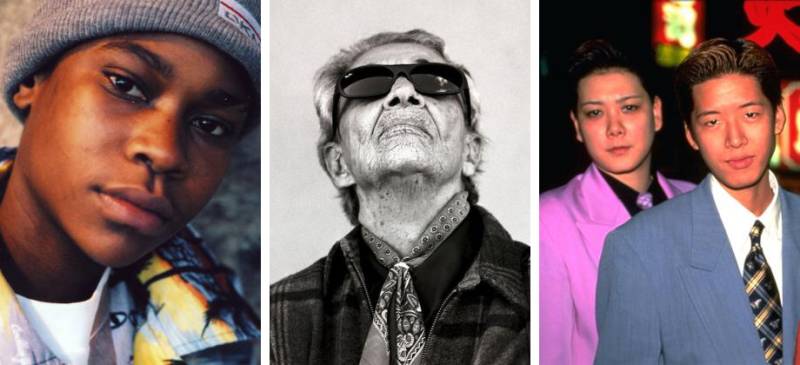
"caption": "Stills from 'The Aggressives,' 'Chavela' and 'Shinjuku Boys,' screening as part of BAMPFA's 'Masc' film series Jan. 19-Feb. 25. ",
"description": null,
"title": "masc bampfa",
"credit": "BAMPFA",
"status": "inherit",
"altTag": "A collage that features a still of a young ballroom performer, an older singer and two club hosts in suits and ties.",
"isLoading": false,
"fetchFailed": false
},
"arts_13940435": {
"type": "attachments",
"id": "arts_13940435",
"meta": {
"index": "attachments_1716263798",
"site": "arts",
"id": "13940435",
"found": true
},
"parent": 13940387,
"imgSizes": {
"twentyfourteen-full-width": {
"file": "https://cdn.kqed.org/wp-content/uploads/sites/2/2024/01/TheZoneOfInterest_textless_ProRes422HQ_24p_1920x1080_178_Rec709_51-20_20230929.00_46_58_18.Still002.00_00_00_00.Still001-1038x576.jpg",
"width": 1038,
"mimeType": "image/jpeg",
"height": 576
},
"thumbnail": {
"file": "https://cdn.kqed.org/wp-content/uploads/sites/2/2024/01/TheZoneOfInterest_textless_ProRes422HQ_24p_1920x1080_178_Rec709_51-20_20230929.00_46_58_18.Still002.00_00_00_00.Still001-160x90.jpg",
"width": 160,
"mimeType": "image/jpeg",
"height": 90
},
"post-thumbnail": {
"file": "https://cdn.kqed.org/wp-content/uploads/sites/2/2024/01/TheZoneOfInterest_textless_ProRes422HQ_24p_1920x1080_178_Rec709_51-20_20230929.00_46_58_18.Still002.00_00_00_00.Still001-672x372.jpg",
"width": 672,
"mimeType": "image/jpeg",
"height": 372
},
"kqedFullSize": {
"file": "https://cdn.kqed.org/wp-content/uploads/sites/2/2024/01/TheZoneOfInterest_textless_ProRes422HQ_24p_1920x1080_178_Rec709_51-20_20230929.00_46_58_18.Still002.00_00_00_00.Still001.jpg",
"width": 1920,
"height": 1080
},
"large": {
"file": "https://cdn.kqed.org/wp-content/uploads/sites/2/2024/01/TheZoneOfInterest_textless_ProRes422HQ_24p_1920x1080_178_Rec709_51-20_20230929.00_46_58_18.Still002.00_00_00_00.Still001-1020x574.jpg",
"width": 1020,
"mimeType": "image/jpeg",
"height": 574
},
"1536x1536": {
"file": "https://cdn.kqed.org/wp-content/uploads/sites/2/2024/01/TheZoneOfInterest_textless_ProRes422HQ_24p_1920x1080_178_Rec709_51-20_20230929.00_46_58_18.Still002.00_00_00_00.Still001-1536x864.jpg",
"width": 1536,
"mimeType": "image/jpeg",
"height": 864
},
"medium": {
"file": "https://cdn.kqed.org/wp-content/uploads/sites/2/2024/01/TheZoneOfInterest_textless_ProRes422HQ_24p_1920x1080_178_Rec709_51-20_20230929.00_46_58_18.Still002.00_00_00_00.Still001-800x450.jpg",
"width": 800,
"mimeType": "image/jpeg",
"height": 450
},
"medium_large": {
"file": "https://cdn.kqed.org/wp-content/uploads/sites/2/2024/01/TheZoneOfInterest_textless_ProRes422HQ_24p_1920x1080_178_Rec709_51-20_20230929.00_46_58_18.Still002.00_00_00_00.Still001-768x432.jpg",
"width": 768,
"mimeType": "image/jpeg",
"height": 432
}
},
"publishDate": 1705002877,
"modified": 1705002981,
"caption": "Still from Jonathan Glazer’s ‘The Zone of Interest.’",
"description": null,
"title": "TheZoneOfInterest_textless_ProRes422HQ_24p_1920x1080_178_Rec709_51-20_20230929.00_46_58_18.Still002.00_00_00_00.Still001",
"credit": "Courtesy of A24",
"status": "inherit",
"altTag": "A pool party with children and parents with barbed-wire-topped wall separating grassy yard from institutional building",
"isLoading": false,
"fetchFailed": false
},
"arts_13940390": {
"type": "attachments",
"id": "arts_13940390",
"meta": {
"index": "attachments_1716263798",
"site": "arts",
"id": "13940390",
"found": true
},
"parent": 0,
"imgSizes": {
"twentyfourteen-full-width": {
"file": "https://cdn.kqed.org/wp-content/uploads/sites/2/2024/01/Ronstadt.Gomez_.REV_-1037x576.jpg",
"width": 1037,
"mimeType": "image/jpeg",
"height": 576
},
"thumbnail": {
"file": "https://cdn.kqed.org/wp-content/uploads/sites/2/2024/01/Ronstadt.Gomez_.REV_-160x90.jpg",
"width": 160,
"mimeType": "image/jpeg",
"height": 90
},
"post-thumbnail": {
"file": "https://cdn.kqed.org/wp-content/uploads/sites/2/2024/01/Ronstadt.Gomez_.REV_-672x372.jpg",
"width": 672,
"mimeType": "image/jpeg",
"height": 372
},
"kqedFullSize": {
"file": "https://cdn.kqed.org/wp-content/uploads/sites/2/2024/01/Ronstadt.Gomez_.REV_.jpg",
"width": 1037,
"height": 583
},
"large": {
"file": "https://cdn.kqed.org/wp-content/uploads/sites/2/2024/01/Ronstadt.Gomez_.REV_-1020x573.jpg",
"width": 1020,
"mimeType": "image/jpeg",
"height": 573
},
"medium": {
"file": "https://cdn.kqed.org/wp-content/uploads/sites/2/2024/01/Ronstadt.Gomez_.REV_-800x450.jpg",
"width": 800,
"mimeType": "image/jpeg",
"height": 450
},
"medium_large": {
"file": "https://cdn.kqed.org/wp-content/uploads/sites/2/2024/01/Ronstadt.Gomez_.REV_-768x432.jpg",
"width": 768,
"mimeType": "image/jpeg",
"height": 432
}
},
"publishDate": 1704994885,
"modified": 1704995009,
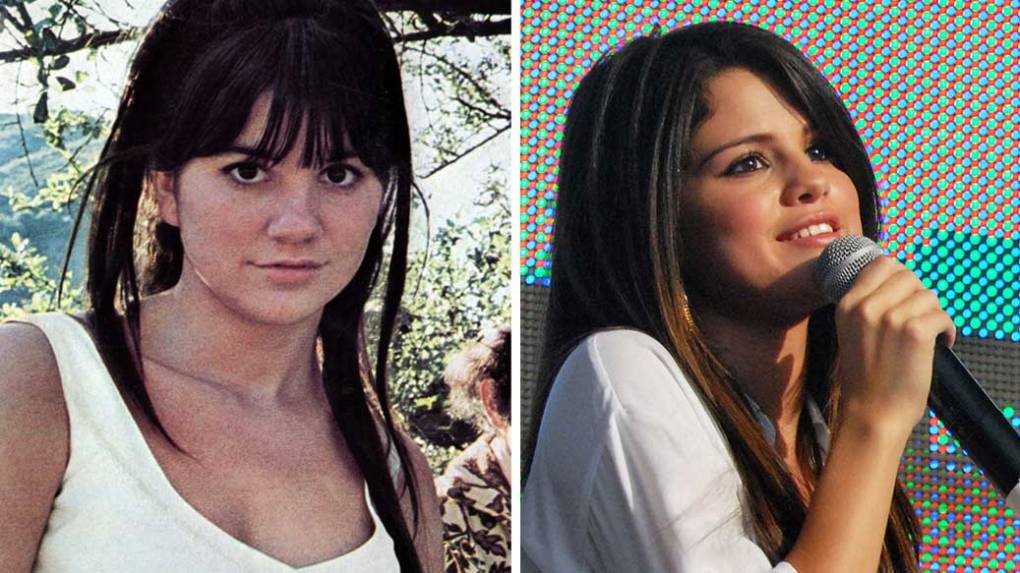
"caption": "Linda Ronstadt (L) will be played by singer and actress Selena Gomez (R) in an upcoming biopic on Ronstadt's life.",
"description": null,
"title": "Ronstadt.Gomez.REV",
"credit": "Capitol Records; Chris McKay/Getty Images for 20th Century Fox",
"status": "inherit",
"altTag": null,
"isLoading": false,
"fetchFailed": false
},
"arts_13940347": {
"type": "attachments",
"id": "arts_13940347",
"meta": {
"index": "attachments_1716263798",
"site": "arts",
"id": "13940347",
"found": true
},
"parent": 13940341,
"imgSizes": {
"twentyfourteen-full-width": {
"file": "https://cdn.kqed.org/wp-content/uploads/sites/2/2024/01/Mark_Bittner_feeding_station-1-1038x576.jpg",
"width": 1038,
"mimeType": "image/jpeg",
"height": 576
},
"thumbnail": {
"file": "https://cdn.kqed.org/wp-content/uploads/sites/2/2024/01/Mark_Bittner_feeding_station-1-160x107.jpg",
"width": 160,
"mimeType": "image/jpeg",
"height": 107
},
"post-thumbnail": {
"file": "https://cdn.kqed.org/wp-content/uploads/sites/2/2024/01/Mark_Bittner_feeding_station-1-672x372.jpg",
"width": 672,
"mimeType": "image/jpeg",
"height": 372
},
"kqedFullSize": {
"file": "https://cdn.kqed.org/wp-content/uploads/sites/2/2024/01/Mark_Bittner_feeding_station-1.jpg",
"width": 2250,
"height": 1500
},
"2048x2048": {
"file": "https://cdn.kqed.org/wp-content/uploads/sites/2/2024/01/Mark_Bittner_feeding_station-1-2048x1365.jpg",
"width": 2048,
"mimeType": "image/jpeg",
"height": 1365
},
"large": {
"file": "https://cdn.kqed.org/wp-content/uploads/sites/2/2024/01/Mark_Bittner_feeding_station-1-1020x680.jpg",
"width": 1020,
"mimeType": "image/jpeg",
"height": 680
},
"1536x1536": {
"file": "https://cdn.kqed.org/wp-content/uploads/sites/2/2024/01/Mark_Bittner_feeding_station-1-1536x1024.jpg",
"width": 1536,
"mimeType": "image/jpeg",
"height": 1024
},
"full-width": {
"file": "https://cdn.kqed.org/wp-content/uploads/sites/2/2024/01/Mark_Bittner_feeding_station-1-1920x1280.jpg",
"width": 1920,
"mimeType": "image/jpeg",
"height": 1280
},
"medium": {
"file": "https://cdn.kqed.org/wp-content/uploads/sites/2/2024/01/Mark_Bittner_feeding_station-1-800x533.jpg",
"width": 800,
"mimeType": "image/jpeg",
"height": 533
},
"medium_large": {
"file": "https://cdn.kqed.org/wp-content/uploads/sites/2/2024/01/Mark_Bittner_feeding_station-1-768x512.jpg",
"width": 768,
"mimeType": "image/jpeg",
"height": 512
}
},
"publishDate": 1704929982,
"modified": 1704930109,
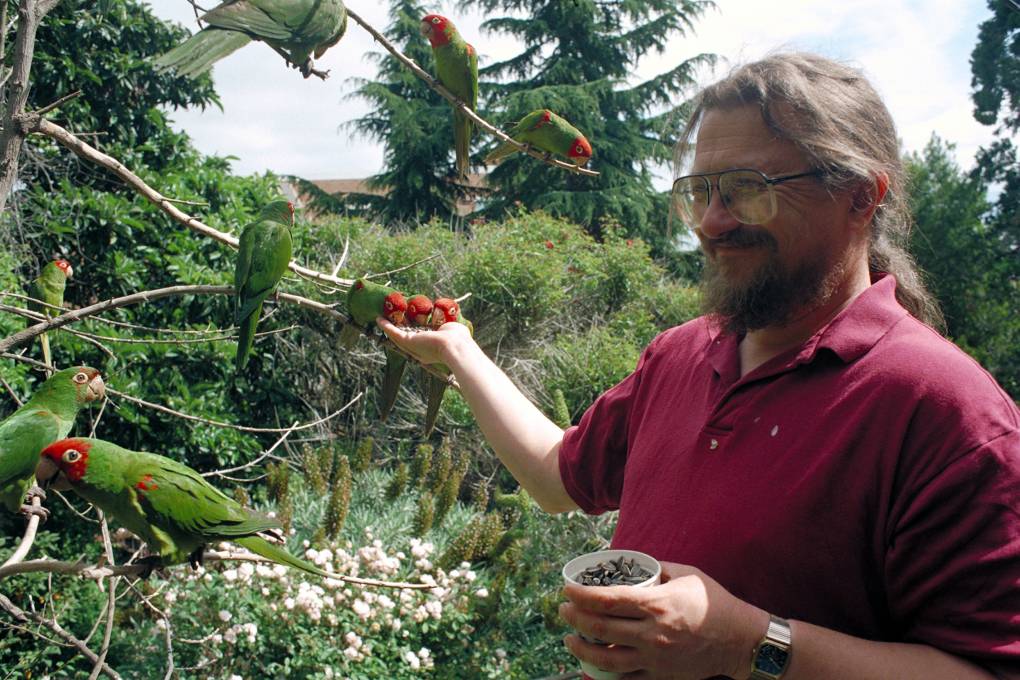
"caption": "Mark Bittner in a still from 'The Wild Parrots of Telegraph Hill.'",
"description": null,
"title": "Mark_Bittner_feeding_station-1",
"credit": "Courtesy of Pelican Media",
"status": "inherit",
"altTag": "Man in red polo shirt holds cup of seeds and smiles while green and red parrots eat out of other hand",
"isLoading": false,
"fetchFailed": false
},
"arts_13939798": {
"type": "attachments",
"id": "arts_13939798",
"meta": {
"index": "attachments_1716263798",
"site": "arts",
"id": "13939798",
"found": true
},
"parent": 13939793,
"imgSizes": {
"twentyfourteen-full-width": {
"file": "https://cdn.kqed.org/wp-content/uploads/sites/2/2023/12/rev-1-TCP-TP-036_High_Res_JPEG-1038x576.jpeg",
"width": 1038,
"mimeType": "image/jpeg",
"height": 576
},
"thumbnail": {
"file": "https://cdn.kqed.org/wp-content/uploads/sites/2/2023/12/rev-1-TCP-TP-036_High_Res_JPEG-160x90.jpeg",
"width": 160,
"mimeType": "image/jpeg",
"height": 90
},
"post-thumbnail": {
"file": "https://cdn.kqed.org/wp-content/uploads/sites/2/2023/12/rev-1-TCP-TP-036_High_Res_JPEG-672x372.jpeg",
"width": 672,
"mimeType": "image/jpeg",
"height": 372
},
"kqedFullSize": {
"file": "https://cdn.kqed.org/wp-content/uploads/sites/2/2023/12/rev-1-TCP-TP-036_High_Res_JPEG-scaled.jpeg",
"width": 2560,
"height": 1440
},
"2048x2048": {
"file": "https://cdn.kqed.org/wp-content/uploads/sites/2/2023/12/rev-1-TCP-TP-036_High_Res_JPEG-2048x1152.jpeg",
"width": 2048,
"mimeType": "image/jpeg",
"height": 1152
},
"large": {
"file": "https://cdn.kqed.org/wp-content/uploads/sites/2/2023/12/rev-1-TCP-TP-036_High_Res_JPEG-1020x574.jpeg",
"width": 1020,
"mimeType": "image/jpeg",
"height": 574
},
"1536x1536": {
"file": "https://cdn.kqed.org/wp-content/uploads/sites/2/2023/12/rev-1-TCP-TP-036_High_Res_JPEG-1536x864.jpeg",
"width": 1536,
"mimeType": "image/jpeg",
"height": 864
},
"full-width": {
"file": "https://cdn.kqed.org/wp-content/uploads/sites/2/2023/12/rev-1-TCP-TP-036_High_Res_JPEG-1920x1080.jpeg",
"width": 1920,
"mimeType": "image/jpeg",
"height": 1080
},
"medium": {
"file": "https://cdn.kqed.org/wp-content/uploads/sites/2/2023/12/rev-1-TCP-TP-036_High_Res_JPEG-800x450.jpeg",
"width": 800,
"mimeType": "image/jpeg",
"height": 450
},
"medium_large": {
"file": "https://cdn.kqed.org/wp-content/uploads/sites/2/2023/12/rev-1-TCP-TP-036_High_Res_JPEG-768x432.jpeg",
"width": 768,
"mimeType": "image/jpeg",
"height": 432
}
},
"publishDate": 1703190760,
"modified": 1703190911,
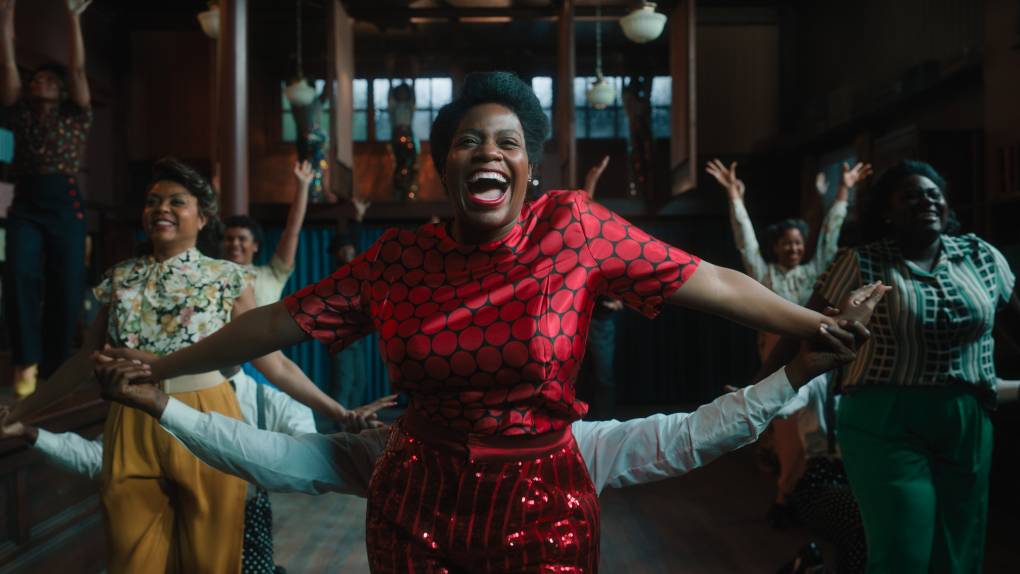
"caption": "(L-R) Taraji P. Henson as Shug Avery, Fantasia Barrino as Celie and Danielle Brooks as Sophia in 'The Color Purple,' which opens Christmas Day. ",
"description": null,
"title": "rev-1-TCP-TP-036_High_Res_JPEG",
"credit": null,
"status": "inherit",
"altTag": "a young Black woman in a red dress extends her arms while singing, while two other Black women sing and dance in the background",
"isLoading": false,
"fetchFailed": false
},
"arts_13939711": {
"type": "attachments",
"id": "arts_13939711",
"meta": {
"index": "attachments_1716263798",
"site": "arts",
"id": "13939711",
"found": true
},
"parent": 13939701,
"imgSizes": {
"twentyfourteen-full-width": {
"file": "https://cdn.kqed.org/wp-content/uploads/sites/2/2023/12/AOUS_ScottMescal-1038x576.jpg",
"width": 1038,
"mimeType": "image/jpeg",
"height": 576
},
"thumbnail": {
"file": "https://cdn.kqed.org/wp-content/uploads/sites/2/2023/12/AOUS_ScottMescal-160x98.jpg",
"width": 160,
"mimeType": "image/jpeg",
"height": 98
},
"post-thumbnail": {
"file": "https://cdn.kqed.org/wp-content/uploads/sites/2/2023/12/AOUS_ScottMescal-672x372.jpg",
"width": 672,
"mimeType": "image/jpeg",
"height": 372
},
"kqedFullSize": {
"file": "https://cdn.kqed.org/wp-content/uploads/sites/2/2023/12/AOUS_ScottMescal.jpg",
"width": 2000,
"height": 1226
},
"large": {
"file": "https://cdn.kqed.org/wp-content/uploads/sites/2/2023/12/AOUS_ScottMescal-1020x625.jpg",
"width": 1020,
"mimeType": "image/jpeg",
"height": 625
},
"1536x1536": {
"file": "https://cdn.kqed.org/wp-content/uploads/sites/2/2023/12/AOUS_ScottMescal-1536x942.jpg",
"width": 1536,
"mimeType": "image/jpeg",
"height": 942
},
"full-width": {
"file": "https://cdn.kqed.org/wp-content/uploads/sites/2/2023/12/AOUS_ScottMescal-1920x1177.jpg",
"width": 1920,
"mimeType": "image/jpeg",
"height": 1177
},
"medium": {
"file": "https://cdn.kqed.org/wp-content/uploads/sites/2/2023/12/AOUS_ScottMescal-800x490.jpg",
"width": 800,
"mimeType": "image/jpeg",
"height": 490
},
"medium_large": {
"file": "https://cdn.kqed.org/wp-content/uploads/sites/2/2023/12/AOUS_ScottMescal-768x471.jpg",
"width": 768,
"mimeType": "image/jpeg",
"height": 471
}
},
"publishDate": 1703024575,
"modified": 1703024704,
"caption": "Andrew Scott and Paul Mescal in 'All of Us Strangers.'",
"description": null,
"title": "AOUS_ScottMescal",
"credit": "Parisa Taghizadeh/Searchlight Pictures",
"status": "inherit",
"altTag": "One man drapes arm over other man's shoulders in club lit by pink light",
"isLoading": false,
"fetchFailed": false
},
"arts_13938175": {
"type": "attachments",
"id": "arts_13938175",
"meta": {
"index": "attachments_1716263798",
"site": "arts",
"id": "13938175",
"found": true
},
"parent": 13938160,
"imgSizes": {
"twentyfourteen-full-width": {
"file": "https://ww2.kqed.org/app/uploads/sites/2/2023/11/JW-e1700180692686-1038x576.png",
"width": 1038,
"mimeType": "image/png",
"height": 576
},
"thumbnail": {
"file": "https://ww2.kqed.org/app/uploads/sites/2/2023/11/JW-e1700180692686-160x99.png",
"width": 160,
"mimeType": "image/png",
"height": 99
},
"post-thumbnail": {
"file": "https://ww2.kqed.org/app/uploads/sites/2/2023/11/JW-e1700180692686-672x372.png",
"width": 672,
"mimeType": "image/png",
"height": 372
},
"kqedFullSize": {
"file": "https://ww2.kqed.org/app/uploads/sites/2/2023/11/JW-e1700180692686.png",
"width": 1920,
"height": 1184
},
"large": {
"file": "https://ww2.kqed.org/app/uploads/sites/2/2023/11/JW-e1700180692686-1020x629.png",
"width": 1020,
"mimeType": "image/png",
"height": 629
},
"1536x1536": {
"file": "https://ww2.kqed.org/app/uploads/sites/2/2023/11/JW-e1700180692686-1536x947.png",
"width": 1536,
"mimeType": "image/png",
"height": 947
},
"full-width": {
"file": "https://ww2.kqed.org/app/uploads/sites/2/2023/11/JW-1920x1184.png",
"width": 1920,
"mimeType": "image/png",
"height": 1184
},
"medium": {
"file": "https://ww2.kqed.org/app/uploads/sites/2/2023/11/JW-e1700180692686-800x493.png",
"width": 800,
"mimeType": "image/png",
"height": 493
},
"medium_large": {
"file": "https://ww2.kqed.org/app/uploads/sites/2/2023/11/JW-e1700180692686-768x474.png",
"width": 768,
"mimeType": "image/png",
"height": 474
}
},
"publishDate": 1700180570,
"modified": 1700180720,
"caption": "Jeffrey Wright starring in ‘American Fiction.’",
"description": null,
"title": "Jeffrey Wright starring in ‘American Fiction.’",
"credit": "Orion",
"status": "inherit",
"altTag": "Close up on the head and shoulders of a bald, middle aged Black man with tidy, trimmed beard and round spectacles. He is wearing a white shirt, dark tie and a grey suit jacket.",
"isLoading": false,
"fetchFailed": false
},
"arts_13939466": {
"type": "attachments",
"id": "arts_13939466",
"meta": {
"index": "attachments_1716263798",
"site": "arts",
"id": "13939466",
"found": true
},
"parent": 13939435,
"imgSizes": {
"twentyfourteen-full-width": {
"file": "https://cdn.kqed.org/wp-content/uploads/sites/2/2023/12/Wonka_COVER-1038x576.jpg",
"width": 1038,
"mimeType": "image/jpeg",
"height": 576
},
"thumbnail": {
"file": "https://cdn.kqed.org/wp-content/uploads/sites/2/2023/12/Wonka_COVER-160x107.jpg",
"width": 160,
"mimeType": "image/jpeg",
"height": 107
},
"post-thumbnail": {
"file": "https://cdn.kqed.org/wp-content/uploads/sites/2/2023/12/Wonka_COVER-672x372.jpg",
"width": 672,
"mimeType": "image/jpeg",
"height": 372
},
"kqedFullSize": {
"file": "https://cdn.kqed.org/wp-content/uploads/sites/2/2023/12/Wonka_COVER.jpg",
"width": 2000,
"height": 1333
},
"large": {
"file": "https://cdn.kqed.org/wp-content/uploads/sites/2/2023/12/Wonka_COVER-1020x680.jpg",
"width": 1020,
"mimeType": "image/jpeg",
"height": 680
},
"1536x1536": {
"file": "https://cdn.kqed.org/wp-content/uploads/sites/2/2023/12/Wonka_COVER-1536x1024.jpg",
"width": 1536,
"mimeType": "image/jpeg",
"height": 1024
},
"full-width": {
"file": "https://cdn.kqed.org/wp-content/uploads/sites/2/2023/12/Wonka_COVER-1920x1280.jpg",
"width": 1920,
"mimeType": "image/jpeg",
"height": 1280
},
"medium": {
"file": "https://cdn.kqed.org/wp-content/uploads/sites/2/2023/12/Wonka_COVER-800x533.jpg",
"width": 800,
"mimeType": "image/jpeg",
"height": 533
},
"medium_large": {
"file": "https://cdn.kqed.org/wp-content/uploads/sites/2/2023/12/Wonka_COVER-768x512.jpg",
"width": 768,
"mimeType": "image/jpeg",
"height": 512
}
},
"publishDate": 1702585640,
"modified": 1702587507,
"caption": "Timothée Chalamet stars as the chocolatier Willy Wonka in Paul King’s original musical prequel to ‘Charlie and the Chocolate Factory.’",
"description": null,
"title": "Wonka_COVER",
"credit": "Jaap Buittendijk/Warner Bros. Pictures",
"status": "inherit",
"altTag": "Man in top hat and Victorian attire stands with legs apart, mouth open with background dancers holding umbrellas with \"Wonka\" on them",
"isLoading": false,
"fetchFailed": false
},
"arts_13938339": {
"type": "attachments",
"id": "arts_13938339",
"meta": {
"index": "attachments_1716263798",
"site": "arts",
"id": "13938339",
"found": true
},
"parent": 13938332,
"imgSizes": {
"twentyfourteen-full-width": {
"file": "https://ww2.kqed.org/app/uploads/sites/2/2023/11/Maestro_20220707_09977r_COVER-1038x576.jpg",
"width": 1038,
"mimeType": "image/jpeg",
"height": 576
},
"thumbnail": {
"file": "https://ww2.kqed.org/app/uploads/sites/2/2023/11/Maestro_20220707_09977r_COVER-160x120.jpg",
"width": 160,
"mimeType": "image/jpeg",
"height": 120
},
"post-thumbnail": {
"file": "https://ww2.kqed.org/app/uploads/sites/2/2023/11/Maestro_20220707_09977r_COVER-672x372.jpg",
"width": 672,
"mimeType": "image/jpeg",
"height": 372
},
"kqedFullSize": {
"file": "https://ww2.kqed.org/app/uploads/sites/2/2023/11/Maestro_20220707_09977r_COVER.jpg",
"width": 2000,
"height": 1500
},
"large": {
"file": "https://ww2.kqed.org/app/uploads/sites/2/2023/11/Maestro_20220707_09977r_COVER-1020x765.jpg",
"width": 1020,
"mimeType": "image/jpeg",
"height": 765
},
"1536x1536": {
"file": "https://ww2.kqed.org/app/uploads/sites/2/2023/11/Maestro_20220707_09977r_COVER-1536x1152.jpg",
"width": 1536,
"mimeType": "image/jpeg",
"height": 1152
},
"full-width": {
"file": "https://ww2.kqed.org/app/uploads/sites/2/2023/11/Maestro_20220707_09977r_COVER-1920x1440.jpg",
"width": 1920,
"mimeType": "image/jpeg",
"height": 1440
},
"medium": {
"file": "https://ww2.kqed.org/app/uploads/sites/2/2023/11/Maestro_20220707_09977r_COVER-800x600.jpg",
"width": 800,
"mimeType": "image/jpeg",
"height": 600
},
"medium_large": {
"file": "https://ww2.kqed.org/app/uploads/sites/2/2023/11/Maestro_20220707_09977r_COVER-768x576.jpg",
"width": 768,
"mimeType": "image/jpeg",
"height": 576
}
},
"publishDate": 1700527666,
"modified": 1700527752,
"caption": "Director, writer, producer and star Bradley Cooper as Leonard Bernstein in ‘Maestro.’",
"description": null,
"title": "Maestro_20220707_09977r_COVER",
"credit": "Jason McDonald/Netflix",
"status": "inherit",
"altTag": "black and white image of a conductor seen from several rows back in orchestra, over music stands",
"isLoading": false,
"fetchFailed": false
},
"arts_13937531": {
"type": "attachments",
"id": "arts_13937531",
"meta": {
"index": "attachments_1716263798",
"site": "arts",
"id": "13937531",
"found": true
},
"parent": 13937525,
"imgSizes": {
"twentyfourteen-full-width": {
"file": "https://ww2.kqed.org/app/uploads/sites/2/2023/11/TheMission_UHD_59_2000-1038x576.jpg",
"width": 1038,
"mimeType": "image/jpeg",
"height": 576
},
"thumbnail": {
"file": "https://ww2.kqed.org/app/uploads/sites/2/2023/11/TheMission_UHD_59_2000-160x90.jpg",
"width": 160,
"mimeType": "image/jpeg",
"height": 90
},
"post-thumbnail": {
"file": "https://ww2.kqed.org/app/uploads/sites/2/2023/11/TheMission_UHD_59_2000-672x372.jpg",
"width": 672,
"mimeType": "image/jpeg",
"height": 372
},
"kqedFullSize": {
"file": "https://ww2.kqed.org/app/uploads/sites/2/2023/11/TheMission_UHD_59_2000.jpg",
"width": 2000,
"height": 1125
},
"large": {
"file": "https://ww2.kqed.org/app/uploads/sites/2/2023/11/TheMission_UHD_59_2000-1020x574.jpg",
"width": 1020,
"mimeType": "image/jpeg",
"height": 574
},
"1536x1536": {
"file": "https://ww2.kqed.org/app/uploads/sites/2/2023/11/TheMission_UHD_59_2000-1536x864.jpg",
"width": 1536,
"mimeType": "image/jpeg",
"height": 864
},
"full-width": {
"file": "https://ww2.kqed.org/app/uploads/sites/2/2023/11/TheMission_UHD_59_2000-1920x1080.jpg",
"width": 1920,
"mimeType": "image/jpeg",
"height": 1080
},
"medium": {
"file": "https://ww2.kqed.org/app/uploads/sites/2/2023/11/TheMission_UHD_59_2000-800x450.jpg",
"width": 800,
"mimeType": "image/jpeg",
"height": 450
},
"medium_large": {
"file": "https://ww2.kqed.org/app/uploads/sites/2/2023/11/TheMission_UHD_59_2000-768x432.jpg",
"width": 768,
"mimeType": "image/jpeg",
"height": 432
}
},
"publishDate": 1698969944,
"modified": 1698970924,
"caption": "John Chau walking on the beach in Port Blair on South Andaman Island, an Indian territory in the Bay of Bengal.",
"description": null,
"title": "TheMission_UHD_59_2000",
"credit": "Courtesy National Geographic",
"status": "inherit",
"altTag": "Young Asian man wears backpack on white sand beach",
"isLoading": false,
"fetchFailed": false
},
"arts_13936943": {
"type": "attachments",
"id": "arts_13936943",
"meta": {
"index": "attachments_1716263798",
"site": "arts",
"id": "13936943",
"found": true
},
"parent": 13936929,
"imgSizes": {
"twentyfourteen-full-width": {
"file": "https://ww2.kqed.org/app/uploads/sites/2/2023/10/BB_David_and_Chesa-1038x576.png",
"width": 1038,
"mimeType": "image/png",
"height": 576
},
"thumbnail": {
"file": "https://ww2.kqed.org/app/uploads/sites/2/2023/10/BB_David_and_Chesa-160x107.png",
"width": 160,
"mimeType": "image/png",
"height": 107
},
"post-thumbnail": {
"file": "https://ww2.kqed.org/app/uploads/sites/2/2023/10/BB_David_and_Chesa-672x372.png",
"width": 672,
"mimeType": "image/png",
"height": 372
},
"kqedFullSize": {
"file": "https://ww2.kqed.org/app/uploads/sites/2/2023/10/BB_David_and_Chesa.png",
"width": 2800,
"height": 1878
},
"2048x2048": {
"file": "https://ww2.kqed.org/app/uploads/sites/2/2023/10/BB_David_and_Chesa-2048x1374.png",
"width": 2048,
"mimeType": "image/png",
"height": 1374
},
"large": {
"file": "https://ww2.kqed.org/app/uploads/sites/2/2023/10/BB_David_and_Chesa-1020x684.png",
"width": 1020,
"mimeType": "image/png",
"height": 684
},
"1536x1536": {
"file": "https://ww2.kqed.org/app/uploads/sites/2/2023/10/BB_David_and_Chesa-1536x1030.png",
"width": 1536,
"mimeType": "image/png",
"height": 1030
},
"full-width": {
"file": "https://ww2.kqed.org/app/uploads/sites/2/2023/10/BB_David_and_Chesa-1920x1288.png",
"width": 1920,
"mimeType": "image/png",
"height": 1288
},
"medium": {
"file": "https://ww2.kqed.org/app/uploads/sites/2/2023/10/BB_David_and_Chesa-800x537.png",
"width": 800,
"mimeType": "image/png",
"height": 537
},
"medium_large": {
"file": "https://ww2.kqed.org/app/uploads/sites/2/2023/10/BB_David_and_Chesa-768x515.png",
"width": 768,
"mimeType": "image/png",
"height": 515
}
},
"publishDate": 1698190785,
"modified": 1698190902,
"caption": "Young Chesa with his father, David Boudin, as seen in the documentary 'Beyond Bars.'",
"description": null,
"title": "BB_David_and_Chesa",
"credit": "Courtesy of the filmmaker",
"status": "inherit",
"altTag": null,
"isLoading": false,
"fetchFailed": false
}
},
"audioPlayerReducer": {
"postId": "stream_live",
"isPaused": true,
"isPlaying": false,
"pfsActive": false,
"pledgeModalIsOpen": true,
"playerDrawerIsOpen": false,
"liveAudioPlayStartedAt": 0,
"liveAudioPlayContext": ""
},
"authorsReducer": {
"mfox": {
"type": "authors",
"id": "22",
"meta": {
"index": "authors_1716337520",
"id": "22",
"found": true
},
"name": "Michael Fox",
"firstName": "Michael",
"lastName": "Fox",
"slug": "mfox",
"email": "foxonfilm@yahoo.com",
"display_author_email": false,
"staff_mastheads": [],
"title": "KQED Contributor",
"bio": "Michael Fox has written about film for dozens of publications since 1987. He is a founding member of the San Francisco Bay Area Film Critics Circle.",
"avatar": "https://secure.gravatar.com/avatar/d9849d6c659c41414795c471d907bb97b396e2a32b88e20e6ff66f65fbdd6dcd?s=600&d=blank&r=g",
"twitter": null,
"bluesky": null,
"facebook": null,
"instagram": null,
"linkedin": null,
"sites": [
{
"site": "arts",
"roles": [
"Contributor",
"contributor"
]
}
],
"headData": {
"title": "Michael Fox | KQED",
"description": "KQED Contributor",
"ogImgSrc": "https://secure.gravatar.com/avatar/d9849d6c659c41414795c471d907bb97b396e2a32b88e20e6ff66f65fbdd6dcd?s=600&d=blank&r=g",
"twImgSrc": "https://secure.gravatar.com/avatar/d9849d6c659c41414795c471d907bb97b396e2a32b88e20e6ff66f65fbdd6dcd?s=600&d=blank&r=g"
},
"isLoading": false,
"link": "/author/mfox"
},
"shotchkiss": {
"type": "authors",
"id": "61",
"meta": {
"index": "authors_1716337520",
"id": "61",
"found": true
},
"name": "Sarah Hotchkiss",
"firstName": "Sarah",
"lastName": "Hotchkiss",
"slug": "shotchkiss",
"email": "shotchkiss@kqed.org",
"display_author_email": true,
"staff_mastheads": [
"arts"
],
"title": "Senior Editor",
"bio": "Sarah Hotchkiss is a San Francisco \u003ca href=\"http://www.sarahhotchkiss.com\">artist\u003c/a> and arts writer. In 2019, she received the Dorothea & Leo Rabkin Foundation grant for visual art journalism and in 2020 she received a Society of Professional Journalists, Northern California award for excellence in arts and culture reporting.",
"avatar": "https://secure.gravatar.com/avatar/bc662df144b3d27fd8b1b6f1c2a420d34e91e53154d411bb7ad353cc8b6cea8d?s=600&d=blank&r=g",
"twitter": null,
"bluesky": null,
"facebook": null,
"instagram": null,
"linkedin": null,
"sites": [
{
"site": "",
"roles": [
"editor"
]
},
{
"site": "arts",
"roles": [
"Contributor",
"administrator"
]
},
{
"site": "artschool",
"roles": [
"administrator"
]
},
{
"site": "news",
"roles": [
"editor"
]
},
{
"site": "pop",
"roles": [
"administrator"
]
},
{
"site": "bayareabites",
"roles": [
"editor"
]
},
{
"site": "spark",
"roles": [
"editor"
]
},
{
"site": "checkplease",
"roles": [
"editor"
]
}
],
"headData": {
"title": "Sarah Hotchkiss | KQED",
"description": "Senior Editor",
"ogImgSrc": "https://secure.gravatar.com/avatar/bc662df144b3d27fd8b1b6f1c2a420d34e91e53154d411bb7ad353cc8b6cea8d?s=600&d=blank&r=g",
"twImgSrc": "https://secure.gravatar.com/avatar/bc662df144b3d27fd8b1b6f1c2a420d34e91e53154d411bb7ad353cc8b6cea8d?s=600&d=blank&r=g"
},
"isLoading": false,
"link": "/author/shotchkiss"
},
"gmeline": {
"type": "authors",
"id": "185",
"meta": {
"index": "authors_1716337520",
"id": "185",
"found": true
},
"name": "Gabe Meline",
"firstName": "Gabe",
"lastName": "Meline",
"slug": "gmeline",
"email": "gmeline@kqed.org",
"display_author_email": true,
"staff_mastheads": [
"arts"
],
"title": "Senior Editor, KQED Arts & Culture",
"bio": "Gabe Meline entered journalism at age 15 making photocopied zines, and has since earned awards from the Edward R. Murrow Awards, the Society for Professional Journalists, the Online Journalism Awards, the Association of Alternative Newsweeklies and the California Newspaper Publishers Association. Prior to KQED, he was the editor of the \u003cem>North Bay Bohemian\u003c/em> and a touring musician. He lives with his wife and daughter in his hometown of Santa Rosa, CA.",
"avatar": "https://secure.gravatar.com/avatar/5bebe57be0d8bc2dd318934feb47299e2d2d10cba28d09d8d7afb389a2ce2bdd?s=600&d=blank&r=g",
"twitter": null,
"bluesky": null,
"facebook": null,
"instagram": null,
"linkedin": null,
"sites": [
{
"site": "",
"roles": [
"editor"
]
},
{
"site": "arts",
"roles": [
"administrator"
]
},
{
"site": "artschool",
"roles": [
"editor"
]
},
{
"site": "news",
"roles": [
"author"
]
},
{
"site": "pop",
"roles": [
"editor"
]
},
{
"site": "bayareabites",
"roles": [
"editor"
]
},
{
"site": "food",
"roles": [
"editor"
]
},
{
"site": "forum",
"roles": [
"administrator"
]
},
{
"site": "liveblog",
"roles": [
"editor"
]
},
{
"site": "hiphop",
"roles": [
"editor"
]
}
],
"headData": {
"title": "Gabe Meline | KQED",
"description": "Senior Editor, KQED Arts & Culture",
"ogImgSrc": "https://secure.gravatar.com/avatar/5bebe57be0d8bc2dd318934feb47299e2d2d10cba28d09d8d7afb389a2ce2bdd?s=600&d=blank&r=g",
"twImgSrc": "https://secure.gravatar.com/avatar/5bebe57be0d8bc2dd318934feb47299e2d2d10cba28d09d8d7afb389a2ce2bdd?s=600&d=blank&r=g"
},
"isLoading": false,
"link": "/author/gmeline"
},
"bwatt": {
"type": "authors",
"id": "11238",
"meta": {
"index": "authors_1716337520",
"id": "11238",
"found": true
},
"name": "Brian Watt",
"firstName": "Brian",
"lastName": "Watt",
"slug": "bwatt",
"email": "bwatt@KQED.org",
"display_author_email": false,
"staff_mastheads": [
"news"
],
"title": "Morning News Anchor",
"bio": "Brian Watt is KQED's morning radio news anchor. He joined the KQED News team in April of 2016. Prior to that, he worked as a Reporter for KPCC in Los Angeles and a producer at \u003cem>Marketplace.\u003c/em>\r\n\r\nDuring eight years at KPCC, Brian covered business and economics, and his work won several awards. In 2008, he won the Los Angeles Press Club’s first-place award for Business and Financial Reporting, Broadcast. He’s also received honorable mention and been first runner up for the Press Club’s Radio Journalist of the Year. He won two Golden Mike awards from the Radio and TV News Association of Southern California.\r\n\r\nBrian holds degrees in theater from Yale University and the Sorbonne, and has worked as an actor in France, Italy, Brazil, Hungary and . . . Hollywood. He appeared in a few television shows, including \u003cem>The West Wing, Judging Amy\u003c/em> and \u003cem>The District.\u003c/em>\r\n\r\nEmail: bwatt@KQED.org Twitter: @RadioBWatt",
"avatar": "https://secure.gravatar.com/avatar/55393ff57ed34e2be773ba4789dd6a19?s=600&d=blank&r=g",
"twitter": "@RadioBWatt",
"facebook": null,
"instagram": null,
"linkedin": null,
"sites": [
{
"site": "arts",
"roles": [
"contributor"
]
},
{
"site": "news",
"roles": [
"editor"
]
}
],
"headData": {
"title": "Brian Watt | KQED",
"description": "Morning News Anchor",
"ogImgSrc": "https://secure.gravatar.com/avatar/55393ff57ed34e2be773ba4789dd6a19?s=600&d=blank&r=g",
"twImgSrc": "https://secure.gravatar.com/avatar/55393ff57ed34e2be773ba4789dd6a19?s=600&d=blank&r=g"
},
"isLoading": false,
"link": "/author/bwatt"
},
"ralexandra": {
"type": "authors",
"id": "11242",
"meta": {
"index": "authors_1716337520",
"id": "11242",
"found": true
},
"name": "Rae Alexandra",
"firstName": "Rae",
"lastName": "Alexandra",
"slug": "ralexandra",
"email": "ralexandra@kqed.org",
"display_author_email": true,
"staff_mastheads": [],
"title": "Reporter/Producer",
"bio": "Rae Alexandra is a Reporter/Producer for KQED Arts & Culture, and the creator/author of the \u003ca href=\"https://www.kqed.org/arts/program/rebel-girls-from-bay-area-history\">Rebel Girls From Bay Area History\u003c/a> and \u003ca href=\"https://www.kqed.org/bizarrebayarea\">Bizarre Bay Area\u003c/a> series. Her debut book, \u003ca href=\"https://citylights.com/politics-current-events-history/unsung-heroines35-women-who-changed/\">Unsung Heroines: 35 Women Who Changed the Bay Area\u003c/a> was published by City Lights in March 2026. In 2023, Rae was awarded an SPJ Excellence in Journalism Award for Arts & Culture. Rae was born and raised in Wales and subsequently — even after two decades in Northern California — still uses phrases that regularly baffle her coworkers.",
"avatar": "https://secure.gravatar.com/avatar/edfee8176c80cc0a382b051190f5341997df378a934a5774dcb0977732dfd401?s=600&d=blank&r=g",
"twitter": null,
"bluesky": null,
"facebook": null,
"instagram": null,
"linkedin": null,
"sites": [
{
"site": "arts",
"roles": [
"subscriber"
]
},
{
"site": "news",
"roles": [
"subscriber"
]
},
{
"site": "pop",
"roles": [
"subscriber"
]
},
{
"site": "bayareabites",
"roles": [
"subscriber"
]
},
{
"site": "science",
"roles": [
"subscriber"
]
}
],
"headData": {
"title": "Rae Alexandra | KQED",
"description": "Reporter/Producer",
"ogImgSrc": "https://secure.gravatar.com/avatar/edfee8176c80cc0a382b051190f5341997df378a934a5774dcb0977732dfd401?s=600&d=blank&r=g",
"twImgSrc": "https://secure.gravatar.com/avatar/edfee8176c80cc0a382b051190f5341997df378a934a5774dcb0977732dfd401?s=600&d=blank&r=g"
},
"isLoading": false,
"link": "/author/ralexandra"
},
"nvoynovskaya": {
"type": "authors",
"id": "11387",
"meta": {
"index": "authors_1716337520",
"id": "11387",
"found": true
},
"name": "Nastia Voynovskaya",
"firstName": "Nastia",
"lastName": "Voynovskaya",
"slug": "nvoynovskaya",
"email": "nvoynovskaya@kqed.org",
"display_author_email": false,
"staff_mastheads": [
"arts"
],
"title": "Editor and reporter",
"bio": "Nastia Voynovskaya is a reporter, editor and host at KQED Arts & Culture. She's been covering the arts in the Bay Area for over a decade, with a focus on music, queer culture, labor issues and grassroots organizing. She has edited KQED story series such as Trans Bay: A History of San Francisco's Gender-Diverse Community, and co-created KQED's Bay Area hip-hop history project, That's My Word. Nastia's work has been recognized by the Society of Professional Journalists and San Francisco Press Club. She regularly appears on podcasts and radio programs, including NPR's All Songs Considered, and hosts live events where music, culture and conversation meet.",
"avatar": "https://secure.gravatar.com/avatar/5025ee460e5a85d69ca20ea6c6f2f80d7e17795c828f61ea3aecfcd924e9042e?s=600&d=blank&r=g",
"twitter": null,
"bluesky": null,
"facebook": null,
"instagram": "https://www.instagram.com/nananastia/",
"linkedin": null,
"sites": [
{
"site": "",
"roles": [
"editor"
]
},
{
"site": "arts",
"roles": [
"administrator"
]
},
{
"site": "news",
"roles": [
"editor"
]
},
{
"site": "pop",
"roles": [
"administrator"
]
},
{
"site": "bayareabites",
"roles": [
"editor"
]
},
{
"site": "podcasts",
"roles": [
"editor"
]
},
{
"site": "hiphop",
"roles": [
"editor"
]
}
],
"headData": {
"title": "Nastia Voynovskaya | KQED",
"description": "Editor and reporter",
"ogImgSrc": "https://secure.gravatar.com/avatar/5025ee460e5a85d69ca20ea6c6f2f80d7e17795c828f61ea3aecfcd924e9042e?s=600&d=blank&r=g",
"twImgSrc": "https://secure.gravatar.com/avatar/5025ee460e5a85d69ca20ea6c6f2f80d7e17795c828f61ea3aecfcd924e9042e?s=600&d=blank&r=g"
},
"isLoading": false,
"link": "/author/nvoynovskaya"
},
"agonzalez": {
"type": "authors",
"id": "11724",
"meta": {
"index": "authors_1716337520",
"id": "11724",
"found": true
},
"name": "Alexander Gonzalez",
"firstName": "Alexander",
"lastName": "Gonzalez",
"slug": "agonzalez",
"email": "AlexanderGonzalez@KQED.org",
"display_author_email": false,
"staff_mastheads": [
"news"
],
"title": "KQED Contributor",
"bio": null,
"avatar": "https://secure.gravatar.com/avatar/9e291ed34e154df4c662edf858b641d70b4859939bfe40be478408f9dfd057d2?s=600&d=blank&r=g",
"twitter": null,
"bluesky": null,
"facebook": null,
"instagram": null,
"linkedin": null,
"sites": [
{
"site": "arts",
"roles": [
"editor"
]
},
{
"site": "news",
"roles": [
"editor"
]
},
{
"site": "science",
"roles": [
"editor"
]
}
],
"headData": {
"title": "Alexander Gonzalez | KQED",
"description": "KQED Contributor",
"ogImgSrc": "https://secure.gravatar.com/avatar/9e291ed34e154df4c662edf858b641d70b4859939bfe40be478408f9dfd057d2?s=600&d=blank&r=g",
"twImgSrc": "https://secure.gravatar.com/avatar/9e291ed34e154df4c662edf858b641d70b4859939bfe40be478408f9dfd057d2?s=600&d=blank&r=g"
},
"isLoading": false,
"link": "/author/agonzalez"
},
"cbarton": {
"type": "authors",
"id": "11892",
"meta": {
"index": "authors_1716337520",
"id": "11892",
"found": true
},
"name": "cbarton",
"firstName": "Champe",
"lastName": "Barton",
"slug": "cbarton",
"email": "champebarton@gmail.com",
"display_author_email": false,
"staff_mastheads": [],
"title": "KQED Contributor",
"bio": null,
"avatar": "https://secure.gravatar.com/avatar/53182b2721b77f20e35d895f3eef3a9f9568e0cfb0ab58ab359c2dc5381287db?s=600&d=blank&r=g",
"twitter": null,
"bluesky": null,
"facebook": null,
"instagram": null,
"linkedin": null,
"sites": [
{
"site": "arts",
"roles": [
"subscriber"
]
}
],
"headData": {
"title": "cbarton | KQED",
"description": "KQED Contributor",
"ogImgSrc": "https://secure.gravatar.com/avatar/53182b2721b77f20e35d895f3eef3a9f9568e0cfb0ab58ab359c2dc5381287db?s=600&d=blank&r=g",
"twImgSrc": "https://secure.gravatar.com/avatar/53182b2721b77f20e35d895f3eef3a9f9568e0cfb0ab58ab359c2dc5381287db?s=600&d=blank&r=g"
},
"isLoading": false,
"link": "/author/cbarton"
}
},
"pagesReducer": {
"arts_tag_film": {
"type": "terms",
"id": "arts_977",
"meta": {
"index": "terms_1716263798",
"site": "arts",
"id": "977",
"score": 8.284343
},
"name": "Film",
"slug": "film",
"taxonomy": "tag",
"description": null,
"featImg": null,
"headData": {
"title": "Film Archives | KQED Arts",
"description": null,
"ogTitle": null,
"ogDescription": null,
"ogImgId": null,
"twTitle": null,
"twDescription": null,
"twImgId": null
},
"ttid": 995,
"isLoading": false,
"title": "Film",
"pageMeta": {
"site": "arts",
"WpPageTemplate": "page-topic-editorial",
"currentPage": 10
},
"blocks": [
{
"blockName": "kqed/post-list",
"attrs": {
"layout": "cardArticle2",
"query": "posts/arts?tag=film",
"seeMore": false,
"paginated": true,
"page": 10
}
},
{
"blockName": "kqed/ad"
}
]
}
},
"pfsSessionReducer": {},
"postsReducer": {
"stream_live": {
"type": "live",
"id": "stream_live",
"audioUrl": "https://streams.kqed.org/kqedradio",
"title": "Live Stream",
"excerpt": "Live Stream information currently unavailable.",
"link": "/radio",
"featImg": "",
"label": {
"name": "KQED Live",
"link": "/"
}
},
"stream_kqedNewscast": {
"type": "posts",
"id": "stream_kqedNewscast",
"audioUrl": "https://www.kqed.org/.stream/anon/radio/RDnews/newscast.mp3?_=1",
"title": "KQED Newscast",
"featImg": "",
"label": {
"name": "88.5 FM",
"link": "/"
}
},
"arts_13951535": {
"type": "posts",
"id": "arts_13951535",
"meta": {
"index": "posts_1716263798",
"site": "arts",
"id": "13951535",
"score": null,
"sort": [
1707157020000
]
},
"parent": 0,
"labelTerm": {
"site": "arts"
},
"blocks": [],
"publishDate": 1707157020,
"format": "standard",
"title": "Why I’m Declaring 2024 the Year of Film",
"headTitle": "Why I’m Declaring 2024 the Year of Film | KQED",
"content": "\u003cp>It’s easy, sometimes, in the face of losses or changes within the cultural landscape, to fall into doom and gloom. Everything’s less; everything’s worse; the philistines don’t care. For film buffs, today is one of those days — the renovation of the Castro begins, and the \u003ca href=\"https://www.kqed.org/news/11952358/sf-supes-ok-effort-renovate-castro-theater\">impending removal of its original theatrical seating\u003c/a> constitutes a crushing loss of San Francisco’s last pure movie palace. \u003c/p>\n\u003cp>But instead of bemoaning the total loss of Bay Area film culture, how about we rally around what we \u003ci>do\u003c/i> have — and what’s to come? After all, what we already have is a lot: enough independent, revival, experimental and artist-made films playing every night of the week that one can’t possibly see them all. \u003c/p>\n\u003cp>“I had, for years, a Google calendar that was everything playing in the Bay Area that I was interested in,” says Stephen Fisk, a 38-year-old film lover. “I had shared it with a bunch of friends, to the point that one of them was like, ‘I had to turn it off, it’s too stressful to see something every day of the week.’”\u003c/p>\n\u003cp>[aside postID='arts_13950600']To capture and organize that abundance more publicly, Fisk and his friend Omar Rodriguez launched the website SF Bay Film in 2021, just as theaters were starting to reopen. The site was democratic and streamlined, compiling repertory screenings at microcinemas like Oakland’s \u003ca href=\"https://www.shapeshifterscinema.com/\">Shapeshifters\u003c/a> alongside far better-known venues like \u003ca href=\"https://bampfa.org/\">BAMPFA\u003c/a>.\u003c/p>\n\u003cp>When they were building the site, Fisk and Rodriguez purposely modeled it after \u003ca href=\"https://www.screenslate.com/\">Screen Slate\u003c/a>, a New York-based nonprofit founded in 2011 that publishes listings, criticism, interviews, zines and a podcast on moving image culture. And in late 2023, Screen Slate announced an \u003ca href=\"https://www.screenslate.com/articles/screen-slate-san-francisco-bay\">official expansion into the Bay Area\u003c/a>, bringing Fisk and Rodriguez on as editors to continue the work they had already been doing, but with editorial support and a larger audience.\u003c/p>\n\u003cfigure id=\"attachment_13951540\" class=\"wp-caption aligncenter\" style=\"max-width: 2000px\">\u003cimg loading=\"lazy\" decoding=\"async\" src=\"https://cdn.kqed.org/wp-content/uploads/sites/2/2024/02/roxie-screenslate-omar-stephen-introducing_2000.jpg\" alt=\"Two people lean against stage facing theater seats with big 'ROXIE' in red on screen\" width=\"2000\" height=\"1500\" class=\"size-full wp-image-13951540\" srcset=\"https://cdn.kqed.org/wp-content/uploads/sites/2/2024/02/roxie-screenslate-omar-stephen-introducing_2000.jpg 2000w, https://cdn.kqed.org/wp-content/uploads/sites/2/2024/02/roxie-screenslate-omar-stephen-introducing_2000-800x600.jpg 800w, https://cdn.kqed.org/wp-content/uploads/sites/2/2024/02/roxie-screenslate-omar-stephen-introducing_2000-1020x765.jpg 1020w, https://cdn.kqed.org/wp-content/uploads/sites/2/2024/02/roxie-screenslate-omar-stephen-introducing_2000-160x120.jpg 160w, https://cdn.kqed.org/wp-content/uploads/sites/2/2024/02/roxie-screenslate-omar-stephen-introducing_2000-768x576.jpg 768w, https://cdn.kqed.org/wp-content/uploads/sites/2/2024/02/roxie-screenslate-omar-stephen-introducing_2000-1536x1152.jpg 1536w, https://cdn.kqed.org/wp-content/uploads/sites/2/2024/02/roxie-screenslate-omar-stephen-introducing_2000-1920x1440.jpg 1920w\" sizes=\"(max-width: 2000px) 100vw, 2000px\">\u003cfigcaption class=\"wp-caption-text\">Omar Rodriguez and Stephen Fisk of Screen Slate SF Bay introducing a screening of ‘Anguish’ at the Roxie on Oct. 26, 2023. \u003ccite>(Courtesy of Screen Slate)\u003c/cite>\u003c/figcaption>\u003c/figure>\n\u003cp>Now, every Monday, an email arrives in over 750 inboxes in which Fisk rounds up the film offerings for the week ahead. As Brett Kashmere, executive director of \u003ca href=\"https://canyoncinema.com/\">Canyon Cinema\u003c/a>, pointed out by email, “There is a lot of great stuff happening across the Bay these days.” YBCA’s theater is \u003ca href=\"https://ybca.org/event/color-in-twelve-parts/\">back in action\u003c/a> thanks to programming from Gina Basso (formerly of SFMOMA). Shapeshifters runs an “amazing cascade of workshops and screenings.” SF Cinematheque will host \u003ca href=\"https://www.sfcinematheque.org/screening/luther-price-new-utopia-and-light-fracture/\">a program of Luther Price’s slide work\u003c/a> in March. And, Kashmere adds, “The whole BAMPFA film calendar is on fire this season.”\u003c/p>\n\u003cp>[ad fullwidth]\u003c/p>\n\u003cp>[aside postID='arts_13900656']“We’ve lost a lot in the Bay Area film community in the past five years or so,” Fisk says. “But there’s still so much — I can’t list everything.”\u003c/p>\n\u003cp>“To me, it’s one of the most significant developments for the Bay Area film community in the past several years,” says Kashmere. “People love putting on and going to screenings here. But information about what is happening, when, and where has tended to be very scattered.”\u003c/p>\n\u003cp>On top of centralized listings, Kashmere says, Screen Slate San Francisco Bay has made visible the strong community and infrastructure that’s already here. “The scene is rich with stories and connections, a small-town feeling in a big city,” programmer Amanda Salazar wrote in the \u003ca href=\"https://www.screenslate.com/articles/analog-means-little-bit-more-us-anita-monga-san-francisco-silent-film-festival-and-bay\">inaugural Screen Slate San Francisco Bay interview\u003c/a>, a conversation with SF Silent Film Festival’s artistic director Anita Monga. \u003c/p>\n\u003cp>Fisk points to Salazar’s own pop-up cinematheque, Camera Obscura, as the type of programming he loves to highlight. “They have \u003ca href=\"https://www.facebook.com/cameraobscurafilmsociety\">a Facebook page\u003c/a> that they post on once a year,” Fisk explains of the Petaluma film series. “But if you are not keeping an eye out for that one post that comes in October … then you’re just going to completely miss it.”\u003c/p>\n\u003cp>Nellie Killian, a film programmer who’s deep in the permitting process of building out \u003ca href=\"https://theportalcinema.com/\">The Portal\u003c/a>, a 49-seat microcinema at Mission and 29th Streets, agrees that Screen Slate’s arrival is a gamechanger. “It really helps,” she says, “just in terms of making you realize you actually are missing stuff if you’re being pessimistic.”\u003c/p>\n\u003cfigure id=\"attachment_13951542\" class=\"wp-caption aligncenter\" style=\"max-width: 1000px\">\u003cimg loading=\"lazy\" decoding=\"async\" src=\"https://cdn.kqed.org/wp-content/uploads/sites/2/2024/02/Screen-Slate-SF-Bay.jpg\" alt='Purple on black graphic with \"screen slate\" text, cartoonish film projector and Golden Gate bridge' width=\"1000\" height=\"1000\" class=\"size-full wp-image-13951542\" srcset=\"https://cdn.kqed.org/wp-content/uploads/sites/2/2024/02/Screen-Slate-SF-Bay.jpg 1000w, https://cdn.kqed.org/wp-content/uploads/sites/2/2024/02/Screen-Slate-SF-Bay-800x800.jpg 800w, https://cdn.kqed.org/wp-content/uploads/sites/2/2024/02/Screen-Slate-SF-Bay-160x160.jpg 160w, https://cdn.kqed.org/wp-content/uploads/sites/2/2024/02/Screen-Slate-SF-Bay-768x768.jpg 768w\" sizes=\"(max-width: 1000px) 100vw, 1000px\">\u003cfigcaption class=\"wp-caption-text\">The Screen Slate SF Bay logo, designed by Braulio Amado. \u003ccite>(Courtesy of Screen Slate)\u003c/cite>\u003c/figcaption>\u003c/figure>\n\u003cp>While Killian’s hit more bureaucratic slowdowns than she expected, she’s confident The Portal will open in 2024. “There’s a lot of room for more theaters of different sizes,” she says, especially in the wake of the Castro’s closure. “If someone else wants to open a theater and wants to talk to me about it, I feel like I can save them some steps!”\u003c/p>\n\u003cp>The Bay Area side of Screen Slate is miniscule in comparison to its New York offerings (I stopped counting a single day’s worth of New York screenings at 40), but for Fisk and Rodriguez, along with Screen Slate’s founder and editor-in-chief Jon Dieringer, this is just the beginning.\u003c/p>\n\u003cp>Screen Slate “has somehow evolved organically over time, without a master plan,” Dieringer says. Rodriguez currently does the bulk of data entry for listings. (If more theaters are interested in coming on board, Fisk says, “Feel free to reach out!”) Essays and interviews are pitched by writers rather than assigned from the top down.\u003c/p>\n\u003cp>Recent Bay Area-centered pieces include \u003ca href=\"https://www.screenslate.com/articles/common-bonds-caden-mark-gardner-and-jenni-olson-masc\">an interview with \u003ci>Masc\u003c/i> curators Caden Mark Gardner and Jenni Olson\u003c/a>, a \u003ca href=\"https://www.screenslate.com/articles/slither\">review of \u003ci>Slither\u003c/i>\u003c/a> in advance of a New Parkway screening, \u003ca href=\"https://www.screenslate.com/articles/skip-norman-here-and-there\">a feature on BAMPFA’s Skip Norman series\u003c/a> and \u003ca href=\"https://www.screenslate.com/articles/useful-cinema-rick-prelinger-spectrum-sponsorship\">a deep conversation\u003c/a> with local film archivist Rick Prelinger. An interview with David Kiehn from the Niles Essanay Silent Film Museum is on the horizon.\u003c/p>\n\u003cp>While there are honorariums for writers and editors, Screen Slate — on both coasts — is ultimately a labor of love. “I hate to be cheesy,” Dieringer says, “but it is more than just a calendar. It’s about creating that sense of community and enthusiasm.”\u003c/p>\n\u003cp>You pick the screening, I’ll save you a seat.\u003c/p>\n\u003cp>\u003cimg loading=\"lazy\" decoding=\"async\" src=\"https://cdn.kqed.org/wp-content/uploads/sites/2/2016/09/Q.Logo_.Break_.jpg\" alt=\"\" width=\"800\" height=\"78\" class=\"aligncenter size-full wp-image-12127869\" srcset=\"https://cdn.kqed.org/wp-content/uploads/sites/2/2016/09/Q.Logo_.Break_.jpg 800w, https://cdn.kqed.org/wp-content/uploads/sites/2/2016/09/Q.Logo_.Break_-400x39.jpg 400w, https://cdn.kqed.org/wp-content/uploads/sites/2/2016/09/Q.Logo_.Break_-768x75.jpg 768w\" sizes=\"(max-width: 800px) 100vw, 800px\">\u003c/p>\n\u003cp>[ad floatright]\u003c/p>\n\u003cp>\u003cem>Click here to join the weekly \u003ca href=\"https://www.screenslate.com/newsletter\">Screen Slate San Francisco Bay newsletter\u003c/a>.\u003c/em>\u003c/p>\n\n",
"stats": {
"hasVideo": false,
"hasChartOrMap": false,
"hasAudio": false,
"hasPolis": false,
"wordCount": 1111,
"hasGoogleForm": false,
"hasGallery": false,
"hasHearkenModule": false,
"iframeSrcs": [],
"paragraphCount": 21
},
"modified": 1707335068,
"excerpt": "Despite the Castro’s temporary closure, film buffs need not despair — there’s a wealth of other options.",
"headData": {
"twImgId": "",
"twTitle": "",
"ogTitle": "",
"ogImgId": "",
"twDescription": "",
"description": "Despite the Castro’s temporary closure, film buffs need not despair — there’s a wealth of other options.",
"title": "Why I’m Declaring 2024 the Year of Film | KQED",
"ogDescription": "",
"schema": {
"@context": "https://schema.org",
"@type": "Article",
"headline": "Why I’m Declaring 2024 the Year of Film",
"datePublished": "2024-02-05T10:17:00-08:00",
"dateModified": "2024-02-07T11:44:28-08:00",
"image": "https://cdn.kqed.org/wp-content/uploads/2020/02/KQED-OG-Image@1x.png"
}
},
"guestAuthors": [],
"slug": "screen-slate-sf-bay-area-film-listings-castro",
"status": "publish",
"templateType": "standard",
"excludeFromSiteSearch": "Include",
"featuredImageType": "standard",
"sticky": false,
"articleAge": "0",
"path": "/arts/13951535/screen-slate-sf-bay-area-film-listings-castro",
"audioTrackLength": null,
"parsedContent": [
{
"type": "contentString",
"content": "\u003cdiv class=\"post-body\">\u003cp>\u003cp>It’s easy, sometimes, in the face of losses or changes within the cultural landscape, to fall into doom and gloom. Everything’s less; everything’s worse; the philistines don’t care. For film buffs, today is one of those days — the renovation of the Castro begins, and the \u003ca href=\"https://www.kqed.org/news/11952358/sf-supes-ok-effort-renovate-castro-theater\">impending removal of its original theatrical seating\u003c/a> constitutes a crushing loss of San Francisco’s last pure movie palace. \u003c/p>\n\u003cp>But instead of bemoaning the total loss of Bay Area film culture, how about we rally around what we \u003ci>do\u003c/i> have — and what’s to come? After all, what we already have is a lot: enough independent, revival, experimental and artist-made films playing every night of the week that one can’t possibly see them all. \u003c/p>\n\u003cp>“I had, for years, a Google calendar that was everything playing in the Bay Area that I was interested in,” says Stephen Fisk, a 38-year-old film lover. “I had shared it with a bunch of friends, to the point that one of them was like, ‘I had to turn it off, it’s too stressful to see something every day of the week.’”\u003c/p>\n\u003cp>\u003c/p>\u003c/div>",
"attributes": {
"named": {},
"numeric": []
}
},
{
"type": "component",
"content": "",
"name": "aside",
"attributes": {
"named": {
"postid": "arts_13950600",
"label": ""
},
"numeric": []
}
},
{
"type": "contentString",
"content": "\u003cdiv class=\"post-body\">\u003cp>To capture and organize that abundance more publicly, Fisk and his friend Omar Rodriguez launched the website SF Bay Film in 2021, just as theaters were starting to reopen. The site was democratic and streamlined, compiling repertory screenings at microcinemas like Oakland’s \u003ca href=\"https://www.shapeshifterscinema.com/\">Shapeshifters\u003c/a> alongside far better-known venues like \u003ca href=\"https://bampfa.org/\">BAMPFA\u003c/a>.\u003c/p>\n\u003cp>When they were building the site, Fisk and Rodriguez purposely modeled it after \u003ca href=\"https://www.screenslate.com/\">Screen Slate\u003c/a>, a New York-based nonprofit founded in 2011 that publishes listings, criticism, interviews, zines and a podcast on moving image culture. And in late 2023, Screen Slate announced an \u003ca href=\"https://www.screenslate.com/articles/screen-slate-san-francisco-bay\">official expansion into the Bay Area\u003c/a>, bringing Fisk and Rodriguez on as editors to continue the work they had already been doing, but with editorial support and a larger audience.\u003c/p>\n\u003cfigure id=\"attachment_13951540\" class=\"wp-caption aligncenter\" style=\"max-width: 2000px\">\u003cimg loading=\"lazy\" decoding=\"async\" src=\"https://cdn.kqed.org/wp-content/uploads/sites/2/2024/02/roxie-screenslate-omar-stephen-introducing_2000.jpg\" alt=\"Two people lean against stage facing theater seats with big 'ROXIE' in red on screen\" width=\"2000\" height=\"1500\" class=\"size-full wp-image-13951540\" srcset=\"https://cdn.kqed.org/wp-content/uploads/sites/2/2024/02/roxie-screenslate-omar-stephen-introducing_2000.jpg 2000w, https://cdn.kqed.org/wp-content/uploads/sites/2/2024/02/roxie-screenslate-omar-stephen-introducing_2000-800x600.jpg 800w, https://cdn.kqed.org/wp-content/uploads/sites/2/2024/02/roxie-screenslate-omar-stephen-introducing_2000-1020x765.jpg 1020w, https://cdn.kqed.org/wp-content/uploads/sites/2/2024/02/roxie-screenslate-omar-stephen-introducing_2000-160x120.jpg 160w, https://cdn.kqed.org/wp-content/uploads/sites/2/2024/02/roxie-screenslate-omar-stephen-introducing_2000-768x576.jpg 768w, https://cdn.kqed.org/wp-content/uploads/sites/2/2024/02/roxie-screenslate-omar-stephen-introducing_2000-1536x1152.jpg 1536w, https://cdn.kqed.org/wp-content/uploads/sites/2/2024/02/roxie-screenslate-omar-stephen-introducing_2000-1920x1440.jpg 1920w\" sizes=\"(max-width: 2000px) 100vw, 2000px\">\u003cfigcaption class=\"wp-caption-text\">Omar Rodriguez and Stephen Fisk of Screen Slate SF Bay introducing a screening of ‘Anguish’ at the Roxie on Oct. 26, 2023. \u003ccite>(Courtesy of Screen Slate)\u003c/cite>\u003c/figcaption>\u003c/figure>\n\u003cp>Now, every Monday, an email arrives in over 750 inboxes in which Fisk rounds up the film offerings for the week ahead. As Brett Kashmere, executive director of \u003ca href=\"https://canyoncinema.com/\">Canyon Cinema\u003c/a>, pointed out by email, “There is a lot of great stuff happening across the Bay these days.” YBCA’s theater is \u003ca href=\"https://ybca.org/event/color-in-twelve-parts/\">back in action\u003c/a> thanks to programming from Gina Basso (formerly of SFMOMA). Shapeshifters runs an “amazing cascade of workshops and screenings.” SF Cinematheque will host \u003ca href=\"https://www.sfcinematheque.org/screening/luther-price-new-utopia-and-light-fracture/\">a program of Luther Price’s slide work\u003c/a> in March. And, Kashmere adds, “The whole BAMPFA film calendar is on fire this season.”\u003c/p>\n\u003cp>\u003c/p>\u003c/div>",
"attributes": {
"named": {},
"numeric": []
}
},
{
"type": "component",
"content": "",
"name": "ad",
"attributes": {
"named": {
"label": "fullwidth"
},
"numeric": [
"fullwidth"
]
}
},
{
"type": "contentString",
"content": "\u003cdiv class=\"post-body\">\u003cp>\u003c/p>\n\u003cp>\u003c/p>\u003c/div>",
"attributes": {
"named": {},
"numeric": []
}
},
{
"type": "component",
"content": "",
"name": "aside",
"attributes": {
"named": {
"postid": "arts_13900656",
"label": ""
},
"numeric": []
}
},
{
"type": "contentString",
"content": "\u003cdiv class=\"post-body\">\u003cp>“We’ve lost a lot in the Bay Area film community in the past five years or so,” Fisk says. “But there’s still so much — I can’t list everything.”\u003c/p>\n\u003cp>“To me, it’s one of the most significant developments for the Bay Area film community in the past several years,” says Kashmere. “People love putting on and going to screenings here. But information about what is happening, when, and where has tended to be very scattered.”\u003c/p>\n\u003cp>On top of centralized listings, Kashmere says, Screen Slate San Francisco Bay has made visible the strong community and infrastructure that’s already here. “The scene is rich with stories and connections, a small-town feeling in a big city,” programmer Amanda Salazar wrote in the \u003ca href=\"https://www.screenslate.com/articles/analog-means-little-bit-more-us-anita-monga-san-francisco-silent-film-festival-and-bay\">inaugural Screen Slate San Francisco Bay interview\u003c/a>, a conversation with SF Silent Film Festival’s artistic director Anita Monga. \u003c/p>\n\u003cp>Fisk points to Salazar’s own pop-up cinematheque, Camera Obscura, as the type of programming he loves to highlight. “They have \u003ca href=\"https://www.facebook.com/cameraobscurafilmsociety\">a Facebook page\u003c/a> that they post on once a year,” Fisk explains of the Petaluma film series. “But if you are not keeping an eye out for that one post that comes in October … then you’re just going to completely miss it.”\u003c/p>\n\u003cp>Nellie Killian, a film programmer who’s deep in the permitting process of building out \u003ca href=\"https://theportalcinema.com/\">The Portal\u003c/a>, a 49-seat microcinema at Mission and 29th Streets, agrees that Screen Slate’s arrival is a gamechanger. “It really helps,” she says, “just in terms of making you realize you actually are missing stuff if you’re being pessimistic.”\u003c/p>\n\u003cfigure id=\"attachment_13951542\" class=\"wp-caption aligncenter\" style=\"max-width: 1000px\">\u003cimg loading=\"lazy\" decoding=\"async\" src=\"https://cdn.kqed.org/wp-content/uploads/sites/2/2024/02/Screen-Slate-SF-Bay.jpg\" alt='Purple on black graphic with \"screen slate\" text, cartoonish film projector and Golden Gate bridge' width=\"1000\" height=\"1000\" class=\"size-full wp-image-13951542\" srcset=\"https://cdn.kqed.org/wp-content/uploads/sites/2/2024/02/Screen-Slate-SF-Bay.jpg 1000w, https://cdn.kqed.org/wp-content/uploads/sites/2/2024/02/Screen-Slate-SF-Bay-800x800.jpg 800w, https://cdn.kqed.org/wp-content/uploads/sites/2/2024/02/Screen-Slate-SF-Bay-160x160.jpg 160w, https://cdn.kqed.org/wp-content/uploads/sites/2/2024/02/Screen-Slate-SF-Bay-768x768.jpg 768w\" sizes=\"(max-width: 1000px) 100vw, 1000px\">\u003cfigcaption class=\"wp-caption-text\">The Screen Slate SF Bay logo, designed by Braulio Amado. \u003ccite>(Courtesy of Screen Slate)\u003c/cite>\u003c/figcaption>\u003c/figure>\n\u003cp>While Killian’s hit more bureaucratic slowdowns than she expected, she’s confident The Portal will open in 2024. “There’s a lot of room for more theaters of different sizes,” she says, especially in the wake of the Castro’s closure. “If someone else wants to open a theater and wants to talk to me about it, I feel like I can save them some steps!”\u003c/p>\n\u003cp>The Bay Area side of Screen Slate is miniscule in comparison to its New York offerings (I stopped counting a single day’s worth of New York screenings at 40), but for Fisk and Rodriguez, along with Screen Slate’s founder and editor-in-chief Jon Dieringer, this is just the beginning.\u003c/p>\n\u003cp>Screen Slate “has somehow evolved organically over time, without a master plan,” Dieringer says. Rodriguez currently does the bulk of data entry for listings. (If more theaters are interested in coming on board, Fisk says, “Feel free to reach out!”) Essays and interviews are pitched by writers rather than assigned from the top down.\u003c/p>\n\u003cp>Recent Bay Area-centered pieces include \u003ca href=\"https://www.screenslate.com/articles/common-bonds-caden-mark-gardner-and-jenni-olson-masc\">an interview with \u003ci>Masc\u003c/i> curators Caden Mark Gardner and Jenni Olson\u003c/a>, a \u003ca href=\"https://www.screenslate.com/articles/slither\">review of \u003ci>Slither\u003c/i>\u003c/a> in advance of a New Parkway screening, \u003ca href=\"https://www.screenslate.com/articles/skip-norman-here-and-there\">a feature on BAMPFA’s Skip Norman series\u003c/a> and \u003ca href=\"https://www.screenslate.com/articles/useful-cinema-rick-prelinger-spectrum-sponsorship\">a deep conversation\u003c/a> with local film archivist Rick Prelinger. An interview with David Kiehn from the Niles Essanay Silent Film Museum is on the horizon.\u003c/p>\n\u003cp>While there are honorariums for writers and editors, Screen Slate — on both coasts — is ultimately a labor of love. “I hate to be cheesy,” Dieringer says, “but it is more than just a calendar. It’s about creating that sense of community and enthusiasm.”\u003c/p>\n\u003cp>You pick the screening, I’ll save you a seat.\u003c/p>\n\u003cp>\u003cimg loading=\"lazy\" decoding=\"async\" src=\"https://cdn.kqed.org/wp-content/uploads/sites/2/2016/09/Q.Logo_.Break_.jpg\" alt=\"\" width=\"800\" height=\"78\" class=\"aligncenter size-full wp-image-12127869\" srcset=\"https://cdn.kqed.org/wp-content/uploads/sites/2/2016/09/Q.Logo_.Break_.jpg 800w, https://cdn.kqed.org/wp-content/uploads/sites/2/2016/09/Q.Logo_.Break_-400x39.jpg 400w, https://cdn.kqed.org/wp-content/uploads/sites/2/2016/09/Q.Logo_.Break_-768x75.jpg 768w\" sizes=\"(max-width: 800px) 100vw, 800px\">\u003c/p>\n\u003cp>\u003c/p>\u003c/div>",
"attributes": {
"named": {},
"numeric": []
}
},
{
"type": "component",
"content": "",
"name": "ad",
"attributes": {
"named": {
"label": "floatright"
},
"numeric": [
"floatright"
]
}
},
{
"type": "contentString",
"content": "\u003cdiv class=\"post-body\">\u003cp>\u003c/p>\n\u003cp>\u003cem>Click here to join the weekly \u003ca href=\"https://www.screenslate.com/newsletter\">Screen Slate San Francisco Bay newsletter\u003c/a>.\u003c/em>\u003c/p>\n\n\u003c/div>\u003c/p>",
"attributes": {
"named": {},
"numeric": []
}
}
],
"link": "/arts/13951535/screen-slate-sf-bay-area-film-listings-castro",
"authors": [
"61"
],
"categories": [
"arts_1",
"arts_74"
],
"tags": [
"arts_3670",
"arts_10342",
"arts_10278",
"arts_977"
],
"featImg": "arts_13951539",
"label": "arts"
},
"arts_13950600": {
"type": "posts",
"id": "arts_13950600",
"meta": {
"index": "posts_1716263798",
"site": "arts",
"id": "13950600",
"score": null,
"sort": [
1705625200000
]
},
"guestAuthors": [],
"slug": "bampfa-film-masc-trans-men-butch-dykes-gender-nonconforming-heroes",
"title": "BAMPFA Film Series Spotlights Trans Masculine, Butch and Stud Protagonists",
"publishDate": 1705625200,
"format": "standard",
"headTitle": "BAMPFA Film Series Spotlights Trans Masculine, Butch and Stud Protagonists | KQED",
"labelTerm": {
"term": 140,
"site": "arts"
},
"content": "\u003cp>Though they may not often get shine on the big screen, trans men, butch lesbians and studs have fascinating stories that span time periods and cultures. An upcoming month of screenings at Berkeley Art Museum and Pacific Film Archive (BAMPFA) offers a rare opportunity to take in a diverse selection of films with masculine-of-center, gender-nonconforming protagonists.\u003c/p>\n\u003cp>Curated by queer film historian Jenni Olson and trans critic Caden Mark Gardner, \u003ca href=\"https://bampfa.org/program/masc\">\u003ci>Masc: Trans Men, Butch Dykes, and Gender Nonconforming Heroes in Cinema\u003c/i>\u003c/a> kicks off on Jan. 19 with a screening of \u003ci>No Ordinary Man\u003c/i> (directed by Aisling Chin-Yee and Chase Joynt, 2020), a documentary about jazz pianist Billy Tipton, who was outed as assigned female at birth and slandered in the press after his death in 1989. The film not only uplifts his musical contributions, but also explores the sacrifices he made in order to pass. At the screening, Olson will host a discussion with premier trans historian Susan Stryker and GLBT Historical Society archivist Isaac Fellman. [aside postid='arts_13900522']\u003c/p>\n\u003cp>Catherine Gund and Daresha Kyi’s \u003ci>Chavela\u003c/i> (2017), screening Jan. 28, is another music documentary that spotlights the breathtakingly talented and frustratingly complicated late Mexican singer Chavela Vargas, who influenced artistic greats like Pedro Almodóvar and once dated Frida Kahlo. Marcia Ochoa, co-founder of El/La Para Trans Latinas, will accompany Olson in introducing the film.\u003c/p>\n\u003cp>Another highlight of the program, Daniel Peddle’s \u003ci>The Aggressives\u003c/i> (2005), screening Feb. 17, follows trans masculine folks in the New York ballroom scene of the 1990s and 2000s, where many queer and gender-nonconforming people turn for a creative outlet and chosen family. Mindfulness teacher and activist Fresh “Lev” White and UC Berkeley Professor Mel Y. Chen will join Olson in a discussion.\u003c/p>\n\u003cp>And Kim Longinotto and Jano Williams’ \u003ci>Shinjuku Boys\u003c/i> (1995), screening Feb. 25, follows three trans men (known as onabe in Japan) who entertain women at Tokyo host clubs. A discussion will follow with artist, filmmaker and scholar TT Takemoto and San Francisco State University provost Amy Sueyoshi.\u003c/p>\n\u003cp>[ad fullwidth]\u003c/p>\n\u003cp>In addition to documentaries, the five-week \u003cem>Masc\u003c/em> program includes narrative films and shorts that, taken together, uplift the many fluid gender expressions that have always been here.\u003c/p>\n\u003cp>\u003cimg loading=\"lazy\" decoding=\"async\" class=\"aligncenter size-full wp-image-12127869\" src=\"https://cdn.kqed.org/wp-content/uploads/sites/2/2016/09/Q.Logo_.Break_.jpg\" alt=\"\" width=\"800\" height=\"78\" srcset=\"https://cdn.kqed.org/wp-content/uploads/sites/2/2016/09/Q.Logo_.Break_.jpg 800w, https://cdn.kqed.org/wp-content/uploads/sites/2/2016/09/Q.Logo_.Break_-400x39.jpg 400w, https://cdn.kqed.org/wp-content/uploads/sites/2/2016/09/Q.Logo_.Break_-768x75.jpg 768w\" sizes=\"(max-width: 800px) 100vw, 800px\">\u003c/p>\n\u003cp>\u003c/p>\n\u003cp>\u003ci>‘Masc: Trans Men, Butch Dykes, and Gender Nonconforming Heroes’ takes place at BAMPFA in Berkeley Jan. 19–Feb. 25. \u003ca href=\"https://bampfa.org/program/masc\">Full film schedule here\u003c/a>. \u003c/i>\u003c/p>\n\n",
"blocks": [],
"excerpt": "Documentaries, narratives and shorts tell stories of gender nonconformity across decades and cultures.",
"status": "publish",
"parent": 0,
"modified": 1726757329,
"stats": {
"hasAudio": false,
"hasVideo": false,
"hasChartOrMap": false,
"iframeSrcs": [],
"hasGoogleForm": false,
"hasGallery": false,
"hasHearkenModule": false,
"hasPolis": false,
"paragraphCount": 10,
"wordCount": 404
},
"headData": {
"title": "BAMPFA’s ‘Masc’ Films Spotlight Gender-Nonconforming Heroes | KQED",
"description": "Documentaries, narratives and shorts tell stories of gender nonconformity across decades and cultures.",
"ogTitle": "BAMPFA Film Series Spotlights Trans Masculine, Butch and Stud Protagonists",
"ogDescription": "",
"ogImgId": "",
"twTitle": "BAMPFA Film Series Spotlights Trans Masculine, Butch and Stud Protagonists",
"twDescription": "",
"twImgId": "",
"socialTitle": "BAMPFA’s ‘Masc’ Films Spotlight Gender-Nonconforming Heroes %%page%% %%sep%% KQED",
"schema": {
"@context": "https://schema.org",
"@type": "Article",
"headline": "BAMPFA Film Series Spotlights Trans Masculine, Butch and Stud Protagonists",
"datePublished": "2024-01-18T16:46:40-08:00",
"dateModified": "2024-09-19T07:48:49-07:00",
"image": "https://cdn.kqed.org/wp-content/uploads/2020/02/KQED-OG-Image@1x.png"
}
},
"sticky": false,
"templateType": "standard",
"featuredImageType": "standard",
"excludeFromSiteSearch": "Include",
"articleAge": "0",
"path": "/arts/13950600/bampfa-film-masc-trans-men-butch-dykes-gender-nonconforming-heroes",
"audioTrackLength": null,
"parsedContent": [
{
"type": "contentString",
"content": "\u003cdiv class=\"post-body\">\u003cp>\u003cp>Though they may not often get shine on the big screen, trans men, butch lesbians and studs have fascinating stories that span time periods and cultures. An upcoming month of screenings at Berkeley Art Museum and Pacific Film Archive (BAMPFA) offers a rare opportunity to take in a diverse selection of films with masculine-of-center, gender-nonconforming protagonists.\u003c/p>\n\u003cp>Curated by queer film historian Jenni Olson and trans critic Caden Mark Gardner, \u003ca href=\"https://bampfa.org/program/masc\">\u003ci>Masc: Trans Men, Butch Dykes, and Gender Nonconforming Heroes in Cinema\u003c/i>\u003c/a> kicks off on Jan. 19 with a screening of \u003ci>No Ordinary Man\u003c/i> (directed by Aisling Chin-Yee and Chase Joynt, 2020), a documentary about jazz pianist Billy Tipton, who was outed as assigned female at birth and slandered in the press after his death in 1989. The film not only uplifts his musical contributions, but also explores the sacrifices he made in order to pass. At the screening, Olson will host a discussion with premier trans historian Susan Stryker and GLBT Historical Society archivist Isaac Fellman. \u003c/p>\u003c/div>",
"attributes": {
"named": {},
"numeric": []
}
},
{
"type": "component",
"content": "",
"name": "aside",
"attributes": {
"named": {
"postid": "arts_13900522",
"label": ""
},
"numeric": []
}
},
{
"type": "contentString",
"content": "\u003cdiv class=\"post-body\">\u003cp>\u003c/p>\n\u003cp>Catherine Gund and Daresha Kyi’s \u003ci>Chavela\u003c/i> (2017), screening Jan. 28, is another music documentary that spotlights the breathtakingly talented and frustratingly complicated late Mexican singer Chavela Vargas, who influenced artistic greats like Pedro Almodóvar and once dated Frida Kahlo. Marcia Ochoa, co-founder of El/La Para Trans Latinas, will accompany Olson in introducing the film.\u003c/p>\n\u003cp>Another highlight of the program, Daniel Peddle’s \u003ci>The Aggressives\u003c/i> (2005), screening Feb. 17, follows trans masculine folks in the New York ballroom scene of the 1990s and 2000s, where many queer and gender-nonconforming people turn for a creative outlet and chosen family. Mindfulness teacher and activist Fresh “Lev” White and UC Berkeley Professor Mel Y. Chen will join Olson in a discussion.\u003c/p>\n\u003cp>And Kim Longinotto and Jano Williams’ \u003ci>Shinjuku Boys\u003c/i> (1995), screening Feb. 25, follows three trans men (known as onabe in Japan) who entertain women at Tokyo host clubs. A discussion will follow with artist, filmmaker and scholar TT Takemoto and San Francisco State University provost Amy Sueyoshi.\u003c/p>\n\u003cp>\u003c/p>\u003c/div>",
"attributes": {
"named": {},
"numeric": []
}
},
{
"type": "component",
"content": "",
"name": "ad",
"attributes": {
"named": {
"label": "fullwidth"
},
"numeric": [
"fullwidth"
]
}
},
{
"type": "contentString",
"content": "\u003cdiv class=\"post-body\">\u003cp>\u003c/p>\n\u003cp>In addition to documentaries, the five-week \u003cem>Masc\u003c/em> program includes narrative films and shorts that, taken together, uplift the many fluid gender expressions that have always been here.\u003c/p>\n\u003cp>\u003cimg loading=\"lazy\" decoding=\"async\" class=\"aligncenter size-full wp-image-12127869\" src=\"https://cdn.kqed.org/wp-content/uploads/sites/2/2016/09/Q.Logo_.Break_.jpg\" alt=\"\" width=\"800\" height=\"78\" srcset=\"https://cdn.kqed.org/wp-content/uploads/sites/2/2016/09/Q.Logo_.Break_.jpg 800w, https://cdn.kqed.org/wp-content/uploads/sites/2/2016/09/Q.Logo_.Break_-400x39.jpg 400w, https://cdn.kqed.org/wp-content/uploads/sites/2/2016/09/Q.Logo_.Break_-768x75.jpg 768w\" sizes=\"(max-width: 800px) 100vw, 800px\">\u003c/p>\n\u003cp>\u003c/p>\n\u003cp>\u003ci>‘Masc: Trans Men, Butch Dykes, and Gender Nonconforming Heroes’ takes place at BAMPFA in Berkeley Jan. 19–Feb. 25. \u003ca href=\"https://bampfa.org/program/masc\">Full film schedule here\u003c/a>. \u003c/i>\u003c/p>\n\n\u003c/div>\u003c/p>",
"attributes": {
"named": {},
"numeric": []
}
}
],
"link": "/arts/13950600/bampfa-film-masc-trans-men-butch-dykes-gender-nonconforming-heroes",
"authors": [
"11387"
],
"programs": [
"arts_140"
],
"categories": [
"arts_1",
"arts_74"
],
"tags": [
"arts_10278",
"arts_977",
"arts_3226",
"arts_585"
],
"featImg": "arts_13950612",
"label": "arts_140"
},
"arts_13940387": {
"type": "posts",
"id": "arts_13940387",
"meta": {
"index": "posts_1716263798",
"site": "arts",
"id": "13940387",
"score": null,
"sort": [
1705003664000
]
},
"parent": 0,
"labelTerm": {
"site": "arts",
"term": 140
},
"blocks": [],
"publishDate": 1705003664,
"format": "standard",
"title": "The Path to Hell Is Paved with Executive Perks in ‘The Zone of Interest’",
"headTitle": "The Path to Hell Is Paved with Executive Perks in ‘The Zone of Interest’ | KQED",
"content": "\u003cp>\u003cem>The Zone of Interest\u003c/em>, selectively and brilliantly adapted by the British director Jonathan Glazer (\u003cem>Under the Skin\u003c/em>, \u003cem>Sexy Beast\u003c/em>) from the late Martin Amis’ 2014 novel, centers on a zealous factory manager and his family comfortably living next door to the 24-hour plant.\u003c/p>\n\u003cp>If this sounds like an oddly prosaic subject to garner plaudits at Cannes and awards from the Los Angeles, San Francisco and Boston film critics’ groups, with Oscar nominations very likely to come, consider that the “factory” is Auschwitz and the “manager” is commandant Rudolf Höss.\u003c/p>\n\u003cp>Now your expectations have shifted 180 degrees, informed by any number of World War II-related films and television dramas. Cast those aside, as well. \u003cem>The Zone of Interest\u003c/em>, opening Friday, Jan. 12 in the Bay Area, is a riveting, risky and relevant contemplation of the moral and social responsibility that comes with an executive job. Höss is an enthusiastic executioner, to be sure, but he is also — like the person ordering coffee in line in front of you, or sitting next to you on the plane, or yourself, perhaps — a functionary and a technocrat.\u003c/p>\n\u003cfigure id=\"attachment_13940437\" class=\"wp-caption aligncenter\" style=\"max-width: 1920px\">\u003cimg loading=\"lazy\" decoding=\"async\" src=\"https://cdn.kqed.org/wp-content/uploads/sites/2/2024/01/TheZoneOfInterest_textless_ProRes422HQ_24p_1920x1080_178_Rec709_51-20_20230929.01_30_55_01.Still044.jpg\" alt=\"Man in uniform looks out from ornate balcony in gilded, heavily decorative space\" width=\"1920\" height=\"1080\" class=\"size-full wp-image-13940437\" srcset=\"https://cdn.kqed.org/wp-content/uploads/sites/2/2024/01/TheZoneOfInterest_textless_ProRes422HQ_24p_1920x1080_178_Rec709_51-20_20230929.01_30_55_01.Still044.jpg 1920w, https://cdn.kqed.org/wp-content/uploads/sites/2/2024/01/TheZoneOfInterest_textless_ProRes422HQ_24p_1920x1080_178_Rec709_51-20_20230929.01_30_55_01.Still044-800x450.jpg 800w, https://cdn.kqed.org/wp-content/uploads/sites/2/2024/01/TheZoneOfInterest_textless_ProRes422HQ_24p_1920x1080_178_Rec709_51-20_20230929.01_30_55_01.Still044-1020x574.jpg 1020w, https://cdn.kqed.org/wp-content/uploads/sites/2/2024/01/TheZoneOfInterest_textless_ProRes422HQ_24p_1920x1080_178_Rec709_51-20_20230929.01_30_55_01.Still044-160x90.jpg 160w, https://cdn.kqed.org/wp-content/uploads/sites/2/2024/01/TheZoneOfInterest_textless_ProRes422HQ_24p_1920x1080_178_Rec709_51-20_20230929.01_30_55_01.Still044-768x432.jpg 768w, https://cdn.kqed.org/wp-content/uploads/sites/2/2024/01/TheZoneOfInterest_textless_ProRes422HQ_24p_1920x1080_178_Rec709_51-20_20230929.01_30_55_01.Still044-1536x864.jpg 1536w\" sizes=\"(max-width: 1920px) 100vw, 1920px\">\u003cfigcaption class=\"wp-caption-text\">Christian Friedel as Rudolph Höss in ‘The Zone of Interest.’ \u003ccite>(Courtesy of A24)\u003c/cite>\u003c/figcaption>\u003c/figure>\n\u003cp>Did you just nod to yourself and mutter “the banality of evil,” the insightful term Hannah Arendt coined at Adolf Eichmann’s trial to describe the logistical minutiae by which the Nazis deported, transported and gassed millions of human beings? Sadly, the concept has been so thoroughly digested and assimilated in the ensuing 60-plus years of faraway genocides, cable news hand-wringing and drone bombings that it’s lost its power. \u003c/p>\n\u003cp>With understatement yet extraordinary eloquence, abetted by Mica Levi’s eerie score and Johnnie Burn’s disquieting sound design, Glazer offers a fresh perspective on how we ignore or rationalize the sacrifices made by other, less fortunate people to sustain our standard of living. That is, until we no longer can, whether we make that decision or a Nuremberg jury makes it for us.\u003c/p>\n\u003cp>[ad fullwidth]\u003c/p>\n\u003cp>\u003cem>The Zone of Interest\u003c/em> reclaims everyday barbarity from the realms of both cliché and abstraction without depicting a single act within the camp itself. This is a first-rate example of precision filmmaking, more cerebral than emotional, with ample room for the viewer to infer and interpret both the situation and its consequences. \u003c/p>\n\u003cp>The film opens with a black screen and an ominous cascade of indistinguishable instruments and voices. This mysterious invocation ends abruptly with a screen-burst of light: a sun-drenched family outing by a river. Back home, we fall into the rhythms and routine of the household, rapidly amassing clues — anguished off-screen yelling, a guard tower in the background, a distant gunshot — that convey exactly where this family lives.\u003c/p>\n\u003cfigure id=\"attachment_13940434\" class=\"wp-caption aligncenter\" style=\"max-width: 1920px\">\u003cimg loading=\"lazy\" decoding=\"async\" src=\"https://cdn.kqed.org/wp-content/uploads/sites/2/2024/01/TheZoneOfInterest_textless_ProRes422HQ_24p_1920x1080_178_Rec709_51-20_20230929.00_14_17_22.Still041.jpg\" alt=\"Woman poses wearing a long fur coat in bedroom\" width=\"1920\" height=\"1080\" class=\"size-full wp-image-13940434\" srcset=\"https://cdn.kqed.org/wp-content/uploads/sites/2/2024/01/TheZoneOfInterest_textless_ProRes422HQ_24p_1920x1080_178_Rec709_51-20_20230929.00_14_17_22.Still041.jpg 1920w, https://cdn.kqed.org/wp-content/uploads/sites/2/2024/01/TheZoneOfInterest_textless_ProRes422HQ_24p_1920x1080_178_Rec709_51-20_20230929.00_14_17_22.Still041-800x450.jpg 800w, https://cdn.kqed.org/wp-content/uploads/sites/2/2024/01/TheZoneOfInterest_textless_ProRes422HQ_24p_1920x1080_178_Rec709_51-20_20230929.00_14_17_22.Still041-1020x574.jpg 1020w, https://cdn.kqed.org/wp-content/uploads/sites/2/2024/01/TheZoneOfInterest_textless_ProRes422HQ_24p_1920x1080_178_Rec709_51-20_20230929.00_14_17_22.Still041-160x90.jpg 160w, https://cdn.kqed.org/wp-content/uploads/sites/2/2024/01/TheZoneOfInterest_textless_ProRes422HQ_24p_1920x1080_178_Rec709_51-20_20230929.00_14_17_22.Still041-768x432.jpg 768w, https://cdn.kqed.org/wp-content/uploads/sites/2/2024/01/TheZoneOfInterest_textless_ProRes422HQ_24p_1920x1080_178_Rec709_51-20_20230929.00_14_17_22.Still041-1536x864.jpg 1536w\" sizes=\"(max-width: 1920px) 100vw, 1920px\">\u003cfigcaption class=\"wp-caption-text\">Sandra Hüller as Hedwig Höss in ‘The Zone of Interest.’\u003c/figcaption>\u003c/figure>\n\u003cp>The point of view is deftly executed: We are given access to the family going about its everyday activities, but the film doesn’t invite us to identify or empathize with anyone. We are present and watching, but at a remove. (\u003cem>The Zone of Interest\u003c/em> is the exact opposite of David Fincher’s recent \u003cem>The Killer\u003c/em>, which gives us entrée to the thoughts and regimen of a hitman.) Glazer doesn’t explain or justify the actions or attitudes of Höss (impeccably played by Christian Friedel) or his wife Hedwig (a pitch-perfect Sandra Hüller), and it neither romanticizes nor villainizes them.\u003c/p>\n\u003cp>They have achieved — overachieved, really — an elevated lifestyle and status thanks to Höss’ ambition and efficiency and the special opportunities offered by the Third Reich. Heddy is in clover, with servants and swag (like a fur that belonged to a deportee), but acknowledges the pressure of her husband’s job by idly proposing they return to a life of quiet farming after the war. \u003c/p>\n\u003cp>Höss loves nature, in almost comical contrast to his indifference to people outside his family. He relishes fishing in the river (until he encounters a bit of residue from the “factory”) and riding his horse around the Polish countryside, and is furious with SS guards who damage the lilac bushes he’s planted. \u003c/p>\n\u003cp>Glazer doesn’t show the workings of the camp or any of the images and acts we associate with the Holocaust. So how does he include the victims other than by their disembodied possessions, and give them dignity without trivializing their suffering? That opening sequence of sound without image instructed us to listen actively to this movie, and the soundtrack is where Glazer has given voice to the Jews (explicitly via \u003ca href=\"https://collections.ushmm.org/search/catalog/irn671467\">a Yiddish song\u003c/a> that Joseph Wulf, who survived the war, composed at Auschwitz).\u003c/p>\n\u003cfigure id=\"attachment_13940438\" class=\"wp-caption aligncenter\" style=\"max-width: 1920px\">\u003cimg loading=\"lazy\" decoding=\"async\" src=\"https://cdn.kqed.org/wp-content/uploads/sites/2/2024/01/TheZoneOfInterest_textless_ProRes422HQ_24p_1920x1080_178_Rec709_51-20_20230929.00_20_19_14.Still023.jpg\" alt=\"Three women look out through curtains in a kitchen\" width=\"1920\" height=\"1080\" class=\"size-full wp-image-13940438\" srcset=\"https://cdn.kqed.org/wp-content/uploads/sites/2/2024/01/TheZoneOfInterest_textless_ProRes422HQ_24p_1920x1080_178_Rec709_51-20_20230929.00_20_19_14.Still023.jpg 1920w, https://cdn.kqed.org/wp-content/uploads/sites/2/2024/01/TheZoneOfInterest_textless_ProRes422HQ_24p_1920x1080_178_Rec709_51-20_20230929.00_20_19_14.Still023-800x450.jpg 800w, https://cdn.kqed.org/wp-content/uploads/sites/2/2024/01/TheZoneOfInterest_textless_ProRes422HQ_24p_1920x1080_178_Rec709_51-20_20230929.00_20_19_14.Still023-1020x574.jpg 1020w, https://cdn.kqed.org/wp-content/uploads/sites/2/2024/01/TheZoneOfInterest_textless_ProRes422HQ_24p_1920x1080_178_Rec709_51-20_20230929.00_20_19_14.Still023-160x90.jpg 160w, https://cdn.kqed.org/wp-content/uploads/sites/2/2024/01/TheZoneOfInterest_textless_ProRes422HQ_24p_1920x1080_178_Rec709_51-20_20230929.00_20_19_14.Still023-768x432.jpg 768w, https://cdn.kqed.org/wp-content/uploads/sites/2/2024/01/TheZoneOfInterest_textless_ProRes422HQ_24p_1920x1080_178_Rec709_51-20_20230929.00_20_19_14.Still023-1536x864.jpg 1536w\" sizes=\"(max-width: 1920px) 100vw, 1920px\">\u003cfigcaption class=\"wp-caption-text\">A still from ‘The Zone of Interest.’ \u003ccite>(Courtesy of A24)\u003c/cite>\u003c/figcaption>\u003c/figure>\n\u003cp>\u003cem>The Zone of Interest\u003c/em>, for its part, rarely leaves the grounds of the Höss residence. The arrival of an outsider, however, subtly pierces the bubble that encases the clan. Heddy’s mother comes to visit, taking in the house, garden and modest swimming pool with the requisite pride. Her daughter has done so well! \u003c/p>\n\u003cp>Late one night, though, staring at the orange glow in the sky on the other side of the camp wall, Mama seems to realize what’s been making her cough. And, perhaps, the price of her daughter’s good fortune. It’s emblematic of \u003cem>The Zone of Interest\u003c/em> that Glazer doesn’t spell out why Mama is gone when the household awakes, or reveal the contents of the letter she leaves for Heddy.\u003c/p>\n\u003cp>Glazer elegantly solves the problem of how to bring the Holocaust into the present with a documentary sequence of workers cleaning the museum cases at Auschwitz-Birkenau. The banality of routine impresses us, even in the most horrific location, culminating in the crematorium, thankfully still and silent. \u003c/p>\n\u003cp>I was reminded of another masterpiece, Alain Resnais and Jean Cayrol’s poetic documentary \u003cem>Night and Fog\u003c/em> (streaming on \u003ca href=\"https://www.max.com/movies/night-and-fog/808501a5-3ae2-4ce7-9a83-2e9758cf83cf\">Max\u003c/a> and \u003ca href=\"https://www.criterionchannel.com/night-and-fog-1\">The Criterion Channel\u003c/a>, and on Blu-Ray at the \u003ca href=\"https://sfpl.bibliocommons.com/v2/record/S93C5333378\">San Francisco Public Library\u003c/a>). Filmed at Auschwitz in 1955, the Nazis’ murdered millions are unseen and unheard, but the filmmakers utilize that specific killing ground to illuminate the threat of similar future horrors — and the resistance required to prevent them.\u003c/p>\n\u003cp>\u003cimg loading=\"lazy\" decoding=\"async\" src=\"https://cdn.kqed.org/wp-content/uploads/sites/2/2016/09/Q.Logo_.Break_.jpg\" alt=\"\" width=\"800\" height=\"78\" class=\"aligncenter size-full wp-image-12127869\" srcset=\"https://cdn.kqed.org/wp-content/uploads/sites/2/2016/09/Q.Logo_.Break_.jpg 800w, https://cdn.kqed.org/wp-content/uploads/sites/2/2016/09/Q.Logo_.Break_-400x39.jpg 400w, https://cdn.kqed.org/wp-content/uploads/sites/2/2016/09/Q.Logo_.Break_-768x75.jpg 768w\" sizes=\"(max-width: 800px) 100vw, 800px\">\u003c/p>\n\u003cp>[ad floatright]\u003c/p>\n\u003cp>\u003ci>‘The Zone of Interest’ opens in Bay Area theaters on Jan. 12, 2024.\u003c/i>\u003c/p>\n\n",
"stats": {
"hasVideo": false,
"hasChartOrMap": false,
"hasAudio": false,
"hasPolis": false,
"wordCount": 1106,
"hasGoogleForm": false,
"hasGallery": false,
"hasHearkenModule": false,
"iframeSrcs": [],
"paragraphCount": 19
},
"modified": 1705006857,
"excerpt": "Jonathan Glazer’s understated yet eloquent film examines the home life of Nazi commandant Rudolf Höss.",
"headData": {
"twImgId": "",
"twTitle": "The Path to Hell Is Paved with Executive Perks in ‘The Zone of Interest’",
"socialTitle": "‘The Zone of Interest’ Review: Life Beside a Death Camp %%page%% %%sep%% KQED",
"ogTitle": "The Path to Hell Is Paved with Executive Perks in ‘The Zone of Interest’",
"ogImgId": "",
"twDescription": "",
"description": "Jonathan Glazer’s understated yet eloquent film examines the home life of Nazi commandant Rudolf Höss.",
"title": "‘The Zone of Interest’ Review: Life Beside a Death Camp | KQED",
"ogDescription": "",
"schema": {
"@context": "https://schema.org",
"@type": "Article",
"headline": "The Path to Hell Is Paved with Executive Perks in ‘The Zone of Interest’",
"datePublished": "2024-01-11T12:07:44-08:00",
"dateModified": "2024-01-11T13:00:57-08:00",
"image": "https://cdn.kqed.org/wp-content/uploads/2020/02/KQED-OG-Image@1x.png"
}
},
"guestAuthors": [],
"slug": "the-zone-of-interest-movie-review",
"status": "publish",
"templateType": "standard",
"excludeFromSiteSearch": "Include",
"featuredImageType": "standard",
"sticky": false,
"articleAge": "0",
"path": "/arts/13940387/the-zone-of-interest-movie-review",
"audioTrackLength": null,
"parsedContent": [
{
"type": "contentString",
"content": "\u003cdiv class=\"post-body\">\u003cp>\u003cp>\u003cem>The Zone of Interest\u003c/em>, selectively and brilliantly adapted by the British director Jonathan Glazer (\u003cem>Under the Skin\u003c/em>, \u003cem>Sexy Beast\u003c/em>) from the late Martin Amis’ 2014 novel, centers on a zealous factory manager and his family comfortably living next door to the 24-hour plant.\u003c/p>\n\u003cp>If this sounds like an oddly prosaic subject to garner plaudits at Cannes and awards from the Los Angeles, San Francisco and Boston film critics’ groups, with Oscar nominations very likely to come, consider that the “factory” is Auschwitz and the “manager” is commandant Rudolf Höss.\u003c/p>\n\u003cp>Now your expectations have shifted 180 degrees, informed by any number of World War II-related films and television dramas. Cast those aside, as well. \u003cem>The Zone of Interest\u003c/em>, opening Friday, Jan. 12 in the Bay Area, is a riveting, risky and relevant contemplation of the moral and social responsibility that comes with an executive job. Höss is an enthusiastic executioner, to be sure, but he is also — like the person ordering coffee in line in front of you, or sitting next to you on the plane, or yourself, perhaps — a functionary and a technocrat.\u003c/p>\n\u003cfigure id=\"attachment_13940437\" class=\"wp-caption aligncenter\" style=\"max-width: 1920px\">\u003cimg loading=\"lazy\" decoding=\"async\" src=\"https://cdn.kqed.org/wp-content/uploads/sites/2/2024/01/TheZoneOfInterest_textless_ProRes422HQ_24p_1920x1080_178_Rec709_51-20_20230929.01_30_55_01.Still044.jpg\" alt=\"Man in uniform looks out from ornate balcony in gilded, heavily decorative space\" width=\"1920\" height=\"1080\" class=\"size-full wp-image-13940437\" srcset=\"https://cdn.kqed.org/wp-content/uploads/sites/2/2024/01/TheZoneOfInterest_textless_ProRes422HQ_24p_1920x1080_178_Rec709_51-20_20230929.01_30_55_01.Still044.jpg 1920w, https://cdn.kqed.org/wp-content/uploads/sites/2/2024/01/TheZoneOfInterest_textless_ProRes422HQ_24p_1920x1080_178_Rec709_51-20_20230929.01_30_55_01.Still044-800x450.jpg 800w, https://cdn.kqed.org/wp-content/uploads/sites/2/2024/01/TheZoneOfInterest_textless_ProRes422HQ_24p_1920x1080_178_Rec709_51-20_20230929.01_30_55_01.Still044-1020x574.jpg 1020w, https://cdn.kqed.org/wp-content/uploads/sites/2/2024/01/TheZoneOfInterest_textless_ProRes422HQ_24p_1920x1080_178_Rec709_51-20_20230929.01_30_55_01.Still044-160x90.jpg 160w, https://cdn.kqed.org/wp-content/uploads/sites/2/2024/01/TheZoneOfInterest_textless_ProRes422HQ_24p_1920x1080_178_Rec709_51-20_20230929.01_30_55_01.Still044-768x432.jpg 768w, https://cdn.kqed.org/wp-content/uploads/sites/2/2024/01/TheZoneOfInterest_textless_ProRes422HQ_24p_1920x1080_178_Rec709_51-20_20230929.01_30_55_01.Still044-1536x864.jpg 1536w\" sizes=\"(max-width: 1920px) 100vw, 1920px\">\u003cfigcaption class=\"wp-caption-text\">Christian Friedel as Rudolph Höss in ‘The Zone of Interest.’ \u003ccite>(Courtesy of A24)\u003c/cite>\u003c/figcaption>\u003c/figure>\n\u003cp>Did you just nod to yourself and mutter “the banality of evil,” the insightful term Hannah Arendt coined at Adolf Eichmann’s trial to describe the logistical minutiae by which the Nazis deported, transported and gassed millions of human beings? Sadly, the concept has been so thoroughly digested and assimilated in the ensuing 60-plus years of faraway genocides, cable news hand-wringing and drone bombings that it’s lost its power. \u003c/p>\n\u003cp>With understatement yet extraordinary eloquence, abetted by Mica Levi’s eerie score and Johnnie Burn’s disquieting sound design, Glazer offers a fresh perspective on how we ignore or rationalize the sacrifices made by other, less fortunate people to sustain our standard of living. That is, until we no longer can, whether we make that decision or a Nuremberg jury makes it for us.\u003c/p>\n\u003cp>\u003c/p>\u003c/div>",
"attributes": {
"named": {},
"numeric": []
}
},
{
"type": "component",
"content": "",
"name": "ad",
"attributes": {
"named": {
"label": "fullwidth"
},
"numeric": [
"fullwidth"
]
}
},
{
"type": "contentString",
"content": "\u003cdiv class=\"post-body\">\u003cp>\u003c/p>\n\u003cp>\u003cem>The Zone of Interest\u003c/em> reclaims everyday barbarity from the realms of both cliché and abstraction without depicting a single act within the camp itself. This is a first-rate example of precision filmmaking, more cerebral than emotional, with ample room for the viewer to infer and interpret both the situation and its consequences. \u003c/p>\n\u003cp>The film opens with a black screen and an ominous cascade of indistinguishable instruments and voices. This mysterious invocation ends abruptly with a screen-burst of light: a sun-drenched family outing by a river. Back home, we fall into the rhythms and routine of the household, rapidly amassing clues — anguished off-screen yelling, a guard tower in the background, a distant gunshot — that convey exactly where this family lives.\u003c/p>\n\u003cfigure id=\"attachment_13940434\" class=\"wp-caption aligncenter\" style=\"max-width: 1920px\">\u003cimg loading=\"lazy\" decoding=\"async\" src=\"https://cdn.kqed.org/wp-content/uploads/sites/2/2024/01/TheZoneOfInterest_textless_ProRes422HQ_24p_1920x1080_178_Rec709_51-20_20230929.00_14_17_22.Still041.jpg\" alt=\"Woman poses wearing a long fur coat in bedroom\" width=\"1920\" height=\"1080\" class=\"size-full wp-image-13940434\" srcset=\"https://cdn.kqed.org/wp-content/uploads/sites/2/2024/01/TheZoneOfInterest_textless_ProRes422HQ_24p_1920x1080_178_Rec709_51-20_20230929.00_14_17_22.Still041.jpg 1920w, https://cdn.kqed.org/wp-content/uploads/sites/2/2024/01/TheZoneOfInterest_textless_ProRes422HQ_24p_1920x1080_178_Rec709_51-20_20230929.00_14_17_22.Still041-800x450.jpg 800w, https://cdn.kqed.org/wp-content/uploads/sites/2/2024/01/TheZoneOfInterest_textless_ProRes422HQ_24p_1920x1080_178_Rec709_51-20_20230929.00_14_17_22.Still041-1020x574.jpg 1020w, https://cdn.kqed.org/wp-content/uploads/sites/2/2024/01/TheZoneOfInterest_textless_ProRes422HQ_24p_1920x1080_178_Rec709_51-20_20230929.00_14_17_22.Still041-160x90.jpg 160w, https://cdn.kqed.org/wp-content/uploads/sites/2/2024/01/TheZoneOfInterest_textless_ProRes422HQ_24p_1920x1080_178_Rec709_51-20_20230929.00_14_17_22.Still041-768x432.jpg 768w, https://cdn.kqed.org/wp-content/uploads/sites/2/2024/01/TheZoneOfInterest_textless_ProRes422HQ_24p_1920x1080_178_Rec709_51-20_20230929.00_14_17_22.Still041-1536x864.jpg 1536w\" sizes=\"(max-width: 1920px) 100vw, 1920px\">\u003cfigcaption class=\"wp-caption-text\">Sandra Hüller as Hedwig Höss in ‘The Zone of Interest.’\u003c/figcaption>\u003c/figure>\n\u003cp>The point of view is deftly executed: We are given access to the family going about its everyday activities, but the film doesn’t invite us to identify or empathize with anyone. We are present and watching, but at a remove. (\u003cem>The Zone of Interest\u003c/em> is the exact opposite of David Fincher’s recent \u003cem>The Killer\u003c/em>, which gives us entrée to the thoughts and regimen of a hitman.) Glazer doesn’t explain or justify the actions or attitudes of Höss (impeccably played by Christian Friedel) or his wife Hedwig (a pitch-perfect Sandra Hüller), and it neither romanticizes nor villainizes them.\u003c/p>\n\u003cp>They have achieved — overachieved, really — an elevated lifestyle and status thanks to Höss’ ambition and efficiency and the special opportunities offered by the Third Reich. Heddy is in clover, with servants and swag (like a fur that belonged to a deportee), but acknowledges the pressure of her husband’s job by idly proposing they return to a life of quiet farming after the war. \u003c/p>\n\u003cp>Höss loves nature, in almost comical contrast to his indifference to people outside his family. He relishes fishing in the river (until he encounters a bit of residue from the “factory”) and riding his horse around the Polish countryside, and is furious with SS guards who damage the lilac bushes he’s planted. \u003c/p>\n\u003cp>Glazer doesn’t show the workings of the camp or any of the images and acts we associate with the Holocaust. So how does he include the victims other than by their disembodied possessions, and give them dignity without trivializing their suffering? That opening sequence of sound without image instructed us to listen actively to this movie, and the soundtrack is where Glazer has given voice to the Jews (explicitly via \u003ca href=\"https://collections.ushmm.org/search/catalog/irn671467\">a Yiddish song\u003c/a> that Joseph Wulf, who survived the war, composed at Auschwitz).\u003c/p>\n\u003cfigure id=\"attachment_13940438\" class=\"wp-caption aligncenter\" style=\"max-width: 1920px\">\u003cimg loading=\"lazy\" decoding=\"async\" src=\"https://cdn.kqed.org/wp-content/uploads/sites/2/2024/01/TheZoneOfInterest_textless_ProRes422HQ_24p_1920x1080_178_Rec709_51-20_20230929.00_20_19_14.Still023.jpg\" alt=\"Three women look out through curtains in a kitchen\" width=\"1920\" height=\"1080\" class=\"size-full wp-image-13940438\" srcset=\"https://cdn.kqed.org/wp-content/uploads/sites/2/2024/01/TheZoneOfInterest_textless_ProRes422HQ_24p_1920x1080_178_Rec709_51-20_20230929.00_20_19_14.Still023.jpg 1920w, https://cdn.kqed.org/wp-content/uploads/sites/2/2024/01/TheZoneOfInterest_textless_ProRes422HQ_24p_1920x1080_178_Rec709_51-20_20230929.00_20_19_14.Still023-800x450.jpg 800w, https://cdn.kqed.org/wp-content/uploads/sites/2/2024/01/TheZoneOfInterest_textless_ProRes422HQ_24p_1920x1080_178_Rec709_51-20_20230929.00_20_19_14.Still023-1020x574.jpg 1020w, https://cdn.kqed.org/wp-content/uploads/sites/2/2024/01/TheZoneOfInterest_textless_ProRes422HQ_24p_1920x1080_178_Rec709_51-20_20230929.00_20_19_14.Still023-160x90.jpg 160w, https://cdn.kqed.org/wp-content/uploads/sites/2/2024/01/TheZoneOfInterest_textless_ProRes422HQ_24p_1920x1080_178_Rec709_51-20_20230929.00_20_19_14.Still023-768x432.jpg 768w, https://cdn.kqed.org/wp-content/uploads/sites/2/2024/01/TheZoneOfInterest_textless_ProRes422HQ_24p_1920x1080_178_Rec709_51-20_20230929.00_20_19_14.Still023-1536x864.jpg 1536w\" sizes=\"(max-width: 1920px) 100vw, 1920px\">\u003cfigcaption class=\"wp-caption-text\">A still from ‘The Zone of Interest.’ \u003ccite>(Courtesy of A24)\u003c/cite>\u003c/figcaption>\u003c/figure>\n\u003cp>\u003cem>The Zone of Interest\u003c/em>, for its part, rarely leaves the grounds of the Höss residence. The arrival of an outsider, however, subtly pierces the bubble that encases the clan. Heddy’s mother comes to visit, taking in the house, garden and modest swimming pool with the requisite pride. Her daughter has done so well! \u003c/p>\n\u003cp>Late one night, though, staring at the orange glow in the sky on the other side of the camp wall, Mama seems to realize what’s been making her cough. And, perhaps, the price of her daughter’s good fortune. It’s emblematic of \u003cem>The Zone of Interest\u003c/em> that Glazer doesn’t spell out why Mama is gone when the household awakes, or reveal the contents of the letter she leaves for Heddy.\u003c/p>\n\u003cp>Glazer elegantly solves the problem of how to bring the Holocaust into the present with a documentary sequence of workers cleaning the museum cases at Auschwitz-Birkenau. The banality of routine impresses us, even in the most horrific location, culminating in the crematorium, thankfully still and silent. \u003c/p>\n\u003cp>I was reminded of another masterpiece, Alain Resnais and Jean Cayrol’s poetic documentary \u003cem>Night and Fog\u003c/em> (streaming on \u003ca href=\"https://www.max.com/movies/night-and-fog/808501a5-3ae2-4ce7-9a83-2e9758cf83cf\">Max\u003c/a> and \u003ca href=\"https://www.criterionchannel.com/night-and-fog-1\">The Criterion Channel\u003c/a>, and on Blu-Ray at the \u003ca href=\"https://sfpl.bibliocommons.com/v2/record/S93C5333378\">San Francisco Public Library\u003c/a>). Filmed at Auschwitz in 1955, the Nazis’ murdered millions are unseen and unheard, but the filmmakers utilize that specific killing ground to illuminate the threat of similar future horrors — and the resistance required to prevent them.\u003c/p>\n\u003cp>\u003cimg loading=\"lazy\" decoding=\"async\" src=\"https://cdn.kqed.org/wp-content/uploads/sites/2/2016/09/Q.Logo_.Break_.jpg\" alt=\"\" width=\"800\" height=\"78\" class=\"aligncenter size-full wp-image-12127869\" srcset=\"https://cdn.kqed.org/wp-content/uploads/sites/2/2016/09/Q.Logo_.Break_.jpg 800w, https://cdn.kqed.org/wp-content/uploads/sites/2/2016/09/Q.Logo_.Break_-400x39.jpg 400w, https://cdn.kqed.org/wp-content/uploads/sites/2/2016/09/Q.Logo_.Break_-768x75.jpg 768w\" sizes=\"(max-width: 800px) 100vw, 800px\">\u003c/p>\n\u003cp>\u003c/p>\u003c/div>",
"attributes": {
"named": {},
"numeric": []
}
},
{
"type": "component",
"content": "",
"name": "ad",
"attributes": {
"named": {
"label": "floatright"
},
"numeric": [
"floatright"
]
}
},
{
"type": "contentString",
"content": "\u003cdiv class=\"post-body\">\u003cp>\u003c/p>\n\u003cp>\u003ci>‘The Zone of Interest’ opens in Bay Area theaters on Jan. 12, 2024.\u003c/i>\u003c/p>\n\n\u003c/div>\u003c/p>",
"attributes": {
"named": {},
"numeric": []
}
}
],
"link": "/arts/13940387/the-zone-of-interest-movie-review",
"authors": [
"22"
],
"programs": [
"arts_140"
],
"categories": [
"arts_1",
"arts_74"
],
"tags": [
"arts_977",
"arts_769",
"arts_585"
],
"featImg": "arts_13940435",
"label": "arts_140"
},
"arts_13940378": {
"type": "posts",
"id": "arts_13940378",
"meta": {
"index": "posts_1716263798",
"site": "arts",
"id": "13940378",
"score": null,
"sort": [
1704995014000
]
},
"guestAuthors": [],
"slug": "linda-ronstadt-biopic-selena-gomez",
"title": "Linda Ronstadt to Be Portrayed by Selena Gomez in New Biopic",
"publishDate": 1704995014,
"format": "standard",
"headTitle": "Linda Ronstadt to Be Portrayed by Selena Gomez in New Biopic | KQED",
"labelTerm": {
"site": "arts"
},
"content": "\u003cp>Selena Gomez will portray \u003ca href=\"https://www.kqed.org/arts/tag/linda-ronstadt\">Linda Ronstadt\u003c/a> in an upcoming biopic on Ronstadt’s life, multiple sources have confirmed. \u003c/p>\n\u003cp>Ronstadt, who lives in San Francisco’s Sea Cliff neighborhood, \u003ca href=\"https://www.facebook.com/lindaronstadtofficial/posts/pfbid0oxLDMxWNj6imhDh1iNNdUDSq5staooVbtAe2yGD7UTDHvBbSsw8vWZt1zZvZSuk4l\">shared the news\u003c/a> on her social media accounts Wednesday with the caption “It all started with a simple dream.” Gomez had shared an Instagram story of Ronstadt’s 2013 memoir \u003cem>\u003ca href=\"https://www.goodreads.com/en/book/show/17559245\">Simple Dreams\u003c/a>\u003c/em> the evening prior. Like Ronstadt, Gomez is of Mexican descent. \u003c/p>\n\u003cp>[aside postID='arts_13861650']According to \u003cem>\u003ca href=\"https://variety.com/2024/film/news/selena-gomez-linda-ronstadt-biopic-1235867917/\">Variety\u003c/a>\u003c/em>, producers include John Boylan, Ronstadt’s manager, and James Keach, producer of the 2019 documentary \u003cem>Linda Ronstadt: The Sound of My Voice\u003c/em>. \u003c/p>\n\u003cp>While no other casting has been announced, the sheer number of major figures in Ronstadt’s career and personal life could call for an extensive cast list.\u003c/p>\n\u003cp>Ronstadt performed with the Eagles, recorded with Dolly Parton and Emmylou Harris, toured with Neil Young and Jackson Browne, resurrected Nelson Riddle’s career and released two albums of mariachi music with Mexican legends. In the 1970s and 1980s, she maintained multi-year romantic relationships with both Governor Jerry Brown and \u003cem>Star Wars\u003c/em> director George Lucas.\u003c/p>\n\u003cp>[ad fullwidth]\u003c/p>\n\u003cp>[aside postID='arts_13900041']Along the way, Ronstadt became a legend of country, rock, Latin music and the Great American Songbook, winning 11 Grammy Awards in an exceptionally male-dominated industry. Now 77, she is no longer able to sing due to progressive supranuclear palsy, and announced her retirement in 2011.\u003c/p>\n\u003cp>\u003c/p>\n\u003cp>Gomez, the 31-year-old star of the Hulu series \u003cem>Only Murders in the Building\u003c/em> and a Grammy-nominated pop singer in her own right, has been teasing a new album due to release in 2024. Her latest release is the Spanish-language EP \u003cem>Revelación\u003c/em>.\u003c/p>\n\n",
"blocks": [],
"excerpt": "Ronstadt shared the news on her social media accounts Wednesday.",
"status": "publish",
"parent": 0,
"modified": 1720648153,
"stats": {
"hasAudio": false,
"hasVideo": false,
"hasChartOrMap": false,
"iframeSrcs": [],
"hasGoogleForm": false,
"hasGallery": false,
"hasHearkenModule": false,
"hasPolis": false,
"paragraphCount": 9,
"wordCount": 288
},
"headData": {
"title": "Linda Ronstadt to Be Portrayed by Selena Gomez in New Biopic | KQED",
"description": "Ronstadt shared the news on her social media accounts Wednesday.",
"ogTitle": "",
"ogDescription": "",
"ogImgId": "",
"twTitle": "",
"twDescription": "",
"twImgId": "",
"schema": {
"@context": "https://schema.org",
"@type": "Article",
"headline": "Linda Ronstadt to Be Portrayed by Selena Gomez in New Biopic",
"datePublished": "2024-01-11T09:43:34-08:00",
"dateModified": "2024-07-10T14:49:13-07:00",
"image": "https://cdn.kqed.org/wp-content/uploads/2020/02/KQED-OG-Image@1x.png"
}
},
"sticky": false,
"templateType": "standard",
"featuredImageType": "standard",
"excludeFromSiteSearch": "Include",
"articleAge": "0",
"path": "/arts/13940378/linda-ronstadt-biopic-selena-gomez",
"audioTrackLength": null,
"parsedContent": [
{
"type": "contentString",
"content": "\u003cdiv class=\"post-body\">\u003cp>\u003cp>Selena Gomez will portray \u003ca href=\"https://www.kqed.org/arts/tag/linda-ronstadt\">Linda Ronstadt\u003c/a> in an upcoming biopic on Ronstadt’s life, multiple sources have confirmed. \u003c/p>\n\u003cp>Ronstadt, who lives in San Francisco’s Sea Cliff neighborhood, \u003ca href=\"https://www.facebook.com/lindaronstadtofficial/posts/pfbid0oxLDMxWNj6imhDh1iNNdUDSq5staooVbtAe2yGD7UTDHvBbSsw8vWZt1zZvZSuk4l\">shared the news\u003c/a> on her social media accounts Wednesday with the caption “It all started with a simple dream.” Gomez had shared an Instagram story of Ronstadt’s 2013 memoir \u003cem>\u003ca href=\"https://www.goodreads.com/en/book/show/17559245\">Simple Dreams\u003c/a>\u003c/em> the evening prior. Like Ronstadt, Gomez is of Mexican descent. \u003c/p>\n\u003cp>\u003c/p>\u003c/div>",
"attributes": {
"named": {},
"numeric": []
}
},
{
"type": "component",
"content": "",
"name": "aside",
"attributes": {
"named": {
"postid": "arts_13861650",
"label": ""
},
"numeric": []
}
},
{
"type": "contentString",
"content": "\u003cdiv class=\"post-body\">\u003cp>According to \u003cem>\u003ca href=\"https://variety.com/2024/film/news/selena-gomez-linda-ronstadt-biopic-1235867917/\">Variety\u003c/a>\u003c/em>, producers include John Boylan, Ronstadt’s manager, and James Keach, producer of the 2019 documentary \u003cem>Linda Ronstadt: The Sound of My Voice\u003c/em>. \u003c/p>\n\u003cp>While no other casting has been announced, the sheer number of major figures in Ronstadt’s career and personal life could call for an extensive cast list.\u003c/p>\n\u003cp>Ronstadt performed with the Eagles, recorded with Dolly Parton and Emmylou Harris, toured with Neil Young and Jackson Browne, resurrected Nelson Riddle’s career and released two albums of mariachi music with Mexican legends. In the 1970s and 1980s, she maintained multi-year romantic relationships with both Governor Jerry Brown and \u003cem>Star Wars\u003c/em> director George Lucas.\u003c/p>\n\u003cp>\u003c/p>\u003c/div>",
"attributes": {
"named": {},
"numeric": []
}
},
{
"type": "component",
"content": "",
"name": "ad",
"attributes": {
"named": {
"label": "fullwidth"
},
"numeric": [
"fullwidth"
]
}
},
{
"type": "contentString",
"content": "\u003cdiv class=\"post-body\">\u003cp>\u003c/p>\n\u003cp>\u003c/p>\u003c/div>",
"attributes": {
"named": {},
"numeric": []
}
},
{
"type": "component",
"content": "",
"name": "aside",
"attributes": {
"named": {
"postid": "arts_13900041",
"label": ""
},
"numeric": []
}
},
{
"type": "contentString",
"content": "\u003cdiv class=\"post-body\">\u003cp>Along the way, Ronstadt became a legend of country, rock, Latin music and the Great American Songbook, winning 11 Grammy Awards in an exceptionally male-dominated industry. Now 77, she is no longer able to sing due to progressive supranuclear palsy, and announced her retirement in 2011.\u003c/p>\n\u003cp>\u003c/p>\n\u003cp>Gomez, the 31-year-old star of the Hulu series \u003cem>Only Murders in the Building\u003c/em> and a Grammy-nominated pop singer in her own right, has been teasing a new album due to release in 2024. Her latest release is the Spanish-language EP \u003cem>Revelación\u003c/em>.\u003c/p>\n\n\u003c/div>\u003c/p>",
"attributes": {
"named": {},
"numeric": []
}
}
],
"link": "/arts/13940378/linda-ronstadt-biopic-selena-gomez",
"authors": [
"185"
],
"categories": [
"arts_1",
"arts_74",
"arts_69",
"arts_235"
],
"tags": [
"arts_977",
"arts_21837",
"arts_681"
],
"featImg": "arts_13940390",
"label": "arts"
},
"arts_13940341": {
"type": "posts",
"id": "arts_13940341",
"meta": {
"index": "posts_1716263798",
"site": "arts",
"id": "13940341",
"score": null,
"sort": [
1704932789000
]
},
"parent": 0,
"labelTerm": {
"site": "arts",
"term": 140
},
"blocks": [],
"publishDate": 1704932789,
"format": "standard",
"title": "New Restoration of ‘The Wild Parrots of Telegraph Hill’ Flocks to Local Screens",
"headTitle": "New Restoration of ‘The Wild Parrots of Telegraph Hill’ Flocks to Local Screens | KQED",
"content": "\u003cp>It’s been two decades since Judy Irving produced, directed, filmed and edited her celebrated documentary \u003ci>\u003ca href=\"https://www.shadowdistribution.com/the-wild-parrots-of-telegraph-hill-4k/\">The Wild Parrots of Telegraph Hill\u003c/a>\u003c/i>, a charming and contemplative film about one man’s relationship with a flock of wild parrots. So much has changed over those years, and yet the city she captured in 2003 is still familiar — a little softer around the edges then, with a lower skyline — and the story she tells remains a quintessential San Francisco story.\u003c/p>\n\u003cp>[aside postID='arts_13927774']Now, audiences new and old will get a chance to see the film restored in 4K. \u003ci>The Wild Parrots of Telegraph Hill\u003c/i> screens Jan. 12–18 at the \u003ca href=\"https://roxie.com/film/the-wild-parrots-of-telegraph-hill/\">Roxie\u003c/a>, Jan. 14 at the \u003ca href=\"https://rafaelfilm.cafilm.org/wild-parrots-of-telegraph-hill/\">Smith Rafael Film Center\u003c/a> and Feb. 3 at the \u003ca href=\"http://bocenter.org/\">Bolinas Community Center\u003c/a>. Mark Bittner (the film’s human star) and Irving will be in person at many of the screenings.\u003c/p>\n\u003cp>The focus of this film is now the city’s “\u003ca href=\"https://www.sfchronicle.com/bayarea/article/wild-parrots-official-animal-san-francisco-18172009.php\">Official Animal\u003c/a>” (thanks to a contest organized by the \u003ci>San Francisco Chronicle\u003c/i> last year). But in the early 2000s, the flock of non-native cherry-headed conures of unknown origin was a bit more of a novelty. (An “Urban Legends” segment in the film delivers locals’ various theories, which include pet shops, an SFO breakout, a South American ship and annoyed roommates.)\u003c/p>\n\u003cp>At the heart of it all is Bittner, a sweet and gentle man who moved to San Francisco in search of a music career and spent 15 years on the streets, doing odd jobs and sleeping in odd places, before landing in a cottage in Telegraph Hill.\u003c/p>\n\u003cp>“I haven’t really paid rent in 25 years,” he says at one point. Irving’s presence in the film arrives in periodic voiceovers, asking the questions we all have after meeting Bittner: “How does he get away with that?”\u003c/p>\n\u003cp>[ad fullwidth]\u003c/p>\n\u003cp>“He has a lot of time,” she muses. Without a 9-to-5, without a schedule beyond his daily seed feedings of the flock, Bittner has the ability to truly focus on the things he loves. Namely, Mingus (a cherry-headed conure with a split personality), Connor (an isolated blue-crown conure) and Tupelo (a deteriorating cherry-headed conure he cradles on walks).\u003c/p>\n\u003cp>https://vimeo.com/860177562\u003c/p>\n\u003cp>It’s Bittner’s deep understanding of the parrots’ relationships and his genuine connection to them that guide us through the film, which is ultimately about love, patience, acceptance and an unwillingness to worry about pretty much anything else. In the latter half of the film, we learn that Bittner must leave his home, and the birds, due to impending renovations. He accepts this too, fully knowing the wild parrots will continue their lives — and face the dangers of those lives — without him.\u003c/p>\n\u003cp>\u003c/p>\n\u003cp>For those who have not yet seen the film, I won’t spoil its delightful surprise of an ending, but suffice to say: it will be an extra treat to attend one of the upcoming screenings with Irving and Bittman in attendance, to hear what they’ve been up to separately — and together — in the years since.\u003c/p>\n\n",
"stats": {
"hasVideo": false,
"hasChartOrMap": false,
"hasAudio": false,
"hasPolis": false,
"wordCount": 541,
"hasGoogleForm": false,
"hasGallery": false,
"hasHearkenModule": false,
"iframeSrcs": [],
"paragraphCount": 10
},
"modified": 1705002904,
"excerpt": "Judy Irving’s documentary about a free spirit and his connection to a group of parrots gets the 4K treatment.",
"headData": {
"twImgId": "",
"twTitle": "New Restoration of ‘The Wild Parrots of Telegraph Hill’ Flocks to Local Screens",
"socialTitle": "Restored ‘Wild Parrots of Telegraph Hill’ Returns to Local Screens %%page%% %%sep%% KQED",
"ogTitle": "New Restoration of ‘The Wild Parrots of Telegraph Hill’ Flocks to Local Screens",
"ogImgId": "",
"twDescription": "",
"description": "Judy Irving’s documentary about a free spirit and his connection to a group of parrots gets the 4K treatment.",
"title": "Restored ‘Wild Parrots of Telegraph Hill’ Returns to Local Screens | KQED",
"ogDescription": "",
"schema": {
"@context": "https://schema.org",
"@type": "Article",
"headline": "New Restoration of ‘The Wild Parrots of Telegraph Hill’ Flocks to Local Screens",
"datePublished": "2024-01-10T16:26:29-08:00",
"dateModified": "2024-01-11T11:55:04-08:00",
"image": "https://cdn.kqed.org/wp-content/uploads/2020/02/KQED-OG-Image@1x.png"
}
},
"guestAuthors": [],
"slug": "wild-parrots-of-telegraph-hill-judy-irving-mark-bittman-4k",
"status": "publish",
"templateType": "standard",
"excludeFromSiteSearch": "Include",
"featuredImageType": "standard",
"sticky": false,
"articleAge": "0",
"path": "/arts/13940341/wild-parrots-of-telegraph-hill-judy-irving-mark-bittman-4k",
"audioTrackLength": null,
"parsedContent": [
{
"type": "contentString",
"content": "\u003cdiv class=\"post-body\">\u003cp>\u003cp>It’s been two decades since Judy Irving produced, directed, filmed and edited her celebrated documentary \u003ci>\u003ca href=\"https://www.shadowdistribution.com/the-wild-parrots-of-telegraph-hill-4k/\">The Wild Parrots of Telegraph Hill\u003c/a>\u003c/i>, a charming and contemplative film about one man’s relationship with a flock of wild parrots. So much has changed over those years, and yet the city she captured in 2003 is still familiar — a little softer around the edges then, with a lower skyline — and the story she tells remains a quintessential San Francisco story.\u003c/p>\n\u003cp>\u003c/p>\u003c/div>",
"attributes": {
"named": {},
"numeric": []
}
},
{
"type": "component",
"content": "",
"name": "aside",
"attributes": {
"named": {
"postid": "arts_13927774",
"label": ""
},
"numeric": []
}
},
{
"type": "contentString",
"content": "\u003cdiv class=\"post-body\">\u003cp>Now, audiences new and old will get a chance to see the film restored in 4K. \u003ci>The Wild Parrots of Telegraph Hill\u003c/i> screens Jan. 12–18 at the \u003ca href=\"https://roxie.com/film/the-wild-parrots-of-telegraph-hill/\">Roxie\u003c/a>, Jan. 14 at the \u003ca href=\"https://rafaelfilm.cafilm.org/wild-parrots-of-telegraph-hill/\">Smith Rafael Film Center\u003c/a> and Feb. 3 at the \u003ca href=\"http://bocenter.org/\">Bolinas Community Center\u003c/a>. Mark Bittner (the film’s human star) and Irving will be in person at many of the screenings.\u003c/p>\n\u003cp>The focus of this film is now the city’s “\u003ca href=\"https://www.sfchronicle.com/bayarea/article/wild-parrots-official-animal-san-francisco-18172009.php\">Official Animal\u003c/a>” (thanks to a contest organized by the \u003ci>San Francisco Chronicle\u003c/i> last year). But in the early 2000s, the flock of non-native cherry-headed conures of unknown origin was a bit more of a novelty. (An “Urban Legends” segment in the film delivers locals’ various theories, which include pet shops, an SFO breakout, a South American ship and annoyed roommates.)\u003c/p>\n\u003cp>At the heart of it all is Bittner, a sweet and gentle man who moved to San Francisco in search of a music career and spent 15 years on the streets, doing odd jobs and sleeping in odd places, before landing in a cottage in Telegraph Hill.\u003c/p>\n\u003cp>“I haven’t really paid rent in 25 years,” he says at one point. Irving’s presence in the film arrives in periodic voiceovers, asking the questions we all have after meeting Bittner: “How does he get away with that?”\u003c/p>\n\u003cp>\u003c/p>\u003c/div>",
"attributes": {
"named": {},
"numeric": []
}
},
{
"type": "component",
"content": "",
"name": "ad",
"attributes": {
"named": {
"label": "fullwidth"
},
"numeric": [
"fullwidth"
]
}
},
{
"type": "contentString",
"content": "\u003cdiv class=\"post-body\">\u003cp>\u003c/p>\n\u003cp>“He has a lot of time,” she muses. Without a 9-to-5, without a schedule beyond his daily seed feedings of the flock, Bittner has the ability to truly focus on the things he loves. Namely, Mingus (a cherry-headed conure with a split personality), Connor (an isolated blue-crown conure) and Tupelo (a deteriorating cherry-headed conure he cradles on walks).\u003c/p>\u003c/p>\u003c/div>",
"attributes": {
"named": {},
"numeric": []
}
},
{
"type": "component",
"content": "",
"name": "vimeoLink",
"attributes": {
"named": {
"vimeoId": "860177562"
},
"numeric": []
}
},
{
"type": "contentString",
"content": "\u003cdiv class=\"post-body\">\u003cp>\u003cp>It’s Bittner’s deep understanding of the parrots’ relationships and his genuine connection to them that guide us through the film, which is ultimately about love, patience, acceptance and an unwillingness to worry about pretty much anything else. In the latter half of the film, we learn that Bittner must leave his home, and the birds, due to impending renovations. He accepts this too, fully knowing the wild parrots will continue their lives — and face the dangers of those lives — without him.\u003c/p>\n\u003cp>\u003c/p>\n\u003cp>For those who have not yet seen the film, I won’t spoil its delightful surprise of an ending, but suffice to say: it will be an extra treat to attend one of the upcoming screenings with Irving and Bittman in attendance, to hear what they’ve been up to separately — and together — in the years since.\u003c/p>\n\n\u003c/div>\u003c/p>",
"attributes": {
"named": {},
"numeric": []
}
}
],
"link": "/arts/13940341/wild-parrots-of-telegraph-hill-judy-irving-mark-bittman-4k",
"authors": [
"61"
],
"programs": [
"arts_140"
],
"categories": [
"arts_1",
"arts_74"
],
"tags": [
"arts_977",
"arts_585"
],
"featImg": "arts_13940347",
"label": "arts_140"
},
"arts_13939793": {
"type": "posts",
"id": "arts_13939793",
"meta": {
"index": "posts_1716263798",
"site": "arts",
"id": "13939793",
"score": null,
"sort": [
1703193886000
]
},
"guestAuthors": [],
"slug": "the-color-purple-successfully-squeezes-popular-entertainment-out-of-art",
"title": "‘The Color Purple’ Successfully Squeezes Popular Entertainment Out of Art",
"publishDate": 1703193886,
"format": "standard",
"headTitle": "‘The Color Purple’ Successfully Squeezes Popular Entertainment Out of Art | KQED",
"labelTerm": {
"term": 140,
"site": "arts"
},
"content": "\u003cp>Forty years on, Alice Walker’s 1982 Pulitzer Prize-winner \u003cem>The Color Purple\u003c/em> stands as a landmark of American fiction. The novel has been reconceived, with varying success, as a movie (by Steven Spielberg in 1985) and a Broadway musical (2005). The stage production was revived in 2015 and has now spawned a film version.\u003c/p>\n\u003cp>[aside postID='news_11697268']\u003cem>The Color Purple\u003c/em> (opening Christmas Day) is engaging musical entertainment, grounded in a slowly bending story arc of female empowerment. That’s a combination that will find favor with many moviegoers — though they will have to be forgiving of condensed and occasionally confusing storytelling, oddly abrupt transitions and a surfeit of song-and-dance sequences that land with little impact.\u003c/p>\n\u003cp>The new movie will reach a larger audience than the stage musicals did (including touring companies), an unassailable fact that doubles as economic justification. More important, dear reader, is your relationship to Walker’s painful, joyous saga of resolute Southern Black women in the first half of the 20th century, and your opinion of the stage musical. How gritty, or glossy, do you like it?\u003c/p>\n\u003cfigure id=\"attachment_13939800\" class=\"wp-caption aligncenter\" style=\"max-width: 2560px\">\u003ca href=\"https://cdn.kqed.org/wp-content/uploads/sites/2/2023/12/rev-1-TCP-T2-0014_High_Res_JPEG-scaled.jpeg\">\u003cimg loading=\"lazy\" decoding=\"async\" class=\"wp-image-13939800 size-full\" src=\"https://cdn.kqed.org/wp-content/uploads/sites/2/2023/12/rev-1-TCP-T2-0014_High_Res_JPEG-scaled.jpeg\" alt=\"two young Black girls laugh and smile in front of a tree while wearing white dresses\" width=\"2560\" height=\"1440\" srcset=\"https://cdn.kqed.org/wp-content/uploads/sites/2/2023/12/rev-1-TCP-T2-0014_High_Res_JPEG-scaled.jpeg 2560w, https://cdn.kqed.org/wp-content/uploads/sites/2/2023/12/rev-1-TCP-T2-0014_High_Res_JPEG-800x450.jpeg 800w, https://cdn.kqed.org/wp-content/uploads/sites/2/2023/12/rev-1-TCP-T2-0014_High_Res_JPEG-1020x574.jpeg 1020w, https://cdn.kqed.org/wp-content/uploads/sites/2/2023/12/rev-1-TCP-T2-0014_High_Res_JPEG-160x90.jpeg 160w, https://cdn.kqed.org/wp-content/uploads/sites/2/2023/12/rev-1-TCP-T2-0014_High_Res_JPEG-768x432.jpeg 768w, https://cdn.kqed.org/wp-content/uploads/sites/2/2023/12/rev-1-TCP-T2-0014_High_Res_JPEG-1536x864.jpeg 1536w, https://cdn.kqed.org/wp-content/uploads/sites/2/2023/12/rev-1-TCP-T2-0014_High_Res_JPEG-2048x1152.jpeg 2048w, https://cdn.kqed.org/wp-content/uploads/sites/2/2023/12/rev-1-TCP-T2-0014_High_Res_JPEG-1920x1080.jpeg 1920w\" sizes=\"(max-width: 2560px) 100vw, 2560px\">\u003c/a>\u003cfigcaption class=\"wp-caption-text\">(L toR) Phylicia Pearl Mpasi as Young Celie and Halle Bailey as Young Nettie in ‘The Color Purple.’ \u003ccite>(Warner Bros. Entertainment Inc.)\u003c/cite>\u003c/figcaption>\u003c/figure>\n\u003cp>As the movie opens in 1909, Celie and her sharp, protective sister Nettie are cheerful and pragmatic teenagers in rural Georgia. Their abusive father has impregnated Celie twice, given away the babies and now sells her to Mister (Colman Domingo), a brutal, charming older farmer who caps his villainy by assaulting Nettie and chasing her away at gunpoint.\u003c/p>\n\u003cp>As the years roll by without any news of her sister, Celie (Fantasia Barrino, displaying terrific range) doesn’t rebel against her miserable situation. Fortunately, two strong women come into her circumscribed world and rattle her perspective. The liberated blues belter Shug Avery (Taraji P. Henson), Mister’s onetime lover, settles under their roof for a few days, long enough to kindle a spark with Celie. The fearless Sofia (Danielle Brooks), who marries Mister’s son Harpo, announces her independence the moment she hits the screen and carves it in stone with the foot-stomping anthem “Hell No!”\u003c/p>\n\u003cfigure id=\"attachment_13939801\" class=\"wp-caption aligncenter\" style=\"max-width: 2560px\">\u003ca href=\"https://cdn.kqed.org/wp-content/uploads/sites/2/2023/12/rev-1-TCP-T2-0013r_High_Res_JPEG-scaled.jpeg\">\u003cimg loading=\"lazy\" decoding=\"async\" class=\"wp-image-13939801 size-full\" src=\"https://cdn.kqed.org/wp-content/uploads/sites/2/2023/12/rev-1-TCP-T2-0013r_High_Res_JPEG-scaled.jpeg\" alt=\"a Black man sits on a porch in boots and a hat playing the banjo\" width=\"2560\" height=\"1440\" srcset=\"https://cdn.kqed.org/wp-content/uploads/sites/2/2023/12/rev-1-TCP-T2-0013r_High_Res_JPEG-scaled.jpeg 2560w, https://cdn.kqed.org/wp-content/uploads/sites/2/2023/12/rev-1-TCP-T2-0013r_High_Res_JPEG-800x450.jpeg 800w, https://cdn.kqed.org/wp-content/uploads/sites/2/2023/12/rev-1-TCP-T2-0013r_High_Res_JPEG-1020x574.jpeg 1020w, https://cdn.kqed.org/wp-content/uploads/sites/2/2023/12/rev-1-TCP-T2-0013r_High_Res_JPEG-160x90.jpeg 160w, https://cdn.kqed.org/wp-content/uploads/sites/2/2023/12/rev-1-TCP-T2-0013r_High_Res_JPEG-768x432.jpeg 768w, https://cdn.kqed.org/wp-content/uploads/sites/2/2023/12/rev-1-TCP-T2-0013r_High_Res_JPEG-1536x864.jpeg 1536w, https://cdn.kqed.org/wp-content/uploads/sites/2/2023/12/rev-1-TCP-T2-0013r_High_Res_JPEG-2048x1152.jpeg 2048w, https://cdn.kqed.org/wp-content/uploads/sites/2/2023/12/rev-1-TCP-T2-0013r_High_Res_JPEG-1920x1080.jpeg 1920w\" sizes=\"(max-width: 2560px) 100vw, 2560px\">\u003c/a>\u003cfigcaption class=\"wp-caption-text\">Colman Domingo as Mister in ‘The Color Purple.’ \u003ccite>(Warner Bros. Entertainment Inc.)\u003c/cite>\u003c/figcaption>\u003c/figure>\n\u003cp>The first challenge of adapting \u003cem>The Color Purple — \u003c/em>as with any story that involves subjugation and domestic violence — is portraying the characters’ suffering without either glorifying (i.e., wallowing in it) or cheapening it. That’s an especially tough tone to nail in a musical, but director Blitz Bazawule (co-director of Beyoncé’s \u003cem>Black Is King\u003c/em>) succeeds in making us feel the sting of Mister’s slaps and blows without robbing Celie of our respect.\u003c/p>\n\u003cp>[ad fullwidth]\u003c/p>\n\u003cp>The bigger problem, it turns out, is conveying Celie’s gradual and deliberate evolution into the author of her own destiny. Even at two hours and 20 minutes (including credits), \u003cem>The Color Purple \u003c/em>feels abridged and rushed. Take the electric extended-family dinner scene in which every female character asserts herself over the menfolk (especially Mister and his aged father, played by Louis Gossett, Jr.). It remains the satisfying centerpiece of the movie, but it comes as something of a surprise; the groundwork hasn’t been fully laid for Celie’s spontaneous assertion of freedom.\u003c/p>\n\u003cp>Another area in which the movie can’t approach the depth and layers of Alice Walker’s novel, the strong cast notwithstanding, is the intimate relationship that develops between Shug and Celie. We can debate whether time constraints or an abundance of studio caution limited Bazawule’s portrayal of their love to a couple brief snippets.\u003c/p>\n\u003cfigure id=\"attachment_13939802\" class=\"wp-caption aligncenter\" style=\"max-width: 2560px\">\u003ca href=\"https://cdn.kqed.org/wp-content/uploads/sites/2/2023/12/rev-1-TCP-25310_High_Res_JPEG-scaled.jpeg\">\u003cimg loading=\"lazy\" decoding=\"async\" class=\"size-full wp-image-13939802\" src=\"https://cdn.kqed.org/wp-content/uploads/sites/2/2023/12/rev-1-TCP-25310_High_Res_JPEG-scaled.jpeg\" alt=\"two Black women in lavender and orange dresses walk in green grass\" width=\"2560\" height=\"1707\" srcset=\"https://cdn.kqed.org/wp-content/uploads/sites/2/2023/12/rev-1-TCP-25310_High_Res_JPEG-scaled.jpeg 2560w, https://cdn.kqed.org/wp-content/uploads/sites/2/2023/12/rev-1-TCP-25310_High_Res_JPEG-800x533.jpeg 800w, https://cdn.kqed.org/wp-content/uploads/sites/2/2023/12/rev-1-TCP-25310_High_Res_JPEG-1020x680.jpeg 1020w, https://cdn.kqed.org/wp-content/uploads/sites/2/2023/12/rev-1-TCP-25310_High_Res_JPEG-160x107.jpeg 160w, https://cdn.kqed.org/wp-content/uploads/sites/2/2023/12/rev-1-TCP-25310_High_Res_JPEG-768x512.jpeg 768w, https://cdn.kqed.org/wp-content/uploads/sites/2/2023/12/rev-1-TCP-25310_High_Res_JPEG-1536x1024.jpeg 1536w, https://cdn.kqed.org/wp-content/uploads/sites/2/2023/12/rev-1-TCP-25310_High_Res_JPEG-2048x1365.jpeg 2048w, https://cdn.kqed.org/wp-content/uploads/sites/2/2023/12/rev-1-TCP-25310_High_Res_JPEG-1920x1280.jpeg 1920w\" sizes=\"(max-width: 2560px) 100vw, 2560px\">\u003c/a>\u003cfigcaption class=\"wp-caption-text\">Fantasia Barrino as Celie and Taraji P. Henson as Shug Avery in ‘The Color Purple.’ \u003ccite>(Warner Bros. Entertainment Inc.)\u003c/cite>\u003c/figcaption>\u003c/figure>\n\u003cp>For moviegoers all the way onboard for Celie’s journey, these are quibbles that won’t detract from their enjoyment of \u003cem>The Color Purple\u003c/em>. They will revel in the few seconds the filmmaker allows for audience applause after Barrino finishes her solid rendition of the show-stopper “I’m Here.”\u003c/p>\n\u003cp>In fact, if you have any interest whatsoever in \u003cem>The Color Purple,\u003c/em> you should see it with a crowd in a theater. The experience will be immeasurably richer than streaming it alone or with a couple friends — even though you can sing along at home.\u003c/p>\n\u003cp>\u003cimg loading=\"lazy\" decoding=\"async\" class=\"aligncenter size-full wp-image-12127869\" src=\"https://ww2.kqed.org/app/uploads/sites/2/2016/09/Q.Logo_.Break_.jpg\" alt=\"\" width=\"800\" height=\"78\" srcset=\"https://cdn.kqed.org/wp-content/uploads/sites/2/2016/09/Q.Logo_.Break_.jpg 800w, https://cdn.kqed.org/wp-content/uploads/sites/2/2016/09/Q.Logo_.Break_-400x39.jpg 400w, https://cdn.kqed.org/wp-content/uploads/sites/2/2016/09/Q.Logo_.Break_-768x75.jpg 768w\" sizes=\"(max-width: 800px) 100vw, 800px\">\u003c/p>\n\u003cp>\u003c/p>\n\u003cp>\u003cem>‘The Color Purple’ opens Dec. 25, 2023.\u003c/em>\u003c/p>\n\n",
"blocks": [],
"excerpt": "A strong cast carries the musical version of Alice Walker's 1982 novel.",
"status": "publish",
"parent": 0,
"modified": 1717436703,
"stats": {
"hasAudio": false,
"hasVideo": false,
"hasChartOrMap": false,
"iframeSrcs": [],
"hasGoogleForm": false,
"hasGallery": false,
"hasHearkenModule": false,
"hasPolis": false,
"paragraphCount": 14,
"wordCount": 759
},
"headData": {
"title": "‘The Color Purple’ Successfully Squeezes Popular Entertainment Out of Art | KQED",
"description": "A strong cast carries the musical version of Alice Walker's 1982 novel.",
"ogTitle": "",
"ogDescription": "",
"ogImgId": "",
"twTitle": "",
"twDescription": "",
"twImgId": "",
"schema": {
"@context": "https://schema.org",
"@type": "Article",
"headline": "‘The Color Purple’ Successfully Squeezes Popular Entertainment Out of Art",
"datePublished": "2023-12-21T13:24:46-08:00",
"dateModified": "2024-06-03T10:45:03-07:00",
"image": "https://cdn.kqed.org/wp-content/uploads/2020/02/KQED-OG-Image@1x.png"
}
},
"sticky": false,
"templateType": "standard",
"featuredImageType": "standard",
"excludeFromSiteSearch": "Include",
"articleAge": "0",
"path": "/arts/13939793/the-color-purple-successfully-squeezes-popular-entertainment-out-of-art",
"audioTrackLength": null,
"parsedContent": [
{
"type": "contentString",
"content": "\u003cdiv class=\"post-body\">\u003cp>\u003cp>Forty years on, Alice Walker’s 1982 Pulitzer Prize-winner \u003cem>The Color Purple\u003c/em> stands as a landmark of American fiction. The novel has been reconceived, with varying success, as a movie (by Steven Spielberg in 1985) and a Broadway musical (2005). The stage production was revived in 2015 and has now spawned a film version.\u003c/p>\n\u003cp>\u003c/p>\u003c/div>",
"attributes": {
"named": {},
"numeric": []
}
},
{
"type": "component",
"content": "",
"name": "aside",
"attributes": {
"named": {
"postid": "news_11697268",
"label": ""
},
"numeric": []
}
},
{
"type": "contentString",
"content": "\u003cdiv class=\"post-body\">\u003cp>\u003cem>The Color Purple\u003c/em> (opening Christmas Day) is engaging musical entertainment, grounded in a slowly bending story arc of female empowerment. That’s a combination that will find favor with many moviegoers — though they will have to be forgiving of condensed and occasionally confusing storytelling, oddly abrupt transitions and a surfeit of song-and-dance sequences that land with little impact.\u003c/p>\n\u003cp>The new movie will reach a larger audience than the stage musicals did (including touring companies), an unassailable fact that doubles as economic justification. More important, dear reader, is your relationship to Walker’s painful, joyous saga of resolute Southern Black women in the first half of the 20th century, and your opinion of the stage musical. How gritty, or glossy, do you like it?\u003c/p>\n\u003cfigure id=\"attachment_13939800\" class=\"wp-caption aligncenter\" style=\"max-width: 2560px\">\u003ca href=\"https://cdn.kqed.org/wp-content/uploads/sites/2/2023/12/rev-1-TCP-T2-0014_High_Res_JPEG-scaled.jpeg\">\u003cimg loading=\"lazy\" decoding=\"async\" class=\"wp-image-13939800 size-full\" src=\"https://cdn.kqed.org/wp-content/uploads/sites/2/2023/12/rev-1-TCP-T2-0014_High_Res_JPEG-scaled.jpeg\" alt=\"two young Black girls laugh and smile in front of a tree while wearing white dresses\" width=\"2560\" height=\"1440\" srcset=\"https://cdn.kqed.org/wp-content/uploads/sites/2/2023/12/rev-1-TCP-T2-0014_High_Res_JPEG-scaled.jpeg 2560w, https://cdn.kqed.org/wp-content/uploads/sites/2/2023/12/rev-1-TCP-T2-0014_High_Res_JPEG-800x450.jpeg 800w, https://cdn.kqed.org/wp-content/uploads/sites/2/2023/12/rev-1-TCP-T2-0014_High_Res_JPEG-1020x574.jpeg 1020w, https://cdn.kqed.org/wp-content/uploads/sites/2/2023/12/rev-1-TCP-T2-0014_High_Res_JPEG-160x90.jpeg 160w, https://cdn.kqed.org/wp-content/uploads/sites/2/2023/12/rev-1-TCP-T2-0014_High_Res_JPEG-768x432.jpeg 768w, https://cdn.kqed.org/wp-content/uploads/sites/2/2023/12/rev-1-TCP-T2-0014_High_Res_JPEG-1536x864.jpeg 1536w, https://cdn.kqed.org/wp-content/uploads/sites/2/2023/12/rev-1-TCP-T2-0014_High_Res_JPEG-2048x1152.jpeg 2048w, https://cdn.kqed.org/wp-content/uploads/sites/2/2023/12/rev-1-TCP-T2-0014_High_Res_JPEG-1920x1080.jpeg 1920w\" sizes=\"(max-width: 2560px) 100vw, 2560px\">\u003c/a>\u003cfigcaption class=\"wp-caption-text\">(L toR) Phylicia Pearl Mpasi as Young Celie and Halle Bailey as Young Nettie in ‘The Color Purple.’ \u003ccite>(Warner Bros. Entertainment Inc.)\u003c/cite>\u003c/figcaption>\u003c/figure>\n\u003cp>As the movie opens in 1909, Celie and her sharp, protective sister Nettie are cheerful and pragmatic teenagers in rural Georgia. Their abusive father has impregnated Celie twice, given away the babies and now sells her to Mister (Colman Domingo), a brutal, charming older farmer who caps his villainy by assaulting Nettie and chasing her away at gunpoint.\u003c/p>\n\u003cp>As the years roll by without any news of her sister, Celie (Fantasia Barrino, displaying terrific range) doesn’t rebel against her miserable situation. Fortunately, two strong women come into her circumscribed world and rattle her perspective. The liberated blues belter Shug Avery (Taraji P. Henson), Mister’s onetime lover, settles under their roof for a few days, long enough to kindle a spark with Celie. The fearless Sofia (Danielle Brooks), who marries Mister’s son Harpo, announces her independence the moment she hits the screen and carves it in stone with the foot-stomping anthem “Hell No!”\u003c/p>\n\u003cfigure id=\"attachment_13939801\" class=\"wp-caption aligncenter\" style=\"max-width: 2560px\">\u003ca href=\"https://cdn.kqed.org/wp-content/uploads/sites/2/2023/12/rev-1-TCP-T2-0013r_High_Res_JPEG-scaled.jpeg\">\u003cimg loading=\"lazy\" decoding=\"async\" class=\"wp-image-13939801 size-full\" src=\"https://cdn.kqed.org/wp-content/uploads/sites/2/2023/12/rev-1-TCP-T2-0013r_High_Res_JPEG-scaled.jpeg\" alt=\"a Black man sits on a porch in boots and a hat playing the banjo\" width=\"2560\" height=\"1440\" srcset=\"https://cdn.kqed.org/wp-content/uploads/sites/2/2023/12/rev-1-TCP-T2-0013r_High_Res_JPEG-scaled.jpeg 2560w, https://cdn.kqed.org/wp-content/uploads/sites/2/2023/12/rev-1-TCP-T2-0013r_High_Res_JPEG-800x450.jpeg 800w, https://cdn.kqed.org/wp-content/uploads/sites/2/2023/12/rev-1-TCP-T2-0013r_High_Res_JPEG-1020x574.jpeg 1020w, https://cdn.kqed.org/wp-content/uploads/sites/2/2023/12/rev-1-TCP-T2-0013r_High_Res_JPEG-160x90.jpeg 160w, https://cdn.kqed.org/wp-content/uploads/sites/2/2023/12/rev-1-TCP-T2-0013r_High_Res_JPEG-768x432.jpeg 768w, https://cdn.kqed.org/wp-content/uploads/sites/2/2023/12/rev-1-TCP-T2-0013r_High_Res_JPEG-1536x864.jpeg 1536w, https://cdn.kqed.org/wp-content/uploads/sites/2/2023/12/rev-1-TCP-T2-0013r_High_Res_JPEG-2048x1152.jpeg 2048w, https://cdn.kqed.org/wp-content/uploads/sites/2/2023/12/rev-1-TCP-T2-0013r_High_Res_JPEG-1920x1080.jpeg 1920w\" sizes=\"(max-width: 2560px) 100vw, 2560px\">\u003c/a>\u003cfigcaption class=\"wp-caption-text\">Colman Domingo as Mister in ‘The Color Purple.’ \u003ccite>(Warner Bros. Entertainment Inc.)\u003c/cite>\u003c/figcaption>\u003c/figure>\n\u003cp>The first challenge of adapting \u003cem>The Color Purple — \u003c/em>as with any story that involves subjugation and domestic violence — is portraying the characters’ suffering without either glorifying (i.e., wallowing in it) or cheapening it. That’s an especially tough tone to nail in a musical, but director Blitz Bazawule (co-director of Beyoncé’s \u003cem>Black Is King\u003c/em>) succeeds in making us feel the sting of Mister’s slaps and blows without robbing Celie of our respect.\u003c/p>\n\u003cp>\u003c/p>\u003c/div>",
"attributes": {
"named": {},
"numeric": []
}
},
{
"type": "component",
"content": "",
"name": "ad",
"attributes": {
"named": {
"label": "fullwidth"
},
"numeric": [
"fullwidth"
]
}
},
{
"type": "contentString",
"content": "\u003cdiv class=\"post-body\">\u003cp>\u003c/p>\n\u003cp>The bigger problem, it turns out, is conveying Celie’s gradual and deliberate evolution into the author of her own destiny. Even at two hours and 20 minutes (including credits), \u003cem>The Color Purple \u003c/em>feels abridged and rushed. Take the electric extended-family dinner scene in which every female character asserts herself over the menfolk (especially Mister and his aged father, played by Louis Gossett, Jr.). It remains the satisfying centerpiece of the movie, but it comes as something of a surprise; the groundwork hasn’t been fully laid for Celie’s spontaneous assertion of freedom.\u003c/p>\n\u003cp>Another area in which the movie can’t approach the depth and layers of Alice Walker’s novel, the strong cast notwithstanding, is the intimate relationship that develops between Shug and Celie. We can debate whether time constraints or an abundance of studio caution limited Bazawule’s portrayal of their love to a couple brief snippets.\u003c/p>\n\u003cfigure id=\"attachment_13939802\" class=\"wp-caption aligncenter\" style=\"max-width: 2560px\">\u003ca href=\"https://cdn.kqed.org/wp-content/uploads/sites/2/2023/12/rev-1-TCP-25310_High_Res_JPEG-scaled.jpeg\">\u003cimg loading=\"lazy\" decoding=\"async\" class=\"size-full wp-image-13939802\" src=\"https://cdn.kqed.org/wp-content/uploads/sites/2/2023/12/rev-1-TCP-25310_High_Res_JPEG-scaled.jpeg\" alt=\"two Black women in lavender and orange dresses walk in green grass\" width=\"2560\" height=\"1707\" srcset=\"https://cdn.kqed.org/wp-content/uploads/sites/2/2023/12/rev-1-TCP-25310_High_Res_JPEG-scaled.jpeg 2560w, https://cdn.kqed.org/wp-content/uploads/sites/2/2023/12/rev-1-TCP-25310_High_Res_JPEG-800x533.jpeg 800w, https://cdn.kqed.org/wp-content/uploads/sites/2/2023/12/rev-1-TCP-25310_High_Res_JPEG-1020x680.jpeg 1020w, https://cdn.kqed.org/wp-content/uploads/sites/2/2023/12/rev-1-TCP-25310_High_Res_JPEG-160x107.jpeg 160w, https://cdn.kqed.org/wp-content/uploads/sites/2/2023/12/rev-1-TCP-25310_High_Res_JPEG-768x512.jpeg 768w, https://cdn.kqed.org/wp-content/uploads/sites/2/2023/12/rev-1-TCP-25310_High_Res_JPEG-1536x1024.jpeg 1536w, https://cdn.kqed.org/wp-content/uploads/sites/2/2023/12/rev-1-TCP-25310_High_Res_JPEG-2048x1365.jpeg 2048w, https://cdn.kqed.org/wp-content/uploads/sites/2/2023/12/rev-1-TCP-25310_High_Res_JPEG-1920x1280.jpeg 1920w\" sizes=\"(max-width: 2560px) 100vw, 2560px\">\u003c/a>\u003cfigcaption class=\"wp-caption-text\">Fantasia Barrino as Celie and Taraji P. Henson as Shug Avery in ‘The Color Purple.’ \u003ccite>(Warner Bros. Entertainment Inc.)\u003c/cite>\u003c/figcaption>\u003c/figure>\n\u003cp>For moviegoers all the way onboard for Celie’s journey, these are quibbles that won’t detract from their enjoyment of \u003cem>The Color Purple\u003c/em>. They will revel in the few seconds the filmmaker allows for audience applause after Barrino finishes her solid rendition of the show-stopper “I’m Here.”\u003c/p>\n\u003cp>In fact, if you have any interest whatsoever in \u003cem>The Color Purple,\u003c/em> you should see it with a crowd in a theater. The experience will be immeasurably richer than streaming it alone or with a couple friends — even though you can sing along at home.\u003c/p>\n\u003cp>\u003cimg loading=\"lazy\" decoding=\"async\" class=\"aligncenter size-full wp-image-12127869\" src=\"https://ww2.kqed.org/app/uploads/sites/2/2016/09/Q.Logo_.Break_.jpg\" alt=\"\" width=\"800\" height=\"78\" srcset=\"https://cdn.kqed.org/wp-content/uploads/sites/2/2016/09/Q.Logo_.Break_.jpg 800w, https://cdn.kqed.org/wp-content/uploads/sites/2/2016/09/Q.Logo_.Break_-400x39.jpg 400w, https://cdn.kqed.org/wp-content/uploads/sites/2/2016/09/Q.Logo_.Break_-768x75.jpg 768w\" sizes=\"(max-width: 800px) 100vw, 800px\">\u003c/p>\n\u003cp>\u003c/p>\n\u003cp>\u003cem>‘The Color Purple’ opens Dec. 25, 2023.\u003c/em>\u003c/p>\n\n\u003c/div>\u003c/p>",
"attributes": {
"named": {},
"numeric": []
}
}
],
"link": "/arts/13939793/the-color-purple-successfully-squeezes-popular-entertainment-out-of-art",
"authors": [
"22"
],
"programs": [
"arts_140"
],
"categories": [
"arts_1",
"arts_74"
],
"tags": [
"arts_977",
"arts_769",
"arts_21815",
"arts_585"
],
"featImg": "arts_13939798",
"label": "arts_140"
},
"arts_13939701": {
"type": "posts",
"id": "arts_13939701",
"meta": {
"index": "posts_1716263798",
"site": "arts",
"id": "13939701",
"score": null,
"sort": [
1703088012000
]
},
"parent": 0,
"labelTerm": {
"site": "arts",
"term": 140
},
"blocks": [],
"publishDate": 1703088012,
"format": "standard",
"title": "Haunting ‘All of Us Strangers’ Is a Perfect Holiday Movie",
"headTitle": "Haunting ‘All of Us Strangers’ Is a Perfect Holiday Movie | KQED",
"content": "\u003cp>A low-key high-wire act of emotional delicacy and devastating power, \u003cem>All of Us Strangers\u003c/em> is a perfect holiday movie. For adults in a certain mood, that is, for whom Christmas (or the winter solstice) opens a bittersweet portal for remembering and revisiting deceased relatives, friends and lovers.\u003c/p>\n\u003cp>\u003cem>All of Us Strangers\u003c/em> (opening Dec. 25 in the Bay Area) also speaks eloquently to anyone feeling alone or alienated at this particular juncture and who hankers, even tentatively, for the company of a kindred spirit. It’s one of my favorite films of the year, so let me be even more inviting: This is a splendid movie for people who love concise storytelling and precise filmmaking steeped start to finish in mystery and ambiguity.\u003c/p>\n\u003cp>Adapted from the 1987 novel \u003cem>Strangers\u003c/em> written by the Japanese television dramatist and author Taichi Yamada (who died in late November at 89) and transposed by writer-director Andrew Haigh to a familiar yet slightly \u003cem>off\u003c/em> England, \u003cem>All of Us Strangers\u003c/em> centers on a single gay man in his 40s who has chosen — or gradually, infinitesimally defaulted to — a life of isolation.\u003c/p>\n\u003cfigure id=\"attachment_13939712\" class=\"wp-caption aligncenter\" style=\"max-width: 2000px\">\u003cimg loading=\"lazy\" decoding=\"async\" class=\"size-full wp-image-13939712\" src=\"https://cdn.kqed.org/wp-content/uploads/sites/2/2023/12/AOUS_ScottWindow.jpg\" alt=\"Bare-chested man lit orange looks out high rise window at reflected city\" width=\"2000\" height=\"1333\" srcset=\"https://cdn.kqed.org/wp-content/uploads/sites/2/2023/12/AOUS_ScottWindow.jpg 2000w, https://cdn.kqed.org/wp-content/uploads/sites/2/2023/12/AOUS_ScottWindow-800x533.jpg 800w, https://cdn.kqed.org/wp-content/uploads/sites/2/2023/12/AOUS_ScottWindow-1020x680.jpg 1020w, https://cdn.kqed.org/wp-content/uploads/sites/2/2023/12/AOUS_ScottWindow-160x107.jpg 160w, https://cdn.kqed.org/wp-content/uploads/sites/2/2023/12/AOUS_ScottWindow-768x512.jpg 768w, https://cdn.kqed.org/wp-content/uploads/sites/2/2023/12/AOUS_ScottWindow-1536x1024.jpg 1536w, https://cdn.kqed.org/wp-content/uploads/sites/2/2023/12/AOUS_ScottWindow-1920x1280.jpg 1920w\" sizes=\"(max-width: 2000px) 100vw, 2000px\">\u003cfigcaption class=\"wp-caption-text\">Andrew Scott in ‘All of Us Strangers.’ \u003ccite>(Chris Harris/Searchlight Pictures)\u003c/cite>\u003c/figcaption>\u003c/figure>\n\u003cp>We could call it a life of the mind (without the hothouse Hollywood hysteria of \u003cem>Barton Fink\u003c/em>), for Adam (Andrew Scott) is a screenwriter, an erstwhile inventor of worlds. \u003cem>All of Us Strangers\u003c/em> begins in his apartment in a new, weirdly uninhabited high-rise on the outskirts of a strangely twilit London. Did the apocalypse happen this week? That would explain why there’s nothing in his fridge except leftover takeout.\u003c/p>\n\u003cp>[aside postID='arts_13938160']You may recall that Brendan Gleeson’s character in 2022’s terrific year-end U.K. import, \u003cem>The Banshees of Inisherin\u003c/em>, lived in a house on the island’s shore facing the mainland of Ireland — which he never visited. Adam gazes out his London window with the same combination of unspoken attraction and trepidation.\u003c/p>\n\u003cp>[ad fullwidth]\u003c/p>\n\u003cp>In short order, however, Adam’s doorbell rings and the only other resident presents himself. Harry (Paul Mescal, the breakout star of last year’s \u003cem>Aftersun\u003c/em>) is tipsy, dodgy and needy, and we are relieved when Adam declines to invite the younger man in for a drink. But they run into each other a couple days later in the elevator lobby — a less fraught location — and eventually one thing leads to another.\u003c/p>\n\u003cp>Meanwhile, triggered by a packet of family snapshots he stumbled across, Adam makes a pilgrimage by train to his suburban childhood home. Once there, Haigh plausibly guides Adam, in a beautifully constructed piece of visual filmmaking, to a totally implausible destination: a reunion with his parents, fixed forever in their early 30s.\u003c/p>\n\u003cfigure id=\"attachment_13939709\" class=\"wp-caption aligncenter\" style=\"max-width: 2000px\">\u003cimg loading=\"lazy\" decoding=\"async\" class=\"size-full wp-image-13939709\" src=\"https://cdn.kqed.org/wp-content/uploads/sites/2/2023/12/AOUS_Christmas.jpg\" alt=\"Man and woman decorate a Christmas tree with a third figure seated in front of them\" width=\"2000\" height=\"1333\" srcset=\"https://cdn.kqed.org/wp-content/uploads/sites/2/2023/12/AOUS_Christmas.jpg 2000w, https://cdn.kqed.org/wp-content/uploads/sites/2/2023/12/AOUS_Christmas-800x533.jpg 800w, https://cdn.kqed.org/wp-content/uploads/sites/2/2023/12/AOUS_Christmas-1020x680.jpg 1020w, https://cdn.kqed.org/wp-content/uploads/sites/2/2023/12/AOUS_Christmas-160x107.jpg 160w, https://cdn.kqed.org/wp-content/uploads/sites/2/2023/12/AOUS_Christmas-768x512.jpg 768w, https://cdn.kqed.org/wp-content/uploads/sites/2/2023/12/AOUS_Christmas-1536x1024.jpg 1536w, https://cdn.kqed.org/wp-content/uploads/sites/2/2023/12/AOUS_Christmas-1920x1280.jpg 1920w\" sizes=\"(max-width: 2000px) 100vw, 2000px\">\u003cfigcaption class=\"wp-caption-text\">Jamie Bell and Claire Foy in ‘All of Us Strangers.’ \u003ccite>(Chris Harris/Searchlight Pictures)\u003c/cite>\u003c/figcaption>\u003c/figure>\n\u003cp>\u003cem>All of Us Strangers\u003c/em> allows viewers resistant to supernatural forces or themes to entertain various logical explanations for this and subsequent meetings between Adam and his late father and mother (Jamie Bell and Claire Foy, both extraordinary). Adam is having a fever dream, or a ketamine nightmare. Or everything that’s happening, including his intoxicating romance with Harry, is the product of his imagination — that is, a screenplay he is writing.\u003c/p>\n\u003cp>I am one of those literal moviegoers who craves real-world reasons for otherworldly occurrences, yet I dove headlong into the parents-child relationship. I am always rooting for reconciliation in movies, I confess, and nothing makes me more emotional than characters hearing (or saying) what they need to hear or say.\u003c/p>\n\u003cp>I could add the qualification that the characters must earn it, and the filmmaker has to handle it with a modicum of sentimentality. You may not be surprised that the key conversations in \u003cem>All of Us Strangers\u003c/em> involve Adam’s homosexuality and his parents’ late-to-the-party acceptance. The pitch and tenor of these scenes, steeped in the ordinariness of domestic life, sharpens the stakes to a degree where you may not be aware you are holding your breath.\u003c/p>\n\u003cfigure id=\"attachment_13939714\" class=\"wp-caption aligncenter\" style=\"max-width: 2000px\">\u003cimg loading=\"lazy\" decoding=\"async\" class=\"size-full wp-image-13939714\" src=\"https://cdn.kqed.org/wp-content/uploads/sites/2/2023/12/AOUS_Elevator.jpg\" alt=\"Two men stand in elevator, one reflected in mirror\" width=\"2000\" height=\"1333\" srcset=\"https://cdn.kqed.org/wp-content/uploads/sites/2/2023/12/AOUS_Elevator.jpg 2000w, https://cdn.kqed.org/wp-content/uploads/sites/2/2023/12/AOUS_Elevator-800x533.jpg 800w, https://cdn.kqed.org/wp-content/uploads/sites/2/2023/12/AOUS_Elevator-1020x680.jpg 1020w, https://cdn.kqed.org/wp-content/uploads/sites/2/2023/12/AOUS_Elevator-160x107.jpg 160w, https://cdn.kqed.org/wp-content/uploads/sites/2/2023/12/AOUS_Elevator-768x512.jpg 768w, https://cdn.kqed.org/wp-content/uploads/sites/2/2023/12/AOUS_Elevator-1536x1024.jpg 1536w, https://cdn.kqed.org/wp-content/uploads/sites/2/2023/12/AOUS_Elevator-1920x1280.jpg 1920w\" sizes=\"(max-width: 2000px) 100vw, 2000px\">\u003cfigcaption class=\"wp-caption-text\">Paul Mescal and Andrew Scott in ‘All of Us Strangers.’ \u003ccite>(Chris Harris/Searchlight Pictures)\u003c/cite>\u003c/figcaption>\u003c/figure>\n\u003cp>Instead of a high-wattage star turn, Andrew Scott (Professor Moriarty on PBS’s \u003cem>Sherlock\u003c/em>, The Priest on \u003ci>Fleabag\u003c/i>) gives us an Everyman whose veneer of self-protective cautiousness dissolves under the influence of tolerance and acceptance. There’s some pent-up grief in there, to be sure, which Scott conveys as personal and individual and which Haigh expands, in my view, to encompass every gay man who has died of AIDS.\u003c/p>\n\u003cp>[aside postID='arts_13939435']Haigh (\u003cem>Lean on Pete\u003c/em>, \u003cem>45 Years\u003c/em>, \u003cem>Weekend\u003c/em>) spotlights songs by Frankie Goes to Hollywood and The Pet Shop Boys that take us back to the peak of the plague. We can infer that Adam is not only grieving the death of his parents at a young age but the subsequent losses of friends and lovers. The London that Adam sees in the distance from his upper-floor window is, in fact, a post-apocalypse landscape.\u003c/p>\n\u003cp>From this vantage point, \u003cem>All of Us Strangers\u003c/em> is simultaneously a eulogy and an act of healing. But even if you don’t embrace my big-picture musings, you will not be unmoved by the four characters’ conversations. Heart-to-hearts are an important part of the holidays, in my fantasy world, so I’ll double down: \u003cem>All of Us Strangers\u003c/em>, buttressed by a poignant tree-trimming scene, is a holiday movie.\u003c/p>\n\u003cp>\u003cimg loading=\"lazy\" decoding=\"async\" class=\"aligncenter size-full wp-image-12127869\" src=\"https://cdn.kqed.org/wp-content/uploads/sites/2/2016/09/Q.Logo_.Break_.jpg\" alt=\"\" width=\"800\" height=\"78\" srcset=\"https://cdn.kqed.org/wp-content/uploads/sites/2/2016/09/Q.Logo_.Break_.jpg 800w, https://cdn.kqed.org/wp-content/uploads/sites/2/2016/09/Q.Logo_.Break_-400x39.jpg 400w, https://cdn.kqed.org/wp-content/uploads/sites/2/2016/09/Q.Logo_.Break_-768x75.jpg 768w\" sizes=\"(max-width: 800px) 100vw, 800px\">\u003c/p>\n\u003cp>\u003c/p>\n\u003cp>\u003ci>‘All of Us Strangers’ opens Dec. 25, 2023.\u003c/i>\u003c/p>\n\n",
"stats": {
"hasVideo": false,
"hasChartOrMap": false,
"hasAudio": false,
"hasPolis": false,
"wordCount": 941,
"hasGoogleForm": false,
"hasGallery": false,
"hasHearkenModule": false,
"iframeSrcs": [],
"paragraphCount": 17
},
"modified": 1705002953,
"excerpt": "Andrew Haigh’s exquisite film is an intimate parable of gay loss and familial acceptance.",
"headData": {
"twImgId": "",
"twTitle": "Haunting ‘All of Us Strangers’ Is a Perfect Holiday Movie",
"socialTitle": "‘All of Us Strangers’ Review: A Hauntingly Perfect Holiday Film %%page%% %%sep%% KQED",
"ogTitle": "Haunting ‘All of Us Strangers’ Is a Perfect Holiday Movie",
"ogImgId": "",
"twDescription": "",
"description": "Andrew Haigh’s exquisite film is an intimate parable of gay loss and familial acceptance.",
"title": "‘All of Us Strangers’ Review: A Hauntingly Perfect Holiday Film | KQED",
"ogDescription": "",
"schema": {
"@context": "https://schema.org",
"@type": "Article",
"headline": "Haunting ‘All of Us Strangers’ Is a Perfect Holiday Movie",
"datePublished": "2023-12-20T08:00:12-08:00",
"dateModified": "2024-01-11T11:55:53-08:00",
"image": "https://cdn.kqed.org/wp-content/uploads/2020/02/KQED-OG-Image@1x.png"
}
},
"guestAuthors": [],
"slug": "all-of-us-strangers-review-andrew-scott-paul-mescal",
"status": "publish",
"templateType": "standard",
"excludeFromSiteSearch": "Include",
"featuredImageType": "standard",
"sticky": false,
"articleAge": "0",
"path": "/arts/13939701/all-of-us-strangers-review-andrew-scott-paul-mescal",
"audioTrackLength": null,
"parsedContent": [
{
"type": "contentString",
"content": "\u003cdiv class=\"post-body\">\u003cp>\u003cp>A low-key high-wire act of emotional delicacy and devastating power, \u003cem>All of Us Strangers\u003c/em> is a perfect holiday movie. For adults in a certain mood, that is, for whom Christmas (or the winter solstice) opens a bittersweet portal for remembering and revisiting deceased relatives, friends and lovers.\u003c/p>\n\u003cp>\u003cem>All of Us Strangers\u003c/em> (opening Dec. 25 in the Bay Area) also speaks eloquently to anyone feeling alone or alienated at this particular juncture and who hankers, even tentatively, for the company of a kindred spirit. It’s one of my favorite films of the year, so let me be even more inviting: This is a splendid movie for people who love concise storytelling and precise filmmaking steeped start to finish in mystery and ambiguity.\u003c/p>\n\u003cp>Adapted from the 1987 novel \u003cem>Strangers\u003c/em> written by the Japanese television dramatist and author Taichi Yamada (who died in late November at 89) and transposed by writer-director Andrew Haigh to a familiar yet slightly \u003cem>off\u003c/em> England, \u003cem>All of Us Strangers\u003c/em> centers on a single gay man in his 40s who has chosen — or gradually, infinitesimally defaulted to — a life of isolation.\u003c/p>\n\u003cfigure id=\"attachment_13939712\" class=\"wp-caption aligncenter\" style=\"max-width: 2000px\">\u003cimg loading=\"lazy\" decoding=\"async\" class=\"size-full wp-image-13939712\" src=\"https://cdn.kqed.org/wp-content/uploads/sites/2/2023/12/AOUS_ScottWindow.jpg\" alt=\"Bare-chested man lit orange looks out high rise window at reflected city\" width=\"2000\" height=\"1333\" srcset=\"https://cdn.kqed.org/wp-content/uploads/sites/2/2023/12/AOUS_ScottWindow.jpg 2000w, https://cdn.kqed.org/wp-content/uploads/sites/2/2023/12/AOUS_ScottWindow-800x533.jpg 800w, https://cdn.kqed.org/wp-content/uploads/sites/2/2023/12/AOUS_ScottWindow-1020x680.jpg 1020w, https://cdn.kqed.org/wp-content/uploads/sites/2/2023/12/AOUS_ScottWindow-160x107.jpg 160w, https://cdn.kqed.org/wp-content/uploads/sites/2/2023/12/AOUS_ScottWindow-768x512.jpg 768w, https://cdn.kqed.org/wp-content/uploads/sites/2/2023/12/AOUS_ScottWindow-1536x1024.jpg 1536w, https://cdn.kqed.org/wp-content/uploads/sites/2/2023/12/AOUS_ScottWindow-1920x1280.jpg 1920w\" sizes=\"(max-width: 2000px) 100vw, 2000px\">\u003cfigcaption class=\"wp-caption-text\">Andrew Scott in ‘All of Us Strangers.’ \u003ccite>(Chris Harris/Searchlight Pictures)\u003c/cite>\u003c/figcaption>\u003c/figure>\n\u003cp>We could call it a life of the mind (without the hothouse Hollywood hysteria of \u003cem>Barton Fink\u003c/em>), for Adam (Andrew Scott) is a screenwriter, an erstwhile inventor of worlds. \u003cem>All of Us Strangers\u003c/em> begins in his apartment in a new, weirdly uninhabited high-rise on the outskirts of a strangely twilit London. Did the apocalypse happen this week? That would explain why there’s nothing in his fridge except leftover takeout.\u003c/p>\n\u003cp>\u003c/p>\u003c/div>",
"attributes": {
"named": {},
"numeric": []
}
},
{
"type": "component",
"content": "",
"name": "aside",
"attributes": {
"named": {
"postid": "arts_13938160",
"label": ""
},
"numeric": []
}
},
{
"type": "contentString",
"content": "\u003cdiv class=\"post-body\">\u003cp>You may recall that Brendan Gleeson’s character in 2022’s terrific year-end U.K. import, \u003cem>The Banshees of Inisherin\u003c/em>, lived in a house on the island’s shore facing the mainland of Ireland — which he never visited. Adam gazes out his London window with the same combination of unspoken attraction and trepidation.\u003c/p>\n\u003cp>\u003c/p>\u003c/div>",
"attributes": {
"named": {},
"numeric": []
}
},
{
"type": "component",
"content": "",
"name": "ad",
"attributes": {
"named": {
"label": "fullwidth"
},
"numeric": [
"fullwidth"
]
}
},
{
"type": "contentString",
"content": "\u003cdiv class=\"post-body\">\u003cp>\u003c/p>\n\u003cp>In short order, however, Adam’s doorbell rings and the only other resident presents himself. Harry (Paul Mescal, the breakout star of last year’s \u003cem>Aftersun\u003c/em>) is tipsy, dodgy and needy, and we are relieved when Adam declines to invite the younger man in for a drink. But they run into each other a couple days later in the elevator lobby — a less fraught location — and eventually one thing leads to another.\u003c/p>\n\u003cp>Meanwhile, triggered by a packet of family snapshots he stumbled across, Adam makes a pilgrimage by train to his suburban childhood home. Once there, Haigh plausibly guides Adam, in a beautifully constructed piece of visual filmmaking, to a totally implausible destination: a reunion with his parents, fixed forever in their early 30s.\u003c/p>\n\u003cfigure id=\"attachment_13939709\" class=\"wp-caption aligncenter\" style=\"max-width: 2000px\">\u003cimg loading=\"lazy\" decoding=\"async\" class=\"size-full wp-image-13939709\" src=\"https://cdn.kqed.org/wp-content/uploads/sites/2/2023/12/AOUS_Christmas.jpg\" alt=\"Man and woman decorate a Christmas tree with a third figure seated in front of them\" width=\"2000\" height=\"1333\" srcset=\"https://cdn.kqed.org/wp-content/uploads/sites/2/2023/12/AOUS_Christmas.jpg 2000w, https://cdn.kqed.org/wp-content/uploads/sites/2/2023/12/AOUS_Christmas-800x533.jpg 800w, https://cdn.kqed.org/wp-content/uploads/sites/2/2023/12/AOUS_Christmas-1020x680.jpg 1020w, https://cdn.kqed.org/wp-content/uploads/sites/2/2023/12/AOUS_Christmas-160x107.jpg 160w, https://cdn.kqed.org/wp-content/uploads/sites/2/2023/12/AOUS_Christmas-768x512.jpg 768w, https://cdn.kqed.org/wp-content/uploads/sites/2/2023/12/AOUS_Christmas-1536x1024.jpg 1536w, https://cdn.kqed.org/wp-content/uploads/sites/2/2023/12/AOUS_Christmas-1920x1280.jpg 1920w\" sizes=\"(max-width: 2000px) 100vw, 2000px\">\u003cfigcaption class=\"wp-caption-text\">Jamie Bell and Claire Foy in ‘All of Us Strangers.’ \u003ccite>(Chris Harris/Searchlight Pictures)\u003c/cite>\u003c/figcaption>\u003c/figure>\n\u003cp>\u003cem>All of Us Strangers\u003c/em> allows viewers resistant to supernatural forces or themes to entertain various logical explanations for this and subsequent meetings between Adam and his late father and mother (Jamie Bell and Claire Foy, both extraordinary). Adam is having a fever dream, or a ketamine nightmare. Or everything that’s happening, including his intoxicating romance with Harry, is the product of his imagination — that is, a screenplay he is writing.\u003c/p>\n\u003cp>I am one of those literal moviegoers who craves real-world reasons for otherworldly occurrences, yet I dove headlong into the parents-child relationship. I am always rooting for reconciliation in movies, I confess, and nothing makes me more emotional than characters hearing (or saying) what they need to hear or say.\u003c/p>\n\u003cp>I could add the qualification that the characters must earn it, and the filmmaker has to handle it with a modicum of sentimentality. You may not be surprised that the key conversations in \u003cem>All of Us Strangers\u003c/em> involve Adam’s homosexuality and his parents’ late-to-the-party acceptance. The pitch and tenor of these scenes, steeped in the ordinariness of domestic life, sharpens the stakes to a degree where you may not be aware you are holding your breath.\u003c/p>\n\u003cfigure id=\"attachment_13939714\" class=\"wp-caption aligncenter\" style=\"max-width: 2000px\">\u003cimg loading=\"lazy\" decoding=\"async\" class=\"size-full wp-image-13939714\" src=\"https://cdn.kqed.org/wp-content/uploads/sites/2/2023/12/AOUS_Elevator.jpg\" alt=\"Two men stand in elevator, one reflected in mirror\" width=\"2000\" height=\"1333\" srcset=\"https://cdn.kqed.org/wp-content/uploads/sites/2/2023/12/AOUS_Elevator.jpg 2000w, https://cdn.kqed.org/wp-content/uploads/sites/2/2023/12/AOUS_Elevator-800x533.jpg 800w, https://cdn.kqed.org/wp-content/uploads/sites/2/2023/12/AOUS_Elevator-1020x680.jpg 1020w, https://cdn.kqed.org/wp-content/uploads/sites/2/2023/12/AOUS_Elevator-160x107.jpg 160w, https://cdn.kqed.org/wp-content/uploads/sites/2/2023/12/AOUS_Elevator-768x512.jpg 768w, https://cdn.kqed.org/wp-content/uploads/sites/2/2023/12/AOUS_Elevator-1536x1024.jpg 1536w, https://cdn.kqed.org/wp-content/uploads/sites/2/2023/12/AOUS_Elevator-1920x1280.jpg 1920w\" sizes=\"(max-width: 2000px) 100vw, 2000px\">\u003cfigcaption class=\"wp-caption-text\">Paul Mescal and Andrew Scott in ‘All of Us Strangers.’ \u003ccite>(Chris Harris/Searchlight Pictures)\u003c/cite>\u003c/figcaption>\u003c/figure>\n\u003cp>Instead of a high-wattage star turn, Andrew Scott (Professor Moriarty on PBS’s \u003cem>Sherlock\u003c/em>, The Priest on \u003ci>Fleabag\u003c/i>) gives us an Everyman whose veneer of self-protective cautiousness dissolves under the influence of tolerance and acceptance. There’s some pent-up grief in there, to be sure, which Scott conveys as personal and individual and which Haigh expands, in my view, to encompass every gay man who has died of AIDS.\u003c/p>\n\u003cp>\u003c/p>\u003c/div>",
"attributes": {
"named": {},
"numeric": []
}
},
{
"type": "component",
"content": "",
"name": "aside",
"attributes": {
"named": {
"postid": "arts_13939435",
"label": ""
},
"numeric": []
}
},
{
"type": "contentString",
"content": "\u003cdiv class=\"post-body\">\u003cp>Haigh (\u003cem>Lean on Pete\u003c/em>, \u003cem>45 Years\u003c/em>, \u003cem>Weekend\u003c/em>) spotlights songs by Frankie Goes to Hollywood and The Pet Shop Boys that take us back to the peak of the plague. We can infer that Adam is not only grieving the death of his parents at a young age but the subsequent losses of friends and lovers. The London that Adam sees in the distance from his upper-floor window is, in fact, a post-apocalypse landscape.\u003c/p>\n\u003cp>From this vantage point, \u003cem>All of Us Strangers\u003c/em> is simultaneously a eulogy and an act of healing. But even if you don’t embrace my big-picture musings, you will not be unmoved by the four characters’ conversations. Heart-to-hearts are an important part of the holidays, in my fantasy world, so I’ll double down: \u003cem>All of Us Strangers\u003c/em>, buttressed by a poignant tree-trimming scene, is a holiday movie.\u003c/p>\n\u003cp>\u003cimg loading=\"lazy\" decoding=\"async\" class=\"aligncenter size-full wp-image-12127869\" src=\"https://cdn.kqed.org/wp-content/uploads/sites/2/2016/09/Q.Logo_.Break_.jpg\" alt=\"\" width=\"800\" height=\"78\" srcset=\"https://cdn.kqed.org/wp-content/uploads/sites/2/2016/09/Q.Logo_.Break_.jpg 800w, https://cdn.kqed.org/wp-content/uploads/sites/2/2016/09/Q.Logo_.Break_-400x39.jpg 400w, https://cdn.kqed.org/wp-content/uploads/sites/2/2016/09/Q.Logo_.Break_-768x75.jpg 768w\" sizes=\"(max-width: 800px) 100vw, 800px\">\u003c/p>\n\u003cp>\u003c/p>\n\u003cp>\u003ci>‘All of Us Strangers’ opens Dec. 25, 2023.\u003c/i>\u003c/p>\n\n\u003c/div>\u003c/p>",
"attributes": {
"named": {},
"numeric": []
}
}
],
"link": "/arts/13939701/all-of-us-strangers-review-andrew-scott-paul-mescal",
"authors": [
"22"
],
"programs": [
"arts_140"
],
"categories": [
"arts_1",
"arts_74"
],
"tags": [
"arts_10278",
"arts_977",
"arts_769",
"arts_585"
],
"featImg": "arts_13939711",
"label": "arts_140"
},
"arts_13938160": {
"type": "posts",
"id": "arts_13938160",
"meta": {
"index": "posts_1716263798",
"site": "arts",
"id": "13938160",
"score": null,
"sort": [
1703013582000
]
},
"parent": 0,
"labelTerm": {
"site": "arts",
"term": 140
},
"blocks": [],
"publishDate": 1703013582,
"format": "standard",
"title": "‘American Fiction’ Makes a Magnificent Mockery of Our Cultural Status Quo",
"headTitle": "‘American Fiction’ Makes a Magnificent Mockery of Our Cultural Status Quo | KQED",
"content": "\u003cp>There are two distinctly different stories scuffing up against one another in \u003cem>American Fiction\u003c/em>. One concerns a professionally successful but personally messy family navigating a series of hardships. The other is about what happens when an intellectual writer allows his frustration with the world to compromise his artistic vision.\u003c/p>\n\u003cp>Based on Percival Everett’s 2011 novel \u003cem>\u003ca href=\"https://www.graywolfpress.org/books/erasure\">Erasure\u003c/a>\u003c/em>, \u003cem>American Fiction\u003c/em>, written and directed by Cord Jefferson, revolves around author Thelonious “Monk” Ellison (played engagingly by Jeffrey Wright). When we first find him, Monk is tired of seeing his novels sidelined into the African American Studies section of the bookstore, while works that reinforce racist stereotypes are welcomed into central displays. His frustration is compounded when he is forced to take a leave of absence from his university job for being too unfiltered and ornery.\u003c/p>\n\u003cp>[aside postid='arts_13938158']In the midst of dealing with those professional problems, Monk is called home to Boston where he faces additional issues hitting his mother and siblings. (Wright’s chemistry with Sterling K. Brown and Tracee Ellis Ross, who play Monk’s brother and sister, is a consistent delight). The combination of all these stresses one night prompts Monk to sit down and angrily pen a manuscript steeped in Black stereotypes and awash with pandering storylines. The book, titled \u003cem>My Pafology\u003c/em>, is intended as a middle finger to the publishers who think Monk’s other most recent novel isn’t “Black enough” to warrant release.\u003c/p>\n\u003cp>To Monk’s surprise and consternation, those same publishers fall over themselves to pick up \u003cem>Pafology\u003c/em>. Before long, the writer is doing interviews as his alter-ego, Stagg. R. Leigh (a fun nod to \u003ca href=\"https://en.wikipedia.org/wiki/Lee_Shelton\">infamous 19th century pimp Stagger Lee\u003c/a>, who has inspired \u003ca href=\"https://en.wikipedia.org/wiki/Stagger_Lee\">countless songs\u003c/a> over the years). A series of increasingly ludicrous events follow as Monk’s personal ethical conundrums spiral out into the wider literary world.\u003c/p>\n\u003cp>https://www.youtube.com/watch?v=i0MbLCpYJPA\u003c/p>\n\u003cp>[ad fullwidth]\u003c/p>\n\u003cp>Within \u003cem>American Fiction\u003c/em>, the delicate family drama at play does not always gel cohesively with its often comedic rendering of the publishing world. But perhaps dissonance is the point. \u003cem>American Fiction\u003c/em> is, at its core, a story about the many ways that mainstream popular culture fails to reflect the true breadth of the Black American experience. By juxtaposing Monk’s home life — his academic career, his doctor siblings and quaint beach house — with the cartoonish criminal persona he is forced to adopt to promote \u003cem>Pafology\u003c/em>, the absurdity of America’s cultural status quo is quite thoroughly reflected.\u003c/p>\n\u003cp>[aside postid='arts_13938942']\u003cem>American Fiction\u003c/em> is at its most fun when it’s mocking white thirst for violent and reductive Black stories. Adam Brody is deliciously smarmy as a misguided movie producer who profits from peddling racial stereotypes. Miriam Shor is hilarious as an urbane publisher pretending to understand street life. A scene in which two white literary judges shut down two Black judges because “it’s essential to listen to Black voices right now,” is brilliantly executed. All of these moments are aimed squarely at white people who feel they can absolve themselves of racism if they look directly at depictions of Black suffering for long enough. That these white folks think they’re brave for doing so is the punchline.\u003c/p>\n\u003cp>\u003c/p>\n\u003cp>\u003cem>American Fiction\u003c/em> is, all at once, an effective family drama, a hilarious critique of institutional racism and a complicated look at the consequences (and potential benefits) of complicity. The fact that no easy answers or solutions are provided to the many questions the movie prompts will keep you pondering long after the credits have rolled. And you’ll never view \u003cem>Precious: Based on the Novel ‘Push’ by Sapphire\u003c/em> the same way again.\u003cbr>\n\u003cimg loading=\"lazy\" decoding=\"async\" class=\"aligncenter size-medium wp-image-12127869\" src=\"https://ww2.kqed.org/arts/wp-content/uploads/sites/2/2016/09/Q.Logo_.Break_-800x78.jpg\" alt=\"\" width=\"800\" height=\"78\" srcset=\"https://cdn.kqed.org/wp-content/uploads/sites/2/2016/09/Q.Logo_.Break_.jpg 800w, https://cdn.kqed.org/wp-content/uploads/sites/2/2016/09/Q.Logo_.Break_-400x39.jpg 400w, https://cdn.kqed.org/wp-content/uploads/sites/2/2016/09/Q.Logo_.Break_-768x75.jpg 768w\" sizes=\"(max-width: 800px) 100vw, 800px\"> \u003cem>‘American Fiction’ opens nationwide on Dec. 22, 2023.\u003c/em>\u003c/p>\n\n",
"stats": {
"hasVideo": true,
"hasChartOrMap": false,
"hasAudio": false,
"hasPolis": false,
"wordCount": 640,
"hasGoogleForm": false,
"hasGallery": false,
"hasHearkenModule": false,
"iframeSrcs": [],
"paragraphCount": 9
},
"modified": 1705535495,
"excerpt": "Cord Jefferson’s entertaining debut film takes on racially reductive pop culture and the people who peddle it. ",
"headData": {
"twImgId": "",
"twTitle": "‘American Fiction’ Makes a Magnificent Mockery of Our Cultural Status Quo",
"socialTitle": "‘American Fiction’ Review: Magnificent Mockery of Our Status Quo %%page%% %%sep%% KQED",
"ogTitle": "‘American Fiction’ Makes a Magnificent Mockery of Our Cultural Status Quo",
"ogImgId": "",
"twDescription": "",
"description": "Cord Jefferson’s entertaining debut film takes on racially reductive pop culture and the people who peddle it. ",
"title": "‘American Fiction’ Review: Magnificent Mockery of Our Status Quo | KQED",
"ogDescription": "",
"schema": {
"@context": "https://schema.org",
"@type": "Article",
"headline": "‘American Fiction’ Makes a Magnificent Mockery of Our Cultural Status Quo",
"datePublished": "2023-12-19T11:19:42-08:00",
"dateModified": "2024-01-17T15:51:35-08:00",
"image": "https://cdn.kqed.org/wp-content/uploads/2020/02/KQED-OG-Image@1x.png"
}
},
"guestAuthors": [],
"slug": "american-fiction-based-on-erasure-jeffrey-wright-cord-jefferson-ross",
"status": "publish",
"templateType": "standard",
"excludeFromSiteSearch": "Include",
"featuredImageType": "standard",
"sticky": false,
"articleAge": "0",
"path": "/arts/13938160/american-fiction-based-on-erasure-jeffrey-wright-cord-jefferson-ross",
"audioTrackLength": null,
"parsedContent": [
{
"type": "contentString",
"content": "\u003cdiv class=\"post-body\">\u003cp>\u003cp>There are two distinctly different stories scuffing up against one another in \u003cem>American Fiction\u003c/em>. One concerns a professionally successful but personally messy family navigating a series of hardships. The other is about what happens when an intellectual writer allows his frustration with the world to compromise his artistic vision.\u003c/p>\n\u003cp>Based on Percival Everett’s 2011 novel \u003cem>\u003ca href=\"https://www.graywolfpress.org/books/erasure\">Erasure\u003c/a>\u003c/em>, \u003cem>American Fiction\u003c/em>, written and directed by Cord Jefferson, revolves around author Thelonious “Monk” Ellison (played engagingly by Jeffrey Wright). When we first find him, Monk is tired of seeing his novels sidelined into the African American Studies section of the bookstore, while works that reinforce racist stereotypes are welcomed into central displays. His frustration is compounded when he is forced to take a leave of absence from his university job for being too unfiltered and ornery.\u003c/p>\n\u003cp>\u003c/p>\u003c/div>",
"attributes": {
"named": {},
"numeric": []
}
},
{
"type": "component",
"content": "",
"name": "aside",
"attributes": {
"named": {
"postid": "arts_13938158",
"label": ""
},
"numeric": []
}
},
{
"type": "contentString",
"content": "\u003cdiv class=\"post-body\">\u003cp>In the midst of dealing with those professional problems, Monk is called home to Boston where he faces additional issues hitting his mother and siblings. (Wright’s chemistry with Sterling K. Brown and Tracee Ellis Ross, who play Monk’s brother and sister, is a consistent delight). The combination of all these stresses one night prompts Monk to sit down and angrily pen a manuscript steeped in Black stereotypes and awash with pandering storylines. The book, titled \u003cem>My Pafology\u003c/em>, is intended as a middle finger to the publishers who think Monk’s other most recent novel isn’t “Black enough” to warrant release.\u003c/p>\n\u003cp>To Monk’s surprise and consternation, those same publishers fall over themselves to pick up \u003cem>Pafology\u003c/em>. Before long, the writer is doing interviews as his alter-ego, Stagg. R. Leigh (a fun nod to \u003ca href=\"https://en.wikipedia.org/wiki/Lee_Shelton\">infamous 19th century pimp Stagger Lee\u003c/a>, who has inspired \u003ca href=\"https://en.wikipedia.org/wiki/Stagger_Lee\">countless songs\u003c/a> over the years). A series of increasingly ludicrous events follow as Monk’s personal ethical conundrums spiral out into the wider literary world.\u003c/p>\u003c/p>\u003cp>\u003cspan class='utils-parseShortcode-shortcodes-__youtubeShortcode__embedYoutube'>\n \u003cspan class='utils-parseShortcode-shortcodes-__youtubeShortcode__embedYoutubeInside'>\n \u003ciframe\n loading='lazy'\n class='utils-parseShortcode-shortcodes-__youtubeShortcode__youtubePlayer'\n type='text/html'\n src='//www.youtube.com/embed/i0MbLCpYJPA'\n title='//www.youtube.com/embed/i0MbLCpYJPA'\n allowfullscreen='true'\n style='border:0;'>\u003c/iframe>\n \u003c/span>\n \u003c/span>\u003c/p>\u003cp>\u003cp>\u003c/p>\u003c/div>",
"attributes": {
"named": {},
"numeric": []
}
},
{
"type": "component",
"content": "",
"name": "ad",
"attributes": {
"named": {
"label": "fullwidth"
},
"numeric": [
"fullwidth"
]
}
},
{
"type": "contentString",
"content": "\u003cdiv class=\"post-body\">\u003cp>\u003c/p>\n\u003cp>Within \u003cem>American Fiction\u003c/em>, the delicate family drama at play does not always gel cohesively with its often comedic rendering of the publishing world. But perhaps dissonance is the point. \u003cem>American Fiction\u003c/em> is, at its core, a story about the many ways that mainstream popular culture fails to reflect the true breadth of the Black American experience. By juxtaposing Monk’s home life — his academic career, his doctor siblings and quaint beach house — with the cartoonish criminal persona he is forced to adopt to promote \u003cem>Pafology\u003c/em>, the absurdity of America’s cultural status quo is quite thoroughly reflected.\u003c/p>\n\u003cp>\u003c/p>\u003c/div>",
"attributes": {
"named": {},
"numeric": []
}
},
{
"type": "component",
"content": "",
"name": "aside",
"attributes": {
"named": {
"postid": "arts_13938942",
"label": ""
},
"numeric": []
}
},
{
"type": "contentString",
"content": "\u003cdiv class=\"post-body\">\u003cp>\u003cem>American Fiction\u003c/em> is at its most fun when it’s mocking white thirst for violent and reductive Black stories. Adam Brody is deliciously smarmy as a misguided movie producer who profits from peddling racial stereotypes. Miriam Shor is hilarious as an urbane publisher pretending to understand street life. A scene in which two white literary judges shut down two Black judges because “it’s essential to listen to Black voices right now,” is brilliantly executed. All of these moments are aimed squarely at white people who feel they can absolve themselves of racism if they look directly at depictions of Black suffering for long enough. That these white folks think they’re brave for doing so is the punchline.\u003c/p>\n\u003cp>\u003c/p>\n\u003cp>\u003cem>American Fiction\u003c/em> is, all at once, an effective family drama, a hilarious critique of institutional racism and a complicated look at the consequences (and potential benefits) of complicity. The fact that no easy answers or solutions are provided to the many questions the movie prompts will keep you pondering long after the credits have rolled. And you’ll never view \u003cem>Precious: Based on the Novel ‘Push’ by Sapphire\u003c/em> the same way again.\u003cbr>\n\u003cimg loading=\"lazy\" decoding=\"async\" class=\"aligncenter size-medium wp-image-12127869\" src=\"https://ww2.kqed.org/arts/wp-content/uploads/sites/2/2016/09/Q.Logo_.Break_-800x78.jpg\" alt=\"\" width=\"800\" height=\"78\" srcset=\"https://cdn.kqed.org/wp-content/uploads/sites/2/2016/09/Q.Logo_.Break_.jpg 800w, https://cdn.kqed.org/wp-content/uploads/sites/2/2016/09/Q.Logo_.Break_-400x39.jpg 400w, https://cdn.kqed.org/wp-content/uploads/sites/2/2016/09/Q.Logo_.Break_-768x75.jpg 768w\" sizes=\"(max-width: 800px) 100vw, 800px\"> \u003cem>‘American Fiction’ opens nationwide on Dec. 22, 2023.\u003c/em>\u003c/p>\n\n\u003c/div>\u003c/p>",
"attributes": {
"named": {},
"numeric": []
}
}
],
"link": "/arts/13938160/american-fiction-based-on-erasure-jeffrey-wright-cord-jefferson-ross",
"authors": [
"11242"
],
"programs": [
"arts_140"
],
"categories": [
"arts_1",
"arts_74",
"arts_75"
],
"tags": [
"arts_10278",
"arts_977",
"arts_3652",
"arts_769",
"arts_585"
],
"featImg": "arts_13938175",
"label": "arts_140"
},
"arts_13939435": {
"type": "posts",
"id": "arts_13939435",
"meta": {
"index": "posts_1716263798",
"site": "arts",
"id": "13939435",
"score": null,
"sort": [
1702587297000
]
},
"parent": 0,
"labelTerm": {
"site": "arts",
"term": 140
},
"blocks": [],
"publishDate": 1702587297,
"format": "standard",
"title": "A Surprisingly Sweet ‘Wonka’ Dodges Dahl’s Bitterness",
"headTitle": "A Surprisingly Sweet ‘Wonka’ Dodges Dahl’s Bitterness | KQED",
"content": "\u003cp>From a child’s perspective, there is no higher use for the application of magic than conjuring candy out of the air. In and of itself, this first law of speculative metaphysics, which I just coined, makes \u003cem>Wonka\u003c/em> an irresistible film for children.\u003c/p>\n\u003cp>[aside postID='arts_13939223']In addition to the expected superficial pleasures, writer-director Paul King’s original musical prequel to Roald Dahl’s \u003cem>\u003ca href=\"https://www.penguinrandomhouse.com/books/319173/charlie-and-the-chocolate-factory-by-roald-dahl-illustrated-by-quentin-blake/\">Charlie and the Chocolate Factory\u003c/a>\u003c/em> (1964) force-feeds a theme that is perennial catnip for youngsters: the unquenchable thirst for self-invention and reinvention. \u003c/p>\n\u003cp>The movie opens with the eager, idealistic, orphaned magician-waif Willy Wonka (Timothée Chalamet) arriving by boat in the big city — London? Probably, because the place is chockablock with English actors, but then why is Willy clearly American? — in a textbook example of the (fictional) intrepid young protagonist making their way through the mystifying, unfair and immoral adult world.\u003c/p>\n\u003cp>In other words, \u003cem>Wonka\u003c/em> (opening Friday, Dec. 15) is perfectly swell holiday fare for the little people in your vicinity. They may be restless in places where there’s too much plot and chitchat and not enough fantasy, but that’s why God and Santa put candy counters in theaters.\u003c/p>\n\u003cfigure id=\"attachment_13939467\" class=\"wp-caption aligncenter\" style=\"max-width: 2000px\">\u003cimg loading=\"lazy\" decoding=\"async\" src=\"https://cdn.kqed.org/wp-content/uploads/sites/2/2023/12/Wonka2_2000.jpg\" alt=\"Woman leans on counter facing a man who frowns slightly, papers folded between them\" width=\"2000\" height=\"1324\" class=\"size-full wp-image-13939467\" srcset=\"https://cdn.kqed.org/wp-content/uploads/sites/2/2023/12/Wonka2_2000.jpg 2000w, https://cdn.kqed.org/wp-content/uploads/sites/2/2023/12/Wonka2_2000-800x530.jpg 800w, https://cdn.kqed.org/wp-content/uploads/sites/2/2023/12/Wonka2_2000-1020x675.jpg 1020w, https://cdn.kqed.org/wp-content/uploads/sites/2/2023/12/Wonka2_2000-160x106.jpg 160w, https://cdn.kqed.org/wp-content/uploads/sites/2/2023/12/Wonka2_2000-768x508.jpg 768w, https://cdn.kqed.org/wp-content/uploads/sites/2/2023/12/Wonka2_2000-1536x1017.jpg 1536w, https://cdn.kqed.org/wp-content/uploads/sites/2/2023/12/Wonka2_2000-1920x1271.jpg 1920w\" sizes=\"(max-width: 2000px) 100vw, 2000px\">\u003cfigcaption class=\"wp-caption-text\">Olivia Colman and Timothée Chalamet in ‘Wonka.’ \u003ccite>(Jaap Buittendijk/Warner Bros. Pictures)\u003c/cite>\u003c/figcaption>\u003c/figure>\n\u003cp>Although I am a fervent believer that a great fairy tale requires a dash of terror (the child grows from having gone through \u003cem>something\u003c/em> on the bumpy road to a happy ending), I appreciate that King (\u003cem>Paddington 2\u003c/em>) has whisked away the cruelty that colored Dahl’s books. Consider the lodging where a helpful stranger (Tom Davis doing a pleasing tongue-in-cheek riff on Oliver Reed-as-Bill Sikes) directs the sovereign-less Wonka on his wintry first night. It turns out to be a laundry of indentured servitude operated by Mrs. Scrubbit (Academy Award-winner Olivia Colman having a ball, in part because King didn’t give her terrible teeth and an impenetrable accent).\u003c/p>\n\u003cp>[ad fullwidth]\u003c/p>\n\u003cp>Dickens would laugh at this establishment, as do we, which is more Days Inn than Dungeons ‘R’ Us. Jim Carter (\u003cem>Downton Abbey\u003c/em>) brings dancehall wit and gusto to his role as leader of the captive, singing washing crew, which includes young Noodle (Calah Lane), who becomes Willy’s guide, accomplice and friend.\u003c/p>\n\u003cp>I delayed putting “singing” and “Willy” in the same paragraph as long as I could, but the time has come to remind moviemakers of the second law of speculative metaphysics: Don’t begin your movie with a non-musical actor singing. Yes, Anne Hathaway won an Oscar for croaking her way through \u003cem>Les Misérables\u003c/em>. Yes, Leos Carax put Adam Driver front and center for the extended music video that opened \u003cem>Annette\u003c/em>. And yes, Timothée Chalamet succeeds in overcoming his uninspiring entrance with a typically generous, game and sporting performance.\u003c/p>\n\u003cfigure id=\"attachment_13939468\" class=\"wp-caption aligncenter\" style=\"max-width: 2000px\">\u003cimg loading=\"lazy\" decoding=\"async\" src=\"https://cdn.kqed.org/wp-content/uploads/sites/2/2023/12/Wonka3_2000.jpg\" alt=\"Young girl and man walk across street in muted Victorian clothes \" width=\"2000\" height=\"1333\" class=\"size-full wp-image-13939468\" srcset=\"https://cdn.kqed.org/wp-content/uploads/sites/2/2023/12/Wonka3_2000.jpg 2000w, https://cdn.kqed.org/wp-content/uploads/sites/2/2023/12/Wonka3_2000-800x533.jpg 800w, https://cdn.kqed.org/wp-content/uploads/sites/2/2023/12/Wonka3_2000-1020x680.jpg 1020w, https://cdn.kqed.org/wp-content/uploads/sites/2/2023/12/Wonka3_2000-160x107.jpg 160w, https://cdn.kqed.org/wp-content/uploads/sites/2/2023/12/Wonka3_2000-768x512.jpg 768w, https://cdn.kqed.org/wp-content/uploads/sites/2/2023/12/Wonka3_2000-1536x1024.jpg 1536w, https://cdn.kqed.org/wp-content/uploads/sites/2/2023/12/Wonka3_2000-1920x1280.jpg 1920w\" sizes=\"(max-width: 2000px) 100vw, 2000px\">\u003cfigcaption class=\"wp-caption-text\">Calah Lane and Timothée Chalamet in ‘Wonka.’ \u003ccite>(Warner Bros. Pictures)\u003c/cite>\u003c/figcaption>\u003c/figure>\n\u003cp>I am reluctant to critique Chalamet’s voice — if Putin has kompromat on me, it involves karaoke — which is thin but not amateur-hour bad. I do lament Hollywood’s decades-long insistence on casting (supposedly) bankable dramatic stars as musical leads. The upside is that countless high school seniors in drama clubs around the world will say, “If Chalamet is a household name with a voice like that, imagine how far I can go!”\u003c/p>\n\u003cp>Neil Hannon’s songs are serviceable and often clever, but they don’t lodge themselves in the memory. And King, regrettably, gives only a couple of them the glorious musical-fantasy treatment that is the third law of speculative metaphysics: Everyday people on the street and trolley turn into chorus singers, random strangers coalesce in a choreographed dance, and the real world dissolves into a candy-cane snow globe of harmony and happiness. (\u003cem>Barbie\u003c/em> boasts more flamboyant musical numbers, for the record.)\u003c/p>\n\u003cp>And yet, for all my carping, I enjoyed \u003cem>Wonka\u003c/em>. Willy’s relentless crusade to open his own chocolate shop — to validate his late mother’s support rather than out of an innate entrepreneurial drive, so venture capitalists need not apply — never succumbs to corn-syrup treacle. The heartstrings-pulling sequences, which don’t especially work, are blessedly brief. Hugh Grant (as the movie’s lone Oompa-Loompa, and who needs a battalion of those wee folks when you have Hugh Grant?) shows up at the exact perfect moment to inject a shot of acerbic pomposity, like Bénédectine poured in a milk chocolate truffle, into Willy’s earnest endeavors.\u003c/p>\n\u003cfigure id=\"attachment_13939469\" class=\"wp-caption aligncenter\" style=\"max-width: 2000px\">\u003cimg loading=\"lazy\" decoding=\"async\" src=\"https://cdn.kqed.org/wp-content/uploads/sites/2/2023/12/Wonka4_2000.jpg\" alt=\"Man in top hat and Victorian clothes stands on angled trunk of tree with pink flowered branches and shiny red orbs hanging from it\" width=\"2000\" height=\"1053\" class=\"size-full wp-image-13939469\" srcset=\"https://cdn.kqed.org/wp-content/uploads/sites/2/2023/12/Wonka4_2000.jpg 2000w, https://cdn.kqed.org/wp-content/uploads/sites/2/2023/12/Wonka4_2000-800x421.jpg 800w, https://cdn.kqed.org/wp-content/uploads/sites/2/2023/12/Wonka4_2000-1020x537.jpg 1020w, https://cdn.kqed.org/wp-content/uploads/sites/2/2023/12/Wonka4_2000-160x84.jpg 160w, https://cdn.kqed.org/wp-content/uploads/sites/2/2023/12/Wonka4_2000-768x404.jpg 768w, https://cdn.kqed.org/wp-content/uploads/sites/2/2023/12/Wonka4_2000-1536x809.jpg 1536w, https://cdn.kqed.org/wp-content/uploads/sites/2/2023/12/Wonka4_2000-1920x1011.jpg 1920w\" sizes=\"(max-width: 2000px) 100vw, 2000px\">\u003cfigcaption class=\"wp-caption-text\">Timothée Chalamet in ‘Wonka.’\u003c/figcaption>\u003c/figure>\n\u003cp>[aside postID='arts_13931753']Unlike Pixar’s movies, which provide ample jokes that sail over the kids’ heads and keep the adults alert and entertained, \u003cem>Wonka\u003c/em> doesn’t set out to be either hip or politically au courant. The villains of the piece are a chocolate cartel comprised of three purportedly independent merchants, and the principles of capitalism (other than bribing the police chief) aren’t satirized but ignored altogether. (\u003cem>Barbie\u003c/em> aced that assignment, thank you.)\u003c/p>\n\u003cp>And it’s OK that \u003cem>Wonka\u003c/em> aspires to be a simple crowd-pleaser whose implicit message is to stay true to your dreams and your friends. The movie works just fine as a feel-good family film at a moment when the future is not just unwritten but uncertain. Is it an instant addition to the shelf of timeless holiday classics? It needed a bit more magic to tip the scales decisively, but I wouldn’t bet against Willy in the long run. Even without fast-forwarding through his songs.\u003c/p>\n\u003cp>\u003cimg loading=\"lazy\" decoding=\"async\" src=\"https://cdn.kqed.org/wp-content/uploads/sites/2/2016/09/Q.Logo_.Break_.jpg\" alt=\"\" width=\"800\" height=\"78\" class=\"aligncenter size-full wp-image-12127869\" srcset=\"https://cdn.kqed.org/wp-content/uploads/sites/2/2016/09/Q.Logo_.Break_.jpg 800w, https://cdn.kqed.org/wp-content/uploads/sites/2/2016/09/Q.Logo_.Break_-400x39.jpg 400w, https://cdn.kqed.org/wp-content/uploads/sites/2/2016/09/Q.Logo_.Break_-768x75.jpg 768w\" sizes=\"(max-width: 800px) 100vw, 800px\">\u003c/p>\n\u003cp>\u003c/p>\n\u003cp>\u003ci>‘Wonka’ opens in theaters on Friday, Dec. 15, 2023.\u003c/i>\u003c/p>\n\n",
"stats": {
"hasVideo": false,
"hasChartOrMap": false,
"hasAudio": false,
"hasPolis": false,
"wordCount": 984,
"hasGoogleForm": false,
"hasGallery": false,
"hasHearkenModule": false,
"iframeSrcs": [],
"paragraphCount": 16
},
"modified": 1705002973,
"excerpt": "The original musical prequel, starring Timothée Chalamet and a bevy of colorful English actors, is fine holiday fare.",
"headData": {
"twImgId": "",
"twTitle": "A Surprisingly Sweet ‘Wonka’ Dodges Dahl’s Bitterness",
"socialTitle": "‘Wonka’ Review: Sweet Film Dodges Roald Dahl’s Bitterness %%page%% %%sep%% KQED",
"ogTitle": "A Surprisingly Sweet ‘Wonka’ Dodges Dahl’s Bitterness",
"ogImgId": "",
"twDescription": "",
"description": "The original musical prequel, starring Timothée Chalamet and a bevy of colorful English actors, is fine holiday fare.",
"title": "‘Wonka’ Review: Sweet Film Dodges Roald Dahl’s Bitterness | KQED",
"ogDescription": "",
"schema": {
"@context": "https://schema.org",
"@type": "Article",
"headline": "A Surprisingly Sweet ‘Wonka’ Dodges Dahl’s Bitterness",
"datePublished": "2023-12-14T12:54:57-08:00",
"dateModified": "2024-01-11T11:56:13-08:00",
"image": "https://cdn.kqed.org/wp-content/uploads/2020/02/KQED-OG-Image@1x.png"
}
},
"guestAuthors": [],
"slug": "wonka-review-timothee-chalamet-roald-dahl",
"status": "publish",
"templateType": "standard",
"excludeFromSiteSearch": "Include",
"featuredImageType": "standard",
"sticky": false,
"articleAge": "0",
"path": "/arts/13939435/wonka-review-timothee-chalamet-roald-dahl",
"audioTrackLength": null,
"parsedContent": [
{
"type": "contentString",
"content": "\u003cdiv class=\"post-body\">\u003cp>\u003cp>From a child’s perspective, there is no higher use for the application of magic than conjuring candy out of the air. In and of itself, this first law of speculative metaphysics, which I just coined, makes \u003cem>Wonka\u003c/em> an irresistible film for children.\u003c/p>\n\u003cp>\u003c/p>\u003c/div>",
"attributes": {
"named": {},
"numeric": []
}
},
{
"type": "component",
"content": "",
"name": "aside",
"attributes": {
"named": {
"postid": "arts_13939223",
"label": ""
},
"numeric": []
}
},
{
"type": "contentString",
"content": "\u003cdiv class=\"post-body\">\u003cp>In addition to the expected superficial pleasures, writer-director Paul King’s original musical prequel to Roald Dahl’s \u003cem>\u003ca href=\"https://www.penguinrandomhouse.com/books/319173/charlie-and-the-chocolate-factory-by-roald-dahl-illustrated-by-quentin-blake/\">Charlie and the Chocolate Factory\u003c/a>\u003c/em> (1964) force-feeds a theme that is perennial catnip for youngsters: the unquenchable thirst for self-invention and reinvention. \u003c/p>\n\u003cp>The movie opens with the eager, idealistic, orphaned magician-waif Willy Wonka (Timothée Chalamet) arriving by boat in the big city — London? Probably, because the place is chockablock with English actors, but then why is Willy clearly American? — in a textbook example of the (fictional) intrepid young protagonist making their way through the mystifying, unfair and immoral adult world.\u003c/p>\n\u003cp>In other words, \u003cem>Wonka\u003c/em> (opening Friday, Dec. 15) is perfectly swell holiday fare for the little people in your vicinity. They may be restless in places where there’s too much plot and chitchat and not enough fantasy, but that’s why God and Santa put candy counters in theaters.\u003c/p>\n\u003cfigure id=\"attachment_13939467\" class=\"wp-caption aligncenter\" style=\"max-width: 2000px\">\u003cimg loading=\"lazy\" decoding=\"async\" src=\"https://cdn.kqed.org/wp-content/uploads/sites/2/2023/12/Wonka2_2000.jpg\" alt=\"Woman leans on counter facing a man who frowns slightly, papers folded between them\" width=\"2000\" height=\"1324\" class=\"size-full wp-image-13939467\" srcset=\"https://cdn.kqed.org/wp-content/uploads/sites/2/2023/12/Wonka2_2000.jpg 2000w, https://cdn.kqed.org/wp-content/uploads/sites/2/2023/12/Wonka2_2000-800x530.jpg 800w, https://cdn.kqed.org/wp-content/uploads/sites/2/2023/12/Wonka2_2000-1020x675.jpg 1020w, https://cdn.kqed.org/wp-content/uploads/sites/2/2023/12/Wonka2_2000-160x106.jpg 160w, https://cdn.kqed.org/wp-content/uploads/sites/2/2023/12/Wonka2_2000-768x508.jpg 768w, https://cdn.kqed.org/wp-content/uploads/sites/2/2023/12/Wonka2_2000-1536x1017.jpg 1536w, https://cdn.kqed.org/wp-content/uploads/sites/2/2023/12/Wonka2_2000-1920x1271.jpg 1920w\" sizes=\"(max-width: 2000px) 100vw, 2000px\">\u003cfigcaption class=\"wp-caption-text\">Olivia Colman and Timothée Chalamet in ‘Wonka.’ \u003ccite>(Jaap Buittendijk/Warner Bros. Pictures)\u003c/cite>\u003c/figcaption>\u003c/figure>\n\u003cp>Although I am a fervent believer that a great fairy tale requires a dash of terror (the child grows from having gone through \u003cem>something\u003c/em> on the bumpy road to a happy ending), I appreciate that King (\u003cem>Paddington 2\u003c/em>) has whisked away the cruelty that colored Dahl’s books. Consider the lodging where a helpful stranger (Tom Davis doing a pleasing tongue-in-cheek riff on Oliver Reed-as-Bill Sikes) directs the sovereign-less Wonka on his wintry first night. It turns out to be a laundry of indentured servitude operated by Mrs. Scrubbit (Academy Award-winner Olivia Colman having a ball, in part because King didn’t give her terrible teeth and an impenetrable accent).\u003c/p>\n\u003cp>\u003c/p>\u003c/div>",
"attributes": {
"named": {},
"numeric": []
}
},
{
"type": "component",
"content": "",
"name": "ad",
"attributes": {
"named": {
"label": "fullwidth"
},
"numeric": [
"fullwidth"
]
}
},
{
"type": "contentString",
"content": "\u003cdiv class=\"post-body\">\u003cp>\u003c/p>\n\u003cp>Dickens would laugh at this establishment, as do we, which is more Days Inn than Dungeons ‘R’ Us. Jim Carter (\u003cem>Downton Abbey\u003c/em>) brings dancehall wit and gusto to his role as leader of the captive, singing washing crew, which includes young Noodle (Calah Lane), who becomes Willy’s guide, accomplice and friend.\u003c/p>\n\u003cp>I delayed putting “singing” and “Willy” in the same paragraph as long as I could, but the time has come to remind moviemakers of the second law of speculative metaphysics: Don’t begin your movie with a non-musical actor singing. Yes, Anne Hathaway won an Oscar for croaking her way through \u003cem>Les Misérables\u003c/em>. Yes, Leos Carax put Adam Driver front and center for the extended music video that opened \u003cem>Annette\u003c/em>. And yes, Timothée Chalamet succeeds in overcoming his uninspiring entrance with a typically generous, game and sporting performance.\u003c/p>\n\u003cfigure id=\"attachment_13939468\" class=\"wp-caption aligncenter\" style=\"max-width: 2000px\">\u003cimg loading=\"lazy\" decoding=\"async\" src=\"https://cdn.kqed.org/wp-content/uploads/sites/2/2023/12/Wonka3_2000.jpg\" alt=\"Young girl and man walk across street in muted Victorian clothes \" width=\"2000\" height=\"1333\" class=\"size-full wp-image-13939468\" srcset=\"https://cdn.kqed.org/wp-content/uploads/sites/2/2023/12/Wonka3_2000.jpg 2000w, https://cdn.kqed.org/wp-content/uploads/sites/2/2023/12/Wonka3_2000-800x533.jpg 800w, https://cdn.kqed.org/wp-content/uploads/sites/2/2023/12/Wonka3_2000-1020x680.jpg 1020w, https://cdn.kqed.org/wp-content/uploads/sites/2/2023/12/Wonka3_2000-160x107.jpg 160w, https://cdn.kqed.org/wp-content/uploads/sites/2/2023/12/Wonka3_2000-768x512.jpg 768w, https://cdn.kqed.org/wp-content/uploads/sites/2/2023/12/Wonka3_2000-1536x1024.jpg 1536w, https://cdn.kqed.org/wp-content/uploads/sites/2/2023/12/Wonka3_2000-1920x1280.jpg 1920w\" sizes=\"(max-width: 2000px) 100vw, 2000px\">\u003cfigcaption class=\"wp-caption-text\">Calah Lane and Timothée Chalamet in ‘Wonka.’ \u003ccite>(Warner Bros. Pictures)\u003c/cite>\u003c/figcaption>\u003c/figure>\n\u003cp>I am reluctant to critique Chalamet’s voice — if Putin has kompromat on me, it involves karaoke — which is thin but not amateur-hour bad. I do lament Hollywood’s decades-long insistence on casting (supposedly) bankable dramatic stars as musical leads. The upside is that countless high school seniors in drama clubs around the world will say, “If Chalamet is a household name with a voice like that, imagine how far I can go!”\u003c/p>\n\u003cp>Neil Hannon’s songs are serviceable and often clever, but they don’t lodge themselves in the memory. And King, regrettably, gives only a couple of them the glorious musical-fantasy treatment that is the third law of speculative metaphysics: Everyday people on the street and trolley turn into chorus singers, random strangers coalesce in a choreographed dance, and the real world dissolves into a candy-cane snow globe of harmony and happiness. (\u003cem>Barbie\u003c/em> boasts more flamboyant musical numbers, for the record.)\u003c/p>\n\u003cp>And yet, for all my carping, I enjoyed \u003cem>Wonka\u003c/em>. Willy’s relentless crusade to open his own chocolate shop — to validate his late mother’s support rather than out of an innate entrepreneurial drive, so venture capitalists need not apply — never succumbs to corn-syrup treacle. The heartstrings-pulling sequences, which don’t especially work, are blessedly brief. Hugh Grant (as the movie’s lone Oompa-Loompa, and who needs a battalion of those wee folks when you have Hugh Grant?) shows up at the exact perfect moment to inject a shot of acerbic pomposity, like Bénédectine poured in a milk chocolate truffle, into Willy’s earnest endeavors.\u003c/p>\n\u003cfigure id=\"attachment_13939469\" class=\"wp-caption aligncenter\" style=\"max-width: 2000px\">\u003cimg loading=\"lazy\" decoding=\"async\" src=\"https://cdn.kqed.org/wp-content/uploads/sites/2/2023/12/Wonka4_2000.jpg\" alt=\"Man in top hat and Victorian clothes stands on angled trunk of tree with pink flowered branches and shiny red orbs hanging from it\" width=\"2000\" height=\"1053\" class=\"size-full wp-image-13939469\" srcset=\"https://cdn.kqed.org/wp-content/uploads/sites/2/2023/12/Wonka4_2000.jpg 2000w, https://cdn.kqed.org/wp-content/uploads/sites/2/2023/12/Wonka4_2000-800x421.jpg 800w, https://cdn.kqed.org/wp-content/uploads/sites/2/2023/12/Wonka4_2000-1020x537.jpg 1020w, https://cdn.kqed.org/wp-content/uploads/sites/2/2023/12/Wonka4_2000-160x84.jpg 160w, https://cdn.kqed.org/wp-content/uploads/sites/2/2023/12/Wonka4_2000-768x404.jpg 768w, https://cdn.kqed.org/wp-content/uploads/sites/2/2023/12/Wonka4_2000-1536x809.jpg 1536w, https://cdn.kqed.org/wp-content/uploads/sites/2/2023/12/Wonka4_2000-1920x1011.jpg 1920w\" sizes=\"(max-width: 2000px) 100vw, 2000px\">\u003cfigcaption class=\"wp-caption-text\">Timothée Chalamet in ‘Wonka.’\u003c/figcaption>\u003c/figure>\n\u003cp>\u003c/p>\u003c/div>",
"attributes": {
"named": {},
"numeric": []
}
},
{
"type": "component",
"content": "",
"name": "aside",
"attributes": {
"named": {
"postid": "arts_13931753",
"label": ""
},
"numeric": []
}
},
{
"type": "contentString",
"content": "\u003cdiv class=\"post-body\">\u003cp>Unlike Pixar’s movies, which provide ample jokes that sail over the kids’ heads and keep the adults alert and entertained, \u003cem>Wonka\u003c/em> doesn’t set out to be either hip or politically au courant. The villains of the piece are a chocolate cartel comprised of three purportedly independent merchants, and the principles of capitalism (other than bribing the police chief) aren’t satirized but ignored altogether. (\u003cem>Barbie\u003c/em> aced that assignment, thank you.)\u003c/p>\n\u003cp>And it’s OK that \u003cem>Wonka\u003c/em> aspires to be a simple crowd-pleaser whose implicit message is to stay true to your dreams and your friends. The movie works just fine as a feel-good family film at a moment when the future is not just unwritten but uncertain. Is it an instant addition to the shelf of timeless holiday classics? It needed a bit more magic to tip the scales decisively, but I wouldn’t bet against Willy in the long run. Even without fast-forwarding through his songs.\u003c/p>\n\u003cp>\u003cimg loading=\"lazy\" decoding=\"async\" src=\"https://cdn.kqed.org/wp-content/uploads/sites/2/2016/09/Q.Logo_.Break_.jpg\" alt=\"\" width=\"800\" height=\"78\" class=\"aligncenter size-full wp-image-12127869\" srcset=\"https://cdn.kqed.org/wp-content/uploads/sites/2/2016/09/Q.Logo_.Break_.jpg 800w, https://cdn.kqed.org/wp-content/uploads/sites/2/2016/09/Q.Logo_.Break_-400x39.jpg 400w, https://cdn.kqed.org/wp-content/uploads/sites/2/2016/09/Q.Logo_.Break_-768x75.jpg 768w\" sizes=\"(max-width: 800px) 100vw, 800px\">\u003c/p>\n\u003cp>\u003c/p>\n\u003cp>\u003ci>‘Wonka’ opens in theaters on Friday, Dec. 15, 2023.\u003c/i>\u003c/p>\n\n\u003c/div>\u003c/p>",
"attributes": {
"named": {},
"numeric": []
}
}
],
"link": "/arts/13939435/wonka-review-timothee-chalamet-roald-dahl",
"authors": [
"22"
],
"programs": [
"arts_140"
],
"categories": [
"arts_1",
"arts_74"
],
"tags": [
"arts_10278",
"arts_977",
"arts_769",
"arts_585"
],
"featImg": "arts_13939466",
"label": "arts_140"
},
"arts_13938332": {
"type": "posts",
"id": "arts_13938332",
"meta": {
"index": "posts_1716263798",
"site": "arts",
"id": "13938332",
"score": null,
"sort": [
1700582446000
]
},
"parent": 0,
"labelTerm": {
"site": "arts",
"term": 140
},
"blocks": [],
"publishDate": 1700582446,
"format": "standard",
"title": "Bradley Cooper’s ‘Maestro’ Is a Solid Conductor of Ego and Electricity",
"headTitle": "Bradley Cooper’s ‘Maestro’ Is a Solid Conductor of Ego and Electricity | KQED",
"content": "\u003cp>Several reels into Bradley Cooper’s manically over-orchestrated \u003cem>Maestro\u003c/em>, Mr. and Mrs. Leonard Bernstein (Cooper and Carey Mulligan) glide into their immaculate 1950s New York living room for a remote interview for CBS journalist Edward R. Murrow’s \u003ci>Person to Person\u003c/i> show.\u003c/p>\n\u003cp>We’re still in the black-and-white half of the film, and the alabaster curlicues spiraling from the century’s more stylish and dexterous chain-smokers distract momentarily from Murrow’s question about the attractions of composing versus conducting music. Be advised this is not an isolated occurrence: Every single shot in this movie calls attention to itself with the subtlety of a blast of French horns.\u003c/p>\n\u003cp>The crux of \u003cem>Maestro\u003c/em> lies in Bernstein’s answer. He describes composition as a creative, private act (in a word, art) and conducting as a public performance. Film directors who write their own screenplays (in a word, auteurs) frequently describe a similar dichotomy, with the “public” aspect consisting of collaboration in production.\u003c/p>\n\u003cfigure id=\"attachment_13938340\" class=\"wp-caption aligncenter\" style=\"max-width: 2000px\">\u003cimg loading=\"lazy\" decoding=\"async\" class=\"size-full wp-image-13938340\" src=\"https://ww2.kqed.org/app/uploads/sites/2/2023/11/Maestro_20220930_21967_R_2000.jpg\" alt=\"White man in dark suit and white woman in white dress sit on couch with cigarettes in hands\" width=\"2000\" height=\"1333\" srcset=\"https://cdn.kqed.org/wp-content/uploads/sites/2/2023/11/Maestro_20220930_21967_R_2000.jpg 2000w, https://cdn.kqed.org/wp-content/uploads/sites/2/2023/11/Maestro_20220930_21967_R_2000-800x533.jpg 800w, https://cdn.kqed.org/wp-content/uploads/sites/2/2023/11/Maestro_20220930_21967_R_2000-1020x680.jpg 1020w, https://cdn.kqed.org/wp-content/uploads/sites/2/2023/11/Maestro_20220930_21967_R_2000-160x107.jpg 160w, https://cdn.kqed.org/wp-content/uploads/sites/2/2023/11/Maestro_20220930_21967_R_2000-768x512.jpg 768w, https://cdn.kqed.org/wp-content/uploads/sites/2/2023/11/Maestro_20220930_21967_R_2000-1536x1024.jpg 1536w, https://cdn.kqed.org/wp-content/uploads/sites/2/2023/11/Maestro_20220930_21967_R_2000-1920x1280.jpg 1920w\" sizes=\"(max-width: 2000px) 100vw, 2000px\">\u003cfigcaption class=\"wp-caption-text\">Bradley Cooper as Leonard Bernstein and Carey Mulligan as Felicia Montealegre in ‘Maestro,’ smoking, of course. \u003ccite>(Jason McDonald/Netflix)\u003c/cite>\u003c/figcaption>\u003c/figure>\n\u003cp>Cooper and co-screenwriter Josh Singer have conceived and structured \u003cem>Maestro\u003c/em> (opening Wednesday, Nov. 22 in theaters before debuting Dec. 20 on Netflix) to highlight the tensions and contradictions between the charismatic public figure of Leonard Bernstein — an ambitious and acclaimed wunderkind who became a full-fledged star and household name — and the private man: an artist frustrated by his insufficient number of high-art compositions, a loving husband and father, and a lover of men.\u003c/p>\n\u003cp>[aside postid='arts_13938358']That’s a symphony in itself, yet Cooper also ascribes near-equal prominence to Felicia Montealegre, the Costa Rican stage (and later, television) actress who was married to Lenny from 1951 to 1978. Presumably the filmmaker wants to avoid the misogynist (i.e., old-school) biopic portrayal of the wife as incidental to the main subject’s success.\u003c/p>\n\u003cp>[ad fullwidth]\u003c/p>\n\u003cp>An admirable sentiment, but the screenplay’s vagueness about Felicia downplaying her ambitions (a mix of discomfort with the attention, I gathered, devotion to her husband’s rocketing career and the arrival of children) only thickens the movie’s photogenic muddle. Mulligan doesn’t seem to have a fix on the character either, showing off an assortment of tics and wigs, girlish giggles and demure smiles that obscure rather than reveal.\u003c/p>\n\u003cp>Much later, after our initial middling interest in Felicia has been stymied and squandered, Cooper provides Mulligan with any number of monologues and close-ups. The older Academy voters who stick around ‘til the end of the flamboyantly melodramatic \u003cem>Maestro\u003c/em> may be sufficiently moved to tip Mulligan in the Oscars sweepstakes, so there’s that.\u003c/p>\n\u003cfigure id=\"attachment_13938341\" class=\"wp-caption aligncenter\" style=\"max-width: 2000px\">\u003cimg loading=\"lazy\" decoding=\"async\" class=\"size-full wp-image-13938341\" src=\"https://ww2.kqed.org/app/uploads/sites/2/2023/11/Maestro_20220711_11277_R_2000.jpg\" alt=\"Woman in long light blue dress at top of stairs with busy wallpaper behind\" width=\"2000\" height=\"1333\" srcset=\"https://cdn.kqed.org/wp-content/uploads/sites/2/2023/11/Maestro_20220711_11277_R_2000.jpg 2000w, https://cdn.kqed.org/wp-content/uploads/sites/2/2023/11/Maestro_20220711_11277_R_2000-800x533.jpg 800w, https://cdn.kqed.org/wp-content/uploads/sites/2/2023/11/Maestro_20220711_11277_R_2000-1020x680.jpg 1020w, https://cdn.kqed.org/wp-content/uploads/sites/2/2023/11/Maestro_20220711_11277_R_2000-160x107.jpg 160w, https://cdn.kqed.org/wp-content/uploads/sites/2/2023/11/Maestro_20220711_11277_R_2000-768x512.jpg 768w, https://cdn.kqed.org/wp-content/uploads/sites/2/2023/11/Maestro_20220711_11277_R_2000-1536x1024.jpg 1536w, https://cdn.kqed.org/wp-content/uploads/sites/2/2023/11/Maestro_20220711_11277_R_2000-1920x1280.jpg 1920w\" sizes=\"(max-width: 2000px) 100vw, 2000px\">\u003cfigcaption class=\"wp-caption-text\">Carey Mulligan as Felicia Montealegre in ‘Maestro.’ \u003ccite>(Jason McDonald/Netflix)\u003c/cite>\u003c/figcaption>\u003c/figure>\n\u003cp>Which brings us to Bradley Cooper’s showy lead performance, a hyperactive and often entertaining fount of bravado that is inseparable from the movie. Cooper’s original impulse as a writer and director may have been to explore the yin and the yang of Bernstein’s public and private lives, but what emerges to define the film is a different tug of war — between art and ego.\u003c/p>\n\u003cp>I don’t think that’s the issue Cooper wants us to engage with, but by the end of \u003cem>Maestro\u003c/em> we can’t escape it. His character is in nearly every scene, and in almost every one of those scenes he is the focus and the engine. It’s all about him, even in those rare moments when he’s off-screen.\u003c/p>\n\u003cp>[aside postid='arts_13938168']To paraphrase Plato (or was it David O. Selznick?), must a movie about a narcissist be narcissistic? You may deduce I’m not entirely talking about Bernstein now. My problem with \u003cem>Maestro\u003c/em> is that I frequently couldn’t distinguish between the character and the director. That is, when the film thought it was telling us something about Bernstein I wondered if, in fact, Cooper’s choices — the composition of shots and the storytelling — were revealing more about himself.\u003c/p>\n\u003cp>Consider the numerous concert scenes populated by hundreds of people in various modes of dress. They aren’t presented as music lovers or art aficionados — the performances aren’t for or about them. They are staged as backdrops for Bernstein’s seemingly insatiable need.\u003c/p>\n\u003cp>At the same time, they are elaborate, expensive recreations filled with costumed extras hired to fulfill the director’s vision — or should I say ego? That I wasn’t completely certain that the purpose of those scenes was to convey Bernstein’s pleasure is a small problem.\u003c/p>\n\u003cfigure id=\"attachment_13938342\" class=\"wp-caption aligncenter\" style=\"max-width: 2000px\">\u003cimg loading=\"lazy\" decoding=\"async\" class=\"size-full wp-image-13938342\" src=\"https://ww2.kqed.org/app/uploads/sites/2/2023/11/Maestro_20221020_23653_R_2000.jpg\" alt=\"Full orchestra, two opera singers and conductor gesturing wide in front\" width=\"2000\" height=\"1333\" srcset=\"https://cdn.kqed.org/wp-content/uploads/sites/2/2023/11/Maestro_20221020_23653_R_2000.jpg 2000w, https://cdn.kqed.org/wp-content/uploads/sites/2/2023/11/Maestro_20221020_23653_R_2000-800x533.jpg 800w, https://cdn.kqed.org/wp-content/uploads/sites/2/2023/11/Maestro_20221020_23653_R_2000-1020x680.jpg 1020w, https://cdn.kqed.org/wp-content/uploads/sites/2/2023/11/Maestro_20221020_23653_R_2000-160x107.jpg 160w, https://cdn.kqed.org/wp-content/uploads/sites/2/2023/11/Maestro_20221020_23653_R_2000-768x512.jpg 768w, https://cdn.kqed.org/wp-content/uploads/sites/2/2023/11/Maestro_20221020_23653_R_2000-1536x1024.jpg 1536w, https://cdn.kqed.org/wp-content/uploads/sites/2/2023/11/Maestro_20221020_23653_R_2000-1920x1280.jpg 1920w\" sizes=\"(max-width: 2000px) 100vw, 2000px\">\u003cfigcaption class=\"wp-caption-text\">Soloists Isabel Leonard and Rosa Feola with Bradley Cooper as Leonard Bernstein in ‘Maestro.’ \u003ccite>(Jason McDonald/Netflix)\u003c/cite>\u003c/figcaption>\u003c/figure>\n\u003cp>The real Bernstein made a poignant appearance last year in \u003cem>Tár\u003c/em>, Todd Field’s galvanizing fictional portrait of a contemporary female conductor and composer (Cate Blanchett). Bernstein was cited as her beloved mentor, and at a low point she watches one of his Young People’s Concerts televised in the 1960s.\u003c/p>\n\u003cp>[aside postid='arts_13938143']Tár had been inspired by Bernstein’s talent for making classical music accessible to mass audiences, and especially by his ability to educate. After seeing \u003cem>Maestro\u003c/em>, though, it strikes me that Tár’s problems stemmed from her adopting Lenny’s sense of entitlement and impunity as well.\u003c/p>\n\u003cp>In \u003cem>Maestro\u003c/em>, Bernstein is not publicly bisexual but he is uncommonly indiscreet for a married man. Yet somehow Felicia is unaware until she catches him making out with a new arrival at a party several years into their marriage. (There are several party scenes, replete with cigarettes, if you want a hit of New York society at particular points in time.)\u003c/p>\n\u003cp>The movie doesn’t suggest that Bernstein has a strong sexual appetite, so it isn’t physical desire that drives him but the need to attract, seduce and dominate. And because he is Lenny, and he is widely acknowledged as a musical genius, all will be forgiven.\u003c/p>\n\u003cp>Ultimately, \u003cem>Maestro\u003c/em> is Cooper’s demand to be taken seriously as an artist (which was not Bernstein’s problem, to be clear). We haven’t seen a declaration quite like this from a Hollywood leading man who fancied himself an auteur since Warren Beatty, who at least had the ability to laugh at himself.\u003c/p>\n\u003cp>But why stop there? Cooper’s real inspiration isn’t Leonard Bernstein so much as Orson Welles, the original (aside from Chaplin) actor, writer and director. Welles had a pretty high opinion of himself, it must be said, though like Bernstein, he was an artist.\u003c/p>\n\u003cp>\u003cimg loading=\"lazy\" decoding=\"async\" class=\"aligncenter size-full wp-image-12127869\" src=\"https://ww2.kqed.org/app/uploads/sites/2/2016/09/Q.Logo_.Break_.jpg\" alt=\"\" width=\"800\" height=\"78\" srcset=\"https://cdn.kqed.org/wp-content/uploads/sites/2/2016/09/Q.Logo_.Break_.jpg 800w, https://cdn.kqed.org/wp-content/uploads/sites/2/2016/09/Q.Logo_.Break_-400x39.jpg 400w, https://cdn.kqed.org/wp-content/uploads/sites/2/2016/09/Q.Logo_.Break_-768x75.jpg 768w\" sizes=\"(max-width: 800px) 100vw, 800px\">\u003c/p>\n\u003cp>[ad floatright]\u003c/p>\n\u003cp>\u003ci>‘Maestro’ opens in theaters on Nov. 22 and streams on Netflix starting Dec. 20.\u003c/i>\u003c/p>\n\n",
"stats": {
"hasVideo": false,
"hasChartOrMap": false,
"hasAudio": false,
"hasPolis": false,
"wordCount": 1165,
"hasGoogleForm": false,
"hasGallery": false,
"hasHearkenModule": false,
"iframeSrcs": [],
"paragraphCount": 22
},
"modified": 1705003071,
"excerpt": "The actor, writer, director and producer’s showy biopic imagines Leonard Bernstein’s private and public lives.",
"headData": {
"twImgId": "",
"twTitle": "Bradley Cooper’s ‘Maestro’ Is a Solid Conductor of Ego and Electricity",
"socialTitle": "‘Maestro’ Review: Bradley Cooper Is a Solid Conductor of Ego %%page%% %%sep%% KQED",
"ogTitle": "Bradley Cooper’s ‘Maestro’ Is a Solid Conductor of Ego and Electricity",
"ogImgId": "",
"twDescription": "",
"description": "The actor, writer, director and producer’s showy biopic imagines Leonard Bernstein’s private and public lives.",
"title": "‘Maestro’ Review: Bradley Cooper Is a Solid Conductor of Ego | KQED",
"ogDescription": "",
"schema": {
"@context": "https://schema.org",
"@type": "Article",
"headline": "Bradley Cooper’s ‘Maestro’ Is a Solid Conductor of Ego and Electricity",
"datePublished": "2023-11-21T08:00:46-08:00",
"dateModified": "2024-01-11T11:57:51-08:00",
"image": "https://cdn.kqed.org/wp-content/uploads/2020/02/KQED-OG-Image@1x.png"
}
},
"guestAuthors": [],
"slug": "maestro-bradley-cooper-review",
"status": "publish",
"templateType": "standard",
"excludeFromSiteSearch": "Include",
"featuredImageType": "standard",
"sticky": false,
"articleAge": "0",
"path": "/arts/13938332/maestro-bradley-cooper-review",
"audioTrackLength": null,
"parsedContent": [
{
"type": "contentString",
"content": "\u003cdiv class=\"post-body\">\u003cp>\u003cp>Several reels into Bradley Cooper’s manically over-orchestrated \u003cem>Maestro\u003c/em>, Mr. and Mrs. Leonard Bernstein (Cooper and Carey Mulligan) glide into their immaculate 1950s New York living room for a remote interview for CBS journalist Edward R. Murrow’s \u003ci>Person to Person\u003c/i> show.\u003c/p>\n\u003cp>We’re still in the black-and-white half of the film, and the alabaster curlicues spiraling from the century’s more stylish and dexterous chain-smokers distract momentarily from Murrow’s question about the attractions of composing versus conducting music. Be advised this is not an isolated occurrence: Every single shot in this movie calls attention to itself with the subtlety of a blast of French horns.\u003c/p>\n\u003cp>The crux of \u003cem>Maestro\u003c/em> lies in Bernstein’s answer. He describes composition as a creative, private act (in a word, art) and conducting as a public performance. Film directors who write their own screenplays (in a word, auteurs) frequently describe a similar dichotomy, with the “public” aspect consisting of collaboration in production.\u003c/p>\n\u003cfigure id=\"attachment_13938340\" class=\"wp-caption aligncenter\" style=\"max-width: 2000px\">\u003cimg loading=\"lazy\" decoding=\"async\" class=\"size-full wp-image-13938340\" src=\"https://ww2.kqed.org/app/uploads/sites/2/2023/11/Maestro_20220930_21967_R_2000.jpg\" alt=\"White man in dark suit and white woman in white dress sit on couch with cigarettes in hands\" width=\"2000\" height=\"1333\" srcset=\"https://cdn.kqed.org/wp-content/uploads/sites/2/2023/11/Maestro_20220930_21967_R_2000.jpg 2000w, https://cdn.kqed.org/wp-content/uploads/sites/2/2023/11/Maestro_20220930_21967_R_2000-800x533.jpg 800w, https://cdn.kqed.org/wp-content/uploads/sites/2/2023/11/Maestro_20220930_21967_R_2000-1020x680.jpg 1020w, https://cdn.kqed.org/wp-content/uploads/sites/2/2023/11/Maestro_20220930_21967_R_2000-160x107.jpg 160w, https://cdn.kqed.org/wp-content/uploads/sites/2/2023/11/Maestro_20220930_21967_R_2000-768x512.jpg 768w, https://cdn.kqed.org/wp-content/uploads/sites/2/2023/11/Maestro_20220930_21967_R_2000-1536x1024.jpg 1536w, https://cdn.kqed.org/wp-content/uploads/sites/2/2023/11/Maestro_20220930_21967_R_2000-1920x1280.jpg 1920w\" sizes=\"(max-width: 2000px) 100vw, 2000px\">\u003cfigcaption class=\"wp-caption-text\">Bradley Cooper as Leonard Bernstein and Carey Mulligan as Felicia Montealegre in ‘Maestro,’ smoking, of course. \u003ccite>(Jason McDonald/Netflix)\u003c/cite>\u003c/figcaption>\u003c/figure>\n\u003cp>Cooper and co-screenwriter Josh Singer have conceived and structured \u003cem>Maestro\u003c/em> (opening Wednesday, Nov. 22 in theaters before debuting Dec. 20 on Netflix) to highlight the tensions and contradictions between the charismatic public figure of Leonard Bernstein — an ambitious and acclaimed wunderkind who became a full-fledged star and household name — and the private man: an artist frustrated by his insufficient number of high-art compositions, a loving husband and father, and a lover of men.\u003c/p>\n\u003cp>\u003c/p>\u003c/div>",
"attributes": {
"named": {},
"numeric": []
}
},
{
"type": "component",
"content": "",
"name": "aside",
"attributes": {
"named": {
"postid": "arts_13938358",
"label": ""
},
"numeric": []
}
},
{
"type": "contentString",
"content": "\u003cdiv class=\"post-body\">\u003cp>That’s a symphony in itself, yet Cooper also ascribes near-equal prominence to Felicia Montealegre, the Costa Rican stage (and later, television) actress who was married to Lenny from 1951 to 1978. Presumably the filmmaker wants to avoid the misogynist (i.e., old-school) biopic portrayal of the wife as incidental to the main subject’s success.\u003c/p>\n\u003cp>\u003c/p>\u003c/div>",
"attributes": {
"named": {},
"numeric": []
}
},
{
"type": "component",
"content": "",
"name": "ad",
"attributes": {
"named": {
"label": "fullwidth"
},
"numeric": [
"fullwidth"
]
}
},
{
"type": "contentString",
"content": "\u003cdiv class=\"post-body\">\u003cp>\u003c/p>\n\u003cp>An admirable sentiment, but the screenplay’s vagueness about Felicia downplaying her ambitions (a mix of discomfort with the attention, I gathered, devotion to her husband’s rocketing career and the arrival of children) only thickens the movie’s photogenic muddle. Mulligan doesn’t seem to have a fix on the character either, showing off an assortment of tics and wigs, girlish giggles and demure smiles that obscure rather than reveal.\u003c/p>\n\u003cp>Much later, after our initial middling interest in Felicia has been stymied and squandered, Cooper provides Mulligan with any number of monologues and close-ups. The older Academy voters who stick around ‘til the end of the flamboyantly melodramatic \u003cem>Maestro\u003c/em> may be sufficiently moved to tip Mulligan in the Oscars sweepstakes, so there’s that.\u003c/p>\n\u003cfigure id=\"attachment_13938341\" class=\"wp-caption aligncenter\" style=\"max-width: 2000px\">\u003cimg loading=\"lazy\" decoding=\"async\" class=\"size-full wp-image-13938341\" src=\"https://ww2.kqed.org/app/uploads/sites/2/2023/11/Maestro_20220711_11277_R_2000.jpg\" alt=\"Woman in long light blue dress at top of stairs with busy wallpaper behind\" width=\"2000\" height=\"1333\" srcset=\"https://cdn.kqed.org/wp-content/uploads/sites/2/2023/11/Maestro_20220711_11277_R_2000.jpg 2000w, https://cdn.kqed.org/wp-content/uploads/sites/2/2023/11/Maestro_20220711_11277_R_2000-800x533.jpg 800w, https://cdn.kqed.org/wp-content/uploads/sites/2/2023/11/Maestro_20220711_11277_R_2000-1020x680.jpg 1020w, https://cdn.kqed.org/wp-content/uploads/sites/2/2023/11/Maestro_20220711_11277_R_2000-160x107.jpg 160w, https://cdn.kqed.org/wp-content/uploads/sites/2/2023/11/Maestro_20220711_11277_R_2000-768x512.jpg 768w, https://cdn.kqed.org/wp-content/uploads/sites/2/2023/11/Maestro_20220711_11277_R_2000-1536x1024.jpg 1536w, https://cdn.kqed.org/wp-content/uploads/sites/2/2023/11/Maestro_20220711_11277_R_2000-1920x1280.jpg 1920w\" sizes=\"(max-width: 2000px) 100vw, 2000px\">\u003cfigcaption class=\"wp-caption-text\">Carey Mulligan as Felicia Montealegre in ‘Maestro.’ \u003ccite>(Jason McDonald/Netflix)\u003c/cite>\u003c/figcaption>\u003c/figure>\n\u003cp>Which brings us to Bradley Cooper’s showy lead performance, a hyperactive and often entertaining fount of bravado that is inseparable from the movie. Cooper’s original impulse as a writer and director may have been to explore the yin and the yang of Bernstein’s public and private lives, but what emerges to define the film is a different tug of war — between art and ego.\u003c/p>\n\u003cp>I don’t think that’s the issue Cooper wants us to engage with, but by the end of \u003cem>Maestro\u003c/em> we can’t escape it. His character is in nearly every scene, and in almost every one of those scenes he is the focus and the engine. It’s all about him, even in those rare moments when he’s off-screen.\u003c/p>\n\u003cp>\u003c/p>\u003c/div>",
"attributes": {
"named": {},
"numeric": []
}
},
{
"type": "component",
"content": "",
"name": "aside",
"attributes": {
"named": {
"postid": "arts_13938168",
"label": ""
},
"numeric": []
}
},
{
"type": "contentString",
"content": "\u003cdiv class=\"post-body\">\u003cp>To paraphrase Plato (or was it David O. Selznick?), must a movie about a narcissist be narcissistic? You may deduce I’m not entirely talking about Bernstein now. My problem with \u003cem>Maestro\u003c/em> is that I frequently couldn’t distinguish between the character and the director. That is, when the film thought it was telling us something about Bernstein I wondered if, in fact, Cooper’s choices — the composition of shots and the storytelling — were revealing more about himself.\u003c/p>\n\u003cp>Consider the numerous concert scenes populated by hundreds of people in various modes of dress. They aren’t presented as music lovers or art aficionados — the performances aren’t for or about them. They are staged as backdrops for Bernstein’s seemingly insatiable need.\u003c/p>\n\u003cp>At the same time, they are elaborate, expensive recreations filled with costumed extras hired to fulfill the director’s vision — or should I say ego? That I wasn’t completely certain that the purpose of those scenes was to convey Bernstein’s pleasure is a small problem.\u003c/p>\n\u003cfigure id=\"attachment_13938342\" class=\"wp-caption aligncenter\" style=\"max-width: 2000px\">\u003cimg loading=\"lazy\" decoding=\"async\" class=\"size-full wp-image-13938342\" src=\"https://ww2.kqed.org/app/uploads/sites/2/2023/11/Maestro_20221020_23653_R_2000.jpg\" alt=\"Full orchestra, two opera singers and conductor gesturing wide in front\" width=\"2000\" height=\"1333\" srcset=\"https://cdn.kqed.org/wp-content/uploads/sites/2/2023/11/Maestro_20221020_23653_R_2000.jpg 2000w, https://cdn.kqed.org/wp-content/uploads/sites/2/2023/11/Maestro_20221020_23653_R_2000-800x533.jpg 800w, https://cdn.kqed.org/wp-content/uploads/sites/2/2023/11/Maestro_20221020_23653_R_2000-1020x680.jpg 1020w, https://cdn.kqed.org/wp-content/uploads/sites/2/2023/11/Maestro_20221020_23653_R_2000-160x107.jpg 160w, https://cdn.kqed.org/wp-content/uploads/sites/2/2023/11/Maestro_20221020_23653_R_2000-768x512.jpg 768w, https://cdn.kqed.org/wp-content/uploads/sites/2/2023/11/Maestro_20221020_23653_R_2000-1536x1024.jpg 1536w, https://cdn.kqed.org/wp-content/uploads/sites/2/2023/11/Maestro_20221020_23653_R_2000-1920x1280.jpg 1920w\" sizes=\"(max-width: 2000px) 100vw, 2000px\">\u003cfigcaption class=\"wp-caption-text\">Soloists Isabel Leonard and Rosa Feola with Bradley Cooper as Leonard Bernstein in ‘Maestro.’ \u003ccite>(Jason McDonald/Netflix)\u003c/cite>\u003c/figcaption>\u003c/figure>\n\u003cp>The real Bernstein made a poignant appearance last year in \u003cem>Tár\u003c/em>, Todd Field’s galvanizing fictional portrait of a contemporary female conductor and composer (Cate Blanchett). Bernstein was cited as her beloved mentor, and at a low point she watches one of his Young People’s Concerts televised in the 1960s.\u003c/p>\n\u003cp>\u003c/p>\u003c/div>",
"attributes": {
"named": {},
"numeric": []
}
},
{
"type": "component",
"content": "",
"name": "aside",
"attributes": {
"named": {
"postid": "arts_13938143",
"label": ""
},
"numeric": []
}
},
{
"type": "contentString",
"content": "\u003cdiv class=\"post-body\">\u003cp>Tár had been inspired by Bernstein’s talent for making classical music accessible to mass audiences, and especially by his ability to educate. After seeing \u003cem>Maestro\u003c/em>, though, it strikes me that Tár’s problems stemmed from her adopting Lenny’s sense of entitlement and impunity as well.\u003c/p>\n\u003cp>In \u003cem>Maestro\u003c/em>, Bernstein is not publicly bisexual but he is uncommonly indiscreet for a married man. Yet somehow Felicia is unaware until she catches him making out with a new arrival at a party several years into their marriage. (There are several party scenes, replete with cigarettes, if you want a hit of New York society at particular points in time.)\u003c/p>\n\u003cp>The movie doesn’t suggest that Bernstein has a strong sexual appetite, so it isn’t physical desire that drives him but the need to attract, seduce and dominate. And because he is Lenny, and he is widely acknowledged as a musical genius, all will be forgiven.\u003c/p>\n\u003cp>Ultimately, \u003cem>Maestro\u003c/em> is Cooper’s demand to be taken seriously as an artist (which was not Bernstein’s problem, to be clear). We haven’t seen a declaration quite like this from a Hollywood leading man who fancied himself an auteur since Warren Beatty, who at least had the ability to laugh at himself.\u003c/p>\n\u003cp>But why stop there? Cooper’s real inspiration isn’t Leonard Bernstein so much as Orson Welles, the original (aside from Chaplin) actor, writer and director. Welles had a pretty high opinion of himself, it must be said, though like Bernstein, he was an artist.\u003c/p>\n\u003cp>\u003cimg loading=\"lazy\" decoding=\"async\" class=\"aligncenter size-full wp-image-12127869\" src=\"https://ww2.kqed.org/app/uploads/sites/2/2016/09/Q.Logo_.Break_.jpg\" alt=\"\" width=\"800\" height=\"78\" srcset=\"https://cdn.kqed.org/wp-content/uploads/sites/2/2016/09/Q.Logo_.Break_.jpg 800w, https://cdn.kqed.org/wp-content/uploads/sites/2/2016/09/Q.Logo_.Break_-400x39.jpg 400w, https://cdn.kqed.org/wp-content/uploads/sites/2/2016/09/Q.Logo_.Break_-768x75.jpg 768w\" sizes=\"(max-width: 800px) 100vw, 800px\">\u003c/p>\n\u003cp>\u003c/p>\u003c/div>",
"attributes": {
"named": {},
"numeric": []
}
},
{
"type": "component",
"content": "",
"name": "ad",
"attributes": {
"named": {
"label": "floatright"
},
"numeric": [
"floatright"
]
}
},
{
"type": "contentString",
"content": "\u003cdiv class=\"post-body\">\u003cp>\u003c/p>\n\u003cp>\u003ci>‘Maestro’ opens in theaters on Nov. 22 and streams on Netflix starting Dec. 20.\u003c/i>\u003c/p>\n\n\u003c/div>\u003c/p>",
"attributes": {
"named": {},
"numeric": []
}
}
],
"link": "/arts/13938332/maestro-bradley-cooper-review",
"authors": [
"22"
],
"programs": [
"arts_140"
],
"categories": [
"arts_1",
"arts_74"
],
"tags": [
"arts_977",
"arts_585"
],
"featImg": "arts_13938339",
"label": "arts_140"
},
"arts_13937525": {
"type": "posts",
"id": "arts_13937525",
"meta": {
"index": "posts_1716263798",
"site": "arts",
"id": "13937525",
"score": null,
"sort": [
1699020044000
]
},
"parent": 0,
"labelTerm": {
"site": "arts",
"term": 140
},
"blocks": [],
"publishDate": 1699020044,
"format": "standard",
"title": "‘The Mission’ Struggles to Find Its Own Reason for Being",
"headTitle": "‘The Mission’ Struggles to Find Its Own Reason for Being | KQED",
"content": "\u003cp>One of the earliest shots in the documentary \u003cem>\u003ca href=\"https://sffilm.org/event/the-mission/\">The Mission\u003c/a>\u003c/em> hangs from a distance on North Sentinel Island, a remote speck of Indian jungle located along the southeast edge of the Bay of Bengal. Thick, gray clouds clog the sky overhead. Trees, nearly black in the gloom, crowd so close to the water that you can hardly make out a sliver of sandy shore. The island is far away, and it is alone. Its inhabitants, we will soon learn, intend to keep it that way. \u003c/p>\n\u003cp>Seeing the island at such a remove engenders a complicated yearning — \u003cem>why can’t we just push a little bit closer, see a little more clearly\u003c/em>, one wonders. But this complication is quickly smoothed over by suspenseful music thrumming underneath: This is adventure, not meditation, the soundtrack says. The incongruity concisely foreshadows the jumbled film to come, in which San Francisco filmmakers Amanda McBaine and Jesse Moss search for nuance in a sensational news event while struggling to resist its convenient thrills.\u003c/p>\n\u003cp>\u003cem>The Mission\u003c/em> retells the viral story of American missionary John Chau, who in November 2018 disappeared off the coast of North Sentinel Island while trying to convert the island’s Indigenous people to Christianity. The island is home to what may be the last uncontacted Indigenous group on Earth: a Stone Age people who have consistently refused interaction with the outside world by shooting — and several times killing — visitors with arrows. Chau, 26 at the time, eluded Indian naval ships charged with guarding the island by hitching a ride on a small wooden fishing boat. It is believed that after twice rebuffing his entreaties, tribesmen killed Chau and buried him on their shore.\u003c/p>\n\u003cfigure id=\"attachment_13937530\" class=\"wp-caption aligncenter\" style=\"max-width: 2000px\">\u003cimg loading=\"lazy\" decoding=\"async\" src=\"https://ww2.kqed.org/app/uploads/sites/2/2023/11/TheMission_UHD_39_2000.jpg\" alt=\"A man in a yellow kayak holds a pink fish above his head as people walk from beach into water\" width=\"2000\" height=\"832\" class=\"size-full wp-image-13937530\" srcset=\"https://cdn.kqed.org/wp-content/uploads/sites/2/2023/11/TheMission_UHD_39_2000.jpg 2000w, https://cdn.kqed.org/wp-content/uploads/sites/2/2023/11/TheMission_UHD_39_2000-800x333.jpg 800w, https://cdn.kqed.org/wp-content/uploads/sites/2/2023/11/TheMission_UHD_39_2000-1020x424.jpg 1020w, https://cdn.kqed.org/wp-content/uploads/sites/2/2023/11/TheMission_UHD_39_2000-160x67.jpg 160w, https://cdn.kqed.org/wp-content/uploads/sites/2/2023/11/TheMission_UHD_39_2000-768x319.jpg 768w, https://cdn.kqed.org/wp-content/uploads/sites/2/2023/11/TheMission_UHD_39_2000-1536x639.jpg 1536w, https://cdn.kqed.org/wp-content/uploads/sites/2/2023/11/TheMission_UHD_39_2000-1920x799.jpg 1920w\" sizes=\"(max-width: 2000px) 100vw, 2000px\">\u003cfigcaption class=\"wp-caption-text\">An illustration of John showing gifts he brought as he approaches the Sentinelese. \u003ccite>(Courtesy National Geographic)\u003c/cite>\u003c/figcaption>\u003c/figure>\n\u003cp>Chau’s death drew breathless media coverage from across the globe, and a logline for \u003cem>The Mission\u003c/em> reads that the documentary “uncovers the gripping story behind the headlines.” But it’s difficult to discern what in the film, if anything, needed uncovering. The movie contributes little information that wasn’t previously reported in \u003ca href=\"https://www.theguardian.com/world/2019/feb/03/john-chau-christian-missionary-death-sentinelese\">newspaper features\u003c/a> or \u003ca href=\"https://www.outsideonline.com/outdoor-adventure/exploration-survival/john-allen-chau-life-death-north-sentinel/\">magazine narratives\u003c/a>, revolving loosely, instead, around widely reported entries from Chau’s journal and a publicly shared letter from his father, who declined to otherwise participate. \u003c/p>\n\u003cp>The resultant portrait is less vivid than what emerges in written narratives. McBain and Moss hire voice actors to read from Chau’s diary entries and his father’s letter, and play the readings over animated reenactments drawn in a hazy oil-paint style. The animation proves a creative solution to the filmmakers’ lack of access, but like all documentary reenactment, the performances wind up constrained by reality. Likewise, the written words are constrained by the actors’ specific dramatic choices. Where the diary entries take on a certain symbolic weight when presented unadorned on a written page, they become itchy and over-dramatized in the readings, leaving an impersonation of Chau rather than any sense of his true self. \u003c/p>\n\u003cfigure id=\"attachment_13937532\" class=\"wp-caption aligncenter\" style=\"max-width: 2000px\">\u003cimg loading=\"lazy\" decoding=\"async\" src=\"https://ww2.kqed.org/app/uploads/sites/2/2023/11/TheMission_UHD_21_2000.jpg\" alt=\"Older man sits at table covered with books and gestures with open hand\" width=\"2000\" height=\"834\" class=\"size-full wp-image-13937532\" srcset=\"https://cdn.kqed.org/wp-content/uploads/sites/2/2023/11/TheMission_UHD_21_2000.jpg 2000w, https://cdn.kqed.org/wp-content/uploads/sites/2/2023/11/TheMission_UHD_21_2000-800x334.jpg 800w, https://cdn.kqed.org/wp-content/uploads/sites/2/2023/11/TheMission_UHD_21_2000-1020x425.jpg 1020w, https://cdn.kqed.org/wp-content/uploads/sites/2/2023/11/TheMission_UHD_21_2000-160x67.jpg 160w, https://cdn.kqed.org/wp-content/uploads/sites/2/2023/11/TheMission_UHD_21_2000-768x320.jpg 768w, https://cdn.kqed.org/wp-content/uploads/sites/2/2023/11/TheMission_UHD_21_2000-1536x641.jpg 1536w, https://cdn.kqed.org/wp-content/uploads/sites/2/2023/11/TheMission_UHD_21_2000-1920x801.jpg 1920w\" sizes=\"(max-width: 2000px) 100vw, 2000px\">\u003cfigcaption class=\"wp-caption-text\">Dan Everett, a professor of linguistics and a former missionary, has both a profound respect for John Chau and a disdain for his actions in ‘The Mission.’ \u003ccite>(Courtesy National Geographic)\u003c/cite>\u003c/figcaption>\u003c/figure>\n\u003cp>McBain and Moss add to this source material a host of original interviews with anthropologists, historians and religious experts, as well as archival footage of Chau as a young boy. Ostensibly, the clips are meant to reflect the larger context in which Chau planned and executed his fatal journey, and thus bring him into sharper focus. The clips succeed in this endeavor, to an extent. Histories of the Christian mission movement, for example, give Chau’s conviction mooring and his hubris scale. More often, though, the supplementary materials introduce ideas and subjects that scream out for deeper attention, rendering Chau a distraction. \u003c/p>\n\u003cp>[ad fullwidth]\u003c/p>\n\u003cp>The truth is Chau has always been the least interesting character in his own story. It is hard to imagine that this documentary would have been made had Chau been killed by a less isolated Indigenous tribe. The intrigue lies instead with the Sentinelese, with their unknown language and their unknown culture. \u003cem>The Mission\u003c/em> shines most brightly when McBain and Moss probe the ethics of this fascination. It is our loss, as viewers, that they keep these ideas at a distance.\u003c/p>\n\u003cp>\u003cimg loading=\"lazy\" decoding=\"async\" src=\"https://ww2.kqed.org/app/uploads/sites/2/2016/09/Q.Logo_.Break_.jpg\" alt=\"\" width=\"800\" height=\"78\" class=\"aligncenter size-full wp-image-12127869\" srcset=\"https://cdn.kqed.org/wp-content/uploads/sites/2/2016/09/Q.Logo_.Break_.jpg 800w, https://cdn.kqed.org/wp-content/uploads/sites/2/2016/09/Q.Logo_.Break_-400x39.jpg 400w, https://cdn.kqed.org/wp-content/uploads/sites/2/2016/09/Q.Logo_.Break_-768x75.jpg 768w\" sizes=\"(max-width: 800px) 100vw, 800px\">\u003c/p>\n\u003cp>\u003c/p>\n\u003cp>\u003ci>‘\u003ca href=\"https://sffilm.org/event/the-mission/\">The Mission\u003c/a>’ screens Nov. 3, 8 p.m. at Premier Theater (1 Letterman Dr. #B, San Francisco) as part of SFFILM’s \u003ca href=\"https://sffilm.org/2023-festival-program/\">Doc Stories festival\u003c/a>. It opens Nov. 10 at the Landmark Opera Plaza and the Smith Rafael Film Center.\u003c/i>\u003c/p>\n\n",
"stats": {
"hasVideo": false,
"hasChartOrMap": false,
"hasAudio": false,
"hasPolis": false,
"wordCount": 773,
"hasGoogleForm": false,
"hasGallery": false,
"hasHearkenModule": false,
"iframeSrcs": [],
"paragraphCount": 11
},
"modified": 1714598976,
"excerpt": "A documentary about a missionary killed by an uncontacted tribe adds little to the coverage that followed his 2018 death.",
"headData": {
"twImgId": "",
"twTitle": "",
"socialTitle": "‘The Mission’ Documentary Adds Little to the Story of John Chau %%page%% %%sep%% KQED",
"ogTitle": "",
"ogImgId": "",
"twDescription": "",
"description": "A documentary about a missionary killed by an uncontacted tribe adds little to the coverage that followed his 2018 death.",
"title": "‘The Mission’ Documentary Adds Little to the Story of John Chau | KQED",
"ogDescription": "",
"schema": {
"@context": "https://schema.org",
"@type": "Article",
"headline": "‘The Mission’ Struggles to Find Its Own Reason for Being",
"datePublished": "2023-11-03T07:00:44-07:00",
"dateModified": "2024-05-01T14:29:36-07:00",
"image": "https://cdn.kqed.org/wp-content/uploads/2020/02/KQED-OG-Image@1x.png"
}
},
"guestAuthors": [],
"slug": "the-mission-documentary-review-john-chau-sentinelese",
"status": "publish",
"templateType": "standard",
"excludeFromSiteSearch": "Include",
"featuredImageType": "standard",
"sticky": false,
"showOnAuthorArchivePages": "No",
"articleAge": "0",
"nprStoryId": "kqed-13937525",
"path": "/arts/13937525/the-mission-documentary-review-john-chau-sentinelese",
"audioTrackLength": null,
"parsedContent": [
{
"type": "contentString",
"content": "\u003cdiv class=\"post-body\">\u003cp>\u003cp>One of the earliest shots in the documentary \u003cem>\u003ca href=\"https://sffilm.org/event/the-mission/\">The Mission\u003c/a>\u003c/em> hangs from a distance on North Sentinel Island, a remote speck of Indian jungle located along the southeast edge of the Bay of Bengal. Thick, gray clouds clog the sky overhead. Trees, nearly black in the gloom, crowd so close to the water that you can hardly make out a sliver of sandy shore. The island is far away, and it is alone. Its inhabitants, we will soon learn, intend to keep it that way. \u003c/p>\n\u003cp>Seeing the island at such a remove engenders a complicated yearning — \u003cem>why can’t we just push a little bit closer, see a little more clearly\u003c/em>, one wonders. But this complication is quickly smoothed over by suspenseful music thrumming underneath: This is adventure, not meditation, the soundtrack says. The incongruity concisely foreshadows the jumbled film to come, in which San Francisco filmmakers Amanda McBaine and Jesse Moss search for nuance in a sensational news event while struggling to resist its convenient thrills.\u003c/p>\n\u003cp>\u003cem>The Mission\u003c/em> retells the viral story of American missionary John Chau, who in November 2018 disappeared off the coast of North Sentinel Island while trying to convert the island’s Indigenous people to Christianity. The island is home to what may be the last uncontacted Indigenous group on Earth: a Stone Age people who have consistently refused interaction with the outside world by shooting — and several times killing — visitors with arrows. Chau, 26 at the time, eluded Indian naval ships charged with guarding the island by hitching a ride on a small wooden fishing boat. It is believed that after twice rebuffing his entreaties, tribesmen killed Chau and buried him on their shore.\u003c/p>\n\u003cfigure id=\"attachment_13937530\" class=\"wp-caption aligncenter\" style=\"max-width: 2000px\">\u003cimg loading=\"lazy\" decoding=\"async\" src=\"https://ww2.kqed.org/app/uploads/sites/2/2023/11/TheMission_UHD_39_2000.jpg\" alt=\"A man in a yellow kayak holds a pink fish above his head as people walk from beach into water\" width=\"2000\" height=\"832\" class=\"size-full wp-image-13937530\" srcset=\"https://cdn.kqed.org/wp-content/uploads/sites/2/2023/11/TheMission_UHD_39_2000.jpg 2000w, https://cdn.kqed.org/wp-content/uploads/sites/2/2023/11/TheMission_UHD_39_2000-800x333.jpg 800w, https://cdn.kqed.org/wp-content/uploads/sites/2/2023/11/TheMission_UHD_39_2000-1020x424.jpg 1020w, https://cdn.kqed.org/wp-content/uploads/sites/2/2023/11/TheMission_UHD_39_2000-160x67.jpg 160w, https://cdn.kqed.org/wp-content/uploads/sites/2/2023/11/TheMission_UHD_39_2000-768x319.jpg 768w, https://cdn.kqed.org/wp-content/uploads/sites/2/2023/11/TheMission_UHD_39_2000-1536x639.jpg 1536w, https://cdn.kqed.org/wp-content/uploads/sites/2/2023/11/TheMission_UHD_39_2000-1920x799.jpg 1920w\" sizes=\"(max-width: 2000px) 100vw, 2000px\">\u003cfigcaption class=\"wp-caption-text\">An illustration of John showing gifts he brought as he approaches the Sentinelese. \u003ccite>(Courtesy National Geographic)\u003c/cite>\u003c/figcaption>\u003c/figure>\n\u003cp>Chau’s death drew breathless media coverage from across the globe, and a logline for \u003cem>The Mission\u003c/em> reads that the documentary “uncovers the gripping story behind the headlines.” But it’s difficult to discern what in the film, if anything, needed uncovering. The movie contributes little information that wasn’t previously reported in \u003ca href=\"https://www.theguardian.com/world/2019/feb/03/john-chau-christian-missionary-death-sentinelese\">newspaper features\u003c/a> or \u003ca href=\"https://www.outsideonline.com/outdoor-adventure/exploration-survival/john-allen-chau-life-death-north-sentinel/\">magazine narratives\u003c/a>, revolving loosely, instead, around widely reported entries from Chau’s journal and a publicly shared letter from his father, who declined to otherwise participate. \u003c/p>\n\u003cp>The resultant portrait is less vivid than what emerges in written narratives. McBain and Moss hire voice actors to read from Chau’s diary entries and his father’s letter, and play the readings over animated reenactments drawn in a hazy oil-paint style. The animation proves a creative solution to the filmmakers’ lack of access, but like all documentary reenactment, the performances wind up constrained by reality. Likewise, the written words are constrained by the actors’ specific dramatic choices. Where the diary entries take on a certain symbolic weight when presented unadorned on a written page, they become itchy and over-dramatized in the readings, leaving an impersonation of Chau rather than any sense of his true self. \u003c/p>\n\u003cfigure id=\"attachment_13937532\" class=\"wp-caption aligncenter\" style=\"max-width: 2000px\">\u003cimg loading=\"lazy\" decoding=\"async\" src=\"https://ww2.kqed.org/app/uploads/sites/2/2023/11/TheMission_UHD_21_2000.jpg\" alt=\"Older man sits at table covered with books and gestures with open hand\" width=\"2000\" height=\"834\" class=\"size-full wp-image-13937532\" srcset=\"https://cdn.kqed.org/wp-content/uploads/sites/2/2023/11/TheMission_UHD_21_2000.jpg 2000w, https://cdn.kqed.org/wp-content/uploads/sites/2/2023/11/TheMission_UHD_21_2000-800x334.jpg 800w, https://cdn.kqed.org/wp-content/uploads/sites/2/2023/11/TheMission_UHD_21_2000-1020x425.jpg 1020w, https://cdn.kqed.org/wp-content/uploads/sites/2/2023/11/TheMission_UHD_21_2000-160x67.jpg 160w, https://cdn.kqed.org/wp-content/uploads/sites/2/2023/11/TheMission_UHD_21_2000-768x320.jpg 768w, https://cdn.kqed.org/wp-content/uploads/sites/2/2023/11/TheMission_UHD_21_2000-1536x641.jpg 1536w, https://cdn.kqed.org/wp-content/uploads/sites/2/2023/11/TheMission_UHD_21_2000-1920x801.jpg 1920w\" sizes=\"(max-width: 2000px) 100vw, 2000px\">\u003cfigcaption class=\"wp-caption-text\">Dan Everett, a professor of linguistics and a former missionary, has both a profound respect for John Chau and a disdain for his actions in ‘The Mission.’ \u003ccite>(Courtesy National Geographic)\u003c/cite>\u003c/figcaption>\u003c/figure>\n\u003cp>McBain and Moss add to this source material a host of original interviews with anthropologists, historians and religious experts, as well as archival footage of Chau as a young boy. Ostensibly, the clips are meant to reflect the larger context in which Chau planned and executed his fatal journey, and thus bring him into sharper focus. The clips succeed in this endeavor, to an extent. Histories of the Christian mission movement, for example, give Chau’s conviction mooring and his hubris scale. More often, though, the supplementary materials introduce ideas and subjects that scream out for deeper attention, rendering Chau a distraction. \u003c/p>\n\u003cp>\u003c/p>\u003c/div>",
"attributes": {
"named": {},
"numeric": []
}
},
{
"type": "component",
"content": "",
"name": "ad",
"attributes": {
"named": {
"label": "fullwidth"
},
"numeric": [
"fullwidth"
]
}
},
{
"type": "contentString",
"content": "\u003cdiv class=\"post-body\">\u003cp>\u003c/p>\n\u003cp>The truth is Chau has always been the least interesting character in his own story. It is hard to imagine that this documentary would have been made had Chau been killed by a less isolated Indigenous tribe. The intrigue lies instead with the Sentinelese, with their unknown language and their unknown culture. \u003cem>The Mission\u003c/em> shines most brightly when McBain and Moss probe the ethics of this fascination. It is our loss, as viewers, that they keep these ideas at a distance.\u003c/p>\n\u003cp>\u003cimg loading=\"lazy\" decoding=\"async\" src=\"https://ww2.kqed.org/app/uploads/sites/2/2016/09/Q.Logo_.Break_.jpg\" alt=\"\" width=\"800\" height=\"78\" class=\"aligncenter size-full wp-image-12127869\" srcset=\"https://cdn.kqed.org/wp-content/uploads/sites/2/2016/09/Q.Logo_.Break_.jpg 800w, https://cdn.kqed.org/wp-content/uploads/sites/2/2016/09/Q.Logo_.Break_-400x39.jpg 400w, https://cdn.kqed.org/wp-content/uploads/sites/2/2016/09/Q.Logo_.Break_-768x75.jpg 768w\" sizes=\"(max-width: 800px) 100vw, 800px\">\u003c/p>\n\u003cp>\u003c/p>\n\u003cp>\u003ci>‘\u003ca href=\"https://sffilm.org/event/the-mission/\">The Mission\u003c/a>’ screens Nov. 3, 8 p.m. at Premier Theater (1 Letterman Dr. #B, San Francisco) as part of SFFILM’s \u003ca href=\"https://sffilm.org/2023-festival-program/\">Doc Stories festival\u003c/a>. It opens Nov. 10 at the Landmark Opera Plaza and the Smith Rafael Film Center.\u003c/i>\u003c/p>\n\n\u003c/div>\u003c/p>",
"attributes": {
"named": {},
"numeric": []
}
}
],
"link": "/arts/13937525/the-mission-documentary-review-john-chau-sentinelese",
"authors": [
"11892"
],
"programs": [
"arts_140"
],
"categories": [
"arts_1",
"arts_74"
],
"tags": [
"arts_13672",
"arts_977",
"arts_585"
],
"featImg": "arts_13937531",
"label": "arts_140"
},
"arts_13936929": {
"type": "posts",
"id": "arts_13936929",
"meta": {
"index": "posts_1716263798",
"site": "arts",
"id": "13936929",
"score": null,
"sort": [
1698192533000
]
},
"parent": 0,
"labelTerm": {
"site": "arts",
"term": 140
},
"blocks": [],
"publishDate": 1698192533,
"format": "audio",
"title": "A New Documentary Paints an Intimate Portrait of Chesa Boudin’s Family",
"headTitle": "A New Documentary Paints an Intimate Portrait of Chesa Boudin’s Family | KQED",
"content": "\u003cp>On the campaign trail and news reports, Chesa Boudin has long been open about his family history — growing up with parents who were incarcerated for decades, and how the experience inspired him to become a public defender and eventually run for San Francisco district attorney.\u003c/p>\n\u003cp>Most of us know the story of Boudin’s meteoric star rise. In 2019, at a moment when progressive-minded candidates were running for district attorney’s offices across the country, he won election. He ran on a platform focused on criminal justice reforms with the goal of reducing mass incarceration. Then, just a few days after being sworn into office, he faced a million-dollar recall effort, which ultimately succeeded. Boudin only served for two years.[aside postid='news_11913102']\u003c/p>\n\u003cp>“We definitely made some mistakes and I learned an awful lot during my time in office,” Boudin told KQED. “There are no two things we could have done differently that would have prevented what happened.”\u003c/p>\n\u003cp>This political moment is revisited in the new documentary \u003cem>Beyond Bars: It’s a Movement, Not a Moment\u003c/em>, which premieres Wednesday, Oct. 25 at the main branch of the San Francisco Public Library. Directed by Robert Greenwald, the film puts in parallel Boudin’s political and personal life, featuring on-the-record interviews with his parents and adoptive parents for the first time.\u003c/p>\n\u003cfigure id=\"attachment_13936939\" class=\"wp-caption aligncenter\" style=\"max-width: 2560px\">\u003cimg loading=\"lazy\" decoding=\"async\" src=\"https://ww2.kqed.org/app/uploads/sites/2/2023/10/BB_Chesa_Inauguration.png\" alt=\"\" width=\"2560\" height=\"1440\" class=\"size-full wp-image-13936939\" srcset=\"https://cdn.kqed.org/wp-content/uploads/sites/2/2023/10/BB_Chesa_Inauguration.png 2560w, https://cdn.kqed.org/wp-content/uploads/sites/2/2023/10/BB_Chesa_Inauguration-800x450.png 800w, https://cdn.kqed.org/wp-content/uploads/sites/2/2023/10/BB_Chesa_Inauguration-1020x574.png 1020w, https://cdn.kqed.org/wp-content/uploads/sites/2/2023/10/BB_Chesa_Inauguration-160x90.png 160w, https://cdn.kqed.org/wp-content/uploads/sites/2/2023/10/BB_Chesa_Inauguration-768x432.png 768w, https://cdn.kqed.org/wp-content/uploads/sites/2/2023/10/BB_Chesa_Inauguration-1536x864.png 1536w, https://cdn.kqed.org/wp-content/uploads/sites/2/2023/10/BB_Chesa_Inauguration-2048x1152.png 2048w, https://cdn.kqed.org/wp-content/uploads/sites/2/2023/10/BB_Chesa_Inauguration-1920x1080.png 1920w\" sizes=\"(max-width: 2560px) 100vw, 2560px\">\u003cfigcaption class=\"wp-caption-text\">Chesa Boudin is seen at his inauguration in 2020 in a still from the new documentary ‘Beyond Bars.’ \u003ccite>(Courtesy of the filmmaker)\u003c/cite>\u003c/figcaption>\u003c/figure>\n\u003cp>“This film is really about the history of racism and mass incarceration in this country. And it’s that same history that led in a circuitous way to my parents’ incarceration — to my own experience with jails and prisons since before I can remember,” Boudin said.\u003c/p>\n\u003cp>Boudin talked more about the film with KQED’s Brian Watt. Their conversation has been edited for brevity and clarity.\u003c/p>\n\u003cp>\u003cstrong>Brian Watt: Did the idea for this documentary come from you? Or did someone approach you?\u003c/strong>\u003c/p>\n\u003cp>\u003cstrong>Chesa Boudin:\u003c/strong> The director of the film reached out to me through my team when I was still serving as San Francisco’s district attorney, and they proposed the documentary. We had a number of similar documentary film crews reach out and ask to work with us, to essentially be embedded in the office and ultimately embedded in my family in many ways.\u003c/p>\n\u003cp>\u003cstrong>You have been open throughout your public life about your family history. When you were a toddler, your parents were arrested and went on to spend decades in prison. In this documentary, we hear from them, as well as your adoptive parents. What was going through your mind as you heard them share their story?\u003c/strong>\u003c/p>\n\u003cp>I was in the room for some of the interviews that made their way into this film. Watching my parents talk about raising me from the distance that incarceration created. Watching them talk about the transition into a new family after I was adopted. Watching them talk about their regret and remorse for the harm they caused not only to me, but also to the families that lost loved ones in ways that are totally irreparable, was a really emotional experience for me.\u003c/p>\n\u003cfigure id=\"attachment_13936940\" class=\"wp-caption aligncenter\" style=\"max-width: 1554px\">\u003cimg loading=\"lazy\" decoding=\"async\" src=\"https://ww2.kqed.org/app/uploads/sites/2/2023/10/BB_JailVisit.png\" alt=\"a polaroid of a small kid with two parents in prison uniforms labeled 'Chesa visits mommy and daddy in jail'\" width=\"1554\" height=\"1112\" class=\"size-full wp-image-13936940\" srcset=\"https://cdn.kqed.org/wp-content/uploads/sites/2/2023/10/BB_JailVisit.png 1554w, https://cdn.kqed.org/wp-content/uploads/sites/2/2023/10/BB_JailVisit-800x572.png 800w, https://cdn.kqed.org/wp-content/uploads/sites/2/2023/10/BB_JailVisit-1020x730.png 1020w, https://cdn.kqed.org/wp-content/uploads/sites/2/2023/10/BB_JailVisit-160x114.png 160w, https://cdn.kqed.org/wp-content/uploads/sites/2/2023/10/BB_JailVisit-768x550.png 768w, https://cdn.kqed.org/wp-content/uploads/sites/2/2023/10/BB_JailVisit-1536x1099.png 1536w\" sizes=\"(max-width: 1554px) 100vw, 1554px\">\u003cfigcaption class=\"wp-caption-text\">A photograph of young Chesa Boudin visiting his parents in prison. \u003ccite>(Courtesy of the filmmakers)\u003c/cite>\u003c/figcaption>\u003c/figure>\n\u003cp>\u003cstrong>Was there an emotional place – maybe one you had resisted going for a lot of your life – that you had to go that you weren’t expecting as you sat down to discuss your own personal part of this for the documentary?\u003c/strong>\u003c/p>\n\u003cp>The documentary was filmed and recorded over the course of multiple years, so we did a whole series of different interviews. Some of them were profoundly emotional for me, particularly as I lost my mother to a seven-year battle with cancer.\u003c/p>\n\u003cp>During the filming of this documentary, she died — on May 1, just almost exactly a month before my recall from office. The director of the film and his team were doing interviews with her almost right up until the week of her death. Seeing her decline, and getting to watch and listen to the interview she did as part of this project, and then see them integrated into the final film, has been a really intensely emotional experience.\u003c/p>\n\u003cp>\u003cstrong>As you are dealing with the recall effort, in the documentary, we see difficult circumstances in your family: the loss of your mother to cancer and the release of your father from prison in New York after decades inside. What was going through your mind?\u003c/strong>\u003c/p>\n\u003cp>What happened with the recall was profoundly dishonest and unfair. It was unfair to me, but more importantly, was unfair to the voters and the people of San Francisco who elected me and who did not get to choose the person who replaced me. And to have all that happen while my mother was dying, while I was trying to welcome my father home and help him with the intensely challenging transition after 40 years of incarceration — while I was learning to be a father for a newborn son — couldn’t have been more difficult. Yet I am always reminded of how lucky I am in so many ways, and of the fact that when life throws obstacles in our path, it’s in those moments that we learn what we’re capable of.\u003c/p>\n\u003cfigure id=\"attachment_13936942\" class=\"wp-caption aligncenter\" style=\"max-width: 2560px\">\u003cimg loading=\"lazy\" decoding=\"async\" src=\"https://ww2.kqed.org/app/uploads/sites/2/2023/10/BB_KathyBoudin.png\" alt=\"\" width=\"2560\" height=\"1440\" class=\"size-full wp-image-13936942\" srcset=\"https://cdn.kqed.org/wp-content/uploads/sites/2/2023/10/BB_KathyBoudin.png 2560w, https://cdn.kqed.org/wp-content/uploads/sites/2/2023/10/BB_KathyBoudin-800x450.png 800w, https://cdn.kqed.org/wp-content/uploads/sites/2/2023/10/BB_KathyBoudin-1020x574.png 1020w, https://cdn.kqed.org/wp-content/uploads/sites/2/2023/10/BB_KathyBoudin-160x90.png 160w, https://cdn.kqed.org/wp-content/uploads/sites/2/2023/10/BB_KathyBoudin-768x432.png 768w, https://cdn.kqed.org/wp-content/uploads/sites/2/2023/10/BB_KathyBoudin-1536x864.png 1536w, https://cdn.kqed.org/wp-content/uploads/sites/2/2023/10/BB_KathyBoudin-2048x1152.png 2048w, https://cdn.kqed.org/wp-content/uploads/sites/2/2023/10/BB_KathyBoudin-1920x1080.png 1920w\" sizes=\"(max-width: 2560px) 100vw, 2560px\">\u003cfigcaption class=\"wp-caption-text\">Kathy Boudin is seen in a still from ‘Beyond Bars.’ \u003ccite>(Courtesy of the filmmaker)\u003c/cite>\u003c/figcaption>\u003c/figure>\n\u003cp>\u003cstrong>As much as the documentary is your story, it’s also a love letter to your mom in a way. What would she make of this next phase of your life beyond the district attorney’s office?\u003c/strong>\u003c/p>\n\u003cp>[aside postid='news_11951826']My mom was always and would always be unwavering in her support, in her love and in her pride and in what I chose to do with my life, with my family. I know most of all she’d be absolutely thrilled to be a grandmother. It was one of the most important things to her in her final months. My mom, after she came home from prison, after her 22 years of incarceration, after she earned a Ph.D. from Columbia, she founded the Center for Justice at Columbia University School of Social Work.\u003c/p>\n\u003cp>And so in many ways, my work and this next chapter of my professional life is a parallel to what my mother did with the last 15 or so years of her life. And I know that we would find ways to collaborate professionally. And in fact, I’m continuing to work with people at the center at Columbia University that she founded and co-directed for so many years.\u003c/p>\n\u003cp>\u003cimg loading=\"lazy\" decoding=\"async\" class=\"aligncenter size-full wp-image-12127869\" src=\"https://ww2.kqed.org/app/uploads/sites/2/2016/09/Q.Logo_.Break_.jpg\" alt=\"\" width=\"800\" height=\"78\" srcset=\"https://cdn.kqed.org/wp-content/uploads/sites/2/2016/09/Q.Logo_.Break_.jpg 800w, https://cdn.kqed.org/wp-content/uploads/sites/2/2016/09/Q.Logo_.Break_-400x39.jpg 400w, https://cdn.kqed.org/wp-content/uploads/sites/2/2016/09/Q.Logo_.Break_-768x75.jpg 768w\" sizes=\"(max-width: 800px) 100vw, 800px\">\u003c/p>\n\u003cp>\u003cem>‘Beyond Bars: It’s a Movement, Not a Moment’ premieres Wednesday, Oct. 25 at a sold-out screening at the main branch of the San Francisco Public Library. The film will also screen in Los Angeles in December. The film is expected to be available for streaming in January.\u003c/em>\u003c/p>\n\u003cp>[ad fullwidth]\u003c/p>\n\u003cp>[ad floatright]\u003c/p>\n",
"stats": {
"hasVideo": false,
"hasChartOrMap": false,
"hasAudio": false,
"hasPolis": false,
"wordCount": 1192,
"hasGoogleForm": false,
"hasGallery": false,
"hasHearkenModule": false,
"iframeSrcs": [],
"paragraphCount": 22
},
"modified": 1705003184,
"excerpt": "‘Beyond Bars: It’s a Movement, Not a Moment’ chronicles the political and private life of San Francisco’s former district attorney. ",
"headData": {
"twImgId": "",
"twTitle": "A New Documentary Paints an Intimate Portrait of Chesa Boudin’s Family",
"socialTitle": "‘Beyond Bars’ Documentary Focuses on Chesa Boudin’s Family %%page%% %%sep%% KQED",
"ogTitle": "A New Documentary Paints an Intimate Portrait of Chesa Boudin’s Family",
"ogImgId": "",
"twDescription": "",
"description": "‘Beyond Bars: It’s a Movement, Not a Moment’ chronicles the political and private life of San Francisco’s former district attorney. ",
"title": "‘Beyond Bars’ Documentary Focuses on Chesa Boudin’s Family | KQED",
"ogDescription": "",
"schema": {
"@context": "https://schema.org",
"@type": "Article",
"headline": "A New Documentary Paints an Intimate Portrait of Chesa Boudin’s Family",
"datePublished": "2023-10-24T17:08:53-07:00",
"dateModified": "2024-01-11T11:59:44-08:00",
"image": "https://cdn.kqed.org/wp-content/uploads/2020/02/KQED-OG-Image@1x.png"
}
},
"guestAuthors": [],
"slug": "chesa-boudin-family-documentary-beyond-bars",
"status": "publish",
"templateType": "standard",
"audioUrl": "https://traffic.omny.fm/d/clips/0af137ef-751e-4b19-a055-aaef00d2d578/ffca7e9f-6831-41c5-bcaf-aaef00f5a073/13050985-1e19-4db3-9fea-b0a60111e0ac/audio.mp3",
"excludeFromSiteSearch": "Include",
"featuredImageType": "standard",
"sticky": false,
"articleAge": "0",
"path": "/arts/13936929/chesa-boudin-family-documentary-beyond-bars",
"audioTrackLength": null,
"parsedContent": [
{
"type": "contentString",
"content": "\u003cdiv class=\"post-body\">\u003cp>\u003cp>On the campaign trail and news reports, Chesa Boudin has long been open about his family history — growing up with parents who were incarcerated for decades, and how the experience inspired him to become a public defender and eventually run for San Francisco district attorney.\u003c/p>\n\u003cp>Most of us know the story of Boudin’s meteoric star rise. In 2019, at a moment when progressive-minded candidates were running for district attorney’s offices across the country, he won election. He ran on a platform focused on criminal justice reforms with the goal of reducing mass incarceration. Then, just a few days after being sworn into office, he faced a million-dollar recall effort, which ultimately succeeded. Boudin only served for two years.\u003c/p>\u003c/div>",
"attributes": {
"named": {},
"numeric": []
}
},
{
"type": "component",
"content": "",
"name": "aside",
"attributes": {
"named": {
"postid": "news_11913102",
"label": ""
},
"numeric": []
}
},
{
"type": "contentString",
"content": "\u003cdiv class=\"post-body\">\u003cp>\u003c/p>\n\u003cp>“We definitely made some mistakes and I learned an awful lot during my time in office,” Boudin told KQED. “There are no two things we could have done differently that would have prevented what happened.”\u003c/p>\n\u003cp>This political moment is revisited in the new documentary \u003cem>Beyond Bars: It’s a Movement, Not a Moment\u003c/em>, which premieres Wednesday, Oct. 25 at the main branch of the San Francisco Public Library. Directed by Robert Greenwald, the film puts in parallel Boudin’s political and personal life, featuring on-the-record interviews with his parents and adoptive parents for the first time.\u003c/p>\n\u003cfigure id=\"attachment_13936939\" class=\"wp-caption aligncenter\" style=\"max-width: 2560px\">\u003cimg loading=\"lazy\" decoding=\"async\" src=\"https://ww2.kqed.org/app/uploads/sites/2/2023/10/BB_Chesa_Inauguration.png\" alt=\"\" width=\"2560\" height=\"1440\" class=\"size-full wp-image-13936939\" srcset=\"https://cdn.kqed.org/wp-content/uploads/sites/2/2023/10/BB_Chesa_Inauguration.png 2560w, https://cdn.kqed.org/wp-content/uploads/sites/2/2023/10/BB_Chesa_Inauguration-800x450.png 800w, https://cdn.kqed.org/wp-content/uploads/sites/2/2023/10/BB_Chesa_Inauguration-1020x574.png 1020w, https://cdn.kqed.org/wp-content/uploads/sites/2/2023/10/BB_Chesa_Inauguration-160x90.png 160w, https://cdn.kqed.org/wp-content/uploads/sites/2/2023/10/BB_Chesa_Inauguration-768x432.png 768w, https://cdn.kqed.org/wp-content/uploads/sites/2/2023/10/BB_Chesa_Inauguration-1536x864.png 1536w, https://cdn.kqed.org/wp-content/uploads/sites/2/2023/10/BB_Chesa_Inauguration-2048x1152.png 2048w, https://cdn.kqed.org/wp-content/uploads/sites/2/2023/10/BB_Chesa_Inauguration-1920x1080.png 1920w\" sizes=\"(max-width: 2560px) 100vw, 2560px\">\u003cfigcaption class=\"wp-caption-text\">Chesa Boudin is seen at his inauguration in 2020 in a still from the new documentary ‘Beyond Bars.’ \u003ccite>(Courtesy of the filmmaker)\u003c/cite>\u003c/figcaption>\u003c/figure>\n\u003cp>“This film is really about the history of racism and mass incarceration in this country. And it’s that same history that led in a circuitous way to my parents’ incarceration — to my own experience with jails and prisons since before I can remember,” Boudin said.\u003c/p>\n\u003cp>Boudin talked more about the film with KQED’s Brian Watt. Their conversation has been edited for brevity and clarity.\u003c/p>\n\u003cp>\u003cstrong>Brian Watt: Did the idea for this documentary come from you? Or did someone approach you?\u003c/strong>\u003c/p>\n\u003cp>\u003cstrong>Chesa Boudin:\u003c/strong> The director of the film reached out to me through my team when I was still serving as San Francisco’s district attorney, and they proposed the documentary. We had a number of similar documentary film crews reach out and ask to work with us, to essentially be embedded in the office and ultimately embedded in my family in many ways.\u003c/p>\n\u003cp>\u003cstrong>You have been open throughout your public life about your family history. When you were a toddler, your parents were arrested and went on to spend decades in prison. In this documentary, we hear from them, as well as your adoptive parents. What was going through your mind as you heard them share their story?\u003c/strong>\u003c/p>\n\u003cp>I was in the room for some of the interviews that made their way into this film. Watching my parents talk about raising me from the distance that incarceration created. Watching them talk about the transition into a new family after I was adopted. Watching them talk about their regret and remorse for the harm they caused not only to me, but also to the families that lost loved ones in ways that are totally irreparable, was a really emotional experience for me.\u003c/p>\n\u003cfigure id=\"attachment_13936940\" class=\"wp-caption aligncenter\" style=\"max-width: 1554px\">\u003cimg loading=\"lazy\" decoding=\"async\" src=\"https://ww2.kqed.org/app/uploads/sites/2/2023/10/BB_JailVisit.png\" alt=\"a polaroid of a small kid with two parents in prison uniforms labeled 'Chesa visits mommy and daddy in jail'\" width=\"1554\" height=\"1112\" class=\"size-full wp-image-13936940\" srcset=\"https://cdn.kqed.org/wp-content/uploads/sites/2/2023/10/BB_JailVisit.png 1554w, https://cdn.kqed.org/wp-content/uploads/sites/2/2023/10/BB_JailVisit-800x572.png 800w, https://cdn.kqed.org/wp-content/uploads/sites/2/2023/10/BB_JailVisit-1020x730.png 1020w, https://cdn.kqed.org/wp-content/uploads/sites/2/2023/10/BB_JailVisit-160x114.png 160w, https://cdn.kqed.org/wp-content/uploads/sites/2/2023/10/BB_JailVisit-768x550.png 768w, https://cdn.kqed.org/wp-content/uploads/sites/2/2023/10/BB_JailVisit-1536x1099.png 1536w\" sizes=\"(max-width: 1554px) 100vw, 1554px\">\u003cfigcaption class=\"wp-caption-text\">A photograph of young Chesa Boudin visiting his parents in prison. \u003ccite>(Courtesy of the filmmakers)\u003c/cite>\u003c/figcaption>\u003c/figure>\n\u003cp>\u003cstrong>Was there an emotional place – maybe one you had resisted going for a lot of your life – that you had to go that you weren’t expecting as you sat down to discuss your own personal part of this for the documentary?\u003c/strong>\u003c/p>\n\u003cp>The documentary was filmed and recorded over the course of multiple years, so we did a whole series of different interviews. Some of them were profoundly emotional for me, particularly as I lost my mother to a seven-year battle with cancer.\u003c/p>\n\u003cp>During the filming of this documentary, she died — on May 1, just almost exactly a month before my recall from office. The director of the film and his team were doing interviews with her almost right up until the week of her death. Seeing her decline, and getting to watch and listen to the interview she did as part of this project, and then see them integrated into the final film, has been a really intensely emotional experience.\u003c/p>\n\u003cp>\u003cstrong>As you are dealing with the recall effort, in the documentary, we see difficult circumstances in your family: the loss of your mother to cancer and the release of your father from prison in New York after decades inside. What was going through your mind?\u003c/strong>\u003c/p>\n\u003cp>What happened with the recall was profoundly dishonest and unfair. It was unfair to me, but more importantly, was unfair to the voters and the people of San Francisco who elected me and who did not get to choose the person who replaced me. And to have all that happen while my mother was dying, while I was trying to welcome my father home and help him with the intensely challenging transition after 40 years of incarceration — while I was learning to be a father for a newborn son — couldn’t have been more difficult. Yet I am always reminded of how lucky I am in so many ways, and of the fact that when life throws obstacles in our path, it’s in those moments that we learn what we’re capable of.\u003c/p>\n\u003cfigure id=\"attachment_13936942\" class=\"wp-caption aligncenter\" style=\"max-width: 2560px\">\u003cimg loading=\"lazy\" decoding=\"async\" src=\"https://ww2.kqed.org/app/uploads/sites/2/2023/10/BB_KathyBoudin.png\" alt=\"\" width=\"2560\" height=\"1440\" class=\"size-full wp-image-13936942\" srcset=\"https://cdn.kqed.org/wp-content/uploads/sites/2/2023/10/BB_KathyBoudin.png 2560w, https://cdn.kqed.org/wp-content/uploads/sites/2/2023/10/BB_KathyBoudin-800x450.png 800w, https://cdn.kqed.org/wp-content/uploads/sites/2/2023/10/BB_KathyBoudin-1020x574.png 1020w, https://cdn.kqed.org/wp-content/uploads/sites/2/2023/10/BB_KathyBoudin-160x90.png 160w, https://cdn.kqed.org/wp-content/uploads/sites/2/2023/10/BB_KathyBoudin-768x432.png 768w, https://cdn.kqed.org/wp-content/uploads/sites/2/2023/10/BB_KathyBoudin-1536x864.png 1536w, https://cdn.kqed.org/wp-content/uploads/sites/2/2023/10/BB_KathyBoudin-2048x1152.png 2048w, https://cdn.kqed.org/wp-content/uploads/sites/2/2023/10/BB_KathyBoudin-1920x1080.png 1920w\" sizes=\"(max-width: 2560px) 100vw, 2560px\">\u003cfigcaption class=\"wp-caption-text\">Kathy Boudin is seen in a still from ‘Beyond Bars.’ \u003ccite>(Courtesy of the filmmaker)\u003c/cite>\u003c/figcaption>\u003c/figure>\n\u003cp>\u003cstrong>As much as the documentary is your story, it’s also a love letter to your mom in a way. What would she make of this next phase of your life beyond the district attorney’s office?\u003c/strong>\u003c/p>\n\u003cp>\u003c/p>\u003c/div>",
"attributes": {
"named": {},
"numeric": []
}
},
{
"type": "component",
"content": "",
"name": "aside",
"attributes": {
"named": {
"postid": "news_11951826",
"label": ""
},
"numeric": []
}
},
{
"type": "contentString",
"content": "\u003cdiv class=\"post-body\">\u003cp>My mom was always and would always be unwavering in her support, in her love and in her pride and in what I chose to do with my life, with my family. I know most of all she’d be absolutely thrilled to be a grandmother. It was one of the most important things to her in her final months. My mom, after she came home from prison, after her 22 years of incarceration, after she earned a Ph.D. from Columbia, she founded the Center for Justice at Columbia University School of Social Work.\u003c/p>\n\u003cp>And so in many ways, my work and this next chapter of my professional life is a parallel to what my mother did with the last 15 or so years of her life. And I know that we would find ways to collaborate professionally. And in fact, I’m continuing to work with people at the center at Columbia University that she founded and co-directed for so many years.\u003c/p>\n\u003cp>\u003cimg loading=\"lazy\" decoding=\"async\" class=\"aligncenter size-full wp-image-12127869\" src=\"https://ww2.kqed.org/app/uploads/sites/2/2016/09/Q.Logo_.Break_.jpg\" alt=\"\" width=\"800\" height=\"78\" srcset=\"https://cdn.kqed.org/wp-content/uploads/sites/2/2016/09/Q.Logo_.Break_.jpg 800w, https://cdn.kqed.org/wp-content/uploads/sites/2/2016/09/Q.Logo_.Break_-400x39.jpg 400w, https://cdn.kqed.org/wp-content/uploads/sites/2/2016/09/Q.Logo_.Break_-768x75.jpg 768w\" sizes=\"(max-width: 800px) 100vw, 800px\">\u003c/p>\n\u003cp>\u003cem>‘Beyond Bars: It’s a Movement, Not a Moment’ premieres Wednesday, Oct. 25 at a sold-out screening at the main branch of the San Francisco Public Library. The film will also screen in Los Angeles in December. The film is expected to be available for streaming in January.\u003c/em>\u003c/p>\n\u003cp>\u003c/p>\u003c/div>",
"attributes": {
"named": {},
"numeric": []
}
},
{
"type": "component",
"content": "",
"name": "ad",
"attributes": {
"named": {
"label": "fullwidth"
},
"numeric": [
"fullwidth"
]
}
},
{
"type": "contentString",
"content": "\u003cdiv class=\"post-body\">\u003cp>\u003c/p>\n\u003cp>\u003c/p>\u003c/div>",
"attributes": {
"named": {},
"numeric": []
}
},
{
"type": "component",
"content": "",
"name": "ad",
"attributes": {
"named": {
"label": "floatright"
},
"numeric": [
"floatright"
]
}
},
{
"type": "contentString",
"content": "\u003cdiv class=\"post-body\">\u003cp>\u003c/p>\n\u003c/div>\u003c/p>",
"attributes": {
"named": {},
"numeric": []
}
}
],
"link": "/arts/13936929/chesa-boudin-family-documentary-beyond-bars",
"authors": [
"11238",
"11724"
],
"programs": [
"arts_140"
],
"categories": [
"arts_1",
"arts_74",
"arts_235"
],
"tags": [
"arts_977",
"arts_1526",
"arts_7221",
"arts_585"
],
"featImg": "arts_13936943",
"label": "arts_140"
}
},
"podcastsReducer": {
"isFetching": false,
"fetchFailed": false,
"hasFetched": false,
"podcasts": {}
},
"radioProgramsReducer": {
"isFetching": false,
"fetchFailed": false,
"hasFetched": false,
"radioPrograms": {}
},
"radioSearchSegmentsReducer": {},
"programsReducer": {
"all-things-considered": {
"id": "all-things-considered",
"title": "All Things Considered",
"info": "Every weekday, \u003cem>All Things Considered\u003c/em> hosts Robert Siegel, Audie Cornish, Ari Shapiro, and Kelly McEvers present the program's trademark mix of news, interviews, commentaries, reviews, and offbeat features. Michel Martin hosts on the weekends.",
"airtime": "MON-FRI 1pm-2pm, 4:30pm-6:30pm\u003cbr />SAT-SUN 5pm-6pm",
"imageSrc": "https://cdn.kqed.org/wp-content/uploads/2024/04/All-Things-Considered-Podcast-Tile-360x360-1.jpg",
"officialWebsiteLink": "https://www.npr.org/programs/all-things-considered/",
"meta": {
"site": "news",
"source": "npr"
},
"link": "/radio/program/all-things-considered"
},
"american-suburb-podcast": {
"id": "american-suburb-podcast",
"title": "American Suburb: The Podcast",
"tagline": "The flip side of gentrification, told through one town",
"info": "Gentrification is changing cities across America, forcing people from neighborhoods they have long called home. Call them the displaced. Now those priced out of the Bay Area are looking for a better life in an unlikely place. American Suburb follows this migration to one California town along the Delta, 45 miles from San Francisco. But is this once sleepy suburb ready for them?",
"imageSrc": "https://cdn.kqed.org/wp-content/uploads/2024/04/American-Suburb-Podcast-Tile-703x703-1.jpg",
"officialWebsiteLink": "/news/series/american-suburb-podcast",
"meta": {
"site": "news",
"source": "kqed",
"order": 19
},
"link": "/news/series/american-suburb-podcast/",
"subscribe": {
"npr": "https://rpb3r.app.goo.gl/RBrW",
"apple": "https://itunes.apple.com/WebObjects/MZStore.woa/wa/viewPodcast?mt=2&id=1287748328",
"tuneIn": "https://tunein.com/radio/American-Suburb-p1086805/",
"rss": "https://ww2.kqed.org/news/series/american-suburb-podcast/feed/podcast",
"google": "https://podcasts.google.com/feed/aHR0cHM6Ly9mZWVkcy5tZWdhcGhvbmUuZm0vS1FJTkMzMDExODgxNjA5"
}
},
"baycurious": {
"id": "baycurious",
"title": "Bay Curious",
"tagline": "Exploring the Bay Area, one question at a time",
"info": "KQED’s new podcast, Bay Curious, gets to the bottom of the mysteries — both profound and peculiar — that give the Bay Area its unique identity. And we’ll do it with your help! You ask the questions. You decide what Bay Curious investigates. And you join us on the journey to find the answers.",
"imageSrc": "https://cdn.kqed.org/wp-content/uploads/2024/04/Bay-Curious-Podcast-Tile-703x703-1.jpg",
"imageAlt": "KQED Bay Curious",
"officialWebsiteLink": "/news/series/baycurious",
"meta": {
"site": "news",
"source": "kqed",
"order": 3
},
"link": "/podcasts/baycurious",
"subscribe": {
"apple": "https://podcasts.apple.com/us/podcast/bay-curious/id1172473406",
"npr": "https://www.npr.org/podcasts/500557090/bay-curious",
"rss": "https://ww2.kqed.org/news/category/bay-curious-podcast/feed/podcast",
"amazon": "https://music.amazon.com/podcasts/9a90d476-aa04-455d-9a4c-0871ed6216d4/bay-curious",
"stitcher": "https://www.stitcher.com/podcast/kqed/bay-curious",
"spotify": "https://open.spotify.com/show/6O76IdmhixfijmhTZLIJ8k"
}
},
"bbc-world-service": {
"id": "bbc-world-service",
"title": "BBC World Service",
"info": "The day's top stories from BBC News compiled twice daily in the week, once at weekends.",
"airtime": "MON-FRI 9pm-10pm, TUE-FRI 1am-2am",
"imageSrc": "https://cdn.kqed.org/wp-content/uploads/2024/04/BBC-World-Service-Podcast-Tile-360x360-1.jpg",
"officialWebsiteLink": "https://www.bbc.co.uk/sounds/play/live:bbc_world_service",
"meta": {
"site": "news",
"source": "BBC World Service"
},
"link": "/radio/program/bbc-world-service",
"subscribe": {
"apple": "https://itunes.apple.com/us/podcast/global-news-podcast/id135067274?mt=2",
"tuneIn": "https://tunein.com/radio/BBC-World-Service-p455581/",
"rss": "https://podcasts.files.bbci.co.uk/p02nq0gn.rss"
}
},
"californiareport": {
"id": "californiareport",
"title": "The California Report",
"tagline": "California, day by day",
"info": "KQED’s statewide radio news program providing daily coverage of issues, trends and public policy decisions.",
"imageSrc": "https://cdn.kqed.org/wp-content/uploads/2024/04/The-California-Report-Podcast-Tile-703x703-1.jpg",
"imageAlt": "KQED The California Report",
"officialWebsiteLink": "/californiareport",
"meta": {
"site": "news",
"source": "kqed",
"order": 8
},
"link": "/californiareport",
"subscribe": {
"apple": "https://podcasts.apple.com/us/podcast/kqeds-the-california-report/id79681292",
"amazon": "https://music.amazon.com/podcasts/26099305-72af-4542-9dde-ac1807fe36d5/kqed-s-the-california-report",
"npr": "https://www.npr.org/podcasts/432285393/the-california-report",
"stitcher": "https://www.stitcher.com/podcast/kqedfm-kqeds-the-california-report-podcast-8838",
"rss": "https://ww2.kqed.org/news/tag/tcram/feed/podcast"
}
},
"californiareportmagazine": {
"id": "californiareportmagazine",
"title": "The California Report Magazine",
"tagline": "Your state, your stories",
"info": "Every week, The California Report Magazine takes you on a road trip for the ears: to visit the places and meet the people who make California unique. The in-depth storytelling podcast from the California Report.",
"airtime": "FRI 4:30pm-5pm, 6:30pm-7pm, 11pm-11:30pm",
"imageSrc": "https://cdn.kqed.org/wp-content/uploads/2024/04/The-California-Report-Magazine-Podcast-Tile-703x703-1.jpg",
"imageAlt": "KQED The California Report Magazine",
"officialWebsiteLink": "/californiareportmagazine",
"meta": {
"site": "news",
"source": "kqed",
"order": 10
},
"link": "/californiareportmagazine",
"subscribe": {
"apple": "https://podcasts.apple.com/us/podcast/the-california-report-magazine/id1314750545",
"google": "https://podcasts.google.com/feed/aHR0cHM6Ly9mZWVkcy5tZWdhcGhvbmUuZm0vS1FJTkM3NjkwNjk1OTAz",
"npr": "https://www.npr.org/podcasts/564733126/the-california-report-magazine",
"stitcher": "https://www.stitcher.com/podcast/kqed/the-california-report-magazine",
"rss": "https://ww2.kqed.org/news/tag/tcrmag/feed/podcast"
}
},
"city-arts": {
"id": "city-arts",
"title": "City Arts & Lectures",
"info": "A one-hour radio program to hear celebrated writers, artists and thinkers address contemporary ideas and values, often discussing the creative process. Please note: tapes or transcripts are not available",
"imageSrc": "https://ww2.kqed.org/radio/wp-content/uploads/sites/50/2018/05/cityartsandlecture-300x300.jpg",
"officialWebsiteLink": "https://www.cityarts.net/",
"airtime": "SUN 1pm-2pm, TUE 10pm, WED 1am",
"meta": {
"site": "news",
"source": "City Arts & Lectures"
},
"link": "https://www.cityarts.net",
"subscribe": {
"tuneIn": "https://tunein.com/radio/City-Arts-and-Lectures-p692/",
"rss": "https://www.cityarts.net/feed/"
}
},
"closealltabs": {
"id": "closealltabs",
"title": "Close All Tabs",
"tagline": "Your irreverent guide to the trends redefining our world",
"info": "Close All Tabs breaks down how digital culture shapes our world through thoughtful insights and irreverent humor.",
"imageSrc": "https://cdn.kqed.org/wp-content/uploads/2025/02/CAT_2_Tile-scaled.jpg",
"imageAlt": "KQED Close All Tabs",
"officialWebsiteLink": "/podcasts/closealltabs",
"meta": {
"site": "news",
"source": "kqed",
"order": 1
},
"link": "/podcasts/closealltabs",
"subscribe": {
"apple": "https://podcasts.apple.com/us/podcast/close-all-tabs/id214663465",
"rss": "https://feeds.megaphone.fm/KQINC6993880386",
"amazon": "https://music.amazon.com/podcasts/92d9d4ac-67a3-4eed-b10a-fb45d45b1ef2/close-all-tabs",
"spotify": "https://open.spotify.com/show/6LAJFHnGK1pYXYzv6SIol6?si=deb0cae19813417c"
}
},
"code-switch-life-kit": {
"id": "code-switch-life-kit",
"title": "Code Switch / Life Kit",
"info": "\u003cem>Code Switch\u003c/em>, which listeners will hear in the first part of the hour, has fearless and much-needed conversations about race. Hosted by journalists of color, the show tackles the subject of race head-on, exploring how it impacts every part of society — from politics and pop culture to history, sports and more.\u003cbr />\u003cbr />\u003cem>Life Kit\u003c/em>, which will be in the second part of the hour, guides you through spaces and feelings no one prepares you for — from finances to mental health, from workplace microaggressions to imposter syndrome, from relationships to parenting. The show features experts with real world experience and shares their knowledge. Because everyone needs a little help being human.\u003cbr />\u003cbr />\u003ca href=\"https://www.npr.org/podcasts/510312/codeswitch\">\u003cem>Code Switch\u003c/em> offical site and podcast\u003c/a>\u003cbr />\u003ca href=\"https://www.npr.org/lifekit\">\u003cem>Life Kit\u003c/em> offical site and podcast\u003c/a>\u003cbr />",
"airtime": "SUN 9pm-10pm",
"imageSrc": "https://cdn.kqed.org/wp-content/uploads/2024/04/Code-Switch-Life-Kit-Podcast-Tile-360x360-1.jpg",
"meta": {
"site": "radio",
"source": "npr"
},
"link": "/radio/program/code-switch-life-kit",
"subscribe": {
"apple": "https://podcasts.apple.com/podcast/1112190608?mt=2&at=11l79Y&ct=nprdirectory",
"google": "https://podcasts.google.com/feed/aHR0cHM6Ly93d3cubnByLm9yZy9yc3MvcG9kY2FzdC5waHA_aWQ9NTEwMzEy",
"spotify": "https://open.spotify.com/show/3bExJ9JQpkwNhoHvaIIuyV",
"rss": "https://feeds.npr.org/510312/podcast.xml"
}
},
"commonwealth-club": {
"id": "commonwealth-club",
"title": "Commonwealth Club of California Podcast",
"info": "The Commonwealth Club of California is the nation's oldest and largest public affairs forum. As a non-partisan forum, The Club brings to the public airwaves diverse viewpoints on important topics. The Club's weekly radio broadcast - the oldest in the U.S., dating back to 1924 - is carried across the nation on public radio stations and is now podcasting. Our website archive features audio of our recent programs, as well as selected speeches from our long and distinguished history. This podcast feed is usually updated twice a week and is always un-edited.",
"airtime": "THU 10pm, FRI 1am",
"imageSrc": "https://cdn.kqed.org/wp-content/uploads/2024/04/Commonwealth-Club-Podcast-Tile-360x360-1.jpg",
"officialWebsiteLink": "https://www.commonwealthclub.org/podcasts",
"meta": {
"site": "news",
"source": "Commonwealth Club of California"
},
"link": "/radio/program/commonwealth-club",
"subscribe": {
"apple": "https://itunes.apple.com/us/podcast/commonwealth-club-of-california-podcast/id976334034?mt=2",
"google": "https://podcasts.google.com/feed/aHR0cDovL3d3dy5jb21tb253ZWFsdGhjbHViLm9yZy9hdWRpby9wb2RjYXN0L3dlZWtseS54bWw",
"tuneIn": "https://tunein.com/radio/Commonwealth-Club-of-California-p1060/"
}
},
"forum": {
"id": "forum",
"title": "Forum",
"tagline": "The conversation starts here",
"info": "KQED’s live call-in program discussing local, state, national and international issues, as well as in-depth interviews.",
"airtime": "MON-FRI 9am-11am, 10pm-11pm",
"imageSrc": "https://cdn.kqed.org/wp-content/uploads/2024/04/Forum-Podcast-Tile-703x703-1.jpg",
"imageAlt": "KQED Forum with Mina Kim and Alexis Madrigal",
"officialWebsiteLink": "/forum",
"meta": {
"site": "news",
"source": "kqed",
"order": 9
},
"link": "/forum",
"subscribe": {
"apple": "https://podcasts.apple.com/us/podcast/kqeds-forum/id73329719",
"google": "https://podcasts.google.com/feed/aHR0cHM6Ly9mZWVkcy5tZWdhcGhvbmUuZm0vS1FJTkM5NTU3MzgxNjMz",
"npr": "https://www.npr.org/podcasts/432307980/forum",
"stitcher": "https://www.stitcher.com/podcast/kqedfm-kqeds-forum-podcast",
"rss": "https://feeds.megaphone.fm/KQINC9557381633"
}
},
"freakonomics-radio": {
"id": "freakonomics-radio",
"title": "Freakonomics Radio",
"info": "Freakonomics Radio is a one-hour award-winning podcast and public-radio project hosted by Stephen Dubner, with co-author Steve Levitt as a regular guest. It is produced in partnership with WNYC.",
"imageSrc": "https://ww2.kqed.org/news/wp-content/uploads/sites/10/2018/05/freakonomicsRadio.png",
"officialWebsiteLink": "http://freakonomics.com/",
"airtime": "SUN 1am-2am, SAT 3pm-4pm",
"meta": {
"site": "radio",
"source": "WNYC"
},
"link": "/radio/program/freakonomics-radio",
"subscribe": {
"npr": "https://rpb3r.app.goo.gl/4s8b",
"apple": "https://itunes.apple.com/us/podcast/freakonomics-radio/id354668519",
"tuneIn": "https://tunein.com/podcasts/WNYC-Podcasts/Freakonomics-Radio-p272293/",
"rss": "https://feeds.feedburner.com/freakonomicsradio"
}
},
"fresh-air": {
"id": "fresh-air",
"title": "Fresh Air",
"info": "Hosted by Terry Gross, \u003cem>Fresh Air from WHYY\u003c/em> is the Peabody Award-winning weekday magazine of contemporary arts and issues. One of public radio's most popular programs, Fresh Air features intimate conversations with today's biggest luminaries.",
"airtime": "MON-FRI 7pm-8pm",
"imageSrc": "https://cdn.kqed.org/wp-content/uploads/2024/04/Fresh-Air-Podcast-Tile-360x360-1.jpg",
"officialWebsiteLink": "https://www.npr.org/programs/fresh-air/",
"meta": {
"site": "radio",
"source": "npr"
},
"link": "/radio/program/fresh-air",
"subscribe": {
"npr": "https://rpb3r.app.goo.gl/4s8b",
"apple": "https://itunes.apple.com/WebObjects/MZStore.woa/wa/viewPodcast?s=143441&mt=2&id=214089682&at=11l79Y&ct=nprdirectory",
"tuneIn": "https://tunein.com/radio/Fresh-Air-p17/",
"rss": "https://feeds.npr.org/381444908/podcast.xml"
}
},
"here-and-now": {
"id": "here-and-now",
"title": "Here & Now",
"info": "A live production of NPR and WBUR Boston, in collaboration with stations across the country, Here & Now reflects the fluid world of news as it's happening in the middle of the day, with timely, in-depth news, interviews and conversation. Hosted by Robin Young, Jeremy Hobson and Tonya Mosley.",
"airtime": "MON-THU 11am-12pm",
"imageSrc": "https://cdn.kqed.org/wp-content/uploads/2024/04/Here-And-Now-Podcast-Tile-360x360-1.jpg",
"officialWebsiteLink": "http://www.wbur.org/hereandnow",
"meta": {
"site": "news",
"source": "npr"
},
"link": "/radio/program/here-and-now",
"subsdcribe": {
"apple": "https://itunes.apple.com/WebObjects/MZStore.woa/wa/viewPodcast?mt=2&id=426698661",
"tuneIn": "https://tunein.com/radio/Here--Now-p211/",
"rss": "https://feeds.npr.org/510051/podcast.xml"
}
},
"hidden-brain": {
"id": "hidden-brain",
"title": "Hidden Brain",
"info": "Shankar Vedantam uses science and storytelling to reveal the unconscious patterns that drive human behavior, shape our choices and direct our relationships.",
"imageSrc": "https://ww2.kqed.org/radio/wp-content/uploads/sites/50/2018/05/hiddenbrain.jpg",
"officialWebsiteLink": "https://www.npr.org/series/423302056/hidden-brain",
"airtime": "SUN 7pm-8pm",
"meta": {
"site": "news",
"source": "NPR"
},
"link": "/radio/program/hidden-brain",
"subscribe": {
"apple": "https://itunes.apple.com/us/podcast/hidden-brain/id1028908750?mt=2",
"tuneIn": "https://tunein.com/podcasts/Science-Podcasts/Hidden-Brain-p787503/",
"rss": "https://feeds.npr.org/510308/podcast.xml"
}
},
"how-i-built-this": {
"id": "how-i-built-this",
"title": "How I Built This with Guy Raz",
"info": "Guy Raz dives into the stories behind some of the world's best known companies. How I Built This weaves a narrative journey about innovators, entrepreneurs and idealists—and the movements they built.",
"imageSrc": "https://ww2.kqed.org/news/wp-content/uploads/sites/10/2018/05/howIBuiltThis.png",
"officialWebsiteLink": "https://www.npr.org/podcasts/510313/how-i-built-this",
"airtime": "SUN 7:30pm-8pm",
"meta": {
"site": "news",
"source": "npr"
},
"link": "/radio/program/how-i-built-this",
"subscribe": {
"npr": "https://rpb3r.app.goo.gl/3zxy",
"apple": "https://itunes.apple.com/us/podcast/how-i-built-this-with-guy-raz/id1150510297?mt=2",
"tuneIn": "https://tunein.com/podcasts/Arts--Culture-Podcasts/How-I-Built-This-p910896/",
"rss": "https://feeds.npr.org/510313/podcast.xml"
}
},
"hyphenacion": {
"id": "hyphenacion",
"title": "Hyphenación",
"tagline": "Where conversation and cultura meet",
"info": "What kind of no sabo word is Hyphenación? For us, it’s about living within a hyphenation. Like being a third-gen Mexican-American from the Texas border now living that Bay Area Chicano life. Like Xorje! Each week we bring together a couple of hyphenated Latinos to talk all about personal life choices: family, careers, relationships, belonging … everything is on the table. ",
"imageSrc": "https://cdn.kqed.org/wp-content/uploads/2025/03/Hyphenacion_FinalAssets_PodcastTile.png",
"imageAlt": "KQED Hyphenación",
"officialWebsiteLink": "/podcasts/hyphenacion",
"meta": {
"site": "news",
"source": "kqed",
"order": 15
},
"link": "/podcasts/hyphenacion",
"subscribe": {
"apple": "https://podcasts.apple.com/us/podcast/hyphenaci%C3%B3n/id1191591838",
"spotify": "https://open.spotify.com/show/2p3Fifq96nw9BPcmFdIq0o?si=39209f7b25774f38",
"youtube": "https://www.youtube.com/c/kqedarts",
"amazon": "https://music.amazon.com/podcasts/6c3dd23c-93fb-4aab-97ba-1725fa6315f1/hyphenaci%C3%B3n",
"rss": "https://feeds.megaphone.fm/KQINC2275451163"
}
},
"jerrybrown": {
"id": "jerrybrown",
"title": "The Political Mind of Jerry Brown",
"tagline": "Lessons from a lifetime in politics",
"info": "The Political Mind of Jerry Brown brings listeners the wisdom of the former Governor, Mayor, and presidential candidate. Scott Shafer interviewed Brown for more than 40 hours, covering the former governor's life and half-century in the political game – and Brown has some lessons he'd like to share. ",
"imageSrc": "https://cdn.kqed.org/wp-content/uploads/2024/04/The-Political-Mind-of-Jerry-Brown-Podcast-Tile-703x703-1.jpg",
"imageAlt": "KQED The Political Mind of Jerry Brown",
"officialWebsiteLink": "/podcasts/jerrybrown",
"meta": {
"site": "news",
"source": "kqed",
"order": 18
},
"link": "/podcasts/jerrybrown",
"subscribe": {
"npr": "https://www.npr.org/podcasts/790253322/the-political-mind-of-jerry-brown",
"apple": "https://itunes.apple.com/us/podcast/id1492194549",
"rss": "https://ww2.kqed.org/news/series/jerrybrown/feed/podcast/",
"tuneIn": "http://tun.in/pjGcK",
"stitcher": "https://www.stitcher.com/podcast/kqed/the-political-mind-of-jerry-brown",
"spotify": "https://open.spotify.com/show/54C1dmuyFyKMFttY6X2j6r?si=K8SgRCoISNK6ZbjpXrX5-w",
"amazon": "https://music.amazon.com/podcasts/44420f75-3b0e-4301-ab3b-16da6b09e543/the-political-mind-of-jerry-brown"
}
},
"latino-usa": {
"id": "latino-usa",
"title": "Latino USA",
"airtime": "MON 1am-2am, SUN 6pm-7pm",
"info": "Latino USA, the radio journal of news and culture, is the only national, English-language radio program produced from a Latino perspective.",
"imageSrc": "https://ww2.kqed.org/radio/wp-content/uploads/sites/50/2018/04/latinoUsa.jpg",
"officialWebsiteLink": "http://latinousa.org/",
"meta": {
"site": "news",
"source": "npr"
},
"link": "/radio/program/latino-usa",
"subscribe": {
"npr": "https://rpb3r.app.goo.gl/xtTd",
"apple": "https://itunes.apple.com/WebObjects/MZStore.woa/wa/viewPodcast?s=143441&mt=2&id=79681317&at=11l79Y&ct=nprdirectory",
"tuneIn": "https://tunein.com/radio/Latino-USA-p621/",
"rss": "https://feeds.npr.org/510016/podcast.xml"
}
},
"marketplace": {
"id": "marketplace",
"title": "Marketplace",
"info": "Our flagship program, helmed by Kai Ryssdal, examines what the day in money delivered, through stories, conversations, newsworthy numbers and more. Updated Monday through Friday at about 3:30 p.m. PT.",
"airtime": "MON-FRI 4pm-4:30pm, MON-WED 6:30pm-7pm",
"imageSrc": "https://cdn.kqed.org/wp-content/uploads/2024/04/Marketplace-Podcast-Tile-360x360-1.jpg",
"officialWebsiteLink": "https://www.marketplace.org/",
"meta": {
"site": "news",
"source": "American Public Media"
},
"link": "/radio/program/marketplace",
"subscribe": {
"apple": "https://itunes.apple.com/WebObjects/MZStore.woa/wa/viewPodcast?s=143441&mt=2&id=201853034&at=11l79Y&ct=nprdirectory",
"tuneIn": "https://tunein.com/radio/APM-Marketplace-p88/",
"rss": "https://feeds.publicradio.org/public_feeds/marketplace-pm/rss/rss"
}
},
"masters-of-scale": {
"id": "masters-of-scale",
"title": "Masters of Scale",
"info": "Masters of Scale is an original podcast in which LinkedIn co-founder and Greylock Partner Reid Hoffman sets out to describe and prove theories that explain how great entrepreneurs take their companies from zero to a gazillion in ingenious fashion.",
"airtime": "Every other Wednesday June 12 through October 16 at 8pm (repeats Thursdays at 2am)",
"imageSrc": "https://cdn.kqed.org/wp-content/uploads/2024/04/Masters-of-Scale-Podcast-Tile-360x360-1.jpg",
"officialWebsiteLink": "https://mastersofscale.com/",
"meta": {
"site": "radio",
"source": "WaitWhat"
},
"link": "/radio/program/masters-of-scale",
"subscribe": {
"apple": "http://mastersofscale.app.link/",
"rss": "https://rss.art19.com/masters-of-scale"
}
},
"mindshift": {
"id": "mindshift",
"title": "MindShift",
"tagline": "A podcast about the future of learning and how we raise our kids",
"info": "The MindShift podcast explores the innovations in education that are shaping how kids learn. Hosts Ki Sung and Katrina Schwartz introduce listeners to educators, researchers, parents and students who are developing effective ways to improve how kids learn. We cover topics like how fed-up administrators are developing surprising tactics to deal with classroom disruptions; how listening to podcasts are helping kids develop reading skills; the consequences of overparenting; and why interdisciplinary learning can engage students on all ends of the traditional achievement spectrum. This podcast is part of the MindShift education site, a division of KQED News. KQED is an NPR/PBS member station based in San Francisco. You can also visit the MindShift website for episodes and supplemental blog posts or tweet us \u003ca href=\"https://twitter.com/MindShiftKQED\">@MindShiftKQED\u003c/a> or visit us at \u003ca href=\"/mindshift\">MindShift.KQED.org\u003c/a>",
"imageSrc": "https://cdn.kqed.org/wp-content/uploads/2024/04/Mindshift-Podcast-Tile-703x703-1.jpg",
"imageAlt": "KQED MindShift: How We Will Learn",
"officialWebsiteLink": "/mindshift/",
"meta": {
"site": "news",
"source": "kqed",
"order": 12
},
"link": "/podcasts/mindshift",
"subscribe": {
"apple": "https://podcasts.apple.com/us/podcast/mindshift-podcast/id1078765985",
"google": "https://podcasts.google.com/feed/aHR0cHM6Ly9mZWVkcy5tZWdhcGhvbmUuZm0vS1FJTkM1NzY0NjAwNDI5",
"npr": "https://www.npr.org/podcasts/464615685/mind-shift-podcast",
"stitcher": "https://www.stitcher.com/podcast/kqed/stories-teachers-share",
"spotify": "https://open.spotify.com/show/0MxSpNYZKNprFLCl7eEtyx"
}
},
"morning-edition": {
"id": "morning-edition",
"title": "Morning Edition",
"info": "\u003cem>Morning Edition\u003c/em> takes listeners around the country and the world with multi-faceted stories and commentaries every weekday. Hosts Steve Inskeep, David Greene and Rachel Martin bring you the latest breaking news and features to prepare you for the day.",
"airtime": "MON-FRI 3am-9am",
"imageSrc": "https://cdn.kqed.org/wp-content/uploads/2024/04/Morning-Edition-Podcast-Tile-360x360-1.jpg",
"officialWebsiteLink": "https://www.npr.org/programs/morning-edition/",
"meta": {
"site": "news",
"source": "npr"
},
"link": "/radio/program/morning-edition"
},
"onourwatch": {
"id": "onourwatch",
"title": "On Our Watch",
"tagline": "Deeply-reported investigative journalism",
"info": "For decades, the process for how police police themselves has been inconsistent – if not opaque. In some states, like California, these proceedings were completely hidden. After a new police transparency law unsealed scores of internal affairs files, our reporters set out to examine these cases and the shadow world of police discipline. On Our Watch brings listeners into the rooms where officers are questioned and witnesses are interrogated to find out who this system is really protecting. Is it the officers, or the public they've sworn to serve?",
"imageSrc": "https://cdn.kqed.org/wp-content/uploads/2024/04/On-Our-Watch-Podcast-Tile-703x703-1.jpg",
"imageAlt": "On Our Watch from NPR and KQED",
"officialWebsiteLink": "/podcasts/onourwatch",
"meta": {
"site": "news",
"source": "kqed",
"order": 11
},
"link": "/podcasts/onourwatch",
"subscribe": {
"apple": "https://podcasts.apple.com/podcast/id1567098962",
"google": "https://podcasts.google.com/feed/aHR0cHM6Ly9mZWVkcy5ucHIub3JnLzUxMDM2MC9wb2RjYXN0LnhtbD9zYz1nb29nbGVwb2RjYXN0cw",
"npr": "https://rpb3r.app.goo.gl/onourwatch",
"spotify": "https://open.spotify.com/show/0OLWoyizopu6tY1XiuX70x",
"tuneIn": "https://tunein.com/radio/On-Our-Watch-p1436229/",
"stitcher": "https://www.stitcher.com/show/on-our-watch",
"rss": "https://feeds.npr.org/510360/podcast.xml"
}
},
"on-the-media": {
"id": "on-the-media",
"title": "On The Media",
"info": "Our weekly podcast explores how the media 'sausage' is made, casts an incisive eye on fluctuations in the marketplace of ideas, and examines threats to the freedom of information and expression in America and abroad. For one hour a week, the show tries to lift the veil from the process of \"making media,\" especially news media, because it's through that lens that we see the world and the world sees us",
"airtime": "SUN 2pm-3pm, MON 12am-1am",
"imageSrc": "https://ww2.kqed.org/radio/wp-content/uploads/sites/50/2018/04/onTheMedia.png",
"officialWebsiteLink": "https://www.wnycstudios.org/shows/otm",
"meta": {
"site": "news",
"source": "wnyc"
},
"link": "/radio/program/on-the-media",
"subscribe": {
"apple": "https://itunes.apple.com/us/podcast/on-the-media/id73330715?mt=2",
"tuneIn": "https://tunein.com/radio/On-the-Media-p69/",
"rss": "http://feeds.wnyc.org/onthemedia"
}
},
"pbs-newshour": {
"id": "pbs-newshour",
"title": "PBS NewsHour",
"info": "Analysis, background reports and updates from the PBS NewsHour putting today's news in context.",
"airtime": "MON-FRI 3pm-4pm",
"imageSrc": "https://cdn.kqed.org/wp-content/uploads/2024/04/PBS-News-Hour-Podcast-Tile-360x360-1.jpg",
"officialWebsiteLink": "https://www.pbs.org/newshour/",
"meta": {
"site": "news",
"source": "pbs"
},
"link": "/radio/program/pbs-newshour",
"subscribe": {
"apple": "https://itunes.apple.com/us/podcast/pbs-newshour-full-show/id394432287?mt=2",
"tuneIn": "https://tunein.com/radio/PBS-NewsHour---Full-Show-p425698/",
"rss": "https://www.pbs.org/newshour/feeds/rss/podcasts/show"
}
},
"perspectives": {
"id": "perspectives",
"title": "Perspectives",
"tagline": "KQED's series of daily listener commentaries since 1991",
"info": "KQED's series of daily listener commentaries since 1991.",
"imageSrc": "https://cdn.kqed.org/wp-content/uploads/2025/01/Perspectives_Tile_Final.jpg",
"imageAlt": "KQED Perspectives",
"officialWebsiteLink": "/perspectives/",
"meta": {
"site": "radio",
"source": "kqed",
"order": 14
},
"link": "/perspectives",
"subscribe": {
"apple": "https://podcasts.apple.com/us/podcast/id73801135",
"npr": "https://www.npr.org/podcasts/432309616/perspectives",
"rss": "https://ww2.kqed.org/perspectives/category/perspectives/feed/",
"google": "https://podcasts.google.com/feed/aHR0cHM6Ly93dzIua3FlZC5vcmcvcGVyc3BlY3RpdmVzL2NhdGVnb3J5L3BlcnNwZWN0aXZlcy9mZWVkLw"
}
},
"planet-money": {
"id": "planet-money",
"title": "Planet Money",
"info": "The economy explained. Imagine you could call up a friend and say, Meet me at the bar and tell me what's going on with the economy. Now imagine that's actually a fun evening.",
"airtime": "SUN 3pm-4pm",
"imageSrc": "https://ww2.kqed.org/radio/wp-content/uploads/sites/50/2018/04/planetmoney.jpg",
"officialWebsiteLink": "https://www.npr.org/sections/money/",
"meta": {
"site": "news",
"source": "npr"
},
"link": "/radio/program/planet-money",
"subscribe": {
"npr": "https://rpb3r.app.goo.gl/M4f5",
"apple": "https://itunes.apple.com/us/podcast/planet-money/id290783428?mt=2",
"tuneIn": "https://tunein.com/podcasts/Business--Economics-Podcasts/Planet-Money-p164680/",
"rss": "https://feeds.npr.org/510289/podcast.xml"
}
},
"politicalbreakdown": {
"id": "politicalbreakdown",
"title": "Political Breakdown",
"tagline": "Politics from a personal perspective",
"info": "Political Breakdown is a new series that explores the political intersection of California and the nation. Each week hosts Scott Shafer and Marisa Lagos are joined with a new special guest to unpack politics -- with personality — and offer an insider’s glimpse at how politics happens.",
"airtime": "THU 6:30pm-7pm",
"imageSrc": "https://cdn.kqed.org/wp-content/uploads/2024/04/Political-Breakdown-2024-Podcast-Tile-703x703-1.jpg",
"imageAlt": "KQED Political Breakdown",
"officialWebsiteLink": "/podcasts/politicalbreakdown",
"meta": {
"site": "radio",
"source": "kqed",
"order": 5
},
"link": "/podcasts/politicalbreakdown",
"subscribe": {
"apple": "https://podcasts.apple.com/us/podcast/political-breakdown/id1327641087",
"amazon": "https://music.amazon.com/podcasts/e0c2d153-ad36-4c8d-901d-f1da6a724824/political-breakdown",
"npr": "https://www.npr.org/podcasts/572155894/political-breakdown",
"stitcher": "https://www.stitcher.com/podcast/kqed/political-breakdown",
"spotify": "https://open.spotify.com/show/07RVyIjIdk2WDuVehvBMoN",
"rss": "https://ww2.kqed.org/news/tag/political-breakdown/feed/podcast"
}
},
"possible": {
"id": "possible",
"title": "Possible",
"info": "Possible is hosted by entrepreneur Reid Hoffman and writer Aria Finger. Together in Possible, Hoffman and Finger lead enlightening discussions about building a brighter collective future. The show features interviews with visionary guests like Trevor Noah, Sam Altman and Janette Sadik-Khan. Possible paints an optimistic portrait of the world we can create through science, policy, business, art and our shared humanity. It asks: What if everything goes right for once? How can we get there? Each episode also includes a short fiction story generated by advanced AI GPT-4, serving as a thought-provoking springboard to speculate how humanity could leverage technology for good.",
"airtime": "SUN 2pm",
"imageSrc": "https://cdn.kqed.org/wp-content/uploads/2024/04/Possible-Podcast-Tile-360x360-1.jpg",
"officialWebsiteLink": "https://www.possible.fm/",
"meta": {
"site": "news",
"source": "Possible"
},
"link": "/radio/program/possible",
"subscribe": {
"apple": "https://podcasts.apple.com/us/podcast/possible/id1677184070",
"spotify": "https://open.spotify.com/show/730YpdUSNlMyPQwNnyjp4k"
}
},
"pri-the-world": {
"id": "pri-the-world",
"title": "PRI's The World: Latest Edition",
"info": "Each weekday, host Marco Werman and his team of producers bring you the world's most interesting stories in an hour of radio that reminds us just how small our planet really is.",
"airtime": "MON-FRI 2pm-3pm",
"imageSrc": "https://cdn.kqed.org/wp-content/uploads/2024/04/The-World-Podcast-Tile-360x360-1.jpg",
"officialWebsiteLink": "https://www.pri.org/programs/the-world",
"meta": {
"site": "news",
"source": "PRI"
},
"link": "/radio/program/pri-the-world",
"subscribe": {
"apple": "https://itunes.apple.com/us/podcast/pris-the-world-latest-edition/id278196007?mt=2",
"tuneIn": "https://tunein.com/podcasts/News--Politics-Podcasts/PRIs-The-World-p24/",
"rss": "http://feeds.feedburner.com/pri/theworld"
}
},
"radiolab": {
"id": "radiolab",
"title": "Radiolab",
"info": "A two-time Peabody Award-winner, Radiolab is an investigation told through sounds and stories, and centered around one big idea. In the Radiolab world, information sounds like music and science and culture collide. Hosted by Jad Abumrad and Robert Krulwich, the show is designed for listeners who demand skepticism, but appreciate wonder. WNYC Studios is the producer of other leading podcasts including Freakonomics Radio, Death, Sex & Money, On the Media and many more.",
"airtime": "SUN 12am-1am, SAT 2pm-3pm",
"imageSrc": "https://ww2.kqed.org/radio/wp-content/uploads/sites/50/2018/04/radiolab1400.png",
"officialWebsiteLink": "https://www.wnycstudios.org/shows/radiolab/",
"meta": {
"site": "science",
"source": "WNYC"
},
"link": "/radio/program/radiolab",
"subscribe": {
"apple": "https://itunes.apple.com/us/podcast/radiolab/id152249110?mt=2",
"tuneIn": "https://tunein.com/radio/RadioLab-p68032/",
"rss": "https://feeds.wnyc.org/radiolab"
}
},
"reveal": {
"id": "reveal",
"title": "Reveal",
"info": "Created by The Center for Investigative Reporting and PRX, Reveal is public radios first one-hour weekly radio show and podcast dedicated to investigative reporting. Credible, fact based and without a partisan agenda, Reveal combines the power and artistry of driveway moment storytelling with data-rich reporting on critically important issues. The result is stories that inform and inspire, arming our listeners with information to right injustices, hold the powerful accountable and improve lives.Reveal is hosted by Al Letson and showcases the award-winning work of CIR and newsrooms large and small across the nation. In a radio and podcast market crowded with choices, Reveal focuses on important and often surprising stories that illuminate the world for our listeners.",
"airtime": "SAT 4pm-5pm",
"imageSrc": "https://ww2.kqed.org/radio/wp-content/uploads/sites/50/2018/04/reveal300px.png",
"officialWebsiteLink": "https://www.revealnews.org/episodes/",
"meta": {
"site": "news",
"source": "npr"
},
"link": "/radio/program/reveal",
"subscribe": {
"apple": "https://itunes.apple.com/us/podcast/reveal/id886009669",
"tuneIn": "https://tunein.com/radio/Reveal-p679597/",
"rss": "http://feeds.revealradio.org/revealpodcast"
}
},
"rightnowish": {
"id": "rightnowish",
"title": "Rightnowish",
"tagline": "Art is where you find it",
"info": "Rightnowish digs into life in the Bay Area right now… ish. Journalist Pendarvis Harshaw takes us to galleries painted on the sides of liquor stores in West Oakland. We'll dance in warehouses in the Bayview, make smoothies with kids in South Berkeley, and listen to classical music in a 1984 Cutlass Supreme in Richmond. Every week, Pen talks to movers and shakers about how the Bay Area shapes what they create, and how they shape the place we call home.",
"imageSrc": "https://cdn.kqed.org/wp-content/uploads/2024/04/Rightnowish-Podcast-Tile-500x500-1.jpg",
"imageAlt": "KQED Rightnowish with Pendarvis Harshaw",
"officialWebsiteLink": "/podcasts/rightnowish",
"meta": {
"site": "arts",
"source": "kqed",
"order": 16
},
"link": "/podcasts/rightnowish",
"subscribe": {
"npr": "https://www.npr.org/podcasts/721590300/rightnowish",
"rss": "https://ww2.kqed.org/arts/programs/rightnowish/feed/podcast",
"apple": "https://podcasts.apple.com/us/podcast/rightnowish/id1482187648",
"stitcher": "https://www.stitcher.com/podcast/kqed/rightnowish",
"google": "https://podcasts.google.com/feed/aHR0cHM6Ly9mZWVkcy5tZWdhcGhvbmUuZm0vS1FJTkMxMjU5MTY3NDc4",
"spotify": "https://open.spotify.com/show/7kEJuafTzTVan7B78ttz1I"
}
},
"science-friday": {
"id": "science-friday",
"title": "Science Friday",
"info": "Science Friday is a weekly science talk show, broadcast live over public radio stations nationwide. Each week, the show focuses on science topics that are in the news and tries to bring an educated, balanced discussion to bear on the scientific issues at hand. Panels of expert guests join host Ira Flatow, a veteran science journalist, to discuss science and to take questions from listeners during the call-in portion of the program.",
"airtime": "FRI 11am-1pm",
"imageSrc": "https://cdn.kqed.org/wp-content/uploads/2024/04/Science-Friday-Podcast-Tile-360x360-1.jpg",
"officialWebsiteLink": "https://www.wnycstudios.org/shows/science-friday",
"meta": {
"site": "news",
"source": "npr"
},
"link": "/radio/program/science-friday",
"subscribe": {
"apple": "https://itunes.apple.com/WebObjects/MZStore.woa/wa/viewPodcast?s=143441&mt=2&id=73329284&at=11l79Y&ct=nprdirectory",
"tuneIn": "https://tunein.com/radio/Science-Friday-p394/",
"rss": "http://feeds.wnyc.org/science-friday"
}
},
"snap-judgment": {
"id": "snap-judgment",
"title": "Snap Judgment",
"tagline": "Real stories with killer beats",
"info": "The Snap Judgment radio show and podcast mixes real stories with killer beats to produce cinematic, dramatic radio. Snap's musical brand of storytelling dares listeners to see the world through the eyes of another. This is storytelling... with a BEAT!! Snap first aired on public radio stations nationwide in July 2010. Today, Snap Judgment airs on over 450 public radio stations and is brought to the airwaves by KQED & PRX.",
"airtime": "SAT 1pm-2pm, 9pm-10pm",
"imageSrc": "https://cdn.kqed.org/wp-content/uploads/2024/05/Snap-Judgment-Podcast-Tile-703x703-1.jpg",
"imageAlt": "KQED Snap Judgment",
"officialWebsiteLink": "https://snapjudgment.org",
"meta": {
"site": "arts",
"source": "kqed",
"order": 4
},
"link": "https://snapjudgment.org",
"subscribe": {
"apple": "https://podcasts.apple.com/us/podcast/snap-judgment/id283657561",
"npr": "https://www.npr.org/podcasts/449018144/snap-judgment",
"stitcher": "https://www.pandora.com/podcast/snap-judgment/PC:241?source=stitcher-sunset",
"spotify": "https://open.spotify.com/show/3Cct7ZWmxHNAtLgBTqjC5v",
"rss": "https://snap.feed.snapjudgment.org/"
}
},
"soldout": {
"id": "soldout",
"title": "SOLD OUT: Rethinking Housing in America",
"tagline": "A new future for housing",
"info": "Sold Out: Rethinking Housing in America",
"imageSrc": "https://cdn.kqed.org/wp-content/uploads/2024/04/Sold-Out-Podcast-Tile-703x703-1.jpg",
"imageAlt": "KQED Sold Out: Rethinking Housing in America",
"officialWebsiteLink": "/podcasts/soldout",
"meta": {
"site": "news",
"source": "kqed",
"order": 13
},
"link": "/podcasts/soldout",
"subscribe": {
"npr": "https://www.npr.org/podcasts/911586047/s-o-l-d-o-u-t-a-new-future-for-housing",
"apple": "https://podcasts.apple.com/us/podcast/introducing-sold-out-rethinking-housing-in-america/id1531354937",
"rss": "https://feeds.megaphone.fm/soldout",
"spotify": "https://open.spotify.com/show/38dTBSk2ISFoPiyYNoKn1X",
"stitcher": "https://www.stitcher.com/podcast/kqed/sold-out-rethinking-housing-in-america",
"tunein": "https://tunein.com/radio/SOLD-OUT-Rethinking-Housing-in-America-p1365871/"
}
},
"spooked": {
"id": "spooked",
"title": "Spooked",
"tagline": "True-life supernatural stories",
"info": "",
"imageSrc": "https://cdn.kqed.org/wp-content/uploads/2024/10/Spooked-Podcast-Tile-703x703-1.jpg",
"imageAlt": "KQED Spooked",
"officialWebsiteLink": "https://spookedpodcast.org/",
"meta": {
"site": "news",
"source": "kqed",
"order": 7
},
"link": "https://spookedpodcast.org/",
"subscribe": {
"apple": "https://podcasts.apple.com/us/podcast/spooked/id1279361017",
"npr": "https://www.npr.org/podcasts/549547848/snap-judgment-presents-spooked",
"spotify": "https://open.spotify.com/show/76571Rfl3m7PLJQZKQIGCT",
"rss": "https://feeds.simplecast.com/TBotaapn"
}
},
"tech-nation": {
"id": "tech-nation",
"title": "Tech Nation Radio Podcast",
"info": "Tech Nation is a weekly public radio program, hosted by Dr. Moira Gunn. Founded in 1993, it has grown from a simple interview show to a multi-faceted production, featuring conversations with noted technology and science leaders, and a weekly science and technology-related commentary.",
"airtime": "FRI 10pm",
"imageSrc": "https://cdn.kqed.org/wp-content/uploads/2024/04/Tech-Nation-Radio-Podcast-Tile-360x360-1.jpg",
"officialWebsiteLink": "http://technation.podomatic.com/",
"meta": {
"site": "science",
"source": "Tech Nation Media"
},
"link": "/radio/program/tech-nation",
"subscribe": {
"rss": "https://technation.podomatic.com/rss2.xml"
}
},
"ted-radio-hour": {
"id": "ted-radio-hour",
"title": "TED Radio Hour",
"info": "The TED Radio Hour is a journey through fascinating ideas, astonishing inventions, fresh approaches to old problems, and new ways to think and create.",
"airtime": "SUN 3pm-4pm, SAT 10pm-11pm",
"imageSrc": "https://ww2.kqed.org/radio/wp-content/uploads/sites/50/2018/04/tedRadioHour.jpg",
"officialWebsiteLink": "https://www.npr.org/programs/ted-radio-hour/?showDate=2018-06-22",
"meta": {
"site": "news",
"source": "npr"
},
"link": "/radio/program/ted-radio-hour",
"subscribe": {
"npr": "https://rpb3r.app.goo.gl/8vsS",
"apple": "https://itunes.apple.com/WebObjects/MZStore.woa/wa/viewPodcast?s=143441&mt=2&id=523121474&at=11l79Y&ct=nprdirectory",
"tuneIn": "https://tunein.com/radio/TED-Radio-Hour-p418021/",
"rss": "https://feeds.npr.org/510298/podcast.xml"
}
},
"thebay": {
"id": "thebay",
"title": "The Bay",
"tagline": "Local news to keep you rooted",
"info": "Host Devin Katayama walks you through the biggest story of the day with reporters and newsmakers.",
"imageSrc": "https://cdn.kqed.org/wp-content/uploads/2024/04/The-Bay-Podcast-Tile-703x703-1.jpg",
"imageAlt": "KQED The Bay",
"officialWebsiteLink": "/podcasts/thebay",
"meta": {
"site": "radio",
"source": "kqed",
"order": 2
},
"link": "/podcasts/thebay",
"subscribe": {
"apple": "https://podcasts.apple.com/us/podcast/the-bay/id1350043452",
"amazon": "https://music.amazon.com/podcasts/d800ea4c-7a2c-42f2-b861-edaf78a5db0b/the-bay",
"npr": "https://www.npr.org/podcasts/586725995/the-bay",
"stitcher": "https://www.stitcher.com/podcast/kqed/the-bay",
"spotify": "https://open.spotify.com/show/4BIKBKIujizLHlIlBNaAqQ",
"rss": "https://feeds.megaphone.fm/KQINC8259786327"
}
},
"thelatest": {
"id": "thelatest",
"title": "The Latest",
"tagline": "Trusted local news in real time",
"info": "",
"imageSrc": "https://cdn.kqed.org/wp-content/uploads/2025/05/The-Latest-2025-Podcast-Tile-703x703-1.jpg",
"imageAlt": "KQED The Latest",
"officialWebsiteLink": "/thelatest",
"meta": {
"site": "news",
"source": "kqed",
"order": 6
},
"link": "/thelatest",
"subscribe": {
"apple": "https://podcasts.apple.com/us/podcast/the-latest-from-kqed/id1197721799",
"npr": "https://www.npr.org/podcasts/1257949365/the-latest-from-k-q-e-d",
"spotify": "https://open.spotify.com/show/5KIIXMgM9GTi5AepwOYvIZ?si=bd3053fec7244dba",
"rss": "https://feeds.megaphone.fm/KQINC9137121918"
}
},
"theleap": {
"id": "theleap",
"title": "The Leap",
"tagline": "What if you closed your eyes, and jumped?",
"info": "Stories about people making dramatic, risky changes, told by award-winning public radio reporter Judy Campbell.",
"imageSrc": "https://cdn.kqed.org/wp-content/uploads/2024/04/The-Leap-Podcast-Tile-703x703-1.jpg",
"imageAlt": "KQED The Leap",
"officialWebsiteLink": "/podcasts/theleap",
"meta": {
"site": "news",
"source": "kqed",
"order": 17
},
"link": "/podcasts/theleap",
"subscribe": {
"apple": "https://podcasts.apple.com/us/podcast/the-leap/id1046668171",
"npr": "https://www.npr.org/podcasts/447248267/the-leap",
"stitcher": "https://www.stitcher.com/podcast/kqed/the-leap",
"spotify": "https://open.spotify.com/show/3sSlVHHzU0ytLwuGs1SD1U",
"rss": "https://ww2.kqed.org/news/programs/the-leap/feed/podcast"
}
},
"the-moth-radio-hour": {
"id": "the-moth-radio-hour",
"title": "The Moth Radio Hour",
"info": "Since its launch in 1997, The Moth has presented thousands of true stories, told live and without notes, to standing-room-only crowds worldwide. Moth storytellers stand alone, under a spotlight, with only a microphone and a roomful of strangers. The storyteller and the audience embark on a high-wire act of shared experience which is both terrifying and exhilarating. Since 2008, The Moth podcast has featured many of our favorite stories told live on Moth stages around the country. For information on all of our programs and live events, visit themoth.org.",
"airtime": "SAT 8pm-9pm and SUN 11am-12pm",
"imageSrc": "https://ww2.kqed.org/radio/wp-content/uploads/sites/50/2018/04/theMoth.jpg",
"officialWebsiteLink": "https://themoth.org/",
"meta": {
"site": "arts",
"source": "prx"
},
"link": "/radio/program/the-moth-radio-hour",
"subscribe": {
"apple": "https://itunes.apple.com/us/podcast/the-moth-podcast/id275699983?mt=2",
"tuneIn": "https://tunein.com/radio/The-Moth-p273888/",
"rss": "http://feeds.themoth.org/themothpodcast"
}
},
"the-new-yorker-radio-hour": {
"id": "the-new-yorker-radio-hour",
"title": "The New Yorker Radio Hour",
"info": "The New Yorker Radio Hour is a weekly program presented by the magazine's editor, David Remnick, and produced by WNYC Studios and The New Yorker. Each episode features a diverse mix of interviews, profiles, storytelling, and an occasional burst of humor inspired by the magazine, and shaped by its writers, artists, and editors. This isn't a radio version of a magazine, but something all its own, reflecting the rich possibilities of audio storytelling and conversation. Theme music for the show was composed and performed by Merrill Garbus of tUnE-YArDs.",
"airtime": "SAT 10am-11am",
"imageSrc": "https://cdn.kqed.org/wp-content/uploads/2024/04/The-New-Yorker-Podcast-Tile-360x360-1.jpg",
"officialWebsiteLink": "https://www.wnycstudios.org/shows/tnyradiohour",
"meta": {
"site": "arts",
"source": "WNYC"
},
"link": "/radio/program/the-new-yorker-radio-hour",
"subscribe": {
"apple": "https://itunes.apple.com/us/podcast/id1050430296",
"tuneIn": "https://tunein.com/podcasts/WNYC-Podcasts/New-Yorker-Radio-Hour-p803804/",
"rss": "https://feeds.feedburner.com/newyorkerradiohour"
}
},
"the-sam-sanders-show": {
"id": "the-sam-sanders-show",
"title": "The Sam Sanders Show",
"info": "One of public radio's most dynamic voices, Sam Sanders helped launch The NPR Politics Podcast and hosted NPR's hit show It's Been A Minute. Now, the award-winning host returns with something brand new, The Sam Sanders Show. Every week, Sam Sanders and friends dig into the culture that shapes our lives: what's driving the biggest trends, how artists really think, and even the memes you can't stop scrolling past. Sam is beloved for his way of unpacking the world and bringing you up close to fresh currents and engaging conversations. The Sam Sanders Show is smart, funny and always a good time.",
"airtime": "FRI 12-1pm AND SAT 11am-12pm",
"imageSrc": "https://cdn.kqed.org/wp-content/uploads/2025/11/The-Sam-Sanders-Show-Podcast-Tile-400x400-1.jpg",
"officialWebsiteLink": "https://www.kcrw.com/shows/the-sam-sanders-show/latest",
"meta": {
"site": "arts",
"source": "KCRW"
},
"link": "https://www.kcrw.com/shows/the-sam-sanders-show/latest",
"subscribe": {
"rss": "https://feed.cdnstream1.com/zjb/feed/download/ac/28/59/ac28594c-e1d0-4231-8728-61865cdc80e8.xml"
}
},
"the-splendid-table": {
"id": "the-splendid-table",
"title": "The Splendid Table",
"info": "\u003cem>The Splendid Table\u003c/em> hosts our nation's conversations about cooking, sustainability and food culture.",
"imageSrc": "https://cdn.kqed.org/wp-content/uploads/2024/04/The-Splendid-Table-Podcast-Tile-360x360-1.jpg",
"officialWebsiteLink": "https://www.splendidtable.org/",
"airtime": "SUN 10-11 pm",
"meta": {
"site": "radio",
"source": "npr"
},
"link": "/radio/program/the-splendid-table"
},
"this-american-life": {
"id": "this-american-life",
"title": "This American Life",
"info": "This American Life is a weekly public radio show, heard by 2.2 million people on more than 500 stations. Another 2.5 million people download the weekly podcast. It is hosted by Ira Glass, produced in collaboration with Chicago Public Media, delivered to stations by PRX The Public Radio Exchange, and has won all of the major broadcasting awards.",
"airtime": "SAT 12pm-1pm, 7pm-8pm",
"imageSrc": "https://ww2.kqed.org/radio/wp-content/uploads/sites/50/2018/04/thisAmericanLife.png",
"officialWebsiteLink": "https://www.thisamericanlife.org/",
"meta": {
"site": "news",
"source": "wbez"
},
"link": "/radio/program/this-american-life",
"subscribe": {
"apple": "https://itunes.apple.com/WebObjects/MZStore.woa/wa/viewPodcast?s=143441&mt=2&id=201671138&at=11l79Y&ct=nprdirectory",
"rss": "https://www.thisamericanlife.org/podcast/rss.xml"
}
},
"tinydeskradio": {
"id": "tinydeskradio",
"title": "Tiny Desk Radio",
"info": "We're bringing the best of Tiny Desk to the airwaves, only on public radio.",
"airtime": "SUN 8pm and SAT 9pm",
"imageSrc": "https://cdn.kqed.org/wp-content/uploads/2025/04/300x300-For-Member-Station-Logo-Tiny-Desk-Radio-@2x.png",
"officialWebsiteLink": "https://www.npr.org/series/g-s1-52030/tiny-desk-radio",
"meta": {
"site": "news",
"source": "npr"
},
"link": "/radio/program/tinydeskradio",
"subscribe": {
"rss": "https://feeds.npr.org/g-s1-52030/rss.xml"
}
},
"wait-wait-dont-tell-me": {
"id": "wait-wait-dont-tell-me",
"title": "Wait Wait... Don't Tell Me!",
"info": "Peter Sagal and Bill Kurtis host the weekly NPR News quiz show alongside some of the best and brightest news and entertainment personalities.",
"airtime": "SUN 10am-11am, SAT 11am-12pm, SAT 6pm-7pm",
"imageSrc": "https://cdn.kqed.org/wp-content/uploads/2024/04/Wait-Wait-Podcast-Tile-300x300-1.jpg",
"officialWebsiteLink": "https://www.npr.org/programs/wait-wait-dont-tell-me/",
"meta": {
"site": "news",
"source": "npr"
},
"link": "/radio/program/wait-wait-dont-tell-me",
"subscribe": {
"npr": "https://rpb3r.app.goo.gl/Xogv",
"apple": "https://itunes.apple.com/WebObjects/MZStore.woa/wa/viewPodcast?s=143441&mt=2&id=121493804&at=11l79Y&ct=nprdirectory",
"tuneIn": "https://tunein.com/radio/Wait-Wait-Dont-Tell-Me-p46/",
"rss": "https://feeds.npr.org/344098539/podcast.xml"
}
},
"weekend-edition-saturday": {
"id": "weekend-edition-saturday",
"title": "Weekend Edition Saturday",
"info": "Weekend Edition Saturday wraps up the week's news and offers a mix of analysis and features on a wide range of topics, including arts, sports, entertainment, and human interest stories. The two-hour program is hosted by NPR's Peabody Award-winning Scott Simon.",
"airtime": "SAT 5am-10am",
"imageSrc": "https://cdn.kqed.org/wp-content/uploads/2024/04/Weekend-Edition-Podcast-Tile-360x360-1.jpg",
"officialWebsiteLink": "https://www.npr.org/programs/weekend-edition-saturday/",
"meta": {
"site": "news",
"source": "npr"
},
"link": "/radio/program/weekend-edition-saturday"
},
"weekend-edition-sunday": {
"id": "weekend-edition-sunday",
"title": "Weekend Edition Sunday",
"info": "Weekend Edition Sunday features interviews with newsmakers, artists, scientists, politicians, musicians, writers, theologians and historians. The program has covered news events from Nelson Mandela's 1990 release from a South African prison to the capture of Saddam Hussein.",
"airtime": "SUN 5am-10am",
"imageSrc": "https://cdn.kqed.org/wp-content/uploads/2024/04/Weekend-Edition-Podcast-Tile-360x360-1.jpg",
"officialWebsiteLink": "https://www.npr.org/programs/weekend-edition-sunday/",
"meta": {
"site": "news",
"source": "npr"
},
"link": "/radio/program/weekend-edition-sunday"
}
},
"racesReducer": {},
"racesGenElectionReducer": {},
"racesGenElection2026Reducer": {},
"racesGenElection2026PresidentialReducer": {},
"radioSchedulesReducer": {},
"listsReducer": {
"posts/arts?tag=film": {
"isFetching": false,
"latestQuery": {
"from": 108,
"size": 12
},
"vitalsOnly": false,
"totalRequested": 12,
"isLoading": false,
"isLoadingMore": true,
"total": {
"value": 656,
"relation": "eq"
},
"items": [
"arts_13951535",
"arts_13950600",
"arts_13940387",
"arts_13940378",
"arts_13940341",
"arts_13939793",
"arts_13939701",
"arts_13938160",
"arts_13939435",
"arts_13938332",
"arts_13937525",
"arts_13936929"
],
"complete": true
}
},
"recallGuideReducer": {
"intros": {},
"policy": {},
"candidates": {}
},
"savedArticleReducer": {
"articles": [],
"status": {}
},
"newslettersReducer": {
"isFetching": false,
"fetchFailed": false,
"hasFetched": false,
"newsletters": {},
"isSubscribing": false,
"isUnsubscribing": false,
"subscribedNewsletters": {}
},
"termsReducer": {
"about": {
"name": "About",
"type": "terms",
"id": "about",
"slug": "about",
"link": "/about",
"taxonomy": "site"
},
"arts": {
"name": "Arts & Culture",
"grouping": [
"arts",
"pop",
"trulyca"
],
"description": "KQED Arts provides daily in-depth coverage of the Bay Area's music, art, film, performing arts, literature and arts news, as well as cultural commentary and criticism.",
"type": "terms",
"id": "arts",
"slug": "arts",
"link": "/arts",
"taxonomy": "site"
},
"artschool": {
"name": "Art School",
"parent": "arts",
"type": "terms",
"id": "artschool",
"slug": "artschool",
"link": "/artschool",
"taxonomy": "site"
},
"bayareabites": {
"name": "KQED food",
"grouping": [
"food",
"bayareabites",
"checkplease"
],
"parent": "food",
"type": "terms",
"id": "bayareabites",
"slug": "bayareabites",
"link": "/food",
"taxonomy": "site"
},
"bayareahiphop": {
"name": "Bay Area Hiphop",
"type": "terms",
"id": "bayareahiphop",
"slug": "bayareahiphop",
"link": "/bayareahiphop",
"taxonomy": "site"
},
"campaign21": {
"name": "Campaign 21",
"type": "terms",
"id": "campaign21",
"slug": "campaign21",
"link": "/campaign21",
"taxonomy": "site"
},
"careers": {
"name": "Careers",
"type": "terms",
"id": "careers",
"slug": "careers",
"link": "/careers",
"taxonomy": "site"
},
"checkplease": {
"name": "KQED food",
"grouping": [
"food",
"bayareabites",
"checkplease"
],
"parent": "food",
"type": "terms",
"id": "checkplease",
"slug": "checkplease",
"link": "/food",
"taxonomy": "site"
},
"education": {
"name": "Education",
"grouping": [
"education"
],
"type": "terms",
"id": "education",
"slug": "education",
"link": "/education",
"taxonomy": "site"
},
"elections": {
"name": "Elections",
"type": "terms",
"id": "elections",
"slug": "elections",
"link": "/elections",
"taxonomy": "site"
},
"events": {
"name": "Events",
"type": "terms",
"id": "events",
"slug": "events",
"link": "/events",
"taxonomy": "site"
},
"event": {
"name": "Event",
"alias": "events",
"type": "terms",
"id": "event",
"slug": "event",
"link": "/event",
"taxonomy": "site"
},
"filmschoolshorts": {
"name": "Film School Shorts",
"type": "terms",
"id": "filmschoolshorts",
"slug": "filmschoolshorts",
"link": "/filmschoolshorts",
"taxonomy": "site"
},
"food": {
"name": "KQED food",
"grouping": [
"food",
"bayareabites",
"checkplease"
],
"type": "terms",
"id": "food",
"slug": "food",
"link": "/food",
"taxonomy": "site"
},
"forum": {
"name": "Forum",
"relatedContentQuery": "posts/forum?",
"parent": "news",
"type": "terms",
"id": "forum",
"slug": "forum",
"link": "/forum",
"taxonomy": "site"
},
"futureofyou": {
"name": "Future of You",
"grouping": [
"science",
"futureofyou"
],
"parent": "science",
"type": "terms",
"id": "futureofyou",
"slug": "futureofyou",
"link": "/futureofyou",
"taxonomy": "site"
},
"jpepinheart": {
"name": "KQED food",
"relatedContentQuery": "posts/food,bayareabites,checkplease",
"parent": "food",
"type": "terms",
"id": "jpepinheart",
"slug": "jpepinheart",
"link": "/food",
"taxonomy": "site"
},
"liveblog": {
"name": "Live Blog",
"type": "terms",
"id": "liveblog",
"slug": "liveblog",
"link": "/liveblog",
"taxonomy": "site"
},
"livetv": {
"name": "Live TV",
"parent": "tv",
"type": "terms",
"id": "livetv",
"slug": "livetv",
"link": "/livetv",
"taxonomy": "site"
},
"lowdown": {
"name": "The Lowdown",
"relatedContentQuery": "posts/lowdown?",
"parent": "news",
"type": "terms",
"id": "lowdown",
"slug": "lowdown",
"link": "/lowdown",
"taxonomy": "site"
},
"mindshift": {
"name": "Mindshift",
"parent": "news",
"description": "MindShift explores the future of education by highlighting the innovative – and sometimes counterintuitive – ways educators and parents are helping all children succeed.",
"type": "terms",
"id": "mindshift",
"slug": "mindshift",
"link": "/mindshift",
"taxonomy": "site"
},
"news": {
"name": "News",
"grouping": [
"news",
"forum"
],
"type": "terms",
"id": "news",
"slug": "news",
"link": "/news",
"taxonomy": "site"
},
"newsletters": {
"name": "newsletters",
"type": "terms",
"id": "newsletters",
"slug": "newsletters",
"link": "/newsletters",
"taxonomy": "site"
},
"perspectives": {
"name": "Perspectives",
"parent": "radio",
"type": "terms",
"id": "perspectives",
"slug": "perspectives",
"link": "/perspectives",
"taxonomy": "site"
},
"podcasts": {
"name": "Podcasts",
"type": "terms",
"id": "podcasts",
"slug": "podcasts",
"link": "/podcasts",
"taxonomy": "site"
},
"pop": {
"name": "Pop",
"parent": "arts",
"type": "terms",
"id": "pop",
"slug": "pop",
"link": "/pop",
"taxonomy": "site"
},
"pressroom": {
"name": "Pressroom",
"type": "terms",
"id": "pressroom",
"slug": "pressroom",
"link": "/pressroom",
"taxonomy": "site"
},
"quest": {
"name": "Quest",
"parent": "science",
"type": "terms",
"id": "quest",
"slug": "quest",
"link": "/quest",
"taxonomy": "site"
},
"radio": {
"name": "Radio",
"grouping": [
"forum",
"perspectives"
],
"description": "Listen to KQED Public Radio – home of Forum and The California Report – on 88.5 FM in San Francisco, 89.3 FM in Sacramento, 88.3 FM in Santa Rosa and 88.1 FM in Martinez.",
"type": "terms",
"id": "radio",
"slug": "radio",
"link": "/radio",
"taxonomy": "site"
},
"root": {
"name": "KQED",
"image": "https://ww2.kqed.org/app/uploads/2020/02/KQED-OG-Image@1x.png",
"imageWidth": 1200,
"imageHeight": 630,
"headData": {
"title": "KQED | News, Radio, Podcasts, TV | Public Media for Northern California",
"description": "KQED provides public radio, television, and independent reporting on issues that matter to the Bay Area. We’re the NPR and PBS member station for Northern California."
},
"type": "terms",
"id": "root",
"slug": "root",
"link": "/root",
"taxonomy": "site"
},
"science": {
"name": "Science",
"grouping": [
"science",
"futureofyou"
],
"description": "KQED Science brings you award-winning science and environment coverage from the Bay Area and beyond.",
"type": "terms",
"id": "science",
"slug": "science",
"link": "/science",
"taxonomy": "site"
},
"stateofhealth": {
"name": "State of Health",
"parent": "science",
"type": "terms",
"id": "stateofhealth",
"slug": "stateofhealth",
"link": "/stateofhealth",
"taxonomy": "site"
},
"support": {
"name": "Support",
"type": "terms",
"id": "support",
"slug": "support",
"link": "/support",
"taxonomy": "site"
},
"thedolist": {
"name": "The Do List",
"parent": "arts",
"type": "terms",
"id": "thedolist",
"slug": "thedolist",
"link": "/thedolist",
"taxonomy": "site"
},
"trulyca": {
"name": "Truly CA",
"grouping": [
"arts",
"pop",
"trulyca"
],
"parent": "arts",
"type": "terms",
"id": "trulyca",
"slug": "trulyca",
"link": "/trulyca",
"taxonomy": "site"
},
"tv": {
"name": "TV",
"type": "terms",
"id": "tv",
"slug": "tv",
"link": "/tv",
"taxonomy": "site"
},
"voterguide": {
"name": "Voter Guide",
"parent": "elections",
"alias": "elections",
"type": "terms",
"id": "voterguide",
"slug": "voterguide",
"link": "/voterguide",
"taxonomy": "site"
},
"guiaelectoral": {
"name": "Guia Electoral",
"parent": "elections",
"alias": "elections",
"type": "terms",
"id": "guiaelectoral",
"slug": "guiaelectoral",
"link": "/guiaelectoral",
"taxonomy": "site"
},
"arts_tag_film": {
"isLoading": true
},
"arts_977": {
"type": "terms",
"id": "arts_977",
"meta": {
"index": "terms_1716263798",
"site": "arts",
"id": "977",
"found": true
},
"relationships": {},
"name": "Film",
"slug": "film",
"taxonomy": "tag",
"description": null,
"featImg": null,
"headData": {
"title": "Film Archives | KQED Arts",
"description": null,
"ogTitle": null,
"ogDescription": null,
"ogImgId": null,
"twTitle": null,
"twDescription": null,
"twImgId": null
},
"ttid": 995,
"isLoading": false,
"link": "/arts/tag/film"
},
"arts_1": {
"type": "terms",
"id": "arts_1",
"meta": {
"index": "terms_1716263798",
"site": "arts",
"id": "1",
"found": true
},
"relationships": {},
"featImg": null,
"name": "Arts",
"description": null,
"taxonomy": "category",
"headData": {
"twImgId": null,
"twTitle": null,
"ogTitle": null,
"ogImgId": null,
"twDescription": null,
"description": null,
"title": "Arts Archives | KQED Arts",
"ogDescription": null
},
"ttid": 1,
"slug": "arts",
"isLoading": false,
"link": "/arts/category/arts"
},
"arts_74": {
"type": "terms",
"id": "arts_74",
"meta": {
"index": "terms_1716263798",
"site": "arts",
"id": "74",
"found": true
},
"relationships": {},
"featImg": null,
"name": "Movies",
"description": null,
"taxonomy": "category",
"headData": {
"twImgId": null,
"twTitle": null,
"ogTitle": null,
"ogImgId": null,
"twDescription": null,
"description": null,
"title": "Movies Archives | KQED Arts",
"ogDescription": null
},
"ttid": 75,
"slug": "movies",
"isLoading": false,
"link": "/arts/category/movies"
},
"arts_3670": {
"type": "terms",
"id": "arts_3670",
"meta": {
"index": "terms_1716263798",
"site": "arts",
"id": "3670",
"found": true
},
"relationships": {},
"featImg": null,
"name": "castro theater",
"description": null,
"taxonomy": "tag",
"headData": {
"twImgId": null,
"twTitle": null,
"ogTitle": null,
"ogImgId": null,
"twDescription": null,
"description": null,
"title": "castro theater Archives | KQED Arts",
"ogDescription": null
},
"ttid": 3682,
"slug": "castro-theater",
"isLoading": false,
"link": "/arts/tag/castro-theater"
},
"arts_10342": {
"type": "terms",
"id": "arts_10342",
"meta": {
"index": "terms_1716263798",
"site": "arts",
"id": "10342",
"found": true
},
"relationships": {},
"featImg": null,
"name": "editorspick",
"description": null,
"taxonomy": "tag",
"headData": {
"twImgId": null,
"twTitle": null,
"ogTitle": null,
"ogImgId": null,
"twDescription": null,
"description": null,
"title": "editorspick Archives | KQED Arts",
"ogDescription": null
},
"ttid": 10354,
"slug": "editorspick",
"isLoading": false,
"link": "/arts/tag/editorspick"
},
"arts_10278": {
"type": "terms",
"id": "arts_10278",
"meta": {
"index": "terms_1716263798",
"site": "arts",
"id": "10278",
"found": true
},
"relationships": {},
"featImg": null,
"name": "featured-arts",
"description": null,
"taxonomy": "tag",
"headData": {
"twImgId": null,
"twTitle": null,
"ogTitle": null,
"ogImgId": null,
"twDescription": null,
"description": null,
"title": "featured-arts Archives | KQED Arts",
"ogDescription": null
},
"ttid": 10290,
"slug": "featured-arts",
"isLoading": false,
"link": "/arts/tag/featured-arts"
},
"arts_140": {
"type": "terms",
"id": "arts_140",
"meta": {
"index": "terms_1716263798",
"site": "arts",
"id": "140",
"found": true
},
"relationships": {},
"name": "The Do List",
"slug": "the-do-list",
"taxonomy": "program",
"description": null,
"featImg": "https://cdn.kqed.org/wp-content/uploads/sites/2/2015/11/The-Do-LIst-logo-2014-horizontal-015.png",
"headData": {
"title": "The Do List Archives | KQED Arts",
"description": null,
"ogTitle": null,
"ogDescription": null,
"ogImgId": null,
"twTitle": null,
"twDescription": null,
"twImgId": null
},
"ttid": 141,
"isLoading": false,
"link": "/arts/program/the-do-list"
},
"arts_3226": {
"type": "terms",
"id": "arts_3226",
"meta": {
"index": "terms_1716263798",
"site": "arts",
"id": "3226",
"found": true
},
"relationships": {},
"name": "LGBTQ+",
"slug": "lgbtq",
"taxonomy": "tag",
"description": null,
"featImg": null,
"headData": {
"title": "LGBTQ+ | KQED Arts",
"description": null,
"ogTitle": null,
"ogDescription": null,
"ogImgId": null,
"twTitle": null,
"twDescription": null,
"twImgId": null
},
"ttid": 3238,
"isLoading": false,
"link": "/arts/tag/lgbtq"
},
"arts_585": {
"type": "terms",
"id": "arts_585",
"meta": {
"index": "terms_1716263798",
"site": "arts",
"id": "585",
"found": true
},
"relationships": {},
"featImg": null,
"name": "thedolist",
"description": null,
"taxonomy": "tag",
"headData": {
"twImgId": null,
"twTitle": null,
"ogTitle": null,
"ogImgId": null,
"twDescription": null,
"description": null,
"title": "thedolist Archives | KQED Arts",
"ogDescription": null
},
"ttid": 590,
"slug": "thedolist",
"isLoading": false,
"link": "/arts/tag/thedolist"
},
"arts_769": {
"type": "terms",
"id": "arts_769",
"meta": {
"index": "terms_1716263798",
"site": "arts",
"id": "769",
"found": true
},
"relationships": {},
"featImg": null,
"name": "review",
"description": null,
"taxonomy": "tag",
"headData": {
"twImgId": null,
"twTitle": null,
"ogTitle": null,
"ogImgId": null,
"twDescription": null,
"description": null,
"title": "review Archives | KQED Arts",
"ogDescription": null
},
"ttid": 787,
"slug": "review",
"isLoading": false,
"link": "/arts/tag/review"
},
"arts_69": {
"type": "terms",
"id": "arts_69",
"meta": {
"index": "terms_1716263798",
"site": "arts",
"id": "69",
"found": true
},
"relationships": {},
"featImg": null,
"name": "Music",
"description": null,
"taxonomy": "category",
"headData": {
"twImgId": null,
"twTitle": null,
"ogTitle": null,
"ogImgId": null,
"twDescription": null,
"description": null,
"title": "Music Archives | KQED Arts",
"ogDescription": null
},
"ttid": 70,
"slug": "music",
"isLoading": false,
"link": "/arts/category/music"
},
"arts_235": {
"type": "terms",
"id": "arts_235",
"meta": {
"index": "terms_1716263798",
"site": "arts",
"id": "235",
"found": true
},
"relationships": {},
"featImg": null,
"name": "News",
"description": null,
"taxonomy": "category",
"headData": {
"twImgId": null,
"twTitle": null,
"ogTitle": null,
"ogImgId": null,
"twDescription": null,
"description": null,
"title": "News Archives | KQED Arts",
"ogDescription": null
},
"ttid": 236,
"slug": "news",
"isLoading": false,
"link": "/arts/category/news"
},
"arts_21837": {
"type": "terms",
"id": "arts_21837",
"meta": {
"index": "terms_1716263798",
"site": "arts",
"id": "21837",
"found": true
},
"relationships": {},
"featImg": null,
"name": "linda ronstadt",
"description": null,
"taxonomy": "tag",
"headData": {
"twImgId": null,
"twTitle": null,
"ogTitle": null,
"ogImgId": null,
"twDescription": null,
"description": null,
"title": "linda ronstadt Archives | KQED Arts",
"ogDescription": null
},
"ttid": 21849,
"slug": "linda-ronstadt",
"isLoading": false,
"link": "/arts/tag/linda-ronstadt"
},
"arts_681": {
"type": "terms",
"id": "arts_681",
"meta": {
"index": "terms_1716263798",
"site": "arts",
"id": "681",
"found": true
},
"relationships": {},
"featImg": null,
"name": "music",
"description": null,
"taxonomy": "tag",
"headData": {
"twImgId": null,
"twTitle": null,
"ogTitle": null,
"ogImgId": null,
"twDescription": null,
"description": null,
"title": "music Archives | KQED Arts",
"ogDescription": null
},
"ttid": 690,
"slug": "music-2",
"isLoading": false,
"link": "/arts/tag/music-2"
},
"arts_21815": {
"type": "terms",
"id": "arts_21815",
"meta": {
"index": "terms_1716263798",
"site": "arts",
"id": "21815",
"found": true
},
"relationships": {},
"featImg": null,
"name": "the color purple",
"description": null,
"taxonomy": "tag",
"headData": {
"twImgId": null,
"twTitle": null,
"ogTitle": null,
"ogImgId": null,
"twDescription": null,
"description": null,
"title": "the color purple Archives | KQED Arts",
"ogDescription": null
},
"ttid": 21827,
"slug": "the-color-purple",
"isLoading": false,
"link": "/arts/tag/the-color-purple"
},
"arts_75": {
"type": "terms",
"id": "arts_75",
"meta": {
"index": "terms_1716263798",
"site": "arts",
"id": "75",
"found": true
},
"relationships": {},
"featImg": null,
"name": "Pop Culture",
"description": null,
"taxonomy": "category",
"headData": {
"twImgId": null,
"twTitle": null,
"ogTitle": null,
"ogImgId": null,
"twDescription": null,
"description": null,
"title": "Pop Culture Archives | KQED Arts",
"ogDescription": null
},
"ttid": 76,
"slug": "popculture",
"isLoading": false,
"link": "/arts/category/popculture"
},
"arts_3652": {
"type": "terms",
"id": "arts_3652",
"meta": {
"index": "terms_1716263798",
"site": "arts",
"id": "3652",
"found": true
},
"relationships": {},
"featImg": null,
"name": "racism",
"description": null,
"taxonomy": "tag",
"headData": {
"twImgId": null,
"twTitle": null,
"ogTitle": null,
"ogImgId": null,
"twDescription": null,
"description": null,
"title": "racism Archives | KQED Arts",
"ogDescription": null
},
"ttid": 3664,
"slug": "racism",
"isLoading": false,
"link": "/arts/tag/racism"
},
"arts_13672": {
"type": "terms",
"id": "arts_13672",
"meta": {
"index": "terms_1716263798",
"site": "arts",
"id": "13672",
"found": true
},
"relationships": {},
"name": "Documentaries",
"slug": "documentaries",
"taxonomy": "tag",
"description": null,
"featImg": null,
"headData": {
"title": "Documentaries | KQED Arts",
"description": null,
"ogTitle": null,
"ogDescription": null,
"ogImgId": null,
"twTitle": null,
"twDescription": null,
"twImgId": null
},
"ttid": 13684,
"isLoading": false,
"link": "/arts/tag/documentaries"
},
"arts_1526": {
"type": "terms",
"id": "arts_1526",
"meta": {
"index": "terms_1716263798",
"site": "arts",
"id": "1526",
"found": true
},
"relationships": {},
"featImg": null,
"name": "prison",
"description": null,
"taxonomy": "tag",
"headData": {
"twImgId": null,
"twTitle": null,
"ogTitle": null,
"ogImgId": null,
"twDescription": null,
"description": null,
"title": "prison Archives | KQED Arts",
"ogDescription": null
},
"ttid": 1538,
"slug": "prison",
"isLoading": false,
"link": "/arts/tag/prison"
},
"arts_7221": {
"type": "terms",
"id": "arts_7221",
"meta": {
"index": "terms_1716263798",
"site": "arts",
"id": "7221",
"found": true
},
"relationships": {},
"featImg": null,
"name": "sfpl",
"description": null,
"taxonomy": "tag",
"headData": {
"twImgId": null,
"twTitle": null,
"ogTitle": null,
"ogImgId": null,
"twDescription": null,
"description": null,
"title": "sfpl Archives | KQED Arts",
"ogDescription": null
},
"ttid": 7233,
"slug": "sfpl",
"isLoading": false,
"link": "/arts/tag/sfpl"
}
},
"userPermissionsReducer": {
"wpLoggedIn": false
},
"eventsReducer": {},
"fssReducer": {},
"tvDailyScheduleReducer": {},
"tvWeeklyScheduleReducer": {},
"tvPrimetimeScheduleReducer": {},
"tvMonthlyScheduleReducer": {},
"userAccountReducer": {
"user": {
"email": null,
"emailStatus": "EMAIL_UNVALIDATED",
"loggedStatus": "LOGGED_OUT",
"loggingChecked": false,
"articles": [],
"firstName": null,
"lastName": null,
"phoneNumber": null,
"fetchingMembership": false,
"membershipError": false,
"memberships": [
{
"id": null,
"startDate": null,
"firstName": null,
"lastName": null,
"familyNumber": null,
"memberNumber": null,
"memberSince": null,
"expirationDate": null,
"pfsEligible": false,
"isSustaining": false,
"membershipLevel": "Prospect",
"membershipStatus": "Non Member",
"lastGiftDate": null,
"renewalDate": null,
"lastDonationAmount": null
}
]
},
"authModal": {
"isOpen": false,
"view": "LANDING_VIEW"
},
"error": null
},
"youthMediaReducer": {},
"checkPleaseReducer": {
"filterData": {
"region": {
"key": "Restaurant Region",
"filters": [
"Any Region"
]
},
"cuisine": {
"key": "Restaurant Cuisine",
"filters": [
"Any Cuisine"
]
}
},
"restaurantDataById": {},
"restaurantIdsSorted": [],
"error": null
},
"userAgentReducer": {
"userAgent": "Mozilla/5.0 AppleWebKit/537.36 (KHTML, like Gecko; compatible; ClaudeBot/1.0; +claudebot@anthropic.com)",
"isBot": true
},
"requestOutcomesReducer": {
"notFound": []
}
}