window.__IS_SSR__=true
window.__INITIAL_STATE__={
"attachmentsReducer": {
"audio_0": {
"type": "attachments",
"id": "audio_0",
"imgSizes": {
"kqedFullSize": {
"file": "https://ww2.kqed.org/news/wp-content/themes/KQED-unified/img/audio_bgs/background0.jpg"
}
}
},
"audio_1": {
"type": "attachments",
"id": "audio_1",
"imgSizes": {
"kqedFullSize": {
"file": "https://ww2.kqed.org/news/wp-content/themes/KQED-unified/img/audio_bgs/background1.jpg"
}
}
},
"audio_2": {
"type": "attachments",
"id": "audio_2",
"imgSizes": {
"kqedFullSize": {
"file": "https://ww2.kqed.org/news/wp-content/themes/KQED-unified/img/audio_bgs/background2.jpg"
}
}
},
"audio_3": {
"type": "attachments",
"id": "audio_3",
"imgSizes": {
"kqedFullSize": {
"file": "https://ww2.kqed.org/news/wp-content/themes/KQED-unified/img/audio_bgs/background3.jpg"
}
}
},
"audio_4": {
"type": "attachments",
"id": "audio_4",
"imgSizes": {
"kqedFullSize": {
"file": "https://ww2.kqed.org/news/wp-content/themes/KQED-unified/img/audio_bgs/background4.jpg"
}
}
},
"placeholder": {
"type": "attachments",
"id": "placeholder",
"imgSizes": {
"thumbnail": {
"file": "https://cdn.kqed.org/wp-content/uploads/2024/12/KQED-Default-Image-816638274-2000x1333-1-160x107.jpg",
"width": 160,
"height": 107,
"mimeType": "image/jpeg"
},
"medium": {
"file": "https://cdn.kqed.org/wp-content/uploads/2024/12/KQED-Default-Image-816638274-2000x1333-1-800x533.jpg",
"width": 800,
"height": 533,
"mimeType": "image/jpeg"
},
"medium_large": {
"file": "https://cdn.kqed.org/wp-content/uploads/2024/12/KQED-Default-Image-816638274-2000x1333-1-768x512.jpg",
"width": 768,
"height": 512,
"mimeType": "image/jpeg"
},
"large": {
"file": "https://cdn.kqed.org/wp-content/uploads/2024/12/KQED-Default-Image-816638274-2000x1333-1-1020x680.jpg",
"width": 1020,
"height": 680,
"mimeType": "image/jpeg"
},
"1536x1536": {
"file": "https://cdn.kqed.org/wp-content/uploads/2024/12/KQED-Default-Image-816638274-2000x1333-1-1536x1024.jpg",
"width": 1536,
"height": 1024,
"mimeType": "image/jpeg"
},
"fd-lrg": {
"file": "https://cdn.kqed.org/wp-content/uploads/2024/12/KQED-Default-Image-816638274-2000x1333-1-1536x1024.jpg",
"width": 1536,
"height": 1024,
"mimeType": "image/jpeg"
},
"fd-med": {
"file": "https://cdn.kqed.org/wp-content/uploads/2024/12/KQED-Default-Image-816638274-2000x1333-1-1020x680.jpg",
"width": 1020,
"height": 680,
"mimeType": "image/jpeg"
},
"fd-sm": {
"file": "https://cdn.kqed.org/wp-content/uploads/2024/12/KQED-Default-Image-816638274-2000x1333-1-800x533.jpg",
"width": 800,
"height": 533,
"mimeType": "image/jpeg"
},
"post-thumbnail": {
"file": "https://cdn.kqed.org/wp-content/uploads/2024/12/KQED-Default-Image-816638274-2000x1333-1-672x372.jpg",
"width": 672,
"height": 372,
"mimeType": "image/jpeg"
},
"twentyfourteen-full-width": {
"file": "https://cdn.kqed.org/wp-content/uploads/2024/12/KQED-Default-Image-816638274-2000x1333-1-1038x576.jpg",
"width": 1038,
"height": 576,
"mimeType": "image/jpeg"
},
"xxsmall": {
"file": "https://cdn.kqed.org/wp-content/uploads/2024/12/KQED-Default-Image-816638274-2000x1333-1-160x107.jpg",
"width": 160,
"height": 107,
"mimeType": "image/jpeg"
},
"xsmall": {
"file": "https://cdn.kqed.org/wp-content/uploads/2024/12/KQED-Default-Image-816638274-2000x1333-1-672x372.jpg",
"width": 672,
"height": 372,
"mimeType": "image/jpeg"
},
"small": {
"file": "https://cdn.kqed.org/wp-content/uploads/2024/12/KQED-Default-Image-816638274-2000x1333-1-672x372.jpg",
"width": 672,
"height": 372,
"mimeType": "image/jpeg"
},
"xlarge": {
"file": "https://cdn.kqed.org/wp-content/uploads/2024/12/KQED-Default-Image-816638274-2000x1333-1-1020x680.jpg",
"width": 1020,
"height": 680,
"mimeType": "image/jpeg"
},
"full-width": {
"file": "https://cdn.kqed.org/wp-content/uploads/2024/12/KQED-Default-Image-816638274-2000x1333-1-1920x1280.jpg",
"width": 1920,
"height": 1280,
"mimeType": "image/jpeg"
},
"guest-author-32": {
"file": "https://cdn.kqed.org/wp-content/uploads/2025/01/KQED-Default-Image-816638274-1333x1333-1-160x160.jpg",
"width": 32,
"height": 32,
"mimeType": "image/jpeg"
},
"guest-author-50": {
"file": "https://cdn.kqed.org/wp-content/uploads/2025/01/KQED-Default-Image-816638274-1333x1333-1-160x160.jpg",
"width": 50,
"height": 50,
"mimeType": "image/jpeg"
},
"guest-author-64": {
"file": "https://cdn.kqed.org/wp-content/uploads/2025/01/KQED-Default-Image-816638274-1333x1333-1-160x160.jpg",
"width": 64,
"height": 64,
"mimeType": "image/jpeg"
},
"guest-author-96": {
"file": "https://cdn.kqed.org/wp-content/uploads/2025/01/KQED-Default-Image-816638274-1333x1333-1-160x160.jpg",
"width": 96,
"height": 96,
"mimeType": "image/jpeg"
},
"guest-author-128": {
"file": "https://cdn.kqed.org/wp-content/uploads/2025/01/KQED-Default-Image-816638274-1333x1333-1-160x160.jpg",
"width": 128,
"height": 128,
"mimeType": "image/jpeg"
},
"detail": {
"file": "https://cdn.kqed.org/wp-content/uploads/2025/01/KQED-Default-Image-816638274-1333x1333-1-160x160.jpg",
"width": 160,
"height": 160,
"mimeType": "image/jpeg"
},
"kqedFullSize": {
"file": "https://cdn.kqed.org/wp-content/uploads/2024/12/KQED-Default-Image-816638274-2000x1333-1.jpg",
"width": 2000,
"height": 1333
}
}
},
"arts_13940113": {
"type": "attachments",
"id": "arts_13940113",
"meta": {
"index": "attachments_1716263798",
"site": "arts",
"id": "13940113",
"found": true
},
"parent": 13940111,
"imgSizes": {
"twentyfourteen-full-width": {
"file": "https://cdn.kqed.org/wp-content/uploads/sites/2/2024/01/1-4-1038x576.jpg",
"width": 1038,
"mimeType": "image/jpeg",
"height": 576
},
"thumbnail": {
"file": "https://cdn.kqed.org/wp-content/uploads/sites/2/2024/01/1-4-160x107.jpg",
"width": 160,
"mimeType": "image/jpeg",
"height": 107
},
"post-thumbnail": {
"file": "https://cdn.kqed.org/wp-content/uploads/sites/2/2024/01/1-4-672x372.jpg",
"width": 672,
"mimeType": "image/jpeg",
"height": 372
},
"kqedFullSize": {
"file": "https://cdn.kqed.org/wp-content/uploads/sites/2/2024/01/1-4.jpg",
"width": 2415,
"height": 1610
},
"2048x2048": {
"file": "https://cdn.kqed.org/wp-content/uploads/sites/2/2024/01/1-4-2048x1365.jpg",
"width": 2048,
"mimeType": "image/jpeg",
"height": 1365
},
"large": {
"file": "https://cdn.kqed.org/wp-content/uploads/sites/2/2024/01/1-4-1020x680.jpg",
"width": 1020,
"mimeType": "image/jpeg",
"height": 680
},
"1536x1536": {
"file": "https://cdn.kqed.org/wp-content/uploads/sites/2/2024/01/1-4-1536x1024.jpg",
"width": 1536,
"mimeType": "image/jpeg",
"height": 1024
},
"full-width": {
"file": "https://cdn.kqed.org/wp-content/uploads/sites/2/2024/01/1-4-1920x1280.jpg",
"width": 1920,
"mimeType": "image/jpeg",
"height": 1280
},
"medium": {
"file": "https://cdn.kqed.org/wp-content/uploads/sites/2/2024/01/1-4-800x533.jpg",
"width": 800,
"mimeType": "image/jpeg",
"height": 533
},
"medium_large": {
"file": "https://cdn.kqed.org/wp-content/uploads/sites/2/2024/01/1-4-768x512.jpg",
"width": 768,
"mimeType": "image/jpeg",
"height": 512
}
},
"publishDate": 1704733462,
"modified": 1704733737,
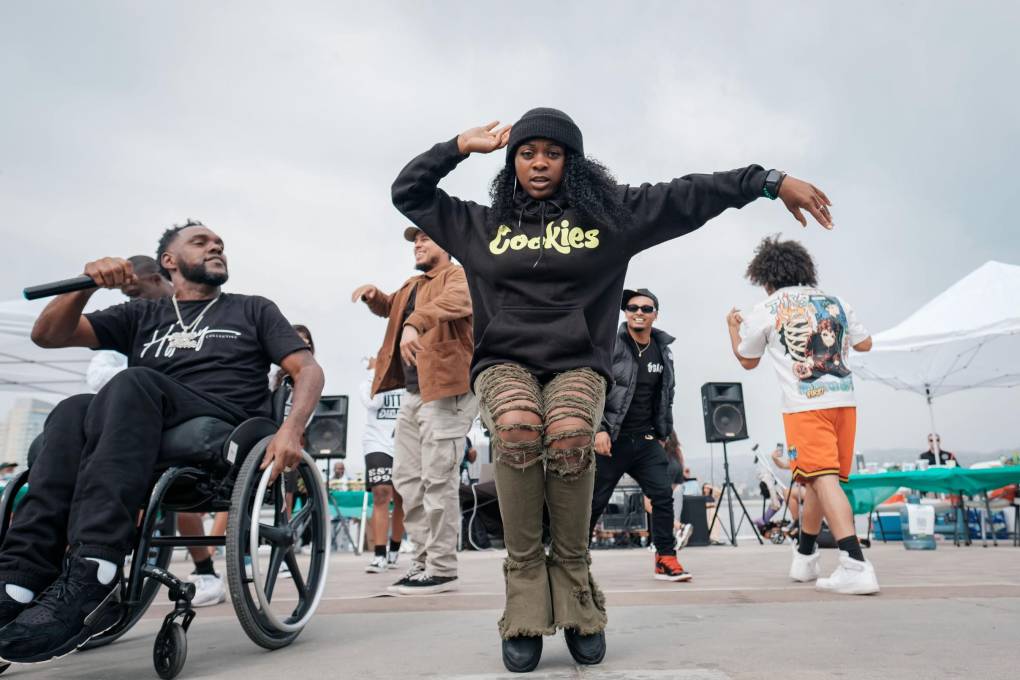
"caption": "Telice Summerfield (center) dancing on stage with Keak Da Sneak (left) in Oakland. ",
"description": "Telice Summerfield (center) dancing on stage with Keak Da Sneak (left) in Oakland. ",
"title": "Telice Summerfield (center) dancing on stage with Keak Da Sneak (left) in Oakland.",
"credit": null,
"status": "inherit",
"altTag": "Telice Summerfield (center) dancing on stage with Keak Da Sneak (left) in Oakland.",
"isLoading": false,
"fetchFailed": false
},
"arts_13940047": {
"type": "attachments",
"id": "arts_13940047",
"meta": {
"index": "attachments_1716263798",
"site": "arts",
"id": "13940047",
"found": true
},
"parent": 13940030,
"imgSizes": {
"twentyfourteen-full-width": {
"file": "https://cdn.kqed.org/wp-content/uploads/sites/2/2024/01/Konkrete-NYC-1-PT3-08-cropped-1-1038x576.jpeg",
"width": 1038,
"mimeType": "image/jpeg",
"height": 576
},
"thumbnail": {
"file": "https://cdn.kqed.org/wp-content/uploads/sites/2/2024/01/Konkrete-NYC-1-PT3-08-cropped-1-160x89.jpeg",
"width": 160,
"mimeType": "image/jpeg",
"height": 89
},
"post-thumbnail": {
"file": "https://cdn.kqed.org/wp-content/uploads/sites/2/2024/01/Konkrete-NYC-1-PT3-08-cropped-1-672x372.jpeg",
"width": 672,
"mimeType": "image/jpeg",
"height": 372
},
"kqedFullSize": {
"file": "https://cdn.kqed.org/wp-content/uploads/sites/2/2024/01/Konkrete-NYC-1-PT3-08-cropped-1.jpeg",
"width": 1951,
"height": 1089
},
"large": {
"file": "https://cdn.kqed.org/wp-content/uploads/sites/2/2024/01/Konkrete-NYC-1-PT3-08-cropped-1-1020x569.jpeg",
"width": 1020,
"mimeType": "image/jpeg",
"height": 569
},
"1536x1536": {
"file": "https://cdn.kqed.org/wp-content/uploads/sites/2/2024/01/Konkrete-NYC-1-PT3-08-cropped-1-1536x857.jpeg",
"width": 1536,
"mimeType": "image/jpeg",
"height": 857
},
"full-width": {
"file": "https://cdn.kqed.org/wp-content/uploads/sites/2/2024/01/Konkrete-NYC-1-PT3-08-cropped-1-1920x1072.jpeg",
"width": 1920,
"mimeType": "image/jpeg",
"height": 1072
},
"medium": {
"file": "https://cdn.kqed.org/wp-content/uploads/sites/2/2024/01/Konkrete-NYC-1-PT3-08-cropped-1-800x447.jpeg",
"width": 800,
"mimeType": "image/jpeg",
"height": 447
},
"medium_large": {
"file": "https://cdn.kqed.org/wp-content/uploads/sites/2/2024/01/Konkrete-NYC-1-PT3-08-cropped-1-768x429.jpeg",
"width": 768,
"mimeType": "image/jpeg",
"height": 429
}
},
"publishDate": 1704395725,
"modified": 1704395764,
"caption": "Konkrete performs with Beyoncé in New York City in July 2023. ",
"description": null,
"title": "Konkrete-NYC-1-PT3-08 cropped",
"credit": "Courtesy of Konkrete",
"status": "inherit",
"altTag": "A dancer with bleached hair stands on one knee while Beyoncé walks down a catwalk behind him.",
"isLoading": false,
"fetchFailed": false
},
"arts_13938014": {
"type": "attachments",
"id": "arts_13938014",
"meta": {
"index": "attachments_1716263798",
"site": "arts",
"id": "13938014",
"found": true
},
"parent": 13938001,
"imgSizes": {
"twentyfourteen-full-width": {
"file": "https://ww2.kqed.org/app/uploads/sites/2/2023/11/20231101-My-Linh-Le-012-JY_COVER-1038x576.jpg",
"width": 1038,
"mimeType": "image/jpeg",
"height": 576
},
"thumbnail": {
"file": "https://ww2.kqed.org/app/uploads/sites/2/2023/11/20231101-My-Linh-Le-012-JY_COVER-160x107.jpg",
"width": 160,
"mimeType": "image/jpeg",
"height": 107
},
"post-thumbnail": {
"file": "https://ww2.kqed.org/app/uploads/sites/2/2023/11/20231101-My-Linh-Le-012-JY_COVER-672x372.jpg",
"width": 672,
"mimeType": "image/jpeg",
"height": 372
},
"kqedFullSize": {
"file": "https://ww2.kqed.org/app/uploads/sites/2/2023/11/20231101-My-Linh-Le-012-JY_COVER.jpg",
"width": 2000,
"height": 1333
},
"large": {
"file": "https://ww2.kqed.org/app/uploads/sites/2/2023/11/20231101-My-Linh-Le-012-JY_COVER-1020x680.jpg",
"width": 1020,
"mimeType": "image/jpeg",
"height": 680
},
"1536x1536": {
"file": "https://ww2.kqed.org/app/uploads/sites/2/2023/11/20231101-My-Linh-Le-012-JY_COVER-1536x1024.jpg",
"width": 1536,
"mimeType": "image/jpeg",
"height": 1024
},
"full-width": {
"file": "https://ww2.kqed.org/app/uploads/sites/2/2023/11/20231101-My-Linh-Le-012-JY_COVER-1920x1280.jpg",
"width": 1920,
"mimeType": "image/jpeg",
"height": 1280
},
"medium": {
"file": "https://ww2.kqed.org/app/uploads/sites/2/2023/11/20231101-My-Linh-Le-012-JY_COVER-800x533.jpg",
"width": 800,
"mimeType": "image/jpeg",
"height": 533
},
"medium_large": {
"file": "https://ww2.kqed.org/app/uploads/sites/2/2023/11/20231101-My-Linh-Le-012-JY_COVER-768x512.jpg",
"width": 768,
"mimeType": "image/jpeg",
"height": 512
}
},
"publishDate": 1699990201,
"modified": 1699990360,
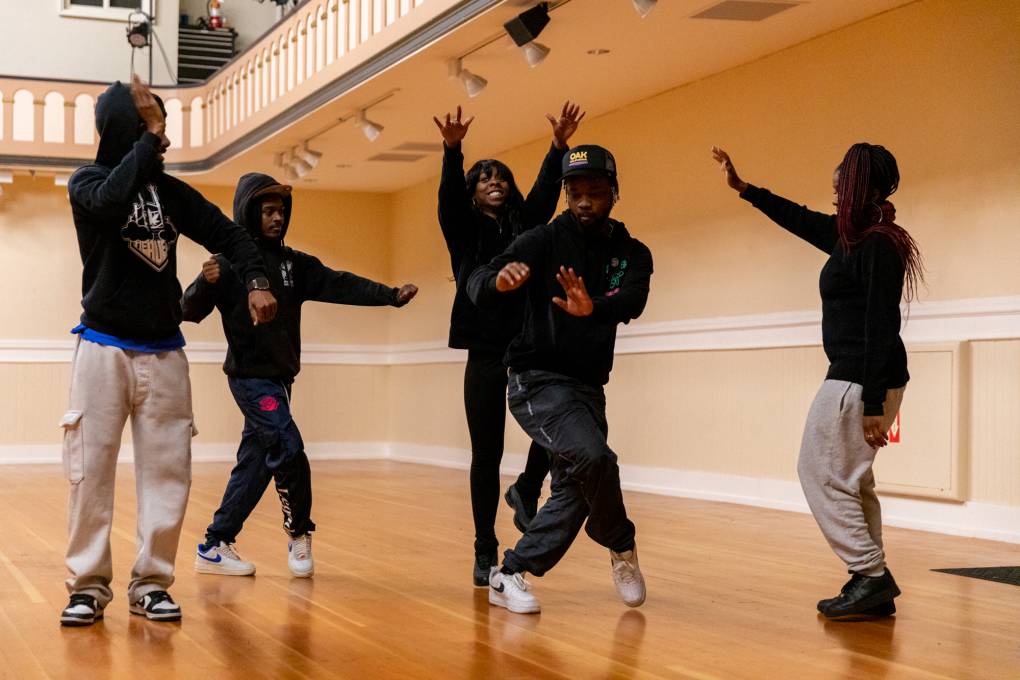
"caption": "Gary 'Ice Cold 3000' Morgan (center) dances with Mud Water Theatre members during rehearsal for 'Mud Water IV' at the Bayview Opera House. Created by My-Linh Le, the dance theatre piece will premiere at Dance Mission Theater on Nov. 18.\n\n",
"description": null,
"title": "20231101-My-Linh-Le-012-JY_COVER",
"credit": "Juliana Yamada/KQED",
"status": "inherit",
"altTag": null,
"isLoading": false,
"fetchFailed": false
},
"arts_13935477": {
"type": "attachments",
"id": "arts_13935477",
"meta": {
"index": "attachments_1716263798",
"site": "arts",
"id": "13935477",
"found": true
},
"parent": 13935408,
"imgSizes": {
"twentyfourteen-full-width": {
"file": "https://ww2.kqed.org/app/uploads/sites/2/2023/09/HKGT-part-2-web-image-1038x576.png",
"width": 1038,
"mimeType": "image/png",
"height": 576
},
"thumbnail": {
"file": "https://ww2.kqed.org/app/uploads/sites/2/2023/09/HKGT-part-2-web-image-160x90.png",
"width": 160,
"mimeType": "image/png",
"height": 90
},
"post-thumbnail": {
"file": "https://ww2.kqed.org/app/uploads/sites/2/2023/09/HKGT-part-2-web-image-672x372.png",
"width": 672,
"mimeType": "image/png",
"height": 372
},
"kqedFullSize": {
"file": "https://ww2.kqed.org/app/uploads/sites/2/2023/09/HKGT-part-2-web-image.png",
"width": 1920,
"height": 1080
},
"large": {
"file": "https://ww2.kqed.org/app/uploads/sites/2/2023/09/HKGT-part-2-web-image-1020x574.png",
"width": 1020,
"mimeType": "image/png",
"height": 574
},
"1536x1536": {
"file": "https://ww2.kqed.org/app/uploads/sites/2/2023/09/HKGT-part-2-web-image-1536x864.png",
"width": 1536,
"mimeType": "image/png",
"height": 864
},
"medium": {
"file": "https://ww2.kqed.org/app/uploads/sites/2/2023/09/HKGT-part-2-web-image-800x450.png",
"width": 800,
"mimeType": "image/png",
"height": 450
},
"medium_large": {
"file": "https://ww2.kqed.org/app/uploads/sites/2/2023/09/HKGT-part-2-web-image-768x432.png",
"width": 768,
"mimeType": "image/png",
"height": 432
}
},
"publishDate": 1695857676,
"modified": 1695917028,
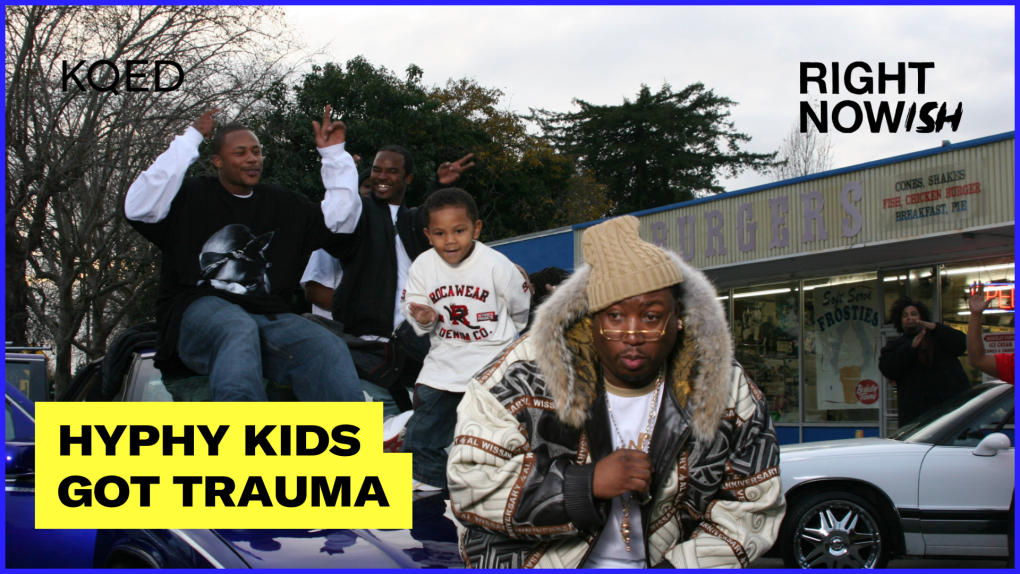
"caption": "Legendary Vallejo rapper E-40 with three dancers on a purple Buick 'scraper' during the filming of the 'Tell Me When To Go' music video in Deep East Oakland, circa 2006.",
"description": "Legendary Vallejo rapper E-40 stands in front of a purple Buick \"scraper\" as three young folks dance atop the vehicle during the filming of the video for the song, \"Tell Me When To Go\" in Deep East Oakland back in 2006.",
"title": "Legendary Vallejo rapper E-40 stands in front of a purple Buick \"scraper\" as three young folks dance atop the vehicle during the filming of the video for the song, \"Tell Me When To Go\" in Deep East Oakland back in 2006.",
"credit": "D-Ray",
"status": "inherit",
"altTag": "Legendary Vallejo rapper E-40 stands in front of a purple Buick \"scraper\" as three young folks dance atop the vehicle during the filming of the video for the song, \"Tell Me When To Go\" in Deep East Oakland back in 2006.",
"isLoading": false,
"fetchFailed": false
},
"arts_13934165": {
"type": "attachments",
"id": "arts_13934165",
"meta": {
"index": "attachments_1716263798",
"site": "arts",
"id": "13934165",
"found": true
},
"parent": 13934148,
"imgSizes": {
"twentyfourteen-full-width": {
"file": "https://ww2.kqed.org/app/uploads/sites/2/2023/08/RS68394_230825-DAYS-LIKE-THIS-DANCE-OAKLAND-RT-21-qut-1038x576.jpg",
"width": 1038,
"mimeType": "image/jpeg",
"height": 576
},
"thumbnail": {
"file": "https://ww2.kqed.org/app/uploads/sites/2/2023/08/RS68394_230825-DAYS-LIKE-THIS-DANCE-OAKLAND-RT-21-qut-160x107.jpg",
"width": 160,
"mimeType": "image/jpeg",
"height": 107
},
"post-thumbnail": {
"file": "https://ww2.kqed.org/app/uploads/sites/2/2023/08/RS68394_230825-DAYS-LIKE-THIS-DANCE-OAKLAND-RT-21-qut-672x372.jpg",
"width": 672,
"mimeType": "image/jpeg",
"height": 372
},
"kqedFullSize": {
"file": "https://ww2.kqed.org/app/uploads/sites/2/2023/08/RS68394_230825-DAYS-LIKE-THIS-DANCE-OAKLAND-RT-21-qut.jpg",
"width": 1920,
"height": 1280
},
"large": {
"file": "https://ww2.kqed.org/app/uploads/sites/2/2023/08/RS68394_230825-DAYS-LIKE-THIS-DANCE-OAKLAND-RT-21-qut-1020x680.jpg",
"width": 1020,
"mimeType": "image/jpeg",
"height": 680
},
"1536x1536": {
"file": "https://ww2.kqed.org/app/uploads/sites/2/2023/08/RS68394_230825-DAYS-LIKE-THIS-DANCE-OAKLAND-RT-21-qut-1536x1024.jpg",
"width": 1536,
"mimeType": "image/jpeg",
"height": 1024
},
"medium": {
"file": "https://ww2.kqed.org/app/uploads/sites/2/2023/08/RS68394_230825-DAYS-LIKE-THIS-DANCE-OAKLAND-RT-21-qut-800x533.jpg",
"width": 800,
"mimeType": "image/jpeg",
"height": 533
},
"medium_large": {
"file": "https://ww2.kqed.org/app/uploads/sites/2/2023/08/RS68394_230825-DAYS-LIKE-THIS-DANCE-OAKLAND-RT-21-qut-768x512.jpg",
"width": 768,
"mimeType": "image/jpeg",
"height": 512
}
},
"publishDate": 1693511574,
"modified": 1693515179,
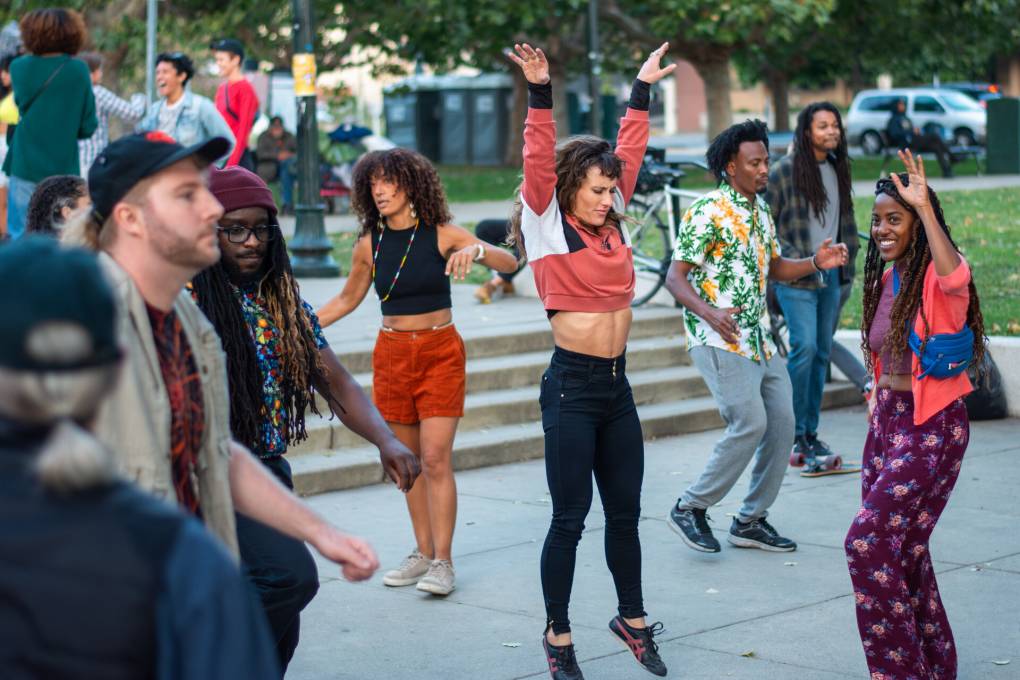
"caption": "Partygoers dancing in front of the Lake Merritt Pergola at Days Like This in Oakland on Friday, Aug. 25, 2023.",
"description": null,
"title": "RS68394_230825-DAYS LIKE THIS DANCE OAKLAND- RT-21-qut",
"credit": "Raphael Timmons",
"status": "inherit",
"altTag": "A group of male and female dancers of different races dance outdoors.",
"isLoading": false,
"fetchFailed": false
},
"arts_13933415": {
"type": "attachments",
"id": "arts_13933415",
"meta": {
"index": "attachments_1716263798",
"site": "arts",
"id": "13933415",
"found": true
},
"parent": 13933150,
"imgSizes": {
"twentyfourteen-full-width": {
"file": "https://ww2.kqed.org/app/uploads/sites/2/2023/08/Jess-Bozzo-left-and-Bianca-Cabrera-for-SFTD-2023.-Photo-by-Amani-Wade-1038x576.jpg",
"width": 1038,
"mimeType": "image/jpeg",
"height": 576
},
"thumbnail": {
"file": "https://ww2.kqed.org/app/uploads/sites/2/2023/08/Jess-Bozzo-left-and-Bianca-Cabrera-for-SFTD-2023.-Photo-by-Amani-Wade-160x107.jpg",
"width": 160,
"mimeType": "image/jpeg",
"height": 107
},
"post-thumbnail": {
"file": "https://ww2.kqed.org/app/uploads/sites/2/2023/08/Jess-Bozzo-left-and-Bianca-Cabrera-for-SFTD-2023.-Photo-by-Amani-Wade-672x372.jpg",
"width": 672,
"mimeType": "image/jpeg",
"height": 372
},
"kqedFullSize": {
"file": "https://ww2.kqed.org/app/uploads/sites/2/2023/08/Jess-Bozzo-left-and-Bianca-Cabrera-for-SFTD-2023.-Photo-by-Amani-Wade-scaled.jpg",
"width": 2560,
"height": 1710
},
"2048x2048": {
"file": "https://ww2.kqed.org/app/uploads/sites/2/2023/08/Jess-Bozzo-left-and-Bianca-Cabrera-for-SFTD-2023.-Photo-by-Amani-Wade-2048x1368.jpg",
"width": 2048,
"mimeType": "image/jpeg",
"height": 1368
},
"large": {
"file": "https://ww2.kqed.org/app/uploads/sites/2/2023/08/Jess-Bozzo-left-and-Bianca-Cabrera-for-SFTD-2023.-Photo-by-Amani-Wade-1020x681.jpg",
"width": 1020,
"mimeType": "image/jpeg",
"height": 681
},
"1536x1536": {
"file": "https://ww2.kqed.org/app/uploads/sites/2/2023/08/Jess-Bozzo-left-and-Bianca-Cabrera-for-SFTD-2023.-Photo-by-Amani-Wade-1536x1026.jpg",
"width": 1536,
"mimeType": "image/jpeg",
"height": 1026
},
"full-width": {
"file": "https://ww2.kqed.org/app/uploads/sites/2/2023/08/Jess-Bozzo-left-and-Bianca-Cabrera-for-SFTD-2023.-Photo-by-Amani-Wade-1920x1282.jpg",
"width": 1920,
"mimeType": "image/jpeg",
"height": 1282
},
"medium": {
"file": "https://ww2.kqed.org/app/uploads/sites/2/2023/08/Jess-Bozzo-left-and-Bianca-Cabrera-for-SFTD-2023.-Photo-by-Amani-Wade-800x534.jpg",
"width": 800,
"mimeType": "image/jpeg",
"height": 534
},
"medium_large": {
"file": "https://ww2.kqed.org/app/uploads/sites/2/2023/08/Jess-Bozzo-left-and-Bianca-Cabrera-for-SFTD-2023.-Photo-by-Amani-Wade-768x513.jpg",
"width": 768,
"mimeType": "image/jpeg",
"height": 513
}
},
"publishDate": 1692311116,
"modified": 1692311266,
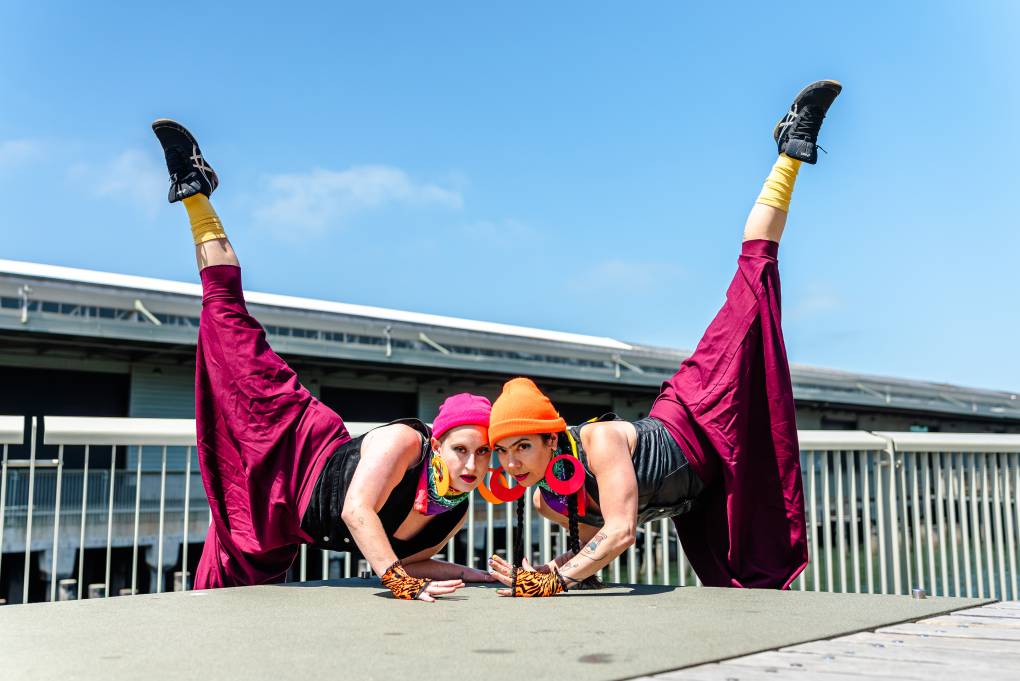
"caption": "Jess Bozzo and Bianca Cabrera dance in Epiphany's San Francisco Trolley Dances, an annual event that takes place along transit routes.",
"description": null,
"title": "Epiphany Dance Theater",
"credit": "Amani Wade",
"status": "inherit",
"altTag": "two dancers in pink and orange hat with pink skirts dance with their legs in the air, outside",
"isLoading": false,
"fetchFailed": false
},
"arts_13932908": {
"type": "attachments",
"id": "arts_13932908",
"meta": {
"index": "attachments_1716263798",
"site": "arts",
"id": "13932908",
"found": true
},
"parent": 0,
"imgSizes": {
"twentyfourteen-full-width": {
"file": "https://ww2.kqed.org/app/uploads/sites/2/2023/08/Gary_6.SQUARE-1038x576.jpg",
"width": 1038,
"mimeType": "image/jpeg",
"height": 576
},
"thumbnail": {
"file": "https://ww2.kqed.org/app/uploads/sites/2/2023/08/Gary_6.SQUARE-160x160.jpg",
"width": 160,
"mimeType": "image/jpeg",
"height": 160
},
"post-thumbnail": {
"file": "https://ww2.kqed.org/app/uploads/sites/2/2023/08/Gary_6.SQUARE-672x372.jpg",
"width": 672,
"mimeType": "image/jpeg",
"height": 372
},
"kqedFullSize": {
"file": "https://ww2.kqed.org/app/uploads/sites/2/2023/08/Gary_6.SQUARE.jpg",
"width": 1080,
"height": 1080
},
"large": {
"file": "https://ww2.kqed.org/app/uploads/sites/2/2023/08/Gary_6.SQUARE-1020x1020.jpg",
"width": 1020,
"mimeType": "image/jpeg",
"height": 1020
},
"medium": {
"file": "https://ww2.kqed.org/app/uploads/sites/2/2023/08/Gary_6.SQUARE-800x800.jpg",
"width": 800,
"mimeType": "image/jpeg",
"height": 800
},
"medium_large": {
"file": "https://ww2.kqed.org/app/uploads/sites/2/2023/08/Gary_6.SQUARE-768x768.jpg",
"width": 768,
"mimeType": "image/jpeg",
"height": 768
}
},
"publishDate": 1691645109,
"modified": 1691646646,
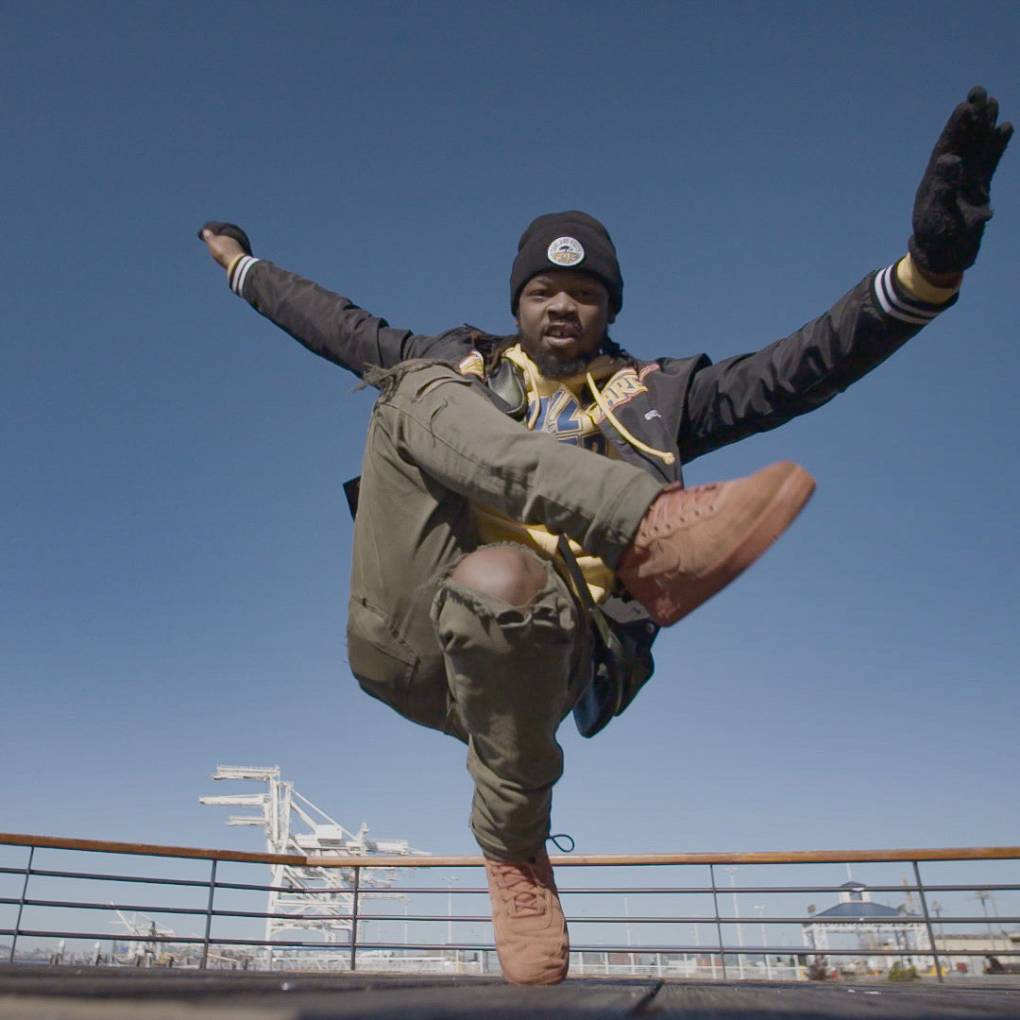
"caption": "Icecold 3000 of the Turf Fienz dances with the Port of Oakland in the background. ",
"description": null,
"title": "Gary_6.SQUARE",
"credit": "Elie M. Khadra",
"status": "inherit",
"altTag": null,
"isLoading": false,
"fetchFailed": false
},
"arts_13932907": {
"type": "attachments",
"id": "arts_13932907",
"meta": {
"index": "attachments_1716263798",
"site": "arts",
"id": "13932907",
"found": true
},
"parent": 13932887,
"imgSizes": {
"twentyfourteen-full-width": {
"file": "https://ww2.kqed.org/app/uploads/sites/2/2023/08/Gary_6-1038x576.jpg",
"width": 1038,
"mimeType": "image/jpeg",
"height": 576
},
"thumbnail": {
"file": "https://ww2.kqed.org/app/uploads/sites/2/2023/08/Gary_6-160x90.jpg",
"width": 160,
"mimeType": "image/jpeg",
"height": 90
},
"post-thumbnail": {
"file": "https://ww2.kqed.org/app/uploads/sites/2/2023/08/Gary_6-672x372.jpg",
"width": 672,
"mimeType": "image/jpeg",
"height": 372
},
"kqedFullSize": {
"file": "https://ww2.kqed.org/app/uploads/sites/2/2023/08/Gary_6.jpg",
"width": 1920,
"height": 1080
},
"large": {
"file": "https://ww2.kqed.org/app/uploads/sites/2/2023/08/Gary_6-1020x574.jpg",
"width": 1020,
"mimeType": "image/jpeg",
"height": 574
},
"1536x1536": {
"file": "https://ww2.kqed.org/app/uploads/sites/2/2023/08/Gary_6-1536x864.jpg",
"width": 1536,
"mimeType": "image/jpeg",
"height": 864
},
"medium": {
"file": "https://ww2.kqed.org/app/uploads/sites/2/2023/08/Gary_6-800x450.jpg",
"width": 800,
"mimeType": "image/jpeg",
"height": 450
},
"medium_large": {
"file": "https://ww2.kqed.org/app/uploads/sites/2/2023/08/Gary_6-768x432.jpg",
"width": 768,
"mimeType": "image/jpeg",
"height": 432
}
},
"publishDate": 1691645102,
"modified": 1691647336,
"caption": "Garion Morgan, a.k.a. Icecold 3000 of the Turf Fienz, dancing near the Port of Oakland in 2019. ",
"description": null,
"title": "Gary_6",
"credit": "Elie M. Khadra",
"status": "inherit",
"altTag": "Garion Morgan, a.k.a. Icecold 3000 of the Turf Fienz, dancing near the Port of Oakland in 2019.",
"isLoading": false,
"fetchFailed": false
},
"arts_13930600": {
"type": "attachments",
"id": "arts_13930600",
"meta": {
"index": "attachments_1716263798",
"site": "arts",
"id": "13930600",
"found": true
},
"parent": 13930587,
"imgSizes": {
"twentyfourteen-full-width": {
"file": "https://ww2.kqed.org/app/uploads/sites/2/2023/06/Pink-Block-2022-1038x576.png",
"width": 1038,
"mimeType": "image/png",
"height": 576
},
"thumbnail": {
"file": "https://ww2.kqed.org/app/uploads/sites/2/2023/06/Pink-Block-2022-160x106.png",
"width": 160,
"mimeType": "image/png",
"height": 106
},
"post-thumbnail": {
"file": "https://ww2.kqed.org/app/uploads/sites/2/2023/06/Pink-Block-2022-672x372.png",
"width": 672,
"mimeType": "image/png",
"height": 372
},
"kqedFullSize": {
"file": "https://ww2.kqed.org/app/uploads/sites/2/2023/06/Pink-Block-2022.png",
"width": 1636,
"height": 1088
},
"large": {
"file": "https://ww2.kqed.org/app/uploads/sites/2/2023/06/Pink-Block-2022-1020x678.png",
"width": 1020,
"mimeType": "image/png",
"height": 678
},
"1536x1536": {
"file": "https://ww2.kqed.org/app/uploads/sites/2/2023/06/Pink-Block-2022-1536x1021.png",
"width": 1536,
"mimeType": "image/png",
"height": 1021
},
"medium": {
"file": "https://ww2.kqed.org/app/uploads/sites/2/2023/06/Pink-Block-2022-800x532.png",
"width": 800,
"mimeType": "image/png",
"height": 532
},
"medium_large": {
"file": "https://ww2.kqed.org/app/uploads/sites/2/2023/06/Pink-Block-2022-768x511.png",
"width": 768,
"mimeType": "image/png",
"height": 511
}
},
"publishDate": 1686867234,
"modified": 1686867315,
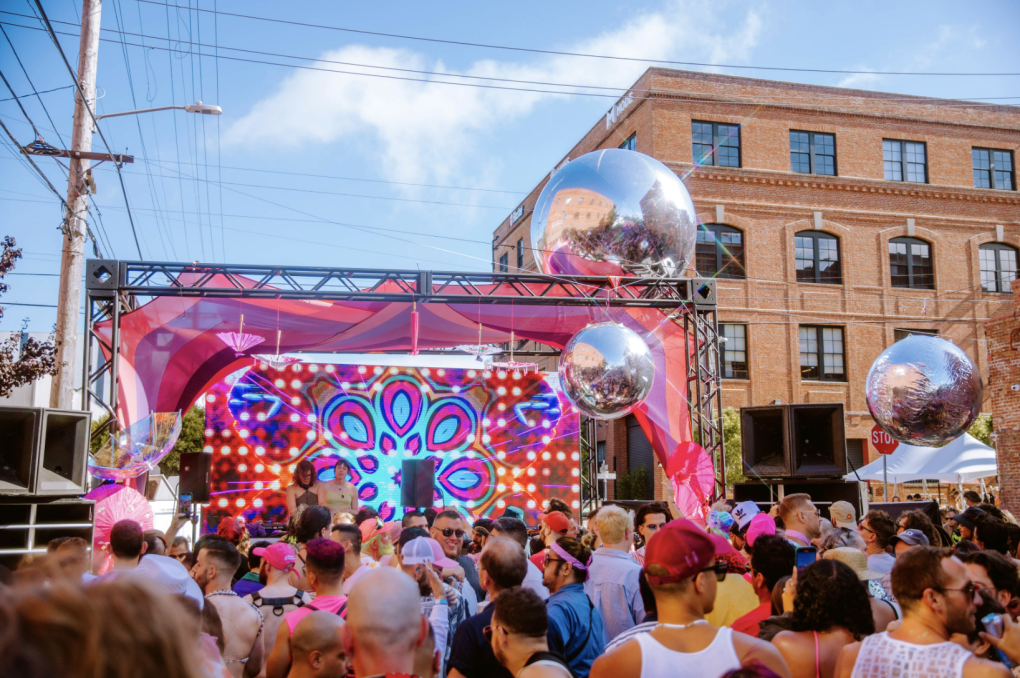
"caption": "The Pink Block party, 2022. This year's mini-festival, on June 24, 2023, will be headlined by Big Freedia.",
"description": null,
"title": "Pink Block 2022",
"credit": "Saylor Nedelman",
"status": "inherit",
"altTag": "a large street party with a pink stage and a crowd of people dancing in front of it",
"isLoading": false,
"fetchFailed": false
},
"arts_13929693": {
"type": "attachments",
"id": "arts_13929693",
"meta": {
"index": "attachments_1716263798",
"site": "arts",
"id": "13929693",
"found": true
},
"parent": 13929673,
"imgSizes": {
"twentyfourteen-full-width": {
"file": "https://ww2.kqed.org/app/uploads/sites/2/2023/05/KQED-Fest-at-KQED-Headquarters-on-Saturday-April-29-2023.-Estefany-Gonzalez037-1038x576.jpg",
"width": 1038,
"mimeType": "image/jpeg",
"height": 576
},
"thumbnail": {
"file": "https://ww2.kqed.org/app/uploads/sites/2/2023/05/KQED-Fest-at-KQED-Headquarters-on-Saturday-April-29-2023.-Estefany-Gonzalez037-160x107.jpg",
"width": 160,
"mimeType": "image/jpeg",
"height": 107
},
"post-thumbnail": {
"file": "https://ww2.kqed.org/app/uploads/sites/2/2023/05/KQED-Fest-at-KQED-Headquarters-on-Saturday-April-29-2023.-Estefany-Gonzalez037-672x372.jpg",
"width": 672,
"mimeType": "image/jpeg",
"height": 372
},
"kqedFullSize": {
"file": "https://ww2.kqed.org/app/uploads/sites/2/2023/05/KQED-Fest-at-KQED-Headquarters-on-Saturday-April-29-2023.-Estefany-Gonzalez037.jpg",
"width": 1920,
"height": 1280
},
"large": {
"file": "https://ww2.kqed.org/app/uploads/sites/2/2023/05/KQED-Fest-at-KQED-Headquarters-on-Saturday-April-29-2023.-Estefany-Gonzalez037-1020x680.jpg",
"width": 1020,
"mimeType": "image/jpeg",
"height": 680
},
"1536x1536": {
"file": "https://ww2.kqed.org/app/uploads/sites/2/2023/05/KQED-Fest-at-KQED-Headquarters-on-Saturday-April-29-2023.-Estefany-Gonzalez037-1536x1024.jpg",
"width": 1536,
"mimeType": "image/jpeg",
"height": 1024
},
"medium": {
"file": "https://ww2.kqed.org/app/uploads/sites/2/2023/05/KQED-Fest-at-KQED-Headquarters-on-Saturday-April-29-2023.-Estefany-Gonzalez037-800x533.jpg",
"width": 800,
"mimeType": "image/jpeg",
"height": 533
},
"medium_large": {
"file": "https://ww2.kqed.org/app/uploads/sites/2/2023/05/KQED-Fest-at-KQED-Headquarters-on-Saturday-April-29-2023.-Estefany-Gonzalez037-768x512.jpg",
"width": 768,
"mimeType": "image/jpeg",
"height": 512
}
},
"publishDate": 1685053501,
"modified": 1692038954,
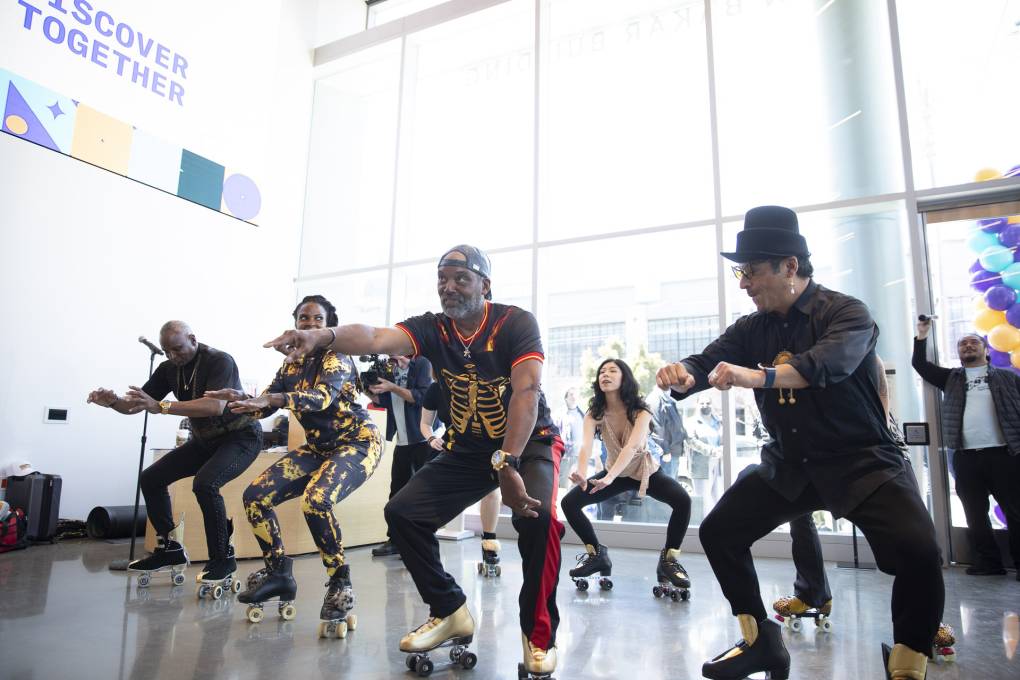
"caption": "Richard Humphrey (center) demonstrates rollerskating moves at KQED Headquarters on Saturday, April 29, 2023.",
"description": null,
"title": null,
"credit": "Estefany Gonzalez for KQED",
"status": "inherit",
"altTag": null,
"isLoading": false,
"fetchFailed": false
},
"arts_13925422": {
"type": "attachments",
"id": "arts_13925422",
"meta": {
"index": "attachments_1716263798",
"site": "arts",
"id": "13925422",
"found": true
},
"parent": 13925415,
"imgSizes": {
"twentyfourteen-full-width": {
"file": "https://ww2.kqed.org/app/uploads/sites/2/2023/02/TraciBartlow.DanceEvent-1038x576.jpg",
"width": 1038,
"mimeType": "image/jpeg",
"height": 576
},
"thumbnail": {
"file": "https://ww2.kqed.org/app/uploads/sites/2/2023/02/TraciBartlow.DanceEvent-160x90.jpg",
"width": 160,
"mimeType": "image/jpeg",
"height": 90
},
"post-thumbnail": {
"file": "https://ww2.kqed.org/app/uploads/sites/2/2023/02/TraciBartlow.DanceEvent-672x372.jpg",
"width": 672,
"mimeType": "image/jpeg",
"height": 372
},
"kqedFullSize": {
"file": "https://ww2.kqed.org/app/uploads/sites/2/2023/02/TraciBartlow.DanceEvent.jpg",
"width": 1810,
"height": 1018
},
"large": {
"file": "https://ww2.kqed.org/app/uploads/sites/2/2023/02/TraciBartlow.DanceEvent-1020x574.jpg",
"width": 1020,
"mimeType": "image/jpeg",
"height": 574
},
"1536x1536": {
"file": "https://ww2.kqed.org/app/uploads/sites/2/2023/02/TraciBartlow.DanceEvent-1536x864.jpg",
"width": 1536,
"mimeType": "image/jpeg",
"height": 864
},
"medium": {
"file": "https://ww2.kqed.org/app/uploads/sites/2/2023/02/TraciBartlow.DanceEvent-800x450.jpg",
"width": 800,
"mimeType": "image/jpeg",
"height": 450
},
"medium_large": {
"file": "https://ww2.kqed.org/app/uploads/sites/2/2023/02/TraciBartlow.DanceEvent-768x432.jpg",
"width": 768,
"mimeType": "image/jpeg",
"height": 432
}
},
"publishDate": 1677181508,
"modified": 1677181508,
"caption": null,
"description": null,
"title": "TraciBartlow.DanceEvent",
"credit": null,
"status": "inherit",
"altTag": null,
"isLoading": false,
"fetchFailed": false
},
"arts_13924128": {
"type": "attachments",
"id": "arts_13924128",
"meta": {
"index": "attachments_1716263798",
"site": "arts",
"id": "13924128",
"found": true
},
"parent": 13924126,
"imgSizes": {
"twentyfourteen-full-width": {
"file": "https://ww2.kqed.org/app/uploads/sites/2/2023/01/HipHopPreschool.SQ_-1038x576.jpg",
"width": 1038,
"mimeType": "image/jpeg",
"height": 576
},
"thumbnail": {
"file": "https://ww2.kqed.org/app/uploads/sites/2/2023/01/HipHopPreschool.SQ_-160x160.jpg",
"width": 160,
"mimeType": "image/jpeg",
"height": 160
},
"post-thumbnail": {
"file": "https://ww2.kqed.org/app/uploads/sites/2/2023/01/HipHopPreschool.SQ_-672x372.jpg",
"width": 672,
"mimeType": "image/jpeg",
"height": 372
},
"kqedFullSize": {
"file": "https://ww2.kqed.org/app/uploads/sites/2/2023/01/HipHopPreschool.SQ_.jpg",
"width": 1920,
"height": 1920
},
"large": {
"file": "https://ww2.kqed.org/app/uploads/sites/2/2023/01/HipHopPreschool.SQ_-1020x1020.jpg",
"width": 1020,
"mimeType": "image/jpeg",
"height": 1020
},
"1536x1536": {
"file": "https://ww2.kqed.org/app/uploads/sites/2/2023/01/HipHopPreschool.SQ_-1536x1536.jpg",
"width": 1536,
"mimeType": "image/jpeg",
"height": 1536
},
"medium": {
"file": "https://ww2.kqed.org/app/uploads/sites/2/2023/01/HipHopPreschool.SQ_-800x800.jpg",
"width": 800,
"mimeType": "image/jpeg",
"height": 800
},
"medium_large": {
"file": "https://ww2.kqed.org/app/uploads/sites/2/2023/01/HipHopPreschool.SQ_-768x768.jpg",
"width": 768,
"mimeType": "image/jpeg",
"height": 768
}
},
"publishDate": 1674596688,
"modified": 1674596688,
"caption": null,
"description": null,
"title": "HipHopPreschool.SQ",
"credit": null,
"status": "inherit",
"altTag": null,
"isLoading": false,
"fetchFailed": false
},
"arts_13923118": {
"type": "attachments",
"id": "arts_13923118",
"meta": {
"index": "attachments_1716263798",
"site": "arts",
"id": "13923118",
"found": true
},
"parent": 13923117,
"imgSizes": {
"twentyfourteen-full-width": {
"file": "https://ww2.kqed.org/app/uploads/sites/2/2022/12/untitled-design-16-_wide-4b6651c18985df104919995663aae21824251512-1038x576.jpg",
"width": 1038,
"mimeType": "image/jpeg",
"height": 576
},
"thumbnail": {
"file": "https://ww2.kqed.org/app/uploads/sites/2/2022/12/untitled-design-16-_wide-4b6651c18985df104919995663aae21824251512-160x90.jpg",
"width": 160,
"mimeType": "image/jpeg",
"height": 90
},
"post-thumbnail": {
"file": "https://ww2.kqed.org/app/uploads/sites/2/2022/12/untitled-design-16-_wide-4b6651c18985df104919995663aae21824251512-672x372.jpg",
"width": 672,
"mimeType": "image/jpeg",
"height": 372
},
"kqedFullSize": {
"file": "https://ww2.kqed.org/app/uploads/sites/2/2022/12/untitled-design-16-_wide-4b6651c18985df104919995663aae21824251512.jpg",
"width": 1917,
"height": 1078
},
"large": {
"file": "https://ww2.kqed.org/app/uploads/sites/2/2022/12/untitled-design-16-_wide-4b6651c18985df104919995663aae21824251512-1020x574.jpg",
"width": 1020,
"mimeType": "image/jpeg",
"height": 574
},
"1536x1536": {
"file": "https://ww2.kqed.org/app/uploads/sites/2/2022/12/untitled-design-16-_wide-4b6651c18985df104919995663aae21824251512-1536x864.jpg",
"width": 1536,
"mimeType": "image/jpeg",
"height": 864
},
"medium": {
"file": "https://ww2.kqed.org/app/uploads/sites/2/2022/12/untitled-design-16-_wide-4b6651c18985df104919995663aae21824251512-800x450.jpg",
"width": 800,
"mimeType": "image/jpeg",
"height": 450
},
"medium_large": {
"file": "https://ww2.kqed.org/app/uploads/sites/2/2022/12/untitled-design-16-_wide-4b6651c18985df104919995663aae21824251512-768x432.jpg",
"width": 768,
"mimeType": "image/jpeg",
"height": 432
}
},
"publishDate": 1672340941,
"modified": 1672341735,
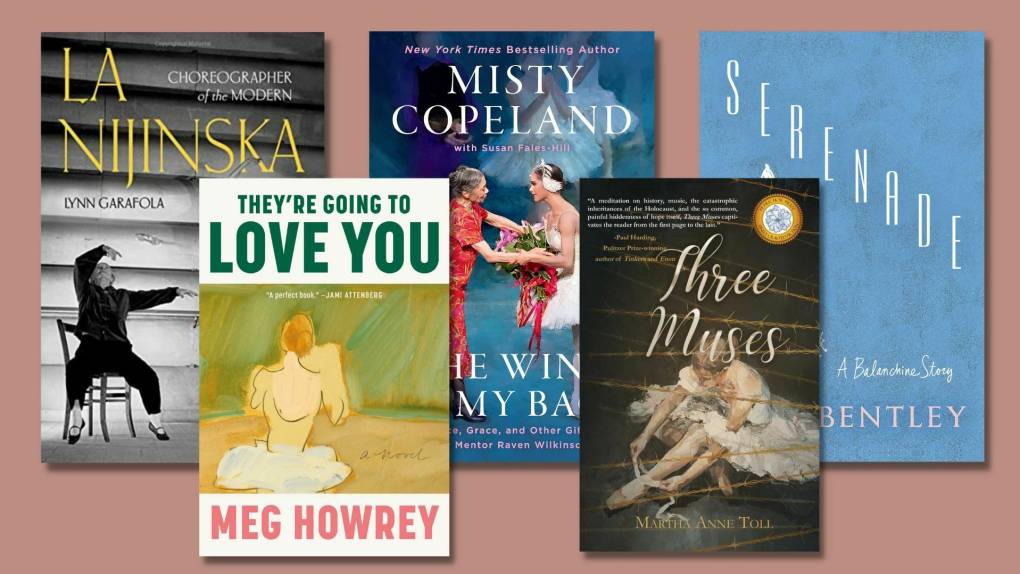
"caption": "‘La Nijinska’ by Lynn Garafola, ‘They're Going to Love You’ by Meg Howrey, ‘The Wind at My Back’ by Misty Copeland, ‘Three Muses’ by Martha Anne Toll and ‘Serenade’ by Toni Bentley.",
"description": null,
"title": "‘La Nijinska’ by Lynn Garafola, ‘They’re Going to Love You’ by Meg Howrey, ‘The Wind at My Back’ by Misty Copeland, ‘Three Muses’ by Martha Anne Toll and ‘Serenade’ by Toni Bentley.",
"credit": "Meghan Collins Sullivan/NPR",
"status": "inherit",
"altTag": "Five books about dance arranged alongside one another.",
"isLoading": false,
"fetchFailed": false
}
},
"audioPlayerReducer": {
"postId": "stream_live",
"isPaused": true,
"isPlaying": false,
"pfsActive": false,
"pledgeModalIsOpen": true,
"playerDrawerIsOpen": false,
"liveAudioPlayStartedAt": 0,
"liveAudioPlayContext": ""
},
"authorsReducer": {
"byline_arts_13938001": {
"type": "authors",
"id": "byline_arts_13938001",
"meta": {
"override": true
},
"slug": "byline_arts_13938001",
"name": "Dorothy R. Santos",
"isLoading": false
},
"byline_arts_13925415": {
"type": "authors",
"id": "byline_arts_13925415",
"meta": {
"override": true
},
"slug": "byline_arts_13925415",
"name": "KQED Live",
"isLoading": false
},
"byline_arts_13923117": {
"type": "authors",
"id": "byline_arts_13923117",
"meta": {
"override": true
},
"slug": "byline_arts_13923117",
"name": "Sophie Bress",
"isLoading": false
},
"aproehl": {
"type": "authors",
"id": "11296",
"meta": {
"index": "authors_1716337520",
"id": "11296",
"found": true
},
"name": "Ariana Proehl",
"firstName": "Ariana",
"lastName": "Proehl",
"slug": "aproehl",
"email": "aproehl@KQED.org",
"display_author_email": true,
"staff_mastheads": [
"news"
],
"title": "Culture Reporter, KQED",
"bio": "Ariana Proehl is a Culture Reporter and Host.",
"avatar": "https://secure.gravatar.com/avatar/c96b24567eb5bb3a4f8bb295ed53e232?s=600&d=blank&r=g",
"twitter": "ArianaProehl",
"facebook": null,
"instagram": null,
"linkedin": null,
"sites": [
{
"site": "arts",
"roles": []
},
{
"site": "news",
"roles": []
},
{
"site": "education",
"roles": []
},
{
"site": "forum",
"roles": []
}
],
"headData": {
"title": "Ariana Proehl | KQED",
"description": "Culture Reporter, KQED",
"ogImgSrc": "https://secure.gravatar.com/avatar/c96b24567eb5bb3a4f8bb295ed53e232?s=600&d=blank&r=g",
"twImgSrc": "https://secure.gravatar.com/avatar/c96b24567eb5bb3a4f8bb295ed53e232?s=600&d=blank&r=g"
},
"isLoading": false,
"link": "/author/aproehl"
},
"ogpenn": {
"type": "authors",
"id": "11491",
"meta": {
"index": "authors_1716337520",
"id": "11491",
"found": true
},
"name": "Pendarvis Harshaw",
"firstName": "Pendarvis",
"lastName": "Harshaw",
"slug": "ogpenn",
"email": "ogpenn@gmail.com",
"display_author_email": false,
"staff_mastheads": [
"arts"
],
"title": "Community Engagement Reporter",
"bio": "Pendarvis Harshaw is an educator, host and writer with KQED Arts.",
"avatar": "https://secure.gravatar.com/avatar/972b77ee8e3f346ae2b00622661187fbfabd059b5693bbdc1475ea7a722fd4cd?s=600&d=blank&r=g",
"twitter": null,
"bluesky": null,
"facebook": null,
"instagram": "ogpenn",
"linkedin": null,
"sites": [
{
"site": "arts",
"roles": [
"administrator"
]
},
{
"site": "news",
"roles": [
"editor"
]
},
{
"site": "bayareabites",
"roles": [
"author"
]
},
{
"site": "hiphop",
"roles": [
"editor"
]
}
],
"headData": {
"title": "Pendarvis Harshaw | KQED",
"description": "Community Engagement Reporter",
"ogImgSrc": "https://secure.gravatar.com/avatar/972b77ee8e3f346ae2b00622661187fbfabd059b5693bbdc1475ea7a722fd4cd?s=600&d=blank&r=g",
"twImgSrc": "https://secure.gravatar.com/avatar/972b77ee8e3f346ae2b00622661187fbfabd059b5693bbdc1475ea7a722fd4cd?s=600&d=blank&r=g"
},
"isLoading": false,
"link": "/author/ogpenn"
},
"ngluckstern": {
"type": "authors",
"id": "11497",
"meta": {
"index": "authors_1716337520",
"id": "11497",
"found": true
},
"name": "Nicole Gluckstern",
"firstName": "Nicole",
"lastName": "Gluckstern",
"slug": "ngluckstern",
"email": "gluckstern.nicole@gmail.com",
"display_author_email": false,
"staff_mastheads": [],
"title": "KQED Contributor",
"bio": null,
"avatar": "https://secure.gravatar.com/avatar/2c3d593194017bfe811a998ad03140909de330b22abebf4889e1a564ce5b3495?s=600&d=blank&r=g",
"twitter": null,
"bluesky": null,
"facebook": null,
"instagram": null,
"linkedin": null,
"sites": [
{
"site": "arts",
"roles": [
"contributor"
]
}
],
"headData": {
"title": "Nicole Gluckstern | KQED",
"description": "KQED Contributor",
"ogImgSrc": "https://secure.gravatar.com/avatar/2c3d593194017bfe811a998ad03140909de330b22abebf4889e1a564ce5b3495?s=600&d=blank&r=g",
"twImgSrc": "https://secure.gravatar.com/avatar/2c3d593194017bfe811a998ad03140909de330b22abebf4889e1a564ce5b3495?s=600&d=blank&r=g"
},
"isLoading": false,
"link": "/author/ngluckstern"
},
"mmedina": {
"type": "authors",
"id": "11528",
"meta": {
"index": "authors_1716337520",
"id": "11528",
"found": true
},
"name": "Marisol Medina-Cadena",
"firstName": "Marisol",
"lastName": "Medina-Cadena",
"slug": "mmedina",
"email": "mmedina@KQED.org",
"display_author_email": true,
"staff_mastheads": [],
"title": "Producer, Rightnowish Podcast",
"bio": "Marisol Medina-Cadena is a radio reporter and podcast producer. Before working at KQED, she produced for PBS member station, KCET, in Los Angeles. In 2017, Marisol won an Emmy Award for her work on the televised documentary, \u003cem>City Rising\u003c/em>, examining California's affordable housing crisis and the historical roots of gentrification.",
"avatar": "https://secure.gravatar.com/avatar/6c3db46a1cabb5e1fe9a365b5f4e681e?s=600&d=blank&r=g",
"twitter": "marisolreports",
"facebook": null,
"instagram": null,
"linkedin": null,
"sites": [
{
"site": "arts",
"roles": []
},
{
"site": "news",
"roles": [
"edit_others_posts"
]
}
],
"headData": {
"title": "Marisol Medina-Cadena | KQED",
"description": "Producer, Rightnowish Podcast",
"ogImgSrc": "https://secure.gravatar.com/avatar/6c3db46a1cabb5e1fe9a365b5f4e681e?s=600&d=blank&r=g",
"twImgSrc": "https://secure.gravatar.com/avatar/6c3db46a1cabb5e1fe9a365b5f4e681e?s=600&d=blank&r=g"
},
"isLoading": false,
"link": "/author/mmedina"
},
"ksong": {
"type": "authors",
"id": "11813",
"meta": {
"index": "authors_1716337520",
"id": "11813",
"found": true
},
"name": "Kristie Song",
"firstName": "Kristie",
"lastName": "Song",
"slug": "ksong",
"email": "ksong@kqed.org",
"display_author_email": false,
"staff_mastheads": [],
"title": "Editorial Intern ",
"bio": "Kristie Song is an Arts & Culture Intern at KQED. She is currently a graduate student at UC Berkeley, where she studies audio and multimedia journalism. Previously, she covered the local community for Oakland North, produced episodes for The Science of Happiness, and served as news director for KUCI, UC Irvine’s radio station. Outside of reporting, she likes drawing comics, listening to angsty rock, and practicing the guitar.",
"avatar": "https://secure.gravatar.com/avatar/c1149e78c3c44f92d4945a8ab0711af6?s=600&d=blank&r=g",
"twitter": null,
"facebook": null,
"instagram": null,
"linkedin": null,
"sites": [
{
"site": "arts",
"roles": [
"editor"
]
}
],
"headData": {
"title": "Kristie Song | KQED",
"description": "Editorial Intern ",
"ogImgSrc": "https://secure.gravatar.com/avatar/c1149e78c3c44f92d4945a8ab0711af6?s=600&d=blank&r=g",
"twImgSrc": "https://secure.gravatar.com/avatar/c1149e78c3c44f92d4945a8ab0711af6?s=600&d=blank&r=g"
},
"isLoading": false,
"link": "/author/ksong"
},
"earnold": {
"type": "authors",
"id": "11839",
"meta": {
"index": "authors_1716337520",
"id": "11839",
"found": true
},
"name": "Eric Arnold",
"firstName": "Eric",
"lastName": "Arnold",
"slug": "earnold",
"email": "earnold@kqed.org",
"display_author_email": false,
"staff_mastheads": [],
"title": "Contributing Editor, 'That's My Word'",
"bio": "Eric Arnold has covered hip-hop locally and nationally for over 30 years. Formerly the managing editor of \u003cem>4080\u003c/em> and columnist for \u003cem>The Source\u003c/em>, he chronicled hyphy’s rise and fall, co-curated the Oakland Museum of California’s first hip-hop exhibit in 2018 and won a 2022 Northern California Emmy Award for a mini-documentary on Oakland’s Boogaloo dance culture. He is a contributing editor for \u003cem>That’s My Word\u003c/em>, KQED's series on the history of Bay Area hip-hop.",
"avatar": "https://secure.gravatar.com/avatar/ede45b04898456ad0893a2811e78b0a2?s=600&d=blank&r=g",
"twitter": null,
"facebook": null,
"instagram": null,
"linkedin": null,
"sites": [
{
"site": "arts",
"roles": [
"contributor"
]
},
{
"site": "news",
"roles": [
"contributor"
]
},
{
"site": "hiphop",
"roles": [
"contributor"
]
}
],
"headData": {
"title": "Eric Arnold | KQED",
"description": "Contributing Editor, 'That's My Word'",
"ogImgSrc": "https://secure.gravatar.com/avatar/ede45b04898456ad0893a2811e78b0a2?s=600&d=blank&r=g",
"twImgSrc": "https://secure.gravatar.com/avatar/ede45b04898456ad0893a2811e78b0a2?s=600&d=blank&r=g"
},
"isLoading": false,
"link": "/author/earnold"
},
"udursun": {
"type": "authors",
"id": "11883",
"meta": {
"index": "authors_1716337520",
"id": "11883",
"found": true
},
"name": "Ugur Dursun",
"firstName": "Ugur",
"lastName": "Dursun",
"slug": "udursun",
"email": "udursun@kqed.org",
"display_author_email": true,
"staff_mastheads": [
"arts"
],
"title": "Engagement Producer, KQED Arts & Culture",
"bio": "Ugur Dursun is a reporter and audience engagement producer for KQED Arts. Previously, her reporting has appeared on SFGate, East Bay Times, The Mercury News, KTVU, NBC Bay Area, The Stanford Daily, and other Bay Area local news outlets. In 2023, she was a recipient of Online News Association's \u003ca href=\"https://journalists.org/programs/mj-bear-fellowship/\">MJ Bear Fellowship\u003c/a>, which honors six standout journalists under the age of 30 who are pushing innovation in digital news.",
"avatar": "https://secure.gravatar.com/avatar/9c5fe6a93389635670fe02d7fa44666938055adfbfc2cfd7fffc1de9e29072a2?s=600&d=blank&r=g",
"twitter": null,
"bluesky": null,
"facebook": null,
"instagram": null,
"linkedin": null,
"sites": [
{
"site": "arts",
"roles": [
"administrator"
]
},
{
"site": "news",
"roles": [
"editor"
]
}
],
"headData": {
"title": "Ugur Dursun | KQED",
"description": "Engagement Producer, KQED Arts & Culture",
"ogImgSrc": "https://secure.gravatar.com/avatar/9c5fe6a93389635670fe02d7fa44666938055adfbfc2cfd7fffc1de9e29072a2?s=600&d=blank&r=g",
"twImgSrc": "https://secure.gravatar.com/avatar/9c5fe6a93389635670fe02d7fa44666938055adfbfc2cfd7fffc1de9e29072a2?s=600&d=blank&r=g"
},
"isLoading": false,
"link": "/author/udursun"
}
},
"pagesReducer": {
"arts_tag_dance": {
"type": "terms",
"id": "arts_879",
"meta": {
"index": "terms_1716263798",
"site": "arts",
"id": "879",
"score": 8.28313
},
"featImg": null,
"name": "dance",
"description": "Covering dance events in the Bay Area and more.",
"taxonomy": "tag",
"headData": {
"twImgId": null,
"twTitle": null,
"ogTitle": null,
"ogImgId": null,
"twDescription": null,
"description": "Covering dance events in the Bay Area and more.",
"title": "dance Archives | KQED Arts",
"ogDescription": null
},
"ttid": 897,
"slug": "dance",
"isLoading": false,
"title": "dance",
"pageMeta": {
"site": "arts",
"WpPageTemplate": "page-topic-editorial",
"currentPage": 2
},
"blocks": [
{
"blockName": "kqed/company-paragraph",
"content": "Covering dance events in the Bay Area and more."
},
{
"blockName": "kqed/post-list",
"attrs": {
"layout": "cardArticle2",
"query": "posts/arts?tag=dance",
"seeMore": false,
"paginated": true,
"page": 2
}
},
{
"blockName": "kqed/ad"
}
]
}
},
"pfsSessionReducer": {},
"postsReducer": {
"stream_live": {
"type": "live",
"id": "stream_live",
"audioUrl": "https://streams.kqed.org/kqedradio",
"title": "Live Stream",
"excerpt": "Live Stream information currently unavailable.",
"link": "/radio",
"featImg": "",
"label": {
"name": "KQED Live",
"link": "/"
}
},
"stream_kqedNewscast": {
"type": "posts",
"id": "stream_kqedNewscast",
"audioUrl": "https://www.kqed.org/.stream/anon/radio/RDnews/newscast.mp3?_=1",
"title": "KQED Newscast",
"featImg": "",
"label": {
"name": "88.5 FM",
"link": "/"
}
},
"arts_13940111": {
"type": "posts",
"id": "arts_13940111",
"meta": {
"index": "posts_1716263798",
"site": "arts",
"id": "13940111",
"score": null,
"sort": [
1704970807000
]
},
"guestAuthors": [],
"slug": "from-buskin-on-bart-to-teaching-turfin",
"title": "From Buskin’ on BART to Teaching Turfin’",
"publishDate": 1704970807,
"format": "audio",
"headTitle": "From Buskin’ on BART to Teaching Turfin’ | KQED",
"labelTerm": {
"term": 8720,
"site": "arts"
},
"content": "\u003cp>\u003ca href=\"#episode-transcript\">\u003ci>\u003cspan style=\"font-weight: 400\">View the full episode transcript.\u003c/span>\u003c/i>\u003c/a>\u003c/p>\n\u003cp>“T\u003cspan style=\"font-weight: 400\">urfin’ is a way of life for me,” says \u003c/span>Telice Summerfield, a dancer who has the ability turn a BART platform into a stage where she can glide, tut, bend and bone break on beat. She exchanges energy with onlookers; they get entertained and she gets empowered. The dance is an art. It’s also a political act, as she takes up space at will.\u003c/p>\n\u003cp>\u003ca href=\"https://www.kqed.org/arts/13932887/turf-dancing-oakland-street-dance\" target=\"_blank\" rel=\"noopener\">Turf, \u003c/a>an acronym that stands for “taking up room on the floor,” is a style of dance that’s native to Oakland. During the hyphy movement of the early 2000s, the moves people were doing at house parties and in music videos left an indelible impression on Telice, as a youngster growing up in South Sacramento. When she was a teenager, her mother would drive her to functions in the Bay Area so she could be a part of the action. And as a young adult attending UC Berkeley, Telice found a home in Oakland’s turf dancing community.\u003c/p>\n\u003cfigure id=\"attachment_13940115\" class=\"wp-caption aligncenter\" style=\"max-width: 800px\">\u003cimg loading=\"lazy\" decoding=\"async\" class=\"wp-image-13940115 size-medium\" src=\"https://cdn.kqed.org/wp-content/uploads/sites/2/2024/01/1-3-800x533.jpg\" alt=\"Telice Summerfield's hair swings as she gigs in the center of a crowd during a recent battle.\" width=\"800\" height=\"533\" srcset=\"https://cdn.kqed.org/wp-content/uploads/sites/2/2024/01/1-3-800x533.jpg 800w, https://cdn.kqed.org/wp-content/uploads/sites/2/2024/01/1-3-1020x680.jpg 1020w, https://cdn.kqed.org/wp-content/uploads/sites/2/2024/01/1-3-160x107.jpg 160w, https://cdn.kqed.org/wp-content/uploads/sites/2/2024/01/1-3-768x512.jpg 768w, https://cdn.kqed.org/wp-content/uploads/sites/2/2024/01/1-3.jpg 1280w\" sizes=\"(max-width: 800px) 100vw, 800px\">\u003cfigcaption class=\"wp-caption-text\">Telice Summerfield’s hair swings as she gigs in the center of a crowd during a recent battle. \u003ccite>(Amy Marie Elmer / Artful Eye Studios)\u003c/cite>\u003c/figcaption>\u003c/figure>\n\u003cp>Through this community, Telice has built a career in dance. Last year alone she hosted the 2023 Red Bull Dance Your Style Competition, taught turf dancing to young folks at an elementary school in West Oakland, and led lessons on dance at the Oakland Museum of California.\u003c/p>\n\u003cp>Today we discuss how the hyphy movement opened her eyes to the arts as a child, how her experience at UC Berkeley exposed her to inequalities on campus as a young adult, and what dancing on BART has taught her about sociology. Now that Telice is a known name in the dancing world, she also gives us some insight on her plans to take the culture even further.\u003c/p>\n\u003cp>https://www.instagram.com/reel/ClfT3U6Dw3_/\u003c/p>\n\u003cp>\u003c!-- iframe plugin v.4.3 wordpress.org/plugins/iframe/ -->\u003cbr>\n\u003ciframe loading=\"lazy\" frameborder=\"0\" height=\"200\" scrolling=\"no\" src=\"https://playlist.megaphone.fm/?e=KQINC7950103605&light=true\" width=\"100%\" class=\"iframe-class\">\u003c/iframe>\u003c/p>\n\u003ch2 id=\"episode-transcript\">Episode Transcript\u003c/h2>\n\u003cp>\u003cem>[Music]\u003c/em>\u003c/p>\n\u003cp>\u003cstrong>Pendarvis Harshaw, host:\u003c/strong> Hey, what’s up family, welcome to Rightnowish. I’m your host, Pendarvis Harshaw, sliding in the studio to bring you a story that’s for sure going to get you moving.\u003c/p>\n\u003cp>If you’re an avid BART rider, chances are you’ve seen folks dancing on the train to make a lil change. The style of dance most people do on BART is T.U.R.F. Dancing, a type of dance that emerged from Oakland in the late 90s and early 2000s. It was popularized during the hyphy movement, and in many ways it carried the culture.\u003c/p>\n\u003cp>More than just going dumb, T.U.R.F. Dancing is about the smooth footwork, pantomiming and making facial expressions. It’s about the bone-breaking, tutting, and pop-locking. It’s storytelling on beat, and being player about it.\u003c/p>\n\u003cp>This week we’re talking to Telice Summerfield, a T.U.R.F. dancer who takes the meaning behind the acronym T.U.R.F.– taking up room on the floor– seriously.\u003c/p>\n\u003cp>Originally from South Sacramento, Telice was a kid when the hyphy movement kicked off. But she took note of it all: the good, the bad, and the dance moves.\u003c/p>\n\u003cp>And since then she’s gone on to teach dance classes in schools, host events at the Oakland Museum of California, and shine on stage at Red Bull’s Dance Your Style competition.\u003c/p>\n\u003cp>If you’re lucky enough to get on the right BART train, you’ll find Telice going from station to station, giggin’, doing bone-breaking contortions, and acrobatic moves as she performs on public transit. It’s because of this work ethic and talent that Telice’s name now rings bells in the Bay and beyond.\u003c/p>\n\u003cp>Today on Rightnowish, Telice shares a bit about her upbringing in Sacramento, her affection for the Town and how she’s T.U.R.F. danced all over Northern California– carrying the hyphy flag with her, and keeping the culture lit for the next generation.\u003c/p>\n\u003cp>All of that and more, right after this.\u003c/p>\n\u003cp>What’s your earliest memory of turf dancing, when was the first time you saw it?\u003c/p>\n\u003cp>\u003cem>[Music]\u003c/em>\u003c/p>\n\u003cp>\u003cstrong>Telice Summerfield:\u003c/strong> So when I was 11, my.. I want to call her my cousin, but she really like my little brother’s auntie. She were not, like, blood re-. Anyways, she threw a party. I want to say she was like a junior or senior in high school, and she threw a big ass party right there in Meadowview and it was so lit. It was like my first function. And in there they was fuckin wit’ it they was turfin’. And Iike it just was… it so lit. It was like one of the most hyphiest young moments of my life.\u003c/p>\n\u003cp>By, like, my junior year of high school, I was like ditching school to go to the battles or I would like, leave whatever school event. I was into extracurriculars, very studious, very smart. But I would be leaving the school shit to go dance because that’s really where my heart was.\u003c/p>\n\u003cp>\u003cstrong>Pendarvis Harshaw:\u003c/strong> During that time period, we have this thing called the hyphy movement. And through that, it furthered the cultural identity of Northern California hip hop. And it spoke to you in Sacramento. You latched on to it. What was it about the hyphy movement that spoke to you?\u003c/p>\n\u003cp>\u003cstrong>Telice Summerfield:\u003c/strong> Oh, my goodness. I felt a sense of like, ‘ooh, that’s me.’ Like, it was just like a sense of resonance, you know? Um, it allowed me to be free.\u003c/p>\n\u003cp>With the hyphy movement and with hyphy culture and like just the energy behind it, there’s a sense of like, relief and freedom and like, “Oh, you don’t actually got to sit like this and eat like this and do this.” And there’s no supposed to. You know, you could just like fuck with it, you feel me. And like it was very electric for me. Like I will always turn up. The Federation was my favorite. And whenever I felt constrained by rules or by circumstance or by um, obstacles, I could always turn on some hyphy slaps and it would just be lit like, I just would feel better, you know?\u003c/p>\n\u003cp>\u003cstrong>Pendarvis Harshaw:\u003c/strong> Something that I really wanted to touch on, is the fact that your mother would drive you and sometimes even your siblings to functions in Oakland so that you could dance. What did her belief in you do for you as a burgeoning dancer?\u003c/p>\n\u003cp>\u003cstrong>Telice Summerfield:\u003c/strong> She would do all of that sacrificing, and mind you she was like… the battles back in the day was like 25 dollars, maybe 20, 25 dollars. And she couldn’t afford to get us all if she would drive all the way from Sac, maybe with my siblings in a car, if they was around, if not, they was at home or whatever. But they would all wait outside for me and she would pay for me to get into battles and wait hours, hours for me to just be exposed, like maybe, maybe not cypher, maybe, maybe not meet a few people. You know what I mean?\u003c/p>\n\u003cp>Like, I was a lot more reserved and a lot less confident at the time, and so she would go the extra mile just for me to have the exposure to what I love most. And for me, like, especially in hindsight, I can never pay her back for that. You know, it’s like an investment that, like, she really believes in me and it’s paid off. You know, I’m able to pay my bills now off of dance, just off of me being who I am. And like, that’s a blessing. That is… that’s irreplaceable. You know, you can’t put a price tag on that. So, her investment in me way back when just showed me that she believed in whatever I decide to do, she gon’ stand ten toes behind me.\u003c/p>\n\u003cp>\u003cstrong>Pendarvis Harshaw:\u003c/strong> That’s beautiful. As a parent I know that that’s something that, yeah, you kind of live through your child in a lot of ways. And… and so seeing you pursue your dreams and be successful, I’m sure she’s proud of you.\u003c/p>\n\u003cp>Something I got to get here because this is an important part of your story. You get into UC Berkeley, you move to the Bay Area. You study social welfare as well as Spanish, and at the same time you weren’t all the way feeling what UC Berkeley was in terms of the social life on campus. So you ended up in Oakland. What did Oakland provide for you as an outlet during that time period?\u003c/p>\n\u003cp>\u003cstrong>Telice Summerfield:\u003c/strong> Oakland provided a sense of like home. Like it didn’t feel like there were as many social expectations or regulations. Racism wasn’t as heavy as it was in Berkeley. My craft held more weight in Oakland, you know, like I feel like my… I could take my craft to Oakland anywhere, you know, especially on the trains. Well, like, anywhere really and be recognized for what I do and, like, really be affirmed in what I do. Whereas like in Berkeley, it just was like, “Oh, that’s cool,” you know?\u003c/p>\n\u003cp>\u003cstrong>Pendarvis Harshaw:\u003c/strong> Very much so. I went to Berkeley for grad school. Similar situation where on Fridays I would drop my backpack off and just be in the town and I… It was a release, I could breathe again.\u003c/p>\n\u003cp>\u003cstrong>Telice Summerfield:\u003c/strong> And that’s a lot of the reason why I would either if I was in Berkeley, I was either at home, in class, or on my way to the BART.\u003cem> [chuckles]\u003c/em> Like, I was never really kickin’ it in Berkeley. I never really was fucking with the parties like that, like none of that, because I didn’t feel a sense of belonging. I didn’t feel like there was room for, like, real black girls, like.\u003c/p>\n\u003cp>Berkeley is well known for its political activism, its progressive activism, but there also still exists a lot of hegemony and hierarchy in that arena just to even have access to it, you know. So I felt that a lot and just Oakland gave me an escape. It gave me access to myself.\u003c/p>\n\u003cp>\u003cstrong>Pendarvis Harshaw:\u003c/strong> That makes perfect sense then. And that investment in yourself paid dividends. You furthered your community. You met folks who were into dance just like you were. You met my best friend in the world, Jesus.. Zeus El, who’s a legendary turf dancer. And so I’ve known Zeus since seventh grade, and I’ve seen him develop this turf dance family kind of from the outside. You know, I know a lot of the people, but I’m not a dancer, so I’m not in it. And so I’m wondering, what is it like being inside of that turf dancing family?\u003c/p>\n\u003cp>\u003cstrong>Telice Summerfield:\u003c/strong> First of all, shout out to Zeus. I love him so much. That’s big bro.\u003c/p>\n\u003cp>He’s incredible. He takes everybody in with open arms. And that’s not the case for all the turfers. And that’s not… that’s not our general standard of embracing people. You know, a lot of times people have to earn it. But he just like, welcomed me and I just- I’m so grateful.\u003c/p>\n\u003cp>\u003cem>[Music]\u003c/em>\u003c/p>\n\u003cp>\u003cstrong>Telice Summerfield:\u003c/strong> Being inside of that family is like it’s very nuanced. Like there’s very, very high highs and the lows really kick you in your ass and there’s a lot of politics too, that are not easily, uh, legible to an onlooker, right or somebody who just whose perspective is from the outside in.\u003c/p>\n\u003cp>It’s very critical that we stay connected, even if we don’t see eye to eye or even if we don’t agree on a topic. Being in that family is not easy, but Zeus made it a lot easier. Like I met, he was one of the first people I met in my first, like, day of being in Berkeley by myself without my family, you know. Like I went to the gym and I went to go flip with him. And that also gave me a sense of myself because I’ve been an athlete for a long time. And it just reminded me like, there’s not… you don’t have to separate your identity into categories, like they can all blend and serve your purpose for who you are.\u003c/p>\n\u003cp>\u003cstrong>Pendarvis Harshaw:\u003c/strong> You came out and you stole the show at a KQED event. We were honoring dancers from… basically 100 years worth of dancing told through this show. And toward the end, we invited folks to come up on stage and start hittin it, and you came out there, giggin, you knew a little bit of everybody and folks knew you.\u003c/p>\n\u003cp>\u003cstrong>Telice Summerfield:\u003c/strong> Being integral to what I love most has earned me the opportunity of getting to be who I am authentically, everywhere I go.\u003c/p>\n\u003cp>When you see me interacting with people and you see me like…. Like you said, I knew a little bit of everybody. Someone that I met from years ago in school could be at a KQED event and remember me or recognize me. Right. Or someone that I met through a village auntie can be at another event and remember me. You know what I mean? And so I think just like, developing authentic relationships and being authentic to who I am has allowed me to earn my name and earn like the…honor behind it.\u003c/p>\n\u003cp>\u003cstrong>Pendarvis Harshaw:\u003c/strong> You mentioned dancing in different places and people knowing you from the different hats that you wear. Do you have a different approach when you’re dancing on big stages or community events or even on BART?\u003c/p>\n\u003cp>\u003cstrong>Telice Summerfield:\u003c/strong> Dancing on big stages is really fun. It’s really fun because the support is for the most part, it’s overwhelming.\u003c/p>\n\u003cp>\u003cem>[Music]\u003c/em>\u003c/p>\n\u003cp>\u003cstrong>Telice Summerfield:\u003c/strong> It allows me to expose the culture to a larger amount of people and the way that I do it, is unique because I wasn’t here, you know, I wasn’t in the Town in 2006, 2007, 2008, right? So the way that I do it has to be genuine to who I am.\u003c/p>\n\u003cp>It feels empowering to dance on BART because I know that I can always feed myself off my craft, you know? But there’s… there’s, like, nuances, right? Like, there’s the good with the bad. Like, BART is not the cleanest place to be hustling. It’s not the cleanest place to be dancing, you know? So I don’t sit down when I’m dancing on BART. Like I don’t sit down on BART, period.\u003c/p>\n\u003cp>Most people who see dancers on BART, they rarely see girls. They rarely see girls who are raw. I don’t know, I don’t even really see girls like that and I be out there! So, like…\u003c/p>\n\u003cp>Turfing in itself is taken up from on a floor, right? And it’s like radical, it’s political. It’s not- it’s not just dance moves Like you can feel it, it pierces you, you know, And whether I’m dancing on BART, whether I’m dancing in a battle, whether I’m dancing at first Friday, whether I’m dancing at a music festival, like people can feel that.\u003c/p>\n\u003cp>\u003cstrong>Pendarvis Harshaw:\u003c/strong> That’s dope, Okay.\u003c/p>\n\u003cp>\u003cem>[Music]\u003c/em>\u003c/p>\n\u003cp>\u003cstrong>Pendarvis Harshaw:\u003c/strong> And, in terms of that validity in developing community and reaching folks during the pandemic, BART ridership took a dive. You pivoted and started doing work online. You developed a dance club called “Pussy Power Dance” and it became popular. Why do you think folks latched onto it?\u003c/p>\n\u003cp>\u003cstrong>Telice Summerfield:\u003c/strong> Well, I created Pussy Power out of a deficit of platform, right. Each month I would host a IG live session and it would last for about an hour and I would invite girls to come and perform on Pussy Power and, um, they would take 3 to 5 minutes to dance and they would just showcase. And I made it a showcase on purpose so that it was more open to all level styles, backgrounds, like I didn’t want it to feel like a competition or like a battle or like you’re going against all these girls in the live, right?\u003c/p>\n\u003cp>And I think that people latched on to it because they probably felt the same way and also because they saw how unifying it was from like, the barriers of time, space, language, level of dance, and any other constraints that could keep us away from each other, they- those obstacles didn’t limit us when we were on pussy power. So like, every episode was so inspiring, and all the girls were like, ‘oh my goodness!’ It was just so cool.\u003c/p>\n\u003cp>To me, giving back is a part of why I do everything that I do. Like I want everyone to walk away with something, even if it’s inspiration or hopefully it’s tangible. And so through Pussy Power, even though there was all these dimensions that kept us apart, I still was able to give back in tangible ways and that made it more popular.\u003c/p>\n\u003cp>\u003cstrong>Pendarvis Harshaw:\u003c/strong> It’s something, you seem like you’ve etched out a career path. Now you’re working in education as well, teaching young folks dance in West Oakland. Tell me more about your day job.\u003c/p>\n\u003cp>\u003cstrong>Telice Summerfield:\u003c/strong> My day job is teaching dance at an elementary school in West Oakland. And I teach from preschool up until fourth grade. Basically, there’s two classes of each grade and each class like, circulates through my class,\u003c/p>\n\u003cp>In my class we do, like it’s not elite dancing at all, you know, it’s not like it’s not “traditional” what traditional dance classes would look like, where like they’re learning a choreography and then they’re doing the choreography, right?\u003c/p>\n\u003cp>It’s more of like embracing movement as a creative expression of empowerment. You know, it’s like confidence building. It’s like them embracing that dance culture is really fun.\u003c/p>\n\u003cp>What I do, like, my role is to, like, uplift them and empower them and like, show them like, even if you don’t feel like the best dancer in the world, you can still come touch the stage and show some poses. And, you know, you can walk down a Soul Train line like the queen that you are. And so that allows them to share information of movement with each other, um, back and forth and just like embrace each other, you know, really see each other.\u003c/p>\n\u003cp>\u003cstrong>Pendarvis Harshaw:\u003c/strong> And then beyond that, you also do workshops with folks of all ages through the Oakland Museum of California. What’s that experience been like?\u003c/p>\n\u003cp>\u003cstrong>Telice Summerfield:\u003c/strong> The Oakland Museum, shout out to them. I love them so much. The workshop that I taught recently, it did have a diverse age group and I’m grateful for that because the movement and the information that I have to offer. I do want it to be accessible to everyone. And so I hosted a dance workshop on the front steps in the front patio of the Oakland Museum. And at first it was like only a few people. And like, there was some people who were feeling shy so they just wanted to watch. And then there are some people who are like, “Yeah, I’ll do it..I come fuck with y’all.” But by the end of the class it was like a good 15, 20 people and they all like, “Yeah!” You know, they’re all really excited.\u003c/p>\n\u003cp>And I like to end with uh, activities, games, you know, dance circles, things like that, because it… it’s not so like… accomplished-based. It’s actually about how you feel because it’s not just a dance move. It’s not just a dance style. It’s like a… It’s a feeling, you know what I mean? It’s like a… it’s like a radical act, it’s a radical practice. So people feel that when they’re in my classes, in my space, learning from me, they always leave with smiles. And that just makes me feel like, oh my goodness.\u003c/p>\n\u003cp>\u003cstrong>Pendarvis Harshaw:\u003c/strong> You’re doing the work. You’re doing the work. And it’s, I mean, the smiles and also like having income based on it, being able to make a living off of dance, that’s a sign that you’re on the right path. With that said, why do you personally think it’s important to pass down these lessons to the next generation?\u003c/p>\n\u003cp>\u003cstrong>Telice Summerfield:\u003c/strong> Several reasons, I really in my heart, I know that if we don’t pay it forward, the culture will die, like, just period.\u003c/p>\n\u003cp>\u003cem>[Music]\u003c/em>\u003c/p>\n\u003cp>\u003cstrong>Telice Summerfield:\u003c/strong> You know, and so, I really, as someone who’s really passionate about it and who cares about this a lot and like who makes a living and defines my path with this turfin’ shit, like turfing is a way of life for me. And as someone who uses this practice as a way of life, it’s critical to pass it down. It’s critical to pay it forward. So that way I’m not always… the burden isn’t always on me to keep this alive. Like, you know, it’s not just on any of us. Like we have a whole ‘nother generation of people who are emerging and maybe they can do a little bit more with this practice, with this community than we were able to do. You know, maybe they can reach farther than we were able to reach, you know?\u003c/p>\n\u003cp>Like there’s a lot of people around the world who want to learn turfing, you know, and we have it. It’s not like we’re not capable. There’s just some disconnects that I want to, like, connect so that not only I can get paid boucou money to travel the world, to teach and learn turfing. But my peers and my… my youngins can also do the same and see tangible opportunity from this, you know?\u003c/p>\n\u003cp>\u003cstrong>Pendarvis Harshaw:\u003c/strong> Everybody eats, B.\u003c/p>\n\u003cp>\u003cstrong>Telice Summerfield:\u003c/strong> Everybody eats. Everybody walks away with something.\u003c/p>\n\u003cp>\u003cem>[Music]\u003c/em>\u003c/p>\n\u003cp>\u003cstrong>Pendarvis Harshaw:\u003c/strong> I want to give a huge shoutout to Telice Summerfield. You’ve found your path, and you’ve simultaneously carried the culture with you! Thank you. Thank you for taking it even further!\u003c/p>\n\u003cp>You all can follow her on Instagram at tuuhleacee spelled T-U-U-H-L-E-A-C-E-E. And that’s the best way to stay updated on Telice’s upcoming performances, classes and more.\u003c/p>\n\u003cp>This episode was hosted by me, Pendarvis Harshaw.\u003c/p>\n\u003cp>It was produced by Marisol Medina-Cadena and Sheree Bishop.\u003c/p>\n\u003cp>Chris Hambrick is our editor.\u003c/p>\n\u003cp>Christopher Beale is our engineer.\u003c/p>\n\u003cp>Additional support provided by Jen Chien, Katie Sprenger, Cesar Saldaña, Ugur Dursun and Holly Kernan.\u003c/p>\n\u003cp>If you liked this episode, please share it with a friend, or write a review on your favorite podcast platform. It helps more people find us. Thanks y’all.\u003c/p>\n\u003cp>Rightnowish is a KQED Production.\u003c/p>\n\u003cp>Peace.\u003c/p>\n\u003cp>\u003cimg loading=\"lazy\" decoding=\"async\" class=\"aligncenter size-full wp-image-12127869\" src=\"https://ww2.kqed.org/app/uploads/sites/2/2016/09/Q.Logo_.Break_.jpg\" alt=\"\" width=\"800\" height=\"78\" srcset=\"https://cdn.kqed.org/wp-content/uploads/sites/2/2016/09/Q.Logo_.Break_.jpg 800w, https://cdn.kqed.org/wp-content/uploads/sites/2/2016/09/Q.Logo_.Break_-400x39.jpg 400w, https://cdn.kqed.org/wp-content/uploads/sites/2/2016/09/Q.Logo_.Break_-768x75.jpg 768w\" sizes=\"(max-width: 800px) 100vw, 800px\">\u003c/p>\n\u003cp>\u003cstrong>\u003cem>Rightnowish is an arts and culture podcast produced at KQED. Listen to it wherever you get your podcasts or click the play button at the top of this page and subscribe to the show on \u003ca href=\"https://www.npr.org/podcasts/721590300/rightnowish\">NPR One\u003c/a>, \u003ca href=\"https://open.spotify.com/show/7kEJuafTzTVan7B78ttz1I\">Spotify\u003c/a>, \u003ca href=\"https://podcasts.apple.com/us/podcast/rightnowish/id1482187648\">Apple Podcasts\u003c/a>, \u003ca href=\"https://tunein.com/podcasts/Arts--Culture-Podcasts/Rightnowish-p1258245/\">TuneIn\u003c/a>, \u003ca href=\"https://www.stitcher.com/podcast/kqed/rightnowish\">Stitcher\u003c/a> or wherever you get your podcasts. \u003c/em>\u003c/strong>\u003c/p>\n\u003cp>[ad fullwidth]=\u003c/p>\n\u003cp>[ad floatright]\u003c/p>\n",
"blocks": [],
"excerpt": "Telice Summerfield discusses the hyphy movement and her plans to take turf dancing culture even further.",
"status": "publish",
"parent": 0,
"modified": 1726875426,
"stats": {
"hasAudio": true,
"hasVideo": false,
"hasChartOrMap": false,
"iframeSrcs": [],
"hasGoogleForm": false,
"hasGallery": false,
"hasHearkenModule": false,
"hasPolis": false,
"paragraphCount": 84,
"wordCount": 4155
},
"headData": {
"title": "From Buskin’ on BART to Teaching Turfin’ | KQED",
"description": ""Turfin' is a way of life for me," says Telice Summerfield, a dancer who has the ability turn a BART platform into a stage where she can glide, tut, bend and bone break on beat. She exchanges energy with onlookers; they get entertained and she gets empowered. The dance is an art. It's also a political act, as she takes up space at will.",
"ogTitle": "",
"ogDescription": "",
"ogImgId": "",
"twTitle": "",
"twDescription": "",
"twImgId": "",
"socialDescription": ""Turfin' is a way of life for me," says Telice Summerfield, a dancer who has the ability turn a BART platform into a stage where she can glide, tut, bend and bone break on beat. She exchanges energy with onlookers; they get entertained and she gets empowered. The dance is an art. It's also a political act, as she takes up space at will.",
"schema": {
"@context": "https://schema.org",
"@type": "Article",
"headline": "From Buskin’ on BART to Teaching Turfin’",
"datePublished": "2024-01-11T03:00:07-08:00",
"dateModified": "2024-09-20T16:37:06-07:00",
"image": "https://cdn.kqed.org/wp-content/uploads/2020/02/KQED-OG-Image@1x.png"
}
},
"audioUrl": "https://www.podtrac.com/pts/redirect.mp3/chrt.fm/track/G6C7C3/traffic.megaphone.fm/KQINC7950103605.mp3?updated=1704930857",
"sticky": false,
"templateType": "standard",
"featuredImageType": "standard",
"excludeFromSiteSearch": "Include",
"articleAge": "0",
"path": "/arts/13940111/from-buskin-on-bart-to-teaching-turfin",
"audioTrackLength": null,
"parsedContent": [
{
"type": "contentString",
"content": "\u003cdiv class=\"post-body\">\u003cp>\u003cp>\u003ca href=\"#episode-transcript\">\u003ci>\u003cspan style=\"font-weight: 400\">View the full episode transcript.\u003c/span>\u003c/i>\u003c/a>\u003c/p>\n\u003cp>“T\u003cspan style=\"font-weight: 400\">urfin’ is a way of life for me,” says \u003c/span>Telice Summerfield, a dancer who has the ability turn a BART platform into a stage where she can glide, tut, bend and bone break on beat. She exchanges energy with onlookers; they get entertained and she gets empowered. The dance is an art. It’s also a political act, as she takes up space at will.\u003c/p>\n\u003cp>\u003ca href=\"https://www.kqed.org/arts/13932887/turf-dancing-oakland-street-dance\" target=\"_blank\" rel=\"noopener\">Turf, \u003c/a>an acronym that stands for “taking up room on the floor,” is a style of dance that’s native to Oakland. During the hyphy movement of the early 2000s, the moves people were doing at house parties and in music videos left an indelible impression on Telice, as a youngster growing up in South Sacramento. When she was a teenager, her mother would drive her to functions in the Bay Area so she could be a part of the action. And as a young adult attending UC Berkeley, Telice found a home in Oakland’s turf dancing community.\u003c/p>\n\u003cfigure id=\"attachment_13940115\" class=\"wp-caption aligncenter\" style=\"max-width: 800px\">\u003cimg loading=\"lazy\" decoding=\"async\" class=\"wp-image-13940115 size-medium\" src=\"https://cdn.kqed.org/wp-content/uploads/sites/2/2024/01/1-3-800x533.jpg\" alt=\"Telice Summerfield's hair swings as she gigs in the center of a crowd during a recent battle.\" width=\"800\" height=\"533\" srcset=\"https://cdn.kqed.org/wp-content/uploads/sites/2/2024/01/1-3-800x533.jpg 800w, https://cdn.kqed.org/wp-content/uploads/sites/2/2024/01/1-3-1020x680.jpg 1020w, https://cdn.kqed.org/wp-content/uploads/sites/2/2024/01/1-3-160x107.jpg 160w, https://cdn.kqed.org/wp-content/uploads/sites/2/2024/01/1-3-768x512.jpg 768w, https://cdn.kqed.org/wp-content/uploads/sites/2/2024/01/1-3.jpg 1280w\" sizes=\"(max-width: 800px) 100vw, 800px\">\u003cfigcaption class=\"wp-caption-text\">Telice Summerfield’s hair swings as she gigs in the center of a crowd during a recent battle. \u003ccite>(Amy Marie Elmer / Artful Eye Studios)\u003c/cite>\u003c/figcaption>\u003c/figure>\n\u003cp>Through this community, Telice has built a career in dance. Last year alone she hosted the 2023 Red Bull Dance Your Style Competition, taught turf dancing to young folks at an elementary school in West Oakland, and led lessons on dance at the Oakland Museum of California.\u003c/p>\n\u003cp>Today we discuss how the hyphy movement opened her eyes to the arts as a child, how her experience at UC Berkeley exposed her to inequalities on campus as a young adult, and what dancing on BART has taught her about sociology. Now that Telice is a known name in the dancing world, she also gives us some insight on her plans to take the culture even further.\u003c/p>\u003c/p>\u003c/div>",
"attributes": {
"named": {},
"numeric": []
}
},
{
"type": "component",
"content": "",
"name": "instagramLink",
"attributes": {
"named": {
"instagramUrl": "https://www.instagram.com/reel/ClfT3U6Dw3_/"
},
"numeric": []
}
},
{
"type": "contentString",
"content": "\u003cdiv class=\"post-body\">\u003cp>\u003cp>\u003c!-- iframe plugin v.4.3 wordpress.org/plugins/iframe/ -->\u003cbr>\n\u003ciframe loading=\"lazy\" frameborder=\"0\" height=\"200\" scrolling=\"no\" src=\"https://playlist.megaphone.fm/?e=KQINC7950103605&light=true\" width=\"100%\" class=\"iframe-class\">\u003c/iframe>\u003c/div>",
"attributes": {
"named": {},
"numeric": []
}
},
{
"type": "contentString",
"content": "\u003cdiv class=\"post-content post-body\">\u003ch2 id=\"episode-transcript\">Episode Transcript\u003c/h2>\n\u003cp>\u003cem>[Music]\u003c/em>\u003c/p>\n\u003cp>\u003cstrong>Pendarvis Harshaw, host:\u003c/strong> Hey, what’s up family, welcome to Rightnowish. I’m your host, Pendarvis Harshaw, sliding in the studio to bring you a story that’s for sure going to get you moving.\u003c/p>\n\u003cp>If you’re an avid BART rider, chances are you’ve seen folks dancing on the train to make a lil change. The style of dance most people do on BART is T.U.R.F. Dancing, a type of dance that emerged from Oakland in the late 90s and early 2000s. It was popularized during the hyphy movement, and in many ways it carried the culture.\u003c/p>\n\u003cp>More than just going dumb, T.U.R.F. Dancing is about the smooth footwork, pantomiming and making facial expressions. It’s about the bone-breaking, tutting, and pop-locking. It’s storytelling on beat, and being player about it.\u003c/p>\n\u003cp>This week we’re talking to Telice Summerfield, a T.U.R.F. dancer who takes the meaning behind the acronym T.U.R.F.– taking up room on the floor– seriously.\u003c/p>\n\u003cp>Originally from South Sacramento, Telice was a kid when the hyphy movement kicked off. But she took note of it all: the good, the bad, and the dance moves.\u003c/p>\n\u003cp>And since then she’s gone on to teach dance classes in schools, host events at the Oakland Museum of California, and shine on stage at Red Bull’s Dance Your Style competition.\u003c/p>\n\u003cp>If you’re lucky enough to get on the right BART train, you’ll find Telice going from station to station, giggin’, doing bone-breaking contortions, and acrobatic moves as she performs on public transit. It’s because of this work ethic and talent that Telice’s name now rings bells in the Bay and beyond.\u003c/p>\n\u003cp>Today on Rightnowish, Telice shares a bit about her upbringing in Sacramento, her affection for the Town and how she’s T.U.R.F. danced all over Northern California– carrying the hyphy flag with her, and keeping the culture lit for the next generation.\u003c/p>\n\u003cp>All of that and more, right after this.\u003c/p>\n\u003cp>What’s your earliest memory of turf dancing, when was the first time you saw it?\u003c/p>\n\u003cp>\u003cem>[Music]\u003c/em>\u003c/p>\n\u003cp>\u003cstrong>Telice Summerfield:\u003c/strong> So when I was 11, my.. I want to call her my cousin, but she really like my little brother’s auntie. She were not, like, blood re-. Anyways, she threw a party. I want to say she was like a junior or senior in high school, and she threw a big ass party right there in Meadowview and it was so lit. It was like my first function. And in there they was fuckin wit’ it they was turfin’. And Iike it just was… it so lit. It was like one of the most hyphiest young moments of my life.\u003c/p>\n\u003cp>By, like, my junior year of high school, I was like ditching school to go to the battles or I would like, leave whatever school event. I was into extracurriculars, very studious, very smart. But I would be leaving the school shit to go dance because that’s really where my heart was.\u003c/p>\n\u003cp>\u003cstrong>Pendarvis Harshaw:\u003c/strong> During that time period, we have this thing called the hyphy movement. And through that, it furthered the cultural identity of Northern California hip hop. And it spoke to you in Sacramento. You latched on to it. What was it about the hyphy movement that spoke to you?\u003c/p>\n\u003cp>\u003cstrong>Telice Summerfield:\u003c/strong> Oh, my goodness. I felt a sense of like, ‘ooh, that’s me.’ Like, it was just like a sense of resonance, you know? Um, it allowed me to be free.\u003c/p>\n\u003cp>With the hyphy movement and with hyphy culture and like just the energy behind it, there’s a sense of like, relief and freedom and like, “Oh, you don’t actually got to sit like this and eat like this and do this.” And there’s no supposed to. You know, you could just like fuck with it, you feel me. And like it was very electric for me. Like I will always turn up. The Federation was my favorite. And whenever I felt constrained by rules or by circumstance or by um, obstacles, I could always turn on some hyphy slaps and it would just be lit like, I just would feel better, you know?\u003c/p>\n\u003cp>\u003cstrong>Pendarvis Harshaw:\u003c/strong> Something that I really wanted to touch on, is the fact that your mother would drive you and sometimes even your siblings to functions in Oakland so that you could dance. What did her belief in you do for you as a burgeoning dancer?\u003c/p>\n\u003cp>\u003cstrong>Telice Summerfield:\u003c/strong> She would do all of that sacrificing, and mind you she was like… the battles back in the day was like 25 dollars, maybe 20, 25 dollars. And she couldn’t afford to get us all if she would drive all the way from Sac, maybe with my siblings in a car, if they was around, if not, they was at home or whatever. But they would all wait outside for me and she would pay for me to get into battles and wait hours, hours for me to just be exposed, like maybe, maybe not cypher, maybe, maybe not meet a few people. You know what I mean?\u003c/p>\n\u003cp>Like, I was a lot more reserved and a lot less confident at the time, and so she would go the extra mile just for me to have the exposure to what I love most. And for me, like, especially in hindsight, I can never pay her back for that. You know, it’s like an investment that, like, she really believes in me and it’s paid off. You know, I’m able to pay my bills now off of dance, just off of me being who I am. And like, that’s a blessing. That is… that’s irreplaceable. You know, you can’t put a price tag on that. So, her investment in me way back when just showed me that she believed in whatever I decide to do, she gon’ stand ten toes behind me.\u003c/p>\n\u003cp>\u003cstrong>Pendarvis Harshaw:\u003c/strong> That’s beautiful. As a parent I know that that’s something that, yeah, you kind of live through your child in a lot of ways. And… and so seeing you pursue your dreams and be successful, I’m sure she’s proud of you.\u003c/p>\n\u003cp>Something I got to get here because this is an important part of your story. You get into UC Berkeley, you move to the Bay Area. You study social welfare as well as Spanish, and at the same time you weren’t all the way feeling what UC Berkeley was in terms of the social life on campus. So you ended up in Oakland. What did Oakland provide for you as an outlet during that time period?\u003c/p>\n\u003cp>\u003cstrong>Telice Summerfield:\u003c/strong> Oakland provided a sense of like home. Like it didn’t feel like there were as many social expectations or regulations. Racism wasn’t as heavy as it was in Berkeley. My craft held more weight in Oakland, you know, like I feel like my… I could take my craft to Oakland anywhere, you know, especially on the trains. Well, like, anywhere really and be recognized for what I do and, like, really be affirmed in what I do. Whereas like in Berkeley, it just was like, “Oh, that’s cool,” you know?\u003c/p>\n\u003cp>\u003cstrong>Pendarvis Harshaw:\u003c/strong> Very much so. I went to Berkeley for grad school. Similar situation where on Fridays I would drop my backpack off and just be in the town and I… It was a release, I could breathe again.\u003c/p>\n\u003cp>\u003cstrong>Telice Summerfield:\u003c/strong> And that’s a lot of the reason why I would either if I was in Berkeley, I was either at home, in class, or on my way to the BART.\u003cem> [chuckles]\u003c/em> Like, I was never really kickin’ it in Berkeley. I never really was fucking with the parties like that, like none of that, because I didn’t feel a sense of belonging. I didn’t feel like there was room for, like, real black girls, like.\u003c/p>\n\u003cp>Berkeley is well known for its political activism, its progressive activism, but there also still exists a lot of hegemony and hierarchy in that arena just to even have access to it, you know. So I felt that a lot and just Oakland gave me an escape. It gave me access to myself.\u003c/p>\n\u003cp>\u003cstrong>Pendarvis Harshaw:\u003c/strong> That makes perfect sense then. And that investment in yourself paid dividends. You furthered your community. You met folks who were into dance just like you were. You met my best friend in the world, Jesus.. Zeus El, who’s a legendary turf dancer. And so I’ve known Zeus since seventh grade, and I’ve seen him develop this turf dance family kind of from the outside. You know, I know a lot of the people, but I’m not a dancer, so I’m not in it. And so I’m wondering, what is it like being inside of that turf dancing family?\u003c/p>\n\u003cp>\u003cstrong>Telice Summerfield:\u003c/strong> First of all, shout out to Zeus. I love him so much. That’s big bro.\u003c/p>\n\u003cp>He’s incredible. He takes everybody in with open arms. And that’s not the case for all the turfers. And that’s not… that’s not our general standard of embracing people. You know, a lot of times people have to earn it. But he just like, welcomed me and I just- I’m so grateful.\u003c/p>\n\u003cp>\u003cem>[Music]\u003c/em>\u003c/p>\n\u003cp>\u003cstrong>Telice Summerfield:\u003c/strong> Being inside of that family is like it’s very nuanced. Like there’s very, very high highs and the lows really kick you in your ass and there’s a lot of politics too, that are not easily, uh, legible to an onlooker, right or somebody who just whose perspective is from the outside in.\u003c/p>\n\u003cp>It’s very critical that we stay connected, even if we don’t see eye to eye or even if we don’t agree on a topic. Being in that family is not easy, but Zeus made it a lot easier. Like I met, he was one of the first people I met in my first, like, day of being in Berkeley by myself without my family, you know. Like I went to the gym and I went to go flip with him. And that also gave me a sense of myself because I’ve been an athlete for a long time. And it just reminded me like, there’s not… you don’t have to separate your identity into categories, like they can all blend and serve your purpose for who you are.\u003c/p>\n\u003cp>\u003cstrong>Pendarvis Harshaw:\u003c/strong> You came out and you stole the show at a KQED event. We were honoring dancers from… basically 100 years worth of dancing told through this show. And toward the end, we invited folks to come up on stage and start hittin it, and you came out there, giggin, you knew a little bit of everybody and folks knew you.\u003c/p>\n\u003cp>\u003cstrong>Telice Summerfield:\u003c/strong> Being integral to what I love most has earned me the opportunity of getting to be who I am authentically, everywhere I go.\u003c/p>\n\u003cp>When you see me interacting with people and you see me like…. Like you said, I knew a little bit of everybody. Someone that I met from years ago in school could be at a KQED event and remember me or recognize me. Right. Or someone that I met through a village auntie can be at another event and remember me. You know what I mean? And so I think just like, developing authentic relationships and being authentic to who I am has allowed me to earn my name and earn like the…honor behind it.\u003c/p>\n\u003cp>\u003cstrong>Pendarvis Harshaw:\u003c/strong> You mentioned dancing in different places and people knowing you from the different hats that you wear. Do you have a different approach when you’re dancing on big stages or community events or even on BART?\u003c/p>\n\u003cp>\u003cstrong>Telice Summerfield:\u003c/strong> Dancing on big stages is really fun. It’s really fun because the support is for the most part, it’s overwhelming.\u003c/p>\n\u003cp>\u003cem>[Music]\u003c/em>\u003c/p>\n\u003cp>\u003cstrong>Telice Summerfield:\u003c/strong> It allows me to expose the culture to a larger amount of people and the way that I do it, is unique because I wasn’t here, you know, I wasn’t in the Town in 2006, 2007, 2008, right? So the way that I do it has to be genuine to who I am.\u003c/p>\n\u003cp>It feels empowering to dance on BART because I know that I can always feed myself off my craft, you know? But there’s… there’s, like, nuances, right? Like, there’s the good with the bad. Like, BART is not the cleanest place to be hustling. It’s not the cleanest place to be dancing, you know? So I don’t sit down when I’m dancing on BART. Like I don’t sit down on BART, period.\u003c/p>\n\u003cp>Most people who see dancers on BART, they rarely see girls. They rarely see girls who are raw. I don’t know, I don’t even really see girls like that and I be out there! So, like…\u003c/p>\n\u003cp>Turfing in itself is taken up from on a floor, right? And it’s like radical, it’s political. It’s not- it’s not just dance moves Like you can feel it, it pierces you, you know, And whether I’m dancing on BART, whether I’m dancing in a battle, whether I’m dancing at first Friday, whether I’m dancing at a music festival, like people can feel that.\u003c/p>\n\u003cp>\u003cstrong>Pendarvis Harshaw:\u003c/strong> That’s dope, Okay.\u003c/p>\n\u003cp>\u003cem>[Music]\u003c/em>\u003c/p>\n\u003cp>\u003cstrong>Pendarvis Harshaw:\u003c/strong> And, in terms of that validity in developing community and reaching folks during the pandemic, BART ridership took a dive. You pivoted and started doing work online. You developed a dance club called “Pussy Power Dance” and it became popular. Why do you think folks latched onto it?\u003c/p>\n\u003cp>\u003cstrong>Telice Summerfield:\u003c/strong> Well, I created Pussy Power out of a deficit of platform, right. Each month I would host a IG live session and it would last for about an hour and I would invite girls to come and perform on Pussy Power and, um, they would take 3 to 5 minutes to dance and they would just showcase. And I made it a showcase on purpose so that it was more open to all level styles, backgrounds, like I didn’t want it to feel like a competition or like a battle or like you’re going against all these girls in the live, right?\u003c/p>\n\u003cp>And I think that people latched on to it because they probably felt the same way and also because they saw how unifying it was from like, the barriers of time, space, language, level of dance, and any other constraints that could keep us away from each other, they- those obstacles didn’t limit us when we were on pussy power. So like, every episode was so inspiring, and all the girls were like, ‘oh my goodness!’ It was just so cool.\u003c/p>\n\u003cp>To me, giving back is a part of why I do everything that I do. Like I want everyone to walk away with something, even if it’s inspiration or hopefully it’s tangible. And so through Pussy Power, even though there was all these dimensions that kept us apart, I still was able to give back in tangible ways and that made it more popular.\u003c/p>\n\u003cp>\u003cstrong>Pendarvis Harshaw:\u003c/strong> It’s something, you seem like you’ve etched out a career path. Now you’re working in education as well, teaching young folks dance in West Oakland. Tell me more about your day job.\u003c/p>\n\u003cp>\u003cstrong>Telice Summerfield:\u003c/strong> My day job is teaching dance at an elementary school in West Oakland. And I teach from preschool up until fourth grade. Basically, there’s two classes of each grade and each class like, circulates through my class,\u003c/p>\n\u003cp>In my class we do, like it’s not elite dancing at all, you know, it’s not like it’s not “traditional” what traditional dance classes would look like, where like they’re learning a choreography and then they’re doing the choreography, right?\u003c/p>\n\u003cp>It’s more of like embracing movement as a creative expression of empowerment. You know, it’s like confidence building. It’s like them embracing that dance culture is really fun.\u003c/p>\n\u003cp>What I do, like, my role is to, like, uplift them and empower them and like, show them like, even if you don’t feel like the best dancer in the world, you can still come touch the stage and show some poses. And, you know, you can walk down a Soul Train line like the queen that you are. And so that allows them to share information of movement with each other, um, back and forth and just like embrace each other, you know, really see each other.\u003c/p>\n\u003cp>\u003cstrong>Pendarvis Harshaw:\u003c/strong> And then beyond that, you also do workshops with folks of all ages through the Oakland Museum of California. What’s that experience been like?\u003c/p>\n\u003cp>\u003cstrong>Telice Summerfield:\u003c/strong> The Oakland Museum, shout out to them. I love them so much. The workshop that I taught recently, it did have a diverse age group and I’m grateful for that because the movement and the information that I have to offer. I do want it to be accessible to everyone. And so I hosted a dance workshop on the front steps in the front patio of the Oakland Museum. And at first it was like only a few people. And like, there was some people who were feeling shy so they just wanted to watch. And then there are some people who are like, “Yeah, I’ll do it..I come fuck with y’all.” But by the end of the class it was like a good 15, 20 people and they all like, “Yeah!” You know, they’re all really excited.\u003c/p>\n\u003cp>And I like to end with uh, activities, games, you know, dance circles, things like that, because it… it’s not so like… accomplished-based. It’s actually about how you feel because it’s not just a dance move. It’s not just a dance style. It’s like a… It’s a feeling, you know what I mean? It’s like a… it’s like a radical act, it’s a radical practice. So people feel that when they’re in my classes, in my space, learning from me, they always leave with smiles. And that just makes me feel like, oh my goodness.\u003c/p>\n\u003cp>\u003cstrong>Pendarvis Harshaw:\u003c/strong> You’re doing the work. You’re doing the work. And it’s, I mean, the smiles and also like having income based on it, being able to make a living off of dance, that’s a sign that you’re on the right path. With that said, why do you personally think it’s important to pass down these lessons to the next generation?\u003c/p>\n\u003cp>\u003cstrong>Telice Summerfield:\u003c/strong> Several reasons, I really in my heart, I know that if we don’t pay it forward, the culture will die, like, just period.\u003c/p>\n\u003cp>\u003cem>[Music]\u003c/em>\u003c/p>\n\u003cp>\u003cstrong>Telice Summerfield:\u003c/strong> You know, and so, I really, as someone who’s really passionate about it and who cares about this a lot and like who makes a living and defines my path with this turfin’ shit, like turfing is a way of life for me. And as someone who uses this practice as a way of life, it’s critical to pass it down. It’s critical to pay it forward. So that way I’m not always… the burden isn’t always on me to keep this alive. Like, you know, it’s not just on any of us. Like we have a whole ‘nother generation of people who are emerging and maybe they can do a little bit more with this practice, with this community than we were able to do. You know, maybe they can reach farther than we were able to reach, you know?\u003c/p>\n\u003cp>Like there’s a lot of people around the world who want to learn turfing, you know, and we have it. It’s not like we’re not capable. There’s just some disconnects that I want to, like, connect so that not only I can get paid boucou money to travel the world, to teach and learn turfing. But my peers and my… my youngins can also do the same and see tangible opportunity from this, you know?\u003c/p>\n\u003cp>\u003cstrong>Pendarvis Harshaw:\u003c/strong> Everybody eats, B.\u003c/p>\n\u003cp>\u003cstrong>Telice Summerfield:\u003c/strong> Everybody eats. Everybody walks away with something.\u003c/p>\n\u003cp>\u003cem>[Music]\u003c/em>\u003c/p>\n\u003cp>\u003cstrong>Pendarvis Harshaw:\u003c/strong> I want to give a huge shoutout to Telice Summerfield. You’ve found your path, and you’ve simultaneously carried the culture with you! Thank you. Thank you for taking it even further!\u003c/p>\n\u003cp>You all can follow her on Instagram at tuuhleacee spelled T-U-U-H-L-E-A-C-E-E. And that’s the best way to stay updated on Telice’s upcoming performances, classes and more.\u003c/p>\n\u003cp>This episode was hosted by me, Pendarvis Harshaw.\u003c/p>\n\u003cp>It was produced by Marisol Medina-Cadena and Sheree Bishop.\u003c/p>\n\u003cp>Chris Hambrick is our editor.\u003c/p>\n\u003cp>Christopher Beale is our engineer.\u003c/p>\n\u003cp>Additional support provided by Jen Chien, Katie Sprenger, Cesar Saldaña, Ugur Dursun and Holly Kernan.\u003c/p>\n\u003cp>If you liked this episode, please share it with a friend, or write a review on your favorite podcast platform. It helps more people find us. Thanks y’all.\u003c/p>\n\u003cp>Rightnowish is a KQED Production.\u003c/p>\n\u003cp>Peace.\u003c/p>\n\u003cp>\u003cimg loading=\"lazy\" decoding=\"async\" class=\"aligncenter size-full wp-image-12127869\" src=\"https://ww2.kqed.org/app/uploads/sites/2/2016/09/Q.Logo_.Break_.jpg\" alt=\"\" width=\"800\" height=\"78\" srcset=\"https://cdn.kqed.org/wp-content/uploads/sites/2/2016/09/Q.Logo_.Break_.jpg 800w, https://cdn.kqed.org/wp-content/uploads/sites/2/2016/09/Q.Logo_.Break_-400x39.jpg 400w, https://cdn.kqed.org/wp-content/uploads/sites/2/2016/09/Q.Logo_.Break_-768x75.jpg 768w\" sizes=\"(max-width: 800px) 100vw, 800px\">\u003c/p>\n\u003cp>\u003cstrong>\u003cem>Rightnowish is an arts and culture podcast produced at KQED. Listen to it wherever you get your podcasts or click the play button at the top of this page and subscribe to the show on \u003ca href=\"https://www.npr.org/podcasts/721590300/rightnowish\">NPR One\u003c/a>, \u003ca href=\"https://open.spotify.com/show/7kEJuafTzTVan7B78ttz1I\">Spotify\u003c/a>, \u003ca href=\"https://podcasts.apple.com/us/podcast/rightnowish/id1482187648\">Apple Podcasts\u003c/a>, \u003ca href=\"https://tunein.com/podcasts/Arts--Culture-Podcasts/Rightnowish-p1258245/\">TuneIn\u003c/a>, \u003ca href=\"https://www.stitcher.com/podcast/kqed/rightnowish\">Stitcher\u003c/a> or wherever you get your podcasts. \u003c/em>\u003c/strong>\u003c/p>\n\u003cp>=\u003c/p>\n\u003cp>\u003c/p>\n\u003c/div>"
}
],
"link": "/arts/13940111/from-buskin-on-bart-to-teaching-turfin",
"authors": [
"11491",
"11528"
],
"programs": [
"arts_8720"
],
"series": [
"arts_22314"
],
"categories": [
"arts_1",
"arts_966",
"arts_21759"
],
"tags": [
"arts_5814",
"arts_879",
"arts_6975",
"arts_1143",
"arts_21830",
"arts_5779",
"arts_19347",
"arts_21840",
"arts_21829"
],
"featImg": "arts_13940113",
"label": "arts_8720"
},
"arts_13940030": {
"type": "posts",
"id": "arts_13940030",
"meta": {
"index": "posts_1716263798",
"site": "arts",
"id": "13940030",
"score": null,
"sort": [
1704398263000
]
},
"guestAuthors": [],
"slug": "konkrete-dancer-krumper-beyonce-renaissance-tour-film",
"title": "How Oakland-Born Dancer Konkrete Ended Up on Tour with Beyoncé",
"publishDate": 1704398263,
"format": "aside",
"headTitle": "How Oakland-Born Dancer Konkrete Ended Up on Tour with Beyoncé | KQED",
"labelTerm": {
"site": "arts"
},
"content": "\u003cfigure id=\"attachment_13940046\" class=\"wp-caption aligncenter\" style=\"max-width: 1951px\">\u003cimg loading=\"lazy\" decoding=\"async\" class=\"size-full wp-image-13940046\" src=\"https://cdn.kqed.org/wp-content/uploads/sites/2/2024/01/Konkrete-NYC-1-PT3-08-cropped.jpeg\" alt=\"A dancer with bleached hair stands on one knee while Beyoncé walks down a catwalk behind him.\" width=\"1951\" height=\"2001\" srcset=\"https://cdn.kqed.org/wp-content/uploads/sites/2/2024/01/Konkrete-NYC-1-PT3-08-cropped.jpeg 1951w, https://cdn.kqed.org/wp-content/uploads/sites/2/2024/01/Konkrete-NYC-1-PT3-08-cropped-800x821.jpeg 800w, https://cdn.kqed.org/wp-content/uploads/sites/2/2024/01/Konkrete-NYC-1-PT3-08-cropped-1020x1046.jpeg 1020w, https://cdn.kqed.org/wp-content/uploads/sites/2/2024/01/Konkrete-NYC-1-PT3-08-cropped-160x164.jpeg 160w, https://cdn.kqed.org/wp-content/uploads/sites/2/2024/01/Konkrete-NYC-1-PT3-08-cropped-768x788.jpeg 768w, https://cdn.kqed.org/wp-content/uploads/sites/2/2024/01/Konkrete-NYC-1-PT3-08-cropped-1498x1536.jpeg 1498w, https://cdn.kqed.org/wp-content/uploads/sites/2/2024/01/Konkrete-NYC-1-PT3-08-cropped-1920x1969.jpeg 1920w\" sizes=\"(max-width: 1951px) 100vw, 1951px\">\u003cfigcaption class=\"wp-caption-text\">Konkrete performs with Beyoncé in New York City in July 2023. \u003ccite>(Courtesy of Parkwood Entertainment)\u003c/cite>\u003c/figcaption>\u003c/figure>\n\u003cp>There’s no doubt 2023 was the year of \u003ci>Renaissance\u003c/i>. \u003ca href=\"https://www.kqed.org/arts/tag/beyonce\">Beyoncé\u003c/a> took her critically acclaimed seventh studio album on the road and broke records, bringing in over $500 million in ticket sales and doing her part to revitalize the U.S. economy. She was declared an honorary mayor of Santa Clara when she played a \u003ca href=\"https://www.kqed.org/arts/13934154/beyonce-review-levis-stadium-2023-renaissance-world-tour\">sold-out show at Levi’s Stadium in August\u003c/a>. Then, similarly to Taylor Swift, she cut a deal with AMC to directly \u003ca href=\"https://www.npr.org/2023/12/06/1197958699/renaissance-a-film-by-beyonce-is-maximalist-excellence\">release her tour movie\u003c/a> in theaters across the globe last month, bypassing major studios.\u003c/p>\n\u003cp>It is in that movie that many \u003ca href=\"https://www.kqed.org/arts/13934081/beyonce-renaissance-levis-stadium-photos-fashion\">fans\u003c/a> noticed a familiar face — or perhaps neck — from the Bay Area. One of the dancers on the tour, \u003ca href=\"https://knkrtworld.com/\">Kevin “Konkrete” Davis Jr.\u003c/a>, appeared onscreen with a tattoo of an oak tree with roots, a variation on the City of Oakland’s official logo.\u003c/p>\n\u003cp>Davis spoke to KQED about his Oakland and Sacramento upbringing, how he landed a spot on Beyoncé’s Renaissance World Tour and his favorite spots to hit up when he’s back in the Bay.\u003c/p>\n\u003cp>\u003cem>This interview has been edited for length and clarity.\u003c/em>\u003c/p>\n\u003cp>https://www.instagram.com/p/C0UIzqEAo1I/\u003c/p>\n\u003cp>\u003cstrong>When I was in my seat on the opening night of the film in Emeryville, your neck tattoo got a loud reaction from the crowd, pleasantly surprised to see the Town represented in this way. What’s the story behind it?\u003c/strong>\u003c/p>\n\u003cp>I was born in Oakland, I’m strictly from the Town, but I was raised in Sacramento. I moved to Sacramento in third grade, then moved back to Oakland — did a lot of back and forth, the whole Northern California trip, if you know what I mean. But I got this tattoo because Oakland is my roots. And it’s like a code, because there are people from the Bay everywhere, especially in the entertainment industry. When they see \u003ca href=\"https://www.instagram.com/p/Cv7mSFsOgOa/?utm_source=ig_web_copy_link&igsh=ZTcxMWMzOWQ1OA%3D%3D\">my tattoo\u003c/a>, they go, “You’re from Oakland, huh?”\u003c/p>\n\u003cfigure id=\"attachment_13940054\" class=\"wp-caption aligncenter\" style=\"max-width: 660px\">\u003cimg loading=\"lazy\" decoding=\"async\" class=\"size-full wp-image-13940054\" src=\"https://cdn.kqed.org/wp-content/uploads/sites/2/2024/01/konkrete-press-photo-copy.jpeg\" alt=\"Konkrete looks into the distance while wearing a grey suit and sunglasses. His oak tree neck tattoo, symbolizing Oakland, is visible.\" width=\"660\" height=\"796\" srcset=\"https://cdn.kqed.org/wp-content/uploads/sites/2/2024/01/konkrete-press-photo-copy.jpeg 660w, https://cdn.kqed.org/wp-content/uploads/sites/2/2024/01/konkrete-press-photo-copy-160x193.jpeg 160w\" sizes=\"(max-width: 660px) 100vw, 660px\">\u003cfigcaption class=\"wp-caption-text\">Oakland-born dancer, choreographer and musician Konkrete has worked with Beyoncé, Busta Rhymes and Eddie Murphy. \u003ccite>(Courtesy of Konkrete)\u003c/cite>\u003c/figcaption>\u003c/figure>\n\u003cp>\u003cstrong>Was there a local crew or dance studio that you came up in?\u003c/strong>\u003c/p>\n\u003cp>To be honest, a lot of my dance upbringing was more freelance. I used to just gig in the clubs and, you know, battle in the streets. The only studio that I was involved with was in Sacramento, called Step I, and I was with my brother Phil [Tayag] from \u003ca href=\"https://www.jbwkz.com/\">The Jabbawockeez\u003c/a>. He had this crew called \u003ca href=\"https://www.instagram.com/p/BExEbVGhkNQ/\">Boogie Monstarz\u003c/a>. I used to go in there and watch people.\u003c/p>\n\u003cp>\u003cstrong>Tell me about getting the call for Beyoncé’s Renaissance World Tour. Was she on the line? How did you react?\u003c/strong>\u003c/p>\n\u003cp>I was actually just shooting some content with some of my homies when I got the call from the choreographer. And they said, basically, “Bey wants you.” So I was immediately like, “Excuse me, what do I need to do?” That was an exciting call, man. It lets me know that what I’m doing is working. [aside postid='arts_13932887']\u003c/p>\n\u003cp>Beyoncé saw my stuff through one of the choreographers of the tour, \u003ca href=\"https://www.instagram.com/iamtiarivera/?hl=en\">Tia Rivera\u003c/a>, who I’ve known since moving to Los Angeles. Bey saw my work and she said, “Him.” It’s crazy. I was just krumping in little videos, and posting them on social media, you know? That was like a real blessing right there.\u003c/p>\n\u003cp>\u003cstrong>I’m curious — was training and rehearsing for this tour different from your other jobs?\u003c/strong>\u003c/p>\n\u003cp>It was forever training. I mean, we trained the whole time to make the show better. We rehearsed for it nonstop for a few months before the tour, and it was a challenge for us. It was a challenge for Beyoncé, as well, because she wanted to do something that’s never been done before. We did it, though. Of course, it was difficult. I’m not a person that does choreography like that — I know how to tap into it, and I’ve done choreography over the years, but this was the most choreography I’ve ever learned. And it just paid off.\u003c/p>\n\u003cp>\u003cstrong>It sure did. That was clear when I attended the show in Santa Clara over the summer. What was your favorite part of the show? Did you have a favorite song to perform?\u003c/strong>\u003c/p>\n\u003cp>It was “ENERGY.” One of my favorite artists, BEAM, is featured on that song, and Bey put me right in the front with her with my brothers \u003ca href=\"https://www.instagram.com/rob_bynes/?hl=en\">Rob Bynes\u003c/a>, \u003ca href=\"https://www.instagram.com/zavionxbrown/?hl=en\">Zavion Brown\u003c/a> and \u003ca href=\"https://www.instagram.com/justcreativelab/?hl=en\">Justin “Jus’t” Chase\u003c/a>. That was the one where I feel like we all just connected and had that crazy energy. I’m a krumper, so I’m a theme for “ENERGY,” you know? That was by far my favorite part.\u003c/p>\n\u003cfigure id=\"attachment_13940048\" class=\"wp-caption aligncenter\" style=\"max-width: 2400px\">\u003cimg loading=\"lazy\" decoding=\"async\" class=\"size-full wp-image-13940048\" src=\"https://cdn.kqed.org/wp-content/uploads/sites/2/2024/01/20230618_RWT_Amsterdam_White__W2_7186.jpg\" alt=\"Konkrete strikes a pose wearing a pink mesh top with crystals. \" width=\"2400\" height=\"1600\" srcset=\"https://cdn.kqed.org/wp-content/uploads/sites/2/2024/01/20230618_RWT_Amsterdam_White__W2_7186.jpg 2400w, https://cdn.kqed.org/wp-content/uploads/sites/2/2024/01/20230618_RWT_Amsterdam_White__W2_7186-800x533.jpg 800w, https://cdn.kqed.org/wp-content/uploads/sites/2/2024/01/20230618_RWT_Amsterdam_White__W2_7186-1020x680.jpg 1020w, https://cdn.kqed.org/wp-content/uploads/sites/2/2024/01/20230618_RWT_Amsterdam_White__W2_7186-160x107.jpg 160w, https://cdn.kqed.org/wp-content/uploads/sites/2/2024/01/20230618_RWT_Amsterdam_White__W2_7186-768x512.jpg 768w, https://cdn.kqed.org/wp-content/uploads/sites/2/2024/01/20230618_RWT_Amsterdam_White__W2_7186-1536x1024.jpg 1536w, https://cdn.kqed.org/wp-content/uploads/sites/2/2024/01/20230618_RWT_Amsterdam_White__W2_7186-2048x1365.jpg 2048w, https://cdn.kqed.org/wp-content/uploads/sites/2/2024/01/20230618_RWT_Amsterdam_White__W2_7186-1920x1280.jpg 1920w\" sizes=\"(max-width: 2400px) 100vw, 2400px\">\u003cfigcaption class=\"wp-caption-text\">Konkrete performs with Beyoncé in Amsterdam, Netherlands in June 2023. \u003ccite>(Andrew White)\u003c/cite>\u003c/figcaption>\u003c/figure>\n\u003cp>\u003cstrong>Is that your favorite Beyoncé song?\u003c/strong>\u003c/p>\n\u003cp>Every time I pick one song, another song pops up. Like her new song right now, the one that she just dropped. It’s called “\u003ca href=\"https://www.youtube.com/watch?v=hAsDiZn61Wo\">MY HOUSE\u003c/a>,” and it’s my current favorite. I was like, “Oh, she’s still dropping music.” She’s always setting the tone. And I’m blessed to be a part of her era.\u003c/p>\n\u003cp>\u003cstrong>What’s the reaction been since the film was released? Have people that recognized you or your tattoo been reaching out to you?\u003c/strong>\u003c/p>\n\u003cp>Oh, for sure. The City of Sacramento has been posting me on social media, and a lot of folks from Oakland noticed the tree. I get a lot of hits from family back home in Oakland. They’re just letting me know how proud they are and how inspired they are because I’m from the same soil. I just want to let my people know out there that the Bay Area kids shine in the industry. Two of the people that shine to me are \u003ca href=\"https://www.richandtoneproductions.com/\">Rich and Tone Talauega\u003c/a>; they came out of the Bay and they’ve danced with Michael Jackson for years. There’s something special about us — it’s no tea, no shade. [aside postid='arts_13939484']\u003c/p>\n\u003cp>\u003cstrong>How would you describe this tour and what it meant to you on a personal level?\u003c/strong>\u003c/p>\n\u003cp>I think the dopest thing that I pulled from this tour was the family aspect of Beyoncé. She got her family in there — it’s a family business. It makes me want to get together with my family and collaborate. We’re already close. This tour gave me the vision, it cleared everything up for me.\u003c/p>\n\u003cp>\u003cstrong>What’s next for Konkrete?\u003c/strong>\u003c/p>\n\u003cp>I actually want to take my career and put it in another country, just to see what it will do. Right now, people from other countries that may not be African American are inspired by the culture. That’s what I believe. I want to go down to these places, like South Korea, and actually inspire them to continue to do what they’re doing, because \u003ca href=\"https://www.kqed.org/bayareahiphop\">hip-hop\u003c/a> was never meant to be gatekept. I want to collaborate with different cultures and learn about them, and share my gift with them.\u003c/p>\n\u003cp>And, of course, I want to push more music out. That’s just a gimme, man, I push music out with or without money. It’s just a love for it.\u003c/p>\n\u003cfigure id=\"attachment_13940044\" class=\"wp-caption aligncenter\" style=\"max-width: 1707px\">\u003cimg loading=\"lazy\" decoding=\"async\" class=\"size-full wp-image-13940044\" src=\"https://cdn.kqed.org/wp-content/uploads/sites/2/2024/01/Konkrete-LasVegas-069-scaled.jpeg\" alt=\"A dancer with bleached hair folds his arms o0n stage while wearing a silver top and red pants.\" width=\"1707\" height=\"2560\" srcset=\"https://cdn.kqed.org/wp-content/uploads/sites/2/2024/01/Konkrete-LasVegas-069-scaled.jpeg 1707w, https://cdn.kqed.org/wp-content/uploads/sites/2/2024/01/Konkrete-LasVegas-069-800x1199.jpeg 800w, https://cdn.kqed.org/wp-content/uploads/sites/2/2024/01/Konkrete-LasVegas-069-1020x1529.jpeg 1020w, https://cdn.kqed.org/wp-content/uploads/sites/2/2024/01/Konkrete-LasVegas-069-160x240.jpeg 160w, https://cdn.kqed.org/wp-content/uploads/sites/2/2024/01/Konkrete-LasVegas-069-768x1151.jpeg 768w, https://cdn.kqed.org/wp-content/uploads/sites/2/2024/01/Konkrete-LasVegas-069-1024x1536.jpeg 1024w, https://cdn.kqed.org/wp-content/uploads/sites/2/2024/01/Konkrete-LasVegas-069-1366x2048.jpeg 1366w, https://cdn.kqed.org/wp-content/uploads/sites/2/2024/01/Konkrete-LasVegas-069-1920x2879.jpeg 1920w\" sizes=\"(max-width: 1707px) 100vw, 1707px\">\u003cfigcaption class=\"wp-caption-text\">Konkrete performs with Beyoncé in Las Vegas in August 2023. \u003ccite>(Courtesy of Parkwood Entertainment)\u003c/cite>\u003c/figcaption>\u003c/figure>\n\u003cp>\u003cstrong>Last but certainly not least, what are your favorite spots in Oakland that you must visit when you’re here?\u003c/strong>\u003c/p>\n\u003cp>When I’m in the Bay, I think I always go to the spots where I went as a kid, places where I made good memories. I know Lucky Three Seven in Fruitvale, that’s where I have to go first. Jack London Square of course, because I’m a hipster. My grandmother used to live in Emeryville, so I’d go there. I go to Lake Merritt and Mosswood Park — I used to play ball with my dad at Mosswood when I was little. Orbit Coffee downtown goes crazy. Oakland is just home for me. I want to retire in Oakland, to be honest. I want to be in the Town when I’m old.\u003c/p>\n\u003cp>\u003cimg loading=\"lazy\" decoding=\"async\" class=\"aligncenter size-full wp-image-12127869\" src=\"https://cdn.kqed.org/wp-content/uploads/sites/2/2016/09/Q.Logo_.Break_.jpg\" alt=\"\" width=\"800\" height=\"78\" srcset=\"https://cdn.kqed.org/wp-content/uploads/sites/2/2016/09/Q.Logo_.Break_.jpg 800w, https://cdn.kqed.org/wp-content/uploads/sites/2/2016/09/Q.Logo_.Break_-400x39.jpg 400w, https://cdn.kqed.org/wp-content/uploads/sites/2/2016/09/Q.Logo_.Break_-768x75.jpg 768w\" sizes=\"(max-width: 800px) 100vw, 800px\">\u003c/p>\n\u003cp>\u003cem>‘Renaissance: A Film by Beyoncé’ screens at select AMC locations in the Bay Area. In San Francisco, \u003ca href=\"https://apeconcerts.com/events/renaissance-beyonce-240126/\">The Castro Theatre\u003c/a> will host a screening Saturday, Jan. 6, at 8 p.m.\u003c/em>\u003c/p>\n\u003cp>[ad fullwidth]\u003c/p>\n\u003cp>[ad floatright]\u003c/p>\n",
"blocks": [],
"excerpt": "The krumper makes an appearance on the big screen in the superstar’s ‘Renaissance’ film.",
"status": "publish",
"parent": 0,
"modified": 1726757374,
"stats": {
"hasAudio": false,
"hasVideo": false,
"hasChartOrMap": false,
"iframeSrcs": [],
"hasGoogleForm": false,
"hasGallery": false,
"hasHearkenModule": false,
"hasPolis": false,
"paragraphCount": 30,
"wordCount": 1490
},
"headData": {
"title": "How Oakland-Born Dancer Konkrete Ended Up on Tour with Beyoncé | KQED",
"description": "The krumper makes an appearance on the big screen in the superstar’s ‘Renaissance’ film.",
"ogTitle": "",
"ogDescription": "",
"ogImgId": "",
"twTitle": "",
"twDescription": "",
"twImgId": "",
"schema": {
"@context": "https://schema.org",
"@type": "Article",
"headline": "How Oakland-Born Dancer Konkrete Ended Up on Tour with Beyoncé",
"datePublished": "2024-01-04T11:57:43-08:00",
"dateModified": "2024-09-19T07:49:34-07:00",
"image": "https://cdn.kqed.org/wp-content/uploads/2020/02/KQED-OG-Image@1x.png"
}
},
"sticky": false,
"templateType": "standard",
"featuredImageType": "standard",
"excludeFromSiteSearch": "Include",
"articleAge": "0",
"path": "/arts/13940030/konkrete-dancer-krumper-beyonce-renaissance-tour-film",
"audioTrackLength": null,
"parsedContent": [
{
"type": "contentString",
"content": "\u003cdiv class=\"post-body\">\u003cp>\u003cfigure id=\"attachment_13940046\" class=\"wp-caption aligncenter\" style=\"max-width: 1951px\">\u003cimg loading=\"lazy\" decoding=\"async\" class=\"size-full wp-image-13940046\" src=\"https://cdn.kqed.org/wp-content/uploads/sites/2/2024/01/Konkrete-NYC-1-PT3-08-cropped.jpeg\" alt=\"A dancer with bleached hair stands on one knee while Beyoncé walks down a catwalk behind him.\" width=\"1951\" height=\"2001\" srcset=\"https://cdn.kqed.org/wp-content/uploads/sites/2/2024/01/Konkrete-NYC-1-PT3-08-cropped.jpeg 1951w, https://cdn.kqed.org/wp-content/uploads/sites/2/2024/01/Konkrete-NYC-1-PT3-08-cropped-800x821.jpeg 800w, https://cdn.kqed.org/wp-content/uploads/sites/2/2024/01/Konkrete-NYC-1-PT3-08-cropped-1020x1046.jpeg 1020w, https://cdn.kqed.org/wp-content/uploads/sites/2/2024/01/Konkrete-NYC-1-PT3-08-cropped-160x164.jpeg 160w, https://cdn.kqed.org/wp-content/uploads/sites/2/2024/01/Konkrete-NYC-1-PT3-08-cropped-768x788.jpeg 768w, https://cdn.kqed.org/wp-content/uploads/sites/2/2024/01/Konkrete-NYC-1-PT3-08-cropped-1498x1536.jpeg 1498w, https://cdn.kqed.org/wp-content/uploads/sites/2/2024/01/Konkrete-NYC-1-PT3-08-cropped-1920x1969.jpeg 1920w\" sizes=\"(max-width: 1951px) 100vw, 1951px\">\u003cfigcaption class=\"wp-caption-text\">Konkrete performs with Beyoncé in New York City in July 2023. \u003ccite>(Courtesy of Parkwood Entertainment)\u003c/cite>\u003c/figcaption>\u003c/figure>\n\u003cp>There’s no doubt 2023 was the year of \u003ci>Renaissance\u003c/i>. \u003ca href=\"https://www.kqed.org/arts/tag/beyonce\">Beyoncé\u003c/a> took her critically acclaimed seventh studio album on the road and broke records, bringing in over $500 million in ticket sales and doing her part to revitalize the U.S. economy. She was declared an honorary mayor of Santa Clara when she played a \u003ca href=\"https://www.kqed.org/arts/13934154/beyonce-review-levis-stadium-2023-renaissance-world-tour\">sold-out show at Levi’s Stadium in August\u003c/a>. Then, similarly to Taylor Swift, she cut a deal with AMC to directly \u003ca href=\"https://www.npr.org/2023/12/06/1197958699/renaissance-a-film-by-beyonce-is-maximalist-excellence\">release her tour movie\u003c/a> in theaters across the globe last month, bypassing major studios.\u003c/p>\n\u003cp>It is in that movie that many \u003ca href=\"https://www.kqed.org/arts/13934081/beyonce-renaissance-levis-stadium-photos-fashion\">fans\u003c/a> noticed a familiar face — or perhaps neck — from the Bay Area. One of the dancers on the tour, \u003ca href=\"https://knkrtworld.com/\">Kevin “Konkrete” Davis Jr.\u003c/a>, appeared onscreen with a tattoo of an oak tree with roots, a variation on the City of Oakland’s official logo.\u003c/p>\n\u003cp>Davis spoke to KQED about his Oakland and Sacramento upbringing, how he landed a spot on Beyoncé’s Renaissance World Tour and his favorite spots to hit up when he’s back in the Bay.\u003c/p>\n\u003cp>\u003cem>This interview has been edited for length and clarity.\u003c/em>\u003c/p>\u003c/p>\u003c/div>",
"attributes": {
"named": {},
"numeric": []
}
},
{
"type": "component",
"content": "",
"name": "instagramLink",
"attributes": {
"named": {
"instagramUrl": "https://www.instagram.com/p/C0UIzqEAo1I/"
},
"numeric": []
}
},
{
"type": "contentString",
"content": "\u003cdiv class=\"post-body\">\u003cp>\u003cp>\u003cstrong>When I was in my seat on the opening night of the film in Emeryville, your neck tattoo got a loud reaction from the crowd, pleasantly surprised to see the Town represented in this way. What’s the story behind it?\u003c/strong>\u003c/p>\n\u003cp>I was born in Oakland, I’m strictly from the Town, but I was raised in Sacramento. I moved to Sacramento in third grade, then moved back to Oakland — did a lot of back and forth, the whole Northern California trip, if you know what I mean. But I got this tattoo because Oakland is my roots. And it’s like a code, because there are people from the Bay everywhere, especially in the entertainment industry. When they see \u003ca href=\"https://www.instagram.com/p/Cv7mSFsOgOa/?utm_source=ig_web_copy_link&igsh=ZTcxMWMzOWQ1OA%3D%3D\">my tattoo\u003c/a>, they go, “You’re from Oakland, huh?”\u003c/p>\n\u003cfigure id=\"attachment_13940054\" class=\"wp-caption aligncenter\" style=\"max-width: 660px\">\u003cimg loading=\"lazy\" decoding=\"async\" class=\"size-full wp-image-13940054\" src=\"https://cdn.kqed.org/wp-content/uploads/sites/2/2024/01/konkrete-press-photo-copy.jpeg\" alt=\"Konkrete looks into the distance while wearing a grey suit and sunglasses. His oak tree neck tattoo, symbolizing Oakland, is visible.\" width=\"660\" height=\"796\" srcset=\"https://cdn.kqed.org/wp-content/uploads/sites/2/2024/01/konkrete-press-photo-copy.jpeg 660w, https://cdn.kqed.org/wp-content/uploads/sites/2/2024/01/konkrete-press-photo-copy-160x193.jpeg 160w\" sizes=\"(max-width: 660px) 100vw, 660px\">\u003cfigcaption class=\"wp-caption-text\">Oakland-born dancer, choreographer and musician Konkrete has worked with Beyoncé, Busta Rhymes and Eddie Murphy. \u003ccite>(Courtesy of Konkrete)\u003c/cite>\u003c/figcaption>\u003c/figure>\n\u003cp>\u003cstrong>Was there a local crew or dance studio that you came up in?\u003c/strong>\u003c/p>\n\u003cp>To be honest, a lot of my dance upbringing was more freelance. I used to just gig in the clubs and, you know, battle in the streets. The only studio that I was involved with was in Sacramento, called Step I, and I was with my brother Phil [Tayag] from \u003ca href=\"https://www.jbwkz.com/\">The Jabbawockeez\u003c/a>. He had this crew called \u003ca href=\"https://www.instagram.com/p/BExEbVGhkNQ/\">Boogie Monstarz\u003c/a>. I used to go in there and watch people.\u003c/p>\n\u003cp>\u003cstrong>Tell me about getting the call for Beyoncé’s Renaissance World Tour. Was she on the line? How did you react?\u003c/strong>\u003c/p>\n\u003cp>I was actually just shooting some content with some of my homies when I got the call from the choreographer. And they said, basically, “Bey wants you.” So I was immediately like, “Excuse me, what do I need to do?” That was an exciting call, man. It lets me know that what I’m doing is working. \u003c/p>\u003c/div>",
"attributes": {
"named": {},
"numeric": []
}
},
{
"type": "component",
"content": "",
"name": "aside",
"attributes": {
"named": {
"postid": "arts_13932887",
"label": ""
},
"numeric": []
}
},
{
"type": "contentString",
"content": "\u003cdiv class=\"post-body\">\u003cp>\u003c/p>\n\u003cp>Beyoncé saw my stuff through one of the choreographers of the tour, \u003ca href=\"https://www.instagram.com/iamtiarivera/?hl=en\">Tia Rivera\u003c/a>, who I’ve known since moving to Los Angeles. Bey saw my work and she said, “Him.” It’s crazy. I was just krumping in little videos, and posting them on social media, you know? That was like a real blessing right there.\u003c/p>\n\u003cp>\u003cstrong>I’m curious — was training and rehearsing for this tour different from your other jobs?\u003c/strong>\u003c/p>\n\u003cp>It was forever training. I mean, we trained the whole time to make the show better. We rehearsed for it nonstop for a few months before the tour, and it was a challenge for us. It was a challenge for Beyoncé, as well, because she wanted to do something that’s never been done before. We did it, though. Of course, it was difficult. I’m not a person that does choreography like that — I know how to tap into it, and I’ve done choreography over the years, but this was the most choreography I’ve ever learned. And it just paid off.\u003c/p>\n\u003cp>\u003cstrong>It sure did. That was clear when I attended the show in Santa Clara over the summer. What was your favorite part of the show? Did you have a favorite song to perform?\u003c/strong>\u003c/p>\n\u003cp>It was “ENERGY.” One of my favorite artists, BEAM, is featured on that song, and Bey put me right in the front with her with my brothers \u003ca href=\"https://www.instagram.com/rob_bynes/?hl=en\">Rob Bynes\u003c/a>, \u003ca href=\"https://www.instagram.com/zavionxbrown/?hl=en\">Zavion Brown\u003c/a> and \u003ca href=\"https://www.instagram.com/justcreativelab/?hl=en\">Justin “Jus’t” Chase\u003c/a>. That was the one where I feel like we all just connected and had that crazy energy. I’m a krumper, so I’m a theme for “ENERGY,” you know? That was by far my favorite part.\u003c/p>\n\u003cfigure id=\"attachment_13940048\" class=\"wp-caption aligncenter\" style=\"max-width: 2400px\">\u003cimg loading=\"lazy\" decoding=\"async\" class=\"size-full wp-image-13940048\" src=\"https://cdn.kqed.org/wp-content/uploads/sites/2/2024/01/20230618_RWT_Amsterdam_White__W2_7186.jpg\" alt=\"Konkrete strikes a pose wearing a pink mesh top with crystals. \" width=\"2400\" height=\"1600\" srcset=\"https://cdn.kqed.org/wp-content/uploads/sites/2/2024/01/20230618_RWT_Amsterdam_White__W2_7186.jpg 2400w, https://cdn.kqed.org/wp-content/uploads/sites/2/2024/01/20230618_RWT_Amsterdam_White__W2_7186-800x533.jpg 800w, https://cdn.kqed.org/wp-content/uploads/sites/2/2024/01/20230618_RWT_Amsterdam_White__W2_7186-1020x680.jpg 1020w, https://cdn.kqed.org/wp-content/uploads/sites/2/2024/01/20230618_RWT_Amsterdam_White__W2_7186-160x107.jpg 160w, https://cdn.kqed.org/wp-content/uploads/sites/2/2024/01/20230618_RWT_Amsterdam_White__W2_7186-768x512.jpg 768w, https://cdn.kqed.org/wp-content/uploads/sites/2/2024/01/20230618_RWT_Amsterdam_White__W2_7186-1536x1024.jpg 1536w, https://cdn.kqed.org/wp-content/uploads/sites/2/2024/01/20230618_RWT_Amsterdam_White__W2_7186-2048x1365.jpg 2048w, https://cdn.kqed.org/wp-content/uploads/sites/2/2024/01/20230618_RWT_Amsterdam_White__W2_7186-1920x1280.jpg 1920w\" sizes=\"(max-width: 2400px) 100vw, 2400px\">\u003cfigcaption class=\"wp-caption-text\">Konkrete performs with Beyoncé in Amsterdam, Netherlands in June 2023. \u003ccite>(Andrew White)\u003c/cite>\u003c/figcaption>\u003c/figure>\n\u003cp>\u003cstrong>Is that your favorite Beyoncé song?\u003c/strong>\u003c/p>\n\u003cp>Every time I pick one song, another song pops up. Like her new song right now, the one that she just dropped. It’s called “\u003ca href=\"https://www.youtube.com/watch?v=hAsDiZn61Wo\">MY HOUSE\u003c/a>,” and it’s my current favorite. I was like, “Oh, she’s still dropping music.” She’s always setting the tone. And I’m blessed to be a part of her era.\u003c/p>\n\u003cp>\u003cstrong>What’s the reaction been since the film was released? Have people that recognized you or your tattoo been reaching out to you?\u003c/strong>\u003c/p>\n\u003cp>Oh, for sure. The City of Sacramento has been posting me on social media, and a lot of folks from Oakland noticed the tree. I get a lot of hits from family back home in Oakland. They’re just letting me know how proud they are and how inspired they are because I’m from the same soil. I just want to let my people know out there that the Bay Area kids shine in the industry. Two of the people that shine to me are \u003ca href=\"https://www.richandtoneproductions.com/\">Rich and Tone Talauega\u003c/a>; they came out of the Bay and they’ve danced with Michael Jackson for years. There’s something special about us — it’s no tea, no shade. \u003c/p>\u003c/div>",
"attributes": {
"named": {},
"numeric": []
}
},
{
"type": "component",
"content": "",
"name": "aside",
"attributes": {
"named": {
"postid": "arts_13939484",
"label": ""
},
"numeric": []
}
},
{
"type": "contentString",
"content": "\u003cdiv class=\"post-body\">\u003cp>\u003c/p>\n\u003cp>\u003cstrong>How would you describe this tour and what it meant to you on a personal level?\u003c/strong>\u003c/p>\n\u003cp>I think the dopest thing that I pulled from this tour was the family aspect of Beyoncé. She got her family in there — it’s a family business. It makes me want to get together with my family and collaborate. We’re already close. This tour gave me the vision, it cleared everything up for me.\u003c/p>\n\u003cp>\u003cstrong>What’s next for Konkrete?\u003c/strong>\u003c/p>\n\u003cp>I actually want to take my career and put it in another country, just to see what it will do. Right now, people from other countries that may not be African American are inspired by the culture. That’s what I believe. I want to go down to these places, like South Korea, and actually inspire them to continue to do what they’re doing, because \u003ca href=\"https://www.kqed.org/bayareahiphop\">hip-hop\u003c/a> was never meant to be gatekept. I want to collaborate with different cultures and learn about them, and share my gift with them.\u003c/p>\n\u003cp>And, of course, I want to push more music out. That’s just a gimme, man, I push music out with or without money. It’s just a love for it.\u003c/p>\n\u003cfigure id=\"attachment_13940044\" class=\"wp-caption aligncenter\" style=\"max-width: 1707px\">\u003cimg loading=\"lazy\" decoding=\"async\" class=\"size-full wp-image-13940044\" src=\"https://cdn.kqed.org/wp-content/uploads/sites/2/2024/01/Konkrete-LasVegas-069-scaled.jpeg\" alt=\"A dancer with bleached hair folds his arms o0n stage while wearing a silver top and red pants.\" width=\"1707\" height=\"2560\" srcset=\"https://cdn.kqed.org/wp-content/uploads/sites/2/2024/01/Konkrete-LasVegas-069-scaled.jpeg 1707w, https://cdn.kqed.org/wp-content/uploads/sites/2/2024/01/Konkrete-LasVegas-069-800x1199.jpeg 800w, https://cdn.kqed.org/wp-content/uploads/sites/2/2024/01/Konkrete-LasVegas-069-1020x1529.jpeg 1020w, https://cdn.kqed.org/wp-content/uploads/sites/2/2024/01/Konkrete-LasVegas-069-160x240.jpeg 160w, https://cdn.kqed.org/wp-content/uploads/sites/2/2024/01/Konkrete-LasVegas-069-768x1151.jpeg 768w, https://cdn.kqed.org/wp-content/uploads/sites/2/2024/01/Konkrete-LasVegas-069-1024x1536.jpeg 1024w, https://cdn.kqed.org/wp-content/uploads/sites/2/2024/01/Konkrete-LasVegas-069-1366x2048.jpeg 1366w, https://cdn.kqed.org/wp-content/uploads/sites/2/2024/01/Konkrete-LasVegas-069-1920x2879.jpeg 1920w\" sizes=\"(max-width: 1707px) 100vw, 1707px\">\u003cfigcaption class=\"wp-caption-text\">Konkrete performs with Beyoncé in Las Vegas in August 2023. \u003ccite>(Courtesy of Parkwood Entertainment)\u003c/cite>\u003c/figcaption>\u003c/figure>\n\u003cp>\u003cstrong>Last but certainly not least, what are your favorite spots in Oakland that you must visit when you’re here?\u003c/strong>\u003c/p>\n\u003cp>When I’m in the Bay, I think I always go to the spots where I went as a kid, places where I made good memories. I know Lucky Three Seven in Fruitvale, that’s where I have to go first. Jack London Square of course, because I’m a hipster. My grandmother used to live in Emeryville, so I’d go there. I go to Lake Merritt and Mosswood Park — I used to play ball with my dad at Mosswood when I was little. Orbit Coffee downtown goes crazy. Oakland is just home for me. I want to retire in Oakland, to be honest. I want to be in the Town when I’m old.\u003c/p>\n\u003cp>\u003cimg loading=\"lazy\" decoding=\"async\" class=\"aligncenter size-full wp-image-12127869\" src=\"https://cdn.kqed.org/wp-content/uploads/sites/2/2016/09/Q.Logo_.Break_.jpg\" alt=\"\" width=\"800\" height=\"78\" srcset=\"https://cdn.kqed.org/wp-content/uploads/sites/2/2016/09/Q.Logo_.Break_.jpg 800w, https://cdn.kqed.org/wp-content/uploads/sites/2/2016/09/Q.Logo_.Break_-400x39.jpg 400w, https://cdn.kqed.org/wp-content/uploads/sites/2/2016/09/Q.Logo_.Break_-768x75.jpg 768w\" sizes=\"(max-width: 800px) 100vw, 800px\">\u003c/p>\n\u003cp>\u003cem>‘Renaissance: A Film by Beyoncé’ screens at select AMC locations in the Bay Area. In San Francisco, \u003ca href=\"https://apeconcerts.com/events/renaissance-beyonce-240126/\">The Castro Theatre\u003c/a> will host a screening Saturday, Jan. 6, at 8 p.m.\u003c/em>\u003c/p>\n\u003cp>\u003c/p>\u003c/div>",
"attributes": {
"named": {},
"numeric": []
}
},
{
"type": "component",
"content": "",
"name": "ad",
"attributes": {
"named": {
"label": "fullwidth"
},
"numeric": [
"fullwidth"
]
}
},
{
"type": "contentString",
"content": "\u003cdiv class=\"post-body\">\u003cp>\u003c/p>\n\u003cp>\u003c/p>\u003c/div>",
"attributes": {
"named": {},
"numeric": []
}
},
{
"type": "component",
"content": "",
"name": "ad",
"attributes": {
"named": {
"label": "floatright"
},
"numeric": [
"floatright"
]
}
},
{
"type": "contentString",
"content": "\u003cdiv class=\"post-body\">\u003cp>\u003c/p>\n\u003c/div>\u003c/p>",
"attributes": {
"named": {},
"numeric": []
}
}
],
"link": "/arts/13940030/konkrete-dancer-krumper-beyonce-renaissance-tour-film",
"authors": [
"11883"
],
"categories": [
"arts_1",
"arts_966"
],
"tags": [
"arts_1686",
"arts_879",
"arts_10342",
"arts_10278",
"arts_18214"
],
"featImg": "arts_13940047",
"label": "arts"
},
"arts_13938001": {
"type": "posts",
"id": "arts_13938001",
"meta": {
"index": "posts_1716263798",
"site": "arts",
"id": "13938001",
"score": null,
"sort": [
1699992952000
]
},
"guestAuthors": [],
"slug": "my-linh-le-turf-dance-mud-water-iv-mission-dance-theater",
"title": "In an AI-Driven Future, Turf Dancers Share the Meaning of Their Movements",
"publishDate": 1699992952,
"format": "standard",
"headTitle": "In an AI-Driven Future, Turf Dancers Share the Meaning of Their Movements | KQED",
"labelTerm": {
"term": 140,
"site": "arts"
},
"content": "\u003cp>In a 2016 music video for Kaytranada’s “\u003ca href=\"https://www.youtube.com/watch?v=KZnou4zthz4\">Lite Spots\u003c/a>” a robot follows its creator around Los Angeles, watching and mimicking dance moves. But there’s one dance style (which looks a lot like the Oakland-born turfing) that the robot is unable to fully capture, resulting in an error message, an inability for the AI to compute. In her new dance theater performance \u003cem>Mud Water IV\u003c/em>, Nov. 18 and 19 at \u003ca href=\"https://dancemissiontheater.org/2023/09/05/nov-17-19-mude-water-iv/\">Dance Mission Theater\u003c/a>, Bay Area artist and choreographer \u003ca href=\"https://www.kqed.org/arts/11514189/women-to-watch-my-linh-le\">My-Linh Le\u003c/a> proposes a futuristic scenario not so dissimilar from that music video: what might it look like to teach an AI about the cultural roots and importance of turfing? \u003c/p>\n\u003cp>[aside postID='arts_13932887']Le, the founder and director of \u003ca href=\"https://www.mudwatertheatre.com/\">Mud Water Theatre\u003c/a>, is best known for bringing turfing to the stage, collaboratively creating productions with groups of dancers — including a combination of \u003ca href=\"https://www.kqed.org/arts/11230644/turf-dancing-and-ballet-struggle-to-meet-half-way\">turfing and ballet\u003c/a>. She pivoted to film at the height of the pandemic, creating \u003ca href=\"https://sffilm.org/event/mud-water/\">\u003cem>Mud Water\u003c/em>\u003c/a>, a half-hour short that premiered at the 2022 San Francisco International Film Festival as a hybrid narrative and dance film. \u003c/p>\n\u003cp>While preparing for this latest iteration of the project, her cast struggled to define turfing, so Le provided ChatGPT’s take on the dance form (\u003ca href=\"https://www.kqed.org/arts/13932887/turf-dancing-oakland-street-dance\">originally known as fuckin’ with it\u003c/a>). In addition to a description of fluid, graceful, abrupt and robotic movements, the chatbot offered that turfing “means to engage with or manipulate something in a casual or experimental manner, often with a sense of nonchalance or indifference. It can also imply a willingness to take risks or be daring.” The dancers agreed.\u003c/p>\n\u003cfigure id=\"attachment_13937645\" class=\"wp-caption aligncenter\" style=\"max-width: 2000px\">\u003cimg loading=\"lazy\" decoding=\"async\" src=\"https://ww2.kqed.org/app/uploads/sites/2/2023/11/20231101-My-Linh-Le-013-JY-KQED.jpg\" alt=\"A person with glasses smiles in a large indoor room.\" width=\"2000\" height=\"1333\" class=\"size-full wp-image-13937645\" srcset=\"https://cdn.kqed.org/wp-content/uploads/sites/2/2023/11/20231101-My-Linh-Le-013-JY-KQED.jpg 2000w, https://cdn.kqed.org/wp-content/uploads/sites/2/2023/11/20231101-My-Linh-Le-013-JY-KQED-800x533.jpg 800w, https://cdn.kqed.org/wp-content/uploads/sites/2/2023/11/20231101-My-Linh-Le-013-JY-KQED-1020x680.jpg 1020w, https://cdn.kqed.org/wp-content/uploads/sites/2/2023/11/20231101-My-Linh-Le-013-JY-KQED-160x107.jpg 160w, https://cdn.kqed.org/wp-content/uploads/sites/2/2023/11/20231101-My-Linh-Le-013-JY-KQED-768x512.jpg 768w, https://cdn.kqed.org/wp-content/uploads/sites/2/2023/11/20231101-My-Linh-Le-013-JY-KQED-1536x1024.jpg 1536w, https://cdn.kqed.org/wp-content/uploads/sites/2/2023/11/20231101-My-Linh-Le-013-JY-KQED-1920x1280.jpg 1920w\" sizes=\"(max-width: 2000px) 100vw, 2000px\">\u003cfigcaption class=\"wp-caption-text\">My-Linh Le smiles as she watches her dancers rehearse at the Bayview Opera House. \u003ccite>(Juliana Yamada/KQED)\u003c/cite>\u003c/figcaption>\u003c/figure>\n\u003ch2>From ‘going hyphy to going viral’\u003c/h2>\n\u003cp>Le thinks of \u003cem>Mud Water IV\u003c/em> as an exercise in autoethnography, a method of reflecting on the dancers’ observations of their own culture or subculture. Since the \u003ca href=\"https://www.kqed.org/arts/13932887/turf-dancing-oakland-street-dance\">emergence of turfing\u003c/a> in the early 2000s, shifts in musical styles have inevitably changed the way people dance to that music. Le is especially interested in the role virality plays within the attention economy; she’s trying to understand the trajectory of Bay Area dance culture from “going hyphy to going viral.” Fittingly, part of the premise of \u003cem>Mud Water IV\u003c/em>, set in the year 2032, is the existence of an AI called DanceGPT that has gorged itself on social media dance trends.\u003c/p>\n\u003cp>[aside postID='arts_13856335']“You basically have to change the integrity of the thing you love or the stance that you want to represent, if you want it to spread,” Le says of dance in today’s social media landscape. “But in the end, what are you spreading? Many of the turfers in our cast have been discussing the changes and shifts they’re seeing.” \u003c/p>\n\u003cp>[ad fullwidth]\u003c/p>\n\u003cp>The cast is made up of some of the most extraordinary dancers in the Bay Area turfing community, including Alante “\u003ca href=\"https://www.instagram.com/ogtaehaze/\">Tae-Ninja\u003c/a>” Hall, Arthur “\u003ca href=\"https://www.instagram.com/_dopeyfresh_/\">Dopeyfresh\u003c/a>” Gardner, Gary “\u003ca href=\"https://www.instagram.com/icecold3000/\">Icecold3000\u003c/a>” Morgan, Jarell “\u003ca href=\"https://www.instagram.com/lf_skeeter/\">Skeeter\u003c/a>” Boyd, \u003ca href=\"https://www.instagram.com/2112charlie/\">Charlie\u003c/a>, Michael “\u003ca href=\"https://www.instagram.com/nonamevision/\">Noname\u003c/a>” Chicago II, \u003ca href=\"https://www.instagram.com/shakathecreator/\">Shaka Perdue\u003c/a> and \u003ca href=\"https://www.instagram.com/tuuhleacee/\">Telice Summerfield\u003c/a>. Le asked her cast questions about their experiences in the turfing community, becoming an intermediary for their reflections as they prepared for the show over the past year. She considered how their perceptions, their participation in the movement, might possibly feed into DanceGPT — and how algorithms, in turn, could change or transform the culture. \u003c/p>\n\u003cfigure id=\"attachment_13938015\" class=\"wp-caption aligncenter\" style=\"max-width: 2000px\">\u003cimg loading=\"lazy\" decoding=\"async\" src=\"https://ww2.kqed.org/app/uploads/sites/2/2023/11/20231101-My-Linh-Le-004-JY_2000.jpg\" alt=\"A woman holds left hand pointing down in dance movement, mouth open and tongue out\" width=\"2000\" height=\"1333\" class=\"size-full wp-image-13938015\" srcset=\"https://cdn.kqed.org/wp-content/uploads/sites/2/2023/11/20231101-My-Linh-Le-004-JY_2000.jpg 2000w, https://cdn.kqed.org/wp-content/uploads/sites/2/2023/11/20231101-My-Linh-Le-004-JY_2000-800x533.jpg 800w, https://cdn.kqed.org/wp-content/uploads/sites/2/2023/11/20231101-My-Linh-Le-004-JY_2000-1020x680.jpg 1020w, https://cdn.kqed.org/wp-content/uploads/sites/2/2023/11/20231101-My-Linh-Le-004-JY_2000-160x107.jpg 160w, https://cdn.kqed.org/wp-content/uploads/sites/2/2023/11/20231101-My-Linh-Le-004-JY_2000-768x512.jpg 768w, https://cdn.kqed.org/wp-content/uploads/sites/2/2023/11/20231101-My-Linh-Le-004-JY_2000-1536x1024.jpg 1536w, https://cdn.kqed.org/wp-content/uploads/sites/2/2023/11/20231101-My-Linh-Le-004-JY_2000-1920x1280.jpg 1920w\" sizes=\"(max-width: 2000px) 100vw, 2000px\">\u003cfigcaption class=\"wp-caption-text\">Alante ‘Tae-Ninja’ Hall during rehearsals for ‘Mud Water IV.’ \u003ccite>(Juliana Yamada/KQED)\u003c/cite>\u003c/figcaption>\u003c/figure>\n\u003cp>At Dance Mission Theater, the final production includes turfing, storytelling and motion graphics projected behind the dancers on stage. The entire structure of the show is documentary-esque, a purposeful response to the rapid speed of data and image-consumption by both social media and machine-learning platforms. Audiences watch as the dancers attempt to provide — ultimately — a definition of turfing. \u003c/p>\n\u003cp>As I sat through a rehearsal, every movement changed slightly with every repetition, which was refreshing and slightly unnerving — a particular glide or articulation was specific to each moment. Similarly, the sheer beauty of turfing comes from the inability to contain it. Could an AI capture and document, with precision, the history and cultural impact of turfing? The short answer is: never.\u003c/p>\n\u003ch2>‘It takes the whole community’\u003c/h2>\n\u003cp>If technology cannot hold a dance movement, maybe a dancer’s body can serve as a type of archive? The body remembers — but it also forgets. It inevitably evolves and ages, which might not make it the most reliable entity for storing memories and movements. As dancers and dance forms evolve, movements become second nature or are omitted, especially if a gesture doesn’t feel like it has a soul to it. \u003c/p>\n\u003cfigure id=\"attachment_13938016\" class=\"wp-caption aligncenter\" style=\"max-width: 2000px\">\u003cimg loading=\"lazy\" decoding=\"async\" src=\"https://ww2.kqed.org/app/uploads/sites/2/2023/11/20231101-My-Linh-Le-003-JY_2000.jpg\" alt=\"Person in glasses is in focus watching two dancers in foreground, out of focus\" width=\"2000\" height=\"1333\" class=\"size-full wp-image-13938016\" srcset=\"https://cdn.kqed.org/wp-content/uploads/sites/2/2023/11/20231101-My-Linh-Le-003-JY_2000.jpg 2000w, https://cdn.kqed.org/wp-content/uploads/sites/2/2023/11/20231101-My-Linh-Le-003-JY_2000-800x533.jpg 800w, https://cdn.kqed.org/wp-content/uploads/sites/2/2023/11/20231101-My-Linh-Le-003-JY_2000-1020x680.jpg 1020w, https://cdn.kqed.org/wp-content/uploads/sites/2/2023/11/20231101-My-Linh-Le-003-JY_2000-160x107.jpg 160w, https://cdn.kqed.org/wp-content/uploads/sites/2/2023/11/20231101-My-Linh-Le-003-JY_2000-768x512.jpg 768w, https://cdn.kqed.org/wp-content/uploads/sites/2/2023/11/20231101-My-Linh-Le-003-JY_2000-1536x1024.jpg 1536w, https://cdn.kqed.org/wp-content/uploads/sites/2/2023/11/20231101-My-Linh-Le-003-JY_2000-1920x1280.jpg 1920w\" sizes=\"(max-width: 2000px) 100vw, 2000px\">\u003cfigcaption class=\"wp-caption-text\">Telice Summerfield (left) and Alante ‘Tae-Ninja’ Hall (right) rehearse for as My-Linh Le (center) watches. \u003ccite>(Juliana Yamada/KQED)\u003c/cite>\u003c/figcaption>\u003c/figure>\n\u003cp>Le came up in \u003ca href=\"https://www.kqed.org/arts/13833179/playboyz-inc-dancers-keep-strutting-and-popping-alive-in-san-jose\">the popping scene of San José\u003c/a>, but it was a creative environment, she says, of a specific time, place and people. “You can put on the clothing and the attire. You can play the music of the ’80s or ’90s, but essentially you can’t recreate it,” she says. “You can’t reenact it because it takes the whole community for a culture to exist. When we talk about the archive being the body, yes, it is the body. But it is also the bodies — the many, within the community.” \u003c/p>\n\u003cp>[aside postID='arts_13833179']Turfing is full of intricate finger, hand and arm gesticulations. Its dancers seem to float across concrete, creating a genre of movement in a class of its own. The culture makes space for celebration alongside \u003ca href=\"https://www.kqed.org/arts/13935408/hyphy-kids-got-trauma-pt-2-we-dance-different\">expressions of mourning, trauma and loss\u003c/a>, all while dancers battle to take up room on the floor. What started at house parties and in the streets now also exists in competitions and theatrical performances, and yet it is a movement that resists label or definition. \u003cem>Mud Water IV\u003c/em> attempts to grasp its meaning: the dance form’s irresistibility lies in its insistence to play as much as to rouse. \u003c/p>\n\u003cp>What appeals to Le, and what the upcoming performance captures, is turfing’s profoundly rooted, endlessly iterative style. “You’re going to get every texture,” she says. “You’re going to get smooth, fluid, liquid. You’re going to get the frenetic. You’re going to get the deeply thoughtful movement as well as happy. You enter and go in any direction. \u003c/p>\n\u003cp>“There are no rules when it comes to turfing or fuck with it,” Le adds. “It comes down to whether or not you share the same values, same kind of history, and similar experiences that you end up speaking in the same language.”\u003c/p>\n\u003cp>\u003cimg loading=\"lazy\" decoding=\"async\" src=\"https://ww2.kqed.org/app/uploads/sites/2/2016/09/Q.Logo_.Break_.jpg\" alt=\"\" width=\"800\" height=\"78\" class=\"aligncenter size-full wp-image-12127869\" srcset=\"https://cdn.kqed.org/wp-content/uploads/sites/2/2016/09/Q.Logo_.Break_.jpg 800w, https://cdn.kqed.org/wp-content/uploads/sites/2/2016/09/Q.Logo_.Break_-400x39.jpg 400w, https://cdn.kqed.org/wp-content/uploads/sites/2/2016/09/Q.Logo_.Break_-768x75.jpg 768w\" sizes=\"(max-width: 800px) 100vw, 800px\">\u003c/p>\n\u003cp>[ad floatright]\u003c/p>\n\u003cp>\u003ci>‘Mud Water IV’ takes place Nov. 18 and 19 at Dance Mission Theater (3316 24th St.). \u003ca href=\"https://www.eventbrite.com/e/mud-water-iv-tickets-715650468817\">Click here for tickets and more information\u003c/a>.\u003c/i>\u003c/p>\n\n",
"blocks": [],
"excerpt": "My-Linh Le’s new dance theater performance ‘Mud Water IV’ imagines turfing in 2032.\r\n",
"status": "publish",
"parent": 0,
"modified": 1726700566,
"stats": {
"hasAudio": false,
"hasVideo": false,
"hasChartOrMap": false,
"iframeSrcs": [],
"hasGoogleForm": false,
"hasGallery": false,
"hasHearkenModule": false,
"hasPolis": false,
"paragraphCount": 17,
"wordCount": 1195
},
"headData": {
"title": "‘Mud Water IV’ Imagines Turfing in an AI-Driven Future | KQED",
"description": "My-Linh Le’s new dance theater performance ‘Mud Water IV’ imagines turfing in 2032.\r\n",
"ogTitle": "In an AI-Driven Future, Turf Dancers Share the Meaning of Their Movements",
"ogDescription": "",
"ogImgId": "",
"twTitle": "In an AI-Driven Future, Turf Dancers Share the Meaning of Their Movements",
"twDescription": "",
"twImgId": "",
"socialTitle": "‘Mud Water IV’ Imagines Turfing in an AI-Driven Future %%page%% %%sep%% KQED",
"schema": {
"@context": "https://schema.org",
"@type": "Article",
"headline": "In an AI-Driven Future, Turf Dancers Share the Meaning of Their Movements",
"datePublished": "2023-11-14T12:15:52-08:00",
"dateModified": "2024-09-18T16:02:46-07:00",
"image": "https://cdn.kqed.org/wp-content/uploads/2020/02/KQED-OG-Image@1x.png"
}
},
"sticky": false,
"nprByline": "Dorothy R. Santos",
"templateType": "standard",
"featuredImageType": "standard",
"excludeFromSiteSearch": "Include",
"showOnAuthorArchivePages": "No",
"articleAge": "0",
"path": "/arts/13938001/my-linh-le-turf-dance-mud-water-iv-mission-dance-theater",
"audioTrackLength": null,
"parsedContent": [
{
"type": "contentString",
"content": "\u003cdiv class=\"post-body\">\u003cp>\u003cp>In a 2016 music video for Kaytranada’s “\u003ca href=\"https://www.youtube.com/watch?v=KZnou4zthz4\">Lite Spots\u003c/a>” a robot follows its creator around Los Angeles, watching and mimicking dance moves. But there’s one dance style (which looks a lot like the Oakland-born turfing) that the robot is unable to fully capture, resulting in an error message, an inability for the AI to compute. In her new dance theater performance \u003cem>Mud Water IV\u003c/em>, Nov. 18 and 19 at \u003ca href=\"https://dancemissiontheater.org/2023/09/05/nov-17-19-mude-water-iv/\">Dance Mission Theater\u003c/a>, Bay Area artist and choreographer \u003ca href=\"https://www.kqed.org/arts/11514189/women-to-watch-my-linh-le\">My-Linh Le\u003c/a> proposes a futuristic scenario not so dissimilar from that music video: what might it look like to teach an AI about the cultural roots and importance of turfing? \u003c/p>\n\u003cp>\u003c/p>\u003c/div>",
"attributes": {
"named": {},
"numeric": []
}
},
{
"type": "component",
"content": "",
"name": "aside",
"attributes": {
"named": {
"postid": "arts_13932887",
"label": ""
},
"numeric": []
}
},
{
"type": "contentString",
"content": "\u003cdiv class=\"post-body\">\u003cp>Le, the founder and director of \u003ca href=\"https://www.mudwatertheatre.com/\">Mud Water Theatre\u003c/a>, is best known for bringing turfing to the stage, collaboratively creating productions with groups of dancers — including a combination of \u003ca href=\"https://www.kqed.org/arts/11230644/turf-dancing-and-ballet-struggle-to-meet-half-way\">turfing and ballet\u003c/a>. She pivoted to film at the height of the pandemic, creating \u003ca href=\"https://sffilm.org/event/mud-water/\">\u003cem>Mud Water\u003c/em>\u003c/a>, a half-hour short that premiered at the 2022 San Francisco International Film Festival as a hybrid narrative and dance film. \u003c/p>\n\u003cp>While preparing for this latest iteration of the project, her cast struggled to define turfing, so Le provided ChatGPT’s take on the dance form (\u003ca href=\"https://www.kqed.org/arts/13932887/turf-dancing-oakland-street-dance\">originally known as fuckin’ with it\u003c/a>). In addition to a description of fluid, graceful, abrupt and robotic movements, the chatbot offered that turfing “means to engage with or manipulate something in a casual or experimental manner, often with a sense of nonchalance or indifference. It can also imply a willingness to take risks or be daring.” The dancers agreed.\u003c/p>\n\u003cfigure id=\"attachment_13937645\" class=\"wp-caption aligncenter\" style=\"max-width: 2000px\">\u003cimg loading=\"lazy\" decoding=\"async\" src=\"https://ww2.kqed.org/app/uploads/sites/2/2023/11/20231101-My-Linh-Le-013-JY-KQED.jpg\" alt=\"A person with glasses smiles in a large indoor room.\" width=\"2000\" height=\"1333\" class=\"size-full wp-image-13937645\" srcset=\"https://cdn.kqed.org/wp-content/uploads/sites/2/2023/11/20231101-My-Linh-Le-013-JY-KQED.jpg 2000w, https://cdn.kqed.org/wp-content/uploads/sites/2/2023/11/20231101-My-Linh-Le-013-JY-KQED-800x533.jpg 800w, https://cdn.kqed.org/wp-content/uploads/sites/2/2023/11/20231101-My-Linh-Le-013-JY-KQED-1020x680.jpg 1020w, https://cdn.kqed.org/wp-content/uploads/sites/2/2023/11/20231101-My-Linh-Le-013-JY-KQED-160x107.jpg 160w, https://cdn.kqed.org/wp-content/uploads/sites/2/2023/11/20231101-My-Linh-Le-013-JY-KQED-768x512.jpg 768w, https://cdn.kqed.org/wp-content/uploads/sites/2/2023/11/20231101-My-Linh-Le-013-JY-KQED-1536x1024.jpg 1536w, https://cdn.kqed.org/wp-content/uploads/sites/2/2023/11/20231101-My-Linh-Le-013-JY-KQED-1920x1280.jpg 1920w\" sizes=\"(max-width: 2000px) 100vw, 2000px\">\u003cfigcaption class=\"wp-caption-text\">My-Linh Le smiles as she watches her dancers rehearse at the Bayview Opera House. \u003ccite>(Juliana Yamada/KQED)\u003c/cite>\u003c/figcaption>\u003c/figure>\n\u003ch2>From ‘going hyphy to going viral’\u003c/h2>\n\u003cp>Le thinks of \u003cem>Mud Water IV\u003c/em> as an exercise in autoethnography, a method of reflecting on the dancers’ observations of their own culture or subculture. Since the \u003ca href=\"https://www.kqed.org/arts/13932887/turf-dancing-oakland-street-dance\">emergence of turfing\u003c/a> in the early 2000s, shifts in musical styles have inevitably changed the way people dance to that music. Le is especially interested in the role virality plays within the attention economy; she’s trying to understand the trajectory of Bay Area dance culture from “going hyphy to going viral.” Fittingly, part of the premise of \u003cem>Mud Water IV\u003c/em>, set in the year 2032, is the existence of an AI called DanceGPT that has gorged itself on social media dance trends.\u003c/p>\n\u003cp>\u003c/p>\u003c/div>",
"attributes": {
"named": {},
"numeric": []
}
},
{
"type": "component",
"content": "",
"name": "aside",
"attributes": {
"named": {
"postid": "arts_13856335",
"label": ""
},
"numeric": []
}
},
{
"type": "contentString",
"content": "\u003cdiv class=\"post-body\">\u003cp>“You basically have to change the integrity of the thing you love or the stance that you want to represent, if you want it to spread,” Le says of dance in today’s social media landscape. “But in the end, what are you spreading? Many of the turfers in our cast have been discussing the changes and shifts they’re seeing.” \u003c/p>\n\u003cp>\u003c/p>\u003c/div>",
"attributes": {
"named": {},
"numeric": []
}
},
{
"type": "component",
"content": "",
"name": "ad",
"attributes": {
"named": {
"label": "fullwidth"
},
"numeric": [
"fullwidth"
]
}
},
{
"type": "contentString",
"content": "\u003cdiv class=\"post-body\">\u003cp>\u003c/p>\n\u003cp>The cast is made up of some of the most extraordinary dancers in the Bay Area turfing community, including Alante “\u003ca href=\"https://www.instagram.com/ogtaehaze/\">Tae-Ninja\u003c/a>” Hall, Arthur “\u003ca href=\"https://www.instagram.com/_dopeyfresh_/\">Dopeyfresh\u003c/a>” Gardner, Gary “\u003ca href=\"https://www.instagram.com/icecold3000/\">Icecold3000\u003c/a>” Morgan, Jarell “\u003ca href=\"https://www.instagram.com/lf_skeeter/\">Skeeter\u003c/a>” Boyd, \u003ca href=\"https://www.instagram.com/2112charlie/\">Charlie\u003c/a>, Michael “\u003ca href=\"https://www.instagram.com/nonamevision/\">Noname\u003c/a>” Chicago II, \u003ca href=\"https://www.instagram.com/shakathecreator/\">Shaka Perdue\u003c/a> and \u003ca href=\"https://www.instagram.com/tuuhleacee/\">Telice Summerfield\u003c/a>. Le asked her cast questions about their experiences in the turfing community, becoming an intermediary for their reflections as they prepared for the show over the past year. She considered how their perceptions, their participation in the movement, might possibly feed into DanceGPT — and how algorithms, in turn, could change or transform the culture. \u003c/p>\n\u003cfigure id=\"attachment_13938015\" class=\"wp-caption aligncenter\" style=\"max-width: 2000px\">\u003cimg loading=\"lazy\" decoding=\"async\" src=\"https://ww2.kqed.org/app/uploads/sites/2/2023/11/20231101-My-Linh-Le-004-JY_2000.jpg\" alt=\"A woman holds left hand pointing down in dance movement, mouth open and tongue out\" width=\"2000\" height=\"1333\" class=\"size-full wp-image-13938015\" srcset=\"https://cdn.kqed.org/wp-content/uploads/sites/2/2023/11/20231101-My-Linh-Le-004-JY_2000.jpg 2000w, https://cdn.kqed.org/wp-content/uploads/sites/2/2023/11/20231101-My-Linh-Le-004-JY_2000-800x533.jpg 800w, https://cdn.kqed.org/wp-content/uploads/sites/2/2023/11/20231101-My-Linh-Le-004-JY_2000-1020x680.jpg 1020w, https://cdn.kqed.org/wp-content/uploads/sites/2/2023/11/20231101-My-Linh-Le-004-JY_2000-160x107.jpg 160w, https://cdn.kqed.org/wp-content/uploads/sites/2/2023/11/20231101-My-Linh-Le-004-JY_2000-768x512.jpg 768w, https://cdn.kqed.org/wp-content/uploads/sites/2/2023/11/20231101-My-Linh-Le-004-JY_2000-1536x1024.jpg 1536w, https://cdn.kqed.org/wp-content/uploads/sites/2/2023/11/20231101-My-Linh-Le-004-JY_2000-1920x1280.jpg 1920w\" sizes=\"(max-width: 2000px) 100vw, 2000px\">\u003cfigcaption class=\"wp-caption-text\">Alante ‘Tae-Ninja’ Hall during rehearsals for ‘Mud Water IV.’ \u003ccite>(Juliana Yamada/KQED)\u003c/cite>\u003c/figcaption>\u003c/figure>\n\u003cp>At Dance Mission Theater, the final production includes turfing, storytelling and motion graphics projected behind the dancers on stage. The entire structure of the show is documentary-esque, a purposeful response to the rapid speed of data and image-consumption by both social media and machine-learning platforms. Audiences watch as the dancers attempt to provide — ultimately — a definition of turfing. \u003c/p>\n\u003cp>As I sat through a rehearsal, every movement changed slightly with every repetition, which was refreshing and slightly unnerving — a particular glide or articulation was specific to each moment. Similarly, the sheer beauty of turfing comes from the inability to contain it. Could an AI capture and document, with precision, the history and cultural impact of turfing? The short answer is: never.\u003c/p>\n\u003ch2>‘It takes the whole community’\u003c/h2>\n\u003cp>If technology cannot hold a dance movement, maybe a dancer’s body can serve as a type of archive? The body remembers — but it also forgets. It inevitably evolves and ages, which might not make it the most reliable entity for storing memories and movements. As dancers and dance forms evolve, movements become second nature or are omitted, especially if a gesture doesn’t feel like it has a soul to it. \u003c/p>\n\u003cfigure id=\"attachment_13938016\" class=\"wp-caption aligncenter\" style=\"max-width: 2000px\">\u003cimg loading=\"lazy\" decoding=\"async\" src=\"https://ww2.kqed.org/app/uploads/sites/2/2023/11/20231101-My-Linh-Le-003-JY_2000.jpg\" alt=\"Person in glasses is in focus watching two dancers in foreground, out of focus\" width=\"2000\" height=\"1333\" class=\"size-full wp-image-13938016\" srcset=\"https://cdn.kqed.org/wp-content/uploads/sites/2/2023/11/20231101-My-Linh-Le-003-JY_2000.jpg 2000w, https://cdn.kqed.org/wp-content/uploads/sites/2/2023/11/20231101-My-Linh-Le-003-JY_2000-800x533.jpg 800w, https://cdn.kqed.org/wp-content/uploads/sites/2/2023/11/20231101-My-Linh-Le-003-JY_2000-1020x680.jpg 1020w, https://cdn.kqed.org/wp-content/uploads/sites/2/2023/11/20231101-My-Linh-Le-003-JY_2000-160x107.jpg 160w, https://cdn.kqed.org/wp-content/uploads/sites/2/2023/11/20231101-My-Linh-Le-003-JY_2000-768x512.jpg 768w, https://cdn.kqed.org/wp-content/uploads/sites/2/2023/11/20231101-My-Linh-Le-003-JY_2000-1536x1024.jpg 1536w, https://cdn.kqed.org/wp-content/uploads/sites/2/2023/11/20231101-My-Linh-Le-003-JY_2000-1920x1280.jpg 1920w\" sizes=\"(max-width: 2000px) 100vw, 2000px\">\u003cfigcaption class=\"wp-caption-text\">Telice Summerfield (left) and Alante ‘Tae-Ninja’ Hall (right) rehearse for as My-Linh Le (center) watches. \u003ccite>(Juliana Yamada/KQED)\u003c/cite>\u003c/figcaption>\u003c/figure>\n\u003cp>Le came up in \u003ca href=\"https://www.kqed.org/arts/13833179/playboyz-inc-dancers-keep-strutting-and-popping-alive-in-san-jose\">the popping scene of San José\u003c/a>, but it was a creative environment, she says, of a specific time, place and people. “You can put on the clothing and the attire. You can play the music of the ’80s or ’90s, but essentially you can’t recreate it,” she says. “You can’t reenact it because it takes the whole community for a culture to exist. When we talk about the archive being the body, yes, it is the body. But it is also the bodies — the many, within the community.” \u003c/p>\n\u003cp>\u003c/p>\u003c/div>",
"attributes": {
"named": {},
"numeric": []
}
},
{
"type": "component",
"content": "",
"name": "aside",
"attributes": {
"named": {
"postid": "arts_13833179",
"label": ""
},
"numeric": []
}
},
{
"type": "contentString",
"content": "\u003cdiv class=\"post-body\">\u003cp>Turfing is full of intricate finger, hand and arm gesticulations. Its dancers seem to float across concrete, creating a genre of movement in a class of its own. The culture makes space for celebration alongside \u003ca href=\"https://www.kqed.org/arts/13935408/hyphy-kids-got-trauma-pt-2-we-dance-different\">expressions of mourning, trauma and loss\u003c/a>, all while dancers battle to take up room on the floor. What started at house parties and in the streets now also exists in competitions and theatrical performances, and yet it is a movement that resists label or definition. \u003cem>Mud Water IV\u003c/em> attempts to grasp its meaning: the dance form’s irresistibility lies in its insistence to play as much as to rouse. \u003c/p>\n\u003cp>What appeals to Le, and what the upcoming performance captures, is turfing’s profoundly rooted, endlessly iterative style. “You’re going to get every texture,” she says. “You’re going to get smooth, fluid, liquid. You’re going to get the frenetic. You’re going to get the deeply thoughtful movement as well as happy. You enter and go in any direction. \u003c/p>\n\u003cp>“There are no rules when it comes to turfing or fuck with it,” Le adds. “It comes down to whether or not you share the same values, same kind of history, and similar experiences that you end up speaking in the same language.”\u003c/p>\n\u003cp>\u003cimg loading=\"lazy\" decoding=\"async\" src=\"https://ww2.kqed.org/app/uploads/sites/2/2016/09/Q.Logo_.Break_.jpg\" alt=\"\" width=\"800\" height=\"78\" class=\"aligncenter size-full wp-image-12127869\" srcset=\"https://cdn.kqed.org/wp-content/uploads/sites/2/2016/09/Q.Logo_.Break_.jpg 800w, https://cdn.kqed.org/wp-content/uploads/sites/2/2016/09/Q.Logo_.Break_-400x39.jpg 400w, https://cdn.kqed.org/wp-content/uploads/sites/2/2016/09/Q.Logo_.Break_-768x75.jpg 768w\" sizes=\"(max-width: 800px) 100vw, 800px\">\u003c/p>\n\u003cp>\u003c/p>\u003c/div>",
"attributes": {
"named": {},
"numeric": []
}
},
{
"type": "component",
"content": "",
"name": "ad",
"attributes": {
"named": {
"label": "floatright"
},
"numeric": [
"floatright"
]
}
},
{
"type": "contentString",
"content": "\u003cdiv class=\"post-body\">\u003cp>\u003c/p>\n\u003cp>\u003ci>‘Mud Water IV’ takes place Nov. 18 and 19 at Dance Mission Theater (3316 24th St.). \u003ca href=\"https://www.eventbrite.com/e/mud-water-iv-tickets-715650468817\">Click here for tickets and more information\u003c/a>.\u003c/i>\u003c/p>\n\n\u003c/div>\u003c/p>",
"attributes": {
"named": {},
"numeric": []
}
}
],
"link": "/arts/13938001/my-linh-le-turf-dance-mud-water-iv-mission-dance-theater",
"authors": [
"byline_arts_13938001"
],
"programs": [
"arts_140"
],
"categories": [
"arts_1",
"arts_966"
],
"tags": [
"arts_879",
"arts_10278",
"arts_1146",
"arts_21737"
],
"featImg": "arts_13938014",
"label": "arts_140"
},
"arts_13935408": {
"type": "posts",
"id": "arts_13935408",
"meta": {
"index": "posts_1716263798",
"site": "arts",
"id": "13935408",
"score": null,
"sort": [
1695895252000
]
},
"guestAuthors": [],
"slug": "hyphy-kids-got-trauma-pt-2-we-dance-different",
"title": "Hyphy Kids Got Trauma Pt. 2, ‘We Dance Different’",
"publishDate": 1695895252,
"format": "audio",
"headTitle": "Hyphy Kids Got Trauma Pt. 2, ‘We Dance Different’ | KQED",
"labelTerm": {
"term": 8720,
"site": "arts"
},
"content": "\u003cp>\u003ca href=\"#episode-transcript\">\u003cspan style=\"font-weight: 400\">\u003ci>View the full episode transcript.\u003c/i>\u003c/span>\u003c/a>\u003c/p>\n\u003cp>\u003cspan style=\"font-weight: 400\">In the spring of 2006, I filmed and posted a video to Youth Radio’s YouTube page titled “\u003ca href=\"https://www.youtube.com/watch?v=zdst63FWSCs\">Stomper Go Dumb\u003c/a>.”\u003c/span>\u003c/p>\n\u003cp>\u003cspan style=\"font-weight: 400\">The video shows the Oakland A’s mascot, a big plush elephant in a baseball jersey and hat, dancing to a song titled “Happy To Be Here,” off of E-40’s \u003c/span>\u003ci>\u003cspan style=\"font-weight: 400\">My Ghetto Report Card\u003c/span>\u003c/i>\u003cspan style=\"font-weight: 400\"> album. \u003c/span>\u003c/p>\n\u003cp>\u003cspan style=\"font-weight: 400\">E-40 delivers lyrics that speak of surviving hard times and losing loved ones along the way. As the music plays, Stomper glides through the parking lot, dancing with the people, one with the letters “RIP” airbrushed on their shirt. A few folks hug each other and smile. This video clip, only a minute in length, is a window into a world where dance and jubilation meet mourning and sadness.\u003c/span>\u003c/p>\n\u003cp>\u003ciframe loading=\"lazy\" title='Youth Radio: Stomper \"Go Dumb\"' width=\"640\" height=\"480\" src=\"https://www.youtube.com/embed/zdst63FWSCs?feature=oembed\" frameborder=\"0\" allow=\"accelerometer; autoplay; clipboard-write; encrypted-media; gyroscope; picture-in-picture; web-share\" referrerpolicy=\"strict-origin-when-cross-origin\" allowfullscreen>\u003c/iframe>\u003c/p>\n\u003cp> \u003c/p>\n\u003cp>\u003cspan style=\"font-weight: 400\">Before the “hyphy movement,” and even prior to having its own name, the style of dance now commonly known as turfin’ or\u003c/span>\u003ca href=\"https://www.kqed.org/arts/13932887/turf-dancing-oakland-street-dance\"> \u003cspan style=\"font-weight: 400\">turf dancing\u003c/span>\u003c/a>\u003cspan style=\"font-weight: 400\"> provided an outlet for young folks in Oakland. They could party to their favorite music, have fun by physically telling stories, and express themselves while\u003c/span>\u003ci>\u003cspan style=\"font-weight: 400\"> taking up room on the floor\u003c/span>\u003c/i>\u003cspan style=\"font-weight: 400\">.\u003c/span>\u003c/p>\n\u003cp>\u003cspan style=\"font-weight: 400\">Through appearances in big-time music videos and participation in dance battles at places like Deep East Oakland’s Youth Uprising Center, young folks not only got to show their moves — they were also able to honor their deceased loved ones.\u003c/span>\u003c/p>\n\u003cp>\u003cspan style=\"font-weight: 400\">In this episode, we talk to \u003ca href=\"https://www.instagram.com/turfinentertainment/?igshid=MzRlODBiNWFlZA%3D%3D\" target=\"_blank\" rel=\"noopener\">Jeriel Bey\u003c/a>, the person credited with coining the term “turfin’,” \u003ca href=\"https://www.instagram.com/jackyj510/\" target=\"_blank\" rel=\"noopener\">Jacky Johnson\u003c/a>, a founding Youth Uprising staff member, and \u003ca href=\"https://www.instagram.com/zeusdadunka/\" target=\"_blank\" rel=\"noopener\">Jesus El, \u003c/a>my longtime friend and a well-known turf dancer. \u003c/span>\u003c/p>\n\u003cfigure id=\"attachment_13935479\" class=\"wp-caption aligncenter\" style=\"max-width: 800px\">\u003cimg loading=\"lazy\" decoding=\"async\" class=\"size-medium wp-image-13935479\" src=\"https://ww2.kqed.org/app/uploads/sites/2/2023/09/GettyImages-1408863565-scaled-1-800x623.jpg\" alt=\"Jeriel Bey teaches Turf Dancing classes at Berkeley High School in 2007.\" width=\"800\" height=\"623\" srcset=\"https://cdn.kqed.org/wp-content/uploads/sites/2/2023/09/GettyImages-1408863565-scaled-1-800x623.jpg 800w, https://cdn.kqed.org/wp-content/uploads/sites/2/2023/09/GettyImages-1408863565-scaled-1-1020x795.jpg 1020w, https://cdn.kqed.org/wp-content/uploads/sites/2/2023/09/GettyImages-1408863565-scaled-1-160x125.jpg 160w, https://cdn.kqed.org/wp-content/uploads/sites/2/2023/09/GettyImages-1408863565-scaled-1-768x599.jpg 768w, https://cdn.kqed.org/wp-content/uploads/sites/2/2023/09/GettyImages-1408863565-scaled-1-1536x1197.jpg 1536w, https://cdn.kqed.org/wp-content/uploads/sites/2/2023/09/GettyImages-1408863565-scaled-1-2048x1596.jpg 2048w, https://cdn.kqed.org/wp-content/uploads/sites/2/2023/09/GettyImages-1408863565-scaled-1-1920x1496.jpg 1920w\" sizes=\"(max-width: 800px) 100vw, 800px\">\u003cfigcaption class=\"wp-caption-text\">Jeriel Bey teaches turf dancing classes at Berkeley High School in 2007. \u003ccite>(Carlos Avila Gonzalez/San Francisco Chronicle/Getty Images )\u003c/cite>\u003c/figcaption>\u003c/figure>\n\u003cp>\u003c!-- iframe plugin v.4.3 wordpress.org/plugins/iframe/ -->\u003cbr>\n\u003ciframe loading=\"lazy\" frameborder=\"0\" height=\"200\" scrolling=\"no\" src=\"https://playlist.megaphone.fm/?e=KQINC4775019711&light=true\" width=\"100%\" class=\"iframe-class\">\u003c/iframe>\u003c/p>\n\u003ch2 id=\"episode-transcript\">Episode Transcript\u003c/h2>\n\u003cp>\u003cb>Pendarvis Harshaw, Host: \u003c/b>\u003cspan style=\"font-weight: 400\">Heads up, this podcast contains explicit language.\u003c/span>\u003c/p>\n\u003cp>\u003cspan style=\"font-weight: 400\">In the spring of 2006, there was this video posted on Youtube titled “Stomper Go Dumb.” \u003c/span>\u003c/p>\n\u003cp>\u003cspan style=\"font-weight: 400\">[chatter, shouting, and cheering from the Stomper Go Dumb video]\u003c/span>\u003c/p>\n\u003cp>\u003cspan style=\"font-weight: 400\">The clip is less than a minute long, but it shows something that’s really important. It’s shot in a parking lot. It’s Stomper, the Oakland A’s mascot– a big gray plush elephant in white pants and a forest green and gold baseball jersey. And he’s out there giggin’ to an E-40 song. Ears flapping, feet sliding, arms waving, Stomper is in full party mode, and so are the folks around him. \u003c/span>\u003c/p>\n\u003cp>\u003cspan style=\"font-weight: 400\">Behind the camera is me. In the footage, Stomper gets close to the camera, daps me up, then he proceeds to glide across the pavement, pausing momentarily to act as if he’s ghostriding the whip, and then he thizz dances. Another guy in an airbrushed white-t stands next to him, giggin’ as well. \u003c/span>\u003c/p>\n\u003cp>\u003cspan style=\"font-weight: 400\">The guy’s shirt has the letters RIP boldly written next to an illegible name. And they’re all dancing to E-40’s “Happy to Be Here.” \u003c/span>\u003c/p>\n\u003cp>\u003ci>\u003cspan style=\"font-weight: 400\">[Happy to be Here by E-40 plays]\u003c/span>\u003c/i>\u003c/p>\n\u003cp>\u003cb>Pendarvis Harshaw: \u003c/b>\u003cspan style=\"font-weight: 400\">The track is off of 40’s \u003c/span>\u003ci>\u003cspan style=\"font-weight: 400\">My Ghetto Report Card \u003c/span>\u003c/i>\u003cspan style=\"font-weight: 400\">album, one of the few slower tracks off of his landmark project, which is chock full of high energy party anthems. \u003c/span>\u003c/p>\n\u003cp>\u003cspan style=\"font-weight: 400\">But in that moment, as we’re posted in front of E-40’s album release party at Tower Records, it’s this song that plays as the A’s mascot is showing off his gigs. \u003c/span>\u003c/p>\n\u003cp>\u003cspan style=\"font-weight: 400\">People are dancing and laughing, embracing each other and celebrating, despite having the letters RIP and their friends’ names written across their chest. \u003c/span>\u003c/p>\n\u003cp>\u003ci>\u003cspan style=\"font-weight: 400\">[Happy to be Here by E-40 fades in]\u003c/span>\u003c/i>\u003c/p>\n\u003cp>\u003ci>\u003cspan style=\"font-weight: 400\">“Oooh; it’s gloomy out here, dark days ahead\u003c/span>\u003c/i>\u003c/p>\n\u003cp>\u003ci>\u003cspan style=\"font-weight: 400\">God got my back but the devil he want my head”\u003c/span>\u003c/i>\u003c/p>\n\u003cp> \u003c/p>\n\u003cp>\u003cb>Pendarvis Harshaw: \u003c/b>\u003cspan style=\"font-weight: 400\">After I shot the video, I posted it to the YouTube page for Youth Radio, now known as YR Media. I was a baby reporter working with them at the time.\u003c/span>\u003c/p>\n\u003cp> \u003c/p>\n\u003cp>\u003cspan style=\"font-weight: 400\">And with this video racking up half a million views, and hella people using this footage as GIFs on social media platforms, it was clear that I’d documented something significant. \u003c/span>\u003c/p>\n\u003cp> \u003c/p>\n\u003cp>\u003cspan style=\"font-weight: 400\">Deeper than a dancing elephant, it was a window into the culture. I’m Pendarvis Harshaw, and this is Hyphy Kids Got Trauma. \u003c/span>\u003c/p>\n\u003cp> \u003c/p>\n\u003cp>\u003ci>\u003cspan style=\"font-weight: 400\">[Music]\u003c/span>\u003c/i>\u003c/p>\n\u003cp> \u003c/p>\n\u003cp>\u003cb>Pendarvis Harshaw: \u003c/b>\u003cspan style=\"font-weight: 400\">In that video of Stomper dancing to an E-40 song, the mascot does a few more dance moves, and then gives an extended embrace to a brotha with cornrows in a black leather jacket. The person inside the Stomper mascot outfit is saying what’s up to my right hand man, Jesus El, Zeus as we call him.\u003c/span>\u003c/p>\n\u003cp> \u003c/p>\n\u003cp>\u003cspan style=\"font-weight: 400\">He’s just a couple inches taller than me, born exactly three weeks before me, and we’re a lot alike. We’re socialites; neither of us can stay away from a party. Oakland proud, we both love the town and constantly get caught up in our own thoughts about how to save it – and the world, for that matter.\u003c/span>\u003c/p>\n\u003cp> \u003c/p>\n\u003cp>\u003cspan style=\"font-weight: 400\">While I chose to sit down and write for a living, Zeus chose to fly. A trained gymnast, for over a decade he worked for the NBA, majority of that time was with the Golden State Warriors as an acro-dunker. \u003c/span>\u003c/p>\n\u003cp> \u003c/p>\n\u003cp>\u003ci>\u003cspan style=\"font-weight: 400\">[hip-hop music echoes inside of stadium with a cheering crowd]\u003c/span>\u003c/i>\u003c/p>\n\u003cp> \u003c/p>\n\u003cp>\u003cb>Pendarvis Harshaw: \u003c/b>\u003cspan style=\"font-weight: 400\">That means that at halftime of a game he’d come out with his crew – the Warriors’ Team Thunder dunk team – and run across the court, bounce off a trampoline, elevate higher than the rim, catch the ball mid-air, wink at the camera, and then dunk the ball before safely returning to earth. Outside of that, he’s also a well-known dancer from West Oakland. \u003c/span>\u003c/p>\n\u003cp> \u003c/p>\n\u003cp>\u003ci>\u003cspan style=\"font-weight: 400\">[Music]\u003c/span>\u003c/i>\u003c/p>\n\u003cp> \u003c/p>\n\u003cp>\u003cb>Pendarvis Harshaw:\u003c/b>\u003cspan style=\"font-weight: 400\"> I got this photo in my text message today. What’s going on here?\u003c/span>\u003c/p>\n\u003cp>\u003cb>Jesus El, guest: \u003c/b>\u003cspan style=\"font-weight: 400\">Oh, man, that’s crazy. That’s a throwback. So this photo is of me dancing at Youth Uprising in a dance battle. Uh, and I look super young and skinny.\u003c/span>\u003c/p>\n\u003cp>\u003cb>Pendarvis Harshaw: \u003c/b>\u003cspan style=\"font-weight: 400\">We grew up in different parts of the Town, and met during a 7th grade summer program– cracking jokes on the back of the bus. And after twenty-plus years, we haven’t stopped cracking jokes since. \u003c/span>\u003c/p>\n\u003cp>\u003cb>Pendarvis Harshaw: \u003c/b>\u003cspan style=\"font-weight: 400\">The jordans – are those the fake Jordans we got? \u003c/span>\u003c/p>\n\u003cp>\u003cb>Jesus El: \u003c/b>\u003cspan style=\"font-weight: 400\">I think those was the fake Jordans.\u003c/span>\u003c/p>\n\u003cp>\u003cb>Pendarvis Harshaw: \u003c/b>\u003cspan style=\"font-weight: 400\">The fake Jordans.\u003c/span>\u003c/p>\n\u003cp>\u003cb>Jesus El:\u003c/b>\u003cspan style=\"font-weight: 400\"> Yours was fakers than mine though.\u003c/span>\u003c/p>\n\u003cp>\u003cb>Pendarvis Harshaw: \u003c/b>\u003cspan style=\"font-weight: 400\">Faker? How they– if they fake, they fake. \u003c/span>\u003c/p>\n\u003cp>\u003cb>Jesus El: \u003c/b>\u003cspan style=\"font-weight: 400\">If they fake they fake, but yours… your Jordan had buttcheeks. Remember that?\u003c/span>\u003c/p>\n\u003cp>\u003cb>Pendarvis Harshaw: \u003c/b>\u003cspan style=\"font-weight: 400\">He was facing the wrong way.\u003c/span>\u003c/p>\n\u003cp>\u003cb>Jesus El: \u003c/b>\u003cspan style=\"font-weight: 400\">He was facing the wrong way and he had the buttcheeks showing. Mine, I could at least, you know, well I was getting away with it.\u003c/span>\u003c/p>\n\u003cp>\u003cb>Pendarvis Harshaw: \u003c/b>\u003cspan style=\"font-weight: 400\">You just gotta pull the jeans down.\u003c/span>\u003c/p>\n\u003cp>\u003cb>Jesus El: \u003c/b>\u003cspan style=\"font-weight: 400\">I had to pull the jeans– yeah, I had to wear the big jeans over him.\u003c/span>\u003c/p>\n\u003cp>\u003ci>\u003cspan style=\"font-weight: 400\">[Music]\u003c/span>\u003c/i>\u003cb>\u003ci> \u003c/i>\u003c/b>\u003c/p>\n\u003cp> \u003c/p>\n\u003cp>\u003cb>Pendarvis Harshaw: \u003c/b>\u003cspan style=\"font-weight: 400\">Back in ‘06 we were broke community college students taking classes at Laney in Oakland. \u003c/span>\u003c/p>\n\u003cp> \u003c/p>\n\u003cp>\u003cspan style=\"font-weight: 400\">Zeus had dreams of becoming an NBA mascot, and was simultaneously developing his own acro-dunking team. I was focused on doing journalism, and had just got accepted to Howard University. \u003c/span>\u003c/p>\n\u003cp> \u003c/p>\n\u003cp>\u003cspan style=\"font-weight: 400\">So while I was spending the year getting ready for college on the east coast and getting my journalism chops up, Zeus was building his own legacy, both in the Town and around the globe. \u003c/span>\u003c/p>\n\u003cp>\u003cb>Jesus El: \u003c/b>\u003cspan style=\"font-weight: 400\">I’ve been to China ten times, been to Italy, um, Rome, Japan, Dubai, Abu Dhabi, Mexico…\u003c/span>\u003c/p>\n\u003cp>\u003cb>Pendarvis Harshaw: \u003c/b>\u003cspan style=\"font-weight: 400\">He adds England, Budapest, and all of North America. He’s performed for Ripley’s Believe It or Not, holds a couple Guinness World Records, and in 2005 he performed in front of some of the biggest names in the business at the NBA All Star game in Denver, Colorado.\u003c/span>\u003c/p>\n\u003cp>\u003cb>Jesus El: \u003c/b>\u003cspan style=\"font-weight: 400\">I met Destiny’s Child. They like, room was right next door to ours. Jay-Z, Chris Tucker, we met so many different people…\u003c/span>\u003c/p>\n\u003cp>\u003cb>Pendarvis Harshaw: \u003c/b>\u003cspan style=\"font-weight: 400\">Zeus got his start after being mentored by the late Sadiki Fuller, the guy who wore the Thunder mascot costume for the Golden State Warriors. And that’s how Zeus got to know other mascots– like Stomper. \u003c/span>\u003c/p>\n\u003cp>\u003cspan style=\"font-weight: 400\">But Zeus’ main inspiration came from superheroes in movies and television shows. In his own way, Zeus was a superhero when he was on the court. And just like any superhero, he’d be treated differently when he took the cape, or um, uniform off. He would leave the old Warriors arena in East Oakland and he’d transition, like Superman to Clark Kent. \u003c/span>\u003c/p>\n\u003cp>\u003cb>Jesus El:\u003c/b>\u003cspan style=\"font-weight: 400\"> I had times where I’m having the day of my life. Like, I just did a new dunk, I’m the first person to do it. I do it in front of people. I make it. I’m feeling like on cloud nine…\u003c/span>\u003c/p>\n\u003cp>\u003ci>\u003cspan style=\"font-weight: 400\">[Music]\u003c/span>\u003c/i>\u003c/p>\n\u003cp>\u003cb>Jesus El:\u003c/b>\u003cspan style=\"font-weight: 400\"> …and then I get back, you know everybody leaving the BART, and uh people don’t have to notice me—I’m not tripping off of that. But then, you know, people clutching they purse or, you know, like, just trying to, like, stand away from me, you know what I mean. I’m like, bruh, you was just clapping for me.\u003c/span>\u003c/p>\n\u003cp>\u003cb>Pendarvis Harshaw:\u003c/b>\u003cspan style=\"font-weight: 400\"> Yeah\u003c/span>\u003c/p>\n\u003cp>\u003cb>Jesus El:\u003c/b>\u003cspan style=\"font-weight: 400\"> Just like that, you was just clapping for me, and now I’m just another nigga that may bring harm your way and that’s trauma within itself.\u003c/span>\u003c/p>\n\u003cp>\u003cb>Pendarvis Harshaw: \u003c/b>\u003cspan style=\"font-weight: 400\">There’s trauma in that duality of physically showing joy, and being celebrated and then getting hit with the weight of reality. \u003c/span>\u003c/p>\n\u003cp>\u003cspan style=\"font-weight: 400\">In order to escape it, Zeus would literally leave. He found solace in seeing the world. But despite the freedom he felt traveling back then, Zeus knew he had to keep his stories close to the chest because of how smirkish people can be. \u003c/span>\u003c/p>\n\u003cp>\u003cb>Jesus El: \u003c/b>\u003cspan style=\"font-weight: 400\">I remember just traveling like, I mean, soon as, aw man, soon as I touch that airplane: Oakland is in Oakland. I’m going global, I’m out. Right?\u003c/span> \u003cspan style=\"font-weight: 400\">And then when I come home, I have to pretend like I’m not that person.\u003c/span>\u003cb> \u003c/b>\u003c/p>\n\u003cp>\u003cb>Pendarvis Harshaw: \u003c/b>\u003cspan style=\"font-weight: 400\">You gotta dumb it down? \u003c/span>\u003c/p>\n\u003cp>\u003cb>Jesus El: \u003c/b>\u003cspan style=\"font-weight: 400\">I gotta dumb it down all the time. Because, one, people… people who speak too highly of themselves are typically the ones who end up shot first, right? \u003c/span>\u003c/p>\n\u003cp>\u003cspan style=\"font-weight: 400\">They typically the ones that people target. It could be jealousy. It could be hate. It could be all kind of stuff. But people who… sometimes you got to just stay under the radar to survive. That’s how we survived this long.\u003c/span>\u003c/p>\n\u003cp>\u003cb>Pendarvis Harshaw:\u003c/b>\u003cspan style=\"font-weight: 400\"> As confining as that might seem, it was kind of the code, still is. The Town is a place where you gotta stay low even as you come up. \u003c/span>\u003c/p>\n\u003cp> \u003c/p>\n\u003cp>\u003cspan style=\"font-weight: 400\">But on the contrary, Zeus was getting his limelight on the hoop courts. And outside of that, he was cutting up on the dancefloor– that’s where he really escaped, specifically, through the art of turf dancing.\u003c/span>\u003c/p>\n\u003cp>\u003cb>Jesus El:\u003c/b>\u003cspan style=\"font-weight: 400\"> Turf Dancing is an acronym called Taking Up Room on the Floor that was coined by Jeriel Bey. \u003c/span>\u003c/p>\n\u003cp>\u003cspan style=\"font-weight: 400\">So turf dancing, it’s a style of dance that derives from Oakland. And it’s storytelling and it’s certain moves that you do, but it’s storytelling. It’s waving, gliding, all of that but it’s a certain swag that comes with it.\u003c/span>\u003c/p>\n\u003cp>\u003cspan style=\"font-weight: 400\">But before it was even called turfing, it was called hitting it or touching it or fucking wit it. Like, ‘fuck wit it bruh’, ya know what im saying? \u003c/span>\u003c/p>\n\u003cp>\u003ci>\u003cspan style=\"font-weight: 400\">[Music]\u003c/span>\u003c/i>\u003c/p>\n\u003cp>\u003cb>Pendarvis Harshaw: \u003c/b>\u003cspan style=\"font-weight: 400\">Jeriel Bey, raised between Oakland and LA, is a marketing minded brother who had turf dancing, lightweight, land on his doorstep.\u003c/span>\u003c/p>\n\u003cp>\u003cb>Jeriel Bey, guest: \u003c/b>\u003cspan style=\"font-weight: 400\">They know me as the godfather of turf dancing. I coined the phrase, a lot of people are like ‘you didn’t coin the phrase!’ But you know coining is something you use before anybody else use it. So I used it in both, in print and on my fliers, you know, my events, you know, just… I knew long ago just from having a lot of internships that, you know, you brand yourself, you know how to brand myself. So I definitely am known for that.\u003c/span>\u003c/p>\n\u003cp>\u003cb>Pendarvis Harshaw: \u003c/b>\u003cspan style=\"font-weight: 400\">Jeriel was a party promoter, who was living in West Oakland and that’s where, two young dudes from the neighborhood, Demtrius Zeigler and Cory Johnson AKA Scooby, would hang around his house.\u003c/span>\u003cb> \u003c/b>\u003c/p>\n\u003cp>\u003cb>Jeriel Bey:\u003c/b>\u003cspan style=\"font-weight: 400\"> Those are the two first kids I met and then those two kids brought every other kid around me. You know, these kids, like, 14, 15, with sawed off shotguns in their backpacks. Like, bad but good kids, they just needed some focus. And the only thing they all knew that they all knew how to do was dance. Guns, and money, drugs and all, they all was coming in front of the house, dancing with me. And so my thing was like, okay, I got to give back and give ’em something to do.\u003c/span>\u003c/p>\n\u003cp>\u003cb>Pendarvis Harshaw: \u003c/b>\u003cspan style=\"font-weight: 400\">The dance sessions brought about dope moves, clean gigs and hyped reactions. The problem was: the dance they were doing didn’t really have a name. There were notable moves: the drop, the airwalk, the old school Brookfield. But the overall dance style was kinda just a part of Oakland culture. That’s how we moved. \u003c/span>\u003c/p>\n\u003cp>\u003cspan style=\"font-weight: 400\">And, at the same time, the terms folks were using to describe the dance style weren’t exactly marketable to the venues Jeriel was looking to work with. \u003c/span>\u003c/p>\n\u003cp>\u003cb>Jeriel Bey: \u003c/b>\u003cspan style=\"font-weight: 400\">I was like man, I can’t sell this as ‘fucking with it’ or ‘giggin’. \u003c/span>\u003c/p>\n\u003cp>\u003cb>Pendarvis Harshaw: \u003c/b>\u003cspan style=\"font-weight: 400\">So Jeriel started brainstorming, and during a conversation with one of his cousins, it all clicked. \u003c/span>\u003c/p>\n\u003cp>\u003cb>Jeriel Bey: \u003c/b>\u003cspan style=\"font-weight: 400\">Man, I got these youngstas in front of the house, you remember Demetrius and Scooby? They be ‘fuckin wit it’ and shit, you know, they all be dance differently: the East Oakland, the West Oakland, you know? They all dance different. Like I said, like different turfs and they all dance different…Man, how does turf dancing sound? He was like, ‘Oh, yeah, that’s it. That’s, that’s it right there!’ \u003c/span>\u003c/p>\n\u003cp>\u003cspan style=\"font-weight: 400\">And so that’s what it was. Everywhere the little homies was going, ‘What ya’ll doing?’ We turf dancing, we turf dancing. And that’s how it stuck. Even when I did community events in the City, I made sure they put it on the fliers, we turf dancing. We’re not “hyphy dancers,” hyphy was kind of like the energy, the spirit, the movement. But, you know, turfing is how we was able to separate ourselves from the energy, you know, we was turf dancing. We wasn’t hyphy dancing. \u003c/span>\u003c/p>\n\u003cp>\u003cb>Pendarvis Harshaw: \u003c/b>\u003cspan style=\"font-weight: 400\">Turf dancing – a mixture of boogaloo, poplock, pantomime, and being player while moving on beat – was something different than just going 18 dummy like some might imagine when we’re talking “hyphy” dancing. I mean, that was a part of it, but it was deeper than just shaking yo’ dreads. \u003c/span>\u003c/p>\n\u003cp>\u003ci>\u003cspan style=\"font-weight: 400\">[Echo of E-40 saying “Shake them dreads.”]\u003c/span>\u003c/i>\u003c/p>\n\u003cp>\u003ci>\u003cspan style=\"font-weight: 400\">[Music]\u003c/span>\u003c/i>\u003c/p>\n\u003cp>\u003cb>Pendarvis Harshaw:\u003c/b>\u003cspan style=\"font-weight: 400\"> It was a world of Bay Area storytelling through dance, complete with signature moves from certain neighborhoods. Hence the name “turf” dancing. \u003c/span>\u003c/p>\n\u003cp>\u003cspan style=\"font-weight: 400\">And people would dance everywhere, at the bus stop, the house party, The candy shop – which was this fake-teenager-club-function thing that didn’t serve alcohol but was somehow still full of faded teenagers. \u003c/span>\u003c/p>\n\u003cp>\u003cspan style=\"font-weight: 400\">We hit it at the sideshow, on a car, in a car. In the school hallway, acting as if you were a car. And, at your local community center, specifically this one called Youth Uprising. \u003c/span>\u003c/p>\n\u003cp>\u003cspan style=\"font-weight: 400\">When Youth Uprising opened in 2005, it was this sleek looking youth center located on 87th and MacArthur in East Oakland. \u003c/span>\u003c/p>\n\u003cp>\u003ci>\u003cspan style=\"font-weight: 400\">[Music]\u003c/span>\u003c/i>\u003c/p>\n\u003cp>\u003cb>Pendarvis Harshaw: \u003c/b>\u003cspan style=\"font-weight: 400\">A huge-freshly painted state of the art building with bright colors that stood in contrast to the surrounding apartment buildings and the adjacent school – Castlemont High School– an institution that had been under-resourced for years, and it showed. \u003c/span>\u003c/p>\n\u003cp>\u003cspan style=\"font-weight: 400\">Inside of Youth Uprising, the building was well-decorated with artwork and photos. They offered healthy meals to teenagers who came from the surrounding community, as well as employment and educational resources. \u003c/span>\u003c/p>\n\u003cp>\u003cspan style=\"font-weight: 400\">I’d go up there and kick it in the music studios or attend discussions about the state of the community. And I’d also hit the dance battles they threw– turf dance battles. Here’s founding Youth Uprising staff member Jacky Johnson. \u003c/span>\u003c/p>\n\u003cp>\u003cspan style=\"font-weight: 400\">[Music]\u003c/span>\u003c/p>\n\u003cp>\u003cb>Jacky Johnson, guest:\u003c/b>\u003cspan style=\"font-weight: 400\"> We stopped publicizing them after a while. We would just like announce the day of we were gonna do it because they would just get so like crazy. Like, our little amphitheater would just be packed. And we would see, like, young people running down the hill across MacArthur from, um, up the hill just run cutting through like, backyards to run over to the center.\u003c/span>\u003c/p>\n\u003cp>\u003cb>Pendarvis Harshaw: \u003c/b>\u003cspan style=\"font-weight: 400\">Jacky is a longtime community advocate who works at the intersection of social justice and entertainment. \u003c/span>\u003c/p>\n\u003cp>\u003cspan style=\"font-weight: 400\">Back in the day, she got her start as a young adult on the staff of Youth Uprising. One of her tasks was to organize and promote the turf dance battle events. And through that, she saw how important dancing was to the culture. \u003c/span>\u003c/p>\n\u003cp>\u003cb>Jacky Johnson:\u003c/b>\u003cspan style=\"font-weight: 400\"> The crowd fueled the dancers. The dancers fueled the crowd. Like it was just this perfect mixture of just a showing of what, um, Oakland, of what the Bay Area’s energy is about. And I just think of that time, I always reflect on, you can’t, you know, I, I hope that young people or, you know, other generations, they’ll have their own moments like that, but that, to me, that just feels like a moment that couldn’t… couldn’t be duplicated.\u003c/span>\u003c/p>\n\u003cp>\u003cb>Pendarvis Harshaw: \u003c/b>\u003cspan style=\"font-weight: 400\">The dance battles would be roughly once a month, and they’d garner all kinds of attention. Makes sense, we didn’t have much else to do. \u003c/span>\u003c/p>\n\u003cp>\u003cspan style=\"font-weight: 400\">A lot of this culture was born out of a void. There weren’t many places in Oakland where folks could congregate for large scale-hip-hop events, and it had been that way. Because of previous conflicts and altercations at shows, hip-hop concerts were constantly under threat of being banned or over-policed in Oakland. \u003c/span>\u003c/p>\n\u003cp>\u003cspan style=\"font-weight: 400\">A lot of artists and promoters would turn to the Bay Area suburbs and central valley to do hip-hop events. But Youth Uprising was one of the venues in Oakland working to connect young fans to the local stars. \u003c/span>\u003c/p>\n\u003cp>\u003cb>Jacky Johnson:\u003c/b>\u003cspan style=\"font-weight: 400\"> A lot of artists would stop through and perform, and I think they loved being able to connect with the young people and be a source of inspiration. And then the young people were excited because they never knew who was gonna stop by and what was gonna happen next.\u003c/span>\u003c/p>\n\u003cp>\u003ci>\u003cspan style=\"font-weight: 400\">[Music]\u003c/span>\u003c/i>\u003c/p>\n\u003cp>\u003cb>Pendarvis Harshaw: \u003c/b>\u003cspan style=\"font-weight: 400\">Yeah, that was me, one of the young folks juiced to be at the center. \u003c/span>\u003c/p>\n\u003cp>\u003cspan style=\"font-weight: 400\">I initially started by catching the bus up there after hearing about it from friends. But when I got my car, this plum colored Chrysler Sebring with a functional sunroof and dysfunctional sound system, I was there. Well, until the transmission died, then I was back on the bus. But either way, I was fasho pulling up. \u003c/span>\u003c/p>\n\u003cp>\u003cspan style=\"font-weight: 400\">And I’d bounce out with the same camcorder I filmed Stomper going dumb with, show love to the security guards, and then, as a young journalist trying to get on, I’d find my way to interviewing folks like E-40, Mistah FAB, Vidal White, Too $hort, The Husalah, The Jacka and later, Oakland Mayor Ron Dellums. I have a few photos from back then, not much video. \u003c/span>\u003c/p>\n\u003cp>\u003cspan style=\"font-weight: 400\">When I look back at the few photos I have of myself from back then? Man, I was in it! \u003c/span>\u003c/p>\n\u003cp>\u003cspan style=\"font-weight: 400\">Specifically this one photo of me sitting in the audience of a dance battle, wearing an oversized t-shirt, baggy jeans, and those knock off Jordans that Zeus roasted me about, while holding on to that camcorder. \u003c/span>\u003c/p>\n\u003cp>\u003cspan style=\"font-weight: 400\">Yeah, I was in it. \u003c/span>\u003c/p>\n\u003cp>\u003cspan style=\"font-weight: 400\">I was one of the many young folks who ascribed to a culture that was having its moment in the sun, despite the ever-present dark clouds. \u003c/span>\u003c/p>\n\u003cp>\u003cspan style=\"font-weight: 400\">Back in the day, Jeriel Bey taught classes at Youth Uprising. In addition to that, he choreographed dances for music videos and performances. He also threw dance events–including battles between cities. \u003c/span>\u003c/p>\n\u003cp>\u003cspan style=\"font-weight: 400\">Right before one event in Los Angeles, Demetrius Zigler, who used to hang out in front of Jeriel’s house, was killed. In response, Jeriel and his dance team, the Architeckz, danced in the battle in Demetrius’ honor. \u003c/span>\u003c/p>\n\u003cp>\u003ci>\u003cspan style=\"font-weight: 400\">[Music]\u003c/span>\u003c/i>\u003c/p>\n\u003cp>\u003cb>Jeriel Bey:\u003c/b>\u003cspan style=\"font-weight: 400\"> I remember us all having this sweater, his picture, like, you know, on the hoodies, which is synonymous with losing someone on the street. So we had him on our hoodies. We drove down to L.A.\u003c/span>\u003c/p>\n\u003cp>\u003cb>Pendarvis Harshaw: \u003c/b>\u003cspan style=\"font-weight: 400\">Jeriel and his team won the battle, but they did so while mourning their friend. Full of mixed emotions, they made the drive back to Northern California.\u003c/span>\u003c/p>\n\u003cp>\u003cb>Jeriel Bey:\u003c/b>\u003cspan style=\"font-weight: 400\"> I’m tired, everybody is sleep in the van. I get a call, I think, from Jacky Johnson. She’s like, ‘Yeah, you know, E-40 heard about your guy being killed, and um and they want to put you on this video called, Tell Me When to Go.’\u003c/span>\u003c/p>\n\u003cp>\u003ci>\u003cspan style=\"font-weight: 400\">[Record scratch]\u003c/span>\u003c/i>\u003c/p>\n\u003cp>\u003cb>Jeriel Bey: \u003c/b>\u003cspan style=\"font-weight: 400\">I said, the song I’d been hearing on the Radio? She goes ‘Yeah. They’re shooting in West Oakland right now.’ I’m like, damn, I live in West Oakland like we’re all by the train station. What? That’s three blocks away from me.\u003c/span>\u003c/p>\n\u003cp>\u003ci>\u003cspan style=\"font-weight: 400\">[Music] \u003c/span>\u003c/i>\u003c/p>\n\u003cp>\u003cb>Jeriel Bey:\u003c/b>\u003cspan style=\"font-weight: 400\"> Cool. I wake up everybody, I’m like a man we finna go shoot a video. ‘What video?’ Tell Me When to Go. ‘What?!’ We smash to West Oakland, we pull up to the house, we take a little hoe baths and shit, wash our faces and shit.\u003c/span>\u003c/p>\n\u003cp>\u003cb>Pendarvis Harshaw: \u003c/b>\u003cspan style=\"font-weight: 400\">They get to the set, and 40, Lil Jon and the production team are moving through scenes. The iconic opening of the video, with a circle of folks going dumb on the ground shaking their dreads? That’s not them. That’s another dance crew. \u003c/span>\u003c/p>\n\u003cp>\u003cspan style=\"font-weight: 400\">After rushing to the set, rehearsing an impromptu routine and getting ready for their light, Jeriel and the Architeckz almost get skipped over. \u003c/span>\u003c/p>\n\u003cp>\u003cb>Jeriel Bey: \u003c/b>\u003cspan style=\"font-weight: 400\">And they was like ‘We gon’ give you one shot, let me see what y’all got.’ And then the rest is history. \u003c/span>\u003c/p>\n\u003cp>\u003cb>Pendarvis Harshaw: \u003c/b>\u003cspan style=\"font-weight: 400\">The black and white footage from the video shows the group forming a semicircle, with the opening facing the camera. They dance aggressively, hittin’ signature turf dance moves as well as shaking their dreads. The majority of them are wearing the hoodies dedicated to Demetrius. Dancing in his honor, they left an impression on the filmmakers. \u003c/span>\u003c/p>\n\u003cp>\u003cb>Jeriel Bey:\u003c/b>\u003cspan style=\"font-weight: 400\"> We shot like three more times after that. And before the video came out, it was, ‘Oh, good job, Architects,’ oh, E-40, people loved us, ‘Oh, ‘Demetrius, rest in peace, Demetrius, aww community community,’ but as soon as that muthafucka hit MTV, it was like, ‘Man them niggas ain’t really from Oakland tho.’ It’s all the hate and then the bullshit came.\u003c/span>\u003c/p>\n\u003cp>\u003cb>Pendarvis Harshaw: \u003c/b>\u003cspan style=\"font-weight: 400\">People were congratulating them on the video set, but were critical once the video came out. Jeriel says that other artists, dancers and people from the Bay Area hip-hop community made comments about the fact that Jeriel is originally from LA, or that the Architeckz weren’t that tight. Jeriel was shocked.\u003c/span>\u003c/p>\n\u003cp>\u003cb>Jeriel Bey: \u003c/b>\u003cspan style=\"font-weight: 400\">That’s when I realized, like, yo, people can love you on the way up, but the envy is a muthafucka. Envy will get you killed out here when people feel like they deserve more than you and I experienced all that shit.\u003c/span>\u003c/p>\n\u003cp>\u003cb>Pendarvis Harshaw: \u003c/b>\u003cspan style=\"font-weight: 400\">Jeriel says people were envious of the Architeckz success. \u003c/span>\u003c/p>\n\u003cp>\u003cspan style=\"font-weight: 400\">And, really it was misguided anger – a byproduct of the lack of resources. If there were more limelight, everyone could shine. \u003c/span>\u003c/p>\n\u003cp>\u003ci>\u003cspan style=\"font-weight: 400\">[Music]\u003c/span>\u003c/i>\u003c/p>\n\u003cp>\u003cb>Pendarvis Harshaw: \u003c/b>\u003cspan style=\"font-weight: 400\">But that video being on MTV, and the media attention that was focused on the hoods of the Bay Area during the Hyphy Movement came on the heels of years of media neglect. So folks were hungry, vying for an opening. \u003c/span>\u003c/p>\n\u003cp>\u003cspan style=\"font-weight: 400\">Some artists were over-promoting this hyphy thing. A few big media platforms, clothing lines, club promoters, even community centers were selling it.\u003c/span>\u003c/p>\n\u003cp>\u003cspan style=\"font-weight: 400\">Here’s Zeus.\u003c/span>\u003c/p>\n\u003cp>\u003cb>Jesus El:\u003c/b>\u003cspan style=\"font-weight: 400\"> Man, to be honest with you, I don’t think Youth Uprising would have been that impactful if it wasn’t for the dance culture, because a lot of people were showing up for the dance culture and staying for the resources, you know what I mean?\u003c/span> \u003cspan style=\"font-weight: 400\"> \u003c/span>\u003c/p>\n\u003cp>\u003cb>Pendarvis Harshaw: \u003c/b>\u003cspan style=\"font-weight: 400\">Jacky saw it differently, and has the same sentiments as Zeus. After the dance battles, how do you connect folks with counseling, healthcare and other resources? \u003c/span>\u003c/p>\n\u003cp>\u003cb>Jacky Johnson:\u003c/b>\u003cspan style=\"font-weight: 400\"> We’re like, okay, well how do we move these young people into our programming? And that would sometimes be a challenge because I think sometimes we felt really- I felt for sure stressed out about like, okay, like are we doing enough if they’re coming here and they’re not going into a, you know, career and education program.\u003c/span>\u003c/p>\n\u003cp>\u003cb>Pendarvis Harshaw: \u003c/b>\u003cspan style=\"font-weight: 400\">The whole situation made Jacky frustrated. \u003c/span>\u003c/p>\n\u003cp>\u003cb>Jacky Johnson: \u003c/b>\u003cspan style=\"font-weight: 400\">You have to hit these deliverables. It’s like, how do you, like, okay, you get this amount of money now go and transform somebody’s life as they’ve, yeah, experienced all this trauma and need all of the- these things, or the fact that we all are going through our own shit.\u003c/span>\u003c/p>\n\u003cp>\u003cb>Pendarvis Harshaw: \u003c/b>\u003cspan style=\"font-weight: 400\">The Youth Uprising center has gone through its ups and downs, but it still stands today. And back when it first opened, even with all of the elements at play, the center was a beacon for kids like me and Zeus.\u003c/span>\u003c/p>\n\u003cp>\u003ci>\u003cspan style=\"font-weight: 400\">[Music]\u003c/span>\u003c/i>\u003c/p>\n\u003cp>\u003ci>\u003cspan style=\"font-weight: 400\">[crowd cheering]\u003c/span>\u003c/i>\u003c/p>\n\u003cp>\u003cb>Jesus El:\u003c/b>\u003cspan style=\"font-weight: 400\"> We on the bus, catching the 57 from West Oakland all the way to 88 and MacArthur, and this is when it was super turfed out. I’m talking about real hood, so we up there battling cats, Like around the stage it was like 300 people, like hanging over, just having hella fun tho. But you would have different people from different sides of the city come out and battle each other. And that’s how you earned your respect. Like with dancing, you earn your respect because you’re \u003c/span>\u003ci>\u003cspan style=\"font-weight: 400\">way\u003c/span>\u003c/i>\u003cspan style=\"font-weight: 400\"> somewhere in somebody else’s hood, and you could be battling they friend. But if you raw, they gon be like you raw bruh. Like I still know people to this day from me meeting them at Youth Uprising.\u003c/span>\u003c/p>\n\u003cp>\u003cb>Pendarvis Harshaw: \u003c/b>\u003cspan style=\"font-weight: 400\">Those experiences. That community. Those intangibles. They don’t show up in a fiscal report. They show up in people’s memories. \u003c/span>\u003c/p>\n\u003cp>\u003cspan style=\"font-weight: 400\">I have mental pictures of audiences going wild after someone hit a backflip during a dance battle, fond memories of meeting a new crush after the conclusion of an event. And I even have one picture from that day that E-40 pulled up for a photo shoot. \u003c/span>\u003c/p>\n\u003cp>\u003cb>Jacky Johnson:\u003c/b>\u003cspan style=\"font-weight: 400\"> We really wanted to create a safe space from the violence, safe space from the police, um, where we kind of held it down and it was just this raw energy. \u003c/span>\u003c/p>\n\u003cp>\u003ci>\u003cspan style=\"font-weight: 400\">[Music]\u003c/span>\u003c/i>\u003c/p>\n\u003cp>\u003cb>Pendarvis Harshaw:\u003c/b>\u003cspan style=\"font-weight: 400\"> Youth Uprising was one of the many nonprofits that both invested in, and benefited from the culture. \u003c/span>\u003c/p>\n\u003cp>\u003cspan style=\"font-weight: 400\">Its location, resources, and connections to big name-artists made it significant. But the youth programs, they were just a Band-Aid in the face of generations of neglected neighborhoods and people living in poverty. \u003c/span>\u003c/p>\n\u003cp>\u003cspan style=\"font-weight: 400\">The trauma that we inherited existed long before we did, and still, we found joy in the middle of all that. Some of the moments turned into photos, others are invisible memories that are stories waiting to be told. \u003c/span>\u003c/p>\n\u003cp>\u003cspan style=\"font-weight: 400\">And the stories – the way they were told, who told them and what stories were not told – well that’s another layer to the trauma. We’ll get into all of that in the next episode.\u003c/span>\u003c/p>\n\u003cp>\u003cb>Seaside Stretch, guest: \u003c/b>\u003cspan style=\"font-weight: 400\">Just the term “hyphy,” was, it meant something completely different to what it was commercialized as. You know what I mean? It it wasn’t a good thing, you know what I’m saying? Like, they didn’t say like, Oh, them kids is hyphy, and that meant that they were just dancing around having a good time. No, that means that they were destructive and violent, you know? \u003c/span>\u003c/p>\n\u003cp>\u003cb>Pendarvis Harshaw: \u003c/b>\u003cspan style=\"font-weight: 400\">This is Hyphy kids Got Trauma. \u003c/span>\u003c/p>\n\u003cp>\u003cspan style=\"font-weight: 400\">Hosted by me, Pendarvis Harshaw\u003c/span>\u003c/p>\n\u003cp>\u003cspan style=\"font-weight: 400\">Produced by Maya Cueva\u003c/span>\u003c/p>\n\u003cp>\u003cspan style=\"font-weight: 400\">Edited by Chris Hambrick\u003c/span>\u003c/p>\n\u003cp>\u003cspan style=\"font-weight: 400\">Sound design and original music by\u003c/span>\u003cspan style=\"font-weight: 400\"> Trackademics\u003c/span>\u003c/p>\n\u003cp>\u003cspan style=\"font-weight: 400\">With support from Eric Arnold, Jen Chien, Holly Kernan, Victoria Mauleon, Marisol Medina-Cadena, Gabe Meline, Xorje Olivares, Delency Parham, Cesar Saldaña, Sayre Quevedo, Katie Sprenger, Nastia Voynovskaya, and Ryce Stoughtenborough. \u003c/span>\u003c/p>\n\u003cp>\u003cspan style=\"font-weight: 400\">This project was produced with support from PRX and is made possible, in part, by a grant from the John S. and James L. Knight Foundation. \u003c/span>\u003c/p>\n\u003cp>\u003cspan style=\"font-weight: 400\">And this is a part of KQED’s That’s My Word project, a year-long exploration of Bay Area Hip-Hop history. Find more at \u003c/span>\u003ca href=\"https://bayareahiphop.com/\">\u003cspan style=\"font-weight: 400\">BayAreaHipHop.Com\u003c/span>\u003c/a>\u003c/p>\n\u003cp>\u003cspan style=\"font-weight: 400\">RIP Demtrius Zigler, and so many more. \u003c/span>\u003c/p>\n\u003cp>\u003cspan style=\"font-weight: 400\">Until next time, peace. \u003c/span>\u003c/p>\n\u003cp>\u003cimg loading=\"lazy\" decoding=\"async\" class=\"aligncenter size-full wp-image-12127869\" src=\"https://ww2.kqed.org/app/uploads/sites/2/2016/09/Q.Logo_.Break_.jpg\" alt=\"\" width=\"800\" height=\"78\" srcset=\"https://cdn.kqed.org/wp-content/uploads/sites/2/2016/09/Q.Logo_.Break_.jpg 800w, https://cdn.kqed.org/wp-content/uploads/sites/2/2016/09/Q.Logo_.Break_-400x39.jpg 400w, https://cdn.kqed.org/wp-content/uploads/sites/2/2016/09/Q.Logo_.Break_-768x75.jpg 768w\" sizes=\"(max-width: 800px) 100vw, 800px\">\u003c/p>\n\u003cp>\u003cstrong>\u003cem>Rightnowish is an arts and culture podcast produced at KQED. Listen to it wherever you get your podcasts or click the play button at the top of this page and subscribe to the show on \u003ca href=\"https://www.npr.org/podcasts/721590300/rightnowish\">NPR One\u003c/a>, \u003ca href=\"https://open.spotify.com/show/7kEJuafTzTVan7B78ttz1I\">Spotify\u003c/a>, \u003ca href=\"https://podcasts.apple.com/us/podcast/rightnowish/id1482187648\">Apple Podcasts\u003c/a>, \u003ca href=\"https://tunein.com/podcasts/Arts--Culture-Podcasts/Rightnowish-p1258245/\">TuneIn\u003c/a>, \u003ca href=\"https://www.stitcher.com/podcast/kqed/rightnowish\">Stitcher\u003c/a> or wherever you get your podcasts. \u003c/em>\u003c/strong>\u003c/p>\n\u003cp>[ad fullwidth]=\u003c/p>\n\u003cp>[ad floatright]\u003c/p>\n",
"blocks": [],
"excerpt": "Host Pendarvis Harshaw takes a look at Turfin' with Jeriel Bey, Jacky Johnson, and Jesus El.",
"status": "publish",
"parent": 0,
"modified": 1726790652,
"stats": {
"hasAudio": true,
"hasVideo": true,
"hasChartOrMap": false,
"iframeSrcs": [],
"hasGoogleForm": false,
"hasGallery": false,
"hasHearkenModule": false,
"hasPolis": false,
"paragraphCount": 164,
"wordCount": 5330
},
"headData": {
"title": "Hyphy Kids Got Trauma Pt. 2, ‘We Dance Different’ | KQED",
"description": "In this episode, we talk to Jeriel Bey, the person credited with coining the term, "Turfin'," Jacky Johnson, a founding Youth Uprising staff member, and Jesus El, my longtime friend and a well-known turf dancer. ",
"ogTitle": "",
"ogDescription": "",
"ogImgId": "",
"twTitle": "",
"twDescription": "",
"twImgId": "",
"socialDescription": "In this episode, we talk to Jeriel Bey, the person credited with coining the term, "Turfin'," Jacky Johnson, a founding Youth Uprising staff member, and Jesus El, my longtime friend and a well-known turf dancer. ",
"schema": {
"@context": "https://schema.org",
"@type": "Article",
"headline": "Hyphy Kids Got Trauma Pt. 2, ‘We Dance Different’",
"datePublished": "2023-09-28T03:00:52-07:00",
"dateModified": "2024-09-19T17:04:12-07:00",
"image": "https://cdn.kqed.org/wp-content/uploads/2020/02/KQED-OG-Image@1x.png"
}
},
"audioUrl": "https://www.podtrac.com/pts/redirect.mp3/chrt.fm/track/G6C7C3/traffic.megaphone.fm/KQINC4775019711.mp3?updated=1695860136",
"sticky": false,
"templateType": "standard",
"featuredImageType": "standard",
"excludeFromSiteSearch": "Include",
"articleAge": "0",
"path": "/arts/13935408/hyphy-kids-got-trauma-pt-2-we-dance-different",
"audioTrackLength": null,
"parsedContent": [
{
"type": "contentString",
"content": "\u003cdiv class=\"post-body\">\u003cp>\u003cp>\u003ca href=\"#episode-transcript\">\u003cspan style=\"font-weight: 400\">\u003ci>View the full episode transcript.\u003c/i>\u003c/span>\u003c/a>\u003c/p>\n\u003cp>\u003cspan style=\"font-weight: 400\">In the spring of 2006, I filmed and posted a video to Youth Radio’s YouTube page titled “\u003ca href=\"https://www.youtube.com/watch?v=zdst63FWSCs\">Stomper Go Dumb\u003c/a>.”\u003c/span>\u003c/p>\n\u003cp>\u003cspan style=\"font-weight: 400\">The video shows the Oakland A’s mascot, a big plush elephant in a baseball jersey and hat, dancing to a song titled “Happy To Be Here,” off of E-40’s \u003c/span>\u003ci>\u003cspan style=\"font-weight: 400\">My Ghetto Report Card\u003c/span>\u003c/i>\u003cspan style=\"font-weight: 400\"> album. \u003c/span>\u003c/p>\n\u003cp>\u003cspan style=\"font-weight: 400\">E-40 delivers lyrics that speak of surviving hard times and losing loved ones along the way. As the music plays, Stomper glides through the parking lot, dancing with the people, one with the letters “RIP” airbrushed on their shirt. A few folks hug each other and smile. This video clip, only a minute in length, is a window into a world where dance and jubilation meet mourning and sadness.\u003c/span>\u003c/p>\n\u003cp>\u003ciframe loading=\"lazy\" title='Youth Radio: Stomper \"Go Dumb\"' width=\"640\" height=\"480\" src=\"https://www.youtube.com/embed/zdst63FWSCs?feature=oembed\" frameborder=\"0\" allow=\"accelerometer; autoplay; clipboard-write; encrypted-media; gyroscope; picture-in-picture; web-share\" referrerpolicy=\"strict-origin-when-cross-origin\" allowfullscreen>\u003c/iframe>\u003c/p>\n\u003cp> \u003c/p>\n\u003cp>\u003cspan style=\"font-weight: 400\">Before the “hyphy movement,” and even prior to having its own name, the style of dance now commonly known as turfin’ or\u003c/span>\u003ca href=\"https://www.kqed.org/arts/13932887/turf-dancing-oakland-street-dance\"> \u003cspan style=\"font-weight: 400\">turf dancing\u003c/span>\u003c/a>\u003cspan style=\"font-weight: 400\"> provided an outlet for young folks in Oakland. They could party to their favorite music, have fun by physically telling stories, and express themselves while\u003c/span>\u003ci>\u003cspan style=\"font-weight: 400\"> taking up room on the floor\u003c/span>\u003c/i>\u003cspan style=\"font-weight: 400\">.\u003c/span>\u003c/p>\n\u003cp>\u003cspan style=\"font-weight: 400\">Through appearances in big-time music videos and participation in dance battles at places like Deep East Oakland’s Youth Uprising Center, young folks not only got to show their moves — they were also able to honor their deceased loved ones.\u003c/span>\u003c/p>\n\u003cp>\u003cspan style=\"font-weight: 400\">In this episode, we talk to \u003ca href=\"https://www.instagram.com/turfinentertainment/?igshid=MzRlODBiNWFlZA%3D%3D\" target=\"_blank\" rel=\"noopener\">Jeriel Bey\u003c/a>, the person credited with coining the term “turfin’,” \u003ca href=\"https://www.instagram.com/jackyj510/\" target=\"_blank\" rel=\"noopener\">Jacky Johnson\u003c/a>, a founding Youth Uprising staff member, and \u003ca href=\"https://www.instagram.com/zeusdadunka/\" target=\"_blank\" rel=\"noopener\">Jesus El, \u003c/a>my longtime friend and a well-known turf dancer. \u003c/span>\u003c/p>\n\u003cfigure id=\"attachment_13935479\" class=\"wp-caption aligncenter\" style=\"max-width: 800px\">\u003cimg loading=\"lazy\" decoding=\"async\" class=\"size-medium wp-image-13935479\" src=\"https://ww2.kqed.org/app/uploads/sites/2/2023/09/GettyImages-1408863565-scaled-1-800x623.jpg\" alt=\"Jeriel Bey teaches Turf Dancing classes at Berkeley High School in 2007.\" width=\"800\" height=\"623\" srcset=\"https://cdn.kqed.org/wp-content/uploads/sites/2/2023/09/GettyImages-1408863565-scaled-1-800x623.jpg 800w, https://cdn.kqed.org/wp-content/uploads/sites/2/2023/09/GettyImages-1408863565-scaled-1-1020x795.jpg 1020w, https://cdn.kqed.org/wp-content/uploads/sites/2/2023/09/GettyImages-1408863565-scaled-1-160x125.jpg 160w, https://cdn.kqed.org/wp-content/uploads/sites/2/2023/09/GettyImages-1408863565-scaled-1-768x599.jpg 768w, https://cdn.kqed.org/wp-content/uploads/sites/2/2023/09/GettyImages-1408863565-scaled-1-1536x1197.jpg 1536w, https://cdn.kqed.org/wp-content/uploads/sites/2/2023/09/GettyImages-1408863565-scaled-1-2048x1596.jpg 2048w, https://cdn.kqed.org/wp-content/uploads/sites/2/2023/09/GettyImages-1408863565-scaled-1-1920x1496.jpg 1920w\" sizes=\"(max-width: 800px) 100vw, 800px\">\u003cfigcaption class=\"wp-caption-text\">Jeriel Bey teaches turf dancing classes at Berkeley High School in 2007. \u003ccite>(Carlos Avila Gonzalez/San Francisco Chronicle/Getty Images )\u003c/cite>\u003c/figcaption>\u003c/figure>\n\u003cp>\u003c!-- iframe plugin v.4.3 wordpress.org/plugins/iframe/ -->\u003cbr>\n\u003ciframe loading=\"lazy\" frameborder=\"0\" height=\"200\" scrolling=\"no\" src=\"https://playlist.megaphone.fm/?e=KQINC4775019711&light=true\" width=\"100%\" class=\"iframe-class\">\u003c/iframe>\u003c/div>",
"attributes": {
"named": {},
"numeric": []
}
},
{
"type": "contentString",
"content": "\u003cdiv class=\"post-content post-body\">\u003ch2 id=\"episode-transcript\">Episode Transcript\u003c/h2>\n\u003cp>\u003cb>Pendarvis Harshaw, Host: \u003c/b>\u003cspan style=\"font-weight: 400\">Heads up, this podcast contains explicit language.\u003c/span>\u003c/p>\n\u003cp>\u003cspan style=\"font-weight: 400\">In the spring of 2006, there was this video posted on Youtube titled “Stomper Go Dumb.” \u003c/span>\u003c/p>\n\u003cp>\u003cspan style=\"font-weight: 400\">[chatter, shouting, and cheering from the Stomper Go Dumb video]\u003c/span>\u003c/p>\n\u003cp>\u003cspan style=\"font-weight: 400\">The clip is less than a minute long, but it shows something that’s really important. It’s shot in a parking lot. It’s Stomper, the Oakland A’s mascot– a big gray plush elephant in white pants and a forest green and gold baseball jersey. And he’s out there giggin’ to an E-40 song. Ears flapping, feet sliding, arms waving, Stomper is in full party mode, and so are the folks around him. \u003c/span>\u003c/p>\n\u003cp>\u003cspan style=\"font-weight: 400\">Behind the camera is me. In the footage, Stomper gets close to the camera, daps me up, then he proceeds to glide across the pavement, pausing momentarily to act as if he’s ghostriding the whip, and then he thizz dances. Another guy in an airbrushed white-t stands next to him, giggin’ as well. \u003c/span>\u003c/p>\n\u003cp>\u003cspan style=\"font-weight: 400\">The guy’s shirt has the letters RIP boldly written next to an illegible name. And they’re all dancing to E-40’s “Happy to Be Here.” \u003c/span>\u003c/p>\n\u003cp>\u003ci>\u003cspan style=\"font-weight: 400\">[Happy to be Here by E-40 plays]\u003c/span>\u003c/i>\u003c/p>\n\u003cp>\u003cb>Pendarvis Harshaw: \u003c/b>\u003cspan style=\"font-weight: 400\">The track is off of 40’s \u003c/span>\u003ci>\u003cspan style=\"font-weight: 400\">My Ghetto Report Card \u003c/span>\u003c/i>\u003cspan style=\"font-weight: 400\">album, one of the few slower tracks off of his landmark project, which is chock full of high energy party anthems. \u003c/span>\u003c/p>\n\u003cp>\u003cspan style=\"font-weight: 400\">But in that moment, as we’re posted in front of E-40’s album release party at Tower Records, it’s this song that plays as the A’s mascot is showing off his gigs. \u003c/span>\u003c/p>\n\u003cp>\u003cspan style=\"font-weight: 400\">People are dancing and laughing, embracing each other and celebrating, despite having the letters RIP and their friends’ names written across their chest. \u003c/span>\u003c/p>\n\u003cp>\u003ci>\u003cspan style=\"font-weight: 400\">[Happy to be Here by E-40 fades in]\u003c/span>\u003c/i>\u003c/p>\n\u003cp>\u003ci>\u003cspan style=\"font-weight: 400\">“Oooh; it’s gloomy out here, dark days ahead\u003c/span>\u003c/i>\u003c/p>\n\u003cp>\u003ci>\u003cspan style=\"font-weight: 400\">God got my back but the devil he want my head”\u003c/span>\u003c/i>\u003c/p>\n\u003cp> \u003c/p>\n\u003cp>\u003cb>Pendarvis Harshaw: \u003c/b>\u003cspan style=\"font-weight: 400\">After I shot the video, I posted it to the YouTube page for Youth Radio, now known as YR Media. I was a baby reporter working with them at the time.\u003c/span>\u003c/p>\n\u003cp> \u003c/p>\n\u003cp>\u003cspan style=\"font-weight: 400\">And with this video racking up half a million views, and hella people using this footage as GIFs on social media platforms, it was clear that I’d documented something significant. \u003c/span>\u003c/p>\n\u003cp> \u003c/p>\n\u003cp>\u003cspan style=\"font-weight: 400\">Deeper than a dancing elephant, it was a window into the culture. I’m Pendarvis Harshaw, and this is Hyphy Kids Got Trauma. \u003c/span>\u003c/p>\n\u003cp> \u003c/p>\n\u003cp>\u003ci>\u003cspan style=\"font-weight: 400\">[Music]\u003c/span>\u003c/i>\u003c/p>\n\u003cp> \u003c/p>\n\u003cp>\u003cb>Pendarvis Harshaw: \u003c/b>\u003cspan style=\"font-weight: 400\">In that video of Stomper dancing to an E-40 song, the mascot does a few more dance moves, and then gives an extended embrace to a brotha with cornrows in a black leather jacket. The person inside the Stomper mascot outfit is saying what’s up to my right hand man, Jesus El, Zeus as we call him.\u003c/span>\u003c/p>\n\u003cp> \u003c/p>\n\u003cp>\u003cspan style=\"font-weight: 400\">He’s just a couple inches taller than me, born exactly three weeks before me, and we’re a lot alike. We’re socialites; neither of us can stay away from a party. Oakland proud, we both love the town and constantly get caught up in our own thoughts about how to save it – and the world, for that matter.\u003c/span>\u003c/p>\n\u003cp> \u003c/p>\n\u003cp>\u003cspan style=\"font-weight: 400\">While I chose to sit down and write for a living, Zeus chose to fly. A trained gymnast, for over a decade he worked for the NBA, majority of that time was with the Golden State Warriors as an acro-dunker. \u003c/span>\u003c/p>\n\u003cp> \u003c/p>\n\u003cp>\u003ci>\u003cspan style=\"font-weight: 400\">[hip-hop music echoes inside of stadium with a cheering crowd]\u003c/span>\u003c/i>\u003c/p>\n\u003cp> \u003c/p>\n\u003cp>\u003cb>Pendarvis Harshaw: \u003c/b>\u003cspan style=\"font-weight: 400\">That means that at halftime of a game he’d come out with his crew – the Warriors’ Team Thunder dunk team – and run across the court, bounce off a trampoline, elevate higher than the rim, catch the ball mid-air, wink at the camera, and then dunk the ball before safely returning to earth. Outside of that, he’s also a well-known dancer from West Oakland. \u003c/span>\u003c/p>\n\u003cp> \u003c/p>\n\u003cp>\u003ci>\u003cspan style=\"font-weight: 400\">[Music]\u003c/span>\u003c/i>\u003c/p>\n\u003cp> \u003c/p>\n\u003cp>\u003cb>Pendarvis Harshaw:\u003c/b>\u003cspan style=\"font-weight: 400\"> I got this photo in my text message today. What’s going on here?\u003c/span>\u003c/p>\n\u003cp>\u003cb>Jesus El, guest: \u003c/b>\u003cspan style=\"font-weight: 400\">Oh, man, that’s crazy. That’s a throwback. So this photo is of me dancing at Youth Uprising in a dance battle. Uh, and I look super young and skinny.\u003c/span>\u003c/p>\n\u003cp>\u003cb>Pendarvis Harshaw: \u003c/b>\u003cspan style=\"font-weight: 400\">We grew up in different parts of the Town, and met during a 7th grade summer program– cracking jokes on the back of the bus. And after twenty-plus years, we haven’t stopped cracking jokes since. \u003c/span>\u003c/p>\n\u003cp>\u003cb>Pendarvis Harshaw: \u003c/b>\u003cspan style=\"font-weight: 400\">The jordans – are those the fake Jordans we got? \u003c/span>\u003c/p>\n\u003cp>\u003cb>Jesus El: \u003c/b>\u003cspan style=\"font-weight: 400\">I think those was the fake Jordans.\u003c/span>\u003c/p>\n\u003cp>\u003cb>Pendarvis Harshaw: \u003c/b>\u003cspan style=\"font-weight: 400\">The fake Jordans.\u003c/span>\u003c/p>\n\u003cp>\u003cb>Jesus El:\u003c/b>\u003cspan style=\"font-weight: 400\"> Yours was fakers than mine though.\u003c/span>\u003c/p>\n\u003cp>\u003cb>Pendarvis Harshaw: \u003c/b>\u003cspan style=\"font-weight: 400\">Faker? How they– if they fake, they fake. \u003c/span>\u003c/p>\n\u003cp>\u003cb>Jesus El: \u003c/b>\u003cspan style=\"font-weight: 400\">If they fake they fake, but yours… your Jordan had buttcheeks. Remember that?\u003c/span>\u003c/p>\n\u003cp>\u003cb>Pendarvis Harshaw: \u003c/b>\u003cspan style=\"font-weight: 400\">He was facing the wrong way.\u003c/span>\u003c/p>\n\u003cp>\u003cb>Jesus El: \u003c/b>\u003cspan style=\"font-weight: 400\">He was facing the wrong way and he had the buttcheeks showing. Mine, I could at least, you know, well I was getting away with it.\u003c/span>\u003c/p>\n\u003cp>\u003cb>Pendarvis Harshaw: \u003c/b>\u003cspan style=\"font-weight: 400\">You just gotta pull the jeans down.\u003c/span>\u003c/p>\n\u003cp>\u003cb>Jesus El: \u003c/b>\u003cspan style=\"font-weight: 400\">I had to pull the jeans– yeah, I had to wear the big jeans over him.\u003c/span>\u003c/p>\n\u003cp>\u003ci>\u003cspan style=\"font-weight: 400\">[Music]\u003c/span>\u003c/i>\u003cb>\u003ci> \u003c/i>\u003c/b>\u003c/p>\n\u003cp> \u003c/p>\n\u003cp>\u003cb>Pendarvis Harshaw: \u003c/b>\u003cspan style=\"font-weight: 400\">Back in ‘06 we were broke community college students taking classes at Laney in Oakland. \u003c/span>\u003c/p>\n\u003cp> \u003c/p>\n\u003cp>\u003cspan style=\"font-weight: 400\">Zeus had dreams of becoming an NBA mascot, and was simultaneously developing his own acro-dunking team. I was focused on doing journalism, and had just got accepted to Howard University. \u003c/span>\u003c/p>\n\u003cp> \u003c/p>\n\u003cp>\u003cspan style=\"font-weight: 400\">So while I was spending the year getting ready for college on the east coast and getting my journalism chops up, Zeus was building his own legacy, both in the Town and around the globe. \u003c/span>\u003c/p>\n\u003cp>\u003cb>Jesus El: \u003c/b>\u003cspan style=\"font-weight: 400\">I’ve been to China ten times, been to Italy, um, Rome, Japan, Dubai, Abu Dhabi, Mexico…\u003c/span>\u003c/p>\n\u003cp>\u003cb>Pendarvis Harshaw: \u003c/b>\u003cspan style=\"font-weight: 400\">He adds England, Budapest, and all of North America. He’s performed for Ripley’s Believe It or Not, holds a couple Guinness World Records, and in 2005 he performed in front of some of the biggest names in the business at the NBA All Star game in Denver, Colorado.\u003c/span>\u003c/p>\n\u003cp>\u003cb>Jesus El: \u003c/b>\u003cspan style=\"font-weight: 400\">I met Destiny’s Child. They like, room was right next door to ours. Jay-Z, Chris Tucker, we met so many different people…\u003c/span>\u003c/p>\n\u003cp>\u003cb>Pendarvis Harshaw: \u003c/b>\u003cspan style=\"font-weight: 400\">Zeus got his start after being mentored by the late Sadiki Fuller, the guy who wore the Thunder mascot costume for the Golden State Warriors. And that’s how Zeus got to know other mascots– like Stomper. \u003c/span>\u003c/p>\n\u003cp>\u003cspan style=\"font-weight: 400\">But Zeus’ main inspiration came from superheroes in movies and television shows. In his own way, Zeus was a superhero when he was on the court. And just like any superhero, he’d be treated differently when he took the cape, or um, uniform off. He would leave the old Warriors arena in East Oakland and he’d transition, like Superman to Clark Kent. \u003c/span>\u003c/p>\n\u003cp>\u003cb>Jesus El:\u003c/b>\u003cspan style=\"font-weight: 400\"> I had times where I’m having the day of my life. Like, I just did a new dunk, I’m the first person to do it. I do it in front of people. I make it. I’m feeling like on cloud nine…\u003c/span>\u003c/p>\n\u003cp>\u003ci>\u003cspan style=\"font-weight: 400\">[Music]\u003c/span>\u003c/i>\u003c/p>\n\u003cp>\u003cb>Jesus El:\u003c/b>\u003cspan style=\"font-weight: 400\"> …and then I get back, you know everybody leaving the BART, and uh people don’t have to notice me—I’m not tripping off of that. But then, you know, people clutching they purse or, you know, like, just trying to, like, stand away from me, you know what I mean. I’m like, bruh, you was just clapping for me.\u003c/span>\u003c/p>\n\u003cp>\u003cb>Pendarvis Harshaw:\u003c/b>\u003cspan style=\"font-weight: 400\"> Yeah\u003c/span>\u003c/p>\n\u003cp>\u003cb>Jesus El:\u003c/b>\u003cspan style=\"font-weight: 400\"> Just like that, you was just clapping for me, and now I’m just another nigga that may bring harm your way and that’s trauma within itself.\u003c/span>\u003c/p>\n\u003cp>\u003cb>Pendarvis Harshaw: \u003c/b>\u003cspan style=\"font-weight: 400\">There’s trauma in that duality of physically showing joy, and being celebrated and then getting hit with the weight of reality. \u003c/span>\u003c/p>\n\u003cp>\u003cspan style=\"font-weight: 400\">In order to escape it, Zeus would literally leave. He found solace in seeing the world. But despite the freedom he felt traveling back then, Zeus knew he had to keep his stories close to the chest because of how smirkish people can be. \u003c/span>\u003c/p>\n\u003cp>\u003cb>Jesus El: \u003c/b>\u003cspan style=\"font-weight: 400\">I remember just traveling like, I mean, soon as, aw man, soon as I touch that airplane: Oakland is in Oakland. I’m going global, I’m out. Right?\u003c/span> \u003cspan style=\"font-weight: 400\">And then when I come home, I have to pretend like I’m not that person.\u003c/span>\u003cb> \u003c/b>\u003c/p>\n\u003cp>\u003cb>Pendarvis Harshaw: \u003c/b>\u003cspan style=\"font-weight: 400\">You gotta dumb it down? \u003c/span>\u003c/p>\n\u003cp>\u003cb>Jesus El: \u003c/b>\u003cspan style=\"font-weight: 400\">I gotta dumb it down all the time. Because, one, people… people who speak too highly of themselves are typically the ones who end up shot first, right? \u003c/span>\u003c/p>\n\u003cp>\u003cspan style=\"font-weight: 400\">They typically the ones that people target. It could be jealousy. It could be hate. It could be all kind of stuff. But people who… sometimes you got to just stay under the radar to survive. That’s how we survived this long.\u003c/span>\u003c/p>\n\u003cp>\u003cb>Pendarvis Harshaw:\u003c/b>\u003cspan style=\"font-weight: 400\"> As confining as that might seem, it was kind of the code, still is. The Town is a place where you gotta stay low even as you come up. \u003c/span>\u003c/p>\n\u003cp> \u003c/p>\n\u003cp>\u003cspan style=\"font-weight: 400\">But on the contrary, Zeus was getting his limelight on the hoop courts. And outside of that, he was cutting up on the dancefloor– that’s where he really escaped, specifically, through the art of turf dancing.\u003c/span>\u003c/p>\n\u003cp>\u003cb>Jesus El:\u003c/b>\u003cspan style=\"font-weight: 400\"> Turf Dancing is an acronym called Taking Up Room on the Floor that was coined by Jeriel Bey. \u003c/span>\u003c/p>\n\u003cp>\u003cspan style=\"font-weight: 400\">So turf dancing, it’s a style of dance that derives from Oakland. And it’s storytelling and it’s certain moves that you do, but it’s storytelling. It’s waving, gliding, all of that but it’s a certain swag that comes with it.\u003c/span>\u003c/p>\n\u003cp>\u003cspan style=\"font-weight: 400\">But before it was even called turfing, it was called hitting it or touching it or fucking wit it. Like, ‘fuck wit it bruh’, ya know what im saying? \u003c/span>\u003c/p>\n\u003cp>\u003ci>\u003cspan style=\"font-weight: 400\">[Music]\u003c/span>\u003c/i>\u003c/p>\n\u003cp>\u003cb>Pendarvis Harshaw: \u003c/b>\u003cspan style=\"font-weight: 400\">Jeriel Bey, raised between Oakland and LA, is a marketing minded brother who had turf dancing, lightweight, land on his doorstep.\u003c/span>\u003c/p>\n\u003cp>\u003cb>Jeriel Bey, guest: \u003c/b>\u003cspan style=\"font-weight: 400\">They know me as the godfather of turf dancing. I coined the phrase, a lot of people are like ‘you didn’t coin the phrase!’ But you know coining is something you use before anybody else use it. So I used it in both, in print and on my fliers, you know, my events, you know, just… I knew long ago just from having a lot of internships that, you know, you brand yourself, you know how to brand myself. So I definitely am known for that.\u003c/span>\u003c/p>\n\u003cp>\u003cb>Pendarvis Harshaw: \u003c/b>\u003cspan style=\"font-weight: 400\">Jeriel was a party promoter, who was living in West Oakland and that’s where, two young dudes from the neighborhood, Demtrius Zeigler and Cory Johnson AKA Scooby, would hang around his house.\u003c/span>\u003cb> \u003c/b>\u003c/p>\n\u003cp>\u003cb>Jeriel Bey:\u003c/b>\u003cspan style=\"font-weight: 400\"> Those are the two first kids I met and then those two kids brought every other kid around me. You know, these kids, like, 14, 15, with sawed off shotguns in their backpacks. Like, bad but good kids, they just needed some focus. And the only thing they all knew that they all knew how to do was dance. Guns, and money, drugs and all, they all was coming in front of the house, dancing with me. And so my thing was like, okay, I got to give back and give ’em something to do.\u003c/span>\u003c/p>\n\u003cp>\u003cb>Pendarvis Harshaw: \u003c/b>\u003cspan style=\"font-weight: 400\">The dance sessions brought about dope moves, clean gigs and hyped reactions. The problem was: the dance they were doing didn’t really have a name. There were notable moves: the drop, the airwalk, the old school Brookfield. But the overall dance style was kinda just a part of Oakland culture. That’s how we moved. \u003c/span>\u003c/p>\n\u003cp>\u003cspan style=\"font-weight: 400\">And, at the same time, the terms folks were using to describe the dance style weren’t exactly marketable to the venues Jeriel was looking to work with. \u003c/span>\u003c/p>\n\u003cp>\u003cb>Jeriel Bey: \u003c/b>\u003cspan style=\"font-weight: 400\">I was like man, I can’t sell this as ‘fucking with it’ or ‘giggin’. \u003c/span>\u003c/p>\n\u003cp>\u003cb>Pendarvis Harshaw: \u003c/b>\u003cspan style=\"font-weight: 400\">So Jeriel started brainstorming, and during a conversation with one of his cousins, it all clicked. \u003c/span>\u003c/p>\n\u003cp>\u003cb>Jeriel Bey: \u003c/b>\u003cspan style=\"font-weight: 400\">Man, I got these youngstas in front of the house, you remember Demetrius and Scooby? They be ‘fuckin wit it’ and shit, you know, they all be dance differently: the East Oakland, the West Oakland, you know? They all dance different. Like I said, like different turfs and they all dance different…Man, how does turf dancing sound? He was like, ‘Oh, yeah, that’s it. That’s, that’s it right there!’ \u003c/span>\u003c/p>\n\u003cp>\u003cspan style=\"font-weight: 400\">And so that’s what it was. Everywhere the little homies was going, ‘What ya’ll doing?’ We turf dancing, we turf dancing. And that’s how it stuck. Even when I did community events in the City, I made sure they put it on the fliers, we turf dancing. We’re not “hyphy dancers,” hyphy was kind of like the energy, the spirit, the movement. But, you know, turfing is how we was able to separate ourselves from the energy, you know, we was turf dancing. We wasn’t hyphy dancing. \u003c/span>\u003c/p>\n\u003cp>\u003cb>Pendarvis Harshaw: \u003c/b>\u003cspan style=\"font-weight: 400\">Turf dancing – a mixture of boogaloo, poplock, pantomime, and being player while moving on beat – was something different than just going 18 dummy like some might imagine when we’re talking “hyphy” dancing. I mean, that was a part of it, but it was deeper than just shaking yo’ dreads. \u003c/span>\u003c/p>\n\u003cp>\u003ci>\u003cspan style=\"font-weight: 400\">[Echo of E-40 saying “Shake them dreads.”]\u003c/span>\u003c/i>\u003c/p>\n\u003cp>\u003ci>\u003cspan style=\"font-weight: 400\">[Music]\u003c/span>\u003c/i>\u003c/p>\n\u003cp>\u003cb>Pendarvis Harshaw:\u003c/b>\u003cspan style=\"font-weight: 400\"> It was a world of Bay Area storytelling through dance, complete with signature moves from certain neighborhoods. Hence the name “turf” dancing. \u003c/span>\u003c/p>\n\u003cp>\u003cspan style=\"font-weight: 400\">And people would dance everywhere, at the bus stop, the house party, The candy shop – which was this fake-teenager-club-function thing that didn’t serve alcohol but was somehow still full of faded teenagers. \u003c/span>\u003c/p>\n\u003cp>\u003cspan style=\"font-weight: 400\">We hit it at the sideshow, on a car, in a car. In the school hallway, acting as if you were a car. And, at your local community center, specifically this one called Youth Uprising. \u003c/span>\u003c/p>\n\u003cp>\u003cspan style=\"font-weight: 400\">When Youth Uprising opened in 2005, it was this sleek looking youth center located on 87th and MacArthur in East Oakland. \u003c/span>\u003c/p>\n\u003cp>\u003ci>\u003cspan style=\"font-weight: 400\">[Music]\u003c/span>\u003c/i>\u003c/p>\n\u003cp>\u003cb>Pendarvis Harshaw: \u003c/b>\u003cspan style=\"font-weight: 400\">A huge-freshly painted state of the art building with bright colors that stood in contrast to the surrounding apartment buildings and the adjacent school – Castlemont High School– an institution that had been under-resourced for years, and it showed. \u003c/span>\u003c/p>\n\u003cp>\u003cspan style=\"font-weight: 400\">Inside of Youth Uprising, the building was well-decorated with artwork and photos. They offered healthy meals to teenagers who came from the surrounding community, as well as employment and educational resources. \u003c/span>\u003c/p>\n\u003cp>\u003cspan style=\"font-weight: 400\">I’d go up there and kick it in the music studios or attend discussions about the state of the community. And I’d also hit the dance battles they threw– turf dance battles. Here’s founding Youth Uprising staff member Jacky Johnson. \u003c/span>\u003c/p>\n\u003cp>\u003cspan style=\"font-weight: 400\">[Music]\u003c/span>\u003c/p>\n\u003cp>\u003cb>Jacky Johnson, guest:\u003c/b>\u003cspan style=\"font-weight: 400\"> We stopped publicizing them after a while. We would just like announce the day of we were gonna do it because they would just get so like crazy. Like, our little amphitheater would just be packed. And we would see, like, young people running down the hill across MacArthur from, um, up the hill just run cutting through like, backyards to run over to the center.\u003c/span>\u003c/p>\n\u003cp>\u003cb>Pendarvis Harshaw: \u003c/b>\u003cspan style=\"font-weight: 400\">Jacky is a longtime community advocate who works at the intersection of social justice and entertainment. \u003c/span>\u003c/p>\n\u003cp>\u003cspan style=\"font-weight: 400\">Back in the day, she got her start as a young adult on the staff of Youth Uprising. One of her tasks was to organize and promote the turf dance battle events. And through that, she saw how important dancing was to the culture. \u003c/span>\u003c/p>\n\u003cp>\u003cb>Jacky Johnson:\u003c/b>\u003cspan style=\"font-weight: 400\"> The crowd fueled the dancers. The dancers fueled the crowd. Like it was just this perfect mixture of just a showing of what, um, Oakland, of what the Bay Area’s energy is about. And I just think of that time, I always reflect on, you can’t, you know, I, I hope that young people or, you know, other generations, they’ll have their own moments like that, but that, to me, that just feels like a moment that couldn’t… couldn’t be duplicated.\u003c/span>\u003c/p>\n\u003cp>\u003cb>Pendarvis Harshaw: \u003c/b>\u003cspan style=\"font-weight: 400\">The dance battles would be roughly once a month, and they’d garner all kinds of attention. Makes sense, we didn’t have much else to do. \u003c/span>\u003c/p>\n\u003cp>\u003cspan style=\"font-weight: 400\">A lot of this culture was born out of a void. There weren’t many places in Oakland where folks could congregate for large scale-hip-hop events, and it had been that way. Because of previous conflicts and altercations at shows, hip-hop concerts were constantly under threat of being banned or over-policed in Oakland. \u003c/span>\u003c/p>\n\u003cp>\u003cspan style=\"font-weight: 400\">A lot of artists and promoters would turn to the Bay Area suburbs and central valley to do hip-hop events. But Youth Uprising was one of the venues in Oakland working to connect young fans to the local stars. \u003c/span>\u003c/p>\n\u003cp>\u003cb>Jacky Johnson:\u003c/b>\u003cspan style=\"font-weight: 400\"> A lot of artists would stop through and perform, and I think they loved being able to connect with the young people and be a source of inspiration. And then the young people were excited because they never knew who was gonna stop by and what was gonna happen next.\u003c/span>\u003c/p>\n\u003cp>\u003ci>\u003cspan style=\"font-weight: 400\">[Music]\u003c/span>\u003c/i>\u003c/p>\n\u003cp>\u003cb>Pendarvis Harshaw: \u003c/b>\u003cspan style=\"font-weight: 400\">Yeah, that was me, one of the young folks juiced to be at the center. \u003c/span>\u003c/p>\n\u003cp>\u003cspan style=\"font-weight: 400\">I initially started by catching the bus up there after hearing about it from friends. But when I got my car, this plum colored Chrysler Sebring with a functional sunroof and dysfunctional sound system, I was there. Well, until the transmission died, then I was back on the bus. But either way, I was fasho pulling up. \u003c/span>\u003c/p>\n\u003cp>\u003cspan style=\"font-weight: 400\">And I’d bounce out with the same camcorder I filmed Stomper going dumb with, show love to the security guards, and then, as a young journalist trying to get on, I’d find my way to interviewing folks like E-40, Mistah FAB, Vidal White, Too $hort, The Husalah, The Jacka and later, Oakland Mayor Ron Dellums. I have a few photos from back then, not much video. \u003c/span>\u003c/p>\n\u003cp>\u003cspan style=\"font-weight: 400\">When I look back at the few photos I have of myself from back then? Man, I was in it! \u003c/span>\u003c/p>\n\u003cp>\u003cspan style=\"font-weight: 400\">Specifically this one photo of me sitting in the audience of a dance battle, wearing an oversized t-shirt, baggy jeans, and those knock off Jordans that Zeus roasted me about, while holding on to that camcorder. \u003c/span>\u003c/p>\n\u003cp>\u003cspan style=\"font-weight: 400\">Yeah, I was in it. \u003c/span>\u003c/p>\n\u003cp>\u003cspan style=\"font-weight: 400\">I was one of the many young folks who ascribed to a culture that was having its moment in the sun, despite the ever-present dark clouds. \u003c/span>\u003c/p>\n\u003cp>\u003cspan style=\"font-weight: 400\">Back in the day, Jeriel Bey taught classes at Youth Uprising. In addition to that, he choreographed dances for music videos and performances. He also threw dance events–including battles between cities. \u003c/span>\u003c/p>\n\u003cp>\u003cspan style=\"font-weight: 400\">Right before one event in Los Angeles, Demetrius Zigler, who used to hang out in front of Jeriel’s house, was killed. In response, Jeriel and his dance team, the Architeckz, danced in the battle in Demetrius’ honor. \u003c/span>\u003c/p>\n\u003cp>\u003ci>\u003cspan style=\"font-weight: 400\">[Music]\u003c/span>\u003c/i>\u003c/p>\n\u003cp>\u003cb>Jeriel Bey:\u003c/b>\u003cspan style=\"font-weight: 400\"> I remember us all having this sweater, his picture, like, you know, on the hoodies, which is synonymous with losing someone on the street. So we had him on our hoodies. We drove down to L.A.\u003c/span>\u003c/p>\n\u003cp>\u003cb>Pendarvis Harshaw: \u003c/b>\u003cspan style=\"font-weight: 400\">Jeriel and his team won the battle, but they did so while mourning their friend. Full of mixed emotions, they made the drive back to Northern California.\u003c/span>\u003c/p>\n\u003cp>\u003cb>Jeriel Bey:\u003c/b>\u003cspan style=\"font-weight: 400\"> I’m tired, everybody is sleep in the van. I get a call, I think, from Jacky Johnson. She’s like, ‘Yeah, you know, E-40 heard about your guy being killed, and um and they want to put you on this video called, Tell Me When to Go.’\u003c/span>\u003c/p>\n\u003cp>\u003ci>\u003cspan style=\"font-weight: 400\">[Record scratch]\u003c/span>\u003c/i>\u003c/p>\n\u003cp>\u003cb>Jeriel Bey: \u003c/b>\u003cspan style=\"font-weight: 400\">I said, the song I’d been hearing on the Radio? She goes ‘Yeah. They’re shooting in West Oakland right now.’ I’m like, damn, I live in West Oakland like we’re all by the train station. What? That’s three blocks away from me.\u003c/span>\u003c/p>\n\u003cp>\u003ci>\u003cspan style=\"font-weight: 400\">[Music] \u003c/span>\u003c/i>\u003c/p>\n\u003cp>\u003cb>Jeriel Bey:\u003c/b>\u003cspan style=\"font-weight: 400\"> Cool. I wake up everybody, I’m like a man we finna go shoot a video. ‘What video?’ Tell Me When to Go. ‘What?!’ We smash to West Oakland, we pull up to the house, we take a little hoe baths and shit, wash our faces and shit.\u003c/span>\u003c/p>\n\u003cp>\u003cb>Pendarvis Harshaw: \u003c/b>\u003cspan style=\"font-weight: 400\">They get to the set, and 40, Lil Jon and the production team are moving through scenes. The iconic opening of the video, with a circle of folks going dumb on the ground shaking their dreads? That’s not them. That’s another dance crew. \u003c/span>\u003c/p>\n\u003cp>\u003cspan style=\"font-weight: 400\">After rushing to the set, rehearsing an impromptu routine and getting ready for their light, Jeriel and the Architeckz almost get skipped over. \u003c/span>\u003c/p>\n\u003cp>\u003cb>Jeriel Bey: \u003c/b>\u003cspan style=\"font-weight: 400\">And they was like ‘We gon’ give you one shot, let me see what y’all got.’ And then the rest is history. \u003c/span>\u003c/p>\n\u003cp>\u003cb>Pendarvis Harshaw: \u003c/b>\u003cspan style=\"font-weight: 400\">The black and white footage from the video shows the group forming a semicircle, with the opening facing the camera. They dance aggressively, hittin’ signature turf dance moves as well as shaking their dreads. The majority of them are wearing the hoodies dedicated to Demetrius. Dancing in his honor, they left an impression on the filmmakers. \u003c/span>\u003c/p>\n\u003cp>\u003cb>Jeriel Bey:\u003c/b>\u003cspan style=\"font-weight: 400\"> We shot like three more times after that. And before the video came out, it was, ‘Oh, good job, Architects,’ oh, E-40, people loved us, ‘Oh, ‘Demetrius, rest in peace, Demetrius, aww community community,’ but as soon as that muthafucka hit MTV, it was like, ‘Man them niggas ain’t really from Oakland tho.’ It’s all the hate and then the bullshit came.\u003c/span>\u003c/p>\n\u003cp>\u003cb>Pendarvis Harshaw: \u003c/b>\u003cspan style=\"font-weight: 400\">People were congratulating them on the video set, but were critical once the video came out. Jeriel says that other artists, dancers and people from the Bay Area hip-hop community made comments about the fact that Jeriel is originally from LA, or that the Architeckz weren’t that tight. Jeriel was shocked.\u003c/span>\u003c/p>\n\u003cp>\u003cb>Jeriel Bey: \u003c/b>\u003cspan style=\"font-weight: 400\">That’s when I realized, like, yo, people can love you on the way up, but the envy is a muthafucka. Envy will get you killed out here when people feel like they deserve more than you and I experienced all that shit.\u003c/span>\u003c/p>\n\u003cp>\u003cb>Pendarvis Harshaw: \u003c/b>\u003cspan style=\"font-weight: 400\">Jeriel says people were envious of the Architeckz success. \u003c/span>\u003c/p>\n\u003cp>\u003cspan style=\"font-weight: 400\">And, really it was misguided anger – a byproduct of the lack of resources. If there were more limelight, everyone could shine. \u003c/span>\u003c/p>\n\u003cp>\u003ci>\u003cspan style=\"font-weight: 400\">[Music]\u003c/span>\u003c/i>\u003c/p>\n\u003cp>\u003cb>Pendarvis Harshaw: \u003c/b>\u003cspan style=\"font-weight: 400\">But that video being on MTV, and the media attention that was focused on the hoods of the Bay Area during the Hyphy Movement came on the heels of years of media neglect. So folks were hungry, vying for an opening. \u003c/span>\u003c/p>\n\u003cp>\u003cspan style=\"font-weight: 400\">Some artists were over-promoting this hyphy thing. A few big media platforms, clothing lines, club promoters, even community centers were selling it.\u003c/span>\u003c/p>\n\u003cp>\u003cspan style=\"font-weight: 400\">Here’s Zeus.\u003c/span>\u003c/p>\n\u003cp>\u003cb>Jesus El:\u003c/b>\u003cspan style=\"font-weight: 400\"> Man, to be honest with you, I don’t think Youth Uprising would have been that impactful if it wasn’t for the dance culture, because a lot of people were showing up for the dance culture and staying for the resources, you know what I mean?\u003c/span> \u003cspan style=\"font-weight: 400\"> \u003c/span>\u003c/p>\n\u003cp>\u003cb>Pendarvis Harshaw: \u003c/b>\u003cspan style=\"font-weight: 400\">Jacky saw it differently, and has the same sentiments as Zeus. After the dance battles, how do you connect folks with counseling, healthcare and other resources? \u003c/span>\u003c/p>\n\u003cp>\u003cb>Jacky Johnson:\u003c/b>\u003cspan style=\"font-weight: 400\"> We’re like, okay, well how do we move these young people into our programming? And that would sometimes be a challenge because I think sometimes we felt really- I felt for sure stressed out about like, okay, like are we doing enough if they’re coming here and they’re not going into a, you know, career and education program.\u003c/span>\u003c/p>\n\u003cp>\u003cb>Pendarvis Harshaw: \u003c/b>\u003cspan style=\"font-weight: 400\">The whole situation made Jacky frustrated. \u003c/span>\u003c/p>\n\u003cp>\u003cb>Jacky Johnson: \u003c/b>\u003cspan style=\"font-weight: 400\">You have to hit these deliverables. It’s like, how do you, like, okay, you get this amount of money now go and transform somebody’s life as they’ve, yeah, experienced all this trauma and need all of the- these things, or the fact that we all are going through our own shit.\u003c/span>\u003c/p>\n\u003cp>\u003cb>Pendarvis Harshaw: \u003c/b>\u003cspan style=\"font-weight: 400\">The Youth Uprising center has gone through its ups and downs, but it still stands today. And back when it first opened, even with all of the elements at play, the center was a beacon for kids like me and Zeus.\u003c/span>\u003c/p>\n\u003cp>\u003ci>\u003cspan style=\"font-weight: 400\">[Music]\u003c/span>\u003c/i>\u003c/p>\n\u003cp>\u003ci>\u003cspan style=\"font-weight: 400\">[crowd cheering]\u003c/span>\u003c/i>\u003c/p>\n\u003cp>\u003cb>Jesus El:\u003c/b>\u003cspan style=\"font-weight: 400\"> We on the bus, catching the 57 from West Oakland all the way to 88 and MacArthur, and this is when it was super turfed out. I’m talking about real hood, so we up there battling cats, Like around the stage it was like 300 people, like hanging over, just having hella fun tho. But you would have different people from different sides of the city come out and battle each other. And that’s how you earned your respect. Like with dancing, you earn your respect because you’re \u003c/span>\u003ci>\u003cspan style=\"font-weight: 400\">way\u003c/span>\u003c/i>\u003cspan style=\"font-weight: 400\"> somewhere in somebody else’s hood, and you could be battling they friend. But if you raw, they gon be like you raw bruh. Like I still know people to this day from me meeting them at Youth Uprising.\u003c/span>\u003c/p>\n\u003cp>\u003cb>Pendarvis Harshaw: \u003c/b>\u003cspan style=\"font-weight: 400\">Those experiences. That community. Those intangibles. They don’t show up in a fiscal report. They show up in people’s memories. \u003c/span>\u003c/p>\n\u003cp>\u003cspan style=\"font-weight: 400\">I have mental pictures of audiences going wild after someone hit a backflip during a dance battle, fond memories of meeting a new crush after the conclusion of an event. And I even have one picture from that day that E-40 pulled up for a photo shoot. \u003c/span>\u003c/p>\n\u003cp>\u003cb>Jacky Johnson:\u003c/b>\u003cspan style=\"font-weight: 400\"> We really wanted to create a safe space from the violence, safe space from the police, um, where we kind of held it down and it was just this raw energy. \u003c/span>\u003c/p>\n\u003cp>\u003ci>\u003cspan style=\"font-weight: 400\">[Music]\u003c/span>\u003c/i>\u003c/p>\n\u003cp>\u003cb>Pendarvis Harshaw:\u003c/b>\u003cspan style=\"font-weight: 400\"> Youth Uprising was one of the many nonprofits that both invested in, and benefited from the culture. \u003c/span>\u003c/p>\n\u003cp>\u003cspan style=\"font-weight: 400\">Its location, resources, and connections to big name-artists made it significant. But the youth programs, they were just a Band-Aid in the face of generations of neglected neighborhoods and people living in poverty. \u003c/span>\u003c/p>\n\u003cp>\u003cspan style=\"font-weight: 400\">The trauma that we inherited existed long before we did, and still, we found joy in the middle of all that. Some of the moments turned into photos, others are invisible memories that are stories waiting to be told. \u003c/span>\u003c/p>\n\u003cp>\u003cspan style=\"font-weight: 400\">And the stories – the way they were told, who told them and what stories were not told – well that’s another layer to the trauma. We’ll get into all of that in the next episode.\u003c/span>\u003c/p>\n\u003cp>\u003cb>Seaside Stretch, guest: \u003c/b>\u003cspan style=\"font-weight: 400\">Just the term “hyphy,” was, it meant something completely different to what it was commercialized as. You know what I mean? It it wasn’t a good thing, you know what I’m saying? Like, they didn’t say like, Oh, them kids is hyphy, and that meant that they were just dancing around having a good time. No, that means that they were destructive and violent, you know? \u003c/span>\u003c/p>\n\u003cp>\u003cb>Pendarvis Harshaw: \u003c/b>\u003cspan style=\"font-weight: 400\">This is Hyphy kids Got Trauma. \u003c/span>\u003c/p>\n\u003cp>\u003cspan style=\"font-weight: 400\">Hosted by me, Pendarvis Harshaw\u003c/span>\u003c/p>\n\u003cp>\u003cspan style=\"font-weight: 400\">Produced by Maya Cueva\u003c/span>\u003c/p>\n\u003cp>\u003cspan style=\"font-weight: 400\">Edited by Chris Hambrick\u003c/span>\u003c/p>\n\u003cp>\u003cspan style=\"font-weight: 400\">Sound design and original music by\u003c/span>\u003cspan style=\"font-weight: 400\"> Trackademics\u003c/span>\u003c/p>\n\u003cp>\u003cspan style=\"font-weight: 400\">With support from Eric Arnold, Jen Chien, Holly Kernan, Victoria Mauleon, Marisol Medina-Cadena, Gabe Meline, Xorje Olivares, Delency Parham, Cesar Saldaña, Sayre Quevedo, Katie Sprenger, Nastia Voynovskaya, and Ryce Stoughtenborough. \u003c/span>\u003c/p>\n\u003cp>\u003cspan style=\"font-weight: 400\">This project was produced with support from PRX and is made possible, in part, by a grant from the John S. and James L. Knight Foundation. \u003c/span>\u003c/p>\n\u003cp>\u003cspan style=\"font-weight: 400\">And this is a part of KQED’s That’s My Word project, a year-long exploration of Bay Area Hip-Hop history. Find more at \u003c/span>\u003ca href=\"https://bayareahiphop.com/\">\u003cspan style=\"font-weight: 400\">BayAreaHipHop.Com\u003c/span>\u003c/a>\u003c/p>\n\u003cp>\u003cspan style=\"font-weight: 400\">RIP Demtrius Zigler, and so many more. \u003c/span>\u003c/p>\n\u003cp>\u003cspan style=\"font-weight: 400\">Until next time, peace. \u003c/span>\u003c/p>\n\u003cp>\u003cimg loading=\"lazy\" decoding=\"async\" class=\"aligncenter size-full wp-image-12127869\" src=\"https://ww2.kqed.org/app/uploads/sites/2/2016/09/Q.Logo_.Break_.jpg\" alt=\"\" width=\"800\" height=\"78\" srcset=\"https://cdn.kqed.org/wp-content/uploads/sites/2/2016/09/Q.Logo_.Break_.jpg 800w, https://cdn.kqed.org/wp-content/uploads/sites/2/2016/09/Q.Logo_.Break_-400x39.jpg 400w, https://cdn.kqed.org/wp-content/uploads/sites/2/2016/09/Q.Logo_.Break_-768x75.jpg 768w\" sizes=\"(max-width: 800px) 100vw, 800px\">\u003c/p>\n\u003cp>\u003cstrong>\u003cem>Rightnowish is an arts and culture podcast produced at KQED. Listen to it wherever you get your podcasts or click the play button at the top of this page and subscribe to the show on \u003ca href=\"https://www.npr.org/podcasts/721590300/rightnowish\">NPR One\u003c/a>, \u003ca href=\"https://open.spotify.com/show/7kEJuafTzTVan7B78ttz1I\">Spotify\u003c/a>, \u003ca href=\"https://podcasts.apple.com/us/podcast/rightnowish/id1482187648\">Apple Podcasts\u003c/a>, \u003ca href=\"https://tunein.com/podcasts/Arts--Culture-Podcasts/Rightnowish-p1258245/\">TuneIn\u003c/a>, \u003ca href=\"https://www.stitcher.com/podcast/kqed/rightnowish\">Stitcher\u003c/a> or wherever you get your podcasts. \u003c/em>\u003c/strong>\u003c/p>\n\u003cp>=\u003c/p>\n\u003cp>\u003c/p>\n\u003c/div>"
}
],
"link": "/arts/13935408/hyphy-kids-got-trauma-pt-2-we-dance-different",
"authors": [
"11491"
],
"programs": [
"arts_8720"
],
"series": [
"arts_22314"
],
"categories": [
"arts_1",
"arts_966",
"arts_21759"
],
"tags": [
"arts_879",
"arts_1601",
"arts_6975",
"arts_21568",
"arts_21424",
"arts_1143",
"arts_19347"
],
"featImg": "arts_13935477",
"label": "arts_8720"
},
"arts_13934148": {
"type": "posts",
"id": "arts_13934148",
"meta": {
"index": "posts_1716263798",
"site": "arts",
"id": "13934148",
"score": null,
"sort": [
1693573238000
]
},
"guestAuthors": [],
"slug": "days-like-this-oakland-lake-merritt-house-music-dance-party",
"title": "‘Days Like This’ in Oakland Is a Party for the People, by the People",
"publishDate": 1693573238,
"format": "standard",
"headTitle": "‘Days Like This’ in Oakland Is a Party for the People, by the People | KQED",
"labelTerm": {
"site": "arts"
},
"content": "\u003cp>\u003cstrong>Update, Sept. 22, 2023: \u003c/strong>Days Like This organizers received a cease-and-desist letter from the City of Oakland on Sept. 15 for holding an event without a permit, co-organizer Morgan Simon told KQED. She said they plan to continue the party and are pursuing ways to do so.\u003c/p>\n\u003cp>\u003cstrong>Original story:\u003c/strong>\u003c/p>\n\u003cp>\u003cspan style=\"font-weight: 400\">If you’ve walked around Oakland’s Lake Merritt on a Friday evening in the last two and a half years or so, you’ve likely come across a diverse crowd of people dancing to soulful house music, Afrobeats, hip-hop or funk at the lake’s Pergola. This is the \u003c/span>\u003ca href=\"https://www.instagram.com/dayslikethis.oakland/?hl=en\">\u003cspan style=\"font-weight: 400\">Days Like This\u003c/span>\u003c/a>\u003cspan style=\"font-weight: 400\"> community dance party. And me and you — your mama and your cousin, too — are invited.\u003c/span>\u003c/p>\n\u003cp>\u003cspan style=\"font-weight: 400\">Days Like This is a free, donation-based event that hosts up to 300 people each Friday, but it started in 2020 as a party of two: \u003c/span>\u003ca href=\"https://www.instagram.com/morgansimon1/?hl=en\">\u003cspan style=\"font-weight: 400\">Morgan Simon\u003c/span>\u003c/a>\u003cspan style=\"font-weight: 400\"> and \u003c/span>\u003ca href=\"https://www.instagram.com/sulaimanhyatt/?hl=en\">\u003cspan style=\"font-weight: 400\">Sulaiman Hyatt\u003c/span>\u003c/a>\u003cspan style=\"font-weight: 400\">. The longtime friends who love to dance needed an outlet when the pandemic lockdowns hit and venues closed. So they would meet up outdoors by the lake, draw six-foot circles on the pavement to ensure social distancing, crank up the Bluetooth speaker and get down. \u003c/span>\u003c/p>\n\u003cp>\u003cspan style=\"font-weight: 400\">When the portable speaker sound just wasn’t cutting it, Hyatt, a longtime community organizer, pulled his P.A. system out of the closet. “As an organizer, you either have a P.A. system or you know another organizer that has a P.A. system,” Hyatt says. “Hooked up a battery to it, got it rockin’, and we were off.”\u003c/span>\u003c/p>\n\u003cp>[ad fullwidth]\u003c/p>\n\u003cp>\u003cspan style=\"font-weight: 400\">Soon, they attracted passersby who wanted to get in on the fun. “Sometimes they’d see us dancing and people would be like, ‘Can, can we join?’,” Hyatt recalls. “And we would draw another circle on the ground. Then people were asking like, ‘Are you going to be here next week?’ It got serious when people were like, ‘Yo, how can we contribute? How can we keep this going?’” \u003c/span>\u003c/p>\n\u003cfigure id=\"attachment_13934168\" class=\"wp-caption aligncenter\" style=\"max-width: 800px\">\u003cimg loading=\"lazy\" decoding=\"async\" class=\"size-medium wp-image-13934168\" src=\"https://ww2.kqed.org/app/uploads/sites/2/2023/08/RS68387_230825-DAYS-LIKE-THIS-DANCE-OAKLAND-RT-13-qut-800x533.jpg\" alt=\"\" width=\"800\" height=\"533\" srcset=\"https://cdn.kqed.org/wp-content/uploads/sites/2/2023/08/RS68387_230825-DAYS-LIKE-THIS-DANCE-OAKLAND-RT-13-qut-800x533.jpg 800w, https://cdn.kqed.org/wp-content/uploads/sites/2/2023/08/RS68387_230825-DAYS-LIKE-THIS-DANCE-OAKLAND-RT-13-qut-1020x680.jpg 1020w, https://cdn.kqed.org/wp-content/uploads/sites/2/2023/08/RS68387_230825-DAYS-LIKE-THIS-DANCE-OAKLAND-RT-13-qut-160x107.jpg 160w, https://cdn.kqed.org/wp-content/uploads/sites/2/2023/08/RS68387_230825-DAYS-LIKE-THIS-DANCE-OAKLAND-RT-13-qut-768x512.jpg 768w, https://cdn.kqed.org/wp-content/uploads/sites/2/2023/08/RS68387_230825-DAYS-LIKE-THIS-DANCE-OAKLAND-RT-13-qut-1536x1024.jpg 1536w, https://cdn.kqed.org/wp-content/uploads/sites/2/2023/08/RS68387_230825-DAYS-LIKE-THIS-DANCE-OAKLAND-RT-13-qut.jpg 1920w\" sizes=\"(max-width: 800px) 100vw, 800px\">\u003cfigcaption class=\"wp-caption-text\">Co-organizers Sulaiman Hyatt (left) and Morgan Simon (right) at the Days Like This community dance party at Lake Merritt in Oakland on Friday, Aug. 25, 2023. \u003ccite>(Raphael Timmons)\u003c/cite>\u003c/figcaption>\u003c/figure>\n\u003cp>\u003cspan style=\"font-weight: 400\">Simon and Hyatt put their heads together and started thinking about what it would mean to put on a weekly party more formally. They looked at events like \u003c/span>\u003ca href=\"https://www.stjamesjoy.com/\">\u003cspan style=\"font-weight: 400\">Saint James Joy\u003c/span>\u003c/a>\u003cspan style=\"font-weight: 400\"> block parties in Brooklyn and LA’s \u003c/span>\u003ca href=\"https://lastandardnewspaper.com/index.php/community/983-utopia-in-leimert-park-village.html\">\u003cspan style=\"font-weight: 400\">Utopia\u003c/span>\u003c/a>\u003cspan style=\"font-weight: 400\"> (when it was held in Leimert Park) as examples. \u003c/span>\u003c/p>\n\u003cp>\u003cspan style=\"font-weight: 400\">“Both of us come from backgrounds in political organizing and also in dancing,” says Simon, who runs a \u003c/span>\u003ca href=\"https://www.candidegroup.com/\">\u003cspan style=\"font-weight: 400\">social justice-focused investing company\u003c/span>\u003c/a>\u003cspan style=\"font-weight: 400\">, as well as the \u003c/span>\u003ca href=\"https://www.orishahouse.org/\">\u003cspan style=\"font-weight: 400\">Orisha House Dance Project\u003c/span>\u003c/a>\u003cspan style=\"font-weight: 400\">. “For us, it was the opportunity to really bring that together with an intentional effort to build this community, particularly coming out of COVID, when people couldn’t have access to nightclubs and other experiences,” Simon says.\u003c/span>\u003c/p>\n\u003ch2>A collective effort\u003c/h2>\n\u003cp>\u003cspan style=\"font-weight: 400\">One of the party’s early supporters, Mahasin Munir, appreciates how much Simon and Hyatt have molded the party since its early days. “I love that they have provided structure, rules, safety,” Munir says. “They provide all of these things and ask us just to bring our vibe and our support. Sulaiman has even cleaned up…and swept and mopped.” \u003c/span>\u003c/p>\n\u003cfigure id=\"attachment_13934172\" class=\"wp-caption aligncenter\" style=\"max-width: 800px\">\u003cimg loading=\"lazy\" decoding=\"async\" class=\"size-medium wp-image-13934172\" src=\"https://ww2.kqed.org/app/uploads/sites/2/2023/08/RS68386_230825-DAYS-LIKE-THIS-DANCE-OAKLAND-RT-15-qut-800x533.jpg\" alt=\"A black woman with short hair and glasses smiles at the camera.\" width=\"800\" height=\"533\" srcset=\"https://cdn.kqed.org/wp-content/uploads/sites/2/2023/08/RS68386_230825-DAYS-LIKE-THIS-DANCE-OAKLAND-RT-15-qut-800x533.jpg 800w, https://cdn.kqed.org/wp-content/uploads/sites/2/2023/08/RS68386_230825-DAYS-LIKE-THIS-DANCE-OAKLAND-RT-15-qut-1020x680.jpg 1020w, https://cdn.kqed.org/wp-content/uploads/sites/2/2023/08/RS68386_230825-DAYS-LIKE-THIS-DANCE-OAKLAND-RT-15-qut-160x107.jpg 160w, https://cdn.kqed.org/wp-content/uploads/sites/2/2023/08/RS68386_230825-DAYS-LIKE-THIS-DANCE-OAKLAND-RT-15-qut-768x512.jpg 768w, https://cdn.kqed.org/wp-content/uploads/sites/2/2023/08/RS68386_230825-DAYS-LIKE-THIS-DANCE-OAKLAND-RT-15-qut-1536x1024.jpg 1536w, https://cdn.kqed.org/wp-content/uploads/sites/2/2023/08/RS68386_230825-DAYS-LIKE-THIS-DANCE-OAKLAND-RT-15-qut.jpg 1920w\" sizes=\"(max-width: 800px) 100vw, 800px\">\u003cfigcaption class=\"wp-caption-text\">Mahasin Munir on the steps of the Lake Merritt Pergola at the Days Like This community dance party in Oakland on Friday, Aug. 25, 2023. \u003ccite>(Raphael Timmons)\u003c/cite>\u003c/figcaption>\u003c/figure>\n\u003cp>\u003cspan style=\"font-weight: 400\">Munir, a friend of Hyatt’s, made the donation box and emcees on occasion. She’s one of a number of volunteers who help make Days Like This possible. \u003c/span>\u003c/p>\n\u003cp>\u003cspan style=\"font-weight: 400\">At a recent party, Quanah Brightman, another regular, took on some of the pre-party clean-up duties as Hyatt set up the equipment — which Hyatt transports to Lake Merritt on a cargo bike.\u003c/span>\u003c/p>\n\u003cfigure id=\"attachment_13934173\" class=\"wp-caption aligncenter\" style=\"max-width: 800px\">\u003cimg loading=\"lazy\" decoding=\"async\" class=\"size-medium wp-image-13934173\" src=\"https://ww2.kqed.org/app/uploads/sites/2/2023/08/RS68407_230825-DAYS-LIKE-THIS-DANCE-OAKLAND-RT-35-qut-800x533.jpg\" alt=\"\" width=\"800\" height=\"533\" srcset=\"https://cdn.kqed.org/wp-content/uploads/sites/2/2023/08/RS68407_230825-DAYS-LIKE-THIS-DANCE-OAKLAND-RT-35-qut-800x533.jpg 800w, https://cdn.kqed.org/wp-content/uploads/sites/2/2023/08/RS68407_230825-DAYS-LIKE-THIS-DANCE-OAKLAND-RT-35-qut-1020x680.jpg 1020w, https://cdn.kqed.org/wp-content/uploads/sites/2/2023/08/RS68407_230825-DAYS-LIKE-THIS-DANCE-OAKLAND-RT-35-qut-160x107.jpg 160w, https://cdn.kqed.org/wp-content/uploads/sites/2/2023/08/RS68407_230825-DAYS-LIKE-THIS-DANCE-OAKLAND-RT-35-qut-768x512.jpg 768w, https://cdn.kqed.org/wp-content/uploads/sites/2/2023/08/RS68407_230825-DAYS-LIKE-THIS-DANCE-OAKLAND-RT-35-qut-1536x1024.jpg 1536w, https://cdn.kqed.org/wp-content/uploads/sites/2/2023/08/RS68407_230825-DAYS-LIKE-THIS-DANCE-OAKLAND-RT-35-qut.jpg 1920w\" sizes=\"(max-width: 800px) 100vw, 800px\">\u003cfigcaption class=\"wp-caption-text\">Quanah Brightman helps clean up at the Days Like This community dance party in Oakland on Friday, Aug. 25, 2023. “I find a lot of healing, a lot of peace, a lot of love here,” Brightman says. \u003ccite>(Raphael Timmons)\u003c/cite>\u003c/figcaption>\u003c/figure>\n\u003cp>\u003cspan style=\"font-weight: 400\">Days Like This signs, hand-painted by volunteers, hang on the Pergola’s columns. Each week, three to five partygoers — who have completed a training in de-escalation practices — help with security. There’s also a therapist and a medical doctor among the regular attendees who make themselves available should any needs arise. \u003c/span>\u003c/p>\n\u003cp>\u003cspan style=\"font-weight: 400\">Simon and Hyatt invite dancers to donate any level of funds to Days Like This via the donation box or a QR code for the party’s Venmo account. “We really wanted to have a community-centered party, and so we have four buckets where we split the donations up: DJ, equipment, organizers and Longevity Fund,” Hyatt explains. “The Longevity Fund [is] really to support needs that arise in communities.” Hyatt described a time when a dancer had their car stolen and needed help with transportation, so they collected donations for them. \u003c/span>\u003c/p>\n\u003cfigure id=\"attachment_13934175\" class=\"wp-caption aligncenter\" style=\"max-width: 800px\">\u003cimg loading=\"lazy\" decoding=\"async\" class=\"size-medium wp-image-13934175\" src=\"https://ww2.kqed.org/app/uploads/sites/2/2023/08/RS68402_230825-DAYS-LIKE-THIS-DANCE-OAKLAND-RT-29-qut-800x533.jpg\" alt=\"\" width=\"800\" height=\"533\" srcset=\"https://cdn.kqed.org/wp-content/uploads/sites/2/2023/08/RS68402_230825-DAYS-LIKE-THIS-DANCE-OAKLAND-RT-29-qut-800x533.jpg 800w, https://cdn.kqed.org/wp-content/uploads/sites/2/2023/08/RS68402_230825-DAYS-LIKE-THIS-DANCE-OAKLAND-RT-29-qut-1020x680.jpg 1020w, https://cdn.kqed.org/wp-content/uploads/sites/2/2023/08/RS68402_230825-DAYS-LIKE-THIS-DANCE-OAKLAND-RT-29-qut-160x107.jpg 160w, https://cdn.kqed.org/wp-content/uploads/sites/2/2023/08/RS68402_230825-DAYS-LIKE-THIS-DANCE-OAKLAND-RT-29-qut-768x512.jpg 768w, https://cdn.kqed.org/wp-content/uploads/sites/2/2023/08/RS68402_230825-DAYS-LIKE-THIS-DANCE-OAKLAND-RT-29-qut-1536x1024.jpg 1536w, https://cdn.kqed.org/wp-content/uploads/sites/2/2023/08/RS68402_230825-DAYS-LIKE-THIS-DANCE-OAKLAND-RT-29-qut.jpg 1920w\" sizes=\"(max-width: 800px) 100vw, 800px\">\u003cfigcaption class=\"wp-caption-text\">The Days Like This donation box in front of a mixer and speaker at Lake Merritt in Oakland on Friday, Aug. 25, 2023. The free dance party relies on community support to help cover the organizing costs. \u003ccite>(Raphael Timmons)\u003c/cite>\u003c/figcaption>\u003c/figure>\n\u003cp>\u003cspan style=\"font-weight: 400\">“It is deeply political. It is deeply intentional,” Hyatt says. And that intention is in the party’s name, as well — which Simon pulled from one of her favorite songs, \u003c/span>\u003ca href=\"https://www.youtube.com/watch?v=u7pGpyZbt9U\">\u003cspan style=\"font-weight: 400\">“Days Like This (Spinna & Ticklah Mix)”\u003c/span>\u003c/a>\u003cspan style=\"font-weight: 400\"> by British soul singer Shaun Escoffery. The song doesn’t just get people dancing, it also represents the evening’s spirit. \u003c/span>\u003c/p>\n\u003cp>\u003cspan style=\"font-weight: 400\">“Days Like This can signify beautiful, joyful days,” Simon says. “And sometimes Days Like This is however you might show up after some really major challenge in your life. Days Like This is wherever you happen to be on a Friday, and we want to hold space for that energy.”\u003c/span>\u003c/p>\n\u003ch2>One community under a groove\u003c/h2>\n\u003cp>\u003cspan style=\"font-weight: 400\">When Simon and Hyatt say they “want to hold space,” they mean it. Except for rain cancellations, the party happens every week from February to mid-December. “To be real, we’ve had some really fun dance parties out there in the middle of winter,” Hyatt says. “Not only is it dance, but it resembles ceremony. And ceremony, as we’ve been doing as humans for the past 300,000 years, doesn’t stop because it’s cold outside.”\u003c/span>\u003c/p>\n\u003cfigure id=\"attachment_13934178\" class=\"wp-caption aligncenter\" style=\"max-width: 800px\">\u003cimg loading=\"lazy\" decoding=\"async\" class=\"size-medium wp-image-13934178\" src=\"https://ww2.kqed.org/app/uploads/sites/2/2023/08/RS68398_230825-DAYS-LIKE-THIS-DANCE-OAKLAND-RT-24-qut-800x533.jpg\" alt=\"A Black woman wearing a red baseball cap embraces her child in the park while both smile at the camera.\" width=\"800\" height=\"533\" srcset=\"https://cdn.kqed.org/wp-content/uploads/sites/2/2023/08/RS68398_230825-DAYS-LIKE-THIS-DANCE-OAKLAND-RT-24-qut-800x533.jpg 800w, https://cdn.kqed.org/wp-content/uploads/sites/2/2023/08/RS68398_230825-DAYS-LIKE-THIS-DANCE-OAKLAND-RT-24-qut-1020x680.jpg 1020w, https://cdn.kqed.org/wp-content/uploads/sites/2/2023/08/RS68398_230825-DAYS-LIKE-THIS-DANCE-OAKLAND-RT-24-qut-160x107.jpg 160w, https://cdn.kqed.org/wp-content/uploads/sites/2/2023/08/RS68398_230825-DAYS-LIKE-THIS-DANCE-OAKLAND-RT-24-qut-768x512.jpg 768w, https://cdn.kqed.org/wp-content/uploads/sites/2/2023/08/RS68398_230825-DAYS-LIKE-THIS-DANCE-OAKLAND-RT-24-qut-1536x1024.jpg 1536w, https://cdn.kqed.org/wp-content/uploads/sites/2/2023/08/RS68398_230825-DAYS-LIKE-THIS-DANCE-OAKLAND-RT-24-qut.jpg 1920w\" sizes=\"(max-width: 800px) 100vw, 800px\">\u003cfigcaption class=\"wp-caption-text\">Mother and daughter, Adesina Cash (top) and Adesina Cash Jr. (bottom), embrace at the Days Like This community dance party at Lake Merritt in Oakland on Friday, Aug. 25, 2023. \u003ccite>(Raphael Timmons)\u003c/cite>\u003c/figcaption>\u003c/figure>\n\u003cp>\u003cspan style=\"font-weight: 400\">The party welcomes all ages, abilities and walks of life. “We have the grandmothers down to the grandbabies,” Simon says. “We realized that if you made a party during the day — if you eliminated the alcohol, if you made it family friendly, if you created spaces where people from all over the community could pass by, where unhoused community members could participate — that you would just be able to create a much more inclusive space for people to get that joy that comes from music and dance.” \u003c/span>\u003c/p>\n\u003cfigure id=\"attachment_13934184\" class=\"wp-caption aligncenter\" style=\"max-width: 800px\">\u003cimg loading=\"lazy\" decoding=\"async\" class=\"size-medium wp-image-13934184\" src=\"https://ww2.kqed.org/app/uploads/sites/2/2023/08/RS68397_230825-DAYS-LIKE-THIS-DANCE-OAKLAND-RT-25-qut-800x585.jpg\" alt=\"A man sits in a wheelchair while smiling widely.\" width=\"800\" height=\"585\" srcset=\"https://cdn.kqed.org/wp-content/uploads/sites/2/2023/08/RS68397_230825-DAYS-LIKE-THIS-DANCE-OAKLAND-RT-25-qut-800x585.jpg 800w, https://cdn.kqed.org/wp-content/uploads/sites/2/2023/08/RS68397_230825-DAYS-LIKE-THIS-DANCE-OAKLAND-RT-25-qut-1020x746.jpg 1020w, https://cdn.kqed.org/wp-content/uploads/sites/2/2023/08/RS68397_230825-DAYS-LIKE-THIS-DANCE-OAKLAND-RT-25-qut-160x117.jpg 160w, https://cdn.kqed.org/wp-content/uploads/sites/2/2023/08/RS68397_230825-DAYS-LIKE-THIS-DANCE-OAKLAND-RT-25-qut-768x562.jpg 768w, https://cdn.kqed.org/wp-content/uploads/sites/2/2023/08/RS68397_230825-DAYS-LIKE-THIS-DANCE-OAKLAND-RT-25-qut-1536x1124.jpg 1536w, https://cdn.kqed.org/wp-content/uploads/sites/2/2023/08/RS68397_230825-DAYS-LIKE-THIS-DANCE-OAKLAND-RT-25-qut.jpg 1920w\" sizes=\"(max-width: 800px) 100vw, 800px\">\u003cfigcaption class=\"wp-caption-text\">Fidel Valenzuela taking in the festivities of Days Like This at Lake Merritt in Oakland on Friday, Aug. 25, 2023. Part of the event’s mission is to create an inclusive space that provides all community members with the opportunity to enjoy a dance party. \u003ccite>(Raphael Timmons)\u003c/cite>\u003c/figcaption>\u003c/figure>\n\u003cp>\u003cspan style=\"font-weight: 400\">Fidel Valenzuela, who uses a wheelchair, is a longtime regular who comes back week after week.\u003c/span>\u003cb> “\u003c/b>\u003cspan style=\"font-weight: 400\">I enjoy dancing. I don’t let my, you know, circumstance define me,” he says. “So I still get out there. It’s just chill, safe. There’s never been no problems and we kind of do community policing ourselves.”\u003c/span>\u003c/p>\n\u003cfigure id=\"attachment_13934187\" class=\"wp-caption aligncenter\" style=\"max-width: 800px\">\u003cimg loading=\"lazy\" decoding=\"async\" class=\"size-medium wp-image-13934187\" src=\"https://ww2.kqed.org/app/uploads/sites/2/2023/08/RS68378_230825-DAYS-LIKE-THIS-DANCE-OAKLAND-RT-01-qut-800x533.jpg\" alt=\"A woman with long, straight hair smiles at the camera.\" width=\"800\" height=\"533\" srcset=\"https://cdn.kqed.org/wp-content/uploads/sites/2/2023/08/RS68378_230825-DAYS-LIKE-THIS-DANCE-OAKLAND-RT-01-qut-800x533.jpg 800w, https://cdn.kqed.org/wp-content/uploads/sites/2/2023/08/RS68378_230825-DAYS-LIKE-THIS-DANCE-OAKLAND-RT-01-qut-1020x680.jpg 1020w, https://cdn.kqed.org/wp-content/uploads/sites/2/2023/08/RS68378_230825-DAYS-LIKE-THIS-DANCE-OAKLAND-RT-01-qut-160x107.jpg 160w, https://cdn.kqed.org/wp-content/uploads/sites/2/2023/08/RS68378_230825-DAYS-LIKE-THIS-DANCE-OAKLAND-RT-01-qut-768x512.jpg 768w, https://cdn.kqed.org/wp-content/uploads/sites/2/2023/08/RS68378_230825-DAYS-LIKE-THIS-DANCE-OAKLAND-RT-01-qut-1536x1024.jpg 1536w, https://cdn.kqed.org/wp-content/uploads/sites/2/2023/08/RS68378_230825-DAYS-LIKE-THIS-DANCE-OAKLAND-RT-01-qut.jpg 1920w\" sizes=\"(max-width: 800px) 100vw, 800px\">\u003cfigcaption class=\"wp-caption-text\">Jhunehl Fortaleza under the Lake Merritt Pergola at the Days Like This community dance party on Friday, Aug. 25, 2023. She says she “fell in love immediately” with the party when she came across it. \u003ccite>(Raphael Timmons)\u003c/cite>\u003c/figcaption>\u003c/figure>\n\u003cp>\u003cspan style=\"font-weight: 400\">Jhunehl Fortaleza, who came across Days Like This earlier this summer, also appreciates the safety she feels to let loose. “I feel like I genuinely, 100% can be comfortable being myself,” she says. “Without having to be intoxicated, without having to worry about the male gaze, without having to worry about being hit on. And this place is just like really, genuinely people who love to dance.”\u003c/span>\u003c/p>\n\u003cp>\u003cspan style=\"font-weight: 400\">Simon and Hyatt specifically made the party to center dancing, and a dance cypher inevitably forms at some point in the night. People take turns in the center of the circle, showing off their skills, or getting hyped up by the crowd to try out some moves. Simon and a rotation of guest teachers even hold a weekly dance class at 4:30 p.m. for anyone who wants to develop more confidence in their dancing or get a crash course in house dance history before partying. \u003c/span>\u003c/p>\n\u003cfigure id=\"attachment_13934189\" class=\"wp-caption aligncenter\" style=\"max-width: 800px\">\u003cimg loading=\"lazy\" decoding=\"async\" class=\"size-medium wp-image-13934189\" src=\"https://ww2.kqed.org/app/uploads/sites/2/2023/08/Dance-Class-Cropped-1-800x533.jpg\" alt=\"\" width=\"800\" height=\"533\" srcset=\"https://cdn.kqed.org/wp-content/uploads/sites/2/2023/08/Dance-Class-Cropped-1-800x533.jpg 800w, https://cdn.kqed.org/wp-content/uploads/sites/2/2023/08/Dance-Class-Cropped-1-1020x680.jpg 1020w, https://cdn.kqed.org/wp-content/uploads/sites/2/2023/08/Dance-Class-Cropped-1-160x107.jpg 160w, https://cdn.kqed.org/wp-content/uploads/sites/2/2023/08/Dance-Class-Cropped-1-768x512.jpg 768w, https://cdn.kqed.org/wp-content/uploads/sites/2/2023/08/Dance-Class-Cropped-1-1536x1024.jpg 1536w, https://cdn.kqed.org/wp-content/uploads/sites/2/2023/08/Dance-Class-Cropped-1.jpg 1920w\" sizes=\"(max-width: 800px) 100vw, 800px\">\u003cfigcaption class=\"wp-caption-text\">Morgan Simon (left) leads dance class before the Days Like This party officially starts on Friday, Aug. 25, 2023 in Oakland. \u003ccite>(Ariana Proehl)\u003c/cite>\u003c/figcaption>\u003c/figure>\n\u003cp>\u003cspan style=\"font-weight: 400\">The feel-good vibes at Days Like This haven’t only attracted dancers, but a growing list of DJs from across the Bay — and recently from Chicago and Sweden, as well. Bay Area native Eduardo Taylor, a.k.a. \u003c/span>\u003ca href=\"https://www.instagram.com/et_iv/?hl=en\">\u003cspan style=\"font-weight: 400\">DJ ET IV\u003c/span>\u003c/a>\u003cspan style=\"font-weight: 400\">, DJed the Aug. 25 party and has been in the Days Like This rotation since 2021. He keeps coming back for the crowd.\u003c/span>\u003c/p>\n\u003cfigure id=\"attachment_13934190\" class=\"wp-caption aligncenter\" style=\"max-width: 800px\">\u003cimg loading=\"lazy\" decoding=\"async\" class=\"size-medium wp-image-13934190\" src=\"https://ww2.kqed.org/app/uploads/sites/2/2023/08/RS68406_230825-DAYS-LIKE-THIS-DANCE-OAKLAND-RT-33-qut-800x533.jpg\" alt=\"\" width=\"800\" height=\"533\" srcset=\"https://cdn.kqed.org/wp-content/uploads/sites/2/2023/08/RS68406_230825-DAYS-LIKE-THIS-DANCE-OAKLAND-RT-33-qut-800x533.jpg 800w, https://cdn.kqed.org/wp-content/uploads/sites/2/2023/08/RS68406_230825-DAYS-LIKE-THIS-DANCE-OAKLAND-RT-33-qut-1020x680.jpg 1020w, https://cdn.kqed.org/wp-content/uploads/sites/2/2023/08/RS68406_230825-DAYS-LIKE-THIS-DANCE-OAKLAND-RT-33-qut-160x107.jpg 160w, https://cdn.kqed.org/wp-content/uploads/sites/2/2023/08/RS68406_230825-DAYS-LIKE-THIS-DANCE-OAKLAND-RT-33-qut-768x512.jpg 768w, https://cdn.kqed.org/wp-content/uploads/sites/2/2023/08/RS68406_230825-DAYS-LIKE-THIS-DANCE-OAKLAND-RT-33-qut-1536x1024.jpg 1536w, https://cdn.kqed.org/wp-content/uploads/sites/2/2023/08/RS68406_230825-DAYS-LIKE-THIS-DANCE-OAKLAND-RT-33-qut.jpg 1920w\" sizes=\"(max-width: 800px) 100vw, 800px\">\u003cfigcaption class=\"wp-caption-text\">DJ ET IV spinning tracks for the Days Like This crowd at Lake Merritt in Oakland on Friday, Aug. 25, 2023. ET IV regularly plays the event alongside a cast of rotating DJs. \u003ccite>(Raphael Timmons)\u003c/cite>\u003c/figcaption>\u003c/figure>\n\u003cp>\u003cspan style=\"font-weight: 400\">“It’s just the energy of the people, really,” Taylor says. “As a DJ, I play all kinds of parties and events and all kinds of music. But I feel like playing for dancers is the most rewarding because they’ll let you know instantaneously if they’re enjoying the music. And I really feed off of them.”\u003c/span>\u003c/p>\n\u003cfigure id=\"attachment_13934192\" class=\"wp-caption aligncenter\" style=\"max-width: 800px\">\u003cimg loading=\"lazy\" decoding=\"async\" class=\"size-medium wp-image-13934192\" src=\"https://ww2.kqed.org/app/uploads/sites/2/2023/08/RS68381_230825-DAYS-LIKE-THIS-DANCE-OAKLAND-RT-08-qut-800x533.jpg\" alt=\"A male dancer does a dance move as a crowd of people watches in the background.\" width=\"800\" height=\"533\" srcset=\"https://cdn.kqed.org/wp-content/uploads/sites/2/2023/08/RS68381_230825-DAYS-LIKE-THIS-DANCE-OAKLAND-RT-08-qut-800x533.jpg 800w, https://cdn.kqed.org/wp-content/uploads/sites/2/2023/08/RS68381_230825-DAYS-LIKE-THIS-DANCE-OAKLAND-RT-08-qut-1020x680.jpg 1020w, https://cdn.kqed.org/wp-content/uploads/sites/2/2023/08/RS68381_230825-DAYS-LIKE-THIS-DANCE-OAKLAND-RT-08-qut-160x107.jpg 160w, https://cdn.kqed.org/wp-content/uploads/sites/2/2023/08/RS68381_230825-DAYS-LIKE-THIS-DANCE-OAKLAND-RT-08-qut-768x512.jpg 768w, https://cdn.kqed.org/wp-content/uploads/sites/2/2023/08/RS68381_230825-DAYS-LIKE-THIS-DANCE-OAKLAND-RT-08-qut-1536x1024.jpg 1536w, https://cdn.kqed.org/wp-content/uploads/sites/2/2023/08/RS68381_230825-DAYS-LIKE-THIS-DANCE-OAKLAND-RT-08-qut.jpg 1920w\" sizes=\"(max-width: 800px) 100vw, 800px\">\u003cfigcaption class=\"wp-caption-text\">B-boy Michael Nicer dances in the cypher as the crowd looks on at the Days Like This community dance party at Lake Merritt in Oakland on Friday, Aug. 25, 2023. \u003ccite>(Raphael Timmons)\u003c/cite>\u003c/figcaption>\u003c/figure>\n\u003cp>\u003cspan style=\"font-weight: 400\">But you won’t hear just any kind of music from the DJs’ song catalogs. “The heart of our party is Black music,” Simon explains. “Whether that’s house, hip-hop, soul and the heart of our dances — voguing, waacking. Many of these dances come from queer communities and queer communities of color….And that’s why, in general, we hold a huge gratitude to Black communities and the music and the dance that’s created.”\u003c/span>\u003c/p>\n\u003cp>\u003cspan style=\"font-weight: 400\">At one point in the evening, Simon and Hyatt get on the mic to do a brief demonstration on consent, modeling through skits how to ask someone to dance, how to respond respectfully if the answer’s “no, thanks,” and ways community members might intervene if someone feels unsafe in an interaction.\u003c/span>\u003c/p>\n\u003cp>\u003cspan style=\"font-weight: 400\">“I think there’s something special around how we go about making relationships that ultimately lead towards community building,” Hyatt says. “We live in a culture that is intentional around the dissolving or breaking down of relationships. … One of the things I think about when I think about this party is Audre Lorde’s [essay] ‘Uses of the Erotic: The Erotic as Power.’ It’s how we as humans can come together in our shared humanity to really tap into joy and an ease and rejuvenation with each other.” [aside postid='arts_13933887']\u003c/span>\u003c/p>\n\u003cp>\u003cspan style=\"font-weight: 400\">And in one instance, tap into a lasting love connection. Sofie Lynn and Alvaro Contreras met on the dancefloor of Days Like This and later fell in love. When they decided to marry, they chose to have the \u003ca href=\"https://www.instagram.com/reel/Cv-vC0lOpfy/?igshid=MzRlODBiNWFlZA%3D%3D\">ceremony at the Aug. 11 party\u003c/a>. Dancers created an aisle that resembled a soul train line. Simon officiated. \u003c/span>\u003c/p>\n\u003cp>\u003cspan style=\"font-weight: 400\">Simon and Hyatt value their role as a weekly party where people get to see each other on a consistent basis and build relationships of all kinds. “[The consistency is] part of what leads to that deeper connection, which then creates space for friendship, for romance, for whatever may manifest,” Simon says.\u003c/span>\u003c/p>\n\u003ch2>‘This is like church’\u003c/h2>\n\u003cp>\u003cspan style=\"font-weight: 400\">At the end of the party, Simon and Hyatt — who are strict about winding down on time out of respect for the neighborhood — begin what has become the party’s closing ceremony. They make final announcements and any dancers celebrating birthdays are treated to a birthday song — the \u003c/span>\u003ca href=\"https://www.youtube.com/watch?v=RcVZfJO01NI\">\u003cspan style=\"font-weight: 400\">Stevie Wonder version\u003c/span>\u003c/a>\u003cspan style=\"font-weight: 400\">. Then the DJ cues up \u003c/span>\u003ca href=\"https://www.youtube.com/watch?v=Rbj15Zlh-Ag\">\u003cspan style=\"font-weight: 400\">“Before I Let Go”\u003c/span>\u003c/a>\u003cspan style=\"font-weight: 400\"> by Maze featuring Frankie Beverly, as one of the dancers leads the crowd in the electric slide.\u003c/span>\u003c/p>\n\u003cp>\u003cspan style=\"font-weight: 400\">“It’s just this really great time for people to end moving in unison,” Simon says of the ritual, which is followed by mellow jazz to help calm everyone down. [aside postid='arts_13934154']\u003c/span>\u003c/p>\n\u003cp>\u003cspan style=\"font-weight: 400\">“There’s something profound around closing the circle afterwards in a dance space,” Hyatt adds. “That ‘we’ll see you next week’ type of thing. This is like church.”\u003c/span>\u003c/p>\n\u003cp>\u003cspan style=\"font-weight: 400\">When the week’s fellowship of sorts is officially over, dancers thank the DJ and organizers, a few more bills get stuffed into the donation box and volunteers help Hyatt break down the equipment. And as the crowd disperses, smiling and sweaty from all the dancing, you can’t help but look forward to more days like this.\u003c/span>\u003c/p>\n\u003cp>\u003cimg loading=\"lazy\" decoding=\"async\" class=\"aligncenter size-medium wp-image-11687704\" src=\"https://ww2.kqed.org/app/uploads/sites/2/2016/06/Turntable.Break_-800x60.jpg\" alt=\"\" width=\"800\" height=\"60\" srcset=\"https://cdn.kqed.org/wp-content/uploads/sites/2/2016/06/Turntable.Break_.jpg 800w, https://cdn.kqed.org/wp-content/uploads/sites/2/2016/06/Turntable.Break_-400x30.jpg 400w, https://cdn.kqed.org/wp-content/uploads/sites/2/2016/06/Turntable.Break_-768x58.jpg 768w\" sizes=\"(max-width: 800px) 100vw, 800px\">\u003c/p>\n\u003cp>[ad floatright]\u003c/p>\n\u003cp>\u003ci>\u003cspan style=\"font-weight: 400\">\u003ca href=\"https://www.instagram.com/dayslikethis.oakland/?hl=en\">Days Like This\u003c/a> takes place Fridays from 5:30 to 9:30 p.m. at the Lake Merritt Pergola. \u003c/span>\u003c/i>\u003c/p>\n\n",
"blocks": [],
"excerpt": "The D.I.Y., weekly Lake Merritt gathering has blossomed into a safe haven for dancers of all walks of life. ",
"status": "publish",
"parent": 0,
"modified": 1726757830,
"stats": {
"hasAudio": false,
"hasVideo": false,
"hasChartOrMap": false,
"iframeSrcs": [],
"hasGoogleForm": false,
"hasGallery": false,
"hasHearkenModule": false,
"hasPolis": false,
"paragraphCount": 35,
"wordCount": 2380
},
"headData": {
"title": "‘Days Like This’ in Oakland Is a Party for the People, by the People | KQED",
"description": "The D.I.Y., weekly Lake Merritt gathering has blossomed into a safe haven for dancers of all walks of life. ",
"ogTitle": "",
"ogDescription": "",
"ogImgId": "",
"twTitle": "",
"twDescription": "",
"twImgId": "",
"schema": {
"@context": "https://schema.org",
"@type": "Article",
"headline": "‘Days Like This’ in Oakland Is a Party for the People, by the People",
"datePublished": "2023-09-01T06:00:38-07:00",
"dateModified": "2024-09-19T07:57:10-07:00",
"image": "https://cdn.kqed.org/wp-content/uploads/2020/02/KQED-OG-Image@1x.png"
}
},
"audioUrl": "https://traffic.omny.fm/d/clips/0af137ef-751e-4b19-a055-aaef00d2d578/ffca7e9f-6831-41c5-bcaf-aaef00f5a073/828d0cf8-f04d-4cb6-a0a3-b0700169dea4/audio.mp3",
"sticky": false,
"templateType": "standard",
"featuredImageType": "standard",
"subhead": "The free community dance party at Lake Merritt has become a safe space for people of all ages and backgrounds to dance and enjoy themselves. ",
"excludeFromSiteSearch": "Include",
"articleAge": "0",
"path": "/arts/13934148/days-like-this-oakland-lake-merritt-house-music-dance-party",
"audioTrackLength": null,
"parsedContent": [
{
"type": "contentString",
"content": "\u003cdiv class=\"post-body\">\u003cp>\u003cp>\u003cstrong>Update, Sept. 22, 2023: \u003c/strong>Days Like This organizers received a cease-and-desist letter from the City of Oakland on Sept. 15 for holding an event without a permit, co-organizer Morgan Simon told KQED. She said they plan to continue the party and are pursuing ways to do so.\u003c/p>\n\u003cp>\u003cstrong>Original story:\u003c/strong>\u003c/p>\n\u003cp>\u003cspan style=\"font-weight: 400\">If you’ve walked around Oakland’s Lake Merritt on a Friday evening in the last two and a half years or so, you’ve likely come across a diverse crowd of people dancing to soulful house music, Afrobeats, hip-hop or funk at the lake’s Pergola. This is the \u003c/span>\u003ca href=\"https://www.instagram.com/dayslikethis.oakland/?hl=en\">\u003cspan style=\"font-weight: 400\">Days Like This\u003c/span>\u003c/a>\u003cspan style=\"font-weight: 400\"> community dance party. And me and you — your mama and your cousin, too — are invited.\u003c/span>\u003c/p>\n\u003cp>\u003cspan style=\"font-weight: 400\">Days Like This is a free, donation-based event that hosts up to 300 people each Friday, but it started in 2020 as a party of two: \u003c/span>\u003ca href=\"https://www.instagram.com/morgansimon1/?hl=en\">\u003cspan style=\"font-weight: 400\">Morgan Simon\u003c/span>\u003c/a>\u003cspan style=\"font-weight: 400\"> and \u003c/span>\u003ca href=\"https://www.instagram.com/sulaimanhyatt/?hl=en\">\u003cspan style=\"font-weight: 400\">Sulaiman Hyatt\u003c/span>\u003c/a>\u003cspan style=\"font-weight: 400\">. The longtime friends who love to dance needed an outlet when the pandemic lockdowns hit and venues closed. So they would meet up outdoors by the lake, draw six-foot circles on the pavement to ensure social distancing, crank up the Bluetooth speaker and get down. \u003c/span>\u003c/p>\n\u003cp>\u003cspan style=\"font-weight: 400\">When the portable speaker sound just wasn’t cutting it, Hyatt, a longtime community organizer, pulled his P.A. system out of the closet. “As an organizer, you either have a P.A. system or you know another organizer that has a P.A. system,” Hyatt says. “Hooked up a battery to it, got it rockin’, and we were off.”\u003c/span>\u003c/p>\n\u003cp>\u003c/p>\u003c/div>",
"attributes": {
"named": {},
"numeric": []
}
},
{
"type": "component",
"content": "",
"name": "ad",
"attributes": {
"named": {
"label": "fullwidth"
},
"numeric": [
"fullwidth"
]
}
},
{
"type": "contentString",
"content": "\u003cdiv class=\"post-body\">\u003cp>\u003c/p>\n\u003cp>\u003cspan style=\"font-weight: 400\">Soon, they attracted passersby who wanted to get in on the fun. “Sometimes they’d see us dancing and people would be like, ‘Can, can we join?’,” Hyatt recalls. “And we would draw another circle on the ground. Then people were asking like, ‘Are you going to be here next week?’ It got serious when people were like, ‘Yo, how can we contribute? How can we keep this going?’” \u003c/span>\u003c/p>\n\u003cfigure id=\"attachment_13934168\" class=\"wp-caption aligncenter\" style=\"max-width: 800px\">\u003cimg loading=\"lazy\" decoding=\"async\" class=\"size-medium wp-image-13934168\" src=\"https://ww2.kqed.org/app/uploads/sites/2/2023/08/RS68387_230825-DAYS-LIKE-THIS-DANCE-OAKLAND-RT-13-qut-800x533.jpg\" alt=\"\" width=\"800\" height=\"533\" srcset=\"https://cdn.kqed.org/wp-content/uploads/sites/2/2023/08/RS68387_230825-DAYS-LIKE-THIS-DANCE-OAKLAND-RT-13-qut-800x533.jpg 800w, https://cdn.kqed.org/wp-content/uploads/sites/2/2023/08/RS68387_230825-DAYS-LIKE-THIS-DANCE-OAKLAND-RT-13-qut-1020x680.jpg 1020w, https://cdn.kqed.org/wp-content/uploads/sites/2/2023/08/RS68387_230825-DAYS-LIKE-THIS-DANCE-OAKLAND-RT-13-qut-160x107.jpg 160w, https://cdn.kqed.org/wp-content/uploads/sites/2/2023/08/RS68387_230825-DAYS-LIKE-THIS-DANCE-OAKLAND-RT-13-qut-768x512.jpg 768w, https://cdn.kqed.org/wp-content/uploads/sites/2/2023/08/RS68387_230825-DAYS-LIKE-THIS-DANCE-OAKLAND-RT-13-qut-1536x1024.jpg 1536w, https://cdn.kqed.org/wp-content/uploads/sites/2/2023/08/RS68387_230825-DAYS-LIKE-THIS-DANCE-OAKLAND-RT-13-qut.jpg 1920w\" sizes=\"(max-width: 800px) 100vw, 800px\">\u003cfigcaption class=\"wp-caption-text\">Co-organizers Sulaiman Hyatt (left) and Morgan Simon (right) at the Days Like This community dance party at Lake Merritt in Oakland on Friday, Aug. 25, 2023. \u003ccite>(Raphael Timmons)\u003c/cite>\u003c/figcaption>\u003c/figure>\n\u003cp>\u003cspan style=\"font-weight: 400\">Simon and Hyatt put their heads together and started thinking about what it would mean to put on a weekly party more formally. They looked at events like \u003c/span>\u003ca href=\"https://www.stjamesjoy.com/\">\u003cspan style=\"font-weight: 400\">Saint James Joy\u003c/span>\u003c/a>\u003cspan style=\"font-weight: 400\"> block parties in Brooklyn and LA’s \u003c/span>\u003ca href=\"https://lastandardnewspaper.com/index.php/community/983-utopia-in-leimert-park-village.html\">\u003cspan style=\"font-weight: 400\">Utopia\u003c/span>\u003c/a>\u003cspan style=\"font-weight: 400\"> (when it was held in Leimert Park) as examples. \u003c/span>\u003c/p>\n\u003cp>\u003cspan style=\"font-weight: 400\">“Both of us come from backgrounds in political organizing and also in dancing,” says Simon, who runs a \u003c/span>\u003ca href=\"https://www.candidegroup.com/\">\u003cspan style=\"font-weight: 400\">social justice-focused investing company\u003c/span>\u003c/a>\u003cspan style=\"font-weight: 400\">, as well as the \u003c/span>\u003ca href=\"https://www.orishahouse.org/\">\u003cspan style=\"font-weight: 400\">Orisha House Dance Project\u003c/span>\u003c/a>\u003cspan style=\"font-weight: 400\">. “For us, it was the opportunity to really bring that together with an intentional effort to build this community, particularly coming out of COVID, when people couldn’t have access to nightclubs and other experiences,” Simon says.\u003c/span>\u003c/p>\n\u003ch2>A collective effort\u003c/h2>\n\u003cp>\u003cspan style=\"font-weight: 400\">One of the party’s early supporters, Mahasin Munir, appreciates how much Simon and Hyatt have molded the party since its early days. “I love that they have provided structure, rules, safety,” Munir says. “They provide all of these things and ask us just to bring our vibe and our support. Sulaiman has even cleaned up…and swept and mopped.” \u003c/span>\u003c/p>\n\u003cfigure id=\"attachment_13934172\" class=\"wp-caption aligncenter\" style=\"max-width: 800px\">\u003cimg loading=\"lazy\" decoding=\"async\" class=\"size-medium wp-image-13934172\" src=\"https://ww2.kqed.org/app/uploads/sites/2/2023/08/RS68386_230825-DAYS-LIKE-THIS-DANCE-OAKLAND-RT-15-qut-800x533.jpg\" alt=\"A black woman with short hair and glasses smiles at the camera.\" width=\"800\" height=\"533\" srcset=\"https://cdn.kqed.org/wp-content/uploads/sites/2/2023/08/RS68386_230825-DAYS-LIKE-THIS-DANCE-OAKLAND-RT-15-qut-800x533.jpg 800w, https://cdn.kqed.org/wp-content/uploads/sites/2/2023/08/RS68386_230825-DAYS-LIKE-THIS-DANCE-OAKLAND-RT-15-qut-1020x680.jpg 1020w, https://cdn.kqed.org/wp-content/uploads/sites/2/2023/08/RS68386_230825-DAYS-LIKE-THIS-DANCE-OAKLAND-RT-15-qut-160x107.jpg 160w, https://cdn.kqed.org/wp-content/uploads/sites/2/2023/08/RS68386_230825-DAYS-LIKE-THIS-DANCE-OAKLAND-RT-15-qut-768x512.jpg 768w, https://cdn.kqed.org/wp-content/uploads/sites/2/2023/08/RS68386_230825-DAYS-LIKE-THIS-DANCE-OAKLAND-RT-15-qut-1536x1024.jpg 1536w, https://cdn.kqed.org/wp-content/uploads/sites/2/2023/08/RS68386_230825-DAYS-LIKE-THIS-DANCE-OAKLAND-RT-15-qut.jpg 1920w\" sizes=\"(max-width: 800px) 100vw, 800px\">\u003cfigcaption class=\"wp-caption-text\">Mahasin Munir on the steps of the Lake Merritt Pergola at the Days Like This community dance party in Oakland on Friday, Aug. 25, 2023. \u003ccite>(Raphael Timmons)\u003c/cite>\u003c/figcaption>\u003c/figure>\n\u003cp>\u003cspan style=\"font-weight: 400\">Munir, a friend of Hyatt’s, made the donation box and emcees on occasion. She’s one of a number of volunteers who help make Days Like This possible. \u003c/span>\u003c/p>\n\u003cp>\u003cspan style=\"font-weight: 400\">At a recent party, Quanah Brightman, another regular, took on some of the pre-party clean-up duties as Hyatt set up the equipment — which Hyatt transports to Lake Merritt on a cargo bike.\u003c/span>\u003c/p>\n\u003cfigure id=\"attachment_13934173\" class=\"wp-caption aligncenter\" style=\"max-width: 800px\">\u003cimg loading=\"lazy\" decoding=\"async\" class=\"size-medium wp-image-13934173\" src=\"https://ww2.kqed.org/app/uploads/sites/2/2023/08/RS68407_230825-DAYS-LIKE-THIS-DANCE-OAKLAND-RT-35-qut-800x533.jpg\" alt=\"\" width=\"800\" height=\"533\" srcset=\"https://cdn.kqed.org/wp-content/uploads/sites/2/2023/08/RS68407_230825-DAYS-LIKE-THIS-DANCE-OAKLAND-RT-35-qut-800x533.jpg 800w, https://cdn.kqed.org/wp-content/uploads/sites/2/2023/08/RS68407_230825-DAYS-LIKE-THIS-DANCE-OAKLAND-RT-35-qut-1020x680.jpg 1020w, https://cdn.kqed.org/wp-content/uploads/sites/2/2023/08/RS68407_230825-DAYS-LIKE-THIS-DANCE-OAKLAND-RT-35-qut-160x107.jpg 160w, https://cdn.kqed.org/wp-content/uploads/sites/2/2023/08/RS68407_230825-DAYS-LIKE-THIS-DANCE-OAKLAND-RT-35-qut-768x512.jpg 768w, https://cdn.kqed.org/wp-content/uploads/sites/2/2023/08/RS68407_230825-DAYS-LIKE-THIS-DANCE-OAKLAND-RT-35-qut-1536x1024.jpg 1536w, https://cdn.kqed.org/wp-content/uploads/sites/2/2023/08/RS68407_230825-DAYS-LIKE-THIS-DANCE-OAKLAND-RT-35-qut.jpg 1920w\" sizes=\"(max-width: 800px) 100vw, 800px\">\u003cfigcaption class=\"wp-caption-text\">Quanah Brightman helps clean up at the Days Like This community dance party in Oakland on Friday, Aug. 25, 2023. “I find a lot of healing, a lot of peace, a lot of love here,” Brightman says. \u003ccite>(Raphael Timmons)\u003c/cite>\u003c/figcaption>\u003c/figure>\n\u003cp>\u003cspan style=\"font-weight: 400\">Days Like This signs, hand-painted by volunteers, hang on the Pergola’s columns. Each week, three to five partygoers — who have completed a training in de-escalation practices — help with security. There’s also a therapist and a medical doctor among the regular attendees who make themselves available should any needs arise. \u003c/span>\u003c/p>\n\u003cp>\u003cspan style=\"font-weight: 400\">Simon and Hyatt invite dancers to donate any level of funds to Days Like This via the donation box or a QR code for the party’s Venmo account. “We really wanted to have a community-centered party, and so we have four buckets where we split the donations up: DJ, equipment, organizers and Longevity Fund,” Hyatt explains. “The Longevity Fund [is] really to support needs that arise in communities.” Hyatt described a time when a dancer had their car stolen and needed help with transportation, so they collected donations for them. \u003c/span>\u003c/p>\n\u003cfigure id=\"attachment_13934175\" class=\"wp-caption aligncenter\" style=\"max-width: 800px\">\u003cimg loading=\"lazy\" decoding=\"async\" class=\"size-medium wp-image-13934175\" src=\"https://ww2.kqed.org/app/uploads/sites/2/2023/08/RS68402_230825-DAYS-LIKE-THIS-DANCE-OAKLAND-RT-29-qut-800x533.jpg\" alt=\"\" width=\"800\" height=\"533\" srcset=\"https://cdn.kqed.org/wp-content/uploads/sites/2/2023/08/RS68402_230825-DAYS-LIKE-THIS-DANCE-OAKLAND-RT-29-qut-800x533.jpg 800w, https://cdn.kqed.org/wp-content/uploads/sites/2/2023/08/RS68402_230825-DAYS-LIKE-THIS-DANCE-OAKLAND-RT-29-qut-1020x680.jpg 1020w, https://cdn.kqed.org/wp-content/uploads/sites/2/2023/08/RS68402_230825-DAYS-LIKE-THIS-DANCE-OAKLAND-RT-29-qut-160x107.jpg 160w, https://cdn.kqed.org/wp-content/uploads/sites/2/2023/08/RS68402_230825-DAYS-LIKE-THIS-DANCE-OAKLAND-RT-29-qut-768x512.jpg 768w, https://cdn.kqed.org/wp-content/uploads/sites/2/2023/08/RS68402_230825-DAYS-LIKE-THIS-DANCE-OAKLAND-RT-29-qut-1536x1024.jpg 1536w, https://cdn.kqed.org/wp-content/uploads/sites/2/2023/08/RS68402_230825-DAYS-LIKE-THIS-DANCE-OAKLAND-RT-29-qut.jpg 1920w\" sizes=\"(max-width: 800px) 100vw, 800px\">\u003cfigcaption class=\"wp-caption-text\">The Days Like This donation box in front of a mixer and speaker at Lake Merritt in Oakland on Friday, Aug. 25, 2023. The free dance party relies on community support to help cover the organizing costs. \u003ccite>(Raphael Timmons)\u003c/cite>\u003c/figcaption>\u003c/figure>\n\u003cp>\u003cspan style=\"font-weight: 400\">“It is deeply political. It is deeply intentional,” Hyatt says. And that intention is in the party’s name, as well — which Simon pulled from one of her favorite songs, \u003c/span>\u003ca href=\"https://www.youtube.com/watch?v=u7pGpyZbt9U\">\u003cspan style=\"font-weight: 400\">“Days Like This (Spinna & Ticklah Mix)”\u003c/span>\u003c/a>\u003cspan style=\"font-weight: 400\"> by British soul singer Shaun Escoffery. The song doesn’t just get people dancing, it also represents the evening’s spirit. \u003c/span>\u003c/p>\n\u003cp>\u003cspan style=\"font-weight: 400\">“Days Like This can signify beautiful, joyful days,” Simon says. “And sometimes Days Like This is however you might show up after some really major challenge in your life. Days Like This is wherever you happen to be on a Friday, and we want to hold space for that energy.”\u003c/span>\u003c/p>\n\u003ch2>One community under a groove\u003c/h2>\n\u003cp>\u003cspan style=\"font-weight: 400\">When Simon and Hyatt say they “want to hold space,” they mean it. Except for rain cancellations, the party happens every week from February to mid-December. “To be real, we’ve had some really fun dance parties out there in the middle of winter,” Hyatt says. “Not only is it dance, but it resembles ceremony. And ceremony, as we’ve been doing as humans for the past 300,000 years, doesn’t stop because it’s cold outside.”\u003c/span>\u003c/p>\n\u003cfigure id=\"attachment_13934178\" class=\"wp-caption aligncenter\" style=\"max-width: 800px\">\u003cimg loading=\"lazy\" decoding=\"async\" class=\"size-medium wp-image-13934178\" src=\"https://ww2.kqed.org/app/uploads/sites/2/2023/08/RS68398_230825-DAYS-LIKE-THIS-DANCE-OAKLAND-RT-24-qut-800x533.jpg\" alt=\"A Black woman wearing a red baseball cap embraces her child in the park while both smile at the camera.\" width=\"800\" height=\"533\" srcset=\"https://cdn.kqed.org/wp-content/uploads/sites/2/2023/08/RS68398_230825-DAYS-LIKE-THIS-DANCE-OAKLAND-RT-24-qut-800x533.jpg 800w, https://cdn.kqed.org/wp-content/uploads/sites/2/2023/08/RS68398_230825-DAYS-LIKE-THIS-DANCE-OAKLAND-RT-24-qut-1020x680.jpg 1020w, https://cdn.kqed.org/wp-content/uploads/sites/2/2023/08/RS68398_230825-DAYS-LIKE-THIS-DANCE-OAKLAND-RT-24-qut-160x107.jpg 160w, https://cdn.kqed.org/wp-content/uploads/sites/2/2023/08/RS68398_230825-DAYS-LIKE-THIS-DANCE-OAKLAND-RT-24-qut-768x512.jpg 768w, https://cdn.kqed.org/wp-content/uploads/sites/2/2023/08/RS68398_230825-DAYS-LIKE-THIS-DANCE-OAKLAND-RT-24-qut-1536x1024.jpg 1536w, https://cdn.kqed.org/wp-content/uploads/sites/2/2023/08/RS68398_230825-DAYS-LIKE-THIS-DANCE-OAKLAND-RT-24-qut.jpg 1920w\" sizes=\"(max-width: 800px) 100vw, 800px\">\u003cfigcaption class=\"wp-caption-text\">Mother and daughter, Adesina Cash (top) and Adesina Cash Jr. (bottom), embrace at the Days Like This community dance party at Lake Merritt in Oakland on Friday, Aug. 25, 2023. \u003ccite>(Raphael Timmons)\u003c/cite>\u003c/figcaption>\u003c/figure>\n\u003cp>\u003cspan style=\"font-weight: 400\">The party welcomes all ages, abilities and walks of life. “We have the grandmothers down to the grandbabies,” Simon says. “We realized that if you made a party during the day — if you eliminated the alcohol, if you made it family friendly, if you created spaces where people from all over the community could pass by, where unhoused community members could participate — that you would just be able to create a much more inclusive space for people to get that joy that comes from music and dance.” \u003c/span>\u003c/p>\n\u003cfigure id=\"attachment_13934184\" class=\"wp-caption aligncenter\" style=\"max-width: 800px\">\u003cimg loading=\"lazy\" decoding=\"async\" class=\"size-medium wp-image-13934184\" src=\"https://ww2.kqed.org/app/uploads/sites/2/2023/08/RS68397_230825-DAYS-LIKE-THIS-DANCE-OAKLAND-RT-25-qut-800x585.jpg\" alt=\"A man sits in a wheelchair while smiling widely.\" width=\"800\" height=\"585\" srcset=\"https://cdn.kqed.org/wp-content/uploads/sites/2/2023/08/RS68397_230825-DAYS-LIKE-THIS-DANCE-OAKLAND-RT-25-qut-800x585.jpg 800w, https://cdn.kqed.org/wp-content/uploads/sites/2/2023/08/RS68397_230825-DAYS-LIKE-THIS-DANCE-OAKLAND-RT-25-qut-1020x746.jpg 1020w, https://cdn.kqed.org/wp-content/uploads/sites/2/2023/08/RS68397_230825-DAYS-LIKE-THIS-DANCE-OAKLAND-RT-25-qut-160x117.jpg 160w, https://cdn.kqed.org/wp-content/uploads/sites/2/2023/08/RS68397_230825-DAYS-LIKE-THIS-DANCE-OAKLAND-RT-25-qut-768x562.jpg 768w, https://cdn.kqed.org/wp-content/uploads/sites/2/2023/08/RS68397_230825-DAYS-LIKE-THIS-DANCE-OAKLAND-RT-25-qut-1536x1124.jpg 1536w, https://cdn.kqed.org/wp-content/uploads/sites/2/2023/08/RS68397_230825-DAYS-LIKE-THIS-DANCE-OAKLAND-RT-25-qut.jpg 1920w\" sizes=\"(max-width: 800px) 100vw, 800px\">\u003cfigcaption class=\"wp-caption-text\">Fidel Valenzuela taking in the festivities of Days Like This at Lake Merritt in Oakland on Friday, Aug. 25, 2023. Part of the event’s mission is to create an inclusive space that provides all community members with the opportunity to enjoy a dance party. \u003ccite>(Raphael Timmons)\u003c/cite>\u003c/figcaption>\u003c/figure>\n\u003cp>\u003cspan style=\"font-weight: 400\">Fidel Valenzuela, who uses a wheelchair, is a longtime regular who comes back week after week.\u003c/span>\u003cb> “\u003c/b>\u003cspan style=\"font-weight: 400\">I enjoy dancing. I don’t let my, you know, circumstance define me,” he says. “So I still get out there. It’s just chill, safe. There’s never been no problems and we kind of do community policing ourselves.”\u003c/span>\u003c/p>\n\u003cfigure id=\"attachment_13934187\" class=\"wp-caption aligncenter\" style=\"max-width: 800px\">\u003cimg loading=\"lazy\" decoding=\"async\" class=\"size-medium wp-image-13934187\" src=\"https://ww2.kqed.org/app/uploads/sites/2/2023/08/RS68378_230825-DAYS-LIKE-THIS-DANCE-OAKLAND-RT-01-qut-800x533.jpg\" alt=\"A woman with long, straight hair smiles at the camera.\" width=\"800\" height=\"533\" srcset=\"https://cdn.kqed.org/wp-content/uploads/sites/2/2023/08/RS68378_230825-DAYS-LIKE-THIS-DANCE-OAKLAND-RT-01-qut-800x533.jpg 800w, https://cdn.kqed.org/wp-content/uploads/sites/2/2023/08/RS68378_230825-DAYS-LIKE-THIS-DANCE-OAKLAND-RT-01-qut-1020x680.jpg 1020w, https://cdn.kqed.org/wp-content/uploads/sites/2/2023/08/RS68378_230825-DAYS-LIKE-THIS-DANCE-OAKLAND-RT-01-qut-160x107.jpg 160w, https://cdn.kqed.org/wp-content/uploads/sites/2/2023/08/RS68378_230825-DAYS-LIKE-THIS-DANCE-OAKLAND-RT-01-qut-768x512.jpg 768w, https://cdn.kqed.org/wp-content/uploads/sites/2/2023/08/RS68378_230825-DAYS-LIKE-THIS-DANCE-OAKLAND-RT-01-qut-1536x1024.jpg 1536w, https://cdn.kqed.org/wp-content/uploads/sites/2/2023/08/RS68378_230825-DAYS-LIKE-THIS-DANCE-OAKLAND-RT-01-qut.jpg 1920w\" sizes=\"(max-width: 800px) 100vw, 800px\">\u003cfigcaption class=\"wp-caption-text\">Jhunehl Fortaleza under the Lake Merritt Pergola at the Days Like This community dance party on Friday, Aug. 25, 2023. She says she “fell in love immediately” with the party when she came across it. \u003ccite>(Raphael Timmons)\u003c/cite>\u003c/figcaption>\u003c/figure>\n\u003cp>\u003cspan style=\"font-weight: 400\">Jhunehl Fortaleza, who came across Days Like This earlier this summer, also appreciates the safety she feels to let loose. “I feel like I genuinely, 100% can be comfortable being myself,” she says. “Without having to be intoxicated, without having to worry about the male gaze, without having to worry about being hit on. And this place is just like really, genuinely people who love to dance.”\u003c/span>\u003c/p>\n\u003cp>\u003cspan style=\"font-weight: 400\">Simon and Hyatt specifically made the party to center dancing, and a dance cypher inevitably forms at some point in the night. People take turns in the center of the circle, showing off their skills, or getting hyped up by the crowd to try out some moves. Simon and a rotation of guest teachers even hold a weekly dance class at 4:30 p.m. for anyone who wants to develop more confidence in their dancing or get a crash course in house dance history before partying. \u003c/span>\u003c/p>\n\u003cfigure id=\"attachment_13934189\" class=\"wp-caption aligncenter\" style=\"max-width: 800px\">\u003cimg loading=\"lazy\" decoding=\"async\" class=\"size-medium wp-image-13934189\" src=\"https://ww2.kqed.org/app/uploads/sites/2/2023/08/Dance-Class-Cropped-1-800x533.jpg\" alt=\"\" width=\"800\" height=\"533\" srcset=\"https://cdn.kqed.org/wp-content/uploads/sites/2/2023/08/Dance-Class-Cropped-1-800x533.jpg 800w, https://cdn.kqed.org/wp-content/uploads/sites/2/2023/08/Dance-Class-Cropped-1-1020x680.jpg 1020w, https://cdn.kqed.org/wp-content/uploads/sites/2/2023/08/Dance-Class-Cropped-1-160x107.jpg 160w, https://cdn.kqed.org/wp-content/uploads/sites/2/2023/08/Dance-Class-Cropped-1-768x512.jpg 768w, https://cdn.kqed.org/wp-content/uploads/sites/2/2023/08/Dance-Class-Cropped-1-1536x1024.jpg 1536w, https://cdn.kqed.org/wp-content/uploads/sites/2/2023/08/Dance-Class-Cropped-1.jpg 1920w\" sizes=\"(max-width: 800px) 100vw, 800px\">\u003cfigcaption class=\"wp-caption-text\">Morgan Simon (left) leads dance class before the Days Like This party officially starts on Friday, Aug. 25, 2023 in Oakland. \u003ccite>(Ariana Proehl)\u003c/cite>\u003c/figcaption>\u003c/figure>\n\u003cp>\u003cspan style=\"font-weight: 400\">The feel-good vibes at Days Like This haven’t only attracted dancers, but a growing list of DJs from across the Bay — and recently from Chicago and Sweden, as well. Bay Area native Eduardo Taylor, a.k.a. \u003c/span>\u003ca href=\"https://www.instagram.com/et_iv/?hl=en\">\u003cspan style=\"font-weight: 400\">DJ ET IV\u003c/span>\u003c/a>\u003cspan style=\"font-weight: 400\">, DJed the Aug. 25 party and has been in the Days Like This rotation since 2021. He keeps coming back for the crowd.\u003c/span>\u003c/p>\n\u003cfigure id=\"attachment_13934190\" class=\"wp-caption aligncenter\" style=\"max-width: 800px\">\u003cimg loading=\"lazy\" decoding=\"async\" class=\"size-medium wp-image-13934190\" src=\"https://ww2.kqed.org/app/uploads/sites/2/2023/08/RS68406_230825-DAYS-LIKE-THIS-DANCE-OAKLAND-RT-33-qut-800x533.jpg\" alt=\"\" width=\"800\" height=\"533\" srcset=\"https://cdn.kqed.org/wp-content/uploads/sites/2/2023/08/RS68406_230825-DAYS-LIKE-THIS-DANCE-OAKLAND-RT-33-qut-800x533.jpg 800w, https://cdn.kqed.org/wp-content/uploads/sites/2/2023/08/RS68406_230825-DAYS-LIKE-THIS-DANCE-OAKLAND-RT-33-qut-1020x680.jpg 1020w, https://cdn.kqed.org/wp-content/uploads/sites/2/2023/08/RS68406_230825-DAYS-LIKE-THIS-DANCE-OAKLAND-RT-33-qut-160x107.jpg 160w, https://cdn.kqed.org/wp-content/uploads/sites/2/2023/08/RS68406_230825-DAYS-LIKE-THIS-DANCE-OAKLAND-RT-33-qut-768x512.jpg 768w, https://cdn.kqed.org/wp-content/uploads/sites/2/2023/08/RS68406_230825-DAYS-LIKE-THIS-DANCE-OAKLAND-RT-33-qut-1536x1024.jpg 1536w, https://cdn.kqed.org/wp-content/uploads/sites/2/2023/08/RS68406_230825-DAYS-LIKE-THIS-DANCE-OAKLAND-RT-33-qut.jpg 1920w\" sizes=\"(max-width: 800px) 100vw, 800px\">\u003cfigcaption class=\"wp-caption-text\">DJ ET IV spinning tracks for the Days Like This crowd at Lake Merritt in Oakland on Friday, Aug. 25, 2023. ET IV regularly plays the event alongside a cast of rotating DJs. \u003ccite>(Raphael Timmons)\u003c/cite>\u003c/figcaption>\u003c/figure>\n\u003cp>\u003cspan style=\"font-weight: 400\">“It’s just the energy of the people, really,” Taylor says. “As a DJ, I play all kinds of parties and events and all kinds of music. But I feel like playing for dancers is the most rewarding because they’ll let you know instantaneously if they’re enjoying the music. And I really feed off of them.”\u003c/span>\u003c/p>\n\u003cfigure id=\"attachment_13934192\" class=\"wp-caption aligncenter\" style=\"max-width: 800px\">\u003cimg loading=\"lazy\" decoding=\"async\" class=\"size-medium wp-image-13934192\" src=\"https://ww2.kqed.org/app/uploads/sites/2/2023/08/RS68381_230825-DAYS-LIKE-THIS-DANCE-OAKLAND-RT-08-qut-800x533.jpg\" alt=\"A male dancer does a dance move as a crowd of people watches in the background.\" width=\"800\" height=\"533\" srcset=\"https://cdn.kqed.org/wp-content/uploads/sites/2/2023/08/RS68381_230825-DAYS-LIKE-THIS-DANCE-OAKLAND-RT-08-qut-800x533.jpg 800w, https://cdn.kqed.org/wp-content/uploads/sites/2/2023/08/RS68381_230825-DAYS-LIKE-THIS-DANCE-OAKLAND-RT-08-qut-1020x680.jpg 1020w, https://cdn.kqed.org/wp-content/uploads/sites/2/2023/08/RS68381_230825-DAYS-LIKE-THIS-DANCE-OAKLAND-RT-08-qut-160x107.jpg 160w, https://cdn.kqed.org/wp-content/uploads/sites/2/2023/08/RS68381_230825-DAYS-LIKE-THIS-DANCE-OAKLAND-RT-08-qut-768x512.jpg 768w, https://cdn.kqed.org/wp-content/uploads/sites/2/2023/08/RS68381_230825-DAYS-LIKE-THIS-DANCE-OAKLAND-RT-08-qut-1536x1024.jpg 1536w, https://cdn.kqed.org/wp-content/uploads/sites/2/2023/08/RS68381_230825-DAYS-LIKE-THIS-DANCE-OAKLAND-RT-08-qut.jpg 1920w\" sizes=\"(max-width: 800px) 100vw, 800px\">\u003cfigcaption class=\"wp-caption-text\">B-boy Michael Nicer dances in the cypher as the crowd looks on at the Days Like This community dance party at Lake Merritt in Oakland on Friday, Aug. 25, 2023. \u003ccite>(Raphael Timmons)\u003c/cite>\u003c/figcaption>\u003c/figure>\n\u003cp>\u003cspan style=\"font-weight: 400\">But you won’t hear just any kind of music from the DJs’ song catalogs. “The heart of our party is Black music,” Simon explains. “Whether that’s house, hip-hop, soul and the heart of our dances — voguing, waacking. Many of these dances come from queer communities and queer communities of color….And that’s why, in general, we hold a huge gratitude to Black communities and the music and the dance that’s created.”\u003c/span>\u003c/p>\n\u003cp>\u003cspan style=\"font-weight: 400\">At one point in the evening, Simon and Hyatt get on the mic to do a brief demonstration on consent, modeling through skits how to ask someone to dance, how to respond respectfully if the answer’s “no, thanks,” and ways community members might intervene if someone feels unsafe in an interaction.\u003c/span>\u003c/p>\n\u003cp>\u003cspan style=\"font-weight: 400\">“I think there’s something special around how we go about making relationships that ultimately lead towards community building,” Hyatt says. “We live in a culture that is intentional around the dissolving or breaking down of relationships. … One of the things I think about when I think about this party is Audre Lorde’s [essay] ‘Uses of the Erotic: The Erotic as Power.’ It’s how we as humans can come together in our shared humanity to really tap into joy and an ease and rejuvenation with each other.” \u003c/p>\u003c/div>",
"attributes": {
"named": {},
"numeric": []
}
},
{
"type": "component",
"content": "",
"name": "aside",
"attributes": {
"named": {
"postid": "arts_13933887",
"label": ""
},
"numeric": []
}
},
{
"type": "contentString",
"content": "\u003cdiv class=\"post-body\">\u003cp>\u003c/span>\u003c/p>\n\u003cp>\u003cspan style=\"font-weight: 400\">And in one instance, tap into a lasting love connection. Sofie Lynn and Alvaro Contreras met on the dancefloor of Days Like This and later fell in love. When they decided to marry, they chose to have the \u003ca href=\"https://www.instagram.com/reel/Cv-vC0lOpfy/?igshid=MzRlODBiNWFlZA%3D%3D\">ceremony at the Aug. 11 party\u003c/a>. Dancers created an aisle that resembled a soul train line. Simon officiated. \u003c/span>\u003c/p>\n\u003cp>\u003cspan style=\"font-weight: 400\">Simon and Hyatt value their role as a weekly party where people get to see each other on a consistent basis and build relationships of all kinds. “[The consistency is] part of what leads to that deeper connection, which then creates space for friendship, for romance, for whatever may manifest,” Simon says.\u003c/span>\u003c/p>\n\u003ch2>‘This is like church’\u003c/h2>\n\u003cp>\u003cspan style=\"font-weight: 400\">At the end of the party, Simon and Hyatt — who are strict about winding down on time out of respect for the neighborhood — begin what has become the party’s closing ceremony. They make final announcements and any dancers celebrating birthdays are treated to a birthday song — the \u003c/span>\u003ca href=\"https://www.youtube.com/watch?v=RcVZfJO01NI\">\u003cspan style=\"font-weight: 400\">Stevie Wonder version\u003c/span>\u003c/a>\u003cspan style=\"font-weight: 400\">. Then the DJ cues up \u003c/span>\u003ca href=\"https://www.youtube.com/watch?v=Rbj15Zlh-Ag\">\u003cspan style=\"font-weight: 400\">“Before I Let Go”\u003c/span>\u003c/a>\u003cspan style=\"font-weight: 400\"> by Maze featuring Frankie Beverly, as one of the dancers leads the crowd in the electric slide.\u003c/span>\u003c/p>\n\u003cp>\u003cspan style=\"font-weight: 400\">“It’s just this really great time for people to end moving in unison,” Simon says of the ritual, which is followed by mellow jazz to help calm everyone down. \u003c/p>\u003c/div>",
"attributes": {
"named": {},
"numeric": []
}
},
{
"type": "component",
"content": "",
"name": "aside",
"attributes": {
"named": {
"postid": "arts_13934154",
"label": ""
},
"numeric": []
}
},
{
"type": "contentString",
"content": "\u003cdiv class=\"post-body\">\u003cp>\u003c/span>\u003c/p>\n\u003cp>\u003cspan style=\"font-weight: 400\">“There’s something profound around closing the circle afterwards in a dance space,” Hyatt adds. “That ‘we’ll see you next week’ type of thing. This is like church.”\u003c/span>\u003c/p>\n\u003cp>\u003cspan style=\"font-weight: 400\">When the week’s fellowship of sorts is officially over, dancers thank the DJ and organizers, a few more bills get stuffed into the donation box and volunteers help Hyatt break down the equipment. And as the crowd disperses, smiling and sweaty from all the dancing, you can’t help but look forward to more days like this.\u003c/span>\u003c/p>\n\u003cp>\u003cimg loading=\"lazy\" decoding=\"async\" class=\"aligncenter size-medium wp-image-11687704\" src=\"https://ww2.kqed.org/app/uploads/sites/2/2016/06/Turntable.Break_-800x60.jpg\" alt=\"\" width=\"800\" height=\"60\" srcset=\"https://cdn.kqed.org/wp-content/uploads/sites/2/2016/06/Turntable.Break_.jpg 800w, https://cdn.kqed.org/wp-content/uploads/sites/2/2016/06/Turntable.Break_-400x30.jpg 400w, https://cdn.kqed.org/wp-content/uploads/sites/2/2016/06/Turntable.Break_-768x58.jpg 768w\" sizes=\"(max-width: 800px) 100vw, 800px\">\u003c/p>\n\u003cp>\u003c/p>\u003c/div>",
"attributes": {
"named": {},
"numeric": []
}
},
{
"type": "component",
"content": "",
"name": "ad",
"attributes": {
"named": {
"label": "floatright"
},
"numeric": [
"floatright"
]
}
},
{
"type": "contentString",
"content": "\u003cdiv class=\"post-body\">\u003cp>\u003c/p>\n\u003cp>\u003ci>\u003cspan style=\"font-weight: 400\">\u003ca href=\"https://www.instagram.com/dayslikethis.oakland/?hl=en\">Days Like This\u003c/a> takes place Fridays from 5:30 to 9:30 p.m. at the Lake Merritt Pergola. \u003c/span>\u003c/i>\u003c/p>\n\n\u003c/div>\u003c/p>",
"attributes": {
"named": {},
"numeric": []
}
}
],
"link": "/arts/13934148/days-like-this-oakland-lake-merritt-house-music-dance-party",
"authors": [
"11296"
],
"categories": [
"arts_1",
"arts_69"
],
"tags": [
"arts_879",
"arts_10342",
"arts_10278",
"arts_1785",
"arts_1143"
],
"featImg": "arts_13934165",
"label": "arts"
},
"arts_13933150": {
"type": "posts",
"id": "arts_13933150",
"meta": {
"index": "posts_1716263798",
"site": "arts",
"id": "13933150",
"score": null,
"sort": [
1692724524000
]
},
"parent": 0,
"labelTerm": {},
"blocks": [],
"publishDate": 1692724524,
"format": "standard",
"title": "10 Ways to Fall in Love With Bay Area Theatre and Dance",
"headTitle": "10 Ways to Fall in Love With Bay Area Theatre and Dance | KQED",
"content": "\u003cp>\u003cstrong>\u003cem>Find more of KQED’s picks for the \u003ca href=\"https://www.kqed.org/fallguide2023\">best fall 2023 events here\u003c/a>.\u003c/em>\u003c/strong>\u003c/p>\n\u003cp>For Bay Area theatre, fall is when summer festivals wind down and new seasons of performing companies ramp up. As always, far more amazing shows open over the next few months than one roundup can contain. But here’s a sampling of the most exciting, innovative, and thought-provoking works hitting the boards this fall — from A.C.T. to Z Space.\u003c/p>\n\u003ch3>Theater\u003c/h3>\n\u003cfigure id=\"attachment_13933327\" class=\"wp-caption aligncenter\" style=\"max-width: 800px\">\u003ca href=\"https://ww2.kqed.org/app/uploads/sites/2/2023/08/Dominique-Morisseau-Ahmir-Questlove-Thompson-Camille-A.-Brown-and-Kamilah-Forbes-c-Nicola-Goode-scaled.jpg\">\u003cimg loading=\"lazy\" decoding=\"async\" class=\"size-medium wp-image-13933327\" src=\"https://ww2.kqed.org/app/uploads/sites/2/2023/08/Dominique-Morisseau-Ahmir-Questlove-Thompson-Camille-A.-Brown-and-Kamilah-Forbes-c-Nicola-Goode-800x533.jpg\" alt=\"a group photo of three young Black women and a tall Black man, the musician Questlove, in glasses \" width=\"800\" height=\"533\" srcset=\"https://cdn.kqed.org/wp-content/uploads/sites/2/2023/08/Dominique-Morisseau-Ahmir-Questlove-Thompson-Camille-A.-Brown-and-Kamilah-Forbes-c-Nicola-Goode-800x533.jpg 800w, https://cdn.kqed.org/wp-content/uploads/sites/2/2023/08/Dominique-Morisseau-Ahmir-Questlove-Thompson-Camille-A.-Brown-and-Kamilah-Forbes-c-Nicola-Goode-1020x680.jpg 1020w, https://cdn.kqed.org/wp-content/uploads/sites/2/2023/08/Dominique-Morisseau-Ahmir-Questlove-Thompson-Camille-A.-Brown-and-Kamilah-Forbes-c-Nicola-Goode-160x107.jpg 160w, https://cdn.kqed.org/wp-content/uploads/sites/2/2023/08/Dominique-Morisseau-Ahmir-Questlove-Thompson-Camille-A.-Brown-and-Kamilah-Forbes-c-Nicola-Goode-768x512.jpg 768w, https://cdn.kqed.org/wp-content/uploads/sites/2/2023/08/Dominique-Morisseau-Ahmir-Questlove-Thompson-Camille-A.-Brown-and-Kamilah-Forbes-c-Nicola-Goode-1536x1024.jpg 1536w, https://cdn.kqed.org/wp-content/uploads/sites/2/2023/08/Dominique-Morisseau-Ahmir-Questlove-Thompson-Camille-A.-Brown-and-Kamilah-Forbes-c-Nicola-Goode-2048x1365.jpg 2048w, https://cdn.kqed.org/wp-content/uploads/sites/2/2023/08/Dominique-Morisseau-Ahmir-Questlove-Thompson-Camille-A.-Brown-and-Kamilah-Forbes-c-Nicola-Goode-1920x1280.jpg 1920w\" sizes=\"(max-width: 800px) 100vw, 800px\">\u003c/a>\u003cfigcaption class=\"wp-caption-text\">Dominique Morisseau, Ahmir Questlove Thompson, Camille A. Brown and Kamilah Forbes. \u003ccite>(Nicola Goode)\u003c/cite>\u003c/figcaption>\u003c/figure>\n\u003ch2>‘\u003ca href=\"http://www.act-sf.org/whats-on/2023-24-season/soul-train/\" target=\"_blank\" rel=\"noopener\">Hippest Trip — The Soul Train Musical\u003c/a>\u003cem>’\u003c/em>\u003c/h2>\n\u003cp>\u003cem>Aug. 25–Oct. 1, 2023\u003cbr>\nA.C.T.’s Toni Rembe Theater, San Francisco\u003c/em>\u003c/p>\n\u003cp>All aboard — the Soul Train is about to leave the station! \u003cem>Hippest Trip — The Soul Train Musical\u003c/em> promises to turn A.C.T.’s Toni Rembe Theater into a celebratory dance party, as well as an homage to the talent that made \u003cem>Soul Train\u003c/em> a beloved household staple for 35 years. Spotlighting the Black music, dance and culture variety show founded by Don Cornelius in 1971, \u003cem>Hippest Trip\u003c/em> presents a powerhouse cast, playwriting by Tony Award-nominated Dominique Morisseau, direction by Kamilah Forbes and choreography by \u003cem>Toni Stone\u003c/em>’s Camille A. Brown.\u003c/p>\n\u003cfigure id=\"attachment_13933423\" class=\"wp-caption aligncenter\" style=\"max-width: 800px\">\u003ca href=\"https://ww2.kqed.org/app/uploads/sites/2/2023/08/A.DSC02067-scaled.jpg\">\u003cimg loading=\"lazy\" decoding=\"async\" class=\"size-medium wp-image-13933423\" src=\"https://ww2.kqed.org/app/uploads/sites/2/2023/08/A.DSC02067-800x533.jpg\" alt=\"a Black woman with short hair wraps her hands in tape like she's about to box next to a young Asian American man in a jean jacket with his fists up\" width=\"800\" height=\"533\" srcset=\"https://cdn.kqed.org/wp-content/uploads/sites/2/2023/08/A.DSC02067-800x533.jpg 800w, https://cdn.kqed.org/wp-content/uploads/sites/2/2023/08/A.DSC02067-1020x680.jpg 1020w, https://cdn.kqed.org/wp-content/uploads/sites/2/2023/08/A.DSC02067-160x107.jpg 160w, https://cdn.kqed.org/wp-content/uploads/sites/2/2023/08/A.DSC02067-768x512.jpg 768w, https://cdn.kqed.org/wp-content/uploads/sites/2/2023/08/A.DSC02067-1536x1024.jpg 1536w, https://cdn.kqed.org/wp-content/uploads/sites/2/2023/08/A.DSC02067-2048x1365.jpg 2048w, https://cdn.kqed.org/wp-content/uploads/sites/2/2023/08/A.DSC02067-1920x1280.jpg 1920w\" sizes=\"(max-width: 800px) 100vw, 800px\">\u003c/a>\u003cfigcaption class=\"wp-caption-text\">Gabby Momah and Mikee Loria in ‘Wolf Play.’ \u003ccite>(Robbie Sweeny)\u003c/cite>\u003c/figcaption>\u003c/figure>\n\u003ch2>‘\u003ca href=\"https://shotgunplayers.org/online/article/wolf-play\" target=\"_blank\" rel=\"noopener\">Wolf Play\u003c/a>’\u003c/h2>\n\u003cp>\u003cem>Sept. 2–Oct. 1, 2023\u003c/em>\u003cbr>\n\u003cem>Ashby Stage, Berkeley\u003c/em>\u003c/p>\n\u003cp>[ad fullwidth]\u003c/p>\n\u003cp>Tackling the morally dubious practice of adoptive parents “re-homing” their children online, Hansol Jung’s devastatingly astute \u003cem>Wolf Play\u003c/em> brings an unforgettable protagonist to life in this Elizabeth Carter-directed production. Jeenu, a 6-year old adoptee, finds refuge in the idea that he is a wolf seeking his pack. For new parents Robin and Ash, Jeenu is both a completion and a complication inside their own refuge of a chosen family. When external forces intrude in their circle, each character must learn to fight for their territory — and for each other.\u003c/p>\n\u003cfigure id=\"attachment_13933580\" class=\"wp-caption aligncenter\" style=\"max-width: 800px\">\u003cimg loading=\"lazy\" decoding=\"async\" class=\"size-medium wp-image-13933580\" src=\"https://ww2.kqed.org/app/uploads/sites/2/2023/08/Gary-800x894.jpg\" alt=\"A man in purple top and spiked headpiece, with gold sash\" width=\"800\" height=\"894\" srcset=\"https://cdn.kqed.org/wp-content/uploads/sites/2/2023/08/Gary-800x894.jpg 800w, https://cdn.kqed.org/wp-content/uploads/sites/2/2023/08/Gary-1020x1140.jpg 1020w, https://cdn.kqed.org/wp-content/uploads/sites/2/2023/08/Gary-160x179.jpg 160w, https://cdn.kqed.org/wp-content/uploads/sites/2/2023/08/Gary-768x859.jpg 768w, https://cdn.kqed.org/wp-content/uploads/sites/2/2023/08/Gary-1374x1536.jpg 1374w, https://cdn.kqed.org/wp-content/uploads/sites/2/2023/08/Gary.jpg 1592w\" sizes=\"(max-width: 800px) 100vw, 800px\">\u003cfigcaption class=\"wp-caption-text\">‘Gary: A Sequel to Titus Andronicus.’ \u003ccite>(Oakland Theater Project )\u003c/cite>\u003c/figcaption>\u003c/figure>\n\u003ch2>‘\u003ca href=\"https://oaklandtheaterproject.org/gary\">Gary: A Sequel To Titus Andronicus\u003c/a>’\u003c/h2>\n\u003cp>\u003cem>Sept. 8–Oct. 1, 2023\u003c/em>\u003cbr>\n\u003cem>Oakland Theater Project at FLAX\u003c/em>\u003c/p>\n\u003cp>One of Shakespeare’s most harrowing plays, \u003cem>Titus Andronicus\u003c/em> ends in buckets of blood and piles of bodies — a state of affairs gleefully exaggerated in Taylor Mac’s \u003cem>Gary\u003c/em>. With literal bodies stacked to the ceiling, and a pair of put-upon servants to mop up the mess the mighty have left behind, \u003cem>Gary\u003c/em> gives voice to the voiceless — albeit with fart jokes. But don’t think Mac’s foray into Theatre of the Ridiculous territory is all about the frailties of the human body. What Mac is after is examining the frailties of the systems that perpetrate cycles of violence and trauma, finding unexpected grace under unimaginable pressure.\u003c/p>\n\u003cfigure id=\"attachment_13933332\" class=\"wp-caption aligncenter\" style=\"max-width: 546px\">\u003ca href=\"https://ww2.kqed.org/app/uploads/sites/2/2023/08/Mary-Glen-Fredrick-headshot.jpg\">\u003cimg loading=\"lazy\" decoding=\"async\" class=\"size-full wp-image-13933332\" src=\"https://ww2.kqed.org/app/uploads/sites/2/2023/08/Mary-Glen-Fredrick-headshot.jpg\" alt=\"a white woman with curly hair and a green scarf looks at the camera outside\" width=\"546\" height=\"734\" srcset=\"https://cdn.kqed.org/wp-content/uploads/sites/2/2023/08/Mary-Glen-Fredrick-headshot.jpg 546w, https://cdn.kqed.org/wp-content/uploads/sites/2/2023/08/Mary-Glen-Fredrick-headshot-160x215.jpg 160w\" sizes=\"(max-width: 546px) 100vw, 546px\">\u003c/a>\u003cfigcaption class=\"wp-caption-text\">Playwright Mary Glen Fredrick. \u003ccite>(Courtesy of Mary Glen Fredrick)\u003c/cite>\u003c/figcaption>\u003c/figure>\n\u003ch2>‘\u003ca href=\"http://www.crowdedfire.org/edit-annie/\" target=\"_blank\" rel=\"noopener\">Edit Annie\u003c/a>’\u003c/h2>\n\u003cp>\u003cem>Sept. 21–Oct. 14, 2023\u003cbr>\nMagic Theatre, San Francisco\u003c/em>\u003c/p>\n\u003cp>It’s been two long years since Crowded Fire Theater presented Isaac Gómez’ terrific and terrifying \u003cem>The Displaced\u003c/em>. Their West Coast premiere of \u003cem>Edit Annie\u003c/em>, by rising New York-based playwright and video artist Mary Glen Fredrick, promises to be worth the wait. Unapologetically rooted in the technological tangles of our time, the play explores the implications and repercussions of our ability to continuously reinvent, redefine, and rewind our relationships in a heavily mediated reality. With a superlative cast, co-direction by Leigh Rondon-Davis and Nailah Unole Dida-nese’ah Harper-Malveaux, and video designed and edited by Fredrick with Lana Palmer, \u003cem>Edit Annie\u003c/em> gives the Extremely Online generation a chance to connect IRL without even having to swipe.\u003c/p>\n\u003cfigure id=\"attachment_13933398\" class=\"wp-caption aligncenter\" style=\"max-width: 800px\">\u003ca href=\"https://ww2.kqed.org/app/uploads/sites/2/2023/08/peacheschrist01_sm.jpg\">\u003cimg loading=\"lazy\" decoding=\"async\" class=\"size-medium wp-image-13933398\" src=\"https://ww2.kqed.org/app/uploads/sites/2/2023/08/peacheschrist01_sm-800x534.jpg\" alt=\"a spooky costumed drag queen against a purple background\" width=\"800\" height=\"534\" srcset=\"https://cdn.kqed.org/wp-content/uploads/sites/2/2023/08/peacheschrist01_sm-800x534.jpg 800w, https://cdn.kqed.org/wp-content/uploads/sites/2/2023/08/peacheschrist01_sm-1020x681.jpg 1020w, https://cdn.kqed.org/wp-content/uploads/sites/2/2023/08/peacheschrist01_sm-160x107.jpg 160w, https://cdn.kqed.org/wp-content/uploads/sites/2/2023/08/peacheschrist01_sm-768x513.jpg 768w, https://cdn.kqed.org/wp-content/uploads/sites/2/2023/08/peacheschrist01_sm-1536x1025.jpg 1536w, https://cdn.kqed.org/wp-content/uploads/sites/2/2023/08/peacheschrist01_sm.jpg 1766w\" sizes=\"(max-width: 800px) 100vw, 800px\">\u003c/a>\u003cfigcaption class=\"wp-caption-text\">Peaches Christ at the Terror Vault inside the San Francisco Mint. \u003ccite>(Courtesy of Terror Vault)\u003c/cite>\u003c/figcaption>\u003c/figure>\n\u003ch2>‘\u003ca href=\"https://www.tixr.com/groups/terrorvault\" target=\"_blank\" rel=\"noopener\">Terror Vault Presents: The Initiation\u003c/a>’\u003c/h2>\n\u003cp>\u003cem>Sept. 29-Oct. 31, 2023\u003cbr>\nSan Francisco Mint\u003c/em>\u003c/p>\n\u003cp>Borne from Peaches Christ’s taste for the macabre and San Francisco’s appetite for the immersive, Terror Vault is a haunted attraction that truly delivers. Appropriately ensconced in the magnificent Old Mint — a granite behemoth built in 1874 — Terror Vault makes use of its shadowy corners, vintage vaults, and disorienting floorplan to devious effect. This year’s theme —\u003cem>The Initiation \u003c/em>— delves into the Bay Area’s unsavory association with cults and their leaders, inviting audiences to attend a “seminar” for a mysterious organization called INsight. Far more involved than your typical haunted house, Terror Vault shows include fully realized world-building, humor, exhibitionists, the best horror makeup around, and consensual audience interactivity for a thrilling adventure you won’t soon forget.\u003c/p>\n\u003ch2>‘\u003ca href=\"https://cuttingball.com/tickets\" target=\"_blank\" rel=\"noopener\">Rossum’s Universal Robots\u003c/a>’\u003c/h2>\n\u003cp>\u003cem>Oct. 20–Nov. 12, 2023\u003c/em>\u003cbr>\n\u003cem>EXIT on Taylor, San Francisco\u003c/em>\u003c/p>\n\u003cp>From its inception, Cutting Ball Theater has been devoted to interrogating the present moment through revitalized classics that sidestep mundane realism in favor of fertile imagination. That makes this adaptation of proto-science fiction \u003cem>Rossum’s Universal Robots\u003c/em> completely on-brand, while still staking out some fantastical new territory for this experimental company. Written in 1920 by Czech playwright Karel Čapek, \u003cem>R.U.R.\u003c/em> examines the human condition through the eyes of its greatest imitators, and would-be inheritors. This production is helmed by Chris Steele — who recently stepped in as the company’s fourth Artistic leader operating within a newly-defined collective — and features a dynamic cast of robots who may have already taken over the world.\u003c/p>\n\u003ch2>‘\u003ca href=\"http://berkeleyrep.org/shows/bulrusher/\" target=\"_blank\" rel=\"noopener\">Bulrusher\u003c/a>’\u003c/h2>\n\u003cp>\u003cem>Oct. 27–Dec. 3, 2023\u003cbr>\nBerkeley Rep’s Peet’s Theatre\u003c/em>\u003c/p>\n\u003cp>In a highly anticipated return to Berkeley, the 2007 Pulitzer-nominated \u003cem>Bulrusher\u003c/em> is a language-driven coming-of-age story. Questions of braided identities, personal liberation and birthright combine with poetry, clairvoyance and the regionally specific Northern California dialect known as “Boontling.” Written by Bay Area-raised Eisa Davis, the niece of activist-scholar Angela Davis and an artistic multi-hyphenate in her own right, \u003cem>Bulrusher\u003c/em> asks: How do we discover who we really are in a world that constantly seeks to define us — and confine us? Nicole A. Watson directs.\u003c/p>\n\u003ch3>Dance\u003c/h3>\n\u003cfigure id=\"attachment_13933581\" class=\"wp-caption aligncenter\" style=\"max-width: 800px\">\u003cimg loading=\"lazy\" decoding=\"async\" class=\"size-medium wp-image-13933581\" src=\"https://ww2.kqed.org/app/uploads/sites/2/2023/08/NursingTheseWounds-800x562.jpg\" alt=\"A dancer in hospital patient garb leaps in the air with a nurse in the background.\" width=\"800\" height=\"562\" srcset=\"https://cdn.kqed.org/wp-content/uploads/sites/2/2023/08/NursingTheseWounds-800x562.jpg 800w, https://cdn.kqed.org/wp-content/uploads/sites/2/2023/08/NursingTheseWounds-1020x716.jpg 1020w, https://cdn.kqed.org/wp-content/uploads/sites/2/2023/08/NursingTheseWounds-160x112.jpg 160w, https://cdn.kqed.org/wp-content/uploads/sites/2/2023/08/NursingTheseWounds-768x539.jpg 768w, https://cdn.kqed.org/wp-content/uploads/sites/2/2023/08/NursingTheseWounds-1536x1078.jpg 1536w, https://cdn.kqed.org/wp-content/uploads/sites/2/2023/08/NursingTheseWounds-2048x1438.jpg 2048w, https://cdn.kqed.org/wp-content/uploads/sites/2/2023/08/NursingTheseWounds-1920x1348.jpg 1920w\" sizes=\"(max-width: 800px) 100vw, 800px\">\u003cfigcaption class=\"wp-caption-text\">‘Nursing These Wounds.’ \u003ccite>(KULARTS)\u003c/cite>\u003c/figcaption>\u003c/figure>\n\u003ch2>‘\u003ca href=\"http://www.kularts-sf.org/nursing-these-wounds\" target=\"_blank\" rel=\"noopener\">Nursing These Wounds\u003c/a>’\u003c/h2>\n\u003cp>\u003cem>Sept. 22–24, 2023\u003cbr>\nODC Theater, San Francisco\u003c/em>\u003cbr>\n\u003cem>Oct. 21–30, 2023\u003cbr>\nBrava Cabaret, San Francisco\u003c/em>\u003c/p>\n\u003cp>The COVID-19 pandemic has revealed the cracks and fissures in so many of our structures and institutions — particularly in the American health care system. So choreographer Alleluia Panis’ embodied exploration of the many faces and pathways of Pilipinix-born nurses and caregivers is as timely as it is vital. Panis, the co-founder of KULARTS, frequently wrestles with themes of migration, labor, and colonization in her work, and looks to folk dance and indigenous tradition to inform her vibrant choreography. This reprise of 2022’s world premiere offers an unflinching, sometimes harrowing, and loving tribute to an entire demographic of under-recognized, overwhelmed public health protectors.\u003c/p>\n\u003cfigure id=\"attachment_13933427\" class=\"wp-caption aligncenter\" style=\"max-width: 800px\">\u003ca href=\"https://ww2.kqed.org/app/uploads/sites/2/2023/08/SeanDorseyDance_TheLostArtOfDreaming_premiere_14_photoLydiaDaniller-1-1-scaled.jpeg\">\u003cimg loading=\"lazy\" decoding=\"async\" class=\"size-medium wp-image-13933427\" src=\"https://ww2.kqed.org/app/uploads/sites/2/2023/08/SeanDorseyDance_TheLostArtOfDreaming_premiere_14_photoLydiaDaniller-1-1-800x589.jpeg\" alt=\"a young Black man dancer poses while facing the camera as other dancers in blue dresses move behind him\" width=\"800\" height=\"589\" srcset=\"https://cdn.kqed.org/wp-content/uploads/sites/2/2023/08/SeanDorseyDance_TheLostArtOfDreaming_premiere_14_photoLydiaDaniller-1-1-800x589.jpeg 800w, https://cdn.kqed.org/wp-content/uploads/sites/2/2023/08/SeanDorseyDance_TheLostArtOfDreaming_premiere_14_photoLydiaDaniller-1-1-1020x751.jpeg 1020w, https://cdn.kqed.org/wp-content/uploads/sites/2/2023/08/SeanDorseyDance_TheLostArtOfDreaming_premiere_14_photoLydiaDaniller-1-1-160x118.jpeg 160w, https://cdn.kqed.org/wp-content/uploads/sites/2/2023/08/SeanDorseyDance_TheLostArtOfDreaming_premiere_14_photoLydiaDaniller-1-1-768x566.jpeg 768w, https://cdn.kqed.org/wp-content/uploads/sites/2/2023/08/SeanDorseyDance_TheLostArtOfDreaming_premiere_14_photoLydiaDaniller-1-1-1536x1132.jpeg 1536w, https://cdn.kqed.org/wp-content/uploads/sites/2/2023/08/SeanDorseyDance_TheLostArtOfDreaming_premiere_14_photoLydiaDaniller-1-1-2048x1509.jpeg 2048w, https://cdn.kqed.org/wp-content/uploads/sites/2/2023/08/SeanDorseyDance_TheLostArtOfDreaming_premiere_14_photoLydiaDaniller-1-1-1920x1414.jpeg 1920w\" sizes=\"(max-width: 800px) 100vw, 800px\">\u003c/a>\u003cfigcaption class=\"wp-caption-text\">Brandon Graham in ‘The Lost Art of Dreaming’ from Sean Dorsey Dance. \u003ccite>(Lydia Daniller)\u003c/cite>\u003c/figcaption>\u003c/figure>\n\u003ch2>Three at Z\u003c/h2>\n\u003cp>\u003cem>\u003ca href=\"https://www.zspace.org/orale\" target=\"_blank\" rel=\"noopener\">Òrale\u003c/a>, Sept. 7–9; \u003ca href=\"https://www.zspace.org/sdd-dreaming\">The Lost Art of Dreaming\u003c/a>, Sept. 29–Oct. 1; \u003ca href=\"https://www.queercatproductions.com/jesdeville\">Forgetting Tree\u003c/a>, Nov. 3–5\u003c/em>\u003cbr>\n\u003cem>Z Space, San Francisco\u003c/em>\u003c/p>\n\u003cp>Dance-driven, genre-exploding work comes to Z Space with a trio of radical performances. First up is \u003cem>Òrale\u003c/em>, a mini-festival of pieces directed by David Herrera Performance Company with an exciting who’s-who of nationally recognized Latinx dance-makers, with live music provided by the excellent El Vez and the Memphis Mariachis. Next, Sean Dorsey Dance encores \u003cem>The Lost Art of Dreaming \u003c/em>— a visually stunning and emotionally ecstatic work, setting its sights on a future of love and collective liberation, expressed through a choreography of queer trans and non-binary bodies. Finally, Queer Cat Productions and Openhaus Athletics install a “consent-forward” interactive and ecologically-engaged experience called \u003cem>Forgetting Tree\u003c/em> in Z Space’s spacious lobby. Curated and created by Jes DeVille, this work promises to stimulate all of the senses — most especially that of the revolutionary within.\u003c/p>\n\u003cfigure id=\"attachment_13933417\" class=\"wp-caption aligncenter\" style=\"max-width: 800px\">\u003ca href=\"https://ww2.kqed.org/app/uploads/sites/2/2023/08/Kim-Epifano-left-and-dancers-for-SFTD-2023.-Photo-by-Amani-Wade-scaled.jpg\">\u003cimg loading=\"lazy\" decoding=\"async\" class=\"size-medium wp-image-13933417\" src=\"https://ww2.kqed.org/app/uploads/sites/2/2023/08/Kim-Epifano-left-and-dancers-for-SFTD-2023.-Photo-by-Amani-Wade-800x534.jpg\" alt=\"a group of dancers in colorful clothes pose inside a trolley with green seats\" width=\"800\" height=\"534\" srcset=\"https://cdn.kqed.org/wp-content/uploads/sites/2/2023/08/Kim-Epifano-left-and-dancers-for-SFTD-2023.-Photo-by-Amani-Wade-800x534.jpg 800w, https://cdn.kqed.org/wp-content/uploads/sites/2/2023/08/Kim-Epifano-left-and-dancers-for-SFTD-2023.-Photo-by-Amani-Wade-1020x681.jpg 1020w, https://cdn.kqed.org/wp-content/uploads/sites/2/2023/08/Kim-Epifano-left-and-dancers-for-SFTD-2023.-Photo-by-Amani-Wade-160x107.jpg 160w, https://cdn.kqed.org/wp-content/uploads/sites/2/2023/08/Kim-Epifano-left-and-dancers-for-SFTD-2023.-Photo-by-Amani-Wade-768x513.jpg 768w, https://cdn.kqed.org/wp-content/uploads/sites/2/2023/08/Kim-Epifano-left-and-dancers-for-SFTD-2023.-Photo-by-Amani-Wade-1536x1026.jpg 1536w, https://cdn.kqed.org/wp-content/uploads/sites/2/2023/08/Kim-Epifano-left-and-dancers-for-SFTD-2023.-Photo-by-Amani-Wade-2048x1368.jpg 2048w, https://cdn.kqed.org/wp-content/uploads/sites/2/2023/08/Kim-Epifano-left-and-dancers-for-SFTD-2023.-Photo-by-Amani-Wade-1920x1282.jpg 1920w\" sizes=\"(max-width: 800px) 100vw, 800px\">\u003c/a>\u003cfigcaption class=\"wp-caption-text\">Kim Epifano and dancers on a trolley during the annual San Francisco Trolley Dances. \u003ccite>(Amani Wade)\u003c/cite>\u003c/figcaption>\u003c/figure>\n\u003ch2>\u003ca href=\"https://epiphanydance.org/san-francisco-trolley-dances/\" target=\"_blank\" rel=\"noopener\">San Francisco Trolley Dances: 20th Anniversary Edition\u003c/a>\u003c/h2>\n\u003cp>\u003cem>Oct. 21–22, 2023\u003c/em>\u003cbr>\n\u003cem>One Bush Plaza, various locations in San Francisco\u003c/em>\u003c/p>\n\u003cp>[ad floatright]\u003c/p>\n\u003cp>There’s simply nothing like the combination dance festival-urban exploration known as Trolley Dances. This year, the San Francisco treat returns to where it all began 20 years ago — on the iconic F-Market line. Starting at One Bush Plaza with Nava Dance Theatre, then hopping on and off the F-Market train en route to Fisherman’s Wharf, audience members will encounter such Bay Area dance luminaries as Blind Tiger Society, Jennifer Perfilio Movement Works, Kinetech Arts, Loco Bloco and artistic director Kim Epifano’s own company, Epiphany Dance. A highlight of the event will be a piece choreographed by San Diego dance legend Jean Isaacs — the originator of the Trolley Dance concept back in 1997.\u003c/p>\n\n",
"stats": {
"hasVideo": false,
"hasChartOrMap": false,
"hasAudio": false,
"hasPolis": false,
"wordCount": 1540,
"hasGoogleForm": false,
"hasGallery": false,
"hasHearkenModule": false,
"iframeSrcs": [],
"paragraphCount": 24
},
"modified": 1705005121,
"excerpt": "From Shakespeare to 'Soul Train,' here are highlights of Bay Area theatre and dance this fall.",
"headData": {
"twImgId": "",
"twTitle": "",
"ogTitle": "",
"ogImgId": "",
"twDescription": "",
"description": "From Shakespeare to 'Soul Train,' here are highlights of Bay Area theatre and dance this fall.",
"title": "10 Ways to Fall in Love With Bay Area Theatre and Dance | KQED",
"ogDescription": "",
"schema": {
"@context": "https://schema.org",
"@type": "Article",
"headline": "10 Ways to Fall in Love With Bay Area Theatre and Dance",
"datePublished": "2023-08-22T10:15:24-07:00",
"dateModified": "2024-01-11T12:32:01-08:00",
"image": "https://cdn.kqed.org/wp-content/uploads/2020/02/KQED-OG-Image@1x.png"
}
},
"guestAuthors": [],
"slug": "bay-area-theatre-dance-fall-2023",
"status": "publish",
"sourceUrl": "/fallguide2023",
"templateType": "standard",
"excludeFromSiteSearch": "Include",
"featuredImageType": "standard",
"sticky": false,
"source": "Fall Guide 2023",
"articleAge": "0",
"path": "/arts/13933150/bay-area-theatre-dance-fall-2023",
"audioTrackLength": null,
"parsedContent": [
{
"type": "contentString",
"content": "\u003cdiv class=\"post-body\">\u003cp>\u003cp>\u003cstrong>\u003cem>Find more of KQED’s picks for the \u003ca href=\"https://www.kqed.org/fallguide2023\">best fall 2023 events here\u003c/a>.\u003c/em>\u003c/strong>\u003c/p>\n\u003cp>For Bay Area theatre, fall is when summer festivals wind down and new seasons of performing companies ramp up. As always, far more amazing shows open over the next few months than one roundup can contain. But here’s a sampling of the most exciting, innovative, and thought-provoking works hitting the boards this fall — from A.C.T. to Z Space.\u003c/p>\n\u003ch3>Theater\u003c/h3>\n\u003cfigure id=\"attachment_13933327\" class=\"wp-caption aligncenter\" style=\"max-width: 800px\">\u003ca href=\"https://ww2.kqed.org/app/uploads/sites/2/2023/08/Dominique-Morisseau-Ahmir-Questlove-Thompson-Camille-A.-Brown-and-Kamilah-Forbes-c-Nicola-Goode-scaled.jpg\">\u003cimg loading=\"lazy\" decoding=\"async\" class=\"size-medium wp-image-13933327\" src=\"https://ww2.kqed.org/app/uploads/sites/2/2023/08/Dominique-Morisseau-Ahmir-Questlove-Thompson-Camille-A.-Brown-and-Kamilah-Forbes-c-Nicola-Goode-800x533.jpg\" alt=\"a group photo of three young Black women and a tall Black man, the musician Questlove, in glasses \" width=\"800\" height=\"533\" srcset=\"https://cdn.kqed.org/wp-content/uploads/sites/2/2023/08/Dominique-Morisseau-Ahmir-Questlove-Thompson-Camille-A.-Brown-and-Kamilah-Forbes-c-Nicola-Goode-800x533.jpg 800w, https://cdn.kqed.org/wp-content/uploads/sites/2/2023/08/Dominique-Morisseau-Ahmir-Questlove-Thompson-Camille-A.-Brown-and-Kamilah-Forbes-c-Nicola-Goode-1020x680.jpg 1020w, https://cdn.kqed.org/wp-content/uploads/sites/2/2023/08/Dominique-Morisseau-Ahmir-Questlove-Thompson-Camille-A.-Brown-and-Kamilah-Forbes-c-Nicola-Goode-160x107.jpg 160w, https://cdn.kqed.org/wp-content/uploads/sites/2/2023/08/Dominique-Morisseau-Ahmir-Questlove-Thompson-Camille-A.-Brown-and-Kamilah-Forbes-c-Nicola-Goode-768x512.jpg 768w, https://cdn.kqed.org/wp-content/uploads/sites/2/2023/08/Dominique-Morisseau-Ahmir-Questlove-Thompson-Camille-A.-Brown-and-Kamilah-Forbes-c-Nicola-Goode-1536x1024.jpg 1536w, https://cdn.kqed.org/wp-content/uploads/sites/2/2023/08/Dominique-Morisseau-Ahmir-Questlove-Thompson-Camille-A.-Brown-and-Kamilah-Forbes-c-Nicola-Goode-2048x1365.jpg 2048w, https://cdn.kqed.org/wp-content/uploads/sites/2/2023/08/Dominique-Morisseau-Ahmir-Questlove-Thompson-Camille-A.-Brown-and-Kamilah-Forbes-c-Nicola-Goode-1920x1280.jpg 1920w\" sizes=\"(max-width: 800px) 100vw, 800px\">\u003c/a>\u003cfigcaption class=\"wp-caption-text\">Dominique Morisseau, Ahmir Questlove Thompson, Camille A. Brown and Kamilah Forbes. \u003ccite>(Nicola Goode)\u003c/cite>\u003c/figcaption>\u003c/figure>\n\u003ch2>‘\u003ca href=\"http://www.act-sf.org/whats-on/2023-24-season/soul-train/\" target=\"_blank\" rel=\"noopener\">Hippest Trip — The Soul Train Musical\u003c/a>\u003cem>’\u003c/em>\u003c/h2>\n\u003cp>\u003cem>Aug. 25–Oct. 1, 2023\u003cbr>\nA.C.T.’s Toni Rembe Theater, San Francisco\u003c/em>\u003c/p>\n\u003cp>All aboard — the Soul Train is about to leave the station! \u003cem>Hippest Trip — The Soul Train Musical\u003c/em> promises to turn A.C.T.’s Toni Rembe Theater into a celebratory dance party, as well as an homage to the talent that made \u003cem>Soul Train\u003c/em> a beloved household staple for 35 years. Spotlighting the Black music, dance and culture variety show founded by Don Cornelius in 1971, \u003cem>Hippest Trip\u003c/em> presents a powerhouse cast, playwriting by Tony Award-nominated Dominique Morisseau, direction by Kamilah Forbes and choreography by \u003cem>Toni Stone\u003c/em>’s Camille A. Brown.\u003c/p>\n\u003cfigure id=\"attachment_13933423\" class=\"wp-caption aligncenter\" style=\"max-width: 800px\">\u003ca href=\"https://ww2.kqed.org/app/uploads/sites/2/2023/08/A.DSC02067-scaled.jpg\">\u003cimg loading=\"lazy\" decoding=\"async\" class=\"size-medium wp-image-13933423\" src=\"https://ww2.kqed.org/app/uploads/sites/2/2023/08/A.DSC02067-800x533.jpg\" alt=\"a Black woman with short hair wraps her hands in tape like she's about to box next to a young Asian American man in a jean jacket with his fists up\" width=\"800\" height=\"533\" srcset=\"https://cdn.kqed.org/wp-content/uploads/sites/2/2023/08/A.DSC02067-800x533.jpg 800w, https://cdn.kqed.org/wp-content/uploads/sites/2/2023/08/A.DSC02067-1020x680.jpg 1020w, https://cdn.kqed.org/wp-content/uploads/sites/2/2023/08/A.DSC02067-160x107.jpg 160w, https://cdn.kqed.org/wp-content/uploads/sites/2/2023/08/A.DSC02067-768x512.jpg 768w, https://cdn.kqed.org/wp-content/uploads/sites/2/2023/08/A.DSC02067-1536x1024.jpg 1536w, https://cdn.kqed.org/wp-content/uploads/sites/2/2023/08/A.DSC02067-2048x1365.jpg 2048w, https://cdn.kqed.org/wp-content/uploads/sites/2/2023/08/A.DSC02067-1920x1280.jpg 1920w\" sizes=\"(max-width: 800px) 100vw, 800px\">\u003c/a>\u003cfigcaption class=\"wp-caption-text\">Gabby Momah and Mikee Loria in ‘Wolf Play.’ \u003ccite>(Robbie Sweeny)\u003c/cite>\u003c/figcaption>\u003c/figure>\n\u003ch2>‘\u003ca href=\"https://shotgunplayers.org/online/article/wolf-play\" target=\"_blank\" rel=\"noopener\">Wolf Play\u003c/a>’\u003c/h2>\n\u003cp>\u003cem>Sept. 2–Oct. 1, 2023\u003c/em>\u003cbr>\n\u003cem>Ashby Stage, Berkeley\u003c/em>\u003c/p>\n\u003cp>\u003c/p>\u003c/div>",
"attributes": {
"named": {},
"numeric": []
}
},
{
"type": "component",
"content": "",
"name": "ad",
"attributes": {
"named": {
"label": "fullwidth"
},
"numeric": [
"fullwidth"
]
}
},
{
"type": "contentString",
"content": "\u003cdiv class=\"post-body\">\u003cp>\u003c/p>\n\u003cp>Tackling the morally dubious practice of adoptive parents “re-homing” their children online, Hansol Jung’s devastatingly astute \u003cem>Wolf Play\u003c/em> brings an unforgettable protagonist to life in this Elizabeth Carter-directed production. Jeenu, a 6-year old adoptee, finds refuge in the idea that he is a wolf seeking his pack. For new parents Robin and Ash, Jeenu is both a completion and a complication inside their own refuge of a chosen family. When external forces intrude in their circle, each character must learn to fight for their territory — and for each other.\u003c/p>\n\u003cfigure id=\"attachment_13933580\" class=\"wp-caption aligncenter\" style=\"max-width: 800px\">\u003cimg loading=\"lazy\" decoding=\"async\" class=\"size-medium wp-image-13933580\" src=\"https://ww2.kqed.org/app/uploads/sites/2/2023/08/Gary-800x894.jpg\" alt=\"A man in purple top and spiked headpiece, with gold sash\" width=\"800\" height=\"894\" srcset=\"https://cdn.kqed.org/wp-content/uploads/sites/2/2023/08/Gary-800x894.jpg 800w, https://cdn.kqed.org/wp-content/uploads/sites/2/2023/08/Gary-1020x1140.jpg 1020w, https://cdn.kqed.org/wp-content/uploads/sites/2/2023/08/Gary-160x179.jpg 160w, https://cdn.kqed.org/wp-content/uploads/sites/2/2023/08/Gary-768x859.jpg 768w, https://cdn.kqed.org/wp-content/uploads/sites/2/2023/08/Gary-1374x1536.jpg 1374w, https://cdn.kqed.org/wp-content/uploads/sites/2/2023/08/Gary.jpg 1592w\" sizes=\"(max-width: 800px) 100vw, 800px\">\u003cfigcaption class=\"wp-caption-text\">‘Gary: A Sequel to Titus Andronicus.’ \u003ccite>(Oakland Theater Project )\u003c/cite>\u003c/figcaption>\u003c/figure>\n\u003ch2>‘\u003ca href=\"https://oaklandtheaterproject.org/gary\">Gary: A Sequel To Titus Andronicus\u003c/a>’\u003c/h2>\n\u003cp>\u003cem>Sept. 8–Oct. 1, 2023\u003c/em>\u003cbr>\n\u003cem>Oakland Theater Project at FLAX\u003c/em>\u003c/p>\n\u003cp>One of Shakespeare’s most harrowing plays, \u003cem>Titus Andronicus\u003c/em> ends in buckets of blood and piles of bodies — a state of affairs gleefully exaggerated in Taylor Mac’s \u003cem>Gary\u003c/em>. With literal bodies stacked to the ceiling, and a pair of put-upon servants to mop up the mess the mighty have left behind, \u003cem>Gary\u003c/em> gives voice to the voiceless — albeit with fart jokes. But don’t think Mac’s foray into Theatre of the Ridiculous territory is all about the frailties of the human body. What Mac is after is examining the frailties of the systems that perpetrate cycles of violence and trauma, finding unexpected grace under unimaginable pressure.\u003c/p>\n\u003cfigure id=\"attachment_13933332\" class=\"wp-caption aligncenter\" style=\"max-width: 546px\">\u003ca href=\"https://ww2.kqed.org/app/uploads/sites/2/2023/08/Mary-Glen-Fredrick-headshot.jpg\">\u003cimg loading=\"lazy\" decoding=\"async\" class=\"size-full wp-image-13933332\" src=\"https://ww2.kqed.org/app/uploads/sites/2/2023/08/Mary-Glen-Fredrick-headshot.jpg\" alt=\"a white woman with curly hair and a green scarf looks at the camera outside\" width=\"546\" height=\"734\" srcset=\"https://cdn.kqed.org/wp-content/uploads/sites/2/2023/08/Mary-Glen-Fredrick-headshot.jpg 546w, https://cdn.kqed.org/wp-content/uploads/sites/2/2023/08/Mary-Glen-Fredrick-headshot-160x215.jpg 160w\" sizes=\"(max-width: 546px) 100vw, 546px\">\u003c/a>\u003cfigcaption class=\"wp-caption-text\">Playwright Mary Glen Fredrick. \u003ccite>(Courtesy of Mary Glen Fredrick)\u003c/cite>\u003c/figcaption>\u003c/figure>\n\u003ch2>‘\u003ca href=\"http://www.crowdedfire.org/edit-annie/\" target=\"_blank\" rel=\"noopener\">Edit Annie\u003c/a>’\u003c/h2>\n\u003cp>\u003cem>Sept. 21–Oct. 14, 2023\u003cbr>\nMagic Theatre, San Francisco\u003c/em>\u003c/p>\n\u003cp>It’s been two long years since Crowded Fire Theater presented Isaac Gómez’ terrific and terrifying \u003cem>The Displaced\u003c/em>. Their West Coast premiere of \u003cem>Edit Annie\u003c/em>, by rising New York-based playwright and video artist Mary Glen Fredrick, promises to be worth the wait. Unapologetically rooted in the technological tangles of our time, the play explores the implications and repercussions of our ability to continuously reinvent, redefine, and rewind our relationships in a heavily mediated reality. With a superlative cast, co-direction by Leigh Rondon-Davis and Nailah Unole Dida-nese’ah Harper-Malveaux, and video designed and edited by Fredrick with Lana Palmer, \u003cem>Edit Annie\u003c/em> gives the Extremely Online generation a chance to connect IRL without even having to swipe.\u003c/p>\n\u003cfigure id=\"attachment_13933398\" class=\"wp-caption aligncenter\" style=\"max-width: 800px\">\u003ca href=\"https://ww2.kqed.org/app/uploads/sites/2/2023/08/peacheschrist01_sm.jpg\">\u003cimg loading=\"lazy\" decoding=\"async\" class=\"size-medium wp-image-13933398\" src=\"https://ww2.kqed.org/app/uploads/sites/2/2023/08/peacheschrist01_sm-800x534.jpg\" alt=\"a spooky costumed drag queen against a purple background\" width=\"800\" height=\"534\" srcset=\"https://cdn.kqed.org/wp-content/uploads/sites/2/2023/08/peacheschrist01_sm-800x534.jpg 800w, https://cdn.kqed.org/wp-content/uploads/sites/2/2023/08/peacheschrist01_sm-1020x681.jpg 1020w, https://cdn.kqed.org/wp-content/uploads/sites/2/2023/08/peacheschrist01_sm-160x107.jpg 160w, https://cdn.kqed.org/wp-content/uploads/sites/2/2023/08/peacheschrist01_sm-768x513.jpg 768w, https://cdn.kqed.org/wp-content/uploads/sites/2/2023/08/peacheschrist01_sm-1536x1025.jpg 1536w, https://cdn.kqed.org/wp-content/uploads/sites/2/2023/08/peacheschrist01_sm.jpg 1766w\" sizes=\"(max-width: 800px) 100vw, 800px\">\u003c/a>\u003cfigcaption class=\"wp-caption-text\">Peaches Christ at the Terror Vault inside the San Francisco Mint. \u003ccite>(Courtesy of Terror Vault)\u003c/cite>\u003c/figcaption>\u003c/figure>\n\u003ch2>‘\u003ca href=\"https://www.tixr.com/groups/terrorvault\" target=\"_blank\" rel=\"noopener\">Terror Vault Presents: The Initiation\u003c/a>’\u003c/h2>\n\u003cp>\u003cem>Sept. 29-Oct. 31, 2023\u003cbr>\nSan Francisco Mint\u003c/em>\u003c/p>\n\u003cp>Borne from Peaches Christ’s taste for the macabre and San Francisco’s appetite for the immersive, Terror Vault is a haunted attraction that truly delivers. Appropriately ensconced in the magnificent Old Mint — a granite behemoth built in 1874 — Terror Vault makes use of its shadowy corners, vintage vaults, and disorienting floorplan to devious effect. This year’s theme —\u003cem>The Initiation \u003c/em>— delves into the Bay Area’s unsavory association with cults and their leaders, inviting audiences to attend a “seminar” for a mysterious organization called INsight. Far more involved than your typical haunted house, Terror Vault shows include fully realized world-building, humor, exhibitionists, the best horror makeup around, and consensual audience interactivity for a thrilling adventure you won’t soon forget.\u003c/p>\n\u003ch2>‘\u003ca href=\"https://cuttingball.com/tickets\" target=\"_blank\" rel=\"noopener\">Rossum’s Universal Robots\u003c/a>’\u003c/h2>\n\u003cp>\u003cem>Oct. 20–Nov. 12, 2023\u003c/em>\u003cbr>\n\u003cem>EXIT on Taylor, San Francisco\u003c/em>\u003c/p>\n\u003cp>From its inception, Cutting Ball Theater has been devoted to interrogating the present moment through revitalized classics that sidestep mundane realism in favor of fertile imagination. That makes this adaptation of proto-science fiction \u003cem>Rossum’s Universal Robots\u003c/em> completely on-brand, while still staking out some fantastical new territory for this experimental company. Written in 1920 by Czech playwright Karel Čapek, \u003cem>R.U.R.\u003c/em> examines the human condition through the eyes of its greatest imitators, and would-be inheritors. This production is helmed by Chris Steele — who recently stepped in as the company’s fourth Artistic leader operating within a newly-defined collective — and features a dynamic cast of robots who may have already taken over the world.\u003c/p>\n\u003ch2>‘\u003ca href=\"http://berkeleyrep.org/shows/bulrusher/\" target=\"_blank\" rel=\"noopener\">Bulrusher\u003c/a>’\u003c/h2>\n\u003cp>\u003cem>Oct. 27–Dec. 3, 2023\u003cbr>\nBerkeley Rep’s Peet’s Theatre\u003c/em>\u003c/p>\n\u003cp>In a highly anticipated return to Berkeley, the 2007 Pulitzer-nominated \u003cem>Bulrusher\u003c/em> is a language-driven coming-of-age story. Questions of braided identities, personal liberation and birthright combine with poetry, clairvoyance and the regionally specific Northern California dialect known as “Boontling.” Written by Bay Area-raised Eisa Davis, the niece of activist-scholar Angela Davis and an artistic multi-hyphenate in her own right, \u003cem>Bulrusher\u003c/em> asks: How do we discover who we really are in a world that constantly seeks to define us — and confine us? Nicole A. Watson directs.\u003c/p>\n\u003ch3>Dance\u003c/h3>\n\u003cfigure id=\"attachment_13933581\" class=\"wp-caption aligncenter\" style=\"max-width: 800px\">\u003cimg loading=\"lazy\" decoding=\"async\" class=\"size-medium wp-image-13933581\" src=\"https://ww2.kqed.org/app/uploads/sites/2/2023/08/NursingTheseWounds-800x562.jpg\" alt=\"A dancer in hospital patient garb leaps in the air with a nurse in the background.\" width=\"800\" height=\"562\" srcset=\"https://cdn.kqed.org/wp-content/uploads/sites/2/2023/08/NursingTheseWounds-800x562.jpg 800w, https://cdn.kqed.org/wp-content/uploads/sites/2/2023/08/NursingTheseWounds-1020x716.jpg 1020w, https://cdn.kqed.org/wp-content/uploads/sites/2/2023/08/NursingTheseWounds-160x112.jpg 160w, https://cdn.kqed.org/wp-content/uploads/sites/2/2023/08/NursingTheseWounds-768x539.jpg 768w, https://cdn.kqed.org/wp-content/uploads/sites/2/2023/08/NursingTheseWounds-1536x1078.jpg 1536w, https://cdn.kqed.org/wp-content/uploads/sites/2/2023/08/NursingTheseWounds-2048x1438.jpg 2048w, https://cdn.kqed.org/wp-content/uploads/sites/2/2023/08/NursingTheseWounds-1920x1348.jpg 1920w\" sizes=\"(max-width: 800px) 100vw, 800px\">\u003cfigcaption class=\"wp-caption-text\">‘Nursing These Wounds.’ \u003ccite>(KULARTS)\u003c/cite>\u003c/figcaption>\u003c/figure>\n\u003ch2>‘\u003ca href=\"http://www.kularts-sf.org/nursing-these-wounds\" target=\"_blank\" rel=\"noopener\">Nursing These Wounds\u003c/a>’\u003c/h2>\n\u003cp>\u003cem>Sept. 22–24, 2023\u003cbr>\nODC Theater, San Francisco\u003c/em>\u003cbr>\n\u003cem>Oct. 21–30, 2023\u003cbr>\nBrava Cabaret, San Francisco\u003c/em>\u003c/p>\n\u003cp>The COVID-19 pandemic has revealed the cracks and fissures in so many of our structures and institutions — particularly in the American health care system. So choreographer Alleluia Panis’ embodied exploration of the many faces and pathways of Pilipinix-born nurses and caregivers is as timely as it is vital. Panis, the co-founder of KULARTS, frequently wrestles with themes of migration, labor, and colonization in her work, and looks to folk dance and indigenous tradition to inform her vibrant choreography. This reprise of 2022’s world premiere offers an unflinching, sometimes harrowing, and loving tribute to an entire demographic of under-recognized, overwhelmed public health protectors.\u003c/p>\n\u003cfigure id=\"attachment_13933427\" class=\"wp-caption aligncenter\" style=\"max-width: 800px\">\u003ca href=\"https://ww2.kqed.org/app/uploads/sites/2/2023/08/SeanDorseyDance_TheLostArtOfDreaming_premiere_14_photoLydiaDaniller-1-1-scaled.jpeg\">\u003cimg loading=\"lazy\" decoding=\"async\" class=\"size-medium wp-image-13933427\" src=\"https://ww2.kqed.org/app/uploads/sites/2/2023/08/SeanDorseyDance_TheLostArtOfDreaming_premiere_14_photoLydiaDaniller-1-1-800x589.jpeg\" alt=\"a young Black man dancer poses while facing the camera as other dancers in blue dresses move behind him\" width=\"800\" height=\"589\" srcset=\"https://cdn.kqed.org/wp-content/uploads/sites/2/2023/08/SeanDorseyDance_TheLostArtOfDreaming_premiere_14_photoLydiaDaniller-1-1-800x589.jpeg 800w, https://cdn.kqed.org/wp-content/uploads/sites/2/2023/08/SeanDorseyDance_TheLostArtOfDreaming_premiere_14_photoLydiaDaniller-1-1-1020x751.jpeg 1020w, https://cdn.kqed.org/wp-content/uploads/sites/2/2023/08/SeanDorseyDance_TheLostArtOfDreaming_premiere_14_photoLydiaDaniller-1-1-160x118.jpeg 160w, https://cdn.kqed.org/wp-content/uploads/sites/2/2023/08/SeanDorseyDance_TheLostArtOfDreaming_premiere_14_photoLydiaDaniller-1-1-768x566.jpeg 768w, https://cdn.kqed.org/wp-content/uploads/sites/2/2023/08/SeanDorseyDance_TheLostArtOfDreaming_premiere_14_photoLydiaDaniller-1-1-1536x1132.jpeg 1536w, https://cdn.kqed.org/wp-content/uploads/sites/2/2023/08/SeanDorseyDance_TheLostArtOfDreaming_premiere_14_photoLydiaDaniller-1-1-2048x1509.jpeg 2048w, https://cdn.kqed.org/wp-content/uploads/sites/2/2023/08/SeanDorseyDance_TheLostArtOfDreaming_premiere_14_photoLydiaDaniller-1-1-1920x1414.jpeg 1920w\" sizes=\"(max-width: 800px) 100vw, 800px\">\u003c/a>\u003cfigcaption class=\"wp-caption-text\">Brandon Graham in ‘The Lost Art of Dreaming’ from Sean Dorsey Dance. \u003ccite>(Lydia Daniller)\u003c/cite>\u003c/figcaption>\u003c/figure>\n\u003ch2>Three at Z\u003c/h2>\n\u003cp>\u003cem>\u003ca href=\"https://www.zspace.org/orale\" target=\"_blank\" rel=\"noopener\">Òrale\u003c/a>, Sept. 7–9; \u003ca href=\"https://www.zspace.org/sdd-dreaming\">The Lost Art of Dreaming\u003c/a>, Sept. 29–Oct. 1; \u003ca href=\"https://www.queercatproductions.com/jesdeville\">Forgetting Tree\u003c/a>, Nov. 3–5\u003c/em>\u003cbr>\n\u003cem>Z Space, San Francisco\u003c/em>\u003c/p>\n\u003cp>Dance-driven, genre-exploding work comes to Z Space with a trio of radical performances. First up is \u003cem>Òrale\u003c/em>, a mini-festival of pieces directed by David Herrera Performance Company with an exciting who’s-who of nationally recognized Latinx dance-makers, with live music provided by the excellent El Vez and the Memphis Mariachis. Next, Sean Dorsey Dance encores \u003cem>The Lost Art of Dreaming \u003c/em>— a visually stunning and emotionally ecstatic work, setting its sights on a future of love and collective liberation, expressed through a choreography of queer trans and non-binary bodies. Finally, Queer Cat Productions and Openhaus Athletics install a “consent-forward” interactive and ecologically-engaged experience called \u003cem>Forgetting Tree\u003c/em> in Z Space’s spacious lobby. Curated and created by Jes DeVille, this work promises to stimulate all of the senses — most especially that of the revolutionary within.\u003c/p>\n\u003cfigure id=\"attachment_13933417\" class=\"wp-caption aligncenter\" style=\"max-width: 800px\">\u003ca href=\"https://ww2.kqed.org/app/uploads/sites/2/2023/08/Kim-Epifano-left-and-dancers-for-SFTD-2023.-Photo-by-Amani-Wade-scaled.jpg\">\u003cimg loading=\"lazy\" decoding=\"async\" class=\"size-medium wp-image-13933417\" src=\"https://ww2.kqed.org/app/uploads/sites/2/2023/08/Kim-Epifano-left-and-dancers-for-SFTD-2023.-Photo-by-Amani-Wade-800x534.jpg\" alt=\"a group of dancers in colorful clothes pose inside a trolley with green seats\" width=\"800\" height=\"534\" srcset=\"https://cdn.kqed.org/wp-content/uploads/sites/2/2023/08/Kim-Epifano-left-and-dancers-for-SFTD-2023.-Photo-by-Amani-Wade-800x534.jpg 800w, https://cdn.kqed.org/wp-content/uploads/sites/2/2023/08/Kim-Epifano-left-and-dancers-for-SFTD-2023.-Photo-by-Amani-Wade-1020x681.jpg 1020w, https://cdn.kqed.org/wp-content/uploads/sites/2/2023/08/Kim-Epifano-left-and-dancers-for-SFTD-2023.-Photo-by-Amani-Wade-160x107.jpg 160w, https://cdn.kqed.org/wp-content/uploads/sites/2/2023/08/Kim-Epifano-left-and-dancers-for-SFTD-2023.-Photo-by-Amani-Wade-768x513.jpg 768w, https://cdn.kqed.org/wp-content/uploads/sites/2/2023/08/Kim-Epifano-left-and-dancers-for-SFTD-2023.-Photo-by-Amani-Wade-1536x1026.jpg 1536w, https://cdn.kqed.org/wp-content/uploads/sites/2/2023/08/Kim-Epifano-left-and-dancers-for-SFTD-2023.-Photo-by-Amani-Wade-2048x1368.jpg 2048w, https://cdn.kqed.org/wp-content/uploads/sites/2/2023/08/Kim-Epifano-left-and-dancers-for-SFTD-2023.-Photo-by-Amani-Wade-1920x1282.jpg 1920w\" sizes=\"(max-width: 800px) 100vw, 800px\">\u003c/a>\u003cfigcaption class=\"wp-caption-text\">Kim Epifano and dancers on a trolley during the annual San Francisco Trolley Dances. \u003ccite>(Amani Wade)\u003c/cite>\u003c/figcaption>\u003c/figure>\n\u003ch2>\u003ca href=\"https://epiphanydance.org/san-francisco-trolley-dances/\" target=\"_blank\" rel=\"noopener\">San Francisco Trolley Dances: 20th Anniversary Edition\u003c/a>\u003c/h2>\n\u003cp>\u003cem>Oct. 21–22, 2023\u003c/em>\u003cbr>\n\u003cem>One Bush Plaza, various locations in San Francisco\u003c/em>\u003c/p>\n\u003cp>\u003c/p>\u003c/div>",
"attributes": {
"named": {},
"numeric": []
}
},
{
"type": "component",
"content": "",
"name": "ad",
"attributes": {
"named": {
"label": "floatright"
},
"numeric": [
"floatright"
]
}
},
{
"type": "contentString",
"content": "\u003cdiv class=\"post-body\">\u003cp>\u003c/p>\n\u003cp>There’s simply nothing like the combination dance festival-urban exploration known as Trolley Dances. This year, the San Francisco treat returns to where it all began 20 years ago — on the iconic F-Market line. Starting at One Bush Plaza with Nava Dance Theatre, then hopping on and off the F-Market train en route to Fisherman’s Wharf, audience members will encounter such Bay Area dance luminaries as Blind Tiger Society, Jennifer Perfilio Movement Works, Kinetech Arts, Loco Bloco and artistic director Kim Epifano’s own company, Epiphany Dance. A highlight of the event will be a piece choreographed by San Diego dance legend Jean Isaacs — the originator of the Trolley Dance concept back in 1997.\u003c/p>\n\n\u003c/div>\u003c/p>",
"attributes": {
"named": {},
"numeric": []
}
}
],
"link": "/arts/13933150/bay-area-theatre-dance-fall-2023",
"authors": [
"11497"
],
"programs": [
"arts_140"
],
"categories": [
"arts_1",
"arts_966",
"arts_967"
],
"tags": [
"arts_1238",
"arts_1237",
"arts_1414",
"arts_879",
"arts_21522",
"arts_10278",
"arts_1072",
"arts_585",
"arts_1240"
],
"featImg": "arts_13933415",
"label": "source_arts_13933150"
},
"arts_13932887": {
"type": "posts",
"id": "arts_13932887",
"meta": {
"index": "posts_1716263798",
"site": "arts",
"id": "13932887",
"score": null,
"sort": [
1691688631000
]
},
"guestAuthors": [],
"slug": "turf-dancing-oakland-street-dance",
"title": "How Turf Dancing Came to Define Oakland Street Dance",
"publishDate": 1691688631,
"format": "aside",
"headTitle": "How Turf Dancing Came to Define Oakland Street Dance | KQED",
"labelTerm": {},
"content": "\u003cfigure id=\"attachment_13932907\" class=\"wp-caption aligncenter\" style=\"max-width: 1920px\">\u003cimg loading=\"lazy\" decoding=\"async\" src=\"https://ww2.kqed.org/app/uploads/sites/2/2023/08/Gary_6.jpg\" alt=\"Garion Morgan, a.k.a. Icecold 3000 of the Turf Fienz, dancing near the Port of Oakland in 2019.\" width=\"1920\" height=\"1080\" class=\"size-full wp-image-13932907\" srcset=\"https://cdn.kqed.org/wp-content/uploads/sites/2/2023/08/Gary_6.jpg 1920w, https://cdn.kqed.org/wp-content/uploads/sites/2/2023/08/Gary_6-800x450.jpg 800w, https://cdn.kqed.org/wp-content/uploads/sites/2/2023/08/Gary_6-1020x574.jpg 1020w, https://cdn.kqed.org/wp-content/uploads/sites/2/2023/08/Gary_6-160x90.jpg 160w, https://cdn.kqed.org/wp-content/uploads/sites/2/2023/08/Gary_6-768x432.jpg 768w, https://cdn.kqed.org/wp-content/uploads/sites/2/2023/08/Gary_6-1536x864.jpg 1536w\" sizes=\"(max-width: 1920px) 100vw, 1920px\">\u003cfigcaption class=\"wp-caption-text\">Garion Morgan, a.k.a. Icecold 3000 of the Turf Fienz, dancing near the Port of Oakland in 2019. In recent years, turf dancing has undergone a revival, extending and building upon its hyphy-era origins. \u003ccite>(Elie M. Khadra)\u003c/cite>\u003c/figcaption>\u003c/figure>\n\u003cp>\u003cem>Editor’s note: This story is part of \u003c/em>\u003ca href=\"https://www.kqed.org/bayareahiphop\">That’s My Word\u003c/a>\u003cem>, KQED’s year-long exploration of \u003ca href=\"https://www.kqed.org/bayareahiphop\">Bay Area hip-hop\u003c/a> history.\u003c/em>\u003c/p>\n\u003cp>[dropcap]I[/dropcap]t was a hard-fought dance battle in front of a live audience, with some of the region’s top turfers competing against an array of styles, from popping to fusion. After a rained-out Oakland contest, Red Bull’s Dance Your Style had reconvened in San Jose, and turf dancing — the Oakland-originated street dance form integral to Bay Area hyphy culture — took center stage. \u003c/p>\n\u003cp>When the smoke cleared, Oakland’s rising star Hector “Intricate” Ascencio stood alone at the top. With a flurry of Wing Chun-esque hand motions, floor drops, pantomimed gut punches, and expressive footwork, Intricate earned the right to compete in the National Finals, held in Chicago on May 20. Though he didn’t win, owing to tough competition and a song selected by the DJ that wasn’t especially turf-friendly (Ghost Town DJ’s “My Boo”), he represented the Bay to the fullest.\u003c/p>\n\u003cp>“Just winning for Oakland and in the Bay Area in general means so much, because we deserve to get put on the map,” Intricate said, a few days after his victory. “It’s a very rich culture in the Bay Area that obviously needs to be exposed more to the nation and to the world.”\u003c/p>\n\u003cfigure id=\"attachment_13932912\" class=\"wp-caption aligncenter\" style=\"max-width: 1920px\">\u003cimg loading=\"lazy\" decoding=\"async\" src=\"https://ww2.kqed.org/app/uploads/sites/2/2023/08/Hector-Intricate-Ascencio-wins-the-Red-Bull-Dance-Your-Style-competition-on-Friday-May-12-2023.-Estefany-Gonzalez002.jpg\" alt=\"\" width=\"1920\" height=\"1280\" class=\"size-full wp-image-13932912\" srcset=\"https://cdn.kqed.org/wp-content/uploads/sites/2/2023/08/Hector-Intricate-Ascencio-wins-the-Red-Bull-Dance-Your-Style-competition-on-Friday-May-12-2023.-Estefany-Gonzalez002.jpg 1920w, https://cdn.kqed.org/wp-content/uploads/sites/2/2023/08/Hector-Intricate-Ascencio-wins-the-Red-Bull-Dance-Your-Style-competition-on-Friday-May-12-2023.-Estefany-Gonzalez002-800x533.jpg 800w, https://cdn.kqed.org/wp-content/uploads/sites/2/2023/08/Hector-Intricate-Ascencio-wins-the-Red-Bull-Dance-Your-Style-competition-on-Friday-May-12-2023.-Estefany-Gonzalez002-1020x680.jpg 1020w, https://cdn.kqed.org/wp-content/uploads/sites/2/2023/08/Hector-Intricate-Ascencio-wins-the-Red-Bull-Dance-Your-Style-competition-on-Friday-May-12-2023.-Estefany-Gonzalez002-160x107.jpg 160w, https://cdn.kqed.org/wp-content/uploads/sites/2/2023/08/Hector-Intricate-Ascencio-wins-the-Red-Bull-Dance-Your-Style-competition-on-Friday-May-12-2023.-Estefany-Gonzalez002-768x512.jpg 768w, https://cdn.kqed.org/wp-content/uploads/sites/2/2023/08/Hector-Intricate-Ascencio-wins-the-Red-Bull-Dance-Your-Style-competition-on-Friday-May-12-2023.-Estefany-Gonzalez002-1536x1024.jpg 1536w\" sizes=\"(max-width: 1920px) 100vw, 1920px\">\u003cfigcaption class=\"wp-caption-text\">Hector ‘Intricate’ Ascencio wins the Red Bull Dance Your Style competition on Friday, May 12, 2023. \u003ccite>(Estefany Gonzalez for KQED)\u003c/cite>\u003c/figcaption>\u003c/figure>\n\u003cp>Indeed, turf dancing has undergone a resurgence, returning to local repute and national stages in the past few years. For the second year in a row, Red Bull’s Dance Your Style has chosen Oakland as one of its host cities around the globe. Platforms like TikTok have introduced turfing to a new generation, and this month, E-40 — who included turfing in his landmark “Tell Me When to Go” video — brought back turf dancers for his newest video, “\u003ca href=\"https://www.youtube.com/watch?v=HW1Xxbalqh4\">The Bay\u003c/a>.”\u003c/p>\n\u003cp>[ad fullwidth]\u003c/p>\n\u003cp>Red Bull has also named Turf Inc. founder Johnny “Johnny 5” Lopez a cultural ambassador, and spotlighted Oakland turfer \u003ca href=\"https://www.youtube.com/watch?v=pcsqyp85HmY\">Yung Phil in a mini-documentary\u003c/a>. In 2020, GoDaddy produced a \u003ca href=\"https://www.youtube.com/watch?v=N8IDHKWepzQ\">mini-doc on turfing\u003c/a>, featuring Ice Cold 3000 and T7, founding members of iconic Oakland crew the Turf Feinz. And this year, the Oakland Museum of California featured turf dancing as part of its 2023 Black History Month events. \u003c/p>\n\u003cp>With renewed attention on the culture coming from multiple sources, “I feel like turf dancing is at a renaissance point right now,” says Intricate. “Actually, it’s at a point of reviving, and keeping itself alive. The dancers in my generation, right now, are bringing it back to the people.”\u003c/p>\n\u003cp>https://www.youtube.com/watch?v=x2rYCB-DszM\u003c/p>\n\u003cp>\u003cspan style=\"color: #ffffff\">p\u003c/span>\u003c/p>\n\u003ch2>Street Origins and Early Battles\u003c/h2>\n\u003cp>Oakland’s street dance culture started with boogaloo in the 1960s, and predates the emergence of hip-hop dance by almost a decade. And yet its influential history – which includes turfing – is frequently overlooked. Media reports have mistakenly pegged turf dancing as a derivative of breakdancing, and until recently, many in the dance community assumed popping originated in Los Angeles, not Oakland. \u003c/p>\n\u003cp>The exact origin point of turf dancing is unknown. Some accounts date it back as far as the mid-’90s, as an improvisational, informal neighborhood dance that started in West Oakland’s Lower Bottoms and adapted stylistically as it spread to other parts of the city. But its cultural roots date back to the boogaloo era, which introduced now-ubiquitous moves like creeping, tutting, ticking, animation, and “the Oakland hit” (which became known as “the pop” when it traveled down to Southern California during the 1970s).\u003c/p>\n\u003cp>[aside postID='arts_13923938']Turfing added its own moves and aesthetic of expressive storytelling to the boogaloo blueprint – free-form Brookfield glides, buoyant West Oakland bounces, backflips, ballet-like jetes and \u003cem>en pointe\u003c/em> maneuvers, as well as “bone-breaking,” or disarticulation of limbs. It was more balanced than boogaloo in terms of upper- and lower-body movements, and typically didn’t incorporate breaking’s established footwork routines or power moves like windmills or headspins.\u003c/p>\n\u003cp>Originally, turfing was known as gigging, and was practiced by inner-city youth and even some adults as a form or creative expression — and a way to resolve hood disputes without resorting to violence. \u003c/p>\n\u003cfigure id=\"attachment_13932910\" class=\"wp-caption aligncenter\" style=\"max-width: 2264px\">\u003cimg loading=\"lazy\" decoding=\"async\" src=\"https://ww2.kqed.org/app/uploads/sites/2/2023/08/GettyImages-1408863528.jpg\" alt=\"\" width=\"2264\" height=\"2336\" class=\"size-full wp-image-13932910\" srcset=\"https://cdn.kqed.org/wp-content/uploads/sites/2/2023/08/GettyImages-1408863528.jpg 2264w, https://cdn.kqed.org/wp-content/uploads/sites/2/2023/08/GettyImages-1408863528-800x825.jpg 800w, https://cdn.kqed.org/wp-content/uploads/sites/2/2023/08/GettyImages-1408863528-1020x1052.jpg 1020w, https://cdn.kqed.org/wp-content/uploads/sites/2/2023/08/GettyImages-1408863528-160x165.jpg 160w, https://cdn.kqed.org/wp-content/uploads/sites/2/2023/08/GettyImages-1408863528-768x792.jpg 768w, https://cdn.kqed.org/wp-content/uploads/sites/2/2023/08/GettyImages-1408863528-1489x1536.jpg 1489w, https://cdn.kqed.org/wp-content/uploads/sites/2/2023/08/GettyImages-1408863528-1985x2048.jpg 1985w, https://cdn.kqed.org/wp-content/uploads/sites/2/2023/08/GettyImages-1408863528-1920x1981.jpg 1920w\" sizes=\"(max-width: 2264px) 100vw, 2264px\">\u003cfigcaption class=\"wp-caption-text\">Jeriel Bey teaches dance techniques to Toby Hall at Berkeley High School in 2007. \u003ccite>(Carlos Avila Gonzalez/San Francisco Chronicle/Getty Images )\u003c/cite>\u003c/figcaption>\u003c/figure>\n\u003cp>In 2000, Jeriel Bey, a dancer, educator and promoter originally from L.A., moved to West Oakland, next door to the Wood Street studio of musician D’Wayne Wiggins’ (of Tony Toni Toné). Bey had linked up with Richmond dance group Housing Authority, and was taking classes at Oakland’s Alice Arts Center. One day he was in his driveway practicing his steps when a neighborhood youth, Demetrius Zigler, rode up on his bike. \u003c/p>\n\u003cp>“Man, I’ll chew you,” Bey recalls Zigler saying, adding confidently. “I be fucking with it.” As the two began to show off their dance moves, Zigler danced in a way Bey had never seen. “What is that?” Bey said. “Man, I don’t know, I just be gigging,” Zigler replied. \u003c/p>\n\u003cp>“That turned into an everyday thing,” Bey says. “He’d come by the house and we’d be dancing.” Soon Zigler would bring other neighborhood kids to Bey, and they would all jump into Wiggins’ minivan and dance at birthday parties. Bey saw the potential to market the dance. But first it needed a name.\u003c/p>\n\u003cp>[aside postID='arts_13891300']Bey went to visit his cousin in San Diego, and that’s when the lightbulb moment happened. “I was like, I got these kids that come to my apartment all the time. They all be dancing. They say they be fucking with it, but I cant really market that. It’s like turf dancing, they all be turfing, but I can’t sell that either, because white people gonna look at that and think it’s some kind of gang shit. So I came up with the acronym Taking Up Room on the Floor. When I came back to Oakland, I said, look, when people ask what we’re doing next time we do these birthday parties, we tell them we’re turf dancing, and it stands for taking up room on the floor. The name kinda stuck.”\u003c/p>\n\u003cp>Bey organized the first turf dance competition in late 2004, held at Laney College. “For the first hour, no one showed up,” he recalls. “Maybe like 30 minutes later, two thousand people hit the corner. Boom! I didn’t have no security or nothing. I had kids from South Central L.A., some krump dancers, and I had some kids from West Oakland, some turf dancers, you know what I’m saying?”\u003c/p>\n\u003cp>A month later, the wide-release movie \u003cem>Rize\u003c/em> featured some L.A. dancers from the Laney battle. Word on the streets was “some little kids from West Oakland beat the kids from this movie,” Bey says with a laugh. “After that it just kind of took off from there.”\u003c/p>\n\u003cfigure id=\"attachment_13932911\" class=\"wp-caption aligncenter\" style=\"max-width: 2560px\">\u003cimg loading=\"lazy\" decoding=\"async\" src=\"https://ww2.kqed.org/app/uploads/sites/2/2023/08/GettyImages-1408863565-scaled.jpg\" alt=\"\" width=\"2560\" height=\"1995\" class=\"size-full wp-image-13932911\" srcset=\"https://cdn.kqed.org/wp-content/uploads/sites/2/2023/08/GettyImages-1408863565-scaled.jpg 2560w, https://cdn.kqed.org/wp-content/uploads/sites/2/2023/08/GettyImages-1408863565-800x623.jpg 800w, https://cdn.kqed.org/wp-content/uploads/sites/2/2023/08/GettyImages-1408863565-1020x795.jpg 1020w, https://cdn.kqed.org/wp-content/uploads/sites/2/2023/08/GettyImages-1408863565-160x125.jpg 160w, https://cdn.kqed.org/wp-content/uploads/sites/2/2023/08/GettyImages-1408863565-768x598.jpg 768w, https://cdn.kqed.org/wp-content/uploads/sites/2/2023/08/GettyImages-1408863565-1536x1197.jpg 1536w, https://cdn.kqed.org/wp-content/uploads/sites/2/2023/08/GettyImages-1408863565-2048x1596.jpg 2048w, https://cdn.kqed.org/wp-content/uploads/sites/2/2023/08/GettyImages-1408863565-1920x1496.jpg 1920w\" sizes=\"(max-width: 2560px) 100vw, 2560px\">\u003cfigcaption class=\"wp-caption-text\">Jeriel Bey teaches turf dance techniques to students at Berkeley High School in 2007. \u003ccite>(Carlos Avila Gonzalez/San Francisco Chronicle/Getty Images )\u003c/cite>\u003c/figcaption>\u003c/figure>\n\u003cp>In November 2005, Bey was preparing for a rehearsal when he got the news that Zigler had been shot and killed right down the street. In his honor, Bey says, “I made a promise to myself that no matter what happens, I’m gonna keep promoting the culture.” He continued to organize street dance battles between turfers and dancers from Los Angeles and Memphis. \u003c/p>\n\u003cp>“City-to-city hood dance battles is what I’m known for,” Bey says, noting that his events were “something different” from what had been done before. “I didn’t come up with the \u003cem>dance\u003c/em> turf dancing, but I coined the term, to give it some life and bring attention to it.”\u003c/p>\n\u003cp>Turf dancing, he says, “is a way of telling a story. It’s an attitude.”\u003c/p>\n\u003cp>At that time, he says, “There wasn’t really a lot of people doing what I was doing in the community.” Back in the day, he continues, “there was the Black Resurgents, Gentlemen of Production, Demons of the Mind – a lot of the founding fathers of the Bay Area, strutters, robotters, breakdancers – set the precedent for us. So now we’re able to look at that, and add to it.”\u003c/p>\n\u003cfigure id=\"attachment_13932906\" class=\"wp-caption aligncenter\" style=\"max-width: 1920px\">\u003cimg loading=\"lazy\" decoding=\"async\" src=\"https://ww2.kqed.org/app/uploads/sites/2/2023/08/Dopey-Fresh-competes-at-the-Red-Bull-Dance-Your-Style-event-on-Friday-May-12-2023.-Estefany-Gonzalez001.jpg\" alt=\"\" width=\"1920\" height=\"1280\" class=\"size-full wp-image-13932906\" srcset=\"https://cdn.kqed.org/wp-content/uploads/sites/2/2023/08/Dopey-Fresh-competes-at-the-Red-Bull-Dance-Your-Style-event-on-Friday-May-12-2023.-Estefany-Gonzalez001.jpg 1920w, https://cdn.kqed.org/wp-content/uploads/sites/2/2023/08/Dopey-Fresh-competes-at-the-Red-Bull-Dance-Your-Style-event-on-Friday-May-12-2023.-Estefany-Gonzalez001-800x533.jpg 800w, https://cdn.kqed.org/wp-content/uploads/sites/2/2023/08/Dopey-Fresh-competes-at-the-Red-Bull-Dance-Your-Style-event-on-Friday-May-12-2023.-Estefany-Gonzalez001-1020x680.jpg 1020w, https://cdn.kqed.org/wp-content/uploads/sites/2/2023/08/Dopey-Fresh-competes-at-the-Red-Bull-Dance-Your-Style-event-on-Friday-May-12-2023.-Estefany-Gonzalez001-160x107.jpg 160w, https://cdn.kqed.org/wp-content/uploads/sites/2/2023/08/Dopey-Fresh-competes-at-the-Red-Bull-Dance-Your-Style-event-on-Friday-May-12-2023.-Estefany-Gonzalez001-768x512.jpg 768w, https://cdn.kqed.org/wp-content/uploads/sites/2/2023/08/Dopey-Fresh-competes-at-the-Red-Bull-Dance-Your-Style-event-on-Friday-May-12-2023.-Estefany-Gonzalez001-1536x1024.jpg 1536w\" sizes=\"(max-width: 1920px) 100vw, 1920px\">\u003cfigcaption class=\"wp-caption-text\">Dopey Fresh competes at the Red Bull Dance Your Style event on Friday, May 12, 2023. \u003ccite>(Estefany Gonzalez for KQED)\u003c/cite>\u003c/figcaption>\u003c/figure>\n\u003cp>Bey eventually formed the pioneering turf dance crew the Architectz with the kids from his West Oakland neighborhood, and used his music industry connections to get the crew featured in the original video for Keak Da Sneak’s iconic song “Super Hyphy.” (Bey himself is the one saying “fa sho” and “fa sheezy” on the song’s hook.)\u003c/p>\n\u003cp>By that time, some older turf dancers had already appeared in music videos by Baby Bash and the Federation, and as the hyphy movement unfolded, turfing became its unofficial dance. As a street-bred phenomenon, turf dancing wasn’t initially regarded as a legitimate art form; Bey had championed the dance as part of a community health initiative, but that view wasn’t shared by the city of Oakland.\u003c/p>\n\u003cp>“We were a little too street for the Art & Soul festival,” he says. \u003c/p>\n\u003ch2>The Hyphy Explosion Meets the Youth Center\u003c/h2>\n\u003cp>Other institutions, however, welcomed turfers. In 2005, Bey recalls organizing turf dance battles at East Oakland youth development center Youth UpRising, a one-stop shop that offered wraparound services including music and video production, academic preparedness, job training, teenage pregnancy services and mental health counseling.\u003c/p>\n\u003cp>Bey remembers Wiggins telling him about the center and suggesting he do events there. So he went down to meet with the staff and said, “If I throw battles here, a whole lot of kids are going to show up.” Which was exactly what the center – part of a multi-agency initiative aimed at curbing violence and improving academic performance – wanted to happen.\u003c/p>\n\u003cfigure id=\"attachment_13932915\" class=\"wp-caption aligncenter\" style=\"max-width: 2560px\">\u003cimg loading=\"lazy\" decoding=\"async\" src=\"https://ww2.kqed.org/app/uploads/sites/2/2023/08/Oakland_Turfing_Still_2-scaled.jpg\" alt=\"\" width=\"2560\" height=\"1441\" class=\"size-full wp-image-13932915\" srcset=\"https://cdn.kqed.org/wp-content/uploads/sites/2/2023/08/Oakland_Turfing_Still_2-scaled.jpg 2560w, https://cdn.kqed.org/wp-content/uploads/sites/2/2023/08/Oakland_Turfing_Still_2-800x450.jpg 800w, https://cdn.kqed.org/wp-content/uploads/sites/2/2023/08/Oakland_Turfing_Still_2-1020x574.jpg 1020w, https://cdn.kqed.org/wp-content/uploads/sites/2/2023/08/Oakland_Turfing_Still_2-160x90.jpg 160w, https://cdn.kqed.org/wp-content/uploads/sites/2/2023/08/Oakland_Turfing_Still_2-768x432.jpg 768w, https://cdn.kqed.org/wp-content/uploads/sites/2/2023/08/Oakland_Turfing_Still_2-1536x865.jpg 1536w, https://cdn.kqed.org/wp-content/uploads/sites/2/2023/08/Oakland_Turfing_Still_2-2048x1153.jpg 2048w, https://cdn.kqed.org/wp-content/uploads/sites/2/2023/08/Oakland_Turfing_Still_2-1920x1081.jpg 1920w\" sizes=\"(max-width: 2560px) 100vw, 2560px\">\u003cfigcaption class=\"wp-caption-text\">(L-R) Zel Koozi, Tee Seven, Yung Phil and Icecold 3000 of the Turf Fienz in 2019. \u003ccite>(Elie M. Khadra)\u003c/cite>\u003c/figcaption>\u003c/figure>\n\u003cp>Jacky Johnson, currently Digital Services and Events Manager for Oakland non-profit Urban Peace Movement, recalls, “When I started at Youth UpRising, we were trying to figure out how we were going to get young people into the center. We had this big 25,000-square-foot space, programming was free, it was for 13- to 24-year-olds, and we were a very small staff.”\u003c/p>\n\u003cp>The turf battles started out small and informal, but soon ballooned to hundreds of kids, Johnson recalls. The Architectz were involved early on, as were offshoots like the Animaniaks. “Some of the Turf Fienz were affiliated with a group called the Goon Stars, and there were dancers in our battles that weren’t affiliated with any of the groups.” \u003c/p>\n\u003cp>Youth UpRising also hosted turf dancing classes and, combined with the ongoing battles, shifted turfing culture’s epicenter from West Oakland to the Eastside. According to Johnson, “There definitely has always been a void for safe spaces that the culture can be celebrated and housed in. And I think that it was just a lot of energy around the center.”\u003c/p>\n\u003cp>https://www.youtube.com/watch?v=2GZbaXdK8Js\u003c/p>\n\u003cp>\u003cspan style=\"color: #ffffff\">p\u003c/span>\u003cbr>\nAfter E-40’s representatives called Johnson to organize a music video shoot at the location, Bey was asked to choreograph turfers for what became the national hit “Tell Me When to Go.” Following this, the Architectz were featured in the Federation’s “18 Dummy” video and went on tour with E-40. Bey later choreographed music videos for artists like Snoop Dogg, while the Amimaniaks added vocals to DJ Shadow’s 2006 single “Turf Dancing” (which, curiously, did not have a video).\u003c/p>\n\u003cp>Now 27, Intricate began turf dancing at 12 years old. He was in the sixth grade when a friend, Raymond Silviera, whose turf name is Nemesis, showed him some moves in the school library. Later, they watched turfing videos on YouTube. “It got addictive, like a good drug,” he says. \u003c/p>\n\u003cp>Intricate recalls turf dancing’s prominence in the hyphy movement. “It was just such a big inspiration in the Bay Area and the culture, within the turf dancing (community), it was just beautiful. It was the main dance for that movement, you know, just being hyphy, going dumb, going stupid, going to the sideshows in Oakland, and just going crazy.”\u003c/p>\n\u003cfigure id=\"attachment_13932905\" class=\"wp-caption aligncenter\" style=\"max-width: 1920px\">\u003cimg loading=\"lazy\" decoding=\"async\" src=\"https://ww2.kqed.org/app/uploads/sites/2/2023/08/Intricate-competes-at-the-Red-Bull-Dance-Your-Style-event-on-Friday-May-12-2023.-Estefany-Gonzalez003.jpg\" alt=\"\" width=\"1920\" height=\"1280\" class=\"size-full wp-image-13932905\" srcset=\"https://cdn.kqed.org/wp-content/uploads/sites/2/2023/08/Intricate-competes-at-the-Red-Bull-Dance-Your-Style-event-on-Friday-May-12-2023.-Estefany-Gonzalez003.jpg 1920w, https://cdn.kqed.org/wp-content/uploads/sites/2/2023/08/Intricate-competes-at-the-Red-Bull-Dance-Your-Style-event-on-Friday-May-12-2023.-Estefany-Gonzalez003-800x533.jpg 800w, https://cdn.kqed.org/wp-content/uploads/sites/2/2023/08/Intricate-competes-at-the-Red-Bull-Dance-Your-Style-event-on-Friday-May-12-2023.-Estefany-Gonzalez003-1020x680.jpg 1020w, https://cdn.kqed.org/wp-content/uploads/sites/2/2023/08/Intricate-competes-at-the-Red-Bull-Dance-Your-Style-event-on-Friday-May-12-2023.-Estefany-Gonzalez003-160x107.jpg 160w, https://cdn.kqed.org/wp-content/uploads/sites/2/2023/08/Intricate-competes-at-the-Red-Bull-Dance-Your-Style-event-on-Friday-May-12-2023.-Estefany-Gonzalez003-768x512.jpg 768w, https://cdn.kqed.org/wp-content/uploads/sites/2/2023/08/Intricate-competes-at-the-Red-Bull-Dance-Your-Style-event-on-Friday-May-12-2023.-Estefany-Gonzalez003-1536x1024.jpg 1536w\" sizes=\"(max-width: 1920px) 100vw, 1920px\">\u003cfigcaption class=\"wp-caption-text\">Hector ‘Intricate’ Ascencio competes at the Red Bull Dance Your Style event on Friday, May 12, 2023. \u003ccite>(Estefany Gonzalez for KQED)\u003c/cite>\u003c/figcaption>\u003c/figure>\n\u003cp>Jesus “Zeus” El, a former member of the Architectz and the Anamaniaks, has been turf dancing since the age of 10. Now 35, he says turfing is “something that you didn’t even have to really be a dancer to know how to interpret. It’s just part of the culture and atmosphere. I got involved just being in West Oakland in the neighborhood.”\u003c/p>\n\u003cp>Turf dance, he says, is “definitely a style with its own swag, it kind of encompasses Bay Area type of energy, the culture we all share already. It’s that energy mixed with animation and popping and different breakdown moves that we’ve had, as our foundational moves. But mainly, it’s a feeling. Like in the hyphy era, the feeling we had around rebelliousness and self-expression and movement and creativity.”\u003c/p>\n\u003cp>https://www.youtube.com/watch?v=bD42PYx5hdM\u003c/p>\n\u003cp>\u003cspan style=\"color: #ffffff\">p\u003c/span>\u003cbr>\nFor Zeus, turf dancing is a way to tell stories, but also a spiritual practice. When he’s dancing, he says, he forgets about stress and trauma, and enters a zone of blissful joy. He’s able to communicate non-verbally through movement and miming with unhoused people on his block; he fondly remembers the rapport he shared with his former neighbor \u003ca href=\"https://www.kqed.org/arts/13920198/zumbi-zion-i-improper-restraint-at-hospital\">Zumbi of Zion-I\u003c/a>, who used to watch the turfer freestyle dance moves from outside his window.\u003c/p>\n\u003cp>Turf dancing’s raw energy often comes from deeply-rooted emotions. In “Liquid Flow,” a 2019 mini-documentary produced for the Oakland Museum of California (OMCA) featuring the Turf Fienz and directed by YAK Films, Darrell “D-Real” Amstead says, “Oakland is a city of artists. Layer on layer. That pressure, the need to express yourself? It’s everywhere. Homicide. Housing. Money flowing out but never in. Somebody you know dead. Some people say all this, that we do now, came from all that.”\u003c/p>\n\u003ch2>A Viral Moment, Born From Grief\u003c/h2>\n\u003cp>Yoram Savion, founder and principal of YAK Films, was born in France but grew up in East Oakland and attended Castlemont High School. In 2006, while an undergrad at UC Berkeley, working as a teacher at San Quentin State Prison and a multimedia instructor at Youth UpRising, he shifted from digital photography to video production. In 2008, he began documenting turf dancers as part of OMCA’s “Cool Remixed” project. This led to him befriending the Turf Feinz, and to one of turf dancing’s most high-visibility moments, filmed on a Monday morning on the corner of MacArthur and 90th.\u003c/p>\n\u003cp>https://www.youtube.com/watch?v=JQRRnAhmB58\u003c/p>\n\u003cp>\u003cspan style=\"color: #ffffff\">p\u003c/span>\u003cbr>\n“RIP Rich D” is a dance suite in memory of Rich D., the brother of one of the dancers. “It was a rainy morning,” Savion says. “D-Real’s brother had just passed away in a car accident on MacArthur, and we all felt very emotional and needed to save some of those emotions.”\u003c/p>\n\u003cp>The video, sometimes known as “Dancing in the Rain,” is a haunting, poetic demonstration of street ballet. Shot handheld in a cinema verite style complete with cars passing by, the Turf Fienz met the moment with glides, pirouettes, head-to-toe animation, freezes, handspins, splits, reverse somersaults, backflips, and handstands – all set to a slow-rolling, hypnotic hip-hop beat by Yung FX, Erk tha Jerk & COOP.\u003c/p>\n\u003cp>[aside postID='arts_13924109']The video went viral on multiple online platforms, ultimately notching more than eight million views on YouTube alone. “That kind of made everything take off,” Savion says. \u003c/p>\n\u003cp>For many, “RIP Rich D” was their first exposure to turf dancing. Many of the views, Savion says, came from outside the United States. “I heard Jay-Z being interviewed by a famous DJ in London at the time, and he brought it up as a cultural reference,” Savion says. “Pretty much everybody in England has heard or seen it, and it was in an exhibit at the Oakland Museum that retraced the history of hyphy or turf. It’s often included when people are doing, you know, an homage to the Oakland cultural legacy.”\u003c/p>\n\u003cfigure id=\"attachment_13932929\" class=\"wp-caption aligncenter\" style=\"max-width: 2560px\">\u003cimg loading=\"lazy\" decoding=\"async\" src=\"https://ww2.kqed.org/app/uploads/sites/2/2023/08/HyphyKids.Dray_-scaled.jpg\" alt=\"\" width=\"2560\" height=\"1707\" class=\"size-full wp-image-13932929\" srcset=\"https://cdn.kqed.org/wp-content/uploads/sites/2/2023/08/HyphyKids.Dray_-scaled.jpg 2560w, https://cdn.kqed.org/wp-content/uploads/sites/2/2023/08/HyphyKids.Dray_-800x533.jpg 800w, https://cdn.kqed.org/wp-content/uploads/sites/2/2023/08/HyphyKids.Dray_-1020x680.jpg 1020w, https://cdn.kqed.org/wp-content/uploads/sites/2/2023/08/HyphyKids.Dray_-160x107.jpg 160w, https://cdn.kqed.org/wp-content/uploads/sites/2/2023/08/HyphyKids.Dray_-768x512.jpg 768w, https://cdn.kqed.org/wp-content/uploads/sites/2/2023/08/HyphyKids.Dray_-1536x1024.jpg 1536w, https://cdn.kqed.org/wp-content/uploads/sites/2/2023/08/HyphyKids.Dray_-2048x1365.jpg 2048w, https://cdn.kqed.org/wp-content/uploads/sites/2/2023/08/HyphyKids.Dray_-1920x1280.jpg 1920w\" sizes=\"(max-width: 2560px) 100vw, 2560px\">\u003cfigcaption class=\"wp-caption-text\">Hyphy was known as a high-energy, flamboyant movement, but layered beneath its Bay Area traditions was no small amount of trauma. \u003ccite>(D-Ray)\u003c/cite>\u003c/figcaption>\u003c/figure>\n\u003cp>But, Savion emphasizes, “it’s very important to remember where that video came from.”\u003c/p>\n\u003cp>It’s not just entertainment for entertainment’s sake, he says. “The video came from loss and grief, and a celebration of life. And so its purpose is very deep and meaningful for us who were involved in making it. The music is from the Town. We made it right there in Oakland. All the dancers are from Oakland.” The emotion in the dancing is immediately felt, Savion adds. “It also speaks on a lot of the things we were talking about at the time – criminalization and mass incarceration.”\u003c/p>\n\u003cp>Savion went on to make dozens of videos of the Turf Fienz and other dancers with the same stripped-down aesthetic. By going viral online, he bypassed many of the media gatekeepers who had overlooked Oakland in the past, while opening doors to others. “At the time,” Savion says, “we really felt there was an alternative to the mainstream. It was very noticeable to us when these videos started going viral and we got more fame online. A lot of the local news stations hit us; we even were on ABC’s \u003cem>Nightline\u003c/em>.”\u003c/p>\n\u003cp>https://www.youtube.com/watch?v=K_Vc4HXqM8E\u003c/p>\n\u003cp>\u003cspan style=\"color: #ffffff\">p\u003c/span>\u003cbr>\nThese interactions, though, revealed a sociocultural dynamic not uncommon in mainstream news reporting: inherent bias. “To see the reactions of these TV crews when they would come to the neighborhood — these are places that we were at every day, with cameras in hand. And I never felt threatened or in danger in that way. And to see how their news crews were reacting, you could tell that there was this real sense of fear.”\u003c/p>\n\u003cp>To Savion, the hood documentarian and former prison educator, “That fear is something that comes through in a lot of the social interactions with people in neighborhoods that have been overly policed, or where people have been sent to mass incarceration in disproportionate rates,” leading to what he terms “a changing of the culture.”\u003c/p>\n\u003cp>The politics of gentrification aside, YAK Films helped make inner-city Oakland culture attractive to mainstream media outlets, while also creating opportunities for crews like the Turf Fienz and dancers like Zeus to travel and to work overseas. Perhaps most importantly, this exposure created renewed interest in turf dancing among the younger generation.\u003c/p>\n\u003cp>This became especially critical as hyphy’s hot streak cooled off in the 2010s. \u003c/p>\n\u003cfigure id=\"attachment_13932916\" class=\"wp-caption aligncenter\" style=\"max-width: 1920px\">\u003cimg loading=\"lazy\" decoding=\"async\" src=\"https://ww2.kqed.org/app/uploads/sites/2/2023/08/Oakland_Turfing_Still_3.jpg\" alt=\"\" width=\"1920\" height=\"1080\" class=\"size-full wp-image-13932916\" srcset=\"https://cdn.kqed.org/wp-content/uploads/sites/2/2023/08/Oakland_Turfing_Still_3.jpg 1920w, https://cdn.kqed.org/wp-content/uploads/sites/2/2023/08/Oakland_Turfing_Still_3-800x450.jpg 800w, https://cdn.kqed.org/wp-content/uploads/sites/2/2023/08/Oakland_Turfing_Still_3-1020x574.jpg 1020w, https://cdn.kqed.org/wp-content/uploads/sites/2/2023/08/Oakland_Turfing_Still_3-160x90.jpg 160w, https://cdn.kqed.org/wp-content/uploads/sites/2/2023/08/Oakland_Turfing_Still_3-768x432.jpg 768w, https://cdn.kqed.org/wp-content/uploads/sites/2/2023/08/Oakland_Turfing_Still_3-1536x864.jpg 1536w\" sizes=\"(max-width: 1920px) 100vw, 1920px\">\u003cfigcaption class=\"wp-caption-text\">Yung Phil dances at MacArthur BART in 2019. \u003ccite>(Elie M. Khadra)\u003c/cite>\u003c/figcaption>\u003c/figure>\n\u003ch2>For Some, a Bittersweet Return to the Limelight \u003c/h2>\n\u003cp>In 2012, Turf Fienz member Johnny “Johnny 5” Lopez founded his own production company, Turf Inc., and began producing turf battles in conjunction with event producer Sarah Sexton’s Oakland Indie Mayhem. The events soon widened to include boogaloo demonstrations by Oakland dance OGs and “all-styles” battles open to poppers, krumpers, and breakers.\u003c/p>\n\u003cp>In the mid-2010s, Turf Inc. began producing events on its own and organized a turf dance battle produced by YAK Films and held during the Art & Soul festival in Oakland’s Ogawa Plaza – keeping the dance visible, engaging veteran dancers like iDummy and Krow the God, and drawing a rapt audience of kids, teenagers and young adults. \u003c/p>\n\u003cp>That wave of momentum has continued through the present day, as Turf Inc. has grown into the Bay Area turf dance production company of record, producing larger and larger events and eventually getting Red Bull to come on board.\u003c/p>\n\u003cfigure id=\"attachment_13932914\" class=\"wp-caption aligncenter\" style=\"max-width: 1920px\">\u003cimg loading=\"lazy\" decoding=\"async\" src=\"https://ww2.kqed.org/app/uploads/sites/2/2023/08/Johnny-5-dances-in-front-of-Guildhouse-in-San-Jose-on-Friday-May-12-2023.-Estefany-Gonzalez001.jpg\" alt=\"\" width=\"1920\" height=\"1280\" class=\"size-full wp-image-13932914\" srcset=\"https://cdn.kqed.org/wp-content/uploads/sites/2/2023/08/Johnny-5-dances-in-front-of-Guildhouse-in-San-Jose-on-Friday-May-12-2023.-Estefany-Gonzalez001.jpg 1920w, https://cdn.kqed.org/wp-content/uploads/sites/2/2023/08/Johnny-5-dances-in-front-of-Guildhouse-in-San-Jose-on-Friday-May-12-2023.-Estefany-Gonzalez001-800x533.jpg 800w, https://cdn.kqed.org/wp-content/uploads/sites/2/2023/08/Johnny-5-dances-in-front-of-Guildhouse-in-San-Jose-on-Friday-May-12-2023.-Estefany-Gonzalez001-1020x680.jpg 1020w, https://cdn.kqed.org/wp-content/uploads/sites/2/2023/08/Johnny-5-dances-in-front-of-Guildhouse-in-San-Jose-on-Friday-May-12-2023.-Estefany-Gonzalez001-160x107.jpg 160w, https://cdn.kqed.org/wp-content/uploads/sites/2/2023/08/Johnny-5-dances-in-front-of-Guildhouse-in-San-Jose-on-Friday-May-12-2023.-Estefany-Gonzalez001-768x512.jpg 768w, https://cdn.kqed.org/wp-content/uploads/sites/2/2023/08/Johnny-5-dances-in-front-of-Guildhouse-in-San-Jose-on-Friday-May-12-2023.-Estefany-Gonzalez001-1536x1024.jpg 1536w\" sizes=\"(max-width: 1920px) 100vw, 1920px\">\u003cfigcaption class=\"wp-caption-text\">Johnny 5 of Turf Inc. dances on the sidewalk in San Jose on Friday, May 12, 2023. \u003ccite>(Estefany Gonzalez for KQED)\u003c/cite>\u003c/figcaption>\u003c/figure>\n\u003cp>Lopez was first exposed to turfing as a youngster in the 2000s during a sideshow in his East Oakland neighborhood. Now he’s one of the culture’s most prominent faces, having been involved with music videos for Kanye West, Kendrick Lamar and Britney Spears. In the past year, he’s hosted an international delegation of Oakland turfers traveling to South America; and produced local events at San Francisco’s Westfield Center and Oakland nightclubs Complex and the New Parish.\u003c/p>\n\u003cp>Possessed of an ostentatious sense of style – he’s been known to sport a slicked-up flattop in various shades of neon – with acrobatic moves to match, Lopez has at times turf danced while wearing cowboy boots, a maneuver not recommended for folks at home.\u003c/p>\n\u003cp>[aside postID='arts_13924126']Two things he doesn’t lack are confidence and a belief in himself. As he says, “Almost every major thing that I’ve done in my life, I manifested.”\u003c/p>\n\u003cp>Dance Your Style debuted in Oakland in 2022; in the process, Lopez became a producer and consultant for Red Bull. The first event was a pilot, “but I knew it was going to work.” Afterward, he says, “the whole Global (Red Bull network) was talking about the Oakland event, and that’s how they got more information about hyphy and boogaloo.” \u003c/p>\n\u003cfigure id=\"attachment_13932918\" class=\"wp-caption aligncenter\" style=\"max-width: 1920px\">\u003cimg loading=\"lazy\" decoding=\"async\" src=\"https://ww2.kqed.org/app/uploads/sites/2/2023/08/Telice-Summerfield-at-Guildhouse-in-San-Jose-on-Friday-May-12-2023.-Estefany-Gonzalez003.jpg\" alt=\"\" width=\"1920\" height=\"1280\" class=\"size-full wp-image-13932918\" srcset=\"https://cdn.kqed.org/wp-content/uploads/sites/2/2023/08/Telice-Summerfield-at-Guildhouse-in-San-Jose-on-Friday-May-12-2023.-Estefany-Gonzalez003.jpg 1920w, https://cdn.kqed.org/wp-content/uploads/sites/2/2023/08/Telice-Summerfield-at-Guildhouse-in-San-Jose-on-Friday-May-12-2023.-Estefany-Gonzalez003-800x533.jpg 800w, https://cdn.kqed.org/wp-content/uploads/sites/2/2023/08/Telice-Summerfield-at-Guildhouse-in-San-Jose-on-Friday-May-12-2023.-Estefany-Gonzalez003-1020x680.jpg 1020w, https://cdn.kqed.org/wp-content/uploads/sites/2/2023/08/Telice-Summerfield-at-Guildhouse-in-San-Jose-on-Friday-May-12-2023.-Estefany-Gonzalez003-160x107.jpg 160w, https://cdn.kqed.org/wp-content/uploads/sites/2/2023/08/Telice-Summerfield-at-Guildhouse-in-San-Jose-on-Friday-May-12-2023.-Estefany-Gonzalez003-768x512.jpg 768w, https://cdn.kqed.org/wp-content/uploads/sites/2/2023/08/Telice-Summerfield-at-Guildhouse-in-San-Jose-on-Friday-May-12-2023.-Estefany-Gonzalez003-1536x1024.jpg 1536w\" sizes=\"(max-width: 1920px) 100vw, 1920px\">\u003cfigcaption class=\"wp-caption-text\">Telice Summerfield at Guildhouse in San Jose on Friday, May 12, 2023. \u003ccite>(Estefany Gonzalez for KQED)\u003c/cite>\u003c/figcaption>\u003c/figure>\n\u003cp>For Intricate, the 2023 Oakland champion, opportunities abound, and being on a big stage only makes him want to compete more. “It could be a very well-known dancer with a big name, and I know a lot of dancers outside of our community who tend to just submit to that dancer. I love turf dancers because if we see even a bigger name against us, we’re going to go for it.”\u003c/p>\n\u003cp>Turf dancing’s future appears to be so bright, it’ll need to keep its stunna shades on. But to some veterans, the shinier lights offer bittersweet feelings and cautionary tales.\u003c/p>\n\u003cp>Savion readily admits he’s more into the artistically pure aspect of the culture. He’s discovered he doesn’t really enjoy producing events, except for the annual Life is Living festival, held at Oakland’s DeFremery Park. He views big corporate sponsors with a bit of a side-eye: in his estimation, they see the dance as a product to be marketed, and their involvement can dilute the grassroots aspects of the culture without creating true sustainability for its practitioners. \u003c/p>\n\u003cp>[aside postID='news_11954252']For Zeus, who built a side career as an \u003ca href=\"https://www.kqed.org/arts/13832672/remembering-a-warriors-superhero-on-and-off-the-court\">acrobatic dunker for the Golden State Warriors\u003c/a> and other NBA teams, and now works with restorative justice youth programs, turf dancing is “sacred.” Despite being seen by younger turfers as a legendary figure, and still occasionally getting flown to cities like L.A. to perform, he likens the current state of turfing to an ex-girlfriend: “You still love her, but you gonna give her some static.” \u003c/p>\n\u003cp>Apologizing during a long interview – the recent death of his brother weighing heavily on his mind – he collects his thoughts for a moment of clarity: “What turf dancing means to me is the ability to express yourself. Without worry, without judgment, and you’re able to create the pictures and paint the pictures that you like the most. Good or bad.”\u003c/p>\n\u003cp>Bey, the originator of the acronym T.U.R.F., worries he will be forgotten by history. He admits to making mistakes as a younger person, and blames “Oakland politics” for his work not being as accepted or revered as it deserves. Although born in L.A., he reiterates that he was back and forth between the two regions in his youth; the “not from Oakland” tag has left him admittedly hurt, although he refuses to be bitter. \u003c/p>\n\u003cp>“For me, the brand turfing was something I coined, something I wanted to protect. Because of a student who inspired me, who got murdered many years ago. And now, so much has happened.” \u003c/p>\n\u003cp>[ad floatright]\u003c/p>\n\u003cp>\u003cimg loading=\"lazy\" decoding=\"async\" src=\"https://ww2.kqed.org/app/uploads/sites/2/2016/06/Turntable.Break_.jpg\" alt=\"\" width=\"800\" height=\"60\" class=\"aligncenter size-full wp-image-11687704\" srcset=\"https://cdn.kqed.org/wp-content/uploads/sites/2/2016/06/Turntable.Break_.jpg 800w, https://cdn.kqed.org/wp-content/uploads/sites/2/2016/06/Turntable.Break_-400x30.jpg 400w, https://cdn.kqed.org/wp-content/uploads/sites/2/2016/06/Turntable.Break_-768x58.jpg 768w\" sizes=\"(max-width: 800px) 100vw, 800px\">\u003c/p>\n\n",
"blocks": [],
"excerpt": "Hyphy videos, youth centers and street battles all propelled Oakland's 'street ballet' of turfing, now known around the world. ",
"status": "publish",
"parent": 0,
"modified": 1726790279,
"stats": {
"hasAudio": false,
"hasVideo": true,
"hasChartOrMap": false,
"iframeSrcs": [],
"hasGoogleForm": false,
"hasGallery": false,
"hasHearkenModule": false,
"hasPolis": false,
"paragraphCount": 66,
"wordCount": 4373
},
"headData": {
"title": "How Turf Dancing Came to Define Oakland Street Dance | KQED",
"description": "Hyphy videos, youth centers and street battles all propelled Oakland's 'street ballet' of turfing, now known around the world. ",
"ogTitle": "How Turf Dancing Came to Define Oakland Street Dance",
"ogDescription": "Hyphy videos, youth centers and street battles all cultivated Oakland's 'street ballet' of turfing, now known around the world.",
"ogImgId": "arts_13932907",
"twTitle": "How Turf Dancing Came to Define Oakland Street Dance",
"twDescription": "Hyphy videos, youth centers and street battles all cultivated Oakland's 'street ballet' of turfing, now known around the world.",
"twImgId": "arts_13932907",
"schema": {
"@context": "https://schema.org",
"@type": "Article",
"headline": "How Turf Dancing Came to Define Oakland Street Dance",
"datePublished": "2023-08-10T10:30:31-07:00",
"dateModified": "2024-09-19T16:57:59-07:00",
"image": "https://cdn.kqed.org/wp-content/uploads/2020/02/KQED-OG-Image@1x.png"
}
},
"source": "That's My Word",
"sourceUrl": "https://www.kqed.org/bayareahiphop",
"sticky": false,
"WpOldSlug": "how-turf-dancing-came-to-define-oakland-street-dance",
"templateType": "standard",
"featuredImageType": "standard",
"excludeFromSiteSearch": "Include",
"articleAge": "0",
"path": "/arts/13932887/turf-dancing-oakland-street-dance",
"audioTrackLength": null,
"parsedContent": [
{
"type": "contentString",
"content": "\u003cdiv class=\"post-body\">\u003cp>\u003cfigure id=\"attachment_13932907\" class=\"wp-caption aligncenter\" style=\"max-width: 1920px\">\u003cimg loading=\"lazy\" decoding=\"async\" src=\"https://ww2.kqed.org/app/uploads/sites/2/2023/08/Gary_6.jpg\" alt=\"Garion Morgan, a.k.a. Icecold 3000 of the Turf Fienz, dancing near the Port of Oakland in 2019.\" width=\"1920\" height=\"1080\" class=\"size-full wp-image-13932907\" srcset=\"https://cdn.kqed.org/wp-content/uploads/sites/2/2023/08/Gary_6.jpg 1920w, https://cdn.kqed.org/wp-content/uploads/sites/2/2023/08/Gary_6-800x450.jpg 800w, https://cdn.kqed.org/wp-content/uploads/sites/2/2023/08/Gary_6-1020x574.jpg 1020w, https://cdn.kqed.org/wp-content/uploads/sites/2/2023/08/Gary_6-160x90.jpg 160w, https://cdn.kqed.org/wp-content/uploads/sites/2/2023/08/Gary_6-768x432.jpg 768w, https://cdn.kqed.org/wp-content/uploads/sites/2/2023/08/Gary_6-1536x864.jpg 1536w\" sizes=\"(max-width: 1920px) 100vw, 1920px\">\u003cfigcaption class=\"wp-caption-text\">Garion Morgan, a.k.a. Icecold 3000 of the Turf Fienz, dancing near the Port of Oakland in 2019. In recent years, turf dancing has undergone a revival, extending and building upon its hyphy-era origins. \u003ccite>(Elie M. Khadra)\u003c/cite>\u003c/figcaption>\u003c/figure>\n\u003cp>\u003cem>Editor’s note: This story is part of \u003c/em>\u003ca href=\"https://www.kqed.org/bayareahiphop\">That’s My Word\u003c/a>\u003cem>, KQED’s year-long exploration of \u003ca href=\"https://www.kqed.org/bayareahiphop\">Bay Area hip-hop\u003c/a> history.\u003c/em>\u003c/p>\n\u003cp>\u003c/p>\u003cp>\u003cspan class=\"utils-parseShortcode-shortcodes-__dropcapShortcode__dropcap\">I\u003c/span>\u003c/p>\u003cp>t was a hard-fought dance battle in front of a live audience, with some of the region’s top turfers competing against an array of styles, from popping to fusion. After a rained-out Oakland contest, Red Bull’s Dance Your Style had reconvened in San Jose, and turf dancing — the Oakland-originated street dance form integral to Bay Area hyphy culture — took center stage. \u003c/p>\n\u003cp>When the smoke cleared, Oakland’s rising star Hector “Intricate” Ascencio stood alone at the top. With a flurry of Wing Chun-esque hand motions, floor drops, pantomimed gut punches, and expressive footwork, Intricate earned the right to compete in the National Finals, held in Chicago on May 20. Though he didn’t win, owing to tough competition and a song selected by the DJ that wasn’t especially turf-friendly (Ghost Town DJ’s “My Boo”), he represented the Bay to the fullest.\u003c/p>\n\u003cp>“Just winning for Oakland and in the Bay Area in general means so much, because we deserve to get put on the map,” Intricate said, a few days after his victory. “It’s a very rich culture in the Bay Area that obviously needs to be exposed more to the nation and to the world.”\u003c/p>\n\u003cfigure id=\"attachment_13932912\" class=\"wp-caption aligncenter\" style=\"max-width: 1920px\">\u003cimg loading=\"lazy\" decoding=\"async\" src=\"https://ww2.kqed.org/app/uploads/sites/2/2023/08/Hector-Intricate-Ascencio-wins-the-Red-Bull-Dance-Your-Style-competition-on-Friday-May-12-2023.-Estefany-Gonzalez002.jpg\" alt=\"\" width=\"1920\" height=\"1280\" class=\"size-full wp-image-13932912\" srcset=\"https://cdn.kqed.org/wp-content/uploads/sites/2/2023/08/Hector-Intricate-Ascencio-wins-the-Red-Bull-Dance-Your-Style-competition-on-Friday-May-12-2023.-Estefany-Gonzalez002.jpg 1920w, https://cdn.kqed.org/wp-content/uploads/sites/2/2023/08/Hector-Intricate-Ascencio-wins-the-Red-Bull-Dance-Your-Style-competition-on-Friday-May-12-2023.-Estefany-Gonzalez002-800x533.jpg 800w, https://cdn.kqed.org/wp-content/uploads/sites/2/2023/08/Hector-Intricate-Ascencio-wins-the-Red-Bull-Dance-Your-Style-competition-on-Friday-May-12-2023.-Estefany-Gonzalez002-1020x680.jpg 1020w, https://cdn.kqed.org/wp-content/uploads/sites/2/2023/08/Hector-Intricate-Ascencio-wins-the-Red-Bull-Dance-Your-Style-competition-on-Friday-May-12-2023.-Estefany-Gonzalez002-160x107.jpg 160w, https://cdn.kqed.org/wp-content/uploads/sites/2/2023/08/Hector-Intricate-Ascencio-wins-the-Red-Bull-Dance-Your-Style-competition-on-Friday-May-12-2023.-Estefany-Gonzalez002-768x512.jpg 768w, https://cdn.kqed.org/wp-content/uploads/sites/2/2023/08/Hector-Intricate-Ascencio-wins-the-Red-Bull-Dance-Your-Style-competition-on-Friday-May-12-2023.-Estefany-Gonzalez002-1536x1024.jpg 1536w\" sizes=\"(max-width: 1920px) 100vw, 1920px\">\u003cfigcaption class=\"wp-caption-text\">Hector ‘Intricate’ Ascencio wins the Red Bull Dance Your Style competition on Friday, May 12, 2023. \u003ccite>(Estefany Gonzalez for KQED)\u003c/cite>\u003c/figcaption>\u003c/figure>\n\u003cp>Indeed, turf dancing has undergone a resurgence, returning to local repute and national stages in the past few years. For the second year in a row, Red Bull’s Dance Your Style has chosen Oakland as one of its host cities around the globe. Platforms like TikTok have introduced turfing to a new generation, and this month, E-40 — who included turfing in his landmark “Tell Me When to Go” video — brought back turf dancers for his newest video, “\u003ca href=\"https://www.youtube.com/watch?v=HW1Xxbalqh4\">The Bay\u003c/a>.”\u003c/p>\n\u003cp>\u003c/p>\u003c/div>",
"attributes": {
"named": {},
"numeric": []
}
},
{
"type": "component",
"content": "",
"name": "ad",
"attributes": {
"named": {
"label": "fullwidth"
},
"numeric": [
"fullwidth"
]
}
},
{
"type": "contentString",
"content": "\u003cdiv class=\"post-body\">\u003cp>\u003c/p>\n\u003cp>Red Bull has also named Turf Inc. founder Johnny “Johnny 5” Lopez a cultural ambassador, and spotlighted Oakland turfer \u003ca href=\"https://www.youtube.com/watch?v=pcsqyp85HmY\">Yung Phil in a mini-documentary\u003c/a>. In 2020, GoDaddy produced a \u003ca href=\"https://www.youtube.com/watch?v=N8IDHKWepzQ\">mini-doc on turfing\u003c/a>, featuring Ice Cold 3000 and T7, founding members of iconic Oakland crew the Turf Feinz. And this year, the Oakland Museum of California featured turf dancing as part of its 2023 Black History Month events. \u003c/p>\n\u003cp>With renewed attention on the culture coming from multiple sources, “I feel like turf dancing is at a renaissance point right now,” says Intricate. “Actually, it’s at a point of reviving, and keeping itself alive. The dancers in my generation, right now, are bringing it back to the people.”\u003c/p>\u003c/p>\u003cp>\u003cspan class='utils-parseShortcode-shortcodes-__youtubeShortcode__embedYoutube'>\n \u003cspan class='utils-parseShortcode-shortcodes-__youtubeShortcode__embedYoutubeInside'>\n \u003ciframe\n loading='lazy'\n class='utils-parseShortcode-shortcodes-__youtubeShortcode__youtubePlayer'\n type='text/html'\n src='//www.youtube.com/embed/x2rYCB-DszM'\n title='//www.youtube.com/embed/x2rYCB-DszM'\n allowfullscreen='true'\n style='border:0;'>\u003c/iframe>\n \u003c/span>\n \u003c/span>\u003c/p>\u003cp>\u003cp>\u003cspan style=\"color: #ffffff\">p\u003c/span>\u003c/p>\n\u003ch2>Street Origins and Early Battles\u003c/h2>\n\u003cp>Oakland’s street dance culture started with boogaloo in the 1960s, and predates the emergence of hip-hop dance by almost a decade. And yet its influential history – which includes turfing – is frequently overlooked. Media reports have mistakenly pegged turf dancing as a derivative of breakdancing, and until recently, many in the dance community assumed popping originated in Los Angeles, not Oakland. \u003c/p>\n\u003cp>The exact origin point of turf dancing is unknown. Some accounts date it back as far as the mid-’90s, as an improvisational, informal neighborhood dance that started in West Oakland’s Lower Bottoms and adapted stylistically as it spread to other parts of the city. But its cultural roots date back to the boogaloo era, which introduced now-ubiquitous moves like creeping, tutting, ticking, animation, and “the Oakland hit” (which became known as “the pop” when it traveled down to Southern California during the 1970s).\u003c/p>\n\u003cp>\u003c/p>\u003c/div>",
"attributes": {
"named": {},
"numeric": []
}
},
{
"type": "component",
"content": "",
"name": "aside",
"attributes": {
"named": {
"postid": "arts_13923938",
"label": ""
},
"numeric": []
}
},
{
"type": "contentString",
"content": "\u003cdiv class=\"post-body\">\u003cp>Turfing added its own moves and aesthetic of expressive storytelling to the boogaloo blueprint – free-form Brookfield glides, buoyant West Oakland bounces, backflips, ballet-like jetes and \u003cem>en pointe\u003c/em> maneuvers, as well as “bone-breaking,” or disarticulation of limbs. It was more balanced than boogaloo in terms of upper- and lower-body movements, and typically didn’t incorporate breaking’s established footwork routines or power moves like windmills or headspins.\u003c/p>\n\u003cp>Originally, turfing was known as gigging, and was practiced by inner-city youth and even some adults as a form or creative expression — and a way to resolve hood disputes without resorting to violence. \u003c/p>\n\u003cfigure id=\"attachment_13932910\" class=\"wp-caption aligncenter\" style=\"max-width: 2264px\">\u003cimg loading=\"lazy\" decoding=\"async\" src=\"https://ww2.kqed.org/app/uploads/sites/2/2023/08/GettyImages-1408863528.jpg\" alt=\"\" width=\"2264\" height=\"2336\" class=\"size-full wp-image-13932910\" srcset=\"https://cdn.kqed.org/wp-content/uploads/sites/2/2023/08/GettyImages-1408863528.jpg 2264w, https://cdn.kqed.org/wp-content/uploads/sites/2/2023/08/GettyImages-1408863528-800x825.jpg 800w, https://cdn.kqed.org/wp-content/uploads/sites/2/2023/08/GettyImages-1408863528-1020x1052.jpg 1020w, https://cdn.kqed.org/wp-content/uploads/sites/2/2023/08/GettyImages-1408863528-160x165.jpg 160w, https://cdn.kqed.org/wp-content/uploads/sites/2/2023/08/GettyImages-1408863528-768x792.jpg 768w, https://cdn.kqed.org/wp-content/uploads/sites/2/2023/08/GettyImages-1408863528-1489x1536.jpg 1489w, https://cdn.kqed.org/wp-content/uploads/sites/2/2023/08/GettyImages-1408863528-1985x2048.jpg 1985w, https://cdn.kqed.org/wp-content/uploads/sites/2/2023/08/GettyImages-1408863528-1920x1981.jpg 1920w\" sizes=\"(max-width: 2264px) 100vw, 2264px\">\u003cfigcaption class=\"wp-caption-text\">Jeriel Bey teaches dance techniques to Toby Hall at Berkeley High School in 2007. \u003ccite>(Carlos Avila Gonzalez/San Francisco Chronicle/Getty Images )\u003c/cite>\u003c/figcaption>\u003c/figure>\n\u003cp>In 2000, Jeriel Bey, a dancer, educator and promoter originally from L.A., moved to West Oakland, next door to the Wood Street studio of musician D’Wayne Wiggins’ (of Tony Toni Toné). Bey had linked up with Richmond dance group Housing Authority, and was taking classes at Oakland’s Alice Arts Center. One day he was in his driveway practicing his steps when a neighborhood youth, Demetrius Zigler, rode up on his bike. \u003c/p>\n\u003cp>“Man, I’ll chew you,” Bey recalls Zigler saying, adding confidently. “I be fucking with it.” As the two began to show off their dance moves, Zigler danced in a way Bey had never seen. “What is that?” Bey said. “Man, I don’t know, I just be gigging,” Zigler replied. \u003c/p>\n\u003cp>“That turned into an everyday thing,” Bey says. “He’d come by the house and we’d be dancing.” Soon Zigler would bring other neighborhood kids to Bey, and they would all jump into Wiggins’ minivan and dance at birthday parties. Bey saw the potential to market the dance. But first it needed a name.\u003c/p>\n\u003cp>\u003c/p>\u003c/div>",
"attributes": {
"named": {},
"numeric": []
}
},
{
"type": "component",
"content": "",
"name": "aside",
"attributes": {
"named": {
"postid": "arts_13891300",
"label": ""
},
"numeric": []
}
},
{
"type": "contentString",
"content": "\u003cdiv class=\"post-body\">\u003cp>Bey went to visit his cousin in San Diego, and that’s when the lightbulb moment happened. “I was like, I got these kids that come to my apartment all the time. They all be dancing. They say they be fucking with it, but I cant really market that. It’s like turf dancing, they all be turfing, but I can’t sell that either, because white people gonna look at that and think it’s some kind of gang shit. So I came up with the acronym Taking Up Room on the Floor. When I came back to Oakland, I said, look, when people ask what we’re doing next time we do these birthday parties, we tell them we’re turf dancing, and it stands for taking up room on the floor. The name kinda stuck.”\u003c/p>\n\u003cp>Bey organized the first turf dance competition in late 2004, held at Laney College. “For the first hour, no one showed up,” he recalls. “Maybe like 30 minutes later, two thousand people hit the corner. Boom! I didn’t have no security or nothing. I had kids from South Central L.A., some krump dancers, and I had some kids from West Oakland, some turf dancers, you know what I’m saying?”\u003c/p>\n\u003cp>A month later, the wide-release movie \u003cem>Rize\u003c/em> featured some L.A. dancers from the Laney battle. Word on the streets was “some little kids from West Oakland beat the kids from this movie,” Bey says with a laugh. “After that it just kind of took off from there.”\u003c/p>\n\u003cfigure id=\"attachment_13932911\" class=\"wp-caption aligncenter\" style=\"max-width: 2560px\">\u003cimg loading=\"lazy\" decoding=\"async\" src=\"https://ww2.kqed.org/app/uploads/sites/2/2023/08/GettyImages-1408863565-scaled.jpg\" alt=\"\" width=\"2560\" height=\"1995\" class=\"size-full wp-image-13932911\" srcset=\"https://cdn.kqed.org/wp-content/uploads/sites/2/2023/08/GettyImages-1408863565-scaled.jpg 2560w, https://cdn.kqed.org/wp-content/uploads/sites/2/2023/08/GettyImages-1408863565-800x623.jpg 800w, https://cdn.kqed.org/wp-content/uploads/sites/2/2023/08/GettyImages-1408863565-1020x795.jpg 1020w, https://cdn.kqed.org/wp-content/uploads/sites/2/2023/08/GettyImages-1408863565-160x125.jpg 160w, https://cdn.kqed.org/wp-content/uploads/sites/2/2023/08/GettyImages-1408863565-768x598.jpg 768w, https://cdn.kqed.org/wp-content/uploads/sites/2/2023/08/GettyImages-1408863565-1536x1197.jpg 1536w, https://cdn.kqed.org/wp-content/uploads/sites/2/2023/08/GettyImages-1408863565-2048x1596.jpg 2048w, https://cdn.kqed.org/wp-content/uploads/sites/2/2023/08/GettyImages-1408863565-1920x1496.jpg 1920w\" sizes=\"(max-width: 2560px) 100vw, 2560px\">\u003cfigcaption class=\"wp-caption-text\">Jeriel Bey teaches turf dance techniques to students at Berkeley High School in 2007. \u003ccite>(Carlos Avila Gonzalez/San Francisco Chronicle/Getty Images )\u003c/cite>\u003c/figcaption>\u003c/figure>\n\u003cp>In November 2005, Bey was preparing for a rehearsal when he got the news that Zigler had been shot and killed right down the street. In his honor, Bey says, “I made a promise to myself that no matter what happens, I’m gonna keep promoting the culture.” He continued to organize street dance battles between turfers and dancers from Los Angeles and Memphis. \u003c/p>\n\u003cp>“City-to-city hood dance battles is what I’m known for,” Bey says, noting that his events were “something different” from what had been done before. “I didn’t come up with the \u003cem>dance\u003c/em> turf dancing, but I coined the term, to give it some life and bring attention to it.”\u003c/p>\n\u003cp>Turf dancing, he says, “is a way of telling a story. It’s an attitude.”\u003c/p>\n\u003cp>At that time, he says, “There wasn’t really a lot of people doing what I was doing in the community.” Back in the day, he continues, “there was the Black Resurgents, Gentlemen of Production, Demons of the Mind – a lot of the founding fathers of the Bay Area, strutters, robotters, breakdancers – set the precedent for us. So now we’re able to look at that, and add to it.”\u003c/p>\n\u003cfigure id=\"attachment_13932906\" class=\"wp-caption aligncenter\" style=\"max-width: 1920px\">\u003cimg loading=\"lazy\" decoding=\"async\" src=\"https://ww2.kqed.org/app/uploads/sites/2/2023/08/Dopey-Fresh-competes-at-the-Red-Bull-Dance-Your-Style-event-on-Friday-May-12-2023.-Estefany-Gonzalez001.jpg\" alt=\"\" width=\"1920\" height=\"1280\" class=\"size-full wp-image-13932906\" srcset=\"https://cdn.kqed.org/wp-content/uploads/sites/2/2023/08/Dopey-Fresh-competes-at-the-Red-Bull-Dance-Your-Style-event-on-Friday-May-12-2023.-Estefany-Gonzalez001.jpg 1920w, https://cdn.kqed.org/wp-content/uploads/sites/2/2023/08/Dopey-Fresh-competes-at-the-Red-Bull-Dance-Your-Style-event-on-Friday-May-12-2023.-Estefany-Gonzalez001-800x533.jpg 800w, https://cdn.kqed.org/wp-content/uploads/sites/2/2023/08/Dopey-Fresh-competes-at-the-Red-Bull-Dance-Your-Style-event-on-Friday-May-12-2023.-Estefany-Gonzalez001-1020x680.jpg 1020w, https://cdn.kqed.org/wp-content/uploads/sites/2/2023/08/Dopey-Fresh-competes-at-the-Red-Bull-Dance-Your-Style-event-on-Friday-May-12-2023.-Estefany-Gonzalez001-160x107.jpg 160w, https://cdn.kqed.org/wp-content/uploads/sites/2/2023/08/Dopey-Fresh-competes-at-the-Red-Bull-Dance-Your-Style-event-on-Friday-May-12-2023.-Estefany-Gonzalez001-768x512.jpg 768w, https://cdn.kqed.org/wp-content/uploads/sites/2/2023/08/Dopey-Fresh-competes-at-the-Red-Bull-Dance-Your-Style-event-on-Friday-May-12-2023.-Estefany-Gonzalez001-1536x1024.jpg 1536w\" sizes=\"(max-width: 1920px) 100vw, 1920px\">\u003cfigcaption class=\"wp-caption-text\">Dopey Fresh competes at the Red Bull Dance Your Style event on Friday, May 12, 2023. \u003ccite>(Estefany Gonzalez for KQED)\u003c/cite>\u003c/figcaption>\u003c/figure>\n\u003cp>Bey eventually formed the pioneering turf dance crew the Architectz with the kids from his West Oakland neighborhood, and used his music industry connections to get the crew featured in the original video for Keak Da Sneak’s iconic song “Super Hyphy.” (Bey himself is the one saying “fa sho” and “fa sheezy” on the song’s hook.)\u003c/p>\n\u003cp>By that time, some older turf dancers had already appeared in music videos by Baby Bash and the Federation, and as the hyphy movement unfolded, turfing became its unofficial dance. As a street-bred phenomenon, turf dancing wasn’t initially regarded as a legitimate art form; Bey had championed the dance as part of a community health initiative, but that view wasn’t shared by the city of Oakland.\u003c/p>\n\u003cp>“We were a little too street for the Art & Soul festival,” he says. \u003c/p>\n\u003ch2>The Hyphy Explosion Meets the Youth Center\u003c/h2>\n\u003cp>Other institutions, however, welcomed turfers. In 2005, Bey recalls organizing turf dance battles at East Oakland youth development center Youth UpRising, a one-stop shop that offered wraparound services including music and video production, academic preparedness, job training, teenage pregnancy services and mental health counseling.\u003c/p>\n\u003cp>Bey remembers Wiggins telling him about the center and suggesting he do events there. So he went down to meet with the staff and said, “If I throw battles here, a whole lot of kids are going to show up.” Which was exactly what the center – part of a multi-agency initiative aimed at curbing violence and improving academic performance – wanted to happen.\u003c/p>\n\u003cfigure id=\"attachment_13932915\" class=\"wp-caption aligncenter\" style=\"max-width: 2560px\">\u003cimg loading=\"lazy\" decoding=\"async\" src=\"https://ww2.kqed.org/app/uploads/sites/2/2023/08/Oakland_Turfing_Still_2-scaled.jpg\" alt=\"\" width=\"2560\" height=\"1441\" class=\"size-full wp-image-13932915\" srcset=\"https://cdn.kqed.org/wp-content/uploads/sites/2/2023/08/Oakland_Turfing_Still_2-scaled.jpg 2560w, https://cdn.kqed.org/wp-content/uploads/sites/2/2023/08/Oakland_Turfing_Still_2-800x450.jpg 800w, https://cdn.kqed.org/wp-content/uploads/sites/2/2023/08/Oakland_Turfing_Still_2-1020x574.jpg 1020w, https://cdn.kqed.org/wp-content/uploads/sites/2/2023/08/Oakland_Turfing_Still_2-160x90.jpg 160w, https://cdn.kqed.org/wp-content/uploads/sites/2/2023/08/Oakland_Turfing_Still_2-768x432.jpg 768w, https://cdn.kqed.org/wp-content/uploads/sites/2/2023/08/Oakland_Turfing_Still_2-1536x865.jpg 1536w, https://cdn.kqed.org/wp-content/uploads/sites/2/2023/08/Oakland_Turfing_Still_2-2048x1153.jpg 2048w, https://cdn.kqed.org/wp-content/uploads/sites/2/2023/08/Oakland_Turfing_Still_2-1920x1081.jpg 1920w\" sizes=\"(max-width: 2560px) 100vw, 2560px\">\u003cfigcaption class=\"wp-caption-text\">(L-R) Zel Koozi, Tee Seven, Yung Phil and Icecold 3000 of the Turf Fienz in 2019. \u003ccite>(Elie M. Khadra)\u003c/cite>\u003c/figcaption>\u003c/figure>\n\u003cp>Jacky Johnson, currently Digital Services and Events Manager for Oakland non-profit Urban Peace Movement, recalls, “When I started at Youth UpRising, we were trying to figure out how we were going to get young people into the center. We had this big 25,000-square-foot space, programming was free, it was for 13- to 24-year-olds, and we were a very small staff.”\u003c/p>\n\u003cp>The turf battles started out small and informal, but soon ballooned to hundreds of kids, Johnson recalls. The Architectz were involved early on, as were offshoots like the Animaniaks. “Some of the Turf Fienz were affiliated with a group called the Goon Stars, and there were dancers in our battles that weren’t affiliated with any of the groups.” \u003c/p>\n\u003cp>Youth UpRising also hosted turf dancing classes and, combined with the ongoing battles, shifted turfing culture’s epicenter from West Oakland to the Eastside. According to Johnson, “There definitely has always been a void for safe spaces that the culture can be celebrated and housed in. And I think that it was just a lot of energy around the center.”\u003c/p>\u003c/p>\u003cp>\u003cspan class='utils-parseShortcode-shortcodes-__youtubeShortcode__embedYoutube'>\n \u003cspan class='utils-parseShortcode-shortcodes-__youtubeShortcode__embedYoutubeInside'>\n \u003ciframe\n loading='lazy'\n class='utils-parseShortcode-shortcodes-__youtubeShortcode__youtubePlayer'\n type='text/html'\n src='//www.youtube.com/embed/2GZbaXdK8Js'\n title='//www.youtube.com/embed/2GZbaXdK8Js'\n allowfullscreen='true'\n style='border:0;'>\u003c/iframe>\n \u003c/span>\n \u003c/span>\u003c/p>\u003cp>\u003cp>\u003cspan style=\"color: #ffffff\">p\u003c/span>\u003cbr>\nAfter E-40’s representatives called Johnson to organize a music video shoot at the location, Bey was asked to choreograph turfers for what became the national hit “Tell Me When to Go.” Following this, the Architectz were featured in the Federation’s “18 Dummy” video and went on tour with E-40. Bey later choreographed music videos for artists like Snoop Dogg, while the Amimaniaks added vocals to DJ Shadow’s 2006 single “Turf Dancing” (which, curiously, did not have a video).\u003c/p>\n\u003cp>Now 27, Intricate began turf dancing at 12 years old. He was in the sixth grade when a friend, Raymond Silviera, whose turf name is Nemesis, showed him some moves in the school library. Later, they watched turfing videos on YouTube. “It got addictive, like a good drug,” he says. \u003c/p>\n\u003cp>Intricate recalls turf dancing’s prominence in the hyphy movement. “It was just such a big inspiration in the Bay Area and the culture, within the turf dancing (community), it was just beautiful. It was the main dance for that movement, you know, just being hyphy, going dumb, going stupid, going to the sideshows in Oakland, and just going crazy.”\u003c/p>\n\u003cfigure id=\"attachment_13932905\" class=\"wp-caption aligncenter\" style=\"max-width: 1920px\">\u003cimg loading=\"lazy\" decoding=\"async\" src=\"https://ww2.kqed.org/app/uploads/sites/2/2023/08/Intricate-competes-at-the-Red-Bull-Dance-Your-Style-event-on-Friday-May-12-2023.-Estefany-Gonzalez003.jpg\" alt=\"\" width=\"1920\" height=\"1280\" class=\"size-full wp-image-13932905\" srcset=\"https://cdn.kqed.org/wp-content/uploads/sites/2/2023/08/Intricate-competes-at-the-Red-Bull-Dance-Your-Style-event-on-Friday-May-12-2023.-Estefany-Gonzalez003.jpg 1920w, https://cdn.kqed.org/wp-content/uploads/sites/2/2023/08/Intricate-competes-at-the-Red-Bull-Dance-Your-Style-event-on-Friday-May-12-2023.-Estefany-Gonzalez003-800x533.jpg 800w, https://cdn.kqed.org/wp-content/uploads/sites/2/2023/08/Intricate-competes-at-the-Red-Bull-Dance-Your-Style-event-on-Friday-May-12-2023.-Estefany-Gonzalez003-1020x680.jpg 1020w, https://cdn.kqed.org/wp-content/uploads/sites/2/2023/08/Intricate-competes-at-the-Red-Bull-Dance-Your-Style-event-on-Friday-May-12-2023.-Estefany-Gonzalez003-160x107.jpg 160w, https://cdn.kqed.org/wp-content/uploads/sites/2/2023/08/Intricate-competes-at-the-Red-Bull-Dance-Your-Style-event-on-Friday-May-12-2023.-Estefany-Gonzalez003-768x512.jpg 768w, https://cdn.kqed.org/wp-content/uploads/sites/2/2023/08/Intricate-competes-at-the-Red-Bull-Dance-Your-Style-event-on-Friday-May-12-2023.-Estefany-Gonzalez003-1536x1024.jpg 1536w\" sizes=\"(max-width: 1920px) 100vw, 1920px\">\u003cfigcaption class=\"wp-caption-text\">Hector ‘Intricate’ Ascencio competes at the Red Bull Dance Your Style event on Friday, May 12, 2023. \u003ccite>(Estefany Gonzalez for KQED)\u003c/cite>\u003c/figcaption>\u003c/figure>\n\u003cp>Jesus “Zeus” El, a former member of the Architectz and the Anamaniaks, has been turf dancing since the age of 10. Now 35, he says turfing is “something that you didn’t even have to really be a dancer to know how to interpret. It’s just part of the culture and atmosphere. I got involved just being in West Oakland in the neighborhood.”\u003c/p>\n\u003cp>Turf dance, he says, is “definitely a style with its own swag, it kind of encompasses Bay Area type of energy, the culture we all share already. It’s that energy mixed with animation and popping and different breakdown moves that we’ve had, as our foundational moves. But mainly, it’s a feeling. Like in the hyphy era, the feeling we had around rebelliousness and self-expression and movement and creativity.”\u003c/p>\u003c/p>\u003cp>\u003cspan class='utils-parseShortcode-shortcodes-__youtubeShortcode__embedYoutube'>\n \u003cspan class='utils-parseShortcode-shortcodes-__youtubeShortcode__embedYoutubeInside'>\n \u003ciframe\n loading='lazy'\n class='utils-parseShortcode-shortcodes-__youtubeShortcode__youtubePlayer'\n type='text/html'\n src='//www.youtube.com/embed/bD42PYx5hdM'\n title='//www.youtube.com/embed/bD42PYx5hdM'\n allowfullscreen='true'\n style='border:0;'>\u003c/iframe>\n \u003c/span>\n \u003c/span>\u003c/p>\u003cp>\u003cp>\u003cspan style=\"color: #ffffff\">p\u003c/span>\u003cbr>\nFor Zeus, turf dancing is a way to tell stories, but also a spiritual practice. When he’s dancing, he says, he forgets about stress and trauma, and enters a zone of blissful joy. He’s able to communicate non-verbally through movement and miming with unhoused people on his block; he fondly remembers the rapport he shared with his former neighbor \u003ca href=\"https://www.kqed.org/arts/13920198/zumbi-zion-i-improper-restraint-at-hospital\">Zumbi of Zion-I\u003c/a>, who used to watch the turfer freestyle dance moves from outside his window.\u003c/p>\n\u003cp>Turf dancing’s raw energy often comes from deeply-rooted emotions. In “Liquid Flow,” a 2019 mini-documentary produced for the Oakland Museum of California (OMCA) featuring the Turf Fienz and directed by YAK Films, Darrell “D-Real” Amstead says, “Oakland is a city of artists. Layer on layer. That pressure, the need to express yourself? It’s everywhere. Homicide. Housing. Money flowing out but never in. Somebody you know dead. Some people say all this, that we do now, came from all that.”\u003c/p>\n\u003ch2>A Viral Moment, Born From Grief\u003c/h2>\n\u003cp>Yoram Savion, founder and principal of YAK Films, was born in France but grew up in East Oakland and attended Castlemont High School. In 2006, while an undergrad at UC Berkeley, working as a teacher at San Quentin State Prison and a multimedia instructor at Youth UpRising, he shifted from digital photography to video production. In 2008, he began documenting turf dancers as part of OMCA’s “Cool Remixed” project. This led to him befriending the Turf Feinz, and to one of turf dancing’s most high-visibility moments, filmed on a Monday morning on the corner of MacArthur and 90th.\u003c/p>\u003c/p>\u003cp>\u003cspan class='utils-parseShortcode-shortcodes-__youtubeShortcode__embedYoutube'>\n \u003cspan class='utils-parseShortcode-shortcodes-__youtubeShortcode__embedYoutubeInside'>\n \u003ciframe\n loading='lazy'\n class='utils-parseShortcode-shortcodes-__youtubeShortcode__youtubePlayer'\n type='text/html'\n src='//www.youtube.com/embed/JQRRnAhmB58'\n title='//www.youtube.com/embed/JQRRnAhmB58'\n allowfullscreen='true'\n style='border:0;'>\u003c/iframe>\n \u003c/span>\n \u003c/span>\u003c/p>\u003cp>\u003cp>\u003cspan style=\"color: #ffffff\">p\u003c/span>\u003cbr>\n“RIP Rich D” is a dance suite in memory of Rich D., the brother of one of the dancers. “It was a rainy morning,” Savion says. “D-Real’s brother had just passed away in a car accident on MacArthur, and we all felt very emotional and needed to save some of those emotions.”\u003c/p>\n\u003cp>The video, sometimes known as “Dancing in the Rain,” is a haunting, poetic demonstration of street ballet. Shot handheld in a cinema verite style complete with cars passing by, the Turf Fienz met the moment with glides, pirouettes, head-to-toe animation, freezes, handspins, splits, reverse somersaults, backflips, and handstands – all set to a slow-rolling, hypnotic hip-hop beat by Yung FX, Erk tha Jerk & COOP.\u003c/p>\n\u003cp>\u003c/p>\u003c/div>",
"attributes": {
"named": {},
"numeric": []
}
},
{
"type": "component",
"content": "",
"name": "aside",
"attributes": {
"named": {
"postid": "arts_13924109",
"label": ""
},
"numeric": []
}
},
{
"type": "contentString",
"content": "\u003cdiv class=\"post-body\">\u003cp>The video went viral on multiple online platforms, ultimately notching more than eight million views on YouTube alone. “That kind of made everything take off,” Savion says. \u003c/p>\n\u003cp>For many, “RIP Rich D” was their first exposure to turf dancing. Many of the views, Savion says, came from outside the United States. “I heard Jay-Z being interviewed by a famous DJ in London at the time, and he brought it up as a cultural reference,” Savion says. “Pretty much everybody in England has heard or seen it, and it was in an exhibit at the Oakland Museum that retraced the history of hyphy or turf. It’s often included when people are doing, you know, an homage to the Oakland cultural legacy.”\u003c/p>\n\u003cfigure id=\"attachment_13932929\" class=\"wp-caption aligncenter\" style=\"max-width: 2560px\">\u003cimg loading=\"lazy\" decoding=\"async\" src=\"https://ww2.kqed.org/app/uploads/sites/2/2023/08/HyphyKids.Dray_-scaled.jpg\" alt=\"\" width=\"2560\" height=\"1707\" class=\"size-full wp-image-13932929\" srcset=\"https://cdn.kqed.org/wp-content/uploads/sites/2/2023/08/HyphyKids.Dray_-scaled.jpg 2560w, https://cdn.kqed.org/wp-content/uploads/sites/2/2023/08/HyphyKids.Dray_-800x533.jpg 800w, https://cdn.kqed.org/wp-content/uploads/sites/2/2023/08/HyphyKids.Dray_-1020x680.jpg 1020w, https://cdn.kqed.org/wp-content/uploads/sites/2/2023/08/HyphyKids.Dray_-160x107.jpg 160w, https://cdn.kqed.org/wp-content/uploads/sites/2/2023/08/HyphyKids.Dray_-768x512.jpg 768w, https://cdn.kqed.org/wp-content/uploads/sites/2/2023/08/HyphyKids.Dray_-1536x1024.jpg 1536w, https://cdn.kqed.org/wp-content/uploads/sites/2/2023/08/HyphyKids.Dray_-2048x1365.jpg 2048w, https://cdn.kqed.org/wp-content/uploads/sites/2/2023/08/HyphyKids.Dray_-1920x1280.jpg 1920w\" sizes=\"(max-width: 2560px) 100vw, 2560px\">\u003cfigcaption class=\"wp-caption-text\">Hyphy was known as a high-energy, flamboyant movement, but layered beneath its Bay Area traditions was no small amount of trauma. \u003ccite>(D-Ray)\u003c/cite>\u003c/figcaption>\u003c/figure>\n\u003cp>But, Savion emphasizes, “it’s very important to remember where that video came from.”\u003c/p>\n\u003cp>It’s not just entertainment for entertainment’s sake, he says. “The video came from loss and grief, and a celebration of life. And so its purpose is very deep and meaningful for us who were involved in making it. The music is from the Town. We made it right there in Oakland. All the dancers are from Oakland.” The emotion in the dancing is immediately felt, Savion adds. “It also speaks on a lot of the things we were talking about at the time – criminalization and mass incarceration.”\u003c/p>\n\u003cp>Savion went on to make dozens of videos of the Turf Fienz and other dancers with the same stripped-down aesthetic. By going viral online, he bypassed many of the media gatekeepers who had overlooked Oakland in the past, while opening doors to others. “At the time,” Savion says, “we really felt there was an alternative to the mainstream. It was very noticeable to us when these videos started going viral and we got more fame online. A lot of the local news stations hit us; we even were on ABC’s \u003cem>Nightline\u003c/em>.”\u003c/p>\u003c/p>\u003cp>\u003cspan class='utils-parseShortcode-shortcodes-__youtubeShortcode__embedYoutube'>\n \u003cspan class='utils-parseShortcode-shortcodes-__youtubeShortcode__embedYoutubeInside'>\n \u003ciframe\n loading='lazy'\n class='utils-parseShortcode-shortcodes-__youtubeShortcode__youtubePlayer'\n type='text/html'\n src='//www.youtube.com/embed/K_Vc4HXqM8E'\n title='//www.youtube.com/embed/K_Vc4HXqM8E'\n allowfullscreen='true'\n style='border:0;'>\u003c/iframe>\n \u003c/span>\n \u003c/span>\u003c/p>\u003cp>\u003cp>\u003cspan style=\"color: #ffffff\">p\u003c/span>\u003cbr>\nThese interactions, though, revealed a sociocultural dynamic not uncommon in mainstream news reporting: inherent bias. “To see the reactions of these TV crews when they would come to the neighborhood — these are places that we were at every day, with cameras in hand. And I never felt threatened or in danger in that way. And to see how their news crews were reacting, you could tell that there was this real sense of fear.”\u003c/p>\n\u003cp>To Savion, the hood documentarian and former prison educator, “That fear is something that comes through in a lot of the social interactions with people in neighborhoods that have been overly policed, or where people have been sent to mass incarceration in disproportionate rates,” leading to what he terms “a changing of the culture.”\u003c/p>\n\u003cp>The politics of gentrification aside, YAK Films helped make inner-city Oakland culture attractive to mainstream media outlets, while also creating opportunities for crews like the Turf Fienz and dancers like Zeus to travel and to work overseas. Perhaps most importantly, this exposure created renewed interest in turf dancing among the younger generation.\u003c/p>\n\u003cp>This became especially critical as hyphy’s hot streak cooled off in the 2010s. \u003c/p>\n\u003cfigure id=\"attachment_13932916\" class=\"wp-caption aligncenter\" style=\"max-width: 1920px\">\u003cimg loading=\"lazy\" decoding=\"async\" src=\"https://ww2.kqed.org/app/uploads/sites/2/2023/08/Oakland_Turfing_Still_3.jpg\" alt=\"\" width=\"1920\" height=\"1080\" class=\"size-full wp-image-13932916\" srcset=\"https://cdn.kqed.org/wp-content/uploads/sites/2/2023/08/Oakland_Turfing_Still_3.jpg 1920w, https://cdn.kqed.org/wp-content/uploads/sites/2/2023/08/Oakland_Turfing_Still_3-800x450.jpg 800w, https://cdn.kqed.org/wp-content/uploads/sites/2/2023/08/Oakland_Turfing_Still_3-1020x574.jpg 1020w, https://cdn.kqed.org/wp-content/uploads/sites/2/2023/08/Oakland_Turfing_Still_3-160x90.jpg 160w, https://cdn.kqed.org/wp-content/uploads/sites/2/2023/08/Oakland_Turfing_Still_3-768x432.jpg 768w, https://cdn.kqed.org/wp-content/uploads/sites/2/2023/08/Oakland_Turfing_Still_3-1536x864.jpg 1536w\" sizes=\"(max-width: 1920px) 100vw, 1920px\">\u003cfigcaption class=\"wp-caption-text\">Yung Phil dances at MacArthur BART in 2019. \u003ccite>(Elie M. Khadra)\u003c/cite>\u003c/figcaption>\u003c/figure>\n\u003ch2>For Some, a Bittersweet Return to the Limelight \u003c/h2>\n\u003cp>In 2012, Turf Fienz member Johnny “Johnny 5” Lopez founded his own production company, Turf Inc., and began producing turf battles in conjunction with event producer Sarah Sexton’s Oakland Indie Mayhem. The events soon widened to include boogaloo demonstrations by Oakland dance OGs and “all-styles” battles open to poppers, krumpers, and breakers.\u003c/p>\n\u003cp>In the mid-2010s, Turf Inc. began producing events on its own and organized a turf dance battle produced by YAK Films and held during the Art & Soul festival in Oakland’s Ogawa Plaza – keeping the dance visible, engaging veteran dancers like iDummy and Krow the God, and drawing a rapt audience of kids, teenagers and young adults. \u003c/p>\n\u003cp>That wave of momentum has continued through the present day, as Turf Inc. has grown into the Bay Area turf dance production company of record, producing larger and larger events and eventually getting Red Bull to come on board.\u003c/p>\n\u003cfigure id=\"attachment_13932914\" class=\"wp-caption aligncenter\" style=\"max-width: 1920px\">\u003cimg loading=\"lazy\" decoding=\"async\" src=\"https://ww2.kqed.org/app/uploads/sites/2/2023/08/Johnny-5-dances-in-front-of-Guildhouse-in-San-Jose-on-Friday-May-12-2023.-Estefany-Gonzalez001.jpg\" alt=\"\" width=\"1920\" height=\"1280\" class=\"size-full wp-image-13932914\" srcset=\"https://cdn.kqed.org/wp-content/uploads/sites/2/2023/08/Johnny-5-dances-in-front-of-Guildhouse-in-San-Jose-on-Friday-May-12-2023.-Estefany-Gonzalez001.jpg 1920w, https://cdn.kqed.org/wp-content/uploads/sites/2/2023/08/Johnny-5-dances-in-front-of-Guildhouse-in-San-Jose-on-Friday-May-12-2023.-Estefany-Gonzalez001-800x533.jpg 800w, https://cdn.kqed.org/wp-content/uploads/sites/2/2023/08/Johnny-5-dances-in-front-of-Guildhouse-in-San-Jose-on-Friday-May-12-2023.-Estefany-Gonzalez001-1020x680.jpg 1020w, https://cdn.kqed.org/wp-content/uploads/sites/2/2023/08/Johnny-5-dances-in-front-of-Guildhouse-in-San-Jose-on-Friday-May-12-2023.-Estefany-Gonzalez001-160x107.jpg 160w, https://cdn.kqed.org/wp-content/uploads/sites/2/2023/08/Johnny-5-dances-in-front-of-Guildhouse-in-San-Jose-on-Friday-May-12-2023.-Estefany-Gonzalez001-768x512.jpg 768w, https://cdn.kqed.org/wp-content/uploads/sites/2/2023/08/Johnny-5-dances-in-front-of-Guildhouse-in-San-Jose-on-Friday-May-12-2023.-Estefany-Gonzalez001-1536x1024.jpg 1536w\" sizes=\"(max-width: 1920px) 100vw, 1920px\">\u003cfigcaption class=\"wp-caption-text\">Johnny 5 of Turf Inc. dances on the sidewalk in San Jose on Friday, May 12, 2023. \u003ccite>(Estefany Gonzalez for KQED)\u003c/cite>\u003c/figcaption>\u003c/figure>\n\u003cp>Lopez was first exposed to turfing as a youngster in the 2000s during a sideshow in his East Oakland neighborhood. Now he’s one of the culture’s most prominent faces, having been involved with music videos for Kanye West, Kendrick Lamar and Britney Spears. In the past year, he’s hosted an international delegation of Oakland turfers traveling to South America; and produced local events at San Francisco’s Westfield Center and Oakland nightclubs Complex and the New Parish.\u003c/p>\n\u003cp>Possessed of an ostentatious sense of style – he’s been known to sport a slicked-up flattop in various shades of neon – with acrobatic moves to match, Lopez has at times turf danced while wearing cowboy boots, a maneuver not recommended for folks at home.\u003c/p>\n\u003cp>\u003c/p>\u003c/div>",
"attributes": {
"named": {},
"numeric": []
}
},
{
"type": "component",
"content": "",
"name": "aside",
"attributes": {
"named": {
"postid": "arts_13924126",
"label": ""
},
"numeric": []
}
},
{
"type": "contentString",
"content": "\u003cdiv class=\"post-body\">\u003cp>Two things he doesn’t lack are confidence and a belief in himself. As he says, “Almost every major thing that I’ve done in my life, I manifested.”\u003c/p>\n\u003cp>Dance Your Style debuted in Oakland in 2022; in the process, Lopez became a producer and consultant for Red Bull. The first event was a pilot, “but I knew it was going to work.” Afterward, he says, “the whole Global (Red Bull network) was talking about the Oakland event, and that’s how they got more information about hyphy and boogaloo.” \u003c/p>\n\u003cfigure id=\"attachment_13932918\" class=\"wp-caption aligncenter\" style=\"max-width: 1920px\">\u003cimg loading=\"lazy\" decoding=\"async\" src=\"https://ww2.kqed.org/app/uploads/sites/2/2023/08/Telice-Summerfield-at-Guildhouse-in-San-Jose-on-Friday-May-12-2023.-Estefany-Gonzalez003.jpg\" alt=\"\" width=\"1920\" height=\"1280\" class=\"size-full wp-image-13932918\" srcset=\"https://cdn.kqed.org/wp-content/uploads/sites/2/2023/08/Telice-Summerfield-at-Guildhouse-in-San-Jose-on-Friday-May-12-2023.-Estefany-Gonzalez003.jpg 1920w, https://cdn.kqed.org/wp-content/uploads/sites/2/2023/08/Telice-Summerfield-at-Guildhouse-in-San-Jose-on-Friday-May-12-2023.-Estefany-Gonzalez003-800x533.jpg 800w, https://cdn.kqed.org/wp-content/uploads/sites/2/2023/08/Telice-Summerfield-at-Guildhouse-in-San-Jose-on-Friday-May-12-2023.-Estefany-Gonzalez003-1020x680.jpg 1020w, https://cdn.kqed.org/wp-content/uploads/sites/2/2023/08/Telice-Summerfield-at-Guildhouse-in-San-Jose-on-Friday-May-12-2023.-Estefany-Gonzalez003-160x107.jpg 160w, https://cdn.kqed.org/wp-content/uploads/sites/2/2023/08/Telice-Summerfield-at-Guildhouse-in-San-Jose-on-Friday-May-12-2023.-Estefany-Gonzalez003-768x512.jpg 768w, https://cdn.kqed.org/wp-content/uploads/sites/2/2023/08/Telice-Summerfield-at-Guildhouse-in-San-Jose-on-Friday-May-12-2023.-Estefany-Gonzalez003-1536x1024.jpg 1536w\" sizes=\"(max-width: 1920px) 100vw, 1920px\">\u003cfigcaption class=\"wp-caption-text\">Telice Summerfield at Guildhouse in San Jose on Friday, May 12, 2023. \u003ccite>(Estefany Gonzalez for KQED)\u003c/cite>\u003c/figcaption>\u003c/figure>\n\u003cp>For Intricate, the 2023 Oakland champion, opportunities abound, and being on a big stage only makes him want to compete more. “It could be a very well-known dancer with a big name, and I know a lot of dancers outside of our community who tend to just submit to that dancer. I love turf dancers because if we see even a bigger name against us, we’re going to go for it.”\u003c/p>\n\u003cp>Turf dancing’s future appears to be so bright, it’ll need to keep its stunna shades on. But to some veterans, the shinier lights offer bittersweet feelings and cautionary tales.\u003c/p>\n\u003cp>Savion readily admits he’s more into the artistically pure aspect of the culture. He’s discovered he doesn’t really enjoy producing events, except for the annual Life is Living festival, held at Oakland’s DeFremery Park. He views big corporate sponsors with a bit of a side-eye: in his estimation, they see the dance as a product to be marketed, and their involvement can dilute the grassroots aspects of the culture without creating true sustainability for its practitioners. \u003c/p>\n\u003cp>\u003c/p>\u003c/div>",
"attributes": {
"named": {},
"numeric": []
}
},
{
"type": "component",
"content": "",
"name": "aside",
"attributes": {
"named": {
"postid": "news_11954252",
"label": ""
},
"numeric": []
}
},
{
"type": "contentString",
"content": "\u003cdiv class=\"post-body\">\u003cp>For Zeus, who built a side career as an \u003ca href=\"https://www.kqed.org/arts/13832672/remembering-a-warriors-superhero-on-and-off-the-court\">acrobatic dunker for the Golden State Warriors\u003c/a> and other NBA teams, and now works with restorative justice youth programs, turf dancing is “sacred.” Despite being seen by younger turfers as a legendary figure, and still occasionally getting flown to cities like L.A. to perform, he likens the current state of turfing to an ex-girlfriend: “You still love her, but you gonna give her some static.” \u003c/p>\n\u003cp>Apologizing during a long interview – the recent death of his brother weighing heavily on his mind – he collects his thoughts for a moment of clarity: “What turf dancing means to me is the ability to express yourself. Without worry, without judgment, and you’re able to create the pictures and paint the pictures that you like the most. Good or bad.”\u003c/p>\n\u003cp>Bey, the originator of the acronym T.U.R.F., worries he will be forgotten by history. He admits to making mistakes as a younger person, and blames “Oakland politics” for his work not being as accepted or revered as it deserves. Although born in L.A., he reiterates that he was back and forth between the two regions in his youth; the “not from Oakland” tag has left him admittedly hurt, although he refuses to be bitter. \u003c/p>\n\u003cp>“For me, the brand turfing was something I coined, something I wanted to protect. Because of a student who inspired me, who got murdered many years ago. And now, so much has happened.” \u003c/p>\n\u003cp>\u003c/p>\u003c/div>",
"attributes": {
"named": {},
"numeric": []
}
},
{
"type": "component",
"content": "",
"name": "ad",
"attributes": {
"named": {
"label": "floatright"
},
"numeric": [
"floatright"
]
}
},
{
"type": "contentString",
"content": "\u003cdiv class=\"post-body\">\u003cp>\u003c/p>\n\u003cp>\u003cimg loading=\"lazy\" decoding=\"async\" src=\"https://ww2.kqed.org/app/uploads/sites/2/2016/06/Turntable.Break_.jpg\" alt=\"\" width=\"800\" height=\"60\" class=\"aligncenter size-full wp-image-11687704\" srcset=\"https://cdn.kqed.org/wp-content/uploads/sites/2/2016/06/Turntable.Break_.jpg 800w, https://cdn.kqed.org/wp-content/uploads/sites/2/2016/06/Turntable.Break_-400x30.jpg 400w, https://cdn.kqed.org/wp-content/uploads/sites/2/2016/06/Turntable.Break_-768x58.jpg 768w\" sizes=\"(max-width: 800px) 100vw, 800px\">\u003c/p>\n\n\u003c/div>\u003c/p>",
"attributes": {
"named": {},
"numeric": []
}
}
],
"link": "/arts/13932887/turf-dancing-oakland-street-dance",
"authors": [
"11839"
],
"series": [
"arts_22314"
],
"categories": [
"arts_1",
"arts_966",
"arts_69",
"arts_235"
],
"tags": [
"arts_879",
"arts_10342",
"arts_10278",
"arts_6975",
"arts_21424",
"arts_19346",
"arts_7046"
],
"featImg": "arts_13932908",
"label": "source_arts_13932887"
},
"arts_13930587": {
"type": "posts",
"id": "arts_13930587",
"meta": {
"index": "posts_1716263798",
"site": "arts",
"id": "13930587",
"score": null,
"sort": [
1686869020000
]
},
"guestAuthors": [],
"slug": "drag-dance-and-liberation-5-parties-for-your-2023-sf-pride-weekend",
"title": "Drag, Dance and Liberation: 5 Parties for Your 2023 SF Pride Weekend",
"publishDate": 1686869020,
"format": "standard",
"headTitle": "Drag, Dance and Liberation: 5 Parties for Your 2023 SF Pride Weekend | KQED",
"labelTerm": {
"site": "arts"
},
"content": "\u003cp>For the last month, my group chats have been surging with excitement. Friends tease about who they’ll kiss at the next function, goading me on to be bold too. Just a few years ago, I’d never have imagined that this could be my reality — that I could feel comfortable enough in my identity to celebrate amongst fellow queer people. Now, these are the relationships that nourish me most — and bring me closer to understanding what it means to be part of the LGBTQ+ community.\u003c/p>\n\u003cp>At these Pride parties, expect to be swept up in intimate community spaces, where music reverberates and queer euphoria flourishes beneath dim light.\u003c/p>\n\u003cfigure id=\"attachment_13930597\" class=\"wp-caption aligncenter\" style=\"max-width: 800px\">\u003ca href=\"https://ww2.kqed.org/app/uploads/sites/2/2023/06/LadyRyan.png\">\u003cimg loading=\"lazy\" decoding=\"async\" class=\"size-medium wp-image-13930597\" src=\"https://ww2.kqed.org/app/uploads/sites/2/2023/06/LadyRyan-800x531.png\" alt='a Black woman with a shirt that reads \"end police terrorism\" smiles at the camera' width=\"800\" height=\"531\" srcset=\"https://cdn.kqed.org/wp-content/uploads/sites/2/2023/06/LadyRyan-800x531.png 800w, https://cdn.kqed.org/wp-content/uploads/sites/2/2023/06/LadyRyan-1020x677.png 1020w, https://cdn.kqed.org/wp-content/uploads/sites/2/2023/06/LadyRyan-160x106.png 160w, https://cdn.kqed.org/wp-content/uploads/sites/2/2023/06/LadyRyan-768x509.png 768w, https://cdn.kqed.org/wp-content/uploads/sites/2/2023/06/LadyRyan-1536x1019.png 1536w, https://cdn.kqed.org/wp-content/uploads/sites/2/2023/06/LadyRyan-1920x1273.png 1920w, https://cdn.kqed.org/wp-content/uploads/sites/2/2023/06/LadyRyan.png 1966w\" sizes=\"(max-width: 800px) 100vw, 800px\">\u003c/a>\u003cfigcaption class=\"wp-caption-text\">LadyRyan, a local DJ and creator of Soulovely — an Oakland day party for QTBIPOC communities — is an organizer and performer for the SF Queer Pride Party. \u003ccite>(Eric Arnold)\u003c/cite>\u003c/figcaption>\u003c/figure>\n\u003ch3>\u003ca href=\"https://wl.seetickets.us/event/SF-QueerPride/548749?afflky=1015Folsom\">SF Queer Pride Party\u003c/a>\u003c/h3>\n\u003cp>\u003cem>June 23, 10 p.m.\u003cbr>\n1015 Folsom, San Francisco, $60–$100\u003c/em>\u003c/p>\n\u003cp>A fixture in the Bay Area queer party scene returns with an electrifying lineup of DJs, rappers and performers. Organized by \u003ca href=\"https://www.instagram.com/swaggerlikeussf\">Swagger Like Us\u003c/a> — a Bay Area party platform focused on emerging queer talent — and local \u003ca href=\"https://www.instagram.com/djladyryan/?hl=en\">DJ LadyRyan\u003c/a>, this is a go-to annual event with an eclectic selection of musicians.\u003c/p>\n\u003cp>Notable performers this year include New York City rapper \u003ca href=\"https://www.instagram.com/daiburger\">Dai Burger\u003c/a>, whose diverse discography features both dreamy, feel-good club music and slower-tempo raps dripping with self-confidence. Berlin-based multidisciplinary rapper \u003ca href=\"https://www.instagram.com/zebrakatz\">Zebra Katz\u003c/a> will also join, bringing in seductive, high-tempo and experimental tracks that provide the atmosphere of a dark European techno rave. And for those seeking fast-paced ballroom beats, New Orleans-born \u003ca href=\"https://www.instagram.com/leonce\">DJ Leonce\u003c/a> will be mixing together funky electronic songs reminiscent of Atlanta’s ballrooms. Other artists include \u003ca href=\"https://www.instagram.com/aimathedrmr\">Aïma the Dreamer\u003c/a>, \u003ca href=\"https://www.instagram.com/sirjoq\">Sir JoQ\u003c/a> and \u003ca href=\"https://www.instagram.com/byrellthegreat\">Byrell the Great\u003c/a>.\u003c/p>\n\u003cp>[ad fullwidth]\u003c/p>\n\u003cp>https://www.youtube.com/watch?v=_lSGd7z4JgU\u003c/p>\n\u003cp>\u003cspan style=\"color: #ffffff\">p\u003c/span>\u003c/p>\n\u003ch3>\u003ca href=\"https://www.eventbrite.com/e/club-ablunt-ft-suzi-analogue-just-us-bright-beautiful-gay-as-fuck-tickets-639113434487\" target=\"_blank\" rel=\"noopener\">JUST US: Bright & Beautiful, Gay as Fuck\u003c/a>\u003c/h3>\n\u003cp>\u003cem>June 23, 10 p.m. \u003c/em>\u003cbr>\n\u003cem>CounterPulse, San Francisco, $20–$30\u003c/em>\u003c/p>\n\u003cp>For experimental music lovers, \u003ca href=\"https://www.instagram.com/clubablunt510\">CLUB A.B.L.U.N.T.\u003c/a> (Asian, Black, Latinx, Uniting with Native Tribes) is hosting an event that offers a more alternative dance party. With an all QTBIPOC lineup, JUST US will be headlined by Miami-based producer and music professor \u003ca href=\"https://www.instagram.com/\">Suzi Analogue\u003c/a>, whose sets layer lofi beats, ambient noise and irregular percussion to create a distinct, undefinable sound. Other performers include local \u003ca href=\"https://www.instagram.com/tecuani.feroz\">DJ De Alma\u003c/a>, whose hardcore sets are especially enticing to energetic Bay Area ravers. The event features two rooms and will be held at \u003ca href=\"https://counterpulse.org/\">CounterPulse\u003c/a>, a San Francisco venue dedicated to uplifting experimental dance, music and art.\u003c/p>\n\u003cfigure id=\"attachment_11907616\" class=\"wp-caption aligncenter\" style=\"max-width: 800px\">\u003ca href=\"https://ww2.kqed.org/app/uploads/sites/2/2016/08/big-freedia2.jpg\">\u003cimg loading=\"lazy\" decoding=\"async\" class=\"size-medium wp-image-11907616\" src=\"https://ww2.kqed.org/app/uploads/sites/2/2016/08/big-freedia2-800x533.jpg\" alt=\"Big Freedia at GastroMagic. (Wendy Goodfriend)\" width=\"800\" height=\"533\" srcset=\"https://cdn.kqed.org/wp-content/uploads/sites/2/2016/08/big-freedia2-800x533.jpg 800w, https://cdn.kqed.org/wp-content/uploads/sites/2/2016/08/big-freedia2-400x267.jpg 400w, https://cdn.kqed.org/wp-content/uploads/sites/2/2016/08/big-freedia2-768x512.jpg 768w, https://cdn.kqed.org/wp-content/uploads/sites/2/2016/08/big-freedia2-1180x787.jpg 1180w, https://cdn.kqed.org/wp-content/uploads/sites/2/2016/08/big-freedia2.jpg 1920w, https://cdn.kqed.org/wp-content/uploads/sites/2/2016/08/big-freedia2-960x640.jpg 960w\" sizes=\"(max-width: 800px) 100vw, 800px\">\u003c/a>\u003cfigcaption class=\"wp-caption-text\">Big Freedia will headline one of five stages at the Pink Block, hosted by Polyglamorous SF. (Wendy Goodfriend) \u003ccite>(Wendy Goodfriend)\u003c/cite>\u003c/figcaption>\u003c/figure>\n\u003ch3>\u003ca href=\"https://www.eventbrite.com/e/pink-block-big-freedia-horse-meat-disco-doc-martin-kim-ann-foxman-tickets-539583908997\" target=\"_blank\" rel=\"noopener\">Pink Block — Polyglamorous Pride 2023\u003c/a>\u003c/h3>\n\u003cp>\u003cem>June 24, 12 p.m.–3 a.m.\u003cbr>\nThe Great Northern, San Francisco, $45–$130\u003c/em>\u003c/p>\n\u003cp>More like a mini-festival than a single party, the vibrant Pink Block will host performers on five different stages from day to night. Hosted by \u003ca href=\"https://www.instagram.com/polyglamoroussf\">Polyglamorous SF\u003c/a>, the gathering will be headlined by more than 40 musical artists, including New Orleans rapper and cultural icon \u003ca href=\"https://www.instagram.com/bigfreedia\">Big Freedia\u003c/a>, queer party favorite \u003ca href=\"https://www.instagram.com/horse_meat_disco\">Horse Meat Disco\u003c/a>, wavy techno DJ \u003ca href=\"https://www.instagram.com/kimannfoxma\">Kim Ann Foxman\u003c/a>, Russian punk rock group \u003ca href=\"https://www.instagram.com/pussyriot\">Pussy Riot\u003c/a>, former RuPaul’s Drag Race contestant and rapper \u003ca href=\"https://www.instagram.com/ajathekween\">Aja LaBeija\u003c/a> and more. There’s something here for music lovers across all different tastes, including more mellow, head-bumping EDM, funky fresh Italo disco remixes and electrifying bounce hip-hop performances.\u003c/p>\n\u003cfigure id=\"attachment_13914979\" class=\"wp-caption aligncenter\" style=\"max-width: 800px\">\u003ca href=\"https://ww2.kqed.org/app/uploads/sites/2/2022/06/178-JMPride21-PhotobyGooch_COVER.jpg\">\u003cimg loading=\"lazy\" decoding=\"async\" class=\"size-medium wp-image-13914979\" src=\"https://ww2.kqed.org/app/uploads/sites/2/2022/06/178-JMPride21-PhotobyGooch_COVER-800x581.jpg\" alt=\"Crowd with drag queen and furry in dog costume at center\" width=\"800\" height=\"581\" srcset=\"https://cdn.kqed.org/wp-content/uploads/sites/2/2022/06/178-JMPride21-PhotobyGooch_COVER-800x581.jpg 800w, https://cdn.kqed.org/wp-content/uploads/sites/2/2022/06/178-JMPride21-PhotobyGooch_COVER-1020x741.jpg 1020w, https://cdn.kqed.org/wp-content/uploads/sites/2/2022/06/178-JMPride21-PhotobyGooch_COVER-160x116.jpg 160w, https://cdn.kqed.org/wp-content/uploads/sites/2/2022/06/178-JMPride21-PhotobyGooch_COVER-768x558.jpg 768w, https://cdn.kqed.org/wp-content/uploads/sites/2/2022/06/178-JMPride21-PhotobyGooch_COVER-1536x1116.jpg 1536w, https://cdn.kqed.org/wp-content/uploads/sites/2/2022/06/178-JMPride21-PhotobyGooch_COVER.jpg 1920w\" sizes=\"(max-width: 800px) 100vw, 800px\">\u003c/a>\u003cfigcaption class=\"wp-caption-text\">Juanita MORE!’s Pride party in 2021. The celebrated drag performer and activist will host a daylong Pride march and party June 25. \u003ccite>(Gooch)\u003c/cite>\u003c/figcaption>\u003c/figure>\n\u003ch3>\u003ca href=\"https://juanitamore.com/about-jm-pride-2022\">Juanita MORE! Pride\u003c/a>\u003c/h3>\n\u003cp>\u003cem>June 25, 11 a.m.–7 p.m.\u003c/em>\u003cbr>\n\u003cem>Day Party: 620 Jones, San Francisco\u003cbr>\nNight Party: Halcyon, San Francisco, $35 (cash only)\u003c/em>\u003c/p>\n\u003cp>At the intersection of Polk and Washington Streets, crowds will gather early in the morning to join celebrated drag queen and activist \u003ca href=\"https://www.instagram.com/missmore8\">Juanita MORE!\u003c/a> for a march. Black and brown queer and trans community leaders will take the lead, rallying passionate attendees for LGBTQIA+ rights as they walk together in solidarity.\u003c/p>\n\u003cp>Afterwards, all are invited to attend a day party at cocktail bar \u003ca href=\"https://620-jones.com/\">620 Jones\u003c/a> and an evening dance party at nightclub \u003ca href=\"https://halcyon-sf.com/main/\">Halcyon\u003c/a>. The multifaceted, marathon event brings together eager people every year, intertwining social justice with high-energy dance and celebration.\u003c/p>\n\u003cfigure id=\"attachment_13915257\" class=\"wp-caption aligncenter\" style=\"max-width: 800px\">\u003ca href=\"https://ww2.kqed.org/app/uploads/sites/2/2022/06/RS56883_017_KQED_SFPrideParade_06262022-qut.jpg\">\u003cimg loading=\"lazy\" decoding=\"async\" class=\"size-medium wp-image-13915257\" src=\"https://ww2.kqed.org/app/uploads/sites/2/2022/06/RS56883_017_KQED_SFPrideParade_06262022-qut-800x533.jpg\" alt=\"drag queens dressed in colorful costumes on a float in downtown San Francisco\" width=\"800\" height=\"533\" srcset=\"https://cdn.kqed.org/wp-content/uploads/sites/2/2022/06/RS56883_017_KQED_SFPrideParade_06262022-qut-800x533.jpg 800w, https://cdn.kqed.org/wp-content/uploads/sites/2/2022/06/RS56883_017_KQED_SFPrideParade_06262022-qut-1020x680.jpg 1020w, https://cdn.kqed.org/wp-content/uploads/sites/2/2022/06/RS56883_017_KQED_SFPrideParade_06262022-qut-160x107.jpg 160w, https://cdn.kqed.org/wp-content/uploads/sites/2/2022/06/RS56883_017_KQED_SFPrideParade_06262022-qut-768x512.jpg 768w, https://cdn.kqed.org/wp-content/uploads/sites/2/2022/06/RS56883_017_KQED_SFPrideParade_06262022-qut-1536x1024.jpg 1536w, https://cdn.kqed.org/wp-content/uploads/sites/2/2022/06/RS56883_017_KQED_SFPrideParade_06262022-qut.jpg 1920w\" sizes=\"(max-width: 800px) 100vw, 800px\">\u003c/a>\u003cfigcaption class=\"wp-caption-text\">Nicki Jizz (left), drag queen and host of San Francisco Black drag show Reparations, will be hosting ENVY with fellow drag performer Vivvy on June 25. \u003ccite>(Beth LaBerge/KQED)\u003c/cite>\u003c/figcaption>\u003c/figure>\n\u003ch3>\u003ca href=\"https://www.eventbrite.com/e/envy-a-pride-party-with-nicki-jizz-and-vivvy-tickets-629572256567?aff=ebdssbdestsearch\" target=\"_blank\" rel=\"noopener\">ENVY, a Pride Party with Nicki Jizz and Vivvy\u003c/a>\u003c/h3>\n\u003cp>\u003cem>June 25, 3–9 p.m.\u003cbr>\nEl Rio, San Francisco, $30\u003c/em>\u003c/p>\n\u003cp>Within the LGBTQIA+ community, drag and ballroom culture have long been touchstones for Black and brown queer/trans expression. Focused on Black queer liberation, ENVY will be bringing “sickening drag performances” by nine performers: \u003ca href=\"https://www.instagram.com/moniquefauxnique\">Fauxnique\u003c/a>, \u003ca href=\"https://www.instagram.com/ms_mahlae\">Mahlae Balenciaga\u003c/a>, \u003ca href=\"https://www.instagram.com/itslisafrankenstein\">Lisa Frankenstein\u003c/a>, \u003ca href=\"https://www.instagram.com/kochinarude\">Kochina 𝕽𝖚𝖉𝖊\u003c/a>, \u003ca href=\"https://www.instagram.com/eatmoresnaxx\">snaxx\u003c/a>, \u003ca href=\"https://www.instagram.com/tila_pia_\">Tila Pia\u003c/a>, \u003ca href=\"https://www.instagram.com/redbonempls/\">RedBone\u003c/a>, \u003ca href=\"https://www.instagram.com/churro_nomi\">Churro Nomi\u003c/a> and \u003ca href=\"https://www.instagram.com/veritas_22\">Vera Hannush\u003c/a>. Each artist presents their own bold vision: with perfectly styled wigs, flawless makeup and intricately designed wardrobes, they command the stage and connect with the crowd in ways that are irreplicable. People scream for them as they strut and dance, embodying self-assuredness. The space is infectious: it’s freeing, safe and joyous.\u003c/p>\n\u003cp>ENVY will be hosted by Bay Area drag royalty \u003ca href=\"https://www.instagram.com/vivvyanne_forevermore\">Vivvy\u003c/a> and \u003ca href=\"https://www.instagram.com/nicki_jizz\">Nicki Jizz\u003c/a>; the latter also hosts Reparations — an all-Black San Francisco drag show. The event will feature music by DJs \u003ca href=\"https://www.instagram.com/silkybrinny\">Silk Worm\u003c/a> and \u003ca href=\"https://www.instagram.com/sainthillsdj\">Saint Hills\u003c/a>.\u003c/p>\n\u003cp>\u003c/p>\n\u003cp>\u003cimg loading=\"lazy\" decoding=\"async\" class=\"aligncenter size-full wp-image-12127869\" src=\"https://ww2.kqed.org/app/uploads/sites/2/2016/09/Q.Logo_.Break_.jpg\" alt=\"\" width=\"800\" height=\"78\" srcset=\"https://cdn.kqed.org/wp-content/uploads/sites/2/2016/09/Q.Logo_.Break_.jpg 800w, https://cdn.kqed.org/wp-content/uploads/sites/2/2016/09/Q.Logo_.Break_-400x39.jpg 400w, https://cdn.kqed.org/wp-content/uploads/sites/2/2016/09/Q.Logo_.Break_-768x75.jpg 768w\" sizes=\"(max-width: 800px) 100vw, 800px\">\u003c/p>\n\n",
"blocks": [],
"excerpt": "Join a march during the day, then dance all night at these vibrant, LGBTQ+ community-organized events. ",
"status": "publish",
"parent": 0,
"modified": 1726758534,
"stats": {
"hasAudio": false,
"hasVideo": true,
"hasChartOrMap": false,
"iframeSrcs": [],
"hasGoogleForm": false,
"hasGallery": false,
"hasHearkenModule": false,
"hasPolis": false,
"paragraphCount": 19,
"wordCount": 935
},
"headData": {
"title": "SF Pride Party Guide 2023 | KQED",
"description": "Join a march during the day, then dance all night at these vibrant, LGBTQ+ community-organized events. ",
"ogTitle": "Drag, Dance and Liberation: 5 Parties for Your 2023 SF Pride Weekend",
"ogDescription": "",
"ogImgId": "",
"twTitle": "Drag, Dance and Liberation: 5 Parties for Your 2023 SF Pride Weekend",
"twDescription": "",
"twImgId": "",
"socialTitle": "SF Pride Party Guide 2023%%page%% %%sep%% KQED",
"schema": {
"@context": "https://schema.org",
"@type": "Article",
"headline": "Drag, Dance and Liberation: 5 Parties for Your 2023 SF Pride Weekend",
"datePublished": "2023-06-15T15:43:40-07:00",
"dateModified": "2024-09-19T08:08:54-07:00",
"image": "https://cdn.kqed.org/wp-content/uploads/2020/02/KQED-OG-Image@1x.png"
}
},
"sticky": false,
"excludeFromSiteSearch": "Include",
"articleAge": "0",
"path": "/arts/13930587/drag-dance-and-liberation-5-parties-for-your-2023-sf-pride-weekend",
"audioTrackLength": null,
"parsedContent": [
{
"type": "contentString",
"content": "\u003cdiv class=\"post-body\">\u003cp>\u003cp>For the last month, my group chats have been surging with excitement. Friends tease about who they’ll kiss at the next function, goading me on to be bold too. Just a few years ago, I’d never have imagined that this could be my reality — that I could feel comfortable enough in my identity to celebrate amongst fellow queer people. Now, these are the relationships that nourish me most — and bring me closer to understanding what it means to be part of the LGBTQ+ community.\u003c/p>\n\u003cp>At these Pride parties, expect to be swept up in intimate community spaces, where music reverberates and queer euphoria flourishes beneath dim light.\u003c/p>\n\u003cfigure id=\"attachment_13930597\" class=\"wp-caption aligncenter\" style=\"max-width: 800px\">\u003ca href=\"https://ww2.kqed.org/app/uploads/sites/2/2023/06/LadyRyan.png\">\u003cimg loading=\"lazy\" decoding=\"async\" class=\"size-medium wp-image-13930597\" src=\"https://ww2.kqed.org/app/uploads/sites/2/2023/06/LadyRyan-800x531.png\" alt='a Black woman with a shirt that reads \"end police terrorism\" smiles at the camera' width=\"800\" height=\"531\" srcset=\"https://cdn.kqed.org/wp-content/uploads/sites/2/2023/06/LadyRyan-800x531.png 800w, https://cdn.kqed.org/wp-content/uploads/sites/2/2023/06/LadyRyan-1020x677.png 1020w, https://cdn.kqed.org/wp-content/uploads/sites/2/2023/06/LadyRyan-160x106.png 160w, https://cdn.kqed.org/wp-content/uploads/sites/2/2023/06/LadyRyan-768x509.png 768w, https://cdn.kqed.org/wp-content/uploads/sites/2/2023/06/LadyRyan-1536x1019.png 1536w, https://cdn.kqed.org/wp-content/uploads/sites/2/2023/06/LadyRyan-1920x1273.png 1920w, https://cdn.kqed.org/wp-content/uploads/sites/2/2023/06/LadyRyan.png 1966w\" sizes=\"(max-width: 800px) 100vw, 800px\">\u003c/a>\u003cfigcaption class=\"wp-caption-text\">LadyRyan, a local DJ and creator of Soulovely — an Oakland day party for QTBIPOC communities — is an organizer and performer for the SF Queer Pride Party. \u003ccite>(Eric Arnold)\u003c/cite>\u003c/figcaption>\u003c/figure>\n\u003ch3>\u003ca href=\"https://wl.seetickets.us/event/SF-QueerPride/548749?afflky=1015Folsom\">SF Queer Pride Party\u003c/a>\u003c/h3>\n\u003cp>\u003cem>June 23, 10 p.m.\u003cbr>\n1015 Folsom, San Francisco, $60–$100\u003c/em>\u003c/p>\n\u003cp>A fixture in the Bay Area queer party scene returns with an electrifying lineup of DJs, rappers and performers. Organized by \u003ca href=\"https://www.instagram.com/swaggerlikeussf\">Swagger Like Us\u003c/a> — a Bay Area party platform focused on emerging queer talent — and local \u003ca href=\"https://www.instagram.com/djladyryan/?hl=en\">DJ LadyRyan\u003c/a>, this is a go-to annual event with an eclectic selection of musicians.\u003c/p>\n\u003cp>Notable performers this year include New York City rapper \u003ca href=\"https://www.instagram.com/daiburger\">Dai Burger\u003c/a>, whose diverse discography features both dreamy, feel-good club music and slower-tempo raps dripping with self-confidence. Berlin-based multidisciplinary rapper \u003ca href=\"https://www.instagram.com/zebrakatz\">Zebra Katz\u003c/a> will also join, bringing in seductive, high-tempo and experimental tracks that provide the atmosphere of a dark European techno rave. And for those seeking fast-paced ballroom beats, New Orleans-born \u003ca href=\"https://www.instagram.com/leonce\">DJ Leonce\u003c/a> will be mixing together funky electronic songs reminiscent of Atlanta’s ballrooms. Other artists include \u003ca href=\"https://www.instagram.com/aimathedrmr\">Aïma the Dreamer\u003c/a>, \u003ca href=\"https://www.instagram.com/sirjoq\">Sir JoQ\u003c/a> and \u003ca href=\"https://www.instagram.com/byrellthegreat\">Byrell the Great\u003c/a>.\u003c/p>\n\u003cp>\u003c/p>\u003c/div>",
"attributes": {
"named": {},
"numeric": []
}
},
{
"type": "component",
"content": "",
"name": "ad",
"attributes": {
"named": {
"label": "fullwidth"
},
"numeric": [
"fullwidth"
]
}
},
{
"type": "contentString",
"content": "\u003cdiv class=\"post-body\">\u003cp>\u003c/p>\u003c/p>\u003cp>\u003cspan class='utils-parseShortcode-shortcodes-__youtubeShortcode__embedYoutube'>\n \u003cspan class='utils-parseShortcode-shortcodes-__youtubeShortcode__embedYoutubeInside'>\n \u003ciframe\n loading='lazy'\n class='utils-parseShortcode-shortcodes-__youtubeShortcode__youtubePlayer'\n type='text/html'\n src='//www.youtube.com/embed/_lSGd7z4JgU'\n title='//www.youtube.com/embed/_lSGd7z4JgU'\n allowfullscreen='true'\n style='border:0;'>\u003c/iframe>\n \u003c/span>\n \u003c/span>\u003c/p>\u003cp>\u003cp>\u003cspan style=\"color: #ffffff\">p\u003c/span>\u003c/p>\n\u003ch3>\u003ca href=\"https://www.eventbrite.com/e/club-ablunt-ft-suzi-analogue-just-us-bright-beautiful-gay-as-fuck-tickets-639113434487\" target=\"_blank\" rel=\"noopener\">JUST US: Bright & Beautiful, Gay as Fuck\u003c/a>\u003c/h3>\n\u003cp>\u003cem>June 23, 10 p.m. \u003c/em>\u003cbr>\n\u003cem>CounterPulse, San Francisco, $20–$30\u003c/em>\u003c/p>\n\u003cp>For experimental music lovers, \u003ca href=\"https://www.instagram.com/clubablunt510\">CLUB A.B.L.U.N.T.\u003c/a> (Asian, Black, Latinx, Uniting with Native Tribes) is hosting an event that offers a more alternative dance party. With an all QTBIPOC lineup, JUST US will be headlined by Miami-based producer and music professor \u003ca href=\"https://www.instagram.com/\">Suzi Analogue\u003c/a>, whose sets layer lofi beats, ambient noise and irregular percussion to create a distinct, undefinable sound. Other performers include local \u003ca href=\"https://www.instagram.com/tecuani.feroz\">DJ De Alma\u003c/a>, whose hardcore sets are especially enticing to energetic Bay Area ravers. The event features two rooms and will be held at \u003ca href=\"https://counterpulse.org/\">CounterPulse\u003c/a>, a San Francisco venue dedicated to uplifting experimental dance, music and art.\u003c/p>\n\u003cfigure id=\"attachment_11907616\" class=\"wp-caption aligncenter\" style=\"max-width: 800px\">\u003ca href=\"https://ww2.kqed.org/app/uploads/sites/2/2016/08/big-freedia2.jpg\">\u003cimg loading=\"lazy\" decoding=\"async\" class=\"size-medium wp-image-11907616\" src=\"https://ww2.kqed.org/app/uploads/sites/2/2016/08/big-freedia2-800x533.jpg\" alt=\"Big Freedia at GastroMagic. (Wendy Goodfriend)\" width=\"800\" height=\"533\" srcset=\"https://cdn.kqed.org/wp-content/uploads/sites/2/2016/08/big-freedia2-800x533.jpg 800w, https://cdn.kqed.org/wp-content/uploads/sites/2/2016/08/big-freedia2-400x267.jpg 400w, https://cdn.kqed.org/wp-content/uploads/sites/2/2016/08/big-freedia2-768x512.jpg 768w, https://cdn.kqed.org/wp-content/uploads/sites/2/2016/08/big-freedia2-1180x787.jpg 1180w, https://cdn.kqed.org/wp-content/uploads/sites/2/2016/08/big-freedia2.jpg 1920w, https://cdn.kqed.org/wp-content/uploads/sites/2/2016/08/big-freedia2-960x640.jpg 960w\" sizes=\"(max-width: 800px) 100vw, 800px\">\u003c/a>\u003cfigcaption class=\"wp-caption-text\">Big Freedia will headline one of five stages at the Pink Block, hosted by Polyglamorous SF. (Wendy Goodfriend) \u003ccite>(Wendy Goodfriend)\u003c/cite>\u003c/figcaption>\u003c/figure>\n\u003ch3>\u003ca href=\"https://www.eventbrite.com/e/pink-block-big-freedia-horse-meat-disco-doc-martin-kim-ann-foxman-tickets-539583908997\" target=\"_blank\" rel=\"noopener\">Pink Block — Polyglamorous Pride 2023\u003c/a>\u003c/h3>\n\u003cp>\u003cem>June 24, 12 p.m.–3 a.m.\u003cbr>\nThe Great Northern, San Francisco, $45–$130\u003c/em>\u003c/p>\n\u003cp>More like a mini-festival than a single party, the vibrant Pink Block will host performers on five different stages from day to night. Hosted by \u003ca href=\"https://www.instagram.com/polyglamoroussf\">Polyglamorous SF\u003c/a>, the gathering will be headlined by more than 40 musical artists, including New Orleans rapper and cultural icon \u003ca href=\"https://www.instagram.com/bigfreedia\">Big Freedia\u003c/a>, queer party favorite \u003ca href=\"https://www.instagram.com/horse_meat_disco\">Horse Meat Disco\u003c/a>, wavy techno DJ \u003ca href=\"https://www.instagram.com/kimannfoxma\">Kim Ann Foxman\u003c/a>, Russian punk rock group \u003ca href=\"https://www.instagram.com/pussyriot\">Pussy Riot\u003c/a>, former RuPaul’s Drag Race contestant and rapper \u003ca href=\"https://www.instagram.com/ajathekween\">Aja LaBeija\u003c/a> and more. There’s something here for music lovers across all different tastes, including more mellow, head-bumping EDM, funky fresh Italo disco remixes and electrifying bounce hip-hop performances.\u003c/p>\n\u003cfigure id=\"attachment_13914979\" class=\"wp-caption aligncenter\" style=\"max-width: 800px\">\u003ca href=\"https://ww2.kqed.org/app/uploads/sites/2/2022/06/178-JMPride21-PhotobyGooch_COVER.jpg\">\u003cimg loading=\"lazy\" decoding=\"async\" class=\"size-medium wp-image-13914979\" src=\"https://ww2.kqed.org/app/uploads/sites/2/2022/06/178-JMPride21-PhotobyGooch_COVER-800x581.jpg\" alt=\"Crowd with drag queen and furry in dog costume at center\" width=\"800\" height=\"581\" srcset=\"https://cdn.kqed.org/wp-content/uploads/sites/2/2022/06/178-JMPride21-PhotobyGooch_COVER-800x581.jpg 800w, https://cdn.kqed.org/wp-content/uploads/sites/2/2022/06/178-JMPride21-PhotobyGooch_COVER-1020x741.jpg 1020w, https://cdn.kqed.org/wp-content/uploads/sites/2/2022/06/178-JMPride21-PhotobyGooch_COVER-160x116.jpg 160w, https://cdn.kqed.org/wp-content/uploads/sites/2/2022/06/178-JMPride21-PhotobyGooch_COVER-768x558.jpg 768w, https://cdn.kqed.org/wp-content/uploads/sites/2/2022/06/178-JMPride21-PhotobyGooch_COVER-1536x1116.jpg 1536w, https://cdn.kqed.org/wp-content/uploads/sites/2/2022/06/178-JMPride21-PhotobyGooch_COVER.jpg 1920w\" sizes=\"(max-width: 800px) 100vw, 800px\">\u003c/a>\u003cfigcaption class=\"wp-caption-text\">Juanita MORE!’s Pride party in 2021. The celebrated drag performer and activist will host a daylong Pride march and party June 25. \u003ccite>(Gooch)\u003c/cite>\u003c/figcaption>\u003c/figure>\n\u003ch3>\u003ca href=\"https://juanitamore.com/about-jm-pride-2022\">Juanita MORE! Pride\u003c/a>\u003c/h3>\n\u003cp>\u003cem>June 25, 11 a.m.–7 p.m.\u003c/em>\u003cbr>\n\u003cem>Day Party: 620 Jones, San Francisco\u003cbr>\nNight Party: Halcyon, San Francisco, $35 (cash only)\u003c/em>\u003c/p>\n\u003cp>At the intersection of Polk and Washington Streets, crowds will gather early in the morning to join celebrated drag queen and activist \u003ca href=\"https://www.instagram.com/missmore8\">Juanita MORE!\u003c/a> for a march. Black and brown queer and trans community leaders will take the lead, rallying passionate attendees for LGBTQIA+ rights as they walk together in solidarity.\u003c/p>\n\u003cp>Afterwards, all are invited to attend a day party at cocktail bar \u003ca href=\"https://620-jones.com/\">620 Jones\u003c/a> and an evening dance party at nightclub \u003ca href=\"https://halcyon-sf.com/main/\">Halcyon\u003c/a>. The multifaceted, marathon event brings together eager people every year, intertwining social justice with high-energy dance and celebration.\u003c/p>\n\u003cfigure id=\"attachment_13915257\" class=\"wp-caption aligncenter\" style=\"max-width: 800px\">\u003ca href=\"https://ww2.kqed.org/app/uploads/sites/2/2022/06/RS56883_017_KQED_SFPrideParade_06262022-qut.jpg\">\u003cimg loading=\"lazy\" decoding=\"async\" class=\"size-medium wp-image-13915257\" src=\"https://ww2.kqed.org/app/uploads/sites/2/2022/06/RS56883_017_KQED_SFPrideParade_06262022-qut-800x533.jpg\" alt=\"drag queens dressed in colorful costumes on a float in downtown San Francisco\" width=\"800\" height=\"533\" srcset=\"https://cdn.kqed.org/wp-content/uploads/sites/2/2022/06/RS56883_017_KQED_SFPrideParade_06262022-qut-800x533.jpg 800w, https://cdn.kqed.org/wp-content/uploads/sites/2/2022/06/RS56883_017_KQED_SFPrideParade_06262022-qut-1020x680.jpg 1020w, https://cdn.kqed.org/wp-content/uploads/sites/2/2022/06/RS56883_017_KQED_SFPrideParade_06262022-qut-160x107.jpg 160w, https://cdn.kqed.org/wp-content/uploads/sites/2/2022/06/RS56883_017_KQED_SFPrideParade_06262022-qut-768x512.jpg 768w, https://cdn.kqed.org/wp-content/uploads/sites/2/2022/06/RS56883_017_KQED_SFPrideParade_06262022-qut-1536x1024.jpg 1536w, https://cdn.kqed.org/wp-content/uploads/sites/2/2022/06/RS56883_017_KQED_SFPrideParade_06262022-qut.jpg 1920w\" sizes=\"(max-width: 800px) 100vw, 800px\">\u003c/a>\u003cfigcaption class=\"wp-caption-text\">Nicki Jizz (left), drag queen and host of San Francisco Black drag show Reparations, will be hosting ENVY with fellow drag performer Vivvy on June 25. \u003ccite>(Beth LaBerge/KQED)\u003c/cite>\u003c/figcaption>\u003c/figure>\n\u003ch3>\u003ca href=\"https://www.eventbrite.com/e/envy-a-pride-party-with-nicki-jizz-and-vivvy-tickets-629572256567?aff=ebdssbdestsearch\" target=\"_blank\" rel=\"noopener\">ENVY, a Pride Party with Nicki Jizz and Vivvy\u003c/a>\u003c/h3>\n\u003cp>\u003cem>June 25, 3–9 p.m.\u003cbr>\nEl Rio, San Francisco, $30\u003c/em>\u003c/p>\n\u003cp>Within the LGBTQIA+ community, drag and ballroom culture have long been touchstones for Black and brown queer/trans expression. Focused on Black queer liberation, ENVY will be bringing “sickening drag performances” by nine performers: \u003ca href=\"https://www.instagram.com/moniquefauxnique\">Fauxnique\u003c/a>, \u003ca href=\"https://www.instagram.com/ms_mahlae\">Mahlae Balenciaga\u003c/a>, \u003ca href=\"https://www.instagram.com/itslisafrankenstein\">Lisa Frankenstein\u003c/a>, \u003ca href=\"https://www.instagram.com/kochinarude\">Kochina 𝕽𝖚𝖉𝖊\u003c/a>, \u003ca href=\"https://www.instagram.com/eatmoresnaxx\">snaxx\u003c/a>, \u003ca href=\"https://www.instagram.com/tila_pia_\">Tila Pia\u003c/a>, \u003ca href=\"https://www.instagram.com/redbonempls/\">RedBone\u003c/a>, \u003ca href=\"https://www.instagram.com/churro_nomi\">Churro Nomi\u003c/a> and \u003ca href=\"https://www.instagram.com/veritas_22\">Vera Hannush\u003c/a>. Each artist presents their own bold vision: with perfectly styled wigs, flawless makeup and intricately designed wardrobes, they command the stage and connect with the crowd in ways that are irreplicable. People scream for them as they strut and dance, embodying self-assuredness. The space is infectious: it’s freeing, safe and joyous.\u003c/p>\n\u003cp>ENVY will be hosted by Bay Area drag royalty \u003ca href=\"https://www.instagram.com/vivvyanne_forevermore\">Vivvy\u003c/a> and \u003ca href=\"https://www.instagram.com/nicki_jizz\">Nicki Jizz\u003c/a>; the latter also hosts Reparations — an all-Black San Francisco drag show. The event will feature music by DJs \u003ca href=\"https://www.instagram.com/silkybrinny\">Silk Worm\u003c/a> and \u003ca href=\"https://www.instagram.com/sainthillsdj\">Saint Hills\u003c/a>.\u003c/p>\n\u003cp>\u003c/p>\n\u003cp>\u003cimg loading=\"lazy\" decoding=\"async\" class=\"aligncenter size-full wp-image-12127869\" src=\"https://ww2.kqed.org/app/uploads/sites/2/2016/09/Q.Logo_.Break_.jpg\" alt=\"\" width=\"800\" height=\"78\" srcset=\"https://cdn.kqed.org/wp-content/uploads/sites/2/2016/09/Q.Logo_.Break_.jpg 800w, https://cdn.kqed.org/wp-content/uploads/sites/2/2016/09/Q.Logo_.Break_-400x39.jpg 400w, https://cdn.kqed.org/wp-content/uploads/sites/2/2016/09/Q.Logo_.Break_-768x75.jpg 768w\" sizes=\"(max-width: 800px) 100vw, 800px\">\u003c/p>\n\n\u003c/div>\u003c/p>",
"attributes": {
"named": {},
"numeric": []
}
}
],
"link": "/arts/13930587/drag-dance-and-liberation-5-parties-for-your-2023-sf-pride-weekend",
"authors": [
"11813"
],
"categories": [
"arts_1"
],
"tags": [
"arts_879",
"arts_1556",
"arts_1006",
"arts_2640",
"arts_2215",
"arts_3226",
"arts_5158",
"arts_7564"
],
"featImg": "arts_13930600",
"label": "arts"
},
"arts_13929673": {
"type": "posts",
"id": "arts_13929673",
"meta": {
"index": "posts_1716263798",
"site": "arts",
"id": "13929673",
"score": null,
"sort": [
1685095244000
]
},
"parent": 0,
"labelTerm": {},
"blocks": [],
"publishDate": 1685095244,
"format": "audio",
"title": "Bounce, Rock, Skate, Roll: Richard Humphrey's Skate Journey",
"headTitle": "Bounce, Rock, Skate, Roll: Richard Humphrey’s Skate Journey | KQED",
"content": "\u003cp>\u003cem>This piece was originally a part of Rightnowish’s 2021 series, \u003ca href=\"https://www.kqed.org/arts/13898211/rightnowish-wheels\">Roll With Us, \u003c/a>all about the Bay Area’s community and culture on wheels.\u003c/em>\u003c/p>\n\u003cp>Every Sunday San Francisco’s \u003ca href=\"https://www.instagram.com/richardhumphrey/\" target=\"_blank\" rel=\"noopener noreferrer\">Richard Humphrey\u003c/a> teaches roller dance classes in San Leandro; his students have the honor of learning from someone who has been on quad skates for five decades.\u003c/p>\n\u003cp>From 1979 to 1988, Richard was a part of the \u003ca href=\"https://www.youtube.com/watch?v=R1RMjcwqCTw\" target=\"_blank\" rel=\"noopener noreferrer\">Golden Rollers\u003c/a>, a trio of skaters who regularly performed in Golden Gate Park.\u003c/p>\n\u003cp>Since first getting his roll on, Richard has been featured in the television pilot, \u003cem>Dancing Wheels,\u003c/em> was Damon Wayan’s skating stunt double in \u003cem>The Underground\u003c/em>, performed on stage with Vaughan Mason, the creator of “Bounce, Rock, Skate, Roll,” and has been featured in Ebony Magazine. Richard has custom wheels that bear his name, and he has also worked with Riedell to manufacture a signature skating boot with no laces called, \u003cem>No Strings Attached\u003c/em>.\u003c/p>\n\u003cfigure id=\"attachment_13898280\" class=\"wp-caption alignnone\" style=\"max-width: 588px\">\u003cimg loading=\"lazy\" decoding=\"async\" class=\"wp-image-13898280 size-full\" src=\"https://ww2.kqed.org/app/uploads/sites/2/2021/06/Image-from-iOS-1-e1622758826411.jpg\" alt=\"The cast of Dancing Wheels in 1979 at the end of a table, eleven of them stare into the camera. They are peak late seventies style, with big smiles.\" width=\"588\" height=\"484\" srcset=\"https://cdn.kqed.org/wp-content/uploads/sites/2/2021/06/Image-from-iOS-1-e1622758826411.jpg 588w, https://cdn.kqed.org/wp-content/uploads/sites/2/2021/06/Image-from-iOS-1-e1622758826411-160x132.jpg 160w\" sizes=\"(max-width: 588px) 100vw, 588px\">\u003cfigcaption class=\"wp-caption-text\">The cast of Dancing Wheels in 1979\u003c/figcaption>\u003c/figure>\n\u003cp>By now, Richard has taught thousands of people his signature skating style of “roller dance” (even \u003ca href=\"https://www.youtube.com/watch?v=s0aGVHWAgz0\" target=\"_blank\" rel=\"noopener noreferrer\">\u003cem>Dr. Oz\u003c/em>\u003c/a>) through in-person classes and video tutorials.\u003c/p>\n\u003cp>After noticing the rise of skating’s popularity during the COVID-19 pandemic, Richard wanted to make sure folks knew that skating has a deep-seated culture with a history that pre-dates the internet, and moves that sparkled on the rink long before most viral stars were born.\u003c/p>\n\u003cp>This week on Rightnowish, we roll into Memorial Day weekend– the unofficial start of summer– with the legendary Richard Humphrey.\u003c/p>\n\u003cp>\u003c!-- iframe plugin v.4.3 wordpress.org/plugins/iframe/ -->\u003cbr>\n\u003ciframe loading=\"lazy\" frameborder=\"0\" height=\"200\" scrolling=\"no\" src=\"https://playlist.megaphone.fm/?e=KQINC8108224738&light=true\" width=\"100%\" class=\"iframe-class\">\u003c/iframe>\u003c/p>\n\u003cp>\u003ca href=\"http://bit.ly/43qClNd\">Read the transcript\u003c/a>\u003c/p>\n\u003cp>\u003cstrong>Below are lightly edited excerpts of my conversation with Richard Humphrey.\u003c/strong>\u003c/p>\n\u003cp>\u003cstrong>Harshaw:\u003c/strong> How would you describe the scene when you first started skating?\u003c/p>\n\u003cp>\u003cstrong>Humphrey:\u003c/strong> What was so cool about the rink days, especially the late 70s, man, everybody’s passion was unbelievable. I mean, it was like the coolest thing in the whole world.\u003c/p>\n\u003cp>When we started skating together, we had all our big radios, our big boom boxes, we would put two or three of them together, wait for a song to come on the radio just so we could dance. And one of the coolest things – matter of fact, I still have one in my room today – it’s called the bone phone. You just put it right over your neck and it’s like a little sleeve and you can just listen to the radio, ya know, everybody can hear the bone phones. That was hot… So a lot of things happened in the 70s that just made skating what it is today. And it just kind of grew.\u003c/p>\n\u003cp>\u003cstrong>Harshaw:\u003c/strong> As an African-American person, how would you say that Black folks skate differently?\u003c/p>\n\u003cp>\u003cstrong>Humphrey:\u003c/strong> Ay, you know, we got that bounce, we got that swag, we got that rhythm. For a lot of us, man, we grew up with music and poppin’ our fingers and dancing and just having fun. The skates kind of gave it a different dimension, that’s all.\u003c/p>\n\u003cp>If you look at the history of roller skating we were excluded… when we finally were included… they gave us one night. One night of skating, which has pretty much been happening for the last 40, 50 years, almost even to this day! They don’t use the word “Black Night,” [more like] “Rhythm Night” or whatever. We got names associated with the night that we’re going to be there, all the other nights is just a regular night.\u003c/p>\n\u003cp>And even to this day, we still have issues when it comes to skating and being Black at rinks because… when we go into a rink, we are searched… they’re looking in our bags, they’re looking at our clothes. Such a turn off to go to a rink and say, OK, I need to stand up against the wall, [get] pat down like everybody’s a criminal. Oh, I hate that.\u003c/p>\n\u003cp>But what we did find out: we don’t really need a rink if we got a smooth surface or space. We got Bluetooth now, we don’t have to have a DJ. That’s what we do on Sundays. Regardless of whether they give us a night or not. We’ll make it happen\u003c/p>\n\u003cp>\u003cstrong>Harshaw:\u003c/strong> I was checking out your roller dance website, and there’s this one photo… it’s black and white it’s you and two other gentlemen. It looked like y’all were doing a Temptation-esque, in a diagonal formation striking a pose almost down in the splits — really low to the ground — with your arms stretched out… It looked like a performance. What was going on in this photo?\u003c/p>\n\u003cp>\u003cstrong>Humphrey:\u003c/strong> In that photo, we were called the Golden Rollers.\u003c/p>\n\u003cp>Back in the early part of ‘79, we didn’t have the wheels that absorb the shock that we do now. So 1979 became epic because the polyurethane wheel came out and once that soft wheel came out, rollerskating outdoors exploded! We all were into the splits cuz the splits back then was like the hottest move on roller skates. If you could do the splits, you bad.\u003c/p>\n\u003cp>For me, it was perfect because in high school, college, I was a hurdler, so I ran hurdles. That was my thing. So that particular move right there was straight up my alley. I mean, I could go all the way down, put my chin literally on my knee and come back up in like two moves: down, come back up, and rolling all at the same time.\u003c/p>\n\u003cp>That became like our signature pose, every time we ended our [performance], it was sort of like a thank you. So that move has just become iconic, I guess.\u003c/p>\n\u003cp>\u003cstrong>Harshaw:\u003c/strong> But there’s more to the art.. It’s not just the dance, as you mentioned before, it’s kind of the swag attitude and it’s also the fashion, that is a part of it. And I see that you have designed a pair of skates with no strings?\u003c/p>\n\u003cp>\u003cstrong>Humphrey:\u003c/strong> Ya know, I said to myself one day it would be the coolest thing in the world to have my own boot, something with my name on it. 2009, it actually happened. I was able to collaborate with Riedell Roller Skates, which is [one of] the biggest roller skate companies in the world. I brought them the idea and they said we’ve never done a boot with no laces! And I was like, OK, well, that’s good then, so let’s do our thing.\u003c/p>\n\u003cp>It’s authentic Richard Humphrey, “No Strings Attached.” And I came up with the no strings attached name because I was like, there’s no laces attached to it. So that was a cool, catchy name.\u003c/p>\n\u003cp>Roller skating is not like basketball where Curry and all these guys got all these big endorsements and all that kind of stuff. We don’t have that in roller skating. It is rare, absolutely rare for a huge skate company like Riedell or Sure-Grip or any other skate company to actually endorse a person and yet alone put their name on a boot.\u003c/p>\n\u003cp>\u003cstrong>Harshaw:\u003c/strong> Beautiful, hats off to the commitment.\u003c/p>\n\u003cp>\u003cimg loading=\"lazy\" decoding=\"async\" class=\"aligncenter size-full wp-image-12127869\" src=\"https://ww2.kqed.org/app/uploads/sites/2/2016/09/Q.Logo_.Break_.jpg\" alt=\"\" width=\"800\" height=\"78\" srcset=\"https://cdn.kqed.org/wp-content/uploads/sites/2/2016/09/Q.Logo_.Break_.jpg 800w, https://cdn.kqed.org/wp-content/uploads/sites/2/2016/09/Q.Logo_.Break_-400x39.jpg 400w, https://cdn.kqed.org/wp-content/uploads/sites/2/2016/09/Q.Logo_.Break_-768x75.jpg 768w\" sizes=\"(max-width: 800px) 100vw, 800px\">\u003c/p>\n\u003cp>\u003cstrong>\u003cem>Rightnowish is an arts and culture podcast produced at KQED. Listen to it wherever you get your podcasts or click the play button at the top of this page and subscribe to the show on \u003ca href=\"https://www.npr.org/podcasts/721590300/rightnowish\">NPR One\u003c/a>, \u003ca href=\"https://open.spotify.com/show/7kEJuafTzTVan7B78ttz1I\">Spotify\u003c/a>, \u003ca href=\"https://podcasts.apple.com/us/podcast/rightnowish/id1482187648\">Apple Podcasts\u003c/a>, \u003ca href=\"https://tunein.com/podcasts/Arts--Culture-Podcasts/Rightnowish-p1258245/\">TuneIn\u003c/a>, \u003ca href=\"https://www.stitcher.com/podcast/kqed/rightnowish\">Stitcher\u003c/a> or wherever you get your podcasts. \u003c/em>\u003c/strong>\u003c/p>\n\u003cp>[ad fullwidth]\u003c/p>\n\u003cp>[ad floatright]\u003c/p>\n",
"stats": {
"hasVideo": false,
"hasChartOrMap": false,
"hasAudio": true,
"hasPolis": false,
"wordCount": 1305,
"hasGoogleForm": false,
"hasGallery": false,
"hasHearkenModule": false,
"iframeSrcs": [],
"paragraphCount": 32
},
"modified": 1705005451,
"excerpt": "Rollerskating is seeing new popularity, but Richard Humphrey has been on roller skates for five decades.",
"headData": {
"twImgId": "",
"twTitle": "",
"ogTitle": "",
"ogImgId": "",
"twDescription": "",
"description": "Rollerskating is seeing new popularity, but Richard Humphrey has been on roller skates for five decades. He makes sure folks know that skating has a culture that pre-dates the internet.",
"socialDescription": "Rollerskating is seeing new popularity, but Richard Humphrey has been on roller skates for five decades. He makes sure folks know that skating has a culture that pre-dates the internet.",
"title": "Bounce, Rock, Skate, Roll: Richard Humphrey's Skate Journey | KQED",
"ogDescription": "",
"schema": {
"@context": "https://schema.org",
"@type": "Article",
"headline": "Bounce, Rock, Skate, Roll: Richard Humphrey's Skate Journey",
"datePublished": "2023-05-26T03:00:44-07:00",
"dateModified": "2024-01-11T12:37:31-08:00",
"image": "https://cdn.kqed.org/wp-content/uploads/2020/02/KQED-OG-Image@1x.png"
}
},
"guestAuthors": [],
"slug": "bounce-rock-skate-roll-richard-humphreys-skate-journey",
"status": "publish",
"sourceUrl": "https://www.kqed.org/podcasts/rightnowish",
"audioUrl": "https://www.podtrac.com/pts/redirect.mp3/chrt.fm/track/G6C7C3/traffic.megaphone.fm/KQINC8108224738.mp3?updated=1685058954",
"excludeFromSiteSearch": "Include",
"sticky": false,
"source": "Rightnowish",
"articleAge": "0",
"path": "/arts/13929673/bounce-rock-skate-roll-richard-humphreys-skate-journey",
"audioTrackLength": null,
"parsedContent": [
{
"type": "contentString",
"content": "\u003cdiv class=\"post-body\">\u003cp>\u003cp>\u003cem>This piece was originally a part of Rightnowish’s 2021 series, \u003ca href=\"https://www.kqed.org/arts/13898211/rightnowish-wheels\">Roll With Us, \u003c/a>all about the Bay Area’s community and culture on wheels.\u003c/em>\u003c/p>\n\u003cp>Every Sunday San Francisco’s \u003ca href=\"https://www.instagram.com/richardhumphrey/\" target=\"_blank\" rel=\"noopener noreferrer\">Richard Humphrey\u003c/a> teaches roller dance classes in San Leandro; his students have the honor of learning from someone who has been on quad skates for five decades.\u003c/p>\n\u003cp>From 1979 to 1988, Richard was a part of the \u003ca href=\"https://www.youtube.com/watch?v=R1RMjcwqCTw\" target=\"_blank\" rel=\"noopener noreferrer\">Golden Rollers\u003c/a>, a trio of skaters who regularly performed in Golden Gate Park.\u003c/p>\n\u003cp>Since first getting his roll on, Richard has been featured in the television pilot, \u003cem>Dancing Wheels,\u003c/em> was Damon Wayan’s skating stunt double in \u003cem>The Underground\u003c/em>, performed on stage with Vaughan Mason, the creator of “Bounce, Rock, Skate, Roll,” and has been featured in Ebony Magazine. Richard has custom wheels that bear his name, and he has also worked with Riedell to manufacture a signature skating boot with no laces called, \u003cem>No Strings Attached\u003c/em>.\u003c/p>\n\u003cfigure id=\"attachment_13898280\" class=\"wp-caption alignnone\" style=\"max-width: 588px\">\u003cimg loading=\"lazy\" decoding=\"async\" class=\"wp-image-13898280 size-full\" src=\"https://ww2.kqed.org/app/uploads/sites/2/2021/06/Image-from-iOS-1-e1622758826411.jpg\" alt=\"The cast of Dancing Wheels in 1979 at the end of a table, eleven of them stare into the camera. They are peak late seventies style, with big smiles.\" width=\"588\" height=\"484\" srcset=\"https://cdn.kqed.org/wp-content/uploads/sites/2/2021/06/Image-from-iOS-1-e1622758826411.jpg 588w, https://cdn.kqed.org/wp-content/uploads/sites/2/2021/06/Image-from-iOS-1-e1622758826411-160x132.jpg 160w\" sizes=\"(max-width: 588px) 100vw, 588px\">\u003cfigcaption class=\"wp-caption-text\">The cast of Dancing Wheels in 1979\u003c/figcaption>\u003c/figure>\n\u003cp>By now, Richard has taught thousands of people his signature skating style of “roller dance” (even \u003ca href=\"https://www.youtube.com/watch?v=s0aGVHWAgz0\" target=\"_blank\" rel=\"noopener noreferrer\">\u003cem>Dr. Oz\u003c/em>\u003c/a>) through in-person classes and video tutorials.\u003c/p>\n\u003cp>After noticing the rise of skating’s popularity during the COVID-19 pandemic, Richard wanted to make sure folks knew that skating has a deep-seated culture with a history that pre-dates the internet, and moves that sparkled on the rink long before most viral stars were born.\u003c/p>\n\u003cp>This week on Rightnowish, we roll into Memorial Day weekend– the unofficial start of summer– with the legendary Richard Humphrey.\u003c/p>\n\u003cp>\u003c!-- iframe plugin v.4.3 wordpress.org/plugins/iframe/ -->\u003cbr>\n\u003ciframe loading=\"lazy\" frameborder=\"0\" height=\"200\" scrolling=\"no\" src=\"https://playlist.megaphone.fm/?e=KQINC8108224738&light=true\" width=\"100%\" class=\"iframe-class\">\u003c/iframe>\u003c/p>\n\u003cp>\u003ca href=\"http://bit.ly/43qClNd\">Read the transcript\u003c/a>\u003c/p>\n\u003cp>\u003cstrong>Below are lightly edited excerpts of my conversation with Richard Humphrey.\u003c/strong>\u003c/p>\n\u003cp>\u003cstrong>Harshaw:\u003c/strong> How would you describe the scene when you first started skating?\u003c/p>\n\u003cp>\u003cstrong>Humphrey:\u003c/strong> What was so cool about the rink days, especially the late 70s, man, everybody’s passion was unbelievable. I mean, it was like the coolest thing in the whole world.\u003c/p>\n\u003cp>When we started skating together, we had all our big radios, our big boom boxes, we would put two or three of them together, wait for a song to come on the radio just so we could dance. And one of the coolest things – matter of fact, I still have one in my room today – it’s called the bone phone. You just put it right over your neck and it’s like a little sleeve and you can just listen to the radio, ya know, everybody can hear the bone phones. That was hot… So a lot of things happened in the 70s that just made skating what it is today. And it just kind of grew.\u003c/p>\n\u003cp>\u003cstrong>Harshaw:\u003c/strong> As an African-American person, how would you say that Black folks skate differently?\u003c/p>\n\u003cp>\u003cstrong>Humphrey:\u003c/strong> Ay, you know, we got that bounce, we got that swag, we got that rhythm. For a lot of us, man, we grew up with music and poppin’ our fingers and dancing and just having fun. The skates kind of gave it a different dimension, that’s all.\u003c/p>\n\u003cp>If you look at the history of roller skating we were excluded… when we finally were included… they gave us one night. One night of skating, which has pretty much been happening for the last 40, 50 years, almost even to this day! They don’t use the word “Black Night,” [more like] “Rhythm Night” or whatever. We got names associated with the night that we’re going to be there, all the other nights is just a regular night.\u003c/p>\n\u003cp>And even to this day, we still have issues when it comes to skating and being Black at rinks because… when we go into a rink, we are searched… they’re looking in our bags, they’re looking at our clothes. Such a turn off to go to a rink and say, OK, I need to stand up against the wall, [get] pat down like everybody’s a criminal. Oh, I hate that.\u003c/p>\n\u003cp>But what we did find out: we don’t really need a rink if we got a smooth surface or space. We got Bluetooth now, we don’t have to have a DJ. That’s what we do on Sundays. Regardless of whether they give us a night or not. We’ll make it happen\u003c/p>\n\u003cp>\u003cstrong>Harshaw:\u003c/strong> I was checking out your roller dance website, and there’s this one photo… it’s black and white it’s you and two other gentlemen. It looked like y’all were doing a Temptation-esque, in a diagonal formation striking a pose almost down in the splits — really low to the ground — with your arms stretched out… It looked like a performance. What was going on in this photo?\u003c/p>\n\u003cp>\u003cstrong>Humphrey:\u003c/strong> In that photo, we were called the Golden Rollers.\u003c/p>\n\u003cp>Back in the early part of ‘79, we didn’t have the wheels that absorb the shock that we do now. So 1979 became epic because the polyurethane wheel came out and once that soft wheel came out, rollerskating outdoors exploded! We all were into the splits cuz the splits back then was like the hottest move on roller skates. If you could do the splits, you bad.\u003c/p>\n\u003cp>For me, it was perfect because in high school, college, I was a hurdler, so I ran hurdles. That was my thing. So that particular move right there was straight up my alley. I mean, I could go all the way down, put my chin literally on my knee and come back up in like two moves: down, come back up, and rolling all at the same time.\u003c/p>\n\u003cp>That became like our signature pose, every time we ended our [performance], it was sort of like a thank you. So that move has just become iconic, I guess.\u003c/p>\n\u003cp>\u003cstrong>Harshaw:\u003c/strong> But there’s more to the art.. It’s not just the dance, as you mentioned before, it’s kind of the swag attitude and it’s also the fashion, that is a part of it. And I see that you have designed a pair of skates with no strings?\u003c/p>\n\u003cp>\u003cstrong>Humphrey:\u003c/strong> Ya know, I said to myself one day it would be the coolest thing in the world to have my own boot, something with my name on it. 2009, it actually happened. I was able to collaborate with Riedell Roller Skates, which is [one of] the biggest roller skate companies in the world. I brought them the idea and they said we’ve never done a boot with no laces! And I was like, OK, well, that’s good then, so let’s do our thing.\u003c/p>\n\u003cp>It’s authentic Richard Humphrey, “No Strings Attached.” And I came up with the no strings attached name because I was like, there’s no laces attached to it. So that was a cool, catchy name.\u003c/p>\n\u003cp>Roller skating is not like basketball where Curry and all these guys got all these big endorsements and all that kind of stuff. We don’t have that in roller skating. It is rare, absolutely rare for a huge skate company like Riedell or Sure-Grip or any other skate company to actually endorse a person and yet alone put their name on a boot.\u003c/p>\n\u003cp>\u003cstrong>Harshaw:\u003c/strong> Beautiful, hats off to the commitment.\u003c/p>\n\u003cp>\u003cimg loading=\"lazy\" decoding=\"async\" class=\"aligncenter size-full wp-image-12127869\" src=\"https://ww2.kqed.org/app/uploads/sites/2/2016/09/Q.Logo_.Break_.jpg\" alt=\"\" width=\"800\" height=\"78\" srcset=\"https://cdn.kqed.org/wp-content/uploads/sites/2/2016/09/Q.Logo_.Break_.jpg 800w, https://cdn.kqed.org/wp-content/uploads/sites/2/2016/09/Q.Logo_.Break_-400x39.jpg 400w, https://cdn.kqed.org/wp-content/uploads/sites/2/2016/09/Q.Logo_.Break_-768x75.jpg 768w\" sizes=\"(max-width: 800px) 100vw, 800px\">\u003c/p>\n\u003cp>\u003cstrong>\u003cem>Rightnowish is an arts and culture podcast produced at KQED. Listen to it wherever you get your podcasts or click the play button at the top of this page and subscribe to the show on \u003ca href=\"https://www.npr.org/podcasts/721590300/rightnowish\">NPR One\u003c/a>, \u003ca href=\"https://open.spotify.com/show/7kEJuafTzTVan7B78ttz1I\">Spotify\u003c/a>, \u003ca href=\"https://podcasts.apple.com/us/podcast/rightnowish/id1482187648\">Apple Podcasts\u003c/a>, \u003ca href=\"https://tunein.com/podcasts/Arts--Culture-Podcasts/Rightnowish-p1258245/\">TuneIn\u003c/a>, \u003ca href=\"https://www.stitcher.com/podcast/kqed/rightnowish\">Stitcher\u003c/a> or wherever you get your podcasts. \u003c/em>\u003c/strong>\u003c/p>\n\u003cp>\u003c/p>\u003c/div>",
"attributes": {
"named": {},
"numeric": []
}
},
{
"type": "component",
"content": "",
"name": "ad",
"attributes": {
"named": {
"label": "fullwidth"
},
"numeric": [
"fullwidth"
]
}
},
{
"type": "contentString",
"content": "\u003cdiv class=\"post-body\">\u003cp>\u003c/p>\n\u003cp>\u003c/p>\u003c/div>",
"attributes": {
"named": {},
"numeric": []
}
},
{
"type": "component",
"content": "",
"name": "ad",
"attributes": {
"named": {
"label": "floatright"
},
"numeric": [
"floatright"
]
}
},
{
"type": "contentString",
"content": "\u003cdiv class=\"post-body\">\u003cp>\u003c/p>\n\u003c/div>\u003c/p>",
"attributes": {
"named": {},
"numeric": []
}
}
],
"link": "/arts/13929673/bounce-rock-skate-roll-richard-humphreys-skate-journey",
"authors": [
"11491",
"11528"
],
"programs": [
"arts_8720"
],
"categories": [
"arts_1",
"arts_21759"
],
"tags": [
"arts_1331",
"arts_879",
"arts_1118",
"arts_14631",
"arts_14614",
"arts_7679",
"arts_1146"
],
"featImg": "arts_13929693",
"label": "source_arts_13929673"
},
"arts_13925415": {
"type": "posts",
"id": "arts_13925415",
"meta": {
"index": "posts_1716263798",
"site": "arts",
"id": "13925415",
"score": null,
"sort": [
1677183087000
]
},
"guestAuthors": [],
"slug": "bay-area-street-dance-hip-hop-traci-bartlow-poptart-iron-lotus",
"title": "Watch 'Bay Area Street Dance' With Traci Bartlow, Lonnie 'PopTart' Green, Iron Lotus and More",
"publishDate": 1677183087,
"format": "video",
"headTitle": "Watch ‘Bay Area Street Dance’ With Traci Bartlow, Lonnie ‘PopTart’ Green, Iron Lotus and More | KQED",
"labelTerm": {},
"content": "\u003cp>On Feb. 2, a historic convergence of street dance practitioners took over KQED’s event space, The Commons, for a night of boogaloo, robotting, strutting, turfing and more.\u003c/p>\n\u003cp>The night featured original pioneers of Bay Area street dance, who defined urban youth culture before hip-hop had a name, as well as the next generation adding their own stylistic innovations.\u003c/p>\n\u003cp>Hosted by \u003ca href=\"https://www.kqed.org/podcasts/rightnowish\" target=\"_blank\" rel=\"noopener\">\u003cem>Rightnowish\u003c/em>\u003c/a>’s Pendarvis Harshaw with additional MCing by Eric K. Arnold, the night included performances by \u003ca href=\"http://www.iamtracibartlow.com/\">Traci Bartlow\u003c/a>, \u003ca href=\"http://www.thestruttersroom.com/\">Lonnie “PopTart” Green\u003c/a>, \u003ca href=\"https://www.instagram.com/dat_nigga_dav/?hl=en\">Davin Ray “Davvybo” Packnett\u003c/a>, \u003ca href=\"https://www.youtube.com/watch?v=g2J_xGPGHjI\">Ronski and Show Banga\u003c/a>, \u003ca href=\"https://www.ironlotus.dance/\">Iron Lotus\u003c/a>, and \u003ca href=\"https://www.daveyd.com/\">Davey D\u003c/a> on the ones and twos — as well as audience participation galore, including a “\u003ca href=\"https://californiarevealed.org/islandora/object/cavpp%3A22055\">Jay Payton Line\u003c/a>” at the end.\u003c/p>\n\u003cp>Watch it all unfold above (the action starts at \u003ca href=\"https://www.youtube.com/live/B7aexHse3pc?feature=share&t=1125\">18:45\u003c/a>) as part of our year-long exploration of Bay Area hip-hop, \u003ca href=\"https://www.kqed.org/bayareahiphop\">\u003cem>That’s My Word\u003c/em>\u003c/a>, and keep your eye out for future \u003ca href=\"https://www.kqed.org/events\">KQED Live events\u003c/a>. \u003cem>— Gabe Meline\u003c/em>\u003c/p>\n\u003cp>[ad fullwidth]\u003c/p>\u003cp>\u003c/p>\n",
"blocks": [],
"excerpt": "In a historic convergence, dancers show and tell the history of robotting, strutting, turfing and more.",
"status": "publish",
"parent": 0,
"modified": 1738095049,
"stats": {
"hasAudio": false,
"hasVideo": false,
"hasChartOrMap": false,
"iframeSrcs": [],
"hasGoogleForm": false,
"hasGallery": false,
"hasHearkenModule": false,
"hasPolis": false,
"paragraphCount": 6,
"wordCount": 167
},
"headData": {
"title": "Watch 'Bay Area Street Dance' With Traci Bartlow, Lonnie 'PopTart' Green, Iron Lotus and More | KQED",
"description": "In a historic convergence, dancers show and tell the history of robotting, strutting, turfing and more.",
"ogTitle": "",
"ogDescription": "",
"ogImgId": "",
"twTitle": "",
"twDescription": "",
"twImgId": "",
"schema": {
"@context": "https://schema.org",
"@type": "Article",
"headline": "Watch 'Bay Area Street Dance' With Traci Bartlow, Lonnie 'PopTart' Green, Iron Lotus and More",
"datePublished": "2023-02-23T12:11:27-08:00",
"dateModified": "2025-01-28T12:10:49-08:00",
"image": "https://cdn.kqed.org/wp-content/uploads/2020/02/KQED-OG-Image@1x.png"
}
},
"videoEmbed": "https://www.youtube.com/watch?v=B7aexHse3pc",
"source": "Events",
"sourceUrl": "https://www.kqed.org/events",
"sticky": false,
"nprByline": "KQED Live",
"templateType": "standard",
"featuredImageType": "standard",
"excludeFromSiteSearch": "Include",
"showOnAuthorArchivePages": "No",
"articleAge": "0",
"path": "/arts/13925415/bay-area-street-dance-hip-hop-traci-bartlow-poptart-iron-lotus",
"audioTrackLength": null,
"parsedContent": [
{
"type": "contentString",
"content": "\u003cdiv class=\"post-body\">\u003cp>\u003cp>On Feb. 2, a historic convergence of street dance practitioners took over KQED’s event space, The Commons, for a night of boogaloo, robotting, strutting, turfing and more.\u003c/p>\n\u003cp>The night featured original pioneers of Bay Area street dance, who defined urban youth culture before hip-hop had a name, as well as the next generation adding their own stylistic innovations.\u003c/p>\n\u003cp>Hosted by \u003ca href=\"https://www.kqed.org/podcasts/rightnowish\" target=\"_blank\" rel=\"noopener\">\u003cem>Rightnowish\u003c/em>\u003c/a>’s Pendarvis Harshaw with additional MCing by Eric K. Arnold, the night included performances by \u003ca href=\"http://www.iamtracibartlow.com/\">Traci Bartlow\u003c/a>, \u003ca href=\"http://www.thestruttersroom.com/\">Lonnie “PopTart” Green\u003c/a>, \u003ca href=\"https://www.instagram.com/dat_nigga_dav/?hl=en\">Davin Ray “Davvybo” Packnett\u003c/a>, \u003ca href=\"https://www.youtube.com/watch?v=g2J_xGPGHjI\">Ronski and Show Banga\u003c/a>, \u003ca href=\"https://www.ironlotus.dance/\">Iron Lotus\u003c/a>, and \u003ca href=\"https://www.daveyd.com/\">Davey D\u003c/a> on the ones and twos — as well as audience participation galore, including a “\u003ca href=\"https://californiarevealed.org/islandora/object/cavpp%3A22055\">Jay Payton Line\u003c/a>” at the end.\u003c/p>\n\u003cp>Watch it all unfold above (the action starts at \u003ca href=\"https://www.youtube.com/live/B7aexHse3pc?feature=share&t=1125\">18:45\u003c/a>) as part of our year-long exploration of Bay Area hip-hop, \u003ca href=\"https://www.kqed.org/bayareahiphop\">\u003cem>That’s My Word\u003c/em>\u003c/a>, and keep your eye out for future \u003ca href=\"https://www.kqed.org/events\">KQED Live events\u003c/a>. \u003cem>— Gabe Meline\u003c/em>\u003c/p>\n\u003cp>\u003c/p>\u003c/div>",
"attributes": {
"named": {},
"numeric": []
}
},
{
"type": "component",
"content": "",
"name": "ad",
"attributes": {
"named": {
"label": "fullwidth"
},
"numeric": [
"fullwidth"
]
}
},
{
"type": "contentString",
"content": "\u003cdiv class=\"post-body\">\u003cp>\u003c/p>\u003cp>\u003c/p>\n\u003c/div>\u003c/p>",
"attributes": {
"named": {},
"numeric": []
}
}
],
"link": "/arts/13925415/bay-area-street-dance-hip-hop-traci-bartlow-poptart-iron-lotus",
"authors": [
"byline_arts_13925415"
],
"programs": [
"arts_8720"
],
"series": [
"arts_22314"
],
"categories": [
"arts_1",
"arts_966",
"arts_69",
"arts_21759"
],
"tags": [
"arts_879",
"arts_7711",
"arts_10278",
"arts_6764",
"arts_19347"
],
"featImg": "arts_13925422",
"label": "source_arts_13925415"
},
"arts_13924126": {
"type": "posts",
"id": "arts_13924126",
"meta": {
"index": "posts_1716263798",
"site": "arts",
"id": "13924126",
"score": null,
"sort": [
1675282142000
]
},
"guestAuthors": [],
"slug": "the-bay-area-was-hip-hop-before-there-was-hip-hop",
"title": "The Bay Area Was Hip-Hop Before There Was Hip-Hop",
"publishDate": 1675282142,
"format": "aside",
"headTitle": "The Bay Area Was Hip-Hop Before There Was Hip-Hop | KQED",
"labelTerm": {},
"content": "\u003cfigure id=\"attachment_13924127\" class=\"wp-caption aligncenter\" style=\"max-width: 800px\">\u003cimg loading=\"lazy\" decoding=\"async\" class=\"size-medium wp-image-13924127\" src=\"https://ww2.kqed.org/app/uploads/sites/2/2023/01/HipHopPreschool.16.9-800x450.jpg\" alt=\"\" width=\"800\" height=\"450\" srcset=\"https://cdn.kqed.org/wp-content/uploads/sites/2/2023/01/HipHopPreschool.16.9-800x450.jpg 800w, https://cdn.kqed.org/wp-content/uploads/sites/2/2023/01/HipHopPreschool.16.9-1020x574.jpg 1020w, https://cdn.kqed.org/wp-content/uploads/sites/2/2023/01/HipHopPreschool.16.9-160x90.jpg 160w, https://cdn.kqed.org/wp-content/uploads/sites/2/2023/01/HipHopPreschool.16.9-768x432.jpg 768w, https://cdn.kqed.org/wp-content/uploads/sites/2/2023/01/HipHopPreschool.16.9-1536x864.jpg 1536w, https://cdn.kqed.org/wp-content/uploads/sites/2/2023/01/HipHopPreschool.16.9.jpg 1920w\" sizes=\"auto, (max-width: 800px) 100vw, 800px\">\u003cfigcaption class=\"wp-caption-text\">Clockwise from upper left: Women of the Black Panther Party (BAMPFA/Pirkle Jones Foundation); the Black Resurgents (artist photo); Ntozake Shange (John Kisch Archive/Getty Images); Sun Ra in ‘Space is the Place’ (Harte Recordings); Sly Stone (CBS Records).\u003c/figcaption>\u003c/figure>\n\u003cp>\u003cb>\u003ci>Editor’s note:\u003c/i>\u003c/b>\u003ci>\u003cspan style=\"font-weight: 400\"> This story is part of\u003c/span>\u003c/i>\u003ca href=\"http://kqed.org/bayareahiphop\"> \u003cspan style=\"font-weight: 400\">That’s My Word\u003c/span>\u003c/a>\u003ci>\u003cspan style=\"font-weight: 400\">, KQED’s year-long exploration of \u003ca href=\"https://www.kqed.org/bayareahiphop\">Bay Area hip-hop\u003c/a> history, with new content dropping all throughout 2023.\u003c/span>\u003c/i>\u003c/p>\n\u003cp>\u003cem>“People in the house, this is just for you/ A little rap to make you boogaloo”\u003c/em>\u003cbr>\n—The Sugarhill Gang, 1979\u003c/p>\n\u003cp>Grandmaster Caz, the Bronx pioneer who ghostwrote the Sugarhill Gang’s groundbreaking 1979 single “\u003ca href=\"https://www.youtube.com/watch?v=rKTUAESacQM\">Rapper’s Delight\u003c/a>,” once said, “Hip-hop didn’t invent anything. Hop-hop reinvented everything.”\u003c/p>\n\u003cp>That statement rings truer than ever as we approach the 50th anniversary of Kool Herc’s first party in the Bronx, where the globally influential music and culture were born. And it especially rings true here in the Bay Area.\u003c/p>\n\u003cp>Hip-hop wasn’t fully formed in 1973. In fact, it didn’t have an official name until 1982, the year the \u003ci>Village Voice\u003c/i> published a \u003ca href=\"https://digital.library.cornell.edu/catalog/ss:16057641\">profile of Zulu Nation founder Afrika Bambaataa\u003c/a>. Before Bambaataa joined the Black Spades street gang as a teenager, he hung out at the local Black Panther Information Center, and “his political leanings were encouraged by the appearance of songs like ‘Say It Loud, I’m Black and I’m Proud’ by James Brown and ‘Stand!’ by Sly and the Family Stone,” Steven Hager wrote.\u003c/p>\n\u003cp>[ad fullwidth]\u003c/p>\n\u003cp>In other words, two of the three cultural influences cited in one of the earliest known print references to hip-hop are from the Bay Area. Oh word? Say that then.\u003c/p>\n\u003cp>No one would dispute that hip-hop emerged from the Bronx, or that James Brown was one of its godfathers. But the impact the Bay Area had on hip-hop’s early sound, aesthetic and ideology is less widely recognized. A thorough exploration of the Bay’s cultural and political movements of the 1960s and ’70s strongly suggests the Bay was hip-hop before there was hip-hop.\u003c/p>\n\u003cfigure id=\"attachment_13924550\" class=\"wp-caption aligncenter\" style=\"max-width: 800px\">\u003cimg loading=\"lazy\" decoding=\"async\" class=\"size-medium wp-image-13924550\" src=\"https://ww2.kqed.org/app/uploads/sites/2/2023/01/HueyNewton.SlyStone.ShomariSmith-800x426.jpg\" alt=\"illustrations of huey newton and sly stone\" width=\"800\" height=\"426\" srcset=\"https://cdn.kqed.org/wp-content/uploads/sites/2/2023/01/HueyNewton.SlyStone.ShomariSmith-800x426.jpg 800w, https://cdn.kqed.org/wp-content/uploads/sites/2/2023/01/HueyNewton.SlyStone.ShomariSmith-1020x543.jpg 1020w, https://cdn.kqed.org/wp-content/uploads/sites/2/2023/01/HueyNewton.SlyStone.ShomariSmith-160x85.jpg 160w, https://cdn.kqed.org/wp-content/uploads/sites/2/2023/01/HueyNewton.SlyStone.ShomariSmith-768x409.jpg 768w, https://cdn.kqed.org/wp-content/uploads/sites/2/2023/01/HueyNewton.SlyStone.ShomariSmith-1536x818.jpg 1536w, https://cdn.kqed.org/wp-content/uploads/sites/2/2023/01/HueyNewton.SlyStone.ShomariSmith.jpg 1920w\" sizes=\"auto, (max-width: 800px) 100vw, 800px\">\u003cfigcaption class=\"wp-caption-text\">In the Bay Area, both Huey Newton and Sly Stone (L–R) helped sow the seeds of what would later be referred to as hip-hop. \u003ccite>(Illustrations by Shomari Smith)\u003c/cite>\u003c/figcaption>\u003c/figure>\n\u003cp>Consider this: Before he became a funk superstar, Sly Stone was a fast-talking radio personality whose \u003ca href=\"https://soundcloud.com/djstef415/sly-stone-on-ksol-1967\">on-air patter\u003c/a>, laden with hep phrases, took the form of rapping before rap music. When it came to dance, the Bay Area had boogaloo, robotting and strutting, whose innovative moves preceded b-boying by almost 10 years. (There’s even evidence of breakdancing crews at local talent shows prior to nationwide releases of \u003cem>Breakin’\u003c/em> and \u003cem>Beat Street\u003c/em>.)\u003c/p>\n\u003cp>The \u003ca href=\"https://en.wikipedia.org/wiki/Wall_of_Respect\">community mural movement\u003c/a>, which parallels the \u003ca href=\"https://blogs.cuit.columbia.edu/ijt2106/moment-of-departure/the-emergence-of-modern-graffiti/\">modern graffiti movement\u003c/a>, took root in the Bay before wildstyle frescoes appeared on New York subway trains. The Bay Area’s \u003ca href=\"https://legionsofboom.com/\">Filipino American mobile DJ scene\u003c/a> dates back to garage parties in the 1970s in South San Francisco and Daly City.\u003c/p>\n\u003cp>Consider also that the iconography of hip-hop was shaped by Bay Area activists, as well as street-level archetypes of badmen and tricksters whose legend became \u003ca href=\"https://www.youtube.com/watch?v=CsXK4_D6ByA\">urban folklore\u003c/a>. A key reason the Bay Area became an early adopter of hip-hop was because its culture not only anticipated its arrival, but contributed to its essence during its developmental stages.\u003c/p>\n\u003cfigure id=\"attachment_13924289\" class=\"wp-caption aligncenter\" style=\"max-width: 615px\">\u003cimg loading=\"lazy\" decoding=\"async\" class=\"size-full wp-image-13924289\" src=\"https://ww2.kqed.org/app/uploads/sites/2/2023/01/BPP2.png\" alt=\"\" width=\"615\" height=\"829\" srcset=\"https://cdn.kqed.org/wp-content/uploads/sites/2/2023/01/BPP2.png 615w, https://cdn.kqed.org/wp-content/uploads/sites/2/2023/01/BPP2-160x216.png 160w\" sizes=\"auto, (max-width: 615px) 100vw, 615px\">\u003cfigcaption class=\"wp-caption-text\">A 1971 flyer for a Black Panther Party rally calling for Bobby Seale, Ericka Huggins, Angela Davis and Ruchell Magee to be freed from prison. \u003ccite>(Courtesy of Black Panther Party Alumni Legacy Network)\u003c/cite>\u003c/figcaption>\u003c/figure>\n\u003ch2>The Black Panthers lay hip-hop’s ideological foundation\u003c/h2>\n\u003cp>Hip-hop began as an underground artform created by inner city youth with few resources, who were dynamic in how they expressed their style and identity. Much of its ideology and political viewpoints were shaped by the Black Panthers, who were founded in Oakland in 1966 and grew to 38 national chapters within two years.\u003c/p>\n\u003cp>The Black Panthers had a distinct influence on people like dancer Will “Mr. Penguin” Randolph, an early practitioner of boogaloo and co-founder of the dance crew the \u003ca href=\"https://www.blackresurgents.com/\">Black Resurgents.\u003c/a> Randolph, who grew up in East Oakland, remembers how the Panthers used culture to engage young people and push their revolutionary message.\u003c/p>\n\u003cp>“They had all these rallies with Elaine Brown and different people, and the Black Resurgents were the unofficial official dance group,” Randolph says. “And they would use us to draw the adults in to talk about the city’s plight politically. It was just phenomenal.” [aside postid='arts_13923938']\u003c/p>\n\u003cp>\u003ca href=\"https://www.kqed.org/arts/13851531/a-brief-history-of-the-lumpen-the-black-panthers-revolutionary-funk-band\" target=\"_blank\" rel=\"noopener\">The Lumpen\u003c/a>, a Black Panther-affiliated touring funk band, spread the party’s message around the country. It’s no coincidence that groups like the Chi-Lites, the O’Jays and the Isley Brothers began to reference Panther talking points on songs like “\u003ca href=\"https://youtu.be/qEwMaeN2x-c\" target=\"_blank\" rel=\"noopener\">Give More Power to the People\u003c/a>,” “\u003ca href=\"https://youtu.be/uebYua_vdPc\" target=\"_blank\" rel=\"noopener\">Give the People What They Want\u003c/a>” and “\u003ca href=\"https://youtu.be/8QZvoOqUkqw\" target=\"_blank\" rel=\"noopener\">Fight the Power\u003c/a>.”\u003c/p>\n\u003cp>“You have to consider that the Black Panther ideology was steeped in, as are most cultural ideas, in the music of the day,” Randolph says. “The grittiness of the blue collar town of Oakland, and the rise of the ideology of the Black Panther Party, and the rise of the funk music of the town all came together.”\u003c/p>\n\u003cp>In the hip-hop era, children of Black Panthers like Tupac Shakur and Digital Underground’s Money B — known as “Panther cubs” — would be the ones to carry the Panthers’ vision for Black liberation forward. There’s no “\u003ca href=\"https://youtu.be/zfuF2jOeUx8\" target=\"_blank\" rel=\"noopener\">Rebel of the Underground\u003c/a>,” an early agitprop Tupac song, without the Black Panthers. No “Break the Grip of Shame,” the classic 1990 single by San Francisco rapper Paris, either.\u003c/p>\n\u003cp>https://youtu.be/HJ96GPtnH70\u003c/p>\n\u003cp>Hip-hop activism’s cornerstone issues, police reform and the prison-industrial complex, contain obvious through-lines back to the Black Panthers. In 1966, the Panthers’ manifesto, the Ten-Point Program, stated, “We Want An Immediate End to Police Brutality and the Murder of Black People,” followed by a call for “all Black People (to) be released from the many jails and prisons.”\u003c/p>\n\u003cp>N.W.A’s “Fuck Tha Police” seemed outrageous in 1989, but became prescient three years later, when LAPD officers were caught on video beating Rodney King. Political rappers like Public Enemy and KRS-One often harbored strong anti-police views, which were shared by such less-likely sources as New York’s L.L. Cool J and Houston’s UGK, on down to Vallejo’s The Mac.\u003c/p>\n\u003cp>Before the NYPD killing of Amadou Diallo inspired the Hip Hop for Respect project in 2000, the 1995 death of Aaron Williams in SFPD custody led to hip-hop activist organization Third Eye Movement protesting the SF Police Commission, and later resisting California’s Juvenile Crime initiative, Prop. 21. In 2009, Mistah F.A.B., Boots Riley and other local hip-hop artists took part in \u003ca href=\"https://www.kqed.org/arts/13847704/after-oscar-grant-oakland-artists-inspired-a-new-generation-of-activists\" target=\"_blank\" rel=\"noopener\">protests against Oscar Grant’s killing\u003c/a> by BART police.\u003c/p>\n\u003cp>More recently, the 2016 \u003ca href=\"https://www.kqed.org/arts/11537324/equiptos-hunger-strike-the-importance-of-art-in-social-change\" target=\"_blank\" rel=\"noopener\">Frisco Five\u003c/a> hunger strike, spearheaded by rapper Equipto, resulted in SFPD reform. In 2020, \u003ca href=\"https://www.kqed.org/arts/13881529/photos-black-lives-matter-murals-call-for-justice-on-oaklands-walls\" target=\"_blank\" rel=\"noopener\">graffiti artists and muralists took to the Oakland streets\u003c/a> in response to George Floyd’s murder.\u003c/p>\n\u003cp>Over the past decade, activists have rallied around the Black Lives Matter movement, and it’s no coincidence that the phrase was first coined by Black Lives Matter cofounder Alicia Garza, in Oakland, the home of the Panthers.\u003c/p>\n\u003cfigure id=\"attachment_12159957\" class=\"wp-caption aligncenter\" style=\"max-width: 398px\">\u003cimg loading=\"lazy\" decoding=\"async\" class=\"size-medium wp-image-12159957\" src=\"https://ww2.kqed.org/app/uploads/sites/2/2016/10/H95.18.802-398x600.jpg\" alt=\"Lonnie Wilson, untitled (Black Panthers at Alameda County Courthouse), July 14, 1968. Gelatin silver photograph, 14 x 9.5 in. The Oakland Tribune Collection, the Oakland Museum of California, Gift of ANG Newspapers\" width=\"398\" height=\"600\" srcset=\"https://cdn.kqed.org/wp-content/uploads/sites/2/2016/10/H95.18.802-398x600.jpg 398w, https://cdn.kqed.org/wp-content/uploads/sites/2/2016/10/H95.18.802-400x602.jpg 400w, https://cdn.kqed.org/wp-content/uploads/sites/2/2016/10/H95.18.802-768x1156.jpg 768w, https://cdn.kqed.org/wp-content/uploads/sites/2/2016/10/H95.18.802-784x1180.jpg 784w, https://cdn.kqed.org/wp-content/uploads/sites/2/2016/10/H95.18.802-1180x1777.jpg 1180w, https://cdn.kqed.org/wp-content/uploads/sites/2/2016/10/H95.18.802-960x1446.jpg 960w, https://cdn.kqed.org/wp-content/uploads/sites/2/2016/10/H95.18.802.jpg 1793w\" sizes=\"auto, (max-width: 398px) 100vw, 398px\">\u003cfigcaption class=\"wp-caption-text\">Lonnie Wilson, untitled (Black Panthers at Alameda County Courthouse), July 14, 1968. Gelatin silver photograph, 14 x 9.5 in. The Oakland Tribune Collection, the Oakland Museum of California, Gift of ANG Newspapers. \u003ccite>(Courtesy of the Oakland Museum of California)\u003c/cite>\u003c/figcaption>\u003c/figure>\n\u003ch2>Before conscious rap, funk brought the message\u003c/h2>\n\u003cp>In the Bay Area, funk music was inextricably linked to the revolutionary movements of the 1960s. Beyond the Black Panthers were the Brown Berets, the Third World Liberation Front and the anti-Vietnam War movement, all animating young people to fight against an oppressive social order. One artist that emerged from this climate and eventually became one of hip-hop’s major influences was Sly Stone. A Vallejo-raised champion of multiculturalism and progressive social values, Sly transformed Black music during the ’60s and ’70s.\u003c/p>\n\u003cp>\u003c!-- iframe plugin v.4.3 wordpress.org/plugins/iframe/ -->\u003cbr>\n\u003ciframe style=\"border-radius:12px\" src=\"https://open.spotify.com/embed/playlist/6QO0SJgNdiPaDRpwHMPySi?utm_source=generator\" width=\"100%\" height=\"352\" frameborder=\"0\" allowfullscreen allow=\"autoplay; clipboard-write; encrypted-media; fullscreen; picture-in-picture\" loading=\"lazy\" scrolling=\"yes\" class=\"iframe-class\">\u003c/iframe>\u003c/p>\n\u003cp>Sly’s records often contained social commentary that mixed the personal with the political. “Stand!” is an anthem of self-determination positing that freedom is attainable “at least in your mind if you want to be”; Sly released similarly-themed songs like “\u003ca href=\"https://youtu.be/l8sz_7TPWE0\" target=\"_blank\" rel=\"noopener\">You Can Make It If You Try\u003c/a>,” “\u003ca href=\"https://youtu.be/HMQQcniF2Bg\" target=\"_blank\" rel=\"noopener\">Underdog\u003c/a>” and “\u003ca href=\"https://youtu.be/Ruq2HJGs31g\" target=\"_blank\" rel=\"noopener\">Skin I’m In\u003c/a>.”\u003c/p>\n\u003cp>In addition to his contributions to hip-hop’s lexicon — Sly and the Family Stone’s album \u003ci>Fresh\u003c/i> predates hip-hop’s popularizing of the term by at least a decade — there’s the music itself, which has become part of hip-hop’s genetic code. According to online sample databases, Sly and The Family Stone’s music has been sampled an astounding 967 times — up there with James Brown and the Meters.\u003c/p>\n\u003cp>Greg Errico’s drums on “\u003ca href=\"https://youtu.be/42YGprrAOj0\" target=\"_blank\" rel=\"noopener\">Sing A Simple Song\u003c/a>” alone have resurfaced in gangsta, alternative and even international rap songs, including Digital Underground’s “\u003ca href=\"https://youtu.be/PBsjggc5jHM\" target=\"_blank\" rel=\"noopener\">The Humpty Dance\u003c/a>,” Tupac’s “\u003ca href=\"https://youtu.be/skg0w8DpEe4\" target=\"_blank\" rel=\"noopener\">Temptations\u003c/a>,” Public Enemy’s “\u003ca href=\"https://youtu.be/mmo3HFa2vjg\" target=\"_blank\" rel=\"noopener\">Fight the Power\u003c/a>,” KRS-One’s “\u003ca href=\"https://youtu.be/9ZrAYxWPN6c\" target=\"_blank\" rel=\"noopener\">Sound of Da Police\u003c/a>,” A Tribe Called Quest’s “\u003ca href=\"https://youtu.be/cxN4nKk2cfk\" target=\"_blank\" rel=\"noopener\">Jazz\u003c/a>” and countless others.\u003c/p>\n\u003cp>Family Stone bassist and Oakland native Larry Graham’s slap-bass technique, prominently displayed on 1968’s “\u003ca href=\"https://youtu.be/N5BP2KlPD4U\" target=\"_blank\" rel=\"noopener\">Thank You (Falettinme Be Mice Elf Again)\u003c/a>,” became a defining characteristic of funk, later used by musicians like Bootsy Collins as well as Chic’s Bernard Edwards, whose “Good Times” bassline would later drive “Rapper’s Delight.” [pullquote size='large']No one would dispute that hip-hop emerged from the Bronx, or that James Brown was one of its godfathers. But the impact the Bay Area had on hip-hop’s early sound, aesthetic and ideology is less widely recognized.[/pullquote]\u003c/p>\n\u003cp>Sly also created a template for the artist-producer and independent label entrepreneur. He produced other artists for his short-lived Stone Flower label, often playing every musical instrument. His production of Little Sister’s “Somebody’s Watching You” became the first Top 40 hit to use electronic drums — a staple of nearly all hip-hop production.\u003c/p>\n\u003cp>“I feel like particularly with Sly, [he’s] part of the whole kind of mashup of the streets and the church,” says Lateef Daumont, a Panther cub best known as hip-hop artist Lateef the Truthspeaker of the Quannum collective. “They just had all of the things that would be blueprints for hip-hop later on — even business-wise, in a lot of ways.”\u003c/p>\n\u003cp>“Sly was the integrationist,” says author and educator Cecil Brown, a Berkeley resident during the ’70s who taught at Merritt College’s former campus on Grove Street (now Martin Luther King Jr. Way) in Oakland. “Also, Sly had an element of militancy in him, too, that was \u003cem>not\u003c/em> flower power, you know? It was like, ‘We got something that is going to make us feel better, and that belongs to us.’”\u003c/p>\n\u003cfigure id=\"attachment_13898274\" class=\"wp-caption aligncenter\" style=\"max-width: 800px\">\u003cimg loading=\"lazy\" decoding=\"async\" class=\"size-medium wp-image-13898274\" src=\"https://ww2.kqed.org/app/uploads/sites/2/2021/06/0SUMMER_OF_SOUL_-_Sly_Stone._Courtesy_of_Mass_Distraction_Media_1-800x450.jpg\" alt=\"\" width=\"800\" height=\"450\" srcset=\"https://cdn.kqed.org/wp-content/uploads/sites/2/2021/06/0SUMMER_OF_SOUL_-_Sly_Stone._Courtesy_of_Mass_Distraction_Media_1-800x450.jpg 800w, https://cdn.kqed.org/wp-content/uploads/sites/2/2021/06/0SUMMER_OF_SOUL_-_Sly_Stone._Courtesy_of_Mass_Distraction_Media_1-1020x574.jpg 1020w, https://cdn.kqed.org/wp-content/uploads/sites/2/2021/06/0SUMMER_OF_SOUL_-_Sly_Stone._Courtesy_of_Mass_Distraction_Media_1-160x90.jpg 160w, https://cdn.kqed.org/wp-content/uploads/sites/2/2021/06/0SUMMER_OF_SOUL_-_Sly_Stone._Courtesy_of_Mass_Distraction_Media_1-768x432.jpg 768w, https://cdn.kqed.org/wp-content/uploads/sites/2/2021/06/0SUMMER_OF_SOUL_-_Sly_Stone._Courtesy_of_Mass_Distraction_Media_1-1536x864.jpg 1536w, https://cdn.kqed.org/wp-content/uploads/sites/2/2021/06/0SUMMER_OF_SOUL_-_Sly_Stone._Courtesy_of_Mass_Distraction_Media_1-2048x1152.jpg 2048w, https://cdn.kqed.org/wp-content/uploads/sites/2/2021/06/0SUMMER_OF_SOUL_-_Sly_Stone._Courtesy_of_Mass_Distraction_Media_1-1920x1080.jpg 1920w\" sizes=\"auto, (max-width: 800px) 100vw, 800px\">\u003cfigcaption class=\"wp-caption-text\">Sly Stone in a still from Questlove’s new film ‘Summer of Soul.’ \u003ccite>(Courtesy of Mass Distraction Media)\u003c/cite>\u003c/figcaption>\u003c/figure>\n\u003cp>Remarkably, Stone was able to cross over to the pop charts while maintaining an unapologetically Black identity. In a \u003ca href=\"https://www.youtube.com/watch?v=zDOyaGvOyPk\">1974 clip from \u003ci>The Mike Douglas Show\u003c/i>\u003c/a>, Sly is asked if his young, white middle-class fans know what he’s singing about. “Yeah, they know,” he says. Hip-hop exemplifies the same paradigm: It appeals to white youth precisely because it offers entry into a different cultural space, with its own reference points and vernacular.\u003c/p>\n\u003cp>Just as The Coup’s Boots Riley performed his song “\u003ca href=\"https://youtu.be/_2bkG0wwdXc\" target=\"_blank\" rel=\"noopener\">Underdogs\u003c/a>” during the Occupy Oakland demonstrations of 2011, Sly occasionally performed at Black Panther rallies while living in Oakland. His ear-to-the-street perspective, containing equal parts optimism and cynicism, is evidenced by the No. 1 album \u003ci>There’s A Riot Goin’ On\u003c/i>, released in 1971. As cultural critic Okla Jones wrote on the occasion of the album’s 50th anniversary, “America was a nation in transition, feeling the effects of the previous decade. The shadow of Dr. King’s assassination loomed over the Black community, and the Vietnam War divided an entire country. What Sly and the Family Stone’s fifth album did was give a voice to a new generation yearning to be heard.”\u003c/p>\n\u003cp>This dynamic — young people speaking their minds and determining their own identities through cultural expression — not only defined the early ’70s but connected the funk era to the rap era. Once you depart from the New York-centric breakbeat aesthetic, funk becomes \u003cem>the\u003c/em> defining element of hip-hop’s sound, particularly in the Southern United States and parts of the Midwest, and especially in the Bay Area.\u003c/p>\n\u003cfigure id=\"attachment_13851562\" class=\"wp-caption aligncenter\" style=\"max-width: 800px\">\u003cimg loading=\"lazy\" decoding=\"async\" class=\"size-medium wp-image-13851562\" src=\"https://ww2.kqed.org/app/uploads/sites/2/2019/02/lumpen_stage-800x523.jpg\" alt=\"The Lumpen performed between 1970 and 1972; afterwards, Black Panther Party leadership assigned its members to other roles within the organization.\" width=\"800\" height=\"523\" srcset=\"https://cdn.kqed.org/wp-content/uploads/sites/2/2019/02/lumpen_stage.jpg 800w, https://cdn.kqed.org/wp-content/uploads/sites/2/2019/02/lumpen_stage-160x105.jpg 160w, https://cdn.kqed.org/wp-content/uploads/sites/2/2019/02/lumpen_stage-768x502.jpg 768w\" sizes=\"auto, (max-width: 800px) 100vw, 800px\">\u003cfigcaption class=\"wp-caption-text\">The Black Panther funk band The Lumpen performed between 1970 and 1972; afterwards, party leadership assigned its members to other roles within the organization. \u003ccite>(Courtesy of itsabouttime.com)\u003c/cite>\u003c/figcaption>\u003c/figure>\n\u003ch2>Before breaking, the Bay had boogaloo\u003c/h2>\n\u003cp>The dance style known as Oakland boogaloo began in the 1960s with R&B and soul as its soundtrack, but the emergence of funk raised the bar for creative expression. “The thumping of the bass and the snapping of the snare drum and the thumping of the bass drum, you started to see people doing this free-form movement, with a hit and with body contortions,” says Will Randolph, whose group the Black Resurgents once performed during a 1977 Parliament concert at the Oakland Coliseum Arena, where they emerged from the iconic mothership in front of more than 10,000 fans.\u003c/p>\n\u003cp>“When you talk about hip-hop dance, primarily people think of breaking and popping,” Randolph says. “When you talk about street dance on a nationwide level prior to hip-hop dance coming out of primarily New York, you have this whole West Coast sea of dance and street dance. The Bay Area in particular is really the debut for hip-hop.”\u003c/p>\n\u003cp>https://youtu.be/IUdS6kxw2aI\u003c/p>\n\u003cp>From the mid-1960s to the early ’70s, years before hip-hop had a name, Oakland groups like the Black Resurgents, One Plus One, the Black Messengers and Pirate and the Easy Walkers perfected moves that would become part of the hip-hop dance vernacular.\u003c/p>\n\u003cp>“What I’m saying is that boogaloo, robotting, and strutting dance styles predate hip-hop as a culture, as a name, and even hip-hop dance as an artform,” says Randolph. (In 1990’s “\u003ca href=\"https://www.youtube.com/watch?v=QDApdzFa3OI\">U Make Me Want Some\u003c/a>,” Mac Dre’s mentor and namesake The Mac even raps: “You can do the boogaloo / Like they used to do in 1972.”)\u003c/p>\n\u003cp>As boogaloo branched off into Richmond robotting and San Francisco strutting in the mid-1970s to become the predominant form of urban youth culture in the Bay Area, dancers adopted the sartorial flamboyance associated with pimps, incorporating top hats, canes and pointy-toed shoes into their aesthetic. White gloves created a mesmerizing effect under blacklight during performances in dark halls.\u003c/p>\n\u003cp>Fueled by talent show competitions, which brought local fame and popularity, the artform continued to develop into the early ’80s. Synchronized group routines, costumes, and stage props all became part of the mix. Most routines developed for competitions were performed just once. Some groups practiced in secret so no one could steal their moves. (The Black Resurgents were an exception; they were known to practice in front of an open window, often drawing crowds from their neighborhood.)\u003c/p>\n\u003cp>Coded signals between dancers would indicate they were participants in the same culture and ready to battle at a moment’s notice, such as popping one’s collar — which later became a signature hallmark of Bay Area hip-hop expression. Being known as a boogaloo, strutter or robotter also conferred social status, and could give practitioners a ghetto pass through hostile territory or nullify threats of violence altogether.\u003c/p>\n\u003cp>As boogaloo spread in the latter half of the ’70s to San Jose, Sacramento, Fresno and Los Angeles, a move originally known as “The Oakland Hit” became the “pop,” and blended with the locking style indigenous to Southern California. Pop-locking was born.\u003c/p>\n\u003cfigure id=\"attachment_13924302\" class=\"wp-caption aligncenter\" style=\"max-width: 800px\">\u003cimg loading=\"lazy\" decoding=\"async\" class=\"size-medium wp-image-13924302\" src=\"https://ww2.kqed.org/app/uploads/sites/2/2023/01/n5cCK1s8-800x609.jpg\" alt=\"\" width=\"800\" height=\"609\" srcset=\"https://cdn.kqed.org/wp-content/uploads/sites/2/2023/01/n5cCK1s8-800x609.jpg 800w, https://cdn.kqed.org/wp-content/uploads/sites/2/2023/01/n5cCK1s8-160x122.jpg 160w, https://cdn.kqed.org/wp-content/uploads/sites/2/2023/01/n5cCK1s8-768x584.jpg 768w, https://cdn.kqed.org/wp-content/uploads/sites/2/2023/01/n5cCK1s8.jpg 924w\" sizes=\"auto, (max-width: 800px) 100vw, 800px\">\u003cfigcaption class=\"wp-caption-text\">The Black Resurgents on ‘The Jay Payton Show,’ July 18, 1976. \u003ccite>(Courtesy AAMLO)\u003c/cite>\u003c/figcaption>\u003c/figure>\n\u003cp>But the Bay Area’s contributions didn’t make the history books. In 1979, the Electric Boogaloos \u003ca href=\"https://www.youtube.com/watch?v=rkejPbx9zSI\">appeared on \u003ci>Soul Train\u003c/i>\u003c/a> and were erroneously announced as the originators of boogaloo by host Don Cornelius. Boogaloo also spread to New York through Bay Area dancers like Jerry Rentie, who served active military duty there, but wasn’t recognized as a distinct style by New York rappers like Run-DMC, who said “let the poppers pop and the breakers break” on 1984’s “Rock Box.”\u003c/p>\n\u003cp>The Northern California origins of popping became further obscured when breakdancing arrived on the West Coast in the early ’80s, and boogaloo, strutting, robotting, popping and breaking were all subsumed into the amalgamation of hip-hop dance. In “\u003ca href=\"https://youtu.be/HshF2AOx4VM\" target=\"_blank\" rel=\"noopener\">West Coast Pop Lock\u003c/a>,” a 1982 hit for Ronnie Hudson that most know as the hook of Tupac’s “California Love,” Hudson shouts out Los Angeles, Watts and Compton — with no mention of Oakland at all.\u003c/p>\n\u003ch2>Pimp culture becomes pop culture\u003c/h2>\n\u003cp>Another key influence on hip-hop was Richard Pryor, who moved to Berkeley in 1969 and soaked up the city’s counterculture vibe. Pryor performed locally at venues like Laney College, and, similar to Tupac, key parts of his development came from the Bay Area before he moved to L.A. and became a superstar.\u003c/p>\n\u003cp>Pryor has been sampled in rap more than 400 times, which speaks to his street-level Black cultural perspective that placed more emphasis on barbershops, juke joints and strip clubs than churches and schools. And it was Pryor’s involvement in a 1973 movie, filmed in Oakland, that would cement his relationship to Bay Area hip-hop.\u003c/p>\n\u003cfigure id=\"attachment_13924297\" class=\"wp-caption aligncenter\" style=\"max-width: 800px\">\u003cimg loading=\"lazy\" decoding=\"async\" class=\"size-medium wp-image-13924297\" src=\"https://ww2.kqed.org/app/uploads/sites/2/2023/01/GettyImages-1137109661-800x1217.jpg\" alt=\"\" width=\"800\" height=\"1217\" srcset=\"https://cdn.kqed.org/wp-content/uploads/sites/2/2023/01/GettyImages-1137109661-800x1217.jpg 800w, https://cdn.kqed.org/wp-content/uploads/sites/2/2023/01/GettyImages-1137109661-1020x1551.jpg 1020w, https://cdn.kqed.org/wp-content/uploads/sites/2/2023/01/GettyImages-1137109661-160x243.jpg 160w, https://cdn.kqed.org/wp-content/uploads/sites/2/2023/01/GettyImages-1137109661-768x1168.jpg 768w, https://cdn.kqed.org/wp-content/uploads/sites/2/2023/01/GettyImages-1137109661-1010x1536.jpg 1010w, https://cdn.kqed.org/wp-content/uploads/sites/2/2023/01/GettyImages-1137109661-1347x2048.jpg 1347w, https://cdn.kqed.org/wp-content/uploads/sites/2/2023/01/GettyImages-1137109661-1920x2920.jpg 1920w, https://cdn.kqed.org/wp-content/uploads/sites/2/2023/01/GettyImages-1137109661-scaled.jpg 1683w\" sizes=\"auto, (max-width: 800px) 100vw, 800px\">\u003cfigcaption class=\"wp-caption-text\">The Mack, US poster, top from left: Max Julien, Richard Pryor, from a 1977 re-release of the film. \u003ccite>(Photo by LMPC via Getty Images)\u003c/cite>\u003c/figcaption>\u003c/figure>\n\u003cp>\u003ci>The Mack\u003c/i> is ostensibly a cautionary tale about the rise and fall of a pimp named Goldie (Max Julien), yet it glorified the illegal sex trade and the flamboyant pimp lifestyle. The movie’s lead was based directly on the notorious Oakland pimp and drug dealer Frank Ward, and infamously featured several real-life pimps and sex workers, in exchange for cameo roles for Ward and his brothers.\u003c/p>\n\u003cp>In \u003cem>The Mack\u003c/em>, Pryor played Slim, Goldie’s partner. Another character, Fat Man, coincidentally had the same initials as infamous Oakland drug kingpin Felix Mitchell. With Goldie’s brother Olinga as a Panther-esque Black nationalist, the film’s subtext hints at the real-life tension between the Black Panthers and Oakland’s gangster underworld. It’s a dynamic that foreshadowed the divisions between conscious and gangsta rap, and predated the way Tupac and many Bay Area rappers mixed elements of both.\u003c/p>\n\u003cp>When Melvin Van Peebles’ directorial debut \u003ci>Sweet Sweetback’s Baadasssss Song\u003c/i> was released in 1971, Panther leaders used their widely circulated newspaper to encourage Party members to see the film, which also featured the all-Black East Bay Dragons motorcycle club. “No distributors were supporting it,” says the Lumpen’s Dr. Saturu Ned, who worked in the Party’s newspaper office before he became a musician. “Because of the Black Panther Party, millions of people went to see the movie.”\u003c/p>\n\u003cp>\u003ci>Sweet Sweetback\u003c/i> birthed the so-called blaxploitation films of this era, championing a gritty view of street life with an undercurrent of anti-authoritarianism. The genre became a key reference point for hip-hop, along with the Panthers’ messages of Black power and resistance. [aside postid='arts_13923766']\u003c/p>\n\u003ch2>Hip-hop’s inspiration from the criminal underworld\u003c/h2>\n\u003cp>Without a doubt, one of hip-hop’s overarching themes has been the criminal underworld and the archetype of the pimp/player/hustler as hero and ghetto superstar. This, too, has significant ties to the Bay Area, and especially Oakland, which counts among its rap classics MC Pooh’s \u003ci>Life of a Criminal\u003c/i> and Too Short’s \u003ci>Born to Mack\u003c/i>.\u003c/p>\n\u003cp>In the Bay Area, a systemic devastation of Black neighborhoods created a formula for poverty. Blue-collar industrial jobs left after World War II, and the “urban renewal” of the ’60s and ’70s demolished homes and businesses in San Francisco as well as Oakland. For some, the underground economy became an appealing means of upward mobility.\u003c/p>\n\u003cp>Felix Mitchell operated out of the San Antonio Villa, a.k.a. 6-9 Ville, in East Oakland, which became the headquarters for the “69 Mob,” a criminal organization that established a nationwide heroin distribution network and employed young children as lookouts. The housing project’s notoriety extended well beyond Mitchell’s death in 1986: in 1992, the rapper Seagram released the single “The Ville,” which references “the M.O.B.” — an acronym for My Other Brother, the “official” name of Mitchell’s gang.\u003c/p>\n\u003cp>In the ’70s, the Black Panthers operated a school and community center just a few blocks from 6-9 Ville. This led to conflict over control of the neighborhood. Ned recalls that intakes at the community center for heroin overdoses were common, while the Black Resurgents’ Randolph, who lived nearby on Sunnyside and 82nd Avenue, remembers gun battles sometimes erupting between the two factions.\u003c/p>\n\u003cp>In the post-Felix Mitchell crack cocaine era, rapping about pimping, drug dealing, drive-by shootings and sideshows all became part of Oakland’s hip-hop lexicon — see Dru Down and the Luniz’ “Ice Cream Man,” Richie Rich’s “Sideshow” and “Half Thang,” or Dru Down’s “Pimp of the Year,” which stayed on the Billboard charts for 24 weeks and would often evoke boisterous sing-alongs when played in local clubs.\u003c/p>\n\u003cp>https://youtu.be/qnVtwzaw6lM\u003c/p>\n\u003cp>Mitchell himself had reportedly popularized drive-by shootings, becoming one of the inspirations for the Nino Brown character in the 1991 movie \u003ci>New Jack City\u003c/i>, which featured a hip-hop soundtrack.. And Mitchell’s rival, Milton “Mickey Mo” Moore, financed the first rap record to come out of the Bay Area: Motorcycle Mike’s “Super Rat.”\u003c/p>\n\u003cp>So while Philadelphia’s Schooly-D and L.A.’s Ice-T are often credited as the first gangsta rap artists, the genre has been heavily influenced by Bay Area criminal icons like Moore, Ward, Mitchell and San Francisco’s Fillmore Slim. Just like the Panthers predated conscious rap and progressive politics, the Bay basically been gangsta for years.\u003c/p>\n\u003ch2>Afrofuturism is at the heart of hip-hop’s imagination\u003c/h2>\n\u003cp>Not all hip-hop artists follow a street playbook. Nearly as influential as \u003ci>The Mack\u003c/i> was Sun Ra’s 1974 cult classic \u003ci>Space is the Place\u003c/i>, filmed at locations in Oakland, including the current Merritt College campus. Its origins date back to a 1971 \u003ca href=\"https://www.openculture.com/2014/07/full-lecture-and-reading-list-from-sun-ras-1971-uc-berkeley-course.html\">lecture course\u003c/a> given by Sun Ra at UC Berkeley, titled “The Black Man in the Cosmos.” The film’s convoluted plot depicts Ra as a time-traveling jazz musician who engages in a game of tarot with an “overseer” to decide the fate of the Black race. Ra eventually wins the contest thanks to his use of sound vibrations during a free jazz concert, boards a spaceship joined by young African Americans he’s recruited from Oakland, and travels to a better world.\u003c/p>\n\u003cp>Afrofuturistic themes in \u003ci>Space is the Place\u003c/i> not only preceded Parliament’s \u003ci>Clones of Dr. Funkenstein\u003c/i> and \u003ci>Mothership Connection\u003c/i> albums, but established a cultural precedent for those themes to be revisited by hip-hop, first in the electro-funk era, and subsequently through abstract, esoteric, spiritually and conceptually minded rappers and producers. In the Bay Area, Hieroglyphics’ Del the Funky Homosapien would imagine dystopian futures worthy of anime treatments; Blackalicious’ work would contain themes of technology as a means of liberation; and Zion I’s lyrics would reach towards spiritual enlightenment.\u003c/p>\n\u003cfigure id=\"attachment_13924298\" class=\"wp-caption aligncenter\" style=\"max-width: 800px\">\u003cimg loading=\"lazy\" decoding=\"async\" class=\"size-medium wp-image-13924298\" src=\"https://ww2.kqed.org/app/uploads/sites/2/2023/01/GettyImages-486166770-800x516.jpg\" alt=\"\" width=\"800\" height=\"516\" srcset=\"https://cdn.kqed.org/wp-content/uploads/sites/2/2023/01/GettyImages-486166770-800x516.jpg 800w, https://cdn.kqed.org/wp-content/uploads/sites/2/2023/01/GettyImages-486166770-1020x657.jpg 1020w, https://cdn.kqed.org/wp-content/uploads/sites/2/2023/01/GettyImages-486166770-160x103.jpg 160w, https://cdn.kqed.org/wp-content/uploads/sites/2/2023/01/GettyImages-486166770-768x495.jpg 768w, https://cdn.kqed.org/wp-content/uploads/sites/2/2023/01/GettyImages-486166770.jpg 1024w\" sizes=\"auto, (max-width: 800px) 100vw, 800px\">\u003cfigcaption class=\"wp-caption-text\">Sun Ra and his Sun Ra Archestra perform with a steel sculpture on September 23, 1978, at Hill Auditorium in Ann Arbor, Michigan. \u003ccite>(Leni Sinclair/Getty Images)\u003c/cite>\u003c/figcaption>\u003c/figure>\n\u003cp>Sun Ra was part of the Black Arts Movement (BAM) of the 1960s, which began in Harlem but was grounded in the Bay Area. Influential author, writer and BAM co-founder Amiri Bakara moved from New York in 1962 to teach at San Francisco State University; in 1964, he worked with a young graphic designer named Emory Douglas on set design for a play in San Francisco. Three years later, Douglas met Bobby Seale and Huey Newton at the Black Door, a Black-operated theater known for presenting avant-garde productions, and became the Black Panther’s minister of culture.\u003c/p>\n\u003cp>Douglas’ revolutionary illustrations were featured in the Panther newspaper, and went on to influence politically-minded graffiti artists and muralists worldwide, including in San Francisco’s famed Clarion Alley. The Coup’s logo, depicting a mother carrying a child in a sling while holding a rifle, is a \u003ca href=\"http://american-studies-uea.blogspot.com/2021/05/the-art-of-emory-douglas-and-asali.html\">direct descendant of Douglas’ work\u003c/a>. And during the late ’80s, a flourishing of political graffiti around the anti-apartheid movement crested into bold statements against police brutality and Christopher Columbus by Bay Area aerosol legends Mike Dream, Spie and the TDK collective in the early ’90s.\u003c/p>\n\u003cp>Baraka later became a founding board member of Oakland’s Eastside Arts Alliance, whose annual Malcolm X Jazz Arts Festival in San Antonio Park has featured hip-hop freestyle rhyme and dance cyphers, live painting in honor of Mike Dream, tributes to boogaloo, and performances by The Coup and the Last Poets’ Umar Bin Hassan. Meanwhile, Baraka’s daughter Dominique DiPrima would become the KRON-TV host of the popular Bay Area hip-hop show \u003cem>Home Turf\u003c/em>. [aside postid='arts_13906176']\u003c/p>\n\u003ch2>Spoken word, feminism\u003c/h2>\n\u003cp>From the Black Arts Movement lineage comes a local emphasis on spoken word poetry and alternative theater. This legacy of artistic expression ultimately connects pioneering poet/playwright Ntozake Shange to the hip-hop inspired Oakland poet Chinaka Hodge, and to the field of hip-hop theater explored by Marc Bamuthi Joseph in the Bay.\u003c/p>\n\u003cp>In her 1976 choreopoem \u003cem>for colored girls who’ve considered suicide/when the rainbow is enuf\u003c/em>, first performed at a lesbian bar on Solano Avenue in Albany, Shange foreshadowed women in hip-hop’s existential struggle with sexuality, self-affirmation and self-love while dealing with misogyny, toxic relationships and Black female identity. In “No More Love Poems pt 1,” Shange’s Lady in Orange describes “being left screaming in a street full of lunatics whispering slut, \u003cem>beeitch\u003c/em>…” — pronouncing the word with the same drawn-out intonation as Too Short would a decade later.\u003c/p>\n\u003cfigure id=\"attachment_13924299\" class=\"wp-caption aligncenter\" style=\"max-width: 801px\">\u003cimg loading=\"lazy\" decoding=\"async\" class=\"size-full wp-image-13924299\" src=\"https://ww2.kqed.org/app/uploads/sites/2/2023/01/801px-Ntozake_Shange_Reid_Lecture_Women_Issues_Luncheon_Womens_Center_November_1978_Crisco_edit.jpg\" alt=\"\" width=\"801\" height=\"1023\" srcset=\"https://cdn.kqed.org/wp-content/uploads/sites/2/2023/01/801px-Ntozake_Shange_Reid_Lecture_Women_Issues_Luncheon_Womens_Center_November_1978_Crisco_edit.jpg 801w, https://cdn.kqed.org/wp-content/uploads/sites/2/2023/01/801px-Ntozake_Shange_Reid_Lecture_Women_Issues_Luncheon_Womens_Center_November_1978_Crisco_edit-160x204.jpg 160w, https://cdn.kqed.org/wp-content/uploads/sites/2/2023/01/801px-Ntozake_Shange_Reid_Lecture_Women_Issues_Luncheon_Womens_Center_November_1978_Crisco_edit-768x981.jpg 768w\" sizes=\"auto, (max-width: 801px) 100vw, 801px\">\u003cfigcaption class=\"wp-caption-text\">Ntozake Shange in 1978. \u003ccite>(Barnard College/Wikimedia Commons)\u003c/cite>\u003c/figcaption>\u003c/figure>\n\u003cp>These same themes are present to some degree in the music of Bay Area women in funk — a list that includes Little Sister, Sugar Pie DeSanto, the Brides of Funkenstein, and Betty Davis (who recorded her first two albums in San Francisco with Bay Area musicians). The Pointer Sisters, the Oakland group whose career began with the self-affirming hit “\u003ca href=\"https://youtu.be/F2U1OUxXSMM\" target=\"_blank\" rel=\"noopener\">Yes We Can Can\u003c/a>,” would later be referenced by Ice Cube, the Treacherous Three and Salt-n-Pepa.\u003c/p>\n\u003cp>As SF State professor and cultural anthropologist Dawn-Elissa Fischer points out, the tradition extends even further back. “Some of the ideas that Angela Davis and Patricia Collins write about in terms of the impact of blues women — when we talk about the Panthers, we want to remember, while there are obvious ties, there’s this longer tradition of posting, boasting and rapping in the work of blues women in the Bay Area and elsewhere.” The same ideas and themes of the blues era, she says, were magnified and amplified during the funk era, and again in the hip-hop era.\u003c/p>\n\u003cp>Fischer, a contributor to \u003cem>The Smithsonian Anthology of Hip-Hop and Rap\u003c/em> and an advisor on KQED’s \u003ci>That’s My Word\u003c/i>, regularly studies funk music as well as contemporary rap in her work, connecting dots between generational movements. She maintains the funky divas of the 1970s provided not only an artistic blueprint for rappers like the Conscious Daughters to talk about gender, sexuality and reproductive rights, but an aesthetic influence as well. Local emcee Coco Peila, she says, is an example of both, along with Mystic, Suga-T and Ryan Nicole.\u003c/p>\n\u003cp>In looking critically at the intersection of funk, boogaloo, and the Black Panthers, Fischer says, “There was a lot of labor, gender and sexuality components of all of these movements, and specifically various forms of Black power. And \u003ca href=\"https://www.kqed.org/news/11858928/west-oakland-mural-honors-women-of-black-panther-party\" target=\"_blank\" rel=\"noopener\">Black women are a critical part of this paradigm\u003c/a>.”\u003c/p>\n\u003cp>The legacy of these movements is not only part of hip-hop history and American history, but Bay Area history specifically. What made these movements so significant and generational in their influence was their intersectional longevity. Funk, boogaloo, and social movements all spoke to each other throughout their existence. That dialogue has become a longer discussion with the advent of hip-hop, which, as it’s evolved, has carried along with it the aesthetics of past movements \u003cspan style=\"font-weight: 400\">—\u003c/span> be they Afros and boots, Black Power salutes, or tick-tocking robot moves over bass grooves.\u003c/p>\n\u003cp>[ad floatright]\u003c/p>\n\u003cp>\u003cimg loading=\"lazy\" decoding=\"async\" class=\"aligncenter size-medium wp-image-11687704\" src=\"https://ww2.kqed.org/app/uploads/sites/2/2016/06/Turntable.Break_-800x60.jpg\" alt=\"\" width=\"800\" height=\"60\" srcset=\"https://cdn.kqed.org/wp-content/uploads/sites/2/2016/06/Turntable.Break_.jpg 800w, https://cdn.kqed.org/wp-content/uploads/sites/2/2016/06/Turntable.Break_-400x30.jpg 400w, https://cdn.kqed.org/wp-content/uploads/sites/2/2016/06/Turntable.Break_-768x58.jpg 768w\" sizes=\"auto, (max-width: 800px) 100vw, 800px\">\u003c/p>\n\n",
"blocks": [],
"excerpt": "In the ’60s and ’70s, the Black Panthers, boogaloo dancers and Sly Stone anticipated the arrival of hip-hop.",
"status": "publish",
"parent": 0,
"modified": 1759872897,
"stats": {
"hasAudio": false,
"hasVideo": false,
"hasChartOrMap": false,
"iframeSrcs": [],
"hasGoogleForm": false,
"hasGallery": false,
"hasHearkenModule": false,
"hasPolis": false,
"paragraphCount": 71,
"wordCount": 5145
},
"headData": {
"title": "The Bay Area Was Hip-Hop Before There Was Hip-Hop | KQED",
"description": "In the ’60s and ’70s, the Black Panthers, boogaloo dancers and Sly Stone anticipated the arrival of hip-hop.",
"ogTitle": "",
"ogDescription": "",
"ogImgId": "",
"twTitle": "",
"twDescription": "",
"twImgId": "",
"schema": {
"@context": "https://schema.org",
"@type": "Article",
"headline": "The Bay Area Was Hip-Hop Before There Was Hip-Hop",
"datePublished": "2023-02-01T12:09:02-08:00",
"dateModified": "2025-10-07T14:34:57-07:00",
"image": "https://cdn.kqed.org/wp-content/uploads/2020/02/KQED-OG-Image@1x.png"
}
},
"primaryCategory": {
"termId": 1,
"slug": "arts",
"name": "Arts"
},
"source": "That's My Word",
"sourceUrl": "http://kqed.org/bayareahiphop",
"sticky": false,
"templateType": "standard",
"featuredImageType": "standard",
"excludeFromSiteSearch": "Include",
"articleAge": "0",
"path": "/arts/13924126/the-bay-area-was-hip-hop-before-there-was-hip-hop",
"audioTrackLength": null,
"parsedContent": [
{
"type": "contentString",
"content": "\u003cdiv class=\"post-body\">\u003cp>\u003cfigure id=\"attachment_13924127\" class=\"wp-caption aligncenter\" style=\"max-width: 800px\">\u003cimg loading=\"lazy\" decoding=\"async\" class=\"size-medium wp-image-13924127\" src=\"https://ww2.kqed.org/app/uploads/sites/2/2023/01/HipHopPreschool.16.9-800x450.jpg\" alt=\"\" width=\"800\" height=\"450\" srcset=\"https://cdn.kqed.org/wp-content/uploads/sites/2/2023/01/HipHopPreschool.16.9-800x450.jpg 800w, https://cdn.kqed.org/wp-content/uploads/sites/2/2023/01/HipHopPreschool.16.9-1020x574.jpg 1020w, https://cdn.kqed.org/wp-content/uploads/sites/2/2023/01/HipHopPreschool.16.9-160x90.jpg 160w, https://cdn.kqed.org/wp-content/uploads/sites/2/2023/01/HipHopPreschool.16.9-768x432.jpg 768w, https://cdn.kqed.org/wp-content/uploads/sites/2/2023/01/HipHopPreschool.16.9-1536x864.jpg 1536w, https://cdn.kqed.org/wp-content/uploads/sites/2/2023/01/HipHopPreschool.16.9.jpg 1920w\" sizes=\"auto, (max-width: 800px) 100vw, 800px\">\u003cfigcaption class=\"wp-caption-text\">Clockwise from upper left: Women of the Black Panther Party (BAMPFA/Pirkle Jones Foundation); the Black Resurgents (artist photo); Ntozake Shange (John Kisch Archive/Getty Images); Sun Ra in ‘Space is the Place’ (Harte Recordings); Sly Stone (CBS Records).\u003c/figcaption>\u003c/figure>\n\u003cp>\u003cb>\u003ci>Editor’s note:\u003c/i>\u003c/b>\u003ci>\u003cspan style=\"font-weight: 400\"> This story is part of\u003c/span>\u003c/i>\u003ca href=\"http://kqed.org/bayareahiphop\"> \u003cspan style=\"font-weight: 400\">That’s My Word\u003c/span>\u003c/a>\u003ci>\u003cspan style=\"font-weight: 400\">, KQED’s year-long exploration of \u003ca href=\"https://www.kqed.org/bayareahiphop\">Bay Area hip-hop\u003c/a> history, with new content dropping all throughout 2023.\u003c/span>\u003c/i>\u003c/p>\n\u003cp>\u003cem>“People in the house, this is just for you/ A little rap to make you boogaloo”\u003c/em>\u003cbr>\n—The Sugarhill Gang, 1979\u003c/p>\n\u003cp>Grandmaster Caz, the Bronx pioneer who ghostwrote the Sugarhill Gang’s groundbreaking 1979 single “\u003ca href=\"https://www.youtube.com/watch?v=rKTUAESacQM\">Rapper’s Delight\u003c/a>,” once said, “Hip-hop didn’t invent anything. Hop-hop reinvented everything.”\u003c/p>\n\u003cp>That statement rings truer than ever as we approach the 50th anniversary of Kool Herc’s first party in the Bronx, where the globally influential music and culture were born. And it especially rings true here in the Bay Area.\u003c/p>\n\u003cp>Hip-hop wasn’t fully formed in 1973. In fact, it didn’t have an official name until 1982, the year the \u003ci>Village Voice\u003c/i> published a \u003ca href=\"https://digital.library.cornell.edu/catalog/ss:16057641\">profile of Zulu Nation founder Afrika Bambaataa\u003c/a>. Before Bambaataa joined the Black Spades street gang as a teenager, he hung out at the local Black Panther Information Center, and “his political leanings were encouraged by the appearance of songs like ‘Say It Loud, I’m Black and I’m Proud’ by James Brown and ‘Stand!’ by Sly and the Family Stone,” Steven Hager wrote.\u003c/p>\n\u003cp>\u003c/p>\u003c/div>",
"attributes": {
"named": {},
"numeric": []
}
},
{
"type": "component",
"content": "",
"name": "ad",
"attributes": {
"named": {
"label": "fullwidth"
},
"numeric": [
"fullwidth"
]
}
},
{
"type": "contentString",
"content": "\u003cdiv class=\"post-body\">\u003cp>\u003c/p>\n\u003cp>In other words, two of the three cultural influences cited in one of the earliest known print references to hip-hop are from the Bay Area. Oh word? Say that then.\u003c/p>\n\u003cp>No one would dispute that hip-hop emerged from the Bronx, or that James Brown was one of its godfathers. But the impact the Bay Area had on hip-hop’s early sound, aesthetic and ideology is less widely recognized. A thorough exploration of the Bay’s cultural and political movements of the 1960s and ’70s strongly suggests the Bay was hip-hop before there was hip-hop.\u003c/p>\n\u003cfigure id=\"attachment_13924550\" class=\"wp-caption aligncenter\" style=\"max-width: 800px\">\u003cimg loading=\"lazy\" decoding=\"async\" class=\"size-medium wp-image-13924550\" src=\"https://ww2.kqed.org/app/uploads/sites/2/2023/01/HueyNewton.SlyStone.ShomariSmith-800x426.jpg\" alt=\"illustrations of huey newton and sly stone\" width=\"800\" height=\"426\" srcset=\"https://cdn.kqed.org/wp-content/uploads/sites/2/2023/01/HueyNewton.SlyStone.ShomariSmith-800x426.jpg 800w, https://cdn.kqed.org/wp-content/uploads/sites/2/2023/01/HueyNewton.SlyStone.ShomariSmith-1020x543.jpg 1020w, https://cdn.kqed.org/wp-content/uploads/sites/2/2023/01/HueyNewton.SlyStone.ShomariSmith-160x85.jpg 160w, https://cdn.kqed.org/wp-content/uploads/sites/2/2023/01/HueyNewton.SlyStone.ShomariSmith-768x409.jpg 768w, https://cdn.kqed.org/wp-content/uploads/sites/2/2023/01/HueyNewton.SlyStone.ShomariSmith-1536x818.jpg 1536w, https://cdn.kqed.org/wp-content/uploads/sites/2/2023/01/HueyNewton.SlyStone.ShomariSmith.jpg 1920w\" sizes=\"auto, (max-width: 800px) 100vw, 800px\">\u003cfigcaption class=\"wp-caption-text\">In the Bay Area, both Huey Newton and Sly Stone (L–R) helped sow the seeds of what would later be referred to as hip-hop. \u003ccite>(Illustrations by Shomari Smith)\u003c/cite>\u003c/figcaption>\u003c/figure>\n\u003cp>Consider this: Before he became a funk superstar, Sly Stone was a fast-talking radio personality whose \u003ca href=\"https://soundcloud.com/djstef415/sly-stone-on-ksol-1967\">on-air patter\u003c/a>, laden with hep phrases, took the form of rapping before rap music. When it came to dance, the Bay Area had boogaloo, robotting and strutting, whose innovative moves preceded b-boying by almost 10 years. (There’s even evidence of breakdancing crews at local talent shows prior to nationwide releases of \u003cem>Breakin’\u003c/em> and \u003cem>Beat Street\u003c/em>.)\u003c/p>\n\u003cp>The \u003ca href=\"https://en.wikipedia.org/wiki/Wall_of_Respect\">community mural movement\u003c/a>, which parallels the \u003ca href=\"https://blogs.cuit.columbia.edu/ijt2106/moment-of-departure/the-emergence-of-modern-graffiti/\">modern graffiti movement\u003c/a>, took root in the Bay before wildstyle frescoes appeared on New York subway trains. The Bay Area’s \u003ca href=\"https://legionsofboom.com/\">Filipino American mobile DJ scene\u003c/a> dates back to garage parties in the 1970s in South San Francisco and Daly City.\u003c/p>\n\u003cp>Consider also that the iconography of hip-hop was shaped by Bay Area activists, as well as street-level archetypes of badmen and tricksters whose legend became \u003ca href=\"https://www.youtube.com/watch?v=CsXK4_D6ByA\">urban folklore\u003c/a>. A key reason the Bay Area became an early adopter of hip-hop was because its culture not only anticipated its arrival, but contributed to its essence during its developmental stages.\u003c/p>\n\u003cfigure id=\"attachment_13924289\" class=\"wp-caption aligncenter\" style=\"max-width: 615px\">\u003cimg loading=\"lazy\" decoding=\"async\" class=\"size-full wp-image-13924289\" src=\"https://ww2.kqed.org/app/uploads/sites/2/2023/01/BPP2.png\" alt=\"\" width=\"615\" height=\"829\" srcset=\"https://cdn.kqed.org/wp-content/uploads/sites/2/2023/01/BPP2.png 615w, https://cdn.kqed.org/wp-content/uploads/sites/2/2023/01/BPP2-160x216.png 160w\" sizes=\"auto, (max-width: 615px) 100vw, 615px\">\u003cfigcaption class=\"wp-caption-text\">A 1971 flyer for a Black Panther Party rally calling for Bobby Seale, Ericka Huggins, Angela Davis and Ruchell Magee to be freed from prison. \u003ccite>(Courtesy of Black Panther Party Alumni Legacy Network)\u003c/cite>\u003c/figcaption>\u003c/figure>\n\u003ch2>The Black Panthers lay hip-hop’s ideological foundation\u003c/h2>\n\u003cp>Hip-hop began as an underground artform created by inner city youth with few resources, who were dynamic in how they expressed their style and identity. Much of its ideology and political viewpoints were shaped by the Black Panthers, who were founded in Oakland in 1966 and grew to 38 national chapters within two years.\u003c/p>\n\u003cp>The Black Panthers had a distinct influence on people like dancer Will “Mr. Penguin” Randolph, an early practitioner of boogaloo and co-founder of the dance crew the \u003ca href=\"https://www.blackresurgents.com/\">Black Resurgents.\u003c/a> Randolph, who grew up in East Oakland, remembers how the Panthers used culture to engage young people and push their revolutionary message.\u003c/p>\n\u003cp>“They had all these rallies with Elaine Brown and different people, and the Black Resurgents were the unofficial official dance group,” Randolph says. “And they would use us to draw the adults in to talk about the city’s plight politically. It was just phenomenal.” \u003c/p>\u003c/div>",
"attributes": {
"named": {},
"numeric": []
}
},
{
"type": "component",
"content": "",
"name": "aside",
"attributes": {
"named": {
"postid": "arts_13923938",
"label": ""
},
"numeric": []
}
},
{
"type": "contentString",
"content": "\u003cdiv class=\"post-body\">\u003cp>\u003c/p>\n\u003cp>\u003ca href=\"https://www.kqed.org/arts/13851531/a-brief-history-of-the-lumpen-the-black-panthers-revolutionary-funk-band\" target=\"_blank\" rel=\"noopener\">The Lumpen\u003c/a>, a Black Panther-affiliated touring funk band, spread the party’s message around the country. It’s no coincidence that groups like the Chi-Lites, the O’Jays and the Isley Brothers began to reference Panther talking points on songs like “\u003ca href=\"https://youtu.be/qEwMaeN2x-c\" target=\"_blank\" rel=\"noopener\">Give More Power to the People\u003c/a>,” “\u003ca href=\"https://youtu.be/uebYua_vdPc\" target=\"_blank\" rel=\"noopener\">Give the People What They Want\u003c/a>” and “\u003ca href=\"https://youtu.be/8QZvoOqUkqw\" target=\"_blank\" rel=\"noopener\">Fight the Power\u003c/a>.”\u003c/p>\n\u003cp>“You have to consider that the Black Panther ideology was steeped in, as are most cultural ideas, in the music of the day,” Randolph says. “The grittiness of the blue collar town of Oakland, and the rise of the ideology of the Black Panther Party, and the rise of the funk music of the town all came together.”\u003c/p>\n\u003cp>In the hip-hop era, children of Black Panthers like Tupac Shakur and Digital Underground’s Money B — known as “Panther cubs” — would be the ones to carry the Panthers’ vision for Black liberation forward. There’s no “\u003ca href=\"https://youtu.be/zfuF2jOeUx8\" target=\"_blank\" rel=\"noopener\">Rebel of the Underground\u003c/a>,” an early agitprop Tupac song, without the Black Panthers. No “Break the Grip of Shame,” the classic 1990 single by San Francisco rapper Paris, either.\u003c/p>\u003c/p>\u003cp>\u003cspan class='utils-parseShortcode-shortcodes-__youtubeShortcode__embedYoutube'>\n \u003cspan class='utils-parseShortcode-shortcodes-__youtubeShortcode__embedYoutubeInside'>\n \u003ciframe\n loading='lazy'\n class='utils-parseShortcode-shortcodes-__youtubeShortcode__youtubePlayer'\n type='text/html'\n src='//www.youtube.com/embed/HJ96GPtnH70'\n title='//www.youtube.com/embed/HJ96GPtnH70'\n allowfullscreen='true'\n style='border:0;'>\u003c/iframe>\n \u003c/span>\n \u003c/span>\u003c/p>\u003cp>\u003cp>Hip-hop activism’s cornerstone issues, police reform and the prison-industrial complex, contain obvious through-lines back to the Black Panthers. In 1966, the Panthers’ manifesto, the Ten-Point Program, stated, “We Want An Immediate End to Police Brutality and the Murder of Black People,” followed by a call for “all Black People (to) be released from the many jails and prisons.”\u003c/p>\n\u003cp>N.W.A’s “Fuck Tha Police” seemed outrageous in 1989, but became prescient three years later, when LAPD officers were caught on video beating Rodney King. Political rappers like Public Enemy and KRS-One often harbored strong anti-police views, which were shared by such less-likely sources as New York’s L.L. Cool J and Houston’s UGK, on down to Vallejo’s The Mac.\u003c/p>\n\u003cp>Before the NYPD killing of Amadou Diallo inspired the Hip Hop for Respect project in 2000, the 1995 death of Aaron Williams in SFPD custody led to hip-hop activist organization Third Eye Movement protesting the SF Police Commission, and later resisting California’s Juvenile Crime initiative, Prop. 21. In 2009, Mistah F.A.B., Boots Riley and other local hip-hop artists took part in \u003ca href=\"https://www.kqed.org/arts/13847704/after-oscar-grant-oakland-artists-inspired-a-new-generation-of-activists\" target=\"_blank\" rel=\"noopener\">protests against Oscar Grant’s killing\u003c/a> by BART police.\u003c/p>\n\u003cp>More recently, the 2016 \u003ca href=\"https://www.kqed.org/arts/11537324/equiptos-hunger-strike-the-importance-of-art-in-social-change\" target=\"_blank\" rel=\"noopener\">Frisco Five\u003c/a> hunger strike, spearheaded by rapper Equipto, resulted in SFPD reform. In 2020, \u003ca href=\"https://www.kqed.org/arts/13881529/photos-black-lives-matter-murals-call-for-justice-on-oaklands-walls\" target=\"_blank\" rel=\"noopener\">graffiti artists and muralists took to the Oakland streets\u003c/a> in response to George Floyd’s murder.\u003c/p>\n\u003cp>Over the past decade, activists have rallied around the Black Lives Matter movement, and it’s no coincidence that the phrase was first coined by Black Lives Matter cofounder Alicia Garza, in Oakland, the home of the Panthers.\u003c/p>\n\u003cfigure id=\"attachment_12159957\" class=\"wp-caption aligncenter\" style=\"max-width: 398px\">\u003cimg loading=\"lazy\" decoding=\"async\" class=\"size-medium wp-image-12159957\" src=\"https://ww2.kqed.org/app/uploads/sites/2/2016/10/H95.18.802-398x600.jpg\" alt=\"Lonnie Wilson, untitled (Black Panthers at Alameda County Courthouse), July 14, 1968. Gelatin silver photograph, 14 x 9.5 in. The Oakland Tribune Collection, the Oakland Museum of California, Gift of ANG Newspapers\" width=\"398\" height=\"600\" srcset=\"https://cdn.kqed.org/wp-content/uploads/sites/2/2016/10/H95.18.802-398x600.jpg 398w, https://cdn.kqed.org/wp-content/uploads/sites/2/2016/10/H95.18.802-400x602.jpg 400w, https://cdn.kqed.org/wp-content/uploads/sites/2/2016/10/H95.18.802-768x1156.jpg 768w, https://cdn.kqed.org/wp-content/uploads/sites/2/2016/10/H95.18.802-784x1180.jpg 784w, https://cdn.kqed.org/wp-content/uploads/sites/2/2016/10/H95.18.802-1180x1777.jpg 1180w, https://cdn.kqed.org/wp-content/uploads/sites/2/2016/10/H95.18.802-960x1446.jpg 960w, https://cdn.kqed.org/wp-content/uploads/sites/2/2016/10/H95.18.802.jpg 1793w\" sizes=\"auto, (max-width: 398px) 100vw, 398px\">\u003cfigcaption class=\"wp-caption-text\">Lonnie Wilson, untitled (Black Panthers at Alameda County Courthouse), July 14, 1968. Gelatin silver photograph, 14 x 9.5 in. The Oakland Tribune Collection, the Oakland Museum of California, Gift of ANG Newspapers. \u003ccite>(Courtesy of the Oakland Museum of California)\u003c/cite>\u003c/figcaption>\u003c/figure>\n\u003ch2>Before conscious rap, funk brought the message\u003c/h2>\n\u003cp>In the Bay Area, funk music was inextricably linked to the revolutionary movements of the 1960s. Beyond the Black Panthers were the Brown Berets, the Third World Liberation Front and the anti-Vietnam War movement, all animating young people to fight against an oppressive social order. One artist that emerged from this climate and eventually became one of hip-hop’s major influences was Sly Stone. A Vallejo-raised champion of multiculturalism and progressive social values, Sly transformed Black music during the ’60s and ’70s.\u003c/p>\n\u003cp>\u003c!-- iframe plugin v.4.3 wordpress.org/plugins/iframe/ -->\u003cbr>\n\u003ciframe style=\"border-radius:12px\" src=\"https://open.spotify.com/embed/playlist/6QO0SJgNdiPaDRpwHMPySi?utm_source=generator\" width=\"100%\" height=\"352\" frameborder=\"0\" allowfullscreen allow=\"autoplay; clipboard-write; encrypted-media; fullscreen; picture-in-picture\" loading=\"lazy\" scrolling=\"yes\" class=\"iframe-class\">\u003c/iframe>\u003c/p>\n\u003cp>Sly’s records often contained social commentary that mixed the personal with the political. “Stand!” is an anthem of self-determination positing that freedom is attainable “at least in your mind if you want to be”; Sly released similarly-themed songs like “\u003ca href=\"https://youtu.be/l8sz_7TPWE0\" target=\"_blank\" rel=\"noopener\">You Can Make It If You Try\u003c/a>,” “\u003ca href=\"https://youtu.be/HMQQcniF2Bg\" target=\"_blank\" rel=\"noopener\">Underdog\u003c/a>” and “\u003ca href=\"https://youtu.be/Ruq2HJGs31g\" target=\"_blank\" rel=\"noopener\">Skin I’m In\u003c/a>.”\u003c/p>\n\u003cp>In addition to his contributions to hip-hop’s lexicon — Sly and the Family Stone’s album \u003ci>Fresh\u003c/i> predates hip-hop’s popularizing of the term by at least a decade — there’s the music itself, which has become part of hip-hop’s genetic code. According to online sample databases, Sly and The Family Stone’s music has been sampled an astounding 967 times — up there with James Brown and the Meters.\u003c/p>\n\u003cp>Greg Errico’s drums on “\u003ca href=\"https://youtu.be/42YGprrAOj0\" target=\"_blank\" rel=\"noopener\">Sing A Simple Song\u003c/a>” alone have resurfaced in gangsta, alternative and even international rap songs, including Digital Underground’s “\u003ca href=\"https://youtu.be/PBsjggc5jHM\" target=\"_blank\" rel=\"noopener\">The Humpty Dance\u003c/a>,” Tupac’s “\u003ca href=\"https://youtu.be/skg0w8DpEe4\" target=\"_blank\" rel=\"noopener\">Temptations\u003c/a>,” Public Enemy’s “\u003ca href=\"https://youtu.be/mmo3HFa2vjg\" target=\"_blank\" rel=\"noopener\">Fight the Power\u003c/a>,” KRS-One’s “\u003ca href=\"https://youtu.be/9ZrAYxWPN6c\" target=\"_blank\" rel=\"noopener\">Sound of Da Police\u003c/a>,” A Tribe Called Quest’s “\u003ca href=\"https://youtu.be/cxN4nKk2cfk\" target=\"_blank\" rel=\"noopener\">Jazz\u003c/a>” and countless others.\u003c/p>\n\u003cp>Family Stone bassist and Oakland native Larry Graham’s slap-bass technique, prominently displayed on 1968’s “\u003ca href=\"https://youtu.be/N5BP2KlPD4U\" target=\"_blank\" rel=\"noopener\">Thank You (Falettinme Be Mice Elf Again)\u003c/a>,” became a defining characteristic of funk, later used by musicians like Bootsy Collins as well as Chic’s Bernard Edwards, whose “Good Times” bassline would later drive “Rapper’s Delight.” \u003c/p>\u003c/div>",
"attributes": {
"named": {},
"numeric": []
}
},
{
"type": "component",
"content": "No one would dispute that hip-hop emerged from the Bronx, or that James Brown was one of its godfathers. But the impact the Bay Area had on hip-hop’s early sound, aesthetic and ideology is less widely recognized.",
"name": "pullquote",
"attributes": {
"named": {
"size": "large",
"label": ""
},
"numeric": []
}
},
{
"type": "contentString",
"content": "\u003cdiv class=\"post-body\">\u003cp>\u003c/p>\n\u003cp>Sly also created a template for the artist-producer and independent label entrepreneur. He produced other artists for his short-lived Stone Flower label, often playing every musical instrument. His production of Little Sister’s “Somebody’s Watching You” became the first Top 40 hit to use electronic drums — a staple of nearly all hip-hop production.\u003c/p>\n\u003cp>“I feel like particularly with Sly, [he’s] part of the whole kind of mashup of the streets and the church,” says Lateef Daumont, a Panther cub best known as hip-hop artist Lateef the Truthspeaker of the Quannum collective. “They just had all of the things that would be blueprints for hip-hop later on — even business-wise, in a lot of ways.”\u003c/p>\n\u003cp>“Sly was the integrationist,” says author and educator Cecil Brown, a Berkeley resident during the ’70s who taught at Merritt College’s former campus on Grove Street (now Martin Luther King Jr. Way) in Oakland. “Also, Sly had an element of militancy in him, too, that was \u003cem>not\u003c/em> flower power, you know? It was like, ‘We got something that is going to make us feel better, and that belongs to us.’”\u003c/p>\n\u003cfigure id=\"attachment_13898274\" class=\"wp-caption aligncenter\" style=\"max-width: 800px\">\u003cimg loading=\"lazy\" decoding=\"async\" class=\"size-medium wp-image-13898274\" src=\"https://ww2.kqed.org/app/uploads/sites/2/2021/06/0SUMMER_OF_SOUL_-_Sly_Stone._Courtesy_of_Mass_Distraction_Media_1-800x450.jpg\" alt=\"\" width=\"800\" height=\"450\" srcset=\"https://cdn.kqed.org/wp-content/uploads/sites/2/2021/06/0SUMMER_OF_SOUL_-_Sly_Stone._Courtesy_of_Mass_Distraction_Media_1-800x450.jpg 800w, https://cdn.kqed.org/wp-content/uploads/sites/2/2021/06/0SUMMER_OF_SOUL_-_Sly_Stone._Courtesy_of_Mass_Distraction_Media_1-1020x574.jpg 1020w, https://cdn.kqed.org/wp-content/uploads/sites/2/2021/06/0SUMMER_OF_SOUL_-_Sly_Stone._Courtesy_of_Mass_Distraction_Media_1-160x90.jpg 160w, https://cdn.kqed.org/wp-content/uploads/sites/2/2021/06/0SUMMER_OF_SOUL_-_Sly_Stone._Courtesy_of_Mass_Distraction_Media_1-768x432.jpg 768w, https://cdn.kqed.org/wp-content/uploads/sites/2/2021/06/0SUMMER_OF_SOUL_-_Sly_Stone._Courtesy_of_Mass_Distraction_Media_1-1536x864.jpg 1536w, https://cdn.kqed.org/wp-content/uploads/sites/2/2021/06/0SUMMER_OF_SOUL_-_Sly_Stone._Courtesy_of_Mass_Distraction_Media_1-2048x1152.jpg 2048w, https://cdn.kqed.org/wp-content/uploads/sites/2/2021/06/0SUMMER_OF_SOUL_-_Sly_Stone._Courtesy_of_Mass_Distraction_Media_1-1920x1080.jpg 1920w\" sizes=\"auto, (max-width: 800px) 100vw, 800px\">\u003cfigcaption class=\"wp-caption-text\">Sly Stone in a still from Questlove’s new film ‘Summer of Soul.’ \u003ccite>(Courtesy of Mass Distraction Media)\u003c/cite>\u003c/figcaption>\u003c/figure>\n\u003cp>Remarkably, Stone was able to cross over to the pop charts while maintaining an unapologetically Black identity. In a \u003ca href=\"https://www.youtube.com/watch?v=zDOyaGvOyPk\">1974 clip from \u003ci>The Mike Douglas Show\u003c/i>\u003c/a>, Sly is asked if his young, white middle-class fans know what he’s singing about. “Yeah, they know,” he says. Hip-hop exemplifies the same paradigm: It appeals to white youth precisely because it offers entry into a different cultural space, with its own reference points and vernacular.\u003c/p>\n\u003cp>Just as The Coup’s Boots Riley performed his song “\u003ca href=\"https://youtu.be/_2bkG0wwdXc\" target=\"_blank\" rel=\"noopener\">Underdogs\u003c/a>” during the Occupy Oakland demonstrations of 2011, Sly occasionally performed at Black Panther rallies while living in Oakland. His ear-to-the-street perspective, containing equal parts optimism and cynicism, is evidenced by the No. 1 album \u003ci>There’s A Riot Goin’ On\u003c/i>, released in 1971. As cultural critic Okla Jones wrote on the occasion of the album’s 50th anniversary, “America was a nation in transition, feeling the effects of the previous decade. The shadow of Dr. King’s assassination loomed over the Black community, and the Vietnam War divided an entire country. What Sly and the Family Stone’s fifth album did was give a voice to a new generation yearning to be heard.”\u003c/p>\n\u003cp>This dynamic — young people speaking their minds and determining their own identities through cultural expression — not only defined the early ’70s but connected the funk era to the rap era. Once you depart from the New York-centric breakbeat aesthetic, funk becomes \u003cem>the\u003c/em> defining element of hip-hop’s sound, particularly in the Southern United States and parts of the Midwest, and especially in the Bay Area.\u003c/p>\n\u003cfigure id=\"attachment_13851562\" class=\"wp-caption aligncenter\" style=\"max-width: 800px\">\u003cimg loading=\"lazy\" decoding=\"async\" class=\"size-medium wp-image-13851562\" src=\"https://ww2.kqed.org/app/uploads/sites/2/2019/02/lumpen_stage-800x523.jpg\" alt=\"The Lumpen performed between 1970 and 1972; afterwards, Black Panther Party leadership assigned its members to other roles within the organization.\" width=\"800\" height=\"523\" srcset=\"https://cdn.kqed.org/wp-content/uploads/sites/2/2019/02/lumpen_stage.jpg 800w, https://cdn.kqed.org/wp-content/uploads/sites/2/2019/02/lumpen_stage-160x105.jpg 160w, https://cdn.kqed.org/wp-content/uploads/sites/2/2019/02/lumpen_stage-768x502.jpg 768w\" sizes=\"auto, (max-width: 800px) 100vw, 800px\">\u003cfigcaption class=\"wp-caption-text\">The Black Panther funk band The Lumpen performed between 1970 and 1972; afterwards, party leadership assigned its members to other roles within the organization. \u003ccite>(Courtesy of itsabouttime.com)\u003c/cite>\u003c/figcaption>\u003c/figure>\n\u003ch2>Before breaking, the Bay had boogaloo\u003c/h2>\n\u003cp>The dance style known as Oakland boogaloo began in the 1960s with R&B and soul as its soundtrack, but the emergence of funk raised the bar for creative expression. “The thumping of the bass and the snapping of the snare drum and the thumping of the bass drum, you started to see people doing this free-form movement, with a hit and with body contortions,” says Will Randolph, whose group the Black Resurgents once performed during a 1977 Parliament concert at the Oakland Coliseum Arena, where they emerged from the iconic mothership in front of more than 10,000 fans.\u003c/p>\n\u003cp>“When you talk about hip-hop dance, primarily people think of breaking and popping,” Randolph says. “When you talk about street dance on a nationwide level prior to hip-hop dance coming out of primarily New York, you have this whole West Coast sea of dance and street dance. The Bay Area in particular is really the debut for hip-hop.”\u003c/p>\u003c/p>\u003cp>\u003cspan class='utils-parseShortcode-shortcodes-__youtubeShortcode__embedYoutube'>\n \u003cspan class='utils-parseShortcode-shortcodes-__youtubeShortcode__embedYoutubeInside'>\n \u003ciframe\n loading='lazy'\n class='utils-parseShortcode-shortcodes-__youtubeShortcode__youtubePlayer'\n type='text/html'\n src='//www.youtube.com/embed/IUdS6kxw2aI'\n title='//www.youtube.com/embed/IUdS6kxw2aI'\n allowfullscreen='true'\n style='border:0;'>\u003c/iframe>\n \u003c/span>\n \u003c/span>\u003c/p>\u003cp>\u003cp>From the mid-1960s to the early ’70s, years before hip-hop had a name, Oakland groups like the Black Resurgents, One Plus One, the Black Messengers and Pirate and the Easy Walkers perfected moves that would become part of the hip-hop dance vernacular.\u003c/p>\n\u003cp>“What I’m saying is that boogaloo, robotting, and strutting dance styles predate hip-hop as a culture, as a name, and even hip-hop dance as an artform,” says Randolph. (In 1990’s “\u003ca href=\"https://www.youtube.com/watch?v=QDApdzFa3OI\">U Make Me Want Some\u003c/a>,” Mac Dre’s mentor and namesake The Mac even raps: “You can do the boogaloo / Like they used to do in 1972.”)\u003c/p>\n\u003cp>As boogaloo branched off into Richmond robotting and San Francisco strutting in the mid-1970s to become the predominant form of urban youth culture in the Bay Area, dancers adopted the sartorial flamboyance associated with pimps, incorporating top hats, canes and pointy-toed shoes into their aesthetic. White gloves created a mesmerizing effect under blacklight during performances in dark halls.\u003c/p>\n\u003cp>Fueled by talent show competitions, which brought local fame and popularity, the artform continued to develop into the early ’80s. Synchronized group routines, costumes, and stage props all became part of the mix. Most routines developed for competitions were performed just once. Some groups practiced in secret so no one could steal their moves. (The Black Resurgents were an exception; they were known to practice in front of an open window, often drawing crowds from their neighborhood.)\u003c/p>\n\u003cp>Coded signals between dancers would indicate they were participants in the same culture and ready to battle at a moment’s notice, such as popping one’s collar — which later became a signature hallmark of Bay Area hip-hop expression. Being known as a boogaloo, strutter or robotter also conferred social status, and could give practitioners a ghetto pass through hostile territory or nullify threats of violence altogether.\u003c/p>\n\u003cp>As boogaloo spread in the latter half of the ’70s to San Jose, Sacramento, Fresno and Los Angeles, a move originally known as “The Oakland Hit” became the “pop,” and blended with the locking style indigenous to Southern California. Pop-locking was born.\u003c/p>\n\u003cfigure id=\"attachment_13924302\" class=\"wp-caption aligncenter\" style=\"max-width: 800px\">\u003cimg loading=\"lazy\" decoding=\"async\" class=\"size-medium wp-image-13924302\" src=\"https://ww2.kqed.org/app/uploads/sites/2/2023/01/n5cCK1s8-800x609.jpg\" alt=\"\" width=\"800\" height=\"609\" srcset=\"https://cdn.kqed.org/wp-content/uploads/sites/2/2023/01/n5cCK1s8-800x609.jpg 800w, https://cdn.kqed.org/wp-content/uploads/sites/2/2023/01/n5cCK1s8-160x122.jpg 160w, https://cdn.kqed.org/wp-content/uploads/sites/2/2023/01/n5cCK1s8-768x584.jpg 768w, https://cdn.kqed.org/wp-content/uploads/sites/2/2023/01/n5cCK1s8.jpg 924w\" sizes=\"auto, (max-width: 800px) 100vw, 800px\">\u003cfigcaption class=\"wp-caption-text\">The Black Resurgents on ‘The Jay Payton Show,’ July 18, 1976. \u003ccite>(Courtesy AAMLO)\u003c/cite>\u003c/figcaption>\u003c/figure>\n\u003cp>But the Bay Area’s contributions didn’t make the history books. In 1979, the Electric Boogaloos \u003ca href=\"https://www.youtube.com/watch?v=rkejPbx9zSI\">appeared on \u003ci>Soul Train\u003c/i>\u003c/a> and were erroneously announced as the originators of boogaloo by host Don Cornelius. Boogaloo also spread to New York through Bay Area dancers like Jerry Rentie, who served active military duty there, but wasn’t recognized as a distinct style by New York rappers like Run-DMC, who said “let the poppers pop and the breakers break” on 1984’s “Rock Box.”\u003c/p>\n\u003cp>The Northern California origins of popping became further obscured when breakdancing arrived on the West Coast in the early ’80s, and boogaloo, strutting, robotting, popping and breaking were all subsumed into the amalgamation of hip-hop dance. In “\u003ca href=\"https://youtu.be/HshF2AOx4VM\" target=\"_blank\" rel=\"noopener\">West Coast Pop Lock\u003c/a>,” a 1982 hit for Ronnie Hudson that most know as the hook of Tupac’s “California Love,” Hudson shouts out Los Angeles, Watts and Compton — with no mention of Oakland at all.\u003c/p>\n\u003ch2>Pimp culture becomes pop culture\u003c/h2>\n\u003cp>Another key influence on hip-hop was Richard Pryor, who moved to Berkeley in 1969 and soaked up the city’s counterculture vibe. Pryor performed locally at venues like Laney College, and, similar to Tupac, key parts of his development came from the Bay Area before he moved to L.A. and became a superstar.\u003c/p>\n\u003cp>Pryor has been sampled in rap more than 400 times, which speaks to his street-level Black cultural perspective that placed more emphasis on barbershops, juke joints and strip clubs than churches and schools. And it was Pryor’s involvement in a 1973 movie, filmed in Oakland, that would cement his relationship to Bay Area hip-hop.\u003c/p>\n\u003cfigure id=\"attachment_13924297\" class=\"wp-caption aligncenter\" style=\"max-width: 800px\">\u003cimg loading=\"lazy\" decoding=\"async\" class=\"size-medium wp-image-13924297\" src=\"https://ww2.kqed.org/app/uploads/sites/2/2023/01/GettyImages-1137109661-800x1217.jpg\" alt=\"\" width=\"800\" height=\"1217\" srcset=\"https://cdn.kqed.org/wp-content/uploads/sites/2/2023/01/GettyImages-1137109661-800x1217.jpg 800w, https://cdn.kqed.org/wp-content/uploads/sites/2/2023/01/GettyImages-1137109661-1020x1551.jpg 1020w, https://cdn.kqed.org/wp-content/uploads/sites/2/2023/01/GettyImages-1137109661-160x243.jpg 160w, https://cdn.kqed.org/wp-content/uploads/sites/2/2023/01/GettyImages-1137109661-768x1168.jpg 768w, https://cdn.kqed.org/wp-content/uploads/sites/2/2023/01/GettyImages-1137109661-1010x1536.jpg 1010w, https://cdn.kqed.org/wp-content/uploads/sites/2/2023/01/GettyImages-1137109661-1347x2048.jpg 1347w, https://cdn.kqed.org/wp-content/uploads/sites/2/2023/01/GettyImages-1137109661-1920x2920.jpg 1920w, https://cdn.kqed.org/wp-content/uploads/sites/2/2023/01/GettyImages-1137109661-scaled.jpg 1683w\" sizes=\"auto, (max-width: 800px) 100vw, 800px\">\u003cfigcaption class=\"wp-caption-text\">The Mack, US poster, top from left: Max Julien, Richard Pryor, from a 1977 re-release of the film. \u003ccite>(Photo by LMPC via Getty Images)\u003c/cite>\u003c/figcaption>\u003c/figure>\n\u003cp>\u003ci>The Mack\u003c/i> is ostensibly a cautionary tale about the rise and fall of a pimp named Goldie (Max Julien), yet it glorified the illegal sex trade and the flamboyant pimp lifestyle. The movie’s lead was based directly on the notorious Oakland pimp and drug dealer Frank Ward, and infamously featured several real-life pimps and sex workers, in exchange for cameo roles for Ward and his brothers.\u003c/p>\n\u003cp>In \u003cem>The Mack\u003c/em>, Pryor played Slim, Goldie’s partner. Another character, Fat Man, coincidentally had the same initials as infamous Oakland drug kingpin Felix Mitchell. With Goldie’s brother Olinga as a Panther-esque Black nationalist, the film’s subtext hints at the real-life tension between the Black Panthers and Oakland’s gangster underworld. It’s a dynamic that foreshadowed the divisions between conscious and gangsta rap, and predated the way Tupac and many Bay Area rappers mixed elements of both.\u003c/p>\n\u003cp>When Melvin Van Peebles’ directorial debut \u003ci>Sweet Sweetback’s Baadasssss Song\u003c/i> was released in 1971, Panther leaders used their widely circulated newspaper to encourage Party members to see the film, which also featured the all-Black East Bay Dragons motorcycle club. “No distributors were supporting it,” says the Lumpen’s Dr. Saturu Ned, who worked in the Party’s newspaper office before he became a musician. “Because of the Black Panther Party, millions of people went to see the movie.”\u003c/p>\n\u003cp>\u003ci>Sweet Sweetback\u003c/i> birthed the so-called blaxploitation films of this era, championing a gritty view of street life with an undercurrent of anti-authoritarianism. The genre became a key reference point for hip-hop, along with the Panthers’ messages of Black power and resistance. \u003c/p>\u003c/div>",
"attributes": {
"named": {},
"numeric": []
}
},
{
"type": "component",
"content": "",
"name": "aside",
"attributes": {
"named": {
"postid": "arts_13923766",
"label": ""
},
"numeric": []
}
},
{
"type": "contentString",
"content": "\u003cdiv class=\"post-body\">\u003cp>\u003c/p>\n\u003ch2>Hip-hop’s inspiration from the criminal underworld\u003c/h2>\n\u003cp>Without a doubt, one of hip-hop’s overarching themes has been the criminal underworld and the archetype of the pimp/player/hustler as hero and ghetto superstar. This, too, has significant ties to the Bay Area, and especially Oakland, which counts among its rap classics MC Pooh’s \u003ci>Life of a Criminal\u003c/i> and Too Short’s \u003ci>Born to Mack\u003c/i>.\u003c/p>\n\u003cp>In the Bay Area, a systemic devastation of Black neighborhoods created a formula for poverty. Blue-collar industrial jobs left after World War II, and the “urban renewal” of the ’60s and ’70s demolished homes and businesses in San Francisco as well as Oakland. For some, the underground economy became an appealing means of upward mobility.\u003c/p>\n\u003cp>Felix Mitchell operated out of the San Antonio Villa, a.k.a. 6-9 Ville, in East Oakland, which became the headquarters for the “69 Mob,” a criminal organization that established a nationwide heroin distribution network and employed young children as lookouts. The housing project’s notoriety extended well beyond Mitchell’s death in 1986: in 1992, the rapper Seagram released the single “The Ville,” which references “the M.O.B.” — an acronym for My Other Brother, the “official” name of Mitchell’s gang.\u003c/p>\n\u003cp>In the ’70s, the Black Panthers operated a school and community center just a few blocks from 6-9 Ville. This led to conflict over control of the neighborhood. Ned recalls that intakes at the community center for heroin overdoses were common, while the Black Resurgents’ Randolph, who lived nearby on Sunnyside and 82nd Avenue, remembers gun battles sometimes erupting between the two factions.\u003c/p>\n\u003cp>In the post-Felix Mitchell crack cocaine era, rapping about pimping, drug dealing, drive-by shootings and sideshows all became part of Oakland’s hip-hop lexicon — see Dru Down and the Luniz’ “Ice Cream Man,” Richie Rich’s “Sideshow” and “Half Thang,” or Dru Down’s “Pimp of the Year,” which stayed on the Billboard charts for 24 weeks and would often evoke boisterous sing-alongs when played in local clubs.\u003c/p>\u003c/p>\u003cp>\u003cspan class='utils-parseShortcode-shortcodes-__youtubeShortcode__embedYoutube'>\n \u003cspan class='utils-parseShortcode-shortcodes-__youtubeShortcode__embedYoutubeInside'>\n \u003ciframe\n loading='lazy'\n class='utils-parseShortcode-shortcodes-__youtubeShortcode__youtubePlayer'\n type='text/html'\n src='//www.youtube.com/embed/qnVtwzaw6lM'\n title='//www.youtube.com/embed/qnVtwzaw6lM'\n allowfullscreen='true'\n style='border:0;'>\u003c/iframe>\n \u003c/span>\n \u003c/span>\u003c/p>\u003cp>\u003cp>Mitchell himself had reportedly popularized drive-by shootings, becoming one of the inspirations for the Nino Brown character in the 1991 movie \u003ci>New Jack City\u003c/i>, which featured a hip-hop soundtrack.. And Mitchell’s rival, Milton “Mickey Mo” Moore, financed the first rap record to come out of the Bay Area: Motorcycle Mike’s “Super Rat.”\u003c/p>\n\u003cp>So while Philadelphia’s Schooly-D and L.A.’s Ice-T are often credited as the first gangsta rap artists, the genre has been heavily influenced by Bay Area criminal icons like Moore, Ward, Mitchell and San Francisco’s Fillmore Slim. Just like the Panthers predated conscious rap and progressive politics, the Bay basically been gangsta for years.\u003c/p>\n\u003ch2>Afrofuturism is at the heart of hip-hop’s imagination\u003c/h2>\n\u003cp>Not all hip-hop artists follow a street playbook. Nearly as influential as \u003ci>The Mack\u003c/i> was Sun Ra’s 1974 cult classic \u003ci>Space is the Place\u003c/i>, filmed at locations in Oakland, including the current Merritt College campus. Its origins date back to a 1971 \u003ca href=\"https://www.openculture.com/2014/07/full-lecture-and-reading-list-from-sun-ras-1971-uc-berkeley-course.html\">lecture course\u003c/a> given by Sun Ra at UC Berkeley, titled “The Black Man in the Cosmos.” The film’s convoluted plot depicts Ra as a time-traveling jazz musician who engages in a game of tarot with an “overseer” to decide the fate of the Black race. Ra eventually wins the contest thanks to his use of sound vibrations during a free jazz concert, boards a spaceship joined by young African Americans he’s recruited from Oakland, and travels to a better world.\u003c/p>\n\u003cp>Afrofuturistic themes in \u003ci>Space is the Place\u003c/i> not only preceded Parliament’s \u003ci>Clones of Dr. Funkenstein\u003c/i> and \u003ci>Mothership Connection\u003c/i> albums, but established a cultural precedent for those themes to be revisited by hip-hop, first in the electro-funk era, and subsequently through abstract, esoteric, spiritually and conceptually minded rappers and producers. In the Bay Area, Hieroglyphics’ Del the Funky Homosapien would imagine dystopian futures worthy of anime treatments; Blackalicious’ work would contain themes of technology as a means of liberation; and Zion I’s lyrics would reach towards spiritual enlightenment.\u003c/p>\n\u003cfigure id=\"attachment_13924298\" class=\"wp-caption aligncenter\" style=\"max-width: 800px\">\u003cimg loading=\"lazy\" decoding=\"async\" class=\"size-medium wp-image-13924298\" src=\"https://ww2.kqed.org/app/uploads/sites/2/2023/01/GettyImages-486166770-800x516.jpg\" alt=\"\" width=\"800\" height=\"516\" srcset=\"https://cdn.kqed.org/wp-content/uploads/sites/2/2023/01/GettyImages-486166770-800x516.jpg 800w, https://cdn.kqed.org/wp-content/uploads/sites/2/2023/01/GettyImages-486166770-1020x657.jpg 1020w, https://cdn.kqed.org/wp-content/uploads/sites/2/2023/01/GettyImages-486166770-160x103.jpg 160w, https://cdn.kqed.org/wp-content/uploads/sites/2/2023/01/GettyImages-486166770-768x495.jpg 768w, https://cdn.kqed.org/wp-content/uploads/sites/2/2023/01/GettyImages-486166770.jpg 1024w\" sizes=\"auto, (max-width: 800px) 100vw, 800px\">\u003cfigcaption class=\"wp-caption-text\">Sun Ra and his Sun Ra Archestra perform with a steel sculpture on September 23, 1978, at Hill Auditorium in Ann Arbor, Michigan. \u003ccite>(Leni Sinclair/Getty Images)\u003c/cite>\u003c/figcaption>\u003c/figure>\n\u003cp>Sun Ra was part of the Black Arts Movement (BAM) of the 1960s, which began in Harlem but was grounded in the Bay Area. Influential author, writer and BAM co-founder Amiri Bakara moved from New York in 1962 to teach at San Francisco State University; in 1964, he worked with a young graphic designer named Emory Douglas on set design for a play in San Francisco. Three years later, Douglas met Bobby Seale and Huey Newton at the Black Door, a Black-operated theater known for presenting avant-garde productions, and became the Black Panther’s minister of culture.\u003c/p>\n\u003cp>Douglas’ revolutionary illustrations were featured in the Panther newspaper, and went on to influence politically-minded graffiti artists and muralists worldwide, including in San Francisco’s famed Clarion Alley. The Coup’s logo, depicting a mother carrying a child in a sling while holding a rifle, is a \u003ca href=\"http://american-studies-uea.blogspot.com/2021/05/the-art-of-emory-douglas-and-asali.html\">direct descendant of Douglas’ work\u003c/a>. And during the late ’80s, a flourishing of political graffiti around the anti-apartheid movement crested into bold statements against police brutality and Christopher Columbus by Bay Area aerosol legends Mike Dream, Spie and the TDK collective in the early ’90s.\u003c/p>\n\u003cp>Baraka later became a founding board member of Oakland’s Eastside Arts Alliance, whose annual Malcolm X Jazz Arts Festival in San Antonio Park has featured hip-hop freestyle rhyme and dance cyphers, live painting in honor of Mike Dream, tributes to boogaloo, and performances by The Coup and the Last Poets’ Umar Bin Hassan. Meanwhile, Baraka’s daughter Dominique DiPrima would become the KRON-TV host of the popular Bay Area hip-hop show \u003cem>Home Turf\u003c/em>. \u003c/p>\u003c/div>",
"attributes": {
"named": {},
"numeric": []
}
},
{
"type": "component",
"content": "",
"name": "aside",
"attributes": {
"named": {
"postid": "arts_13906176",
"label": ""
},
"numeric": []
}
},
{
"type": "contentString",
"content": "\u003cdiv class=\"post-body\">\u003cp>\u003c/p>\n\u003ch2>Spoken word, feminism\u003c/h2>\n\u003cp>From the Black Arts Movement lineage comes a local emphasis on spoken word poetry and alternative theater. This legacy of artistic expression ultimately connects pioneering poet/playwright Ntozake Shange to the hip-hop inspired Oakland poet Chinaka Hodge, and to the field of hip-hop theater explored by Marc Bamuthi Joseph in the Bay.\u003c/p>\n\u003cp>In her 1976 choreopoem \u003cem>for colored girls who’ve considered suicide/when the rainbow is enuf\u003c/em>, first performed at a lesbian bar on Solano Avenue in Albany, Shange foreshadowed women in hip-hop’s existential struggle with sexuality, self-affirmation and self-love while dealing with misogyny, toxic relationships and Black female identity. In “No More Love Poems pt 1,” Shange’s Lady in Orange describes “being left screaming in a street full of lunatics whispering slut, \u003cem>beeitch\u003c/em>…” — pronouncing the word with the same drawn-out intonation as Too Short would a decade later.\u003c/p>\n\u003cfigure id=\"attachment_13924299\" class=\"wp-caption aligncenter\" style=\"max-width: 801px\">\u003cimg loading=\"lazy\" decoding=\"async\" class=\"size-full wp-image-13924299\" src=\"https://ww2.kqed.org/app/uploads/sites/2/2023/01/801px-Ntozake_Shange_Reid_Lecture_Women_Issues_Luncheon_Womens_Center_November_1978_Crisco_edit.jpg\" alt=\"\" width=\"801\" height=\"1023\" srcset=\"https://cdn.kqed.org/wp-content/uploads/sites/2/2023/01/801px-Ntozake_Shange_Reid_Lecture_Women_Issues_Luncheon_Womens_Center_November_1978_Crisco_edit.jpg 801w, https://cdn.kqed.org/wp-content/uploads/sites/2/2023/01/801px-Ntozake_Shange_Reid_Lecture_Women_Issues_Luncheon_Womens_Center_November_1978_Crisco_edit-160x204.jpg 160w, https://cdn.kqed.org/wp-content/uploads/sites/2/2023/01/801px-Ntozake_Shange_Reid_Lecture_Women_Issues_Luncheon_Womens_Center_November_1978_Crisco_edit-768x981.jpg 768w\" sizes=\"auto, (max-width: 801px) 100vw, 801px\">\u003cfigcaption class=\"wp-caption-text\">Ntozake Shange in 1978. \u003ccite>(Barnard College/Wikimedia Commons)\u003c/cite>\u003c/figcaption>\u003c/figure>\n\u003cp>These same themes are present to some degree in the music of Bay Area women in funk — a list that includes Little Sister, Sugar Pie DeSanto, the Brides of Funkenstein, and Betty Davis (who recorded her first two albums in San Francisco with Bay Area musicians). The Pointer Sisters, the Oakland group whose career began with the self-affirming hit “\u003ca href=\"https://youtu.be/F2U1OUxXSMM\" target=\"_blank\" rel=\"noopener\">Yes We Can Can\u003c/a>,” would later be referenced by Ice Cube, the Treacherous Three and Salt-n-Pepa.\u003c/p>\n\u003cp>As SF State professor and cultural anthropologist Dawn-Elissa Fischer points out, the tradition extends even further back. “Some of the ideas that Angela Davis and Patricia Collins write about in terms of the impact of blues women — when we talk about the Panthers, we want to remember, while there are obvious ties, there’s this longer tradition of posting, boasting and rapping in the work of blues women in the Bay Area and elsewhere.” The same ideas and themes of the blues era, she says, were magnified and amplified during the funk era, and again in the hip-hop era.\u003c/p>\n\u003cp>Fischer, a contributor to \u003cem>The Smithsonian Anthology of Hip-Hop and Rap\u003c/em> and an advisor on KQED’s \u003ci>That’s My Word\u003c/i>, regularly studies funk music as well as contemporary rap in her work, connecting dots between generational movements. She maintains the funky divas of the 1970s provided not only an artistic blueprint for rappers like the Conscious Daughters to talk about gender, sexuality and reproductive rights, but an aesthetic influence as well. Local emcee Coco Peila, she says, is an example of both, along with Mystic, Suga-T and Ryan Nicole.\u003c/p>\n\u003cp>In looking critically at the intersection of funk, boogaloo, and the Black Panthers, Fischer says, “There was a lot of labor, gender and sexuality components of all of these movements, and specifically various forms of Black power. And \u003ca href=\"https://www.kqed.org/news/11858928/west-oakland-mural-honors-women-of-black-panther-party\" target=\"_blank\" rel=\"noopener\">Black women are a critical part of this paradigm\u003c/a>.”\u003c/p>\n\u003cp>The legacy of these movements is not only part of hip-hop history and American history, but Bay Area history specifically. What made these movements so significant and generational in their influence was their intersectional longevity. Funk, boogaloo, and social movements all spoke to each other throughout their existence. That dialogue has become a longer discussion with the advent of hip-hop, which, as it’s evolved, has carried along with it the aesthetics of past movements \u003cspan style=\"font-weight: 400\">—\u003c/span> be they Afros and boots, Black Power salutes, or tick-tocking robot moves over bass grooves.\u003c/p>\n\u003cp>\u003c/p>\u003c/div>",
"attributes": {
"named": {},
"numeric": []
}
},
{
"type": "component",
"content": "",
"name": "ad",
"attributes": {
"named": {
"label": "floatright"
},
"numeric": [
"floatright"
]
}
},
{
"type": "contentString",
"content": "\u003cdiv class=\"post-body\">\u003cp>\u003c/p>\n\u003cp>\u003cimg loading=\"lazy\" decoding=\"async\" class=\"aligncenter size-medium wp-image-11687704\" src=\"https://ww2.kqed.org/app/uploads/sites/2/2016/06/Turntable.Break_-800x60.jpg\" alt=\"\" width=\"800\" height=\"60\" srcset=\"https://cdn.kqed.org/wp-content/uploads/sites/2/2016/06/Turntable.Break_.jpg 800w, https://cdn.kqed.org/wp-content/uploads/sites/2/2016/06/Turntable.Break_-400x30.jpg 400w, https://cdn.kqed.org/wp-content/uploads/sites/2/2016/06/Turntable.Break_-768x58.jpg 768w\" sizes=\"auto, (max-width: 800px) 100vw, 800px\">\u003c/p>\n\n\u003c/div>\u003c/p>",
"attributes": {
"named": {},
"numeric": []
}
}
],
"link": "/arts/13924126/the-bay-area-was-hip-hop-before-there-was-hip-hop",
"authors": [
"11839"
],
"series": [
"arts_22314"
],
"categories": [
"arts_1",
"arts_966",
"arts_76",
"arts_7862",
"arts_74",
"arts_69",
"arts_75",
"arts_967",
"arts_990",
"arts_70"
],
"tags": [
"arts_1346",
"arts_879",
"arts_14230",
"arts_10278",
"arts_10422",
"arts_831",
"arts_1420",
"arts_19579",
"arts_4730",
"arts_19347",
"arts_4269"
],
"featImg": "arts_13924128",
"label": "source_arts_13924126"
},
"arts_13923117": {
"type": "posts",
"id": "arts_13923117",
"meta": {
"index": "posts_1716263798",
"site": "arts",
"id": "13923117",
"score": null,
"sort": [
1672345526000
]
},
"parent": 0,
"labelTerm": {
"site": "arts",
"term": 137
},
"blocks": [],
"publishDate": 1672345526,
"format": "standard",
"title": "2022 Was a Big Year For Dance Books: Here Are 5 to Check Out",
"headTitle": "2022 Was a Big Year For Dance Books: Here Are 5 to Check Out | KQED",
"content": "\u003cp>It’s not often you find whole sections of bookstores or libraries devoted to books on dance. But this doesn’t mean that there’s a shortage of good books on the topic — especially this year.\u003c/p>\n\u003cp>2022 was particularly prosperous for books about ballet, with many notable memoirs, biographies, and works of fiction making their debuts. So, we’re taking a moment to highlight some of those. Our selection of titles sheds light not only on some of the form’s most iconic figures, but also provides a glimpse into the state of ballet culture today — and the direction it will be heading next year and for years to come.\u003c/p>\n\u003ch3>\u003cem>The Wind at My Back\u003c/em>\u003c/h3>\n\u003cp>[aside postid='arts_11295559']When all eyes were on Misty Copeland in advance of her promotion to principal dancer at American Ballet Theatre — which made her the first Black woman to achieve the highest rank in the iconic company — audiences saw an inspirational woman, a beautiful dancer, and a watershed event for the overwhelmingly white art form. What they didn’t see however, were Copeland’s private struggles with imposter syndrome, internalized trauma, and the still present systemic racism in the ballet world.\u003c/p>\n\u003cp>In her latest book, Copeland (writing with with Susan Fales-Hill) candidly recounts these experiences with the same grace and strength that imbue her dancing, all while paying homage to her mentor, Raven Wilkinson, and the many other Black ballerinas that laid the foundation for Copeland to soar. Part memoir, part tribute to the late Wilkinson, who toured the country with the Ballet Russe de Monte-Carlo during the height of the Civil Rights Movement, \u003cem>The Wind at My Back\u003c/em> chronicles Copeland’s relationship with her mentor, draws parallels between their paths in dance, and ends with a call to action. Through Wilkinson, Copeland taps into her deeper purpose of being a role model for other ballet dancers of color, and her words tell readers exactly what it will take to continue to move the form forward and ensure bright futures for these young artists.\u003c/p>\n\u003ch3>\u003cem>They’re Going to Love You\u003c/em>\u003c/h3>\n\u003cp>In this novel by Meg Howrey, Carlisle Martin — born to a ballerina mother and a balletomane father — dreams of dancing with the New York City Ballet. After her parent’s separation, the NYC home her father shares with his partner, James, becomes a place of wonder — and someplace she wants to belong, but doesn’t quite feel at home. After her above-average height dashes her hopes of ballet stardom, and a betrayal estranges her from her father and James, Carlisle charts her own path, moves to Los Angeles, and starts her career as a choreographer. When she receives the news that her father is dying, she is forced to reckon with her past, all while preparing for the biggest commission of her career.\u003c/p>\n\u003cp>[ad fullwidth]\u003c/p>\n\u003cp>\u003cem>They’re Going to Love You\u003c/em> oscillates between present-day reflections and flashbacks to Carlisle’s life as an adolescent and young adult, ultimately emerging as a beautiful and relatable portrait of a woman, her regrets, and her successes. As Howrey unflinchingly and honestly dives into the intricacies of relationships and the inevitable growing pains that come with life, she also mines her history as a ballet dancer to deliver an honest portrayal of the dance world, the realities of working artists, and the obstacles facing female choreographers, revealing real-world truths through a fictional setting.\u003c/p>\n\u003ch3>\u003cem>La Nijinska \u003c/em>\u003c/h3>\n\u003cp>[aside postid='arts_13920190']Most balletomanes are familiar with Vaslav Nijinsky, the famous 20th-century dancer and choreographer who was widely hailed for his virtuosity and who made waves with his original works. Fewer though, are intimately familiar with his sister, Bronislava Nijinska, despite the fact that, as author and dance historian Lynn Garafola asserts, her myriad contributions far outweighed Nijinsky’s comparatively brief foray into the limelight.\u003c/p>\n\u003cp>\u003cem>La Nijinska \u003c/em>is the first biography written about the female choreographer, who created nearly 80 original ballets and was a guiding force for the development of 20th-century modernism. The book mines interviews, archival reviews, reflections of the dancers who worked with Nijinska, and the choreographer’s own letters and diaries to paint a picture of the prolific dancemaker. Nijinska is wholly deserving of the nearly 500-page opus, which, given today’s movement to foster and support women choreographers, comes at just the right time.\u003c/p>\n\u003ch3>\u003cem>Three Muses\u003c/em>\u003c/h3>\n\u003cp>Author Martha Anne Toll’s first novel uses a post-WWII ballet world as the backdrop to weave an intimate portrait of romance and heartbreak. \u003cem>Three Muses \u003c/em>follows prima ballerina Katya Symanova, who is immersed in an abusive yet creatively generative relationship with choreographer Boris Yanakov, as she meets and falls in love with John Curtin, a young psychiatrist and Holocaust survivor.\u003c/p>\n\u003cp>Toll’s novel is not only notable for its poignant prose, clever foreshadowing, and deeply moving ending, it also comments on many of the harsher truths present in the ballet world, acknowledging the reality without glamorizing it. The author, a freelance book critic who has written reviews for NPR, not only uses a true-to-life version of the 1950s dance world as her stage, she uses choreography as a key element of the plot, with the dances she creates for her characters perfectly echoing their inner lives.\u003c/p>\n\u003ch3>\u003cem>Serenade\u003c/em>\u003c/h3>\n\u003cp>[aside postid='arts_13909322']In the ballet world, George Balanchine, the co-founder of the New York City Ballet, has almost been raised to superhuman status. His signature modern, plotless approach to dancemaking is still widely lauded, his choreography is performed by some of the most successful dancers and companies, and words like “legend,” “icon” and “seminal” are often used to describe him. Hearing about Balanchine from someone who actually knew him and danced for him — like author Toni Bentley — is a breath of fresh air, revealing the human behind the history.\u003c/p>\n\u003cp>Bentley’s \u003cem>Serenade \u003c/em>is grounded by a minute-by-minute recollection of Balanchine’s 1934 masterpiece of the same name, interspersed with the author’s own memories of the choreographer, stories from his past, as well as forays into topics like the development of the pointe shoe, the life and work of composer Pyotr Ilyich Tchaikovsky, and the choreography of Marius Petipa. Bentley’s words not only illuminate Balanchine, they also unveil the lifelong devotion, love and unending fascination that come along with a career in ballet.\u003c/p>\n\u003chr>\n\u003cp>[ad floatright]\u003c/p>\n\u003cp>\u003cem>Sophie Bress is a dance writer and former dancer based in Utah. She holds a master’s degree in arts journalism from the University of Southern California and writes for ‘Dance Magazine,’ ‘Fjord Review,’ ‘Pointe’ and others. \u003c/em>\u003c/p>\n\u003cdiv class=\"fullattribution\">\u003cem>Copyright 2022 NPR. To see more, \u003ca href=\"https://www.npr.org\" target=\"_blank\" rel=\"noopener noreferrer\">visit NPR\u003c/a>.\u003cimg decoding=\"async\" src=\"https://www.google-analytics.com/__utm.gif?utmac=UA-5828686-4&utmdt=2022+was+a+big+year+for+dance+books%3A+Here+are+5+to+check+out&utme=8(APIKey)9(MDAxOTAwOTE4MDEyMTkxMDAzNjczZDljZA004)\">\u003c/em>\u003c/div>\n\n",
"stats": {
"hasVideo": false,
"hasChartOrMap": false,
"hasAudio": false,
"hasPolis": false,
"wordCount": 1147,
"hasGoogleForm": false,
"hasGallery": false,
"hasHearkenModule": false,
"iframeSrcs": [],
"paragraphCount": 15
},
"modified": 1705006025,
"excerpt": "These books shed light on some of dance's most iconic figures and provide a glimpse into the state of ballet culture today — and the direction it's heading next year and for years to come.",
"headData": {
"twImgId": "",
"twTitle": "",
"ogTitle": "",
"ogImgId": "",
"twDescription": "",
"description": "These books shed light on some of dance's most iconic figures and provide a glimpse into the state of ballet culture today — and the direction it's heading next year and for years to come.",
"title": "2022 Was a Big Year For Dance Books: Here Are 5 to Check Out | KQED",
"ogDescription": "",
"schema": {
"@context": "https://schema.org",
"@type": "Article",
"headline": "2022 Was a Big Year For Dance Books: Here Are 5 to Check Out",
"datePublished": "2022-12-29T12:25:26-08:00",
"dateModified": "2024-01-11T12:47:05-08:00",
"image": "https://cdn.kqed.org/wp-content/uploads/2020/02/KQED-OG-Image@1x.png"
}
},
"guestAuthors": [],
"slug": "2022-was-a-big-year-for-dance-books-here-are-5-to-check-out",
"status": "publish",
"nprApiLink": "http://api.npr.org/query?id=1145320605&apiKey=MDAxOTAwOTE4MDEyMTkxMDAzNjczZDljZA004",
"templateType": "standard",
"nprStoryDate": "Sat, 24 Dec 2022 06:00:09 -0500",
"excludeFromSiteSearch": "Include",
"nprLastModifiedDate": "Sat, 24 Dec 2022 06:00:09 -0500",
"featuredImageType": "standard",
"nprHtmlLink": "https://www.npr.org/2022/12/24/1145320605/2022-was-a-big-year-for-dance-books-here-are-5-to-check-out?ft=nprml&f=1145320605",
"nprImageAgency": "NPR",
"nprStoryId": "1145320605",
"nprByline": "Sophie Bress",
"sticky": false,
"nprImageCredit": "Meghan Collins Sullivan",
"showOnAuthorArchivePages": "No",
"articleAge": "0",
"nprRetrievedStory": "1",
"nprPubDate": "Sat, 24 Dec 2022 06:00:00 -0500",
"path": "/arts/13923117/2022-was-a-big-year-for-dance-books-here-are-5-to-check-out",
"audioTrackLength": null,
"parsedContent": [
{
"type": "contentString",
"content": "\u003cdiv class=\"post-body\">\u003cp>\u003cp>It’s not often you find whole sections of bookstores or libraries devoted to books on dance. But this doesn’t mean that there’s a shortage of good books on the topic — especially this year.\u003c/p>\n\u003cp>2022 was particularly prosperous for books about ballet, with many notable memoirs, biographies, and works of fiction making their debuts. So, we’re taking a moment to highlight some of those. Our selection of titles sheds light not only on some of the form’s most iconic figures, but also provides a glimpse into the state of ballet culture today — and the direction it will be heading next year and for years to come.\u003c/p>\n\u003ch3>\u003cem>The Wind at My Back\u003c/em>\u003c/h3>\n\u003cp>\u003c/p>\u003c/div>",
"attributes": {
"named": {},
"numeric": []
}
},
{
"type": "component",
"content": "",
"name": "aside",
"attributes": {
"named": {
"postid": "arts_11295559",
"label": ""
},
"numeric": []
}
},
{
"type": "contentString",
"content": "\u003cdiv class=\"post-body\">\u003cp>When all eyes were on Misty Copeland in advance of her promotion to principal dancer at American Ballet Theatre — which made her the first Black woman to achieve the highest rank in the iconic company — audiences saw an inspirational woman, a beautiful dancer, and a watershed event for the overwhelmingly white art form. What they didn’t see however, were Copeland’s private struggles with imposter syndrome, internalized trauma, and the still present systemic racism in the ballet world.\u003c/p>\n\u003cp>In her latest book, Copeland (writing with with Susan Fales-Hill) candidly recounts these experiences with the same grace and strength that imbue her dancing, all while paying homage to her mentor, Raven Wilkinson, and the many other Black ballerinas that laid the foundation for Copeland to soar. Part memoir, part tribute to the late Wilkinson, who toured the country with the Ballet Russe de Monte-Carlo during the height of the Civil Rights Movement, \u003cem>The Wind at My Back\u003c/em> chronicles Copeland’s relationship with her mentor, draws parallels between their paths in dance, and ends with a call to action. Through Wilkinson, Copeland taps into her deeper purpose of being a role model for other ballet dancers of color, and her words tell readers exactly what it will take to continue to move the form forward and ensure bright futures for these young artists.\u003c/p>\n\u003ch3>\u003cem>They’re Going to Love You\u003c/em>\u003c/h3>\n\u003cp>In this novel by Meg Howrey, Carlisle Martin — born to a ballerina mother and a balletomane father — dreams of dancing with the New York City Ballet. After her parent’s separation, the NYC home her father shares with his partner, James, becomes a place of wonder — and someplace she wants to belong, but doesn’t quite feel at home. After her above-average height dashes her hopes of ballet stardom, and a betrayal estranges her from her father and James, Carlisle charts her own path, moves to Los Angeles, and starts her career as a choreographer. When she receives the news that her father is dying, she is forced to reckon with her past, all while preparing for the biggest commission of her career.\u003c/p>\n\u003cp>\u003c/p>\u003c/div>",
"attributes": {
"named": {},
"numeric": []
}
},
{
"type": "component",
"content": "",
"name": "ad",
"attributes": {
"named": {
"label": "fullwidth"
},
"numeric": [
"fullwidth"
]
}
},
{
"type": "contentString",
"content": "\u003cdiv class=\"post-body\">\u003cp>\u003c/p>\n\u003cp>\u003cem>They’re Going to Love You\u003c/em> oscillates between present-day reflections and flashbacks to Carlisle’s life as an adolescent and young adult, ultimately emerging as a beautiful and relatable portrait of a woman, her regrets, and her successes. As Howrey unflinchingly and honestly dives into the intricacies of relationships and the inevitable growing pains that come with life, she also mines her history as a ballet dancer to deliver an honest portrayal of the dance world, the realities of working artists, and the obstacles facing female choreographers, revealing real-world truths through a fictional setting.\u003c/p>\n\u003ch3>\u003cem>La Nijinska \u003c/em>\u003c/h3>\n\u003cp>\u003c/p>\u003c/div>",
"attributes": {
"named": {},
"numeric": []
}
},
{
"type": "component",
"content": "",
"name": "aside",
"attributes": {
"named": {
"postid": "arts_13920190",
"label": ""
},
"numeric": []
}
},
{
"type": "contentString",
"content": "\u003cdiv class=\"post-body\">\u003cp>Most balletomanes are familiar with Vaslav Nijinsky, the famous 20th-century dancer and choreographer who was widely hailed for his virtuosity and who made waves with his original works. Fewer though, are intimately familiar with his sister, Bronislava Nijinska, despite the fact that, as author and dance historian Lynn Garafola asserts, her myriad contributions far outweighed Nijinsky’s comparatively brief foray into the limelight.\u003c/p>\n\u003cp>\u003cem>La Nijinska \u003c/em>is the first biography written about the female choreographer, who created nearly 80 original ballets and was a guiding force for the development of 20th-century modernism. The book mines interviews, archival reviews, reflections of the dancers who worked with Nijinska, and the choreographer’s own letters and diaries to paint a picture of the prolific dancemaker. Nijinska is wholly deserving of the nearly 500-page opus, which, given today’s movement to foster and support women choreographers, comes at just the right time.\u003c/p>\n\u003ch3>\u003cem>Three Muses\u003c/em>\u003c/h3>\n\u003cp>Author Martha Anne Toll’s first novel uses a post-WWII ballet world as the backdrop to weave an intimate portrait of romance and heartbreak. \u003cem>Three Muses \u003c/em>follows prima ballerina Katya Symanova, who is immersed in an abusive yet creatively generative relationship with choreographer Boris Yanakov, as she meets and falls in love with John Curtin, a young psychiatrist and Holocaust survivor.\u003c/p>\n\u003cp>Toll’s novel is not only notable for its poignant prose, clever foreshadowing, and deeply moving ending, it also comments on many of the harsher truths present in the ballet world, acknowledging the reality without glamorizing it. The author, a freelance book critic who has written reviews for NPR, not only uses a true-to-life version of the 1950s dance world as her stage, she uses choreography as a key element of the plot, with the dances she creates for her characters perfectly echoing their inner lives.\u003c/p>\n\u003ch3>\u003cem>Serenade\u003c/em>\u003c/h3>\n\u003cp>\u003c/p>\u003c/div>",
"attributes": {
"named": {},
"numeric": []
}
},
{
"type": "component",
"content": "",
"name": "aside",
"attributes": {
"named": {
"postid": "arts_13909322",
"label": ""
},
"numeric": []
}
},
{
"type": "contentString",
"content": "\u003cdiv class=\"post-body\">\u003cp>In the ballet world, George Balanchine, the co-founder of the New York City Ballet, has almost been raised to superhuman status. His signature modern, plotless approach to dancemaking is still widely lauded, his choreography is performed by some of the most successful dancers and companies, and words like “legend,” “icon” and “seminal” are often used to describe him. Hearing about Balanchine from someone who actually knew him and danced for him — like author Toni Bentley — is a breath of fresh air, revealing the human behind the history.\u003c/p>\n\u003cp>Bentley’s \u003cem>Serenade \u003c/em>is grounded by a minute-by-minute recollection of Balanchine’s 1934 masterpiece of the same name, interspersed with the author’s own memories of the choreographer, stories from his past, as well as forays into topics like the development of the pointe shoe, the life and work of composer Pyotr Ilyich Tchaikovsky, and the choreography of Marius Petipa. Bentley’s words not only illuminate Balanchine, they also unveil the lifelong devotion, love and unending fascination that come along with a career in ballet.\u003c/p>\n\u003chr>\n\u003cp>\u003c/p>\u003c/div>",
"attributes": {
"named": {},
"numeric": []
}
},
{
"type": "component",
"content": "",
"name": "ad",
"attributes": {
"named": {
"label": "floatright"
},
"numeric": [
"floatright"
]
}
},
{
"type": "contentString",
"content": "\u003cdiv class=\"post-body\">\u003cp>\u003c/p>\n\u003cp>\u003cem>Sophie Bress is a dance writer and former dancer based in Utah. She holds a master’s degree in arts journalism from the University of Southern California and writes for ‘Dance Magazine,’ ‘Fjord Review,’ ‘Pointe’ and others. \u003c/em>\u003c/p>\n\u003cdiv class=\"fullattribution\">\u003cem>Copyright 2022 NPR. To see more, \u003ca href=\"https://www.npr.org\" target=\"_blank\" rel=\"noopener noreferrer\">visit NPR\u003c/a>.\u003cimg decoding=\"async\" src=\"https://www.google-analytics.com/__utm.gif?utmac=UA-5828686-4&utmdt=2022+was+a+big+year+for+dance+books%3A+Here+are+5+to+check+out&utme=8(APIKey)9(MDAxOTAwOTE4MDEyMTkxMDAzNjczZDljZA004)\">\u003c/em>\u003c/div>\n\n\u003c/div>\u003c/p>",
"attributes": {
"named": {},
"numeric": []
}
}
],
"link": "/arts/13923117/2022-was-a-big-year-for-dance-books-here-are-5-to-check-out",
"authors": [
"byline_arts_13923117"
],
"categories": [
"arts_1",
"arts_73",
"arts_966"
],
"tags": [
"arts_3245",
"arts_879",
"arts_19306"
],
"affiliates": [
"arts_137"
],
"featImg": "arts_13923118",
"label": "arts_137"
}
},
"podcastsReducer": {
"isFetching": false,
"fetchFailed": false,
"hasFetched": false,
"podcasts": {}
},
"radioProgramsReducer": {
"isFetching": false,
"fetchFailed": false,
"hasFetched": false,
"radioPrograms": {}
},
"radioSearchSegmentsReducer": {},
"programsReducer": {
"all-things-considered": {
"id": "all-things-considered",
"title": "All Things Considered",
"info": "Every weekday, \u003cem>All Things Considered\u003c/em> hosts Robert Siegel, Audie Cornish, Ari Shapiro, and Kelly McEvers present the program's trademark mix of news, interviews, commentaries, reviews, and offbeat features. Michel Martin hosts on the weekends.",
"airtime": "MON-FRI 1pm-2pm, 4:30pm-6:30pm\u003cbr />SAT-SUN 5pm-6pm",
"imageSrc": "https://cdn.kqed.org/wp-content/uploads/2024/04/All-Things-Considered-Podcast-Tile-360x360-1.jpg",
"officialWebsiteLink": "https://www.npr.org/programs/all-things-considered/",
"meta": {
"site": "news",
"source": "npr"
},
"link": "/radio/program/all-things-considered"
},
"american-suburb-podcast": {
"id": "american-suburb-podcast",
"title": "American Suburb: The Podcast",
"tagline": "The flip side of gentrification, told through one town",
"info": "Gentrification is changing cities across America, forcing people from neighborhoods they have long called home. Call them the displaced. Now those priced out of the Bay Area are looking for a better life in an unlikely place. American Suburb follows this migration to one California town along the Delta, 45 miles from San Francisco. But is this once sleepy suburb ready for them?",
"imageSrc": "https://cdn.kqed.org/wp-content/uploads/2024/04/American-Suburb-Podcast-Tile-703x703-1.jpg",
"officialWebsiteLink": "/news/series/american-suburb-podcast",
"meta": {
"site": "news",
"source": "kqed",
"order": 19
},
"link": "/news/series/american-suburb-podcast/",
"subscribe": {
"npr": "https://rpb3r.app.goo.gl/RBrW",
"apple": "https://itunes.apple.com/WebObjects/MZStore.woa/wa/viewPodcast?mt=2&id=1287748328",
"tuneIn": "https://tunein.com/radio/American-Suburb-p1086805/",
"rss": "https://ww2.kqed.org/news/series/american-suburb-podcast/feed/podcast",
"google": "https://podcasts.google.com/feed/aHR0cHM6Ly9mZWVkcy5tZWdhcGhvbmUuZm0vS1FJTkMzMDExODgxNjA5"
}
},
"baycurious": {
"id": "baycurious",
"title": "Bay Curious",
"tagline": "Exploring the Bay Area, one question at a time",
"info": "KQED’s new podcast, Bay Curious, gets to the bottom of the mysteries — both profound and peculiar — that give the Bay Area its unique identity. And we’ll do it with your help! You ask the questions. You decide what Bay Curious investigates. And you join us on the journey to find the answers.",
"imageSrc": "https://cdn.kqed.org/wp-content/uploads/2024/04/Bay-Curious-Podcast-Tile-703x703-1.jpg",
"imageAlt": "KQED Bay Curious",
"officialWebsiteLink": "/news/series/baycurious",
"meta": {
"site": "news",
"source": "kqed",
"order": 3
},
"link": "/podcasts/baycurious",
"subscribe": {
"apple": "https://podcasts.apple.com/us/podcast/bay-curious/id1172473406",
"npr": "https://www.npr.org/podcasts/500557090/bay-curious",
"rss": "https://ww2.kqed.org/news/category/bay-curious-podcast/feed/podcast",
"amazon": "https://music.amazon.com/podcasts/9a90d476-aa04-455d-9a4c-0871ed6216d4/bay-curious",
"stitcher": "https://www.stitcher.com/podcast/kqed/bay-curious",
"spotify": "https://open.spotify.com/show/6O76IdmhixfijmhTZLIJ8k"
}
},
"bbc-world-service": {
"id": "bbc-world-service",
"title": "BBC World Service",
"info": "The day's top stories from BBC News compiled twice daily in the week, once at weekends.",
"airtime": "MON-FRI 9pm-10pm, TUE-FRI 1am-2am",
"imageSrc": "https://cdn.kqed.org/wp-content/uploads/2024/04/BBC-World-Service-Podcast-Tile-360x360-1.jpg",
"officialWebsiteLink": "https://www.bbc.co.uk/sounds/play/live:bbc_world_service",
"meta": {
"site": "news",
"source": "BBC World Service"
},
"link": "/radio/program/bbc-world-service",
"subscribe": {
"apple": "https://itunes.apple.com/us/podcast/global-news-podcast/id135067274?mt=2",
"tuneIn": "https://tunein.com/radio/BBC-World-Service-p455581/",
"rss": "https://podcasts.files.bbci.co.uk/p02nq0gn.rss"
}
},
"californiareport": {
"id": "californiareport",
"title": "The California Report",
"tagline": "California, day by day",
"info": "KQED’s statewide radio news program providing daily coverage of issues, trends and public policy decisions.",
"imageSrc": "https://cdn.kqed.org/wp-content/uploads/2024/04/The-California-Report-Podcast-Tile-703x703-1.jpg",
"imageAlt": "KQED The California Report",
"officialWebsiteLink": "/californiareport",
"meta": {
"site": "news",
"source": "kqed",
"order": 8
},
"link": "/californiareport",
"subscribe": {
"apple": "https://podcasts.apple.com/us/podcast/kqeds-the-california-report/id79681292",
"amazon": "https://music.amazon.com/podcasts/26099305-72af-4542-9dde-ac1807fe36d5/kqed-s-the-california-report",
"npr": "https://www.npr.org/podcasts/432285393/the-california-report",
"stitcher": "https://www.stitcher.com/podcast/kqedfm-kqeds-the-california-report-podcast-8838",
"rss": "https://ww2.kqed.org/news/tag/tcram/feed/podcast"
}
},
"californiareportmagazine": {
"id": "californiareportmagazine",
"title": "The California Report Magazine",
"tagline": "Your state, your stories",
"info": "Every week, The California Report Magazine takes you on a road trip for the ears: to visit the places and meet the people who make California unique. The in-depth storytelling podcast from the California Report.",
"airtime": "FRI 4:30pm-5pm, 6:30pm-7pm, 11pm-11:30pm",
"imageSrc": "https://cdn.kqed.org/wp-content/uploads/2024/04/The-California-Report-Magazine-Podcast-Tile-703x703-1.jpg",
"imageAlt": "KQED The California Report Magazine",
"officialWebsiteLink": "/californiareportmagazine",
"meta": {
"site": "news",
"source": "kqed",
"order": 10
},
"link": "/californiareportmagazine",
"subscribe": {
"apple": "https://podcasts.apple.com/us/podcast/the-california-report-magazine/id1314750545",
"google": "https://podcasts.google.com/feed/aHR0cHM6Ly9mZWVkcy5tZWdhcGhvbmUuZm0vS1FJTkM3NjkwNjk1OTAz",
"npr": "https://www.npr.org/podcasts/564733126/the-california-report-magazine",
"stitcher": "https://www.stitcher.com/podcast/kqed/the-california-report-magazine",
"rss": "https://ww2.kqed.org/news/tag/tcrmag/feed/podcast"
}
},
"city-arts": {
"id": "city-arts",
"title": "City Arts & Lectures",
"info": "A one-hour radio program to hear celebrated writers, artists and thinkers address contemporary ideas and values, often discussing the creative process. Please note: tapes or transcripts are not available",
"imageSrc": "https://ww2.kqed.org/radio/wp-content/uploads/sites/50/2018/05/cityartsandlecture-300x300.jpg",
"officialWebsiteLink": "https://www.cityarts.net/",
"airtime": "SUN 1pm-2pm, TUE 10pm, WED 1am",
"meta": {
"site": "news",
"source": "City Arts & Lectures"
},
"link": "https://www.cityarts.net",
"subscribe": {
"tuneIn": "https://tunein.com/radio/City-Arts-and-Lectures-p692/",
"rss": "https://www.cityarts.net/feed/"
}
},
"closealltabs": {
"id": "closealltabs",
"title": "Close All Tabs",
"tagline": "Your irreverent guide to the trends redefining our world",
"info": "Close All Tabs breaks down how digital culture shapes our world through thoughtful insights and irreverent humor.",
"imageSrc": "https://cdn.kqed.org/wp-content/uploads/2025/02/CAT_2_Tile-scaled.jpg",
"imageAlt": "KQED Close All Tabs",
"officialWebsiteLink": "/podcasts/closealltabs",
"meta": {
"site": "news",
"source": "kqed",
"order": 1
},
"link": "/podcasts/closealltabs",
"subscribe": {
"apple": "https://podcasts.apple.com/us/podcast/close-all-tabs/id214663465",
"rss": "https://feeds.megaphone.fm/KQINC6993880386",
"amazon": "https://music.amazon.com/podcasts/92d9d4ac-67a3-4eed-b10a-fb45d45b1ef2/close-all-tabs",
"spotify": "https://open.spotify.com/show/6LAJFHnGK1pYXYzv6SIol6?si=deb0cae19813417c"
}
},
"code-switch-life-kit": {
"id": "code-switch-life-kit",
"title": "Code Switch / Life Kit",
"info": "\u003cem>Code Switch\u003c/em>, which listeners will hear in the first part of the hour, has fearless and much-needed conversations about race. Hosted by journalists of color, the show tackles the subject of race head-on, exploring how it impacts every part of society — from politics and pop culture to history, sports and more.\u003cbr />\u003cbr />\u003cem>Life Kit\u003c/em>, which will be in the second part of the hour, guides you through spaces and feelings no one prepares you for — from finances to mental health, from workplace microaggressions to imposter syndrome, from relationships to parenting. The show features experts with real world experience and shares their knowledge. Because everyone needs a little help being human.\u003cbr />\u003cbr />\u003ca href=\"https://www.npr.org/podcasts/510312/codeswitch\">\u003cem>Code Switch\u003c/em> offical site and podcast\u003c/a>\u003cbr />\u003ca href=\"https://www.npr.org/lifekit\">\u003cem>Life Kit\u003c/em> offical site and podcast\u003c/a>\u003cbr />",
"airtime": "SUN 9pm-10pm",
"imageSrc": "https://cdn.kqed.org/wp-content/uploads/2024/04/Code-Switch-Life-Kit-Podcast-Tile-360x360-1.jpg",
"meta": {
"site": "radio",
"source": "npr"
},
"link": "/radio/program/code-switch-life-kit",
"subscribe": {
"apple": "https://podcasts.apple.com/podcast/1112190608?mt=2&at=11l79Y&ct=nprdirectory",
"google": "https://podcasts.google.com/feed/aHR0cHM6Ly93d3cubnByLm9yZy9yc3MvcG9kY2FzdC5waHA_aWQ9NTEwMzEy",
"spotify": "https://open.spotify.com/show/3bExJ9JQpkwNhoHvaIIuyV",
"rss": "https://feeds.npr.org/510312/podcast.xml"
}
},
"commonwealth-club": {
"id": "commonwealth-club",
"title": "Commonwealth Club of California Podcast",
"info": "The Commonwealth Club of California is the nation's oldest and largest public affairs forum. As a non-partisan forum, The Club brings to the public airwaves diverse viewpoints on important topics. The Club's weekly radio broadcast - the oldest in the U.S., dating back to 1924 - is carried across the nation on public radio stations and is now podcasting. Our website archive features audio of our recent programs, as well as selected speeches from our long and distinguished history. This podcast feed is usually updated twice a week and is always un-edited.",
"airtime": "THU 10pm, FRI 1am",
"imageSrc": "https://cdn.kqed.org/wp-content/uploads/2024/04/Commonwealth-Club-Podcast-Tile-360x360-1.jpg",
"officialWebsiteLink": "https://www.commonwealthclub.org/podcasts",
"meta": {
"site": "news",
"source": "Commonwealth Club of California"
},
"link": "/radio/program/commonwealth-club",
"subscribe": {
"apple": "https://itunes.apple.com/us/podcast/commonwealth-club-of-california-podcast/id976334034?mt=2",
"google": "https://podcasts.google.com/feed/aHR0cDovL3d3dy5jb21tb253ZWFsdGhjbHViLm9yZy9hdWRpby9wb2RjYXN0L3dlZWtseS54bWw",
"tuneIn": "https://tunein.com/radio/Commonwealth-Club-of-California-p1060/"
}
},
"forum": {
"id": "forum",
"title": "Forum",
"tagline": "The conversation starts here",
"info": "KQED’s live call-in program discussing local, state, national and international issues, as well as in-depth interviews.",
"airtime": "MON-FRI 9am-11am, 10pm-11pm",
"imageSrc": "https://cdn.kqed.org/wp-content/uploads/2024/04/Forum-Podcast-Tile-703x703-1.jpg",
"imageAlt": "KQED Forum with Mina Kim and Alexis Madrigal",
"officialWebsiteLink": "/forum",
"meta": {
"site": "news",
"source": "kqed",
"order": 9
},
"link": "/forum",
"subscribe": {
"apple": "https://podcasts.apple.com/us/podcast/kqeds-forum/id73329719",
"google": "https://podcasts.google.com/feed/aHR0cHM6Ly9mZWVkcy5tZWdhcGhvbmUuZm0vS1FJTkM5NTU3MzgxNjMz",
"npr": "https://www.npr.org/podcasts/432307980/forum",
"stitcher": "https://www.stitcher.com/podcast/kqedfm-kqeds-forum-podcast",
"rss": "https://feeds.megaphone.fm/KQINC9557381633"
}
},
"freakonomics-radio": {
"id": "freakonomics-radio",
"title": "Freakonomics Radio",
"info": "Freakonomics Radio is a one-hour award-winning podcast and public-radio project hosted by Stephen Dubner, with co-author Steve Levitt as a regular guest. It is produced in partnership with WNYC.",
"imageSrc": "https://ww2.kqed.org/news/wp-content/uploads/sites/10/2018/05/freakonomicsRadio.png",
"officialWebsiteLink": "http://freakonomics.com/",
"airtime": "SUN 1am-2am, SAT 3pm-4pm",
"meta": {
"site": "radio",
"source": "WNYC"
},
"link": "/radio/program/freakonomics-radio",
"subscribe": {
"npr": "https://rpb3r.app.goo.gl/4s8b",
"apple": "https://itunes.apple.com/us/podcast/freakonomics-radio/id354668519",
"tuneIn": "https://tunein.com/podcasts/WNYC-Podcasts/Freakonomics-Radio-p272293/",
"rss": "https://feeds.feedburner.com/freakonomicsradio"
}
},
"fresh-air": {
"id": "fresh-air",
"title": "Fresh Air",
"info": "Hosted by Terry Gross, \u003cem>Fresh Air from WHYY\u003c/em> is the Peabody Award-winning weekday magazine of contemporary arts and issues. One of public radio's most popular programs, Fresh Air features intimate conversations with today's biggest luminaries.",
"airtime": "MON-FRI 7pm-8pm",
"imageSrc": "https://cdn.kqed.org/wp-content/uploads/2024/04/Fresh-Air-Podcast-Tile-360x360-1.jpg",
"officialWebsiteLink": "https://www.npr.org/programs/fresh-air/",
"meta": {
"site": "radio",
"source": "npr"
},
"link": "/radio/program/fresh-air",
"subscribe": {
"npr": "https://rpb3r.app.goo.gl/4s8b",
"apple": "https://itunes.apple.com/WebObjects/MZStore.woa/wa/viewPodcast?s=143441&mt=2&id=214089682&at=11l79Y&ct=nprdirectory",
"tuneIn": "https://tunein.com/radio/Fresh-Air-p17/",
"rss": "https://feeds.npr.org/381444908/podcast.xml"
}
},
"here-and-now": {
"id": "here-and-now",
"title": "Here & Now",
"info": "A live production of NPR and WBUR Boston, in collaboration with stations across the country, Here & Now reflects the fluid world of news as it's happening in the middle of the day, with timely, in-depth news, interviews and conversation. Hosted by Robin Young, Jeremy Hobson and Tonya Mosley.",
"airtime": "MON-THU 11am-12pm",
"imageSrc": "https://cdn.kqed.org/wp-content/uploads/2024/04/Here-And-Now-Podcast-Tile-360x360-1.jpg",
"officialWebsiteLink": "http://www.wbur.org/hereandnow",
"meta": {
"site": "news",
"source": "npr"
},
"link": "/radio/program/here-and-now",
"subsdcribe": {
"apple": "https://itunes.apple.com/WebObjects/MZStore.woa/wa/viewPodcast?mt=2&id=426698661",
"tuneIn": "https://tunein.com/radio/Here--Now-p211/",
"rss": "https://feeds.npr.org/510051/podcast.xml"
}
},
"hidden-brain": {
"id": "hidden-brain",
"title": "Hidden Brain",
"info": "Shankar Vedantam uses science and storytelling to reveal the unconscious patterns that drive human behavior, shape our choices and direct our relationships.",
"imageSrc": "https://ww2.kqed.org/radio/wp-content/uploads/sites/50/2018/05/hiddenbrain.jpg",
"officialWebsiteLink": "https://www.npr.org/series/423302056/hidden-brain",
"airtime": "SUN 7pm-8pm",
"meta": {
"site": "news",
"source": "NPR"
},
"link": "/radio/program/hidden-brain",
"subscribe": {
"apple": "https://itunes.apple.com/us/podcast/hidden-brain/id1028908750?mt=2",
"tuneIn": "https://tunein.com/podcasts/Science-Podcasts/Hidden-Brain-p787503/",
"rss": "https://feeds.npr.org/510308/podcast.xml"
}
},
"how-i-built-this": {
"id": "how-i-built-this",
"title": "How I Built This with Guy Raz",
"info": "Guy Raz dives into the stories behind some of the world's best known companies. How I Built This weaves a narrative journey about innovators, entrepreneurs and idealists—and the movements they built.",
"imageSrc": "https://ww2.kqed.org/news/wp-content/uploads/sites/10/2018/05/howIBuiltThis.png",
"officialWebsiteLink": "https://www.npr.org/podcasts/510313/how-i-built-this",
"airtime": "SUN 7:30pm-8pm",
"meta": {
"site": "news",
"source": "npr"
},
"link": "/radio/program/how-i-built-this",
"subscribe": {
"npr": "https://rpb3r.app.goo.gl/3zxy",
"apple": "https://itunes.apple.com/us/podcast/how-i-built-this-with-guy-raz/id1150510297?mt=2",
"tuneIn": "https://tunein.com/podcasts/Arts--Culture-Podcasts/How-I-Built-This-p910896/",
"rss": "https://feeds.npr.org/510313/podcast.xml"
}
},
"hyphenacion": {
"id": "hyphenacion",
"title": "Hyphenación",
"tagline": "Where conversation and cultura meet",
"info": "What kind of no sabo word is Hyphenación? For us, it’s about living within a hyphenation. Like being a third-gen Mexican-American from the Texas border now living that Bay Area Chicano life. Like Xorje! Each week we bring together a couple of hyphenated Latinos to talk all about personal life choices: family, careers, relationships, belonging … everything is on the table. ",
"imageSrc": "https://cdn.kqed.org/wp-content/uploads/2025/03/Hyphenacion_FinalAssets_PodcastTile.png",
"imageAlt": "KQED Hyphenación",
"officialWebsiteLink": "/podcasts/hyphenacion",
"meta": {
"site": "news",
"source": "kqed",
"order": 15
},
"link": "/podcasts/hyphenacion",
"subscribe": {
"apple": "https://podcasts.apple.com/us/podcast/hyphenaci%C3%B3n/id1191591838",
"spotify": "https://open.spotify.com/show/2p3Fifq96nw9BPcmFdIq0o?si=39209f7b25774f38",
"youtube": "https://www.youtube.com/c/kqedarts",
"amazon": "https://music.amazon.com/podcasts/6c3dd23c-93fb-4aab-97ba-1725fa6315f1/hyphenaci%C3%B3n",
"rss": "https://feeds.megaphone.fm/KQINC2275451163"
}
},
"jerrybrown": {
"id": "jerrybrown",
"title": "The Political Mind of Jerry Brown",
"tagline": "Lessons from a lifetime in politics",
"info": "The Political Mind of Jerry Brown brings listeners the wisdom of the former Governor, Mayor, and presidential candidate. Scott Shafer interviewed Brown for more than 40 hours, covering the former governor's life and half-century in the political game – and Brown has some lessons he'd like to share. ",
"imageSrc": "https://cdn.kqed.org/wp-content/uploads/2024/04/The-Political-Mind-of-Jerry-Brown-Podcast-Tile-703x703-1.jpg",
"imageAlt": "KQED The Political Mind of Jerry Brown",
"officialWebsiteLink": "/podcasts/jerrybrown",
"meta": {
"site": "news",
"source": "kqed",
"order": 18
},
"link": "/podcasts/jerrybrown",
"subscribe": {
"npr": "https://www.npr.org/podcasts/790253322/the-political-mind-of-jerry-brown",
"apple": "https://itunes.apple.com/us/podcast/id1492194549",
"rss": "https://ww2.kqed.org/news/series/jerrybrown/feed/podcast/",
"tuneIn": "http://tun.in/pjGcK",
"stitcher": "https://www.stitcher.com/podcast/kqed/the-political-mind-of-jerry-brown",
"spotify": "https://open.spotify.com/show/54C1dmuyFyKMFttY6X2j6r?si=K8SgRCoISNK6ZbjpXrX5-w",
"amazon": "https://music.amazon.com/podcasts/44420f75-3b0e-4301-ab3b-16da6b09e543/the-political-mind-of-jerry-brown"
}
},
"latino-usa": {
"id": "latino-usa",
"title": "Latino USA",
"airtime": "MON 1am-2am, SUN 6pm-7pm",
"info": "Latino USA, the radio journal of news and culture, is the only national, English-language radio program produced from a Latino perspective.",
"imageSrc": "https://ww2.kqed.org/radio/wp-content/uploads/sites/50/2018/04/latinoUsa.jpg",
"officialWebsiteLink": "http://latinousa.org/",
"meta": {
"site": "news",
"source": "npr"
},
"link": "/radio/program/latino-usa",
"subscribe": {
"npr": "https://rpb3r.app.goo.gl/xtTd",
"apple": "https://itunes.apple.com/WebObjects/MZStore.woa/wa/viewPodcast?s=143441&mt=2&id=79681317&at=11l79Y&ct=nprdirectory",
"tuneIn": "https://tunein.com/radio/Latino-USA-p621/",
"rss": "https://feeds.npr.org/510016/podcast.xml"
}
},
"marketplace": {
"id": "marketplace",
"title": "Marketplace",
"info": "Our flagship program, helmed by Kai Ryssdal, examines what the day in money delivered, through stories, conversations, newsworthy numbers and more. Updated Monday through Friday at about 3:30 p.m. PT.",
"airtime": "MON-FRI 4pm-4:30pm, MON-WED 6:30pm-7pm",
"imageSrc": "https://cdn.kqed.org/wp-content/uploads/2024/04/Marketplace-Podcast-Tile-360x360-1.jpg",
"officialWebsiteLink": "https://www.marketplace.org/",
"meta": {
"site": "news",
"source": "American Public Media"
},
"link": "/radio/program/marketplace",
"subscribe": {
"apple": "https://itunes.apple.com/WebObjects/MZStore.woa/wa/viewPodcast?s=143441&mt=2&id=201853034&at=11l79Y&ct=nprdirectory",
"tuneIn": "https://tunein.com/radio/APM-Marketplace-p88/",
"rss": "https://feeds.publicradio.org/public_feeds/marketplace-pm/rss/rss"
}
},
"masters-of-scale": {
"id": "masters-of-scale",
"title": "Masters of Scale",
"info": "Masters of Scale is an original podcast in which LinkedIn co-founder and Greylock Partner Reid Hoffman sets out to describe and prove theories that explain how great entrepreneurs take their companies from zero to a gazillion in ingenious fashion.",
"airtime": "Every other Wednesday June 12 through October 16 at 8pm (repeats Thursdays at 2am)",
"imageSrc": "https://cdn.kqed.org/wp-content/uploads/2024/04/Masters-of-Scale-Podcast-Tile-360x360-1.jpg",
"officialWebsiteLink": "https://mastersofscale.com/",
"meta": {
"site": "radio",
"source": "WaitWhat"
},
"link": "/radio/program/masters-of-scale",
"subscribe": {
"apple": "http://mastersofscale.app.link/",
"rss": "https://rss.art19.com/masters-of-scale"
}
},
"mindshift": {
"id": "mindshift",
"title": "MindShift",
"tagline": "A podcast about the future of learning and how we raise our kids",
"info": "The MindShift podcast explores the innovations in education that are shaping how kids learn. Hosts Ki Sung and Katrina Schwartz introduce listeners to educators, researchers, parents and students who are developing effective ways to improve how kids learn. We cover topics like how fed-up administrators are developing surprising tactics to deal with classroom disruptions; how listening to podcasts are helping kids develop reading skills; the consequences of overparenting; and why interdisciplinary learning can engage students on all ends of the traditional achievement spectrum. This podcast is part of the MindShift education site, a division of KQED News. KQED is an NPR/PBS member station based in San Francisco. You can also visit the MindShift website for episodes and supplemental blog posts or tweet us \u003ca href=\"https://twitter.com/MindShiftKQED\">@MindShiftKQED\u003c/a> or visit us at \u003ca href=\"/mindshift\">MindShift.KQED.org\u003c/a>",
"imageSrc": "https://cdn.kqed.org/wp-content/uploads/2024/04/Mindshift-Podcast-Tile-703x703-1.jpg",
"imageAlt": "KQED MindShift: How We Will Learn",
"officialWebsiteLink": "/mindshift/",
"meta": {
"site": "news",
"source": "kqed",
"order": 12
},
"link": "/podcasts/mindshift",
"subscribe": {
"apple": "https://podcasts.apple.com/us/podcast/mindshift-podcast/id1078765985",
"google": "https://podcasts.google.com/feed/aHR0cHM6Ly9mZWVkcy5tZWdhcGhvbmUuZm0vS1FJTkM1NzY0NjAwNDI5",
"npr": "https://www.npr.org/podcasts/464615685/mind-shift-podcast",
"stitcher": "https://www.stitcher.com/podcast/kqed/stories-teachers-share",
"spotify": "https://open.spotify.com/show/0MxSpNYZKNprFLCl7eEtyx"
}
},
"morning-edition": {
"id": "morning-edition",
"title": "Morning Edition",
"info": "\u003cem>Morning Edition\u003c/em> takes listeners around the country and the world with multi-faceted stories and commentaries every weekday. Hosts Steve Inskeep, David Greene and Rachel Martin bring you the latest breaking news and features to prepare you for the day.",
"airtime": "MON-FRI 3am-9am",
"imageSrc": "https://cdn.kqed.org/wp-content/uploads/2024/04/Morning-Edition-Podcast-Tile-360x360-1.jpg",
"officialWebsiteLink": "https://www.npr.org/programs/morning-edition/",
"meta": {
"site": "news",
"source": "npr"
},
"link": "/radio/program/morning-edition"
},
"onourwatch": {
"id": "onourwatch",
"title": "On Our Watch",
"tagline": "Deeply-reported investigative journalism",
"info": "For decades, the process for how police police themselves has been inconsistent – if not opaque. In some states, like California, these proceedings were completely hidden. After a new police transparency law unsealed scores of internal affairs files, our reporters set out to examine these cases and the shadow world of police discipline. On Our Watch brings listeners into the rooms where officers are questioned and witnesses are interrogated to find out who this system is really protecting. Is it the officers, or the public they've sworn to serve?",
"imageSrc": "https://cdn.kqed.org/wp-content/uploads/2024/04/On-Our-Watch-Podcast-Tile-703x703-1.jpg",
"imageAlt": "On Our Watch from NPR and KQED",
"officialWebsiteLink": "/podcasts/onourwatch",
"meta": {
"site": "news",
"source": "kqed",
"order": 11
},
"link": "/podcasts/onourwatch",
"subscribe": {
"apple": "https://podcasts.apple.com/podcast/id1567098962",
"google": "https://podcasts.google.com/feed/aHR0cHM6Ly9mZWVkcy5ucHIub3JnLzUxMDM2MC9wb2RjYXN0LnhtbD9zYz1nb29nbGVwb2RjYXN0cw",
"npr": "https://rpb3r.app.goo.gl/onourwatch",
"spotify": "https://open.spotify.com/show/0OLWoyizopu6tY1XiuX70x",
"tuneIn": "https://tunein.com/radio/On-Our-Watch-p1436229/",
"stitcher": "https://www.stitcher.com/show/on-our-watch",
"rss": "https://feeds.npr.org/510360/podcast.xml"
}
},
"on-the-media": {
"id": "on-the-media",
"title": "On The Media",
"info": "Our weekly podcast explores how the media 'sausage' is made, casts an incisive eye on fluctuations in the marketplace of ideas, and examines threats to the freedom of information and expression in America and abroad. For one hour a week, the show tries to lift the veil from the process of \"making media,\" especially news media, because it's through that lens that we see the world and the world sees us",
"airtime": "SUN 2pm-3pm, MON 12am-1am",
"imageSrc": "https://ww2.kqed.org/radio/wp-content/uploads/sites/50/2018/04/onTheMedia.png",
"officialWebsiteLink": "https://www.wnycstudios.org/shows/otm",
"meta": {
"site": "news",
"source": "wnyc"
},
"link": "/radio/program/on-the-media",
"subscribe": {
"apple": "https://itunes.apple.com/us/podcast/on-the-media/id73330715?mt=2",
"tuneIn": "https://tunein.com/radio/On-the-Media-p69/",
"rss": "http://feeds.wnyc.org/onthemedia"
}
},
"pbs-newshour": {
"id": "pbs-newshour",
"title": "PBS NewsHour",
"info": "Analysis, background reports and updates from the PBS NewsHour putting today's news in context.",
"airtime": "MON-FRI 3pm-4pm",
"imageSrc": "https://cdn.kqed.org/wp-content/uploads/2024/04/PBS-News-Hour-Podcast-Tile-360x360-1.jpg",
"officialWebsiteLink": "https://www.pbs.org/newshour/",
"meta": {
"site": "news",
"source": "pbs"
},
"link": "/radio/program/pbs-newshour",
"subscribe": {
"apple": "https://itunes.apple.com/us/podcast/pbs-newshour-full-show/id394432287?mt=2",
"tuneIn": "https://tunein.com/radio/PBS-NewsHour---Full-Show-p425698/",
"rss": "https://www.pbs.org/newshour/feeds/rss/podcasts/show"
}
},
"perspectives": {
"id": "perspectives",
"title": "Perspectives",
"tagline": "KQED's series of daily listener commentaries since 1991",
"info": "KQED's series of daily listener commentaries since 1991.",
"imageSrc": "https://cdn.kqed.org/wp-content/uploads/2025/01/Perspectives_Tile_Final.jpg",
"imageAlt": "KQED Perspectives",
"officialWebsiteLink": "/perspectives/",
"meta": {
"site": "radio",
"source": "kqed",
"order": 14
},
"link": "/perspectives",
"subscribe": {
"apple": "https://podcasts.apple.com/us/podcast/id73801135",
"npr": "https://www.npr.org/podcasts/432309616/perspectives",
"rss": "https://ww2.kqed.org/perspectives/category/perspectives/feed/",
"google": "https://podcasts.google.com/feed/aHR0cHM6Ly93dzIua3FlZC5vcmcvcGVyc3BlY3RpdmVzL2NhdGVnb3J5L3BlcnNwZWN0aXZlcy9mZWVkLw"
}
},
"planet-money": {
"id": "planet-money",
"title": "Planet Money",
"info": "The economy explained. Imagine you could call up a friend and say, Meet me at the bar and tell me what's going on with the economy. Now imagine that's actually a fun evening.",
"airtime": "SUN 3pm-4pm",
"imageSrc": "https://ww2.kqed.org/radio/wp-content/uploads/sites/50/2018/04/planetmoney.jpg",
"officialWebsiteLink": "https://www.npr.org/sections/money/",
"meta": {
"site": "news",
"source": "npr"
},
"link": "/radio/program/planet-money",
"subscribe": {
"npr": "https://rpb3r.app.goo.gl/M4f5",
"apple": "https://itunes.apple.com/us/podcast/planet-money/id290783428?mt=2",
"tuneIn": "https://tunein.com/podcasts/Business--Economics-Podcasts/Planet-Money-p164680/",
"rss": "https://feeds.npr.org/510289/podcast.xml"
}
},
"politicalbreakdown": {
"id": "politicalbreakdown",
"title": "Political Breakdown",
"tagline": "Politics from a personal perspective",
"info": "Political Breakdown is a new series that explores the political intersection of California and the nation. Each week hosts Scott Shafer and Marisa Lagos are joined with a new special guest to unpack politics -- with personality — and offer an insider’s glimpse at how politics happens.",
"airtime": "THU 6:30pm-7pm",
"imageSrc": "https://cdn.kqed.org/wp-content/uploads/2024/04/Political-Breakdown-2024-Podcast-Tile-703x703-1.jpg",
"imageAlt": "KQED Political Breakdown",
"officialWebsiteLink": "/podcasts/politicalbreakdown",
"meta": {
"site": "radio",
"source": "kqed",
"order": 5
},
"link": "/podcasts/politicalbreakdown",
"subscribe": {
"apple": "https://podcasts.apple.com/us/podcast/political-breakdown/id1327641087",
"amazon": "https://music.amazon.com/podcasts/e0c2d153-ad36-4c8d-901d-f1da6a724824/political-breakdown",
"npr": "https://www.npr.org/podcasts/572155894/political-breakdown",
"stitcher": "https://www.stitcher.com/podcast/kqed/political-breakdown",
"spotify": "https://open.spotify.com/show/07RVyIjIdk2WDuVehvBMoN",
"rss": "https://ww2.kqed.org/news/tag/political-breakdown/feed/podcast"
}
},
"possible": {
"id": "possible",
"title": "Possible",
"info": "Possible is hosted by entrepreneur Reid Hoffman and writer Aria Finger. Together in Possible, Hoffman and Finger lead enlightening discussions about building a brighter collective future. The show features interviews with visionary guests like Trevor Noah, Sam Altman and Janette Sadik-Khan. Possible paints an optimistic portrait of the world we can create through science, policy, business, art and our shared humanity. It asks: What if everything goes right for once? How can we get there? Each episode also includes a short fiction story generated by advanced AI GPT-4, serving as a thought-provoking springboard to speculate how humanity could leverage technology for good.",
"airtime": "SUN 2pm",
"imageSrc": "https://cdn.kqed.org/wp-content/uploads/2024/04/Possible-Podcast-Tile-360x360-1.jpg",
"officialWebsiteLink": "https://www.possible.fm/",
"meta": {
"site": "news",
"source": "Possible"
},
"link": "/radio/program/possible",
"subscribe": {
"apple": "https://podcasts.apple.com/us/podcast/possible/id1677184070",
"spotify": "https://open.spotify.com/show/730YpdUSNlMyPQwNnyjp4k"
}
},
"pri-the-world": {
"id": "pri-the-world",
"title": "PRI's The World: Latest Edition",
"info": "Each weekday, host Marco Werman and his team of producers bring you the world's most interesting stories in an hour of radio that reminds us just how small our planet really is.",
"airtime": "MON-FRI 2pm-3pm",
"imageSrc": "https://cdn.kqed.org/wp-content/uploads/2024/04/The-World-Podcast-Tile-360x360-1.jpg",
"officialWebsiteLink": "https://www.pri.org/programs/the-world",
"meta": {
"site": "news",
"source": "PRI"
},
"link": "/radio/program/pri-the-world",
"subscribe": {
"apple": "https://itunes.apple.com/us/podcast/pris-the-world-latest-edition/id278196007?mt=2",
"tuneIn": "https://tunein.com/podcasts/News--Politics-Podcasts/PRIs-The-World-p24/",
"rss": "http://feeds.feedburner.com/pri/theworld"
}
},
"radiolab": {
"id": "radiolab",
"title": "Radiolab",
"info": "A two-time Peabody Award-winner, Radiolab is an investigation told through sounds and stories, and centered around one big idea. In the Radiolab world, information sounds like music and science and culture collide. Hosted by Jad Abumrad and Robert Krulwich, the show is designed for listeners who demand skepticism, but appreciate wonder. WNYC Studios is the producer of other leading podcasts including Freakonomics Radio, Death, Sex & Money, On the Media and many more.",
"airtime": "SUN 12am-1am, SAT 2pm-3pm",
"imageSrc": "https://ww2.kqed.org/radio/wp-content/uploads/sites/50/2018/04/radiolab1400.png",
"officialWebsiteLink": "https://www.wnycstudios.org/shows/radiolab/",
"meta": {
"site": "science",
"source": "WNYC"
},
"link": "/radio/program/radiolab",
"subscribe": {
"apple": "https://itunes.apple.com/us/podcast/radiolab/id152249110?mt=2",
"tuneIn": "https://tunein.com/radio/RadioLab-p68032/",
"rss": "https://feeds.wnyc.org/radiolab"
}
},
"reveal": {
"id": "reveal",
"title": "Reveal",
"info": "Created by The Center for Investigative Reporting and PRX, Reveal is public radios first one-hour weekly radio show and podcast dedicated to investigative reporting. Credible, fact based and without a partisan agenda, Reveal combines the power and artistry of driveway moment storytelling with data-rich reporting on critically important issues. The result is stories that inform and inspire, arming our listeners with information to right injustices, hold the powerful accountable and improve lives.Reveal is hosted by Al Letson and showcases the award-winning work of CIR and newsrooms large and small across the nation. In a radio and podcast market crowded with choices, Reveal focuses on important and often surprising stories that illuminate the world for our listeners.",
"airtime": "SAT 4pm-5pm",
"imageSrc": "https://ww2.kqed.org/radio/wp-content/uploads/sites/50/2018/04/reveal300px.png",
"officialWebsiteLink": "https://www.revealnews.org/episodes/",
"meta": {
"site": "news",
"source": "npr"
},
"link": "/radio/program/reveal",
"subscribe": {
"apple": "https://itunes.apple.com/us/podcast/reveal/id886009669",
"tuneIn": "https://tunein.com/radio/Reveal-p679597/",
"rss": "http://feeds.revealradio.org/revealpodcast"
}
},
"rightnowish": {
"id": "rightnowish",
"title": "Rightnowish",
"tagline": "Art is where you find it",
"info": "Rightnowish digs into life in the Bay Area right now… ish. Journalist Pendarvis Harshaw takes us to galleries painted on the sides of liquor stores in West Oakland. We'll dance in warehouses in the Bayview, make smoothies with kids in South Berkeley, and listen to classical music in a 1984 Cutlass Supreme in Richmond. Every week, Pen talks to movers and shakers about how the Bay Area shapes what they create, and how they shape the place we call home.",
"imageSrc": "https://cdn.kqed.org/wp-content/uploads/2024/04/Rightnowish-Podcast-Tile-500x500-1.jpg",
"imageAlt": "KQED Rightnowish with Pendarvis Harshaw",
"officialWebsiteLink": "/podcasts/rightnowish",
"meta": {
"site": "arts",
"source": "kqed",
"order": 16
},
"link": "/podcasts/rightnowish",
"subscribe": {
"npr": "https://www.npr.org/podcasts/721590300/rightnowish",
"rss": "https://ww2.kqed.org/arts/programs/rightnowish/feed/podcast",
"apple": "https://podcasts.apple.com/us/podcast/rightnowish/id1482187648",
"stitcher": "https://www.stitcher.com/podcast/kqed/rightnowish",
"google": "https://podcasts.google.com/feed/aHR0cHM6Ly9mZWVkcy5tZWdhcGhvbmUuZm0vS1FJTkMxMjU5MTY3NDc4",
"spotify": "https://open.spotify.com/show/7kEJuafTzTVan7B78ttz1I"
}
},
"science-friday": {
"id": "science-friday",
"title": "Science Friday",
"info": "Science Friday is a weekly science talk show, broadcast live over public radio stations nationwide. Each week, the show focuses on science topics that are in the news and tries to bring an educated, balanced discussion to bear on the scientific issues at hand. Panels of expert guests join host Ira Flatow, a veteran science journalist, to discuss science and to take questions from listeners during the call-in portion of the program.",
"airtime": "FRI 11am-1pm",
"imageSrc": "https://cdn.kqed.org/wp-content/uploads/2024/04/Science-Friday-Podcast-Tile-360x360-1.jpg",
"officialWebsiteLink": "https://www.wnycstudios.org/shows/science-friday",
"meta": {
"site": "news",
"source": "npr"
},
"link": "/radio/program/science-friday",
"subscribe": {
"apple": "https://itunes.apple.com/WebObjects/MZStore.woa/wa/viewPodcast?s=143441&mt=2&id=73329284&at=11l79Y&ct=nprdirectory",
"tuneIn": "https://tunein.com/radio/Science-Friday-p394/",
"rss": "http://feeds.wnyc.org/science-friday"
}
},
"snap-judgment": {
"id": "snap-judgment",
"title": "Snap Judgment",
"tagline": "Real stories with killer beats",
"info": "The Snap Judgment radio show and podcast mixes real stories with killer beats to produce cinematic, dramatic radio. Snap's musical brand of storytelling dares listeners to see the world through the eyes of another. This is storytelling... with a BEAT!! Snap first aired on public radio stations nationwide in July 2010. Today, Snap Judgment airs on over 450 public radio stations and is brought to the airwaves by KQED & PRX.",
"airtime": "SAT 1pm-2pm, 9pm-10pm",
"imageSrc": "https://cdn.kqed.org/wp-content/uploads/2024/05/Snap-Judgment-Podcast-Tile-703x703-1.jpg",
"imageAlt": "KQED Snap Judgment",
"officialWebsiteLink": "https://snapjudgment.org",
"meta": {
"site": "arts",
"source": "kqed",
"order": 4
},
"link": "https://snapjudgment.org",
"subscribe": {
"apple": "https://podcasts.apple.com/us/podcast/snap-judgment/id283657561",
"npr": "https://www.npr.org/podcasts/449018144/snap-judgment",
"stitcher": "https://www.pandora.com/podcast/snap-judgment/PC:241?source=stitcher-sunset",
"spotify": "https://open.spotify.com/show/3Cct7ZWmxHNAtLgBTqjC5v",
"rss": "https://snap.feed.snapjudgment.org/"
}
},
"soldout": {
"id": "soldout",
"title": "SOLD OUT: Rethinking Housing in America",
"tagline": "A new future for housing",
"info": "Sold Out: Rethinking Housing in America",
"imageSrc": "https://cdn.kqed.org/wp-content/uploads/2024/04/Sold-Out-Podcast-Tile-703x703-1.jpg",
"imageAlt": "KQED Sold Out: Rethinking Housing in America",
"officialWebsiteLink": "/podcasts/soldout",
"meta": {
"site": "news",
"source": "kqed",
"order": 13
},
"link": "/podcasts/soldout",
"subscribe": {
"npr": "https://www.npr.org/podcasts/911586047/s-o-l-d-o-u-t-a-new-future-for-housing",
"apple": "https://podcasts.apple.com/us/podcast/introducing-sold-out-rethinking-housing-in-america/id1531354937",
"rss": "https://feeds.megaphone.fm/soldout",
"spotify": "https://open.spotify.com/show/38dTBSk2ISFoPiyYNoKn1X",
"stitcher": "https://www.stitcher.com/podcast/kqed/sold-out-rethinking-housing-in-america",
"tunein": "https://tunein.com/radio/SOLD-OUT-Rethinking-Housing-in-America-p1365871/"
}
},
"spooked": {
"id": "spooked",
"title": "Spooked",
"tagline": "True-life supernatural stories",
"info": "",
"imageSrc": "https://cdn.kqed.org/wp-content/uploads/2024/10/Spooked-Podcast-Tile-703x703-1.jpg",
"imageAlt": "KQED Spooked",
"officialWebsiteLink": "https://spookedpodcast.org/",
"meta": {
"site": "news",
"source": "kqed",
"order": 7
},
"link": "https://spookedpodcast.org/",
"subscribe": {
"apple": "https://podcasts.apple.com/us/podcast/spooked/id1279361017",
"npr": "https://www.npr.org/podcasts/549547848/snap-judgment-presents-spooked",
"spotify": "https://open.spotify.com/show/76571Rfl3m7PLJQZKQIGCT",
"rss": "https://feeds.simplecast.com/TBotaapn"
}
},
"tech-nation": {
"id": "tech-nation",
"title": "Tech Nation Radio Podcast",
"info": "Tech Nation is a weekly public radio program, hosted by Dr. Moira Gunn. Founded in 1993, it has grown from a simple interview show to a multi-faceted production, featuring conversations with noted technology and science leaders, and a weekly science and technology-related commentary.",
"airtime": "FRI 10pm",
"imageSrc": "https://cdn.kqed.org/wp-content/uploads/2024/04/Tech-Nation-Radio-Podcast-Tile-360x360-1.jpg",
"officialWebsiteLink": "http://technation.podomatic.com/",
"meta": {
"site": "science",
"source": "Tech Nation Media"
},
"link": "/radio/program/tech-nation",
"subscribe": {
"rss": "https://technation.podomatic.com/rss2.xml"
}
},
"ted-radio-hour": {
"id": "ted-radio-hour",
"title": "TED Radio Hour",
"info": "The TED Radio Hour is a journey through fascinating ideas, astonishing inventions, fresh approaches to old problems, and new ways to think and create.",
"airtime": "SUN 3pm-4pm, SAT 10pm-11pm",
"imageSrc": "https://ww2.kqed.org/radio/wp-content/uploads/sites/50/2018/04/tedRadioHour.jpg",
"officialWebsiteLink": "https://www.npr.org/programs/ted-radio-hour/?showDate=2018-06-22",
"meta": {
"site": "news",
"source": "npr"
},
"link": "/radio/program/ted-radio-hour",
"subscribe": {
"npr": "https://rpb3r.app.goo.gl/8vsS",
"apple": "https://itunes.apple.com/WebObjects/MZStore.woa/wa/viewPodcast?s=143441&mt=2&id=523121474&at=11l79Y&ct=nprdirectory",
"tuneIn": "https://tunein.com/radio/TED-Radio-Hour-p418021/",
"rss": "https://feeds.npr.org/510298/podcast.xml"
}
},
"thebay": {
"id": "thebay",
"title": "The Bay",
"tagline": "Local news to keep you rooted",
"info": "Host Devin Katayama walks you through the biggest story of the day with reporters and newsmakers.",
"imageSrc": "https://cdn.kqed.org/wp-content/uploads/2024/04/The-Bay-Podcast-Tile-703x703-1.jpg",
"imageAlt": "KQED The Bay",
"officialWebsiteLink": "/podcasts/thebay",
"meta": {
"site": "radio",
"source": "kqed",
"order": 2
},
"link": "/podcasts/thebay",
"subscribe": {
"apple": "https://podcasts.apple.com/us/podcast/the-bay/id1350043452",
"amazon": "https://music.amazon.com/podcasts/d800ea4c-7a2c-42f2-b861-edaf78a5db0b/the-bay",
"npr": "https://www.npr.org/podcasts/586725995/the-bay",
"stitcher": "https://www.stitcher.com/podcast/kqed/the-bay",
"spotify": "https://open.spotify.com/show/4BIKBKIujizLHlIlBNaAqQ",
"rss": "https://feeds.megaphone.fm/KQINC8259786327"
}
},
"thelatest": {
"id": "thelatest",
"title": "The Latest",
"tagline": "Trusted local news in real time",
"info": "",
"imageSrc": "https://cdn.kqed.org/wp-content/uploads/2025/05/The-Latest-2025-Podcast-Tile-703x703-1.jpg",
"imageAlt": "KQED The Latest",
"officialWebsiteLink": "/thelatest",
"meta": {
"site": "news",
"source": "kqed",
"order": 6
},
"link": "/thelatest",
"subscribe": {
"apple": "https://podcasts.apple.com/us/podcast/the-latest-from-kqed/id1197721799",
"npr": "https://www.npr.org/podcasts/1257949365/the-latest-from-k-q-e-d",
"spotify": "https://open.spotify.com/show/5KIIXMgM9GTi5AepwOYvIZ?si=bd3053fec7244dba",
"rss": "https://feeds.megaphone.fm/KQINC9137121918"
}
},
"theleap": {
"id": "theleap",
"title": "The Leap",
"tagline": "What if you closed your eyes, and jumped?",
"info": "Stories about people making dramatic, risky changes, told by award-winning public radio reporter Judy Campbell.",
"imageSrc": "https://cdn.kqed.org/wp-content/uploads/2024/04/The-Leap-Podcast-Tile-703x703-1.jpg",
"imageAlt": "KQED The Leap",
"officialWebsiteLink": "/podcasts/theleap",
"meta": {
"site": "news",
"source": "kqed",
"order": 17
},
"link": "/podcasts/theleap",
"subscribe": {
"apple": "https://podcasts.apple.com/us/podcast/the-leap/id1046668171",
"npr": "https://www.npr.org/podcasts/447248267/the-leap",
"stitcher": "https://www.stitcher.com/podcast/kqed/the-leap",
"spotify": "https://open.spotify.com/show/3sSlVHHzU0ytLwuGs1SD1U",
"rss": "https://ww2.kqed.org/news/programs/the-leap/feed/podcast"
}
},
"the-moth-radio-hour": {
"id": "the-moth-radio-hour",
"title": "The Moth Radio Hour",
"info": "Since its launch in 1997, The Moth has presented thousands of true stories, told live and without notes, to standing-room-only crowds worldwide. Moth storytellers stand alone, under a spotlight, with only a microphone and a roomful of strangers. The storyteller and the audience embark on a high-wire act of shared experience which is both terrifying and exhilarating. Since 2008, The Moth podcast has featured many of our favorite stories told live on Moth stages around the country. For information on all of our programs and live events, visit themoth.org.",
"airtime": "SAT 8pm-9pm and SUN 11am-12pm",
"imageSrc": "https://ww2.kqed.org/radio/wp-content/uploads/sites/50/2018/04/theMoth.jpg",
"officialWebsiteLink": "https://themoth.org/",
"meta": {
"site": "arts",
"source": "prx"
},
"link": "/radio/program/the-moth-radio-hour",
"subscribe": {
"apple": "https://itunes.apple.com/us/podcast/the-moth-podcast/id275699983?mt=2",
"tuneIn": "https://tunein.com/radio/The-Moth-p273888/",
"rss": "http://feeds.themoth.org/themothpodcast"
}
},
"the-new-yorker-radio-hour": {
"id": "the-new-yorker-radio-hour",
"title": "The New Yorker Radio Hour",
"info": "The New Yorker Radio Hour is a weekly program presented by the magazine's editor, David Remnick, and produced by WNYC Studios and The New Yorker. Each episode features a diverse mix of interviews, profiles, storytelling, and an occasional burst of humor inspired by the magazine, and shaped by its writers, artists, and editors. This isn't a radio version of a magazine, but something all its own, reflecting the rich possibilities of audio storytelling and conversation. Theme music for the show was composed and performed by Merrill Garbus of tUnE-YArDs.",
"airtime": "SAT 10am-11am",
"imageSrc": "https://cdn.kqed.org/wp-content/uploads/2024/04/The-New-Yorker-Podcast-Tile-360x360-1.jpg",
"officialWebsiteLink": "https://www.wnycstudios.org/shows/tnyradiohour",
"meta": {
"site": "arts",
"source": "WNYC"
},
"link": "/radio/program/the-new-yorker-radio-hour",
"subscribe": {
"apple": "https://itunes.apple.com/us/podcast/id1050430296",
"tuneIn": "https://tunein.com/podcasts/WNYC-Podcasts/New-Yorker-Radio-Hour-p803804/",
"rss": "https://feeds.feedburner.com/newyorkerradiohour"
}
},
"the-sam-sanders-show": {
"id": "the-sam-sanders-show",
"title": "The Sam Sanders Show",
"info": "One of public radio's most dynamic voices, Sam Sanders helped launch The NPR Politics Podcast and hosted NPR's hit show It's Been A Minute. Now, the award-winning host returns with something brand new, The Sam Sanders Show. Every week, Sam Sanders and friends dig into the culture that shapes our lives: what's driving the biggest trends, how artists really think, and even the memes you can't stop scrolling past. Sam is beloved for his way of unpacking the world and bringing you up close to fresh currents and engaging conversations. The Sam Sanders Show is smart, funny and always a good time.",
"airtime": "FRI 12-1pm AND SAT 11am-12pm",
"imageSrc": "https://cdn.kqed.org/wp-content/uploads/2025/11/The-Sam-Sanders-Show-Podcast-Tile-400x400-1.jpg",
"officialWebsiteLink": "https://www.kcrw.com/shows/the-sam-sanders-show/latest",
"meta": {
"site": "arts",
"source": "KCRW"
},
"link": "https://www.kcrw.com/shows/the-sam-sanders-show/latest",
"subscribe": {
"rss": "https://feed.cdnstream1.com/zjb/feed/download/ac/28/59/ac28594c-e1d0-4231-8728-61865cdc80e8.xml"
}
},
"the-splendid-table": {
"id": "the-splendid-table",
"title": "The Splendid Table",
"info": "\u003cem>The Splendid Table\u003c/em> hosts our nation's conversations about cooking, sustainability and food culture.",
"imageSrc": "https://cdn.kqed.org/wp-content/uploads/2024/04/The-Splendid-Table-Podcast-Tile-360x360-1.jpg",
"officialWebsiteLink": "https://www.splendidtable.org/",
"airtime": "SUN 10-11 pm",
"meta": {
"site": "radio",
"source": "npr"
},
"link": "/radio/program/the-splendid-table"
},
"this-american-life": {
"id": "this-american-life",
"title": "This American Life",
"info": "This American Life is a weekly public radio show, heard by 2.2 million people on more than 500 stations. Another 2.5 million people download the weekly podcast. It is hosted by Ira Glass, produced in collaboration with Chicago Public Media, delivered to stations by PRX The Public Radio Exchange, and has won all of the major broadcasting awards.",
"airtime": "SAT 12pm-1pm, 7pm-8pm",
"imageSrc": "https://ww2.kqed.org/radio/wp-content/uploads/sites/50/2018/04/thisAmericanLife.png",
"officialWebsiteLink": "https://www.thisamericanlife.org/",
"meta": {
"site": "news",
"source": "wbez"
},
"link": "/radio/program/this-american-life",
"subscribe": {
"apple": "https://itunes.apple.com/WebObjects/MZStore.woa/wa/viewPodcast?s=143441&mt=2&id=201671138&at=11l79Y&ct=nprdirectory",
"rss": "https://www.thisamericanlife.org/podcast/rss.xml"
}
},
"tinydeskradio": {
"id": "tinydeskradio",
"title": "Tiny Desk Radio",
"info": "We're bringing the best of Tiny Desk to the airwaves, only on public radio.",
"airtime": "SUN 8pm and SAT 9pm",
"imageSrc": "https://cdn.kqed.org/wp-content/uploads/2025/04/300x300-For-Member-Station-Logo-Tiny-Desk-Radio-@2x.png",
"officialWebsiteLink": "https://www.npr.org/series/g-s1-52030/tiny-desk-radio",
"meta": {
"site": "news",
"source": "npr"
},
"link": "/radio/program/tinydeskradio",
"subscribe": {
"rss": "https://feeds.npr.org/g-s1-52030/rss.xml"
}
},
"wait-wait-dont-tell-me": {
"id": "wait-wait-dont-tell-me",
"title": "Wait Wait... Don't Tell Me!",
"info": "Peter Sagal and Bill Kurtis host the weekly NPR News quiz show alongside some of the best and brightest news and entertainment personalities.",
"airtime": "SUN 10am-11am, SAT 11am-12pm, SAT 6pm-7pm",
"imageSrc": "https://cdn.kqed.org/wp-content/uploads/2024/04/Wait-Wait-Podcast-Tile-300x300-1.jpg",
"officialWebsiteLink": "https://www.npr.org/programs/wait-wait-dont-tell-me/",
"meta": {
"site": "news",
"source": "npr"
},
"link": "/radio/program/wait-wait-dont-tell-me",
"subscribe": {
"npr": "https://rpb3r.app.goo.gl/Xogv",
"apple": "https://itunes.apple.com/WebObjects/MZStore.woa/wa/viewPodcast?s=143441&mt=2&id=121493804&at=11l79Y&ct=nprdirectory",
"tuneIn": "https://tunein.com/radio/Wait-Wait-Dont-Tell-Me-p46/",
"rss": "https://feeds.npr.org/344098539/podcast.xml"
}
},
"weekend-edition-saturday": {
"id": "weekend-edition-saturday",
"title": "Weekend Edition Saturday",
"info": "Weekend Edition Saturday wraps up the week's news and offers a mix of analysis and features on a wide range of topics, including arts, sports, entertainment, and human interest stories. The two-hour program is hosted by NPR's Peabody Award-winning Scott Simon.",
"airtime": "SAT 5am-10am",
"imageSrc": "https://cdn.kqed.org/wp-content/uploads/2024/04/Weekend-Edition-Podcast-Tile-360x360-1.jpg",
"officialWebsiteLink": "https://www.npr.org/programs/weekend-edition-saturday/",
"meta": {
"site": "news",
"source": "npr"
},
"link": "/radio/program/weekend-edition-saturday"
},
"weekend-edition-sunday": {
"id": "weekend-edition-sunday",
"title": "Weekend Edition Sunday",
"info": "Weekend Edition Sunday features interviews with newsmakers, artists, scientists, politicians, musicians, writers, theologians and historians. The program has covered news events from Nelson Mandela's 1990 release from a South African prison to the capture of Saddam Hussein.",
"airtime": "SUN 5am-10am",
"imageSrc": "https://cdn.kqed.org/wp-content/uploads/2024/04/Weekend-Edition-Podcast-Tile-360x360-1.jpg",
"officialWebsiteLink": "https://www.npr.org/programs/weekend-edition-sunday/",
"meta": {
"site": "news",
"source": "npr"
},
"link": "/radio/program/weekend-edition-sunday"
}
},
"racesReducer": {},
"racesGenElectionReducer": {},
"racesGenElection2026Reducer": {},
"radioSchedulesReducer": {},
"listsReducer": {
"posts/arts?tag=dance": {
"isFetching": false,
"latestQuery": {
"from": 12,
"size": 12
},
"vitalsOnly": false,
"totalRequested": 12,
"isLoading": false,
"isLoadingMore": true,
"total": {
"value": 183,
"relation": "eq"
},
"items": [
"arts_13940111",
"arts_13940030",
"arts_13938001",
"arts_13935408",
"arts_13934148",
"arts_13933150",
"arts_13932887",
"arts_13930587",
"arts_13929673",
"arts_13925415",
"arts_13924126",
"arts_13923117"
],
"complete": true
}
},
"recallGuideReducer": {
"intros": {},
"policy": {},
"candidates": {}
},
"savedArticleReducer": {
"articles": [],
"status": {}
},
"newslettersReducer": {
"isFetching": false,
"fetchFailed": false,
"hasFetched": false,
"newsletters": {},
"isSubscribing": false,
"isUnsubscribing": false,
"subscribedNewsletters": {}
},
"termsReducer": {
"about": {
"name": "About",
"type": "terms",
"id": "about",
"slug": "about",
"link": "/about",
"taxonomy": "site"
},
"arts": {
"name": "Arts & Culture",
"grouping": [
"arts",
"pop",
"trulyca"
],
"description": "KQED Arts provides daily in-depth coverage of the Bay Area's music, art, film, performing arts, literature and arts news, as well as cultural commentary and criticism.",
"type": "terms",
"id": "arts",
"slug": "arts",
"link": "/arts",
"taxonomy": "site"
},
"artschool": {
"name": "Art School",
"parent": "arts",
"type": "terms",
"id": "artschool",
"slug": "artschool",
"link": "/artschool",
"taxonomy": "site"
},
"bayareabites": {
"name": "KQED food",
"grouping": [
"food",
"bayareabites",
"checkplease"
],
"parent": "food",
"type": "terms",
"id": "bayareabites",
"slug": "bayareabites",
"link": "/food",
"taxonomy": "site"
},
"bayareahiphop": {
"name": "Bay Area Hiphop",
"type": "terms",
"id": "bayareahiphop",
"slug": "bayareahiphop",
"link": "/bayareahiphop",
"taxonomy": "site"
},
"campaign21": {
"name": "Campaign 21",
"type": "terms",
"id": "campaign21",
"slug": "campaign21",
"link": "/campaign21",
"taxonomy": "site"
},
"careers": {
"name": "Careers",
"type": "terms",
"id": "careers",
"slug": "careers",
"link": "/careers",
"taxonomy": "site"
},
"checkplease": {
"name": "KQED food",
"grouping": [
"food",
"bayareabites",
"checkplease"
],
"parent": "food",
"type": "terms",
"id": "checkplease",
"slug": "checkplease",
"link": "/food",
"taxonomy": "site"
},
"education": {
"name": "Education",
"grouping": [
"education"
],
"type": "terms",
"id": "education",
"slug": "education",
"link": "/education",
"taxonomy": "site"
},
"elections": {
"name": "Elections",
"type": "terms",
"id": "elections",
"slug": "elections",
"link": "/elections",
"taxonomy": "site"
},
"events": {
"name": "Events",
"type": "terms",
"id": "events",
"slug": "events",
"link": "/events",
"taxonomy": "site"
},
"event": {
"name": "Event",
"alias": "events",
"type": "terms",
"id": "event",
"slug": "event",
"link": "/event",
"taxonomy": "site"
},
"filmschoolshorts": {
"name": "Film School Shorts",
"type": "terms",
"id": "filmschoolshorts",
"slug": "filmschoolshorts",
"link": "/filmschoolshorts",
"taxonomy": "site"
},
"food": {
"name": "KQED food",
"grouping": [
"food",
"bayareabites",
"checkplease"
],
"type": "terms",
"id": "food",
"slug": "food",
"link": "/food",
"taxonomy": "site"
},
"forum": {
"name": "Forum",
"relatedContentQuery": "posts/forum?",
"parent": "news",
"type": "terms",
"id": "forum",
"slug": "forum",
"link": "/forum",
"taxonomy": "site"
},
"futureofyou": {
"name": "Future of You",
"grouping": [
"science",
"futureofyou"
],
"parent": "science",
"type": "terms",
"id": "futureofyou",
"slug": "futureofyou",
"link": "/futureofyou",
"taxonomy": "site"
},
"jpepinheart": {
"name": "KQED food",
"relatedContentQuery": "posts/food,bayareabites,checkplease",
"parent": "food",
"type": "terms",
"id": "jpepinheart",
"slug": "jpepinheart",
"link": "/food",
"taxonomy": "site"
},
"liveblog": {
"name": "Live Blog",
"type": "terms",
"id": "liveblog",
"slug": "liveblog",
"link": "/liveblog",
"taxonomy": "site"
},
"livetv": {
"name": "Live TV",
"parent": "tv",
"type": "terms",
"id": "livetv",
"slug": "livetv",
"link": "/livetv",
"taxonomy": "site"
},
"lowdown": {
"name": "The Lowdown",
"relatedContentQuery": "posts/lowdown?",
"parent": "news",
"type": "terms",
"id": "lowdown",
"slug": "lowdown",
"link": "/lowdown",
"taxonomy": "site"
},
"mindshift": {
"name": "Mindshift",
"parent": "news",
"description": "MindShift explores the future of education by highlighting the innovative – and sometimes counterintuitive – ways educators and parents are helping all children succeed.",
"type": "terms",
"id": "mindshift",
"slug": "mindshift",
"link": "/mindshift",
"taxonomy": "site"
},
"news": {
"name": "News",
"grouping": [
"news",
"forum"
],
"type": "terms",
"id": "news",
"slug": "news",
"link": "/news",
"taxonomy": "site"
},
"newsletters": {
"name": "newsletters",
"type": "terms",
"id": "newsletters",
"slug": "newsletters",
"link": "/newsletters",
"taxonomy": "site"
},
"perspectives": {
"name": "Perspectives",
"parent": "radio",
"type": "terms",
"id": "perspectives",
"slug": "perspectives",
"link": "/perspectives",
"taxonomy": "site"
},
"podcasts": {
"name": "Podcasts",
"type": "terms",
"id": "podcasts",
"slug": "podcasts",
"link": "/podcasts",
"taxonomy": "site"
},
"pop": {
"name": "Pop",
"parent": "arts",
"type": "terms",
"id": "pop",
"slug": "pop",
"link": "/pop",
"taxonomy": "site"
},
"pressroom": {
"name": "Pressroom",
"type": "terms",
"id": "pressroom",
"slug": "pressroom",
"link": "/pressroom",
"taxonomy": "site"
},
"quest": {
"name": "Quest",
"parent": "science",
"type": "terms",
"id": "quest",
"slug": "quest",
"link": "/quest",
"taxonomy": "site"
},
"radio": {
"name": "Radio",
"grouping": [
"forum",
"perspectives"
],
"description": "Listen to KQED Public Radio – home of Forum and The California Report – on 88.5 FM in San Francisco, 89.3 FM in Sacramento, 88.3 FM in Santa Rosa and 88.1 FM in Martinez.",
"type": "terms",
"id": "radio",
"slug": "radio",
"link": "/radio",
"taxonomy": "site"
},
"root": {
"name": "KQED",
"image": "https://ww2.kqed.org/app/uploads/2020/02/KQED-OG-Image@1x.png",
"imageWidth": 1200,
"imageHeight": 630,
"headData": {
"title": "KQED | News, Radio, Podcasts, TV | Public Media for Northern California",
"description": "KQED provides public radio, television, and independent reporting on issues that matter to the Bay Area. We’re the NPR and PBS member station for Northern California."
},
"type": "terms",
"id": "root",
"slug": "root",
"link": "/root",
"taxonomy": "site"
},
"science": {
"name": "Science",
"grouping": [
"science",
"futureofyou"
],
"description": "KQED Science brings you award-winning science and environment coverage from the Bay Area and beyond.",
"type": "terms",
"id": "science",
"slug": "science",
"link": "/science",
"taxonomy": "site"
},
"stateofhealth": {
"name": "State of Health",
"parent": "science",
"type": "terms",
"id": "stateofhealth",
"slug": "stateofhealth",
"link": "/stateofhealth",
"taxonomy": "site"
},
"support": {
"name": "Support",
"type": "terms",
"id": "support",
"slug": "support",
"link": "/support",
"taxonomy": "site"
},
"thedolist": {
"name": "The Do List",
"parent": "arts",
"type": "terms",
"id": "thedolist",
"slug": "thedolist",
"link": "/thedolist",
"taxonomy": "site"
},
"trulyca": {
"name": "Truly CA",
"grouping": [
"arts",
"pop",
"trulyca"
],
"parent": "arts",
"type": "terms",
"id": "trulyca",
"slug": "trulyca",
"link": "/trulyca",
"taxonomy": "site"
},
"tv": {
"name": "TV",
"type": "terms",
"id": "tv",
"slug": "tv",
"link": "/tv",
"taxonomy": "site"
},
"voterguide": {
"name": "Voter Guide",
"parent": "elections",
"alias": "elections",
"type": "terms",
"id": "voterguide",
"slug": "voterguide",
"link": "/voterguide",
"taxonomy": "site"
},
"guiaelectoral": {
"name": "Guia Electoral",
"parent": "elections",
"alias": "elections",
"type": "terms",
"id": "guiaelectoral",
"slug": "guiaelectoral",
"link": "/guiaelectoral",
"taxonomy": "site"
},
"arts_tag_dance": {
"isLoading": true
},
"arts_879": {
"type": "terms",
"id": "arts_879",
"meta": {
"index": "terms_1716263798",
"site": "arts",
"id": "879",
"found": true
},
"relationships": {},
"featImg": null,
"name": "dance",
"description": "Covering dance events in the Bay Area and more.",
"taxonomy": "tag",
"headData": {
"twImgId": null,
"twTitle": null,
"ogTitle": null,
"ogImgId": null,
"twDescription": null,
"description": "Covering dance events in the Bay Area and more.",
"title": "dance Archives | KQED Arts",
"ogDescription": null
},
"ttid": 897,
"slug": "dance",
"isLoading": false,
"link": "/arts/tag/dance"
},
"source_arts_13933150": {
"type": "terms",
"id": "source_arts_13933150",
"meta": {
"override": true
},
"name": "Fall Guide 2023",
"link": "/fallguide2023",
"isLoading": false
},
"source_arts_13932887": {
"type": "terms",
"id": "source_arts_13932887",
"meta": {
"override": true
},
"name": "That's My Word",
"link": "https://www.kqed.org/bayareahiphop",
"isLoading": false
},
"source_arts_13929673": {
"type": "terms",
"id": "source_arts_13929673",
"meta": {
"override": true
},
"name": "Rightnowish",
"link": "https://www.kqed.org/podcasts/rightnowish",
"isLoading": false
},
"source_arts_13925415": {
"type": "terms",
"id": "source_arts_13925415",
"meta": {
"override": true
},
"name": "Events",
"link": "https://www.kqed.org/events",
"isLoading": false
},
"source_arts_13924126": {
"type": "terms",
"id": "source_arts_13924126",
"meta": {
"override": true
},
"name": "That's My Word",
"link": "http://kqed.org/bayareahiphop",
"isLoading": false
},
"arts_8720": {
"type": "terms",
"id": "arts_8720",
"meta": {
"index": "terms_1716263798",
"site": "arts",
"id": "8720",
"found": true
},
"relationships": {},
"featImg": null,
"name": "Rightnowish",
"description": null,
"taxonomy": "program",
"headData": {
"twImgId": null,
"twTitle": null,
"ogTitle": null,
"ogImgId": null,
"twDescription": null,
"description": null,
"title": "Rightnowish Archives | KQED Arts",
"ogDescription": null
},
"ttid": 8732,
"slug": "rightnowish",
"isLoading": false,
"link": "/arts/program/rightnowish"
},
"arts_22314": {
"type": "terms",
"id": "arts_22314",
"meta": {
"index": "terms_1716263798",
"site": "arts",
"id": "22314",
"found": true
},
"relationships": {},
"name": "That’s My Word",
"slug": "thats-my-word",
"taxonomy": "series",
"description": null,
"featImg": null,
"headData": {
"title": "That’s My Word | KQED Arts",
"description": null,
"ogTitle": null,
"ogDescription": null,
"ogImgId": null,
"twTitle": null,
"twDescription": null,
"twImgId": null
},
"ttid": 22326,
"isLoading": false,
"link": "/arts/series/thats-my-word"
},
"arts_1": {
"type": "terms",
"id": "arts_1",
"meta": {
"index": "terms_1716263798",
"site": "arts",
"id": "1",
"found": true
},
"relationships": {},
"featImg": null,
"name": "Arts",
"description": null,
"taxonomy": "category",
"headData": {
"twImgId": null,
"twTitle": null,
"ogTitle": null,
"ogImgId": null,
"twDescription": null,
"description": null,
"title": "Arts Archives | KQED Arts",
"ogDescription": null
},
"ttid": 1,
"slug": "arts",
"isLoading": false,
"link": "/arts/category/arts"
},
"arts_966": {
"type": "terms",
"id": "arts_966",
"meta": {
"index": "terms_1716263798",
"site": "arts",
"id": "966",
"found": true
},
"relationships": {},
"featImg": null,
"name": "Dance",
"description": null,
"taxonomy": "category",
"headData": {
"twImgId": null,
"twTitle": null,
"ogTitle": null,
"ogImgId": null,
"twDescription": null,
"description": null,
"title": "Dance Archives | KQED Arts",
"ogDescription": null
},
"ttid": 984,
"slug": "dance",
"isLoading": false,
"link": "/arts/category/dance"
},
"arts_21759": {
"type": "terms",
"id": "arts_21759",
"meta": {
"index": "terms_1716263798",
"site": "arts",
"id": "21759",
"found": true
},
"relationships": {},
"featImg": null,
"name": "Podcast",
"description": null,
"taxonomy": "category",
"headData": {
"twImgId": null,
"twTitle": null,
"ogTitle": null,
"ogImgId": null,
"twDescription": null,
"description": null,
"title": "Podcast Archives | KQED Arts",
"ogDescription": null
},
"ttid": 21771,
"slug": "podcast",
"isLoading": false,
"link": "/arts/category/podcast"
},
"arts_5814": {
"type": "terms",
"id": "arts_5814",
"meta": {
"index": "terms_1716263798",
"site": "arts",
"id": "5814",
"found": true
},
"relationships": {},
"featImg": null,
"name": "BART",
"description": null,
"taxonomy": "tag",
"headData": {
"twImgId": null,
"twTitle": null,
"ogTitle": null,
"ogImgId": null,
"twDescription": null,
"description": null,
"title": "BART Archives | KQED Arts",
"ogDescription": null
},
"ttid": 5826,
"slug": "bart",
"isLoading": false,
"link": "/arts/tag/bart"
},
"arts_6975": {
"type": "terms",
"id": "arts_6975",
"meta": {
"index": "terms_1716263798",
"site": "arts",
"id": "6975",
"found": true
},
"relationships": {},
"featImg": null,
"name": "Hyphy",
"description": null,
"taxonomy": "tag",
"headData": {
"twImgId": null,
"twTitle": null,
"ogTitle": null,
"ogImgId": null,
"twDescription": null,
"description": null,
"title": "Hyphy Archives | KQED Arts",
"ogDescription": null
},
"ttid": 6987,
"slug": "hyphy",
"isLoading": false,
"link": "/arts/tag/hyphy"
},
"arts_1143": {
"type": "terms",
"id": "arts_1143",
"meta": {
"index": "terms_1716263798",
"site": "arts",
"id": "1143",
"found": true
},
"relationships": {},
"featImg": null,
"name": "Oakland",
"description": null,
"taxonomy": "tag",
"headData": {
"twImgId": null,
"twTitle": null,
"ogTitle": null,
"ogImgId": null,
"twDescription": null,
"description": null,
"title": "Oakland Archives | KQED Arts",
"ogDescription": null
},
"ttid": 692,
"slug": "oakland",
"isLoading": false,
"link": "/arts/tag/oakland"
},
"arts_21830": {
"type": "terms",
"id": "arts_21830",
"meta": {
"index": "terms_1716263798",
"site": "arts",
"id": "21830",
"found": true
},
"relationships": {},
"featImg": null,
"name": "OMCA",
"description": null,
"taxonomy": "tag",
"headData": {
"twImgId": null,
"twTitle": null,
"ogTitle": null,
"ogImgId": null,
"twDescription": null,
"description": null,
"title": "OMCA Archives | KQED Arts",
"ogDescription": null
},
"ttid": 21842,
"slug": "omca",
"isLoading": false,
"link": "/arts/tag/omca"
},
"arts_5779": {
"type": "terms",
"id": "arts_5779",
"meta": {
"index": "terms_1716263798",
"site": "arts",
"id": "5779",
"found": true
},
"relationships": {},
"featImg": null,
"name": "sacramento",
"description": null,
"taxonomy": "tag",
"headData": {
"twImgId": null,
"twTitle": null,
"ogTitle": null,
"ogImgId": null,
"twDescription": null,
"description": null,
"title": "sacramento Archives | KQED Arts",
"ogDescription": null
},
"ttid": 5791,
"slug": "sacramento",
"isLoading": false,
"link": "/arts/tag/sacramento"
},
"arts_19347": {
"type": "terms",
"id": "arts_19347",
"meta": {
"index": "terms_1716263798",
"site": "arts",
"id": "19347",
"found": true
},
"relationships": {},
"featImg": null,
"name": "tmw-latest",
"description": null,
"taxonomy": "tag",
"headData": {
"twImgId": null,
"twTitle": null,
"ogTitle": null,
"ogImgId": null,
"twDescription": null,
"description": null,
"title": "tmw-latest Archives | KQED Arts",
"ogDescription": null
},
"ttid": 19359,
"slug": "tmw-latest",
"isLoading": false,
"link": "/arts/tag/tmw-latest"
},
"arts_21840": {
"type": "terms",
"id": "arts_21840",
"meta": {
"index": "terms_1716263798",
"site": "arts",
"id": "21840",
"found": true
},
"relationships": {},
"featImg": null,
"name": "turf dancing",
"description": null,
"taxonomy": "tag",
"headData": {
"twImgId": null,
"twTitle": null,
"ogTitle": null,
"ogImgId": null,
"twDescription": null,
"description": null,
"title": "turf dancing Archives | KQED Arts",
"ogDescription": null
},
"ttid": 21852,
"slug": "turf-dancing",
"isLoading": false,
"link": "/arts/tag/turf-dancing"
},
"arts_21829": {
"type": "terms",
"id": "arts_21829",
"meta": {
"index": "terms_1716263798",
"site": "arts",
"id": "21829",
"found": true
},
"relationships": {},
"featImg": null,
"name": "UC Berkeley",
"description": null,
"taxonomy": "tag",
"headData": {
"twImgId": null,
"twTitle": null,
"ogTitle": null,
"ogImgId": null,
"twDescription": null,
"description": null,
"title": "UC Berkeley Archives | KQED Arts",
"ogDescription": null
},
"ttid": 21841,
"slug": "uc-berkeley",
"isLoading": false,
"link": "/arts/tag/uc-berkeley"
},
"arts_1686": {
"type": "terms",
"id": "arts_1686",
"meta": {
"index": "terms_1716263798",
"site": "arts",
"id": "1686",
"found": true
},
"relationships": {},
"featImg": null,
"name": "beyonce",
"description": null,
"taxonomy": "tag",
"headData": {
"twImgId": null,
"twTitle": null,
"ogTitle": null,
"ogImgId": null,
"twDescription": null,
"description": null,
"title": "beyonce Archives | KQED Arts",
"ogDescription": null
},
"ttid": 1698,
"slug": "beyonce",
"isLoading": false,
"link": "/arts/tag/beyonce"
},
"arts_10342": {
"type": "terms",
"id": "arts_10342",
"meta": {
"index": "terms_1716263798",
"site": "arts",
"id": "10342",
"found": true
},
"relationships": {},
"featImg": null,
"name": "editorspick",
"description": null,
"taxonomy": "tag",
"headData": {
"twImgId": null,
"twTitle": null,
"ogTitle": null,
"ogImgId": null,
"twDescription": null,
"description": null,
"title": "editorspick Archives | KQED Arts",
"ogDescription": null
},
"ttid": 10354,
"slug": "editorspick",
"isLoading": false,
"link": "/arts/tag/editorspick"
},
"arts_10278": {
"type": "terms",
"id": "arts_10278",
"meta": {
"index": "terms_1716263798",
"site": "arts",
"id": "10278",
"found": true
},
"relationships": {},
"featImg": null,
"name": "featured-arts",
"description": null,
"taxonomy": "tag",
"headData": {
"twImgId": null,
"twTitle": null,
"ogTitle": null,
"ogImgId": null,
"twDescription": null,
"description": null,
"title": "featured-arts Archives | KQED Arts",
"ogDescription": null
},
"ttid": 10290,
"slug": "featured-arts",
"isLoading": false,
"link": "/arts/tag/featured-arts"
},
"arts_18214": {
"type": "terms",
"id": "arts_18214",
"meta": {
"index": "terms_1716263798",
"site": "arts",
"id": "18214",
"found": true
},
"relationships": {},
"featImg": null,
"name": "Renaissance",
"description": null,
"taxonomy": "tag",
"headData": {
"twImgId": null,
"twTitle": null,
"ogTitle": null,
"ogImgId": null,
"twDescription": null,
"description": null,
"title": "Renaissance Archives | KQED Arts",
"ogDescription": null
},
"ttid": 18226,
"slug": "renaissance",
"isLoading": false,
"link": "/arts/tag/renaissance"
},
"arts_140": {
"type": "terms",
"id": "arts_140",
"meta": {
"index": "terms_1716263798",
"site": "arts",
"id": "140",
"found": true
},
"relationships": {},
"name": "The Do List",
"slug": "the-do-list",
"taxonomy": "program",
"description": null,
"featImg": "https://cdn.kqed.org/wp-content/uploads/sites/2/2015/11/The-Do-LIst-logo-2014-horizontal-015.png",
"headData": {
"title": "The Do List Archives | KQED Arts",
"description": null,
"ogTitle": null,
"ogDescription": null,
"ogImgId": null,
"twTitle": null,
"twDescription": null,
"twImgId": null
},
"ttid": 141,
"isLoading": false,
"link": "/arts/program/the-do-list"
},
"arts_1146": {
"type": "terms",
"id": "arts_1146",
"meta": {
"index": "terms_1716263798",
"site": "arts",
"id": "1146",
"found": true
},
"relationships": {},
"featImg": null,
"name": "San Francisco",
"description": null,
"taxonomy": "tag",
"headData": {
"twImgId": null,
"twTitle": null,
"ogTitle": null,
"ogImgId": null,
"twDescription": null,
"description": null,
"title": "San Francisco Archives | KQED Arts",
"ogDescription": null
},
"ttid": 701,
"slug": "san-francisco",
"isLoading": false,
"link": "/arts/tag/san-francisco"
},
"arts_21737": {
"type": "terms",
"id": "arts_21737",
"meta": {
"index": "terms_1716263798",
"site": "arts",
"id": "21737",
"found": true
},
"relationships": {},
"featImg": null,
"name": "theodlist",
"description": null,
"taxonomy": "tag",
"headData": {
"twImgId": null,
"twTitle": null,
"ogTitle": null,
"ogImgId": null,
"twDescription": null,
"description": null,
"title": "theodlist Archives | KQED Arts",
"ogDescription": null
},
"ttid": 21749,
"slug": "theodlist",
"isLoading": false,
"link": "/arts/tag/theodlist"
},
"arts_1601": {
"type": "terms",
"id": "arts_1601",
"meta": {
"index": "terms_1716263798",
"site": "arts",
"id": "1601",
"found": true
},
"relationships": {},
"featImg": null,
"name": "E-40",
"description": null,
"taxonomy": "tag",
"headData": {
"twImgId": null,
"twTitle": null,
"ogTitle": null,
"ogImgId": null,
"twDescription": null,
"description": null,
"title": "E-40 Archives | KQED Arts",
"ogDescription": null
},
"ttid": 1613,
"slug": "e-40",
"isLoading": false,
"link": "/arts/tag/e-40"
},
"arts_21568": {
"type": "terms",
"id": "arts_21568",
"meta": {
"index": "terms_1716263798",
"site": "arts",
"id": "21568",
"found": true
},
"relationships": {},
"featImg": null,
"name": "Hyphy Kids Got Trauma",
"description": null,
"taxonomy": "tag",
"headData": {
"twImgId": null,
"twTitle": null,
"ogTitle": null,
"ogImgId": null,
"twDescription": null,
"description": null,
"title": "Hyphy Kids Got Trauma Archives | KQED Arts",
"ogDescription": null
},
"ttid": 21580,
"slug": "hyphy-kids-got-trauma",
"isLoading": false,
"link": "/arts/tag/hyphy-kids-got-trauma"
},
"arts_21424": {
"type": "terms",
"id": "arts_21424",
"meta": {
"index": "terms_1716263798",
"site": "arts",
"id": "21424",
"found": true
},
"relationships": {},
"featImg": null,
"name": "jeriel bey",
"description": null,
"taxonomy": "tag",
"headData": {
"twImgId": null,
"twTitle": null,
"ogTitle": null,
"ogImgId": null,
"twDescription": null,
"description": null,
"title": "jeriel bey Archives | KQED Arts",
"ogDescription": null
},
"ttid": 21436,
"slug": "jeriel-bey",
"isLoading": false,
"link": "/arts/tag/jeriel-bey"
},
"arts_69": {
"type": "terms",
"id": "arts_69",
"meta": {
"index": "terms_1716263798",
"site": "arts",
"id": "69",
"found": true
},
"relationships": {},
"featImg": null,
"name": "Music",
"description": null,
"taxonomy": "category",
"headData": {
"twImgId": null,
"twTitle": null,
"ogTitle": null,
"ogImgId": null,
"twDescription": null,
"description": null,
"title": "Music Archives | KQED Arts",
"ogDescription": null
},
"ttid": 70,
"slug": "music",
"isLoading": false,
"link": "/arts/category/music"
},
"arts_1785": {
"type": "terms",
"id": "arts_1785",
"meta": {
"index": "terms_1716263798",
"site": "arts",
"id": "1785",
"found": true
},
"relationships": {},
"featImg": null,
"name": "lake merritt",
"description": null,
"taxonomy": "tag",
"headData": {
"twImgId": null,
"twTitle": null,
"ogTitle": null,
"ogImgId": null,
"twDescription": null,
"description": null,
"title": "lake merritt Archives | KQED Arts",
"ogDescription": null
},
"ttid": 1797,
"slug": "lake-merritt",
"isLoading": false,
"link": "/arts/tag/lake-merritt"
},
"arts_967": {
"type": "terms",
"id": "arts_967",
"meta": {
"index": "terms_1716263798",
"site": "arts",
"id": "967",
"found": true
},
"relationships": {},
"featImg": null,
"name": "Theater",
"description": null,
"taxonomy": "category",
"headData": {
"twImgId": null,
"twTitle": null,
"ogTitle": null,
"ogImgId": null,
"twDescription": null,
"description": null,
"title": "Theater Archives | KQED Arts",
"ogDescription": null
},
"ttid": 985,
"slug": "theater",
"isLoading": false,
"link": "/arts/category/theater"
},
"arts_1238": {
"type": "terms",
"id": "arts_1238",
"meta": {
"index": "terms_1716263798",
"site": "arts",
"id": "1238",
"found": true
},
"relationships": {},
"featImg": null,
"name": "ACT",
"description": null,
"taxonomy": "tag",
"headData": {
"twImgId": null,
"twTitle": null,
"ogTitle": null,
"ogImgId": null,
"twDescription": null,
"description": null,
"title": "ACT Archives | KQED Arts",
"ogDescription": null
},
"ttid": 1250,
"slug": "act",
"isLoading": false,
"link": "/arts/tag/act"
},
"arts_1237": {
"type": "terms",
"id": "arts_1237",
"meta": {
"index": "terms_1716263798",
"site": "arts",
"id": "1237",
"found": true
},
"relationships": {},
"featImg": null,
"name": "Berkeley Rep",
"description": null,
"taxonomy": "tag",
"headData": {
"twImgId": null,
"twTitle": null,
"ogTitle": null,
"ogImgId": null,
"twDescription": null,
"description": null,
"title": "Berkeley Rep Archives | KQED Arts",
"ogDescription": null
},
"ttid": 1249,
"slug": "berkeley-rep",
"isLoading": false,
"link": "/arts/tag/berkeley-rep"
},
"arts_1414": {
"type": "terms",
"id": "arts_1414",
"meta": {
"index": "terms_1716263798",
"site": "arts",
"id": "1414",
"found": true
},
"relationships": {},
"featImg": null,
"name": "Cutting Ball Theater",
"description": null,
"taxonomy": "tag",
"headData": {
"twImgId": null,
"twTitle": null,
"ogTitle": null,
"ogImgId": null,
"twDescription": null,
"description": null,
"title": "Cutting Ball Theater Archives | KQED Arts",
"ogDescription": null
},
"ttid": 1426,
"slug": "cutting-ball-theater",
"isLoading": false,
"link": "/arts/tag/cutting-ball-theater"
},
"arts_21522": {
"type": "terms",
"id": "arts_21522",
"meta": {
"index": "terms_1716263798",
"site": "arts",
"id": "21522",
"found": true
},
"relationships": {},
"featImg": null,
"name": "fallguide2023",
"description": null,
"taxonomy": "tag",
"headData": {
"twImgId": null,
"twTitle": null,
"ogTitle": null,
"ogImgId": null,
"twDescription": null,
"description": null,
"title": "fallguide2023 Archives | KQED Arts",
"ogDescription": null
},
"ttid": 21534,
"slug": "fallguide2023",
"isLoading": false,
"link": "/arts/tag/fallguide2023"
},
"arts_1072": {
"type": "terms",
"id": "arts_1072",
"meta": {
"index": "terms_1716263798",
"site": "arts",
"id": "1072",
"found": true
},
"relationships": {},
"featImg": null,
"name": "theater",
"description": null,
"taxonomy": "tag",
"headData": {
"twImgId": null,
"twTitle": null,
"ogTitle": null,
"ogImgId": null,
"twDescription": null,
"description": null,
"title": "theater Archives | KQED Arts",
"ogDescription": null
},
"ttid": 1089,
"slug": "theater",
"isLoading": false,
"link": "/arts/tag/theater"
},
"arts_585": {
"type": "terms",
"id": "arts_585",
"meta": {
"index": "terms_1716263798",
"site": "arts",
"id": "585",
"found": true
},
"relationships": {},
"featImg": null,
"name": "thedolist",
"description": null,
"taxonomy": "tag",
"headData": {
"twImgId": null,
"twTitle": null,
"ogTitle": null,
"ogImgId": null,
"twDescription": null,
"description": null,
"title": "thedolist Archives | KQED Arts",
"ogDescription": null
},
"ttid": 590,
"slug": "thedolist",
"isLoading": false,
"link": "/arts/tag/thedolist"
},
"arts_1240": {
"type": "terms",
"id": "arts_1240",
"meta": {
"index": "terms_1716263798",
"site": "arts",
"id": "1240",
"found": true
},
"relationships": {},
"featImg": null,
"name": "Z Space",
"description": null,
"taxonomy": "tag",
"headData": {
"twImgId": null,
"twTitle": null,
"ogTitle": null,
"ogImgId": null,
"twDescription": null,
"description": null,
"title": "Z Space Archives | KQED Arts",
"ogDescription": null
},
"ttid": 1252,
"slug": "z-space",
"isLoading": false,
"link": "/arts/tag/z-space"
},
"arts_235": {
"type": "terms",
"id": "arts_235",
"meta": {
"index": "terms_1716263798",
"site": "arts",
"id": "235",
"found": true
},
"relationships": {},
"featImg": null,
"name": "News",
"description": null,
"taxonomy": "category",
"headData": {
"twImgId": null,
"twTitle": null,
"ogTitle": null,
"ogImgId": null,
"twDescription": null,
"description": null,
"title": "News Archives | KQED Arts",
"ogDescription": null
},
"ttid": 236,
"slug": "news",
"isLoading": false,
"link": "/arts/category/news"
},
"arts_19346": {
"type": "terms",
"id": "arts_19346",
"meta": {
"index": "terms_1716263798",
"site": "arts",
"id": "19346",
"found": true
},
"relationships": {},
"featImg": null,
"name": "tmw-featured",
"description": null,
"taxonomy": "tag",
"headData": {
"twImgId": null,
"twTitle": null,
"ogTitle": null,
"ogImgId": null,
"twDescription": null,
"description": null,
"title": "tmw-featured Archives | KQED Arts",
"ogDescription": null
},
"ttid": 19358,
"slug": "tmw-featured",
"isLoading": false,
"link": "/arts/tag/tmw-featured"
},
"arts_7046": {
"type": "terms",
"id": "arts_7046",
"meta": {
"index": "terms_1716263798",
"site": "arts",
"id": "7046",
"found": true
},
"relationships": {},
"featImg": null,
"name": "Yung Phil",
"description": null,
"taxonomy": "tag",
"headData": {
"twImgId": null,
"twTitle": null,
"ogTitle": null,
"ogImgId": null,
"twDescription": null,
"description": null,
"title": "Yung Phil Archives | KQED Arts",
"ogDescription": null
},
"ttid": 7058,
"slug": "yung-phil",
"isLoading": false,
"link": "/arts/tag/yung-phil"
},
"arts_1556": {
"type": "terms",
"id": "arts_1556",
"meta": {
"index": "terms_1716263798",
"site": "arts",
"id": "1556",
"found": true
},
"relationships": {},
"featImg": null,
"name": "drag",
"description": null,
"taxonomy": "tag",
"headData": {
"twImgId": null,
"twTitle": null,
"ogTitle": null,
"ogImgId": null,
"twDescription": null,
"description": null,
"title": "drag Archives | KQED Arts",
"ogDescription": null
},
"ttid": 1568,
"slug": "drag",
"isLoading": false,
"link": "/arts/tag/drag"
},
"arts_1006": {
"type": "terms",
"id": "arts_1006",
"meta": {
"index": "terms_1716263798",
"site": "arts",
"id": "1006",
"found": true
},
"relationships": {},
"featImg": null,
"name": "guide",
"description": null,
"taxonomy": "tag",
"headData": {
"twImgId": null,
"twTitle": null,
"ogTitle": null,
"ogImgId": null,
"twDescription": null,
"description": null,
"title": "guide Archives | KQED Arts",
"ogDescription": null
},
"ttid": 1023,
"slug": "guide",
"isLoading": false,
"link": "/arts/tag/guide"
},
"arts_2640": {
"type": "terms",
"id": "arts_2640",
"meta": {
"index": "terms_1716263798",
"site": "arts",
"id": "2640",
"found": true
},
"relationships": {},
"featImg": null,
"name": "history",
"description": null,
"taxonomy": "tag",
"headData": {
"twImgId": null,
"twTitle": null,
"ogTitle": null,
"ogImgId": null,
"twDescription": null,
"description": null,
"title": "history Archives | KQED Arts",
"ogDescription": null
},
"ttid": 2652,
"slug": "history",
"isLoading": false,
"link": "/arts/tag/history"
},
"arts_2215": {
"type": "terms",
"id": "arts_2215",
"meta": {
"index": "terms_1716263798",
"site": "arts",
"id": "2215",
"found": true
},
"relationships": {},
"featImg": null,
"name": "Juanita More",
"description": null,
"taxonomy": "tag",
"headData": {
"twImgId": null,
"twTitle": null,
"ogTitle": null,
"ogImgId": null,
"twDescription": null,
"description": null,
"title": "Juanita More Archives | KQED Arts",
"ogDescription": null
},
"ttid": 2227,
"slug": "juanita-more",
"isLoading": false,
"link": "/arts/tag/juanita-more"
},
"arts_3226": {
"type": "terms",
"id": "arts_3226",
"meta": {
"index": "terms_1716263798",
"site": "arts",
"id": "3226",
"found": true
},
"relationships": {},
"name": "LGBTQ+",
"slug": "lgbtq",
"taxonomy": "tag",
"description": null,
"featImg": null,
"headData": {
"title": "LGBTQ+ | KQED Arts",
"description": null,
"ogTitle": null,
"ogDescription": null,
"ogImgId": null,
"twTitle": null,
"twDescription": null,
"twImgId": null
},
"ttid": 3238,
"isLoading": false,
"link": "/arts/tag/lgbtq"
},
"arts_5158": {
"type": "terms",
"id": "arts_5158",
"meta": {
"index": "terms_1716263798",
"site": "arts",
"id": "5158",
"found": true
},
"relationships": {},
"name": "Pride",
"slug": "pride",
"taxonomy": "tag",
"description": null,
"featImg": null,
"headData": {
"title": "Pride | KQED Arts",
"description": null,
"ogTitle": null,
"ogDescription": null,
"ogImgId": null,
"twTitle": null,
"twDescription": null,
"twImgId": null
},
"ttid": 5170,
"isLoading": false,
"link": "/arts/tag/pride"
},
"arts_7564": {
"type": "terms",
"id": "arts_7564",
"meta": {
"index": "terms_1716263798",
"site": "arts",
"id": "7564",
"found": true
},
"relationships": {},
"name": "SF Pride",
"slug": "sf-pride",
"taxonomy": "tag",
"description": null,
"featImg": null,
"headData": {
"title": "SF Pride | KQED Arts",
"description": null,
"ogTitle": null,
"ogDescription": null,
"ogImgId": null,
"twTitle": null,
"twDescription": null,
"twImgId": null
},
"ttid": 7576,
"isLoading": false,
"link": "/arts/tag/sf-pride"
},
"arts_1331": {
"type": "terms",
"id": "arts_1331",
"meta": {
"index": "terms_1716263798",
"site": "arts",
"id": "1331",
"found": true
},
"relationships": {},
"featImg": null,
"name": "bay area",
"description": null,
"taxonomy": "tag",
"headData": {
"twImgId": null,
"twTitle": null,
"ogTitle": null,
"ogImgId": null,
"twDescription": null,
"description": null,
"title": "bay area Archives | KQED Arts",
"ogDescription": null
},
"ttid": 1343,
"slug": "bay-area",
"isLoading": false,
"link": "/arts/tag/bay-area"
},
"arts_1118": {
"type": "terms",
"id": "arts_1118",
"meta": {
"index": "terms_1716263798",
"site": "arts",
"id": "1118",
"found": true
},
"relationships": {},
"featImg": null,
"name": "featured",
"description": null,
"taxonomy": "tag",
"headData": {
"twImgId": null,
"twTitle": null,
"ogTitle": null,
"ogImgId": null,
"twDescription": null,
"description": null,
"title": "featured Archives | KQED Arts",
"ogDescription": null
},
"ttid": 1135,
"slug": "featured",
"isLoading": false,
"link": "/arts/tag/featured"
},
"arts_14631": {
"type": "terms",
"id": "arts_14631",
"meta": {
"index": "terms_1716263798",
"site": "arts",
"id": "14631",
"found": true
},
"relationships": {},
"featImg": null,
"name": "rightowish",
"description": null,
"taxonomy": "tag",
"headData": {
"twImgId": null,
"twTitle": null,
"ogTitle": null,
"ogImgId": null,
"twDescription": null,
"description": null,
"title": "rightowish Archives | KQED Arts",
"ogDescription": null
},
"ttid": 14643,
"slug": "rightowish",
"isLoading": false,
"link": "/arts/tag/rightowish"
},
"arts_14614": {
"type": "terms",
"id": "arts_14614",
"meta": {
"index": "terms_1716263798",
"site": "arts",
"id": "14614",
"found": true
},
"relationships": {},
"featImg": null,
"name": "Roll with us",
"description": null,
"taxonomy": "tag",
"headData": {
"twImgId": null,
"twTitle": null,
"ogTitle": null,
"ogImgId": null,
"twDescription": null,
"description": null,
"title": "Roll with us Archives | KQED Arts",
"ogDescription": null
},
"ttid": 14626,
"slug": "roll-with-us",
"isLoading": false,
"link": "/arts/tag/roll-with-us"
},
"arts_7679": {
"type": "terms",
"id": "arts_7679",
"meta": {
"index": "terms_1716263798",
"site": "arts",
"id": "7679",
"found": true
},
"relationships": {},
"featImg": null,
"name": "Roller-skating",
"description": null,
"taxonomy": "tag",
"headData": {
"twImgId": null,
"twTitle": null,
"ogTitle": null,
"ogImgId": null,
"twDescription": null,
"description": null,
"title": "Roller-skating Archives | KQED Arts",
"ogDescription": null
},
"ttid": 7691,
"slug": "roller-skating",
"isLoading": false,
"link": "/arts/tag/roller-skating"
},
"arts_7711": {
"type": "terms",
"id": "arts_7711",
"meta": {
"index": "terms_1716263798",
"site": "arts",
"id": "7711",
"found": true
},
"relationships": {},
"featImg": null,
"name": "Davey D",
"description": null,
"taxonomy": "tag",
"headData": {
"twImgId": null,
"twTitle": null,
"ogTitle": null,
"ogImgId": null,
"twDescription": null,
"description": null,
"title": "Davey D Archives | KQED Arts",
"ogDescription": null
},
"ttid": 7723,
"slug": "davey-d",
"isLoading": false,
"link": "/arts/tag/davey-d"
},
"arts_6764": {
"type": "terms",
"id": "arts_6764",
"meta": {
"index": "terms_1716263798",
"site": "arts",
"id": "6764",
"found": true
},
"relationships": {},
"featImg": "https://ww2.kqed.org/app/uploads/sites/2/2019/02/Rightnowish-Link-for-Social.jpg",
"name": "Rightnowish",
"description": "Art is where you find it. Each week, follow lifelong Oaklander, Pendarvis Harshaw, on a brief but memorable trip through the Bay Area’s creative hubs. ",
"taxonomy": "tag",
"headData": {
"twImgId": null,
"twTitle": null,
"ogTitle": null,
"ogImgId": null,
"twDescription": null,
"description": "Art is where you find it. Each week, follow lifelong Oaklander, Pendarvis Harshaw, on a brief but memorable trip through the Bay Area’s creative hubs.",
"title": "Rightnowish Archives | KQED Arts",
"ogDescription": null
},
"ttid": 6776,
"slug": "rightnowish",
"isLoading": false,
"link": "/arts/tag/rightnowish"
},
"arts_76": {
"type": "terms",
"id": "arts_76",
"meta": {
"index": "terms_1716263798",
"site": "arts",
"id": "76",
"found": true
},
"relationships": {},
"featImg": null,
"name": "Fashion/Design",
"description": null,
"taxonomy": "category",
"headData": {
"twImgId": null,
"twTitle": null,
"ogTitle": null,
"ogImgId": null,
"twDescription": null,
"description": null,
"title": "Fashion/Design Archives | KQED Arts",
"ogDescription": null
},
"ttid": 77,
"slug": "design",
"isLoading": false,
"link": "/arts/category/design"
},
"arts_7862": {
"type": "terms",
"id": "arts_7862",
"meta": {
"index": "terms_1716263798",
"site": "arts",
"id": "7862",
"found": true
},
"relationships": {},
"featImg": null,
"name": "History",
"description": null,
"taxonomy": "category",
"headData": {
"twImgId": null,
"twTitle": null,
"ogTitle": null,
"ogImgId": null,
"twDescription": null,
"description": null,
"title": "History Archives | KQED Arts",
"ogDescription": null
},
"ttid": 7874,
"slug": "history",
"isLoading": false,
"link": "/arts/category/history"
},
"arts_74": {
"type": "terms",
"id": "arts_74",
"meta": {
"index": "terms_1716263798",
"site": "arts",
"id": "74",
"found": true
},
"relationships": {},
"featImg": null,
"name": "Movies",
"description": null,
"taxonomy": "category",
"headData": {
"twImgId": null,
"twTitle": null,
"ogTitle": null,
"ogImgId": null,
"twDescription": null,
"description": null,
"title": "Movies Archives | KQED Arts",
"ogDescription": null
},
"ttid": 75,
"slug": "movies",
"isLoading": false,
"link": "/arts/category/movies"
},
"arts_75": {
"type": "terms",
"id": "arts_75",
"meta": {
"index": "terms_1716263798",
"site": "arts",
"id": "75",
"found": true
},
"relationships": {},
"featImg": null,
"name": "Pop Culture",
"description": null,
"taxonomy": "category",
"headData": {
"twImgId": null,
"twTitle": null,
"ogTitle": null,
"ogImgId": null,
"twDescription": null,
"description": null,
"title": "Pop Culture Archives | KQED Arts",
"ogDescription": null
},
"ttid": 76,
"slug": "popculture",
"isLoading": false,
"link": "/arts/category/popculture"
},
"arts_990": {
"type": "terms",
"id": "arts_990",
"meta": {
"index": "terms_1716263798",
"site": "arts",
"id": "990",
"found": true
},
"relationships": {},
"featImg": null,
"name": "TV",
"description": null,
"taxonomy": "category",
"headData": {
"twImgId": null,
"twTitle": null,
"ogTitle": null,
"ogImgId": null,
"twDescription": null,
"description": null,
"title": "TV Archives | KQED Arts",
"ogDescription": null
},
"ttid": 1008,
"slug": "tv",
"isLoading": false,
"link": "/arts/category/tv"
},
"arts_70": {
"type": "terms",
"id": "arts_70",
"meta": {
"index": "terms_1716263798",
"site": "arts",
"id": "70",
"found": true
},
"relationships": {},
"featImg": null,
"name": "Visual Arts",
"description": null,
"taxonomy": "category",
"headData": {
"twImgId": null,
"twTitle": null,
"ogTitle": null,
"ogImgId": null,
"twDescription": null,
"description": null,
"title": "Visual Arts Archives | KQED Arts",
"ogDescription": null
},
"ttid": 71,
"slug": "visualarts",
"isLoading": false,
"link": "/arts/category/visualarts"
},
"arts_1346": {
"type": "terms",
"id": "arts_1346",
"meta": {
"index": "terms_1716263798",
"site": "arts",
"id": "1346",
"found": true
},
"relationships": {},
"featImg": null,
"name": "Black Panthers",
"description": null,
"taxonomy": "tag",
"headData": {
"twImgId": null,
"twTitle": null,
"ogTitle": null,
"ogImgId": null,
"twDescription": null,
"description": null,
"title": "Black Panthers Archives | KQED Arts",
"ogDescription": null
},
"ttid": 1358,
"slug": "black-panthers",
"isLoading": false,
"link": "/arts/tag/black-panthers"
},
"arts_14230": {
"type": "terms",
"id": "arts_14230",
"meta": {
"index": "terms_1716263798",
"site": "arts",
"id": "14230",
"found": true
},
"relationships": {},
"featImg": null,
"name": "digital underground",
"description": null,
"taxonomy": "tag",
"headData": {
"twImgId": null,
"twTitle": null,
"ogTitle": null,
"ogImgId": null,
"twDescription": null,
"description": null,
"title": "digital underground Archives | KQED Arts",
"ogDescription": null
},
"ttid": 14242,
"slug": "digital-underground",
"isLoading": false,
"link": "/arts/tag/digital-underground"
},
"arts_10422": {
"type": "terms",
"id": "arts_10422",
"meta": {
"index": "terms_1716263798",
"site": "arts",
"id": "10422",
"found": true
},
"relationships": {},
"featImg": null,
"name": "featured-news",
"description": null,
"taxonomy": "tag",
"headData": {
"twImgId": null,
"twTitle": null,
"ogTitle": null,
"ogImgId": null,
"twDescription": null,
"description": null,
"title": "featured-news Archives | KQED Arts",
"ogDescription": null
},
"ttid": 10434,
"slug": "featured-news",
"isLoading": false,
"link": "/arts/tag/featured-news"
},
"arts_831": {
"type": "terms",
"id": "arts_831",
"meta": {
"index": "terms_1716263798",
"site": "arts",
"id": "831",
"found": true
},
"relationships": {},
"featImg": null,
"name": "Hip Hop",
"description": null,
"taxonomy": "tag",
"headData": {
"twImgId": null,
"twTitle": null,
"socialTitle": "Fresh Off the Streets: Get Amped by the Bay's Hottest Hip-Hop Stories",
"ogTitle": null,
"ogImgId": null,
"twDescription": null,
"description": "Discover rising stars, hidden gems, and live events that'll keep your head nodding. Find your next favorite local hip hop artist right here.",
"metaRobotsNoIndex": "index",
"title": "Fresh Off the Streets: Get Amped by the Bay's Hottest Hip-Hop Stories",
"ogDescription": null
},
"ttid": 849,
"slug": "hip-hop",
"isLoading": false,
"link": "/arts/tag/hip-hop"
},
"arts_1420": {
"type": "terms",
"id": "arts_1420",
"meta": {
"index": "terms_1716263798",
"site": "arts",
"id": "1420",
"found": true
},
"relationships": {},
"featImg": null,
"name": "jazz",
"description": null,
"taxonomy": "tag",
"headData": {
"twImgId": null,
"twTitle": null,
"ogTitle": null,
"ogImgId": null,
"twDescription": null,
"description": null,
"title": "jazz Archives | KQED Arts",
"ogDescription": null
},
"ttid": 1432,
"slug": "jazz",
"isLoading": false,
"link": "/arts/tag/jazz"
},
"arts_19579": {
"type": "terms",
"id": "arts_19579",
"meta": {
"index": "terms_1716263798",
"site": "arts",
"id": "19579",
"found": true
},
"relationships": {},
"featImg": null,
"name": "pimp culture",
"description": null,
"taxonomy": "tag",
"headData": {
"twImgId": null,
"twTitle": null,
"ogTitle": null,
"ogImgId": null,
"twDescription": null,
"description": null,
"title": "pimp culture Archives | KQED Arts",
"ogDescription": null
},
"ttid": 19591,
"slug": "pimp-culture",
"isLoading": false,
"link": "/arts/tag/pimp-culture"
},
"arts_4730": {
"type": "terms",
"id": "arts_4730",
"meta": {
"index": "terms_1716263798",
"site": "arts",
"id": "4730",
"found": true
},
"relationships": {},
"featImg": null,
"name": "police",
"description": null,
"taxonomy": "tag",
"headData": {
"twImgId": null,
"twTitle": null,
"ogTitle": null,
"ogImgId": null,
"twDescription": null,
"description": null,
"title": "police Archives | KQED Arts",
"ogDescription": null
},
"ttid": 4742,
"slug": "police",
"isLoading": false,
"link": "/arts/tag/police"
},
"arts_4269": {
"type": "terms",
"id": "arts_4269",
"meta": {
"index": "terms_1716263798",
"site": "arts",
"id": "4269",
"found": true
},
"relationships": {},
"featImg": null,
"name": "tupac shakur",
"description": null,
"taxonomy": "tag",
"headData": {
"twImgId": null,
"twTitle": null,
"ogTitle": null,
"ogImgId": null,
"twDescription": null,
"description": null,
"title": "tupac shakur Archives | KQED Arts",
"ogDescription": null
},
"ttid": 4281,
"slug": "tupac-shakur",
"isLoading": false,
"link": "/arts/tag/tupac-shakur"
},
"arts_73": {
"type": "terms",
"id": "arts_73",
"meta": {
"index": "terms_1716263798",
"site": "arts",
"id": "73",
"found": true
},
"relationships": {},
"featImg": null,
"name": "Books",
"description": null,
"taxonomy": "category",
"headData": {
"twImgId": null,
"twTitle": null,
"ogTitle": null,
"ogImgId": null,
"twDescription": null,
"description": null,
"title": "Books Archives | KQED Arts",
"ogDescription": null
},
"ttid": 74,
"slug": "literature",
"isLoading": false,
"link": "/arts/category/literature"
},
"arts_3245": {
"type": "terms",
"id": "arts_3245",
"meta": {
"index": "terms_1716263798",
"site": "arts",
"id": "3245",
"found": true
},
"relationships": {},
"featImg": null,
"name": "ballet",
"description": null,
"taxonomy": "tag",
"headData": {
"twImgId": null,
"twTitle": null,
"ogTitle": null,
"ogImgId": null,
"twDescription": null,
"description": null,
"title": "ballet Archives | KQED Arts",
"ogDescription": null
},
"ttid": 3257,
"slug": "ballet",
"isLoading": false,
"link": "/arts/tag/ballet"
},
"arts_19306": {
"type": "terms",
"id": "arts_19306",
"meta": {
"index": "terms_1716263798",
"site": "arts",
"id": "19306",
"found": true
},
"relationships": {},
"featImg": null,
"name": "Misty Copeland",
"description": null,
"taxonomy": "tag",
"headData": {
"twImgId": null,
"twTitle": null,
"ogTitle": null,
"ogImgId": null,
"twDescription": null,
"description": null,
"title": "Misty Copeland Archives | KQED Arts",
"ogDescription": null
},
"ttid": 19318,
"slug": "misty-copeland",
"isLoading": false,
"link": "/arts/tag/misty-copeland"
},
"arts_137": {
"type": "terms",
"id": "arts_137",
"meta": {
"index": "terms_1716263798",
"site": "arts",
"id": "137",
"found": true
},
"relationships": {},
"featImg": "https://ww2.kqed.org/app/uploads/sites/2/2014/04/logo-npr-lg1.png",
"name": "NPR",
"description": null,
"taxonomy": "affiliate",
"headData": {
"twImgId": null,
"twTitle": null,
"ogTitle": null,
"ogImgId": null,
"twDescription": null,
"description": null,
"title": "NPR Archives | KQED Arts",
"ogDescription": null
},
"ttid": 138,
"slug": "npr",
"isLoading": false,
"link": "/arts/affiliate/npr"
}
},
"userPermissionsReducer": {
"wpLoggedIn": false
},
"eventsReducer": {},
"fssReducer": {},
"tvDailyScheduleReducer": {},
"tvWeeklyScheduleReducer": {},
"tvPrimetimeScheduleReducer": {},
"tvMonthlyScheduleReducer": {},
"userAccountReducer": {
"user": {
"email": null,
"emailStatus": "EMAIL_UNVALIDATED",
"loggedStatus": "LOGGED_OUT",
"loggingChecked": false,
"articles": [],
"firstName": null,
"lastName": null,
"phoneNumber": null,
"fetchingMembership": false,
"membershipError": false,
"memberships": [
{
"id": null,
"startDate": null,
"firstName": null,
"lastName": null,
"familyNumber": null,
"memberNumber": null,
"memberSince": null,
"expirationDate": null,
"pfsEligible": false,
"isSustaining": false,
"membershipLevel": "Prospect",
"membershipStatus": "Non Member",
"lastGiftDate": null,
"renewalDate": null,
"lastDonationAmount": null
}
]
},
"authModal": {
"isOpen": false,
"view": "LANDING_VIEW"
},
"error": null
},
"youthMediaReducer": {},
"checkPleaseReducer": {
"filterData": {
"region": {
"key": "Restaurant Region",
"filters": [
"Any Region"
]
},
"cuisine": {
"key": "Restaurant Cuisine",
"filters": [
"Any Cuisine"
]
}
},
"restaurantDataById": {},
"restaurantIdsSorted": [],
"error": null
},
"userAgentReducer": {
"userAgent": "Mozilla/5.0 AppleWebKit/537.36 (KHTML, like Gecko; compatible; ClaudeBot/1.0; +claudebot@anthropic.com)",
"isBot": true
},
"requestOutcomesReducer": {
"notFound": []
}
}