window.__IS_SSR__=true
window.__INITIAL_STATE__={
"attachmentsReducer": {
"audio_0": {
"type": "attachments",
"id": "audio_0",
"imgSizes": {
"kqedFullSize": {
"file": "https://ww2.kqed.org/news/wp-content/themes/KQED-unified/img/audio_bgs/background0.jpg"
}
}
},
"audio_1": {
"type": "attachments",
"id": "audio_1",
"imgSizes": {
"kqedFullSize": {
"file": "https://ww2.kqed.org/news/wp-content/themes/KQED-unified/img/audio_bgs/background1.jpg"
}
}
},
"audio_2": {
"type": "attachments",
"id": "audio_2",
"imgSizes": {
"kqedFullSize": {
"file": "https://ww2.kqed.org/news/wp-content/themes/KQED-unified/img/audio_bgs/background2.jpg"
}
}
},
"audio_3": {
"type": "attachments",
"id": "audio_3",
"imgSizes": {
"kqedFullSize": {
"file": "https://ww2.kqed.org/news/wp-content/themes/KQED-unified/img/audio_bgs/background3.jpg"
}
}
},
"audio_4": {
"type": "attachments",
"id": "audio_4",
"imgSizes": {
"kqedFullSize": {
"file": "https://ww2.kqed.org/news/wp-content/themes/KQED-unified/img/audio_bgs/background4.jpg"
}
}
},
"placeholder": {
"type": "attachments",
"id": "placeholder",
"imgSizes": {
"thumbnail": {
"file": "https://cdn.kqed.org/wp-content/uploads/2024/12/KQED-Default-Image-816638274-2000x1333-1-160x107.jpg",
"width": 160,
"height": 107,
"mimeType": "image/jpeg"
},
"medium": {
"file": "https://cdn.kqed.org/wp-content/uploads/2024/12/KQED-Default-Image-816638274-2000x1333-1-800x533.jpg",
"width": 800,
"height": 533,
"mimeType": "image/jpeg"
},
"medium_large": {
"file": "https://cdn.kqed.org/wp-content/uploads/2024/12/KQED-Default-Image-816638274-2000x1333-1-768x512.jpg",
"width": 768,
"height": 512,
"mimeType": "image/jpeg"
},
"large": {
"file": "https://cdn.kqed.org/wp-content/uploads/2024/12/KQED-Default-Image-816638274-2000x1333-1-1020x680.jpg",
"width": 1020,
"height": 680,
"mimeType": "image/jpeg"
},
"1536x1536": {
"file": "https://cdn.kqed.org/wp-content/uploads/2024/12/KQED-Default-Image-816638274-2000x1333-1-1536x1024.jpg",
"width": 1536,
"height": 1024,
"mimeType": "image/jpeg"
},
"fd-lrg": {
"file": "https://cdn.kqed.org/wp-content/uploads/2024/12/KQED-Default-Image-816638274-2000x1333-1-1536x1024.jpg",
"width": 1536,
"height": 1024,
"mimeType": "image/jpeg"
},
"fd-med": {
"file": "https://cdn.kqed.org/wp-content/uploads/2024/12/KQED-Default-Image-816638274-2000x1333-1-1020x680.jpg",
"width": 1020,
"height": 680,
"mimeType": "image/jpeg"
},
"fd-sm": {
"file": "https://cdn.kqed.org/wp-content/uploads/2024/12/KQED-Default-Image-816638274-2000x1333-1-800x533.jpg",
"width": 800,
"height": 533,
"mimeType": "image/jpeg"
},
"post-thumbnail": {
"file": "https://cdn.kqed.org/wp-content/uploads/2024/12/KQED-Default-Image-816638274-2000x1333-1-672x372.jpg",
"width": 672,
"height": 372,
"mimeType": "image/jpeg"
},
"twentyfourteen-full-width": {
"file": "https://cdn.kqed.org/wp-content/uploads/2024/12/KQED-Default-Image-816638274-2000x1333-1-1038x576.jpg",
"width": 1038,
"height": 576,
"mimeType": "image/jpeg"
},
"xxsmall": {
"file": "https://cdn.kqed.org/wp-content/uploads/2024/12/KQED-Default-Image-816638274-2000x1333-1-160x107.jpg",
"width": 160,
"height": 107,
"mimeType": "image/jpeg"
},
"xsmall": {
"file": "https://cdn.kqed.org/wp-content/uploads/2024/12/KQED-Default-Image-816638274-2000x1333-1-672x372.jpg",
"width": 672,
"height": 372,
"mimeType": "image/jpeg"
},
"small": {
"file": "https://cdn.kqed.org/wp-content/uploads/2024/12/KQED-Default-Image-816638274-2000x1333-1-672x372.jpg",
"width": 672,
"height": 372,
"mimeType": "image/jpeg"
},
"xlarge": {
"file": "https://cdn.kqed.org/wp-content/uploads/2024/12/KQED-Default-Image-816638274-2000x1333-1-1020x680.jpg",
"width": 1020,
"height": 680,
"mimeType": "image/jpeg"
},
"full-width": {
"file": "https://cdn.kqed.org/wp-content/uploads/2024/12/KQED-Default-Image-816638274-2000x1333-1-1920x1280.jpg",
"width": 1920,
"height": 1280,
"mimeType": "image/jpeg"
},
"guest-author-32": {
"file": "https://cdn.kqed.org/wp-content/uploads/2025/01/KQED-Default-Image-816638274-1333x1333-1-160x160.jpg",
"width": 32,
"height": 32,
"mimeType": "image/jpeg"
},
"guest-author-50": {
"file": "https://cdn.kqed.org/wp-content/uploads/2025/01/KQED-Default-Image-816638274-1333x1333-1-160x160.jpg",
"width": 50,
"height": 50,
"mimeType": "image/jpeg"
},
"guest-author-64": {
"file": "https://cdn.kqed.org/wp-content/uploads/2025/01/KQED-Default-Image-816638274-1333x1333-1-160x160.jpg",
"width": 64,
"height": 64,
"mimeType": "image/jpeg"
},
"guest-author-96": {
"file": "https://cdn.kqed.org/wp-content/uploads/2025/01/KQED-Default-Image-816638274-1333x1333-1-160x160.jpg",
"width": 96,
"height": 96,
"mimeType": "image/jpeg"
},
"guest-author-128": {
"file": "https://cdn.kqed.org/wp-content/uploads/2025/01/KQED-Default-Image-816638274-1333x1333-1-160x160.jpg",
"width": 128,
"height": 128,
"mimeType": "image/jpeg"
},
"detail": {
"file": "https://cdn.kqed.org/wp-content/uploads/2025/01/KQED-Default-Image-816638274-1333x1333-1-160x160.jpg",
"width": 160,
"height": 160,
"mimeType": "image/jpeg"
},
"kqedFullSize": {
"file": "https://cdn.kqed.org/wp-content/uploads/2024/12/KQED-Default-Image-816638274-2000x1333-1.jpg",
"width": 2000,
"height": 1333
}
}
},
"arts_13834171": {
"type": "attachments",
"id": "arts_13834171",
"meta": {
"index": "attachments_1716263798",
"site": "arts",
"id": "13834171",
"found": true
},
"parent": 13834170,
"imgSizes": {
"small": {
"file": "https://ww2.kqed.org/app/uploads/sites/2/2018/06/tin-poverty-10s_custom-3756e2a13ca60a4cc4b70bdcb99343bf8d637a38-520x220.png",
"width": 520,
"mimeType": "image/png",
"height": 220
},
"twentyfourteen-full-width": {
"file": "https://ww2.kqed.org/app/uploads/sites/2/2018/06/tin-poverty-10s_custom-3756e2a13ca60a4cc4b70bdcb99343bf8d637a38-1038x576.png",
"width": 1038,
"mimeType": "image/png",
"height": 576
},
"thumbnail": {
"file": "https://ww2.kqed.org/app/uploads/sites/2/2018/06/tin-poverty-10s_custom-3756e2a13ca60a4cc4b70bdcb99343bf8d637a38-160x68.png",
"width": 160,
"mimeType": "image/png",
"height": 68
},
"fd-sm": {
"file": "https://ww2.kqed.org/app/uploads/sites/2/2018/06/tin-poverty-10s_custom-3756e2a13ca60a4cc4b70bdcb99343bf8d637a38-960x407.png",
"width": 960,
"mimeType": "image/png",
"height": 407
},
"post-thumbnail": {
"file": "https://ww2.kqed.org/app/uploads/sites/2/2018/06/tin-poverty-10s_custom-3756e2a13ca60a4cc4b70bdcb99343bf8d637a38-672x372.png",
"width": 672,
"mimeType": "image/png",
"height": 372
},
"xsmall": {
"file": "https://ww2.kqed.org/app/uploads/sites/2/2018/06/tin-poverty-10s_custom-3756e2a13ca60a4cc4b70bdcb99343bf8d637a38-375x159.png",
"width": 375,
"mimeType": "image/png",
"height": 159
},
"kqedFullSize": {
"file": "https://ww2.kqed.org/app/uploads/sites/2/2018/06/tin-poverty-10s_custom-3756e2a13ca60a4cc4b70bdcb99343bf8d637a38.png",
"width": 1511,
"height": 640
},
"large": {
"file": "https://ww2.kqed.org/app/uploads/sites/2/2018/06/tin-poverty-10s_custom-3756e2a13ca60a4cc4b70bdcb99343bf8d637a38-1020x432.png",
"width": 1020,
"mimeType": "image/png",
"height": 432
},
"xlarge": {
"file": "https://ww2.kqed.org/app/uploads/sites/2/2018/06/tin-poverty-10s_custom-3756e2a13ca60a4cc4b70bdcb99343bf8d637a38-1180x500.png",
"width": 1180,
"mimeType": "image/png",
"height": 500
},
"complete_open_graph": {
"file": "https://ww2.kqed.org/app/uploads/sites/2/2018/06/tin-poverty-10s_custom-3756e2a13ca60a4cc4b70bdcb99343bf8d637a38-1200x508.png",
"width": 1200,
"mimeType": "image/png",
"height": 508
},
"guest-author-50": {
"file": "https://ww2.kqed.org/app/uploads/sites/2/2018/06/tin-poverty-10s_custom-3756e2a13ca60a4cc4b70bdcb99343bf8d637a38-50x50.png",
"width": 50,
"mimeType": "image/png",
"height": 50
},
"guest-author-96": {
"file": "https://ww2.kqed.org/app/uploads/sites/2/2018/06/tin-poverty-10s_custom-3756e2a13ca60a4cc4b70bdcb99343bf8d637a38-96x96.png",
"width": 96,
"mimeType": "image/png",
"height": 96
},
"medium": {
"file": "https://ww2.kqed.org/app/uploads/sites/2/2018/06/tin-poverty-10s_custom-3756e2a13ca60a4cc4b70bdcb99343bf8d637a38-800x339.png",
"width": 800,
"mimeType": "image/png",
"height": 339
},
"guest-author-64": {
"file": "https://ww2.kqed.org/app/uploads/sites/2/2018/06/tin-poverty-10s_custom-3756e2a13ca60a4cc4b70bdcb99343bf8d637a38-64x64.png",
"width": 64,
"mimeType": "image/png",
"height": 64
},
"guest-author-32": {
"file": "https://ww2.kqed.org/app/uploads/sites/2/2018/06/tin-poverty-10s_custom-3756e2a13ca60a4cc4b70bdcb99343bf8d637a38-32x32.png",
"width": 32,
"mimeType": "image/png",
"height": 32
},
"fd-med": {
"file": "https://ww2.kqed.org/app/uploads/sites/2/2018/06/tin-poverty-10s_custom-3756e2a13ca60a4cc4b70bdcb99343bf8d637a38-1180x500.png",
"width": 1180,
"mimeType": "image/png",
"height": 500
},
"detail": {
"file": "https://ww2.kqed.org/app/uploads/sites/2/2018/06/tin-poverty-10s_custom-3756e2a13ca60a4cc4b70bdcb99343bf8d637a38-150x150.png",
"width": 150,
"mimeType": "image/png",
"height": 150
},
"medium_large": {
"file": "https://ww2.kqed.org/app/uploads/sites/2/2018/06/tin-poverty-10s_custom-3756e2a13ca60a4cc4b70bdcb99343bf8d637a38-768x325.png",
"width": 768,
"mimeType": "image/png",
"height": 325
},
"guest-author-128": {
"file": "https://ww2.kqed.org/app/uploads/sites/2/2018/06/tin-poverty-10s_custom-3756e2a13ca60a4cc4b70bdcb99343bf8d637a38-128x128.png",
"width": 128,
"mimeType": "image/png",
"height": 128
},
"xxsmall": {
"file": "https://ww2.kqed.org/app/uploads/sites/2/2018/06/tin-poverty-10s_custom-3756e2a13ca60a4cc4b70bdcb99343bf8d637a38-240x102.png",
"width": 240,
"mimeType": "image/png",
"height": 102
}
},
"publishDate": 1527898948,
"modified": 1527898948,
"caption": null,
"description": null,
"title": "Falz with boombox.",
"credit": null,
"status": "inherit",
"isLoading": false,
"fetchFailed": false
},
"arts_13833983": {
"type": "attachments",
"id": "arts_13833983",
"meta": {
"index": "attachments_1716263798",
"site": "arts",
"id": "13833983",
"found": true
},
"parent": 13833979,
"imgSizes": {
"small": {
"file": "https://ww2.kqed.org/app/uploads/sites/2/2018/05/Howard.MAIN_-520x293.jpg",
"width": 520,
"mimeType": "image/jpeg",
"height": 293
},
"twentyfourteen-full-width": {
"file": "https://ww2.kqed.org/app/uploads/sites/2/2018/05/Howard.MAIN_-1038x576.jpg",
"width": 1038,
"mimeType": "image/jpeg",
"height": 576
},
"thumbnail": {
"file": "https://ww2.kqed.org/app/uploads/sites/2/2018/05/Howard.MAIN_-160x90.jpg",
"width": 160,
"mimeType": "image/jpeg",
"height": 90
},
"fd-sm": {
"file": "https://ww2.kqed.org/app/uploads/sites/2/2018/05/Howard.MAIN_-960x540.jpg",
"width": 960,
"mimeType": "image/jpeg",
"height": 540
},
"post-thumbnail": {
"file": "https://ww2.kqed.org/app/uploads/sites/2/2018/05/Howard.MAIN_-672x372.jpg",
"width": 672,
"mimeType": "image/jpeg",
"height": 372
},
"xsmall": {
"file": "https://ww2.kqed.org/app/uploads/sites/2/2018/05/Howard.MAIN_-375x211.jpg",
"width": 375,
"mimeType": "image/jpeg",
"height": 211
},
"kqedFullSize": {
"file": "https://ww2.kqed.org/app/uploads/sites/2/2018/05/Howard.MAIN_.jpg",
"width": 1920,
"height": 1080
},
"large": {
"file": "https://ww2.kqed.org/app/uploads/sites/2/2018/05/Howard.MAIN_-1020x574.jpg",
"width": 1020,
"mimeType": "image/jpeg",
"height": 574
},
"xlarge": {
"file": "https://ww2.kqed.org/app/uploads/sites/2/2018/05/Howard.MAIN_-1180x664.jpg",
"width": 1180,
"mimeType": "image/jpeg",
"height": 664
},
"complete_open_graph": {
"file": "https://ww2.kqed.org/app/uploads/sites/2/2018/05/Howard.MAIN_-1200x675.jpg",
"width": 1200,
"mimeType": "image/jpeg",
"height": 675
},
"guest-author-50": {
"file": "https://ww2.kqed.org/app/uploads/sites/2/2018/05/Howard.MAIN_-50x50.jpg",
"width": 50,
"mimeType": "image/jpeg",
"height": 50
},
"guest-author-96": {
"file": "https://ww2.kqed.org/app/uploads/sites/2/2018/05/Howard.MAIN_-96x96.jpg",
"width": 96,
"mimeType": "image/jpeg",
"height": 96
},
"medium": {
"file": "https://ww2.kqed.org/app/uploads/sites/2/2018/05/Howard.MAIN_-800x450.jpg",
"width": 800,
"mimeType": "image/jpeg",
"height": 450
},
"guest-author-64": {
"file": "https://ww2.kqed.org/app/uploads/sites/2/2018/05/Howard.MAIN_-64x64.jpg",
"width": 64,
"mimeType": "image/jpeg",
"height": 64
},
"guest-author-32": {
"file": "https://ww2.kqed.org/app/uploads/sites/2/2018/05/Howard.MAIN_-32x32.jpg",
"width": 32,
"mimeType": "image/jpeg",
"height": 32
},
"fd-lrg": {
"file": "https://ww2.kqed.org/app/uploads/sites/2/2018/05/Howard.MAIN_-1920x1080.jpg",
"width": 1920,
"mimeType": "image/jpeg",
"height": 1080
},
"fd-med": {
"file": "https://ww2.kqed.org/app/uploads/sites/2/2018/05/Howard.MAIN_-1180x664.jpg",
"width": 1180,
"mimeType": "image/jpeg",
"height": 664
},
"full-width": {
"file": "https://ww2.kqed.org/app/uploads/sites/2/2018/05/Howard.MAIN_-1920x1080.jpg",
"width": 1920,
"mimeType": "image/jpeg",
"height": 1080
},
"detail": {
"file": "https://ww2.kqed.org/app/uploads/sites/2/2018/05/Howard.MAIN_-150x150.jpg",
"width": 150,
"mimeType": "image/jpeg",
"height": 150
},
"medium_large": {
"file": "https://ww2.kqed.org/app/uploads/sites/2/2018/05/Howard.MAIN_-768x432.jpg",
"width": 768,
"mimeType": "image/jpeg",
"height": 432
},
"guest-author-128": {
"file": "https://ww2.kqed.org/app/uploads/sites/2/2018/05/Howard.MAIN_-128x128.jpg",
"width": 128,
"mimeType": "image/jpeg",
"height": 128
},
"xxsmall": {
"file": "https://ww2.kqed.org/app/uploads/sites/2/2018/05/Howard.MAIN_-240x135.jpg",
"width": 240,
"mimeType": "image/jpeg",
"height": 135
}
},
"publishDate": 1527794083,
"modified": 1527798984,
"caption": "With a lifelong love of wildlife, Scid Howard explores the areas of the East Bay where reptiles hide.",
"description": "With a lifelong love of wildlife, Scid Howard explores the areas of the East Bay where reptiles hide.",
"title": "Howard.MAIN",
"credit": "Courtesy Scid Howard",
"status": "inherit",
"isLoading": false,
"fetchFailed": false
},
"arts_13833771": {
"type": "attachments",
"id": "arts_13833771",
"meta": {
"index": "attachments_1716263798",
"site": "arts",
"id": "13833771",
"found": true
},
"parent": 13833770,
"imgSizes": {
"small": {
"file": "https://ww2.kqed.org/app/uploads/sites/2/2018/05/gettyimages-531494682_wide-20c2fc756c819eb94de758448bec6f0679b8acb4-520x293.jpg",
"width": 520,
"mimeType": "image/jpeg",
"height": 293
},
"twentyfourteen-full-width": {
"file": "https://ww2.kqed.org/app/uploads/sites/2/2018/05/gettyimages-531494682_wide-20c2fc756c819eb94de758448bec6f0679b8acb4-1038x576.jpg",
"width": 1038,
"mimeType": "image/jpeg",
"height": 576
},
"thumbnail": {
"file": "https://ww2.kqed.org/app/uploads/sites/2/2018/05/gettyimages-531494682_wide-20c2fc756c819eb94de758448bec6f0679b8acb4-160x90.jpg",
"width": 160,
"mimeType": "image/jpeg",
"height": 90
},
"fd-sm": {
"file": "https://ww2.kqed.org/app/uploads/sites/2/2018/05/gettyimages-531494682_wide-20c2fc756c819eb94de758448bec6f0679b8acb4-960x540.jpg",
"width": 960,
"mimeType": "image/jpeg",
"height": 540
},
"post-thumbnail": {
"file": "https://ww2.kqed.org/app/uploads/sites/2/2018/05/gettyimages-531494682_wide-20c2fc756c819eb94de758448bec6f0679b8acb4-672x372.jpg",
"width": 672,
"mimeType": "image/jpeg",
"height": 372
},
"xsmall": {
"file": "https://ww2.kqed.org/app/uploads/sites/2/2018/05/gettyimages-531494682_wide-20c2fc756c819eb94de758448bec6f0679b8acb4-375x211.jpg",
"width": 375,
"mimeType": "image/jpeg",
"height": 211
},
"kqedFullSize": {
"file": "https://ww2.kqed.org/app/uploads/sites/2/2018/05/gettyimages-531494682_wide-20c2fc756c819eb94de758448bec6f0679b8acb4-e1527642416582.jpg",
"width": 1081,
"height": 608
},
"large": {
"file": "https://ww2.kqed.org/app/uploads/sites/2/2018/05/gettyimages-531494682_wide-20c2fc756c819eb94de758448bec6f0679b8acb4-1020x574.jpg",
"width": 1020,
"mimeType": "image/jpeg",
"height": 574
},
"xlarge": {
"file": "https://ww2.kqed.org/app/uploads/sites/2/2018/05/gettyimages-531494682_wide-20c2fc756c819eb94de758448bec6f0679b8acb4-1180x664.jpg",
"width": 1180,
"mimeType": "image/jpeg",
"height": 664
},
"complete_open_graph": {
"file": "https://ww2.kqed.org/app/uploads/sites/2/2018/05/gettyimages-531494682_wide-20c2fc756c819eb94de758448bec6f0679b8acb4-1200x675.jpg",
"width": 1200,
"mimeType": "image/jpeg",
"height": 675
},
"guest-author-50": {
"file": "https://ww2.kqed.org/app/uploads/sites/2/2018/05/gettyimages-531494682_wide-20c2fc756c819eb94de758448bec6f0679b8acb4-50x50.jpg",
"width": 50,
"mimeType": "image/jpeg",
"height": 50
},
"guest-author-96": {
"file": "https://ww2.kqed.org/app/uploads/sites/2/2018/05/gettyimages-531494682_wide-20c2fc756c819eb94de758448bec6f0679b8acb4-96x96.jpg",
"width": 96,
"mimeType": "image/jpeg",
"height": 96
},
"medium": {
"file": "https://ww2.kqed.org/app/uploads/sites/2/2018/05/gettyimages-531494682_wide-20c2fc756c819eb94de758448bec6f0679b8acb4-800x450.jpg",
"width": 800,
"mimeType": "image/jpeg",
"height": 450
},
"guest-author-64": {
"file": "https://ww2.kqed.org/app/uploads/sites/2/2018/05/gettyimages-531494682_wide-20c2fc756c819eb94de758448bec6f0679b8acb4-64x64.jpg",
"width": 64,
"mimeType": "image/jpeg",
"height": 64
},
"guest-author-32": {
"file": "https://ww2.kqed.org/app/uploads/sites/2/2018/05/gettyimages-531494682_wide-20c2fc756c819eb94de758448bec6f0679b8acb4-32x32.jpg",
"width": 32,
"mimeType": "image/jpeg",
"height": 32
},
"fd-lrg": {
"file": "https://ww2.kqed.org/app/uploads/sites/2/2018/05/gettyimages-531494682_wide-20c2fc756c819eb94de758448bec6f0679b8acb4-1920x1080.jpg",
"width": 1920,
"mimeType": "image/jpeg",
"height": 1080
},
"fd-med": {
"file": "https://ww2.kqed.org/app/uploads/sites/2/2018/05/gettyimages-531494682_wide-20c2fc756c819eb94de758448bec6f0679b8acb4-1180x664.jpg",
"width": 1180,
"mimeType": "image/jpeg",
"height": 664
},
"full-width": {
"file": "https://ww2.kqed.org/app/uploads/sites/2/2018/05/gettyimages-531494682_wide-20c2fc756c819eb94de758448bec6f0679b8acb4-1920x1080.jpg",
"width": 1920,
"mimeType": "image/jpeg",
"height": 1080
},
"detail": {
"file": "https://ww2.kqed.org/app/uploads/sites/2/2018/05/gettyimages-531494682_wide-20c2fc756c819eb94de758448bec6f0679b8acb4-150x150.jpg",
"width": 150,
"mimeType": "image/jpeg",
"height": 150
},
"medium_large": {
"file": "https://ww2.kqed.org/app/uploads/sites/2/2018/05/gettyimages-531494682_wide-20c2fc756c819eb94de758448bec6f0679b8acb4-768x432.jpg",
"width": 768,
"mimeType": "image/jpeg",
"height": 432
},
"guest-author-128": {
"file": "https://ww2.kqed.org/app/uploads/sites/2/2018/05/gettyimages-531494682_wide-20c2fc756c819eb94de758448bec6f0679b8acb4-128x128.jpg",
"width": 128,
"mimeType": "image/jpeg",
"height": 128
},
"xxsmall": {
"file": "https://ww2.kqed.org/app/uploads/sites/2/2018/05/gettyimages-531494682_wide-20c2fc756c819eb94de758448bec6f0679b8acb4-240x135.jpg",
"width": 240,
"mimeType": "image/jpeg",
"height": 135
}
},
"publishDate": 1527642102,
"modified": 1527642454,
"caption": "Weezer fans at the Irvine Meadows Amphitheatre on May 14, 2016, in California.",
"description": null,
"title": "Weezer fans at the Irvine Meadows Amphitheatre on May 14, 2016, in California.",
"credit": null,
"status": "inherit",
"isLoading": false,
"fetchFailed": false
},
"arts_13833474": {
"type": "attachments",
"id": "arts_13833474",
"meta": {
"index": "attachments_1716263798",
"site": "arts",
"id": "13833474",
"found": true
},
"parent": 13833092,
"imgSizes": {
"small": {
"file": "https://ww2.kqed.org/app/uploads/sites/2/2018/05/PeakCollab_1920-520x293.jpg",
"width": 520,
"mimeType": "image/jpeg",
"height": 293
},
"twentyfourteen-full-width": {
"file": "https://ww2.kqed.org/app/uploads/sites/2/2018/05/PeakCollab_1920-1038x576.jpg",
"width": 1038,
"mimeType": "image/jpeg",
"height": 576
},
"thumbnail": {
"file": "https://ww2.kqed.org/app/uploads/sites/2/2018/05/PeakCollab_1920-160x90.jpg",
"width": 160,
"mimeType": "image/jpeg",
"height": 90
},
"fd-sm": {
"file": "https://ww2.kqed.org/app/uploads/sites/2/2018/05/PeakCollab_1920-960x540.jpg",
"width": 960,
"mimeType": "image/jpeg",
"height": 540
},
"post-thumbnail": {
"file": "https://ww2.kqed.org/app/uploads/sites/2/2018/05/PeakCollab_1920-672x372.jpg",
"width": 672,
"mimeType": "image/jpeg",
"height": 372
},
"xsmall": {
"file": "https://ww2.kqed.org/app/uploads/sites/2/2018/05/PeakCollab_1920-375x211.jpg",
"width": 375,
"mimeType": "image/jpeg",
"height": 211
},
"kqedFullSize": {
"file": "https://ww2.kqed.org/app/uploads/sites/2/2018/05/PeakCollab_1920.jpg",
"width": 1920,
"height": 1080
},
"large": {
"file": "https://ww2.kqed.org/app/uploads/sites/2/2018/05/PeakCollab_1920-1020x574.jpg",
"width": 1020,
"mimeType": "image/jpeg",
"height": 574
},
"xlarge": {
"file": "https://ww2.kqed.org/app/uploads/sites/2/2018/05/PeakCollab_1920-1180x664.jpg",
"width": 1180,
"mimeType": "image/jpeg",
"height": 664
},
"complete_open_graph": {
"file": "https://ww2.kqed.org/app/uploads/sites/2/2018/05/PeakCollab_1920-1200x675.jpg",
"width": 1200,
"mimeType": "image/jpeg",
"height": 675
},
"guest-author-50": {
"file": "https://ww2.kqed.org/app/uploads/sites/2/2018/05/PeakCollab_1920-50x50.jpg",
"width": 50,
"mimeType": "image/jpeg",
"height": 50
},
"guest-author-96": {
"file": "https://ww2.kqed.org/app/uploads/sites/2/2018/05/PeakCollab_1920-96x96.jpg",
"width": 96,
"mimeType": "image/jpeg",
"height": 96
},
"medium": {
"file": "https://ww2.kqed.org/app/uploads/sites/2/2018/05/PeakCollab_1920-800x450.jpg",
"width": 800,
"mimeType": "image/jpeg",
"height": 450
},
"guest-author-64": {
"file": "https://ww2.kqed.org/app/uploads/sites/2/2018/05/PeakCollab_1920-64x64.jpg",
"width": 64,
"mimeType": "image/jpeg",
"height": 64
},
"guest-author-32": {
"file": "https://ww2.kqed.org/app/uploads/sites/2/2018/05/PeakCollab_1920-32x32.jpg",
"width": 32,
"mimeType": "image/jpeg",
"height": 32
},
"fd-lrg": {
"file": "https://ww2.kqed.org/app/uploads/sites/2/2018/05/PeakCollab_1920-1920x1080.jpg",
"width": 1920,
"mimeType": "image/jpeg",
"height": 1080
},
"fd-med": {
"file": "https://ww2.kqed.org/app/uploads/sites/2/2018/05/PeakCollab_1920-1180x664.jpg",
"width": 1180,
"mimeType": "image/jpeg",
"height": 664
},
"full-width": {
"file": "https://ww2.kqed.org/app/uploads/sites/2/2018/05/PeakCollab_1920-1920x1080.jpg",
"width": 1920,
"mimeType": "image/jpeg",
"height": 1080
},
"detail": {
"file": "https://ww2.kqed.org/app/uploads/sites/2/2018/05/PeakCollab_1920-150x150.jpg",
"width": 150,
"mimeType": "image/jpeg",
"height": 150
},
"medium_large": {
"file": "https://ww2.kqed.org/app/uploads/sites/2/2018/05/PeakCollab_1920-768x432.jpg",
"width": 768,
"mimeType": "image/jpeg",
"height": 432
},
"guest-author-128": {
"file": "https://ww2.kqed.org/app/uploads/sites/2/2018/05/PeakCollab_1920-128x128.jpg",
"width": 128,
"mimeType": "image/jpeg",
"height": 128
},
"xxsmall": {
"file": "https://ww2.kqed.org/app/uploads/sites/2/2018/05/PeakCollab_1920-240x135.jpg",
"width": 240,
"mimeType": "image/jpeg",
"height": 135
}
},
"publishDate": 1527199501,
"modified": 1527199878,
"caption": "Post Malone and Tiesto's \"Jackie Chan\" and other recent collaborations on the radio are starting to feel forced. And it's taking the magic out of pop.",
"description": "Post Malone and Tiesto's \"Jackie Chan\" and other recent collaborations on pop radio are starting to feel forced. And it's taking the magic out of pop.",
"title": "Puzzle with a loose piece",
"credit": "Illustration: Sarah Hotchkiss. Photos: Christopher Polk/Getty Images; Noel Vasquez/Getty Images; Kevin Winter/Getty Images; Ethan Miller/Getty Images; Kevork Djansezian/Getty Images",
"status": "inherit",
"isLoading": false,
"fetchFailed": false
},
"arts_13832899": {
"type": "attachments",
"id": "arts_13832899",
"meta": {
"index": "attachments_1716263798",
"site": "arts",
"id": "13832899",
"found": true
},
"parent": 13832886,
"imgSizes": {
"small": {
"file": "https://ww2.kqed.org/app/uploads/sites/2/2018/05/cover-520x293.jpg",
"width": 520,
"mimeType": "image/jpeg",
"height": 293
},
"twentyfourteen-full-width": {
"file": "https://ww2.kqed.org/app/uploads/sites/2/2018/05/cover-1038x576.jpg",
"width": 1038,
"mimeType": "image/jpeg",
"height": 576
},
"thumbnail": {
"file": "https://ww2.kqed.org/app/uploads/sites/2/2018/05/cover-160x90.jpg",
"width": 160,
"mimeType": "image/jpeg",
"height": 90
},
"fd-sm": {
"file": "https://ww2.kqed.org/app/uploads/sites/2/2018/05/cover-960x540.jpg",
"width": 960,
"mimeType": "image/jpeg",
"height": 540
},
"post-thumbnail": {
"file": "https://ww2.kqed.org/app/uploads/sites/2/2018/05/cover-672x372.jpg",
"width": 672,
"mimeType": "image/jpeg",
"height": 372
},
"xsmall": {
"file": "https://ww2.kqed.org/app/uploads/sites/2/2018/05/cover-375x211.jpg",
"width": 375,
"mimeType": "image/jpeg",
"height": 211
},
"kqedFullSize": {
"file": "https://ww2.kqed.org/app/uploads/sites/2/2018/05/cover.jpg",
"width": 1920,
"height": 1080
},
"large": {
"file": "https://ww2.kqed.org/app/uploads/sites/2/2018/05/cover-1020x574.jpg",
"width": 1020,
"mimeType": "image/jpeg",
"height": 574
},
"xlarge": {
"file": "https://ww2.kqed.org/app/uploads/sites/2/2018/05/cover-1180x664.jpg",
"width": 1180,
"mimeType": "image/jpeg",
"height": 664
},
"complete_open_graph": {
"file": "https://ww2.kqed.org/app/uploads/sites/2/2018/05/cover-1200x675.jpg",
"width": 1200,
"mimeType": "image/jpeg",
"height": 675
},
"guest-author-50": {
"file": "https://ww2.kqed.org/app/uploads/sites/2/2018/05/cover-50x50.jpg",
"width": 50,
"mimeType": "image/jpeg",
"height": 50
},
"guest-author-96": {
"file": "https://ww2.kqed.org/app/uploads/sites/2/2018/05/cover-96x96.jpg",
"width": 96,
"mimeType": "image/jpeg",
"height": 96
},
"medium": {
"file": "https://ww2.kqed.org/app/uploads/sites/2/2018/05/cover-800x450.jpg",
"width": 800,
"mimeType": "image/jpeg",
"height": 450
},
"guest-author-64": {
"file": "https://ww2.kqed.org/app/uploads/sites/2/2018/05/cover-64x64.jpg",
"width": 64,
"mimeType": "image/jpeg",
"height": 64
},
"guest-author-32": {
"file": "https://ww2.kqed.org/app/uploads/sites/2/2018/05/cover-32x32.jpg",
"width": 32,
"mimeType": "image/jpeg",
"height": 32
},
"fd-lrg": {
"file": "https://ww2.kqed.org/app/uploads/sites/2/2018/05/cover-1920x1080.jpg",
"width": 1920,
"mimeType": "image/jpeg",
"height": 1080
},
"fd-med": {
"file": "https://ww2.kqed.org/app/uploads/sites/2/2018/05/cover-1180x664.jpg",
"width": 1180,
"mimeType": "image/jpeg",
"height": 664
},
"full-width": {
"file": "https://ww2.kqed.org/app/uploads/sites/2/2018/05/cover-1920x1080.jpg",
"width": 1920,
"mimeType": "image/jpeg",
"height": 1080
},
"detail": {
"file": "https://ww2.kqed.org/app/uploads/sites/2/2018/05/cover-150x150.jpg",
"width": 150,
"mimeType": "image/jpeg",
"height": 150
},
"medium_large": {
"file": "https://ww2.kqed.org/app/uploads/sites/2/2018/05/cover-768x432.jpg",
"width": 768,
"mimeType": "image/jpeg",
"height": 432
},
"guest-author-128": {
"file": "https://ww2.kqed.org/app/uploads/sites/2/2018/05/cover-128x128.jpg",
"width": 128,
"mimeType": "image/jpeg",
"height": 128
},
"xxsmall": {
"file": "https://ww2.kqed.org/app/uploads/sites/2/2018/05/cover-240x135.jpg",
"width": 240,
"mimeType": "image/jpeg",
"height": 135
}
},
"publishDate": 1526932428,
"modified": 1526935431,
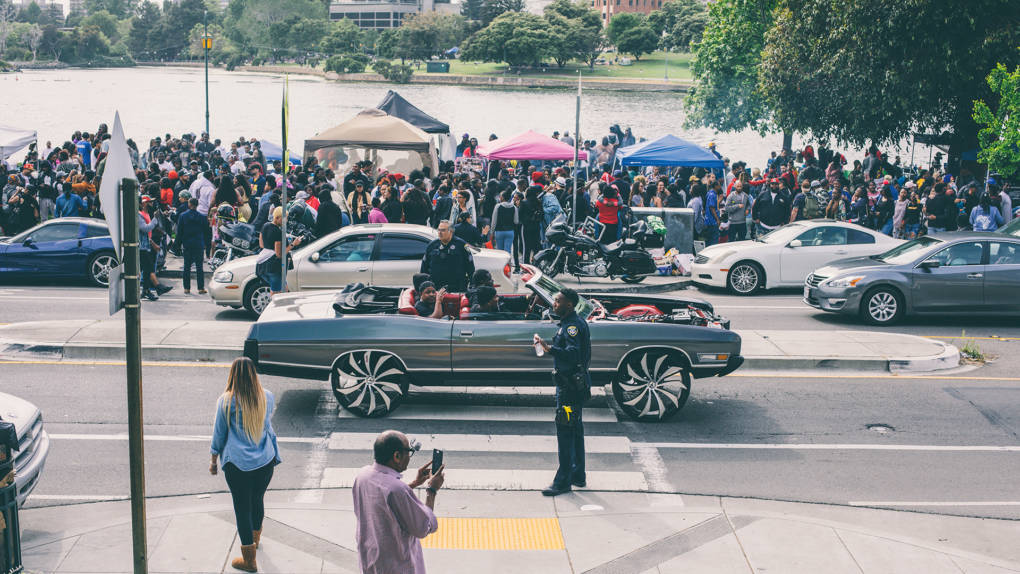
"caption": "Hundreds of black Oaklanders and their supporters came to \"BBQ'n While Black\" at Lake Merritt on May 20 following a white woman's racially charged police complaint.",
"description": "Hundreds of black Oaklanders and their supporters came to BBQ'n While Black at Lake Merritt on May 20 following a white woman's racially charged police complaint.",
"title": "cover",
"credit": "Kevin Allen",
"status": "inherit",
"isLoading": false,
"fetchFailed": false
},
"arts_13832834": {
"type": "attachments",
"id": "arts_13832834",
"meta": {
"index": "attachments_1716263798",
"site": "arts",
"id": "13832834",
"found": true
},
"parent": 13832672,
"imgSizes": {
"small": {
"file": "https://ww2.kqed.org/app/uploads/sites/2/2018/05/SADIKI.MAIN_.better2-520x293.jpg",
"width": 520,
"mimeType": "image/jpeg",
"height": 293
},
"thumbnail": {
"file": "https://ww2.kqed.org/app/uploads/sites/2/2018/05/SADIKI.MAIN_.better2-160x90.jpg",
"width": 160,
"mimeType": "image/jpeg",
"height": 90
},
"fd-sm": {
"file": "https://ww2.kqed.org/app/uploads/sites/2/2018/05/SADIKI.MAIN_.better2-960x540.jpg",
"width": 960,
"mimeType": "image/jpeg",
"height": 540
},
"post-thumbnail": {
"file": "https://ww2.kqed.org/app/uploads/sites/2/2018/05/SADIKI.MAIN_.better2-672x372.jpg",
"width": 672,
"mimeType": "image/jpeg",
"height": 372
},
"xsmall": {
"file": "https://ww2.kqed.org/app/uploads/sites/2/2018/05/SADIKI.MAIN_.better2-375x211.jpg",
"width": 375,
"mimeType": "image/jpeg",
"height": 211
},
"kqedFullSize": {
"file": "https://ww2.kqed.org/app/uploads/sites/2/2018/05/SADIKI.MAIN_.better2.jpg",
"width": 976,
"height": 549
},
"guest-author-50": {
"file": "https://ww2.kqed.org/app/uploads/sites/2/2018/05/SADIKI.MAIN_.better2-50x50.jpg",
"width": 50,
"mimeType": "image/jpeg",
"height": 50
},
"guest-author-96": {
"file": "https://ww2.kqed.org/app/uploads/sites/2/2018/05/SADIKI.MAIN_.better2-96x96.jpg",
"width": 96,
"mimeType": "image/jpeg",
"height": 96
},
"medium": {
"file": "https://ww2.kqed.org/app/uploads/sites/2/2018/05/SADIKI.MAIN_.better2-800x450.jpg",
"width": 800,
"mimeType": "image/jpeg",
"height": 450
},
"guest-author-64": {
"file": "https://ww2.kqed.org/app/uploads/sites/2/2018/05/SADIKI.MAIN_.better2-64x64.jpg",
"width": 64,
"mimeType": "image/jpeg",
"height": 64
},
"guest-author-32": {
"file": "https://ww2.kqed.org/app/uploads/sites/2/2018/05/SADIKI.MAIN_.better2-32x32.jpg",
"width": 32,
"mimeType": "image/jpeg",
"height": 32
},
"detail": {
"file": "https://ww2.kqed.org/app/uploads/sites/2/2018/05/SADIKI.MAIN_.better2-150x150.jpg",
"width": 150,
"mimeType": "image/jpeg",
"height": 150
},
"medium_large": {
"file": "https://ww2.kqed.org/app/uploads/sites/2/2018/05/SADIKI.MAIN_.better2-768x432.jpg",
"width": 768,
"mimeType": "image/jpeg",
"height": 432
},
"guest-author-128": {
"file": "https://ww2.kqed.org/app/uploads/sites/2/2018/05/SADIKI.MAIN_.better2-128x128.jpg",
"width": 128,
"mimeType": "image/jpeg",
"height": 128
},
"xxsmall": {
"file": "https://ww2.kqed.org/app/uploads/sites/2/2018/05/SADIKI.MAIN_.better2-240x135.jpg",
"width": 240,
"mimeType": "image/jpeg",
"height": 135
}
},
"publishDate": 1526891393,
"modified": 1526891844,
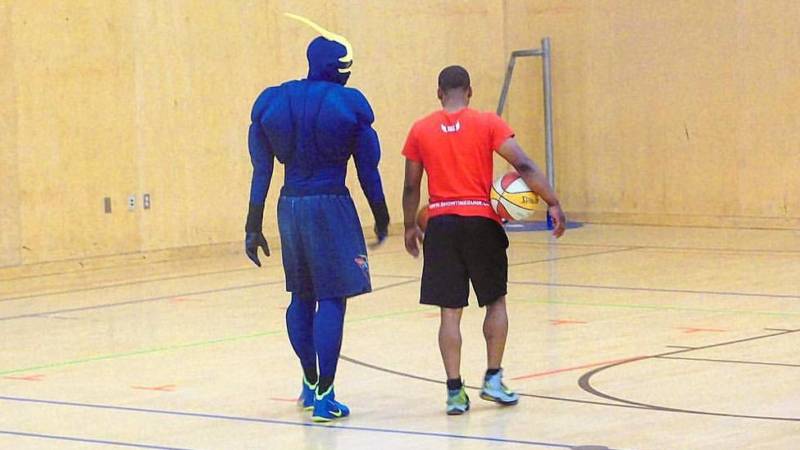
"caption": "Sadiki Fuller dressed as Thunder, left, with Jesus El, right.",
"description": "Sadiki Fuller dressed as Thunder, left, with Jesus El, right.",
"title": "SADIKI.MAIN.better2",
"credit": "Courtesy Jesus El",
"status": "inherit",
"isLoading": false,
"fetchFailed": false
},
"arts_13831975": {
"type": "attachments",
"id": "arts_13831975",
"meta": {
"index": "attachments_1716263798",
"site": "arts",
"id": "13831975",
"found": true
},
"parent": 13831962,
"imgSizes": {
"small": {
"file": "https://ww2.kqed.org/app/uploads/sites/2/2018/05/lewis.allfour-1-520x325.jpg",
"width": 520,
"mimeType": "image/jpeg",
"height": 325
},
"twentyfourteen-full-width": {
"file": "https://ww2.kqed.org/app/uploads/sites/2/2018/05/lewis.allfour-1-1038x576.jpg",
"width": 1038,
"mimeType": "image/jpeg",
"height": 576
},
"thumbnail": {
"file": "https://ww2.kqed.org/app/uploads/sites/2/2018/05/lewis.allfour-1-160x100.jpg",
"width": 160,
"mimeType": "image/jpeg",
"height": 100
},
"fd-sm": {
"file": "https://ww2.kqed.org/app/uploads/sites/2/2018/05/lewis.allfour-1-960x600.jpg",
"width": 960,
"mimeType": "image/jpeg",
"height": 600
},
"post-thumbnail": {
"file": "https://ww2.kqed.org/app/uploads/sites/2/2018/05/lewis.allfour-1-672x372.jpg",
"width": 672,
"mimeType": "image/jpeg",
"height": 372
},
"xsmall": {
"file": "https://ww2.kqed.org/app/uploads/sites/2/2018/05/lewis.allfour-1-375x235.jpg",
"width": 375,
"mimeType": "image/jpeg",
"height": 235
},
"kqedFullSize": {
"file": "https://ww2.kqed.org/app/uploads/sites/2/2018/05/lewis.allfour-1.jpg",
"width": 1100,
"height": 688
},
"large": {
"file": "https://ww2.kqed.org/app/uploads/sites/2/2018/05/lewis.allfour-1-1020x638.jpg",
"width": 1020,
"mimeType": "image/jpeg",
"height": 638
},
"guest-author-50": {
"file": "https://ww2.kqed.org/app/uploads/sites/2/2018/05/lewis.allfour-1-50x50.jpg",
"width": 50,
"mimeType": "image/jpeg",
"height": 50
},
"guest-author-96": {
"file": "https://ww2.kqed.org/app/uploads/sites/2/2018/05/lewis.allfour-1-96x96.jpg",
"width": 96,
"mimeType": "image/jpeg",
"height": 96
},
"medium": {
"file": "https://ww2.kqed.org/app/uploads/sites/2/2018/05/lewis.allfour-1-800x500.jpg",
"width": 800,
"mimeType": "image/jpeg",
"height": 500
},
"guest-author-64": {
"file": "https://ww2.kqed.org/app/uploads/sites/2/2018/05/lewis.allfour-1-64x64.jpg",
"width": 64,
"mimeType": "image/jpeg",
"height": 64
},
"guest-author-32": {
"file": "https://ww2.kqed.org/app/uploads/sites/2/2018/05/lewis.allfour-1-32x32.jpg",
"width": 32,
"mimeType": "image/jpeg",
"height": 32
},
"detail": {
"file": "https://ww2.kqed.org/app/uploads/sites/2/2018/05/lewis.allfour-1-150x150.jpg",
"width": 150,
"mimeType": "image/jpeg",
"height": 150
},
"medium_large": {
"file": "https://ww2.kqed.org/app/uploads/sites/2/2018/05/lewis.allfour-1-768x480.jpg",
"width": 768,
"mimeType": "image/jpeg",
"height": 480
},
"guest-author-128": {
"file": "https://ww2.kqed.org/app/uploads/sites/2/2018/05/lewis.allfour-1-128x128.jpg",
"width": 128,
"mimeType": "image/jpeg",
"height": 128
},
"xxsmall": {
"file": "https://ww2.kqed.org/app/uploads/sites/2/2018/05/lewis.allfour-1-240x150.jpg",
"width": 240,
"mimeType": "image/jpeg",
"height": 150
}
},
"publishDate": 1526068920,
"modified": 1526068955,
"caption": "Leslie Moncada-Lewis with her four children.",
"description": "Leslie Moncada-Lewis with her four children.",
"title": "lewis.allfour",
"credit": "Instagram",
"status": "inherit",
"isLoading": false,
"fetchFailed": false
},
"arts_13831861": {
"type": "attachments",
"id": "arts_13831861",
"meta": {
"index": "attachments_1716263798",
"site": "arts",
"id": "13831861",
"found": true
},
"parent": 13831858,
"imgSizes": {
"small": {
"file": "https://ww2.kqed.org/app/uploads/sites/2/2018/05/NIN.Tickets-520x309.jpg",
"width": 520,
"mimeType": "image/jpeg",
"height": 309
},
"thumbnail": {
"file": "https://ww2.kqed.org/app/uploads/sites/2/2018/05/NIN.Tickets-160x95.jpg",
"width": 160,
"mimeType": "image/jpeg",
"height": 95
},
"post-thumbnail": {
"file": "https://ww2.kqed.org/app/uploads/sites/2/2018/05/NIN.Tickets-672x372.jpg",
"width": 672,
"mimeType": "image/jpeg",
"height": 372
},
"xsmall": {
"file": "https://ww2.kqed.org/app/uploads/sites/2/2018/05/NIN.Tickets-375x223.jpg",
"width": 375,
"mimeType": "image/jpeg",
"height": 223
},
"kqedFullSize": {
"file": "https://ww2.kqed.org/app/uploads/sites/2/2018/05/NIN.Tickets.jpg",
"width": 800,
"height": 475
},
"guest-author-50": {
"file": "https://ww2.kqed.org/app/uploads/sites/2/2018/05/NIN.Tickets-50x50.jpg",
"width": 50,
"mimeType": "image/jpeg",
"height": 50
},
"guest-author-96": {
"file": "https://ww2.kqed.org/app/uploads/sites/2/2018/05/NIN.Tickets-96x96.jpg",
"width": 96,
"mimeType": "image/jpeg",
"height": 96
},
"medium": {
"file": "https://ww2.kqed.org/app/uploads/sites/2/2018/05/NIN.Tickets-800x475.jpg",
"width": 800,
"mimeType": "image/jpeg",
"height": 475
},
"guest-author-64": {
"file": "https://ww2.kqed.org/app/uploads/sites/2/2018/05/NIN.Tickets-64x64.jpg",
"width": 64,
"mimeType": "image/jpeg",
"height": 64
},
"guest-author-32": {
"file": "https://ww2.kqed.org/app/uploads/sites/2/2018/05/NIN.Tickets-32x32.jpg",
"width": 32,
"mimeType": "image/jpeg",
"height": 32
},
"detail": {
"file": "https://ww2.kqed.org/app/uploads/sites/2/2018/05/NIN.Tickets-150x150.jpg",
"width": 150,
"mimeType": "image/jpeg",
"height": 150
},
"medium_large": {
"file": "https://ww2.kqed.org/app/uploads/sites/2/2018/05/NIN.Tickets-768x456.jpg",
"width": 768,
"mimeType": "image/jpeg",
"height": 456
},
"guest-author-128": {
"file": "https://ww2.kqed.org/app/uploads/sites/2/2018/05/NIN.Tickets-128x128.jpg",
"width": 128,
"mimeType": "image/jpeg",
"height": 128
},
"xxsmall": {
"file": "https://ww2.kqed.org/app/uploads/sites/2/2018/05/NIN.Tickets-240x143.jpg",
"width": 240,
"mimeType": "image/jpeg",
"height": 143
}
},
"publishDate": 1525964799,
"modified": 1525964888,
"caption": "Nine Inch Nails' ticket policy for their 2018 tour: in-person only sales, at the box office.",
"description": null,
"title": "NIN.Tickets",
"credit": "Corinne Schiavonne / Collage by Gabe Meline",
"status": "inherit",
"isLoading": false,
"fetchFailed": false
},
"arts_13831358": {
"type": "attachments",
"id": "arts_13831358",
"meta": {
"index": "attachments_1716263798",
"site": "arts",
"id": "13831358",
"found": true
},
"parent": 13831328,
"imgSizes": {
"small": {
"file": "https://ww2.kqed.org/app/uploads/sites/2/2018/05/Gambino.America.MAIN_-520x293.jpg",
"width": 520,
"mimeType": "image/jpeg",
"height": 293
},
"twentyfourteen-full-width": {
"file": "https://ww2.kqed.org/app/uploads/sites/2/2018/05/Gambino.America.MAIN_-1038x576.jpg",
"width": 1038,
"mimeType": "image/jpeg",
"height": 576
},
"thumbnail": {
"file": "https://ww2.kqed.org/app/uploads/sites/2/2018/05/Gambino.America.MAIN_-160x90.jpg",
"width": 160,
"mimeType": "image/jpeg",
"height": 90
},
"fd-sm": {
"file": "https://ww2.kqed.org/app/uploads/sites/2/2018/05/Gambino.America.MAIN_-960x540.jpg",
"width": 960,
"mimeType": "image/jpeg",
"height": 540
},
"post-thumbnail": {
"file": "https://ww2.kqed.org/app/uploads/sites/2/2018/05/Gambino.America.MAIN_-672x372.jpg",
"width": 672,
"mimeType": "image/jpeg",
"height": 372
},
"xsmall": {
"file": "https://ww2.kqed.org/app/uploads/sites/2/2018/05/Gambino.America.MAIN_-375x211.jpg",
"width": 375,
"mimeType": "image/jpeg",
"height": 211
},
"kqedFullSize": {
"file": "https://ww2.kqed.org/app/uploads/sites/2/2018/05/Gambino.America.MAIN_.jpg",
"width": 1920,
"height": 1080
},
"large": {
"file": "https://ww2.kqed.org/app/uploads/sites/2/2018/05/Gambino.America.MAIN_-1020x574.jpg",
"width": 1020,
"mimeType": "image/jpeg",
"height": 574
},
"xlarge": {
"file": "https://ww2.kqed.org/app/uploads/sites/2/2018/05/Gambino.America.MAIN_-1180x664.jpg",
"width": 1180,
"mimeType": "image/jpeg",
"height": 664
},
"complete_open_graph": {
"file": "https://ww2.kqed.org/app/uploads/sites/2/2018/05/Gambino.America.MAIN_-1200x675.jpg",
"width": 1200,
"mimeType": "image/jpeg",
"height": 675
},
"guest-author-50": {
"file": "https://ww2.kqed.org/app/uploads/sites/2/2018/05/Gambino.America.MAIN_-50x50.jpg",
"width": 50,
"mimeType": "image/jpeg",
"height": 50
},
"guest-author-96": {
"file": "https://ww2.kqed.org/app/uploads/sites/2/2018/05/Gambino.America.MAIN_-96x96.jpg",
"width": 96,
"mimeType": "image/jpeg",
"height": 96
},
"medium": {
"file": "https://ww2.kqed.org/app/uploads/sites/2/2018/05/Gambino.America.MAIN_-800x450.jpg",
"width": 800,
"mimeType": "image/jpeg",
"height": 450
},
"guest-author-64": {
"file": "https://ww2.kqed.org/app/uploads/sites/2/2018/05/Gambino.America.MAIN_-64x64.jpg",
"width": 64,
"mimeType": "image/jpeg",
"height": 64
},
"guest-author-32": {
"file": "https://ww2.kqed.org/app/uploads/sites/2/2018/05/Gambino.America.MAIN_-32x32.jpg",
"width": 32,
"mimeType": "image/jpeg",
"height": 32
},
"fd-lrg": {
"file": "https://ww2.kqed.org/app/uploads/sites/2/2018/05/Gambino.America.MAIN_-1920x1080.jpg",
"width": 1920,
"mimeType": "image/jpeg",
"height": 1080
},
"fd-med": {
"file": "https://ww2.kqed.org/app/uploads/sites/2/2018/05/Gambino.America.MAIN_-1180x664.jpg",
"width": 1180,
"mimeType": "image/jpeg",
"height": 664
},
"full-width": {
"file": "https://ww2.kqed.org/app/uploads/sites/2/2018/05/Gambino.America.MAIN_-1920x1080.jpg",
"width": 1920,
"mimeType": "image/jpeg",
"height": 1080
},
"detail": {
"file": "https://ww2.kqed.org/app/uploads/sites/2/2018/05/Gambino.America.MAIN_-150x150.jpg",
"width": 150,
"mimeType": "image/jpeg",
"height": 150
},
"medium_large": {
"file": "https://ww2.kqed.org/app/uploads/sites/2/2018/05/Gambino.America.MAIN_-768x432.jpg",
"width": 768,
"mimeType": "image/jpeg",
"height": 432
},
"guest-author-128": {
"file": "https://ww2.kqed.org/app/uploads/sites/2/2018/05/Gambino.America.MAIN_-128x128.jpg",
"width": 128,
"mimeType": "image/jpeg",
"height": 128
},
"xxsmall": {
"file": "https://ww2.kqed.org/app/uploads/sites/2/2018/05/Gambino.America.MAIN_-240x135.jpg",
"width": 240,
"mimeType": "image/jpeg",
"height": 135
}
},
"publishDate": 1525650196,
"modified": 1525650688,
"caption": "Childish Gambino, in a still from 'This Is America.' ",
"description": "Childish Gambino, in a still from 'This Is America.' ",
"title": "Gambino.America.MAIN",
"credit": "Vevo",
"status": "inherit",
"isLoading": false,
"fetchFailed": false
},
"arts_13831127": {
"type": "attachments",
"id": "arts_13831127",
"meta": {
"index": "attachments_1716263798",
"site": "arts",
"id": "13831127",
"found": true
},
"parent": 13831118,
"imgSizes": {
"small": {
"file": "https://ww2.kqed.org/app/uploads/sites/2/2018/05/Ekeke-520x293.jpg",
"width": 520,
"mimeType": "image/jpeg",
"height": 293
},
"twentyfourteen-full-width": {
"file": "https://ww2.kqed.org/app/uploads/sites/2/2018/05/Ekeke-1038x576.jpg",
"width": 1038,
"mimeType": "image/jpeg",
"height": 576
},
"thumbnail": {
"file": "https://ww2.kqed.org/app/uploads/sites/2/2018/05/Ekeke-160x90.jpg",
"width": 160,
"mimeType": "image/jpeg",
"height": 90
},
"fd-sm": {
"file": "https://ww2.kqed.org/app/uploads/sites/2/2018/05/Ekeke-960x540.jpg",
"width": 960,
"mimeType": "image/jpeg",
"height": 540
},
"post-thumbnail": {
"file": "https://ww2.kqed.org/app/uploads/sites/2/2018/05/Ekeke-672x372.jpg",
"width": 672,
"mimeType": "image/jpeg",
"height": 372
},
"xsmall": {
"file": "https://ww2.kqed.org/app/uploads/sites/2/2018/05/Ekeke-375x211.jpg",
"width": 375,
"mimeType": "image/jpeg",
"height": 211
},
"kqedFullSize": {
"file": "https://ww2.kqed.org/app/uploads/sites/2/2018/05/Ekeke.jpg",
"width": 1920,
"height": 1080
},
"large": {
"file": "https://ww2.kqed.org/app/uploads/sites/2/2018/05/Ekeke-1020x574.jpg",
"width": 1020,
"mimeType": "image/jpeg",
"height": 574
},
"xlarge": {
"file": "https://ww2.kqed.org/app/uploads/sites/2/2018/05/Ekeke-1180x664.jpg",
"width": 1180,
"mimeType": "image/jpeg",
"height": 664
},
"complete_open_graph": {
"file": "https://ww2.kqed.org/app/uploads/sites/2/2018/05/Ekeke-1200x675.jpg",
"width": 1200,
"mimeType": "image/jpeg",
"height": 675
},
"guest-author-50": {
"file": "https://ww2.kqed.org/app/uploads/sites/2/2018/05/Ekeke-50x50.jpg",
"width": 50,
"mimeType": "image/jpeg",
"height": 50
},
"guest-author-96": {
"file": "https://ww2.kqed.org/app/uploads/sites/2/2018/05/Ekeke-96x96.jpg",
"width": 96,
"mimeType": "image/jpeg",
"height": 96
},
"medium": {
"file": "https://ww2.kqed.org/app/uploads/sites/2/2018/05/Ekeke-800x450.jpg",
"width": 800,
"mimeType": "image/jpeg",
"height": 450
},
"guest-author-64": {
"file": "https://ww2.kqed.org/app/uploads/sites/2/2018/05/Ekeke-64x64.jpg",
"width": 64,
"mimeType": "image/jpeg",
"height": 64
},
"guest-author-32": {
"file": "https://ww2.kqed.org/app/uploads/sites/2/2018/05/Ekeke-32x32.jpg",
"width": 32,
"mimeType": "image/jpeg",
"height": 32
},
"fd-lrg": {
"file": "https://ww2.kqed.org/app/uploads/sites/2/2018/05/Ekeke-1920x1080.jpg",
"width": 1920,
"mimeType": "image/jpeg",
"height": 1080
},
"fd-med": {
"file": "https://ww2.kqed.org/app/uploads/sites/2/2018/05/Ekeke-1180x664.jpg",
"width": 1180,
"mimeType": "image/jpeg",
"height": 664
},
"full-width": {
"file": "https://ww2.kqed.org/app/uploads/sites/2/2018/05/Ekeke-1920x1080.jpg",
"width": 1920,
"mimeType": "image/jpeg",
"height": 1080
},
"detail": {
"file": "https://ww2.kqed.org/app/uploads/sites/2/2018/05/Ekeke-150x150.jpg",
"width": 150,
"mimeType": "image/jpeg",
"height": 150
},
"medium_large": {
"file": "https://ww2.kqed.org/app/uploads/sites/2/2018/05/Ekeke-768x432.jpg",
"width": 768,
"mimeType": "image/jpeg",
"height": 432
},
"guest-author-128": {
"file": "https://ww2.kqed.org/app/uploads/sites/2/2018/05/Ekeke-128x128.jpg",
"width": 128,
"mimeType": "image/jpeg",
"height": 128
},
"xxsmall": {
"file": "https://ww2.kqed.org/app/uploads/sites/2/2018/05/Ekeke-240x135.jpg",
"width": 240,
"mimeType": "image/jpeg",
"height": 135
}
},
"publishDate": 1525386286,
"modified": 1525386477,
"caption": "Angelica Ekeke presents 'The Removal' at Swedish American Hall in April 2018.",
"description": "Angelica Ekeke presents 'The Removal' at Swedish American Hall in April 2018.",
"title": "Ekeke",
"credit": "Courtesy Angelica Ekeke",
"status": "inherit",
"isLoading": false,
"fetchFailed": false
},
"arts_13830216": {
"type": "attachments",
"id": "arts_13830216",
"meta": {
"index": "attachments_1716263798",
"site": "arts",
"id": "13830216",
"found": true
},
"parent": 13830210,
"imgSizes": {
"small": {
"file": "https://ww2.kqed.org/app/uploads/sites/2/2018/04/Allblack.MAIN_-520x293.jpg",
"width": 520,
"mimeType": "image/jpeg",
"height": 293
},
"twentyfourteen-full-width": {
"file": "https://ww2.kqed.org/app/uploads/sites/2/2018/04/Allblack.MAIN_-1038x576.jpg",
"width": 1038,
"mimeType": "image/jpeg",
"height": 576
},
"thumbnail": {
"file": "https://ww2.kqed.org/app/uploads/sites/2/2018/04/Allblack.MAIN_-160x90.jpg",
"width": 160,
"mimeType": "image/jpeg",
"height": 90
},
"fd-sm": {
"file": "https://ww2.kqed.org/app/uploads/sites/2/2018/04/Allblack.MAIN_-960x540.jpg",
"width": 960,
"mimeType": "image/jpeg",
"height": 540
},
"post-thumbnail": {
"file": "https://ww2.kqed.org/app/uploads/sites/2/2018/04/Allblack.MAIN_-672x372.jpg",
"width": 672,
"mimeType": "image/jpeg",
"height": 372
},
"xsmall": {
"file": "https://ww2.kqed.org/app/uploads/sites/2/2018/04/Allblack.MAIN_-375x211.jpg",
"width": 375,
"mimeType": "image/jpeg",
"height": 211
},
"kqedFullSize": {
"file": "https://ww2.kqed.org/app/uploads/sites/2/2018/04/Allblack.MAIN_.jpg",
"width": 1920,
"height": 1080
},
"large": {
"file": "https://ww2.kqed.org/app/uploads/sites/2/2018/04/Allblack.MAIN_-1020x574.jpg",
"width": 1020,
"mimeType": "image/jpeg",
"height": 574
},
"xlarge": {
"file": "https://ww2.kqed.org/app/uploads/sites/2/2018/04/Allblack.MAIN_-1180x664.jpg",
"width": 1180,
"mimeType": "image/jpeg",
"height": 664
},
"complete_open_graph": {
"file": "https://ww2.kqed.org/app/uploads/sites/2/2018/04/Allblack.MAIN_-1200x675.jpg",
"width": 1200,
"mimeType": "image/jpeg",
"height": 675
},
"guest-author-50": {
"file": "https://ww2.kqed.org/app/uploads/sites/2/2018/04/Allblack.MAIN_-50x50.jpg",
"width": 50,
"mimeType": "image/jpeg",
"height": 50
},
"guest-author-96": {
"file": "https://ww2.kqed.org/app/uploads/sites/2/2018/04/Allblack.MAIN_-96x96.jpg",
"width": 96,
"mimeType": "image/jpeg",
"height": 96
},
"medium": {
"file": "https://ww2.kqed.org/app/uploads/sites/2/2018/04/Allblack.MAIN_-800x450.jpg",
"width": 800,
"mimeType": "image/jpeg",
"height": 450
},
"guest-author-64": {
"file": "https://ww2.kqed.org/app/uploads/sites/2/2018/04/Allblack.MAIN_-64x64.jpg",
"width": 64,
"mimeType": "image/jpeg",
"height": 64
},
"guest-author-32": {
"file": "https://ww2.kqed.org/app/uploads/sites/2/2018/04/Allblack.MAIN_-32x32.jpg",
"width": 32,
"mimeType": "image/jpeg",
"height": 32
},
"fd-lrg": {
"file": "https://ww2.kqed.org/app/uploads/sites/2/2018/04/Allblack.MAIN_-1920x1080.jpg",
"width": 1920,
"mimeType": "image/jpeg",
"height": 1080
},
"fd-med": {
"file": "https://ww2.kqed.org/app/uploads/sites/2/2018/04/Allblack.MAIN_-1180x664.jpg",
"width": 1180,
"mimeType": "image/jpeg",
"height": 664
},
"full-width": {
"file": "https://ww2.kqed.org/app/uploads/sites/2/2018/04/Allblack.MAIN_-1920x1080.jpg",
"width": 1920,
"mimeType": "image/jpeg",
"height": 1080
},
"detail": {
"file": "https://ww2.kqed.org/app/uploads/sites/2/2018/04/Allblack.MAIN_-150x150.jpg",
"width": 150,
"mimeType": "image/jpeg",
"height": 150
},
"medium_large": {
"file": "https://ww2.kqed.org/app/uploads/sites/2/2018/04/Allblack.MAIN_-768x432.jpg",
"width": 768,
"mimeType": "image/jpeg",
"height": 432
},
"guest-author-128": {
"file": "https://ww2.kqed.org/app/uploads/sites/2/2018/04/Allblack.MAIN_-128x128.jpg",
"width": 128,
"mimeType": "image/jpeg",
"height": 128
},
"xxsmall": {
"file": "https://ww2.kqed.org/app/uploads/sites/2/2018/04/Allblack.MAIN_-240x135.jpg",
"width": 240,
"mimeType": "image/jpeg",
"height": 135
}
},
"publishDate": 1524520523,
"modified": 1524520611,
"caption": "ALLBLACK in East Oakland. 'It’s my diary,' he says of his lyrics. 'I don’t regret anything I say.'",
"description": null,
"title": "Allblack.MAIN",
"credit": "Pendarvis Harshaw",
"status": "inherit",
"isLoading": false,
"fetchFailed": false
},
"arts_13829354": {
"type": "attachments",
"id": "arts_13829354",
"meta": {
"index": "attachments_1716263798",
"site": "arts",
"id": "13829354",
"found": true
},
"parent": 13829305,
"imgSizes": {
"small": {
"file": "https://ww2.kqed.org/app/uploads/sites/2/2018/04/SolDevelopment.MAIN_-520x293.jpg",
"width": 520,
"mimeType": "image/jpeg",
"height": 293
},
"thumbnail": {
"file": "https://ww2.kqed.org/app/uploads/sites/2/2018/04/SolDevelopment.MAIN_-160x90.jpg",
"width": 160,
"mimeType": "image/jpeg",
"height": 90
},
"post-thumbnail": {
"file": "https://ww2.kqed.org/app/uploads/sites/2/2018/04/SolDevelopment.MAIN_-672x372.jpg",
"width": 672,
"mimeType": "image/jpeg",
"height": 372
},
"xsmall": {
"file": "https://ww2.kqed.org/app/uploads/sites/2/2018/04/SolDevelopment.MAIN_-375x211.jpg",
"width": 375,
"mimeType": "image/jpeg",
"height": 211
},
"kqedFullSize": {
"file": "https://ww2.kqed.org/app/uploads/sites/2/2018/04/SolDevelopment.MAIN_.jpg",
"width": 800,
"height": 450
},
"guest-author-50": {
"file": "https://ww2.kqed.org/app/uploads/sites/2/2018/04/SolDevelopment.MAIN_-50x50.jpg",
"width": 50,
"mimeType": "image/jpeg",
"height": 50
},
"guest-author-96": {
"file": "https://ww2.kqed.org/app/uploads/sites/2/2018/04/SolDevelopment.MAIN_-96x96.jpg",
"width": 96,
"mimeType": "image/jpeg",
"height": 96
},
"medium": {
"file": "https://ww2.kqed.org/app/uploads/sites/2/2018/04/SolDevelopment.MAIN_-800x450.jpg",
"width": 800,
"mimeType": "image/jpeg",
"height": 450
},
"guest-author-64": {
"file": "https://ww2.kqed.org/app/uploads/sites/2/2018/04/SolDevelopment.MAIN_-64x64.jpg",
"width": 64,
"mimeType": "image/jpeg",
"height": 64
},
"guest-author-32": {
"file": "https://ww2.kqed.org/app/uploads/sites/2/2018/04/SolDevelopment.MAIN_-32x32.jpg",
"width": 32,
"mimeType": "image/jpeg",
"height": 32
},
"detail": {
"file": "https://ww2.kqed.org/app/uploads/sites/2/2018/04/SolDevelopment.MAIN_-150x150.jpg",
"width": 150,
"mimeType": "image/jpeg",
"height": 150
},
"medium_large": {
"file": "https://ww2.kqed.org/app/uploads/sites/2/2018/04/SolDevelopment.MAIN_-768x432.jpg",
"width": 768,
"mimeType": "image/jpeg",
"height": 432
},
"guest-author-128": {
"file": "https://ww2.kqed.org/app/uploads/sites/2/2018/04/SolDevelopment.MAIN_-128x128.jpg",
"width": 128,
"mimeType": "image/jpeg",
"height": 128
},
"xxsmall": {
"file": "https://ww2.kqed.org/app/uploads/sites/2/2018/04/SolDevelopment.MAIN_-240x135.jpg",
"width": 240,
"mimeType": "image/jpeg",
"height": 135
}
},
"publishDate": 1523645351,
"modified": 1523899187,
"caption": "Sol Development's Karega Bailey, on set for the group's 'Helicopters' video. Sol Development's upcoming album touches on oppression, community and self-determination.",
"description": "Sol Development's Karega Bailey, on set for the group's 'Helicopters' video. SOl Development's upcoming album touches on oppression, community and self-determination.",
"title": "SolDevelopment.MAIN",
"credit": "Cinque- qlick",
"status": "inherit",
"isLoading": false,
"fetchFailed": false
}
},
"audioPlayerReducer": {
"postId": "stream_live",
"isPaused": true,
"isPlaying": false,
"pfsActive": false,
"pledgeModalIsOpen": true,
"playerDrawerIsOpen": false,
"liveAudioPlayStartedAt": 0,
"liveAudioPlayContext": ""
},
"authorsReducer": {
"byline_arts_13834170": {
"type": "authors",
"id": "byline_arts_13834170",
"meta": {
"override": true
},
"slug": "byline_arts_13834170",
"name": "Linus Unah",
"isLoading": false
},
"byline_arts_13833770": {
"type": "authors",
"id": "byline_arts_13833770",
"meta": {
"override": true
},
"slug": "byline_arts_13833770",
"name": "Ann Powers",
"isLoading": false
},
"gmeline": {
"type": "authors",
"id": "185",
"meta": {
"index": "authors_1716337520",
"id": "185",
"found": true
},
"name": "Gabe Meline",
"firstName": "Gabe",
"lastName": "Meline",
"slug": "gmeline",
"email": "gmeline@kqed.org",
"display_author_email": true,
"staff_mastheads": [
"arts"
],
"title": "Senior Editor, KQED Arts & Culture",
"bio": "Gabe Meline entered journalism at age 15 making photocopied zines, and has since earned awards from the Edward R. Murrow Awards, the Society for Professional Journalists, the Online Journalism Awards, the Association of Alternative Newsweeklies and the California Newspaper Publishers Association. Prior to KQED, he was the editor of the \u003cem>North Bay Bohemian\u003c/em> and a touring musician. He lives with his wife and daughter in his hometown of Santa Rosa, CA.",
"avatar": "https://secure.gravatar.com/avatar/5bebe57be0d8bc2dd318934feb47299e2d2d10cba28d09d8d7afb389a2ce2bdd?s=600&d=blank&r=g",
"twitter": null,
"bluesky": null,
"facebook": null,
"instagram": null,
"linkedin": null,
"sites": [
{
"site": "",
"roles": [
"editor"
]
},
{
"site": "arts",
"roles": [
"administrator"
]
},
{
"site": "artschool",
"roles": [
"editor"
]
},
{
"site": "news",
"roles": [
"author"
]
},
{
"site": "pop",
"roles": [
"editor"
]
},
{
"site": "bayareabites",
"roles": [
"editor"
]
},
{
"site": "food",
"roles": [
"editor"
]
},
{
"site": "forum",
"roles": [
"administrator"
]
},
{
"site": "liveblog",
"roles": [
"editor"
]
},
{
"site": "hiphop",
"roles": [
"editor"
]
}
],
"headData": {
"title": "Gabe Meline | KQED",
"description": "Senior Editor, KQED Arts & Culture",
"ogImgSrc": "https://secure.gravatar.com/avatar/5bebe57be0d8bc2dd318934feb47299e2d2d10cba28d09d8d7afb389a2ce2bdd?s=600&d=blank&r=g",
"twImgSrc": "https://secure.gravatar.com/avatar/5bebe57be0d8bc2dd318934feb47299e2d2d10cba28d09d8d7afb389a2ce2bdd?s=600&d=blank&r=g"
},
"isLoading": false,
"link": "/author/gmeline"
},
"nvoynovskaya": {
"type": "authors",
"id": "11387",
"meta": {
"index": "authors_1716337520",
"id": "11387",
"found": true
},
"name": "Nastia Voynovskaya",
"firstName": "Nastia",
"lastName": "Voynovskaya",
"slug": "nvoynovskaya",
"email": "nvoynovskaya@kqed.org",
"display_author_email": false,
"staff_mastheads": [
"arts"
],
"title": "Editor and reporter",
"bio": "Nastia Voynovskaya is a reporter, editor and host at KQED Arts & Culture. She's been covering the arts in the Bay Area for over a decade, with a focus on music, queer culture, labor issues and grassroots organizing. She has edited KQED story series such as Trans Bay: A History of San Francisco's Gender-Diverse Community, and co-created KQED's Bay Area hip-hop history project, That's My Word. Nastia's work has been recognized by the Society of Professional Journalists and San Francisco Press Club. She regularly appears on podcasts and radio programs, including NPR's All Songs Considered, and hosts live events where music, culture and conversation meet.",
"avatar": "https://secure.gravatar.com/avatar/5025ee460e5a85d69ca20ea6c6f2f80d7e17795c828f61ea3aecfcd924e9042e?s=600&d=blank&r=g",
"twitter": null,
"bluesky": null,
"facebook": null,
"instagram": "https://www.instagram.com/nananastia/",
"linkedin": null,
"sites": [
{
"site": "",
"roles": [
"editor"
]
},
{
"site": "arts",
"roles": [
"administrator"
]
},
{
"site": "news",
"roles": [
"editor"
]
},
{
"site": "pop",
"roles": [
"administrator"
]
},
{
"site": "bayareabites",
"roles": [
"editor"
]
},
{
"site": "podcasts",
"roles": [
"editor"
]
},
{
"site": "hiphop",
"roles": [
"editor"
]
}
],
"headData": {
"title": "Nastia Voynovskaya | KQED",
"description": "Editor and reporter",
"ogImgSrc": "https://secure.gravatar.com/avatar/5025ee460e5a85d69ca20ea6c6f2f80d7e17795c828f61ea3aecfcd924e9042e?s=600&d=blank&r=g",
"twImgSrc": "https://secure.gravatar.com/avatar/5025ee460e5a85d69ca20ea6c6f2f80d7e17795c828f61ea3aecfcd924e9042e?s=600&d=blank&r=g"
},
"isLoading": false,
"link": "/author/nvoynovskaya"
},
"ogpenn": {
"type": "authors",
"id": "11491",
"meta": {
"index": "authors_1716337520",
"id": "11491",
"found": true
},
"name": "Pendarvis Harshaw",
"firstName": "Pendarvis",
"lastName": "Harshaw",
"slug": "ogpenn",
"email": "ogpenn@gmail.com",
"display_author_email": false,
"staff_mastheads": [
"arts"
],
"title": "Community Engagement Reporter",
"bio": "Pendarvis Harshaw is an educator, host and writer with KQED Arts.",
"avatar": "https://secure.gravatar.com/avatar/972b77ee8e3f346ae2b00622661187fbfabd059b5693bbdc1475ea7a722fd4cd?s=600&d=blank&r=g",
"twitter": null,
"bluesky": null,
"facebook": null,
"instagram": "ogpenn",
"linkedin": null,
"sites": [
{
"site": "arts",
"roles": [
"administrator"
]
},
{
"site": "news",
"roles": [
"editor"
]
},
{
"site": "bayareabites",
"roles": [
"author"
]
},
{
"site": "hiphop",
"roles": [
"editor"
]
}
],
"headData": {
"title": "Pendarvis Harshaw | KQED",
"description": "Community Engagement Reporter",
"ogImgSrc": "https://secure.gravatar.com/avatar/972b77ee8e3f346ae2b00622661187fbfabd059b5693bbdc1475ea7a722fd4cd?s=600&d=blank&r=g",
"twImgSrc": "https://secure.gravatar.com/avatar/972b77ee8e3f346ae2b00622661187fbfabd059b5693bbdc1475ea7a722fd4cd?s=600&d=blank&r=g"
},
"isLoading": false,
"link": "/author/ogpenn"
}
},
"pagesReducer": {
"arts_tag_commentary": {
"type": "terms",
"id": "arts_2767",
"meta": {
"index": "terms_1716263798",
"site": "arts",
"id": "2767",
"score": 8.794542
},
"featImg": null,
"name": "commentary",
"description": null,
"taxonomy": "tag",
"headData": {
"twImgId": null,
"twTitle": null,
"ogTitle": null,
"ogImgId": null,
"twDescription": null,
"description": null,
"title": "commentary Archives | KQED Arts",
"ogDescription": null
},
"ttid": 2779,
"slug": "commentary",
"isLoading": false,
"title": "commentary",
"pageMeta": {
"site": "arts",
"WpPageTemplate": "page-topic-editorial",
"currentPage": 28
},
"blocks": [
{
"blockName": "kqed/post-list",
"attrs": {
"layout": "cardArticle2",
"query": "posts/arts?tag=commentary",
"seeMore": false,
"paginated": true,
"page": 28
}
},
{
"blockName": "kqed/ad"
}
]
}
},
"pfsSessionReducer": {},
"postsReducer": {
"stream_live": {
"type": "live",
"id": "stream_live",
"audioUrl": "https://streams.kqed.org/kqedradio",
"title": "Live Stream",
"excerpt": "Live Stream information currently unavailable.",
"link": "/radio",
"featImg": "",
"label": {
"name": "KQED Live",
"link": "/"
}
},
"stream_kqedNewscast": {
"type": "posts",
"id": "stream_kqedNewscast",
"audioUrl": "https://www.kqed.org/.stream/anon/radio/RDnews/newscast.mp3?_=1",
"title": "KQED Newscast",
"featImg": "",
"label": {
"name": "88.5 FM",
"link": "/"
}
},
"arts_13834170": {
"type": "posts",
"id": "arts_13834170",
"meta": {
"index": "posts_1716263798",
"site": "arts",
"id": "13834170",
"score": null,
"sort": [
1527963176000
]
},
"guestAuthors": [],
"slug": "nigerian-rapper-goes-viral-with-his-take-on-this-is-america",
"title": "Nigerian Rapper Goes Viral With His Take On 'This Is America'",
"publishDate": 1527963176,
"format": "aside",
"headTitle": "Nigerian Rapper Goes Viral With His Take On ‘This Is America’ | KQED",
"labelTerm": {
"term": 137,
"site": "arts"
},
"content": "\u003cp>https://youtu.be/UW_xEqCWrm0\u003c/p>\n\u003cp>Last week, a Nigerian rapper released his own version of Childish Gambino’s hit song and music video “This Is America.”\u003c/p>\n\u003cp>It’s called “This Is Nigeria” and was written and performed by lawyer-turned-musician Falz The Bahd Guy. Like the hugely popular Donald Glover song and video (Gambino is his stage name), the Nigerian version looks at harsh everyday realities.\u003c/p>\n\u003cp>In “This Is America,” the issues include gun violence, racism and the distraction of viral entertainment and social media. Falz’s lyrics and visuals touch on some of Nigeria’s major problems: poor electricity supply, drug addiction and government corruption. The video even features veiled Muslim girls to allude to Boko Haram’s abductions of schoolgirls in the northeast.\u003c/p>\n\u003cp>Falz performs in pidgin English, a blend of English and local languages that is widely spoken in West Africa. The chorus says:\u003c/p>\n\u003cp>[ad fullwidth]\u003c/p>\n\u003cp>“This is Nigeria.\u003cbr>\nNever-ending recession-o\u003cbr>\nWhere looters are killers and stealers are still contesting election-o.\u003cbr>\nPolitician wey steal some billion and billion e no dey go prison-o.”\u003c/p>\n\u003cp>Released on May 25, just four days before the 19th anniversary of democracy in the West African nation, the three-minute video has been viewed on YouTube 2.9 million times. The hashtag \u003ca href=\"https://twitter.com/hashtag/thisisnigeria\">#ThisIsNigeria\u003c/a> has generated tens of thousands of tweets. And the song has captured the attention of the American rapper Diddy, who reposted “This Is Nigeria” \u003ca href=\"https://www.instagram.com/p/BjSNt8hFLkO/?hl=en&taken-by=diddy\">on his Instagram account\u003c/a>, where it currently has an additional 2.2 million views.\u003c/p>\n\u003cp>Falz, whose real name is Folarin Falana, is not new to social commentary. His music often reflects the views of his father, \u003ca href=\"https://en.wikipedia.org/wiki/Femi_Falana\">Femi Falana\u003c/a>, a popular Nigerian lawyer and human rights activist. Falz’s previous songs “Child of the World,” “Confirm” and “Wehdone Sir” tackle sexual harassment, Internet fraud and the rise of \u003ca href=\"http://www.pulse.ng/bi/lifestyle/these-african-millionaires-pastors-are-living-like-superstars-id7861633.html\">wealthy megachurch pastors\u003c/a>.\u003c/p>\n\u003cp>For a non-Nigerian, the scenes in the video may be a bit hard to figure out at times. Here’s a guide to some of the references and meanings:\u003c/p>\n\u003ch3>Colonialism [0:10]\u003c/h3>\n\u003cfigure id=\"attachment_13834183\" class=\"wp-caption aligncenter\" style=\"max-width: 800px\">\u003cimg loading=\"lazy\" decoding=\"async\" class=\"size-medium wp-image-13834183\" src=\"https://ww2.kqed.org/arts/wp-content/uploads/sites/2/2018/06/tin-poverty-10s_custom-3756e2a13ca60a4cc4b70bdcb99343bf8d637a38-s800-c85-800x338.png\" alt=\"\" width=\"800\" height=\"338\" srcset=\"https://cdn.kqed.org/wp-content/uploads/sites/2/2018/06/tin-poverty-10s_custom-3756e2a13ca60a4cc4b70bdcb99343bf8d637a38-s800-c85.png 800w, https://cdn.kqed.org/wp-content/uploads/sites/2/2018/06/tin-poverty-10s_custom-3756e2a13ca60a4cc4b70bdcb99343bf8d637a38-s800-c85-160x68.png 160w, https://cdn.kqed.org/wp-content/uploads/sites/2/2018/06/tin-poverty-10s_custom-3756e2a13ca60a4cc4b70bdcb99343bf8d637a38-s800-c85-768x324.png 768w, https://cdn.kqed.org/wp-content/uploads/sites/2/2018/06/tin-poverty-10s_custom-3756e2a13ca60a4cc4b70bdcb99343bf8d637a38-s800-c85-240x101.png 240w, https://cdn.kqed.org/wp-content/uploads/sites/2/2018/06/tin-poverty-10s_custom-3756e2a13ca60a4cc4b70bdcb99343bf8d637a38-s800-c85-375x158.png 375w, https://cdn.kqed.org/wp-content/uploads/sites/2/2018/06/tin-poverty-10s_custom-3756e2a13ca60a4cc4b70bdcb99343bf8d637a38-s800-c85-520x220.png 520w\" sizes=\"(max-width: 800px) 100vw, 800px\">\u003cfigcaption class=\"wp-caption-text\">FalzVEVO via YouTube/Screen grab by NPR\u003c/figcaption>\u003c/figure>\n\u003cp>The video begins with Falz clutching a boombox to his ear. The radio plays a clip from a speech delivered by his father, Falana, who is criticizing the Nigerian government: “… The medical facilities are poor. We operate a predatory neo-colonial capitalist system.” Falana speaks often on these issues on the radio.\u003c/p>\n\u003ch3>Herders vs. farmers [00:30]\u003c/h3>\n\u003cp>A machete-wielding man, dressed as a herdsman, simulates an attack on a blindfolded man. “Fulani herdsmen still dey slaughter, carry people dey massacre,” Falz says.\u003c/p>\n\u003cp>The scene refers to the country’s simmering conflict between herders, many from the Fulani ethnic group, and farming communities. Since 2011, both sides have been embroiled in clashes \u003ca href=\"https://www.npr.org/sections/goatsandsoda/2017/12/12/569913821/why-its-now-a-crime-to-let-cattle-graze-freely-in-2-nigerian-states\">that have claimed more than 2,000 lives, \u003c/a>according to Brussels-based think tank the International Crisis Group.\u003c/p>\n\u003ch3>Money-eating snake [1:09]\u003c/h3>\n\u003cfigure id=\"attachment_13834182\" class=\"wp-caption aligncenter\" style=\"max-width: 800px\">\u003cimg loading=\"lazy\" decoding=\"async\" class=\"size-medium wp-image-13834182\" src=\"https://ww2.kqed.org/arts/wp-content/uploads/sites/2/2018/06/tin-money-eating-snake-1m7s_custom-059fde4ebaa8ef0571ebd2a89f65059a3df9970f-s800-c85-800x334.png\" alt=\"\" width=\"800\" height=\"334\" srcset=\"https://cdn.kqed.org/wp-content/uploads/sites/2/2018/06/tin-money-eating-snake-1m7s_custom-059fde4ebaa8ef0571ebd2a89f65059a3df9970f-s800-c85.png 800w, https://cdn.kqed.org/wp-content/uploads/sites/2/2018/06/tin-money-eating-snake-1m7s_custom-059fde4ebaa8ef0571ebd2a89f65059a3df9970f-s800-c85-160x67.png 160w, https://cdn.kqed.org/wp-content/uploads/sites/2/2018/06/tin-money-eating-snake-1m7s_custom-059fde4ebaa8ef0571ebd2a89f65059a3df9970f-s800-c85-768x321.png 768w, https://cdn.kqed.org/wp-content/uploads/sites/2/2018/06/tin-money-eating-snake-1m7s_custom-059fde4ebaa8ef0571ebd2a89f65059a3df9970f-s800-c85-240x100.png 240w, https://cdn.kqed.org/wp-content/uploads/sites/2/2018/06/tin-money-eating-snake-1m7s_custom-059fde4ebaa8ef0571ebd2a89f65059a3df9970f-s800-c85-375x157.png 375w, https://cdn.kqed.org/wp-content/uploads/sites/2/2018/06/tin-money-eating-snake-1m7s_custom-059fde4ebaa8ef0571ebd2a89f65059a3df9970f-s800-c85-520x217.png 520w\" sizes=\"(max-width: 800px) 100vw, 800px\">\u003cfigcaption class=\"wp-caption-text\">FalzVEVO via YouTube/Screen grab by NPR\u003c/figcaption>\u003c/figure>\n\u003cp>A woman picks up wads of colorful notes on the ground as a snake emerges from a half calabash melon to eat up the money. It’s a reference to \u003ca href=\"https://www.cnn.com/2018/02/13/africa/nigerias-snake-swallows-100000/index.html\">a story from February\u003c/a>: Philomena Chieshe, a sales clerk of Nigeria’s exam board, the Joint Admission and Matriculation Board, claimed that a snake ate 36 million naira ($100,000) from her office. Falz makes a joke about this story: “Where that Madam Philomena?” he asks, “money vanish for your office, 36 mily, you say na animal.”\u003c/p>\n\u003ch3>Drug addiction [1:10]\u003c/h3>\n\u003cp>In the video, Falz shows a young Nigerian disembarking from a bus with a bottle of cough syrup in one hand. Last month, Nigeria’s health ministry banned cough syrup with codeine after a BBC \u003ca href=\"http://www.bbc.com/news/world-africa-43982302\">investigation \u003c/a>revealed the role of the syrup in Nigeria’s addiction epidemic.\u003c/p>\n\u003ch3>Corruption [1:17]\u003c/h3>\n\u003cp>Falz makes several references to corruption, calling out politicians who have been accused of stealing from the government. By many accounts, corruption is one of Nigeria’s biggest problems. According to a U.N. report, roughly \u003ca href=\"https://www.unodc.org/documents/data-and-analysis/Crime-statistics/Nigeria/Corruption_Nigeria_2017_07_31_web.pdf\">$4.6 billion is spent on bribes\u003c/a> in Nigeria each year. This part of the video struck a chord with Kingsley Moghalu, former deputy governor of Nigeria’s central bank and presidential aspirant, who, after quoting the lyrics, called for a “new kind of leadership.”\u003c/p>\n\u003cp>https://twitter.com/MoghaluKingsley/status/1000430557124317190\u003c/p>\n\u003ch3>Boko Haram [1:22]\u003c/h3>\n\u003cfigure id=\"attachment_13834179\" class=\"wp-caption aligncenter\" style=\"max-width: 800px\">\u003cimg loading=\"lazy\" decoding=\"async\" class=\"size-medium wp-image-13834179\" src=\"https://ww2.kqed.org/arts/wp-content/uploads/sites/2/2018/06/tin-boko-harm-dance-2m_custom-1675c425e804ee20daacd94f820d860ce49188bf-s800-c85-800x339.png\" alt=\"\" width=\"800\" height=\"339\" srcset=\"https://cdn.kqed.org/wp-content/uploads/sites/2/2018/06/tin-boko-harm-dance-2m_custom-1675c425e804ee20daacd94f820d860ce49188bf-s800-c85.png 800w, https://cdn.kqed.org/wp-content/uploads/sites/2/2018/06/tin-boko-harm-dance-2m_custom-1675c425e804ee20daacd94f820d860ce49188bf-s800-c85-160x68.png 160w, https://cdn.kqed.org/wp-content/uploads/sites/2/2018/06/tin-boko-harm-dance-2m_custom-1675c425e804ee20daacd94f820d860ce49188bf-s800-c85-768x325.png 768w, https://cdn.kqed.org/wp-content/uploads/sites/2/2018/06/tin-boko-harm-dance-2m_custom-1675c425e804ee20daacd94f820d860ce49188bf-s800-c85-240x102.png 240w, https://cdn.kqed.org/wp-content/uploads/sites/2/2018/06/tin-boko-harm-dance-2m_custom-1675c425e804ee20daacd94f820d860ce49188bf-s800-c85-375x159.png 375w, https://cdn.kqed.org/wp-content/uploads/sites/2/2018/06/tin-boko-harm-dance-2m_custom-1675c425e804ee20daacd94f820d860ce49188bf-s800-c85-520x220.png 520w\" sizes=\"(max-width: 800px) 100vw, 800px\">\u003cfigcaption class=\"wp-caption-text\">Falz with Boko Haram\u003cbr>(FalzVEVO via YouTube/Screen grab by NPR)\u003c/figcaption>\u003c/figure>\n\u003cp>Falz is joined by four veiled Muslim schoolgirls, who depict the young women in Nigeria’s northeastern region where the radical group Boko Haram operates. Boko Haram militants came into the limelight in April 2014 when they kidnapped more than 270 schoolgirls from the town of Chibok.\u003c/p>\n\u003cp>In February, a splinter group of Boko Haram abducted 110 girls from an all-girls boarding school in the town of Dapchi in northeastern Nigeria’s Yobe state.\u003c/p>\n\u003cp>The girls are performing the \u003ca href=\"http://www.pulse.ng/gist/pop-culture/shaku-shaku-the-new-street-dance-style-we-should-all-learn-in-2018-id7799976.html\">shaku shaku dance\u003c/a>, a street dance that became popular in Nigeria this year. A similar scene is represented in Glover’s “This Is America”: amid violence and chaos, students perform dances that have gone viral on the Internet. In Glover’s video, critics say the scene illustrates people’s tendency to get distracted by viral entertainment instead of focusing on social issues.\u003c/p>\n\u003ch3>Unethical preachers [1:47]\u003c/h3>\n\u003cfigure id=\"attachment_13834181\" class=\"wp-caption aligncenter\" style=\"max-width: 800px\">\u003cimg loading=\"lazy\" decoding=\"async\" class=\"size-medium wp-image-13834181\" src=\"https://ww2.kqed.org/arts/wp-content/uploads/sites/2/2018/06/tin-dishonest-preachers-1m49s_custom-daea7038106e5f8f0118555123911e5985d97e46-s800-c85-800x301.png\" alt=\"\" width=\"800\" height=\"301\" srcset=\"https://cdn.kqed.org/wp-content/uploads/sites/2/2018/06/tin-dishonest-preachers-1m49s_custom-daea7038106e5f8f0118555123911e5985d97e46-s800-c85.png 800w, https://cdn.kqed.org/wp-content/uploads/sites/2/2018/06/tin-dishonest-preachers-1m49s_custom-daea7038106e5f8f0118555123911e5985d97e46-s800-c85-160x60.png 160w, https://cdn.kqed.org/wp-content/uploads/sites/2/2018/06/tin-dishonest-preachers-1m49s_custom-daea7038106e5f8f0118555123911e5985d97e46-s800-c85-768x289.png 768w, https://cdn.kqed.org/wp-content/uploads/sites/2/2018/06/tin-dishonest-preachers-1m49s_custom-daea7038106e5f8f0118555123911e5985d97e46-s800-c85-240x90.png 240w, https://cdn.kqed.org/wp-content/uploads/sites/2/2018/06/tin-dishonest-preachers-1m49s_custom-daea7038106e5f8f0118555123911e5985d97e46-s800-c85-375x141.png 375w, https://cdn.kqed.org/wp-content/uploads/sites/2/2018/06/tin-dishonest-preachers-1m49s_custom-daea7038106e5f8f0118555123911e5985d97e46-s800-c85-520x196.png 520w\" sizes=\"(max-width: 800px) 100vw, 800px\">\u003cfigcaption class=\"wp-caption-text\">FalzVEVO via YouTube/Screen grab by NPR\u003c/figcaption>\u003c/figure>\n\u003cp>A young woman in a white garment is surrounded by a small group of people praying for her. In previous songs, Falz has criticized religious figures for money-making schemes. In “This is Nigeria,” Falz gets angrier: “Pastor put his hand in the breast of his member, he is pulling the demon out,” he raps. In April 2017, a Nigerian televangelist named Tim Omotoso was arrested and \u003ca href=\"https://citizen.co.za/news/south-africa/1927417/1case-against-nigerian-sex-pastor-transferred-to-port-elizabeth-high-court/\">charged with trafficking\u003c/a> more than 30 girls and women from various branches of his church, and allegedly sexually exploiting them.\u003c/p>\n\u003ch3>Erratic electricity [1:51]\u003c/h3>\n\u003cp>Falz worries that there is “no electricity daily o.” Nigerians often complain about this problem.\u003c/p>\n\u003ch3>Lazy youth [1:54]\u003c/h3>\n\u003cp>When President Muhammadu Buhari got a chance to speak at a Commonwealth Business Forum in Westminster on April, he said “a lot of” young Nigerians “sit and do nothing” and expect everything for free, including housing, health care and education. This attracted a backlash on social media, with young Nigerians using the hashtag #LazyNigerianYouth to fire back at the president. Falz’s rap defies the president’s assessment: “people working multiple jobs and dem talk sey we lazy o.”\u003c/p>\n\u003ch3>Internet fraud [2:14]\u003c/h3>\n\u003cp>Falz throws a jab at Nigerian fraudsters who try to con people into sending them money via the Internet. Known as Yahoo Boys, some pretend to be beautiful women online and get into romantic relationships in order to con people into sending money; others use malware to control systems and compromise emails. The stereotypical Yahoo Boy drives a fast car and flaunts his wealth.\u003c/p>\n\u003cp>The Nigerian pop star has been vocal about his dislike for society’s acceptance of ill-gotten wealth. In the song, he criticizes society for acting like these fraudulent schemes are “so cool.”\u003c/p>\n\u003ch3>Police brutality [2:30]\u003c/h3>\n\u003cfigure id=\"attachment_13834184\" class=\"wp-caption aligncenter\" style=\"max-width: 800px\">\u003cimg loading=\"lazy\" decoding=\"async\" class=\"size-medium wp-image-13834184\" src=\"https://ww2.kqed.org/arts/wp-content/uploads/sites/2/2018/06/tin-sars-2m37s_custom-b2a66ea4bcd07597624b92de4257df8aaae5a590-s800-c85-800x303.png\" alt=\"\" width=\"800\" height=\"303\" srcset=\"https://cdn.kqed.org/wp-content/uploads/sites/2/2018/06/tin-sars-2m37s_custom-b2a66ea4bcd07597624b92de4257df8aaae5a590-s800-c85.png 800w, https://cdn.kqed.org/wp-content/uploads/sites/2/2018/06/tin-sars-2m37s_custom-b2a66ea4bcd07597624b92de4257df8aaae5a590-s800-c85-160x61.png 160w, https://cdn.kqed.org/wp-content/uploads/sites/2/2018/06/tin-sars-2m37s_custom-b2a66ea4bcd07597624b92de4257df8aaae5a590-s800-c85-768x291.png 768w, https://cdn.kqed.org/wp-content/uploads/sites/2/2018/06/tin-sars-2m37s_custom-b2a66ea4bcd07597624b92de4257df8aaae5a590-s800-c85-240x91.png 240w, https://cdn.kqed.org/wp-content/uploads/sites/2/2018/06/tin-sars-2m37s_custom-b2a66ea4bcd07597624b92de4257df8aaae5a590-s800-c85-375x142.png 375w, https://cdn.kqed.org/wp-content/uploads/sites/2/2018/06/tin-sars-2m37s_custom-b2a66ea4bcd07597624b92de4257df8aaae5a590-s800-c85-520x197.png 520w\" sizes=\"(max-width: 800px) 100vw, 800px\">\u003cfigcaption class=\"wp-caption-text\">FalzVEVO via YouTube/Screen grab by NPR\u003c/figcaption>\u003c/figure>\n\u003cp> \u003c/p>\n\u003cp>In this scene, officers from the Special Anti-Robbery Squad (SARS), a unit of the Nigerian police, arrest three university students only to free one of them upon receiving a bribe from his wealthy father. Two SARS officers hit and kick one of the students.\u003c/p>\n\u003cp>According \u003ca href=\"https://www.amnesty.org/en/documents/afr44/4868/2016/en/\">a report from Amnesty International\u003c/a> in 2016, SARS has been cited for accepting bribes as well as engaging in extortion, torture and degrading treatment of detainees in their custody. In December 2017, using the hashtag #EndSARS on social media, Nigerians \u003ca href=\"https://www.vanguardngr.com/2017/12/anti-sars-campaign-ig-orders-investigation-anti-robbery-squad/\">strongly called for an end to the brutality\u003c/a> meted out by SARS. In response, the Inspector General of Police Ibrahim Idris ordered an investigation of the anti-robbery squad.\u003c/p>\n\u003ch3>“I mean transmission” [3:00]\u003c/h3>\n\u003cp>\u003cimg loading=\"lazy\" decoding=\"async\" class=\"aligncenter size-medium wp-image-13834196\" src=\"https://ww2.kqed.org/arts/wp-content/uploads/sites/2/2018/06/tin-transmission-3m_custom-7668288260174f54fd81ba2a0735a8f06fb4fe27-s800-c85-800x304.png\" alt=\"\" width=\"800\" height=\"304\" srcset=\"https://cdn.kqed.org/wp-content/uploads/sites/2/2018/06/tin-transmission-3m_custom-7668288260174f54fd81ba2a0735a8f06fb4fe27-s800-c85.png 800w, https://cdn.kqed.org/wp-content/uploads/sites/2/2018/06/tin-transmission-3m_custom-7668288260174f54fd81ba2a0735a8f06fb4fe27-s800-c85-160x61.png 160w, https://cdn.kqed.org/wp-content/uploads/sites/2/2018/06/tin-transmission-3m_custom-7668288260174f54fd81ba2a0735a8f06fb4fe27-s800-c85-768x292.png 768w, https://cdn.kqed.org/wp-content/uploads/sites/2/2018/06/tin-transmission-3m_custom-7668288260174f54fd81ba2a0735a8f06fb4fe27-s800-c85-240x91.png 240w, https://cdn.kqed.org/wp-content/uploads/sites/2/2018/06/tin-transmission-3m_custom-7668288260174f54fd81ba2a0735a8f06fb4fe27-s800-c85-375x143.png 375w, https://cdn.kqed.org/wp-content/uploads/sites/2/2018/06/tin-transmission-3m_custom-7668288260174f54fd81ba2a0735a8f06fb4fe27-s800-c85-520x198.png 520w\" sizes=\"(max-width: 800px) 100vw, 800px\">\u003c/p>\n\u003cp>This scene is a parody of a \u003ca href=\"https://www.thecable.ng/trending-video-mean-transmission-transmissionigp-struggles-read-speech\">popular video\u003c/a> from mid-May in which police chief Idris delivered a speech but ended up saying the word “transmission” over and over, rendering his talk nonsensical.\u003c/p>\n\u003ch3>The reaction …\u003c/h3>\n\u003cp>Some Nigerians are critical of the video.\u003c/p>\n\u003cp>https://twitter.com/AbiolaAwosika1/status/1000594961316876290\u003c/p>\n\u003cp>But many are praising the song.\u003c/p>\n\u003cp>https://twitter.com/obyezeks/status/1000414042433998849\u003c/p>\n\u003cp>https://twitter.com/Thereal_TommyB/status/1000131143247826944\u003c/p>\n\u003cp>“I love the song,” Ezichi Ogbu, a senior at the University of Nigeria, says with a smile. “Everything about Falz’s ‘This is Nigeria’ depicts the ills affecting our society. He is serving as a voice of the people on the street, and he did this so well by creating certain situations on the background that tell the story better and in clear terms.”\u003c/p>\n\u003cp>“It’s a State of the Union address delivered just a few days to Democracy Day,” says \u003ca href=\"https://www.theguardian.com/profile/eromo-egbejule\">Eromo Egbejule \u003c/a>a Nigerian writer, journalist and West African editor of \u003cem>The Africa Report\u003c/em>. “This is instructive socio-political commentary in a time where only a few bother with socially conscious music. The message has been delivered and right on time.”\u003c/p>\n\u003cp>Cultural critics like Joey Akan, a music journalist based in Lagos, \u003ca href=\"https://www.cnn.com/2018/05/28/africa/falz-this-is-nigeria-video-analysis/index.html\">are drawing parallels\u003c/a> between Falz and Afrobeat pioneer Fela Kuti.\u003c/p>\n\u003cp>Until his death in 1997, Kuti also used music to criticize military dictators, corruption and other social problems. But his frankness and acerbic criticism came with consequences: He was arrested on several occasions, jailed and beaten by soldiers.\u003c/p>\n\u003cp>If anything like that were to happen to Falz, some of his fans say they’ll have his back.\u003c/p>\n\u003cp>https://twitter.com/segalink/status/1000518855159177222\u003c/p>\n\u003cp>[ad floatright]\u003c/p>\n\u003cp>\u003cem>Linus Unah is a freelance journalist covering global health, conflict, agriculture and technology in Nigeria. Find him \u003c/em>\u003ca href=\"https://twitter.com/linusunah?lang=en\">\u003cem>@linusunah\u003c/em>\u003c/a>\u003cem>.\u003c/em>\u003c/p>\n\u003cdiv class=\"fullattribution\">Copyright 2018 NPR. To see more, visit http://www.npr.org/.\u003cimg decoding=\"async\" src=\"https://www.google-analytics.com/__utm.gif?utmac=UA-5828686-4&utmdt=Nigerian+Rapper+Goes+Viral+With+His+Take+On+%27This+Is+America%27&utme=8(APIKey)9(MDAxOTAwOTE4MDEyMTkxMDAzNjczZDljZA004)\">\u003c/div>\n\n",
"blocks": [],
"excerpt": "Called \"This Is Nigeria,\" the music video by rapper Falz sheds light on the country's most pressing issues, from unemployed youth to unreliable electricity. Here's a handy guide to his references.",
"status": "publish",
"parent": 0,
"modified": 1726771101,
"stats": {
"hasAudio": false,
"hasVideo": false,
"hasChartOrMap": false,
"iframeSrcs": [],
"hasGoogleForm": false,
"hasGallery": false,
"hasHearkenModule": false,
"hasPolis": false,
"paragraphCount": 36,
"wordCount": 1694
},
"headData": {
"title": "Nigerian Rapper Goes Viral With His Take On 'This Is America' | KQED",
"description": "Called "This Is Nigeria," the music video by rapper Falz sheds light on the country's most pressing issues, from unemployed youth to unreliable electricity. Here's a handy guide to his references.",
"ogTitle": "",
"ogDescription": "",
"ogImgId": "",
"twTitle": "",
"twDescription": "",
"twImgId": "",
"schema": {
"@context": "https://schema.org",
"@type": "Article",
"headline": "Nigerian Rapper Goes Viral With His Take On 'This Is America'",
"datePublished": "2018-06-02T11:12:56-07:00",
"dateModified": "2024-09-19T11:38:21-07:00",
"image": "https://cdn.kqed.org/wp-content/uploads/2020/02/KQED-OG-Image@1x.png"
}
},
"sticky": false,
"nprByline": "Linus Unah",
"nprImageAgency": "FalzVEVO via YouTube/Screen grab by NPR",
"nprStoryId": "615805868",
"nprApiLink": "http://api.npr.org/query?id=615805868&apiKey=MDAxOTAwOTE4MDEyMTkxMDAzNjczZDljZA004",
"nprHtmlLink": "https://www.npr.org/sections/goatsandsoda/2018/06/01/615805868/a-nigerian-rappers-take-on-donald-glover-s-this-is-america?ft=nprml&f=615805868",
"nprRetrievedStory": "1",
"nprPubDate": "Fri, 01 Jun 2018 13:38:00 -0400",
"nprStoryDate": "Fri, 01 Jun 2018 12:18:00 -0400",
"nprLastModifiedDate": "Fri, 01 Jun 2018 13:38:27 -0400",
"excludeFromSiteSearch": "Include",
"showOnAuthorArchivePages": "No",
"articleAge": "0",
"path": "/arts/13834170/nigerian-rapper-goes-viral-with-his-take-on-this-is-america",
"audioTrackLength": null,
"parsedContent": [
{
"type": "contentString",
"content": "\u003cdiv class=\"post-body\">\u003cp>\u003c/p>\u003cp>\u003cspan class='utils-parseShortcode-shortcodes-__youtubeShortcode__embedYoutube'>\n \u003cspan class='utils-parseShortcode-shortcodes-__youtubeShortcode__embedYoutubeInside'>\n \u003ciframe\n loading='lazy'\n class='utils-parseShortcode-shortcodes-__youtubeShortcode__youtubePlayer'\n type='text/html'\n src='//www.youtube.com/embed/UW_xEqCWrm0'\n title='//www.youtube.com/embed/UW_xEqCWrm0'\n allowfullscreen='true'\n style='border:0;'>\u003c/iframe>\n \u003c/span>\n \u003c/span>\u003c/p>\u003cp>\u003cp>Last week, a Nigerian rapper released his own version of Childish Gambino’s hit song and music video “This Is America.”\u003c/p>\n\u003cp>It’s called “This Is Nigeria” and was written and performed by lawyer-turned-musician Falz The Bahd Guy. Like the hugely popular Donald Glover song and video (Gambino is his stage name), the Nigerian version looks at harsh everyday realities.\u003c/p>\n\u003cp>In “This Is America,” the issues include gun violence, racism and the distraction of viral entertainment and social media. Falz’s lyrics and visuals touch on some of Nigeria’s major problems: poor electricity supply, drug addiction and government corruption. The video even features veiled Muslim girls to allude to Boko Haram’s abductions of schoolgirls in the northeast.\u003c/p>\n\u003cp>Falz performs in pidgin English, a blend of English and local languages that is widely spoken in West Africa. The chorus says:\u003c/p>\n\u003cp>\u003c/p>\u003c/div>",
"attributes": {
"named": {},
"numeric": []
}
},
{
"type": "component",
"content": "",
"name": "ad",
"attributes": {
"named": {
"label": "fullwidth"
},
"numeric": [
"fullwidth"
]
}
},
{
"type": "contentString",
"content": "\u003cdiv class=\"post-body\">\u003cp>\u003c/p>\n\u003cp>“This is Nigeria.\u003cbr>\nNever-ending recession-o\u003cbr>\nWhere looters are killers and stealers are still contesting election-o.\u003cbr>\nPolitician wey steal some billion and billion e no dey go prison-o.”\u003c/p>\n\u003cp>Released on May 25, just four days before the 19th anniversary of democracy in the West African nation, the three-minute video has been viewed on YouTube 2.9 million times. The hashtag \u003ca href=\"https://twitter.com/hashtag/thisisnigeria\">#ThisIsNigeria\u003c/a> has generated tens of thousands of tweets. And the song has captured the attention of the American rapper Diddy, who reposted “This Is Nigeria” \u003ca href=\"https://www.instagram.com/p/BjSNt8hFLkO/?hl=en&taken-by=diddy\">on his Instagram account\u003c/a>, where it currently has an additional 2.2 million views.\u003c/p>\n\u003cp>Falz, whose real name is Folarin Falana, is not new to social commentary. His music often reflects the views of his father, \u003ca href=\"https://en.wikipedia.org/wiki/Femi_Falana\">Femi Falana\u003c/a>, a popular Nigerian lawyer and human rights activist. Falz’s previous songs “Child of the World,” “Confirm” and “Wehdone Sir” tackle sexual harassment, Internet fraud and the rise of \u003ca href=\"http://www.pulse.ng/bi/lifestyle/these-african-millionaires-pastors-are-living-like-superstars-id7861633.html\">wealthy megachurch pastors\u003c/a>.\u003c/p>\n\u003cp>For a non-Nigerian, the scenes in the video may be a bit hard to figure out at times. Here’s a guide to some of the references and meanings:\u003c/p>\n\u003ch3>Colonialism [0:10]\u003c/h3>\n\u003cfigure id=\"attachment_13834183\" class=\"wp-caption aligncenter\" style=\"max-width: 800px\">\u003cimg loading=\"lazy\" decoding=\"async\" class=\"size-medium wp-image-13834183\" src=\"https://ww2.kqed.org/arts/wp-content/uploads/sites/2/2018/06/tin-poverty-10s_custom-3756e2a13ca60a4cc4b70bdcb99343bf8d637a38-s800-c85-800x338.png\" alt=\"\" width=\"800\" height=\"338\" srcset=\"https://cdn.kqed.org/wp-content/uploads/sites/2/2018/06/tin-poverty-10s_custom-3756e2a13ca60a4cc4b70bdcb99343bf8d637a38-s800-c85.png 800w, https://cdn.kqed.org/wp-content/uploads/sites/2/2018/06/tin-poverty-10s_custom-3756e2a13ca60a4cc4b70bdcb99343bf8d637a38-s800-c85-160x68.png 160w, https://cdn.kqed.org/wp-content/uploads/sites/2/2018/06/tin-poverty-10s_custom-3756e2a13ca60a4cc4b70bdcb99343bf8d637a38-s800-c85-768x324.png 768w, https://cdn.kqed.org/wp-content/uploads/sites/2/2018/06/tin-poverty-10s_custom-3756e2a13ca60a4cc4b70bdcb99343bf8d637a38-s800-c85-240x101.png 240w, https://cdn.kqed.org/wp-content/uploads/sites/2/2018/06/tin-poverty-10s_custom-3756e2a13ca60a4cc4b70bdcb99343bf8d637a38-s800-c85-375x158.png 375w, https://cdn.kqed.org/wp-content/uploads/sites/2/2018/06/tin-poverty-10s_custom-3756e2a13ca60a4cc4b70bdcb99343bf8d637a38-s800-c85-520x220.png 520w\" sizes=\"(max-width: 800px) 100vw, 800px\">\u003cfigcaption class=\"wp-caption-text\">FalzVEVO via YouTube/Screen grab by NPR\u003c/figcaption>\u003c/figure>\n\u003cp>The video begins with Falz clutching a boombox to his ear. The radio plays a clip from a speech delivered by his father, Falana, who is criticizing the Nigerian government: “… The medical facilities are poor. We operate a predatory neo-colonial capitalist system.” Falana speaks often on these issues on the radio.\u003c/p>\n\u003ch3>Herders vs. farmers [00:30]\u003c/h3>\n\u003cp>A machete-wielding man, dressed as a herdsman, simulates an attack on a blindfolded man. “Fulani herdsmen still dey slaughter, carry people dey massacre,” Falz says.\u003c/p>\n\u003cp>The scene refers to the country’s simmering conflict between herders, many from the Fulani ethnic group, and farming communities. Since 2011, both sides have been embroiled in clashes \u003ca href=\"https://www.npr.org/sections/goatsandsoda/2017/12/12/569913821/why-its-now-a-crime-to-let-cattle-graze-freely-in-2-nigerian-states\">that have claimed more than 2,000 lives, \u003c/a>according to Brussels-based think tank the International Crisis Group.\u003c/p>\n\u003ch3>Money-eating snake [1:09]\u003c/h3>\n\u003cfigure id=\"attachment_13834182\" class=\"wp-caption aligncenter\" style=\"max-width: 800px\">\u003cimg loading=\"lazy\" decoding=\"async\" class=\"size-medium wp-image-13834182\" src=\"https://ww2.kqed.org/arts/wp-content/uploads/sites/2/2018/06/tin-money-eating-snake-1m7s_custom-059fde4ebaa8ef0571ebd2a89f65059a3df9970f-s800-c85-800x334.png\" alt=\"\" width=\"800\" height=\"334\" srcset=\"https://cdn.kqed.org/wp-content/uploads/sites/2/2018/06/tin-money-eating-snake-1m7s_custom-059fde4ebaa8ef0571ebd2a89f65059a3df9970f-s800-c85.png 800w, https://cdn.kqed.org/wp-content/uploads/sites/2/2018/06/tin-money-eating-snake-1m7s_custom-059fde4ebaa8ef0571ebd2a89f65059a3df9970f-s800-c85-160x67.png 160w, https://cdn.kqed.org/wp-content/uploads/sites/2/2018/06/tin-money-eating-snake-1m7s_custom-059fde4ebaa8ef0571ebd2a89f65059a3df9970f-s800-c85-768x321.png 768w, https://cdn.kqed.org/wp-content/uploads/sites/2/2018/06/tin-money-eating-snake-1m7s_custom-059fde4ebaa8ef0571ebd2a89f65059a3df9970f-s800-c85-240x100.png 240w, https://cdn.kqed.org/wp-content/uploads/sites/2/2018/06/tin-money-eating-snake-1m7s_custom-059fde4ebaa8ef0571ebd2a89f65059a3df9970f-s800-c85-375x157.png 375w, https://cdn.kqed.org/wp-content/uploads/sites/2/2018/06/tin-money-eating-snake-1m7s_custom-059fde4ebaa8ef0571ebd2a89f65059a3df9970f-s800-c85-520x217.png 520w\" sizes=\"(max-width: 800px) 100vw, 800px\">\u003cfigcaption class=\"wp-caption-text\">FalzVEVO via YouTube/Screen grab by NPR\u003c/figcaption>\u003c/figure>\n\u003cp>A woman picks up wads of colorful notes on the ground as a snake emerges from a half calabash melon to eat up the money. It’s a reference to \u003ca href=\"https://www.cnn.com/2018/02/13/africa/nigerias-snake-swallows-100000/index.html\">a story from February\u003c/a>: Philomena Chieshe, a sales clerk of Nigeria’s exam board, the Joint Admission and Matriculation Board, claimed that a snake ate 36 million naira ($100,000) from her office. Falz makes a joke about this story: “Where that Madam Philomena?” he asks, “money vanish for your office, 36 mily, you say na animal.”\u003c/p>\n\u003ch3>Drug addiction [1:10]\u003c/h3>\n\u003cp>In the video, Falz shows a young Nigerian disembarking from a bus with a bottle of cough syrup in one hand. Last month, Nigeria’s health ministry banned cough syrup with codeine after a BBC \u003ca href=\"http://www.bbc.com/news/world-africa-43982302\">investigation \u003c/a>revealed the role of the syrup in Nigeria’s addiction epidemic.\u003c/p>\n\u003ch3>Corruption [1:17]\u003c/h3>\n\u003cp>Falz makes several references to corruption, calling out politicians who have been accused of stealing from the government. By many accounts, corruption is one of Nigeria’s biggest problems. According to a U.N. report, roughly \u003ca href=\"https://www.unodc.org/documents/data-and-analysis/Crime-statistics/Nigeria/Corruption_Nigeria_2017_07_31_web.pdf\">$4.6 billion is spent on bribes\u003c/a> in Nigeria each year. This part of the video struck a chord with Kingsley Moghalu, former deputy governor of Nigeria’s central bank and presidential aspirant, who, after quoting the lyrics, called for a “new kind of leadership.”\u003c/p>\u003c/p>\u003c/div>",
"attributes": {
"named": {},
"numeric": []
}
},
{
"type": "component",
"content": "",
"name": "singleTwitterStatus",
"attributes": {
"named": {
"id": "1000430557124317190"
},
"numeric": []
}
},
{
"type": "contentString",
"content": "\u003cdiv class=\"post-body\">\u003cp>\n\u003ch3>Boko Haram [1:22]\u003c/h3>\n\u003cfigure id=\"attachment_13834179\" class=\"wp-caption aligncenter\" style=\"max-width: 800px\">\u003cimg loading=\"lazy\" decoding=\"async\" class=\"size-medium wp-image-13834179\" src=\"https://ww2.kqed.org/arts/wp-content/uploads/sites/2/2018/06/tin-boko-harm-dance-2m_custom-1675c425e804ee20daacd94f820d860ce49188bf-s800-c85-800x339.png\" alt=\"\" width=\"800\" height=\"339\" srcset=\"https://cdn.kqed.org/wp-content/uploads/sites/2/2018/06/tin-boko-harm-dance-2m_custom-1675c425e804ee20daacd94f820d860ce49188bf-s800-c85.png 800w, https://cdn.kqed.org/wp-content/uploads/sites/2/2018/06/tin-boko-harm-dance-2m_custom-1675c425e804ee20daacd94f820d860ce49188bf-s800-c85-160x68.png 160w, https://cdn.kqed.org/wp-content/uploads/sites/2/2018/06/tin-boko-harm-dance-2m_custom-1675c425e804ee20daacd94f820d860ce49188bf-s800-c85-768x325.png 768w, https://cdn.kqed.org/wp-content/uploads/sites/2/2018/06/tin-boko-harm-dance-2m_custom-1675c425e804ee20daacd94f820d860ce49188bf-s800-c85-240x102.png 240w, https://cdn.kqed.org/wp-content/uploads/sites/2/2018/06/tin-boko-harm-dance-2m_custom-1675c425e804ee20daacd94f820d860ce49188bf-s800-c85-375x159.png 375w, https://cdn.kqed.org/wp-content/uploads/sites/2/2018/06/tin-boko-harm-dance-2m_custom-1675c425e804ee20daacd94f820d860ce49188bf-s800-c85-520x220.png 520w\" sizes=\"(max-width: 800px) 100vw, 800px\">\u003cfigcaption class=\"wp-caption-text\">Falz with Boko Haram\u003cbr>(FalzVEVO via YouTube/Screen grab by NPR)\u003c/figcaption>\u003c/figure>\n\u003cp>Falz is joined by four veiled Muslim schoolgirls, who depict the young women in Nigeria’s northeastern region where the radical group Boko Haram operates. Boko Haram militants came into the limelight in April 2014 when they kidnapped more than 270 schoolgirls from the town of Chibok.\u003c/p>\n\u003cp>In February, a splinter group of Boko Haram abducted 110 girls from an all-girls boarding school in the town of Dapchi in northeastern Nigeria’s Yobe state.\u003c/p>\n\u003cp>The girls are performing the \u003ca href=\"http://www.pulse.ng/gist/pop-culture/shaku-shaku-the-new-street-dance-style-we-should-all-learn-in-2018-id7799976.html\">shaku shaku dance\u003c/a>, a street dance that became popular in Nigeria this year. A similar scene is represented in Glover’s “This Is America”: amid violence and chaos, students perform dances that have gone viral on the Internet. In Glover’s video, critics say the scene illustrates people’s tendency to get distracted by viral entertainment instead of focusing on social issues.\u003c/p>\n\u003ch3>Unethical preachers [1:47]\u003c/h3>\n\u003cfigure id=\"attachment_13834181\" class=\"wp-caption aligncenter\" style=\"max-width: 800px\">\u003cimg loading=\"lazy\" decoding=\"async\" class=\"size-medium wp-image-13834181\" src=\"https://ww2.kqed.org/arts/wp-content/uploads/sites/2/2018/06/tin-dishonest-preachers-1m49s_custom-daea7038106e5f8f0118555123911e5985d97e46-s800-c85-800x301.png\" alt=\"\" width=\"800\" height=\"301\" srcset=\"https://cdn.kqed.org/wp-content/uploads/sites/2/2018/06/tin-dishonest-preachers-1m49s_custom-daea7038106e5f8f0118555123911e5985d97e46-s800-c85.png 800w, https://cdn.kqed.org/wp-content/uploads/sites/2/2018/06/tin-dishonest-preachers-1m49s_custom-daea7038106e5f8f0118555123911e5985d97e46-s800-c85-160x60.png 160w, https://cdn.kqed.org/wp-content/uploads/sites/2/2018/06/tin-dishonest-preachers-1m49s_custom-daea7038106e5f8f0118555123911e5985d97e46-s800-c85-768x289.png 768w, https://cdn.kqed.org/wp-content/uploads/sites/2/2018/06/tin-dishonest-preachers-1m49s_custom-daea7038106e5f8f0118555123911e5985d97e46-s800-c85-240x90.png 240w, https://cdn.kqed.org/wp-content/uploads/sites/2/2018/06/tin-dishonest-preachers-1m49s_custom-daea7038106e5f8f0118555123911e5985d97e46-s800-c85-375x141.png 375w, https://cdn.kqed.org/wp-content/uploads/sites/2/2018/06/tin-dishonest-preachers-1m49s_custom-daea7038106e5f8f0118555123911e5985d97e46-s800-c85-520x196.png 520w\" sizes=\"(max-width: 800px) 100vw, 800px\">\u003cfigcaption class=\"wp-caption-text\">FalzVEVO via YouTube/Screen grab by NPR\u003c/figcaption>\u003c/figure>\n\u003cp>A young woman in a white garment is surrounded by a small group of people praying for her. In previous songs, Falz has criticized religious figures for money-making schemes. In “This is Nigeria,” Falz gets angrier: “Pastor put his hand in the breast of his member, he is pulling the demon out,” he raps. In April 2017, a Nigerian televangelist named Tim Omotoso was arrested and \u003ca href=\"https://citizen.co.za/news/south-africa/1927417/1case-against-nigerian-sex-pastor-transferred-to-port-elizabeth-high-court/\">charged with trafficking\u003c/a> more than 30 girls and women from various branches of his church, and allegedly sexually exploiting them.\u003c/p>\n\u003ch3>Erratic electricity [1:51]\u003c/h3>\n\u003cp>Falz worries that there is “no electricity daily o.” Nigerians often complain about this problem.\u003c/p>\n\u003ch3>Lazy youth [1:54]\u003c/h3>\n\u003cp>When President Muhammadu Buhari got a chance to speak at a Commonwealth Business Forum in Westminster on April, he said “a lot of” young Nigerians “sit and do nothing” and expect everything for free, including housing, health care and education. This attracted a backlash on social media, with young Nigerians using the hashtag #LazyNigerianYouth to fire back at the president. Falz’s rap defies the president’s assessment: “people working multiple jobs and dem talk sey we lazy o.”\u003c/p>\n\u003ch3>Internet fraud [2:14]\u003c/h3>\n\u003cp>Falz throws a jab at Nigerian fraudsters who try to con people into sending them money via the Internet. Known as Yahoo Boys, some pretend to be beautiful women online and get into romantic relationships in order to con people into sending money; others use malware to control systems and compromise emails. The stereotypical Yahoo Boy drives a fast car and flaunts his wealth.\u003c/p>\n\u003cp>The Nigerian pop star has been vocal about his dislike for society’s acceptance of ill-gotten wealth. In the song, he criticizes society for acting like these fraudulent schemes are “so cool.”\u003c/p>\n\u003ch3>Police brutality [2:30]\u003c/h3>\n\u003cfigure id=\"attachment_13834184\" class=\"wp-caption aligncenter\" style=\"max-width: 800px\">\u003cimg loading=\"lazy\" decoding=\"async\" class=\"size-medium wp-image-13834184\" src=\"https://ww2.kqed.org/arts/wp-content/uploads/sites/2/2018/06/tin-sars-2m37s_custom-b2a66ea4bcd07597624b92de4257df8aaae5a590-s800-c85-800x303.png\" alt=\"\" width=\"800\" height=\"303\" srcset=\"https://cdn.kqed.org/wp-content/uploads/sites/2/2018/06/tin-sars-2m37s_custom-b2a66ea4bcd07597624b92de4257df8aaae5a590-s800-c85.png 800w, https://cdn.kqed.org/wp-content/uploads/sites/2/2018/06/tin-sars-2m37s_custom-b2a66ea4bcd07597624b92de4257df8aaae5a590-s800-c85-160x61.png 160w, https://cdn.kqed.org/wp-content/uploads/sites/2/2018/06/tin-sars-2m37s_custom-b2a66ea4bcd07597624b92de4257df8aaae5a590-s800-c85-768x291.png 768w, https://cdn.kqed.org/wp-content/uploads/sites/2/2018/06/tin-sars-2m37s_custom-b2a66ea4bcd07597624b92de4257df8aaae5a590-s800-c85-240x91.png 240w, https://cdn.kqed.org/wp-content/uploads/sites/2/2018/06/tin-sars-2m37s_custom-b2a66ea4bcd07597624b92de4257df8aaae5a590-s800-c85-375x142.png 375w, https://cdn.kqed.org/wp-content/uploads/sites/2/2018/06/tin-sars-2m37s_custom-b2a66ea4bcd07597624b92de4257df8aaae5a590-s800-c85-520x197.png 520w\" sizes=\"(max-width: 800px) 100vw, 800px\">\u003cfigcaption class=\"wp-caption-text\">FalzVEVO via YouTube/Screen grab by NPR\u003c/figcaption>\u003c/figure>\n\u003cp> \u003c/p>\n\u003cp>In this scene, officers from the Special Anti-Robbery Squad (SARS), a unit of the Nigerian police, arrest three university students only to free one of them upon receiving a bribe from his wealthy father. Two SARS officers hit and kick one of the students.\u003c/p>\n\u003cp>According \u003ca href=\"https://www.amnesty.org/en/documents/afr44/4868/2016/en/\">a report from Amnesty International\u003c/a> in 2016, SARS has been cited for accepting bribes as well as engaging in extortion, torture and degrading treatment of detainees in their custody. In December 2017, using the hashtag #EndSARS on social media, Nigerians \u003ca href=\"https://www.vanguardngr.com/2017/12/anti-sars-campaign-ig-orders-investigation-anti-robbery-squad/\">strongly called for an end to the brutality\u003c/a> meted out by SARS. In response, the Inspector General of Police Ibrahim Idris ordered an investigation of the anti-robbery squad.\u003c/p>\n\u003ch3>“I mean transmission” [3:00]\u003c/h3>\n\u003cp>\u003cimg loading=\"lazy\" decoding=\"async\" class=\"aligncenter size-medium wp-image-13834196\" src=\"https://ww2.kqed.org/arts/wp-content/uploads/sites/2/2018/06/tin-transmission-3m_custom-7668288260174f54fd81ba2a0735a8f06fb4fe27-s800-c85-800x304.png\" alt=\"\" width=\"800\" height=\"304\" srcset=\"https://cdn.kqed.org/wp-content/uploads/sites/2/2018/06/tin-transmission-3m_custom-7668288260174f54fd81ba2a0735a8f06fb4fe27-s800-c85.png 800w, https://cdn.kqed.org/wp-content/uploads/sites/2/2018/06/tin-transmission-3m_custom-7668288260174f54fd81ba2a0735a8f06fb4fe27-s800-c85-160x61.png 160w, https://cdn.kqed.org/wp-content/uploads/sites/2/2018/06/tin-transmission-3m_custom-7668288260174f54fd81ba2a0735a8f06fb4fe27-s800-c85-768x292.png 768w, https://cdn.kqed.org/wp-content/uploads/sites/2/2018/06/tin-transmission-3m_custom-7668288260174f54fd81ba2a0735a8f06fb4fe27-s800-c85-240x91.png 240w, https://cdn.kqed.org/wp-content/uploads/sites/2/2018/06/tin-transmission-3m_custom-7668288260174f54fd81ba2a0735a8f06fb4fe27-s800-c85-375x143.png 375w, https://cdn.kqed.org/wp-content/uploads/sites/2/2018/06/tin-transmission-3m_custom-7668288260174f54fd81ba2a0735a8f06fb4fe27-s800-c85-520x198.png 520w\" sizes=\"(max-width: 800px) 100vw, 800px\">\u003c/p>\n\u003cp>This scene is a parody of a \u003ca href=\"https://www.thecable.ng/trending-video-mean-transmission-transmissionigp-struggles-read-speech\">popular video\u003c/a> from mid-May in which police chief Idris delivered a speech but ended up saying the word “transmission” over and over, rendering his talk nonsensical.\u003c/p>\n\u003ch3>The reaction …\u003c/h3>\n\u003cp>Some Nigerians are critical of the video.\u003c/p>\u003c/p>\u003c/div>",
"attributes": {
"named": {},
"numeric": []
}
},
{
"type": "component",
"content": "",
"name": "singleTwitterStatus",
"attributes": {
"named": {
"id": "1000594961316876290"
},
"numeric": []
}
},
{
"type": "contentString",
"content": "\u003cdiv class=\"post-body\">\u003cp>\n\u003cp>But many are praising the song.\u003c/p>\u003c/p>\u003c/div>",
"attributes": {
"named": {},
"numeric": []
}
},
{
"type": "component",
"content": "",
"name": "singleTwitterStatus",
"attributes": {
"named": {
"id": "1000414042433998849"
},
"numeric": []
}
},
{
"type": "contentString",
"content": "\u003cdiv class=\"post-body\">\u003cp>\u003c/p>\u003c/div>",
"attributes": {
"named": {},
"numeric": []
}
},
{
"type": "component",
"content": "",
"name": "singleTwitterStatus",
"attributes": {
"named": {
"id": "1000131143247826944"
},
"numeric": []
}
},
{
"type": "contentString",
"content": "\u003cdiv class=\"post-body\">\u003cp>\n\u003cp>“I love the song,” Ezichi Ogbu, a senior at the University of Nigeria, says with a smile. “Everything about Falz’s ‘This is Nigeria’ depicts the ills affecting our society. He is serving as a voice of the people on the street, and he did this so well by creating certain situations on the background that tell the story better and in clear terms.”\u003c/p>\n\u003cp>“It’s a State of the Union address delivered just a few days to Democracy Day,” says \u003ca href=\"https://www.theguardian.com/profile/eromo-egbejule\">Eromo Egbejule \u003c/a>a Nigerian writer, journalist and West African editor of \u003cem>The Africa Report\u003c/em>. “This is instructive socio-political commentary in a time where only a few bother with socially conscious music. The message has been delivered and right on time.”\u003c/p>\n\u003cp>Cultural critics like Joey Akan, a music journalist based in Lagos, \u003ca href=\"https://www.cnn.com/2018/05/28/africa/falz-this-is-nigeria-video-analysis/index.html\">are drawing parallels\u003c/a> between Falz and Afrobeat pioneer Fela Kuti.\u003c/p>\n\u003cp>Until his death in 1997, Kuti also used music to criticize military dictators, corruption and other social problems. But his frankness and acerbic criticism came with consequences: He was arrested on several occasions, jailed and beaten by soldiers.\u003c/p>\n\u003cp>If anything like that were to happen to Falz, some of his fans say they’ll have his back.\u003c/p>\u003c/p>\u003c/div>",
"attributes": {
"named": {},
"numeric": []
}
},
{
"type": "component",
"content": "",
"name": "singleTwitterStatus",
"attributes": {
"named": {
"id": "1000518855159177222"
},
"numeric": []
}
},
{
"type": "contentString",
"content": "\u003cdiv class=\"post-body\">\u003cp>\n\u003cp>\u003c/p>\u003c/div>",
"attributes": {
"named": {},
"numeric": []
}
},
{
"type": "component",
"content": "",
"name": "ad",
"attributes": {
"named": {
"label": "floatright"
},
"numeric": [
"floatright"
]
}
},
{
"type": "contentString",
"content": "\u003cdiv class=\"post-body\">\u003cp>\u003c/p>\n\u003cp>\u003cem>Linus Unah is a freelance journalist covering global health, conflict, agriculture and technology in Nigeria. Find him \u003c/em>\u003ca href=\"https://twitter.com/linusunah?lang=en\">\u003cem>@linusunah\u003c/em>\u003c/a>\u003cem>.\u003c/em>\u003c/p>\n\u003cdiv class=\"fullattribution\">Copyright 2018 NPR. To see more, visit http://www.npr.org/.\u003cimg decoding=\"async\" src=\"https://www.google-analytics.com/__utm.gif?utmac=UA-5828686-4&utmdt=Nigerian+Rapper+Goes+Viral+With+His+Take+On+%27This+Is+America%27&utme=8(APIKey)9(MDAxOTAwOTE4MDEyMTkxMDAzNjczZDljZA004)\">\u003c/div>\n\n\u003c/div>\u003c/p>",
"attributes": {
"named": {},
"numeric": []
}
}
],
"link": "/arts/13834170/nigerian-rapper-goes-viral-with-his-take-on-this-is-america",
"authors": [
"byline_arts_13834170"
],
"categories": [
"arts_2303",
"arts_69",
"arts_235"
],
"tags": [
"arts_2767",
"arts_1377"
],
"affiliates": [
"arts_137"
],
"featImg": "arts_13834171",
"label": "arts_137"
},
"arts_13833979": {
"type": "posts",
"id": "arts_13833979",
"meta": {
"index": "posts_1716263798",
"site": "arts",
"id": "13833979",
"score": null,
"sort": [
1527798748000
]
},
"guestAuthors": [],
"slug": "the-snake-man-of-east-oakland",
"title": "The Snake Man of East Oakland",
"publishDate": 1527798748,
"format": "image",
"headTitle": "The Snake Man of East Oakland | KQED",
"labelTerm": {
"site": "arts"
},
"content": "\u003cp>\u003cspan style=\"font-size: 4.6875em;float: left;line-height: 0.733em;padding: 0.05em 0.1em 0 0;font-family: times, serif, georgia\">T\u003c/span>he amount of reptiles inside of Scid Howard’s house outnumber the human residents five-to-one.\u003c/p>\n\u003cp>\u003cimg loading=\"lazy\" decoding=\"async\" class=\"alignright size-thumbnail wp-image-13833985\" src=\"https://ww2.kqed.org/arts/wp-content/uploads/sites/2/2018/05/OGPenn.Cap_-160x184.jpg\" alt=\"\" width=\"160\" height=\"184\" srcset=\"https://cdn.kqed.org/wp-content/uploads/sites/2/2018/05/OGPenn.Cap_-160x184.jpg 160w, https://cdn.kqed.org/wp-content/uploads/sites/2/2018/05/OGPenn.Cap_.jpg 180w\" sizes=\"(max-width: 160px) 100vw, 160px\">\u003c/p>\n\u003cp>He has geckos, salamanders, blue belly lizards and snakes: a king snake, a couple ring-necked snakes, and even a rattlesnake that he caught and domesticated. Like, with his bare hands.\u003c/p>\n\u003cp>Howard isn’t a zoologist, nor a wildlife preservationist. He’s just a guy from East Oakland who’s always had an affinity for wildlife.\u003c/p>\n\u003cp>The plastic toy animals that his mother bought for him when he was a kid were seeds sewn into his heart, and they’ve now sprouted into his full-blown passion. He has glass cages and large plastic cases that house all kinds of animals, some caught in the wild and some store-bought.\u003c/p>\n\u003cfigure id=\"attachment_13833989\" class=\"wp-caption alignright\" style=\"max-width: 800px\">\u003cimg loading=\"lazy\" decoding=\"async\" class=\"size-medium wp-image-13833989\" src=\"https://ww2.kqed.org/arts/wp-content/uploads/sites/2/2018/05/Howard.Rattler-800x1162.jpg\" alt=\"A snake at Scid Howard's house.\" width=\"800\" height=\"1162\" srcset=\"https://cdn.kqed.org/wp-content/uploads/sites/2/2018/05/Howard.Rattler.jpg 800w, https://cdn.kqed.org/wp-content/uploads/sites/2/2018/05/Howard.Rattler-160x232.jpg 160w, https://cdn.kqed.org/wp-content/uploads/sites/2/2018/05/Howard.Rattler-768x1116.jpg 768w, https://cdn.kqed.org/wp-content/uploads/sites/2/2018/05/Howard.Rattler-240x349.jpg 240w, https://cdn.kqed.org/wp-content/uploads/sites/2/2018/05/Howard.Rattler-375x545.jpg 375w, https://cdn.kqed.org/wp-content/uploads/sites/2/2018/05/Howard.Rattler-520x755.jpg 520w\" sizes=\"(max-width: 800px) 100vw, 800px\">\u003cfigcaption class=\"wp-caption-text\">A snake at Scid Howard’s house. \u003ccite>(Courtesy Scid Howard)\u003c/cite>\u003c/figcaption>\u003c/figure>\n\u003cp>“This is a breeding colony,” Howard told me as he opened one of the cases. “I’ve got three different animals in here: snakes, salamanders, and tarantulas.”\u003c/p>\n\u003cp>[ad fullwidth]\u003c/p>\n\u003cp>“Tarantulas?! Like, spiders?” I uttered.\u003c/p>\n\u003cp>“Yeah, you want to see one?” he calmly retorted.\u003c/p>\n\u003cp>“Hell yeah, I want to see one; I don’t want to hold one, though,” I said, still a little startled.\u003c/p>\n\u003cp>“Na, you don’t want to hold these,” he cautioned. “They’re venomous and they will attack.”\u003c/p>\n\u003cp>Dumbfounded, I said, “Why do you have tarantulas in your house if they’re venomous?”\u003c/p>\n\u003cp>He nonchalantly replied, “I’ve got a rattlesnake over there. I like venomous animals, I’ve always had a thing for…”\u003c/p>\n\u003cp>“Living on the wild side,” I finished his sentence for him.\u003c/p>\n\u003cp>I asked him about the leaves and shrubbery, “Where’d you get this?” He said, “It’s all from outside. I tried to make it look like what you see in the Oakland Hills; people walk past this stuff all the time and don’t know that it’s full of snakes.”\u003c/p>\n\u003cp>He went back to poking through the large container of reptiles and arachnids, and said, “Yeah, these all came from Oakland, bruh. Right here, up Keller Road.”\u003c/p>\n\u003cp>And in the very next sentence, he casually told me, “Right now I’m in the process of looking for a mountain lion, so I can record it.”\u003c/p>\n\u003cp>And that’s Scid Howard in a handbag. Snakes, spiders and mountain lions—oh my.\u003c/p>\n\u003cfigure id=\"attachment_13833988\" class=\"wp-caption aligncenter\" style=\"max-width: 1100px\">\u003cimg loading=\"lazy\" decoding=\"async\" class=\"size-full wp-image-13833988\" src=\"https://ww2.kqed.org/arts/wp-content/uploads/sites/2/2018/05/Howard.Daughter.jpg\" alt=\"Scid Howard with his daughter, on the trail.\" width=\"1100\" height=\"824\" srcset=\"https://cdn.kqed.org/wp-content/uploads/sites/2/2018/05/Howard.Daughter.jpg 1100w, https://cdn.kqed.org/wp-content/uploads/sites/2/2018/05/Howard.Daughter-160x120.jpg 160w, https://cdn.kqed.org/wp-content/uploads/sites/2/2018/05/Howard.Daughter-800x599.jpg 800w, https://cdn.kqed.org/wp-content/uploads/sites/2/2018/05/Howard.Daughter-768x575.jpg 768w, https://cdn.kqed.org/wp-content/uploads/sites/2/2018/05/Howard.Daughter-1020x764.jpg 1020w, https://cdn.kqed.org/wp-content/uploads/sites/2/2018/05/Howard.Daughter-960x719.jpg 960w, https://cdn.kqed.org/wp-content/uploads/sites/2/2018/05/Howard.Daughter-240x180.jpg 240w, https://cdn.kqed.org/wp-content/uploads/sites/2/2018/05/Howard.Daughter-375x281.jpg 375w, https://cdn.kqed.org/wp-content/uploads/sites/2/2018/05/Howard.Daughter-520x390.jpg 520w\" sizes=\"(max-width: 1100px) 100vw, 1100px\">\u003cfigcaption class=\"wp-caption-text\">Scid Howard with his daughter, on the trail. \u003ccite>(Courtesy Scid Howard)\u003c/cite>\u003c/figcaption>\u003c/figure>\n\u003cp>\u003cspan style=\"font-size: 4.6875em;float: left;line-height: 0.733em;padding: 0.05em 0.1em 0 0;font-family: times, serif, georgia\">I\u003c/span>’m fascinated with Howard’s story because he’s an African American man from the ‘hood who loves the great outdoors; and he’s not the only one. While the popular narrative that people of color, specifically African Americans, don’t like the outdoors is slowly being chipped away through organizations like OutdoorAfro and Facebook groups dedicated to POC hikes, my guy Scid takes it to the next level. He eclipses the narrative that we don’t like hiking, camping, getting in tune with nature. He toes the line of being a Dr. Doolittle / Crocodile Hunter type—and he does it all with a gold-toothed smile and locs as long as some of the snakes he owns.\u003c/p>\n\u003cp>He’s a real East Oakland kid. He’s been to sideshows, had run-ins with the law, and has lost close friends to gun violence; one even died in his arms.\u003c/p>\n\u003cp>It’s this pain that he exorcises in the great outdoors.\u003c/p>\n\u003cp>“All that stress: your homeboy getting shot, the police harassing you, racism, all of that shit goes out the door when you’re in the woods, bruh, because it’s so quiet.” He took a seat in his vivarium-styled living room, and continued to talk. “All you hear is the trees and the animals. And then you start to make connections. People think I’m crazy, but I’m starting to make more connections with animals.”\u003c/p>\n\u003cp>There \u003cem>are\u003c/em> some people who think he’s slightly off his rocker. When I told a friend I was doing a story on him, they referred to him as “Father Nature.”\u003c/p>\n\u003cp>Yet people are fascinated by his deep appreciation for the wildlife native to the East Bay; his \u003ca href=\"https://www.instagram.com/flyking45/\" target=\"_blank\" rel=\"noopener noreferrer\">20,000 followers on Instagram\u003c/a> are evidence of that. In his videos, he lifts logs looking for snakes, and films families of bobcats.\u003c/p>\n\u003cp>“Why aren’t you scared?” I asked him.\u003c/p>\n\u003cp>“Because I’m the number-one predator,” he said, without hesitation. “I’m from Oakland, we’re dodging bullets. Think I’m going to be scared of a damn wildcat?”\u003c/p>\n\u003cfigure id=\"attachment_13833990\" class=\"wp-caption aligncenter\" style=\"max-width: 1100px\">\u003cimg loading=\"lazy\" decoding=\"async\" class=\"size-full wp-image-13833990\" src=\"https://ww2.kqed.org/arts/wp-content/uploads/sites/2/2018/05/Howard.Trail_.jpg\" alt=\"Scid Howard sees the life in East Oakland others overlook.\" width=\"1100\" height=\"1100\" srcset=\"https://cdn.kqed.org/wp-content/uploads/sites/2/2018/05/Howard.Trail_.jpg 1100w, https://cdn.kqed.org/wp-content/uploads/sites/2/2018/05/Howard.Trail_-160x160.jpg 160w, https://cdn.kqed.org/wp-content/uploads/sites/2/2018/05/Howard.Trail_-800x800.jpg 800w, https://cdn.kqed.org/wp-content/uploads/sites/2/2018/05/Howard.Trail_-768x768.jpg 768w, https://cdn.kqed.org/wp-content/uploads/sites/2/2018/05/Howard.Trail_-1020x1020.jpg 1020w, https://cdn.kqed.org/wp-content/uploads/sites/2/2018/05/Howard.Trail_-960x960.jpg 960w, https://cdn.kqed.org/wp-content/uploads/sites/2/2018/05/Howard.Trail_-240x240.jpg 240w, https://cdn.kqed.org/wp-content/uploads/sites/2/2018/05/Howard.Trail_-375x375.jpg 375w, https://cdn.kqed.org/wp-content/uploads/sites/2/2018/05/Howard.Trail_-520x520.jpg 520w, https://cdn.kqed.org/wp-content/uploads/sites/2/2018/05/Howard.Trail_-32x32.jpg 32w, https://cdn.kqed.org/wp-content/uploads/sites/2/2018/05/Howard.Trail_-50x50.jpg 50w, https://cdn.kqed.org/wp-content/uploads/sites/2/2018/05/Howard.Trail_-64x64.jpg 64w, https://cdn.kqed.org/wp-content/uploads/sites/2/2018/05/Howard.Trail_-96x96.jpg 96w, https://cdn.kqed.org/wp-content/uploads/sites/2/2018/05/Howard.Trail_-128x128.jpg 128w, https://cdn.kqed.org/wp-content/uploads/sites/2/2018/05/Howard.Trail_-150x150.jpg 150w\" sizes=\"(max-width: 1100px) 100vw, 1100px\">\u003cfigcaption class=\"wp-caption-text\">Scid Howard sees the life in East Oakland others overlook. \u003ccite>(Courtesy Scid Howard)\u003c/cite>\u003c/figcaption>\u003c/figure>\n\u003cp>\u003cspan style=\"font-size: 4.6875em;float: left;line-height: 0.733em;padding: 0.05em 0.1em 0 0;font-family: times, serif, georgia\">B\u003c/span>y exploring nature and using green spaces for mental health purposes, Howard is a prime example of why the June 5 vote on Proposition 68 is important. Among other things, if passed, the ballot measure would grant $200 million toward local parks (on a per-capita basis), allocate $725 million to park poor neighborhoods and grant $218 million toward improving public access to parks.\u003c/p>\n\u003cp>Howard, whose favorite park is Redwood Heights, where he says he has secret spots (and has discovered some ancient Native American ruins), is in favor of funding the upkeep and improvement of local parks.\u003c/p>\n\u003cp>He’s also a big proponent of exposing young students of color to the benefits of indulgence in nature, as he wants to develop curriculum and speak at schools in the near future.\u003c/p>\n\u003cp>With each adventure, Scid dispels myths and inspires those who tune into his wildlife channel on social media and \u003ca href=\"https://www.youtube.com/user/mandingo45boy\" target=\"_blank\" rel=\"noopener noreferrer\">YouTube\u003c/a>.\u003c/p>\n\u003cp>At his house, before I left, he told me, “They assume Oakland is all about sideshows, pimping, hustling, selling dope, smoking weed, going to the clubs… we’re always stereotyped to be a certain way. But we are all talented in our own ways. I happen to know nature very well… I’ve found my purpose. I can’t see myself doing anything else.”\u003c/p>\n\u003cp>He then stepped outside with me into the neighborhood, the flatlands of Deep East Oakland. As we got closer to my car, he couldn’t help but to point to a grassy hill above 82nd Boulevard and say, “There’s all \u003cem>kinds\u003c/em> of alligator lizards up there.”\u003c/p>\n\u003cp>\u003cimg loading=\"lazy\" decoding=\"async\" class=\"aligncenter size-medium wp-image-12127869\" src=\"https://ww2.kqed.org/arts/wp-content/uploads/sites/2/2016/09/Q.Logo_.Break_-800x78.jpg\" alt=\"\" width=\"800\" height=\"78\" srcset=\"https://cdn.kqed.org/wp-content/uploads/sites/2/2016/09/Q.Logo_.Break_.jpg 800w, https://cdn.kqed.org/wp-content/uploads/sites/2/2016/09/Q.Logo_.Break_-400x39.jpg 400w, https://cdn.kqed.org/wp-content/uploads/sites/2/2016/09/Q.Logo_.Break_-768x75.jpg 768w\" sizes=\"(max-width: 800px) 100vw, 800px\">\u003c/p>\n\u003cp>[ad floatright]\u003c/p>\n\u003cp>\u003cem>Pendarvis Harshaw is the author of ‘\u003ca href=\"http://www.latimes.com/local/abcarian/la-me-abcarian-og-harshaw-20170409-story.html\" target=\"_blank\" rel=\"noopener noreferrer\">OG Told Me\u003c/a>,’ a memoir about growing up in Oakland. Find him on Twitter \u003ca href=\"https://twitter.com/ogpenn\" target=\"_blank\" rel=\"noopener noreferrer\">here\u003c/a>.\u003c/em>\u003c/p>\n\n",
"blocks": [],
"excerpt": "Scid Howard was raised in the streets—but now finds his purpose in the woods.",
"status": "publish",
"parent": 0,
"modified": 1726771105,
"stats": {
"hasAudio": false,
"hasVideo": false,
"hasChartOrMap": false,
"iframeSrcs": [],
"hasGoogleForm": false,
"hasGallery": false,
"hasHearkenModule": false,
"hasPolis": false,
"paragraphCount": 35,
"wordCount": 1140
},
"headData": {
"title": "The Snake Man of East Oakland | KQED",
"description": "Scid Howard was raised in the streets—but now finds his purpose in the woods.",
"ogTitle": "",
"ogDescription": "",
"ogImgId": "",
"twTitle": "",
"twDescription": "",
"twImgId": "",
"schema": {
"@context": "https://schema.org",
"@type": "Article",
"headline": "The Snake Man of East Oakland",
"datePublished": "2018-05-31T13:32:28-07:00",
"dateModified": "2024-09-19T11:38:25-07:00",
"image": "https://cdn.kqed.org/wp-content/uploads/2020/02/KQED-OG-Image@1x.png"
}
},
"sticky": false,
"excludeFromSiteSearch": "Include",
"articleAge": "0",
"path": "/arts/13833979/the-snake-man-of-east-oakland",
"audioTrackLength": null,
"parsedContent": [
{
"type": "contentString",
"content": "\u003cdiv class=\"post-body\">\u003cp>\u003cp>\u003cspan style=\"font-size: 4.6875em;float: left;line-height: 0.733em;padding: 0.05em 0.1em 0 0;font-family: times, serif, georgia\">T\u003c/span>he amount of reptiles inside of Scid Howard’s house outnumber the human residents five-to-one.\u003c/p>\n\u003cp>\u003cimg loading=\"lazy\" decoding=\"async\" class=\"alignright size-thumbnail wp-image-13833985\" src=\"https://ww2.kqed.org/arts/wp-content/uploads/sites/2/2018/05/OGPenn.Cap_-160x184.jpg\" alt=\"\" width=\"160\" height=\"184\" srcset=\"https://cdn.kqed.org/wp-content/uploads/sites/2/2018/05/OGPenn.Cap_-160x184.jpg 160w, https://cdn.kqed.org/wp-content/uploads/sites/2/2018/05/OGPenn.Cap_.jpg 180w\" sizes=\"(max-width: 160px) 100vw, 160px\">\u003c/p>\n\u003cp>He has geckos, salamanders, blue belly lizards and snakes: a king snake, a couple ring-necked snakes, and even a rattlesnake that he caught and domesticated. Like, with his bare hands.\u003c/p>\n\u003cp>Howard isn’t a zoologist, nor a wildlife preservationist. He’s just a guy from East Oakland who’s always had an affinity for wildlife.\u003c/p>\n\u003cp>The plastic toy animals that his mother bought for him when he was a kid were seeds sewn into his heart, and they’ve now sprouted into his full-blown passion. He has glass cages and large plastic cases that house all kinds of animals, some caught in the wild and some store-bought.\u003c/p>\n\u003cfigure id=\"attachment_13833989\" class=\"wp-caption alignright\" style=\"max-width: 800px\">\u003cimg loading=\"lazy\" decoding=\"async\" class=\"size-medium wp-image-13833989\" src=\"https://ww2.kqed.org/arts/wp-content/uploads/sites/2/2018/05/Howard.Rattler-800x1162.jpg\" alt=\"A snake at Scid Howard's house.\" width=\"800\" height=\"1162\" srcset=\"https://cdn.kqed.org/wp-content/uploads/sites/2/2018/05/Howard.Rattler.jpg 800w, https://cdn.kqed.org/wp-content/uploads/sites/2/2018/05/Howard.Rattler-160x232.jpg 160w, https://cdn.kqed.org/wp-content/uploads/sites/2/2018/05/Howard.Rattler-768x1116.jpg 768w, https://cdn.kqed.org/wp-content/uploads/sites/2/2018/05/Howard.Rattler-240x349.jpg 240w, https://cdn.kqed.org/wp-content/uploads/sites/2/2018/05/Howard.Rattler-375x545.jpg 375w, https://cdn.kqed.org/wp-content/uploads/sites/2/2018/05/Howard.Rattler-520x755.jpg 520w\" sizes=\"(max-width: 800px) 100vw, 800px\">\u003cfigcaption class=\"wp-caption-text\">A snake at Scid Howard’s house. \u003ccite>(Courtesy Scid Howard)\u003c/cite>\u003c/figcaption>\u003c/figure>\n\u003cp>“This is a breeding colony,” Howard told me as he opened one of the cases. “I’ve got three different animals in here: snakes, salamanders, and tarantulas.”\u003c/p>\n\u003cp>\u003c/p>\u003c/div>",
"attributes": {
"named": {},
"numeric": []
}
},
{
"type": "component",
"content": "",
"name": "ad",
"attributes": {
"named": {
"label": "fullwidth"
},
"numeric": [
"fullwidth"
]
}
},
{
"type": "contentString",
"content": "\u003cdiv class=\"post-body\">\u003cp>\u003c/p>\n\u003cp>“Tarantulas?! Like, spiders?” I uttered.\u003c/p>\n\u003cp>“Yeah, you want to see one?” he calmly retorted.\u003c/p>\n\u003cp>“Hell yeah, I want to see one; I don’t want to hold one, though,” I said, still a little startled.\u003c/p>\n\u003cp>“Na, you don’t want to hold these,” he cautioned. “They’re venomous and they will attack.”\u003c/p>\n\u003cp>Dumbfounded, I said, “Why do you have tarantulas in your house if they’re venomous?”\u003c/p>\n\u003cp>He nonchalantly replied, “I’ve got a rattlesnake over there. I like venomous animals, I’ve always had a thing for…”\u003c/p>\n\u003cp>“Living on the wild side,” I finished his sentence for him.\u003c/p>\n\u003cp>I asked him about the leaves and shrubbery, “Where’d you get this?” He said, “It’s all from outside. I tried to make it look like what you see in the Oakland Hills; people walk past this stuff all the time and don’t know that it’s full of snakes.”\u003c/p>\n\u003cp>He went back to poking through the large container of reptiles and arachnids, and said, “Yeah, these all came from Oakland, bruh. Right here, up Keller Road.”\u003c/p>\n\u003cp>And in the very next sentence, he casually told me, “Right now I’m in the process of looking for a mountain lion, so I can record it.”\u003c/p>\n\u003cp>And that’s Scid Howard in a handbag. Snakes, spiders and mountain lions—oh my.\u003c/p>\n\u003cfigure id=\"attachment_13833988\" class=\"wp-caption aligncenter\" style=\"max-width: 1100px\">\u003cimg loading=\"lazy\" decoding=\"async\" class=\"size-full wp-image-13833988\" src=\"https://ww2.kqed.org/arts/wp-content/uploads/sites/2/2018/05/Howard.Daughter.jpg\" alt=\"Scid Howard with his daughter, on the trail.\" width=\"1100\" height=\"824\" srcset=\"https://cdn.kqed.org/wp-content/uploads/sites/2/2018/05/Howard.Daughter.jpg 1100w, https://cdn.kqed.org/wp-content/uploads/sites/2/2018/05/Howard.Daughter-160x120.jpg 160w, https://cdn.kqed.org/wp-content/uploads/sites/2/2018/05/Howard.Daughter-800x599.jpg 800w, https://cdn.kqed.org/wp-content/uploads/sites/2/2018/05/Howard.Daughter-768x575.jpg 768w, https://cdn.kqed.org/wp-content/uploads/sites/2/2018/05/Howard.Daughter-1020x764.jpg 1020w, https://cdn.kqed.org/wp-content/uploads/sites/2/2018/05/Howard.Daughter-960x719.jpg 960w, https://cdn.kqed.org/wp-content/uploads/sites/2/2018/05/Howard.Daughter-240x180.jpg 240w, https://cdn.kqed.org/wp-content/uploads/sites/2/2018/05/Howard.Daughter-375x281.jpg 375w, https://cdn.kqed.org/wp-content/uploads/sites/2/2018/05/Howard.Daughter-520x390.jpg 520w\" sizes=\"(max-width: 1100px) 100vw, 1100px\">\u003cfigcaption class=\"wp-caption-text\">Scid Howard with his daughter, on the trail. \u003ccite>(Courtesy Scid Howard)\u003c/cite>\u003c/figcaption>\u003c/figure>\n\u003cp>\u003cspan style=\"font-size: 4.6875em;float: left;line-height: 0.733em;padding: 0.05em 0.1em 0 0;font-family: times, serif, georgia\">I\u003c/span>’m fascinated with Howard’s story because he’s an African American man from the ‘hood who loves the great outdoors; and he’s not the only one. While the popular narrative that people of color, specifically African Americans, don’t like the outdoors is slowly being chipped away through organizations like OutdoorAfro and Facebook groups dedicated to POC hikes, my guy Scid takes it to the next level. He eclipses the narrative that we don’t like hiking, camping, getting in tune with nature. He toes the line of being a Dr. Doolittle / Crocodile Hunter type—and he does it all with a gold-toothed smile and locs as long as some of the snakes he owns.\u003c/p>\n\u003cp>He’s a real East Oakland kid. He’s been to sideshows, had run-ins with the law, and has lost close friends to gun violence; one even died in his arms.\u003c/p>\n\u003cp>It’s this pain that he exorcises in the great outdoors.\u003c/p>\n\u003cp>“All that stress: your homeboy getting shot, the police harassing you, racism, all of that shit goes out the door when you’re in the woods, bruh, because it’s so quiet.” He took a seat in his vivarium-styled living room, and continued to talk. “All you hear is the trees and the animals. And then you start to make connections. People think I’m crazy, but I’m starting to make more connections with animals.”\u003c/p>\n\u003cp>There \u003cem>are\u003c/em> some people who think he’s slightly off his rocker. When I told a friend I was doing a story on him, they referred to him as “Father Nature.”\u003c/p>\n\u003cp>Yet people are fascinated by his deep appreciation for the wildlife native to the East Bay; his \u003ca href=\"https://www.instagram.com/flyking45/\" target=\"_blank\" rel=\"noopener noreferrer\">20,000 followers on Instagram\u003c/a> are evidence of that. In his videos, he lifts logs looking for snakes, and films families of bobcats.\u003c/p>\n\u003cp>“Why aren’t you scared?” I asked him.\u003c/p>\n\u003cp>“Because I’m the number-one predator,” he said, without hesitation. “I’m from Oakland, we’re dodging bullets. Think I’m going to be scared of a damn wildcat?”\u003c/p>\n\u003cfigure id=\"attachment_13833990\" class=\"wp-caption aligncenter\" style=\"max-width: 1100px\">\u003cimg loading=\"lazy\" decoding=\"async\" class=\"size-full wp-image-13833990\" src=\"https://ww2.kqed.org/arts/wp-content/uploads/sites/2/2018/05/Howard.Trail_.jpg\" alt=\"Scid Howard sees the life in East Oakland others overlook.\" width=\"1100\" height=\"1100\" srcset=\"https://cdn.kqed.org/wp-content/uploads/sites/2/2018/05/Howard.Trail_.jpg 1100w, https://cdn.kqed.org/wp-content/uploads/sites/2/2018/05/Howard.Trail_-160x160.jpg 160w, https://cdn.kqed.org/wp-content/uploads/sites/2/2018/05/Howard.Trail_-800x800.jpg 800w, https://cdn.kqed.org/wp-content/uploads/sites/2/2018/05/Howard.Trail_-768x768.jpg 768w, https://cdn.kqed.org/wp-content/uploads/sites/2/2018/05/Howard.Trail_-1020x1020.jpg 1020w, https://cdn.kqed.org/wp-content/uploads/sites/2/2018/05/Howard.Trail_-960x960.jpg 960w, https://cdn.kqed.org/wp-content/uploads/sites/2/2018/05/Howard.Trail_-240x240.jpg 240w, https://cdn.kqed.org/wp-content/uploads/sites/2/2018/05/Howard.Trail_-375x375.jpg 375w, https://cdn.kqed.org/wp-content/uploads/sites/2/2018/05/Howard.Trail_-520x520.jpg 520w, https://cdn.kqed.org/wp-content/uploads/sites/2/2018/05/Howard.Trail_-32x32.jpg 32w, https://cdn.kqed.org/wp-content/uploads/sites/2/2018/05/Howard.Trail_-50x50.jpg 50w, https://cdn.kqed.org/wp-content/uploads/sites/2/2018/05/Howard.Trail_-64x64.jpg 64w, https://cdn.kqed.org/wp-content/uploads/sites/2/2018/05/Howard.Trail_-96x96.jpg 96w, https://cdn.kqed.org/wp-content/uploads/sites/2/2018/05/Howard.Trail_-128x128.jpg 128w, https://cdn.kqed.org/wp-content/uploads/sites/2/2018/05/Howard.Trail_-150x150.jpg 150w\" sizes=\"(max-width: 1100px) 100vw, 1100px\">\u003cfigcaption class=\"wp-caption-text\">Scid Howard sees the life in East Oakland others overlook. \u003ccite>(Courtesy Scid Howard)\u003c/cite>\u003c/figcaption>\u003c/figure>\n\u003cp>\u003cspan style=\"font-size: 4.6875em;float: left;line-height: 0.733em;padding: 0.05em 0.1em 0 0;font-family: times, serif, georgia\">B\u003c/span>y exploring nature and using green spaces for mental health purposes, Howard is a prime example of why the June 5 vote on Proposition 68 is important. Among other things, if passed, the ballot measure would grant $200 million toward local parks (on a per-capita basis), allocate $725 million to park poor neighborhoods and grant $218 million toward improving public access to parks.\u003c/p>\n\u003cp>Howard, whose favorite park is Redwood Heights, where he says he has secret spots (and has discovered some ancient Native American ruins), is in favor of funding the upkeep and improvement of local parks.\u003c/p>\n\u003cp>He’s also a big proponent of exposing young students of color to the benefits of indulgence in nature, as he wants to develop curriculum and speak at schools in the near future.\u003c/p>\n\u003cp>With each adventure, Scid dispels myths and inspires those who tune into his wildlife channel on social media and \u003ca href=\"https://www.youtube.com/user/mandingo45boy\" target=\"_blank\" rel=\"noopener noreferrer\">YouTube\u003c/a>.\u003c/p>\n\u003cp>At his house, before I left, he told me, “They assume Oakland is all about sideshows, pimping, hustling, selling dope, smoking weed, going to the clubs… we’re always stereotyped to be a certain way. But we are all talented in our own ways. I happen to know nature very well… I’ve found my purpose. I can’t see myself doing anything else.”\u003c/p>\n\u003cp>He then stepped outside with me into the neighborhood, the flatlands of Deep East Oakland. As we got closer to my car, he couldn’t help but to point to a grassy hill above 82nd Boulevard and say, “There’s all \u003cem>kinds\u003c/em> of alligator lizards up there.”\u003c/p>\n\u003cp>\u003cimg loading=\"lazy\" decoding=\"async\" class=\"aligncenter size-medium wp-image-12127869\" src=\"https://ww2.kqed.org/arts/wp-content/uploads/sites/2/2016/09/Q.Logo_.Break_-800x78.jpg\" alt=\"\" width=\"800\" height=\"78\" srcset=\"https://cdn.kqed.org/wp-content/uploads/sites/2/2016/09/Q.Logo_.Break_.jpg 800w, https://cdn.kqed.org/wp-content/uploads/sites/2/2016/09/Q.Logo_.Break_-400x39.jpg 400w, https://cdn.kqed.org/wp-content/uploads/sites/2/2016/09/Q.Logo_.Break_-768x75.jpg 768w\" sizes=\"(max-width: 800px) 100vw, 800px\">\u003c/p>\n\u003cp>\u003c/p>\u003c/div>",
"attributes": {
"named": {},
"numeric": []
}
},
{
"type": "component",
"content": "",
"name": "ad",
"attributes": {
"named": {
"label": "floatright"
},
"numeric": [
"floatright"
]
}
},
{
"type": "contentString",
"content": "\u003cdiv class=\"post-body\">\u003cp>\u003c/p>\n\u003cp>\u003cem>Pendarvis Harshaw is the author of ‘\u003ca href=\"http://www.latimes.com/local/abcarian/la-me-abcarian-og-harshaw-20170409-story.html\" target=\"_blank\" rel=\"noopener noreferrer\">OG Told Me\u003c/a>,’ a memoir about growing up in Oakland. Find him on Twitter \u003ca href=\"https://twitter.com/ogpenn\" target=\"_blank\" rel=\"noopener noreferrer\">here\u003c/a>.\u003c/em>\u003c/p>\n\n\u003c/div>\u003c/p>",
"attributes": {
"named": {},
"numeric": []
}
}
],
"link": "/arts/13833979/the-snake-man-of-east-oakland",
"authors": [
"11491"
],
"categories": [
"arts_2303"
],
"tags": [
"arts_2767",
"arts_5016",
"arts_1118",
"arts_2832",
"arts_596",
"arts_1143",
"arts_2356"
],
"featImg": "arts_13833983",
"label": "arts"
},
"arts_13833770": {
"type": "posts",
"id": "arts_13833770",
"meta": {
"index": "posts_1716263798",
"site": "arts",
"id": "13833770",
"score": null,
"sort": [
1527642875000
]
},
"parent": 0,
"labelTerm": {
"site": "arts",
"term": 137
},
"blocks": [],
"publishDate": 1527642875,
"format": "standard",
"title": "Weezer Covers Toto's 'Africa,' Taking Us Deep Into The Internet's Heart Of Beigeness",
"headTitle": "Weezer Covers Toto’s ‘Africa,’ Taking Us Deep Into The Internet’s Heart Of Beigeness | KQED",
"content": "\u003cp>Tuesday morning, unequivocal proof finally arrived that Humpty Dumpty is the true consciousness of the Internet. Remember what the giant egg told Alice in Lewis Carroll’s children’s classic?\u003c/p>\n\u003cblockquote>\u003cp>“‘When I use a word,’ Humpty Dumpty said in a rather scornful tone, ‘It means just what I choose it to mean — neither more nor less.'”\u003c/p>\u003c/blockquote>\n\u003cp>In Humpty’s looking-glass existence, facts, logic or hierarchies of taste do not adhere. They haven’t been reversed; they’ve just — poof! — vanished. Carroll’s book gives us the Victorian version, but it’s a similar environment that produces fake news, memes fetishizing overweight cats and now … Weezer covering Toto’s “Africa.”\u003c/p>\n\u003cp>https://youtu.be/E4c7EE8_IX0\u003c/p>\n\u003cp>Why is the decision by a long-standing Southern California pop-punk band to faithfully render a hit by an even more long-standing group of ace LA studio musicians the ultimate evidence that life online has destroyed both logic and human intuition?\u003c/p>\n\u003cp>First, some backstory. Weezer, the Los Angeles-based quartet that emerged in the 1990s with bemusingly catchy hits like “Buddy Holly,” is one of a handful of pop-punk bands that, like Woody Wooderson in the movie \u003cem>Dazed and Confused,\u003c/em> keep getting older while a good chunk of their fan base stays the same age — 14. Back in December, one such kid thought it would be funny to suggest on Twitter that the band cover the soft-rock megasmash. Why? The kid herself, named Mary, didn’t know, she told a reporter who \u003ca href=\"https://noisey.vice.com/en_au/article/pazg3g/meet-the-hero-teen-determined-to-convince-weezer-to-cover-totos-africa\">tracked her down\u003c/a>, though she has probably come up with something by now, in that 14-year-old way rationalization follows impulse. (I know from teen logic — I live with a high school freshman who adores both Weezer and “Africa.”) How did she know the Toto tune? Maybe from the Netflix sci-fi sensation \u003cem>Stranger Things, \u003c/em>which featured it in a \u003ca href=\"https://www.theodysseyonline.com/offical-ranking-songs-stranger-things\">scene\u003c/a> redolent of high school sex. Or maybe, as she implied to that reporter, she just knew it. No particular reason.\u003c/p>\n\u003cp>[ad fullwidth]\u003c/p>\n\u003cp>Anyway, Mary did what teens do — she set up \u003ca href=\"https://twitter.com/weezerafrica\">a Twitter account\u003c/a> solely devoted to needling Weezer, her favorite band, into covering “Africa.” It was a joke, but also an attempt to make a meme, that ultimate expression of unfixed meaning, a thing people share, well, for no particular reason. Memes are funny. Not \u003cem>that\u003c/em> funny but, you know, share and they become \u003cem>more\u003c/em> funny. Early on in Mary’s campaign, Weezer drummer Patrick Wilson responded to her, and the wheels started turning. Even though she wasn’t that successful at creating a meme — her account has just south of \u003ca href=\"https://twitter.com/weezerafrica\">2,000 followers\u003c/a> — Mary did turn an idle thought into a prime directive.\u003c/p>\n\u003cp>After some time in the social media spotlight and a fake-out that arrived last week — with Weezer having covered a different \u003ca href=\"https://www.youtube.com/watch?v=J8jr-p0lQZo\">Toto song\u003c/a> — the band has finally taken the bait. It was inevitable, because Weezer’s music is as Humpty Dumpty-ish — as grounded in toppled meanings — as the Internet itself. Band leader Rivers Cuomo has spent a quarter century making idle thoughts into cash money on the pop charts: 1994’s “Undone (The Sweater Song)” is a masterwork, the post-Nirvana answer to the Beatles’ “I Am the Walrus”; and decades of subsequent hits — from “Hash Pipe” to “Beverly Hills” to “Back to the Shack” — have fed the blur of moral and perceptual confusion the band communicates. (Sometimes, as on the fetishizing “\u003ca href=\"https://www.youtube.com/watch?v=okthJIVbi6g\">El Scorcho\u003c/a>,” the moral compass has been just plain off.) Its videos, starting with the “Buddy Holly” clip in which director Spike Jonze inserted the group into footage from the television rerun fave \u003cem>Happy Days,\u003c/em> were memes before memes existed. People loved Weezer for its profligate cleverness; many hated the band for the same reason.\u003c/p>\n\u003cp>https://youtu.be/FTQbiNvZqaY\u003c/p>\n\u003cp>Toto’s reputation is, in many ways, the opposite of Weezer’s; more accurately, it stands for a different way of thinking about music altogether. Deeply scorned by hipster tastemakers for decades as a vapid cash-making machine, Toto has been redeemed in the Internet age by a new generation unencumbered by strict hierarchies of taste. And “Africa” is its signature — meme-makers slightly older than Mary established \u003ca href=\"http://ibless.therains.downin.africa/\">websites\u003c/a> and \u003ca href=\"https://twitter.com/africabytotobot?lang=en\">bots\u003c/a> in its honor. Critics (always ready for a hot take) wrote \u003ca href=\"https://www.vice.com/en_au/article/43n95n/how-africa-by-toto-became-the-internets-favorite-song\">belated\u003c/a> appreciations of the song’s good-natured groove. All, however, must acknowledge that the song is at best free-associative, its music not at all evocative of the continent it claims to evoke, its lyrics dreamlike in that way that eating a large meal, perhaps at an Ethiopian restaurant, makes one dream. (Start anywhere: “As sure as Kilimanjaro rises like Olympus above the Serengeti,” for example, since it’s nearly impossible to see that mountain from that region.) Even those who’ve praised it must admit that “Africa” is deeply nonsensical. It’s \u003cem>another\u003c/em> version of “I Am the Walrus” — but an accidental one.\u003c/p>\n\u003cp>So Weezer covering “Africa” at the behest of a young teen makes perfect sense, right? Sure. But what larger story is furthered by this occurrence? What cog in the grand scheme is set right? This is where the phenomenon shows how Humpty Dumpty our Internet-driven thinking has become. It would be an event if an unequivocally great band covered an inarguably terrible song; if roundly worshipped punk elders Fugazi covered Jefferson Starship’s “\u003ca href=\"https://www.gq.com/story/oral-history-we-built-this-city-worst-song-of-all-time\">We Built This City\u003c/a>,” for example. That would invert taste in a tasteful way. The same thing would be accomplished in reverse if a long-scorned artist — John Mayer, who has always been critic kryptonite — covered a universally worshipped one, like Prince. Oh wait, \u003ca href=\"https://www.youtube.com/watch?v=u1ofbohKVBc\">he did\u003c/a>. Such moments keep pop hierarchies in order by logically challenging and refreshing them.\u003c/p>\n\u003cp>But Weezer covering “Africa”? Here’s a band that music aficionados are confused and divided about covering a song that \u003cem>everyone\u003c/em> is confused and divided about. Despite the hugs it has recently earned from the hive mind, “Africa” remains utterly neutral when it comes to redefining what’s “great” in pop. Unlike other critically reclaimed pop hits, it doesn’t represent a marginalized identity group, or a lost moment in history (“\u003ca href=\"http://www.yachtrock.com/\">yacht rock\u003c/a>” has been back for more than a decade), or even the most explosive moment from the group that made it. (That’s “\u003ca href=\"https://www.youtube.com/watch?v=htgr3pvBr-I\">Hold the Line\u003c/a>.” Don’t fight me.) Nor is “Africa” offensive, even as an act of cultural appropriation, since it doesn’t actually appropriate anything African. “Africa” is deeply, essentially, innocuous; designed to be background, it has never faded, nor — before now — ever truly surfaced as important. From the minute it was released, it was always just \u003cem>there\u003c/em>. Therefore, it defies reclamation.\u003c/p>\n\u003cp>Weezer is in a similar position within pop history’s hierarchies of taste. It doesn’t own the origin story of a genre even the way Nirvana did, or as Green Day does within pop-punk. It hasn’t fed its longevity with the fuel of moral integrity, as Pearl Jam has. Nobody’s nostalgic for Weezer, because Cuomo has never stopped for more than a couple of years. The controversies that do plague the band, mostly about Cuomo’s attitude toward \u003ca href=\"https://themuse.jezebel.com/thank-god-for-girls-tracking-weezer-s-brand-of-nerd-mi-1741003116\">women\u003c/a>, have become dulled by the repetition of venial sins.\u003c/p>\n\u003cp>So does the Weezer version tell us anything new about “Africa”? We don’t have a video, so there’s no knowing how Cuomo would deal with the oddly oblique references to Africanness in Toto’s rendering (the percussion parts, provided by guest Lenny Castro, that the synths overwhelm, and certain images in the original video, like a black woman model dressed in conservative American dress and the spear thrown at singer David Paich by a half-seen brown-skinned adversary). Comparing the recordings side by side, they’re very similar. Weezer’s is in a different key, has punchier drums and a bit more guitar, and a weird little keyboard solo midway. Unlike most pop-punk versions of Top 40 hits, however, this isn’t a re-imagining. Cuomo lets the song pass through him rather than making it his own.\u003c/p>\n\u003cp>[ad floatright]\u003c/p>\n\u003cp>So, let’s review. A band many people feel kind of weird about covered a song many people feel kind of weird about, pretty much note for note, and it’s a major Internet event. People like me are even writing think pieces about it. “It’s \u003cem>very\u003c/em> provoking,” as the egg told Alice. Might as well enjoy this tea party, bless the rains and wait for the Weezer/Toto collaboration that will undoubtedly come soon.\u003c/p>\n\u003cdiv class=\"fullattribution\">Copyright 2018 NPR. To see more, visit http://www.npr.org/.\u003cimg decoding=\"async\" src=\"https://www.google-analytics.com/__utm.gif?utmac=UA-5828686-4&utmdt=Weezer+Covers+Toto%27s+%27Africa%2C%27+Taking+Us+Deep+Into+The+Internet%27s+Heart+Of+Beigeness&utme=8(APIKey)9(MDAxOTAwOTE4MDEyMTkxMDAzNjczZDljZA004)\">\u003c/div>\n\n",
"stats": {
"hasVideo": false,
"hasChartOrMap": false,
"hasAudio": false,
"hasPolis": false,
"wordCount": 1549,
"hasGoogleForm": false,
"hasGallery": false,
"hasHearkenModule": false,
"iframeSrcs": [],
"paragraphCount": 15
},
"modified": 1705027756,
"excerpt": "At the behest of a 14-year-old fan who launched a Twitter campaign, the forever-game pop-punk faves have covered one of the Internet's favorite songs. The crossover is, somehow, pretty illuminating.",
"headData": {
"twImgId": "",
"twTitle": "",
"ogTitle": "",
"ogImgId": "",
"twDescription": "",
"description": "At the behest of a 14-year-old fan who launched a Twitter campaign, the forever-game pop-punk faves have covered one of the Internet's favorite songs. The crossover is, somehow, pretty illuminating.",
"title": "Weezer Covers Toto's 'Africa,' Taking Us Deep Into The Internet's Heart Of Beigeness | KQED",
"ogDescription": "",
"schema": {
"@context": "https://schema.org",
"@type": "Article",
"headline": "Weezer Covers Toto's 'Africa,' Taking Us Deep Into The Internet's Heart Of Beigeness",
"datePublished": "2018-05-29T18:14:35-07:00",
"dateModified": "2024-01-11T18:49:16-08:00",
"image": "https://cdn.kqed.org/wp-content/uploads/2020/02/KQED-OG-Image@1x.png"
}
},
"guestAuthors": [],
"slug": "weezer-covers-totos-africa-taking-us-deep-into-the-internets-heart-of-beigeness",
"status": "publish",
"nprApiLink": "http://api.npr.org/query?id=615204047&apiKey=MDAxOTAwOTE4MDEyMTkxMDAzNjczZDljZA004",
"nprByline": "Ann Powers",
"nprStoryDate": "Tue, 29 May 2018 14:42:00 -0400",
"nprLastModifiedDate": "Tue, 29 May 2018 16:55:32 -0400",
"sticky": false,
"nprHtmlLink": "https://www.npr.org/sections/therecord/2018/05/29/615204047/cracking-open-totos-beige-classic-africa-weezer-grants-the-internet-s-wish?ft=nprml&f=615204047",
"nprImageAgency": "Getty Images for CBS Radio Inc.",
"nprImageCredit": "Kevin Winter",
"nprStoryId": "615204047",
"nprRetrievedStory": "1",
"nprPubDate": "Tue, 29 May 2018 16:55:00 -0400",
"path": "/arts/13833770/weezer-covers-totos-africa-taking-us-deep-into-the-internets-heart-of-beigeness",
"audioTrackLength": null,
"parsedContent": [
{
"type": "contentString",
"content": "\u003cdiv class=\"post-body\">\u003cp>\u003cp>Tuesday morning, unequivocal proof finally arrived that Humpty Dumpty is the true consciousness of the Internet. Remember what the giant egg told Alice in Lewis Carroll’s children’s classic?\u003c/p>\n\u003cblockquote>\u003cp>“‘When I use a word,’ Humpty Dumpty said in a rather scornful tone, ‘It means just what I choose it to mean — neither more nor less.'”\u003c/p>\u003c/blockquote>\n\u003cp>In Humpty’s looking-glass existence, facts, logic or hierarchies of taste do not adhere. They haven’t been reversed; they’ve just — poof! — vanished. Carroll’s book gives us the Victorian version, but it’s a similar environment that produces fake news, memes fetishizing overweight cats and now … Weezer covering Toto’s “Africa.”\u003c/p>\u003c/p>\u003cp>\u003cspan class='utils-parseShortcode-shortcodes-__youtubeShortcode__embedYoutube'>\n \u003cspan class='utils-parseShortcode-shortcodes-__youtubeShortcode__embedYoutubeInside'>\n \u003ciframe\n loading='lazy'\n class='utils-parseShortcode-shortcodes-__youtubeShortcode__youtubePlayer'\n type='text/html'\n src='//www.youtube.com/embed/E4c7EE8_IX0'\n title='//www.youtube.com/embed/E4c7EE8_IX0'\n allowfullscreen='true'\n style='border:0;'>\u003c/iframe>\n \u003c/span>\n \u003c/span>\u003c/p>\u003cp>\u003cp>Why is the decision by a long-standing Southern California pop-punk band to faithfully render a hit by an even more long-standing group of ace LA studio musicians the ultimate evidence that life online has destroyed both logic and human intuition?\u003c/p>\n\u003cp>First, some backstory. Weezer, the Los Angeles-based quartet that emerged in the 1990s with bemusingly catchy hits like “Buddy Holly,” is one of a handful of pop-punk bands that, like Woody Wooderson in the movie \u003cem>Dazed and Confused,\u003c/em> keep getting older while a good chunk of their fan base stays the same age — 14. Back in December, one such kid thought it would be funny to suggest on Twitter that the band cover the soft-rock megasmash. Why? The kid herself, named Mary, didn’t know, she told a reporter who \u003ca href=\"https://noisey.vice.com/en_au/article/pazg3g/meet-the-hero-teen-determined-to-convince-weezer-to-cover-totos-africa\">tracked her down\u003c/a>, though she has probably come up with something by now, in that 14-year-old way rationalization follows impulse. (I know from teen logic — I live with a high school freshman who adores both Weezer and “Africa.”) How did she know the Toto tune? Maybe from the Netflix sci-fi sensation \u003cem>Stranger Things, \u003c/em>which featured it in a \u003ca href=\"https://www.theodysseyonline.com/offical-ranking-songs-stranger-things\">scene\u003c/a> redolent of high school sex. Or maybe, as she implied to that reporter, she just knew it. No particular reason.\u003c/p>\n\u003cp>\u003c/p>\u003c/div>",
"attributes": {
"named": {},
"numeric": []
}
},
{
"type": "component",
"content": "",
"name": "ad",
"attributes": {
"named": {
"label": "fullwidth"
},
"numeric": [
"fullwidth"
]
}
},
{
"type": "contentString",
"content": "\u003cdiv class=\"post-body\">\u003cp>\u003c/p>\n\u003cp>Anyway, Mary did what teens do — she set up \u003ca href=\"https://twitter.com/weezerafrica\">a Twitter account\u003c/a> solely devoted to needling Weezer, her favorite band, into covering “Africa.” It was a joke, but also an attempt to make a meme, that ultimate expression of unfixed meaning, a thing people share, well, for no particular reason. Memes are funny. Not \u003cem>that\u003c/em> funny but, you know, share and they become \u003cem>more\u003c/em> funny. Early on in Mary’s campaign, Weezer drummer Patrick Wilson responded to her, and the wheels started turning. Even though she wasn’t that successful at creating a meme — her account has just south of \u003ca href=\"https://twitter.com/weezerafrica\">2,000 followers\u003c/a> — Mary did turn an idle thought into a prime directive.\u003c/p>\n\u003cp>After some time in the social media spotlight and a fake-out that arrived last week — with Weezer having covered a different \u003ca href=\"https://www.youtube.com/watch?v=J8jr-p0lQZo\">Toto song\u003c/a> — the band has finally taken the bait. It was inevitable, because Weezer’s music is as Humpty Dumpty-ish — as grounded in toppled meanings — as the Internet itself. Band leader Rivers Cuomo has spent a quarter century making idle thoughts into cash money on the pop charts: 1994’s “Undone (The Sweater Song)” is a masterwork, the post-Nirvana answer to the Beatles’ “I Am the Walrus”; and decades of subsequent hits — from “Hash Pipe” to “Beverly Hills” to “Back to the Shack” — have fed the blur of moral and perceptual confusion the band communicates. (Sometimes, as on the fetishizing “\u003ca href=\"https://www.youtube.com/watch?v=okthJIVbi6g\">El Scorcho\u003c/a>,” the moral compass has been just plain off.) Its videos, starting with the “Buddy Holly” clip in which director Spike Jonze inserted the group into footage from the television rerun fave \u003cem>Happy Days,\u003c/em> were memes before memes existed. People loved Weezer for its profligate cleverness; many hated the band for the same reason.\u003c/p>\u003c/p>\u003cp>\u003cspan class='utils-parseShortcode-shortcodes-__youtubeShortcode__embedYoutube'>\n \u003cspan class='utils-parseShortcode-shortcodes-__youtubeShortcode__embedYoutubeInside'>\n \u003ciframe\n loading='lazy'\n class='utils-parseShortcode-shortcodes-__youtubeShortcode__youtubePlayer'\n type='text/html'\n src='//www.youtube.com/embed/FTQbiNvZqaY'\n title='//www.youtube.com/embed/FTQbiNvZqaY'\n allowfullscreen='true'\n style='border:0;'>\u003c/iframe>\n \u003c/span>\n \u003c/span>\u003c/p>\u003cp>\u003cp>Toto’s reputation is, in many ways, the opposite of Weezer’s; more accurately, it stands for a different way of thinking about music altogether. Deeply scorned by hipster tastemakers for decades as a vapid cash-making machine, Toto has been redeemed in the Internet age by a new generation unencumbered by strict hierarchies of taste. And “Africa” is its signature — meme-makers slightly older than Mary established \u003ca href=\"http://ibless.therains.downin.africa/\">websites\u003c/a> and \u003ca href=\"https://twitter.com/africabytotobot?lang=en\">bots\u003c/a> in its honor. Critics (always ready for a hot take) wrote \u003ca href=\"https://www.vice.com/en_au/article/43n95n/how-africa-by-toto-became-the-internets-favorite-song\">belated\u003c/a> appreciations of the song’s good-natured groove. All, however, must acknowledge that the song is at best free-associative, its music not at all evocative of the continent it claims to evoke, its lyrics dreamlike in that way that eating a large meal, perhaps at an Ethiopian restaurant, makes one dream. (Start anywhere: “As sure as Kilimanjaro rises like Olympus above the Serengeti,” for example, since it’s nearly impossible to see that mountain from that region.) Even those who’ve praised it must admit that “Africa” is deeply nonsensical. It’s \u003cem>another\u003c/em> version of “I Am the Walrus” — but an accidental one.\u003c/p>\n\u003cp>So Weezer covering “Africa” at the behest of a young teen makes perfect sense, right? Sure. But what larger story is furthered by this occurrence? What cog in the grand scheme is set right? This is where the phenomenon shows how Humpty Dumpty our Internet-driven thinking has become. It would be an event if an unequivocally great band covered an inarguably terrible song; if roundly worshipped punk elders Fugazi covered Jefferson Starship’s “\u003ca href=\"https://www.gq.com/story/oral-history-we-built-this-city-worst-song-of-all-time\">We Built This City\u003c/a>,” for example. That would invert taste in a tasteful way. The same thing would be accomplished in reverse if a long-scorned artist — John Mayer, who has always been critic kryptonite — covered a universally worshipped one, like Prince. Oh wait, \u003ca href=\"https://www.youtube.com/watch?v=u1ofbohKVBc\">he did\u003c/a>. Such moments keep pop hierarchies in order by logically challenging and refreshing them.\u003c/p>\n\u003cp>But Weezer covering “Africa”? Here’s a band that music aficionados are confused and divided about covering a song that \u003cem>everyone\u003c/em> is confused and divided about. Despite the hugs it has recently earned from the hive mind, “Africa” remains utterly neutral when it comes to redefining what’s “great” in pop. Unlike other critically reclaimed pop hits, it doesn’t represent a marginalized identity group, or a lost moment in history (“\u003ca href=\"http://www.yachtrock.com/\">yacht rock\u003c/a>” has been back for more than a decade), or even the most explosive moment from the group that made it. (That’s “\u003ca href=\"https://www.youtube.com/watch?v=htgr3pvBr-I\">Hold the Line\u003c/a>.” Don’t fight me.) Nor is “Africa” offensive, even as an act of cultural appropriation, since it doesn’t actually appropriate anything African. “Africa” is deeply, essentially, innocuous; designed to be background, it has never faded, nor — before now — ever truly surfaced as important. From the minute it was released, it was always just \u003cem>there\u003c/em>. Therefore, it defies reclamation.\u003c/p>\n\u003cp>Weezer is in a similar position within pop history’s hierarchies of taste. It doesn’t own the origin story of a genre even the way Nirvana did, or as Green Day does within pop-punk. It hasn’t fed its longevity with the fuel of moral integrity, as Pearl Jam has. Nobody’s nostalgic for Weezer, because Cuomo has never stopped for more than a couple of years. The controversies that do plague the band, mostly about Cuomo’s attitude toward \u003ca href=\"https://themuse.jezebel.com/thank-god-for-girls-tracking-weezer-s-brand-of-nerd-mi-1741003116\">women\u003c/a>, have become dulled by the repetition of venial sins.\u003c/p>\n\u003cp>So does the Weezer version tell us anything new about “Africa”? We don’t have a video, so there’s no knowing how Cuomo would deal with the oddly oblique references to Africanness in Toto’s rendering (the percussion parts, provided by guest Lenny Castro, that the synths overwhelm, and certain images in the original video, like a black woman model dressed in conservative American dress and the spear thrown at singer David Paich by a half-seen brown-skinned adversary). Comparing the recordings side by side, they’re very similar. Weezer’s is in a different key, has punchier drums and a bit more guitar, and a weird little keyboard solo midway. Unlike most pop-punk versions of Top 40 hits, however, this isn’t a re-imagining. Cuomo lets the song pass through him rather than making it his own.\u003c/p>\n\u003cp>\u003c/p>\u003c/div>",
"attributes": {
"named": {},
"numeric": []
}
},
{
"type": "component",
"content": "",
"name": "ad",
"attributes": {
"named": {
"label": "floatright"
},
"numeric": [
"floatright"
]
}
},
{
"type": "contentString",
"content": "\u003cdiv class=\"post-body\">\u003cp>\u003c/p>\n\u003cp>So, let’s review. A band many people feel kind of weird about covered a song many people feel kind of weird about, pretty much note for note, and it’s a major Internet event. People like me are even writing think pieces about it. “It’s \u003cem>very\u003c/em> provoking,” as the egg told Alice. Might as well enjoy this tea party, bless the rains and wait for the Weezer/Toto collaboration that will undoubtedly come soon.\u003c/p>\n\u003cdiv class=\"fullattribution\">Copyright 2018 NPR. To see more, visit http://www.npr.org/.\u003cimg decoding=\"async\" src=\"https://www.google-analytics.com/__utm.gif?utmac=UA-5828686-4&utmdt=Weezer+Covers+Toto%27s+%27Africa%2C%27+Taking+Us+Deep+Into+The+Internet%27s+Heart+Of+Beigeness&utme=8(APIKey)9(MDAxOTAwOTE4MDEyMTkxMDAzNjczZDljZA004)\">\u003c/div>\n\n\u003c/div>\u003c/p>",
"attributes": {
"named": {},
"numeric": []
}
}
],
"link": "/arts/13833770/weezer-covers-totos-africa-taking-us-deep-into-the-internets-heart-of-beigeness",
"authors": [
"byline_arts_13833770"
],
"categories": [
"arts_2303",
"arts_69"
],
"tags": [
"arts_4976",
"arts_2767",
"arts_2305",
"arts_596"
],
"affiliates": [
"arts_137"
],
"featImg": "arts_13833771",
"label": "arts_137"
},
"arts_13833092": {
"type": "posts",
"id": "arts_13833092",
"meta": {
"index": "posts_1716263798",
"site": "arts",
"id": "13833092",
"score": null,
"sort": [
1527200501000
]
},
"parent": 0,
"labelTerm": {
"site": "arts"
},
"blocks": [],
"publishDate": 1527200501,
"format": "standard",
"title": "With 'Jackie Chan,' We've Reached Peak Label-Engineered Collabs",
"headTitle": "With ‘Jackie Chan,’ We’ve Reached Peak Label-Engineered Collabs | KQED",
"content": "\u003cp>It’s so tacky that at first I thought it \u003cem>had\u003c/em> to be a joke. I skipped the track on Tidal and vowed to avoid pop radio all summer, lest I unwittingly encounter it in the wild.\u003c/p>\n\u003cp>And yet! Over the time elapsed since I first heard the new Post Malone song with Tiësto, “\u003ca href=\"https://youtu.be/wrEvM4EYNYc\" target=\"_blank\" rel=\"noopener noreferrer\">Jackie Chan\u003c/a>,” and sat down to finish writing (approx. 24 hours), the track’s nursery rhyme melody worked its witchcraft on me. I now can’t help but hum its extremely cheesy hook: “I just ordered sushi from Japa-aaa-aan / Now your b-tch wanna kick it, Jackie Cha-aaa-aan.”\u003c/p>\n\u003cp>SOS. Is there a brain-scrubbing service that I can consult for this?\u003c/p>\n\u003cp>In pairing a trending artist like Malone with super-producer Tiësto (plus two relative unknowns, producer Dzeko and rapper Preme) “Jackie Chan” is a shameless bid to land a “Despacito”-scale, international \u003ca href=\"https://www.kqed.org/arts/13258139/song-of-the-summer-2017\" target=\"_blank\" rel=\"noopener noreferrer\">Song of the Summer™\u003c/a>.\u003c/p>\n\u003cp>And it just might work.\u003c/p>\n\u003cp>[ad fullwidth]\u003c/p>\n\u003cp>You know the process by now. Tiësto plays “Jackie Chan” in Vegas; Post Malone performs it on his tour; stations like Wild 94.9 add it to their rotations; and it inevitably climbs the Billboard Hot 100, possibly breaking the top ten. By the end of the summer, even the snobbiest music fans sing along to that godforsaken “Cha-aaa-aan” melody.\u003c/p>\n\u003cp>Dutch EDM producer Tiësto and white American rapper Post Malone—artists two continents and one generation apart—might seem like unnatural collaborators, and that’s because they are. In an over-saturated media landscape, where artists need gimmicks to compete for fans’ attention, labels increasingly favor the practice of pairing together popular artists who have nothing in common. It’s an obvious bid to maximize profits by combining the streaming power of both fan bases, and it’s starting to become transparent and cheap.\u003c/p>\n\u003cp>With the prevalence of partnerships like Tiësto and Malone’s, which both feel and sound forced, we’ve reached peak label-engineered collabs. These cloying songs incessantly remind us that the music industry is an \u003cem>industry\u003c/em>. And, frankly, that erases all the magic, fun and spontaneity from pop music.\u003c/p>\n\u003cp>Yes, features in rap and R&B especially have been a way to boost numbers for decades. But these transparent attempts to game the charts are all over today’s radio: take Rita Ora’s “\u003ca href=\"https://youtu.be/mdWcaWBxxcY\" target=\"_blank\" rel=\"noopener noreferrer\">Girls\u003c/a>” with Charlie XCX, Cardi B and Bebe Rexha; or \u003ca href=\"https://youtu.be/dPI-mRFEIH0\" target=\"_blank\" rel=\"noopener noreferrer\">Katy Perry featuring Migos\u003c/a>; or \u003ca href=\"https://youtu.be/BQ0mxQXmLsk\" target=\"_blank\" rel=\"noopener noreferrer\">Camila Cabello featuring Young Thug\u003c/a>. These types of mega-collabs sometimes work, like G-Eazy’s admittedly catchy “\u003ca href=\"https://youtu.be/l_lblj8Cq0o\" target=\"_blank\" rel=\"noopener noreferrer\">No Limit\u003c/a>,” featuring A$AP Rocky and Cardi B. But when they \u003ca href=\"https://www.theatlantic.com/entertainment/archive/2018/05/rita-ora-girls-backlash/560321/\" target=\"_blank\" rel=\"noopener noreferrer\">flop\u003c/a> like “Girls,” their perceptible absence of musical chemistry is especially cringeworthy.\u003c/p>\n\u003cp>https://youtu.be/lLlH9z1CK94\u003c/p>\n\u003cp>This new era of “\u003ca href=\"https://youtu.be/d4KN-bIcdBs\" target=\"_blank\" rel=\"noopener noreferrer\">What’s Going On (2001)\u003c/a>“-esque celebrity mashups has its current-day origins in Drake and Future’s 2015 album \u003cem>What a Time to Be Alive\u003c/em>, a runaway success that clued labels into the profit potential of two giants coming together, despite its \u003ca href=\"http://www.metacritic.com/music/what-a-time-to-be-alive-mixtape/drake-future\" target=\"_blank\" rel=\"noopener noreferrer\">C-minus reviews\u003c/a>. (For the record, I still like \u003cem>WATTBA\u003c/em>.) When super-producers like DJ Khaled and Calvin Harris rose to prominence, mega-collabs only became more prevalent. Khaled’s “I’m the One” featuring Justin Bieber, Quavo, Lil Wayne and Chance the Rapper dominated Billboard in the summer of 2017, leading us into the current era of Perry and Migos’ “Bon Apetit,” “Girls,” “Jackie Chan” and their ilk.\u003c/p>\n\u003cp>Pop music has always been a business, and maybe I’m just getting older and more jaded. But as the artificial-feeling collab phenomenon continues, it’s resulting in an overabundance of canned, rote and, frankly, boring music.\u003c/p>\n\u003cp>I want to see spectacle. I want to see greatness. I want pop songs that help us transcend the relentless news cycle for three minutes and believe in the beauty and magic of life. In an era where nearly everything in entertainment reeks of \u003ca href=\"https://www.theatlantic.com/technology/archive/2018/05/the-lil-tay-saga-reaches-its-logical-conclusion/561116/\" target=\"_blank\" rel=\"noopener noreferrer\">exploitation\u003c/a> or \u003ca href=\"https://twitter.com/kanyewest/status/990024126860423168?lang=en\" target=\"_blank\" rel=\"noopener noreferrer\">outright trolling\u003c/a>, these label-engineered collabs feel like another cynical way to gain clicks and streams. They don’t have too much magic to them.\u003c/p>\n\u003cp>\u003c/p>\n\u003cp>What they \u003cem>do\u003c/em> have is incessant, nagging hooks. And if you see me out this summer singing “Jackie Chan,” know this: I’m so sorry.\u003c/p>\n\n",
"stats": {
"hasVideo": false,
"hasChartOrMap": false,
"hasAudio": false,
"hasPolis": false,
"wordCount": 772,
"hasGoogleForm": false,
"hasGallery": false,
"hasHearkenModule": false,
"iframeSrcs": [],
"paragraphCount": 15
},
"modified": 1705027773,
"excerpt": "Do Post Malone and Tiësto have anything in common? Does it even matter anymore? ",
"headData": {
"twImgId": "",
"twTitle": "",
"ogTitle": "",
"ogImgId": "",
"twDescription": "",
"description": "Do Post Malone and Tiësto have anything in common? Does it even matter anymore? ",
"title": "With 'Jackie Chan,' We've Reached Peak Label-Engineered Collabs | KQED",
"ogDescription": "",
"schema": {
"@context": "https://schema.org",
"@type": "Article",
"headline": "With 'Jackie Chan,' We've Reached Peak Label-Engineered Collabs",
"datePublished": "2018-05-24T15:21:41-07:00",
"dateModified": "2024-01-11T18:49:33-08:00",
"image": "https://cdn.kqed.org/wp-content/uploads/2020/02/KQED-OG-Image@1x.png"
}
},
"guestAuthors": [],
"slug": "with-jackie-chan-weve-reached-peak-label-engineered-collabs",
"status": "publish",
"excludeFromSiteSearch": "Include",
"sticky": false,
"articleAge": "0",
"path": "/arts/13833092/with-jackie-chan-weve-reached-peak-label-engineered-collabs",
"audioTrackLength": null,
"parsedContent": [
{
"type": "contentString",
"content": "\u003cdiv class=\"post-body\">\u003cp>\u003cp>It’s so tacky that at first I thought it \u003cem>had\u003c/em> to be a joke. I skipped the track on Tidal and vowed to avoid pop radio all summer, lest I unwittingly encounter it in the wild.\u003c/p>\n\u003cp>And yet! Over the time elapsed since I first heard the new Post Malone song with Tiësto, “\u003ca href=\"https://youtu.be/wrEvM4EYNYc\" target=\"_blank\" rel=\"noopener noreferrer\">Jackie Chan\u003c/a>,” and sat down to finish writing (approx. 24 hours), the track’s nursery rhyme melody worked its witchcraft on me. I now can’t help but hum its extremely cheesy hook: “I just ordered sushi from Japa-aaa-aan / Now your b-tch wanna kick it, Jackie Cha-aaa-aan.”\u003c/p>\n\u003cp>SOS. Is there a brain-scrubbing service that I can consult for this?\u003c/p>\n\u003cp>In pairing a trending artist like Malone with super-producer Tiësto (plus two relative unknowns, producer Dzeko and rapper Preme) “Jackie Chan” is a shameless bid to land a “Despacito”-scale, international \u003ca href=\"https://www.kqed.org/arts/13258139/song-of-the-summer-2017\" target=\"_blank\" rel=\"noopener noreferrer\">Song of the Summer™\u003c/a>.\u003c/p>\n\u003cp>And it just might work.\u003c/p>\n\u003cp>\u003c/p>\u003c/div>",
"attributes": {
"named": {},
"numeric": []
}
},
{
"type": "component",
"content": "",
"name": "ad",
"attributes": {
"named": {
"label": "fullwidth"
},
"numeric": [
"fullwidth"
]
}
},
{
"type": "contentString",
"content": "\u003cdiv class=\"post-body\">\u003cp>\u003c/p>\n\u003cp>You know the process by now. Tiësto plays “Jackie Chan” in Vegas; Post Malone performs it on his tour; stations like Wild 94.9 add it to their rotations; and it inevitably climbs the Billboard Hot 100, possibly breaking the top ten. By the end of the summer, even the snobbiest music fans sing along to that godforsaken “Cha-aaa-aan” melody.\u003c/p>\n\u003cp>Dutch EDM producer Tiësto and white American rapper Post Malone—artists two continents and one generation apart—might seem like unnatural collaborators, and that’s because they are. In an over-saturated media landscape, where artists need gimmicks to compete for fans’ attention, labels increasingly favor the practice of pairing together popular artists who have nothing in common. It’s an obvious bid to maximize profits by combining the streaming power of both fan bases, and it’s starting to become transparent and cheap.\u003c/p>\n\u003cp>With the prevalence of partnerships like Tiësto and Malone’s, which both feel and sound forced, we’ve reached peak label-engineered collabs. These cloying songs incessantly remind us that the music industry is an \u003cem>industry\u003c/em>. And, frankly, that erases all the magic, fun and spontaneity from pop music.\u003c/p>\n\u003cp>Yes, features in rap and R&B especially have been a way to boost numbers for decades. But these transparent attempts to game the charts are all over today’s radio: take Rita Ora’s “\u003ca href=\"https://youtu.be/mdWcaWBxxcY\" target=\"_blank\" rel=\"noopener noreferrer\">Girls\u003c/a>” with Charlie XCX, Cardi B and Bebe Rexha; or \u003ca href=\"https://youtu.be/dPI-mRFEIH0\" target=\"_blank\" rel=\"noopener noreferrer\">Katy Perry featuring Migos\u003c/a>; or \u003ca href=\"https://youtu.be/BQ0mxQXmLsk\" target=\"_blank\" rel=\"noopener noreferrer\">Camila Cabello featuring Young Thug\u003c/a>. These types of mega-collabs sometimes work, like G-Eazy’s admittedly catchy “\u003ca href=\"https://youtu.be/l_lblj8Cq0o\" target=\"_blank\" rel=\"noopener noreferrer\">No Limit\u003c/a>,” featuring A$AP Rocky and Cardi B. But when they \u003ca href=\"https://www.theatlantic.com/entertainment/archive/2018/05/rita-ora-girls-backlash/560321/\" target=\"_blank\" rel=\"noopener noreferrer\">flop\u003c/a> like “Girls,” their perceptible absence of musical chemistry is especially cringeworthy.\u003c/p>\u003c/p>\u003cp>\u003cspan class='utils-parseShortcode-shortcodes-__youtubeShortcode__embedYoutube'>\n \u003cspan class='utils-parseShortcode-shortcodes-__youtubeShortcode__embedYoutubeInside'>\n \u003ciframe\n loading='lazy'\n class='utils-parseShortcode-shortcodes-__youtubeShortcode__youtubePlayer'\n type='text/html'\n src='//www.youtube.com/embed/lLlH9z1CK94'\n title='//www.youtube.com/embed/lLlH9z1CK94'\n allowfullscreen='true'\n style='border:0;'>\u003c/iframe>\n \u003c/span>\n \u003c/span>\u003c/p>\u003cp>\u003cp>This new era of “\u003ca href=\"https://youtu.be/d4KN-bIcdBs\" target=\"_blank\" rel=\"noopener noreferrer\">What’s Going On (2001)\u003c/a>“-esque celebrity mashups has its current-day origins in Drake and Future’s 2015 album \u003cem>What a Time to Be Alive\u003c/em>, a runaway success that clued labels into the profit potential of two giants coming together, despite its \u003ca href=\"http://www.metacritic.com/music/what-a-time-to-be-alive-mixtape/drake-future\" target=\"_blank\" rel=\"noopener noreferrer\">C-minus reviews\u003c/a>. (For the record, I still like \u003cem>WATTBA\u003c/em>.) When super-producers like DJ Khaled and Calvin Harris rose to prominence, mega-collabs only became more prevalent. Khaled’s “I’m the One” featuring Justin Bieber, Quavo, Lil Wayne and Chance the Rapper dominated Billboard in the summer of 2017, leading us into the current era of Perry and Migos’ “Bon Apetit,” “Girls,” “Jackie Chan” and their ilk.\u003c/p>\n\u003cp>Pop music has always been a business, and maybe I’m just getting older and more jaded. But as the artificial-feeling collab phenomenon continues, it’s resulting in an overabundance of canned, rote and, frankly, boring music.\u003c/p>\n\u003cp>I want to see spectacle. I want to see greatness. I want pop songs that help us transcend the relentless news cycle for three minutes and believe in the beauty and magic of life. In an era where nearly everything in entertainment reeks of \u003ca href=\"https://www.theatlantic.com/technology/archive/2018/05/the-lil-tay-saga-reaches-its-logical-conclusion/561116/\" target=\"_blank\" rel=\"noopener noreferrer\">exploitation\u003c/a> or \u003ca href=\"https://twitter.com/kanyewest/status/990024126860423168?lang=en\" target=\"_blank\" rel=\"noopener noreferrer\">outright trolling\u003c/a>, these label-engineered collabs feel like another cynical way to gain clicks and streams. They don’t have too much magic to them.\u003c/p>\n\u003cp>\u003c/p>\n\u003cp>What they \u003cem>do\u003c/em> have is incessant, nagging hooks. And if you see me out this summer singing “Jackie Chan,” know this: I’m so sorry.\u003c/p>\n\n\u003c/div>\u003c/p>",
"attributes": {
"named": {},
"numeric": []
}
}
],
"link": "/arts/13833092/with-jackie-chan-weve-reached-peak-label-engineered-collabs",
"authors": [
"11387"
],
"categories": [
"arts_2303",
"arts_69"
],
"tags": [
"arts_2767",
"arts_1118",
"arts_596",
"arts_925"
],
"featImg": "arts_13833474",
"label": "arts"
},
"arts_13832886": {
"type": "posts",
"id": "arts_13832886",
"meta": {
"index": "posts_1716263798",
"site": "arts",
"id": "13832886",
"score": null,
"sort": [
1526935514000
]
},
"guestAuthors": [],
"slug": "were-still-here-bbqn-while-black-draws-out-oaklanders-in-force",
"title": "'We're Still Here': 'BBQ'n While Black' Draws Oaklanders Out in Force",
"publishDate": 1526935514,
"format": "image",
"headTitle": "‘We’re Still Here’: ‘BBQ’n While Black’ Draws Oaklanders Out in Force | KQED",
"labelTerm": {
"site": "arts"
},
"content": "\u003cp>Earlier this month, when a white woman named Jennifer Schulte \u003ca href=\"https://www.youtube.com/watch?v=Fh9D_PUe7QI\" target=\"_blank\" rel=\"noopener noreferrer\">called the police\u003c/a> to complain about black Oakland resident Kenzie Smith’s barbecue at Lake Merritt, she had no idea she was about to create a firestorm.\u003c/p>\n\u003cp>\u003cimg loading=\"lazy\" decoding=\"async\" class=\"alignright size-thumbnail wp-image-13833985\" src=\"https://ww2.kqed.org/arts/wp-content/uploads/sites/2/2018/05/OGPenn.Cap_-160x184.jpg\" alt=\"\" width=\"160\" height=\"184\" srcset=\"https://cdn.kqed.org/wp-content/uploads/sites/2/2018/05/OGPenn.Cap_-160x184.jpg 160w, https://cdn.kqed.org/wp-content/uploads/sites/2/2018/05/OGPenn.Cap_.jpg 180w\" sizes=\"(max-width: 160px) 100vw, 160px\">\u003c/p>\n\u003cp>In the video Smith’s wife, Michelle Dione, captured of the incident, Schulte stayed on the phone with police for hours, at one point claiming that she felt threatened. In the end, no charges were filed and no citations were issued. Instead, the video of Schulte’s racially charged complaint was blasted all over the internet, featured on \u003ca href=\"https://www.kqed.org/forum/2010101865310/bbqn-while-black-rallies-continue-after-racially-charged-lake-merritt-confrontation\" target=\"_blank\" rel=\"noopener noreferrer\">numerous news outlets\u003c/a>, put in the \u003ca href=\"https://www.inverse.com/article/45011-best-bbq-becky-woman-on-the-phone-memes\" target=\"_blank\" rel=\"noopener noreferrer\">social media meme hall of fame\u003c/a> and even parodied in the closing credits of this past week’s \u003ca href=\"https://www.sfgate.com/bayarea/article/SNL-Oakland-BBQ-Becky-Lake-Merritt-12929479.php\" target=\"_blank\" rel=\"noopener noreferrer\">\u003cem>Saturday Night Live\u003c/em>\u003c/a>.\u003c/p>\n\u003cp>Jhamel Robinson, owner of \u003ca href=\"http://www.therealoakland.com/\" target=\"_blank\" rel=\"noopener noreferrer\">The Real Oakland\u003c/a> apparel line, saw the incident as an opportunity to reignite the flame of community empowerment that makes Oakland, Oakland.\u003c/p>\n\u003cfigure id=\"attachment_13832889\" class=\"wp-caption aligncenter\" style=\"max-width: 800px\">\u003cimg loading=\"lazy\" decoding=\"async\" class=\"size-medium wp-image-13832889\" src=\"https://ww2.kqed.org/arts/wp-content/uploads/sites/2/2018/05/703A5003-800x1200.jpg\" alt=\"After a white woman made a racially charged police complaint about a black family barbecuing, black Oaklanders made their presence known at BBQ'n While Black on May 20.\" width=\"800\" height=\"1200\" srcset=\"https://cdn.kqed.org/wp-content/uploads/sites/2/2018/05/703A5003-800x1200.jpg 800w, https://cdn.kqed.org/wp-content/uploads/sites/2/2018/05/703A5003-160x240.jpg 160w, https://cdn.kqed.org/wp-content/uploads/sites/2/2018/05/703A5003-768x1152.jpg 768w, https://cdn.kqed.org/wp-content/uploads/sites/2/2018/05/703A5003-1020x1530.jpg 1020w, https://cdn.kqed.org/wp-content/uploads/sites/2/2018/05/703A5003-1920x2880.jpg 1920w, https://cdn.kqed.org/wp-content/uploads/sites/2/2018/05/703A5003-1180x1770.jpg 1180w, https://cdn.kqed.org/wp-content/uploads/sites/2/2018/05/703A5003-960x1440.jpg 960w, https://cdn.kqed.org/wp-content/uploads/sites/2/2018/05/703A5003-240x360.jpg 240w, https://cdn.kqed.org/wp-content/uploads/sites/2/2018/05/703A5003-375x563.jpg 375w, https://cdn.kqed.org/wp-content/uploads/sites/2/2018/05/703A5003-520x780.jpg 520w, https://cdn.kqed.org/wp-content/uploads/sites/2/2018/05/703A5003.jpg 1365w\" sizes=\"(max-width: 800px) 100vw, 800px\">\u003cfigcaption class=\"wp-caption-text\">After a white woman made a racially charged police complaint about a black family barbecuing, black Oaklanders made their presence known at BBQ’n While Black on May 20. \u003ccite>(Kevin Allen)\u003c/cite>\u003c/figcaption>\u003c/figure>\n\u003cp>Along with Logan Cortez, Robinson organized a protest unlike any other: a barbecue protest. On May 20, Oakland’s African-American residents came out to Lake Merritt in force for “BBQ’n While Black,” making their presence felt while enjoying a hot link or two.\u003c/p>\n\u003cp>[ad fullwidth]\u003c/p>\n\u003cp>People showed up to the lake in A’s hats, African head wraps, Warriors jerseys and white T-shirts. Bike clubs, business owners and big names—like Angela Davis and Mistah F.A.B.—came out to support the event. One person was even there with an image of Schulte making the immortal phone call that sparked it all.\u003c/p>\n\u003cp>I pulled up on bike, a wise choice as Lakeshore Avenue and the surrounding streets were gridlocked from the amount of people trying to get to the festivities. I locked up my ride and walked Lake Merritt’s eastern shore, taking it all in: hundreds of people, many of them walking, some sitting at tables and selling jewelry or clothes. A bunch more chilled in tents and on blankets. And there was even a teepee!\u003c/p>\n\u003cp>[gallery type=\"slideshow\" link=\"none\" ids=\"13832890,13832891,13832892,13832894,13832896,13832897\" orderby=\"rand\"]\u003c/p>\n\u003cp>There were too many handshakes, hugs, jokes and barbecue grills to count. It reminded me of the Festival at the Lake from the early ’90s—an event I remember, but was too young to fully enjoy.\u003c/p>\n\u003cp>I wasn’t the only one who was reminded of late-’80s and early-’90s gatherings by the lake, when African Americans made up 44 percent of Oakland’s total population. Now, that figure is closer to 24 percent and steadily decreasing, as a number of African-American residents have been pushed out due to absurdly high rents and foreclosures on properties. And with that change in demographics, the culture has shifted as well. Jennifer Schulte isn’t the only one complaining about African-American people gathered at the lake.\u003c/p>\n\u003cfigure id=\"attachment_13832893\" class=\"wp-caption aligncenter\" style=\"max-width: 800px\">\u003cimg loading=\"lazy\" decoding=\"async\" class=\"wp-image-13832893 size-medium\" src=\"https://ww2.kqed.org/arts/wp-content/uploads/sites/2/2018/05/703A5084-800x533.jpg\" alt=\"The author, Pendarvis Harshaw, and his daughter at BBQ'n While Back.\" width=\"800\" height=\"533\" srcset=\"https://cdn.kqed.org/wp-content/uploads/sites/2/2018/05/703A5084-800x533.jpg 800w, https://cdn.kqed.org/wp-content/uploads/sites/2/2018/05/703A5084-160x107.jpg 160w, https://cdn.kqed.org/wp-content/uploads/sites/2/2018/05/703A5084-768x512.jpg 768w, https://cdn.kqed.org/wp-content/uploads/sites/2/2018/05/703A5084-1020x680.jpg 1020w, https://cdn.kqed.org/wp-content/uploads/sites/2/2018/05/703A5084-1200x800.jpg 1200w, https://cdn.kqed.org/wp-content/uploads/sites/2/2018/05/703A5084.jpg 1920w, https://cdn.kqed.org/wp-content/uploads/sites/2/2018/05/703A5084-1180x787.jpg 1180w, https://cdn.kqed.org/wp-content/uploads/sites/2/2018/05/703A5084-960x640.jpg 960w, https://cdn.kqed.org/wp-content/uploads/sites/2/2018/05/703A5084-240x160.jpg 240w, https://cdn.kqed.org/wp-content/uploads/sites/2/2018/05/703A5084-375x250.jpg 375w, https://cdn.kqed.org/wp-content/uploads/sites/2/2018/05/703A5084-520x347.jpg 520w\" sizes=\"(max-width: 800px) 100vw, 800px\">\u003cfigcaption class=\"wp-caption-text\">The author, Pendarvis Harshaw, and his daughter at “BBQ’n While Back.” \u003ccite>(Kevin Allen)\u003c/cite>\u003c/figcaption>\u003c/figure>\n\u003cp>Over the past few years, there have been numerous examples of this type of culture clash, including another white woman calling the police on \u003ca href=\"https://www.kqed.org/arts/12032680/noise-complaint-sparks-demonstration-of-street-music-oakland-culture\" target=\"_blank\" rel=\"noopener noreferrer\">Drummer Boy Aaron\u003c/a> and police cracking down on—you guessed it—\u003ca href=\"https://www.sfchronicle.com/opinion/article/Let-Oakland-s-Lake-Merritt-good-times-roll-6364382.php\" target=\"_blank\" rel=\"noopener noreferrer\">barbecues\u003c/a>.\u003c/p>\n\u003cp>But this time, the people weren’t going for it. The organizers, Cortez and Robinson, worked with law enforcement and city officials to ensure they had proper traffic management and permits. “I’m glad the cops were there,” said Robinson. “Not because I felt like something was going to happen, but because we went through so much to get the permits. They helped guide traffic and made sure we were able to do our own thing.”\u003c/p>\n\u003cp>https://twitter.com/ShelleDione/status/998622334717124609\u003c/p>\n\u003cp>During a phone call Monday morning, Robinson expressed how appreciative he was that the community showed up as it did. “People didn’t know I was one of the organizers, but I am grateful they believed in the vision of what we were doing,” he said. “It’s not that we’re taking our city back, but that we aren’t going anywhere. Even though we’ve been gentrified out, we’re still here.”\u003c/p>\n\u003cp>He told me that he talked to people who came from miles away, even as far as L.A. Robinson, an Oakland guy who I’ve known since our teenage years, now lives in Sacramento, and is a prime example of how people who grew up here have been displaced. For him to take it upon himself to play a major part in organizing this event speaks volumes about the feeling people have about the Oakland they once knew.\u003c/p>\n\u003cp>https://twitter.com/balleralert/status/998413350076846085\u003c/p>\n\u003cp>“It restores the pride we have already,” said Robinson. “People are asking when we’re doing the next one, because people want that feeling again.”\u003c/p>\n\u003cp>Robinson said he’s currently planning a back-to-school event for later in the summer, an event that will address a constellation of ongoing social issues—like the lack of low-income housing, the failing OUSD school system and racial health disparities in certain communities of Oakland.\u003c/p>\n\u003cp>\u003c/p>\n\u003cp>I look forward to the next gathering. Until then, I’m going to enjoy the photos, videos and memories of the day that was the biggest, best black barbecue protest I have ever seen.\u003c/p>\n\n",
"blocks": [],
"excerpt": "The barbecue-protest inspired by a white woman's racially charged police complaint brought out hundreds of black Oaklanders and their supporters, including Mistah F.A.B. and Angela Davis. ",
"status": "publish",
"parent": 0,
"modified": 1726771129,
"stats": {
"hasAudio": false,
"hasVideo": false,
"hasChartOrMap": false,
"iframeSrcs": [],
"hasGoogleForm": false,
"hasGallery": true,
"hasHearkenModule": false,
"hasPolis": false,
"paragraphCount": 19,
"wordCount": 949
},
"headData": {
"title": "'We're Still Here': 'BBQ'n While Black' Draws Oaklanders Out in Force | KQED",
"description": "The barbecue-protest inspired by a white woman's racially charged police complaint brought out hundreds of black Oaklanders and their supporters, including Mistah F.A.B. and Angela Davis. ",
"ogTitle": "",
"ogDescription": "",
"ogImgId": "",
"twTitle": "",
"twDescription": "",
"twImgId": "",
"schema": {
"@context": "https://schema.org",
"@type": "Article",
"headline": "'We're Still Here': 'BBQ'n While Black' Draws Oaklanders Out in Force",
"datePublished": "2018-05-21T13:45:14-07:00",
"dateModified": "2024-09-19T11:38:49-07:00",
"image": "https://cdn.kqed.org/wp-content/uploads/2020/02/KQED-OG-Image@1x.png"
}
},
"sticky": false,
"templateType": "standard",
"featuredImageType": "standard",
"excludeFromSiteSearch": "Include",
"articleAge": "0",
"path": "/arts/13832886/were-still-here-bbqn-while-black-draws-out-oaklanders-in-force",
"audioTrackLength": null,
"parsedContent": [
{
"type": "contentString",
"content": "\u003cdiv class=\"post-body\">\u003cp>\u003cp>Earlier this month, when a white woman named Jennifer Schulte \u003ca href=\"https://www.youtube.com/watch?v=Fh9D_PUe7QI\" target=\"_blank\" rel=\"noopener noreferrer\">called the police\u003c/a> to complain about black Oakland resident Kenzie Smith’s barbecue at Lake Merritt, she had no idea she was about to create a firestorm.\u003c/p>\n\u003cp>\u003cimg loading=\"lazy\" decoding=\"async\" class=\"alignright size-thumbnail wp-image-13833985\" src=\"https://ww2.kqed.org/arts/wp-content/uploads/sites/2/2018/05/OGPenn.Cap_-160x184.jpg\" alt=\"\" width=\"160\" height=\"184\" srcset=\"https://cdn.kqed.org/wp-content/uploads/sites/2/2018/05/OGPenn.Cap_-160x184.jpg 160w, https://cdn.kqed.org/wp-content/uploads/sites/2/2018/05/OGPenn.Cap_.jpg 180w\" sizes=\"(max-width: 160px) 100vw, 160px\">\u003c/p>\n\u003cp>In the video Smith’s wife, Michelle Dione, captured of the incident, Schulte stayed on the phone with police for hours, at one point claiming that she felt threatened. In the end, no charges were filed and no citations were issued. Instead, the video of Schulte’s racially charged complaint was blasted all over the internet, featured on \u003ca href=\"https://www.kqed.org/forum/2010101865310/bbqn-while-black-rallies-continue-after-racially-charged-lake-merritt-confrontation\" target=\"_blank\" rel=\"noopener noreferrer\">numerous news outlets\u003c/a>, put in the \u003ca href=\"https://www.inverse.com/article/45011-best-bbq-becky-woman-on-the-phone-memes\" target=\"_blank\" rel=\"noopener noreferrer\">social media meme hall of fame\u003c/a> and even parodied in the closing credits of this past week’s \u003ca href=\"https://www.sfgate.com/bayarea/article/SNL-Oakland-BBQ-Becky-Lake-Merritt-12929479.php\" target=\"_blank\" rel=\"noopener noreferrer\">\u003cem>Saturday Night Live\u003c/em>\u003c/a>.\u003c/p>\n\u003cp>Jhamel Robinson, owner of \u003ca href=\"http://www.therealoakland.com/\" target=\"_blank\" rel=\"noopener noreferrer\">The Real Oakland\u003c/a> apparel line, saw the incident as an opportunity to reignite the flame of community empowerment that makes Oakland, Oakland.\u003c/p>\n\u003cfigure id=\"attachment_13832889\" class=\"wp-caption aligncenter\" style=\"max-width: 800px\">\u003cimg loading=\"lazy\" decoding=\"async\" class=\"size-medium wp-image-13832889\" src=\"https://ww2.kqed.org/arts/wp-content/uploads/sites/2/2018/05/703A5003-800x1200.jpg\" alt=\"After a white woman made a racially charged police complaint about a black family barbecuing, black Oaklanders made their presence known at BBQ'n While Black on May 20.\" width=\"800\" height=\"1200\" srcset=\"https://cdn.kqed.org/wp-content/uploads/sites/2/2018/05/703A5003-800x1200.jpg 800w, https://cdn.kqed.org/wp-content/uploads/sites/2/2018/05/703A5003-160x240.jpg 160w, https://cdn.kqed.org/wp-content/uploads/sites/2/2018/05/703A5003-768x1152.jpg 768w, https://cdn.kqed.org/wp-content/uploads/sites/2/2018/05/703A5003-1020x1530.jpg 1020w, https://cdn.kqed.org/wp-content/uploads/sites/2/2018/05/703A5003-1920x2880.jpg 1920w, https://cdn.kqed.org/wp-content/uploads/sites/2/2018/05/703A5003-1180x1770.jpg 1180w, https://cdn.kqed.org/wp-content/uploads/sites/2/2018/05/703A5003-960x1440.jpg 960w, https://cdn.kqed.org/wp-content/uploads/sites/2/2018/05/703A5003-240x360.jpg 240w, https://cdn.kqed.org/wp-content/uploads/sites/2/2018/05/703A5003-375x563.jpg 375w, https://cdn.kqed.org/wp-content/uploads/sites/2/2018/05/703A5003-520x780.jpg 520w, https://cdn.kqed.org/wp-content/uploads/sites/2/2018/05/703A5003.jpg 1365w\" sizes=\"(max-width: 800px) 100vw, 800px\">\u003cfigcaption class=\"wp-caption-text\">After a white woman made a racially charged police complaint about a black family barbecuing, black Oaklanders made their presence known at BBQ’n While Black on May 20. \u003ccite>(Kevin Allen)\u003c/cite>\u003c/figcaption>\u003c/figure>\n\u003cp>Along with Logan Cortez, Robinson organized a protest unlike any other: a barbecue protest. On May 20, Oakland’s African-American residents came out to Lake Merritt in force for “BBQ’n While Black,” making their presence felt while enjoying a hot link or two.\u003c/p>\n\u003cp>\u003c/p>\u003c/div>",
"attributes": {
"named": {},
"numeric": []
}
},
{
"type": "component",
"content": "",
"name": "ad",
"attributes": {
"named": {
"label": "fullwidth"
},
"numeric": [
"fullwidth"
]
}
},
{
"type": "contentString",
"content": "\u003cdiv class=\"post-body\">\u003cp>\u003c/p>\n\u003cp>People showed up to the lake in A’s hats, African head wraps, Warriors jerseys and white T-shirts. Bike clubs, business owners and big names—like Angela Davis and Mistah F.A.B.—came out to support the event. One person was even there with an image of Schulte making the immortal phone call that sparked it all.\u003c/p>\n\u003cp>I pulled up on bike, a wise choice as Lakeshore Avenue and the surrounding streets were gridlocked from the amount of people trying to get to the festivities. I locked up my ride and walked Lake Merritt’s eastern shore, taking it all in: hundreds of people, many of them walking, some sitting at tables and selling jewelry or clothes. A bunch more chilled in tents and on blankets. And there was even a teepee!\u003c/p>\n\u003cp>\u003c/p>\u003c/div>",
"attributes": {
"named": {},
"numeric": []
}
},
{
"type": "component",
"content": "",
"name": "gallery",
"attributes": {
"named": {
"type": "slideshow",
"link": "none",
"ids": "13832890,13832891,13832892,13832894,13832896,13832897",
"orderby": "rand",
"label": ""
},
"numeric": []
}
},
{
"type": "contentString",
"content": "\u003cdiv class=\"post-body\">\u003cp>\u003c/p>\n\u003cp>There were too many handshakes, hugs, jokes and barbecue grills to count. It reminded me of the Festival at the Lake from the early ’90s—an event I remember, but was too young to fully enjoy.\u003c/p>\n\u003cp>I wasn’t the only one who was reminded of late-’80s and early-’90s gatherings by the lake, when African Americans made up 44 percent of Oakland’s total population. Now, that figure is closer to 24 percent and steadily decreasing, as a number of African-American residents have been pushed out due to absurdly high rents and foreclosures on properties. And with that change in demographics, the culture has shifted as well. Jennifer Schulte isn’t the only one complaining about African-American people gathered at the lake.\u003c/p>\n\u003cfigure id=\"attachment_13832893\" class=\"wp-caption aligncenter\" style=\"max-width: 800px\">\u003cimg loading=\"lazy\" decoding=\"async\" class=\"wp-image-13832893 size-medium\" src=\"https://ww2.kqed.org/arts/wp-content/uploads/sites/2/2018/05/703A5084-800x533.jpg\" alt=\"The author, Pendarvis Harshaw, and his daughter at BBQ'n While Back.\" width=\"800\" height=\"533\" srcset=\"https://cdn.kqed.org/wp-content/uploads/sites/2/2018/05/703A5084-800x533.jpg 800w, https://cdn.kqed.org/wp-content/uploads/sites/2/2018/05/703A5084-160x107.jpg 160w, https://cdn.kqed.org/wp-content/uploads/sites/2/2018/05/703A5084-768x512.jpg 768w, https://cdn.kqed.org/wp-content/uploads/sites/2/2018/05/703A5084-1020x680.jpg 1020w, https://cdn.kqed.org/wp-content/uploads/sites/2/2018/05/703A5084-1200x800.jpg 1200w, https://cdn.kqed.org/wp-content/uploads/sites/2/2018/05/703A5084.jpg 1920w, https://cdn.kqed.org/wp-content/uploads/sites/2/2018/05/703A5084-1180x787.jpg 1180w, https://cdn.kqed.org/wp-content/uploads/sites/2/2018/05/703A5084-960x640.jpg 960w, https://cdn.kqed.org/wp-content/uploads/sites/2/2018/05/703A5084-240x160.jpg 240w, https://cdn.kqed.org/wp-content/uploads/sites/2/2018/05/703A5084-375x250.jpg 375w, https://cdn.kqed.org/wp-content/uploads/sites/2/2018/05/703A5084-520x347.jpg 520w\" sizes=\"(max-width: 800px) 100vw, 800px\">\u003cfigcaption class=\"wp-caption-text\">The author, Pendarvis Harshaw, and his daughter at “BBQ’n While Back.” \u003ccite>(Kevin Allen)\u003c/cite>\u003c/figcaption>\u003c/figure>\n\u003cp>Over the past few years, there have been numerous examples of this type of culture clash, including another white woman calling the police on \u003ca href=\"https://www.kqed.org/arts/12032680/noise-complaint-sparks-demonstration-of-street-music-oakland-culture\" target=\"_blank\" rel=\"noopener noreferrer\">Drummer Boy Aaron\u003c/a> and police cracking down on—you guessed it—\u003ca href=\"https://www.sfchronicle.com/opinion/article/Let-Oakland-s-Lake-Merritt-good-times-roll-6364382.php\" target=\"_blank\" rel=\"noopener noreferrer\">barbecues\u003c/a>.\u003c/p>\n\u003cp>But this time, the people weren’t going for it. The organizers, Cortez and Robinson, worked with law enforcement and city officials to ensure they had proper traffic management and permits. “I’m glad the cops were there,” said Robinson. “Not because I felt like something was going to happen, but because we went through so much to get the permits. They helped guide traffic and made sure we were able to do our own thing.”\u003c/p>\u003c/p>\u003c/div>",
"attributes": {
"named": {},
"numeric": []
}
},
{
"type": "component",
"content": "",
"name": "singleTwitterStatus",
"attributes": {
"named": {
"id": "998622334717124609"
},
"numeric": []
}
},
{
"type": "contentString",
"content": "\u003cdiv class=\"post-body\">\u003cp>\n\u003cp>During a phone call Monday morning, Robinson expressed how appreciative he was that the community showed up as it did. “People didn’t know I was one of the organizers, but I am grateful they believed in the vision of what we were doing,” he said. “It’s not that we’re taking our city back, but that we aren’t going anywhere. Even though we’ve been gentrified out, we’re still here.”\u003c/p>\n\u003cp>He told me that he talked to people who came from miles away, even as far as L.A. Robinson, an Oakland guy who I’ve known since our teenage years, now lives in Sacramento, and is a prime example of how people who grew up here have been displaced. For him to take it upon himself to play a major part in organizing this event speaks volumes about the feeling people have about the Oakland they once knew.\u003c/p>\u003c/p>\u003c/div>",
"attributes": {
"named": {},
"numeric": []
}
},
{
"type": "component",
"content": "",
"name": "singleTwitterStatus",
"attributes": {
"named": {
"id": "998413350076846085"
},
"numeric": []
}
},
{
"type": "contentString",
"content": "\u003cdiv class=\"post-body\">\u003cp>\n\u003cp>“It restores the pride we have already,” said Robinson. “People are asking when we’re doing the next one, because people want that feeling again.”\u003c/p>\n\u003cp>Robinson said he’s currently planning a back-to-school event for later in the summer, an event that will address a constellation of ongoing social issues—like the lack of low-income housing, the failing OUSD school system and racial health disparities in certain communities of Oakland.\u003c/p>\n\u003cp>\u003c/p>\n\u003cp>I look forward to the next gathering. Until then, I’m going to enjoy the photos, videos and memories of the day that was the biggest, best black barbecue protest I have ever seen.\u003c/p>\n\n\u003c/div>\u003c/p>",
"attributes": {
"named": {},
"numeric": []
}
}
],
"link": "/arts/13832886/were-still-here-bbqn-while-black-draws-out-oaklanders-in-force",
"authors": [
"11491"
],
"categories": [
"arts_2303",
"arts_235"
],
"tags": [
"arts_4898",
"arts_2767",
"arts_1118",
"arts_1332",
"arts_2356",
"arts_6765"
],
"featImg": "arts_13832899",
"label": "arts"
},
"arts_13832672": {
"type": "posts",
"id": "arts_13832672",
"meta": {
"index": "posts_1716263798",
"site": "arts",
"id": "13832672",
"score": null,
"sort": [
1526914831000
]
},
"guestAuthors": [],
"slug": "remembering-a-warriors-superhero-on-and-off-the-court",
"title": "Remembering a Warriors Superhero, On and Off the Court",
"publishDate": 1526914831,
"format": "standard",
"headTitle": "Remembering a Warriors Superhero, On and Off the Court | KQED",
"labelTerm": {
"site": "arts"
},
"content": "\u003cp>\u003cspan style=\"font-size: 4.6875em;float: left;line-height: 0.733em;padding: 0.05em 0.1em 0 0;font-family: times, serif, georgia\">T\u003c/span>he Warriors are everywhere these days: the top of Tribune Tower illuminated in blue and gold, AC Transit buses with “Go Warriors” in the front digital display. Even the man pushing a cart past me last week wore a long Warriors banner tied around his neck and draped down his back, as if it were a cape.\u003c/p>\n\u003cp>\u003cimg loading=\"lazy\" decoding=\"async\" class=\"alignright size-thumbnail wp-image-13833985\" src=\"https://ww2.kqed.org/arts/wp-content/uploads/sites/2/2018/05/OGPenn.Cap_-160x184.jpg\" alt=\"\" width=\"160\" height=\"184\" srcset=\"https://cdn.kqed.org/wp-content/uploads/sites/2/2018/05/OGPenn.Cap_-160x184.jpg 160w, https://cdn.kqed.org/wp-content/uploads/sites/2/2018/05/OGPenn.Cap_.jpg 180w\" sizes=\"(max-width: 160px) 100vw, 160px\">\u003c/p>\n\u003cp>I walked past him and entered Halftime Sports Bar, where my best friend Jesus El sat. I knew he wasn’t doing well—the bar was nearly empty, and as I started to ask why he was watching the hockey game on the mounted TV, I realized he was staring blankly through the screen.\u003c/p>\n\u003cp>Jesus was mourning the death of a superhero.\u003c/p>\n\u003cp>Sadiki Fuller, the former Golden State Warriors mascot, had been found dead just a few days prior, leaving behind his mother, two biological sisters, and hundreds of fans who knew him as Thunder, the team’s high-flying mascot in blue.\u003c/p>\n\u003cp>[ad fullwidth]\u003c/p>\n\u003cp>Sadiki also left behind a number of younger people he’d mentored. Jesus was one of them.\u003c/p>\n\u003cfigure id=\"attachment_13832829\" class=\"wp-caption aligncenter\" style=\"max-width: 800px\">\u003cimg loading=\"lazy\" decoding=\"async\" class=\"size-medium wp-image-13832829\" src=\"https://ww2.kqed.org/arts/wp-content/uploads/sites/2/2018/05/SADIKI.fromwebsite-800x600.png\" alt='Sadiki Fuller went from NBA mascot to standup comic without missing a beat. \"He had a gift,\" said former Houston Rockets mascot Jerry Burrell.' width=\"800\" height=\"600\" srcset=\"https://cdn.kqed.org/wp-content/uploads/sites/2/2018/05/SADIKI.fromwebsite-800x600.png 800w, https://cdn.kqed.org/wp-content/uploads/sites/2/2018/05/SADIKI.fromwebsite-160x120.png 160w, https://cdn.kqed.org/wp-content/uploads/sites/2/2018/05/SADIKI.fromwebsite-768x576.png 768w, https://cdn.kqed.org/wp-content/uploads/sites/2/2018/05/SADIKI.fromwebsite-240x180.png 240w, https://cdn.kqed.org/wp-content/uploads/sites/2/2018/05/SADIKI.fromwebsite-375x281.png 375w, https://cdn.kqed.org/wp-content/uploads/sites/2/2018/05/SADIKI.fromwebsite-520x390.png 520w, https://cdn.kqed.org/wp-content/uploads/sites/2/2018/05/SADIKI.fromwebsite.png 942w\" sizes=\"(max-width: 800px) 100vw, 800px\">\u003cfigcaption class=\"wp-caption-text\">Sadiki Fuller went from NBA mascot to standup comic without missing a beat. “He had a gift,” said former Houston Rockets mascot Jerry Burrell. \u003ccite>(via sadikifuller.com)\u003c/cite>\u003c/figcaption>\u003c/figure>\n\u003cp>Sadiki had come into Jesus’ life with the same prescient timing that brought him into the Warriors’ organization—during a period when his talents, wisdom and uplifting spirit were most needed. During a time when the Warriors definitely were \u003cem>not\u003c/em> everywhere.\u003c/p>\n\u003cp>Jesus and Sadiki’s relationship was the stuff of mythological folklore; a chance meeting leads to a call to action, resulting in life-changing circumstances in which both emerge better for having traveled the journey together. Especially Jesus.\u003c/p>\n\u003cp>Last week when I sat down with Jesus at the bar, he summed it up by saying to me, “No one prepares you for your hero to die.”\u003c/p>\n\u003cfigure id=\"attachment_13832832\" class=\"wp-caption aligncenter\" style=\"max-width: 800px\">\u003cimg loading=\"lazy\" decoding=\"async\" class=\"size-medium wp-image-13832832\" src=\"https://ww2.kqed.org/arts/wp-content/uploads/sites/2/2018/05/SADIKI.Oracleoutside-800x800.jpg\" alt=\"Thunder hitting a dunk for the fans outside the arena, 1990s.\" width=\"800\" height=\"800\" srcset=\"https://cdn.kqed.org/wp-content/uploads/sites/2/2018/05/SADIKI.Oracleoutside-800x800.jpg 800w, https://cdn.kqed.org/wp-content/uploads/sites/2/2018/05/SADIKI.Oracleoutside-160x160.jpg 160w, https://cdn.kqed.org/wp-content/uploads/sites/2/2018/05/SADIKI.Oracleoutside-768x768.jpg 768w, https://cdn.kqed.org/wp-content/uploads/sites/2/2018/05/SADIKI.Oracleoutside-1020x1020.jpg 1020w, https://cdn.kqed.org/wp-content/uploads/sites/2/2018/05/SADIKI.Oracleoutside-960x960.jpg 960w, https://cdn.kqed.org/wp-content/uploads/sites/2/2018/05/SADIKI.Oracleoutside-240x240.jpg 240w, https://cdn.kqed.org/wp-content/uploads/sites/2/2018/05/SADIKI.Oracleoutside-375x375.jpg 375w, https://cdn.kqed.org/wp-content/uploads/sites/2/2018/05/SADIKI.Oracleoutside-520x520.jpg 520w, https://cdn.kqed.org/wp-content/uploads/sites/2/2018/05/SADIKI.Oracleoutside-32x32.jpg 32w, https://cdn.kqed.org/wp-content/uploads/sites/2/2018/05/SADIKI.Oracleoutside-50x50.jpg 50w, https://cdn.kqed.org/wp-content/uploads/sites/2/2018/05/SADIKI.Oracleoutside-64x64.jpg 64w, https://cdn.kqed.org/wp-content/uploads/sites/2/2018/05/SADIKI.Oracleoutside-96x96.jpg 96w, https://cdn.kqed.org/wp-content/uploads/sites/2/2018/05/SADIKI.Oracleoutside-128x128.jpg 128w, https://cdn.kqed.org/wp-content/uploads/sites/2/2018/05/SADIKI.Oracleoutside-150x150.jpg 150w, https://cdn.kqed.org/wp-content/uploads/sites/2/2018/05/SADIKI.Oracleoutside.jpg 1080w\" sizes=\"(max-width: 800px) 100vw, 800px\">\u003cfigcaption class=\"wp-caption-text\">Thunder hitting a dunk for the fans outside the arena, 1990s. \u003ccite>(Courtesy Jesus El)\u003c/cite>\u003c/figcaption>\u003c/figure>\n\u003cp>\u003cspan style=\"font-size: 4.6875em;float: left;line-height: 0.733em;padding: 0.05em 0.1em 0 0;font-family: times, serif, georgia\">J\u003c/span>esus—or Zeus, as many people call him—was in elementary school when he first saw Thunder perform, watching in awe as the man in full-body spandex flew off a trampoline, hit flips and dunked basketballs with ease.\u003c/p>\n\u003cp>The next year, Zeus and Sadiki’s paths crossed again. Zeus, one of the millions of kids with an outlandish dream of becoming a superhero, asked the masked man how he could be like him. Sadiki, from behind the mesh face-wear, simply said, “Go to Head Over Heels.”\u003c/p>\n\u003cp>Zeus went home, found Head Over Heels under “Gyms” in the Yellow Pages, and called the number. The organization offered Zeus free gymnastics classes in exchange for working—cleaning everything from dishes to gym mats.\u003c/p>\n\u003cp>Zeus did that for a year, calling Thunder’s office number everyday along the way, just to tell him about his progress. Until one day, Thunder invited Zeus down to the Warriors headquarters.\u003c/p>\n\u003cp>Zeus didn’t know it at the time, but Sadiki Fuller was giving him something more than access to a professional NBA facility. He was passing down the torch of mentorship; unveiling the real path to becoming a superhero.\u003c/p>\n\u003cp>https://www.instagram.com/p/Bi6EBLGnbBL/?taken-by=zeusdadunka\u003c/p>\n\u003cp>\u003cspan style=\"font-size: 4.6875em;float: left;line-height: 0.733em;padding: 0.05em 0.1em 0 0;font-family: times, serif, georgia\">A\u003c/span> couple of days ago, I talked to Sadiki’s mother, Brenda Orr, who told me about his childhood in Houston, Texas. “His first love was gymnastics. He loved to flip, and do acrobatic things,” Orr told me. “He would teach all the kids in the neighborhood. He had his own gymnastics class on my front lawn; we could never grow grass because he was always flipping on it!”\u003c/p>\n\u003cp>On the conference call, including his two sisters, Aiisha and Jari, they told me story after story exemplifying Sadiki’s charisma and leadership.\u003c/p>\n\u003cp>“A couple of years ago, I had my 40th birthday. He showed up, and I was outside socializing,” said Aiisha. “By the time I realized he was there, all my friends were charmed by him. He told everyone he was hugger, and he went around and hugged each and every one of them.”\u003c/p>\n\u003cp>That charisma, charm and urge to uplift others is what made him standout, both socially and professionally. Jerry Burrell, former mascot for the Houston Rockets, says he first met Sadiki in 1994, when he was looking for guys to be a part of a dunk team—not just any dunk team, but a team of superheroes.\u003c/p>\n\u003cp>“He was tall and skinny, and didn’t look like a superhero, so I blew him off,” Burrell told me. “But he kept calling me.”\u003c/p>\n\u003cp>Burrell kept Sadiki as a backup dunker, but Sadiki soon got his time to shine. One day, as the team packed their belongings after a show at a high school, a crowd of people gathered to compliment them on their performance. Next thing Burrell knew, “(Sadiki) was making little kids balloon animals, and at one point he did a flip. He was tying it all together with funny anecdotes and references. He had them eating out of his hand,” said Burrell.\u003c/p>\n\u003cp>“I realized that I had gotten him wrong,” said Burrell, who quickly brought Sadiki onto his High Impact Squad. “It didn’t matter that he didn’t have the ‘superhero look.’ He had a gift.”\u003c/p>\n\u003cfigure id=\"attachment_13832828\" class=\"wp-caption aligncenter\" style=\"max-width: 800px\">\u003cimg loading=\"lazy\" decoding=\"async\" class=\"size-medium wp-image-13832828\" src=\"https://ww2.kqed.org/arts/wp-content/uploads/sites/2/2018/05/SADIKI.balloonscourt-800x572.jpg\" alt=\"Sadiki Fuller, always outgoing, twisting balloons on the court.\" width=\"800\" height=\"572\" srcset=\"https://cdn.kqed.org/wp-content/uploads/sites/2/2018/05/SADIKI.balloonscourt-800x572.jpg 800w, https://cdn.kqed.org/wp-content/uploads/sites/2/2018/05/SADIKI.balloonscourt-160x114.jpg 160w, https://cdn.kqed.org/wp-content/uploads/sites/2/2018/05/SADIKI.balloonscourt-768x549.jpg 768w, https://cdn.kqed.org/wp-content/uploads/sites/2/2018/05/SADIKI.balloonscourt-1020x729.jpg 1020w, https://cdn.kqed.org/wp-content/uploads/sites/2/2018/05/SADIKI.balloonscourt-1200x858.jpg 1200w, https://cdn.kqed.org/wp-content/uploads/sites/2/2018/05/SADIKI.balloonscourt.jpg 1920w, https://cdn.kqed.org/wp-content/uploads/sites/2/2018/05/SADIKI.balloonscourt-1180x843.jpg 1180w, https://cdn.kqed.org/wp-content/uploads/sites/2/2018/05/SADIKI.balloonscourt-960x686.jpg 960w, https://cdn.kqed.org/wp-content/uploads/sites/2/2018/05/SADIKI.balloonscourt-240x172.jpg 240w, https://cdn.kqed.org/wp-content/uploads/sites/2/2018/05/SADIKI.balloonscourt-375x268.jpg 375w, https://cdn.kqed.org/wp-content/uploads/sites/2/2018/05/SADIKI.balloonscourt-520x372.jpg 520w\" sizes=\"(max-width: 800px) 100vw, 800px\">\u003cfigcaption class=\"wp-caption-text\">Sadiki Fuller, always outgoing, twisting balloons on the court. \u003ccite>(Courtesy Jesus El)\u003c/cite>\u003c/figcaption>\u003c/figure>\n\u003cp>\u003cspan style=\"font-size: 4.6875em;float: left;line-height: 0.733em;padding: 0.05em 0.1em 0 0;font-family: times, serif, georgia\">T\u003c/span>he Warriors discovered Sadiki’s gift two years later, after the team abandoned a failed experiment with a mascot by the name of Berserker. A Warriors rep had caught wind of Sadiki’s talents, and brought him on board to play a new, more acrobatic mascot, named Thunder.\u003c/p>\n\u003cp>Sadiki would go on to dunk, flip and fly through the air at Warriors games, in schools and at social events for the next five years—a particularly downtrodden era for Warriors fandom. (As \u003ca href=\"https://www.nytimes.com/2016/03/30/sports/basketball/golden-state-warriors-mascot-thunder-sadiki-fuller.html\" target=\"_blank\" rel=\"noopener noreferrer\">a \u003cem>New York Times\u003c/em> piece on Sadiki\u003c/a> notes, the Warriors went 97-281 during his tenure.) But that didn’t matter to Sadiki. When he performed, he’d go all in. He’d breakdance at center court. He’d hit handstands, and while inverted, he’d kick his legs in rhythm to the music on the stadium’s PA system. Solely by using body language—his face shrouded by a mask—he’d convey excitement.\u003c/p>\n\u003cp>And of course, when it was time, he’d hit a trampoline that was held in place by his young assistant, Zeus, take to the sky like a rocket, and then come down while slamming the ball with the power of Shango—lighting up the Oracle with wild cheers.\u003c/p>\n\u003cp>https://twitter.com/warriors/status/997193788882866178\u003c/p>\n\u003cp>\u003cspan style=\"font-size: 4.6875em;float: left;line-height: 0.733em;padding: 0.05em 0.1em 0 0;font-family: times, serif, georgia\">I\u003c/span>n other words, Sadiki kept people smiling during the dark ages. He was the life of the party. And when he wasn’t on the court, hitting flips and uplifting spirits, he was busy forming his own dunk team—Team Thunder.\u003c/p>\n\u003cp>“He always told us his goal wasn’t to make us better dunkers or performers, but to make us better men,” said Eddie Johnson, one of the original members of Team Thunder. Johnson, who Sadiki recruited after seeing his Taekwondo performance at a Warriors game, dunked for years with Team Thunder—which eventually morphed into the Flying Dubs after the Seattle Supersonics rebranded themselves as the Oklahoma City Thunder.\u003c/p>\n\u003cp>In fact, the Supersonics’ name change had further impact: to avoid confusion, the Warriors decided to part ways with their mascot, Thunder. Sadiki took it as a sign to move to Los Angeles and pursue his dream of standup comedy, which he performed for the past 15 years with relative success (including one time he got to imitate Chris Rock—\u003ca href=\"https://www.youtube.com/watch?v=n-glDhAFLJA&feature=youtu.be&t=2m35s\" target=\"_blank\" rel=\"noopener noreferrer\">\u003cem>in front of\u003c/em> Chris Rock\u003c/a>).\u003c/p>\n\u003cp>But during his time flying through the air in Oakland for screaming fans, Sadiki quietly showed a handful of young men a better path in life.\u003c/p>\n\u003cfigure id=\"attachment_13832830\" class=\"wp-caption aligncenter\" style=\"max-width: 743px\">\u003cimg loading=\"lazy\" decoding=\"async\" class=\"size-full wp-image-13832830\" src=\"https://ww2.kqed.org/arts/wp-content/uploads/sites/2/2018/05/SADIKI.HeadHeels.jpg\" alt=\"Zeus teaches a new generation at Head Over Heels gym in Emeryville.\" width=\"743\" height=\"740\" srcset=\"https://cdn.kqed.org/wp-content/uploads/sites/2/2018/05/SADIKI.HeadHeels.jpg 743w, https://cdn.kqed.org/wp-content/uploads/sites/2/2018/05/SADIKI.HeadHeels-160x159.jpg 160w, https://cdn.kqed.org/wp-content/uploads/sites/2/2018/05/SADIKI.HeadHeels-240x239.jpg 240w, https://cdn.kqed.org/wp-content/uploads/sites/2/2018/05/SADIKI.HeadHeels-375x373.jpg 375w, https://cdn.kqed.org/wp-content/uploads/sites/2/2018/05/SADIKI.HeadHeels-520x518.jpg 520w, https://cdn.kqed.org/wp-content/uploads/sites/2/2018/05/SADIKI.HeadHeels-32x32.jpg 32w, https://cdn.kqed.org/wp-content/uploads/sites/2/2018/05/SADIKI.HeadHeels-50x50.jpg 50w, https://cdn.kqed.org/wp-content/uploads/sites/2/2018/05/SADIKI.HeadHeels-64x64.jpg 64w, https://cdn.kqed.org/wp-content/uploads/sites/2/2018/05/SADIKI.HeadHeels-96x96.jpg 96w, https://cdn.kqed.org/wp-content/uploads/sites/2/2018/05/SADIKI.HeadHeels-128x128.jpg 128w, https://cdn.kqed.org/wp-content/uploads/sites/2/2018/05/SADIKI.HeadHeels-150x150.jpg 150w\" sizes=\"(max-width: 743px) 100vw, 743px\">\u003cfigcaption class=\"wp-caption-text\">Zeus teaches a new generation at Head Over Heels gym in Emeryville. \u003ccite>(Courtesy Jesus El)\u003c/cite>\u003c/figcaption>\u003c/figure>\n\u003cp>Although he never became an official NBA mascot himself, Zeus worked as the Oakland A’s mascot, Stomper, for a year. He’s also traveled the world by acro-dunking, performing at many NBA games as well as schools and youth centers. He’s earned a couple of plaques from the Guinness Book of World Records for acrobatic slam-dunking. And he even has a photo with Beyoncé from an NBA All-Star Game in Denver—his second-most major accomplishment, in my eyes.\u003c/p>\n\u003cp>His first, of course, is the long-running mentorship program he and other members of the Flying Dubs continue to run to this day, even after the Warriors discontinued their involvement with the dunk team a few seasons ago.\u003c/p>\n\u003cp>Johnson, now a father of four, focuses much of his time and energy on his family these days. But every once in a while, he makes the journey to Head Over Heels gymnasium in Emeryville, where his former dunk team teammate, Zeus, teaches young people the art of gymnastics, acrobatic slam dunking and life skills, for free. Giving them the same path he got from Sadiki years ago.\u003c/p>\n\u003cp>The path of a superhero.\u003c/p>\n\u003cp>\u003cimg loading=\"lazy\" decoding=\"async\" class=\"aligncenter size-medium wp-image-12127869\" src=\"https://ww2.kqed.org/arts/wp-content/uploads/sites/2/2016/09/Q.Logo_.Break_-800x78.jpg\" alt=\"\" width=\"800\" height=\"78\" srcset=\"https://cdn.kqed.org/wp-content/uploads/sites/2/2016/09/Q.Logo_.Break_.jpg 800w, https://cdn.kqed.org/wp-content/uploads/sites/2/2016/09/Q.Logo_.Break_-400x39.jpg 400w, https://cdn.kqed.org/wp-content/uploads/sites/2/2016/09/Q.Logo_.Break_-768x75.jpg 768w\" sizes=\"(max-width: 800px) 100vw, 800px\">\u003c/p>\n\u003cp>[ad floatright]\u003c/p>\n\u003cp>\u003cem>Pendarvis Harshaw is the author of ‘\u003ca href=\"http://www.latimes.com/local/abcarian/la-me-abcarian-og-harshaw-20170409-story.html\" target=\"_blank\" rel=\"noopener noreferrer\">OG Told Me\u003c/a>,’ a memoir about growing up in Oakland. Find him on Twitter \u003ca href=\"https://twitter.com/ogpenn\" target=\"_blank\" rel=\"noopener noreferrer\">here\u003c/a>.\u003c/em>\u003c/p>\n\n",
"blocks": [],
"excerpt": "As Thunder, Sadiki Fuller gave fans hope—and, before his death this month, mentored a new generation of young men.",
"status": "publish",
"parent": 0,
"modified": 1726771131,
"stats": {
"hasAudio": false,
"hasVideo": false,
"hasChartOrMap": false,
"iframeSrcs": [],
"hasGoogleForm": false,
"hasGallery": false,
"hasHearkenModule": false,
"hasPolis": false,
"paragraphCount": 36,
"wordCount": 1611
},
"headData": {
"title": "Remembering a Warriors Superhero, On and Off the Court | KQED",
"description": "As Thunder, Sadiki Fuller gave fans hope—and, before his death this month, mentored a new generation of young men.",
"ogTitle": "",
"ogDescription": "",
"ogImgId": "",
"twTitle": "",
"twDescription": "",
"twImgId": "",
"schema": {
"@context": "https://schema.org",
"@type": "Article",
"headline": "Remembering a Warriors Superhero, On and Off the Court",
"datePublished": "2018-05-21T08:00:31-07:00",
"dateModified": "2024-09-19T11:38:51-07:00",
"image": "https://cdn.kqed.org/wp-content/uploads/2020/02/KQED-OG-Image@1x.png"
}
},
"sticky": false,
"excludeFromSiteSearch": "Include",
"articleAge": "0",
"path": "/arts/13832672/remembering-a-warriors-superhero-on-and-off-the-court",
"audioTrackLength": null,
"parsedContent": [
{
"type": "contentString",
"content": "\u003cdiv class=\"post-body\">\u003cp>\u003cp>\u003cspan style=\"font-size: 4.6875em;float: left;line-height: 0.733em;padding: 0.05em 0.1em 0 0;font-family: times, serif, georgia\">T\u003c/span>he Warriors are everywhere these days: the top of Tribune Tower illuminated in blue and gold, AC Transit buses with “Go Warriors” in the front digital display. Even the man pushing a cart past me last week wore a long Warriors banner tied around his neck and draped down his back, as if it were a cape.\u003c/p>\n\u003cp>\u003cimg loading=\"lazy\" decoding=\"async\" class=\"alignright size-thumbnail wp-image-13833985\" src=\"https://ww2.kqed.org/arts/wp-content/uploads/sites/2/2018/05/OGPenn.Cap_-160x184.jpg\" alt=\"\" width=\"160\" height=\"184\" srcset=\"https://cdn.kqed.org/wp-content/uploads/sites/2/2018/05/OGPenn.Cap_-160x184.jpg 160w, https://cdn.kqed.org/wp-content/uploads/sites/2/2018/05/OGPenn.Cap_.jpg 180w\" sizes=\"(max-width: 160px) 100vw, 160px\">\u003c/p>\n\u003cp>I walked past him and entered Halftime Sports Bar, where my best friend Jesus El sat. I knew he wasn’t doing well—the bar was nearly empty, and as I started to ask why he was watching the hockey game on the mounted TV, I realized he was staring blankly through the screen.\u003c/p>\n\u003cp>Jesus was mourning the death of a superhero.\u003c/p>\n\u003cp>Sadiki Fuller, the former Golden State Warriors mascot, had been found dead just a few days prior, leaving behind his mother, two biological sisters, and hundreds of fans who knew him as Thunder, the team’s high-flying mascot in blue.\u003c/p>\n\u003cp>\u003c/p>\u003c/div>",
"attributes": {
"named": {},
"numeric": []
}
},
{
"type": "component",
"content": "",
"name": "ad",
"attributes": {
"named": {
"label": "fullwidth"
},
"numeric": [
"fullwidth"
]
}
},
{
"type": "contentString",
"content": "\u003cdiv class=\"post-body\">\u003cp>\u003c/p>\n\u003cp>Sadiki also left behind a number of younger people he’d mentored. Jesus was one of them.\u003c/p>\n\u003cfigure id=\"attachment_13832829\" class=\"wp-caption aligncenter\" style=\"max-width: 800px\">\u003cimg loading=\"lazy\" decoding=\"async\" class=\"size-medium wp-image-13832829\" src=\"https://ww2.kqed.org/arts/wp-content/uploads/sites/2/2018/05/SADIKI.fromwebsite-800x600.png\" alt='Sadiki Fuller went from NBA mascot to standup comic without missing a beat. \"He had a gift,\" said former Houston Rockets mascot Jerry Burrell.' width=\"800\" height=\"600\" srcset=\"https://cdn.kqed.org/wp-content/uploads/sites/2/2018/05/SADIKI.fromwebsite-800x600.png 800w, https://cdn.kqed.org/wp-content/uploads/sites/2/2018/05/SADIKI.fromwebsite-160x120.png 160w, https://cdn.kqed.org/wp-content/uploads/sites/2/2018/05/SADIKI.fromwebsite-768x576.png 768w, https://cdn.kqed.org/wp-content/uploads/sites/2/2018/05/SADIKI.fromwebsite-240x180.png 240w, https://cdn.kqed.org/wp-content/uploads/sites/2/2018/05/SADIKI.fromwebsite-375x281.png 375w, https://cdn.kqed.org/wp-content/uploads/sites/2/2018/05/SADIKI.fromwebsite-520x390.png 520w, https://cdn.kqed.org/wp-content/uploads/sites/2/2018/05/SADIKI.fromwebsite.png 942w\" sizes=\"(max-width: 800px) 100vw, 800px\">\u003cfigcaption class=\"wp-caption-text\">Sadiki Fuller went from NBA mascot to standup comic without missing a beat. “He had a gift,” said former Houston Rockets mascot Jerry Burrell. \u003ccite>(via sadikifuller.com)\u003c/cite>\u003c/figcaption>\u003c/figure>\n\u003cp>Sadiki had come into Jesus’ life with the same prescient timing that brought him into the Warriors’ organization—during a period when his talents, wisdom and uplifting spirit were most needed. During a time when the Warriors definitely were \u003cem>not\u003c/em> everywhere.\u003c/p>\n\u003cp>Jesus and Sadiki’s relationship was the stuff of mythological folklore; a chance meeting leads to a call to action, resulting in life-changing circumstances in which both emerge better for having traveled the journey together. Especially Jesus.\u003c/p>\n\u003cp>Last week when I sat down with Jesus at the bar, he summed it up by saying to me, “No one prepares you for your hero to die.”\u003c/p>\n\u003cfigure id=\"attachment_13832832\" class=\"wp-caption aligncenter\" style=\"max-width: 800px\">\u003cimg loading=\"lazy\" decoding=\"async\" class=\"size-medium wp-image-13832832\" src=\"https://ww2.kqed.org/arts/wp-content/uploads/sites/2/2018/05/SADIKI.Oracleoutside-800x800.jpg\" alt=\"Thunder hitting a dunk for the fans outside the arena, 1990s.\" width=\"800\" height=\"800\" srcset=\"https://cdn.kqed.org/wp-content/uploads/sites/2/2018/05/SADIKI.Oracleoutside-800x800.jpg 800w, https://cdn.kqed.org/wp-content/uploads/sites/2/2018/05/SADIKI.Oracleoutside-160x160.jpg 160w, https://cdn.kqed.org/wp-content/uploads/sites/2/2018/05/SADIKI.Oracleoutside-768x768.jpg 768w, https://cdn.kqed.org/wp-content/uploads/sites/2/2018/05/SADIKI.Oracleoutside-1020x1020.jpg 1020w, https://cdn.kqed.org/wp-content/uploads/sites/2/2018/05/SADIKI.Oracleoutside-960x960.jpg 960w, https://cdn.kqed.org/wp-content/uploads/sites/2/2018/05/SADIKI.Oracleoutside-240x240.jpg 240w, https://cdn.kqed.org/wp-content/uploads/sites/2/2018/05/SADIKI.Oracleoutside-375x375.jpg 375w, https://cdn.kqed.org/wp-content/uploads/sites/2/2018/05/SADIKI.Oracleoutside-520x520.jpg 520w, https://cdn.kqed.org/wp-content/uploads/sites/2/2018/05/SADIKI.Oracleoutside-32x32.jpg 32w, https://cdn.kqed.org/wp-content/uploads/sites/2/2018/05/SADIKI.Oracleoutside-50x50.jpg 50w, https://cdn.kqed.org/wp-content/uploads/sites/2/2018/05/SADIKI.Oracleoutside-64x64.jpg 64w, https://cdn.kqed.org/wp-content/uploads/sites/2/2018/05/SADIKI.Oracleoutside-96x96.jpg 96w, https://cdn.kqed.org/wp-content/uploads/sites/2/2018/05/SADIKI.Oracleoutside-128x128.jpg 128w, https://cdn.kqed.org/wp-content/uploads/sites/2/2018/05/SADIKI.Oracleoutside-150x150.jpg 150w, https://cdn.kqed.org/wp-content/uploads/sites/2/2018/05/SADIKI.Oracleoutside.jpg 1080w\" sizes=\"(max-width: 800px) 100vw, 800px\">\u003cfigcaption class=\"wp-caption-text\">Thunder hitting a dunk for the fans outside the arena, 1990s. \u003ccite>(Courtesy Jesus El)\u003c/cite>\u003c/figcaption>\u003c/figure>\n\u003cp>\u003cspan style=\"font-size: 4.6875em;float: left;line-height: 0.733em;padding: 0.05em 0.1em 0 0;font-family: times, serif, georgia\">J\u003c/span>esus—or Zeus, as many people call him—was in elementary school when he first saw Thunder perform, watching in awe as the man in full-body spandex flew off a trampoline, hit flips and dunked basketballs with ease.\u003c/p>\n\u003cp>The next year, Zeus and Sadiki’s paths crossed again. Zeus, one of the millions of kids with an outlandish dream of becoming a superhero, asked the masked man how he could be like him. Sadiki, from behind the mesh face-wear, simply said, “Go to Head Over Heels.”\u003c/p>\n\u003cp>Zeus went home, found Head Over Heels under “Gyms” in the Yellow Pages, and called the number. The organization offered Zeus free gymnastics classes in exchange for working—cleaning everything from dishes to gym mats.\u003c/p>\n\u003cp>Zeus did that for a year, calling Thunder’s office number everyday along the way, just to tell him about his progress. Until one day, Thunder invited Zeus down to the Warriors headquarters.\u003c/p>\n\u003cp>Zeus didn’t know it at the time, but Sadiki Fuller was giving him something more than access to a professional NBA facility. He was passing down the torch of mentorship; unveiling the real path to becoming a superhero.\u003c/p>\u003c/p>\u003c/div>",
"attributes": {
"named": {},
"numeric": []
}
},
{
"type": "component",
"content": "",
"name": "instagramLink",
"attributes": {
"named": {
"instagramUrl": "https://www.instagram.com/p/Bi6EBLGnbBL/?taken-by=zeusdadunka"
},
"numeric": []
}
},
{
"type": "contentString",
"content": "\u003cdiv class=\"post-body\">\u003cp>\u003cp>\u003cspan style=\"font-size: 4.6875em;float: left;line-height: 0.733em;padding: 0.05em 0.1em 0 0;font-family: times, serif, georgia\">A\u003c/span> couple of days ago, I talked to Sadiki’s mother, Brenda Orr, who told me about his childhood in Houston, Texas. “His first love was gymnastics. He loved to flip, and do acrobatic things,” Orr told me. “He would teach all the kids in the neighborhood. He had his own gymnastics class on my front lawn; we could never grow grass because he was always flipping on it!”\u003c/p>\n\u003cp>On the conference call, including his two sisters, Aiisha and Jari, they told me story after story exemplifying Sadiki’s charisma and leadership.\u003c/p>\n\u003cp>“A couple of years ago, I had my 40th birthday. He showed up, and I was outside socializing,” said Aiisha. “By the time I realized he was there, all my friends were charmed by him. He told everyone he was hugger, and he went around and hugged each and every one of them.”\u003c/p>\n\u003cp>That charisma, charm and urge to uplift others is what made him standout, both socially and professionally. Jerry Burrell, former mascot for the Houston Rockets, says he first met Sadiki in 1994, when he was looking for guys to be a part of a dunk team—not just any dunk team, but a team of superheroes.\u003c/p>\n\u003cp>“He was tall and skinny, and didn’t look like a superhero, so I blew him off,” Burrell told me. “But he kept calling me.”\u003c/p>\n\u003cp>Burrell kept Sadiki as a backup dunker, but Sadiki soon got his time to shine. One day, as the team packed their belongings after a show at a high school, a crowd of people gathered to compliment them on their performance. Next thing Burrell knew, “(Sadiki) was making little kids balloon animals, and at one point he did a flip. He was tying it all together with funny anecdotes and references. He had them eating out of his hand,” said Burrell.\u003c/p>\n\u003cp>“I realized that I had gotten him wrong,” said Burrell, who quickly brought Sadiki onto his High Impact Squad. “It didn’t matter that he didn’t have the ‘superhero look.’ He had a gift.”\u003c/p>\n\u003cfigure id=\"attachment_13832828\" class=\"wp-caption aligncenter\" style=\"max-width: 800px\">\u003cimg loading=\"lazy\" decoding=\"async\" class=\"size-medium wp-image-13832828\" src=\"https://ww2.kqed.org/arts/wp-content/uploads/sites/2/2018/05/SADIKI.balloonscourt-800x572.jpg\" alt=\"Sadiki Fuller, always outgoing, twisting balloons on the court.\" width=\"800\" height=\"572\" srcset=\"https://cdn.kqed.org/wp-content/uploads/sites/2/2018/05/SADIKI.balloonscourt-800x572.jpg 800w, https://cdn.kqed.org/wp-content/uploads/sites/2/2018/05/SADIKI.balloonscourt-160x114.jpg 160w, https://cdn.kqed.org/wp-content/uploads/sites/2/2018/05/SADIKI.balloonscourt-768x549.jpg 768w, https://cdn.kqed.org/wp-content/uploads/sites/2/2018/05/SADIKI.balloonscourt-1020x729.jpg 1020w, https://cdn.kqed.org/wp-content/uploads/sites/2/2018/05/SADIKI.balloonscourt-1200x858.jpg 1200w, https://cdn.kqed.org/wp-content/uploads/sites/2/2018/05/SADIKI.balloonscourt.jpg 1920w, https://cdn.kqed.org/wp-content/uploads/sites/2/2018/05/SADIKI.balloonscourt-1180x843.jpg 1180w, https://cdn.kqed.org/wp-content/uploads/sites/2/2018/05/SADIKI.balloonscourt-960x686.jpg 960w, https://cdn.kqed.org/wp-content/uploads/sites/2/2018/05/SADIKI.balloonscourt-240x172.jpg 240w, https://cdn.kqed.org/wp-content/uploads/sites/2/2018/05/SADIKI.balloonscourt-375x268.jpg 375w, https://cdn.kqed.org/wp-content/uploads/sites/2/2018/05/SADIKI.balloonscourt-520x372.jpg 520w\" sizes=\"(max-width: 800px) 100vw, 800px\">\u003cfigcaption class=\"wp-caption-text\">Sadiki Fuller, always outgoing, twisting balloons on the court. \u003ccite>(Courtesy Jesus El)\u003c/cite>\u003c/figcaption>\u003c/figure>\n\u003cp>\u003cspan style=\"font-size: 4.6875em;float: left;line-height: 0.733em;padding: 0.05em 0.1em 0 0;font-family: times, serif, georgia\">T\u003c/span>he Warriors discovered Sadiki’s gift two years later, after the team abandoned a failed experiment with a mascot by the name of Berserker. A Warriors rep had caught wind of Sadiki’s talents, and brought him on board to play a new, more acrobatic mascot, named Thunder.\u003c/p>\n\u003cp>Sadiki would go on to dunk, flip and fly through the air at Warriors games, in schools and at social events for the next five years—a particularly downtrodden era for Warriors fandom. (As \u003ca href=\"https://www.nytimes.com/2016/03/30/sports/basketball/golden-state-warriors-mascot-thunder-sadiki-fuller.html\" target=\"_blank\" rel=\"noopener noreferrer\">a \u003cem>New York Times\u003c/em> piece on Sadiki\u003c/a> notes, the Warriors went 97-281 during his tenure.) But that didn’t matter to Sadiki. When he performed, he’d go all in. He’d breakdance at center court. He’d hit handstands, and while inverted, he’d kick his legs in rhythm to the music on the stadium’s PA system. Solely by using body language—his face shrouded by a mask—he’d convey excitement.\u003c/p>\n\u003cp>And of course, when it was time, he’d hit a trampoline that was held in place by his young assistant, Zeus, take to the sky like a rocket, and then come down while slamming the ball with the power of Shango—lighting up the Oracle with wild cheers.\u003c/p>\u003c/p>\u003c/div>",
"attributes": {
"named": {},
"numeric": []
}
},
{
"type": "component",
"content": "",
"name": "singleTwitterStatus",
"attributes": {
"named": {
"id": "997193788882866178"
},
"numeric": []
}
},
{
"type": "contentString",
"content": "\u003cdiv class=\"post-body\">\u003cp>\n\u003cp>\u003cspan style=\"font-size: 4.6875em;float: left;line-height: 0.733em;padding: 0.05em 0.1em 0 0;font-family: times, serif, georgia\">I\u003c/span>n other words, Sadiki kept people smiling during the dark ages. He was the life of the party. And when he wasn’t on the court, hitting flips and uplifting spirits, he was busy forming his own dunk team—Team Thunder.\u003c/p>\n\u003cp>“He always told us his goal wasn’t to make us better dunkers or performers, but to make us better men,” said Eddie Johnson, one of the original members of Team Thunder. Johnson, who Sadiki recruited after seeing his Taekwondo performance at a Warriors game, dunked for years with Team Thunder—which eventually morphed into the Flying Dubs after the Seattle Supersonics rebranded themselves as the Oklahoma City Thunder.\u003c/p>\n\u003cp>In fact, the Supersonics’ name change had further impact: to avoid confusion, the Warriors decided to part ways with their mascot, Thunder. Sadiki took it as a sign to move to Los Angeles and pursue his dream of standup comedy, which he performed for the past 15 years with relative success (including one time he got to imitate Chris Rock—\u003ca href=\"https://www.youtube.com/watch?v=n-glDhAFLJA&feature=youtu.be&t=2m35s\" target=\"_blank\" rel=\"noopener noreferrer\">\u003cem>in front of\u003c/em> Chris Rock\u003c/a>).\u003c/p>\n\u003cp>But during his time flying through the air in Oakland for screaming fans, Sadiki quietly showed a handful of young men a better path in life.\u003c/p>\n\u003cfigure id=\"attachment_13832830\" class=\"wp-caption aligncenter\" style=\"max-width: 743px\">\u003cimg loading=\"lazy\" decoding=\"async\" class=\"size-full wp-image-13832830\" src=\"https://ww2.kqed.org/arts/wp-content/uploads/sites/2/2018/05/SADIKI.HeadHeels.jpg\" alt=\"Zeus teaches a new generation at Head Over Heels gym in Emeryville.\" width=\"743\" height=\"740\" srcset=\"https://cdn.kqed.org/wp-content/uploads/sites/2/2018/05/SADIKI.HeadHeels.jpg 743w, https://cdn.kqed.org/wp-content/uploads/sites/2/2018/05/SADIKI.HeadHeels-160x159.jpg 160w, https://cdn.kqed.org/wp-content/uploads/sites/2/2018/05/SADIKI.HeadHeels-240x239.jpg 240w, https://cdn.kqed.org/wp-content/uploads/sites/2/2018/05/SADIKI.HeadHeels-375x373.jpg 375w, https://cdn.kqed.org/wp-content/uploads/sites/2/2018/05/SADIKI.HeadHeels-520x518.jpg 520w, https://cdn.kqed.org/wp-content/uploads/sites/2/2018/05/SADIKI.HeadHeels-32x32.jpg 32w, https://cdn.kqed.org/wp-content/uploads/sites/2/2018/05/SADIKI.HeadHeels-50x50.jpg 50w, https://cdn.kqed.org/wp-content/uploads/sites/2/2018/05/SADIKI.HeadHeels-64x64.jpg 64w, https://cdn.kqed.org/wp-content/uploads/sites/2/2018/05/SADIKI.HeadHeels-96x96.jpg 96w, https://cdn.kqed.org/wp-content/uploads/sites/2/2018/05/SADIKI.HeadHeels-128x128.jpg 128w, https://cdn.kqed.org/wp-content/uploads/sites/2/2018/05/SADIKI.HeadHeels-150x150.jpg 150w\" sizes=\"(max-width: 743px) 100vw, 743px\">\u003cfigcaption class=\"wp-caption-text\">Zeus teaches a new generation at Head Over Heels gym in Emeryville. \u003ccite>(Courtesy Jesus El)\u003c/cite>\u003c/figcaption>\u003c/figure>\n\u003cp>Although he never became an official NBA mascot himself, Zeus worked as the Oakland A’s mascot, Stomper, for a year. He’s also traveled the world by acro-dunking, performing at many NBA games as well as schools and youth centers. He’s earned a couple of plaques from the Guinness Book of World Records for acrobatic slam-dunking. And he even has a photo with Beyoncé from an NBA All-Star Game in Denver—his second-most major accomplishment, in my eyes.\u003c/p>\n\u003cp>His first, of course, is the long-running mentorship program he and other members of the Flying Dubs continue to run to this day, even after the Warriors discontinued their involvement with the dunk team a few seasons ago.\u003c/p>\n\u003cp>Johnson, now a father of four, focuses much of his time and energy on his family these days. But every once in a while, he makes the journey to Head Over Heels gymnasium in Emeryville, where his former dunk team teammate, Zeus, teaches young people the art of gymnastics, acrobatic slam dunking and life skills, for free. Giving them the same path he got from Sadiki years ago.\u003c/p>\n\u003cp>The path of a superhero.\u003c/p>\n\u003cp>\u003cimg loading=\"lazy\" decoding=\"async\" class=\"aligncenter size-medium wp-image-12127869\" src=\"https://ww2.kqed.org/arts/wp-content/uploads/sites/2/2016/09/Q.Logo_.Break_-800x78.jpg\" alt=\"\" width=\"800\" height=\"78\" srcset=\"https://cdn.kqed.org/wp-content/uploads/sites/2/2016/09/Q.Logo_.Break_.jpg 800w, https://cdn.kqed.org/wp-content/uploads/sites/2/2016/09/Q.Logo_.Break_-400x39.jpg 400w, https://cdn.kqed.org/wp-content/uploads/sites/2/2016/09/Q.Logo_.Break_-768x75.jpg 768w\" sizes=\"(max-width: 800px) 100vw, 800px\">\u003c/p>\n\u003cp>\u003c/p>\u003c/div>",
"attributes": {
"named": {},
"numeric": []
}
},
{
"type": "component",
"content": "",
"name": "ad",
"attributes": {
"named": {
"label": "floatright"
},
"numeric": [
"floatright"
]
}
},
{
"type": "contentString",
"content": "\u003cdiv class=\"post-body\">\u003cp>\u003c/p>\n\u003cp>\u003cem>Pendarvis Harshaw is the author of ‘\u003ca href=\"http://www.latimes.com/local/abcarian/la-me-abcarian-og-harshaw-20170409-story.html\" target=\"_blank\" rel=\"noopener noreferrer\">OG Told Me\u003c/a>,’ a memoir about growing up in Oakland. Find him on Twitter \u003ca href=\"https://twitter.com/ogpenn\" target=\"_blank\" rel=\"noopener noreferrer\">here\u003c/a>.\u003c/em>\u003c/p>\n\n\u003c/div>\u003c/p>",
"attributes": {
"named": {},
"numeric": []
}
}
],
"link": "/arts/13832672/remembering-a-warriors-superhero-on-and-off-the-court",
"authors": [
"11491"
],
"categories": [
"arts_2303",
"arts_235",
"arts_1564"
],
"tags": [
"arts_2767",
"arts_1118",
"arts_596",
"arts_3298"
],
"featImg": "arts_13832834",
"label": "arts"
},
"arts_13831962": {
"type": "posts",
"id": "arts_13831962",
"meta": {
"index": "posts_1716263798",
"site": "arts",
"id": "13831962",
"score": null,
"sort": [
1526069338000
]
},
"parent": 0,
"labelTerm": {
"site": "arts"
},
"blocks": [],
"publishDate": 1526069338,
"format": "standard",
"title": "On Mommas",
"headTitle": "On Mommas | KQED",
"content": "\u003cp>\u003cspan style=\"font-size: 4.6875em;float: left;line-height: 0.733em;padding: 0.05em 0.1em 0 0;font-family: times, serif, georgia\">“O\u003c/span>n mommas, I’m not lying.”\u003c/p>\n\u003cp>As a kid, those words were the purest thing you could say on the playground. It was the elementary school equivalent to placing your right hand on the Bible. It epitomized the art of telling the truth, and communicated the value you had for the person who brought you into the world, all in one statement: \u003cem>On mommas\u003c/em>.\u003c/p>\n\u003cp>\u003cimg loading=\"lazy\" decoding=\"async\" class=\"alignright size-thumbnail wp-image-13833985\" src=\"https://ww2.kqed.org/arts/wp-content/uploads/sites/2/2018/05/OGPenn.Cap_-160x184.jpg\" alt=\"\" width=\"160\" height=\"184\" srcset=\"https://cdn.kqed.org/wp-content/uploads/sites/2/2018/05/OGPenn.Cap_-160x184.jpg 160w, https://cdn.kqed.org/wp-content/uploads/sites/2/2018/05/OGPenn.Cap_.jpg 180w\" sizes=\"(max-width: 160px) 100vw, 160px\">\u003c/p>\n\u003cp>In my mind, that term was almost, if not equal to, swearing to God.\u003c/p>\n\u003cp>The only difference between my mother and the higher power was that I saw my mother every day. And the main thing they had in common was that neither the power of the Almighty nor the power of my mother could be completely understood.\u003c/p>\n\u003cp>[ad fullwidth]\u003c/p>\n\u003cp>From an outside perspective, motherhood can be appreciated and admired, lifted and loved — and although it can be interpreted, it cannot be understood, no matter how hard we men try.\u003c/p>\n\u003cfigure id=\"attachment_13831968\" class=\"wp-caption aligncenter\" style=\"max-width: 800px\">\u003cimg loading=\"lazy\" decoding=\"async\" class=\"size-medium wp-image-13831968\" src=\"https://ww2.kqed.org/arts/wp-content/uploads/sites/2/2018/05/reginajackson-800x729.jpg\" alt=\"Regina Jackson and family.\" width=\"800\" height=\"729\" srcset=\"https://cdn.kqed.org/wp-content/uploads/sites/2/2018/05/reginajackson-800x729.jpg 800w, https://cdn.kqed.org/wp-content/uploads/sites/2/2018/05/reginajackson-160x146.jpg 160w, https://cdn.kqed.org/wp-content/uploads/sites/2/2018/05/reginajackson-768x700.jpg 768w, https://cdn.kqed.org/wp-content/uploads/sites/2/2018/05/reginajackson-1020x929.jpg 1020w, https://cdn.kqed.org/wp-content/uploads/sites/2/2018/05/reginajackson-960x875.jpg 960w, https://cdn.kqed.org/wp-content/uploads/sites/2/2018/05/reginajackson-240x219.jpg 240w, https://cdn.kqed.org/wp-content/uploads/sites/2/2018/05/reginajackson-375x342.jpg 375w, https://cdn.kqed.org/wp-content/uploads/sites/2/2018/05/reginajackson-520x474.jpg 520w, https://cdn.kqed.org/wp-content/uploads/sites/2/2018/05/reginajackson.jpg 1080w\" sizes=\"(max-width: 800px) 100vw, 800px\">\u003cfigcaption class=\"wp-caption-text\">Regina Jackson with students at UCLA. \u003ccite>(IG)\u003c/cite>\u003c/figcaption>\u003c/figure>\n\u003cp>\u003cspan style=\"font-size: 4.6875em;float: left;line-height: 0.733em;padding: 0.05em 0.1em 0 0;font-family: times, serif, georgia\">I\u003c/span> often question what it’s like to be a mother. Not just in the sense of bearing and birthing a child, because I’d never understand that. But what it means to “have your heart living outside of your body,” as one friend once told me; especially given the context of current societal circumstances.\u003c/p>\n\u003cp>I mean, as a father, I get a taste of it. But I don’t fully understand. After all, I didn’t carry this being in my body for months, only to have it pierce my flesh and enter in this world screaming for the resources — the food, the warmth, the love — that only I could provide.\u003c/p>\n\u003cp>I think about my mom, Dolores, and the beautiful woman she is. I think about the things she’s overcome, including cancer and lupus, and how she’s able to remain optimistic, hug her grandchildren, and hook up delicious meals made of fresh veggies from her garden. How, when I was a teen, she let me run the streets with my friends, while she watched the 10 o’clock news, nervous, just hoping my name wouldn’t be mentioned during the telecast.\u003c/p>\n\u003cp>Now, the news doesn’t wait until 10 o’clock, it’s readily sent to your phone with updates and notifications that ping or vibrate with disconcerting information every so often.\u003c/p>\n\u003cp>There’s tales of families being separated by immigration laws, and reports of constant cuts to education. You pile that on top of housing prices, the cost of gas, and groceries. And you multiply that by sexism in the workplace and unequal pay, and you’re left with a big question.\u003c/p>\n\u003cp>How is anyone able to be a mother in 2018?\u003c/p>\n\u003cfigure id=\"attachment_13831969\" class=\"wp-caption aligncenter\" style=\"max-width: 800px\">\u003cimg loading=\"lazy\" decoding=\"async\" class=\"size-medium wp-image-13831969\" src=\"https://ww2.kqed.org/arts/wp-content/uploads/sites/2/2018/05/rockyrivera-800x450.jpg\" alt=\"Rocky Rivera, in the studio.\" width=\"800\" height=\"450\" srcset=\"https://cdn.kqed.org/wp-content/uploads/sites/2/2018/05/rockyrivera.jpg 800w, https://cdn.kqed.org/wp-content/uploads/sites/2/2018/05/rockyrivera-160x90.jpg 160w, https://cdn.kqed.org/wp-content/uploads/sites/2/2018/05/rockyrivera-768x432.jpg 768w, https://cdn.kqed.org/wp-content/uploads/sites/2/2018/05/rockyrivera-240x135.jpg 240w, https://cdn.kqed.org/wp-content/uploads/sites/2/2018/05/rockyrivera-375x211.jpg 375w, https://cdn.kqed.org/wp-content/uploads/sites/2/2018/05/rockyrivera-520x293.jpg 520w\" sizes=\"(max-width: 800px) 100vw, 800px\">\u003cfigcaption class=\"wp-caption-text\">Rocky Rivera, in the studio. \u003ccite>(IG)\u003c/cite>\u003c/figcaption>\u003c/figure>\n\u003cp>\u003cspan style=\"font-size: 4.6875em;float: left;line-height: 0.733em;padding: 0.05em 0.1em 0 0;font-family: times, serif, georgia\">I\u003c/span> started thinking about different mothers I know.\u003c/p>\n\u003cp>Folks like the dynamic educator, writer and emcee, Rocky Rivera, who’s already the mother of one awesome kid and, with her artist and activist husband, pregnant with another — and she remains active and creative, evidenced by photos of her in the studio and a recent featured on Ruby Ibarra’s song, “\u003ca href=\"https://www.youtube.com/watch?v=AUfNeCozJBw\" target=\"_blank\" rel=\"noopener noreferrer\">Us\u003c/a>,” empowering Filipina women.\u003c/p>\n\u003cp>I thought about Regina Jackson, mother of two, who’s probably worked with more kids in East Oakland over the past 25 years than anyone; and how she texted me earlier this week, spreading the word about \u003ca href=\"https://www.youtube.com/watch?v=2gC-LdWGrKg&\" target=\"_blank\" rel=\"noopener noreferrer\">her organization’s latest video\u003c/a>. Evidence of her ever-forward mentality.\u003c/p>\n\u003cp>And Leslie Moncada-Lewis, who’s an entrepreneur, married, mother of four, and keeps an immaculately curated, family-focused fashion page \u003ca href=\"https://www.instagram.com/thelewis_show/\" target=\"_blank\" rel=\"noopener noreferrer\">on Instagram\u003c/a>; it features photos of her family dressed to a T.\u003c/p>\n\u003cp>There’s Gaila and Antionette, my friend’s mothers, and how they worked to protect a group of boys from a cruel world—while taking the brunt of the blows. And my sister, Erikka, and how she fell victim to the fast life, grew beyond that, and raised two amazing children.\u003c/p>\n\u003cp>And of course Tanara, my partner in raising a daughter, and how she combats systematic oppression daily, only to leave work and walk into an absence of understanding, on my behalf, of what she goes through as a woman. A Black woman. A Black woman who’s a mother in 2018.\u003c/p>\n\u003cp>As I thought of example after example, it only furthered my bewilderment.\u003c/p>\n\u003cfigure id=\"attachment_13831971\" class=\"wp-caption aligncenter\" style=\"max-width: 800px\">\u003cimg loading=\"lazy\" decoding=\"async\" class=\"size-medium wp-image-13831971\" src=\"https://ww2.kqed.org/arts/wp-content/uploads/sites/2/2018/05/lewis-800x686.jpg\" alt=\"Leslie Moncada-Lewis and family.\" width=\"800\" height=\"686\" srcset=\"https://cdn.kqed.org/wp-content/uploads/sites/2/2018/05/lewis-800x686.jpg 800w, https://cdn.kqed.org/wp-content/uploads/sites/2/2018/05/lewis-160x137.jpg 160w, https://cdn.kqed.org/wp-content/uploads/sites/2/2018/05/lewis-768x658.jpg 768w, https://cdn.kqed.org/wp-content/uploads/sites/2/2018/05/lewis-1020x875.jpg 1020w, https://cdn.kqed.org/wp-content/uploads/sites/2/2018/05/lewis-960x823.jpg 960w, https://cdn.kqed.org/wp-content/uploads/sites/2/2018/05/lewis-240x206.jpg 240w, https://cdn.kqed.org/wp-content/uploads/sites/2/2018/05/lewis-375x322.jpg 375w, https://cdn.kqed.org/wp-content/uploads/sites/2/2018/05/lewis-520x446.jpg 520w, https://cdn.kqed.org/wp-content/uploads/sites/2/2018/05/lewis.jpg 1080w\" sizes=\"(max-width: 800px) 100vw, 800px\">\u003cfigcaption class=\"wp-caption-text\">Leslie Moncada-Lewis and family. \u003ccite>(IG)\u003c/cite>\u003c/figcaption>\u003c/figure>\n\u003cp>\u003cspan style=\"font-size: 4.6875em;float: left;line-height: 0.733em;padding: 0.05em 0.1em 0 0;font-family: times, serif, georgia\">H\u003c/span>ow do you manage to live without debilitating worry about your kids’ grades, your bank account, our healthcare system, global warming, cyberbullying, the long-term effects of vape pens, the lyrical content in music, mental health, the future of humankind, rapey celebrities, mass shootings, dumb tattoos, and the police?\u003c/p>\n\u003cp>I went as far as to send a handful of messages to some people who are mothers, simply asking, “What is it like to be a mother in 2018?”\u003c/p>\n\u003cp>Fittingly, the majority of them were too busy to respond.\u003c/p>\n\u003cp>Earlier this week, my mother and I were in her backyard garden, playing with my daughter. We discussed turning over her garden this upcoming weekend and planting some veggies. After developing a plan of action, which involved getting a tool from the library and a hose from Home Depot, I asked her about what it’s like to be a mother nowadays.\u003c/p>\n\u003cp>She said it’s no different than being a mom at any other time, there’s always something to worry about, as she picked up my daughter and continued to play with her.\u003c/p>\n\u003cp>I just watched in amazement.\u003c/p>\n\u003cp>\u003cimg loading=\"lazy\" decoding=\"async\" class=\"aligncenter size-medium wp-image-12127869\" src=\"https://ww2.kqed.org/arts/wp-content/uploads/sites/2/2016/09/Q.Logo_.Break_-800x78.jpg\" alt=\"\" width=\"800\" height=\"78\" srcset=\"https://cdn.kqed.org/wp-content/uploads/sites/2/2016/09/Q.Logo_.Break_.jpg 800w, https://cdn.kqed.org/wp-content/uploads/sites/2/2016/09/Q.Logo_.Break_-400x39.jpg 400w, https://cdn.kqed.org/wp-content/uploads/sites/2/2016/09/Q.Logo_.Break_-768x75.jpg 768w\" sizes=\"(max-width: 800px) 100vw, 800px\">\u003c/p>\n\u003cp>\u003c/p>\n\u003cp>\u003cem>Pendarvis Harshaw is the author of ‘\u003ca href=\"http://www.latimes.com/local/abcarian/la-me-abcarian-og-harshaw-20170409-story.html\" target=\"_blank\" rel=\"noopener noreferrer\">OG Told Me\u003c/a>,’ a memoir about growing up in Oakland. Find him on Twitter \u003ca href=\"https://twitter.com/ogpenn\" target=\"_blank\" rel=\"noopener noreferrer\">here\u003c/a>.\u003c/em>\u003c/p>\n\n",
"stats": {
"hasVideo": false,
"hasChartOrMap": false,
"hasAudio": false,
"hasPolis": false,
"wordCount": 968,
"hasGoogleForm": false,
"hasGallery": false,
"hasHearkenModule": false,
"iframeSrcs": [],
"paragraphCount": 29
},
"modified": 1705027883,
"excerpt": "Motherhood can be appreciated and admired, lifted and loved — but never fully understood.",
"headData": {
"twImgId": "",
"twTitle": "",
"ogTitle": "",
"ogImgId": "",
"twDescription": "",
"description": "Motherhood can be appreciated and admired, lifted and loved — but never fully understood.",
"title": "On Mommas | KQED",
"ogDescription": "",
"schema": {
"@context": "https://schema.org",
"@type": "Article",
"headline": "On Mommas",
"datePublished": "2018-05-11T13:08:58-07:00",
"dateModified": "2024-01-11T18:51:23-08:00",
"image": "https://cdn.kqed.org/wp-content/uploads/2020/02/KQED-OG-Image@1x.png"
}
},
"guestAuthors": [],
"slug": "on-mommas",
"status": "publish",
"excludeFromSiteSearch": "Include",
"sticky": false,
"articleAge": "0",
"path": "/arts/13831962/on-mommas",
"audioTrackLength": null,
"parsedContent": [
{
"type": "contentString",
"content": "\u003cdiv class=\"post-body\">\u003cp>\u003cp>\u003cspan style=\"font-size: 4.6875em;float: left;line-height: 0.733em;padding: 0.05em 0.1em 0 0;font-family: times, serif, georgia\">“O\u003c/span>n mommas, I’m not lying.”\u003c/p>\n\u003cp>As a kid, those words were the purest thing you could say on the playground. It was the elementary school equivalent to placing your right hand on the Bible. It epitomized the art of telling the truth, and communicated the value you had for the person who brought you into the world, all in one statement: \u003cem>On mommas\u003c/em>.\u003c/p>\n\u003cp>\u003cimg loading=\"lazy\" decoding=\"async\" class=\"alignright size-thumbnail wp-image-13833985\" src=\"https://ww2.kqed.org/arts/wp-content/uploads/sites/2/2018/05/OGPenn.Cap_-160x184.jpg\" alt=\"\" width=\"160\" height=\"184\" srcset=\"https://cdn.kqed.org/wp-content/uploads/sites/2/2018/05/OGPenn.Cap_-160x184.jpg 160w, https://cdn.kqed.org/wp-content/uploads/sites/2/2018/05/OGPenn.Cap_.jpg 180w\" sizes=\"(max-width: 160px) 100vw, 160px\">\u003c/p>\n\u003cp>In my mind, that term was almost, if not equal to, swearing to God.\u003c/p>\n\u003cp>The only difference between my mother and the higher power was that I saw my mother every day. And the main thing they had in common was that neither the power of the Almighty nor the power of my mother could be completely understood.\u003c/p>\n\u003cp>\u003c/p>\u003c/div>",
"attributes": {
"named": {},
"numeric": []
}
},
{
"type": "component",
"content": "",
"name": "ad",
"attributes": {
"named": {
"label": "fullwidth"
},
"numeric": [
"fullwidth"
]
}
},
{
"type": "contentString",
"content": "\u003cdiv class=\"post-body\">\u003cp>\u003c/p>\n\u003cp>From an outside perspective, motherhood can be appreciated and admired, lifted and loved — and although it can be interpreted, it cannot be understood, no matter how hard we men try.\u003c/p>\n\u003cfigure id=\"attachment_13831968\" class=\"wp-caption aligncenter\" style=\"max-width: 800px\">\u003cimg loading=\"lazy\" decoding=\"async\" class=\"size-medium wp-image-13831968\" src=\"https://ww2.kqed.org/arts/wp-content/uploads/sites/2/2018/05/reginajackson-800x729.jpg\" alt=\"Regina Jackson and family.\" width=\"800\" height=\"729\" srcset=\"https://cdn.kqed.org/wp-content/uploads/sites/2/2018/05/reginajackson-800x729.jpg 800w, https://cdn.kqed.org/wp-content/uploads/sites/2/2018/05/reginajackson-160x146.jpg 160w, https://cdn.kqed.org/wp-content/uploads/sites/2/2018/05/reginajackson-768x700.jpg 768w, https://cdn.kqed.org/wp-content/uploads/sites/2/2018/05/reginajackson-1020x929.jpg 1020w, https://cdn.kqed.org/wp-content/uploads/sites/2/2018/05/reginajackson-960x875.jpg 960w, https://cdn.kqed.org/wp-content/uploads/sites/2/2018/05/reginajackson-240x219.jpg 240w, https://cdn.kqed.org/wp-content/uploads/sites/2/2018/05/reginajackson-375x342.jpg 375w, https://cdn.kqed.org/wp-content/uploads/sites/2/2018/05/reginajackson-520x474.jpg 520w, https://cdn.kqed.org/wp-content/uploads/sites/2/2018/05/reginajackson.jpg 1080w\" sizes=\"(max-width: 800px) 100vw, 800px\">\u003cfigcaption class=\"wp-caption-text\">Regina Jackson with students at UCLA. \u003ccite>(IG)\u003c/cite>\u003c/figcaption>\u003c/figure>\n\u003cp>\u003cspan style=\"font-size: 4.6875em;float: left;line-height: 0.733em;padding: 0.05em 0.1em 0 0;font-family: times, serif, georgia\">I\u003c/span> often question what it’s like to be a mother. Not just in the sense of bearing and birthing a child, because I’d never understand that. But what it means to “have your heart living outside of your body,” as one friend once told me; especially given the context of current societal circumstances.\u003c/p>\n\u003cp>I mean, as a father, I get a taste of it. But I don’t fully understand. After all, I didn’t carry this being in my body for months, only to have it pierce my flesh and enter in this world screaming for the resources — the food, the warmth, the love — that only I could provide.\u003c/p>\n\u003cp>I think about my mom, Dolores, and the beautiful woman she is. I think about the things she’s overcome, including cancer and lupus, and how she’s able to remain optimistic, hug her grandchildren, and hook up delicious meals made of fresh veggies from her garden. How, when I was a teen, she let me run the streets with my friends, while she watched the 10 o’clock news, nervous, just hoping my name wouldn’t be mentioned during the telecast.\u003c/p>\n\u003cp>Now, the news doesn’t wait until 10 o’clock, it’s readily sent to your phone with updates and notifications that ping or vibrate with disconcerting information every so often.\u003c/p>\n\u003cp>There’s tales of families being separated by immigration laws, and reports of constant cuts to education. You pile that on top of housing prices, the cost of gas, and groceries. And you multiply that by sexism in the workplace and unequal pay, and you’re left with a big question.\u003c/p>\n\u003cp>How is anyone able to be a mother in 2018?\u003c/p>\n\u003cfigure id=\"attachment_13831969\" class=\"wp-caption aligncenter\" style=\"max-width: 800px\">\u003cimg loading=\"lazy\" decoding=\"async\" class=\"size-medium wp-image-13831969\" src=\"https://ww2.kqed.org/arts/wp-content/uploads/sites/2/2018/05/rockyrivera-800x450.jpg\" alt=\"Rocky Rivera, in the studio.\" width=\"800\" height=\"450\" srcset=\"https://cdn.kqed.org/wp-content/uploads/sites/2/2018/05/rockyrivera.jpg 800w, https://cdn.kqed.org/wp-content/uploads/sites/2/2018/05/rockyrivera-160x90.jpg 160w, https://cdn.kqed.org/wp-content/uploads/sites/2/2018/05/rockyrivera-768x432.jpg 768w, https://cdn.kqed.org/wp-content/uploads/sites/2/2018/05/rockyrivera-240x135.jpg 240w, https://cdn.kqed.org/wp-content/uploads/sites/2/2018/05/rockyrivera-375x211.jpg 375w, https://cdn.kqed.org/wp-content/uploads/sites/2/2018/05/rockyrivera-520x293.jpg 520w\" sizes=\"(max-width: 800px) 100vw, 800px\">\u003cfigcaption class=\"wp-caption-text\">Rocky Rivera, in the studio. \u003ccite>(IG)\u003c/cite>\u003c/figcaption>\u003c/figure>\n\u003cp>\u003cspan style=\"font-size: 4.6875em;float: left;line-height: 0.733em;padding: 0.05em 0.1em 0 0;font-family: times, serif, georgia\">I\u003c/span> started thinking about different mothers I know.\u003c/p>\n\u003cp>Folks like the dynamic educator, writer and emcee, Rocky Rivera, who’s already the mother of one awesome kid and, with her artist and activist husband, pregnant with another — and she remains active and creative, evidenced by photos of her in the studio and a recent featured on Ruby Ibarra’s song, “\u003ca href=\"https://www.youtube.com/watch?v=AUfNeCozJBw\" target=\"_blank\" rel=\"noopener noreferrer\">Us\u003c/a>,” empowering Filipina women.\u003c/p>\n\u003cp>I thought about Regina Jackson, mother of two, who’s probably worked with more kids in East Oakland over the past 25 years than anyone; and how she texted me earlier this week, spreading the word about \u003ca href=\"https://www.youtube.com/watch?v=2gC-LdWGrKg&\" target=\"_blank\" rel=\"noopener noreferrer\">her organization’s latest video\u003c/a>. Evidence of her ever-forward mentality.\u003c/p>\n\u003cp>And Leslie Moncada-Lewis, who’s an entrepreneur, married, mother of four, and keeps an immaculately curated, family-focused fashion page \u003ca href=\"https://www.instagram.com/thelewis_show/\" target=\"_blank\" rel=\"noopener noreferrer\">on Instagram\u003c/a>; it features photos of her family dressed to a T.\u003c/p>\n\u003cp>There’s Gaila and Antionette, my friend’s mothers, and how they worked to protect a group of boys from a cruel world—while taking the brunt of the blows. And my sister, Erikka, and how she fell victim to the fast life, grew beyond that, and raised two amazing children.\u003c/p>\n\u003cp>And of course Tanara, my partner in raising a daughter, and how she combats systematic oppression daily, only to leave work and walk into an absence of understanding, on my behalf, of what she goes through as a woman. A Black woman. A Black woman who’s a mother in 2018.\u003c/p>\n\u003cp>As I thought of example after example, it only furthered my bewilderment.\u003c/p>\n\u003cfigure id=\"attachment_13831971\" class=\"wp-caption aligncenter\" style=\"max-width: 800px\">\u003cimg loading=\"lazy\" decoding=\"async\" class=\"size-medium wp-image-13831971\" src=\"https://ww2.kqed.org/arts/wp-content/uploads/sites/2/2018/05/lewis-800x686.jpg\" alt=\"Leslie Moncada-Lewis and family.\" width=\"800\" height=\"686\" srcset=\"https://cdn.kqed.org/wp-content/uploads/sites/2/2018/05/lewis-800x686.jpg 800w, https://cdn.kqed.org/wp-content/uploads/sites/2/2018/05/lewis-160x137.jpg 160w, https://cdn.kqed.org/wp-content/uploads/sites/2/2018/05/lewis-768x658.jpg 768w, https://cdn.kqed.org/wp-content/uploads/sites/2/2018/05/lewis-1020x875.jpg 1020w, https://cdn.kqed.org/wp-content/uploads/sites/2/2018/05/lewis-960x823.jpg 960w, https://cdn.kqed.org/wp-content/uploads/sites/2/2018/05/lewis-240x206.jpg 240w, https://cdn.kqed.org/wp-content/uploads/sites/2/2018/05/lewis-375x322.jpg 375w, https://cdn.kqed.org/wp-content/uploads/sites/2/2018/05/lewis-520x446.jpg 520w, https://cdn.kqed.org/wp-content/uploads/sites/2/2018/05/lewis.jpg 1080w\" sizes=\"(max-width: 800px) 100vw, 800px\">\u003cfigcaption class=\"wp-caption-text\">Leslie Moncada-Lewis and family. \u003ccite>(IG)\u003c/cite>\u003c/figcaption>\u003c/figure>\n\u003cp>\u003cspan style=\"font-size: 4.6875em;float: left;line-height: 0.733em;padding: 0.05em 0.1em 0 0;font-family: times, serif, georgia\">H\u003c/span>ow do you manage to live without debilitating worry about your kids’ grades, your bank account, our healthcare system, global warming, cyberbullying, the long-term effects of vape pens, the lyrical content in music, mental health, the future of humankind, rapey celebrities, mass shootings, dumb tattoos, and the police?\u003c/p>\n\u003cp>I went as far as to send a handful of messages to some people who are mothers, simply asking, “What is it like to be a mother in 2018?”\u003c/p>\n\u003cp>Fittingly, the majority of them were too busy to respond.\u003c/p>\n\u003cp>Earlier this week, my mother and I were in her backyard garden, playing with my daughter. We discussed turning over her garden this upcoming weekend and planting some veggies. After developing a plan of action, which involved getting a tool from the library and a hose from Home Depot, I asked her about what it’s like to be a mother nowadays.\u003c/p>\n\u003cp>She said it’s no different than being a mom at any other time, there’s always something to worry about, as she picked up my daughter and continued to play with her.\u003c/p>\n\u003cp>I just watched in amazement.\u003c/p>\n\u003cp>\u003cimg loading=\"lazy\" decoding=\"async\" class=\"aligncenter size-medium wp-image-12127869\" src=\"https://ww2.kqed.org/arts/wp-content/uploads/sites/2/2016/09/Q.Logo_.Break_-800x78.jpg\" alt=\"\" width=\"800\" height=\"78\" srcset=\"https://cdn.kqed.org/wp-content/uploads/sites/2/2016/09/Q.Logo_.Break_.jpg 800w, https://cdn.kqed.org/wp-content/uploads/sites/2/2016/09/Q.Logo_.Break_-400x39.jpg 400w, https://cdn.kqed.org/wp-content/uploads/sites/2/2016/09/Q.Logo_.Break_-768x75.jpg 768w\" sizes=\"(max-width: 800px) 100vw, 800px\">\u003c/p>\n\u003cp>\u003c/p>\n\u003cp>\u003cem>Pendarvis Harshaw is the author of ‘\u003ca href=\"http://www.latimes.com/local/abcarian/la-me-abcarian-og-harshaw-20170409-story.html\" target=\"_blank\" rel=\"noopener noreferrer\">OG Told Me\u003c/a>,’ a memoir about growing up in Oakland. Find him on Twitter \u003ca href=\"https://twitter.com/ogpenn\" target=\"_blank\" rel=\"noopener noreferrer\">here\u003c/a>.\u003c/em>\u003c/p>\n\n\u003c/div>\u003c/p>",
"attributes": {
"named": {},
"numeric": []
}
}
],
"link": "/arts/13831962/on-mommas",
"authors": [
"11491"
],
"categories": [
"arts_2303"
],
"tags": [
"arts_2767",
"arts_1118",
"arts_4813",
"arts_596",
"arts_4814",
"arts_4219"
],
"featImg": "arts_13831975",
"label": "arts"
},
"arts_13831858": {
"type": "posts",
"id": "arts_13831858",
"meta": {
"index": "posts_1716263798",
"site": "arts",
"id": "13831858",
"score": null,
"sort": [
1525965171000
]
},
"parent": 0,
"labelTerm": {
"site": "arts"
},
"blocks": [],
"publishDate": 1525965171,
"format": "standard",
"title": "Nine Inch Nails' In-Person Ticket Policy is Beautiful",
"headTitle": "Nine Inch Nails’ In-Person Ticket Policy is Beautiful | KQED",
"content": "\u003cp>Nine Inch Nails has announced a U.S. tour, with tickets available Saturday, May 19 — and buyers can only buy tickets \u003ca href=\"https://ww2.kqed.org/arts/wp-content/uploads/sites/2/2018/05/NINTicketsWeb.jpg\" rel=\"noopener noreferrer\" target=\"_blank\">in person, at the box office\u003c/a>. \u003c/p>\n\u003cp>I repeat: In person. At the box office. In 2018.\u003c/p>\n\u003cp>This is a beautiful thing.\u003c/p>\n\u003cp>Everyone knows that buying tickets for shows these days is a demonizing experience. You stare at your laptop’s clock that says “9:59 AM,” you hit refresh on your browser right at 10am, you scramble to fill out a byzantine obstacle course of captchas and pull-down menus and verifiers, and then, you get booted off the server, or your tickets — with a 40% markup of “convenience” fees and “facility” fees — become suddenly “no longer available,” or, since 750,000 scalpers and bots are trying to buy tickets the same time as you, they never even come up as available in the first place. \u003c/p>\n\u003cp>You go to Stubhub, where there’s 300 tickets for the show that just went on sale three minutes ago, and they’re all priced four or five times higher than face value. \u003c/p>\n\u003cp>[ad fullwidth]\u003c/p>\n\u003cp>This is unquestionably a broken system, and no one seems to be willing to do anything about it. Enter Trent Reznor, who clearly looked at a simpler, more equitable, more social way of selling tickets from the \u003cem>Pretty Hate Machine\u003c/em> era of the early 1990s, and said, “Huh. That was better. Let’s try it.”\u003c/p>\n\u003cp>\u003ca href=\"http://www.nin.com/\" rel=\"noopener noreferrer\" target=\"_blank\">Nine Inch Nails play the Bill Graham Civic Center in San Francisco on Dec. 3\u003c/a>. That’s also where, on May 19, you’ll find a line of people wrapped around the block, talking with each other and enjoying the morning and not paying through the nose to a giant corporate-mergered behemoth.\u003c/p>\n\u003cp>Read Nine Inch Nails’ statement about their \u003ca href=\"http://www.nin.com/\" rel=\"noopener noreferrer\" target=\"_blank\">ticket policy\u003c/a> below.\u003c/p>\n\u003cp>\u003c/p>\n\u003cp>\u003cimg loading=\"lazy\" decoding=\"async\" src=\"https://ww2.kqed.org/arts/wp-content/uploads/sites/2/2018/05/NINTicketsWeb.jpg\" alt=\"\" width=\"750\" height=\"1129\" class=\"aligncenter size-full wp-image-13831860\" srcset=\"https://cdn.kqed.org/wp-content/uploads/sites/2/2018/05/NINTicketsWeb.jpg 750w, https://cdn.kqed.org/wp-content/uploads/sites/2/2018/05/NINTicketsWeb-160x241.jpg 160w, https://cdn.kqed.org/wp-content/uploads/sites/2/2018/05/NINTicketsWeb-240x361.jpg 240w, https://cdn.kqed.org/wp-content/uploads/sites/2/2018/05/NINTicketsWeb-375x565.jpg 375w, https://cdn.kqed.org/wp-content/uploads/sites/2/2018/05/NINTicketsWeb-520x783.jpg 520w\" sizes=\"(max-width: 750px) 100vw, 750px\">\u003c/p>\n\n",
"stats": {
"hasVideo": false,
"hasChartOrMap": false,
"hasAudio": false,
"hasPolis": false,
"wordCount": 320,
"hasGoogleForm": false,
"hasGallery": false,
"hasHearkenModule": false,
"iframeSrcs": [],
"paragraphCount": 11
},
"modified": 1705027893,
"excerpt": "The band will sell tickets in person only at the box office for their 2018 tour, which comes to San Francisco in December.",
"headData": {
"twImgId": "",
"twTitle": "",
"ogTitle": "",
"ogImgId": "",
"twDescription": "",
"description": "The band will sell tickets in person only at the box office for their 2018 tour, which comes to San Francisco in December.",
"title": "Nine Inch Nails' In-Person Ticket Policy is Beautiful | KQED",
"ogDescription": "",
"schema": {
"@context": "https://schema.org",
"@type": "Article",
"headline": "Nine Inch Nails' In-Person Ticket Policy is Beautiful",
"datePublished": "2018-05-10T08:12:51-07:00",
"dateModified": "2024-01-11T18:51:33-08:00",
"image": "https://cdn.kqed.org/wp-content/uploads/2020/02/KQED-OG-Image@1x.png"
}
},
"guestAuthors": [],
"slug": "nine-inch-nails-in-person-ticket-policy-is-beautiful",
"status": "publish",
"templateType": "standard",
"excludeFromSiteSearch": "Include",
"featuredImageType": "standard",
"sticky": false,
"articleAge": "0",
"path": "/arts/13831858/nine-inch-nails-in-person-ticket-policy-is-beautiful",
"audioTrackLength": null,
"parsedContent": [
{
"type": "contentString",
"content": "\u003cdiv class=\"post-body\">\u003cp>\u003cp>Nine Inch Nails has announced a U.S. tour, with tickets available Saturday, May 19 — and buyers can only buy tickets \u003ca href=\"https://ww2.kqed.org/arts/wp-content/uploads/sites/2/2018/05/NINTicketsWeb.jpg\" rel=\"noopener noreferrer\" target=\"_blank\">in person, at the box office\u003c/a>. \u003c/p>\n\u003cp>I repeat: In person. At the box office. In 2018.\u003c/p>\n\u003cp>This is a beautiful thing.\u003c/p>\n\u003cp>Everyone knows that buying tickets for shows these days is a demonizing experience. You stare at your laptop’s clock that says “9:59 AM,” you hit refresh on your browser right at 10am, you scramble to fill out a byzantine obstacle course of captchas and pull-down menus and verifiers, and then, you get booted off the server, or your tickets — with a 40% markup of “convenience” fees and “facility” fees — become suddenly “no longer available,” or, since 750,000 scalpers and bots are trying to buy tickets the same time as you, they never even come up as available in the first place. \u003c/p>\n\u003cp>You go to Stubhub, where there’s 300 tickets for the show that just went on sale three minutes ago, and they’re all priced four or five times higher than face value. \u003c/p>\n\u003cp>\u003c/p>\u003c/div>",
"attributes": {
"named": {},
"numeric": []
}
},
{
"type": "component",
"content": "",
"name": "ad",
"attributes": {
"named": {
"label": "fullwidth"
},
"numeric": [
"fullwidth"
]
}
},
{
"type": "contentString",
"content": "\u003cdiv class=\"post-body\">\u003cp>\u003c/p>\n\u003cp>This is unquestionably a broken system, and no one seems to be willing to do anything about it. Enter Trent Reznor, who clearly looked at a simpler, more equitable, more social way of selling tickets from the \u003cem>Pretty Hate Machine\u003c/em> era of the early 1990s, and said, “Huh. That was better. Let’s try it.”\u003c/p>\n\u003cp>\u003ca href=\"http://www.nin.com/\" rel=\"noopener noreferrer\" target=\"_blank\">Nine Inch Nails play the Bill Graham Civic Center in San Francisco on Dec. 3\u003c/a>. That’s also where, on May 19, you’ll find a line of people wrapped around the block, talking with each other and enjoying the morning and not paying through the nose to a giant corporate-mergered behemoth.\u003c/p>\n\u003cp>Read Nine Inch Nails’ statement about their \u003ca href=\"http://www.nin.com/\" rel=\"noopener noreferrer\" target=\"_blank\">ticket policy\u003c/a> below.\u003c/p>\n\u003cp>\u003c/p>\n\u003cp>\u003cimg loading=\"lazy\" decoding=\"async\" src=\"https://ww2.kqed.org/arts/wp-content/uploads/sites/2/2018/05/NINTicketsWeb.jpg\" alt=\"\" width=\"750\" height=\"1129\" class=\"aligncenter size-full wp-image-13831860\" srcset=\"https://cdn.kqed.org/wp-content/uploads/sites/2/2018/05/NINTicketsWeb.jpg 750w, https://cdn.kqed.org/wp-content/uploads/sites/2/2018/05/NINTicketsWeb-160x241.jpg 160w, https://cdn.kqed.org/wp-content/uploads/sites/2/2018/05/NINTicketsWeb-240x361.jpg 240w, https://cdn.kqed.org/wp-content/uploads/sites/2/2018/05/NINTicketsWeb-375x565.jpg 375w, https://cdn.kqed.org/wp-content/uploads/sites/2/2018/05/NINTicketsWeb-520x783.jpg 520w\" sizes=\"(max-width: 750px) 100vw, 750px\">\u003c/p>\n\n\u003c/div>\u003c/p>",
"attributes": {
"named": {},
"numeric": []
}
}
],
"link": "/arts/13831858/nine-inch-nails-in-person-ticket-policy-is-beautiful",
"authors": [
"185"
],
"categories": [
"arts_2303",
"arts_69",
"arts_235"
],
"tags": [
"arts_2767",
"arts_596",
"arts_4802",
"arts_4798"
],
"featImg": "arts_13831861",
"label": "arts"
},
"arts_13831328": {
"type": "posts",
"id": "arts_13831328",
"meta": {
"index": "posts_1716263798",
"site": "arts",
"id": "13831328",
"score": null,
"sort": [
1525653596000
]
},
"parent": 0,
"labelTerm": {
"site": "arts"
},
"blocks": [],
"publishDate": 1525653596,
"format": "image",
"title": "On Childish Gambino's 'This Is America' and Our National Ugliness",
"headTitle": "On Childish Gambino’s ‘This Is America’ and Our National Ugliness | KQED",
"content": "\u003cp>\u003cspan style=\"font-size: 4.6875em;float: left;line-height: 0.733em;padding: 0.05em 0.1em 0 0;font-family: times, serif, georgia\">I\u003c/span>f you’ve been online in the past eight years, you’ve probably come across the “\u003ca href=\"http://78.media.tumblr.com/tumblr_mdyd1cbIqU1rby04wo1_1280.gif\" target=\"_blank\" rel=\"noopener noreferrer\">LOL Nothing Matters\u003c/a>” GIF, rotating in sparkly letters. Deployed as an exit to a debate, or an expression of exhaustion to a troll, it has become a de facto national flag of the internet. It says, finally and definitively: enough.\u003c/p>\n\u003cp>“\u003ca href=\"https://www.youtube.com/watch?v=VYOjWnS4cMY\" target=\"_blank\" rel=\"noopener noreferrer\">This Is America\u003c/a>,” the new video by Childish Gambino released Saturday night, perfectly capped a wild week in America — which is to say, these days, any week in America. When the president of the country wasn’t running through his greatest hits of “NO COLLUSION!” on Twitter, he was busy changing his story on a $130,000 payment to a porn star. Meanwhile, Kanye West appeared on TMZ to \u003ca href=\"https://www.nytimes.com/video/arts/music/100000005880261/kanye-west-likened-slavery-to-a-choice-history-says-otherwise.html\" target=\"_blank\" rel=\"noopener noreferrer\">declare\u003c/a> that slavery is a choice, earning the admiration of said president, who praised Kanye in an NRA speech instead of talking about the 67 mass shootings so far in the United States in 2018.\u003c/p>\n\u003cp>https://www.youtube.com/watch?v=VYOjWnS4cMY\u003c/p>\n\u003cp>When I watched “This Is America ” — graphically showing Gambino shooting first one person dead, and then an entire gospel choir dead, only to continue dancing in unconcerned fashion to a carefree music of African highlife and adlibs from a half-dozen current rappers like Migos and 21 Savage — I initially felt like one of the country’s favorite artists had, like Kanye and Trump, entered the business of poking a stick into a beehive just to watch the resulting frenzy. The unconcerned smile, the overt provocation, the guaranteed reaction to it all led me to wonder if maybe Gambino didn’t actually believe in anything anymore.\u003c/p>\n\u003cp>Then it hit me: \u003cem>Maybe I didn’t believe in anything anymore either\u003c/em>.\u003c/p>\n\u003cp>[ad fullwidth]\u003c/p>\n\u003cp>\u003cimg loading=\"lazy\" decoding=\"async\" class=\"aligncenter size-full wp-image-13831365\" src=\"https://ww2.kqed.org/arts/wp-content/uploads/sites/2/2018/05/Gambino.Pretty.gif\" alt=\"\" width=\"480\" height=\"270\">\u003c/p>\n\u003cp>“This is America” is not a salve, nor a solution, nor a guideline. It’s a mirror. It’s right there in the title of the song, which quickly lit up the very same social media networks that are corroding our communication and our political process. The video’s careful detail — guns wrapped in cloth, for example, and treated more reverently than dead black bodies — has already been \u003ca href=\"https://www.reddit.com/r/donaldglover/comments/8gu044/childish_gambino_this_is_america_single_megathread/#bottom-comments\" target=\"_blank\" rel=\"noopener noreferrer\">analyzed and decoded\u003c/a>, and it ends with Gambino running from a mob of white people, a precursor to what’ll likely be a conservative-led parade of outrage about it come Monday morning.\u003c/p>\n\u003cp>Jim Crow, corruption, Charleston, police brutality — these are all a part of “This is America.” But overall, its presentation reflects another national ugliness; the growing sensation that there is no purpose, nor hope, nor reason for faith. It’s a sad and harrowing work of art, a spinning “LOL Nothing Matters” GIF, and 100-percent on point about the state of discourse in America.\u003c/p>\n\u003cfigure id=\"attachment_13831359\" class=\"wp-caption aligncenter\" style=\"max-width: 800px\">\u003cimg loading=\"lazy\" decoding=\"async\" class=\"size-medium wp-image-13831359\" src=\"https://ww2.kqed.org/arts/wp-content/uploads/sites/2/2018/05/Gambino.Gun_-800x450.jpg\" alt=\"A still from Childish Gambino's 'This Is America.'\" width=\"800\" height=\"450\" srcset=\"https://cdn.kqed.org/wp-content/uploads/sites/2/2018/05/Gambino.Gun_-800x450.jpg 800w, https://cdn.kqed.org/wp-content/uploads/sites/2/2018/05/Gambino.Gun_-160x90.jpg 160w, https://cdn.kqed.org/wp-content/uploads/sites/2/2018/05/Gambino.Gun_-768x432.jpg 768w, https://cdn.kqed.org/wp-content/uploads/sites/2/2018/05/Gambino.Gun_-1020x574.jpg 1020w, https://cdn.kqed.org/wp-content/uploads/sites/2/2018/05/Gambino.Gun_-1200x675.jpg 1200w, https://cdn.kqed.org/wp-content/uploads/sites/2/2018/05/Gambino.Gun_.jpg 1920w, https://cdn.kqed.org/wp-content/uploads/sites/2/2018/05/Gambino.Gun_-1180x664.jpg 1180w, https://cdn.kqed.org/wp-content/uploads/sites/2/2018/05/Gambino.Gun_-960x540.jpg 960w, https://cdn.kqed.org/wp-content/uploads/sites/2/2018/05/Gambino.Gun_-240x135.jpg 240w, https://cdn.kqed.org/wp-content/uploads/sites/2/2018/05/Gambino.Gun_-375x211.jpg 375w, https://cdn.kqed.org/wp-content/uploads/sites/2/2018/05/Gambino.Gun_-520x293.jpg 520w\" sizes=\"(max-width: 800px) 100vw, 800px\">\u003cfigcaption class=\"wp-caption-text\">A still from Childish Gambino’s ‘This Is America.’ \u003ccite>(Vevo)\u003c/cite>\u003c/figcaption>\u003c/figure>\n\u003cp>\u003cspan style=\"font-size: 4.6875em;float: left;line-height: 0.733em;padding: 0.05em 0.1em 0 0;font-family: times, serif, georgia\">T\u003c/span>here are those who oppose this administration but believe its sowing of discord and untruth will result, eventually, in a net positive for the country. That we are in a reckoning with ourselves which was already coming. That it’s merely expedited by Trump, with a few years of social and political chaos as collateral damage. I can’t join them, but I know what they’re getting at, and part of it is that deep down, we as a country are better than all of this.\u003c/p>\n\u003cp>On Saturday, before “This is America” was released, I attended a lecture in Berkeley by Lil B, one of the first rappers to maximize technology and social media to build a career that, for a time between 2010 and 2014, looked like a movement.\u003c/p>\n\u003cp>It’s hard to explain Lil B to the unconverted. (When I \u003ca href=\"https://www.kqed.org/arts/10224812/thank-you-based-god-10-reasons-why-you-should-see-lil-b-this-weekend\" target=\"_blank\" rel=\"noopener noreferrer\">asked a 15-year-old\u003c/a> once, he said “imagine if the internet threw up all the good things in it.”) At his lecture, he wore a salmon-colored ladies jacket and a long print skirt; he spoke of his duty as an artist to respect everybody, and to bring people closer to his “Based” philosophy of creative energy, removing filters, and free expression.\u003c/p>\n\u003cfigure id=\"attachment_13831357\" class=\"wp-caption aligncenter\" style=\"max-width: 800px\">\u003cimg loading=\"lazy\" decoding=\"async\" class=\"size-medium wp-image-13831357\" src=\"https://ww2.kqed.org/arts/wp-content/uploads/sites/2/2018/05/LilB.BAMPFA-800x566.jpg\" alt=\"Lil B appears at BAMPFA in Berkeley, May 5, 2018.\" width=\"800\" height=\"566\" srcset=\"https://cdn.kqed.org/wp-content/uploads/sites/2/2018/05/LilB.BAMPFA.jpg 800w, https://cdn.kqed.org/wp-content/uploads/sites/2/2018/05/LilB.BAMPFA-160x113.jpg 160w, https://cdn.kqed.org/wp-content/uploads/sites/2/2018/05/LilB.BAMPFA-768x543.jpg 768w, https://cdn.kqed.org/wp-content/uploads/sites/2/2018/05/LilB.BAMPFA-240x170.jpg 240w, https://cdn.kqed.org/wp-content/uploads/sites/2/2018/05/LilB.BAMPFA-375x265.jpg 375w, https://cdn.kqed.org/wp-content/uploads/sites/2/2018/05/LilB.BAMPFA-520x368.jpg 520w\" sizes=\"(max-width: 800px) 100vw, 800px\">\u003cfigcaption class=\"wp-caption-text\">Lil B appears at BAMPFA in Berkeley, May 5, 2018. \u003ccite>(Gabe Meline)\u003c/cite>\u003c/figcaption>\u003c/figure>\n\u003cp>Those ideas parallel the Instagram-ready inspirational quotes currently comprising Kanye’s Twitter stream, but in Lil B’s hands, they’re in the service of generosity and selflessness. Fifteen minutes into his lecture, Lil B became overcome, and invited the audience to take anything they wanted, absolutely free: his art and photographs from the museum’s walls, his photos and other ephemera from a table, a Casio keyboard he’d used for his latest album.\u003c/p>\n\u003cp>A crowd formed to take him up on the offer. Lil B spent the next hour hugging people. “It’s all love!” he intermittently said into the mic. “I love you all!”\u003c/p>\n\u003cp>No new album to generate interest for. No $700 Adidas to sell. No alignment with white supremacists. Just a kid from the Bay Area who once believed in the power of connecting everybody.\u003c/p>\n\u003cfigure id=\"attachment_13831360\" class=\"wp-caption aligncenter\" style=\"max-width: 800px\">\u003cimg loading=\"lazy\" decoding=\"async\" class=\"size-medium wp-image-13831360\" src=\"https://ww2.kqed.org/arts/wp-content/uploads/sites/2/2018/05/Gambino.Dance_-800x450.jpg\" alt=\"Childish Gambino, in a still from 'This Is America.'\" width=\"800\" height=\"450\" srcset=\"https://cdn.kqed.org/wp-content/uploads/sites/2/2018/05/Gambino.Dance_-800x450.jpg 800w, https://cdn.kqed.org/wp-content/uploads/sites/2/2018/05/Gambino.Dance_-160x90.jpg 160w, https://cdn.kqed.org/wp-content/uploads/sites/2/2018/05/Gambino.Dance_-768x432.jpg 768w, https://cdn.kqed.org/wp-content/uploads/sites/2/2018/05/Gambino.Dance_-1020x574.jpg 1020w, https://cdn.kqed.org/wp-content/uploads/sites/2/2018/05/Gambino.Dance_-1200x675.jpg 1200w, https://cdn.kqed.org/wp-content/uploads/sites/2/2018/05/Gambino.Dance_.jpg 1920w, https://cdn.kqed.org/wp-content/uploads/sites/2/2018/05/Gambino.Dance_-1180x664.jpg 1180w, https://cdn.kqed.org/wp-content/uploads/sites/2/2018/05/Gambino.Dance_-960x540.jpg 960w, https://cdn.kqed.org/wp-content/uploads/sites/2/2018/05/Gambino.Dance_-240x135.jpg 240w, https://cdn.kqed.org/wp-content/uploads/sites/2/2018/05/Gambino.Dance_-375x211.jpg 375w, https://cdn.kqed.org/wp-content/uploads/sites/2/2018/05/Gambino.Dance_-520x293.jpg 520w\" sizes=\"(max-width: 800px) 100vw, 800px\">\u003cfigcaption class=\"wp-caption-text\">Childish Gambino, in a still from ‘This Is America.’ \u003ccite>(Vevo)\u003c/cite>\u003c/figcaption>\u003c/figure>\n\u003cp>\u003cspan style=\"font-size: 4.6875em;float: left;line-height: 0.733em;padding: 0.05em 0.1em 0 0;font-family: times, serif, georgia\">T\u003c/span>he internet was once Childish Gambino’s hometown, too; in 2014 he made \u003ca href=\"https://www.youtube.com/watch?v=WaZRq4J-Kbo&list=PLUel01P27D7pzmCJMX6pg2_WUCy2or4Lp\" target=\"_blank\" rel=\"noopener noreferrer\">an entire album about it\u003c/a>, referencing E-Vites, Instagram, hashtags, various memes, friend requests, Twitter, and Worldstarhiphop.com. When I \u003ca href=\"https://www.kqed.org/arts/10143865/erykah-badu-and-childish-gambino-the-queen-and-the-court-jester\" target=\"_blank\" rel=\"noopener noreferrer\">saw him that year\u003c/a>, it felt like Gambino also believed in the power of connecting everybody, or at least acknowledged the reality that, hey, we all live online now, and it’s kind of fun.\u003c/p>\n\u003cp>A lot changes in four years. Gambino, a.k.a. the inconceivably multitalented Donald Glover, has hopped from the internet to television, where he’s making some of the \u003ca href=\"https://www.kqed.org/pop/41491/last-nights-atlanta-surreal-and-provoking-in-all-the-right-ways\" target=\"_blank\" rel=\"noopener noreferrer\">most interesting work on TV with \u003cem>Atlanta\u003c/em>\u003c/a>. As if to prove that real life is more important than URLs, he premiered his latest album \u003cem>Awaken, My Love!\u003c/em> at a campout in the Joshua Tree desert.\u003c/p>\n\u003cp>[ad floatright]\u003c/p>\n\u003cp>And on Saturday, after hosting \u003cem>Saturday Night Live\u003c/em>, Glover offered up the result of all that time online, a place he left but we all stayed, arguing with each other and spreading misinformation and elevating narcissists. And, for four minutes at least, watching “This Is America,” and then quickly opening a new tab to post something about it.\u003c/p>\n\n",
"stats": {
"hasVideo": true,
"hasChartOrMap": false,
"hasAudio": false,
"hasPolis": false,
"wordCount": 1085,
"hasGoogleForm": false,
"hasGallery": false,
"hasHearkenModule": false,
"iframeSrcs": [],
"paragraphCount": 18
},
"modified": 1705027933,
"excerpt": "Jim Crow, police brutality, Charleston — these are all a part of Childish Gambino's 'This is America,' which reflects a deep hopelessness. ",
"headData": {
"twImgId": "",
"twTitle": "",
"ogTitle": "",
"ogImgId": "",
"twDescription": "",
"description": "Jim Crow, police brutality, Charleston — these are all a part of Childish Gambino's 'This is America,' which reflects a deep hopelessness. ",
"title": "On Childish Gambino's 'This Is America' and Our National Ugliness | KQED",
"ogDescription": "",
"schema": {
"@context": "https://schema.org",
"@type": "Article",
"headline": "On Childish Gambino's 'This Is America' and Our National Ugliness",
"datePublished": "2018-05-06T17:39:56-07:00",
"dateModified": "2024-01-11T18:52:13-08:00",
"image": "https://cdn.kqed.org/wp-content/uploads/2020/02/KQED-OG-Image@1x.png"
}
},
"guestAuthors": [],
"slug": "on-childish-gambinos-this-is-america-and-our-national-ugliness",
"status": "publish",
"excludeFromSiteSearch": "Include",
"sticky": false,
"articleAge": "0",
"path": "/arts/13831328/on-childish-gambinos-this-is-america-and-our-national-ugliness",
"audioTrackLength": null,
"parsedContent": [
{
"type": "contentString",
"content": "\u003cdiv class=\"post-body\">\u003cp>\u003cp>\u003cspan style=\"font-size: 4.6875em;float: left;line-height: 0.733em;padding: 0.05em 0.1em 0 0;font-family: times, serif, georgia\">I\u003c/span>f you’ve been online in the past eight years, you’ve probably come across the “\u003ca href=\"http://78.media.tumblr.com/tumblr_mdyd1cbIqU1rby04wo1_1280.gif\" target=\"_blank\" rel=\"noopener noreferrer\">LOL Nothing Matters\u003c/a>” GIF, rotating in sparkly letters. Deployed as an exit to a debate, or an expression of exhaustion to a troll, it has become a de facto national flag of the internet. It says, finally and definitively: enough.\u003c/p>\n\u003cp>“\u003ca href=\"https://www.youtube.com/watch?v=VYOjWnS4cMY\" target=\"_blank\" rel=\"noopener noreferrer\">This Is America\u003c/a>,” the new video by Childish Gambino released Saturday night, perfectly capped a wild week in America — which is to say, these days, any week in America. When the president of the country wasn’t running through his greatest hits of “NO COLLUSION!” on Twitter, he was busy changing his story on a $130,000 payment to a porn star. Meanwhile, Kanye West appeared on TMZ to \u003ca href=\"https://www.nytimes.com/video/arts/music/100000005880261/kanye-west-likened-slavery-to-a-choice-history-says-otherwise.html\" target=\"_blank\" rel=\"noopener noreferrer\">declare\u003c/a> that slavery is a choice, earning the admiration of said president, who praised Kanye in an NRA speech instead of talking about the 67 mass shootings so far in the United States in 2018.\u003c/p>\u003c/p>\u003cp>\u003cspan class='utils-parseShortcode-shortcodes-__youtubeShortcode__embedYoutube'>\n \u003cspan class='utils-parseShortcode-shortcodes-__youtubeShortcode__embedYoutubeInside'>\n \u003ciframe\n loading='lazy'\n class='utils-parseShortcode-shortcodes-__youtubeShortcode__youtubePlayer'\n type='text/html'\n src='//www.youtube.com/embed/VYOjWnS4cMY'\n title='//www.youtube.com/embed/VYOjWnS4cMY'\n allowfullscreen='true'\n style='border:0;'>\u003c/iframe>\n \u003c/span>\n \u003c/span>\u003c/p>\u003cp>\u003cp>When I watched “This Is America ” — graphically showing Gambino shooting first one person dead, and then an entire gospel choir dead, only to continue dancing in unconcerned fashion to a carefree music of African highlife and adlibs from a half-dozen current rappers like Migos and 21 Savage — I initially felt like one of the country’s favorite artists had, like Kanye and Trump, entered the business of poking a stick into a beehive just to watch the resulting frenzy. The unconcerned smile, the overt provocation, the guaranteed reaction to it all led me to wonder if maybe Gambino didn’t actually believe in anything anymore.\u003c/p>\n\u003cp>Then it hit me: \u003cem>Maybe I didn’t believe in anything anymore either\u003c/em>.\u003c/p>\n\u003cp>\u003c/p>\u003c/div>",
"attributes": {
"named": {},
"numeric": []
}
},
{
"type": "component",
"content": "",
"name": "ad",
"attributes": {
"named": {
"label": "fullwidth"
},
"numeric": [
"fullwidth"
]
}
},
{
"type": "contentString",
"content": "\u003cdiv class=\"post-body\">\u003cp>\u003c/p>\n\u003cp>\u003cimg loading=\"lazy\" decoding=\"async\" class=\"aligncenter size-full wp-image-13831365\" src=\"https://ww2.kqed.org/arts/wp-content/uploads/sites/2/2018/05/Gambino.Pretty.gif\" alt=\"\" width=\"480\" height=\"270\">\u003c/p>\n\u003cp>“This is America” is not a salve, nor a solution, nor a guideline. It’s a mirror. It’s right there in the title of the song, which quickly lit up the very same social media networks that are corroding our communication and our political process. The video’s careful detail — guns wrapped in cloth, for example, and treated more reverently than dead black bodies — has already been \u003ca href=\"https://www.reddit.com/r/donaldglover/comments/8gu044/childish_gambino_this_is_america_single_megathread/#bottom-comments\" target=\"_blank\" rel=\"noopener noreferrer\">analyzed and decoded\u003c/a>, and it ends with Gambino running from a mob of white people, a precursor to what’ll likely be a conservative-led parade of outrage about it come Monday morning.\u003c/p>\n\u003cp>Jim Crow, corruption, Charleston, police brutality — these are all a part of “This is America.” But overall, its presentation reflects another national ugliness; the growing sensation that there is no purpose, nor hope, nor reason for faith. It’s a sad and harrowing work of art, a spinning “LOL Nothing Matters” GIF, and 100-percent on point about the state of discourse in America.\u003c/p>\n\u003cfigure id=\"attachment_13831359\" class=\"wp-caption aligncenter\" style=\"max-width: 800px\">\u003cimg loading=\"lazy\" decoding=\"async\" class=\"size-medium wp-image-13831359\" src=\"https://ww2.kqed.org/arts/wp-content/uploads/sites/2/2018/05/Gambino.Gun_-800x450.jpg\" alt=\"A still from Childish Gambino's 'This Is America.'\" width=\"800\" height=\"450\" srcset=\"https://cdn.kqed.org/wp-content/uploads/sites/2/2018/05/Gambino.Gun_-800x450.jpg 800w, https://cdn.kqed.org/wp-content/uploads/sites/2/2018/05/Gambino.Gun_-160x90.jpg 160w, https://cdn.kqed.org/wp-content/uploads/sites/2/2018/05/Gambino.Gun_-768x432.jpg 768w, https://cdn.kqed.org/wp-content/uploads/sites/2/2018/05/Gambino.Gun_-1020x574.jpg 1020w, https://cdn.kqed.org/wp-content/uploads/sites/2/2018/05/Gambino.Gun_-1200x675.jpg 1200w, https://cdn.kqed.org/wp-content/uploads/sites/2/2018/05/Gambino.Gun_.jpg 1920w, https://cdn.kqed.org/wp-content/uploads/sites/2/2018/05/Gambino.Gun_-1180x664.jpg 1180w, https://cdn.kqed.org/wp-content/uploads/sites/2/2018/05/Gambino.Gun_-960x540.jpg 960w, https://cdn.kqed.org/wp-content/uploads/sites/2/2018/05/Gambino.Gun_-240x135.jpg 240w, https://cdn.kqed.org/wp-content/uploads/sites/2/2018/05/Gambino.Gun_-375x211.jpg 375w, https://cdn.kqed.org/wp-content/uploads/sites/2/2018/05/Gambino.Gun_-520x293.jpg 520w\" sizes=\"(max-width: 800px) 100vw, 800px\">\u003cfigcaption class=\"wp-caption-text\">A still from Childish Gambino’s ‘This Is America.’ \u003ccite>(Vevo)\u003c/cite>\u003c/figcaption>\u003c/figure>\n\u003cp>\u003cspan style=\"font-size: 4.6875em;float: left;line-height: 0.733em;padding: 0.05em 0.1em 0 0;font-family: times, serif, georgia\">T\u003c/span>here are those who oppose this administration but believe its sowing of discord and untruth will result, eventually, in a net positive for the country. That we are in a reckoning with ourselves which was already coming. That it’s merely expedited by Trump, with a few years of social and political chaos as collateral damage. I can’t join them, but I know what they’re getting at, and part of it is that deep down, we as a country are better than all of this.\u003c/p>\n\u003cp>On Saturday, before “This is America” was released, I attended a lecture in Berkeley by Lil B, one of the first rappers to maximize technology and social media to build a career that, for a time between 2010 and 2014, looked like a movement.\u003c/p>\n\u003cp>It’s hard to explain Lil B to the unconverted. (When I \u003ca href=\"https://www.kqed.org/arts/10224812/thank-you-based-god-10-reasons-why-you-should-see-lil-b-this-weekend\" target=\"_blank\" rel=\"noopener noreferrer\">asked a 15-year-old\u003c/a> once, he said “imagine if the internet threw up all the good things in it.”) At his lecture, he wore a salmon-colored ladies jacket and a long print skirt; he spoke of his duty as an artist to respect everybody, and to bring people closer to his “Based” philosophy of creative energy, removing filters, and free expression.\u003c/p>\n\u003cfigure id=\"attachment_13831357\" class=\"wp-caption aligncenter\" style=\"max-width: 800px\">\u003cimg loading=\"lazy\" decoding=\"async\" class=\"size-medium wp-image-13831357\" src=\"https://ww2.kqed.org/arts/wp-content/uploads/sites/2/2018/05/LilB.BAMPFA-800x566.jpg\" alt=\"Lil B appears at BAMPFA in Berkeley, May 5, 2018.\" width=\"800\" height=\"566\" srcset=\"https://cdn.kqed.org/wp-content/uploads/sites/2/2018/05/LilB.BAMPFA.jpg 800w, https://cdn.kqed.org/wp-content/uploads/sites/2/2018/05/LilB.BAMPFA-160x113.jpg 160w, https://cdn.kqed.org/wp-content/uploads/sites/2/2018/05/LilB.BAMPFA-768x543.jpg 768w, https://cdn.kqed.org/wp-content/uploads/sites/2/2018/05/LilB.BAMPFA-240x170.jpg 240w, https://cdn.kqed.org/wp-content/uploads/sites/2/2018/05/LilB.BAMPFA-375x265.jpg 375w, https://cdn.kqed.org/wp-content/uploads/sites/2/2018/05/LilB.BAMPFA-520x368.jpg 520w\" sizes=\"(max-width: 800px) 100vw, 800px\">\u003cfigcaption class=\"wp-caption-text\">Lil B appears at BAMPFA in Berkeley, May 5, 2018. \u003ccite>(Gabe Meline)\u003c/cite>\u003c/figcaption>\u003c/figure>\n\u003cp>Those ideas parallel the Instagram-ready inspirational quotes currently comprising Kanye’s Twitter stream, but in Lil B’s hands, they’re in the service of generosity and selflessness. Fifteen minutes into his lecture, Lil B became overcome, and invited the audience to take anything they wanted, absolutely free: his art and photographs from the museum’s walls, his photos and other ephemera from a table, a Casio keyboard he’d used for his latest album.\u003c/p>\n\u003cp>A crowd formed to take him up on the offer. Lil B spent the next hour hugging people. “It’s all love!” he intermittently said into the mic. “I love you all!”\u003c/p>\n\u003cp>No new album to generate interest for. No $700 Adidas to sell. No alignment with white supremacists. Just a kid from the Bay Area who once believed in the power of connecting everybody.\u003c/p>\n\u003cfigure id=\"attachment_13831360\" class=\"wp-caption aligncenter\" style=\"max-width: 800px\">\u003cimg loading=\"lazy\" decoding=\"async\" class=\"size-medium wp-image-13831360\" src=\"https://ww2.kqed.org/arts/wp-content/uploads/sites/2/2018/05/Gambino.Dance_-800x450.jpg\" alt=\"Childish Gambino, in a still from 'This Is America.'\" width=\"800\" height=\"450\" srcset=\"https://cdn.kqed.org/wp-content/uploads/sites/2/2018/05/Gambino.Dance_-800x450.jpg 800w, https://cdn.kqed.org/wp-content/uploads/sites/2/2018/05/Gambino.Dance_-160x90.jpg 160w, https://cdn.kqed.org/wp-content/uploads/sites/2/2018/05/Gambino.Dance_-768x432.jpg 768w, https://cdn.kqed.org/wp-content/uploads/sites/2/2018/05/Gambino.Dance_-1020x574.jpg 1020w, https://cdn.kqed.org/wp-content/uploads/sites/2/2018/05/Gambino.Dance_-1200x675.jpg 1200w, https://cdn.kqed.org/wp-content/uploads/sites/2/2018/05/Gambino.Dance_.jpg 1920w, https://cdn.kqed.org/wp-content/uploads/sites/2/2018/05/Gambino.Dance_-1180x664.jpg 1180w, https://cdn.kqed.org/wp-content/uploads/sites/2/2018/05/Gambino.Dance_-960x540.jpg 960w, https://cdn.kqed.org/wp-content/uploads/sites/2/2018/05/Gambino.Dance_-240x135.jpg 240w, https://cdn.kqed.org/wp-content/uploads/sites/2/2018/05/Gambino.Dance_-375x211.jpg 375w, https://cdn.kqed.org/wp-content/uploads/sites/2/2018/05/Gambino.Dance_-520x293.jpg 520w\" sizes=\"(max-width: 800px) 100vw, 800px\">\u003cfigcaption class=\"wp-caption-text\">Childish Gambino, in a still from ‘This Is America.’ \u003ccite>(Vevo)\u003c/cite>\u003c/figcaption>\u003c/figure>\n\u003cp>\u003cspan style=\"font-size: 4.6875em;float: left;line-height: 0.733em;padding: 0.05em 0.1em 0 0;font-family: times, serif, georgia\">T\u003c/span>he internet was once Childish Gambino’s hometown, too; in 2014 he made \u003ca href=\"https://www.youtube.com/watch?v=WaZRq4J-Kbo&list=PLUel01P27D7pzmCJMX6pg2_WUCy2or4Lp\" target=\"_blank\" rel=\"noopener noreferrer\">an entire album about it\u003c/a>, referencing E-Vites, Instagram, hashtags, various memes, friend requests, Twitter, and Worldstarhiphop.com. When I \u003ca href=\"https://www.kqed.org/arts/10143865/erykah-badu-and-childish-gambino-the-queen-and-the-court-jester\" target=\"_blank\" rel=\"noopener noreferrer\">saw him that year\u003c/a>, it felt like Gambino also believed in the power of connecting everybody, or at least acknowledged the reality that, hey, we all live online now, and it’s kind of fun.\u003c/p>\n\u003cp>A lot changes in four years. Gambino, a.k.a. the inconceivably multitalented Donald Glover, has hopped from the internet to television, where he’s making some of the \u003ca href=\"https://www.kqed.org/pop/41491/last-nights-atlanta-surreal-and-provoking-in-all-the-right-ways\" target=\"_blank\" rel=\"noopener noreferrer\">most interesting work on TV with \u003cem>Atlanta\u003c/em>\u003c/a>. As if to prove that real life is more important than URLs, he premiered his latest album \u003cem>Awaken, My Love!\u003c/em> at a campout in the Joshua Tree desert.\u003c/p>\n\u003cp>\u003c/p>\u003c/div>",
"attributes": {
"named": {},
"numeric": []
}
},
{
"type": "component",
"content": "",
"name": "ad",
"attributes": {
"named": {
"label": "floatright"
},
"numeric": [
"floatright"
]
}
},
{
"type": "contentString",
"content": "\u003cdiv class=\"post-body\">\u003cp>\u003c/p>\n\u003cp>And on Saturday, after hosting \u003cem>Saturday Night Live\u003c/em>, Glover offered up the result of all that time online, a place he left but we all stayed, arguing with each other and spreading misinformation and elevating narcissists. And, for four minutes at least, watching “This Is America,” and then quickly opening a new tab to post something about it.\u003c/p>\n\n\u003c/div>\u003c/p>",
"attributes": {
"named": {},
"numeric": []
}
}
],
"link": "/arts/13831328/on-childish-gambinos-this-is-america-and-our-national-ugliness",
"authors": [
"185"
],
"categories": [
"arts_2303"
],
"tags": [
"arts_4166",
"arts_2767",
"arts_1118",
"arts_3080",
"arts_831",
"arts_596"
],
"featImg": "arts_13831358",
"label": "arts"
},
"arts_13831118": {
"type": "posts",
"id": "arts_13831118",
"meta": {
"index": "posts_1716263798",
"site": "arts",
"id": "13831118",
"score": null,
"sort": [
1525387144000
]
},
"parent": 0,
"labelTerm": {
"site": "arts"
},
"blocks": [],
"publishDate": 1525387144,
"format": "image",
"title": "Remembering Sahleem Tindle — Not with Words, but 'Visual Symphonies' ",
"headTitle": "Remembering Sahleem Tindle — Not with Words, but ‘Visual Symphonies’ | KQED",
"content": "\u003cp>\u003cspan style=\"font-size: 4.6875em;float: left;line-height: 0.733em;padding: 0.05em 0.1em 0 0;font-family: times, serif, georgia\">T\u003c/span>his past April, I found myself scribbling the words “Memento Mori” on a page of my notebook, using the aura from the stage lights to make sure I spelled them correctly. On stage, the gentleman at San Francisco’s Swedish American Hall was busy explaining that during post-battle victory parades, Roman Generals often kept an enslaved person by their side, whispering in their ear those words, “memento mori,” as a reminder that no living being escapes death.\u003c/p>\n\u003cp>\u003cimg loading=\"lazy\" decoding=\"async\" class=\"alignright size-thumbnail wp-image-13833985\" src=\"https://ww2.kqed.org/arts/wp-content/uploads/sites/2/2018/05/OGPenn.Cap_-160x184.jpg\" alt=\"\" width=\"160\" height=\"184\" srcset=\"https://cdn.kqed.org/wp-content/uploads/sites/2/2018/05/OGPenn.Cap_-160x184.jpg 160w, https://cdn.kqed.org/wp-content/uploads/sites/2/2018/05/OGPenn.Cap_.jpg 180w\" sizes=\"(max-width: 160px) 100vw, 160px\">\u003c/p>\n\u003cp>This was the opening performance to a weeklong series in April called Reimagine End of Life, in which speakers, artists and musicians took to stages all around San Francisco, presenting ways to look at death differently; the idea being that while death is inevitable, how one views the process is malleable. And the catalyst for that change is a simple matter of how the story is told.\u003c/p>\n\u003cp>From the second-to-last row, I took in the night’s stories: one about San Francisco’s lack of cemeteries, and how the bodies once buried there were moved (well, most of them, anyway). There was also a father and daughter who discussed the emotions of death. Eye-opening were the comments from the elder gentleman, who said he’s not worried about dying, nor old age, but missed his friends. That hit an emotional string.\u003c/p>\n\u003cp>Then there was Angelica Ekeke’s performance about the death of a man who wasn’t old but young, who still had friends, who still had family, who still had a lot of life ahead of him.\u003c/p>\n\u003cp>[ad fullwidth]\u003c/p>\n\u003cp>His name was Sahleem Tindle.\u003c/p>\n\u003cfigure id=\"attachment_13831128\" class=\"wp-caption aligncenter\" style=\"max-width: 800px\">\u003cimg loading=\"lazy\" decoding=\"async\" class=\"size-medium wp-image-13831128\" src=\"https://ww2.kqed.org/arts/wp-content/uploads/sites/2/2018/05/The-Removal_Still-1-800x450.jpg\" alt=\"Uncle Bobby, the Uncle of Oscar Grant, speaks in support nine years after Grant's death at the Alameda Courthouse, encouraging protesters to continue to organize on their journey for justice against BART Police. \" width=\"800\" height=\"450\" srcset=\"https://cdn.kqed.org/wp-content/uploads/sites/2/2018/05/The-Removal_Still-1-800x450.jpg 800w, https://cdn.kqed.org/wp-content/uploads/sites/2/2018/05/The-Removal_Still-1-160x90.jpg 160w, https://cdn.kqed.org/wp-content/uploads/sites/2/2018/05/The-Removal_Still-1-768x432.jpg 768w, https://cdn.kqed.org/wp-content/uploads/sites/2/2018/05/The-Removal_Still-1-1020x574.jpg 1020w, https://cdn.kqed.org/wp-content/uploads/sites/2/2018/05/The-Removal_Still-1-1200x675.jpg 1200w, https://cdn.kqed.org/wp-content/uploads/sites/2/2018/05/The-Removal_Still-1.jpg 1920w, https://cdn.kqed.org/wp-content/uploads/sites/2/2018/05/The-Removal_Still-1-1180x664.jpg 1180w, https://cdn.kqed.org/wp-content/uploads/sites/2/2018/05/The-Removal_Still-1-960x540.jpg 960w, https://cdn.kqed.org/wp-content/uploads/sites/2/2018/05/The-Removal_Still-1-240x135.jpg 240w, https://cdn.kqed.org/wp-content/uploads/sites/2/2018/05/The-Removal_Still-1-375x211.jpg 375w, https://cdn.kqed.org/wp-content/uploads/sites/2/2018/05/The-Removal_Still-1-520x293.jpg 520w\" sizes=\"(max-width: 800px) 100vw, 800px\">\u003cfigcaption class=\"wp-caption-text\">Uncle Bobby, the Uncle of Oscar Grant, speaks in support nine years after Grant’s death at the Alameda Courthouse, encouraging protesters to continue to organize on their journey for justice against BART Police. \u003ccite>(Courtesy Angelica Ekeke)\u003c/cite>\u003c/figcaption>\u003c/figure>\n\u003cp>\u003cspan style=\"font-size: 4.6875em;float: left;line-height: 0.733em;padding: 0.05em 0.1em 0 0;font-family: times, serif, georgia\">O\u003c/span>n the surface, Ekeke’s performance was about Tindle, and his fatal shooting by an armed BART officer in January of this year. But \u003cem>The Removal\u003c/em>, as she titled it, was also about three kinds of elimination: “The removal of these loved ones’ voices, the removal of black and brown men from society,” she tells me, “and the fight of a mother who’s speaking for the removal of the men who killed her son.”\u003c/p>\n\u003cp>Ekeke opened with details of the Tindle’s death: he was on his knees when he was shot multiple times in his back on Jan. 3, 2018, by BART officer Joseph Mateu. Even with existing body camera footage, the cascading and sometimes changing stream of information about the shooting has caused, like so many other extrajudicial executions, a storm of questions about what really happened on that day.\u003c/p>\n\u003caside class=\"pullquote alignright\">‘The difference between me and the news is that, they say they’re telling you the truth, when in fact, there is another part that’s missing.’\u003c/aside>\n\u003cp>Lost in all of this would be the real story of who Tindle was — be it not for Ekeke realizing she had to tell it. But a simple story wasn’t sufficient. A powerpoint presentation wouldn’t do. A poem or song wasn’t enough. It had to be, what Ekeke calls, a “visual symphony.”\u003c/p>\n\u003cp>At the Swedish American Hall, there was the video that played in the background. There were quick-paced clips of recorded interviews, home videos and photomontages of Tindle and his family. The footage was like watching the apex of a tearjerker movie; the stuff they show right before the credits roll.\u003c/p>\n\u003cp>And as the footage plucked every heartstring of the harp in my chest, there was Ekeke, singing her ass off.\u003c/p>\n\u003cp>I mean, high-note vocals; not church high note, but opera high note. In a celestial soprano, she sang lines brought about by the interviews with Tindle’s family, her lyrics inspired by her conversations with them, framing their words artistically.\u003c/p>\n\u003cfigure id=\"attachment_13831125\" class=\"wp-caption aligncenter\" style=\"max-width: 800px\">\u003cimg loading=\"lazy\" decoding=\"async\" class=\"size-medium wp-image-13831125\" src=\"https://ww2.kqed.org/arts/wp-content/uploads/sites/2/2018/05/The-Removal_Still-3-800x450.jpg\" alt=\"'You know, I am grateful for the time that I did have with him. Peace is going out into the world through his name; his name means peace. That’s what we need in the world now, peace.' The mother of Shaleem Tindle cries at the dinner table as she remembers the moments she shared with her son, while having dinner with her family. \" width=\"800\" height=\"450\" srcset=\"https://cdn.kqed.org/wp-content/uploads/sites/2/2018/05/The-Removal_Still-3-800x450.jpg 800w, https://cdn.kqed.org/wp-content/uploads/sites/2/2018/05/The-Removal_Still-3-160x90.jpg 160w, https://cdn.kqed.org/wp-content/uploads/sites/2/2018/05/The-Removal_Still-3-768x432.jpg 768w, https://cdn.kqed.org/wp-content/uploads/sites/2/2018/05/The-Removal_Still-3-1020x574.jpg 1020w, https://cdn.kqed.org/wp-content/uploads/sites/2/2018/05/The-Removal_Still-3-1200x675.jpg 1200w, https://cdn.kqed.org/wp-content/uploads/sites/2/2018/05/The-Removal_Still-3.jpg 1920w, https://cdn.kqed.org/wp-content/uploads/sites/2/2018/05/The-Removal_Still-3-1180x664.jpg 1180w, https://cdn.kqed.org/wp-content/uploads/sites/2/2018/05/The-Removal_Still-3-960x540.jpg 960w, https://cdn.kqed.org/wp-content/uploads/sites/2/2018/05/The-Removal_Still-3-240x135.jpg 240w, https://cdn.kqed.org/wp-content/uploads/sites/2/2018/05/The-Removal_Still-3-375x211.jpg 375w, https://cdn.kqed.org/wp-content/uploads/sites/2/2018/05/The-Removal_Still-3-520x293.jpg 520w\" sizes=\"(max-width: 800px) 100vw, 800px\">\u003cfigcaption class=\"wp-caption-text\">‘You know, I am grateful for the time that I did have with him. Peace is going out into the world through his name; his name means peace. That’s what we need in the world now, peace.’ The mother of Shaleem Tindle cries at the dinner table as she remembers the moments she shared with her son, while having dinner with her family. \u003ccite>(Courtesy Angelica Ekeke)\u003c/cite>\u003c/figcaption>\u003c/figure>\n\u003cp>Thus, she merged journalism and art, a fine line Ekeke has walked for some time now. She says she’s incorporated art into her reporting since her undergrad years, and that she’s almost always met some sort of backlash. People would tell her, “you’re always trying to make this too artistic,” or “just paint the picture, that’s it.”\u003c/p>\n\u003cp>To that, Ekeke would say, “I want this to be truth.” It’s a very risky thing to do, she says, to mix journalism and art, “but I think that it’s needed.”\u003c/p>\n\u003cp>It \u003cem>is\u003c/em> needed, especially at a time in which traditional journalism outfits are rolling over left and right, be it the \u003cem>Chicago Sun-Times\u003c/em>’ \u003ca href=\"http://thehill.com/homenews/media/384423-chicago-sun-times-leaves-front-page-blank-pleas-for-subscribers-we-need-you-to\" target=\"_blank\" rel=\"noopener noreferrer\">plea for subscribers\u003c/a>, the \u003cem>Denver Post\u003c/em>’s harsh words for their owners, the \u003cem>Sacramento Bee\u003c/em>’s recent layoffs, or the \u003cem>East Bay Times\u003c/em>, which has been constantly downsized, even after winning a Pulitzer. Meanwhile, corporate media is constantly exposed for pushing certain agendas. There needs to be something new.\u003c/p>\n\u003cp>“The difference between me and the news is that, they say they’re telling you the truth, when in fact, there is another part that’s missing,” says Ekeke. “Well, OK, I can tell the other part that’s missing.”\u003c/p>\n\u003cp>Journalism, this weird hybrid of art and public service and trade, is supposed to be unbiased and balanced, but we all know it can never completely reach that ideal. And in a world where stories dictate how people live, and in some instances, die, there needs to a new approach to how stories are told.\u003c/p>\n\u003cp>“What are some ways we can continue to engage people on different levels by touching every part of the human experience?” asks Ekeke, almost rhetorically.\u003c/p>\n\u003cp>And just as quickly, she answers her own question: “Come see the person beyond another statistic, come see who this person was. And do it in a very artistic, and still journalistic way, that will hopefully impact them on an emotional level and on an intellectual level.”\u003c/p>\n\u003cfigure id=\"attachment_13831126\" class=\"wp-caption aligncenter\" style=\"max-width: 800px\">\u003cimg loading=\"lazy\" decoding=\"async\" class=\"size-medium wp-image-13831126\" src=\"https://ww2.kqed.org/arts/wp-content/uploads/sites/2/2018/05/The-Removal_Still-5-800x450.jpg\" alt=\"A young Shaleem Tindle smiles in a featured home video. \" width=\"800\" height=\"450\" srcset=\"https://cdn.kqed.org/wp-content/uploads/sites/2/2018/05/The-Removal_Still-5-800x450.jpg 800w, https://cdn.kqed.org/wp-content/uploads/sites/2/2018/05/The-Removal_Still-5-160x90.jpg 160w, https://cdn.kqed.org/wp-content/uploads/sites/2/2018/05/The-Removal_Still-5-768x432.jpg 768w, https://cdn.kqed.org/wp-content/uploads/sites/2/2018/05/The-Removal_Still-5-1020x574.jpg 1020w, https://cdn.kqed.org/wp-content/uploads/sites/2/2018/05/The-Removal_Still-5-1200x675.jpg 1200w, https://cdn.kqed.org/wp-content/uploads/sites/2/2018/05/The-Removal_Still-5.jpg 1920w, https://cdn.kqed.org/wp-content/uploads/sites/2/2018/05/The-Removal_Still-5-1180x664.jpg 1180w, https://cdn.kqed.org/wp-content/uploads/sites/2/2018/05/The-Removal_Still-5-960x540.jpg 960w, https://cdn.kqed.org/wp-content/uploads/sites/2/2018/05/The-Removal_Still-5-240x135.jpg 240w, https://cdn.kqed.org/wp-content/uploads/sites/2/2018/05/The-Removal_Still-5-375x211.jpg 375w, https://cdn.kqed.org/wp-content/uploads/sites/2/2018/05/The-Removal_Still-5-520x293.jpg 520w\" sizes=\"(max-width: 800px) 100vw, 800px\">\u003cfigcaption class=\"wp-caption-text\">A young Shaleem Tindle smiles in a featured home video. \u003ccite>(Courtesy Angelica Ekeke)\u003c/cite>\u003c/figcaption>\u003c/figure>\n\u003cp>\u003cspan style=\"font-size: 4.6875em;float: left;line-height: 0.733em;padding: 0.05em 0.1em 0 0;font-family: times, serif, georgia\">E\u003c/span>keke’s piece indeed highlighted another case of police brutality against a young man of color, something we’ve seen so much of since the filmed shooting of Oscar Grant by a BART cop in January of 2009.\u003c/p>\n\u003cp>It was the people who took to social media, the streets, and eventually, with \u003cem>Fruitvale Station\u003c/em>, the silver screen to ensure that the young man’s story was told properly, so he would be seen as a human, flaws and all.\u003c/p>\n\u003cp>I was one of those people pushing his story to be told. I remember, while tweeting from 14th and Broadway during the protests, someone responding to me that following my social media was giving them a better picture of what was happening on the ground than CNN.\u003c/p>\n\u003cp>Traditional corporate media news is the Roman General, still a champion in the journalism world, but it’s constantly being hit with whispers of “memento mori,” reminding it of its impending doom, and need for re-creation.\u003c/p>\n\u003cp>Journalists are realizing that more and more. There needs to be a new approach to storytelling. Something that not only tells the full story but hits an emotional chord with people. And I know, I know: I’m writing this in a piece for a traditional news outlet.\u003c/p>\n\u003cp>But after watching Ekeke’s performance, all I can think is: \u003cem>Man, if only I could sing\u003c/em>.\u003c/p>\n\u003cp>\u003cimg loading=\"lazy\" decoding=\"async\" class=\"aligncenter size-medium wp-image-12127869\" src=\"https://ww2.kqed.org/arts/wp-content/uploads/sites/2/2016/09/Q.Logo_.Break_-800x78.jpg\" alt=\"\" width=\"800\" height=\"78\" srcset=\"https://cdn.kqed.org/wp-content/uploads/sites/2/2016/09/Q.Logo_.Break_.jpg 800w, https://cdn.kqed.org/wp-content/uploads/sites/2/2016/09/Q.Logo_.Break_-400x39.jpg 400w, https://cdn.kqed.org/wp-content/uploads/sites/2/2016/09/Q.Logo_.Break_-768x75.jpg 768w\" sizes=\"(max-width: 800px) 100vw, 800px\">\u003c/p>\n\u003cp>[ad floatright]\u003c/p>\n\u003cp>\u003cem>Pendarvis Harshaw is the author of ‘\u003ca href=\"http://www.latimes.com/local/abcarian/la-me-abcarian-og-harshaw-20170409-story.html\" target=\"_blank\" rel=\"noopener noreferrer\">OG Told Me\u003c/a>,’ a memoir about growing up in Oakland. Find him on Twitter \u003ca href=\"https://twitter.com/ogpenn\" target=\"_blank\" rel=\"noopener noreferrer\">here\u003c/a>.\u003c/em>\u003c/p>\n\n",
"stats": {
"hasVideo": false,
"hasChartOrMap": false,
"hasAudio": false,
"hasPolis": false,
"wordCount": 1376,
"hasGoogleForm": false,
"hasGallery": false,
"hasHearkenModule": false,
"iframeSrcs": [],
"paragraphCount": 29
},
"modified": 1705027946,
"excerpt": "Angelica Ekeke blends journalism and art to fill the gaps in traditional news reporting.",
"headData": {
"twImgId": "",
"twTitle": "",
"ogTitle": "",
"ogImgId": "",
"twDescription": "",
"description": "Angelica Ekeke blends journalism and art to fill the gaps in traditional news reporting.",
"title": "Remembering Sahleem Tindle — Not with Words, but 'Visual Symphonies' | KQED",
"ogDescription": "",
"schema": {
"@context": "https://schema.org",
"@type": "Article",
"headline": "Remembering Sahleem Tindle — Not with Words, but 'Visual Symphonies' ",
"datePublished": "2018-05-03T15:39:04-07:00",
"dateModified": "2024-01-11T18:52:26-08:00",
"image": "https://cdn.kqed.org/wp-content/uploads/2020/02/KQED-OG-Image@1x.png"
}
},
"guestAuthors": [],
"slug": "remembering-sahleem-tindle-not-with-words-but-visual-symphonies",
"status": "publish",
"excludeFromSiteSearch": "Include",
"sticky": false,
"articleAge": "0",
"path": "/arts/13831118/remembering-sahleem-tindle-not-with-words-but-visual-symphonies",
"audioTrackLength": null,
"parsedContent": [
{
"type": "contentString",
"content": "\u003cdiv class=\"post-body\">\u003cp>\u003cp>\u003cspan style=\"font-size: 4.6875em;float: left;line-height: 0.733em;padding: 0.05em 0.1em 0 0;font-family: times, serif, georgia\">T\u003c/span>his past April, I found myself scribbling the words “Memento Mori” on a page of my notebook, using the aura from the stage lights to make sure I spelled them correctly. On stage, the gentleman at San Francisco’s Swedish American Hall was busy explaining that during post-battle victory parades, Roman Generals often kept an enslaved person by their side, whispering in their ear those words, “memento mori,” as a reminder that no living being escapes death.\u003c/p>\n\u003cp>\u003cimg loading=\"lazy\" decoding=\"async\" class=\"alignright size-thumbnail wp-image-13833985\" src=\"https://ww2.kqed.org/arts/wp-content/uploads/sites/2/2018/05/OGPenn.Cap_-160x184.jpg\" alt=\"\" width=\"160\" height=\"184\" srcset=\"https://cdn.kqed.org/wp-content/uploads/sites/2/2018/05/OGPenn.Cap_-160x184.jpg 160w, https://cdn.kqed.org/wp-content/uploads/sites/2/2018/05/OGPenn.Cap_.jpg 180w\" sizes=\"(max-width: 160px) 100vw, 160px\">\u003c/p>\n\u003cp>This was the opening performance to a weeklong series in April called Reimagine End of Life, in which speakers, artists and musicians took to stages all around San Francisco, presenting ways to look at death differently; the idea being that while death is inevitable, how one views the process is malleable. And the catalyst for that change is a simple matter of how the story is told.\u003c/p>\n\u003cp>From the second-to-last row, I took in the night’s stories: one about San Francisco’s lack of cemeteries, and how the bodies once buried there were moved (well, most of them, anyway). There was also a father and daughter who discussed the emotions of death. Eye-opening were the comments from the elder gentleman, who said he’s not worried about dying, nor old age, but missed his friends. That hit an emotional string.\u003c/p>\n\u003cp>Then there was Angelica Ekeke’s performance about the death of a man who wasn’t old but young, who still had friends, who still had family, who still had a lot of life ahead of him.\u003c/p>\n\u003cp>\u003c/p>\u003c/div>",
"attributes": {
"named": {},
"numeric": []
}
},
{
"type": "component",
"content": "",
"name": "ad",
"attributes": {
"named": {
"label": "fullwidth"
},
"numeric": [
"fullwidth"
]
}
},
{
"type": "contentString",
"content": "\u003cdiv class=\"post-body\">\u003cp>\u003c/p>\n\u003cp>His name was Sahleem Tindle.\u003c/p>\n\u003cfigure id=\"attachment_13831128\" class=\"wp-caption aligncenter\" style=\"max-width: 800px\">\u003cimg loading=\"lazy\" decoding=\"async\" class=\"size-medium wp-image-13831128\" src=\"https://ww2.kqed.org/arts/wp-content/uploads/sites/2/2018/05/The-Removal_Still-1-800x450.jpg\" alt=\"Uncle Bobby, the Uncle of Oscar Grant, speaks in support nine years after Grant's death at the Alameda Courthouse, encouraging protesters to continue to organize on their journey for justice against BART Police. \" width=\"800\" height=\"450\" srcset=\"https://cdn.kqed.org/wp-content/uploads/sites/2/2018/05/The-Removal_Still-1-800x450.jpg 800w, https://cdn.kqed.org/wp-content/uploads/sites/2/2018/05/The-Removal_Still-1-160x90.jpg 160w, https://cdn.kqed.org/wp-content/uploads/sites/2/2018/05/The-Removal_Still-1-768x432.jpg 768w, https://cdn.kqed.org/wp-content/uploads/sites/2/2018/05/The-Removal_Still-1-1020x574.jpg 1020w, https://cdn.kqed.org/wp-content/uploads/sites/2/2018/05/The-Removal_Still-1-1200x675.jpg 1200w, https://cdn.kqed.org/wp-content/uploads/sites/2/2018/05/The-Removal_Still-1.jpg 1920w, https://cdn.kqed.org/wp-content/uploads/sites/2/2018/05/The-Removal_Still-1-1180x664.jpg 1180w, https://cdn.kqed.org/wp-content/uploads/sites/2/2018/05/The-Removal_Still-1-960x540.jpg 960w, https://cdn.kqed.org/wp-content/uploads/sites/2/2018/05/The-Removal_Still-1-240x135.jpg 240w, https://cdn.kqed.org/wp-content/uploads/sites/2/2018/05/The-Removal_Still-1-375x211.jpg 375w, https://cdn.kqed.org/wp-content/uploads/sites/2/2018/05/The-Removal_Still-1-520x293.jpg 520w\" sizes=\"(max-width: 800px) 100vw, 800px\">\u003cfigcaption class=\"wp-caption-text\">Uncle Bobby, the Uncle of Oscar Grant, speaks in support nine years after Grant’s death at the Alameda Courthouse, encouraging protesters to continue to organize on their journey for justice against BART Police. \u003ccite>(Courtesy Angelica Ekeke)\u003c/cite>\u003c/figcaption>\u003c/figure>\n\u003cp>\u003cspan style=\"font-size: 4.6875em;float: left;line-height: 0.733em;padding: 0.05em 0.1em 0 0;font-family: times, serif, georgia\">O\u003c/span>n the surface, Ekeke’s performance was about Tindle, and his fatal shooting by an armed BART officer in January of this year. But \u003cem>The Removal\u003c/em>, as she titled it, was also about three kinds of elimination: “The removal of these loved ones’ voices, the removal of black and brown men from society,” she tells me, “and the fight of a mother who’s speaking for the removal of the men who killed her son.”\u003c/p>\n\u003cp>Ekeke opened with details of the Tindle’s death: he was on his knees when he was shot multiple times in his back on Jan. 3, 2018, by BART officer Joseph Mateu. Even with existing body camera footage, the cascading and sometimes changing stream of information about the shooting has caused, like so many other extrajudicial executions, a storm of questions about what really happened on that day.\u003c/p>\n\u003caside class=\"pullquote alignright\">‘The difference between me and the news is that, they say they’re telling you the truth, when in fact, there is another part that’s missing.’\u003c/aside>\n\u003cp>Lost in all of this would be the real story of who Tindle was — be it not for Ekeke realizing she had to tell it. But a simple story wasn’t sufficient. A powerpoint presentation wouldn’t do. A poem or song wasn’t enough. It had to be, what Ekeke calls, a “visual symphony.”\u003c/p>\n\u003cp>At the Swedish American Hall, there was the video that played in the background. There were quick-paced clips of recorded interviews, home videos and photomontages of Tindle and his family. The footage was like watching the apex of a tearjerker movie; the stuff they show right before the credits roll.\u003c/p>\n\u003cp>And as the footage plucked every heartstring of the harp in my chest, there was Ekeke, singing her ass off.\u003c/p>\n\u003cp>I mean, high-note vocals; not church high note, but opera high note. In a celestial soprano, she sang lines brought about by the interviews with Tindle’s family, her lyrics inspired by her conversations with them, framing their words artistically.\u003c/p>\n\u003cfigure id=\"attachment_13831125\" class=\"wp-caption aligncenter\" style=\"max-width: 800px\">\u003cimg loading=\"lazy\" decoding=\"async\" class=\"size-medium wp-image-13831125\" src=\"https://ww2.kqed.org/arts/wp-content/uploads/sites/2/2018/05/The-Removal_Still-3-800x450.jpg\" alt=\"'You know, I am grateful for the time that I did have with him. Peace is going out into the world through his name; his name means peace. That’s what we need in the world now, peace.' The mother of Shaleem Tindle cries at the dinner table as she remembers the moments she shared with her son, while having dinner with her family. \" width=\"800\" height=\"450\" srcset=\"https://cdn.kqed.org/wp-content/uploads/sites/2/2018/05/The-Removal_Still-3-800x450.jpg 800w, https://cdn.kqed.org/wp-content/uploads/sites/2/2018/05/The-Removal_Still-3-160x90.jpg 160w, https://cdn.kqed.org/wp-content/uploads/sites/2/2018/05/The-Removal_Still-3-768x432.jpg 768w, https://cdn.kqed.org/wp-content/uploads/sites/2/2018/05/The-Removal_Still-3-1020x574.jpg 1020w, https://cdn.kqed.org/wp-content/uploads/sites/2/2018/05/The-Removal_Still-3-1200x675.jpg 1200w, https://cdn.kqed.org/wp-content/uploads/sites/2/2018/05/The-Removal_Still-3.jpg 1920w, https://cdn.kqed.org/wp-content/uploads/sites/2/2018/05/The-Removal_Still-3-1180x664.jpg 1180w, https://cdn.kqed.org/wp-content/uploads/sites/2/2018/05/The-Removal_Still-3-960x540.jpg 960w, https://cdn.kqed.org/wp-content/uploads/sites/2/2018/05/The-Removal_Still-3-240x135.jpg 240w, https://cdn.kqed.org/wp-content/uploads/sites/2/2018/05/The-Removal_Still-3-375x211.jpg 375w, https://cdn.kqed.org/wp-content/uploads/sites/2/2018/05/The-Removal_Still-3-520x293.jpg 520w\" sizes=\"(max-width: 800px) 100vw, 800px\">\u003cfigcaption class=\"wp-caption-text\">‘You know, I am grateful for the time that I did have with him. Peace is going out into the world through his name; his name means peace. That’s what we need in the world now, peace.’ The mother of Shaleem Tindle cries at the dinner table as she remembers the moments she shared with her son, while having dinner with her family. \u003ccite>(Courtesy Angelica Ekeke)\u003c/cite>\u003c/figcaption>\u003c/figure>\n\u003cp>Thus, she merged journalism and art, a fine line Ekeke has walked for some time now. She says she’s incorporated art into her reporting since her undergrad years, and that she’s almost always met some sort of backlash. People would tell her, “you’re always trying to make this too artistic,” or “just paint the picture, that’s it.”\u003c/p>\n\u003cp>To that, Ekeke would say, “I want this to be truth.” It’s a very risky thing to do, she says, to mix journalism and art, “but I think that it’s needed.”\u003c/p>\n\u003cp>It \u003cem>is\u003c/em> needed, especially at a time in which traditional journalism outfits are rolling over left and right, be it the \u003cem>Chicago Sun-Times\u003c/em>’ \u003ca href=\"http://thehill.com/homenews/media/384423-chicago-sun-times-leaves-front-page-blank-pleas-for-subscribers-we-need-you-to\" target=\"_blank\" rel=\"noopener noreferrer\">plea for subscribers\u003c/a>, the \u003cem>Denver Post\u003c/em>’s harsh words for their owners, the \u003cem>Sacramento Bee\u003c/em>’s recent layoffs, or the \u003cem>East Bay Times\u003c/em>, which has been constantly downsized, even after winning a Pulitzer. Meanwhile, corporate media is constantly exposed for pushing certain agendas. There needs to be something new.\u003c/p>\n\u003cp>“The difference between me and the news is that, they say they’re telling you the truth, when in fact, there is another part that’s missing,” says Ekeke. “Well, OK, I can tell the other part that’s missing.”\u003c/p>\n\u003cp>Journalism, this weird hybrid of art and public service and trade, is supposed to be unbiased and balanced, but we all know it can never completely reach that ideal. And in a world where stories dictate how people live, and in some instances, die, there needs to a new approach to how stories are told.\u003c/p>\n\u003cp>“What are some ways we can continue to engage people on different levels by touching every part of the human experience?” asks Ekeke, almost rhetorically.\u003c/p>\n\u003cp>And just as quickly, she answers her own question: “Come see the person beyond another statistic, come see who this person was. And do it in a very artistic, and still journalistic way, that will hopefully impact them on an emotional level and on an intellectual level.”\u003c/p>\n\u003cfigure id=\"attachment_13831126\" class=\"wp-caption aligncenter\" style=\"max-width: 800px\">\u003cimg loading=\"lazy\" decoding=\"async\" class=\"size-medium wp-image-13831126\" src=\"https://ww2.kqed.org/arts/wp-content/uploads/sites/2/2018/05/The-Removal_Still-5-800x450.jpg\" alt=\"A young Shaleem Tindle smiles in a featured home video. \" width=\"800\" height=\"450\" srcset=\"https://cdn.kqed.org/wp-content/uploads/sites/2/2018/05/The-Removal_Still-5-800x450.jpg 800w, https://cdn.kqed.org/wp-content/uploads/sites/2/2018/05/The-Removal_Still-5-160x90.jpg 160w, https://cdn.kqed.org/wp-content/uploads/sites/2/2018/05/The-Removal_Still-5-768x432.jpg 768w, https://cdn.kqed.org/wp-content/uploads/sites/2/2018/05/The-Removal_Still-5-1020x574.jpg 1020w, https://cdn.kqed.org/wp-content/uploads/sites/2/2018/05/The-Removal_Still-5-1200x675.jpg 1200w, https://cdn.kqed.org/wp-content/uploads/sites/2/2018/05/The-Removal_Still-5.jpg 1920w, https://cdn.kqed.org/wp-content/uploads/sites/2/2018/05/The-Removal_Still-5-1180x664.jpg 1180w, https://cdn.kqed.org/wp-content/uploads/sites/2/2018/05/The-Removal_Still-5-960x540.jpg 960w, https://cdn.kqed.org/wp-content/uploads/sites/2/2018/05/The-Removal_Still-5-240x135.jpg 240w, https://cdn.kqed.org/wp-content/uploads/sites/2/2018/05/The-Removal_Still-5-375x211.jpg 375w, https://cdn.kqed.org/wp-content/uploads/sites/2/2018/05/The-Removal_Still-5-520x293.jpg 520w\" sizes=\"(max-width: 800px) 100vw, 800px\">\u003cfigcaption class=\"wp-caption-text\">A young Shaleem Tindle smiles in a featured home video. \u003ccite>(Courtesy Angelica Ekeke)\u003c/cite>\u003c/figcaption>\u003c/figure>\n\u003cp>\u003cspan style=\"font-size: 4.6875em;float: left;line-height: 0.733em;padding: 0.05em 0.1em 0 0;font-family: times, serif, georgia\">E\u003c/span>keke’s piece indeed highlighted another case of police brutality against a young man of color, something we’ve seen so much of since the filmed shooting of Oscar Grant by a BART cop in January of 2009.\u003c/p>\n\u003cp>It was the people who took to social media, the streets, and eventually, with \u003cem>Fruitvale Station\u003c/em>, the silver screen to ensure that the young man’s story was told properly, so he would be seen as a human, flaws and all.\u003c/p>\n\u003cp>I was one of those people pushing his story to be told. I remember, while tweeting from 14th and Broadway during the protests, someone responding to me that following my social media was giving them a better picture of what was happening on the ground than CNN.\u003c/p>\n\u003cp>Traditional corporate media news is the Roman General, still a champion in the journalism world, but it’s constantly being hit with whispers of “memento mori,” reminding it of its impending doom, and need for re-creation.\u003c/p>\n\u003cp>Journalists are realizing that more and more. There needs to be a new approach to storytelling. Something that not only tells the full story but hits an emotional chord with people. And I know, I know: I’m writing this in a piece for a traditional news outlet.\u003c/p>\n\u003cp>But after watching Ekeke’s performance, all I can think is: \u003cem>Man, if only I could sing\u003c/em>.\u003c/p>\n\u003cp>\u003cimg loading=\"lazy\" decoding=\"async\" class=\"aligncenter size-medium wp-image-12127869\" src=\"https://ww2.kqed.org/arts/wp-content/uploads/sites/2/2016/09/Q.Logo_.Break_-800x78.jpg\" alt=\"\" width=\"800\" height=\"78\" srcset=\"https://cdn.kqed.org/wp-content/uploads/sites/2/2016/09/Q.Logo_.Break_.jpg 800w, https://cdn.kqed.org/wp-content/uploads/sites/2/2016/09/Q.Logo_.Break_-400x39.jpg 400w, https://cdn.kqed.org/wp-content/uploads/sites/2/2016/09/Q.Logo_.Break_-768x75.jpg 768w\" sizes=\"(max-width: 800px) 100vw, 800px\">\u003c/p>\n\u003cp>\u003c/p>\u003c/div>",
"attributes": {
"named": {},
"numeric": []
}
},
{
"type": "component",
"content": "",
"name": "ad",
"attributes": {
"named": {
"label": "floatright"
},
"numeric": [
"floatright"
]
}
},
{
"type": "contentString",
"content": "\u003cdiv class=\"post-body\">\u003cp>\u003c/p>\n\u003cp>\u003cem>Pendarvis Harshaw is the author of ‘\u003ca href=\"http://www.latimes.com/local/abcarian/la-me-abcarian-og-harshaw-20170409-story.html\" target=\"_blank\" rel=\"noopener noreferrer\">OG Told Me\u003c/a>,’ a memoir about growing up in Oakland. Find him on Twitter \u003ca href=\"https://twitter.com/ogpenn\" target=\"_blank\" rel=\"noopener noreferrer\">here\u003c/a>.\u003c/em>\u003c/p>\n\n\u003c/div>\u003c/p>",
"attributes": {
"named": {},
"numeric": []
}
}
],
"link": "/arts/13831118/remembering-sahleem-tindle-not-with-words-but-visual-symphonies",
"authors": [
"11491"
],
"categories": [
"arts_2303"
],
"tags": [
"arts_2767",
"arts_1118",
"arts_596",
"arts_1143",
"arts_4730"
],
"featImg": "arts_13831127",
"label": "arts"
},
"arts_13830210": {
"type": "posts",
"id": "arts_13830210",
"meta": {
"index": "posts_1716263798",
"site": "arts",
"id": "13830210",
"score": null,
"sort": [
1524521818000
]
},
"parent": 0,
"labelTerm": {
"site": "arts"
},
"blocks": [],
"publishDate": 1524521818,
"format": "standard",
"title": "With Brutal Honesty, Oakland's ALLBLACK Reaches Toward Peace",
"headTitle": "With Brutal Honesty, Oakland’s ALLBLACK Reaches Toward Peace | KQED",
"content": "\u003cp>\u003cspan style=\"font-size: 4.6875em;float: left;line-height: 0.733em;padding: 0.05em 0.1em 0 0;font-family: times, serif, georgia\">I\u003c/span>t was a wet afternoon, one where you could hear the rain pounding the tin roof that covers the seating area for the Sinaloa Taco trucks. ALLBLACK, the rising rap artist, breathed in a sigh of relief.\u003c/p>\n\u003cp>\u003cimg loading=\"lazy\" decoding=\"async\" class=\"alignright size-thumbnail wp-image-13833985\" src=\"https://ww2.kqed.org/arts/wp-content/uploads/sites/2/2018/05/OGPenn.Cap_-160x184.jpg\" alt=\"\" width=\"160\" height=\"184\" srcset=\"https://cdn.kqed.org/wp-content/uploads/sites/2/2018/05/OGPenn.Cap_-160x184.jpg 160w, https://cdn.kqed.org/wp-content/uploads/sites/2/2018/05/OGPenn.Cap_.jpg 180w\" sizes=\"(max-width: 160px) 100vw, 160px\">\u003c/p>\n\u003cp>“I just like the smell of the rain and all that. I dress for the winter anyway,” he said as he sat across from me, with his tattooed face, bullring nose piercing and no jacket — only a fresh white corner store issued T-shirt. “The rain is peace.”\u003c/p>\n\u003cp>At that moment, I realized ALLBLACK, given name D’Andre Sams, was a different kind of dude.\u003c/p>\n\u003cp>I mean, I already knew he was popular. I could tell from constantly hearing his music coming out of cars passing by in the streets, from the \u003ca href=\"https://www.youtube.com/results?search_query=%22allblack%22&sp=CAM%253D\" target=\"_blank\" rel=\"noopener noreferrer\">amount of plays\u003c/a> his songs have online, and the fact that some guy named Marshawn Lynch gave him a \u003ca href=\"https://twitter.com/moneylynch/status/982477779575848960?s=11\" target=\"_blank\" rel=\"noopener noreferrer\">shoutout on Twitter\u003c/a>. Oh, and there’s also the viral video of ALLBLACK verbally smashing on someone \u003ca href=\"https://www.youtube.com/watch?v=V2nzYYbrhiU\" target=\"_blank\" rel=\"noopener noreferrer\">driving around Oakland with a noose hanging in the backseat\u003c/a> of their car.\u003c/p>\n\u003cp>[ad fullwidth]\u003c/p>\n\u003cp>But what really spoke to me was \u003ca href=\"https://www.instagram.com/p/BhBEVylBBwU/\" target=\"_blank\" rel=\"noopener noreferrer\">this video\u003c/a> on ALLBLACK’s Instagram, in which a crowd chock-full of hyped teenage girls recite ALLBLACK’s lyrics verbatim, at the top of their lungs.\u003c/p>\n\u003cp>“The girls going crazy in the front row, that was my little sisters, all of ‘em. I don’t even know them, but that’s my little sisters,” said ALLBLACK. “It was beautiful to see that I could move children like that. And my music spoke to them in their own way. I ain’t never felt like that, ever!”\u003c/p>\n\u003cp>I doubled back and asked why he thought his music reached them. “I wish I had a saucy-ass answer,” he said, “but I really don’t know.”\u003c/p>\n\u003cp>But in talking to him at Sinaloa, I think I got an idea of why his music is so appealing.\u003c/p>\n\u003cfigure id=\"attachment_13830219\" class=\"wp-caption aligncenter\" style=\"max-width: 1100px\">\u003cimg loading=\"lazy\" decoding=\"async\" class=\"size-full wp-image-13830219\" src=\"https://ww2.kqed.org/arts/wp-content/uploads/sites/2/2018/04/Allblack2.brother.jpg\" alt=\"ALLBLACK reunites with a childhood brother.\" width=\"1100\" height=\"735\" srcset=\"https://cdn.kqed.org/wp-content/uploads/sites/2/2018/04/Allblack2.brother.jpg 1100w, https://cdn.kqed.org/wp-content/uploads/sites/2/2018/04/Allblack2.brother-160x107.jpg 160w, https://cdn.kqed.org/wp-content/uploads/sites/2/2018/04/Allblack2.brother-800x535.jpg 800w, https://cdn.kqed.org/wp-content/uploads/sites/2/2018/04/Allblack2.brother-768x513.jpg 768w, https://cdn.kqed.org/wp-content/uploads/sites/2/2018/04/Allblack2.brother-1020x682.jpg 1020w, https://cdn.kqed.org/wp-content/uploads/sites/2/2018/04/Allblack2.brother-960x641.jpg 960w, https://cdn.kqed.org/wp-content/uploads/sites/2/2018/04/Allblack2.brother-240x160.jpg 240w, https://cdn.kqed.org/wp-content/uploads/sites/2/2018/04/Allblack2.brother-375x251.jpg 375w, https://cdn.kqed.org/wp-content/uploads/sites/2/2018/04/Allblack2.brother-520x347.jpg 520w\" sizes=\"(max-width: 1100px) 100vw, 1100px\">\u003cfigcaption class=\"wp-caption-text\">ALLBLACK with a friend in East Oakland. \u003ccite>(Pendarvis Harshaw)\u003c/cite>\u003c/figcaption>\u003c/figure>\n\u003cp>\u003cspan style=\"font-size: 4.6875em;float: left;line-height: 0.733em;padding: 0.05em 0.1em 0 0;font-family: times, serif, georgia\">A\u003c/span>LLBLACK isn’t bashful about living and speaking his truth. And given his subject matter, it’s useful to have prime insight into the “diary,” as he calls it, of a young man who loves his mother and daughter, and also has clearly been around pimp culture. It might seem contradictory to some to have one project named \u003cem>KimsSon\u003c/em>, honoring his mother, and his latest project called \u003cem>Outcalls\u003c/em>, a nod to the oldest profession. But the way he raps candidly about it all is what makes people feel his songs.\u003c/p>\n\u003cp>His music is uptempo, almost aggressive. Not hyphy music by far, and actually more mobb music, a genre which preceded hyphy era here in The Bay. When I asked who his musical influences are, his answers further proved my theory that he is indeed a different kind of dude: “I’ll say Teddy Pendergrass, The Stylistics…”\u003c/p>\n\u003cp>I immediately cut him off. For real?! Why them? I asked. “Their music is peace,” he replied, and then kept going. “I really like the old Prince.” He said he could go on for days, naming artists like Kut Klose, whom I had never heard of. He got to the rappers: “Migos, Gucci, Wiz. I’m a big Wiz fan, like ’09 Wiz. Mixtape Wiz.” And then he mentioned some local artists, including \u003ca href=\"https://www.youtube.com/watch?v=47VQh1VLeeE\" target=\"_blank\" rel=\"noopener noreferrer\">3xKrazy\u003c/a> and \u003ca href=\"https://en.wikipedia.org/wiki/Kossisko\" target=\"_blank\" rel=\"noopener noreferrer\">Kossisko\u003c/a>, used to go by 100s.\u003c/p>\n\u003caside class=\"pullquote alignright\">I’m painting a picture. I’m helping you understand where I’m coming from. Why my emotions are my emotions.\u003c/aside>\n\u003cp>Long before ALLBLACK was rapping, he was 100s hype man, and it was 100s who pushed him to rap about his life; put his diary on tracks.\u003c/p>\n\u003cp>It made sense. ALLBLACK was already cool with the leaders of the Bay’s newest wave of talent. He went to Pinole Valley for high school — “that’s where I met P-Lo, Iamsu!, Young Bari,” said ALLBLACK. “That’s the first time I heard of Rexx Life Raj.”\u003c/p>\n\u003cp>Even more importantly, he was already relatively well known. “I’ve been popular before music,” ALLBLACK said, just moments before a random guy walked up and interrupted our interview to take a photo with him.\u003c/p>\n\u003cp>He said he was known for dancing and skateboarding, with the nickname given to him by his family, Dusty — still how many people know him. And being “outside” is a major part of his program. “I been outside. I been in other people’s hoods showing love,” said ALLBLACK. “I don’t have problems with other people, I have problems with myself.”\u003c/p>\n\u003cfigure id=\"attachment_13830218\" class=\"wp-caption aligncenter\" style=\"max-width: 1100px\">\u003cimg loading=\"lazy\" decoding=\"async\" class=\"size-full wp-image-13830218\" src=\"https://ww2.kqed.org/arts/wp-content/uploads/sites/2/2018/04/Allblack.3.jpg\" alt=\"ALLBLACK in East Oakland.\" width=\"1100\" height=\"735\" srcset=\"https://cdn.kqed.org/wp-content/uploads/sites/2/2018/04/Allblack.3.jpg 1100w, https://cdn.kqed.org/wp-content/uploads/sites/2/2018/04/Allblack.3-160x107.jpg 160w, https://cdn.kqed.org/wp-content/uploads/sites/2/2018/04/Allblack.3-800x535.jpg 800w, https://cdn.kqed.org/wp-content/uploads/sites/2/2018/04/Allblack.3-768x513.jpg 768w, https://cdn.kqed.org/wp-content/uploads/sites/2/2018/04/Allblack.3-1020x682.jpg 1020w, https://cdn.kqed.org/wp-content/uploads/sites/2/2018/04/Allblack.3-960x641.jpg 960w, https://cdn.kqed.org/wp-content/uploads/sites/2/2018/04/Allblack.3-240x160.jpg 240w, https://cdn.kqed.org/wp-content/uploads/sites/2/2018/04/Allblack.3-375x251.jpg 375w, https://cdn.kqed.org/wp-content/uploads/sites/2/2018/04/Allblack.3-520x347.jpg 520w\" sizes=\"(max-width: 1100px) 100vw, 1100px\">\u003cfigcaption class=\"wp-caption-text\">ALLBLACK in East Oakland. \u003ccite>(Pendarvis Harshaw)\u003c/cite>\u003c/figcaption>\u003c/figure>\n\u003cp>I chose not to pry further about the internal conflicts he faces. But I got a sense of it from the next question. Having a daughter, does it make you hold back, I asked, on some of the lyrics that might be seen as misogynistic?\u003c/p>\n\u003cp>“No, not at all. I mean what I say, like I said: this music is a diary. It’s not for a filter, for these people,” ALLBLACK said with the confidence of a seasoned orator. “When I write music, I don’t go and watch what I say. When you’re expressing yourself, do you filter what you’re going to say?”\u003c/p>\n\u003cp>(I do. In fact, I think many of us do. I let him keep talking.)\u003c/p>\n\u003cp>“Like I said, it’s my diary. I don’t regret anything I say. If I said it on wax, I know what I said. I’m not going to go back, like, oh we got to delete this,” ALLBLACK said.\u003c/p>\n\u003cp>Even with the context of Oakland and the issues of sex trafficking and all of that? I asked.\u003c/p>\n\u003cp>“Nope, I don’t take it back, because that’s my life,” said ALLBLACK. “I’m giving my views, I’m painting a picture. I’m helping you understand where I’m coming from. Why my emotions are my emotions.”\u003c/p>\n\u003cp>Damn. I can’t argue with that.\u003c/p>\n\u003cfigure id=\"attachment_13830217\" class=\"wp-caption aligncenter\" style=\"max-width: 1100px\">\u003cimg loading=\"lazy\" decoding=\"async\" class=\"size-full wp-image-13830217\" src=\"https://ww2.kqed.org/arts/wp-content/uploads/sites/2/2018/04/AllBlack.1.jpg\" alt=\"ALLBLACK in East Oakland.\" width=\"1100\" height=\"735\" srcset=\"https://cdn.kqed.org/wp-content/uploads/sites/2/2018/04/AllBlack.1.jpg 1100w, https://cdn.kqed.org/wp-content/uploads/sites/2/2018/04/AllBlack.1-160x107.jpg 160w, https://cdn.kqed.org/wp-content/uploads/sites/2/2018/04/AllBlack.1-800x535.jpg 800w, https://cdn.kqed.org/wp-content/uploads/sites/2/2018/04/AllBlack.1-768x513.jpg 768w, https://cdn.kqed.org/wp-content/uploads/sites/2/2018/04/AllBlack.1-1020x682.jpg 1020w, https://cdn.kqed.org/wp-content/uploads/sites/2/2018/04/AllBlack.1-960x641.jpg 960w, https://cdn.kqed.org/wp-content/uploads/sites/2/2018/04/AllBlack.1-240x160.jpg 240w, https://cdn.kqed.org/wp-content/uploads/sites/2/2018/04/AllBlack.1-375x251.jpg 375w, https://cdn.kqed.org/wp-content/uploads/sites/2/2018/04/AllBlack.1-520x347.jpg 520w\" sizes=\"(max-width: 1100px) 100vw, 1100px\">\u003cfigcaption class=\"wp-caption-text\">ALLBLACK in East Oakland. \u003ccite>(Pendarvis Harshaw)\u003c/cite>\u003c/figcaption>\u003c/figure>\n\u003cp>\u003cspan style=\"font-size: 4.6875em;float: left;line-height: 0.733em;padding: 0.05em 0.1em 0 0;font-family: times, serif, georgia\">A\u003c/span>LLBLACK speaks to the experience of many young people; an experience that doesn’t fit into a staunch dichotomy of good versus evil, one side or the other. It’s a worldview that was developed right here. You could take a fish taco from Sinaloa and toss it to the doorstep of the house where ALLBLACK was raised in East Oakland’s Rollin’ Twenties, a.k.a. “The Dubbs.”\u003c/p>\n\u003cp>He has childhood memories of his family housing an older Latino brother, who just happened to be at the taco truck during our conversation — the embrace during the reunion was heartwarming. He also has childhood memories of riding bikes on “The Blade,” or what is often called “The Hoe Stroll,” International Blvd., formerly E. 14th, and seeing the women working, getting a front-row seat to the lifestyle in his songs.\u003c/p>\n\u003cp>In the medical world, one of the hottest terms being tossed around is “\u003ca href=\"http://www.traumainformedcareproject.org/\" target=\"_blank\" rel=\"noopener noreferrer\">trauma-informed care\u003c/a>.” It’s about valuing the experience of the individual in order to find a solution to the issue. He’s providing that experience.\u003c/p>\n\u003cp>And in the real world, where we often filter ourselves, it’s appealing to have someone go on record and say what we’ve been thinking, feeling and living. He’s providing that experience.\u003c/p>\n\u003cp>Before I let ALLBLACK enjoy his burrito, I asked, years from now, what his legacy will be. His reply, “Peace.” Why peace? I responded.\u003c/p>\n\u003cp>“It’s comfort. Less worries. I can’t say, no worries. But if I’m all said and done, no regrets will be my legacy.”\u003c/p>\n\u003cp>\u003cimg loading=\"lazy\" decoding=\"async\" class=\"aligncenter size-full wp-image-12127869\" src=\"https://ww2.kqed.org/arts/wp-content/uploads/sites/2/2016/09/Q.Logo_.Break_.jpg\" alt=\"\" width=\"800\" height=\"78\" srcset=\"https://cdn.kqed.org/wp-content/uploads/sites/2/2016/09/Q.Logo_.Break_.jpg 800w, https://cdn.kqed.org/wp-content/uploads/sites/2/2016/09/Q.Logo_.Break_-400x39.jpg 400w, https://cdn.kqed.org/wp-content/uploads/sites/2/2016/09/Q.Logo_.Break_-768x75.jpg 768w\" sizes=\"(max-width: 800px) 100vw, 800px\">\u003c/p>\n\u003cp>[ad floatright]\u003c/p>\n\u003cp>\u003cem>Pendarvis Harshaw is the author of ‘\u003ca href=\"http://www.latimes.com/local/abcarian/la-me-abcarian-og-harshaw-20170409-story.html\" target=\"_blank\" rel=\"noopener noreferrer\">OG Told Me\u003c/a>,’ a memoir about growing up in Oakland. Find him on Twitter \u003ca href=\"https://twitter.com/ogpenn\" target=\"_blank\" rel=\"noopener noreferrer\">here\u003c/a>.\u003c/em>\u003c/p>\n\n",
"stats": {
"hasVideo": false,
"hasChartOrMap": false,
"hasAudio": false,
"hasPolis": false,
"wordCount": 1389,
"hasGoogleForm": false,
"hasGallery": false,
"hasHearkenModule": false,
"iframeSrcs": [],
"paragraphCount": 33
},
"modified": 1705028030,
"excerpt": "The rising Oakland rapper talks about his music's brutal honesty and being raised in The Dubbs. ",
"headData": {
"twImgId": "",
"twTitle": "",
"ogTitle": "",
"ogImgId": "",
"twDescription": "",
"description": "The rising Oakland rapper talks about his music's brutal honesty and being raised in The Dubbs. ",
"title": "With Brutal Honesty, Oakland's ALLBLACK Reaches Toward Peace | KQED",
"ogDescription": "",
"schema": {
"@context": "https://schema.org",
"@type": "Article",
"headline": "With Brutal Honesty, Oakland's ALLBLACK Reaches Toward Peace",
"datePublished": "2018-04-23T15:16:58-07:00",
"dateModified": "2024-01-11T18:53:50-08:00",
"image": "https://cdn.kqed.org/wp-content/uploads/2020/02/KQED-OG-Image@1x.png"
}
},
"guestAuthors": [],
"slug": "with-brutal-honesty-oaklands-allblack-reaches-toward-peace",
"status": "publish",
"excludeFromSiteSearch": "Include",
"sticky": false,
"articleAge": "0",
"path": "/arts/13830210/with-brutal-honesty-oaklands-allblack-reaches-toward-peace",
"audioTrackLength": null,
"parsedContent": [
{
"type": "contentString",
"content": "\u003cdiv class=\"post-body\">\u003cp>\u003cp>\u003cspan style=\"font-size: 4.6875em;float: left;line-height: 0.733em;padding: 0.05em 0.1em 0 0;font-family: times, serif, georgia\">I\u003c/span>t was a wet afternoon, one where you could hear the rain pounding the tin roof that covers the seating area for the Sinaloa Taco trucks. ALLBLACK, the rising rap artist, breathed in a sigh of relief.\u003c/p>\n\u003cp>\u003cimg loading=\"lazy\" decoding=\"async\" class=\"alignright size-thumbnail wp-image-13833985\" src=\"https://ww2.kqed.org/arts/wp-content/uploads/sites/2/2018/05/OGPenn.Cap_-160x184.jpg\" alt=\"\" width=\"160\" height=\"184\" srcset=\"https://cdn.kqed.org/wp-content/uploads/sites/2/2018/05/OGPenn.Cap_-160x184.jpg 160w, https://cdn.kqed.org/wp-content/uploads/sites/2/2018/05/OGPenn.Cap_.jpg 180w\" sizes=\"(max-width: 160px) 100vw, 160px\">\u003c/p>\n\u003cp>“I just like the smell of the rain and all that. I dress for the winter anyway,” he said as he sat across from me, with his tattooed face, bullring nose piercing and no jacket — only a fresh white corner store issued T-shirt. “The rain is peace.”\u003c/p>\n\u003cp>At that moment, I realized ALLBLACK, given name D’Andre Sams, was a different kind of dude.\u003c/p>\n\u003cp>I mean, I already knew he was popular. I could tell from constantly hearing his music coming out of cars passing by in the streets, from the \u003ca href=\"https://www.youtube.com/results?search_query=%22allblack%22&sp=CAM%253D\" target=\"_blank\" rel=\"noopener noreferrer\">amount of plays\u003c/a> his songs have online, and the fact that some guy named Marshawn Lynch gave him a \u003ca href=\"https://twitter.com/moneylynch/status/982477779575848960?s=11\" target=\"_blank\" rel=\"noopener noreferrer\">shoutout on Twitter\u003c/a>. Oh, and there’s also the viral video of ALLBLACK verbally smashing on someone \u003ca href=\"https://www.youtube.com/watch?v=V2nzYYbrhiU\" target=\"_blank\" rel=\"noopener noreferrer\">driving around Oakland with a noose hanging in the backseat\u003c/a> of their car.\u003c/p>\n\u003cp>\u003c/p>\u003c/div>",
"attributes": {
"named": {},
"numeric": []
}
},
{
"type": "component",
"content": "",
"name": "ad",
"attributes": {
"named": {
"label": "fullwidth"
},
"numeric": [
"fullwidth"
]
}
},
{
"type": "contentString",
"content": "\u003cdiv class=\"post-body\">\u003cp>\u003c/p>\n\u003cp>But what really spoke to me was \u003ca href=\"https://www.instagram.com/p/BhBEVylBBwU/\" target=\"_blank\" rel=\"noopener noreferrer\">this video\u003c/a> on ALLBLACK’s Instagram, in which a crowd chock-full of hyped teenage girls recite ALLBLACK’s lyrics verbatim, at the top of their lungs.\u003c/p>\n\u003cp>“The girls going crazy in the front row, that was my little sisters, all of ‘em. I don’t even know them, but that’s my little sisters,” said ALLBLACK. “It was beautiful to see that I could move children like that. And my music spoke to them in their own way. I ain’t never felt like that, ever!”\u003c/p>\n\u003cp>I doubled back and asked why he thought his music reached them. “I wish I had a saucy-ass answer,” he said, “but I really don’t know.”\u003c/p>\n\u003cp>But in talking to him at Sinaloa, I think I got an idea of why his music is so appealing.\u003c/p>\n\u003cfigure id=\"attachment_13830219\" class=\"wp-caption aligncenter\" style=\"max-width: 1100px\">\u003cimg loading=\"lazy\" decoding=\"async\" class=\"size-full wp-image-13830219\" src=\"https://ww2.kqed.org/arts/wp-content/uploads/sites/2/2018/04/Allblack2.brother.jpg\" alt=\"ALLBLACK reunites with a childhood brother.\" width=\"1100\" height=\"735\" srcset=\"https://cdn.kqed.org/wp-content/uploads/sites/2/2018/04/Allblack2.brother.jpg 1100w, https://cdn.kqed.org/wp-content/uploads/sites/2/2018/04/Allblack2.brother-160x107.jpg 160w, https://cdn.kqed.org/wp-content/uploads/sites/2/2018/04/Allblack2.brother-800x535.jpg 800w, https://cdn.kqed.org/wp-content/uploads/sites/2/2018/04/Allblack2.brother-768x513.jpg 768w, https://cdn.kqed.org/wp-content/uploads/sites/2/2018/04/Allblack2.brother-1020x682.jpg 1020w, https://cdn.kqed.org/wp-content/uploads/sites/2/2018/04/Allblack2.brother-960x641.jpg 960w, https://cdn.kqed.org/wp-content/uploads/sites/2/2018/04/Allblack2.brother-240x160.jpg 240w, https://cdn.kqed.org/wp-content/uploads/sites/2/2018/04/Allblack2.brother-375x251.jpg 375w, https://cdn.kqed.org/wp-content/uploads/sites/2/2018/04/Allblack2.brother-520x347.jpg 520w\" sizes=\"(max-width: 1100px) 100vw, 1100px\">\u003cfigcaption class=\"wp-caption-text\">ALLBLACK with a friend in East Oakland. \u003ccite>(Pendarvis Harshaw)\u003c/cite>\u003c/figcaption>\u003c/figure>\n\u003cp>\u003cspan style=\"font-size: 4.6875em;float: left;line-height: 0.733em;padding: 0.05em 0.1em 0 0;font-family: times, serif, georgia\">A\u003c/span>LLBLACK isn’t bashful about living and speaking his truth. And given his subject matter, it’s useful to have prime insight into the “diary,” as he calls it, of a young man who loves his mother and daughter, and also has clearly been around pimp culture. It might seem contradictory to some to have one project named \u003cem>KimsSon\u003c/em>, honoring his mother, and his latest project called \u003cem>Outcalls\u003c/em>, a nod to the oldest profession. But the way he raps candidly about it all is what makes people feel his songs.\u003c/p>\n\u003cp>His music is uptempo, almost aggressive. Not hyphy music by far, and actually more mobb music, a genre which preceded hyphy era here in The Bay. When I asked who his musical influences are, his answers further proved my theory that he is indeed a different kind of dude: “I’ll say Teddy Pendergrass, The Stylistics…”\u003c/p>\n\u003cp>I immediately cut him off. For real?! Why them? I asked. “Their music is peace,” he replied, and then kept going. “I really like the old Prince.” He said he could go on for days, naming artists like Kut Klose, whom I had never heard of. He got to the rappers: “Migos, Gucci, Wiz. I’m a big Wiz fan, like ’09 Wiz. Mixtape Wiz.” And then he mentioned some local artists, including \u003ca href=\"https://www.youtube.com/watch?v=47VQh1VLeeE\" target=\"_blank\" rel=\"noopener noreferrer\">3xKrazy\u003c/a> and \u003ca href=\"https://en.wikipedia.org/wiki/Kossisko\" target=\"_blank\" rel=\"noopener noreferrer\">Kossisko\u003c/a>, used to go by 100s.\u003c/p>\n\u003caside class=\"pullquote alignright\">I’m painting a picture. I’m helping you understand where I’m coming from. Why my emotions are my emotions.\u003c/aside>\n\u003cp>Long before ALLBLACK was rapping, he was 100s hype man, and it was 100s who pushed him to rap about his life; put his diary on tracks.\u003c/p>\n\u003cp>It made sense. ALLBLACK was already cool with the leaders of the Bay’s newest wave of talent. He went to Pinole Valley for high school — “that’s where I met P-Lo, Iamsu!, Young Bari,” said ALLBLACK. “That’s the first time I heard of Rexx Life Raj.”\u003c/p>\n\u003cp>Even more importantly, he was already relatively well known. “I’ve been popular before music,” ALLBLACK said, just moments before a random guy walked up and interrupted our interview to take a photo with him.\u003c/p>\n\u003cp>He said he was known for dancing and skateboarding, with the nickname given to him by his family, Dusty — still how many people know him. And being “outside” is a major part of his program. “I been outside. I been in other people’s hoods showing love,” said ALLBLACK. “I don’t have problems with other people, I have problems with myself.”\u003c/p>\n\u003cfigure id=\"attachment_13830218\" class=\"wp-caption aligncenter\" style=\"max-width: 1100px\">\u003cimg loading=\"lazy\" decoding=\"async\" class=\"size-full wp-image-13830218\" src=\"https://ww2.kqed.org/arts/wp-content/uploads/sites/2/2018/04/Allblack.3.jpg\" alt=\"ALLBLACK in East Oakland.\" width=\"1100\" height=\"735\" srcset=\"https://cdn.kqed.org/wp-content/uploads/sites/2/2018/04/Allblack.3.jpg 1100w, https://cdn.kqed.org/wp-content/uploads/sites/2/2018/04/Allblack.3-160x107.jpg 160w, https://cdn.kqed.org/wp-content/uploads/sites/2/2018/04/Allblack.3-800x535.jpg 800w, https://cdn.kqed.org/wp-content/uploads/sites/2/2018/04/Allblack.3-768x513.jpg 768w, https://cdn.kqed.org/wp-content/uploads/sites/2/2018/04/Allblack.3-1020x682.jpg 1020w, https://cdn.kqed.org/wp-content/uploads/sites/2/2018/04/Allblack.3-960x641.jpg 960w, https://cdn.kqed.org/wp-content/uploads/sites/2/2018/04/Allblack.3-240x160.jpg 240w, https://cdn.kqed.org/wp-content/uploads/sites/2/2018/04/Allblack.3-375x251.jpg 375w, https://cdn.kqed.org/wp-content/uploads/sites/2/2018/04/Allblack.3-520x347.jpg 520w\" sizes=\"(max-width: 1100px) 100vw, 1100px\">\u003cfigcaption class=\"wp-caption-text\">ALLBLACK in East Oakland. \u003ccite>(Pendarvis Harshaw)\u003c/cite>\u003c/figcaption>\u003c/figure>\n\u003cp>I chose not to pry further about the internal conflicts he faces. But I got a sense of it from the next question. Having a daughter, does it make you hold back, I asked, on some of the lyrics that might be seen as misogynistic?\u003c/p>\n\u003cp>“No, not at all. I mean what I say, like I said: this music is a diary. It’s not for a filter, for these people,” ALLBLACK said with the confidence of a seasoned orator. “When I write music, I don’t go and watch what I say. When you’re expressing yourself, do you filter what you’re going to say?”\u003c/p>\n\u003cp>(I do. In fact, I think many of us do. I let him keep talking.)\u003c/p>\n\u003cp>“Like I said, it’s my diary. I don’t regret anything I say. If I said it on wax, I know what I said. I’m not going to go back, like, oh we got to delete this,” ALLBLACK said.\u003c/p>\n\u003cp>Even with the context of Oakland and the issues of sex trafficking and all of that? I asked.\u003c/p>\n\u003cp>“Nope, I don’t take it back, because that’s my life,” said ALLBLACK. “I’m giving my views, I’m painting a picture. I’m helping you understand where I’m coming from. Why my emotions are my emotions.”\u003c/p>\n\u003cp>Damn. I can’t argue with that.\u003c/p>\n\u003cfigure id=\"attachment_13830217\" class=\"wp-caption aligncenter\" style=\"max-width: 1100px\">\u003cimg loading=\"lazy\" decoding=\"async\" class=\"size-full wp-image-13830217\" src=\"https://ww2.kqed.org/arts/wp-content/uploads/sites/2/2018/04/AllBlack.1.jpg\" alt=\"ALLBLACK in East Oakland.\" width=\"1100\" height=\"735\" srcset=\"https://cdn.kqed.org/wp-content/uploads/sites/2/2018/04/AllBlack.1.jpg 1100w, https://cdn.kqed.org/wp-content/uploads/sites/2/2018/04/AllBlack.1-160x107.jpg 160w, https://cdn.kqed.org/wp-content/uploads/sites/2/2018/04/AllBlack.1-800x535.jpg 800w, https://cdn.kqed.org/wp-content/uploads/sites/2/2018/04/AllBlack.1-768x513.jpg 768w, https://cdn.kqed.org/wp-content/uploads/sites/2/2018/04/AllBlack.1-1020x682.jpg 1020w, https://cdn.kqed.org/wp-content/uploads/sites/2/2018/04/AllBlack.1-960x641.jpg 960w, https://cdn.kqed.org/wp-content/uploads/sites/2/2018/04/AllBlack.1-240x160.jpg 240w, https://cdn.kqed.org/wp-content/uploads/sites/2/2018/04/AllBlack.1-375x251.jpg 375w, https://cdn.kqed.org/wp-content/uploads/sites/2/2018/04/AllBlack.1-520x347.jpg 520w\" sizes=\"(max-width: 1100px) 100vw, 1100px\">\u003cfigcaption class=\"wp-caption-text\">ALLBLACK in East Oakland. \u003ccite>(Pendarvis Harshaw)\u003c/cite>\u003c/figcaption>\u003c/figure>\n\u003cp>\u003cspan style=\"font-size: 4.6875em;float: left;line-height: 0.733em;padding: 0.05em 0.1em 0 0;font-family: times, serif, georgia\">A\u003c/span>LLBLACK speaks to the experience of many young people; an experience that doesn’t fit into a staunch dichotomy of good versus evil, one side or the other. It’s a worldview that was developed right here. You could take a fish taco from Sinaloa and toss it to the doorstep of the house where ALLBLACK was raised in East Oakland’s Rollin’ Twenties, a.k.a. “The Dubbs.”\u003c/p>\n\u003cp>He has childhood memories of his family housing an older Latino brother, who just happened to be at the taco truck during our conversation — the embrace during the reunion was heartwarming. He also has childhood memories of riding bikes on “The Blade,” or what is often called “The Hoe Stroll,” International Blvd., formerly E. 14th, and seeing the women working, getting a front-row seat to the lifestyle in his songs.\u003c/p>\n\u003cp>In the medical world, one of the hottest terms being tossed around is “\u003ca href=\"http://www.traumainformedcareproject.org/\" target=\"_blank\" rel=\"noopener noreferrer\">trauma-informed care\u003c/a>.” It’s about valuing the experience of the individual in order to find a solution to the issue. He’s providing that experience.\u003c/p>\n\u003cp>And in the real world, where we often filter ourselves, it’s appealing to have someone go on record and say what we’ve been thinking, feeling and living. He’s providing that experience.\u003c/p>\n\u003cp>Before I let ALLBLACK enjoy his burrito, I asked, years from now, what his legacy will be. His reply, “Peace.” Why peace? I responded.\u003c/p>\n\u003cp>“It’s comfort. Less worries. I can’t say, no worries. But if I’m all said and done, no regrets will be my legacy.”\u003c/p>\n\u003cp>\u003cimg loading=\"lazy\" decoding=\"async\" class=\"aligncenter size-full wp-image-12127869\" src=\"https://ww2.kqed.org/arts/wp-content/uploads/sites/2/2016/09/Q.Logo_.Break_.jpg\" alt=\"\" width=\"800\" height=\"78\" srcset=\"https://cdn.kqed.org/wp-content/uploads/sites/2/2016/09/Q.Logo_.Break_.jpg 800w, https://cdn.kqed.org/wp-content/uploads/sites/2/2016/09/Q.Logo_.Break_-400x39.jpg 400w, https://cdn.kqed.org/wp-content/uploads/sites/2/2016/09/Q.Logo_.Break_-768x75.jpg 768w\" sizes=\"(max-width: 800px) 100vw, 800px\">\u003c/p>\n\u003cp>\u003c/p>\u003c/div>",
"attributes": {
"named": {},
"numeric": []
}
},
{
"type": "component",
"content": "",
"name": "ad",
"attributes": {
"named": {
"label": "floatright"
},
"numeric": [
"floatright"
]
}
},
{
"type": "contentString",
"content": "\u003cdiv class=\"post-body\">\u003cp>\u003c/p>\n\u003cp>\u003cem>Pendarvis Harshaw is the author of ‘\u003ca href=\"http://www.latimes.com/local/abcarian/la-me-abcarian-og-harshaw-20170409-story.html\" target=\"_blank\" rel=\"noopener noreferrer\">OG Told Me\u003c/a>,’ a memoir about growing up in Oakland. Find him on Twitter \u003ca href=\"https://twitter.com/ogpenn\" target=\"_blank\" rel=\"noopener noreferrer\">here\u003c/a>.\u003c/em>\u003c/p>\n\n\u003c/div>\u003c/p>",
"attributes": {
"named": {},
"numeric": []
}
}
],
"link": "/arts/13830210/with-brutal-honesty-oaklands-allblack-reaches-toward-peace",
"authors": [
"11491"
],
"categories": [
"arts_2303",
"arts_69"
],
"tags": [
"arts_2767",
"arts_1118",
"arts_831",
"arts_596",
"arts_1143",
"arts_2356"
],
"featImg": "arts_13830216",
"label": "arts"
},
"arts_13829305": {
"type": "posts",
"id": "arts_13829305",
"meta": {
"index": "posts_1716263798",
"site": "arts",
"id": "13829305",
"score": null,
"sort": [
1523650650000
]
},
"parent": 0,
"labelTerm": {
"site": "arts"
},
"blocks": [],
"publishDate": 1523650650,
"format": "standard",
"title": "SOL Development, the Black Experience, and Hip-Hop as Healing",
"headTitle": "SOL Development, the Black Experience, and Hip-Hop as Healing | KQED",
"content": "\u003cp>\u003cspan style=\"font-size: 4.6875em;float: left;line-height: 0.733em;padding: 0.05em 0.1em 0 0;font-family: times, serif, georgia\">“W\u003c/span>hat do helicopters do for us?” Karega Bailey, lead MC of SOL Development, asked me as we sat inside of Oakland’s Zoo Labs studio earlier this year.\u003c/p>\n\u003cp>\u003cimg loading=\"lazy\" decoding=\"async\" class=\"alignright size-thumbnail wp-image-13833985\" src=\"https://ww2.kqed.org/arts/wp-content/uploads/sites/2/2018/05/OGPenn.Cap_-160x184.jpg\" alt=\"\" width=\"160\" height=\"184\" srcset=\"https://cdn.kqed.org/wp-content/uploads/sites/2/2018/05/OGPenn.Cap_-160x184.jpg 160w, https://cdn.kqed.org/wp-content/uploads/sites/2/2018/05/OGPenn.Cap_.jpg 180w\" sizes=\"(max-width: 160px) 100vw, 160px\">\u003c/p>\n\u003cp>The search engine in my mind brought up flashbacks of footage from people being passed over during Hurricane Katrina, people being followed during protests in response to the killing of Oscar Grant, and hundreds of bird’s-eye perspective videos of high-speed chases. The mental images kept flashing as SOL Development’s unreleased single, “Helicopters,” played in the background.\u003c/p>\n\u003cp>In the second verse of the song, Karega says, “Whoa! Gotta watch out for the planes too / My prayers go to Syria, we say ya’ll names too / Cause the same hate that we’ve been facing / Is the same hate that bombed they nation.”\u003c/p>\n\u003cp>That’s it. That’s one of the main messages in SOL Development’s music: acknowledging oppressive forces, not just here in California, or in the United States, but worldwide. And beyond that, their music is about combating oppression, empowering the community and pushing for self-determination. All served over this underlying baseline of love.\u003c/p>\n\u003cp>[ad fullwidth]\u003c/p>\n\u003cp>https://youtu.be/smCaoa0iA1c\u003c/p>\n\u003cp>As universally applicable as those themes might be, the music industry — specifically, the modern hip-hop business — has proven that actually selling music that touches on those topics can be difficult.\u003c/p>\n\u003cp>The top songs on hip-hop charts are often pop songs, masquerading as the music we’ve come to know as hip-hop. So how does SOL Development plan to sell uplifting hip-hop that has soulful blues-like melodies laid over beats constructed from fusion jazz?\u003c/p>\n\u003cp>More importantly, how do they plan to ensure people hear the message, when there’s so much other noise out there?\u003c/p>\n\u003cfigure id=\"attachment_13829356\" class=\"wp-caption aligncenter\" style=\"max-width: 800px\">\u003cimg loading=\"lazy\" decoding=\"async\" class=\"size-medium wp-image-13829356\" src=\"https://ww2.kqed.org/arts/wp-content/uploads/sites/2/2018/04/Power-800x601.jpg\" alt=\"On the set of Sol Development's 'Helicopters' video.\" width=\"800\" height=\"601\" srcset=\"https://cdn.kqed.org/wp-content/uploads/sites/2/2018/04/Power.jpg 800w, https://cdn.kqed.org/wp-content/uploads/sites/2/2018/04/Power-160x120.jpg 160w, https://cdn.kqed.org/wp-content/uploads/sites/2/2018/04/Power-768x577.jpg 768w, https://cdn.kqed.org/wp-content/uploads/sites/2/2018/04/Power-240x180.jpg 240w, https://cdn.kqed.org/wp-content/uploads/sites/2/2018/04/Power-375x282.jpg 375w, https://cdn.kqed.org/wp-content/uploads/sites/2/2018/04/Power-520x391.jpg 520w\" sizes=\"(max-width: 800px) 100vw, 800px\">\u003cfigcaption class=\"wp-caption-text\">On the set of Sol Development’s ‘Helicopters’ video. \u003ccite>(Cinque- qlick)\u003c/cite>\u003c/figcaption>\u003c/figure>\n\u003cp>\u003cspan style=\"font-size: 4.6875em;float: left;line-height: 0.733em;padding: 0.05em 0.1em 0 0;font-family: times, serif, georgia\">“T\u003c/span>imeless music doesn’t compete,” Bailey said in response to my question. “The goal isn’t to compete, it’s to get the music to who it’s for.”\u003c/p>\n\u003cp>Bailey’s quick response was a mic-drop moment during our listening session. Also in the studio were band member Felicia Gangloff-Bailey (who is married to Karega), manager BJ McBride, photographer Ayesha Walker, and artist/ actress Talia Taylor. I think every single one of us had that “Well, he said that!” look on our face as we let the moment linger.\u003c/p>\n\u003cfigure id=\"attachment_13829360\" class=\"wp-caption alignright\" style=\"max-width: 800px\">\u003cimg loading=\"lazy\" decoding=\"async\" class=\"size-medium wp-image-13829360\" src=\"https://ww2.kqed.org/arts/wp-content/uploads/sites/2/2018/04/SolDev.Fists_-800x1120.jpg\" alt=\"SOL Development perform at Red Bay Coffee in East Oakland.\" width=\"800\" height=\"1120\" srcset=\"https://cdn.kqed.org/wp-content/uploads/sites/2/2018/04/SolDev.Fists_-800x1120.jpg 800w, https://cdn.kqed.org/wp-content/uploads/sites/2/2018/04/SolDev.Fists_-160x224.jpg 160w, https://cdn.kqed.org/wp-content/uploads/sites/2/2018/04/SolDev.Fists_-768x1076.jpg 768w, https://cdn.kqed.org/wp-content/uploads/sites/2/2018/04/SolDev.Fists_-1020x1428.jpg 1020w, https://cdn.kqed.org/wp-content/uploads/sites/2/2018/04/SolDev.Fists_-857x1200.jpg 857w, https://cdn.kqed.org/wp-content/uploads/sites/2/2018/04/SolDev.Fists_-1180x1653.jpg 1180w, https://cdn.kqed.org/wp-content/uploads/sites/2/2018/04/SolDev.Fists_-960x1344.jpg 960w, https://cdn.kqed.org/wp-content/uploads/sites/2/2018/04/SolDev.Fists_-240x336.jpg 240w, https://cdn.kqed.org/wp-content/uploads/sites/2/2018/04/SolDev.Fists_-375x525.jpg 375w, https://cdn.kqed.org/wp-content/uploads/sites/2/2018/04/SolDev.Fists_-520x728.jpg 520w, https://cdn.kqed.org/wp-content/uploads/sites/2/2018/04/SolDev.Fists_.jpg 1371w\" sizes=\"(max-width: 800px) 100vw, 800px\">\u003cfigcaption class=\"wp-caption-text\">SOL Development perform at Red Bay Coffee in East Oakland. \u003ccite>(Pendarvis Harshaw)\u003c/cite>\u003c/figcaption>\u003c/figure>\n\u003cp>\u003cem>Timeless music doesn’t compete\u003c/em>. That’s a strong stance. And we’ll see how it holds up when their debut album, yet to be titled, drops this spring.\u003c/p>\n\u003cp>But before that happens, I can tell you that the group has been successful thus far.\u003c/p>\n\u003cp>Since I first met the folks from SOL Development, a group made of Karega Bailey, Brittany Tanner, Lauren Adams and Felicia Gangloff-Bailey, it seems like I’ve seen them everywhere. In the past two years I’ve seen them rock the Red Bay Coffee shop in East Oakland, shows on the street at First Friday in Oakland’s Uptown, and even the Oakland Museum. (I wish I could’ve seen them play the huge SXSW festival in Austin this year, just to see the crowd’s reaction, but I gather from Instagram that the group was well-received.)\u003c/p>\n\u003cp>Simply put, it’s good music: jazzy tunes, with clear lyrics and quality vocals, not to mention its themes are extremely relevant to the current news in America, especially right here in Northern California.\u003c/p>\n\u003caside class=\"pullquote alignright\">‘It’s easy to love being black, but do you love black folks? If you can’t understand the question, you’ve never tried to love black folks.’\u003c/aside>\n\u003cp>A couple of weeks ago, the shooting of Stephon Clark by a Sacramento police officer brought national attention to our state’s capitol. In the midst of the protestors, cameras and helicopters, SOL Development was right there. “I grew up on that same block,” said Bailey during a recent phone conversation. He told me that the neighborhood is a “forgotten part of Sacramento” where tourism and government dollars don’t reach.\u003c/p>\n\u003cp>To Bailey, being there for the protests was powerful, not just as a person who grew up there, but also as an artist who speaks about these issues and draws from real-world experience. “The teaching isn’t in the rhetoric. The rhetoric codes the instructions, but you have to undergo it to understand it,” Bailey told me. “This isn’t secondary research. You have to model it by living it.”\u003c/p>\n\u003cp>And modeling it isn’t always easy.\u003c/p>\n\u003cfigure id=\"attachment_13829355\" class=\"wp-caption aligncenter\" style=\"max-width: 800px\">\u003cimg loading=\"lazy\" decoding=\"async\" class=\"size-medium wp-image-13829355\" src=\"https://ww2.kqed.org/arts/wp-content/uploads/sites/2/2018/04/Piano-800x538.jpg\" alt=\"On the set of Sol Development's 'Helicopters' video.\" width=\"800\" height=\"538\" srcset=\"https://cdn.kqed.org/wp-content/uploads/sites/2/2018/04/Piano.jpg 800w, https://cdn.kqed.org/wp-content/uploads/sites/2/2018/04/Piano-160x108.jpg 160w, https://cdn.kqed.org/wp-content/uploads/sites/2/2018/04/Piano-768x516.jpg 768w, https://cdn.kqed.org/wp-content/uploads/sites/2/2018/04/Piano-240x161.jpg 240w, https://cdn.kqed.org/wp-content/uploads/sites/2/2018/04/Piano-375x252.jpg 375w, https://cdn.kqed.org/wp-content/uploads/sites/2/2018/04/Piano-520x350.jpg 520w\" sizes=\"(max-width: 800px) 100vw, 800px\">\u003cfigcaption class=\"wp-caption-text\">On the set of Sol Development’s ‘Helicopters’ video. \u003ccite>(Cinque- qlick)\u003c/cite>\u003c/figcaption>\u003c/figure>\n\u003cp>\u003cspan style=\"font-size: 4.6875em;float: left;line-height: 0.733em;padding: 0.05em 0.1em 0 0;font-family: times, serif, georgia\">B\u003c/span>ailey’s brother was shot and killed by another black man in Sacramento a few years ago. And although Bailey and his crew walk and talk a pro-African American message, he stands firm in his belief that, at times, it’s hard to love black people.\u003c/p>\n\u003cp>“It’s easy to love being black, but do you love black folks? If you can’t understand the question, you’ve never tried to love black folks,” said Bailey.\u003c/p>\n\u003cp>“We’re looking at some of the most scarred people; we’re beauty, but we’re scarred. And we haven’t received the healing, collectively. When you love wounded people, you have to be on the sacrificing end of love. And very few people are willing to be on the end of that,” said Bailey.\u003c/p>\n\u003cp>He added that it’s easy to love being black, because it’s popularized. I laughed as he said that you get to inherit the “spirit of cool.” And I silently nodded in agreement as he said it also comes with inherited wounds. “It’s not easy when you realize the guy who killed your brother, his pops is in prison too,” Bailey said.\u003c/p>\n\u003cp>Heavy. To hear that from a man who speaks of righteousness. A person who wears Black Panther logos, earth tones, and a hat that reads “Peace King.” A person who teaches at a school named after a Tupac poem, \u003ca href=\"http://rosesinconcrete.org/\" target=\"_blank\" rel=\"noopener noreferrer\">Roses In Concrete\u003c/a>. A person who, every time I’ve seen him perform, always gets a solid percentage of the crowd to raise a fist to the sky — no matter what’s going on in the world.\u003c/p>\n\u003cfigure id=\"attachment_13829357\" class=\"wp-caption aligncenter\" style=\"max-width: 800px\">\u003cimg loading=\"lazy\" decoding=\"async\" class=\"size-medium wp-image-13829357\" src=\"https://ww2.kqed.org/arts/wp-content/uploads/sites/2/2018/04/SolDev1-800x533.jpg\" alt=\"SOL Development perform at Red Bay Coffee in East Oakland.\" width=\"800\" height=\"533\" srcset=\"https://cdn.kqed.org/wp-content/uploads/sites/2/2018/04/SolDev1-800x533.jpg 800w, https://cdn.kqed.org/wp-content/uploads/sites/2/2018/04/SolDev1-160x107.jpg 160w, https://cdn.kqed.org/wp-content/uploads/sites/2/2018/04/SolDev1-768x512.jpg 768w, https://cdn.kqed.org/wp-content/uploads/sites/2/2018/04/SolDev1-1020x680.jpg 1020w, https://cdn.kqed.org/wp-content/uploads/sites/2/2018/04/SolDev1-1200x800.jpg 1200w, https://cdn.kqed.org/wp-content/uploads/sites/2/2018/04/SolDev1.jpg 1920w, https://cdn.kqed.org/wp-content/uploads/sites/2/2018/04/SolDev1-1180x787.jpg 1180w, https://cdn.kqed.org/wp-content/uploads/sites/2/2018/04/SolDev1-960x640.jpg 960w, https://cdn.kqed.org/wp-content/uploads/sites/2/2018/04/SolDev1-240x160.jpg 240w, https://cdn.kqed.org/wp-content/uploads/sites/2/2018/04/SolDev1-375x250.jpg 375w, https://cdn.kqed.org/wp-content/uploads/sites/2/2018/04/SolDev1-520x347.jpg 520w\" sizes=\"(max-width: 800px) 100vw, 800px\">\u003cfigcaption class=\"wp-caption-text\">SOL Development perform at Red Bay Coffee in East Oakland. \u003ccite>(Pendarvis Harshaw)\u003c/cite>\u003c/figcaption>\u003c/figure>\n\u003cp>Whichever old scars people are healing from, or whatever current events are causing new scars, Bailey and crew are present, consistently putting on quality shows with strong performances from Tanner, Adams and Gangloff, who also write some of the groups’ music. Constantly working strategically with other artists and notable producers like Alameda’s Trackademicks to Sacramento’s Mino Yanci.\u003c/p>\n\u003cp>Now it’s time to see how that consistency translates. How will crowds react to the group’s album? And how will it bring healing to the masses?\u003c/p>\n\u003cp>Regardless of the answers, it’s powerful in itself to hear entertainers speak of collective healing. Especially when the wounds are front-and-center, evident in the individuals, the community and the entertainment industry in itself. You don’t need to be up close to see it. It’s easily identifiable from far away; you could literally be sitting in a helicopter and see the pain in the black community in America, and how it relates to oppressed people around the world.\u003c/p>\n\u003cp>\u003cimg loading=\"lazy\" decoding=\"async\" class=\"aligncenter size-medium wp-image-12127869\" src=\"https://ww2.kqed.org/arts/wp-content/uploads/sites/2/2016/09/Q.Logo_.Break_-800x78.jpg\" alt=\"\" width=\"800\" height=\"78\" srcset=\"https://cdn.kqed.org/wp-content/uploads/sites/2/2016/09/Q.Logo_.Break_.jpg 800w, https://cdn.kqed.org/wp-content/uploads/sites/2/2016/09/Q.Logo_.Break_-400x39.jpg 400w, https://cdn.kqed.org/wp-content/uploads/sites/2/2016/09/Q.Logo_.Break_-768x75.jpg 768w\" sizes=\"(max-width: 800px) 100vw, 800px\">\u003c/p>\n\u003cp>[ad floatright]\u003c/p>\n\u003cp>\u003cem>Pendarvis Harshaw is the author of ‘\u003ca href=\"http://www.latimes.com/local/abcarian/la-me-abcarian-og-harshaw-20170409-story.html\" target=\"_blank\" rel=\"noopener noreferrer\">OG Told Me\u003c/a>,’ a memoir about growing up in Oakland, and a weekly columnist for KQED Arts. Find him on Twitter \u003ca href=\"https://twitter.com/ogpenn\" target=\"_blank\" rel=\"noopener noreferrer\">here\u003c/a>.\u003c/em>\u003c/p>\n\n",
"stats": {
"hasVideo": false,
"hasChartOrMap": false,
"hasAudio": false,
"hasPolis": false,
"wordCount": 1353,
"hasGoogleForm": false,
"hasGallery": false,
"hasHearkenModule": false,
"iframeSrcs": [],
"paragraphCount": 29
},
"modified": 1705028086,
"excerpt": "SOL Development's music combats oppression and pushes for self-determination. But how does the industry treat their brand of hip-hop?",
"headData": {
"twImgId": "",
"twTitle": "",
"ogTitle": "",
"ogImgId": "",
"twDescription": "",
"description": "SOL Development's music combats oppression and pushes for self-determination. But how does the industry treat their brand of hip-hop?",
"title": "SOL Development, the Black Experience, and Hip-Hop as Healing | KQED",
"ogDescription": "",
"schema": {
"@context": "https://schema.org",
"@type": "Article",
"headline": "SOL Development, the Black Experience, and Hip-Hop as Healing",
"datePublished": "2018-04-13T13:17:30-07:00",
"dateModified": "2024-01-11T18:54:46-08:00",
"image": "https://cdn.kqed.org/wp-content/uploads/2020/02/KQED-OG-Image@1x.png"
}
},
"guestAuthors": [],
"slug": "sol-development-the-black-experience-and-hip-hop-as-healing",
"status": "publish",
"excludeFromSiteSearch": "Include",
"sticky": false,
"articleAge": "0",
"path": "/arts/13829305/sol-development-the-black-experience-and-hip-hop-as-healing",
"audioTrackLength": null,
"parsedContent": [
{
"type": "contentString",
"content": "\u003cdiv class=\"post-body\">\u003cp>\u003cp>\u003cspan style=\"font-size: 4.6875em;float: left;line-height: 0.733em;padding: 0.05em 0.1em 0 0;font-family: times, serif, georgia\">“W\u003c/span>hat do helicopters do for us?” Karega Bailey, lead MC of SOL Development, asked me as we sat inside of Oakland’s Zoo Labs studio earlier this year.\u003c/p>\n\u003cp>\u003cimg loading=\"lazy\" decoding=\"async\" class=\"alignright size-thumbnail wp-image-13833985\" src=\"https://ww2.kqed.org/arts/wp-content/uploads/sites/2/2018/05/OGPenn.Cap_-160x184.jpg\" alt=\"\" width=\"160\" height=\"184\" srcset=\"https://cdn.kqed.org/wp-content/uploads/sites/2/2018/05/OGPenn.Cap_-160x184.jpg 160w, https://cdn.kqed.org/wp-content/uploads/sites/2/2018/05/OGPenn.Cap_.jpg 180w\" sizes=\"(max-width: 160px) 100vw, 160px\">\u003c/p>\n\u003cp>The search engine in my mind brought up flashbacks of footage from people being passed over during Hurricane Katrina, people being followed during protests in response to the killing of Oscar Grant, and hundreds of bird’s-eye perspective videos of high-speed chases. The mental images kept flashing as SOL Development’s unreleased single, “Helicopters,” played in the background.\u003c/p>\n\u003cp>In the second verse of the song, Karega says, “Whoa! Gotta watch out for the planes too / My prayers go to Syria, we say ya’ll names too / Cause the same hate that we’ve been facing / Is the same hate that bombed they nation.”\u003c/p>\n\u003cp>That’s it. That’s one of the main messages in SOL Development’s music: acknowledging oppressive forces, not just here in California, or in the United States, but worldwide. And beyond that, their music is about combating oppression, empowering the community and pushing for self-determination. All served over this underlying baseline of love.\u003c/p>\n\u003cp>\u003c/p>\u003c/div>",
"attributes": {
"named": {},
"numeric": []
}
},
{
"type": "component",
"content": "",
"name": "ad",
"attributes": {
"named": {
"label": "fullwidth"
},
"numeric": [
"fullwidth"
]
}
},
{
"type": "contentString",
"content": "\u003cdiv class=\"post-body\">\u003cp>\u003c/p>\u003c/p>\u003cp>\u003cspan class='utils-parseShortcode-shortcodes-__youtubeShortcode__embedYoutube'>\n \u003cspan class='utils-parseShortcode-shortcodes-__youtubeShortcode__embedYoutubeInside'>\n \u003ciframe\n loading='lazy'\n class='utils-parseShortcode-shortcodes-__youtubeShortcode__youtubePlayer'\n type='text/html'\n src='//www.youtube.com/embed/smCaoa0iA1c'\n title='//www.youtube.com/embed/smCaoa0iA1c'\n allowfullscreen='true'\n style='border:0;'>\u003c/iframe>\n \u003c/span>\n \u003c/span>\u003c/p>\u003cp>\u003cp>As universally applicable as those themes might be, the music industry — specifically, the modern hip-hop business — has proven that actually selling music that touches on those topics can be difficult.\u003c/p>\n\u003cp>The top songs on hip-hop charts are often pop songs, masquerading as the music we’ve come to know as hip-hop. So how does SOL Development plan to sell uplifting hip-hop that has soulful blues-like melodies laid over beats constructed from fusion jazz?\u003c/p>\n\u003cp>More importantly, how do they plan to ensure people hear the message, when there’s so much other noise out there?\u003c/p>\n\u003cfigure id=\"attachment_13829356\" class=\"wp-caption aligncenter\" style=\"max-width: 800px\">\u003cimg loading=\"lazy\" decoding=\"async\" class=\"size-medium wp-image-13829356\" src=\"https://ww2.kqed.org/arts/wp-content/uploads/sites/2/2018/04/Power-800x601.jpg\" alt=\"On the set of Sol Development's 'Helicopters' video.\" width=\"800\" height=\"601\" srcset=\"https://cdn.kqed.org/wp-content/uploads/sites/2/2018/04/Power.jpg 800w, https://cdn.kqed.org/wp-content/uploads/sites/2/2018/04/Power-160x120.jpg 160w, https://cdn.kqed.org/wp-content/uploads/sites/2/2018/04/Power-768x577.jpg 768w, https://cdn.kqed.org/wp-content/uploads/sites/2/2018/04/Power-240x180.jpg 240w, https://cdn.kqed.org/wp-content/uploads/sites/2/2018/04/Power-375x282.jpg 375w, https://cdn.kqed.org/wp-content/uploads/sites/2/2018/04/Power-520x391.jpg 520w\" sizes=\"(max-width: 800px) 100vw, 800px\">\u003cfigcaption class=\"wp-caption-text\">On the set of Sol Development’s ‘Helicopters’ video. \u003ccite>(Cinque- qlick)\u003c/cite>\u003c/figcaption>\u003c/figure>\n\u003cp>\u003cspan style=\"font-size: 4.6875em;float: left;line-height: 0.733em;padding: 0.05em 0.1em 0 0;font-family: times, serif, georgia\">“T\u003c/span>imeless music doesn’t compete,” Bailey said in response to my question. “The goal isn’t to compete, it’s to get the music to who it’s for.”\u003c/p>\n\u003cp>Bailey’s quick response was a mic-drop moment during our listening session. Also in the studio were band member Felicia Gangloff-Bailey (who is married to Karega), manager BJ McBride, photographer Ayesha Walker, and artist/ actress Talia Taylor. I think every single one of us had that “Well, he said that!” look on our face as we let the moment linger.\u003c/p>\n\u003cfigure id=\"attachment_13829360\" class=\"wp-caption alignright\" style=\"max-width: 800px\">\u003cimg loading=\"lazy\" decoding=\"async\" class=\"size-medium wp-image-13829360\" src=\"https://ww2.kqed.org/arts/wp-content/uploads/sites/2/2018/04/SolDev.Fists_-800x1120.jpg\" alt=\"SOL Development perform at Red Bay Coffee in East Oakland.\" width=\"800\" height=\"1120\" srcset=\"https://cdn.kqed.org/wp-content/uploads/sites/2/2018/04/SolDev.Fists_-800x1120.jpg 800w, https://cdn.kqed.org/wp-content/uploads/sites/2/2018/04/SolDev.Fists_-160x224.jpg 160w, https://cdn.kqed.org/wp-content/uploads/sites/2/2018/04/SolDev.Fists_-768x1076.jpg 768w, https://cdn.kqed.org/wp-content/uploads/sites/2/2018/04/SolDev.Fists_-1020x1428.jpg 1020w, https://cdn.kqed.org/wp-content/uploads/sites/2/2018/04/SolDev.Fists_-857x1200.jpg 857w, https://cdn.kqed.org/wp-content/uploads/sites/2/2018/04/SolDev.Fists_-1180x1653.jpg 1180w, https://cdn.kqed.org/wp-content/uploads/sites/2/2018/04/SolDev.Fists_-960x1344.jpg 960w, https://cdn.kqed.org/wp-content/uploads/sites/2/2018/04/SolDev.Fists_-240x336.jpg 240w, https://cdn.kqed.org/wp-content/uploads/sites/2/2018/04/SolDev.Fists_-375x525.jpg 375w, https://cdn.kqed.org/wp-content/uploads/sites/2/2018/04/SolDev.Fists_-520x728.jpg 520w, https://cdn.kqed.org/wp-content/uploads/sites/2/2018/04/SolDev.Fists_.jpg 1371w\" sizes=\"(max-width: 800px) 100vw, 800px\">\u003cfigcaption class=\"wp-caption-text\">SOL Development perform at Red Bay Coffee in East Oakland. \u003ccite>(Pendarvis Harshaw)\u003c/cite>\u003c/figcaption>\u003c/figure>\n\u003cp>\u003cem>Timeless music doesn’t compete\u003c/em>. That’s a strong stance. And we’ll see how it holds up when their debut album, yet to be titled, drops this spring.\u003c/p>\n\u003cp>But before that happens, I can tell you that the group has been successful thus far.\u003c/p>\n\u003cp>Since I first met the folks from SOL Development, a group made of Karega Bailey, Brittany Tanner, Lauren Adams and Felicia Gangloff-Bailey, it seems like I’ve seen them everywhere. In the past two years I’ve seen them rock the Red Bay Coffee shop in East Oakland, shows on the street at First Friday in Oakland’s Uptown, and even the Oakland Museum. (I wish I could’ve seen them play the huge SXSW festival in Austin this year, just to see the crowd’s reaction, but I gather from Instagram that the group was well-received.)\u003c/p>\n\u003cp>Simply put, it’s good music: jazzy tunes, with clear lyrics and quality vocals, not to mention its themes are extremely relevant to the current news in America, especially right here in Northern California.\u003c/p>\n\u003caside class=\"pullquote alignright\">‘It’s easy to love being black, but do you love black folks? If you can’t understand the question, you’ve never tried to love black folks.’\u003c/aside>\n\u003cp>A couple of weeks ago, the shooting of Stephon Clark by a Sacramento police officer brought national attention to our state’s capitol. In the midst of the protestors, cameras and helicopters, SOL Development was right there. “I grew up on that same block,” said Bailey during a recent phone conversation. He told me that the neighborhood is a “forgotten part of Sacramento” where tourism and government dollars don’t reach.\u003c/p>\n\u003cp>To Bailey, being there for the protests was powerful, not just as a person who grew up there, but also as an artist who speaks about these issues and draws from real-world experience. “The teaching isn’t in the rhetoric. The rhetoric codes the instructions, but you have to undergo it to understand it,” Bailey told me. “This isn’t secondary research. You have to model it by living it.”\u003c/p>\n\u003cp>And modeling it isn’t always easy.\u003c/p>\n\u003cfigure id=\"attachment_13829355\" class=\"wp-caption aligncenter\" style=\"max-width: 800px\">\u003cimg loading=\"lazy\" decoding=\"async\" class=\"size-medium wp-image-13829355\" src=\"https://ww2.kqed.org/arts/wp-content/uploads/sites/2/2018/04/Piano-800x538.jpg\" alt=\"On the set of Sol Development's 'Helicopters' video.\" width=\"800\" height=\"538\" srcset=\"https://cdn.kqed.org/wp-content/uploads/sites/2/2018/04/Piano.jpg 800w, https://cdn.kqed.org/wp-content/uploads/sites/2/2018/04/Piano-160x108.jpg 160w, https://cdn.kqed.org/wp-content/uploads/sites/2/2018/04/Piano-768x516.jpg 768w, https://cdn.kqed.org/wp-content/uploads/sites/2/2018/04/Piano-240x161.jpg 240w, https://cdn.kqed.org/wp-content/uploads/sites/2/2018/04/Piano-375x252.jpg 375w, https://cdn.kqed.org/wp-content/uploads/sites/2/2018/04/Piano-520x350.jpg 520w\" sizes=\"(max-width: 800px) 100vw, 800px\">\u003cfigcaption class=\"wp-caption-text\">On the set of Sol Development’s ‘Helicopters’ video. \u003ccite>(Cinque- qlick)\u003c/cite>\u003c/figcaption>\u003c/figure>\n\u003cp>\u003cspan style=\"font-size: 4.6875em;float: left;line-height: 0.733em;padding: 0.05em 0.1em 0 0;font-family: times, serif, georgia\">B\u003c/span>ailey’s brother was shot and killed by another black man in Sacramento a few years ago. And although Bailey and his crew walk and talk a pro-African American message, he stands firm in his belief that, at times, it’s hard to love black people.\u003c/p>\n\u003cp>“It’s easy to love being black, but do you love black folks? If you can’t understand the question, you’ve never tried to love black folks,” said Bailey.\u003c/p>\n\u003cp>“We’re looking at some of the most scarred people; we’re beauty, but we’re scarred. And we haven’t received the healing, collectively. When you love wounded people, you have to be on the sacrificing end of love. And very few people are willing to be on the end of that,” said Bailey.\u003c/p>\n\u003cp>He added that it’s easy to love being black, because it’s popularized. I laughed as he said that you get to inherit the “spirit of cool.” And I silently nodded in agreement as he said it also comes with inherited wounds. “It’s not easy when you realize the guy who killed your brother, his pops is in prison too,” Bailey said.\u003c/p>\n\u003cp>Heavy. To hear that from a man who speaks of righteousness. A person who wears Black Panther logos, earth tones, and a hat that reads “Peace King.” A person who teaches at a school named after a Tupac poem, \u003ca href=\"http://rosesinconcrete.org/\" target=\"_blank\" rel=\"noopener noreferrer\">Roses In Concrete\u003c/a>. A person who, every time I’ve seen him perform, always gets a solid percentage of the crowd to raise a fist to the sky — no matter what’s going on in the world.\u003c/p>\n\u003cfigure id=\"attachment_13829357\" class=\"wp-caption aligncenter\" style=\"max-width: 800px\">\u003cimg loading=\"lazy\" decoding=\"async\" class=\"size-medium wp-image-13829357\" src=\"https://ww2.kqed.org/arts/wp-content/uploads/sites/2/2018/04/SolDev1-800x533.jpg\" alt=\"SOL Development perform at Red Bay Coffee in East Oakland.\" width=\"800\" height=\"533\" srcset=\"https://cdn.kqed.org/wp-content/uploads/sites/2/2018/04/SolDev1-800x533.jpg 800w, https://cdn.kqed.org/wp-content/uploads/sites/2/2018/04/SolDev1-160x107.jpg 160w, https://cdn.kqed.org/wp-content/uploads/sites/2/2018/04/SolDev1-768x512.jpg 768w, https://cdn.kqed.org/wp-content/uploads/sites/2/2018/04/SolDev1-1020x680.jpg 1020w, https://cdn.kqed.org/wp-content/uploads/sites/2/2018/04/SolDev1-1200x800.jpg 1200w, https://cdn.kqed.org/wp-content/uploads/sites/2/2018/04/SolDev1.jpg 1920w, https://cdn.kqed.org/wp-content/uploads/sites/2/2018/04/SolDev1-1180x787.jpg 1180w, https://cdn.kqed.org/wp-content/uploads/sites/2/2018/04/SolDev1-960x640.jpg 960w, https://cdn.kqed.org/wp-content/uploads/sites/2/2018/04/SolDev1-240x160.jpg 240w, https://cdn.kqed.org/wp-content/uploads/sites/2/2018/04/SolDev1-375x250.jpg 375w, https://cdn.kqed.org/wp-content/uploads/sites/2/2018/04/SolDev1-520x347.jpg 520w\" sizes=\"(max-width: 800px) 100vw, 800px\">\u003cfigcaption class=\"wp-caption-text\">SOL Development perform at Red Bay Coffee in East Oakland. \u003ccite>(Pendarvis Harshaw)\u003c/cite>\u003c/figcaption>\u003c/figure>\n\u003cp>Whichever old scars people are healing from, or whatever current events are causing new scars, Bailey and crew are present, consistently putting on quality shows with strong performances from Tanner, Adams and Gangloff, who also write some of the groups’ music. Constantly working strategically with other artists and notable producers like Alameda’s Trackademicks to Sacramento’s Mino Yanci.\u003c/p>\n\u003cp>Now it’s time to see how that consistency translates. How will crowds react to the group’s album? And how will it bring healing to the masses?\u003c/p>\n\u003cp>Regardless of the answers, it’s powerful in itself to hear entertainers speak of collective healing. Especially when the wounds are front-and-center, evident in the individuals, the community and the entertainment industry in itself. You don’t need to be up close to see it. It’s easily identifiable from far away; you could literally be sitting in a helicopter and see the pain in the black community in America, and how it relates to oppressed people around the world.\u003c/p>\n\u003cp>\u003cimg loading=\"lazy\" decoding=\"async\" class=\"aligncenter size-medium wp-image-12127869\" src=\"https://ww2.kqed.org/arts/wp-content/uploads/sites/2/2016/09/Q.Logo_.Break_-800x78.jpg\" alt=\"\" width=\"800\" height=\"78\" srcset=\"https://cdn.kqed.org/wp-content/uploads/sites/2/2016/09/Q.Logo_.Break_.jpg 800w, https://cdn.kqed.org/wp-content/uploads/sites/2/2016/09/Q.Logo_.Break_-400x39.jpg 400w, https://cdn.kqed.org/wp-content/uploads/sites/2/2016/09/Q.Logo_.Break_-768x75.jpg 768w\" sizes=\"(max-width: 800px) 100vw, 800px\">\u003c/p>\n\u003cp>\u003c/p>\u003c/div>",
"attributes": {
"named": {},
"numeric": []
}
},
{
"type": "component",
"content": "",
"name": "ad",
"attributes": {
"named": {
"label": "floatright"
},
"numeric": [
"floatright"
]
}
},
{
"type": "contentString",
"content": "\u003cdiv class=\"post-body\">\u003cp>\u003c/p>\n\u003cp>\u003cem>Pendarvis Harshaw is the author of ‘\u003ca href=\"http://www.latimes.com/local/abcarian/la-me-abcarian-og-harshaw-20170409-story.html\" target=\"_blank\" rel=\"noopener noreferrer\">OG Told Me\u003c/a>,’ a memoir about growing up in Oakland, and a weekly columnist for KQED Arts. Find him on Twitter \u003ca href=\"https://twitter.com/ogpenn\" target=\"_blank\" rel=\"noopener noreferrer\">here\u003c/a>.\u003c/em>\u003c/p>\n\n\u003c/div>\u003c/p>",
"attributes": {
"named": {},
"numeric": []
}
}
],
"link": "/arts/13829305/sol-development-the-black-experience-and-hip-hop-as-healing",
"authors": [
"11491"
],
"categories": [
"arts_2303"
],
"tags": [
"arts_2767",
"arts_1118",
"arts_831",
"arts_596",
"arts_1143",
"arts_4502",
"arts_4505"
],
"featImg": "arts_13829354",
"label": "arts"
}
},
"podcastsReducer": {
"isFetching": false,
"fetchFailed": false,
"hasFetched": false,
"podcasts": {}
},
"radioProgramsReducer": {
"isFetching": false,
"fetchFailed": false,
"hasFetched": false,
"radioPrograms": {}
},
"radioSearchSegmentsReducer": {},
"programsReducer": {
"all-things-considered": {
"id": "all-things-considered",
"title": "All Things Considered",
"info": "Every weekday, \u003cem>All Things Considered\u003c/em> hosts Robert Siegel, Audie Cornish, Ari Shapiro, and Kelly McEvers present the program's trademark mix of news, interviews, commentaries, reviews, and offbeat features. Michel Martin hosts on the weekends.",
"airtime": "MON-FRI 1pm-2pm, 4:30pm-6:30pm\u003cbr />SAT-SUN 5pm-6pm",
"imageSrc": "https://cdn.kqed.org/wp-content/uploads/2024/04/All-Things-Considered-Podcast-Tile-360x360-1.jpg",
"officialWebsiteLink": "https://www.npr.org/programs/all-things-considered/",
"meta": {
"site": "news",
"source": "npr"
},
"link": "/radio/program/all-things-considered"
},
"american-suburb-podcast": {
"id": "american-suburb-podcast",
"title": "American Suburb: The Podcast",
"tagline": "The flip side of gentrification, told through one town",
"info": "Gentrification is changing cities across America, forcing people from neighborhoods they have long called home. Call them the displaced. Now those priced out of the Bay Area are looking for a better life in an unlikely place. American Suburb follows this migration to one California town along the Delta, 45 miles from San Francisco. But is this once sleepy suburb ready for them?",
"imageSrc": "https://cdn.kqed.org/wp-content/uploads/2024/04/American-Suburb-Podcast-Tile-703x703-1.jpg",
"officialWebsiteLink": "/news/series/american-suburb-podcast",
"meta": {
"site": "news",
"source": "kqed",
"order": 19
},
"link": "/news/series/american-suburb-podcast/",
"subscribe": {
"npr": "https://rpb3r.app.goo.gl/RBrW",
"apple": "https://itunes.apple.com/WebObjects/MZStore.woa/wa/viewPodcast?mt=2&id=1287748328",
"tuneIn": "https://tunein.com/radio/American-Suburb-p1086805/",
"rss": "https://ww2.kqed.org/news/series/american-suburb-podcast/feed/podcast",
"google": "https://podcasts.google.com/feed/aHR0cHM6Ly9mZWVkcy5tZWdhcGhvbmUuZm0vS1FJTkMzMDExODgxNjA5"
}
},
"baycurious": {
"id": "baycurious",
"title": "Bay Curious",
"tagline": "Exploring the Bay Area, one question at a time",
"info": "KQED’s new podcast, Bay Curious, gets to the bottom of the mysteries — both profound and peculiar — that give the Bay Area its unique identity. And we’ll do it with your help! You ask the questions. You decide what Bay Curious investigates. And you join us on the journey to find the answers.",
"imageSrc": "https://cdn.kqed.org/wp-content/uploads/2024/04/Bay-Curious-Podcast-Tile-703x703-1.jpg",
"imageAlt": "KQED Bay Curious",
"officialWebsiteLink": "/news/series/baycurious",
"meta": {
"site": "news",
"source": "kqed",
"order": 3
},
"link": "/podcasts/baycurious",
"subscribe": {
"apple": "https://podcasts.apple.com/us/podcast/bay-curious/id1172473406",
"npr": "https://www.npr.org/podcasts/500557090/bay-curious",
"rss": "https://ww2.kqed.org/news/category/bay-curious-podcast/feed/podcast",
"amazon": "https://music.amazon.com/podcasts/9a90d476-aa04-455d-9a4c-0871ed6216d4/bay-curious",
"stitcher": "https://www.stitcher.com/podcast/kqed/bay-curious",
"spotify": "https://open.spotify.com/show/6O76IdmhixfijmhTZLIJ8k"
}
},
"bbc-world-service": {
"id": "bbc-world-service",
"title": "BBC World Service",
"info": "The day's top stories from BBC News compiled twice daily in the week, once at weekends.",
"airtime": "MON-FRI 9pm-10pm, TUE-FRI 1am-2am",
"imageSrc": "https://cdn.kqed.org/wp-content/uploads/2024/04/BBC-World-Service-Podcast-Tile-360x360-1.jpg",
"officialWebsiteLink": "https://www.bbc.co.uk/sounds/play/live:bbc_world_service",
"meta": {
"site": "news",
"source": "BBC World Service"
},
"link": "/radio/program/bbc-world-service",
"subscribe": {
"apple": "https://itunes.apple.com/us/podcast/global-news-podcast/id135067274?mt=2",
"tuneIn": "https://tunein.com/radio/BBC-World-Service-p455581/",
"rss": "https://podcasts.files.bbci.co.uk/p02nq0gn.rss"
}
},
"californiareport": {
"id": "californiareport",
"title": "The California Report",
"tagline": "California, day by day",
"info": "KQED’s statewide radio news program providing daily coverage of issues, trends and public policy decisions.",
"imageSrc": "https://cdn.kqed.org/wp-content/uploads/2024/04/The-California-Report-Podcast-Tile-703x703-1.jpg",
"imageAlt": "KQED The California Report",
"officialWebsiteLink": "/californiareport",
"meta": {
"site": "news",
"source": "kqed",
"order": 8
},
"link": "/californiareport",
"subscribe": {
"apple": "https://podcasts.apple.com/us/podcast/kqeds-the-california-report/id79681292",
"amazon": "https://music.amazon.com/podcasts/26099305-72af-4542-9dde-ac1807fe36d5/kqed-s-the-california-report",
"npr": "https://www.npr.org/podcasts/432285393/the-california-report",
"stitcher": "https://www.stitcher.com/podcast/kqedfm-kqeds-the-california-report-podcast-8838",
"rss": "https://ww2.kqed.org/news/tag/tcram/feed/podcast"
}
},
"californiareportmagazine": {
"id": "californiareportmagazine",
"title": "The California Report Magazine",
"tagline": "Your state, your stories",
"info": "Every week, The California Report Magazine takes you on a road trip for the ears: to visit the places and meet the people who make California unique. The in-depth storytelling podcast from the California Report.",
"airtime": "FRI 4:30pm-5pm, 6:30pm-7pm, 11pm-11:30pm",
"imageSrc": "https://cdn.kqed.org/wp-content/uploads/2024/04/The-California-Report-Magazine-Podcast-Tile-703x703-1.jpg",
"imageAlt": "KQED The California Report Magazine",
"officialWebsiteLink": "/californiareportmagazine",
"meta": {
"site": "news",
"source": "kqed",
"order": 10
},
"link": "/californiareportmagazine",
"subscribe": {
"apple": "https://podcasts.apple.com/us/podcast/the-california-report-magazine/id1314750545",
"google": "https://podcasts.google.com/feed/aHR0cHM6Ly9mZWVkcy5tZWdhcGhvbmUuZm0vS1FJTkM3NjkwNjk1OTAz",
"npr": "https://www.npr.org/podcasts/564733126/the-california-report-magazine",
"stitcher": "https://www.stitcher.com/podcast/kqed/the-california-report-magazine",
"rss": "https://ww2.kqed.org/news/tag/tcrmag/feed/podcast"
}
},
"city-arts": {
"id": "city-arts",
"title": "City Arts & Lectures",
"info": "A one-hour radio program to hear celebrated writers, artists and thinkers address contemporary ideas and values, often discussing the creative process. Please note: tapes or transcripts are not available",
"imageSrc": "https://ww2.kqed.org/radio/wp-content/uploads/sites/50/2018/05/cityartsandlecture-300x300.jpg",
"officialWebsiteLink": "https://www.cityarts.net/",
"airtime": "SUN 1pm-2pm, TUE 10pm, WED 1am",
"meta": {
"site": "news",
"source": "City Arts & Lectures"
},
"link": "https://www.cityarts.net",
"subscribe": {
"tuneIn": "https://tunein.com/radio/City-Arts-and-Lectures-p692/",
"rss": "https://www.cityarts.net/feed/"
}
},
"closealltabs": {
"id": "closealltabs",
"title": "Close All Tabs",
"tagline": "Your irreverent guide to the trends redefining our world",
"info": "Close All Tabs breaks down how digital culture shapes our world through thoughtful insights and irreverent humor.",
"imageSrc": "https://cdn.kqed.org/wp-content/uploads/2025/02/CAT_2_Tile-scaled.jpg",
"imageAlt": "KQED Close All Tabs",
"officialWebsiteLink": "/podcasts/closealltabs",
"meta": {
"site": "news",
"source": "kqed",
"order": 1
},
"link": "/podcasts/closealltabs",
"subscribe": {
"apple": "https://podcasts.apple.com/us/podcast/close-all-tabs/id214663465",
"rss": "https://feeds.megaphone.fm/KQINC6993880386",
"amazon": "https://music.amazon.com/podcasts/92d9d4ac-67a3-4eed-b10a-fb45d45b1ef2/close-all-tabs",
"spotify": "https://open.spotify.com/show/6LAJFHnGK1pYXYzv6SIol6?si=deb0cae19813417c"
}
},
"code-switch-life-kit": {
"id": "code-switch-life-kit",
"title": "Code Switch / Life Kit",
"info": "\u003cem>Code Switch\u003c/em>, which listeners will hear in the first part of the hour, has fearless and much-needed conversations about race. Hosted by journalists of color, the show tackles the subject of race head-on, exploring how it impacts every part of society — from politics and pop culture to history, sports and more.\u003cbr />\u003cbr />\u003cem>Life Kit\u003c/em>, which will be in the second part of the hour, guides you through spaces and feelings no one prepares you for — from finances to mental health, from workplace microaggressions to imposter syndrome, from relationships to parenting. The show features experts with real world experience and shares their knowledge. Because everyone needs a little help being human.\u003cbr />\u003cbr />\u003ca href=\"https://www.npr.org/podcasts/510312/codeswitch\">\u003cem>Code Switch\u003c/em> offical site and podcast\u003c/a>\u003cbr />\u003ca href=\"https://www.npr.org/lifekit\">\u003cem>Life Kit\u003c/em> offical site and podcast\u003c/a>\u003cbr />",
"airtime": "SUN 9pm-10pm",
"imageSrc": "https://cdn.kqed.org/wp-content/uploads/2024/04/Code-Switch-Life-Kit-Podcast-Tile-360x360-1.jpg",
"meta": {
"site": "radio",
"source": "npr"
},
"link": "/radio/program/code-switch-life-kit",
"subscribe": {
"apple": "https://podcasts.apple.com/podcast/1112190608?mt=2&at=11l79Y&ct=nprdirectory",
"google": "https://podcasts.google.com/feed/aHR0cHM6Ly93d3cubnByLm9yZy9yc3MvcG9kY2FzdC5waHA_aWQ9NTEwMzEy",
"spotify": "https://open.spotify.com/show/3bExJ9JQpkwNhoHvaIIuyV",
"rss": "https://feeds.npr.org/510312/podcast.xml"
}
},
"commonwealth-club": {
"id": "commonwealth-club",
"title": "Commonwealth Club of California Podcast",
"info": "The Commonwealth Club of California is the nation's oldest and largest public affairs forum. As a non-partisan forum, The Club brings to the public airwaves diverse viewpoints on important topics. The Club's weekly radio broadcast - the oldest in the U.S., dating back to 1924 - is carried across the nation on public radio stations and is now podcasting. Our website archive features audio of our recent programs, as well as selected speeches from our long and distinguished history. This podcast feed is usually updated twice a week and is always un-edited.",
"airtime": "THU 10pm, FRI 1am",
"imageSrc": "https://cdn.kqed.org/wp-content/uploads/2024/04/Commonwealth-Club-Podcast-Tile-360x360-1.jpg",
"officialWebsiteLink": "https://www.commonwealthclub.org/podcasts",
"meta": {
"site": "news",
"source": "Commonwealth Club of California"
},
"link": "/radio/program/commonwealth-club",
"subscribe": {
"apple": "https://itunes.apple.com/us/podcast/commonwealth-club-of-california-podcast/id976334034?mt=2",
"google": "https://podcasts.google.com/feed/aHR0cDovL3d3dy5jb21tb253ZWFsdGhjbHViLm9yZy9hdWRpby9wb2RjYXN0L3dlZWtseS54bWw",
"tuneIn": "https://tunein.com/radio/Commonwealth-Club-of-California-p1060/"
}
},
"forum": {
"id": "forum",
"title": "Forum",
"tagline": "The conversation starts here",
"info": "KQED’s live call-in program discussing local, state, national and international issues, as well as in-depth interviews.",
"airtime": "MON-FRI 9am-11am, 10pm-11pm",
"imageSrc": "https://cdn.kqed.org/wp-content/uploads/2024/04/Forum-Podcast-Tile-703x703-1.jpg",
"imageAlt": "KQED Forum with Mina Kim and Alexis Madrigal",
"officialWebsiteLink": "/forum",
"meta": {
"site": "news",
"source": "kqed",
"order": 9
},
"link": "/forum",
"subscribe": {
"apple": "https://podcasts.apple.com/us/podcast/kqeds-forum/id73329719",
"google": "https://podcasts.google.com/feed/aHR0cHM6Ly9mZWVkcy5tZWdhcGhvbmUuZm0vS1FJTkM5NTU3MzgxNjMz",
"npr": "https://www.npr.org/podcasts/432307980/forum",
"stitcher": "https://www.stitcher.com/podcast/kqedfm-kqeds-forum-podcast",
"rss": "https://feeds.megaphone.fm/KQINC9557381633"
}
},
"freakonomics-radio": {
"id": "freakonomics-radio",
"title": "Freakonomics Radio",
"info": "Freakonomics Radio is a one-hour award-winning podcast and public-radio project hosted by Stephen Dubner, with co-author Steve Levitt as a regular guest. It is produced in partnership with WNYC.",
"imageSrc": "https://ww2.kqed.org/news/wp-content/uploads/sites/10/2018/05/freakonomicsRadio.png",
"officialWebsiteLink": "http://freakonomics.com/",
"airtime": "SUN 1am-2am, SAT 3pm-4pm",
"meta": {
"site": "radio",
"source": "WNYC"
},
"link": "/radio/program/freakonomics-radio",
"subscribe": {
"npr": "https://rpb3r.app.goo.gl/4s8b",
"apple": "https://itunes.apple.com/us/podcast/freakonomics-radio/id354668519",
"tuneIn": "https://tunein.com/podcasts/WNYC-Podcasts/Freakonomics-Radio-p272293/",
"rss": "https://feeds.feedburner.com/freakonomicsradio"
}
},
"fresh-air": {
"id": "fresh-air",
"title": "Fresh Air",
"info": "Hosted by Terry Gross, \u003cem>Fresh Air from WHYY\u003c/em> is the Peabody Award-winning weekday magazine of contemporary arts and issues. One of public radio's most popular programs, Fresh Air features intimate conversations with today's biggest luminaries.",
"airtime": "MON-FRI 7pm-8pm",
"imageSrc": "https://cdn.kqed.org/wp-content/uploads/2024/04/Fresh-Air-Podcast-Tile-360x360-1.jpg",
"officialWebsiteLink": "https://www.npr.org/programs/fresh-air/",
"meta": {
"site": "radio",
"source": "npr"
},
"link": "/radio/program/fresh-air",
"subscribe": {
"npr": "https://rpb3r.app.goo.gl/4s8b",
"apple": "https://itunes.apple.com/WebObjects/MZStore.woa/wa/viewPodcast?s=143441&mt=2&id=214089682&at=11l79Y&ct=nprdirectory",
"tuneIn": "https://tunein.com/radio/Fresh-Air-p17/",
"rss": "https://feeds.npr.org/381444908/podcast.xml"
}
},
"here-and-now": {
"id": "here-and-now",
"title": "Here & Now",
"info": "A live production of NPR and WBUR Boston, in collaboration with stations across the country, Here & Now reflects the fluid world of news as it's happening in the middle of the day, with timely, in-depth news, interviews and conversation. Hosted by Robin Young, Jeremy Hobson and Tonya Mosley.",
"airtime": "MON-THU 11am-12pm",
"imageSrc": "https://cdn.kqed.org/wp-content/uploads/2024/04/Here-And-Now-Podcast-Tile-360x360-1.jpg",
"officialWebsiteLink": "http://www.wbur.org/hereandnow",
"meta": {
"site": "news",
"source": "npr"
},
"link": "/radio/program/here-and-now",
"subsdcribe": {
"apple": "https://itunes.apple.com/WebObjects/MZStore.woa/wa/viewPodcast?mt=2&id=426698661",
"tuneIn": "https://tunein.com/radio/Here--Now-p211/",
"rss": "https://feeds.npr.org/510051/podcast.xml"
}
},
"hidden-brain": {
"id": "hidden-brain",
"title": "Hidden Brain",
"info": "Shankar Vedantam uses science and storytelling to reveal the unconscious patterns that drive human behavior, shape our choices and direct our relationships.",
"imageSrc": "https://ww2.kqed.org/radio/wp-content/uploads/sites/50/2018/05/hiddenbrain.jpg",
"officialWebsiteLink": "https://www.npr.org/series/423302056/hidden-brain",
"airtime": "SUN 7pm-8pm",
"meta": {
"site": "news",
"source": "NPR"
},
"link": "/radio/program/hidden-brain",
"subscribe": {
"apple": "https://itunes.apple.com/us/podcast/hidden-brain/id1028908750?mt=2",
"tuneIn": "https://tunein.com/podcasts/Science-Podcasts/Hidden-Brain-p787503/",
"rss": "https://feeds.npr.org/510308/podcast.xml"
}
},
"how-i-built-this": {
"id": "how-i-built-this",
"title": "How I Built This with Guy Raz",
"info": "Guy Raz dives into the stories behind some of the world's best known companies. How I Built This weaves a narrative journey about innovators, entrepreneurs and idealists—and the movements they built.",
"imageSrc": "https://ww2.kqed.org/news/wp-content/uploads/sites/10/2018/05/howIBuiltThis.png",
"officialWebsiteLink": "https://www.npr.org/podcasts/510313/how-i-built-this",
"airtime": "SUN 7:30pm-8pm",
"meta": {
"site": "news",
"source": "npr"
},
"link": "/radio/program/how-i-built-this",
"subscribe": {
"npr": "https://rpb3r.app.goo.gl/3zxy",
"apple": "https://itunes.apple.com/us/podcast/how-i-built-this-with-guy-raz/id1150510297?mt=2",
"tuneIn": "https://tunein.com/podcasts/Arts--Culture-Podcasts/How-I-Built-This-p910896/",
"rss": "https://feeds.npr.org/510313/podcast.xml"
}
},
"hyphenacion": {
"id": "hyphenacion",
"title": "Hyphenación",
"tagline": "Where conversation and cultura meet",
"info": "What kind of no sabo word is Hyphenación? For us, it’s about living within a hyphenation. Like being a third-gen Mexican-American from the Texas border now living that Bay Area Chicano life. Like Xorje! Each week we bring together a couple of hyphenated Latinos to talk all about personal life choices: family, careers, relationships, belonging … everything is on the table. ",
"imageSrc": "https://cdn.kqed.org/wp-content/uploads/2025/03/Hyphenacion_FinalAssets_PodcastTile.png",
"imageAlt": "KQED Hyphenación",
"officialWebsiteLink": "/podcasts/hyphenacion",
"meta": {
"site": "news",
"source": "kqed",
"order": 15
},
"link": "/podcasts/hyphenacion",
"subscribe": {
"apple": "https://podcasts.apple.com/us/podcast/hyphenaci%C3%B3n/id1191591838",
"spotify": "https://open.spotify.com/show/2p3Fifq96nw9BPcmFdIq0o?si=39209f7b25774f38",
"youtube": "https://www.youtube.com/c/kqedarts",
"amazon": "https://music.amazon.com/podcasts/6c3dd23c-93fb-4aab-97ba-1725fa6315f1/hyphenaci%C3%B3n",
"rss": "https://feeds.megaphone.fm/KQINC2275451163"
}
},
"jerrybrown": {
"id": "jerrybrown",
"title": "The Political Mind of Jerry Brown",
"tagline": "Lessons from a lifetime in politics",
"info": "The Political Mind of Jerry Brown brings listeners the wisdom of the former Governor, Mayor, and presidential candidate. Scott Shafer interviewed Brown for more than 40 hours, covering the former governor's life and half-century in the political game – and Brown has some lessons he'd like to share. ",
"imageSrc": "https://cdn.kqed.org/wp-content/uploads/2024/04/The-Political-Mind-of-Jerry-Brown-Podcast-Tile-703x703-1.jpg",
"imageAlt": "KQED The Political Mind of Jerry Brown",
"officialWebsiteLink": "/podcasts/jerrybrown",
"meta": {
"site": "news",
"source": "kqed",
"order": 18
},
"link": "/podcasts/jerrybrown",
"subscribe": {
"npr": "https://www.npr.org/podcasts/790253322/the-political-mind-of-jerry-brown",
"apple": "https://itunes.apple.com/us/podcast/id1492194549",
"rss": "https://ww2.kqed.org/news/series/jerrybrown/feed/podcast/",
"tuneIn": "http://tun.in/pjGcK",
"stitcher": "https://www.stitcher.com/podcast/kqed/the-political-mind-of-jerry-brown",
"spotify": "https://open.spotify.com/show/54C1dmuyFyKMFttY6X2j6r?si=K8SgRCoISNK6ZbjpXrX5-w",
"amazon": "https://music.amazon.com/podcasts/44420f75-3b0e-4301-ab3b-16da6b09e543/the-political-mind-of-jerry-brown"
}
},
"latino-usa": {
"id": "latino-usa",
"title": "Latino USA",
"airtime": "MON 1am-2am, SUN 6pm-7pm",
"info": "Latino USA, the radio journal of news and culture, is the only national, English-language radio program produced from a Latino perspective.",
"imageSrc": "https://ww2.kqed.org/radio/wp-content/uploads/sites/50/2018/04/latinoUsa.jpg",
"officialWebsiteLink": "http://latinousa.org/",
"meta": {
"site": "news",
"source": "npr"
},
"link": "/radio/program/latino-usa",
"subscribe": {
"npr": "https://rpb3r.app.goo.gl/xtTd",
"apple": "https://itunes.apple.com/WebObjects/MZStore.woa/wa/viewPodcast?s=143441&mt=2&id=79681317&at=11l79Y&ct=nprdirectory",
"tuneIn": "https://tunein.com/radio/Latino-USA-p621/",
"rss": "https://feeds.npr.org/510016/podcast.xml"
}
},
"marketplace": {
"id": "marketplace",
"title": "Marketplace",
"info": "Our flagship program, helmed by Kai Ryssdal, examines what the day in money delivered, through stories, conversations, newsworthy numbers and more. Updated Monday through Friday at about 3:30 p.m. PT.",
"airtime": "MON-FRI 4pm-4:30pm, MON-WED 6:30pm-7pm",
"imageSrc": "https://cdn.kqed.org/wp-content/uploads/2024/04/Marketplace-Podcast-Tile-360x360-1.jpg",
"officialWebsiteLink": "https://www.marketplace.org/",
"meta": {
"site": "news",
"source": "American Public Media"
},
"link": "/radio/program/marketplace",
"subscribe": {
"apple": "https://itunes.apple.com/WebObjects/MZStore.woa/wa/viewPodcast?s=143441&mt=2&id=201853034&at=11l79Y&ct=nprdirectory",
"tuneIn": "https://tunein.com/radio/APM-Marketplace-p88/",
"rss": "https://feeds.publicradio.org/public_feeds/marketplace-pm/rss/rss"
}
},
"masters-of-scale": {
"id": "masters-of-scale",
"title": "Masters of Scale",
"info": "Masters of Scale is an original podcast in which LinkedIn co-founder and Greylock Partner Reid Hoffman sets out to describe and prove theories that explain how great entrepreneurs take their companies from zero to a gazillion in ingenious fashion.",
"airtime": "Every other Wednesday June 12 through October 16 at 8pm (repeats Thursdays at 2am)",
"imageSrc": "https://cdn.kqed.org/wp-content/uploads/2024/04/Masters-of-Scale-Podcast-Tile-360x360-1.jpg",
"officialWebsiteLink": "https://mastersofscale.com/",
"meta": {
"site": "radio",
"source": "WaitWhat"
},
"link": "/radio/program/masters-of-scale",
"subscribe": {
"apple": "http://mastersofscale.app.link/",
"rss": "https://rss.art19.com/masters-of-scale"
}
},
"mindshift": {
"id": "mindshift",
"title": "MindShift",
"tagline": "A podcast about the future of learning and how we raise our kids",
"info": "The MindShift podcast explores the innovations in education that are shaping how kids learn. Hosts Ki Sung and Katrina Schwartz introduce listeners to educators, researchers, parents and students who are developing effective ways to improve how kids learn. We cover topics like how fed-up administrators are developing surprising tactics to deal with classroom disruptions; how listening to podcasts are helping kids develop reading skills; the consequences of overparenting; and why interdisciplinary learning can engage students on all ends of the traditional achievement spectrum. This podcast is part of the MindShift education site, a division of KQED News. KQED is an NPR/PBS member station based in San Francisco. You can also visit the MindShift website for episodes and supplemental blog posts or tweet us \u003ca href=\"https://twitter.com/MindShiftKQED\">@MindShiftKQED\u003c/a> or visit us at \u003ca href=\"/mindshift\">MindShift.KQED.org\u003c/a>",
"imageSrc": "https://cdn.kqed.org/wp-content/uploads/2024/04/Mindshift-Podcast-Tile-703x703-1.jpg",
"imageAlt": "KQED MindShift: How We Will Learn",
"officialWebsiteLink": "/mindshift/",
"meta": {
"site": "news",
"source": "kqed",
"order": 12
},
"link": "/podcasts/mindshift",
"subscribe": {
"apple": "https://podcasts.apple.com/us/podcast/mindshift-podcast/id1078765985",
"google": "https://podcasts.google.com/feed/aHR0cHM6Ly9mZWVkcy5tZWdhcGhvbmUuZm0vS1FJTkM1NzY0NjAwNDI5",
"npr": "https://www.npr.org/podcasts/464615685/mind-shift-podcast",
"stitcher": "https://www.stitcher.com/podcast/kqed/stories-teachers-share",
"spotify": "https://open.spotify.com/show/0MxSpNYZKNprFLCl7eEtyx"
}
},
"morning-edition": {
"id": "morning-edition",
"title": "Morning Edition",
"info": "\u003cem>Morning Edition\u003c/em> takes listeners around the country and the world with multi-faceted stories and commentaries every weekday. Hosts Steve Inskeep, David Greene and Rachel Martin bring you the latest breaking news and features to prepare you for the day.",
"airtime": "MON-FRI 3am-9am",
"imageSrc": "https://cdn.kqed.org/wp-content/uploads/2024/04/Morning-Edition-Podcast-Tile-360x360-1.jpg",
"officialWebsiteLink": "https://www.npr.org/programs/morning-edition/",
"meta": {
"site": "news",
"source": "npr"
},
"link": "/radio/program/morning-edition"
},
"onourwatch": {
"id": "onourwatch",
"title": "On Our Watch",
"tagline": "Deeply-reported investigative journalism",
"info": "For decades, the process for how police police themselves has been inconsistent – if not opaque. In some states, like California, these proceedings were completely hidden. After a new police transparency law unsealed scores of internal affairs files, our reporters set out to examine these cases and the shadow world of police discipline. On Our Watch brings listeners into the rooms where officers are questioned and witnesses are interrogated to find out who this system is really protecting. Is it the officers, or the public they've sworn to serve?",
"imageSrc": "https://cdn.kqed.org/wp-content/uploads/2024/04/On-Our-Watch-Podcast-Tile-703x703-1.jpg",
"imageAlt": "On Our Watch from NPR and KQED",
"officialWebsiteLink": "/podcasts/onourwatch",
"meta": {
"site": "news",
"source": "kqed",
"order": 11
},
"link": "/podcasts/onourwatch",
"subscribe": {
"apple": "https://podcasts.apple.com/podcast/id1567098962",
"google": "https://podcasts.google.com/feed/aHR0cHM6Ly9mZWVkcy5ucHIub3JnLzUxMDM2MC9wb2RjYXN0LnhtbD9zYz1nb29nbGVwb2RjYXN0cw",
"npr": "https://rpb3r.app.goo.gl/onourwatch",
"spotify": "https://open.spotify.com/show/0OLWoyizopu6tY1XiuX70x",
"tuneIn": "https://tunein.com/radio/On-Our-Watch-p1436229/",
"stitcher": "https://www.stitcher.com/show/on-our-watch",
"rss": "https://feeds.npr.org/510360/podcast.xml"
}
},
"on-the-media": {
"id": "on-the-media",
"title": "On The Media",
"info": "Our weekly podcast explores how the media 'sausage' is made, casts an incisive eye on fluctuations in the marketplace of ideas, and examines threats to the freedom of information and expression in America and abroad. For one hour a week, the show tries to lift the veil from the process of \"making media,\" especially news media, because it's through that lens that we see the world and the world sees us",
"airtime": "SUN 2pm-3pm, MON 12am-1am",
"imageSrc": "https://ww2.kqed.org/radio/wp-content/uploads/sites/50/2018/04/onTheMedia.png",
"officialWebsiteLink": "https://www.wnycstudios.org/shows/otm",
"meta": {
"site": "news",
"source": "wnyc"
},
"link": "/radio/program/on-the-media",
"subscribe": {
"apple": "https://itunes.apple.com/us/podcast/on-the-media/id73330715?mt=2",
"tuneIn": "https://tunein.com/radio/On-the-Media-p69/",
"rss": "http://feeds.wnyc.org/onthemedia"
}
},
"pbs-newshour": {
"id": "pbs-newshour",
"title": "PBS NewsHour",
"info": "Analysis, background reports and updates from the PBS NewsHour putting today's news in context.",
"airtime": "MON-FRI 3pm-4pm",
"imageSrc": "https://cdn.kqed.org/wp-content/uploads/2024/04/PBS-News-Hour-Podcast-Tile-360x360-1.jpg",
"officialWebsiteLink": "https://www.pbs.org/newshour/",
"meta": {
"site": "news",
"source": "pbs"
},
"link": "/radio/program/pbs-newshour",
"subscribe": {
"apple": "https://itunes.apple.com/us/podcast/pbs-newshour-full-show/id394432287?mt=2",
"tuneIn": "https://tunein.com/radio/PBS-NewsHour---Full-Show-p425698/",
"rss": "https://www.pbs.org/newshour/feeds/rss/podcasts/show"
}
},
"perspectives": {
"id": "perspectives",
"title": "Perspectives",
"tagline": "KQED's series of daily listener commentaries since 1991",
"info": "KQED's series of daily listener commentaries since 1991.",
"imageSrc": "https://cdn.kqed.org/wp-content/uploads/2025/01/Perspectives_Tile_Final.jpg",
"imageAlt": "KQED Perspectives",
"officialWebsiteLink": "/perspectives/",
"meta": {
"site": "radio",
"source": "kqed",
"order": 14
},
"link": "/perspectives",
"subscribe": {
"apple": "https://podcasts.apple.com/us/podcast/id73801135",
"npr": "https://www.npr.org/podcasts/432309616/perspectives",
"rss": "https://ww2.kqed.org/perspectives/category/perspectives/feed/",
"google": "https://podcasts.google.com/feed/aHR0cHM6Ly93dzIua3FlZC5vcmcvcGVyc3BlY3RpdmVzL2NhdGVnb3J5L3BlcnNwZWN0aXZlcy9mZWVkLw"
}
},
"planet-money": {
"id": "planet-money",
"title": "Planet Money",
"info": "The economy explained. Imagine you could call up a friend and say, Meet me at the bar and tell me what's going on with the economy. Now imagine that's actually a fun evening.",
"airtime": "SUN 3pm-4pm",
"imageSrc": "https://ww2.kqed.org/radio/wp-content/uploads/sites/50/2018/04/planetmoney.jpg",
"officialWebsiteLink": "https://www.npr.org/sections/money/",
"meta": {
"site": "news",
"source": "npr"
},
"link": "/radio/program/planet-money",
"subscribe": {
"npr": "https://rpb3r.app.goo.gl/M4f5",
"apple": "https://itunes.apple.com/us/podcast/planet-money/id290783428?mt=2",
"tuneIn": "https://tunein.com/podcasts/Business--Economics-Podcasts/Planet-Money-p164680/",
"rss": "https://feeds.npr.org/510289/podcast.xml"
}
},
"politicalbreakdown": {
"id": "politicalbreakdown",
"title": "Political Breakdown",
"tagline": "Politics from a personal perspective",
"info": "Political Breakdown is a new series that explores the political intersection of California and the nation. Each week hosts Scott Shafer and Marisa Lagos are joined with a new special guest to unpack politics -- with personality — and offer an insider’s glimpse at how politics happens.",
"airtime": "THU 6:30pm-7pm",
"imageSrc": "https://cdn.kqed.org/wp-content/uploads/2024/04/Political-Breakdown-2024-Podcast-Tile-703x703-1.jpg",
"imageAlt": "KQED Political Breakdown",
"officialWebsiteLink": "/podcasts/politicalbreakdown",
"meta": {
"site": "radio",
"source": "kqed",
"order": 5
},
"link": "/podcasts/politicalbreakdown",
"subscribe": {
"apple": "https://podcasts.apple.com/us/podcast/political-breakdown/id1327641087",
"amazon": "https://music.amazon.com/podcasts/e0c2d153-ad36-4c8d-901d-f1da6a724824/political-breakdown",
"npr": "https://www.npr.org/podcasts/572155894/political-breakdown",
"stitcher": "https://www.stitcher.com/podcast/kqed/political-breakdown",
"spotify": "https://open.spotify.com/show/07RVyIjIdk2WDuVehvBMoN",
"rss": "https://ww2.kqed.org/news/tag/political-breakdown/feed/podcast"
}
},
"possible": {
"id": "possible",
"title": "Possible",
"info": "Possible is hosted by entrepreneur Reid Hoffman and writer Aria Finger. Together in Possible, Hoffman and Finger lead enlightening discussions about building a brighter collective future. The show features interviews with visionary guests like Trevor Noah, Sam Altman and Janette Sadik-Khan. Possible paints an optimistic portrait of the world we can create through science, policy, business, art and our shared humanity. It asks: What if everything goes right for once? How can we get there? Each episode also includes a short fiction story generated by advanced AI GPT-4, serving as a thought-provoking springboard to speculate how humanity could leverage technology for good.",
"airtime": "SUN 2pm",
"imageSrc": "https://cdn.kqed.org/wp-content/uploads/2024/04/Possible-Podcast-Tile-360x360-1.jpg",
"officialWebsiteLink": "https://www.possible.fm/",
"meta": {
"site": "news",
"source": "Possible"
},
"link": "/radio/program/possible",
"subscribe": {
"apple": "https://podcasts.apple.com/us/podcast/possible/id1677184070",
"spotify": "https://open.spotify.com/show/730YpdUSNlMyPQwNnyjp4k"
}
},
"pri-the-world": {
"id": "pri-the-world",
"title": "PRI's The World: Latest Edition",
"info": "Each weekday, host Marco Werman and his team of producers bring you the world's most interesting stories in an hour of radio that reminds us just how small our planet really is.",
"airtime": "MON-FRI 2pm-3pm",
"imageSrc": "https://cdn.kqed.org/wp-content/uploads/2024/04/The-World-Podcast-Tile-360x360-1.jpg",
"officialWebsiteLink": "https://www.pri.org/programs/the-world",
"meta": {
"site": "news",
"source": "PRI"
},
"link": "/radio/program/pri-the-world",
"subscribe": {
"apple": "https://itunes.apple.com/us/podcast/pris-the-world-latest-edition/id278196007?mt=2",
"tuneIn": "https://tunein.com/podcasts/News--Politics-Podcasts/PRIs-The-World-p24/",
"rss": "http://feeds.feedburner.com/pri/theworld"
}
},
"radiolab": {
"id": "radiolab",
"title": "Radiolab",
"info": "A two-time Peabody Award-winner, Radiolab is an investigation told through sounds and stories, and centered around one big idea. In the Radiolab world, information sounds like music and science and culture collide. Hosted by Jad Abumrad and Robert Krulwich, the show is designed for listeners who demand skepticism, but appreciate wonder. WNYC Studios is the producer of other leading podcasts including Freakonomics Radio, Death, Sex & Money, On the Media and many more.",
"airtime": "SUN 12am-1am, SAT 2pm-3pm",
"imageSrc": "https://ww2.kqed.org/radio/wp-content/uploads/sites/50/2018/04/radiolab1400.png",
"officialWebsiteLink": "https://www.wnycstudios.org/shows/radiolab/",
"meta": {
"site": "science",
"source": "WNYC"
},
"link": "/radio/program/radiolab",
"subscribe": {
"apple": "https://itunes.apple.com/us/podcast/radiolab/id152249110?mt=2",
"tuneIn": "https://tunein.com/radio/RadioLab-p68032/",
"rss": "https://feeds.wnyc.org/radiolab"
}
},
"reveal": {
"id": "reveal",
"title": "Reveal",
"info": "Created by The Center for Investigative Reporting and PRX, Reveal is public radios first one-hour weekly radio show and podcast dedicated to investigative reporting. Credible, fact based and without a partisan agenda, Reveal combines the power and artistry of driveway moment storytelling with data-rich reporting on critically important issues. The result is stories that inform and inspire, arming our listeners with information to right injustices, hold the powerful accountable and improve lives.Reveal is hosted by Al Letson and showcases the award-winning work of CIR and newsrooms large and small across the nation. In a radio and podcast market crowded with choices, Reveal focuses on important and often surprising stories that illuminate the world for our listeners.",
"airtime": "SAT 4pm-5pm",
"imageSrc": "https://ww2.kqed.org/radio/wp-content/uploads/sites/50/2018/04/reveal300px.png",
"officialWebsiteLink": "https://www.revealnews.org/episodes/",
"meta": {
"site": "news",
"source": "npr"
},
"link": "/radio/program/reveal",
"subscribe": {
"apple": "https://itunes.apple.com/us/podcast/reveal/id886009669",
"tuneIn": "https://tunein.com/radio/Reveal-p679597/",
"rss": "http://feeds.revealradio.org/revealpodcast"
}
},
"rightnowish": {
"id": "rightnowish",
"title": "Rightnowish",
"tagline": "Art is where you find it",
"info": "Rightnowish digs into life in the Bay Area right now… ish. Journalist Pendarvis Harshaw takes us to galleries painted on the sides of liquor stores in West Oakland. We'll dance in warehouses in the Bayview, make smoothies with kids in South Berkeley, and listen to classical music in a 1984 Cutlass Supreme in Richmond. Every week, Pen talks to movers and shakers about how the Bay Area shapes what they create, and how they shape the place we call home.",
"imageSrc": "https://cdn.kqed.org/wp-content/uploads/2024/04/Rightnowish-Podcast-Tile-500x500-1.jpg",
"imageAlt": "KQED Rightnowish with Pendarvis Harshaw",
"officialWebsiteLink": "/podcasts/rightnowish",
"meta": {
"site": "arts",
"source": "kqed",
"order": 16
},
"link": "/podcasts/rightnowish",
"subscribe": {
"npr": "https://www.npr.org/podcasts/721590300/rightnowish",
"rss": "https://ww2.kqed.org/arts/programs/rightnowish/feed/podcast",
"apple": "https://podcasts.apple.com/us/podcast/rightnowish/id1482187648",
"stitcher": "https://www.stitcher.com/podcast/kqed/rightnowish",
"google": "https://podcasts.google.com/feed/aHR0cHM6Ly9mZWVkcy5tZWdhcGhvbmUuZm0vS1FJTkMxMjU5MTY3NDc4",
"spotify": "https://open.spotify.com/show/7kEJuafTzTVan7B78ttz1I"
}
},
"science-friday": {
"id": "science-friday",
"title": "Science Friday",
"info": "Science Friday is a weekly science talk show, broadcast live over public radio stations nationwide. Each week, the show focuses on science topics that are in the news and tries to bring an educated, balanced discussion to bear on the scientific issues at hand. Panels of expert guests join host Ira Flatow, a veteran science journalist, to discuss science and to take questions from listeners during the call-in portion of the program.",
"airtime": "FRI 11am-1pm",
"imageSrc": "https://cdn.kqed.org/wp-content/uploads/2024/04/Science-Friday-Podcast-Tile-360x360-1.jpg",
"officialWebsiteLink": "https://www.wnycstudios.org/shows/science-friday",
"meta": {
"site": "news",
"source": "npr"
},
"link": "/radio/program/science-friday",
"subscribe": {
"apple": "https://itunes.apple.com/WebObjects/MZStore.woa/wa/viewPodcast?s=143441&mt=2&id=73329284&at=11l79Y&ct=nprdirectory",
"tuneIn": "https://tunein.com/radio/Science-Friday-p394/",
"rss": "http://feeds.wnyc.org/science-friday"
}
},
"snap-judgment": {
"id": "snap-judgment",
"title": "Snap Judgment",
"tagline": "Real stories with killer beats",
"info": "The Snap Judgment radio show and podcast mixes real stories with killer beats to produce cinematic, dramatic radio. Snap's musical brand of storytelling dares listeners to see the world through the eyes of another. This is storytelling... with a BEAT!! Snap first aired on public radio stations nationwide in July 2010. Today, Snap Judgment airs on over 450 public radio stations and is brought to the airwaves by KQED & PRX.",
"airtime": "SAT 1pm-2pm, 9pm-10pm",
"imageSrc": "https://cdn.kqed.org/wp-content/uploads/2024/05/Snap-Judgment-Podcast-Tile-703x703-1.jpg",
"imageAlt": "KQED Snap Judgment",
"officialWebsiteLink": "https://snapjudgment.org",
"meta": {
"site": "arts",
"source": "kqed",
"order": 4
},
"link": "https://snapjudgment.org",
"subscribe": {
"apple": "https://podcasts.apple.com/us/podcast/snap-judgment/id283657561",
"npr": "https://www.npr.org/podcasts/449018144/snap-judgment",
"stitcher": "https://www.pandora.com/podcast/snap-judgment/PC:241?source=stitcher-sunset",
"spotify": "https://open.spotify.com/show/3Cct7ZWmxHNAtLgBTqjC5v",
"rss": "https://snap.feed.snapjudgment.org/"
}
},
"soldout": {
"id": "soldout",
"title": "SOLD OUT: Rethinking Housing in America",
"tagline": "A new future for housing",
"info": "Sold Out: Rethinking Housing in America",
"imageSrc": "https://cdn.kqed.org/wp-content/uploads/2024/04/Sold-Out-Podcast-Tile-703x703-1.jpg",
"imageAlt": "KQED Sold Out: Rethinking Housing in America",
"officialWebsiteLink": "/podcasts/soldout",
"meta": {
"site": "news",
"source": "kqed",
"order": 13
},
"link": "/podcasts/soldout",
"subscribe": {
"npr": "https://www.npr.org/podcasts/911586047/s-o-l-d-o-u-t-a-new-future-for-housing",
"apple": "https://podcasts.apple.com/us/podcast/introducing-sold-out-rethinking-housing-in-america/id1531354937",
"rss": "https://feeds.megaphone.fm/soldout",
"spotify": "https://open.spotify.com/show/38dTBSk2ISFoPiyYNoKn1X",
"stitcher": "https://www.stitcher.com/podcast/kqed/sold-out-rethinking-housing-in-america",
"tunein": "https://tunein.com/radio/SOLD-OUT-Rethinking-Housing-in-America-p1365871/"
}
},
"spooked": {
"id": "spooked",
"title": "Spooked",
"tagline": "True-life supernatural stories",
"info": "",
"imageSrc": "https://cdn.kqed.org/wp-content/uploads/2024/10/Spooked-Podcast-Tile-703x703-1.jpg",
"imageAlt": "KQED Spooked",
"officialWebsiteLink": "https://spookedpodcast.org/",
"meta": {
"site": "news",
"source": "kqed",
"order": 7
},
"link": "https://spookedpodcast.org/",
"subscribe": {
"apple": "https://podcasts.apple.com/us/podcast/spooked/id1279361017",
"npr": "https://www.npr.org/podcasts/549547848/snap-judgment-presents-spooked",
"spotify": "https://open.spotify.com/show/76571Rfl3m7PLJQZKQIGCT",
"rss": "https://feeds.simplecast.com/TBotaapn"
}
},
"tech-nation": {
"id": "tech-nation",
"title": "Tech Nation Radio Podcast",
"info": "Tech Nation is a weekly public radio program, hosted by Dr. Moira Gunn. Founded in 1993, it has grown from a simple interview show to a multi-faceted production, featuring conversations with noted technology and science leaders, and a weekly science and technology-related commentary.",
"airtime": "FRI 10pm",
"imageSrc": "https://cdn.kqed.org/wp-content/uploads/2024/04/Tech-Nation-Radio-Podcast-Tile-360x360-1.jpg",
"officialWebsiteLink": "http://technation.podomatic.com/",
"meta": {
"site": "science",
"source": "Tech Nation Media"
},
"link": "/radio/program/tech-nation",
"subscribe": {
"rss": "https://technation.podomatic.com/rss2.xml"
}
},
"ted-radio-hour": {
"id": "ted-radio-hour",
"title": "TED Radio Hour",
"info": "The TED Radio Hour is a journey through fascinating ideas, astonishing inventions, fresh approaches to old problems, and new ways to think and create.",
"airtime": "SUN 3pm-4pm, SAT 10pm-11pm",
"imageSrc": "https://ww2.kqed.org/radio/wp-content/uploads/sites/50/2018/04/tedRadioHour.jpg",
"officialWebsiteLink": "https://www.npr.org/programs/ted-radio-hour/?showDate=2018-06-22",
"meta": {
"site": "news",
"source": "npr"
},
"link": "/radio/program/ted-radio-hour",
"subscribe": {
"npr": "https://rpb3r.app.goo.gl/8vsS",
"apple": "https://itunes.apple.com/WebObjects/MZStore.woa/wa/viewPodcast?s=143441&mt=2&id=523121474&at=11l79Y&ct=nprdirectory",
"tuneIn": "https://tunein.com/radio/TED-Radio-Hour-p418021/",
"rss": "https://feeds.npr.org/510298/podcast.xml"
}
},
"thebay": {
"id": "thebay",
"title": "The Bay",
"tagline": "Local news to keep you rooted",
"info": "Host Devin Katayama walks you through the biggest story of the day with reporters and newsmakers.",
"imageSrc": "https://cdn.kqed.org/wp-content/uploads/2024/04/The-Bay-Podcast-Tile-703x703-1.jpg",
"imageAlt": "KQED The Bay",
"officialWebsiteLink": "/podcasts/thebay",
"meta": {
"site": "radio",
"source": "kqed",
"order": 2
},
"link": "/podcasts/thebay",
"subscribe": {
"apple": "https://podcasts.apple.com/us/podcast/the-bay/id1350043452",
"amazon": "https://music.amazon.com/podcasts/d800ea4c-7a2c-42f2-b861-edaf78a5db0b/the-bay",
"npr": "https://www.npr.org/podcasts/586725995/the-bay",
"stitcher": "https://www.stitcher.com/podcast/kqed/the-bay",
"spotify": "https://open.spotify.com/show/4BIKBKIujizLHlIlBNaAqQ",
"rss": "https://feeds.megaphone.fm/KQINC8259786327"
}
},
"thelatest": {
"id": "thelatest",
"title": "The Latest",
"tagline": "Trusted local news in real time",
"info": "",
"imageSrc": "https://cdn.kqed.org/wp-content/uploads/2025/05/The-Latest-2025-Podcast-Tile-703x703-1.jpg",
"imageAlt": "KQED The Latest",
"officialWebsiteLink": "/thelatest",
"meta": {
"site": "news",
"source": "kqed",
"order": 6
},
"link": "/thelatest",
"subscribe": {
"apple": "https://podcasts.apple.com/us/podcast/the-latest-from-kqed/id1197721799",
"npr": "https://www.npr.org/podcasts/1257949365/the-latest-from-k-q-e-d",
"spotify": "https://open.spotify.com/show/5KIIXMgM9GTi5AepwOYvIZ?si=bd3053fec7244dba",
"rss": "https://feeds.megaphone.fm/KQINC9137121918"
}
},
"theleap": {
"id": "theleap",
"title": "The Leap",
"tagline": "What if you closed your eyes, and jumped?",
"info": "Stories about people making dramatic, risky changes, told by award-winning public radio reporter Judy Campbell.",
"imageSrc": "https://cdn.kqed.org/wp-content/uploads/2024/04/The-Leap-Podcast-Tile-703x703-1.jpg",
"imageAlt": "KQED The Leap",
"officialWebsiteLink": "/podcasts/theleap",
"meta": {
"site": "news",
"source": "kqed",
"order": 17
},
"link": "/podcasts/theleap",
"subscribe": {
"apple": "https://podcasts.apple.com/us/podcast/the-leap/id1046668171",
"npr": "https://www.npr.org/podcasts/447248267/the-leap",
"stitcher": "https://www.stitcher.com/podcast/kqed/the-leap",
"spotify": "https://open.spotify.com/show/3sSlVHHzU0ytLwuGs1SD1U",
"rss": "https://ww2.kqed.org/news/programs/the-leap/feed/podcast"
}
},
"the-moth-radio-hour": {
"id": "the-moth-radio-hour",
"title": "The Moth Radio Hour",
"info": "Since its launch in 1997, The Moth has presented thousands of true stories, told live and without notes, to standing-room-only crowds worldwide. Moth storytellers stand alone, under a spotlight, with only a microphone and a roomful of strangers. The storyteller and the audience embark on a high-wire act of shared experience which is both terrifying and exhilarating. Since 2008, The Moth podcast has featured many of our favorite stories told live on Moth stages around the country. For information on all of our programs and live events, visit themoth.org.",
"airtime": "SAT 8pm-9pm and SUN 11am-12pm",
"imageSrc": "https://ww2.kqed.org/radio/wp-content/uploads/sites/50/2018/04/theMoth.jpg",
"officialWebsiteLink": "https://themoth.org/",
"meta": {
"site": "arts",
"source": "prx"
},
"link": "/radio/program/the-moth-radio-hour",
"subscribe": {
"apple": "https://itunes.apple.com/us/podcast/the-moth-podcast/id275699983?mt=2",
"tuneIn": "https://tunein.com/radio/The-Moth-p273888/",
"rss": "http://feeds.themoth.org/themothpodcast"
}
},
"the-new-yorker-radio-hour": {
"id": "the-new-yorker-radio-hour",
"title": "The New Yorker Radio Hour",
"info": "The New Yorker Radio Hour is a weekly program presented by the magazine's editor, David Remnick, and produced by WNYC Studios and The New Yorker. Each episode features a diverse mix of interviews, profiles, storytelling, and an occasional burst of humor inspired by the magazine, and shaped by its writers, artists, and editors. This isn't a radio version of a magazine, but something all its own, reflecting the rich possibilities of audio storytelling and conversation. Theme music for the show was composed and performed by Merrill Garbus of tUnE-YArDs.",
"airtime": "SAT 10am-11am",
"imageSrc": "https://cdn.kqed.org/wp-content/uploads/2024/04/The-New-Yorker-Podcast-Tile-360x360-1.jpg",
"officialWebsiteLink": "https://www.wnycstudios.org/shows/tnyradiohour",
"meta": {
"site": "arts",
"source": "WNYC"
},
"link": "/radio/program/the-new-yorker-radio-hour",
"subscribe": {
"apple": "https://itunes.apple.com/us/podcast/id1050430296",
"tuneIn": "https://tunein.com/podcasts/WNYC-Podcasts/New-Yorker-Radio-Hour-p803804/",
"rss": "https://feeds.feedburner.com/newyorkerradiohour"
}
},
"the-sam-sanders-show": {
"id": "the-sam-sanders-show",
"title": "The Sam Sanders Show",
"info": "One of public radio's most dynamic voices, Sam Sanders helped launch The NPR Politics Podcast and hosted NPR's hit show It's Been A Minute. Now, the award-winning host returns with something brand new, The Sam Sanders Show. Every week, Sam Sanders and friends dig into the culture that shapes our lives: what's driving the biggest trends, how artists really think, and even the memes you can't stop scrolling past. Sam is beloved for his way of unpacking the world and bringing you up close to fresh currents and engaging conversations. The Sam Sanders Show is smart, funny and always a good time.",
"airtime": "FRI 12-1pm AND SAT 11am-12pm",
"imageSrc": "https://cdn.kqed.org/wp-content/uploads/2025/11/The-Sam-Sanders-Show-Podcast-Tile-400x400-1.jpg",
"officialWebsiteLink": "https://www.kcrw.com/shows/the-sam-sanders-show/latest",
"meta": {
"site": "arts",
"source": "KCRW"
},
"link": "https://www.kcrw.com/shows/the-sam-sanders-show/latest",
"subscribe": {
"rss": "https://feed.cdnstream1.com/zjb/feed/download/ac/28/59/ac28594c-e1d0-4231-8728-61865cdc80e8.xml"
}
},
"the-splendid-table": {
"id": "the-splendid-table",
"title": "The Splendid Table",
"info": "\u003cem>The Splendid Table\u003c/em> hosts our nation's conversations about cooking, sustainability and food culture.",
"imageSrc": "https://cdn.kqed.org/wp-content/uploads/2024/04/The-Splendid-Table-Podcast-Tile-360x360-1.jpg",
"officialWebsiteLink": "https://www.splendidtable.org/",
"airtime": "SUN 10-11 pm",
"meta": {
"site": "radio",
"source": "npr"
},
"link": "/radio/program/the-splendid-table"
},
"this-american-life": {
"id": "this-american-life",
"title": "This American Life",
"info": "This American Life is a weekly public radio show, heard by 2.2 million people on more than 500 stations. Another 2.5 million people download the weekly podcast. It is hosted by Ira Glass, produced in collaboration with Chicago Public Media, delivered to stations by PRX The Public Radio Exchange, and has won all of the major broadcasting awards.",
"airtime": "SAT 12pm-1pm, 7pm-8pm",
"imageSrc": "https://ww2.kqed.org/radio/wp-content/uploads/sites/50/2018/04/thisAmericanLife.png",
"officialWebsiteLink": "https://www.thisamericanlife.org/",
"meta": {
"site": "news",
"source": "wbez"
},
"link": "/radio/program/this-american-life",
"subscribe": {
"apple": "https://itunes.apple.com/WebObjects/MZStore.woa/wa/viewPodcast?s=143441&mt=2&id=201671138&at=11l79Y&ct=nprdirectory",
"rss": "https://www.thisamericanlife.org/podcast/rss.xml"
}
},
"tinydeskradio": {
"id": "tinydeskradio",
"title": "Tiny Desk Radio",
"info": "We're bringing the best of Tiny Desk to the airwaves, only on public radio.",
"airtime": "SUN 8pm and SAT 9pm",
"imageSrc": "https://cdn.kqed.org/wp-content/uploads/2025/04/300x300-For-Member-Station-Logo-Tiny-Desk-Radio-@2x.png",
"officialWebsiteLink": "https://www.npr.org/series/g-s1-52030/tiny-desk-radio",
"meta": {
"site": "news",
"source": "npr"
},
"link": "/radio/program/tinydeskradio",
"subscribe": {
"rss": "https://feeds.npr.org/g-s1-52030/rss.xml"
}
},
"wait-wait-dont-tell-me": {
"id": "wait-wait-dont-tell-me",
"title": "Wait Wait... Don't Tell Me!",
"info": "Peter Sagal and Bill Kurtis host the weekly NPR News quiz show alongside some of the best and brightest news and entertainment personalities.",
"airtime": "SUN 10am-11am, SAT 11am-12pm, SAT 6pm-7pm",
"imageSrc": "https://cdn.kqed.org/wp-content/uploads/2024/04/Wait-Wait-Podcast-Tile-300x300-1.jpg",
"officialWebsiteLink": "https://www.npr.org/programs/wait-wait-dont-tell-me/",
"meta": {
"site": "news",
"source": "npr"
},
"link": "/radio/program/wait-wait-dont-tell-me",
"subscribe": {
"npr": "https://rpb3r.app.goo.gl/Xogv",
"apple": "https://itunes.apple.com/WebObjects/MZStore.woa/wa/viewPodcast?s=143441&mt=2&id=121493804&at=11l79Y&ct=nprdirectory",
"tuneIn": "https://tunein.com/radio/Wait-Wait-Dont-Tell-Me-p46/",
"rss": "https://feeds.npr.org/344098539/podcast.xml"
}
},
"weekend-edition-saturday": {
"id": "weekend-edition-saturday",
"title": "Weekend Edition Saturday",
"info": "Weekend Edition Saturday wraps up the week's news and offers a mix of analysis and features on a wide range of topics, including arts, sports, entertainment, and human interest stories. The two-hour program is hosted by NPR's Peabody Award-winning Scott Simon.",
"airtime": "SAT 5am-10am",
"imageSrc": "https://cdn.kqed.org/wp-content/uploads/2024/04/Weekend-Edition-Podcast-Tile-360x360-1.jpg",
"officialWebsiteLink": "https://www.npr.org/programs/weekend-edition-saturday/",
"meta": {
"site": "news",
"source": "npr"
},
"link": "/radio/program/weekend-edition-saturday"
},
"weekend-edition-sunday": {
"id": "weekend-edition-sunday",
"title": "Weekend Edition Sunday",
"info": "Weekend Edition Sunday features interviews with newsmakers, artists, scientists, politicians, musicians, writers, theologians and historians. The program has covered news events from Nelson Mandela's 1990 release from a South African prison to the capture of Saddam Hussein.",
"airtime": "SUN 5am-10am",
"imageSrc": "https://cdn.kqed.org/wp-content/uploads/2024/04/Weekend-Edition-Podcast-Tile-360x360-1.jpg",
"officialWebsiteLink": "https://www.npr.org/programs/weekend-edition-sunday/",
"meta": {
"site": "news",
"source": "npr"
},
"link": "/radio/program/weekend-edition-sunday"
}
},
"racesReducer": {},
"racesGenElectionReducer": {},
"racesGenElection2026Reducer": {},
"radioSchedulesReducer": {},
"listsReducer": {
"posts/arts?tag=commentary": {
"isFetching": false,
"latestQuery": {
"from": 324,
"size": 12
},
"vitalsOnly": false,
"totalRequested": 12,
"isLoading": false,
"isLoadingMore": true,
"total": {
"value": 376,
"relation": "eq"
},
"items": [
"arts_13834170",
"arts_13833979",
"arts_13833770",
"arts_13833092",
"arts_13832886",
"arts_13832672",
"arts_13831962",
"arts_13831858",
"arts_13831328",
"arts_13831118",
"arts_13830210",
"arts_13829305"
],
"complete": true
}
},
"recallGuideReducer": {
"intros": {},
"policy": {},
"candidates": {}
},
"savedArticleReducer": {
"articles": [],
"status": {}
},
"newslettersReducer": {
"isFetching": false,
"fetchFailed": false,
"hasFetched": false,
"newsletters": {},
"isSubscribing": false,
"isUnsubscribing": false,
"subscribedNewsletters": {}
},
"termsReducer": {
"about": {
"name": "About",
"type": "terms",
"id": "about",
"slug": "about",
"link": "/about",
"taxonomy": "site"
},
"arts": {
"name": "Arts & Culture",
"grouping": [
"arts",
"pop",
"trulyca"
],
"description": "KQED Arts provides daily in-depth coverage of the Bay Area's music, art, film, performing arts, literature and arts news, as well as cultural commentary and criticism.",
"type": "terms",
"id": "arts",
"slug": "arts",
"link": "/arts",
"taxonomy": "site"
},
"artschool": {
"name": "Art School",
"parent": "arts",
"type": "terms",
"id": "artschool",
"slug": "artschool",
"link": "/artschool",
"taxonomy": "site"
},
"bayareabites": {
"name": "KQED food",
"grouping": [
"food",
"bayareabites",
"checkplease"
],
"parent": "food",
"type": "terms",
"id": "bayareabites",
"slug": "bayareabites",
"link": "/food",
"taxonomy": "site"
},
"bayareahiphop": {
"name": "Bay Area Hiphop",
"type": "terms",
"id": "bayareahiphop",
"slug": "bayareahiphop",
"link": "/bayareahiphop",
"taxonomy": "site"
},
"campaign21": {
"name": "Campaign 21",
"type": "terms",
"id": "campaign21",
"slug": "campaign21",
"link": "/campaign21",
"taxonomy": "site"
},
"careers": {
"name": "Careers",
"type": "terms",
"id": "careers",
"slug": "careers",
"link": "/careers",
"taxonomy": "site"
},
"checkplease": {
"name": "KQED food",
"grouping": [
"food",
"bayareabites",
"checkplease"
],
"parent": "food",
"type": "terms",
"id": "checkplease",
"slug": "checkplease",
"link": "/food",
"taxonomy": "site"
},
"education": {
"name": "Education",
"grouping": [
"education"
],
"type": "terms",
"id": "education",
"slug": "education",
"link": "/education",
"taxonomy": "site"
},
"elections": {
"name": "Elections",
"type": "terms",
"id": "elections",
"slug": "elections",
"link": "/elections",
"taxonomy": "site"
},
"events": {
"name": "Events",
"type": "terms",
"id": "events",
"slug": "events",
"link": "/events",
"taxonomy": "site"
},
"event": {
"name": "Event",
"alias": "events",
"type": "terms",
"id": "event",
"slug": "event",
"link": "/event",
"taxonomy": "site"
},
"filmschoolshorts": {
"name": "Film School Shorts",
"type": "terms",
"id": "filmschoolshorts",
"slug": "filmschoolshorts",
"link": "/filmschoolshorts",
"taxonomy": "site"
},
"food": {
"name": "KQED food",
"grouping": [
"food",
"bayareabites",
"checkplease"
],
"type": "terms",
"id": "food",
"slug": "food",
"link": "/food",
"taxonomy": "site"
},
"forum": {
"name": "Forum",
"relatedContentQuery": "posts/forum?",
"parent": "news",
"type": "terms",
"id": "forum",
"slug": "forum",
"link": "/forum",
"taxonomy": "site"
},
"futureofyou": {
"name": "Future of You",
"grouping": [
"science",
"futureofyou"
],
"parent": "science",
"type": "terms",
"id": "futureofyou",
"slug": "futureofyou",
"link": "/futureofyou",
"taxonomy": "site"
},
"jpepinheart": {
"name": "KQED food",
"relatedContentQuery": "posts/food,bayareabites,checkplease",
"parent": "food",
"type": "terms",
"id": "jpepinheart",
"slug": "jpepinheart",
"link": "/food",
"taxonomy": "site"
},
"liveblog": {
"name": "Live Blog",
"type": "terms",
"id": "liveblog",
"slug": "liveblog",
"link": "/liveblog",
"taxonomy": "site"
},
"livetv": {
"name": "Live TV",
"parent": "tv",
"type": "terms",
"id": "livetv",
"slug": "livetv",
"link": "/livetv",
"taxonomy": "site"
},
"lowdown": {
"name": "The Lowdown",
"relatedContentQuery": "posts/lowdown?",
"parent": "news",
"type": "terms",
"id": "lowdown",
"slug": "lowdown",
"link": "/lowdown",
"taxonomy": "site"
},
"mindshift": {
"name": "Mindshift",
"parent": "news",
"description": "MindShift explores the future of education by highlighting the innovative – and sometimes counterintuitive – ways educators and parents are helping all children succeed.",
"type": "terms",
"id": "mindshift",
"slug": "mindshift",
"link": "/mindshift",
"taxonomy": "site"
},
"news": {
"name": "News",
"grouping": [
"news",
"forum"
],
"type": "terms",
"id": "news",
"slug": "news",
"link": "/news",
"taxonomy": "site"
},
"newsletters": {
"name": "newsletters",
"type": "terms",
"id": "newsletters",
"slug": "newsletters",
"link": "/newsletters",
"taxonomy": "site"
},
"perspectives": {
"name": "Perspectives",
"parent": "radio",
"type": "terms",
"id": "perspectives",
"slug": "perspectives",
"link": "/perspectives",
"taxonomy": "site"
},
"podcasts": {
"name": "Podcasts",
"type": "terms",
"id": "podcasts",
"slug": "podcasts",
"link": "/podcasts",
"taxonomy": "site"
},
"pop": {
"name": "Pop",
"parent": "arts",
"type": "terms",
"id": "pop",
"slug": "pop",
"link": "/pop",
"taxonomy": "site"
},
"pressroom": {
"name": "Pressroom",
"type": "terms",
"id": "pressroom",
"slug": "pressroom",
"link": "/pressroom",
"taxonomy": "site"
},
"quest": {
"name": "Quest",
"parent": "science",
"type": "terms",
"id": "quest",
"slug": "quest",
"link": "/quest",
"taxonomy": "site"
},
"radio": {
"name": "Radio",
"grouping": [
"forum",
"perspectives"
],
"description": "Listen to KQED Public Radio – home of Forum and The California Report – on 88.5 FM in San Francisco, 89.3 FM in Sacramento, 88.3 FM in Santa Rosa and 88.1 FM in Martinez.",
"type": "terms",
"id": "radio",
"slug": "radio",
"link": "/radio",
"taxonomy": "site"
},
"root": {
"name": "KQED",
"image": "https://ww2.kqed.org/app/uploads/2020/02/KQED-OG-Image@1x.png",
"imageWidth": 1200,
"imageHeight": 630,
"headData": {
"title": "KQED | News, Radio, Podcasts, TV | Public Media for Northern California",
"description": "KQED provides public radio, television, and independent reporting on issues that matter to the Bay Area. We’re the NPR and PBS member station for Northern California."
},
"type": "terms",
"id": "root",
"slug": "root",
"link": "/root",
"taxonomy": "site"
},
"science": {
"name": "Science",
"grouping": [
"science",
"futureofyou"
],
"description": "KQED Science brings you award-winning science and environment coverage from the Bay Area and beyond.",
"type": "terms",
"id": "science",
"slug": "science",
"link": "/science",
"taxonomy": "site"
},
"stateofhealth": {
"name": "State of Health",
"parent": "science",
"type": "terms",
"id": "stateofhealth",
"slug": "stateofhealth",
"link": "/stateofhealth",
"taxonomy": "site"
},
"support": {
"name": "Support",
"type": "terms",
"id": "support",
"slug": "support",
"link": "/support",
"taxonomy": "site"
},
"thedolist": {
"name": "The Do List",
"parent": "arts",
"type": "terms",
"id": "thedolist",
"slug": "thedolist",
"link": "/thedolist",
"taxonomy": "site"
},
"trulyca": {
"name": "Truly CA",
"grouping": [
"arts",
"pop",
"trulyca"
],
"parent": "arts",
"type": "terms",
"id": "trulyca",
"slug": "trulyca",
"link": "/trulyca",
"taxonomy": "site"
},
"tv": {
"name": "TV",
"type": "terms",
"id": "tv",
"slug": "tv",
"link": "/tv",
"taxonomy": "site"
},
"voterguide": {
"name": "Voter Guide",
"parent": "elections",
"alias": "elections",
"type": "terms",
"id": "voterguide",
"slug": "voterguide",
"link": "/voterguide",
"taxonomy": "site"
},
"guiaelectoral": {
"name": "Guia Electoral",
"parent": "elections",
"alias": "elections",
"type": "terms",
"id": "guiaelectoral",
"slug": "guiaelectoral",
"link": "/guiaelectoral",
"taxonomy": "site"
},
"arts_tag_commentary": {
"isLoading": true
},
"arts_2767": {
"type": "terms",
"id": "arts_2767",
"meta": {
"index": "terms_1716263798",
"site": "arts",
"id": "2767",
"found": true
},
"relationships": {},
"featImg": null,
"name": "commentary",
"description": null,
"taxonomy": "tag",
"headData": {
"twImgId": null,
"twTitle": null,
"ogTitle": null,
"ogImgId": null,
"twDescription": null,
"description": null,
"title": "commentary Archives | KQED Arts",
"ogDescription": null
},
"ttid": 2779,
"slug": "commentary",
"isLoading": false,
"link": "/arts/tag/commentary"
},
"arts_2303": {
"type": "terms",
"id": "arts_2303",
"meta": {
"index": "terms_1716263798",
"site": "arts",
"id": "2303",
"found": true
},
"relationships": {},
"featImg": null,
"name": "Commentary",
"description": null,
"taxonomy": "category",
"headData": {
"twImgId": null,
"twTitle": null,
"ogTitle": null,
"ogImgId": null,
"twDescription": null,
"description": null,
"title": "Commentary Archives | KQED Arts",
"ogDescription": null
},
"ttid": 2315,
"slug": "commentary",
"isLoading": false,
"link": "/arts/category/commentary"
},
"arts_69": {
"type": "terms",
"id": "arts_69",
"meta": {
"index": "terms_1716263798",
"site": "arts",
"id": "69",
"found": true
},
"relationships": {},
"featImg": null,
"name": "Music",
"description": null,
"taxonomy": "category",
"headData": {
"twImgId": null,
"twTitle": null,
"ogTitle": null,
"ogImgId": null,
"twDescription": null,
"description": null,
"title": "Music Archives | KQED Arts",
"ogDescription": null
},
"ttid": 70,
"slug": "music",
"isLoading": false,
"link": "/arts/category/music"
},
"arts_235": {
"type": "terms",
"id": "arts_235",
"meta": {
"index": "terms_1716263798",
"site": "arts",
"id": "235",
"found": true
},
"relationships": {},
"featImg": null,
"name": "News",
"description": null,
"taxonomy": "category",
"headData": {
"twImgId": null,
"twTitle": null,
"ogTitle": null,
"ogImgId": null,
"twDescription": null,
"description": null,
"title": "News Archives | KQED Arts",
"ogDescription": null
},
"ttid": 236,
"slug": "news",
"isLoading": false,
"link": "/arts/category/news"
},
"arts_1377": {
"type": "terms",
"id": "arts_1377",
"meta": {
"index": "terms_1716263798",
"site": "arts",
"id": "1377",
"found": true
},
"relationships": {},
"featImg": null,
"name": "NPR",
"description": null,
"taxonomy": "tag",
"headData": {
"twImgId": null,
"twTitle": null,
"ogTitle": null,
"ogImgId": null,
"twDescription": null,
"description": null,
"title": "NPR Archives | KQED Arts",
"ogDescription": null
},
"ttid": 1389,
"slug": "npr",
"isLoading": false,
"link": "/arts/tag/npr"
},
"arts_137": {
"type": "terms",
"id": "arts_137",
"meta": {
"index": "terms_1716263798",
"site": "arts",
"id": "137",
"found": true
},
"relationships": {},
"featImg": "https://ww2.kqed.org/app/uploads/sites/2/2014/04/logo-npr-lg1.png",
"name": "NPR",
"description": null,
"taxonomy": "affiliate",
"headData": {
"twImgId": null,
"twTitle": null,
"ogTitle": null,
"ogImgId": null,
"twDescription": null,
"description": null,
"title": "NPR Archives | KQED Arts",
"ogDescription": null
},
"ttid": 138,
"slug": "npr",
"isLoading": false,
"link": "/arts/affiliate/npr"
},
"arts_5016": {
"type": "terms",
"id": "arts_5016",
"meta": {
"index": "terms_1716263798",
"site": "arts",
"id": "5016",
"found": true
},
"relationships": {},
"featImg": null,
"name": "east oakland",
"description": null,
"taxonomy": "tag",
"headData": {
"twImgId": null,
"twTitle": null,
"ogTitle": null,
"ogImgId": null,
"twDescription": null,
"description": null,
"title": "east oakland Archives | KQED Arts",
"ogDescription": null
},
"ttid": 5028,
"slug": "east-oakland",
"isLoading": false,
"link": "/arts/tag/east-oakland"
},
"arts_1118": {
"type": "terms",
"id": "arts_1118",
"meta": {
"index": "terms_1716263798",
"site": "arts",
"id": "1118",
"found": true
},
"relationships": {},
"featImg": null,
"name": "featured",
"description": null,
"taxonomy": "tag",
"headData": {
"twImgId": null,
"twTitle": null,
"ogTitle": null,
"ogImgId": null,
"twDescription": null,
"description": null,
"title": "featured Archives | KQED Arts",
"ogDescription": null
},
"ttid": 1135,
"slug": "featured",
"isLoading": false,
"link": "/arts/tag/featured"
},
"arts_2832": {
"type": "terms",
"id": "arts_2832",
"meta": {
"index": "terms_1716263798",
"site": "arts",
"id": "2832",
"found": true
},
"relationships": {},
"featImg": null,
"name": "nature",
"description": null,
"taxonomy": "tag",
"headData": {
"twImgId": null,
"twTitle": null,
"ogTitle": null,
"ogImgId": null,
"twDescription": null,
"description": null,
"title": "nature Archives | KQED Arts",
"ogDescription": null
},
"ttid": 2844,
"slug": "nature",
"isLoading": false,
"link": "/arts/tag/nature"
},
"arts_596": {
"type": "terms",
"id": "arts_596",
"meta": {
"index": "terms_1716263798",
"site": "arts",
"id": "596",
"found": true
},
"relationships": {},
"featImg": null,
"name": "ntv",
"description": null,
"taxonomy": "tag",
"headData": {
"twImgId": null,
"twTitle": null,
"ogTitle": null,
"ogImgId": null,
"twDescription": null,
"description": null,
"title": "ntv Archives | KQED Arts",
"ogDescription": null
},
"ttid": 602,
"slug": "ntv",
"isLoading": false,
"link": "/arts/tag/ntv"
},
"arts_1143": {
"type": "terms",
"id": "arts_1143",
"meta": {
"index": "terms_1716263798",
"site": "arts",
"id": "1143",
"found": true
},
"relationships": {},
"featImg": null,
"name": "Oakland",
"description": null,
"taxonomy": "tag",
"headData": {
"twImgId": null,
"twTitle": null,
"ogTitle": null,
"ogImgId": null,
"twDescription": null,
"description": null,
"title": "Oakland Archives | KQED Arts",
"ogDescription": null
},
"ttid": 692,
"slug": "oakland",
"isLoading": false,
"link": "/arts/tag/oakland"
},
"arts_2356": {
"type": "terms",
"id": "arts_2356",
"meta": {
"index": "terms_1716263798",
"site": "arts",
"id": "2356",
"found": true
},
"relationships": {},
"featImg": null,
"name": "ogpenn",
"description": null,
"taxonomy": "tag",
"headData": {
"twImgId": null,
"twTitle": null,
"ogTitle": null,
"ogImgId": null,
"twDescription": null,
"description": null,
"title": "ogpenn Archives | KQED Arts",
"ogDescription": null
},
"ttid": 2368,
"slug": "ogpenn",
"isLoading": false,
"link": "/arts/tag/ogpenn"
},
"arts_4976": {
"type": "terms",
"id": "arts_4976",
"meta": {
"index": "terms_1716263798",
"site": "arts",
"id": "4976",
"found": true
},
"relationships": {},
"featImg": null,
"name": "africa",
"description": null,
"taxonomy": "tag",
"headData": {
"twImgId": null,
"twTitle": null,
"ogTitle": null,
"ogImgId": null,
"twDescription": null,
"description": null,
"title": "africa Archives | KQED Arts",
"ogDescription": null
},
"ttid": 4988,
"slug": "africa",
"isLoading": false,
"link": "/arts/tag/africa"
},
"arts_2305": {
"type": "terms",
"id": "arts_2305",
"meta": {
"index": "terms_1716263798",
"site": "arts",
"id": "2305",
"found": true
},
"relationships": {},
"featImg": null,
"name": "internet",
"description": null,
"taxonomy": "tag",
"headData": {
"twImgId": null,
"twTitle": null,
"ogTitle": null,
"ogImgId": null,
"twDescription": null,
"description": null,
"title": "internet Archives | KQED Arts",
"ogDescription": null
},
"ttid": 2317,
"slug": "internet",
"isLoading": false,
"link": "/arts/tag/internet"
},
"arts_925": {
"type": "terms",
"id": "arts_925",
"meta": {
"index": "terms_1716263798",
"site": "arts",
"id": "925",
"found": true
},
"relationships": {},
"featImg": null,
"name": "pop",
"description": null,
"taxonomy": "tag",
"headData": {
"twImgId": null,
"twTitle": null,
"ogTitle": null,
"ogImgId": null,
"twDescription": null,
"description": null,
"title": "pop Archives | KQED Arts",
"ogDescription": null
},
"ttid": 943,
"slug": "pop",
"isLoading": false,
"link": "/arts/tag/pop"
},
"arts_4898": {
"type": "terms",
"id": "arts_4898",
"meta": {
"index": "terms_1716263798",
"site": "arts",
"id": "4898",
"found": true
},
"relationships": {},
"featImg": null,
"name": "bbq'n while black",
"description": null,
"taxonomy": "tag",
"headData": {
"twImgId": null,
"twTitle": null,
"ogTitle": null,
"ogImgId": null,
"twDescription": null,
"description": null,
"title": "bbq'n while black Archives | KQED Arts",
"ogDescription": null
},
"ttid": 4910,
"slug": "bbqn-while-black",
"isLoading": false,
"link": "/arts/tag/bbqn-while-black"
},
"arts_1332": {
"type": "terms",
"id": "arts_1332",
"meta": {
"index": "terms_1716263798",
"site": "arts",
"id": "1332",
"found": true
},
"relationships": {},
"featImg": null,
"name": "gentrification",
"description": null,
"taxonomy": "tag",
"headData": {
"twImgId": null,
"twTitle": null,
"ogTitle": null,
"ogImgId": null,
"twDescription": null,
"description": null,
"title": "gentrification Archives | KQED Arts",
"ogDescription": null
},
"ttid": 1344,
"slug": "gentrification",
"isLoading": false,
"link": "/arts/tag/gentrification"
},
"arts_6765": {
"type": "terms",
"id": "arts_6765",
"meta": {
"index": "terms_1716263798",
"site": "arts",
"id": "6765",
"found": true
},
"relationships": {},
"featImg": null,
"name": "PHtopstories",
"description": null,
"taxonomy": "tag",
"headData": {
"twImgId": null,
"twTitle": null,
"ogTitle": null,
"ogImgId": null,
"twDescription": null,
"description": null,
"title": "PHtopstories Archives | KQED Arts",
"ogDescription": null
},
"ttid": 6777,
"slug": "phtopstories",
"isLoading": false,
"link": "/arts/tag/phtopstories"
},
"arts_1564": {
"type": "terms",
"id": "arts_1564",
"meta": {
"index": "terms_1716263798",
"site": "arts",
"id": "1564",
"found": true
},
"relationships": {},
"featImg": null,
"name": "Remembrance",
"description": null,
"taxonomy": "category",
"headData": {
"twImgId": null,
"twTitle": null,
"ogTitle": null,
"ogImgId": null,
"twDescription": null,
"description": null,
"title": "Remembrance Archives | KQED Arts",
"ogDescription": null
},
"ttid": 1576,
"slug": "remembrance",
"isLoading": false,
"link": "/arts/category/remembrance"
},
"arts_3298": {
"type": "terms",
"id": "arts_3298",
"meta": {
"index": "terms_1716263798",
"site": "arts",
"id": "3298",
"found": true
},
"relationships": {},
"featImg": null,
"name": "warriors",
"description": null,
"taxonomy": "tag",
"headData": {
"twImgId": null,
"twTitle": null,
"ogTitle": null,
"ogImgId": null,
"twDescription": null,
"description": null,
"title": "warriors Archives | KQED Arts",
"ogDescription": null
},
"ttid": 3310,
"slug": "warriors",
"isLoading": false,
"link": "/arts/tag/warriors"
},
"arts_4813": {
"type": "terms",
"id": "arts_4813",
"meta": {
"index": "terms_1716263798",
"site": "arts",
"id": "4813",
"found": true
},
"relationships": {},
"featImg": null,
"name": "mothers day",
"description": null,
"taxonomy": "tag",
"headData": {
"twImgId": null,
"twTitle": null,
"ogTitle": null,
"ogImgId": null,
"twDescription": null,
"description": null,
"title": "mothers day Archives | KQED Arts",
"ogDescription": null
},
"ttid": 4825,
"slug": "mothers-day",
"isLoading": false,
"link": "/arts/tag/mothers-day"
},
"arts_4814": {
"type": "terms",
"id": "arts_4814",
"meta": {
"index": "terms_1716263798",
"site": "arts",
"id": "4814",
"found": true
},
"relationships": {},
"featImg": null,
"name": "pendarvis harshaw",
"description": null,
"taxonomy": "tag",
"headData": {
"twImgId": null,
"twTitle": null,
"ogTitle": null,
"ogImgId": null,
"twDescription": null,
"description": null,
"title": "pendarvis harshaw Archives | KQED Arts",
"ogDescription": null
},
"ttid": 4826,
"slug": "pendarvis-harshaw",
"isLoading": false,
"link": "/arts/tag/pendarvis-harshaw"
},
"arts_4219": {
"type": "terms",
"id": "arts_4219",
"meta": {
"index": "terms_1716263798",
"site": "arts",
"id": "4219",
"found": true
},
"relationships": {},
"featImg": null,
"name": "rocky rivera",
"description": null,
"taxonomy": "tag",
"headData": {
"twImgId": null,
"twTitle": null,
"ogTitle": null,
"ogImgId": null,
"twDescription": null,
"description": null,
"title": "rocky rivera Archives | KQED Arts",
"ogDescription": null
},
"ttid": 4231,
"slug": "rocky-rivera",
"isLoading": false,
"link": "/arts/tag/rocky-rivera"
},
"arts_4802": {
"type": "terms",
"id": "arts_4802",
"meta": {
"index": "terms_1716263798",
"site": "arts",
"id": "4802",
"found": true
},
"relationships": {},
"featImg": null,
"name": "ticketmaster",
"description": null,
"taxonomy": "tag",
"headData": {
"twImgId": null,
"twTitle": null,
"ogTitle": null,
"ogImgId": null,
"twDescription": null,
"description": null,
"title": "ticketmaster Archives | KQED Arts",
"ogDescription": null
},
"ttid": 4814,
"slug": "ticketmaster",
"isLoading": false,
"link": "/arts/tag/ticketmaster"
},
"arts_4798": {
"type": "terms",
"id": "arts_4798",
"meta": {
"index": "terms_1716263798",
"site": "arts",
"id": "4798",
"found": true
},
"relationships": {},
"featImg": null,
"name": "tickets",
"description": null,
"taxonomy": "tag",
"headData": {
"twImgId": null,
"twTitle": null,
"ogTitle": null,
"ogImgId": null,
"twDescription": null,
"description": null,
"title": "tickets Archives | KQED Arts",
"ogDescription": null
},
"ttid": 4810,
"slug": "tickets",
"isLoading": false,
"link": "/arts/tag/tickets"
},
"arts_4166": {
"type": "terms",
"id": "arts_4166",
"meta": {
"index": "terms_1716263798",
"site": "arts",
"id": "4166",
"found": true
},
"relationships": {},
"featImg": null,
"name": "childish gambino",
"description": null,
"taxonomy": "tag",
"headData": {
"twImgId": null,
"twTitle": null,
"ogTitle": null,
"ogImgId": null,
"twDescription": null,
"description": null,
"title": "childish gambino Archives | KQED Arts",
"ogDescription": null
},
"ttid": 4178,
"slug": "childish-gambino",
"isLoading": false,
"link": "/arts/tag/childish-gambino"
},
"arts_3080": {
"type": "terms",
"id": "arts_3080",
"meta": {
"index": "terms_1716263798",
"site": "arts",
"id": "3080",
"found": true
},
"relationships": {},
"featImg": null,
"name": "gun control",
"description": null,
"taxonomy": "tag",
"headData": {
"twImgId": null,
"twTitle": null,
"ogTitle": null,
"ogImgId": null,
"twDescription": null,
"description": null,
"title": "gun control Archives | KQED Arts",
"ogDescription": null
},
"ttid": 3092,
"slug": "gun-control",
"isLoading": false,
"link": "/arts/tag/gun-control"
},
"arts_831": {
"type": "terms",
"id": "arts_831",
"meta": {
"index": "terms_1716263798",
"site": "arts",
"id": "831",
"found": true
},
"relationships": {},
"featImg": null,
"name": "Hip Hop",
"description": null,
"taxonomy": "tag",
"headData": {
"twImgId": null,
"twTitle": null,
"socialTitle": "Fresh Off the Streets: Get Amped by the Bay's Hottest Hip-Hop Stories",
"ogTitle": null,
"ogImgId": null,
"twDescription": null,
"description": "Discover rising stars, hidden gems, and live events that'll keep your head nodding. Find your next favorite local hip hop artist right here.",
"metaRobotsNoIndex": "index",
"title": "Fresh Off the Streets: Get Amped by the Bay's Hottest Hip-Hop Stories",
"ogDescription": null
},
"ttid": 849,
"slug": "hip-hop",
"isLoading": false,
"link": "/arts/tag/hip-hop"
},
"arts_4730": {
"type": "terms",
"id": "arts_4730",
"meta": {
"index": "terms_1716263798",
"site": "arts",
"id": "4730",
"found": true
},
"relationships": {},
"featImg": null,
"name": "police",
"description": null,
"taxonomy": "tag",
"headData": {
"twImgId": null,
"twTitle": null,
"ogTitle": null,
"ogImgId": null,
"twDescription": null,
"description": null,
"title": "police Archives | KQED Arts",
"ogDescription": null
},
"ttid": 4742,
"slug": "police",
"isLoading": false,
"link": "/arts/tag/police"
},
"arts_4502": {
"type": "terms",
"id": "arts_4502",
"meta": {
"index": "terms_1716263798",
"site": "arts",
"id": "4502",
"found": true
},
"relationships": {},
"featImg": null,
"name": "sol development",
"description": null,
"taxonomy": "tag",
"headData": {
"twImgId": null,
"twTitle": null,
"ogTitle": null,
"ogImgId": null,
"twDescription": null,
"description": null,
"title": "sol development Archives | KQED Arts",
"ogDescription": null
},
"ttid": 4514,
"slug": "sol-development",
"isLoading": false,
"link": "/arts/tag/sol-development"
},
"arts_4505": {
"type": "terms",
"id": "arts_4505",
"meta": {
"index": "terms_1716263798",
"site": "arts",
"id": "4505",
"found": true
},
"relationships": {},
"featImg": null,
"name": "stephon clark",
"description": null,
"taxonomy": "tag",
"headData": {
"twImgId": null,
"twTitle": null,
"ogTitle": null,
"ogImgId": null,
"twDescription": null,
"description": null,
"title": "stephon clark Archives | KQED Arts",
"ogDescription": null
},
"ttid": 4517,
"slug": "stephon-clark",
"isLoading": false,
"link": "/arts/tag/stephon-clark"
}
},
"userPermissionsReducer": {
"wpLoggedIn": false
},
"eventsReducer": {},
"fssReducer": {},
"tvDailyScheduleReducer": {},
"tvWeeklyScheduleReducer": {},
"tvPrimetimeScheduleReducer": {},
"tvMonthlyScheduleReducer": {},
"userAccountReducer": {
"user": {
"email": null,
"emailStatus": "EMAIL_UNVALIDATED",
"loggedStatus": "LOGGED_OUT",
"loggingChecked": false,
"articles": [],
"firstName": null,
"lastName": null,
"phoneNumber": null,
"fetchingMembership": false,
"membershipError": false,
"memberships": [
{
"id": null,
"startDate": null,
"firstName": null,
"lastName": null,
"familyNumber": null,
"memberNumber": null,
"memberSince": null,
"expirationDate": null,
"pfsEligible": false,
"isSustaining": false,
"membershipLevel": "Prospect",
"membershipStatus": "Non Member",
"lastGiftDate": null,
"renewalDate": null,
"lastDonationAmount": null
}
]
},
"authModal": {
"isOpen": false,
"view": "LANDING_VIEW"
},
"error": null
},
"youthMediaReducer": {},
"checkPleaseReducer": {
"filterData": {
"region": {
"key": "Restaurant Region",
"filters": [
"Any Region"
]
},
"cuisine": {
"key": "Restaurant Cuisine",
"filters": [
"Any Cuisine"
]
}
},
"restaurantDataById": {},
"restaurantIdsSorted": [],
"error": null
},
"userAgentReducer": {
"userAgent": "Mozilla/5.0 AppleWebKit/537.36 (KHTML, like Gecko; compatible; ClaudeBot/1.0; +claudebot@anthropic.com)",
"isBot": true
},
"requestOutcomesReducer": {
"notFound": []
}
}