window.__IS_SSR__=true
window.__INITIAL_STATE__={
"attachmentsReducer": {
"audio_0": {
"type": "attachments",
"id": "audio_0",
"imgSizes": {
"kqedFullSize": {
"file": "https://ww2.kqed.org/news/wp-content/themes/KQED-unified/img/audio_bgs/background0.jpg"
}
}
},
"audio_1": {
"type": "attachments",
"id": "audio_1",
"imgSizes": {
"kqedFullSize": {
"file": "https://ww2.kqed.org/news/wp-content/themes/KQED-unified/img/audio_bgs/background1.jpg"
}
}
},
"audio_2": {
"type": "attachments",
"id": "audio_2",
"imgSizes": {
"kqedFullSize": {
"file": "https://ww2.kqed.org/news/wp-content/themes/KQED-unified/img/audio_bgs/background2.jpg"
}
}
},
"audio_3": {
"type": "attachments",
"id": "audio_3",
"imgSizes": {
"kqedFullSize": {
"file": "https://ww2.kqed.org/news/wp-content/themes/KQED-unified/img/audio_bgs/background3.jpg"
}
}
},
"audio_4": {
"type": "attachments",
"id": "audio_4",
"imgSizes": {
"kqedFullSize": {
"file": "https://ww2.kqed.org/news/wp-content/themes/KQED-unified/img/audio_bgs/background4.jpg"
}
}
},
"placeholder": {
"type": "attachments",
"id": "placeholder",
"imgSizes": {
"thumbnail": {
"file": "https://cdn.kqed.org/wp-content/uploads/2024/12/KQED-Default-Image-816638274-2000x1333-1-160x107.jpg",
"width": 160,
"height": 107,
"mimeType": "image/jpeg"
},
"medium": {
"file": "https://cdn.kqed.org/wp-content/uploads/2024/12/KQED-Default-Image-816638274-2000x1333-1-800x533.jpg",
"width": 800,
"height": 533,
"mimeType": "image/jpeg"
},
"medium_large": {
"file": "https://cdn.kqed.org/wp-content/uploads/2024/12/KQED-Default-Image-816638274-2000x1333-1-768x512.jpg",
"width": 768,
"height": 512,
"mimeType": "image/jpeg"
},
"large": {
"file": "https://cdn.kqed.org/wp-content/uploads/2024/12/KQED-Default-Image-816638274-2000x1333-1-1020x680.jpg",
"width": 1020,
"height": 680,
"mimeType": "image/jpeg"
},
"1536x1536": {
"file": "https://cdn.kqed.org/wp-content/uploads/2024/12/KQED-Default-Image-816638274-2000x1333-1-1536x1024.jpg",
"width": 1536,
"height": 1024,
"mimeType": "image/jpeg"
},
"fd-lrg": {
"file": "https://cdn.kqed.org/wp-content/uploads/2024/12/KQED-Default-Image-816638274-2000x1333-1-1536x1024.jpg",
"width": 1536,
"height": 1024,
"mimeType": "image/jpeg"
},
"fd-med": {
"file": "https://cdn.kqed.org/wp-content/uploads/2024/12/KQED-Default-Image-816638274-2000x1333-1-1020x680.jpg",
"width": 1020,
"height": 680,
"mimeType": "image/jpeg"
},
"fd-sm": {
"file": "https://cdn.kqed.org/wp-content/uploads/2024/12/KQED-Default-Image-816638274-2000x1333-1-800x533.jpg",
"width": 800,
"height": 533,
"mimeType": "image/jpeg"
},
"post-thumbnail": {
"file": "https://cdn.kqed.org/wp-content/uploads/2024/12/KQED-Default-Image-816638274-2000x1333-1-672x372.jpg",
"width": 672,
"height": 372,
"mimeType": "image/jpeg"
},
"twentyfourteen-full-width": {
"file": "https://cdn.kqed.org/wp-content/uploads/2024/12/KQED-Default-Image-816638274-2000x1333-1-1038x576.jpg",
"width": 1038,
"height": 576,
"mimeType": "image/jpeg"
},
"xxsmall": {
"file": "https://cdn.kqed.org/wp-content/uploads/2024/12/KQED-Default-Image-816638274-2000x1333-1-160x107.jpg",
"width": 160,
"height": 107,
"mimeType": "image/jpeg"
},
"xsmall": {
"file": "https://cdn.kqed.org/wp-content/uploads/2024/12/KQED-Default-Image-816638274-2000x1333-1-672x372.jpg",
"width": 672,
"height": 372,
"mimeType": "image/jpeg"
},
"small": {
"file": "https://cdn.kqed.org/wp-content/uploads/2024/12/KQED-Default-Image-816638274-2000x1333-1-672x372.jpg",
"width": 672,
"height": 372,
"mimeType": "image/jpeg"
},
"xlarge": {
"file": "https://cdn.kqed.org/wp-content/uploads/2024/12/KQED-Default-Image-816638274-2000x1333-1-1020x680.jpg",
"width": 1020,
"height": 680,
"mimeType": "image/jpeg"
},
"full-width": {
"file": "https://cdn.kqed.org/wp-content/uploads/2024/12/KQED-Default-Image-816638274-2000x1333-1-1920x1280.jpg",
"width": 1920,
"height": 1280,
"mimeType": "image/jpeg"
},
"guest-author-32": {
"file": "https://cdn.kqed.org/wp-content/uploads/2025/01/KQED-Default-Image-816638274-1333x1333-1-160x160.jpg",
"width": 32,
"height": 32,
"mimeType": "image/jpeg"
},
"guest-author-50": {
"file": "https://cdn.kqed.org/wp-content/uploads/2025/01/KQED-Default-Image-816638274-1333x1333-1-160x160.jpg",
"width": 50,
"height": 50,
"mimeType": "image/jpeg"
},
"guest-author-64": {
"file": "https://cdn.kqed.org/wp-content/uploads/2025/01/KQED-Default-Image-816638274-1333x1333-1-160x160.jpg",
"width": 64,
"height": 64,
"mimeType": "image/jpeg"
},
"guest-author-96": {
"file": "https://cdn.kqed.org/wp-content/uploads/2025/01/KQED-Default-Image-816638274-1333x1333-1-160x160.jpg",
"width": 96,
"height": 96,
"mimeType": "image/jpeg"
},
"guest-author-128": {
"file": "https://cdn.kqed.org/wp-content/uploads/2025/01/KQED-Default-Image-816638274-1333x1333-1-160x160.jpg",
"width": 128,
"height": 128,
"mimeType": "image/jpeg"
},
"detail": {
"file": "https://cdn.kqed.org/wp-content/uploads/2025/01/KQED-Default-Image-816638274-1333x1333-1-160x160.jpg",
"width": 160,
"height": 160,
"mimeType": "image/jpeg"
},
"kqedFullSize": {
"file": "https://cdn.kqed.org/wp-content/uploads/2024/12/KQED-Default-Image-816638274-2000x1333-1.jpg",
"width": 2000,
"height": 1333
}
}
},
"arts_13845450": {
"type": "attachments",
"id": "arts_13845450",
"meta": {
"index": "attachments_1716263798",
"site": "arts",
"id": "13845450",
"found": true
},
"parent": 13845379,
"imgSizes": {
"twentyfourteen-full-width": {
"file": "https://ww2.kqed.org/app/uploads/sites/2/2018/11/CarrieCleveland.MAIN_-1038x576.jpg",
"width": 1038,
"mimeType": "image/jpeg",
"height": 576
},
"thumbnail": {
"file": "https://ww2.kqed.org/app/uploads/sites/2/2018/11/CarrieCleveland.MAIN_-160x100.jpg",
"width": 160,
"mimeType": "image/jpeg",
"height": 100
},
"post-thumbnail": {
"file": "https://ww2.kqed.org/app/uploads/sites/2/2018/11/CarrieCleveland.MAIN_-672x372.jpg",
"width": 672,
"mimeType": "image/jpeg",
"height": 372
},
"kqedFullSize": {
"file": "https://ww2.kqed.org/app/uploads/sites/2/2018/11/CarrieCleveland.MAIN_.jpg",
"width": 1920,
"height": 1200
},
"large": {
"file": "https://ww2.kqed.org/app/uploads/sites/2/2018/11/CarrieCleveland.MAIN_-1020x638.jpg",
"width": 1020,
"mimeType": "image/jpeg",
"height": 638
},
"complete_open_graph": {
"file": "https://ww2.kqed.org/app/uploads/sites/2/2018/11/CarrieCleveland.MAIN_-1200x750.jpg",
"width": 1200,
"mimeType": "image/jpeg",
"height": 750
},
"guest-author-50": {
"file": "https://ww2.kqed.org/app/uploads/sites/2/2018/11/CarrieCleveland.MAIN_-50x50.jpg",
"width": 50,
"mimeType": "image/jpeg",
"height": 50
},
"guest-author-96": {
"file": "https://ww2.kqed.org/app/uploads/sites/2/2018/11/CarrieCleveland.MAIN_-96x96.jpg",
"width": 96,
"mimeType": "image/jpeg",
"height": 96
},
"medium": {
"file": "https://ww2.kqed.org/app/uploads/sites/2/2018/11/CarrieCleveland.MAIN_-800x500.jpg",
"width": 800,
"mimeType": "image/jpeg",
"height": 500
},
"guest-author-64": {
"file": "https://ww2.kqed.org/app/uploads/sites/2/2018/11/CarrieCleveland.MAIN_-64x64.jpg",
"width": 64,
"mimeType": "image/jpeg",
"height": 64
},
"guest-author-32": {
"file": "https://ww2.kqed.org/app/uploads/sites/2/2018/11/CarrieCleveland.MAIN_-32x32.jpg",
"width": 32,
"mimeType": "image/jpeg",
"height": 32
},
"full-width": {
"file": "https://ww2.kqed.org/app/uploads/sites/2/2018/11/CarrieCleveland.MAIN_-1920x1200.jpg",
"width": 1920,
"mimeType": "image/jpeg",
"height": 1200
},
"detail": {
"file": "https://ww2.kqed.org/app/uploads/sites/2/2018/11/CarrieCleveland.MAIN_-150x150.jpg",
"width": 150,
"mimeType": "image/jpeg",
"height": 150
},
"medium_large": {
"file": "https://ww2.kqed.org/app/uploads/sites/2/2018/11/CarrieCleveland.MAIN_-768x480.jpg",
"width": 768,
"mimeType": "image/jpeg",
"height": 480
},
"guest-author-128": {
"file": "https://ww2.kqed.org/app/uploads/sites/2/2018/11/CarrieCleveland.MAIN_-128x128.jpg",
"width": 128,
"mimeType": "image/jpeg",
"height": 128
}
},
"publishDate": 1542826818,
"modified": 1542826927,
"caption": "Carrie Cleveland at home, holding a photo of herself from her days performing in and around Oakland. Cleveland's 1980 album 'Looking Up' has recently been reissued.",
"description": "Carrie Cleveland at home, holding a photo of herself from her days performing in and around Oakland. Cleveland's 1980 album 'Looking Up' has recently been reissued.",
"title": "CarrieCleveland.MAIN",
"credit": "Pendarvis Harshaw/KQED",
"status": "inherit",
"isLoading": false,
"fetchFailed": false
},
"arts_13845016": {
"type": "attachments",
"id": "arts_13845016",
"meta": {
"index": "attachments_1716263798",
"site": "arts",
"id": "13845016",
"found": true
},
"parent": 13844829,
"imgSizes": {
"small": {
"file": "https://ww2.kqed.org/app/uploads/sites/2/2018/11/OdessaChen-520x292.jpg",
"width": 520,
"mimeType": "image/jpeg",
"height": 292
},
"thumbnail": {
"file": "https://ww2.kqed.org/app/uploads/sites/2/2018/11/OdessaChen-160x90.jpg",
"width": 160,
"mimeType": "image/jpeg",
"height": 90
},
"post-thumbnail": {
"file": "https://ww2.kqed.org/app/uploads/sites/2/2018/11/OdessaChen-672x372.jpg",
"width": 672,
"mimeType": "image/jpeg",
"height": 372
},
"xsmall": {
"file": "https://ww2.kqed.org/app/uploads/sites/2/2018/11/OdessaChen-375x211.jpg",
"width": 375,
"mimeType": "image/jpeg",
"height": 211
},
"kqedFullSize": {
"file": "https://ww2.kqed.org/app/uploads/sites/2/2018/11/OdessaChen.jpg",
"width": 920,
"height": 517
},
"guest-author-50": {
"file": "https://ww2.kqed.org/app/uploads/sites/2/2018/11/OdessaChen-50x50.jpg",
"width": 50,
"mimeType": "image/jpeg",
"height": 50
},
"guest-author-96": {
"file": "https://ww2.kqed.org/app/uploads/sites/2/2018/11/OdessaChen-96x96.jpg",
"width": 96,
"mimeType": "image/jpeg",
"height": 96
},
"medium": {
"file": "https://ww2.kqed.org/app/uploads/sites/2/2018/11/OdessaChen-800x450.jpg",
"width": 800,
"mimeType": "image/jpeg",
"height": 450
},
"guest-author-64": {
"file": "https://ww2.kqed.org/app/uploads/sites/2/2018/11/OdessaChen-64x64.jpg",
"width": 64,
"mimeType": "image/jpeg",
"height": 64
},
"guest-author-32": {
"file": "https://ww2.kqed.org/app/uploads/sites/2/2018/11/OdessaChen-32x32.jpg",
"width": 32,
"mimeType": "image/jpeg",
"height": 32
},
"detail": {
"file": "https://ww2.kqed.org/app/uploads/sites/2/2018/11/OdessaChen-150x150.jpg",
"width": 150,
"mimeType": "image/jpeg",
"height": 150
},
"medium_large": {
"file": "https://ww2.kqed.org/app/uploads/sites/2/2018/11/OdessaChen-768x432.jpg",
"width": 768,
"mimeType": "image/jpeg",
"height": 432
},
"guest-author-128": {
"file": "https://ww2.kqed.org/app/uploads/sites/2/2018/11/OdessaChen-128x128.jpg",
"width": 128,
"mimeType": "image/jpeg",
"height": 128
},
"xxsmall": {
"file": "https://ww2.kqed.org/app/uploads/sites/2/2018/11/OdessaChen-240x135.jpg",
"width": 240,
"mimeType": "image/jpeg",
"height": 135
}
},
"publishDate": 1542318860,
"modified": 1542318895,
"caption": "Odessa Chen performs at 'Romantic Songs of the Patriarchy' at the Women's Building in San Francisco. ",
"description": "Odessa Chen performs at 'Romantic Songs of the Patriarchy' at the Women's Building in San Francisco. ",
"title": "OdessaChen",
"credit": "Courtesy C Project",
"status": "inherit",
"isLoading": false,
"fetchFailed": false
},
"arts_13844835": {
"type": "attachments",
"id": "arts_13844835",
"meta": {
"index": "attachments_1716263798",
"site": "arts",
"id": "13844835",
"found": true
},
"parent": 13844800,
"imgSizes": {
"small": {
"file": "https://ww2.kqed.org/app/uploads/sites/2/2018/11/sisters-stormy-520x293.jpg",
"width": 520,
"mimeType": "image/jpeg",
"height": 293
},
"twentyfourteen-full-width": {
"file": "https://ww2.kqed.org/app/uploads/sites/2/2018/11/sisters-stormy-1038x576.jpg",
"width": 1038,
"mimeType": "image/jpeg",
"height": 576
},
"thumbnail": {
"file": "https://ww2.kqed.org/app/uploads/sites/2/2018/11/sisters-stormy-160x90.jpg",
"width": 160,
"mimeType": "image/jpeg",
"height": 90
},
"fd-sm": {
"file": "https://ww2.kqed.org/app/uploads/sites/2/2018/11/sisters-stormy-960x540.jpg",
"width": 960,
"mimeType": "image/jpeg",
"height": 540
},
"post-thumbnail": {
"file": "https://ww2.kqed.org/app/uploads/sites/2/2018/11/sisters-stormy-672x372.jpg",
"width": 672,
"mimeType": "image/jpeg",
"height": 372
},
"xsmall": {
"file": "https://ww2.kqed.org/app/uploads/sites/2/2018/11/sisters-stormy-375x211.jpg",
"width": 375,
"mimeType": "image/jpeg",
"height": 211
},
"kqedFullSize": {
"file": "https://ww2.kqed.org/app/uploads/sites/2/2018/11/sisters-stormy.jpg",
"width": 1920,
"height": 1080
},
"large": {
"file": "https://ww2.kqed.org/app/uploads/sites/2/2018/11/sisters-stormy-1020x574.jpg",
"width": 1020,
"mimeType": "image/jpeg",
"height": 574
},
"xlarge": {
"file": "https://ww2.kqed.org/app/uploads/sites/2/2018/11/sisters-stormy-1180x664.jpg",
"width": 1180,
"mimeType": "image/jpeg",
"height": 664
},
"complete_open_graph": {
"file": "https://ww2.kqed.org/app/uploads/sites/2/2018/11/sisters-stormy-1200x675.jpg",
"width": 1200,
"mimeType": "image/jpeg",
"height": 675
},
"guest-author-50": {
"file": "https://ww2.kqed.org/app/uploads/sites/2/2018/11/sisters-stormy-50x50.jpg",
"width": 50,
"mimeType": "image/jpeg",
"height": 50
},
"guest-author-96": {
"file": "https://ww2.kqed.org/app/uploads/sites/2/2018/11/sisters-stormy-96x96.jpg",
"width": 96,
"mimeType": "image/jpeg",
"height": 96
},
"medium": {
"file": "https://ww2.kqed.org/app/uploads/sites/2/2018/11/sisters-stormy-800x450.jpg",
"width": 800,
"mimeType": "image/jpeg",
"height": 450
},
"guest-author-64": {
"file": "https://ww2.kqed.org/app/uploads/sites/2/2018/11/sisters-stormy-64x64.jpg",
"width": 64,
"mimeType": "image/jpeg",
"height": 64
},
"guest-author-32": {
"file": "https://ww2.kqed.org/app/uploads/sites/2/2018/11/sisters-stormy-32x32.jpg",
"width": 32,
"mimeType": "image/jpeg",
"height": 32
},
"fd-lrg": {
"file": "https://ww2.kqed.org/app/uploads/sites/2/2018/11/sisters-stormy-1920x1080.jpg",
"width": 1920,
"mimeType": "image/jpeg",
"height": 1080
},
"fd-med": {
"file": "https://ww2.kqed.org/app/uploads/sites/2/2018/11/sisters-stormy-1180x664.jpg",
"width": 1180,
"mimeType": "image/jpeg",
"height": 664
},
"full-width": {
"file": "https://ww2.kqed.org/app/uploads/sites/2/2018/11/sisters-stormy-1920x1080.jpg",
"width": 1920,
"mimeType": "image/jpeg",
"height": 1080
},
"detail": {
"file": "https://ww2.kqed.org/app/uploads/sites/2/2018/11/sisters-stormy-150x150.jpg",
"width": 150,
"mimeType": "image/jpeg",
"height": 150
},
"medium_large": {
"file": "https://ww2.kqed.org/app/uploads/sites/2/2018/11/sisters-stormy-768x432.jpg",
"width": 768,
"mimeType": "image/jpeg",
"height": 432
},
"guest-author-128": {
"file": "https://ww2.kqed.org/app/uploads/sites/2/2018/11/sisters-stormy-128x128.jpg",
"width": 128,
"mimeType": "image/jpeg",
"height": 128
},
"xxsmall": {
"file": "https://ww2.kqed.org/app/uploads/sites/2/2018/11/sisters-stormy-240x135.jpg",
"width": 240,
"mimeType": "image/jpeg",
"height": 135
}
},
"publishDate": 1542153300,
"modified": 1542157833,
"caption": "The Sisters of Perpetual Indulgence, a group of drag-queen activists, canonized Stormy Daniels as a saint at her Nov. 10 San Francisco gig. ",
"description": "The Sisters of Perpetual Indulgence, a group of drag-queen activists, canonized Stormy Daniels as a saint at her Nov. 10 San Francisco gig. ",
"title": "sisters stormy",
"credit": "Sister Desi Juana",
"status": "inherit",
"isLoading": false,
"fetchFailed": false
},
"arts_13844649": {
"type": "attachments",
"id": "arts_13844649",
"meta": {
"index": "attachments_1716263798",
"site": "arts",
"id": "13844649",
"found": true
},
"parent": 13844629,
"imgSizes": {
"small": {
"file": "https://ww2.kqed.org/app/uploads/sites/2/2018/11/RS33828_IMG_7876-qut-520x390.jpg",
"width": 520,
"mimeType": "image/jpeg",
"height": 390
},
"twentyfourteen-full-width": {
"file": "https://ww2.kqed.org/app/uploads/sites/2/2018/11/RS33828_IMG_7876-qut-1038x576.jpg",
"width": 1038,
"mimeType": "image/jpeg",
"height": 576
},
"thumbnail": {
"file": "https://ww2.kqed.org/app/uploads/sites/2/2018/11/RS33828_IMG_7876-qut-160x120.jpg",
"width": 160,
"mimeType": "image/jpeg",
"height": 120
},
"fd-sm": {
"file": "https://ww2.kqed.org/app/uploads/sites/2/2018/11/RS33828_IMG_7876-qut-960x720.jpg",
"width": 960,
"mimeType": "image/jpeg",
"height": 720
},
"post-thumbnail": {
"file": "https://ww2.kqed.org/app/uploads/sites/2/2018/11/RS33828_IMG_7876-qut-672x372.jpg",
"width": 672,
"mimeType": "image/jpeg",
"height": 372
},
"xsmall": {
"file": "https://ww2.kqed.org/app/uploads/sites/2/2018/11/RS33828_IMG_7876-qut-375x281.jpg",
"width": 375,
"mimeType": "image/jpeg",
"height": 281
},
"kqedFullSize": {
"file": "https://ww2.kqed.org/app/uploads/sites/2/2018/11/RS33828_IMG_7876-qut.jpg",
"width": 1920,
"height": 1440
},
"large": {
"file": "https://ww2.kqed.org/app/uploads/sites/2/2018/11/RS33828_IMG_7876-qut-1020x765.jpg",
"width": 1020,
"mimeType": "image/jpeg",
"height": 765
},
"xlarge": {
"file": "https://ww2.kqed.org/app/uploads/sites/2/2018/11/RS33828_IMG_7876-qut-1180x885.jpg",
"width": 1180,
"mimeType": "image/jpeg",
"height": 885
},
"complete_open_graph": {
"file": "https://ww2.kqed.org/app/uploads/sites/2/2018/11/RS33828_IMG_7876-qut-1200x900.jpg",
"width": 1200,
"mimeType": "image/jpeg",
"height": 900
},
"guest-author-50": {
"file": "https://ww2.kqed.org/app/uploads/sites/2/2018/11/RS33828_IMG_7876-qut-50x50.jpg",
"width": 50,
"mimeType": "image/jpeg",
"height": 50
},
"guest-author-96": {
"file": "https://ww2.kqed.org/app/uploads/sites/2/2018/11/RS33828_IMG_7876-qut-96x96.jpg",
"width": 96,
"mimeType": "image/jpeg",
"height": 96
},
"medium": {
"file": "https://ww2.kqed.org/app/uploads/sites/2/2018/11/RS33828_IMG_7876-qut-800x600.jpg",
"width": 800,
"mimeType": "image/jpeg",
"height": 600
},
"guest-author-64": {
"file": "https://ww2.kqed.org/app/uploads/sites/2/2018/11/RS33828_IMG_7876-qut-64x64.jpg",
"width": 64,
"mimeType": "image/jpeg",
"height": 64
},
"guest-author-32": {
"file": "https://ww2.kqed.org/app/uploads/sites/2/2018/11/RS33828_IMG_7876-qut-32x32.jpg",
"width": 32,
"mimeType": "image/jpeg",
"height": 32
},
"fd-lrg": {
"file": "https://ww2.kqed.org/app/uploads/sites/2/2018/11/RS33828_IMG_7876-qut-1920x1440.jpg",
"width": 1920,
"mimeType": "image/jpeg",
"height": 1440
},
"fd-med": {
"file": "https://ww2.kqed.org/app/uploads/sites/2/2018/11/RS33828_IMG_7876-qut-1180x885.jpg",
"width": 1180,
"mimeType": "image/jpeg",
"height": 885
},
"full-width": {
"file": "https://ww2.kqed.org/app/uploads/sites/2/2018/11/RS33828_IMG_7876-qut-1920x1440.jpg",
"width": 1920,
"mimeType": "image/jpeg",
"height": 1440
},
"detail": {
"file": "https://ww2.kqed.org/app/uploads/sites/2/2018/11/RS33828_IMG_7876-qut-150x150.jpg",
"width": 150,
"mimeType": "image/jpeg",
"height": 150
},
"medium_large": {
"file": "https://ww2.kqed.org/app/uploads/sites/2/2018/11/RS33828_IMG_7876-qut-768x576.jpg",
"width": 768,
"mimeType": "image/jpeg",
"height": 576
},
"guest-author-128": {
"file": "https://ww2.kqed.org/app/uploads/sites/2/2018/11/RS33828_IMG_7876-qut-128x128.jpg",
"width": 128,
"mimeType": "image/jpeg",
"height": 128
},
"xxsmall": {
"file": "https://ww2.kqed.org/app/uploads/sites/2/2018/11/RS33828_IMG_7876-qut-240x180.jpg",
"width": 240,
"mimeType": "image/jpeg",
"height": 180
}
},
"publishDate": 1541824944,
"modified": 1541825005,
"caption": "Orange County columnist Gustavo Arellano and Anthony Garcia, executive artistic director of the Denver theatre company Su Teatro, pose for a photo at Movimiento de Arte y Cultura Latino Americana in San Jose, California.",
"description": "Orange County columnist Gustavo Arellano and Anthony Garcia, executive artistic director of the Denver theatre company Su Teatro, pose for a photo at Movimiento de Arte y Cultura Latino Americana in San Jose, California.",
"title": "RS33828_IMG_7876-qut",
"credit": "Rachael Myrow/KQED",
"status": "inherit",
"isLoading": false,
"fetchFailed": false
},
"arts_13843598": {
"type": "attachments",
"id": "arts_13843598",
"meta": {
"index": "attachments_1716263798",
"site": "arts",
"id": "13843598",
"found": true
},
"parent": 13843559,
"imgSizes": {
"small": {
"file": "https://ww2.kqed.org/app/uploads/sites/2/2018/10/20110917_1100E-520x293.jpg",
"width": 520,
"mimeType": "image/jpeg",
"height": 293
},
"twentyfourteen-full-width": {
"file": "https://ww2.kqed.org/app/uploads/sites/2/2018/10/20110917_1100E-1038x576.jpg",
"width": 1038,
"mimeType": "image/jpeg",
"height": 576
},
"thumbnail": {
"file": "https://ww2.kqed.org/app/uploads/sites/2/2018/10/20110917_1100E-160x90.jpg",
"width": 160,
"mimeType": "image/jpeg",
"height": 90
},
"fd-sm": {
"file": "https://ww2.kqed.org/app/uploads/sites/2/2018/10/20110917_1100E-960x540.jpg",
"width": 960,
"mimeType": "image/jpeg",
"height": 540
},
"post-thumbnail": {
"file": "https://ww2.kqed.org/app/uploads/sites/2/2018/10/20110917_1100E-672x372.jpg",
"width": 672,
"mimeType": "image/jpeg",
"height": 372
},
"xsmall": {
"file": "https://ww2.kqed.org/app/uploads/sites/2/2018/10/20110917_1100E-375x211.jpg",
"width": 375,
"mimeType": "image/jpeg",
"height": 211
},
"kqedFullSize": {
"file": "https://ww2.kqed.org/app/uploads/sites/2/2018/10/20110917_1100E.jpg",
"width": 1200,
"height": 675
},
"large": {
"file": "https://ww2.kqed.org/app/uploads/sites/2/2018/10/20110917_1100E-1020x574.jpg",
"width": 1020,
"mimeType": "image/jpeg",
"height": 574
},
"xlarge": {
"file": "https://ww2.kqed.org/app/uploads/sites/2/2018/10/20110917_1100E-1180x664.jpg",
"width": 1180,
"mimeType": "image/jpeg",
"height": 664
},
"complete_open_graph": {
"file": "https://ww2.kqed.org/app/uploads/sites/2/2018/10/20110917_1100E-1200x675.jpg",
"width": 1200,
"mimeType": "image/jpeg",
"height": 675
},
"guest-author-50": {
"file": "https://ww2.kqed.org/app/uploads/sites/2/2018/10/20110917_1100E-50x50.jpg",
"width": 50,
"mimeType": "image/jpeg",
"height": 50
},
"guest-author-96": {
"file": "https://ww2.kqed.org/app/uploads/sites/2/2018/10/20110917_1100E-96x96.jpg",
"width": 96,
"mimeType": "image/jpeg",
"height": 96
},
"medium": {
"file": "https://ww2.kqed.org/app/uploads/sites/2/2018/10/20110917_1100E-800x450.jpg",
"width": 800,
"mimeType": "image/jpeg",
"height": 450
},
"guest-author-64": {
"file": "https://ww2.kqed.org/app/uploads/sites/2/2018/10/20110917_1100E-64x64.jpg",
"width": 64,
"mimeType": "image/jpeg",
"height": 64
},
"guest-author-32": {
"file": "https://ww2.kqed.org/app/uploads/sites/2/2018/10/20110917_1100E-32x32.jpg",
"width": 32,
"mimeType": "image/jpeg",
"height": 32
},
"fd-med": {
"file": "https://ww2.kqed.org/app/uploads/sites/2/2018/10/20110917_1100E-1180x664.jpg",
"width": 1180,
"mimeType": "image/jpeg",
"height": 664
},
"detail": {
"file": "https://ww2.kqed.org/app/uploads/sites/2/2018/10/20110917_1100E-150x150.jpg",
"width": 150,
"mimeType": "image/jpeg",
"height": 150
},
"medium_large": {
"file": "https://ww2.kqed.org/app/uploads/sites/2/2018/10/20110917_1100E-768x432.jpg",
"width": 768,
"mimeType": "image/jpeg",
"height": 432
},
"guest-author-128": {
"file": "https://ww2.kqed.org/app/uploads/sites/2/2018/10/20110917_1100E-128x128.jpg",
"width": 128,
"mimeType": "image/jpeg",
"height": 128
},
"xxsmall": {
"file": "https://ww2.kqed.org/app/uploads/sites/2/2018/10/20110917_1100E-240x135.jpg",
"width": 240,
"mimeType": "image/jpeg",
"height": 135
}
},
"publishDate": 1540577020,
"modified": 1540577206,
"caption": "Zoey Mullery (right), a longtime writing teacher at San Quentin, gives inmates the tools to tell their own stories. ",
"description": "Zoey Mullery (right), a longtime writing teacher at San Quentin, gives inmates the tools to tell their own stories. ",
"title": "2011 September",
"credit": "Peter Merts",
"status": "inherit",
"isLoading": false,
"fetchFailed": false
},
"arts_13843121": {
"type": "attachments",
"id": "arts_13843121",
"meta": {
"index": "attachments_1716263798",
"site": "arts",
"id": "13843121",
"found": true
},
"parent": 0,
"imgSizes": {
"small": {
"file": "https://ww2.kqed.org/app/uploads/sites/2/2018/10/MIA_PressImages_2-520x293.jpg",
"width": 520,
"mimeType": "image/jpeg",
"height": 293
},
"twentyfourteen-full-width": {
"file": "https://ww2.kqed.org/app/uploads/sites/2/2018/10/MIA_PressImages_2-1038x576.jpg",
"width": 1038,
"mimeType": "image/jpeg",
"height": 576
},
"thumbnail": {
"file": "https://ww2.kqed.org/app/uploads/sites/2/2018/10/MIA_PressImages_2-160x90.jpg",
"width": 160,
"mimeType": "image/jpeg",
"height": 90
},
"fd-sm": {
"file": "https://ww2.kqed.org/app/uploads/sites/2/2018/10/MIA_PressImages_2-960x540.jpg",
"width": 960,
"mimeType": "image/jpeg",
"height": 540
},
"post-thumbnail": {
"file": "https://ww2.kqed.org/app/uploads/sites/2/2018/10/MIA_PressImages_2-672x372.jpg",
"width": 672,
"mimeType": "image/jpeg",
"height": 372
},
"xsmall": {
"file": "https://ww2.kqed.org/app/uploads/sites/2/2018/10/MIA_PressImages_2-375x211.jpg",
"width": 375,
"mimeType": "image/jpeg",
"height": 211
},
"kqedFullSize": {
"file": "https://ww2.kqed.org/app/uploads/sites/2/2018/10/MIA_PressImages_2.jpg",
"width": 1920,
"height": 1080
},
"large": {
"file": "https://ww2.kqed.org/app/uploads/sites/2/2018/10/MIA_PressImages_2-1020x574.jpg",
"width": 1020,
"mimeType": "image/jpeg",
"height": 574
},
"xlarge": {
"file": "https://ww2.kqed.org/app/uploads/sites/2/2018/10/MIA_PressImages_2-1180x664.jpg",
"width": 1180,
"mimeType": "image/jpeg",
"height": 664
},
"complete_open_graph": {
"file": "https://ww2.kqed.org/app/uploads/sites/2/2018/10/MIA_PressImages_2-1200x675.jpg",
"width": 1200,
"mimeType": "image/jpeg",
"height": 675
},
"guest-author-50": {
"file": "https://ww2.kqed.org/app/uploads/sites/2/2018/10/MIA_PressImages_2-50x50.jpg",
"width": 50,
"mimeType": "image/jpeg",
"height": 50
},
"guest-author-96": {
"file": "https://ww2.kqed.org/app/uploads/sites/2/2018/10/MIA_PressImages_2-96x96.jpg",
"width": 96,
"mimeType": "image/jpeg",
"height": 96
},
"medium": {
"file": "https://ww2.kqed.org/app/uploads/sites/2/2018/10/MIA_PressImages_2-800x450.jpg",
"width": 800,
"mimeType": "image/jpeg",
"height": 450
},
"guest-author-64": {
"file": "https://ww2.kqed.org/app/uploads/sites/2/2018/10/MIA_PressImages_2-64x64.jpg",
"width": 64,
"mimeType": "image/jpeg",
"height": 64
},
"guest-author-32": {
"file": "https://ww2.kqed.org/app/uploads/sites/2/2018/10/MIA_PressImages_2-32x32.jpg",
"width": 32,
"mimeType": "image/jpeg",
"height": 32
},
"fd-lrg": {
"file": "https://ww2.kqed.org/app/uploads/sites/2/2018/10/MIA_PressImages_2-1920x1080.jpg",
"width": 1920,
"mimeType": "image/jpeg",
"height": 1080
},
"fd-med": {
"file": "https://ww2.kqed.org/app/uploads/sites/2/2018/10/MIA_PressImages_2-1180x664.jpg",
"width": 1180,
"mimeType": "image/jpeg",
"height": 664
},
"full-width": {
"file": "https://ww2.kqed.org/app/uploads/sites/2/2018/10/MIA_PressImages_2-1920x1080.jpg",
"width": 1920,
"mimeType": "image/jpeg",
"height": 1080
},
"detail": {
"file": "https://ww2.kqed.org/app/uploads/sites/2/2018/10/MIA_PressImages_2-150x150.jpg",
"width": 150,
"mimeType": "image/jpeg",
"height": 150
},
"medium_large": {
"file": "https://ww2.kqed.org/app/uploads/sites/2/2018/10/MIA_PressImages_2-768x432.jpg",
"width": 768,
"mimeType": "image/jpeg",
"height": 432
},
"guest-author-128": {
"file": "https://ww2.kqed.org/app/uploads/sites/2/2018/10/MIA_PressImages_2-128x128.jpg",
"width": 128,
"mimeType": "image/jpeg",
"height": 128
},
"xxsmall": {
"file": "https://ww2.kqed.org/app/uploads/sites/2/2018/10/MIA_PressImages_2-240x135.jpg",
"width": 240,
"mimeType": "image/jpeg",
"height": 135
}
},
"publishDate": 1539825963,
"modified": 1539895105,
"caption": "A new documentary about M.I.A. peels away the hypocrisy of how 'political' pop singers are accepted by the public.",
"description": "A new documentary about M.I.A. peels away the hypocrisy of how 'political' pop singers are accepted by the public.",
"title": "MIA_PressImages_2",
"credit": "Courtesy Abramorama",
"status": "inherit",
"isLoading": false,
"fetchFailed": false
},
"arts_13842457": {
"type": "attachments",
"id": "arts_13842457",
"meta": {
"index": "attachments_1716263798",
"site": "arts",
"id": "13842457",
"found": true
},
"parent": 13842320,
"imgSizes": {
"small": {
"file": "https://ww2.kqed.org/app/uploads/sites/2/2018/10/sob-x-rbe-all-facts-not-1-opinion-520x293.png",
"width": 520,
"mimeType": "image/png",
"height": 293
},
"twentyfourteen-full-width": {
"file": "https://ww2.kqed.org/app/uploads/sites/2/2018/10/sob-x-rbe-all-facts-not-1-opinion-1038x576.png",
"width": 1038,
"mimeType": "image/png",
"height": 576
},
"thumbnail": {
"file": "https://ww2.kqed.org/app/uploads/sites/2/2018/10/sob-x-rbe-all-facts-not-1-opinion-160x90.png",
"width": 160,
"mimeType": "image/png",
"height": 90
},
"fd-sm": {
"file": "https://ww2.kqed.org/app/uploads/sites/2/2018/10/sob-x-rbe-all-facts-not-1-opinion-960x540.png",
"width": 960,
"mimeType": "image/png",
"height": 540
},
"post-thumbnail": {
"file": "https://ww2.kqed.org/app/uploads/sites/2/2018/10/sob-x-rbe-all-facts-not-1-opinion-672x372.png",
"width": 672,
"mimeType": "image/png",
"height": 372
},
"xsmall": {
"file": "https://ww2.kqed.org/app/uploads/sites/2/2018/10/sob-x-rbe-all-facts-not-1-opinion-375x211.png",
"width": 375,
"mimeType": "image/png",
"height": 211
},
"kqedFullSize": {
"file": "https://ww2.kqed.org/app/uploads/sites/2/2018/10/sob-x-rbe-all-facts-not-1-opinion.png",
"width": 1719,
"height": 967
},
"large": {
"file": "https://ww2.kqed.org/app/uploads/sites/2/2018/10/sob-x-rbe-all-facts-not-1-opinion-1020x574.png",
"width": 1020,
"mimeType": "image/png",
"height": 574
},
"xlarge": {
"file": "https://ww2.kqed.org/app/uploads/sites/2/2018/10/sob-x-rbe-all-facts-not-1-opinion-1180x664.png",
"width": 1180,
"mimeType": "image/png",
"height": 664
},
"complete_open_graph": {
"file": "https://ww2.kqed.org/app/uploads/sites/2/2018/10/sob-x-rbe-all-facts-not-1-opinion-1200x675.png",
"width": 1200,
"mimeType": "image/png",
"height": 675
},
"guest-author-50": {
"file": "https://ww2.kqed.org/app/uploads/sites/2/2018/10/sob-x-rbe-all-facts-not-1-opinion-50x50.png",
"width": 50,
"mimeType": "image/png",
"height": 50
},
"guest-author-96": {
"file": "https://ww2.kqed.org/app/uploads/sites/2/2018/10/sob-x-rbe-all-facts-not-1-opinion-96x96.png",
"width": 96,
"mimeType": "image/png",
"height": 96
},
"medium": {
"file": "https://ww2.kqed.org/app/uploads/sites/2/2018/10/sob-x-rbe-all-facts-not-1-opinion-800x450.png",
"width": 800,
"mimeType": "image/png",
"height": 450
},
"guest-author-64": {
"file": "https://ww2.kqed.org/app/uploads/sites/2/2018/10/sob-x-rbe-all-facts-not-1-opinion-64x64.png",
"width": 64,
"mimeType": "image/png",
"height": 64
},
"guest-author-32": {
"file": "https://ww2.kqed.org/app/uploads/sites/2/2018/10/sob-x-rbe-all-facts-not-1-opinion-32x32.png",
"width": 32,
"mimeType": "image/png",
"height": 32
},
"fd-med": {
"file": "https://ww2.kqed.org/app/uploads/sites/2/2018/10/sob-x-rbe-all-facts-not-1-opinion-1180x664.png",
"width": 1180,
"mimeType": "image/png",
"height": 664
},
"detail": {
"file": "https://ww2.kqed.org/app/uploads/sites/2/2018/10/sob-x-rbe-all-facts-not-1-opinion-150x150.png",
"width": 150,
"mimeType": "image/png",
"height": 150
},
"medium_large": {
"file": "https://ww2.kqed.org/app/uploads/sites/2/2018/10/sob-x-rbe-all-facts-not-1-opinion-768x432.png",
"width": 768,
"mimeType": "image/png",
"height": 432
},
"guest-author-128": {
"file": "https://ww2.kqed.org/app/uploads/sites/2/2018/10/sob-x-rbe-all-facts-not-1-opinion-128x128.png",
"width": 128,
"mimeType": "image/png",
"height": 128
},
"xxsmall": {
"file": "https://ww2.kqed.org/app/uploads/sites/2/2018/10/sob-x-rbe-all-facts-not-1-opinion-240x135.png",
"width": 240,
"mimeType": "image/png",
"height": 135
}
},
"publishDate": 1539125319,
"modified": 1539125470,
"caption": "Slimmy B (center) and DaBoii in SOB x RBE's music video for \"All Facts Not 1 Opinion.\"",
"description": "Slimmy B (center) and DaBoii in SOB x RBE's \"All Facts Not 1 Opinion\" video.",
"title": "sob x rbe all facts not 1 opinion",
"credit": "YouTube",
"status": "inherit",
"isLoading": false,
"fetchFailed": false
},
"arts_13842126": {
"type": "attachments",
"id": "arts_13842126",
"meta": {
"index": "attachments_1716263798",
"site": "arts",
"id": "13842126",
"found": true
},
"parent": 13842097,
"imgSizes": {
"small": {
"file": "https://ww2.kqed.org/app/uploads/sites/2/2018/10/Circles.Eric_.MAIN_-520x293.jpg",
"width": 520,
"mimeType": "image/jpeg",
"height": 293
},
"twentyfourteen-full-width": {
"file": "https://ww2.kqed.org/app/uploads/sites/2/2018/10/Circles.Eric_.MAIN_-1038x576.jpg",
"width": 1038,
"mimeType": "image/jpeg",
"height": 576
},
"thumbnail": {
"file": "https://ww2.kqed.org/app/uploads/sites/2/2018/10/Circles.Eric_.MAIN_-160x90.jpg",
"width": 160,
"mimeType": "image/jpeg",
"height": 90
},
"fd-sm": {
"file": "https://ww2.kqed.org/app/uploads/sites/2/2018/10/Circles.Eric_.MAIN_-960x540.jpg",
"width": 960,
"mimeType": "image/jpeg",
"height": 540
},
"post-thumbnail": {
"file": "https://ww2.kqed.org/app/uploads/sites/2/2018/10/Circles.Eric_.MAIN_-672x372.jpg",
"width": 672,
"mimeType": "image/jpeg",
"height": 372
},
"xsmall": {
"file": "https://ww2.kqed.org/app/uploads/sites/2/2018/10/Circles.Eric_.MAIN_-375x211.jpg",
"width": 375,
"mimeType": "image/jpeg",
"height": 211
},
"kqedFullSize": {
"file": "https://ww2.kqed.org/app/uploads/sites/2/2018/10/Circles.Eric_.MAIN_.jpg",
"width": 1920,
"height": 1080
},
"large": {
"file": "https://ww2.kqed.org/app/uploads/sites/2/2018/10/Circles.Eric_.MAIN_-1020x574.jpg",
"width": 1020,
"mimeType": "image/jpeg",
"height": 574
},
"xlarge": {
"file": "https://ww2.kqed.org/app/uploads/sites/2/2018/10/Circles.Eric_.MAIN_-1180x664.jpg",
"width": 1180,
"mimeType": "image/jpeg",
"height": 664
},
"complete_open_graph": {
"file": "https://ww2.kqed.org/app/uploads/sites/2/2018/10/Circles.Eric_.MAIN_-1200x675.jpg",
"width": 1200,
"mimeType": "image/jpeg",
"height": 675
},
"guest-author-50": {
"file": "https://ww2.kqed.org/app/uploads/sites/2/2018/10/Circles.Eric_.MAIN_-50x50.jpg",
"width": 50,
"mimeType": "image/jpeg",
"height": 50
},
"guest-author-96": {
"file": "https://ww2.kqed.org/app/uploads/sites/2/2018/10/Circles.Eric_.MAIN_-96x96.jpg",
"width": 96,
"mimeType": "image/jpeg",
"height": 96
},
"medium": {
"file": "https://ww2.kqed.org/app/uploads/sites/2/2018/10/Circles.Eric_.MAIN_-800x450.jpg",
"width": 800,
"mimeType": "image/jpeg",
"height": 450
},
"guest-author-64": {
"file": "https://ww2.kqed.org/app/uploads/sites/2/2018/10/Circles.Eric_.MAIN_-64x64.jpg",
"width": 64,
"mimeType": "image/jpeg",
"height": 64
},
"guest-author-32": {
"file": "https://ww2.kqed.org/app/uploads/sites/2/2018/10/Circles.Eric_.MAIN_-32x32.jpg",
"width": 32,
"mimeType": "image/jpeg",
"height": 32
},
"fd-lrg": {
"file": "https://ww2.kqed.org/app/uploads/sites/2/2018/10/Circles.Eric_.MAIN_-1920x1080.jpg",
"width": 1920,
"mimeType": "image/jpeg",
"height": 1080
},
"fd-med": {
"file": "https://ww2.kqed.org/app/uploads/sites/2/2018/10/Circles.Eric_.MAIN_-1180x664.jpg",
"width": 1180,
"mimeType": "image/jpeg",
"height": 664
},
"full-width": {
"file": "https://ww2.kqed.org/app/uploads/sites/2/2018/10/Circles.Eric_.MAIN_-1920x1080.jpg",
"width": 1920,
"mimeType": "image/jpeg",
"height": 1080
},
"detail": {
"file": "https://ww2.kqed.org/app/uploads/sites/2/2018/10/Circles.Eric_.MAIN_-150x150.jpg",
"width": 150,
"mimeType": "image/jpeg",
"height": 150
},
"medium_large": {
"file": "https://ww2.kqed.org/app/uploads/sites/2/2018/10/Circles.Eric_.MAIN_-768x432.jpg",
"width": 768,
"mimeType": "image/jpeg",
"height": 432
},
"guest-author-128": {
"file": "https://ww2.kqed.org/app/uploads/sites/2/2018/10/Circles.Eric_.MAIN_-128x128.jpg",
"width": 128,
"mimeType": "image/jpeg",
"height": 128
},
"xxsmall": {
"file": "https://ww2.kqed.org/app/uploads/sites/2/2018/10/Circles.Eric_.MAIN_-240x135.jpg",
"width": 240,
"mimeType": "image/jpeg",
"height": 135
}
},
"publishDate": 1538685172,
"modified": 1538685288,
"caption": "Eric Butler, who practices restorative justice at an Oakland school, is featured in the new documentary 'Circles.'",
"description": "Eric Butler, who practices restorative justice at an Oakland school, is featured in the new documentary 'Circles.'",
"title": "Circles.Eric.MAIN",
"credit": "Courtesy Cassidy Friedman/Stories Matter Media",
"status": "inherit",
"isLoading": false,
"fetchFailed": false
},
"arts_13841584": {
"type": "attachments",
"id": "arts_13841584",
"meta": {
"index": "attachments_1716263798",
"site": "arts",
"id": "13841584",
"found": true
},
"parent": 13841445,
"imgSizes": {
"small": {
"file": "https://ww2.kqed.org/app/uploads/sites/2/2018/09/YG2D.MAIN_-1-520x293.jpg",
"width": 520,
"mimeType": "image/jpeg",
"height": 293
},
"twentyfourteen-full-width": {
"file": "https://ww2.kqed.org/app/uploads/sites/2/2018/09/YG2D.MAIN_-1-1038x576.jpg",
"width": 1038,
"mimeType": "image/jpeg",
"height": 576
},
"thumbnail": {
"file": "https://ww2.kqed.org/app/uploads/sites/2/2018/09/YG2D.MAIN_-1-160x90.jpg",
"width": 160,
"mimeType": "image/jpeg",
"height": 90
},
"fd-sm": {
"file": "https://ww2.kqed.org/app/uploads/sites/2/2018/09/YG2D.MAIN_-1-960x540.jpg",
"width": 960,
"mimeType": "image/jpeg",
"height": 540
},
"post-thumbnail": {
"file": "https://ww2.kqed.org/app/uploads/sites/2/2018/09/YG2D.MAIN_-1-672x372.jpg",
"width": 672,
"mimeType": "image/jpeg",
"height": 372
},
"xsmall": {
"file": "https://ww2.kqed.org/app/uploads/sites/2/2018/09/YG2D.MAIN_-1-375x211.jpg",
"width": 375,
"mimeType": "image/jpeg",
"height": 211
},
"kqedFullSize": {
"file": "https://ww2.kqed.org/app/uploads/sites/2/2018/09/YG2D.MAIN_-1.jpg",
"width": 1500,
"height": 844
},
"large": {
"file": "https://ww2.kqed.org/app/uploads/sites/2/2018/09/YG2D.MAIN_-1-1020x574.jpg",
"width": 1020,
"mimeType": "image/jpeg",
"height": 574
},
"xlarge": {
"file": "https://ww2.kqed.org/app/uploads/sites/2/2018/09/YG2D.MAIN_-1-1180x664.jpg",
"width": 1180,
"mimeType": "image/jpeg",
"height": 664
},
"complete_open_graph": {
"file": "https://ww2.kqed.org/app/uploads/sites/2/2018/09/YG2D.MAIN_-1-1200x675.jpg",
"width": 1200,
"mimeType": "image/jpeg",
"height": 675
},
"guest-author-50": {
"file": "https://ww2.kqed.org/app/uploads/sites/2/2018/09/YG2D.MAIN_-1-50x50.jpg",
"width": 50,
"mimeType": "image/jpeg",
"height": 50
},
"guest-author-96": {
"file": "https://ww2.kqed.org/app/uploads/sites/2/2018/09/YG2D.MAIN_-1-96x96.jpg",
"width": 96,
"mimeType": "image/jpeg",
"height": 96
},
"medium": {
"file": "https://ww2.kqed.org/app/uploads/sites/2/2018/09/YG2D.MAIN_-1-800x450.jpg",
"width": 800,
"mimeType": "image/jpeg",
"height": 450
},
"guest-author-64": {
"file": "https://ww2.kqed.org/app/uploads/sites/2/2018/09/YG2D.MAIN_-1-64x64.jpg",
"width": 64,
"mimeType": "image/jpeg",
"height": 64
},
"guest-author-32": {
"file": "https://ww2.kqed.org/app/uploads/sites/2/2018/09/YG2D.MAIN_-1-32x32.jpg",
"width": 32,
"mimeType": "image/jpeg",
"height": 32
},
"fd-med": {
"file": "https://ww2.kqed.org/app/uploads/sites/2/2018/09/YG2D.MAIN_-1-1180x664.jpg",
"width": 1180,
"mimeType": "image/jpeg",
"height": 664
},
"detail": {
"file": "https://ww2.kqed.org/app/uploads/sites/2/2018/09/YG2D.MAIN_-1-150x150.jpg",
"width": 150,
"mimeType": "image/jpeg",
"height": 150
},
"medium_large": {
"file": "https://ww2.kqed.org/app/uploads/sites/2/2018/09/YG2D.MAIN_-1-768x432.jpg",
"width": 768,
"mimeType": "image/jpeg",
"height": 432
},
"guest-author-128": {
"file": "https://ww2.kqed.org/app/uploads/sites/2/2018/09/YG2D.MAIN_-1-128x128.jpg",
"width": 128,
"mimeType": "image/jpeg",
"height": 128
},
"xxsmall": {
"file": "https://ww2.kqed.org/app/uploads/sites/2/2018/09/YG2D.MAIN_-1-240x135.jpg",
"width": 240,
"mimeType": "image/jpeg",
"height": 135
}
},
"publishDate": 1537829099,
"modified": 1537829208,
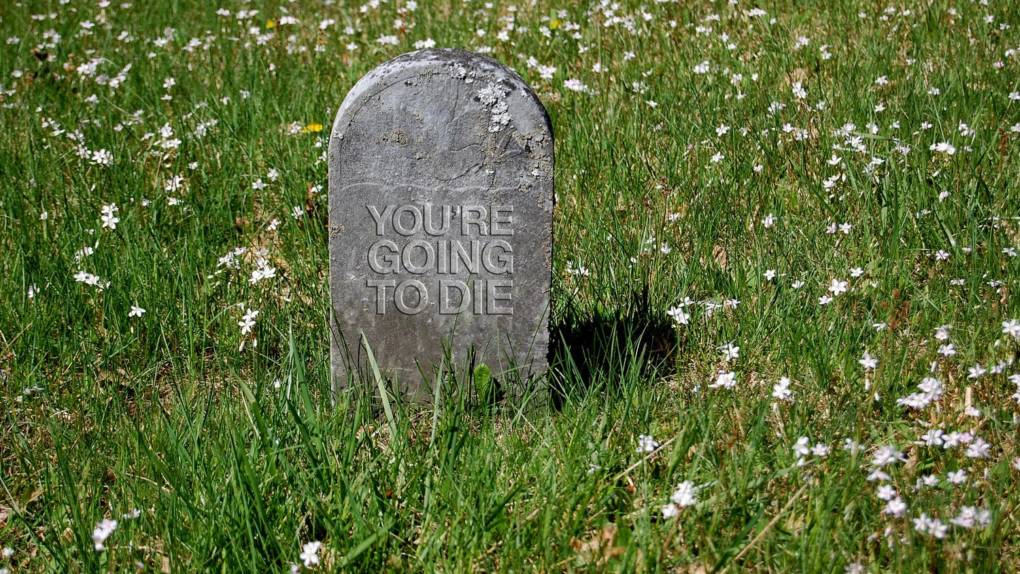
"caption": "You're Going To Die is part open mic, part storytelling, centered around a more positive embrace of death.",
"description": "You're Going To Die is part open mic, part storytelling, centered around a more positive embrace of death.",
"title": "YG2D.MAIN",
"credit": "Courtesy YG2D",
"status": "inherit",
"isLoading": false,
"fetchFailed": false
},
"arts_13840793": {
"type": "attachments",
"id": "arts_13840793",
"meta": {
"index": "attachments_1716263798",
"site": "arts",
"id": "13840793",
"found": true
},
"parent": 13840766,
"imgSizes": {
"small": {
"file": "https://ww2.kqed.org/app/uploads/sites/2/2018/09/BUA.MAIN_-520x325.jpg",
"width": 520,
"mimeType": "image/jpeg",
"height": 325
},
"twentyfourteen-full-width": {
"file": "https://ww2.kqed.org/app/uploads/sites/2/2018/09/BUA.MAIN_-1038x576.jpg",
"width": 1038,
"mimeType": "image/jpeg",
"height": 576
},
"thumbnail": {
"file": "https://ww2.kqed.org/app/uploads/sites/2/2018/09/BUA.MAIN_-160x100.jpg",
"width": 160,
"mimeType": "image/jpeg",
"height": 100
},
"fd-sm": {
"file": "https://ww2.kqed.org/app/uploads/sites/2/2018/09/BUA.MAIN_-960x600.jpg",
"width": 960,
"mimeType": "image/jpeg",
"height": 600
},
"post-thumbnail": {
"file": "https://ww2.kqed.org/app/uploads/sites/2/2018/09/BUA.MAIN_-672x372.jpg",
"width": 672,
"mimeType": "image/jpeg",
"height": 372
},
"xsmall": {
"file": "https://ww2.kqed.org/app/uploads/sites/2/2018/09/BUA.MAIN_-375x234.jpg",
"width": 375,
"mimeType": "image/jpeg",
"height": 234
},
"kqedFullSize": {
"file": "https://ww2.kqed.org/app/uploads/sites/2/2018/09/BUA.MAIN_.jpg",
"width": 1920,
"height": 1200
},
"large": {
"file": "https://ww2.kqed.org/app/uploads/sites/2/2018/09/BUA.MAIN_-1020x638.jpg",
"width": 1020,
"mimeType": "image/jpeg",
"height": 638
},
"xlarge": {
"file": "https://ww2.kqed.org/app/uploads/sites/2/2018/09/BUA.MAIN_-1180x738.jpg",
"width": 1180,
"mimeType": "image/jpeg",
"height": 738
},
"complete_open_graph": {
"file": "https://ww2.kqed.org/app/uploads/sites/2/2018/09/BUA.MAIN_-1200x750.jpg",
"width": 1200,
"mimeType": "image/jpeg",
"height": 750
},
"guest-author-50": {
"file": "https://ww2.kqed.org/app/uploads/sites/2/2018/09/BUA.MAIN_-50x50.jpg",
"width": 50,
"mimeType": "image/jpeg",
"height": 50
},
"guest-author-96": {
"file": "https://ww2.kqed.org/app/uploads/sites/2/2018/09/BUA.MAIN_-96x96.jpg",
"width": 96,
"mimeType": "image/jpeg",
"height": 96
},
"medium": {
"file": "https://ww2.kqed.org/app/uploads/sites/2/2018/09/BUA.MAIN_-800x500.jpg",
"width": 800,
"mimeType": "image/jpeg",
"height": 500
},
"guest-author-64": {
"file": "https://ww2.kqed.org/app/uploads/sites/2/2018/09/BUA.MAIN_-64x64.jpg",
"width": 64,
"mimeType": "image/jpeg",
"height": 64
},
"guest-author-32": {
"file": "https://ww2.kqed.org/app/uploads/sites/2/2018/09/BUA.MAIN_-32x32.jpg",
"width": 32,
"mimeType": "image/jpeg",
"height": 32
},
"fd-lrg": {
"file": "https://ww2.kqed.org/app/uploads/sites/2/2018/09/BUA.MAIN_-1920x1200.jpg",
"width": 1920,
"mimeType": "image/jpeg",
"height": 1200
},
"fd-med": {
"file": "https://ww2.kqed.org/app/uploads/sites/2/2018/09/BUA.MAIN_-1180x738.jpg",
"width": 1180,
"mimeType": "image/jpeg",
"height": 738
},
"full-width": {
"file": "https://ww2.kqed.org/app/uploads/sites/2/2018/09/BUA.MAIN_-1920x1200.jpg",
"width": 1920,
"mimeType": "image/jpeg",
"height": 1200
},
"detail": {
"file": "https://ww2.kqed.org/app/uploads/sites/2/2018/09/BUA.MAIN_-150x150.jpg",
"width": 150,
"mimeType": "image/jpeg",
"height": 150
},
"medium_large": {
"file": "https://ww2.kqed.org/app/uploads/sites/2/2018/09/BUA.MAIN_-768x480.jpg",
"width": 768,
"mimeType": "image/jpeg",
"height": 480
},
"guest-author-128": {
"file": "https://ww2.kqed.org/app/uploads/sites/2/2018/09/BUA.MAIN_-128x128.jpg",
"width": 128,
"mimeType": "image/jpeg",
"height": 128
},
"xxsmall": {
"file": "https://ww2.kqed.org/app/uploads/sites/2/2018/09/BUA.MAIN_-240x150.jpg",
"width": 240,
"mimeType": "image/jpeg",
"height": 150
}
},
"publishDate": 1536877656,
"modified": 1536877737,
"caption": "A student from Oakland School for the Arts holds up a print by artist Justin Bua. The artist appeared at SoleSpace in downtown Oakland for a talk with students.",
"description": "A student from Oakland School for the Arts holds up a print by artist Justin Bua. The artist appeared at SoleSpace in downtown Oakland for a talk with students.",
"title": "BUA.MAIN",
"credit": "Pendarvis Harshaw",
"status": "inherit",
"isLoading": false,
"fetchFailed": false
},
"arts_13840741": {
"type": "attachments",
"id": "arts_13840741",
"meta": {
"index": "attachments_1716263798",
"site": "arts",
"id": "13840741",
"found": true
},
"parent": 13840702,
"imgSizes": {
"small": {
"file": "https://ww2.kqed.org/app/uploads/sites/2/2018/09/GildaMAINrevcouch-520x293.jpg",
"width": 520,
"mimeType": "image/jpeg",
"height": 293
},
"twentyfourteen-full-width": {
"file": "https://ww2.kqed.org/app/uploads/sites/2/2018/09/GildaMAINrevcouch-1038x576.jpg",
"width": 1038,
"mimeType": "image/jpeg",
"height": 576
},
"thumbnail": {
"file": "https://ww2.kqed.org/app/uploads/sites/2/2018/09/GildaMAINrevcouch-160x90.jpg",
"width": 160,
"mimeType": "image/jpeg",
"height": 90
},
"fd-sm": {
"file": "https://ww2.kqed.org/app/uploads/sites/2/2018/09/GildaMAINrevcouch-960x540.jpg",
"width": 960,
"mimeType": "image/jpeg",
"height": 540
},
"post-thumbnail": {
"file": "https://ww2.kqed.org/app/uploads/sites/2/2018/09/GildaMAINrevcouch-672x372.jpg",
"width": 672,
"mimeType": "image/jpeg",
"height": 372
},
"xsmall": {
"file": "https://ww2.kqed.org/app/uploads/sites/2/2018/09/GildaMAINrevcouch-375x211.jpg",
"width": 375,
"mimeType": "image/jpeg",
"height": 211
},
"kqedFullSize": {
"file": "https://ww2.kqed.org/app/uploads/sites/2/2018/09/GildaMAINrevcouch.jpg",
"width": 1920,
"height": 1080
},
"large": {
"file": "https://ww2.kqed.org/app/uploads/sites/2/2018/09/GildaMAINrevcouch-1020x574.jpg",
"width": 1020,
"mimeType": "image/jpeg",
"height": 574
},
"xlarge": {
"file": "https://ww2.kqed.org/app/uploads/sites/2/2018/09/GildaMAINrevcouch-1180x664.jpg",
"width": 1180,
"mimeType": "image/jpeg",
"height": 664
},
"complete_open_graph": {
"file": "https://ww2.kqed.org/app/uploads/sites/2/2018/09/GildaMAINrevcouch-1200x675.jpg",
"width": 1200,
"mimeType": "image/jpeg",
"height": 675
},
"guest-author-50": {
"file": "https://ww2.kqed.org/app/uploads/sites/2/2018/09/GildaMAINrevcouch-50x50.jpg",
"width": 50,
"mimeType": "image/jpeg",
"height": 50
},
"guest-author-96": {
"file": "https://ww2.kqed.org/app/uploads/sites/2/2018/09/GildaMAINrevcouch-96x96.jpg",
"width": 96,
"mimeType": "image/jpeg",
"height": 96
},
"medium": {
"file": "https://ww2.kqed.org/app/uploads/sites/2/2018/09/GildaMAINrevcouch-800x450.jpg",
"width": 800,
"mimeType": "image/jpeg",
"height": 450
},
"guest-author-64": {
"file": "https://ww2.kqed.org/app/uploads/sites/2/2018/09/GildaMAINrevcouch-64x64.jpg",
"width": 64,
"mimeType": "image/jpeg",
"height": 64
},
"guest-author-32": {
"file": "https://ww2.kqed.org/app/uploads/sites/2/2018/09/GildaMAINrevcouch-32x32.jpg",
"width": 32,
"mimeType": "image/jpeg",
"height": 32
},
"fd-lrg": {
"file": "https://ww2.kqed.org/app/uploads/sites/2/2018/09/GildaMAINrevcouch-1920x1080.jpg",
"width": 1920,
"mimeType": "image/jpeg",
"height": 1080
},
"fd-med": {
"file": "https://ww2.kqed.org/app/uploads/sites/2/2018/09/GildaMAINrevcouch-1180x664.jpg",
"width": 1180,
"mimeType": "image/jpeg",
"height": 664
},
"full-width": {
"file": "https://ww2.kqed.org/app/uploads/sites/2/2018/09/GildaMAINrevcouch-1920x1080.jpg",
"width": 1920,
"mimeType": "image/jpeg",
"height": 1080
},
"detail": {
"file": "https://ww2.kqed.org/app/uploads/sites/2/2018/09/GildaMAINrevcouch-150x150.jpg",
"width": 150,
"mimeType": "image/jpeg",
"height": 150
},
"medium_large": {
"file": "https://ww2.kqed.org/app/uploads/sites/2/2018/09/GildaMAINrevcouch-768x432.jpg",
"width": 768,
"mimeType": "image/jpeg",
"height": 432
},
"guest-author-128": {
"file": "https://ww2.kqed.org/app/uploads/sites/2/2018/09/GildaMAINrevcouch-128x128.jpg",
"width": 128,
"mimeType": "image/jpeg",
"height": 128
},
"xxsmall": {
"file": "https://ww2.kqed.org/app/uploads/sites/2/2018/09/GildaMAINrevcouch-240x135.jpg",
"width": 240,
"mimeType": "image/jpeg",
"height": 135
}
},
"publishDate": 1536788524,
"modified": 1536788669,
"caption": "Gilda Radner in 'Love, Gilda.' The comedian who died at age 42 is remembered in a new documentary.",
"description": "Gilda Radner in 'Love, Gilda.' The comedian who died at age 42 is remembered in a new documentary.",
"title": "GildaMAINrevcouch",
"credit": "Courtesy Magnolia Pictures",
"status": "inherit",
"isLoading": false,
"fetchFailed": false
},
"arts_13840438": {
"type": "attachments",
"id": "arts_13840438",
"meta": {
"index": "attachments_1716263798",
"site": "arts",
"id": "13840438",
"found": true
},
"parent": 13840416,
"imgSizes": {
"small": {
"file": "https://ww2.kqed.org/app/uploads/sites/2/2018/09/RaidersCheerleader.MAIN_-520x293.jpg",
"width": 520,
"mimeType": "image/jpeg",
"height": 293
},
"twentyfourteen-full-width": {
"file": "https://ww2.kqed.org/app/uploads/sites/2/2018/09/RaidersCheerleader.MAIN_-1038x576.jpg",
"width": 1038,
"mimeType": "image/jpeg",
"height": 576
},
"thumbnail": {
"file": "https://ww2.kqed.org/app/uploads/sites/2/2018/09/RaidersCheerleader.MAIN_-160x90.jpg",
"width": 160,
"mimeType": "image/jpeg",
"height": 90
},
"fd-sm": {
"file": "https://ww2.kqed.org/app/uploads/sites/2/2018/09/RaidersCheerleader.MAIN_-960x540.jpg",
"width": 960,
"mimeType": "image/jpeg",
"height": 540
},
"post-thumbnail": {
"file": "https://ww2.kqed.org/app/uploads/sites/2/2018/09/RaidersCheerleader.MAIN_-672x372.jpg",
"width": 672,
"mimeType": "image/jpeg",
"height": 372
},
"xsmall": {
"file": "https://ww2.kqed.org/app/uploads/sites/2/2018/09/RaidersCheerleader.MAIN_-375x211.jpg",
"width": 375,
"mimeType": "image/jpeg",
"height": 211
},
"kqedFullSize": {
"file": "https://ww2.kqed.org/app/uploads/sites/2/2018/09/RaidersCheerleader.MAIN_.jpg",
"width": 1920,
"height": 1080
},
"large": {
"file": "https://ww2.kqed.org/app/uploads/sites/2/2018/09/RaidersCheerleader.MAIN_-1020x574.jpg",
"width": 1020,
"mimeType": "image/jpeg",
"height": 574
},
"xlarge": {
"file": "https://ww2.kqed.org/app/uploads/sites/2/2018/09/RaidersCheerleader.MAIN_-1180x664.jpg",
"width": 1180,
"mimeType": "image/jpeg",
"height": 664
},
"complete_open_graph": {
"file": "https://ww2.kqed.org/app/uploads/sites/2/2018/09/RaidersCheerleader.MAIN_-1200x675.jpg",
"width": 1200,
"mimeType": "image/jpeg",
"height": 675
},
"guest-author-50": {
"file": "https://ww2.kqed.org/app/uploads/sites/2/2018/09/RaidersCheerleader.MAIN_-50x50.jpg",
"width": 50,
"mimeType": "image/jpeg",
"height": 50
},
"guest-author-96": {
"file": "https://ww2.kqed.org/app/uploads/sites/2/2018/09/RaidersCheerleader.MAIN_-96x96.jpg",
"width": 96,
"mimeType": "image/jpeg",
"height": 96
},
"medium": {
"file": "https://ww2.kqed.org/app/uploads/sites/2/2018/09/RaidersCheerleader.MAIN_-800x450.jpg",
"width": 800,
"mimeType": "image/jpeg",
"height": 450
},
"guest-author-64": {
"file": "https://ww2.kqed.org/app/uploads/sites/2/2018/09/RaidersCheerleader.MAIN_-64x64.jpg",
"width": 64,
"mimeType": "image/jpeg",
"height": 64
},
"guest-author-32": {
"file": "https://ww2.kqed.org/app/uploads/sites/2/2018/09/RaidersCheerleader.MAIN_-32x32.jpg",
"width": 32,
"mimeType": "image/jpeg",
"height": 32
},
"fd-lrg": {
"file": "https://ww2.kqed.org/app/uploads/sites/2/2018/09/RaidersCheerleader.MAIN_-1920x1080.jpg",
"width": 1920,
"mimeType": "image/jpeg",
"height": 1080
},
"fd-med": {
"file": "https://ww2.kqed.org/app/uploads/sites/2/2018/09/RaidersCheerleader.MAIN_-1180x664.jpg",
"width": 1180,
"mimeType": "image/jpeg",
"height": 664
},
"full-width": {
"file": "https://ww2.kqed.org/app/uploads/sites/2/2018/09/RaidersCheerleader.MAIN_-1920x1080.jpg",
"width": 1920,
"mimeType": "image/jpeg",
"height": 1080
},
"detail": {
"file": "https://ww2.kqed.org/app/uploads/sites/2/2018/09/RaidersCheerleader.MAIN_-150x150.jpg",
"width": 150,
"mimeType": "image/jpeg",
"height": 150
},
"medium_large": {
"file": "https://ww2.kqed.org/app/uploads/sites/2/2018/09/RaidersCheerleader.MAIN_-768x432.jpg",
"width": 768,
"mimeType": "image/jpeg",
"height": 432
},
"guest-author-128": {
"file": "https://ww2.kqed.org/app/uploads/sites/2/2018/09/RaidersCheerleader.MAIN_-128x128.jpg",
"width": 128,
"mimeType": "image/jpeg",
"height": 128
},
"xxsmall": {
"file": "https://ww2.kqed.org/app/uploads/sites/2/2018/09/RaidersCheerleader.MAIN_-240x135.jpg",
"width": 240,
"mimeType": "image/jpeg",
"height": 135
}
},
"publishDate": 1536272746,
"modified": 1536272973,
"caption": "Detail from one of Rita Cecaci's Raiderettes programs from 1962.",
"description": "Detail from one of Rita Cecaci's Raiderettes programs from 1962.",
"title": "RaidersCheerleader.MAIN",
"credit": "Pendarvis Harshaw",
"status": "inherit",
"isLoading": false,
"fetchFailed": false
}
},
"audioPlayerReducer": {
"postId": "stream_live",
"isPaused": true,
"isPlaying": false,
"pfsActive": false,
"pledgeModalIsOpen": true,
"playerDrawerIsOpen": false,
"liveAudioPlayStartedAt": 0,
"liveAudioPlayContext": ""
},
"authorsReducer": {
"rachael-myrow": {
"type": "authors",
"id": "251",
"meta": {
"index": "authors_1716337520",
"id": "251",
"found": true
},
"name": "Rachael Myrow",
"firstName": "Rachael",
"lastName": "Myrow",
"slug": "rachael-myrow",
"email": "rmyrow@kqed.org",
"display_author_email": true,
"staff_mastheads": [
"news"
],
"title": "Senior Editor of KQED's Silicon Valley News Desk",
"bio": "• I write and edit stories about how Silicon Valley power and policies shape everyday life in California. I’m also passionate about making Bay Area history and culture more accessible to a broad public. • I’ve been a journalist for most of my life, starting in high school with The Franklin Press in Los Angeles, where I grew up. While earning my first degree in English at UC Berkeley, I got my start in public radio at KALX-FM. After completing a second degree in journalism at Cal, I landed my first professional job at Marketplace, then moved on to KPCC (now LAist), and then KQED, where I hosted The California Report for more than seven years. • My reporting has appeared on NPR, The World, WBUR’s \u003ci>Here & Now\u003c/i>, and the BBC. I also guest host for KQED’s \u003ci>Forum\u003c/i>, as well as the Commonwealth Club in San Francisco. • I speak periodically on media, democracy and technology issues, and do voiceover work for documentaries and educational video projects. • Outside of the studio, you'll find me hiking Bay Area trails and whipping up Insta-ready meals in my kitchen. • I do not accept gifts, money, or favors from anyone connected to my reporting, I don't pay people for information, and I do not support or donate to political causes. • I strive to treat the people I report on with fairness, honesty, and respect. I also recognize there are often multiple sides to a story and work to verify information through multiple sources and documentation. If I get something wrong, I correct it.",
"avatar": "https://secure.gravatar.com/avatar/3ed8a3c5f26025e4a805ba634cda8cd764906b97438a6d9ce216b044e340da4e?s=600&d=blank&r=g",
"twitter": "rachaelmyrow",
"bluesky": null,
"facebook": null,
"instagram": null,
"linkedin": "https://www.linkedin.com/in/rachaelmyrow/",
"sites": [
{
"site": "arts",
"roles": [
"administrator"
]
},
{
"site": "news",
"roles": [
"edit_others_posts",
"editor"
]
},
{
"site": "futureofyou",
"roles": [
"editor"
]
},
{
"site": "bayareabites",
"roles": [
"editor"
]
},
{
"site": "stateofhealth",
"roles": [
"editor"
]
},
{
"site": "science",
"roles": [
"editor"
]
},
{
"site": "food",
"roles": [
"editor"
]
},
{
"site": "forum",
"roles": [
"editor"
]
},
{
"site": "liveblog",
"roles": [
"author"
]
}
],
"headData": {
"title": "Rachael Myrow | KQED",
"description": "Senior Editor of KQED's Silicon Valley News Desk",
"ogImgSrc": "https://secure.gravatar.com/avatar/3ed8a3c5f26025e4a805ba634cda8cd764906b97438a6d9ce216b044e340da4e?s=600&d=blank&r=g",
"twImgSrc": "https://secure.gravatar.com/avatar/3ed8a3c5f26025e4a805ba634cda8cd764906b97438a6d9ce216b044e340da4e?s=600&d=blank&r=g"
},
"isLoading": false,
"link": "/author/rachael-myrow"
},
"esilvers": {
"type": "authors",
"id": "7237",
"meta": {
"index": "authors_1716337520",
"id": "7237",
"found": true
},
"name": "Emma Silvers",
"firstName": "Emma",
"lastName": "Silvers",
"slug": "esilvers",
"email": "esilvers@kqed.org",
"display_author_email": false,
"staff_mastheads": [],
"title": "KQED Contributor",
"bio": "Emma Silvers is an editor at KQED Arts and a former digital producer at KQED News. Born and raised in the Bay Area, she has previously been an arts and entertainment editor at the \u003cem>San Francisco Chronicle\u003c/em>, \u003cem>SF Weekly\u003c/em> and the \u003cem>San Francisco Bay Guardian.\u003c/em> \u003ca href=\"https://www.emmasilvers.com\">Her work\u003c/a> has also appeared in \u003cem>Rolling Stone\u003c/em>, Pitchfork and \u003cem>Mother Jones\u003c/em>. In 2017 she was the recipient of the Society of Professional Journalists-Northern California's award for arts and culture reporting. In 1993 she \u003ca href=\"https://www.kqed.org/pop/16759/wait-what-my-coworker-was-a-voice-over-hyperventilator-for-jurassic-park\">hyperventilated in \u003cem>Jurassic Park\u003c/em>\u003c/a>.",
"avatar": "https://secure.gravatar.com/avatar/247beada39b88ea5759db1f51dba05cf?s=600&d=blank&r=g",
"twitter": "emmaruthless",
"facebook": null,
"instagram": null,
"linkedin": null,
"sites": [
{
"site": "arts",
"roles": [
"editor"
]
},
{
"site": "news",
"roles": [
"editor"
]
},
{
"site": "pop",
"roles": [
"contributor"
]
},
{
"site": "bayareabites",
"roles": [
"editor"
]
},
{
"site": "food",
"roles": [
"contributor"
]
},
{
"site": "liveblog",
"roles": [
"editor"
]
}
],
"headData": {
"title": "Emma Silvers | KQED",
"description": "KQED Contributor",
"ogImgSrc": "https://secure.gravatar.com/avatar/247beada39b88ea5759db1f51dba05cf?s=600&d=blank&r=g",
"twImgSrc": "https://secure.gravatar.com/avatar/247beada39b88ea5759db1f51dba05cf?s=600&d=blank&r=g"
},
"isLoading": false,
"link": "/author/esilvers"
},
"nvoynovskaya": {
"type": "authors",
"id": "11387",
"meta": {
"index": "authors_1716337520",
"id": "11387",
"found": true
},
"name": "Nastia Voynovskaya",
"firstName": "Nastia",
"lastName": "Voynovskaya",
"slug": "nvoynovskaya",
"email": "nvoynovskaya@kqed.org",
"display_author_email": false,
"staff_mastheads": [
"arts"
],
"title": "Editor and reporter",
"bio": "Nastia Voynovskaya is a reporter, editor and host at KQED Arts & Culture. She's been covering the arts in the Bay Area for over a decade, with a focus on music, queer culture, labor issues and grassroots organizing. She has edited KQED story series such as Trans Bay: A History of San Francisco's Gender-Diverse Community, and co-created KQED's Bay Area hip-hop history project, That's My Word. Nastia's work has been recognized by the Society of Professional Journalists and San Francisco Press Club. She regularly appears on podcasts and radio programs, including NPR's All Songs Considered, and hosts live events where music, culture and conversation meet.",
"avatar": "https://secure.gravatar.com/avatar/5025ee460e5a85d69ca20ea6c6f2f80d7e17795c828f61ea3aecfcd924e9042e?s=600&d=blank&r=g",
"twitter": null,
"bluesky": null,
"facebook": null,
"instagram": "https://www.instagram.com/nananastia/",
"linkedin": null,
"sites": [
{
"site": "",
"roles": [
"editor"
]
},
{
"site": "arts",
"roles": [
"administrator"
]
},
{
"site": "news",
"roles": [
"editor"
]
},
{
"site": "pop",
"roles": [
"administrator"
]
},
{
"site": "bayareabites",
"roles": [
"editor"
]
},
{
"site": "podcasts",
"roles": [
"editor"
]
},
{
"site": "hiphop",
"roles": [
"editor"
]
}
],
"headData": {
"title": "Nastia Voynovskaya | KQED",
"description": "Editor and reporter",
"ogImgSrc": "https://secure.gravatar.com/avatar/5025ee460e5a85d69ca20ea6c6f2f80d7e17795c828f61ea3aecfcd924e9042e?s=600&d=blank&r=g",
"twImgSrc": "https://secure.gravatar.com/avatar/5025ee460e5a85d69ca20ea6c6f2f80d7e17795c828f61ea3aecfcd924e9042e?s=600&d=blank&r=g"
},
"isLoading": false,
"link": "/author/nvoynovskaya"
},
"ogpenn": {
"type": "authors",
"id": "11491",
"meta": {
"index": "authors_1716337520",
"id": "11491",
"found": true
},
"name": "Pendarvis Harshaw",
"firstName": "Pendarvis",
"lastName": "Harshaw",
"slug": "ogpenn",
"email": "ogpenn@gmail.com",
"display_author_email": false,
"staff_mastheads": [
"arts"
],
"title": "Community Engagement Reporter",
"bio": "Pendarvis Harshaw is an educator, host and writer with KQED Arts.",
"avatar": "https://secure.gravatar.com/avatar/972b77ee8e3f346ae2b00622661187fbfabd059b5693bbdc1475ea7a722fd4cd?s=600&d=blank&r=g",
"twitter": null,
"bluesky": null,
"facebook": null,
"instagram": "ogpenn",
"linkedin": null,
"sites": [
{
"site": "arts",
"roles": [
"administrator"
]
},
{
"site": "news",
"roles": [
"editor"
]
},
{
"site": "bayareabites",
"roles": [
"author"
]
},
{
"site": "hiphop",
"roles": [
"editor"
]
}
],
"headData": {
"title": "Pendarvis Harshaw | KQED",
"description": "Community Engagement Reporter",
"ogImgSrc": "https://secure.gravatar.com/avatar/972b77ee8e3f346ae2b00622661187fbfabd059b5693bbdc1475ea7a722fd4cd?s=600&d=blank&r=g",
"twImgSrc": "https://secure.gravatar.com/avatar/972b77ee8e3f346ae2b00622661187fbfabd059b5693bbdc1475ea7a722fd4cd?s=600&d=blank&r=g"
},
"isLoading": false,
"link": "/author/ogpenn"
},
"mreeves": {
"type": "authors",
"id": "11855",
"meta": {
"index": "authors_1716337520",
"id": "11855",
"found": true
},
"name": "Mosi Reeves",
"firstName": "Mosi",
"lastName": "Reeves",
"slug": "mreeves",
"email": "infamous30@gmail.com",
"display_author_email": false,
"staff_mastheads": [],
"title": "KQED Contributor",
"bio": "Mosi Reeves is a journalist and cultural critic based in Oakland, California. In addition to KQED, his work has appeared in \u003cem>Rolling Stone\u003c/em>, \u003cem>The Wire\u003c/em>, Pitchfork, \u003cem>Billboard\u003c/em>, and Grammy.com.",
"avatar": "https://secure.gravatar.com/avatar/6f376003ca1cf7a873edc107f5f331f1?s=600&d=blank&r=g",
"twitter": null,
"facebook": null,
"instagram": null,
"linkedin": null,
"sites": [
{
"site": "arts",
"roles": [
"contributor"
]
},
{
"site": "pop",
"roles": [
"contributor"
]
}
],
"headData": {
"title": "Mosi Reeves | KQED",
"description": "KQED Contributor",
"ogImgSrc": "https://secure.gravatar.com/avatar/6f376003ca1cf7a873edc107f5f331f1?s=600&d=blank&r=g",
"twImgSrc": "https://secure.gravatar.com/avatar/6f376003ca1cf7a873edc107f5f331f1?s=600&d=blank&r=g"
},
"isLoading": false,
"link": "/author/mreeves"
}
},
"pagesReducer": {
"arts_tag_commentary": {
"type": "terms",
"id": "arts_2767",
"meta": {
"index": "terms_1716263798",
"site": "arts",
"id": "2767",
"score": 8.794581
},
"featImg": null,
"name": "commentary",
"description": null,
"taxonomy": "tag",
"headData": {
"twImgId": null,
"twTitle": null,
"ogTitle": null,
"ogImgId": null,
"twDescription": null,
"description": null,
"title": "commentary Archives | KQED Arts",
"ogDescription": null
},
"ttid": 2779,
"slug": "commentary",
"isLoading": false,
"title": "commentary",
"pageMeta": {
"site": "arts",
"WpPageTemplate": "page-topic-editorial",
"currentPage": 26
},
"blocks": [
{
"blockName": "kqed/post-list",
"attrs": {
"layout": "cardArticle2",
"query": "posts/arts?tag=commentary",
"seeMore": false,
"paginated": true,
"page": 26
}
},
{
"blockName": "kqed/ad"
}
]
}
},
"pfsSessionReducer": {},
"postsReducer": {
"stream_live": {
"type": "live",
"id": "stream_live",
"audioUrl": "https://streams.kqed.org/kqedradio",
"title": "Live Stream",
"excerpt": "Live Stream information currently unavailable.",
"link": "/radio",
"featImg": "",
"label": {
"name": "KQED Live",
"link": "/"
}
},
"stream_kqedNewscast": {
"type": "posts",
"id": "stream_kqedNewscast",
"audioUrl": "https://www.kqed.org/.stream/anon/radio/RDnews/newscast.mp3?_=1",
"title": "KQED Newscast",
"featImg": "",
"label": {
"name": "88.5 FM",
"link": "/"
}
},
"arts_13845379": {
"type": "posts",
"id": "arts_13845379",
"meta": {
"index": "posts_1716263798",
"site": "arts",
"id": "13845379",
"score": null,
"sort": [
1542830428000
]
},
"parent": 0,
"labelTerm": {
"site": "arts"
},
"blocks": [],
"publishDate": 1542830428,
"format": "standard",
"title": "Carrie Cleveland's Recipe for Longevity",
"headTitle": "Carrie Cleveland’s Recipe for Longevity | KQED",
"content": "\u003cp>\u003cspan style=\"font-size: 4.6875em;float: left;line-height: 0.733em;padding: 0.05em 0.1em 0 0;font-family: times, serif, georgia\">I\u003c/span>’ve been trying to wrap my mind around what East Oakland must’ve been like in the 1970s: the decline of the Black Panther Party, the disbandment of the Brown Berets, the rise of crack cocaine. The decade between the Chevrolet factory’s closure in the late 1960s and the rise of Felix Mitchell’s drug empire in the early 1980s. When E. 14th Street earned its name as the prostitution stroll I’d come to know as “E-ONE-FOE,” and films like \u003cem>The Mack\u003c/em> depicted aspects of that lifestyle.\u003c/p>\n\u003cp>\u003cimg loading=\"lazy\" decoding=\"async\" class=\"alignright size-thumbnail wp-image-13833985\" src=\"https://ww2.kqed.org/arts/wp-content/uploads/sites/2/2018/05/OGPenn.Cap_-160x184.jpg\" alt=\"\" width=\"160\" height=\"184\" srcset=\"https://cdn.kqed.org/wp-content/uploads/sites/2/2018/05/OGPenn.Cap_-160x184.jpg 160w, https://cdn.kqed.org/wp-content/uploads/sites/2/2018/05/OGPenn.Cap_.jpg 180w\" sizes=\"(max-width: 160px) 100vw, 160px\">\u003c/p>\n\u003cp>As many escaped the horrors of war in countries like Vietnam, Cambodia, El Salvador and Panama, others celebrated. The A’s won championships from ’72-’74. The Warriors won one in ’75. And the Raiders did their thing in ’77.\u003c/p>\n\u003cp>And in 1978, in a garage studio near the CP Bannon Mortuary on E. 14th in East Oakland, a young woman born in Shreveport, LA recorded songs about love that would be released on record in small quantities and nearly lost to history.\u003c/p>\n\u003cfigure id=\"attachment_13845382\" class=\"wp-caption alignnone\" style=\"max-width: 800px\">\u003cimg loading=\"lazy\" decoding=\"async\" class=\"size-medium wp-image-13845382\" src=\"https://ww2.kqed.org/arts/wp-content/uploads/sites/2/2018/11/0-9-800x535.jpg\" alt=\"Carrie Cleveland's "Looking Up" album (photo by Pendarvis Harshaw)\" width=\"800\" height=\"535\" srcset=\"https://cdn.kqed.org/wp-content/uploads/sites/2/2018/11/0-9-800x535.jpg 800w, https://cdn.kqed.org/wp-content/uploads/sites/2/2018/11/0-9-160x107.jpg 160w, https://cdn.kqed.org/wp-content/uploads/sites/2/2018/11/0-9-768x513.jpg 768w, https://cdn.kqed.org/wp-content/uploads/sites/2/2018/11/0-9-1020x682.jpg 1020w, https://cdn.kqed.org/wp-content/uploads/sites/2/2018/11/0-9-1200x802.jpg 1200w, https://cdn.kqed.org/wp-content/uploads/sites/2/2018/11/0-9-1180x789.jpg 1180w, https://cdn.kqed.org/wp-content/uploads/sites/2/2018/11/0-9-960x642.jpg 960w, https://cdn.kqed.org/wp-content/uploads/sites/2/2018/11/0-9-240x160.jpg 240w, https://cdn.kqed.org/wp-content/uploads/sites/2/2018/11/0-9-375x251.jpg 375w, https://cdn.kqed.org/wp-content/uploads/sites/2/2018/11/0-9-520x348.jpg 520w, https://cdn.kqed.org/wp-content/uploads/sites/2/2018/11/0-9.jpg 1616w\" sizes=\"(max-width: 800px) 100vw, 800px\">\u003cfigcaption class=\"wp-caption-text\">Carrie Cleveland’s ‘Looking Up’ album, reissued this year. (Photo by Pendarvis Harshaw)\u003c/figcaption>\u003c/figure>\n\u003cp>\u003cspan style=\"font-size: 4.6875em;float: left;line-height: 0.733em;padding: 0.05em 0.1em 0 0;font-family: times, serif, georgia\">F\u003c/span>orty years later, hearing Carrie Cleveland’s album \u003cem>Looking Up\u003c/em> is special, like discovering a box of intimate love letters. In fact, that’s exactly what it is: love-laden songs adapted from the lyrical letters her husband Bill Cleveland penned, with Carrie’s beautiful vocals singing over Bill’s arrangements on songs like “Make Love to Me,” “I Need Love” and more.\u003c/p>\n\u003cp>[ad fullwidth]\u003c/p>\n\u003cp>When the duo pressed and cut 1,000 copies of the record themselves, they had no idea that 40 years later, original copies of that album would sell for over $300 on this thing called the internet. I bet it would’ve blown their minds smooth out of their afros if they knew that a young woman from Europe would garner \u003ca href=\"https://www.youtube.com/watch?v=VRcp64Tptp0\">half a million views\u003c/a> on this thing called YouTube by dancing to the sound of the Clevelands’ immortal love.\u003c/p>\n\u003cp>https://www.youtube.com/watch?v=G5-_J-N_BBk\u003c/p>\n\u003cp>Part of me wishes I could jump into an old photo of the Clevelands and tell them to never stop recording, because their art is valuable—so valuable, one day people like 24-year-old Chris Webb would aggressively seek their record.\u003c/p>\n\u003cp>“I had been trying to find Carrie for two years, with no success,” Chris told me during an early morning phone call from England. “I wasn’t sure if she was still alive.”\u003c/p>\n\u003cp>But then he saw an online seller advertising original copies of \u003cem>Looking Up\u003c/em>—who said they got them from Carrie herself.\u003c/p>\n\u003cp>After finding that one lead, Webb said, it didn’t take long for the ball to start rolling. “I got a phone call two weeks later from her son, Heston.”\u003c/p>\n\u003cfigure id=\"attachment_13845388\" class=\"wp-caption alignnone\" style=\"max-width: 800px\">\u003cimg loading=\"lazy\" decoding=\"async\" class=\"size-medium wp-image-13845388\" src=\"https://ww2.kqed.org/arts/wp-content/uploads/sites/2/2018/11/0-6-800x535.jpg\" alt=\"Carrie Cleveland and son Heston at Carrie's home (photo by Pendarvis Harshaw)\" width=\"800\" height=\"535\" srcset=\"https://cdn.kqed.org/wp-content/uploads/sites/2/2018/11/0-6-800x535.jpg 800w, https://cdn.kqed.org/wp-content/uploads/sites/2/2018/11/0-6-160x107.jpg 160w, https://cdn.kqed.org/wp-content/uploads/sites/2/2018/11/0-6-768x513.jpg 768w, https://cdn.kqed.org/wp-content/uploads/sites/2/2018/11/0-6-1020x682.jpg 1020w, https://cdn.kqed.org/wp-content/uploads/sites/2/2018/11/0-6-1200x802.jpg 1200w, https://cdn.kqed.org/wp-content/uploads/sites/2/2018/11/0-6.jpg 1616w\" sizes=\"(max-width: 800px) 100vw, 800px\">\u003cfigcaption class=\"wp-caption-text\">Carrie Cleveland and son Heston at Carrie’s home (photo by Pendarvis Harshaw)\u003c/figcaption>\u003c/figure>\n\u003cp>\u003cspan style=\"font-size: 4.6875em;float: left;line-height: 0.733em;padding: 0.05em 0.1em 0 0;font-family: times, serif, georgia\">W\u003c/span>hen I visited Carrie Cleveland at her home, Heston greeted me at the front door and welcomed me in. There she was: hair laid, nails done, jewelry sparkling, sitting at the head of the dining room table like royalty should. No sooner then I sat down did she get up to bring me two homemade teacakes.\u003c/p>\n\u003cp>While she was in the kitchen, Heston told me about discovering how popular his mom’s music was on the internet. “People online were selling copies and making money,” he said, “and I was like, ‘Mom, this is your money!’”\u003c/p>\n\u003cp>Heston knew a few things about the music business—he used to DJ for Oakland rapper Askari X—so he took an original copy of the album to a record store.\u003c/p>\n\u003cp>“I’ve been looking for your mom for years. I thought she was dead,” the shop owner told Heston. (That’s when Carrie, who had come back to the table with the teacakes, intervened and said, “That made me feel real bad.”)\u003c/p>\n\u003cp>https://www.youtube.com/watch?v=-x1WMclqbMk\u003c/p>\n\u003cp>Heston then connected with Chris Webb, sending him old photos, flyers and biographical information for Webb’s company, Kalita Records, to reissue Carrie Cleveland’s album. \u003cem>Looking Up\u003c/em> was \u003ca href=\"https://kalitarecords.bandcamp.com/album/looking-up-the-complete-works\">officially re-released\u003c/a> in September of this year.\u003c/p>\n\u003cp>When Heston and Carrie got a copy of the album’s liner notes back from Webb, they were both moved. “I’m reading it to her, and she started crying,” Heston told me, as I nibbled away on the first teacake. “And before I could ask why she was crying, \u003cem>I\u003c/em> started crying, because it was like my dad is still here.”\u003c/p>\n\u003cfigure id=\"attachment_13845383\" class=\"wp-caption alignnone\" style=\"max-width: 383px\">\u003cimg loading=\"lazy\" decoding=\"async\" class=\"size-full wp-image-13845383\" src=\"https://ww2.kqed.org/arts/wp-content/uploads/sites/2/2018/11/Carrie-Bill.png\" alt=\"Carrie & Bill (Courtesy of Carrie Cleveland)\" width=\"383\" height=\"548\" srcset=\"https://cdn.kqed.org/wp-content/uploads/sites/2/2018/11/Carrie-Bill.png 383w, https://cdn.kqed.org/wp-content/uploads/sites/2/2018/11/Carrie-Bill-160x229.png 160w\" sizes=\"(max-width: 383px) 100vw, 383px\">\u003cfigcaption class=\"wp-caption-text\">Carrie & Bill Cleveland. (Courtesy of Carrie Cleveland)\u003c/figcaption>\u003c/figure>\n\u003cp>\u003cspan style=\"font-size: 4.6875em;float: left;line-height: 0.733em;padding: 0.05em 0.1em 0 0;font-family: times, serif, georgia\">B\u003c/span>ill Cleveland, who wrote and arranged Carrie’s music—Heston referred to him as the Prince of the duo—died in March of 1994. Heston told me, “Now that I hear the music more and more, I can see him.”\u003c/p>\n\u003cp>Carrie followed by telling me that she hadn’t listened to the songs in a very long time, so listening now made the songs feel as if they were new.\u003c/p>\n\u003cp>“You have to listen to the words,” Carrie said, as I finished the first teacake, washed it down with a sip of Gatorade, and started on the second one. “The words are so beautiful. Now, I think about how he wrote some really, really good songs. It’s like, is he connecting with us? The feeling and everything is really…”—she paused to search for the word—“\u003cem>good\u003c/em>.”\u003c/p>\n\u003cp>“Make Love To Me,” her most popular track by YouTube standards, is an uptempo, feel-good soul-disco track with a simple hook: “Make love to me, come on,” sung in a high pitch. It’s the type of track hip-hop artists like Dipset or Just Blaze would have sampled during the throwback-jersey era. The seductive lyrics—“You’ve got a way about you that turns me on / Don’t waste my time, come on / Make love to me”—flow like honey over the groove-heavy backing.\u003c/p>\n\u003cfigure id=\"attachment_13845384\" class=\"wp-caption alignnone\" style=\"max-width: 800px\">\u003cimg loading=\"lazy\" decoding=\"async\" class=\"size-medium wp-image-13845384\" src=\"https://ww2.kqed.org/arts/wp-content/uploads/sites/2/2018/11/0-5-1-800x535.jpg\" alt=\"Liner Notes from Carrie Cleveland's "Looking up" album\" width=\"800\" height=\"535\" srcset=\"https://cdn.kqed.org/wp-content/uploads/sites/2/2018/11/0-5-1-800x535.jpg 800w, https://cdn.kqed.org/wp-content/uploads/sites/2/2018/11/0-5-1-160x107.jpg 160w, https://cdn.kqed.org/wp-content/uploads/sites/2/2018/11/0-5-1-768x513.jpg 768w, https://cdn.kqed.org/wp-content/uploads/sites/2/2018/11/0-5-1-1020x682.jpg 1020w, https://cdn.kqed.org/wp-content/uploads/sites/2/2018/11/0-5-1-1200x802.jpg 1200w, https://cdn.kqed.org/wp-content/uploads/sites/2/2018/11/0-5-1.jpg 1616w\" sizes=\"(max-width: 800px) 100vw, 800px\">\u003cfigcaption class=\"wp-caption-text\">Liner Notes from Carrie Cleveland’s ‘Looking Up’ album.\u003c/figcaption>\u003c/figure>\n\u003cp>Cleveland’s other songs have a similar feel, although “Love Will Set You Free” is in a much lower pitch. They’re all smoky lounge tunes, and that’s just where she performed them back in the day.\u003c/p>\n\u003cp>“We played what we called ‘holes in the wall,’” Carrie said. “Do they have a lot of those anymore?”\u003c/p>\n\u003cp>I had to let her know things had changed; a lot of classic Bay Area music venues had shut down, some of them just this year.\u003c/p>\n\u003cp>I dusted the teacake crumbs off of my hands, and then flipped through a photo book to see images of Carrie, Bill and the band performing at those long-lost venues. Places like the old Holiday Inn in Emeryville and the Pasand Lounge in Berkeley. She told me about performing in the 1980s on Mare Island in Vallejo, up in Grass Valley and even as far as Reno.\u003c/p>\n\u003cp>“We used to sing at HS Lordships on Sunday evenings, that was a \u003cem>long\u003c/em> time ago,” she said as we continued to flip through the photos. Carrie identified images of former band members, sometimes only by the instrument they used to play.\u003c/p>\n\u003cp>“I’m sure all of them are gone,” she said, “because we don’t hear from them anymore.”\u003c/p>\n\u003cfigure id=\"attachment_13845385\" class=\"wp-caption alignnone\" style=\"max-width: 800px\">\u003cimg loading=\"lazy\" decoding=\"async\" class=\"size-medium wp-image-13845385\" src=\"https://ww2.kqed.org/arts/wp-content/uploads/sites/2/2018/11/0-2-2-800x600.jpg\" alt=\"Carrie Cleveland and the band (photo by Pendarvis Harshaw)\" width=\"800\" height=\"600\" srcset=\"https://cdn.kqed.org/wp-content/uploads/sites/2/2018/11/0-2-2-800x600.jpg 800w, https://cdn.kqed.org/wp-content/uploads/sites/2/2018/11/0-2-2-160x120.jpg 160w, https://cdn.kqed.org/wp-content/uploads/sites/2/2018/11/0-2-2-768x576.jpg 768w, https://cdn.kqed.org/wp-content/uploads/sites/2/2018/11/0-2-2-1020x765.jpg 1020w, https://cdn.kqed.org/wp-content/uploads/sites/2/2018/11/0-2-2-1200x900.jpg 1200w, https://cdn.kqed.org/wp-content/uploads/sites/2/2018/11/0-2-2-1180x885.jpg 1180w, https://cdn.kqed.org/wp-content/uploads/sites/2/2018/11/0-2-2-960x720.jpg 960w, https://cdn.kqed.org/wp-content/uploads/sites/2/2018/11/0-2-2-240x180.jpg 240w, https://cdn.kqed.org/wp-content/uploads/sites/2/2018/11/0-2-2-375x281.jpg 375w, https://cdn.kqed.org/wp-content/uploads/sites/2/2018/11/0-2-2-520x390.jpg 520w, https://cdn.kqed.org/wp-content/uploads/sites/2/2018/11/0-2-2.jpg 1869w\" sizes=\"(max-width: 800px) 100vw, 800px\">\u003cfigcaption class=\"wp-caption-text\">Carrie Cleveland and band. (Photo by Pendarvis Harshaw)\u003c/figcaption>\u003c/figure>\n\u003cp>\u003cspan style=\"font-size: 4.6875em;float: left;line-height: 0.733em;padding: 0.05em 0.1em 0 0;font-family: times, serif, georgia\">O\u003c/span>ne image of Carrie in particular caught my eye, of her posing on the gazebo near Lake Merritt. I knew that structure from my childhood, and from when the Festival at The Lake was held over there. I asked Carrie about it. “I was trying to be Diana Ross,” she said with a laugh. “My husband and I went to the park, to Lake Merritt. We just hung out, took pictures and that was it.”\u003c/p>\n\u003cfigure id=\"attachment_13845386\" class=\"wp-caption alignnone\" style=\"max-width: 403px\">\u003cimg loading=\"lazy\" decoding=\"async\" class=\"size-full wp-image-13845386\" src=\"https://ww2.kqed.org/arts/wp-content/uploads/sites/2/2018/11/Poster.png\" alt=\"A poster of one of Carrie Cleveland's performances (courtesy of Carrie Cleveland)\" width=\"403\" height=\"621\" srcset=\"https://cdn.kqed.org/wp-content/uploads/sites/2/2018/11/Poster.png 403w, https://cdn.kqed.org/wp-content/uploads/sites/2/2018/11/Poster-160x247.png 160w\" sizes=\"(max-width: 403px) 100vw, 403px\">\u003cfigcaption class=\"wp-caption-text\">A poster of one of Carrie Cleveland’s performances. (Courtesy of Carrie Cleveland)\u003c/figcaption>\u003c/figure>\n\u003cp>When Bill passed, Carrie continued to sing. “Even when he died, I still kept jobs,” Carrie told me, noting that she made sure to finish the shows they already had scheduled. But eventually things fell apart. “A lot of men didn’t respect a female bandleader,” Carrie said. And so she put down her dreams of singing and found work as a housekeeper at Children’s Hospital in Oakland, eventually becoming an X-ray assistant.\u003c/p>\n\u003cp>Now that her records are back in rotation, she tells me she doesn’t fully know what to expect—but she’s back to singing in the shower, and that’s a good sign. Heston is in talks with her about performing again.\u003c/p>\n\u003cp>But, for now, Carrie focuses her creative energy on food. Before I left, I let her know the teacakes she made were delicious. She quickly gave me a ZipLoc bag full of them, and told me to put them in the freezer. And, when I have an appetite for one or two, to take them out and let them defrost—they’ll be good forever.\u003c/p>\n\u003cp>I wonder how they’ll taste in forty years.\u003c/p>\n\u003cp>[ad floatright]\u003c/p>\n\u003cp>\u003cimg loading=\"lazy\" decoding=\"async\" class=\"aligncenter size-medium wp-image-12127869\" src=\"https://ww2.kqed.org/arts/wp-content/uploads/sites/2/2016/09/Q.Logo_.Break_-800x78.jpg\" alt=\"\" width=\"800\" height=\"78\" srcset=\"https://cdn.kqed.org/wp-content/uploads/sites/2/2016/09/Q.Logo_.Break_.jpg 800w, https://cdn.kqed.org/wp-content/uploads/sites/2/2016/09/Q.Logo_.Break_-400x39.jpg 400w, https://cdn.kqed.org/wp-content/uploads/sites/2/2016/09/Q.Logo_.Break_-768x75.jpg 768w\" sizes=\"(max-width: 800px) 100vw, 800px\">\u003c/p>\n\n",
"stats": {
"hasVideo": true,
"hasChartOrMap": false,
"hasAudio": false,
"hasPolis": false,
"wordCount": 1627,
"hasGoogleForm": false,
"hasGallery": false,
"hasHearkenModule": false,
"iframeSrcs": [],
"paragraphCount": 34
},
"modified": 1705026983,
"excerpt": "The Oakland singer's 1970s music was nearly lost to history. Fans thought she was dead. Then a British record label called.",
"headData": {
"twImgId": "",
"twTitle": "",
"ogTitle": "",
"ogImgId": "",
"twDescription": "",
"description": "The Oakland singer's 1970s music was nearly lost to history. Fans thought she was dead. Then a British record label called.",
"title": "Carrie Cleveland's Recipe for Longevity | KQED",
"ogDescription": "",
"schema": {
"@context": "https://schema.org",
"@type": "Article",
"headline": "Carrie Cleveland's Recipe for Longevity",
"datePublished": "2018-11-21T12:00:28-08:00",
"dateModified": "2024-01-11T18:36:23-08:00",
"image": "https://cdn.kqed.org/wp-content/uploads/2020/02/KQED-OG-Image@1x.png"
}
},
"guestAuthors": [],
"slug": "carrie-clevelands-recipe-for-longevity",
"status": "publish",
"excludeFromSiteSearch": "Include",
"sticky": false,
"articleAge": "0",
"path": "/arts/13845379/carrie-clevelands-recipe-for-longevity",
"audioTrackLength": null,
"parsedContent": [
{
"type": "contentString",
"content": "\u003cdiv class=\"post-body\">\u003cp>\u003cp>\u003cspan style=\"font-size: 4.6875em;float: left;line-height: 0.733em;padding: 0.05em 0.1em 0 0;font-family: times, serif, georgia\">I\u003c/span>’ve been trying to wrap my mind around what East Oakland must’ve been like in the 1970s: the decline of the Black Panther Party, the disbandment of the Brown Berets, the rise of crack cocaine. The decade between the Chevrolet factory’s closure in the late 1960s and the rise of Felix Mitchell’s drug empire in the early 1980s. When E. 14th Street earned its name as the prostitution stroll I’d come to know as “E-ONE-FOE,” and films like \u003cem>The Mack\u003c/em> depicted aspects of that lifestyle.\u003c/p>\n\u003cp>\u003cimg loading=\"lazy\" decoding=\"async\" class=\"alignright size-thumbnail wp-image-13833985\" src=\"https://ww2.kqed.org/arts/wp-content/uploads/sites/2/2018/05/OGPenn.Cap_-160x184.jpg\" alt=\"\" width=\"160\" height=\"184\" srcset=\"https://cdn.kqed.org/wp-content/uploads/sites/2/2018/05/OGPenn.Cap_-160x184.jpg 160w, https://cdn.kqed.org/wp-content/uploads/sites/2/2018/05/OGPenn.Cap_.jpg 180w\" sizes=\"(max-width: 160px) 100vw, 160px\">\u003c/p>\n\u003cp>As many escaped the horrors of war in countries like Vietnam, Cambodia, El Salvador and Panama, others celebrated. The A’s won championships from ’72-’74. The Warriors won one in ’75. And the Raiders did their thing in ’77.\u003c/p>\n\u003cp>And in 1978, in a garage studio near the CP Bannon Mortuary on E. 14th in East Oakland, a young woman born in Shreveport, LA recorded songs about love that would be released on record in small quantities and nearly lost to history.\u003c/p>\n\u003cfigure id=\"attachment_13845382\" class=\"wp-caption alignnone\" style=\"max-width: 800px\">\u003cimg loading=\"lazy\" decoding=\"async\" class=\"size-medium wp-image-13845382\" src=\"https://ww2.kqed.org/arts/wp-content/uploads/sites/2/2018/11/0-9-800x535.jpg\" alt=\"Carrie Cleveland's "Looking Up" album (photo by Pendarvis Harshaw)\" width=\"800\" height=\"535\" srcset=\"https://cdn.kqed.org/wp-content/uploads/sites/2/2018/11/0-9-800x535.jpg 800w, https://cdn.kqed.org/wp-content/uploads/sites/2/2018/11/0-9-160x107.jpg 160w, https://cdn.kqed.org/wp-content/uploads/sites/2/2018/11/0-9-768x513.jpg 768w, https://cdn.kqed.org/wp-content/uploads/sites/2/2018/11/0-9-1020x682.jpg 1020w, https://cdn.kqed.org/wp-content/uploads/sites/2/2018/11/0-9-1200x802.jpg 1200w, https://cdn.kqed.org/wp-content/uploads/sites/2/2018/11/0-9-1180x789.jpg 1180w, https://cdn.kqed.org/wp-content/uploads/sites/2/2018/11/0-9-960x642.jpg 960w, https://cdn.kqed.org/wp-content/uploads/sites/2/2018/11/0-9-240x160.jpg 240w, https://cdn.kqed.org/wp-content/uploads/sites/2/2018/11/0-9-375x251.jpg 375w, https://cdn.kqed.org/wp-content/uploads/sites/2/2018/11/0-9-520x348.jpg 520w, https://cdn.kqed.org/wp-content/uploads/sites/2/2018/11/0-9.jpg 1616w\" sizes=\"(max-width: 800px) 100vw, 800px\">\u003cfigcaption class=\"wp-caption-text\">Carrie Cleveland’s ‘Looking Up’ album, reissued this year. (Photo by Pendarvis Harshaw)\u003c/figcaption>\u003c/figure>\n\u003cp>\u003cspan style=\"font-size: 4.6875em;float: left;line-height: 0.733em;padding: 0.05em 0.1em 0 0;font-family: times, serif, georgia\">F\u003c/span>orty years later, hearing Carrie Cleveland’s album \u003cem>Looking Up\u003c/em> is special, like discovering a box of intimate love letters. In fact, that’s exactly what it is: love-laden songs adapted from the lyrical letters her husband Bill Cleveland penned, with Carrie’s beautiful vocals singing over Bill’s arrangements on songs like “Make Love to Me,” “I Need Love” and more.\u003c/p>\n\u003cp>\u003c/p>\u003c/div>",
"attributes": {
"named": {},
"numeric": []
}
},
{
"type": "component",
"content": "",
"name": "ad",
"attributes": {
"named": {
"label": "fullwidth"
},
"numeric": [
"fullwidth"
]
}
},
{
"type": "contentString",
"content": "\u003cdiv class=\"post-body\">\u003cp>\u003c/p>\n\u003cp>When the duo pressed and cut 1,000 copies of the record themselves, they had no idea that 40 years later, original copies of that album would sell for over $300 on this thing called the internet. I bet it would’ve blown their minds smooth out of their afros if they knew that a young woman from Europe would garner \u003ca href=\"https://www.youtube.com/watch?v=VRcp64Tptp0\">half a million views\u003c/a> on this thing called YouTube by dancing to the sound of the Clevelands’ immortal love.\u003c/p>\u003c/p>\u003cp>\u003cspan class='utils-parseShortcode-shortcodes-__youtubeShortcode__embedYoutube'>\n \u003cspan class='utils-parseShortcode-shortcodes-__youtubeShortcode__embedYoutubeInside'>\n \u003ciframe\n loading='lazy'\n class='utils-parseShortcode-shortcodes-__youtubeShortcode__youtubePlayer'\n type='text/html'\n src='//www.youtube.com/embed/G5-_J-N_BBk'\n title='//www.youtube.com/embed/G5-_J-N_BBk'\n allowfullscreen='true'\n style='border:0;'>\u003c/iframe>\n \u003c/span>\n \u003c/span>\u003c/p>\u003cp>\u003cp>Part of me wishes I could jump into an old photo of the Clevelands and tell them to never stop recording, because their art is valuable—so valuable, one day people like 24-year-old Chris Webb would aggressively seek their record.\u003c/p>\n\u003cp>“I had been trying to find Carrie for two years, with no success,” Chris told me during an early morning phone call from England. “I wasn’t sure if she was still alive.”\u003c/p>\n\u003cp>But then he saw an online seller advertising original copies of \u003cem>Looking Up\u003c/em>—who said they got them from Carrie herself.\u003c/p>\n\u003cp>After finding that one lead, Webb said, it didn’t take long for the ball to start rolling. “I got a phone call two weeks later from her son, Heston.”\u003c/p>\n\u003cfigure id=\"attachment_13845388\" class=\"wp-caption alignnone\" style=\"max-width: 800px\">\u003cimg loading=\"lazy\" decoding=\"async\" class=\"size-medium wp-image-13845388\" src=\"https://ww2.kqed.org/arts/wp-content/uploads/sites/2/2018/11/0-6-800x535.jpg\" alt=\"Carrie Cleveland and son Heston at Carrie's home (photo by Pendarvis Harshaw)\" width=\"800\" height=\"535\" srcset=\"https://cdn.kqed.org/wp-content/uploads/sites/2/2018/11/0-6-800x535.jpg 800w, https://cdn.kqed.org/wp-content/uploads/sites/2/2018/11/0-6-160x107.jpg 160w, https://cdn.kqed.org/wp-content/uploads/sites/2/2018/11/0-6-768x513.jpg 768w, https://cdn.kqed.org/wp-content/uploads/sites/2/2018/11/0-6-1020x682.jpg 1020w, https://cdn.kqed.org/wp-content/uploads/sites/2/2018/11/0-6-1200x802.jpg 1200w, https://cdn.kqed.org/wp-content/uploads/sites/2/2018/11/0-6.jpg 1616w\" sizes=\"(max-width: 800px) 100vw, 800px\">\u003cfigcaption class=\"wp-caption-text\">Carrie Cleveland and son Heston at Carrie’s home (photo by Pendarvis Harshaw)\u003c/figcaption>\u003c/figure>\n\u003cp>\u003cspan style=\"font-size: 4.6875em;float: left;line-height: 0.733em;padding: 0.05em 0.1em 0 0;font-family: times, serif, georgia\">W\u003c/span>hen I visited Carrie Cleveland at her home, Heston greeted me at the front door and welcomed me in. There she was: hair laid, nails done, jewelry sparkling, sitting at the head of the dining room table like royalty should. No sooner then I sat down did she get up to bring me two homemade teacakes.\u003c/p>\n\u003cp>While she was in the kitchen, Heston told me about discovering how popular his mom’s music was on the internet. “People online were selling copies and making money,” he said, “and I was like, ‘Mom, this is your money!’”\u003c/p>\n\u003cp>Heston knew a few things about the music business—he used to DJ for Oakland rapper Askari X—so he took an original copy of the album to a record store.\u003c/p>\n\u003cp>“I’ve been looking for your mom for years. I thought she was dead,” the shop owner told Heston. (That’s when Carrie, who had come back to the table with the teacakes, intervened and said, “That made me feel real bad.”)\u003c/p>\u003c/p>\u003cp>\u003cspan class='utils-parseShortcode-shortcodes-__youtubeShortcode__embedYoutube'>\n \u003cspan class='utils-parseShortcode-shortcodes-__youtubeShortcode__embedYoutubeInside'>\n \u003ciframe\n loading='lazy'\n class='utils-parseShortcode-shortcodes-__youtubeShortcode__youtubePlayer'\n type='text/html'\n src='//www.youtube.com/embed/-x1WMclqbMk'\n title='//www.youtube.com/embed/-x1WMclqbMk'\n allowfullscreen='true'\n style='border:0;'>\u003c/iframe>\n \u003c/span>\n \u003c/span>\u003c/p>\u003cp>\u003cp>Heston then connected with Chris Webb, sending him old photos, flyers and biographical information for Webb’s company, Kalita Records, to reissue Carrie Cleveland’s album. \u003cem>Looking Up\u003c/em> was \u003ca href=\"https://kalitarecords.bandcamp.com/album/looking-up-the-complete-works\">officially re-released\u003c/a> in September of this year.\u003c/p>\n\u003cp>When Heston and Carrie got a copy of the album’s liner notes back from Webb, they were both moved. “I’m reading it to her, and she started crying,” Heston told me, as I nibbled away on the first teacake. “And before I could ask why she was crying, \u003cem>I\u003c/em> started crying, because it was like my dad is still here.”\u003c/p>\n\u003cfigure id=\"attachment_13845383\" class=\"wp-caption alignnone\" style=\"max-width: 383px\">\u003cimg loading=\"lazy\" decoding=\"async\" class=\"size-full wp-image-13845383\" src=\"https://ww2.kqed.org/arts/wp-content/uploads/sites/2/2018/11/Carrie-Bill.png\" alt=\"Carrie & Bill (Courtesy of Carrie Cleveland)\" width=\"383\" height=\"548\" srcset=\"https://cdn.kqed.org/wp-content/uploads/sites/2/2018/11/Carrie-Bill.png 383w, https://cdn.kqed.org/wp-content/uploads/sites/2/2018/11/Carrie-Bill-160x229.png 160w\" sizes=\"(max-width: 383px) 100vw, 383px\">\u003cfigcaption class=\"wp-caption-text\">Carrie & Bill Cleveland. (Courtesy of Carrie Cleveland)\u003c/figcaption>\u003c/figure>\n\u003cp>\u003cspan style=\"font-size: 4.6875em;float: left;line-height: 0.733em;padding: 0.05em 0.1em 0 0;font-family: times, serif, georgia\">B\u003c/span>ill Cleveland, who wrote and arranged Carrie’s music—Heston referred to him as the Prince of the duo—died in March of 1994. Heston told me, “Now that I hear the music more and more, I can see him.”\u003c/p>\n\u003cp>Carrie followed by telling me that she hadn’t listened to the songs in a very long time, so listening now made the songs feel as if they were new.\u003c/p>\n\u003cp>“You have to listen to the words,” Carrie said, as I finished the first teacake, washed it down with a sip of Gatorade, and started on the second one. “The words are so beautiful. Now, I think about how he wrote some really, really good songs. It’s like, is he connecting with us? The feeling and everything is really…”—she paused to search for the word—“\u003cem>good\u003c/em>.”\u003c/p>\n\u003cp>“Make Love To Me,” her most popular track by YouTube standards, is an uptempo, feel-good soul-disco track with a simple hook: “Make love to me, come on,” sung in a high pitch. It’s the type of track hip-hop artists like Dipset or Just Blaze would have sampled during the throwback-jersey era. The seductive lyrics—“You’ve got a way about you that turns me on / Don’t waste my time, come on / Make love to me”—flow like honey over the groove-heavy backing.\u003c/p>\n\u003cfigure id=\"attachment_13845384\" class=\"wp-caption alignnone\" style=\"max-width: 800px\">\u003cimg loading=\"lazy\" decoding=\"async\" class=\"size-medium wp-image-13845384\" src=\"https://ww2.kqed.org/arts/wp-content/uploads/sites/2/2018/11/0-5-1-800x535.jpg\" alt=\"Liner Notes from Carrie Cleveland's "Looking up" album\" width=\"800\" height=\"535\" srcset=\"https://cdn.kqed.org/wp-content/uploads/sites/2/2018/11/0-5-1-800x535.jpg 800w, https://cdn.kqed.org/wp-content/uploads/sites/2/2018/11/0-5-1-160x107.jpg 160w, https://cdn.kqed.org/wp-content/uploads/sites/2/2018/11/0-5-1-768x513.jpg 768w, https://cdn.kqed.org/wp-content/uploads/sites/2/2018/11/0-5-1-1020x682.jpg 1020w, https://cdn.kqed.org/wp-content/uploads/sites/2/2018/11/0-5-1-1200x802.jpg 1200w, https://cdn.kqed.org/wp-content/uploads/sites/2/2018/11/0-5-1.jpg 1616w\" sizes=\"(max-width: 800px) 100vw, 800px\">\u003cfigcaption class=\"wp-caption-text\">Liner Notes from Carrie Cleveland’s ‘Looking Up’ album.\u003c/figcaption>\u003c/figure>\n\u003cp>Cleveland’s other songs have a similar feel, although “Love Will Set You Free” is in a much lower pitch. They’re all smoky lounge tunes, and that’s just where she performed them back in the day.\u003c/p>\n\u003cp>“We played what we called ‘holes in the wall,’” Carrie said. “Do they have a lot of those anymore?”\u003c/p>\n\u003cp>I had to let her know things had changed; a lot of classic Bay Area music venues had shut down, some of them just this year.\u003c/p>\n\u003cp>I dusted the teacake crumbs off of my hands, and then flipped through a photo book to see images of Carrie, Bill and the band performing at those long-lost venues. Places like the old Holiday Inn in Emeryville and the Pasand Lounge in Berkeley. She told me about performing in the 1980s on Mare Island in Vallejo, up in Grass Valley and even as far as Reno.\u003c/p>\n\u003cp>“We used to sing at HS Lordships on Sunday evenings, that was a \u003cem>long\u003c/em> time ago,” she said as we continued to flip through the photos. Carrie identified images of former band members, sometimes only by the instrument they used to play.\u003c/p>\n\u003cp>“I’m sure all of them are gone,” she said, “because we don’t hear from them anymore.”\u003c/p>\n\u003cfigure id=\"attachment_13845385\" class=\"wp-caption alignnone\" style=\"max-width: 800px\">\u003cimg loading=\"lazy\" decoding=\"async\" class=\"size-medium wp-image-13845385\" src=\"https://ww2.kqed.org/arts/wp-content/uploads/sites/2/2018/11/0-2-2-800x600.jpg\" alt=\"Carrie Cleveland and the band (photo by Pendarvis Harshaw)\" width=\"800\" height=\"600\" srcset=\"https://cdn.kqed.org/wp-content/uploads/sites/2/2018/11/0-2-2-800x600.jpg 800w, https://cdn.kqed.org/wp-content/uploads/sites/2/2018/11/0-2-2-160x120.jpg 160w, https://cdn.kqed.org/wp-content/uploads/sites/2/2018/11/0-2-2-768x576.jpg 768w, https://cdn.kqed.org/wp-content/uploads/sites/2/2018/11/0-2-2-1020x765.jpg 1020w, https://cdn.kqed.org/wp-content/uploads/sites/2/2018/11/0-2-2-1200x900.jpg 1200w, https://cdn.kqed.org/wp-content/uploads/sites/2/2018/11/0-2-2-1180x885.jpg 1180w, https://cdn.kqed.org/wp-content/uploads/sites/2/2018/11/0-2-2-960x720.jpg 960w, https://cdn.kqed.org/wp-content/uploads/sites/2/2018/11/0-2-2-240x180.jpg 240w, https://cdn.kqed.org/wp-content/uploads/sites/2/2018/11/0-2-2-375x281.jpg 375w, https://cdn.kqed.org/wp-content/uploads/sites/2/2018/11/0-2-2-520x390.jpg 520w, https://cdn.kqed.org/wp-content/uploads/sites/2/2018/11/0-2-2.jpg 1869w\" sizes=\"(max-width: 800px) 100vw, 800px\">\u003cfigcaption class=\"wp-caption-text\">Carrie Cleveland and band. (Photo by Pendarvis Harshaw)\u003c/figcaption>\u003c/figure>\n\u003cp>\u003cspan style=\"font-size: 4.6875em;float: left;line-height: 0.733em;padding: 0.05em 0.1em 0 0;font-family: times, serif, georgia\">O\u003c/span>ne image of Carrie in particular caught my eye, of her posing on the gazebo near Lake Merritt. I knew that structure from my childhood, and from when the Festival at The Lake was held over there. I asked Carrie about it. “I was trying to be Diana Ross,” she said with a laugh. “My husband and I went to the park, to Lake Merritt. We just hung out, took pictures and that was it.”\u003c/p>\n\u003cfigure id=\"attachment_13845386\" class=\"wp-caption alignnone\" style=\"max-width: 403px\">\u003cimg loading=\"lazy\" decoding=\"async\" class=\"size-full wp-image-13845386\" src=\"https://ww2.kqed.org/arts/wp-content/uploads/sites/2/2018/11/Poster.png\" alt=\"A poster of one of Carrie Cleveland's performances (courtesy of Carrie Cleveland)\" width=\"403\" height=\"621\" srcset=\"https://cdn.kqed.org/wp-content/uploads/sites/2/2018/11/Poster.png 403w, https://cdn.kqed.org/wp-content/uploads/sites/2/2018/11/Poster-160x247.png 160w\" sizes=\"(max-width: 403px) 100vw, 403px\">\u003cfigcaption class=\"wp-caption-text\">A poster of one of Carrie Cleveland’s performances. (Courtesy of Carrie Cleveland)\u003c/figcaption>\u003c/figure>\n\u003cp>When Bill passed, Carrie continued to sing. “Even when he died, I still kept jobs,” Carrie told me, noting that she made sure to finish the shows they already had scheduled. But eventually things fell apart. “A lot of men didn’t respect a female bandleader,” Carrie said. And so she put down her dreams of singing and found work as a housekeeper at Children’s Hospital in Oakland, eventually becoming an X-ray assistant.\u003c/p>\n\u003cp>Now that her records are back in rotation, she tells me she doesn’t fully know what to expect—but she’s back to singing in the shower, and that’s a good sign. Heston is in talks with her about performing again.\u003c/p>\n\u003cp>But, for now, Carrie focuses her creative energy on food. Before I left, I let her know the teacakes she made were delicious. She quickly gave me a ZipLoc bag full of them, and told me to put them in the freezer. And, when I have an appetite for one or two, to take them out and let them defrost—they’ll be good forever.\u003c/p>\n\u003cp>I wonder how they’ll taste in forty years.\u003c/p>\n\u003cp>\u003c/p>\u003c/div>",
"attributes": {
"named": {},
"numeric": []
}
},
{
"type": "component",
"content": "",
"name": "ad",
"attributes": {
"named": {
"label": "floatright"
},
"numeric": [
"floatright"
]
}
},
{
"type": "contentString",
"content": "\u003cdiv class=\"post-body\">\u003cp>\u003c/p>\n\u003cp>\u003cimg loading=\"lazy\" decoding=\"async\" class=\"aligncenter size-medium wp-image-12127869\" src=\"https://ww2.kqed.org/arts/wp-content/uploads/sites/2/2016/09/Q.Logo_.Break_-800x78.jpg\" alt=\"\" width=\"800\" height=\"78\" srcset=\"https://cdn.kqed.org/wp-content/uploads/sites/2/2016/09/Q.Logo_.Break_.jpg 800w, https://cdn.kqed.org/wp-content/uploads/sites/2/2016/09/Q.Logo_.Break_-400x39.jpg 400w, https://cdn.kqed.org/wp-content/uploads/sites/2/2016/09/Q.Logo_.Break_-768x75.jpg 768w\" sizes=\"(max-width: 800px) 100vw, 800px\">\u003c/p>\n\n\u003c/div>\u003c/p>",
"attributes": {
"named": {},
"numeric": []
}
}
],
"link": "/arts/13845379/carrie-clevelands-recipe-for-longevity",
"authors": [
"11491"
],
"categories": [
"arts_2303",
"arts_69"
],
"tags": [
"arts_2767",
"arts_5016",
"arts_1118",
"arts_596",
"arts_1143",
"arts_2356",
"arts_924"
],
"featImg": "arts_13845450",
"label": "arts"
},
"arts_13844829": {
"type": "posts",
"id": "arts_13844829",
"meta": {
"index": "posts_1716263798",
"site": "arts",
"id": "13844829",
"score": null,
"sort": [
1542312043000
]
},
"parent": 0,
"labelTerm": {
"site": "arts"
},
"blocks": [],
"publishDate": 1542312043,
"format": "standard",
"title": "Reevaluating the 'Romantic' Hit Songs of Pop Music's Patriarchy",
"headTitle": "Reevaluating the ‘Romantic’ Hit Songs of Pop Music’s Patriarchy | KQED",
"content": "\u003cp>\u003cspan style=\"font-size: 4.6875em;float: left;line-height: 0.733em;padding: 0.05em 0.1em 0 0;font-family: times, serif, georgia\">I\u003c/span>n the last week of September, while viewers around the country were glued to the three-ring circus of sexism and institutional power that was the Brett Kavanaugh confirmation hearing, San Francisco singer-songwriter Kendra McKinley was jetlagged in Iceland. Holed up with former Sigur Rós keyboardist Kjartan Sveinsson, she fought through the fog as she rearranged Doris Day’s 1952 hit single “A Guy Is a Guy.”\u003c/p>\n\u003cp>\u003cimg loading=\"lazy\" decoding=\"async\" class=\"alignright size-thumbnail wp-image-13839927\" src=\"https://ww2.kqed.org/arts/wp-content/uploads/sites/2/2018/08/EmmaSilvers.HeadshotwCap-160x193.jpg\" alt=\"\" width=\"160\" height=\"193\" srcset=\"https://cdn.kqed.org/wp-content/uploads/sites/2/2018/08/EmmaSilvers.HeadshotwCap-160x193.jpg 160w, https://cdn.kqed.org/wp-content/uploads/sites/2/2018/08/EmmaSilvers.HeadshotwCap.jpg 180w\" sizes=\"(max-width: 160px) 100vw, 160px\">\u003c/p>\n\u003cp>\u003cem>I walked to my house like a good girl should\u003c/em>\u003cbr>\n\u003cem>He followed me to my house like I knew he would\u003c/em>\u003cbr>\n\u003cem>Because a guy is a guy wherever he may be\u003c/em>\u003cbr>\n\u003cem>So listen while I tell you what this fellow did to me\u003c/em>\u003c/p>\n\u003cp>McKinley was there at the behest of Icelandic artist Ragnar Kjartansson, who’d selected her to be the bandleader for \u003cem>Romantic Songs of the Patriarchy\u003c/em>, a three-day performance piece that took over the Women’s Building in San Francisco from Nov. 9 through Nov. 11. Comprised of 32 local women artists singing 25 pop songs—well-known selections from rock, folk, country, hip-hop—the performance focused on music from the past century that’s been viewed as romantic, but upon closer investigation reveals a deep strain of misogyny.\u003c/p>\n\u003cp>“Being there during Dr. Ford’s testimony gave me this really deep sense of responsibility, of purpose behind the piece,” says McKinley.\u003c/p>\n\u003cp>[ad fullwidth]\u003c/p>\n\u003cp>“Here’s this historic moment we’re having, and I think we’re seeing that there’s a gravity to what we consume culturally—it affects our lives, it affects the decisions of people in power … when we’ve all been listening to music and watching movies and working in institutions that reinforce that [things like sexual assault] are normal,” says the songwriter. “The reality is that patriarchy is inescapable. And you can’t get out of it. It’s in the air we breathe.”\u003c/p>\n\u003cp>She stayed tuned into the hearing from afar as best as she could. She helped arrange “Blurred Lines,” by Robin Thicke, and “Girl You’ll Be a Woman Soon” by Neil Diamond, and “Lo Mejor de Tu Vida” by Julio Iglesias for fingerpicked acoustic guitar. She drew up charts that put all the songs in the same key, and recorded herself playing and singing each of them, so the other performers could practice.\u003c/p>\n\u003cp>She flew home. Brett Kavanaugh got confirmed to the Supreme Court. Christine Blasey-Ford has been forced to move four times since.\u003c/p>\n\u003cfigure id=\"attachment_13844985\" class=\"wp-caption aligncenter\" style=\"max-width: 800px\">\u003cimg loading=\"lazy\" decoding=\"async\" class=\"size-medium wp-image-13844985\" src=\"https://ww2.kqed.org/arts/wp-content/uploads/sites/2/2018/11/Patriarchy.Collage-800x498.jpg\" alt=\"(L–R) Bianka Alloyn and Alfa Garcia perform at 'Romantic Songs of the Patriarchy' at the Women's Building in San Francisco. \" width=\"800\" height=\"498\" srcset=\"https://cdn.kqed.org/wp-content/uploads/sites/2/2018/11/Patriarchy.Collage-800x498.jpg 800w, https://cdn.kqed.org/wp-content/uploads/sites/2/2018/11/Patriarchy.Collage-160x100.jpg 160w, https://cdn.kqed.org/wp-content/uploads/sites/2/2018/11/Patriarchy.Collage-768x478.jpg 768w, https://cdn.kqed.org/wp-content/uploads/sites/2/2018/11/Patriarchy.Collage-1020x635.jpg 1020w, https://cdn.kqed.org/wp-content/uploads/sites/2/2018/11/Patriarchy.Collage-1200x747.jpg 1200w, https://cdn.kqed.org/wp-content/uploads/sites/2/2018/11/Patriarchy.Collage-1180x735.jpg 1180w, https://cdn.kqed.org/wp-content/uploads/sites/2/2018/11/Patriarchy.Collage-960x598.jpg 960w, https://cdn.kqed.org/wp-content/uploads/sites/2/2018/11/Patriarchy.Collage-240x149.jpg 240w, https://cdn.kqed.org/wp-content/uploads/sites/2/2018/11/Patriarchy.Collage-375x234.jpg 375w, https://cdn.kqed.org/wp-content/uploads/sites/2/2018/11/Patriarchy.Collage-520x324.jpg 520w, https://cdn.kqed.org/wp-content/uploads/sites/2/2018/11/Patriarchy.Collage.jpg 1400w\" sizes=\"(max-width: 800px) 100vw, 800px\">\u003cfigcaption class=\"wp-caption-text\">(L–R) Alfa Garcia and Bianka Alloyn perform at ‘Romantic Songs of the Patriarchy’ at the Women’s Building in San Francisco. \u003ccite>(Courtesy C Project)\u003c/cite>\u003c/figcaption>\u003c/figure>\n\u003cp>\u003cspan style=\"font-size: 4.6875em;float: left;line-height: 0.733em;padding: 0.05em 0.1em 0 0;font-family: times, serif, georgia\">S\u003c/span>o the thing with the toxic airborne pollution-as-misogyny-metaphor is that it’s too easy, right, when California’s literally on fire? But it’s also tough to avoid right now: it is true that I walked the three blocks from my apartment to the Women’s Building on Saturday through an unnatural pink haze, breathing in toxic chemicals—the couple stores I’d been to were out of masks—and considering, as the light fell in odd bright slivers on the buildings around me, the difference between Instagram golden hour and apocalypse chic. A marketing problem, I thought perversely: \u003cem>this fire needs a new publicist.\u003c/em>\u003c/p>\n\u003cp>I got in line behind 30 or so other people, and then volunteers in respirators began working their way down, confirming our tickets. And then I was inside, and I don’t know what I was expecting, but for the next 90 minutes, I did not breathe normally at all.\u003c/p>\n\u003cp>The performers, many of whom I recognized from the Bay Area music scene, positioned themselves around the building’s four floors—in offices and boardrooms, on staircases and scaffolding, or tucked into janitorial closets. Each woman dressed in black, each played a guitar, and each sang, in a loop, a familiar song.\u003c/p>\n\u003cp>Kjartansson is known for the use of repetition in his work—but to be clear: each performer in \u003cem>Romantic Songs of the Patriarchy\u003c/em> played one song, nonstop, for the duration of the three-day performance, 19 hours total. They took breaks only for tea and the bathroom. It seemed an endurance test both physical and emotional, an experience neither comfortable nor pleasant.\u003c/p>\n\u003cp>There were stylistic differences in their playing. Some sang directly to their audience, with a smile and a hint of tongue-in-cheek; some stared forlornly into middle distance. Some screamed, some sang sweetly, some intoned the words as a sort of Hail Mary. In some rooms, the performers shared space, their words and guitar chords bleeding into one another. They sang in Spanish and English. Many of them sang songs I knew, some by heart. But I’d never heard them like this.\u003c/p>\n\u003cfigure id=\"attachment_13844978\" class=\"wp-caption aligncenter\" style=\"max-width: 640px\">\u003cimg loading=\"lazy\" decoding=\"async\" class=\"size-large wp-image-13844978\" src=\"https://ww2.kqed.org/arts/wp-content/uploads/sites/2/2018/11/C-Project_2-1020x1020.jpg\" alt=\"Lilie Bytheway-Hoy performs at 'Romantic Songs of the Patriarchy' at the Women's Building in San Francisco. \" width=\"640\" height=\"640\" srcset=\"https://cdn.kqed.org/wp-content/uploads/sites/2/2018/11/C-Project_2-1020x1020.jpg 1020w, https://cdn.kqed.org/wp-content/uploads/sites/2/2018/11/C-Project_2-160x160.jpg 160w, https://cdn.kqed.org/wp-content/uploads/sites/2/2018/11/C-Project_2-800x800.jpg 800w, https://cdn.kqed.org/wp-content/uploads/sites/2/2018/11/C-Project_2-768x768.jpg 768w, https://cdn.kqed.org/wp-content/uploads/sites/2/2018/11/C-Project_2-960x960.jpg 960w, https://cdn.kqed.org/wp-content/uploads/sites/2/2018/11/C-Project_2-240x240.jpg 240w, https://cdn.kqed.org/wp-content/uploads/sites/2/2018/11/C-Project_2-375x375.jpg 375w, https://cdn.kqed.org/wp-content/uploads/sites/2/2018/11/C-Project_2-520x520.jpg 520w, https://cdn.kqed.org/wp-content/uploads/sites/2/2018/11/C-Project_2-32x32.jpg 32w, https://cdn.kqed.org/wp-content/uploads/sites/2/2018/11/C-Project_2-50x50.jpg 50w, https://cdn.kqed.org/wp-content/uploads/sites/2/2018/11/C-Project_2-64x64.jpg 64w, https://cdn.kqed.org/wp-content/uploads/sites/2/2018/11/C-Project_2-96x96.jpg 96w, https://cdn.kqed.org/wp-content/uploads/sites/2/2018/11/C-Project_2-128x128.jpg 128w, https://cdn.kqed.org/wp-content/uploads/sites/2/2018/11/C-Project_2-150x150.jpg 150w, https://cdn.kqed.org/wp-content/uploads/sites/2/2018/11/C-Project_2.jpg 1080w\" sizes=\"(max-width: 640px) 100vw, 640px\">\u003cfigcaption class=\"wp-caption-text\">Lilie Bytheway-Hoy performs at ‘Romantic Songs of the Patriarchy’ at the Women’s Building in San Francisco. \u003ccite>(Courtesy C Project)\u003c/cite>\u003c/figcaption>\u003c/figure>\n\u003cp>On the first floor, a performer sang the Crystals’ “He Hit Me (and It Felt Like a Kiss)” while perched atop a bank of mailboxes:\u003c/p>\n\u003cp>\u003cem>He hit me\u003c/em>\u003cbr>\n\u003cem>And it felt like a kiss\u003c/em>\u003cbr>\n\u003cem>He hit me\u003c/em>\u003cbr>\n\u003cem>And I knew he loved me\u003c/em>\u003c/p>\n\u003cp>On the second floor, in what seemed to be a daycare room, a woman sang “Under My Thumb,” by the Rolling Stones, near a wall of little kids’ cubbies.\u003c/p>\n\u003cp>\u003cem>Under my thumb\u003c/em>\u003cbr>\n\u003cem>It’s a squirmin’ dog who’s just had her day…\u003c/em>\u003cbr>\n\u003cem>The way she does just what she’s told, down to me\u003c/em>\u003c/p>\n\u003cp>Around the corner on a trellis, I heard the British Invasion’s nice guys, the Beatles, represented by “Run For Your Life.”\u003c/p>\n\u003cp>\u003cem>Let this be a sermon\u003c/em>\u003cbr>\n\u003cem>I mean everything I’ve said\u003c/em>\u003cbr>\n\u003cem>Baby, I’m determined\u003c/em>\u003cbr>\n\u003cem>And I’d rather see you dead.\u003c/em>\u003c/p>\n\u003cp>In a bright classroom on the third floor, I found a woman singing Lil Wayne’s “Love Me,” backlit by the afternoon’s grey-orange sky.\u003c/p>\n\u003cp>\u003cem>She said ‘I never want to make you mad, I just want to make you proud’\u003cbr>\nI said ‘Baby just make me cum, then don’t make no sound’\u003c/em>\u003c/p>\n\u003cp>I watched this song, perhaps the project’s most explicit, for a full two loops, as groups of three to four people filtered into the room, stared helplessly for a few moments—the discomfort palpable—then backed out.\u003c/p>\n\u003cfigure id=\"attachment_13844988\" class=\"wp-caption aligncenter\" style=\"max-width: 1129px\">\u003cimg loading=\"lazy\" decoding=\"async\" class=\"size-full wp-image-13844988\" src=\"https://ww2.kqed.org/arts/wp-content/uploads/sites/2/2018/11/SongsPatriarchy.MAIN_.jpg\" alt=\"Paige Clem performs at 'Romantic Songs of the Patriarchy' at the Women's Building in San Francisco.\" width=\"1129\" height=\"635\" srcset=\"https://cdn.kqed.org/wp-content/uploads/sites/2/2018/11/SongsPatriarchy.MAIN_.jpg 1129w, https://cdn.kqed.org/wp-content/uploads/sites/2/2018/11/SongsPatriarchy.MAIN_-160x90.jpg 160w, https://cdn.kqed.org/wp-content/uploads/sites/2/2018/11/SongsPatriarchy.MAIN_-800x450.jpg 800w, https://cdn.kqed.org/wp-content/uploads/sites/2/2018/11/SongsPatriarchy.MAIN_-768x432.jpg 768w, https://cdn.kqed.org/wp-content/uploads/sites/2/2018/11/SongsPatriarchy.MAIN_-1020x574.jpg 1020w, https://cdn.kqed.org/wp-content/uploads/sites/2/2018/11/SongsPatriarchy.MAIN_-960x540.jpg 960w, https://cdn.kqed.org/wp-content/uploads/sites/2/2018/11/SongsPatriarchy.MAIN_-240x135.jpg 240w, https://cdn.kqed.org/wp-content/uploads/sites/2/2018/11/SongsPatriarchy.MAIN_-375x211.jpg 375w, https://cdn.kqed.org/wp-content/uploads/sites/2/2018/11/SongsPatriarchy.MAIN_-520x292.jpg 520w\" sizes=\"(max-width: 1129px) 100vw, 1129px\">\u003cfigcaption class=\"wp-caption-text\">Paige Clem performs at ‘Romantic Songs of the Patriarchy’ at the Women’s Building in San Francisco. \u003ccite>(Lilja Gunnarsdóttir/Courtesy C Project)\u003c/cite>\u003c/figcaption>\u003c/figure>\n\u003cp>By the time I reached the fourth floor—Nine Inch Nails’ “Closer,” Tammy Wynette’s “Stand By Your Man,” The Police’s “Every Breath You Take,” among others—I felt vaguely as if someone had just removed all my skin with a potato peeler. I made brief eye contact with two women silently sobbing in front of a performer doing Alice Cooper’s “Only Women Bleed.” (“He slaps you once in a while / And you live and love in pain…”)\u003c/p>\n\u003cp>And then I retraced my steps back through the building, thinking: yep, that’s about right. This is what women walk around with, all day, every day. These are the stories replaying in women’s heads, stories of rape and harassment and lechery and violence and condescension and the understanding that our lives do not belong to us. That we are object, never subject. In board rooms and classrooms and at childcare. And no one is safe: not a janitor nor a CEO. I walked down the stairs, noticing my claustrophobia growing with each repeated verse.\u003c/p>\n\u003cp>And then I was back on the street, passing by visitors as they entered the building, not knowing what to expect. I walked home, trying to breathe, trying not to breathe. I wondered how much those masks were even filtering out. I wondered about the irreversible damage that had already been done.\u003c/p>\n\u003cp>“I feel like I just got hit by a truck,” a friend I’d seen inside the performance texted me afterward, by way of explaining why she had to split. “Gasping for air,” read another friend’s Instagram post. “I cried,” another texted simply, “twice.”\u003c/p>\n\u003cp>I went home and, masochist that I am, put on “Runaround Sue.”\u003c/p>\n\u003cfigure id=\"attachment_13844975\" class=\"wp-caption aligncenter\" style=\"max-width: 800px\">\u003cimg loading=\"lazy\" decoding=\"async\" class=\"size-medium wp-image-13844975\" src=\"https://ww2.kqed.org/arts/wp-content/uploads/sites/2/2018/11/C-Project_1-800x600.jpg\" alt=\"Laila Sapphira Williams performs at 'Romantic Songs of the Patriarchy' at the Women's Building in San Francisco. \" width=\"800\" height=\"600\" srcset=\"https://cdn.kqed.org/wp-content/uploads/sites/2/2018/11/C-Project_1-800x600.jpg 800w, https://cdn.kqed.org/wp-content/uploads/sites/2/2018/11/C-Project_1-160x120.jpg 160w, https://cdn.kqed.org/wp-content/uploads/sites/2/2018/11/C-Project_1-768x576.jpg 768w, https://cdn.kqed.org/wp-content/uploads/sites/2/2018/11/C-Project_1-1020x765.jpg 1020w, https://cdn.kqed.org/wp-content/uploads/sites/2/2018/11/C-Project_1.jpg 1200w, https://cdn.kqed.org/wp-content/uploads/sites/2/2018/11/C-Project_1-1180x885.jpg 1180w, https://cdn.kqed.org/wp-content/uploads/sites/2/2018/11/C-Project_1-960x720.jpg 960w, https://cdn.kqed.org/wp-content/uploads/sites/2/2018/11/C-Project_1-240x180.jpg 240w, https://cdn.kqed.org/wp-content/uploads/sites/2/2018/11/C-Project_1-375x281.jpg 375w, https://cdn.kqed.org/wp-content/uploads/sites/2/2018/11/C-Project_1-520x390.jpg 520w\" sizes=\"(max-width: 800px) 100vw, 800px\">\u003cfigcaption class=\"wp-caption-text\">Laila Sapphira Williams performs at ‘Romantic Songs of the Patriarchy’ at the Women’s Building in San Francisco. \u003ccite>(Lilja Gunnarsdóttir/Courtesy C Project)\u003c/cite>\u003c/figcaption>\u003c/figure>\n\u003cp>\u003cspan style=\"font-size: 4.6875em;float: left;line-height: 0.733em;padding: 0.05em 0.1em 0 0;font-family: times, serif, georgia\">Y\u003c/span>ou see, I’d had this experience with “Runaround Sue” a few weeks ago, in which I was horrified-slash-delighted to learn that the cheerful song—warning about the immorality of a girl who dates many guys—was by Dion. Don’t know him? Dion’s other best-known single is called “The Wanderer,” a similarly cheerful tune that celebrates being a guy who dates as many girls as he can—so many, in fact, he can’t keep his dates straight:\u003c/p>\n\u003cp>\u003cem>Where pretty girls are, well you know that I’m around\u003cbr>\nI kiss ’em and I love ’em cause to me they’re all the same\u003cbr>\nI hug ’em and I squeeze ’em they don’t even know my name\u003c/em>\u003c/p>\n\u003cp>The double-standard was so textbook, I kind of loved it. Because, I suppose, I like to think I’m smarter than that. I tell myself that I’m blocking out the misogyny when I hear it over the radio, or on the street, and I believe I am successful in that, to a degree: that it doesn’t affect me.\u003c/p>\n\u003cp>But I came home from this performance with my bubble burst a little. Because the truth is it’s impossible to be fully academic about pop music. There’s no outsmarting it. You don’t get out of popular culture shaping the way you experience life just because you can write a thesis on it. Pop music, perhaps in particular, is by its very nature both borne of a time and place—a mirror of existing culture—\u003cem>and\u003c/em> a building block of it. Just ask the musicians of Stax Records during the Civil Rights movement, or anyone who was 18 in this country during the Vietnam War.\u003c/p>\n\u003cp>“Given all that women are expected to live with—the leers that start when we’ve barely begun puberty, the harassment, the violence we survive or are constantly on guard for—I can’t help but wonder what it has all done to us,” wrote Jessica Valenti in her 2016 book \u003cem>Sex Object\u003c/em>. “Not just to how women experience the world, but how we experience ourselves. I started to ask myself: \u003cem>Who would I be if I didn’t live in a world that hated women?\u003c/em>”\u003c/p>\n\u003cp>I come back to that line often. And I came back to it after this performance, because this performance reminded me that blocking out misogynist messaging every day takes energy, and effort. That you’re not winning if you’re still doing all the work, that there are no medals for a job well done.\u003c/p>\n\u003cp>Perhaps most insidiously, these messages are so all-encompassing that you truly stop noticing: I can’t tell you how much of my brain is devoted to trying to prevent the most damaging kinds of misogyny from entering my body, because I don’t know, because I’ve been doing it as long as I’ve been alive. It’s as much a part of what it means to be a woman as knowing which street to walk home on late at night, gravitating toward streetlights and people and noise.\u003c/p>\n\u003cp>Where would that energy be going if it weren’t being used to construct an elaborate force field every day? Too bad I’ll never know.\u003c/p>\n\u003cfigure id=\"attachment_13844981\" class=\"wp-caption aligncenter\" style=\"max-width: 800px\">\u003cimg loading=\"lazy\" decoding=\"async\" class=\"size-medium wp-image-13844981\" src=\"https://ww2.kqed.org/arts/wp-content/uploads/sites/2/2018/11/C-Project_4-800x600.jpg\" alt=\"Anne Carol Mitchell performs at 'Romantic Songs of the Patriarchy' while Laurie Lewis looks on at the Women's Building in San Francisco.\" width=\"800\" height=\"600\" srcset=\"https://cdn.kqed.org/wp-content/uploads/sites/2/2018/11/C-Project_4-800x600.jpg 800w, https://cdn.kqed.org/wp-content/uploads/sites/2/2018/11/C-Project_4-160x120.jpg 160w, https://cdn.kqed.org/wp-content/uploads/sites/2/2018/11/C-Project_4-768x576.jpg 768w, https://cdn.kqed.org/wp-content/uploads/sites/2/2018/11/C-Project_4-1020x765.jpg 1020w, https://cdn.kqed.org/wp-content/uploads/sites/2/2018/11/C-Project_4.jpg 1200w, https://cdn.kqed.org/wp-content/uploads/sites/2/2018/11/C-Project_4-1180x885.jpg 1180w, https://cdn.kqed.org/wp-content/uploads/sites/2/2018/11/C-Project_4-960x720.jpg 960w, https://cdn.kqed.org/wp-content/uploads/sites/2/2018/11/C-Project_4-240x180.jpg 240w, https://cdn.kqed.org/wp-content/uploads/sites/2/2018/11/C-Project_4-375x281.jpg 375w, https://cdn.kqed.org/wp-content/uploads/sites/2/2018/11/C-Project_4-520x390.jpg 520w\" sizes=\"(max-width: 800px) 100vw, 800px\">\u003cfigcaption class=\"wp-caption-text\">Anne Carol Mitchell performs at ‘Romantic Songs of the Patriarchy’ while Laurie Lewis looks on at the Women’s Building in San Francisco. \u003ccite>(Lilja Gunnarsdóttir/Courtesy C Project)\u003c/cite>\u003c/figcaption>\u003c/figure>\n\u003cp>\u003cspan style=\"font-size: 4.6875em;float: left;line-height: 0.733em;padding: 0.05em 0.1em 0 0;font-family: times, serif, georgia\">O\u003c/span>n Monday, I caught up with McKinley on the phone. She was resting. All the women are psychologically fine, she wants everyone to know, despite the obvious demands of the project. And she was mostly riding high from the experience: she talked about the camaraderie between performers. How important it was that the song selections were all popular, all love songs, all technically \u003cem>good\u003c/em> songs—nearly deified, in some cases. How powerful it felt—at a time when our leaders lie, when language feels like it’s failing, when our culture’s misogyny is more raw and exposed than it’s ever felt in our lifetime—to poke a hole in something so accepted. To pull back the curtain just a little on the canon.\u003c/p>\n\u003cp>Still, she broke down twice over the course of the weekend. She got used to people crying as they watched her sing, to the waves of pain as people recognized a song they loved as a conduit of trauma. She grew accustomed to feeling blank at times, a screen onto which attendees were projecting their own experiences. But there was one moment that caught her: she was singing “Girl You’ll Be a Woman Soon” when a couple of children, young girls, entered the room.\u003c/p>\n\u003cp>“Here’s this song that’s supposed to be romantic and seductive,” says McKinley. “And here are these girls, on the cusp of having to be subjected to this onslaught of bullshit, and having to develop the defenses necessary to survive.”\u003c/p>\n\u003cp>There were a few kids running around when I was there, too. “Cool parents,” I thought, at first. And I wondered how much, if any of this, they really grasped. I even questioned briefly if conversations like this one can push the needle—if pop music might be ever so slightly different by the time they were my age.\u003c/p>\n\u003cp>But McKinley’s right, of course: soon, in one way or another, they’ll understand.\u003c/p>\n\u003cp>\u003cimg loading=\"lazy\" decoding=\"async\" class=\"aligncenter size-full wp-image-12127869\" src=\"https://ww2.kqed.org/arts/wp-content/uploads/sites/2/2016/09/Q.Logo_.Break_.jpg\" alt=\"\" width=\"800\" height=\"78\" srcset=\"https://cdn.kqed.org/wp-content/uploads/sites/2/2016/09/Q.Logo_.Break_.jpg 800w, https://cdn.kqed.org/wp-content/uploads/sites/2/2016/09/Q.Logo_.Break_-400x39.jpg 400w, https://cdn.kqed.org/wp-content/uploads/sites/2/2016/09/Q.Logo_.Break_-768x75.jpg 768w\" sizes=\"(max-width: 800px) 100vw, 800px\">\u003c/p>\n\u003cp>[ad floatright]\u003c/p>\n\u003cp>\u003cem>Emma Silvers is a writer living in San Francisco. Find her on Twitter \u003ca href=\"https://twitter.com/emmaruthless\" target=\"_blank\" rel=\"noopener noreferrer\">here\u003c/a>.\u003c/em>\u003c/p>\n\n",
"stats": {
"hasVideo": false,
"hasChartOrMap": false,
"hasAudio": false,
"hasPolis": false,
"wordCount": 2482,
"hasGoogleForm": false,
"hasGallery": false,
"hasHearkenModule": false,
"iframeSrcs": [],
"paragraphCount": 44
},
"modified": 1705027011,
"excerpt": "A marathon performance of familiar, well-loved songs becomes a treatise on the world's undercurrent of misogyny.",
"headData": {
"twImgId": "",
"twTitle": "",
"ogTitle": "",
"ogImgId": "",
"twDescription": "",
"description": "A marathon performance of familiar, well-loved songs becomes a treatise on the world's undercurrent of misogyny.",
"title": "Reevaluating the 'Romantic' Hit Songs of Pop Music's Patriarchy | KQED",
"ogDescription": "",
"schema": {
"@context": "https://schema.org",
"@type": "Article",
"headline": "Reevaluating the 'Romantic' Hit Songs of Pop Music's Patriarchy",
"datePublished": "2018-11-15T12:00:43-08:00",
"dateModified": "2024-01-11T18:36:51-08:00",
"image": "https://cdn.kqed.org/wp-content/uploads/2020/02/KQED-OG-Image@1x.png"
}
},
"guestAuthors": [],
"slug": "pop-music-patriarchy-a-reevaluation-of-romantic-hit-songs",
"status": "publish",
"excludeFromSiteSearch": "Include",
"sticky": false,
"articleAge": "0",
"path": "/arts/13844829/pop-music-patriarchy-a-reevaluation-of-romantic-hit-songs",
"audioTrackLength": null,
"parsedContent": [
{
"type": "contentString",
"content": "\u003cdiv class=\"post-body\">\u003cp>\u003cp>\u003cspan style=\"font-size: 4.6875em;float: left;line-height: 0.733em;padding: 0.05em 0.1em 0 0;font-family: times, serif, georgia\">I\u003c/span>n the last week of September, while viewers around the country were glued to the three-ring circus of sexism and institutional power that was the Brett Kavanaugh confirmation hearing, San Francisco singer-songwriter Kendra McKinley was jetlagged in Iceland. Holed up with former Sigur Rós keyboardist Kjartan Sveinsson, she fought through the fog as she rearranged Doris Day’s 1952 hit single “A Guy Is a Guy.”\u003c/p>\n\u003cp>\u003cimg loading=\"lazy\" decoding=\"async\" class=\"alignright size-thumbnail wp-image-13839927\" src=\"https://ww2.kqed.org/arts/wp-content/uploads/sites/2/2018/08/EmmaSilvers.HeadshotwCap-160x193.jpg\" alt=\"\" width=\"160\" height=\"193\" srcset=\"https://cdn.kqed.org/wp-content/uploads/sites/2/2018/08/EmmaSilvers.HeadshotwCap-160x193.jpg 160w, https://cdn.kqed.org/wp-content/uploads/sites/2/2018/08/EmmaSilvers.HeadshotwCap.jpg 180w\" sizes=\"(max-width: 160px) 100vw, 160px\">\u003c/p>\n\u003cp>\u003cem>I walked to my house like a good girl should\u003c/em>\u003cbr>\n\u003cem>He followed me to my house like I knew he would\u003c/em>\u003cbr>\n\u003cem>Because a guy is a guy wherever he may be\u003c/em>\u003cbr>\n\u003cem>So listen while I tell you what this fellow did to me\u003c/em>\u003c/p>\n\u003cp>McKinley was there at the behest of Icelandic artist Ragnar Kjartansson, who’d selected her to be the bandleader for \u003cem>Romantic Songs of the Patriarchy\u003c/em>, a three-day performance piece that took over the Women’s Building in San Francisco from Nov. 9 through Nov. 11. Comprised of 32 local women artists singing 25 pop songs—well-known selections from rock, folk, country, hip-hop—the performance focused on music from the past century that’s been viewed as romantic, but upon closer investigation reveals a deep strain of misogyny.\u003c/p>\n\u003cp>“Being there during Dr. Ford’s testimony gave me this really deep sense of responsibility, of purpose behind the piece,” says McKinley.\u003c/p>\n\u003cp>\u003c/p>\u003c/div>",
"attributes": {
"named": {},
"numeric": []
}
},
{
"type": "component",
"content": "",
"name": "ad",
"attributes": {
"named": {
"label": "fullwidth"
},
"numeric": [
"fullwidth"
]
}
},
{
"type": "contentString",
"content": "\u003cdiv class=\"post-body\">\u003cp>\u003c/p>\n\u003cp>“Here’s this historic moment we’re having, and I think we’re seeing that there’s a gravity to what we consume culturally—it affects our lives, it affects the decisions of people in power … when we’ve all been listening to music and watching movies and working in institutions that reinforce that [things like sexual assault] are normal,” says the songwriter. “The reality is that patriarchy is inescapable. And you can’t get out of it. It’s in the air we breathe.”\u003c/p>\n\u003cp>She stayed tuned into the hearing from afar as best as she could. She helped arrange “Blurred Lines,” by Robin Thicke, and “Girl You’ll Be a Woman Soon” by Neil Diamond, and “Lo Mejor de Tu Vida” by Julio Iglesias for fingerpicked acoustic guitar. She drew up charts that put all the songs in the same key, and recorded herself playing and singing each of them, so the other performers could practice.\u003c/p>\n\u003cp>She flew home. Brett Kavanaugh got confirmed to the Supreme Court. Christine Blasey-Ford has been forced to move four times since.\u003c/p>\n\u003cfigure id=\"attachment_13844985\" class=\"wp-caption aligncenter\" style=\"max-width: 800px\">\u003cimg loading=\"lazy\" decoding=\"async\" class=\"size-medium wp-image-13844985\" src=\"https://ww2.kqed.org/arts/wp-content/uploads/sites/2/2018/11/Patriarchy.Collage-800x498.jpg\" alt=\"(L–R) Bianka Alloyn and Alfa Garcia perform at 'Romantic Songs of the Patriarchy' at the Women's Building in San Francisco. \" width=\"800\" height=\"498\" srcset=\"https://cdn.kqed.org/wp-content/uploads/sites/2/2018/11/Patriarchy.Collage-800x498.jpg 800w, https://cdn.kqed.org/wp-content/uploads/sites/2/2018/11/Patriarchy.Collage-160x100.jpg 160w, https://cdn.kqed.org/wp-content/uploads/sites/2/2018/11/Patriarchy.Collage-768x478.jpg 768w, https://cdn.kqed.org/wp-content/uploads/sites/2/2018/11/Patriarchy.Collage-1020x635.jpg 1020w, https://cdn.kqed.org/wp-content/uploads/sites/2/2018/11/Patriarchy.Collage-1200x747.jpg 1200w, https://cdn.kqed.org/wp-content/uploads/sites/2/2018/11/Patriarchy.Collage-1180x735.jpg 1180w, https://cdn.kqed.org/wp-content/uploads/sites/2/2018/11/Patriarchy.Collage-960x598.jpg 960w, https://cdn.kqed.org/wp-content/uploads/sites/2/2018/11/Patriarchy.Collage-240x149.jpg 240w, https://cdn.kqed.org/wp-content/uploads/sites/2/2018/11/Patriarchy.Collage-375x234.jpg 375w, https://cdn.kqed.org/wp-content/uploads/sites/2/2018/11/Patriarchy.Collage-520x324.jpg 520w, https://cdn.kqed.org/wp-content/uploads/sites/2/2018/11/Patriarchy.Collage.jpg 1400w\" sizes=\"(max-width: 800px) 100vw, 800px\">\u003cfigcaption class=\"wp-caption-text\">(L–R) Alfa Garcia and Bianka Alloyn perform at ‘Romantic Songs of the Patriarchy’ at the Women’s Building in San Francisco. \u003ccite>(Courtesy C Project)\u003c/cite>\u003c/figcaption>\u003c/figure>\n\u003cp>\u003cspan style=\"font-size: 4.6875em;float: left;line-height: 0.733em;padding: 0.05em 0.1em 0 0;font-family: times, serif, georgia\">S\u003c/span>o the thing with the toxic airborne pollution-as-misogyny-metaphor is that it’s too easy, right, when California’s literally on fire? But it’s also tough to avoid right now: it is true that I walked the three blocks from my apartment to the Women’s Building on Saturday through an unnatural pink haze, breathing in toxic chemicals—the couple stores I’d been to were out of masks—and considering, as the light fell in odd bright slivers on the buildings around me, the difference between Instagram golden hour and apocalypse chic. A marketing problem, I thought perversely: \u003cem>this fire needs a new publicist.\u003c/em>\u003c/p>\n\u003cp>I got in line behind 30 or so other people, and then volunteers in respirators began working their way down, confirming our tickets. And then I was inside, and I don’t know what I was expecting, but for the next 90 minutes, I did not breathe normally at all.\u003c/p>\n\u003cp>The performers, many of whom I recognized from the Bay Area music scene, positioned themselves around the building’s four floors—in offices and boardrooms, on staircases and scaffolding, or tucked into janitorial closets. Each woman dressed in black, each played a guitar, and each sang, in a loop, a familiar song.\u003c/p>\n\u003cp>Kjartansson is known for the use of repetition in his work—but to be clear: each performer in \u003cem>Romantic Songs of the Patriarchy\u003c/em> played one song, nonstop, for the duration of the three-day performance, 19 hours total. They took breaks only for tea and the bathroom. It seemed an endurance test both physical and emotional, an experience neither comfortable nor pleasant.\u003c/p>\n\u003cp>There were stylistic differences in their playing. Some sang directly to their audience, with a smile and a hint of tongue-in-cheek; some stared forlornly into middle distance. Some screamed, some sang sweetly, some intoned the words as a sort of Hail Mary. In some rooms, the performers shared space, their words and guitar chords bleeding into one another. They sang in Spanish and English. Many of them sang songs I knew, some by heart. But I’d never heard them like this.\u003c/p>\n\u003cfigure id=\"attachment_13844978\" class=\"wp-caption aligncenter\" style=\"max-width: 640px\">\u003cimg loading=\"lazy\" decoding=\"async\" class=\"size-large wp-image-13844978\" src=\"https://ww2.kqed.org/arts/wp-content/uploads/sites/2/2018/11/C-Project_2-1020x1020.jpg\" alt=\"Lilie Bytheway-Hoy performs at 'Romantic Songs of the Patriarchy' at the Women's Building in San Francisco. \" width=\"640\" height=\"640\" srcset=\"https://cdn.kqed.org/wp-content/uploads/sites/2/2018/11/C-Project_2-1020x1020.jpg 1020w, https://cdn.kqed.org/wp-content/uploads/sites/2/2018/11/C-Project_2-160x160.jpg 160w, https://cdn.kqed.org/wp-content/uploads/sites/2/2018/11/C-Project_2-800x800.jpg 800w, https://cdn.kqed.org/wp-content/uploads/sites/2/2018/11/C-Project_2-768x768.jpg 768w, https://cdn.kqed.org/wp-content/uploads/sites/2/2018/11/C-Project_2-960x960.jpg 960w, https://cdn.kqed.org/wp-content/uploads/sites/2/2018/11/C-Project_2-240x240.jpg 240w, https://cdn.kqed.org/wp-content/uploads/sites/2/2018/11/C-Project_2-375x375.jpg 375w, https://cdn.kqed.org/wp-content/uploads/sites/2/2018/11/C-Project_2-520x520.jpg 520w, https://cdn.kqed.org/wp-content/uploads/sites/2/2018/11/C-Project_2-32x32.jpg 32w, https://cdn.kqed.org/wp-content/uploads/sites/2/2018/11/C-Project_2-50x50.jpg 50w, https://cdn.kqed.org/wp-content/uploads/sites/2/2018/11/C-Project_2-64x64.jpg 64w, https://cdn.kqed.org/wp-content/uploads/sites/2/2018/11/C-Project_2-96x96.jpg 96w, https://cdn.kqed.org/wp-content/uploads/sites/2/2018/11/C-Project_2-128x128.jpg 128w, https://cdn.kqed.org/wp-content/uploads/sites/2/2018/11/C-Project_2-150x150.jpg 150w, https://cdn.kqed.org/wp-content/uploads/sites/2/2018/11/C-Project_2.jpg 1080w\" sizes=\"(max-width: 640px) 100vw, 640px\">\u003cfigcaption class=\"wp-caption-text\">Lilie Bytheway-Hoy performs at ‘Romantic Songs of the Patriarchy’ at the Women’s Building in San Francisco. \u003ccite>(Courtesy C Project)\u003c/cite>\u003c/figcaption>\u003c/figure>\n\u003cp>On the first floor, a performer sang the Crystals’ “He Hit Me (and It Felt Like a Kiss)” while perched atop a bank of mailboxes:\u003c/p>\n\u003cp>\u003cem>He hit me\u003c/em>\u003cbr>\n\u003cem>And it felt like a kiss\u003c/em>\u003cbr>\n\u003cem>He hit me\u003c/em>\u003cbr>\n\u003cem>And I knew he loved me\u003c/em>\u003c/p>\n\u003cp>On the second floor, in what seemed to be a daycare room, a woman sang “Under My Thumb,” by the Rolling Stones, near a wall of little kids’ cubbies.\u003c/p>\n\u003cp>\u003cem>Under my thumb\u003c/em>\u003cbr>\n\u003cem>It’s a squirmin’ dog who’s just had her day…\u003c/em>\u003cbr>\n\u003cem>The way she does just what she’s told, down to me\u003c/em>\u003c/p>\n\u003cp>Around the corner on a trellis, I heard the British Invasion’s nice guys, the Beatles, represented by “Run For Your Life.”\u003c/p>\n\u003cp>\u003cem>Let this be a sermon\u003c/em>\u003cbr>\n\u003cem>I mean everything I’ve said\u003c/em>\u003cbr>\n\u003cem>Baby, I’m determined\u003c/em>\u003cbr>\n\u003cem>And I’d rather see you dead.\u003c/em>\u003c/p>\n\u003cp>In a bright classroom on the third floor, I found a woman singing Lil Wayne’s “Love Me,” backlit by the afternoon’s grey-orange sky.\u003c/p>\n\u003cp>\u003cem>She said ‘I never want to make you mad, I just want to make you proud’\u003cbr>\nI said ‘Baby just make me cum, then don’t make no sound’\u003c/em>\u003c/p>\n\u003cp>I watched this song, perhaps the project’s most explicit, for a full two loops, as groups of three to four people filtered into the room, stared helplessly for a few moments—the discomfort palpable—then backed out.\u003c/p>\n\u003cfigure id=\"attachment_13844988\" class=\"wp-caption aligncenter\" style=\"max-width: 1129px\">\u003cimg loading=\"lazy\" decoding=\"async\" class=\"size-full wp-image-13844988\" src=\"https://ww2.kqed.org/arts/wp-content/uploads/sites/2/2018/11/SongsPatriarchy.MAIN_.jpg\" alt=\"Paige Clem performs at 'Romantic Songs of the Patriarchy' at the Women's Building in San Francisco.\" width=\"1129\" height=\"635\" srcset=\"https://cdn.kqed.org/wp-content/uploads/sites/2/2018/11/SongsPatriarchy.MAIN_.jpg 1129w, https://cdn.kqed.org/wp-content/uploads/sites/2/2018/11/SongsPatriarchy.MAIN_-160x90.jpg 160w, https://cdn.kqed.org/wp-content/uploads/sites/2/2018/11/SongsPatriarchy.MAIN_-800x450.jpg 800w, https://cdn.kqed.org/wp-content/uploads/sites/2/2018/11/SongsPatriarchy.MAIN_-768x432.jpg 768w, https://cdn.kqed.org/wp-content/uploads/sites/2/2018/11/SongsPatriarchy.MAIN_-1020x574.jpg 1020w, https://cdn.kqed.org/wp-content/uploads/sites/2/2018/11/SongsPatriarchy.MAIN_-960x540.jpg 960w, https://cdn.kqed.org/wp-content/uploads/sites/2/2018/11/SongsPatriarchy.MAIN_-240x135.jpg 240w, https://cdn.kqed.org/wp-content/uploads/sites/2/2018/11/SongsPatriarchy.MAIN_-375x211.jpg 375w, https://cdn.kqed.org/wp-content/uploads/sites/2/2018/11/SongsPatriarchy.MAIN_-520x292.jpg 520w\" sizes=\"(max-width: 1129px) 100vw, 1129px\">\u003cfigcaption class=\"wp-caption-text\">Paige Clem performs at ‘Romantic Songs of the Patriarchy’ at the Women’s Building in San Francisco. \u003ccite>(Lilja Gunnarsdóttir/Courtesy C Project)\u003c/cite>\u003c/figcaption>\u003c/figure>\n\u003cp>By the time I reached the fourth floor—Nine Inch Nails’ “Closer,” Tammy Wynette’s “Stand By Your Man,” The Police’s “Every Breath You Take,” among others—I felt vaguely as if someone had just removed all my skin with a potato peeler. I made brief eye contact with two women silently sobbing in front of a performer doing Alice Cooper’s “Only Women Bleed.” (“He slaps you once in a while / And you live and love in pain…”)\u003c/p>\n\u003cp>And then I retraced my steps back through the building, thinking: yep, that’s about right. This is what women walk around with, all day, every day. These are the stories replaying in women’s heads, stories of rape and harassment and lechery and violence and condescension and the understanding that our lives do not belong to us. That we are object, never subject. In board rooms and classrooms and at childcare. And no one is safe: not a janitor nor a CEO. I walked down the stairs, noticing my claustrophobia growing with each repeated verse.\u003c/p>\n\u003cp>And then I was back on the street, passing by visitors as they entered the building, not knowing what to expect. I walked home, trying to breathe, trying not to breathe. I wondered how much those masks were even filtering out. I wondered about the irreversible damage that had already been done.\u003c/p>\n\u003cp>“I feel like I just got hit by a truck,” a friend I’d seen inside the performance texted me afterward, by way of explaining why she had to split. “Gasping for air,” read another friend’s Instagram post. “I cried,” another texted simply, “twice.”\u003c/p>\n\u003cp>I went home and, masochist that I am, put on “Runaround Sue.”\u003c/p>\n\u003cfigure id=\"attachment_13844975\" class=\"wp-caption aligncenter\" style=\"max-width: 800px\">\u003cimg loading=\"lazy\" decoding=\"async\" class=\"size-medium wp-image-13844975\" src=\"https://ww2.kqed.org/arts/wp-content/uploads/sites/2/2018/11/C-Project_1-800x600.jpg\" alt=\"Laila Sapphira Williams performs at 'Romantic Songs of the Patriarchy' at the Women's Building in San Francisco. \" width=\"800\" height=\"600\" srcset=\"https://cdn.kqed.org/wp-content/uploads/sites/2/2018/11/C-Project_1-800x600.jpg 800w, https://cdn.kqed.org/wp-content/uploads/sites/2/2018/11/C-Project_1-160x120.jpg 160w, https://cdn.kqed.org/wp-content/uploads/sites/2/2018/11/C-Project_1-768x576.jpg 768w, https://cdn.kqed.org/wp-content/uploads/sites/2/2018/11/C-Project_1-1020x765.jpg 1020w, https://cdn.kqed.org/wp-content/uploads/sites/2/2018/11/C-Project_1.jpg 1200w, https://cdn.kqed.org/wp-content/uploads/sites/2/2018/11/C-Project_1-1180x885.jpg 1180w, https://cdn.kqed.org/wp-content/uploads/sites/2/2018/11/C-Project_1-960x720.jpg 960w, https://cdn.kqed.org/wp-content/uploads/sites/2/2018/11/C-Project_1-240x180.jpg 240w, https://cdn.kqed.org/wp-content/uploads/sites/2/2018/11/C-Project_1-375x281.jpg 375w, https://cdn.kqed.org/wp-content/uploads/sites/2/2018/11/C-Project_1-520x390.jpg 520w\" sizes=\"(max-width: 800px) 100vw, 800px\">\u003cfigcaption class=\"wp-caption-text\">Laila Sapphira Williams performs at ‘Romantic Songs of the Patriarchy’ at the Women’s Building in San Francisco. \u003ccite>(Lilja Gunnarsdóttir/Courtesy C Project)\u003c/cite>\u003c/figcaption>\u003c/figure>\n\u003cp>\u003cspan style=\"font-size: 4.6875em;float: left;line-height: 0.733em;padding: 0.05em 0.1em 0 0;font-family: times, serif, georgia\">Y\u003c/span>ou see, I’d had this experience with “Runaround Sue” a few weeks ago, in which I was horrified-slash-delighted to learn that the cheerful song—warning about the immorality of a girl who dates many guys—was by Dion. Don’t know him? Dion’s other best-known single is called “The Wanderer,” a similarly cheerful tune that celebrates being a guy who dates as many girls as he can—so many, in fact, he can’t keep his dates straight:\u003c/p>\n\u003cp>\u003cem>Where pretty girls are, well you know that I’m around\u003cbr>\nI kiss ’em and I love ’em cause to me they’re all the same\u003cbr>\nI hug ’em and I squeeze ’em they don’t even know my name\u003c/em>\u003c/p>\n\u003cp>The double-standard was so textbook, I kind of loved it. Because, I suppose, I like to think I’m smarter than that. I tell myself that I’m blocking out the misogyny when I hear it over the radio, or on the street, and I believe I am successful in that, to a degree: that it doesn’t affect me.\u003c/p>\n\u003cp>But I came home from this performance with my bubble burst a little. Because the truth is it’s impossible to be fully academic about pop music. There’s no outsmarting it. You don’t get out of popular culture shaping the way you experience life just because you can write a thesis on it. Pop music, perhaps in particular, is by its very nature both borne of a time and place—a mirror of existing culture—\u003cem>and\u003c/em> a building block of it. Just ask the musicians of Stax Records during the Civil Rights movement, or anyone who was 18 in this country during the Vietnam War.\u003c/p>\n\u003cp>“Given all that women are expected to live with—the leers that start when we’ve barely begun puberty, the harassment, the violence we survive or are constantly on guard for—I can’t help but wonder what it has all done to us,” wrote Jessica Valenti in her 2016 book \u003cem>Sex Object\u003c/em>. “Not just to how women experience the world, but how we experience ourselves. I started to ask myself: \u003cem>Who would I be if I didn’t live in a world that hated women?\u003c/em>”\u003c/p>\n\u003cp>I come back to that line often. And I came back to it after this performance, because this performance reminded me that blocking out misogynist messaging every day takes energy, and effort. That you’re not winning if you’re still doing all the work, that there are no medals for a job well done.\u003c/p>\n\u003cp>Perhaps most insidiously, these messages are so all-encompassing that you truly stop noticing: I can’t tell you how much of my brain is devoted to trying to prevent the most damaging kinds of misogyny from entering my body, because I don’t know, because I’ve been doing it as long as I’ve been alive. It’s as much a part of what it means to be a woman as knowing which street to walk home on late at night, gravitating toward streetlights and people and noise.\u003c/p>\n\u003cp>Where would that energy be going if it weren’t being used to construct an elaborate force field every day? Too bad I’ll never know.\u003c/p>\n\u003cfigure id=\"attachment_13844981\" class=\"wp-caption aligncenter\" style=\"max-width: 800px\">\u003cimg loading=\"lazy\" decoding=\"async\" class=\"size-medium wp-image-13844981\" src=\"https://ww2.kqed.org/arts/wp-content/uploads/sites/2/2018/11/C-Project_4-800x600.jpg\" alt=\"Anne Carol Mitchell performs at 'Romantic Songs of the Patriarchy' while Laurie Lewis looks on at the Women's Building in San Francisco.\" width=\"800\" height=\"600\" srcset=\"https://cdn.kqed.org/wp-content/uploads/sites/2/2018/11/C-Project_4-800x600.jpg 800w, https://cdn.kqed.org/wp-content/uploads/sites/2/2018/11/C-Project_4-160x120.jpg 160w, https://cdn.kqed.org/wp-content/uploads/sites/2/2018/11/C-Project_4-768x576.jpg 768w, https://cdn.kqed.org/wp-content/uploads/sites/2/2018/11/C-Project_4-1020x765.jpg 1020w, https://cdn.kqed.org/wp-content/uploads/sites/2/2018/11/C-Project_4.jpg 1200w, https://cdn.kqed.org/wp-content/uploads/sites/2/2018/11/C-Project_4-1180x885.jpg 1180w, https://cdn.kqed.org/wp-content/uploads/sites/2/2018/11/C-Project_4-960x720.jpg 960w, https://cdn.kqed.org/wp-content/uploads/sites/2/2018/11/C-Project_4-240x180.jpg 240w, https://cdn.kqed.org/wp-content/uploads/sites/2/2018/11/C-Project_4-375x281.jpg 375w, https://cdn.kqed.org/wp-content/uploads/sites/2/2018/11/C-Project_4-520x390.jpg 520w\" sizes=\"(max-width: 800px) 100vw, 800px\">\u003cfigcaption class=\"wp-caption-text\">Anne Carol Mitchell performs at ‘Romantic Songs of the Patriarchy’ while Laurie Lewis looks on at the Women’s Building in San Francisco. \u003ccite>(Lilja Gunnarsdóttir/Courtesy C Project)\u003c/cite>\u003c/figcaption>\u003c/figure>\n\u003cp>\u003cspan style=\"font-size: 4.6875em;float: left;line-height: 0.733em;padding: 0.05em 0.1em 0 0;font-family: times, serif, georgia\">O\u003c/span>n Monday, I caught up with McKinley on the phone. She was resting. All the women are psychologically fine, she wants everyone to know, despite the obvious demands of the project. And she was mostly riding high from the experience: she talked about the camaraderie between performers. How important it was that the song selections were all popular, all love songs, all technically \u003cem>good\u003c/em> songs—nearly deified, in some cases. How powerful it felt—at a time when our leaders lie, when language feels like it’s failing, when our culture’s misogyny is more raw and exposed than it’s ever felt in our lifetime—to poke a hole in something so accepted. To pull back the curtain just a little on the canon.\u003c/p>\n\u003cp>Still, she broke down twice over the course of the weekend. She got used to people crying as they watched her sing, to the waves of pain as people recognized a song they loved as a conduit of trauma. She grew accustomed to feeling blank at times, a screen onto which attendees were projecting their own experiences. But there was one moment that caught her: she was singing “Girl You’ll Be a Woman Soon” when a couple of children, young girls, entered the room.\u003c/p>\n\u003cp>“Here’s this song that’s supposed to be romantic and seductive,” says McKinley. “And here are these girls, on the cusp of having to be subjected to this onslaught of bullshit, and having to develop the defenses necessary to survive.”\u003c/p>\n\u003cp>There were a few kids running around when I was there, too. “Cool parents,” I thought, at first. And I wondered how much, if any of this, they really grasped. I even questioned briefly if conversations like this one can push the needle—if pop music might be ever so slightly different by the time they were my age.\u003c/p>\n\u003cp>But McKinley’s right, of course: soon, in one way or another, they’ll understand.\u003c/p>\n\u003cp>\u003cimg loading=\"lazy\" decoding=\"async\" class=\"aligncenter size-full wp-image-12127869\" src=\"https://ww2.kqed.org/arts/wp-content/uploads/sites/2/2016/09/Q.Logo_.Break_.jpg\" alt=\"\" width=\"800\" height=\"78\" srcset=\"https://cdn.kqed.org/wp-content/uploads/sites/2/2016/09/Q.Logo_.Break_.jpg 800w, https://cdn.kqed.org/wp-content/uploads/sites/2/2016/09/Q.Logo_.Break_-400x39.jpg 400w, https://cdn.kqed.org/wp-content/uploads/sites/2/2016/09/Q.Logo_.Break_-768x75.jpg 768w\" sizes=\"(max-width: 800px) 100vw, 800px\">\u003c/p>\n\u003cp>\u003c/p>\u003c/div>",
"attributes": {
"named": {},
"numeric": []
}
},
{
"type": "component",
"content": "",
"name": "ad",
"attributes": {
"named": {
"label": "floatright"
},
"numeric": [
"floatright"
]
}
},
{
"type": "contentString",
"content": "\u003cdiv class=\"post-body\">\u003cp>\u003c/p>\n\u003cp>\u003cem>Emma Silvers is a writer living in San Francisco. Find her on Twitter \u003ca href=\"https://twitter.com/emmaruthless\" target=\"_blank\" rel=\"noopener noreferrer\">here\u003c/a>.\u003c/em>\u003c/p>\n\n\u003c/div>\u003c/p>",
"attributes": {
"named": {},
"numeric": []
}
}
],
"link": "/arts/13844829/pop-music-patriarchy-a-reevaluation-of-romantic-hit-songs",
"authors": [
"7237"
],
"categories": [
"arts_2303",
"arts_69"
],
"tags": [
"arts_2767",
"arts_1118",
"arts_1962",
"arts_6013",
"arts_596",
"arts_6012"
],
"featImg": "arts_13845016",
"label": "arts"
},
"arts_13844800": {
"type": "posts",
"id": "arts_13844800",
"meta": {
"index": "posts_1716263798",
"site": "arts",
"id": "13844800",
"score": null,
"sort": [
1542149825000
]
},
"guestAuthors": [],
"slug": "drag-queen-nuns-crash-stormy-daniels-san-francisco-gig-canonize-her-a-saint",
"title": "Stormy Daniels Canonized as a Saint by the Sisters of Perpetual Indulgence",
"publishDate": 1542149825,
"format": "standard",
"headTitle": "Stormy Daniels Canonized as a Saint by the Sisters of Perpetual Indulgence | KQED",
"labelTerm": {
"site": "arts"
},
"content": "\u003cp>To many of Trump’s critics, adult entertainer Stormy Daniels is a \u003ca href=\"https://www.thestranger.com/slog/2018/11/12/35451698/the-patriotism-of-stormy-daniels-pouring-hot-wax-across-her-vagina-on-veterans-day\" target=\"_blank\" rel=\"noopener noreferrer\">patriot\u003c/a> and \u003ca href=\"https://www.nytimes.com/2018/08/24/opinion/sunday/stormy-daniels-michael-cohen-feminist-hero.html\" target=\"_blank\" rel=\"noopener noreferrer\">feminist hero\u003c/a> for exposing the president’s infidelities and\u003ca href=\"https://www.cnn.com/2018/08/21/politics/michael-cohen-plea-deal-talks/index.html\" target=\"_blank\" rel=\"noopener noreferrer\"> alleged violations of campaign finance laws\u003c/a>. But a San Francisco drag troupe thinks she’s worthy of an even higher title.\u003c/p>\n\u003cp>\u003ca href=\"https://www.thesisters.org\" target=\"_blank\" rel=\"noopener noreferrer\">The Sisters of Perpetual Indulgence\u003c/a>, a world-renowned group of drag queen activists who dress as sacrilegious nuns, crashed Daniels’ Nov. 10 San Francisco gig at Penthouse in North Beach and “canonized” her as a saint.\u003c/p>\n\u003cp>The Sisters, who got their start in the Castro on Easter Sunday in 1979, are known for showing up to protests in elaborate, campy drag that parodies the Catholic Church. Since their inception, they’ve raised hundreds of thousands of dollars for HIV/AIDS causes, and given out tens of thousands in grants to social justice organizations. They regularly honor dead and living activists and pro-LGBT public figures by dubbing them “saints,” and Daniels joins a long list that includes Harvey Milk and Margaret Cho.\u003c/p>\n\u003cp>“She’s done quite a lot of things, and some of them maybe aren’t as remembered as her pushback on Donald Trump,” says Sister Freda Desire, The Sisters of Perpetual Indulgence’s Mistress of Saints, citing Daniels’ 2009 \u003ca href=\"https://www.washingtonpost.com/news/morning-mix/wp/2018/01/18/porn-star-stormy-danielss-brief-political-career-as-a-u-s-senate-contender/?utm_term=.47b583a7a56c\" target=\"_blank\" rel=\"noopener noreferrer\">Senate run in Louisiana\u003c/a>, when she called out the hypocrisy of a “family values” Republican incumbent caught up in a sex scandal.\u003c/p>\n\u003cfigure id=\"attachment_13844834\" class=\"wp-caption aligncenter\" style=\"max-width: 800px\">\u003cimg loading=\"lazy\" decoding=\"async\" class=\"size-medium wp-image-13844834\" src=\"https://ww2.kqed.org/arts/wp-content/uploads/sites/2/2018/11/sisters-stormy-2-800x450.jpg\" alt=\"The Sisters of Perpetual Indulgence and Stormy Daniels at Penthouse on Nov. 10.\" width=\"800\" height=\"450\" srcset=\"https://cdn.kqed.org/wp-content/uploads/sites/2/2018/11/sisters-stormy-2-800x450.jpg 800w, https://cdn.kqed.org/wp-content/uploads/sites/2/2018/11/sisters-stormy-2-160x90.jpg 160w, https://cdn.kqed.org/wp-content/uploads/sites/2/2018/11/sisters-stormy-2-768x432.jpg 768w, https://cdn.kqed.org/wp-content/uploads/sites/2/2018/11/sisters-stormy-2-1020x574.jpg 1020w, https://cdn.kqed.org/wp-content/uploads/sites/2/2018/11/sisters-stormy-2-1200x675.jpg 1200w, https://cdn.kqed.org/wp-content/uploads/sites/2/2018/11/sisters-stormy-2.jpg 1920w, https://cdn.kqed.org/wp-content/uploads/sites/2/2018/11/sisters-stormy-2-1180x664.jpg 1180w, https://cdn.kqed.org/wp-content/uploads/sites/2/2018/11/sisters-stormy-2-960x540.jpg 960w, https://cdn.kqed.org/wp-content/uploads/sites/2/2018/11/sisters-stormy-2-240x135.jpg 240w, https://cdn.kqed.org/wp-content/uploads/sites/2/2018/11/sisters-stormy-2-375x211.jpg 375w, https://cdn.kqed.org/wp-content/uploads/sites/2/2018/11/sisters-stormy-2-520x293.jpg 520w\" sizes=\"(max-width: 800px) 100vw, 800px\">\u003cfigcaption class=\"wp-caption-text\">The Sisters of Perpetual Indulgence and Stormy Daniels at Penthouse on Nov. 10. \u003ccite>(Sister Desi Juana)\u003c/cite>\u003c/figcaption>\u003c/figure>\n\u003cp>“She’s a role model for women who are both sexual and smart,” Sister Freda continued. “She’s shown class and wit and charm in the face of people who have been aggressive towards her for standing up and being that role model. And she’s been standing up against tyranny and for what we want as American values, for telling the truth and being respectful no matter your party.”\u003c/p>\n\u003cp>[ad fullwidth]\u003c/p>\n\u003cp>The Sisters surprised Daniels, who performed at Penthouse last Friday and Saturday as part of her national strip-club tour—which she’s doing instead of a book tour for her tell-all, \u003cem>Full Disclosure\u003c/em>. As part of their mission to honor pot-stirring, irreverent activists, Sisters named Daniels “Saint Tempestuous, Eye of the Hurricane of Truth and Stormer of the Barricades of Intolerance.”\u003c/p>\n\u003cp>\u003c/p>\n\u003cp>With Trump’s former lawyer, Michael Cohen, \u003ca href=\"https://www.vanityfair.com/news/2018/09/cohen-trump-legal-fees\" target=\"_blank\" rel=\"noopener noreferrer\">awaiting prison sentencing\u003c/a> this year in part due to Daniels breaking her silence, the Sisters’ honor sounds well deserved.\u003c/p>\n\n",
"blocks": [],
"excerpt": "The Sisters named Daniels 'Saint Tempestuous, Eye of the Hurricane of Truth and Stormer of the Barricades of Intolerance.'",
"status": "publish",
"parent": 0,
"modified": 1726770909,
"stats": {
"hasAudio": false,
"hasVideo": false,
"hasChartOrMap": false,
"iframeSrcs": [],
"hasGoogleForm": false,
"hasGallery": false,
"hasHearkenModule": false,
"hasPolis": false,
"paragraphCount": 9,
"wordCount": 438
},
"headData": {
"title": "Stormy Daniels Canonized as a Saint by the Sisters of Perpetual Indulgence | KQED",
"description": "The Sisters named Daniels 'Saint Tempestuous, Eye of the Hurricane of Truth and Stormer of the Barricades of Intolerance.'",
"ogTitle": "Stormy Daniels Canonized as a Saint by the Sisters of Perpetual Indulgence",
"ogDescription": "",
"ogImgId": "",
"twTitle": "Stormy Daniels Canonized as a Saint by the Sisters of Perpetual Indulgence",
"twDescription": "",
"twImgId": "",
"schema": {
"@context": "https://schema.org",
"@type": "Article",
"headline": "Stormy Daniels Canonized as a Saint by the Sisters of Perpetual Indulgence",
"datePublished": "2018-11-13T14:57:05-08:00",
"dateModified": "2024-09-19T11:35:09-07:00",
"image": "https://cdn.kqed.org/wp-content/uploads/2020/02/KQED-OG-Image@1x.png"
}
},
"sticky": false,
"templateType": "standard",
"featuredImageType": "standard",
"excludeFromSiteSearch": "Include",
"articleAge": "0",
"path": "/arts/13844800/drag-queen-nuns-crash-stormy-daniels-san-francisco-gig-canonize-her-a-saint",
"audioTrackLength": null,
"parsedContent": [
{
"type": "contentString",
"content": "\u003cdiv class=\"post-body\">\u003cp>\u003cp>To many of Trump’s critics, adult entertainer Stormy Daniels is a \u003ca href=\"https://www.thestranger.com/slog/2018/11/12/35451698/the-patriotism-of-stormy-daniels-pouring-hot-wax-across-her-vagina-on-veterans-day\" target=\"_blank\" rel=\"noopener noreferrer\">patriot\u003c/a> and \u003ca href=\"https://www.nytimes.com/2018/08/24/opinion/sunday/stormy-daniels-michael-cohen-feminist-hero.html\" target=\"_blank\" rel=\"noopener noreferrer\">feminist hero\u003c/a> for exposing the president’s infidelities and\u003ca href=\"https://www.cnn.com/2018/08/21/politics/michael-cohen-plea-deal-talks/index.html\" target=\"_blank\" rel=\"noopener noreferrer\"> alleged violations of campaign finance laws\u003c/a>. But a San Francisco drag troupe thinks she’s worthy of an even higher title.\u003c/p>\n\u003cp>\u003ca href=\"https://www.thesisters.org\" target=\"_blank\" rel=\"noopener noreferrer\">The Sisters of Perpetual Indulgence\u003c/a>, a world-renowned group of drag queen activists who dress as sacrilegious nuns, crashed Daniels’ Nov. 10 San Francisco gig at Penthouse in North Beach and “canonized” her as a saint.\u003c/p>\n\u003cp>The Sisters, who got their start in the Castro on Easter Sunday in 1979, are known for showing up to protests in elaborate, campy drag that parodies the Catholic Church. Since their inception, they’ve raised hundreds of thousands of dollars for HIV/AIDS causes, and given out tens of thousands in grants to social justice organizations. They regularly honor dead and living activists and pro-LGBT public figures by dubbing them “saints,” and Daniels joins a long list that includes Harvey Milk and Margaret Cho.\u003c/p>\n\u003cp>“She’s done quite a lot of things, and some of them maybe aren’t as remembered as her pushback on Donald Trump,” says Sister Freda Desire, The Sisters of Perpetual Indulgence’s Mistress of Saints, citing Daniels’ 2009 \u003ca href=\"https://www.washingtonpost.com/news/morning-mix/wp/2018/01/18/porn-star-stormy-danielss-brief-political-career-as-a-u-s-senate-contender/?utm_term=.47b583a7a56c\" target=\"_blank\" rel=\"noopener noreferrer\">Senate run in Louisiana\u003c/a>, when she called out the hypocrisy of a “family values” Republican incumbent caught up in a sex scandal.\u003c/p>\n\u003cfigure id=\"attachment_13844834\" class=\"wp-caption aligncenter\" style=\"max-width: 800px\">\u003cimg loading=\"lazy\" decoding=\"async\" class=\"size-medium wp-image-13844834\" src=\"https://ww2.kqed.org/arts/wp-content/uploads/sites/2/2018/11/sisters-stormy-2-800x450.jpg\" alt=\"The Sisters of Perpetual Indulgence and Stormy Daniels at Penthouse on Nov. 10.\" width=\"800\" height=\"450\" srcset=\"https://cdn.kqed.org/wp-content/uploads/sites/2/2018/11/sisters-stormy-2-800x450.jpg 800w, https://cdn.kqed.org/wp-content/uploads/sites/2/2018/11/sisters-stormy-2-160x90.jpg 160w, https://cdn.kqed.org/wp-content/uploads/sites/2/2018/11/sisters-stormy-2-768x432.jpg 768w, https://cdn.kqed.org/wp-content/uploads/sites/2/2018/11/sisters-stormy-2-1020x574.jpg 1020w, https://cdn.kqed.org/wp-content/uploads/sites/2/2018/11/sisters-stormy-2-1200x675.jpg 1200w, https://cdn.kqed.org/wp-content/uploads/sites/2/2018/11/sisters-stormy-2.jpg 1920w, https://cdn.kqed.org/wp-content/uploads/sites/2/2018/11/sisters-stormy-2-1180x664.jpg 1180w, https://cdn.kqed.org/wp-content/uploads/sites/2/2018/11/sisters-stormy-2-960x540.jpg 960w, https://cdn.kqed.org/wp-content/uploads/sites/2/2018/11/sisters-stormy-2-240x135.jpg 240w, https://cdn.kqed.org/wp-content/uploads/sites/2/2018/11/sisters-stormy-2-375x211.jpg 375w, https://cdn.kqed.org/wp-content/uploads/sites/2/2018/11/sisters-stormy-2-520x293.jpg 520w\" sizes=\"(max-width: 800px) 100vw, 800px\">\u003cfigcaption class=\"wp-caption-text\">The Sisters of Perpetual Indulgence and Stormy Daniels at Penthouse on Nov. 10. \u003ccite>(Sister Desi Juana)\u003c/cite>\u003c/figcaption>\u003c/figure>\n\u003cp>“She’s a role model for women who are both sexual and smart,” Sister Freda continued. “She’s shown class and wit and charm in the face of people who have been aggressive towards her for standing up and being that role model. And she’s been standing up against tyranny and for what we want as American values, for telling the truth and being respectful no matter your party.”\u003c/p>\n\u003cp>\u003c/p>\u003c/div>",
"attributes": {
"named": {},
"numeric": []
}
},
{
"type": "component",
"content": "",
"name": "ad",
"attributes": {
"named": {
"label": "fullwidth"
},
"numeric": [
"fullwidth"
]
}
},
{
"type": "contentString",
"content": "\u003cdiv class=\"post-body\">\u003cp>\u003c/p>\n\u003cp>The Sisters surprised Daniels, who performed at Penthouse last Friday and Saturday as part of her national strip-club tour—which she’s doing instead of a book tour for her tell-all, \u003cem>Full Disclosure\u003c/em>. As part of their mission to honor pot-stirring, irreverent activists, Sisters named Daniels “Saint Tempestuous, Eye of the Hurricane of Truth and Stormer of the Barricades of Intolerance.”\u003c/p>\n\u003cp>\u003c/p>\n\u003cp>With Trump’s former lawyer, Michael Cohen, \u003ca href=\"https://www.vanityfair.com/news/2018/09/cohen-trump-legal-fees\" target=\"_blank\" rel=\"noopener noreferrer\">awaiting prison sentencing\u003c/a> this year in part due to Daniels breaking her silence, the Sisters’ honor sounds well deserved.\u003c/p>\n\n\u003c/div>\u003c/p>",
"attributes": {
"named": {},
"numeric": []
}
}
],
"link": "/arts/13844800/drag-queen-nuns-crash-stormy-daniels-san-francisco-gig-canonize-her-a-saint",
"authors": [
"11387"
],
"categories": [
"arts_2303"
],
"tags": [
"arts_2767",
"arts_1753",
"arts_1556",
"arts_596",
"arts_1146",
"arts_2200"
],
"featImg": "arts_13844835",
"label": "arts"
},
"arts_13844629": {
"type": "posts",
"id": "arts_13844629",
"meta": {
"index": "posts_1716263798",
"site": "arts",
"id": "13844629",
"score": null,
"sort": [
1541858421000
]
},
"guestAuthors": [],
"slug": "con-su-pluma-en-su-mano-gustavo-arellano-inspires-stage-tribute-in-san-jose",
"title": "Con Su Pluma En Su Mano, Gustavo Arellano Inspires Stage Tribute in San Jose",
"publishDate": 1541858421,
"format": "audio",
"headTitle": "Con Su Pluma En Su Mano, Gustavo Arellano Inspires Stage Tribute in San Jose | KQED",
"labelTerm": {
"term": 140,
"site": "arts"
},
"content": "\u003cp>The \u003ca href=\"https://ocweekly.com\" target=\"_blank\" rel=\"noopener noreferrer\">\u003ci>OC Weekly\u003c/i>\u003c/a> column \u003ca href=\"https://www.amazon.com/Ask-Mexican-Gustavo-Arellano/dp/1416540032\" target=\"_blank\" rel=\"noopener noreferrer\">\u003cem>Ask a Mexican\u003c/em>\u003c/a> started out as a joke in 2004, but within a couple of years, \u003ca href=\"https://tinyletter.com/gustavoarellanosweekly\" target=\"_blank\" rel=\"noopener noreferrer\">Gustavo Arellano\u003c/a> became a nationally syndicated spokesman for Orange County: the good, the bad and the very, very racist. This weekend, you can see his sense of humor interpreted for the stage in San Jose with \u003cem>\u003ca href=\"https://www.eventbrite.com/e/interview-with-a-mexican-tickets-50795561893\" target=\"_blank\" rel=\"noopener noreferrer\">¡Interview with a Mexican!\u003c/a>\u003c/em> at Movimiento de Arte y Cultura Latino Americana, or \u003ca href=\"https://maclaarte.org\" target=\"_blank\" rel=\"noopener noreferrer\">MACLA\u003c/a> for short.\u003c/p>\n\u003cp>The 39 year-old Mexican-American born and raised in Anaheim has covered many topics over the course of his journalistic career: “Tacos, pedophile priests, Mexicans and neo-Nazis. Hey, it’s a living right?” Love his pointed sense of humor or hate it, you’d be hard-pressed to find anyone else who does such a wickedly funny job documenting Orange County’s historically uber-right politics, and politically incorrect attitudes.\u003c/p>\n\u003cp>In \u003cem>Ask a Mexican\u003c/em>, which ended in 2017, Arellano blended a genuine desire to educate with a sarcastic edge that makes the lesson amusing to readers — whether they know the answer already or find themselves quietly taking notes. Here is but one example:\u003c/p>\n\u003cblockquote>\n\u003cp id=\"p_1_1\" class=\"container\">\u003cstrong>Dear Mexican: Believe I’ve heard from you, in an interview, that “gringo” is either out-of-date or inappropriate and that \u003cem>gabacho\u003c/em> is the better choice. I’ve checked online and most sources say that \u003cem>gabacho\u003c/em> is a pejorative and/or generally refers to Europeans. Is this the case, or is \u003cem>gabacho\u003c/em> just a better word than “gringo”? Also, as a native SoCal cracker, is it acceptable for me to use \u003cem>gabacho\u003c/em> or to refer to myself as such? What is the proper etiquette and usage so I don’t offend anyone or embarrass myself? I’ve also asked friends, but the vote seems to be split. \u003c/strong>\u003c/p>\n\u003cp id=\"p_1_2\" class=\"container\">\u003cstrong>Gringo-Gabacho Greg\u003c/strong>\u003c/p>\n\u003cp> \u003c/p>\n\u003cp id=\"p_1_3\" class=\"container\">Dear Gabacho: As I’ve explained in this \u003cem>columna\u003c/em> before, \u003cem>gabacho\u003c/em> and gringo are synonyms for the same thing—\u003cem>gabachos\u003c/em>, with the key differences being certainty in their respective etymology (\u003cem>gabacho\u003c/em> comes from Provencal, while no one has ever put forth a definite origin story for “gringo”), and the important fact that \u003cem>gabachos\u003c/em> long ago appropriated “gringo” into a harmless term that has absolutely no sting, while \u003cem>gabacho\u003c/em> maintains its sting. And now you want to proudly refer to yourself as a \u003cem>gabacho\u003c/em>, \u003cem>gabacho\u003c/em>? No. Content yourself with the theft of half of Mexico back in the day, and leave our treasures alone once and for all.\u003c/p>\n\u003c/blockquote>\n\u003cfigure id=\"attachment_13844650\" class=\"wp-caption aligncenter\" style=\"max-width: 800px\">\u003cimg loading=\"lazy\" decoding=\"async\" class=\"size-medium wp-image-13844650\" src=\"https://ww2.kqed.org/arts/wp-content/uploads/sites/2/2018/11/RS33830_IMG_0959-qut-800x450.jpg\" alt=\"The Mexican “Goldhat,” played by actor Lorenzo Gonzalez, plays off of Gustavo Arellano's stereotype-busting column, "Ask a Mexican."\" width=\"800\" height=\"450\" srcset=\"https://cdn.kqed.org/wp-content/uploads/sites/2/2018/11/RS33830_IMG_0959-qut-800x450.jpg 800w, https://cdn.kqed.org/wp-content/uploads/sites/2/2018/11/RS33830_IMG_0959-qut-160x90.jpg 160w, https://cdn.kqed.org/wp-content/uploads/sites/2/2018/11/RS33830_IMG_0959-qut-768x432.jpg 768w, https://cdn.kqed.org/wp-content/uploads/sites/2/2018/11/RS33830_IMG_0959-qut-1020x574.jpg 1020w, https://cdn.kqed.org/wp-content/uploads/sites/2/2018/11/RS33830_IMG_0959-qut-1200x675.jpg 1200w, https://cdn.kqed.org/wp-content/uploads/sites/2/2018/11/RS33830_IMG_0959-qut.jpg 1920w, https://cdn.kqed.org/wp-content/uploads/sites/2/2018/11/RS33830_IMG_0959-qut-1180x664.jpg 1180w, https://cdn.kqed.org/wp-content/uploads/sites/2/2018/11/RS33830_IMG_0959-qut-960x540.jpg 960w, https://cdn.kqed.org/wp-content/uploads/sites/2/2018/11/RS33830_IMG_0959-qut-240x135.jpg 240w, https://cdn.kqed.org/wp-content/uploads/sites/2/2018/11/RS33830_IMG_0959-qut-375x211.jpg 375w, https://cdn.kqed.org/wp-content/uploads/sites/2/2018/11/RS33830_IMG_0959-qut-520x293.jpg 520w\" sizes=\"(max-width: 800px) 100vw, 800px\">\u003cfigcaption class=\"wp-caption-text\">The Mexican “Goldhat,” played by actor Lorenzo Gonzalez, plays off of Gustavo Arellano’s stereotype-busting column, “Ask a Mexican.” \u003ccite>(Photo: Courtesy of Steven Abeyta)\u003c/cite>\u003c/figcaption>\u003c/figure>\n\u003cp class=\"css-1xl4flh e2kc3sl0\">You can see why Arellano has taken heat from readers on the political left as well as right. He takes pride in the criticism, calling himself a Jeremiah, the Old Testament prophet whose complaints about the Jews were not greeted with enthusiasm or warmth by the Chosen People. “I say how it is, whether people like it or not. Most of the time, people don’t like it, but that’s OK,” Arellano says.\u003c/p>\n\u003cp>Arellano \u003ca class=\"css-1g7m0tk\" title=\"\" href=\"https://www.ocregister.com/2017/10/13/gustavo-arellano-editor-in-chief-of-oc-weekly-says-he-quit-instead-of-laying-off-staffers/\" target=\"_blank\" rel=\"noopener noreferrer\">resigned\u003c/a> as editor in chief of the \u003cem>OC Weekly\u003c/em> in 2017, rather than capitulate to a demand by the publication’s owners to lay off most of his staff. Soon after, he began writing a weekly column for the opinion section of \u003cem>\u003ca href=\"http://www.latimes.com/opinion/op-ed/la-oe-arellano-california-20170103-story.html\" target=\"_blank\" rel=\"noopener noreferrer\">The Los Angeles Times\u003c/a>,\u003c/em> and he delivers regular commentary in a series called\u003cem> \u003ca href=\"https://www.kcrw.com/people/gustavo-arellano\" target=\"_blank\" rel=\"noopener noreferrer\">Orange County Line\u003c/a>\u003c/em> for the Santa Monica public radio station KCRW. But the copyright for the \u003cem>Ask A Mexican\u003c/em> column remains the property of the \u003cem>OC Weekly\u003c/em>, even if it has no value without Arellano’s trademark wit.\u003c/p>\n\u003cp>[ad fullwidth]\u003c/p>\n\u003cp>“I would have never imagined that the column would even run that long,” he says. “There was a proposed television show. That flamed out. \u003cem>Ask a Mexican: The Movie.\u003c/em> Yeah, that wasn’t going to happen.”\u003c/p>\n\u003cp>There was even a play, but that died after one reading. But Arellano knew playwright Anthony Garcia, executive artistic director of the Denver theatre company\u003ca href=\"http://suteatro.org\" target=\"_blank\" rel=\"noopener noreferrer\"> Su Teatro\u003c/a>. So when Garcia pitched his concept for another play, “I trusted him,” Arellano says. “And he came up with a great piece of theatre.”\u003c/p>\n\u003cfigure id=\"attachment_13844651\" class=\"wp-caption aligncenter\" style=\"max-width: 800px\">\u003cimg loading=\"lazy\" decoding=\"async\" class=\"size-medium wp-image-13844651\" src=\"https://ww2.kqed.org/arts/wp-content/uploads/sites/2/2018/11/RS33829_IMG_0942-qut-800x450.jpg\" alt=\"Ramon (Miguel Martimen) and Andrea (Paola Miranda) eat tamales in ¡Interview with a Mexican! at Movimiento de Arte y Cultura Latino Americana in San Jose.\" width=\"800\" height=\"450\" srcset=\"https://cdn.kqed.org/wp-content/uploads/sites/2/2018/11/RS33829_IMG_0942-qut-800x450.jpg 800w, https://cdn.kqed.org/wp-content/uploads/sites/2/2018/11/RS33829_IMG_0942-qut-160x90.jpg 160w, https://cdn.kqed.org/wp-content/uploads/sites/2/2018/11/RS33829_IMG_0942-qut-768x432.jpg 768w, https://cdn.kqed.org/wp-content/uploads/sites/2/2018/11/RS33829_IMG_0942-qut-1020x574.jpg 1020w, https://cdn.kqed.org/wp-content/uploads/sites/2/2018/11/RS33829_IMG_0942-qut-1200x675.jpg 1200w, https://cdn.kqed.org/wp-content/uploads/sites/2/2018/11/RS33829_IMG_0942-qut.jpg 1920w, https://cdn.kqed.org/wp-content/uploads/sites/2/2018/11/RS33829_IMG_0942-qut-1180x664.jpg 1180w, https://cdn.kqed.org/wp-content/uploads/sites/2/2018/11/RS33829_IMG_0942-qut-960x540.jpg 960w, https://cdn.kqed.org/wp-content/uploads/sites/2/2018/11/RS33829_IMG_0942-qut-240x135.jpg 240w, https://cdn.kqed.org/wp-content/uploads/sites/2/2018/11/RS33829_IMG_0942-qut-375x211.jpg 375w, https://cdn.kqed.org/wp-content/uploads/sites/2/2018/11/RS33829_IMG_0942-qut-520x293.jpg 520w\" sizes=\"(max-width: 800px) 100vw, 800px\">\u003cfigcaption class=\"wp-caption-text\">Ramon (Miguel Martimen) and Andrea (Paola Miranda) eat tamales in ¡Interview with a Mexican! at Movimiento de Arte y Cultura Latino Americana in San Jose. \u003ccite>(Photo: Courtesy of Steven Abeyta)\u003c/cite>\u003c/figcaption>\u003c/figure>\n\u003ch2 class=\"css-1xl4flh e2kc3sl0\">So how does this become a play?\u003c/h2>\n\u003cp>To make it work for the stage, Garcia married bits from Arellano’s columns and books with music, dance, and back-and-forth with the audience. “The whole piece really is about asking questions. We say, “Ask, so you don’t look like a \u003ci>pendejo\u003c/i>.” I.e. stupid. “You can get educated and insulted at the same time.”\u003c/p>\n\u003cp>In the last year since the first staged reading at MACLA, \u003cem>¡Interview with a Mexican!\u003c/em> played in Denver and Albuquerque before returning to the Bay Area.\u003c/p>\n\u003cp>Garcia says he’s been surprised at how warmly audiences accept the edgy humor. “There is a conversation about how we can’t talk about race anymore without understanding everybody’s personal vibe. Clearly, I know enough to know when to keep my mouth shut, but on stage, I don’t think we have those same restrictions.”\u003c/p>\n\u003cp>Garcia has led Su Teatro for half a century, and says Arellano’s humor plays well in Denver. “There are Chicanos who’ve been there for a very long time. There’s recent immigrants. There’s second and third-generation Mexican-Americans kids who call themselves Mexicanos but don’t know shit about the Virgen de Guadalupe. And these are my students!” says Garcia, who’s also an adjunct professor at Metro State College in Denver.\u003c/p>\n\u003cp>Garcia adds he hopes this play can serve as a tool to help younger generations understand more about themselves in a palatable fashion. “We love to laugh at ourselves.”\u003c/p>\n\u003cp>Is there one question Arellano gets all the time: “If you hate Orange County so much, why do you live here?”\u003c/p>\n\u003cp>His answer: “You can only truly love Orange County if you despise it. Cause there’s a lot of horrible things with Orange County, but those things are slowly going away.”\u003c/p>\n\u003cp>Does that make Gustavo Arellano an optimist or a pessimist? Well, he’s still living there.\u003c/p>\n\u003cp>[ad floatright]\u003c/p>\n\u003cp>\u003cem>\u003cstrong>\u003ca href=\"https://www.eventbrite.com/e/interview-with-a-mexican-tickets-50795561893\" target=\"_blank\" rel=\"noopener noreferrer\">¡Interview with a Mexican!\u003c/a> \u003c/strong>runs through November 11, 2018 at Movimiento de Arte y Cultura Latino Americana in San Jose. For more information, click \u003cstrong>\u003ca href=\"https://maclaarte.org\" target=\"_blank\" rel=\"noopener noreferrer\">here\u003c/a>\u003c/strong>.\u003c/em>\u003c/p>\n\n",
"blocks": [],
"excerpt": "Gustavo Arellano's edgy humor takes center stage in a theatrical adaptation of his writings about life in Orange County.",
"status": "publish",
"parent": 0,
"modified": 1726770911,
"stats": {
"hasAudio": false,
"hasVideo": false,
"hasChartOrMap": false,
"iframeSrcs": [],
"hasGoogleForm": false,
"hasGallery": false,
"hasHearkenModule": false,
"hasPolis": false,
"paragraphCount": 17,
"wordCount": 1160
},
"headData": {
"title": "Con Su Pluma En Su Mano, Gustavo Arellano Inspires Stage Tribute in San Jose | KQED",
"description": "Gustavo Arellano's edgy humor takes center stage in a theatrical adaptation of his writings about life in Orange County.",
"ogTitle": "",
"ogDescription": "",
"ogImgId": "",
"twTitle": "",
"twDescription": "",
"twImgId": "",
"schema": {
"@context": "https://schema.org",
"@type": "Article",
"headline": "Con Su Pluma En Su Mano, Gustavo Arellano Inspires Stage Tribute in San Jose",
"datePublished": "2018-11-10T06:00:21-08:00",
"dateModified": "2024-09-19T11:35:11-07:00",
"image": "https://cdn.kqed.org/wp-content/uploads/2020/02/KQED-OG-Image@1x.png"
}
},
"audioUrl": "https://www.kqed.org/.stream/anon/radio/RDnews/2018/11/AskAMexicanMyrow.mp3",
"sticky": false,
"audioTrackLength": 115,
"excludeFromSiteSearch": "Include",
"articleAge": "0",
"path": "/arts/13844629/con-su-pluma-en-su-mano-gustavo-arellano-inspires-stage-tribute-in-san-jose",
"parsedContent": [
{
"type": "contentString",
"content": "\u003cdiv class=\"post-body\">\u003cp>\u003cp>The \u003ca href=\"https://ocweekly.com\" target=\"_blank\" rel=\"noopener noreferrer\">\u003ci>OC Weekly\u003c/i>\u003c/a> column \u003ca href=\"https://www.amazon.com/Ask-Mexican-Gustavo-Arellano/dp/1416540032\" target=\"_blank\" rel=\"noopener noreferrer\">\u003cem>Ask a Mexican\u003c/em>\u003c/a> started out as a joke in 2004, but within a couple of years, \u003ca href=\"https://tinyletter.com/gustavoarellanosweekly\" target=\"_blank\" rel=\"noopener noreferrer\">Gustavo Arellano\u003c/a> became a nationally syndicated spokesman for Orange County: the good, the bad and the very, very racist. This weekend, you can see his sense of humor interpreted for the stage in San Jose with \u003cem>\u003ca href=\"https://www.eventbrite.com/e/interview-with-a-mexican-tickets-50795561893\" target=\"_blank\" rel=\"noopener noreferrer\">¡Interview with a Mexican!\u003c/a>\u003c/em> at Movimiento de Arte y Cultura Latino Americana, or \u003ca href=\"https://maclaarte.org\" target=\"_blank\" rel=\"noopener noreferrer\">MACLA\u003c/a> for short.\u003c/p>\n\u003cp>The 39 year-old Mexican-American born and raised in Anaheim has covered many topics over the course of his journalistic career: “Tacos, pedophile priests, Mexicans and neo-Nazis. Hey, it’s a living right?” Love his pointed sense of humor or hate it, you’d be hard-pressed to find anyone else who does such a wickedly funny job documenting Orange County’s historically uber-right politics, and politically incorrect attitudes.\u003c/p>\n\u003cp>In \u003cem>Ask a Mexican\u003c/em>, which ended in 2017, Arellano blended a genuine desire to educate with a sarcastic edge that makes the lesson amusing to readers — whether they know the answer already or find themselves quietly taking notes. Here is but one example:\u003c/p>\n\u003cblockquote>\n\u003cp id=\"p_1_1\" class=\"container\">\u003cstrong>Dear Mexican: Believe I’ve heard from you, in an interview, that “gringo” is either out-of-date or inappropriate and that \u003cem>gabacho\u003c/em> is the better choice. I’ve checked online and most sources say that \u003cem>gabacho\u003c/em> is a pejorative and/or generally refers to Europeans. Is this the case, or is \u003cem>gabacho\u003c/em> just a better word than “gringo”? Also, as a native SoCal cracker, is it acceptable for me to use \u003cem>gabacho\u003c/em> or to refer to myself as such? What is the proper etiquette and usage so I don’t offend anyone or embarrass myself? I’ve also asked friends, but the vote seems to be split. \u003c/strong>\u003c/p>\n\u003cp id=\"p_1_2\" class=\"container\">\u003cstrong>Gringo-Gabacho Greg\u003c/strong>\u003c/p>\n\u003cp> \u003c/p>\n\u003cp id=\"p_1_3\" class=\"container\">Dear Gabacho: As I’ve explained in this \u003cem>columna\u003c/em> before, \u003cem>gabacho\u003c/em> and gringo are synonyms for the same thing—\u003cem>gabachos\u003c/em>, with the key differences being certainty in their respective etymology (\u003cem>gabacho\u003c/em> comes from Provencal, while no one has ever put forth a definite origin story for “gringo”), and the important fact that \u003cem>gabachos\u003c/em> long ago appropriated “gringo” into a harmless term that has absolutely no sting, while \u003cem>gabacho\u003c/em> maintains its sting. And now you want to proudly refer to yourself as a \u003cem>gabacho\u003c/em>, \u003cem>gabacho\u003c/em>? No. Content yourself with the theft of half of Mexico back in the day, and leave our treasures alone once and for all.\u003c/p>\n\u003c/blockquote>\n\u003cfigure id=\"attachment_13844650\" class=\"wp-caption aligncenter\" style=\"max-width: 800px\">\u003cimg loading=\"lazy\" decoding=\"async\" class=\"size-medium wp-image-13844650\" src=\"https://ww2.kqed.org/arts/wp-content/uploads/sites/2/2018/11/RS33830_IMG_0959-qut-800x450.jpg\" alt=\"The Mexican “Goldhat,” played by actor Lorenzo Gonzalez, plays off of Gustavo Arellano's stereotype-busting column, "Ask a Mexican."\" width=\"800\" height=\"450\" srcset=\"https://cdn.kqed.org/wp-content/uploads/sites/2/2018/11/RS33830_IMG_0959-qut-800x450.jpg 800w, https://cdn.kqed.org/wp-content/uploads/sites/2/2018/11/RS33830_IMG_0959-qut-160x90.jpg 160w, https://cdn.kqed.org/wp-content/uploads/sites/2/2018/11/RS33830_IMG_0959-qut-768x432.jpg 768w, https://cdn.kqed.org/wp-content/uploads/sites/2/2018/11/RS33830_IMG_0959-qut-1020x574.jpg 1020w, https://cdn.kqed.org/wp-content/uploads/sites/2/2018/11/RS33830_IMG_0959-qut-1200x675.jpg 1200w, https://cdn.kqed.org/wp-content/uploads/sites/2/2018/11/RS33830_IMG_0959-qut.jpg 1920w, https://cdn.kqed.org/wp-content/uploads/sites/2/2018/11/RS33830_IMG_0959-qut-1180x664.jpg 1180w, https://cdn.kqed.org/wp-content/uploads/sites/2/2018/11/RS33830_IMG_0959-qut-960x540.jpg 960w, https://cdn.kqed.org/wp-content/uploads/sites/2/2018/11/RS33830_IMG_0959-qut-240x135.jpg 240w, https://cdn.kqed.org/wp-content/uploads/sites/2/2018/11/RS33830_IMG_0959-qut-375x211.jpg 375w, https://cdn.kqed.org/wp-content/uploads/sites/2/2018/11/RS33830_IMG_0959-qut-520x293.jpg 520w\" sizes=\"(max-width: 800px) 100vw, 800px\">\u003cfigcaption class=\"wp-caption-text\">The Mexican “Goldhat,” played by actor Lorenzo Gonzalez, plays off of Gustavo Arellano’s stereotype-busting column, “Ask a Mexican.” \u003ccite>(Photo: Courtesy of Steven Abeyta)\u003c/cite>\u003c/figcaption>\u003c/figure>\n\u003cp class=\"css-1xl4flh e2kc3sl0\">You can see why Arellano has taken heat from readers on the political left as well as right. He takes pride in the criticism, calling himself a Jeremiah, the Old Testament prophet whose complaints about the Jews were not greeted with enthusiasm or warmth by the Chosen People. “I say how it is, whether people like it or not. Most of the time, people don’t like it, but that’s OK,” Arellano says.\u003c/p>\n\u003cp>Arellano \u003ca class=\"css-1g7m0tk\" title=\"\" href=\"https://www.ocregister.com/2017/10/13/gustavo-arellano-editor-in-chief-of-oc-weekly-says-he-quit-instead-of-laying-off-staffers/\" target=\"_blank\" rel=\"noopener noreferrer\">resigned\u003c/a> as editor in chief of the \u003cem>OC Weekly\u003c/em> in 2017, rather than capitulate to a demand by the publication’s owners to lay off most of his staff. Soon after, he began writing a weekly column for the opinion section of \u003cem>\u003ca href=\"http://www.latimes.com/opinion/op-ed/la-oe-arellano-california-20170103-story.html\" target=\"_blank\" rel=\"noopener noreferrer\">The Los Angeles Times\u003c/a>,\u003c/em> and he delivers regular commentary in a series called\u003cem> \u003ca href=\"https://www.kcrw.com/people/gustavo-arellano\" target=\"_blank\" rel=\"noopener noreferrer\">Orange County Line\u003c/a>\u003c/em> for the Santa Monica public radio station KCRW. But the copyright for the \u003cem>Ask A Mexican\u003c/em> column remains the property of the \u003cem>OC Weekly\u003c/em>, even if it has no value without Arellano’s trademark wit.\u003c/p>\n\u003cp>\u003c/p>\u003c/div>",
"attributes": {
"named": {},
"numeric": []
}
},
{
"type": "component",
"content": "",
"name": "ad",
"attributes": {
"named": {
"label": "fullwidth"
},
"numeric": [
"fullwidth"
]
}
},
{
"type": "contentString",
"content": "\u003cdiv class=\"post-body\">\u003cp>\u003c/p>\n\u003cp>“I would have never imagined that the column would even run that long,” he says. “There was a proposed television show. That flamed out. \u003cem>Ask a Mexican: The Movie.\u003c/em> Yeah, that wasn’t going to happen.”\u003c/p>\n\u003cp>There was even a play, but that died after one reading. But Arellano knew playwright Anthony Garcia, executive artistic director of the Denver theatre company\u003ca href=\"http://suteatro.org\" target=\"_blank\" rel=\"noopener noreferrer\"> Su Teatro\u003c/a>. So when Garcia pitched his concept for another play, “I trusted him,” Arellano says. “And he came up with a great piece of theatre.”\u003c/p>\n\u003cfigure id=\"attachment_13844651\" class=\"wp-caption aligncenter\" style=\"max-width: 800px\">\u003cimg loading=\"lazy\" decoding=\"async\" class=\"size-medium wp-image-13844651\" src=\"https://ww2.kqed.org/arts/wp-content/uploads/sites/2/2018/11/RS33829_IMG_0942-qut-800x450.jpg\" alt=\"Ramon (Miguel Martimen) and Andrea (Paola Miranda) eat tamales in ¡Interview with a Mexican! at Movimiento de Arte y Cultura Latino Americana in San Jose.\" width=\"800\" height=\"450\" srcset=\"https://cdn.kqed.org/wp-content/uploads/sites/2/2018/11/RS33829_IMG_0942-qut-800x450.jpg 800w, https://cdn.kqed.org/wp-content/uploads/sites/2/2018/11/RS33829_IMG_0942-qut-160x90.jpg 160w, https://cdn.kqed.org/wp-content/uploads/sites/2/2018/11/RS33829_IMG_0942-qut-768x432.jpg 768w, https://cdn.kqed.org/wp-content/uploads/sites/2/2018/11/RS33829_IMG_0942-qut-1020x574.jpg 1020w, https://cdn.kqed.org/wp-content/uploads/sites/2/2018/11/RS33829_IMG_0942-qut-1200x675.jpg 1200w, https://cdn.kqed.org/wp-content/uploads/sites/2/2018/11/RS33829_IMG_0942-qut.jpg 1920w, https://cdn.kqed.org/wp-content/uploads/sites/2/2018/11/RS33829_IMG_0942-qut-1180x664.jpg 1180w, https://cdn.kqed.org/wp-content/uploads/sites/2/2018/11/RS33829_IMG_0942-qut-960x540.jpg 960w, https://cdn.kqed.org/wp-content/uploads/sites/2/2018/11/RS33829_IMG_0942-qut-240x135.jpg 240w, https://cdn.kqed.org/wp-content/uploads/sites/2/2018/11/RS33829_IMG_0942-qut-375x211.jpg 375w, https://cdn.kqed.org/wp-content/uploads/sites/2/2018/11/RS33829_IMG_0942-qut-520x293.jpg 520w\" sizes=\"(max-width: 800px) 100vw, 800px\">\u003cfigcaption class=\"wp-caption-text\">Ramon (Miguel Martimen) and Andrea (Paola Miranda) eat tamales in ¡Interview with a Mexican! at Movimiento de Arte y Cultura Latino Americana in San Jose. \u003ccite>(Photo: Courtesy of Steven Abeyta)\u003c/cite>\u003c/figcaption>\u003c/figure>\n\u003ch2 class=\"css-1xl4flh e2kc3sl0\">So how does this become a play?\u003c/h2>\n\u003cp>To make it work for the stage, Garcia married bits from Arellano’s columns and books with music, dance, and back-and-forth with the audience. “The whole piece really is about asking questions. We say, “Ask, so you don’t look like a \u003ci>pendejo\u003c/i>.” I.e. stupid. “You can get educated and insulted at the same time.”\u003c/p>\n\u003cp>In the last year since the first staged reading at MACLA, \u003cem>¡Interview with a Mexican!\u003c/em> played in Denver and Albuquerque before returning to the Bay Area.\u003c/p>\n\u003cp>Garcia says he’s been surprised at how warmly audiences accept the edgy humor. “There is a conversation about how we can’t talk about race anymore without understanding everybody’s personal vibe. Clearly, I know enough to know when to keep my mouth shut, but on stage, I don’t think we have those same restrictions.”\u003c/p>\n\u003cp>Garcia has led Su Teatro for half a century, and says Arellano’s humor plays well in Denver. “There are Chicanos who’ve been there for a very long time. There’s recent immigrants. There’s second and third-generation Mexican-Americans kids who call themselves Mexicanos but don’t know shit about the Virgen de Guadalupe. And these are my students!” says Garcia, who’s also an adjunct professor at Metro State College in Denver.\u003c/p>\n\u003cp>Garcia adds he hopes this play can serve as a tool to help younger generations understand more about themselves in a palatable fashion. “We love to laugh at ourselves.”\u003c/p>\n\u003cp>Is there one question Arellano gets all the time: “If you hate Orange County so much, why do you live here?”\u003c/p>\n\u003cp>His answer: “You can only truly love Orange County if you despise it. Cause there’s a lot of horrible things with Orange County, but those things are slowly going away.”\u003c/p>\n\u003cp>Does that make Gustavo Arellano an optimist or a pessimist? Well, he’s still living there.\u003c/p>\n\u003cp>\u003c/p>\u003c/div>",
"attributes": {
"named": {},
"numeric": []
}
},
{
"type": "component",
"content": "",
"name": "ad",
"attributes": {
"named": {
"label": "floatright"
},
"numeric": [
"floatright"
]
}
},
{
"type": "contentString",
"content": "\u003cdiv class=\"post-body\">\u003cp>\u003c/p>\n\u003cp>\u003cem>\u003cstrong>\u003ca href=\"https://www.eventbrite.com/e/interview-with-a-mexican-tickets-50795561893\" target=\"_blank\" rel=\"noopener noreferrer\">¡Interview with a Mexican!\u003c/a> \u003c/strong>runs through November 11, 2018 at Movimiento de Arte y Cultura Latino Americana in San Jose. For more information, click \u003cstrong>\u003ca href=\"https://maclaarte.org\" target=\"_blank\" rel=\"noopener noreferrer\">here\u003c/a>\u003c/strong>.\u003c/em>\u003c/p>\n\n\u003c/div>\u003c/p>",
"attributes": {
"named": {},
"numeric": []
}
}
],
"link": "/arts/13844629/con-su-pluma-en-su-mano-gustavo-arellano-inspires-stage-tribute-in-san-jose",
"authors": [
"251"
],
"programs": [
"arts_140"
],
"categories": [
"arts_968",
"arts_2303",
"arts_235",
"arts_967"
],
"tags": [
"arts_3419",
"arts_2767",
"arts_1118",
"arts_1297",
"arts_1256",
"arts_5747",
"arts_2500",
"arts_596",
"arts_4642",
"arts_1084"
],
"featImg": "arts_13844649",
"label": "arts_140"
},
"arts_13843559": {
"type": "posts",
"id": "arts_13843559",
"meta": {
"index": "posts_1716263798",
"site": "arts",
"id": "13843559",
"score": null,
"sort": [
1540580109000
]
},
"parent": 0,
"labelTerm": {
"site": "arts"
},
"blocks": [],
"publishDate": 1540580109,
"format": "standard",
"title": "In This San Quentin Class, Inmates Write Their Way Into a Better Future",
"headTitle": "In This San Quentin Class, Inmates Write Their Way Into a Better Future | KQED",
"content": "\u003cp>\u003cspan style=\"font-size: 4.6875em;float: left;line-height: 0.733em;padding: 0.05em 0.1em 0 0;font-family: times, serif, georgia\">I\u003c/span> used to teach in a prison.\u003c/p>\n\u003cp>\u003cimg loading=\"lazy\" decoding=\"async\" class=\"alignright size-thumbnail wp-image-13833985\" src=\"https://ww2.kqed.org/arts/wp-content/uploads/sites/2/2018/05/OGPenn.Cap_-160x184.jpg\" alt=\"\" width=\"160\" height=\"184\" srcset=\"https://cdn.kqed.org/wp-content/uploads/sites/2/2018/05/OGPenn.Cap_-160x184.jpg 160w, https://cdn.kqed.org/wp-content/uploads/sites/2/2018/05/OGPenn.Cap_.jpg 180w\" sizes=\"(max-width: 160px) 100vw, 160px\">\u003c/p>\n\u003cp>For three Saturdays a month for five months, I’d drive to the California Medical Facility, a state prison in Vacaville, California, to teach writing classes.\u003c/p>\n\u003cp>The experience proved to be cathartic for me as well as the fellas in the class. The guys would write haikus, essays and personal statements. And then they’d share them, often showing their back teeth as they laughed hard about common experiences.\u003c/p>\n\u003cp>I walked away from that time period with a billion thoughts about justice, art, religion, relationships, stifled human potential and more. But most of the time, I just wondered how something as simple as teaching a class in prison could impact the American economy.\u003c/p>\n\u003cp>[ad fullwidth]\u003c/p>\n\u003cp>California is the world’s fifth largest economy. And with just over \u003ca href=\"https://www.cdcr.ca.gov/Reports_Research/Offender_Information_Services_Branch/Monthly/TPOP1A/TPOP1Ad1809.pdf\" target=\"_blank\" rel=\"noopener noreferrer\">120 thousand\u003c/a> people behind bars, the state is also home to the second-highest prison population in the nation—a nation that has the highest amount of incarcerated people in the \u003ca href=\"http://news.bbc.co.uk/2/shared/spl/hi/uk/06/prisons/html/nn2page1.stm\" target=\"_blank\" rel=\"noopener noreferrer\">world\u003c/a>.\u003c/p>\n\u003cp>Juxtapose those notes with the \u003ca href=\"https://www.npr.org/2011/05/23/136579580/california-is-ordered-to-cut-its-prison-population\" target=\"_blank\" rel=\"noopener noreferrer\">2011 Supreme Court ruling \u003c/a>that California’s overcrowded prisons violated the Eighth Amendment’s ban on cruel and unusual punishment. That was when the state was tasked with decreasing the prison population by 33,000 people in two years to meet federal standards. This led to the process of realignment through \u003ca href=\"https://leginfo.legislature.ca.gov/faces/billNavClient.xhtml?bill_id=201120120AB109\" target=\"_blank\" rel=\"noopener noreferrer\">AB 109\u003c/a>, which transferred some nonviolent offenders from state facilities to county jails. There was also a new prison built in Stockton, the California Health Care Facility, which opened in 2013.\u003c/p>\n\u003cp>That leaves me wondering about these folks who’ve been locked up, many of them sentenced before cell phones had internet capabilities. What happens when they get out? How will they land on their feet?\u003c/p>\n\u003cp>That’s where the classes come in.\u003c/p>\n\u003cp>Many Californian prisons offer more than just addiction and anger management classes: there are classes for everything from coding to gardening to dog training.\u003c/p>\n\u003cp>And that’s important because, beyond classes being a way for people who are incarcerated to earn credits toward their time served, the classes are a way to acquire skills that (\u003ca href=\"https://www.kqed.org/news/11692123/criminal-convictions-vex-8-million-californians-advocates-see-hope-for-relief\" target=\"_blank\" rel=\"noopener noreferrer\">theoretically\u003c/a>) will allow people to enter the workforce and contribute to the economy, both as producers and consumers.\u003c/p>\n\u003cp>Not to mention, the rehabilitation and release of folks should (again, \u003ca href=\"https://www.sacbee.com/opinion/california-forum/article211279304.html\" target=\"_blank\" rel=\"noopener noreferrer\">theoretically\u003c/a>) work toward freeing up some space in the state’s budget, as it costs millions of dollars to keep people incarcerated.\u003c/p>\n\u003cp>“There are people who are dependent on the California prison industry. That’ll have to be shifted around, too,” says Zoe Mullery, who has been teaching in California prisons for over two decades. “But that’s a good thing.”\u003c/p>\n\u003cp>\u003cspan style=\"font-size: 4.6875em;float: left;line-height: 0.733em;padding: 0.05em 0.1em 0 0;font-family: times, serif, georgia\">I\u003c/span> met Mullery over a year ago, right before I started teaching. As a part of the onboarding process at the William James Association, an organization that has been coordinating arts programs in prisons throughout California for over 40 years, I sat in on one of Mullery’s classes at San Quentin.\u003c/p>\n\u003cp>I had worked with the \u003cem>San Quentin News\u003c/em> before, so I was familiar with the facility. But that experience was a bit different than Mullery’s class.\u003c/p>\n\u003cp>First of all, the newsroom is nondescript and full of word processing machines. Mullery teaches in a classroom that looks like an industrial warehouse that was converted into an artsy loft, complete with visual art pieces scaling up the 20-foot wall toward the ceiling. If you didn’t know you were in prison, you might think you were in an art gallery in a gentrified part of urban America.\u003c/p>\n\u003cp>The class’ seats are set up in a circle. That’s where about a dozen men, a number of them with extensive sentences connected to heinous crimes, come to write about life.\u003c/p>\n\u003cfigure id=\"attachment_13843599\" class=\"wp-caption aligncenter\" style=\"max-width: 800px\">\u003cimg loading=\"lazy\" decoding=\"async\" class=\"size-medium wp-image-13843599\" src=\"https://ww2.kqed.org/arts/wp-content/uploads/sites/2/2018/10/20081029-9690-800x882.jpeg\" alt=\"Zoe Mullery and some of her students from San Quentin State Prison.\" width=\"800\" height=\"882\" srcset=\"https://cdn.kqed.org/wp-content/uploads/sites/2/2018/10/20081029-9690-800x882.jpeg 800w, https://cdn.kqed.org/wp-content/uploads/sites/2/2018/10/20081029-9690-160x176.jpeg 160w, https://cdn.kqed.org/wp-content/uploads/sites/2/2018/10/20081029-9690-768x846.jpeg 768w, https://cdn.kqed.org/wp-content/uploads/sites/2/2018/10/20081029-9690.jpeg 960w, https://cdn.kqed.org/wp-content/uploads/sites/2/2018/10/20081029-9690-240x265.jpeg 240w, https://cdn.kqed.org/wp-content/uploads/sites/2/2018/10/20081029-9690-375x413.jpeg 375w, https://cdn.kqed.org/wp-content/uploads/sites/2/2018/10/20081029-9690-520x573.jpeg 520w\" sizes=\"(max-width: 800px) 100vw, 800px\">\u003cfigcaption class=\"wp-caption-text\">Zoe Mullery and some of her students from San Quentin State Prison. \u003ccite>(Peter Merts)\u003c/cite>\u003c/figcaption>\u003c/figure>\n\u003cp>“It’s the ideal setting for a teacher because you’ve got a group of people who really, really want to be there,” says Mullery, who previously taught at a community college, where she says the experience wasn’t nearly the same. “Half of the people were there for credits or because their mom made them take the class. They’re not engaged and they’re on their phones most of the time.”\u003c/p>\n\u003cp>Despite the inmates’ eagerness to learn, the hard realities of incarceration often set in. “It can be a really depressing place,” Mullery says. “In personal ways, you get exposed to incredible injustices and pain, and you have to learn to live with all of that too.”\u003c/p>\n\u003cp>But even in that pain, there’s power.\u003c/p>\n\u003cp>She says that being active and doing something about it is much better than just reading about it. She compares mass incarceration to another major issue of our time: climate change. She says most people don’t feel like they have the power to do anything about it—and riding a bike to work everyday is just a small drop in the bucket.\u003c/p>\n\u003cp>But teaching in a prison and providing a platform for people to hone their crafts is Mullery’s way of chucking a stone at the Goliath-sized issue of America’s prison industrial complex.\u003c/p>\n\u003cp>Mullery works in a world that is all men. And Mullery is, as she put it, “not only a woman, I’m like 4’11 and a half.” But she uses that to her advantage. “I have a non-intimidating presence and that works in my favor. It creates trust more easily.”\u003c/p>\n\u003cp>She says she’s never dealt with discrimination or inappropriate behavior on the job. In fact, the guys she works with give her respect.\u003c/p>\n\u003cp>Juan Haines, a writer for the San Quentin News and student of Mullery’s, often jokes with her by saying, “Thanks for coming to prison.” Mullery playfully responds, “Thanks for being in prison.”\u003c/p>\n\u003cp>\u003cspan style=\"font-size: 4.6875em;float: left;line-height: 0.733em;padding: 0.05em 0.1em 0 0;font-family: times, serif, georgia\">A\u003c/span>s of late, the longstanding bond she’s built with guys behind bars like Haines has taken a turn: Mullery says that more and more of her students are getting out.\u003c/p>\n\u003cp>“It’s just so different now then it’s been in past years,” she says. “I can’t even keep up with the amount of people getting out!”\u003c/p>\n\u003cp>She’s seeing people who thought they’d have much longer sentences get drastic amounts of time decreased. “One guy got 30 plus years knocked off his sentence,” she tells me, noting that she started seeing this shift about two years ago.\u003c/p>\n\u003cp>In recent years, California passed many pieces of legislation that aimed at alleviated overcrowding, cutting the budget and undoing years of malignant policies.\u003c/p>\n\u003cp>\u003ca href=\"https://leginfo.legislature.ca.gov/faces/billNavClient.xhtml?bill_id=201320140SB260\" target=\"_blank\" rel=\"noopener noreferrer\">SB 260\u003c/a> passed in 2013 and \u003ca href=\"https://leginfo.legislature.ca.gov/faces/billNavClient.xhtml?bill_id=201520160SB261\" target=\"_blank\" rel=\"noopener noreferrer\">SB 261\u003c/a> passed in 2015; both pieces of legislation provided hope for parole to incarcerated folks who were minors when they were sentenced. Another significant piece of legislation was \u003ca href=\"https://ballotpedia.org/California_Proposition_47,_Reduced_Penalties_for_Some_Crimes_Initiative_(2014)\" target=\"_blank\" rel=\"noopener noreferrer\">Proposition 47\u003c/a>, which altered sentences for some nonviolent crimes, changing them to misdemeanors from felonies. Two years later, \u003ca href=\"https://ballotpedia.org/California_Proposition_57,_Parole_for_Non-Violent_Criminals_and_Juvenile_Court_Trial_Requirements_(2016)\" target=\"_blank\" rel=\"noopener noreferrer\">Proposition 57\u003c/a> expanded on that effort.\u003c/p>\n\u003cp>The laundry list of legislation includes bills signed this year, including changes to the \u003ca href=\"https://leginfo.legislature.ca.gov/faces/billTextClient.xhtml?bill_id=201720180SB10\" target=\"_blank\" rel=\"noopener noreferrer\">cash bail\u003c/a> system and practices of \u003ca href=\"https://leginfo.legislature.ca.gov/faces/billTextClient.xhtml?bill_id=201720180SB1421\" target=\"_blank\" rel=\"noopener noreferrer\">police transparency\u003c/a> in California.\u003c/p>\n\u003cp>Not to mention the high number of sentences Governor Brown has \u003ca href=\"https://www.washingtonpost.com/national/in-commuting-20-murder-convicts-sentences-california-governor-draws-praise-condemnation/2018/09/09/de31525e-b2ed-11e8-aed9-001309990777_story.html?utm_term=.ed543978e659\" target=\"_blank\" rel=\"noopener noreferrer\">commuted\u003c/a>: 82 during the seven years he’s been in office.\u003c/p>\n\u003cp>Mullery says that just about every former student of hers is doing great. “I’m happily surprised by how many get jobs connected to the work they were doing in prison,” she tells me, adding that some guys are doing restorative justice work or found work through reentry programs.\u003c/p>\n\u003cfigure id=\"attachment_13843600\" class=\"wp-caption aligncenter\" style=\"max-width: 800px\">\u003cimg loading=\"lazy\" decoding=\"async\" class=\"size-medium wp-image-13843600\" src=\"https://ww2.kqed.org/arts/wp-content/uploads/sites/2/2018/10/20161112_4980e-800x507.jpg\" alt=\"Zoe Mullery's students recently read their work to an audience of over 70 people. Even some former inmates came back to support their classmates. \" width=\"800\" height=\"507\" srcset=\"https://cdn.kqed.org/wp-content/uploads/sites/2/2018/10/20161112_4980e-800x507.jpg 800w, https://cdn.kqed.org/wp-content/uploads/sites/2/2018/10/20161112_4980e-160x101.jpg 160w, https://cdn.kqed.org/wp-content/uploads/sites/2/2018/10/20161112_4980e-768x487.jpg 768w, https://cdn.kqed.org/wp-content/uploads/sites/2/2018/10/20161112_4980e-1020x647.jpg 1020w, https://cdn.kqed.org/wp-content/uploads/sites/2/2018/10/20161112_4980e.jpg 1200w, https://cdn.kqed.org/wp-content/uploads/sites/2/2018/10/20161112_4980e-1180x748.jpg 1180w, https://cdn.kqed.org/wp-content/uploads/sites/2/2018/10/20161112_4980e-960x609.jpg 960w, https://cdn.kqed.org/wp-content/uploads/sites/2/2018/10/20161112_4980e-240x152.jpg 240w, https://cdn.kqed.org/wp-content/uploads/sites/2/2018/10/20161112_4980e-375x238.jpg 375w, https://cdn.kqed.org/wp-content/uploads/sites/2/2018/10/20161112_4980e-520x330.jpg 520w\" sizes=\"(max-width: 800px) 100vw, 800px\">\u003cfigcaption class=\"wp-caption-text\">Zoe Mullery’s students recently read their work to an audience of over 70 people. Even some former inmates came back to support their classmates. \u003ccite>(Peter Merts)\u003c/cite>\u003c/figcaption>\u003c/figure>\n\u003cp>This past weekend, San Quentin hosted the Brothers In Pen 12th Annual Public Reading, an event in which some of her current students read their work in front of a crowd of over 70 people. A handful of Mullery’s former students came back to the prison to attend the performance.\u003c/p>\n\u003cp>A former student of Mullery’s, writer and media producer \u003ca href=\"https://www.opensocietyfoundations.org/about/programs/us-programs/grantees/troy-williams\" target=\"_blank\" rel=\"noopener noreferrer\">Troy Williams\u003c/a>, recently received a Soros Fellowship to create media platforms for the formerly incarcerated. “Her classroom was a structure, a safe container, that allowed for me to write and grow,” Williams tells me during a phone call.\u003c/p>\n\u003cp>“Being able to go through the whole creative writing process, where you explore the development of characters, went a long way in exploring my own personal development,” says Williams. “When I wrote about a character, I had to know something about a character. I had to go through my personal Rolodex of experiences. And that allowed me to grow and understand those experiences.”\u003c/p>\n\u003cp>Mullery says that the reason guys are successfully transitioning out of her class and into society isn’t just about the skills acquired, but about their support network in the Bay Area.\u003c/p>\n\u003cp>She couldn’t tell me how many people get released from San Quentin and change their parole county to Alameda or San Francisco in order to stay connected to the great support network. That “support” isn’t just about getting a job and housing, but about emotional support too.\u003c/p>\n\u003cp>Mullery inspired me to broaden my lens and consider that the guys who’ve served time will get out and contribute to much more than the state’s economic well-being.\u003c/p>\n\u003cp>[ad floatright]\u003c/p>\n\u003cp>“If I look at the guys getting out and what they want to do with their time—I don’t think about it economically,” Mullery says. “I think about it as the health of our social world. I see people who want to deeply invest and contribute to making this a better state, a great country and a better world.”\u003c/p>\n\n",
"stats": {
"hasVideo": false,
"hasChartOrMap": false,
"hasAudio": false,
"hasPolis": false,
"wordCount": 1703,
"hasGoogleForm": false,
"hasGallery": false,
"hasHearkenModule": false,
"iframeSrcs": [],
"paragraphCount": 42
},
"modified": 1705027087,
"excerpt": "Zoe Mullery's writing classes are transforming inmates' lives during and after incarceration.",
"headData": {
"twImgId": "",
"twTitle": "",
"ogTitle": "",
"ogImgId": "",
"twDescription": "",
"description": "Zoe Mullery's writing classes are transforming inmates' lives during and after incarceration.",
"title": "In This San Quentin Class, Inmates Write Their Way Into a Better Future | KQED",
"ogDescription": "",
"schema": {
"@context": "https://schema.org",
"@type": "Article",
"headline": "In This San Quentin Class, Inmates Write Their Way Into a Better Future",
"datePublished": "2018-10-26T11:55:09-07:00",
"dateModified": "2024-01-11T18:38:07-08:00",
"image": "https://cdn.kqed.org/wp-content/uploads/2020/02/KQED-OG-Image@1x.png"
}
},
"guestAuthors": [],
"slug": "in-this-san-quentin-class-inmates-write-their-ways-into-better-futures",
"status": "publish",
"excludeFromSiteSearch": "Include",
"sticky": false,
"articleAge": "0",
"path": "/arts/13843559/in-this-san-quentin-class-inmates-write-their-ways-into-better-futures",
"audioTrackLength": null,
"parsedContent": [
{
"type": "contentString",
"content": "\u003cdiv class=\"post-body\">\u003cp>\u003cp>\u003cspan style=\"font-size: 4.6875em;float: left;line-height: 0.733em;padding: 0.05em 0.1em 0 0;font-family: times, serif, georgia\">I\u003c/span> used to teach in a prison.\u003c/p>\n\u003cp>\u003cimg loading=\"lazy\" decoding=\"async\" class=\"alignright size-thumbnail wp-image-13833985\" src=\"https://ww2.kqed.org/arts/wp-content/uploads/sites/2/2018/05/OGPenn.Cap_-160x184.jpg\" alt=\"\" width=\"160\" height=\"184\" srcset=\"https://cdn.kqed.org/wp-content/uploads/sites/2/2018/05/OGPenn.Cap_-160x184.jpg 160w, https://cdn.kqed.org/wp-content/uploads/sites/2/2018/05/OGPenn.Cap_.jpg 180w\" sizes=\"(max-width: 160px) 100vw, 160px\">\u003c/p>\n\u003cp>For three Saturdays a month for five months, I’d drive to the California Medical Facility, a state prison in Vacaville, California, to teach writing classes.\u003c/p>\n\u003cp>The experience proved to be cathartic for me as well as the fellas in the class. The guys would write haikus, essays and personal statements. And then they’d share them, often showing their back teeth as they laughed hard about common experiences.\u003c/p>\n\u003cp>I walked away from that time period with a billion thoughts about justice, art, religion, relationships, stifled human potential and more. But most of the time, I just wondered how something as simple as teaching a class in prison could impact the American economy.\u003c/p>\n\u003cp>\u003c/p>\u003c/div>",
"attributes": {
"named": {},
"numeric": []
}
},
{
"type": "component",
"content": "",
"name": "ad",
"attributes": {
"named": {
"label": "fullwidth"
},
"numeric": [
"fullwidth"
]
}
},
{
"type": "contentString",
"content": "\u003cdiv class=\"post-body\">\u003cp>\u003c/p>\n\u003cp>California is the world’s fifth largest economy. And with just over \u003ca href=\"https://www.cdcr.ca.gov/Reports_Research/Offender_Information_Services_Branch/Monthly/TPOP1A/TPOP1Ad1809.pdf\" target=\"_blank\" rel=\"noopener noreferrer\">120 thousand\u003c/a> people behind bars, the state is also home to the second-highest prison population in the nation—a nation that has the highest amount of incarcerated people in the \u003ca href=\"http://news.bbc.co.uk/2/shared/spl/hi/uk/06/prisons/html/nn2page1.stm\" target=\"_blank\" rel=\"noopener noreferrer\">world\u003c/a>.\u003c/p>\n\u003cp>Juxtapose those notes with the \u003ca href=\"https://www.npr.org/2011/05/23/136579580/california-is-ordered-to-cut-its-prison-population\" target=\"_blank\" rel=\"noopener noreferrer\">2011 Supreme Court ruling \u003c/a>that California’s overcrowded prisons violated the Eighth Amendment’s ban on cruel and unusual punishment. That was when the state was tasked with decreasing the prison population by 33,000 people in two years to meet federal standards. This led to the process of realignment through \u003ca href=\"https://leginfo.legislature.ca.gov/faces/billNavClient.xhtml?bill_id=201120120AB109\" target=\"_blank\" rel=\"noopener noreferrer\">AB 109\u003c/a>, which transferred some nonviolent offenders from state facilities to county jails. There was also a new prison built in Stockton, the California Health Care Facility, which opened in 2013.\u003c/p>\n\u003cp>That leaves me wondering about these folks who’ve been locked up, many of them sentenced before cell phones had internet capabilities. What happens when they get out? How will they land on their feet?\u003c/p>\n\u003cp>That’s where the classes come in.\u003c/p>\n\u003cp>Many Californian prisons offer more than just addiction and anger management classes: there are classes for everything from coding to gardening to dog training.\u003c/p>\n\u003cp>And that’s important because, beyond classes being a way for people who are incarcerated to earn credits toward their time served, the classes are a way to acquire skills that (\u003ca href=\"https://www.kqed.org/news/11692123/criminal-convictions-vex-8-million-californians-advocates-see-hope-for-relief\" target=\"_blank\" rel=\"noopener noreferrer\">theoretically\u003c/a>) will allow people to enter the workforce and contribute to the economy, both as producers and consumers.\u003c/p>\n\u003cp>Not to mention, the rehabilitation and release of folks should (again, \u003ca href=\"https://www.sacbee.com/opinion/california-forum/article211279304.html\" target=\"_blank\" rel=\"noopener noreferrer\">theoretically\u003c/a>) work toward freeing up some space in the state’s budget, as it costs millions of dollars to keep people incarcerated.\u003c/p>\n\u003cp>“There are people who are dependent on the California prison industry. That’ll have to be shifted around, too,” says Zoe Mullery, who has been teaching in California prisons for over two decades. “But that’s a good thing.”\u003c/p>\n\u003cp>\u003cspan style=\"font-size: 4.6875em;float: left;line-height: 0.733em;padding: 0.05em 0.1em 0 0;font-family: times, serif, georgia\">I\u003c/span> met Mullery over a year ago, right before I started teaching. As a part of the onboarding process at the William James Association, an organization that has been coordinating arts programs in prisons throughout California for over 40 years, I sat in on one of Mullery’s classes at San Quentin.\u003c/p>\n\u003cp>I had worked with the \u003cem>San Quentin News\u003c/em> before, so I was familiar with the facility. But that experience was a bit different than Mullery’s class.\u003c/p>\n\u003cp>First of all, the newsroom is nondescript and full of word processing machines. Mullery teaches in a classroom that looks like an industrial warehouse that was converted into an artsy loft, complete with visual art pieces scaling up the 20-foot wall toward the ceiling. If you didn’t know you were in prison, you might think you were in an art gallery in a gentrified part of urban America.\u003c/p>\n\u003cp>The class’ seats are set up in a circle. That’s where about a dozen men, a number of them with extensive sentences connected to heinous crimes, come to write about life.\u003c/p>\n\u003cfigure id=\"attachment_13843599\" class=\"wp-caption aligncenter\" style=\"max-width: 800px\">\u003cimg loading=\"lazy\" decoding=\"async\" class=\"size-medium wp-image-13843599\" src=\"https://ww2.kqed.org/arts/wp-content/uploads/sites/2/2018/10/20081029-9690-800x882.jpeg\" alt=\"Zoe Mullery and some of her students from San Quentin State Prison.\" width=\"800\" height=\"882\" srcset=\"https://cdn.kqed.org/wp-content/uploads/sites/2/2018/10/20081029-9690-800x882.jpeg 800w, https://cdn.kqed.org/wp-content/uploads/sites/2/2018/10/20081029-9690-160x176.jpeg 160w, https://cdn.kqed.org/wp-content/uploads/sites/2/2018/10/20081029-9690-768x846.jpeg 768w, https://cdn.kqed.org/wp-content/uploads/sites/2/2018/10/20081029-9690.jpeg 960w, https://cdn.kqed.org/wp-content/uploads/sites/2/2018/10/20081029-9690-240x265.jpeg 240w, https://cdn.kqed.org/wp-content/uploads/sites/2/2018/10/20081029-9690-375x413.jpeg 375w, https://cdn.kqed.org/wp-content/uploads/sites/2/2018/10/20081029-9690-520x573.jpeg 520w\" sizes=\"(max-width: 800px) 100vw, 800px\">\u003cfigcaption class=\"wp-caption-text\">Zoe Mullery and some of her students from San Quentin State Prison. \u003ccite>(Peter Merts)\u003c/cite>\u003c/figcaption>\u003c/figure>\n\u003cp>“It’s the ideal setting for a teacher because you’ve got a group of people who really, really want to be there,” says Mullery, who previously taught at a community college, where she says the experience wasn’t nearly the same. “Half of the people were there for credits or because their mom made them take the class. They’re not engaged and they’re on their phones most of the time.”\u003c/p>\n\u003cp>Despite the inmates’ eagerness to learn, the hard realities of incarceration often set in. “It can be a really depressing place,” Mullery says. “In personal ways, you get exposed to incredible injustices and pain, and you have to learn to live with all of that too.”\u003c/p>\n\u003cp>But even in that pain, there’s power.\u003c/p>\n\u003cp>She says that being active and doing something about it is much better than just reading about it. She compares mass incarceration to another major issue of our time: climate change. She says most people don’t feel like they have the power to do anything about it—and riding a bike to work everyday is just a small drop in the bucket.\u003c/p>\n\u003cp>But teaching in a prison and providing a platform for people to hone their crafts is Mullery’s way of chucking a stone at the Goliath-sized issue of America’s prison industrial complex.\u003c/p>\n\u003cp>Mullery works in a world that is all men. And Mullery is, as she put it, “not only a woman, I’m like 4’11 and a half.” But she uses that to her advantage. “I have a non-intimidating presence and that works in my favor. It creates trust more easily.”\u003c/p>\n\u003cp>She says she’s never dealt with discrimination or inappropriate behavior on the job. In fact, the guys she works with give her respect.\u003c/p>\n\u003cp>Juan Haines, a writer for the San Quentin News and student of Mullery’s, often jokes with her by saying, “Thanks for coming to prison.” Mullery playfully responds, “Thanks for being in prison.”\u003c/p>\n\u003cp>\u003cspan style=\"font-size: 4.6875em;float: left;line-height: 0.733em;padding: 0.05em 0.1em 0 0;font-family: times, serif, georgia\">A\u003c/span>s of late, the longstanding bond she’s built with guys behind bars like Haines has taken a turn: Mullery says that more and more of her students are getting out.\u003c/p>\n\u003cp>“It’s just so different now then it’s been in past years,” she says. “I can’t even keep up with the amount of people getting out!”\u003c/p>\n\u003cp>She’s seeing people who thought they’d have much longer sentences get drastic amounts of time decreased. “One guy got 30 plus years knocked off his sentence,” she tells me, noting that she started seeing this shift about two years ago.\u003c/p>\n\u003cp>In recent years, California passed many pieces of legislation that aimed at alleviated overcrowding, cutting the budget and undoing years of malignant policies.\u003c/p>\n\u003cp>\u003ca href=\"https://leginfo.legislature.ca.gov/faces/billNavClient.xhtml?bill_id=201320140SB260\" target=\"_blank\" rel=\"noopener noreferrer\">SB 260\u003c/a> passed in 2013 and \u003ca href=\"https://leginfo.legislature.ca.gov/faces/billNavClient.xhtml?bill_id=201520160SB261\" target=\"_blank\" rel=\"noopener noreferrer\">SB 261\u003c/a> passed in 2015; both pieces of legislation provided hope for parole to incarcerated folks who were minors when they were sentenced. Another significant piece of legislation was \u003ca href=\"https://ballotpedia.org/California_Proposition_47,_Reduced_Penalties_for_Some_Crimes_Initiative_(2014)\" target=\"_blank\" rel=\"noopener noreferrer\">Proposition 47\u003c/a>, which altered sentences for some nonviolent crimes, changing them to misdemeanors from felonies. Two years later, \u003ca href=\"https://ballotpedia.org/California_Proposition_57,_Parole_for_Non-Violent_Criminals_and_Juvenile_Court_Trial_Requirements_(2016)\" target=\"_blank\" rel=\"noopener noreferrer\">Proposition 57\u003c/a> expanded on that effort.\u003c/p>\n\u003cp>The laundry list of legislation includes bills signed this year, including changes to the \u003ca href=\"https://leginfo.legislature.ca.gov/faces/billTextClient.xhtml?bill_id=201720180SB10\" target=\"_blank\" rel=\"noopener noreferrer\">cash bail\u003c/a> system and practices of \u003ca href=\"https://leginfo.legislature.ca.gov/faces/billTextClient.xhtml?bill_id=201720180SB1421\" target=\"_blank\" rel=\"noopener noreferrer\">police transparency\u003c/a> in California.\u003c/p>\n\u003cp>Not to mention the high number of sentences Governor Brown has \u003ca href=\"https://www.washingtonpost.com/national/in-commuting-20-murder-convicts-sentences-california-governor-draws-praise-condemnation/2018/09/09/de31525e-b2ed-11e8-aed9-001309990777_story.html?utm_term=.ed543978e659\" target=\"_blank\" rel=\"noopener noreferrer\">commuted\u003c/a>: 82 during the seven years he’s been in office.\u003c/p>\n\u003cp>Mullery says that just about every former student of hers is doing great. “I’m happily surprised by how many get jobs connected to the work they were doing in prison,” she tells me, adding that some guys are doing restorative justice work or found work through reentry programs.\u003c/p>\n\u003cfigure id=\"attachment_13843600\" class=\"wp-caption aligncenter\" style=\"max-width: 800px\">\u003cimg loading=\"lazy\" decoding=\"async\" class=\"size-medium wp-image-13843600\" src=\"https://ww2.kqed.org/arts/wp-content/uploads/sites/2/2018/10/20161112_4980e-800x507.jpg\" alt=\"Zoe Mullery's students recently read their work to an audience of over 70 people. Even some former inmates came back to support their classmates. \" width=\"800\" height=\"507\" srcset=\"https://cdn.kqed.org/wp-content/uploads/sites/2/2018/10/20161112_4980e-800x507.jpg 800w, https://cdn.kqed.org/wp-content/uploads/sites/2/2018/10/20161112_4980e-160x101.jpg 160w, https://cdn.kqed.org/wp-content/uploads/sites/2/2018/10/20161112_4980e-768x487.jpg 768w, https://cdn.kqed.org/wp-content/uploads/sites/2/2018/10/20161112_4980e-1020x647.jpg 1020w, https://cdn.kqed.org/wp-content/uploads/sites/2/2018/10/20161112_4980e.jpg 1200w, https://cdn.kqed.org/wp-content/uploads/sites/2/2018/10/20161112_4980e-1180x748.jpg 1180w, https://cdn.kqed.org/wp-content/uploads/sites/2/2018/10/20161112_4980e-960x609.jpg 960w, https://cdn.kqed.org/wp-content/uploads/sites/2/2018/10/20161112_4980e-240x152.jpg 240w, https://cdn.kqed.org/wp-content/uploads/sites/2/2018/10/20161112_4980e-375x238.jpg 375w, https://cdn.kqed.org/wp-content/uploads/sites/2/2018/10/20161112_4980e-520x330.jpg 520w\" sizes=\"(max-width: 800px) 100vw, 800px\">\u003cfigcaption class=\"wp-caption-text\">Zoe Mullery’s students recently read their work to an audience of over 70 people. Even some former inmates came back to support their classmates. \u003ccite>(Peter Merts)\u003c/cite>\u003c/figcaption>\u003c/figure>\n\u003cp>This past weekend, San Quentin hosted the Brothers In Pen 12th Annual Public Reading, an event in which some of her current students read their work in front of a crowd of over 70 people. A handful of Mullery’s former students came back to the prison to attend the performance.\u003c/p>\n\u003cp>A former student of Mullery’s, writer and media producer \u003ca href=\"https://www.opensocietyfoundations.org/about/programs/us-programs/grantees/troy-williams\" target=\"_blank\" rel=\"noopener noreferrer\">Troy Williams\u003c/a>, recently received a Soros Fellowship to create media platforms for the formerly incarcerated. “Her classroom was a structure, a safe container, that allowed for me to write and grow,” Williams tells me during a phone call.\u003c/p>\n\u003cp>“Being able to go through the whole creative writing process, where you explore the development of characters, went a long way in exploring my own personal development,” says Williams. “When I wrote about a character, I had to know something about a character. I had to go through my personal Rolodex of experiences. And that allowed me to grow and understand those experiences.”\u003c/p>\n\u003cp>Mullery says that the reason guys are successfully transitioning out of her class and into society isn’t just about the skills acquired, but about their support network in the Bay Area.\u003c/p>\n\u003cp>She couldn’t tell me how many people get released from San Quentin and change their parole county to Alameda or San Francisco in order to stay connected to the great support network. That “support” isn’t just about getting a job and housing, but about emotional support too.\u003c/p>\n\u003cp>Mullery inspired me to broaden my lens and consider that the guys who’ve served time will get out and contribute to much more than the state’s economic well-being.\u003c/p>\n\u003cp>\u003c/p>\u003c/div>",
"attributes": {
"named": {},
"numeric": []
}
},
{
"type": "component",
"content": "",
"name": "ad",
"attributes": {
"named": {
"label": "floatright"
},
"numeric": [
"floatright"
]
}
},
{
"type": "contentString",
"content": "\u003cdiv class=\"post-body\">\u003cp>\u003c/p>\n\u003cp>“If I look at the guys getting out and what they want to do with their time—I don’t think about it economically,” Mullery says. “I think about it as the health of our social world. I see people who want to deeply invest and contribute to making this a better state, a great country and a better world.”\u003c/p>\n\n\u003c/div>\u003c/p>",
"attributes": {
"named": {},
"numeric": []
}
}
],
"link": "/arts/13843559/in-this-san-quentin-class-inmates-write-their-ways-into-better-futures",
"authors": [
"11491"
],
"categories": [
"arts_2303"
],
"tags": [
"arts_2767",
"arts_1118",
"arts_596",
"arts_2356",
"arts_5718",
"arts_1985",
"arts_5891",
"arts_5265"
],
"featImg": "arts_13843598",
"label": "arts"
},
"arts_13843104": {
"type": "posts",
"id": "arts_13843104",
"meta": {
"index": "posts_1716263798",
"site": "arts",
"id": "13843104",
"score": null,
"sort": [
1539900056000
]
},
"guestAuthors": [],
"slug": "m-i-a-is-a-difficult-pop-star-so-what-does-that-make-bono",
"title": "If M.I.A. is a 'Difficult' Pop Star, What Does That Make Bono?",
"publishDate": 1539900056,
"format": "image",
"headTitle": "If M.I.A. is a ‘Difficult’ Pop Star, What Does That Make Bono? | KQED",
"labelTerm": {
"site": "arts"
},
"content": "\u003cp>\u003cspan style=\"font-size: 4.6875em;float: left;line-height: 0.733em;padding: 0.05em 0.1em 0 0;font-family: times, serif, georgia\">Y\u003c/span>ou know that moment in a celebrity documentary when we meet our subject as a child? There she is, in grainy home video of a school play or a family reunion, looking nothing like a pop star. It helps us relate: she seems something like we all did, we imagine. Sweet, awkward, guileless.\u003c/p>\n\u003cp>\u003cimg loading=\"lazy\" decoding=\"async\" class=\"alignright size-thumbnail wp-image-13839927\" src=\"https://ww2.kqed.org/arts/wp-content/uploads/sites/2/2018/08/EmmaSilvers.HeadshotwCap-160x193.jpg\" alt=\"\" width=\"160\" height=\"193\" srcset=\"https://cdn.kqed.org/wp-content/uploads/sites/2/2018/08/EmmaSilvers.HeadshotwCap-160x193.jpg 160w, https://cdn.kqed.org/wp-content/uploads/sites/2/2018/08/EmmaSilvers.HeadshotwCap.jpg 180w\" sizes=\"(max-width: 160px) 100vw, 160px\">\u003c/p>\n\u003cp>We do not get this moment from \u003cem>MATANGI / MAYA / M.I.A.\u003c/em>, the new documentary about the British pop star and Tamil rights activist whose 15-year career is marked by both chart-topping hits—at the very least you’d recognize “\u003ca href=\"https://www.youtube.com/watch?v=ewRjZoRtu0Y\" target=\"_blank\" rel=\"noopener noreferrer\">Paper Planes\u003c/a>,” with its Clash sample and gunshot chorus—and a reputation for being difficult and controversial. (A highlight reel: music videos depicting children being shot point-blank in the head; \u003ca href=\"https://www.theguardian.com/music/2009/feb/11/mia-sri-lanka-tamil-tigers\" target=\"_blank\" rel=\"noopener noreferrer\">being called a terrorist by the Sri Lankan government\u003c/a>; flipping the bird while sharing a stage with Madonna during the Super Bowl.)\u003c/p>\n\u003cp>Yes, there’s a tiny bit of footage in this doc of Mathangi “Maya” Arulpragasam as a small child. But the girl with whom we spend the most time is far from guileless: she’s a sharp and charismatic would-be filmmaker, a young woman equally at home behind and in front of the camera.\u003c/p>\n\u003cp>Director Steve Loveridge sorted through more than 700 hours of the artist’s own self-shot footage in order to make this documentary, and the result is a feeling of impressive foresight on M.I.A’s part. Eyes open, a teenager who loves Madonna and Public Enemy films herself in her family’s apartment in Tooting, south of London. She dances. She drinks. She addresses the camera, makes sure it’s picking up the things around her. She discusses being poor, being an immigrant and a refugee, interviews her siblings about resenting their absentee father (a founder of the militant Tamil revolution in the family’s native northern Sri Lanka). It’s relentless self-documentation, a full two decades before Instagram or reality TV or selfie culture—and years before she had an inkling anyone might care.\u003c/p>\n\u003cp>[ad fullwidth]\u003c/p>\n\u003cp>Of course, it helps that the camera loves her right back: she was stunning, even then. But the urgency is what pulls you in. This is a young woman who knows she has a story worth telling, and doesn’t trust anyone else to tell it.\u003c/p>\n\u003cp>Turns out, she had good reason.\u003c/p>\n\u003cfigure id=\"attachment_13843123\" class=\"wp-caption aligncenter\" style=\"max-width: 651px\">\u003cimg loading=\"lazy\" decoding=\"async\" class=\"size-full wp-image-13843123\" src=\"https://ww2.kqed.org/arts/wp-content/uploads/sites/2/2018/10/MIA_PressImages_4.jpg\" alt=\"M.I.A. is the subject of a new documentary, 'MATANGI / MAYA / M.I.A.'\" width=\"651\" height=\"790\" srcset=\"https://cdn.kqed.org/wp-content/uploads/sites/2/2018/10/MIA_PressImages_4.jpg 651w, https://cdn.kqed.org/wp-content/uploads/sites/2/2018/10/MIA_PressImages_4-160x194.jpg 160w, https://cdn.kqed.org/wp-content/uploads/sites/2/2018/10/MIA_PressImages_4-240x291.jpg 240w, https://cdn.kqed.org/wp-content/uploads/sites/2/2018/10/MIA_PressImages_4-375x455.jpg 375w, https://cdn.kqed.org/wp-content/uploads/sites/2/2018/10/MIA_PressImages_4-520x631.jpg 520w\" sizes=\"(max-width: 651px) 100vw, 651px\">\u003cfigcaption class=\"wp-caption-text\">M.I.A. is the subject of a new documentary, ‘MATANGI / MAYA / M.I.A.’ \u003ccite>(Courtesy Abramorama)\u003c/cite>\u003c/figcaption>\u003c/figure>\n\u003cp>\u003cspan style=\"font-size: 4.6875em;float: left;line-height: 0.733em;padding: 0.05em 0.1em 0 0;font-family: times, serif, georgia\">I\u003c/span>n a culture with the attention span of a gnat, it can be difficult, once an accepted narrative about a famous person has settled into place, to remember how it got there—let alone to question its plot points. (Witness America just \u003ca href=\"https://www.harpersbazaar.com/culture/politics/a21530030/monica-lewinsky-apology/\" target=\"_blank\" rel=\"noopener noreferrer\">beginning to reconsider the tale of Monica Lewinsky \u003c/a>a mere two decades later.) No, the easier thing is to form a sort of composite sketch about a person or event based on incomplete information, without even realizing you’re doing it: a particularly vivid rumor; a magazine interview you skimmed in the supermarket checkout line; a knee-jerk reaction based on your ex having liked their stuff.\u003c/p>\n\u003cp>Heading into this film \u003ca href=\"https://www.roxie.com/ai1ec_event/matangi-maya-m-i-a/\" target=\"_blank\" rel=\"noopener noreferrer\">at the Roxie this week\u003c/a>, I knew I loved some of M.I.A.’s songs—I was in college in 2005, when her trailblazing blend of hip-hop, pop, electroclash, punk and world music first stormed the charts in the shape of collaborations with then-boyfriend Diplo. (\u003ca href=\"https://www.billboard.com/articles/news/dance/7942273/mia-diplo-major-lazer-interview-2017\" target=\"_blank\" rel=\"noopener noreferrer\">Exactly who deserves credit for whose career here is a fight for another time.\u003c/a>) I knew she had an outspoken, combative public persona, and had cultivated a “bad girl” image (literally, her 2012 single is called “Bad Girls”). I knew she espoused revolutionary politics, and I \u003cem>kind of\u003c/em> knew she had been cut off on television while speaking about the plight of the Tamil people (which she’s said were victims of a “genocide” in northern Sri Lanka; the Sri Lankan government has basically said “you are mistaken, please stop talking”).\u003c/p>\n\u003cp>https://www.youtube.com/watch?v=2uYs0gJD-LE\u003c/p>\n\u003cp>But I also believed M.I.A. to be something of a loose cannon—one whose ammo wasn’t exactly grounded in reality. In retrospect, this was mainly thanks to a \u003ca href=\"https://www.nytimes.com/2010/05/30/magazine/30mia-t.html\" target=\"_blank\" rel=\"noopener noreferrer\">brutal 2010 \u003cem>New York Times Magazine\u003c/em> profile\u003c/a> that portrayed the star like a pampered college freshman who just read Howard Zinn for the first time and ran out to buy a “Free Mumia” bumper sticker. At the time of the piece, she was engaged to Benjamin Bronfman (heir to the Seagrams fortune), regularly appeared at swank Hollywood parties, and had songs at the top of the pop charts. The juxtaposition, in the story, rendered her activism naïve at best, disingenuous at worst.\u003c/p>\n\u003cp>At the very least, she didn’t know to \u003cem>not\u003c/em> talk about her radical politics over cocktails and truffle fries at the Beverly Wilshire Hotel. From the \u003cem>New York Times\u003c/em> piece:\u003c/p>\n\u003cblockquote>\u003cp>“I kind of want to be an outsider,” she said, eating a truffle-flavored French fry. “I don’t want to make the same music, sing about the same stuff, talk about the same things. If that makes me a terrorist, then I’m a terrorist.”\u003c/p>\u003c/blockquote>\n\u003cp>The irony was just too delicious. For years, our collective conscious held onto that damn truffle fry.\u003c/p>\n\u003cfigure id=\"attachment_13805063\" class=\"wp-caption aligncenter\" style=\"max-width: 402px\">\u003cimg loading=\"lazy\" decoding=\"async\" class=\"size-full wp-image-13805063\" src=\"https://ww2.kqed.org/arts/wp-content/uploads/sites/2/2017/08/IMG_4573.jpg\" alt=\"M.I.A. performing at Outside Lands in Golden Gate Park, 2009.\" width=\"402\" height=\"602\" srcset=\"https://cdn.kqed.org/wp-content/uploads/sites/2/2017/08/IMG_4573.jpg 402w, https://cdn.kqed.org/wp-content/uploads/sites/2/2017/08/IMG_4573-160x240.jpg 160w, https://cdn.kqed.org/wp-content/uploads/sites/2/2017/08/IMG_4573-240x359.jpg 240w, https://cdn.kqed.org/wp-content/uploads/sites/2/2017/08/IMG_4573-375x562.jpg 375w\" sizes=\"(max-width: 402px) 100vw, 402px\">\u003cfigcaption class=\"wp-caption-text\">M.I.A. performing at Outside Lands in Golden Gate Park, 2009. \u003ccite>(Gabe Meline)\u003c/cite>\u003c/figcaption>\u003c/figure>\n\u003cp>To the degree that a documentary directed by the subject’s school friend can be described as a more reliable narrator, \u003cem>MATANGI / MAYA / M.I.A.\u003c/em> provides a corrective course. It suggests that the “M.I.A.” we in America have come to believe we know is a lazy caricature, and also that that’s far from accidental: it’s the result of sexism, racism, and censorship by a culture that has no idea what to do with an outspoken, brown-skinned female pop star. (Footage of talking heads on Fox News decrying her \u003ca href=\"https://www.rollingstone.com/music/music-news/nfl-sues-m-i-a-for-16-6-million-over-super-bowl-middle-finger-187835/\" target=\"_blank\" rel=\"noopener noreferrer\">costly Super Bowl stunt\u003c/a> and \u003ca href=\"https://www.mediaite.com/tv/dana-perino-is-outraged-that-m-i-a-not-even-an-american-performed-at-the-super-bowl/\" target=\"_blank\" rel=\"noopener noreferrer\">questioning why we can’t have some “American” in our football\u003c/a>, like Blake Shelton or Miranda Lambert, is a nice bit of supporting evidence.)\u003c/p>\n\u003cp>These are also the major underlying reasons, the film offers, that her career has sort of … slid sideways over the past decade. She continues to work, but the U.S. in particular seems to have moved on. Her most recent full-length, 2016’s \u003cem>AIM,\u003c/em> came with the announcement that it was\u003ca href=\"https://www.theguardian.com/music/2016/jul/15/mia-aim-last-album\" target=\"_blank\" rel=\"noopener noreferrer\"> her retirement record. \u003c/a>Then she said \u003ca href=\"https://www.theatlantic.com/entertainment/archive/2018/10/mia-maya-matangi-documentary-interview/571750/\" target=\"_blank\" rel=\"noopener noreferrer\">maybe never mind. \u003c/a>It was her first record not to crack Billboard’s Top 40 since her debut.\u003c/p>\n\u003cfigure id=\"attachment_13843124\" class=\"wp-caption aligncenter\" style=\"max-width: 800px\">\u003cimg loading=\"lazy\" decoding=\"async\" class=\"size-medium wp-image-13843124\" src=\"https://ww2.kqed.org/arts/wp-content/uploads/sites/2/2018/10/MIAHEADHSHOT-800x1044.jpg\" alt=\"M.I.A. is the subject of a new documentary, 'MATANGI / MAYA / M.I.A.'\" width=\"800\" height=\"1044\" srcset=\"https://cdn.kqed.org/wp-content/uploads/sites/2/2018/10/MIAHEADHSHOT-800x1044.jpg 800w, https://cdn.kqed.org/wp-content/uploads/sites/2/2018/10/MIAHEADHSHOT-160x209.jpg 160w, https://cdn.kqed.org/wp-content/uploads/sites/2/2018/10/MIAHEADHSHOT-768x1002.jpg 768w, https://cdn.kqed.org/wp-content/uploads/sites/2/2018/10/MIAHEADHSHOT-1020x1331.jpg 1020w, https://cdn.kqed.org/wp-content/uploads/sites/2/2018/10/MIAHEADHSHOT-920x1200.jpg 920w, https://cdn.kqed.org/wp-content/uploads/sites/2/2018/10/MIAHEADHSHOT-960x1252.jpg 960w, https://cdn.kqed.org/wp-content/uploads/sites/2/2018/10/MIAHEADHSHOT-240x313.jpg 240w, https://cdn.kqed.org/wp-content/uploads/sites/2/2018/10/MIAHEADHSHOT-375x489.jpg 375w, https://cdn.kqed.org/wp-content/uploads/sites/2/2018/10/MIAHEADHSHOT-520x678.jpg 520w, https://cdn.kqed.org/wp-content/uploads/sites/2/2018/10/MIAHEADHSHOT.jpg 1123w\" sizes=\"(max-width: 800px) 100vw, 800px\">\u003cfigcaption class=\"wp-caption-text\">M.I.A. is the subject of a new documentary, ‘MATANGI / MAYA / M.I.A.’ \u003ccite>(Courtesy Abramorama)\u003c/cite>\u003c/figcaption>\u003c/figure>\n\u003cp>\u003cspan style=\"font-size: 4.6875em;float: left;line-height: 0.733em;padding: 0.05em 0.1em 0 0;font-family: times, serif, georgia\">I\u003c/span> left the theater on Monday night consumed by thoughts of Bono.\u003c/p>\n\u003cp>Because here’s the thing: M.I.A. may be more of a shapeshifter than most, but you can drive yourself crazy trying to get at the “real” or “authentic” version of \u003cem>any\u003c/em> celebrity. Direct celeb-to-fan contact via social media has provided a simulacrum, but in today’s landscape, we all know that a personal-seeming Instagram account is just one more required tentacle of a savvy #brand strategy.\u003c/p>\n\u003cp>Besides, what’s more interesting to me than authenticity is standards. Specifically: if we acknowledge that M.I.A.’s activism and lifestyle might not quite align—and I can—then can we also acknowledge that no white man working in entertainment has ever been held to the same standard she has in this department?\u003c/p>\n\u003cp>There’s a tidbit about Bono that’s stuck with me for years now—a “truffle fry” moment, if you will. I can’t help it. I think about it every time there’s a headline about his AIDS work in Africa, every time he participates in another \u003ca href=\"https://archives.sfweekly.com/shookdown/2014/11/17/breaking-do-they-know-its-christmas-is-still-a-misguided-patronizing-terrible-song\" target=\"_blank\" rel=\"noopener noreferrer\">patronizing Christmas song\u003c/a>, every time my friend who works at a fancy restaurant in the Ferry Building texts me to say Bono’s there spending a gazillion dollars in the private dining room with Apple’s Jony Ive after an iPod launch (okay, that only happened once). It’s this: \u003ca href=\"http://www.contactmusic.com/bono/news/bono-pays-.1.500-to-get-forgotten-hat\" target=\"_blank\" rel=\"noopener noreferrer\">Bono once paid $1,500 for a hat to fly first-class from England to Italy, so he could wear it during a charity concert\u003c/a>.\u003c/p>\n\u003cp>\u003cem>Do you know how many starving children $1,500 could feed?\u003c/em> is a question I have never seen in a \u003cem>New York Times Magazine\u003c/em> profile of Bono. \u003cem>Bono was wearing a $12,000 suit and drinking a $400 bottle of wine while talking about AIDS and poverty\u003c/em> is an irony I have never seen stick like rubber cement in the minds of a million Americans.\u003c/p>\n\u003cp>I’ve been trying, since I saw this documentary, to think of a white male pop star who’s been raked over the coals in a way that even remotely resembles what our culture has done with M.I.A., all for the hypocrisy of being a rich person—who lives like a rich person—while speaking about the plight of poor people. Or one who, in discussing their politics, has consistently been described by the press not as “controversial” or “bold” but as “naïve” or “a loose cannon.” So far I can’t think of one.\u003c/p>\n\u003cfigure id=\"attachment_13843122\" class=\"wp-caption aligncenter\" style=\"max-width: 800px\">\u003cimg loading=\"lazy\" decoding=\"async\" class=\"size-medium wp-image-13843122\" src=\"https://ww2.kqed.org/arts/wp-content/uploads/sites/2/2018/10/MIA_PressImages_3-800x1067.jpg\" alt=\"M.I.A. is the subject of a new documentary, 'MATANGI / MAYA / M.I.A.'\" width=\"800\" height=\"1067\" srcset=\"https://cdn.kqed.org/wp-content/uploads/sites/2/2018/10/MIA_PressImages_3-800x1067.jpg 800w, https://cdn.kqed.org/wp-content/uploads/sites/2/2018/10/MIA_PressImages_3-160x213.jpg 160w, https://cdn.kqed.org/wp-content/uploads/sites/2/2018/10/MIA_PressImages_3-768x1024.jpg 768w, https://cdn.kqed.org/wp-content/uploads/sites/2/2018/10/MIA_PressImages_3-1020x1360.jpg 1020w, https://cdn.kqed.org/wp-content/uploads/sites/2/2018/10/MIA_PressImages_3-900x1200.jpg 900w, https://cdn.kqed.org/wp-content/uploads/sites/2/2018/10/MIA_PressImages_3-1180x1573.jpg 1180w, https://cdn.kqed.org/wp-content/uploads/sites/2/2018/10/MIA_PressImages_3-960x1280.jpg 960w, https://cdn.kqed.org/wp-content/uploads/sites/2/2018/10/MIA_PressImages_3-240x320.jpg 240w, https://cdn.kqed.org/wp-content/uploads/sites/2/2018/10/MIA_PressImages_3-375x500.jpg 375w, https://cdn.kqed.org/wp-content/uploads/sites/2/2018/10/MIA_PressImages_3-520x693.jpg 520w, https://cdn.kqed.org/wp-content/uploads/sites/2/2018/10/MIA_PressImages_3.jpg 1536w\" sizes=\"(max-width: 800px) 100vw, 800px\">\u003cfigcaption class=\"wp-caption-text\">M.I.A. is the subject of a new documentary, ‘MATANGI / MAYA / M.I.A.’ \u003ccite>(Courtesy Abramorama)\u003c/cite>\u003c/figcaption>\u003c/figure>\n\u003cp>\u003cspan style=\"font-size: 4.6875em;float: left;line-height: 0.733em;padding: 0.05em 0.1em 0 0;font-family: times, serif, georgia\">I\u003c/span>f I were the kind of person who felt sorry for celebrities, I would say I’ve felt sorry for celebrities over the past two years. After the 2016 election, conventional wisdom about how to use one’s platform for social causes went out the window. The ground has shifted; posting about Black Lives Matter is par for the white celebrity course; \u003ca href=\"https://noisey.vice.com/en_us/article/jpbwbp/when-did-katy-perry-become-woke-an-investigation\" target=\"_blank\" rel=\"noopener noreferrer\">even Katy Perry is “woke,” or something\u003c/a>. Everyone’s scrambling to learn the new playbook, all while the rules continue to change.\u003c/p>\n\u003cp>So when Taylor Swift—she of perfect blond waves and calculated, stubborn apoliticality—\u003ca href=\"https://www.npr.org/2018/10/08/655599374/taylor-swift-endorses-democratic-candidates-in-tennessee\" target=\"_blank\" rel=\"noopener noreferrer\">posted to Instagram last week in reasoned support of Democratic candidates in Tennessee (and impassioned support of voting in general)\u003c/a>, it was hard not to imagine the marketing meeting that preceded it.\u003c/p>\n\u003cp>“It’s time!” one of her publicists must have cried. “She’s out of step with the rest of America by \u003cem>not\u003c/em> weighing in.” Or maybe the team all gathered around someone’s computer, did some tallies on Quickbooks, realized she was worth more than \u003ca href=\"https://www.forbes.com/sites/zackomalleygreenburg/2018/07/11/taylor-swifts-net-worth-320-million-in-2018/#7467e197233f\" target=\"_blank\" rel=\"noopener noreferrer\">THREE HUNDRED AND TWENTY MILLION DOLLARS\u003c/a>, and shrugged. They hit “post.” \u003ca href=\"https://www.nytimes.com/2018/10/09/us/politics/taylor-swift-voter-registration.html\" target=\"_blank\" rel=\"noopener noreferrer\">Voter registration spiked\u003c/a>.\u003c/p>\n\u003cp>It’s interesting, in this context, to think about what M.I.A.’s career might have looked like if she was coming up right now, as opposed to 15 years ago. She might be more image-savvy. She might not give interviews like the one she did to the \u003cem>New York Times\u003c/em>. Even if she did, she might not \u003ca href=\"https://www.theguardian.com/music/2010/may/28/mia-tweets-phone-number-journalist\" target=\"_blank\" rel=\"noopener noreferrer\">launch a personal attack on the journalist\u003c/a> who conducted it. Or \u003ca href=\"https://www.huffingtonpost.com/2010/01/13/mia-f-new-york-times_n_422167.html\" target=\"_blank\" rel=\"noopener noreferrer\">tweet this\u003c/a>, uh, in general.\u003c/p>\n\u003cp>https://www.youtube.com/watch?v=wcN1i6Qcjxg\u003c/p>\n\u003cp>“Why don’t I just shut up and get a hit?” is one of the first things we hear her say in this documentary, in a weary way that suggests she has fielded this question countless times. Her answer, and I believe her here, is that she can’t.\u003c/p>\n\u003cp>If she could “shut up” and follow a now-established political celebrity path, she might have teamed up earlier with more traditional activists—like folks from a nonprofit working on sexual violence against Tamil women, as we see her eventually do in this film. She might have an easier package to sell; she might have been more manageable. She might not be portrayed as difficult, or “crazy,” or “\u003ca href=\"https://www.theguardian.com/music/2016/sep/11/mia-is-the-musician-paranoid-or-is-everyone-out-to-get-her\" target=\"_blank\" rel=\"noopener noreferrer\">paranoid\u003c/a>” for saying that tech companies are tools for government surveillance. Commercially, at least, her career would certainly have been better for it.\u003c/p>\n\u003cp>But here’s where it’s tough not to go back to that first version of M.I.A., the teenager we meet early on this doc. Because that funny, intense young woman obsessively documenting herself—plotting films, fingerpainting with the sounds and attitudes of British punk and American hip-hop and Madonna through her headphones at night, sure in her belief that her little life will be one that makes people sit up and take notice? As it turns out, \u003ca href=\"https://pitchfork.com/news/51229-mia-revisits-criticism-of-ys-the-message-in-light-of-nsa-surveillance-revelations/\" target=\"_blank\" rel=\"noopener noreferrer\">she was right\u003c/a> about a lot.\u003c/p>\n\u003cp>She may well be difficult. But it’s also entirely possible that M.I.A. was just ahead of her time.\u003c/p>\n\u003cp>\u003cimg loading=\"lazy\" decoding=\"async\" class=\"aligncenter size-medium wp-image-12127869\" src=\"https://ww2.kqed.org/arts/wp-content/uploads/sites/2/2016/09/Q.Logo_.Break_-800x78.jpg\" alt=\"\" width=\"800\" height=\"78\" srcset=\"https://cdn.kqed.org/wp-content/uploads/sites/2/2016/09/Q.Logo_.Break_.jpg 800w, https://cdn.kqed.org/wp-content/uploads/sites/2/2016/09/Q.Logo_.Break_-400x39.jpg 400w, https://cdn.kqed.org/wp-content/uploads/sites/2/2016/09/Q.Logo_.Break_-768x75.jpg 768w\" sizes=\"(max-width: 800px) 100vw, 800px\">\u003c/p>\n\u003cp>[ad floatright]\u003c/p>\n\u003cp>\u003cem>Emma Silvers is a writer living in San Francisco. Find her on Twitter \u003ca href=\"https://twitter.com/emmaruthless\" target=\"_blank\" rel=\"noopener noreferrer\">here\u003c/a>.\u003c/em>\u003c/p>\n\n",
"blocks": [],
"excerpt": "A new M.I.A. documentary, and double standards in our treatment of political pop stars.",
"status": "publish",
"parent": 0,
"modified": 1726770933,
"stats": {
"hasAudio": false,
"hasVideo": true,
"hasChartOrMap": false,
"iframeSrcs": [],
"hasGoogleForm": false,
"hasGallery": false,
"hasHearkenModule": false,
"hasPolis": false,
"paragraphCount": 33,
"wordCount": 2216
},
"headData": {
"title": "If M.I.A. is a 'Difficult' Pop Star, What Does That Make Bono? | KQED",
"description": "A new M.I.A. documentary, and double standards in our treatment of political pop stars.",
"ogTitle": "",
"ogDescription": "",
"ogImgId": "",
"twTitle": "",
"twDescription": "",
"twImgId": "",
"schema": {
"@context": "https://schema.org",
"@type": "Article",
"headline": "If M.I.A. is a 'Difficult' Pop Star, What Does That Make Bono?",
"datePublished": "2018-10-18T15:00:56-07:00",
"dateModified": "2024-09-19T11:35:33-07:00",
"image": "https://cdn.kqed.org/wp-content/uploads/2020/02/KQED-OG-Image@1x.png"
}
},
"sticky": false,
"excludeFromSiteSearch": "Include",
"articleAge": "0",
"path": "/arts/13843104/m-i-a-is-a-difficult-pop-star-so-what-does-that-make-bono",
"audioTrackLength": null,
"parsedContent": [
{
"type": "contentString",
"content": "\u003cdiv class=\"post-body\">\u003cp>\u003cp>\u003cspan style=\"font-size: 4.6875em;float: left;line-height: 0.733em;padding: 0.05em 0.1em 0 0;font-family: times, serif, georgia\">Y\u003c/span>ou know that moment in a celebrity documentary when we meet our subject as a child? There she is, in grainy home video of a school play or a family reunion, looking nothing like a pop star. It helps us relate: she seems something like we all did, we imagine. Sweet, awkward, guileless.\u003c/p>\n\u003cp>\u003cimg loading=\"lazy\" decoding=\"async\" class=\"alignright size-thumbnail wp-image-13839927\" src=\"https://ww2.kqed.org/arts/wp-content/uploads/sites/2/2018/08/EmmaSilvers.HeadshotwCap-160x193.jpg\" alt=\"\" width=\"160\" height=\"193\" srcset=\"https://cdn.kqed.org/wp-content/uploads/sites/2/2018/08/EmmaSilvers.HeadshotwCap-160x193.jpg 160w, https://cdn.kqed.org/wp-content/uploads/sites/2/2018/08/EmmaSilvers.HeadshotwCap.jpg 180w\" sizes=\"(max-width: 160px) 100vw, 160px\">\u003c/p>\n\u003cp>We do not get this moment from \u003cem>MATANGI / MAYA / M.I.A.\u003c/em>, the new documentary about the British pop star and Tamil rights activist whose 15-year career is marked by both chart-topping hits—at the very least you’d recognize “\u003ca href=\"https://www.youtube.com/watch?v=ewRjZoRtu0Y\" target=\"_blank\" rel=\"noopener noreferrer\">Paper Planes\u003c/a>,” with its Clash sample and gunshot chorus—and a reputation for being difficult and controversial. (A highlight reel: music videos depicting children being shot point-blank in the head; \u003ca href=\"https://www.theguardian.com/music/2009/feb/11/mia-sri-lanka-tamil-tigers\" target=\"_blank\" rel=\"noopener noreferrer\">being called a terrorist by the Sri Lankan government\u003c/a>; flipping the bird while sharing a stage with Madonna during the Super Bowl.)\u003c/p>\n\u003cp>Yes, there’s a tiny bit of footage in this doc of Mathangi “Maya” Arulpragasam as a small child. But the girl with whom we spend the most time is far from guileless: she’s a sharp and charismatic would-be filmmaker, a young woman equally at home behind and in front of the camera.\u003c/p>\n\u003cp>Director Steve Loveridge sorted through more than 700 hours of the artist’s own self-shot footage in order to make this documentary, and the result is a feeling of impressive foresight on M.I.A’s part. Eyes open, a teenager who loves Madonna and Public Enemy films herself in her family’s apartment in Tooting, south of London. She dances. She drinks. She addresses the camera, makes sure it’s picking up the things around her. She discusses being poor, being an immigrant and a refugee, interviews her siblings about resenting their absentee father (a founder of the militant Tamil revolution in the family’s native northern Sri Lanka). It’s relentless self-documentation, a full two decades before Instagram or reality TV or selfie culture—and years before she had an inkling anyone might care.\u003c/p>\n\u003cp>\u003c/p>\u003c/div>",
"attributes": {
"named": {},
"numeric": []
}
},
{
"type": "component",
"content": "",
"name": "ad",
"attributes": {
"named": {
"label": "fullwidth"
},
"numeric": [
"fullwidth"
]
}
},
{
"type": "contentString",
"content": "\u003cdiv class=\"post-body\">\u003cp>\u003c/p>\n\u003cp>Of course, it helps that the camera loves her right back: she was stunning, even then. But the urgency is what pulls you in. This is a young woman who knows she has a story worth telling, and doesn’t trust anyone else to tell it.\u003c/p>\n\u003cp>Turns out, she had good reason.\u003c/p>\n\u003cfigure id=\"attachment_13843123\" class=\"wp-caption aligncenter\" style=\"max-width: 651px\">\u003cimg loading=\"lazy\" decoding=\"async\" class=\"size-full wp-image-13843123\" src=\"https://ww2.kqed.org/arts/wp-content/uploads/sites/2/2018/10/MIA_PressImages_4.jpg\" alt=\"M.I.A. is the subject of a new documentary, 'MATANGI / MAYA / M.I.A.'\" width=\"651\" height=\"790\" srcset=\"https://cdn.kqed.org/wp-content/uploads/sites/2/2018/10/MIA_PressImages_4.jpg 651w, https://cdn.kqed.org/wp-content/uploads/sites/2/2018/10/MIA_PressImages_4-160x194.jpg 160w, https://cdn.kqed.org/wp-content/uploads/sites/2/2018/10/MIA_PressImages_4-240x291.jpg 240w, https://cdn.kqed.org/wp-content/uploads/sites/2/2018/10/MIA_PressImages_4-375x455.jpg 375w, https://cdn.kqed.org/wp-content/uploads/sites/2/2018/10/MIA_PressImages_4-520x631.jpg 520w\" sizes=\"(max-width: 651px) 100vw, 651px\">\u003cfigcaption class=\"wp-caption-text\">M.I.A. is the subject of a new documentary, ‘MATANGI / MAYA / M.I.A.’ \u003ccite>(Courtesy Abramorama)\u003c/cite>\u003c/figcaption>\u003c/figure>\n\u003cp>\u003cspan style=\"font-size: 4.6875em;float: left;line-height: 0.733em;padding: 0.05em 0.1em 0 0;font-family: times, serif, georgia\">I\u003c/span>n a culture with the attention span of a gnat, it can be difficult, once an accepted narrative about a famous person has settled into place, to remember how it got there—let alone to question its plot points. (Witness America just \u003ca href=\"https://www.harpersbazaar.com/culture/politics/a21530030/monica-lewinsky-apology/\" target=\"_blank\" rel=\"noopener noreferrer\">beginning to reconsider the tale of Monica Lewinsky \u003c/a>a mere two decades later.) No, the easier thing is to form a sort of composite sketch about a person or event based on incomplete information, without even realizing you’re doing it: a particularly vivid rumor; a magazine interview you skimmed in the supermarket checkout line; a knee-jerk reaction based on your ex having liked their stuff.\u003c/p>\n\u003cp>Heading into this film \u003ca href=\"https://www.roxie.com/ai1ec_event/matangi-maya-m-i-a/\" target=\"_blank\" rel=\"noopener noreferrer\">at the Roxie this week\u003c/a>, I knew I loved some of M.I.A.’s songs—I was in college in 2005, when her trailblazing blend of hip-hop, pop, electroclash, punk and world music first stormed the charts in the shape of collaborations with then-boyfriend Diplo. (\u003ca href=\"https://www.billboard.com/articles/news/dance/7942273/mia-diplo-major-lazer-interview-2017\" target=\"_blank\" rel=\"noopener noreferrer\">Exactly who deserves credit for whose career here is a fight for another time.\u003c/a>) I knew she had an outspoken, combative public persona, and had cultivated a “bad girl” image (literally, her 2012 single is called “Bad Girls”). I knew she espoused revolutionary politics, and I \u003cem>kind of\u003c/em> knew she had been cut off on television while speaking about the plight of the Tamil people (which she’s said were victims of a “genocide” in northern Sri Lanka; the Sri Lankan government has basically said “you are mistaken, please stop talking”).\u003c/p>\u003c/p>\u003cp>\u003cspan class='utils-parseShortcode-shortcodes-__youtubeShortcode__embedYoutube'>\n \u003cspan class='utils-parseShortcode-shortcodes-__youtubeShortcode__embedYoutubeInside'>\n \u003ciframe\n loading='lazy'\n class='utils-parseShortcode-shortcodes-__youtubeShortcode__youtubePlayer'\n type='text/html'\n src='//www.youtube.com/embed/2uYs0gJD-LE'\n title='//www.youtube.com/embed/2uYs0gJD-LE'\n allowfullscreen='true'\n style='border:0;'>\u003c/iframe>\n \u003c/span>\n \u003c/span>\u003c/p>\u003cp>\u003cp>But I also believed M.I.A. to be something of a loose cannon—one whose ammo wasn’t exactly grounded in reality. In retrospect, this was mainly thanks to a \u003ca href=\"https://www.nytimes.com/2010/05/30/magazine/30mia-t.html\" target=\"_blank\" rel=\"noopener noreferrer\">brutal 2010 \u003cem>New York Times Magazine\u003c/em> profile\u003c/a> that portrayed the star like a pampered college freshman who just read Howard Zinn for the first time and ran out to buy a “Free Mumia” bumper sticker. At the time of the piece, she was engaged to Benjamin Bronfman (heir to the Seagrams fortune), regularly appeared at swank Hollywood parties, and had songs at the top of the pop charts. The juxtaposition, in the story, rendered her activism naïve at best, disingenuous at worst.\u003c/p>\n\u003cp>At the very least, she didn’t know to \u003cem>not\u003c/em> talk about her radical politics over cocktails and truffle fries at the Beverly Wilshire Hotel. From the \u003cem>New York Times\u003c/em> piece:\u003c/p>\n\u003cblockquote>\u003cp>“I kind of want to be an outsider,” she said, eating a truffle-flavored French fry. “I don’t want to make the same music, sing about the same stuff, talk about the same things. If that makes me a terrorist, then I’m a terrorist.”\u003c/p>\u003c/blockquote>\n\u003cp>The irony was just too delicious. For years, our collective conscious held onto that damn truffle fry.\u003c/p>\n\u003cfigure id=\"attachment_13805063\" class=\"wp-caption aligncenter\" style=\"max-width: 402px\">\u003cimg loading=\"lazy\" decoding=\"async\" class=\"size-full wp-image-13805063\" src=\"https://ww2.kqed.org/arts/wp-content/uploads/sites/2/2017/08/IMG_4573.jpg\" alt=\"M.I.A. performing at Outside Lands in Golden Gate Park, 2009.\" width=\"402\" height=\"602\" srcset=\"https://cdn.kqed.org/wp-content/uploads/sites/2/2017/08/IMG_4573.jpg 402w, https://cdn.kqed.org/wp-content/uploads/sites/2/2017/08/IMG_4573-160x240.jpg 160w, https://cdn.kqed.org/wp-content/uploads/sites/2/2017/08/IMG_4573-240x359.jpg 240w, https://cdn.kqed.org/wp-content/uploads/sites/2/2017/08/IMG_4573-375x562.jpg 375w\" sizes=\"(max-width: 402px) 100vw, 402px\">\u003cfigcaption class=\"wp-caption-text\">M.I.A. performing at Outside Lands in Golden Gate Park, 2009. \u003ccite>(Gabe Meline)\u003c/cite>\u003c/figcaption>\u003c/figure>\n\u003cp>To the degree that a documentary directed by the subject’s school friend can be described as a more reliable narrator, \u003cem>MATANGI / MAYA / M.I.A.\u003c/em> provides a corrective course. It suggests that the “M.I.A.” we in America have come to believe we know is a lazy caricature, and also that that’s far from accidental: it’s the result of sexism, racism, and censorship by a culture that has no idea what to do with an outspoken, brown-skinned female pop star. (Footage of talking heads on Fox News decrying her \u003ca href=\"https://www.rollingstone.com/music/music-news/nfl-sues-m-i-a-for-16-6-million-over-super-bowl-middle-finger-187835/\" target=\"_blank\" rel=\"noopener noreferrer\">costly Super Bowl stunt\u003c/a> and \u003ca href=\"https://www.mediaite.com/tv/dana-perino-is-outraged-that-m-i-a-not-even-an-american-performed-at-the-super-bowl/\" target=\"_blank\" rel=\"noopener noreferrer\">questioning why we can’t have some “American” in our football\u003c/a>, like Blake Shelton or Miranda Lambert, is a nice bit of supporting evidence.)\u003c/p>\n\u003cp>These are also the major underlying reasons, the film offers, that her career has sort of … slid sideways over the past decade. She continues to work, but the U.S. in particular seems to have moved on. Her most recent full-length, 2016’s \u003cem>AIM,\u003c/em> came with the announcement that it was\u003ca href=\"https://www.theguardian.com/music/2016/jul/15/mia-aim-last-album\" target=\"_blank\" rel=\"noopener noreferrer\"> her retirement record. \u003c/a>Then she said \u003ca href=\"https://www.theatlantic.com/entertainment/archive/2018/10/mia-maya-matangi-documentary-interview/571750/\" target=\"_blank\" rel=\"noopener noreferrer\">maybe never mind. \u003c/a>It was her first record not to crack Billboard’s Top 40 since her debut.\u003c/p>\n\u003cfigure id=\"attachment_13843124\" class=\"wp-caption aligncenter\" style=\"max-width: 800px\">\u003cimg loading=\"lazy\" decoding=\"async\" class=\"size-medium wp-image-13843124\" src=\"https://ww2.kqed.org/arts/wp-content/uploads/sites/2/2018/10/MIAHEADHSHOT-800x1044.jpg\" alt=\"M.I.A. is the subject of a new documentary, 'MATANGI / MAYA / M.I.A.'\" width=\"800\" height=\"1044\" srcset=\"https://cdn.kqed.org/wp-content/uploads/sites/2/2018/10/MIAHEADHSHOT-800x1044.jpg 800w, https://cdn.kqed.org/wp-content/uploads/sites/2/2018/10/MIAHEADHSHOT-160x209.jpg 160w, https://cdn.kqed.org/wp-content/uploads/sites/2/2018/10/MIAHEADHSHOT-768x1002.jpg 768w, https://cdn.kqed.org/wp-content/uploads/sites/2/2018/10/MIAHEADHSHOT-1020x1331.jpg 1020w, https://cdn.kqed.org/wp-content/uploads/sites/2/2018/10/MIAHEADHSHOT-920x1200.jpg 920w, https://cdn.kqed.org/wp-content/uploads/sites/2/2018/10/MIAHEADHSHOT-960x1252.jpg 960w, https://cdn.kqed.org/wp-content/uploads/sites/2/2018/10/MIAHEADHSHOT-240x313.jpg 240w, https://cdn.kqed.org/wp-content/uploads/sites/2/2018/10/MIAHEADHSHOT-375x489.jpg 375w, https://cdn.kqed.org/wp-content/uploads/sites/2/2018/10/MIAHEADHSHOT-520x678.jpg 520w, https://cdn.kqed.org/wp-content/uploads/sites/2/2018/10/MIAHEADHSHOT.jpg 1123w\" sizes=\"(max-width: 800px) 100vw, 800px\">\u003cfigcaption class=\"wp-caption-text\">M.I.A. is the subject of a new documentary, ‘MATANGI / MAYA / M.I.A.’ \u003ccite>(Courtesy Abramorama)\u003c/cite>\u003c/figcaption>\u003c/figure>\n\u003cp>\u003cspan style=\"font-size: 4.6875em;float: left;line-height: 0.733em;padding: 0.05em 0.1em 0 0;font-family: times, serif, georgia\">I\u003c/span> left the theater on Monday night consumed by thoughts of Bono.\u003c/p>\n\u003cp>Because here’s the thing: M.I.A. may be more of a shapeshifter than most, but you can drive yourself crazy trying to get at the “real” or “authentic” version of \u003cem>any\u003c/em> celebrity. Direct celeb-to-fan contact via social media has provided a simulacrum, but in today’s landscape, we all know that a personal-seeming Instagram account is just one more required tentacle of a savvy #brand strategy.\u003c/p>\n\u003cp>Besides, what’s more interesting to me than authenticity is standards. Specifically: if we acknowledge that M.I.A.’s activism and lifestyle might not quite align—and I can—then can we also acknowledge that no white man working in entertainment has ever been held to the same standard she has in this department?\u003c/p>\n\u003cp>There’s a tidbit about Bono that’s stuck with me for years now—a “truffle fry” moment, if you will. I can’t help it. I think about it every time there’s a headline about his AIDS work in Africa, every time he participates in another \u003ca href=\"https://archives.sfweekly.com/shookdown/2014/11/17/breaking-do-they-know-its-christmas-is-still-a-misguided-patronizing-terrible-song\" target=\"_blank\" rel=\"noopener noreferrer\">patronizing Christmas song\u003c/a>, every time my friend who works at a fancy restaurant in the Ferry Building texts me to say Bono’s there spending a gazillion dollars in the private dining room with Apple’s Jony Ive after an iPod launch (okay, that only happened once). It’s this: \u003ca href=\"http://www.contactmusic.com/bono/news/bono-pays-.1.500-to-get-forgotten-hat\" target=\"_blank\" rel=\"noopener noreferrer\">Bono once paid $1,500 for a hat to fly first-class from England to Italy, so he could wear it during a charity concert\u003c/a>.\u003c/p>\n\u003cp>\u003cem>Do you know how many starving children $1,500 could feed?\u003c/em> is a question I have never seen in a \u003cem>New York Times Magazine\u003c/em> profile of Bono. \u003cem>Bono was wearing a $12,000 suit and drinking a $400 bottle of wine while talking about AIDS and poverty\u003c/em> is an irony I have never seen stick like rubber cement in the minds of a million Americans.\u003c/p>\n\u003cp>I’ve been trying, since I saw this documentary, to think of a white male pop star who’s been raked over the coals in a way that even remotely resembles what our culture has done with M.I.A., all for the hypocrisy of being a rich person—who lives like a rich person—while speaking about the plight of poor people. Or one who, in discussing their politics, has consistently been described by the press not as “controversial” or “bold” but as “naïve” or “a loose cannon.” So far I can’t think of one.\u003c/p>\n\u003cfigure id=\"attachment_13843122\" class=\"wp-caption aligncenter\" style=\"max-width: 800px\">\u003cimg loading=\"lazy\" decoding=\"async\" class=\"size-medium wp-image-13843122\" src=\"https://ww2.kqed.org/arts/wp-content/uploads/sites/2/2018/10/MIA_PressImages_3-800x1067.jpg\" alt=\"M.I.A. is the subject of a new documentary, 'MATANGI / MAYA / M.I.A.'\" width=\"800\" height=\"1067\" srcset=\"https://cdn.kqed.org/wp-content/uploads/sites/2/2018/10/MIA_PressImages_3-800x1067.jpg 800w, https://cdn.kqed.org/wp-content/uploads/sites/2/2018/10/MIA_PressImages_3-160x213.jpg 160w, https://cdn.kqed.org/wp-content/uploads/sites/2/2018/10/MIA_PressImages_3-768x1024.jpg 768w, https://cdn.kqed.org/wp-content/uploads/sites/2/2018/10/MIA_PressImages_3-1020x1360.jpg 1020w, https://cdn.kqed.org/wp-content/uploads/sites/2/2018/10/MIA_PressImages_3-900x1200.jpg 900w, https://cdn.kqed.org/wp-content/uploads/sites/2/2018/10/MIA_PressImages_3-1180x1573.jpg 1180w, https://cdn.kqed.org/wp-content/uploads/sites/2/2018/10/MIA_PressImages_3-960x1280.jpg 960w, https://cdn.kqed.org/wp-content/uploads/sites/2/2018/10/MIA_PressImages_3-240x320.jpg 240w, https://cdn.kqed.org/wp-content/uploads/sites/2/2018/10/MIA_PressImages_3-375x500.jpg 375w, https://cdn.kqed.org/wp-content/uploads/sites/2/2018/10/MIA_PressImages_3-520x693.jpg 520w, https://cdn.kqed.org/wp-content/uploads/sites/2/2018/10/MIA_PressImages_3.jpg 1536w\" sizes=\"(max-width: 800px) 100vw, 800px\">\u003cfigcaption class=\"wp-caption-text\">M.I.A. is the subject of a new documentary, ‘MATANGI / MAYA / M.I.A.’ \u003ccite>(Courtesy Abramorama)\u003c/cite>\u003c/figcaption>\u003c/figure>\n\u003cp>\u003cspan style=\"font-size: 4.6875em;float: left;line-height: 0.733em;padding: 0.05em 0.1em 0 0;font-family: times, serif, georgia\">I\u003c/span>f I were the kind of person who felt sorry for celebrities, I would say I’ve felt sorry for celebrities over the past two years. After the 2016 election, conventional wisdom about how to use one’s platform for social causes went out the window. The ground has shifted; posting about Black Lives Matter is par for the white celebrity course; \u003ca href=\"https://noisey.vice.com/en_us/article/jpbwbp/when-did-katy-perry-become-woke-an-investigation\" target=\"_blank\" rel=\"noopener noreferrer\">even Katy Perry is “woke,” or something\u003c/a>. Everyone’s scrambling to learn the new playbook, all while the rules continue to change.\u003c/p>\n\u003cp>So when Taylor Swift—she of perfect blond waves and calculated, stubborn apoliticality—\u003ca href=\"https://www.npr.org/2018/10/08/655599374/taylor-swift-endorses-democratic-candidates-in-tennessee\" target=\"_blank\" rel=\"noopener noreferrer\">posted to Instagram last week in reasoned support of Democratic candidates in Tennessee (and impassioned support of voting in general)\u003c/a>, it was hard not to imagine the marketing meeting that preceded it.\u003c/p>\n\u003cp>“It’s time!” one of her publicists must have cried. “She’s out of step with the rest of America by \u003cem>not\u003c/em> weighing in.” Or maybe the team all gathered around someone’s computer, did some tallies on Quickbooks, realized she was worth more than \u003ca href=\"https://www.forbes.com/sites/zackomalleygreenburg/2018/07/11/taylor-swifts-net-worth-320-million-in-2018/#7467e197233f\" target=\"_blank\" rel=\"noopener noreferrer\">THREE HUNDRED AND TWENTY MILLION DOLLARS\u003c/a>, and shrugged. They hit “post.” \u003ca href=\"https://www.nytimes.com/2018/10/09/us/politics/taylor-swift-voter-registration.html\" target=\"_blank\" rel=\"noopener noreferrer\">Voter registration spiked\u003c/a>.\u003c/p>\n\u003cp>It’s interesting, in this context, to think about what M.I.A.’s career might have looked like if she was coming up right now, as opposed to 15 years ago. She might be more image-savvy. She might not give interviews like the one she did to the \u003cem>New York Times\u003c/em>. Even if she did, she might not \u003ca href=\"https://www.theguardian.com/music/2010/may/28/mia-tweets-phone-number-journalist\" target=\"_blank\" rel=\"noopener noreferrer\">launch a personal attack on the journalist\u003c/a> who conducted it. Or \u003ca href=\"https://www.huffingtonpost.com/2010/01/13/mia-f-new-york-times_n_422167.html\" target=\"_blank\" rel=\"noopener noreferrer\">tweet this\u003c/a>, uh, in general.\u003c/p>\u003c/p>\u003cp>\u003cspan class='utils-parseShortcode-shortcodes-__youtubeShortcode__embedYoutube'>\n \u003cspan class='utils-parseShortcode-shortcodes-__youtubeShortcode__embedYoutubeInside'>\n \u003ciframe\n loading='lazy'\n class='utils-parseShortcode-shortcodes-__youtubeShortcode__youtubePlayer'\n type='text/html'\n src='//www.youtube.com/embed/wcN1i6Qcjxg'\n title='//www.youtube.com/embed/wcN1i6Qcjxg'\n allowfullscreen='true'\n style='border:0;'>\u003c/iframe>\n \u003c/span>\n \u003c/span>\u003c/p>\u003cp>\u003cp>“Why don’t I just shut up and get a hit?” is one of the first things we hear her say in this documentary, in a weary way that suggests she has fielded this question countless times. Her answer, and I believe her here, is that she can’t.\u003c/p>\n\u003cp>If she could “shut up” and follow a now-established political celebrity path, she might have teamed up earlier with more traditional activists—like folks from a nonprofit working on sexual violence against Tamil women, as we see her eventually do in this film. She might have an easier package to sell; she might have been more manageable. She might not be portrayed as difficult, or “crazy,” or “\u003ca href=\"https://www.theguardian.com/music/2016/sep/11/mia-is-the-musician-paranoid-or-is-everyone-out-to-get-her\" target=\"_blank\" rel=\"noopener noreferrer\">paranoid\u003c/a>” for saying that tech companies are tools for government surveillance. Commercially, at least, her career would certainly have been better for it.\u003c/p>\n\u003cp>But here’s where it’s tough not to go back to that first version of M.I.A., the teenager we meet early on this doc. Because that funny, intense young woman obsessively documenting herself—plotting films, fingerpainting with the sounds and attitudes of British punk and American hip-hop and Madonna through her headphones at night, sure in her belief that her little life will be one that makes people sit up and take notice? As it turns out, \u003ca href=\"https://pitchfork.com/news/51229-mia-revisits-criticism-of-ys-the-message-in-light-of-nsa-surveillance-revelations/\" target=\"_blank\" rel=\"noopener noreferrer\">she was right\u003c/a> about a lot.\u003c/p>\n\u003cp>She may well be difficult. But it’s also entirely possible that M.I.A. was just ahead of her time.\u003c/p>\n\u003cp>\u003cimg loading=\"lazy\" decoding=\"async\" class=\"aligncenter size-medium wp-image-12127869\" src=\"https://ww2.kqed.org/arts/wp-content/uploads/sites/2/2016/09/Q.Logo_.Break_-800x78.jpg\" alt=\"\" width=\"800\" height=\"78\" srcset=\"https://cdn.kqed.org/wp-content/uploads/sites/2/2016/09/Q.Logo_.Break_.jpg 800w, https://cdn.kqed.org/wp-content/uploads/sites/2/2016/09/Q.Logo_.Break_-400x39.jpg 400w, https://cdn.kqed.org/wp-content/uploads/sites/2/2016/09/Q.Logo_.Break_-768x75.jpg 768w\" sizes=\"(max-width: 800px) 100vw, 800px\">\u003c/p>\n\u003cp>\u003c/p>\u003c/div>",
"attributes": {
"named": {},
"numeric": []
}
},
{
"type": "component",
"content": "",
"name": "ad",
"attributes": {
"named": {
"label": "floatright"
},
"numeric": [
"floatright"
]
}
},
{
"type": "contentString",
"content": "\u003cdiv class=\"post-body\">\u003cp>\u003c/p>\n\u003cp>\u003cem>Emma Silvers is a writer living in San Francisco. Find her on Twitter \u003ca href=\"https://twitter.com/emmaruthless\" target=\"_blank\" rel=\"noopener noreferrer\">here\u003c/a>.\u003c/em>\u003c/p>\n\n\u003c/div>\u003c/p>",
"attributes": {
"named": {},
"numeric": []
}
}
],
"link": "/arts/13843104/m-i-a-is-a-difficult-pop-star-so-what-does-that-make-bono",
"authors": [
"7237"
],
"categories": [
"arts_2303",
"arts_69",
"arts_75"
],
"tags": [
"arts_2767",
"arts_1118",
"arts_596",
"arts_5826",
"arts_3026"
],
"featImg": "arts_13843121",
"label": "arts"
},
"arts_13842320": {
"type": "posts",
"id": "arts_13842320",
"meta": {
"index": "posts_1716263798",
"site": "arts",
"id": "13842320",
"score": null,
"sort": [
1539131372000
]
},
"guestAuthors": [],
"slug": "sob-x-rbes-all-facts-is-disturbingly-casual-about-domestic-violence",
"title": "SOB x RBE's 'All Facts' is Disturbingly Casual About Domestic Violence",
"publishDate": 1539131372,
"format": "standard",
"headTitle": "SOB x RBE’s ‘All Facts’ is Disturbingly Casual About Domestic Violence | KQED",
"labelTerm": {
"site": "arts"
},
"content": "\u003cp>“Got no sympathy for hoes / I’ll slap a bitch!” rages Slimmy B of SOB x RBE on the song “All Facts Not 1 Opinion” from the Vallejo rap group’s new album, \u003cem>Gangin II\u003c/em>, miming a slapping motion as he says the words in the \u003ca href=\"https://www.youtube.com/watch?v=TnV3N4vBYuI\" target=\"_blank\" rel=\"noopener noreferrer\">music video\u003c/a>. [contextly_sidebar id=”jPle1J88AxGljmTqMfqKIqJ6BL1b7Yyi”]\u003c/p>\n\u003cp>SOB x RBE aren’t the only young, rising rap artists making light of violence against women in recent releases. Twenty-two-year-old breakout Atlanta star Playboi Carti also brags, “Got me mad as shit, so I slapped that bitch” on “\u003ca href=\"https://www.youtube.com/watch?v=GRoa6w-wnT4\" target=\"_blank\" rel=\"noopener noreferrer\">R.I.P.\u003c/a>” from his album \u003cem>Die Lit\u003c/em>, which peaked at No. 2 on Billboard’s rap albums chart in May.\u003c/p>\n\u003cp>The dialogue surrounding misogyny and abuse in rap culture—whether in lyrics or real life—has been a constant for decades. But it’s notably regressed since last fall, when the #MeToo movement reached a fever pitch. Yes, some of the main protagonists in that debate, namely 6ix9ine and XXXtentacion, continue to elicit a loud minority of detractors. But 6ix9ine has enjoyed chart success and a \u003ca href=\"https://www.thedailybeast.com/why-is-nicki-minaj-co-signing-convicted-sex-criminal-tekashi-6ix9ine\" target=\"_blank\" rel=\"noopener noreferrer\">high-profile collaboration with Nicki Minaj\u003c/a> despite his guilty plea to using a child in a sex tape. Meanwhile, many fans and artists have re-imagined the late XXXtentacion as a romantic fallen hero while glossing over the\u003ca href=\"https://www.miaminewtimes.com/music/the-real-story-of-rapper-xxxtentacion-10410980\" target=\"_blank\" rel=\"noopener noreferrer\"> allegations\u003c/a> of brutal domestic violence against him.\u003c/p>\n\u003cp>https://youtu.be/RZhcRrurulc\u003c/p>\n\u003cp>“I’ma be sympathetic to a kid who has clearly been through so much f-cked up shit that he inflicted this on someone else,” rapper J. Cole told \u003ca href=\"https://www.billboard.com/articles/columns/hip-hop/8476757/j-cole-interview-billboard-cover-story\" target=\"_blank\" rel=\"noopener noreferrer\">Billboard\u003c/a> in September. In the same interview, Cole expressed disappointment with his hero, Nas (Nas’ ex, Kelis, recently accused him of domestic violence). But even as some factions of the rap world grapple with talented artists who have appalling accusations against them, we seem to not have a problem with lyrics that reinforce the same behavior.\u003c/p>\n\u003cp>[ad fullwidth]\u003c/p>\n\u003cp>This isn’t to say that domestic violence shouldn’t be categorically exempt as thematic material in rap. There are plenty of songs where it’s treated with nuance, such as when Vic Mensa raps with remorse about choking his girlfriend on the 2016 track, “\u003ca href=\"https://www.youtube.com/watch?v=d4VflaXIJCQ\" target=\"_blank\" rel=\"noopener noreferrer\">There’s Alot Going On\u003c/a>“: “She came out the room swingin’, hit me in the jaw / I was really tryna fend her off / But I ended up in the closet with my hands around her neck / I was trippin’, dawg.” (Mensa recently stoked XXXtentacion fans’ ire with his unreleased freestyle from the BET Hip-Hop Awards, which air on Oct. 16. He says he was calling out a “trend in hip-hop of championing abusers.”)\u003c/p>\n\u003cp>https://twitter.com/PopCrave/status/1049476232633573376\u003c/p>\n\u003cp>Still, one of the challenges of critically discussing abusive artists is the increasing pushback against the concept of “cancel” culture. “We’re talking less about whether a work is good art but simply whether it’s good—good for us, good for the culture, good for the world,” writes Wesley Morris in a recent \u003ca href=\"https://www.nytimes.com/interactive/2018/10/03/magazine/morality-social-justice-art-entertainment.html\" target=\"_blank\" rel=\"noopener noreferrer\">essay\u003c/a> for \u003cem>The New York Times\u003c/em>. His concern is that morality and so‐called identity politics are overtaking aesthetics as the primary reasons for celebrating popular art. Besides, “cancel” culture doesn’t seem to work in popular music, which is more decentralized and less contained by corporations than the film and television industry.[contextly_sidebar id=”JE0pIQJoiIYdavnXCytg1sp7mSORod5d”]\u003c/p>\n\u003cp>It’s one thing to try and “cancel” artists’ careers over taboo lyrics and real‐life criminal allegations—and indeed, there are some corners of social media that try to do that—and another to insist that artists simply be held to account for their bodies of work. No one claims that ’80s and ’90s rap stars like Beatnuts (where Psycho Les called himself “the crazy rapist” on “\u003ca href=\"https://www.youtube.com/watch?v=SXeypq9dWAA\" target=\"_blank\" rel=\"noopener noreferrer\">Reign of the Tec\u003c/a>“) or Geto Boys (with their notorious rape-and-pillage horrorcore classic, “\u003ca href=\"https://www.youtube.com/watch?v=66Tuirx98Qk\" target=\"_blank\" rel=\"noopener noreferrer\">Assassins\u003c/a>“) should be wiped from history. However, rap audiences’ tastes have evolved considerably over the past 30 years.\u003c/p>\n\u003cp>As Rich Homie Quan and Rick Ross learned when they apologized for their lyrics on the songs “\u003ca href=\"http://theboombox.com/rich-homie-quan-apologizes-for-controversial-rape-lyrics-on-i-made-it/\" target=\"_blank\" rel=\"noopener noreferrer\">I Made It\u003c/a>” and “\u003ca href=\"https://www.spin.com/2013/05/rick-ross-rocko-rape-rap-controversy-uoeno-childish-major/\" target=\"_blank\" rel=\"noopener noreferrer\">UOENO\u003c/a>“—which both coyly described rape scenarios—that type of material is becoming less acceptable, especially in front of mass audiences. Hip-hop loves its outlaws, but outrageously noxious tropes about sexual assault and statutory rape have become taboo. If the culture is to continue to evolve, it’s worth asking why rap songs about beating women still fly under the radar.[contextly_sidebar id=”OKWCdWGTyEhe7zOsFNFPVAQ8MZvjAqZR”]\u003c/p>\n\u003cp>At its best, rap music reflects society as a whole, no matter how beautiful or ugly. But tracks where violence against women is treated like a joke—like Playboi Carti’s “R.I.P.” and SOB x RBE’s “All Facts Not 1 Opinion”—seem beyond the pale now.\u003c/p>\n\u003cp>\u003c/p>\n\u003cp>People of all genders deserve better from the art form.\u003c/p>\n\n",
"blocks": [],
"excerpt": "SOB x RBE aren't the only young, rising rap artists making light of violence against women in recent releases.",
"status": "publish",
"parent": 0,
"modified": 1782406615,
"stats": {
"hasAudio": false,
"hasVideo": false,
"hasChartOrMap": false,
"iframeSrcs": [],
"hasGoogleForm": false,
"hasGallery": false,
"hasHearkenModule": false,
"hasPolis": false,
"paragraphCount": 12,
"wordCount": 880
},
"headData": {
"title": "SOB x RBE's 'All Facts' is Disturbingly Casual About Domestic Violence | KQED",
"description": "SOB x RBE aren't the only young, rising rap artists making light of violence against women in recent releases.",
"ogTitle": "",
"ogDescription": "",
"ogImgId": "",
"twTitle": "",
"twDescription": "",
"twImgId": "",
"schema": {
"@context": "https://schema.org",
"@type": "Article",
"headline": "SOB x RBE's 'All Facts' is Disturbingly Casual About Domestic Violence",
"datePublished": "2018-10-09T17:29:32-07:00",
"dateModified": "2026-06-25T09:56:55-07:00",
"image": "https://cdn.kqed.org/wp-content/uploads/2020/02/KQED-OG-Image@1x.png"
}
},
"primaryCategory": {
"termId": 2303,
"slug": "commentary",
"name": "Commentary"
},
"sticky": false,
"templateType": "standard",
"featuredImageType": "standard",
"excludeFromSiteSearch": "Include",
"showOnAuthorArchivePages": "No",
"articleAge": "0",
"path": "/arts/13842320/sob-x-rbes-all-facts-is-disturbingly-casual-about-domestic-violence",
"audioTrackLength": null,
"parsedContent": [
{
"type": "contentString",
"content": "\u003cdiv class=\"post-body\">\u003cp>\u003cp>“Got no sympathy for hoes / I’ll slap a bitch!” rages Slimmy B of SOB x RBE on the song “All Facts Not 1 Opinion” from the Vallejo rap group’s new album, \u003cem>Gangin II\u003c/em>, miming a slapping motion as he says the words in the \u003ca href=\"https://www.youtube.com/watch?v=TnV3N4vBYuI\" target=\"_blank\" rel=\"noopener noreferrer\">music video\u003c/a>. \u003c/p>\u003cp>\u003c/p>\u003cp>\u003c/p>\n\u003cp>SOB x RBE aren’t the only young, rising rap artists making light of violence against women in recent releases. Twenty-two-year-old breakout Atlanta star Playboi Carti also brags, “Got me mad as shit, so I slapped that bitch” on “\u003ca href=\"https://www.youtube.com/watch?v=GRoa6w-wnT4\" target=\"_blank\" rel=\"noopener noreferrer\">R.I.P.\u003c/a>” from his album \u003cem>Die Lit\u003c/em>, which peaked at No. 2 on Billboard’s rap albums chart in May.\u003c/p>\n\u003cp>The dialogue surrounding misogyny and abuse in rap culture—whether in lyrics or real life—has been a constant for decades. But it’s notably regressed since last fall, when the #MeToo movement reached a fever pitch. Yes, some of the main protagonists in that debate, namely 6ix9ine and XXXtentacion, continue to elicit a loud minority of detractors. But 6ix9ine has enjoyed chart success and a \u003ca href=\"https://www.thedailybeast.com/why-is-nicki-minaj-co-signing-convicted-sex-criminal-tekashi-6ix9ine\" target=\"_blank\" rel=\"noopener noreferrer\">high-profile collaboration with Nicki Minaj\u003c/a> despite his guilty plea to using a child in a sex tape. Meanwhile, many fans and artists have re-imagined the late XXXtentacion as a romantic fallen hero while glossing over the\u003ca href=\"https://www.miaminewtimes.com/music/the-real-story-of-rapper-xxxtentacion-10410980\" target=\"_blank\" rel=\"noopener noreferrer\"> allegations\u003c/a> of brutal domestic violence against him.\u003c/p>\u003c/p>\u003cp>\u003cspan class='utils-parseShortcode-shortcodes-__youtubeShortcode__embedYoutube'>\n \u003cspan class='utils-parseShortcode-shortcodes-__youtubeShortcode__embedYoutubeInside'>\n \u003ciframe\n loading='lazy'\n class='utils-parseShortcode-shortcodes-__youtubeShortcode__youtubePlayer'\n type='text/html'\n src='//www.youtube.com/embed/RZhcRrurulc'\n title='//www.youtube.com/embed/RZhcRrurulc'\n allowfullscreen='true'\n style='border:0;'>\u003c/iframe>\n \u003c/span>\n \u003c/span>\u003c/p>\u003cp>\u003cp>“I’ma be sympathetic to a kid who has clearly been through so much f-cked up shit that he inflicted this on someone else,” rapper J. Cole told \u003ca href=\"https://www.billboard.com/articles/columns/hip-hop/8476757/j-cole-interview-billboard-cover-story\" target=\"_blank\" rel=\"noopener noreferrer\">Billboard\u003c/a> in September. In the same interview, Cole expressed disappointment with his hero, Nas (Nas’ ex, Kelis, recently accused him of domestic violence). But even as some factions of the rap world grapple with talented artists who have appalling accusations against them, we seem to not have a problem with lyrics that reinforce the same behavior.\u003c/p>\n\u003cp>\u003c/p>\u003c/div>",
"attributes": {
"named": {},
"numeric": []
}
},
{
"type": "component",
"content": "",
"name": "ad",
"attributes": {
"named": {
"label": "fullwidth"
},
"numeric": [
"fullwidth"
]
}
},
{
"type": "contentString",
"content": "\u003cdiv class=\"post-body\">\u003cp>\u003c/p>\n\u003cp>This isn’t to say that domestic violence shouldn’t be categorically exempt as thematic material in rap. There are plenty of songs where it’s treated with nuance, such as when Vic Mensa raps with remorse about choking his girlfriend on the 2016 track, “\u003ca href=\"https://www.youtube.com/watch?v=d4VflaXIJCQ\" target=\"_blank\" rel=\"noopener noreferrer\">There’s Alot Going On\u003c/a>“: “She came out the room swingin’, hit me in the jaw / I was really tryna fend her off / But I ended up in the closet with my hands around her neck / I was trippin’, dawg.” (Mensa recently stoked XXXtentacion fans’ ire with his unreleased freestyle from the BET Hip-Hop Awards, which air on Oct. 16. He says he was calling out a “trend in hip-hop of championing abusers.”)\u003c/p>\u003c/p>\u003c/div>",
"attributes": {
"named": {},
"numeric": []
}
},
{
"type": "component",
"content": "",
"name": "singleTwitterStatus",
"attributes": {
"named": {
"id": "1049476232633573376"
},
"numeric": []
}
},
{
"type": "contentString",
"content": "\u003cdiv class=\"post-body\">\u003cp>\n\u003cp>Still, one of the challenges of critically discussing abusive artists is the increasing pushback against the concept of “cancel” culture. “We’re talking less about whether a work is good art but simply whether it’s good—good for us, good for the culture, good for the world,” writes Wesley Morris in a recent \u003ca href=\"https://www.nytimes.com/interactive/2018/10/03/magazine/morality-social-justice-art-entertainment.html\" target=\"_blank\" rel=\"noopener noreferrer\">essay\u003c/a> for \u003cem>The New York Times\u003c/em>. His concern is that morality and so‐called identity politics are overtaking aesthetics as the primary reasons for celebrating popular art. Besides, “cancel” culture doesn’t seem to work in popular music, which is more decentralized and less contained by corporations than the film and television industry.\u003c/p>\u003cp>\u003c/p>\u003cp>\u003c/p>\n\u003cp>It’s one thing to try and “cancel” artists’ careers over taboo lyrics and real‐life criminal allegations—and indeed, there are some corners of social media that try to do that—and another to insist that artists simply be held to account for their bodies of work. No one claims that ’80s and ’90s rap stars like Beatnuts (where Psycho Les called himself “the crazy rapist” on “\u003ca href=\"https://www.youtube.com/watch?v=SXeypq9dWAA\" target=\"_blank\" rel=\"noopener noreferrer\">Reign of the Tec\u003c/a>“) or Geto Boys (with their notorious rape-and-pillage horrorcore classic, “\u003ca href=\"https://www.youtube.com/watch?v=66Tuirx98Qk\" target=\"_blank\" rel=\"noopener noreferrer\">Assassins\u003c/a>“) should be wiped from history. However, rap audiences’ tastes have evolved considerably over the past 30 years.\u003c/p>\n\u003cp>As Rich Homie Quan and Rick Ross learned when they apologized for their lyrics on the songs “\u003ca href=\"http://theboombox.com/rich-homie-quan-apologizes-for-controversial-rape-lyrics-on-i-made-it/\" target=\"_blank\" rel=\"noopener noreferrer\">I Made It\u003c/a>” and “\u003ca href=\"https://www.spin.com/2013/05/rick-ross-rocko-rape-rap-controversy-uoeno-childish-major/\" target=\"_blank\" rel=\"noopener noreferrer\">UOENO\u003c/a>“—which both coyly described rape scenarios—that type of material is becoming less acceptable, especially in front of mass audiences. Hip-hop loves its outlaws, but outrageously noxious tropes about sexual assault and statutory rape have become taboo. If the culture is to continue to evolve, it’s worth asking why rap songs about beating women still fly under the radar.\u003c/p>\u003cp>\u003c/p>\u003cp>\u003c/p>\n\u003cp>At its best, rap music reflects society as a whole, no matter how beautiful or ugly. But tracks where violence against women is treated like a joke—like Playboi Carti’s “R.I.P.” and SOB x RBE’s “All Facts Not 1 Opinion”—seem beyond the pale now.\u003c/p>\n\u003cp>\u003c/p>\n\u003cp>People of all genders deserve better from the art form.\u003c/p>\n\n\u003c/div>\u003c/p>",
"attributes": {
"named": {},
"numeric": []
}
}
],
"link": "/arts/13842320/sob-x-rbes-all-facts-is-disturbingly-casual-about-domestic-violence",
"authors": [
"11855"
],
"categories": [
"arts_2303",
"arts_69"
],
"tags": [
"arts_2798",
"arts_2767",
"arts_879",
"arts_2455",
"arts_1962",
"arts_831",
"arts_974",
"arts_2462",
"arts_2623",
"arts_2456"
],
"featImg": "arts_13842457",
"label": "arts"
},
"arts_13842097": {
"type": "posts",
"id": "arts_13842097",
"meta": {
"index": "posts_1716263798",
"site": "arts",
"id": "13842097",
"score": null,
"sort": [
1538686829000
]
},
"parent": 0,
"labelTerm": {
"site": "arts"
},
"blocks": [],
"publishDate": 1538686829,
"format": "image",
"title": "Restorative Justice—for Oakland, and America",
"headTitle": "Restorative Justice—for Oakland, and America | KQED",
"content": "\u003cp>\u003cspan style=\"font-size: 4.6875em;float: left;line-height: 0.733em;padding: 0.05em 0.1em 0 0;font-family: times, serif, georgia\">“I\u003c/span>t’s been a big week, in so many ways,” said Law Professor Andrea Roth, as she spoke to the crowd at Boalt Law School on the UC Berkeley campus last Friday.\u003c/p>\n\u003cp>\u003cimg loading=\"lazy\" decoding=\"async\" class=\"alignright size-thumbnail wp-image-13833985\" src=\"https://ww2.kqed.org/arts/wp-content/uploads/sites/2/2018/05/OGPenn.Cap_-160x184.jpg\" alt=\"\" width=\"160\" height=\"184\" srcset=\"https://cdn.kqed.org/wp-content/uploads/sites/2/2018/05/OGPenn.Cap_-160x184.jpg 160w, https://cdn.kqed.org/wp-content/uploads/sites/2/2018/05/OGPenn.Cap_.jpg 180w\" sizes=\"(max-width: 160px) 100vw, 160px\">\u003c/p>\n\u003cp>Roth was referring to the ample coverage of Supreme Court nominee Brett Kavanaugh, and the cascading reports of his involvement in cases of sexual assault, overconsumption of alcohol and lying under oath. Even if I’d wanted, I couldn’t dodge clips from the hearing, with its questions from elected officials and resentful testimony from Kavanaugh—it was a show. Underneath it all were ever-present divisions based on the -isms that create a social hierarchy that plays out all across this country, from classrooms to courtrooms. And I knew how this show would end.\u003c/p>\n\u003cp>I needed to change the channel; I needed see an example of justice actually being served. And that’s why I was in the lecture hall at Berkeley’s law school Friday night, in the back, my hat pulled low, eating pupusas along with the rest of the audience: educators, nonprofit workers, a grad student here, a PhD student there, and a handful of academic administrators. There was one young man who also had his hat low—but I could tell he had more tattoos than I do, because they protruded from the sleeves covering his arms.\u003c/p>\n\u003cp>We were gathered to watch a documentary called \u003cem>\u003ca href=\"https://www.circlesmovie.com/\" target=\"_blank\" rel=\"noopener noreferrer\">Circles\u003c/a>\u003c/em>, an award-winning film by Cassidy Friedman, which focuses on the practice of restorative justice as a means to solve problems within a school setting.\u003c/p>\n\u003cfigure id=\"attachment_13842124\" class=\"wp-caption aligncenter\" style=\"max-width: 800px\">\u003cimg loading=\"lazy\" decoding=\"async\" class=\"size-medium wp-image-13842124\" src=\"https://ww2.kqed.org/arts/wp-content/uploads/sites/2/2018/10/Circles.CassidyEric-800x533.jpg\" alt=\"Cassidy Friedman, director of 'Circles,' with film subject Eric Butler.\" width=\"800\" height=\"533\" srcset=\"https://cdn.kqed.org/wp-content/uploads/sites/2/2018/10/Circles.CassidyEric-800x533.jpg 800w, https://cdn.kqed.org/wp-content/uploads/sites/2/2018/10/Circles.CassidyEric-160x107.jpg 160w, https://cdn.kqed.org/wp-content/uploads/sites/2/2018/10/Circles.CassidyEric-768x512.jpg 768w, https://cdn.kqed.org/wp-content/uploads/sites/2/2018/10/Circles.CassidyEric-1020x680.jpg 1020w, https://cdn.kqed.org/wp-content/uploads/sites/2/2018/10/Circles.CassidyEric-1200x800.jpg 1200w, https://cdn.kqed.org/wp-content/uploads/sites/2/2018/10/Circles.CassidyEric.jpg 1920w, https://cdn.kqed.org/wp-content/uploads/sites/2/2018/10/Circles.CassidyEric-1180x787.jpg 1180w, https://cdn.kqed.org/wp-content/uploads/sites/2/2018/10/Circles.CassidyEric-960x640.jpg 960w, https://cdn.kqed.org/wp-content/uploads/sites/2/2018/10/Circles.CassidyEric-240x160.jpg 240w, https://cdn.kqed.org/wp-content/uploads/sites/2/2018/10/Circles.CassidyEric-375x250.jpg 375w, https://cdn.kqed.org/wp-content/uploads/sites/2/2018/10/Circles.CassidyEric-520x347.jpg 520w\" sizes=\"(max-width: 800px) 100vw, 800px\">\u003cfigcaption class=\"wp-caption-text\">Cassidy Friedman, director of ‘Circles,’ with film subject Eric Butler. (L–R) \u003ccite>(Courtesy Cassidy Friedman/Stories Matter Media)\u003c/cite>\u003c/figcaption>\u003c/figure>\n\u003cp>The school in which the film is set is West Oakland’s Ralph Bunche High School, often referred to as a continuation school, which specializes in giving young people a second chance at doing the academic work necessary to earn credits and graduate. A couple of years ago I taught an after-school class there, around the time the documentary was filmed. And though I didn’t know any of the students in the film, I knew the main subject, Eric Butler, the campus’ restorative justice Coordinator.\u003c/p>\n\u003cp>[ad fullwidth]\u003c/p>\n\u003cp>I was familiar with the practice of restorative justice through previous educational gigs, plus my good friend Spencer Whitney had \u003ca href=\"https://www.sfchronicle.com/opinion/editorials/article/Alternatives-to-school-suspensions-show-promise-8347210.php#photo-10499151\" target=\"_blank\" rel=\"noopener noreferrer\">written about it\u003c/a> for the \u003cem>San Francisco Chronicle\u003c/em>.\u003c/p>\n\u003cp>I had also heard about restorative justice in prisons, and how people used it to heal fractured romantic relationships. I’d even heard how restorative justice was rooted in ancient exercises, where people of early civilizations would gather, sit in circle, and converse in order to resolve issues amongst the community.\u003c/p>\n\u003cp>But I had never seen it done how Butler did it. Not until I saw the film \u003cem>Circles\u003c/em>.\u003c/p>\n\u003cfigure id=\"attachment_13842128\" class=\"wp-caption aligncenter\" style=\"max-width: 800px\">\u003cimg loading=\"lazy\" decoding=\"async\" class=\"size-medium wp-image-13842128\" src=\"https://ww2.kqed.org/arts/wp-content/uploads/sites/2/2018/10/Circles.Eric_.Men_-800x457.jpg\" alt=\"Eric Butler, at right, is featured in the new documentary 'Circles.'\" width=\"800\" height=\"457\" srcset=\"https://cdn.kqed.org/wp-content/uploads/sites/2/2018/10/Circles.Eric_.Men_-800x457.jpg 800w, https://cdn.kqed.org/wp-content/uploads/sites/2/2018/10/Circles.Eric_.Men_-160x91.jpg 160w, https://cdn.kqed.org/wp-content/uploads/sites/2/2018/10/Circles.Eric_.Men_-768x438.jpg 768w, https://cdn.kqed.org/wp-content/uploads/sites/2/2018/10/Circles.Eric_.Men_-1020x582.jpg 1020w, https://cdn.kqed.org/wp-content/uploads/sites/2/2018/10/Circles.Eric_.Men_-1200x685.jpg 1200w, https://cdn.kqed.org/wp-content/uploads/sites/2/2018/10/Circles.Eric_.Men_.jpg 1920w, https://cdn.kqed.org/wp-content/uploads/sites/2/2018/10/Circles.Eric_.Men_-1180x674.jpg 1180w, https://cdn.kqed.org/wp-content/uploads/sites/2/2018/10/Circles.Eric_.Men_-960x548.jpg 960w, https://cdn.kqed.org/wp-content/uploads/sites/2/2018/10/Circles.Eric_.Men_-240x137.jpg 240w, https://cdn.kqed.org/wp-content/uploads/sites/2/2018/10/Circles.Eric_.Men_-375x214.jpg 375w, https://cdn.kqed.org/wp-content/uploads/sites/2/2018/10/Circles.Eric_.Men_-520x297.jpg 520w\" sizes=\"(max-width: 800px) 100vw, 800px\">\u003cfigcaption class=\"wp-caption-text\">Eric Butler, at right, is featured in the new documentary ‘Circles.’ \u003ccite>(Courtesy Cassidy Friedman/Stories Matter Media)\u003c/cite>\u003c/figcaption>\u003c/figure>\n\u003cp>\u003cspan style=\"font-size: 4.6875em;float: left;line-height: 0.733em;padding: 0.05em 0.1em 0 0;font-family: times, serif, georgia\">B\u003c/span>utler is this charismatic, short and stocky, African American man who has roots in New Orleans and moved out west after Hurricane Katrina; his southern accent still sometimes makes appearances in his speech.\u003c/p>\n\u003cp>In the film, Butler is shown as a whole human—flawed in his own right, but trying to do good in this world. He has a big heart, but often becomes stressed by the work he does, causing him to lean on smoking cigarettes as a catharsis. He’s a father, trying to raise a teenage African American man in Oakland. He’s an educator, working to do the impossible: give justice to working class black and brown children.\u003c/p>\n\u003cp>According to Butler, restorative justice is about establishing a common value system, the first step to repairing a damaged relationship. “We’ve never experienced justice,” he says in the film, “we just want to make things as just as possible.”\u003c/p>\n\u003cp>I thought to myself: \u003cem>How can you restore justice to a people who never had justice in the first place?\u003c/em>\u003c/p>\n\u003cfigure id=\"attachment_13842130\" class=\"wp-caption aligncenter\" style=\"max-width: 800px\">\u003cimg loading=\"lazy\" decoding=\"async\" class=\"size-medium wp-image-13842130\" src=\"https://ww2.kqed.org/arts/wp-content/uploads/sites/2/2018/10/EricButlerPanel-800x533.jpg\" alt=\"Eric Butler at a screening of the new documentary 'Circles.'\" width=\"800\" height=\"533\" srcset=\"https://cdn.kqed.org/wp-content/uploads/sites/2/2018/10/EricButlerPanel-800x533.jpg 800w, https://cdn.kqed.org/wp-content/uploads/sites/2/2018/10/EricButlerPanel-160x107.jpg 160w, https://cdn.kqed.org/wp-content/uploads/sites/2/2018/10/EricButlerPanel-768x512.jpg 768w, https://cdn.kqed.org/wp-content/uploads/sites/2/2018/10/EricButlerPanel-1020x680.jpg 1020w, https://cdn.kqed.org/wp-content/uploads/sites/2/2018/10/EricButlerPanel-1200x800.jpg 1200w, https://cdn.kqed.org/wp-content/uploads/sites/2/2018/10/EricButlerPanel.jpg 1920w, https://cdn.kqed.org/wp-content/uploads/sites/2/2018/10/EricButlerPanel-1180x787.jpg 1180w, https://cdn.kqed.org/wp-content/uploads/sites/2/2018/10/EricButlerPanel-960x640.jpg 960w, https://cdn.kqed.org/wp-content/uploads/sites/2/2018/10/EricButlerPanel-240x160.jpg 240w, https://cdn.kqed.org/wp-content/uploads/sites/2/2018/10/EricButlerPanel-375x250.jpg 375w, https://cdn.kqed.org/wp-content/uploads/sites/2/2018/10/EricButlerPanel-520x347.jpg 520w\" sizes=\"(max-width: 800px) 100vw, 800px\">\u003cfigcaption class=\"wp-caption-text\">Eric Butler at a screening of the new documentary ‘Circles.’ \u003ccite>(Courtesy Cassidy Friedman/Stories Matter Media)\u003c/cite>\u003c/figcaption>\u003c/figure>\n\u003cp>The film had some thought-provoking content, some corny points, and a few spots where tears reached the thresholds of my eyelids.\u003c/p>\n\u003cp>Case in point: not too far into the film, one of the young ladies that Butler works with opens up to him, and the other students in the class, about being raped when she was younger. Her story comes after a light conversation, and is blindsiding. She recalls being a preteen, her mother’s boyfriend abusing his access to the house and walking into the child’s bedroom. She shares memories of how she tried to hide in the closet, to no avail. She tells Butler how she was silenced during the act. Lastly, she expresses how she still lives with thoughts that she has yet to fully process—although she’s years removed from the heinous act.\u003c/p>\n\u003cp>The comparisons to Christine Blasey Ford’s testimony—and the many, many people sharing stories under the “Why I Didn’t Report” hashtag—were clear on Friday night. And in the film, Butler takes the lighthearted conversation-turned-heavy traumatic tale a step further: he divulges information about his own experience of being molested as a child.\u003c/p>\n\u003cp>He established common ground. He opened up to the young girl, and the other students, and let them know that they’re not alone. It wasn’t a competitive comparison of pain, or a dismissing “Oh, we’ve all been through some shit,” it was a nod, like: “Hey, I’m here. I see you.”\u003c/p>\n\u003cp>After their conversation, hugs are exchanged, and the film proceeds to show more examples of restorative justice circles. But that one sticks with me.\u003c/p>\n\u003cfigure id=\"attachment_13842125\" class=\"wp-caption aligncenter\" style=\"max-width: 800px\">\u003cimg loading=\"lazy\" decoding=\"async\" class=\"size-medium wp-image-13842125\" src=\"https://ww2.kqed.org/arts/wp-content/uploads/sites/2/2018/10/Circles.Eric_.Berkeleyclass-800x448.jpg\" alt=\"Eric Butler speaks at a screening of the new documentary 'Circles.'\" width=\"800\" height=\"448\" srcset=\"https://cdn.kqed.org/wp-content/uploads/sites/2/2018/10/Circles.Eric_.Berkeleyclass-800x448.jpg 800w, https://cdn.kqed.org/wp-content/uploads/sites/2/2018/10/Circles.Eric_.Berkeleyclass-160x90.jpg 160w, https://cdn.kqed.org/wp-content/uploads/sites/2/2018/10/Circles.Eric_.Berkeleyclass-768x430.jpg 768w, https://cdn.kqed.org/wp-content/uploads/sites/2/2018/10/Circles.Eric_.Berkeleyclass-1020x572.jpg 1020w, https://cdn.kqed.org/wp-content/uploads/sites/2/2018/10/Circles.Eric_.Berkeleyclass-1200x673.jpg 1200w, https://cdn.kqed.org/wp-content/uploads/sites/2/2018/10/Circles.Eric_.Berkeleyclass.jpg 1920w, https://cdn.kqed.org/wp-content/uploads/sites/2/2018/10/Circles.Eric_.Berkeleyclass-1180x661.jpg 1180w, https://cdn.kqed.org/wp-content/uploads/sites/2/2018/10/Circles.Eric_.Berkeleyclass-960x538.jpg 960w, https://cdn.kqed.org/wp-content/uploads/sites/2/2018/10/Circles.Eric_.Berkeleyclass-240x135.jpg 240w, https://cdn.kqed.org/wp-content/uploads/sites/2/2018/10/Circles.Eric_.Berkeleyclass-375x210.jpg 375w, https://cdn.kqed.org/wp-content/uploads/sites/2/2018/10/Circles.Eric_.Berkeleyclass-520x291.jpg 520w\" sizes=\"(max-width: 800px) 100vw, 800px\">\u003cfigcaption class=\"wp-caption-text\">Eric Butler speaks at a screening of the new documentary ‘Circles.’ \u003ccite>(Courtesy Cassidy Friedman/Stories Matter Media)\u003c/cite>\u003c/figcaption>\u003c/figure>\n\u003cp>\u003cspan style=\"font-size: 4.6875em;float: left;line-height: 0.733em;padding: 0.05em 0.1em 0 0;font-family: times, serif, georgia\">O\u003c/span>ne thing to note is that restorative justice isn’t clean-cut. There is no pretty bow tied on at the end of the process. There isn’t really even an end to the process; it’s an ongoing conversation and constant healing mechanism. And even still, it doesn’t always work; both Butler and Friedman know that.\u003c/p>\n\u003cp>But statistics show that Ralph Bunche High School has had a greater graduation rate and lower suspension rate since incorporating restorative justice practices. And along with those numbers are anecdotal stories of healing that are universally relevant.\u003c/p>\n\u003cp>During the Q&A after the film’s screening, Butler signaled for the guy with the low hat and tattoos to come to the front of the crowd; it was his son. Butler noted that raising a young man in a place where he didn’t know many people was only made possible by having a strong circle around him. Not a restorative justice circle, just an ever-present circle of people in order to deal with the ups and downs of life.\u003c/p>\n\u003cp>I was still in my seat, hat even lower, pupusa fully consumed, and holding on to a burning question: How can you take this method of resolving problems by coming together around a common value system, and bring it to two warring factions on a larger level—say, maybe Congress?\u003c/p>\n\u003cp>Co-producer Becca Vershbow told me that there is a screening in the works for members of Congress, hopefully in December of this year. Which of course will be after the Kavanaugh appointment and the midterm elections.\u003c/p>\n\u003cfigure id=\"attachment_13842123\" class=\"wp-caption aligncenter\" style=\"max-width: 800px\">\u003cimg loading=\"lazy\" decoding=\"async\" class=\"size-medium wp-image-13842123\" src=\"https://ww2.kqed.org/arts/wp-content/uploads/sites/2/2018/10/Circles.Eric_.Son_-800x447.jpg\" alt=\"Eric Butler with his son at a screening of the new documentary 'Circles.'\" width=\"800\" height=\"447\" srcset=\"https://cdn.kqed.org/wp-content/uploads/sites/2/2018/10/Circles.Eric_.Son_-800x447.jpg 800w, https://cdn.kqed.org/wp-content/uploads/sites/2/2018/10/Circles.Eric_.Son_-160x89.jpg 160w, https://cdn.kqed.org/wp-content/uploads/sites/2/2018/10/Circles.Eric_.Son_-768x429.jpg 768w, https://cdn.kqed.org/wp-content/uploads/sites/2/2018/10/Circles.Eric_.Son_-1020x570.jpg 1020w, https://cdn.kqed.org/wp-content/uploads/sites/2/2018/10/Circles.Eric_.Son_-1200x670.jpg 1200w, https://cdn.kqed.org/wp-content/uploads/sites/2/2018/10/Circles.Eric_.Son_.jpg 1920w, https://cdn.kqed.org/wp-content/uploads/sites/2/2018/10/Circles.Eric_.Son_-1180x659.jpg 1180w, https://cdn.kqed.org/wp-content/uploads/sites/2/2018/10/Circles.Eric_.Son_-960x536.jpg 960w, https://cdn.kqed.org/wp-content/uploads/sites/2/2018/10/Circles.Eric_.Son_-240x134.jpg 240w, https://cdn.kqed.org/wp-content/uploads/sites/2/2018/10/Circles.Eric_.Son_-375x209.jpg 375w, https://cdn.kqed.org/wp-content/uploads/sites/2/2018/10/Circles.Eric_.Son_-520x290.jpg 520w\" sizes=\"(max-width: 800px) 100vw, 800px\">\u003cfigcaption class=\"wp-caption-text\">Eric Butler with his son at a screening of the new documentary ‘Circles.’ \u003ccite>(Courtesy Cassidy Friedman/Stories Matter Media)\u003c/cite>\u003c/figcaption>\u003c/figure>\n\u003cp>Days later I had a follow-up conversation with Friedman. “I want this message to reach people in schools primarily,” he told me, “but I also want companies to start looking at themselves as community. When you’re at work, that’s your community. If you’re not building relationships there, you’re failing.”\u003c/p>\n\u003cp>Friedman said he’s excited to get down to Silicon Valley, in hopes of addressing the inequalities shown by dominant white male culture and the \u003ca href=\"https://www.wired.com/story/travis-kalanicks-return-and-the-bad-boys-who-always-come-back/\" target=\"_blank\" rel=\"noopener noreferrer\">flimsy efforts to change it\u003c/a>. Friedman said he’s interested in showing how community can be built by “establishing and maintaining relationships based on shared values.”\u003c/p>\n\u003cp>I got off the phone and thought about it. Changing the culture in a continuation school is one thing, changing it in Silicon Valley is a long shot, and changing it in America is nearly impossible.\u003c/p>\n\u003cp>After all, the problem in America might just be that all Americans weren’t represented when we established the “common shared values” we ostensibly abide by.\u003c/p>\n\u003cp>And again, I ask: \u003cem>How can you restore justice to a people who never had justice in the first place?\u003c/em>\u003c/p>\n\u003cp>\u003cimg loading=\"lazy\" decoding=\"async\" class=\"aligncenter size-medium wp-image-12127869\" src=\"https://ww2.kqed.org/arts/wp-content/uploads/sites/2/2016/09/Q.Logo_.Break_-800x78.jpg\" alt=\"\" width=\"800\" height=\"78\" srcset=\"https://cdn.kqed.org/wp-content/uploads/sites/2/2016/09/Q.Logo_.Break_.jpg 800w, https://cdn.kqed.org/wp-content/uploads/sites/2/2016/09/Q.Logo_.Break_-400x39.jpg 400w, https://cdn.kqed.org/wp-content/uploads/sites/2/2016/09/Q.Logo_.Break_-768x75.jpg 768w\" sizes=\"(max-width: 800px) 100vw, 800px\">\u003c/p>\n\u003cp>[ad floatright]\u003c/p>\n\u003cp>\u003cem>Pendarvis Harshaw is the author of ‘\u003ca href=\"http://www.latimes.com/local/abcarian/la-me-abcarian-og-harshaw-20170409-story.html\" target=\"_blank\" rel=\"noopener noreferrer\">OG Told Me\u003c/a>,’ a memoir about growing up in Oakland. Find him on Twitter \u003ca href=\"https://twitter.com/ogpenn\" target=\"_blank\" rel=\"noopener noreferrer\">here\u003c/a>.\u003c/em>\u003c/p>\n\n",
"stats": {
"hasVideo": false,
"hasChartOrMap": false,
"hasAudio": false,
"hasPolis": false,
"wordCount": 1529,
"hasGoogleForm": false,
"hasGallery": false,
"hasHearkenModule": false,
"iframeSrcs": [],
"paragraphCount": 32
},
"modified": 1705027178,
"excerpt": "A new documentary has me wondering: How can you restore justice to a people who never had justice in the first place?",
"headData": {
"twImgId": "",
"twTitle": "",
"ogTitle": "",
"ogImgId": "",
"twDescription": "",
"description": "A new documentary has me wondering: How can you restore justice to a people who never had justice in the first place?",
"title": "Restorative Justice—for Oakland, and America | KQED",
"ogDescription": "",
"schema": {
"@context": "https://schema.org",
"@type": "Article",
"headline": "Restorative Justice—for Oakland, and America",
"datePublished": "2018-10-04T14:00:29-07:00",
"dateModified": "2024-01-11T18:39:38-08:00",
"image": "https://cdn.kqed.org/wp-content/uploads/2020/02/KQED-OG-Image@1x.png"
}
},
"guestAuthors": [],
"slug": "restorative-justice-for-oakland-and-america",
"status": "publish",
"excludeFromSiteSearch": "Include",
"sticky": false,
"articleAge": "0",
"path": "/arts/13842097/restorative-justice-for-oakland-and-america",
"audioTrackLength": null,
"parsedContent": [
{
"type": "contentString",
"content": "\u003cdiv class=\"post-body\">\u003cp>\u003cp>\u003cspan style=\"font-size: 4.6875em;float: left;line-height: 0.733em;padding: 0.05em 0.1em 0 0;font-family: times, serif, georgia\">“I\u003c/span>t’s been a big week, in so many ways,” said Law Professor Andrea Roth, as she spoke to the crowd at Boalt Law School on the UC Berkeley campus last Friday.\u003c/p>\n\u003cp>\u003cimg loading=\"lazy\" decoding=\"async\" class=\"alignright size-thumbnail wp-image-13833985\" src=\"https://ww2.kqed.org/arts/wp-content/uploads/sites/2/2018/05/OGPenn.Cap_-160x184.jpg\" alt=\"\" width=\"160\" height=\"184\" srcset=\"https://cdn.kqed.org/wp-content/uploads/sites/2/2018/05/OGPenn.Cap_-160x184.jpg 160w, https://cdn.kqed.org/wp-content/uploads/sites/2/2018/05/OGPenn.Cap_.jpg 180w\" sizes=\"(max-width: 160px) 100vw, 160px\">\u003c/p>\n\u003cp>Roth was referring to the ample coverage of Supreme Court nominee Brett Kavanaugh, and the cascading reports of his involvement in cases of sexual assault, overconsumption of alcohol and lying under oath. Even if I’d wanted, I couldn’t dodge clips from the hearing, with its questions from elected officials and resentful testimony from Kavanaugh—it was a show. Underneath it all were ever-present divisions based on the -isms that create a social hierarchy that plays out all across this country, from classrooms to courtrooms. And I knew how this show would end.\u003c/p>\n\u003cp>I needed to change the channel; I needed see an example of justice actually being served. And that’s why I was in the lecture hall at Berkeley’s law school Friday night, in the back, my hat pulled low, eating pupusas along with the rest of the audience: educators, nonprofit workers, a grad student here, a PhD student there, and a handful of academic administrators. There was one young man who also had his hat low—but I could tell he had more tattoos than I do, because they protruded from the sleeves covering his arms.\u003c/p>\n\u003cp>We were gathered to watch a documentary called \u003cem>\u003ca href=\"https://www.circlesmovie.com/\" target=\"_blank\" rel=\"noopener noreferrer\">Circles\u003c/a>\u003c/em>, an award-winning film by Cassidy Friedman, which focuses on the practice of restorative justice as a means to solve problems within a school setting.\u003c/p>\n\u003cfigure id=\"attachment_13842124\" class=\"wp-caption aligncenter\" style=\"max-width: 800px\">\u003cimg loading=\"lazy\" decoding=\"async\" class=\"size-medium wp-image-13842124\" src=\"https://ww2.kqed.org/arts/wp-content/uploads/sites/2/2018/10/Circles.CassidyEric-800x533.jpg\" alt=\"Cassidy Friedman, director of 'Circles,' with film subject Eric Butler.\" width=\"800\" height=\"533\" srcset=\"https://cdn.kqed.org/wp-content/uploads/sites/2/2018/10/Circles.CassidyEric-800x533.jpg 800w, https://cdn.kqed.org/wp-content/uploads/sites/2/2018/10/Circles.CassidyEric-160x107.jpg 160w, https://cdn.kqed.org/wp-content/uploads/sites/2/2018/10/Circles.CassidyEric-768x512.jpg 768w, https://cdn.kqed.org/wp-content/uploads/sites/2/2018/10/Circles.CassidyEric-1020x680.jpg 1020w, https://cdn.kqed.org/wp-content/uploads/sites/2/2018/10/Circles.CassidyEric-1200x800.jpg 1200w, https://cdn.kqed.org/wp-content/uploads/sites/2/2018/10/Circles.CassidyEric.jpg 1920w, https://cdn.kqed.org/wp-content/uploads/sites/2/2018/10/Circles.CassidyEric-1180x787.jpg 1180w, https://cdn.kqed.org/wp-content/uploads/sites/2/2018/10/Circles.CassidyEric-960x640.jpg 960w, https://cdn.kqed.org/wp-content/uploads/sites/2/2018/10/Circles.CassidyEric-240x160.jpg 240w, https://cdn.kqed.org/wp-content/uploads/sites/2/2018/10/Circles.CassidyEric-375x250.jpg 375w, https://cdn.kqed.org/wp-content/uploads/sites/2/2018/10/Circles.CassidyEric-520x347.jpg 520w\" sizes=\"(max-width: 800px) 100vw, 800px\">\u003cfigcaption class=\"wp-caption-text\">Cassidy Friedman, director of ‘Circles,’ with film subject Eric Butler. (L–R) \u003ccite>(Courtesy Cassidy Friedman/Stories Matter Media)\u003c/cite>\u003c/figcaption>\u003c/figure>\n\u003cp>The school in which the film is set is West Oakland’s Ralph Bunche High School, often referred to as a continuation school, which specializes in giving young people a second chance at doing the academic work necessary to earn credits and graduate. A couple of years ago I taught an after-school class there, around the time the documentary was filmed. And though I didn’t know any of the students in the film, I knew the main subject, Eric Butler, the campus’ restorative justice Coordinator.\u003c/p>\n\u003cp>\u003c/p>\u003c/div>",
"attributes": {
"named": {},
"numeric": []
}
},
{
"type": "component",
"content": "",
"name": "ad",
"attributes": {
"named": {
"label": "fullwidth"
},
"numeric": [
"fullwidth"
]
}
},
{
"type": "contentString",
"content": "\u003cdiv class=\"post-body\">\u003cp>\u003c/p>\n\u003cp>I was familiar with the practice of restorative justice through previous educational gigs, plus my good friend Spencer Whitney had \u003ca href=\"https://www.sfchronicle.com/opinion/editorials/article/Alternatives-to-school-suspensions-show-promise-8347210.php#photo-10499151\" target=\"_blank\" rel=\"noopener noreferrer\">written about it\u003c/a> for the \u003cem>San Francisco Chronicle\u003c/em>.\u003c/p>\n\u003cp>I had also heard about restorative justice in prisons, and how people used it to heal fractured romantic relationships. I’d even heard how restorative justice was rooted in ancient exercises, where people of early civilizations would gather, sit in circle, and converse in order to resolve issues amongst the community.\u003c/p>\n\u003cp>But I had never seen it done how Butler did it. Not until I saw the film \u003cem>Circles\u003c/em>.\u003c/p>\n\u003cfigure id=\"attachment_13842128\" class=\"wp-caption aligncenter\" style=\"max-width: 800px\">\u003cimg loading=\"lazy\" decoding=\"async\" class=\"size-medium wp-image-13842128\" src=\"https://ww2.kqed.org/arts/wp-content/uploads/sites/2/2018/10/Circles.Eric_.Men_-800x457.jpg\" alt=\"Eric Butler, at right, is featured in the new documentary 'Circles.'\" width=\"800\" height=\"457\" srcset=\"https://cdn.kqed.org/wp-content/uploads/sites/2/2018/10/Circles.Eric_.Men_-800x457.jpg 800w, https://cdn.kqed.org/wp-content/uploads/sites/2/2018/10/Circles.Eric_.Men_-160x91.jpg 160w, https://cdn.kqed.org/wp-content/uploads/sites/2/2018/10/Circles.Eric_.Men_-768x438.jpg 768w, https://cdn.kqed.org/wp-content/uploads/sites/2/2018/10/Circles.Eric_.Men_-1020x582.jpg 1020w, https://cdn.kqed.org/wp-content/uploads/sites/2/2018/10/Circles.Eric_.Men_-1200x685.jpg 1200w, https://cdn.kqed.org/wp-content/uploads/sites/2/2018/10/Circles.Eric_.Men_.jpg 1920w, https://cdn.kqed.org/wp-content/uploads/sites/2/2018/10/Circles.Eric_.Men_-1180x674.jpg 1180w, https://cdn.kqed.org/wp-content/uploads/sites/2/2018/10/Circles.Eric_.Men_-960x548.jpg 960w, https://cdn.kqed.org/wp-content/uploads/sites/2/2018/10/Circles.Eric_.Men_-240x137.jpg 240w, https://cdn.kqed.org/wp-content/uploads/sites/2/2018/10/Circles.Eric_.Men_-375x214.jpg 375w, https://cdn.kqed.org/wp-content/uploads/sites/2/2018/10/Circles.Eric_.Men_-520x297.jpg 520w\" sizes=\"(max-width: 800px) 100vw, 800px\">\u003cfigcaption class=\"wp-caption-text\">Eric Butler, at right, is featured in the new documentary ‘Circles.’ \u003ccite>(Courtesy Cassidy Friedman/Stories Matter Media)\u003c/cite>\u003c/figcaption>\u003c/figure>\n\u003cp>\u003cspan style=\"font-size: 4.6875em;float: left;line-height: 0.733em;padding: 0.05em 0.1em 0 0;font-family: times, serif, georgia\">B\u003c/span>utler is this charismatic, short and stocky, African American man who has roots in New Orleans and moved out west after Hurricane Katrina; his southern accent still sometimes makes appearances in his speech.\u003c/p>\n\u003cp>In the film, Butler is shown as a whole human—flawed in his own right, but trying to do good in this world. He has a big heart, but often becomes stressed by the work he does, causing him to lean on smoking cigarettes as a catharsis. He’s a father, trying to raise a teenage African American man in Oakland. He’s an educator, working to do the impossible: give justice to working class black and brown children.\u003c/p>\n\u003cp>According to Butler, restorative justice is about establishing a common value system, the first step to repairing a damaged relationship. “We’ve never experienced justice,” he says in the film, “we just want to make things as just as possible.”\u003c/p>\n\u003cp>I thought to myself: \u003cem>How can you restore justice to a people who never had justice in the first place?\u003c/em>\u003c/p>\n\u003cfigure id=\"attachment_13842130\" class=\"wp-caption aligncenter\" style=\"max-width: 800px\">\u003cimg loading=\"lazy\" decoding=\"async\" class=\"size-medium wp-image-13842130\" src=\"https://ww2.kqed.org/arts/wp-content/uploads/sites/2/2018/10/EricButlerPanel-800x533.jpg\" alt=\"Eric Butler at a screening of the new documentary 'Circles.'\" width=\"800\" height=\"533\" srcset=\"https://cdn.kqed.org/wp-content/uploads/sites/2/2018/10/EricButlerPanel-800x533.jpg 800w, https://cdn.kqed.org/wp-content/uploads/sites/2/2018/10/EricButlerPanel-160x107.jpg 160w, https://cdn.kqed.org/wp-content/uploads/sites/2/2018/10/EricButlerPanel-768x512.jpg 768w, https://cdn.kqed.org/wp-content/uploads/sites/2/2018/10/EricButlerPanel-1020x680.jpg 1020w, https://cdn.kqed.org/wp-content/uploads/sites/2/2018/10/EricButlerPanel-1200x800.jpg 1200w, https://cdn.kqed.org/wp-content/uploads/sites/2/2018/10/EricButlerPanel.jpg 1920w, https://cdn.kqed.org/wp-content/uploads/sites/2/2018/10/EricButlerPanel-1180x787.jpg 1180w, https://cdn.kqed.org/wp-content/uploads/sites/2/2018/10/EricButlerPanel-960x640.jpg 960w, https://cdn.kqed.org/wp-content/uploads/sites/2/2018/10/EricButlerPanel-240x160.jpg 240w, https://cdn.kqed.org/wp-content/uploads/sites/2/2018/10/EricButlerPanel-375x250.jpg 375w, https://cdn.kqed.org/wp-content/uploads/sites/2/2018/10/EricButlerPanel-520x347.jpg 520w\" sizes=\"(max-width: 800px) 100vw, 800px\">\u003cfigcaption class=\"wp-caption-text\">Eric Butler at a screening of the new documentary ‘Circles.’ \u003ccite>(Courtesy Cassidy Friedman/Stories Matter Media)\u003c/cite>\u003c/figcaption>\u003c/figure>\n\u003cp>The film had some thought-provoking content, some corny points, and a few spots where tears reached the thresholds of my eyelids.\u003c/p>\n\u003cp>Case in point: not too far into the film, one of the young ladies that Butler works with opens up to him, and the other students in the class, about being raped when she was younger. Her story comes after a light conversation, and is blindsiding. She recalls being a preteen, her mother’s boyfriend abusing his access to the house and walking into the child’s bedroom. She shares memories of how she tried to hide in the closet, to no avail. She tells Butler how she was silenced during the act. Lastly, she expresses how she still lives with thoughts that she has yet to fully process—although she’s years removed from the heinous act.\u003c/p>\n\u003cp>The comparisons to Christine Blasey Ford’s testimony—and the many, many people sharing stories under the “Why I Didn’t Report” hashtag—were clear on Friday night. And in the film, Butler takes the lighthearted conversation-turned-heavy traumatic tale a step further: he divulges information about his own experience of being molested as a child.\u003c/p>\n\u003cp>He established common ground. He opened up to the young girl, and the other students, and let them know that they’re not alone. It wasn’t a competitive comparison of pain, or a dismissing “Oh, we’ve all been through some shit,” it was a nod, like: “Hey, I’m here. I see you.”\u003c/p>\n\u003cp>After their conversation, hugs are exchanged, and the film proceeds to show more examples of restorative justice circles. But that one sticks with me.\u003c/p>\n\u003cfigure id=\"attachment_13842125\" class=\"wp-caption aligncenter\" style=\"max-width: 800px\">\u003cimg loading=\"lazy\" decoding=\"async\" class=\"size-medium wp-image-13842125\" src=\"https://ww2.kqed.org/arts/wp-content/uploads/sites/2/2018/10/Circles.Eric_.Berkeleyclass-800x448.jpg\" alt=\"Eric Butler speaks at a screening of the new documentary 'Circles.'\" width=\"800\" height=\"448\" srcset=\"https://cdn.kqed.org/wp-content/uploads/sites/2/2018/10/Circles.Eric_.Berkeleyclass-800x448.jpg 800w, https://cdn.kqed.org/wp-content/uploads/sites/2/2018/10/Circles.Eric_.Berkeleyclass-160x90.jpg 160w, https://cdn.kqed.org/wp-content/uploads/sites/2/2018/10/Circles.Eric_.Berkeleyclass-768x430.jpg 768w, https://cdn.kqed.org/wp-content/uploads/sites/2/2018/10/Circles.Eric_.Berkeleyclass-1020x572.jpg 1020w, https://cdn.kqed.org/wp-content/uploads/sites/2/2018/10/Circles.Eric_.Berkeleyclass-1200x673.jpg 1200w, https://cdn.kqed.org/wp-content/uploads/sites/2/2018/10/Circles.Eric_.Berkeleyclass.jpg 1920w, https://cdn.kqed.org/wp-content/uploads/sites/2/2018/10/Circles.Eric_.Berkeleyclass-1180x661.jpg 1180w, https://cdn.kqed.org/wp-content/uploads/sites/2/2018/10/Circles.Eric_.Berkeleyclass-960x538.jpg 960w, https://cdn.kqed.org/wp-content/uploads/sites/2/2018/10/Circles.Eric_.Berkeleyclass-240x135.jpg 240w, https://cdn.kqed.org/wp-content/uploads/sites/2/2018/10/Circles.Eric_.Berkeleyclass-375x210.jpg 375w, https://cdn.kqed.org/wp-content/uploads/sites/2/2018/10/Circles.Eric_.Berkeleyclass-520x291.jpg 520w\" sizes=\"(max-width: 800px) 100vw, 800px\">\u003cfigcaption class=\"wp-caption-text\">Eric Butler speaks at a screening of the new documentary ‘Circles.’ \u003ccite>(Courtesy Cassidy Friedman/Stories Matter Media)\u003c/cite>\u003c/figcaption>\u003c/figure>\n\u003cp>\u003cspan style=\"font-size: 4.6875em;float: left;line-height: 0.733em;padding: 0.05em 0.1em 0 0;font-family: times, serif, georgia\">O\u003c/span>ne thing to note is that restorative justice isn’t clean-cut. There is no pretty bow tied on at the end of the process. There isn’t really even an end to the process; it’s an ongoing conversation and constant healing mechanism. And even still, it doesn’t always work; both Butler and Friedman know that.\u003c/p>\n\u003cp>But statistics show that Ralph Bunche High School has had a greater graduation rate and lower suspension rate since incorporating restorative justice practices. And along with those numbers are anecdotal stories of healing that are universally relevant.\u003c/p>\n\u003cp>During the Q&A after the film’s screening, Butler signaled for the guy with the low hat and tattoos to come to the front of the crowd; it was his son. Butler noted that raising a young man in a place where he didn’t know many people was only made possible by having a strong circle around him. Not a restorative justice circle, just an ever-present circle of people in order to deal with the ups and downs of life.\u003c/p>\n\u003cp>I was still in my seat, hat even lower, pupusa fully consumed, and holding on to a burning question: How can you take this method of resolving problems by coming together around a common value system, and bring it to two warring factions on a larger level—say, maybe Congress?\u003c/p>\n\u003cp>Co-producer Becca Vershbow told me that there is a screening in the works for members of Congress, hopefully in December of this year. Which of course will be after the Kavanaugh appointment and the midterm elections.\u003c/p>\n\u003cfigure id=\"attachment_13842123\" class=\"wp-caption aligncenter\" style=\"max-width: 800px\">\u003cimg loading=\"lazy\" decoding=\"async\" class=\"size-medium wp-image-13842123\" src=\"https://ww2.kqed.org/arts/wp-content/uploads/sites/2/2018/10/Circles.Eric_.Son_-800x447.jpg\" alt=\"Eric Butler with his son at a screening of the new documentary 'Circles.'\" width=\"800\" height=\"447\" srcset=\"https://cdn.kqed.org/wp-content/uploads/sites/2/2018/10/Circles.Eric_.Son_-800x447.jpg 800w, https://cdn.kqed.org/wp-content/uploads/sites/2/2018/10/Circles.Eric_.Son_-160x89.jpg 160w, https://cdn.kqed.org/wp-content/uploads/sites/2/2018/10/Circles.Eric_.Son_-768x429.jpg 768w, https://cdn.kqed.org/wp-content/uploads/sites/2/2018/10/Circles.Eric_.Son_-1020x570.jpg 1020w, https://cdn.kqed.org/wp-content/uploads/sites/2/2018/10/Circles.Eric_.Son_-1200x670.jpg 1200w, https://cdn.kqed.org/wp-content/uploads/sites/2/2018/10/Circles.Eric_.Son_.jpg 1920w, https://cdn.kqed.org/wp-content/uploads/sites/2/2018/10/Circles.Eric_.Son_-1180x659.jpg 1180w, https://cdn.kqed.org/wp-content/uploads/sites/2/2018/10/Circles.Eric_.Son_-960x536.jpg 960w, https://cdn.kqed.org/wp-content/uploads/sites/2/2018/10/Circles.Eric_.Son_-240x134.jpg 240w, https://cdn.kqed.org/wp-content/uploads/sites/2/2018/10/Circles.Eric_.Son_-375x209.jpg 375w, https://cdn.kqed.org/wp-content/uploads/sites/2/2018/10/Circles.Eric_.Son_-520x290.jpg 520w\" sizes=\"(max-width: 800px) 100vw, 800px\">\u003cfigcaption class=\"wp-caption-text\">Eric Butler with his son at a screening of the new documentary ‘Circles.’ \u003ccite>(Courtesy Cassidy Friedman/Stories Matter Media)\u003c/cite>\u003c/figcaption>\u003c/figure>\n\u003cp>Days later I had a follow-up conversation with Friedman. “I want this message to reach people in schools primarily,” he told me, “but I also want companies to start looking at themselves as community. When you’re at work, that’s your community. If you’re not building relationships there, you’re failing.”\u003c/p>\n\u003cp>Friedman said he’s excited to get down to Silicon Valley, in hopes of addressing the inequalities shown by dominant white male culture and the \u003ca href=\"https://www.wired.com/story/travis-kalanicks-return-and-the-bad-boys-who-always-come-back/\" target=\"_blank\" rel=\"noopener noreferrer\">flimsy efforts to change it\u003c/a>. Friedman said he’s interested in showing how community can be built by “establishing and maintaining relationships based on shared values.”\u003c/p>\n\u003cp>I got off the phone and thought about it. Changing the culture in a continuation school is one thing, changing it in Silicon Valley is a long shot, and changing it in America is nearly impossible.\u003c/p>\n\u003cp>After all, the problem in America might just be that all Americans weren’t represented when we established the “common shared values” we ostensibly abide by.\u003c/p>\n\u003cp>And again, I ask: \u003cem>How can you restore justice to a people who never had justice in the first place?\u003c/em>\u003c/p>\n\u003cp>\u003cimg loading=\"lazy\" decoding=\"async\" class=\"aligncenter size-medium wp-image-12127869\" src=\"https://ww2.kqed.org/arts/wp-content/uploads/sites/2/2016/09/Q.Logo_.Break_-800x78.jpg\" alt=\"\" width=\"800\" height=\"78\" srcset=\"https://cdn.kqed.org/wp-content/uploads/sites/2/2016/09/Q.Logo_.Break_.jpg 800w, https://cdn.kqed.org/wp-content/uploads/sites/2/2016/09/Q.Logo_.Break_-400x39.jpg 400w, https://cdn.kqed.org/wp-content/uploads/sites/2/2016/09/Q.Logo_.Break_-768x75.jpg 768w\" sizes=\"(max-width: 800px) 100vw, 800px\">\u003c/p>\n\u003cp>\u003c/p>\u003c/div>",
"attributes": {
"named": {},
"numeric": []
}
},
{
"type": "component",
"content": "",
"name": "ad",
"attributes": {
"named": {
"label": "floatright"
},
"numeric": [
"floatright"
]
}
},
{
"type": "contentString",
"content": "\u003cdiv class=\"post-body\">\u003cp>\u003c/p>\n\u003cp>\u003cem>Pendarvis Harshaw is the author of ‘\u003ca href=\"http://www.latimes.com/local/abcarian/la-me-abcarian-og-harshaw-20170409-story.html\" target=\"_blank\" rel=\"noopener noreferrer\">OG Told Me\u003c/a>,’ a memoir about growing up in Oakland. Find him on Twitter \u003ca href=\"https://twitter.com/ogpenn\" target=\"_blank\" rel=\"noopener noreferrer\">here\u003c/a>.\u003c/em>\u003c/p>\n\n\u003c/div>\u003c/p>",
"attributes": {
"named": {},
"numeric": []
}
}
],
"link": "/arts/13842097/restorative-justice-for-oakland-and-america",
"authors": [
"11491"
],
"categories": [
"arts_2303"
],
"tags": [
"arts_2767",
"arts_1118",
"arts_596",
"arts_1143",
"arts_2356",
"arts_5718"
],
"featImg": "arts_13842126",
"label": "arts"
},
"arts_13841445": {
"type": "posts",
"id": "arts_13841445",
"meta": {
"index": "posts_1716263798",
"site": "arts",
"id": "13841445",
"score": null,
"sort": [
1537833632000
]
},
"guestAuthors": [],
"slug": "the-four-words-nobody-likes-to-hear-youre-going-to-die",
"title": "The Four Words Nobody Likes to Hear: You're Going to Die",
"publishDate": 1537833632,
"format": "standard",
"headTitle": "The Four Words Nobody Likes to Hear: You’re Going to Die | KQED",
"labelTerm": {
"site": "arts"
},
"content": "\u003cp>\u003cspan style=\"font-size: 4.6875em;float: left;line-height: 0.733em;padding: 0.05em 0.1em 0 0;font-family: times, serif, georgia\">A\u003c/span>bout two months ago, seated on a small airplane that was descending through a lightning storm on its way to land in Florence, Italy, I was 90 percent certain I was going to die.\u003c/p>\n\u003cp>\u003cimg loading=\"lazy\" decoding=\"async\" class=\"alignright size-thumbnail wp-image-13839927\" src=\"https://ww2.kqed.org/arts/wp-content/uploads/sites/2/2018/08/EmmaSilvers.HeadshotwCap-160x193.jpg\" alt=\"\" width=\"160\" height=\"193\" srcset=\"https://cdn.kqed.org/wp-content/uploads/sites/2/2018/08/EmmaSilvers.HeadshotwCap-160x193.jpg 160w, https://cdn.kqed.org/wp-content/uploads/sites/2/2018/08/EmmaSilvers.HeadshotwCap.jpg 180w\" sizes=\"(max-width: 160px) 100vw, 160px\">\u003c/p>\n\u003cp>My terror only lasted about 10 minutes—from the moment I saw the first flash in the dark outside the tiny window, through a half-dozen weightless-feeling, heart-stopping lurches, until the wheels touched down on the runway.\u003c/p>\n\u003cp>Which is to say, it was nothing compared to what the residents of Hawaii felt earlier this year when one click of the wrong button at a local government office sent warning of an imminent ballistic missile in an all-caps text message to everyone within state limits.\u003c/p>\n\u003cp>The mistake went uncorrected for 38 minutes—minutes in which, as a close friend who happened to be there for a wedding later told me, people did what anyone would do: panic and try to take shelter, yes, but also attempt to make peace with the inconceivable notion that there, on a previously unremarkable Saturday in January, they were about to die. Unable to assess the legitimacy of the threat, my friend called her parents and told them she loved them, then she and a few other wedding attendees headed for the beach. At the very least, they decided, they would die somewhere beautiful.\u003c/p>\n\u003cfigure id=\"attachment_13841582\" class=\"wp-caption aligncenter\" style=\"max-width: 640px\">\u003cimg loading=\"lazy\" decoding=\"async\" class=\"size-full wp-image-13841582\" src=\"https://ww2.kqed.org/arts/wp-content/uploads/sites/2/2018/09/11282589_694239474020972_775710681_n.jpg\" alt=\"Chelsea Coleman performs at a You're Going To Die event at now-defunct San Francisco space Viracocha.\" width=\"640\" height=\"640\" srcset=\"https://cdn.kqed.org/wp-content/uploads/sites/2/2018/09/11282589_694239474020972_775710681_n.jpg 640w, https://cdn.kqed.org/wp-content/uploads/sites/2/2018/09/11282589_694239474020972_775710681_n-160x160.jpg 160w, https://cdn.kqed.org/wp-content/uploads/sites/2/2018/09/11282589_694239474020972_775710681_n-240x240.jpg 240w, https://cdn.kqed.org/wp-content/uploads/sites/2/2018/09/11282589_694239474020972_775710681_n-375x375.jpg 375w, https://cdn.kqed.org/wp-content/uploads/sites/2/2018/09/11282589_694239474020972_775710681_n-520x520.jpg 520w, https://cdn.kqed.org/wp-content/uploads/sites/2/2018/09/11282589_694239474020972_775710681_n-32x32.jpg 32w, https://cdn.kqed.org/wp-content/uploads/sites/2/2018/09/11282589_694239474020972_775710681_n-50x50.jpg 50w, https://cdn.kqed.org/wp-content/uploads/sites/2/2018/09/11282589_694239474020972_775710681_n-64x64.jpg 64w, https://cdn.kqed.org/wp-content/uploads/sites/2/2018/09/11282589_694239474020972_775710681_n-96x96.jpg 96w, https://cdn.kqed.org/wp-content/uploads/sites/2/2018/09/11282589_694239474020972_775710681_n-128x128.jpg 128w, https://cdn.kqed.org/wp-content/uploads/sites/2/2018/09/11282589_694239474020972_775710681_n-150x150.jpg 150w\" sizes=\"(max-width: 640px) 100vw, 640px\">\u003cfigcaption class=\"wp-caption-text\">Chelsea Coleman performs at a You’re Going To Die event at now-defunct San Francisco space Viracocha. \u003ccite>(Courtesy YG2D)\u003c/cite>\u003c/figcaption>\u003c/figure>\n\u003cp>\u003cspan style=\"font-size: 4.6875em;float: left;line-height: 0.733em;padding: 0.05em 0.1em 0 0;font-family: times, serif, georgia\">I\u003c/span> can’t be alone in hitting a wall of cognitive dissonance when I try to think about death: it’s universal, an equalizer, one of the few absolute inevitabilities about the experience of being human (along with taxes, har har). And yet it’s also so personal, and unknowable: especially for those of us who don’t practice a religion with a sure-footed concept of the afterlife, what actually happens when we leave this mortal coil is the ultimate in unavoidable question marks. All of which makes it fantastically appealing to try to avoid the topic entirely—particularly if you live somewhere, like, say, America, that worships youth and the young.\u003c/p>\n\u003cp>[ad fullwidth]\u003c/p>\n\u003cp>But if the uptick in death-themed workshops and events geared toward young people is any indication, avoiding the topic of death is no longer working for a vast number of people.\u003c/p>\n\u003cp>“It’s a really a whole movement we’re seeing, in which people are asking different questions, having new conversations, saying they’re not satisfied with how death has been treated in our culture—which is, of course, to push it aside until you can’t anymore,” says Chelsea Coleman, a singer-songwriter and co-host of \u003ca href=\"http://www.yg2d.com/\" target=\"_blank\" rel=\"noopener noreferrer\">You’re Going to Die\u003c/a>, an ongoing performance series in which participants are invited to share stories and songs about grief and loss. Coleman hosts the series’ first Oakland event this Wednesday, Sept. 26, at the \u003ca href=\"http://www.starlinesocialclub.com/StarlineSite/\" target=\"_blank\" rel=\"noopener noreferrer\">Starline Social Club\u003c/a>.\u003c/p>\n\u003cp>Founded in San Francisco in March 2009 by the writer Ned Buskirk, “YG2D” began as a monthly community open mic at the intimate, now-defunct venue Viracocha; it didn’t take long for the event to start regularly selling out. Buskirk soon restructured the night to highlight featured musicians at each event, eventually asking Coleman to join him as co-host.\u003c/p>\n\u003cfigure id=\"attachment_13841583\" class=\"wp-caption aligncenter\" style=\"max-width: 640px\">\u003cimg loading=\"lazy\" decoding=\"async\" class=\"size-full wp-image-13841583\" src=\"https://ww2.kqed.org/arts/wp-content/uploads/sites/2/2018/09/11111260_1637856669779571_279497007_n.jpg\" alt=\"Ned Buskirk founded You're Going To Die in 2009.\" width=\"640\" height=\"640\" srcset=\"https://cdn.kqed.org/wp-content/uploads/sites/2/2018/09/11111260_1637856669779571_279497007_n.jpg 640w, https://cdn.kqed.org/wp-content/uploads/sites/2/2018/09/11111260_1637856669779571_279497007_n-160x160.jpg 160w, https://cdn.kqed.org/wp-content/uploads/sites/2/2018/09/11111260_1637856669779571_279497007_n-240x240.jpg 240w, https://cdn.kqed.org/wp-content/uploads/sites/2/2018/09/11111260_1637856669779571_279497007_n-375x375.jpg 375w, https://cdn.kqed.org/wp-content/uploads/sites/2/2018/09/11111260_1637856669779571_279497007_n-520x520.jpg 520w, https://cdn.kqed.org/wp-content/uploads/sites/2/2018/09/11111260_1637856669779571_279497007_n-32x32.jpg 32w, https://cdn.kqed.org/wp-content/uploads/sites/2/2018/09/11111260_1637856669779571_279497007_n-50x50.jpg 50w, https://cdn.kqed.org/wp-content/uploads/sites/2/2018/09/11111260_1637856669779571_279497007_n-64x64.jpg 64w, https://cdn.kqed.org/wp-content/uploads/sites/2/2018/09/11111260_1637856669779571_279497007_n-96x96.jpg 96w, https://cdn.kqed.org/wp-content/uploads/sites/2/2018/09/11111260_1637856669779571_279497007_n-128x128.jpg 128w, https://cdn.kqed.org/wp-content/uploads/sites/2/2018/09/11111260_1637856669779571_279497007_n-150x150.jpg 150w\" sizes=\"(max-width: 640px) 100vw, 640px\">\u003cfigcaption class=\"wp-caption-text\">Ned Buskirk founded You’re Going To Die in 2009. \u003ccite>(Courtesy YG2D)\u003c/cite>\u003c/figcaption>\u003c/figure>\n\u003cp>Coleman attended her first event in 2012, shortly after the death of her grandfather, with whom she was very close. “I was with him when he died, and I wrote songs about it, so I was looking for an outlet to perform some heavy stuff,” says Coleman. “Often when you play at a bar, it’s like—sure, you can play songs about heartbreak, but ‘Here’s a song about my grandpa dying’ is really not the vibe most places.”\u003c/p>\n\u003cp>She was hooked after one show. “It was such a powerful space,” says Coleman. “Hearing other people speak and perform is always moving, but I also felt like what I was offering had more power there. In the past I had sometimes felt like what I was doing was a burden.”\u003c/p>\n\u003cp>“But people show up [at YG2D] because they \u003cem>want\u003c/em> to have an emotional experience,” she says. “That changes everything.”\u003c/p>\n\u003cfigure id=\"attachment_13841580\" class=\"wp-caption aligncenter\" style=\"max-width: 640px\">\u003cimg loading=\"lazy\" decoding=\"async\" class=\"size-full wp-image-13841580\" src=\"https://ww2.kqed.org/arts/wp-content/uploads/sites/2/2018/09/11032944_533940236747897_714842460_n.jpg\" alt=\"A selection from the You're Going To Die Instagram feed, which offers regular reminders of the inevitable.\" width=\"640\" height=\"640\" srcset=\"https://cdn.kqed.org/wp-content/uploads/sites/2/2018/09/11032944_533940236747897_714842460_n.jpg 640w, https://cdn.kqed.org/wp-content/uploads/sites/2/2018/09/11032944_533940236747897_714842460_n-160x160.jpg 160w, https://cdn.kqed.org/wp-content/uploads/sites/2/2018/09/11032944_533940236747897_714842460_n-240x240.jpg 240w, https://cdn.kqed.org/wp-content/uploads/sites/2/2018/09/11032944_533940236747897_714842460_n-375x375.jpg 375w, https://cdn.kqed.org/wp-content/uploads/sites/2/2018/09/11032944_533940236747897_714842460_n-520x520.jpg 520w, https://cdn.kqed.org/wp-content/uploads/sites/2/2018/09/11032944_533940236747897_714842460_n-32x32.jpg 32w, https://cdn.kqed.org/wp-content/uploads/sites/2/2018/09/11032944_533940236747897_714842460_n-50x50.jpg 50w, https://cdn.kqed.org/wp-content/uploads/sites/2/2018/09/11032944_533940236747897_714842460_n-64x64.jpg 64w, https://cdn.kqed.org/wp-content/uploads/sites/2/2018/09/11032944_533940236747897_714842460_n-96x96.jpg 96w, https://cdn.kqed.org/wp-content/uploads/sites/2/2018/09/11032944_533940236747897_714842460_n-128x128.jpg 128w, https://cdn.kqed.org/wp-content/uploads/sites/2/2018/09/11032944_533940236747897_714842460_n-150x150.jpg 150w\" sizes=\"(max-width: 640px) 100vw, 640px\">\u003cfigcaption class=\"wp-caption-text\">A selection from the You’re Going To Die Instagram feed, which offers regular reminders of the inevitable. \u003ccite>(Courtesy YG2D)\u003c/cite>\u003c/figcaption>\u003c/figure>\n\u003cp>You’re Going To Die became a registered nonprofit in 2017. The organization has expanded swiftly in the last two years, forging new partnerships with prisons—including workshops and shows at San Quentin—and \u003ca href=\"https://www.songsforlife.info/\" target=\"_blank\" rel=\"noopener noreferrer\">with hospice programs\u003c/a>, in which volunteers visit with people who are dying to hear stories, and to write or play music with them. The events are spreading geographically as well, with workshops or shows planned for San Diego, Ohio and New York in the coming months.\u003c/p>\n\u003cp>In doing so, the nonprofit joins organizations like \u003ca href=\"http://thedinnerparty.org/\" target=\"_blank\" rel=\"noopener noreferrer\">The Dinner Party\u003c/a>, a grief support network for 20- and 30-somethings that began as a series of informal potlucks in LA; the network now includes meetups in the Bay Area, Washington, D.C. and New York. \u003ca href=\"https://deathsalon.org/\" target=\"_blank\" rel=\"noopener noreferrer\">Death Salon, \u003c/a>meanwhile, hosts pop-up events of academic discussion and performance organized by a group of medical historians, artists and funeral industry professionals who’ve positioned themselves at the forefront of the \u003ca href=\"http://www.orderofthegooddeath.com/resources/death-positive-movement\" target=\"_blank\" rel=\"noopener noreferrer\">Death Positive Movement\u003c/a>.\u003c/p>\n\u003cp>It’s tough, as an American, not to wonder if there’s some correlation between the growing call for such conversations and the events of the past two years—when macabre jokes about our president’s access to nuclear buttons have become part of daily life: one part gallows humor, two parts very real fear.\u003c/p>\n\u003cp>\u003cimg loading=\"lazy\" decoding=\"async\" class=\"aligncenter size-full wp-image-13841581\" src=\"https://ww2.kqed.org/arts/wp-content/uploads/sites/2/2018/09/22580462_131322020857498_155442438469582848_n.jpg\" alt=\"\" width=\"720\" height=\"525\" srcset=\"https://cdn.kqed.org/wp-content/uploads/sites/2/2018/09/22580462_131322020857498_155442438469582848_n.jpg 720w, https://cdn.kqed.org/wp-content/uploads/sites/2/2018/09/22580462_131322020857498_155442438469582848_n-160x117.jpg 160w, https://cdn.kqed.org/wp-content/uploads/sites/2/2018/09/22580462_131322020857498_155442438469582848_n-240x175.jpg 240w, https://cdn.kqed.org/wp-content/uploads/sites/2/2018/09/22580462_131322020857498_155442438469582848_n-375x273.jpg 375w, https://cdn.kqed.org/wp-content/uploads/sites/2/2018/09/22580462_131322020857498_155442438469582848_n-520x379.jpg 520w\" sizes=\"(max-width: 720px) 100vw, 720px\">\u003c/p>\n\u003cp>\u003cspan style=\"font-size: 4.6875em;float: left;line-height: 0.733em;padding: 0.05em 0.1em 0 0;font-family: times, serif, georgia\">B\u003c/span>ut for a vast number of Americans, of course, the reality of death is perhaps no closer than it ever felt before: black men and women contend with the reality that they might be killed every time they step out the door, for actions as simple as walking, driving or \u003ca href=\"https://www.kqed.org/arts/13837639/nia-wilson-and-the-war-on-black-women\" target=\"_blank\" rel=\"noopener noreferrer\">taking BART\u003c/a>. When \u003ca href=\"https://www.translifeline.org/emmadeboncoeurchallenge\" target=\"_blank\" rel=\"noopener noreferrer\">a former coworker of mine, an activist and health care worker who was also a trans woman\u003c/a>, died earlier this year, I felt (along with sadness for her family and close friends) a small sting of resignation: \u003cem>the numbers don’t lie. \u003c/em>\u003c/p>\n\u003cp>Coleman has a sense, however, that those not previously accustomed to considering death may have been moved in that direction by the “heightened” state of U.S. politics since 2016.\u003c/p>\n\u003cp>“I think a lot of people who have had the privilege of being in denial for a long time are starting to ask questions,” she says, as I flash on my brief lightning storm-induced terror. “A lot of communities haven’t had that privilege.”\u003c/p>\n\u003cp>Regardless of the timing, “I think things feel heavy right now for pretty much everyone, and it’s very clear to me that people are hungry for these kinds of conversations,” says Coleman, recalling the first YG2D event she hosted solo, without Buskirk. “I was nervous people weren’t going to want to talk, but from the moment we started, \u003cem>everyone\u003c/em> wanted to tell stories.”\u003c/p>\n\u003cp>Oh, and keep that in mind if you’re heading to your first YG2D, as well. Coleman says some of the most powerful performances come from people who weren’t planning on performing. While the event has morphed over the years, the open-mic portion still makes up its bones. Audience members who’ve never sung or told stories publicly before quite frequently take the stage.\u003c/p>\n\u003cp>In other words, there’s perhaps something universal happening there as well. What would I do if I had 38 minutes to live? For a topic so commonplace, so obvious and so inevitable, people surprise themselves all the damn time.\u003c/p>\n\u003cp>\u003cimg loading=\"lazy\" decoding=\"async\" class=\"aligncenter size-full wp-image-12127869\" src=\"https://ww2.kqed.org/arts/wp-content/uploads/sites/2/2016/09/Q.Logo_.Break_.jpg\" alt=\"\" width=\"800\" height=\"78\" srcset=\"https://cdn.kqed.org/wp-content/uploads/sites/2/2016/09/Q.Logo_.Break_.jpg 800w, https://cdn.kqed.org/wp-content/uploads/sites/2/2016/09/Q.Logo_.Break_-400x39.jpg 400w, https://cdn.kqed.org/wp-content/uploads/sites/2/2016/09/Q.Logo_.Break_-768x75.jpg 768w\" sizes=\"(max-width: 800px) 100vw, 800px\">\u003c/p>\n\u003cp>\u003cem>You’re Going to Die’s first Oakland event starts at 7:30pm this Wednesday, Sept. 26, at the Starline Social Club. \u003ca href=\"https://www.facebook.com/events/300821790506816/\" target=\"_blank\" rel=\"noopener noreferrer\">Details here\u003c/a>. \u003c/em>\u003c/p>\n\u003cp>[ad floatright]\u003c/p>\n\u003cp>\u003cem>Emma Silvers is a writer living in San Francisco. Find her on Twitter \u003ca href=\"https://twitter.com/emmaruthless\" target=\"_blank\" rel=\"noopener noreferrer\">here\u003c/a>.\u003c/em>\u003c/p>\n\n",
"blocks": [],
"excerpt": "The uptick in death-themed events geared toward young people heralds a shift in how we embrace the subject of dying.",
"status": "publish",
"parent": 0,
"modified": 1726770963,
"stats": {
"hasAudio": false,
"hasVideo": false,
"hasChartOrMap": false,
"iframeSrcs": [],
"hasGoogleForm": false,
"hasGallery": false,
"hasHearkenModule": false,
"hasPolis": false,
"paragraphCount": 27,
"wordCount": 1402
},
"headData": {
"title": "The Four Words Nobody Likes to Hear: You're Going to Die | KQED",
"description": "The uptick in death-themed events geared toward young people heralds a shift in how we embrace the subject of dying.",
"ogTitle": "",
"ogDescription": "",
"ogImgId": "",
"twTitle": "",
"twDescription": "",
"twImgId": "",
"schema": {
"@context": "https://schema.org",
"@type": "Article",
"headline": "The Four Words Nobody Likes to Hear: You're Going to Die",
"datePublished": "2018-09-24T17:00:32-07:00",
"dateModified": "2024-09-19T11:36:03-07:00",
"image": "https://cdn.kqed.org/wp-content/uploads/2020/02/KQED-OG-Image@1x.png"
}
},
"sticky": false,
"excludeFromSiteSearch": "Include",
"articleAge": "0",
"path": "/arts/13841445/the-four-words-nobody-likes-to-hear-youre-going-to-die",
"audioTrackLength": null,
"parsedContent": [
{
"type": "contentString",
"content": "\u003cdiv class=\"post-body\">\u003cp>\u003cp>\u003cspan style=\"font-size: 4.6875em;float: left;line-height: 0.733em;padding: 0.05em 0.1em 0 0;font-family: times, serif, georgia\">A\u003c/span>bout two months ago, seated on a small airplane that was descending through a lightning storm on its way to land in Florence, Italy, I was 90 percent certain I was going to die.\u003c/p>\n\u003cp>\u003cimg loading=\"lazy\" decoding=\"async\" class=\"alignright size-thumbnail wp-image-13839927\" src=\"https://ww2.kqed.org/arts/wp-content/uploads/sites/2/2018/08/EmmaSilvers.HeadshotwCap-160x193.jpg\" alt=\"\" width=\"160\" height=\"193\" srcset=\"https://cdn.kqed.org/wp-content/uploads/sites/2/2018/08/EmmaSilvers.HeadshotwCap-160x193.jpg 160w, https://cdn.kqed.org/wp-content/uploads/sites/2/2018/08/EmmaSilvers.HeadshotwCap.jpg 180w\" sizes=\"(max-width: 160px) 100vw, 160px\">\u003c/p>\n\u003cp>My terror only lasted about 10 minutes—from the moment I saw the first flash in the dark outside the tiny window, through a half-dozen weightless-feeling, heart-stopping lurches, until the wheels touched down on the runway.\u003c/p>\n\u003cp>Which is to say, it was nothing compared to what the residents of Hawaii felt earlier this year when one click of the wrong button at a local government office sent warning of an imminent ballistic missile in an all-caps text message to everyone within state limits.\u003c/p>\n\u003cp>The mistake went uncorrected for 38 minutes—minutes in which, as a close friend who happened to be there for a wedding later told me, people did what anyone would do: panic and try to take shelter, yes, but also attempt to make peace with the inconceivable notion that there, on a previously unremarkable Saturday in January, they were about to die. Unable to assess the legitimacy of the threat, my friend called her parents and told them she loved them, then she and a few other wedding attendees headed for the beach. At the very least, they decided, they would die somewhere beautiful.\u003c/p>\n\u003cfigure id=\"attachment_13841582\" class=\"wp-caption aligncenter\" style=\"max-width: 640px\">\u003cimg loading=\"lazy\" decoding=\"async\" class=\"size-full wp-image-13841582\" src=\"https://ww2.kqed.org/arts/wp-content/uploads/sites/2/2018/09/11282589_694239474020972_775710681_n.jpg\" alt=\"Chelsea Coleman performs at a You're Going To Die event at now-defunct San Francisco space Viracocha.\" width=\"640\" height=\"640\" srcset=\"https://cdn.kqed.org/wp-content/uploads/sites/2/2018/09/11282589_694239474020972_775710681_n.jpg 640w, https://cdn.kqed.org/wp-content/uploads/sites/2/2018/09/11282589_694239474020972_775710681_n-160x160.jpg 160w, https://cdn.kqed.org/wp-content/uploads/sites/2/2018/09/11282589_694239474020972_775710681_n-240x240.jpg 240w, https://cdn.kqed.org/wp-content/uploads/sites/2/2018/09/11282589_694239474020972_775710681_n-375x375.jpg 375w, https://cdn.kqed.org/wp-content/uploads/sites/2/2018/09/11282589_694239474020972_775710681_n-520x520.jpg 520w, https://cdn.kqed.org/wp-content/uploads/sites/2/2018/09/11282589_694239474020972_775710681_n-32x32.jpg 32w, https://cdn.kqed.org/wp-content/uploads/sites/2/2018/09/11282589_694239474020972_775710681_n-50x50.jpg 50w, https://cdn.kqed.org/wp-content/uploads/sites/2/2018/09/11282589_694239474020972_775710681_n-64x64.jpg 64w, https://cdn.kqed.org/wp-content/uploads/sites/2/2018/09/11282589_694239474020972_775710681_n-96x96.jpg 96w, https://cdn.kqed.org/wp-content/uploads/sites/2/2018/09/11282589_694239474020972_775710681_n-128x128.jpg 128w, https://cdn.kqed.org/wp-content/uploads/sites/2/2018/09/11282589_694239474020972_775710681_n-150x150.jpg 150w\" sizes=\"(max-width: 640px) 100vw, 640px\">\u003cfigcaption class=\"wp-caption-text\">Chelsea Coleman performs at a You’re Going To Die event at now-defunct San Francisco space Viracocha. \u003ccite>(Courtesy YG2D)\u003c/cite>\u003c/figcaption>\u003c/figure>\n\u003cp>\u003cspan style=\"font-size: 4.6875em;float: left;line-height: 0.733em;padding: 0.05em 0.1em 0 0;font-family: times, serif, georgia\">I\u003c/span> can’t be alone in hitting a wall of cognitive dissonance when I try to think about death: it’s universal, an equalizer, one of the few absolute inevitabilities about the experience of being human (along with taxes, har har). And yet it’s also so personal, and unknowable: especially for those of us who don’t practice a religion with a sure-footed concept of the afterlife, what actually happens when we leave this mortal coil is the ultimate in unavoidable question marks. All of which makes it fantastically appealing to try to avoid the topic entirely—particularly if you live somewhere, like, say, America, that worships youth and the young.\u003c/p>\n\u003cp>\u003c/p>\u003c/div>",
"attributes": {
"named": {},
"numeric": []
}
},
{
"type": "component",
"content": "",
"name": "ad",
"attributes": {
"named": {
"label": "fullwidth"
},
"numeric": [
"fullwidth"
]
}
},
{
"type": "contentString",
"content": "\u003cdiv class=\"post-body\">\u003cp>\u003c/p>\n\u003cp>But if the uptick in death-themed workshops and events geared toward young people is any indication, avoiding the topic of death is no longer working for a vast number of people.\u003c/p>\n\u003cp>“It’s a really a whole movement we’re seeing, in which people are asking different questions, having new conversations, saying they’re not satisfied with how death has been treated in our culture—which is, of course, to push it aside until you can’t anymore,” says Chelsea Coleman, a singer-songwriter and co-host of \u003ca href=\"http://www.yg2d.com/\" target=\"_blank\" rel=\"noopener noreferrer\">You’re Going to Die\u003c/a>, an ongoing performance series in which participants are invited to share stories and songs about grief and loss. Coleman hosts the series’ first Oakland event this Wednesday, Sept. 26, at the \u003ca href=\"http://www.starlinesocialclub.com/StarlineSite/\" target=\"_blank\" rel=\"noopener noreferrer\">Starline Social Club\u003c/a>.\u003c/p>\n\u003cp>Founded in San Francisco in March 2009 by the writer Ned Buskirk, “YG2D” began as a monthly community open mic at the intimate, now-defunct venue Viracocha; it didn’t take long for the event to start regularly selling out. Buskirk soon restructured the night to highlight featured musicians at each event, eventually asking Coleman to join him as co-host.\u003c/p>\n\u003cfigure id=\"attachment_13841583\" class=\"wp-caption aligncenter\" style=\"max-width: 640px\">\u003cimg loading=\"lazy\" decoding=\"async\" class=\"size-full wp-image-13841583\" src=\"https://ww2.kqed.org/arts/wp-content/uploads/sites/2/2018/09/11111260_1637856669779571_279497007_n.jpg\" alt=\"Ned Buskirk founded You're Going To Die in 2009.\" width=\"640\" height=\"640\" srcset=\"https://cdn.kqed.org/wp-content/uploads/sites/2/2018/09/11111260_1637856669779571_279497007_n.jpg 640w, https://cdn.kqed.org/wp-content/uploads/sites/2/2018/09/11111260_1637856669779571_279497007_n-160x160.jpg 160w, https://cdn.kqed.org/wp-content/uploads/sites/2/2018/09/11111260_1637856669779571_279497007_n-240x240.jpg 240w, https://cdn.kqed.org/wp-content/uploads/sites/2/2018/09/11111260_1637856669779571_279497007_n-375x375.jpg 375w, https://cdn.kqed.org/wp-content/uploads/sites/2/2018/09/11111260_1637856669779571_279497007_n-520x520.jpg 520w, https://cdn.kqed.org/wp-content/uploads/sites/2/2018/09/11111260_1637856669779571_279497007_n-32x32.jpg 32w, https://cdn.kqed.org/wp-content/uploads/sites/2/2018/09/11111260_1637856669779571_279497007_n-50x50.jpg 50w, https://cdn.kqed.org/wp-content/uploads/sites/2/2018/09/11111260_1637856669779571_279497007_n-64x64.jpg 64w, https://cdn.kqed.org/wp-content/uploads/sites/2/2018/09/11111260_1637856669779571_279497007_n-96x96.jpg 96w, https://cdn.kqed.org/wp-content/uploads/sites/2/2018/09/11111260_1637856669779571_279497007_n-128x128.jpg 128w, https://cdn.kqed.org/wp-content/uploads/sites/2/2018/09/11111260_1637856669779571_279497007_n-150x150.jpg 150w\" sizes=\"(max-width: 640px) 100vw, 640px\">\u003cfigcaption class=\"wp-caption-text\">Ned Buskirk founded You’re Going To Die in 2009. \u003ccite>(Courtesy YG2D)\u003c/cite>\u003c/figcaption>\u003c/figure>\n\u003cp>Coleman attended her first event in 2012, shortly after the death of her grandfather, with whom she was very close. “I was with him when he died, and I wrote songs about it, so I was looking for an outlet to perform some heavy stuff,” says Coleman. “Often when you play at a bar, it’s like—sure, you can play songs about heartbreak, but ‘Here’s a song about my grandpa dying’ is really not the vibe most places.”\u003c/p>\n\u003cp>She was hooked after one show. “It was such a powerful space,” says Coleman. “Hearing other people speak and perform is always moving, but I also felt like what I was offering had more power there. In the past I had sometimes felt like what I was doing was a burden.”\u003c/p>\n\u003cp>“But people show up [at YG2D] because they \u003cem>want\u003c/em> to have an emotional experience,” she says. “That changes everything.”\u003c/p>\n\u003cfigure id=\"attachment_13841580\" class=\"wp-caption aligncenter\" style=\"max-width: 640px\">\u003cimg loading=\"lazy\" decoding=\"async\" class=\"size-full wp-image-13841580\" src=\"https://ww2.kqed.org/arts/wp-content/uploads/sites/2/2018/09/11032944_533940236747897_714842460_n.jpg\" alt=\"A selection from the You're Going To Die Instagram feed, which offers regular reminders of the inevitable.\" width=\"640\" height=\"640\" srcset=\"https://cdn.kqed.org/wp-content/uploads/sites/2/2018/09/11032944_533940236747897_714842460_n.jpg 640w, https://cdn.kqed.org/wp-content/uploads/sites/2/2018/09/11032944_533940236747897_714842460_n-160x160.jpg 160w, https://cdn.kqed.org/wp-content/uploads/sites/2/2018/09/11032944_533940236747897_714842460_n-240x240.jpg 240w, https://cdn.kqed.org/wp-content/uploads/sites/2/2018/09/11032944_533940236747897_714842460_n-375x375.jpg 375w, https://cdn.kqed.org/wp-content/uploads/sites/2/2018/09/11032944_533940236747897_714842460_n-520x520.jpg 520w, https://cdn.kqed.org/wp-content/uploads/sites/2/2018/09/11032944_533940236747897_714842460_n-32x32.jpg 32w, https://cdn.kqed.org/wp-content/uploads/sites/2/2018/09/11032944_533940236747897_714842460_n-50x50.jpg 50w, https://cdn.kqed.org/wp-content/uploads/sites/2/2018/09/11032944_533940236747897_714842460_n-64x64.jpg 64w, https://cdn.kqed.org/wp-content/uploads/sites/2/2018/09/11032944_533940236747897_714842460_n-96x96.jpg 96w, https://cdn.kqed.org/wp-content/uploads/sites/2/2018/09/11032944_533940236747897_714842460_n-128x128.jpg 128w, https://cdn.kqed.org/wp-content/uploads/sites/2/2018/09/11032944_533940236747897_714842460_n-150x150.jpg 150w\" sizes=\"(max-width: 640px) 100vw, 640px\">\u003cfigcaption class=\"wp-caption-text\">A selection from the You’re Going To Die Instagram feed, which offers regular reminders of the inevitable. \u003ccite>(Courtesy YG2D)\u003c/cite>\u003c/figcaption>\u003c/figure>\n\u003cp>You’re Going To Die became a registered nonprofit in 2017. The organization has expanded swiftly in the last two years, forging new partnerships with prisons—including workshops and shows at San Quentin—and \u003ca href=\"https://www.songsforlife.info/\" target=\"_blank\" rel=\"noopener noreferrer\">with hospice programs\u003c/a>, in which volunteers visit with people who are dying to hear stories, and to write or play music with them. The events are spreading geographically as well, with workshops or shows planned for San Diego, Ohio and New York in the coming months.\u003c/p>\n\u003cp>In doing so, the nonprofit joins organizations like \u003ca href=\"http://thedinnerparty.org/\" target=\"_blank\" rel=\"noopener noreferrer\">The Dinner Party\u003c/a>, a grief support network for 20- and 30-somethings that began as a series of informal potlucks in LA; the network now includes meetups in the Bay Area, Washington, D.C. and New York. \u003ca href=\"https://deathsalon.org/\" target=\"_blank\" rel=\"noopener noreferrer\">Death Salon, \u003c/a>meanwhile, hosts pop-up events of academic discussion and performance organized by a group of medical historians, artists and funeral industry professionals who’ve positioned themselves at the forefront of the \u003ca href=\"http://www.orderofthegooddeath.com/resources/death-positive-movement\" target=\"_blank\" rel=\"noopener noreferrer\">Death Positive Movement\u003c/a>.\u003c/p>\n\u003cp>It’s tough, as an American, not to wonder if there’s some correlation between the growing call for such conversations and the events of the past two years—when macabre jokes about our president’s access to nuclear buttons have become part of daily life: one part gallows humor, two parts very real fear.\u003c/p>\n\u003cp>\u003cimg loading=\"lazy\" decoding=\"async\" class=\"aligncenter size-full wp-image-13841581\" src=\"https://ww2.kqed.org/arts/wp-content/uploads/sites/2/2018/09/22580462_131322020857498_155442438469582848_n.jpg\" alt=\"\" width=\"720\" height=\"525\" srcset=\"https://cdn.kqed.org/wp-content/uploads/sites/2/2018/09/22580462_131322020857498_155442438469582848_n.jpg 720w, https://cdn.kqed.org/wp-content/uploads/sites/2/2018/09/22580462_131322020857498_155442438469582848_n-160x117.jpg 160w, https://cdn.kqed.org/wp-content/uploads/sites/2/2018/09/22580462_131322020857498_155442438469582848_n-240x175.jpg 240w, https://cdn.kqed.org/wp-content/uploads/sites/2/2018/09/22580462_131322020857498_155442438469582848_n-375x273.jpg 375w, https://cdn.kqed.org/wp-content/uploads/sites/2/2018/09/22580462_131322020857498_155442438469582848_n-520x379.jpg 520w\" sizes=\"(max-width: 720px) 100vw, 720px\">\u003c/p>\n\u003cp>\u003cspan style=\"font-size: 4.6875em;float: left;line-height: 0.733em;padding: 0.05em 0.1em 0 0;font-family: times, serif, georgia\">B\u003c/span>ut for a vast number of Americans, of course, the reality of death is perhaps no closer than it ever felt before: black men and women contend with the reality that they might be killed every time they step out the door, for actions as simple as walking, driving or \u003ca href=\"https://www.kqed.org/arts/13837639/nia-wilson-and-the-war-on-black-women\" target=\"_blank\" rel=\"noopener noreferrer\">taking BART\u003c/a>. When \u003ca href=\"https://www.translifeline.org/emmadeboncoeurchallenge\" target=\"_blank\" rel=\"noopener noreferrer\">a former coworker of mine, an activist and health care worker who was also a trans woman\u003c/a>, died earlier this year, I felt (along with sadness for her family and close friends) a small sting of resignation: \u003cem>the numbers don’t lie. \u003c/em>\u003c/p>\n\u003cp>Coleman has a sense, however, that those not previously accustomed to considering death may have been moved in that direction by the “heightened” state of U.S. politics since 2016.\u003c/p>\n\u003cp>“I think a lot of people who have had the privilege of being in denial for a long time are starting to ask questions,” she says, as I flash on my brief lightning storm-induced terror. “A lot of communities haven’t had that privilege.”\u003c/p>\n\u003cp>Regardless of the timing, “I think things feel heavy right now for pretty much everyone, and it’s very clear to me that people are hungry for these kinds of conversations,” says Coleman, recalling the first YG2D event she hosted solo, without Buskirk. “I was nervous people weren’t going to want to talk, but from the moment we started, \u003cem>everyone\u003c/em> wanted to tell stories.”\u003c/p>\n\u003cp>Oh, and keep that in mind if you’re heading to your first YG2D, as well. Coleman says some of the most powerful performances come from people who weren’t planning on performing. While the event has morphed over the years, the open-mic portion still makes up its bones. Audience members who’ve never sung or told stories publicly before quite frequently take the stage.\u003c/p>\n\u003cp>In other words, there’s perhaps something universal happening there as well. What would I do if I had 38 minutes to live? For a topic so commonplace, so obvious and so inevitable, people surprise themselves all the damn time.\u003c/p>\n\u003cp>\u003cimg loading=\"lazy\" decoding=\"async\" class=\"aligncenter size-full wp-image-12127869\" src=\"https://ww2.kqed.org/arts/wp-content/uploads/sites/2/2016/09/Q.Logo_.Break_.jpg\" alt=\"\" width=\"800\" height=\"78\" srcset=\"https://cdn.kqed.org/wp-content/uploads/sites/2/2016/09/Q.Logo_.Break_.jpg 800w, https://cdn.kqed.org/wp-content/uploads/sites/2/2016/09/Q.Logo_.Break_-400x39.jpg 400w, https://cdn.kqed.org/wp-content/uploads/sites/2/2016/09/Q.Logo_.Break_-768x75.jpg 768w\" sizes=\"(max-width: 800px) 100vw, 800px\">\u003c/p>\n\u003cp>\u003cem>You’re Going to Die’s first Oakland event starts at 7:30pm this Wednesday, Sept. 26, at the Starline Social Club. \u003ca href=\"https://www.facebook.com/events/300821790506816/\" target=\"_blank\" rel=\"noopener noreferrer\">Details here\u003c/a>. \u003c/em>\u003c/p>\n\u003cp>\u003c/p>\u003c/div>",
"attributes": {
"named": {},
"numeric": []
}
},
{
"type": "component",
"content": "",
"name": "ad",
"attributes": {
"named": {
"label": "floatright"
},
"numeric": [
"floatright"
]
}
},
{
"type": "contentString",
"content": "\u003cdiv class=\"post-body\">\u003cp>\u003c/p>\n\u003cp>\u003cem>Emma Silvers is a writer living in San Francisco. Find her on Twitter \u003ca href=\"https://twitter.com/emmaruthless\" target=\"_blank\" rel=\"noopener noreferrer\">here\u003c/a>.\u003c/em>\u003c/p>\n\n\u003c/div>\u003c/p>",
"attributes": {
"named": {},
"numeric": []
}
}
],
"link": "/arts/13841445/the-four-words-nobody-likes-to-hear-youre-going-to-die",
"authors": [
"7237"
],
"categories": [
"arts_2303",
"arts_69"
],
"tags": [
"arts_2767",
"arts_2836",
"arts_1118",
"arts_596"
],
"featImg": "arts_13841584",
"label": "arts"
},
"arts_13840766": {
"type": "posts",
"id": "arts_13840766",
"meta": {
"index": "posts_1716263798",
"site": "arts",
"id": "13840766",
"score": null,
"sort": [
1536878284000
]
},
"guestAuthors": [],
"slug": "advice-from-a-former-graffiti-writer-to-oaklands-new-generation",
"title": "Advice From Justin Bua to Oakland’s Next Generation of Artists",
"publishDate": 1536878284,
"format": "image",
"headTitle": "Advice From Justin Bua to Oakland’s Next Generation of Artists | KQED",
"labelTerm": {
"site": "arts"
},
"content": "\u003cp>\u003cspan style=\"font-size: 4.6875em;float: left;line-height: 0.733em;padding: 0.05em 0.1em 0 0;font-family: times, serif, georgia\">L\u003c/span>uis Lopez walked into SoleSpace in downtown Oakland last week with his classmates from Oakland School for the Arts for a brief lecture from renowned artist Justin Bua.\u003c/p>\n\u003cp>\u003cimg loading=\"lazy\" decoding=\"async\" class=\"alignright size-thumbnail wp-image-13833985\" src=\"https://ww2.kqed.org/arts/wp-content/uploads/sites/2/2018/05/OGPenn.Cap_-160x184.jpg\" alt=\"\" width=\"160\" height=\"184\" srcset=\"https://cdn.kqed.org/wp-content/uploads/sites/2/2018/05/OGPenn.Cap_-160x184.jpg 160w, https://cdn.kqed.org/wp-content/uploads/sites/2/2018/05/OGPenn.Cap_.jpg 180w\" sizes=\"(max-width: 160px) 100vw, 160px\">\u003c/p>\n\u003cp>Lopez strolled right past the shoes on the sales racks and the mounted images of Bua’s work and randomly introduced himself to me, an unassuming guy holding a camera in the back of the room. I quickly learned that Lopez is a music producer, and just recently started rapping over his own beats. One of his friends chimed in, calling him by his stage name, “Casso,” inspired by Picasso. Why Picasso?\u003c/p>\n\u003cp>Because, Lopez told me, he wants to make art that lasts.\u003c/p>\n\u003cp>Just then, it was time to hear from Bua, the prolific New York-raised painter, illustrator and entrepreneur. Bua was in town for an annual event, called Art For the People; every year he chooses one city in the world and sets up shop, selling prints of his work at discounted prices and donating a portion of the proceeds to a noble cause—and this time, it was Oakland School for the Arts.\u003c/p>\n\u003cfigure id=\"attachment_13840715\" class=\"wp-caption aligncenter\" style=\"max-width: 800px\">\u003cimg loading=\"lazy\" decoding=\"async\" class=\"size-medium wp-image-13840715\" src=\"https://ww2.kqed.org/arts/wp-content/uploads/sites/2/2018/09/LRG-DSC9659-800x535.jpg\" alt=\"Justin Bua talks with students at SoleSpace in downtown Oakland.\" width=\"800\" height=\"535\" srcset=\"https://cdn.kqed.org/wp-content/uploads/sites/2/2018/09/LRG-DSC9659-800x535.jpg 800w, https://cdn.kqed.org/wp-content/uploads/sites/2/2018/09/LRG-DSC9659-160x107.jpg 160w, https://cdn.kqed.org/wp-content/uploads/sites/2/2018/09/LRG-DSC9659-768x513.jpg 768w, https://cdn.kqed.org/wp-content/uploads/sites/2/2018/09/LRG-DSC9659-1020x682.jpg 1020w, https://cdn.kqed.org/wp-content/uploads/sites/2/2018/09/LRG-DSC9659-1200x802.jpg 1200w, https://cdn.kqed.org/wp-content/uploads/sites/2/2018/09/LRG-DSC9659.jpg 1920w, https://cdn.kqed.org/wp-content/uploads/sites/2/2018/09/LRG-DSC9659-1180x789.jpg 1180w, https://cdn.kqed.org/wp-content/uploads/sites/2/2018/09/LRG-DSC9659-960x642.jpg 960w, https://cdn.kqed.org/wp-content/uploads/sites/2/2018/09/LRG-DSC9659-240x160.jpg 240w, https://cdn.kqed.org/wp-content/uploads/sites/2/2018/09/LRG-DSC9659-375x251.jpg 375w, https://cdn.kqed.org/wp-content/uploads/sites/2/2018/09/LRG-DSC9659-520x347.jpg 520w\" sizes=\"(max-width: 800px) 100vw, 800px\">\u003cfigcaption class=\"wp-caption-text\">Justin Bua talks with students at SoleSpace in downtown Oakland. \u003ccite>(Pendarvis Harshaw)\u003c/cite>\u003c/figcaption>\u003c/figure>\n\u003cp>It was a fitting event for SoleSpace, a shoe store that doubles as a community space. Run by Jeff Perlstein, it’s located in the heart of where the change is happening in Oakland. The place sells shoes to keep the lights on, but over the years they’ve hosted political rallies, small live performances, movie screenings, and Warriors viewing parties. It’s one of the few spaces in downtown Oakland where artists, activists and creative types gather.\u003c/p>\n\u003cp>[ad fullwidth]\u003c/p>\n\u003cp>A middle-aged man who hasn’t lost his cool-kid look, Bua told the students at SoleSpace his origin story, about how he started as a graffiti bomber in Harlem during hip-hop’s golden era. After his teenage years tagging trains and hopping rooftops in uptown, he eventually matured into an arts scholar, attending ArtCenter College of Design, what he called “the Harvard of arts schools.”\u003c/p>\n\u003cp>His career took off when he started producing exaggerated images of jazz and hip-hop characters. “At one point I was selling more posters than any artist on planet earth,” Bua told the seated students. Since, he’s kept up that commercial momentum with work on video games like \u003cem>NBA Street\u003c/em>, as well as music videos like Slum Village’s “Tainted.” He’s done jewelry, phone cases, skateboards, images for films and TV shows.\u003c/p>\n\u003cp>Having worked as an arts educator, he talked art history through a hip-hop lens, mentioning classical artists, modern artists and graffiti writers in the same sentence. He managed to mix in an S-word here and an MF-bomb there, keeping the young people’s attention.\u003c/p>\n\u003cp>And in the end, Bua had two main points for those in attendance. First, dedicate yourself to art, right now. Secondly, don’t confine yourself to one kind of art.\u003c/p>\n\u003cfigure id=\"attachment_13840717\" class=\"wp-caption aligncenter\" style=\"max-width: 800px\">\u003cimg loading=\"lazy\" decoding=\"async\" class=\"size-medium wp-image-13840717\" src=\"https://ww2.kqed.org/arts/wp-content/uploads/sites/2/2018/09/LRG-DSC9638-800x535.jpg\" alt=\"Some of Justin Bua's work displayed at SoleSpace in downtown Oakland.\" width=\"800\" height=\"535\" srcset=\"https://cdn.kqed.org/wp-content/uploads/sites/2/2018/09/LRG-DSC9638-800x535.jpg 800w, https://cdn.kqed.org/wp-content/uploads/sites/2/2018/09/LRG-DSC9638-160x107.jpg 160w, https://cdn.kqed.org/wp-content/uploads/sites/2/2018/09/LRG-DSC9638-768x513.jpg 768w, https://cdn.kqed.org/wp-content/uploads/sites/2/2018/09/LRG-DSC9638-1020x682.jpg 1020w, https://cdn.kqed.org/wp-content/uploads/sites/2/2018/09/LRG-DSC9638-1200x802.jpg 1200w, https://cdn.kqed.org/wp-content/uploads/sites/2/2018/09/LRG-DSC9638.jpg 1920w, https://cdn.kqed.org/wp-content/uploads/sites/2/2018/09/LRG-DSC9638-1180x789.jpg 1180w, https://cdn.kqed.org/wp-content/uploads/sites/2/2018/09/LRG-DSC9638-960x642.jpg 960w, https://cdn.kqed.org/wp-content/uploads/sites/2/2018/09/LRG-DSC9638-240x160.jpg 240w, https://cdn.kqed.org/wp-content/uploads/sites/2/2018/09/LRG-DSC9638-375x251.jpg 375w, https://cdn.kqed.org/wp-content/uploads/sites/2/2018/09/LRG-DSC9638-520x347.jpg 520w\" sizes=\"(max-width: 800px) 100vw, 800px\">\u003cfigcaption class=\"wp-caption-text\">Some of Justin Bua’s work displayed at SoleSpace in downtown Oakland. \u003ccite>(Pendarvis Harshaw)\u003c/cite>\u003c/figcaption>\u003c/figure>\n\u003cp>\u003cspan style=\"font-size: 4.6875em;float: left;line-height: 0.733em;padding: 0.05em 0.1em 0 0;font-family: times, serif, georgia\">O\u003c/span>ne of Bua’s more well-known pieces, an \u003ca href=\"https://justinbua.com/products/the-dj\" target=\"_blank\" rel=\"noopener noreferrer\">image of a DJ\u003c/a> on the turntables, looked familiar. It brought me back to my teenage days—did I have it as a binder folder when I was in school?\u003c/p>\n\u003cp>He said it dropped in 2001, around the time I was going through puberty and initially committed myself to writing everyday.\u003c/p>\n\u003cp>Funny, back then, I was like “Casso,” looking to create art that lasts, and going through a pivot—I was growing from a poet to a rapper, and using a “stage name.” All the while, unbeknownst to me, I was sowing the seeds of what would become a career as a journalist: the ability to observe the vibe of my peers, to think on my feet and to ask critical questions that yield fruitful answers. I did in through lyrics then, and to this day, I’m still learning how to move a crowd merely by using words.\u003c/p>\n\u003cp>Crazy to think of how far one person can go with a simple talent: drawing in Bua’s case, storytelling in my case, and hopefully, music making for Lopez.\u003c/p>\n\u003cfigure id=\"attachment_13840716\" class=\"wp-caption aligncenter\" style=\"max-width: 800px\">\u003cimg loading=\"lazy\" decoding=\"async\" class=\"size-medium wp-image-13840716\" src=\"https://ww2.kqed.org/arts/wp-content/uploads/sites/2/2018/09/LRG-DSC9642-800x535.jpg\" alt=\"Justin Bua talks with students at SoleSpace in downtown Oakland.\" width=\"800\" height=\"535\" srcset=\"https://cdn.kqed.org/wp-content/uploads/sites/2/2018/09/LRG-DSC9642-800x535.jpg 800w, https://cdn.kqed.org/wp-content/uploads/sites/2/2018/09/LRG-DSC9642-160x107.jpg 160w, https://cdn.kqed.org/wp-content/uploads/sites/2/2018/09/LRG-DSC9642-768x513.jpg 768w, https://cdn.kqed.org/wp-content/uploads/sites/2/2018/09/LRG-DSC9642-1020x682.jpg 1020w, https://cdn.kqed.org/wp-content/uploads/sites/2/2018/09/LRG-DSC9642-1200x802.jpg 1200w, https://cdn.kqed.org/wp-content/uploads/sites/2/2018/09/LRG-DSC9642.jpg 1920w, https://cdn.kqed.org/wp-content/uploads/sites/2/2018/09/LRG-DSC9642-1180x789.jpg 1180w, https://cdn.kqed.org/wp-content/uploads/sites/2/2018/09/LRG-DSC9642-960x642.jpg 960w, https://cdn.kqed.org/wp-content/uploads/sites/2/2018/09/LRG-DSC9642-240x160.jpg 240w, https://cdn.kqed.org/wp-content/uploads/sites/2/2018/09/LRG-DSC9642-375x251.jpg 375w, https://cdn.kqed.org/wp-content/uploads/sites/2/2018/09/LRG-DSC9642-520x347.jpg 520w\" sizes=\"(max-width: 800px) 100vw, 800px\">\u003cfigcaption class=\"wp-caption-text\">Justin Bua talks with students at SoleSpace in downtown Oakland. \u003ccite>(Pendarvis Harshaw)\u003c/cite>\u003c/figcaption>\u003c/figure>\n\u003cp>To Bua’s credit, he didn’t get stuck where he initially achieved success. And he had clear understanding of why it worked when it did. He struck gold with his images, he said, because he was at the right place at the right time. “I was painting hip-hop narratives at a time no one thought you could do that,” he said. “No one thought that was marketable.”\u003c/p>\n\u003cp>I couldn’t help but notice the logo for Bua’s company, a silhouette of a man with an afro, complete with an afro pick and a fist on the end of it, painted on the large wall behind where Bua was sitting. Another version of it adorned the pendant dangling from Bua’s necklace. When I asked Bua, who’s Puerto Rican and Jewish, where the logo came from, he said it’s based on an image from his first book, \u003cem>The Beat of Urban Art\u003c/em>, and was inspired by the folks he’d see in his neighborhood as a kid.\u003c/p>\n\u003cp>He got his start by simply drawing what was around him, he said, but lately he’s been exploring more angles, noting his depictions of Anthony Bourdain and even professional golfer Phil Mickelson as examples of expanding his craft.\u003c/p>\n\u003cp>I laughed, even his answer about navigating depictions of race in art stayed true to his message of evolution; it’s like the only that doesn’t change about Bua is his need to constantly change.\u003c/p>\n\u003cfigure id=\"attachment_13840718\" class=\"wp-caption aligncenter\" style=\"max-width: 800px\">\u003cimg loading=\"lazy\" decoding=\"async\" class=\"size-medium wp-image-13840718\" src=\"https://ww2.kqed.org/arts/wp-content/uploads/sites/2/2018/09/LRG-DSC9645-800x535.jpg\" alt=\"Justin Bua talks with students at SoleSpace in downtown Oakland.\" width=\"800\" height=\"535\" srcset=\"https://cdn.kqed.org/wp-content/uploads/sites/2/2018/09/LRG-DSC9645-800x535.jpg 800w, https://cdn.kqed.org/wp-content/uploads/sites/2/2018/09/LRG-DSC9645-160x107.jpg 160w, https://cdn.kqed.org/wp-content/uploads/sites/2/2018/09/LRG-DSC9645-768x513.jpg 768w, https://cdn.kqed.org/wp-content/uploads/sites/2/2018/09/LRG-DSC9645-1020x682.jpg 1020w, https://cdn.kqed.org/wp-content/uploads/sites/2/2018/09/LRG-DSC9645-1200x802.jpg 1200w, https://cdn.kqed.org/wp-content/uploads/sites/2/2018/09/LRG-DSC9645.jpg 1920w, https://cdn.kqed.org/wp-content/uploads/sites/2/2018/09/LRG-DSC9645-1180x789.jpg 1180w, https://cdn.kqed.org/wp-content/uploads/sites/2/2018/09/LRG-DSC9645-960x642.jpg 960w, https://cdn.kqed.org/wp-content/uploads/sites/2/2018/09/LRG-DSC9645-240x160.jpg 240w, https://cdn.kqed.org/wp-content/uploads/sites/2/2018/09/LRG-DSC9645-375x251.jpg 375w, https://cdn.kqed.org/wp-content/uploads/sites/2/2018/09/LRG-DSC9645-520x347.jpg 520w\" sizes=\"(max-width: 800px) 100vw, 800px\">\u003cfigcaption class=\"wp-caption-text\">Justin Bua talks with students at SoleSpace in downtown Oakland. \u003ccite>(Pendarvis Harshaw)\u003c/cite>\u003c/figcaption>\u003c/figure>\n\u003cp>\u003cspan style=\"font-size: 4.6875em;float: left;line-height: 0.733em;padding: 0.05em 0.1em 0 0;font-family: times, serif, georgia\">T\u003c/span>hat was further evidenced by his response to a student’s question about the future of his work. Bua said he’s just trying to get better, constantly. “Michelangelo was 81 when he said he was just beginning to learn how to draw,” Bua told the students.\u003c/p>\n\u003cp>When the conversation concluded, the students stepped forward to get free prints of some of Bua’s work. I caught up to Lopez, a.k.a. Casso, who told me he liked the presentation and showed me the print he picked up.\u003c/p>\n\u003cp>I walked out of the event still holding my camera, thinking more about Lopez’s career path than Bua’s. At age 16, Lopez is already doing what Bua had suggested. He’s dedicated himself to being an artist, for the long term. On top of that, he’s already pivoting; or rather, evolving.\u003c/p>\n\u003cp>It kind of makes me question, what’s next for me?\u003c/p>\n\u003cp>\u003cimg loading=\"lazy\" decoding=\"async\" class=\"aligncenter size-medium wp-image-12127869\" src=\"https://ww2.kqed.org/arts/wp-content/uploads/sites/2/2016/09/Q.Logo_.Break_-800x78.jpg\" alt=\"\" width=\"800\" height=\"78\" srcset=\"https://cdn.kqed.org/wp-content/uploads/sites/2/2016/09/Q.Logo_.Break_.jpg 800w, https://cdn.kqed.org/wp-content/uploads/sites/2/2016/09/Q.Logo_.Break_-400x39.jpg 400w, https://cdn.kqed.org/wp-content/uploads/sites/2/2016/09/Q.Logo_.Break_-768x75.jpg 768w\" sizes=\"(max-width: 800px) 100vw, 800px\">\u003c/p>\n\u003cp>[ad floatright]\u003c/p>\n\u003cp>\u003cem>Pendarvis Harshaw is the author of ‘\u003ca href=\"http://www.latimes.com/local/abcarian/la-me-abcarian-og-harshaw-20170409-story.html\" target=\"_blank\" rel=\"noopener noreferrer\">OG Told Me\u003c/a>,’ a memoir about growing up in Oakland. Find him on Twitter \u003ca href=\"https://twitter.com/ogpenn\" target=\"_blank\" rel=\"noopener noreferrer\">here\u003c/a>.\u003c/em>\u003c/p>\n\n",
"blocks": [],
"excerpt": "Justin Bua came to Oakland to talk with students about commitment and constant evolution.",
"status": "publish",
"parent": 0,
"modified": 1726770976,
"stats": {
"hasAudio": false,
"hasVideo": false,
"hasChartOrMap": false,
"iframeSrcs": [],
"hasGoogleForm": false,
"hasGallery": false,
"hasHearkenModule": false,
"hasPolis": false,
"paragraphCount": 26,
"wordCount": 1200
},
"headData": {
"title": "Advice From Justin Bua to Oakland’s Next Generation of Artists | KQED",
"description": "Justin Bua came to Oakland to talk with students about commitment and constant evolution.",
"ogTitle": "",
"ogDescription": "",
"ogImgId": "",
"twTitle": "",
"twDescription": "",
"twImgId": "",
"schema": {
"@context": "https://schema.org",
"@type": "Article",
"headline": "Advice From Justin Bua to Oakland’s Next Generation of Artists",
"datePublished": "2018-09-13T15:38:04-07:00",
"dateModified": "2024-09-19T11:36:16-07:00",
"image": "https://cdn.kqed.org/wp-content/uploads/2020/02/KQED-OG-Image@1x.png"
}
},
"sticky": false,
"excludeFromSiteSearch": "Include",
"articleAge": "0",
"path": "/arts/13840766/advice-from-a-former-graffiti-writer-to-oaklands-new-generation",
"audioTrackLength": null,
"parsedContent": [
{
"type": "contentString",
"content": "\u003cdiv class=\"post-body\">\u003cp>\u003cp>\u003cspan style=\"font-size: 4.6875em;float: left;line-height: 0.733em;padding: 0.05em 0.1em 0 0;font-family: times, serif, georgia\">L\u003c/span>uis Lopez walked into SoleSpace in downtown Oakland last week with his classmates from Oakland School for the Arts for a brief lecture from renowned artist Justin Bua.\u003c/p>\n\u003cp>\u003cimg loading=\"lazy\" decoding=\"async\" class=\"alignright size-thumbnail wp-image-13833985\" src=\"https://ww2.kqed.org/arts/wp-content/uploads/sites/2/2018/05/OGPenn.Cap_-160x184.jpg\" alt=\"\" width=\"160\" height=\"184\" srcset=\"https://cdn.kqed.org/wp-content/uploads/sites/2/2018/05/OGPenn.Cap_-160x184.jpg 160w, https://cdn.kqed.org/wp-content/uploads/sites/2/2018/05/OGPenn.Cap_.jpg 180w\" sizes=\"(max-width: 160px) 100vw, 160px\">\u003c/p>\n\u003cp>Lopez strolled right past the shoes on the sales racks and the mounted images of Bua’s work and randomly introduced himself to me, an unassuming guy holding a camera in the back of the room. I quickly learned that Lopez is a music producer, and just recently started rapping over his own beats. One of his friends chimed in, calling him by his stage name, “Casso,” inspired by Picasso. Why Picasso?\u003c/p>\n\u003cp>Because, Lopez told me, he wants to make art that lasts.\u003c/p>\n\u003cp>Just then, it was time to hear from Bua, the prolific New York-raised painter, illustrator and entrepreneur. Bua was in town for an annual event, called Art For the People; every year he chooses one city in the world and sets up shop, selling prints of his work at discounted prices and donating a portion of the proceeds to a noble cause—and this time, it was Oakland School for the Arts.\u003c/p>\n\u003cfigure id=\"attachment_13840715\" class=\"wp-caption aligncenter\" style=\"max-width: 800px\">\u003cimg loading=\"lazy\" decoding=\"async\" class=\"size-medium wp-image-13840715\" src=\"https://ww2.kqed.org/arts/wp-content/uploads/sites/2/2018/09/LRG-DSC9659-800x535.jpg\" alt=\"Justin Bua talks with students at SoleSpace in downtown Oakland.\" width=\"800\" height=\"535\" srcset=\"https://cdn.kqed.org/wp-content/uploads/sites/2/2018/09/LRG-DSC9659-800x535.jpg 800w, https://cdn.kqed.org/wp-content/uploads/sites/2/2018/09/LRG-DSC9659-160x107.jpg 160w, https://cdn.kqed.org/wp-content/uploads/sites/2/2018/09/LRG-DSC9659-768x513.jpg 768w, https://cdn.kqed.org/wp-content/uploads/sites/2/2018/09/LRG-DSC9659-1020x682.jpg 1020w, https://cdn.kqed.org/wp-content/uploads/sites/2/2018/09/LRG-DSC9659-1200x802.jpg 1200w, https://cdn.kqed.org/wp-content/uploads/sites/2/2018/09/LRG-DSC9659.jpg 1920w, https://cdn.kqed.org/wp-content/uploads/sites/2/2018/09/LRG-DSC9659-1180x789.jpg 1180w, https://cdn.kqed.org/wp-content/uploads/sites/2/2018/09/LRG-DSC9659-960x642.jpg 960w, https://cdn.kqed.org/wp-content/uploads/sites/2/2018/09/LRG-DSC9659-240x160.jpg 240w, https://cdn.kqed.org/wp-content/uploads/sites/2/2018/09/LRG-DSC9659-375x251.jpg 375w, https://cdn.kqed.org/wp-content/uploads/sites/2/2018/09/LRG-DSC9659-520x347.jpg 520w\" sizes=\"(max-width: 800px) 100vw, 800px\">\u003cfigcaption class=\"wp-caption-text\">Justin Bua talks with students at SoleSpace in downtown Oakland. \u003ccite>(Pendarvis Harshaw)\u003c/cite>\u003c/figcaption>\u003c/figure>\n\u003cp>It was a fitting event for SoleSpace, a shoe store that doubles as a community space. Run by Jeff Perlstein, it’s located in the heart of where the change is happening in Oakland. The place sells shoes to keep the lights on, but over the years they’ve hosted political rallies, small live performances, movie screenings, and Warriors viewing parties. It’s one of the few spaces in downtown Oakland where artists, activists and creative types gather.\u003c/p>\n\u003cp>\u003c/p>\u003c/div>",
"attributes": {
"named": {},
"numeric": []
}
},
{
"type": "component",
"content": "",
"name": "ad",
"attributes": {
"named": {
"label": "fullwidth"
},
"numeric": [
"fullwidth"
]
}
},
{
"type": "contentString",
"content": "\u003cdiv class=\"post-body\">\u003cp>\u003c/p>\n\u003cp>A middle-aged man who hasn’t lost his cool-kid look, Bua told the students at SoleSpace his origin story, about how he started as a graffiti bomber in Harlem during hip-hop’s golden era. After his teenage years tagging trains and hopping rooftops in uptown, he eventually matured into an arts scholar, attending ArtCenter College of Design, what he called “the Harvard of arts schools.”\u003c/p>\n\u003cp>His career took off when he started producing exaggerated images of jazz and hip-hop characters. “At one point I was selling more posters than any artist on planet earth,” Bua told the seated students. Since, he’s kept up that commercial momentum with work on video games like \u003cem>NBA Street\u003c/em>, as well as music videos like Slum Village’s “Tainted.” He’s done jewelry, phone cases, skateboards, images for films and TV shows.\u003c/p>\n\u003cp>Having worked as an arts educator, he talked art history through a hip-hop lens, mentioning classical artists, modern artists and graffiti writers in the same sentence. He managed to mix in an S-word here and an MF-bomb there, keeping the young people’s attention.\u003c/p>\n\u003cp>And in the end, Bua had two main points for those in attendance. First, dedicate yourself to art, right now. Secondly, don’t confine yourself to one kind of art.\u003c/p>\n\u003cfigure id=\"attachment_13840717\" class=\"wp-caption aligncenter\" style=\"max-width: 800px\">\u003cimg loading=\"lazy\" decoding=\"async\" class=\"size-medium wp-image-13840717\" src=\"https://ww2.kqed.org/arts/wp-content/uploads/sites/2/2018/09/LRG-DSC9638-800x535.jpg\" alt=\"Some of Justin Bua's work displayed at SoleSpace in downtown Oakland.\" width=\"800\" height=\"535\" srcset=\"https://cdn.kqed.org/wp-content/uploads/sites/2/2018/09/LRG-DSC9638-800x535.jpg 800w, https://cdn.kqed.org/wp-content/uploads/sites/2/2018/09/LRG-DSC9638-160x107.jpg 160w, https://cdn.kqed.org/wp-content/uploads/sites/2/2018/09/LRG-DSC9638-768x513.jpg 768w, https://cdn.kqed.org/wp-content/uploads/sites/2/2018/09/LRG-DSC9638-1020x682.jpg 1020w, https://cdn.kqed.org/wp-content/uploads/sites/2/2018/09/LRG-DSC9638-1200x802.jpg 1200w, https://cdn.kqed.org/wp-content/uploads/sites/2/2018/09/LRG-DSC9638.jpg 1920w, https://cdn.kqed.org/wp-content/uploads/sites/2/2018/09/LRG-DSC9638-1180x789.jpg 1180w, https://cdn.kqed.org/wp-content/uploads/sites/2/2018/09/LRG-DSC9638-960x642.jpg 960w, https://cdn.kqed.org/wp-content/uploads/sites/2/2018/09/LRG-DSC9638-240x160.jpg 240w, https://cdn.kqed.org/wp-content/uploads/sites/2/2018/09/LRG-DSC9638-375x251.jpg 375w, https://cdn.kqed.org/wp-content/uploads/sites/2/2018/09/LRG-DSC9638-520x347.jpg 520w\" sizes=\"(max-width: 800px) 100vw, 800px\">\u003cfigcaption class=\"wp-caption-text\">Some of Justin Bua’s work displayed at SoleSpace in downtown Oakland. \u003ccite>(Pendarvis Harshaw)\u003c/cite>\u003c/figcaption>\u003c/figure>\n\u003cp>\u003cspan style=\"font-size: 4.6875em;float: left;line-height: 0.733em;padding: 0.05em 0.1em 0 0;font-family: times, serif, georgia\">O\u003c/span>ne of Bua’s more well-known pieces, an \u003ca href=\"https://justinbua.com/products/the-dj\" target=\"_blank\" rel=\"noopener noreferrer\">image of a DJ\u003c/a> on the turntables, looked familiar. It brought me back to my teenage days—did I have it as a binder folder when I was in school?\u003c/p>\n\u003cp>He said it dropped in 2001, around the time I was going through puberty and initially committed myself to writing everyday.\u003c/p>\n\u003cp>Funny, back then, I was like “Casso,” looking to create art that lasts, and going through a pivot—I was growing from a poet to a rapper, and using a “stage name.” All the while, unbeknownst to me, I was sowing the seeds of what would become a career as a journalist: the ability to observe the vibe of my peers, to think on my feet and to ask critical questions that yield fruitful answers. I did in through lyrics then, and to this day, I’m still learning how to move a crowd merely by using words.\u003c/p>\n\u003cp>Crazy to think of how far one person can go with a simple talent: drawing in Bua’s case, storytelling in my case, and hopefully, music making for Lopez.\u003c/p>\n\u003cfigure id=\"attachment_13840716\" class=\"wp-caption aligncenter\" style=\"max-width: 800px\">\u003cimg loading=\"lazy\" decoding=\"async\" class=\"size-medium wp-image-13840716\" src=\"https://ww2.kqed.org/arts/wp-content/uploads/sites/2/2018/09/LRG-DSC9642-800x535.jpg\" alt=\"Justin Bua talks with students at SoleSpace in downtown Oakland.\" width=\"800\" height=\"535\" srcset=\"https://cdn.kqed.org/wp-content/uploads/sites/2/2018/09/LRG-DSC9642-800x535.jpg 800w, https://cdn.kqed.org/wp-content/uploads/sites/2/2018/09/LRG-DSC9642-160x107.jpg 160w, https://cdn.kqed.org/wp-content/uploads/sites/2/2018/09/LRG-DSC9642-768x513.jpg 768w, https://cdn.kqed.org/wp-content/uploads/sites/2/2018/09/LRG-DSC9642-1020x682.jpg 1020w, https://cdn.kqed.org/wp-content/uploads/sites/2/2018/09/LRG-DSC9642-1200x802.jpg 1200w, https://cdn.kqed.org/wp-content/uploads/sites/2/2018/09/LRG-DSC9642.jpg 1920w, https://cdn.kqed.org/wp-content/uploads/sites/2/2018/09/LRG-DSC9642-1180x789.jpg 1180w, https://cdn.kqed.org/wp-content/uploads/sites/2/2018/09/LRG-DSC9642-960x642.jpg 960w, https://cdn.kqed.org/wp-content/uploads/sites/2/2018/09/LRG-DSC9642-240x160.jpg 240w, https://cdn.kqed.org/wp-content/uploads/sites/2/2018/09/LRG-DSC9642-375x251.jpg 375w, https://cdn.kqed.org/wp-content/uploads/sites/2/2018/09/LRG-DSC9642-520x347.jpg 520w\" sizes=\"(max-width: 800px) 100vw, 800px\">\u003cfigcaption class=\"wp-caption-text\">Justin Bua talks with students at SoleSpace in downtown Oakland. \u003ccite>(Pendarvis Harshaw)\u003c/cite>\u003c/figcaption>\u003c/figure>\n\u003cp>To Bua’s credit, he didn’t get stuck where he initially achieved success. And he had clear understanding of why it worked when it did. He struck gold with his images, he said, because he was at the right place at the right time. “I was painting hip-hop narratives at a time no one thought you could do that,” he said. “No one thought that was marketable.”\u003c/p>\n\u003cp>I couldn’t help but notice the logo for Bua’s company, a silhouette of a man with an afro, complete with an afro pick and a fist on the end of it, painted on the large wall behind where Bua was sitting. Another version of it adorned the pendant dangling from Bua’s necklace. When I asked Bua, who’s Puerto Rican and Jewish, where the logo came from, he said it’s based on an image from his first book, \u003cem>The Beat of Urban Art\u003c/em>, and was inspired by the folks he’d see in his neighborhood as a kid.\u003c/p>\n\u003cp>He got his start by simply drawing what was around him, he said, but lately he’s been exploring more angles, noting his depictions of Anthony Bourdain and even professional golfer Phil Mickelson as examples of expanding his craft.\u003c/p>\n\u003cp>I laughed, even his answer about navigating depictions of race in art stayed true to his message of evolution; it’s like the only that doesn’t change about Bua is his need to constantly change.\u003c/p>\n\u003cfigure id=\"attachment_13840718\" class=\"wp-caption aligncenter\" style=\"max-width: 800px\">\u003cimg loading=\"lazy\" decoding=\"async\" class=\"size-medium wp-image-13840718\" src=\"https://ww2.kqed.org/arts/wp-content/uploads/sites/2/2018/09/LRG-DSC9645-800x535.jpg\" alt=\"Justin Bua talks with students at SoleSpace in downtown Oakland.\" width=\"800\" height=\"535\" srcset=\"https://cdn.kqed.org/wp-content/uploads/sites/2/2018/09/LRG-DSC9645-800x535.jpg 800w, https://cdn.kqed.org/wp-content/uploads/sites/2/2018/09/LRG-DSC9645-160x107.jpg 160w, https://cdn.kqed.org/wp-content/uploads/sites/2/2018/09/LRG-DSC9645-768x513.jpg 768w, https://cdn.kqed.org/wp-content/uploads/sites/2/2018/09/LRG-DSC9645-1020x682.jpg 1020w, https://cdn.kqed.org/wp-content/uploads/sites/2/2018/09/LRG-DSC9645-1200x802.jpg 1200w, https://cdn.kqed.org/wp-content/uploads/sites/2/2018/09/LRG-DSC9645.jpg 1920w, https://cdn.kqed.org/wp-content/uploads/sites/2/2018/09/LRG-DSC9645-1180x789.jpg 1180w, https://cdn.kqed.org/wp-content/uploads/sites/2/2018/09/LRG-DSC9645-960x642.jpg 960w, https://cdn.kqed.org/wp-content/uploads/sites/2/2018/09/LRG-DSC9645-240x160.jpg 240w, https://cdn.kqed.org/wp-content/uploads/sites/2/2018/09/LRG-DSC9645-375x251.jpg 375w, https://cdn.kqed.org/wp-content/uploads/sites/2/2018/09/LRG-DSC9645-520x347.jpg 520w\" sizes=\"(max-width: 800px) 100vw, 800px\">\u003cfigcaption class=\"wp-caption-text\">Justin Bua talks with students at SoleSpace in downtown Oakland. \u003ccite>(Pendarvis Harshaw)\u003c/cite>\u003c/figcaption>\u003c/figure>\n\u003cp>\u003cspan style=\"font-size: 4.6875em;float: left;line-height: 0.733em;padding: 0.05em 0.1em 0 0;font-family: times, serif, georgia\">T\u003c/span>hat was further evidenced by his response to a student’s question about the future of his work. Bua said he’s just trying to get better, constantly. “Michelangelo was 81 when he said he was just beginning to learn how to draw,” Bua told the students.\u003c/p>\n\u003cp>When the conversation concluded, the students stepped forward to get free prints of some of Bua’s work. I caught up to Lopez, a.k.a. Casso, who told me he liked the presentation and showed me the print he picked up.\u003c/p>\n\u003cp>I walked out of the event still holding my camera, thinking more about Lopez’s career path than Bua’s. At age 16, Lopez is already doing what Bua had suggested. He’s dedicated himself to being an artist, for the long term. On top of that, he’s already pivoting; or rather, evolving.\u003c/p>\n\u003cp>It kind of makes me question, what’s next for me?\u003c/p>\n\u003cp>\u003cimg loading=\"lazy\" decoding=\"async\" class=\"aligncenter size-medium wp-image-12127869\" src=\"https://ww2.kqed.org/arts/wp-content/uploads/sites/2/2016/09/Q.Logo_.Break_-800x78.jpg\" alt=\"\" width=\"800\" height=\"78\" srcset=\"https://cdn.kqed.org/wp-content/uploads/sites/2/2016/09/Q.Logo_.Break_.jpg 800w, https://cdn.kqed.org/wp-content/uploads/sites/2/2016/09/Q.Logo_.Break_-400x39.jpg 400w, https://cdn.kqed.org/wp-content/uploads/sites/2/2016/09/Q.Logo_.Break_-768x75.jpg 768w\" sizes=\"(max-width: 800px) 100vw, 800px\">\u003c/p>\n\u003cp>\u003c/p>\u003c/div>",
"attributes": {
"named": {},
"numeric": []
}
},
{
"type": "component",
"content": "",
"name": "ad",
"attributes": {
"named": {
"label": "floatright"
},
"numeric": [
"floatright"
]
}
},
{
"type": "contentString",
"content": "\u003cdiv class=\"post-body\">\u003cp>\u003c/p>\n\u003cp>\u003cem>Pendarvis Harshaw is the author of ‘\u003ca href=\"http://www.latimes.com/local/abcarian/la-me-abcarian-og-harshaw-20170409-story.html\" target=\"_blank\" rel=\"noopener noreferrer\">OG Told Me\u003c/a>,’ a memoir about growing up in Oakland. Find him on Twitter \u003ca href=\"https://twitter.com/ogpenn\" target=\"_blank\" rel=\"noopener noreferrer\">here\u003c/a>.\u003c/em>\u003c/p>\n\n\u003c/div>\u003c/p>",
"attributes": {
"named": {},
"numeric": []
}
}
],
"link": "/arts/13840766/advice-from-a-former-graffiti-writer-to-oaklands-new-generation",
"authors": [
"11491"
],
"categories": [
"arts_2303",
"arts_70"
],
"tags": [
"arts_2767",
"arts_1118",
"arts_903",
"arts_596",
"arts_1143",
"arts_4693",
"arts_2356"
],
"featImg": "arts_13840793",
"label": "arts"
},
"arts_13840702": {
"type": "posts",
"id": "arts_13840702",
"meta": {
"index": "posts_1716263798",
"site": "arts",
"id": "13840702",
"score": null,
"sort": [
1536789602000
]
},
"guestAuthors": [],
"slug": "love-gilda-a-new-documentary-remembers-snls-not-so-secret-weapon",
"title": "'Love, Gilda': A New Documentary Remembers SNL's Not-So-Secret Weapon",
"publishDate": 1536789602,
"format": "image",
"headTitle": "‘Love, Gilda’: A New Documentary Remembers SNL’s Not-So-Secret Weapon | KQED",
"labelTerm": {
"site": "arts"
},
"content": "\u003cp>\u003cspan style=\"font-size: 4.6875em;float: left;line-height: 0.733em;padding: 0.05em 0.1em 0 0;font-family: times, serif, georgia\">D\u003c/span>o you have a foolproof video that always makes you laugh? A TV or movie clip that, no matter what particular brand of despair filled your day—the fear and anxiety of daily headlines, work frustrations or relationship troubles—can at the very least get you to smile?\u003c/p>\n\u003cp>\u003cimg loading=\"lazy\" decoding=\"async\" class=\"alignright size-thumbnail wp-image-13839927\" src=\"https://ww2.kqed.org/arts/wp-content/uploads/sites/2/2018/08/EmmaSilvers.HeadshotwCap-160x193.jpg\" alt=\"\" width=\"160\" height=\"193\" srcset=\"https://cdn.kqed.org/wp-content/uploads/sites/2/2018/08/EmmaSilvers.HeadshotwCap-160x193.jpg 160w, https://cdn.kqed.org/wp-content/uploads/sites/2/2018/08/EmmaSilvers.HeadshotwCap.jpg 180w\" sizes=\"auto, (max-width: 160px) 100vw, 160px\">\u003c/p>\n\u003cp>There’s a handful of media that I regularly employ in such a medicinal fashion, but my No. 1 has held steady for years now. It’s \u003ca href=\"https://www.nbc.com/saturday-night-live/video/extremely-stupid/n8642\" target=\"_blank\" rel=\"noopener noreferrer\">a skit that ran on \u003cem>Saturday Night Live\u003c/em> in December 1976\u003c/a>, during the 10th episode of the second season. Candice Bergen hosted; Frank Zappa was the musical guest.\u003c/p>\n\u003cp>The sketch is a fake commercial, a public service announcement for the stupidity-rights movement, featuring Bergen and Gilda Radner. The premise is, appropriately, extremely stupid, and would likely have only been moderately funny if things had gone according to script. But then magic happens: Bergen flubs a line, and Radner runs with it in such a simple yet hilarious way that the studio audience erupts with laughter and, simultaneously, Bergen breaks. Straight-up loses it. I’m talking slumber party, wipe-your-eyes, pee-your-pants style giggle fit, which the viewer gets to watch over Radner’s right shoulder for the duration of the sketch.\u003c/p>\n\u003cp>This sketch is \u003cem>so dumb\u003c/em>, but I love it. I love the face Radner makes as she’s deciding to deliver the ad-libbed line that sends the thing over the top; I love seeing a seasoned actress rendered helpless by laughter. But there’s also something that’s just perfectly-distilled \u003cem>Gilda\u003c/em> here: open, silly, contagious joy. It feels like an old friend making you laugh, finding your weak spot and doubling down on it, trying to make milk shoot out of your nose. I wish this skit lasted 10 minutes longer.\u003c/p>\n\u003cp>I wish we got even 10 more minutes of Gilda in general.\u003c/p>\n\u003cfigure id=\"attachment_13840709\" class=\"wp-caption aligncenter\" style=\"max-width: 800px\">\u003cimg loading=\"lazy\" decoding=\"async\" class=\"size-medium wp-image-13840709\" src=\"https://ww2.kqed.org/arts/wp-content/uploads/sites/2/2018/09/5-800x803.jpg\" alt=\"Gilda Radner in 'Love, Gilda.'\" width=\"800\" height=\"803\" srcset=\"https://cdn.kqed.org/wp-content/uploads/sites/2/2018/09/5-800x803.jpg 800w, https://cdn.kqed.org/wp-content/uploads/sites/2/2018/09/5-160x161.jpg 160w, https://cdn.kqed.org/wp-content/uploads/sites/2/2018/09/5-768x771.jpg 768w, https://cdn.kqed.org/wp-content/uploads/sites/2/2018/09/5-1020x1024.jpg 1020w, https://cdn.kqed.org/wp-content/uploads/sites/2/2018/09/5-1195x1200.jpg 1195w, https://cdn.kqed.org/wp-content/uploads/sites/2/2018/09/5.jpg 1920w, https://cdn.kqed.org/wp-content/uploads/sites/2/2018/09/5-1180x1185.jpg 1180w, https://cdn.kqed.org/wp-content/uploads/sites/2/2018/09/5-960x964.jpg 960w, https://cdn.kqed.org/wp-content/uploads/sites/2/2018/09/5-240x241.jpg 240w, https://cdn.kqed.org/wp-content/uploads/sites/2/2018/09/5-375x377.jpg 375w, https://cdn.kqed.org/wp-content/uploads/sites/2/2018/09/5-520x522.jpg 520w, https://cdn.kqed.org/wp-content/uploads/sites/2/2018/09/5-32x32.jpg 32w, https://cdn.kqed.org/wp-content/uploads/sites/2/2018/09/5-50x50.jpg 50w, https://cdn.kqed.org/wp-content/uploads/sites/2/2018/09/5-64x64.jpg 64w, https://cdn.kqed.org/wp-content/uploads/sites/2/2018/09/5-96x96.jpg 96w, https://cdn.kqed.org/wp-content/uploads/sites/2/2018/09/5-128x128.jpg 128w, https://cdn.kqed.org/wp-content/uploads/sites/2/2018/09/5-150x150.jpg 150w\" sizes=\"auto, (max-width: 800px) 100vw, 800px\">\u003cfigcaption class=\"wp-caption-text\">Gilda Radner in ‘Love, Gilda.’ \u003ccite>(Courtesy Magnolia Pictures)\u003c/cite>\u003c/figcaption>\u003c/figure>\n\u003cp>\u003cspan style=\"font-size: 4.6875em;float: left;line-height: 0.733em;padding: 0.05em 0.1em 0 0;font-family: times, serif, georgia\">“T\u003c/span>here’s truly a timeless, universal quality to what she did. Amy Poehler said she thinks of Gilda as a red-blue state: loved by all,” says Lisa D’Apolito, the director of \u003cem>Love, Gilda\u003c/em>, a new documentary about the late comedian that hits theaters Sept. 21. (It had its world premiere as the opening film at New York’s Tribeca Film Festival in April, with an emotional introduction from Tina Fey.)\u003c/p>\n\u003cp>“She just enjoyed performing \u003cem>so much\u003c/em>,” says D’Apolito of Radner. “And she obviously had an acute sense of character, but physical comedy was always part of it. The way she uses her body—even if you didn’t understand the language she was speaking, I think you could just watch Gilda and laugh.”\u003c/p>\n\u003cp>“Just watch Gilda and laugh” is, fittingly, what most \u003cem>Love, Gilda\u003c/em> viewers will leave the theater wanting to do, so prepare to lose at least an hour or two afterward in a YouTube rabbit hole, revisiting beloved characters like Emily Litella, Roseanne Roseannadanna and Lisa Loopner. But casual fans of the comedian—who died tragically at 42, of ovarian cancer—will also gain insight on lesser-known aspects of her life; the documentary isn’t shy about her demons.\u003c/p>\n\u003cfigure id=\"attachment_13840744\" class=\"wp-caption aligncenter\" style=\"max-width: 800px\">\u003cimg loading=\"lazy\" decoding=\"async\" class=\"size-medium wp-image-13840744\" src=\"https://ww2.kqed.org/arts/wp-content/uploads/sites/2/2018/09/gildaSNLgroup-800x808.jpg\" alt=\"Tom Schiller, Gilda Radner, John Belushi, Dan Akroyd and Jane Curtin in 'Love, Gilda.'\" width=\"800\" height=\"808\" srcset=\"https://cdn.kqed.org/wp-content/uploads/sites/2/2018/09/gildaSNLgroup-800x808.jpg 800w, https://cdn.kqed.org/wp-content/uploads/sites/2/2018/09/gildaSNLgroup-160x162.jpg 160w, https://cdn.kqed.org/wp-content/uploads/sites/2/2018/09/gildaSNLgroup-768x776.jpg 768w, https://cdn.kqed.org/wp-content/uploads/sites/2/2018/09/gildaSNLgroup-1020x1031.jpg 1020w, https://cdn.kqed.org/wp-content/uploads/sites/2/2018/09/gildaSNLgroup-1188x1200.jpg 1188w, https://cdn.kqed.org/wp-content/uploads/sites/2/2018/09/gildaSNLgroup-1180x1192.jpg 1180w, https://cdn.kqed.org/wp-content/uploads/sites/2/2018/09/gildaSNLgroup-960x970.jpg 960w, https://cdn.kqed.org/wp-content/uploads/sites/2/2018/09/gildaSNLgroup-240x242.jpg 240w, https://cdn.kqed.org/wp-content/uploads/sites/2/2018/09/gildaSNLgroup-375x379.jpg 375w, https://cdn.kqed.org/wp-content/uploads/sites/2/2018/09/gildaSNLgroup-520x525.jpg 520w, https://cdn.kqed.org/wp-content/uploads/sites/2/2018/09/gildaSNLgroup-32x32.jpg 32w, https://cdn.kqed.org/wp-content/uploads/sites/2/2018/09/gildaSNLgroup-50x50.jpg 50w, https://cdn.kqed.org/wp-content/uploads/sites/2/2018/09/gildaSNLgroup-64x64.jpg 64w, https://cdn.kqed.org/wp-content/uploads/sites/2/2018/09/gildaSNLgroup-96x96.jpg 96w, https://cdn.kqed.org/wp-content/uploads/sites/2/2018/09/gildaSNLgroup-128x128.jpg 128w, https://cdn.kqed.org/wp-content/uploads/sites/2/2018/09/gildaSNLgroup.jpg 1544w\" sizes=\"auto, (max-width: 800px) 100vw, 800px\">\u003cfigcaption class=\"wp-caption-text\">Tom Schiller, Gilda Radner, John Belushi, Dan Akroyd and Jane Curtin in ‘Love, Gilda.’ \u003ccite>(Courtesy Magnolia Pictures)\u003c/cite>\u003c/figcaption>\u003c/figure>\n\u003cp>Born into an upper-middle-class Jewish family in Detroit, Radner was a happy but chubby kid; her parents put her on diet pills while she was still in elementary school. Meanwhile, she honed a self-deprecating sense of humor as a way to debarb insults from other children, and grew to crave the feeling of love that came with making people laugh. Then Radner’s father, her most enthusiastic audience, died when she was 14. In context, her deep insecurities (even at the height of her fame) and her ongoing battle with bulimia as an adult (diary entries from her stay at an eating disorder clinic are particularly tough to hear) snap into painfully sharp focus.\u003c/p>\n\u003cp>D’Apolito earned the trust of Radner’s brother, as well as ex-husband Gene Wilder and other close friends over the course of the four-year filmmaking process, gaining access to previously unreleased material, and the film feels both intimate and protective of Radner’s legacy as a result. To be sure, it’s fun to see Amy Poehler, Melissa McCarthy, Bill Hader and other current comics voice their awe about Radner, while onetime colleagues like Lorne Michaels and Martin Short get the chance to reminisce. The doc touches on the comedian’s romantic relationships, including marriages to \u003cem>SNL\u003c/em> bandleader G.E. Smith and, of course, to Wilder. (Bill Murray, who had a two-year, deep but reportedly tumultuous relationship with Radner, didn’t respond to the filmmaker’s requests for an interview.)\u003c/p>\n\u003cp>But it’s the primary sources that make \u003cem>Love, Gilda\u003c/em> hit you in the chest. Using home movies, diaries, and a series of audiotapes the comedian recorded in the process of writing her memoir \u003cem>It’s Always Something\u003c/em>, the film smartly allows Radner to narrate her own story, in her own voice, wherever possible.\u003c/p>\n\u003cfigure id=\"attachment_13840708\" class=\"wp-caption aligncenter\" style=\"max-width: 800px\">\u003cimg loading=\"lazy\" decoding=\"async\" class=\"size-medium wp-image-13840708\" src=\"https://ww2.kqed.org/arts/wp-content/uploads/sites/2/2018/09/3-800x254.jpg\" alt=\"Gilda Radner in 'Love, Gilda.'\" width=\"800\" height=\"254\" srcset=\"https://cdn.kqed.org/wp-content/uploads/sites/2/2018/09/3-800x254.jpg 800w, https://cdn.kqed.org/wp-content/uploads/sites/2/2018/09/3-160x51.jpg 160w, https://cdn.kqed.org/wp-content/uploads/sites/2/2018/09/3-768x244.jpg 768w, https://cdn.kqed.org/wp-content/uploads/sites/2/2018/09/3-1020x324.jpg 1020w, https://cdn.kqed.org/wp-content/uploads/sites/2/2018/09/3-1200x381.jpg 1200w, https://cdn.kqed.org/wp-content/uploads/sites/2/2018/09/3.jpg 1920w, https://cdn.kqed.org/wp-content/uploads/sites/2/2018/09/3-1180x375.jpg 1180w, https://cdn.kqed.org/wp-content/uploads/sites/2/2018/09/3-960x305.jpg 960w, https://cdn.kqed.org/wp-content/uploads/sites/2/2018/09/3-240x76.jpg 240w, https://cdn.kqed.org/wp-content/uploads/sites/2/2018/09/3-375x119.jpg 375w, https://cdn.kqed.org/wp-content/uploads/sites/2/2018/09/3-520x165.jpg 520w\" sizes=\"auto, (max-width: 800px) 100vw, 800px\">\u003cfigcaption class=\"wp-caption-text\">Gilda Radner in ‘Love, Gilda.’ \u003ccite>(Courtesy Magnolia Pictures)\u003c/cite>\u003c/figcaption>\u003c/figure>\n\u003cp>It’s in these journals that we get closest to understanding a central tension for Radner: that of a natural star who got blindsided by the realities of actual stardom. The first person cast in the “Not Ready For Primetime Players”—the freshman group of comedians on \u003cem>SNL\u003c/em> in 1975 that included Chevy Chase, John Belushi and Dan Aykroyd—Radner was in many ways an archetypal \u003ca href=\"https://www.buzzfeed.com/annehelenpetersen/jennifer-lawrence-and-the-history-of-cool-girls\" target=\"_blank\" rel=\"noopener noreferrer\">Cool Girl\u003c/a>. She could hold her own with literally the best of them; there was an innocence about her, but she also loved to get gross, tell fart jokes; she could play kids or old ladies and anything in between. She was always having fun—explosive, fully committed fun—and she didn’t mind \u003ca href=\"http://fuckyeahgildaradner.tumblr.com/post/67929609392/jagweedish-deactivated20140427-gilda-radner\" target=\"_blank\" rel=\"noopener noreferrer\">if it came with a few bruised ribs\u003c/a>.\u003c/p>\n\u003cp>By the end of the show’s first season, viewers across America had fallen in love with her. And just like that, she could barely leave the house without a disguise.\u003c/p>\n\u003cp>“I think she saw life as a playground, and she loved to go out and play,” says D’Apolito. “But once she started to become famous she couldn’t go out, and I think that’s when the eating disorder got worse … her friends told me she liked getting her makeup done for magazines, but she definitely wasn’t after fame.”\u003c/p>\n\u003cp>What does it mean, exactly, to love an audience but dislike being famous? What do you owe your fans, if anything? And how much heavier are those questions when you’re a young woman whom nearly everyone, myself included, has subconsciously come to think of as a friend?\u003c/p>\n\u003cfigure id=\"attachment_13840712\" class=\"wp-caption aligncenter\" style=\"max-width: 800px\">\u003cimg loading=\"lazy\" decoding=\"async\" class=\"size-medium wp-image-13840712\" src=\"https://ww2.kqed.org/arts/wp-content/uploads/sites/2/2018/09/12-800x543.jpg\" alt=\"Gilda Radner with Gene Wilder and dog Sparkle in 'Love, Gilda.'\" width=\"800\" height=\"543\" srcset=\"https://cdn.kqed.org/wp-content/uploads/sites/2/2018/09/12-800x543.jpg 800w, https://cdn.kqed.org/wp-content/uploads/sites/2/2018/09/12-160x109.jpg 160w, https://cdn.kqed.org/wp-content/uploads/sites/2/2018/09/12-768x521.jpg 768w, https://cdn.kqed.org/wp-content/uploads/sites/2/2018/09/12-1020x692.jpg 1020w, https://cdn.kqed.org/wp-content/uploads/sites/2/2018/09/12-1200x814.jpg 1200w, https://cdn.kqed.org/wp-content/uploads/sites/2/2018/09/12.jpg 1920w, https://cdn.kqed.org/wp-content/uploads/sites/2/2018/09/12-1180x801.jpg 1180w, https://cdn.kqed.org/wp-content/uploads/sites/2/2018/09/12-960x652.jpg 960w, https://cdn.kqed.org/wp-content/uploads/sites/2/2018/09/12-240x163.jpg 240w, https://cdn.kqed.org/wp-content/uploads/sites/2/2018/09/12-375x254.jpg 375w, https://cdn.kqed.org/wp-content/uploads/sites/2/2018/09/12-520x353.jpg 520w\" sizes=\"auto, (max-width: 800px) 100vw, 800px\">\u003cfigcaption class=\"wp-caption-text\">Gilda Radner with Gene Wilder and dog Sparkle in ‘Love, Gilda.’ \u003ccite>(Courtesy Magnolia Pictures)\u003c/cite>\u003c/figcaption>\u003c/figure>\n\u003cp>\u003cspan style=\"font-size: 4.6875em;float: left;line-height: 0.733em;padding: 0.05em 0.1em 0 0;font-family: times, serif, georgia\">I\u003c/span>t’d be ridiculous to attempt to list the performers, male and female, who owe Gilda Radner a debt in some way. Mike Myers has said she’s the reason he wanted to be on \u003cem>SNL\u003c/em>. Personally, I can’t watch Maya Rudolph, Kate McKinnon, \u003cem>Broad City\u003c/em>, Ali Wong, Jenny Slate—the list goes on—without seeing sparks of Gilda’s electricity.\u003c/p>\n\u003cp>With the whole doc clocking in at just 86 minutes, \u003cem>Love, Gilda\u003c/em> doesn’t have time to fully map that lineage either. The final half-hour feels a bit rushed, covering Radner’s life in Los Angeles, grief over a miscarriage, diagnosis with ovarian cancer, and discovery of the Wellness Community, a cancer support organization that later inspired Wilder to found Gilda’s Club in his wife’s honor. (The two organizations have since merged.)\u003c/p>\n\u003cp>But for those of us who are still in love with her, it might also be true that even a five-hour film wouldn’t feel sufficient.\u003c/p>\n\u003cp>“When I first started trying to drum up support for the film, I was hearing concern about whether there would be enough interest in her—I think especially among younger viewers, who might not know who she is,” says D’Apolito. But D’Apolito had worked with Gilda’s Club; she knew exactly how much Radner meant to clients there. And since the film first premiered she’s held screenings in select cities—when we talk, she’s just hosted San Diego’s the night before—and “every time, there are 20 or 25 people who wait to just tell me ‘thank you’ after. They’re \u003cem>grateful\u003c/em> for her.”\u003c/p>\n\u003cfigure id=\"attachment_13840742\" class=\"wp-caption aligncenter\" style=\"max-width: 800px\">\u003cimg loading=\"lazy\" decoding=\"async\" class=\"size-medium wp-image-13840742\" src=\"https://ww2.kqed.org/arts/wp-content/uploads/sites/2/2018/09/GildaWriting-800x537.jpg\" alt=\"Gilda Radner in 'Love, Gilda.'\" width=\"800\" height=\"537\" srcset=\"https://cdn.kqed.org/wp-content/uploads/sites/2/2018/09/GildaWriting-800x537.jpg 800w, https://cdn.kqed.org/wp-content/uploads/sites/2/2018/09/GildaWriting-160x107.jpg 160w, https://cdn.kqed.org/wp-content/uploads/sites/2/2018/09/GildaWriting-768x515.jpg 768w, https://cdn.kqed.org/wp-content/uploads/sites/2/2018/09/GildaWriting-1020x684.jpg 1020w, https://cdn.kqed.org/wp-content/uploads/sites/2/2018/09/GildaWriting-1200x805.jpg 1200w, https://cdn.kqed.org/wp-content/uploads/sites/2/2018/09/GildaWriting.jpg 1920w, https://cdn.kqed.org/wp-content/uploads/sites/2/2018/09/GildaWriting-1180x792.jpg 1180w, https://cdn.kqed.org/wp-content/uploads/sites/2/2018/09/GildaWriting-960x644.jpg 960w, https://cdn.kqed.org/wp-content/uploads/sites/2/2018/09/GildaWriting-240x161.jpg 240w, https://cdn.kqed.org/wp-content/uploads/sites/2/2018/09/GildaWriting-375x252.jpg 375w, https://cdn.kqed.org/wp-content/uploads/sites/2/2018/09/GildaWriting-520x349.jpg 520w\" sizes=\"auto, (max-width: 800px) 100vw, 800px\">\u003cfigcaption class=\"wp-caption-text\">Gilda Radner in ‘Love, Gilda.’ \u003ccite>(Courtesy Magnolia Pictures)\u003c/cite>\u003c/figcaption>\u003c/figure>\n\u003cp>Gilda Radner died on the afternoon of May 20, 1989, which also happened to be a Saturday, a few hours before the finale of \u003cem>SNL\u003c/em>’s 14th season. The news broke as host Steve Martin was rehearsing; the cast and crew were understandably devastated—apparently few of them were aware of how ill she’d been—and the decision was made to scrap the intro monologue.\u003c/p>\n\u003cp>Instead, visibly choked up, Martin introduces a \u003ca href=\"http://classicajays.tumblr.com/post/7734859743/so-here-it-is-everyone-the-steve-martin-monologue\" target=\"_blank\" rel=\"noopener noreferrer\">clip of a sketch he performed with her on the show in 1978\u003c/a>. It’s entirely wordless: a musical number in which the pair, dressed in white, both obviously masters of physical comedy, swerve between attempts at sensual ballroom dancing and goofy, hysterical, limb-swinging freakouts—all culminating in Radner climbing back into her chair at a dinner table in, and I don’t know how else to phrase this, the funniest way anyone has ever tried to segue from dancing into sitting back down at a dinner table in the history of time.\u003c/p>\n\u003cp>The sketch was apparently parodying a well-known routine from a Fred Astaire movie, but I didn’t know that the first few times I saw it. All I knew was that it made me laugh like crazy, and that it, too, was top-shelf, quadruple-distilled Gilda. Which is to say, joyful. Game for anything. Sweet beyond belief, but cut with the signs of an absolute maniac. And perfectly, imperfectly human.\u003c/p>\n\u003cp>\u003cimg loading=\"lazy\" decoding=\"async\" class=\"aligncenter size-medium wp-image-12127869\" src=\"https://ww2.kqed.org/arts/wp-content/uploads/sites/2/2016/09/Q.Logo_.Break_-800x78.jpg\" alt=\"\" width=\"800\" height=\"78\" srcset=\"https://cdn.kqed.org/wp-content/uploads/sites/2/2016/09/Q.Logo_.Break_.jpg 800w, https://cdn.kqed.org/wp-content/uploads/sites/2/2016/09/Q.Logo_.Break_-400x39.jpg 400w, https://cdn.kqed.org/wp-content/uploads/sites/2/2016/09/Q.Logo_.Break_-768x75.jpg 768w\" sizes=\"auto, (max-width: 800px) 100vw, 800px\">\u003c/p>\n\u003cp>\u003cem>‘Love, Gilda’ opens nationally Sept. 21.\u003c/em>\u003c/p>\n\u003cp>\u003cem>Emma Silvers is a writer living in San Francisco. Find her on Twitter \u003ca href=\"https://twitter.com/emmaruthless\" target=\"_blank\" rel=\"noopener noreferrer\">here\u003c/a>.\u003c/em>\u003c/p>\n\u003cp>[ad fullwidth]\u003c/p>\n\u003cp>[ad floatright]\u003c/p>\n",
"blocks": [],
"excerpt": "Gilda Radner made us laugh like crazy—she was sweet beyond belief, but cut with the signs of an absolute maniac, and perfectly, imperfectly human.",
"status": "publish",
"parent": 0,
"modified": 1777306422,
"stats": {
"hasAudio": false,
"hasVideo": false,
"hasChartOrMap": false,
"iframeSrcs": [],
"hasGoogleForm": false,
"hasGallery": false,
"hasHearkenModule": false,
"hasPolis": false,
"paragraphCount": 28,
"wordCount": 1786
},
"headData": {
"title": "'Love, Gilda': A New Documentary Remembers SNL's Not-So-Secret Weapon | KQED",
"description": "Gilda Radner made us laugh like crazy—she was sweet beyond belief, but cut with the signs of an absolute maniac, and perfectly, imperfectly human.",
"ogTitle": "",
"ogDescription": "",
"ogImgId": "",
"twTitle": "",
"twDescription": "",
"twImgId": "",
"schema": {
"@context": "https://schema.org",
"@type": "Article",
"headline": "'Love, Gilda': A New Documentary Remembers SNL's Not-So-Secret Weapon",
"datePublished": "2018-09-12T15:00:02-07:00",
"dateModified": "2026-04-27T09:13:42-07:00",
"image": "https://cdn.kqed.org/wp-content/uploads/2020/02/KQED-OG-Image@1x.png"
}
},
"primaryCategory": {
"termId": 968,
"slug": "comedy",
"name": "Comedy"
},
"sticky": false,
"excludeFromSiteSearch": "Include",
"articleAge": "0",
"path": "/arts/13840702/love-gilda-a-new-documentary-remembers-snls-not-so-secret-weapon",
"audioTrackLength": null,
"parsedContent": [
{
"type": "contentString",
"content": "\u003cdiv class=\"post-body\">\u003cp>\u003cp>\u003cspan style=\"font-size: 4.6875em;float: left;line-height: 0.733em;padding: 0.05em 0.1em 0 0;font-family: times, serif, georgia\">D\u003c/span>o you have a foolproof video that always makes you laugh? A TV or movie clip that, no matter what particular brand of despair filled your day—the fear and anxiety of daily headlines, work frustrations or relationship troubles—can at the very least get you to smile?\u003c/p>\n\u003cp>\u003cimg loading=\"lazy\" decoding=\"async\" class=\"alignright size-thumbnail wp-image-13839927\" src=\"https://ww2.kqed.org/arts/wp-content/uploads/sites/2/2018/08/EmmaSilvers.HeadshotwCap-160x193.jpg\" alt=\"\" width=\"160\" height=\"193\" srcset=\"https://cdn.kqed.org/wp-content/uploads/sites/2/2018/08/EmmaSilvers.HeadshotwCap-160x193.jpg 160w, https://cdn.kqed.org/wp-content/uploads/sites/2/2018/08/EmmaSilvers.HeadshotwCap.jpg 180w\" sizes=\"auto, (max-width: 160px) 100vw, 160px\">\u003c/p>\n\u003cp>There’s a handful of media that I regularly employ in such a medicinal fashion, but my No. 1 has held steady for years now. It’s \u003ca href=\"https://www.nbc.com/saturday-night-live/video/extremely-stupid/n8642\" target=\"_blank\" rel=\"noopener noreferrer\">a skit that ran on \u003cem>Saturday Night Live\u003c/em> in December 1976\u003c/a>, during the 10th episode of the second season. Candice Bergen hosted; Frank Zappa was the musical guest.\u003c/p>\n\u003cp>The sketch is a fake commercial, a public service announcement for the stupidity-rights movement, featuring Bergen and Gilda Radner. The premise is, appropriately, extremely stupid, and would likely have only been moderately funny if things had gone according to script. But then magic happens: Bergen flubs a line, and Radner runs with it in such a simple yet hilarious way that the studio audience erupts with laughter and, simultaneously, Bergen breaks. Straight-up loses it. I’m talking slumber party, wipe-your-eyes, pee-your-pants style giggle fit, which the viewer gets to watch over Radner’s right shoulder for the duration of the sketch.\u003c/p>\n\u003cp>This sketch is \u003cem>so dumb\u003c/em>, but I love it. I love the face Radner makes as she’s deciding to deliver the ad-libbed line that sends the thing over the top; I love seeing a seasoned actress rendered helpless by laughter. But there’s also something that’s just perfectly-distilled \u003cem>Gilda\u003c/em> here: open, silly, contagious joy. It feels like an old friend making you laugh, finding your weak spot and doubling down on it, trying to make milk shoot out of your nose. I wish this skit lasted 10 minutes longer.\u003c/p>\n\u003cp>I wish we got even 10 more minutes of Gilda in general.\u003c/p>\n\u003cfigure id=\"attachment_13840709\" class=\"wp-caption aligncenter\" style=\"max-width: 800px\">\u003cimg loading=\"lazy\" decoding=\"async\" class=\"size-medium wp-image-13840709\" src=\"https://ww2.kqed.org/arts/wp-content/uploads/sites/2/2018/09/5-800x803.jpg\" alt=\"Gilda Radner in 'Love, Gilda.'\" width=\"800\" height=\"803\" srcset=\"https://cdn.kqed.org/wp-content/uploads/sites/2/2018/09/5-800x803.jpg 800w, https://cdn.kqed.org/wp-content/uploads/sites/2/2018/09/5-160x161.jpg 160w, https://cdn.kqed.org/wp-content/uploads/sites/2/2018/09/5-768x771.jpg 768w, https://cdn.kqed.org/wp-content/uploads/sites/2/2018/09/5-1020x1024.jpg 1020w, https://cdn.kqed.org/wp-content/uploads/sites/2/2018/09/5-1195x1200.jpg 1195w, https://cdn.kqed.org/wp-content/uploads/sites/2/2018/09/5.jpg 1920w, https://cdn.kqed.org/wp-content/uploads/sites/2/2018/09/5-1180x1185.jpg 1180w, https://cdn.kqed.org/wp-content/uploads/sites/2/2018/09/5-960x964.jpg 960w, https://cdn.kqed.org/wp-content/uploads/sites/2/2018/09/5-240x241.jpg 240w, https://cdn.kqed.org/wp-content/uploads/sites/2/2018/09/5-375x377.jpg 375w, https://cdn.kqed.org/wp-content/uploads/sites/2/2018/09/5-520x522.jpg 520w, https://cdn.kqed.org/wp-content/uploads/sites/2/2018/09/5-32x32.jpg 32w, https://cdn.kqed.org/wp-content/uploads/sites/2/2018/09/5-50x50.jpg 50w, https://cdn.kqed.org/wp-content/uploads/sites/2/2018/09/5-64x64.jpg 64w, https://cdn.kqed.org/wp-content/uploads/sites/2/2018/09/5-96x96.jpg 96w, https://cdn.kqed.org/wp-content/uploads/sites/2/2018/09/5-128x128.jpg 128w, https://cdn.kqed.org/wp-content/uploads/sites/2/2018/09/5-150x150.jpg 150w\" sizes=\"auto, (max-width: 800px) 100vw, 800px\">\u003cfigcaption class=\"wp-caption-text\">Gilda Radner in ‘Love, Gilda.’ \u003ccite>(Courtesy Magnolia Pictures)\u003c/cite>\u003c/figcaption>\u003c/figure>\n\u003cp>\u003cspan style=\"font-size: 4.6875em;float: left;line-height: 0.733em;padding: 0.05em 0.1em 0 0;font-family: times, serif, georgia\">“T\u003c/span>here’s truly a timeless, universal quality to what she did. Amy Poehler said she thinks of Gilda as a red-blue state: loved by all,” says Lisa D’Apolito, the director of \u003cem>Love, Gilda\u003c/em>, a new documentary about the late comedian that hits theaters Sept. 21. (It had its world premiere as the opening film at New York’s Tribeca Film Festival in April, with an emotional introduction from Tina Fey.)\u003c/p>\n\u003cp>“She just enjoyed performing \u003cem>so much\u003c/em>,” says D’Apolito of Radner. “And she obviously had an acute sense of character, but physical comedy was always part of it. The way she uses her body—even if you didn’t understand the language she was speaking, I think you could just watch Gilda and laugh.”\u003c/p>\n\u003cp>“Just watch Gilda and laugh” is, fittingly, what most \u003cem>Love, Gilda\u003c/em> viewers will leave the theater wanting to do, so prepare to lose at least an hour or two afterward in a YouTube rabbit hole, revisiting beloved characters like Emily Litella, Roseanne Roseannadanna and Lisa Loopner. But casual fans of the comedian—who died tragically at 42, of ovarian cancer—will also gain insight on lesser-known aspects of her life; the documentary isn’t shy about her demons.\u003c/p>\n\u003cfigure id=\"attachment_13840744\" class=\"wp-caption aligncenter\" style=\"max-width: 800px\">\u003cimg loading=\"lazy\" decoding=\"async\" class=\"size-medium wp-image-13840744\" src=\"https://ww2.kqed.org/arts/wp-content/uploads/sites/2/2018/09/gildaSNLgroup-800x808.jpg\" alt=\"Tom Schiller, Gilda Radner, John Belushi, Dan Akroyd and Jane Curtin in 'Love, Gilda.'\" width=\"800\" height=\"808\" srcset=\"https://cdn.kqed.org/wp-content/uploads/sites/2/2018/09/gildaSNLgroup-800x808.jpg 800w, https://cdn.kqed.org/wp-content/uploads/sites/2/2018/09/gildaSNLgroup-160x162.jpg 160w, https://cdn.kqed.org/wp-content/uploads/sites/2/2018/09/gildaSNLgroup-768x776.jpg 768w, https://cdn.kqed.org/wp-content/uploads/sites/2/2018/09/gildaSNLgroup-1020x1031.jpg 1020w, https://cdn.kqed.org/wp-content/uploads/sites/2/2018/09/gildaSNLgroup-1188x1200.jpg 1188w, https://cdn.kqed.org/wp-content/uploads/sites/2/2018/09/gildaSNLgroup-1180x1192.jpg 1180w, https://cdn.kqed.org/wp-content/uploads/sites/2/2018/09/gildaSNLgroup-960x970.jpg 960w, https://cdn.kqed.org/wp-content/uploads/sites/2/2018/09/gildaSNLgroup-240x242.jpg 240w, https://cdn.kqed.org/wp-content/uploads/sites/2/2018/09/gildaSNLgroup-375x379.jpg 375w, https://cdn.kqed.org/wp-content/uploads/sites/2/2018/09/gildaSNLgroup-520x525.jpg 520w, https://cdn.kqed.org/wp-content/uploads/sites/2/2018/09/gildaSNLgroup-32x32.jpg 32w, https://cdn.kqed.org/wp-content/uploads/sites/2/2018/09/gildaSNLgroup-50x50.jpg 50w, https://cdn.kqed.org/wp-content/uploads/sites/2/2018/09/gildaSNLgroup-64x64.jpg 64w, https://cdn.kqed.org/wp-content/uploads/sites/2/2018/09/gildaSNLgroup-96x96.jpg 96w, https://cdn.kqed.org/wp-content/uploads/sites/2/2018/09/gildaSNLgroup-128x128.jpg 128w, https://cdn.kqed.org/wp-content/uploads/sites/2/2018/09/gildaSNLgroup.jpg 1544w\" sizes=\"auto, (max-width: 800px) 100vw, 800px\">\u003cfigcaption class=\"wp-caption-text\">Tom Schiller, Gilda Radner, John Belushi, Dan Akroyd and Jane Curtin in ‘Love, Gilda.’ \u003ccite>(Courtesy Magnolia Pictures)\u003c/cite>\u003c/figcaption>\u003c/figure>\n\u003cp>Born into an upper-middle-class Jewish family in Detroit, Radner was a happy but chubby kid; her parents put her on diet pills while she was still in elementary school. Meanwhile, she honed a self-deprecating sense of humor as a way to debarb insults from other children, and grew to crave the feeling of love that came with making people laugh. Then Radner’s father, her most enthusiastic audience, died when she was 14. In context, her deep insecurities (even at the height of her fame) and her ongoing battle with bulimia as an adult (diary entries from her stay at an eating disorder clinic are particularly tough to hear) snap into painfully sharp focus.\u003c/p>\n\u003cp>D’Apolito earned the trust of Radner’s brother, as well as ex-husband Gene Wilder and other close friends over the course of the four-year filmmaking process, gaining access to previously unreleased material, and the film feels both intimate and protective of Radner’s legacy as a result. To be sure, it’s fun to see Amy Poehler, Melissa McCarthy, Bill Hader and other current comics voice their awe about Radner, while onetime colleagues like Lorne Michaels and Martin Short get the chance to reminisce. The doc touches on the comedian’s romantic relationships, including marriages to \u003cem>SNL\u003c/em> bandleader G.E. Smith and, of course, to Wilder. (Bill Murray, who had a two-year, deep but reportedly tumultuous relationship with Radner, didn’t respond to the filmmaker’s requests for an interview.)\u003c/p>\n\u003cp>But it’s the primary sources that make \u003cem>Love, Gilda\u003c/em> hit you in the chest. Using home movies, diaries, and a series of audiotapes the comedian recorded in the process of writing her memoir \u003cem>It’s Always Something\u003c/em>, the film smartly allows Radner to narrate her own story, in her own voice, wherever possible.\u003c/p>\n\u003cfigure id=\"attachment_13840708\" class=\"wp-caption aligncenter\" style=\"max-width: 800px\">\u003cimg loading=\"lazy\" decoding=\"async\" class=\"size-medium wp-image-13840708\" src=\"https://ww2.kqed.org/arts/wp-content/uploads/sites/2/2018/09/3-800x254.jpg\" alt=\"Gilda Radner in 'Love, Gilda.'\" width=\"800\" height=\"254\" srcset=\"https://cdn.kqed.org/wp-content/uploads/sites/2/2018/09/3-800x254.jpg 800w, https://cdn.kqed.org/wp-content/uploads/sites/2/2018/09/3-160x51.jpg 160w, https://cdn.kqed.org/wp-content/uploads/sites/2/2018/09/3-768x244.jpg 768w, https://cdn.kqed.org/wp-content/uploads/sites/2/2018/09/3-1020x324.jpg 1020w, https://cdn.kqed.org/wp-content/uploads/sites/2/2018/09/3-1200x381.jpg 1200w, https://cdn.kqed.org/wp-content/uploads/sites/2/2018/09/3.jpg 1920w, https://cdn.kqed.org/wp-content/uploads/sites/2/2018/09/3-1180x375.jpg 1180w, https://cdn.kqed.org/wp-content/uploads/sites/2/2018/09/3-960x305.jpg 960w, https://cdn.kqed.org/wp-content/uploads/sites/2/2018/09/3-240x76.jpg 240w, https://cdn.kqed.org/wp-content/uploads/sites/2/2018/09/3-375x119.jpg 375w, https://cdn.kqed.org/wp-content/uploads/sites/2/2018/09/3-520x165.jpg 520w\" sizes=\"auto, (max-width: 800px) 100vw, 800px\">\u003cfigcaption class=\"wp-caption-text\">Gilda Radner in ‘Love, Gilda.’ \u003ccite>(Courtesy Magnolia Pictures)\u003c/cite>\u003c/figcaption>\u003c/figure>\n\u003cp>It’s in these journals that we get closest to understanding a central tension for Radner: that of a natural star who got blindsided by the realities of actual stardom. The first person cast in the “Not Ready For Primetime Players”—the freshman group of comedians on \u003cem>SNL\u003c/em> in 1975 that included Chevy Chase, John Belushi and Dan Aykroyd—Radner was in many ways an archetypal \u003ca href=\"https://www.buzzfeed.com/annehelenpetersen/jennifer-lawrence-and-the-history-of-cool-girls\" target=\"_blank\" rel=\"noopener noreferrer\">Cool Girl\u003c/a>. She could hold her own with literally the best of them; there was an innocence about her, but she also loved to get gross, tell fart jokes; she could play kids or old ladies and anything in between. She was always having fun—explosive, fully committed fun—and she didn’t mind \u003ca href=\"http://fuckyeahgildaradner.tumblr.com/post/67929609392/jagweedish-deactivated20140427-gilda-radner\" target=\"_blank\" rel=\"noopener noreferrer\">if it came with a few bruised ribs\u003c/a>.\u003c/p>\n\u003cp>By the end of the show’s first season, viewers across America had fallen in love with her. And just like that, she could barely leave the house without a disguise.\u003c/p>\n\u003cp>“I think she saw life as a playground, and she loved to go out and play,” says D’Apolito. “But once she started to become famous she couldn’t go out, and I think that’s when the eating disorder got worse … her friends told me she liked getting her makeup done for magazines, but she definitely wasn’t after fame.”\u003c/p>\n\u003cp>What does it mean, exactly, to love an audience but dislike being famous? What do you owe your fans, if anything? And how much heavier are those questions when you’re a young woman whom nearly everyone, myself included, has subconsciously come to think of as a friend?\u003c/p>\n\u003cfigure id=\"attachment_13840712\" class=\"wp-caption aligncenter\" style=\"max-width: 800px\">\u003cimg loading=\"lazy\" decoding=\"async\" class=\"size-medium wp-image-13840712\" src=\"https://ww2.kqed.org/arts/wp-content/uploads/sites/2/2018/09/12-800x543.jpg\" alt=\"Gilda Radner with Gene Wilder and dog Sparkle in 'Love, Gilda.'\" width=\"800\" height=\"543\" srcset=\"https://cdn.kqed.org/wp-content/uploads/sites/2/2018/09/12-800x543.jpg 800w, https://cdn.kqed.org/wp-content/uploads/sites/2/2018/09/12-160x109.jpg 160w, https://cdn.kqed.org/wp-content/uploads/sites/2/2018/09/12-768x521.jpg 768w, https://cdn.kqed.org/wp-content/uploads/sites/2/2018/09/12-1020x692.jpg 1020w, https://cdn.kqed.org/wp-content/uploads/sites/2/2018/09/12-1200x814.jpg 1200w, https://cdn.kqed.org/wp-content/uploads/sites/2/2018/09/12.jpg 1920w, https://cdn.kqed.org/wp-content/uploads/sites/2/2018/09/12-1180x801.jpg 1180w, https://cdn.kqed.org/wp-content/uploads/sites/2/2018/09/12-960x652.jpg 960w, https://cdn.kqed.org/wp-content/uploads/sites/2/2018/09/12-240x163.jpg 240w, https://cdn.kqed.org/wp-content/uploads/sites/2/2018/09/12-375x254.jpg 375w, https://cdn.kqed.org/wp-content/uploads/sites/2/2018/09/12-520x353.jpg 520w\" sizes=\"auto, (max-width: 800px) 100vw, 800px\">\u003cfigcaption class=\"wp-caption-text\">Gilda Radner with Gene Wilder and dog Sparkle in ‘Love, Gilda.’ \u003ccite>(Courtesy Magnolia Pictures)\u003c/cite>\u003c/figcaption>\u003c/figure>\n\u003cp>\u003cspan style=\"font-size: 4.6875em;float: left;line-height: 0.733em;padding: 0.05em 0.1em 0 0;font-family: times, serif, georgia\">I\u003c/span>t’d be ridiculous to attempt to list the performers, male and female, who owe Gilda Radner a debt in some way. Mike Myers has said she’s the reason he wanted to be on \u003cem>SNL\u003c/em>. Personally, I can’t watch Maya Rudolph, Kate McKinnon, \u003cem>Broad City\u003c/em>, Ali Wong, Jenny Slate—the list goes on—without seeing sparks of Gilda’s electricity.\u003c/p>\n\u003cp>With the whole doc clocking in at just 86 minutes, \u003cem>Love, Gilda\u003c/em> doesn’t have time to fully map that lineage either. The final half-hour feels a bit rushed, covering Radner’s life in Los Angeles, grief over a miscarriage, diagnosis with ovarian cancer, and discovery of the Wellness Community, a cancer support organization that later inspired Wilder to found Gilda’s Club in his wife’s honor. (The two organizations have since merged.)\u003c/p>\n\u003cp>But for those of us who are still in love with her, it might also be true that even a five-hour film wouldn’t feel sufficient.\u003c/p>\n\u003cp>“When I first started trying to drum up support for the film, I was hearing concern about whether there would be enough interest in her—I think especially among younger viewers, who might not know who she is,” says D’Apolito. But D’Apolito had worked with Gilda’s Club; she knew exactly how much Radner meant to clients there. And since the film first premiered she’s held screenings in select cities—when we talk, she’s just hosted San Diego’s the night before—and “every time, there are 20 or 25 people who wait to just tell me ‘thank you’ after. They’re \u003cem>grateful\u003c/em> for her.”\u003c/p>\n\u003cfigure id=\"attachment_13840742\" class=\"wp-caption aligncenter\" style=\"max-width: 800px\">\u003cimg loading=\"lazy\" decoding=\"async\" class=\"size-medium wp-image-13840742\" src=\"https://ww2.kqed.org/arts/wp-content/uploads/sites/2/2018/09/GildaWriting-800x537.jpg\" alt=\"Gilda Radner in 'Love, Gilda.'\" width=\"800\" height=\"537\" srcset=\"https://cdn.kqed.org/wp-content/uploads/sites/2/2018/09/GildaWriting-800x537.jpg 800w, https://cdn.kqed.org/wp-content/uploads/sites/2/2018/09/GildaWriting-160x107.jpg 160w, https://cdn.kqed.org/wp-content/uploads/sites/2/2018/09/GildaWriting-768x515.jpg 768w, https://cdn.kqed.org/wp-content/uploads/sites/2/2018/09/GildaWriting-1020x684.jpg 1020w, https://cdn.kqed.org/wp-content/uploads/sites/2/2018/09/GildaWriting-1200x805.jpg 1200w, https://cdn.kqed.org/wp-content/uploads/sites/2/2018/09/GildaWriting.jpg 1920w, https://cdn.kqed.org/wp-content/uploads/sites/2/2018/09/GildaWriting-1180x792.jpg 1180w, https://cdn.kqed.org/wp-content/uploads/sites/2/2018/09/GildaWriting-960x644.jpg 960w, https://cdn.kqed.org/wp-content/uploads/sites/2/2018/09/GildaWriting-240x161.jpg 240w, https://cdn.kqed.org/wp-content/uploads/sites/2/2018/09/GildaWriting-375x252.jpg 375w, https://cdn.kqed.org/wp-content/uploads/sites/2/2018/09/GildaWriting-520x349.jpg 520w\" sizes=\"auto, (max-width: 800px) 100vw, 800px\">\u003cfigcaption class=\"wp-caption-text\">Gilda Radner in ‘Love, Gilda.’ \u003ccite>(Courtesy Magnolia Pictures)\u003c/cite>\u003c/figcaption>\u003c/figure>\n\u003cp>Gilda Radner died on the afternoon of May 20, 1989, which also happened to be a Saturday, a few hours before the finale of \u003cem>SNL\u003c/em>’s 14th season. The news broke as host Steve Martin was rehearsing; the cast and crew were understandably devastated—apparently few of them were aware of how ill she’d been—and the decision was made to scrap the intro monologue.\u003c/p>\n\u003cp>Instead, visibly choked up, Martin introduces a \u003ca href=\"http://classicajays.tumblr.com/post/7734859743/so-here-it-is-everyone-the-steve-martin-monologue\" target=\"_blank\" rel=\"noopener noreferrer\">clip of a sketch he performed with her on the show in 1978\u003c/a>. It’s entirely wordless: a musical number in which the pair, dressed in white, both obviously masters of physical comedy, swerve between attempts at sensual ballroom dancing and goofy, hysterical, limb-swinging freakouts—all culminating in Radner climbing back into her chair at a dinner table in, and I don’t know how else to phrase this, the funniest way anyone has ever tried to segue from dancing into sitting back down at a dinner table in the history of time.\u003c/p>\n\u003cp>The sketch was apparently parodying a well-known routine from a Fred Astaire movie, but I didn’t know that the first few times I saw it. All I knew was that it made me laugh like crazy, and that it, too, was top-shelf, quadruple-distilled Gilda. Which is to say, joyful. Game for anything. Sweet beyond belief, but cut with the signs of an absolute maniac. And perfectly, imperfectly human.\u003c/p>\n\u003cp>\u003cimg loading=\"lazy\" decoding=\"async\" class=\"aligncenter size-medium wp-image-12127869\" src=\"https://ww2.kqed.org/arts/wp-content/uploads/sites/2/2016/09/Q.Logo_.Break_-800x78.jpg\" alt=\"\" width=\"800\" height=\"78\" srcset=\"https://cdn.kqed.org/wp-content/uploads/sites/2/2016/09/Q.Logo_.Break_.jpg 800w, https://cdn.kqed.org/wp-content/uploads/sites/2/2016/09/Q.Logo_.Break_-400x39.jpg 400w, https://cdn.kqed.org/wp-content/uploads/sites/2/2016/09/Q.Logo_.Break_-768x75.jpg 768w\" sizes=\"auto, (max-width: 800px) 100vw, 800px\">\u003c/p>\n\u003cp>\u003cem>‘Love, Gilda’ opens nationally Sept. 21.\u003c/em>\u003c/p>\n\u003cp>\u003cem>Emma Silvers is a writer living in San Francisco. Find her on Twitter \u003ca href=\"https://twitter.com/emmaruthless\" target=\"_blank\" rel=\"noopener noreferrer\">here\u003c/a>.\u003c/em>\u003c/p>\n\u003cp>\u003c/p>\u003c/div>",
"attributes": {
"named": {},
"numeric": []
}
},
{
"type": "component",
"content": "",
"name": "ad",
"attributes": {
"named": {
"label": "fullwidth"
},
"numeric": [
"fullwidth"
]
}
},
{
"type": "contentString",
"content": "\u003cdiv class=\"post-body\">\u003cp>\u003c/p>\n\u003cp>\u003c/p>\u003c/div>",
"attributes": {
"named": {},
"numeric": []
}
},
{
"type": "component",
"content": "",
"name": "ad",
"attributes": {
"named": {
"label": "floatright"
},
"numeric": [
"floatright"
]
}
},
{
"type": "contentString",
"content": "\u003cdiv class=\"post-body\">\u003cp>\u003c/p>\n\u003c/div>\u003c/p>",
"attributes": {
"named": {},
"numeric": []
}
}
],
"link": "/arts/13840702/love-gilda-a-new-documentary-remembers-snls-not-so-secret-weapon",
"authors": [
"7237"
],
"categories": [
"arts_968",
"arts_2303",
"arts_74",
"arts_990"
],
"tags": [
"arts_2767",
"arts_1118",
"arts_596",
"arts_9247"
],
"featImg": "arts_13840741",
"label": "arts"
},
"arts_13840416": {
"type": "posts",
"id": "arts_13840416",
"meta": {
"index": "posts_1716263798",
"site": "arts",
"id": "13840416",
"score": null,
"sort": [
1536273720000
]
},
"parent": 0,
"labelTerm": {
"site": "arts"
},
"blocks": [],
"publishDate": 1536273720,
"format": "image",
"title": "The First of the Oakland Raiders Cheerleaders",
"headTitle": "The First of the Oakland Raiders Cheerleaders | KQED",
"content": "\u003cp>\u003cspan style=\"font-size: 4.6875em;float: left;line-height: 0.733em;padding: 0.05em 0.1em 0 0;font-family: times, serif, georgia\">Y\u003c/span>ou ever wish you could just jump into a photo? Just so you could be in that time and place, and be able to witness the story behind the picture?\u003c/p>\n\u003cp>\u003cimg loading=\"lazy\" decoding=\"async\" class=\"alignright size-thumbnail wp-image-13833985\" src=\"https://ww2.kqed.org/arts/wp-content/uploads/sites/2/2018/05/OGPenn.Cap_-160x184.jpg\" alt=\"\" width=\"160\" height=\"184\" srcset=\"https://cdn.kqed.org/wp-content/uploads/sites/2/2018/05/OGPenn.Cap_-160x184.jpg 160w, https://cdn.kqed.org/wp-content/uploads/sites/2/2018/05/OGPenn.Cap_.jpg 180w\" sizes=\"(max-width: 160px) 100vw, 160px\">\u003c/p>\n\u003cp>When Rita Cecaci opened her photo album and showed me a black-and-white image of the first-ever squad of cheerleaders for the Oakland Raiders, and then pointed to the young woman in the middle of the bunch, and said, “that’s me,” I was intrigued.\u003c/p>\n\u003cp>When she told me she was still in high school when the photo of the Raiderettes was taken, 56 years ago, I was \u003cem>really\u003c/em> intrigued.\u003c/p>\n\u003cp>Most of the 20 cheerleaders in the photo—if not all of them—were high schoolers, posing at Frank Youell Field, which we now call Laney College. It was the 1962 season, the franchise’s third full season and the first year the Oakland Raiders actually played in Oakland. (The two years previous, they played in San Francisco at Kezar Stadium and Candlestick Park.)\u003c/p>\n\u003cp>[ad fullwidth]\u003c/p>\n\u003cp>Along with other photos of the squad, Cecaci also had a 1962 season program. Passing by the ads for local car lots and beer companies, she showed me a blurb introducing the Raiderettes: “Our halftime production will be better than in 1961, with the addition of the Oakland Raiderettes, a precision team modeled after the world-famous Rockettes of Radio City fame in New York City.”\u003c/p>\n\u003cfigure id=\"attachment_13840440\" class=\"wp-caption aligncenter\" style=\"max-width: 800px\">\u003cimg loading=\"lazy\" decoding=\"async\" class=\"size-medium wp-image-13840440\" src=\"https://ww2.kqed.org/arts/wp-content/uploads/sites/2/2018/09/Raiderette.Today_-800x575.jpg\" alt=\"Rita Cecaci at her home in Oakland. Cecaci was on the first-ever Oakland Raiders cheerleading squad, the Raiderettes, in 1962.\" width=\"800\" height=\"575\" srcset=\"https://cdn.kqed.org/wp-content/uploads/sites/2/2018/09/Raiderette.Today_-800x575.jpg 800w, https://cdn.kqed.org/wp-content/uploads/sites/2/2018/09/Raiderette.Today_-160x115.jpg 160w, https://cdn.kqed.org/wp-content/uploads/sites/2/2018/09/Raiderette.Today_-768x552.jpg 768w, https://cdn.kqed.org/wp-content/uploads/sites/2/2018/09/Raiderette.Today_-1020x733.jpg 1020w, https://cdn.kqed.org/wp-content/uploads/sites/2/2018/09/Raiderette.Today_-960x689.jpg 960w, https://cdn.kqed.org/wp-content/uploads/sites/2/2018/09/Raiderette.Today_-240x172.jpg 240w, https://cdn.kqed.org/wp-content/uploads/sites/2/2018/09/Raiderette.Today_-375x269.jpg 375w, https://cdn.kqed.org/wp-content/uploads/sites/2/2018/09/Raiderette.Today_-520x373.jpg 520w, https://cdn.kqed.org/wp-content/uploads/sites/2/2018/09/Raiderette.Today_.jpg 1100w\" sizes=\"(max-width: 800px) 100vw, 800px\">\u003cfigcaption class=\"wp-caption-text\">Rita Cecaci at her home in Oakland. Cecaci was on the first-ever Oakland Raiders cheerleading squad, the Raiderettes, in 1962. \u003ccite>(Pendarvis Harshaw)\u003c/cite>\u003c/figcaption>\u003c/figure>\n\u003cp>The Raiderettes worked under the guidance of well-known musician and actor Del Courtney, who directed the Raider band and orchestrated the halftime show. Of course, the cheerleaders weren’t paid. And again, of course, they did more than just perform at halftime shows, appearing out in the community, including an All-Girl Revue at Oakland Tech.\u003c/p>\n\u003cp>As she turned the pages in her photo album, she walked me through the world that was mid-20th century Oakland. I quickly realized that her story isn’t just about her time spent cheering on a well-known pro sports team, although that’s what piqued my interest; her story is that of a woman who’s spent a lifetime committed to family, community, culture and history.\u003c/p>\n\u003cp>Her commitments were here before the Raiders were founded in 1960, and will be here long after they leave; and that’s what makes Oakland Oakland. It’s not about a sports team, although a sports team does amplify the identity of the Town. It’s about the people who make the place. And she’s one of the many who gained from, and gave her all to, this town.\u003c/p>\n\u003cfigure id=\"attachment_13840435\" class=\"wp-caption aligncenter\" style=\"max-width: 800px\">\u003cimg loading=\"lazy\" decoding=\"async\" class=\"size-medium wp-image-13840435\" src=\"https://ww2.kqed.org/arts/wp-content/uploads/sites/2/2018/09/Raiderette.Book_.Photo_-800x450.jpg\" alt=\"A shot of the Raiderettes in 1962.\" width=\"800\" height=\"450\" srcset=\"https://cdn.kqed.org/wp-content/uploads/sites/2/2018/09/Raiderette.Book_.Photo_.jpg 800w, https://cdn.kqed.org/wp-content/uploads/sites/2/2018/09/Raiderette.Book_.Photo_-160x90.jpg 160w, https://cdn.kqed.org/wp-content/uploads/sites/2/2018/09/Raiderette.Book_.Photo_-768x432.jpg 768w, https://cdn.kqed.org/wp-content/uploads/sites/2/2018/09/Raiderette.Book_.Photo_-240x135.jpg 240w, https://cdn.kqed.org/wp-content/uploads/sites/2/2018/09/Raiderette.Book_.Photo_-375x211.jpg 375w, https://cdn.kqed.org/wp-content/uploads/sites/2/2018/09/Raiderette.Book_.Photo_-520x293.jpg 520w\" sizes=\"(max-width: 800px) 100vw, 800px\">\u003cfigcaption class=\"wp-caption-text\">A shot of the Raiderettes in 1962. \u003ccite>(Pendarvis Harshaw)\u003c/cite>\u003c/figcaption>\u003c/figure>\n\u003cp>\u003cspan style=\"font-size: 4.6875em;float: left;line-height: 0.733em;padding: 0.05em 0.1em 0 0;font-family: times, serif, georgia\">C\u003c/span>ecaci grew up not too far from there, in the Jingletown neighborhood. She’d heard the same legend I had: that the name of the neighborhood came from the sound of coins jingling around in people’s pockets as they walked home from work. We laughed when neither of us could confirm the rumor.\u003c/p>\n\u003cp>She was raised by her grandparents. Her grandmother, a first generation Mexican-American woman, worked the majority of her life at the American Telephone and Telegraph Company (AT&T); Cecaci still keeps one of her switchboard plugs on her keyring. Her grandfather, who was born in Mexico, worked at a foundry not too far from their house, and was a skilled carpenter and gardener. Together, they bought four parcels of land and built three houses on the property, that’s where Cecaci spent her childhood.\u003c/p>\n\u003cp>Sometimes big trucks full of tomatoes from the valley would park near their house, waiting to unload at the Del Monte cannery, near where Fruitvale BART now stands. “Some kids would jump up, take the tomatoes, and throw them and make a mess,” said Cecaci. “But they were the best tasting tomatoes, big beefsteak tomatoes. Big as your face, almost!”\u003c/p>\n\u003cp>As a precursor to cheerleading, Cecaci learned dancing at a studio in her neighborhood in East Oakland, “tap dancing and ballet, when I was eight or nine years old, in a studio in the Fruitvale on East 14th.”\u003c/p>\n\u003cp>\u003cimg loading=\"lazy\" decoding=\"async\" class=\"aligncenter size-medium wp-image-13840434\" src=\"https://ww2.kqed.org/arts/wp-content/uploads/sites/2/2018/09/Raiderette.Program-800x556.jpg\" alt=\"\" width=\"800\" height=\"556\" srcset=\"https://cdn.kqed.org/wp-content/uploads/sites/2/2018/09/Raiderette.Program.jpg 800w, https://cdn.kqed.org/wp-content/uploads/sites/2/2018/09/Raiderette.Program-160x111.jpg 160w, https://cdn.kqed.org/wp-content/uploads/sites/2/2018/09/Raiderette.Program-768x534.jpg 768w, https://cdn.kqed.org/wp-content/uploads/sites/2/2018/09/Raiderette.Program-240x167.jpg 240w, https://cdn.kqed.org/wp-content/uploads/sites/2/2018/09/Raiderette.Program-375x261.jpg 375w, https://cdn.kqed.org/wp-content/uploads/sites/2/2018/09/Raiderette.Program-520x361.jpg 520w\" sizes=\"(max-width: 800px) 100vw, 800px\">\u003c/p>\n\u003cp>She turned the page in her book again, pointing at young images of herself, standing next to the family’s 1930s truck. There was an image of her all dolled up, celebrating the Queen of the Holy Ghost, a Portuguese Tradition. And of course, her graduation portrait: Class of 1964, Fremont High School.\u003c/p>\n\u003cp>Cecaci only cheered for two years. A few years after graduating, Cecaci got married, had three children of her own, and eventually moved near Mills College. A career in education followed, including stints at Holy Names, Urban Promise Academy, and helping shape Northern California’s first Charter School, Oakland Charter Academy (OCA), originally called Jingletown Charter School. She retired earlier this year.\u003c/p>\n\u003cp>But in the early 1990s, her family sold the parcels of land where she grew up, and she cringes when talking about how much they got versus how much the recently built live-in-work lofts on that land are now selling for now.\u003c/p>\n\u003cp>The story of housing, culture and history especially hits home for Rita’s middle daughter, Elisa Cecaci, who just settled a long back-and-forth with a former landlord.\u003c/p>\n\u003cp>Elisa told me that after the landlord blatantly attempted to force her and her family out, she wisened up and went through the City Of Oakland’s Mortgage Assistance Program to purchase a home. While staying with her mother, she worked hard, saved money, raised her credit score, and then “our escrow closed on the same day the settlement ended,” she said.\u003c/p>\n\u003cp>The success of finding housing is bittersweet, added Elisa, who volunteers with the East Oakland Collective to bring food and resources to un-housed people.\u003c/p>\n\u003cp>“My story is the other side of displacement,” she said of the crisis in Oakland. “Yes, we were technically displaced, but we were intentional about not leaving.”\u003c/p>\n\u003cfigure id=\"attachment_13840437\" class=\"wp-caption aligncenter\" style=\"max-width: 800px\">\u003cimg loading=\"lazy\" decoding=\"async\" class=\"size-medium wp-image-13840437\" src=\"https://ww2.kqed.org/arts/wp-content/uploads/sites/2/2018/09/Raiderette.BrooklynmBook-800x507.jpg\" alt=\"A land assessor's book for the city of Brooklyn (later Oakland), owned by Elise Cecaci.\" width=\"800\" height=\"507\" srcset=\"https://cdn.kqed.org/wp-content/uploads/sites/2/2018/09/Raiderette.BrooklynmBook.jpg 800w, https://cdn.kqed.org/wp-content/uploads/sites/2/2018/09/Raiderette.BrooklynmBook-160x101.jpg 160w, https://cdn.kqed.org/wp-content/uploads/sites/2/2018/09/Raiderette.BrooklynmBook-768x487.jpg 768w, https://cdn.kqed.org/wp-content/uploads/sites/2/2018/09/Raiderette.BrooklynmBook-240x152.jpg 240w, https://cdn.kqed.org/wp-content/uploads/sites/2/2018/09/Raiderette.BrooklynmBook-375x238.jpg 375w, https://cdn.kqed.org/wp-content/uploads/sites/2/2018/09/Raiderette.BrooklynmBook-520x330.jpg 520w\" sizes=\"(max-width: 800px) 100vw, 800px\">\u003cfigcaption class=\"wp-caption-text\">A land assessor’s book for the city of Brooklyn (later Oakland), owned by Elisa Cecaci. \u003ccite>(Pendarvis Harshaw)\u003c/cite>\u003c/figcaption>\u003c/figure>\n\u003cp>\u003cspan style=\"font-size: 4.6875em;float: left;line-height: 0.733em;padding: 0.05em 0.1em 0 0;font-family: times, serif, georgia\">B\u003c/span>oth Elisa and Rita agree that the issues in Oakland are manyfold: lack of housing, the broken school system, illegal dumping. And yes, even pro sports teams ditching Oakland for what they seem to think are brighter pastures.\u003c/p>\n\u003cp>“I think it’s a slap in the face,” said Elisa. “The Warriors and the Raiders are going to other places—I’m not super big on sports, and definitely have issues with the NFL, but in Oakland, we go hard for our teams.”\u003c/p>\n\u003cp>And intertwined with the identity of the sports teams is the political and cultural identity of the Town.\u003c/p>\n\u003cp>Elisa gets that. She said she works for “gentrifiers” as a nanny, and is clear about her efforts to bridge the gap between the new community and the people who’ve been here. She laughed as she told me that she often wears political shirts to work, ones that say “Oakland Against Gentrification” and “Condos and Tent Cities Everywhere I Look.”\u003c/p>\n\u003cp>One day while leaving the house where she works, she saw a pile of things that had been discarded, evidently from someone moving out abruptly. From that pile stood out a leather bound book that read “Brooklyn” on the cover. She didn’t have to turn through the tattered pages of the book for long before she realized it was a City Assessors book from the 1890s; back when East Oakland was called Brooklyn.\u003c/p>\n\u003cp>“You should give it to the City of Oakland,” one friend told Elisa.\u003c/p>\n\u003cp>She replied, “I \u003cem>am\u003c/em> the city of Oakland.”\u003c/p>\n\u003cp>When she sent me some images from that book, and as I stared at the photos on my phone, my mind wandered into what it’d be like to jump into those pictures.\u003c/p>\n\u003cp>\u003cimg loading=\"lazy\" decoding=\"async\" class=\"aligncenter size-medium wp-image-12127869\" src=\"https://ww2.kqed.org/arts/wp-content/uploads/sites/2/2016/09/Q.Logo_.Break_-800x78.jpg\" alt=\"\" width=\"800\" height=\"78\" srcset=\"https://cdn.kqed.org/wp-content/uploads/sites/2/2016/09/Q.Logo_.Break_.jpg 800w, https://cdn.kqed.org/wp-content/uploads/sites/2/2016/09/Q.Logo_.Break_-400x39.jpg 400w, https://cdn.kqed.org/wp-content/uploads/sites/2/2016/09/Q.Logo_.Break_-768x75.jpg 768w\" sizes=\"(max-width: 800px) 100vw, 800px\">\u003c/p>\n\u003cp>[ad floatright]\u003c/p>\n\u003cp>\u003cem>Pendarvis Harshaw is the author of ‘\u003ca href=\"http://www.latimes.com/local/abcarian/la-me-abcarian-og-harshaw-20170409-story.html\" target=\"_blank\" rel=\"noopener noreferrer\">OG Told Me\u003c/a>,’ a memoir about growing up in Oakland. Find him on Twitter \u003ca href=\"https://twitter.com/ogpenn\" target=\"_blank\" rel=\"noopener noreferrer\">here\u003c/a>.\u003c/em>\u003c/p>\n\n",
"stats": {
"hasVideo": false,
"hasChartOrMap": false,
"hasAudio": false,
"hasPolis": false,
"wordCount": 1391,
"hasGoogleForm": false,
"hasGallery": false,
"hasHearkenModule": false,
"iframeSrcs": [],
"paragraphCount": 33
},
"modified": 1705027279,
"excerpt": "Rita Cecaci cheered for the first-ever Raiders cheerleading squad, the Raiderettes, in 1962—and has stayed in Oakland ever since.",
"headData": {
"twImgId": "",
"twTitle": "",
"ogTitle": "",
"ogImgId": "",
"twDescription": "",
"description": "Rita Cecaci cheered for the first-ever Raiders cheerleading squad, the Raiderettes, in 1962—and has stayed in Oakland ever since.",
"title": "The First of the Oakland Raiders Cheerleaders | KQED",
"ogDescription": "",
"schema": {
"@context": "https://schema.org",
"@type": "Article",
"headline": "The First of the Oakland Raiders Cheerleaders",
"datePublished": "2018-09-06T15:42:00-07:00",
"dateModified": "2024-01-11T18:41:19-08:00",
"image": "https://cdn.kqed.org/wp-content/uploads/2020/02/KQED-OG-Image@1x.png"
}
},
"guestAuthors": [],
"slug": "the-first-of-the-oakland-raiders-cheerleaders",
"status": "publish",
"excludeFromSiteSearch": "Include",
"sticky": false,
"articleAge": "0",
"path": "/arts/13840416/the-first-of-the-oakland-raiders-cheerleaders",
"audioTrackLength": null,
"parsedContent": [
{
"type": "contentString",
"content": "\u003cdiv class=\"post-body\">\u003cp>\u003cp>\u003cspan style=\"font-size: 4.6875em;float: left;line-height: 0.733em;padding: 0.05em 0.1em 0 0;font-family: times, serif, georgia\">Y\u003c/span>ou ever wish you could just jump into a photo? Just so you could be in that time and place, and be able to witness the story behind the picture?\u003c/p>\n\u003cp>\u003cimg loading=\"lazy\" decoding=\"async\" class=\"alignright size-thumbnail wp-image-13833985\" src=\"https://ww2.kqed.org/arts/wp-content/uploads/sites/2/2018/05/OGPenn.Cap_-160x184.jpg\" alt=\"\" width=\"160\" height=\"184\" srcset=\"https://cdn.kqed.org/wp-content/uploads/sites/2/2018/05/OGPenn.Cap_-160x184.jpg 160w, https://cdn.kqed.org/wp-content/uploads/sites/2/2018/05/OGPenn.Cap_.jpg 180w\" sizes=\"(max-width: 160px) 100vw, 160px\">\u003c/p>\n\u003cp>When Rita Cecaci opened her photo album and showed me a black-and-white image of the first-ever squad of cheerleaders for the Oakland Raiders, and then pointed to the young woman in the middle of the bunch, and said, “that’s me,” I was intrigued.\u003c/p>\n\u003cp>When she told me she was still in high school when the photo of the Raiderettes was taken, 56 years ago, I was \u003cem>really\u003c/em> intrigued.\u003c/p>\n\u003cp>Most of the 20 cheerleaders in the photo—if not all of them—were high schoolers, posing at Frank Youell Field, which we now call Laney College. It was the 1962 season, the franchise’s third full season and the first year the Oakland Raiders actually played in Oakland. (The two years previous, they played in San Francisco at Kezar Stadium and Candlestick Park.)\u003c/p>\n\u003cp>\u003c/p>\u003c/div>",
"attributes": {
"named": {},
"numeric": []
}
},
{
"type": "component",
"content": "",
"name": "ad",
"attributes": {
"named": {
"label": "fullwidth"
},
"numeric": [
"fullwidth"
]
}
},
{
"type": "contentString",
"content": "\u003cdiv class=\"post-body\">\u003cp>\u003c/p>\n\u003cp>Along with other photos of the squad, Cecaci also had a 1962 season program. Passing by the ads for local car lots and beer companies, she showed me a blurb introducing the Raiderettes: “Our halftime production will be better than in 1961, with the addition of the Oakland Raiderettes, a precision team modeled after the world-famous Rockettes of Radio City fame in New York City.”\u003c/p>\n\u003cfigure id=\"attachment_13840440\" class=\"wp-caption aligncenter\" style=\"max-width: 800px\">\u003cimg loading=\"lazy\" decoding=\"async\" class=\"size-medium wp-image-13840440\" src=\"https://ww2.kqed.org/arts/wp-content/uploads/sites/2/2018/09/Raiderette.Today_-800x575.jpg\" alt=\"Rita Cecaci at her home in Oakland. Cecaci was on the first-ever Oakland Raiders cheerleading squad, the Raiderettes, in 1962.\" width=\"800\" height=\"575\" srcset=\"https://cdn.kqed.org/wp-content/uploads/sites/2/2018/09/Raiderette.Today_-800x575.jpg 800w, https://cdn.kqed.org/wp-content/uploads/sites/2/2018/09/Raiderette.Today_-160x115.jpg 160w, https://cdn.kqed.org/wp-content/uploads/sites/2/2018/09/Raiderette.Today_-768x552.jpg 768w, https://cdn.kqed.org/wp-content/uploads/sites/2/2018/09/Raiderette.Today_-1020x733.jpg 1020w, https://cdn.kqed.org/wp-content/uploads/sites/2/2018/09/Raiderette.Today_-960x689.jpg 960w, https://cdn.kqed.org/wp-content/uploads/sites/2/2018/09/Raiderette.Today_-240x172.jpg 240w, https://cdn.kqed.org/wp-content/uploads/sites/2/2018/09/Raiderette.Today_-375x269.jpg 375w, https://cdn.kqed.org/wp-content/uploads/sites/2/2018/09/Raiderette.Today_-520x373.jpg 520w, https://cdn.kqed.org/wp-content/uploads/sites/2/2018/09/Raiderette.Today_.jpg 1100w\" sizes=\"(max-width: 800px) 100vw, 800px\">\u003cfigcaption class=\"wp-caption-text\">Rita Cecaci at her home in Oakland. Cecaci was on the first-ever Oakland Raiders cheerleading squad, the Raiderettes, in 1962. \u003ccite>(Pendarvis Harshaw)\u003c/cite>\u003c/figcaption>\u003c/figure>\n\u003cp>The Raiderettes worked under the guidance of well-known musician and actor Del Courtney, who directed the Raider band and orchestrated the halftime show. Of course, the cheerleaders weren’t paid. And again, of course, they did more than just perform at halftime shows, appearing out in the community, including an All-Girl Revue at Oakland Tech.\u003c/p>\n\u003cp>As she turned the pages in her photo album, she walked me through the world that was mid-20th century Oakland. I quickly realized that her story isn’t just about her time spent cheering on a well-known pro sports team, although that’s what piqued my interest; her story is that of a woman who’s spent a lifetime committed to family, community, culture and history.\u003c/p>\n\u003cp>Her commitments were here before the Raiders were founded in 1960, and will be here long after they leave; and that’s what makes Oakland Oakland. It’s not about a sports team, although a sports team does amplify the identity of the Town. It’s about the people who make the place. And she’s one of the many who gained from, and gave her all to, this town.\u003c/p>\n\u003cfigure id=\"attachment_13840435\" class=\"wp-caption aligncenter\" style=\"max-width: 800px\">\u003cimg loading=\"lazy\" decoding=\"async\" class=\"size-medium wp-image-13840435\" src=\"https://ww2.kqed.org/arts/wp-content/uploads/sites/2/2018/09/Raiderette.Book_.Photo_-800x450.jpg\" alt=\"A shot of the Raiderettes in 1962.\" width=\"800\" height=\"450\" srcset=\"https://cdn.kqed.org/wp-content/uploads/sites/2/2018/09/Raiderette.Book_.Photo_.jpg 800w, https://cdn.kqed.org/wp-content/uploads/sites/2/2018/09/Raiderette.Book_.Photo_-160x90.jpg 160w, https://cdn.kqed.org/wp-content/uploads/sites/2/2018/09/Raiderette.Book_.Photo_-768x432.jpg 768w, https://cdn.kqed.org/wp-content/uploads/sites/2/2018/09/Raiderette.Book_.Photo_-240x135.jpg 240w, https://cdn.kqed.org/wp-content/uploads/sites/2/2018/09/Raiderette.Book_.Photo_-375x211.jpg 375w, https://cdn.kqed.org/wp-content/uploads/sites/2/2018/09/Raiderette.Book_.Photo_-520x293.jpg 520w\" sizes=\"(max-width: 800px) 100vw, 800px\">\u003cfigcaption class=\"wp-caption-text\">A shot of the Raiderettes in 1962. \u003ccite>(Pendarvis Harshaw)\u003c/cite>\u003c/figcaption>\u003c/figure>\n\u003cp>\u003cspan style=\"font-size: 4.6875em;float: left;line-height: 0.733em;padding: 0.05em 0.1em 0 0;font-family: times, serif, georgia\">C\u003c/span>ecaci grew up not too far from there, in the Jingletown neighborhood. She’d heard the same legend I had: that the name of the neighborhood came from the sound of coins jingling around in people’s pockets as they walked home from work. We laughed when neither of us could confirm the rumor.\u003c/p>\n\u003cp>She was raised by her grandparents. Her grandmother, a first generation Mexican-American woman, worked the majority of her life at the American Telephone and Telegraph Company (AT&T); Cecaci still keeps one of her switchboard plugs on her keyring. Her grandfather, who was born in Mexico, worked at a foundry not too far from their house, and was a skilled carpenter and gardener. Together, they bought four parcels of land and built three houses on the property, that’s where Cecaci spent her childhood.\u003c/p>\n\u003cp>Sometimes big trucks full of tomatoes from the valley would park near their house, waiting to unload at the Del Monte cannery, near where Fruitvale BART now stands. “Some kids would jump up, take the tomatoes, and throw them and make a mess,” said Cecaci. “But they were the best tasting tomatoes, big beefsteak tomatoes. Big as your face, almost!”\u003c/p>\n\u003cp>As a precursor to cheerleading, Cecaci learned dancing at a studio in her neighborhood in East Oakland, “tap dancing and ballet, when I was eight or nine years old, in a studio in the Fruitvale on East 14th.”\u003c/p>\n\u003cp>\u003cimg loading=\"lazy\" decoding=\"async\" class=\"aligncenter size-medium wp-image-13840434\" src=\"https://ww2.kqed.org/arts/wp-content/uploads/sites/2/2018/09/Raiderette.Program-800x556.jpg\" alt=\"\" width=\"800\" height=\"556\" srcset=\"https://cdn.kqed.org/wp-content/uploads/sites/2/2018/09/Raiderette.Program.jpg 800w, https://cdn.kqed.org/wp-content/uploads/sites/2/2018/09/Raiderette.Program-160x111.jpg 160w, https://cdn.kqed.org/wp-content/uploads/sites/2/2018/09/Raiderette.Program-768x534.jpg 768w, https://cdn.kqed.org/wp-content/uploads/sites/2/2018/09/Raiderette.Program-240x167.jpg 240w, https://cdn.kqed.org/wp-content/uploads/sites/2/2018/09/Raiderette.Program-375x261.jpg 375w, https://cdn.kqed.org/wp-content/uploads/sites/2/2018/09/Raiderette.Program-520x361.jpg 520w\" sizes=\"(max-width: 800px) 100vw, 800px\">\u003c/p>\n\u003cp>She turned the page in her book again, pointing at young images of herself, standing next to the family’s 1930s truck. There was an image of her all dolled up, celebrating the Queen of the Holy Ghost, a Portuguese Tradition. And of course, her graduation portrait: Class of 1964, Fremont High School.\u003c/p>\n\u003cp>Cecaci only cheered for two years. A few years after graduating, Cecaci got married, had three children of her own, and eventually moved near Mills College. A career in education followed, including stints at Holy Names, Urban Promise Academy, and helping shape Northern California’s first Charter School, Oakland Charter Academy (OCA), originally called Jingletown Charter School. She retired earlier this year.\u003c/p>\n\u003cp>But in the early 1990s, her family sold the parcels of land where she grew up, and she cringes when talking about how much they got versus how much the recently built live-in-work lofts on that land are now selling for now.\u003c/p>\n\u003cp>The story of housing, culture and history especially hits home for Rita’s middle daughter, Elisa Cecaci, who just settled a long back-and-forth with a former landlord.\u003c/p>\n\u003cp>Elisa told me that after the landlord blatantly attempted to force her and her family out, she wisened up and went through the City Of Oakland’s Mortgage Assistance Program to purchase a home. While staying with her mother, she worked hard, saved money, raised her credit score, and then “our escrow closed on the same day the settlement ended,” she said.\u003c/p>\n\u003cp>The success of finding housing is bittersweet, added Elisa, who volunteers with the East Oakland Collective to bring food and resources to un-housed people.\u003c/p>\n\u003cp>“My story is the other side of displacement,” she said of the crisis in Oakland. “Yes, we were technically displaced, but we were intentional about not leaving.”\u003c/p>\n\u003cfigure id=\"attachment_13840437\" class=\"wp-caption aligncenter\" style=\"max-width: 800px\">\u003cimg loading=\"lazy\" decoding=\"async\" class=\"size-medium wp-image-13840437\" src=\"https://ww2.kqed.org/arts/wp-content/uploads/sites/2/2018/09/Raiderette.BrooklynmBook-800x507.jpg\" alt=\"A land assessor's book for the city of Brooklyn (later Oakland), owned by Elise Cecaci.\" width=\"800\" height=\"507\" srcset=\"https://cdn.kqed.org/wp-content/uploads/sites/2/2018/09/Raiderette.BrooklynmBook.jpg 800w, https://cdn.kqed.org/wp-content/uploads/sites/2/2018/09/Raiderette.BrooklynmBook-160x101.jpg 160w, https://cdn.kqed.org/wp-content/uploads/sites/2/2018/09/Raiderette.BrooklynmBook-768x487.jpg 768w, https://cdn.kqed.org/wp-content/uploads/sites/2/2018/09/Raiderette.BrooklynmBook-240x152.jpg 240w, https://cdn.kqed.org/wp-content/uploads/sites/2/2018/09/Raiderette.BrooklynmBook-375x238.jpg 375w, https://cdn.kqed.org/wp-content/uploads/sites/2/2018/09/Raiderette.BrooklynmBook-520x330.jpg 520w\" sizes=\"(max-width: 800px) 100vw, 800px\">\u003cfigcaption class=\"wp-caption-text\">A land assessor’s book for the city of Brooklyn (later Oakland), owned by Elisa Cecaci. \u003ccite>(Pendarvis Harshaw)\u003c/cite>\u003c/figcaption>\u003c/figure>\n\u003cp>\u003cspan style=\"font-size: 4.6875em;float: left;line-height: 0.733em;padding: 0.05em 0.1em 0 0;font-family: times, serif, georgia\">B\u003c/span>oth Elisa and Rita agree that the issues in Oakland are manyfold: lack of housing, the broken school system, illegal dumping. And yes, even pro sports teams ditching Oakland for what they seem to think are brighter pastures.\u003c/p>\n\u003cp>“I think it’s a slap in the face,” said Elisa. “The Warriors and the Raiders are going to other places—I’m not super big on sports, and definitely have issues with the NFL, but in Oakland, we go hard for our teams.”\u003c/p>\n\u003cp>And intertwined with the identity of the sports teams is the political and cultural identity of the Town.\u003c/p>\n\u003cp>Elisa gets that. She said she works for “gentrifiers” as a nanny, and is clear about her efforts to bridge the gap between the new community and the people who’ve been here. She laughed as she told me that she often wears political shirts to work, ones that say “Oakland Against Gentrification” and “Condos and Tent Cities Everywhere I Look.”\u003c/p>\n\u003cp>One day while leaving the house where she works, she saw a pile of things that had been discarded, evidently from someone moving out abruptly. From that pile stood out a leather bound book that read “Brooklyn” on the cover. She didn’t have to turn through the tattered pages of the book for long before she realized it was a City Assessors book from the 1890s; back when East Oakland was called Brooklyn.\u003c/p>\n\u003cp>“You should give it to the City of Oakland,” one friend told Elisa.\u003c/p>\n\u003cp>She replied, “I \u003cem>am\u003c/em> the city of Oakland.”\u003c/p>\n\u003cp>When she sent me some images from that book, and as I stared at the photos on my phone, my mind wandered into what it’d be like to jump into those pictures.\u003c/p>\n\u003cp>\u003cimg loading=\"lazy\" decoding=\"async\" class=\"aligncenter size-medium wp-image-12127869\" src=\"https://ww2.kqed.org/arts/wp-content/uploads/sites/2/2016/09/Q.Logo_.Break_-800x78.jpg\" alt=\"\" width=\"800\" height=\"78\" srcset=\"https://cdn.kqed.org/wp-content/uploads/sites/2/2016/09/Q.Logo_.Break_.jpg 800w, https://cdn.kqed.org/wp-content/uploads/sites/2/2016/09/Q.Logo_.Break_-400x39.jpg 400w, https://cdn.kqed.org/wp-content/uploads/sites/2/2016/09/Q.Logo_.Break_-768x75.jpg 768w\" sizes=\"(max-width: 800px) 100vw, 800px\">\u003c/p>\n\u003cp>\u003c/p>\u003c/div>",
"attributes": {
"named": {},
"numeric": []
}
},
{
"type": "component",
"content": "",
"name": "ad",
"attributes": {
"named": {
"label": "floatright"
},
"numeric": [
"floatright"
]
}
},
{
"type": "contentString",
"content": "\u003cdiv class=\"post-body\">\u003cp>\u003c/p>\n\u003cp>\u003cem>Pendarvis Harshaw is the author of ‘\u003ca href=\"http://www.latimes.com/local/abcarian/la-me-abcarian-og-harshaw-20170409-story.html\" target=\"_blank\" rel=\"noopener noreferrer\">OG Told Me\u003c/a>,’ a memoir about growing up in Oakland. Find him on Twitter \u003ca href=\"https://twitter.com/ogpenn\" target=\"_blank\" rel=\"noopener noreferrer\">here\u003c/a>.\u003c/em>\u003c/p>\n\n\u003c/div>\u003c/p>",
"attributes": {
"named": {},
"numeric": []
}
}
],
"link": "/arts/13840416/the-first-of-the-oakland-raiders-cheerleaders",
"authors": [
"11491"
],
"categories": [
"arts_2303"
],
"tags": [
"arts_2767",
"arts_1118",
"arts_596",
"arts_1143",
"arts_2356",
"arts_4506"
],
"featImg": "arts_13840438",
"label": "arts"
}
},
"podcastsReducer": {
"isFetching": false,
"fetchFailed": false,
"hasFetched": false,
"podcasts": {}
},
"radioProgramsReducer": {
"isFetching": false,
"fetchFailed": false,
"hasFetched": false,
"radioPrograms": {}
},
"radioSearchSegmentsReducer": {},
"programsReducer": {
"all-things-considered": {
"id": "all-things-considered",
"title": "All Things Considered",
"info": "Every weekday, \u003cem>All Things Considered\u003c/em> hosts Robert Siegel, Audie Cornish, Ari Shapiro, and Kelly McEvers present the program's trademark mix of news, interviews, commentaries, reviews, and offbeat features. Michel Martin hosts on the weekends.",
"airtime": "MON-FRI 1pm-2pm, 4:30pm-6:30pm\u003cbr />SAT-SUN 5pm-6pm",
"imageSrc": "https://cdn.kqed.org/wp-content/uploads/2024/04/All-Things-Considered-Podcast-Tile-360x360-1.jpg",
"officialWebsiteLink": "https://www.npr.org/programs/all-things-considered/",
"meta": {
"site": "news",
"source": "npr"
},
"link": "/radio/program/all-things-considered"
},
"american-suburb-podcast": {
"id": "american-suburb-podcast",
"title": "American Suburb: The Podcast",
"tagline": "The flip side of gentrification, told through one town",
"info": "Gentrification is changing cities across America, forcing people from neighborhoods they have long called home. Call them the displaced. Now those priced out of the Bay Area are looking for a better life in an unlikely place. American Suburb follows this migration to one California town along the Delta, 45 miles from San Francisco. But is this once sleepy suburb ready for them?",
"imageSrc": "https://cdn.kqed.org/wp-content/uploads/2024/04/American-Suburb-Podcast-Tile-703x703-1.jpg",
"officialWebsiteLink": "/news/series/american-suburb-podcast",
"meta": {
"site": "news",
"source": "kqed",
"order": 19
},
"link": "/news/series/american-suburb-podcast/",
"subscribe": {
"npr": "https://rpb3r.app.goo.gl/RBrW",
"apple": "https://itunes.apple.com/WebObjects/MZStore.woa/wa/viewPodcast?mt=2&id=1287748328",
"tuneIn": "https://tunein.com/radio/American-Suburb-p1086805/",
"rss": "https://ww2.kqed.org/news/series/american-suburb-podcast/feed/podcast",
"google": "https://podcasts.google.com/feed/aHR0cHM6Ly9mZWVkcy5tZWdhcGhvbmUuZm0vS1FJTkMzMDExODgxNjA5"
}
},
"baycurious": {
"id": "baycurious",
"title": "Bay Curious",
"tagline": "Exploring the Bay Area, one question at a time",
"info": "KQED’s new podcast, Bay Curious, gets to the bottom of the mysteries — both profound and peculiar — that give the Bay Area its unique identity. And we’ll do it with your help! You ask the questions. You decide what Bay Curious investigates. And you join us on the journey to find the answers.",
"imageSrc": "https://cdn.kqed.org/wp-content/uploads/2024/04/Bay-Curious-Podcast-Tile-703x703-1.jpg",
"imageAlt": "KQED Bay Curious",
"officialWebsiteLink": "/news/series/baycurious",
"meta": {
"site": "news",
"source": "kqed",
"order": 3
},
"link": "/podcasts/baycurious",
"subscribe": {
"apple": "https://podcasts.apple.com/us/podcast/bay-curious/id1172473406",
"npr": "https://www.npr.org/podcasts/500557090/bay-curious",
"rss": "https://ww2.kqed.org/news/category/bay-curious-podcast/feed/podcast",
"amazon": "https://music.amazon.com/podcasts/9a90d476-aa04-455d-9a4c-0871ed6216d4/bay-curious",
"stitcher": "https://www.stitcher.com/podcast/kqed/bay-curious",
"spotify": "https://open.spotify.com/show/6O76IdmhixfijmhTZLIJ8k"
}
},
"bbc-world-service": {
"id": "bbc-world-service",
"title": "BBC World Service",
"info": "The day's top stories from BBC News compiled twice daily in the week, once at weekends.",
"airtime": "MON-FRI 9pm-10pm, TUE-FRI 1am-2am",
"imageSrc": "https://cdn.kqed.org/wp-content/uploads/2024/04/BBC-World-Service-Podcast-Tile-360x360-1.jpg",
"officialWebsiteLink": "https://www.bbc.co.uk/sounds/play/live:bbc_world_service",
"meta": {
"site": "news",
"source": "BBC World Service"
},
"link": "/radio/program/bbc-world-service",
"subscribe": {
"apple": "https://itunes.apple.com/us/podcast/global-news-podcast/id135067274?mt=2",
"tuneIn": "https://tunein.com/radio/BBC-World-Service-p455581/",
"rss": "https://podcasts.files.bbci.co.uk/p02nq0gn.rss"
}
},
"californiareport": {
"id": "californiareport",
"title": "The California Report",
"tagline": "California, day by day",
"info": "KQED’s statewide radio news program providing daily coverage of issues, trends and public policy decisions.",
"imageSrc": "https://cdn.kqed.org/wp-content/uploads/2024/04/The-California-Report-Podcast-Tile-703x703-1.jpg",
"imageAlt": "KQED The California Report",
"officialWebsiteLink": "/californiareport",
"meta": {
"site": "news",
"source": "kqed",
"order": 8
},
"link": "/californiareport",
"subscribe": {
"apple": "https://podcasts.apple.com/us/podcast/kqeds-the-california-report/id79681292",
"amazon": "https://music.amazon.com/podcasts/26099305-72af-4542-9dde-ac1807fe36d5/kqed-s-the-california-report",
"npr": "https://www.npr.org/podcasts/432285393/the-california-report",
"stitcher": "https://www.stitcher.com/podcast/kqedfm-kqeds-the-california-report-podcast-8838",
"rss": "https://ww2.kqed.org/news/tag/tcram/feed/podcast"
}
},
"californiareportmagazine": {
"id": "californiareportmagazine",
"title": "The California Report Magazine",
"tagline": "Your state, your stories",
"info": "Every week, The California Report Magazine takes you on a road trip for the ears: to visit the places and meet the people who make California unique. The in-depth storytelling podcast from the California Report.",
"airtime": "FRI 4:30pm-5pm, 6:30pm-7pm, 11pm-11:30pm",
"imageSrc": "https://cdn.kqed.org/wp-content/uploads/2024/04/The-California-Report-Magazine-Podcast-Tile-703x703-1.jpg",
"imageAlt": "KQED The California Report Magazine",
"officialWebsiteLink": "/californiareportmagazine",
"meta": {
"site": "news",
"source": "kqed",
"order": 10
},
"link": "/californiareportmagazine",
"subscribe": {
"apple": "https://podcasts.apple.com/us/podcast/the-california-report-magazine/id1314750545",
"google": "https://podcasts.google.com/feed/aHR0cHM6Ly9mZWVkcy5tZWdhcGhvbmUuZm0vS1FJTkM3NjkwNjk1OTAz",
"npr": "https://www.npr.org/podcasts/564733126/the-california-report-magazine",
"stitcher": "https://www.stitcher.com/podcast/kqed/the-california-report-magazine",
"rss": "https://ww2.kqed.org/news/tag/tcrmag/feed/podcast"
}
},
"city-arts": {
"id": "city-arts",
"title": "City Arts & Lectures",
"info": "A one-hour radio program to hear celebrated writers, artists and thinkers address contemporary ideas and values, often discussing the creative process. Please note: tapes or transcripts are not available",
"imageSrc": "https://ww2.kqed.org/radio/wp-content/uploads/sites/50/2018/05/cityartsandlecture-300x300.jpg",
"officialWebsiteLink": "https://www.cityarts.net/",
"airtime": "SUN 1pm-2pm, TUE 10pm, WED 1am",
"meta": {
"site": "news",
"source": "City Arts & Lectures"
},
"link": "https://www.cityarts.net",
"subscribe": {
"tuneIn": "https://tunein.com/radio/City-Arts-and-Lectures-p692/",
"rss": "https://www.cityarts.net/feed/"
}
},
"closealltabs": {
"id": "closealltabs",
"title": "Close All Tabs",
"tagline": "Your irreverent guide to the trends redefining our world",
"info": "Close All Tabs breaks down how digital culture shapes our world through thoughtful insights and irreverent humor.",
"imageSrc": "https://cdn.kqed.org/wp-content/uploads/2025/02/CAT_2_Tile-scaled.jpg",
"imageAlt": "KQED Close All Tabs",
"officialWebsiteLink": "/podcasts/closealltabs",
"meta": {
"site": "news",
"source": "kqed",
"order": 1
},
"link": "/podcasts/closealltabs",
"subscribe": {
"apple": "https://podcasts.apple.com/us/podcast/close-all-tabs/id214663465",
"rss": "https://feeds.megaphone.fm/KQINC6993880386",
"amazon": "https://music.amazon.com/podcasts/92d9d4ac-67a3-4eed-b10a-fb45d45b1ef2/close-all-tabs",
"spotify": "https://open.spotify.com/show/6LAJFHnGK1pYXYzv6SIol6?si=deb0cae19813417c"
}
},
"code-switch-life-kit": {
"id": "code-switch-life-kit",
"title": "Code Switch / Life Kit",
"info": "\u003cem>Code Switch\u003c/em>, which listeners will hear in the first part of the hour, has fearless and much-needed conversations about race. Hosted by journalists of color, the show tackles the subject of race head-on, exploring how it impacts every part of society — from politics and pop culture to history, sports and more.\u003cbr />\u003cbr />\u003cem>Life Kit\u003c/em>, which will be in the second part of the hour, guides you through spaces and feelings no one prepares you for — from finances to mental health, from workplace microaggressions to imposter syndrome, from relationships to parenting. The show features experts with real world experience and shares their knowledge. Because everyone needs a little help being human.\u003cbr />\u003cbr />\u003ca href=\"https://www.npr.org/podcasts/510312/codeswitch\">\u003cem>Code Switch\u003c/em> offical site and podcast\u003c/a>\u003cbr />\u003ca href=\"https://www.npr.org/lifekit\">\u003cem>Life Kit\u003c/em> offical site and podcast\u003c/a>\u003cbr />",
"airtime": "SUN 9pm-10pm",
"imageSrc": "https://cdn.kqed.org/wp-content/uploads/2024/04/Code-Switch-Life-Kit-Podcast-Tile-360x360-1.jpg",
"meta": {
"site": "radio",
"source": "npr"
},
"link": "/radio/program/code-switch-life-kit",
"subscribe": {
"apple": "https://podcasts.apple.com/podcast/1112190608?mt=2&at=11l79Y&ct=nprdirectory",
"google": "https://podcasts.google.com/feed/aHR0cHM6Ly93d3cubnByLm9yZy9yc3MvcG9kY2FzdC5waHA_aWQ9NTEwMzEy",
"spotify": "https://open.spotify.com/show/3bExJ9JQpkwNhoHvaIIuyV",
"rss": "https://feeds.npr.org/510312/podcast.xml"
}
},
"commonwealth-club": {
"id": "commonwealth-club",
"title": "Commonwealth Club of California Podcast",
"info": "The Commonwealth Club of California is the nation's oldest and largest public affairs forum. As a non-partisan forum, The Club brings to the public airwaves diverse viewpoints on important topics. The Club's weekly radio broadcast - the oldest in the U.S., dating back to 1924 - is carried across the nation on public radio stations and is now podcasting. Our website archive features audio of our recent programs, as well as selected speeches from our long and distinguished history. This podcast feed is usually updated twice a week and is always un-edited.",
"airtime": "THU 10pm, FRI 1am",
"imageSrc": "https://cdn.kqed.org/wp-content/uploads/2024/04/Commonwealth-Club-Podcast-Tile-360x360-1.jpg",
"officialWebsiteLink": "https://www.commonwealthclub.org/podcasts",
"meta": {
"site": "news",
"source": "Commonwealth Club of California"
},
"link": "/radio/program/commonwealth-club",
"subscribe": {
"apple": "https://itunes.apple.com/us/podcast/commonwealth-club-of-california-podcast/id976334034?mt=2",
"google": "https://podcasts.google.com/feed/aHR0cDovL3d3dy5jb21tb253ZWFsdGhjbHViLm9yZy9hdWRpby9wb2RjYXN0L3dlZWtseS54bWw",
"tuneIn": "https://tunein.com/radio/Commonwealth-Club-of-California-p1060/"
}
},
"forum": {
"id": "forum",
"title": "Forum",
"tagline": "The conversation starts here",
"info": "KQED’s live call-in program discussing local, state, national and international issues, as well as in-depth interviews.",
"airtime": "MON-FRI 9am-11am, 10pm-11pm",
"imageSrc": "https://cdn.kqed.org/wp-content/uploads/2024/04/Forum-Podcast-Tile-703x703-1.jpg",
"imageAlt": "KQED Forum with Mina Kim and Alexis Madrigal",
"officialWebsiteLink": "/forum",
"meta": {
"site": "news",
"source": "kqed",
"order": 9
},
"link": "/forum",
"subscribe": {
"apple": "https://podcasts.apple.com/us/podcast/kqeds-forum/id73329719",
"google": "https://podcasts.google.com/feed/aHR0cHM6Ly9mZWVkcy5tZWdhcGhvbmUuZm0vS1FJTkM5NTU3MzgxNjMz",
"npr": "https://www.npr.org/podcasts/432307980/forum",
"stitcher": "https://www.stitcher.com/podcast/kqedfm-kqeds-forum-podcast",
"rss": "https://feeds.megaphone.fm/KQINC9557381633"
}
},
"freakonomics-radio": {
"id": "freakonomics-radio",
"title": "Freakonomics Radio",
"info": "Freakonomics Radio is a one-hour award-winning podcast and public-radio project hosted by Stephen Dubner, with co-author Steve Levitt as a regular guest. It is produced in partnership with WNYC.",
"imageSrc": "https://ww2.kqed.org/news/wp-content/uploads/sites/10/2018/05/freakonomicsRadio.png",
"officialWebsiteLink": "http://freakonomics.com/",
"airtime": "SUN 1am-2am, SAT 3pm-4pm",
"meta": {
"site": "radio",
"source": "WNYC"
},
"link": "/radio/program/freakonomics-radio",
"subscribe": {
"npr": "https://rpb3r.app.goo.gl/4s8b",
"apple": "https://itunes.apple.com/us/podcast/freakonomics-radio/id354668519",
"tuneIn": "https://tunein.com/podcasts/WNYC-Podcasts/Freakonomics-Radio-p272293/",
"rss": "https://feeds.feedburner.com/freakonomicsradio"
}
},
"fresh-air": {
"id": "fresh-air",
"title": "Fresh Air",
"info": "Hosted by Terry Gross, \u003cem>Fresh Air from WHYY\u003c/em> is the Peabody Award-winning weekday magazine of contemporary arts and issues. One of public radio's most popular programs, Fresh Air features intimate conversations with today's biggest luminaries.",
"airtime": "MON-FRI 7pm-8pm",
"imageSrc": "https://cdn.kqed.org/wp-content/uploads/2024/04/Fresh-Air-Podcast-Tile-360x360-1.jpg",
"officialWebsiteLink": "https://www.npr.org/programs/fresh-air/",
"meta": {
"site": "radio",
"source": "npr"
},
"link": "/radio/program/fresh-air",
"subscribe": {
"npr": "https://rpb3r.app.goo.gl/4s8b",
"apple": "https://itunes.apple.com/WebObjects/MZStore.woa/wa/viewPodcast?s=143441&mt=2&id=214089682&at=11l79Y&ct=nprdirectory",
"tuneIn": "https://tunein.com/radio/Fresh-Air-p17/",
"rss": "https://feeds.npr.org/381444908/podcast.xml"
}
},
"here-and-now": {
"id": "here-and-now",
"title": "Here & Now",
"info": "A live production of NPR and WBUR Boston, in collaboration with stations across the country, Here & Now reflects the fluid world of news as it's happening in the middle of the day, with timely, in-depth news, interviews and conversation. Hosted by Robin Young, Jeremy Hobson and Tonya Mosley.",
"airtime": "MON-THU 11am-12pm",
"imageSrc": "https://cdn.kqed.org/wp-content/uploads/2024/04/Here-And-Now-Podcast-Tile-360x360-1.jpg",
"officialWebsiteLink": "http://www.wbur.org/hereandnow",
"meta": {
"site": "news",
"source": "npr"
},
"link": "/radio/program/here-and-now",
"subsdcribe": {
"apple": "https://itunes.apple.com/WebObjects/MZStore.woa/wa/viewPodcast?mt=2&id=426698661",
"tuneIn": "https://tunein.com/radio/Here--Now-p211/",
"rss": "https://feeds.npr.org/510051/podcast.xml"
}
},
"hidden-brain": {
"id": "hidden-brain",
"title": "Hidden Brain",
"info": "Shankar Vedantam uses science and storytelling to reveal the unconscious patterns that drive human behavior, shape our choices and direct our relationships.",
"imageSrc": "https://ww2.kqed.org/radio/wp-content/uploads/sites/50/2018/05/hiddenbrain.jpg",
"officialWebsiteLink": "https://www.npr.org/series/423302056/hidden-brain",
"airtime": "SUN 7pm-8pm",
"meta": {
"site": "news",
"source": "NPR"
},
"link": "/radio/program/hidden-brain",
"subscribe": {
"apple": "https://itunes.apple.com/us/podcast/hidden-brain/id1028908750?mt=2",
"tuneIn": "https://tunein.com/podcasts/Science-Podcasts/Hidden-Brain-p787503/",
"rss": "https://feeds.npr.org/510308/podcast.xml"
}
},
"how-i-built-this": {
"id": "how-i-built-this",
"title": "How I Built This with Guy Raz",
"info": "Guy Raz dives into the stories behind some of the world's best known companies. How I Built This weaves a narrative journey about innovators, entrepreneurs and idealists—and the movements they built.",
"imageSrc": "https://ww2.kqed.org/news/wp-content/uploads/sites/10/2018/05/howIBuiltThis.png",
"officialWebsiteLink": "https://www.npr.org/podcasts/510313/how-i-built-this",
"airtime": "SUN 7:30pm-8pm",
"meta": {
"site": "news",
"source": "npr"
},
"link": "/radio/program/how-i-built-this",
"subscribe": {
"npr": "https://rpb3r.app.goo.gl/3zxy",
"apple": "https://itunes.apple.com/us/podcast/how-i-built-this-with-guy-raz/id1150510297?mt=2",
"tuneIn": "https://tunein.com/podcasts/Arts--Culture-Podcasts/How-I-Built-This-p910896/",
"rss": "https://feeds.npr.org/510313/podcast.xml"
}
},
"hyphenacion": {
"id": "hyphenacion",
"title": "Hyphenación",
"tagline": "Where conversation and cultura meet",
"info": "What kind of no sabo word is Hyphenación? For us, it’s about living within a hyphenation. Like being a third-gen Mexican-American from the Texas border now living that Bay Area Chicano life. Like Xorje! Each week we bring together a couple of hyphenated Latinos to talk all about personal life choices: family, careers, relationships, belonging … everything is on the table. ",
"imageSrc": "https://cdn.kqed.org/wp-content/uploads/2025/03/Hyphenacion_FinalAssets_PodcastTile.png",
"imageAlt": "KQED Hyphenación",
"officialWebsiteLink": "/podcasts/hyphenacion",
"meta": {
"site": "news",
"source": "kqed",
"order": 15
},
"link": "/podcasts/hyphenacion",
"subscribe": {
"apple": "https://podcasts.apple.com/us/podcast/hyphenaci%C3%B3n/id1191591838",
"spotify": "https://open.spotify.com/show/2p3Fifq96nw9BPcmFdIq0o?si=39209f7b25774f38",
"youtube": "https://www.youtube.com/c/kqedarts",
"amazon": "https://music.amazon.com/podcasts/6c3dd23c-93fb-4aab-97ba-1725fa6315f1/hyphenaci%C3%B3n",
"rss": "https://feeds.megaphone.fm/KQINC2275451163"
}
},
"jerrybrown": {
"id": "jerrybrown",
"title": "The Political Mind of Jerry Brown",
"tagline": "Lessons from a lifetime in politics",
"info": "The Political Mind of Jerry Brown brings listeners the wisdom of the former Governor, Mayor, and presidential candidate. Scott Shafer interviewed Brown for more than 40 hours, covering the former governor's life and half-century in the political game – and Brown has some lessons he'd like to share. ",
"imageSrc": "https://cdn.kqed.org/wp-content/uploads/2024/04/The-Political-Mind-of-Jerry-Brown-Podcast-Tile-703x703-1.jpg",
"imageAlt": "KQED The Political Mind of Jerry Brown",
"officialWebsiteLink": "/podcasts/jerrybrown",
"meta": {
"site": "news",
"source": "kqed",
"order": 18
},
"link": "/podcasts/jerrybrown",
"subscribe": {
"npr": "https://www.npr.org/podcasts/790253322/the-political-mind-of-jerry-brown",
"apple": "https://itunes.apple.com/us/podcast/id1492194549",
"rss": "https://ww2.kqed.org/news/series/jerrybrown/feed/podcast/",
"tuneIn": "http://tun.in/pjGcK",
"stitcher": "https://www.stitcher.com/podcast/kqed/the-political-mind-of-jerry-brown",
"spotify": "https://open.spotify.com/show/54C1dmuyFyKMFttY6X2j6r?si=K8SgRCoISNK6ZbjpXrX5-w",
"amazon": "https://music.amazon.com/podcasts/44420f75-3b0e-4301-ab3b-16da6b09e543/the-political-mind-of-jerry-brown"
}
},
"latino-usa": {
"id": "latino-usa",
"title": "Latino USA",
"airtime": "MON 1am-2am, SUN 6pm-7pm",
"info": "Latino USA, the radio journal of news and culture, is the only national, English-language radio program produced from a Latino perspective.",
"imageSrc": "https://ww2.kqed.org/radio/wp-content/uploads/sites/50/2018/04/latinoUsa.jpg",
"officialWebsiteLink": "http://latinousa.org/",
"meta": {
"site": "news",
"source": "npr"
},
"link": "/radio/program/latino-usa",
"subscribe": {
"npr": "https://rpb3r.app.goo.gl/xtTd",
"apple": "https://itunes.apple.com/WebObjects/MZStore.woa/wa/viewPodcast?s=143441&mt=2&id=79681317&at=11l79Y&ct=nprdirectory",
"tuneIn": "https://tunein.com/radio/Latino-USA-p621/",
"rss": "https://feeds.npr.org/510016/podcast.xml"
}
},
"marketplace": {
"id": "marketplace",
"title": "Marketplace",
"info": "Our flagship program, helmed by Kai Ryssdal, examines what the day in money delivered, through stories, conversations, newsworthy numbers and more. Updated Monday through Friday at about 3:30 p.m. PT.",
"airtime": "MON-FRI 4pm-4:30pm, MON-WED 6:30pm-7pm",
"imageSrc": "https://cdn.kqed.org/wp-content/uploads/2024/04/Marketplace-Podcast-Tile-360x360-1.jpg",
"officialWebsiteLink": "https://www.marketplace.org/",
"meta": {
"site": "news",
"source": "American Public Media"
},
"link": "/radio/program/marketplace",
"subscribe": {
"apple": "https://itunes.apple.com/WebObjects/MZStore.woa/wa/viewPodcast?s=143441&mt=2&id=201853034&at=11l79Y&ct=nprdirectory",
"tuneIn": "https://tunein.com/radio/APM-Marketplace-p88/",
"rss": "https://feeds.publicradio.org/public_feeds/marketplace-pm/rss/rss"
}
},
"masters-of-scale": {
"id": "masters-of-scale",
"title": "Masters of Scale",
"info": "Masters of Scale is an original podcast in which LinkedIn co-founder and Greylock Partner Reid Hoffman sets out to describe and prove theories that explain how great entrepreneurs take their companies from zero to a gazillion in ingenious fashion.",
"airtime": "Every other Wednesday June 12 through October 16 at 8pm (repeats Thursdays at 2am)",
"imageSrc": "https://cdn.kqed.org/wp-content/uploads/2024/04/Masters-of-Scale-Podcast-Tile-360x360-1.jpg",
"officialWebsiteLink": "https://mastersofscale.com/",
"meta": {
"site": "radio",
"source": "WaitWhat"
},
"link": "/radio/program/masters-of-scale",
"subscribe": {
"apple": "http://mastersofscale.app.link/",
"rss": "https://rss.art19.com/masters-of-scale"
}
},
"mindshift": {
"id": "mindshift",
"title": "MindShift",
"tagline": "A podcast about the future of learning and how we raise our kids",
"info": "The MindShift podcast explores the innovations in education that are shaping how kids learn. Hosts Ki Sung and Katrina Schwartz introduce listeners to educators, researchers, parents and students who are developing effective ways to improve how kids learn. We cover topics like how fed-up administrators are developing surprising tactics to deal with classroom disruptions; how listening to podcasts are helping kids develop reading skills; the consequences of overparenting; and why interdisciplinary learning can engage students on all ends of the traditional achievement spectrum. This podcast is part of the MindShift education site, a division of KQED News. KQED is an NPR/PBS member station based in San Francisco. You can also visit the MindShift website for episodes and supplemental blog posts or tweet us \u003ca href=\"https://twitter.com/MindShiftKQED\">@MindShiftKQED\u003c/a> or visit us at \u003ca href=\"/mindshift\">MindShift.KQED.org\u003c/a>",
"imageSrc": "https://cdn.kqed.org/wp-content/uploads/2024/04/Mindshift-Podcast-Tile-703x703-1.jpg",
"imageAlt": "KQED MindShift: How We Will Learn",
"officialWebsiteLink": "/mindshift/",
"meta": {
"site": "news",
"source": "kqed",
"order": 12
},
"link": "/podcasts/mindshift",
"subscribe": {
"apple": "https://podcasts.apple.com/us/podcast/mindshift-podcast/id1078765985",
"google": "https://podcasts.google.com/feed/aHR0cHM6Ly9mZWVkcy5tZWdhcGhvbmUuZm0vS1FJTkM1NzY0NjAwNDI5",
"npr": "https://www.npr.org/podcasts/464615685/mind-shift-podcast",
"stitcher": "https://www.stitcher.com/podcast/kqed/stories-teachers-share",
"spotify": "https://open.spotify.com/show/0MxSpNYZKNprFLCl7eEtyx"
}
},
"morning-edition": {
"id": "morning-edition",
"title": "Morning Edition",
"info": "\u003cem>Morning Edition\u003c/em> takes listeners around the country and the world with multi-faceted stories and commentaries every weekday. Hosts Steve Inskeep, David Greene and Rachel Martin bring you the latest breaking news and features to prepare you for the day.",
"airtime": "MON-FRI 3am-9am",
"imageSrc": "https://cdn.kqed.org/wp-content/uploads/2024/04/Morning-Edition-Podcast-Tile-360x360-1.jpg",
"officialWebsiteLink": "https://www.npr.org/programs/morning-edition/",
"meta": {
"site": "news",
"source": "npr"
},
"link": "/radio/program/morning-edition"
},
"onourwatch": {
"id": "onourwatch",
"title": "On Our Watch",
"tagline": "Deeply-reported investigative journalism",
"info": "For decades, the process for how police police themselves has been inconsistent – if not opaque. In some states, like California, these proceedings were completely hidden. After a new police transparency law unsealed scores of internal affairs files, our reporters set out to examine these cases and the shadow world of police discipline. On Our Watch brings listeners into the rooms where officers are questioned and witnesses are interrogated to find out who this system is really protecting. Is it the officers, or the public they've sworn to serve?",
"imageSrc": "https://cdn.kqed.org/wp-content/uploads/2024/04/On-Our-Watch-Podcast-Tile-703x703-1.jpg",
"imageAlt": "On Our Watch from NPR and KQED",
"officialWebsiteLink": "/podcasts/onourwatch",
"meta": {
"site": "news",
"source": "kqed",
"order": 11
},
"link": "/podcasts/onourwatch",
"subscribe": {
"apple": "https://podcasts.apple.com/podcast/id1567098962",
"google": "https://podcasts.google.com/feed/aHR0cHM6Ly9mZWVkcy5ucHIub3JnLzUxMDM2MC9wb2RjYXN0LnhtbD9zYz1nb29nbGVwb2RjYXN0cw",
"npr": "https://rpb3r.app.goo.gl/onourwatch",
"spotify": "https://open.spotify.com/show/0OLWoyizopu6tY1XiuX70x",
"tuneIn": "https://tunein.com/radio/On-Our-Watch-p1436229/",
"stitcher": "https://www.stitcher.com/show/on-our-watch",
"rss": "https://feeds.npr.org/510360/podcast.xml"
}
},
"on-the-media": {
"id": "on-the-media",
"title": "On The Media",
"info": "Our weekly podcast explores how the media 'sausage' is made, casts an incisive eye on fluctuations in the marketplace of ideas, and examines threats to the freedom of information and expression in America and abroad. For one hour a week, the show tries to lift the veil from the process of \"making media,\" especially news media, because it's through that lens that we see the world and the world sees us",
"airtime": "SUN 2pm-3pm, MON 12am-1am",
"imageSrc": "https://ww2.kqed.org/radio/wp-content/uploads/sites/50/2018/04/onTheMedia.png",
"officialWebsiteLink": "https://www.wnycstudios.org/shows/otm",
"meta": {
"site": "news",
"source": "wnyc"
},
"link": "/radio/program/on-the-media",
"subscribe": {
"apple": "https://itunes.apple.com/us/podcast/on-the-media/id73330715?mt=2",
"tuneIn": "https://tunein.com/radio/On-the-Media-p69/",
"rss": "http://feeds.wnyc.org/onthemedia"
}
},
"pbs-newshour": {
"id": "pbs-newshour",
"title": "PBS NewsHour",
"info": "Analysis, background reports and updates from the PBS NewsHour putting today's news in context.",
"airtime": "MON-FRI 3pm-4pm",
"imageSrc": "https://cdn.kqed.org/wp-content/uploads/2024/04/PBS-News-Hour-Podcast-Tile-360x360-1.jpg",
"officialWebsiteLink": "https://www.pbs.org/newshour/",
"meta": {
"site": "news",
"source": "pbs"
},
"link": "/radio/program/pbs-newshour",
"subscribe": {
"apple": "https://itunes.apple.com/us/podcast/pbs-newshour-full-show/id394432287?mt=2",
"tuneIn": "https://tunein.com/radio/PBS-NewsHour---Full-Show-p425698/",
"rss": "https://www.pbs.org/newshour/feeds/rss/podcasts/show"
}
},
"perspectives": {
"id": "perspectives",
"title": "Perspectives",
"tagline": "KQED's series of daily listener commentaries since 1991",
"info": "KQED's series of daily listener commentaries since 1991.",
"imageSrc": "https://cdn.kqed.org/wp-content/uploads/2025/01/Perspectives_Tile_Final.jpg",
"imageAlt": "KQED Perspectives",
"officialWebsiteLink": "/perspectives/",
"meta": {
"site": "radio",
"source": "kqed",
"order": 14
},
"link": "/perspectives",
"subscribe": {
"apple": "https://podcasts.apple.com/us/podcast/id73801135",
"npr": "https://www.npr.org/podcasts/432309616/perspectives",
"rss": "https://ww2.kqed.org/perspectives/category/perspectives/feed/",
"google": "https://podcasts.google.com/feed/aHR0cHM6Ly93dzIua3FlZC5vcmcvcGVyc3BlY3RpdmVzL2NhdGVnb3J5L3BlcnNwZWN0aXZlcy9mZWVkLw"
}
},
"planet-money": {
"id": "planet-money",
"title": "Planet Money",
"info": "The economy explained. Imagine you could call up a friend and say, Meet me at the bar and tell me what's going on with the economy. Now imagine that's actually a fun evening.",
"airtime": "SUN 3pm-4pm",
"imageSrc": "https://ww2.kqed.org/radio/wp-content/uploads/sites/50/2018/04/planetmoney.jpg",
"officialWebsiteLink": "https://www.npr.org/sections/money/",
"meta": {
"site": "news",
"source": "npr"
},
"link": "/radio/program/planet-money",
"subscribe": {
"npr": "https://rpb3r.app.goo.gl/M4f5",
"apple": "https://itunes.apple.com/us/podcast/planet-money/id290783428?mt=2",
"tuneIn": "https://tunein.com/podcasts/Business--Economics-Podcasts/Planet-Money-p164680/",
"rss": "https://feeds.npr.org/510289/podcast.xml"
}
},
"politicalbreakdown": {
"id": "politicalbreakdown",
"title": "Political Breakdown",
"tagline": "Politics from a personal perspective",
"info": "Political Breakdown is a new series that explores the political intersection of California and the nation. Each week hosts Scott Shafer and Marisa Lagos are joined with a new special guest to unpack politics -- with personality — and offer an insider’s glimpse at how politics happens.",
"airtime": "THU 6:30pm-7pm",
"imageSrc": "https://cdn.kqed.org/wp-content/uploads/2024/04/Political-Breakdown-2024-Podcast-Tile-703x703-1.jpg",
"imageAlt": "KQED Political Breakdown",
"officialWebsiteLink": "/podcasts/politicalbreakdown",
"meta": {
"site": "radio",
"source": "kqed",
"order": 5
},
"link": "/podcasts/politicalbreakdown",
"subscribe": {
"apple": "https://podcasts.apple.com/us/podcast/political-breakdown/id1327641087",
"amazon": "https://music.amazon.com/podcasts/e0c2d153-ad36-4c8d-901d-f1da6a724824/political-breakdown",
"npr": "https://www.npr.org/podcasts/572155894/political-breakdown",
"stitcher": "https://www.stitcher.com/podcast/kqed/political-breakdown",
"spotify": "https://open.spotify.com/show/07RVyIjIdk2WDuVehvBMoN",
"rss": "https://ww2.kqed.org/news/tag/political-breakdown/feed/podcast"
}
},
"possible": {
"id": "possible",
"title": "Possible",
"info": "Possible is hosted by entrepreneur Reid Hoffman and writer Aria Finger. Together in Possible, Hoffman and Finger lead enlightening discussions about building a brighter collective future. The show features interviews with visionary guests like Trevor Noah, Sam Altman and Janette Sadik-Khan. Possible paints an optimistic portrait of the world we can create through science, policy, business, art and our shared humanity. It asks: What if everything goes right for once? How can we get there? Each episode also includes a short fiction story generated by advanced AI GPT-4, serving as a thought-provoking springboard to speculate how humanity could leverage technology for good.",
"airtime": "SUN 2pm",
"imageSrc": "https://cdn.kqed.org/wp-content/uploads/2024/04/Possible-Podcast-Tile-360x360-1.jpg",
"officialWebsiteLink": "https://www.possible.fm/",
"meta": {
"site": "news",
"source": "Possible"
},
"link": "/radio/program/possible",
"subscribe": {
"apple": "https://podcasts.apple.com/us/podcast/possible/id1677184070",
"spotify": "https://open.spotify.com/show/730YpdUSNlMyPQwNnyjp4k"
}
},
"pri-the-world": {
"id": "pri-the-world",
"title": "PRI's The World: Latest Edition",
"info": "Each weekday, host Marco Werman and his team of producers bring you the world's most interesting stories in an hour of radio that reminds us just how small our planet really is.",
"airtime": "MON-FRI 2pm-3pm",
"imageSrc": "https://cdn.kqed.org/wp-content/uploads/2024/04/The-World-Podcast-Tile-360x360-1.jpg",
"officialWebsiteLink": "https://www.pri.org/programs/the-world",
"meta": {
"site": "news",
"source": "PRI"
},
"link": "/radio/program/pri-the-world",
"subscribe": {
"apple": "https://itunes.apple.com/us/podcast/pris-the-world-latest-edition/id278196007?mt=2",
"tuneIn": "https://tunein.com/podcasts/News--Politics-Podcasts/PRIs-The-World-p24/",
"rss": "http://feeds.feedburner.com/pri/theworld"
}
},
"radiolab": {
"id": "radiolab",
"title": "Radiolab",
"info": "A two-time Peabody Award-winner, Radiolab is an investigation told through sounds and stories, and centered around one big idea. In the Radiolab world, information sounds like music and science and culture collide. Hosted by Jad Abumrad and Robert Krulwich, the show is designed for listeners who demand skepticism, but appreciate wonder. WNYC Studios is the producer of other leading podcasts including Freakonomics Radio, Death, Sex & Money, On the Media and many more.",
"airtime": "SUN 12am-1am, SAT 2pm-3pm",
"imageSrc": "https://ww2.kqed.org/radio/wp-content/uploads/sites/50/2018/04/radiolab1400.png",
"officialWebsiteLink": "https://www.wnycstudios.org/shows/radiolab/",
"meta": {
"site": "science",
"source": "WNYC"
},
"link": "/radio/program/radiolab",
"subscribe": {
"apple": "https://itunes.apple.com/us/podcast/radiolab/id152249110?mt=2",
"tuneIn": "https://tunein.com/radio/RadioLab-p68032/",
"rss": "https://feeds.wnyc.org/radiolab"
}
},
"reveal": {
"id": "reveal",
"title": "Reveal",
"info": "Created by The Center for Investigative Reporting and PRX, Reveal is public radios first one-hour weekly radio show and podcast dedicated to investigative reporting. Credible, fact based and without a partisan agenda, Reveal combines the power and artistry of driveway moment storytelling with data-rich reporting on critically important issues. The result is stories that inform and inspire, arming our listeners with information to right injustices, hold the powerful accountable and improve lives.Reveal is hosted by Al Letson and showcases the award-winning work of CIR and newsrooms large and small across the nation. In a radio and podcast market crowded with choices, Reveal focuses on important and often surprising stories that illuminate the world for our listeners.",
"airtime": "SAT 4pm-5pm",
"imageSrc": "https://ww2.kqed.org/radio/wp-content/uploads/sites/50/2018/04/reveal300px.png",
"officialWebsiteLink": "https://www.revealnews.org/episodes/",
"meta": {
"site": "news",
"source": "npr"
},
"link": "/radio/program/reveal",
"subscribe": {
"apple": "https://itunes.apple.com/us/podcast/reveal/id886009669",
"tuneIn": "https://tunein.com/radio/Reveal-p679597/",
"rss": "http://feeds.revealradio.org/revealpodcast"
}
},
"rightnowish": {
"id": "rightnowish",
"title": "Rightnowish",
"tagline": "Art is where you find it",
"info": "Rightnowish digs into life in the Bay Area right now… ish. Journalist Pendarvis Harshaw takes us to galleries painted on the sides of liquor stores in West Oakland. We'll dance in warehouses in the Bayview, make smoothies with kids in South Berkeley, and listen to classical music in a 1984 Cutlass Supreme in Richmond. Every week, Pen talks to movers and shakers about how the Bay Area shapes what they create, and how they shape the place we call home.",
"imageSrc": "https://cdn.kqed.org/wp-content/uploads/2024/04/Rightnowish-Podcast-Tile-500x500-1.jpg",
"imageAlt": "KQED Rightnowish with Pendarvis Harshaw",
"officialWebsiteLink": "/podcasts/rightnowish",
"meta": {
"site": "arts",
"source": "kqed",
"order": 16
},
"link": "/podcasts/rightnowish",
"subscribe": {
"npr": "https://www.npr.org/podcasts/721590300/rightnowish",
"rss": "https://ww2.kqed.org/arts/programs/rightnowish/feed/podcast",
"apple": "https://podcasts.apple.com/us/podcast/rightnowish/id1482187648",
"stitcher": "https://www.stitcher.com/podcast/kqed/rightnowish",
"google": "https://podcasts.google.com/feed/aHR0cHM6Ly9mZWVkcy5tZWdhcGhvbmUuZm0vS1FJTkMxMjU5MTY3NDc4",
"spotify": "https://open.spotify.com/show/7kEJuafTzTVan7B78ttz1I"
}
},
"science-friday": {
"id": "science-friday",
"title": "Science Friday",
"info": "Science Friday is a weekly science talk show, broadcast live over public radio stations nationwide. Each week, the show focuses on science topics that are in the news and tries to bring an educated, balanced discussion to bear on the scientific issues at hand. Panels of expert guests join host Ira Flatow, a veteran science journalist, to discuss science and to take questions from listeners during the call-in portion of the program.",
"airtime": "FRI 11am-1pm",
"imageSrc": "https://cdn.kqed.org/wp-content/uploads/2024/04/Science-Friday-Podcast-Tile-360x360-1.jpg",
"officialWebsiteLink": "https://www.wnycstudios.org/shows/science-friday",
"meta": {
"site": "news",
"source": "npr"
},
"link": "/radio/program/science-friday",
"subscribe": {
"apple": "https://itunes.apple.com/WebObjects/MZStore.woa/wa/viewPodcast?s=143441&mt=2&id=73329284&at=11l79Y&ct=nprdirectory",
"tuneIn": "https://tunein.com/radio/Science-Friday-p394/",
"rss": "http://feeds.wnyc.org/science-friday"
}
},
"snap-judgment": {
"id": "snap-judgment",
"title": "Snap Judgment",
"tagline": "Real stories with killer beats",
"info": "The Snap Judgment radio show and podcast mixes real stories with killer beats to produce cinematic, dramatic radio. Snap's musical brand of storytelling dares listeners to see the world through the eyes of another. This is storytelling... with a BEAT!! Snap first aired on public radio stations nationwide in July 2010. Today, Snap Judgment airs on over 450 public radio stations and is brought to the airwaves by KQED & PRX.",
"airtime": "SAT 1pm-2pm, 9pm-10pm",
"imageSrc": "https://cdn.kqed.org/wp-content/uploads/2024/05/Snap-Judgment-Podcast-Tile-703x703-1.jpg",
"imageAlt": "KQED Snap Judgment",
"officialWebsiteLink": "https://snapjudgment.org",
"meta": {
"site": "arts",
"source": "kqed",
"order": 4
},
"link": "https://snapjudgment.org",
"subscribe": {
"apple": "https://podcasts.apple.com/us/podcast/snap-judgment/id283657561",
"npr": "https://www.npr.org/podcasts/449018144/snap-judgment",
"stitcher": "https://www.pandora.com/podcast/snap-judgment/PC:241?source=stitcher-sunset",
"spotify": "https://open.spotify.com/show/3Cct7ZWmxHNAtLgBTqjC5v",
"rss": "https://snap.feed.snapjudgment.org/"
}
},
"soldout": {
"id": "soldout",
"title": "SOLD OUT: Rethinking Housing in America",
"tagline": "A new future for housing",
"info": "Sold Out: Rethinking Housing in America",
"imageSrc": "https://cdn.kqed.org/wp-content/uploads/2024/04/Sold-Out-Podcast-Tile-703x703-1.jpg",
"imageAlt": "KQED Sold Out: Rethinking Housing in America",
"officialWebsiteLink": "/podcasts/soldout",
"meta": {
"site": "news",
"source": "kqed",
"order": 13
},
"link": "/podcasts/soldout",
"subscribe": {
"npr": "https://www.npr.org/podcasts/911586047/s-o-l-d-o-u-t-a-new-future-for-housing",
"apple": "https://podcasts.apple.com/us/podcast/introducing-sold-out-rethinking-housing-in-america/id1531354937",
"rss": "https://feeds.megaphone.fm/soldout",
"spotify": "https://open.spotify.com/show/38dTBSk2ISFoPiyYNoKn1X",
"stitcher": "https://www.stitcher.com/podcast/kqed/sold-out-rethinking-housing-in-america",
"tunein": "https://tunein.com/radio/SOLD-OUT-Rethinking-Housing-in-America-p1365871/"
}
},
"spooked": {
"id": "spooked",
"title": "Spooked",
"tagline": "True-life supernatural stories",
"info": "",
"imageSrc": "https://cdn.kqed.org/wp-content/uploads/2024/10/Spooked-Podcast-Tile-703x703-1.jpg",
"imageAlt": "KQED Spooked",
"officialWebsiteLink": "https://spookedpodcast.org/",
"meta": {
"site": "news",
"source": "kqed",
"order": 7
},
"link": "https://spookedpodcast.org/",
"subscribe": {
"apple": "https://podcasts.apple.com/us/podcast/spooked/id1279361017",
"npr": "https://www.npr.org/podcasts/549547848/snap-judgment-presents-spooked",
"spotify": "https://open.spotify.com/show/76571Rfl3m7PLJQZKQIGCT",
"rss": "https://feeds.simplecast.com/TBotaapn"
}
},
"tech-nation": {
"id": "tech-nation",
"title": "Tech Nation Radio Podcast",
"info": "Tech Nation is a weekly public radio program, hosted by Dr. Moira Gunn. Founded in 1993, it has grown from a simple interview show to a multi-faceted production, featuring conversations with noted technology and science leaders, and a weekly science and technology-related commentary.",
"airtime": "FRI 10pm",
"imageSrc": "https://cdn.kqed.org/wp-content/uploads/2024/04/Tech-Nation-Radio-Podcast-Tile-360x360-1.jpg",
"officialWebsiteLink": "http://technation.podomatic.com/",
"meta": {
"site": "science",
"source": "Tech Nation Media"
},
"link": "/radio/program/tech-nation",
"subscribe": {
"rss": "https://technation.podomatic.com/rss2.xml"
}
},
"ted-radio-hour": {
"id": "ted-radio-hour",
"title": "TED Radio Hour",
"info": "The TED Radio Hour is a journey through fascinating ideas, astonishing inventions, fresh approaches to old problems, and new ways to think and create.",
"airtime": "SUN 3pm-4pm, SAT 10pm-11pm",
"imageSrc": "https://ww2.kqed.org/radio/wp-content/uploads/sites/50/2018/04/tedRadioHour.jpg",
"officialWebsiteLink": "https://www.npr.org/programs/ted-radio-hour/?showDate=2018-06-22",
"meta": {
"site": "news",
"source": "npr"
},
"link": "/radio/program/ted-radio-hour",
"subscribe": {
"npr": "https://rpb3r.app.goo.gl/8vsS",
"apple": "https://itunes.apple.com/WebObjects/MZStore.woa/wa/viewPodcast?s=143441&mt=2&id=523121474&at=11l79Y&ct=nprdirectory",
"tuneIn": "https://tunein.com/radio/TED-Radio-Hour-p418021/",
"rss": "https://feeds.npr.org/510298/podcast.xml"
}
},
"thebay": {
"id": "thebay",
"title": "The Bay",
"tagline": "Local news to keep you rooted",
"info": "Host Devin Katayama walks you through the biggest story of the day with reporters and newsmakers.",
"imageSrc": "https://cdn.kqed.org/wp-content/uploads/2024/04/The-Bay-Podcast-Tile-703x703-1.jpg",
"imageAlt": "KQED The Bay",
"officialWebsiteLink": "/podcasts/thebay",
"meta": {
"site": "radio",
"source": "kqed",
"order": 2
},
"link": "/podcasts/thebay",
"subscribe": {
"apple": "https://podcasts.apple.com/us/podcast/the-bay/id1350043452",
"amazon": "https://music.amazon.com/podcasts/d800ea4c-7a2c-42f2-b861-edaf78a5db0b/the-bay",
"npr": "https://www.npr.org/podcasts/586725995/the-bay",
"stitcher": "https://www.stitcher.com/podcast/kqed/the-bay",
"spotify": "https://open.spotify.com/show/4BIKBKIujizLHlIlBNaAqQ",
"rss": "https://feeds.megaphone.fm/KQINC8259786327"
}
},
"thelatest": {
"id": "thelatest",
"title": "The Latest",
"tagline": "Trusted local news in real time",
"info": "",
"imageSrc": "https://cdn.kqed.org/wp-content/uploads/2025/05/The-Latest-2025-Podcast-Tile-703x703-1.jpg",
"imageAlt": "KQED The Latest",
"officialWebsiteLink": "/thelatest",
"meta": {
"site": "news",
"source": "kqed",
"order": 6
},
"link": "/thelatest",
"subscribe": {
"apple": "https://podcasts.apple.com/us/podcast/the-latest-from-kqed/id1197721799",
"npr": "https://www.npr.org/podcasts/1257949365/the-latest-from-k-q-e-d",
"spotify": "https://open.spotify.com/show/5KIIXMgM9GTi5AepwOYvIZ?si=bd3053fec7244dba",
"rss": "https://feeds.megaphone.fm/KQINC9137121918"
}
},
"theleap": {
"id": "theleap",
"title": "The Leap",
"tagline": "What if you closed your eyes, and jumped?",
"info": "Stories about people making dramatic, risky changes, told by award-winning public radio reporter Judy Campbell.",
"imageSrc": "https://cdn.kqed.org/wp-content/uploads/2024/04/The-Leap-Podcast-Tile-703x703-1.jpg",
"imageAlt": "KQED The Leap",
"officialWebsiteLink": "/podcasts/theleap",
"meta": {
"site": "news",
"source": "kqed",
"order": 17
},
"link": "/podcasts/theleap",
"subscribe": {
"apple": "https://podcasts.apple.com/us/podcast/the-leap/id1046668171",
"npr": "https://www.npr.org/podcasts/447248267/the-leap",
"stitcher": "https://www.stitcher.com/podcast/kqed/the-leap",
"spotify": "https://open.spotify.com/show/3sSlVHHzU0ytLwuGs1SD1U",
"rss": "https://ww2.kqed.org/news/programs/the-leap/feed/podcast"
}
},
"the-moth-radio-hour": {
"id": "the-moth-radio-hour",
"title": "The Moth Radio Hour",
"info": "Since its launch in 1997, The Moth has presented thousands of true stories, told live and without notes, to standing-room-only crowds worldwide. Moth storytellers stand alone, under a spotlight, with only a microphone and a roomful of strangers. The storyteller and the audience embark on a high-wire act of shared experience which is both terrifying and exhilarating. Since 2008, The Moth podcast has featured many of our favorite stories told live on Moth stages around the country. For information on all of our programs and live events, visit themoth.org.",
"airtime": "SAT 8pm-9pm and SUN 11am-12pm",
"imageSrc": "https://ww2.kqed.org/radio/wp-content/uploads/sites/50/2018/04/theMoth.jpg",
"officialWebsiteLink": "https://themoth.org/",
"meta": {
"site": "arts",
"source": "prx"
},
"link": "/radio/program/the-moth-radio-hour",
"subscribe": {
"apple": "https://itunes.apple.com/us/podcast/the-moth-podcast/id275699983?mt=2",
"tuneIn": "https://tunein.com/radio/The-Moth-p273888/",
"rss": "http://feeds.themoth.org/themothpodcast"
}
},
"the-new-yorker-radio-hour": {
"id": "the-new-yorker-radio-hour",
"title": "The New Yorker Radio Hour",
"info": "The New Yorker Radio Hour is a weekly program presented by the magazine's editor, David Remnick, and produced by WNYC Studios and The New Yorker. Each episode features a diverse mix of interviews, profiles, storytelling, and an occasional burst of humor inspired by the magazine, and shaped by its writers, artists, and editors. This isn't a radio version of a magazine, but something all its own, reflecting the rich possibilities of audio storytelling and conversation. Theme music for the show was composed and performed by Merrill Garbus of tUnE-YArDs.",
"airtime": "SAT 10am-11am",
"imageSrc": "https://cdn.kqed.org/wp-content/uploads/2024/04/The-New-Yorker-Podcast-Tile-360x360-1.jpg",
"officialWebsiteLink": "https://www.wnycstudios.org/shows/tnyradiohour",
"meta": {
"site": "arts",
"source": "WNYC"
},
"link": "/radio/program/the-new-yorker-radio-hour",
"subscribe": {
"apple": "https://itunes.apple.com/us/podcast/id1050430296",
"tuneIn": "https://tunein.com/podcasts/WNYC-Podcasts/New-Yorker-Radio-Hour-p803804/",
"rss": "https://feeds.feedburner.com/newyorkerradiohour"
}
},
"the-sam-sanders-show": {
"id": "the-sam-sanders-show",
"title": "The Sam Sanders Show",
"info": "One of public radio's most dynamic voices, Sam Sanders helped launch The NPR Politics Podcast and hosted NPR's hit show It's Been A Minute. Now, the award-winning host returns with something brand new, The Sam Sanders Show. Every week, Sam Sanders and friends dig into the culture that shapes our lives: what's driving the biggest trends, how artists really think, and even the memes you can't stop scrolling past. Sam is beloved for his way of unpacking the world and bringing you up close to fresh currents and engaging conversations. The Sam Sanders Show is smart, funny and always a good time.",
"airtime": "FRI 12-1pm AND SAT 11am-12pm",
"imageSrc": "https://cdn.kqed.org/wp-content/uploads/2025/11/The-Sam-Sanders-Show-Podcast-Tile-400x400-1.jpg",
"officialWebsiteLink": "https://www.kcrw.com/shows/the-sam-sanders-show/latest",
"meta": {
"site": "arts",
"source": "KCRW"
},
"link": "https://www.kcrw.com/shows/the-sam-sanders-show/latest",
"subscribe": {
"rss": "https://feed.cdnstream1.com/zjb/feed/download/ac/28/59/ac28594c-e1d0-4231-8728-61865cdc80e8.xml"
}
},
"the-splendid-table": {
"id": "the-splendid-table",
"title": "The Splendid Table",
"info": "\u003cem>The Splendid Table\u003c/em> hosts our nation's conversations about cooking, sustainability and food culture.",
"imageSrc": "https://cdn.kqed.org/wp-content/uploads/2024/04/The-Splendid-Table-Podcast-Tile-360x360-1.jpg",
"officialWebsiteLink": "https://www.splendidtable.org/",
"airtime": "SUN 10-11 pm",
"meta": {
"site": "radio",
"source": "npr"
},
"link": "/radio/program/the-splendid-table"
},
"this-american-life": {
"id": "this-american-life",
"title": "This American Life",
"info": "This American Life is a weekly public radio show, heard by 2.2 million people on more than 500 stations. Another 2.5 million people download the weekly podcast. It is hosted by Ira Glass, produced in collaboration with Chicago Public Media, delivered to stations by PRX The Public Radio Exchange, and has won all of the major broadcasting awards.",
"airtime": "SAT 12pm-1pm, 7pm-8pm",
"imageSrc": "https://ww2.kqed.org/radio/wp-content/uploads/sites/50/2018/04/thisAmericanLife.png",
"officialWebsiteLink": "https://www.thisamericanlife.org/",
"meta": {
"site": "news",
"source": "wbez"
},
"link": "/radio/program/this-american-life",
"subscribe": {
"apple": "https://itunes.apple.com/WebObjects/MZStore.woa/wa/viewPodcast?s=143441&mt=2&id=201671138&at=11l79Y&ct=nprdirectory",
"rss": "https://www.thisamericanlife.org/podcast/rss.xml"
}
},
"tinydeskradio": {
"id": "tinydeskradio",
"title": "Tiny Desk Radio",
"info": "We're bringing the best of Tiny Desk to the airwaves, only on public radio.",
"airtime": "SUN 8pm and SAT 9pm",
"imageSrc": "https://cdn.kqed.org/wp-content/uploads/2025/04/300x300-For-Member-Station-Logo-Tiny-Desk-Radio-@2x.png",
"officialWebsiteLink": "https://www.npr.org/series/g-s1-52030/tiny-desk-radio",
"meta": {
"site": "news",
"source": "npr"
},
"link": "/radio/program/tinydeskradio",
"subscribe": {
"rss": "https://feeds.npr.org/g-s1-52030/rss.xml"
}
},
"wait-wait-dont-tell-me": {
"id": "wait-wait-dont-tell-me",
"title": "Wait Wait... Don't Tell Me!",
"info": "Peter Sagal and Bill Kurtis host the weekly NPR News quiz show alongside some of the best and brightest news and entertainment personalities.",
"airtime": "SUN 10am-11am, SAT 11am-12pm, SAT 6pm-7pm",
"imageSrc": "https://cdn.kqed.org/wp-content/uploads/2024/04/Wait-Wait-Podcast-Tile-300x300-1.jpg",
"officialWebsiteLink": "https://www.npr.org/programs/wait-wait-dont-tell-me/",
"meta": {
"site": "news",
"source": "npr"
},
"link": "/radio/program/wait-wait-dont-tell-me",
"subscribe": {
"npr": "https://rpb3r.app.goo.gl/Xogv",
"apple": "https://itunes.apple.com/WebObjects/MZStore.woa/wa/viewPodcast?s=143441&mt=2&id=121493804&at=11l79Y&ct=nprdirectory",
"tuneIn": "https://tunein.com/radio/Wait-Wait-Dont-Tell-Me-p46/",
"rss": "https://feeds.npr.org/344098539/podcast.xml"
}
},
"weekend-edition-saturday": {
"id": "weekend-edition-saturday",
"title": "Weekend Edition Saturday",
"info": "Weekend Edition Saturday wraps up the week's news and offers a mix of analysis and features on a wide range of topics, including arts, sports, entertainment, and human interest stories. The two-hour program is hosted by NPR's Peabody Award-winning Scott Simon.",
"airtime": "SAT 5am-10am",
"imageSrc": "https://cdn.kqed.org/wp-content/uploads/2024/04/Weekend-Edition-Podcast-Tile-360x360-1.jpg",
"officialWebsiteLink": "https://www.npr.org/programs/weekend-edition-saturday/",
"meta": {
"site": "news",
"source": "npr"
},
"link": "/radio/program/weekend-edition-saturday"
},
"weekend-edition-sunday": {
"id": "weekend-edition-sunday",
"title": "Weekend Edition Sunday",
"info": "Weekend Edition Sunday features interviews with newsmakers, artists, scientists, politicians, musicians, writers, theologians and historians. The program has covered news events from Nelson Mandela's 1990 release from a South African prison to the capture of Saddam Hussein.",
"airtime": "SUN 5am-10am",
"imageSrc": "https://cdn.kqed.org/wp-content/uploads/2024/04/Weekend-Edition-Podcast-Tile-360x360-1.jpg",
"officialWebsiteLink": "https://www.npr.org/programs/weekend-edition-sunday/",
"meta": {
"site": "news",
"source": "npr"
},
"link": "/radio/program/weekend-edition-sunday"
}
},
"racesReducer": {},
"racesGenElectionReducer": {},
"racesGenElection2026Reducer": {},
"radioSchedulesReducer": {},
"listsReducer": {
"posts/arts?tag=commentary": {
"isFetching": false,
"latestQuery": {
"from": 300,
"size": 12
},
"vitalsOnly": false,
"totalRequested": 12,
"isLoading": false,
"isLoadingMore": true,
"total": {
"value": 376,
"relation": "eq"
},
"items": [
"arts_13845379",
"arts_13844829",
"arts_13844800",
"arts_13844629",
"arts_13843559",
"arts_13843104",
"arts_13842320",
"arts_13842097",
"arts_13841445",
"arts_13840766",
"arts_13840702",
"arts_13840416"
],
"complete": true
}
},
"recallGuideReducer": {
"intros": {},
"policy": {},
"candidates": {}
},
"savedArticleReducer": {
"articles": [],
"status": {}
},
"newslettersReducer": {
"isFetching": false,
"fetchFailed": false,
"hasFetched": false,
"newsletters": {},
"isSubscribing": false,
"isUnsubscribing": false,
"subscribedNewsletters": {}
},
"termsReducer": {
"about": {
"name": "About",
"type": "terms",
"id": "about",
"slug": "about",
"link": "/about",
"taxonomy": "site"
},
"arts": {
"name": "Arts & Culture",
"grouping": [
"arts",
"pop",
"trulyca"
],
"description": "KQED Arts provides daily in-depth coverage of the Bay Area's music, art, film, performing arts, literature and arts news, as well as cultural commentary and criticism.",
"type": "terms",
"id": "arts",
"slug": "arts",
"link": "/arts",
"taxonomy": "site"
},
"artschool": {
"name": "Art School",
"parent": "arts",
"type": "terms",
"id": "artschool",
"slug": "artschool",
"link": "/artschool",
"taxonomy": "site"
},
"bayareabites": {
"name": "KQED food",
"grouping": [
"food",
"bayareabites",
"checkplease"
],
"parent": "food",
"type": "terms",
"id": "bayareabites",
"slug": "bayareabites",
"link": "/food",
"taxonomy": "site"
},
"bayareahiphop": {
"name": "Bay Area Hiphop",
"type": "terms",
"id": "bayareahiphop",
"slug": "bayareahiphop",
"link": "/bayareahiphop",
"taxonomy": "site"
},
"campaign21": {
"name": "Campaign 21",
"type": "terms",
"id": "campaign21",
"slug": "campaign21",
"link": "/campaign21",
"taxonomy": "site"
},
"careers": {
"name": "Careers",
"type": "terms",
"id": "careers",
"slug": "careers",
"link": "/careers",
"taxonomy": "site"
},
"checkplease": {
"name": "KQED food",
"grouping": [
"food",
"bayareabites",
"checkplease"
],
"parent": "food",
"type": "terms",
"id": "checkplease",
"slug": "checkplease",
"link": "/food",
"taxonomy": "site"
},
"education": {
"name": "Education",
"grouping": [
"education"
],
"type": "terms",
"id": "education",
"slug": "education",
"link": "/education",
"taxonomy": "site"
},
"elections": {
"name": "Elections",
"type": "terms",
"id": "elections",
"slug": "elections",
"link": "/elections",
"taxonomy": "site"
},
"events": {
"name": "Events",
"type": "terms",
"id": "events",
"slug": "events",
"link": "/events",
"taxonomy": "site"
},
"event": {
"name": "Event",
"alias": "events",
"type": "terms",
"id": "event",
"slug": "event",
"link": "/event",
"taxonomy": "site"
},
"filmschoolshorts": {
"name": "Film School Shorts",
"type": "terms",
"id": "filmschoolshorts",
"slug": "filmschoolshorts",
"link": "/filmschoolshorts",
"taxonomy": "site"
},
"food": {
"name": "KQED food",
"grouping": [
"food",
"bayareabites",
"checkplease"
],
"type": "terms",
"id": "food",
"slug": "food",
"link": "/food",
"taxonomy": "site"
},
"forum": {
"name": "Forum",
"relatedContentQuery": "posts/forum?",
"parent": "news",
"type": "terms",
"id": "forum",
"slug": "forum",
"link": "/forum",
"taxonomy": "site"
},
"futureofyou": {
"name": "Future of You",
"grouping": [
"science",
"futureofyou"
],
"parent": "science",
"type": "terms",
"id": "futureofyou",
"slug": "futureofyou",
"link": "/futureofyou",
"taxonomy": "site"
},
"jpepinheart": {
"name": "KQED food",
"relatedContentQuery": "posts/food,bayareabites,checkplease",
"parent": "food",
"type": "terms",
"id": "jpepinheart",
"slug": "jpepinheart",
"link": "/food",
"taxonomy": "site"
},
"liveblog": {
"name": "Live Blog",
"type": "terms",
"id": "liveblog",
"slug": "liveblog",
"link": "/liveblog",
"taxonomy": "site"
},
"livetv": {
"name": "Live TV",
"parent": "tv",
"type": "terms",
"id": "livetv",
"slug": "livetv",
"link": "/livetv",
"taxonomy": "site"
},
"lowdown": {
"name": "The Lowdown",
"relatedContentQuery": "posts/lowdown?",
"parent": "news",
"type": "terms",
"id": "lowdown",
"slug": "lowdown",
"link": "/lowdown",
"taxonomy": "site"
},
"mindshift": {
"name": "Mindshift",
"parent": "news",
"description": "MindShift explores the future of education by highlighting the innovative – and sometimes counterintuitive – ways educators and parents are helping all children succeed.",
"type": "terms",
"id": "mindshift",
"slug": "mindshift",
"link": "/mindshift",
"taxonomy": "site"
},
"news": {
"name": "News",
"grouping": [
"news",
"forum"
],
"type": "terms",
"id": "news",
"slug": "news",
"link": "/news",
"taxonomy": "site"
},
"newsletters": {
"name": "newsletters",
"type": "terms",
"id": "newsletters",
"slug": "newsletters",
"link": "/newsletters",
"taxonomy": "site"
},
"perspectives": {
"name": "Perspectives",
"parent": "radio",
"type": "terms",
"id": "perspectives",
"slug": "perspectives",
"link": "/perspectives",
"taxonomy": "site"
},
"podcasts": {
"name": "Podcasts",
"type": "terms",
"id": "podcasts",
"slug": "podcasts",
"link": "/podcasts",
"taxonomy": "site"
},
"pop": {
"name": "Pop",
"parent": "arts",
"type": "terms",
"id": "pop",
"slug": "pop",
"link": "/pop",
"taxonomy": "site"
},
"pressroom": {
"name": "Pressroom",
"type": "terms",
"id": "pressroom",
"slug": "pressroom",
"link": "/pressroom",
"taxonomy": "site"
},
"quest": {
"name": "Quest",
"parent": "science",
"type": "terms",
"id": "quest",
"slug": "quest",
"link": "/quest",
"taxonomy": "site"
},
"radio": {
"name": "Radio",
"grouping": [
"forum",
"perspectives"
],
"description": "Listen to KQED Public Radio – home of Forum and The California Report – on 88.5 FM in San Francisco, 89.3 FM in Sacramento, 88.3 FM in Santa Rosa and 88.1 FM in Martinez.",
"type": "terms",
"id": "radio",
"slug": "radio",
"link": "/radio",
"taxonomy": "site"
},
"root": {
"name": "KQED",
"image": "https://ww2.kqed.org/app/uploads/2020/02/KQED-OG-Image@1x.png",
"imageWidth": 1200,
"imageHeight": 630,
"headData": {
"title": "KQED | News, Radio, Podcasts, TV | Public Media for Northern California",
"description": "KQED provides public radio, television, and independent reporting on issues that matter to the Bay Area. We’re the NPR and PBS member station for Northern California."
},
"type": "terms",
"id": "root",
"slug": "root",
"link": "/root",
"taxonomy": "site"
},
"science": {
"name": "Science",
"grouping": [
"science",
"futureofyou"
],
"description": "KQED Science brings you award-winning science and environment coverage from the Bay Area and beyond.",
"type": "terms",
"id": "science",
"slug": "science",
"link": "/science",
"taxonomy": "site"
},
"stateofhealth": {
"name": "State of Health",
"parent": "science",
"type": "terms",
"id": "stateofhealth",
"slug": "stateofhealth",
"link": "/stateofhealth",
"taxonomy": "site"
},
"support": {
"name": "Support",
"type": "terms",
"id": "support",
"slug": "support",
"link": "/support",
"taxonomy": "site"
},
"thedolist": {
"name": "The Do List",
"parent": "arts",
"type": "terms",
"id": "thedolist",
"slug": "thedolist",
"link": "/thedolist",
"taxonomy": "site"
},
"trulyca": {
"name": "Truly CA",
"grouping": [
"arts",
"pop",
"trulyca"
],
"parent": "arts",
"type": "terms",
"id": "trulyca",
"slug": "trulyca",
"link": "/trulyca",
"taxonomy": "site"
},
"tv": {
"name": "TV",
"type": "terms",
"id": "tv",
"slug": "tv",
"link": "/tv",
"taxonomy": "site"
},
"voterguide": {
"name": "Voter Guide",
"parent": "elections",
"alias": "elections",
"type": "terms",
"id": "voterguide",
"slug": "voterguide",
"link": "/voterguide",
"taxonomy": "site"
},
"guiaelectoral": {
"name": "Guia Electoral",
"parent": "elections",
"alias": "elections",
"type": "terms",
"id": "guiaelectoral",
"slug": "guiaelectoral",
"link": "/guiaelectoral",
"taxonomy": "site"
},
"arts_tag_commentary": {
"isLoading": true
},
"arts_2767": {
"type": "terms",
"id": "arts_2767",
"meta": {
"index": "terms_1716263798",
"site": "arts",
"id": "2767",
"found": true
},
"relationships": {},
"featImg": null,
"name": "commentary",
"description": null,
"taxonomy": "tag",
"headData": {
"twImgId": null,
"twTitle": null,
"ogTitle": null,
"ogImgId": null,
"twDescription": null,
"description": null,
"title": "commentary Archives | KQED Arts",
"ogDescription": null
},
"ttid": 2779,
"slug": "commentary",
"isLoading": false,
"link": "/arts/tag/commentary"
},
"arts_2303": {
"type": "terms",
"id": "arts_2303",
"meta": {
"index": "terms_1716263798",
"site": "arts",
"id": "2303",
"found": true
},
"relationships": {},
"featImg": null,
"name": "Commentary",
"description": null,
"taxonomy": "category",
"headData": {
"twImgId": null,
"twTitle": null,
"ogTitle": null,
"ogImgId": null,
"twDescription": null,
"description": null,
"title": "Commentary Archives | KQED Arts",
"ogDescription": null
},
"ttid": 2315,
"slug": "commentary",
"isLoading": false,
"link": "/arts/category/commentary"
},
"arts_69": {
"type": "terms",
"id": "arts_69",
"meta": {
"index": "terms_1716263798",
"site": "arts",
"id": "69",
"found": true
},
"relationships": {},
"featImg": null,
"name": "Music",
"description": null,
"taxonomy": "category",
"headData": {
"twImgId": null,
"twTitle": null,
"ogTitle": null,
"ogImgId": null,
"twDescription": null,
"description": null,
"title": "Music Archives | KQED Arts",
"ogDescription": null
},
"ttid": 70,
"slug": "music",
"isLoading": false,
"link": "/arts/category/music"
},
"arts_5016": {
"type": "terms",
"id": "arts_5016",
"meta": {
"index": "terms_1716263798",
"site": "arts",
"id": "5016",
"found": true
},
"relationships": {},
"featImg": null,
"name": "east oakland",
"description": null,
"taxonomy": "tag",
"headData": {
"twImgId": null,
"twTitle": null,
"ogTitle": null,
"ogImgId": null,
"twDescription": null,
"description": null,
"title": "east oakland Archives | KQED Arts",
"ogDescription": null
},
"ttid": 5028,
"slug": "east-oakland",
"isLoading": false,
"link": "/arts/tag/east-oakland"
},
"arts_1118": {
"type": "terms",
"id": "arts_1118",
"meta": {
"index": "terms_1716263798",
"site": "arts",
"id": "1118",
"found": true
},
"relationships": {},
"featImg": null,
"name": "featured",
"description": null,
"taxonomy": "tag",
"headData": {
"twImgId": null,
"twTitle": null,
"ogTitle": null,
"ogImgId": null,
"twDescription": null,
"description": null,
"title": "featured Archives | KQED Arts",
"ogDescription": null
},
"ttid": 1135,
"slug": "featured",
"isLoading": false,
"link": "/arts/tag/featured"
},
"arts_596": {
"type": "terms",
"id": "arts_596",
"meta": {
"index": "terms_1716263798",
"site": "arts",
"id": "596",
"found": true
},
"relationships": {},
"featImg": null,
"name": "ntv",
"description": null,
"taxonomy": "tag",
"headData": {
"twImgId": null,
"twTitle": null,
"ogTitle": null,
"ogImgId": null,
"twDescription": null,
"description": null,
"title": "ntv Archives | KQED Arts",
"ogDescription": null
},
"ttid": 602,
"slug": "ntv",
"isLoading": false,
"link": "/arts/tag/ntv"
},
"arts_1143": {
"type": "terms",
"id": "arts_1143",
"meta": {
"index": "terms_1716263798",
"site": "arts",
"id": "1143",
"found": true
},
"relationships": {},
"featImg": null,
"name": "Oakland",
"description": null,
"taxonomy": "tag",
"headData": {
"twImgId": null,
"twTitle": null,
"ogTitle": null,
"ogImgId": null,
"twDescription": null,
"description": null,
"title": "Oakland Archives | KQED Arts",
"ogDescription": null
},
"ttid": 692,
"slug": "oakland",
"isLoading": false,
"link": "/arts/tag/oakland"
},
"arts_2356": {
"type": "terms",
"id": "arts_2356",
"meta": {
"index": "terms_1716263798",
"site": "arts",
"id": "2356",
"found": true
},
"relationships": {},
"featImg": null,
"name": "ogpenn",
"description": null,
"taxonomy": "tag",
"headData": {
"twImgId": null,
"twTitle": null,
"ogTitle": null,
"ogImgId": null,
"twDescription": null,
"description": null,
"title": "ogpenn Archives | KQED Arts",
"ogDescription": null
},
"ttid": 2368,
"slug": "ogpenn",
"isLoading": false,
"link": "/arts/tag/ogpenn"
},
"arts_924": {
"type": "terms",
"id": "arts_924",
"meta": {
"index": "terms_1716263798",
"site": "arts",
"id": "924",
"found": true
},
"relationships": {},
"featImg": null,
"name": "R&B",
"description": null,
"taxonomy": "tag",
"headData": {
"twImgId": null,
"twTitle": null,
"ogTitle": null,
"ogImgId": null,
"twDescription": null,
"description": null,
"title": "R&B Archives | KQED Arts",
"ogDescription": null
},
"ttid": 942,
"slug": "rb",
"isLoading": false,
"link": "/arts/tag/rb"
},
"arts_1962": {
"type": "terms",
"id": "arts_1962",
"meta": {
"index": "terms_1716263798",
"site": "arts",
"id": "1962",
"found": true
},
"relationships": {},
"featImg": null,
"name": "feminism",
"description": null,
"taxonomy": "tag",
"headData": {
"twImgId": null,
"twTitle": null,
"ogTitle": null,
"ogImgId": null,
"twDescription": null,
"description": null,
"title": "feminism Archives | KQED Arts",
"ogDescription": null
},
"ttid": 1974,
"slug": "feminism",
"isLoading": false,
"link": "/arts/tag/feminism"
},
"arts_6013": {
"type": "terms",
"id": "arts_6013",
"meta": {
"index": "terms_1716263798",
"site": "arts",
"id": "6013",
"found": true
},
"relationships": {},
"featImg": null,
"name": "misogyny",
"description": null,
"taxonomy": "tag",
"headData": {
"twImgId": null,
"twTitle": null,
"ogTitle": null,
"ogImgId": null,
"twDescription": null,
"description": null,
"title": "misogyny Archives | KQED Arts",
"ogDescription": null
},
"ttid": 6025,
"slug": "misogyny",
"isLoading": false,
"link": "/arts/tag/misogyny"
},
"arts_6012": {
"type": "terms",
"id": "arts_6012",
"meta": {
"index": "terms_1716263798",
"site": "arts",
"id": "6012",
"found": true
},
"relationships": {},
"featImg": null,
"name": "pop music",
"description": null,
"taxonomy": "tag",
"headData": {
"twImgId": null,
"twTitle": null,
"ogTitle": null,
"ogImgId": null,
"twDescription": null,
"description": null,
"title": "pop music Archives | KQED Arts",
"ogDescription": null
},
"ttid": 6024,
"slug": "pop-music",
"isLoading": false,
"link": "/arts/tag/pop-music"
},
"arts_1753": {
"type": "terms",
"id": "arts_1753",
"meta": {
"index": "terms_1716263798",
"site": "arts",
"id": "1753",
"found": true
},
"relationships": {},
"featImg": null,
"name": "Donald Trump",
"description": null,
"taxonomy": "tag",
"headData": {
"twImgId": null,
"twTitle": null,
"ogTitle": null,
"ogImgId": null,
"twDescription": null,
"description": null,
"title": "Donald Trump Archives | KQED Arts",
"ogDescription": null
},
"ttid": 1765,
"slug": "donald-trump",
"isLoading": false,
"link": "/arts/tag/donald-trump"
},
"arts_1556": {
"type": "terms",
"id": "arts_1556",
"meta": {
"index": "terms_1716263798",
"site": "arts",
"id": "1556",
"found": true
},
"relationships": {},
"featImg": null,
"name": "drag",
"description": null,
"taxonomy": "tag",
"headData": {
"twImgId": null,
"twTitle": null,
"ogTitle": null,
"ogImgId": null,
"twDescription": null,
"description": null,
"title": "drag Archives | KQED Arts",
"ogDescription": null
},
"ttid": 1568,
"slug": "drag",
"isLoading": false,
"link": "/arts/tag/drag"
},
"arts_1146": {
"type": "terms",
"id": "arts_1146",
"meta": {
"index": "terms_1716263798",
"site": "arts",
"id": "1146",
"found": true
},
"relationships": {},
"featImg": null,
"name": "San Francisco",
"description": null,
"taxonomy": "tag",
"headData": {
"twImgId": null,
"twTitle": null,
"ogTitle": null,
"ogImgId": null,
"twDescription": null,
"description": null,
"title": "San Francisco Archives | KQED Arts",
"ogDescription": null
},
"ttid": 701,
"slug": "san-francisco",
"isLoading": false,
"link": "/arts/tag/san-francisco"
},
"arts_2200": {
"type": "terms",
"id": "arts_2200",
"meta": {
"index": "terms_1716263798",
"site": "arts",
"id": "2200",
"found": true
},
"relationships": {},
"featImg": null,
"name": "sisters of perpetual indulgence",
"description": null,
"taxonomy": "tag",
"headData": {
"twImgId": null,
"twTitle": null,
"ogTitle": null,
"ogImgId": null,
"twDescription": null,
"description": null,
"title": "sisters of perpetual indulgence Archives | KQED Arts",
"ogDescription": null
},
"ttid": 2212,
"slug": "sisters-of-perpetual-indulgence",
"isLoading": false,
"link": "/arts/tag/sisters-of-perpetual-indulgence"
},
"arts_140": {
"type": "terms",
"id": "arts_140",
"meta": {
"index": "terms_1716263798",
"site": "arts",
"id": "140",
"found": true
},
"relationships": {},
"name": "The Do List",
"slug": "the-do-list",
"taxonomy": "program",
"description": null,
"featImg": "https://cdn.kqed.org/wp-content/uploads/sites/2/2015/11/The-Do-LIst-logo-2014-horizontal-015.png",
"headData": {
"title": "The Do List Archives | KQED Arts",
"description": null,
"ogTitle": null,
"ogDescription": null,
"ogImgId": null,
"twTitle": null,
"twDescription": null,
"twImgId": null
},
"ttid": 141,
"isLoading": false,
"link": "/arts/program/the-do-list"
},
"arts_968": {
"type": "terms",
"id": "arts_968",
"meta": {
"index": "terms_1716263798",
"site": "arts",
"id": "968",
"found": true
},
"relationships": {},
"featImg": null,
"name": "Comedy",
"description": null,
"taxonomy": "category",
"headData": {
"twImgId": null,
"twTitle": null,
"ogTitle": null,
"ogImgId": null,
"twDescription": null,
"description": null,
"title": "Comedy Archives | KQED Arts",
"ogDescription": null
},
"ttid": 986,
"slug": "comedy",
"isLoading": false,
"link": "/arts/category/comedy"
},
"arts_235": {
"type": "terms",
"id": "arts_235",
"meta": {
"index": "terms_1716263798",
"site": "arts",
"id": "235",
"found": true
},
"relationships": {},
"featImg": null,
"name": "News",
"description": null,
"taxonomy": "category",
"headData": {
"twImgId": null,
"twTitle": null,
"ogTitle": null,
"ogImgId": null,
"twDescription": null,
"description": null,
"title": "News Archives | KQED Arts",
"ogDescription": null
},
"ttid": 236,
"slug": "news",
"isLoading": false,
"link": "/arts/category/news"
},
"arts_967": {
"type": "terms",
"id": "arts_967",
"meta": {
"index": "terms_1716263798",
"site": "arts",
"id": "967",
"found": true
},
"relationships": {},
"featImg": null,
"name": "Theater",
"description": null,
"taxonomy": "category",
"headData": {
"twImgId": null,
"twTitle": null,
"ogTitle": null,
"ogImgId": null,
"twDescription": null,
"description": null,
"title": "Theater Archives | KQED Arts",
"ogDescription": null
},
"ttid": 985,
"slug": "theater",
"isLoading": false,
"link": "/arts/category/theater"
},
"arts_3419": {
"type": "terms",
"id": "arts_3419",
"meta": {
"index": "terms_1716263798",
"site": "arts",
"id": "3419",
"found": true
},
"relationships": {},
"featImg": null,
"name": "Chicano",
"description": null,
"taxonomy": "tag",
"headData": {
"twImgId": null,
"twTitle": null,
"ogTitle": null,
"ogImgId": null,
"twDescription": null,
"description": null,
"title": "Chicano Archives | KQED Arts",
"ogDescription": null
},
"ttid": 3431,
"slug": "chicano",
"isLoading": false,
"link": "/arts/tag/chicano"
},
"arts_1297": {
"type": "terms",
"id": "arts_1297",
"meta": {
"index": "terms_1716263798",
"site": "arts",
"id": "1297",
"found": true
},
"relationships": {},
"featImg": null,
"name": "food",
"description": null,
"taxonomy": "tag",
"headData": {
"twImgId": null,
"twTitle": null,
"ogTitle": null,
"ogImgId": null,
"twDescription": null,
"description": null,
"title": "food Archives | KQED Arts",
"ogDescription": null
},
"ttid": 1309,
"slug": "food",
"isLoading": false,
"link": "/arts/tag/food"
},
"arts_1256": {
"type": "terms",
"id": "arts_1256",
"meta": {
"index": "terms_1716263798",
"site": "arts",
"id": "1256",
"found": true
},
"relationships": {},
"featImg": null,
"name": "Latino",
"description": null,
"taxonomy": "tag",
"headData": {
"twImgId": null,
"twTitle": null,
"ogTitle": null,
"ogImgId": null,
"twDescription": null,
"description": null,
"title": "Latino Archives | KQED Arts",
"ogDescription": null
},
"ttid": 1268,
"slug": "latino",
"isLoading": false,
"link": "/arts/tag/latino"
},
"arts_5747": {
"type": "terms",
"id": "arts_5747",
"meta": {
"index": "terms_1716263798",
"site": "arts",
"id": "5747",
"found": true
},
"relationships": {},
"featImg": null,
"name": "latinx",
"description": null,
"taxonomy": "tag",
"headData": {
"twImgId": null,
"twTitle": null,
"ogTitle": null,
"ogImgId": null,
"twDescription": null,
"description": null,
"title": "latinx Archives | KQED Arts",
"ogDescription": null
},
"ttid": 5759,
"slug": "latinx",
"isLoading": false,
"link": "/arts/tag/latinx"
},
"arts_2500": {
"type": "terms",
"id": "arts_2500",
"meta": {
"index": "terms_1716263798",
"site": "arts",
"id": "2500",
"found": true
},
"relationships": {},
"featImg": null,
"name": "macla",
"description": null,
"taxonomy": "tag",
"headData": {
"twImgId": null,
"twTitle": null,
"ogTitle": null,
"ogImgId": null,
"twDescription": null,
"description": null,
"title": "macla Archives | KQED Arts",
"ogDescription": null
},
"ttid": 2512,
"slug": "macla",
"isLoading": false,
"link": "/arts/tag/macla"
},
"arts_4642": {
"type": "terms",
"id": "arts_4642",
"meta": {
"index": "terms_1716263798",
"site": "arts",
"id": "4642",
"found": true
},
"relationships": {},
"featImg": null,
"name": "Rachael Myrow",
"description": null,
"taxonomy": "tag",
"headData": {
"twImgId": null,
"twTitle": null,
"ogTitle": null,
"ogImgId": null,
"twDescription": null,
"description": null,
"title": "Rachael Myrow Archives | KQED Arts",
"ogDescription": null
},
"ttid": 4654,
"slug": "rachael-myrow",
"isLoading": false,
"link": "/arts/tag/rachael-myrow"
},
"arts_1084": {
"type": "terms",
"id": "arts_1084",
"meta": {
"index": "terms_1716263798",
"site": "arts",
"id": "1084",
"found": true
},
"relationships": {},
"featImg": null,
"name": "San Jose",
"description": null,
"taxonomy": "tag",
"headData": {
"twImgId": null,
"twTitle": null,
"ogTitle": null,
"ogImgId": null,
"twDescription": null,
"description": null,
"title": "San Jose Archives | KQED Arts",
"ogDescription": null
},
"ttid": 1101,
"slug": "san-jose",
"isLoading": false,
"link": "/arts/tag/san-jose"
},
"arts_5718": {
"type": "terms",
"id": "arts_5718",
"meta": {
"index": "terms_1716263798",
"site": "arts",
"id": "5718",
"found": true
},
"relationships": {},
"featImg": null,
"name": "restorative justice",
"description": null,
"taxonomy": "tag",
"headData": {
"twImgId": null,
"twTitle": null,
"ogTitle": null,
"ogImgId": null,
"twDescription": null,
"description": null,
"title": "restorative justice Archives | KQED Arts",
"ogDescription": null
},
"ttid": 5730,
"slug": "restorative-justice",
"isLoading": false,
"link": "/arts/tag/restorative-justice"
},
"arts_1985": {
"type": "terms",
"id": "arts_1985",
"meta": {
"index": "terms_1716263798",
"site": "arts",
"id": "1985",
"found": true
},
"relationships": {},
"featImg": null,
"name": "San Quentin",
"description": null,
"taxonomy": "tag",
"headData": {
"twImgId": null,
"twTitle": null,
"ogTitle": null,
"ogImgId": null,
"twDescription": null,
"description": null,
"title": "San Quentin Archives | KQED Arts",
"ogDescription": null
},
"ttid": 1997,
"slug": "san-quentin",
"isLoading": false,
"link": "/arts/tag/san-quentin"
},
"arts_5891": {
"type": "terms",
"id": "arts_5891",
"meta": {
"index": "terms_1716263798",
"site": "arts",
"id": "5891",
"found": true
},
"relationships": {},
"featImg": null,
"name": "san quentin state prison",
"description": null,
"taxonomy": "tag",
"headData": {
"twImgId": null,
"twTitle": null,
"ogTitle": null,
"ogImgId": null,
"twDescription": null,
"description": null,
"title": "san quentin state prison Archives | KQED Arts",
"ogDescription": null
},
"ttid": 5903,
"slug": "san-quentin-state-prison",
"isLoading": false,
"link": "/arts/tag/san-quentin-state-prison"
},
"arts_5265": {
"type": "terms",
"id": "arts_5265",
"meta": {
"index": "terms_1716263798",
"site": "arts",
"id": "5265",
"found": true
},
"relationships": {},
"featImg": null,
"name": "social justice",
"description": null,
"taxonomy": "tag",
"headData": {
"twImgId": null,
"twTitle": null,
"ogTitle": null,
"ogImgId": null,
"twDescription": null,
"description": null,
"title": "social justice Archives | KQED Arts",
"ogDescription": null
},
"ttid": 5277,
"slug": "social-justice",
"isLoading": false,
"link": "/arts/tag/social-justice"
},
"arts_75": {
"type": "terms",
"id": "arts_75",
"meta": {
"index": "terms_1716263798",
"site": "arts",
"id": "75",
"found": true
},
"relationships": {},
"featImg": null,
"name": "Pop Culture",
"description": null,
"taxonomy": "category",
"headData": {
"twImgId": null,
"twTitle": null,
"ogTitle": null,
"ogImgId": null,
"twDescription": null,
"description": null,
"title": "Pop Culture Archives | KQED Arts",
"ogDescription": null
},
"ttid": 76,
"slug": "popculture",
"isLoading": false,
"link": "/arts/category/popculture"
},
"arts_5826": {
"type": "terms",
"id": "arts_5826",
"meta": {
"index": "terms_1716263798",
"site": "arts",
"id": "5826",
"found": true
},
"relationships": {},
"featImg": null,
"name": "politics",
"description": null,
"taxonomy": "tag",
"headData": {
"twImgId": null,
"twTitle": null,
"ogTitle": null,
"ogImgId": null,
"twDescription": null,
"description": null,
"title": "politics Archives | KQED Arts",
"ogDescription": null
},
"ttid": 5838,
"slug": "politics",
"isLoading": false,
"link": "/arts/tag/politics"
},
"arts_3026": {
"type": "terms",
"id": "arts_3026",
"meta": {
"index": "terms_1716263798",
"site": "arts",
"id": "3026",
"found": true
},
"relationships": {},
"featImg": null,
"name": "Taylor Swift",
"description": null,
"taxonomy": "tag",
"headData": {
"twImgId": null,
"twTitle": null,
"ogTitle": null,
"ogImgId": null,
"twDescription": null,
"description": null,
"title": "Taylor Swift Archives | KQED Arts",
"ogDescription": null
},
"ttid": 3038,
"slug": "taylor-swift",
"isLoading": false,
"link": "/arts/tag/taylor-swift"
},
"arts_2798": {
"type": "terms",
"id": "arts_2798",
"meta": {
"index": "terms_1716263798",
"site": "arts",
"id": "2798",
"found": true
},
"relationships": {},
"name": "#MeToo",
"slug": "metoo",
"taxonomy": "tag",
"description": null,
"featImg": null,
"headData": {
"title": "#MeToo | KQED Arts",
"description": null,
"ogTitle": null,
"ogDescription": null,
"ogImgId": null,
"twTitle": null,
"twDescription": null,
"twImgId": null
},
"ttid": 2810,
"isLoading": false,
"link": "/arts/tag/metoo"
},
"arts_879": {
"type": "terms",
"id": "arts_879",
"meta": {
"index": "terms_1716263798",
"site": "arts",
"id": "879",
"found": true
},
"relationships": {},
"featImg": null,
"name": "dance",
"description": "Covering dance events in the Bay Area and more.",
"taxonomy": "tag",
"headData": {
"twImgId": null,
"twTitle": null,
"ogTitle": null,
"ogImgId": null,
"twDescription": null,
"description": "Covering dance events in the Bay Area and more.",
"title": "dance Archives | KQED Arts",
"ogDescription": null
},
"ttid": 897,
"slug": "dance",
"isLoading": false,
"link": "/arts/tag/dance"
},
"arts_2455": {
"type": "terms",
"id": "arts_2455",
"meta": {
"index": "terms_1716263798",
"site": "arts",
"id": "2455",
"found": true
},
"relationships": {},
"featImg": null,
"name": "domestic violence",
"description": null,
"taxonomy": "tag",
"headData": {
"twImgId": null,
"twTitle": null,
"ogTitle": null,
"ogImgId": null,
"twDescription": null,
"description": null,
"title": "domestic violence Archives | KQED Arts",
"ogDescription": null
},
"ttid": 2467,
"slug": "domestic-violence",
"isLoading": false,
"link": "/arts/tag/domestic-violence"
},
"arts_831": {
"type": "terms",
"id": "arts_831",
"meta": {
"index": "terms_1716263798",
"site": "arts",
"id": "831",
"found": true
},
"relationships": {},
"featImg": null,
"name": "Hip Hop",
"description": null,
"taxonomy": "tag",
"headData": {
"twImgId": null,
"twTitle": null,
"socialTitle": "Fresh Off the Streets: Get Amped by the Bay's Hottest Hip-Hop Stories",
"ogTitle": null,
"ogImgId": null,
"twDescription": null,
"description": "Discover rising stars, hidden gems, and live events that'll keep your head nodding. Find your next favorite local hip hop artist right here.",
"metaRobotsNoIndex": "index",
"title": "Fresh Off the Streets: Get Amped by the Bay's Hottest Hip-Hop Stories",
"ogDescription": null
},
"ttid": 849,
"slug": "hip-hop",
"isLoading": false,
"link": "/arts/tag/hip-hop"
},
"arts_974": {
"type": "terms",
"id": "arts_974",
"meta": {
"index": "terms_1716263798",
"site": "arts",
"id": "974",
"found": true
},
"relationships": {},
"featImg": null,
"name": "rap",
"description": null,
"taxonomy": "tag",
"headData": {
"twImgId": null,
"twTitle": null,
"ogTitle": null,
"ogImgId": null,
"twDescription": null,
"description": null,
"title": "rap Archives | KQED Arts",
"ogDescription": null
},
"ttid": 992,
"slug": "rap",
"isLoading": false,
"link": "/arts/tag/rap"
},
"arts_2462": {
"type": "terms",
"id": "arts_2462",
"meta": {
"index": "terms_1716263798",
"site": "arts",
"id": "2462",
"found": true
},
"relationships": {},
"featImg": null,
"name": "sexual assault",
"description": null,
"taxonomy": "tag",
"headData": {
"twImgId": null,
"twTitle": null,
"ogTitle": null,
"ogImgId": null,
"twDescription": null,
"description": null,
"title": "sexual assault Archives | KQED Arts",
"ogDescription": null
},
"ttid": 2474,
"slug": "sexual-assault",
"isLoading": false,
"link": "/arts/tag/sexual-assault"
},
"arts_2623": {
"type": "terms",
"id": "arts_2623",
"meta": {
"index": "terms_1716263798",
"site": "arts",
"id": "2623",
"found": true
},
"relationships": {},
"featImg": null,
"name": "SOB x RBE",
"description": null,
"taxonomy": "tag",
"headData": {
"twImgId": null,
"twTitle": null,
"ogTitle": null,
"ogImgId": null,
"twDescription": null,
"description": null,
"title": "SOB x RBE Archives | KQED Arts",
"ogDescription": null
},
"ttid": 2635,
"slug": "sob-x-rbe",
"isLoading": false,
"link": "/arts/tag/sob-x-rbe"
},
"arts_2456": {
"type": "terms",
"id": "arts_2456",
"meta": {
"index": "terms_1716263798",
"site": "arts",
"id": "2456",
"found": true
},
"relationships": {},
"featImg": null,
"name": "XXXtentacion",
"description": null,
"taxonomy": "tag",
"headData": {
"twImgId": null,
"twTitle": null,
"ogTitle": null,
"ogImgId": null,
"twDescription": null,
"description": null,
"title": "XXXtentacion Archives | KQED Arts",
"ogDescription": null
},
"ttid": 2468,
"slug": "xxxtentacion",
"isLoading": false,
"link": "/arts/tag/xxxtentacion"
},
"arts_2836": {
"type": "terms",
"id": "arts_2836",
"meta": {
"index": "terms_1716263798",
"site": "arts",
"id": "2836",
"found": true
},
"relationships": {},
"featImg": null,
"name": "death",
"description": null,
"taxonomy": "tag",
"headData": {
"twImgId": null,
"twTitle": null,
"ogTitle": null,
"ogImgId": null,
"twDescription": null,
"description": null,
"title": "death Archives | KQED Arts",
"ogDescription": null
},
"ttid": 2848,
"slug": "death",
"isLoading": false,
"link": "/arts/tag/death"
},
"arts_70": {
"type": "terms",
"id": "arts_70",
"meta": {
"index": "terms_1716263798",
"site": "arts",
"id": "70",
"found": true
},
"relationships": {},
"featImg": null,
"name": "Visual Arts",
"description": null,
"taxonomy": "category",
"headData": {
"twImgId": null,
"twTitle": null,
"ogTitle": null,
"ogImgId": null,
"twDescription": null,
"description": null,
"title": "Visual Arts Archives | KQED Arts",
"ogDescription": null
},
"ttid": 71,
"slug": "visualarts",
"isLoading": false,
"link": "/arts/category/visualarts"
},
"arts_903": {
"type": "terms",
"id": "arts_903",
"meta": {
"index": "terms_1716263798",
"site": "arts",
"id": "903",
"found": true
},
"relationships": {},
"featImg": null,
"name": "graffiti",
"description": null,
"taxonomy": "tag",
"headData": {
"twImgId": null,
"twTitle": null,
"ogTitle": null,
"ogImgId": null,
"twDescription": null,
"description": null,
"title": "graffiti Archives | KQED Arts",
"ogDescription": null
},
"ttid": 921,
"slug": "graffiti",
"isLoading": false,
"link": "/arts/tag/graffiti"
},
"arts_4693": {
"type": "terms",
"id": "arts_4693",
"meta": {
"index": "terms_1716263798",
"site": "arts",
"id": "4693",
"found": true
},
"relationships": {},
"featImg": null,
"name": "Oakland School for the Arts",
"description": null,
"taxonomy": "tag",
"headData": {
"twImgId": null,
"twTitle": null,
"ogTitle": null,
"ogImgId": null,
"twDescription": null,
"description": null,
"title": "Oakland School for the Arts Archives | KQED Arts",
"ogDescription": null
},
"ttid": 4705,
"slug": "oakland-school-for-the-arts",
"isLoading": false,
"link": "/arts/tag/oakland-school-for-the-arts"
},
"arts_74": {
"type": "terms",
"id": "arts_74",
"meta": {
"index": "terms_1716263798",
"site": "arts",
"id": "74",
"found": true
},
"relationships": {},
"featImg": null,
"name": "Movies",
"description": null,
"taxonomy": "category",
"headData": {
"twImgId": null,
"twTitle": null,
"ogTitle": null,
"ogImgId": null,
"twDescription": null,
"description": null,
"title": "Movies Archives | KQED Arts",
"ogDescription": null
},
"ttid": 75,
"slug": "movies",
"isLoading": false,
"link": "/arts/category/movies"
},
"arts_990": {
"type": "terms",
"id": "arts_990",
"meta": {
"index": "terms_1716263798",
"site": "arts",
"id": "990",
"found": true
},
"relationships": {},
"featImg": null,
"name": "TV",
"description": null,
"taxonomy": "category",
"headData": {
"twImgId": null,
"twTitle": null,
"ogTitle": null,
"ogImgId": null,
"twDescription": null,
"description": null,
"title": "TV Archives | KQED Arts",
"ogDescription": null
},
"ttid": 1008,
"slug": "tv",
"isLoading": false,
"link": "/arts/category/tv"
},
"arts_9247": {
"type": "terms",
"id": "arts_9247",
"meta": {
"index": "terms_1716263798",
"site": "arts",
"id": "9247",
"found": true
},
"relationships": {},
"featImg": null,
"name": "SNL",
"description": null,
"taxonomy": "tag",
"headData": {
"twImgId": null,
"twTitle": null,
"ogTitle": null,
"ogImgId": null,
"twDescription": null,
"description": null,
"title": "SNL Archives | KQED Arts",
"ogDescription": null
},
"ttid": 9259,
"slug": "snl",
"isLoading": false,
"link": "/arts/tag/snl"
},
"arts_4506": {
"type": "terms",
"id": "arts_4506",
"meta": {
"index": "terms_1716263798",
"site": "arts",
"id": "4506",
"found": true
},
"relationships": {},
"featImg": null,
"name": "Sports",
"description": null,
"taxonomy": "tag",
"headData": {
"twImgId": null,
"twTitle": null,
"ogTitle": null,
"ogImgId": null,
"twDescription": null,
"description": null,
"title": "Sports Archives | KQED Arts",
"ogDescription": null
},
"ttid": 4518,
"slug": "sports",
"isLoading": false,
"link": "/arts/tag/sports"
}
},
"userPermissionsReducer": {
"wpLoggedIn": false
},
"eventsReducer": {},
"fssReducer": {},
"tvDailyScheduleReducer": {},
"tvWeeklyScheduleReducer": {},
"tvPrimetimeScheduleReducer": {},
"tvMonthlyScheduleReducer": {},
"userAccountReducer": {
"user": {
"email": null,
"emailStatus": "EMAIL_UNVALIDATED",
"loggedStatus": "LOGGED_OUT",
"loggingChecked": false,
"articles": [],
"firstName": null,
"lastName": null,
"phoneNumber": null,
"fetchingMembership": false,
"membershipError": false,
"memberships": [
{
"id": null,
"startDate": null,
"firstName": null,
"lastName": null,
"familyNumber": null,
"memberNumber": null,
"memberSince": null,
"expirationDate": null,
"pfsEligible": false,
"isSustaining": false,
"membershipLevel": "Prospect",
"membershipStatus": "Non Member",
"lastGiftDate": null,
"renewalDate": null,
"lastDonationAmount": null
}
]
},
"authModal": {
"isOpen": false,
"view": "LANDING_VIEW"
},
"error": null
},
"youthMediaReducer": {},
"checkPleaseReducer": {
"filterData": {
"region": {
"key": "Restaurant Region",
"filters": [
"Any Region"
]
},
"cuisine": {
"key": "Restaurant Cuisine",
"filters": [
"Any Cuisine"
]
}
},
"restaurantDataById": {},
"restaurantIdsSorted": [],
"error": null
},
"userAgentReducer": {
"userAgent": "Mozilla/5.0 AppleWebKit/537.36 (KHTML, like Gecko; compatible; ClaudeBot/1.0; +claudebot@anthropic.com)",
"isBot": true
},
"requestOutcomesReducer": {
"notFound": []
}
}