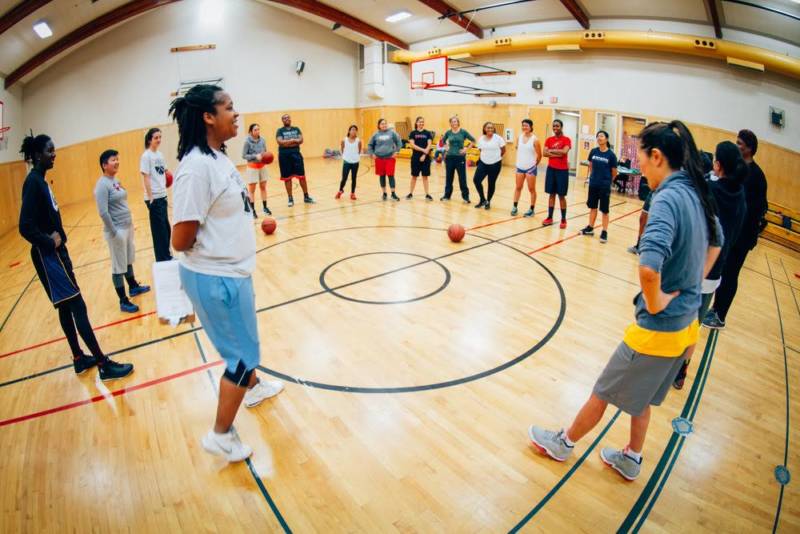
window.__IS_SSR__=true
window.__INITIAL_STATE__={
"attachmentsReducer": {
"audio_0": {
"type": "attachments",
"id": "audio_0",
"imgSizes": {
"kqedFullSize": {
"file": "https://ww2.kqed.org/news/wp-content/themes/KQED-unified/img/audio_bgs/background0.jpg"
}
}
},
"audio_1": {
"type": "attachments",
"id": "audio_1",
"imgSizes": {
"kqedFullSize": {
"file": "https://ww2.kqed.org/news/wp-content/themes/KQED-unified/img/audio_bgs/background1.jpg"
}
}
},
"audio_2": {
"type": "attachments",
"id": "audio_2",
"imgSizes": {
"kqedFullSize": {
"file": "https://ww2.kqed.org/news/wp-content/themes/KQED-unified/img/audio_bgs/background2.jpg"
}
}
},
"audio_3": {
"type": "attachments",
"id": "audio_3",
"imgSizes": {
"kqedFullSize": {
"file": "https://ww2.kqed.org/news/wp-content/themes/KQED-unified/img/audio_bgs/background3.jpg"
}
}
},
"audio_4": {
"type": "attachments",
"id": "audio_4",
"imgSizes": {
"kqedFullSize": {
"file": "https://ww2.kqed.org/news/wp-content/themes/KQED-unified/img/audio_bgs/background4.jpg"
}
}
},
"placeholder": {
"type": "attachments",
"id": "placeholder",
"imgSizes": {
"thumbnail": {
"file": "https://cdn.kqed.org/wp-content/uploads/2024/12/KQED-Default-Image-816638274-2000x1333-1-160x107.jpg",
"width": 160,
"height": 107,
"mimeType": "image/jpeg"
},
"medium": {
"file": "https://cdn.kqed.org/wp-content/uploads/2024/12/KQED-Default-Image-816638274-2000x1333-1-800x533.jpg",
"width": 800,
"height": 533,
"mimeType": "image/jpeg"
},
"medium_large": {
"file": "https://cdn.kqed.org/wp-content/uploads/2024/12/KQED-Default-Image-816638274-2000x1333-1-768x512.jpg",
"width": 768,
"height": 512,
"mimeType": "image/jpeg"
},
"large": {
"file": "https://cdn.kqed.org/wp-content/uploads/2024/12/KQED-Default-Image-816638274-2000x1333-1-1020x680.jpg",
"width": 1020,
"height": 680,
"mimeType": "image/jpeg"
},
"1536x1536": {
"file": "https://cdn.kqed.org/wp-content/uploads/2024/12/KQED-Default-Image-816638274-2000x1333-1-1536x1024.jpg",
"width": 1536,
"height": 1024,
"mimeType": "image/jpeg"
},
"fd-lrg": {
"file": "https://cdn.kqed.org/wp-content/uploads/2024/12/KQED-Default-Image-816638274-2000x1333-1-1536x1024.jpg",
"width": 1536,
"height": 1024,
"mimeType": "image/jpeg"
},
"fd-med": {
"file": "https://cdn.kqed.org/wp-content/uploads/2024/12/KQED-Default-Image-816638274-2000x1333-1-1020x680.jpg",
"width": 1020,
"height": 680,
"mimeType": "image/jpeg"
},
"fd-sm": {
"file": "https://cdn.kqed.org/wp-content/uploads/2024/12/KQED-Default-Image-816638274-2000x1333-1-800x533.jpg",
"width": 800,
"height": 533,
"mimeType": "image/jpeg"
},
"post-thumbnail": {
"file": "https://cdn.kqed.org/wp-content/uploads/2024/12/KQED-Default-Image-816638274-2000x1333-1-672x372.jpg",
"width": 672,
"height": 372,
"mimeType": "image/jpeg"
},
"twentyfourteen-full-width": {
"file": "https://cdn.kqed.org/wp-content/uploads/2024/12/KQED-Default-Image-816638274-2000x1333-1-1038x576.jpg",
"width": 1038,
"height": 576,
"mimeType": "image/jpeg"
},
"xxsmall": {
"file": "https://cdn.kqed.org/wp-content/uploads/2024/12/KQED-Default-Image-816638274-2000x1333-1-160x107.jpg",
"width": 160,
"height": 107,
"mimeType": "image/jpeg"
},
"xsmall": {
"file": "https://cdn.kqed.org/wp-content/uploads/2024/12/KQED-Default-Image-816638274-2000x1333-1-672x372.jpg",
"width": 672,
"height": 372,
"mimeType": "image/jpeg"
},
"small": {
"file": "https://cdn.kqed.org/wp-content/uploads/2024/12/KQED-Default-Image-816638274-2000x1333-1-672x372.jpg",
"width": 672,
"height": 372,
"mimeType": "image/jpeg"
},
"xlarge": {
"file": "https://cdn.kqed.org/wp-content/uploads/2024/12/KQED-Default-Image-816638274-2000x1333-1-1020x680.jpg",
"width": 1020,
"height": 680,
"mimeType": "image/jpeg"
},
"full-width": {
"file": "https://cdn.kqed.org/wp-content/uploads/2024/12/KQED-Default-Image-816638274-2000x1333-1-1920x1280.jpg",
"width": 1920,
"height": 1280,
"mimeType": "image/jpeg"
},
"guest-author-32": {
"file": "https://cdn.kqed.org/wp-content/uploads/2025/01/KQED-Default-Image-816638274-1333x1333-1-160x160.jpg",
"width": 32,
"height": 32,
"mimeType": "image/jpeg"
},
"guest-author-50": {
"file": "https://cdn.kqed.org/wp-content/uploads/2025/01/KQED-Default-Image-816638274-1333x1333-1-160x160.jpg",
"width": 50,
"height": 50,
"mimeType": "image/jpeg"
},
"guest-author-64": {
"file": "https://cdn.kqed.org/wp-content/uploads/2025/01/KQED-Default-Image-816638274-1333x1333-1-160x160.jpg",
"width": 64,
"height": 64,
"mimeType": "image/jpeg"
},
"guest-author-96": {
"file": "https://cdn.kqed.org/wp-content/uploads/2025/01/KQED-Default-Image-816638274-1333x1333-1-160x160.jpg",
"width": 96,
"height": 96,
"mimeType": "image/jpeg"
},
"guest-author-128": {
"file": "https://cdn.kqed.org/wp-content/uploads/2025/01/KQED-Default-Image-816638274-1333x1333-1-160x160.jpg",
"width": 128,
"height": 128,
"mimeType": "image/jpeg"
},
"detail": {
"file": "https://cdn.kqed.org/wp-content/uploads/2025/01/KQED-Default-Image-816638274-1333x1333-1-160x160.jpg",
"width": 160,
"height": 160,
"mimeType": "image/jpeg"
},
"kqedFullSize": {
"file": "https://cdn.kqed.org/wp-content/uploads/2024/12/KQED-Default-Image-816638274-2000x1333-1.jpg",
"width": 2000,
"height": 1333
}
}
},
"arts_13861741": {
"type": "attachments",
"id": "arts_13861741",
"meta": {
"index": "attachments_1716263798",
"site": "arts",
"id": "13861741",
"found": true
},
"parent": 13861739,
"imgSizes": {
"twentyfourteen-full-width": {
"file": "https://ww2.kqed.org/app/uploads/sites/2/2019/07/0-1-1000x576.jpg",
"width": 1000,
"mimeType": "image/jpeg",
"height": 576
},
"thumbnail": {
"file": "https://ww2.kqed.org/app/uploads/sites/2/2019/07/0-1-160x107.jpg",
"width": 160,
"mimeType": "image/jpeg",
"height": 107
},
"post-thumbnail": {
"file": "https://ww2.kqed.org/app/uploads/sites/2/2019/07/0-1-672x372.jpg",
"width": 672,
"mimeType": "image/jpeg",
"height": 372
},
"kqedFullSize": {
"file": "https://ww2.kqed.org/app/uploads/sites/2/2019/07/0-1.jpg",
"width": 1000,
"height": 667
},
"medium": {
"file": "https://ww2.kqed.org/app/uploads/sites/2/2019/07/0-1-800x534.jpg",
"width": 800,
"mimeType": "image/jpeg",
"height": 534
},
"medium_large": {
"file": "https://ww2.kqed.org/app/uploads/sites/2/2019/07/0-1-768x512.jpg",
"width": 768,
"mimeType": "image/jpeg",
"height": 512
}
},
"publishDate": 1563550841,
"modified": 1563550874,
"caption": "Women's ALL B-Ball",
"description": "Women's ALL B-Ball",
"title": "Women's ALL B-Ball",
"credit": "Rita Forte",
"status": "inherit",
"isLoading": false,
"fetchFailed": false
},
"arts_13861041": {
"type": "attachments",
"id": "arts_13861041",
"meta": {
"index": "attachments_1716263798",
"site": "arts",
"id": "13861041",
"found": true
},
"parent": 13860961,
"imgSizes": {
"twentyfourteen-full-width": {
"file": "https://ww2.kqed.org/app/uploads/sites/2/2019/07/Call-Me-Ace-Performing-02-1-1038x576.jpg",
"width": 1038,
"mimeType": "image/jpeg",
"height": 576
},
"thumbnail": {
"file": "https://ww2.kqed.org/app/uploads/sites/2/2019/07/Call-Me-Ace-Performing-02-1-160x90.jpg",
"width": 160,
"mimeType": "image/jpeg",
"height": 90
},
"post-thumbnail": {
"file": "https://ww2.kqed.org/app/uploads/sites/2/2019/07/Call-Me-Ace-Performing-02-1-672x372.jpg",
"width": 672,
"mimeType": "image/jpeg",
"height": 372
},
"kqedFullSize": {
"file": "https://ww2.kqed.org/app/uploads/sites/2/2019/07/Call-Me-Ace-Performing-02-1.jpg",
"width": 1451,
"height": 816
},
"large": {
"file": "https://ww2.kqed.org/app/uploads/sites/2/2019/07/Call-Me-Ace-Performing-02-1-1020x574.jpg",
"width": 1020,
"mimeType": "image/jpeg",
"height": 574
},
"complete_open_graph": {
"file": "https://ww2.kqed.org/app/uploads/sites/2/2019/07/Call-Me-Ace-Performing-02-1-1200x675.jpg",
"width": 1200,
"mimeType": "image/jpeg",
"height": 675
},
"medium": {
"file": "https://ww2.kqed.org/app/uploads/sites/2/2019/07/Call-Me-Ace-Performing-02-1-800x450.jpg",
"width": 800,
"mimeType": "image/jpeg",
"height": 450
},
"medium_large": {
"file": "https://ww2.kqed.org/app/uploads/sites/2/2019/07/Call-Me-Ace-Performing-02-1-768x432.jpg",
"width": 768,
"mimeType": "image/jpeg",
"height": 432
}
},
"publishDate": 1562717873,
"modified": 1562717889,
"caption": "Rapper Call Me Ace tackles burnout on his new album 'Airplane Mode'—recorded during his downtime from his marketing career at Facebook.",
"description": "Rapper Call Me Ace tackles burnout on his new album 'Airplane Mode'—recorded during his downtime from his marketing career at Facebook.",
"title": "Call-Me-Ace-Performing-02",
"credit": "Courtesy of Call Me Ace",
"status": "inherit",
"isLoading": false,
"fetchFailed": false
},
"arts_13860407": {
"type": "attachments",
"id": "arts_13860407",
"meta": {
"index": "attachments_1716263798",
"site": "arts",
"id": "13860407",
"found": true
},
"parent": 13860097,
"imgSizes": {
"twentyfourteen-full-width": {
"file": "https://ww2.kqed.org/app/uploads/sites/2/2019/06/ManWithWatch.iStock-1038x576.jpg",
"width": 1038,
"mimeType": "image/jpeg",
"height": 576
},
"thumbnail": {
"file": "https://ww2.kqed.org/app/uploads/sites/2/2019/06/ManWithWatch.iStock-160x90.jpg",
"width": 160,
"mimeType": "image/jpeg",
"height": 90
},
"post-thumbnail": {
"file": "https://ww2.kqed.org/app/uploads/sites/2/2019/06/ManWithWatch.iStock-672x372.jpg",
"width": 672,
"mimeType": "image/jpeg",
"height": 372
},
"kqedFullSize": {
"file": "https://ww2.kqed.org/app/uploads/sites/2/2019/06/ManWithWatch.iStock.jpg",
"width": 2048,
"height": 1152
},
"large": {
"file": "https://ww2.kqed.org/app/uploads/sites/2/2019/06/ManWithWatch.iStock-1020x574.jpg",
"width": 1020,
"mimeType": "image/jpeg",
"height": 574
},
"complete_open_graph": {
"file": "https://ww2.kqed.org/app/uploads/sites/2/2019/06/ManWithWatch.iStock-1200x675.jpg",
"width": 1200,
"mimeType": "image/jpeg",
"height": 675
},
"full-width": {
"file": "https://ww2.kqed.org/app/uploads/sites/2/2019/06/ManWithWatch.iStock-1920x1080.jpg",
"width": 1920,
"mimeType": "image/jpeg",
"height": 1080
},
"medium": {
"file": "https://ww2.kqed.org/app/uploads/sites/2/2019/06/ManWithWatch.iStock-800x450.jpg",
"width": 800,
"mimeType": "image/jpeg",
"height": 450
},
"medium_large": {
"file": "https://ww2.kqed.org/app/uploads/sites/2/2019/06/ManWithWatch.iStock-768x432.jpg",
"width": 768,
"mimeType": "image/jpeg",
"height": 432
}
},
"publishDate": 1561671535,
"modified": 1561672002,
"caption": "If you're always checking the time, rushing to the next function and cutting your conversations short, you're not alone—especially in the Bay Area.",
"description": "If you're always checking the time, rushing to the next function and cutting your conversations short, you're not alone—especially in the Bay Area.",
"title": "ManWithWatch.iStock",
"credit": "iStock",
"status": "inherit",
"isLoading": false,
"fetchFailed": false
},
"arts_13859591": {
"type": "attachments",
"id": "arts_13859591",
"meta": {
"index": "attachments_1716263798",
"site": "arts",
"id": "13859591",
"found": true
},
"parent": 13859566,
"imgSizes": {
"twentyfourteen-full-width": {
"file": "https://ww2.kqed.org/app/uploads/sites/2/2019/06/vic-mensa-still-1038x576.jpg",
"width": 1038,
"mimeType": "image/jpeg",
"height": 576
},
"thumbnail": {
"file": "https://ww2.kqed.org/app/uploads/sites/2/2019/06/vic-mensa-still-160x90.jpg",
"width": 160,
"mimeType": "image/jpeg",
"height": 90
},
"post-thumbnail": {
"file": "https://ww2.kqed.org/app/uploads/sites/2/2019/06/vic-mensa-still-672x372.jpg",
"width": 672,
"mimeType": "image/jpeg",
"height": 372
},
"kqedFullSize": {
"file": "https://ww2.kqed.org/app/uploads/sites/2/2019/06/vic-mensa-still.jpg",
"width": 1399,
"height": 787
},
"large": {
"file": "https://ww2.kqed.org/app/uploads/sites/2/2019/06/vic-mensa-still-1020x574.jpg",
"width": 1020,
"mimeType": "image/jpeg",
"height": 574
},
"complete_open_graph": {
"file": "https://ww2.kqed.org/app/uploads/sites/2/2019/06/vic-mensa-still-1200x675.jpg",
"width": 1200,
"mimeType": "image/jpeg",
"height": 675
},
"medium": {
"file": "https://ww2.kqed.org/app/uploads/sites/2/2019/06/vic-mensa-still-800x450.jpg",
"width": 800,
"mimeType": "image/jpeg",
"height": 450
},
"medium_large": {
"file": "https://ww2.kqed.org/app/uploads/sites/2/2019/06/vic-mensa-still-768x432.jpg",
"width": 768,
"mimeType": "image/jpeg",
"height": 432
}
},
"publishDate": 1560472747,
"modified": 1560472805,
"caption": "Still from Vic Mensa's 'Camp America' music video, which features white children in ICE detention.",
"description": "Still from Vic Mensa's 'Camp America' music video, which features white children in ICE detention.",
"title": "vic mensa still",
"credit": "Vic Mensa/Roc Nation",
"status": "inherit",
"isLoading": false,
"fetchFailed": false
},
"arts_13859540": {
"type": "attachments",
"id": "arts_13859540",
"meta": {
"index": "attachments_1716263798",
"site": "arts",
"id": "13859540",
"found": true
},
"parent": 13859494,
"imgSizes": {
"twentyfourteen-full-width": {
"file": "https://ww2.kqed.org/app/uploads/sites/2/2019/06/ziegler-1038x576.jpg",
"width": 1038,
"mimeType": "image/jpeg",
"height": 576
},
"thumbnail": {
"file": "https://ww2.kqed.org/app/uploads/sites/2/2019/06/ziegler-160x90.jpg",
"width": 160,
"mimeType": "image/jpeg",
"height": 90
},
"post-thumbnail": {
"file": "https://ww2.kqed.org/app/uploads/sites/2/2019/06/ziegler-672x372.jpg",
"width": 672,
"mimeType": "image/jpeg",
"height": 372
},
"kqedFullSize": {
"file": "https://ww2.kqed.org/app/uploads/sites/2/2019/06/ziegler.jpg",
"width": 1616,
"height": 909
},
"large": {
"file": "https://ww2.kqed.org/app/uploads/sites/2/2019/06/ziegler-1020x574.jpg",
"width": 1020,
"mimeType": "image/jpeg",
"height": 574
},
"complete_open_graph": {
"file": "https://ww2.kqed.org/app/uploads/sites/2/2019/06/ziegler-1200x675.jpg",
"width": 1200,
"mimeType": "image/jpeg",
"height": 675
},
"medium": {
"file": "https://ww2.kqed.org/app/uploads/sites/2/2019/06/ziegler-800x450.jpg",
"width": 800,
"mimeType": "image/jpeg",
"height": 450
},
"medium_large": {
"file": "https://ww2.kqed.org/app/uploads/sites/2/2019/06/ziegler-768x432.jpg",
"width": 768,
"mimeType": "image/jpeg",
"height": 432
}
},
"publishDate": 1560461502,
"modified": 1560461578,
"caption": "Dr. Kortney Ziegler's POC Canna Biz conference focuses on equity in the marijuana industry.",
"description": "Dr. Kortney Ziegler's POC Canna Biz conference focuses on equity in the marijuana industry.",
"title": "ziegler",
"credit": "Pendarvis Harshaw",
"status": "inherit",
"isLoading": false,
"fetchFailed": false
},
"arts_13859058": {
"type": "attachments",
"id": "arts_13859058",
"meta": {
"index": "attachments_1716263798",
"site": "arts",
"id": "13859058",
"found": true
},
"parent": 13858424,
"imgSizes": {
"twentyfourteen-full-width": {
"file": "https://ww2.kqed.org/app/uploads/sites/2/2019/06/GettyImages-93235674-1038x576.jpg",
"width": 1038,
"mimeType": "image/jpeg",
"height": 576
},
"thumbnail": {
"file": "https://ww2.kqed.org/app/uploads/sites/2/2019/06/GettyImages-93235674-160x90.jpg",
"width": 160,
"mimeType": "image/jpeg",
"height": 90
},
"post-thumbnail": {
"file": "https://ww2.kqed.org/app/uploads/sites/2/2019/06/GettyImages-93235674-672x372.jpg",
"width": 672,
"mimeType": "image/jpeg",
"height": 372
},
"kqedFullSize": {
"file": "https://ww2.kqed.org/app/uploads/sites/2/2019/06/GettyImages-93235674.jpg",
"width": 1920,
"height": 1080
},
"large": {
"file": "https://ww2.kqed.org/app/uploads/sites/2/2019/06/GettyImages-93235674-1020x574.jpg",
"width": 1020,
"mimeType": "image/jpeg",
"height": 574
},
"complete_open_graph": {
"file": "https://ww2.kqed.org/app/uploads/sites/2/2019/06/GettyImages-93235674-1200x675.jpg",
"width": 1200,
"mimeType": "image/jpeg",
"height": 675
},
"full-width": {
"file": "https://ww2.kqed.org/app/uploads/sites/2/2019/06/GettyImages-93235674-1920x1080.jpg",
"width": 1920,
"mimeType": "image/jpeg",
"height": 1080
},
"medium": {
"file": "https://ww2.kqed.org/app/uploads/sites/2/2019/06/GettyImages-93235674-800x450.jpg",
"width": 800,
"mimeType": "image/jpeg",
"height": 450
},
"medium_large": {
"file": "https://ww2.kqed.org/app/uploads/sites/2/2019/06/GettyImages-93235674-768x432.jpg",
"width": 768,
"mimeType": "image/jpeg",
"height": 432
}
},
"publishDate": 1559771438,
"modified": 1559771472,
"caption": "University of California Los Angeles (UCLA) students Andrea Flores (2nd R) and Kendall Brown (R) and other UCLA students and supporters demonstrate outside the UC Board of Regents meeting where members voted to approve a 32 percent tuition hike next year on November 19, 2009 in Los Angeles, California. ",
"description": "University of California Los Angeles (UCLA) students Andrea Flores (2nd R) and Kendall Brown (R) and other UCLA students and supporters demonstrate outside the UC Board of Regents meeting where members voted to approve a 32 percent tuition hike next year on November 19, 2009 in Los Angeles, California. ",
"title": "University Of California Students Protest 32 Percent Fee Hike",
"credit": "David McNew/Getty Images",
"status": "inherit",
"isLoading": false,
"fetchFailed": false
},
"arts_13858090": {
"type": "attachments",
"id": "arts_13858090",
"meta": {
"index": "attachments_1716263798",
"site": "arts",
"id": "13858090",
"found": true
},
"parent": 13858037,
"imgSizes": {
"thumbnail": {
"file": "https://ww2.kqed.org/app/uploads/sites/2/2019/05/LastBlackManinSF-160x90.jpg",
"width": 160,
"mimeType": "image/jpeg",
"height": 90
},
"post-thumbnail": {
"file": "https://ww2.kqed.org/app/uploads/sites/2/2019/05/LastBlackManinSF-672x372.jpg",
"width": 672,
"mimeType": "image/jpeg",
"height": 372
},
"kqedFullSize": {
"file": "https://ww2.kqed.org/app/uploads/sites/2/2019/05/LastBlackManinSF.jpg",
"width": 800,
"height": 450
},
"medium": {
"file": "https://ww2.kqed.org/app/uploads/sites/2/2019/05/LastBlackManinSF-800x450.jpg",
"width": 800,
"mimeType": "image/jpeg",
"height": 450
},
"medium_large": {
"file": "https://ww2.kqed.org/app/uploads/sites/2/2019/05/LastBlackManinSF-768x432.jpg",
"width": 768,
"mimeType": "image/jpeg",
"height": 432
}
},
"publishDate": 1558630738,
"modified": 1558630809,
"caption": "Last year brought the summer of Oakland film; now, with 'The Last Black Man in San Francisco,' the attention crosses back over the Bay.",
"description": "Last year brought the summer of Oakland film; now, with 'The Last Black Man in San Francisco,' the attention crosses back over the Bay.",
"title": "LastBlackManinSF",
"credit": "A24",
"status": "inherit",
"isLoading": false,
"fetchFailed": false
},
"arts_13856843": {
"type": "attachments",
"id": "arts_13856843",
"meta": {
"index": "attachments_1716263798",
"site": "arts",
"id": "13856843",
"found": true
},
"parent": 13856748,
"imgSizes": {
"twentyfourteen-full-width": {
"file": "https://ww2.kqed.org/app/uploads/sites/2/2019/05/BARTDancingMAIN-1038x576.jpg",
"width": 1038,
"mimeType": "image/jpeg",
"height": 576
},
"thumbnail": {
"file": "https://ww2.kqed.org/app/uploads/sites/2/2019/05/BARTDancingMAIN-160x100.jpg",
"width": 160,
"mimeType": "image/jpeg",
"height": 100
},
"post-thumbnail": {
"file": "https://ww2.kqed.org/app/uploads/sites/2/2019/05/BARTDancingMAIN-672x372.jpg",
"width": 672,
"mimeType": "image/jpeg",
"height": 372
},
"kqedFullSize": {
"file": "https://ww2.kqed.org/app/uploads/sites/2/2019/05/BARTDancingMAIN.jpg",
"width": 1340,
"height": 838
},
"large": {
"file": "https://ww2.kqed.org/app/uploads/sites/2/2019/05/BARTDancingMAIN-1020x638.jpg",
"width": 1020,
"mimeType": "image/jpeg",
"height": 638
},
"complete_open_graph": {
"file": "https://ww2.kqed.org/app/uploads/sites/2/2019/05/BARTDancingMAIN-1200x750.jpg",
"width": 1200,
"mimeType": "image/jpeg",
"height": 750
},
"medium": {
"file": "https://ww2.kqed.org/app/uploads/sites/2/2019/05/BARTDancingMAIN-800x500.jpg",
"width": 800,
"mimeType": "image/jpeg",
"height": 500
},
"medium_large": {
"file": "https://ww2.kqed.org/app/uploads/sites/2/2019/05/BARTDancingMAIN-768x480.jpg",
"width": 768,
"mimeType": "image/jpeg",
"height": 480
}
},
"publishDate": 1557335240,
"modified": 1557335257,
"caption": "East Bay hip-hop group Trey Coastal at BART in downtown Oakland.",
"description": "East Bay hip-hop group Trey Coastal at BART in downtown Oakland.",
"title": "BARTDancingMAIN",
"credit": "Photo by Shawn Washington",
"status": "inherit",
"isLoading": false,
"fetchFailed": false
},
"arts_13856389": {
"type": "attachments",
"id": "arts_13856389",
"meta": {
"index": "attachments_1716263798",
"site": "arts",
"id": "13856389",
"found": true
},
"parent": 13856309,
"imgSizes": {
"twentyfourteen-full-width": {
"file": "https://ww2.kqed.org/app/uploads/sites/2/2019/05/Circle-of-Friends_COVER-1038x576.jpg",
"width": 1038,
"mimeType": "image/jpeg",
"height": 576
},
"thumbnail": {
"file": "https://ww2.kqed.org/app/uploads/sites/2/2019/05/Circle-of-Friends_COVER-160x90.jpg",
"width": 160,
"mimeType": "image/jpeg",
"height": 90
},
"post-thumbnail": {
"file": "https://ww2.kqed.org/app/uploads/sites/2/2019/05/Circle-of-Friends_COVER-672x372.jpg",
"width": 672,
"mimeType": "image/jpeg",
"height": 372
},
"kqedFullSize": {
"file": "https://ww2.kqed.org/app/uploads/sites/2/2019/05/Circle-of-Friends_COVER.jpg",
"width": 1920,
"height": 1080
},
"large": {
"file": "https://ww2.kqed.org/app/uploads/sites/2/2019/05/Circle-of-Friends_COVER-1020x574.jpg",
"width": 1020,
"mimeType": "image/jpeg",
"height": 574
},
"complete_open_graph": {
"file": "https://ww2.kqed.org/app/uploads/sites/2/2019/05/Circle-of-Friends_COVER-1200x675.jpg",
"width": 1200,
"mimeType": "image/jpeg",
"height": 675
},
"full-width": {
"file": "https://ww2.kqed.org/app/uploads/sites/2/2019/05/Circle-of-Friends_COVER-1920x1080.jpg",
"width": 1920,
"mimeType": "image/jpeg",
"height": 1080
},
"medium": {
"file": "https://ww2.kqed.org/app/uploads/sites/2/2019/05/Circle-of-Friends_COVER-800x450.jpg",
"width": 800,
"mimeType": "image/jpeg",
"height": 450
},
"medium_large": {
"file": "https://ww2.kqed.org/app/uploads/sites/2/2019/05/Circle-of-Friends_COVER-768x432.jpg",
"width": 768,
"mimeType": "image/jpeg",
"height": 432
}
},
"publishDate": 1556746513,
"modified": 1556746756,
"caption": "The center of the Circle of Friends in the National AIDS Memorial Grove in San Francisco's Golden Gate Park.",
"description": "The center of the Circle of Friends in the National AIDS Memorial Grove in San Francisco's Golden Gate Park.",
"title": "Circle-of-Friends_COVER",
"credit": "Sarah Hotchkiss/KQED",
"status": "inherit",
"isLoading": false,
"fetchFailed": false
},
"arts_13856326": {
"type": "attachments",
"id": "arts_13856326",
"meta": {
"index": "attachments_1716263798",
"site": "arts",
"id": "13856326",
"found": true
},
"parent": 13855917,
"imgSizes": {
"twentyfourteen-full-width": {
"file": "https://ww2.kqed.org/app/uploads/sites/2/2019/04/How-To-Do-Nothing_COVER-1038x576.jpg",
"width": 1038,
"mimeType": "image/jpeg",
"height": 576
},
"thumbnail": {
"file": "https://ww2.kqed.org/app/uploads/sites/2/2019/04/How-To-Do-Nothing_COVER-160x90.jpg",
"width": 160,
"mimeType": "image/jpeg",
"height": 90
},
"post-thumbnail": {
"file": "https://ww2.kqed.org/app/uploads/sites/2/2019/04/How-To-Do-Nothing_COVER-672x372.jpg",
"width": 672,
"mimeType": "image/jpeg",
"height": 372
},
"kqedFullSize": {
"file": "https://ww2.kqed.org/app/uploads/sites/2/2019/04/How-To-Do-Nothing_COVER.jpg",
"width": 1920,
"height": 1080
},
"large": {
"file": "https://ww2.kqed.org/app/uploads/sites/2/2019/04/How-To-Do-Nothing_COVER-1020x574.jpg",
"width": 1020,
"mimeType": "image/jpeg",
"height": 574
},
"complete_open_graph": {
"file": "https://ww2.kqed.org/app/uploads/sites/2/2019/04/How-To-Do-Nothing_COVER-1200x675.jpg",
"width": 1200,
"mimeType": "image/jpeg",
"height": 675
},
"full-width": {
"file": "https://ww2.kqed.org/app/uploads/sites/2/2019/04/How-To-Do-Nothing_COVER-1920x1080.jpg",
"width": 1920,
"mimeType": "image/jpeg",
"height": 1080
},
"medium": {
"file": "https://ww2.kqed.org/app/uploads/sites/2/2019/04/How-To-Do-Nothing_COVER-800x450.jpg",
"width": 800,
"mimeType": "image/jpeg",
"height": 450
},
"medium_large": {
"file": "https://ww2.kqed.org/app/uploads/sites/2/2019/04/How-To-Do-Nothing_COVER-768x432.jpg",
"width": 768,
"mimeType": "image/jpeg",
"height": 432
}
},
"publishDate": 1556660721,
"modified": 1556660926,
"caption": "\"We are left with twenty-four potentially monetizable hours that are sometimes not even restricted to our time zones or our sleep cycles,\" writes Jenny Odell in her new book, 'How To Do Nothing.'",
"description": "\"We are left with twenty-four potentially monetizable hours that are sometimes not even restricted to our time zones or our sleep cycles,\" writes Jenny Odell in her new book, 'How To Do Nothing.'",
"title": "How-To-Do-Nothing_COVER",
"credit": "Illustration by Nadia Bormotova/iStock",
"status": "inherit",
"isLoading": false,
"fetchFailed": false
},
"arts_13855766": {
"type": "attachments",
"id": "arts_13855766",
"meta": {
"index": "attachments_1716263798",
"site": "arts",
"id": "13855766",
"found": true
},
"parent": 13855641,
"imgSizes": {
"twentyfourteen-full-width": {
"file": "https://ww2.kqed.org/app/uploads/sites/2/2019/04/Sideshow.2-1038x576.jpg",
"width": 1038,
"mimeType": "image/jpeg",
"height": 576
},
"thumbnail": {
"file": "https://ww2.kqed.org/app/uploads/sites/2/2019/04/Sideshow.2-160x90.jpg",
"width": 160,
"mimeType": "image/jpeg",
"height": 90
},
"post-thumbnail": {
"file": "https://ww2.kqed.org/app/uploads/sites/2/2019/04/Sideshow.2-672x372.jpg",
"width": 672,
"mimeType": "image/jpeg",
"height": 372
},
"kqedFullSize": {
"file": "https://ww2.kqed.org/app/uploads/sites/2/2019/04/Sideshow.2.jpg",
"width": 2135,
"height": 1201
},
"large": {
"file": "https://ww2.kqed.org/app/uploads/sites/2/2019/04/Sideshow.2-1020x574.jpg",
"width": 1020,
"mimeType": "image/jpeg",
"height": 574
},
"complete_open_graph": {
"file": "https://ww2.kqed.org/app/uploads/sites/2/2019/04/Sideshow.2-1200x675.jpg",
"width": 1200,
"mimeType": "image/jpeg",
"height": 675
},
"full-width": {
"file": "https://ww2.kqed.org/app/uploads/sites/2/2019/04/Sideshow.2-1920x1080.jpg",
"width": 1920,
"mimeType": "image/jpeg",
"height": 1080
},
"medium": {
"file": "https://ww2.kqed.org/app/uploads/sites/2/2019/04/Sideshow.2-800x450.jpg",
"width": 800,
"mimeType": "image/jpeg",
"height": 450
},
"medium_large": {
"file": "https://ww2.kqed.org/app/uploads/sites/2/2019/04/Sideshow.2-768x432.jpg",
"width": 768,
"mimeType": "image/jpeg",
"height": 432
}
},
"publishDate": 1556139040,
"modified": 1556139121,
"caption": "A still from Clyde Carson's 'More of That' video, showing squealing Maseratis and Harleys.",
"description": "A still from Clyde Carson's 'More of That' video, showing squealing Maseratis and Harleys.",
"title": "Sideshow.2",
"credit": "Director: Jeff Klevins",
"status": "inherit",
"isLoading": false,
"fetchFailed": false
},
"arts_13855701": {
"type": "attachments",
"id": "arts_13855701",
"meta": {
"index": "attachments_1716263798",
"site": "arts",
"id": "13855701",
"found": true
},
"parent": 13855678,
"imgSizes": {
"thumbnail": {
"file": "https://ww2.kqed.org/app/uploads/sites/2/2019/04/lizzo-160x90.jpg",
"width": 160,
"mimeType": "image/jpeg",
"height": 90
},
"post-thumbnail": {
"file": "https://ww2.kqed.org/app/uploads/sites/2/2019/04/lizzo-672x372.jpg",
"width": 672,
"mimeType": "image/jpeg",
"height": 372
},
"kqedFullSize": {
"file": "https://ww2.kqed.org/app/uploads/sites/2/2019/04/lizzo.jpg",
"width": 800,
"height": 450
},
"medium": {
"file": "https://ww2.kqed.org/app/uploads/sites/2/2019/04/lizzo-800x450.jpg",
"width": 800,
"mimeType": "image/jpeg",
"height": 450
},
"medium_large": {
"file": "https://ww2.kqed.org/app/uploads/sites/2/2019/04/lizzo-768x432.jpg",
"width": 768,
"mimeType": "image/jpeg",
"height": 432
}
},
"publishDate": 1556063117,
"modified": 1556063148,
"caption": "Lizzo performs at Outside Lands 2018 in San Francisco.",
"description": "Lizzo performs at Outside Lands 2018 in San Francisco.",
"title": "lizzo",
"credit": "Estefany Gonzalez",
"status": "inherit",
"isLoading": false,
"fetchFailed": false
}
},
"audioPlayerReducer": {
"postId": "stream_live",
"isPaused": true,
"isPlaying": false,
"pfsActive": false,
"pledgeModalIsOpen": true,
"playerDrawerIsOpen": false,
"liveAudioPlayStartedAt": 0,
"liveAudioPlayContext": ""
},
"authorsReducer": {
"byline_arts_13856309": {
"type": "authors",
"id": "byline_arts_13856309",
"meta": {
"override": true
},
"slug": "byline_arts_13856309",
"name": "Harry Tafoya",
"isLoading": false
},
"esilvers": {
"type": "authors",
"id": "7237",
"meta": {
"index": "authors_1716337520",
"id": "7237",
"found": true
},
"name": "Emma Silvers",
"firstName": "Emma",
"lastName": "Silvers",
"slug": "esilvers",
"email": "esilvers@kqed.org",
"display_author_email": false,
"staff_mastheads": [],
"title": "KQED Contributor",
"bio": "Emma Silvers is an editor at KQED Arts and a former digital producer at KQED News. Born and raised in the Bay Area, she has previously been an arts and entertainment editor at the \u003cem>San Francisco Chronicle\u003c/em>, \u003cem>SF Weekly\u003c/em> and the \u003cem>San Francisco Bay Guardian.\u003c/em> \u003ca href=\"https://www.emmasilvers.com\">Her work\u003c/a> has also appeared in \u003cem>Rolling Stone\u003c/em>, Pitchfork and \u003cem>Mother Jones\u003c/em>. In 2017 she was the recipient of the Society of Professional Journalists-Northern California's award for arts and culture reporting. In 1993 she \u003ca href=\"https://www.kqed.org/pop/16759/wait-what-my-coworker-was-a-voice-over-hyperventilator-for-jurassic-park\">hyperventilated in \u003cem>Jurassic Park\u003c/em>\u003c/a>.",
"avatar": "https://secure.gravatar.com/avatar/247beada39b88ea5759db1f51dba05cf?s=600&d=blank&r=g",
"twitter": "emmaruthless",
"facebook": null,
"instagram": null,
"linkedin": null,
"sites": [
{
"site": "arts",
"roles": [
"editor"
]
},
{
"site": "news",
"roles": [
"editor"
]
},
{
"site": "pop",
"roles": [
"contributor"
]
},
{
"site": "bayareabites",
"roles": [
"editor"
]
},
{
"site": "food",
"roles": [
"contributor"
]
},
{
"site": "liveblog",
"roles": [
"editor"
]
}
],
"headData": {
"title": "Emma Silvers | KQED",
"description": "KQED Contributor",
"ogImgSrc": "https://secure.gravatar.com/avatar/247beada39b88ea5759db1f51dba05cf?s=600&d=blank&r=g",
"twImgSrc": "https://secure.gravatar.com/avatar/247beada39b88ea5759db1f51dba05cf?s=600&d=blank&r=g"
},
"isLoading": false,
"link": "/author/esilvers"
},
"nvoynovskaya": {
"type": "authors",
"id": "11387",
"meta": {
"index": "authors_1716337520",
"id": "11387",
"found": true
},
"name": "Nastia Voynovskaya",
"firstName": "Nastia",
"lastName": "Voynovskaya",
"slug": "nvoynovskaya",
"email": "nvoynovskaya@kqed.org",
"display_author_email": false,
"staff_mastheads": [
"arts"
],
"title": "Editor and reporter",
"bio": "Nastia Voynovskaya is a reporter, editor and host at KQED Arts & Culture. She's been covering the arts in the Bay Area for over a decade, with a focus on music, queer culture, labor issues and grassroots organizing. She has edited KQED story series such as Trans Bay: A History of San Francisco's Gender-Diverse Community, and co-created KQED's Bay Area hip-hop history project, That's My Word. Nastia's work has been recognized by the Society of Professional Journalists and San Francisco Press Club. She regularly appears on podcasts and radio programs, including NPR's All Songs Considered, and hosts live events where music, culture and conversation meet.",
"avatar": "https://secure.gravatar.com/avatar/5025ee460e5a85d69ca20ea6c6f2f80d7e17795c828f61ea3aecfcd924e9042e?s=600&d=blank&r=g",
"twitter": null,
"bluesky": null,
"facebook": null,
"instagram": "https://www.instagram.com/nananastia/",
"linkedin": null,
"sites": [
{
"site": "",
"roles": [
"editor"
]
},
{
"site": "arts",
"roles": [
"administrator"
]
},
{
"site": "news",
"roles": [
"editor"
]
},
{
"site": "pop",
"roles": [
"administrator"
]
},
{
"site": "bayareabites",
"roles": [
"editor"
]
},
{
"site": "podcasts",
"roles": [
"editor"
]
},
{
"site": "hiphop",
"roles": [
"editor"
]
}
],
"headData": {
"title": "Nastia Voynovskaya | KQED",
"description": "Editor and reporter",
"ogImgSrc": "https://secure.gravatar.com/avatar/5025ee460e5a85d69ca20ea6c6f2f80d7e17795c828f61ea3aecfcd924e9042e?s=600&d=blank&r=g",
"twImgSrc": "https://secure.gravatar.com/avatar/5025ee460e5a85d69ca20ea6c6f2f80d7e17795c828f61ea3aecfcd924e9042e?s=600&d=blank&r=g"
},
"isLoading": false,
"link": "/author/nvoynovskaya"
},
"ogpenn": {
"type": "authors",
"id": "11491",
"meta": {
"index": "authors_1716337520",
"id": "11491",
"found": true
},
"name": "Pendarvis Harshaw",
"firstName": "Pendarvis",
"lastName": "Harshaw",
"slug": "ogpenn",
"email": "ogpenn@gmail.com",
"display_author_email": false,
"staff_mastheads": [
"arts"
],
"title": "Community Engagement Reporter",
"bio": "Pendarvis Harshaw is an educator, host and writer with KQED Arts.",
"avatar": "https://secure.gravatar.com/avatar/972b77ee8e3f346ae2b00622661187fbfabd059b5693bbdc1475ea7a722fd4cd?s=600&d=blank&r=g",
"twitter": null,
"bluesky": null,
"facebook": null,
"instagram": "ogpenn",
"linkedin": null,
"sites": [
{
"site": "arts",
"roles": [
"administrator"
]
},
{
"site": "news",
"roles": [
"editor"
]
},
{
"site": "bayareabites",
"roles": [
"author"
]
},
{
"site": "hiphop",
"roles": [
"editor"
]
}
],
"headData": {
"title": "Pendarvis Harshaw | KQED",
"description": "Community Engagement Reporter",
"ogImgSrc": "https://secure.gravatar.com/avatar/972b77ee8e3f346ae2b00622661187fbfabd059b5693bbdc1475ea7a722fd4cd?s=600&d=blank&r=g",
"twImgSrc": "https://secure.gravatar.com/avatar/972b77ee8e3f346ae2b00622661187fbfabd059b5693bbdc1475ea7a722fd4cd?s=600&d=blank&r=g"
},
"isLoading": false,
"link": "/author/ogpenn"
}
},
"pagesReducer": {
"arts_tag_commentary": {
"type": "terms",
"id": "arts_2767",
"meta": {
"index": "terms_1716263798",
"site": "arts",
"id": "2767",
"score": 8.794602
},
"featImg": null,
"name": "commentary",
"description": null,
"taxonomy": "tag",
"headData": {
"twImgId": null,
"twTitle": null,
"ogTitle": null,
"ogImgId": null,
"twDescription": null,
"description": null,
"title": "commentary Archives | KQED Arts",
"ogDescription": null
},
"ttid": 2779,
"slug": "commentary",
"isLoading": false,
"title": "commentary",
"pageMeta": {
"site": "arts",
"WpPageTemplate": "page-topic-editorial",
"currentPage": 23
},
"blocks": [
{
"blockName": "kqed/post-list",
"attrs": {
"layout": "cardArticle2",
"query": "posts/arts?tag=commentary",
"seeMore": false,
"paginated": true,
"page": 23
}
},
{
"blockName": "kqed/ad"
}
]
}
},
"pfsSessionReducer": {},
"postsReducer": {
"stream_live": {
"type": "live",
"id": "stream_live",
"audioUrl": "https://streams.kqed.org/kqedradio",
"title": "Live Stream",
"excerpt": "Live Stream information currently unavailable.",
"link": "/radio",
"featImg": "",
"label": {
"name": "KQED Live",
"link": "/"
}
},
"stream_kqedNewscast": {
"type": "posts",
"id": "stream_kqedNewscast",
"audioUrl": "https://www.kqed.org/.stream/anon/radio/RDnews/newscast.mp3?_=1",
"title": "KQED Newscast",
"featImg": "",
"label": {
"name": "88.5 FM",
"link": "/"
}
},
"arts_13861739": {
"type": "posts",
"id": "arts_13861739",
"meta": {
"index": "posts_1716263798",
"site": "arts",
"id": "13861739",
"score": null,
"sort": [
1563832815000
]
},
"guestAuthors": [],
"slug": "rita-forte-womens-hoops-and-america",
"title": "Rita Forte, Women's Hoops and America",
"publishDate": 1563832815,
"format": "standard",
"headTitle": "Rita Forte, Women’s Hoops and America | KQED",
"labelTerm": {
"site": "arts"
},
"content": "\u003cp>\u003cspan style=\"font-size: 4.6875em;float: left;line-height: 0.733em;padding: 0.05em 0.1em 0 0;font-family: times, serif, georgia\">R\u003c/span>ita Forte simply wants funding for a recreational basketball league for women.\u003c/p>\n\u003cp>I’m talking about 5-on-5, 12-minute games, for a block of two hours, once a week. Seems easy enough, right?\u003c/p>\n\u003cp>\u003cimg loading=\"lazy\" decoding=\"async\" class=\"alignright size-thumbnail wp-image-13833985\" src=\"https://ww2.kqed.org/arts/wp-content/uploads/sites/2/2018/05/OGPenn.Cap_-160x184.jpg\" alt=\"\" width=\"160\" height=\"184\" srcset=\"https://cdn.kqed.org/wp-content/uploads/sites/2/2018/05/OGPenn.Cap_-160x184.jpg 160w, https://cdn.kqed.org/wp-content/uploads/sites/2/2018/05/OGPenn.Cap_.jpg 180w\" sizes=\"(max-width: 160px) 100vw, 160px\">\u003c/p>\n\u003cp>You’d especially think people would be behind the idea after the U.S. women’s national soccer team captured the World Cup for the fourth time, raising visibility for women’s sports and obviating the need for equal pay (highlighted by pieces such as this financial comparison between professional soccer-playing men and women, published by \u003ca href=\"https://www.forbes.com/sites/tomspiggle/2019/07/19/what-the-u-s-womens-soccer-controversy-says-about-equal-pay/#3faa05866b50\" target=\"_blank\" rel=\"noopener noreferrer\">Forbes\u003c/a>).\u003c/p>\n\u003cp>Well, after shooting hoops with Forte, I see how it’s not that simple. Convincing folks to put a couple thousand dollars behind a women’s pickup league seems to be a bit lower on the totem pole of common concerns in this current climate. I mean, have you seen the news lately?\u003c/p>\n\u003cp>[ad fullwidth]\u003c/p>\n\u003cp>President Trump’s racist \u003ca href=\"https://twitter.com/realDonaldTrump/status/1150381395078000643\" target=\"_blank\" rel=\"noopener noreferrer\">tweets\u003c/a> toward four Democratic congresswomen—representatives Ayanna S. Pressley, Rashida Tlaib, Alexandria Ocasio-Cortez and Ilhan Omar—is up there with some of the wildest rhetoric I’ve ever heard from an elected official. And then you’ve got old heads in the rap game making blatantly erroneous comments, like \u003ca href=\"https://www.youtube.com/watch?v=6VplqglPYGU\" target=\"_blank\" rel=\"noopener noreferrer\">Jermaine Dupri\u003c/a> claiming that all female rappers rap about the same subjects and then trying to cover his ass by creating some \u003ca href=\"https://twitter.com/jermainedupri/status/1149775719750238209?ref_src=twsrc%5Etfw%7Ctwcamp%5Etweetembed%7Ctwterm%5E1149775719750238209&ref_url=https%3A%2F%2Fthegrio.com%2F2019%2F07%2F15%2Fjermaine-dupri-women-rap-backlash-response%2F\" target=\"_blank\" rel=\"noopener noreferrer\">So So Def Female Cypher\u003c/a> thingy. Clearly pandering.\u003c/p>\n\u003cp>And that’s just a couple outrageous headlines from this month. But there’s a common thread that ties together these issues, from unequal pay to unequal resources. It’s a matter of unequal respect… even here in the Bay Area.\u003c/p>\n\u003cfigure id=\"attachment_13861745\" class=\"wp-caption alignnone\" style=\"max-width: 800px\">\u003cimg loading=\"lazy\" decoding=\"async\" class=\"size-medium wp-image-13861745\" src=\"https://ww2.kqed.org/arts/wp-content/uploads/sites/2/2019/07/0-1-1-800x533.jpg\" alt=\"The Women's All-Ball squad!\" width=\"800\" height=\"533\" srcset=\"https://cdn.kqed.org/wp-content/uploads/sites/2/2019/07/0-1-1-800x533.jpg 800w, https://cdn.kqed.org/wp-content/uploads/sites/2/2019/07/0-1-1-160x107.jpg 160w, https://cdn.kqed.org/wp-content/uploads/sites/2/2019/07/0-1-1-768x512.jpg 768w, https://cdn.kqed.org/wp-content/uploads/sites/2/2019/07/0-1-1-1020x680.jpg 1020w, https://cdn.kqed.org/wp-content/uploads/sites/2/2019/07/0-1-1.jpg 1200w\" sizes=\"(max-width: 800px) 100vw, 800px\">\u003cfigcaption class=\"wp-caption-text\">The Women’s All B-Ball squad. Photo by Kim Woozy. \u003ccite>(Rita Forte)\u003c/cite>\u003c/figcaption>\u003c/figure>\n\u003cp>\u003cspan style=\"font-size: 4.6875em;float: left;line-height: 0.733em;padding: 0.05em 0.1em 0 0;font-family: times, serif, georgia\">R\u003c/span>ita and I met up recently at Strawberry Creek Park in West Berkeley, shot some hoops and talked.\u003c/p>\n\u003cp>The ball was slightly overinflated, the rim was bouncy, and I made more excuses than buckets as I tried to clear my jump shot of cobwebs. Meanwhile, Rita worked on her footwork in the key and knocked down some mid-range jumpers while explaining the women’s hoops landscape, and how it ties into a larger story of women in America.\u003c/p>\n\u003cp>“There’s not enough opportunities for women to come on the basketball court and expect there to be other women out there playing,” Rita said as she dribbled and shot.\u003c/p>\n\u003cp>I grabbed the ball as it went through the net and tossed Rita her change, as she continued. “When you walk by the park, and you don’t see [groups of women], that means we have to organize. It doesn’t mean that we don’t want to play—because I was there. I wanted to play after high school and college, and there were others like me. But we had to organize.”\u003c/p>\n\u003cp>Rita, an Oakland native, says she came up playing ball, but a horrible knee injury in high school derailed her pro hoop dreams. Even still, she attended Williams College on a track scholarship, and along the way fell in love with DJing—that’s how I met her, on the ones and twos during the hyphy movement.\u003c/p>\n\u003cp>It was around that same time, back in 2003, when she was looking for pickup games but couldn’t find any. The seed was planted, and some years later, she teamed up with Amanda Lesky and started \u003ca href=\"https://www.facebook.com/WomensAllBBall/\" target=\"_blank\" rel=\"noopener noreferrer\">Women’s All B-Ball\u003c/a>. Over the past five years, they’ve run the league mostly out of pocket, with additional support from players and local businesses, including donated balls from Decathlon in Emeryville.\u003c/p>\n\u003cp>Their efforts have sometimes been scrappy, playing in gyms with unfavorable conditions or on courts where someone involved in the game is also an employee at the facility, allowing them access.\u003c/p>\n\u003cp>“From about 2015-2016, we played at Berkeley Youth Alternatives. And one of the players used to work there,” Rita said. “The ceilings are low and it’s shorter than the regular court.”\u003c/p>\n\u003cp>But that’s where they had their best turnout. At one point, Rita says, they had about 40 women show up for the three-hour hoop sessions, despite playing in a lackluster gym.\u003c/p>\n\u003cp>Now, Rita and her cohorts have turned to \u003ca href=\"https://ifundwomen.com/projects/womens-basketball-for-all\" target=\"_blank\" rel=\"noopener noreferrer\">crowdfunding, via Ifundwomen.com\u003c/a>. The campaign has run about a month, but they’ve currently met just over 12% of their $15,000 fundraising goal with about a week left in the campaign.\u003c/p>\n\u003cp>“You can’t do a tournament for free,” explained Rita, as I practiced my crossover and pulled up for a shot. “You have to pay for food, referees, jerseys—we give trophies and cash prizes too,” Rita said, grabbing a rebound off my missed shot. She told me these hoopers are in their 20s and 30s, “but we want to do something for them.”\u003c/p>\n\u003cp>And it’s not just about the money, it’s about the resources, like access to gyms. Last week, Rita and I tried to meet at a YMCA in San Francisco during a scheduled women’s game, but it was canceled hours before tipoff. Rita also invited me to an Oakland Rise game, a local women’s semi-pro team. But it would’ve been hard for me to get to their home court, which is way out in Concord.\u003c/p>\n\u003cp>There are a few other pick-up leagues around the Bay Area, like \u003ca href=\"https://www.instagram.com/pickherupball/\" target=\"_blank\" rel=\"noopener noreferrer\">Pick Her Up Ball\u003c/a> at Head-Royce—but even their founder got some inspiration from Women’s All B-Ball. I wouldn’t have even known about the Head-Royce gym if it weren’t for my experience playing hoops for a rival college prep school here in the Bay Area. It turns out that Rita also went to a college prep school through the same program I did, A Better Chance, which takes kids out of the hood and puts them in private school settings.\u003c/p>\n\u003cp>Rita attended an all-girls boarding school in Southern California, and because there was a neighboring all-boys school, teenaged Rita got to compare and contrast the different institutions. She saw that with equal resources, there’s equal performance from all parties.\u003c/p>\n\u003cp>Damn, imagine a world in which everyone had equal access to resources… I… I actually can’t even imagine it.\u003c/p>\n\u003cfigure id=\"attachment_13861746\" class=\"wp-caption alignnone\" style=\"max-width: 800px\">\u003cimg loading=\"lazy\" decoding=\"async\" class=\"size-medium wp-image-13861746\" src=\"https://ww2.kqed.org/arts/wp-content/uploads/sites/2/2019/07/0-2-800x600.jpg\" alt=\"A few participants of the Women's All B-Ball League\" width=\"800\" height=\"600\" srcset=\"https://cdn.kqed.org/wp-content/uploads/sites/2/2019/07/0-2-800x600.jpg 800w, https://cdn.kqed.org/wp-content/uploads/sites/2/2019/07/0-2-160x120.jpg 160w, https://cdn.kqed.org/wp-content/uploads/sites/2/2019/07/0-2-768x576.jpg 768w, https://cdn.kqed.org/wp-content/uploads/sites/2/2019/07/0-2-1020x765.jpg 1020w, https://cdn.kqed.org/wp-content/uploads/sites/2/2019/07/0-2-1200x900.jpg 1200w, https://cdn.kqed.org/wp-content/uploads/sites/2/2019/07/0-2-1920x1440.jpg 1920w, https://cdn.kqed.org/wp-content/uploads/sites/2/2019/07/0-2.jpg 1979w\" sizes=\"(max-width: 800px) 100vw, 800px\">\u003cfigcaption class=\"wp-caption-text\">A few participants of the Women’s All B-Ball League. Photo by Kim Woozy \u003ccite>(Rita Forte)\u003c/cite>\u003c/figcaption>\u003c/figure>\n\u003cp>\u003cspan style=\"font-size: 4.6875em;float: left;line-height: 0.733em;padding: 0.05em 0.1em 0 0;font-family: times, serif, georgia\">B\u003c/span>ut that’s where Rita’s head is. She long ago threw her hoop shoes over the proverbial power line, and retired her dreams of balling in the big leagues, and now she gets her competitive edge off by organizing to fill voids in society.\u003c/p>\n\u003cp>“Ya’ll have the gyms, we have the formula, we can create a system,” Rita says, talking about the success her league has had in the past.\u003c/p>\n\u003cp>She took a few dribbles and continued, “People hit us up all the time: when are you going to do this in Vallejo? When are you going to do this in San Rafael?”\u003c/p>\n\u003cp>She sees the need, and isn’t bashful about taking her idea of institutionalizing support for women’s basketball on all levels.\u003c/p>\n\u003cp>“Just imagine, I mean, just remember I said it here first: who said Oakland can’t have the WNBA? The Oakland fans would love it. It could bring back all of the Oakland fans who haven’t seen a basketball game in years because of being priced out.”\u003c/p>\n\u003cp>Yeah, that would be tight. I can imagine Oakland showing up to watch hoops again at the arena, to hear Kehlani sing the National Anthem and enjoy Kamaiyah performing at the halftime show. I can see Congresswoman Barbara Lee and Oakland’s Mayor Libby Schaaf sitting courtside like Spike Lee and Jay-Z do at NBA games.\u003c/p>\n\u003cp>But I can also see that the WNBA has been overshadowed this summer by news of NBA free agents signing contracts, summer league highlights and Ice Cube’s Big3 league. Pro women hoopers don’t even get the respect they deserve.\u003c/p>\n\u003cp>[ad floatright]\u003c/p>\n\u003cp>So I see why Rita’s efforts to get support haven’t won… yet.\u003c/p>\n\n",
"blocks": [],
"excerpt": "Rita Forte simply wants funding for a recreational basketball league for women. Seems easy enough, right?",
"status": "publish",
"parent": 0,
"modified": 1726766619,
"stats": {
"hasAudio": false,
"hasVideo": false,
"hasChartOrMap": false,
"iframeSrcs": [],
"hasGoogleForm": false,
"hasGallery": false,
"hasHearkenModule": false,
"hasPolis": false,
"paragraphCount": 32,
"wordCount": 1429
},
"headData": {
"title": "Rita Forte, Women's Hoops and America | KQED",
"description": "Rita Forte simply wants funding for a recreational basketball league for women. Seems easy enough, right?",
"ogTitle": "",
"ogDescription": "",
"ogImgId": "",
"twTitle": "",
"twDescription": "",
"twImgId": "",
"schema": {
"@context": "https://schema.org",
"@type": "Article",
"headline": "Rita Forte, Women's Hoops and America",
"datePublished": "2019-07-22T15:00:15-07:00",
"dateModified": "2024-09-19T10:23:39-07:00",
"image": "https://cdn.kqed.org/wp-content/uploads/2020/02/KQED-OG-Image@1x.png"
}
},
"sticky": false,
"templateType": "standard",
"featuredImageType": "standard",
"excludeFromSiteSearch": "Include",
"articleAge": "0",
"path": "/arts/13861739/rita-forte-womens-hoops-and-america",
"audioTrackLength": null,
"parsedContent": [
{
"type": "contentString",
"content": "\u003cdiv class=\"post-body\">\u003cp>\u003cp>\u003cspan style=\"font-size: 4.6875em;float: left;line-height: 0.733em;padding: 0.05em 0.1em 0 0;font-family: times, serif, georgia\">R\u003c/span>ita Forte simply wants funding for a recreational basketball league for women.\u003c/p>\n\u003cp>I’m talking about 5-on-5, 12-minute games, for a block of two hours, once a week. Seems easy enough, right?\u003c/p>\n\u003cp>\u003cimg loading=\"lazy\" decoding=\"async\" class=\"alignright size-thumbnail wp-image-13833985\" src=\"https://ww2.kqed.org/arts/wp-content/uploads/sites/2/2018/05/OGPenn.Cap_-160x184.jpg\" alt=\"\" width=\"160\" height=\"184\" srcset=\"https://cdn.kqed.org/wp-content/uploads/sites/2/2018/05/OGPenn.Cap_-160x184.jpg 160w, https://cdn.kqed.org/wp-content/uploads/sites/2/2018/05/OGPenn.Cap_.jpg 180w\" sizes=\"(max-width: 160px) 100vw, 160px\">\u003c/p>\n\u003cp>You’d especially think people would be behind the idea after the U.S. women’s national soccer team captured the World Cup for the fourth time, raising visibility for women’s sports and obviating the need for equal pay (highlighted by pieces such as this financial comparison between professional soccer-playing men and women, published by \u003ca href=\"https://www.forbes.com/sites/tomspiggle/2019/07/19/what-the-u-s-womens-soccer-controversy-says-about-equal-pay/#3faa05866b50\" target=\"_blank\" rel=\"noopener noreferrer\">Forbes\u003c/a>).\u003c/p>\n\u003cp>Well, after shooting hoops with Forte, I see how it’s not that simple. Convincing folks to put a couple thousand dollars behind a women’s pickup league seems to be a bit lower on the totem pole of common concerns in this current climate. I mean, have you seen the news lately?\u003c/p>\n\u003cp>\u003c/p>\u003c/div>",
"attributes": {
"named": {},
"numeric": []
}
},
{
"type": "component",
"content": "",
"name": "ad",
"attributes": {
"named": {
"label": "fullwidth"
},
"numeric": [
"fullwidth"
]
}
},
{
"type": "contentString",
"content": "\u003cdiv class=\"post-body\">\u003cp>\u003c/p>\n\u003cp>President Trump’s racist \u003ca href=\"https://twitter.com/realDonaldTrump/status/1150381395078000643\" target=\"_blank\" rel=\"noopener noreferrer\">tweets\u003c/a> toward four Democratic congresswomen—representatives Ayanna S. Pressley, Rashida Tlaib, Alexandria Ocasio-Cortez and Ilhan Omar—is up there with some of the wildest rhetoric I’ve ever heard from an elected official. And then you’ve got old heads in the rap game making blatantly erroneous comments, like \u003ca href=\"https://www.youtube.com/watch?v=6VplqglPYGU\" target=\"_blank\" rel=\"noopener noreferrer\">Jermaine Dupri\u003c/a> claiming that all female rappers rap about the same subjects and then trying to cover his ass by creating some \u003ca href=\"https://twitter.com/jermainedupri/status/1149775719750238209?ref_src=twsrc%5Etfw%7Ctwcamp%5Etweetembed%7Ctwterm%5E1149775719750238209&ref_url=https%3A%2F%2Fthegrio.com%2F2019%2F07%2F15%2Fjermaine-dupri-women-rap-backlash-response%2F\" target=\"_blank\" rel=\"noopener noreferrer\">So So Def Female Cypher\u003c/a> thingy. Clearly pandering.\u003c/p>\n\u003cp>And that’s just a couple outrageous headlines from this month. But there’s a common thread that ties together these issues, from unequal pay to unequal resources. It’s a matter of unequal respect… even here in the Bay Area.\u003c/p>\n\u003cfigure id=\"attachment_13861745\" class=\"wp-caption alignnone\" style=\"max-width: 800px\">\u003cimg loading=\"lazy\" decoding=\"async\" class=\"size-medium wp-image-13861745\" src=\"https://ww2.kqed.org/arts/wp-content/uploads/sites/2/2019/07/0-1-1-800x533.jpg\" alt=\"The Women's All-Ball squad!\" width=\"800\" height=\"533\" srcset=\"https://cdn.kqed.org/wp-content/uploads/sites/2/2019/07/0-1-1-800x533.jpg 800w, https://cdn.kqed.org/wp-content/uploads/sites/2/2019/07/0-1-1-160x107.jpg 160w, https://cdn.kqed.org/wp-content/uploads/sites/2/2019/07/0-1-1-768x512.jpg 768w, https://cdn.kqed.org/wp-content/uploads/sites/2/2019/07/0-1-1-1020x680.jpg 1020w, https://cdn.kqed.org/wp-content/uploads/sites/2/2019/07/0-1-1.jpg 1200w\" sizes=\"(max-width: 800px) 100vw, 800px\">\u003cfigcaption class=\"wp-caption-text\">The Women’s All B-Ball squad. Photo by Kim Woozy. \u003ccite>(Rita Forte)\u003c/cite>\u003c/figcaption>\u003c/figure>\n\u003cp>\u003cspan style=\"font-size: 4.6875em;float: left;line-height: 0.733em;padding: 0.05em 0.1em 0 0;font-family: times, serif, georgia\">R\u003c/span>ita and I met up recently at Strawberry Creek Park in West Berkeley, shot some hoops and talked.\u003c/p>\n\u003cp>The ball was slightly overinflated, the rim was bouncy, and I made more excuses than buckets as I tried to clear my jump shot of cobwebs. Meanwhile, Rita worked on her footwork in the key and knocked down some mid-range jumpers while explaining the women’s hoops landscape, and how it ties into a larger story of women in America.\u003c/p>\n\u003cp>“There’s not enough opportunities for women to come on the basketball court and expect there to be other women out there playing,” Rita said as she dribbled and shot.\u003c/p>\n\u003cp>I grabbed the ball as it went through the net and tossed Rita her change, as she continued. “When you walk by the park, and you don’t see [groups of women], that means we have to organize. It doesn’t mean that we don’t want to play—because I was there. I wanted to play after high school and college, and there were others like me. But we had to organize.”\u003c/p>\n\u003cp>Rita, an Oakland native, says she came up playing ball, but a horrible knee injury in high school derailed her pro hoop dreams. Even still, she attended Williams College on a track scholarship, and along the way fell in love with DJing—that’s how I met her, on the ones and twos during the hyphy movement.\u003c/p>\n\u003cp>It was around that same time, back in 2003, when she was looking for pickup games but couldn’t find any. The seed was planted, and some years later, she teamed up with Amanda Lesky and started \u003ca href=\"https://www.facebook.com/WomensAllBBall/\" target=\"_blank\" rel=\"noopener noreferrer\">Women’s All B-Ball\u003c/a>. Over the past five years, they’ve run the league mostly out of pocket, with additional support from players and local businesses, including donated balls from Decathlon in Emeryville.\u003c/p>\n\u003cp>Their efforts have sometimes been scrappy, playing in gyms with unfavorable conditions or on courts where someone involved in the game is also an employee at the facility, allowing them access.\u003c/p>\n\u003cp>“From about 2015-2016, we played at Berkeley Youth Alternatives. And one of the players used to work there,” Rita said. “The ceilings are low and it’s shorter than the regular court.”\u003c/p>\n\u003cp>But that’s where they had their best turnout. At one point, Rita says, they had about 40 women show up for the three-hour hoop sessions, despite playing in a lackluster gym.\u003c/p>\n\u003cp>Now, Rita and her cohorts have turned to \u003ca href=\"https://ifundwomen.com/projects/womens-basketball-for-all\" target=\"_blank\" rel=\"noopener noreferrer\">crowdfunding, via Ifundwomen.com\u003c/a>. The campaign has run about a month, but they’ve currently met just over 12% of their $15,000 fundraising goal with about a week left in the campaign.\u003c/p>\n\u003cp>“You can’t do a tournament for free,” explained Rita, as I practiced my crossover and pulled up for a shot. “You have to pay for food, referees, jerseys—we give trophies and cash prizes too,” Rita said, grabbing a rebound off my missed shot. She told me these hoopers are in their 20s and 30s, “but we want to do something for them.”\u003c/p>\n\u003cp>And it’s not just about the money, it’s about the resources, like access to gyms. Last week, Rita and I tried to meet at a YMCA in San Francisco during a scheduled women’s game, but it was canceled hours before tipoff. Rita also invited me to an Oakland Rise game, a local women’s semi-pro team. But it would’ve been hard for me to get to their home court, which is way out in Concord.\u003c/p>\n\u003cp>There are a few other pick-up leagues around the Bay Area, like \u003ca href=\"https://www.instagram.com/pickherupball/\" target=\"_blank\" rel=\"noopener noreferrer\">Pick Her Up Ball\u003c/a> at Head-Royce—but even their founder got some inspiration from Women’s All B-Ball. I wouldn’t have even known about the Head-Royce gym if it weren’t for my experience playing hoops for a rival college prep school here in the Bay Area. It turns out that Rita also went to a college prep school through the same program I did, A Better Chance, which takes kids out of the hood and puts them in private school settings.\u003c/p>\n\u003cp>Rita attended an all-girls boarding school in Southern California, and because there was a neighboring all-boys school, teenaged Rita got to compare and contrast the different institutions. She saw that with equal resources, there’s equal performance from all parties.\u003c/p>\n\u003cp>Damn, imagine a world in which everyone had equal access to resources… I… I actually can’t even imagine it.\u003c/p>\n\u003cfigure id=\"attachment_13861746\" class=\"wp-caption alignnone\" style=\"max-width: 800px\">\u003cimg loading=\"lazy\" decoding=\"async\" class=\"size-medium wp-image-13861746\" src=\"https://ww2.kqed.org/arts/wp-content/uploads/sites/2/2019/07/0-2-800x600.jpg\" alt=\"A few participants of the Women's All B-Ball League\" width=\"800\" height=\"600\" srcset=\"https://cdn.kqed.org/wp-content/uploads/sites/2/2019/07/0-2-800x600.jpg 800w, https://cdn.kqed.org/wp-content/uploads/sites/2/2019/07/0-2-160x120.jpg 160w, https://cdn.kqed.org/wp-content/uploads/sites/2/2019/07/0-2-768x576.jpg 768w, https://cdn.kqed.org/wp-content/uploads/sites/2/2019/07/0-2-1020x765.jpg 1020w, https://cdn.kqed.org/wp-content/uploads/sites/2/2019/07/0-2-1200x900.jpg 1200w, https://cdn.kqed.org/wp-content/uploads/sites/2/2019/07/0-2-1920x1440.jpg 1920w, https://cdn.kqed.org/wp-content/uploads/sites/2/2019/07/0-2.jpg 1979w\" sizes=\"(max-width: 800px) 100vw, 800px\">\u003cfigcaption class=\"wp-caption-text\">A few participants of the Women’s All B-Ball League. Photo by Kim Woozy \u003ccite>(Rita Forte)\u003c/cite>\u003c/figcaption>\u003c/figure>\n\u003cp>\u003cspan style=\"font-size: 4.6875em;float: left;line-height: 0.733em;padding: 0.05em 0.1em 0 0;font-family: times, serif, georgia\">B\u003c/span>ut that’s where Rita’s head is. She long ago threw her hoop shoes over the proverbial power line, and retired her dreams of balling in the big leagues, and now she gets her competitive edge off by organizing to fill voids in society.\u003c/p>\n\u003cp>“Ya’ll have the gyms, we have the formula, we can create a system,” Rita says, talking about the success her league has had in the past.\u003c/p>\n\u003cp>She took a few dribbles and continued, “People hit us up all the time: when are you going to do this in Vallejo? When are you going to do this in San Rafael?”\u003c/p>\n\u003cp>She sees the need, and isn’t bashful about taking her idea of institutionalizing support for women’s basketball on all levels.\u003c/p>\n\u003cp>“Just imagine, I mean, just remember I said it here first: who said Oakland can’t have the WNBA? The Oakland fans would love it. It could bring back all of the Oakland fans who haven’t seen a basketball game in years because of being priced out.”\u003c/p>\n\u003cp>Yeah, that would be tight. I can imagine Oakland showing up to watch hoops again at the arena, to hear Kehlani sing the National Anthem and enjoy Kamaiyah performing at the halftime show. I can see Congresswoman Barbara Lee and Oakland’s Mayor Libby Schaaf sitting courtside like Spike Lee and Jay-Z do at NBA games.\u003c/p>\n\u003cp>But I can also see that the WNBA has been overshadowed this summer by news of NBA free agents signing contracts, summer league highlights and Ice Cube’s Big3 league. Pro women hoopers don’t even get the respect they deserve.\u003c/p>\n\u003cp>\u003c/p>\u003c/div>",
"attributes": {
"named": {},
"numeric": []
}
},
{
"type": "component",
"content": "",
"name": "ad",
"attributes": {
"named": {
"label": "floatright"
},
"numeric": [
"floatright"
]
}
},
{
"type": "contentString",
"content": "\u003cdiv class=\"post-body\">\u003cp>\u003c/p>\n\u003cp>So I see why Rita’s efforts to get support haven’t won… yet.\u003c/p>\n\n\u003c/div>\u003c/p>",
"attributes": {
"named": {},
"numeric": []
}
}
],
"link": "/arts/13861739/rita-forte-womens-hoops-and-america",
"authors": [
"11491"
],
"categories": [
"arts_2303"
],
"tags": [
"arts_2767",
"arts_1143",
"arts_2356",
"arts_7899",
"arts_5939",
"arts_4506"
],
"featImg": "arts_13861741",
"label": "arts"
},
"arts_13860961": {
"type": "posts",
"id": "arts_13860961",
"meta": {
"index": "posts_1716263798",
"site": "arts",
"id": "13860961",
"score": null,
"sort": [
1562785202000
]
},
"parent": 0,
"labelTerm": {
"site": "arts"
},
"blocks": [],
"publishDate": 1562785202,
"format": "standard",
"title": "Navigating Burnout? Rapper Call Me Ace Has a Few Ideas",
"headTitle": "Navigating Burnout? Rapper Call Me Ace Has a Few Ideas | KQED",
"content": "\u003cp>\u003cspan style=\"font-size: 4.6875em;float: left;line-height: 0.733em;padding: 0.05em 0.1em 0 0;font-family: times, serif, georgia\">L\u003c/span>ook man, I don’t care what 19th-century Welsh labor rights activist Robert Owen said. The idea of “eight hours’ labor, eight hours’ recreation, eight hours’ rest” is obsolete in 2019.\u003c/p>\n\u003cp>I mean, I get it, his philosophy predates the invention of electricity—let alone email on cell phones. But you get what I’m saying: there’s no such thing as an eight-hour work day, nor a 40-hour work week. We’re always on the clock.\u003c/p>\n\u003cp>\u003cimg loading=\"lazy\" decoding=\"async\" class=\"alignright size-thumbnail wp-image-13833985\" src=\"https://ww2.kqed.org/arts/wp-content/uploads/sites/2/2018/05/OGPenn.Cap_-160x184.jpg\" alt=\"\" width=\"160\" height=\"184\" srcset=\"https://cdn.kqed.org/wp-content/uploads/sites/2/2018/05/OGPenn.Cap_-160x184.jpg 160w, https://cdn.kqed.org/wp-content/uploads/sites/2/2018/05/OGPenn.Cap_.jpg 180w\" sizes=\"(max-width: 160px) 100vw, 160px\">\u003c/p>\n\u003cp>The result is a population that suffers from burnout syndrome—which is a real thing. The \u003ca href=\"https://www.who.int/mental_health/evidence/burn-out/en/\">World Health Organization\u003c/a> recognized it as an actual illness in May of this year.\u003c/p>\n\u003cp>The symptoms include:\u003c/p>\n\u003cul>\n\u003cli>Feelings of energy depletion or exhaustion\u003c/li>\n\u003cli>Increased mental distance from one’s job, or feelings of negativism or cynicism related to one’s job\u003c/li>\n\u003cli>Reduced professional efficacy\u003c/li>\n\u003c/ul>\n\u003cp>That’s how rapper Call Me Ace recently felt. His new video for the song “5:15am” shows just how it happens. Waking up every day at time mentioned in the title, and sometimes working his day job from “9am until 7pm.” Other times working from “9am until God knows when.”\u003c/p>\n\u003cp>[ad fullwidth]\u003c/p>\n\u003cp>https://www.youtube.com/watch?v=kYyPFEWzFTU\u003c/p>\n\u003cp>The song is the first single from Ace’s latest album, \u003cem>Airplane Mode\u003c/em>, and it’s a slice of the reality he’s living.\u003c/p>\n\u003cp>After talking to Ace, I realized his story highlights something that doesn’t get discussed much during conversations around the idea of burnout. He’s a highly motivated achiever who pushes himself the extra mile and a half because he comes from a rough background, and some of his family is still there. It’s like a survivor’s remorse of sorts.\u003c/p>\n\u003cp>I know exactly what that feels like.\u003c/p>\n\u003cfigure id=\"attachment_13860965\" class=\"wp-caption alignright\" style=\"max-width: 800px\">\u003cimg loading=\"lazy\" decoding=\"async\" class=\"size-medium wp-image-13860965\" src=\"https://ww2.kqed.org/arts/wp-content/uploads/sites/2/2019/07/Call-Me-Ace-Airplane-Mode-Album-Cover-800x800.png\" alt=\"Album art for Call Me Ace's 'Airplane Mode.'\" width=\"800\" height=\"800\" srcset=\"https://cdn.kqed.org/wp-content/uploads/sites/2/2019/07/Call-Me-Ace-Airplane-Mode-Album-Cover-800x800.png 800w, https://cdn.kqed.org/wp-content/uploads/sites/2/2019/07/Call-Me-Ace-Airplane-Mode-Album-Cover-160x160.png 160w, https://cdn.kqed.org/wp-content/uploads/sites/2/2019/07/Call-Me-Ace-Airplane-Mode-Album-Cover-768x768.png 768w, https://cdn.kqed.org/wp-content/uploads/sites/2/2019/07/Call-Me-Ace-Airplane-Mode-Album-Cover-1020x1020.png 1020w, https://cdn.kqed.org/wp-content/uploads/sites/2/2019/07/Call-Me-Ace-Airplane-Mode-Album-Cover-1200x1200.png 1200w, https://cdn.kqed.org/wp-content/uploads/sites/2/2019/07/Call-Me-Ace-Airplane-Mode-Album-Cover-1920x1920.png 1920w, https://cdn.kqed.org/wp-content/uploads/sites/2/2019/07/Call-Me-Ace-Airplane-Mode-Album-Cover.png 2048w\" sizes=\"(max-width: 800px) 100vw, 800px\">\u003cfigcaption class=\"wp-caption-text\">Album art for Call Me Ace’s ‘Airplane Mode.’ \u003ccite>(Call Me Ace)\u003c/cite>\u003c/figcaption>\u003c/figure>\n\u003cp>\u003cspan style=\"font-size: 4.6875em;float: left;line-height: 0.733em;padding: 0.05em 0.1em 0 0;font-family: times, serif, georgia\">A\u003c/span>ce, originally from Bridgeport, Connecticut, has lived in the Bay for just over four years, ever since attending and graduating from UC Berkeley’s business school. He now works at Facebook, where he does marketing. And when time permits, he works on his other career: rapping.\u003c/p>\n\u003cp>When does time permit? Well, let’s backtrack:\u003c/p>\n\u003cp>Ace first sent me a message on Twitter at 10:44pm on March 5:\u003c/p>\n\u003cp style=\"text-align: left;padding-left: 30px\">\u003cem>Hey Pendarvis! I’d like to invite you to my pre-album release party happening Fri March 15th, 2019 @ Uptown Nightclub. Are you available and able to come? — \u003c/em>\u003cem>Ace\u003c/em>\u003c/p>\n\u003cp>Of course, I was overwhelmed with work at the time, so I responded a month later—at 9:28pm on April 2, asking for a working link to his music. He answered almost immediately, first on Twitter and then through email. My response:\u003c/p>\n\u003cp style=\"text-align: left;padding-left: 30px\">\u003cem>Thanks for following up. I’m up to my ears in work this week, had a rough start so I’m just recovering. I’ll check out your music and hit you next week.\u003c/em>\u003c/p>\n\u003cp>On April 11, I finally listened to the album. I sent him this message at 9:37pm:\u003c/p>\n\u003cp style=\"padding-left: 30px\">\u003cem>Got yo email. That’s how you do it! Stay on folks. I’m sure you know, I’ve either been in Nipsey mode or no rap at all—hella jazz and blues. I just listened. You got a cold a– flow. How many different languages? 3? Sh-t’s cold. “Bombay” might be my fav “\u003c/em>\u003cem>commercial”\u003c/em>\u003cem> joint. And I like a few others as sh-t to slap in the headphones. The features flame too. Ok, what’s the plan. You got shows coming? Visuals?\u003c/em>\u003c/p>\n\u003cp>For over two months, we went back and forth in random spurts when time allowed. Texting, emailing, Instagram DMs and Twitter messages. Some exchanges happened midday, others first thing in the morning and some late at night. We talked about burnout, artists getting paid a fair wage and more.\u003c/p>\n\u003cp>\u003cspan style=\"font-size: 4.6875em;float: left;line-height: 0.733em;padding: 0.05em 0.1em 0 0;font-family: times, serif, georgia\">F\u003c/span>inally, we found one hour to meet face-to-face on June 14, at the Facebook HQ in downtown San Francisco. [aside postid='arts_13858424']\u003c/p>\n\u003cp>Ace was a few minutes late because his midday meeting went over, but somehow we managed to have a full conversation in our shortened time window.\u003c/p>\n\u003cp>We talked about how his academic success led to a scholarship to Columbia University, where he founded the Columbia University Society of Hip-Hop (CUSHH)—which allowed Ace to open up for Snoop Dogg some years ago.\u003c/p>\n\u003cp>Ace also told me about the time he got hit by a car in 2012. He went right back to work that week.\u003c/p>\n\u003cp>“I’m telling you,” said Ace semi-jokingly. “Jamaicans yo, we work hard!”\u003c/p>\n\u003cp>He opened up about his family tree and how he doesn’t fall too far from their philosophies. “My dad is a hustler, and my mom is a dreamer,” said Ace, “So, that’s my thing: dream big and hustle hard.”\u003c/p>\n\u003cp>[aside postid='arts_13860097']\u003c/p>\n\u003cp>I cleaned the food off my plate as Ace continued, “I’m a first generation Jamaican-American. Like, it would be sin to not go hard… Bruh, cause all this stuff don’t matter. The free food is cool and all, but there’s people downstairs without it. So, what are we doing with these powers and privileges that we’re getting? Because some people don’t like to acknowledge it, but I like to see and recognize the privilege I have by even being here.”\u003c/p>\n\u003cp>It’s a lot easier to recognize privilege when you’ve seen the other side.\u003c/p>\n\u003cp>Ace, who had stints of being homeless, told me about a dark time when he lost his ambition to be an MC. Wise words from a good friend led Ace to pick the mic up again: “Yo, just write a song a week. Just get back to riding the bike.” And Ace hasn’t put the mic down since.\u003c/p>\n\u003cp>\u003cspan style=\"font-size: 4.6875em;float: left;line-height: 0.733em;padding: 0.05em 0.1em 0 0;font-family: times, serif, georgia\">W\u003c/span>hen Ace touched down in the Bay, he bought some studio time at the Grill in North Oakland. That’s where he met longtime producer and factor in the hip-hop scene Sean T, who’s responsible for iconic Bay Area tracks like Mac Dre’s “Feelin’ Myself.” Little did Ace know who he was in the presence of. “I just went there to record, I didn’t even know who Sean T was!” he said. And then Sean T started producing for Ace.\u003c/p>\n\u003cfigure id=\"attachment_13860966\" class=\"wp-caption alignright\" style=\"max-width: 800px\">\u003cimg loading=\"lazy\" decoding=\"async\" class=\"size-medium wp-image-13860966\" src=\"https://ww2.kqed.org/arts/wp-content/uploads/sites/2/2019/07/Call-Me-Ace-Photoshoot-04-800x876.jpg\" alt=\"Motivated to help his family, Call Me Ace navigates the fine line between being booked and burning out. \" width=\"800\" height=\"876\" srcset=\"https://cdn.kqed.org/wp-content/uploads/sites/2/2019/07/Call-Me-Ace-Photoshoot-04-800x876.jpg 800w, https://cdn.kqed.org/wp-content/uploads/sites/2/2019/07/Call-Me-Ace-Photoshoot-04-160x175.jpg 160w, https://cdn.kqed.org/wp-content/uploads/sites/2/2019/07/Call-Me-Ace-Photoshoot-04-768x841.jpg 768w, https://cdn.kqed.org/wp-content/uploads/sites/2/2019/07/Call-Me-Ace-Photoshoot-04-1020x1117.jpg 1020w, https://cdn.kqed.org/wp-content/uploads/sites/2/2019/07/Call-Me-Ace-Photoshoot-04-1096x1200.jpg 1096w, https://cdn.kqed.org/wp-content/uploads/sites/2/2019/07/Call-Me-Ace-Photoshoot-04.jpg 1870w\" sizes=\"(max-width: 800px) 100vw, 800px\">\u003cfigcaption class=\"wp-caption-text\">Motivated to help his family, Call Me Ace navigates the fine line between being booked and burning out. \u003ccite>(Call Me Ace)\u003c/cite>\u003c/figcaption>\u003c/figure>\n\u003cp>As the Bay’s music scene opened up for him, so did the tech world.\u003c/p>\n\u003cp>After introducing himself on the internal chatboard at Facebook, he got a lot of folks wanting to hear his music. “Here they do a good job of letting people be themselves,” said Ace, who was rocking a plain black shirt. “Normally I walk around with my merchandise on, ya know what I mean?”\u003c/p>\n\u003cp>He started to tell me about a lady who recently asked for a link to his merchandise. And then he cut himself off mid-story, and pulled out his phone, “Me saying this right now—I need to add it to my to-do list,” said Ace.\u003c/p>\n\u003cp>After making a note, he showed me his screen: the damn notes on the digital app were longer than a CVS receipt. No wonder he’s so busy!\u003c/p>\n\u003cp>“Honestly, where I’m at right now, it’s like: I need a team in order to not live this grand burnout culture,” he reflected. “And it’s not [that I] need a team because I don’t want to do the work. It’s actually the opposite. I’d rather do the work… I enjoy the process.”\u003c/p>\n\u003cp>But he has plans to scale up what he’s currently doing. And he’s motivated by his family. In fact, the day we met up—June 14—was his late aunt’s birthday. It was her death last year that pushed him to make his latest album.\u003c/p>\n\u003cp>“I have this dream, that I can get my family out,” Ace said, finishing up his plate.\u003c/p>\n\u003cp>“I’m the only one out here, ya know what I mean? It doesn’t make any sense,” he added, getting choked up.\u003c/p>\n\u003cp>That’s the conflict: wanting to be a high achiever because your people need you to win. But learning to pace yourself so that you can maintain your health. After all, it’s hard to support people if you’re dead.\u003c/p>\n\u003cp>He told me of a recent trip he and his wife took to Hawaii. “The trip was in order to reflect, unwind and realize that I cannot do it all. In fact, I should not do it all,” said Ace before wrapping up our conversation.\u003c/p>\n\u003cp>[ad floatright]\u003c/p>\n\u003cp>“That mentality of staying on 24/7, that will kill you.”\u003c/p>\n\n",
"stats": {
"hasVideo": true,
"hasChartOrMap": false,
"hasAudio": false,
"hasPolis": false,
"wordCount": 1580,
"hasGoogleForm": false,
"hasGallery": false,
"hasHearkenModule": false,
"iframeSrcs": [],
"paragraphCount": 39
},
"modified": 1705022558,
"excerpt": "Making moves in music and tech, Ace shares what it's like to pursue his passions when his family depends on him.",
"headData": {
"twImgId": "",
"twTitle": "",
"ogTitle": "",
"ogImgId": "",
"twDescription": "",
"description": "Making moves in music and tech, Ace shares what it's like to pursue his passions when his family depends on him.",
"title": "Navigating Burnout? Rapper Call Me Ace Has a Few Ideas | KQED",
"ogDescription": "",
"schema": {
"@context": "https://schema.org",
"@type": "Article",
"headline": "Navigating Burnout? Rapper Call Me Ace Has a Few Ideas",
"datePublished": "2019-07-10T12:00:02-07:00",
"dateModified": "2024-01-11T17:22:38-08:00",
"image": "https://cdn.kqed.org/wp-content/uploads/2020/02/KQED-OG-Image@1x.png"
}
},
"guestAuthors": [],
"slug": "navigating-burnout-rapper-call-me-ace-has-a-few-ideas",
"status": "publish",
"excludeFromSiteSearch": "Include",
"sticky": false,
"articleAge": "0",
"path": "/arts/13860961/navigating-burnout-rapper-call-me-ace-has-a-few-ideas",
"audioTrackLength": null,
"parsedContent": [
{
"type": "contentString",
"content": "\u003cdiv class=\"post-body\">\u003cp>\u003cp>\u003cspan style=\"font-size: 4.6875em;float: left;line-height: 0.733em;padding: 0.05em 0.1em 0 0;font-family: times, serif, georgia\">L\u003c/span>ook man, I don’t care what 19th-century Welsh labor rights activist Robert Owen said. The idea of “eight hours’ labor, eight hours’ recreation, eight hours’ rest” is obsolete in 2019.\u003c/p>\n\u003cp>I mean, I get it, his philosophy predates the invention of electricity—let alone email on cell phones. But you get what I’m saying: there’s no such thing as an eight-hour work day, nor a 40-hour work week. We’re always on the clock.\u003c/p>\n\u003cp>\u003cimg loading=\"lazy\" decoding=\"async\" class=\"alignright size-thumbnail wp-image-13833985\" src=\"https://ww2.kqed.org/arts/wp-content/uploads/sites/2/2018/05/OGPenn.Cap_-160x184.jpg\" alt=\"\" width=\"160\" height=\"184\" srcset=\"https://cdn.kqed.org/wp-content/uploads/sites/2/2018/05/OGPenn.Cap_-160x184.jpg 160w, https://cdn.kqed.org/wp-content/uploads/sites/2/2018/05/OGPenn.Cap_.jpg 180w\" sizes=\"(max-width: 160px) 100vw, 160px\">\u003c/p>\n\u003cp>The result is a population that suffers from burnout syndrome—which is a real thing. The \u003ca href=\"https://www.who.int/mental_health/evidence/burn-out/en/\">World Health Organization\u003c/a> recognized it as an actual illness in May of this year.\u003c/p>\n\u003cp>The symptoms include:\u003c/p>\n\u003cul>\n\u003cli>Feelings of energy depletion or exhaustion\u003c/li>\n\u003cli>Increased mental distance from one’s job, or feelings of negativism or cynicism related to one’s job\u003c/li>\n\u003cli>Reduced professional efficacy\u003c/li>\n\u003c/ul>\n\u003cp>That’s how rapper Call Me Ace recently felt. His new video for the song “5:15am” shows just how it happens. Waking up every day at time mentioned in the title, and sometimes working his day job from “9am until 7pm.” Other times working from “9am until God knows when.”\u003c/p>\n\u003cp>\u003c/p>\u003c/div>",
"attributes": {
"named": {},
"numeric": []
}
},
{
"type": "component",
"content": "",
"name": "ad",
"attributes": {
"named": {
"label": "fullwidth"
},
"numeric": [
"fullwidth"
]
}
},
{
"type": "contentString",
"content": "\u003cdiv class=\"post-body\">\u003cp>\u003c/p>\u003c/p>\u003cp>\u003cspan class='utils-parseShortcode-shortcodes-__youtubeShortcode__embedYoutube'>\n \u003cspan class='utils-parseShortcode-shortcodes-__youtubeShortcode__embedYoutubeInside'>\n \u003ciframe\n loading='lazy'\n class='utils-parseShortcode-shortcodes-__youtubeShortcode__youtubePlayer'\n type='text/html'\n src='//www.youtube.com/embed/kYyPFEWzFTU'\n title='//www.youtube.com/embed/kYyPFEWzFTU'\n allowfullscreen='true'\n style='border:0;'>\u003c/iframe>\n \u003c/span>\n \u003c/span>\u003c/p>\u003cp>\u003cp>The song is the first single from Ace’s latest album, \u003cem>Airplane Mode\u003c/em>, and it’s a slice of the reality he’s living.\u003c/p>\n\u003cp>After talking to Ace, I realized his story highlights something that doesn’t get discussed much during conversations around the idea of burnout. He’s a highly motivated achiever who pushes himself the extra mile and a half because he comes from a rough background, and some of his family is still there. It’s like a survivor’s remorse of sorts.\u003c/p>\n\u003cp>I know exactly what that feels like.\u003c/p>\n\u003cfigure id=\"attachment_13860965\" class=\"wp-caption alignright\" style=\"max-width: 800px\">\u003cimg loading=\"lazy\" decoding=\"async\" class=\"size-medium wp-image-13860965\" src=\"https://ww2.kqed.org/arts/wp-content/uploads/sites/2/2019/07/Call-Me-Ace-Airplane-Mode-Album-Cover-800x800.png\" alt=\"Album art for Call Me Ace's 'Airplane Mode.'\" width=\"800\" height=\"800\" srcset=\"https://cdn.kqed.org/wp-content/uploads/sites/2/2019/07/Call-Me-Ace-Airplane-Mode-Album-Cover-800x800.png 800w, https://cdn.kqed.org/wp-content/uploads/sites/2/2019/07/Call-Me-Ace-Airplane-Mode-Album-Cover-160x160.png 160w, https://cdn.kqed.org/wp-content/uploads/sites/2/2019/07/Call-Me-Ace-Airplane-Mode-Album-Cover-768x768.png 768w, https://cdn.kqed.org/wp-content/uploads/sites/2/2019/07/Call-Me-Ace-Airplane-Mode-Album-Cover-1020x1020.png 1020w, https://cdn.kqed.org/wp-content/uploads/sites/2/2019/07/Call-Me-Ace-Airplane-Mode-Album-Cover-1200x1200.png 1200w, https://cdn.kqed.org/wp-content/uploads/sites/2/2019/07/Call-Me-Ace-Airplane-Mode-Album-Cover-1920x1920.png 1920w, https://cdn.kqed.org/wp-content/uploads/sites/2/2019/07/Call-Me-Ace-Airplane-Mode-Album-Cover.png 2048w\" sizes=\"(max-width: 800px) 100vw, 800px\">\u003cfigcaption class=\"wp-caption-text\">Album art for Call Me Ace’s ‘Airplane Mode.’ \u003ccite>(Call Me Ace)\u003c/cite>\u003c/figcaption>\u003c/figure>\n\u003cp>\u003cspan style=\"font-size: 4.6875em;float: left;line-height: 0.733em;padding: 0.05em 0.1em 0 0;font-family: times, serif, georgia\">A\u003c/span>ce, originally from Bridgeport, Connecticut, has lived in the Bay for just over four years, ever since attending and graduating from UC Berkeley’s business school. He now works at Facebook, where he does marketing. And when time permits, he works on his other career: rapping.\u003c/p>\n\u003cp>When does time permit? Well, let’s backtrack:\u003c/p>\n\u003cp>Ace first sent me a message on Twitter at 10:44pm on March 5:\u003c/p>\n\u003cp style=\"text-align: left;padding-left: 30px\">\u003cem>Hey Pendarvis! I’d like to invite you to my pre-album release party happening Fri March 15th, 2019 @ Uptown Nightclub. Are you available and able to come? — \u003c/em>\u003cem>Ace\u003c/em>\u003c/p>\n\u003cp>Of course, I was overwhelmed with work at the time, so I responded a month later—at 9:28pm on April 2, asking for a working link to his music. He answered almost immediately, first on Twitter and then through email. My response:\u003c/p>\n\u003cp style=\"text-align: left;padding-left: 30px\">\u003cem>Thanks for following up. I’m up to my ears in work this week, had a rough start so I’m just recovering. I’ll check out your music and hit you next week.\u003c/em>\u003c/p>\n\u003cp>On April 11, I finally listened to the album. I sent him this message at 9:37pm:\u003c/p>\n\u003cp style=\"padding-left: 30px\">\u003cem>Got yo email. That’s how you do it! Stay on folks. I’m sure you know, I’ve either been in Nipsey mode or no rap at all—hella jazz and blues. I just listened. You got a cold a– flow. How many different languages? 3? Sh-t’s cold. “Bombay” might be my fav “\u003c/em>\u003cem>commercial”\u003c/em>\u003cem> joint. And I like a few others as sh-t to slap in the headphones. The features flame too. Ok, what’s the plan. You got shows coming? Visuals?\u003c/em>\u003c/p>\n\u003cp>For over two months, we went back and forth in random spurts when time allowed. Texting, emailing, Instagram DMs and Twitter messages. Some exchanges happened midday, others first thing in the morning and some late at night. We talked about burnout, artists getting paid a fair wage and more.\u003c/p>\n\u003cp>\u003cspan style=\"font-size: 4.6875em;float: left;line-height: 0.733em;padding: 0.05em 0.1em 0 0;font-family: times, serif, georgia\">F\u003c/span>inally, we found one hour to meet face-to-face on June 14, at the Facebook HQ in downtown San Francisco. \u003c/p>\u003c/div>",
"attributes": {
"named": {},
"numeric": []
}
},
{
"type": "component",
"content": "",
"name": "aside",
"attributes": {
"named": {
"postid": "arts_13858424",
"label": ""
},
"numeric": []
}
},
{
"type": "contentString",
"content": "\u003cdiv class=\"post-body\">\u003cp>\u003c/p>\n\u003cp>Ace was a few minutes late because his midday meeting went over, but somehow we managed to have a full conversation in our shortened time window.\u003c/p>\n\u003cp>We talked about how his academic success led to a scholarship to Columbia University, where he founded the Columbia University Society of Hip-Hop (CUSHH)—which allowed Ace to open up for Snoop Dogg some years ago.\u003c/p>\n\u003cp>Ace also told me about the time he got hit by a car in 2012. He went right back to work that week.\u003c/p>\n\u003cp>“I’m telling you,” said Ace semi-jokingly. “Jamaicans yo, we work hard!”\u003c/p>\n\u003cp>He opened up about his family tree and how he doesn’t fall too far from their philosophies. “My dad is a hustler, and my mom is a dreamer,” said Ace, “So, that’s my thing: dream big and hustle hard.”\u003c/p>\n\u003cp>\u003c/p>\u003c/div>",
"attributes": {
"named": {},
"numeric": []
}
},
{
"type": "component",
"content": "",
"name": "aside",
"attributes": {
"named": {
"postid": "arts_13860097",
"label": ""
},
"numeric": []
}
},
{
"type": "contentString",
"content": "\u003cdiv class=\"post-body\">\u003cp>\u003c/p>\n\u003cp>I cleaned the food off my plate as Ace continued, “I’m a first generation Jamaican-American. Like, it would be sin to not go hard… Bruh, cause all this stuff don’t matter. The free food is cool and all, but there’s people downstairs without it. So, what are we doing with these powers and privileges that we’re getting? Because some people don’t like to acknowledge it, but I like to see and recognize the privilege I have by even being here.”\u003c/p>\n\u003cp>It’s a lot easier to recognize privilege when you’ve seen the other side.\u003c/p>\n\u003cp>Ace, who had stints of being homeless, told me about a dark time when he lost his ambition to be an MC. Wise words from a good friend led Ace to pick the mic up again: “Yo, just write a song a week. Just get back to riding the bike.” And Ace hasn’t put the mic down since.\u003c/p>\n\u003cp>\u003cspan style=\"font-size: 4.6875em;float: left;line-height: 0.733em;padding: 0.05em 0.1em 0 0;font-family: times, serif, georgia\">W\u003c/span>hen Ace touched down in the Bay, he bought some studio time at the Grill in North Oakland. That’s where he met longtime producer and factor in the hip-hop scene Sean T, who’s responsible for iconic Bay Area tracks like Mac Dre’s “Feelin’ Myself.” Little did Ace know who he was in the presence of. “I just went there to record, I didn’t even know who Sean T was!” he said. And then Sean T started producing for Ace.\u003c/p>\n\u003cfigure id=\"attachment_13860966\" class=\"wp-caption alignright\" style=\"max-width: 800px\">\u003cimg loading=\"lazy\" decoding=\"async\" class=\"size-medium wp-image-13860966\" src=\"https://ww2.kqed.org/arts/wp-content/uploads/sites/2/2019/07/Call-Me-Ace-Photoshoot-04-800x876.jpg\" alt=\"Motivated to help his family, Call Me Ace navigates the fine line between being booked and burning out. \" width=\"800\" height=\"876\" srcset=\"https://cdn.kqed.org/wp-content/uploads/sites/2/2019/07/Call-Me-Ace-Photoshoot-04-800x876.jpg 800w, https://cdn.kqed.org/wp-content/uploads/sites/2/2019/07/Call-Me-Ace-Photoshoot-04-160x175.jpg 160w, https://cdn.kqed.org/wp-content/uploads/sites/2/2019/07/Call-Me-Ace-Photoshoot-04-768x841.jpg 768w, https://cdn.kqed.org/wp-content/uploads/sites/2/2019/07/Call-Me-Ace-Photoshoot-04-1020x1117.jpg 1020w, https://cdn.kqed.org/wp-content/uploads/sites/2/2019/07/Call-Me-Ace-Photoshoot-04-1096x1200.jpg 1096w, https://cdn.kqed.org/wp-content/uploads/sites/2/2019/07/Call-Me-Ace-Photoshoot-04.jpg 1870w\" sizes=\"(max-width: 800px) 100vw, 800px\">\u003cfigcaption class=\"wp-caption-text\">Motivated to help his family, Call Me Ace navigates the fine line between being booked and burning out. \u003ccite>(Call Me Ace)\u003c/cite>\u003c/figcaption>\u003c/figure>\n\u003cp>As the Bay’s music scene opened up for him, so did the tech world.\u003c/p>\n\u003cp>After introducing himself on the internal chatboard at Facebook, he got a lot of folks wanting to hear his music. “Here they do a good job of letting people be themselves,” said Ace, who was rocking a plain black shirt. “Normally I walk around with my merchandise on, ya know what I mean?”\u003c/p>\n\u003cp>He started to tell me about a lady who recently asked for a link to his merchandise. And then he cut himself off mid-story, and pulled out his phone, “Me saying this right now—I need to add it to my to-do list,” said Ace.\u003c/p>\n\u003cp>After making a note, he showed me his screen: the damn notes on the digital app were longer than a CVS receipt. No wonder he’s so busy!\u003c/p>\n\u003cp>“Honestly, where I’m at right now, it’s like: I need a team in order to not live this grand burnout culture,” he reflected. “And it’s not [that I] need a team because I don’t want to do the work. It’s actually the opposite. I’d rather do the work… I enjoy the process.”\u003c/p>\n\u003cp>But he has plans to scale up what he’s currently doing. And he’s motivated by his family. In fact, the day we met up—June 14—was his late aunt’s birthday. It was her death last year that pushed him to make his latest album.\u003c/p>\n\u003cp>“I have this dream, that I can get my family out,” Ace said, finishing up his plate.\u003c/p>\n\u003cp>“I’m the only one out here, ya know what I mean? It doesn’t make any sense,” he added, getting choked up.\u003c/p>\n\u003cp>That’s the conflict: wanting to be a high achiever because your people need you to win. But learning to pace yourself so that you can maintain your health. After all, it’s hard to support people if you’re dead.\u003c/p>\n\u003cp>He told me of a recent trip he and his wife took to Hawaii. “The trip was in order to reflect, unwind and realize that I cannot do it all. In fact, I should not do it all,” said Ace before wrapping up our conversation.\u003c/p>\n\u003cp>\u003c/p>\u003c/div>",
"attributes": {
"named": {},
"numeric": []
}
},
{
"type": "component",
"content": "",
"name": "ad",
"attributes": {
"named": {
"label": "floatright"
},
"numeric": [
"floatright"
]
}
},
{
"type": "contentString",
"content": "\u003cdiv class=\"post-body\">\u003cp>\u003c/p>\n\u003cp>“That mentality of staying on 24/7, that will kill you.”\u003c/p>\n\n\u003c/div>\u003c/p>",
"attributes": {
"named": {},
"numeric": []
}
}
],
"link": "/arts/13860961/navigating-burnout-rapper-call-me-ace-has-a-few-ideas",
"authors": [
"11491"
],
"categories": [
"arts_2303"
],
"tags": [
"arts_2767",
"arts_1118",
"arts_9598",
"arts_4814"
],
"featImg": "arts_13861041",
"label": "arts"
},
"arts_13860097": {
"type": "posts",
"id": "arts_13860097",
"meta": {
"index": "posts_1716263798",
"site": "arts",
"id": "13860097",
"score": null,
"sort": [
1561672841000
]
},
"guestAuthors": [],
"slug": "can-you-spare-some-time-not-in-the-bay-area-you-cant",
"title": "Can You Spare Some Time? Not in the Bay Area, You Can't",
"publishDate": 1561672841,
"format": "standard",
"headTitle": "Can You Spare Some Time? Not in the Bay Area, You Can’t | KQED",
"labelTerm": {
"site": "arts"
},
"content": "\u003cp>\u003cspan style=\"font-size: 4.6875em;float: left;line-height: 0.733em;padding: 0.05em 0.1em 0 0;font-family: times, serif, georgia\">I\u003c/span> keep thinking about that one time I gave some spare change to the brother at the stop sign under the freeway in West Oakland. He gave me some kind words in exchange, and I thanked him and pulled off.\u003c/p>\n\u003cp>\u003cimg loading=\"lazy\" decoding=\"async\" class=\"alignright size-thumbnail wp-image-13833985\" src=\"https://ww2.kqed.org/arts/wp-content/uploads/sites/2/2018/05/OGPenn.Cap_-160x184.jpg\" alt=\"\" width=\"160\" height=\"184\" srcset=\"https://cdn.kqed.org/wp-content/uploads/sites/2/2018/05/OGPenn.Cap_-160x184.jpg 160w, https://cdn.kqed.org/wp-content/uploads/sites/2/2018/05/OGPenn.Cap_.jpg 180w\" sizes=\"(max-width: 160px) 100vw, 160px\">\u003c/p>\n\u003cp>Later, I parked a few blocks away downtown—but, of course, I didn’t have any change for the meter, and didn’t want to use my debit card. I thought it’d be OK; I was only going in for a few minutes. And wouldn’t you know it, when I came outside, I found a shiny white City of Oakland parking ticket mounted on the dusty windshield of my Chevy underbucket. $58.00 for five minutes.\u003c/p>\n\u003cp>See, the Bay Area costs too much to be nice.\u003c/p>\n\u003cp>The parking tickets, the rent, the gas money, the groceries! I’m paying college tuition prices for my babysitter. Hell, don’t get me started on the price of a drink at the bar, where most of cocktails are watered down anyway. $15 for flavored tap water, psshht.\u003c/p>\n\u003cp>[ad fullwidth]\u003c/p>\n\u003cp>But the real crime is that the cost of living in the Bay Area has made me lightweight impersonal, or in some ways, downright rude.\u003c/p>\n\u003cp>I ask myself it it’s worth it before returning a text message. I’ve missed a number of birthday parties (happy belated bday, Rae). And really, at this point, I only socialize for work-related reasons—and even if it is pure socializing, work-related things will get mentioned. Because work is actually all I can think about.\u003c/p>\n\u003cp>And the convos I do have are usually short. Moms taught me the trick to making sure an unwanted dialogue doesn’t go a minute too long. “I don’t mean to be short, but I am”—a double-entendre from my 4’11” mother, Dolores. She raised me to have manners, to be kind and to listen to people. (I’d also credit her with passing down that whole “you’re too nice” thing I’ve got going.)\u003c/p>\n\u003cp>But as of late, I’ve been cutting the charisma back a bit. I just don’t have time for small talk, or to be overly nice. Time is money, and given the cost of living out here, I don’t have a second to waste.\u003c/p>\n\u003cfigure id=\"attachment_13860398\" class=\"wp-caption aligncenter\" style=\"max-width: 800px\">\u003cimg loading=\"lazy\" decoding=\"async\" class=\"size-medium wp-image-13860398\" src=\"https://ww2.kqed.org/arts/wp-content/uploads/sites/2/2019/06/14433042_10101259266411900_7948550925445481850_n-800x552.jpg\" alt=\"A high school version of Pendarvis Harshaw is applauded by his loving mother after a long-distance run.\" width=\"800\" height=\"552\" srcset=\"https://cdn.kqed.org/wp-content/uploads/sites/2/2019/06/14433042_10101259266411900_7948550925445481850_n-800x552.jpg 800w, https://cdn.kqed.org/wp-content/uploads/sites/2/2019/06/14433042_10101259266411900_7948550925445481850_n-160x110.jpg 160w, https://cdn.kqed.org/wp-content/uploads/sites/2/2019/06/14433042_10101259266411900_7948550925445481850_n-768x530.jpg 768w, https://cdn.kqed.org/wp-content/uploads/sites/2/2019/06/14433042_10101259266411900_7948550925445481850_n.jpg 960w\" sizes=\"(max-width: 800px) 100vw, 800px\">\u003cfigcaption class=\"wp-caption-text\">A high school version of Pendarvis Harshaw is applauded by his loving mother after a long-distance run. \u003ccite>(via Pendarvis Harshaw)\u003c/cite>\u003c/figcaption>\u003c/figure>\n\u003cp>\u003cspan style=\"font-size: 4.6875em;float: left;line-height: 0.733em;padding: 0.05em 0.1em 0 0;font-family: times, serif, georgia\">I\u003c/span> won’t say I’m on the path to growing old and bitter, although the image of me screaming at kids to get off my lawn does make me smile. I mean, if the image were to be true, it’d mean that I’d \u003cem>own a lawn\u003c/em>, and a house—some sort of land.\u003c/p>\n\u003cp>Given what Alexis Madrigal pointed out earlier this month in \u003ca href=\"https://www.theatlantic.com/technology/archive/2019/06/why-millennials-cant-afford-buy-house/591532/\" target=\"_blank\" rel=\"noopener noreferrer\">his piece\u003c/a> for \u003cem>The Atlantic\u003c/em>, it’d probably take me until I’m as old as the mothballs under your granny’s bed before I’m able to afford a house in California.\u003c/p>\n\u003cp>“In Los Angeles, it would take 43 years to save up for a down payment. In San Francisco, 40. In San Jose and San Diego, 31,” writes Madrigal, citing research from the \u003ca href=\"https://www.unison.com/read_more/2CdeHzzRr26qZFF1Y2vqwD?\" target=\"_blank\" rel=\"noopener noreferrer\">2019 Affordability Report by Unison\u003c/a>.\u003c/p>\n\u003cp>(For comparison, it’d take 36 years in New York. And only 7 years in Detroit.)\u003c/p>\n\u003cp>Given the cost of housing, gas, breathing and blinking in the Bay Area, the report is believable. I’d only take issue with the way it groups \u003cem>all\u003c/em> people from a certain generation into one category as millennials. That’s how they categorize all of us equally. Ha!\u003c/p>\n\u003cp>At least Pedro Nicolaci da Costa, columnist for Marketwatch, is writing about how the housing issue hits differently for certain demographics. Da Costa writes, citing a recent report from the \u003ca href=\"https://inequality.stanford.edu/publications/state-union-report\" target=\"_blank\" rel=\"noopener noreferrer\">Stanford Center for Poverty and Inequality\u003c/a>, “The Great Recession delivered a far bigger hit to black Americans’ already meager wealth holdings— depressed by slavery, centuries of discrimination, and deliberately discriminatory housing policies— than it did to whites.”\u003c/p>\n\u003cfigure id=\"attachment_13860406\" class=\"wp-caption aligncenter\" style=\"max-width: 800px\">\u003cimg loading=\"lazy\" decoding=\"async\" class=\"size-medium wp-image-13860406\" src=\"https://ww2.kqed.org/arts/wp-content/uploads/sites/2/2019/06/RushHour.SanFrancisco-800x476.jpg\" alt=\"Rush hour in San Francisco.\" width=\"800\" height=\"476\" srcset=\"https://cdn.kqed.org/wp-content/uploads/sites/2/2019/06/RushHour.SanFrancisco-800x476.jpg 800w, https://cdn.kqed.org/wp-content/uploads/sites/2/2019/06/RushHour.SanFrancisco-160x95.jpg 160w, https://cdn.kqed.org/wp-content/uploads/sites/2/2019/06/RushHour.SanFrancisco-768x457.jpg 768w, https://cdn.kqed.org/wp-content/uploads/sites/2/2019/06/RushHour.SanFrancisco-1020x607.jpg 1020w, https://cdn.kqed.org/wp-content/uploads/sites/2/2019/06/RushHour.SanFrancisco-1200x714.jpg 1200w, https://cdn.kqed.org/wp-content/uploads/sites/2/2019/06/RushHour.SanFrancisco.jpg 1920w\" sizes=\"(max-width: 800px) 100vw, 800px\">\u003cfigcaption class=\"wp-caption-text\">Rush hour in San Francisco. \u003ccite>(iStock)\u003c/cite>\u003c/figcaption>\u003c/figure>\n\u003cp>Da Costa also \u003ca href=\"https://www.marketwatch.com/story/black-millennials-less-likely-to-own-a-home-than-their-grandparents-were-at-same-age-2019-06-27\" target=\"_blank\" rel=\"noopener noreferrer\">notes\u003c/a> that the home ownership disparity between young black and white folks is at an all-time high, which makes sense. Any critical thinker knows that statistic isn’t the same for white men as it is for black men, and it’s damn sure not the same as it is for black women.\u003c/p>\n\u003cp>Have you heard about the gender pay gap? “According to Census data, on average, black women were paid 61 percent of what non-Hispanic white men were paid in 2017,” writes Raina Nelson, in a \u003ca href=\"https://www.aauw.org/article/black-women-and-the-pay-gap/\">piece published last year\u003c/a> by the American Association of University Women. The figures don’t get any better in so-called liberal California, where according to \u003ca href=\"https://www.businessinsider.com/gender-wage-pay-gap-charts-2017-3#cities-show-an-even-bigger-discrepancy-especially-for-people-of-color-2\" target=\"_blank\" rel=\"noopener noreferrer\">Business Insider,\u003c/a> Hispanic and black women in Los Angeles overall make 49% and 59%, respectively, of the pay of white men.\u003c/p>\n\u003cp>So, when we look at the cost of living, keep in mind: we ain’t living the same.\u003c/p>\n\u003cp>We don’t even have the same amount of time to live. Just look at the disparity in life expectancy rates. \u003ca href=\"https://www.cdc.gov/nchs/data/nvsr/nvsr67/nvsr67_05.pdf\">According to the Center for Disease Control\u003c/a>, “The difference in life expectancy between the non-Hispanic white and non-Hispanic black populations increased by 0.1 year, from 3.6 years in 2015 to 3.7 years in 2016.”\u003c/p>\n\u003cp>That means white folks are projected to not only make more money, but live longer than black folks.\u003c/p>\n\u003cp>So, you start to see why both my mother and I can be so short—in more ways than one.\u003c/p>\n\u003cfigure id=\"attachment_13860405\" class=\"wp-caption aligncenter\" style=\"max-width: 800px\">\u003cimg loading=\"lazy\" decoding=\"async\" class=\"size-medium wp-image-13860405\" src=\"https://ww2.kqed.org/arts/wp-content/uploads/sites/2/2019/06/65194359_700714857049098_3303165738100223312_n-800x530.jpg\" alt='Parking meters in downtown San Francisco employ \"dynamic\" pricing.' width=\"800\" height=\"530\" srcset=\"https://cdn.kqed.org/wp-content/uploads/sites/2/2019/06/65194359_700714857049098_3303165738100223312_n-800x530.jpg 800w, https://cdn.kqed.org/wp-content/uploads/sites/2/2019/06/65194359_700714857049098_3303165738100223312_n-160x106.jpg 160w, https://cdn.kqed.org/wp-content/uploads/sites/2/2019/06/65194359_700714857049098_3303165738100223312_n-768x508.jpg 768w, https://cdn.kqed.org/wp-content/uploads/sites/2/2019/06/65194359_700714857049098_3303165738100223312_n-1020x675.jpg 1020w, https://cdn.kqed.org/wp-content/uploads/sites/2/2019/06/65194359_700714857049098_3303165738100223312_n.jpg 1080w\" sizes=\"(max-width: 800px) 100vw, 800px\">\u003cfigcaption class=\"wp-caption-text\">Parking meters in downtown San Francisco employ “dynamic” pricing. \u003ccite>(Sarah Hotchkiss)\u003c/cite>\u003c/figcaption>\u003c/figure>\n\u003cp>\u003cspan style=\"font-size: 4.6875em;float: left;line-height: 0.733em;padding: 0.05em 0.1em 0 0;font-family: times, serif, georgia\">I\u003c/span>t’s crazy to think that the new luxury is having free time. It’s frustrating knowing there is little, if anything, I can do about it.\u003c/p>\n\u003cp>I mean, I could go around town barking at folks like a stereotypical Manhattan cab driver, and really, I think we all have the right to do so. I’d even argue that the Bay Area minute is now more valuable than the famous “New York minute.”\u003c/p>\n\u003cp>Need proof? Parking in \u003ca href=\"https://www1.nyc.gov/html/dot/html/motorist/parking-rates.shtml\" target=\"_blank\" rel=\"noopener noreferrer\">Manhattan\u003c/a> is only $4.50 for the first hour. But in \u003ca href=\"http://sfpark.org/how-it-works/pricing/\" target=\"_blank\" rel=\"noopener noreferrer\">downtown San Francisco\u003c/a>, metered parking can run you $7 an hour. And you don’t want to see the “dynamic pricing” for parking during an event, geesh!\u003c/p>\n\u003cp>Through all of this, I just keep thinking about the man at the stop sign under the freeway in West Oakland.\u003c/p>\n\u003cp>I swear, when I get rich, the first thing I’m doing is buying some land. And then right after that, I’m pulling up on that guy who I gave a handful of change to—and this go ‘round, I’m giving him some time.\u003c/p>\n\u003cp>[ad floatright]\u003c/p>\n\u003cp>\u003cimg loading=\"lazy\" decoding=\"async\" class=\"aligncenter size-medium wp-image-12127869\" src=\"https://ww2.kqed.org/arts/wp-content/uploads/sites/2/2016/09/Q.Logo_.Break_-800x78.jpg\" alt=\"\" width=\"800\" height=\"78\" srcset=\"https://cdn.kqed.org/wp-content/uploads/sites/2/2016/09/Q.Logo_.Break_.jpg 800w, https://cdn.kqed.org/wp-content/uploads/sites/2/2016/09/Q.Logo_.Break_-400x39.jpg 400w, https://cdn.kqed.org/wp-content/uploads/sites/2/2016/09/Q.Logo_.Break_-768x75.jpg 768w\" sizes=\"(max-width: 800px) 100vw, 800px\">\u003c/p>\n\n",
"blocks": [],
"excerpt": "If you're always checking the time, rushing to the next function and cutting your conversations short, you're not alone—especially in the Bay Area.",
"status": "publish",
"parent": 0,
"modified": 1726766710,
"stats": {
"hasAudio": false,
"hasVideo": false,
"hasChartOrMap": false,
"iframeSrcs": [],
"hasGoogleForm": false,
"hasGallery": false,
"hasHearkenModule": false,
"hasPolis": false,
"paragraphCount": 29,
"wordCount": 1209
},
"headData": {
"title": "Can You Spare Some Time? Not in the Bay Area, You Can't | KQED",
"description": "If you're always checking the time, rushing to the next function and cutting your conversations short, you're not alone—especially in the Bay Area.",
"ogTitle": "",
"ogDescription": "",
"ogImgId": "",
"twTitle": "",
"twDescription": "",
"twImgId": "",
"schema": {
"@context": "https://schema.org",
"@type": "Article",
"headline": "Can You Spare Some Time? Not in the Bay Area, You Can't",
"datePublished": "2019-06-27T15:00:41-07:00",
"dateModified": "2024-09-19T10:25:10-07:00",
"image": "https://cdn.kqed.org/wp-content/uploads/2020/02/KQED-OG-Image@1x.png"
}
},
"sticky": false,
"excludeFromSiteSearch": "Include",
"articleAge": "0",
"path": "/arts/13860097/can-you-spare-some-time-not-in-the-bay-area-you-cant",
"audioTrackLength": null,
"parsedContent": [
{
"type": "contentString",
"content": "\u003cdiv class=\"post-body\">\u003cp>\u003cp>\u003cspan style=\"font-size: 4.6875em;float: left;line-height: 0.733em;padding: 0.05em 0.1em 0 0;font-family: times, serif, georgia\">I\u003c/span> keep thinking about that one time I gave some spare change to the brother at the stop sign under the freeway in West Oakland. He gave me some kind words in exchange, and I thanked him and pulled off.\u003c/p>\n\u003cp>\u003cimg loading=\"lazy\" decoding=\"async\" class=\"alignright size-thumbnail wp-image-13833985\" src=\"https://ww2.kqed.org/arts/wp-content/uploads/sites/2/2018/05/OGPenn.Cap_-160x184.jpg\" alt=\"\" width=\"160\" height=\"184\" srcset=\"https://cdn.kqed.org/wp-content/uploads/sites/2/2018/05/OGPenn.Cap_-160x184.jpg 160w, https://cdn.kqed.org/wp-content/uploads/sites/2/2018/05/OGPenn.Cap_.jpg 180w\" sizes=\"(max-width: 160px) 100vw, 160px\">\u003c/p>\n\u003cp>Later, I parked a few blocks away downtown—but, of course, I didn’t have any change for the meter, and didn’t want to use my debit card. I thought it’d be OK; I was only going in for a few minutes. And wouldn’t you know it, when I came outside, I found a shiny white City of Oakland parking ticket mounted on the dusty windshield of my Chevy underbucket. $58.00 for five minutes.\u003c/p>\n\u003cp>See, the Bay Area costs too much to be nice.\u003c/p>\n\u003cp>The parking tickets, the rent, the gas money, the groceries! I’m paying college tuition prices for my babysitter. Hell, don’t get me started on the price of a drink at the bar, where most of cocktails are watered down anyway. $15 for flavored tap water, psshht.\u003c/p>\n\u003cp>\u003c/p>\u003c/div>",
"attributes": {
"named": {},
"numeric": []
}
},
{
"type": "component",
"content": "",
"name": "ad",
"attributes": {
"named": {
"label": "fullwidth"
},
"numeric": [
"fullwidth"
]
}
},
{
"type": "contentString",
"content": "\u003cdiv class=\"post-body\">\u003cp>\u003c/p>\n\u003cp>But the real crime is that the cost of living in the Bay Area has made me lightweight impersonal, or in some ways, downright rude.\u003c/p>\n\u003cp>I ask myself it it’s worth it before returning a text message. I’ve missed a number of birthday parties (happy belated bday, Rae). And really, at this point, I only socialize for work-related reasons—and even if it is pure socializing, work-related things will get mentioned. Because work is actually all I can think about.\u003c/p>\n\u003cp>And the convos I do have are usually short. Moms taught me the trick to making sure an unwanted dialogue doesn’t go a minute too long. “I don’t mean to be short, but I am”—a double-entendre from my 4’11” mother, Dolores. She raised me to have manners, to be kind and to listen to people. (I’d also credit her with passing down that whole “you’re too nice” thing I’ve got going.)\u003c/p>\n\u003cp>But as of late, I’ve been cutting the charisma back a bit. I just don’t have time for small talk, or to be overly nice. Time is money, and given the cost of living out here, I don’t have a second to waste.\u003c/p>\n\u003cfigure id=\"attachment_13860398\" class=\"wp-caption aligncenter\" style=\"max-width: 800px\">\u003cimg loading=\"lazy\" decoding=\"async\" class=\"size-medium wp-image-13860398\" src=\"https://ww2.kqed.org/arts/wp-content/uploads/sites/2/2019/06/14433042_10101259266411900_7948550925445481850_n-800x552.jpg\" alt=\"A high school version of Pendarvis Harshaw is applauded by his loving mother after a long-distance run.\" width=\"800\" height=\"552\" srcset=\"https://cdn.kqed.org/wp-content/uploads/sites/2/2019/06/14433042_10101259266411900_7948550925445481850_n-800x552.jpg 800w, https://cdn.kqed.org/wp-content/uploads/sites/2/2019/06/14433042_10101259266411900_7948550925445481850_n-160x110.jpg 160w, https://cdn.kqed.org/wp-content/uploads/sites/2/2019/06/14433042_10101259266411900_7948550925445481850_n-768x530.jpg 768w, https://cdn.kqed.org/wp-content/uploads/sites/2/2019/06/14433042_10101259266411900_7948550925445481850_n.jpg 960w\" sizes=\"(max-width: 800px) 100vw, 800px\">\u003cfigcaption class=\"wp-caption-text\">A high school version of Pendarvis Harshaw is applauded by his loving mother after a long-distance run. \u003ccite>(via Pendarvis Harshaw)\u003c/cite>\u003c/figcaption>\u003c/figure>\n\u003cp>\u003cspan style=\"font-size: 4.6875em;float: left;line-height: 0.733em;padding: 0.05em 0.1em 0 0;font-family: times, serif, georgia\">I\u003c/span> won’t say I’m on the path to growing old and bitter, although the image of me screaming at kids to get off my lawn does make me smile. I mean, if the image were to be true, it’d mean that I’d \u003cem>own a lawn\u003c/em>, and a house—some sort of land.\u003c/p>\n\u003cp>Given what Alexis Madrigal pointed out earlier this month in \u003ca href=\"https://www.theatlantic.com/technology/archive/2019/06/why-millennials-cant-afford-buy-house/591532/\" target=\"_blank\" rel=\"noopener noreferrer\">his piece\u003c/a> for \u003cem>The Atlantic\u003c/em>, it’d probably take me until I’m as old as the mothballs under your granny’s bed before I’m able to afford a house in California.\u003c/p>\n\u003cp>“In Los Angeles, it would take 43 years to save up for a down payment. In San Francisco, 40. In San Jose and San Diego, 31,” writes Madrigal, citing research from the \u003ca href=\"https://www.unison.com/read_more/2CdeHzzRr26qZFF1Y2vqwD?\" target=\"_blank\" rel=\"noopener noreferrer\">2019 Affordability Report by Unison\u003c/a>.\u003c/p>\n\u003cp>(For comparison, it’d take 36 years in New York. And only 7 years in Detroit.)\u003c/p>\n\u003cp>Given the cost of housing, gas, breathing and blinking in the Bay Area, the report is believable. I’d only take issue with the way it groups \u003cem>all\u003c/em> people from a certain generation into one category as millennials. That’s how they categorize all of us equally. Ha!\u003c/p>\n\u003cp>At least Pedro Nicolaci da Costa, columnist for Marketwatch, is writing about how the housing issue hits differently for certain demographics. Da Costa writes, citing a recent report from the \u003ca href=\"https://inequality.stanford.edu/publications/state-union-report\" target=\"_blank\" rel=\"noopener noreferrer\">Stanford Center for Poverty and Inequality\u003c/a>, “The Great Recession delivered a far bigger hit to black Americans’ already meager wealth holdings— depressed by slavery, centuries of discrimination, and deliberately discriminatory housing policies— than it did to whites.”\u003c/p>\n\u003cfigure id=\"attachment_13860406\" class=\"wp-caption aligncenter\" style=\"max-width: 800px\">\u003cimg loading=\"lazy\" decoding=\"async\" class=\"size-medium wp-image-13860406\" src=\"https://ww2.kqed.org/arts/wp-content/uploads/sites/2/2019/06/RushHour.SanFrancisco-800x476.jpg\" alt=\"Rush hour in San Francisco.\" width=\"800\" height=\"476\" srcset=\"https://cdn.kqed.org/wp-content/uploads/sites/2/2019/06/RushHour.SanFrancisco-800x476.jpg 800w, https://cdn.kqed.org/wp-content/uploads/sites/2/2019/06/RushHour.SanFrancisco-160x95.jpg 160w, https://cdn.kqed.org/wp-content/uploads/sites/2/2019/06/RushHour.SanFrancisco-768x457.jpg 768w, https://cdn.kqed.org/wp-content/uploads/sites/2/2019/06/RushHour.SanFrancisco-1020x607.jpg 1020w, https://cdn.kqed.org/wp-content/uploads/sites/2/2019/06/RushHour.SanFrancisco-1200x714.jpg 1200w, https://cdn.kqed.org/wp-content/uploads/sites/2/2019/06/RushHour.SanFrancisco.jpg 1920w\" sizes=\"(max-width: 800px) 100vw, 800px\">\u003cfigcaption class=\"wp-caption-text\">Rush hour in San Francisco. \u003ccite>(iStock)\u003c/cite>\u003c/figcaption>\u003c/figure>\n\u003cp>Da Costa also \u003ca href=\"https://www.marketwatch.com/story/black-millennials-less-likely-to-own-a-home-than-their-grandparents-were-at-same-age-2019-06-27\" target=\"_blank\" rel=\"noopener noreferrer\">notes\u003c/a> that the home ownership disparity between young black and white folks is at an all-time high, which makes sense. Any critical thinker knows that statistic isn’t the same for white men as it is for black men, and it’s damn sure not the same as it is for black women.\u003c/p>\n\u003cp>Have you heard about the gender pay gap? “According to Census data, on average, black women were paid 61 percent of what non-Hispanic white men were paid in 2017,” writes Raina Nelson, in a \u003ca href=\"https://www.aauw.org/article/black-women-and-the-pay-gap/\">piece published last year\u003c/a> by the American Association of University Women. The figures don’t get any better in so-called liberal California, where according to \u003ca href=\"https://www.businessinsider.com/gender-wage-pay-gap-charts-2017-3#cities-show-an-even-bigger-discrepancy-especially-for-people-of-color-2\" target=\"_blank\" rel=\"noopener noreferrer\">Business Insider,\u003c/a> Hispanic and black women in Los Angeles overall make 49% and 59%, respectively, of the pay of white men.\u003c/p>\n\u003cp>So, when we look at the cost of living, keep in mind: we ain’t living the same.\u003c/p>\n\u003cp>We don’t even have the same amount of time to live. Just look at the disparity in life expectancy rates. \u003ca href=\"https://www.cdc.gov/nchs/data/nvsr/nvsr67/nvsr67_05.pdf\">According to the Center for Disease Control\u003c/a>, “The difference in life expectancy between the non-Hispanic white and non-Hispanic black populations increased by 0.1 year, from 3.6 years in 2015 to 3.7 years in 2016.”\u003c/p>\n\u003cp>That means white folks are projected to not only make more money, but live longer than black folks.\u003c/p>\n\u003cp>So, you start to see why both my mother and I can be so short—in more ways than one.\u003c/p>\n\u003cfigure id=\"attachment_13860405\" class=\"wp-caption aligncenter\" style=\"max-width: 800px\">\u003cimg loading=\"lazy\" decoding=\"async\" class=\"size-medium wp-image-13860405\" src=\"https://ww2.kqed.org/arts/wp-content/uploads/sites/2/2019/06/65194359_700714857049098_3303165738100223312_n-800x530.jpg\" alt='Parking meters in downtown San Francisco employ \"dynamic\" pricing.' width=\"800\" height=\"530\" srcset=\"https://cdn.kqed.org/wp-content/uploads/sites/2/2019/06/65194359_700714857049098_3303165738100223312_n-800x530.jpg 800w, https://cdn.kqed.org/wp-content/uploads/sites/2/2019/06/65194359_700714857049098_3303165738100223312_n-160x106.jpg 160w, https://cdn.kqed.org/wp-content/uploads/sites/2/2019/06/65194359_700714857049098_3303165738100223312_n-768x508.jpg 768w, https://cdn.kqed.org/wp-content/uploads/sites/2/2019/06/65194359_700714857049098_3303165738100223312_n-1020x675.jpg 1020w, https://cdn.kqed.org/wp-content/uploads/sites/2/2019/06/65194359_700714857049098_3303165738100223312_n.jpg 1080w\" sizes=\"(max-width: 800px) 100vw, 800px\">\u003cfigcaption class=\"wp-caption-text\">Parking meters in downtown San Francisco employ “dynamic” pricing. \u003ccite>(Sarah Hotchkiss)\u003c/cite>\u003c/figcaption>\u003c/figure>\n\u003cp>\u003cspan style=\"font-size: 4.6875em;float: left;line-height: 0.733em;padding: 0.05em 0.1em 0 0;font-family: times, serif, georgia\">I\u003c/span>t’s crazy to think that the new luxury is having free time. It’s frustrating knowing there is little, if anything, I can do about it.\u003c/p>\n\u003cp>I mean, I could go around town barking at folks like a stereotypical Manhattan cab driver, and really, I think we all have the right to do so. I’d even argue that the Bay Area minute is now more valuable than the famous “New York minute.”\u003c/p>\n\u003cp>Need proof? Parking in \u003ca href=\"https://www1.nyc.gov/html/dot/html/motorist/parking-rates.shtml\" target=\"_blank\" rel=\"noopener noreferrer\">Manhattan\u003c/a> is only $4.50 for the first hour. But in \u003ca href=\"http://sfpark.org/how-it-works/pricing/\" target=\"_blank\" rel=\"noopener noreferrer\">downtown San Francisco\u003c/a>, metered parking can run you $7 an hour. And you don’t want to see the “dynamic pricing” for parking during an event, geesh!\u003c/p>\n\u003cp>Through all of this, I just keep thinking about the man at the stop sign under the freeway in West Oakland.\u003c/p>\n\u003cp>I swear, when I get rich, the first thing I’m doing is buying some land. And then right after that, I’m pulling up on that guy who I gave a handful of change to—and this go ‘round, I’m giving him some time.\u003c/p>\n\u003cp>\u003c/p>\u003c/div>",
"attributes": {
"named": {},
"numeric": []
}
},
{
"type": "component",
"content": "",
"name": "ad",
"attributes": {
"named": {
"label": "floatright"
},
"numeric": [
"floatright"
]
}
},
{
"type": "contentString",
"content": "\u003cdiv class=\"post-body\">\u003cp>\u003c/p>\n\u003cp>\u003cimg loading=\"lazy\" decoding=\"async\" class=\"aligncenter size-medium wp-image-12127869\" src=\"https://ww2.kqed.org/arts/wp-content/uploads/sites/2/2016/09/Q.Logo_.Break_-800x78.jpg\" alt=\"\" width=\"800\" height=\"78\" srcset=\"https://cdn.kqed.org/wp-content/uploads/sites/2/2016/09/Q.Logo_.Break_.jpg 800w, https://cdn.kqed.org/wp-content/uploads/sites/2/2016/09/Q.Logo_.Break_-400x39.jpg 400w, https://cdn.kqed.org/wp-content/uploads/sites/2/2016/09/Q.Logo_.Break_-768x75.jpg 768w\" sizes=\"(max-width: 800px) 100vw, 800px\">\u003c/p>\n\n\u003c/div>\u003c/p>",
"attributes": {
"named": {},
"numeric": []
}
}
],
"link": "/arts/13860097/can-you-spare-some-time-not-in-the-bay-area-you-cant",
"authors": [
"11491"
],
"categories": [
"arts_2303"
],
"tags": [
"arts_1398",
"arts_2767",
"arts_1118",
"arts_9598",
"arts_4544",
"arts_2356"
],
"featImg": "arts_13860407",
"label": "arts"
},
"arts_13859566": {
"type": "posts",
"id": "arts_13859566",
"meta": {
"index": "posts_1716263798",
"site": "arts",
"id": "13859566",
"score": null,
"sort": [
1560473753000
]
},
"guestAuthors": [],
"slug": "vic-mensa-calls-out-white-americas-empathy-gap-when-it-comes-to-migrant-children",
"title": "Vic Mensa Calls Out White America's Empathy Gap When it Comes to Migrant Children",
"publishDate": 1560473753,
"format": "standard",
"headTitle": "Vic Mensa Calls Out White America’s Empathy Gap When it Comes to Migrant Children | KQED",
"labelTerm": {
"site": "arts"
},
"content": "\u003cp>Within the 24-hour (or more like 24-minute) news cycle, everyone moves on to the next trending topic in a matter days and sometimes hours, making it particularly hard for activists to gather the numbers needed to sustain long-term organizing.\u003c/p>\n\u003cp>The crisis in United States immigration detention centers is no different. \u003ca href=\"https://www.nytimes.com/2018/06/18/us/immigrant-children-detention-center-audio.html\" target=\"_blank\" rel=\"noopener noreferrer\">ProPublica\u003c/a>‘s audio of sobbing children, separated from their parents and locked in cages, drew outcries when the outlet published it in June 2018. But a year later, news of deaths in ICE custody hardly gets a reaction from the public at large: earlier this month, only about 15 people attended \u003ca href=\"https://twitter.com/supermarke/status/1135633651608170496\" target=\"_blank\" rel=\"noopener noreferrer\">a protest\u003c/a> at ICE headquarters in San Francisco following the untimely passing of detained trans woman \u003ca href=\"https://www.theguardian.com/us-news/2019/jun/12/trans-woman-death-us-custody-ice-deportation\" target=\"_blank\" rel=\"noopener noreferrer\">Johana Medina Leon\u003c/a>.\u003c/p>\n\u003cp>Chicago rapper and singer Vic Mensa and his new band 93PUNX hope to draw attention back to the \u003ca href=\"https://www.huffpost.com/entry/undocumented-immigrant-children-detained-internment-camp_n_5d00ea38e4b0e7e781705ded\" target=\"_blank\" rel=\"noopener noreferrer\">13,000 immigrant children currently in U.S. immigration detention\u003c/a>—\u003ca href=\"https://www.apnews.com/5a49d65213b54043825acc282830b139\" target=\"_blank\" rel=\"noopener noreferrer\">five of whom\u003c/a> have died in custody within the last two years, and over \u003ca href=\"https://www.nytimes.com/2019/02/27/us/immigrant-children-sexual-abuse.html\" target=\"_blank\" rel=\"noopener noreferrer\">4,500 of whom\u003c/a> have reported sexual abuse in the last four years. The band’s new pop punk single “Camp America” riffs on ICE Deputy Director Matthew Albance’s (ridiculous) comparison of detention centers to summer camps. In a faux cheery voice reminiscent of Billy Joe Armstrong on Green Day’s \u003cem>American Idiot\u003c/em>, Mensa sings, “So much fun, you lose count of the days / Playing hide and go seek inside of your cage / Daddy loves you, so he sent you away / to Camp America.”\u003c/p>\n\u003cp>https://youtu.be/goLtgUwFLD0\u003c/p>\n\u003cp>In the music video, Mensa and director Titanic Sinclair point to white America’s \u003ca href=\"https://www.salon.com/2017/09/19/new-study-white-people-lack-empathy-across-the-socioeconomic-spectrum/\" target=\"_blank\" rel=\"noopener noreferrer\">empathy gap\u003c/a>. Notably, all the children in the video are white (unlike the mostly Central American kids in ICE detention), calling to mind the question: Would this human rights crisis sound more alarms if the children affected looked more like the ones of those in power?\u003c/p>\n\u003cp>“My intention for using white kids as opposed to minority children is to point out the blatantly obvious fact that this would never happen to white kids in this country or maybe anywhere on this earth,” Vic Mensa told \u003ca href=\"https://www.thedailybeast.com/inside-vic-mensa-led-93punxs-shocking-ice-inspired-rap-video-for-camp-america-featuring-white-kids-in-cages\" target=\"_blank\" rel=\"noopener noreferrer\">The Daily Beast\u003c/a>, which exclusively premiered the video (it officially drops on YouTube at 9pm Pacific). “Although the nature of the actions the kids were involved in were graphic or shocking, it was all taken from actual occurrences reported at ‘detention’ centers.”\u003c/p>\n\u003cp>[ad fullwidth]\u003c/p>\n\u003cp>\u003c/p>\n",
"blocks": [],
"excerpt": "His new music video with his band 93PUNX features white kids locked in ICE detention. ",
"status": "publish",
"parent": 0,
"modified": 1729111987,
"stats": {
"hasAudio": false,
"hasVideo": false,
"hasChartOrMap": false,
"iframeSrcs": [],
"hasGoogleForm": false,
"hasGallery": false,
"hasHearkenModule": false,
"hasPolis": false,
"paragraphCount": 7,
"wordCount": 415
},
"headData": {
"title": "Vic Mensa Calls Out White America's Empathy Gap When it Comes to Migrant Children | KQED",
"description": "His new music video with his band 93PUNX features white kids locked in ICE detention. ",
"ogTitle": "",
"ogDescription": "",
"ogImgId": "",
"twTitle": "",
"twDescription": "",
"twImgId": "",
"schema": {
"@context": "https://schema.org",
"@type": "Article",
"headline": "Vic Mensa Calls Out White America's Empathy Gap When it Comes to Migrant Children",
"datePublished": "2019-06-13T17:55:53-07:00",
"dateModified": "2024-10-16T13:53:07-07:00",
"image": "https://cdn.kqed.org/wp-content/uploads/2020/02/KQED-OG-Image@1x.png"
}
},
"sticky": false,
"excludeFromSiteSearch": "Include",
"articleAge": "0",
"path": "/arts/13859566/vic-mensa-calls-out-white-americas-empathy-gap-when-it-comes-to-migrant-children",
"audioTrackLength": null,
"parsedContent": [
{
"type": "contentString",
"content": "\u003cdiv class=\"post-body\">\u003cp>\u003cp>Within the 24-hour (or more like 24-minute) news cycle, everyone moves on to the next trending topic in a matter days and sometimes hours, making it particularly hard for activists to gather the numbers needed to sustain long-term organizing.\u003c/p>\n\u003cp>The crisis in United States immigration detention centers is no different. \u003ca href=\"https://www.nytimes.com/2018/06/18/us/immigrant-children-detention-center-audio.html\" target=\"_blank\" rel=\"noopener noreferrer\">ProPublica\u003c/a>‘s audio of sobbing children, separated from their parents and locked in cages, drew outcries when the outlet published it in June 2018. But a year later, news of deaths in ICE custody hardly gets a reaction from the public at large: earlier this month, only about 15 people attended \u003ca href=\"https://twitter.com/supermarke/status/1135633651608170496\" target=\"_blank\" rel=\"noopener noreferrer\">a protest\u003c/a> at ICE headquarters in San Francisco following the untimely passing of detained trans woman \u003ca href=\"https://www.theguardian.com/us-news/2019/jun/12/trans-woman-death-us-custody-ice-deportation\" target=\"_blank\" rel=\"noopener noreferrer\">Johana Medina Leon\u003c/a>.\u003c/p>\n\u003cp>Chicago rapper and singer Vic Mensa and his new band 93PUNX hope to draw attention back to the \u003ca href=\"https://www.huffpost.com/entry/undocumented-immigrant-children-detained-internment-camp_n_5d00ea38e4b0e7e781705ded\" target=\"_blank\" rel=\"noopener noreferrer\">13,000 immigrant children currently in U.S. immigration detention\u003c/a>—\u003ca href=\"https://www.apnews.com/5a49d65213b54043825acc282830b139\" target=\"_blank\" rel=\"noopener noreferrer\">five of whom\u003c/a> have died in custody within the last two years, and over \u003ca href=\"https://www.nytimes.com/2019/02/27/us/immigrant-children-sexual-abuse.html\" target=\"_blank\" rel=\"noopener noreferrer\">4,500 of whom\u003c/a> have reported sexual abuse in the last four years. The band’s new pop punk single “Camp America” riffs on ICE Deputy Director Matthew Albance’s (ridiculous) comparison of detention centers to summer camps. In a faux cheery voice reminiscent of Billy Joe Armstrong on Green Day’s \u003cem>American Idiot\u003c/em>, Mensa sings, “So much fun, you lose count of the days / Playing hide and go seek inside of your cage / Daddy loves you, so he sent you away / to Camp America.”\u003c/p>\u003c/p>\u003cp>\u003cspan class='utils-parseShortcode-shortcodes-__youtubeShortcode__embedYoutube'>\n \u003cspan class='utils-parseShortcode-shortcodes-__youtubeShortcode__embedYoutubeInside'>\n \u003ciframe\n loading='lazy'\n class='utils-parseShortcode-shortcodes-__youtubeShortcode__youtubePlayer'\n type='text/html'\n src='//www.youtube.com/embed/goLtgUwFLD0'\n title='//www.youtube.com/embed/goLtgUwFLD0'\n allowfullscreen='true'\n style='border:0;'>\u003c/iframe>\n \u003c/span>\n \u003c/span>\u003c/p>\u003cp>\u003cp>In the music video, Mensa and director Titanic Sinclair point to white America’s \u003ca href=\"https://www.salon.com/2017/09/19/new-study-white-people-lack-empathy-across-the-socioeconomic-spectrum/\" target=\"_blank\" rel=\"noopener noreferrer\">empathy gap\u003c/a>. Notably, all the children in the video are white (unlike the mostly Central American kids in ICE detention), calling to mind the question: Would this human rights crisis sound more alarms if the children affected looked more like the ones of those in power?\u003c/p>\n\u003cp>“My intention for using white kids as opposed to minority children is to point out the blatantly obvious fact that this would never happen to white kids in this country or maybe anywhere on this earth,” Vic Mensa told \u003ca href=\"https://www.thedailybeast.com/inside-vic-mensa-led-93punxs-shocking-ice-inspired-rap-video-for-camp-america-featuring-white-kids-in-cages\" target=\"_blank\" rel=\"noopener noreferrer\">The Daily Beast\u003c/a>, which exclusively premiered the video (it officially drops on YouTube at 9pm Pacific). “Although the nature of the actions the kids were involved in were graphic or shocking, it was all taken from actual occurrences reported at ‘detention’ centers.”\u003c/p>\n\u003cp>\u003c/p>\u003c/div>",
"attributes": {
"named": {},
"numeric": []
}
},
{
"type": "component",
"content": "",
"name": "ad",
"attributes": {
"named": {
"label": "fullwidth"
},
"numeric": [
"fullwidth"
]
}
},
{
"type": "contentString",
"content": "\u003cdiv class=\"post-body\">\u003cp>\u003c/p>\n\u003cp>\u003c/p>\n\u003c/div>\u003c/p>",
"attributes": {
"named": {},
"numeric": []
}
}
],
"link": "/arts/13859566/vic-mensa-calls-out-white-americas-empathy-gap-when-it-comes-to-migrant-children",
"authors": [
"11387"
],
"categories": [
"arts_2303",
"arts_22352",
"arts_69"
],
"tags": [
"arts_2767",
"arts_3914",
"arts_1773"
],
"featImg": "arts_13859591",
"label": "arts"
},
"arts_13859494": {
"type": "posts",
"id": "arts_13859494",
"meta": {
"index": "posts_1716263798",
"site": "arts",
"id": "13859494",
"score": null,
"sort": [
1560463251000
]
},
"guestAuthors": [],
"slug": "tech-entrepreneur-dr-kortney-ziegler-builds-tools-for-cannabis-equity",
"title": "Tech for Cannabis Equity? Entrepreneur Dr. Kortney Ziegler is Building the Tools",
"publishDate": 1560463251,
"format": "standard",
"headTitle": "Tech for Cannabis Equity? Entrepreneur Dr. Kortney Ziegler is Building the Tools | KQED",
"labelTerm": {
"site": "arts"
},
"content": "\u003cp>\u003cspan style=\"font-size: 4.6875em;float: left;line-height: 0.733em;padding: 0.05em 0.1em 0 0;font-family: times, serif, georgia\">I\u003c/span> parked in downtown Oakland, made sure no valuables were in the car and hopped out. After walking a few paces, I looked up from my phone, distracted by a billboard that read: “When life gives you lemons, we give you lemon kush.” I let out an exasperated \u003cem>pshhht\u003c/em> of disbelief as I shook my head, thinking: \u003cem>This marijuana industry stuff is out of pocket\u003c/em>.\u003c/p>\n\u003cp>\u003cimg loading=\"lazy\" decoding=\"async\" class=\"alignright size-thumbnail wp-image-13833985\" src=\"https://ww2.kqed.org/arts/wp-content/uploads/sites/2/2018/05/OGPenn.Cap_-160x184.jpg\" alt=\"\" width=\"160\" height=\"184\" srcset=\"https://cdn.kqed.org/wp-content/uploads/sites/2/2018/05/OGPenn.Cap_-160x184.jpg 160w, https://cdn.kqed.org/wp-content/uploads/sites/2/2018/05/OGPenn.Cap_.jpg 180w\" sizes=\"(max-width: 160px) 100vw, 160px\">\u003c/p>\n\u003cp>Then I returned to authoring my text message. “Just parked, there in 2 min,” I wrote to Dr. Kortney Ziegler, who was already waiting for me at the cafe on Grand Avenue.\u003c/p>\n\u003cp>Ziegler is a serial entrepreneur. He and his business partner Tiffany Mikell are the forces behind \u003ca href=\"https://aerialspac.es/\" target=\"_blank\" rel=\"noopener\">AerialSpaces\u003c/a>, a communications platform where people can hold meetings and conference calls, much like Skype or Zoom, but with more bells and whistles.\u003c/p>\n\u003cp>This endeavor comes on the heels of the duo’s other recent project \u003ca href=\"https://appolition.us/\" target=\"_blank\" rel=\"noopener\">Appolition\u003c/a>, an app that allows users to take the “spare change” from debit card purchases, and apply it to inmates’ bail funds.\u003c/p>\n\u003cp>[ad fullwidth]\u003c/p>\n\u003cp>After launching Appolition, Ziegler realized just how many people are incarcerated for marijuana-related offenses. So when he and Mikell launched AerialSpaces, he thought it would only be right to use the platform for people to come together and learn about marijuana laws, economics and more. [aside postid='arts_13858424']\u003c/p>\n\u003cp>On June 15, Ziegler and Mikell are hosting the virtual Cannabis Conference for People of Color, or \u003ca href=\"https://www.eventbrite.com/e/poc-canna-biz-conference-tickets-57657489102?aff=\" target=\"_blank\" rel=\"noopener\">POC Canna Biz Con\u003c/a> for short. The tickets range from $25-$75 and the event runs from 10am-3pm Pacific time. Using any device with internet access, virtual attendees can sit in on workshops and panel discussions, which will feature the likes of “chronnoisseur,” comedian and host of the show \u003cem>Cooking on High,\u003c/em> Ngaio Bealum, as well as Dr. Janice Knox of \u003ca href=\"http://www.americancannabinoidclinics.com\" target=\"_blank\" rel=\"noopener\">American Cannabinoid Clinics\u003c/a> and Oakland’s Chaney Turner, co-founder of \u003ca href=\"https://www.mytpd.com/\" target=\"_blank\" rel=\"noopener\">The People’s Dispensary\u003c/a>, among others.\u003c/p>\n\u003cp>This idea of holding a national conversation, in real time, with stakeholders on multiple fronts of the cannabis industry intrigues me. And it’s very timely.\u003c/p>\n\u003cp>\u003cspan style=\"font-size: 4.6875em;float: left;line-height: 0.733em;padding: 0.05em 0.1em 0 0;font-family: times, serif, georgia\">A\u003c/span>s federal legislation to legalize marijuana, \u003ca href=\"https://www.congress.gov/bill/116th-congress/house-bill/420/all-info\" target=\"_blank\" rel=\"noopener\">HR 420\u003c/a>, makes its way through the gauntlet in Washington D.C., every week there’s another note about a state moving to legalize or decriminalize it.\u003c/p>\n\u003cp>Last month, legislators in \u003ca href=\"https://www.npr.org/local/309/2019/06/04/729368108/what-you-need-to-know-about-illinois-marijuana-bill\" target=\"_blank\" rel=\"noopener\">Illinois\u003c/a> voted to make the state the 11th in the nation to legalize the sale of recreational marijuana. Earlier this week \u003ca href=\"https://knpr.org/headline/2019-06/nevada-pioneers-law-protect-pot-using-job-seekers\" target=\"_blank\" rel=\"noopener\">Nevada\u003c/a>, a state where recreational marijuana is already legal, announced that potential employers can no longer use positive marijuana tests as a reason to not hire someone.\u003c/p>\n\u003cp>And just this past Monday in California, the\u003ca href=\"https://law.justia.com/cases/california/court-of-appeal/2019/c084853.html\" target=\"_blank\" rel=\"noopener\"> 3rd District Court of Appeal ruled\u003c/a> that inmates in the state can legally possess less than an ounce of marijuana in prison (they just just can’t consume it, and it is still federally illegal). [aside postid='arts_13858829']\u003c/p>\n\u003cp>The wild west that is the legal recreational marijuana industry is continuously taking shape, and Ziegler sees how important it is for traditionally marginalized folks to stay up to speed on changes in the industry. This is especially crucial in light of the negative impact the \u003ca href=\"https://www.npr.org/2012/01/16/145175694/legal-scholar-jim-crow-still-exists-in-america\" target=\"_blank\" rel=\"noopener\">war on drugs\u003c/a> had, and continues to have, on African American communities—where people are over-policed and over-prosecuted, a point Michelle Alexander explores in\u003ca href=\"https://www.npr.org/2012/01/16/145175694/legal-scholar-jim-crow-still-exists-in-america\" target=\"_blank\" rel=\"noopener\"> \u003cem>The New Jim Crow\u003c/em>\u003c/a>.\u003c/p>\n\u003cp>“Black folks and other folks of color are building business in the cannabis space,” said Ziegler. “But they’re doing it in a traditional way—where events are on site and meet ups are happening. … I haven’t seen too many people have events in real time, where we can engage with folks who are doing work across the country.”\u003c/p>\n\u003cp>Until Ziegler said that, I hadn’t considered how a technology like AerialSpaces could bridge information gaps and build community in the marijuana industry, especially since regulations vary so widely from state to state.\u003c/p>\n\u003cfigure id=\"attachment_11450776\" class=\"wp-caption aligncenter\" style=\"max-width: 800px\">\u003cimg loading=\"lazy\" decoding=\"async\" class=\"size-medium wp-image-11450776\" src=\"https://ww2.kqed.org/arts/wp-content/uploads/sites/2/2016/03/Thomas-Hawk_Cannabis-Club_Cover-800x450.jpg\" alt=\"Neon signs in the window of a medical cannabis club on Haight Street in San Francisco.\" width=\"800\" height=\"450\" srcset=\"https://cdn.kqed.org/wp-content/uploads/sites/2/2016/03/Thomas-Hawk_Cannabis-Club_Cover-800x450.jpg 800w, https://cdn.kqed.org/wp-content/uploads/sites/2/2016/03/Thomas-Hawk_Cannabis-Club_Cover-400x225.jpg 400w, https://cdn.kqed.org/wp-content/uploads/sites/2/2016/03/Thomas-Hawk_Cannabis-Club_Cover-768x432.jpg 768w, https://cdn.kqed.org/wp-content/uploads/sites/2/2016/03/Thomas-Hawk_Cannabis-Club_Cover-1180x664.jpg 1180w, https://cdn.kqed.org/wp-content/uploads/sites/2/2016/03/Thomas-Hawk_Cannabis-Club_Cover.jpg 1920w, https://cdn.kqed.org/wp-content/uploads/sites/2/2016/03/Thomas-Hawk_Cannabis-Club_Cover-960x540.jpg 960w\" sizes=\"(max-width: 800px) 100vw, 800px\">\u003cfigcaption class=\"wp-caption-text\">Neon signs in the window of a medical cannabis club on Haight Street in San Francisco. \u003ccite>(Thomas Hawk)\u003c/cite>\u003c/figcaption>\u003c/figure>\n\u003cp>“Our goal is to have people walk with something tangible, something they can use. And also to be more knowledgable about state and federal laws,” Ziegler told me, noting that even though weed is legal in places like \u003ca href=\"https://www.vox.com/policy-and-politics/2018/1/29/16936908/marijuana-legalization-racial-disparities-arrests\" target=\"_blank\" rel=\"noopener\">Colorado\u003c/a>, and overall arrests are down, African Americans are still being arrested at three times the rate of white folks.\u003c/p>\n\u003cp>Ziegler took all of this into account and asked, almost rhetorically, “How do we capitalize on it? And how do we not become criminalized for it?”\u003c/p>\n\u003cp>\u003cspan style=\"font-size: 4.6875em;float: left;line-height: 0.733em;padding: 0.05em 0.1em 0 0;font-family: times, serif, georgia\">W\u003c/span>hen I asked how it feels to brand himself as a marijuana guy, without hesitation he casually responded, “I’m very public about my cannabis use.” (It literally says “stoner” in his \u003ca href=\"https://twitter.com/fakerapper\" target=\"_blank\" rel=\"noopener\">Twitter bio\u003c/a>.) Then he added, “The perception that someone who presents like me can have my credentials \u003cem>and\u003c/em> smoke a blunt blows some people’s minds.”\u003c/p>\n\u003cp>Understandably so. It’s not too often you meet an African American trans man who started as a kid in Compton and grew up to be a tech entrepreneur with a PhD from Northwestern.\u003c/p>\n\u003cp>I asked Ziegler why—in profit-driven Silicon Valley—he’s using technology to benefit marginalized folks. Dr. Ziegler took a second before he said, “There’s always a way to do something for good.”\u003c/p>\n\u003cp>“Being who I am, coming where I come from and having the experiences that I have—and just seeing the things I see by working in the spaces that I do: the amount of wealth, and the amount of ridiculous shit that it goes to,” he said. “It’s not beneficial and it’s doing harm to folks who look like me. So if I can do something to leverage my skills, that works for me.”\u003c/p>\n\u003cfigure id=\"attachment_13859539\" class=\"wp-caption aligncenter\" style=\"max-width: 800px\">\u003cimg loading=\"lazy\" decoding=\"async\" class=\"size-medium wp-image-13859539\" src=\"https://ww2.kqed.org/arts/wp-content/uploads/sites/2/2019/06/GettyImages-949185456-1-800x530.jpg\" alt=\"A marijuana plant is displayed during a 420 Day celebration on 'Hippie Hill' in Golden Gate Park on April 20, 2018 in San Francisco, California. \" width=\"800\" height=\"530\" srcset=\"https://cdn.kqed.org/wp-content/uploads/sites/2/2019/06/GettyImages-949185456-1-800x530.jpg 800w, https://cdn.kqed.org/wp-content/uploads/sites/2/2019/06/GettyImages-949185456-1-160x106.jpg 160w, https://cdn.kqed.org/wp-content/uploads/sites/2/2019/06/GettyImages-949185456-1-768x509.jpg 768w, https://cdn.kqed.org/wp-content/uploads/sites/2/2019/06/GettyImages-949185456-1-1020x676.jpg 1020w, https://cdn.kqed.org/wp-content/uploads/sites/2/2019/06/GettyImages-949185456-1-1200x796.jpg 1200w, https://cdn.kqed.org/wp-content/uploads/sites/2/2019/06/GettyImages-949185456-1.jpg 1920w\" sizes=\"(max-width: 800px) 100vw, 800px\">\u003cfigcaption class=\"wp-caption-text\">A marijuana plant is displayed during a 420 Day celebration on ‘Hippie Hill’ in Golden Gate Park on April 20, 2018 in San Francisco, California. \u003ccite>(Justin Sullivan/Getty Images)\u003c/cite>\u003c/figcaption>\u003c/figure>\n\u003cp>He’s doing something, alright. Even with all of the moving pieces of the marijuana industry, Ziegler is helping make sure there’s representation across the board. Featuring the work of people of color, including those who are LGBTQ+, is important, as we know that being seen is paramount.\u003c/p>\n\u003cp>I told Ziegler about the billboard I saw on the way to the cafe. He laughed too—that same kind of \u003cem>pshhht\u003c/em> you make when you don’t believe something.\u003c/p>\n\u003cp>“The other day, Seth Rogen was on the cover of \u003cem>GQ\u003c/em> magazine and he was smoking weed. And yeah, that’s cool—weed is \u003cem>sexy\u003c/em> and \u003cem>stylized,” \u003c/em>Dr. Ziegler said, using air quotes.\u003c/p>\n\u003cp>“It’s unfortunate as to who is being seen for advancing cannabis lifestyle and stuff.”\u003c/p>\n\u003cp>[ad floatright]\u003c/p>\n\u003cp>Well, Dr. Ziegler, you may not have a billboard yet, but I see you.\u003c/p>\n\n",
"blocks": [],
"excerpt": "Ziegler advocates for Black cannabis entrepreneurs, who were long criminalized by the war on drugs. ",
"status": "publish",
"parent": 0,
"modified": 1726766784,
"stats": {
"hasAudio": false,
"hasVideo": false,
"hasChartOrMap": false,
"iframeSrcs": [],
"hasGoogleForm": false,
"hasGallery": false,
"hasHearkenModule": false,
"hasPolis": false,
"paragraphCount": 27,
"wordCount": 1196
},
"headData": {
"title": "Tech for Cannabis Equity? Entrepreneur Dr. Kortney Ziegler is Building the Tools | KQED",
"description": "Ziegler advocates for Black cannabis entrepreneurs, who were long criminalized by the war on drugs. ",
"ogTitle": "",
"ogDescription": "",
"ogImgId": "",
"twTitle": "",
"twDescription": "",
"twImgId": "",
"schema": {
"@context": "https://schema.org",
"@type": "Article",
"headline": "Tech for Cannabis Equity? Entrepreneur Dr. Kortney Ziegler is Building the Tools",
"datePublished": "2019-06-13T15:00:51-07:00",
"dateModified": "2024-09-19T10:26:24-07:00",
"image": "https://cdn.kqed.org/wp-content/uploads/2020/02/KQED-OG-Image@1x.png"
}
},
"sticky": false,
"path": "/arts/13859494/tech-entrepreneur-dr-kortney-ziegler-builds-tools-for-cannabis-equity",
"audioTrackLength": null,
"parsedContent": [
{
"type": "contentString",
"content": "\u003cdiv class=\"post-body\">\u003cp>\u003cp>\u003cspan style=\"font-size: 4.6875em;float: left;line-height: 0.733em;padding: 0.05em 0.1em 0 0;font-family: times, serif, georgia\">I\u003c/span> parked in downtown Oakland, made sure no valuables were in the car and hopped out. After walking a few paces, I looked up from my phone, distracted by a billboard that read: “When life gives you lemons, we give you lemon kush.” I let out an exasperated \u003cem>pshhht\u003c/em> of disbelief as I shook my head, thinking: \u003cem>This marijuana industry stuff is out of pocket\u003c/em>.\u003c/p>\n\u003cp>\u003cimg loading=\"lazy\" decoding=\"async\" class=\"alignright size-thumbnail wp-image-13833985\" src=\"https://ww2.kqed.org/arts/wp-content/uploads/sites/2/2018/05/OGPenn.Cap_-160x184.jpg\" alt=\"\" width=\"160\" height=\"184\" srcset=\"https://cdn.kqed.org/wp-content/uploads/sites/2/2018/05/OGPenn.Cap_-160x184.jpg 160w, https://cdn.kqed.org/wp-content/uploads/sites/2/2018/05/OGPenn.Cap_.jpg 180w\" sizes=\"(max-width: 160px) 100vw, 160px\">\u003c/p>\n\u003cp>Then I returned to authoring my text message. “Just parked, there in 2 min,” I wrote to Dr. Kortney Ziegler, who was already waiting for me at the cafe on Grand Avenue.\u003c/p>\n\u003cp>Ziegler is a serial entrepreneur. He and his business partner Tiffany Mikell are the forces behind \u003ca href=\"https://aerialspac.es/\" target=\"_blank\" rel=\"noopener\">AerialSpaces\u003c/a>, a communications platform where people can hold meetings and conference calls, much like Skype or Zoom, but with more bells and whistles.\u003c/p>\n\u003cp>This endeavor comes on the heels of the duo’s other recent project \u003ca href=\"https://appolition.us/\" target=\"_blank\" rel=\"noopener\">Appolition\u003c/a>, an app that allows users to take the “spare change” from debit card purchases, and apply it to inmates’ bail funds.\u003c/p>\n\u003cp>\u003c/p>\u003c/div>",
"attributes": {
"named": {},
"numeric": []
}
},
{
"type": "component",
"content": "",
"name": "ad",
"attributes": {
"named": {
"label": "fullwidth"
},
"numeric": [
"fullwidth"
]
}
},
{
"type": "contentString",
"content": "\u003cdiv class=\"post-body\">\u003cp>\u003c/p>\n\u003cp>After launching Appolition, Ziegler realized just how many people are incarcerated for marijuana-related offenses. So when he and Mikell launched AerialSpaces, he thought it would only be right to use the platform for people to come together and learn about marijuana laws, economics and more. \u003c/p>\u003c/div>",
"attributes": {
"named": {},
"numeric": []
}
},
{
"type": "component",
"content": "",
"name": "aside",
"attributes": {
"named": {
"postid": "arts_13858424",
"label": ""
},
"numeric": []
}
},
{
"type": "contentString",
"content": "\u003cdiv class=\"post-body\">\u003cp>\u003c/p>\n\u003cp>On June 15, Ziegler and Mikell are hosting the virtual Cannabis Conference for People of Color, or \u003ca href=\"https://www.eventbrite.com/e/poc-canna-biz-conference-tickets-57657489102?aff=\" target=\"_blank\" rel=\"noopener\">POC Canna Biz Con\u003c/a> for short. The tickets range from $25-$75 and the event runs from 10am-3pm Pacific time. Using any device with internet access, virtual attendees can sit in on workshops and panel discussions, which will feature the likes of “chronnoisseur,” comedian and host of the show \u003cem>Cooking on High,\u003c/em> Ngaio Bealum, as well as Dr. Janice Knox of \u003ca href=\"http://www.americancannabinoidclinics.com\" target=\"_blank\" rel=\"noopener\">American Cannabinoid Clinics\u003c/a> and Oakland’s Chaney Turner, co-founder of \u003ca href=\"https://www.mytpd.com/\" target=\"_blank\" rel=\"noopener\">The People’s Dispensary\u003c/a>, among others.\u003c/p>\n\u003cp>This idea of holding a national conversation, in real time, with stakeholders on multiple fronts of the cannabis industry intrigues me. And it’s very timely.\u003c/p>\n\u003cp>\u003cspan style=\"font-size: 4.6875em;float: left;line-height: 0.733em;padding: 0.05em 0.1em 0 0;font-family: times, serif, georgia\">A\u003c/span>s federal legislation to legalize marijuana, \u003ca href=\"https://www.congress.gov/bill/116th-congress/house-bill/420/all-info\" target=\"_blank\" rel=\"noopener\">HR 420\u003c/a>, makes its way through the gauntlet in Washington D.C., every week there’s another note about a state moving to legalize or decriminalize it.\u003c/p>\n\u003cp>Last month, legislators in \u003ca href=\"https://www.npr.org/local/309/2019/06/04/729368108/what-you-need-to-know-about-illinois-marijuana-bill\" target=\"_blank\" rel=\"noopener\">Illinois\u003c/a> voted to make the state the 11th in the nation to legalize the sale of recreational marijuana. Earlier this week \u003ca href=\"https://knpr.org/headline/2019-06/nevada-pioneers-law-protect-pot-using-job-seekers\" target=\"_blank\" rel=\"noopener\">Nevada\u003c/a>, a state where recreational marijuana is already legal, announced that potential employers can no longer use positive marijuana tests as a reason to not hire someone.\u003c/p>\n\u003cp>And just this past Monday in California, the\u003ca href=\"https://law.justia.com/cases/california/court-of-appeal/2019/c084853.html\" target=\"_blank\" rel=\"noopener\"> 3rd District Court of Appeal ruled\u003c/a> that inmates in the state can legally possess less than an ounce of marijuana in prison (they just just can’t consume it, and it is still federally illegal). \u003c/p>\u003c/div>",
"attributes": {
"named": {},
"numeric": []
}
},
{
"type": "component",
"content": "",
"name": "aside",
"attributes": {
"named": {
"postid": "arts_13858829",
"label": ""
},
"numeric": []
}
},
{
"type": "contentString",
"content": "\u003cdiv class=\"post-body\">\u003cp>\u003c/p>\n\u003cp>The wild west that is the legal recreational marijuana industry is continuously taking shape, and Ziegler sees how important it is for traditionally marginalized folks to stay up to speed on changes in the industry. This is especially crucial in light of the negative impact the \u003ca href=\"https://www.npr.org/2012/01/16/145175694/legal-scholar-jim-crow-still-exists-in-america\" target=\"_blank\" rel=\"noopener\">war on drugs\u003c/a> had, and continues to have, on African American communities—where people are over-policed and over-prosecuted, a point Michelle Alexander explores in\u003ca href=\"https://www.npr.org/2012/01/16/145175694/legal-scholar-jim-crow-still-exists-in-america\" target=\"_blank\" rel=\"noopener\"> \u003cem>The New Jim Crow\u003c/em>\u003c/a>.\u003c/p>\n\u003cp>“Black folks and other folks of color are building business in the cannabis space,” said Ziegler. “But they’re doing it in a traditional way—where events are on site and meet ups are happening. … I haven’t seen too many people have events in real time, where we can engage with folks who are doing work across the country.”\u003c/p>\n\u003cp>Until Ziegler said that, I hadn’t considered how a technology like AerialSpaces could bridge information gaps and build community in the marijuana industry, especially since regulations vary so widely from state to state.\u003c/p>\n\u003cfigure id=\"attachment_11450776\" class=\"wp-caption aligncenter\" style=\"max-width: 800px\">\u003cimg loading=\"lazy\" decoding=\"async\" class=\"size-medium wp-image-11450776\" src=\"https://ww2.kqed.org/arts/wp-content/uploads/sites/2/2016/03/Thomas-Hawk_Cannabis-Club_Cover-800x450.jpg\" alt=\"Neon signs in the window of a medical cannabis club on Haight Street in San Francisco.\" width=\"800\" height=\"450\" srcset=\"https://cdn.kqed.org/wp-content/uploads/sites/2/2016/03/Thomas-Hawk_Cannabis-Club_Cover-800x450.jpg 800w, https://cdn.kqed.org/wp-content/uploads/sites/2/2016/03/Thomas-Hawk_Cannabis-Club_Cover-400x225.jpg 400w, https://cdn.kqed.org/wp-content/uploads/sites/2/2016/03/Thomas-Hawk_Cannabis-Club_Cover-768x432.jpg 768w, https://cdn.kqed.org/wp-content/uploads/sites/2/2016/03/Thomas-Hawk_Cannabis-Club_Cover-1180x664.jpg 1180w, https://cdn.kqed.org/wp-content/uploads/sites/2/2016/03/Thomas-Hawk_Cannabis-Club_Cover.jpg 1920w, https://cdn.kqed.org/wp-content/uploads/sites/2/2016/03/Thomas-Hawk_Cannabis-Club_Cover-960x540.jpg 960w\" sizes=\"(max-width: 800px) 100vw, 800px\">\u003cfigcaption class=\"wp-caption-text\">Neon signs in the window of a medical cannabis club on Haight Street in San Francisco. \u003ccite>(Thomas Hawk)\u003c/cite>\u003c/figcaption>\u003c/figure>\n\u003cp>“Our goal is to have people walk with something tangible, something they can use. And also to be more knowledgable about state and federal laws,” Ziegler told me, noting that even though weed is legal in places like \u003ca href=\"https://www.vox.com/policy-and-politics/2018/1/29/16936908/marijuana-legalization-racial-disparities-arrests\" target=\"_blank\" rel=\"noopener\">Colorado\u003c/a>, and overall arrests are down, African Americans are still being arrested at three times the rate of white folks.\u003c/p>\n\u003cp>Ziegler took all of this into account and asked, almost rhetorically, “How do we capitalize on it? And how do we not become criminalized for it?”\u003c/p>\n\u003cp>\u003cspan style=\"font-size: 4.6875em;float: left;line-height: 0.733em;padding: 0.05em 0.1em 0 0;font-family: times, serif, georgia\">W\u003c/span>hen I asked how it feels to brand himself as a marijuana guy, without hesitation he casually responded, “I’m very public about my cannabis use.” (It literally says “stoner” in his \u003ca href=\"https://twitter.com/fakerapper\" target=\"_blank\" rel=\"noopener\">Twitter bio\u003c/a>.) Then he added, “The perception that someone who presents like me can have my credentials \u003cem>and\u003c/em> smoke a blunt blows some people’s minds.”\u003c/p>\n\u003cp>Understandably so. It’s not too often you meet an African American trans man who started as a kid in Compton and grew up to be a tech entrepreneur with a PhD from Northwestern.\u003c/p>\n\u003cp>I asked Ziegler why—in profit-driven Silicon Valley—he’s using technology to benefit marginalized folks. Dr. Ziegler took a second before he said, “There’s always a way to do something for good.”\u003c/p>\n\u003cp>“Being who I am, coming where I come from and having the experiences that I have—and just seeing the things I see by working in the spaces that I do: the amount of wealth, and the amount of ridiculous shit that it goes to,” he said. “It’s not beneficial and it’s doing harm to folks who look like me. So if I can do something to leverage my skills, that works for me.”\u003c/p>\n\u003cfigure id=\"attachment_13859539\" class=\"wp-caption aligncenter\" style=\"max-width: 800px\">\u003cimg loading=\"lazy\" decoding=\"async\" class=\"size-medium wp-image-13859539\" src=\"https://ww2.kqed.org/arts/wp-content/uploads/sites/2/2019/06/GettyImages-949185456-1-800x530.jpg\" alt=\"A marijuana plant is displayed during a 420 Day celebration on 'Hippie Hill' in Golden Gate Park on April 20, 2018 in San Francisco, California. \" width=\"800\" height=\"530\" srcset=\"https://cdn.kqed.org/wp-content/uploads/sites/2/2019/06/GettyImages-949185456-1-800x530.jpg 800w, https://cdn.kqed.org/wp-content/uploads/sites/2/2019/06/GettyImages-949185456-1-160x106.jpg 160w, https://cdn.kqed.org/wp-content/uploads/sites/2/2019/06/GettyImages-949185456-1-768x509.jpg 768w, https://cdn.kqed.org/wp-content/uploads/sites/2/2019/06/GettyImages-949185456-1-1020x676.jpg 1020w, https://cdn.kqed.org/wp-content/uploads/sites/2/2019/06/GettyImages-949185456-1-1200x796.jpg 1200w, https://cdn.kqed.org/wp-content/uploads/sites/2/2019/06/GettyImages-949185456-1.jpg 1920w\" sizes=\"(max-width: 800px) 100vw, 800px\">\u003cfigcaption class=\"wp-caption-text\">A marijuana plant is displayed during a 420 Day celebration on ‘Hippie Hill’ in Golden Gate Park on April 20, 2018 in San Francisco, California. \u003ccite>(Justin Sullivan/Getty Images)\u003c/cite>\u003c/figcaption>\u003c/figure>\n\u003cp>He’s doing something, alright. Even with all of the moving pieces of the marijuana industry, Ziegler is helping make sure there’s representation across the board. Featuring the work of people of color, including those who are LGBTQ+, is important, as we know that being seen is paramount.\u003c/p>\n\u003cp>I told Ziegler about the billboard I saw on the way to the cafe. He laughed too—that same kind of \u003cem>pshhht\u003c/em> you make when you don’t believe something.\u003c/p>\n\u003cp>“The other day, Seth Rogen was on the cover of \u003cem>GQ\u003c/em> magazine and he was smoking weed. And yeah, that’s cool—weed is \u003cem>sexy\u003c/em> and \u003cem>stylized,” \u003c/em>Dr. Ziegler said, using air quotes.\u003c/p>\n\u003cp>“It’s unfortunate as to who is being seen for advancing cannabis lifestyle and stuff.”\u003c/p>\n\u003cp>\u003c/p>\u003c/div>",
"attributes": {
"named": {},
"numeric": []
}
},
{
"type": "component",
"content": "",
"name": "ad",
"attributes": {
"named": {
"label": "floatright"
},
"numeric": [
"floatright"
]
}
},
{
"type": "contentString",
"content": "\u003cdiv class=\"post-body\">\u003cp>\u003c/p>\n\u003cp>Well, Dr. Ziegler, you may not have a billboard yet, but I see you.\u003c/p>\n\n\u003c/div>\u003c/p>",
"attributes": {
"named": {},
"numeric": []
}
}
],
"link": "/arts/13859494/tech-entrepreneur-dr-kortney-ziegler-builds-tools-for-cannabis-equity",
"authors": [
"11491"
],
"categories": [
"arts_2303"
],
"tags": [
"arts_2767",
"arts_1118",
"arts_3078"
],
"featImg": "arts_13859540",
"label": "arts"
},
"arts_13858424": {
"type": "posts",
"id": "arts_13858424",
"meta": {
"index": "posts_1716263798",
"site": "arts",
"id": "13858424",
"score": null,
"sort": [
1559865641000
]
},
"parent": 0,
"labelTerm": {
"site": "arts"
},
"blocks": [],
"publishDate": 1559865641,
"format": "standard",
"title": "Student Loans and the False Advertising of Upward Mobility",
"headTitle": "Student Loans and the False Advertising of Upward Mobility | KQED",
"content": "\u003cp>\u003cspan style=\"font-size: 4.6875em;float: left;line-height: 0.733em;padding: 0.05em 0.1em 0 0;font-family: times, serif, georgia\">S\u003c/span>tudent loans are predatory by nature. You can’t tell me otherwise. But, see, the thing is… I can’t \u003cem>prove\u003c/em> it.\u003c/p>\n\u003cp>\u003cimg loading=\"lazy\" decoding=\"async\" class=\"alignright size-thumbnail wp-image-13833985\" src=\"https://ww2.kqed.org/arts/wp-content/uploads/sites/2/2018/05/OGPenn.Cap_-160x184.jpg\" alt=\"\" width=\"160\" height=\"184\" srcset=\"https://cdn.kqed.org/wp-content/uploads/sites/2/2018/05/OGPenn.Cap_-160x184.jpg 160w, https://cdn.kqed.org/wp-content/uploads/sites/2/2018/05/OGPenn.Cap_.jpg 180w\" sizes=\"(max-width: 160px) 100vw, 160px\">\u003c/p>\n\u003cp>Last month, when billionaire investor Robert Smith \u003ca href=\"https://www.npr.org/2019/05/19/724836836/robert-smith-pledges-to-pay-off-student-loans-for-morehouse-colleges-class-of-20\" target=\"_blank\" rel=\"noopener noreferrer\">pledged to pay off the student loans of the entire 2019 graduating class of Morehouse\u003c/a>, it resurfaced all of these thoughts I’ve been harboring since 2006, when I got my acceptance letter to Howard University.\u003c/p>\n\u003cp>When they told me how much it’d cost to attend classes at the HBCU mecca, I was like: \u003cem>What bruh? I need money to get an education? But I need an education to get money?\u003c/em>\u003c/p>\n\u003cp>On one hand, this supposed ticket toward upward mobility and financial freedom came with a financial burden that I likely wouldn’t be able to resolve in my lifetime. And on the other hand, having loans for life and not being able to get ahead or buy a house is a lot better than not being able to make a living at all—or even losing your life because of where you live.\u003c/p>\n\u003cp>[ad fullwidth]\u003c/p>\n\u003cp>\u003cspan style=\"font-size: 4.6875em;float: left;line-height: 0.733em;padding: 0.05em 0.1em 0 0;font-family: times, serif, georgia\">I\u003c/span> got that acceptance letter the first week of January in 2006. Later that month, an old schoolmate and good friend, Willie Clay, was one of two people murdered when a number of people were hit with bullets on the top of the hill on East 28th Street in East Oakland. It was a place where we’d often hang out together. Willie was one of 148 people killed in Oakland that year, the second-highest homicide tally on record in the Town.\u003c/p>\n\u003cp>I always wonder: if I hadn’t left Oakland that year, where would I have been? [aside postid='arts_13858829']\u003c/p>\n\u003cp>I think about the California Endowment’s report on how \u003ca href=\"https://www.calendow.org/news/your-zip-code-lifetime/\" target=\"_blank\" rel=\"noopener noreferrer\">a person’s zip code impacts their life expectancy\u003c/a>. And I juxtapose that with the \u003ca href=\"https://www.kqed.org/news/11742017/new-report-traces-dramatic-rise-in-student-loan-debt-in-the-bay-area\" target=\"_blank\" rel=\"noopener noreferrer\">map of where people who’ve defaulted on their student loans live\u003c/a>. There’s a lot of overlap; lots of people trying to get out of the hood, but falling deeper into debt.\u003c/p>\n\u003cp>Those hard numbers gave context to my experience. Of my friends who stayed, the majority had traumatic experiences of some sort: shot or shot at, incarcerated or fathering a child before they were prepared to do so.\u003c/p>\n\u003cp>Meanwhile, I was in classrooms with a bunch of kids who had generational wealth and family legacies to lean on. I mean, don’t get it wrong, there were some kids from some pretty rough backgrounds too. But Howard has a very deep representation from the black middle class. I soon learned: just ’cause you’re black, like me, doesn’t mean \u003cem>you’re black like me\u003c/em>.\u003c/p>\n\u003cfigure id=\"attachment_13859153\" class=\"wp-caption aligncenter\" style=\"max-width: 800px\">\u003cimg loading=\"lazy\" decoding=\"async\" class=\"size-medium wp-image-13859153\" src=\"https://ww2.kqed.org/arts/wp-content/uploads/sites/2/2019/06/pendarvis-graduation-photo-800x533.jpg\" alt=\"Author Pendarvis Harshaw (center) with his mother Dolores Ransom (right) and aunt Denise Ransom (left). \" width=\"800\" height=\"533\" srcset=\"https://cdn.kqed.org/wp-content/uploads/sites/2/2019/06/pendarvis-graduation-photo-800x533.jpg 800w, https://cdn.kqed.org/wp-content/uploads/sites/2/2019/06/pendarvis-graduation-photo-160x107.jpg 160w, https://cdn.kqed.org/wp-content/uploads/sites/2/2019/06/pendarvis-graduation-photo-768x511.jpg 768w, https://cdn.kqed.org/wp-content/uploads/sites/2/2019/06/pendarvis-graduation-photo-1020x679.jpg 1020w, https://cdn.kqed.org/wp-content/uploads/sites/2/2019/06/pendarvis-graduation-photo-1200x799.jpg 1200w, https://cdn.kqed.org/wp-content/uploads/sites/2/2019/06/pendarvis-graduation-photo.jpg 1920w\" sizes=\"(max-width: 800px) 100vw, 800px\">\u003cfigcaption class=\"wp-caption-text\">Author Pendarvis Harshaw (center) with his mother Dolores Ransom (right) and aunt Denise Ransom (left). \u003ccite>(Pendarvis Harshaw )\u003c/cite>\u003c/figcaption>\u003c/figure>\n\u003cp>So, yeah, I took out the loan. And now, I have two degrees, countless friends, magical memories and debt larger than any dollar amount I’ve made in a single year’s salary.\u003c/p>\n\u003cp>I feel played.\u003c/p>\n\u003cp>I feel like I shouldn’t have had to take out a loan to get an education. My education doesn’t just benefit the larger society through my professional output and contribution to the economy. It was a survival mechanism—my way of navigating the bullshit that happens to 18-year-old black men in America.\u003c/p>\n\u003cp>Even more strongly, I feel like there shouldn’t be anyone out there profiting on the interest from that loan. My credit score drops every time I default, pushing me further away from buying a house. Meanwhile, companies are pulling in exorbitant amounts from my choice to go to college and pursue what they sold to me as the path to happiness and success. [aside postid='arts_13857471']\u003c/p>\n\u003cp>Yeah, that compounding interest on the loan. That’s the real insult.\u003c/p>\n\u003cp>\u003cspan style=\"font-size: 4.6875em;float: left;line-height: 0.733em;padding: 0.05em 0.1em 0 0;font-family: times, serif, georgia\">S\u003c/span>o now, through Robert Smith’s donation and presidential candidate Elizabeth Warren’s efforts to \u003ca href=\"https://www.npr.org/2019/04/22/715956948/elizabeth-warren-wants-to-erase-most-student-loan-debt\" target=\"_blank\" rel=\"noopener noreferrer\">erase student debt for all\u003c/a>, we’re discussing getting rid of student loans.\u003c/p>\n\u003cp>I’m here for the convo. I recently talked to some folks in my life about it, like Dr. Aminah Cherry, a pediatrician. She felt much like I did about the Morehouse story: I’m glad ya’ll loans are paid off, what about mine?\u003c/p>\n\u003cp>I talked to my former roommate Keith, who didn’t graduate but still has loans to pay. He told me it’s OK if I never pay off my loans entirely, but just to stay out of default.\u003c/p>\n\u003cp>I listened to a podcast, Jay S. Fleischman’s \u003ca href=\"http://www.studentloanshow.com/\" target=\"_blank\" rel=\"noopener noreferrer\">\u003cem>Student Loan Show\u003c/em>\u003c/a>, the “Student Loan Repayment Strategies for Doctors” episode. I took a couple of notes, but the biggest thing was that most slices of the student loan pie are too big to digest in one sitting, or episode.\u003c/p>\n\u003cfigure id=\"attachment_13858951\" class=\"wp-caption alignright\" style=\"max-width: 800px\">\u003cimg loading=\"lazy\" decoding=\"async\" class=\"size-medium wp-image-13858951\" src=\"https://ww2.kqed.org/arts/wp-content/uploads/sites/2/2019/06/IMG_4907-e1559688214120-800x1067.jpg\" alt=\"A New York City public service announcement about student loans.\" width=\"800\" height=\"1067\" srcset=\"https://cdn.kqed.org/wp-content/uploads/sites/2/2019/06/IMG_4907-e1559688214120-800x1067.jpg 800w, https://cdn.kqed.org/wp-content/uploads/sites/2/2019/06/IMG_4907-e1559688214120-160x213.jpg 160w, https://cdn.kqed.org/wp-content/uploads/sites/2/2019/06/IMG_4907-e1559688214120-768x1024.jpg 768w, https://cdn.kqed.org/wp-content/uploads/sites/2/2019/06/IMG_4907-e1559688214120-1020x1360.jpg 1020w, https://cdn.kqed.org/wp-content/uploads/sites/2/2019/06/IMG_4907-e1559688214120-900x1200.jpg 900w, https://cdn.kqed.org/wp-content/uploads/sites/2/2019/06/IMG_4907-e1559688214120.jpg 1536w\" sizes=\"(max-width: 800px) 100vw, 800px\">\u003cfigcaption class=\"wp-caption-text\">A New York City public service announcement about student loans. \u003ccite>(Robert Morse)\u003c/cite>\u003c/figcaption>\u003c/figure>\n\u003cp>And I even jumped on the\u003ca href=\"http://ow.ly/sjpf30oQdLD?fbclid=IwAR3xDKB9amjynxOm2I-9lavFCLoez6qzCzqbSy1I5voPItGf33ERYgey294\" target=\"_blank\" rel=\"noopener noreferrer\"> K. Weston Media podcast\u003c/a>, with Paul Billingsley (who’s also a Morehouse grad) and Russell Morse, author and journalist from San Francisco, currently residing in New York.\u003c/p>\n\u003cp>I told them my theory that educational loans were predatory, especially for people such as myself that used the opportunity as a tool of refuge. Russell reminded me that there are plenty of \u003ca href=\"http://www.studentloanshow.com/\" target=\"_blank\" rel=\"noopener noreferrer\">for-profit universities\u003c/a> that are widely regarded as straight scams. There are also a bunch of \u003ca href=\"https://hyperallergic.com/493016/fraud-case-against-academy-of-art-university-in-san-francisco-will-proceed/\" target=\"_blank\" rel=\"noopener noreferrer\">vocational colleges with questionable practices\u003c/a>, in that they tell people to invest in the classes, earn a degree and in the end: there are no jobs in the market, and there’s no way to get your money back.\u003c/p>\n\u003cp>Hell, Russell said there are even signs around New York informing people about the predatory practices of certain colleges.\u003c/p>\n\u003cp>So am I that far off when I posit that this higher education thing is a scam? That the people loaning you the hope for financial freedom on consignment are conspirators in the operation? And the schools that bring these folks on campus and allow the students to be eaten alive are no better than the trade schools we look down upon?\u003c/p>\n\u003cp>\u003cspan style=\"font-size: 4.6875em;float: left;line-height: 0.733em;padding: 0.05em 0.1em 0 0;font-family: times, serif, georgia\">I\u003c/span>‘d even venture to say that student loans and their compounding interest might be the best example of long-entrenched systemic racism in the United States. You give a certain set of people a financial headstart for hundreds of years, and then tell the others that to catch up, you have to take out loans from us—but we’re going to charge you an arm and a leg!\u003c/p>\n\u003cp>This isn’t just student loans, either. I’m talking about payday loans, bail bonds, and of course, bad mortgages specifically given to people of color.\u003c/p>\n\u003cp>[ad floatright]\u003c/p>\n\u003cp>Man, if at the bare minimum we could just get rid of interest in student loans, I’d be happy. It just makes sense. Telling me I need college in order to get a well-paying job, only to find out 10 years after graduating that I’ll need three well-paying jobs just to pay back the loan? That seems pretty predatory.\u003c/p>\n\n",
"stats": {
"hasVideo": false,
"hasChartOrMap": false,
"hasAudio": false,
"hasPolis": false,
"wordCount": 1208,
"hasGoogleForm": false,
"hasGallery": false,
"hasHearkenModule": false,
"iframeSrcs": [],
"paragraphCount": 28
},
"modified": 1705026076,
"excerpt": "Higher education is sold as a pathway out of poverty. But are student loans another form of predatory lending? ",
"headData": {
"twImgId": "",
"twTitle": "",
"ogTitle": "",
"ogImgId": "",
"twDescription": "",
"description": "Higher education is sold as a pathway out of poverty. But are student loans another form of predatory lending? ",
"title": "Student Loans and the False Advertising of Upward Mobility | KQED",
"ogDescription": "",
"schema": {
"@context": "https://schema.org",
"@type": "Article",
"headline": "Student Loans and the False Advertising of Upward Mobility",
"datePublished": "2019-06-06T17:00:41-07:00",
"dateModified": "2024-01-11T18:21:16-08:00",
"image": "https://cdn.kqed.org/wp-content/uploads/2020/02/KQED-OG-Image@1x.png"
}
},
"guestAuthors": [],
"slug": "student-loans-and-the-false-advertising-of-upward-mobility",
"status": "publish",
"excludeFromSiteSearch": "Include",
"sticky": false,
"articleAge": "0",
"path": "/arts/13858424/student-loans-and-the-false-advertising-of-upward-mobility",
"audioTrackLength": null,
"parsedContent": [
{
"type": "contentString",
"content": "\u003cdiv class=\"post-body\">\u003cp>\u003cp>\u003cspan style=\"font-size: 4.6875em;float: left;line-height: 0.733em;padding: 0.05em 0.1em 0 0;font-family: times, serif, georgia\">S\u003c/span>tudent loans are predatory by nature. You can’t tell me otherwise. But, see, the thing is… I can’t \u003cem>prove\u003c/em> it.\u003c/p>\n\u003cp>\u003cimg loading=\"lazy\" decoding=\"async\" class=\"alignright size-thumbnail wp-image-13833985\" src=\"https://ww2.kqed.org/arts/wp-content/uploads/sites/2/2018/05/OGPenn.Cap_-160x184.jpg\" alt=\"\" width=\"160\" height=\"184\" srcset=\"https://cdn.kqed.org/wp-content/uploads/sites/2/2018/05/OGPenn.Cap_-160x184.jpg 160w, https://cdn.kqed.org/wp-content/uploads/sites/2/2018/05/OGPenn.Cap_.jpg 180w\" sizes=\"(max-width: 160px) 100vw, 160px\">\u003c/p>\n\u003cp>Last month, when billionaire investor Robert Smith \u003ca href=\"https://www.npr.org/2019/05/19/724836836/robert-smith-pledges-to-pay-off-student-loans-for-morehouse-colleges-class-of-20\" target=\"_blank\" rel=\"noopener noreferrer\">pledged to pay off the student loans of the entire 2019 graduating class of Morehouse\u003c/a>, it resurfaced all of these thoughts I’ve been harboring since 2006, when I got my acceptance letter to Howard University.\u003c/p>\n\u003cp>When they told me how much it’d cost to attend classes at the HBCU mecca, I was like: \u003cem>What bruh? I need money to get an education? But I need an education to get money?\u003c/em>\u003c/p>\n\u003cp>On one hand, this supposed ticket toward upward mobility and financial freedom came with a financial burden that I likely wouldn’t be able to resolve in my lifetime. And on the other hand, having loans for life and not being able to get ahead or buy a house is a lot better than not being able to make a living at all—or even losing your life because of where you live.\u003c/p>\n\u003cp>\u003c/p>\u003c/div>",
"attributes": {
"named": {},
"numeric": []
}
},
{
"type": "component",
"content": "",
"name": "ad",
"attributes": {
"named": {
"label": "fullwidth"
},
"numeric": [
"fullwidth"
]
}
},
{
"type": "contentString",
"content": "\u003cdiv class=\"post-body\">\u003cp>\u003c/p>\n\u003cp>\u003cspan style=\"font-size: 4.6875em;float: left;line-height: 0.733em;padding: 0.05em 0.1em 0 0;font-family: times, serif, georgia\">I\u003c/span> got that acceptance letter the first week of January in 2006. Later that month, an old schoolmate and good friend, Willie Clay, was one of two people murdered when a number of people were hit with bullets on the top of the hill on East 28th Street in East Oakland. It was a place where we’d often hang out together. Willie was one of 148 people killed in Oakland that year, the second-highest homicide tally on record in the Town.\u003c/p>\n\u003cp>I always wonder: if I hadn’t left Oakland that year, where would I have been? \u003c/p>\u003c/div>",
"attributes": {
"named": {},
"numeric": []
}
},
{
"type": "component",
"content": "",
"name": "aside",
"attributes": {
"named": {
"postid": "arts_13858829",
"label": ""
},
"numeric": []
}
},
{
"type": "contentString",
"content": "\u003cdiv class=\"post-body\">\u003cp>\u003c/p>\n\u003cp>I think about the California Endowment’s report on how \u003ca href=\"https://www.calendow.org/news/your-zip-code-lifetime/\" target=\"_blank\" rel=\"noopener noreferrer\">a person’s zip code impacts their life expectancy\u003c/a>. And I juxtapose that with the \u003ca href=\"https://www.kqed.org/news/11742017/new-report-traces-dramatic-rise-in-student-loan-debt-in-the-bay-area\" target=\"_blank\" rel=\"noopener noreferrer\">map of where people who’ve defaulted on their student loans live\u003c/a>. There’s a lot of overlap; lots of people trying to get out of the hood, but falling deeper into debt.\u003c/p>\n\u003cp>Those hard numbers gave context to my experience. Of my friends who stayed, the majority had traumatic experiences of some sort: shot or shot at, incarcerated or fathering a child before they were prepared to do so.\u003c/p>\n\u003cp>Meanwhile, I was in classrooms with a bunch of kids who had generational wealth and family legacies to lean on. I mean, don’t get it wrong, there were some kids from some pretty rough backgrounds too. But Howard has a very deep representation from the black middle class. I soon learned: just ’cause you’re black, like me, doesn’t mean \u003cem>you’re black like me\u003c/em>.\u003c/p>\n\u003cfigure id=\"attachment_13859153\" class=\"wp-caption aligncenter\" style=\"max-width: 800px\">\u003cimg loading=\"lazy\" decoding=\"async\" class=\"size-medium wp-image-13859153\" src=\"https://ww2.kqed.org/arts/wp-content/uploads/sites/2/2019/06/pendarvis-graduation-photo-800x533.jpg\" alt=\"Author Pendarvis Harshaw (center) with his mother Dolores Ransom (right) and aunt Denise Ransom (left). \" width=\"800\" height=\"533\" srcset=\"https://cdn.kqed.org/wp-content/uploads/sites/2/2019/06/pendarvis-graduation-photo-800x533.jpg 800w, https://cdn.kqed.org/wp-content/uploads/sites/2/2019/06/pendarvis-graduation-photo-160x107.jpg 160w, https://cdn.kqed.org/wp-content/uploads/sites/2/2019/06/pendarvis-graduation-photo-768x511.jpg 768w, https://cdn.kqed.org/wp-content/uploads/sites/2/2019/06/pendarvis-graduation-photo-1020x679.jpg 1020w, https://cdn.kqed.org/wp-content/uploads/sites/2/2019/06/pendarvis-graduation-photo-1200x799.jpg 1200w, https://cdn.kqed.org/wp-content/uploads/sites/2/2019/06/pendarvis-graduation-photo.jpg 1920w\" sizes=\"(max-width: 800px) 100vw, 800px\">\u003cfigcaption class=\"wp-caption-text\">Author Pendarvis Harshaw (center) with his mother Dolores Ransom (right) and aunt Denise Ransom (left). \u003ccite>(Pendarvis Harshaw )\u003c/cite>\u003c/figcaption>\u003c/figure>\n\u003cp>So, yeah, I took out the loan. And now, I have two degrees, countless friends, magical memories and debt larger than any dollar amount I’ve made in a single year’s salary.\u003c/p>\n\u003cp>I feel played.\u003c/p>\n\u003cp>I feel like I shouldn’t have had to take out a loan to get an education. My education doesn’t just benefit the larger society through my professional output and contribution to the economy. It was a survival mechanism—my way of navigating the bullshit that happens to 18-year-old black men in America.\u003c/p>\n\u003cp>Even more strongly, I feel like there shouldn’t be anyone out there profiting on the interest from that loan. My credit score drops every time I default, pushing me further away from buying a house. Meanwhile, companies are pulling in exorbitant amounts from my choice to go to college and pursue what they sold to me as the path to happiness and success. \u003c/p>\u003c/div>",
"attributes": {
"named": {},
"numeric": []
}
},
{
"type": "component",
"content": "",
"name": "aside",
"attributes": {
"named": {
"postid": "arts_13857471",
"label": ""
},
"numeric": []
}
},
{
"type": "contentString",
"content": "\u003cdiv class=\"post-body\">\u003cp>\u003c/p>\n\u003cp>Yeah, that compounding interest on the loan. That’s the real insult.\u003c/p>\n\u003cp>\u003cspan style=\"font-size: 4.6875em;float: left;line-height: 0.733em;padding: 0.05em 0.1em 0 0;font-family: times, serif, georgia\">S\u003c/span>o now, through Robert Smith’s donation and presidential candidate Elizabeth Warren’s efforts to \u003ca href=\"https://www.npr.org/2019/04/22/715956948/elizabeth-warren-wants-to-erase-most-student-loan-debt\" target=\"_blank\" rel=\"noopener noreferrer\">erase student debt for all\u003c/a>, we’re discussing getting rid of student loans.\u003c/p>\n\u003cp>I’m here for the convo. I recently talked to some folks in my life about it, like Dr. Aminah Cherry, a pediatrician. She felt much like I did about the Morehouse story: I’m glad ya’ll loans are paid off, what about mine?\u003c/p>\n\u003cp>I talked to my former roommate Keith, who didn’t graduate but still has loans to pay. He told me it’s OK if I never pay off my loans entirely, but just to stay out of default.\u003c/p>\n\u003cp>I listened to a podcast, Jay S. Fleischman’s \u003ca href=\"http://www.studentloanshow.com/\" target=\"_blank\" rel=\"noopener noreferrer\">\u003cem>Student Loan Show\u003c/em>\u003c/a>, the “Student Loan Repayment Strategies for Doctors” episode. I took a couple of notes, but the biggest thing was that most slices of the student loan pie are too big to digest in one sitting, or episode.\u003c/p>\n\u003cfigure id=\"attachment_13858951\" class=\"wp-caption alignright\" style=\"max-width: 800px\">\u003cimg loading=\"lazy\" decoding=\"async\" class=\"size-medium wp-image-13858951\" src=\"https://ww2.kqed.org/arts/wp-content/uploads/sites/2/2019/06/IMG_4907-e1559688214120-800x1067.jpg\" alt=\"A New York City public service announcement about student loans.\" width=\"800\" height=\"1067\" srcset=\"https://cdn.kqed.org/wp-content/uploads/sites/2/2019/06/IMG_4907-e1559688214120-800x1067.jpg 800w, https://cdn.kqed.org/wp-content/uploads/sites/2/2019/06/IMG_4907-e1559688214120-160x213.jpg 160w, https://cdn.kqed.org/wp-content/uploads/sites/2/2019/06/IMG_4907-e1559688214120-768x1024.jpg 768w, https://cdn.kqed.org/wp-content/uploads/sites/2/2019/06/IMG_4907-e1559688214120-1020x1360.jpg 1020w, https://cdn.kqed.org/wp-content/uploads/sites/2/2019/06/IMG_4907-e1559688214120-900x1200.jpg 900w, https://cdn.kqed.org/wp-content/uploads/sites/2/2019/06/IMG_4907-e1559688214120.jpg 1536w\" sizes=\"(max-width: 800px) 100vw, 800px\">\u003cfigcaption class=\"wp-caption-text\">A New York City public service announcement about student loans. \u003ccite>(Robert Morse)\u003c/cite>\u003c/figcaption>\u003c/figure>\n\u003cp>And I even jumped on the\u003ca href=\"http://ow.ly/sjpf30oQdLD?fbclid=IwAR3xDKB9amjynxOm2I-9lavFCLoez6qzCzqbSy1I5voPItGf33ERYgey294\" target=\"_blank\" rel=\"noopener noreferrer\"> K. Weston Media podcast\u003c/a>, with Paul Billingsley (who’s also a Morehouse grad) and Russell Morse, author and journalist from San Francisco, currently residing in New York.\u003c/p>\n\u003cp>I told them my theory that educational loans were predatory, especially for people such as myself that used the opportunity as a tool of refuge. Russell reminded me that there are plenty of \u003ca href=\"http://www.studentloanshow.com/\" target=\"_blank\" rel=\"noopener noreferrer\">for-profit universities\u003c/a> that are widely regarded as straight scams. There are also a bunch of \u003ca href=\"https://hyperallergic.com/493016/fraud-case-against-academy-of-art-university-in-san-francisco-will-proceed/\" target=\"_blank\" rel=\"noopener noreferrer\">vocational colleges with questionable practices\u003c/a>, in that they tell people to invest in the classes, earn a degree and in the end: there are no jobs in the market, and there’s no way to get your money back.\u003c/p>\n\u003cp>Hell, Russell said there are even signs around New York informing people about the predatory practices of certain colleges.\u003c/p>\n\u003cp>So am I that far off when I posit that this higher education thing is a scam? That the people loaning you the hope for financial freedom on consignment are conspirators in the operation? And the schools that bring these folks on campus and allow the students to be eaten alive are no better than the trade schools we look down upon?\u003c/p>\n\u003cp>\u003cspan style=\"font-size: 4.6875em;float: left;line-height: 0.733em;padding: 0.05em 0.1em 0 0;font-family: times, serif, georgia\">I\u003c/span>‘d even venture to say that student loans and their compounding interest might be the best example of long-entrenched systemic racism in the United States. You give a certain set of people a financial headstart for hundreds of years, and then tell the others that to catch up, you have to take out loans from us—but we’re going to charge you an arm and a leg!\u003c/p>\n\u003cp>This isn’t just student loans, either. I’m talking about payday loans, bail bonds, and of course, bad mortgages specifically given to people of color.\u003c/p>\n\u003cp>\u003c/p>\u003c/div>",
"attributes": {
"named": {},
"numeric": []
}
},
{
"type": "component",
"content": "",
"name": "ad",
"attributes": {
"named": {
"label": "floatright"
},
"numeric": [
"floatright"
]
}
},
{
"type": "contentString",
"content": "\u003cdiv class=\"post-body\">\u003cp>\u003c/p>\n\u003cp>Man, if at the bare minimum we could just get rid of interest in student loans, I’d be happy. It just makes sense. Telling me I need college in order to get a well-paying job, only to find out 10 years after graduating that I’ll need three well-paying jobs just to pay back the loan? That seems pretty predatory.\u003c/p>\n\n\u003c/div>\u003c/p>",
"attributes": {
"named": {},
"numeric": []
}
}
],
"link": "/arts/13858424/student-loans-and-the-false-advertising-of-upward-mobility",
"authors": [
"11491"
],
"categories": [
"arts_2303"
],
"tags": [
"arts_2767",
"arts_7570",
"arts_1118"
],
"featImg": "arts_13859058",
"label": "arts"
},
"arts_13858829": {
"type": "posts",
"id": "arts_13858829",
"meta": {
"index": "posts_1716263798",
"site": "arts",
"id": "13858829",
"score": null,
"sort": [
1559606402000
]
},
"parent": 0,
"labelTerm": {
"site": "arts"
},
"blocks": [],
"publishDate": 1559606402,
"format": "standard",
"title": "'The Last Black Man in San Francisco' Hits Home in Oakland",
"headTitle": "‘The Last Black Man in San Francisco’ Hits Home in Oakland | KQED",
"content": "\u003cp>\u003cspan style=\"font-size: 4.6875em;float: left;line-height: 0.733em;padding: 0.05em 0.1em 0 0;font-family: times, serif, georgia\">A\u003c/span>ight, so boom: Last Thursday I’m on stage at the Grand Lake Theatre, hosting a panel discussion after a screening of \u003cem>The Last Black Man in San Francisco\u003c/em>.\u003c/p>\n\u003cp>\u003cimg loading=\"lazy\" decoding=\"async\" class=\"alignright size-thumbnail wp-image-13833985\" src=\"https://ww2.kqed.org/arts/wp-content/uploads/sites/2/2018/05/OGPenn.Cap_-160x184.jpg\" alt=\"\" width=\"160\" height=\"184\" srcset=\"https://cdn.kqed.org/wp-content/uploads/sites/2/2018/05/OGPenn.Cap_-160x184.jpg 160w, https://cdn.kqed.org/wp-content/uploads/sites/2/2018/05/OGPenn.Cap_.jpg 180w\" sizes=\"(max-width: 160px) 100vw, 160px\">\u003c/p>\n\u003cp>I’m underdressed: a black T-shirt, jean jacket and a Warriors hat. I mean, the event was happening at the same time as the first game of the NBA finals, so I’m rocking the hat for a reason. But I’m missing the game because—well, I told you: I’m hosting a panel. And it’s not just any panel, but one that pushed me to look at my personal experiences inside of those same theater walls in a way that made me realize: the doorways of the Grand Lake Theatre could tell the story of my maturation into manhood.\u003c/p>\n\u003cp>But we weren’t there to talk about me, we were there to talk about the film. And I had some heavyweights on the set.\u003c/p>\n\u003cp>To my left was director Joe Talbot. Next to him sat lead actor Jimmie Fails IV and legendary actor, activist and Bay Area native Danny Glover. And on the side of Glover was actor Rob Morgan, who you might know from his role in \u003cem>Stranger Things\u003c/em> or \u003cem>Mudbound\u003c/em>. And at the end of the stage was film and TV star Tichina Arnold.\u003c/p>\n\u003cfigure id=\"attachment_13858841\" class=\"wp-caption aligncenter\" style=\"max-width: 750px\">\u003cimg loading=\"lazy\" decoding=\"async\" class=\"size-full wp-image-13858841\" src=\"https://ww2.kqed.org/arts/wp-content/uploads/sites/2/2019/06/IMG_5336.jpg\" alt=\"The cast of 'The Last Black Man in San Francisco.'\" width=\"750\" height=\"560\" srcset=\"https://cdn.kqed.org/wp-content/uploads/sites/2/2019/06/IMG_5336.jpg 750w, https://cdn.kqed.org/wp-content/uploads/sites/2/2019/06/IMG_5336-160x119.jpg 160w\" sizes=\"(max-width: 750px) 100vw, 750px\">\u003cfigcaption class=\"wp-caption-text\">The cast of ‘The Last Black Man in San Francisco.’ \u003ccite>(Pendarvis Harshaw)\u003c/cite>\u003c/figcaption>\u003c/figure>\n\u003cp>In the audience sat congresswoman Barbara Lee, former Oakland council member Desley Brooks and former Berkeley mayor Gus Newport. Actor Delroy Lindo was there, as well as rapper and \u003cem>Sorry To Bother You\u003c/em> director Boots Riley and his father, the labor attorney Walter Riley. In fact, I was sitting right in front of the older Riley during the screening.\u003c/p>\n\u003cp>[ad fullwidth]\u003c/p>\n\u003cp>\u003cspan style=\"font-size: 4.6875em;float: left;line-height: 0.733em;padding: 0.05em 0.1em 0 0;font-family: times, serif, georgia\">I\u003c/span> took as many notes as I could in the dimly lit, fancy, Art Deco-style movie house.\u003c/p>\n\u003cp>\u003cem>The Last Black Man in San Francisco\u003c/em> is based on the real life experiences of Jimmie Fails IV (who plays the character of the same name), a native San Franciscan who wants nothing more than to regain this beautiful mammoth of a house in the Fillmore District. In the movie, the story goes that Jimmie’s father’s father was no carpenter, but managed to buy the lot and construct the building with his own hands. Due to Jimmie’s father’s mismanagement, the family lost the house when Jimmie was young, but he never lost his affection for the place.\u003c/p>\n\u003cp>Through this tale of Jimmie’s efforts to preserve family legacy, you not only get a look at a rapidly changing San Francisco, but a perspective on how the concept of home is intertwined with identity and masculinity—especially for a black man who grew up as a have-not.\u003c/p>\n\u003cp>Jimmie’s best friend Montgomery Allen, played by Jonathan Majors, is a quirky creative who has a front row seat to the play that is Jimmie’s life. He sees Jimmie’s broken family, the hood cats that Jimmie grew up with and Jimmie’s escape mechanism and top mode of transportation—his skateboard. [aside postid='arts_13858037']\u003c/p>\n\u003cp>It’s Monty, as they call him, who portrays Jimmie’s experiences in his art in an effort to tell his friend: he’s much more than four walls—he’s a nuanced human being in a rapidly changing world, and that’s OK.\u003c/p>\n\u003cp>Does Jimmie hear that? I don’t think so. I wouldn’t have heard it either.\u003c/p>\n\u003cp>I grew up moving every few years. Never owned property or had a family home. But Oakland is my home, much in the same way that building is Jimmie’s. I don’t own anything in Oakland, but, like Jimmie, I do my best to make sure the trim is painted and the perennials are pruned.\u003c/p>\n\u003cp>It’s more than home, it’s intertwined with my concept of identity, manhood, ego, id—me. Whatever you want to call it. And I shudder at the thought of having to leave here because I can’t afford a place to live.\u003c/p>\n\u003cp>(Now we’re not talking about the film, we’re talking about me.)\u003c/p>\n\u003cp>To watch this film in the Grand Lake Theatre meant something. It’s the place where I ran out of\u003cem> Jurassic Park\u003c/em> crying because I was a scared elementary school kid. It’s where I got to third base with my middle school girlfriend while we watched \u003cem>Shallow Hal\u003c/em>.\u003c/p>\n\u003cp>I’ve brought in whole meals from the nearby KFC and propped open the back door to let friends in to films they couldn’t afford.\u003c/p>\n\u003cp>I have memories of shedding tears while watching \u003cem>Selma\u003c/em> with my mom on one side of the theatre, and memories of the whole audience seemingly crying in unison as we all watched \u003cem>Fruitvale Station \u003c/em>on the other side\u003cem>—\u003c/em>with Oscar Grant’s mom not too far from me.\u003c/p>\n\u003cp>So we we talked about this idea of manhood and place on the panel. The plan was to discuss more, but this concept took over the discussion.\u003c/p>\n\u003cfigure id=\"attachment_13858094\" class=\"wp-caption aligncenter\" style=\"max-width: 800px\">\u003cimg loading=\"lazy\" decoding=\"async\" class=\"size-medium wp-image-13858094\" src=\"https://ww2.kqed.org/arts/wp-content/uploads/sites/2/2019/05/LBMISF_COVER-800x450.jpg\" alt=\"Still from Joe Talbot's 'The Last Black Man in San Francisco,' with Jonathan Majors and Jimmie Fails.\" width=\"800\" height=\"450\" srcset=\"https://cdn.kqed.org/wp-content/uploads/sites/2/2019/05/LBMISF_COVER-800x450.jpg 800w, https://cdn.kqed.org/wp-content/uploads/sites/2/2019/05/LBMISF_COVER-160x90.jpg 160w, https://cdn.kqed.org/wp-content/uploads/sites/2/2019/05/LBMISF_COVER-768x432.jpg 768w, https://cdn.kqed.org/wp-content/uploads/sites/2/2019/05/LBMISF_COVER-1020x574.jpg 1020w, https://cdn.kqed.org/wp-content/uploads/sites/2/2019/05/LBMISF_COVER-1200x675.jpg 1200w, https://cdn.kqed.org/wp-content/uploads/sites/2/2019/05/LBMISF_COVER.jpg 1920w\" sizes=\"(max-width: 800px) 100vw, 800px\">\u003cfigcaption class=\"wp-caption-text\">Still from Joe Talbot’s ‘The Last Black Man in San Francisco,’ with Jonathan Majors and Jimmie Fails. \u003ccite>(Photo by Peter Prato; Courtesy of A24)\u003c/cite>\u003c/figcaption>\u003c/figure>\n\u003cp>I wanted to ask Joe Talbot, a white man, about his thought process while writing about himself as Jimmie’s good friend—a role that was portrayed by a black man. I wanted to know more about the soundtrack, how live instruments and Joni Mitchell samples were chosen. And who was the genius who made sure San Francisco rap greats like Willie Hen and San Quinn had cameos?\u003c/p>\n\u003cp>What significance did doorways play in the film, as they seemed to serve as a mechanism to stepping into someone’s world?\u003c/p>\n\u003cp>I wanted to ask Tichina Arnold about her outpouring of appreciation for film producer and Oakland native Khaliah Neal—who Arnold pulled to the center of the stage prior to the screening to give her the spotlight. When I saw Neal, wearing an ‘East Side of Oakland’ shirt, I noted that identity, place and home aren’t just concepts impacting black men.\u003c/p>\n\u003cp>I wanted to ask Jimmie Fails IV about skating down those San Francisco hills without a stunt double.\u003c/p>\n\u003cp>But instead of going as I planned, the conversation went the way it was supposed to go.\u003c/p>\n\u003cp>\u003cspan style=\"font-size: 4.6875em;float: left;line-height: 0.733em;padding: 0.05em 0.1em 0 0;font-family: times, serif, georgia\">J\u003c/span>immie and Joe talked about how the film concept evolved from a joke, to a trailer and then a Kickstarter campaign before becoming a full-length film.\u003c/p>\n\u003cp>I asked Danny Glover his initial reaction when he saw the premise of the film, and he opened up his personal history book—noting nearly a century of family history in the City, and how major events, like the longshoreman strike of 1934 and WWII, are intertwined with his own tale.\u003c/p>\n\u003cp>The next day I was conversing with \u003ca href=\"https://twitter.com/isanaka\">Isanaka\u003c/a> on Twitter, letting her know I had never experienced a lesson like the one Glover offered by merging his lived experience with the seldom-told story of San Francisco’s African-American history. I tagged Glover in the tweet, Glover responded with this:\u003c/p>\n\u003cfigure id=\"attachment_13858844\" class=\"wp-caption alignnone\" style=\"max-width: 750px\">\u003cimg loading=\"lazy\" decoding=\"async\" class=\"size-full wp-image-13858844\" src=\"https://ww2.kqed.org/arts/wp-content/uploads/sites/2/2019/06/IMG_5301.jpg\" alt=\"Danny Glover's Tweet to me\" width=\"750\" height=\"716\" srcset=\"https://cdn.kqed.org/wp-content/uploads/sites/2/2019/06/IMG_5301.jpg 750w, https://cdn.kqed.org/wp-content/uploads/sites/2/2019/06/IMG_5301-160x153.jpg 160w\" sizes=\"(max-width: 750px) 100vw, 750px\">\u003cfigcaption class=\"wp-caption-text\">Danny Glover’s Tweet to me \u003ccite>(Pendarvis Harshaw)\u003c/cite>\u003c/figcaption>\u003c/figure>\n\u003cp>But it was Tichina Arnold’s words that resonated the most. “I always say, ‘Black men are everything,’” Arnold said on the topic of how important it is to show the complexities of African-American men in film.\u003c/p>\n\u003cfigure id=\"attachment_13858842\" class=\"wp-caption alignnone\" style=\"max-width: 750px\">\u003cimg loading=\"lazy\" decoding=\"async\" class=\"size-full wp-image-13858842\" src=\"https://ww2.kqed.org/arts/wp-content/uploads/sites/2/2019/06/IMG_5337.jpg\" alt=\"Panel discussion after screen The Last Black Man in San Francisco\" width=\"750\" height=\"750\" srcset=\"https://cdn.kqed.org/wp-content/uploads/sites/2/2019/06/IMG_5337.jpg 750w, https://cdn.kqed.org/wp-content/uploads/sites/2/2019/06/IMG_5337-160x160.jpg 160w\" sizes=\"(max-width: 750px) 100vw, 750px\">\u003cfigcaption class=\"wp-caption-text\">Panel discussion after screen The Last Black Man in San Francisco \u003ccite>(Pendarvis Harshaw)\u003c/cite>\u003c/figcaption>\u003c/figure>\n\u003cp>And by everything, she meant that they—we—should be shown in totality. And that’s what the film did.\u003c/p>\n\u003cp>\u003cem>The Last Black Man in San Francisco\u003c/em> made me think about Kehinde Wiley paintings. It brought to mind \u003cem>Moonlight\u003c/em>, \u003cem>Boyz n the Hood\u003c/em> and \u003cem>Blindspotting\u003c/em>. Flashes of photos from Gordon Parks or Devin Allen. It was the visual equivalent of a verse from Common or a James Baldwin poem.\u003c/p>\n\u003cp>It’s a damn good film about San Francisco, and a cold depiction of black manhood. It hit home for me, even if Oakland wasn’t mentioned.\u003c/p>\n\u003cp>There were images that I recognized: like the joy Jimmie exuded when he finally got into the house—running around wildly until he slipped and busted his lip. And there were depictions of tense moments, like after Kofi (played by \u003ca href=\"https://www.npr.org/2019/03/20/705019611/san-francisco-to-pay-13-1-million-to-man-framed-by-police-for-murder\" target=\"_blank\" rel=\"noopener noreferrer\">Jamal Trulove\u003c/a>) was killed and his crew members came toe-to-toe with Jimmie for asking questions regarding the homicide, only to open up for a hug.\u003c/p>\n\u003cp>There weren’t any images of Pier 39 or Alcatraz. I can’t recall if they even showed the Golden Gate. Instead, \u003cem>The Last Black Man in San Francisco\u003c/em> reminded us that the Fillmore was “the Harlem of the West,” and made mention of the toxic water and soil due to the Navy’s presence in the Bayview–Hunters Point neighborhood.\u003c/p>\n\u003cp>Cable cars were there, but that was only when we saw main character barreling down those massive SF hills on a skateboard like he runs the joint—I still want to know how he mastered that craft of navigating the City like that.\u003c/p>\n\u003cp>[ad floatright]\u003c/p>\n\u003cp>But I guess when a place is home, you just own it.\u003c/p>\n\n",
"stats": {
"hasVideo": false,
"hasChartOrMap": false,
"hasAudio": false,
"hasPolis": false,
"wordCount": 1603,
"hasGoogleForm": false,
"hasGallery": false,
"hasHearkenModule": false,
"iframeSrcs": [],
"paragraphCount": 37
},
"modified": 1705026102,
"excerpt": "Joe Talbot and Jimmie Fails IV's new film explores black masculinity amid displacement. ",
"headData": {
"twImgId": "",
"twTitle": "",
"ogTitle": "",
"ogImgId": "",
"twDescription": "",
"description": "Joe Talbot and Jimmie Fails IV's new film explores black masculinity amid displacement. ",
"title": "'The Last Black Man in San Francisco' Hits Home in Oakland | KQED",
"ogDescription": "",
"schema": {
"@context": "https://schema.org",
"@type": "Article",
"headline": "'The Last Black Man in San Francisco' Hits Home in Oakland",
"datePublished": "2019-06-03T17:00:02-07:00",
"dateModified": "2024-01-11T18:21:42-08:00",
"image": "https://cdn.kqed.org/wp-content/uploads/2020/02/KQED-OG-Image@1x.png"
}
},
"guestAuthors": [],
"slug": "the-last-black-man-in-san-francisco-hits-home-in-oakland",
"status": "publish",
"excludeFromSiteSearch": "Include",
"sticky": false,
"articleAge": "0",
"path": "/arts/13858829/the-last-black-man-in-san-francisco-hits-home-in-oakland",
"audioTrackLength": null,
"parsedContent": [
{
"type": "contentString",
"content": "\u003cdiv class=\"post-body\">\u003cp>\u003cp>\u003cspan style=\"font-size: 4.6875em;float: left;line-height: 0.733em;padding: 0.05em 0.1em 0 0;font-family: times, serif, georgia\">A\u003c/span>ight, so boom: Last Thursday I’m on stage at the Grand Lake Theatre, hosting a panel discussion after a screening of \u003cem>The Last Black Man in San Francisco\u003c/em>.\u003c/p>\n\u003cp>\u003cimg loading=\"lazy\" decoding=\"async\" class=\"alignright size-thumbnail wp-image-13833985\" src=\"https://ww2.kqed.org/arts/wp-content/uploads/sites/2/2018/05/OGPenn.Cap_-160x184.jpg\" alt=\"\" width=\"160\" height=\"184\" srcset=\"https://cdn.kqed.org/wp-content/uploads/sites/2/2018/05/OGPenn.Cap_-160x184.jpg 160w, https://cdn.kqed.org/wp-content/uploads/sites/2/2018/05/OGPenn.Cap_.jpg 180w\" sizes=\"(max-width: 160px) 100vw, 160px\">\u003c/p>\n\u003cp>I’m underdressed: a black T-shirt, jean jacket and a Warriors hat. I mean, the event was happening at the same time as the first game of the NBA finals, so I’m rocking the hat for a reason. But I’m missing the game because—well, I told you: I’m hosting a panel. And it’s not just any panel, but one that pushed me to look at my personal experiences inside of those same theater walls in a way that made me realize: the doorways of the Grand Lake Theatre could tell the story of my maturation into manhood.\u003c/p>\n\u003cp>But we weren’t there to talk about me, we were there to talk about the film. And I had some heavyweights on the set.\u003c/p>\n\u003cp>To my left was director Joe Talbot. Next to him sat lead actor Jimmie Fails IV and legendary actor, activist and Bay Area native Danny Glover. And on the side of Glover was actor Rob Morgan, who you might know from his role in \u003cem>Stranger Things\u003c/em> or \u003cem>Mudbound\u003c/em>. And at the end of the stage was film and TV star Tichina Arnold.\u003c/p>\n\u003cfigure id=\"attachment_13858841\" class=\"wp-caption aligncenter\" style=\"max-width: 750px\">\u003cimg loading=\"lazy\" decoding=\"async\" class=\"size-full wp-image-13858841\" src=\"https://ww2.kqed.org/arts/wp-content/uploads/sites/2/2019/06/IMG_5336.jpg\" alt=\"The cast of 'The Last Black Man in San Francisco.'\" width=\"750\" height=\"560\" srcset=\"https://cdn.kqed.org/wp-content/uploads/sites/2/2019/06/IMG_5336.jpg 750w, https://cdn.kqed.org/wp-content/uploads/sites/2/2019/06/IMG_5336-160x119.jpg 160w\" sizes=\"(max-width: 750px) 100vw, 750px\">\u003cfigcaption class=\"wp-caption-text\">The cast of ‘The Last Black Man in San Francisco.’ \u003ccite>(Pendarvis Harshaw)\u003c/cite>\u003c/figcaption>\u003c/figure>\n\u003cp>In the audience sat congresswoman Barbara Lee, former Oakland council member Desley Brooks and former Berkeley mayor Gus Newport. Actor Delroy Lindo was there, as well as rapper and \u003cem>Sorry To Bother You\u003c/em> director Boots Riley and his father, the labor attorney Walter Riley. In fact, I was sitting right in front of the older Riley during the screening.\u003c/p>\n\u003cp>\u003c/p>\u003c/div>",
"attributes": {
"named": {},
"numeric": []
}
},
{
"type": "component",
"content": "",
"name": "ad",
"attributes": {
"named": {
"label": "fullwidth"
},
"numeric": [
"fullwidth"
]
}
},
{
"type": "contentString",
"content": "\u003cdiv class=\"post-body\">\u003cp>\u003c/p>\n\u003cp>\u003cspan style=\"font-size: 4.6875em;float: left;line-height: 0.733em;padding: 0.05em 0.1em 0 0;font-family: times, serif, georgia\">I\u003c/span> took as many notes as I could in the dimly lit, fancy, Art Deco-style movie house.\u003c/p>\n\u003cp>\u003cem>The Last Black Man in San Francisco\u003c/em> is based on the real life experiences of Jimmie Fails IV (who plays the character of the same name), a native San Franciscan who wants nothing more than to regain this beautiful mammoth of a house in the Fillmore District. In the movie, the story goes that Jimmie’s father’s father was no carpenter, but managed to buy the lot and construct the building with his own hands. Due to Jimmie’s father’s mismanagement, the family lost the house when Jimmie was young, but he never lost his affection for the place.\u003c/p>\n\u003cp>Through this tale of Jimmie’s efforts to preserve family legacy, you not only get a look at a rapidly changing San Francisco, but a perspective on how the concept of home is intertwined with identity and masculinity—especially for a black man who grew up as a have-not.\u003c/p>\n\u003cp>Jimmie’s best friend Montgomery Allen, played by Jonathan Majors, is a quirky creative who has a front row seat to the play that is Jimmie’s life. He sees Jimmie’s broken family, the hood cats that Jimmie grew up with and Jimmie’s escape mechanism and top mode of transportation—his skateboard. \u003c/p>\u003c/div>",
"attributes": {
"named": {},
"numeric": []
}
},
{
"type": "component",
"content": "",
"name": "aside",
"attributes": {
"named": {
"postid": "arts_13858037",
"label": ""
},
"numeric": []
}
},
{
"type": "contentString",
"content": "\u003cdiv class=\"post-body\">\u003cp>\u003c/p>\n\u003cp>It’s Monty, as they call him, who portrays Jimmie’s experiences in his art in an effort to tell his friend: he’s much more than four walls—he’s a nuanced human being in a rapidly changing world, and that’s OK.\u003c/p>\n\u003cp>Does Jimmie hear that? I don’t think so. I wouldn’t have heard it either.\u003c/p>\n\u003cp>I grew up moving every few years. Never owned property or had a family home. But Oakland is my home, much in the same way that building is Jimmie’s. I don’t own anything in Oakland, but, like Jimmie, I do my best to make sure the trim is painted and the perennials are pruned.\u003c/p>\n\u003cp>It’s more than home, it’s intertwined with my concept of identity, manhood, ego, id—me. Whatever you want to call it. And I shudder at the thought of having to leave here because I can’t afford a place to live.\u003c/p>\n\u003cp>(Now we’re not talking about the film, we’re talking about me.)\u003c/p>\n\u003cp>To watch this film in the Grand Lake Theatre meant something. It’s the place where I ran out of\u003cem> Jurassic Park\u003c/em> crying because I was a scared elementary school kid. It’s where I got to third base with my middle school girlfriend while we watched \u003cem>Shallow Hal\u003c/em>.\u003c/p>\n\u003cp>I’ve brought in whole meals from the nearby KFC and propped open the back door to let friends in to films they couldn’t afford.\u003c/p>\n\u003cp>I have memories of shedding tears while watching \u003cem>Selma\u003c/em> with my mom on one side of the theatre, and memories of the whole audience seemingly crying in unison as we all watched \u003cem>Fruitvale Station \u003c/em>on the other side\u003cem>—\u003c/em>with Oscar Grant’s mom not too far from me.\u003c/p>\n\u003cp>So we we talked about this idea of manhood and place on the panel. The plan was to discuss more, but this concept took over the discussion.\u003c/p>\n\u003cfigure id=\"attachment_13858094\" class=\"wp-caption aligncenter\" style=\"max-width: 800px\">\u003cimg loading=\"lazy\" decoding=\"async\" class=\"size-medium wp-image-13858094\" src=\"https://ww2.kqed.org/arts/wp-content/uploads/sites/2/2019/05/LBMISF_COVER-800x450.jpg\" alt=\"Still from Joe Talbot's 'The Last Black Man in San Francisco,' with Jonathan Majors and Jimmie Fails.\" width=\"800\" height=\"450\" srcset=\"https://cdn.kqed.org/wp-content/uploads/sites/2/2019/05/LBMISF_COVER-800x450.jpg 800w, https://cdn.kqed.org/wp-content/uploads/sites/2/2019/05/LBMISF_COVER-160x90.jpg 160w, https://cdn.kqed.org/wp-content/uploads/sites/2/2019/05/LBMISF_COVER-768x432.jpg 768w, https://cdn.kqed.org/wp-content/uploads/sites/2/2019/05/LBMISF_COVER-1020x574.jpg 1020w, https://cdn.kqed.org/wp-content/uploads/sites/2/2019/05/LBMISF_COVER-1200x675.jpg 1200w, https://cdn.kqed.org/wp-content/uploads/sites/2/2019/05/LBMISF_COVER.jpg 1920w\" sizes=\"(max-width: 800px) 100vw, 800px\">\u003cfigcaption class=\"wp-caption-text\">Still from Joe Talbot’s ‘The Last Black Man in San Francisco,’ with Jonathan Majors and Jimmie Fails. \u003ccite>(Photo by Peter Prato; Courtesy of A24)\u003c/cite>\u003c/figcaption>\u003c/figure>\n\u003cp>I wanted to ask Joe Talbot, a white man, about his thought process while writing about himself as Jimmie’s good friend—a role that was portrayed by a black man. I wanted to know more about the soundtrack, how live instruments and Joni Mitchell samples were chosen. And who was the genius who made sure San Francisco rap greats like Willie Hen and San Quinn had cameos?\u003c/p>\n\u003cp>What significance did doorways play in the film, as they seemed to serve as a mechanism to stepping into someone’s world?\u003c/p>\n\u003cp>I wanted to ask Tichina Arnold about her outpouring of appreciation for film producer and Oakland native Khaliah Neal—who Arnold pulled to the center of the stage prior to the screening to give her the spotlight. When I saw Neal, wearing an ‘East Side of Oakland’ shirt, I noted that identity, place and home aren’t just concepts impacting black men.\u003c/p>\n\u003cp>I wanted to ask Jimmie Fails IV about skating down those San Francisco hills without a stunt double.\u003c/p>\n\u003cp>But instead of going as I planned, the conversation went the way it was supposed to go.\u003c/p>\n\u003cp>\u003cspan style=\"font-size: 4.6875em;float: left;line-height: 0.733em;padding: 0.05em 0.1em 0 0;font-family: times, serif, georgia\">J\u003c/span>immie and Joe talked about how the film concept evolved from a joke, to a trailer and then a Kickstarter campaign before becoming a full-length film.\u003c/p>\n\u003cp>I asked Danny Glover his initial reaction when he saw the premise of the film, and he opened up his personal history book—noting nearly a century of family history in the City, and how major events, like the longshoreman strike of 1934 and WWII, are intertwined with his own tale.\u003c/p>\n\u003cp>The next day I was conversing with \u003ca href=\"https://twitter.com/isanaka\">Isanaka\u003c/a> on Twitter, letting her know I had never experienced a lesson like the one Glover offered by merging his lived experience with the seldom-told story of San Francisco’s African-American history. I tagged Glover in the tweet, Glover responded with this:\u003c/p>\n\u003cfigure id=\"attachment_13858844\" class=\"wp-caption alignnone\" style=\"max-width: 750px\">\u003cimg loading=\"lazy\" decoding=\"async\" class=\"size-full wp-image-13858844\" src=\"https://ww2.kqed.org/arts/wp-content/uploads/sites/2/2019/06/IMG_5301.jpg\" alt=\"Danny Glover's Tweet to me\" width=\"750\" height=\"716\" srcset=\"https://cdn.kqed.org/wp-content/uploads/sites/2/2019/06/IMG_5301.jpg 750w, https://cdn.kqed.org/wp-content/uploads/sites/2/2019/06/IMG_5301-160x153.jpg 160w\" sizes=\"(max-width: 750px) 100vw, 750px\">\u003cfigcaption class=\"wp-caption-text\">Danny Glover’s Tweet to me \u003ccite>(Pendarvis Harshaw)\u003c/cite>\u003c/figcaption>\u003c/figure>\n\u003cp>But it was Tichina Arnold’s words that resonated the most. “I always say, ‘Black men are everything,’” Arnold said on the topic of how important it is to show the complexities of African-American men in film.\u003c/p>\n\u003cfigure id=\"attachment_13858842\" class=\"wp-caption alignnone\" style=\"max-width: 750px\">\u003cimg loading=\"lazy\" decoding=\"async\" class=\"size-full wp-image-13858842\" src=\"https://ww2.kqed.org/arts/wp-content/uploads/sites/2/2019/06/IMG_5337.jpg\" alt=\"Panel discussion after screen The Last Black Man in San Francisco\" width=\"750\" height=\"750\" srcset=\"https://cdn.kqed.org/wp-content/uploads/sites/2/2019/06/IMG_5337.jpg 750w, https://cdn.kqed.org/wp-content/uploads/sites/2/2019/06/IMG_5337-160x160.jpg 160w\" sizes=\"(max-width: 750px) 100vw, 750px\">\u003cfigcaption class=\"wp-caption-text\">Panel discussion after screen The Last Black Man in San Francisco \u003ccite>(Pendarvis Harshaw)\u003c/cite>\u003c/figcaption>\u003c/figure>\n\u003cp>And by everything, she meant that they—we—should be shown in totality. And that’s what the film did.\u003c/p>\n\u003cp>\u003cem>The Last Black Man in San Francisco\u003c/em> made me think about Kehinde Wiley paintings. It brought to mind \u003cem>Moonlight\u003c/em>, \u003cem>Boyz n the Hood\u003c/em> and \u003cem>Blindspotting\u003c/em>. Flashes of photos from Gordon Parks or Devin Allen. It was the visual equivalent of a verse from Common or a James Baldwin poem.\u003c/p>\n\u003cp>It’s a damn good film about San Francisco, and a cold depiction of black manhood. It hit home for me, even if Oakland wasn’t mentioned.\u003c/p>\n\u003cp>There were images that I recognized: like the joy Jimmie exuded when he finally got into the house—running around wildly until he slipped and busted his lip. And there were depictions of tense moments, like after Kofi (played by \u003ca href=\"https://www.npr.org/2019/03/20/705019611/san-francisco-to-pay-13-1-million-to-man-framed-by-police-for-murder\" target=\"_blank\" rel=\"noopener noreferrer\">Jamal Trulove\u003c/a>) was killed and his crew members came toe-to-toe with Jimmie for asking questions regarding the homicide, only to open up for a hug.\u003c/p>\n\u003cp>There weren’t any images of Pier 39 or Alcatraz. I can’t recall if they even showed the Golden Gate. Instead, \u003cem>The Last Black Man in San Francisco\u003c/em> reminded us that the Fillmore was “the Harlem of the West,” and made mention of the toxic water and soil due to the Navy’s presence in the Bayview–Hunters Point neighborhood.\u003c/p>\n\u003cp>Cable cars were there, but that was only when we saw main character barreling down those massive SF hills on a skateboard like he runs the joint—I still want to know how he mastered that craft of navigating the City like that.\u003c/p>\n\u003cp>\u003c/p>\u003c/div>",
"attributes": {
"named": {},
"numeric": []
}
},
{
"type": "component",
"content": "",
"name": "ad",
"attributes": {
"named": {
"label": "floatright"
},
"numeric": [
"floatright"
]
}
},
{
"type": "contentString",
"content": "\u003cdiv class=\"post-body\">\u003cp>\u003c/p>\n\u003cp>But I guess when a place is home, you just own it.\u003c/p>\n\n\u003c/div>\u003c/p>",
"attributes": {
"named": {},
"numeric": []
}
}
],
"link": "/arts/13858829/the-last-black-man-in-san-francisco-hits-home-in-oakland",
"authors": [
"11491"
],
"categories": [
"arts_2303",
"arts_74"
],
"tags": [
"arts_2767",
"arts_1118",
"arts_831",
"arts_1143",
"arts_4814",
"arts_7478"
],
"featImg": "arts_13858090",
"label": "arts"
},
"arts_13856748": {
"type": "posts",
"id": "arts_13856748",
"meta": {
"index": "posts_1716263798",
"site": "arts",
"id": "13856748",
"score": null,
"sort": [
1557335827000
]
},
"guestAuthors": [],
"slug": "bart-turf-dancers-oakland",
"title": "Where BART Goes, the Bay Goes",
"publishDate": 1557335827,
"format": "standard",
"headTitle": "Where BART Goes, the Bay Goes | KQED",
"labelTerm": {
"site": "arts"
},
"content": "\u003cp>\u003cspan style=\"font-size: 4.6875em;float: left;line-height: 0.733em;padding: 0.05em 0.1em 0 0;font-family: times, serif, georgia\">L\u003c/span>ast week, BART was under fire again, as an \u003ca href=\"https://www.kqed.org/news/11744106/bart-releases-report-with-new-details-of-officers-roles-in-oscar-grant-killing\">investigation into what truly occurred\u003c/a> leading up to the shooting of Oscar Grant by former BART officer Johannes Mehserle on the morning of Jan. 1, 2009 was made public.\u003c/p>\n\u003cp>\u003cimg loading=\"lazy\" decoding=\"async\" class=\"alignright size-thumbnail wp-image-13833985\" src=\"https://ww2.kqed.org/arts/wp-content/uploads/sites/2/2018/05/OGPenn.Cap_-160x184.jpg\" alt=\"\" width=\"160\" height=\"184\" srcset=\"https://cdn.kqed.org/wp-content/uploads/sites/2/2018/05/OGPenn.Cap_-160x184.jpg 160w, https://cdn.kqed.org/wp-content/uploads/sites/2/2018/05/OGPenn.Cap_.jpg 180w\" sizes=\"(max-width: 160px) 100vw, 160px\">\u003c/p>\n\u003cp>Meanwhile, in the same week, the culture within BART’s car doors got some shine by Oakland-based rap trio \u003ca href=\"https://www.treycoastal.com/\" target=\"_blank\" rel=\"noopener noreferrer\">Trey Coastal\u003c/a> as they dropped their single “\u003ca href=\"https://www.youtube.com/watch?v=G_nN5O2EZcE&feature=youtu.be\">End Of The Line\u003c/a>“—an ode to the folks who dance on BART.\u003c/p>\n\u003cp>Granted, the revelations around Grant’s killing and the music video are mostly unrelated. But after reading the news report and then watching the music video, it hit me: BART is essentially one big 121-mile, 1000-volt barometer of the Bay Area’s culture.\u003c/p>\n\u003cp>BART is \u003ca href=\"//www.bart.gov/sites/default/files/docs/2018_BART%20Factsheet.pdf\">a big deal\u003c/a>: 679 trains that take riders from 48 different stations on over 126 million trips annually. Just last year, \u003ca href=\"https://www.kqed.org/news/11689230/assembly-votes-to-send-bart-development-bill-to-governor\">Governor Brown approved a bill\u003c/a> allowing BART to develop land around their stations for higher-density housing. And in 2016, BART got a \u003ca href=\"https://www.bart.gov/news/articles/2016/news20161013\">$3.5 billion bond\u003c/a> through the voter-passed Measure RR, aimed at rebuilding and maintaining key aspects of the system’s infrastructure.\u003c/p>\n\u003cp>[ad fullwidth]\u003c/p>\n\u003cp>Around that same time, BART was found to have an overwhelming amount of \u003ca href=\"https://www.sfgate.com/crime/article/BART-admits-77-percent-of-train-cameras-are-fake-6818459.php\">non-functioning cameras\u003c/a>, which adds to the fear some riders have around safety, especially considering the amount of crime on BART property. Two months ago, a teenage girl was \u003ca href=\"https://www.sfchronicle.com/crime/article/Woman-killed-in-shooting-at-West-Oakland-BART-13726137.php\">shot at West Oakland BART\u003c/a>; in July of last year, a woman was \u003ca href=\"https://www.eastbaytimes.com/2018/07/28/woman-recently-released-from-santa-rita-jail-found-dead-in-dublin-bart/\">killed at Pleasanton BART\u003c/a>; and of course, last year, the heinous \u003ca href=\"https://www.kqed.org/arts/13837639/nia-wilson-and-the-war-on-black-women\">murder of Nia Wilson\u003c/a> occurred on a platform at MacArthur BART.\u003c/p>\n\u003cp>Add that to the somewhat comical but obviously classist \u003ca href=\"https://www.youtube.com/watch?v=W2cQlejay3M\">video\u003c/a> of the guy calling the cops on someone for eating on the train, plus news reports about “\u003ca href=\"https://www.youtube.com/watch?v=5gT5NULvRSk\">junkies taking over the Civic Center station\u003c/a>,” and rumors about \u003ca href=\"http://cbslocal.com/2018/02/22/bart-considers-constructing-second-transbay-tube/\">burrowing another Transbay Tube\u003c/a> because the current system is at capacity, and you can see why I say: where BART goes, the Bay goes.\u003c/p>\n\u003cfigure id=\"attachment_13856838\" class=\"wp-caption aligncenter\" style=\"max-width: 800px\">\u003cimg loading=\"lazy\" decoding=\"async\" class=\"size-medium wp-image-13856838\" src=\"https://ww2.kqed.org/arts/wp-content/uploads/sites/2/2019/05/BARTDancers1-800x409.jpg\" alt=\"A still from Trey Coastal's 'End of the Line' video.\" width=\"800\" height=\"409\" srcset=\"https://cdn.kqed.org/wp-content/uploads/sites/2/2019/05/BARTDancers1-800x409.jpg 800w, https://cdn.kqed.org/wp-content/uploads/sites/2/2019/05/BARTDancers1-160x82.jpg 160w, https://cdn.kqed.org/wp-content/uploads/sites/2/2019/05/BARTDancers1-768x393.jpg 768w, https://cdn.kqed.org/wp-content/uploads/sites/2/2019/05/BARTDancers1-1020x522.jpg 1020w, https://cdn.kqed.org/wp-content/uploads/sites/2/2019/05/BARTDancers1.jpg 1065w\" sizes=\"(max-width: 800px) 100vw, 800px\">\u003cfigcaption class=\"wp-caption-text\">A still from Trey Coastal’s ‘End of the Line’ video. \u003ccite>(Director: Noah Coogler)\u003c/cite>\u003c/figcaption>\u003c/figure>\n\u003cp>\u003cspan style=\"font-size: 4.6875em;float: left;line-height: 0.733em;padding: 0.05em 0.1em 0 0;font-family: times, serif, georgia\">B\u003c/span>ut before last week, I don’t think I’ve ever taken a moment to really appreciate how much BART reflects the Bay as a whole. From the \u003ca href=\"https://eastbaysol.files.wordpress.com/2014/01/evict-this1.pdf\" target=\"_blank\" rel=\"noopener noreferrer\">1950s photos\u003c/a> of the state taking people’s property under eminent domain to construct West Oakland BART to the \u003ca href=\"https://www.sfchronicle.com/oursf/article/Nixon-s-futuristic-BART-ride-It-does-look-7025172.php#photo-9691143\">photos of President Nixon\u003c/a> riding the newly opened BART in 1972, it’s all a sign of the times. Even BART’s recent expansion into Antioch and Silicon Valley reflects the population growth and lack of affordable housing in traditional city centers.\u003c/p>\n\u003cp>People dressed in wild costumes headed to Bay To Breakers show the Bay Area’s kooky-creative side. The \u003ca href=\"https://www.youtube.com/watch?v=j_2RRapKxeg\">protests that blocked the trains on Black Friday in 2014\u003c/a> show the Bay Area’s strong political will. And although the shooting of Oscar Grant was over 10 years ago, the new revelations around that case illustrate the importance of AB 1421, the police transparency bill.\u003c/p>\n\u003cp>So when I see Trey Coastal’s song dedicated to the dancers who use BART as their stage, I can’t help but also see the significance in something some see as mundane.\u003c/p>\n\u003cp>“That’s what makes it so special,” says Anshil Popli, the director of photography on Trey Coastal’s video. “BART is something that we take every day… dancing is a huge part of that. It’s one of those things we look past every day, but to have that on video makes it special to me.”\u003c/p>\n\u003cp>https://www.youtube.com/watch?v=G_nN5O2EZcE\u003c/p>\n\u003cp>Popli tells me he was blown away at some of the responses he got at certain stops while filming. “I call them ‘white stops’—places where you know you’re going to see an upscale crowd in a changing Oakland. To bring back something that’s so simple, art in its rarest form, is what it’s about,” says Popli. “And the people I thought wouldn’t appreciate the dancing and the music actually did. Man, we live in a strange time. It’s good to see that art alleviates the pain.”\u003c/p>\n\u003cp>For some, BART dancers are artwork. For others, they’re annoying. And to BART officers, dancing for money on BART is illegal.\u003c/p>\n\u003cp>The issues around BART dancers aren’t new. Five years ago, \u003ca href=\"https://postnewsgroup.com/2014/04/25/girl-suspected-dancing-bart-arrested-assaulted-officer/\">Nubia Bowe\u003c/a> was abused and aggressively arrested for reportedly dancing on BART and soliciting money. I’ve personally seen people dancing on BART since the years when base fare was $1.10. It’s part of a long tradition, and part of the larger picture of artists navigating the Bay’s high cost of living.\u003c/p>\n\u003cp>“Dancing on BART been poppin’ since I was in high school,” says “End of the Line” director Noah Coogler. “Every time I look at the video, I think we captured a piece of history.”\u003c/p>\n\u003cp>Coogler, the brother of director Ryan Coogler, says they shot the dance routines in about three hours. “While we were there, I felt like nobody felt off-put… I even saw a couple of white folks give out dubs,” Coogler tells me.\u003c/p>\n\u003cfigure id=\"attachment_13856839\" class=\"wp-caption aligncenter\" style=\"max-width: 800px\">\u003cimg loading=\"lazy\" decoding=\"async\" class=\"size-medium wp-image-13856839\" src=\"https://ww2.kqed.org/arts/wp-content/uploads/sites/2/2019/05/BARTDancers2-800x408.jpg\" alt=\"A still from Trey Coastal's 'End of the Line' video.\" width=\"800\" height=\"408\" srcset=\"https://cdn.kqed.org/wp-content/uploads/sites/2/2019/05/BARTDancers2-800x408.jpg 800w, https://cdn.kqed.org/wp-content/uploads/sites/2/2019/05/BARTDancers2-160x82.jpg 160w, https://cdn.kqed.org/wp-content/uploads/sites/2/2019/05/BARTDancers2-768x392.jpg 768w, https://cdn.kqed.org/wp-content/uploads/sites/2/2019/05/BARTDancers2-1020x520.jpg 1020w, https://cdn.kqed.org/wp-content/uploads/sites/2/2019/05/BARTDancers2.jpg 1069w\" sizes=\"(max-width: 800px) 100vw, 800px\">\u003cfigcaption class=\"wp-caption-text\">A still from Trey Coastal’s ‘End of the Line’ video. \u003ccite>(Director: Noah Coogler)\u003c/cite>\u003c/figcaption>\u003c/figure>\n\u003cp>Yung Phil, one of the dancers in Trey Coastal’s video (as well as several other Bay Area music videos, including KQED’s recently released \u003ca href=\"https://vimeo.com/333239269\">\u003cem>If Cities Could Dance: Oakland\u003c/em>\u003c/a>), tells me the reception on BART is about 50/50. And even with his success in videos, he still regularly gets on trains and performs. “It’s like representing the culture, the underground culture that the Bay has,” he says.\u003c/p>\n\u003cp>Yung Phil also explains that there’s a safety aspect to dancers on BART. “The fact that we dance, it takes people’s minds off of being so tense, or thinking that someone is going to run up and rob them,” he says. (I hadn’t thought about it before, but as people film the dancers, it doubles as a surveillance mechanism.)\u003c/p>\n\u003cp>You can look into a train car on any given day and see the nationalities of the local population, the fashion of the time and even the technology of the age. BART is a microcosm of us, a crystal ball of change: in 2019, AirPods show our attachment to detachment, and cashless tickets show our momentum toward digital currency.\u003c/p>\n\u003cp>That said, there’s also things like Marshawn Lynch and Marcus Peters \u003ca href=\"https://www.youtube.com/watch?v=R_vv7IufrnU\" target=\"_blank\" rel=\"noopener noreferrer\">riding BART back from the Coliseum\u003c/a> after a Thursday night Raiders game. A prime example that it’s possible to keep it lit for the Town, even when the Town is changing.\u003c/p>\n\u003cfigure id=\"attachment_13856841\" class=\"wp-caption aligncenter\" style=\"max-width: 800px\">\u003cimg loading=\"lazy\" decoding=\"async\" class=\"size-medium wp-image-13856841\" src=\"https://ww2.kqed.org/arts/wp-content/uploads/sites/2/2019/05/BARTDancers4-800x411.jpg\" alt=\"A still from Trey Coastal's 'End of the Line' video.\" width=\"800\" height=\"411\" srcset=\"https://cdn.kqed.org/wp-content/uploads/sites/2/2019/05/BARTDancers4-800x411.jpg 800w, https://cdn.kqed.org/wp-content/uploads/sites/2/2019/05/BARTDancers4-160x82.jpg 160w, https://cdn.kqed.org/wp-content/uploads/sites/2/2019/05/BARTDancers4-768x395.jpg 768w, https://cdn.kqed.org/wp-content/uploads/sites/2/2019/05/BARTDancers4-1020x524.jpg 1020w, https://cdn.kqed.org/wp-content/uploads/sites/2/2019/05/BARTDancers4.jpg 1064w\" sizes=\"(max-width: 800px) 100vw, 800px\">\u003cfigcaption class=\"wp-caption-text\">A still from Trey Coastal’s ‘End of the Line’ video. \u003ccite>(Director: Noah Coogler)\u003c/cite>\u003c/figcaption>\u003c/figure>\n\u003cp>\u003cspan style=\"font-size: 4.6875em;float: left;line-height: 0.733em;padding: 0.05em 0.1em 0 0;font-family: times, serif, georgia\">T\u003c/span>here’s \u003ca href=\"https://ww2.kqed.org/arts/wp-content/uploads/sites/2/2019/05/IMG_0640.jpg\" target=\"_blank\" rel=\"noopener noreferrer\">a photo\u003c/a> of Trey Coastal in Oakland, sitting on a BART platform. The image has become a special one: it was captured by \u003ca href=\"https://www.mercedsunstar.com/sports/article229958344.html\">Shawn Washington\u003c/a>, a friend of the crew and talented photographer from the Bay. Washington \u003ca href=\"https://www.mercedsunstar.com/sports/article229958344.html\" target=\"_blank\" rel=\"noopener noreferrer\">recently passed\u003c/a>, and now the photo is a snapshot of the group’s moment in time with their friend.\u003c/p>\n\u003cp>Cam Moss, one-third of the Trey Coastal crew, tells me that the intention behind “End Of The Line” is to exude Bay Area pride. When asked about BART dancing seen a nuisance, Moss says that the dancers are “young cats that are out here, expressing themselves and not harming you in any way. This art. This is the same thing as going to museum and seeing a painting.”\u003c/p>\n\u003cp>[ad floatright]\u003c/p>\n\u003cp>Adds Moss: “Some people may look down on public transportation, but that’s really where it all starts.”\u003c/p>\n\n",
"blocks": [],
"excerpt": "A tribute to BART dancers by hip-hop group Trey Coastal evokes BART's status as a barometer of Bay Area culture.",
"status": "publish",
"parent": 0,
"modified": 1726767009,
"stats": {
"hasAudio": false,
"hasVideo": true,
"hasChartOrMap": false,
"iframeSrcs": [],
"hasGoogleForm": false,
"hasGallery": false,
"hasHearkenModule": false,
"hasPolis": false,
"paragraphCount": 25,
"wordCount": 1347
},
"headData": {
"title": "Where BART Goes, the Bay Goes | KQED",
"description": "A tribute to BART dancers by hip-hop group Trey Coastal evokes BART's status as a barometer of Bay Area culture.",
"ogTitle": "",
"ogDescription": "",
"ogImgId": "",
"twTitle": "",
"twDescription": "",
"twImgId": "",
"schema": {
"@context": "https://schema.org",
"@type": "Article",
"headline": "Where BART Goes, the Bay Goes",
"datePublished": "2019-05-08T10:17:07-07:00",
"dateModified": "2024-09-19T10:30:09-07:00",
"image": "https://cdn.kqed.org/wp-content/uploads/2020/02/KQED-OG-Image@1x.png"
}
},
"sticky": false,
"excludeFromSiteSearch": "Include",
"articleAge": "0",
"path": "/arts/13856748/bart-turf-dancers-oakland",
"audioTrackLength": null,
"parsedContent": [
{
"type": "contentString",
"content": "\u003cdiv class=\"post-body\">\u003cp>\u003cp>\u003cspan style=\"font-size: 4.6875em;float: left;line-height: 0.733em;padding: 0.05em 0.1em 0 0;font-family: times, serif, georgia\">L\u003c/span>ast week, BART was under fire again, as an \u003ca href=\"https://www.kqed.org/news/11744106/bart-releases-report-with-new-details-of-officers-roles-in-oscar-grant-killing\">investigation into what truly occurred\u003c/a> leading up to the shooting of Oscar Grant by former BART officer Johannes Mehserle on the morning of Jan. 1, 2009 was made public.\u003c/p>\n\u003cp>\u003cimg loading=\"lazy\" decoding=\"async\" class=\"alignright size-thumbnail wp-image-13833985\" src=\"https://ww2.kqed.org/arts/wp-content/uploads/sites/2/2018/05/OGPenn.Cap_-160x184.jpg\" alt=\"\" width=\"160\" height=\"184\" srcset=\"https://cdn.kqed.org/wp-content/uploads/sites/2/2018/05/OGPenn.Cap_-160x184.jpg 160w, https://cdn.kqed.org/wp-content/uploads/sites/2/2018/05/OGPenn.Cap_.jpg 180w\" sizes=\"(max-width: 160px) 100vw, 160px\">\u003c/p>\n\u003cp>Meanwhile, in the same week, the culture within BART’s car doors got some shine by Oakland-based rap trio \u003ca href=\"https://www.treycoastal.com/\" target=\"_blank\" rel=\"noopener noreferrer\">Trey Coastal\u003c/a> as they dropped their single “\u003ca href=\"https://www.youtube.com/watch?v=G_nN5O2EZcE&feature=youtu.be\">End Of The Line\u003c/a>“—an ode to the folks who dance on BART.\u003c/p>\n\u003cp>Granted, the revelations around Grant’s killing and the music video are mostly unrelated. But after reading the news report and then watching the music video, it hit me: BART is essentially one big 121-mile, 1000-volt barometer of the Bay Area’s culture.\u003c/p>\n\u003cp>BART is \u003ca href=\"//www.bart.gov/sites/default/files/docs/2018_BART%20Factsheet.pdf\">a big deal\u003c/a>: 679 trains that take riders from 48 different stations on over 126 million trips annually. Just last year, \u003ca href=\"https://www.kqed.org/news/11689230/assembly-votes-to-send-bart-development-bill-to-governor\">Governor Brown approved a bill\u003c/a> allowing BART to develop land around their stations for higher-density housing. And in 2016, BART got a \u003ca href=\"https://www.bart.gov/news/articles/2016/news20161013\">$3.5 billion bond\u003c/a> through the voter-passed Measure RR, aimed at rebuilding and maintaining key aspects of the system’s infrastructure.\u003c/p>\n\u003cp>\u003c/p>\u003c/div>",
"attributes": {
"named": {},
"numeric": []
}
},
{
"type": "component",
"content": "",
"name": "ad",
"attributes": {
"named": {
"label": "fullwidth"
},
"numeric": [
"fullwidth"
]
}
},
{
"type": "contentString",
"content": "\u003cdiv class=\"post-body\">\u003cp>\u003c/p>\n\u003cp>Around that same time, BART was found to have an overwhelming amount of \u003ca href=\"https://www.sfgate.com/crime/article/BART-admits-77-percent-of-train-cameras-are-fake-6818459.php\">non-functioning cameras\u003c/a>, which adds to the fear some riders have around safety, especially considering the amount of crime on BART property. Two months ago, a teenage girl was \u003ca href=\"https://www.sfchronicle.com/crime/article/Woman-killed-in-shooting-at-West-Oakland-BART-13726137.php\">shot at West Oakland BART\u003c/a>; in July of last year, a woman was \u003ca href=\"https://www.eastbaytimes.com/2018/07/28/woman-recently-released-from-santa-rita-jail-found-dead-in-dublin-bart/\">killed at Pleasanton BART\u003c/a>; and of course, last year, the heinous \u003ca href=\"https://www.kqed.org/arts/13837639/nia-wilson-and-the-war-on-black-women\">murder of Nia Wilson\u003c/a> occurred on a platform at MacArthur BART.\u003c/p>\n\u003cp>Add that to the somewhat comical but obviously classist \u003ca href=\"https://www.youtube.com/watch?v=W2cQlejay3M\">video\u003c/a> of the guy calling the cops on someone for eating on the train, plus news reports about “\u003ca href=\"https://www.youtube.com/watch?v=5gT5NULvRSk\">junkies taking over the Civic Center station\u003c/a>,” and rumors about \u003ca href=\"http://cbslocal.com/2018/02/22/bart-considers-constructing-second-transbay-tube/\">burrowing another Transbay Tube\u003c/a> because the current system is at capacity, and you can see why I say: where BART goes, the Bay goes.\u003c/p>\n\u003cfigure id=\"attachment_13856838\" class=\"wp-caption aligncenter\" style=\"max-width: 800px\">\u003cimg loading=\"lazy\" decoding=\"async\" class=\"size-medium wp-image-13856838\" src=\"https://ww2.kqed.org/arts/wp-content/uploads/sites/2/2019/05/BARTDancers1-800x409.jpg\" alt=\"A still from Trey Coastal's 'End of the Line' video.\" width=\"800\" height=\"409\" srcset=\"https://cdn.kqed.org/wp-content/uploads/sites/2/2019/05/BARTDancers1-800x409.jpg 800w, https://cdn.kqed.org/wp-content/uploads/sites/2/2019/05/BARTDancers1-160x82.jpg 160w, https://cdn.kqed.org/wp-content/uploads/sites/2/2019/05/BARTDancers1-768x393.jpg 768w, https://cdn.kqed.org/wp-content/uploads/sites/2/2019/05/BARTDancers1-1020x522.jpg 1020w, https://cdn.kqed.org/wp-content/uploads/sites/2/2019/05/BARTDancers1.jpg 1065w\" sizes=\"(max-width: 800px) 100vw, 800px\">\u003cfigcaption class=\"wp-caption-text\">A still from Trey Coastal’s ‘End of the Line’ video. \u003ccite>(Director: Noah Coogler)\u003c/cite>\u003c/figcaption>\u003c/figure>\n\u003cp>\u003cspan style=\"font-size: 4.6875em;float: left;line-height: 0.733em;padding: 0.05em 0.1em 0 0;font-family: times, serif, georgia\">B\u003c/span>ut before last week, I don’t think I’ve ever taken a moment to really appreciate how much BART reflects the Bay as a whole. From the \u003ca href=\"https://eastbaysol.files.wordpress.com/2014/01/evict-this1.pdf\" target=\"_blank\" rel=\"noopener noreferrer\">1950s photos\u003c/a> of the state taking people’s property under eminent domain to construct West Oakland BART to the \u003ca href=\"https://www.sfchronicle.com/oursf/article/Nixon-s-futuristic-BART-ride-It-does-look-7025172.php#photo-9691143\">photos of President Nixon\u003c/a> riding the newly opened BART in 1972, it’s all a sign of the times. Even BART’s recent expansion into Antioch and Silicon Valley reflects the population growth and lack of affordable housing in traditional city centers.\u003c/p>\n\u003cp>People dressed in wild costumes headed to Bay To Breakers show the Bay Area’s kooky-creative side. The \u003ca href=\"https://www.youtube.com/watch?v=j_2RRapKxeg\">protests that blocked the trains on Black Friday in 2014\u003c/a> show the Bay Area’s strong political will. And although the shooting of Oscar Grant was over 10 years ago, the new revelations around that case illustrate the importance of AB 1421, the police transparency bill.\u003c/p>\n\u003cp>So when I see Trey Coastal’s song dedicated to the dancers who use BART as their stage, I can’t help but also see the significance in something some see as mundane.\u003c/p>\n\u003cp>“That’s what makes it so special,” says Anshil Popli, the director of photography on Trey Coastal’s video. “BART is something that we take every day… dancing is a huge part of that. It’s one of those things we look past every day, but to have that on video makes it special to me.”\u003c/p>\u003c/p>\u003cp>\u003cspan class='utils-parseShortcode-shortcodes-__youtubeShortcode__embedYoutube'>\n \u003cspan class='utils-parseShortcode-shortcodes-__youtubeShortcode__embedYoutubeInside'>\n \u003ciframe\n loading='lazy'\n class='utils-parseShortcode-shortcodes-__youtubeShortcode__youtubePlayer'\n type='text/html'\n src='//www.youtube.com/embed/G_nN5O2EZcE'\n title='//www.youtube.com/embed/G_nN5O2EZcE'\n allowfullscreen='true'\n style='border:0;'>\u003c/iframe>\n \u003c/span>\n \u003c/span>\u003c/p>\u003cp>\u003cp>Popli tells me he was blown away at some of the responses he got at certain stops while filming. “I call them ‘white stops’—places where you know you’re going to see an upscale crowd in a changing Oakland. To bring back something that’s so simple, art in its rarest form, is what it’s about,” says Popli. “And the people I thought wouldn’t appreciate the dancing and the music actually did. Man, we live in a strange time. It’s good to see that art alleviates the pain.”\u003c/p>\n\u003cp>For some, BART dancers are artwork. For others, they’re annoying. And to BART officers, dancing for money on BART is illegal.\u003c/p>\n\u003cp>The issues around BART dancers aren’t new. Five years ago, \u003ca href=\"https://postnewsgroup.com/2014/04/25/girl-suspected-dancing-bart-arrested-assaulted-officer/\">Nubia Bowe\u003c/a> was abused and aggressively arrested for reportedly dancing on BART and soliciting money. I’ve personally seen people dancing on BART since the years when base fare was $1.10. It’s part of a long tradition, and part of the larger picture of artists navigating the Bay’s high cost of living.\u003c/p>\n\u003cp>“Dancing on BART been poppin’ since I was in high school,” says “End of the Line” director Noah Coogler. “Every time I look at the video, I think we captured a piece of history.”\u003c/p>\n\u003cp>Coogler, the brother of director Ryan Coogler, says they shot the dance routines in about three hours. “While we were there, I felt like nobody felt off-put… I even saw a couple of white folks give out dubs,” Coogler tells me.\u003c/p>\n\u003cfigure id=\"attachment_13856839\" class=\"wp-caption aligncenter\" style=\"max-width: 800px\">\u003cimg loading=\"lazy\" decoding=\"async\" class=\"size-medium wp-image-13856839\" src=\"https://ww2.kqed.org/arts/wp-content/uploads/sites/2/2019/05/BARTDancers2-800x408.jpg\" alt=\"A still from Trey Coastal's 'End of the Line' video.\" width=\"800\" height=\"408\" srcset=\"https://cdn.kqed.org/wp-content/uploads/sites/2/2019/05/BARTDancers2-800x408.jpg 800w, https://cdn.kqed.org/wp-content/uploads/sites/2/2019/05/BARTDancers2-160x82.jpg 160w, https://cdn.kqed.org/wp-content/uploads/sites/2/2019/05/BARTDancers2-768x392.jpg 768w, https://cdn.kqed.org/wp-content/uploads/sites/2/2019/05/BARTDancers2-1020x520.jpg 1020w, https://cdn.kqed.org/wp-content/uploads/sites/2/2019/05/BARTDancers2.jpg 1069w\" sizes=\"(max-width: 800px) 100vw, 800px\">\u003cfigcaption class=\"wp-caption-text\">A still from Trey Coastal’s ‘End of the Line’ video. \u003ccite>(Director: Noah Coogler)\u003c/cite>\u003c/figcaption>\u003c/figure>\n\u003cp>Yung Phil, one of the dancers in Trey Coastal’s video (as well as several other Bay Area music videos, including KQED’s recently released \u003ca href=\"https://vimeo.com/333239269\">\u003cem>If Cities Could Dance: Oakland\u003c/em>\u003c/a>), tells me the reception on BART is about 50/50. And even with his success in videos, he still regularly gets on trains and performs. “It’s like representing the culture, the underground culture that the Bay has,” he says.\u003c/p>\n\u003cp>Yung Phil also explains that there’s a safety aspect to dancers on BART. “The fact that we dance, it takes people’s minds off of being so tense, or thinking that someone is going to run up and rob them,” he says. (I hadn’t thought about it before, but as people film the dancers, it doubles as a surveillance mechanism.)\u003c/p>\n\u003cp>You can look into a train car on any given day and see the nationalities of the local population, the fashion of the time and even the technology of the age. BART is a microcosm of us, a crystal ball of change: in 2019, AirPods show our attachment to detachment, and cashless tickets show our momentum toward digital currency.\u003c/p>\n\u003cp>That said, there’s also things like Marshawn Lynch and Marcus Peters \u003ca href=\"https://www.youtube.com/watch?v=R_vv7IufrnU\" target=\"_blank\" rel=\"noopener noreferrer\">riding BART back from the Coliseum\u003c/a> after a Thursday night Raiders game. A prime example that it’s possible to keep it lit for the Town, even when the Town is changing.\u003c/p>\n\u003cfigure id=\"attachment_13856841\" class=\"wp-caption aligncenter\" style=\"max-width: 800px\">\u003cimg loading=\"lazy\" decoding=\"async\" class=\"size-medium wp-image-13856841\" src=\"https://ww2.kqed.org/arts/wp-content/uploads/sites/2/2019/05/BARTDancers4-800x411.jpg\" alt=\"A still from Trey Coastal's 'End of the Line' video.\" width=\"800\" height=\"411\" srcset=\"https://cdn.kqed.org/wp-content/uploads/sites/2/2019/05/BARTDancers4-800x411.jpg 800w, https://cdn.kqed.org/wp-content/uploads/sites/2/2019/05/BARTDancers4-160x82.jpg 160w, https://cdn.kqed.org/wp-content/uploads/sites/2/2019/05/BARTDancers4-768x395.jpg 768w, https://cdn.kqed.org/wp-content/uploads/sites/2/2019/05/BARTDancers4-1020x524.jpg 1020w, https://cdn.kqed.org/wp-content/uploads/sites/2/2019/05/BARTDancers4.jpg 1064w\" sizes=\"(max-width: 800px) 100vw, 800px\">\u003cfigcaption class=\"wp-caption-text\">A still from Trey Coastal’s ‘End of the Line’ video. \u003ccite>(Director: Noah Coogler)\u003c/cite>\u003c/figcaption>\u003c/figure>\n\u003cp>\u003cspan style=\"font-size: 4.6875em;float: left;line-height: 0.733em;padding: 0.05em 0.1em 0 0;font-family: times, serif, georgia\">T\u003c/span>here’s \u003ca href=\"https://ww2.kqed.org/arts/wp-content/uploads/sites/2/2019/05/IMG_0640.jpg\" target=\"_blank\" rel=\"noopener noreferrer\">a photo\u003c/a> of Trey Coastal in Oakland, sitting on a BART platform. The image has become a special one: it was captured by \u003ca href=\"https://www.mercedsunstar.com/sports/article229958344.html\">Shawn Washington\u003c/a>, a friend of the crew and talented photographer from the Bay. Washington \u003ca href=\"https://www.mercedsunstar.com/sports/article229958344.html\" target=\"_blank\" rel=\"noopener noreferrer\">recently passed\u003c/a>, and now the photo is a snapshot of the group’s moment in time with their friend.\u003c/p>\n\u003cp>Cam Moss, one-third of the Trey Coastal crew, tells me that the intention behind “End Of The Line” is to exude Bay Area pride. When asked about BART dancing seen a nuisance, Moss says that the dancers are “young cats that are out here, expressing themselves and not harming you in any way. This art. This is the same thing as going to museum and seeing a painting.”\u003c/p>\n\u003cp>\u003c/p>\u003c/div>",
"attributes": {
"named": {},
"numeric": []
}
},
{
"type": "component",
"content": "",
"name": "ad",
"attributes": {
"named": {
"label": "floatright"
},
"numeric": [
"floatright"
]
}
},
{
"type": "contentString",
"content": "\u003cdiv class=\"post-body\">\u003cp>\u003c/p>\n\u003cp>Adds Moss: “Some people may look down on public transportation, but that’s really where it all starts.”\u003c/p>\n\n\u003c/div>\u003c/p>",
"attributes": {
"named": {},
"numeric": []
}
}
],
"link": "/arts/13856748/bart-turf-dancers-oakland",
"authors": [
"11491"
],
"categories": [
"arts_2303",
"arts_966",
"arts_69"
],
"tags": [
"arts_5814",
"arts_2767",
"arts_879",
"arts_1118",
"arts_5355",
"arts_1143",
"arts_6252",
"arts_5939"
],
"featImg": "arts_13856843",
"label": "arts"
},
"arts_13856309": {
"type": "posts",
"id": "arts_13856309",
"meta": {
"index": "posts_1716263798",
"site": "arts",
"id": "13856309",
"score": null,
"sort": [
1556809256000
]
},
"guestAuthors": [],
"slug": "how-the-aids-memorial-grove-became-the-true-heart-of-san-francisco",
"title": "How the AIDS Memorial Grove Became the True Heart of San Francisco",
"publishDate": 1556809256,
"format": "image",
"headTitle": "How the AIDS Memorial Grove Became the True Heart of San Francisco | KQED",
"labelTerm": {
"site": "arts"
},
"content": "\u003cp>\u003cspan style=\"font-size: 4.6875em;float: left;line-height: 0.733em;padding: 0.05em 0.1em 0 0;font-family: times, serif, georgia\">I\u003c/span>’ve lived in San Francisco long enough to see the city through the fog, at the slant where Market Street runs diagonal to the ocean and the clouds churn slowly over Dolores Park. At this axis the physical city gives way to a psychic city, where cramped Victorians and one-way streets reveal their hidden depths, thresholds to a parallel San Francisco whose vastness and potential cannot be contained by a seven-by-seven peninsula.\u003c/p>\n\u003cp>I’ve lived in San Francisco long enough to begin to lose sight of this parallel city, as its infinite promise is circumscribed by failures of imagination—\u003ca href=\"https://www.sacbee.com/news/state/california/article219467495.html\" target=\"_blank\" rel=\"noopener noreferrer\">needless solutions\u003c/a> to \u003ca href=\"https://www.usatoday.com/story/tech/news/2018/06/21/scooter-wars-2018-its-not-really-scooters/694274002/\" target=\"_blank\" rel=\"noopener noreferrer\">frivolous problems\u003c/a> and a pitiless \u003ca href=\"https://www.sfchronicle.com/bayarea/philmatier/article/SF-opponents-of-Embarcadero-Navigation-Center-13799216.php\" target=\"_blank\" rel=\"noopener noreferrer\">lack of answers\u003c/a> for \u003ca href=\"https://www.cnn.com/2018/12/27/health/drug-use-san-francisco-streets/index.html\" target=\"_blank\" rel=\"noopener noreferrer\">daily crises\u003c/a>. The ethos of this parallel place, the Haight-Ashbury dream of leading a mindfully communal, fiercely independent life, has not been renewed since the ’60s. It’s a spirit that feels incompatible with tech’s cult of personality and iconography of progress—a tension made manifest through heartbreaking juxtapositions: glittering, empty skyscrapers rising from filthy, tent-ridden streets; impossible advances incapable of advancing anything at all.\u003c/p>\n\u003cfigure id=\"attachment_13856395\" class=\"wp-caption aligncenter\" style=\"max-width: 1200px\">\u003cimg loading=\"lazy\" decoding=\"async\" class=\"size-full wp-image-13856395\" src=\"https://ww2.kqed.org/arts/wp-content/uploads/sites/2/2019/05/Path-in-to-Grove_1200.jpg\" alt=\"A path into the AIDS Memorial Grove.\" width=\"1200\" height=\"800\" srcset=\"https://cdn.kqed.org/wp-content/uploads/sites/2/2019/05/Path-in-to-Grove_1200.jpg 1200w, https://cdn.kqed.org/wp-content/uploads/sites/2/2019/05/Path-in-to-Grove_1200-160x107.jpg 160w, https://cdn.kqed.org/wp-content/uploads/sites/2/2019/05/Path-in-to-Grove_1200-800x533.jpg 800w, https://cdn.kqed.org/wp-content/uploads/sites/2/2019/05/Path-in-to-Grove_1200-768x512.jpg 768w, https://cdn.kqed.org/wp-content/uploads/sites/2/2019/05/Path-in-to-Grove_1200-1020x680.jpg 1020w\" sizes=\"(max-width: 1200px) 100vw, 1200px\">\u003cfigcaption class=\"wp-caption-text\">A path into the AIDS Memorial Grove. \u003ccite>(Sarah Hotchkiss/KQED)\u003c/cite>\u003c/figcaption>\u003c/figure>\n\u003cp>For the past few years the \u003ca href=\"https://aidsmemorial.org/\" target=\"_blank\" rel=\"noopener noreferrer\">National AIDS Memorial Grove\u003c/a> in Golden Gate Park has been my refuge from the noise and contradictions of the rest of the city. It is a 30-minute walk from my apartment, but feels worlds away; a parcel of land as insulated from the shouts of Koret playground and the fumes of Hippie Hill as it is from the ubiquity of AirPods and the looming Salesforce Tower. It provides a rare public space for personal epiphanies and private contemplation, and situates them in the midst of one of San Francisco’s greatest communal projects.\u003c/p>\n\u003cp>The Grove was first conceived at the height of the AIDS epidemic in the late ’80s, a time founding member Alice Russell-Shapiro remembers as “when people would lose everyone in their address books.” Spurred to action by crisis conditions and the inescapability of the reality of sickness, a small group of San Franciscans gathered to create a memorial that would raise awareness, honor the deceased and provide a location for the living to reflect upon what remained.\u003c/p>\n\u003cp>Like many queer spaces, the AIDS Memorial Grove imagined and actualized a context for itself where none had existed previously. Situated in the former de Laveaga Dell, a once-derelict corner of Golden Gate Park that formerly ranked among its most dangerous areas, the Grove is a revitalized place. In 1996, it was designated a National Memorial by Congress and President Bill Clinton; the Grove has raised a sizable endowment for its preservation. Since 1991, when the Grove first inaugurated its monthly workdays, volunteers have spent a quarter of a million hours refurbishing the site.\u003c/p>\n\u003cfigure id=\"attachment_13856393\" class=\"wp-caption aligncenter\" style=\"max-width: 1200px\">\u003cimg loading=\"lazy\" decoding=\"async\" class=\"size-full wp-image-13856393\" src=\"https://ww2.kqed.org/arts/wp-content/uploads/sites/2/2019/05/Grove_1200.jpg\" alt=\"Inside the redwoods at the center of the Grove.\" width=\"1200\" height=\"800\" srcset=\"https://cdn.kqed.org/wp-content/uploads/sites/2/2019/05/Grove_1200.jpg 1200w, https://cdn.kqed.org/wp-content/uploads/sites/2/2019/05/Grove_1200-160x107.jpg 160w, https://cdn.kqed.org/wp-content/uploads/sites/2/2019/05/Grove_1200-800x533.jpg 800w, https://cdn.kqed.org/wp-content/uploads/sites/2/2019/05/Grove_1200-768x512.jpg 768w, https://cdn.kqed.org/wp-content/uploads/sites/2/2019/05/Grove_1200-1020x680.jpg 1020w\" sizes=\"(max-width: 1200px) 100vw, 1200px\">\u003cfigcaption class=\"wp-caption-text\">Inside the redwoods at the center of the Grove. \u003ccite>(Sarah Hotchkiss/KQED)\u003c/cite>\u003c/figcaption>\u003c/figure>\n\u003cp>The once-flooded meadow has been irrigated into a green pasture surrounded by slopes teeming with flowers; the only remaining evidence of overflow is the stream that snakes down the paths from a mouth at the Fern Grotto. The volunteers’ next project will be to restore the lavender slope, an herb valued as much for its soothing properties as for its pleasing shade of purple-blue. “The color palette that was designated in the original masterplan calls for no bright colors,” says the Grove’s executive director, John Cunningham. “Everything is supposed to be serene and contemplative.”\u003c/p>\n\u003cp>[ad fullwidth]\u003c/p>\n\u003cp>“I like that it’s something that you occupy and come upon, but almost at a parallel place to the rest of the park,” says Jason Oliveira, a San Francisco resident I met reading a book by the stream. “It feels like a memorial, not a monument.”\u003c/p>\n\u003cp>A conventional monument—a statue or plaque—would diffuse the sense of serenity that pervades the Grove by concentrating its energy upon a single focal point. Attempts at figuration would prove futile in themselves. No body could span the experience of resisting the virus, nor in rendering that resistance would you necessarily capture the warmth and vivacity of those afflicted by it.\u003c/p>\n\u003cfigure id=\"attachment_13856392\" class=\"wp-caption aligncenter\" style=\"max-width: 1200px\">\u003cimg loading=\"lazy\" decoding=\"async\" class=\"size-full wp-image-13856392\" src=\"https://ww2.kqed.org/arts/wp-content/uploads/sites/2/2019/05/Forever-and-a-day_1200.jpg\" alt=\"One of the Grove's many memorial engravings in stones.\" width=\"1200\" height=\"800\" srcset=\"https://cdn.kqed.org/wp-content/uploads/sites/2/2019/05/Forever-and-a-day_1200.jpg 1200w, https://cdn.kqed.org/wp-content/uploads/sites/2/2019/05/Forever-and-a-day_1200-160x107.jpg 160w, https://cdn.kqed.org/wp-content/uploads/sites/2/2019/05/Forever-and-a-day_1200-800x533.jpg 800w, https://cdn.kqed.org/wp-content/uploads/sites/2/2019/05/Forever-and-a-day_1200-768x512.jpg 768w, https://cdn.kqed.org/wp-content/uploads/sites/2/2019/05/Forever-and-a-day_1200-1020x680.jpg 1020w\" sizes=\"(max-width: 1200px) 100vw, 1200px\">\u003cfigcaption class=\"wp-caption-text\">One of the Grove’s many memorial engravings in stones. \u003ccite>(Sarah Hotchkiss/KQED)\u003c/cite>\u003c/figcaption>\u003c/figure>\n\u003cp>The Grove acknowledges this with a 1996 poem by Thom Gunn inscribed in stone at the western Fern Grotto: “Walker within this circle / pause / although they all died of one cause / remember how their lives were dense with fine compacted difference.”\u003c/p>\n\u003cp>In their pursuit of fine compacted difference, the Grove offers a portrait of a community and the charm, wit and weirdness of the characters who populated it. Among the benches and boulders are tributes to the disco diva Sylvester and deceased members of the Sisters of Perpetual Indulgence. Beach Blanket Babylon, Lazy Bear and Chuck Holmes of the adult film studio Falcon are thanked for their support. A boulder in honor of Jody Bloomquist is framed by budding bluebells: “Bloom you did! / Beloved friend!” And the poetry of a dedication at Moonwalk Way never fails to take my breath away: “To Douglas Watson and Larry Silva / who met the day humans walked on the moon.”\u003c/p>\n\u003cp>But the Memorial is not wholly queer in character. An alcove carved out of the slope looking over the meadow is dedicated to the hemophilia community—from the late ’70s to the mid ’80s, 90 percent of the condition’s severe sufferers were infected with the virus by a contaminated blood supply. The breadth of the Memorial’s inclusiveness is as impressive as it is haunting.\u003c/p>\n\u003cfigure id=\"attachment_13856394\" class=\"wp-caption aligncenter\" style=\"max-width: 1200px\">\u003cimg loading=\"lazy\" decoding=\"async\" class=\"size-full wp-image-13856394\" src=\"https://ww2.kqed.org/arts/wp-content/uploads/sites/2/2019/05/Hemophiliacs-Circle_1200.jpg\" alt=\"Names engraved in the Hemophilia Memorial. \" width=\"1200\" height=\"800\" srcset=\"https://cdn.kqed.org/wp-content/uploads/sites/2/2019/05/Hemophiliacs-Circle_1200.jpg 1200w, https://cdn.kqed.org/wp-content/uploads/sites/2/2019/05/Hemophiliacs-Circle_1200-160x107.jpg 160w, https://cdn.kqed.org/wp-content/uploads/sites/2/2019/05/Hemophiliacs-Circle_1200-800x533.jpg 800w, https://cdn.kqed.org/wp-content/uploads/sites/2/2019/05/Hemophiliacs-Circle_1200-768x512.jpg 768w, https://cdn.kqed.org/wp-content/uploads/sites/2/2019/05/Hemophiliacs-Circle_1200-1020x680.jpg 1020w\" sizes=\"(max-width: 1200px) 100vw, 1200px\">\u003cfigcaption class=\"wp-caption-text\">Names engraved in the Hemophilia Memorial. \u003ccite>(Sarah Hotchkiss/KQED)\u003c/cite>\u003c/figcaption>\u003c/figure>\n\u003cp>The Grove is at its most powerful at the Circle of Friends. “Golden Gate Park is the heart of San Francisco, the Grove is the heart of Golden Gate Park, and the Circle of Friends is the heart of the AIDS Memorial Grove” intone several narrators in \u003ca href=\"https://youtu.be/e7r35GGq0EU\" target=\"_blank\" rel=\"noopener noreferrer\">a video about the memorial\u003c/a>. I agree. Sometimes in the cathedral silence, beneath the shadow of the redwoods that grow in a patch just beyond that flagstone circle, I swear that I can feel a spectral hand on my shoulder.\u003c/p>\n\u003cp>Being gay can feel like being the heir to an invisible kingdom, the dimensions of which become more illuminated and expansive upon learning its history. But my gut tightens every time I consider the Circle even at the remove of ignorance and youth. “You should be alive!” I want to scream, looking at the impossible sprawl of names. It curdles into anger when I recognize the names of those who are still alive—Tom Hanks, Sharon Stone, Elton John. Neither the Vietnam Veterans Memorial nor the September 11 Memorial mix the names of its community’s supporters with its fallen.\u003c/p>\n\u003cp>When I first noticed the living it threw into question the cultural integrity of what it means to be an ally, a pressing concern as corporations and interest groups wield proximity to queerness as a biscuit or a wedge to push their product or policy. But the aims of the Grove are undeniably pure, even if I personally find the inclusion of those names inappropriate. As Russell-Shapiro reminded me, these were the people who loved and cared for those with AIDS, who fulfilled the duties and intimacies birth families were unwilling or unable to take on, who advocated and fundraised and provided the basis for this space to exist.\u003c/p>\n\u003cp>More credit should be given to their sincere efforts; more scrutiny should be applied to monied groups supplanting action with wealth after the fact.\u003c/p>\n\u003cfigure id=\"attachment_13856391\" class=\"wp-caption aligncenter\" style=\"max-width: 1200px\">\u003cimg loading=\"lazy\" decoding=\"async\" class=\"size-full wp-image-13856391\" src=\"https://ww2.kqed.org/arts/wp-content/uploads/sites/2/2019/05/Ferns_1200.jpg\" alt=\"The Fern Grotto at the west end of the Memorial.\" width=\"1200\" height=\"800\" srcset=\"https://cdn.kqed.org/wp-content/uploads/sites/2/2019/05/Ferns_1200.jpg 1200w, https://cdn.kqed.org/wp-content/uploads/sites/2/2019/05/Ferns_1200-160x107.jpg 160w, https://cdn.kqed.org/wp-content/uploads/sites/2/2019/05/Ferns_1200-800x533.jpg 800w, https://cdn.kqed.org/wp-content/uploads/sites/2/2019/05/Ferns_1200-768x512.jpg 768w, https://cdn.kqed.org/wp-content/uploads/sites/2/2019/05/Ferns_1200-1020x680.jpg 1020w\" sizes=\"(max-width: 1200px) 100vw, 1200px\">\u003cfigcaption class=\"wp-caption-text\">The Fern Grotto at the west end of the Memorial. \u003ccite>(Sarah Hotchkiss/KQED)\u003c/cite>\u003c/figcaption>\u003c/figure>\n\u003cp>In Tony Kushner’s 1991 play, \u003cem>Angels in America\u003c/em>, heaven is depicted as a San Francisco in ruins, irreparably shocked from the day God left the city, an occasion marked by the 1906 earthquake. Burdened by bureaucracy and shaken by tremors that persist in his absence, the angels dread progress in a directionless future for fear of worse things to come.\u003c/p>\n\u003cp>[ad floatright]\u003c/p>\n\u003cp>The AIDS Memorial Grove was created in the wake one of the worst things to have ever happened, a localized apocalypse that decimated whole worlds. In its example of calmness, distance and community, the Memorial Grove proposes a new perspective (or even spirituality) for how to view and experience the city, a means of shifting parallel lines so that they may meet once again.\u003c/p>\n\n",
"blocks": [],
"excerpt": "The memorial offers a portrait of San Francisco and the charm, wit and weirdness of the characters who populate it.",
"status": "publish",
"parent": 0,
"modified": 1726767044,
"stats": {
"hasAudio": false,
"hasVideo": false,
"hasChartOrMap": false,
"iframeSrcs": [],
"hasGoogleForm": false,
"hasGallery": false,
"hasHearkenModule": false,
"hasPolis": false,
"paragraphCount": 19,
"wordCount": 1434
},
"headData": {
"title": "How the AIDS Memorial Grove Became the True Heart of San Francisco | KQED",
"description": "The memorial offers a portrait of San Francisco and the charm, wit and weirdness of the characters who populate it.",
"ogTitle": "",
"ogDescription": "",
"ogImgId": "",
"twTitle": "",
"twDescription": "",
"twImgId": "",
"schema": {
"@context": "https://schema.org",
"@type": "Article",
"headline": "How the AIDS Memorial Grove Became the True Heart of San Francisco",
"datePublished": "2019-05-02T08:00:56-07:00",
"dateModified": "2024-09-19T10:30:44-07:00",
"image": "https://cdn.kqed.org/wp-content/uploads/2020/02/KQED-OG-Image@1x.png"
}
},
"sticky": false,
"nprByline": "Harry Tafoya",
"excludeFromSiteSearch": "Include",
"showOnAuthorArchivePages": "No",
"articleAge": "0",
"path": "/arts/13856309/how-the-aids-memorial-grove-became-the-true-heart-of-san-francisco",
"audioTrackLength": null,
"parsedContent": [
{
"type": "contentString",
"content": "\u003cdiv class=\"post-body\">\u003cp>\u003cp>\u003cspan style=\"font-size: 4.6875em;float: left;line-height: 0.733em;padding: 0.05em 0.1em 0 0;font-family: times, serif, georgia\">I\u003c/span>’ve lived in San Francisco long enough to see the city through the fog, at the slant where Market Street runs diagonal to the ocean and the clouds churn slowly over Dolores Park. At this axis the physical city gives way to a psychic city, where cramped Victorians and one-way streets reveal their hidden depths, thresholds to a parallel San Francisco whose vastness and potential cannot be contained by a seven-by-seven peninsula.\u003c/p>\n\u003cp>I’ve lived in San Francisco long enough to begin to lose sight of this parallel city, as its infinite promise is circumscribed by failures of imagination—\u003ca href=\"https://www.sacbee.com/news/state/california/article219467495.html\" target=\"_blank\" rel=\"noopener noreferrer\">needless solutions\u003c/a> to \u003ca href=\"https://www.usatoday.com/story/tech/news/2018/06/21/scooter-wars-2018-its-not-really-scooters/694274002/\" target=\"_blank\" rel=\"noopener noreferrer\">frivolous problems\u003c/a> and a pitiless \u003ca href=\"https://www.sfchronicle.com/bayarea/philmatier/article/SF-opponents-of-Embarcadero-Navigation-Center-13799216.php\" target=\"_blank\" rel=\"noopener noreferrer\">lack of answers\u003c/a> for \u003ca href=\"https://www.cnn.com/2018/12/27/health/drug-use-san-francisco-streets/index.html\" target=\"_blank\" rel=\"noopener noreferrer\">daily crises\u003c/a>. The ethos of this parallel place, the Haight-Ashbury dream of leading a mindfully communal, fiercely independent life, has not been renewed since the ’60s. It’s a spirit that feels incompatible with tech’s cult of personality and iconography of progress—a tension made manifest through heartbreaking juxtapositions: glittering, empty skyscrapers rising from filthy, tent-ridden streets; impossible advances incapable of advancing anything at all.\u003c/p>\n\u003cfigure id=\"attachment_13856395\" class=\"wp-caption aligncenter\" style=\"max-width: 1200px\">\u003cimg loading=\"lazy\" decoding=\"async\" class=\"size-full wp-image-13856395\" src=\"https://ww2.kqed.org/arts/wp-content/uploads/sites/2/2019/05/Path-in-to-Grove_1200.jpg\" alt=\"A path into the AIDS Memorial Grove.\" width=\"1200\" height=\"800\" srcset=\"https://cdn.kqed.org/wp-content/uploads/sites/2/2019/05/Path-in-to-Grove_1200.jpg 1200w, https://cdn.kqed.org/wp-content/uploads/sites/2/2019/05/Path-in-to-Grove_1200-160x107.jpg 160w, https://cdn.kqed.org/wp-content/uploads/sites/2/2019/05/Path-in-to-Grove_1200-800x533.jpg 800w, https://cdn.kqed.org/wp-content/uploads/sites/2/2019/05/Path-in-to-Grove_1200-768x512.jpg 768w, https://cdn.kqed.org/wp-content/uploads/sites/2/2019/05/Path-in-to-Grove_1200-1020x680.jpg 1020w\" sizes=\"(max-width: 1200px) 100vw, 1200px\">\u003cfigcaption class=\"wp-caption-text\">A path into the AIDS Memorial Grove. \u003ccite>(Sarah Hotchkiss/KQED)\u003c/cite>\u003c/figcaption>\u003c/figure>\n\u003cp>For the past few years the \u003ca href=\"https://aidsmemorial.org/\" target=\"_blank\" rel=\"noopener noreferrer\">National AIDS Memorial Grove\u003c/a> in Golden Gate Park has been my refuge from the noise and contradictions of the rest of the city. It is a 30-minute walk from my apartment, but feels worlds away; a parcel of land as insulated from the shouts of Koret playground and the fumes of Hippie Hill as it is from the ubiquity of AirPods and the looming Salesforce Tower. It provides a rare public space for personal epiphanies and private contemplation, and situates them in the midst of one of San Francisco’s greatest communal projects.\u003c/p>\n\u003cp>The Grove was first conceived at the height of the AIDS epidemic in the late ’80s, a time founding member Alice Russell-Shapiro remembers as “when people would lose everyone in their address books.” Spurred to action by crisis conditions and the inescapability of the reality of sickness, a small group of San Franciscans gathered to create a memorial that would raise awareness, honor the deceased and provide a location for the living to reflect upon what remained.\u003c/p>\n\u003cp>Like many queer spaces, the AIDS Memorial Grove imagined and actualized a context for itself where none had existed previously. Situated in the former de Laveaga Dell, a once-derelict corner of Golden Gate Park that formerly ranked among its most dangerous areas, the Grove is a revitalized place. In 1996, it was designated a National Memorial by Congress and President Bill Clinton; the Grove has raised a sizable endowment for its preservation. Since 1991, when the Grove first inaugurated its monthly workdays, volunteers have spent a quarter of a million hours refurbishing the site.\u003c/p>\n\u003cfigure id=\"attachment_13856393\" class=\"wp-caption aligncenter\" style=\"max-width: 1200px\">\u003cimg loading=\"lazy\" decoding=\"async\" class=\"size-full wp-image-13856393\" src=\"https://ww2.kqed.org/arts/wp-content/uploads/sites/2/2019/05/Grove_1200.jpg\" alt=\"Inside the redwoods at the center of the Grove.\" width=\"1200\" height=\"800\" srcset=\"https://cdn.kqed.org/wp-content/uploads/sites/2/2019/05/Grove_1200.jpg 1200w, https://cdn.kqed.org/wp-content/uploads/sites/2/2019/05/Grove_1200-160x107.jpg 160w, https://cdn.kqed.org/wp-content/uploads/sites/2/2019/05/Grove_1200-800x533.jpg 800w, https://cdn.kqed.org/wp-content/uploads/sites/2/2019/05/Grove_1200-768x512.jpg 768w, https://cdn.kqed.org/wp-content/uploads/sites/2/2019/05/Grove_1200-1020x680.jpg 1020w\" sizes=\"(max-width: 1200px) 100vw, 1200px\">\u003cfigcaption class=\"wp-caption-text\">Inside the redwoods at the center of the Grove. \u003ccite>(Sarah Hotchkiss/KQED)\u003c/cite>\u003c/figcaption>\u003c/figure>\n\u003cp>The once-flooded meadow has been irrigated into a green pasture surrounded by slopes teeming with flowers; the only remaining evidence of overflow is the stream that snakes down the paths from a mouth at the Fern Grotto. The volunteers’ next project will be to restore the lavender slope, an herb valued as much for its soothing properties as for its pleasing shade of purple-blue. “The color palette that was designated in the original masterplan calls for no bright colors,” says the Grove’s executive director, John Cunningham. “Everything is supposed to be serene and contemplative.”\u003c/p>\n\u003cp>\u003c/p>\u003c/div>",
"attributes": {
"named": {},
"numeric": []
}
},
{
"type": "component",
"content": "",
"name": "ad",
"attributes": {
"named": {
"label": "fullwidth"
},
"numeric": [
"fullwidth"
]
}
},
{
"type": "contentString",
"content": "\u003cdiv class=\"post-body\">\u003cp>\u003c/p>\n\u003cp>“I like that it’s something that you occupy and come upon, but almost at a parallel place to the rest of the park,” says Jason Oliveira, a San Francisco resident I met reading a book by the stream. “It feels like a memorial, not a monument.”\u003c/p>\n\u003cp>A conventional monument—a statue or plaque—would diffuse the sense of serenity that pervades the Grove by concentrating its energy upon a single focal point. Attempts at figuration would prove futile in themselves. No body could span the experience of resisting the virus, nor in rendering that resistance would you necessarily capture the warmth and vivacity of those afflicted by it.\u003c/p>\n\u003cfigure id=\"attachment_13856392\" class=\"wp-caption aligncenter\" style=\"max-width: 1200px\">\u003cimg loading=\"lazy\" decoding=\"async\" class=\"size-full wp-image-13856392\" src=\"https://ww2.kqed.org/arts/wp-content/uploads/sites/2/2019/05/Forever-and-a-day_1200.jpg\" alt=\"One of the Grove's many memorial engravings in stones.\" width=\"1200\" height=\"800\" srcset=\"https://cdn.kqed.org/wp-content/uploads/sites/2/2019/05/Forever-and-a-day_1200.jpg 1200w, https://cdn.kqed.org/wp-content/uploads/sites/2/2019/05/Forever-and-a-day_1200-160x107.jpg 160w, https://cdn.kqed.org/wp-content/uploads/sites/2/2019/05/Forever-and-a-day_1200-800x533.jpg 800w, https://cdn.kqed.org/wp-content/uploads/sites/2/2019/05/Forever-and-a-day_1200-768x512.jpg 768w, https://cdn.kqed.org/wp-content/uploads/sites/2/2019/05/Forever-and-a-day_1200-1020x680.jpg 1020w\" sizes=\"(max-width: 1200px) 100vw, 1200px\">\u003cfigcaption class=\"wp-caption-text\">One of the Grove’s many memorial engravings in stones. \u003ccite>(Sarah Hotchkiss/KQED)\u003c/cite>\u003c/figcaption>\u003c/figure>\n\u003cp>The Grove acknowledges this with a 1996 poem by Thom Gunn inscribed in stone at the western Fern Grotto: “Walker within this circle / pause / although they all died of one cause / remember how their lives were dense with fine compacted difference.”\u003c/p>\n\u003cp>In their pursuit of fine compacted difference, the Grove offers a portrait of a community and the charm, wit and weirdness of the characters who populated it. Among the benches and boulders are tributes to the disco diva Sylvester and deceased members of the Sisters of Perpetual Indulgence. Beach Blanket Babylon, Lazy Bear and Chuck Holmes of the adult film studio Falcon are thanked for their support. A boulder in honor of Jody Bloomquist is framed by budding bluebells: “Bloom you did! / Beloved friend!” And the poetry of a dedication at Moonwalk Way never fails to take my breath away: “To Douglas Watson and Larry Silva / who met the day humans walked on the moon.”\u003c/p>\n\u003cp>But the Memorial is not wholly queer in character. An alcove carved out of the slope looking over the meadow is dedicated to the hemophilia community—from the late ’70s to the mid ’80s, 90 percent of the condition’s severe sufferers were infected with the virus by a contaminated blood supply. The breadth of the Memorial’s inclusiveness is as impressive as it is haunting.\u003c/p>\n\u003cfigure id=\"attachment_13856394\" class=\"wp-caption aligncenter\" style=\"max-width: 1200px\">\u003cimg loading=\"lazy\" decoding=\"async\" class=\"size-full wp-image-13856394\" src=\"https://ww2.kqed.org/arts/wp-content/uploads/sites/2/2019/05/Hemophiliacs-Circle_1200.jpg\" alt=\"Names engraved in the Hemophilia Memorial. \" width=\"1200\" height=\"800\" srcset=\"https://cdn.kqed.org/wp-content/uploads/sites/2/2019/05/Hemophiliacs-Circle_1200.jpg 1200w, https://cdn.kqed.org/wp-content/uploads/sites/2/2019/05/Hemophiliacs-Circle_1200-160x107.jpg 160w, https://cdn.kqed.org/wp-content/uploads/sites/2/2019/05/Hemophiliacs-Circle_1200-800x533.jpg 800w, https://cdn.kqed.org/wp-content/uploads/sites/2/2019/05/Hemophiliacs-Circle_1200-768x512.jpg 768w, https://cdn.kqed.org/wp-content/uploads/sites/2/2019/05/Hemophiliacs-Circle_1200-1020x680.jpg 1020w\" sizes=\"(max-width: 1200px) 100vw, 1200px\">\u003cfigcaption class=\"wp-caption-text\">Names engraved in the Hemophilia Memorial. \u003ccite>(Sarah Hotchkiss/KQED)\u003c/cite>\u003c/figcaption>\u003c/figure>\n\u003cp>The Grove is at its most powerful at the Circle of Friends. “Golden Gate Park is the heart of San Francisco, the Grove is the heart of Golden Gate Park, and the Circle of Friends is the heart of the AIDS Memorial Grove” intone several narrators in \u003ca href=\"https://youtu.be/e7r35GGq0EU\" target=\"_blank\" rel=\"noopener noreferrer\">a video about the memorial\u003c/a>. I agree. Sometimes in the cathedral silence, beneath the shadow of the redwoods that grow in a patch just beyond that flagstone circle, I swear that I can feel a spectral hand on my shoulder.\u003c/p>\n\u003cp>Being gay can feel like being the heir to an invisible kingdom, the dimensions of which become more illuminated and expansive upon learning its history. But my gut tightens every time I consider the Circle even at the remove of ignorance and youth. “You should be alive!” I want to scream, looking at the impossible sprawl of names. It curdles into anger when I recognize the names of those who are still alive—Tom Hanks, Sharon Stone, Elton John. Neither the Vietnam Veterans Memorial nor the September 11 Memorial mix the names of its community’s supporters with its fallen.\u003c/p>\n\u003cp>When I first noticed the living it threw into question the cultural integrity of what it means to be an ally, a pressing concern as corporations and interest groups wield proximity to queerness as a biscuit or a wedge to push their product or policy. But the aims of the Grove are undeniably pure, even if I personally find the inclusion of those names inappropriate. As Russell-Shapiro reminded me, these were the people who loved and cared for those with AIDS, who fulfilled the duties and intimacies birth families were unwilling or unable to take on, who advocated and fundraised and provided the basis for this space to exist.\u003c/p>\n\u003cp>More credit should be given to their sincere efforts; more scrutiny should be applied to monied groups supplanting action with wealth after the fact.\u003c/p>\n\u003cfigure id=\"attachment_13856391\" class=\"wp-caption aligncenter\" style=\"max-width: 1200px\">\u003cimg loading=\"lazy\" decoding=\"async\" class=\"size-full wp-image-13856391\" src=\"https://ww2.kqed.org/arts/wp-content/uploads/sites/2/2019/05/Ferns_1200.jpg\" alt=\"The Fern Grotto at the west end of the Memorial.\" width=\"1200\" height=\"800\" srcset=\"https://cdn.kqed.org/wp-content/uploads/sites/2/2019/05/Ferns_1200.jpg 1200w, https://cdn.kqed.org/wp-content/uploads/sites/2/2019/05/Ferns_1200-160x107.jpg 160w, https://cdn.kqed.org/wp-content/uploads/sites/2/2019/05/Ferns_1200-800x533.jpg 800w, https://cdn.kqed.org/wp-content/uploads/sites/2/2019/05/Ferns_1200-768x512.jpg 768w, https://cdn.kqed.org/wp-content/uploads/sites/2/2019/05/Ferns_1200-1020x680.jpg 1020w\" sizes=\"(max-width: 1200px) 100vw, 1200px\">\u003cfigcaption class=\"wp-caption-text\">The Fern Grotto at the west end of the Memorial. \u003ccite>(Sarah Hotchkiss/KQED)\u003c/cite>\u003c/figcaption>\u003c/figure>\n\u003cp>In Tony Kushner’s 1991 play, \u003cem>Angels in America\u003c/em>, heaven is depicted as a San Francisco in ruins, irreparably shocked from the day God left the city, an occasion marked by the 1906 earthquake. Burdened by bureaucracy and shaken by tremors that persist in his absence, the angels dread progress in a directionless future for fear of worse things to come.\u003c/p>\n\u003cp>\u003c/p>\u003c/div>",
"attributes": {
"named": {},
"numeric": []
}
},
{
"type": "component",
"content": "",
"name": "ad",
"attributes": {
"named": {
"label": "floatright"
},
"numeric": [
"floatright"
]
}
},
{
"type": "contentString",
"content": "\u003cdiv class=\"post-body\">\u003cp>\u003c/p>\n\u003cp>The AIDS Memorial Grove was created in the wake one of the worst things to have ever happened, a localized apocalypse that decimated whole worlds. In its example of calmness, distance and community, the Memorial Grove proposes a new perspective (or even spirituality) for how to view and experience the city, a means of shifting parallel lines so that they may meet once again.\u003c/p>\n\n\u003c/div>\u003c/p>",
"attributes": {
"named": {},
"numeric": []
}
}
],
"link": "/arts/13856309/how-the-aids-memorial-grove-became-the-true-heart-of-san-francisco",
"authors": [
"byline_arts_13856309"
],
"categories": [
"arts_2303"
],
"tags": [
"arts_2767",
"arts_1118",
"arts_2427",
"arts_596",
"arts_1091"
],
"featImg": "arts_13856389",
"label": "arts"
},
"arts_13855917": {
"type": "posts",
"id": "arts_13855917",
"meta": {
"index": "posts_1716263798",
"site": "arts",
"id": "13855917",
"score": null,
"sort": [
1556722812000
]
},
"parent": 0,
"labelTerm": {
"site": "arts"
},
"blocks": [],
"publishDate": 1556722812,
"format": "image",
"title": "On 'How To Do Nothing'—And Who, Exactly, Gets to Do It",
"headTitle": "On ‘How To Do Nothing’—And Who, Exactly, Gets to Do It | KQED",
"content": "\u003cp>\u003cspan style=\"font-size: 4.6875em;float: left;line-height: 0.733em;padding: 0.05em 0.1em 0 0;font-family: times, serif, georgia\">F\u003c/span>or two weeks after \u003ca href=\"https://www.kqed.org/artschool/578/mining-the-internet-with-jenny-odell\" target=\"_blank\" rel=\"noopener\">Jenny Odell\u003c/a>’s new book \u003cem>How To Do Nothing\u003c/em> arrived in the mail, I was too busy to pick it up.\u003c/p>\n\u003cfigure id=\"attachment_13856338\" class=\"wp-caption alignright\" style=\"max-width: 160px\">\u003cimg loading=\"lazy\" decoding=\"async\" class=\"size-thumbnail wp-image-13856338\" src=\"https://ww2.kqed.org/arts/wp-content/uploads/sites/2/2019/04/How-To-Do-Nothing_BookCover-160x242.jpg\" alt=\"Jenny Odell's 'How to Do Nothing: Resisting the Attention Economy.'\" width=\"160\" height=\"242\" srcset=\"https://cdn.kqed.org/wp-content/uploads/sites/2/2019/04/How-To-Do-Nothing_BookCover-160x242.jpg 160w, https://cdn.kqed.org/wp-content/uploads/sites/2/2019/04/How-To-Do-Nothing_BookCover.jpg 640w\" sizes=\"(max-width: 160px) 100vw, 160px\">\u003cfigcaption class=\"wp-caption-text\">Jenny Odell’s ‘How to Do Nothing: Resisting the Attention Economy.’ \u003ccite>(Courtesy of Melville House)\u003c/cite>\u003c/figcaption>\u003c/figure>\n\u003cp>That feels ridiculous to write, since I’d been looking forward to reading it since well before publication. As the artist behind projects like the ‘\u003ca href=\"https://www.suspended-objects.org/\" target=\"_blank\" rel=\"noopener\">Bureau of Suspended Objects\u003c/a>’ at the San Francisco dump and the mind-expanding essay \u003ca href=\"http://www.jennyodell.com/museumofcapitalism_freewatch.pdf\" target=\"_blank\" rel=\"noopener\">There’s No Such Thing As a Free Watch\u003c/a>, Odell has long been one of those people whose grocery lists, even, I feel certain I would find scintillating.\u003c/p>\n\u003cp>But I was slammed: I had deadlines to meet, emails to send, and social obligations and/or networking events that all had a way of bleeding over into my downtime. As a full-time freelance writer, I always know exactly what’s in my checking account. And even on the best days, this knowledge forms a sort of cloud overhead, casting a guilty shadow of understanding that, at any given time, I really \u003cem>should\u003c/em> be working.\u003c/p>\n\u003cp>I also have to keep up on the news, be on Twitter, promote my own work if I want anyone to see it. I’ve grown accustomed to the fact that a good deal of my work is simply selling myself—sorry, “branding”—and also to the nonexistent line between my professional and personal lives. It all adds up to a sense of always being busy. Also, the new season of \u003cem>Queer Eye\u003c/em> had just arrived on Netflix.\u003c/p>\n\u003cp>\u003cimg loading=\"lazy\" decoding=\"async\" class=\"aligncenter size-full wp-image-13856327\" src=\"https://ww2.kqed.org/arts/wp-content/uploads/sites/2/2019/04/iStock-1132298668.jpg\" alt=\"\" width=\"1732\" height=\"1732\" srcset=\"https://cdn.kqed.org/wp-content/uploads/sites/2/2019/04/iStock-1132298668.jpg 1732w, https://cdn.kqed.org/wp-content/uploads/sites/2/2019/04/iStock-1132298668-160x160.jpg 160w, https://cdn.kqed.org/wp-content/uploads/sites/2/2019/04/iStock-1132298668-800x800.jpg 800w, https://cdn.kqed.org/wp-content/uploads/sites/2/2019/04/iStock-1132298668-768x768.jpg 768w, https://cdn.kqed.org/wp-content/uploads/sites/2/2019/04/iStock-1132298668-1020x1020.jpg 1020w, https://cdn.kqed.org/wp-content/uploads/sites/2/2019/04/iStock-1132298668-1200x1200.jpg 1200w\" sizes=\"(max-width: 1732px) 100vw, 1732px\">\u003c/p>\n\u003cp>[ad fullwidth]\u003c/p>\n\u003cp>Near the end of the second week of Odell’s book sitting on my shelf unopened, after a particularly unproductive day—the kind where the guilt over how little you’ve accomplished becomes an activity in and of itself—I went to a Mission District bar to see a friend’s band play. A typical Thursday night for me, except that I was 26 weeks pregnant, and looked it, and it turned out this show meant seeing a handful of people I hadn’t seen in a while, people who were not expecting to find me in such a state.\u003c/p>\n\u003cp>It was a great show, and I stayed until the last band had played the last note, generally behaving the way I always do at shows (minus a beer or two). At some point before I split for home, a musician friend who’d just been on stage gave me a hug and, eyeing my belly, said with innocent admiration that it was great to see me “out.” He seemed amused that I had even danced a little.\u003c/p>\n\u003cp>He meant nothing by it, yet the defensiveness that rose up in my throat was immediate. I was still me. Why wouldn’t I be out?\u003c/p>\n\u003cp>But the next day, as I bristled at his implication—\u003cem>I’m pregnant, I don’t have polio\u003c/em>, I said to a friend over brunch—I also couldn’t ignore the hatch door of possibility that had just swung open before me. People’s expectations for me had changed shape overnight.\u003c/p>\n\u003cp>I was pregnant, and with this fact came coded privileges. I had an excuse to go home early. I had an excuse to stay home in the first place. Because I was visibly “working” to create a human being, and doing it around the clock, I realized I had a limited-time-only pass—for a strange, temporal period—to do nothing else at all.\u003c/p>\n\u003cp>\u003cimg loading=\"lazy\" decoding=\"async\" class=\"aligncenter size-full wp-image-13856328\" src=\"https://ww2.kqed.org/arts/wp-content/uploads/sites/2/2019/04/iStock-1073164374.jpg\" alt=\"\" width=\"1732\" height=\"1732\" srcset=\"https://cdn.kqed.org/wp-content/uploads/sites/2/2019/04/iStock-1073164374.jpg 1732w, https://cdn.kqed.org/wp-content/uploads/sites/2/2019/04/iStock-1073164374-160x160.jpg 160w, https://cdn.kqed.org/wp-content/uploads/sites/2/2019/04/iStock-1073164374-800x800.jpg 800w, https://cdn.kqed.org/wp-content/uploads/sites/2/2019/04/iStock-1073164374-768x768.jpg 768w, https://cdn.kqed.org/wp-content/uploads/sites/2/2019/04/iStock-1073164374-1020x1020.jpg 1020w, https://cdn.kqed.org/wp-content/uploads/sites/2/2019/04/iStock-1073164374-1200x1200.jpg 1200w\" sizes=\"(max-width: 1732px) 100vw, 1732px\">\u003c/p>\n\u003cp>\u003cspan style=\"font-size: 4.6875em;float: left;line-height: 0.733em;padding: 0.05em 0.1em 0 0;font-family: times, serif, georgia\">“A\u003c/span>t some point, I began to think of this as an activist book disguised as a self-help book,” writes Odell in \u003cem>How To Do Nothing\u003c/em>’s introduction, a disclaimer that becomes unnecessary midway through the first chapter. Despite the book’s title, anyone hoping for Wikihow-style bullet points about how to achieve enlightenment via inaction should look elsewhere. (Perhaps to Wikihow. \u003ca href=\"https://www.wikihow.com/Appreciate-Black-Metal\" target=\"_blank\" rel=\"noopener\">Those illustrations!\u003c/a>).\u003c/p>\n\u003cp>What Odell delivers instead, over the course of six chapter-length essays, is a labyrinth of questions about the usefulness of a life focused on “usefulness”—and what gets overlooked in a culture obsessed with productivity.\u003c/p>\n\u003cp>There’s a reason, Odell suggests, that so many of us increasingly spend our days feeling like our brains are occupied by tiny wind-up monkeys playing cymbals—\u003ca href=\"https://www.nytimes.com/2019/04/24/well/mind/putting-down-your-phone-may-help-you-live-longer.html\" target=\"_blank\" rel=\"noopener\">overstimulated but unfocused\u003c/a>, lonely while supposedly more connected than ever. \u003cem>How To Do Nothing\u003c/em> is a call to arms about the fractured state of human attention (a commodity Odell paints as our most precious resource), and what’s at stake for society when we allow it to be bought and sold by companies whose profits depend on our willingness to stay addicted.\u003c/p>\n\u003cp>To do this, Odell finds inspiration in the bioregionalism movement; touches on organized labor and the political potential of work stoppage; traces the history of communes and other forms of physical escape from the rat race and their through-line to modern “digital detox programs,” noting the pitfalls of each; looks to trees as role models for passive resistance; and outlines the bubble effect of online communities like Nextdoor (in contrast with, literally, having dinner with one’s neighbor next door).\u003c/p>\n\u003cp>\u003cimg loading=\"lazy\" decoding=\"async\" class=\"aligncenter size-full wp-image-13856329\" src=\"https://ww2.kqed.org/arts/wp-content/uploads/sites/2/2019/04/iStock-1056361772.jpg\" alt=\"\" width=\"1732\" height=\"1732\" srcset=\"https://cdn.kqed.org/wp-content/uploads/sites/2/2019/04/iStock-1056361772.jpg 1732w, https://cdn.kqed.org/wp-content/uploads/sites/2/2019/04/iStock-1056361772-160x160.jpg 160w, https://cdn.kqed.org/wp-content/uploads/sites/2/2019/04/iStock-1056361772-800x800.jpg 800w, https://cdn.kqed.org/wp-content/uploads/sites/2/2019/04/iStock-1056361772-768x768.jpg 768w, https://cdn.kqed.org/wp-content/uploads/sites/2/2019/04/iStock-1056361772-1020x1020.jpg 1020w, https://cdn.kqed.org/wp-content/uploads/sites/2/2019/04/iStock-1056361772-1200x1200.jpg 1200w\" sizes=\"(max-width: 1732px) 100vw, 1732px\">\u003c/p>\n\u003cp>Odell has a historian’s obsessiveness for the provenance of her ideas, and she pulls from a broad swath of teachers, including Plato, Audre Lorde, the third-century hermit St. Anthony, the fourth-century philosopher Epicurus, the technology ethicist James Williams, Herman Melville’s Bartleby the Scrivener, a slew of 20th and 21st century performance artists, Rebecca Solnit, and Tom Green (who, it turns out, invented \u003ca href=\"https://en.wikipedia.org/wiki/Planking_(fad)\" target=\"_blank\" rel=\"noopener\">planking\u003c/a> back in 1994).\u003c/p>\n\u003cp>A hundred different trend stories can tell you \u003ca href=\"https://www.nytimes.com/2019/04/24/well/mind/putting-down-your-phone-may-help-you-live-longer.html\" target=\"_blank\" rel=\"noopener\">too much screentime is bad for your brain.\u003c/a> Intellectually rigorous and quietly radical, Odell’s book extrapolates those studies outward to argue that what’s detrimental for one’s personal health is, potentially, fatal for one’s community. When we forfeit our ability to interact meaningfully with our environment and with other human beings, she argues, we lose the very fabric of society: the means to truly connect and support one another, to organize, to make meaningful social and political change.\u003c/p>\n\u003cp>The antidote she suggests is both simple and challenging: a reclaiming and redirecting of attention to our literal surroundings. The book forces some practice on this; at times, the reader is made to slow down to the pace and character of a physical space, and the reading itself becomes a trust fall of observation. We have to believe that the description of a dam or a type of bird will not only “pay off” in terms of a larger point. It \u003cem>is\u003c/em>, in fact, the larger point—to notice how the world opens up when you step back from the “financially incentivized proliferation of chatter” that makes up the digital age, and simply see what’s around you as worthy of attention.\u003c/p>\n\u003cp>\u003cimg loading=\"lazy\" decoding=\"async\" class=\"aligncenter size-full wp-image-13856330\" src=\"https://ww2.kqed.org/arts/wp-content/uploads/sites/2/2019/04/iStock-1097906334.jpg\" alt=\"\" width=\"1732\" height=\"1732\" srcset=\"https://cdn.kqed.org/wp-content/uploads/sites/2/2019/04/iStock-1097906334.jpg 1732w, https://cdn.kqed.org/wp-content/uploads/sites/2/2019/04/iStock-1097906334-160x160.jpg 160w, https://cdn.kqed.org/wp-content/uploads/sites/2/2019/04/iStock-1097906334-800x800.jpg 800w, https://cdn.kqed.org/wp-content/uploads/sites/2/2019/04/iStock-1097906334-768x768.jpg 768w, https://cdn.kqed.org/wp-content/uploads/sites/2/2019/04/iStock-1097906334-1020x1020.jpg 1020w, https://cdn.kqed.org/wp-content/uploads/sites/2/2019/04/iStock-1097906334-1200x1200.jpg 1200w\" sizes=\"(max-width: 1732px) 100vw, 1732px\">\u003c/p>\n\u003cp>To that end, we go birdwatching in the Oakland hills, sit in the Morcom Rose Garden, and explore the topography of Odell’s native Cupertino via its creeks and office parks. In one example of an attention “exercise,” Odell recalls going to see the San Francisco Symphony perform John Cage’s \u003cem>Song Books,\u003c/em> an experimental piece made up of ambient sound, in which the musicians dress in plain clothes and futz around with everyday, noise-making props like a typewriter, a set of cards, and a blender.\u003c/p>\n\u003cp>In the absence of music, the audience’s uncomfortable throat-clearing and chair sounds all build tension, becoming part of the score, until conductor Michael Tilson Thomas uses the blender to make a smoothie—then takes a sip and makes a satisfied face. “After that, all bets were off, with laughter tumbling down from the seats toward the stage and integrating itself into the piece,” writes Odell. Then:\u003c/p>\n\u003cblockquote>\u003cp>More than just the conventions of the symphony hall were broken open that night. I walked out of the symphony hall down Grove Street to catch the MUNI, and heard every sound with a new clarity—the cars, the footsteps, the wind, the electric buses. Actually, it wasn’t so much that I heard these clearly as that I heard them at all. How was it, I wondered that I could have lived in a city for four years already… and never have actually heard anything? For months after this, I was a different person. At times, it was enough to make me laugh out loud.\u003c/p>\u003c/blockquote>\n\u003cp>The type of heightened awareness she’s describing—not just of her surroundings but of her own everyday reality as a construction, something malleable—is a state I mostly hear people talk about as the result of either psychedelics or a disciplined meditation practice, or both. The suggestion that each of us already has what we need for this in our brains—that such a shift in perception might be possible through simply, consciously taking back our attention from the corporate forces working to drain it—is nothing short of exhilarating.\u003c/p>\n\u003cp>I mean: You’re telling me that if I retrain myself not to look at Twitter 32 times a day, I might be able to go on a walk and look at trees and hear birds and notice the hum of the ecosystem and tap into the fact that everything in the world has a secret life and pulse that’s always there and that everything’s connected and technically I’m part of it? And that it’s simply up to me to remember and keep that front and center (instead of thinking about who shared my latest story on Facebook or what Ariana Grande said about Jim Carrey or whether or not I should cancel my ClassPass membership) and that in so doing I would actually be fighting back against the creep of technofascism and resisting capitalism’s hold on the most vital and wild aspects of humanity—and that all of that is possible \u003cem>without drugs\u003c/em>?\u003c/p>\n\u003cp>It’s hard to put into a hashtag. But it sure beats anything I ever learned from \u003ca href=\"https://en.wikipedia.org/wiki/Drug_Abuse_Resistance_Education\" target=\"_blank\" rel=\"noopener\">D.A.R.E\u003c/a>.\u003c/p>\n\u003cp>\u003cimg loading=\"lazy\" decoding=\"async\" class=\"aligncenter size-full wp-image-13856332\" src=\"https://ww2.kqed.org/arts/wp-content/uploads/sites/2/2019/04/iStock-1081464418.jpg\" alt=\"\" width=\"1732\" height=\"1732\" srcset=\"https://cdn.kqed.org/wp-content/uploads/sites/2/2019/04/iStock-1081464418.jpg 1732w, https://cdn.kqed.org/wp-content/uploads/sites/2/2019/04/iStock-1081464418-160x160.jpg 160w, https://cdn.kqed.org/wp-content/uploads/sites/2/2019/04/iStock-1081464418-800x800.jpg 800w, https://cdn.kqed.org/wp-content/uploads/sites/2/2019/04/iStock-1081464418-768x768.jpg 768w, https://cdn.kqed.org/wp-content/uploads/sites/2/2019/04/iStock-1081464418-1020x1020.jpg 1020w, https://cdn.kqed.org/wp-content/uploads/sites/2/2019/04/iStock-1081464418-1200x1200.jpg 1200w\" sizes=\"(max-width: 1732px) 100vw, 1732px\">\u003c/p>\n\u003cp>\u003cspan style=\"font-size: 4.6875em;float: left;line-height: 0.733em;padding: 0.05em 0.1em 0 0;font-family: times, serif, georgia\">A\u003c/span>s I write this, I’m well into my third trimester, and I’m just getting used to the ways it’s changed how I move through the world: walking down 16th street, I’m met with a warm, protective nod from the older man smoking outside a bar at 1pm on a Tuesday, as opposed to a lecherous comment. Women with babies offer me conspiratorial smiles. In the past 48 hours I’ve had two different groups of people make a fuss about insisting I sit down on the bus. (I’ve chosen to take this as reassurance that chivalry is alive and well, and not as “You look like you might go into labor any minute and I’d prefer you not be standing next to me when you do.”)\u003c/p>\n\u003cp>Still, more surprising (to me) are the changes in how I treat myself: basic tenets of “self-care” that have always eluded me became unavoidable overnight. My needs and responses to them have become animal-like, elemental: when I’m tired, I sleep. When I’m hungry, I eat. I have to work, so I work, and I love my friends and family, so I see my friends and family. I show up for my community when I want or need to. But there’s very little striving. I want to say I don’t feel tethered to notifications the way I’m used to. When I don’t want to do anything, I really \u003cem>don’t do anything\u003c/em>. And I don’t feel guilty about it. It’s very new and it’s very, very weird.\u003c/p>\n\u003cp>It’s surely no coincidence that this newfound ability to “listen to my body,” to use more terminology that grosses me out, arrived at the same time I stopped being able to bulldoze over physiological instincts with quick fixes: tired=more caffeine, stressed out at the end of the day=have some whiskey, and so on.\u003c/p>\n\u003cp>But it also occurs to me that I’ve truly never felt \u003cem>allowed\u003c/em> to indulge in the possibility of non-productivity before. It definitely occurs to me that I only feel this way because it’s temporary.\u003c/p>\n\u003cp>\u003cimg loading=\"lazy\" decoding=\"async\" class=\"aligncenter size-full wp-image-13856331\" src=\"https://ww2.kqed.org/arts/wp-content/uploads/sites/2/2019/04/iStock-1124477389.jpg\" alt=\"\" width=\"1732\" height=\"1732\" srcset=\"https://cdn.kqed.org/wp-content/uploads/sites/2/2019/04/iStock-1124477389.jpg 1732w, https://cdn.kqed.org/wp-content/uploads/sites/2/2019/04/iStock-1124477389-160x160.jpg 160w, https://cdn.kqed.org/wp-content/uploads/sites/2/2019/04/iStock-1124477389-800x800.jpg 800w, https://cdn.kqed.org/wp-content/uploads/sites/2/2019/04/iStock-1124477389-768x768.jpg 768w, https://cdn.kqed.org/wp-content/uploads/sites/2/2019/04/iStock-1124477389-1020x1020.jpg 1020w, https://cdn.kqed.org/wp-content/uploads/sites/2/2019/04/iStock-1124477389-1200x1200.jpg 1200w\" sizes=\"(max-width: 1732px) 100vw, 1732px\">\u003c/p>\n\u003cp>The thing about refusal to participate as a method of resistance, of course—whether mentally, from the news cycle, via quitting social media, or physically, from urban society, by splitting for a cabin in the woods—is that it necessitates a certain level of privilege. (Thoreau only spent one night in jail, after all, because some rich aunt paid his back taxes.)\u003c/p>\n\u003cp>Once you start seeing rest as a luxury good, it’s everywhere; most recently, I loved \u003ca href=\"https://archinect.com/news/article/150133249/sunlight-was-weaponized-how-shade-has-been-an-index-of-inequality-in-la-s-urban-design\" target=\"_blank\" rel=\"noopener\">this piece on shade in Los Angeles as an index of inequality\u003c/a>. And when it comes to mental rest, we all reflexively know the prerequisites: in the first months of the Trump administration, when people mentioned in an offhand way that they just “couldn’t read the news anymore,” those people were generally not undocumented immigrants or Muslims or trans women—members of groups for whom the stakes of inattention are life and death.\u003c/p>\n\u003cp>Odell knows this, too, and she owns, among others, the privileges that made it possible for her to even write this book. Yet in so doing, she winds up back at the labor movement—perhaps the last tangible win for the working class in America—and reminds us that the “eight hours of work, eight hours for rest, eight hours for what we will” was a campaign “about a demarcation of time”:\u003c/p>\n\u003cblockquote>\u003cp>The removal of economic security for working people dissolves those boundaries… so that we are left with twenty-four potentially monetizable hours that are sometimes not even restricted to our time zones or our sleep cycles.\u003c/p>\n\u003cp>In a situation where every waking moment has become the time in which we make our living, and when we submit even our leisure for numerical evaluation via likes on Facebook and Instagram, constantly checking on its performance like one checks a stock, monitoring the ongoing development of our personal brand, time becomes an economic resource that we can no longer justify spending on “nothing.” It provides no return on investment; it is simply too expensive. This is a cruel confluence of time and space: just as we lose noncommercial spaces, we also see all of our own time and our actions as potentially commercial.\u003c/p>\u003c/blockquote>\n\u003cp>It’s not an answer to the privilege question, to be sure. But I took a photo of this passage, and since finishing the book, these words have haunted me. They bite at my ankles when I compulsively check Twitter before bed. They raise their eyebrows when I click on a shoe ad on Instagram, and for the next week, the app seemingly chases me around my own home, asking: are you sure you don’t want those shoes? How about \u003cem>these? \u003c/em>(\u003ca href=\"https://www.youtube.com/watch?v=oIFLtNYI3Ls\" target=\"_blank\" rel=\"noopener\">Insert Radiohead lyrics here\u003c/a>.)\u003c/p>\n\u003cp>The problem is, of course, we’re all busy, and concepts like the ones conveyed in \u003cem>How To Do Nothing\u003c/em> are hard to keep in focus. As I write this, I’m staring down three other deadlines and an overgrown swamp of an inbox, and I need to get groceries, and have I mentioned freelance writers don’t exactly get paid maternity leave? I am staggeringly privileged compared to many people in America, but like many people in America, I cannot afford to stop working around the clock.\u003c/p>\n\u003cp>Odell also makes a compelling case that we can’t afford not to. I am curious to see if and how this argument lands differently for me when I stop being a person with a highly visible hall-pass-to-do-nothing and instead become a Working Mother, a category of human I have come to understand is not exactly pampered by the infrastructure of American capitalism, nor encouraged to go on long, reflective nature walks alone. Similarly, I find myself wondering how this book would read if I were a person whose work involved 10 hours of daily manual labor, as opposed to sitting in front of the internet all day, and then wondering why my leisure time felt so familiar.\u003c/p>\n\u003cp>But for me, for now—and, I suspect, for many of us—it’s a huge shift to even ask some of these questions in the first place. After reading \u003cem>How To Do Nothing\u003c/em>, I have a newly heightened vigilance about what counts as work, and about whom we’re working for, exactly, when we open up Instagram for the 10th time that day. And a new awareness of the lessons that dwell in the realm of negative possibility—of doing nothing—which are, of course, always there waiting. They require only that we be still.\u003c/p>\n\u003cp>\u003cimg loading=\"lazy\" decoding=\"async\" class=\"aligncenter size-medium wp-image-12127869\" src=\"https://ww2.kqed.org/arts/wp-content/uploads/sites/2/2016/09/Q.Logo_.Break_-800x78.jpg\" alt=\"\" width=\"800\" height=\"78\" srcset=\"https://cdn.kqed.org/wp-content/uploads/sites/2/2016/09/Q.Logo_.Break_.jpg 800w, https://cdn.kqed.org/wp-content/uploads/sites/2/2016/09/Q.Logo_.Break_-400x39.jpg 400w, https://cdn.kqed.org/wp-content/uploads/sites/2/2016/09/Q.Logo_.Break_-768x75.jpg 768w\" sizes=\"(max-width: 800px) 100vw, 800px\">\u003c/p>\n\u003cp>[ad floatright]\u003c/p>\n\u003cp>\u003cem>Jenny Odell speaks about ‘How To Do Nothing’ with East Bay Yesterday host Liam O’Donoghue on Thursday, May 2, at Wolfman Books in Oakland. \u003ca href=\"http://wolfmanhomerepair.com/event/2019/5/2/how-to-do-nothing-in-oakland-with-jenny-odell-and-liam-odonoghue\" target=\"_blank\" rel=\"noopener\">Details here\u003c/a>. \u003c/em>\u003c/p>\n\n",
"stats": {
"hasVideo": false,
"hasChartOrMap": false,
"hasAudio": false,
"hasPolis": false,
"wordCount": 2959,
"hasGoogleForm": false,
"hasGallery": false,
"hasHearkenModule": false,
"iframeSrcs": [],
"paragraphCount": 45
},
"modified": 1705026257,
"excerpt": "Jenny Odell's new book is a salve for the guilty shadow of understanding that, at any given time, we really should be working.",
"headData": {
"twImgId": "",
"twTitle": "",
"ogTitle": "",
"ogImgId": "",
"twDescription": "",
"description": "Jenny Odell's new book is a salve for the guilty shadow of understanding that, at any given time, we really should be working.",
"title": "On 'How To Do Nothing'—And Who, Exactly, Gets to Do It | KQED",
"ogDescription": "",
"schema": {
"@context": "https://schema.org",
"@type": "Article",
"headline": "On 'How To Do Nothing'—And Who, Exactly, Gets to Do It",
"datePublished": "2019-05-01T08:00:12-07:00",
"dateModified": "2024-01-11T18:24:17-08:00",
"image": "https://cdn.kqed.org/wp-content/uploads/2020/02/KQED-OG-Image@1x.png"
}
},
"guestAuthors": [],
"slug": "in-how-to-do-nothing-a-simple-near-impossible-challenge",
"status": "publish",
"sticky": false,
"path": "/arts/13855917/in-how-to-do-nothing-a-simple-near-impossible-challenge",
"audioTrackLength": null,
"parsedContent": [
{
"type": "contentString",
"content": "\u003cdiv class=\"post-body\">\u003cp>\u003cp>\u003cspan style=\"font-size: 4.6875em;float: left;line-height: 0.733em;padding: 0.05em 0.1em 0 0;font-family: times, serif, georgia\">F\u003c/span>or two weeks after \u003ca href=\"https://www.kqed.org/artschool/578/mining-the-internet-with-jenny-odell\" target=\"_blank\" rel=\"noopener\">Jenny Odell\u003c/a>’s new book \u003cem>How To Do Nothing\u003c/em> arrived in the mail, I was too busy to pick it up.\u003c/p>\n\u003cfigure id=\"attachment_13856338\" class=\"wp-caption alignright\" style=\"max-width: 160px\">\u003cimg loading=\"lazy\" decoding=\"async\" class=\"size-thumbnail wp-image-13856338\" src=\"https://ww2.kqed.org/arts/wp-content/uploads/sites/2/2019/04/How-To-Do-Nothing_BookCover-160x242.jpg\" alt=\"Jenny Odell's 'How to Do Nothing: Resisting the Attention Economy.'\" width=\"160\" height=\"242\" srcset=\"https://cdn.kqed.org/wp-content/uploads/sites/2/2019/04/How-To-Do-Nothing_BookCover-160x242.jpg 160w, https://cdn.kqed.org/wp-content/uploads/sites/2/2019/04/How-To-Do-Nothing_BookCover.jpg 640w\" sizes=\"(max-width: 160px) 100vw, 160px\">\u003cfigcaption class=\"wp-caption-text\">Jenny Odell’s ‘How to Do Nothing: Resisting the Attention Economy.’ \u003ccite>(Courtesy of Melville House)\u003c/cite>\u003c/figcaption>\u003c/figure>\n\u003cp>That feels ridiculous to write, since I’d been looking forward to reading it since well before publication. As the artist behind projects like the ‘\u003ca href=\"https://www.suspended-objects.org/\" target=\"_blank\" rel=\"noopener\">Bureau of Suspended Objects\u003c/a>’ at the San Francisco dump and the mind-expanding essay \u003ca href=\"http://www.jennyodell.com/museumofcapitalism_freewatch.pdf\" target=\"_blank\" rel=\"noopener\">There’s No Such Thing As a Free Watch\u003c/a>, Odell has long been one of those people whose grocery lists, even, I feel certain I would find scintillating.\u003c/p>\n\u003cp>But I was slammed: I had deadlines to meet, emails to send, and social obligations and/or networking events that all had a way of bleeding over into my downtime. As a full-time freelance writer, I always know exactly what’s in my checking account. And even on the best days, this knowledge forms a sort of cloud overhead, casting a guilty shadow of understanding that, at any given time, I really \u003cem>should\u003c/em> be working.\u003c/p>\n\u003cp>I also have to keep up on the news, be on Twitter, promote my own work if I want anyone to see it. I’ve grown accustomed to the fact that a good deal of my work is simply selling myself—sorry, “branding”—and also to the nonexistent line between my professional and personal lives. It all adds up to a sense of always being busy. Also, the new season of \u003cem>Queer Eye\u003c/em> had just arrived on Netflix.\u003c/p>\n\u003cp>\u003cimg loading=\"lazy\" decoding=\"async\" class=\"aligncenter size-full wp-image-13856327\" src=\"https://ww2.kqed.org/arts/wp-content/uploads/sites/2/2019/04/iStock-1132298668.jpg\" alt=\"\" width=\"1732\" height=\"1732\" srcset=\"https://cdn.kqed.org/wp-content/uploads/sites/2/2019/04/iStock-1132298668.jpg 1732w, https://cdn.kqed.org/wp-content/uploads/sites/2/2019/04/iStock-1132298668-160x160.jpg 160w, https://cdn.kqed.org/wp-content/uploads/sites/2/2019/04/iStock-1132298668-800x800.jpg 800w, https://cdn.kqed.org/wp-content/uploads/sites/2/2019/04/iStock-1132298668-768x768.jpg 768w, https://cdn.kqed.org/wp-content/uploads/sites/2/2019/04/iStock-1132298668-1020x1020.jpg 1020w, https://cdn.kqed.org/wp-content/uploads/sites/2/2019/04/iStock-1132298668-1200x1200.jpg 1200w\" sizes=\"(max-width: 1732px) 100vw, 1732px\">\u003c/p>\n\u003cp>\u003c/p>\u003c/div>",
"attributes": {
"named": {},
"numeric": []
}
},
{
"type": "component",
"content": "",
"name": "ad",
"attributes": {
"named": {
"label": "fullwidth"
},
"numeric": [
"fullwidth"
]
}
},
{
"type": "contentString",
"content": "\u003cdiv class=\"post-body\">\u003cp>\u003c/p>\n\u003cp>Near the end of the second week of Odell’s book sitting on my shelf unopened, after a particularly unproductive day—the kind where the guilt over how little you’ve accomplished becomes an activity in and of itself—I went to a Mission District bar to see a friend’s band play. A typical Thursday night for me, except that I was 26 weeks pregnant, and looked it, and it turned out this show meant seeing a handful of people I hadn’t seen in a while, people who were not expecting to find me in such a state.\u003c/p>\n\u003cp>It was a great show, and I stayed until the last band had played the last note, generally behaving the way I always do at shows (minus a beer or two). At some point before I split for home, a musician friend who’d just been on stage gave me a hug and, eyeing my belly, said with innocent admiration that it was great to see me “out.” He seemed amused that I had even danced a little.\u003c/p>\n\u003cp>He meant nothing by it, yet the defensiveness that rose up in my throat was immediate. I was still me. Why wouldn’t I be out?\u003c/p>\n\u003cp>But the next day, as I bristled at his implication—\u003cem>I’m pregnant, I don’t have polio\u003c/em>, I said to a friend over brunch—I also couldn’t ignore the hatch door of possibility that had just swung open before me. People’s expectations for me had changed shape overnight.\u003c/p>\n\u003cp>I was pregnant, and with this fact came coded privileges. I had an excuse to go home early. I had an excuse to stay home in the first place. Because I was visibly “working” to create a human being, and doing it around the clock, I realized I had a limited-time-only pass—for a strange, temporal period—to do nothing else at all.\u003c/p>\n\u003cp>\u003cimg loading=\"lazy\" decoding=\"async\" class=\"aligncenter size-full wp-image-13856328\" src=\"https://ww2.kqed.org/arts/wp-content/uploads/sites/2/2019/04/iStock-1073164374.jpg\" alt=\"\" width=\"1732\" height=\"1732\" srcset=\"https://cdn.kqed.org/wp-content/uploads/sites/2/2019/04/iStock-1073164374.jpg 1732w, https://cdn.kqed.org/wp-content/uploads/sites/2/2019/04/iStock-1073164374-160x160.jpg 160w, https://cdn.kqed.org/wp-content/uploads/sites/2/2019/04/iStock-1073164374-800x800.jpg 800w, https://cdn.kqed.org/wp-content/uploads/sites/2/2019/04/iStock-1073164374-768x768.jpg 768w, https://cdn.kqed.org/wp-content/uploads/sites/2/2019/04/iStock-1073164374-1020x1020.jpg 1020w, https://cdn.kqed.org/wp-content/uploads/sites/2/2019/04/iStock-1073164374-1200x1200.jpg 1200w\" sizes=\"(max-width: 1732px) 100vw, 1732px\">\u003c/p>\n\u003cp>\u003cspan style=\"font-size: 4.6875em;float: left;line-height: 0.733em;padding: 0.05em 0.1em 0 0;font-family: times, serif, georgia\">“A\u003c/span>t some point, I began to think of this as an activist book disguised as a self-help book,” writes Odell in \u003cem>How To Do Nothing\u003c/em>’s introduction, a disclaimer that becomes unnecessary midway through the first chapter. Despite the book’s title, anyone hoping for Wikihow-style bullet points about how to achieve enlightenment via inaction should look elsewhere. (Perhaps to Wikihow. \u003ca href=\"https://www.wikihow.com/Appreciate-Black-Metal\" target=\"_blank\" rel=\"noopener\">Those illustrations!\u003c/a>).\u003c/p>\n\u003cp>What Odell delivers instead, over the course of six chapter-length essays, is a labyrinth of questions about the usefulness of a life focused on “usefulness”—and what gets overlooked in a culture obsessed with productivity.\u003c/p>\n\u003cp>There’s a reason, Odell suggests, that so many of us increasingly spend our days feeling like our brains are occupied by tiny wind-up monkeys playing cymbals—\u003ca href=\"https://www.nytimes.com/2019/04/24/well/mind/putting-down-your-phone-may-help-you-live-longer.html\" target=\"_blank\" rel=\"noopener\">overstimulated but unfocused\u003c/a>, lonely while supposedly more connected than ever. \u003cem>How To Do Nothing\u003c/em> is a call to arms about the fractured state of human attention (a commodity Odell paints as our most precious resource), and what’s at stake for society when we allow it to be bought and sold by companies whose profits depend on our willingness to stay addicted.\u003c/p>\n\u003cp>To do this, Odell finds inspiration in the bioregionalism movement; touches on organized labor and the political potential of work stoppage; traces the history of communes and other forms of physical escape from the rat race and their through-line to modern “digital detox programs,” noting the pitfalls of each; looks to trees as role models for passive resistance; and outlines the bubble effect of online communities like Nextdoor (in contrast with, literally, having dinner with one’s neighbor next door).\u003c/p>\n\u003cp>\u003cimg loading=\"lazy\" decoding=\"async\" class=\"aligncenter size-full wp-image-13856329\" src=\"https://ww2.kqed.org/arts/wp-content/uploads/sites/2/2019/04/iStock-1056361772.jpg\" alt=\"\" width=\"1732\" height=\"1732\" srcset=\"https://cdn.kqed.org/wp-content/uploads/sites/2/2019/04/iStock-1056361772.jpg 1732w, https://cdn.kqed.org/wp-content/uploads/sites/2/2019/04/iStock-1056361772-160x160.jpg 160w, https://cdn.kqed.org/wp-content/uploads/sites/2/2019/04/iStock-1056361772-800x800.jpg 800w, https://cdn.kqed.org/wp-content/uploads/sites/2/2019/04/iStock-1056361772-768x768.jpg 768w, https://cdn.kqed.org/wp-content/uploads/sites/2/2019/04/iStock-1056361772-1020x1020.jpg 1020w, https://cdn.kqed.org/wp-content/uploads/sites/2/2019/04/iStock-1056361772-1200x1200.jpg 1200w\" sizes=\"(max-width: 1732px) 100vw, 1732px\">\u003c/p>\n\u003cp>Odell has a historian’s obsessiveness for the provenance of her ideas, and she pulls from a broad swath of teachers, including Plato, Audre Lorde, the third-century hermit St. Anthony, the fourth-century philosopher Epicurus, the technology ethicist James Williams, Herman Melville’s Bartleby the Scrivener, a slew of 20th and 21st century performance artists, Rebecca Solnit, and Tom Green (who, it turns out, invented \u003ca href=\"https://en.wikipedia.org/wiki/Planking_(fad)\" target=\"_blank\" rel=\"noopener\">planking\u003c/a> back in 1994).\u003c/p>\n\u003cp>A hundred different trend stories can tell you \u003ca href=\"https://www.nytimes.com/2019/04/24/well/mind/putting-down-your-phone-may-help-you-live-longer.html\" target=\"_blank\" rel=\"noopener\">too much screentime is bad for your brain.\u003c/a> Intellectually rigorous and quietly radical, Odell’s book extrapolates those studies outward to argue that what’s detrimental for one’s personal health is, potentially, fatal for one’s community. When we forfeit our ability to interact meaningfully with our environment and with other human beings, she argues, we lose the very fabric of society: the means to truly connect and support one another, to organize, to make meaningful social and political change.\u003c/p>\n\u003cp>The antidote she suggests is both simple and challenging: a reclaiming and redirecting of attention to our literal surroundings. The book forces some practice on this; at times, the reader is made to slow down to the pace and character of a physical space, and the reading itself becomes a trust fall of observation. We have to believe that the description of a dam or a type of bird will not only “pay off” in terms of a larger point. It \u003cem>is\u003c/em>, in fact, the larger point—to notice how the world opens up when you step back from the “financially incentivized proliferation of chatter” that makes up the digital age, and simply see what’s around you as worthy of attention.\u003c/p>\n\u003cp>\u003cimg loading=\"lazy\" decoding=\"async\" class=\"aligncenter size-full wp-image-13856330\" src=\"https://ww2.kqed.org/arts/wp-content/uploads/sites/2/2019/04/iStock-1097906334.jpg\" alt=\"\" width=\"1732\" height=\"1732\" srcset=\"https://cdn.kqed.org/wp-content/uploads/sites/2/2019/04/iStock-1097906334.jpg 1732w, https://cdn.kqed.org/wp-content/uploads/sites/2/2019/04/iStock-1097906334-160x160.jpg 160w, https://cdn.kqed.org/wp-content/uploads/sites/2/2019/04/iStock-1097906334-800x800.jpg 800w, https://cdn.kqed.org/wp-content/uploads/sites/2/2019/04/iStock-1097906334-768x768.jpg 768w, https://cdn.kqed.org/wp-content/uploads/sites/2/2019/04/iStock-1097906334-1020x1020.jpg 1020w, https://cdn.kqed.org/wp-content/uploads/sites/2/2019/04/iStock-1097906334-1200x1200.jpg 1200w\" sizes=\"(max-width: 1732px) 100vw, 1732px\">\u003c/p>\n\u003cp>To that end, we go birdwatching in the Oakland hills, sit in the Morcom Rose Garden, and explore the topography of Odell’s native Cupertino via its creeks and office parks. In one example of an attention “exercise,” Odell recalls going to see the San Francisco Symphony perform John Cage’s \u003cem>Song Books,\u003c/em> an experimental piece made up of ambient sound, in which the musicians dress in plain clothes and futz around with everyday, noise-making props like a typewriter, a set of cards, and a blender.\u003c/p>\n\u003cp>In the absence of music, the audience’s uncomfortable throat-clearing and chair sounds all build tension, becoming part of the score, until conductor Michael Tilson Thomas uses the blender to make a smoothie—then takes a sip and makes a satisfied face. “After that, all bets were off, with laughter tumbling down from the seats toward the stage and integrating itself into the piece,” writes Odell. Then:\u003c/p>\n\u003cblockquote>\u003cp>More than just the conventions of the symphony hall were broken open that night. I walked out of the symphony hall down Grove Street to catch the MUNI, and heard every sound with a new clarity—the cars, the footsteps, the wind, the electric buses. Actually, it wasn’t so much that I heard these clearly as that I heard them at all. How was it, I wondered that I could have lived in a city for four years already… and never have actually heard anything? For months after this, I was a different person. At times, it was enough to make me laugh out loud.\u003c/p>\u003c/blockquote>\n\u003cp>The type of heightened awareness she’s describing—not just of her surroundings but of her own everyday reality as a construction, something malleable—is a state I mostly hear people talk about as the result of either psychedelics or a disciplined meditation practice, or both. The suggestion that each of us already has what we need for this in our brains—that such a shift in perception might be possible through simply, consciously taking back our attention from the corporate forces working to drain it—is nothing short of exhilarating.\u003c/p>\n\u003cp>I mean: You’re telling me that if I retrain myself not to look at Twitter 32 times a day, I might be able to go on a walk and look at trees and hear birds and notice the hum of the ecosystem and tap into the fact that everything in the world has a secret life and pulse that’s always there and that everything’s connected and technically I’m part of it? And that it’s simply up to me to remember and keep that front and center (instead of thinking about who shared my latest story on Facebook or what Ariana Grande said about Jim Carrey or whether or not I should cancel my ClassPass membership) and that in so doing I would actually be fighting back against the creep of technofascism and resisting capitalism’s hold on the most vital and wild aspects of humanity—and that all of that is possible \u003cem>without drugs\u003c/em>?\u003c/p>\n\u003cp>It’s hard to put into a hashtag. But it sure beats anything I ever learned from \u003ca href=\"https://en.wikipedia.org/wiki/Drug_Abuse_Resistance_Education\" target=\"_blank\" rel=\"noopener\">D.A.R.E\u003c/a>.\u003c/p>\n\u003cp>\u003cimg loading=\"lazy\" decoding=\"async\" class=\"aligncenter size-full wp-image-13856332\" src=\"https://ww2.kqed.org/arts/wp-content/uploads/sites/2/2019/04/iStock-1081464418.jpg\" alt=\"\" width=\"1732\" height=\"1732\" srcset=\"https://cdn.kqed.org/wp-content/uploads/sites/2/2019/04/iStock-1081464418.jpg 1732w, https://cdn.kqed.org/wp-content/uploads/sites/2/2019/04/iStock-1081464418-160x160.jpg 160w, https://cdn.kqed.org/wp-content/uploads/sites/2/2019/04/iStock-1081464418-800x800.jpg 800w, https://cdn.kqed.org/wp-content/uploads/sites/2/2019/04/iStock-1081464418-768x768.jpg 768w, https://cdn.kqed.org/wp-content/uploads/sites/2/2019/04/iStock-1081464418-1020x1020.jpg 1020w, https://cdn.kqed.org/wp-content/uploads/sites/2/2019/04/iStock-1081464418-1200x1200.jpg 1200w\" sizes=\"(max-width: 1732px) 100vw, 1732px\">\u003c/p>\n\u003cp>\u003cspan style=\"font-size: 4.6875em;float: left;line-height: 0.733em;padding: 0.05em 0.1em 0 0;font-family: times, serif, georgia\">A\u003c/span>s I write this, I’m well into my third trimester, and I’m just getting used to the ways it’s changed how I move through the world: walking down 16th street, I’m met with a warm, protective nod from the older man smoking outside a bar at 1pm on a Tuesday, as opposed to a lecherous comment. Women with babies offer me conspiratorial smiles. In the past 48 hours I’ve had two different groups of people make a fuss about insisting I sit down on the bus. (I’ve chosen to take this as reassurance that chivalry is alive and well, and not as “You look like you might go into labor any minute and I’d prefer you not be standing next to me when you do.”)\u003c/p>\n\u003cp>Still, more surprising (to me) are the changes in how I treat myself: basic tenets of “self-care” that have always eluded me became unavoidable overnight. My needs and responses to them have become animal-like, elemental: when I’m tired, I sleep. When I’m hungry, I eat. I have to work, so I work, and I love my friends and family, so I see my friends and family. I show up for my community when I want or need to. But there’s very little striving. I want to say I don’t feel tethered to notifications the way I’m used to. When I don’t want to do anything, I really \u003cem>don’t do anything\u003c/em>. And I don’t feel guilty about it. It’s very new and it’s very, very weird.\u003c/p>\n\u003cp>It’s surely no coincidence that this newfound ability to “listen to my body,” to use more terminology that grosses me out, arrived at the same time I stopped being able to bulldoze over physiological instincts with quick fixes: tired=more caffeine, stressed out at the end of the day=have some whiskey, and so on.\u003c/p>\n\u003cp>But it also occurs to me that I’ve truly never felt \u003cem>allowed\u003c/em> to indulge in the possibility of non-productivity before. It definitely occurs to me that I only feel this way because it’s temporary.\u003c/p>\n\u003cp>\u003cimg loading=\"lazy\" decoding=\"async\" class=\"aligncenter size-full wp-image-13856331\" src=\"https://ww2.kqed.org/arts/wp-content/uploads/sites/2/2019/04/iStock-1124477389.jpg\" alt=\"\" width=\"1732\" height=\"1732\" srcset=\"https://cdn.kqed.org/wp-content/uploads/sites/2/2019/04/iStock-1124477389.jpg 1732w, https://cdn.kqed.org/wp-content/uploads/sites/2/2019/04/iStock-1124477389-160x160.jpg 160w, https://cdn.kqed.org/wp-content/uploads/sites/2/2019/04/iStock-1124477389-800x800.jpg 800w, https://cdn.kqed.org/wp-content/uploads/sites/2/2019/04/iStock-1124477389-768x768.jpg 768w, https://cdn.kqed.org/wp-content/uploads/sites/2/2019/04/iStock-1124477389-1020x1020.jpg 1020w, https://cdn.kqed.org/wp-content/uploads/sites/2/2019/04/iStock-1124477389-1200x1200.jpg 1200w\" sizes=\"(max-width: 1732px) 100vw, 1732px\">\u003c/p>\n\u003cp>The thing about refusal to participate as a method of resistance, of course—whether mentally, from the news cycle, via quitting social media, or physically, from urban society, by splitting for a cabin in the woods—is that it necessitates a certain level of privilege. (Thoreau only spent one night in jail, after all, because some rich aunt paid his back taxes.)\u003c/p>\n\u003cp>Once you start seeing rest as a luxury good, it’s everywhere; most recently, I loved \u003ca href=\"https://archinect.com/news/article/150133249/sunlight-was-weaponized-how-shade-has-been-an-index-of-inequality-in-la-s-urban-design\" target=\"_blank\" rel=\"noopener\">this piece on shade in Los Angeles as an index of inequality\u003c/a>. And when it comes to mental rest, we all reflexively know the prerequisites: in the first months of the Trump administration, when people mentioned in an offhand way that they just “couldn’t read the news anymore,” those people were generally not undocumented immigrants or Muslims or trans women—members of groups for whom the stakes of inattention are life and death.\u003c/p>\n\u003cp>Odell knows this, too, and she owns, among others, the privileges that made it possible for her to even write this book. Yet in so doing, she winds up back at the labor movement—perhaps the last tangible win for the working class in America—and reminds us that the “eight hours of work, eight hours for rest, eight hours for what we will” was a campaign “about a demarcation of time”:\u003c/p>\n\u003cblockquote>\u003cp>The removal of economic security for working people dissolves those boundaries… so that we are left with twenty-four potentially monetizable hours that are sometimes not even restricted to our time zones or our sleep cycles.\u003c/p>\n\u003cp>In a situation where every waking moment has become the time in which we make our living, and when we submit even our leisure for numerical evaluation via likes on Facebook and Instagram, constantly checking on its performance like one checks a stock, monitoring the ongoing development of our personal brand, time becomes an economic resource that we can no longer justify spending on “nothing.” It provides no return on investment; it is simply too expensive. This is a cruel confluence of time and space: just as we lose noncommercial spaces, we also see all of our own time and our actions as potentially commercial.\u003c/p>\u003c/blockquote>\n\u003cp>It’s not an answer to the privilege question, to be sure. But I took a photo of this passage, and since finishing the book, these words have haunted me. They bite at my ankles when I compulsively check Twitter before bed. They raise their eyebrows when I click on a shoe ad on Instagram, and for the next week, the app seemingly chases me around my own home, asking: are you sure you don’t want those shoes? How about \u003cem>these? \u003c/em>(\u003ca href=\"https://www.youtube.com/watch?v=oIFLtNYI3Ls\" target=\"_blank\" rel=\"noopener\">Insert Radiohead lyrics here\u003c/a>.)\u003c/p>\n\u003cp>The problem is, of course, we’re all busy, and concepts like the ones conveyed in \u003cem>How To Do Nothing\u003c/em> are hard to keep in focus. As I write this, I’m staring down three other deadlines and an overgrown swamp of an inbox, and I need to get groceries, and have I mentioned freelance writers don’t exactly get paid maternity leave? I am staggeringly privileged compared to many people in America, but like many people in America, I cannot afford to stop working around the clock.\u003c/p>\n\u003cp>Odell also makes a compelling case that we can’t afford not to. I am curious to see if and how this argument lands differently for me when I stop being a person with a highly visible hall-pass-to-do-nothing and instead become a Working Mother, a category of human I have come to understand is not exactly pampered by the infrastructure of American capitalism, nor encouraged to go on long, reflective nature walks alone. Similarly, I find myself wondering how this book would read if I were a person whose work involved 10 hours of daily manual labor, as opposed to sitting in front of the internet all day, and then wondering why my leisure time felt so familiar.\u003c/p>\n\u003cp>But for me, for now—and, I suspect, for many of us—it’s a huge shift to even ask some of these questions in the first place. After reading \u003cem>How To Do Nothing\u003c/em>, I have a newly heightened vigilance about what counts as work, and about whom we’re working for, exactly, when we open up Instagram for the 10th time that day. And a new awareness of the lessons that dwell in the realm of negative possibility—of doing nothing—which are, of course, always there waiting. They require only that we be still.\u003c/p>\n\u003cp>\u003cimg loading=\"lazy\" decoding=\"async\" class=\"aligncenter size-medium wp-image-12127869\" src=\"https://ww2.kqed.org/arts/wp-content/uploads/sites/2/2016/09/Q.Logo_.Break_-800x78.jpg\" alt=\"\" width=\"800\" height=\"78\" srcset=\"https://cdn.kqed.org/wp-content/uploads/sites/2/2016/09/Q.Logo_.Break_.jpg 800w, https://cdn.kqed.org/wp-content/uploads/sites/2/2016/09/Q.Logo_.Break_-400x39.jpg 400w, https://cdn.kqed.org/wp-content/uploads/sites/2/2016/09/Q.Logo_.Break_-768x75.jpg 768w\" sizes=\"(max-width: 800px) 100vw, 800px\">\u003c/p>\n\u003cp>\u003c/p>\u003c/div>",
"attributes": {
"named": {},
"numeric": []
}
},
{
"type": "component",
"content": "",
"name": "ad",
"attributes": {
"named": {
"label": "floatright"
},
"numeric": [
"floatright"
]
}
},
{
"type": "contentString",
"content": "\u003cdiv class=\"post-body\">\u003cp>\u003c/p>\n\u003cp>\u003cem>Jenny Odell speaks about ‘How To Do Nothing’ with East Bay Yesterday host Liam O’Donoghue on Thursday, May 2, at Wolfman Books in Oakland. \u003ca href=\"http://wolfmanhomerepair.com/event/2019/5/2/how-to-do-nothing-in-oakland-with-jenny-odell-and-liam-odonoghue\" target=\"_blank\" rel=\"noopener\">Details here\u003c/a>. \u003c/em>\u003c/p>\n\n\u003c/div>\u003c/p>",
"attributes": {
"named": {},
"numeric": []
}
}
],
"link": "/arts/13855917/in-how-to-do-nothing-a-simple-near-impossible-challenge",
"authors": [
"7237"
],
"categories": [
"arts_1",
"arts_73",
"arts_2303"
],
"tags": [
"arts_928",
"arts_2767",
"arts_991",
"arts_1118",
"arts_7263",
"arts_7262",
"arts_5849",
"arts_7308",
"arts_2137"
],
"featImg": "arts_13856326",
"label": "arts"
},
"arts_13855641": {
"type": "posts",
"id": "arts_13855641",
"meta": {
"index": "posts_1716263798",
"site": "arts",
"id": "13855641",
"score": null,
"sort": [
1556143247000
]
},
"parent": 0,
"labelTerm": {
"site": "arts"
},
"blocks": [],
"publishDate": 1556143247,
"format": "standard",
"title": "Sideshows and the Extractive Economy",
"headTitle": "Sideshows and the Extractive Economy | KQED",
"content": "\u003cp>\u003cspan style=\"font-size: 4.6875em;float: left;line-height: 0.733em;padding: 0.05em 0.1em 0 0;font-family: times, serif, georgia\">L\u003c/span>ast week, Oakland-based rapper Clyde Carson dropped a music video for his new single “\u003ca href=\"https://www.youtube.com/watch?v=EdZhx_7H0-U&feature=youtu.be\">More of That\u003c/a>”—and at just the perfect time.\u003c/p>\n\u003cp>\u003cimg loading=\"lazy\" decoding=\"async\" class=\"alignright size-thumbnail wp-image-13833985\" src=\"https://ww2.kqed.org/arts/wp-content/uploads/sites/2/2018/05/OGPenn.Cap_-160x184.jpg\" alt=\"\" width=\"160\" height=\"184\" srcset=\"https://cdn.kqed.org/wp-content/uploads/sites/2/2018/05/OGPenn.Cap_-160x184.jpg 160w, https://cdn.kqed.org/wp-content/uploads/sites/2/2018/05/OGPenn.Cap_.jpg 180w\" sizes=\"(max-width: 160px) 100vw, 160px\">\u003c/p>\n\u003cp>The uptempo track is another driving anthem from Carson, who you probably know from “Slow Down”—the Bay Area hit that went national and was featured in the video game \u003cem>Grand Theft Auto\u003c/em>. His latest track’s music video suggests how one might slide through, either on a Harley or squatting in a Maserati, knockin’ the DJ Chopp-a-lot produced song. Perfect for the sunny days ahead (well, if it weren’t for the cost of gas).\u003c/p>\n\u003cp>Clyde didn’t know it, but “More of That” spoke directly to my recent thinking about how sideshows—and many of Oakland’s issues, and the world’s issues, for that matter—fall under this concept people are calling “The Extractive Economy.”\u003c/p>\n\u003cp>“The only problem is: I need more of that shit, more of that shit,” Clyde says on the hook of the song, the first single off his upcoming album \u003cem>Late Night Money High\u003c/em>. Asked why he had cars and motorcycles gracefully sliding through the scenes in the video, Carson told me, “That’s just the culture out here; they do it everywhere, but we put that real pride in it out here.”\u003c/p>\n\u003cp>[ad fullwidth]\u003c/p>\n\u003cp>I brought up the topic of some recent weekend sideshows, one of which led to a shipping truck being ransacked and a bus being burned. Many folks vented on social media, while one woman who goes by \u003ca href=\"https://www.instagram.com/p/BwSdeorh14L/\" target=\"_blank\" rel=\"noopener noreferrer\">HellaCrafty\u003c/a> on Instagram teamed up with a few other folks, took to the streets and actually \u003ca href=\"https://www.instagram.com/p/BwSdeorh14L/\" target=\"_blank\" rel=\"noopener noreferrer\">cleaned up the mess\u003c/a>. Simultaneously, the Oakland police department announced a plan to work with law enforcement agencies from across the region in order to preemptively shut down the gatherings this past weekend.\u003c/p>\n\u003cfigure id=\"attachment_13855773\" class=\"wp-caption aligncenter\" style=\"max-width: 750px\">\u003cimg loading=\"lazy\" decoding=\"async\" class=\"size-full wp-image-13855773\" src=\"https://ww2.kqed.org/arts/wp-content/uploads/sites/2/2019/04/HellaCrafty.Sideshowcleanup.jpg\" alt=\"'Sideshows are part of our culture but trashing our city isn't!!' wrote user @HellaCrafty on Instagram, after cleaning up a sideshow intersection with friends.\" width=\"750\" height=\"753\" srcset=\"https://cdn.kqed.org/wp-content/uploads/sites/2/2019/04/HellaCrafty.Sideshowcleanup.jpg 750w, https://cdn.kqed.org/wp-content/uploads/sites/2/2019/04/HellaCrafty.Sideshowcleanup-160x161.jpg 160w\" sizes=\"(max-width: 750px) 100vw, 750px\">\u003cfigcaption class=\"wp-caption-text\">‘Sideshows are part of our culture but trashing our city isn’t!!’ wrote user @HellaCrafty on Instagram, after cleaning up a sideshow intersection with friends. \u003ccite>(via Instagram/@HellaCrafty)\u003c/cite>\u003c/figcaption>\u003c/figure>\n\u003cp>The thing is, sideshows have been a happening in Oakland since the 1980s. The large gatherings of drivers and bystanders who show off their cars and oftentimes burn rubber, do donuts or swing figure eights have even spread to L.A.—giving rise to \u003ca href=\"https://www.sfchronicle.com/bayarea/article/Sideshows-first-spun-in-Oakland-pose-unique-13781910.php\" target=\"_blank\" rel=\"noopener noreferrer\">a state assembly bill, AB410\u003c/a>, which would make repeat sideshow activity a felony offense. The entire Oakland City Council supports AB410, with at least one council member, Nikki Fortunato Bas, suggesting mitigation by using the Coliseum as a venue for legal sideshows.\u003c/p>\n\u003cp>While some folks are up in arms about it, like it’s something new, Carson would remind people that today’s sideshows aren’t too different from sideshows of the early to mid-2000s; he suggested watching the \u003ca href=\"https://www.youtube.com/watch?v=DdH6ewqqeTk\" target=\"_blank\" rel=\"noopener noreferrer\">\u003cem>Go Dumb USA\u003c/em>\u003c/a> documentary to those who think the activity is anything new.\u003c/p>\n\u003cp>When I brought up the possibility of \u003ca href=\"https://www.kqed.org/arts/13824571/oakland-sideshows-legalize-macarthur\" target=\"_blank\" rel=\"noopener noreferrer\">legalizing sideshows\u003c/a>, Carson said, “That’d be dope if they could. If there was some kind of space where you could congregate and kick it, that’d be dope.”\u003c/p>\n\u003cp>And then I asked him if he ever heard about the extractive economy.\u003c/p>\n\u003cfigure id=\"attachment_13855716\" class=\"wp-caption alignnone\" style=\"max-width: 800px\">\u003cimg loading=\"lazy\" decoding=\"async\" class=\"size-medium wp-image-13855716\" src=\"https://ww2.kqed.org/arts/wp-content/uploads/sites/2/2019/04/42959058_1899746473443198_9002445318649806848_n-800x535.jpg\" alt=\"Quinton Sankofa\" width=\"800\" height=\"535\" srcset=\"https://cdn.kqed.org/wp-content/uploads/sites/2/2019/04/42959058_1899746473443198_9002445318649806848_n-800x535.jpg 800w, https://cdn.kqed.org/wp-content/uploads/sites/2/2019/04/42959058_1899746473443198_9002445318649806848_n-160x107.jpg 160w, https://cdn.kqed.org/wp-content/uploads/sites/2/2019/04/42959058_1899746473443198_9002445318649806848_n-768x514.jpg 768w, https://cdn.kqed.org/wp-content/uploads/sites/2/2019/04/42959058_1899746473443198_9002445318649806848_n.jpg 960w\" sizes=\"(max-width: 800px) 100vw, 800px\">\u003cfigcaption class=\"wp-caption-text\">Quinton Sankofa. \u003ccite>(Pendarvis Harshaw)\u003c/cite>\u003c/figcaption>\u003c/figure>\n\u003cp>\u003cspan style=\"font-size: 4.6875em;float: left;line-height: 0.733em;padding: 0.05em 0.1em 0 0;font-family: times, serif, georgia\">I\u003c/span> didn’t tell Clyde this, but I’ll tell you: I learned the term from some environmentalist. I admit it. I’m bringing an environmentalist’s term to solve an urban transportation and public safety issue.\u003c/p>\n\u003cp>I first heard about the extractive economy through Patrick Reinsborough, who currently works with environmental nonprofit \u003ca href=\"https://350.org/\" target=\"_blank\" rel=\"noopener noreferrer\">350.org\u003c/a>. Patrick suggested I contact the Movement Generation Justice & Ecology Project, as they offer \u003ca href=\"http://movementgeneration.org/wp-content/uploads/2016/11/JT_booklet_English_SPREADs_web.pdf\">an entire booklet\u003c/a> that displays our current model of extractive thinking, and how we can make a just transition toward a regenerative economy.\u003c/p>\n\u003cp>Quinton Sankofa, a buddy of mine, works for Movement Generation. When we met up in a backyard in Berkeley, even before I ran my recorder, Sankofa started explaining to me how greywater systems work, the importance of waterless toilets and the Mongolian origins of yurts.\u003c/p>\n\u003cp>Sankofa then began breaking down the issues within our economy as they stand today. “We say we got here not because we’re burning fossil fuels, but because we stole indigenous people’s land and stole people from Africa—those are the roots of the ecological crisis. Later on, people started burning fossil fuels, and now we have a climate crisis in the midst of an ecological crisis.”\u003c/p>\n\u003cp>The underlying theory being: everything and everyone can be taken, exploited and thrown away. Sankofa says this is how we approach just about every resource on the planet—water, oil, plastic, human labor—and that’s an issue shown through just about every aspect of American culture.\u003c/p>\n\u003cp>“What we have now is the extractive economy,” Sankofa told me. “Some people want to say capitalism, but the reason we say the ‘extractive economy’ is because we want to get at the fundamental idea that this economy is based on \u003cem>taking\u003c/em>: from the living world, from our bodies, from our culture.”\u003c/p>\n\u003cp>He elaborated that three steps sum up the extraction process: “dig, burn, dump.” That’s what we do with our resources. “One of the reasons we don’t label it as just ‘capitalism’ is because it’s true: you can have a socialist economy and do the same shit (dig, burn & dump),” Sankofa said, mentioning Venezuela’s oil dependent economy as an example. “In theory, our system is made to provide jobs, freedom, resources. But in reality, it produces income inequality, poverty, hardships and the concentration of wealth and power.”\u003c/p>\n\u003cp>He drove the point home with a simple statement: “The purpose of a system can only be understood by what it actually produces.”\u003c/p>\n\u003cp>In this country, he added, the product of the system is protected by militarism. “When you look at a city, like Oakland, the number one budget line item is police,” Sankofa said, noting how police departments inefficiently extract financial resources from the city. “And on the federal level, it’s the military.”\u003c/p>\n\u003cp>I asked if he could name examples of the extractive economy around his house in East Oakland.\u003c/p>\n\u003cp>Sankofa sighed, and said, “I see it in the faces of every black person who doesn’t have a home to live in.”\u003c/p>\n\u003cfigure id=\"attachment_13855717\" class=\"wp-caption alignnone\" style=\"max-width: 800px\">\u003cimg loading=\"lazy\" decoding=\"async\" class=\"size-medium wp-image-13855717\" src=\"https://ww2.kqed.org/arts/wp-content/uploads/sites/2/2019/04/Screen-Shot-2019-04-24-at-12.54.00-AM-800x485.png\" alt=\"Movement Generation's Strategy Framework for Just Transition\" width=\"800\" height=\"485\" srcset=\"https://cdn.kqed.org/wp-content/uploads/sites/2/2019/04/Screen-Shot-2019-04-24-at-12.54.00-AM-800x485.png 800w, https://cdn.kqed.org/wp-content/uploads/sites/2/2019/04/Screen-Shot-2019-04-24-at-12.54.00-AM-160x97.png 160w, https://cdn.kqed.org/wp-content/uploads/sites/2/2019/04/Screen-Shot-2019-04-24-at-12.54.00-AM-768x465.png 768w, https://cdn.kqed.org/wp-content/uploads/sites/2/2019/04/Screen-Shot-2019-04-24-at-12.54.00-AM-1020x618.png 1020w, https://cdn.kqed.org/wp-content/uploads/sites/2/2019/04/Screen-Shot-2019-04-24-at-12.54.00-AM-1200x727.png 1200w, https://cdn.kqed.org/wp-content/uploads/sites/2/2019/04/Screen-Shot-2019-04-24-at-12.54.00-AM-1920x1163.png 1920w\" sizes=\"(max-width: 800px) 100vw, 800px\">\u003cfigcaption class=\"wp-caption-text\">Movement Generation’s Strategy Framework for Just Transition. \u003ccite>(Movementgeneration.org)\u003c/cite>\u003c/figcaption>\u003c/figure>\n\u003cp>\u003cspan style=\"font-size: 4.6875em;float: left;line-height: 0.733em;padding: 0.05em 0.1em 0 0;font-family: times, serif, georgia\">H\u003c/span>omelessness, of course, is an extractive process as well—homes are either taken away, or people are taken from their home. Unsheltered people, imprisoned people, people working for pennies in the gig economy—we could name examples all day. It’s all around us, from littering as we drive through the Town to burning fossil fuels and rubber from tires as we spin donuts in a 5.0 mustang: the urge is in us to dig, burn, and dump resources. And we’re all guilty of it, in varying degrees.\u003c/p>\n\u003cp>We need a shift, that’s all I want, toward a regenerative economy. Last year, when I wrote about \u003ca href=\"https://www.kqed.org/arts/13824571/oakland-sideshows-legalize-macarthur\">the possibility of legalizing sideshows\u003c/a> to make them an opportunity instead of a problem, I simply wanted a change from our decades-old cat-and-mouse game that has done nothing but pad the pockets of officers working overtime and extracted people from our community for driving recklessly.\u003c/p>\n\u003cp>Maybe legalizing sideshows isn’t the complete answer. I don’t think we could get people to start swinging cars that run on electricity and come equipped with \u003ca href=\"https://electrek.co/2018/04/24/regenerative-braking-how-it-works/\">regenerative braking systems\u003c/a> anytime soon, but man, the dig, burn and dump way we’re currently running sideshows isn’t working.\u003c/p>\n\u003cp>When I asked Clyde Carson about the extractive mindset, he got it instantly.\u003c/p>\n\u003cp>“We were kind of raised on that thinking, \u003cem>Lifestyles of the Rich and Famous\u003c/em> and stuff like that,” said Carson. “My mom would always come in with pyramid schemes. Lotto, running numbers and all that… I think that’s part of American culture; greed in a sense, and that’s dangerous as well.”\u003c/p>\n\u003cp>The dangers of this mindset—thinking that anything and everything is expendable—aren’t just shown through the heinous news of a mother and her child being \u003ca href=\"https://www.kron4.com/news/bay-area/oakland-intersection-being-patrolled-after-hit-and-run-killed-mom-son/1934591069\" target=\"_blank\" rel=\"noopener noreferrer\">killed by a reckless driver on Foothill Blvd.\u003c/a>, it’s shown through the way we constantly demolish the planet. We’ve got to shift away from that lack of consideration.\u003c/p>\n\u003cp>There’s an opportunity here for Oakland stakeholders to recognize the will of the people in this region and do something constructive, create some sort of infrastructure that would create a safe space for this activity. We might even be able to restore resources to Oakland, instead of taking a ‘tough on crime’ stance and further criminalizing people of color without providing an alternative.\u003c/p>\n\u003cp>[ad floatright]\u003c/p>\n\u003cp>It’s a lot, I know. I don’t have all the answers. But I know one thing: global warming isn’t slowing down, and neither is the sideshow.\u003c/p>\n\n",
"stats": {
"hasVideo": false,
"hasChartOrMap": false,
"hasAudio": false,
"hasPolis": false,
"wordCount": 1570,
"hasGoogleForm": false,
"hasGallery": false,
"hasHearkenModule": false,
"iframeSrcs": [],
"paragraphCount": 31
},
"modified": 1705026286,
"excerpt": "It might seem crazy to link Oakland sideshows with an environmentalist concept—but hear me out.",
"headData": {
"twImgId": "",
"twTitle": "",
"ogTitle": "",
"ogImgId": "",
"twDescription": "",
"description": "It might seem crazy to link Oakland sideshows with an environmentalist concept—but hear me out.",
"title": "Sideshows and the Extractive Economy | KQED",
"ogDescription": "",
"schema": {
"@context": "https://schema.org",
"@type": "Article",
"headline": "Sideshows and the Extractive Economy",
"datePublished": "2019-04-24T15:00:47-07:00",
"dateModified": "2024-01-11T18:24:46-08:00",
"image": "https://cdn.kqed.org/wp-content/uploads/2020/02/KQED-OG-Image@1x.png"
}
},
"guestAuthors": [],
"slug": "sideshows-and-the-extractive-economy",
"status": "publish",
"excludeFromSiteSearch": "Include",
"sticky": false,
"articleAge": "0",
"path": "/arts/13855641/sideshows-and-the-extractive-economy",
"audioTrackLength": null,
"parsedContent": [
{
"type": "contentString",
"content": "\u003cdiv class=\"post-body\">\u003cp>\u003cp>\u003cspan style=\"font-size: 4.6875em;float: left;line-height: 0.733em;padding: 0.05em 0.1em 0 0;font-family: times, serif, georgia\">L\u003c/span>ast week, Oakland-based rapper Clyde Carson dropped a music video for his new single “\u003ca href=\"https://www.youtube.com/watch?v=EdZhx_7H0-U&feature=youtu.be\">More of That\u003c/a>”—and at just the perfect time.\u003c/p>\n\u003cp>\u003cimg loading=\"lazy\" decoding=\"async\" class=\"alignright size-thumbnail wp-image-13833985\" src=\"https://ww2.kqed.org/arts/wp-content/uploads/sites/2/2018/05/OGPenn.Cap_-160x184.jpg\" alt=\"\" width=\"160\" height=\"184\" srcset=\"https://cdn.kqed.org/wp-content/uploads/sites/2/2018/05/OGPenn.Cap_-160x184.jpg 160w, https://cdn.kqed.org/wp-content/uploads/sites/2/2018/05/OGPenn.Cap_.jpg 180w\" sizes=\"(max-width: 160px) 100vw, 160px\">\u003c/p>\n\u003cp>The uptempo track is another driving anthem from Carson, who you probably know from “Slow Down”—the Bay Area hit that went national and was featured in the video game \u003cem>Grand Theft Auto\u003c/em>. His latest track’s music video suggests how one might slide through, either on a Harley or squatting in a Maserati, knockin’ the DJ Chopp-a-lot produced song. Perfect for the sunny days ahead (well, if it weren’t for the cost of gas).\u003c/p>\n\u003cp>Clyde didn’t know it, but “More of That” spoke directly to my recent thinking about how sideshows—and many of Oakland’s issues, and the world’s issues, for that matter—fall under this concept people are calling “The Extractive Economy.”\u003c/p>\n\u003cp>“The only problem is: I need more of that shit, more of that shit,” Clyde says on the hook of the song, the first single off his upcoming album \u003cem>Late Night Money High\u003c/em>. Asked why he had cars and motorcycles gracefully sliding through the scenes in the video, Carson told me, “That’s just the culture out here; they do it everywhere, but we put that real pride in it out here.”\u003c/p>\n\u003cp>\u003c/p>\u003c/div>",
"attributes": {
"named": {},
"numeric": []
}
},
{
"type": "component",
"content": "",
"name": "ad",
"attributes": {
"named": {
"label": "fullwidth"
},
"numeric": [
"fullwidth"
]
}
},
{
"type": "contentString",
"content": "\u003cdiv class=\"post-body\">\u003cp>\u003c/p>\n\u003cp>I brought up the topic of some recent weekend sideshows, one of which led to a shipping truck being ransacked and a bus being burned. Many folks vented on social media, while one woman who goes by \u003ca href=\"https://www.instagram.com/p/BwSdeorh14L/\" target=\"_blank\" rel=\"noopener noreferrer\">HellaCrafty\u003c/a> on Instagram teamed up with a few other folks, took to the streets and actually \u003ca href=\"https://www.instagram.com/p/BwSdeorh14L/\" target=\"_blank\" rel=\"noopener noreferrer\">cleaned up the mess\u003c/a>. Simultaneously, the Oakland police department announced a plan to work with law enforcement agencies from across the region in order to preemptively shut down the gatherings this past weekend.\u003c/p>\n\u003cfigure id=\"attachment_13855773\" class=\"wp-caption aligncenter\" style=\"max-width: 750px\">\u003cimg loading=\"lazy\" decoding=\"async\" class=\"size-full wp-image-13855773\" src=\"https://ww2.kqed.org/arts/wp-content/uploads/sites/2/2019/04/HellaCrafty.Sideshowcleanup.jpg\" alt=\"'Sideshows are part of our culture but trashing our city isn't!!' wrote user @HellaCrafty on Instagram, after cleaning up a sideshow intersection with friends.\" width=\"750\" height=\"753\" srcset=\"https://cdn.kqed.org/wp-content/uploads/sites/2/2019/04/HellaCrafty.Sideshowcleanup.jpg 750w, https://cdn.kqed.org/wp-content/uploads/sites/2/2019/04/HellaCrafty.Sideshowcleanup-160x161.jpg 160w\" sizes=\"(max-width: 750px) 100vw, 750px\">\u003cfigcaption class=\"wp-caption-text\">‘Sideshows are part of our culture but trashing our city isn’t!!’ wrote user @HellaCrafty on Instagram, after cleaning up a sideshow intersection with friends. \u003ccite>(via Instagram/@HellaCrafty)\u003c/cite>\u003c/figcaption>\u003c/figure>\n\u003cp>The thing is, sideshows have been a happening in Oakland since the 1980s. The large gatherings of drivers and bystanders who show off their cars and oftentimes burn rubber, do donuts or swing figure eights have even spread to L.A.—giving rise to \u003ca href=\"https://www.sfchronicle.com/bayarea/article/Sideshows-first-spun-in-Oakland-pose-unique-13781910.php\" target=\"_blank\" rel=\"noopener noreferrer\">a state assembly bill, AB410\u003c/a>, which would make repeat sideshow activity a felony offense. The entire Oakland City Council supports AB410, with at least one council member, Nikki Fortunato Bas, suggesting mitigation by using the Coliseum as a venue for legal sideshows.\u003c/p>\n\u003cp>While some folks are up in arms about it, like it’s something new, Carson would remind people that today’s sideshows aren’t too different from sideshows of the early to mid-2000s; he suggested watching the \u003ca href=\"https://www.youtube.com/watch?v=DdH6ewqqeTk\" target=\"_blank\" rel=\"noopener noreferrer\">\u003cem>Go Dumb USA\u003c/em>\u003c/a> documentary to those who think the activity is anything new.\u003c/p>\n\u003cp>When I brought up the possibility of \u003ca href=\"https://www.kqed.org/arts/13824571/oakland-sideshows-legalize-macarthur\" target=\"_blank\" rel=\"noopener noreferrer\">legalizing sideshows\u003c/a>, Carson said, “That’d be dope if they could. If there was some kind of space where you could congregate and kick it, that’d be dope.”\u003c/p>\n\u003cp>And then I asked him if he ever heard about the extractive economy.\u003c/p>\n\u003cfigure id=\"attachment_13855716\" class=\"wp-caption alignnone\" style=\"max-width: 800px\">\u003cimg loading=\"lazy\" decoding=\"async\" class=\"size-medium wp-image-13855716\" src=\"https://ww2.kqed.org/arts/wp-content/uploads/sites/2/2019/04/42959058_1899746473443198_9002445318649806848_n-800x535.jpg\" alt=\"Quinton Sankofa\" width=\"800\" height=\"535\" srcset=\"https://cdn.kqed.org/wp-content/uploads/sites/2/2019/04/42959058_1899746473443198_9002445318649806848_n-800x535.jpg 800w, https://cdn.kqed.org/wp-content/uploads/sites/2/2019/04/42959058_1899746473443198_9002445318649806848_n-160x107.jpg 160w, https://cdn.kqed.org/wp-content/uploads/sites/2/2019/04/42959058_1899746473443198_9002445318649806848_n-768x514.jpg 768w, https://cdn.kqed.org/wp-content/uploads/sites/2/2019/04/42959058_1899746473443198_9002445318649806848_n.jpg 960w\" sizes=\"(max-width: 800px) 100vw, 800px\">\u003cfigcaption class=\"wp-caption-text\">Quinton Sankofa. \u003ccite>(Pendarvis Harshaw)\u003c/cite>\u003c/figcaption>\u003c/figure>\n\u003cp>\u003cspan style=\"font-size: 4.6875em;float: left;line-height: 0.733em;padding: 0.05em 0.1em 0 0;font-family: times, serif, georgia\">I\u003c/span> didn’t tell Clyde this, but I’ll tell you: I learned the term from some environmentalist. I admit it. I’m bringing an environmentalist’s term to solve an urban transportation and public safety issue.\u003c/p>\n\u003cp>I first heard about the extractive economy through Patrick Reinsborough, who currently works with environmental nonprofit \u003ca href=\"https://350.org/\" target=\"_blank\" rel=\"noopener noreferrer\">350.org\u003c/a>. Patrick suggested I contact the Movement Generation Justice & Ecology Project, as they offer \u003ca href=\"http://movementgeneration.org/wp-content/uploads/2016/11/JT_booklet_English_SPREADs_web.pdf\">an entire booklet\u003c/a> that displays our current model of extractive thinking, and how we can make a just transition toward a regenerative economy.\u003c/p>\n\u003cp>Quinton Sankofa, a buddy of mine, works for Movement Generation. When we met up in a backyard in Berkeley, even before I ran my recorder, Sankofa started explaining to me how greywater systems work, the importance of waterless toilets and the Mongolian origins of yurts.\u003c/p>\n\u003cp>Sankofa then began breaking down the issues within our economy as they stand today. “We say we got here not because we’re burning fossil fuels, but because we stole indigenous people’s land and stole people from Africa—those are the roots of the ecological crisis. Later on, people started burning fossil fuels, and now we have a climate crisis in the midst of an ecological crisis.”\u003c/p>\n\u003cp>The underlying theory being: everything and everyone can be taken, exploited and thrown away. Sankofa says this is how we approach just about every resource on the planet—water, oil, plastic, human labor—and that’s an issue shown through just about every aspect of American culture.\u003c/p>\n\u003cp>“What we have now is the extractive economy,” Sankofa told me. “Some people want to say capitalism, but the reason we say the ‘extractive economy’ is because we want to get at the fundamental idea that this economy is based on \u003cem>taking\u003c/em>: from the living world, from our bodies, from our culture.”\u003c/p>\n\u003cp>He elaborated that three steps sum up the extraction process: “dig, burn, dump.” That’s what we do with our resources. “One of the reasons we don’t label it as just ‘capitalism’ is because it’s true: you can have a socialist economy and do the same shit (dig, burn & dump),” Sankofa said, mentioning Venezuela’s oil dependent economy as an example. “In theory, our system is made to provide jobs, freedom, resources. But in reality, it produces income inequality, poverty, hardships and the concentration of wealth and power.”\u003c/p>\n\u003cp>He drove the point home with a simple statement: “The purpose of a system can only be understood by what it actually produces.”\u003c/p>\n\u003cp>In this country, he added, the product of the system is protected by militarism. “When you look at a city, like Oakland, the number one budget line item is police,” Sankofa said, noting how police departments inefficiently extract financial resources from the city. “And on the federal level, it’s the military.”\u003c/p>\n\u003cp>I asked if he could name examples of the extractive economy around his house in East Oakland.\u003c/p>\n\u003cp>Sankofa sighed, and said, “I see it in the faces of every black person who doesn’t have a home to live in.”\u003c/p>\n\u003cfigure id=\"attachment_13855717\" class=\"wp-caption alignnone\" style=\"max-width: 800px\">\u003cimg loading=\"lazy\" decoding=\"async\" class=\"size-medium wp-image-13855717\" src=\"https://ww2.kqed.org/arts/wp-content/uploads/sites/2/2019/04/Screen-Shot-2019-04-24-at-12.54.00-AM-800x485.png\" alt=\"Movement Generation's Strategy Framework for Just Transition\" width=\"800\" height=\"485\" srcset=\"https://cdn.kqed.org/wp-content/uploads/sites/2/2019/04/Screen-Shot-2019-04-24-at-12.54.00-AM-800x485.png 800w, https://cdn.kqed.org/wp-content/uploads/sites/2/2019/04/Screen-Shot-2019-04-24-at-12.54.00-AM-160x97.png 160w, https://cdn.kqed.org/wp-content/uploads/sites/2/2019/04/Screen-Shot-2019-04-24-at-12.54.00-AM-768x465.png 768w, https://cdn.kqed.org/wp-content/uploads/sites/2/2019/04/Screen-Shot-2019-04-24-at-12.54.00-AM-1020x618.png 1020w, https://cdn.kqed.org/wp-content/uploads/sites/2/2019/04/Screen-Shot-2019-04-24-at-12.54.00-AM-1200x727.png 1200w, https://cdn.kqed.org/wp-content/uploads/sites/2/2019/04/Screen-Shot-2019-04-24-at-12.54.00-AM-1920x1163.png 1920w\" sizes=\"(max-width: 800px) 100vw, 800px\">\u003cfigcaption class=\"wp-caption-text\">Movement Generation’s Strategy Framework for Just Transition. \u003ccite>(Movementgeneration.org)\u003c/cite>\u003c/figcaption>\u003c/figure>\n\u003cp>\u003cspan style=\"font-size: 4.6875em;float: left;line-height: 0.733em;padding: 0.05em 0.1em 0 0;font-family: times, serif, georgia\">H\u003c/span>omelessness, of course, is an extractive process as well—homes are either taken away, or people are taken from their home. Unsheltered people, imprisoned people, people working for pennies in the gig economy—we could name examples all day. It’s all around us, from littering as we drive through the Town to burning fossil fuels and rubber from tires as we spin donuts in a 5.0 mustang: the urge is in us to dig, burn, and dump resources. And we’re all guilty of it, in varying degrees.\u003c/p>\n\u003cp>We need a shift, that’s all I want, toward a regenerative economy. Last year, when I wrote about \u003ca href=\"https://www.kqed.org/arts/13824571/oakland-sideshows-legalize-macarthur\">the possibility of legalizing sideshows\u003c/a> to make them an opportunity instead of a problem, I simply wanted a change from our decades-old cat-and-mouse game that has done nothing but pad the pockets of officers working overtime and extracted people from our community for driving recklessly.\u003c/p>\n\u003cp>Maybe legalizing sideshows isn’t the complete answer. I don’t think we could get people to start swinging cars that run on electricity and come equipped with \u003ca href=\"https://electrek.co/2018/04/24/regenerative-braking-how-it-works/\">regenerative braking systems\u003c/a> anytime soon, but man, the dig, burn and dump way we’re currently running sideshows isn’t working.\u003c/p>\n\u003cp>When I asked Clyde Carson about the extractive mindset, he got it instantly.\u003c/p>\n\u003cp>“We were kind of raised on that thinking, \u003cem>Lifestyles of the Rich and Famous\u003c/em> and stuff like that,” said Carson. “My mom would always come in with pyramid schemes. Lotto, running numbers and all that… I think that’s part of American culture; greed in a sense, and that’s dangerous as well.”\u003c/p>\n\u003cp>The dangers of this mindset—thinking that anything and everything is expendable—aren’t just shown through the heinous news of a mother and her child being \u003ca href=\"https://www.kron4.com/news/bay-area/oakland-intersection-being-patrolled-after-hit-and-run-killed-mom-son/1934591069\" target=\"_blank\" rel=\"noopener noreferrer\">killed by a reckless driver on Foothill Blvd.\u003c/a>, it’s shown through the way we constantly demolish the planet. We’ve got to shift away from that lack of consideration.\u003c/p>\n\u003cp>There’s an opportunity here for Oakland stakeholders to recognize the will of the people in this region and do something constructive, create some sort of infrastructure that would create a safe space for this activity. We might even be able to restore resources to Oakland, instead of taking a ‘tough on crime’ stance and further criminalizing people of color without providing an alternative.\u003c/p>\n\u003cp>\u003c/p>\u003c/div>",
"attributes": {
"named": {},
"numeric": []
}
},
{
"type": "component",
"content": "",
"name": "ad",
"attributes": {
"named": {
"label": "floatright"
},
"numeric": [
"floatright"
]
}
},
{
"type": "contentString",
"content": "\u003cdiv class=\"post-body\">\u003cp>\u003c/p>\n\u003cp>It’s a lot, I know. I don’t have all the answers. But I know one thing: global warming isn’t slowing down, and neither is the sideshow.\u003c/p>\n\n\u003c/div>\u003c/p>",
"attributes": {
"named": {},
"numeric": []
}
}
],
"link": "/arts/13855641/sideshows-and-the-extractive-economy",
"authors": [
"11491"
],
"categories": [
"arts_2303"
],
"tags": [
"arts_2767",
"arts_8700",
"arts_1143",
"arts_3965"
],
"featImg": "arts_13855766",
"label": "arts"
},
"arts_13855678": {
"type": "posts",
"id": "arts_13855678",
"meta": {
"index": "posts_1716263798",
"site": "arts",
"id": "13855678",
"score": null,
"sort": [
1556067083000
]
},
"parent": 0,
"labelTerm": {
"site": "arts"
},
"blocks": [],
"publishDate": 1556067083,
"format": "standard",
"title": "Lizzo Backlash Raises the Question: Who Gets to Make Joyful Music?",
"headTitle": "Lizzo Backlash Raises the Question: Who Gets to Make Joyful Music? | KQED",
"content": "\u003cp>Long before Lizzo made headlines with her \u003ca href=\"https://variety.com/2019/music/news/lizzo-coachella-weekend-two-sound-issues-1203194220/\" target=\"_blank\" rel=\"noopener noreferrer\">a cappella Coachella performance\u003c/a>, collaborated with Missy Elliott and hit No. 1 on the iTunes charts with her new album, millions of Americans already knew her voice.\u003c/p>\n\u003cp>The liberatory, soulful refrain of “Water Me” (“I am free, yeah, yeah!”) accompanied ads for \u003ca href=\"https://www.ispot.tv/ad/dCkO/2018-acura-mdx-by-design-for-any-road-t2\" target=\"_blank\" rel=\"noopener noreferrer\">Acura\u003c/a> and \u003ca href=\"https://www.ispot.tv/ad/w3wn/directv-now-your-thing-break-up-song-by-lizzo\" target=\"_blank\" rel=\"noopener noreferrer\">DIRECTV\u003c/a>; her kiss-off to online haters, “Let ‘Em Say,” soundtracked a \u003ca href=\"https://www.ispot.tv/ad/Amwt/target-well-chosen-song-by-lizzo-and-caroline-smith\" target=\"_blank\" rel=\"noopener noreferrer\">Target commercial\u003c/a>. And, to her \u003ca href=\"https://snobette.com/2018/12/lizzo-weight-watchers-worship-controversy/\" target=\"_blank\" rel=\"noopener noreferrer\">body-positive fanbase’s frustration\u003c/a>, her sexy, self-empowerment anthem “Worship” pumped up dieters in a Weight Watchers commercial. (While I researched these, YouTube’s algorithm also fed me a low-cal margarita ad with Lizzo’s 2019 single, “Juice.”)\u003c/p>\n\u003cp>With music sales in decline and streaming royalties estimated at a fraction of a cent per play, musicians have to make strategic moves, once seen as selling out, to survive in today’s market. Given that the entertainment industry favors the thin, the light-skinned and the barely legal, the odds were stacked against Lizzo’s mainstream ascent as a 30-year-old, plus-sized, dark-skinned black woman. Licensing her music for commercials ensured that Lizzo would get paid for her creativity, while many others who look like her don’t.\u003c/p>\n\u003cp>https://youtu.be/XaCrQL_8eMY\u003c/p>\n\u003cp>That advertiser friendliness, however, has complicated the way listeners and critics receive her ultra-positive and inclusive new album, \u003cem>Cuz I Love You\u003c/em>. The image of Lizzo as a brand-aligned hashtag-feminist permeated Rawiya Kameir’s controversial \u003ca href=\"https://pitchfork.com/reviews/albums/lizzo-cuz-i-love-you/\" target=\"_blank\" rel=\"noopener noreferrer\">6.5 Pitchfork review\u003c/a>, where the writer likened her to this generation’s Natasha Bedingfield (ouch), whose nice but toothless girl-power bop “\u003ca href=\"https://www.youtube.com/watch?v=b7k0a5hYnSI\" target=\"_blank\" rel=\"noopener noreferrer\">Unwritten\u003c/a>” could play in “any given rom-com or yogurt commercial.”\u003c/p>\n\u003cp>[ad fullwidth]\u003c/p>\n\u003cp>There’s room for critique of \u003cem>Cuz I Love You\u003c/em>, but it’s unfair to dismiss the content of Lizzo’s work because of its commercial appeal. (John Legend sold Pampers, and Cardi B peddled Pepsi at this year’s Super Bowl, and no one seems to take their creative output any less seriously.) It’s even more unfair to criticize it for what I think the Pitchfork review was really going after: its feel-goodness.\u003c/p>\n\u003cp>https://youtu.be/raVe1hZxFAc\u003c/p>\n\u003cp>Indeed, Lizzo has an important role in the music ecosystem. In a world filled with unresolved trauma, where we see daily violence, corruption, racism and sexism amplified in our social feeds, Lizzo offers the perspective of someone who has, against all odds, accepted and moved past her pain into sunnier, more optimistic terrain. She has an abundance mindset in a world of scarcity, and is stubbornly positive in a media climate that thrives on black trauma.\u003c/p>\n\u003cp>Trauma is big business. Music about unhealthy coping through drugs, consumerism and violence rules the charts. Black musicians who excavate the depths of racial trauma become lauded as Serious Artists, while those who make uplifting music, with uplifting lyrics, are often scoffed at as corny. (This trend drives media consumption as well: as an editor, I often notice that KQED Arts’ stories highlighting injustice perform astronomically better, traffic-wise, than our stories about solutions.)\u003c/p>\n\u003cp>Pop artists who do the difficult work of giving voice to social injustices, like Kendrick Lamar, Beyoncé and Solange, deserve all the praise they’re getting. But it’s clear that Lizzo doesn’t get permission to be joyous and carefree in the way that white peers such as Carly Rae Jepsen and Taylor Swift can—easily, profitably and without skepticism.\u003c/p>\n\u003cp>\u003c/p>\n\u003cp>There are many stages of healing, and many shades of human emotion. We need songs that give voice to our bad impulses, our grief and our frustration at broken systems. But we also need to dance it out in the mirror sometimes, and that’s why self-love anthems like Lizzo’s “Juice” and “Soulmate” matter too—whether we hear them in a low-cal margarita ad on YouTube, while getting dressed in the morning or in a club with hundreds of strangers searching for connection, understanding or escape.\u003c/p>\n\n",
"stats": {
"hasVideo": false,
"hasChartOrMap": false,
"hasAudio": false,
"hasPolis": false,
"wordCount": 700,
"hasGoogleForm": false,
"hasGallery": false,
"hasHearkenModule": false,
"iframeSrcs": [],
"paragraphCount": 11
},
"modified": 1705026293,
"excerpt": "In a media climate that thrives on black trauma, some listeners have met Lizzo's ultra-positive message with skepticism. ",
"headData": {
"twImgId": "",
"twTitle": "",
"ogTitle": "",
"ogImgId": "",
"twDescription": "",
"description": "In a media climate that thrives on black trauma, some listeners have met Lizzo's ultra-positive message with skepticism. ",
"title": "Lizzo Backlash Raises the Question: Who Gets to Make Joyful Music? | KQED",
"ogDescription": "",
"schema": {
"@context": "https://schema.org",
"@type": "Article",
"headline": "Lizzo Backlash Raises the Question: Who Gets to Make Joyful Music?",
"datePublished": "2019-04-23T17:51:23-07:00",
"dateModified": "2024-01-11T18:24:53-08:00",
"image": "https://cdn.kqed.org/wp-content/uploads/2020/02/KQED-OG-Image@1x.png"
}
},
"guestAuthors": [],
"slug": "lizzo-backlash-raises-the-question-who-gets-to-make-joyful-music",
"status": "publish",
"excludeFromSiteSearch": "Include",
"sticky": false,
"articleAge": "0",
"path": "/arts/13855678/lizzo-backlash-raises-the-question-who-gets-to-make-joyful-music",
"audioTrackLength": null,
"parsedContent": [
{
"type": "contentString",
"content": "\u003cdiv class=\"post-body\">\u003cp>\u003cp>Long before Lizzo made headlines with her \u003ca href=\"https://variety.com/2019/music/news/lizzo-coachella-weekend-two-sound-issues-1203194220/\" target=\"_blank\" rel=\"noopener noreferrer\">a cappella Coachella performance\u003c/a>, collaborated with Missy Elliott and hit No. 1 on the iTunes charts with her new album, millions of Americans already knew her voice.\u003c/p>\n\u003cp>The liberatory, soulful refrain of “Water Me” (“I am free, yeah, yeah!”) accompanied ads for \u003ca href=\"https://www.ispot.tv/ad/dCkO/2018-acura-mdx-by-design-for-any-road-t2\" target=\"_blank\" rel=\"noopener noreferrer\">Acura\u003c/a> and \u003ca href=\"https://www.ispot.tv/ad/w3wn/directv-now-your-thing-break-up-song-by-lizzo\" target=\"_blank\" rel=\"noopener noreferrer\">DIRECTV\u003c/a>; her kiss-off to online haters, “Let ‘Em Say,” soundtracked a \u003ca href=\"https://www.ispot.tv/ad/Amwt/target-well-chosen-song-by-lizzo-and-caroline-smith\" target=\"_blank\" rel=\"noopener noreferrer\">Target commercial\u003c/a>. And, to her \u003ca href=\"https://snobette.com/2018/12/lizzo-weight-watchers-worship-controversy/\" target=\"_blank\" rel=\"noopener noreferrer\">body-positive fanbase’s frustration\u003c/a>, her sexy, self-empowerment anthem “Worship” pumped up dieters in a Weight Watchers commercial. (While I researched these, YouTube’s algorithm also fed me a low-cal margarita ad with Lizzo’s 2019 single, “Juice.”)\u003c/p>\n\u003cp>With music sales in decline and streaming royalties estimated at a fraction of a cent per play, musicians have to make strategic moves, once seen as selling out, to survive in today’s market. Given that the entertainment industry favors the thin, the light-skinned and the barely legal, the odds were stacked against Lizzo’s mainstream ascent as a 30-year-old, plus-sized, dark-skinned black woman. Licensing her music for commercials ensured that Lizzo would get paid for her creativity, while many others who look like her don’t.\u003c/p>\u003c/p>\u003cp>\u003cspan class='utils-parseShortcode-shortcodes-__youtubeShortcode__embedYoutube'>\n \u003cspan class='utils-parseShortcode-shortcodes-__youtubeShortcode__embedYoutubeInside'>\n \u003ciframe\n loading='lazy'\n class='utils-parseShortcode-shortcodes-__youtubeShortcode__youtubePlayer'\n type='text/html'\n src='//www.youtube.com/embed/XaCrQL_8eMY'\n title='//www.youtube.com/embed/XaCrQL_8eMY'\n allowfullscreen='true'\n style='border:0;'>\u003c/iframe>\n \u003c/span>\n \u003c/span>\u003c/p>\u003cp>\u003cp>That advertiser friendliness, however, has complicated the way listeners and critics receive her ultra-positive and inclusive new album, \u003cem>Cuz I Love You\u003c/em>. The image of Lizzo as a brand-aligned hashtag-feminist permeated Rawiya Kameir’s controversial \u003ca href=\"https://pitchfork.com/reviews/albums/lizzo-cuz-i-love-you/\" target=\"_blank\" rel=\"noopener noreferrer\">6.5 Pitchfork review\u003c/a>, where the writer likened her to this generation’s Natasha Bedingfield (ouch), whose nice but toothless girl-power bop “\u003ca href=\"https://www.youtube.com/watch?v=b7k0a5hYnSI\" target=\"_blank\" rel=\"noopener noreferrer\">Unwritten\u003c/a>” could play in “any given rom-com or yogurt commercial.”\u003c/p>\n\u003cp>\u003c/p>\u003c/div>",
"attributes": {
"named": {},
"numeric": []
}
},
{
"type": "component",
"content": "",
"name": "ad",
"attributes": {
"named": {
"label": "fullwidth"
},
"numeric": [
"fullwidth"
]
}
},
{
"type": "contentString",
"content": "\u003cdiv class=\"post-body\">\u003cp>\u003c/p>\n\u003cp>There’s room for critique of \u003cem>Cuz I Love You\u003c/em>, but it’s unfair to dismiss the content of Lizzo’s work because of its commercial appeal. (John Legend sold Pampers, and Cardi B peddled Pepsi at this year’s Super Bowl, and no one seems to take their creative output any less seriously.) It’s even more unfair to criticize it for what I think the Pitchfork review was really going after: its feel-goodness.\u003c/p>\u003c/p>\u003cp>\u003cspan class='utils-parseShortcode-shortcodes-__youtubeShortcode__embedYoutube'>\n \u003cspan class='utils-parseShortcode-shortcodes-__youtubeShortcode__embedYoutubeInside'>\n \u003ciframe\n loading='lazy'\n class='utils-parseShortcode-shortcodes-__youtubeShortcode__youtubePlayer'\n type='text/html'\n src='//www.youtube.com/embed/raVe1hZxFAc'\n title='//www.youtube.com/embed/raVe1hZxFAc'\n allowfullscreen='true'\n style='border:0;'>\u003c/iframe>\n \u003c/span>\n \u003c/span>\u003c/p>\u003cp>\u003cp>Indeed, Lizzo has an important role in the music ecosystem. In a world filled with unresolved trauma, where we see daily violence, corruption, racism and sexism amplified in our social feeds, Lizzo offers the perspective of someone who has, against all odds, accepted and moved past her pain into sunnier, more optimistic terrain. She has an abundance mindset in a world of scarcity, and is stubbornly positive in a media climate that thrives on black trauma.\u003c/p>\n\u003cp>Trauma is big business. Music about unhealthy coping through drugs, consumerism and violence rules the charts. Black musicians who excavate the depths of racial trauma become lauded as Serious Artists, while those who make uplifting music, with uplifting lyrics, are often scoffed at as corny. (This trend drives media consumption as well: as an editor, I often notice that KQED Arts’ stories highlighting injustice perform astronomically better, traffic-wise, than our stories about solutions.)\u003c/p>\n\u003cp>Pop artists who do the difficult work of giving voice to social injustices, like Kendrick Lamar, Beyoncé and Solange, deserve all the praise they’re getting. But it’s clear that Lizzo doesn’t get permission to be joyous and carefree in the way that white peers such as Carly Rae Jepsen and Taylor Swift can—easily, profitably and without skepticism.\u003c/p>\n\u003cp>\u003c/p>\n\u003cp>There are many stages of healing, and many shades of human emotion. We need songs that give voice to our bad impulses, our grief and our frustration at broken systems. But we also need to dance it out in the mirror sometimes, and that’s why self-love anthems like Lizzo’s “Juice” and “Soulmate” matter too—whether we hear them in a low-cal margarita ad on YouTube, while getting dressed in the morning or in a club with hundreds of strangers searching for connection, understanding or escape.\u003c/p>\n\n\u003c/div>\u003c/p>",
"attributes": {
"named": {},
"numeric": []
}
}
],
"link": "/arts/13855678/lizzo-backlash-raises-the-question-who-gets-to-make-joyful-music",
"authors": [
"11387"
],
"categories": [
"arts_2303",
"arts_69"
],
"tags": [
"arts_2767",
"arts_2968"
],
"featImg": "arts_13855701",
"label": "arts"
}
},
"podcastsReducer": {
"isFetching": false,
"fetchFailed": false,
"hasFetched": false,
"podcasts": {}
},
"radioProgramsReducer": {
"isFetching": false,
"fetchFailed": false,
"hasFetched": false,
"radioPrograms": {}
},
"radioSearchSegmentsReducer": {},
"programsReducer": {
"all-things-considered": {
"id": "all-things-considered",
"title": "All Things Considered",
"info": "Every weekday, \u003cem>All Things Considered\u003c/em> hosts Robert Siegel, Audie Cornish, Ari Shapiro, and Kelly McEvers present the program's trademark mix of news, interviews, commentaries, reviews, and offbeat features. Michel Martin hosts on the weekends.",
"airtime": "MON-FRI 1pm-2pm, 4:30pm-6:30pm\u003cbr />SAT-SUN 5pm-6pm",
"imageSrc": "https://cdn.kqed.org/wp-content/uploads/2024/04/All-Things-Considered-Podcast-Tile-360x360-1.jpg",
"officialWebsiteLink": "https://www.npr.org/programs/all-things-considered/",
"meta": {
"site": "news",
"source": "npr"
},
"link": "/radio/program/all-things-considered"
},
"american-suburb-podcast": {
"id": "american-suburb-podcast",
"title": "American Suburb: The Podcast",
"tagline": "The flip side of gentrification, told through one town",
"info": "Gentrification is changing cities across America, forcing people from neighborhoods they have long called home. Call them the displaced. Now those priced out of the Bay Area are looking for a better life in an unlikely place. American Suburb follows this migration to one California town along the Delta, 45 miles from San Francisco. But is this once sleepy suburb ready for them?",
"imageSrc": "https://cdn.kqed.org/wp-content/uploads/2024/04/American-Suburb-Podcast-Tile-703x703-1.jpg",
"officialWebsiteLink": "/news/series/american-suburb-podcast",
"meta": {
"site": "news",
"source": "kqed",
"order": 19
},
"link": "/news/series/american-suburb-podcast/",
"subscribe": {
"npr": "https://rpb3r.app.goo.gl/RBrW",
"apple": "https://itunes.apple.com/WebObjects/MZStore.woa/wa/viewPodcast?mt=2&id=1287748328",
"tuneIn": "https://tunein.com/radio/American-Suburb-p1086805/",
"rss": "https://ww2.kqed.org/news/series/american-suburb-podcast/feed/podcast",
"google": "https://podcasts.google.com/feed/aHR0cHM6Ly9mZWVkcy5tZWdhcGhvbmUuZm0vS1FJTkMzMDExODgxNjA5"
}
},
"baycurious": {
"id": "baycurious",
"title": "Bay Curious",
"tagline": "Exploring the Bay Area, one question at a time",
"info": "KQED’s new podcast, Bay Curious, gets to the bottom of the mysteries — both profound and peculiar — that give the Bay Area its unique identity. And we’ll do it with your help! You ask the questions. You decide what Bay Curious investigates. And you join us on the journey to find the answers.",
"imageSrc": "https://cdn.kqed.org/wp-content/uploads/2024/04/Bay-Curious-Podcast-Tile-703x703-1.jpg",
"imageAlt": "KQED Bay Curious",
"officialWebsiteLink": "/news/series/baycurious",
"meta": {
"site": "news",
"source": "kqed",
"order": 3
},
"link": "/podcasts/baycurious",
"subscribe": {
"apple": "https://podcasts.apple.com/us/podcast/bay-curious/id1172473406",
"npr": "https://www.npr.org/podcasts/500557090/bay-curious",
"rss": "https://ww2.kqed.org/news/category/bay-curious-podcast/feed/podcast",
"amazon": "https://music.amazon.com/podcasts/9a90d476-aa04-455d-9a4c-0871ed6216d4/bay-curious",
"stitcher": "https://www.stitcher.com/podcast/kqed/bay-curious",
"spotify": "https://open.spotify.com/show/6O76IdmhixfijmhTZLIJ8k"
}
},
"bbc-world-service": {
"id": "bbc-world-service",
"title": "BBC World Service",
"info": "The day's top stories from BBC News compiled twice daily in the week, once at weekends.",
"airtime": "MON-FRI 9pm-10pm, TUE-FRI 1am-2am",
"imageSrc": "https://cdn.kqed.org/wp-content/uploads/2024/04/BBC-World-Service-Podcast-Tile-360x360-1.jpg",
"officialWebsiteLink": "https://www.bbc.co.uk/sounds/play/live:bbc_world_service",
"meta": {
"site": "news",
"source": "BBC World Service"
},
"link": "/radio/program/bbc-world-service",
"subscribe": {
"apple": "https://itunes.apple.com/us/podcast/global-news-podcast/id135067274?mt=2",
"tuneIn": "https://tunein.com/radio/BBC-World-Service-p455581/",
"rss": "https://podcasts.files.bbci.co.uk/p02nq0gn.rss"
}
},
"californiareport": {
"id": "californiareport",
"title": "The California Report",
"tagline": "California, day by day",
"info": "KQED’s statewide radio news program providing daily coverage of issues, trends and public policy decisions.",
"imageSrc": "https://cdn.kqed.org/wp-content/uploads/2024/04/The-California-Report-Podcast-Tile-703x703-1.jpg",
"imageAlt": "KQED The California Report",
"officialWebsiteLink": "/californiareport",
"meta": {
"site": "news",
"source": "kqed",
"order": 8
},
"link": "/californiareport",
"subscribe": {
"apple": "https://podcasts.apple.com/us/podcast/kqeds-the-california-report/id79681292",
"amazon": "https://music.amazon.com/podcasts/26099305-72af-4542-9dde-ac1807fe36d5/kqed-s-the-california-report",
"npr": "https://www.npr.org/podcasts/432285393/the-california-report",
"stitcher": "https://www.stitcher.com/podcast/kqedfm-kqeds-the-california-report-podcast-8838",
"rss": "https://ww2.kqed.org/news/tag/tcram/feed/podcast"
}
},
"californiareportmagazine": {
"id": "californiareportmagazine",
"title": "The California Report Magazine",
"tagline": "Your state, your stories",
"info": "Every week, The California Report Magazine takes you on a road trip for the ears: to visit the places and meet the people who make California unique. The in-depth storytelling podcast from the California Report.",
"airtime": "FRI 4:30pm-5pm, 6:30pm-7pm, 11pm-11:30pm",
"imageSrc": "https://cdn.kqed.org/wp-content/uploads/2024/04/The-California-Report-Magazine-Podcast-Tile-703x703-1.jpg",
"imageAlt": "KQED The California Report Magazine",
"officialWebsiteLink": "/californiareportmagazine",
"meta": {
"site": "news",
"source": "kqed",
"order": 10
},
"link": "/californiareportmagazine",
"subscribe": {
"apple": "https://podcasts.apple.com/us/podcast/the-california-report-magazine/id1314750545",
"google": "https://podcasts.google.com/feed/aHR0cHM6Ly9mZWVkcy5tZWdhcGhvbmUuZm0vS1FJTkM3NjkwNjk1OTAz",
"npr": "https://www.npr.org/podcasts/564733126/the-california-report-magazine",
"stitcher": "https://www.stitcher.com/podcast/kqed/the-california-report-magazine",
"rss": "https://ww2.kqed.org/news/tag/tcrmag/feed/podcast"
}
},
"city-arts": {
"id": "city-arts",
"title": "City Arts & Lectures",
"info": "A one-hour radio program to hear celebrated writers, artists and thinkers address contemporary ideas and values, often discussing the creative process. Please note: tapes or transcripts are not available",
"imageSrc": "https://ww2.kqed.org/radio/wp-content/uploads/sites/50/2018/05/cityartsandlecture-300x300.jpg",
"officialWebsiteLink": "https://www.cityarts.net/",
"airtime": "SUN 1pm-2pm, TUE 10pm, WED 1am",
"meta": {
"site": "news",
"source": "City Arts & Lectures"
},
"link": "https://www.cityarts.net",
"subscribe": {
"tuneIn": "https://tunein.com/radio/City-Arts-and-Lectures-p692/",
"rss": "https://www.cityarts.net/feed/"
}
},
"closealltabs": {
"id": "closealltabs",
"title": "Close All Tabs",
"tagline": "Your irreverent guide to the trends redefining our world",
"info": "Close All Tabs breaks down how digital culture shapes our world through thoughtful insights and irreverent humor.",
"imageSrc": "https://cdn.kqed.org/wp-content/uploads/2025/02/CAT_2_Tile-scaled.jpg",
"imageAlt": "KQED Close All Tabs",
"officialWebsiteLink": "/podcasts/closealltabs",
"meta": {
"site": "news",
"source": "kqed",
"order": 1
},
"link": "/podcasts/closealltabs",
"subscribe": {
"apple": "https://podcasts.apple.com/us/podcast/close-all-tabs/id214663465",
"rss": "https://feeds.megaphone.fm/KQINC6993880386",
"amazon": "https://music.amazon.com/podcasts/92d9d4ac-67a3-4eed-b10a-fb45d45b1ef2/close-all-tabs",
"spotify": "https://open.spotify.com/show/6LAJFHnGK1pYXYzv6SIol6?si=deb0cae19813417c"
}
},
"code-switch-life-kit": {
"id": "code-switch-life-kit",
"title": "Code Switch / Life Kit",
"info": "\u003cem>Code Switch\u003c/em>, which listeners will hear in the first part of the hour, has fearless and much-needed conversations about race. Hosted by journalists of color, the show tackles the subject of race head-on, exploring how it impacts every part of society — from politics and pop culture to history, sports and more.\u003cbr />\u003cbr />\u003cem>Life Kit\u003c/em>, which will be in the second part of the hour, guides you through spaces and feelings no one prepares you for — from finances to mental health, from workplace microaggressions to imposter syndrome, from relationships to parenting. The show features experts with real world experience and shares their knowledge. Because everyone needs a little help being human.\u003cbr />\u003cbr />\u003ca href=\"https://www.npr.org/podcasts/510312/codeswitch\">\u003cem>Code Switch\u003c/em> offical site and podcast\u003c/a>\u003cbr />\u003ca href=\"https://www.npr.org/lifekit\">\u003cem>Life Kit\u003c/em> offical site and podcast\u003c/a>\u003cbr />",
"airtime": "SUN 9pm-10pm",
"imageSrc": "https://cdn.kqed.org/wp-content/uploads/2024/04/Code-Switch-Life-Kit-Podcast-Tile-360x360-1.jpg",
"meta": {
"site": "radio",
"source": "npr"
},
"link": "/radio/program/code-switch-life-kit",
"subscribe": {
"apple": "https://podcasts.apple.com/podcast/1112190608?mt=2&at=11l79Y&ct=nprdirectory",
"google": "https://podcasts.google.com/feed/aHR0cHM6Ly93d3cubnByLm9yZy9yc3MvcG9kY2FzdC5waHA_aWQ9NTEwMzEy",
"spotify": "https://open.spotify.com/show/3bExJ9JQpkwNhoHvaIIuyV",
"rss": "https://feeds.npr.org/510312/podcast.xml"
}
},
"commonwealth-club": {
"id": "commonwealth-club",
"title": "Commonwealth Club of California Podcast",
"info": "The Commonwealth Club of California is the nation's oldest and largest public affairs forum. As a non-partisan forum, The Club brings to the public airwaves diverse viewpoints on important topics. The Club's weekly radio broadcast - the oldest in the U.S., dating back to 1924 - is carried across the nation on public radio stations and is now podcasting. Our website archive features audio of our recent programs, as well as selected speeches from our long and distinguished history. This podcast feed is usually updated twice a week and is always un-edited.",
"airtime": "THU 10pm, FRI 1am",
"imageSrc": "https://cdn.kqed.org/wp-content/uploads/2024/04/Commonwealth-Club-Podcast-Tile-360x360-1.jpg",
"officialWebsiteLink": "https://www.commonwealthclub.org/podcasts",
"meta": {
"site": "news",
"source": "Commonwealth Club of California"
},
"link": "/radio/program/commonwealth-club",
"subscribe": {
"apple": "https://itunes.apple.com/us/podcast/commonwealth-club-of-california-podcast/id976334034?mt=2",
"google": "https://podcasts.google.com/feed/aHR0cDovL3d3dy5jb21tb253ZWFsdGhjbHViLm9yZy9hdWRpby9wb2RjYXN0L3dlZWtseS54bWw",
"tuneIn": "https://tunein.com/radio/Commonwealth-Club-of-California-p1060/"
}
},
"forum": {
"id": "forum",
"title": "Forum",
"tagline": "The conversation starts here",
"info": "KQED’s live call-in program discussing local, state, national and international issues, as well as in-depth interviews.",
"airtime": "MON-FRI 9am-11am, 10pm-11pm",
"imageSrc": "https://cdn.kqed.org/wp-content/uploads/2024/04/Forum-Podcast-Tile-703x703-1.jpg",
"imageAlt": "KQED Forum with Mina Kim and Alexis Madrigal",
"officialWebsiteLink": "/forum",
"meta": {
"site": "news",
"source": "kqed",
"order": 9
},
"link": "/forum",
"subscribe": {
"apple": "https://podcasts.apple.com/us/podcast/kqeds-forum/id73329719",
"google": "https://podcasts.google.com/feed/aHR0cHM6Ly9mZWVkcy5tZWdhcGhvbmUuZm0vS1FJTkM5NTU3MzgxNjMz",
"npr": "https://www.npr.org/podcasts/432307980/forum",
"stitcher": "https://www.stitcher.com/podcast/kqedfm-kqeds-forum-podcast",
"rss": "https://feeds.megaphone.fm/KQINC9557381633"
}
},
"freakonomics-radio": {
"id": "freakonomics-radio",
"title": "Freakonomics Radio",
"info": "Freakonomics Radio is a one-hour award-winning podcast and public-radio project hosted by Stephen Dubner, with co-author Steve Levitt as a regular guest. It is produced in partnership with WNYC.",
"imageSrc": "https://ww2.kqed.org/news/wp-content/uploads/sites/10/2018/05/freakonomicsRadio.png",
"officialWebsiteLink": "http://freakonomics.com/",
"airtime": "SUN 1am-2am, SAT 3pm-4pm",
"meta": {
"site": "radio",
"source": "WNYC"
},
"link": "/radio/program/freakonomics-radio",
"subscribe": {
"npr": "https://rpb3r.app.goo.gl/4s8b",
"apple": "https://itunes.apple.com/us/podcast/freakonomics-radio/id354668519",
"tuneIn": "https://tunein.com/podcasts/WNYC-Podcasts/Freakonomics-Radio-p272293/",
"rss": "https://feeds.feedburner.com/freakonomicsradio"
}
},
"fresh-air": {
"id": "fresh-air",
"title": "Fresh Air",
"info": "Hosted by Terry Gross, \u003cem>Fresh Air from WHYY\u003c/em> is the Peabody Award-winning weekday magazine of contemporary arts and issues. One of public radio's most popular programs, Fresh Air features intimate conversations with today's biggest luminaries.",
"airtime": "MON-FRI 7pm-8pm",
"imageSrc": "https://cdn.kqed.org/wp-content/uploads/2024/04/Fresh-Air-Podcast-Tile-360x360-1.jpg",
"officialWebsiteLink": "https://www.npr.org/programs/fresh-air/",
"meta": {
"site": "radio",
"source": "npr"
},
"link": "/radio/program/fresh-air",
"subscribe": {
"npr": "https://rpb3r.app.goo.gl/4s8b",
"apple": "https://itunes.apple.com/WebObjects/MZStore.woa/wa/viewPodcast?s=143441&mt=2&id=214089682&at=11l79Y&ct=nprdirectory",
"tuneIn": "https://tunein.com/radio/Fresh-Air-p17/",
"rss": "https://feeds.npr.org/381444908/podcast.xml"
}
},
"here-and-now": {
"id": "here-and-now",
"title": "Here & Now",
"info": "A live production of NPR and WBUR Boston, in collaboration with stations across the country, Here & Now reflects the fluid world of news as it's happening in the middle of the day, with timely, in-depth news, interviews and conversation. Hosted by Robin Young, Jeremy Hobson and Tonya Mosley.",
"airtime": "MON-THU 11am-12pm",
"imageSrc": "https://cdn.kqed.org/wp-content/uploads/2024/04/Here-And-Now-Podcast-Tile-360x360-1.jpg",
"officialWebsiteLink": "http://www.wbur.org/hereandnow",
"meta": {
"site": "news",
"source": "npr"
},
"link": "/radio/program/here-and-now",
"subsdcribe": {
"apple": "https://itunes.apple.com/WebObjects/MZStore.woa/wa/viewPodcast?mt=2&id=426698661",
"tuneIn": "https://tunein.com/radio/Here--Now-p211/",
"rss": "https://feeds.npr.org/510051/podcast.xml"
}
},
"hidden-brain": {
"id": "hidden-brain",
"title": "Hidden Brain",
"info": "Shankar Vedantam uses science and storytelling to reveal the unconscious patterns that drive human behavior, shape our choices and direct our relationships.",
"imageSrc": "https://ww2.kqed.org/radio/wp-content/uploads/sites/50/2018/05/hiddenbrain.jpg",
"officialWebsiteLink": "https://www.npr.org/series/423302056/hidden-brain",
"airtime": "SUN 7pm-8pm",
"meta": {
"site": "news",
"source": "NPR"
},
"link": "/radio/program/hidden-brain",
"subscribe": {
"apple": "https://itunes.apple.com/us/podcast/hidden-brain/id1028908750?mt=2",
"tuneIn": "https://tunein.com/podcasts/Science-Podcasts/Hidden-Brain-p787503/",
"rss": "https://feeds.npr.org/510308/podcast.xml"
}
},
"how-i-built-this": {
"id": "how-i-built-this",
"title": "How I Built This with Guy Raz",
"info": "Guy Raz dives into the stories behind some of the world's best known companies. How I Built This weaves a narrative journey about innovators, entrepreneurs and idealists—and the movements they built.",
"imageSrc": "https://ww2.kqed.org/news/wp-content/uploads/sites/10/2018/05/howIBuiltThis.png",
"officialWebsiteLink": "https://www.npr.org/podcasts/510313/how-i-built-this",
"airtime": "SUN 7:30pm-8pm",
"meta": {
"site": "news",
"source": "npr"
},
"link": "/radio/program/how-i-built-this",
"subscribe": {
"npr": "https://rpb3r.app.goo.gl/3zxy",
"apple": "https://itunes.apple.com/us/podcast/how-i-built-this-with-guy-raz/id1150510297?mt=2",
"tuneIn": "https://tunein.com/podcasts/Arts--Culture-Podcasts/How-I-Built-This-p910896/",
"rss": "https://feeds.npr.org/510313/podcast.xml"
}
},
"hyphenacion": {
"id": "hyphenacion",
"title": "Hyphenación",
"tagline": "Where conversation and cultura meet",
"info": "What kind of no sabo word is Hyphenación? For us, it’s about living within a hyphenation. Like being a third-gen Mexican-American from the Texas border now living that Bay Area Chicano life. Like Xorje! Each week we bring together a couple of hyphenated Latinos to talk all about personal life choices: family, careers, relationships, belonging … everything is on the table. ",
"imageSrc": "https://cdn.kqed.org/wp-content/uploads/2025/03/Hyphenacion_FinalAssets_PodcastTile.png",
"imageAlt": "KQED Hyphenación",
"officialWebsiteLink": "/podcasts/hyphenacion",
"meta": {
"site": "news",
"source": "kqed",
"order": 15
},
"link": "/podcasts/hyphenacion",
"subscribe": {
"apple": "https://podcasts.apple.com/us/podcast/hyphenaci%C3%B3n/id1191591838",
"spotify": "https://open.spotify.com/show/2p3Fifq96nw9BPcmFdIq0o?si=39209f7b25774f38",
"youtube": "https://www.youtube.com/c/kqedarts",
"amazon": "https://music.amazon.com/podcasts/6c3dd23c-93fb-4aab-97ba-1725fa6315f1/hyphenaci%C3%B3n",
"rss": "https://feeds.megaphone.fm/KQINC2275451163"
}
},
"jerrybrown": {
"id": "jerrybrown",
"title": "The Political Mind of Jerry Brown",
"tagline": "Lessons from a lifetime in politics",
"info": "The Political Mind of Jerry Brown brings listeners the wisdom of the former Governor, Mayor, and presidential candidate. Scott Shafer interviewed Brown for more than 40 hours, covering the former governor's life and half-century in the political game – and Brown has some lessons he'd like to share. ",
"imageSrc": "https://cdn.kqed.org/wp-content/uploads/2024/04/The-Political-Mind-of-Jerry-Brown-Podcast-Tile-703x703-1.jpg",
"imageAlt": "KQED The Political Mind of Jerry Brown",
"officialWebsiteLink": "/podcasts/jerrybrown",
"meta": {
"site": "news",
"source": "kqed",
"order": 18
},
"link": "/podcasts/jerrybrown",
"subscribe": {
"npr": "https://www.npr.org/podcasts/790253322/the-political-mind-of-jerry-brown",
"apple": "https://itunes.apple.com/us/podcast/id1492194549",
"rss": "https://ww2.kqed.org/news/series/jerrybrown/feed/podcast/",
"tuneIn": "http://tun.in/pjGcK",
"stitcher": "https://www.stitcher.com/podcast/kqed/the-political-mind-of-jerry-brown",
"spotify": "https://open.spotify.com/show/54C1dmuyFyKMFttY6X2j6r?si=K8SgRCoISNK6ZbjpXrX5-w",
"amazon": "https://music.amazon.com/podcasts/44420f75-3b0e-4301-ab3b-16da6b09e543/the-political-mind-of-jerry-brown"
}
},
"latino-usa": {
"id": "latino-usa",
"title": "Latino USA",
"airtime": "MON 1am-2am, SUN 6pm-7pm",
"info": "Latino USA, the radio journal of news and culture, is the only national, English-language radio program produced from a Latino perspective.",
"imageSrc": "https://ww2.kqed.org/radio/wp-content/uploads/sites/50/2018/04/latinoUsa.jpg",
"officialWebsiteLink": "http://latinousa.org/",
"meta": {
"site": "news",
"source": "npr"
},
"link": "/radio/program/latino-usa",
"subscribe": {
"npr": "https://rpb3r.app.goo.gl/xtTd",
"apple": "https://itunes.apple.com/WebObjects/MZStore.woa/wa/viewPodcast?s=143441&mt=2&id=79681317&at=11l79Y&ct=nprdirectory",
"tuneIn": "https://tunein.com/radio/Latino-USA-p621/",
"rss": "https://feeds.npr.org/510016/podcast.xml"
}
},
"marketplace": {
"id": "marketplace",
"title": "Marketplace",
"info": "Our flagship program, helmed by Kai Ryssdal, examines what the day in money delivered, through stories, conversations, newsworthy numbers and more. Updated Monday through Friday at about 3:30 p.m. PT.",
"airtime": "MON-FRI 4pm-4:30pm, MON-WED 6:30pm-7pm",
"imageSrc": "https://cdn.kqed.org/wp-content/uploads/2024/04/Marketplace-Podcast-Tile-360x360-1.jpg",
"officialWebsiteLink": "https://www.marketplace.org/",
"meta": {
"site": "news",
"source": "American Public Media"
},
"link": "/radio/program/marketplace",
"subscribe": {
"apple": "https://itunes.apple.com/WebObjects/MZStore.woa/wa/viewPodcast?s=143441&mt=2&id=201853034&at=11l79Y&ct=nprdirectory",
"tuneIn": "https://tunein.com/radio/APM-Marketplace-p88/",
"rss": "https://feeds.publicradio.org/public_feeds/marketplace-pm/rss/rss"
}
},
"masters-of-scale": {
"id": "masters-of-scale",
"title": "Masters of Scale",
"info": "Masters of Scale is an original podcast in which LinkedIn co-founder and Greylock Partner Reid Hoffman sets out to describe and prove theories that explain how great entrepreneurs take their companies from zero to a gazillion in ingenious fashion.",
"airtime": "Every other Wednesday June 12 through October 16 at 8pm (repeats Thursdays at 2am)",
"imageSrc": "https://cdn.kqed.org/wp-content/uploads/2024/04/Masters-of-Scale-Podcast-Tile-360x360-1.jpg",
"officialWebsiteLink": "https://mastersofscale.com/",
"meta": {
"site": "radio",
"source": "WaitWhat"
},
"link": "/radio/program/masters-of-scale",
"subscribe": {
"apple": "http://mastersofscale.app.link/",
"rss": "https://rss.art19.com/masters-of-scale"
}
},
"mindshift": {
"id": "mindshift",
"title": "MindShift",
"tagline": "A podcast about the future of learning and how we raise our kids",
"info": "The MindShift podcast explores the innovations in education that are shaping how kids learn. Hosts Ki Sung and Katrina Schwartz introduce listeners to educators, researchers, parents and students who are developing effective ways to improve how kids learn. We cover topics like how fed-up administrators are developing surprising tactics to deal with classroom disruptions; how listening to podcasts are helping kids develop reading skills; the consequences of overparenting; and why interdisciplinary learning can engage students on all ends of the traditional achievement spectrum. This podcast is part of the MindShift education site, a division of KQED News. KQED is an NPR/PBS member station based in San Francisco. You can also visit the MindShift website for episodes and supplemental blog posts or tweet us \u003ca href=\"https://twitter.com/MindShiftKQED\">@MindShiftKQED\u003c/a> or visit us at \u003ca href=\"/mindshift\">MindShift.KQED.org\u003c/a>",
"imageSrc": "https://cdn.kqed.org/wp-content/uploads/2024/04/Mindshift-Podcast-Tile-703x703-1.jpg",
"imageAlt": "KQED MindShift: How We Will Learn",
"officialWebsiteLink": "/mindshift/",
"meta": {
"site": "news",
"source": "kqed",
"order": 12
},
"link": "/podcasts/mindshift",
"subscribe": {
"apple": "https://podcasts.apple.com/us/podcast/mindshift-podcast/id1078765985",
"google": "https://podcasts.google.com/feed/aHR0cHM6Ly9mZWVkcy5tZWdhcGhvbmUuZm0vS1FJTkM1NzY0NjAwNDI5",
"npr": "https://www.npr.org/podcasts/464615685/mind-shift-podcast",
"stitcher": "https://www.stitcher.com/podcast/kqed/stories-teachers-share",
"spotify": "https://open.spotify.com/show/0MxSpNYZKNprFLCl7eEtyx"
}
},
"morning-edition": {
"id": "morning-edition",
"title": "Morning Edition",
"info": "\u003cem>Morning Edition\u003c/em> takes listeners around the country and the world with multi-faceted stories and commentaries every weekday. Hosts Steve Inskeep, David Greene and Rachel Martin bring you the latest breaking news and features to prepare you for the day.",
"airtime": "MON-FRI 3am-9am",
"imageSrc": "https://cdn.kqed.org/wp-content/uploads/2024/04/Morning-Edition-Podcast-Tile-360x360-1.jpg",
"officialWebsiteLink": "https://www.npr.org/programs/morning-edition/",
"meta": {
"site": "news",
"source": "npr"
},
"link": "/radio/program/morning-edition"
},
"onourwatch": {
"id": "onourwatch",
"title": "On Our Watch",
"tagline": "Deeply-reported investigative journalism",
"info": "For decades, the process for how police police themselves has been inconsistent – if not opaque. In some states, like California, these proceedings were completely hidden. After a new police transparency law unsealed scores of internal affairs files, our reporters set out to examine these cases and the shadow world of police discipline. On Our Watch brings listeners into the rooms where officers are questioned and witnesses are interrogated to find out who this system is really protecting. Is it the officers, or the public they've sworn to serve?",
"imageSrc": "https://cdn.kqed.org/wp-content/uploads/2024/04/On-Our-Watch-Podcast-Tile-703x703-1.jpg",
"imageAlt": "On Our Watch from NPR and KQED",
"officialWebsiteLink": "/podcasts/onourwatch",
"meta": {
"site": "news",
"source": "kqed",
"order": 11
},
"link": "/podcasts/onourwatch",
"subscribe": {
"apple": "https://podcasts.apple.com/podcast/id1567098962",
"google": "https://podcasts.google.com/feed/aHR0cHM6Ly9mZWVkcy5ucHIub3JnLzUxMDM2MC9wb2RjYXN0LnhtbD9zYz1nb29nbGVwb2RjYXN0cw",
"npr": "https://rpb3r.app.goo.gl/onourwatch",
"spotify": "https://open.spotify.com/show/0OLWoyizopu6tY1XiuX70x",
"tuneIn": "https://tunein.com/radio/On-Our-Watch-p1436229/",
"stitcher": "https://www.stitcher.com/show/on-our-watch",
"rss": "https://feeds.npr.org/510360/podcast.xml"
}
},
"on-the-media": {
"id": "on-the-media",
"title": "On The Media",
"info": "Our weekly podcast explores how the media 'sausage' is made, casts an incisive eye on fluctuations in the marketplace of ideas, and examines threats to the freedom of information and expression in America and abroad. For one hour a week, the show tries to lift the veil from the process of \"making media,\" especially news media, because it's through that lens that we see the world and the world sees us",
"airtime": "SUN 2pm-3pm, MON 12am-1am",
"imageSrc": "https://ww2.kqed.org/radio/wp-content/uploads/sites/50/2018/04/onTheMedia.png",
"officialWebsiteLink": "https://www.wnycstudios.org/shows/otm",
"meta": {
"site": "news",
"source": "wnyc"
},
"link": "/radio/program/on-the-media",
"subscribe": {
"apple": "https://itunes.apple.com/us/podcast/on-the-media/id73330715?mt=2",
"tuneIn": "https://tunein.com/radio/On-the-Media-p69/",
"rss": "http://feeds.wnyc.org/onthemedia"
}
},
"pbs-newshour": {
"id": "pbs-newshour",
"title": "PBS NewsHour",
"info": "Analysis, background reports and updates from the PBS NewsHour putting today's news in context.",
"airtime": "MON-FRI 3pm-4pm",
"imageSrc": "https://cdn.kqed.org/wp-content/uploads/2024/04/PBS-News-Hour-Podcast-Tile-360x360-1.jpg",
"officialWebsiteLink": "https://www.pbs.org/newshour/",
"meta": {
"site": "news",
"source": "pbs"
},
"link": "/radio/program/pbs-newshour",
"subscribe": {
"apple": "https://itunes.apple.com/us/podcast/pbs-newshour-full-show/id394432287?mt=2",
"tuneIn": "https://tunein.com/radio/PBS-NewsHour---Full-Show-p425698/",
"rss": "https://www.pbs.org/newshour/feeds/rss/podcasts/show"
}
},
"perspectives": {
"id": "perspectives",
"title": "Perspectives",
"tagline": "KQED's series of daily listener commentaries since 1991",
"info": "KQED's series of daily listener commentaries since 1991.",
"imageSrc": "https://cdn.kqed.org/wp-content/uploads/2025/01/Perspectives_Tile_Final.jpg",
"imageAlt": "KQED Perspectives",
"officialWebsiteLink": "/perspectives/",
"meta": {
"site": "radio",
"source": "kqed",
"order": 14
},
"link": "/perspectives",
"subscribe": {
"apple": "https://podcasts.apple.com/us/podcast/id73801135",
"npr": "https://www.npr.org/podcasts/432309616/perspectives",
"rss": "https://ww2.kqed.org/perspectives/category/perspectives/feed/",
"google": "https://podcasts.google.com/feed/aHR0cHM6Ly93dzIua3FlZC5vcmcvcGVyc3BlY3RpdmVzL2NhdGVnb3J5L3BlcnNwZWN0aXZlcy9mZWVkLw"
}
},
"planet-money": {
"id": "planet-money",
"title": "Planet Money",
"info": "The economy explained. Imagine you could call up a friend and say, Meet me at the bar and tell me what's going on with the economy. Now imagine that's actually a fun evening.",
"airtime": "SUN 3pm-4pm",
"imageSrc": "https://ww2.kqed.org/radio/wp-content/uploads/sites/50/2018/04/planetmoney.jpg",
"officialWebsiteLink": "https://www.npr.org/sections/money/",
"meta": {
"site": "news",
"source": "npr"
},
"link": "/radio/program/planet-money",
"subscribe": {
"npr": "https://rpb3r.app.goo.gl/M4f5",
"apple": "https://itunes.apple.com/us/podcast/planet-money/id290783428?mt=2",
"tuneIn": "https://tunein.com/podcasts/Business--Economics-Podcasts/Planet-Money-p164680/",
"rss": "https://feeds.npr.org/510289/podcast.xml"
}
},
"politicalbreakdown": {
"id": "politicalbreakdown",
"title": "Political Breakdown",
"tagline": "Politics from a personal perspective",
"info": "Political Breakdown is a new series that explores the political intersection of California and the nation. Each week hosts Scott Shafer and Marisa Lagos are joined with a new special guest to unpack politics -- with personality — and offer an insider’s glimpse at how politics happens.",
"airtime": "THU 6:30pm-7pm",
"imageSrc": "https://cdn.kqed.org/wp-content/uploads/2024/04/Political-Breakdown-2024-Podcast-Tile-703x703-1.jpg",
"imageAlt": "KQED Political Breakdown",
"officialWebsiteLink": "/podcasts/politicalbreakdown",
"meta": {
"site": "radio",
"source": "kqed",
"order": 5
},
"link": "/podcasts/politicalbreakdown",
"subscribe": {
"apple": "https://podcasts.apple.com/us/podcast/political-breakdown/id1327641087",
"amazon": "https://music.amazon.com/podcasts/e0c2d153-ad36-4c8d-901d-f1da6a724824/political-breakdown",
"npr": "https://www.npr.org/podcasts/572155894/political-breakdown",
"stitcher": "https://www.stitcher.com/podcast/kqed/political-breakdown",
"spotify": "https://open.spotify.com/show/07RVyIjIdk2WDuVehvBMoN",
"rss": "https://ww2.kqed.org/news/tag/political-breakdown/feed/podcast"
}
},
"possible": {
"id": "possible",
"title": "Possible",
"info": "Possible is hosted by entrepreneur Reid Hoffman and writer Aria Finger. Together in Possible, Hoffman and Finger lead enlightening discussions about building a brighter collective future. The show features interviews with visionary guests like Trevor Noah, Sam Altman and Janette Sadik-Khan. Possible paints an optimistic portrait of the world we can create through science, policy, business, art and our shared humanity. It asks: What if everything goes right for once? How can we get there? Each episode also includes a short fiction story generated by advanced AI GPT-4, serving as a thought-provoking springboard to speculate how humanity could leverage technology for good.",
"airtime": "SUN 2pm",
"imageSrc": "https://cdn.kqed.org/wp-content/uploads/2024/04/Possible-Podcast-Tile-360x360-1.jpg",
"officialWebsiteLink": "https://www.possible.fm/",
"meta": {
"site": "news",
"source": "Possible"
},
"link": "/radio/program/possible",
"subscribe": {
"apple": "https://podcasts.apple.com/us/podcast/possible/id1677184070",
"spotify": "https://open.spotify.com/show/730YpdUSNlMyPQwNnyjp4k"
}
},
"pri-the-world": {
"id": "pri-the-world",
"title": "PRI's The World: Latest Edition",
"info": "Each weekday, host Marco Werman and his team of producers bring you the world's most interesting stories in an hour of radio that reminds us just how small our planet really is.",
"airtime": "MON-FRI 2pm-3pm",
"imageSrc": "https://cdn.kqed.org/wp-content/uploads/2024/04/The-World-Podcast-Tile-360x360-1.jpg",
"officialWebsiteLink": "https://www.pri.org/programs/the-world",
"meta": {
"site": "news",
"source": "PRI"
},
"link": "/radio/program/pri-the-world",
"subscribe": {
"apple": "https://itunes.apple.com/us/podcast/pris-the-world-latest-edition/id278196007?mt=2",
"tuneIn": "https://tunein.com/podcasts/News--Politics-Podcasts/PRIs-The-World-p24/",
"rss": "http://feeds.feedburner.com/pri/theworld"
}
},
"radiolab": {
"id": "radiolab",
"title": "Radiolab",
"info": "A two-time Peabody Award-winner, Radiolab is an investigation told through sounds and stories, and centered around one big idea. In the Radiolab world, information sounds like music and science and culture collide. Hosted by Jad Abumrad and Robert Krulwich, the show is designed for listeners who demand skepticism, but appreciate wonder. WNYC Studios is the producer of other leading podcasts including Freakonomics Radio, Death, Sex & Money, On the Media and many more.",
"airtime": "SUN 12am-1am, SAT 2pm-3pm",
"imageSrc": "https://ww2.kqed.org/radio/wp-content/uploads/sites/50/2018/04/radiolab1400.png",
"officialWebsiteLink": "https://www.wnycstudios.org/shows/radiolab/",
"meta": {
"site": "science",
"source": "WNYC"
},
"link": "/radio/program/radiolab",
"subscribe": {
"apple": "https://itunes.apple.com/us/podcast/radiolab/id152249110?mt=2",
"tuneIn": "https://tunein.com/radio/RadioLab-p68032/",
"rss": "https://feeds.wnyc.org/radiolab"
}
},
"reveal": {
"id": "reveal",
"title": "Reveal",
"info": "Created by The Center for Investigative Reporting and PRX, Reveal is public radios first one-hour weekly radio show and podcast dedicated to investigative reporting. Credible, fact based and without a partisan agenda, Reveal combines the power and artistry of driveway moment storytelling with data-rich reporting on critically important issues. The result is stories that inform and inspire, arming our listeners with information to right injustices, hold the powerful accountable and improve lives.Reveal is hosted by Al Letson and showcases the award-winning work of CIR and newsrooms large and small across the nation. In a radio and podcast market crowded with choices, Reveal focuses on important and often surprising stories that illuminate the world for our listeners.",
"airtime": "SAT 4pm-5pm",
"imageSrc": "https://ww2.kqed.org/radio/wp-content/uploads/sites/50/2018/04/reveal300px.png",
"officialWebsiteLink": "https://www.revealnews.org/episodes/",
"meta": {
"site": "news",
"source": "npr"
},
"link": "/radio/program/reveal",
"subscribe": {
"apple": "https://itunes.apple.com/us/podcast/reveal/id886009669",
"tuneIn": "https://tunein.com/radio/Reveal-p679597/",
"rss": "http://feeds.revealradio.org/revealpodcast"
}
},
"rightnowish": {
"id": "rightnowish",
"title": "Rightnowish",
"tagline": "Art is where you find it",
"info": "Rightnowish digs into life in the Bay Area right now… ish. Journalist Pendarvis Harshaw takes us to galleries painted on the sides of liquor stores in West Oakland. We'll dance in warehouses in the Bayview, make smoothies with kids in South Berkeley, and listen to classical music in a 1984 Cutlass Supreme in Richmond. Every week, Pen talks to movers and shakers about how the Bay Area shapes what they create, and how they shape the place we call home.",
"imageSrc": "https://cdn.kqed.org/wp-content/uploads/2024/04/Rightnowish-Podcast-Tile-500x500-1.jpg",
"imageAlt": "KQED Rightnowish with Pendarvis Harshaw",
"officialWebsiteLink": "/podcasts/rightnowish",
"meta": {
"site": "arts",
"source": "kqed",
"order": 16
},
"link": "/podcasts/rightnowish",
"subscribe": {
"npr": "https://www.npr.org/podcasts/721590300/rightnowish",
"rss": "https://ww2.kqed.org/arts/programs/rightnowish/feed/podcast",
"apple": "https://podcasts.apple.com/us/podcast/rightnowish/id1482187648",
"stitcher": "https://www.stitcher.com/podcast/kqed/rightnowish",
"google": "https://podcasts.google.com/feed/aHR0cHM6Ly9mZWVkcy5tZWdhcGhvbmUuZm0vS1FJTkMxMjU5MTY3NDc4",
"spotify": "https://open.spotify.com/show/7kEJuafTzTVan7B78ttz1I"
}
},
"science-friday": {
"id": "science-friday",
"title": "Science Friday",
"info": "Science Friday is a weekly science talk show, broadcast live over public radio stations nationwide. Each week, the show focuses on science topics that are in the news and tries to bring an educated, balanced discussion to bear on the scientific issues at hand. Panels of expert guests join host Ira Flatow, a veteran science journalist, to discuss science and to take questions from listeners during the call-in portion of the program.",
"airtime": "FRI 11am-1pm",
"imageSrc": "https://cdn.kqed.org/wp-content/uploads/2024/04/Science-Friday-Podcast-Tile-360x360-1.jpg",
"officialWebsiteLink": "https://www.wnycstudios.org/shows/science-friday",
"meta": {
"site": "news",
"source": "npr"
},
"link": "/radio/program/science-friday",
"subscribe": {
"apple": "https://itunes.apple.com/WebObjects/MZStore.woa/wa/viewPodcast?s=143441&mt=2&id=73329284&at=11l79Y&ct=nprdirectory",
"tuneIn": "https://tunein.com/radio/Science-Friday-p394/",
"rss": "http://feeds.wnyc.org/science-friday"
}
},
"snap-judgment": {
"id": "snap-judgment",
"title": "Snap Judgment",
"tagline": "Real stories with killer beats",
"info": "The Snap Judgment radio show and podcast mixes real stories with killer beats to produce cinematic, dramatic radio. Snap's musical brand of storytelling dares listeners to see the world through the eyes of another. This is storytelling... with a BEAT!! Snap first aired on public radio stations nationwide in July 2010. Today, Snap Judgment airs on over 450 public radio stations and is brought to the airwaves by KQED & PRX.",
"airtime": "SAT 1pm-2pm, 9pm-10pm",
"imageSrc": "https://cdn.kqed.org/wp-content/uploads/2024/05/Snap-Judgment-Podcast-Tile-703x703-1.jpg",
"imageAlt": "KQED Snap Judgment",
"officialWebsiteLink": "https://snapjudgment.org",
"meta": {
"site": "arts",
"source": "kqed",
"order": 4
},
"link": "https://snapjudgment.org",
"subscribe": {
"apple": "https://podcasts.apple.com/us/podcast/snap-judgment/id283657561",
"npr": "https://www.npr.org/podcasts/449018144/snap-judgment",
"stitcher": "https://www.pandora.com/podcast/snap-judgment/PC:241?source=stitcher-sunset",
"spotify": "https://open.spotify.com/show/3Cct7ZWmxHNAtLgBTqjC5v",
"rss": "https://snap.feed.snapjudgment.org/"
}
},
"soldout": {
"id": "soldout",
"title": "SOLD OUT: Rethinking Housing in America",
"tagline": "A new future for housing",
"info": "Sold Out: Rethinking Housing in America",
"imageSrc": "https://cdn.kqed.org/wp-content/uploads/2024/04/Sold-Out-Podcast-Tile-703x703-1.jpg",
"imageAlt": "KQED Sold Out: Rethinking Housing in America",
"officialWebsiteLink": "/podcasts/soldout",
"meta": {
"site": "news",
"source": "kqed",
"order": 13
},
"link": "/podcasts/soldout",
"subscribe": {
"npr": "https://www.npr.org/podcasts/911586047/s-o-l-d-o-u-t-a-new-future-for-housing",
"apple": "https://podcasts.apple.com/us/podcast/introducing-sold-out-rethinking-housing-in-america/id1531354937",
"rss": "https://feeds.megaphone.fm/soldout",
"spotify": "https://open.spotify.com/show/38dTBSk2ISFoPiyYNoKn1X",
"stitcher": "https://www.stitcher.com/podcast/kqed/sold-out-rethinking-housing-in-america",
"tunein": "https://tunein.com/radio/SOLD-OUT-Rethinking-Housing-in-America-p1365871/"
}
},
"spooked": {
"id": "spooked",
"title": "Spooked",
"tagline": "True-life supernatural stories",
"info": "",
"imageSrc": "https://cdn.kqed.org/wp-content/uploads/2024/10/Spooked-Podcast-Tile-703x703-1.jpg",
"imageAlt": "KQED Spooked",
"officialWebsiteLink": "https://spookedpodcast.org/",
"meta": {
"site": "news",
"source": "kqed",
"order": 7
},
"link": "https://spookedpodcast.org/",
"subscribe": {
"apple": "https://podcasts.apple.com/us/podcast/spooked/id1279361017",
"npr": "https://www.npr.org/podcasts/549547848/snap-judgment-presents-spooked",
"spotify": "https://open.spotify.com/show/76571Rfl3m7PLJQZKQIGCT",
"rss": "https://feeds.simplecast.com/TBotaapn"
}
},
"tech-nation": {
"id": "tech-nation",
"title": "Tech Nation Radio Podcast",
"info": "Tech Nation is a weekly public radio program, hosted by Dr. Moira Gunn. Founded in 1993, it has grown from a simple interview show to a multi-faceted production, featuring conversations with noted technology and science leaders, and a weekly science and technology-related commentary.",
"airtime": "FRI 10pm",
"imageSrc": "https://cdn.kqed.org/wp-content/uploads/2024/04/Tech-Nation-Radio-Podcast-Tile-360x360-1.jpg",
"officialWebsiteLink": "http://technation.podomatic.com/",
"meta": {
"site": "science",
"source": "Tech Nation Media"
},
"link": "/radio/program/tech-nation",
"subscribe": {
"rss": "https://technation.podomatic.com/rss2.xml"
}
},
"ted-radio-hour": {
"id": "ted-radio-hour",
"title": "TED Radio Hour",
"info": "The TED Radio Hour is a journey through fascinating ideas, astonishing inventions, fresh approaches to old problems, and new ways to think and create.",
"airtime": "SUN 3pm-4pm, SAT 10pm-11pm",
"imageSrc": "https://ww2.kqed.org/radio/wp-content/uploads/sites/50/2018/04/tedRadioHour.jpg",
"officialWebsiteLink": "https://www.npr.org/programs/ted-radio-hour/?showDate=2018-06-22",
"meta": {
"site": "news",
"source": "npr"
},
"link": "/radio/program/ted-radio-hour",
"subscribe": {
"npr": "https://rpb3r.app.goo.gl/8vsS",
"apple": "https://itunes.apple.com/WebObjects/MZStore.woa/wa/viewPodcast?s=143441&mt=2&id=523121474&at=11l79Y&ct=nprdirectory",
"tuneIn": "https://tunein.com/radio/TED-Radio-Hour-p418021/",
"rss": "https://feeds.npr.org/510298/podcast.xml"
}
},
"thebay": {
"id": "thebay",
"title": "The Bay",
"tagline": "Local news to keep you rooted",
"info": "Host Devin Katayama walks you through the biggest story of the day with reporters and newsmakers.",
"imageSrc": "https://cdn.kqed.org/wp-content/uploads/2024/04/The-Bay-Podcast-Tile-703x703-1.jpg",
"imageAlt": "KQED The Bay",
"officialWebsiteLink": "/podcasts/thebay",
"meta": {
"site": "radio",
"source": "kqed",
"order": 2
},
"link": "/podcasts/thebay",
"subscribe": {
"apple": "https://podcasts.apple.com/us/podcast/the-bay/id1350043452",
"amazon": "https://music.amazon.com/podcasts/d800ea4c-7a2c-42f2-b861-edaf78a5db0b/the-bay",
"npr": "https://www.npr.org/podcasts/586725995/the-bay",
"stitcher": "https://www.stitcher.com/podcast/kqed/the-bay",
"spotify": "https://open.spotify.com/show/4BIKBKIujizLHlIlBNaAqQ",
"rss": "https://feeds.megaphone.fm/KQINC8259786327"
}
},
"thelatest": {
"id": "thelatest",
"title": "The Latest",
"tagline": "Trusted local news in real time",
"info": "",
"imageSrc": "https://cdn.kqed.org/wp-content/uploads/2025/05/The-Latest-2025-Podcast-Tile-703x703-1.jpg",
"imageAlt": "KQED The Latest",
"officialWebsiteLink": "/thelatest",
"meta": {
"site": "news",
"source": "kqed",
"order": 6
},
"link": "/thelatest",
"subscribe": {
"apple": "https://podcasts.apple.com/us/podcast/the-latest-from-kqed/id1197721799",
"npr": "https://www.npr.org/podcasts/1257949365/the-latest-from-k-q-e-d",
"spotify": "https://open.spotify.com/show/5KIIXMgM9GTi5AepwOYvIZ?si=bd3053fec7244dba",
"rss": "https://feeds.megaphone.fm/KQINC9137121918"
}
},
"theleap": {
"id": "theleap",
"title": "The Leap",
"tagline": "What if you closed your eyes, and jumped?",
"info": "Stories about people making dramatic, risky changes, told by award-winning public radio reporter Judy Campbell.",
"imageSrc": "https://cdn.kqed.org/wp-content/uploads/2024/04/The-Leap-Podcast-Tile-703x703-1.jpg",
"imageAlt": "KQED The Leap",
"officialWebsiteLink": "/podcasts/theleap",
"meta": {
"site": "news",
"source": "kqed",
"order": 17
},
"link": "/podcasts/theleap",
"subscribe": {
"apple": "https://podcasts.apple.com/us/podcast/the-leap/id1046668171",
"npr": "https://www.npr.org/podcasts/447248267/the-leap",
"stitcher": "https://www.stitcher.com/podcast/kqed/the-leap",
"spotify": "https://open.spotify.com/show/3sSlVHHzU0ytLwuGs1SD1U",
"rss": "https://ww2.kqed.org/news/programs/the-leap/feed/podcast"
}
},
"the-moth-radio-hour": {
"id": "the-moth-radio-hour",
"title": "The Moth Radio Hour",
"info": "Since its launch in 1997, The Moth has presented thousands of true stories, told live and without notes, to standing-room-only crowds worldwide. Moth storytellers stand alone, under a spotlight, with only a microphone and a roomful of strangers. The storyteller and the audience embark on a high-wire act of shared experience which is both terrifying and exhilarating. Since 2008, The Moth podcast has featured many of our favorite stories told live on Moth stages around the country. For information on all of our programs and live events, visit themoth.org.",
"airtime": "SAT 8pm-9pm and SUN 11am-12pm",
"imageSrc": "https://ww2.kqed.org/radio/wp-content/uploads/sites/50/2018/04/theMoth.jpg",
"officialWebsiteLink": "https://themoth.org/",
"meta": {
"site": "arts",
"source": "prx"
},
"link": "/radio/program/the-moth-radio-hour",
"subscribe": {
"apple": "https://itunes.apple.com/us/podcast/the-moth-podcast/id275699983?mt=2",
"tuneIn": "https://tunein.com/radio/The-Moth-p273888/",
"rss": "http://feeds.themoth.org/themothpodcast"
}
},
"the-new-yorker-radio-hour": {
"id": "the-new-yorker-radio-hour",
"title": "The New Yorker Radio Hour",
"info": "The New Yorker Radio Hour is a weekly program presented by the magazine's editor, David Remnick, and produced by WNYC Studios and The New Yorker. Each episode features a diverse mix of interviews, profiles, storytelling, and an occasional burst of humor inspired by the magazine, and shaped by its writers, artists, and editors. This isn't a radio version of a magazine, but something all its own, reflecting the rich possibilities of audio storytelling and conversation. Theme music for the show was composed and performed by Merrill Garbus of tUnE-YArDs.",
"airtime": "SAT 10am-11am",
"imageSrc": "https://cdn.kqed.org/wp-content/uploads/2024/04/The-New-Yorker-Podcast-Tile-360x360-1.jpg",
"officialWebsiteLink": "https://www.wnycstudios.org/shows/tnyradiohour",
"meta": {
"site": "arts",
"source": "WNYC"
},
"link": "/radio/program/the-new-yorker-radio-hour",
"subscribe": {
"apple": "https://itunes.apple.com/us/podcast/id1050430296",
"tuneIn": "https://tunein.com/podcasts/WNYC-Podcasts/New-Yorker-Radio-Hour-p803804/",
"rss": "https://feeds.feedburner.com/newyorkerradiohour"
}
},
"the-sam-sanders-show": {
"id": "the-sam-sanders-show",
"title": "The Sam Sanders Show",
"info": "One of public radio's most dynamic voices, Sam Sanders helped launch The NPR Politics Podcast and hosted NPR's hit show It's Been A Minute. Now, the award-winning host returns with something brand new, The Sam Sanders Show. Every week, Sam Sanders and friends dig into the culture that shapes our lives: what's driving the biggest trends, how artists really think, and even the memes you can't stop scrolling past. Sam is beloved for his way of unpacking the world and bringing you up close to fresh currents and engaging conversations. The Sam Sanders Show is smart, funny and always a good time.",
"airtime": "FRI 12-1pm AND SAT 11am-12pm",
"imageSrc": "https://cdn.kqed.org/wp-content/uploads/2025/11/The-Sam-Sanders-Show-Podcast-Tile-400x400-1.jpg",
"officialWebsiteLink": "https://www.kcrw.com/shows/the-sam-sanders-show/latest",
"meta": {
"site": "arts",
"source": "KCRW"
},
"link": "https://www.kcrw.com/shows/the-sam-sanders-show/latest",
"subscribe": {
"rss": "https://feed.cdnstream1.com/zjb/feed/download/ac/28/59/ac28594c-e1d0-4231-8728-61865cdc80e8.xml"
}
},
"the-splendid-table": {
"id": "the-splendid-table",
"title": "The Splendid Table",
"info": "\u003cem>The Splendid Table\u003c/em> hosts our nation's conversations about cooking, sustainability and food culture.",
"imageSrc": "https://cdn.kqed.org/wp-content/uploads/2024/04/The-Splendid-Table-Podcast-Tile-360x360-1.jpg",
"officialWebsiteLink": "https://www.splendidtable.org/",
"airtime": "SUN 10-11 pm",
"meta": {
"site": "radio",
"source": "npr"
},
"link": "/radio/program/the-splendid-table"
},
"this-american-life": {
"id": "this-american-life",
"title": "This American Life",
"info": "This American Life is a weekly public radio show, heard by 2.2 million people on more than 500 stations. Another 2.5 million people download the weekly podcast. It is hosted by Ira Glass, produced in collaboration with Chicago Public Media, delivered to stations by PRX The Public Radio Exchange, and has won all of the major broadcasting awards.",
"airtime": "SAT 12pm-1pm, 7pm-8pm",
"imageSrc": "https://ww2.kqed.org/radio/wp-content/uploads/sites/50/2018/04/thisAmericanLife.png",
"officialWebsiteLink": "https://www.thisamericanlife.org/",
"meta": {
"site": "news",
"source": "wbez"
},
"link": "/radio/program/this-american-life",
"subscribe": {
"apple": "https://itunes.apple.com/WebObjects/MZStore.woa/wa/viewPodcast?s=143441&mt=2&id=201671138&at=11l79Y&ct=nprdirectory",
"rss": "https://www.thisamericanlife.org/podcast/rss.xml"
}
},
"tinydeskradio": {
"id": "tinydeskradio",
"title": "Tiny Desk Radio",
"info": "We're bringing the best of Tiny Desk to the airwaves, only on public radio.",
"airtime": "SUN 8pm and SAT 9pm",
"imageSrc": "https://cdn.kqed.org/wp-content/uploads/2025/04/300x300-For-Member-Station-Logo-Tiny-Desk-Radio-@2x.png",
"officialWebsiteLink": "https://www.npr.org/series/g-s1-52030/tiny-desk-radio",
"meta": {
"site": "news",
"source": "npr"
},
"link": "/radio/program/tinydeskradio",
"subscribe": {
"rss": "https://feeds.npr.org/g-s1-52030/rss.xml"
}
},
"wait-wait-dont-tell-me": {
"id": "wait-wait-dont-tell-me",
"title": "Wait Wait... Don't Tell Me!",
"info": "Peter Sagal and Bill Kurtis host the weekly NPR News quiz show alongside some of the best and brightest news and entertainment personalities.",
"airtime": "SUN 10am-11am, SAT 11am-12pm, SAT 6pm-7pm",
"imageSrc": "https://cdn.kqed.org/wp-content/uploads/2024/04/Wait-Wait-Podcast-Tile-300x300-1.jpg",
"officialWebsiteLink": "https://www.npr.org/programs/wait-wait-dont-tell-me/",
"meta": {
"site": "news",
"source": "npr"
},
"link": "/radio/program/wait-wait-dont-tell-me",
"subscribe": {
"npr": "https://rpb3r.app.goo.gl/Xogv",
"apple": "https://itunes.apple.com/WebObjects/MZStore.woa/wa/viewPodcast?s=143441&mt=2&id=121493804&at=11l79Y&ct=nprdirectory",
"tuneIn": "https://tunein.com/radio/Wait-Wait-Dont-Tell-Me-p46/",
"rss": "https://feeds.npr.org/344098539/podcast.xml"
}
},
"weekend-edition-saturday": {
"id": "weekend-edition-saturday",
"title": "Weekend Edition Saturday",
"info": "Weekend Edition Saturday wraps up the week's news and offers a mix of analysis and features on a wide range of topics, including arts, sports, entertainment, and human interest stories. The two-hour program is hosted by NPR's Peabody Award-winning Scott Simon.",
"airtime": "SAT 5am-10am",
"imageSrc": "https://cdn.kqed.org/wp-content/uploads/2024/04/Weekend-Edition-Podcast-Tile-360x360-1.jpg",
"officialWebsiteLink": "https://www.npr.org/programs/weekend-edition-saturday/",
"meta": {
"site": "news",
"source": "npr"
},
"link": "/radio/program/weekend-edition-saturday"
},
"weekend-edition-sunday": {
"id": "weekend-edition-sunday",
"title": "Weekend Edition Sunday",
"info": "Weekend Edition Sunday features interviews with newsmakers, artists, scientists, politicians, musicians, writers, theologians and historians. The program has covered news events from Nelson Mandela's 1990 release from a South African prison to the capture of Saddam Hussein.",
"airtime": "SUN 5am-10am",
"imageSrc": "https://cdn.kqed.org/wp-content/uploads/2024/04/Weekend-Edition-Podcast-Tile-360x360-1.jpg",
"officialWebsiteLink": "https://www.npr.org/programs/weekend-edition-sunday/",
"meta": {
"site": "news",
"source": "npr"
},
"link": "/radio/program/weekend-edition-sunday"
}
},
"racesReducer": {},
"racesGenElectionReducer": {},
"racesGenElection2026Reducer": {},
"radioSchedulesReducer": {},
"listsReducer": {
"posts/arts?tag=commentary": {
"isFetching": false,
"latestQuery": {
"from": 264,
"size": 12
},
"vitalsOnly": false,
"totalRequested": 12,
"isLoading": false,
"isLoadingMore": true,
"total": {
"value": 376,
"relation": "eq"
},
"items": [
"arts_13861739",
"arts_13860961",
"arts_13860097",
"arts_13859566",
"arts_13859494",
"arts_13858424",
"arts_13858829",
"arts_13856748",
"arts_13856309",
"arts_13855917",
"arts_13855641",
"arts_13855678"
],
"complete": true
}
},
"recallGuideReducer": {
"intros": {},
"policy": {},
"candidates": {}
},
"savedArticleReducer": {
"articles": [],
"status": {}
},
"newslettersReducer": {
"isFetching": false,
"fetchFailed": false,
"hasFetched": false,
"newsletters": {},
"isSubscribing": false,
"isUnsubscribing": false,
"subscribedNewsletters": {}
},
"termsReducer": {
"about": {
"name": "About",
"type": "terms",
"id": "about",
"slug": "about",
"link": "/about",
"taxonomy": "site"
},
"arts": {
"name": "Arts & Culture",
"grouping": [
"arts",
"pop",
"trulyca"
],
"description": "KQED Arts provides daily in-depth coverage of the Bay Area's music, art, film, performing arts, literature and arts news, as well as cultural commentary and criticism.",
"type": "terms",
"id": "arts",
"slug": "arts",
"link": "/arts",
"taxonomy": "site"
},
"artschool": {
"name": "Art School",
"parent": "arts",
"type": "terms",
"id": "artschool",
"slug": "artschool",
"link": "/artschool",
"taxonomy": "site"
},
"bayareabites": {
"name": "KQED food",
"grouping": [
"food",
"bayareabites",
"checkplease"
],
"parent": "food",
"type": "terms",
"id": "bayareabites",
"slug": "bayareabites",
"link": "/food",
"taxonomy": "site"
},
"bayareahiphop": {
"name": "Bay Area Hiphop",
"type": "terms",
"id": "bayareahiphop",
"slug": "bayareahiphop",
"link": "/bayareahiphop",
"taxonomy": "site"
},
"campaign21": {
"name": "Campaign 21",
"type": "terms",
"id": "campaign21",
"slug": "campaign21",
"link": "/campaign21",
"taxonomy": "site"
},
"careers": {
"name": "Careers",
"type": "terms",
"id": "careers",
"slug": "careers",
"link": "/careers",
"taxonomy": "site"
},
"checkplease": {
"name": "KQED food",
"grouping": [
"food",
"bayareabites",
"checkplease"
],
"parent": "food",
"type": "terms",
"id": "checkplease",
"slug": "checkplease",
"link": "/food",
"taxonomy": "site"
},
"education": {
"name": "Education",
"grouping": [
"education"
],
"type": "terms",
"id": "education",
"slug": "education",
"link": "/education",
"taxonomy": "site"
},
"elections": {
"name": "Elections",
"type": "terms",
"id": "elections",
"slug": "elections",
"link": "/elections",
"taxonomy": "site"
},
"events": {
"name": "Events",
"type": "terms",
"id": "events",
"slug": "events",
"link": "/events",
"taxonomy": "site"
},
"event": {
"name": "Event",
"alias": "events",
"type": "terms",
"id": "event",
"slug": "event",
"link": "/event",
"taxonomy": "site"
},
"filmschoolshorts": {
"name": "Film School Shorts",
"type": "terms",
"id": "filmschoolshorts",
"slug": "filmschoolshorts",
"link": "/filmschoolshorts",
"taxonomy": "site"
},
"food": {
"name": "KQED food",
"grouping": [
"food",
"bayareabites",
"checkplease"
],
"type": "terms",
"id": "food",
"slug": "food",
"link": "/food",
"taxonomy": "site"
},
"forum": {
"name": "Forum",
"relatedContentQuery": "posts/forum?",
"parent": "news",
"type": "terms",
"id": "forum",
"slug": "forum",
"link": "/forum",
"taxonomy": "site"
},
"futureofyou": {
"name": "Future of You",
"grouping": [
"science",
"futureofyou"
],
"parent": "science",
"type": "terms",
"id": "futureofyou",
"slug": "futureofyou",
"link": "/futureofyou",
"taxonomy": "site"
},
"jpepinheart": {
"name": "KQED food",
"relatedContentQuery": "posts/food,bayareabites,checkplease",
"parent": "food",
"type": "terms",
"id": "jpepinheart",
"slug": "jpepinheart",
"link": "/food",
"taxonomy": "site"
},
"liveblog": {
"name": "Live Blog",
"type": "terms",
"id": "liveblog",
"slug": "liveblog",
"link": "/liveblog",
"taxonomy": "site"
},
"livetv": {
"name": "Live TV",
"parent": "tv",
"type": "terms",
"id": "livetv",
"slug": "livetv",
"link": "/livetv",
"taxonomy": "site"
},
"lowdown": {
"name": "The Lowdown",
"relatedContentQuery": "posts/lowdown?",
"parent": "news",
"type": "terms",
"id": "lowdown",
"slug": "lowdown",
"link": "/lowdown",
"taxonomy": "site"
},
"mindshift": {
"name": "Mindshift",
"parent": "news",
"description": "MindShift explores the future of education by highlighting the innovative – and sometimes counterintuitive – ways educators and parents are helping all children succeed.",
"type": "terms",
"id": "mindshift",
"slug": "mindshift",
"link": "/mindshift",
"taxonomy": "site"
},
"news": {
"name": "News",
"grouping": [
"news",
"forum"
],
"type": "terms",
"id": "news",
"slug": "news",
"link": "/news",
"taxonomy": "site"
},
"newsletters": {
"name": "newsletters",
"type": "terms",
"id": "newsletters",
"slug": "newsletters",
"link": "/newsletters",
"taxonomy": "site"
},
"perspectives": {
"name": "Perspectives",
"parent": "radio",
"type": "terms",
"id": "perspectives",
"slug": "perspectives",
"link": "/perspectives",
"taxonomy": "site"
},
"podcasts": {
"name": "Podcasts",
"type": "terms",
"id": "podcasts",
"slug": "podcasts",
"link": "/podcasts",
"taxonomy": "site"
},
"pop": {
"name": "Pop",
"parent": "arts",
"type": "terms",
"id": "pop",
"slug": "pop",
"link": "/pop",
"taxonomy": "site"
},
"pressroom": {
"name": "Pressroom",
"type": "terms",
"id": "pressroom",
"slug": "pressroom",
"link": "/pressroom",
"taxonomy": "site"
},
"quest": {
"name": "Quest",
"parent": "science",
"type": "terms",
"id": "quest",
"slug": "quest",
"link": "/quest",
"taxonomy": "site"
},
"radio": {
"name": "Radio",
"grouping": [
"forum",
"perspectives"
],
"description": "Listen to KQED Public Radio – home of Forum and The California Report – on 88.5 FM in San Francisco, 89.3 FM in Sacramento, 88.3 FM in Santa Rosa and 88.1 FM in Martinez.",
"type": "terms",
"id": "radio",
"slug": "radio",
"link": "/radio",
"taxonomy": "site"
},
"root": {
"name": "KQED",
"image": "https://ww2.kqed.org/app/uploads/2020/02/KQED-OG-Image@1x.png",
"imageWidth": 1200,
"imageHeight": 630,
"headData": {
"title": "KQED | News, Radio, Podcasts, TV | Public Media for Northern California",
"description": "KQED provides public radio, television, and independent reporting on issues that matter to the Bay Area. We’re the NPR and PBS member station for Northern California."
},
"type": "terms",
"id": "root",
"slug": "root",
"link": "/root",
"taxonomy": "site"
},
"science": {
"name": "Science",
"grouping": [
"science",
"futureofyou"
],
"description": "KQED Science brings you award-winning science and environment coverage from the Bay Area and beyond.",
"type": "terms",
"id": "science",
"slug": "science",
"link": "/science",
"taxonomy": "site"
},
"stateofhealth": {
"name": "State of Health",
"parent": "science",
"type": "terms",
"id": "stateofhealth",
"slug": "stateofhealth",
"link": "/stateofhealth",
"taxonomy": "site"
},
"support": {
"name": "Support",
"type": "terms",
"id": "support",
"slug": "support",
"link": "/support",
"taxonomy": "site"
},
"thedolist": {
"name": "The Do List",
"parent": "arts",
"type": "terms",
"id": "thedolist",
"slug": "thedolist",
"link": "/thedolist",
"taxonomy": "site"
},
"trulyca": {
"name": "Truly CA",
"grouping": [
"arts",
"pop",
"trulyca"
],
"parent": "arts",
"type": "terms",
"id": "trulyca",
"slug": "trulyca",
"link": "/trulyca",
"taxonomy": "site"
},
"tv": {
"name": "TV",
"type": "terms",
"id": "tv",
"slug": "tv",
"link": "/tv",
"taxonomy": "site"
},
"voterguide": {
"name": "Voter Guide",
"parent": "elections",
"alias": "elections",
"type": "terms",
"id": "voterguide",
"slug": "voterguide",
"link": "/voterguide",
"taxonomy": "site"
},
"guiaelectoral": {
"name": "Guia Electoral",
"parent": "elections",
"alias": "elections",
"type": "terms",
"id": "guiaelectoral",
"slug": "guiaelectoral",
"link": "/guiaelectoral",
"taxonomy": "site"
},
"arts_tag_commentary": {
"isLoading": true
},
"arts_2767": {
"type": "terms",
"id": "arts_2767",
"meta": {
"index": "terms_1716263798",
"site": "arts",
"id": "2767",
"found": true
},
"relationships": {},
"featImg": null,
"name": "commentary",
"description": null,
"taxonomy": "tag",
"headData": {
"twImgId": null,
"twTitle": null,
"ogTitle": null,
"ogImgId": null,
"twDescription": null,
"description": null,
"title": "commentary Archives | KQED Arts",
"ogDescription": null
},
"ttid": 2779,
"slug": "commentary",
"isLoading": false,
"link": "/arts/tag/commentary"
},
"arts_2303": {
"type": "terms",
"id": "arts_2303",
"meta": {
"index": "terms_1716263798",
"site": "arts",
"id": "2303",
"found": true
},
"relationships": {},
"featImg": null,
"name": "Commentary",
"description": null,
"taxonomy": "category",
"headData": {
"twImgId": null,
"twTitle": null,
"ogTitle": null,
"ogImgId": null,
"twDescription": null,
"description": null,
"title": "Commentary Archives | KQED Arts",
"ogDescription": null
},
"ttid": 2315,
"slug": "commentary",
"isLoading": false,
"link": "/arts/category/commentary"
},
"arts_1143": {
"type": "terms",
"id": "arts_1143",
"meta": {
"index": "terms_1716263798",
"site": "arts",
"id": "1143",
"found": true
},
"relationships": {},
"featImg": null,
"name": "Oakland",
"description": null,
"taxonomy": "tag",
"headData": {
"twImgId": null,
"twTitle": null,
"ogTitle": null,
"ogImgId": null,
"twDescription": null,
"description": null,
"title": "Oakland Archives | KQED Arts",
"ogDescription": null
},
"ttid": 692,
"slug": "oakland",
"isLoading": false,
"link": "/arts/tag/oakland"
},
"arts_2356": {
"type": "terms",
"id": "arts_2356",
"meta": {
"index": "terms_1716263798",
"site": "arts",
"id": "2356",
"found": true
},
"relationships": {},
"featImg": null,
"name": "ogpenn",
"description": null,
"taxonomy": "tag",
"headData": {
"twImgId": null,
"twTitle": null,
"ogTitle": null,
"ogImgId": null,
"twDescription": null,
"description": null,
"title": "ogpenn Archives | KQED Arts",
"ogDescription": null
},
"ttid": 2368,
"slug": "ogpenn",
"isLoading": false,
"link": "/arts/tag/ogpenn"
},
"arts_7899": {
"type": "terms",
"id": "arts_7899",
"meta": {
"index": "terms_1716263798",
"site": "arts",
"id": "7899",
"found": true
},
"relationships": {},
"featImg": null,
"name": "Rita Forte",
"description": null,
"taxonomy": "tag",
"headData": {
"twImgId": null,
"twTitle": null,
"ogTitle": null,
"ogImgId": null,
"twDescription": null,
"description": null,
"title": "Rita Forte Archives | KQED Arts",
"ogDescription": null
},
"ttid": 7911,
"slug": "rita-forte",
"isLoading": false,
"link": "/arts/tag/rita-forte"
},
"arts_5939": {
"type": "terms",
"id": "arts_5939",
"meta": {
"index": "terms_1716263798",
"site": "arts",
"id": "5939",
"found": true
},
"relationships": {},
"featImg": null,
"name": "SF",
"description": null,
"taxonomy": "tag",
"headData": {
"twImgId": null,
"twTitle": null,
"ogTitle": null,
"ogImgId": null,
"twDescription": null,
"description": null,
"title": "SF Archives | KQED Arts",
"ogDescription": null
},
"ttid": 5951,
"slug": "sf",
"isLoading": false,
"link": "/arts/tag/sf"
},
"arts_4506": {
"type": "terms",
"id": "arts_4506",
"meta": {
"index": "terms_1716263798",
"site": "arts",
"id": "4506",
"found": true
},
"relationships": {},
"featImg": null,
"name": "Sports",
"description": null,
"taxonomy": "tag",
"headData": {
"twImgId": null,
"twTitle": null,
"ogTitle": null,
"ogImgId": null,
"twDescription": null,
"description": null,
"title": "Sports Archives | KQED Arts",
"ogDescription": null
},
"ttid": 4518,
"slug": "sports",
"isLoading": false,
"link": "/arts/tag/sports"
},
"arts_1118": {
"type": "terms",
"id": "arts_1118",
"meta": {
"index": "terms_1716263798",
"site": "arts",
"id": "1118",
"found": true
},
"relationships": {},
"featImg": null,
"name": "featured",
"description": null,
"taxonomy": "tag",
"headData": {
"twImgId": null,
"twTitle": null,
"ogTitle": null,
"ogImgId": null,
"twDescription": null,
"description": null,
"title": "featured Archives | KQED Arts",
"ogDescription": null
},
"ttid": 1135,
"slug": "featured",
"isLoading": false,
"link": "/arts/tag/featured"
},
"arts_9598": {
"type": "terms",
"id": "arts_9598",
"meta": {
"index": "terms_1716263798",
"site": "arts",
"id": "9598",
"found": true
},
"relationships": {},
"featImg": null,
"name": "health",
"description": null,
"taxonomy": "tag",
"headData": {
"twImgId": null,
"twTitle": null,
"ogTitle": null,
"ogImgId": null,
"twDescription": null,
"description": null,
"title": "health Archives | KQED Arts",
"ogDescription": null
},
"ttid": 9610,
"slug": "health",
"isLoading": false,
"link": "/arts/tag/health"
},
"arts_4814": {
"type": "terms",
"id": "arts_4814",
"meta": {
"index": "terms_1716263798",
"site": "arts",
"id": "4814",
"found": true
},
"relationships": {},
"featImg": null,
"name": "pendarvis harshaw",
"description": null,
"taxonomy": "tag",
"headData": {
"twImgId": null,
"twTitle": null,
"ogTitle": null,
"ogImgId": null,
"twDescription": null,
"description": null,
"title": "pendarvis harshaw Archives | KQED Arts",
"ogDescription": null
},
"ttid": 4826,
"slug": "pendarvis-harshaw",
"isLoading": false,
"link": "/arts/tag/pendarvis-harshaw"
},
"arts_1398": {
"type": "terms",
"id": "arts_1398",
"meta": {
"index": "terms_1716263798",
"site": "arts",
"id": "1398",
"found": true
},
"relationships": {},
"featImg": null,
"name": "California",
"description": null,
"taxonomy": "tag",
"headData": {
"twImgId": null,
"twTitle": null,
"ogTitle": null,
"ogImgId": null,
"twDescription": null,
"description": null,
"title": "California Archives | KQED Arts",
"ogDescription": null
},
"ttid": 1410,
"slug": "california",
"isLoading": false,
"link": "/arts/tag/california"
},
"arts_4544": {
"type": "terms",
"id": "arts_4544",
"meta": {
"index": "terms_1716263798",
"site": "arts",
"id": "4544",
"found": true
},
"relationships": {},
"featImg": null,
"name": "Housing",
"description": null,
"taxonomy": "tag",
"headData": {
"twImgId": null,
"twTitle": null,
"ogTitle": null,
"ogImgId": null,
"twDescription": null,
"description": null,
"title": "Housing Archives | KQED Arts",
"ogDescription": null
},
"ttid": 4556,
"slug": "housing",
"isLoading": false,
"link": "/arts/tag/housing"
},
"arts_22352": {
"type": "terms",
"id": "arts_22352",
"meta": {
"index": "terms_1716263798",
"site": "arts",
"id": "22352",
"found": true
},
"relationships": {},
"name": "Immigration",
"slug": "immigration",
"taxonomy": "category",
"description": null,
"featImg": null,
"headData": {
"title": "Immigration | KQED Arts",
"description": null,
"ogTitle": null,
"ogDescription": null,
"ogImgId": null,
"twTitle": null,
"twDescription": null,
"twImgId": null
},
"ttid": 22364,
"isLoading": false,
"link": "/arts/category/immigration"
},
"arts_69": {
"type": "terms",
"id": "arts_69",
"meta": {
"index": "terms_1716263798",
"site": "arts",
"id": "69",
"found": true
},
"relationships": {},
"featImg": null,
"name": "Music",
"description": null,
"taxonomy": "category",
"headData": {
"twImgId": null,
"twTitle": null,
"ogTitle": null,
"ogImgId": null,
"twDescription": null,
"description": null,
"title": "Music Archives | KQED Arts",
"ogDescription": null
},
"ttid": 70,
"slug": "music",
"isLoading": false,
"link": "/arts/category/music"
},
"arts_3914": {
"type": "terms",
"id": "arts_3914",
"meta": {
"index": "terms_1716263798",
"site": "arts",
"id": "3914",
"found": true
},
"relationships": {},
"featImg": null,
"name": "ICE",
"description": null,
"taxonomy": "tag",
"headData": {
"twImgId": null,
"twTitle": null,
"ogTitle": null,
"ogImgId": null,
"twDescription": null,
"description": null,
"title": "ICE Archives | KQED Arts",
"ogDescription": null
},
"ttid": 3926,
"slug": "ice",
"isLoading": false,
"link": "/arts/tag/ice"
},
"arts_1773": {
"type": "terms",
"id": "arts_1773",
"meta": {
"index": "terms_1716263798",
"site": "arts",
"id": "1773",
"found": true
},
"relationships": {},
"featImg": null,
"name": "immigration",
"description": null,
"taxonomy": "tag",
"headData": {
"twImgId": null,
"twTitle": null,
"ogTitle": null,
"ogImgId": null,
"twDescription": null,
"description": null,
"title": "immigration Archives | KQED Arts",
"ogDescription": null
},
"ttid": 1785,
"slug": "immigration",
"isLoading": false,
"link": "/arts/tag/immigration"
},
"arts_3078": {
"type": "terms",
"id": "arts_3078",
"meta": {
"index": "terms_1716263798",
"site": "arts",
"id": "3078",
"found": true
},
"relationships": {},
"featImg": null,
"name": "marijuana",
"description": null,
"taxonomy": "tag",
"headData": {
"twImgId": null,
"twTitle": null,
"ogTitle": null,
"ogImgId": null,
"twDescription": null,
"description": null,
"title": "marijuana Archives | KQED Arts",
"ogDescription": null
},
"ttid": 3090,
"slug": "marijuana",
"isLoading": false,
"link": "/arts/tag/marijuana"
},
"arts_7570": {
"type": "terms",
"id": "arts_7570",
"meta": {
"index": "terms_1716263798",
"site": "arts",
"id": "7570",
"found": true
},
"relationships": {},
"featImg": null,
"name": "elizabeth warren",
"description": null,
"taxonomy": "tag",
"headData": {
"twImgId": null,
"twTitle": null,
"ogTitle": null,
"ogImgId": null,
"twDescription": null,
"description": null,
"title": "elizabeth warren Archives | KQED Arts",
"ogDescription": null
},
"ttid": 7582,
"slug": "elizabeth-warren",
"isLoading": false,
"link": "/arts/tag/elizabeth-warren"
},
"arts_74": {
"type": "terms",
"id": "arts_74",
"meta": {
"index": "terms_1716263798",
"site": "arts",
"id": "74",
"found": true
},
"relationships": {},
"featImg": null,
"name": "Movies",
"description": null,
"taxonomy": "category",
"headData": {
"twImgId": null,
"twTitle": null,
"ogTitle": null,
"ogImgId": null,
"twDescription": null,
"description": null,
"title": "Movies Archives | KQED Arts",
"ogDescription": null
},
"ttid": 75,
"slug": "movies",
"isLoading": false,
"link": "/arts/category/movies"
},
"arts_831": {
"type": "terms",
"id": "arts_831",
"meta": {
"index": "terms_1716263798",
"site": "arts",
"id": "831",
"found": true
},
"relationships": {},
"featImg": null,
"name": "Hip Hop",
"description": null,
"taxonomy": "tag",
"headData": {
"twImgId": null,
"twTitle": null,
"socialTitle": "Fresh Off the Streets: Get Amped by the Bay's Hottest Hip-Hop Stories",
"ogTitle": null,
"ogImgId": null,
"twDescription": null,
"description": "Discover rising stars, hidden gems, and live events that'll keep your head nodding. Find your next favorite local hip hop artist right here.",
"metaRobotsNoIndex": "index",
"title": "Fresh Off the Streets: Get Amped by the Bay's Hottest Hip-Hop Stories",
"ogDescription": null
},
"ttid": 849,
"slug": "hip-hop",
"isLoading": false,
"link": "/arts/tag/hip-hop"
},
"arts_7478": {
"type": "terms",
"id": "arts_7478",
"meta": {
"index": "terms_1716263798",
"site": "arts",
"id": "7478",
"found": true
},
"relationships": {},
"featImg": null,
"name": "the last black man in san francisco",
"description": null,
"taxonomy": "tag",
"headData": {
"twImgId": null,
"twTitle": null,
"ogTitle": null,
"ogImgId": null,
"twDescription": null,
"description": null,
"title": "the last black man in san francisco Archives | KQED Arts",
"ogDescription": null
},
"ttid": 7490,
"slug": "the-last-black-man-in-san-francisco",
"isLoading": false,
"link": "/arts/tag/the-last-black-man-in-san-francisco"
},
"arts_966": {
"type": "terms",
"id": "arts_966",
"meta": {
"index": "terms_1716263798",
"site": "arts",
"id": "966",
"found": true
},
"relationships": {},
"featImg": null,
"name": "Dance",
"description": null,
"taxonomy": "category",
"headData": {
"twImgId": null,
"twTitle": null,
"ogTitle": null,
"ogImgId": null,
"twDescription": null,
"description": null,
"title": "Dance Archives | KQED Arts",
"ogDescription": null
},
"ttid": 984,
"slug": "dance",
"isLoading": false,
"link": "/arts/category/dance"
},
"arts_5814": {
"type": "terms",
"id": "arts_5814",
"meta": {
"index": "terms_1716263798",
"site": "arts",
"id": "5814",
"found": true
},
"relationships": {},
"featImg": null,
"name": "BART",
"description": null,
"taxonomy": "tag",
"headData": {
"twImgId": null,
"twTitle": null,
"ogTitle": null,
"ogImgId": null,
"twDescription": null,
"description": null,
"title": "BART Archives | KQED Arts",
"ogDescription": null
},
"ttid": 5826,
"slug": "bart",
"isLoading": false,
"link": "/arts/tag/bart"
},
"arts_879": {
"type": "terms",
"id": "arts_879",
"meta": {
"index": "terms_1716263798",
"site": "arts",
"id": "879",
"found": true
},
"relationships": {},
"featImg": null,
"name": "dance",
"description": "Covering dance events in the Bay Area and more.",
"taxonomy": "tag",
"headData": {
"twImgId": null,
"twTitle": null,
"ogTitle": null,
"ogImgId": null,
"twDescription": null,
"description": "Covering dance events in the Bay Area and more.",
"title": "dance Archives | KQED Arts",
"ogDescription": null
},
"ttid": 897,
"slug": "dance",
"isLoading": false,
"link": "/arts/tag/dance"
},
"arts_5355": {
"type": "terms",
"id": "arts_5355",
"meta": {
"index": "terms_1716263798",
"site": "arts",
"id": "5355",
"found": true
},
"relationships": {},
"featImg": null,
"name": "nia wilson",
"description": null,
"taxonomy": "tag",
"headData": {
"twImgId": null,
"twTitle": null,
"ogTitle": null,
"ogImgId": null,
"twDescription": null,
"description": null,
"title": "nia wilson Archives | KQED Arts",
"ogDescription": null
},
"ttid": 5367,
"slug": "nia-wilson",
"isLoading": false,
"link": "/arts/tag/nia-wilson"
},
"arts_6252": {
"type": "terms",
"id": "arts_6252",
"meta": {
"index": "terms_1716263798",
"site": "arts",
"id": "6252",
"found": true
},
"relationships": {},
"featImg": null,
"name": "oscar grant",
"description": null,
"taxonomy": "tag",
"headData": {
"twImgId": null,
"twTitle": null,
"ogTitle": null,
"ogImgId": null,
"twDescription": null,
"description": null,
"title": "oscar grant Archives | KQED Arts",
"ogDescription": null
},
"ttid": 6264,
"slug": "oscar-grant",
"isLoading": false,
"link": "/arts/tag/oscar-grant"
},
"arts_2427": {
"type": "terms",
"id": "arts_2427",
"meta": {
"index": "terms_1716263798",
"site": "arts",
"id": "2427",
"found": true
},
"relationships": {},
"featImg": null,
"name": "Golden Gate Park",
"description": null,
"taxonomy": "tag",
"headData": {
"twImgId": null,
"twTitle": null,
"ogTitle": null,
"ogImgId": null,
"twDescription": null,
"description": null,
"title": "Golden Gate Park Archives | KQED Arts",
"ogDescription": null
},
"ttid": 2439,
"slug": "golden-gate-park",
"isLoading": false,
"link": "/arts/tag/golden-gate-park"
},
"arts_596": {
"type": "terms",
"id": "arts_596",
"meta": {
"index": "terms_1716263798",
"site": "arts",
"id": "596",
"found": true
},
"relationships": {},
"featImg": null,
"name": "ntv",
"description": null,
"taxonomy": "tag",
"headData": {
"twImgId": null,
"twTitle": null,
"ogTitle": null,
"ogImgId": null,
"twDescription": null,
"description": null,
"title": "ntv Archives | KQED Arts",
"ogDescription": null
},
"ttid": 602,
"slug": "ntv",
"isLoading": false,
"link": "/arts/tag/ntv"
},
"arts_1091": {
"type": "terms",
"id": "arts_1091",
"meta": {
"index": "terms_1716263798",
"site": "arts",
"id": "1091",
"found": true
},
"relationships": {},
"featImg": null,
"name": "obit",
"description": null,
"taxonomy": "tag",
"headData": {
"twImgId": null,
"twTitle": null,
"ogTitle": null,
"ogImgId": null,
"twDescription": null,
"description": null,
"title": "obit Archives | KQED Arts",
"ogDescription": null
},
"ttid": 1108,
"slug": "obit",
"isLoading": false,
"link": "/arts/tag/obit"
},
"arts_1": {
"type": "terms",
"id": "arts_1",
"meta": {
"index": "terms_1716263798",
"site": "arts",
"id": "1",
"found": true
},
"relationships": {},
"featImg": null,
"name": "Arts",
"description": null,
"taxonomy": "category",
"headData": {
"twImgId": null,
"twTitle": null,
"ogTitle": null,
"ogImgId": null,
"twDescription": null,
"description": null,
"title": "Arts Archives | KQED Arts",
"ogDescription": null
},
"ttid": 1,
"slug": "arts",
"isLoading": false,
"link": "/arts/category/arts"
},
"arts_73": {
"type": "terms",
"id": "arts_73",
"meta": {
"index": "terms_1716263798",
"site": "arts",
"id": "73",
"found": true
},
"relationships": {},
"featImg": null,
"name": "Books",
"description": null,
"taxonomy": "category",
"headData": {
"twImgId": null,
"twTitle": null,
"ogTitle": null,
"ogImgId": null,
"twDescription": null,
"description": null,
"title": "Books Archives | KQED Arts",
"ogDescription": null
},
"ttid": 74,
"slug": "literature",
"isLoading": false,
"link": "/arts/category/literature"
},
"arts_928": {
"type": "terms",
"id": "arts_928",
"meta": {
"index": "terms_1716263798",
"site": "arts",
"id": "928",
"found": true
},
"relationships": {},
"featImg": null,
"name": "books",
"description": null,
"taxonomy": "tag",
"headData": {
"twImgId": null,
"twTitle": null,
"ogTitle": null,
"ogImgId": null,
"twDescription": null,
"description": null,
"title": "books Archives | KQED Arts",
"ogDescription": null
},
"ttid": 946,
"slug": "books",
"isLoading": false,
"link": "/arts/tag/books"
},
"arts_991": {
"type": "terms",
"id": "arts_991",
"meta": {
"index": "terms_1716263798",
"site": "arts",
"id": "991",
"found": true
},
"relationships": {},
"featImg": null,
"name": "Essay",
"description": null,
"taxonomy": "tag",
"headData": {
"twImgId": null,
"twTitle": null,
"ogTitle": null,
"ogImgId": null,
"twDescription": null,
"description": null,
"title": "Essay Archives | KQED Arts",
"ogDescription": null
},
"ttid": 1009,
"slug": "essay",
"isLoading": false,
"link": "/arts/tag/essay"
},
"arts_7263": {
"type": "terms",
"id": "arts_7263",
"meta": {
"index": "terms_1716263798",
"site": "arts",
"id": "7263",
"found": true
},
"relationships": {},
"featImg": null,
"name": "how to do nothing",
"description": null,
"taxonomy": "tag",
"headData": {
"twImgId": null,
"twTitle": null,
"ogTitle": null,
"ogImgId": null,
"twDescription": null,
"description": null,
"title": "how to do nothing Archives | KQED Arts",
"ogDescription": null
},
"ttid": 7275,
"slug": "how-to-do-nothing",
"isLoading": false,
"link": "/arts/tag/how-to-do-nothing"
},
"arts_7262": {
"type": "terms",
"id": "arts_7262",
"meta": {
"index": "terms_1716263798",
"site": "arts",
"id": "7262",
"found": true
},
"relationships": {},
"featImg": null,
"name": "Jenny Odell",
"description": null,
"taxonomy": "tag",
"headData": {
"twImgId": null,
"twTitle": null,
"ogTitle": null,
"ogImgId": null,
"twDescription": null,
"description": null,
"title": "Jenny Odell Archives | KQED Arts",
"ogDescription": null
},
"ttid": 7274,
"slug": "jenny-odell",
"isLoading": false,
"link": "/arts/tag/jenny-odell"
},
"arts_5849": {
"type": "terms",
"id": "arts_5849",
"meta": {
"index": "terms_1716263798",
"site": "arts",
"id": "5849",
"found": true
},
"relationships": {},
"featImg": null,
"name": "long",
"description": null,
"taxonomy": "tag",
"headData": {
"twImgId": null,
"twTitle": null,
"ogTitle": null,
"ogImgId": null,
"twDescription": null,
"description": null,
"title": "long Archives | KQED Arts",
"ogDescription": null
},
"ttid": 5861,
"slug": "long",
"isLoading": false,
"link": "/arts/tag/long"
},
"arts_7308": {
"type": "terms",
"id": "arts_7308",
"meta": {
"index": "terms_1716263798",
"site": "arts",
"id": "7308",
"found": true
},
"relationships": {},
"featImg": null,
"name": "pregnancy",
"description": null,
"taxonomy": "tag",
"headData": {
"twImgId": null,
"twTitle": null,
"ogTitle": null,
"ogImgId": null,
"twDescription": null,
"description": null,
"title": "pregnancy Archives | KQED Arts",
"ogDescription": null
},
"ttid": 7320,
"slug": "pregnancy",
"isLoading": false,
"link": "/arts/tag/pregnancy"
},
"arts_2137": {
"type": "terms",
"id": "arts_2137",
"meta": {
"index": "terms_1716263798",
"site": "arts",
"id": "2137",
"found": true
},
"relationships": {},
"featImg": null,
"name": "social media",
"description": null,
"taxonomy": "tag",
"headData": {
"twImgId": null,
"twTitle": null,
"ogTitle": null,
"ogImgId": null,
"twDescription": null,
"description": null,
"title": "social media Archives | KQED Arts",
"ogDescription": null
},
"ttid": 2149,
"slug": "social-media",
"isLoading": false,
"link": "/arts/tag/social-media"
},
"arts_8700": {
"type": "terms",
"id": "arts_8700",
"meta": {
"index": "terms_1716263798",
"site": "arts",
"id": "8700",
"found": true
},
"relationships": {},
"featImg": null,
"name": "environmentalism",
"description": null,
"taxonomy": "tag",
"headData": {
"twImgId": null,
"twTitle": null,
"ogTitle": null,
"ogImgId": null,
"twDescription": null,
"description": null,
"title": "environmentalism Archives | KQED Arts",
"ogDescription": null
},
"ttid": 8712,
"slug": "environmentalism",
"isLoading": false,
"link": "/arts/tag/environmentalism"
},
"arts_3965": {
"type": "terms",
"id": "arts_3965",
"meta": {
"index": "terms_1716263798",
"site": "arts",
"id": "3965",
"found": true
},
"relationships": {},
"featImg": null,
"name": "sideshows",
"description": null,
"taxonomy": "tag",
"headData": {
"twImgId": null,
"twTitle": null,
"ogTitle": null,
"ogImgId": null,
"twDescription": null,
"description": null,
"title": "sideshows Archives | KQED Arts",
"ogDescription": null
},
"ttid": 3977,
"slug": "sideshows",
"isLoading": false,
"link": "/arts/tag/sideshows"
},
"arts_2968": {
"type": "terms",
"id": "arts_2968",
"meta": {
"index": "terms_1716263798",
"site": "arts",
"id": "2968",
"found": true
},
"relationships": {},
"featImg": null,
"name": "Lizzo",
"description": null,
"taxonomy": "tag",
"headData": {
"twImgId": null,
"twTitle": null,
"ogTitle": null,
"ogImgId": null,
"twDescription": null,
"description": null,
"title": "Lizzo Archives | KQED Arts",
"ogDescription": null
},
"ttid": 2980,
"slug": "lizzo",
"isLoading": false,
"link": "/arts/tag/lizzo"
}
},
"userPermissionsReducer": {
"wpLoggedIn": false
},
"eventsReducer": {},
"fssReducer": {},
"tvDailyScheduleReducer": {},
"tvWeeklyScheduleReducer": {},
"tvPrimetimeScheduleReducer": {},
"tvMonthlyScheduleReducer": {},
"userAccountReducer": {
"user": {
"email": null,
"emailStatus": "EMAIL_UNVALIDATED",
"loggedStatus": "LOGGED_OUT",
"loggingChecked": false,
"articles": [],
"firstName": null,
"lastName": null,
"phoneNumber": null,
"fetchingMembership": false,
"membershipError": false,
"memberships": [
{
"id": null,
"startDate": null,
"firstName": null,
"lastName": null,
"familyNumber": null,
"memberNumber": null,
"memberSince": null,
"expirationDate": null,
"pfsEligible": false,
"isSustaining": false,
"membershipLevel": "Prospect",
"membershipStatus": "Non Member",
"lastGiftDate": null,
"renewalDate": null,
"lastDonationAmount": null
}
]
},
"authModal": {
"isOpen": false,
"view": "LANDING_VIEW"
},
"error": null
},
"youthMediaReducer": {},
"checkPleaseReducer": {
"filterData": {
"region": {
"key": "Restaurant Region",
"filters": [
"Any Region"
]
},
"cuisine": {
"key": "Restaurant Cuisine",
"filters": [
"Any Cuisine"
]
}
},
"restaurantDataById": {},
"restaurantIdsSorted": [],
"error": null
},
"userAgentReducer": {
"userAgent": "Mozilla/5.0 AppleWebKit/537.36 (KHTML, like Gecko; compatible; ClaudeBot/1.0; +claudebot@anthropic.com)",
"isBot": true
},
"requestOutcomesReducer": {
"notFound": []
}
}