window.__IS_SSR__=true
window.__INITIAL_STATE__={
"attachmentsReducer": {
"audio_0": {
"type": "attachments",
"id": "audio_0",
"imgSizes": {
"kqedFullSize": {
"file": "https://ww2.kqed.org/news/wp-content/themes/KQED-unified/img/audio_bgs/background0.jpg"
}
}
},
"audio_1": {
"type": "attachments",
"id": "audio_1",
"imgSizes": {
"kqedFullSize": {
"file": "https://ww2.kqed.org/news/wp-content/themes/KQED-unified/img/audio_bgs/background1.jpg"
}
}
},
"audio_2": {
"type": "attachments",
"id": "audio_2",
"imgSizes": {
"kqedFullSize": {
"file": "https://ww2.kqed.org/news/wp-content/themes/KQED-unified/img/audio_bgs/background2.jpg"
}
}
},
"audio_3": {
"type": "attachments",
"id": "audio_3",
"imgSizes": {
"kqedFullSize": {
"file": "https://ww2.kqed.org/news/wp-content/themes/KQED-unified/img/audio_bgs/background3.jpg"
}
}
},
"audio_4": {
"type": "attachments",
"id": "audio_4",
"imgSizes": {
"kqedFullSize": {
"file": "https://ww2.kqed.org/news/wp-content/themes/KQED-unified/img/audio_bgs/background4.jpg"
}
}
},
"placeholder": {
"type": "attachments",
"id": "placeholder",
"imgSizes": {
"thumbnail": {
"file": "https://cdn.kqed.org/wp-content/uploads/2024/12/KQED-Default-Image-816638274-2000x1333-1-160x107.jpg",
"width": 160,
"height": 107,
"mimeType": "image/jpeg"
},
"medium": {
"file": "https://cdn.kqed.org/wp-content/uploads/2024/12/KQED-Default-Image-816638274-2000x1333-1-800x533.jpg",
"width": 800,
"height": 533,
"mimeType": "image/jpeg"
},
"medium_large": {
"file": "https://cdn.kqed.org/wp-content/uploads/2024/12/KQED-Default-Image-816638274-2000x1333-1-768x512.jpg",
"width": 768,
"height": 512,
"mimeType": "image/jpeg"
},
"large": {
"file": "https://cdn.kqed.org/wp-content/uploads/2024/12/KQED-Default-Image-816638274-2000x1333-1-1020x680.jpg",
"width": 1020,
"height": 680,
"mimeType": "image/jpeg"
},
"1536x1536": {
"file": "https://cdn.kqed.org/wp-content/uploads/2024/12/KQED-Default-Image-816638274-2000x1333-1-1536x1024.jpg",
"width": 1536,
"height": 1024,
"mimeType": "image/jpeg"
},
"fd-lrg": {
"file": "https://cdn.kqed.org/wp-content/uploads/2024/12/KQED-Default-Image-816638274-2000x1333-1-1536x1024.jpg",
"width": 1536,
"height": 1024,
"mimeType": "image/jpeg"
},
"fd-med": {
"file": "https://cdn.kqed.org/wp-content/uploads/2024/12/KQED-Default-Image-816638274-2000x1333-1-1020x680.jpg",
"width": 1020,
"height": 680,
"mimeType": "image/jpeg"
},
"fd-sm": {
"file": "https://cdn.kqed.org/wp-content/uploads/2024/12/KQED-Default-Image-816638274-2000x1333-1-800x533.jpg",
"width": 800,
"height": 533,
"mimeType": "image/jpeg"
},
"post-thumbnail": {
"file": "https://cdn.kqed.org/wp-content/uploads/2024/12/KQED-Default-Image-816638274-2000x1333-1-672x372.jpg",
"width": 672,
"height": 372,
"mimeType": "image/jpeg"
},
"twentyfourteen-full-width": {
"file": "https://cdn.kqed.org/wp-content/uploads/2024/12/KQED-Default-Image-816638274-2000x1333-1-1038x576.jpg",
"width": 1038,
"height": 576,
"mimeType": "image/jpeg"
},
"xxsmall": {
"file": "https://cdn.kqed.org/wp-content/uploads/2024/12/KQED-Default-Image-816638274-2000x1333-1-160x107.jpg",
"width": 160,
"height": 107,
"mimeType": "image/jpeg"
},
"xsmall": {
"file": "https://cdn.kqed.org/wp-content/uploads/2024/12/KQED-Default-Image-816638274-2000x1333-1-672x372.jpg",
"width": 672,
"height": 372,
"mimeType": "image/jpeg"
},
"small": {
"file": "https://cdn.kqed.org/wp-content/uploads/2024/12/KQED-Default-Image-816638274-2000x1333-1-672x372.jpg",
"width": 672,
"height": 372,
"mimeType": "image/jpeg"
},
"xlarge": {
"file": "https://cdn.kqed.org/wp-content/uploads/2024/12/KQED-Default-Image-816638274-2000x1333-1-1020x680.jpg",
"width": 1020,
"height": 680,
"mimeType": "image/jpeg"
},
"full-width": {
"file": "https://cdn.kqed.org/wp-content/uploads/2024/12/KQED-Default-Image-816638274-2000x1333-1-1920x1280.jpg",
"width": 1920,
"height": 1280,
"mimeType": "image/jpeg"
},
"guest-author-32": {
"file": "https://cdn.kqed.org/wp-content/uploads/2025/01/KQED-Default-Image-816638274-1333x1333-1-160x160.jpg",
"width": 32,
"height": 32,
"mimeType": "image/jpeg"
},
"guest-author-50": {
"file": "https://cdn.kqed.org/wp-content/uploads/2025/01/KQED-Default-Image-816638274-1333x1333-1-160x160.jpg",
"width": 50,
"height": 50,
"mimeType": "image/jpeg"
},
"guest-author-64": {
"file": "https://cdn.kqed.org/wp-content/uploads/2025/01/KQED-Default-Image-816638274-1333x1333-1-160x160.jpg",
"width": 64,
"height": 64,
"mimeType": "image/jpeg"
},
"guest-author-96": {
"file": "https://cdn.kqed.org/wp-content/uploads/2025/01/KQED-Default-Image-816638274-1333x1333-1-160x160.jpg",
"width": 96,
"height": 96,
"mimeType": "image/jpeg"
},
"guest-author-128": {
"file": "https://cdn.kqed.org/wp-content/uploads/2025/01/KQED-Default-Image-816638274-1333x1333-1-160x160.jpg",
"width": 128,
"height": 128,
"mimeType": "image/jpeg"
},
"detail": {
"file": "https://cdn.kqed.org/wp-content/uploads/2025/01/KQED-Default-Image-816638274-1333x1333-1-160x160.jpg",
"width": 160,
"height": 160,
"mimeType": "image/jpeg"
},
"kqedFullSize": {
"file": "https://cdn.kqed.org/wp-content/uploads/2024/12/KQED-Default-Image-816638274-2000x1333-1.jpg",
"width": 2000,
"height": 1333
}
}
},
"arts_13965884": {
"type": "attachments",
"id": "arts_13965884",
"meta": {
"index": "attachments_1716263798",
"site": "arts",
"id": "13965884",
"found": true
},
"title": "songsfromthehole_image_01_credit_amanda_austin",
"publishDate": 1727802731,
"status": "inherit",
"parent": 13965877,
"modified": 1727822949,
"caption": "A scene from the film 'Songs From The Hole.'",
"credit": "Amanda Austin",
"altTag": "A scene from the film 'Songs From The Hole,' depicting a young African-American boy in a white shirt and white shoes dancing in a barbwire-lined prison yard.",
"description": "A scene from the film 'Songs From The Hole,' depicting a young African-American boy in a white shirt and white shoes dancing in a barbwire-lined prison yard. ",
"imgSizes": {
"medium": {
"file": "https://cdn.kqed.org/wp-content/uploads/sites/2/2024/10/songsfromthehole_image_01_credit_amanda_austin-800x533.jpg",
"width": 800,
"height": 533,
"mimeType": "image/jpeg"
},
"large": {
"file": "https://cdn.kqed.org/wp-content/uploads/sites/2/2024/10/songsfromthehole_image_01_credit_amanda_austin-1020x680.jpg",
"width": 1020,
"height": 680,
"mimeType": "image/jpeg"
},
"thumbnail": {
"file": "https://cdn.kqed.org/wp-content/uploads/sites/2/2024/10/songsfromthehole_image_01_credit_amanda_austin-160x107.jpg",
"width": 160,
"height": 107,
"mimeType": "image/jpeg"
},
"medium_large": {
"file": "https://cdn.kqed.org/wp-content/uploads/sites/2/2024/10/songsfromthehole_image_01_credit_amanda_austin-768x512.jpg",
"width": 768,
"height": 512,
"mimeType": "image/jpeg"
},
"post-thumbnail": {
"file": "https://cdn.kqed.org/wp-content/uploads/sites/2/2024/10/songsfromthehole_image_01_credit_amanda_austin-672x372.jpg",
"width": 672,
"height": 372,
"mimeType": "image/jpeg"
},
"twentyfourteen-full-width": {
"file": "https://cdn.kqed.org/wp-content/uploads/sites/2/2024/10/songsfromthehole_image_01_credit_amanda_austin-1038x576.jpg",
"width": 1038,
"height": 576,
"mimeType": "image/jpeg"
},
"kqedFullSize": {
"file": "https://cdn.kqed.org/wp-content/uploads/sites/2/2024/10/songsfromthehole_image_01_credit_amanda_austin.jpg",
"width": 1500,
"height": 1000
}
},
"isLoading": false,
"fetchFailed": false
},
"arts_13964008": {
"type": "attachments",
"id": "arts_13964008",
"meta": {
"index": "attachments_1716263798",
"site": "arts",
"id": "13964008",
"found": true
},
"title": "WideHive.GregoryHowe",
"publishDate": 1725997737,
"status": "inherit",
"parent": 13963945,
"modified": 1726004998,
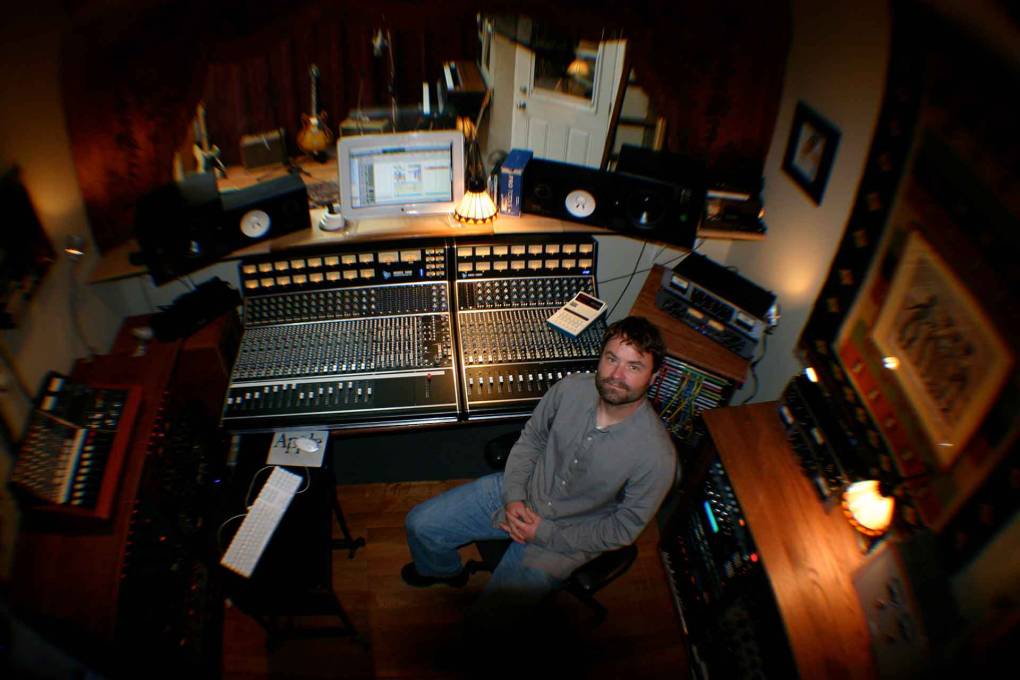
"caption": "Gregory Howe pictured at Wide Hive's studio in Berkeley, where he records legendary jazz musicians he likes to describe as ‘soul warriors.’",
"credit": "Steve Veilleux",
"altTag": "A man in a beard, button-down shirt and jeans sits at a mixing console, seen from above",
"description": null,
"imgSizes": {
"medium": {
"file": "https://cdn.kqed.org/wp-content/uploads/sites/2/2024/09/WideHive.GregoryHowe-800x533.jpg",
"width": 800,
"height": 533,
"mimeType": "image/jpeg"
},
"large": {
"file": "https://cdn.kqed.org/wp-content/uploads/sites/2/2024/09/WideHive.GregoryHowe-1020x680.jpg",
"width": 1020,
"height": 680,
"mimeType": "image/jpeg"
},
"thumbnail": {
"file": "https://cdn.kqed.org/wp-content/uploads/sites/2/2024/09/WideHive.GregoryHowe-160x107.jpg",
"width": 160,
"height": 107,
"mimeType": "image/jpeg"
},
"medium_large": {
"file": "https://cdn.kqed.org/wp-content/uploads/sites/2/2024/09/WideHive.GregoryHowe-768x512.jpg",
"width": 768,
"height": 512,
"mimeType": "image/jpeg"
},
"1536x1536": {
"file": "https://cdn.kqed.org/wp-content/uploads/sites/2/2024/09/WideHive.GregoryHowe-1536x1024.jpg",
"width": 1536,
"height": 1024,
"mimeType": "image/jpeg"
},
"post-thumbnail": {
"file": "https://cdn.kqed.org/wp-content/uploads/sites/2/2024/09/WideHive.GregoryHowe-672x372.jpg",
"width": 672,
"height": 372,
"mimeType": "image/jpeg"
},
"twentyfourteen-full-width": {
"file": "https://cdn.kqed.org/wp-content/uploads/sites/2/2024/09/WideHive.GregoryHowe-1038x576.jpg",
"width": 1038,
"height": 576,
"mimeType": "image/jpeg"
},
"kqedFullSize": {
"file": "https://cdn.kqed.org/wp-content/uploads/sites/2/2024/09/WideHive.GregoryHowe.jpg",
"width": 1920,
"height": 1280
}
},
"isLoading": false,
"fetchFailed": false
},
"arts_13963485": {
"type": "attachments",
"id": "arts_13963485",
"meta": {
"index": "attachments_1716263798",
"site": "arts",
"id": "13963485",
"found": true
},
"title": "CREDIT Visionary Media Collective_The Bizerkeley Food Fest_Food 4",
"publishDate": 1725040532,
"status": "inherit",
"parent": 13963481,
"modified": 1725040673,
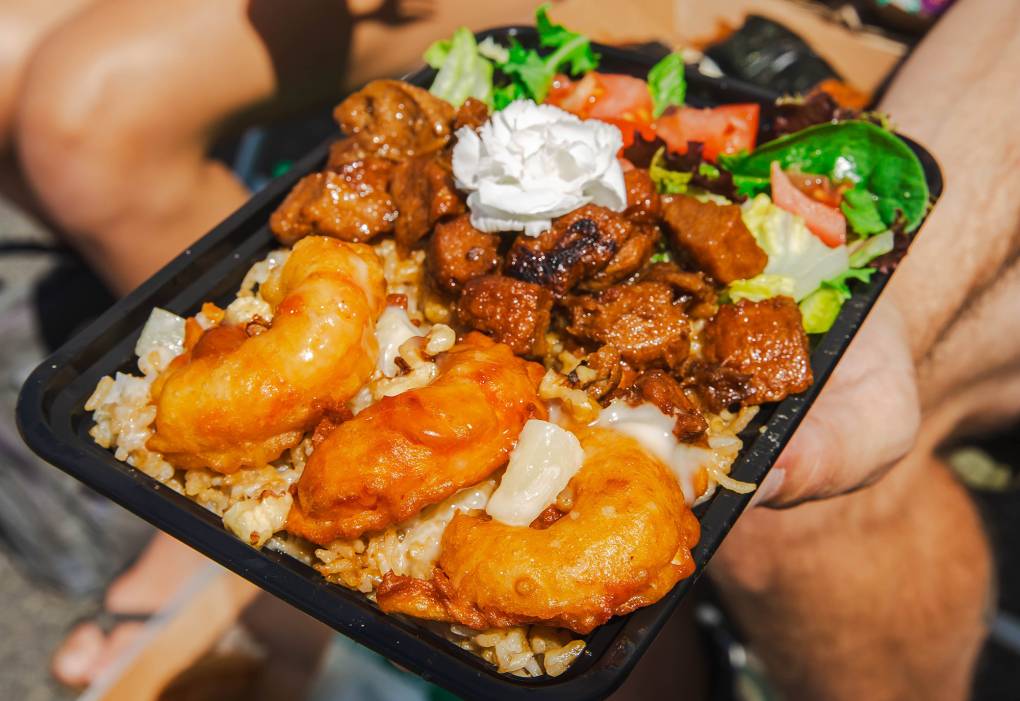
"caption": "One of the diverse vegan food offerings guests can expect to find at the Bizerkeley Food Festival, which returns to Berkeley this weekend.",
"credit": "Visionary Media Collective",
"altTag": "A takeout container with fried vegan shrimp, rice and salad.",
"description": null,
"imgSizes": {
"medium": {
"file": "https://cdn.kqed.org/wp-content/uploads/sites/2/2024/08/CREDIT-Visionary-Media-Collective_The-Bizerkeley-Food-Fest_Food-4-800x550.jpg",
"width": 800,
"height": 550,
"mimeType": "image/jpeg"
},
"large": {
"file": "https://cdn.kqed.org/wp-content/uploads/sites/2/2024/08/CREDIT-Visionary-Media-Collective_The-Bizerkeley-Food-Fest_Food-4-1020x701.jpg",
"width": 1020,
"height": 701,
"mimeType": "image/jpeg"
},
"thumbnail": {
"file": "https://cdn.kqed.org/wp-content/uploads/sites/2/2024/08/CREDIT-Visionary-Media-Collective_The-Bizerkeley-Food-Fest_Food-4-160x110.jpg",
"width": 160,
"height": 110,
"mimeType": "image/jpeg"
},
"medium_large": {
"file": "https://cdn.kqed.org/wp-content/uploads/sites/2/2024/08/CREDIT-Visionary-Media-Collective_The-Bizerkeley-Food-Fest_Food-4-768x528.jpg",
"width": 768,
"height": 528,
"mimeType": "image/jpeg"
},
"1536x1536": {
"file": "https://cdn.kqed.org/wp-content/uploads/sites/2/2024/08/CREDIT-Visionary-Media-Collective_The-Bizerkeley-Food-Fest_Food-4-1536x1056.jpg",
"width": 1536,
"height": 1056,
"mimeType": "image/jpeg"
},
"post-thumbnail": {
"file": "https://cdn.kqed.org/wp-content/uploads/sites/2/2024/08/CREDIT-Visionary-Media-Collective_The-Bizerkeley-Food-Fest_Food-4-672x372.jpg",
"width": 672,
"height": 372,
"mimeType": "image/jpeg"
},
"twentyfourteen-full-width": {
"file": "https://cdn.kqed.org/wp-content/uploads/sites/2/2024/08/CREDIT-Visionary-Media-Collective_The-Bizerkeley-Food-Fest_Food-4-1038x576.jpg",
"width": 1038,
"height": 576,
"mimeType": "image/jpeg"
},
"full-width": {
"file": "https://cdn.kqed.org/wp-content/uploads/sites/2/2024/08/CREDIT-Visionary-Media-Collective_The-Bizerkeley-Food-Fest_Food-4-1920x1320.jpg",
"width": 1920,
"height": 1320,
"mimeType": "image/jpeg"
},
"kqedFullSize": {
"file": "https://cdn.kqed.org/wp-content/uploads/sites/2/2024/08/CREDIT-Visionary-Media-Collective_The-Bizerkeley-Food-Fest_Food-4.jpg",
"width": 2000,
"height": 1375
}
},
"isLoading": false,
"fetchFailed": false
},
"arts_13959436": {
"type": "attachments",
"id": "arts_13959436",
"meta": {
"index": "attachments_1716263798",
"site": "arts",
"id": "13959436",
"found": true
},
"title": "kinda2-crop",
"publishDate": 1717718002,
"status": "inherit",
"parent": 13959432,
"modified": 1717718191,
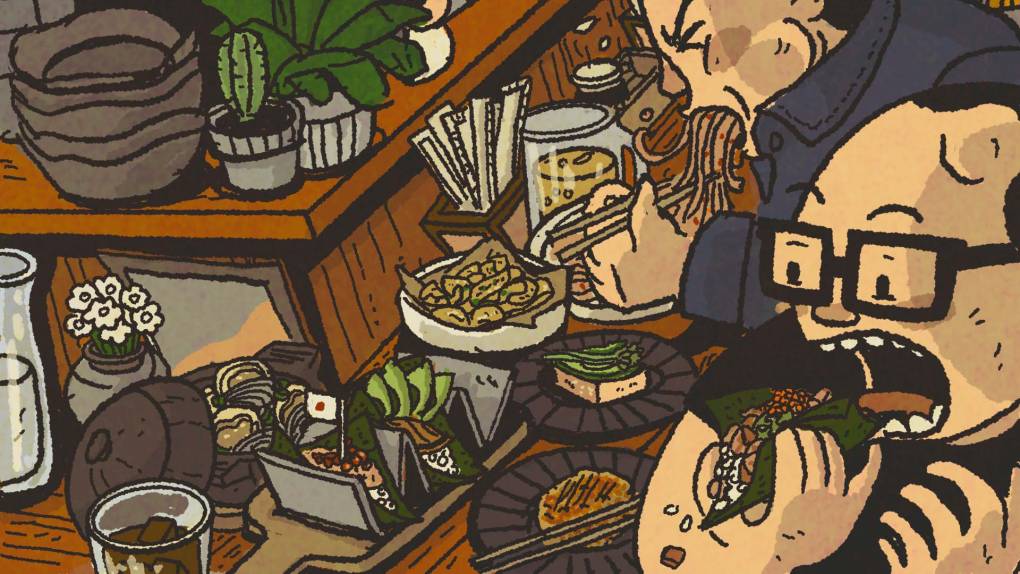
"caption": "Berkeley's Kinda Izakaya stands apart from the masses of expensive and overly precious izakayas in the Bay Area.",
"credit": "Thien Pham",
"altTag": "Illustration: Two men eating noodles and sushi hand rolls at a bar counter.",
"description": null,
"imgSizes": {
"medium": {
"file": "https://cdn.kqed.org/wp-content/uploads/sites/2/2024/06/kinda2-crop-800x450.jpg",
"width": 800,
"height": 450,
"mimeType": "image/jpeg"
},
"large": {
"file": "https://cdn.kqed.org/wp-content/uploads/sites/2/2024/06/kinda2-crop-1020x574.jpg",
"width": 1020,
"height": 574,
"mimeType": "image/jpeg"
},
"thumbnail": {
"file": "https://cdn.kqed.org/wp-content/uploads/sites/2/2024/06/kinda2-crop-160x90.jpg",
"width": 160,
"height": 90,
"mimeType": "image/jpeg"
},
"medium_large": {
"file": "https://cdn.kqed.org/wp-content/uploads/sites/2/2024/06/kinda2-crop-768x432.jpg",
"width": 768,
"height": 432,
"mimeType": "image/jpeg"
},
"1536x1536": {
"file": "https://cdn.kqed.org/wp-content/uploads/sites/2/2024/06/kinda2-crop-1536x864.jpg",
"width": 1536,
"height": 864,
"mimeType": "image/jpeg"
},
"post-thumbnail": {
"file": "https://cdn.kqed.org/wp-content/uploads/sites/2/2024/06/kinda2-crop-672x372.jpg",
"width": 672,
"height": 372,
"mimeType": "image/jpeg"
},
"twentyfourteen-full-width": {
"file": "https://cdn.kqed.org/wp-content/uploads/sites/2/2024/06/kinda2-crop-1038x576.jpg",
"width": 1038,
"height": 576,
"mimeType": "image/jpeg"
},
"kqedFullSize": {
"file": "https://cdn.kqed.org/wp-content/uploads/sites/2/2024/06/kinda2-crop.jpg",
"width": 1920,
"height": 1080
}
},
"isLoading": false,
"fetchFailed": false
},
"arts_13918596": {
"type": "attachments",
"id": "arts_13918596",
"meta": {
"index": "attachments_1716263798",
"site": "arts",
"id": "13918596",
"found": true
},
"title": "005_KQEDArts_TattooArtistMiguelBouncePerez_08312022",
"publishDate": 1662076192,
"status": "inherit",
"parent": 13918498,
"modified": 1717030040,
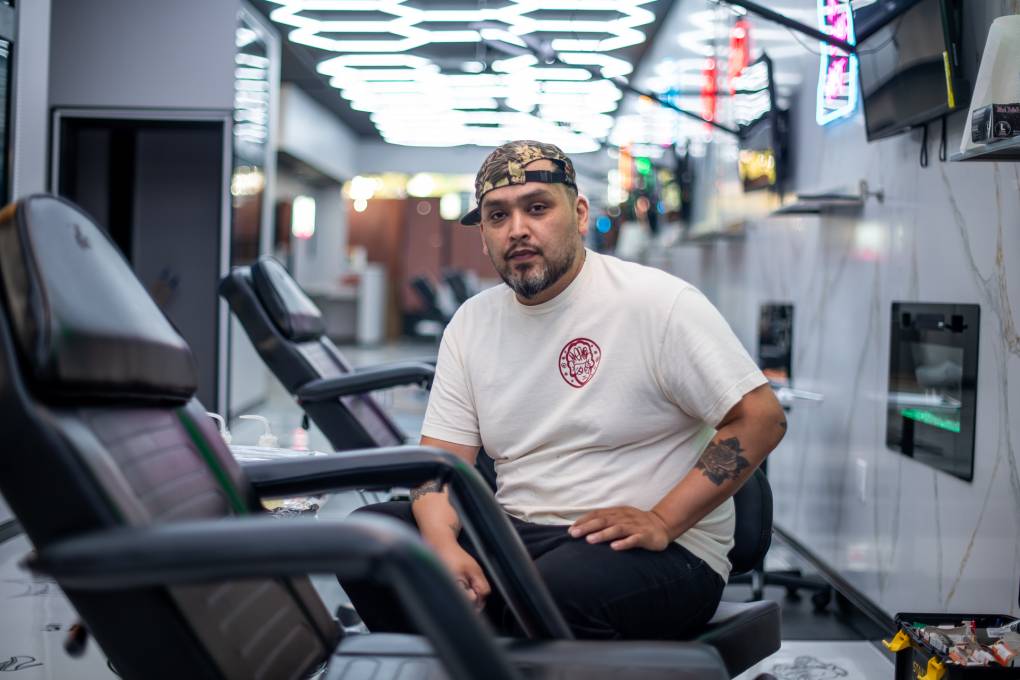
"caption": "Miguel ‘Bounce’ Perez at Philthy Clean Tattoo in Berkeley on Aug. 31, 2022.",
"credit": "Beth LaBerge/KQED",
"altTag": null,
"description": null,
"imgSizes": {
"medium": {
"file": "https://cdn.kqed.org/wp-content/uploads/sites/2/2022/09/005_KQEDArts_TattooArtistMiguelBouncePerez_08312022-800x533.jpg",
"width": 800,
"height": 533,
"mimeType": "image/jpeg"
},
"large": {
"file": "https://cdn.kqed.org/wp-content/uploads/sites/2/2022/09/005_KQEDArts_TattooArtistMiguelBouncePerez_08312022-1020x680.jpg",
"width": 1020,
"height": 680,
"mimeType": "image/jpeg"
},
"thumbnail": {
"file": "https://cdn.kqed.org/wp-content/uploads/sites/2/2022/09/005_KQEDArts_TattooArtistMiguelBouncePerez_08312022-160x107.jpg",
"width": 160,
"height": 107,
"mimeType": "image/jpeg"
},
"medium_large": {
"file": "https://cdn.kqed.org/wp-content/uploads/sites/2/2022/09/005_KQEDArts_TattooArtistMiguelBouncePerez_08312022-768x512.jpg",
"width": 768,
"height": 512,
"mimeType": "image/jpeg"
},
"1536x1536": {
"file": "https://cdn.kqed.org/wp-content/uploads/sites/2/2022/09/005_KQEDArts_TattooArtistMiguelBouncePerez_08312022-1536x1024.jpg",
"width": 1536,
"height": 1024,
"mimeType": "image/jpeg"
},
"post-thumbnail": {
"file": "https://cdn.kqed.org/wp-content/uploads/sites/2/2022/09/005_KQEDArts_TattooArtistMiguelBouncePerez_08312022-672x372.jpg",
"width": 672,
"height": 372,
"mimeType": "image/jpeg"
},
"twentyfourteen-full-width": {
"file": "https://cdn.kqed.org/wp-content/uploads/sites/2/2022/09/005_KQEDArts_TattooArtistMiguelBouncePerez_08312022-1038x576.jpg",
"width": 1038,
"height": 576,
"mimeType": "image/jpeg"
},
"kqedFullSize": {
"file": "https://cdn.kqed.org/wp-content/uploads/sites/2/2022/09/005_KQEDArts_TattooArtistMiguelBouncePerez_08312022.jpg",
"width": 1920,
"height": 1280
}
},
"isLoading": false,
"fetchFailed": false
},
"arts_13958079": {
"type": "attachments",
"id": "arts_13958079",
"meta": {
"index": "attachments_1716263798",
"site": "arts",
"id": "13958079",
"found": true
},
"parent": 0,
"imgSizes": {
"twentyfourteen-full-width": {
"file": "https://cdn.kqed.org/wp-content/uploads/sites/2/2024/05/GLO_038-1038x576.jpg",
"width": 1038,
"mimeType": "image/jpeg",
"height": 576
},
"thumbnail": {
"file": "https://cdn.kqed.org/wp-content/uploads/sites/2/2024/05/GLO_038-160x107.jpg",
"width": 160,
"mimeType": "image/jpeg",
"height": 107
},
"post-thumbnail": {
"file": "https://cdn.kqed.org/wp-content/uploads/sites/2/2024/05/GLO_038-672x372.jpg",
"width": 672,
"mimeType": "image/jpeg",
"height": 372
},
"kqedFullSize": {
"file": "https://cdn.kqed.org/wp-content/uploads/sites/2/2024/05/GLO_038.jpg",
"width": 1920,
"height": 1278
},
"large": {
"file": "https://cdn.kqed.org/wp-content/uploads/sites/2/2024/05/GLO_038-1020x679.jpg",
"width": 1020,
"mimeType": "image/jpeg",
"height": 679
},
"1536x1536": {
"file": "https://cdn.kqed.org/wp-content/uploads/sites/2/2024/05/GLO_038-1536x1022.jpg",
"width": 1536,
"mimeType": "image/jpeg",
"height": 1022
},
"medium": {
"file": "https://cdn.kqed.org/wp-content/uploads/sites/2/2024/05/GLO_038-800x533.jpg",
"width": 800,
"mimeType": "image/jpeg",
"height": 533
},
"medium_large": {
"file": "https://cdn.kqed.org/wp-content/uploads/sites/2/2024/05/GLO_038-768x511.jpg",
"width": 768,
"mimeType": "image/jpeg",
"height": 511
}
},
"publishDate": 1715960125,
"modified": 1715960315,
"caption": "Raúl Esparza (Galileo Galilei) in the world premiere of 'Galileo: A Rock Musical' at Berkeley Repertory Theatre.",
"description": null,
"title": "GLO_038",
"credit": "Kevin Berne",
"status": "inherit",
"altTag": null,
"isLoading": false,
"fetchFailed": false
},
"arts_13957209": {
"type": "attachments",
"id": "arts_13957209",
"meta": {
"index": "attachments_1716263798",
"site": "arts",
"id": "13957209",
"found": true
},
"parent": 13957201,
"imgSizes": {
"twentyfourteen-full-width": {
"file": "https://cdn.kqed.org/wp-content/uploads/sites/2/2024/05/pratt14_print-Robert-Reck-1038x576.jpg",
"width": 1038,
"mimeType": "image/jpeg",
"height": 576
},
"thumbnail": {
"file": "https://cdn.kqed.org/wp-content/uploads/sites/2/2024/05/pratt14_print-Robert-Reck-160x110.jpg",
"width": 160,
"mimeType": "image/jpeg",
"height": 110
},
"post-thumbnail": {
"file": "https://cdn.kqed.org/wp-content/uploads/sites/2/2024/05/pratt14_print-Robert-Reck-672x372.jpg",
"width": 672,
"mimeType": "image/jpeg",
"height": 372
},
"kqedFullSize": {
"file": "https://cdn.kqed.org/wp-content/uploads/sites/2/2024/05/pratt14_print-Robert-Reck.jpg",
"width": 1920,
"height": 1321
},
"large": {
"file": "https://cdn.kqed.org/wp-content/uploads/sites/2/2024/05/pratt14_print-Robert-Reck-1020x702.jpg",
"width": 1020,
"mimeType": "image/jpeg",
"height": 702
},
"1536x1536": {
"file": "https://cdn.kqed.org/wp-content/uploads/sites/2/2024/05/pratt14_print-Robert-Reck-1536x1057.jpg",
"width": 1536,
"mimeType": "image/jpeg",
"height": 1057
},
"medium": {
"file": "https://cdn.kqed.org/wp-content/uploads/sites/2/2024/05/pratt14_print-Robert-Reck-800x550.jpg",
"width": 800,
"mimeType": "image/jpeg",
"height": 550
},
"medium_large": {
"file": "https://cdn.kqed.org/wp-content/uploads/sites/2/2024/05/pratt14_print-Robert-Reck-768x528.jpg",
"width": 768,
"mimeType": "image/jpeg",
"height": 528
}
},
"publishDate": 1714762123,
"modified": 1714778174,
"caption": "Awadagin Pratt at the piano. Having recently joined the San Francisco Conservatory of Music, Pratt performs Jessie Montgomery's 'Rounds' this weekend with the New Century Chamber Orchestra. ",
"description": null,
"title": "pratt14_print-Robert-Reck",
"credit": "Robert Reck",
"status": "inherit",
"altTag": "A Black man with a beard in a black and red jacket plays a grand piano.",
"isLoading": false,
"fetchFailed": false
},
"arts_13956906": {
"type": "attachments",
"id": "arts_13956906",
"meta": {
"index": "attachments_1716263798",
"site": "arts",
"id": "13956906",
"found": true
},
"parent": 13956901,
"imgSizes": {
"twentyfourteen-full-width": {
"file": "https://cdn.kqed.org/wp-content/uploads/sites/2/2024/04/market-hall-visit-berkeley-1038x576.jpg",
"width": 1038,
"mimeType": "image/jpeg",
"height": 576
},
"thumbnail": {
"file": "https://cdn.kqed.org/wp-content/uploads/sites/2/2024/04/market-hall-visit-berkeley-160x90.jpg",
"width": 160,
"mimeType": "image/jpeg",
"height": 90
},
"post-thumbnail": {
"file": "https://cdn.kqed.org/wp-content/uploads/sites/2/2024/04/market-hall-visit-berkeley-672x372.jpg",
"width": 672,
"mimeType": "image/jpeg",
"height": 372
},
"kqedFullSize": {
"file": "https://cdn.kqed.org/wp-content/uploads/sites/2/2024/04/market-hall-visit-berkeley.jpg",
"width": 1920,
"height": 1079
},
"large": {
"file": "https://cdn.kqed.org/wp-content/uploads/sites/2/2024/04/market-hall-visit-berkeley-1020x573.jpg",
"width": 1020,
"mimeType": "image/jpeg",
"height": 573
},
"1536x1536": {
"file": "https://cdn.kqed.org/wp-content/uploads/sites/2/2024/04/market-hall-visit-berkeley-1536x863.jpg",
"width": 1536,
"mimeType": "image/jpeg",
"height": 863
},
"medium": {
"file": "https://cdn.kqed.org/wp-content/uploads/sites/2/2024/04/market-hall-visit-berkeley-800x450.jpg",
"width": 800,
"mimeType": "image/jpeg",
"height": 450
},
"medium_large": {
"file": "https://cdn.kqed.org/wp-content/uploads/sites/2/2024/04/market-hall-visit-berkeley-768x432.jpg",
"width": 768,
"mimeType": "image/jpeg",
"height": 432
}
},
"publishDate": 1714518682,
"modified": 1714518758,
"caption": "Berkeley's Market Hall Foods has been open since 1996. It will close in May.",
"description": null,
"title": "market hall - visit berkeley",
"credit": "Courtesy of Visit Berkeley and Market Hall Foods",
"status": "inherit",
"altTag": "Bustling aisles inside a grocery store.",
"isLoading": false,
"fetchFailed": false
},
"arts_13956601": {
"type": "attachments",
"id": "arts_13956601",
"meta": {
"index": "attachments_1716263798",
"site": "arts",
"id": "13956601",
"found": true
},
"parent": 13956017,
"imgSizes": {
"twentyfourteen-full-width": {
"file": "https://cdn.kqed.org/wp-content/uploads/sites/2/2024/04/Colucci-spread_courtesy-of-cafe-colucci-1038x576.jpg",
"width": 1038,
"mimeType": "image/jpeg",
"height": 576
},
"thumbnail": {
"file": "https://cdn.kqed.org/wp-content/uploads/sites/2/2024/04/Colucci-spread_courtesy-of-cafe-colucci-160x90.jpg",
"width": 160,
"mimeType": "image/jpeg",
"height": 90
},
"post-thumbnail": {
"file": "https://cdn.kqed.org/wp-content/uploads/sites/2/2024/04/Colucci-spread_courtesy-of-cafe-colucci-672x372.jpg",
"width": 672,
"mimeType": "image/jpeg",
"height": 372
},
"kqedFullSize": {
"file": "https://cdn.kqed.org/wp-content/uploads/sites/2/2024/04/Colucci-spread_courtesy-of-cafe-colucci.jpg",
"width": 1920,
"height": 1080
},
"large": {
"file": "https://cdn.kqed.org/wp-content/uploads/sites/2/2024/04/Colucci-spread_courtesy-of-cafe-colucci-1020x574.jpg",
"width": 1020,
"mimeType": "image/jpeg",
"height": 574
},
"1536x1536": {
"file": "https://cdn.kqed.org/wp-content/uploads/sites/2/2024/04/Colucci-spread_courtesy-of-cafe-colucci-1536x864.jpg",
"width": 1536,
"mimeType": "image/jpeg",
"height": 864
},
"medium": {
"file": "https://cdn.kqed.org/wp-content/uploads/sites/2/2024/04/Colucci-spread_courtesy-of-cafe-colucci-800x450.jpg",
"width": 800,
"mimeType": "image/jpeg",
"height": 450
},
"medium_large": {
"file": "https://cdn.kqed.org/wp-content/uploads/sites/2/2024/04/Colucci-spread_courtesy-of-cafe-colucci-768x432.jpg",
"width": 768,
"mimeType": "image/jpeg",
"height": 432
}
},
"publishDate": 1713984302,
"modified": 1713984490,
"caption": "At the first-ever POC Food & Wine Festival Oakland's Cafe Colucci will be on hand to rep the cuisine of the Ethiopian diaspora.",
"description": null,
"title": "Colucci spread_courtesy of cafe colucci",
"credit": "Courtesy of Cafe Colucci",
"status": "inherit",
"altTag": "A sumptuous spread of Ethiopian dishes, including a large round platter lined with injera.",
"isLoading": false,
"fetchFailed": false
},
"arts_13955587": {
"type": "attachments",
"id": "arts_13955587",
"meta": {
"index": "attachments_1716263798",
"site": "arts",
"id": "13955587",
"found": true
},
"parent": 13954899,
"imgSizes": {
"twentyfourteen-full-width": {
"file": "https://cdn.kqed.org/wp-content/uploads/sites/2/2024/03/Hella-Hungry-—-Feature-Image-1920x1080-1-1038x576.jpg",
"width": 1038,
"mimeType": "image/jpeg",
"height": 576
},
"thumbnail": {
"file": "https://cdn.kqed.org/wp-content/uploads/sites/2/2024/03/Hella-Hungry-—-Feature-Image-1920x1080-1-160x90.jpg",
"width": 160,
"mimeType": "image/jpeg",
"height": 90
},
"post-thumbnail": {
"file": "https://cdn.kqed.org/wp-content/uploads/sites/2/2024/03/Hella-Hungry-—-Feature-Image-1920x1080-1-672x372.jpg",
"width": 672,
"mimeType": "image/jpeg",
"height": 372
},
"kqedFullSize": {
"file": "https://cdn.kqed.org/wp-content/uploads/sites/2/2024/03/Hella-Hungry-—-Feature-Image-1920x1080-1.jpg",
"width": 1920,
"height": 1080
},
"large": {
"file": "https://cdn.kqed.org/wp-content/uploads/sites/2/2024/03/Hella-Hungry-—-Feature-Image-1920x1080-1-1020x574.jpg",
"width": 1020,
"mimeType": "image/jpeg",
"height": 574
},
"1536x1536": {
"file": "https://cdn.kqed.org/wp-content/uploads/sites/2/2024/03/Hella-Hungry-—-Feature-Image-1920x1080-1-1536x864.jpg",
"width": 1536,
"mimeType": "image/jpeg",
"height": 864
},
"medium": {
"file": "https://cdn.kqed.org/wp-content/uploads/sites/2/2024/03/Hella-Hungry-—-Feature-Image-1920x1080-1-800x450.jpg",
"width": 800,
"mimeType": "image/jpeg",
"height": 450
},
"medium_large": {
"file": "https://cdn.kqed.org/wp-content/uploads/sites/2/2024/03/Hella-Hungry-—-Feature-Image-1920x1080-1-768x432.jpg",
"width": 768,
"mimeType": "image/jpeg",
"height": 432
}
},
"publishDate": 1712602999,
"modified": 1712618646,
"caption": "If Only Creative founder Marisa Sanchez-Dunning poses for a portrait at Popoca in Oakland. The progressive Salvadoran restaurant is one of her agency's clients.",
"description": null,
"title": "Hella Hungry — Feature Image (1920x1080)",
"credit": "Marissa Leshnov for KQED",
"status": "inherit",
"altTag": "A woman smiles sitting a a long wooden table inside a stylish restaurant with a red brick interior.",
"isLoading": false,
"fetchFailed": false
},
"arts_13955382": {
"type": "attachments",
"id": "arts_13955382",
"meta": {
"index": "attachments_1716263798",
"site": "arts",
"id": "13955382",
"found": true
},
"parent": 13955372,
"imgSizes": {
"twentyfourteen-full-width": {
"file": "https://cdn.kqed.org/wp-content/uploads/sites/2/2024/04/240327-Casey-Cope-KSM-5_qut-1038x576.jpg",
"width": 1038,
"mimeType": "image/jpeg",
"height": 576
},
"thumbnail": {
"file": "https://cdn.kqed.org/wp-content/uploads/sites/2/2024/04/240327-Casey-Cope-KSM-5_qut-160x107.jpg",
"width": 160,
"mimeType": "image/jpeg",
"height": 107
},
"post-thumbnail": {
"file": "https://cdn.kqed.org/wp-content/uploads/sites/2/2024/04/240327-Casey-Cope-KSM-5_qut-672x372.jpg",
"width": 672,
"mimeType": "image/jpeg",
"height": 372
},
"kqedFullSize": {
"file": "https://cdn.kqed.org/wp-content/uploads/sites/2/2024/04/240327-Casey-Cope-KSM-5_qut.jpg",
"width": 1920,
"height": 1280
},
"large": {
"file": "https://cdn.kqed.org/wp-content/uploads/sites/2/2024/04/240327-Casey-Cope-KSM-5_qut-1020x680.jpg",
"width": 1020,
"mimeType": "image/jpeg",
"height": 680
},
"1536x1536": {
"file": "https://cdn.kqed.org/wp-content/uploads/sites/2/2024/04/240327-Casey-Cope-KSM-5_qut-1536x1024.jpg",
"width": 1536,
"mimeType": "image/jpeg",
"height": 1024
},
"medium": {
"file": "https://cdn.kqed.org/wp-content/uploads/sites/2/2024/04/240327-Casey-Cope-KSM-5_qut-800x533.jpg",
"width": 800,
"mimeType": "image/jpeg",
"height": 533
},
"medium_large": {
"file": "https://cdn.kqed.org/wp-content/uploads/sites/2/2024/04/240327-Casey-Cope-KSM-5_qut-768x512.jpg",
"width": 768,
"mimeType": "image/jpeg",
"height": 512
}
},
"publishDate": 1712179753,
"modified": 1712179792,
"caption": "Casey Cope in Berkeley on Mar. 27, 2024.",
"description": null,
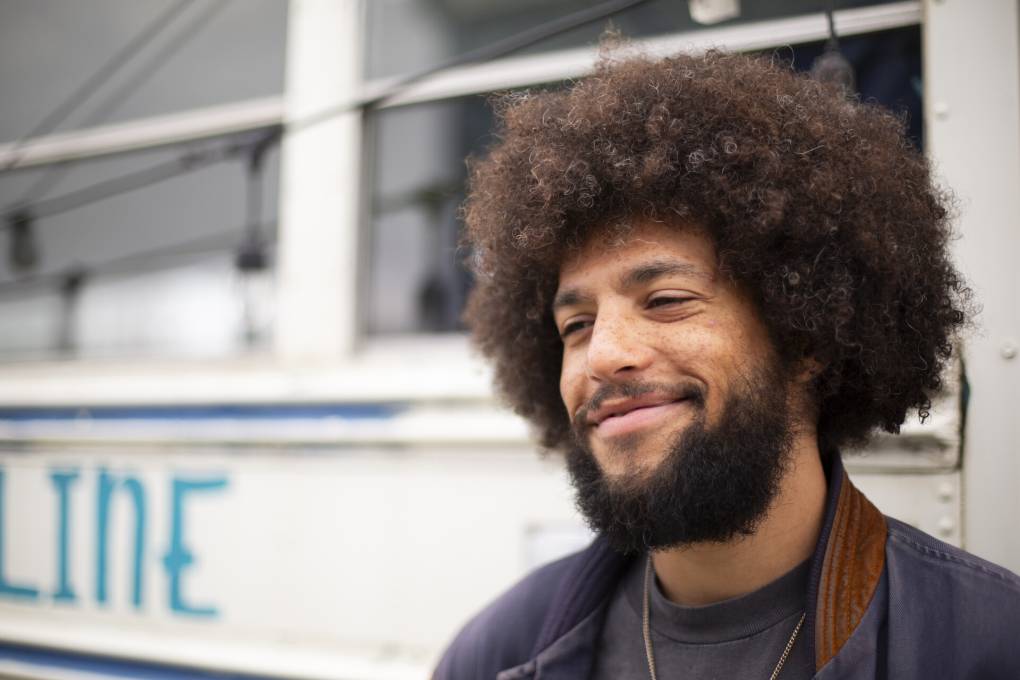
"title": "Casey Copeland aka \"Casey Cope\" in Berkeley on Mar. 27, 2024.",
"credit": "Kathryn Styer Martinez/KQED",
"status": "inherit",
"altTag": "A young rapper and producer poses in front of an old school bus.",
"isLoading": false,
"fetchFailed": false
},
"arts_13955268": {
"type": "attachments",
"id": "arts_13955268",
"meta": {
"index": "attachments_1716263798",
"site": "arts",
"id": "13955268",
"found": true
},
"parent": 13955263,
"imgSizes": {
"twentyfourteen-full-width": {
"file": "https://cdn.kqed.org/wp-content/uploads/sites/2/2024/04/GettyImages-1418257611-1024x576.jpg",
"width": 1024,
"mimeType": "image/jpeg",
"height": 576
},
"thumbnail": {
"file": "https://cdn.kqed.org/wp-content/uploads/sites/2/2024/04/GettyImages-1418257611-160x107.jpg",
"width": 160,
"mimeType": "image/jpeg",
"height": 107
},
"post-thumbnail": {
"file": "https://cdn.kqed.org/wp-content/uploads/sites/2/2024/04/GettyImages-1418257611-672x372.jpg",
"width": 672,
"mimeType": "image/jpeg",
"height": 372
},
"kqedFullSize": {
"file": "https://cdn.kqed.org/wp-content/uploads/sites/2/2024/04/GettyImages-1418257611.jpg",
"width": 1024,
"height": 683
},
"large": {
"file": "https://cdn.kqed.org/wp-content/uploads/sites/2/2024/04/GettyImages-1418257611-1020x680.jpg",
"width": 1020,
"mimeType": "image/jpeg",
"height": 680
},
"medium": {
"file": "https://cdn.kqed.org/wp-content/uploads/sites/2/2024/04/GettyImages-1418257611-800x534.jpg",
"width": 800,
"mimeType": "image/jpeg",
"height": 534
},
"medium_large": {
"file": "https://cdn.kqed.org/wp-content/uploads/sites/2/2024/04/GettyImages-1418257611-768x512.jpg",
"width": 768,
"mimeType": "image/jpeg",
"height": 512
}
},
"publishDate": 1712089336,
"modified": 1712089384,
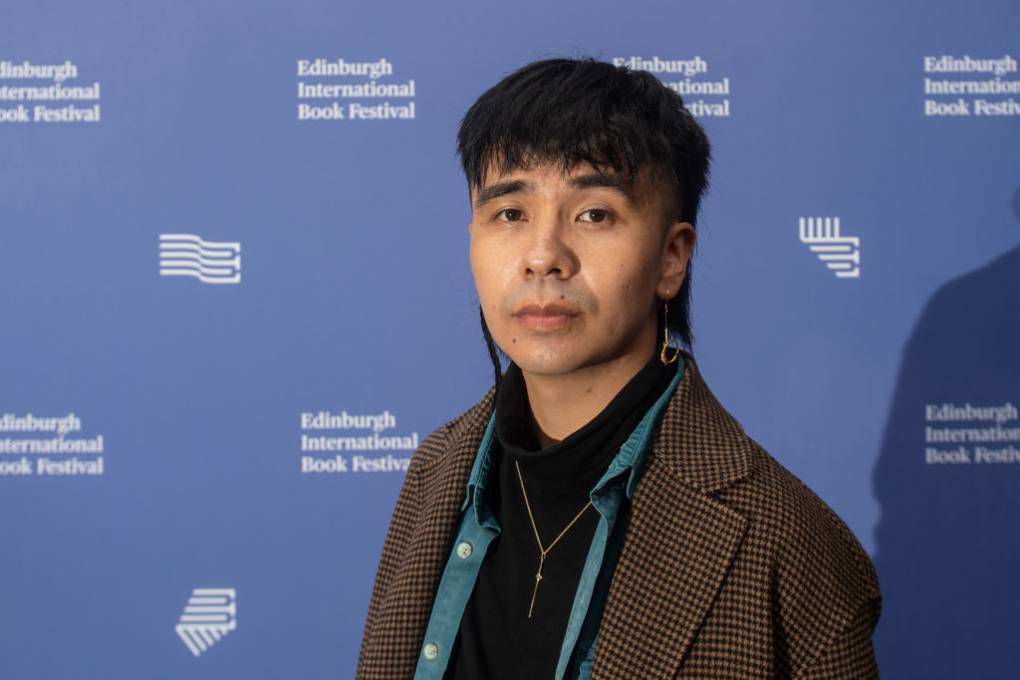
"caption": "Ocean Vuong attends the Edinburgh International Book Festival in Edinburgh, Scotland in 2022.",
"description": null,
"title": "Edinburgh International Book Festival",
"credit": "Simone Padovani/Getty Images",
"status": "inherit",
"altTag": null,
"isLoading": false,
"fetchFailed": false
}
},
"audioPlayerReducer": {
"postId": "stream_live",
"isPaused": true,
"isPlaying": false,
"pfsActive": false,
"pledgeModalIsOpen": true,
"playerDrawerIsOpen": false,
"liveAudioPlayStartedAt": 0,
"liveAudioPlayContext": ""
},
"authorsReducer": {
"agilbert": {
"type": "authors",
"id": "86",
"meta": {
"index": "authors_1716337520",
"id": "86",
"found": true
},
"name": "Andrew Gilbert",
"firstName": "Andrew",
"lastName": "Gilbert",
"slug": "agilbert",
"email": "jazzscribe@aol.com",
"display_author_email": false,
"staff_mastheads": [],
"title": "KQED Contributor",
"bio": "A Los Angeles native based in the Berkeley area since 1996, Andrew Gilbert covers jazz, international music and dance for KQED's \u003ci>California Report, \u003c/i>the\u003ci> Mercury News\u003c/i>, \u003ci>San Francisco Chronicle\u003c/i>, \u003ci>Berkeleyside.com\u003c/i>, and other publications. He is available for weddings and bar and bat mitzvahs. #jazzscribe",
"avatar": "https://secure.gravatar.com/avatar/d7bcafdbefdd39e9a68f88724ca616eb4e7a5a6bff9cdfb62de652a1e1751471?s=600&d=blank&r=g",
"twitter": null,
"bluesky": null,
"facebook": null,
"instagram": null,
"linkedin": null,
"sites": [
{
"site": "arts",
"roles": [
"Contributor",
"author"
]
},
{
"site": "news",
"roles": [
"author"
]
}
],
"headData": {
"title": "Andrew Gilbert | KQED",
"description": "KQED Contributor",
"ogImgSrc": "https://secure.gravatar.com/avatar/d7bcafdbefdd39e9a68f88724ca616eb4e7a5a6bff9cdfb62de652a1e1751471?s=600&d=blank&r=g",
"twImgSrc": "https://secure.gravatar.com/avatar/d7bcafdbefdd39e9a68f88724ca616eb4e7a5a6bff9cdfb62de652a1e1751471?s=600&d=blank&r=g"
},
"isLoading": false,
"link": "/author/agilbert"
},
"gmeline": {
"type": "authors",
"id": "185",
"meta": {
"index": "authors_1716337520",
"id": "185",
"found": true
},
"name": "Gabe Meline",
"firstName": "Gabe",
"lastName": "Meline",
"slug": "gmeline",
"email": "gmeline@kqed.org",
"display_author_email": true,
"staff_mastheads": [
"arts"
],
"title": "Senior Editor, KQED Arts & Culture",
"bio": "Gabe Meline entered journalism at age 15 making photocopied zines, and has since earned awards from the Edward R. Murrow Awards, the Society for Professional Journalists, the Online Journalism Awards, the Association of Alternative Newsweeklies and the California Newspaper Publishers Association. Prior to KQED, he was the editor of the \u003cem>North Bay Bohemian\u003c/em> and a touring musician. He lives with his wife and daughter in his hometown of Santa Rosa, CA.",
"avatar": "https://secure.gravatar.com/avatar/5bebe57be0d8bc2dd318934feb47299e2d2d10cba28d09d8d7afb389a2ce2bdd?s=600&d=blank&r=g",
"twitter": null,
"bluesky": null,
"facebook": null,
"instagram": null,
"linkedin": null,
"sites": [
{
"site": "",
"roles": [
"editor"
]
},
{
"site": "arts",
"roles": [
"administrator"
]
},
{
"site": "artschool",
"roles": [
"editor"
]
},
{
"site": "news",
"roles": [
"author"
]
},
{
"site": "pop",
"roles": [
"editor"
]
},
{
"site": "bayareabites",
"roles": [
"editor"
]
},
{
"site": "food",
"roles": [
"editor"
]
},
{
"site": "forum",
"roles": [
"administrator"
]
},
{
"site": "liveblog",
"roles": [
"editor"
]
},
{
"site": "hiphop",
"roles": [
"editor"
]
}
],
"headData": {
"title": "Gabe Meline | KQED",
"description": "Senior Editor, KQED Arts & Culture",
"ogImgSrc": "https://secure.gravatar.com/avatar/5bebe57be0d8bc2dd318934feb47299e2d2d10cba28d09d8d7afb389a2ce2bdd?s=600&d=blank&r=g",
"twImgSrc": "https://secure.gravatar.com/avatar/5bebe57be0d8bc2dd318934feb47299e2d2d10cba28d09d8d7afb389a2ce2bdd?s=600&d=blank&r=g"
},
"isLoading": false,
"link": "/author/gmeline"
},
"nvoynovskaya": {
"type": "authors",
"id": "11387",
"meta": {
"index": "authors_1716337520",
"id": "11387",
"found": true
},
"name": "Nastia Voynovskaya",
"firstName": "Nastia",
"lastName": "Voynovskaya",
"slug": "nvoynovskaya",
"email": "nvoynovskaya@kqed.org",
"display_author_email": false,
"staff_mastheads": [
"arts"
],
"title": "Editor and reporter",
"bio": "Nastia Voynovskaya is a reporter, editor and host at KQED Arts & Culture. She's been covering the arts in the Bay Area for over a decade, with a focus on music, queer culture, labor issues and grassroots organizing. She has edited KQED story series such as Trans Bay: A History of San Francisco's Gender-Diverse Community, and co-created KQED's Bay Area hip-hop history project, That's My Word. Nastia's work has been recognized by the Society of Professional Journalists and San Francisco Press Club. She regularly appears on podcasts and radio programs, including NPR's All Songs Considered, and hosts live events where music, culture and conversation meet.",
"avatar": "https://secure.gravatar.com/avatar/5025ee460e5a85d69ca20ea6c6f2f80d7e17795c828f61ea3aecfcd924e9042e?s=600&d=blank&r=g",
"twitter": null,
"bluesky": null,
"facebook": null,
"instagram": "https://www.instagram.com/nananastia/",
"linkedin": null,
"sites": [
{
"site": "",
"roles": [
"editor"
]
},
{
"site": "arts",
"roles": [
"administrator"
]
},
{
"site": "news",
"roles": [
"editor"
]
},
{
"site": "pop",
"roles": [
"administrator"
]
},
{
"site": "bayareabites",
"roles": [
"editor"
]
},
{
"site": "podcasts",
"roles": [
"editor"
]
},
{
"site": "hiphop",
"roles": [
"editor"
]
}
],
"headData": {
"title": "Nastia Voynovskaya | KQED",
"description": "Editor and reporter",
"ogImgSrc": "https://secure.gravatar.com/avatar/5025ee460e5a85d69ca20ea6c6f2f80d7e17795c828f61ea3aecfcd924e9042e?s=600&d=blank&r=g",
"twImgSrc": "https://secure.gravatar.com/avatar/5025ee460e5a85d69ca20ea6c6f2f80d7e17795c828f61ea3aecfcd924e9042e?s=600&d=blank&r=g"
},
"isLoading": false,
"link": "/author/nvoynovskaya"
},
"ogpenn": {
"type": "authors",
"id": "11491",
"meta": {
"index": "authors_1716337520",
"id": "11491",
"found": true
},
"name": "Pendarvis Harshaw",
"firstName": "Pendarvis",
"lastName": "Harshaw",
"slug": "ogpenn",
"email": "ogpenn@gmail.com",
"display_author_email": false,
"staff_mastheads": [
"arts"
],
"title": "Community Engagement Reporter",
"bio": "Pendarvis Harshaw is an educator, host and writer with KQED Arts.",
"avatar": "https://secure.gravatar.com/avatar/972b77ee8e3f346ae2b00622661187fbfabd059b5693bbdc1475ea7a722fd4cd?s=600&d=blank&r=g",
"twitter": null,
"bluesky": null,
"facebook": null,
"instagram": "ogpenn",
"linkedin": null,
"sites": [
{
"site": "arts",
"roles": [
"administrator"
]
},
{
"site": "news",
"roles": [
"editor"
]
},
{
"site": "bayareabites",
"roles": [
"author"
]
},
{
"site": "hiphop",
"roles": [
"editor"
]
}
],
"headData": {
"title": "Pendarvis Harshaw | KQED",
"description": "Community Engagement Reporter",
"ogImgSrc": "https://secure.gravatar.com/avatar/972b77ee8e3f346ae2b00622661187fbfabd059b5693bbdc1475ea7a722fd4cd?s=600&d=blank&r=g",
"twImgSrc": "https://secure.gravatar.com/avatar/972b77ee8e3f346ae2b00622661187fbfabd059b5693bbdc1475ea7a722fd4cd?s=600&d=blank&r=g"
},
"isLoading": false,
"link": "/author/ogpenn"
},
"mmedina": {
"type": "authors",
"id": "11528",
"meta": {
"index": "authors_1716337520",
"id": "11528",
"found": true
},
"name": "Marisol Medina-Cadena",
"firstName": "Marisol",
"lastName": "Medina-Cadena",
"slug": "mmedina",
"email": "mmedina@KQED.org",
"display_author_email": true,
"staff_mastheads": [],
"title": "Producer, Rightnowish Podcast",
"bio": "Marisol Medina-Cadena is a radio reporter and podcast producer. Before working at KQED, she produced for PBS member station, KCET, in Los Angeles. In 2017, Marisol won an Emmy Award for her work on the televised documentary, \u003cem>City Rising\u003c/em>, examining California's affordable housing crisis and the historical roots of gentrification.",
"avatar": "https://secure.gravatar.com/avatar/6c3db46a1cabb5e1fe9a365b5f4e681e?s=600&d=blank&r=g",
"twitter": "marisolreports",
"facebook": null,
"instagram": null,
"linkedin": null,
"sites": [
{
"site": "arts",
"roles": []
},
{
"site": "news",
"roles": [
"edit_others_posts"
]
}
],
"headData": {
"title": "Marisol Medina-Cadena | KQED",
"description": "Producer, Rightnowish Podcast",
"ogImgSrc": "https://secure.gravatar.com/avatar/6c3db46a1cabb5e1fe9a365b5f4e681e?s=600&d=blank&r=g",
"twImgSrc": "https://secure.gravatar.com/avatar/6c3db46a1cabb5e1fe9a365b5f4e681e?s=600&d=blank&r=g"
},
"isLoading": false,
"link": "/author/mmedina"
},
"ltsai": {
"type": "authors",
"id": "11743",
"meta": {
"index": "authors_1716337520",
"id": "11743",
"found": true
},
"name": "Luke Tsai",
"firstName": "Luke",
"lastName": "Tsai",
"slug": "ltsai",
"email": "ltsai@kqed.org",
"display_author_email": true,
"staff_mastheads": [
"arts"
],
"title": "Food Editor",
"bio": "Luke Tsai is KQED's food editor and resident stinky tofu connoisseur. Prior to KQED, he was an editor at Eater SF, \u003cem>San Francisco \u003c/em>magazine, and the \u003cem>East Bay Express\u003c/em>, and his work has also appeared in TASTE, the \u003cem>San Francisco Chronicle\u003c/em>, and the \u003cem>Best Food Writing\u003c/em> anthology. When he isn't writing or editing, you'll find him eating most everything he can get his hands on.",
"avatar": "https://secure.gravatar.com/avatar/1e59b45bf191526e7339d6ba46e33a57b2030d25c27660ecc64ea3cb863e34f7?s=600&d=blank&r=g",
"twitter": "theluketsai",
"bluesky": null,
"facebook": null,
"instagram": null,
"linkedin": null,
"sites": [
{
"site": "",
"roles": [
"editor"
]
},
{
"site": "arts",
"roles": [
"administrator"
]
},
{
"site": "news",
"roles": [
"editor",
"contributor"
]
},
{
"site": "bayareabites",
"roles": [
"editor"
]
},
{
"site": "food",
"roles": [
"editor"
]
}
],
"headData": {
"title": "Luke Tsai | KQED",
"description": "Food Editor",
"ogImgSrc": "https://secure.gravatar.com/avatar/1e59b45bf191526e7339d6ba46e33a57b2030d25c27660ecc64ea3cb863e34f7?s=600&d=blank&r=g",
"twImgSrc": "https://secure.gravatar.com/avatar/1e59b45bf191526e7339d6ba46e33a57b2030d25c27660ecc64ea3cb863e34f7?s=600&d=blank&r=g"
},
"isLoading": false,
"link": "/author/ltsai"
},
"achazaro": {
"type": "authors",
"id": "11748",
"meta": {
"index": "authors_1716337520",
"id": "11748",
"found": true
},
"name": "Alan Chazaro",
"firstName": "Alan",
"lastName": "Chazaro",
"slug": "achazaro",
"email": "agchazaro@gmail.com",
"display_author_email": true,
"staff_mastheads": [],
"title": "Food Writer and Reporter",
"bio": "Alan Chazaro is the author of \u003cem>This Is Not a Frank Ocean Cover Album\u003c/em> (Black Lawrence Press, 2019), \u003cem>Piñata Theory\u003c/em> (Black Lawrence Press, 2020), and \u003cem>Notes from the Eastern Span of the Bay Bridge\u003c/em> (Ghost City Press, 2021). He is a graduate of June Jordan’s Poetry for the People program at UC Berkeley and a former Lawrence Ferlinghetti Fellow at the University of San Francisco. He writes about sports, food, art, music, education, and culture while repping the Bay on \u003ca href=\"https://twitter.com/alan_chazaro\">Twitter\u003c/a> and \u003ca href=\"https://www.instagram.com/alan_chazaro/?hl=en\">Instagram\u003c/a> at @alan_chazaro.",
"avatar": "https://secure.gravatar.com/avatar/ea8b6dd970fc5c29e7a188e7d5861df7?s=600&d=blank&r=g",
"twitter": "alan_chazaro",
"facebook": null,
"instagram": null,
"linkedin": null,
"sites": [
{
"site": "arts",
"roles": [
"contributor"
]
},
{
"site": "news",
"roles": [
"editor"
]
}
],
"headData": {
"title": "Alan Chazaro | KQED",
"description": "Food Writer and Reporter",
"ogImgSrc": "https://secure.gravatar.com/avatar/ea8b6dd970fc5c29e7a188e7d5861df7?s=600&d=blank&r=g",
"twImgSrc": "https://secure.gravatar.com/avatar/ea8b6dd970fc5c29e7a188e7d5861df7?s=600&d=blank&r=g"
},
"isLoading": false,
"link": "/author/achazaro"
},
"tpham": {
"type": "authors",
"id": "11753",
"meta": {
"index": "authors_1716337520",
"id": "11753",
"found": true
},
"name": "Thien Pham",
"firstName": "Thien",
"lastName": "Pham",
"slug": "tpham",
"email": "thiendog@gmail.com",
"display_author_email": false,
"staff_mastheads": [],
"title": "KQED Contributor",
"bio": null,
"avatar": "https://secure.gravatar.com/avatar/a5b4729969ad46d88e7b9ec9dd4f3fa6af84dd0fa8fa91f01d8d9481694999bc?s=600&d=blank&r=g",
"twitter": null,
"bluesky": null,
"facebook": null,
"instagram": null,
"linkedin": null,
"sites": [
{
"site": "arts",
"roles": [
"contributor"
]
}
],
"headData": {
"title": "Thien Pham | KQED",
"description": "KQED Contributor",
"ogImgSrc": "https://secure.gravatar.com/avatar/a5b4729969ad46d88e7b9ec9dd4f3fa6af84dd0fa8fa91f01d8d9481694999bc?s=600&d=blank&r=g",
"twImgSrc": "https://secure.gravatar.com/avatar/a5b4729969ad46d88e7b9ec9dd4f3fa6af84dd0fa8fa91f01d8d9481694999bc?s=600&d=blank&r=g"
},
"isLoading": false,
"link": "/author/tpham"
},
"omayeda": {
"type": "authors",
"id": "11872",
"meta": {
"index": "authors_1716337520",
"id": "11872",
"found": true
},
"name": "Olivia Cruz Mayeda",
"firstName": "Olivia Cruz",
"lastName": "Mayeda",
"slug": "omayeda",
"email": "omayeda@kqed.org",
"display_author_email": false,
"staff_mastheads": [],
"title": "Reporter",
"bio": "Olivia Cruz Mayeda is a journalist covering style, culture and reparations in the Bay Area, a place that has been home to her family for over 100 years. Her writing has also appeared in the \u003cem>San Francisco Chronicle\u003c/em> and \u003cem>El Tecolote\u003c/em>.",
"avatar": "https://secure.gravatar.com/avatar/a8c0baa30219ce1071a9474f4c14141f?s=600&d=blank&r=g",
"twitter": null,
"facebook": null,
"instagram": null,
"linkedin": null,
"sites": [
{
"site": "arts",
"roles": [
"contributor"
]
}
],
"headData": {
"title": "Olivia Cruz Mayeda | KQED",
"description": "Reporter",
"ogImgSrc": "https://secure.gravatar.com/avatar/a8c0baa30219ce1071a9474f4c14141f?s=600&d=blank&r=g",
"twImgSrc": "https://secure.gravatar.com/avatar/a8c0baa30219ce1071a9474f4c14141f?s=600&d=blank&r=g"
},
"isLoading": false,
"link": "/author/omayeda"
},
"djchavez": {
"type": "authors",
"id": "11905",
"meta": {
"index": "authors_1716337520",
"id": "11905",
"found": true
},
"name": "David John Chávez",
"firstName": "David John",
"lastName": "Chávez",
"slug": "djchavez",
"email": "theatrechavez@gmail.com",
"display_author_email": false,
"staff_mastheads": [],
"title": "KQED Contributor",
"bio": "Based in San José, David is a theater critic and reporter who who served as Executive Chair of the American Theatre Critics/Journalists Association (’22-’25), as well as a regular theater contributor to The Mercury News, San Francisco Chronicle, American Theatre Magazine and KQED, among other publications. He is a two-time juror for the Pulitzer Prize for Drama (’22-’23) and a 2020 fellow of the Eugene O'Neill National Critics Institute.",
"avatar": "https://secure.gravatar.com/avatar/5eaa3ce994228213820907c390795c28f7b97165c2b575f46d15fc9273a132b7?s=600&d=blank&r=g",
"twitter": null,
"bluesky": null,
"facebook": "https://www.facebook.com/bydavidjchavez",
"instagram": "https://www.instagram.com/davidjchavez/",
"linkedin": null,
"sites": [
{
"site": "arts",
"roles": [
"contributor"
]
}
],
"headData": {
"title": "David John Chávez | KQED",
"description": "KQED Contributor",
"ogImgSrc": "https://secure.gravatar.com/avatar/5eaa3ce994228213820907c390795c28f7b97165c2b575f46d15fc9273a132b7?s=600&d=blank&r=g",
"twImgSrc": "https://secure.gravatar.com/avatar/5eaa3ce994228213820907c390795c28f7b97165c2b575f46d15fc9273a132b7?s=600&d=blank&r=g"
},
"isLoading": false,
"link": "/author/djchavez"
}
},
"pagesReducer": {
"arts_tag_berkeley": {
"type": "terms",
"id": "arts_1270",
"meta": {
"index": "terms_1716263798",
"site": "arts",
"id": "1270",
"score": 6.927294
},
"featImg": null,
"name": "Berkeley",
"description": null,
"taxonomy": "tag",
"headData": {
"twImgId": null,
"twTitle": null,
"ogTitle": null,
"ogImgId": null,
"twDescription": null,
"description": null,
"title": "Berkeley Archives | KQED Arts",
"ogDescription": null
},
"ttid": 1282,
"slug": "berkeley",
"isLoading": false,
"title": "Berkeley",
"pageMeta": {
"site": "arts",
"WpPageTemplate": "page-topic-editorial",
"currentPage": 6
},
"blocks": [
{
"blockName": "kqed/post-list",
"attrs": {
"layout": "cardArticle2",
"query": "posts/arts?tag=berkeley",
"seeMore": false,
"paginated": true,
"page": 6
}
},
{
"blockName": "kqed/ad"
}
]
}
},
"pfsSessionReducer": {},
"postsReducer": {
"stream_live": {
"type": "live",
"id": "stream_live",
"audioUrl": "https://streams.kqed.org/kqedradio",
"title": "Live Stream",
"excerpt": "Live Stream information currently unavailable.",
"link": "/radio",
"featImg": "",
"label": {
"name": "KQED Live",
"link": "/"
}
},
"stream_kqedNewscast": {
"type": "posts",
"id": "stream_kqedNewscast",
"audioUrl": "https://www.kqed.org/.stream/anon/radio/RDnews/newscast.mp3?_=1",
"title": "KQED Newscast",
"featImg": "",
"label": {
"name": "88.5 FM",
"link": "/"
}
},
"arts_13965877": {
"type": "posts",
"id": "arts_13965877",
"meta": {
"index": "posts_1716263798",
"site": "arts",
"id": "13965877",
"score": null,
"sort": [
1727827362000
]
},
"guestAuthors": [],
"slug": "songs-from-the-hole-jj88-film",
"title": "In ‘Songs From The Hole,’ an Illuminating Story of Prison — and Forgiveness",
"publishDate": 1727827362,
"format": "standard",
"headTitle": "In ‘Songs From The Hole,’ an Illuminating Story of Prison — and Forgiveness | KQED",
"labelTerm": {
"site": "arts"
},
"content": "\u003cp>Forgiveness is a universal concept, relatively simple in nature. A wrong is collectively addressed, an apology is exchanged for a thank you, and ideally all parties move forward with changed behavior.\u003c/p>\n\u003cp>For \u003ca href=\"https://www.instagram.com/jj_eightyeight/?hl=en\">James “JJ’88” Jacobs\u003c/a>, a musician who honed his craft while in solitary confinement in a California state prison, forgiveness is arguably the single most profound concept in his life.\u003c/p>\n\u003cp>Days after he committed a homicide that would lead to his double life sentence, JJ’88 lost his brother to gunfire. While in prison, JJ’88 encountered the man who killed his brother.\u003c/p>\n\u003cp>That ill-fated triangle of trauma, and the concept of forgiveness, are at the center of the film \u003ca href=\"https://www.songsfromthehole.com/\" target=\"_blank\" rel=\"noopener\">\u003ci>Songs From The Hole\u003c/i>\u003c/a>.\u003c/p>\n\u003cp>Co-written by JJ’88, produced by \u003ca href=\"https://www.instagram.com/richiereseda/?hl=en\" target=\"_blank\" rel=\"noopener\">richie reseda\u003c/a> and directed by \u003ca href=\"https://www.contessagayles.com/\" target=\"_blank\" rel=\"noopener\">Contessa Gayles\u003c/a>, the film is technically a documentary. But it might be more accurately described as high-level multimedia artwork about a key aspect of the human experience: forgiveness. It screens at Berkeley’s La Peña Cultural Center on Thursday, Oct. 10, as a part of the 15th annual \u003ca href=\"https://filmfreeway.com/FistUpFilmFestival\" target=\"_blank\" rel=\"noopener\">Fist Up Film Festival\u003c/a>.\u003c/p>\n\u003cp>[ad fullwidth]\u003c/p>\n\u003cp>The story is told through a series of recorded calls on a prison phone between JJ’88 and his family, and interviews with the production team. Excerpts of written letters are sprinkled throughout the storyline, along with family photos and archival home video, plus animation, choreography and reenactments full of symbolism. It’s all anchored by JJ’88’s original songs about prison, being Black and facing oppression in America — with references to spirituality and family.\u003c/p>\n\u003cp>At a particularly low point in JJ’88’s story, he writes a song titled “Steel Grave.” JJ’88’s description of the feeling of being behind bars segues into one of the several music video-like interludes in the film, and a track with heavy bass begins. Before the lyrics start, we see a sheet of lined notebook paper with a note from JJ’88: “*Visual Note: This visual also works as an animation.”\u003c/p>\n\u003cfigure id=\"attachment_13965890\" class=\"wp-caption aligncenter\" style=\"max-width: 800px\">\u003cimg loading=\"lazy\" decoding=\"async\" class=\"size-medium wp-image-13965890\" src=\"https://cdn.kqed.org/wp-content/uploads/sites/2/2024/10/songsfromthehole_director_contessa_hayles-800x1200.jpg\" alt=\"Filmmaker Contessa Gayles. \" width=\"800\" height=\"1200\" srcset=\"https://cdn.kqed.org/wp-content/uploads/sites/2/2024/10/songsfromthehole_director_contessa_hayles-800x1200.jpg 800w, https://cdn.kqed.org/wp-content/uploads/sites/2/2024/10/songsfromthehole_director_contessa_hayles-1020x1530.jpg 1020w, https://cdn.kqed.org/wp-content/uploads/sites/2/2024/10/songsfromthehole_director_contessa_hayles-160x240.jpg 160w, https://cdn.kqed.org/wp-content/uploads/sites/2/2024/10/songsfromthehole_director_contessa_hayles-768x1152.jpg 768w, https://cdn.kqed.org/wp-content/uploads/sites/2/2024/10/songsfromthehole_director_contessa_hayles-1024x1536.jpg 1024w, https://cdn.kqed.org/wp-content/uploads/sites/2/2024/10/songsfromthehole_director_contessa_hayles-1366x2048.jpg 1366w, https://cdn.kqed.org/wp-content/uploads/sites/2/2024/10/songsfromthehole_director_contessa_hayles.jpg 1467w\" sizes=\"(max-width: 800px) 100vw, 800px\">\u003cfigcaption class=\"wp-caption-text\">Filmmaker Contessa Gayles. \u003ccite>(Courtesy of Contessa Gayles)\u003c/cite>\u003c/figcaption>\u003c/figure>\n\u003cp>Those sorts of details, director Gayles says, speak to how they worked together as a unit. “We collaborated through the whole process; we were intentional about that,” says Gayles during a recent video chat.\u003c/p>\n\u003cp>Gayles first met JJ’88 while making her previous film, \u003cem>\u003ca href=\"https://www.youtube.com/watch?v=JYxTzsabkH8\" target=\"_blank\" rel=\"noopener\">The Feminist on Cellblock Y\u003c/a>\u003c/em>, which premiered on \u003cem>CNN\u003c/em> in 2018, covering the story of \u003cem>Songs From the Hole\u003c/em>’s producer, richie reseda.\u003c/p>\n\u003cp>Gayles says the trio formed a well-balanced approach to storytelling for \u003cem>Songs From the Hole\u003c/em>.\u003c/p>\n\u003cp>“We did it over a bunch of phone calls — 15 minutes at a time — and handwritten snail-mailed treatments,” says Gayles, adding that despite the obstacles and power dynamics involved with being incarcerated, JJ’88 had agency. “We did a lot of back and forth, and co-wrote it together.”\u003c/p>\n\u003cp>Gayles sees JJ’88’s story as a way to reach people “looking to heal and move toward a collective freedom.”\u003c/p>\n\u003cp>“I want people to know that healing and transformation is possible,” Gayles says. “There are other ways that we can respond… beyond producing more violence and harm by punishment and revenge.”\u003c/p>\n\u003cp>The local screening of the film, which won the Audience Award at this year’s SXSW during its debut in March, will be a bit of a homecoming. Gayles, originally from Buffalo, New York, was based in the Bay during the two years of the film’s development, supported by \u003ca href=\"https://bavc.org/?gad_source=1&gclid=Cj0KCQjwu-63BhC9ARIsAMMTLXQs8hCkAqILq6d9YhrH9vjswXU8UR44XaDiDz7ENq34wXujIJrq01saAmeREALw_wcB\" target=\"_blank\" rel=\"noopener\">a fellowship with BAVC\u003c/a> and nurtured by the local film community.\u003c/p>\n\u003cp>“I feel proud to bring this back and show folks what we were working on,” says Gayles.\u003c/p>\n\u003cp>The film will be screened as a part of the Fist Up Film Festival, which is celebrating its 15th year. Founded by Berkeley filmmaking siblings Kahlil Jacobs-Fantauzzi and Eli Jacobs-Fantauzzi, the festival bucks several trends of traditional film festivals.\u003c/p>\n\u003cp>“They cost a lot of money,” explains Kahlil Jacobs-Fantauzzi. “And they aren’t connected to community.”\u003c/p>\n\u003cfigure id=\"attachment_13965891\" class=\"wp-caption aligncenter\" style=\"max-width: 800px\">\u003cimg loading=\"lazy\" decoding=\"async\" class=\"size-medium wp-image-13965891\" src=\"https://cdn.kqed.org/wp-content/uploads/sites/2/2024/10/886221_1680381508895504_1170785570981700985_o-800x533.jpg\" alt=\"The New Parkway is one of the venues hosting screenings of this year's Fist Up Film Festival. \" width=\"800\" height=\"533\" srcset=\"https://cdn.kqed.org/wp-content/uploads/sites/2/2024/10/886221_1680381508895504_1170785570981700985_o-800x533.jpg 800w, https://cdn.kqed.org/wp-content/uploads/sites/2/2024/10/886221_1680381508895504_1170785570981700985_o-1020x680.jpg 1020w, https://cdn.kqed.org/wp-content/uploads/sites/2/2024/10/886221_1680381508895504_1170785570981700985_o-160x107.jpg 160w, https://cdn.kqed.org/wp-content/uploads/sites/2/2024/10/886221_1680381508895504_1170785570981700985_o-768x512.jpg 768w, https://cdn.kqed.org/wp-content/uploads/sites/2/2024/10/886221_1680381508895504_1170785570981700985_o-1536x1024.jpg 1536w, https://cdn.kqed.org/wp-content/uploads/sites/2/2024/10/886221_1680381508895504_1170785570981700985_o-1920x1280.jpg 1920w, https://cdn.kqed.org/wp-content/uploads/sites/2/2024/10/886221_1680381508895504_1170785570981700985_o.jpg 2048w\" sizes=\"(max-width: 800px) 100vw, 800px\">\u003cfigcaption class=\"wp-caption-text\">The New Parkway is one of the venues hosting screenings of this year’s Fist Up Film Festival. \u003ccite>(Courtesy of Kahlil Jacobs-Fantauzzi)\u003c/cite>\u003c/figcaption>\u003c/figure>\n\u003cp>In contrast, the Fist Up Film Festival is free for filmmakers to enter, and issues donation-based tickets to screenings.\u003c/p>\n\u003cp>The 10-day festival includes family-friendly films like ‘\u003cem>\u003ca href=\"https://www.eventbrite.com/e/supa-modo-youth-film-matinee-tickets-1010264868417?aff=ebdsoporgprofile&_gl=1*1hgnlg5*_up*MQ..*_ga*NzAwMzc4MTI4LjE3Mjc4MDY2NzU.*_ga_TQVES5V6SH*MTcyNzgwNjY3NS4xLjAuMTcyNzgwNjY3NS4wLjAuMA..\" target=\"_blank\" rel=\"noopener\">Supa Modo\u003c/a>\u003c/em>,’ the tale of a young superheroine in training, as well as social events for adults, like a \u003ca href=\"https://www.eventbrite.com/e/networking-at-kulcha-latino-spanish-reggae-night-tickets-1010905494547\" target=\"_blank\" rel=\"noopener\">Spanish Reggae night\u003c/a> at Kulcha Latino in Oakland.\u003c/p>\n\u003cp>Jacobs-Fantauzzi says \u003cem>Songs From The Hole\u003c/em> fits the festival perfectly.\u003c/p>\n\u003cp>“We believe the idea is to tell the story \u003cem>with\u003c/em> the community instead of \u003cem>about\u003c/em> the community,” says Jacobs-Fantauzzi. “The power will remain in these communities when they’re able to tell their own stories.”\u003c/p>\n\u003chr>\n\u003cp>\u003c/p>\n\u003cp>\u003cem>The Fist Up Film Festival runs Oct. 4–14 at various venues. ‘Songs From The Hole’ screens Thursday, Oct. 10, at La Peña Cultural Center in Berkeley. Tickets and more information \u003ca href=\"https://linktr.ee/fistuptv\" target=\"_blank\" rel=\"noopener\">can be found here\u003c/a>.\u003c/em>\u003c/p>\n\n",
"blocks": [],
"excerpt": "James “JJ'88” Jacobs honed his songwriting while in solitary confinement at a California state prison.",
"status": "publish",
"parent": 0,
"modified": 1727838582,
"stats": {
"hasAudio": false,
"hasVideo": false,
"hasChartOrMap": false,
"iframeSrcs": [],
"hasGoogleForm": false,
"hasGallery": false,
"hasHearkenModule": false,
"hasPolis": false,
"paragraphCount": 24,
"wordCount": 890
},
"headData": {
"title": "In ‘Songs From The Hole,’ an Illuminating Story of Prison — and Forgiveness | KQED",
"description": "James “JJ'88” Jacobs honed his songwriting while in solitary confinement at a California state prison.",
"ogTitle": "",
"ogDescription": "",
"ogImgId": "",
"twTitle": "",
"twDescription": "",
"twImgId": "",
"schema": {
"@context": "https://schema.org",
"@type": "Article",
"headline": "In ‘Songs From The Hole,’ an Illuminating Story of Prison — and Forgiveness",
"datePublished": "2024-10-01T17:02:42-07:00",
"dateModified": "2024-10-01T20:09:42-07:00",
"image": "https://cdn.kqed.org/wp-content/uploads/2020/02/KQED-OG-Image@1x.png"
}
},
"sticky": false,
"nprStoryId": "kqed-13965877",
"templateType": "standard",
"featuredImageType": "standard",
"excludeFromSiteSearch": "Include",
"articleAge": "0",
"path": "/arts/13965877/songs-from-the-hole-jj88-film",
"audioTrackLength": null,
"parsedContent": [
{
"type": "contentString",
"content": "\u003cdiv class=\"post-body\">\u003cp>\u003cp>Forgiveness is a universal concept, relatively simple in nature. A wrong is collectively addressed, an apology is exchanged for a thank you, and ideally all parties move forward with changed behavior.\u003c/p>\n\u003cp>For \u003ca href=\"https://www.instagram.com/jj_eightyeight/?hl=en\">James “JJ’88” Jacobs\u003c/a>, a musician who honed his craft while in solitary confinement in a California state prison, forgiveness is arguably the single most profound concept in his life.\u003c/p>\n\u003cp>Days after he committed a homicide that would lead to his double life sentence, JJ’88 lost his brother to gunfire. While in prison, JJ’88 encountered the man who killed his brother.\u003c/p>\n\u003cp>That ill-fated triangle of trauma, and the concept of forgiveness, are at the center of the film \u003ca href=\"https://www.songsfromthehole.com/\" target=\"_blank\" rel=\"noopener\">\u003ci>Songs From The Hole\u003c/i>\u003c/a>.\u003c/p>\n\u003cp>Co-written by JJ’88, produced by \u003ca href=\"https://www.instagram.com/richiereseda/?hl=en\" target=\"_blank\" rel=\"noopener\">richie reseda\u003c/a> and directed by \u003ca href=\"https://www.contessagayles.com/\" target=\"_blank\" rel=\"noopener\">Contessa Gayles\u003c/a>, the film is technically a documentary. But it might be more accurately described as high-level multimedia artwork about a key aspect of the human experience: forgiveness. It screens at Berkeley’s La Peña Cultural Center on Thursday, Oct. 10, as a part of the 15th annual \u003ca href=\"https://filmfreeway.com/FistUpFilmFestival\" target=\"_blank\" rel=\"noopener\">Fist Up Film Festival\u003c/a>.\u003c/p>\n\u003cp>\u003c/p>\u003c/div>",
"attributes": {
"named": {},
"numeric": []
}
},
{
"type": "component",
"content": "",
"name": "ad",
"attributes": {
"named": {
"label": "fullwidth"
},
"numeric": [
"fullwidth"
]
}
},
{
"type": "contentString",
"content": "\u003cdiv class=\"post-body\">\u003cp>\u003c/p>\n\u003cp>The story is told through a series of recorded calls on a prison phone between JJ’88 and his family, and interviews with the production team. Excerpts of written letters are sprinkled throughout the storyline, along with family photos and archival home video, plus animation, choreography and reenactments full of symbolism. It’s all anchored by JJ’88’s original songs about prison, being Black and facing oppression in America — with references to spirituality and family.\u003c/p>\n\u003cp>At a particularly low point in JJ’88’s story, he writes a song titled “Steel Grave.” JJ’88’s description of the feeling of being behind bars segues into one of the several music video-like interludes in the film, and a track with heavy bass begins. Before the lyrics start, we see a sheet of lined notebook paper with a note from JJ’88: “*Visual Note: This visual also works as an animation.”\u003c/p>\n\u003cfigure id=\"attachment_13965890\" class=\"wp-caption aligncenter\" style=\"max-width: 800px\">\u003cimg loading=\"lazy\" decoding=\"async\" class=\"size-medium wp-image-13965890\" src=\"https://cdn.kqed.org/wp-content/uploads/sites/2/2024/10/songsfromthehole_director_contessa_hayles-800x1200.jpg\" alt=\"Filmmaker Contessa Gayles. \" width=\"800\" height=\"1200\" srcset=\"https://cdn.kqed.org/wp-content/uploads/sites/2/2024/10/songsfromthehole_director_contessa_hayles-800x1200.jpg 800w, https://cdn.kqed.org/wp-content/uploads/sites/2/2024/10/songsfromthehole_director_contessa_hayles-1020x1530.jpg 1020w, https://cdn.kqed.org/wp-content/uploads/sites/2/2024/10/songsfromthehole_director_contessa_hayles-160x240.jpg 160w, https://cdn.kqed.org/wp-content/uploads/sites/2/2024/10/songsfromthehole_director_contessa_hayles-768x1152.jpg 768w, https://cdn.kqed.org/wp-content/uploads/sites/2/2024/10/songsfromthehole_director_contessa_hayles-1024x1536.jpg 1024w, https://cdn.kqed.org/wp-content/uploads/sites/2/2024/10/songsfromthehole_director_contessa_hayles-1366x2048.jpg 1366w, https://cdn.kqed.org/wp-content/uploads/sites/2/2024/10/songsfromthehole_director_contessa_hayles.jpg 1467w\" sizes=\"(max-width: 800px) 100vw, 800px\">\u003cfigcaption class=\"wp-caption-text\">Filmmaker Contessa Gayles. \u003ccite>(Courtesy of Contessa Gayles)\u003c/cite>\u003c/figcaption>\u003c/figure>\n\u003cp>Those sorts of details, director Gayles says, speak to how they worked together as a unit. “We collaborated through the whole process; we were intentional about that,” says Gayles during a recent video chat.\u003c/p>\n\u003cp>Gayles first met JJ’88 while making her previous film, \u003cem>\u003ca href=\"https://www.youtube.com/watch?v=JYxTzsabkH8\" target=\"_blank\" rel=\"noopener\">The Feminist on Cellblock Y\u003c/a>\u003c/em>, which premiered on \u003cem>CNN\u003c/em> in 2018, covering the story of \u003cem>Songs From the Hole\u003c/em>’s producer, richie reseda.\u003c/p>\n\u003cp>Gayles says the trio formed a well-balanced approach to storytelling for \u003cem>Songs From the Hole\u003c/em>.\u003c/p>\n\u003cp>“We did it over a bunch of phone calls — 15 minutes at a time — and handwritten snail-mailed treatments,” says Gayles, adding that despite the obstacles and power dynamics involved with being incarcerated, JJ’88 had agency. “We did a lot of back and forth, and co-wrote it together.”\u003c/p>\n\u003cp>Gayles sees JJ’88’s story as a way to reach people “looking to heal and move toward a collective freedom.”\u003c/p>\n\u003cp>“I want people to know that healing and transformation is possible,” Gayles says. “There are other ways that we can respond… beyond producing more violence and harm by punishment and revenge.”\u003c/p>\n\u003cp>The local screening of the film, which won the Audience Award at this year’s SXSW during its debut in March, will be a bit of a homecoming. Gayles, originally from Buffalo, New York, was based in the Bay during the two years of the film’s development, supported by \u003ca href=\"https://bavc.org/?gad_source=1&gclid=Cj0KCQjwu-63BhC9ARIsAMMTLXQs8hCkAqILq6d9YhrH9vjswXU8UR44XaDiDz7ENq34wXujIJrq01saAmeREALw_wcB\" target=\"_blank\" rel=\"noopener\">a fellowship with BAVC\u003c/a> and nurtured by the local film community.\u003c/p>\n\u003cp>“I feel proud to bring this back and show folks what we were working on,” says Gayles.\u003c/p>\n\u003cp>The film will be screened as a part of the Fist Up Film Festival, which is celebrating its 15th year. Founded by Berkeley filmmaking siblings Kahlil Jacobs-Fantauzzi and Eli Jacobs-Fantauzzi, the festival bucks several trends of traditional film festivals.\u003c/p>\n\u003cp>“They cost a lot of money,” explains Kahlil Jacobs-Fantauzzi. “And they aren’t connected to community.”\u003c/p>\n\u003cfigure id=\"attachment_13965891\" class=\"wp-caption aligncenter\" style=\"max-width: 800px\">\u003cimg loading=\"lazy\" decoding=\"async\" class=\"size-medium wp-image-13965891\" src=\"https://cdn.kqed.org/wp-content/uploads/sites/2/2024/10/886221_1680381508895504_1170785570981700985_o-800x533.jpg\" alt=\"The New Parkway is one of the venues hosting screenings of this year's Fist Up Film Festival. \" width=\"800\" height=\"533\" srcset=\"https://cdn.kqed.org/wp-content/uploads/sites/2/2024/10/886221_1680381508895504_1170785570981700985_o-800x533.jpg 800w, https://cdn.kqed.org/wp-content/uploads/sites/2/2024/10/886221_1680381508895504_1170785570981700985_o-1020x680.jpg 1020w, https://cdn.kqed.org/wp-content/uploads/sites/2/2024/10/886221_1680381508895504_1170785570981700985_o-160x107.jpg 160w, https://cdn.kqed.org/wp-content/uploads/sites/2/2024/10/886221_1680381508895504_1170785570981700985_o-768x512.jpg 768w, https://cdn.kqed.org/wp-content/uploads/sites/2/2024/10/886221_1680381508895504_1170785570981700985_o-1536x1024.jpg 1536w, https://cdn.kqed.org/wp-content/uploads/sites/2/2024/10/886221_1680381508895504_1170785570981700985_o-1920x1280.jpg 1920w, https://cdn.kqed.org/wp-content/uploads/sites/2/2024/10/886221_1680381508895504_1170785570981700985_o.jpg 2048w\" sizes=\"(max-width: 800px) 100vw, 800px\">\u003cfigcaption class=\"wp-caption-text\">The New Parkway is one of the venues hosting screenings of this year’s Fist Up Film Festival. \u003ccite>(Courtesy of Kahlil Jacobs-Fantauzzi)\u003c/cite>\u003c/figcaption>\u003c/figure>\n\u003cp>In contrast, the Fist Up Film Festival is free for filmmakers to enter, and issues donation-based tickets to screenings.\u003c/p>\n\u003cp>The 10-day festival includes family-friendly films like ‘\u003cem>\u003ca href=\"https://www.eventbrite.com/e/supa-modo-youth-film-matinee-tickets-1010264868417?aff=ebdsoporgprofile&_gl=1*1hgnlg5*_up*MQ..*_ga*NzAwMzc4MTI4LjE3Mjc4MDY2NzU.*_ga_TQVES5V6SH*MTcyNzgwNjY3NS4xLjAuMTcyNzgwNjY3NS4wLjAuMA..\" target=\"_blank\" rel=\"noopener\">Supa Modo\u003c/a>\u003c/em>,’ the tale of a young superheroine in training, as well as social events for adults, like a \u003ca href=\"https://www.eventbrite.com/e/networking-at-kulcha-latino-spanish-reggae-night-tickets-1010905494547\" target=\"_blank\" rel=\"noopener\">Spanish Reggae night\u003c/a> at Kulcha Latino in Oakland.\u003c/p>\n\u003cp>Jacobs-Fantauzzi says \u003cem>Songs From The Hole\u003c/em> fits the festival perfectly.\u003c/p>\n\u003cp>“We believe the idea is to tell the story \u003cem>with\u003c/em> the community instead of \u003cem>about\u003c/em> the community,” says Jacobs-Fantauzzi. “The power will remain in these communities when they’re able to tell their own stories.”\u003c/p>\n\u003chr>\n\u003cp>\u003c/p>\n\u003cp>\u003cem>The Fist Up Film Festival runs Oct. 4–14 at various venues. ‘Songs From The Hole’ screens Thursday, Oct. 10, at La Peña Cultural Center in Berkeley. Tickets and more information \u003ca href=\"https://linktr.ee/fistuptv\" target=\"_blank\" rel=\"noopener\">can be found here\u003c/a>.\u003c/em>\u003c/p>\n\n\u003c/div>\u003c/p>",
"attributes": {
"named": {},
"numeric": []
}
}
],
"link": "/arts/13965877/songs-from-the-hole-jj88-film",
"authors": [
"11491"
],
"categories": [
"arts_1",
"arts_74"
],
"tags": [
"arts_1270",
"arts_13672",
"arts_10278",
"arts_1526"
],
"featImg": "arts_13965884",
"label": "arts"
},
"arts_13963945": {
"type": "posts",
"id": "arts_13963945",
"meta": {
"index": "posts_1716263798",
"site": "arts",
"id": "13963945",
"score": null,
"sort": [
1726005300000
]
},
"guestAuthors": [],
"slug": "wide-hive-records-berkeley-mike-clark-henry-franklin",
"title": "Berkeley’s Wide Hive Records Still Buzzes With Soul After Nearly 25 Years",
"publishDate": 1726005300,
"format": "standard",
"headTitle": "Berkeley’s Wide Hive Records Still Buzzes With Soul After Nearly 25 Years | KQED",
"labelTerm": {
"term": 140,
"site": "arts"
},
"content": "\u003cp>From the outside, the Wide Hive studio looks less than promising, with its battered, nondescript glass door set in an anonymous South Berkeley storefront just off Telegraph Avenue. But to step into the tightly packed space is to enter a sanctuary where some of the world’s greatest jazz musicians have made prized recordings.\u003c/p>\n\u003cp>Sectioned off into three small rooms packed with microphones, keyboards and recording gear, the studio is the primary facility Gregory Howe uses to record sessions for Wide Hive Records. Over the past two decades, it’s served as headquarters for the boutique label documenting revered masters such as the Art Ensemble of Chicago’s Roscoe Mitchell, Los Angeles trombonist Phil Ranelin, Oakland guitar great Calvin Keys, and Larry Coryell, the pioneering fusion guitarist who spans just about every jazz idiom of the past half-century.\u003c/p>\n\u003cp>Punching way above its weight class, Howe’s Wide Hive hasn’t scored a hit (though its four-volume Throttle Elevator Music series found a wide audience by capturing L.A. tenor saxophonist Kamasi Washington in a variety of settings just as his career accelerated). Since founding the label in 1997, Howe’s thoughtfully showcased musicians he likes to describe as “soul warriors.”\u003c/p>\n\u003cp>https://www.youtube.com/watch?v=RixIgKDjVfM\u003c/p>\n\u003cp>“We’re not just paid in money,” he said. “We’re paid in soul, and for me it’s been like trying to collect parts of that soul with these masters like Roscoe, Phil, Calvin, and Henry Franklin.”\u003c/p>\n\u003cp>[ad fullwidth]\u003c/p>\n\u003cp>Franklin, known to friends and colleagues as “The Skipper,” handles bass on the latest Wide Hive gem, \u003cem>Kosen Rufu\u003c/em>, a session led by New York drummer Mike Clark, who attained near-legendary status in funk (and later, hip-hop) circles for his work with Herbie Hancock’s Headhunters on 1974’s \u003cem>Thrust\u003c/em> and 1975’s \u003cem>Man-Child\u003c/em>. In a sign of both Wide Hive’s increasing visibility but below-the-radar status, Clark celebrates the album’s release with four shows at SFJAZZ, in the center’s small side room, the \u003ca href=\"https://www.sfjazz.org/tickets/productions/24-25/mike-clark-eddie-henderson-henry-franklin/\">Joe Henderson Lab\u003c/a>, on Sept. 14 and 15.\u003c/p>\n\u003cp>What’s frustrating is Clark’s prodigious lineup more than merits prime billing in the SFJAZZ Center’s main Miner Auditorium. Except for percussionist Bill Summers, with whom Clark recently recorded a new Headhunters LP \u003cem>The Stunt Man\u003c/em> at Hyde Street Studios, the SFJAZZ gig features the same all-star cast as the \u003cem>Kosen Rufu\u003c/em> album, including trumpet great Eddie Henderson.\u003c/p>\n\u003cp>https://www.youtube.com/watch?v=b1Y9w_sC8Vw\u003c/p>\n\u003cp>Henderson and Clark have played together for over 50 years. In the late 1960s, the Sacramento-reared Clark was a scuffling Bay Area drummer who could usually be found playing jazz and R&B with his best friend, the late bassist Paul Jackson Jr. Henderson had just moved back to the Bay Area after graduating from Howard University to start a psychiatry residency at UCSF’s Langley-Porter Institute. \u003c/p>\n\u003cp>“The first time we played together was at The Both/And on Divisadero around 1969,” Clark recalled. “Ever since then, I’ve called him for gigs and record dates and he’s called me. We’ve got a long history.”\u003c/p>\n\u003cp>[aside postID='arts_13962843']Clark started playing regularly with Franklin in the mid-1990s, when the Riverside-based bassist was already decades into an illustrious career of touring and recording with the likes of Freddie Hubbard, Hampton Hawes, Stevie Wonder and Hugh Masekela. (That was Franklin providing the bounce on the South African trumpet star’s chart-topping 1968 hit “Grazing In the Grass.”)\u003c/p>\n\u003cp>“Henry’s got that post-bop beat, just a great feel,” Clark said. “When I play that ride cymbal, I want the bassist right there with me. He’s got that modern edge.”\u003c/p>\n\u003cp>To the best of his recollection, Franklin hasn’t performed in San Francisco since the mid-1970s. The Wide Hive connection, though, has reintroduced the bassist to the Bay Area. The day before the Joe Henderson Lab gig, Clark will regroup with Henderson and Franklin at Wide Hive to record a quartet session with Patrice Rushen.\u003c/p>\n\u003cp>[aside postID='arts_13955977']“Gregory’s searching for the real deal,” said Franklin, who’s released around two dozen albums on his Skipper Productions label. “He’s got his direction set. And just as importantly, he’s a real sweetheart, just a cool guy to work with.”\u003c/p>\n\u003cp>Rounding out the \u003cem>Kosen Rufu\u003c/em> album and the live quintet at SFJAZZ are two singular players from Seattle, the uncategorizable pianist/keyboardist Wayne Horvitz, best known in some circles for his extensive work with John Zorn, and Critters Buggin saxophonist Skerik, a longtime collaborator with Bay Area bassist Les Claypool.\u003c/p>\n\u003cp>https://www.youtube.com/watch?v=GM8gmSyeEsQ\u003c/p>\n\u003cp>When asked about his musical identity, Clark is quick to declare that “given my druthers, I’m a bebop/post-bop drummer,” inspired by the likes of Philly Joe Jones, Elvin Jones and Tony Williams. But given his Headhunters work — his beats from “Actual Proof” and “Butterfly” have been widely sampled — he often gets calls for funk-related dates.\u003c/p>\n\u003cp>Howe, meanwhile, isn’t looking to put Clark in a particular box with his recordings for Wide Hive — something the drummer appreciates.\u003c/p>\n\u003cp>“In my estimation, Mike is of the 10 greatest drummers,” Howe said. “His discography is scary good, and so much of it was done here [in the Bay Area]; the Headhunters, Vince Guaraldi. He can play anything and you know it’s going to be soulful.”\u003c/p>\n\u003cp>For Howe, it’s another opportunity to capture a jazz original in his prime, surrounded by compatriots with their own musical tales to tell.\u003c/p>\n\u003chr>\n\u003cp>\u003c/p>\n\u003cp>\u003cem>Mike Clark performs with Eddie Henderson, Henry Franklin and Skerik on Sept. 14 and 15 at SFJAZZ’s Joe Henderson Lab in San Francisco. \u003ca href=\"https://www.sfjazz.org/tickets/productions/24-25/mike-clark-eddie-henderson-henry-franklin/\">Details here\u003c/a>. \u003c/em>\u003c/p>\n\n",
"blocks": [],
"excerpt": "A new release from drummer Mike Clark continues the label's dedication to ‘soul warriors.’",
"status": "publish",
"parent": 0,
"modified": 1726005300,
"stats": {
"hasAudio": false,
"hasVideo": true,
"hasChartOrMap": false,
"iframeSrcs": [],
"hasGoogleForm": false,
"hasGallery": false,
"hasHearkenModule": false,
"hasPolis": false,
"paragraphCount": 20,
"wordCount": 1028
},
"headData": {
"title": "Berkeley’s Wide Hive Records Still Buzzes With Soul After Nearly 25 Years | KQED",
"description": "A new release from drummer Mike Clark continues the label's dedication to ‘soul warriors.’",
"ogTitle": "",
"ogDescription": "",
"ogImgId": "",
"twTitle": "",
"twDescription": "",
"twImgId": "",
"schema": {
"@context": "https://schema.org",
"@type": "Article",
"headline": "Berkeley’s Wide Hive Records Still Buzzes With Soul After Nearly 25 Years",
"datePublished": "2024-09-10T14:55:00-07:00",
"dateModified": "2024-09-10T14:55:00-07:00",
"image": "https://cdn.kqed.org/wp-content/uploads/2020/02/KQED-OG-Image@1x.png"
}
},
"sticky": false,
"nprStoryId": "kqed-13963945",
"templateType": "standard",
"featuredImageType": "standard",
"excludeFromSiteSearch": "Include",
"articleAge": "0",
"path": "/arts/13963945/wide-hive-records-berkeley-mike-clark-henry-franklin",
"audioTrackLength": null,
"parsedContent": [
{
"type": "contentString",
"content": "\u003cdiv class=\"post-body\">\u003cp>\u003cp>From the outside, the Wide Hive studio looks less than promising, with its battered, nondescript glass door set in an anonymous South Berkeley storefront just off Telegraph Avenue. But to step into the tightly packed space is to enter a sanctuary where some of the world’s greatest jazz musicians have made prized recordings.\u003c/p>\n\u003cp>Sectioned off into three small rooms packed with microphones, keyboards and recording gear, the studio is the primary facility Gregory Howe uses to record sessions for Wide Hive Records. Over the past two decades, it’s served as headquarters for the boutique label documenting revered masters such as the Art Ensemble of Chicago’s Roscoe Mitchell, Los Angeles trombonist Phil Ranelin, Oakland guitar great Calvin Keys, and Larry Coryell, the pioneering fusion guitarist who spans just about every jazz idiom of the past half-century.\u003c/p>\n\u003cp>Punching way above its weight class, Howe’s Wide Hive hasn’t scored a hit (though its four-volume Throttle Elevator Music series found a wide audience by capturing L.A. tenor saxophonist Kamasi Washington in a variety of settings just as his career accelerated). Since founding the label in 1997, Howe’s thoughtfully showcased musicians he likes to describe as “soul warriors.”\u003c/p>\u003c/p>\u003cp>\u003cspan class='utils-parseShortcode-shortcodes-__youtubeShortcode__embedYoutube'>\n \u003cspan class='utils-parseShortcode-shortcodes-__youtubeShortcode__embedYoutubeInside'>\n \u003ciframe\n loading='lazy'\n class='utils-parseShortcode-shortcodes-__youtubeShortcode__youtubePlayer'\n type='text/html'\n src='//www.youtube.com/embed/RixIgKDjVfM'\n title='//www.youtube.com/embed/RixIgKDjVfM'\n allowfullscreen='true'\n style='border:0;'>\u003c/iframe>\n \u003c/span>\n \u003c/span>\u003c/p>\u003cp>\u003cp>“We’re not just paid in money,” he said. “We’re paid in soul, and for me it’s been like trying to collect parts of that soul with these masters like Roscoe, Phil, Calvin, and Henry Franklin.”\u003c/p>\n\u003cp>\u003c/p>\u003c/div>",
"attributes": {
"named": {},
"numeric": []
}
},
{
"type": "component",
"content": "",
"name": "ad",
"attributes": {
"named": {
"label": "fullwidth"
},
"numeric": [
"fullwidth"
]
}
},
{
"type": "contentString",
"content": "\u003cdiv class=\"post-body\">\u003cp>\u003c/p>\n\u003cp>Franklin, known to friends and colleagues as “The Skipper,” handles bass on the latest Wide Hive gem, \u003cem>Kosen Rufu\u003c/em>, a session led by New York drummer Mike Clark, who attained near-legendary status in funk (and later, hip-hop) circles for his work with Herbie Hancock’s Headhunters on 1974’s \u003cem>Thrust\u003c/em> and 1975’s \u003cem>Man-Child\u003c/em>. In a sign of both Wide Hive’s increasing visibility but below-the-radar status, Clark celebrates the album’s release with four shows at SFJAZZ, in the center’s small side room, the \u003ca href=\"https://www.sfjazz.org/tickets/productions/24-25/mike-clark-eddie-henderson-henry-franklin/\">Joe Henderson Lab\u003c/a>, on Sept. 14 and 15.\u003c/p>\n\u003cp>What’s frustrating is Clark’s prodigious lineup more than merits prime billing in the SFJAZZ Center’s main Miner Auditorium. Except for percussionist Bill Summers, with whom Clark recently recorded a new Headhunters LP \u003cem>The Stunt Man\u003c/em> at Hyde Street Studios, the SFJAZZ gig features the same all-star cast as the \u003cem>Kosen Rufu\u003c/em> album, including trumpet great Eddie Henderson.\u003c/p>\u003c/p>\u003cp>\u003cspan class='utils-parseShortcode-shortcodes-__youtubeShortcode__embedYoutube'>\n \u003cspan class='utils-parseShortcode-shortcodes-__youtubeShortcode__embedYoutubeInside'>\n \u003ciframe\n loading='lazy'\n class='utils-parseShortcode-shortcodes-__youtubeShortcode__youtubePlayer'\n type='text/html'\n src='//www.youtube.com/embed/b1Y9w_sC8Vw'\n title='//www.youtube.com/embed/b1Y9w_sC8Vw'\n allowfullscreen='true'\n style='border:0;'>\u003c/iframe>\n \u003c/span>\n \u003c/span>\u003c/p>\u003cp>\u003cp>Henderson and Clark have played together for over 50 years. In the late 1960s, the Sacramento-reared Clark was a scuffling Bay Area drummer who could usually be found playing jazz and R&B with his best friend, the late bassist Paul Jackson Jr. Henderson had just moved back to the Bay Area after graduating from Howard University to start a psychiatry residency at UCSF’s Langley-Porter Institute. \u003c/p>\n\u003cp>“The first time we played together was at The Both/And on Divisadero around 1969,” Clark recalled. “Ever since then, I’ve called him for gigs and record dates and he’s called me. We’ve got a long history.”\u003c/p>\n\u003cp>\u003c/p>\u003c/div>",
"attributes": {
"named": {},
"numeric": []
}
},
{
"type": "component",
"content": "",
"name": "aside",
"attributes": {
"named": {
"postid": "arts_13962843",
"label": ""
},
"numeric": []
}
},
{
"type": "contentString",
"content": "\u003cdiv class=\"post-body\">\u003cp>Clark started playing regularly with Franklin in the mid-1990s, when the Riverside-based bassist was already decades into an illustrious career of touring and recording with the likes of Freddie Hubbard, Hampton Hawes, Stevie Wonder and Hugh Masekela. (That was Franklin providing the bounce on the South African trumpet star’s chart-topping 1968 hit “Grazing In the Grass.”)\u003c/p>\n\u003cp>“Henry’s got that post-bop beat, just a great feel,” Clark said. “When I play that ride cymbal, I want the bassist right there with me. He’s got that modern edge.”\u003c/p>\n\u003cp>To the best of his recollection, Franklin hasn’t performed in San Francisco since the mid-1970s. The Wide Hive connection, though, has reintroduced the bassist to the Bay Area. The day before the Joe Henderson Lab gig, Clark will regroup with Henderson and Franklin at Wide Hive to record a quartet session with Patrice Rushen.\u003c/p>\n\u003cp>\u003c/p>\u003c/div>",
"attributes": {
"named": {},
"numeric": []
}
},
{
"type": "component",
"content": "",
"name": "aside",
"attributes": {
"named": {
"postid": "arts_13955977",
"label": ""
},
"numeric": []
}
},
{
"type": "contentString",
"content": "\u003cdiv class=\"post-body\">\u003cp>“Gregory’s searching for the real deal,” said Franklin, who’s released around two dozen albums on his Skipper Productions label. “He’s got his direction set. And just as importantly, he’s a real sweetheart, just a cool guy to work with.”\u003c/p>\n\u003cp>Rounding out the \u003cem>Kosen Rufu\u003c/em> album and the live quintet at SFJAZZ are two singular players from Seattle, the uncategorizable pianist/keyboardist Wayne Horvitz, best known in some circles for his extensive work with John Zorn, and Critters Buggin saxophonist Skerik, a longtime collaborator with Bay Area bassist Les Claypool.\u003c/p>\u003c/p>\u003cp>\u003cspan class='utils-parseShortcode-shortcodes-__youtubeShortcode__embedYoutube'>\n \u003cspan class='utils-parseShortcode-shortcodes-__youtubeShortcode__embedYoutubeInside'>\n \u003ciframe\n loading='lazy'\n class='utils-parseShortcode-shortcodes-__youtubeShortcode__youtubePlayer'\n type='text/html'\n src='//www.youtube.com/embed/GM8gmSyeEsQ'\n title='//www.youtube.com/embed/GM8gmSyeEsQ'\n allowfullscreen='true'\n style='border:0;'>\u003c/iframe>\n \u003c/span>\n \u003c/span>\u003c/p>\u003cp>\u003cp>When asked about his musical identity, Clark is quick to declare that “given my druthers, I’m a bebop/post-bop drummer,” inspired by the likes of Philly Joe Jones, Elvin Jones and Tony Williams. But given his Headhunters work — his beats from “Actual Proof” and “Butterfly” have been widely sampled — he often gets calls for funk-related dates.\u003c/p>\n\u003cp>Howe, meanwhile, isn’t looking to put Clark in a particular box with his recordings for Wide Hive — something the drummer appreciates.\u003c/p>\n\u003cp>“In my estimation, Mike is of the 10 greatest drummers,” Howe said. “His discography is scary good, and so much of it was done here [in the Bay Area]; the Headhunters, Vince Guaraldi. He can play anything and you know it’s going to be soulful.”\u003c/p>\n\u003cp>For Howe, it’s another opportunity to capture a jazz original in his prime, surrounded by compatriots with their own musical tales to tell.\u003c/p>\n\u003chr>\n\u003cp>\u003c/p>\n\u003cp>\u003cem>Mike Clark performs with Eddie Henderson, Henry Franklin and Skerik on Sept. 14 and 15 at SFJAZZ’s Joe Henderson Lab in San Francisco. \u003ca href=\"https://www.sfjazz.org/tickets/productions/24-25/mike-clark-eddie-henderson-henry-franklin/\">Details here\u003c/a>. \u003c/em>\u003c/p>\n\n\u003c/div>\u003c/p>",
"attributes": {
"named": {},
"numeric": []
}
}
],
"link": "/arts/13963945/wide-hive-records-berkeley-mike-clark-henry-franklin",
"authors": [
"86"
],
"programs": [
"arts_140"
],
"categories": [
"arts_1",
"arts_69"
],
"tags": [
"arts_1270",
"arts_10278",
"arts_1420",
"arts_2048",
"arts_585"
],
"featImg": "arts_13964008",
"label": "arts_140"
},
"arts_13963481": {
"type": "posts",
"id": "arts_13963481",
"meta": {
"index": "posts_1716263798",
"site": "arts",
"id": "13963481",
"score": null,
"sort": [
1725050050000
]
},
"guestAuthors": [],
"slug": "bizerkeley-vegan-food-festival-berkeley-2024",
"title": "The Bay Area’s Largest Vegan Food Festival Is Also Its Most Diverse",
"publishDate": 1725050050,
"format": "standard",
"headTitle": "The Bay Area’s Largest Vegan Food Festival Is Also Its Most Diverse | KQED",
"labelTerm": {},
"content": "\u003cp>This weekend, one of the Bay Area’s biggest and most forward-thinking food festivals gets underway in downtown Berkeley, offering a multicultural smorgasbord of jollof, lumpia, curry rice bowls, Cajun fried chicken and Dole Whip–style soft serve. Add in an array of mostly local art, apparel and wellness brands, and there will be about 100 vendors in all, the vast majority of which are owner-operated small businesses run by people of color.\u003c/p>\n\u003cp>The biggest catch? Everything will be 100% vegan.\u003c/p>\n\u003cp>\u003cspan style=\"font-weight: 400\">[aside postID='forum_2010101887767,arts_13916044,arts_13915889']\u003c/span>That’s \u003ca href=\"https://www.thebizerkeleyvegan.com/bizerkeley-food-fest-2024\">Bizerkeley Food Festival\u003c/a> in a nutshell. The annual vegan food festival returns to Berkeley’s Martin Luther King Jr. Civic Center Park for its fourth edition this Sunday, Sept. 1. Founder \u003ca href=\"https://www.kqed.org/arts/13915889/berkeley-vegan-food-festival-bizerkeley-vegan\">Erika Hazel\u003c/a>, a Berkeley-born educator and \u003ca href=\"https://thebizerkeleyvegan.weebly.com/\">vegan food blogger\u003c/a>, is committed to showing not only that veganism can be delicious, but also that there’s more to the food than just crunchy granola and microgreens. That it \u003ca href=\"https://www.kqed.org/forum/2010101887767/the-bay-areas-new-and-evolving-vegan-scene-with-luke-tsai\">isn’t a lifestyle \u003ci>only\u003c/i> suitable for affluent white hippies\u003c/a>.\u003c/p>\n\u003cp>So yes, there will be plenty of kombucha on tap at the festival — but also soul food from \u003ca href=\"https://www.instagram.com/theveganhoodchefs/?hl=en\">The Vegan Hood Chefs\u003c/a>, Nigerian fufu and oyster mushroom suya from \u003ca href=\"https://www.instagram.com/thathausavegan/?hl=en\">That Hausa Vegan\u003c/a>, and fusion (plant-based) shrimp po’boy sushi rolls from Sacramento’s \u003ca href=\"https://www.instagram.com/chefj.redd/?hl=en\">Chef J. Redd\u003c/a>. And a number of prominent non-vegan restaurants and food trucks will adapt their menus in order to provide strictly plant-based offerings. \u003ca href=\"https://www.kqed.org/arts/13960580/jollof-festival-oakland-west-african-food-competition-nigerian-sierra-leone\">Championship-pedigreed\u003c/a> jollof rice truck \u003ca href=\"https://www.instagram.com/jollofkitchen/?hl=en\">Jollof Kitchen\u003c/a>, Trinidadian comfort food spot \u003ca href=\"https://www.instagram.com/cocobreezeco/?hl=en\">Cocobreeze\u003c/a> and Filipino street food innovator \u003ca href=\"https://www.instagram.com/thesarapshop/?hl=en\">Sarap Shop\u003c/a> are just a few of the vendors that are sure to attract long lines.\u003c/p>\n\u003cfigure id=\"attachment_13963486\" class=\"wp-caption alignnone\" style=\"max-width: 2000px\">\u003cimg loading=\"lazy\" decoding=\"async\" class=\"size-full wp-image-13963486\" src=\"https://cdn.kqed.org/wp-content/uploads/sites/2/2024/08/CREDIT-Visionary-Media-Collective_The-Bizerkeley-Food-Fest_Food-2.jpg\" alt=\"Crowd of people at an outdoor food festival.\" width=\"2000\" height=\"1333\" srcset=\"https://cdn.kqed.org/wp-content/uploads/sites/2/2024/08/CREDIT-Visionary-Media-Collective_The-Bizerkeley-Food-Fest_Food-2.jpg 2000w, https://cdn.kqed.org/wp-content/uploads/sites/2/2024/08/CREDIT-Visionary-Media-Collective_The-Bizerkeley-Food-Fest_Food-2-800x533.jpg 800w, https://cdn.kqed.org/wp-content/uploads/sites/2/2024/08/CREDIT-Visionary-Media-Collective_The-Bizerkeley-Food-Fest_Food-2-1020x680.jpg 1020w, https://cdn.kqed.org/wp-content/uploads/sites/2/2024/08/CREDIT-Visionary-Media-Collective_The-Bizerkeley-Food-Fest_Food-2-160x107.jpg 160w, https://cdn.kqed.org/wp-content/uploads/sites/2/2024/08/CREDIT-Visionary-Media-Collective_The-Bizerkeley-Food-Fest_Food-2-768x512.jpg 768w, https://cdn.kqed.org/wp-content/uploads/sites/2/2024/08/CREDIT-Visionary-Media-Collective_The-Bizerkeley-Food-Fest_Food-2-1536x1024.jpg 1536w, https://cdn.kqed.org/wp-content/uploads/sites/2/2024/08/CREDIT-Visionary-Media-Collective_The-Bizerkeley-Food-Fest_Food-2-1920x1280.jpg 1920w\" sizes=\"(max-width: 2000px) 100vw, 2000px\">\u003cfigcaption class=\"wp-caption-text\">Bizerkeley is the Bay Area’s largest vegan food festival. \u003ccite>(Visionary Media Collective)\u003c/cite>\u003c/figcaption>\u003c/figure>\n\u003cp>All in all, the Bizerkeley festival almost certainly features the most diverse, boldly flavored vegan food lineup you’ll encounter in Northern California this year — the one least likely to leave you asking, “\u003ca href=\"https://www.bonappetit.com/story/white-people-food-meme-explained\">Where’s the seasoning?\u003c/a>”\u003c/p>\n\u003cp>[ad fullwidth]\u003c/p>\n\u003cp>Meanwhile, it’s also probably the only vegan festival you’ll attend this year headlined by one of the rising stars of Bay Area rap: \u003ca href=\"https://www.kqed.org/arts/13900085/stunnaman02-and-the-big-steppin-energy-in-the-room\">big-steppin’ Stunnaman02\u003c/a> himself. The San Francisco rapper will take the stage to perform his most recent single, “Eat a Salad,” with its very festival-appropriate lyrics: “Your life would hit different if you kept your diet balanced / That poison in your body got your mind filled with malice / Put the bullshit down and go and eat a salad, come on.”\u003c/p>\n\u003cp>As it turns out, Stunnaman02 isn’t coming to Bizerkeley Fest just to perform. As a \u003ca href=\"https://www.kqed.org/arts/13907726/e-40-goon-with-the-spoon-bay-area-rappers-food-entrepreneurs-hustle\">budding food entrepreneur\u003c/a> himself, he’ll also be on hand to sell his \u003ca href=\"https://www.stunnaman02.com/02-juice\">02 Juice\u003c/a> line of limeades.\u003c/p>\n\u003chr>\n\u003cp>\u003c/p>\n\u003cp>\u003ci>Bizerkeley Food Festival takes place on Sunday, Sept. 1, noon–6 p.m., at 2151 Martin Luther King Jr. Way. \u003c/i>\u003ca href=\"https://www.eventbrite.com/e/4th-annual-bizerkeley-food-fest-tickets-828035836477\">\u003ci>Tickets\u003c/i>\u003c/a>\u003ci> start at $10.49, with free admission for children 12 years old and younger.\u003c/i>\u003c/p>\n\n",
"blocks": [],
"excerpt": "Bizerkeley Food Fest returns to Berkeley on Sept. 1.",
"status": "publish",
"parent": 0,
"modified": 1725050691,
"stats": {
"hasAudio": false,
"hasVideo": false,
"hasChartOrMap": false,
"iframeSrcs": [],
"hasGoogleForm": false,
"hasGallery": false,
"hasHearkenModule": false,
"hasPolis": false,
"paragraphCount": 10,
"wordCount": 504
},
"headData": {
"title": "The Bay Area’s Largest Vegan Food Festival Is Also Its Most Diverse | KQED",
"description": "Bizerkeley Food Fest returns to Berkeley on Sept. 1.",
"ogTitle": "",
"ogDescription": "",
"ogImgId": "",
"twTitle": "",
"twDescription": "",
"twImgId": "",
"schema": {
"@context": "https://schema.org",
"@type": "Article",
"headline": "The Bay Area’s Largest Vegan Food Festival Is Also Its Most Diverse",
"datePublished": "2024-08-30T13:34:10-07:00",
"dateModified": "2024-08-30T13:44:51-07:00",
"image": "https://cdn.kqed.org/wp-content/uploads/2020/02/KQED-OG-Image@1x.png"
}
},
"source": "Food",
"sourceUrl": "https://www.kqed.org/food",
"sticky": false,
"nprStoryId": "kqed-13963481",
"templateType": "standard",
"featuredImageType": "standard",
"excludeFromSiteSearch": "Include",
"articleAge": "0",
"path": "/arts/13963481/bizerkeley-vegan-food-festival-berkeley-2024",
"audioTrackLength": null,
"parsedContent": [
{
"type": "contentString",
"content": "\u003cdiv class=\"post-body\">\u003cp>\u003cp>This weekend, one of the Bay Area’s biggest and most forward-thinking food festivals gets underway in downtown Berkeley, offering a multicultural smorgasbord of jollof, lumpia, curry rice bowls, Cajun fried chicken and Dole Whip–style soft serve. Add in an array of mostly local art, apparel and wellness brands, and there will be about 100 vendors in all, the vast majority of which are owner-operated small businesses run by people of color.\u003c/p>\n\u003cp>The biggest catch? Everything will be 100% vegan.\u003c/p>\n\u003cp>\u003cspan style=\"font-weight: 400\">\u003c/p>\u003c/div>",
"attributes": {
"named": {},
"numeric": []
}
},
{
"type": "component",
"content": "",
"name": "aside",
"attributes": {
"named": {
"postid": "forum_2010101887767,arts_13916044,arts_13915889",
"label": ""
},
"numeric": []
}
},
{
"type": "contentString",
"content": "\u003cdiv class=\"post-body\">\u003cp>\u003c/span>That’s \u003ca href=\"https://www.thebizerkeleyvegan.com/bizerkeley-food-fest-2024\">Bizerkeley Food Festival\u003c/a> in a nutshell. The annual vegan food festival returns to Berkeley’s Martin Luther King Jr. Civic Center Park for its fourth edition this Sunday, Sept. 1. Founder \u003ca href=\"https://www.kqed.org/arts/13915889/berkeley-vegan-food-festival-bizerkeley-vegan\">Erika Hazel\u003c/a>, a Berkeley-born educator and \u003ca href=\"https://thebizerkeleyvegan.weebly.com/\">vegan food blogger\u003c/a>, is committed to showing not only that veganism can be delicious, but also that there’s more to the food than just crunchy granola and microgreens. That it \u003ca href=\"https://www.kqed.org/forum/2010101887767/the-bay-areas-new-and-evolving-vegan-scene-with-luke-tsai\">isn’t a lifestyle \u003ci>only\u003c/i> suitable for affluent white hippies\u003c/a>.\u003c/p>\n\u003cp>So yes, there will be plenty of kombucha on tap at the festival — but also soul food from \u003ca href=\"https://www.instagram.com/theveganhoodchefs/?hl=en\">The Vegan Hood Chefs\u003c/a>, Nigerian fufu and oyster mushroom suya from \u003ca href=\"https://www.instagram.com/thathausavegan/?hl=en\">That Hausa Vegan\u003c/a>, and fusion (plant-based) shrimp po’boy sushi rolls from Sacramento’s \u003ca href=\"https://www.instagram.com/chefj.redd/?hl=en\">Chef J. Redd\u003c/a>. And a number of prominent non-vegan restaurants and food trucks will adapt their menus in order to provide strictly plant-based offerings. \u003ca href=\"https://www.kqed.org/arts/13960580/jollof-festival-oakland-west-african-food-competition-nigerian-sierra-leone\">Championship-pedigreed\u003c/a> jollof rice truck \u003ca href=\"https://www.instagram.com/jollofkitchen/?hl=en\">Jollof Kitchen\u003c/a>, Trinidadian comfort food spot \u003ca href=\"https://www.instagram.com/cocobreezeco/?hl=en\">Cocobreeze\u003c/a> and Filipino street food innovator \u003ca href=\"https://www.instagram.com/thesarapshop/?hl=en\">Sarap Shop\u003c/a> are just a few of the vendors that are sure to attract long lines.\u003c/p>\n\u003cfigure id=\"attachment_13963486\" class=\"wp-caption alignnone\" style=\"max-width: 2000px\">\u003cimg loading=\"lazy\" decoding=\"async\" class=\"size-full wp-image-13963486\" src=\"https://cdn.kqed.org/wp-content/uploads/sites/2/2024/08/CREDIT-Visionary-Media-Collective_The-Bizerkeley-Food-Fest_Food-2.jpg\" alt=\"Crowd of people at an outdoor food festival.\" width=\"2000\" height=\"1333\" srcset=\"https://cdn.kqed.org/wp-content/uploads/sites/2/2024/08/CREDIT-Visionary-Media-Collective_The-Bizerkeley-Food-Fest_Food-2.jpg 2000w, https://cdn.kqed.org/wp-content/uploads/sites/2/2024/08/CREDIT-Visionary-Media-Collective_The-Bizerkeley-Food-Fest_Food-2-800x533.jpg 800w, https://cdn.kqed.org/wp-content/uploads/sites/2/2024/08/CREDIT-Visionary-Media-Collective_The-Bizerkeley-Food-Fest_Food-2-1020x680.jpg 1020w, https://cdn.kqed.org/wp-content/uploads/sites/2/2024/08/CREDIT-Visionary-Media-Collective_The-Bizerkeley-Food-Fest_Food-2-160x107.jpg 160w, https://cdn.kqed.org/wp-content/uploads/sites/2/2024/08/CREDIT-Visionary-Media-Collective_The-Bizerkeley-Food-Fest_Food-2-768x512.jpg 768w, https://cdn.kqed.org/wp-content/uploads/sites/2/2024/08/CREDIT-Visionary-Media-Collective_The-Bizerkeley-Food-Fest_Food-2-1536x1024.jpg 1536w, https://cdn.kqed.org/wp-content/uploads/sites/2/2024/08/CREDIT-Visionary-Media-Collective_The-Bizerkeley-Food-Fest_Food-2-1920x1280.jpg 1920w\" sizes=\"(max-width: 2000px) 100vw, 2000px\">\u003cfigcaption class=\"wp-caption-text\">Bizerkeley is the Bay Area’s largest vegan food festival. \u003ccite>(Visionary Media Collective)\u003c/cite>\u003c/figcaption>\u003c/figure>\n\u003cp>All in all, the Bizerkeley festival almost certainly features the most diverse, boldly flavored vegan food lineup you’ll encounter in Northern California this year — the one least likely to leave you asking, “\u003ca href=\"https://www.bonappetit.com/story/white-people-food-meme-explained\">Where’s the seasoning?\u003c/a>”\u003c/p>\n\u003cp>\u003c/p>\u003c/div>",
"attributes": {
"named": {},
"numeric": []
}
},
{
"type": "component",
"content": "",
"name": "ad",
"attributes": {
"named": {
"label": "fullwidth"
},
"numeric": [
"fullwidth"
]
}
},
{
"type": "contentString",
"content": "\u003cdiv class=\"post-body\">\u003cp>\u003c/p>\n\u003cp>Meanwhile, it’s also probably the only vegan festival you’ll attend this year headlined by one of the rising stars of Bay Area rap: \u003ca href=\"https://www.kqed.org/arts/13900085/stunnaman02-and-the-big-steppin-energy-in-the-room\">big-steppin’ Stunnaman02\u003c/a> himself. The San Francisco rapper will take the stage to perform his most recent single, “Eat a Salad,” with its very festival-appropriate lyrics: “Your life would hit different if you kept your diet balanced / That poison in your body got your mind filled with malice / Put the bullshit down and go and eat a salad, come on.”\u003c/p>\n\u003cp>As it turns out, Stunnaman02 isn’t coming to Bizerkeley Fest just to perform. As a \u003ca href=\"https://www.kqed.org/arts/13907726/e-40-goon-with-the-spoon-bay-area-rappers-food-entrepreneurs-hustle\">budding food entrepreneur\u003c/a> himself, he’ll also be on hand to sell his \u003ca href=\"https://www.stunnaman02.com/02-juice\">02 Juice\u003c/a> line of limeades.\u003c/p>\n\u003chr>\n\u003cp>\u003c/p>\n\u003cp>\u003ci>Bizerkeley Food Festival takes place on Sunday, Sept. 1, noon–6 p.m., at 2151 Martin Luther King Jr. Way. \u003c/i>\u003ca href=\"https://www.eventbrite.com/e/4th-annual-bizerkeley-food-fest-tickets-828035836477\">\u003ci>Tickets\u003c/i>\u003c/a>\u003ci> start at $10.49, with free admission for children 12 years old and younger.\u003c/i>\u003c/p>\n\n\u003c/div>\u003c/p>",
"attributes": {
"named": {},
"numeric": []
}
}
],
"link": "/arts/13963481/bizerkeley-vegan-food-festival-berkeley-2024",
"authors": [
"11743"
],
"programs": [
"arts_140"
],
"categories": [
"arts_1",
"arts_12276"
],
"tags": [
"arts_1270",
"arts_22101",
"arts_1297",
"arts_16222",
"arts_585",
"arts_14087"
],
"featImg": "arts_13963485",
"label": "source_arts_13963481"
},
"arts_13959432": {
"type": "posts",
"id": "arts_13959432",
"meta": {
"index": "posts_1716263798",
"site": "arts",
"id": "13959432",
"score": null,
"sort": [
1717718705000
]
},
"guestAuthors": [],
"slug": "kinda-izakaya-berkeley-japanese-restaurant-late-night",
"title": "Kinda Is Bringing the Fun Back to Bay Area Izakaya",
"publishDate": 1717718705,
"format": "aside",
"headTitle": "Kinda Is Bringing the Fun Back to Bay Area Izakaya | KQED",
"labelTerm": {},
"content": "\u003cfigure id=\"attachment_13959437\" class=\"wp-caption alignnone\" style=\"max-width: 1920px\">\u003cimg loading=\"lazy\" decoding=\"async\" class=\"size-full wp-image-13959437\" src=\"https://cdn.kqed.org/wp-content/uploads/sites/2/2024/06/kinda2.jpg\" alt=\"Illustration: Two men eating noodles and sushi hand rolls at a bar counter.\" width=\"1920\" height=\"1920\" srcset=\"https://cdn.kqed.org/wp-content/uploads/sites/2/2024/06/kinda2.jpg 1920w, https://cdn.kqed.org/wp-content/uploads/sites/2/2024/06/kinda2-800x800.jpg 800w, https://cdn.kqed.org/wp-content/uploads/sites/2/2024/06/kinda2-1020x1020.jpg 1020w, https://cdn.kqed.org/wp-content/uploads/sites/2/2024/06/kinda2-160x160.jpg 160w, https://cdn.kqed.org/wp-content/uploads/sites/2/2024/06/kinda2-768x768.jpg 768w, https://cdn.kqed.org/wp-content/uploads/sites/2/2024/06/kinda2-1536x1536.jpg 1536w\" sizes=\"(max-width: 1920px) 100vw, 1920px\">\u003cfigcaption class=\"wp-caption-text\">Berkeley’s Kinda Izakaya stands apart from the masses of expensive and overly precious izakayas in the Bay Area. \u003ccite>(Thien Pham)\u003c/cite>\u003c/figcaption>\u003c/figure>\n\u003cp>\u003ca href=\"https://www.kqed.org/arts/tag/the-midnight-diners\">\u003ci>The Midnight Diners\u003c/i>\u003c/a>\u003ci> is a regular collaboration between KQED food editor Luke Tsai and graphic novelist \u003c/i>\u003ca href=\"https://www.instagram.com/thiendog/?hl=en\">\u003ci>Thien Pham\u003c/i>\u003c/a>\u003ci>. Follow them each week as they explore the hot pot restaurants, taco carts and 24-hour casino buffets that make up the Bay Area’s after-hours dining scene.\u003c/i>\u003c/p>\n\u003cp>Based on vibes alone, I knew \u003ca href=\"https://www.instagram.com/kinda.izakaya/\">Kinda Izakaya\u003c/a> was going to be my kind of spot the moment I walked in. The walls were papered over with manga panels and vintage-y beer posters featuring sumo wrestlers and lucky cats. Yellow Asahi beer crates had been flipped upside down to use as stools. Strings of paper lanterns and colorful little flags gave the feeling of dining outdoors in an alleyway.\u003c/p>\n\u003cp>I took one whiff of the smoke coming off the charcoal grill, and all of the pleasure receptors in my brain started firing.\u003c/p>\n\u003cp>Open since last summer, Kinda is Berkeley’s newest izakaya — which, broadly defined, is a kind of Japanese pub that serves food that goes well with beer and sake. It’s one of my favorite restaurant genres. But with a few notable \u003ca href=\"https://eastbayexpress.com/review-abura-ya-a-punk-rock-fried-chicken-pop-up-1/\">exceptions\u003c/a>, Bay Area restaurateurs have tended to reinterpret the izakaya to mean an upscale bar that traffics in $15 meat skewers and stingily-portioned $25 plates of raw fish — and closes well before 10 p.m., as if to add insult to injury.\u003c/p>\n\u003cp>What Kinda seems to understand on a molecular level is that izakaya culture is meant to be fun, a little bit boisterous and very, very casual. The restaurant is open until midnight on weekends, and at a little past 9 o’clock on a recent Friday night, the place was packed — a mix of middle-aged couples seated shoulder to shoulder at the bar and groups of twenty- and thirtysomethings chatting happily as they split a big spread of dishes. The dining room thrummed with upbeat J-pop that made you want to dance.\u003c/p>\n\u003cfigure id=\"attachment_13959438\" class=\"wp-caption alignnone\" style=\"max-width: 1920px\">\u003cimg loading=\"lazy\" decoding=\"async\" class=\"size-full wp-image-13959438\" src=\"https://cdn.kqed.org/wp-content/uploads/sites/2/2024/06/kinda.jpg\" alt=\"Illustration: View of a Japanese izakaya from outside the front window. Paper lanterns and flags are hung up both inside and out.\" width=\"1920\" height=\"1920\" srcset=\"https://cdn.kqed.org/wp-content/uploads/sites/2/2024/06/kinda.jpg 1920w, https://cdn.kqed.org/wp-content/uploads/sites/2/2024/06/kinda-800x800.jpg 800w, https://cdn.kqed.org/wp-content/uploads/sites/2/2024/06/kinda-1020x1020.jpg 1020w, https://cdn.kqed.org/wp-content/uploads/sites/2/2024/06/kinda-160x160.jpg 160w, https://cdn.kqed.org/wp-content/uploads/sites/2/2024/06/kinda-768x768.jpg 768w, https://cdn.kqed.org/wp-content/uploads/sites/2/2024/06/kinda-1536x1536.jpg 1536w\" sizes=\"(max-width: 1920px) 100vw, 1920px\">\u003cfigcaption class=\"wp-caption-text\">On weekends, Kinda is open — and lively — until midnight. \u003ccite>(Thien Pham)\u003c/cite>\u003c/figcaption>\u003c/figure>\n\u003cp>Kinda has the fun and casual part down, even if it isn’t exactly a cheap restaurant; it’d still be a splurge for most college students schlepping over from Cal’s campus, which is a few blocks away. That said, you can buy a big-ass pitcher of cold beer for $24. And the menu is broad and varied enough to make it just as easy to piece together a tasty meal for about $30 a person as it is to ball out and drop a couple hundred bucks.\u003c/p>\n\u003cp>[ad fullwidth]\u003c/p>\n\u003cp>Most importantly, the menu runs the gamut of typical izakaya food categories — raw seafood, salads, skewers, fried things, skewers, rice bowls, noodles and more — with enough verve and creativity to keep things interesting. If anything, the menu is so long, and everything sounds so fun, that you might be hit with decision-making panic. “Golden spoons” with ikura, uni and Hokkaido scallops? Grilled beef tongue with ponzu, egg yolk and fresh wasabi? That same tongue served on a curry plate? With sufficient stomach space and a more robust budget, we would have ordered it all.\u003c/p>\n\u003cp>\u003cspan style=\"font-weight: 400\">\u003cspan style=\"color: #2b2b2b;font-weight: 400\">[aside postID='arts_13958926,arts_13957599,arts_13955884']\u003c/span>\u003c/span>Most everything we did order hit the spot. There was a block of cold tofu topped with sweet seaweed and salmon roe, equal parts briny and refreshing. There was a big bowl of fried chicken skin (at $10, the deal of the night), as immaculately crunchy as the wonton strips they serve at Americanized Chinese restaurants, which was the ideal match for cold beer. There were hand rolls piled high with grilled eel and ponzu-kissed raw yellowtail. Our favorite was a bowl of udon carbonara topped with bonito flakes and spicy, bright-orange cod roe — a creamy, buttery taste of the sea.\u003c/p>\n\u003cp>We finished with a grilled rice ball that had been brushed with a sweet soy sauce glaze and cooked over hot charcoal until it was smoky and crunchy and perfectly golden-brown: an elite-tier final bite.\u003c/p>\n\u003cp>Kinda is also the rare Bay Area restaurant that feels tailor-made for a solo (midnight) diner — where you can swing by after work, grab a seat at the bar, order a couple of cold appetizers and a plate of mentaiko pasta, and feel completely comfortable and unhurried. I think we can all toast to that.\u003c/p>\n\u003chr>\n\u003cp>\u003c/p>\n\u003cp>\u003ca href=\"https://kindaizakaya.com/\">\u003ci>Kinda Izakaya\u003c/i>\u003c/a>\u003ci> is open Monday through Thursday 5:30–11 p.m. and Friday to Saturday 5:30 p.m.–midnight at 1941 University Ave. in Berkeley.\u003c/i>\u003c/p>\n\n",
"blocks": [],
"excerpt": "The year-old Berkeley Japanese restaurant keeps it casual — and mostly not too expensive.",
"status": "publish",
"parent": 0,
"modified": 1726786316,
"stats": {
"hasAudio": false,
"hasVideo": false,
"hasChartOrMap": false,
"iframeSrcs": [],
"hasGoogleForm": false,
"hasGallery": false,
"hasHearkenModule": false,
"hasPolis": false,
"paragraphCount": 13,
"wordCount": 787
},
"headData": {
"title": "Kinda Izakaya in Berkeley Is a Fun, Late-Night Japanese Restaurant | KQED",
"description": "The year-old Berkeley Japanese restaurant keeps it casual — and mostly not too expensive.",
"ogTitle": "Kinda Is Bringing the Fun Back to Bay Area Izakaya",
"ogDescription": "",
"ogImgId": "",
"twTitle": "Kinda Is Bringing the Fun Back to Bay Area Izakaya",
"twDescription": "",
"twImgId": "",
"socialTitle": "Kinda Izakaya in Berkeley Is a Fun, Late-Night Japanese Restaurant %%page%% %%sep%% KQED",
"schema": {
"@context": "https://schema.org",
"@type": "Article",
"headline": "Kinda Is Bringing the Fun Back to Bay Area Izakaya",
"datePublished": "2024-06-06T17:05:05-07:00",
"dateModified": "2024-09-19T15:51:56-07:00",
"image": "https://cdn.kqed.org/wp-content/uploads/2020/02/KQED-OG-Image@1x.png"
}
},
"source": "The Midnight Diners",
"sourceUrl": "https://www.kqed.org/arts/tag/the-midnight-diners",
"sticky": false,
"nprStoryId": "kqed-13959432",
"excludeFromSiteSearch": "Include",
"articleAge": "0",
"path": "/arts/13959432/kinda-izakaya-berkeley-japanese-restaurant-late-night",
"audioTrackLength": null,
"parsedContent": [
{
"type": "contentString",
"content": "\u003cdiv class=\"post-body\">\u003cp>\u003cfigure id=\"attachment_13959437\" class=\"wp-caption alignnone\" style=\"max-width: 1920px\">\u003cimg loading=\"lazy\" decoding=\"async\" class=\"size-full wp-image-13959437\" src=\"https://cdn.kqed.org/wp-content/uploads/sites/2/2024/06/kinda2.jpg\" alt=\"Illustration: Two men eating noodles and sushi hand rolls at a bar counter.\" width=\"1920\" height=\"1920\" srcset=\"https://cdn.kqed.org/wp-content/uploads/sites/2/2024/06/kinda2.jpg 1920w, https://cdn.kqed.org/wp-content/uploads/sites/2/2024/06/kinda2-800x800.jpg 800w, https://cdn.kqed.org/wp-content/uploads/sites/2/2024/06/kinda2-1020x1020.jpg 1020w, https://cdn.kqed.org/wp-content/uploads/sites/2/2024/06/kinda2-160x160.jpg 160w, https://cdn.kqed.org/wp-content/uploads/sites/2/2024/06/kinda2-768x768.jpg 768w, https://cdn.kqed.org/wp-content/uploads/sites/2/2024/06/kinda2-1536x1536.jpg 1536w\" sizes=\"(max-width: 1920px) 100vw, 1920px\">\u003cfigcaption class=\"wp-caption-text\">Berkeley’s Kinda Izakaya stands apart from the masses of expensive and overly precious izakayas in the Bay Area. \u003ccite>(Thien Pham)\u003c/cite>\u003c/figcaption>\u003c/figure>\n\u003cp>\u003ca href=\"https://www.kqed.org/arts/tag/the-midnight-diners\">\u003ci>The Midnight Diners\u003c/i>\u003c/a>\u003ci> is a regular collaboration between KQED food editor Luke Tsai and graphic novelist \u003c/i>\u003ca href=\"https://www.instagram.com/thiendog/?hl=en\">\u003ci>Thien Pham\u003c/i>\u003c/a>\u003ci>. Follow them each week as they explore the hot pot restaurants, taco carts and 24-hour casino buffets that make up the Bay Area’s after-hours dining scene.\u003c/i>\u003c/p>\n\u003cp>Based on vibes alone, I knew \u003ca href=\"https://www.instagram.com/kinda.izakaya/\">Kinda Izakaya\u003c/a> was going to be my kind of spot the moment I walked in. The walls were papered over with manga panels and vintage-y beer posters featuring sumo wrestlers and lucky cats. Yellow Asahi beer crates had been flipped upside down to use as stools. Strings of paper lanterns and colorful little flags gave the feeling of dining outdoors in an alleyway.\u003c/p>\n\u003cp>I took one whiff of the smoke coming off the charcoal grill, and all of the pleasure receptors in my brain started firing.\u003c/p>\n\u003cp>Open since last summer, Kinda is Berkeley’s newest izakaya — which, broadly defined, is a kind of Japanese pub that serves food that goes well with beer and sake. It’s one of my favorite restaurant genres. But with a few notable \u003ca href=\"https://eastbayexpress.com/review-abura-ya-a-punk-rock-fried-chicken-pop-up-1/\">exceptions\u003c/a>, Bay Area restaurateurs have tended to reinterpret the izakaya to mean an upscale bar that traffics in $15 meat skewers and stingily-portioned $25 plates of raw fish — and closes well before 10 p.m., as if to add insult to injury.\u003c/p>\n\u003cp>What Kinda seems to understand on a molecular level is that izakaya culture is meant to be fun, a little bit boisterous and very, very casual. The restaurant is open until midnight on weekends, and at a little past 9 o’clock on a recent Friday night, the place was packed — a mix of middle-aged couples seated shoulder to shoulder at the bar and groups of twenty- and thirtysomethings chatting happily as they split a big spread of dishes. The dining room thrummed with upbeat J-pop that made you want to dance.\u003c/p>\n\u003cfigure id=\"attachment_13959438\" class=\"wp-caption alignnone\" style=\"max-width: 1920px\">\u003cimg loading=\"lazy\" decoding=\"async\" class=\"size-full wp-image-13959438\" src=\"https://cdn.kqed.org/wp-content/uploads/sites/2/2024/06/kinda.jpg\" alt=\"Illustration: View of a Japanese izakaya from outside the front window. Paper lanterns and flags are hung up both inside and out.\" width=\"1920\" height=\"1920\" srcset=\"https://cdn.kqed.org/wp-content/uploads/sites/2/2024/06/kinda.jpg 1920w, https://cdn.kqed.org/wp-content/uploads/sites/2/2024/06/kinda-800x800.jpg 800w, https://cdn.kqed.org/wp-content/uploads/sites/2/2024/06/kinda-1020x1020.jpg 1020w, https://cdn.kqed.org/wp-content/uploads/sites/2/2024/06/kinda-160x160.jpg 160w, https://cdn.kqed.org/wp-content/uploads/sites/2/2024/06/kinda-768x768.jpg 768w, https://cdn.kqed.org/wp-content/uploads/sites/2/2024/06/kinda-1536x1536.jpg 1536w\" sizes=\"(max-width: 1920px) 100vw, 1920px\">\u003cfigcaption class=\"wp-caption-text\">On weekends, Kinda is open — and lively — until midnight. \u003ccite>(Thien Pham)\u003c/cite>\u003c/figcaption>\u003c/figure>\n\u003cp>Kinda has the fun and casual part down, even if it isn’t exactly a cheap restaurant; it’d still be a splurge for most college students schlepping over from Cal’s campus, which is a few blocks away. That said, you can buy a big-ass pitcher of cold beer for $24. And the menu is broad and varied enough to make it just as easy to piece together a tasty meal for about $30 a person as it is to ball out and drop a couple hundred bucks.\u003c/p>\n\u003cp>\u003c/p>\u003c/div>",
"attributes": {
"named": {},
"numeric": []
}
},
{
"type": "component",
"content": "",
"name": "ad",
"attributes": {
"named": {
"label": "fullwidth"
},
"numeric": [
"fullwidth"
]
}
},
{
"type": "contentString",
"content": "\u003cdiv class=\"post-body\">\u003cp>\u003c/p>\n\u003cp>Most importantly, the menu runs the gamut of typical izakaya food categories — raw seafood, salads, skewers, fried things, skewers, rice bowls, noodles and more — with enough verve and creativity to keep things interesting. If anything, the menu is so long, and everything sounds so fun, that you might be hit with decision-making panic. “Golden spoons” with ikura, uni and Hokkaido scallops? Grilled beef tongue with ponzu, egg yolk and fresh wasabi? That same tongue served on a curry plate? With sufficient stomach space and a more robust budget, we would have ordered it all.\u003c/p>\n\u003cp>\u003cspan style=\"font-weight: 400\">\u003cspan style=\"color: #2b2b2b;font-weight: 400\">\u003c/p>\u003c/div>",
"attributes": {
"named": {},
"numeric": []
}
},
{
"type": "component",
"content": "",
"name": "aside",
"attributes": {
"named": {
"postid": "arts_13958926,arts_13957599,arts_13955884",
"label": ""
},
"numeric": []
}
},
{
"type": "contentString",
"content": "\u003cdiv class=\"post-body\">\u003cp>\u003c/span>\u003c/span>Most everything we did order hit the spot. There was a block of cold tofu topped with sweet seaweed and salmon roe, equal parts briny and refreshing. There was a big bowl of fried chicken skin (at $10, the deal of the night), as immaculately crunchy as the wonton strips they serve at Americanized Chinese restaurants, which was the ideal match for cold beer. There were hand rolls piled high with grilled eel and ponzu-kissed raw yellowtail. Our favorite was a bowl of udon carbonara topped with bonito flakes and spicy, bright-orange cod roe — a creamy, buttery taste of the sea.\u003c/p>\n\u003cp>We finished with a grilled rice ball that had been brushed with a sweet soy sauce glaze and cooked over hot charcoal until it was smoky and crunchy and perfectly golden-brown: an elite-tier final bite.\u003c/p>\n\u003cp>Kinda is also the rare Bay Area restaurant that feels tailor-made for a solo (midnight) diner — where you can swing by after work, grab a seat at the bar, order a couple of cold appetizers and a plate of mentaiko pasta, and feel completely comfortable and unhurried. I think we can all toast to that.\u003c/p>\n\u003chr>\n\u003cp>\u003c/p>\n\u003cp>\u003ca href=\"https://kindaizakaya.com/\">\u003ci>Kinda Izakaya\u003c/i>\u003c/a>\u003ci> is open Monday through Thursday 5:30–11 p.m. and Friday to Saturday 5:30 p.m.–midnight at 1941 University Ave. in Berkeley.\u003c/i>\u003c/p>\n\n\u003c/div>\u003c/p>",
"attributes": {
"named": {},
"numeric": []
}
}
],
"link": "/arts/13959432/kinda-izakaya-berkeley-japanese-restaurant-late-night",
"authors": [
"11743",
"11753"
],
"series": [
"arts_22316"
],
"categories": [
"arts_1",
"arts_12276"
],
"tags": [
"arts_1270",
"arts_10278",
"arts_1297",
"arts_21732",
"arts_8805",
"arts_21928"
],
"featImg": "arts_13959436",
"label": "source_arts_13959432"
},
"arts_13958831": {
"type": "posts",
"id": "arts_13958831",
"meta": {
"index": "posts_1716263798",
"site": "arts",
"id": "13958831",
"score": null,
"sort": [
1717063257000
]
},
"guestAuthors": [],
"slug": "permanent-behavior-repping-cali-chicano-tattoo-style",
"title": "Miguel ‘Bounce’ Perez’s Culture Flows Through His Ink",
"publishDate": 1717063257,
"format": "audio",
"headTitle": "Miguel ‘Bounce’ Perez’s Culture Flows Through His Ink | KQED",
"labelTerm": {},
"content": "\u003cp>\u003ca href=\"#episode-transcript\">\u003cem>\u003ci>\u003cspan style=\"font-weight: 400\">View the full episode transcript\u003c/span>\u003c/i>.\u003c/em>\u003c/a>\u003c/p>\n\u003cp>\u003ca class=\"c-link\" href=\"https://www.instagram.com/misterbouncer/\" target=\"_blank\" rel=\"noopener noreferrer\" data-stringify-link=\"https://www.instagram.com/misterbouncer/\" data-sk=\"tooltip_parent\" data-remove-tab-index=\"true\">Miguel “Bounce” Perez\u003c/a> is a visual artist who owes a lot of his talents to childhood memories with his family. His mother introduced him to sketching, as she’d draw “chola-style” portraits of women with feathered hair and sharp brows. His uncles taught him the art of lettering in “Cali-Chicano” Old English script. And Bounce’s father was part of a car club in West Berkeley, a neighborhood that was also home to a number of graffiti murals.\u003c/p>\n\u003cp>Through these interactions Perez was introduced to what he does today: spreading culture through murals and tattoos.\u003c/p>\n\u003cfigure id=\"attachment_13918626\" class=\"wp-caption aligncenter\" style=\"max-width: 800px\">\u003cimg loading=\"lazy\" decoding=\"async\" class=\"wp-image-13918626 size-medium\" src=\"https://cdn.kqed.org/wp-content/uploads/sites/2/2022/09/016_KQEDArts_TattooArtistMiguelBouncePerez_08312022-800x533.jpg\" alt=\"\" width=\"800\" height=\"533\" srcset=\"https://cdn.kqed.org/wp-content/uploads/sites/2/2022/09/016_KQEDArts_TattooArtistMiguelBouncePerez_08312022-800x533.jpg 800w, https://cdn.kqed.org/wp-content/uploads/sites/2/2022/09/016_KQEDArts_TattooArtistMiguelBouncePerez_08312022-1020x680.jpg 1020w, https://cdn.kqed.org/wp-content/uploads/sites/2/2022/09/016_KQEDArts_TattooArtistMiguelBouncePerez_08312022-160x107.jpg 160w, https://cdn.kqed.org/wp-content/uploads/sites/2/2022/09/016_KQEDArts_TattooArtistMiguelBouncePerez_08312022-768x512.jpg 768w, https://cdn.kqed.org/wp-content/uploads/sites/2/2022/09/016_KQEDArts_TattooArtistMiguelBouncePerez_08312022-1536x1024.jpg 1536w, https://cdn.kqed.org/wp-content/uploads/sites/2/2022/09/016_KQEDArts_TattooArtistMiguelBouncePerez_08312022.jpg 1920w\" sizes=\"(max-width: 800px) 100vw, 800px\">\u003cfigcaption class=\"wp-caption-text\">Miguel ‘Bounce’ Perez works with Lindsey Tran to create her leg and sleeve tattoos at Philthy Clean Tattoo in Berkeley. \u003ccite>(Beth LaBerge/KQED)\u003c/cite>\u003c/figcaption>\u003c/figure>\n\u003cp>[aside postid='arts_13935864']He’s a versatile artist who sees collaboration with his clients as central to his work. He’s done touch-ups for people who’ve been incarcerated, and even inked a team of mathletes. His art is detailed and graphic, ranging from Mayan goddesses to anime characters.\u003c/p>\n\u003cp>Perez says he doesn’t have a “specialty,” but he’s often asked to do cover-ups of faded tattoos; a community service of sorts.\u003c/p>\n\u003cp>He’s also part of the art collective\u003ca href=\"https://www.trustyourstruggle.org/\"> Trust Your Struggle\u003c/a>, which paints murals in other countries that have been historically colonized and thus, under-resourced.\u003c/p>\n\u003cfigure id=\"attachment_13918595\" class=\"wp-caption aligncenter\" style=\"max-width: 800px\">\u003cimg loading=\"lazy\" decoding=\"async\" class=\"wp-image-13918595 size-medium\" src=\"https://cdn.kqed.org/wp-content/uploads/sites/2/2022/09/010_KQEDArts_TattooArtistMiguelBouncePerez_08312022-800x533.jpg\" alt=\"\" width=\"800\" height=\"533\" srcset=\"https://cdn.kqed.org/wp-content/uploads/sites/2/2022/09/010_KQEDArts_TattooArtistMiguelBouncePerez_08312022-800x533.jpg 800w, https://cdn.kqed.org/wp-content/uploads/sites/2/2022/09/010_KQEDArts_TattooArtistMiguelBouncePerez_08312022-1020x680.jpg 1020w, https://cdn.kqed.org/wp-content/uploads/sites/2/2022/09/010_KQEDArts_TattooArtistMiguelBouncePerez_08312022-160x107.jpg 160w, https://cdn.kqed.org/wp-content/uploads/sites/2/2022/09/010_KQEDArts_TattooArtistMiguelBouncePerez_08312022-768x512.jpg 768w, https://cdn.kqed.org/wp-content/uploads/sites/2/2022/09/010_KQEDArts_TattooArtistMiguelBouncePerez_08312022-1536x1024.jpg 1536w, https://cdn.kqed.org/wp-content/uploads/sites/2/2022/09/010_KQEDArts_TattooArtistMiguelBouncePerez_08312022.jpg 1920w\" sizes=\"(max-width: 800px) 100vw, 800px\">\u003cfigcaption class=\"wp-caption-text\">Miguel Bounce Perez tattoos Lindsey Tran at Philthy Clean Tattoo in Berkeley on Aug. 31, 2022, a continuation of the sleeve Perez tattooed. \u003ccite>(Beth LaBerge/KQED)\u003c/cite>\u003c/figcaption>\u003c/figure>\n\u003cp>Given Perez’s experiences with both impermanent aerosol and indelible ink, I figured he’d be the best person to start this exploration into the culture of tattooing in the Bay Area, and what it feels like to create \u003cem>permanent\u003c/em> artwork— if such a thing exists.\u003c/p>\n\u003cp>\u003cem>This story was originally published September 2, 2022 as part of \u003ci>“Permanent Behavior: Getting Tatted in the Bay” a\u003c/i>\u003ca href=\"https://www.kqed.org/arts/13918368/rightnowish-presents-permanent-behavior-getting-tatted-in-the-bay\">\u003cspan class=\"s1\">\u003ci> four-part series\u003c/i>\u003c/span>\u003c/a>\u003ci>, about local tattoo artists.\u003c/i>\u003c/em>\u003c/p>\n\u003cp>\u003c!-- iframe plugin v.4.3 wordpress.org/plugins/iframe/ -->\u003cbr>\n\u003ciframe loading=\"lazy\" frameborder=\"0\" height=\"200\" scrolling=\"no\" src=\"https://playlist.megaphone.fm/?e=KQINC2771419798\" width=\"100%\" class=\"iframe-class\">\u003c/iframe>\u003c/p>\n\u003ch2 id=\"episode-transcript\">Episode Transcript\u003c/h2>\n\u003cp>\u003ci>\u003cspan style=\"font-weight: 400\">This is a computer-generated transcript. While our team has reviewed it, there may be errors.\u003c/span>\u003c/i>\u003c/p>\n\u003cp>\u003ci>\u003cspan style=\"font-weight: 400\">[Music]\u003c/span>\u003c/i>\u003c/p>\n\u003cp>\u003cb>Pendarvis Harshaw, Host: \u003c/b>\u003cspan style=\"font-weight: 400\">Hey, what’s up ya’ll! Welcome to Rightnowish, I’m your host Pendarvis Harshaw bringing you some heavy news. \u003c/span>\u003c/p>\n\u003cp>\u003cspan style=\"font-weight: 400\">Rightnowish, the podcast that has brought you a taste of Bay Area arts and culture for the past five years, will be ending soon. Our final episode is July 18th. \u003c/span>\u003c/p>\n\u003cp>\u003cspan style=\"font-weight: 400\">We’ve had a great run, gleaned wisdom from the practitioners, gotten insight from the social scientists and soaked up game from the artists who make this place what it is. Thank you all for this run! Looking back at what we’ve done, it’s amazing. We’ve created a huge archive of what was happening in the Bay Area for the past half decade. \u003c/span>\u003c/p>\n\u003cp>\u003cspan style=\"font-weight: 400\">I’ll share more thoughts on the final episode, but for this week we’re going \u003c/span>\u003ci>\u003cspan style=\"font-weight: 400\">into\u003c/span>\u003c/i>\u003cspan style=\"font-weight: 400\"> that rich archive for a classic episode from the summer of 2022, where we talked to a handful of Bay Area tattoo artists for our series called Permanent Behavior.\u003c/span>\u003c/p>\n\u003cp>\u003cspan style=\"font-weight: 400\">Beyond the idea of needles rapidly jabbing through skin and leaving indelible ink, we talked about the ins-and-outs of tattoo culture. The art, the business and the politics. We also discussed family, which is a big part of today’s guest’s story.\u003c/span>\u003c/p>\n\u003cp>\u003cspan style=\"font-weight: 400\">Miguel “Bounce” Perez was raised in West Berkeley, where his parents taught him artistic techniques like shading and cholo-style lettering. \u003c/span>\u003c/p>\n\u003cp>\u003cspan style=\"font-weight: 400\">He also learned about the impact of declining industry in his neighborhood and his family’s connection to the local car culture– all of which poured into his artistic craft. \u003c/span>\u003cspan style=\"font-weight: 400\">At the center of our conversation was this idea of permanency.\u003c/span>\u003cspan style=\"font-weight: 400\"> \u003c/span>\u003c/p>\n\u003cp>\u003cb>Pendarvis Harshaw,\u003c/b>\u003cb>\u003ci> in clip\u003c/i>\u003c/b>\u003cb>: \u003c/b>\u003cspan style=\"font-weight: 400\">You do work that’s permanent and long lasting. Like I just I talk to artists all the time and there’s a certain impermanence to the art. And so in doing tattoos, like, how do you even approach doing something that you know is going to stick with folks forever? \u003c/span>\u003c/p>\n\u003cp>\u003cb>Miguel “Bounce” Perez, Guest: \u003c/b>\u003cspan style=\"font-weight: 400\">That hit me weird, too, because ah, you know, I started got into graffiti mural art and that’s like, you know, part of the game is it’s going to get covered, it’s going to get gone over. And so I like doing something a little more permanent. I feel like definitely at first, I was like, ‘Oh, sh*t, I can’t go fix this up later. I can’t, I can’t like touch it up in a couple of years when it fades.’ I mean, you can kind of with tattoos, but it’s a whole different thing. So made me a little nervous at first, just like, okay, I definitely got to get it \u003c/span>\u003cspan style=\"font-weight: 400\">right first time. I never did anything in my life permanent seemed like.\u003c/span>\u003ci>\u003cspan style=\"font-weight: 400\"> [laughs] \u003c/span>\u003c/i>\u003cspan style=\"font-weight: 400\">When they start tripping about being permanent, ya know, only until you decompose.\u003c/span>\u003ci>\u003cspan style=\"font-weight: 400\"> [laughs] \u003c/span>\u003c/i>\u003c/p>\n\u003cp>\u003cb>Pendarvis Harshaw: \u003c/b>\u003cspan style=\"font-weight: 400\">More deep thoughts from Miguel “Bounce” Perez, right after this. \u003c/span>\u003c/p>\n\u003cp>\u003cb>Pendarvis Harshaw: \u003c/b>\u003cspan style=\"font-weight: 400\">Bring us back to the origins, how’d you get started in art in general?\u003c/span>\u003c/p>\n\u003cp>\u003cb>Miguel “Bounce” Perez: \u003c/b>\u003cspan style=\"font-weight: 400\">The first influences are like from my mom. \u003c/span>\u003c/p>\n\u003cp>\u003ci>\u003cspan style=\"font-weight: 400\">[Music]\u003c/span>\u003c/i>\u003c/p>\n\u003cp>\u003cb>Miguel “Bounce” Perez: \u003c/b>\u003cspan style=\"font-weight: 400\">She used to draw the little old school, like these kind of chola drawings, you know, the Chicano style. Cholas would like the feathered hair, all nice and detailed. \u003c/span>\u003c/p>\n\u003cp>\u003cspan style=\"font-weight: 400\">I remember I used to like kind of create my own little comic characters and my uncles drew too, and they all kind of did that same kind of that Cali-Chicano style. My uncles did like the the cholo letters, you know, we’d see them around the house, like written on the books and all this stuff. \u003c/span>\u003c/p>\n\u003cp>\u003cspan style=\"font-weight: 400\">I think it was just more about like seeing them make stuff with their hands. Like my dad was also like carpenter, mechanic, built lowriders and stuff. \u003c/span>\u003c/p>\n\u003cp>\u003cspan style=\"font-weight: 400\">I think definitely with the family was the first influence and then I think what really… like in school. I would definitely always try to try to wiggle my way into ‘Ay, Can I just do a poster for like half credit and like, you know, only write half the assignment? Oh yeah.’ So, I started like, you know, early on, I knew I could kind of wiggle it that way, so that was cool. \u003c/span>\u003c/p>\n\u003cp>\u003cspan style=\"font-weight: 400\">Like, honestly, one of the things that got me really serious was when, you know, girls would be like, ‘Ooh, that looks pretty. Can you write my name?’ \u003c/span>\u003ci>\u003cspan style=\"font-weight: 400\">[laughs] \u003c/span>\u003c/i>\u003cspan style=\"font-weight: 400\">All right. Yeah. Okay. They like cursive. I mean, let me get my cursive game up.\u003c/span>\u003c/p>\n\u003cp>\u003cb>Pendarvis Harshaw: \u003c/b>\u003cspan style=\"font-weight: 400\">Gotcha. Okay. So it’s the amalgamation of all those influences, you know a little bit of everything pouring into you. How would you describe like cholo style for someone who was goofy, just didn’t know, you know? \u003c/span>\u003c/p>\n\u003cp>\u003cb>Miguel “Bounce” Perez: \u003c/b>\u003cspan style=\"font-weight: 400\">Like the style kind of came from them trying to emulate, like, old English. And what you’re saying is like old English was ah anything important was written in Old English, like a death certificate, birth certificate, always Old English. So like when you look at cholo style, it is like kind of a simplified version of Old English, just like, you know, the straight up and down letters. But all the letters have this similar like structure that they’re made from. \u003c/span>\u003c/p>\n\u003cp>\u003cspan style=\"font-weight: 400\">But it’s something you don’t need a fancy brush to do. You can do it with like one line or the spray paint or, you know, marker or something. And the thing has always been about, representing people that aren’t really seen and it’s like always been about that. \u003c/span>\u003c/p>\n\u003cp>\u003cb>Pendarvis Harshaw: \u003c/b>\u003cspan style=\"font-weight: 400\">It is kind of mind blowing to me that you said, all right, so writing in that like dignified kind of font, if you will, and how it comes from Old English by way of like governing forces. You mentioned like birth certificates, death certificates. And I know that there’s a stereotype around like that type of lettering that it comes from prisons as well, or that there’s, you know, like it’s related to, you know, kind of prison culture. But to say that like, ‘No, this is a way to dignify a people, you know, a group. Hell, whatever I’m writing, whatever word I’m putting in there,’ because I know in like yeah, I know in black culture as well there’s that Old English is definitely a form of tattooing styling that you put words or even commemorate a fallen friend in that font. Sorry, just had a lightbulb moment right there.\u003c/span>\u003ci>\u003cspan style=\"font-weight: 400\"> [laughs] \u003c/span>\u003c/i>\u003c/p>\n\u003cp>\u003ci>\u003cspan style=\"font-weight: 400\">[Music]\u003c/span>\u003c/i>\u003c/p>\n\u003cp>\u003cb>Pendarvis Harshaw: \u003c/b>\u003cspan style=\"font-weight: 400\">Miguel’s a child of immigrants who raised him in the industrial bay side neighborhood of West Berkeley. \u003c/span>\u003c/p>\n\u003cp>\u003cb>Miguel “Bounce” Perez: \u003c/b>\u003cspan style=\"font-weight: 400\">Kind of moved around Berkeley a lot. Mexican side was like more West Berkeley, my Filipino side was more technically in North Berkeley. We called it South Central Berkeley.\u003c/span>\u003c/p>\n\u003cp>Right, p\u003cspan style=\"font-weight: 400\">arents first came over. They both came when they were probably about 13, 12 ish. And they happened to both come to Hunter’s Point, there first, and then came to Berkeley around the sixties, something like that. \u003c/span>\u003c/p>\n\u003cp>\u003cb>Pendarvis Harshaw: \u003c/b>\u003cspan style=\"font-weight: 400\">How did they describe sixties West Berkeley, to you? \u003c/span>\u003c/p>\n\u003cp>\u003cb>Miguel “Bounce” Perez: \u003c/b>\u003cspan style=\"font-weight: 400\">They never really explained too much about like old school Berkeley. They more… feel like they talk more about when they’re in high school and their partying. Kind of always about chillin’. \u003c/span>\u003c/p>\n\u003cp>\u003ci>\u003cspan style=\"font-weight: 400\">[Music]\u003c/span>\u003c/i>\u003c/p>\n\u003cp>\u003cb>Miguel “Bounce” Perez: \u003c/b>\u003cspan style=\"font-weight: 400\">My parents met when they’re when they’re in high school and they’re in Berkeley High. Actually the story is my dad was working at a gas station right on what is like University and MLK or somewhere right there. And my mom was like walking from Berkeley High. And like she said that she saw him smoking a cigarette or somethin’, you know, smoking at the gas station. Some 70’s shi*t. \u003c/span>\u003ci>\u003cspan style=\"font-weight: 400\">[laughs]\u003c/span>\u003c/i>\u003cspan style=\"font-weight: 400\"> She came over and, you know, asked for a light and supposedly, like he lit her hair on fire like, well, he was. \u003c/span>\u003c/p>\n\u003cp>\u003cb>Pendarvis Harshaw: \u003c/b>\u003cspan style=\"font-weight: 400\">At the gas station? How dangerous is that? \u003c/span>\u003c/p>\n\u003cp>\u003cb>Miguel “Bounce” Perez: \u003c/b>\u003cspan style=\"font-weight: 400\">Yeah, that’s the story I heard. I mean, my dad my dad was known for embellishing a little bit, so it could be made up, but it sounds pretty cool. \u003c/span>\u003c/p>\n\u003cp>\u003cb>Pendarvis Harshaw: \u003c/b>\u003cspan style=\"font-weight: 400\">T\u003c/span>\u003cspan style=\"font-weight: 400\">hey were part of a car club, right? \u003c/span>\u003c/p>\n\u003cp>\u003cb>Miguel “Bounce” Perez: \u003c/b>\u003cspan style=\"font-weight: 400\">Yeah, it was called Pueblo Nuevo…Pueblo Nuevo de West Berkeley. My dad and my uncle from my mom’s side had started the car club. \u003c/span>\u003c/p>\n\u003cp>\u003ci>\u003cspan style=\"font-weight: 400\">[Music]\u003c/span>\u003c/i>\u003c/p>\n\u003cp>\u003cb>Pendarvis Harshaw: \u003c/b>\u003cspan style=\"font-weight: 400\">So how did, how did Berkeley, as a city, pour into your work as an artist? \u003c/span>\u003c/p>\n\u003cp>\u003cb>Miguel “Bounce” Perez: \u003c/b>\u003cspan style=\"font-weight: 400\">I feel like there’s a lot of murals around Berkeley that influenced me. The Che mural, the West Campus, the recycling mural that was on MLK. The apartment we lived on, it was on Bancroft and, like McKinley, literally a block below Berkeley High. I went \u003c/span>\u003cspan style=\"font-weight: 400\">from seeing all the Chicano styles that my family was doing and seeing the graff on the street and the murals, I think that definitely seeped its way in. \u003c/span>\u003c/p>\n\u003cp>\u003cb>Pendarvis Harshaw: \u003c/b>\u003cspan style=\"font-weight: 400\">Miguel also came up with a crew known as Trust Your Struggle. The collective of artists do work for low or no cost in communities that could benefit from murals or other visual art that supports local culture. They started in 2003, and they’ve done work not only in the Bay but in Hawaii and the Philippines, and other places. \u003c/span>\u003c/p>\n\u003cp>\u003cb>Miguel “Bounce” Perez: \u003c/b>\u003cspan style=\"font-weight: 400\">T\u003c/span>\u003cspan style=\"font-weight: 400\">rust Your Struggle is like like, it was definitely like-minded folks who had a lot of the same passions and same views on the world, politics and life and everything. I think we’re more just like a crew of homies. \u003c/span>\u003c/p>\n\u003cp>\u003ci>\u003cspan style=\"font-weight: 400\">[Music]\u003c/span>\u003c/i>\u003c/p>\n\u003cp>\u003cb>Miguel “Bounce” Perez: \u003c/b>\u003cspan style=\"font-weight: 400\">Some of the earlier things we were doing was these mural tours. You know, like the first one we went to is Mexico. We went started in Mexico and like worked our way down, like on bus all the way to Nicaragua. It is basically donated murals, you know, linked up with different organizations and painted. And I remember one of the last ones we did in 2009, went to the Philippines. \u003c/span>\u003c/p>\n\u003cp>\u003cspan style=\"font-weight: 400\">We were meeting up with these orgs and stuff. Like this is the one we’d probably raised the most money for and put together. And we get out there and we’re like, ‘Yeah, we’re gonna do this mural for y’all, it’s free, blah, blah, blah.’ And they’re like, ‘Great, this is beautiful.’ And then we see like how they living and they’re like, ‘Oh sh*t. Like, they don’t need a mural. They need food. They need, like, some clothes.’ \u003c/span>\u003c/p>\n\u003cp>\u003cspan style=\"font-weight: 400\">I think it made us think of different ways. it humbled us and you know, like you ain’t gonna save the world with a painting. Like, it might look pretty. But, you know, some of us have got more into, like, actual, like, legislation. Y’know, my boy Rob is, like, doing, like, children’s books, you know? \u003c/span>\u003c/p>\n\u003cp>\u003cspan style=\"font-weight: 400\">I mean, I’m doing tattoos, which is just like not like a political thing, is a smaller scale, intimate thing, but the thing that’s cool about tattoos it’s always, like well not always, there’s definitely some people are not is getting it for the aesthetics but it’s like you know it’s always some transitional period in most people’s lives when they’re getting it. And it’s pretty cool to share that with them and even help them guide them through it. You know, if they don’t have, like, the exact idea what they want to do with it.\u003c/span>\u003c/p>\n\u003cp>\u003cb>Pendarvis Harshaw: \u003c/b>\u003cspan style=\"font-weight: 400\">That’s so tight, bro, like thinking about life in those transitional periods and like change is the only constant. But like to get something to signify that you’ve gone through a transitional period is to say that I want something to last forever from this doorway that I’m going through. And you’re more or less holding that door open or helping, you know, construct the doorway. \u003c/span>\u003c/p>\n\u003cp>\u003cb>Miguel “Bounce” Perez: \u003c/b>\u003cspan style=\"font-weight: 400\">Even sometimes I’m closing it, like, now, you know, don’t go through that door! \u003c/span>\u003c/p>\n\u003cp>\u003cb>Pendarvis Harshaw: \u003c/b>\u003cspan style=\"font-weight: 400\">You’re right, right.\u003c/span>\u003ci>\u003cspan style=\"font-weight: 400\"> [laughs] \u003c/span>\u003c/i>\u003c/p>\n\u003cp>\u003cb>Miguel “Bounce” Perez: \u003c/b>\u003cspan style=\"font-weight: 400\">I don’t know if you want that door. \u003c/span>\u003ci>\u003cspan style=\"font-weight: 400\"> [laughs] \u003c/span>\u003c/i>\u003cspan style=\"font-weight: 400\"> \u003c/span>\u003c/p>\n\u003cp>\u003ci>\u003cspan style=\"font-weight: 400\">[Music]\u003c/span>\u003c/i>\u003c/p>\n\u003cp>\u003cb>Pendarvis Harshaw: \u003c/b>\u003cspan style=\"font-weight: 400\">Do you have any specifically that came from a point of transition in your life? \u003c/span>\u003c/p>\n\u003cp>\u003cb>Miguel “Bounce” Perez: \u003c/b>\u003cspan style=\"font-weight: 400\">The first big ones I got were um, actually my dad had this rose of my mom’s name and I pretty much just tried to, when he passed away in 2009, I pretty much just did the exact same thing he had, on both arms. I mean, those are probably my most meaningful tattoos, maybe I would say. The other ones have been a little more loose. Like, like, ‘Okay, yeah, that looks cool. Let’s do it.’ \u003c/span>\u003c/p>\n\u003cp>\u003cb>Pendarvis Harshaw: \u003c/b>\u003cspan style=\"font-weight: 400\">I definitely know people like, ‘Whatever, I’m in Vegas, time to get tattooed, I ain’t trippin’. But yeah, definitely. When I was younger, it was like, What’s my first tat going to be? Don’t do anything stupid, you know? I went with, you know, my aunt, my mom, my sister, family names, you know, that kind of thing. \u003c/span>\u003c/p>\n\u003cp>\u003cb>Miguel “Bounce” Perez: \u003c/b>\u003cspan style=\"font-weight: 400\">You can’t go wrong with mom’s name, right? \u003cem>[laughs]\u003c/em> \u003c/span>\u003c/p>\n\u003cp>\u003cb>Pendarvis Harshaw: \u003c/b>\u003cspan style=\"font-weight: 400\">Right. And so when your mom saw your tattoo that you did in honor of your father, how did she react? \u003c/span>\u003c/p>\n\u003cp>\u003cb>Miguel “Bounce” Perez: \u003c/b>\u003cspan style=\"font-weight: 400\">Um. I mean, I think it definitely. She was sad just because it reminded her of my dad. You know, I remember even. I mean, her saying one time she was like, ‘Damn, you got your dad’s hands. Like, especially with, like, the tattoo.’ Like the same thing.\u003c/span>\u003c/p>\n\u003cp>\u003cspan style=\"font-weight: 400\">Like, same placement. Yeah. She’s also proud too because she thinks she’s she’s really proud that I get to do what I love for a living, you know? I feel like it’s almost like that was the reason why they sacrificed to come to this country when they’re young so the kids can, like, do what the f*ck they want. \u003c/span>\u003c/p>\n\u003cp>\u003cb>Pendarvis Harshaw: \u003c/b>\u003cspan style=\"font-weight: 400\">Miguel’s got a strong POV when it comes to his work, but he says he doesn’t stick to just one style. \u003c/span>\u003c/p>\n\u003cp>\u003cb>Miguel “Bounce” Perez: \u003c/b>\u003cspan style=\"font-weight: 400\">Well, I think, like the big thing for me with tattooing is, you know, I’ve always been about collaboration in my paintings and painting with the crews has always been collaborative. But these like tattoos, it’s like a real collaboration, like because it’s like this is long term bonding. You’re making every time with somebody. \u003c/span>\u003c/p>\n\u003cp>\u003cb>Miguel “Bounce” Perez: \u003c/b>\u003cspan style=\"font-weight: 400\">So I generally try to have it be about more about what they want, you know. I definitely will take, you know, my knowledge and expertise and try to, like, make sure it’s going to be something that’s going to look good years down the line, make that work with what they want, you know. And I think that’s kind of my specialty is like versatility. \u003c/span>\u003c/p>\n\u003cp>\u003cb>Pendarvis Harshaw: \u003c/b>\u003cspan style=\"font-weight: 400\">I’m sure you get a mixture of people coming in with different ideas for artwork that they want. \u003c/span>\u003c/p>\n\u003cp>\u003cb>Miguel “Bounce” Perez: \u003c/b>\u003cspan style=\"font-weight: 400\">I remember we got this math club one time, which is funny is they all got like inner lip tattoos, but they all like, if you seen them, you know, you would never thought that they would have had tattoos. But I guess that’s why they went with the inner lip, because that’s like the most hidden places, you know? \u003c/span>\u003c/p>\n\u003cp>\u003cb>Pendarvis Harshaw: \u003c/b>\u003cspan style=\"font-weight: 400\">Wait, hold on. Wait. A whole math club got the same inner lip tattoo? What did they get tattooed inside their lip? \u003c/span>\u003c/p>\n\u003cp>\u003cb>Miguel “Bounce” Perez: \u003c/b>\u003cspan style=\"font-weight: 400\">They didn’t all get the same thing, but they all got the same place. I remember one of them, I think, said, ‘F*ck off,’ actually. It was funny, they’re all were ‘Yeah, we’re the math club. Yeah. This is our bonding experience.’ And we get that, you know, we get the range.You get that. But we still get, you know, dudes that are spending a lot of time in prison and, you know, want to like, finish off their prison style tattoo. Actually, I’ve actually done a lot of a couple of prison cover ups, too, like: ‘I got this in prison. Can you fix this for me?’ I’ve done a lot of those I feel like.\u003c/span>\u003c/p>\n\u003cp>\u003cb>Pendarvis Harshaw: \u003c/b>\u003cspan style=\"font-weight: 400\">Do you feel like your work is a community service? \u003c/span>\u003c/p>\n\u003cp>\u003cb>Miguel “Bounce” Perez: \u003c/b>\u003cspan style=\"font-weight: 400\">Yeah, I didn’t really think of it like that, but it really is, man. You know, just yesterday, my boy had a Raiders tattoo that, you know, the dude’s, the Raider face dude was like, was all smushed up. Like, you couldn’t see none of the features and \u003c/span>\u003c/p>\n\u003cp>\u003cspan style=\"font-weight: 400\">couldn’t read the letters and I just brought it back. That was like a service to him, making him feel better about hisself something It’s like a service. It is a really a service, you know. \u003c/span>\u003c/p>\n\u003cp>\u003cb>Pendarvis Harshaw: \u003c/b>\u003cspan style=\"font-weight: 400\">All right. So another comparison or just a question I’ve had… So in the graff world, you go from a tool like learning into scribbles, you know, tagging your name to doing bubble letters and working your way up to, you doing huge murals. Yeah is there a similar chain of command in the tattoo world? \u003c/span>\u003c/p>\n\u003cp>\u003cb>Miguel “Bounce” Perez: \u003c/b>\u003cspan style=\"font-weight: 400\">It’s similar in that, um, you definitely got to, like, pay your dues you know to get, like, respected in the industry. You gotta like, you got to apprentice with somebody who’s already respected. Before like, recently the game has hella changed And a lot of a lot of those old-heads will say it’s f*cked up now because, you know, people are learning how to tattoo off of YouTube and sh*t where as even like ten years ago it’s like, literally like like damn near like a f*cking secret society that you had to like. claw and beg to get your way into it. Like a big thing with your apprenticeship is generally not paid. The Apprentice is the one that has to be there on time, has to spend the most hours. You know, has to do like the most like grunt work. And it’s like two years before you can even start to like pick up a machine or something. I mean, this is definitely more like the whole school classic way is definitely changing these last couple of years which. It’s all f*cked up now with social media. New tattooers would get like one famous client, and then all of a sudden they’re, you know, $2,000 an hour. Like damn, your work isn’t even that good. It’s like a big thing about tattooing is like, you don’t really know what you’re doing until you see, like, some sh*t you did like 15 years down the line, you know? \u003c/span>\u003c/p>\n\u003cp>\u003cspan style=\"font-weight: 400\">Like it can be the prettiest, most detailed thing, but the real test is what’s it going to look like 15, 20 years later, you know? Is it going to stay? Is it going to – are the colors are going to hold up? Are your lines going to fade out. So I think definitely like the old school, the old school tattooers there, they’re definitely focused on that more, you know. So I mean, because even before I got into tattooing that traditional style that\u003c/span>\u003c/p>\n\u003cp>\u003cspan style=\"font-weight: 400\">they call it American Traditional, where it’s like. You know, like the real thick lines, kind of simpler drawings, like, you know, the classic images like the panther or, you know, the kind of like the pin-up style ladies and roses. \u003c/span>\u003c/p>\n\u003cp>\u003cspan style=\"font-weight: 400\">Like a kind of didn’t really feel. Before I really knew about tattooing. I didn’t really appreciate that stuff that much, you know. But then after I started doing it and really like, ‘Oh, there’s a reason why those lines are so thick,’, or there’s a reason why it’s so simple because, you know, they want, you know, they want this to look good in 15 years, you know. And this just a. And there’s a reason why they make it bold and simple. \u003c/span>\u003c/p>\n\u003cp>\u003ci>\u003cspan style=\"font-weight: 400\">[Music]\u003c/span>\u003c/i>\u003c/p>\n\u003cp>\u003cb>Pendarvis Harshaw: \u003c/b>\u003cspan style=\"font-weight: 400\">Thank you Miguel Bounce Perez! So much game, thank you. \u003c/span>\u003c/p>\n\u003cp>\u003cspan style=\"font-weight: 400\">It’s wild to see the convergence of culture, community and environment– as well as family– all pour into the ways you express yourself artistically, both as a muralist and as a tattoo artist. Thanks for taking some time, and giving us a window into your world.\u003cbr>\n\u003c/span>\u003cspan style=\"font-weight: 400\">You can find \u003c/span>\u003cspan style=\"font-weight: 400\">Miguel’s\u003c/span>\u003cspan style=\"font-weight: 400\"> work on Instagram at \u003c/span>\u003ca href=\"https://www.instagram.com/misterbouncer/\">\u003cspan style=\"font-weight: 400\">misterbouncer\u003c/span>\u003c/a>\u003cspan style=\"font-weight: 400\">.\u003cbr>\n\u003c/span>\u003cspan style=\"font-weight: 400\">\u003cbr>\nThis episode was hosted by me, Pendarvis Harshaw. Marisol Medina-Cadena, Kyanna Moghadam and C\u003c/span>\u003cspan style=\"font-weight: 400\">orey Antonio Rose produced \u003c/span>\u003cspan style=\"font-weight: 400\">this episode. Jen Chien and Chris Hambrick edited this episode. Ceil Muller and Christopher Beale engineered this joint. \u003c/span>\u003c/p>\n\u003cp>\u003cspan style=\"font-weight: 400\">The Rightnowish team is also supported by Ugur Dursun, Holly Kernan, Cesar Saldaña, and Katie Sprenger. \u003c/span>\u003c/p>\n\u003cp>\u003cspan style=\"font-weight: 400\">Until next time, y’all take care! Peace.\u003cbr>\n\u003c/span>\u003cspan style=\"font-weight: 400\">Rightnowish is a KQED production.\u003c/span>\u003c/p>\n\u003cp>\u003cimg loading=\"lazy\" decoding=\"async\" class=\"aligncenter size-full wp-image-12127869\" src=\"https://ww2.kqed.org/app/uploads/sites/2/2016/09/Q.Logo_.Break_.jpg\" alt=\"\" width=\"800\" height=\"78\" srcset=\"https://cdn.kqed.org/wp-content/uploads/sites/2/2016/09/Q.Logo_.Break_.jpg 800w, https://cdn.kqed.org/wp-content/uploads/sites/2/2016/09/Q.Logo_.Break_-400x39.jpg 400w, https://cdn.kqed.org/wp-content/uploads/sites/2/2016/09/Q.Logo_.Break_-768x75.jpg 768w\" sizes=\"(max-width: 800px) 100vw, 800px\">\u003c/p>\n\u003cp>\u003cstrong>\u003cem>Rightnowish is an arts and culture podcast produced at KQED. Listen to it wherever you get your podcasts or click the play button at the top of this page and subscribe to the show on \u003ca href=\"https://www.npr.org/podcasts/721590300/rightnowish\">NPR One\u003c/a>, \u003ca href=\"https://open.spotify.com/show/7kEJuafTzTVan7B78ttz1I\">Spotify\u003c/a>, \u003ca href=\"https://podcasts.apple.com/us/podcast/rightnowish/id1482187648\">Apple Podcasts\u003c/a>, \u003ca href=\"https://tunein.com/podcasts/Arts--Culture-Podcasts/Rightnowish-p1258245/\">TuneIn\u003c/a>, \u003ca href=\"https://www.stitcher.com/podcast/kqed/rightnowish\">Stitcher\u003c/a> or wherever you get your podcasts. \u003c/em>\u003c/strong>\u003c/p>\n\u003cp>[ad fullwidth]\u003c/p>\n\u003cp>[ad floatright]\u003c/p>\n",
"blocks": [],
"excerpt": "Tattoo artist Miguel ‘Bounce’ Perez takes inspiration for his art from his family and neighborhood.",
"status": "publish",
"parent": 0,
"modified": 1726875376,
"stats": {
"hasAudio": true,
"hasVideo": false,
"hasChartOrMap": false,
"iframeSrcs": [],
"hasGoogleForm": false,
"hasGallery": false,
"hasHearkenModule": false,
"hasPolis": false,
"paragraphCount": 91,
"wordCount": 4293
},
"headData": {
"title": "Miguel ‘Bounce’ Perez’s Culture Flows Through His Ink | KQED",
"description": "Miguel "Bounce" Perez is a visual artist who owes a lot of his talents to childhood memories with his family. His mother introduced him to sketching, as she'd draw “chola-style” portraits of women with feathered hair and sharp brows. His uncles taught him the art of lettering in "Cali-Chicano" Old English script. And Bounce's father was part of a car club in West Berkeley, a neighborhood that was also home to a number of graffiti murals. Through these interactions Perez was introduced to what he does today: spreading culture through murals and tattoos.",
"ogTitle": "",
"ogDescription": "",
"ogImgId": "",
"twTitle": "",
"twDescription": "",
"twImgId": "",
"socialDescription": "Miguel "Bounce" Perez is a visual artist who owes a lot of his talents to childhood memories with his family. His mother introduced him to sketching, as she'd draw “chola-style” portraits of women with feathered hair and sharp brows. His uncles taught him the art of lettering in "Cali-Chicano" Old English script. And Bounce's father was part of a car club in West Berkeley, a neighborhood that was also home to a number of graffiti murals. Through these interactions Perez was introduced to what he does today: spreading culture through murals and tattoos.",
"schema": {
"@context": "https://schema.org",
"@type": "Article",
"headline": "Miguel ‘Bounce’ Perez’s Culture Flows Through His Ink",
"datePublished": "2024-05-30T03:00:57-07:00",
"dateModified": "2024-09-20T16:36:16-07:00",
"image": "https://cdn.kqed.org/wp-content/uploads/2020/02/KQED-OG-Image@1x.png"
}
},
"source": "Rightnowish ",
"sourceUrl": "https://www.kqed.org/podcasts/rightnowish",
"audioUrl": "https://www.podtrac.com/pts/redirect.mp3/chrt.fm/track/G6C7C3/traffic.megaphone.fm/KQINC2771419798.mp3?updated=1717027065",
"sticky": false,
"templateType": "standard",
"featuredImageType": "standard",
"excludeFromSiteSearch": "Include",
"articleAge": "0",
"path": "/arts/13958831/permanent-behavior-repping-cali-chicano-tattoo-style",
"audioTrackLength": null,
"parsedContent": [
{
"type": "contentString",
"content": "\u003cdiv class=\"post-body\">\u003cp>\u003cp>\u003ca href=\"#episode-transcript\">\u003cem>\u003ci>\u003cspan style=\"font-weight: 400\">View the full episode transcript\u003c/span>\u003c/i>.\u003c/em>\u003c/a>\u003c/p>\n\u003cp>\u003ca class=\"c-link\" href=\"https://www.instagram.com/misterbouncer/\" target=\"_blank\" rel=\"noopener noreferrer\" data-stringify-link=\"https://www.instagram.com/misterbouncer/\" data-sk=\"tooltip_parent\" data-remove-tab-index=\"true\">Miguel “Bounce” Perez\u003c/a> is a visual artist who owes a lot of his talents to childhood memories with his family. His mother introduced him to sketching, as she’d draw “chola-style” portraits of women with feathered hair and sharp brows. His uncles taught him the art of lettering in “Cali-Chicano” Old English script. And Bounce’s father was part of a car club in West Berkeley, a neighborhood that was also home to a number of graffiti murals.\u003c/p>\n\u003cp>Through these interactions Perez was introduced to what he does today: spreading culture through murals and tattoos.\u003c/p>\n\u003cfigure id=\"attachment_13918626\" class=\"wp-caption aligncenter\" style=\"max-width: 800px\">\u003cimg loading=\"lazy\" decoding=\"async\" class=\"wp-image-13918626 size-medium\" src=\"https://cdn.kqed.org/wp-content/uploads/sites/2/2022/09/016_KQEDArts_TattooArtistMiguelBouncePerez_08312022-800x533.jpg\" alt=\"\" width=\"800\" height=\"533\" srcset=\"https://cdn.kqed.org/wp-content/uploads/sites/2/2022/09/016_KQEDArts_TattooArtistMiguelBouncePerez_08312022-800x533.jpg 800w, https://cdn.kqed.org/wp-content/uploads/sites/2/2022/09/016_KQEDArts_TattooArtistMiguelBouncePerez_08312022-1020x680.jpg 1020w, https://cdn.kqed.org/wp-content/uploads/sites/2/2022/09/016_KQEDArts_TattooArtistMiguelBouncePerez_08312022-160x107.jpg 160w, https://cdn.kqed.org/wp-content/uploads/sites/2/2022/09/016_KQEDArts_TattooArtistMiguelBouncePerez_08312022-768x512.jpg 768w, https://cdn.kqed.org/wp-content/uploads/sites/2/2022/09/016_KQEDArts_TattooArtistMiguelBouncePerez_08312022-1536x1024.jpg 1536w, https://cdn.kqed.org/wp-content/uploads/sites/2/2022/09/016_KQEDArts_TattooArtistMiguelBouncePerez_08312022.jpg 1920w\" sizes=\"(max-width: 800px) 100vw, 800px\">\u003cfigcaption class=\"wp-caption-text\">Miguel ‘Bounce’ Perez works with Lindsey Tran to create her leg and sleeve tattoos at Philthy Clean Tattoo in Berkeley. \u003ccite>(Beth LaBerge/KQED)\u003c/cite>\u003c/figcaption>\u003c/figure>\n\u003cp>\u003c/p>\u003c/div>",
"attributes": {
"named": {},
"numeric": []
}
},
{
"type": "component",
"content": "",
"name": "aside",
"attributes": {
"named": {
"postid": "arts_13935864",
"label": ""
},
"numeric": []
}
},
{
"type": "contentString",
"content": "\u003cdiv class=\"post-body\">\u003cp>He’s a versatile artist who sees collaboration with his clients as central to his work. He’s done touch-ups for people who’ve been incarcerated, and even inked a team of mathletes. His art is detailed and graphic, ranging from Mayan goddesses to anime characters.\u003c/p>\n\u003cp>Perez says he doesn’t have a “specialty,” but he’s often asked to do cover-ups of faded tattoos; a community service of sorts.\u003c/p>\n\u003cp>He’s also part of the art collective\u003ca href=\"https://www.trustyourstruggle.org/\"> Trust Your Struggle\u003c/a>, which paints murals in other countries that have been historically colonized and thus, under-resourced.\u003c/p>\n\u003cfigure id=\"attachment_13918595\" class=\"wp-caption aligncenter\" style=\"max-width: 800px\">\u003cimg loading=\"lazy\" decoding=\"async\" class=\"wp-image-13918595 size-medium\" src=\"https://cdn.kqed.org/wp-content/uploads/sites/2/2022/09/010_KQEDArts_TattooArtistMiguelBouncePerez_08312022-800x533.jpg\" alt=\"\" width=\"800\" height=\"533\" srcset=\"https://cdn.kqed.org/wp-content/uploads/sites/2/2022/09/010_KQEDArts_TattooArtistMiguelBouncePerez_08312022-800x533.jpg 800w, https://cdn.kqed.org/wp-content/uploads/sites/2/2022/09/010_KQEDArts_TattooArtistMiguelBouncePerez_08312022-1020x680.jpg 1020w, https://cdn.kqed.org/wp-content/uploads/sites/2/2022/09/010_KQEDArts_TattooArtistMiguelBouncePerez_08312022-160x107.jpg 160w, https://cdn.kqed.org/wp-content/uploads/sites/2/2022/09/010_KQEDArts_TattooArtistMiguelBouncePerez_08312022-768x512.jpg 768w, https://cdn.kqed.org/wp-content/uploads/sites/2/2022/09/010_KQEDArts_TattooArtistMiguelBouncePerez_08312022-1536x1024.jpg 1536w, https://cdn.kqed.org/wp-content/uploads/sites/2/2022/09/010_KQEDArts_TattooArtistMiguelBouncePerez_08312022.jpg 1920w\" sizes=\"(max-width: 800px) 100vw, 800px\">\u003cfigcaption class=\"wp-caption-text\">Miguel Bounce Perez tattoos Lindsey Tran at Philthy Clean Tattoo in Berkeley on Aug. 31, 2022, a continuation of the sleeve Perez tattooed. \u003ccite>(Beth LaBerge/KQED)\u003c/cite>\u003c/figcaption>\u003c/figure>\n\u003cp>Given Perez’s experiences with both impermanent aerosol and indelible ink, I figured he’d be the best person to start this exploration into the culture of tattooing in the Bay Area, and what it feels like to create \u003cem>permanent\u003c/em> artwork— if such a thing exists.\u003c/p>\n\u003cp>\u003cem>This story was originally published September 2, 2022 as part of \u003ci>“Permanent Behavior: Getting Tatted in the Bay” a\u003c/i>\u003ca href=\"https://www.kqed.org/arts/13918368/rightnowish-presents-permanent-behavior-getting-tatted-in-the-bay\">\u003cspan class=\"s1\">\u003ci> four-part series\u003c/i>\u003c/span>\u003c/a>\u003ci>, about local tattoo artists.\u003c/i>\u003c/em>\u003c/p>\n\u003cp>\u003c!-- iframe plugin v.4.3 wordpress.org/plugins/iframe/ -->\u003cbr>\n\u003ciframe loading=\"lazy\" frameborder=\"0\" height=\"200\" scrolling=\"no\" src=\"https://playlist.megaphone.fm/?e=KQINC2771419798\" width=\"100%\" class=\"iframe-class\">\u003c/iframe>\u003c/div>",
"attributes": {
"named": {},
"numeric": []
}
},
{
"type": "contentString",
"content": "\u003cdiv class=\"post-content post-body\">\u003ch2 id=\"episode-transcript\">Episode Transcript\u003c/h2>\n\u003cp>\u003ci>\u003cspan style=\"font-weight: 400\">This is a computer-generated transcript. While our team has reviewed it, there may be errors.\u003c/span>\u003c/i>\u003c/p>\n\u003cp>\u003ci>\u003cspan style=\"font-weight: 400\">[Music]\u003c/span>\u003c/i>\u003c/p>\n\u003cp>\u003cb>Pendarvis Harshaw, Host: \u003c/b>\u003cspan style=\"font-weight: 400\">Hey, what’s up ya’ll! Welcome to Rightnowish, I’m your host Pendarvis Harshaw bringing you some heavy news. \u003c/span>\u003c/p>\n\u003cp>\u003cspan style=\"font-weight: 400\">Rightnowish, the podcast that has brought you a taste of Bay Area arts and culture for the past five years, will be ending soon. Our final episode is July 18th. \u003c/span>\u003c/p>\n\u003cp>\u003cspan style=\"font-weight: 400\">We’ve had a great run, gleaned wisdom from the practitioners, gotten insight from the social scientists and soaked up game from the artists who make this place what it is. Thank you all for this run! Looking back at what we’ve done, it’s amazing. We’ve created a huge archive of what was happening in the Bay Area for the past half decade. \u003c/span>\u003c/p>\n\u003cp>\u003cspan style=\"font-weight: 400\">I’ll share more thoughts on the final episode, but for this week we’re going \u003c/span>\u003ci>\u003cspan style=\"font-weight: 400\">into\u003c/span>\u003c/i>\u003cspan style=\"font-weight: 400\"> that rich archive for a classic episode from the summer of 2022, where we talked to a handful of Bay Area tattoo artists for our series called Permanent Behavior.\u003c/span>\u003c/p>\n\u003cp>\u003cspan style=\"font-weight: 400\">Beyond the idea of needles rapidly jabbing through skin and leaving indelible ink, we talked about the ins-and-outs of tattoo culture. The art, the business and the politics. We also discussed family, which is a big part of today’s guest’s story.\u003c/span>\u003c/p>\n\u003cp>\u003cspan style=\"font-weight: 400\">Miguel “Bounce” Perez was raised in West Berkeley, where his parents taught him artistic techniques like shading and cholo-style lettering. \u003c/span>\u003c/p>\n\u003cp>\u003cspan style=\"font-weight: 400\">He also learned about the impact of declining industry in his neighborhood and his family’s connection to the local car culture– all of which poured into his artistic craft. \u003c/span>\u003cspan style=\"font-weight: 400\">At the center of our conversation was this idea of permanency.\u003c/span>\u003cspan style=\"font-weight: 400\"> \u003c/span>\u003c/p>\n\u003cp>\u003cb>Pendarvis Harshaw,\u003c/b>\u003cb>\u003ci> in clip\u003c/i>\u003c/b>\u003cb>: \u003c/b>\u003cspan style=\"font-weight: 400\">You do work that’s permanent and long lasting. Like I just I talk to artists all the time and there’s a certain impermanence to the art. And so in doing tattoos, like, how do you even approach doing something that you know is going to stick with folks forever? \u003c/span>\u003c/p>\n\u003cp>\u003cb>Miguel “Bounce” Perez, Guest: \u003c/b>\u003cspan style=\"font-weight: 400\">That hit me weird, too, because ah, you know, I started got into graffiti mural art and that’s like, you know, part of the game is it’s going to get covered, it’s going to get gone over. And so I like doing something a little more permanent. I feel like definitely at first, I was like, ‘Oh, sh*t, I can’t go fix this up later. I can’t, I can’t like touch it up in a couple of years when it fades.’ I mean, you can kind of with tattoos, but it’s a whole different thing. So made me a little nervous at first, just like, okay, I definitely got to get it \u003c/span>\u003cspan style=\"font-weight: 400\">right first time. I never did anything in my life permanent seemed like.\u003c/span>\u003ci>\u003cspan style=\"font-weight: 400\"> [laughs] \u003c/span>\u003c/i>\u003cspan style=\"font-weight: 400\">When they start tripping about being permanent, ya know, only until you decompose.\u003c/span>\u003ci>\u003cspan style=\"font-weight: 400\"> [laughs] \u003c/span>\u003c/i>\u003c/p>\n\u003cp>\u003cb>Pendarvis Harshaw: \u003c/b>\u003cspan style=\"font-weight: 400\">More deep thoughts from Miguel “Bounce” Perez, right after this. \u003c/span>\u003c/p>\n\u003cp>\u003cb>Pendarvis Harshaw: \u003c/b>\u003cspan style=\"font-weight: 400\">Bring us back to the origins, how’d you get started in art in general?\u003c/span>\u003c/p>\n\u003cp>\u003cb>Miguel “Bounce” Perez: \u003c/b>\u003cspan style=\"font-weight: 400\">The first influences are like from my mom. \u003c/span>\u003c/p>\n\u003cp>\u003ci>\u003cspan style=\"font-weight: 400\">[Music]\u003c/span>\u003c/i>\u003c/p>\n\u003cp>\u003cb>Miguel “Bounce” Perez: \u003c/b>\u003cspan style=\"font-weight: 400\">She used to draw the little old school, like these kind of chola drawings, you know, the Chicano style. Cholas would like the feathered hair, all nice and detailed. \u003c/span>\u003c/p>\n\u003cp>\u003cspan style=\"font-weight: 400\">I remember I used to like kind of create my own little comic characters and my uncles drew too, and they all kind of did that same kind of that Cali-Chicano style. My uncles did like the the cholo letters, you know, we’d see them around the house, like written on the books and all this stuff. \u003c/span>\u003c/p>\n\u003cp>\u003cspan style=\"font-weight: 400\">I think it was just more about like seeing them make stuff with their hands. Like my dad was also like carpenter, mechanic, built lowriders and stuff. \u003c/span>\u003c/p>\n\u003cp>\u003cspan style=\"font-weight: 400\">I think definitely with the family was the first influence and then I think what really… like in school. I would definitely always try to try to wiggle my way into ‘Ay, Can I just do a poster for like half credit and like, you know, only write half the assignment? Oh yeah.’ So, I started like, you know, early on, I knew I could kind of wiggle it that way, so that was cool. \u003c/span>\u003c/p>\n\u003cp>\u003cspan style=\"font-weight: 400\">Like, honestly, one of the things that got me really serious was when, you know, girls would be like, ‘Ooh, that looks pretty. Can you write my name?’ \u003c/span>\u003ci>\u003cspan style=\"font-weight: 400\">[laughs] \u003c/span>\u003c/i>\u003cspan style=\"font-weight: 400\">All right. Yeah. Okay. They like cursive. I mean, let me get my cursive game up.\u003c/span>\u003c/p>\n\u003cp>\u003cb>Pendarvis Harshaw: \u003c/b>\u003cspan style=\"font-weight: 400\">Gotcha. Okay. So it’s the amalgamation of all those influences, you know a little bit of everything pouring into you. How would you describe like cholo style for someone who was goofy, just didn’t know, you know? \u003c/span>\u003c/p>\n\u003cp>\u003cb>Miguel “Bounce” Perez: \u003c/b>\u003cspan style=\"font-weight: 400\">Like the style kind of came from them trying to emulate, like, old English. And what you’re saying is like old English was ah anything important was written in Old English, like a death certificate, birth certificate, always Old English. So like when you look at cholo style, it is like kind of a simplified version of Old English, just like, you know, the straight up and down letters. But all the letters have this similar like structure that they’re made from. \u003c/span>\u003c/p>\n\u003cp>\u003cspan style=\"font-weight: 400\">But it’s something you don’t need a fancy brush to do. You can do it with like one line or the spray paint or, you know, marker or something. And the thing has always been about, representing people that aren’t really seen and it’s like always been about that. \u003c/span>\u003c/p>\n\u003cp>\u003cb>Pendarvis Harshaw: \u003c/b>\u003cspan style=\"font-weight: 400\">It is kind of mind blowing to me that you said, all right, so writing in that like dignified kind of font, if you will, and how it comes from Old English by way of like governing forces. You mentioned like birth certificates, death certificates. And I know that there’s a stereotype around like that type of lettering that it comes from prisons as well, or that there’s, you know, like it’s related to, you know, kind of prison culture. But to say that like, ‘No, this is a way to dignify a people, you know, a group. Hell, whatever I’m writing, whatever word I’m putting in there,’ because I know in like yeah, I know in black culture as well there’s that Old English is definitely a form of tattooing styling that you put words or even commemorate a fallen friend in that font. Sorry, just had a lightbulb moment right there.\u003c/span>\u003ci>\u003cspan style=\"font-weight: 400\"> [laughs] \u003c/span>\u003c/i>\u003c/p>\n\u003cp>\u003ci>\u003cspan style=\"font-weight: 400\">[Music]\u003c/span>\u003c/i>\u003c/p>\n\u003cp>\u003cb>Pendarvis Harshaw: \u003c/b>\u003cspan style=\"font-weight: 400\">Miguel’s a child of immigrants who raised him in the industrial bay side neighborhood of West Berkeley. \u003c/span>\u003c/p>\n\u003cp>\u003cb>Miguel “Bounce” Perez: \u003c/b>\u003cspan style=\"font-weight: 400\">Kind of moved around Berkeley a lot. Mexican side was like more West Berkeley, my Filipino side was more technically in North Berkeley. We called it South Central Berkeley.\u003c/span>\u003c/p>\n\u003cp>Right, p\u003cspan style=\"font-weight: 400\">arents first came over. They both came when they were probably about 13, 12 ish. And they happened to both come to Hunter’s Point, there first, and then came to Berkeley around the sixties, something like that. \u003c/span>\u003c/p>\n\u003cp>\u003cb>Pendarvis Harshaw: \u003c/b>\u003cspan style=\"font-weight: 400\">How did they describe sixties West Berkeley, to you? \u003c/span>\u003c/p>\n\u003cp>\u003cb>Miguel “Bounce” Perez: \u003c/b>\u003cspan style=\"font-weight: 400\">They never really explained too much about like old school Berkeley. They more… feel like they talk more about when they’re in high school and their partying. Kind of always about chillin’. \u003c/span>\u003c/p>\n\u003cp>\u003ci>\u003cspan style=\"font-weight: 400\">[Music]\u003c/span>\u003c/i>\u003c/p>\n\u003cp>\u003cb>Miguel “Bounce” Perez: \u003c/b>\u003cspan style=\"font-weight: 400\">My parents met when they’re when they’re in high school and they’re in Berkeley High. Actually the story is my dad was working at a gas station right on what is like University and MLK or somewhere right there. And my mom was like walking from Berkeley High. And like she said that she saw him smoking a cigarette or somethin’, you know, smoking at the gas station. Some 70’s shi*t. \u003c/span>\u003ci>\u003cspan style=\"font-weight: 400\">[laughs]\u003c/span>\u003c/i>\u003cspan style=\"font-weight: 400\"> She came over and, you know, asked for a light and supposedly, like he lit her hair on fire like, well, he was. \u003c/span>\u003c/p>\n\u003cp>\u003cb>Pendarvis Harshaw: \u003c/b>\u003cspan style=\"font-weight: 400\">At the gas station? How dangerous is that? \u003c/span>\u003c/p>\n\u003cp>\u003cb>Miguel “Bounce” Perez: \u003c/b>\u003cspan style=\"font-weight: 400\">Yeah, that’s the story I heard. I mean, my dad my dad was known for embellishing a little bit, so it could be made up, but it sounds pretty cool. \u003c/span>\u003c/p>\n\u003cp>\u003cb>Pendarvis Harshaw: \u003c/b>\u003cspan style=\"font-weight: 400\">T\u003c/span>\u003cspan style=\"font-weight: 400\">hey were part of a car club, right? \u003c/span>\u003c/p>\n\u003cp>\u003cb>Miguel “Bounce” Perez: \u003c/b>\u003cspan style=\"font-weight: 400\">Yeah, it was called Pueblo Nuevo…Pueblo Nuevo de West Berkeley. My dad and my uncle from my mom’s side had started the car club. \u003c/span>\u003c/p>\n\u003cp>\u003ci>\u003cspan style=\"font-weight: 400\">[Music]\u003c/span>\u003c/i>\u003c/p>\n\u003cp>\u003cb>Pendarvis Harshaw: \u003c/b>\u003cspan style=\"font-weight: 400\">So how did, how did Berkeley, as a city, pour into your work as an artist? \u003c/span>\u003c/p>\n\u003cp>\u003cb>Miguel “Bounce” Perez: \u003c/b>\u003cspan style=\"font-weight: 400\">I feel like there’s a lot of murals around Berkeley that influenced me. The Che mural, the West Campus, the recycling mural that was on MLK. The apartment we lived on, it was on Bancroft and, like McKinley, literally a block below Berkeley High. I went \u003c/span>\u003cspan style=\"font-weight: 400\">from seeing all the Chicano styles that my family was doing and seeing the graff on the street and the murals, I think that definitely seeped its way in. \u003c/span>\u003c/p>\n\u003cp>\u003cb>Pendarvis Harshaw: \u003c/b>\u003cspan style=\"font-weight: 400\">Miguel also came up with a crew known as Trust Your Struggle. The collective of artists do work for low or no cost in communities that could benefit from murals or other visual art that supports local culture. They started in 2003, and they’ve done work not only in the Bay but in Hawaii and the Philippines, and other places. \u003c/span>\u003c/p>\n\u003cp>\u003cb>Miguel “Bounce” Perez: \u003c/b>\u003cspan style=\"font-weight: 400\">T\u003c/span>\u003cspan style=\"font-weight: 400\">rust Your Struggle is like like, it was definitely like-minded folks who had a lot of the same passions and same views on the world, politics and life and everything. I think we’re more just like a crew of homies. \u003c/span>\u003c/p>\n\u003cp>\u003ci>\u003cspan style=\"font-weight: 400\">[Music]\u003c/span>\u003c/i>\u003c/p>\n\u003cp>\u003cb>Miguel “Bounce” Perez: \u003c/b>\u003cspan style=\"font-weight: 400\">Some of the earlier things we were doing was these mural tours. You know, like the first one we went to is Mexico. We went started in Mexico and like worked our way down, like on bus all the way to Nicaragua. It is basically donated murals, you know, linked up with different organizations and painted. And I remember one of the last ones we did in 2009, went to the Philippines. \u003c/span>\u003c/p>\n\u003cp>\u003cspan style=\"font-weight: 400\">We were meeting up with these orgs and stuff. Like this is the one we’d probably raised the most money for and put together. And we get out there and we’re like, ‘Yeah, we’re gonna do this mural for y’all, it’s free, blah, blah, blah.’ And they’re like, ‘Great, this is beautiful.’ And then we see like how they living and they’re like, ‘Oh sh*t. Like, they don’t need a mural. They need food. They need, like, some clothes.’ \u003c/span>\u003c/p>\n\u003cp>\u003cspan style=\"font-weight: 400\">I think it made us think of different ways. it humbled us and you know, like you ain’t gonna save the world with a painting. Like, it might look pretty. But, you know, some of us have got more into, like, actual, like, legislation. Y’know, my boy Rob is, like, doing, like, children’s books, you know? \u003c/span>\u003c/p>\n\u003cp>\u003cspan style=\"font-weight: 400\">I mean, I’m doing tattoos, which is just like not like a political thing, is a smaller scale, intimate thing, but the thing that’s cool about tattoos it’s always, like well not always, there’s definitely some people are not is getting it for the aesthetics but it’s like you know it’s always some transitional period in most people’s lives when they’re getting it. And it’s pretty cool to share that with them and even help them guide them through it. You know, if they don’t have, like, the exact idea what they want to do with it.\u003c/span>\u003c/p>\n\u003cp>\u003cb>Pendarvis Harshaw: \u003c/b>\u003cspan style=\"font-weight: 400\">That’s so tight, bro, like thinking about life in those transitional periods and like change is the only constant. But like to get something to signify that you’ve gone through a transitional period is to say that I want something to last forever from this doorway that I’m going through. And you’re more or less holding that door open or helping, you know, construct the doorway. \u003c/span>\u003c/p>\n\u003cp>\u003cb>Miguel “Bounce” Perez: \u003c/b>\u003cspan style=\"font-weight: 400\">Even sometimes I’m closing it, like, now, you know, don’t go through that door! \u003c/span>\u003c/p>\n\u003cp>\u003cb>Pendarvis Harshaw: \u003c/b>\u003cspan style=\"font-weight: 400\">You’re right, right.\u003c/span>\u003ci>\u003cspan style=\"font-weight: 400\"> [laughs] \u003c/span>\u003c/i>\u003c/p>\n\u003cp>\u003cb>Miguel “Bounce” Perez: \u003c/b>\u003cspan style=\"font-weight: 400\">I don’t know if you want that door. \u003c/span>\u003ci>\u003cspan style=\"font-weight: 400\"> [laughs] \u003c/span>\u003c/i>\u003cspan style=\"font-weight: 400\"> \u003c/span>\u003c/p>\n\u003cp>\u003ci>\u003cspan style=\"font-weight: 400\">[Music]\u003c/span>\u003c/i>\u003c/p>\n\u003cp>\u003cb>Pendarvis Harshaw: \u003c/b>\u003cspan style=\"font-weight: 400\">Do you have any specifically that came from a point of transition in your life? \u003c/span>\u003c/p>\n\u003cp>\u003cb>Miguel “Bounce” Perez: \u003c/b>\u003cspan style=\"font-weight: 400\">The first big ones I got were um, actually my dad had this rose of my mom’s name and I pretty much just tried to, when he passed away in 2009, I pretty much just did the exact same thing he had, on both arms. I mean, those are probably my most meaningful tattoos, maybe I would say. The other ones have been a little more loose. Like, like, ‘Okay, yeah, that looks cool. Let’s do it.’ \u003c/span>\u003c/p>\n\u003cp>\u003cb>Pendarvis Harshaw: \u003c/b>\u003cspan style=\"font-weight: 400\">I definitely know people like, ‘Whatever, I’m in Vegas, time to get tattooed, I ain’t trippin’. But yeah, definitely. When I was younger, it was like, What’s my first tat going to be? Don’t do anything stupid, you know? I went with, you know, my aunt, my mom, my sister, family names, you know, that kind of thing. \u003c/span>\u003c/p>\n\u003cp>\u003cb>Miguel “Bounce” Perez: \u003c/b>\u003cspan style=\"font-weight: 400\">You can’t go wrong with mom’s name, right? \u003cem>[laughs]\u003c/em> \u003c/span>\u003c/p>\n\u003cp>\u003cb>Pendarvis Harshaw: \u003c/b>\u003cspan style=\"font-weight: 400\">Right. And so when your mom saw your tattoo that you did in honor of your father, how did she react? \u003c/span>\u003c/p>\n\u003cp>\u003cb>Miguel “Bounce” Perez: \u003c/b>\u003cspan style=\"font-weight: 400\">Um. I mean, I think it definitely. She was sad just because it reminded her of my dad. You know, I remember even. I mean, her saying one time she was like, ‘Damn, you got your dad’s hands. Like, especially with, like, the tattoo.’ Like the same thing.\u003c/span>\u003c/p>\n\u003cp>\u003cspan style=\"font-weight: 400\">Like, same placement. Yeah. She’s also proud too because she thinks she’s she’s really proud that I get to do what I love for a living, you know? I feel like it’s almost like that was the reason why they sacrificed to come to this country when they’re young so the kids can, like, do what the f*ck they want. \u003c/span>\u003c/p>\n\u003cp>\u003cb>Pendarvis Harshaw: \u003c/b>\u003cspan style=\"font-weight: 400\">Miguel’s got a strong POV when it comes to his work, but he says he doesn’t stick to just one style. \u003c/span>\u003c/p>\n\u003cp>\u003cb>Miguel “Bounce” Perez: \u003c/b>\u003cspan style=\"font-weight: 400\">Well, I think, like the big thing for me with tattooing is, you know, I’ve always been about collaboration in my paintings and painting with the crews has always been collaborative. But these like tattoos, it’s like a real collaboration, like because it’s like this is long term bonding. You’re making every time with somebody. \u003c/span>\u003c/p>\n\u003cp>\u003cb>Miguel “Bounce” Perez: \u003c/b>\u003cspan style=\"font-weight: 400\">So I generally try to have it be about more about what they want, you know. I definitely will take, you know, my knowledge and expertise and try to, like, make sure it’s going to be something that’s going to look good years down the line, make that work with what they want, you know. And I think that’s kind of my specialty is like versatility. \u003c/span>\u003c/p>\n\u003cp>\u003cb>Pendarvis Harshaw: \u003c/b>\u003cspan style=\"font-weight: 400\">I’m sure you get a mixture of people coming in with different ideas for artwork that they want. \u003c/span>\u003c/p>\n\u003cp>\u003cb>Miguel “Bounce” Perez: \u003c/b>\u003cspan style=\"font-weight: 400\">I remember we got this math club one time, which is funny is they all got like inner lip tattoos, but they all like, if you seen them, you know, you would never thought that they would have had tattoos. But I guess that’s why they went with the inner lip, because that’s like the most hidden places, you know? \u003c/span>\u003c/p>\n\u003cp>\u003cb>Pendarvis Harshaw: \u003c/b>\u003cspan style=\"font-weight: 400\">Wait, hold on. Wait. A whole math club got the same inner lip tattoo? What did they get tattooed inside their lip? \u003c/span>\u003c/p>\n\u003cp>\u003cb>Miguel “Bounce” Perez: \u003c/b>\u003cspan style=\"font-weight: 400\">They didn’t all get the same thing, but they all got the same place. I remember one of them, I think, said, ‘F*ck off,’ actually. It was funny, they’re all were ‘Yeah, we’re the math club. Yeah. This is our bonding experience.’ And we get that, you know, we get the range.You get that. But we still get, you know, dudes that are spending a lot of time in prison and, you know, want to like, finish off their prison style tattoo. Actually, I’ve actually done a lot of a couple of prison cover ups, too, like: ‘I got this in prison. Can you fix this for me?’ I’ve done a lot of those I feel like.\u003c/span>\u003c/p>\n\u003cp>\u003cb>Pendarvis Harshaw: \u003c/b>\u003cspan style=\"font-weight: 400\">Do you feel like your work is a community service? \u003c/span>\u003c/p>\n\u003cp>\u003cb>Miguel “Bounce” Perez: \u003c/b>\u003cspan style=\"font-weight: 400\">Yeah, I didn’t really think of it like that, but it really is, man. You know, just yesterday, my boy had a Raiders tattoo that, you know, the dude’s, the Raider face dude was like, was all smushed up. Like, you couldn’t see none of the features and \u003c/span>\u003c/p>\n\u003cp>\u003cspan style=\"font-weight: 400\">couldn’t read the letters and I just brought it back. That was like a service to him, making him feel better about hisself something It’s like a service. It is a really a service, you know. \u003c/span>\u003c/p>\n\u003cp>\u003cb>Pendarvis Harshaw: \u003c/b>\u003cspan style=\"font-weight: 400\">All right. So another comparison or just a question I’ve had… So in the graff world, you go from a tool like learning into scribbles, you know, tagging your name to doing bubble letters and working your way up to, you doing huge murals. Yeah is there a similar chain of command in the tattoo world? \u003c/span>\u003c/p>\n\u003cp>\u003cb>Miguel “Bounce” Perez: \u003c/b>\u003cspan style=\"font-weight: 400\">It’s similar in that, um, you definitely got to, like, pay your dues you know to get, like, respected in the industry. You gotta like, you got to apprentice with somebody who’s already respected. Before like, recently the game has hella changed And a lot of a lot of those old-heads will say it’s f*cked up now because, you know, people are learning how to tattoo off of YouTube and sh*t where as even like ten years ago it’s like, literally like like damn near like a f*cking secret society that you had to like. claw and beg to get your way into it. Like a big thing with your apprenticeship is generally not paid. The Apprentice is the one that has to be there on time, has to spend the most hours. You know, has to do like the most like grunt work. And it’s like two years before you can even start to like pick up a machine or something. I mean, this is definitely more like the whole school classic way is definitely changing these last couple of years which. It’s all f*cked up now with social media. New tattooers would get like one famous client, and then all of a sudden they’re, you know, $2,000 an hour. Like damn, your work isn’t even that good. It’s like a big thing about tattooing is like, you don’t really know what you’re doing until you see, like, some sh*t you did like 15 years down the line, you know? \u003c/span>\u003c/p>\n\u003cp>\u003cspan style=\"font-weight: 400\">Like it can be the prettiest, most detailed thing, but the real test is what’s it going to look like 15, 20 years later, you know? Is it going to stay? Is it going to – are the colors are going to hold up? Are your lines going to fade out. So I think definitely like the old school, the old school tattooers there, they’re definitely focused on that more, you know. So I mean, because even before I got into tattooing that traditional style that\u003c/span>\u003c/p>\n\u003cp>\u003cspan style=\"font-weight: 400\">they call it American Traditional, where it’s like. You know, like the real thick lines, kind of simpler drawings, like, you know, the classic images like the panther or, you know, the kind of like the pin-up style ladies and roses. \u003c/span>\u003c/p>\n\u003cp>\u003cspan style=\"font-weight: 400\">Like a kind of didn’t really feel. Before I really knew about tattooing. I didn’t really appreciate that stuff that much, you know. But then after I started doing it and really like, ‘Oh, there’s a reason why those lines are so thick,’, or there’s a reason why it’s so simple because, you know, they want, you know, they want this to look good in 15 years, you know. And this just a. And there’s a reason why they make it bold and simple. \u003c/span>\u003c/p>\n\u003cp>\u003ci>\u003cspan style=\"font-weight: 400\">[Music]\u003c/span>\u003c/i>\u003c/p>\n\u003cp>\u003cb>Pendarvis Harshaw: \u003c/b>\u003cspan style=\"font-weight: 400\">Thank you Miguel Bounce Perez! So much game, thank you. \u003c/span>\u003c/p>\n\u003cp>\u003cspan style=\"font-weight: 400\">It’s wild to see the convergence of culture, community and environment– as well as family– all pour into the ways you express yourself artistically, both as a muralist and as a tattoo artist. Thanks for taking some time, and giving us a window into your world.\u003cbr>\n\u003c/span>\u003cspan style=\"font-weight: 400\">You can find \u003c/span>\u003cspan style=\"font-weight: 400\">Miguel’s\u003c/span>\u003cspan style=\"font-weight: 400\"> work on Instagram at \u003c/span>\u003ca href=\"https://www.instagram.com/misterbouncer/\">\u003cspan style=\"font-weight: 400\">misterbouncer\u003c/span>\u003c/a>\u003cspan style=\"font-weight: 400\">.\u003cbr>\n\u003c/span>\u003cspan style=\"font-weight: 400\">\u003cbr>\nThis episode was hosted by me, Pendarvis Harshaw. Marisol Medina-Cadena, Kyanna Moghadam and C\u003c/span>\u003cspan style=\"font-weight: 400\">orey Antonio Rose produced \u003c/span>\u003cspan style=\"font-weight: 400\">this episode. Jen Chien and Chris Hambrick edited this episode. Ceil Muller and Christopher Beale engineered this joint. \u003c/span>\u003c/p>\n\u003cp>\u003cspan style=\"font-weight: 400\">The Rightnowish team is also supported by Ugur Dursun, Holly Kernan, Cesar Saldaña, and Katie Sprenger. \u003c/span>\u003c/p>\n\u003cp>\u003cspan style=\"font-weight: 400\">Until next time, y’all take care! Peace.\u003cbr>\n\u003c/span>\u003cspan style=\"font-weight: 400\">Rightnowish is a KQED production.\u003c/span>\u003c/p>\n\u003cp>\u003cimg loading=\"lazy\" decoding=\"async\" class=\"aligncenter size-full wp-image-12127869\" src=\"https://ww2.kqed.org/app/uploads/sites/2/2016/09/Q.Logo_.Break_.jpg\" alt=\"\" width=\"800\" height=\"78\" srcset=\"https://cdn.kqed.org/wp-content/uploads/sites/2/2016/09/Q.Logo_.Break_.jpg 800w, https://cdn.kqed.org/wp-content/uploads/sites/2/2016/09/Q.Logo_.Break_-400x39.jpg 400w, https://cdn.kqed.org/wp-content/uploads/sites/2/2016/09/Q.Logo_.Break_-768x75.jpg 768w\" sizes=\"(max-width: 800px) 100vw, 800px\">\u003c/p>\n\u003cp>\u003cstrong>\u003cem>Rightnowish is an arts and culture podcast produced at KQED. Listen to it wherever you get your podcasts or click the play button at the top of this page and subscribe to the show on \u003ca href=\"https://www.npr.org/podcasts/721590300/rightnowish\">NPR One\u003c/a>, \u003ca href=\"https://open.spotify.com/show/7kEJuafTzTVan7B78ttz1I\">Spotify\u003c/a>, \u003ca href=\"https://podcasts.apple.com/us/podcast/rightnowish/id1482187648\">Apple Podcasts\u003c/a>, \u003ca href=\"https://tunein.com/podcasts/Arts--Culture-Podcasts/Rightnowish-p1258245/\">TuneIn\u003c/a>, \u003ca href=\"https://www.stitcher.com/podcast/kqed/rightnowish\">Stitcher\u003c/a> or wherever you get your podcasts. \u003c/em>\u003c/strong>\u003c/p>\n\u003cp>\u003c/p>\n\u003cp>\u003c/p>\n\u003c/div>"
}
],
"link": "/arts/13958831/permanent-behavior-repping-cali-chicano-tattoo-style",
"authors": [
"11491",
"11528"
],
"programs": [
"arts_8720"
],
"categories": [
"arts_1",
"arts_21759"
],
"tags": [
"arts_1270",
"arts_3419",
"arts_5747",
"arts_1737",
"arts_18522",
"arts_3224"
],
"featImg": "arts_13918596",
"label": "source_arts_13958831"
},
"arts_13958082": {
"type": "posts",
"id": "arts_13958082",
"meta": {
"index": "posts_1716263798",
"site": "arts",
"id": "13958082",
"score": null,
"sort": [
1715972105000
]
},
"parent": 0,
"labelTerm": {
"site": "arts",
"term": 140
},
"blocks": [],
"publishDate": 1715972105,
"format": "standard",
"title": "A Battle Between Science and Religion, With Galileo Caught in the Middle",
"headTitle": "A Battle Between Science and Religion, With Galileo Caught in the Middle | KQED",
"content": "\u003cp>During the Renaissance era, the conflicting bedfellows of religion and science had clear delineations, dictated by Earth’s highest stewards to Heaven’s gates. “Science asks questions, but the Bible gives the answers,” thundered Pope Urban VIII, verbalizing the view of many in Europe’s 16th and 17th centuries. \u003c/p>\n\u003cp>While Galileo Galilei fancied himself a strong purveyor of both the scientific and theological, his moral core of truth at the center of his existence faced a brutal reckoning — one that ultimately ripped both his body and soul to shreds.\u003c/p>\n\u003cp>[aside postID='arts_13957684']In the spellbinding yet problematic world premiere musical \u003cem>Galileo\u003c/em>, which opened May 15 at Berkeley Repertory Theatre, discoveries made in both science and religion complicate matters. Its storyline is greatly informed by the modern-day war on truth, loaded with a ceaselessly high-octane rock music score exploited mightily by the wicked talents of director Michael Mayer. \u003c/p>\n\u003cfigure id=\"attachment_13958078\" class=\"wp-caption aligncenter\" style=\"max-width: 1920px\">\u003cimg loading=\"lazy\" decoding=\"async\" src=\"https://cdn.kqed.org/wp-content/uploads/sites/2/2024/05/GLO_147.jpg\" alt=\"\" width=\"1920\" height=\"1278\" class=\"size-full wp-image-13958078\" srcset=\"https://cdn.kqed.org/wp-content/uploads/sites/2/2024/05/GLO_147.jpg 1920w, https://cdn.kqed.org/wp-content/uploads/sites/2/2024/05/GLO_147-800x533.jpg 800w, https://cdn.kqed.org/wp-content/uploads/sites/2/2024/05/GLO_147-1020x679.jpg 1020w, https://cdn.kqed.org/wp-content/uploads/sites/2/2024/05/GLO_147-160x107.jpg 160w, https://cdn.kqed.org/wp-content/uploads/sites/2/2024/05/GLO_147-768x511.jpg 768w, https://cdn.kqed.org/wp-content/uploads/sites/2/2024/05/GLO_147-1536x1022.jpg 1536w\" sizes=\"(max-width: 1920px) 100vw, 1920px\">\u003cfigcaption class=\"wp-caption-text\">Jeremy Kushnier (Bishop Maffeo Barberini) and Raúl Esparza (Galileo Galilei) in the world premiere of ‘Galileo: A Rock Musical’ at Berkeley Repertory Theatre. \u003ccite>(Kevin Berne)\u003c/cite>\u003c/figcaption>\u003c/figure>\n\u003cp>Galileo Galilei (Raúl Esparza) has taken root in his laboratory, a man of 45 who has trouble blindly accepting the religious view that Earth is the center of the universe. After all, that view had been challenged years prior by fellow polymath Nicolaus Copernicus in the famed heliocentric model, where Earth and other planets were shown to revolve around the sun.\u003c/p>\n\u003cp>An affirmation of those teachings, thanks to Galileo’s enhancement of the telescope, has proved unsatisfactory to the dominant biblical divinity of Catholic doctrine, which citizens believe to be infallible. Yet Galileo still carries some support, despite the dominance of Cardinal Morosini (Javier Muñoz), who gives no space for what he perceives as anti-Bible sentiments.\u003c/p>\n\u003cp>[ad fullwidth]\u003c/p>\n\u003cp>[aside postID='arts_13957845']The support of Galileo’s close ally Bishop Barberini (Jeremy Kushnier) contributes greatly to his desire to continue locking horns with the Catholic establishment, and when Barberini is elevated as pontiff and becomes Pope Urban VIII, Galileo is poised to break through and declare truth the victor. Yet an effort by the pope to slow the public acceleration of Galileo’s scientific theories, introduced in Galileo’s book comparing the Copernican system with the accepted and less truthful Ptolemaic system, comes with an offensive slight, accelerating Galileo’s demise. \u003c/p>\n\u003cfigure id=\"attachment_13958080\" class=\"wp-caption aligncenter\" style=\"max-width: 1920px\">\u003cimg loading=\"lazy\" decoding=\"async\" src=\"https://cdn.kqed.org/wp-content/uploads/sites/2/2024/05/GLO_060.jpg\" alt=\"\" width=\"1920\" height=\"1278\" class=\"size-full wp-image-13958080\" srcset=\"https://cdn.kqed.org/wp-content/uploads/sites/2/2024/05/GLO_060.jpg 1920w, https://cdn.kqed.org/wp-content/uploads/sites/2/2024/05/GLO_060-800x533.jpg 800w, https://cdn.kqed.org/wp-content/uploads/sites/2/2024/05/GLO_060-1020x679.jpg 1020w, https://cdn.kqed.org/wp-content/uploads/sites/2/2024/05/GLO_060-160x107.jpg 160w, https://cdn.kqed.org/wp-content/uploads/sites/2/2024/05/GLO_060-768x511.jpg 768w, https://cdn.kqed.org/wp-content/uploads/sites/2/2024/05/GLO_060-1536x1022.jpg 1536w\" sizes=\"(max-width: 1920px) 100vw, 1920px\">\u003cfigcaption class=\"wp-caption-text\">Raúl Esparza (Galileo Galilei, center) and the cast of ‘Galileo: A Rock Musical’ at Berkeley Repertory Theatre. \u003ccite>(Kevin Berne)\u003c/cite>\u003c/figcaption>\u003c/figure>\n\u003cp>So many elements of spectacle allow the musical to brew and breathe within a white-hot fire, with music thrusting itself to the top of the ticket. Composers Michael Weiner and Zoe Sarnak unleash consecutive bangers, challenging their vocalists with vein-popping verve, melodies and divine harmonies as persistent as Galileo himself. Those compositions are nestled neatly inside Danny Strong’s book. \u003c/p>\n\u003cp>Each challenge is accepted by the cast, led by Broadway stalwart Esparza, who digs mightily into every ounce of his scintillating, grizzled register. A delicious counterpoint to Esparza’s wide-ranging vocals is his commitment to Galileo’s painful and joyous discoveries. His eyes accentuate each arc in every moment, a broken and beaten man who is constantly reminded that power decides truth, not the other way around.\u003c/p>\n\u003cfigure id=\"attachment_13958077\" class=\"wp-caption aligncenter\" style=\"max-width: 1920px\">\u003cimg loading=\"lazy\" decoding=\"async\" src=\"https://cdn.kqed.org/wp-content/uploads/sites/2/2024/05/GLO_102.jpg\" alt=\"\" width=\"1920\" height=\"1278\" class=\"size-full wp-image-13958077\" srcset=\"https://cdn.kqed.org/wp-content/uploads/sites/2/2024/05/GLO_102.jpg 1920w, https://cdn.kqed.org/wp-content/uploads/sites/2/2024/05/GLO_102-800x533.jpg 800w, https://cdn.kqed.org/wp-content/uploads/sites/2/2024/05/GLO_102-1020x679.jpg 1020w, https://cdn.kqed.org/wp-content/uploads/sites/2/2024/05/GLO_102-160x107.jpg 160w, https://cdn.kqed.org/wp-content/uploads/sites/2/2024/05/GLO_102-768x511.jpg 768w, https://cdn.kqed.org/wp-content/uploads/sites/2/2024/05/GLO_102-1536x1022.jpg 1536w\" sizes=\"(max-width: 1920px) 100vw, 1920px\">\u003cfigcaption class=\"wp-caption-text\">Christian Magby (Alessandro Tarantola) and Madalynn Mathews (Virginia Galilei) in the world premiere of ‘Galileo: A Rock Musical’ at Berkeley Repertory Theatre.\u003c/figcaption>\u003c/figure>\n\u003cp>Kushnier’s mellifluity lives within its own constellation, a buttery-smooth falsetto that spotlights tenderness and admiration for Galileo, especially in his solo “By Thy Light I See.” Muñoz, Esparza’s fellow Broadway star, commands respect as the uncompromising Morosini, and Madelynn Mathews as Galileo’s embattled daughter Virginia, whose illegitimacy thrusts her away from love and into a cloistered life, gives a master class in vocals and empathy. These four craft a narrative that elevates the entire company in a show that gets louder and louder as time passes. \u003c/p>\n\u003cp>Where the piece needs harnessing begins late in the second act, when a certain theme carries on much too long, ultimately diluting the critical nature of its voice. It’s as if the concept of truth and its virtues need constant repeating, which drags the entire narrative down. A piece that moves towards three hours needs to slap incessantly; this is not the case here. \u003c/p>\n\u003cfigure id=\"attachment_13958081\" class=\"wp-caption aligncenter\" style=\"max-width: 1920px\">\u003cimg loading=\"lazy\" decoding=\"async\" src=\"https://cdn.kqed.org/wp-content/uploads/sites/2/2024/05/GLO_188.jpg\" alt=\"\" width=\"1920\" height=\"1278\" class=\"size-full wp-image-13958081\" srcset=\"https://cdn.kqed.org/wp-content/uploads/sites/2/2024/05/GLO_188.jpg 1920w, https://cdn.kqed.org/wp-content/uploads/sites/2/2024/05/GLO_188-800x533.jpg 800w, https://cdn.kqed.org/wp-content/uploads/sites/2/2024/05/GLO_188-1020x679.jpg 1020w, https://cdn.kqed.org/wp-content/uploads/sites/2/2024/05/GLO_188-160x107.jpg 160w, https://cdn.kqed.org/wp-content/uploads/sites/2/2024/05/GLO_188-768x511.jpg 768w, https://cdn.kqed.org/wp-content/uploads/sites/2/2024/05/GLO_188-1536x1022.jpg 1536w\" sizes=\"(max-width: 1920px) 100vw, 1920px\">\u003cfigcaption class=\"wp-caption-text\">Raúl Esparza (Galileo Galilei) and the cast of ‘Galileo: A Rock Musical’ at Berkeley Repertory Theatre. \u003ccite>(Kevin Berne)\u003c/cite>\u003c/figcaption>\u003c/figure>\n\u003cp>Still, the show feels as if it’s hurtling somewhere with no expense spared, especially through the technical design. Scenic work by Tony Award winner Rachel Hauck pairs beautifully with Anita Yavich’s nuanced and sparkly costume plot. Jason H. Thompson, along with Kaitlyn Pietras, go all in on Christian symbolism through their passionate projection design, combined sharply with the lighting of Kevin Adams. \u003c/p>\n\u003cp>There are many morsels that challenge in Strong’s book, and a critical question is posed: “When does the truth cost too much?” Thankfully for Galileo, and in a lesson for the masses, a legacy and the truth are not for sale. \u003c/p>\n\u003chr>\n\u003cp>\u003c/p>\n\u003cp>\u003cem>‘Galileo’ runs through June 23 at Berkeley Repertory Theatre in downtown Berkeley. \u003ca href=\"https://www.berkeleyrep.org/shows/galileo/\">Details here\u003c/a>.\u003c/em> \u003c/p>\n\n",
"stats": {
"hasVideo": false,
"hasChartOrMap": false,
"hasAudio": false,
"hasPolis": false,
"wordCount": 896,
"hasGoogleForm": false,
"hasGallery": false,
"hasHearkenModule": false,
"iframeSrcs": [],
"paragraphCount": 15
},
"modified": 1715972175,
"excerpt": "The world premiere of 'Galileo' at Berkeley Rep is good, but long, and packed with rock music.",
"headData": {
"twImgId": "",
"twTitle": "A Battle Between Science and Religion, With Galileo Caught in the Middle",
"socialTitle": "Review: 'Galileo' at Berkeley Rep Is a Long Battle of Science and Religion %%page%% %%sep%% KQED",
"ogTitle": "A Battle Between Science and Religion, With Galileo Caught in the Middle",
"ogImgId": "",
"twDescription": "",
"description": "The world premiere of 'Galileo' at Berkeley Rep is good, but long, and packed with rock music.",
"title": "Review: 'Galileo' at Berkeley Rep Is a Long Battle of Science and Religion | KQED",
"ogDescription": "",
"schema": {
"@context": "https://schema.org",
"@type": "Article",
"headline": "A Battle Between Science and Religion, With Galileo Caught in the Middle",
"datePublished": "2024-05-17T11:55:05-07:00",
"dateModified": "2024-05-17T11:56:15-07:00",
"image": "https://cdn.kqed.org/wp-content/uploads/2020/02/KQED-OG-Image@1x.png"
}
},
"guestAuthors": [],
"slug": "galileo-review-theater-berkeley-rep",
"status": "publish",
"templateType": "standard",
"excludeFromSiteSearch": "Include",
"featuredImageType": "standard",
"sticky": false,
"articleAge": "0",
"nprStoryId": "kqed-13958082",
"path": "/arts/13958082/galileo-review-theater-berkeley-rep",
"audioTrackLength": null,
"parsedContent": [
{
"type": "contentString",
"content": "\u003cdiv class=\"post-body\">\u003cp>\u003cp>During the Renaissance era, the conflicting bedfellows of religion and science had clear delineations, dictated by Earth’s highest stewards to Heaven’s gates. “Science asks questions, but the Bible gives the answers,” thundered Pope Urban VIII, verbalizing the view of many in Europe’s 16th and 17th centuries. \u003c/p>\n\u003cp>While Galileo Galilei fancied himself a strong purveyor of both the scientific and theological, his moral core of truth at the center of his existence faced a brutal reckoning — one that ultimately ripped both his body and soul to shreds.\u003c/p>\n\u003cp>\u003c/p>\u003c/div>",
"attributes": {
"named": {},
"numeric": []
}
},
{
"type": "component",
"content": "",
"name": "aside",
"attributes": {
"named": {
"postid": "arts_13957684",
"label": ""
},
"numeric": []
}
},
{
"type": "contentString",
"content": "\u003cdiv class=\"post-body\">\u003cp>In the spellbinding yet problematic world premiere musical \u003cem>Galileo\u003c/em>, which opened May 15 at Berkeley Repertory Theatre, discoveries made in both science and religion complicate matters. Its storyline is greatly informed by the modern-day war on truth, loaded with a ceaselessly high-octane rock music score exploited mightily by the wicked talents of director Michael Mayer. \u003c/p>\n\u003cfigure id=\"attachment_13958078\" class=\"wp-caption aligncenter\" style=\"max-width: 1920px\">\u003cimg loading=\"lazy\" decoding=\"async\" src=\"https://cdn.kqed.org/wp-content/uploads/sites/2/2024/05/GLO_147.jpg\" alt=\"\" width=\"1920\" height=\"1278\" class=\"size-full wp-image-13958078\" srcset=\"https://cdn.kqed.org/wp-content/uploads/sites/2/2024/05/GLO_147.jpg 1920w, https://cdn.kqed.org/wp-content/uploads/sites/2/2024/05/GLO_147-800x533.jpg 800w, https://cdn.kqed.org/wp-content/uploads/sites/2/2024/05/GLO_147-1020x679.jpg 1020w, https://cdn.kqed.org/wp-content/uploads/sites/2/2024/05/GLO_147-160x107.jpg 160w, https://cdn.kqed.org/wp-content/uploads/sites/2/2024/05/GLO_147-768x511.jpg 768w, https://cdn.kqed.org/wp-content/uploads/sites/2/2024/05/GLO_147-1536x1022.jpg 1536w\" sizes=\"(max-width: 1920px) 100vw, 1920px\">\u003cfigcaption class=\"wp-caption-text\">Jeremy Kushnier (Bishop Maffeo Barberini) and Raúl Esparza (Galileo Galilei) in the world premiere of ‘Galileo: A Rock Musical’ at Berkeley Repertory Theatre. \u003ccite>(Kevin Berne)\u003c/cite>\u003c/figcaption>\u003c/figure>\n\u003cp>Galileo Galilei (Raúl Esparza) has taken root in his laboratory, a man of 45 who has trouble blindly accepting the religious view that Earth is the center of the universe. After all, that view had been challenged years prior by fellow polymath Nicolaus Copernicus in the famed heliocentric model, where Earth and other planets were shown to revolve around the sun.\u003c/p>\n\u003cp>An affirmation of those teachings, thanks to Galileo’s enhancement of the telescope, has proved unsatisfactory to the dominant biblical divinity of Catholic doctrine, which citizens believe to be infallible. Yet Galileo still carries some support, despite the dominance of Cardinal Morosini (Javier Muñoz), who gives no space for what he perceives as anti-Bible sentiments.\u003c/p>\n\u003cp>\u003c/p>\u003c/div>",
"attributes": {
"named": {},
"numeric": []
}
},
{
"type": "component",
"content": "",
"name": "ad",
"attributes": {
"named": {
"label": "fullwidth"
},
"numeric": [
"fullwidth"
]
}
},
{
"type": "contentString",
"content": "\u003cdiv class=\"post-body\">\u003cp>\u003c/p>\n\u003cp>\u003c/p>\u003c/div>",
"attributes": {
"named": {},
"numeric": []
}
},
{
"type": "component",
"content": "",
"name": "aside",
"attributes": {
"named": {
"postid": "arts_13957845",
"label": ""
},
"numeric": []
}
},
{
"type": "contentString",
"content": "\u003cdiv class=\"post-body\">\u003cp>The support of Galileo’s close ally Bishop Barberini (Jeremy Kushnier) contributes greatly to his desire to continue locking horns with the Catholic establishment, and when Barberini is elevated as pontiff and becomes Pope Urban VIII, Galileo is poised to break through and declare truth the victor. Yet an effort by the pope to slow the public acceleration of Galileo’s scientific theories, introduced in Galileo’s book comparing the Copernican system with the accepted and less truthful Ptolemaic system, comes with an offensive slight, accelerating Galileo’s demise. \u003c/p>\n\u003cfigure id=\"attachment_13958080\" class=\"wp-caption aligncenter\" style=\"max-width: 1920px\">\u003cimg loading=\"lazy\" decoding=\"async\" src=\"https://cdn.kqed.org/wp-content/uploads/sites/2/2024/05/GLO_060.jpg\" alt=\"\" width=\"1920\" height=\"1278\" class=\"size-full wp-image-13958080\" srcset=\"https://cdn.kqed.org/wp-content/uploads/sites/2/2024/05/GLO_060.jpg 1920w, https://cdn.kqed.org/wp-content/uploads/sites/2/2024/05/GLO_060-800x533.jpg 800w, https://cdn.kqed.org/wp-content/uploads/sites/2/2024/05/GLO_060-1020x679.jpg 1020w, https://cdn.kqed.org/wp-content/uploads/sites/2/2024/05/GLO_060-160x107.jpg 160w, https://cdn.kqed.org/wp-content/uploads/sites/2/2024/05/GLO_060-768x511.jpg 768w, https://cdn.kqed.org/wp-content/uploads/sites/2/2024/05/GLO_060-1536x1022.jpg 1536w\" sizes=\"(max-width: 1920px) 100vw, 1920px\">\u003cfigcaption class=\"wp-caption-text\">Raúl Esparza (Galileo Galilei, center) and the cast of ‘Galileo: A Rock Musical’ at Berkeley Repertory Theatre. \u003ccite>(Kevin Berne)\u003c/cite>\u003c/figcaption>\u003c/figure>\n\u003cp>So many elements of spectacle allow the musical to brew and breathe within a white-hot fire, with music thrusting itself to the top of the ticket. Composers Michael Weiner and Zoe Sarnak unleash consecutive bangers, challenging their vocalists with vein-popping verve, melodies and divine harmonies as persistent as Galileo himself. Those compositions are nestled neatly inside Danny Strong’s book. \u003c/p>\n\u003cp>Each challenge is accepted by the cast, led by Broadway stalwart Esparza, who digs mightily into every ounce of his scintillating, grizzled register. A delicious counterpoint to Esparza’s wide-ranging vocals is his commitment to Galileo’s painful and joyous discoveries. His eyes accentuate each arc in every moment, a broken and beaten man who is constantly reminded that power decides truth, not the other way around.\u003c/p>\n\u003cfigure id=\"attachment_13958077\" class=\"wp-caption aligncenter\" style=\"max-width: 1920px\">\u003cimg loading=\"lazy\" decoding=\"async\" src=\"https://cdn.kqed.org/wp-content/uploads/sites/2/2024/05/GLO_102.jpg\" alt=\"\" width=\"1920\" height=\"1278\" class=\"size-full wp-image-13958077\" srcset=\"https://cdn.kqed.org/wp-content/uploads/sites/2/2024/05/GLO_102.jpg 1920w, https://cdn.kqed.org/wp-content/uploads/sites/2/2024/05/GLO_102-800x533.jpg 800w, https://cdn.kqed.org/wp-content/uploads/sites/2/2024/05/GLO_102-1020x679.jpg 1020w, https://cdn.kqed.org/wp-content/uploads/sites/2/2024/05/GLO_102-160x107.jpg 160w, https://cdn.kqed.org/wp-content/uploads/sites/2/2024/05/GLO_102-768x511.jpg 768w, https://cdn.kqed.org/wp-content/uploads/sites/2/2024/05/GLO_102-1536x1022.jpg 1536w\" sizes=\"(max-width: 1920px) 100vw, 1920px\">\u003cfigcaption class=\"wp-caption-text\">Christian Magby (Alessandro Tarantola) and Madalynn Mathews (Virginia Galilei) in the world premiere of ‘Galileo: A Rock Musical’ at Berkeley Repertory Theatre.\u003c/figcaption>\u003c/figure>\n\u003cp>Kushnier’s mellifluity lives within its own constellation, a buttery-smooth falsetto that spotlights tenderness and admiration for Galileo, especially in his solo “By Thy Light I See.” Muñoz, Esparza’s fellow Broadway star, commands respect as the uncompromising Morosini, and Madelynn Mathews as Galileo’s embattled daughter Virginia, whose illegitimacy thrusts her away from love and into a cloistered life, gives a master class in vocals and empathy. These four craft a narrative that elevates the entire company in a show that gets louder and louder as time passes. \u003c/p>\n\u003cp>Where the piece needs harnessing begins late in the second act, when a certain theme carries on much too long, ultimately diluting the critical nature of its voice. It’s as if the concept of truth and its virtues need constant repeating, which drags the entire narrative down. A piece that moves towards three hours needs to slap incessantly; this is not the case here. \u003c/p>\n\u003cfigure id=\"attachment_13958081\" class=\"wp-caption aligncenter\" style=\"max-width: 1920px\">\u003cimg loading=\"lazy\" decoding=\"async\" src=\"https://cdn.kqed.org/wp-content/uploads/sites/2/2024/05/GLO_188.jpg\" alt=\"\" width=\"1920\" height=\"1278\" class=\"size-full wp-image-13958081\" srcset=\"https://cdn.kqed.org/wp-content/uploads/sites/2/2024/05/GLO_188.jpg 1920w, https://cdn.kqed.org/wp-content/uploads/sites/2/2024/05/GLO_188-800x533.jpg 800w, https://cdn.kqed.org/wp-content/uploads/sites/2/2024/05/GLO_188-1020x679.jpg 1020w, https://cdn.kqed.org/wp-content/uploads/sites/2/2024/05/GLO_188-160x107.jpg 160w, https://cdn.kqed.org/wp-content/uploads/sites/2/2024/05/GLO_188-768x511.jpg 768w, https://cdn.kqed.org/wp-content/uploads/sites/2/2024/05/GLO_188-1536x1022.jpg 1536w\" sizes=\"(max-width: 1920px) 100vw, 1920px\">\u003cfigcaption class=\"wp-caption-text\">Raúl Esparza (Galileo Galilei) and the cast of ‘Galileo: A Rock Musical’ at Berkeley Repertory Theatre. \u003ccite>(Kevin Berne)\u003c/cite>\u003c/figcaption>\u003c/figure>\n\u003cp>Still, the show feels as if it’s hurtling somewhere with no expense spared, especially through the technical design. Scenic work by Tony Award winner Rachel Hauck pairs beautifully with Anita Yavich’s nuanced and sparkly costume plot. Jason H. Thompson, along with Kaitlyn Pietras, go all in on Christian symbolism through their passionate projection design, combined sharply with the lighting of Kevin Adams. \u003c/p>\n\u003cp>There are many morsels that challenge in Strong’s book, and a critical question is posed: “When does the truth cost too much?” Thankfully for Galileo, and in a lesson for the masses, a legacy and the truth are not for sale. \u003c/p>\n\u003chr>\n\u003cp>\u003c/p>\n\u003cp>\u003cem>‘Galileo’ runs through June 23 at Berkeley Repertory Theatre in downtown Berkeley. \u003ca href=\"https://www.berkeleyrep.org/shows/galileo/\">Details here\u003c/a>.\u003c/em> \u003c/p>\n\n\u003c/div>\u003c/p>",
"attributes": {
"named": {},
"numeric": []
}
}
],
"link": "/arts/13958082/galileo-review-theater-berkeley-rep",
"authors": [
"11905"
],
"programs": [
"arts_140"
],
"categories": [
"arts_1",
"arts_967"
],
"tags": [
"arts_1270",
"arts_1237",
"arts_769",
"arts_585"
],
"featImg": "arts_13958079",
"label": "arts_140"
},
"arts_13957201": {
"type": "posts",
"id": "arts_13957201",
"meta": {
"index": "posts_1716263798",
"site": "arts",
"id": "13957201",
"score": null,
"sort": [
1714763926000
]
},
"parent": 0,
"labelTerm": {
"site": "arts",
"term": 140
},
"blocks": [],
"publishDate": 1714763926,
"format": "standard",
"title": "See Awadagin Pratt’s Incredible ‘Rounds’ While You Can",
"headTitle": "See Awadagin Pratt’s Incredible ‘Rounds’ While You Can | KQED",
"content": "\u003cp>In attending live music, one must always be open to the element of surprise.\u003c/p>\n\u003cp>Case in point: I’d gone to the New Century Chamber Orchestra’s performance in Berkeley Thursday night to see a short piece by the composer Florence Price, whose \u003ca href=\"https://www.nytimes.com/2023/04/07/arts/music/florence-price-music.html\">discovered trove of manuscripts in 2009\u003c/a> has led to a recent renaissance. Another draw of the concert was Leonard Bernstein’s \u003cem>Serenade\u003c/em>, what with the biopic \u003cem>Maestro\u003c/em> still fresh on my mind.\u003c/p>\n\u003cp>But the jaw-dropping highlight of the program, which repeats Friday at the Green Music Center and Saturday at the Presidio Theatre, was pianist Awadagin Pratt’s performance of Jessie Montgomery’s \u003cem>Rounds\u003c/em>. Re-reading my notebook, I see that while Pratt commanded the piano keys, I scrawled things like “holy shit,” “D E L I C A T E ~then~ \u003cem>thundering\u003c/em>,” and “this is what classical music needs in 2024.”\u003c/p>\n\u003cp>Opening with precise string pizzicatos and weaving piano arpeggios, \u003cem>Rounds\u003c/em> soon transformed into a beautiful discordance that pushed and pulled over the course of 15 minutes. At times, Pratt threw his head back, eyes closed, letting the unusual combinations of notes hang in the air. And the solo cadenza? It was one of the most beautiful sounds I’ve heard come out of a grand piano in years.\u003c/p>\n\u003cfigure id=\"attachment_13957208\" class=\"wp-caption aligncenter\" style=\"max-width: 1920px\">\u003cimg loading=\"lazy\" decoding=\"async\" src=\"https://cdn.kqed.org/wp-content/uploads/sites/2/2024/05/Pratt.Hope_.jpg\" alt=\"\" width=\"1920\" height=\"1155\" class=\"size-full wp-image-13957208\" srcset=\"https://cdn.kqed.org/wp-content/uploads/sites/2/2024/05/Pratt.Hope_.jpg 1920w, https://cdn.kqed.org/wp-content/uploads/sites/2/2024/05/Pratt.Hope_-800x481.jpg 800w, https://cdn.kqed.org/wp-content/uploads/sites/2/2024/05/Pratt.Hope_-1020x614.jpg 1020w, https://cdn.kqed.org/wp-content/uploads/sites/2/2024/05/Pratt.Hope_-160x96.jpg 160w, https://cdn.kqed.org/wp-content/uploads/sites/2/2024/05/Pratt.Hope_-768x462.jpg 768w, https://cdn.kqed.org/wp-content/uploads/sites/2/2024/05/Pratt.Hope_-1536x924.jpg 1536w\" sizes=\"(max-width: 1920px) 100vw, 1920px\">\u003cfigcaption class=\"wp-caption-text\">Pianist Awadagin Pratt and New Century Chamber Orchestra Director Daniel Hope at the First Congregational Church in Berkeley on May 2, 2024. \u003ccite>(Gabe Meline/KQED)\u003c/cite>\u003c/figcaption>\u003c/figure>\n\u003cp>David Diamond’s identically titled \u003cem>Rounds\u003c/em> opened the program, evoking the Midwestern plains with humor and verve; a lively conversation between the upper and lower registers of the orchestra propelled the third movement. Florence Price’s short “Adoration” gave director and violinist Daniel Hope the spotlight, showing off a tender touch, and the chance to breathe amidst the rapid bowing required of the other pieces. \u003c/p>\n\u003cp>[ad fullwidth]\u003c/p>\n\u003cp>Closing the program was Bernstein’s \u003cem>Serenade\u003c/em>, a five-part rumination on love that zig-zagged from manic to sorrowful. Without a formal conductor at a podium, the orchestra got a bit off in a few moments, but Bernstein’s fast-tempo sense of fun justified it, like a few apples bouncing overboard in a bumpy wagon race. The fifth movement, an early evocation of jazz in classical music, still sounded very modern, and ridiculously fast playing by Hope brought everything to a final halt.\u003c/p>\n\u003cp>But yes, it was Awadagin Pratt’s night. There’s a reason \u003ca href=\"https://www.jessiemontgomery.com/jessie-montgomerys-rounds-wins-2024-grammy-award-for-best-contemporary-classical-composition/\">his recording of \u003cem>Rounds\u003c/em> won a Grammy Award\u003c/a>, and here in the Bay Area, we can count ourselves lucky that he recently joined the San Francisco Conservatory of Music as a professor of piano.\u003c/p>\n\u003cp>Saturday marks Pratt’s first performance in San Francisco since joining the faculty — may there be many more here to come. \u003c/p>\n\u003chr>\n\u003cp>\u003c/p>\n\u003cp>\u003cem>Awadagin Pratt and the New Century Chamber Orchestra perform on Friday, May 3 at the \u003ca href=\"https://gmc.sonoma.edu/ncco/\">Green Music Center\u003c/a> in Rohnert Park, and on Saturday, May 4 at the \u003ca href=\"https://www.presidiotheatre.org/show/2024loveandwar/\">Presidio Theatre\u003c/a> in San Francisco. \u003ca href=\"https://www.ncco.org/23-24-season/love-war\">Find tickets and details here\u003c/a>.\u003c/em> \u003c/p>\n\n",
"stats": {
"hasVideo": false,
"hasChartOrMap": false,
"hasAudio": false,
"hasPolis": false,
"wordCount": 519,
"hasGoogleForm": false,
"hasGallery": false,
"hasHearkenModule": false,
"iframeSrcs": [],
"paragraphCount": 11
},
"modified": 1714778927,
"excerpt": "The pianist's live performance of Jessie Montgomery's Grammy-winning ‘Rounds’ is a thing of rare beauty.",
"headData": {
"twImgId": "",
"twTitle": "",
"ogTitle": "",
"ogImgId": "",
"twDescription": "",
"description": "The pianist's live performance of Jessie Montgomery's Grammy-winning ‘Rounds’ is a thing of rare beauty.",
"title": "See Awadagin Pratt’s Incredible ‘Rounds’ While You Can | KQED",
"ogDescription": "",
"schema": {
"@context": "https://schema.org",
"@type": "Article",
"headline": "See Awadagin Pratt’s Incredible ‘Rounds’ While You Can",
"datePublished": "2024-05-03T12:18:46-07:00",
"dateModified": "2024-05-03T16:28:47-07:00",
"image": "https://cdn.kqed.org/wp-content/uploads/2020/02/KQED-OG-Image@1x.png"
}
},
"guestAuthors": [],
"slug": "awadagin-pratt-rounds-new-century-chamber-orchestra",
"status": "publish",
"templateType": "standard",
"excludeFromSiteSearch": "Include",
"featuredImageType": "standard",
"sticky": false,
"articleAge": "0",
"nprStoryId": "kqed-13957201",
"path": "/arts/13957201/awadagin-pratt-rounds-new-century-chamber-orchestra",
"audioTrackLength": null,
"parsedContent": [
{
"type": "contentString",
"content": "\u003cdiv class=\"post-body\">\u003cp>\u003cp>In attending live music, one must always be open to the element of surprise.\u003c/p>\n\u003cp>Case in point: I’d gone to the New Century Chamber Orchestra’s performance in Berkeley Thursday night to see a short piece by the composer Florence Price, whose \u003ca href=\"https://www.nytimes.com/2023/04/07/arts/music/florence-price-music.html\">discovered trove of manuscripts in 2009\u003c/a> has led to a recent renaissance. Another draw of the concert was Leonard Bernstein’s \u003cem>Serenade\u003c/em>, what with the biopic \u003cem>Maestro\u003c/em> still fresh on my mind.\u003c/p>\n\u003cp>But the jaw-dropping highlight of the program, which repeats Friday at the Green Music Center and Saturday at the Presidio Theatre, was pianist Awadagin Pratt’s performance of Jessie Montgomery’s \u003cem>Rounds\u003c/em>. Re-reading my notebook, I see that while Pratt commanded the piano keys, I scrawled things like “holy shit,” “D E L I C A T E ~then~ \u003cem>thundering\u003c/em>,” and “this is what classical music needs in 2024.”\u003c/p>\n\u003cp>Opening with precise string pizzicatos and weaving piano arpeggios, \u003cem>Rounds\u003c/em> soon transformed into a beautiful discordance that pushed and pulled over the course of 15 minutes. At times, Pratt threw his head back, eyes closed, letting the unusual combinations of notes hang in the air. And the solo cadenza? It was one of the most beautiful sounds I’ve heard come out of a grand piano in years.\u003c/p>\n\u003cfigure id=\"attachment_13957208\" class=\"wp-caption aligncenter\" style=\"max-width: 1920px\">\u003cimg loading=\"lazy\" decoding=\"async\" src=\"https://cdn.kqed.org/wp-content/uploads/sites/2/2024/05/Pratt.Hope_.jpg\" alt=\"\" width=\"1920\" height=\"1155\" class=\"size-full wp-image-13957208\" srcset=\"https://cdn.kqed.org/wp-content/uploads/sites/2/2024/05/Pratt.Hope_.jpg 1920w, https://cdn.kqed.org/wp-content/uploads/sites/2/2024/05/Pratt.Hope_-800x481.jpg 800w, https://cdn.kqed.org/wp-content/uploads/sites/2/2024/05/Pratt.Hope_-1020x614.jpg 1020w, https://cdn.kqed.org/wp-content/uploads/sites/2/2024/05/Pratt.Hope_-160x96.jpg 160w, https://cdn.kqed.org/wp-content/uploads/sites/2/2024/05/Pratt.Hope_-768x462.jpg 768w, https://cdn.kqed.org/wp-content/uploads/sites/2/2024/05/Pratt.Hope_-1536x924.jpg 1536w\" sizes=\"(max-width: 1920px) 100vw, 1920px\">\u003cfigcaption class=\"wp-caption-text\">Pianist Awadagin Pratt and New Century Chamber Orchestra Director Daniel Hope at the First Congregational Church in Berkeley on May 2, 2024. \u003ccite>(Gabe Meline/KQED)\u003c/cite>\u003c/figcaption>\u003c/figure>\n\u003cp>David Diamond’s identically titled \u003cem>Rounds\u003c/em> opened the program, evoking the Midwestern plains with humor and verve; a lively conversation between the upper and lower registers of the orchestra propelled the third movement. Florence Price’s short “Adoration” gave director and violinist Daniel Hope the spotlight, showing off a tender touch, and the chance to breathe amidst the rapid bowing required of the other pieces. \u003c/p>\n\u003cp>\u003c/p>\u003c/div>",
"attributes": {
"named": {},
"numeric": []
}
},
{
"type": "component",
"content": "",
"name": "ad",
"attributes": {
"named": {
"label": "fullwidth"
},
"numeric": [
"fullwidth"
]
}
},
{
"type": "contentString",
"content": "\u003cdiv class=\"post-body\">\u003cp>\u003c/p>\n\u003cp>Closing the program was Bernstein’s \u003cem>Serenade\u003c/em>, a five-part rumination on love that zig-zagged from manic to sorrowful. Without a formal conductor at a podium, the orchestra got a bit off in a few moments, but Bernstein’s fast-tempo sense of fun justified it, like a few apples bouncing overboard in a bumpy wagon race. The fifth movement, an early evocation of jazz in classical music, still sounded very modern, and ridiculously fast playing by Hope brought everything to a final halt.\u003c/p>\n\u003cp>But yes, it was Awadagin Pratt’s night. There’s a reason \u003ca href=\"https://www.jessiemontgomery.com/jessie-montgomerys-rounds-wins-2024-grammy-award-for-best-contemporary-classical-composition/\">his recording of \u003cem>Rounds\u003c/em> won a Grammy Award\u003c/a>, and here in the Bay Area, we can count ourselves lucky that he recently joined the San Francisco Conservatory of Music as a professor of piano.\u003c/p>\n\u003cp>Saturday marks Pratt’s first performance in San Francisco since joining the faculty — may there be many more here to come. \u003c/p>\n\u003chr>\n\u003cp>\u003c/p>\n\u003cp>\u003cem>Awadagin Pratt and the New Century Chamber Orchestra perform on Friday, May 3 at the \u003ca href=\"https://gmc.sonoma.edu/ncco/\">Green Music Center\u003c/a> in Rohnert Park, and on Saturday, May 4 at the \u003ca href=\"https://www.presidiotheatre.org/show/2024loveandwar/\">Presidio Theatre\u003c/a> in San Francisco. \u003ca href=\"https://www.ncco.org/23-24-season/love-war\">Find tickets and details here\u003c/a>.\u003c/em> \u003c/p>\n\n\u003c/div>\u003c/p>",
"attributes": {
"named": {},
"numeric": []
}
}
],
"link": "/arts/13957201/awadagin-pratt-rounds-new-century-chamber-orchestra",
"authors": [
"185"
],
"programs": [
"arts_140"
],
"categories": [
"arts_1",
"arts_69"
],
"tags": [
"arts_1270",
"arts_1312",
"arts_10278",
"arts_2520",
"arts_22132",
"arts_1146",
"arts_585"
],
"featImg": "arts_13957209",
"label": "arts_140"
},
"arts_13956901": {
"type": "posts",
"id": "arts_13956901",
"meta": {
"index": "posts_1716263798",
"site": "arts",
"id": "13956901",
"score": null,
"sort": [
1714518854000
]
},
"parent": 0,
"labelTerm": {},
"blocks": [],
"publishDate": 1714518854,
"format": "standard",
"title": "Berkeley's Market Hall Foods Is Closing After 28 Years",
"headTitle": "Berkeley’s Market Hall Foods Is Closing After 28 Years | KQED",
"content": "\u003cp>Anyone who has ever perused the quaint aisles of specialty cheeses, imported pastas, organic jams and much more at \u003ca href=\"https://www.instagram.com/markethallfoods/\">Market Hall Foods\u003c/a> on Fourth Street in Berkeley will be saddened to hear that the 28-year specialty grocer will be shuttering next month. Market Hall’s flagship location in Rockridge will remain open.\u003c/p>\n\u003cp>Open since 1996, the upscale shop (formerly known as The Pasta Shop) has always been the kind of place where you’d run into local chefs stocking up on hard-to-find goods — a reliable little market where you could pop by for a quality lunch on the go. It’s also been \u003ca href=\"https://edibleeastbay.com/2017/11/15/market-hall-at-30/\">a cornerstone for locally-sourced ingredients and high-quality products\u003c/a> long before it became a national trend.\u003c/p>\n\u003cp>[aside postID='arts_13954342,arts_13931296']The market’s Berkeley location is slated for its final day on Sunday, May 26 (Memorial Day weekend). Customers will be able to continue shopping there for the next few weeks. After that, there won’t be any remaining grocery options in the Fourth Street shopping district proper, though a Trader Joe’s, a Whole Foods and Berkeley Bowl West all continue to operate nearby.\u003c/p>\n\u003cp>In a heartfelt \u003ca href=\"https://rockridgemarkethall.com/images/mf4_announcement.pdf\">public letter\u003c/a> released earlier today, co-owner Sara E. Wilson — who founded the original shop in Oakland in 1987 with her two brothers, Tony and Peter — stated a variety of post-COVID economic factors that has led to the difficult decision. “We recognize that this closure is the best way to ensure the strength of our overall business,” she says.\u003c/p>\n\u003cp>It’s the latest in an ongoing slew of small, local businesses having to unexpectedly pivot — either by downsizing or closing completely — due to various cost factors in an ever-expensive Bay Area economy.\u003c/p>\n\u003cp>[ad fullwidth]\u003c/p>\n\u003cp>“Like many other retailers and food establishments, we have been experiencing new challenges post-COVID… with more people working from home, we could no longer rely on those customers.”\u003c/p>\n\u003cp>In addition to serving fewer customers than in the past, the letter also references how remaining customers ”have become more cautious with their spending and are buying fewer items.” They make clear that the building owners did not raise rent or anything of the sort, instead citing “shifts in customer patterns” as an unscalable financial barrier.\u003c/p>\n\u003cfigure id=\"attachment_13956921\" class=\"wp-caption alignnone\" style=\"max-width: 1920px\">\u003cimg loading=\"lazy\" decoding=\"async\" class=\"size-full wp-image-13956921\" src=\"https://cdn.kqed.org/wp-content/uploads/sites/2/2024/04/market-hall-foods-courtesy.jpg\" alt='Exterior facade of a specialty grocery store. The sign reads, \"Market Hall Foods on 4th.\"' width=\"1920\" height=\"1440\" srcset=\"https://cdn.kqed.org/wp-content/uploads/sites/2/2024/04/market-hall-foods-courtesy.jpg 1920w, https://cdn.kqed.org/wp-content/uploads/sites/2/2024/04/market-hall-foods-courtesy-800x600.jpg 800w, https://cdn.kqed.org/wp-content/uploads/sites/2/2024/04/market-hall-foods-courtesy-1020x765.jpg 1020w, https://cdn.kqed.org/wp-content/uploads/sites/2/2024/04/market-hall-foods-courtesy-160x120.jpg 160w, https://cdn.kqed.org/wp-content/uploads/sites/2/2024/04/market-hall-foods-courtesy-768x576.jpg 768w, https://cdn.kqed.org/wp-content/uploads/sites/2/2024/04/market-hall-foods-courtesy-1536x1152.jpg 1536w\" sizes=\"(max-width: 1920px) 100vw, 1920px\">\u003cfigcaption class=\"wp-caption-text\">The shop’s final day of business will be May 26. \u003ccite>(Courtesy of Market Hall Foods)\u003c/cite>\u003c/figcaption>\u003c/figure>\n\u003cp>Wilson also cited how it has been challenging for the company “to cover increased wage and benefit costs” — a reference, perhaps, to the City of Berkeley’s recent increase of its minimum wage to $20 per hour.\u003c/p>\n\u003cp>Fortunately, the market’s sister location in Oakland’s Rockridge neighborhood will continue to operate. In her letter, Wilson notes that because the Rockridge location is centralized in a residential area, it has been able to better endure the challenges of a difficult economy.\u003c/p>\n\u003cp>Of the 48 employees — kitchen, bakery and retail — who will be affected by the closure, some will be transferring to the Oakland location, while others will receive severance packages. They were informed on April 30.\u003c/p>\n\u003cp>\u003c/p>\n\u003cp>For its final weekend in Berkeley, Market Hall Foods will host a “closing celebration,” with more details to be announced shortly.\u003c/p>\n\n",
"stats": {
"hasVideo": false,
"hasChartOrMap": false,
"hasAudio": false,
"hasPolis": false,
"wordCount": 561,
"hasGoogleForm": false,
"hasGallery": false,
"hasHearkenModule": false,
"iframeSrcs": [],
"paragraphCount": 13
},
"modified": 1714537959,
"excerpt": "The locally-adored Fourth St. market is unexpectedly shuttering due to post-COVID challenges.",
"headData": {
"twImgId": "",
"twTitle": "",
"ogTitle": "",
"ogImgId": "",
"twDescription": "",
"description": "The locally-adored Fourth St. market is unexpectedly shuttering due to post-COVID challenges.",
"title": "Berkeley's Market Hall Foods Is Closing After 28 Years | KQED",
"ogDescription": "",
"schema": {
"@context": "https://schema.org",
"@type": "Article",
"headline": "Berkeley's Market Hall Foods Is Closing After 28 Years",
"datePublished": "2024-04-30T16:14:14-07:00",
"dateModified": "2024-04-30T21:32:39-07:00",
"image": "https://cdn.kqed.org/wp-content/uploads/2020/02/KQED-OG-Image@1x.png"
}
},
"guestAuthors": [],
"slug": "fourth-street-market-hall-foods-berkeley-closed",
"status": "publish",
"sourceUrl": "https://www.kqed.org/food",
"excludeFromSiteSearch": "Include",
"sticky": false,
"source": "Food",
"articleAge": "0",
"nprStoryId": "kqed-13956901",
"path": "/arts/13956901/fourth-street-market-hall-foods-berkeley-closed",
"audioTrackLength": null,
"parsedContent": [
{
"type": "contentString",
"content": "\u003cdiv class=\"post-body\">\u003cp>\u003cp>Anyone who has ever perused the quaint aisles of specialty cheeses, imported pastas, organic jams and much more at \u003ca href=\"https://www.instagram.com/markethallfoods/\">Market Hall Foods\u003c/a> on Fourth Street in Berkeley will be saddened to hear that the 28-year specialty grocer will be shuttering next month. Market Hall’s flagship location in Rockridge will remain open.\u003c/p>\n\u003cp>Open since 1996, the upscale shop (formerly known as The Pasta Shop) has always been the kind of place where you’d run into local chefs stocking up on hard-to-find goods — a reliable little market where you could pop by for a quality lunch on the go. It’s also been \u003ca href=\"https://edibleeastbay.com/2017/11/15/market-hall-at-30/\">a cornerstone for locally-sourced ingredients and high-quality products\u003c/a> long before it became a national trend.\u003c/p>\n\u003cp>\u003c/p>\u003c/div>",
"attributes": {
"named": {},
"numeric": []
}
},
{
"type": "component",
"content": "",
"name": "aside",
"attributes": {
"named": {
"postid": "arts_13954342,arts_13931296",
"label": ""
},
"numeric": []
}
},
{
"type": "contentString",
"content": "\u003cdiv class=\"post-body\">\u003cp>The market’s Berkeley location is slated for its final day on Sunday, May 26 (Memorial Day weekend). Customers will be able to continue shopping there for the next few weeks. After that, there won’t be any remaining grocery options in the Fourth Street shopping district proper, though a Trader Joe’s, a Whole Foods and Berkeley Bowl West all continue to operate nearby.\u003c/p>\n\u003cp>In a heartfelt \u003ca href=\"https://rockridgemarkethall.com/images/mf4_announcement.pdf\">public letter\u003c/a> released earlier today, co-owner Sara E. Wilson — who founded the original shop in Oakland in 1987 with her two brothers, Tony and Peter — stated a variety of post-COVID economic factors that has led to the difficult decision. “We recognize that this closure is the best way to ensure the strength of our overall business,” she says.\u003c/p>\n\u003cp>It’s the latest in an ongoing slew of small, local businesses having to unexpectedly pivot — either by downsizing or closing completely — due to various cost factors in an ever-expensive Bay Area economy.\u003c/p>\n\u003cp>\u003c/p>\u003c/div>",
"attributes": {
"named": {},
"numeric": []
}
},
{
"type": "component",
"content": "",
"name": "ad",
"attributes": {
"named": {
"label": "fullwidth"
},
"numeric": [
"fullwidth"
]
}
},
{
"type": "contentString",
"content": "\u003cdiv class=\"post-body\">\u003cp>\u003c/p>\n\u003cp>“Like many other retailers and food establishments, we have been experiencing new challenges post-COVID… with more people working from home, we could no longer rely on those customers.”\u003c/p>\n\u003cp>In addition to serving fewer customers than in the past, the letter also references how remaining customers ”have become more cautious with their spending and are buying fewer items.” They make clear that the building owners did not raise rent or anything of the sort, instead citing “shifts in customer patterns” as an unscalable financial barrier.\u003c/p>\n\u003cfigure id=\"attachment_13956921\" class=\"wp-caption alignnone\" style=\"max-width: 1920px\">\u003cimg loading=\"lazy\" decoding=\"async\" class=\"size-full wp-image-13956921\" src=\"https://cdn.kqed.org/wp-content/uploads/sites/2/2024/04/market-hall-foods-courtesy.jpg\" alt='Exterior facade of a specialty grocery store. The sign reads, \"Market Hall Foods on 4th.\"' width=\"1920\" height=\"1440\" srcset=\"https://cdn.kqed.org/wp-content/uploads/sites/2/2024/04/market-hall-foods-courtesy.jpg 1920w, https://cdn.kqed.org/wp-content/uploads/sites/2/2024/04/market-hall-foods-courtesy-800x600.jpg 800w, https://cdn.kqed.org/wp-content/uploads/sites/2/2024/04/market-hall-foods-courtesy-1020x765.jpg 1020w, https://cdn.kqed.org/wp-content/uploads/sites/2/2024/04/market-hall-foods-courtesy-160x120.jpg 160w, https://cdn.kqed.org/wp-content/uploads/sites/2/2024/04/market-hall-foods-courtesy-768x576.jpg 768w, https://cdn.kqed.org/wp-content/uploads/sites/2/2024/04/market-hall-foods-courtesy-1536x1152.jpg 1536w\" sizes=\"(max-width: 1920px) 100vw, 1920px\">\u003cfigcaption class=\"wp-caption-text\">The shop’s final day of business will be May 26. \u003ccite>(Courtesy of Market Hall Foods)\u003c/cite>\u003c/figcaption>\u003c/figure>\n\u003cp>Wilson also cited how it has been challenging for the company “to cover increased wage and benefit costs” — a reference, perhaps, to the City of Berkeley’s recent increase of its minimum wage to $20 per hour.\u003c/p>\n\u003cp>Fortunately, the market’s sister location in Oakland’s Rockridge neighborhood will continue to operate. In her letter, Wilson notes that because the Rockridge location is centralized in a residential area, it has been able to better endure the challenges of a difficult economy.\u003c/p>\n\u003cp>Of the 48 employees — kitchen, bakery and retail — who will be affected by the closure, some will be transferring to the Oakland location, while others will receive severance packages. They were informed on April 30.\u003c/p>\n\u003cp>\u003c/p>\n\u003cp>For its final weekend in Berkeley, Market Hall Foods will host a “closing celebration,” with more details to be announced shortly.\u003c/p>\n\n\u003c/div>\u003c/p>",
"attributes": {
"named": {},
"numeric": []
}
}
],
"link": "/arts/13956901/fourth-street-market-hall-foods-berkeley-closed",
"authors": [
"11748"
],
"categories": [
"arts_1",
"arts_12276",
"arts_235"
],
"tags": [
"arts_1270",
"arts_10331",
"arts_5569",
"arts_10278",
"arts_1297"
],
"featImg": "arts_13956906",
"label": "source_arts_13956901"
},
"arts_13956017": {
"type": "posts",
"id": "arts_13956017",
"meta": {
"index": "posts_1716263798",
"site": "arts",
"id": "13956017",
"score": null,
"sort": [
1714149075000
]
},
"guestAuthors": [],
"slug": "poc-food-festival-san-francisco-berkeley",
"title": "A New Bay Area Food Festival Celebrates Chefs of Color and Diasporic Unity",
"publishDate": 1714149075,
"format": "standard",
"headTitle": "A New Bay Area Food Festival Celebrates Chefs of Color and Diasporic Unity | KQED",
"labelTerm": {},
"content": "\u003cp>You’re at a food and wine festival in the Bay Area. But instead of the usual Chardonnay and chicken pairing, you’re drinking arak — an anise seed–based Palestinian spirit — and eating hearty Ethiopian sambussas in a space that is designated for diasporic, cross-communal celebration.\u003c/p>\n\u003cp>You might sip on \u003ca href=\"https://www.instagram.com/drinkkace/\">a Filipino and Taiwanese tea\u003c/a> founded by a pair of young AAPI entrepreneurs while enjoying bites from \u003ca href=\"https://www.kqed.org/event/1610\">Chef Nelson German — the Dominican savant behind Oakland’s alaMar and Sobre Mesa\u003c/a>. And since true nourishment requires more than just food and beverages, you can sneak off for a CBD sound bath, or keep your energy balanced at an R&B Soul Lounge, before returning for the afterparty.\u003c/p>\n\u003cp>That’s a snippet of the vision that San Francisco event organizer Gina Mariko Rosales has in mind for the first-ever \u003ca href=\"https://www.pocfoodandwine.com/\">POC Food and Wine Festival\u003c/a>.\u003c/p>\n\u003cp>“We want people to know up front that it’s a diverse space, and you’re welcome here,” Rosales says. “We’re already battling in the wine space. It doesn’t feel comfortable or safe for some people, and I knew I needed to create and name it so people would feel it’s a space for them. This is a celebration of the global majority. You gotta have big balls to do this shit. It’s not an easy feat.”\u003c/p>\n\u003cp>Having co-founded UNDISCOVERED SF’s Creative Night Market in SOMA Pilipinas, and with nearly a decade of experience working as an event specialist with Google, Rosales believes she has the savvy and background to execute such an ambitious three-day festival.\u003c/p>\n\u003cp>[ad fullwidth]\u003c/p>\n\u003cp>“I had a huge desire to build a multicultural space to come together and meet each other, share resources, create collaborations that didn’t exist and expand our reach and make it bigger than any one cultural group. We need a space to come together,” she continues.\u003c/p>\n\u003cfigure id=\"attachment_13956309\" class=\"wp-caption alignnone\" style=\"max-width: 1024px\">\u003cimg loading=\"lazy\" decoding=\"async\" class=\"size-full wp-image-13956309\" src=\"https://cdn.kqed.org/wp-content/uploads/sites/2/2024/04/ginamariko-pocfoodandwine-3.jpg\" alt=\"A woman in a red jacket stands before a lavish spread of drinks, appetizers and flowers.\" width=\"1024\" height=\"683\" srcset=\"https://cdn.kqed.org/wp-content/uploads/sites/2/2024/04/ginamariko-pocfoodandwine-3.jpg 1024w, https://cdn.kqed.org/wp-content/uploads/sites/2/2024/04/ginamariko-pocfoodandwine-3-800x534.jpg 800w, https://cdn.kqed.org/wp-content/uploads/sites/2/2024/04/ginamariko-pocfoodandwine-3-1020x680.jpg 1020w, https://cdn.kqed.org/wp-content/uploads/sites/2/2024/04/ginamariko-pocfoodandwine-3-160x107.jpg 160w, https://cdn.kqed.org/wp-content/uploads/sites/2/2024/04/ginamariko-pocfoodandwine-3-768x512.jpg 768w\" sizes=\"(max-width: 1024px) 100vw, 1024px\">\u003cfigcaption class=\"wp-caption-text\">The festival is the brainchild of San Francisco event planner Gina Mariko Rosales. \u003ccite>(Melissa De Mata)\u003c/cite>\u003c/figcaption>\u003c/figure>\n\u003cp>In all, the bodacious festival will include seven events happening across two venues in Berkeley and San Francisco from Thursday, May 2, through Sunday, May 5 (with Friday, May 3, as an off-day). The inaugural festivities will comprise a who’s who of Bay Area foodmakers and small business owners of color, all gathered at one intentional table.\u003c/p>\n\u003cp>The festival will kick off with a “Palestinian Family Meal” featuring one of the Bay Area’s most notable Palestinian chefs in Reem Assil (of \u003ca href=\"https://www.instagram.com/reemscalifornia/\">Reem’s\u003c/a>). Assil’s dishes — an array of mezzes, flatbreads, sweets and more served for large group enjoyment — will be paired with\u003ca href=\"https://www.terahwineco.com/\"> Terah Wine Co.\u003c/a> and Terra Sancta, a local winemaker and an importer of Middle Eastern wines and arak, respectively.\u003c/p>\n\u003cp>The opening night dinner underscores a mindful awareness to serve more than just good food. Rosales believes it’s also an opportunity to empower, uplift and educate around the various, complex politics that different Bay Area groups — often working in solidarity — must combat.\u003c/p>\n\u003cfigure id=\"attachment_13956598\" class=\"wp-caption alignleft\" style=\"max-width: 1920px\">\u003cimg loading=\"lazy\" decoding=\"async\" class=\"size-full wp-image-13956598\" src=\"https://cdn.kqed.org/wp-content/uploads/sites/2/2024/04/Alanna-Hale_ShishBarak_LambDumplings_021.jpg\" alt=\"A bowl of Palestinian lamb dumplings in yogurt sauce, presented in a pale yellow bowl.\" width=\"1920\" height=\"2259\" srcset=\"https://cdn.kqed.org/wp-content/uploads/sites/2/2024/04/Alanna-Hale_ShishBarak_LambDumplings_021.jpg 1920w, https://cdn.kqed.org/wp-content/uploads/sites/2/2024/04/Alanna-Hale_ShishBarak_LambDumplings_021-800x941.jpg 800w, https://cdn.kqed.org/wp-content/uploads/sites/2/2024/04/Alanna-Hale_ShishBarak_LambDumplings_021-1020x1200.jpg 1020w, https://cdn.kqed.org/wp-content/uploads/sites/2/2024/04/Alanna-Hale_ShishBarak_LambDumplings_021-160x188.jpg 160w, https://cdn.kqed.org/wp-content/uploads/sites/2/2024/04/Alanna-Hale_ShishBarak_LambDumplings_021-768x904.jpg 768w, https://cdn.kqed.org/wp-content/uploads/sites/2/2024/04/Alanna-Hale_ShishBarak_LambDumplings_021-1305x1536.jpg 1305w, https://cdn.kqed.org/wp-content/uploads/sites/2/2024/04/Alanna-Hale_ShishBarak_LambDumplings_021-1741x2048.jpg 1741w\" sizes=\"(max-width: 1920px) 100vw, 1920px\">\u003cfigcaption class=\"wp-caption-text\">For the festival’s Saturday main event, Reem’s will serve shish barak — lamb dumplings in yogurt sauce. \u003ccite>(Courtesy of Alanna Hale)\u003c/cite>\u003c/figcaption>\u003c/figure>\n\u003cp>“Food is an entryway to culture,” Rosales says. “Everyone wants good food. That’s how you get people in, and then it’s up to you to teach a lesson.”\u003c/p>\n\u003cp>Other festival highlights will include Saturday’s “Main Dish,” a palate-friendly carousel of curated food-and-wine pairings from 14 participating chefs. Featured dishes include \u003ca href=\"https://www.instagram.com/cheftudavidphu\">Chef Tu David Phu\u003c/a>’s banh khot (a rich Vietnamese pancake) with caviar and velarde truffle, \u003ca href=\"https://www.instagram.com/tacossincero\">Tacos Sincero\u003c/a>’s charred sweet potato tostada with lime aioli, and salsa verde, and \u003ca href=\"https://www.instagram.com/tartsdefeybesse/\">Tarts de Feybesse\u003c/a>’s iÎle flottante — floating meringue in a custardy creme anglaise, infused with flavors from the Philippines.\u003c/p>\n\u003cp>The concept is to expose festival goers with as many diverse foodmakers as possible from the Bay Area’s impressive scene.\u003c/p>\n\u003cp>“Putting Ethiopia and the greater continent of Africa on the culinary map has always been our mission,” a representative for one participant, Oakland’s \u003ca href=\"https://www.instagram.com/cafecolucci/\">Cafe Colucci\u003c/a>, told KQED via email. “This is an opportunity to show our greater Bay Area community the power and importance of our diverse food environment.”\u003c/p>\n\u003cp>\u003cspan style=\"font-weight: 400\">[aside postID='arts_13954899,arts_13956178,arts_13929494']\u003c/span>A “Brown Is Beautiful” afterparty and a “Closing Family Meal” with \u003ca href=\"https://www.instagram.com/bigbadwolfsf/?hl=en\">Big Bad Wolf\u003c/a> — a popular cannabis-infused pop-up from first-generation Korean American chef Haeji Chun — will close out the festivities.\u003c/p>\n\u003cp>Think of that \u003ca href=\"https://www.youtube.com/watch?v=aQ1aEaRyR5A\">T.W.D.Y song, “Player’s Holiday”\u003c/a> — but add in lentil dips, old-world vino, DJs, marketplace vendors, diasporic snacks, CBD goods and botanicals distributed for and by people of color in an effort to heal and connect.\u003c/p>\n\u003cp>“The heart of what we want to get at with this festival is sharing culture. But this is also about Brown and Black joy,” says Rosales. “We need and deserve spaces where we are taken care of. We deserve nice things. We deserve beautiful experiences. We don’t always have to be struggling and hustling.”\u003c/p>\n\u003chr>\n\u003cp>\u003c/p>\n\u003cp>\u003cem>\u003ca href=\"https://www.pocfoodandwine.com/events/\">The POC Food and Wine Festival\u003c/a> will take place from Thursday, May 2, through Sunday, May 5, at \u003ca href=\"https://www.fouronenine.com/\">Four One Nine\u003c/a> (419 10th St.) in San Francisco and \u003ca href=\"https://cielcreativespace.com/\">Ciel Creative Space\u003c/a> (935 Carleton St.) in Berkeley. \u003ca href=\"https://www.pocfoodandwine.com/tickets/\">Sliding-scale ticket options\u003c/a> are available. Attendees can select single events, entire days, the complete weekend package or the VIP package, depending on their budgets.\u003c/em>\u003c/p>\n\n",
"blocks": [],
"excerpt": "The first-ever 'POC Food and Wine Festival' features an array of foodmakers, winemakers and merchants of color.",
"status": "publish",
"parent": 0,
"modified": 1726701625,
"stats": {
"hasAudio": false,
"hasVideo": false,
"hasChartOrMap": false,
"iframeSrcs": [],
"hasGoogleForm": false,
"hasGallery": false,
"hasHearkenModule": false,
"hasPolis": false,
"paragraphCount": 19,
"wordCount": 967
},
"headData": {
"title": "A New Bay Area Food Festival Celebrates Chefs of Color and Diasporic Unity | KQED",
"description": "The first-ever 'POC Food and Wine Festival' features an array of foodmakers, winemakers and merchants of color.",
"ogTitle": "",
"ogDescription": "",
"ogImgId": "",
"twTitle": "",
"twDescription": "",
"twImgId": "",
"schema": {
"@context": "https://schema.org",
"@type": "Article",
"headline": "A New Bay Area Food Festival Celebrates Chefs of Color and Diasporic Unity",
"datePublished": "2024-04-26T09:31:15-07:00",
"dateModified": "2024-09-18T16:20:25-07:00",
"image": "https://cdn.kqed.org/wp-content/uploads/2020/02/KQED-OG-Image@1x.png"
}
},
"source": "Food",
"sourceUrl": "https://www.kqed.org/food",
"sticky": false,
"nprStoryId": "kqed-13956017",
"excludeFromSiteSearch": "Include",
"articleAge": "0",
"path": "/arts/13956017/poc-food-festival-san-francisco-berkeley",
"audioTrackLength": null,
"parsedContent": [
{
"type": "contentString",
"content": "\u003cdiv class=\"post-body\">\u003cp>\u003cp>You’re at a food and wine festival in the Bay Area. But instead of the usual Chardonnay and chicken pairing, you’re drinking arak — an anise seed–based Palestinian spirit — and eating hearty Ethiopian sambussas in a space that is designated for diasporic, cross-communal celebration.\u003c/p>\n\u003cp>You might sip on \u003ca href=\"https://www.instagram.com/drinkkace/\">a Filipino and Taiwanese tea\u003c/a> founded by a pair of young AAPI entrepreneurs while enjoying bites from \u003ca href=\"https://www.kqed.org/event/1610\">Chef Nelson German — the Dominican savant behind Oakland’s alaMar and Sobre Mesa\u003c/a>. And since true nourishment requires more than just food and beverages, you can sneak off for a CBD sound bath, or keep your energy balanced at an R&B Soul Lounge, before returning for the afterparty.\u003c/p>\n\u003cp>That’s a snippet of the vision that San Francisco event organizer Gina Mariko Rosales has in mind for the first-ever \u003ca href=\"https://www.pocfoodandwine.com/\">POC Food and Wine Festival\u003c/a>.\u003c/p>\n\u003cp>“We want people to know up front that it’s a diverse space, and you’re welcome here,” Rosales says. “We’re already battling in the wine space. It doesn’t feel comfortable or safe for some people, and I knew I needed to create and name it so people would feel it’s a space for them. This is a celebration of the global majority. You gotta have big balls to do this shit. It’s not an easy feat.”\u003c/p>\n\u003cp>Having co-founded UNDISCOVERED SF’s Creative Night Market in SOMA Pilipinas, and with nearly a decade of experience working as an event specialist with Google, Rosales believes she has the savvy and background to execute such an ambitious three-day festival.\u003c/p>\n\u003cp>\u003c/p>\u003c/div>",
"attributes": {
"named": {},
"numeric": []
}
},
{
"type": "component",
"content": "",
"name": "ad",
"attributes": {
"named": {
"label": "fullwidth"
},
"numeric": [
"fullwidth"
]
}
},
{
"type": "contentString",
"content": "\u003cdiv class=\"post-body\">\u003cp>\u003c/p>\n\u003cp>“I had a huge desire to build a multicultural space to come together and meet each other, share resources, create collaborations that didn’t exist and expand our reach and make it bigger than any one cultural group. We need a space to come together,” she continues.\u003c/p>\n\u003cfigure id=\"attachment_13956309\" class=\"wp-caption alignnone\" style=\"max-width: 1024px\">\u003cimg loading=\"lazy\" decoding=\"async\" class=\"size-full wp-image-13956309\" src=\"https://cdn.kqed.org/wp-content/uploads/sites/2/2024/04/ginamariko-pocfoodandwine-3.jpg\" alt=\"A woman in a red jacket stands before a lavish spread of drinks, appetizers and flowers.\" width=\"1024\" height=\"683\" srcset=\"https://cdn.kqed.org/wp-content/uploads/sites/2/2024/04/ginamariko-pocfoodandwine-3.jpg 1024w, https://cdn.kqed.org/wp-content/uploads/sites/2/2024/04/ginamariko-pocfoodandwine-3-800x534.jpg 800w, https://cdn.kqed.org/wp-content/uploads/sites/2/2024/04/ginamariko-pocfoodandwine-3-1020x680.jpg 1020w, https://cdn.kqed.org/wp-content/uploads/sites/2/2024/04/ginamariko-pocfoodandwine-3-160x107.jpg 160w, https://cdn.kqed.org/wp-content/uploads/sites/2/2024/04/ginamariko-pocfoodandwine-3-768x512.jpg 768w\" sizes=\"(max-width: 1024px) 100vw, 1024px\">\u003cfigcaption class=\"wp-caption-text\">The festival is the brainchild of San Francisco event planner Gina Mariko Rosales. \u003ccite>(Melissa De Mata)\u003c/cite>\u003c/figcaption>\u003c/figure>\n\u003cp>In all, the bodacious festival will include seven events happening across two venues in Berkeley and San Francisco from Thursday, May 2, through Sunday, May 5 (with Friday, May 3, as an off-day). The inaugural festivities will comprise a who’s who of Bay Area foodmakers and small business owners of color, all gathered at one intentional table.\u003c/p>\n\u003cp>The festival will kick off with a “Palestinian Family Meal” featuring one of the Bay Area’s most notable Palestinian chefs in Reem Assil (of \u003ca href=\"https://www.instagram.com/reemscalifornia/\">Reem’s\u003c/a>). Assil’s dishes — an array of mezzes, flatbreads, sweets and more served for large group enjoyment — will be paired with\u003ca href=\"https://www.terahwineco.com/\"> Terah Wine Co.\u003c/a> and Terra Sancta, a local winemaker and an importer of Middle Eastern wines and arak, respectively.\u003c/p>\n\u003cp>The opening night dinner underscores a mindful awareness to serve more than just good food. Rosales believes it’s also an opportunity to empower, uplift and educate around the various, complex politics that different Bay Area groups — often working in solidarity — must combat.\u003c/p>\n\u003cfigure id=\"attachment_13956598\" class=\"wp-caption alignleft\" style=\"max-width: 1920px\">\u003cimg loading=\"lazy\" decoding=\"async\" class=\"size-full wp-image-13956598\" src=\"https://cdn.kqed.org/wp-content/uploads/sites/2/2024/04/Alanna-Hale_ShishBarak_LambDumplings_021.jpg\" alt=\"A bowl of Palestinian lamb dumplings in yogurt sauce, presented in a pale yellow bowl.\" width=\"1920\" height=\"2259\" srcset=\"https://cdn.kqed.org/wp-content/uploads/sites/2/2024/04/Alanna-Hale_ShishBarak_LambDumplings_021.jpg 1920w, https://cdn.kqed.org/wp-content/uploads/sites/2/2024/04/Alanna-Hale_ShishBarak_LambDumplings_021-800x941.jpg 800w, https://cdn.kqed.org/wp-content/uploads/sites/2/2024/04/Alanna-Hale_ShishBarak_LambDumplings_021-1020x1200.jpg 1020w, https://cdn.kqed.org/wp-content/uploads/sites/2/2024/04/Alanna-Hale_ShishBarak_LambDumplings_021-160x188.jpg 160w, https://cdn.kqed.org/wp-content/uploads/sites/2/2024/04/Alanna-Hale_ShishBarak_LambDumplings_021-768x904.jpg 768w, https://cdn.kqed.org/wp-content/uploads/sites/2/2024/04/Alanna-Hale_ShishBarak_LambDumplings_021-1305x1536.jpg 1305w, https://cdn.kqed.org/wp-content/uploads/sites/2/2024/04/Alanna-Hale_ShishBarak_LambDumplings_021-1741x2048.jpg 1741w\" sizes=\"(max-width: 1920px) 100vw, 1920px\">\u003cfigcaption class=\"wp-caption-text\">For the festival’s Saturday main event, Reem’s will serve shish barak — lamb dumplings in yogurt sauce. \u003ccite>(Courtesy of Alanna Hale)\u003c/cite>\u003c/figcaption>\u003c/figure>\n\u003cp>“Food is an entryway to culture,” Rosales says. “Everyone wants good food. That’s how you get people in, and then it’s up to you to teach a lesson.”\u003c/p>\n\u003cp>Other festival highlights will include Saturday’s “Main Dish,” a palate-friendly carousel of curated food-and-wine pairings from 14 participating chefs. Featured dishes include \u003ca href=\"https://www.instagram.com/cheftudavidphu\">Chef Tu David Phu\u003c/a>’s banh khot (a rich Vietnamese pancake) with caviar and velarde truffle, \u003ca href=\"https://www.instagram.com/tacossincero\">Tacos Sincero\u003c/a>’s charred sweet potato tostada with lime aioli, and salsa verde, and \u003ca href=\"https://www.instagram.com/tartsdefeybesse/\">Tarts de Feybesse\u003c/a>’s iÎle flottante — floating meringue in a custardy creme anglaise, infused with flavors from the Philippines.\u003c/p>\n\u003cp>The concept is to expose festival goers with as many diverse foodmakers as possible from the Bay Area’s impressive scene.\u003c/p>\n\u003cp>“Putting Ethiopia and the greater continent of Africa on the culinary map has always been our mission,” a representative for one participant, Oakland’s \u003ca href=\"https://www.instagram.com/cafecolucci/\">Cafe Colucci\u003c/a>, told KQED via email. “This is an opportunity to show our greater Bay Area community the power and importance of our diverse food environment.”\u003c/p>\n\u003cp>\u003cspan style=\"font-weight: 400\">\u003c/p>\u003c/div>",
"attributes": {
"named": {},
"numeric": []
}
},
{
"type": "component",
"content": "",
"name": "aside",
"attributes": {
"named": {
"postid": "arts_13954899,arts_13956178,arts_13929494",
"label": ""
},
"numeric": []
}
},
{
"type": "contentString",
"content": "\u003cdiv class=\"post-body\">\u003cp>\u003c/span>A “Brown Is Beautiful” afterparty and a “Closing Family Meal” with \u003ca href=\"https://www.instagram.com/bigbadwolfsf/?hl=en\">Big Bad Wolf\u003c/a> — a popular cannabis-infused pop-up from first-generation Korean American chef Haeji Chun — will close out the festivities.\u003c/p>\n\u003cp>Think of that \u003ca href=\"https://www.youtube.com/watch?v=aQ1aEaRyR5A\">T.W.D.Y song, “Player’s Holiday”\u003c/a> — but add in lentil dips, old-world vino, DJs, marketplace vendors, diasporic snacks, CBD goods and botanicals distributed for and by people of color in an effort to heal and connect.\u003c/p>\n\u003cp>“The heart of what we want to get at with this festival is sharing culture. But this is also about Brown and Black joy,” says Rosales. “We need and deserve spaces where we are taken care of. We deserve nice things. We deserve beautiful experiences. We don’t always have to be struggling and hustling.”\u003c/p>\n\u003chr>\n\u003cp>\u003c/p>\n\u003cp>\u003cem>\u003ca href=\"https://www.pocfoodandwine.com/events/\">The POC Food and Wine Festival\u003c/a> will take place from Thursday, May 2, through Sunday, May 5, at \u003ca href=\"https://www.fouronenine.com/\">Four One Nine\u003c/a> (419 10th St.) in San Francisco and \u003ca href=\"https://cielcreativespace.com/\">Ciel Creative Space\u003c/a> (935 Carleton St.) in Berkeley. \u003ca href=\"https://www.pocfoodandwine.com/tickets/\">Sliding-scale ticket options\u003c/a> are available. Attendees can select single events, entire days, the complete weekend package or the VIP package, depending on their budgets.\u003c/em>\u003c/p>\n\n\u003c/div>\u003c/p>",
"attributes": {
"named": {},
"numeric": []
}
}
],
"link": "/arts/13956017/poc-food-festival-san-francisco-berkeley",
"authors": [
"11748"
],
"programs": [
"arts_140"
],
"categories": [
"arts_1",
"arts_12276"
],
"tags": [
"arts_2438",
"arts_4672",
"arts_1270",
"arts_21727",
"arts_10278",
"arts_22068",
"arts_2855",
"arts_1297",
"arts_1720",
"arts_14985",
"arts_21682",
"arts_1146",
"arts_585"
],
"featImg": "arts_13956601",
"label": "source_arts_13956017"
},
"arts_13954899": {
"type": "posts",
"id": "arts_13954899",
"meta": {
"index": "posts_1716263798",
"site": "arts",
"id": "13954899",
"score": null,
"sort": [
1712689827000
]
},
"guestAuthors": [],
"slug": "latina-owned-pr-agency-popoca-oakland-east-bay-if-only-creative",
"title": "How a Chicana-Owned Agency Is Shining a Light on the East Bay’s Diverse Food Scene",
"publishDate": 1712689827,
"format": "standard",
"headTitle": "How a Chicana-Owned Agency Is Shining a Light on the East Bay’s Diverse Food Scene | KQED",
"labelTerm": {},
"content": "\u003cp>\u003cstrong>\u003ci>\u003ca href=\"https://www.kqed.org/hellahungry\">¡Hella Hungry!\u003c/a> is a series of interviews with Bay Area foodmakers exploring the region’s culinary innovations through the mouth of a first-generation local.\u003c/i>\u003c/strong>\u003c/p>\n\u003cp>You’d better make reservations ahead of time at \u003ca href=\"https://www.instagram.com/popoca.oakland/?hl=en\">Popoca\u003c/a>, chef Anthony Salguero’s chic eatery in Old Oakland. The lively Salvadoreño spot has become such a popular hangout that you’ll likely run into friends randomly (hello, Ricky and Olivia) during dinner.\u003c/p>\n\u003cp>The reason is simple: Popoca’s elevated cuisine, cocktails and decor are a reflection of Salguero’s Central American origins, where his parents immigrated from and where he learned how to prepare tamales using freshly made wild duck broth.\u003c/p>\n\u003cp>You can taste Salguero’s expansive love for El Salvador in each decision. It’s in the hint of honey and spice in his naranja y betabel en alguashte. It’s in the lemony butteriness of his wood-fired pupusas de hongo. And it’s in the generous smattering of beans, rice, sour cream and escabeche that you should order to accompany the banana leaf-wrapped vegetarian tamales.\u003c/p>\n\u003cfigure id=\"attachment_13954919\" class=\"wp-caption alignnone\" style=\"max-width: 2000px\">\u003cimg loading=\"lazy\" decoding=\"async\" class=\"wp-image-13954919 size-full\" src=\"https://cdn.kqed.org/wp-content/uploads/sites/2/2024/03/20240322_KQED_HELLA_HUNGRY_POPOCA_ML_0070-KQED.jpg\" alt=\"Thick purple pupusas cooking on the griddle.\" width=\"2000\" height=\"1333\" srcset=\"https://cdn.kqed.org/wp-content/uploads/sites/2/2024/03/20240322_KQED_HELLA_HUNGRY_POPOCA_ML_0070-KQED.jpg 2000w, https://cdn.kqed.org/wp-content/uploads/sites/2/2024/03/20240322_KQED_HELLA_HUNGRY_POPOCA_ML_0070-KQED-800x533.jpg 800w, https://cdn.kqed.org/wp-content/uploads/sites/2/2024/03/20240322_KQED_HELLA_HUNGRY_POPOCA_ML_0070-KQED-1020x680.jpg 1020w, https://cdn.kqed.org/wp-content/uploads/sites/2/2024/03/20240322_KQED_HELLA_HUNGRY_POPOCA_ML_0070-KQED-160x107.jpg 160w, https://cdn.kqed.org/wp-content/uploads/sites/2/2024/03/20240322_KQED_HELLA_HUNGRY_POPOCA_ML_0070-KQED-768x512.jpg 768w, https://cdn.kqed.org/wp-content/uploads/sites/2/2024/03/20240322_KQED_HELLA_HUNGRY_POPOCA_ML_0070-KQED-1536x1024.jpg 1536w, https://cdn.kqed.org/wp-content/uploads/sites/2/2024/03/20240322_KQED_HELLA_HUNGRY_POPOCA_ML_0070-KQED-1920x1280.jpg 1920w\" sizes=\"(max-width: 2000px) 100vw, 2000px\">\u003cfigcaption class=\"wp-caption-text\">Blue corn pupusas fry on the open grill. \u003ccite>(Marissa Leshnov for KQED)\u003c/cite>\u003c/figcaption>\u003c/figure>\n\u003cp>It’s also in the people he has surrounded himself with — the servers, bartenders, kitchen hands. Everything feels intentional, genuine and joyfully interconnected in the service of helping each guest experience Popoca. And that’s exactly what Marisa Sanchez-Dunning is committed to showcasing.\u003c/p>\n\u003cp>[ad fullwidth]\u003c/p>\n\u003cp>As the founder of \u003ca href=\"https://www.instagram.com/ifonlycreative/?hl=en\">If Only Creative\u003c/a> — a Berkeley-based creative agency that supports dope East Bay destinations such as Popoca, \u003ca href=\"https://www.thisisdaytrip.com/\">DAYTRIP\u003c/a> and \u003ca href=\"https://www.burdelloakland.com/\">Burdell\u003c/a> — Sanchez-Dunning is fiercely aligned with those who share her sense of community values. A homegrown Chicana, she predominantly works with small business owners of color. She carved her way into the scene with her relentless hustle, building her studio from the ground up by hiring other women of color that represent the Bay Area she knows. Beyond providing photography, social media management and branding for a handful of local outlets, Sanchez-Dunning \u003ca href=\"https://www.kqed.org/arts/13928459/cinco-de-mayo-vegan-dinner-el-otro-lado-oakland\">hosts events to celebrate the Bay’s rich food traditions\u003c/a>.\u003c/p>\n\u003cfigure id=\"attachment_13954975\" class=\"wp-caption alignnone\" style=\"max-width: 1920px\">\u003cimg loading=\"lazy\" decoding=\"async\" class=\"wp-image-13954975 size-full\" src=\"https://cdn.kqed.org/wp-content/uploads/sites/2/2024/03/20240322_KQED_Hella_Hungry_Popoca_ML_0054_qut.jpg\" alt=\"A restaurant server laughs as she takes an order from two customers sitting inside a sunny restaurant dining room.\" width=\"1920\" height=\"1280\" srcset=\"https://cdn.kqed.org/wp-content/uploads/sites/2/2024/03/20240322_KQED_Hella_Hungry_Popoca_ML_0054_qut.jpg 1920w, https://cdn.kqed.org/wp-content/uploads/sites/2/2024/03/20240322_KQED_Hella_Hungry_Popoca_ML_0054_qut-800x533.jpg 800w, https://cdn.kqed.org/wp-content/uploads/sites/2/2024/03/20240322_KQED_Hella_Hungry_Popoca_ML_0054_qut-1020x680.jpg 1020w, https://cdn.kqed.org/wp-content/uploads/sites/2/2024/03/20240322_KQED_Hella_Hungry_Popoca_ML_0054_qut-160x107.jpg 160w, https://cdn.kqed.org/wp-content/uploads/sites/2/2024/03/20240322_KQED_Hella_Hungry_Popoca_ML_0054_qut-768x512.jpg 768w, https://cdn.kqed.org/wp-content/uploads/sites/2/2024/03/20240322_KQED_Hella_Hungry_Popoca_ML_0054_qut-1536x1024.jpg 1536w\" sizes=\"(max-width: 1920px) 100vw, 1920px\">\u003cfigcaption class=\"wp-caption-text\">KQED reporter Alan Chazaro, left, and Marisa Sanchez-Dunning order their meal. \u003ccite>(Marissa Leshnov for KQED)\u003c/cite>\u003c/figcaption>\u003c/figure>\n\u003cp>On a bustling evening at Popoca, despite a persistent rainstorm, I connected with her to discuss her role as a connector in the East Bay’s diverse food and bev world. I’ll be clear: I don’t typically meet with creative directors, PR flaks or other folks who work on the marketing side of the food scene. But, like Sanchez-Dunning and Salguero, I believe in the importance of nurturing and expanding the local ecosystem, and seeing things from every perspective — and I can appreciate the unseen work that Sanchez-Dunning is doing.\u003c/p>\n\u003cp>In the Bay, sustaining your community can begin by simply sharing a soul-mending plate of pupusas with someone across the table.\u003c/p>\n\u003cp>\u003ci>This interview has been edited for length and clarity.\u003c/i>\u003c/p>\n\u003cp style=\"text-align: center\">\u003ci>********\u003c/i>\u003c/p>\n\u003cp>\u003cb>Alan Chazaro: You’re not a foodmaker, but you work closely with chefs and small business owners throughout the Bay Area’s culinary scene. How did you enter the food world?\u003c/b>\u003c/p>\n\u003cp>\u003cb>Marisa Sanchez-Dunning:\u003c/b> My journey in food and hospitality started with my first job at 15 years old serving ice cream. Being in service, you get an appreciation for the whole spectrum. Eventually, I became a waitress. When I was 20, I worked at Peet’s and Scolari’s. I was working doubles, closing one shop late at night and opening another the next day. It’s all about the people you meet. You become a family, a community, and you realize how small the industry is here. That’s part of the Bay.\u003c/p>\n\u003cp>In college, I entered as a bio major, then I switched to journalism and ended up in marketing. I most enjoyed the creative classes: branding, design, photography. When I entered the 9 to 5 world, I started with branding and design agencies, and then I veered off to start my own agency through trial and error. I learned that my passion thrives the most in the food and bev industry. Bars, cafes, restaurants, CPGs.\u003c/p>\n\u003cp>\u003cb>A CPG?\u003c/b>\u003c/p>\n\u003cp>Oh, my bad. Consumer Packaged Goods. It’s an annoying acronym (laughs).\u003c/p>\n\u003cp>\u003cb>Word. That’s very corporate-y.\u003c/b>\u003c/p>\n\u003cp>I honestly try to stay away from that (laughs). For me, food is where [my agency] thrives creatively. That’s what we’re genuinely passionate about. As far as I know, we’re the only Chicana-owned agency doing this in the Bay. In my industry, I’m kind of like the only one that looks like me doing what I’m doing and supporting the clients that I’m supporting. And I think being in the Bay, there is an appreciation and excitement around seeing a Chicana. There’s a connection to our community.\u003c/p>\n\u003cfigure id=\"attachment_13954974\" class=\"wp-caption alignnone\" style=\"max-width: 1920px\">\u003cimg loading=\"lazy\" decoding=\"async\" class=\"size-full wp-image-13954974\" src=\"https://cdn.kqed.org/wp-content/uploads/sites/2/2024/03/20240322_KQED_Hella_Hungry_Popoca_ML_0112_qut.jpg\" alt=\"\" width=\"1920\" height=\"1280\" srcset=\"https://cdn.kqed.org/wp-content/uploads/sites/2/2024/03/20240322_KQED_Hella_Hungry_Popoca_ML_0112_qut.jpg 1920w, https://cdn.kqed.org/wp-content/uploads/sites/2/2024/03/20240322_KQED_Hella_Hungry_Popoca_ML_0112_qut-800x533.jpg 800w, https://cdn.kqed.org/wp-content/uploads/sites/2/2024/03/20240322_KQED_Hella_Hungry_Popoca_ML_0112_qut-1020x680.jpg 1020w, https://cdn.kqed.org/wp-content/uploads/sites/2/2024/03/20240322_KQED_Hella_Hungry_Popoca_ML_0112_qut-160x107.jpg 160w, https://cdn.kqed.org/wp-content/uploads/sites/2/2024/03/20240322_KQED_Hella_Hungry_Popoca_ML_0112_qut-768x512.jpg 768w, https://cdn.kqed.org/wp-content/uploads/sites/2/2024/03/20240322_KQED_Hella_Hungry_Popoca_ML_0112_qut-1536x1024.jpg 1536w\" sizes=\"(max-width: 1920px) 100vw, 1920px\">\u003cfigcaption class=\"wp-caption-text\">Cara cara orange slices and beets topped alguashte is one of the small plates offered at Popoca in Oakland, Calif., on March 22, 2024.\u003cbr>CREDIT: Marissa Leshnov for KQED \u003ccite>(Marissa Leshnov for KQED)\u003c/cite>\u003c/figcaption>\u003c/figure>\n\u003cp>\u003cb>What have you noticed working in the local food industry? Are there any trends right now?\u003c/b>\u003c/p>\n\u003cp>It’s really a mix, and I love that. One thing is that everyone is working their asses off. Places like Popoca are what I support. There’s a specific group of people in the Bay that don’t have any major investors, who don’t come from tons of privilege and tons of money. That takes a certain amount of working your ass off to get where they’ve gotten, and I see that. Those [business owners] have to think authentically and genuinely about every decision made, from working with me to their hiring practices and their vendor sourcing. They make sure everything is in line with their values. That’s also how I operate, for better or worse. Luckily I have a team of amazing women who are helping me out. It may take longer, and it may be harder, but it’s more gratifying. To be real, as a business owner in the Bay working in food and bev, it’s not easy.\u003c/p>\n\u003cp>\u003cb>We all can only do so much, and it can be draining. Finding that balance and intentionality is crucial. How can we keep our money and time in places that are deserving? And how can we increase access to experiences like Popoca?\u003c/b>\u003c/p>\n\u003cp>100%. I love going to places like this to support them. That’s basically what my entire role is with visual assets, videos, photos of the food and drinks. There’s so much beautiful storytelling on the plate. We’re in a digital world. If someone tells you about a spot they like, you’ll probably pull out your phone and check Instagram. Even just sharing that on social media or sending a text to your friend, it goes a long way.\u003c/p>\n\u003cp>When you realize like, \u003cem>Oh shit, this person is nixtamalizing corn and making their own masa? You’re making your own in-house crema from scratch? And not only that, but it’s also being sourced intentionally?\u003c/em> I fuck with that. I don’t want to take the easy way and work with corporate, and neither do a lot of [the foodmakers]. And there are lots of barriers to that, or even to these businesses being able to hire someone like me. Budget is the biggest one. It’s a Catch-22.\u003c/p>\n\u003cfigure id=\"attachment_13954918\" class=\"wp-caption alignnone\" style=\"max-width: 2000px\">\u003cimg loading=\"lazy\" decoding=\"async\" class=\"wp-image-13954918 size-full\" src=\"https://cdn.kqed.org/wp-content/uploads/sites/2/2024/03/20240322_KQED_HELLA_HUNGRY_POPOCA_ML_0059-KQED.jpg\" alt=\"Hands holding horchata with star anise inside a wooden bowl.\" width=\"2000\" height=\"1333\" srcset=\"https://cdn.kqed.org/wp-content/uploads/sites/2/2024/03/20240322_KQED_HELLA_HUNGRY_POPOCA_ML_0059-KQED.jpg 2000w, https://cdn.kqed.org/wp-content/uploads/sites/2/2024/03/20240322_KQED_HELLA_HUNGRY_POPOCA_ML_0059-KQED-800x533.jpg 800w, https://cdn.kqed.org/wp-content/uploads/sites/2/2024/03/20240322_KQED_HELLA_HUNGRY_POPOCA_ML_0059-KQED-1020x680.jpg 1020w, https://cdn.kqed.org/wp-content/uploads/sites/2/2024/03/20240322_KQED_HELLA_HUNGRY_POPOCA_ML_0059-KQED-160x107.jpg 160w, https://cdn.kqed.org/wp-content/uploads/sites/2/2024/03/20240322_KQED_HELLA_HUNGRY_POPOCA_ML_0059-KQED-768x512.jpg 768w, https://cdn.kqed.org/wp-content/uploads/sites/2/2024/03/20240322_KQED_HELLA_HUNGRY_POPOCA_ML_0059-KQED-1536x1024.jpg 1536w, https://cdn.kqed.org/wp-content/uploads/sites/2/2024/03/20240322_KQED_HELLA_HUNGRY_POPOCA_ML_0059-KQED-1920x1280.jpg 1920w\" sizes=\"(max-width: 2000px) 100vw, 2000px\">\u003cfigcaption class=\"wp-caption-text\">Popoca’s peanut horchata topped with star anise. \u003ccite>(Marissa Leshnov for KQED)\u003c/cite>\u003c/figcaption>\u003c/figure>\n\u003cp>\u003cb>What keeps you going?\u003c/b>\u003c/p>\n\u003cp>The goal is to employ the community. Working with people who may look like me, but more importantly, who think like me and move around the world like me. There’s a secret superpower to thinking that way. And there are certain businesses in the Bay who are doing that and helping to build their communities. Here at Popoca, there’s an intentionality in trying to invest in Old Oakland. I love the dedication and inspiration that they get and give here. Same with Jo’s Modern Thai [in Oakland’s Laurel District]. The owner was born and raised in that neighborhood. They want to get that area popping. It’s not like Temescal, which gets all this attention. But these other areas deserve to have that elevation.\u003c/p>\n\u003cp>\u003cb>Oakland, and the Bay as a whole, can be overwhelming with choices. And there are different perceptions people have about going to certain areas.\u003c/b>\u003c/p>\n\u003cp>\u003cspan style=\"font-weight: 400\">[aside postID='arts_13950866,arts_13950436,arts_13919032']\u003c/span>I had a friend visiting from out of town and told them we were going to eat dinner in Oakland, and they asked, “Is it okay to go?” And that’s sad. It’s a whole thing. The city of Oakland has been branded in an unfair way.\u003c/p>\n\u003cfigure id=\"attachment_13954976\" class=\"wp-caption alignleft\" style=\"max-width: 1920px\">\u003cimg loading=\"lazy\" decoding=\"async\" class=\"size-full wp-image-13954976\" src=\"https://cdn.kqed.org/wp-content/uploads/sites/2/2024/03/20240322_KQED_Hella_Hungry_Popoca_ML_0107_qut.jpg\" alt=\"\" width=\"1920\" height=\"1280\" srcset=\"https://cdn.kqed.org/wp-content/uploads/sites/2/2024/03/20240322_KQED_Hella_Hungry_Popoca_ML_0107_qut.jpg 1920w, https://cdn.kqed.org/wp-content/uploads/sites/2/2024/03/20240322_KQED_Hella_Hungry_Popoca_ML_0107_qut-800x533.jpg 800w, https://cdn.kqed.org/wp-content/uploads/sites/2/2024/03/20240322_KQED_Hella_Hungry_Popoca_ML_0107_qut-1020x680.jpg 1020w, https://cdn.kqed.org/wp-content/uploads/sites/2/2024/03/20240322_KQED_Hella_Hungry_Popoca_ML_0107_qut-160x107.jpg 160w, https://cdn.kqed.org/wp-content/uploads/sites/2/2024/03/20240322_KQED_Hella_Hungry_Popoca_ML_0107_qut-768x512.jpg 768w, https://cdn.kqed.org/wp-content/uploads/sites/2/2024/03/20240322_KQED_Hella_Hungry_Popoca_ML_0107_qut-1536x1024.jpg 1536w\" sizes=\"(max-width: 1920px) 100vw, 1920px\">\u003cfigcaption class=\"wp-caption-text\">Bags of ground corn are seen in stacks near the bar for Popoca’s house-made masa corn flour in Oakland, Calif., on March 22, 2024.\u003cbr>CREDIT: Marissa Leshnov for KQED \u003ccite>(Marissa Leshnov for KQED)\u003c/cite>\u003c/figcaption>\u003c/figure>\n\u003cp>\u003cb>People who have never lived in Oakland always seem to misunderstand it. But part of that intentionality you spoke about is in how you help these businesses get visibility. \u003c/b>\u003c/p>\n\u003cp>I try to always get people to try new spots, to come meet me at this restaurant or that bar or whatever. It’s in my blood to bring people together, and through the studio I’ve found a way to do that in a way that I’m proud of because of the real relationships I’ve built. This isn’t transactional. It’s like having homies with boundaries. It’s nice.\u003c/p>\n\u003cp>\u003cb>What do you have coming up next?\u003c/b>\u003c/p>\n\u003cp>I’m actually working with [Popoca chef] Anthony Salguero to host a Cinco de Mayo dinner in this space in collaboration with chef Jacob from [the Chicano pop-up] \u003ca href=\"https://www.kqed.org/arts/13937851/ofrendas-mexican-immigration-dinner-bolita-masa-sf-ica\">My Friend Fernando\u003c/a>. There’s also \u003ca href=\"https://www.kqed.org/arts/13928562/mission-art-and-comic-expo-chicano-latinx-artists\">a local painter, Alex Sodari\u003c/a>, who will be giving away his prints. It’s a dinner with art and community. Everyone sitting at the same table. I love what I do on a day-to-day, but I’m always thinking of how to drive more impact than just being a creative agency. How can we bring more people together? If we’re not doing that, then what’s the point?\u003c/p>\n\u003cfigure id=\"attachment_13954923\" class=\"wp-caption alignnone\" style=\"max-width: 2000px\">\u003cimg loading=\"lazy\" decoding=\"async\" class=\"wp-image-13954923 size-full\" src=\"https://cdn.kqed.org/wp-content/uploads/sites/2/2024/03/20240322_KQED_HELLA_HUNGRY_POPOCA_ML_0137-KQED.jpg\" alt=\"The exterior facade of the restaurant Popoca, with ornate columns and large windows extending the length of the building.\" width=\"2000\" height=\"1333\" srcset=\"https://cdn.kqed.org/wp-content/uploads/sites/2/2024/03/20240322_KQED_HELLA_HUNGRY_POPOCA_ML_0137-KQED.jpg 2000w, https://cdn.kqed.org/wp-content/uploads/sites/2/2024/03/20240322_KQED_HELLA_HUNGRY_POPOCA_ML_0137-KQED-800x533.jpg 800w, https://cdn.kqed.org/wp-content/uploads/sites/2/2024/03/20240322_KQED_HELLA_HUNGRY_POPOCA_ML_0137-KQED-1020x680.jpg 1020w, https://cdn.kqed.org/wp-content/uploads/sites/2/2024/03/20240322_KQED_HELLA_HUNGRY_POPOCA_ML_0137-KQED-160x107.jpg 160w, https://cdn.kqed.org/wp-content/uploads/sites/2/2024/03/20240322_KQED_HELLA_HUNGRY_POPOCA_ML_0137-KQED-768x512.jpg 768w, https://cdn.kqed.org/wp-content/uploads/sites/2/2024/03/20240322_KQED_HELLA_HUNGRY_POPOCA_ML_0137-KQED-1536x1024.jpg 1536w, https://cdn.kqed.org/wp-content/uploads/sites/2/2024/03/20240322_KQED_HELLA_HUNGRY_POPOCA_ML_0137-KQED-1920x1280.jpg 1920w\" sizes=\"(max-width: 2000px) 100vw, 2000px\">\u003cfigcaption class=\"wp-caption-text\">The exterior of the restaurant. \u003ccite>(Marissa Leshnov for KQED)\u003c/cite>\u003c/figcaption>\u003c/figure>\n\u003chr>\n\u003cp>[ad floatright]\u003c/p>\n\u003cp>\u003cem>If Only Creative’s special Cinco de Mayo dinner will be held at Popoca (906 Washington St., Oakland) on Sunday, May 5. The event is part of If Only’s private dinner series, \u003ca href=\"https://www.ifonly-creative.com/shop-1/p/el-otro-lado\">El Otro Lado\u003c/a>. Tickets are available \u003ca href=\"https://www.ifonly-creative.com/shop-1/p/el-otro-lado\">online\u003c/a>.\u003c/em>\u003c/p>\n\n",
"blocks": [],
"excerpt": "If Only Creative is committed to promoting small, POC-owned food businesses.",
"status": "publish",
"parent": 0,
"modified": 1727131760,
"stats": {
"hasAudio": false,
"hasVideo": false,
"hasChartOrMap": false,
"iframeSrcs": [],
"hasGoogleForm": false,
"hasGallery": false,
"hasHearkenModule": false,
"hasPolis": false,
"paragraphCount": 32,
"wordCount": 1831
},
"headData": {
"title": "The Latina-Owned Agency Promoting the Bay Area’s Diverse Food Brands | KQED",
"description": "If Only Creative is committed to promoting small, POC-owned food businesses.",
"ogTitle": "How a Chicana-Owned Agency Is Shining a Light on the East Bay’s Diverse Food Scene",
"ogDescription": "",
"ogImgId": "",
"twTitle": "How a Chicana-Owned Agency Is Shining a Light on the East Bay’s Diverse Food Scene",
"twDescription": "",
"twImgId": "",
"socialTitle": "The Latina-Owned Agency Promoting the Bay Area’s Diverse Food Brands %%page%% %%sep%% KQED",
"schema": {
"@context": "https://schema.org",
"@type": "Article",
"headline": "How a Chicana-Owned Agency Is Shining a Light on the East Bay’s Diverse Food Scene",
"datePublished": "2024-04-09T12:10:27-07:00",
"dateModified": "2024-09-23T15:49:20-07:00",
"image": "https://cdn.kqed.org/wp-content/uploads/2020/02/KQED-OG-Image@1x.png"
}
},
"source": "Food",
"sourceUrl": "https://www.kqed.org/food",
"sticky": false,
"WpOldSlug": "latinx-pr-agency-popoca-oakland-east-bay-if-only-creative",
"nprStoryId": "kqed-13954899",
"excludeFromSiteSearch": "Include",
"articleAge": "0",
"path": "/arts/13954899/latina-owned-pr-agency-popoca-oakland-east-bay-if-only-creative",
"audioTrackLength": null,
"parsedContent": [
{
"type": "contentString",
"content": "\u003cdiv class=\"post-body\">\u003cp>\u003cp>\u003cstrong>\u003ci>\u003ca href=\"https://www.kqed.org/hellahungry\">¡Hella Hungry!\u003c/a> is a series of interviews with Bay Area foodmakers exploring the region’s culinary innovations through the mouth of a first-generation local.\u003c/i>\u003c/strong>\u003c/p>\n\u003cp>You’d better make reservations ahead of time at \u003ca href=\"https://www.instagram.com/popoca.oakland/?hl=en\">Popoca\u003c/a>, chef Anthony Salguero’s chic eatery in Old Oakland. The lively Salvadoreño spot has become such a popular hangout that you’ll likely run into friends randomly (hello, Ricky and Olivia) during dinner.\u003c/p>\n\u003cp>The reason is simple: Popoca’s elevated cuisine, cocktails and decor are a reflection of Salguero’s Central American origins, where his parents immigrated from and where he learned how to prepare tamales using freshly made wild duck broth.\u003c/p>\n\u003cp>You can taste Salguero’s expansive love for El Salvador in each decision. It’s in the hint of honey and spice in his naranja y betabel en alguashte. It’s in the lemony butteriness of his wood-fired pupusas de hongo. And it’s in the generous smattering of beans, rice, sour cream and escabeche that you should order to accompany the banana leaf-wrapped vegetarian tamales.\u003c/p>\n\u003cfigure id=\"attachment_13954919\" class=\"wp-caption alignnone\" style=\"max-width: 2000px\">\u003cimg loading=\"lazy\" decoding=\"async\" class=\"wp-image-13954919 size-full\" src=\"https://cdn.kqed.org/wp-content/uploads/sites/2/2024/03/20240322_KQED_HELLA_HUNGRY_POPOCA_ML_0070-KQED.jpg\" alt=\"Thick purple pupusas cooking on the griddle.\" width=\"2000\" height=\"1333\" srcset=\"https://cdn.kqed.org/wp-content/uploads/sites/2/2024/03/20240322_KQED_HELLA_HUNGRY_POPOCA_ML_0070-KQED.jpg 2000w, https://cdn.kqed.org/wp-content/uploads/sites/2/2024/03/20240322_KQED_HELLA_HUNGRY_POPOCA_ML_0070-KQED-800x533.jpg 800w, https://cdn.kqed.org/wp-content/uploads/sites/2/2024/03/20240322_KQED_HELLA_HUNGRY_POPOCA_ML_0070-KQED-1020x680.jpg 1020w, https://cdn.kqed.org/wp-content/uploads/sites/2/2024/03/20240322_KQED_HELLA_HUNGRY_POPOCA_ML_0070-KQED-160x107.jpg 160w, https://cdn.kqed.org/wp-content/uploads/sites/2/2024/03/20240322_KQED_HELLA_HUNGRY_POPOCA_ML_0070-KQED-768x512.jpg 768w, https://cdn.kqed.org/wp-content/uploads/sites/2/2024/03/20240322_KQED_HELLA_HUNGRY_POPOCA_ML_0070-KQED-1536x1024.jpg 1536w, https://cdn.kqed.org/wp-content/uploads/sites/2/2024/03/20240322_KQED_HELLA_HUNGRY_POPOCA_ML_0070-KQED-1920x1280.jpg 1920w\" sizes=\"(max-width: 2000px) 100vw, 2000px\">\u003cfigcaption class=\"wp-caption-text\">Blue corn pupusas fry on the open grill. \u003ccite>(Marissa Leshnov for KQED)\u003c/cite>\u003c/figcaption>\u003c/figure>\n\u003cp>It’s also in the people he has surrounded himself with — the servers, bartenders, kitchen hands. Everything feels intentional, genuine and joyfully interconnected in the service of helping each guest experience Popoca. And that’s exactly what Marisa Sanchez-Dunning is committed to showcasing.\u003c/p>\n\u003cp>\u003c/p>\u003c/div>",
"attributes": {
"named": {},
"numeric": []
}
},
{
"type": "component",
"content": "",
"name": "ad",
"attributes": {
"named": {
"label": "fullwidth"
},
"numeric": [
"fullwidth"
]
}
},
{
"type": "contentString",
"content": "\u003cdiv class=\"post-body\">\u003cp>\u003c/p>\n\u003cp>As the founder of \u003ca href=\"https://www.instagram.com/ifonlycreative/?hl=en\">If Only Creative\u003c/a> — a Berkeley-based creative agency that supports dope East Bay destinations such as Popoca, \u003ca href=\"https://www.thisisdaytrip.com/\">DAYTRIP\u003c/a> and \u003ca href=\"https://www.burdelloakland.com/\">Burdell\u003c/a> — Sanchez-Dunning is fiercely aligned with those who share her sense of community values. A homegrown Chicana, she predominantly works with small business owners of color. She carved her way into the scene with her relentless hustle, building her studio from the ground up by hiring other women of color that represent the Bay Area she knows. Beyond providing photography, social media management and branding for a handful of local outlets, Sanchez-Dunning \u003ca href=\"https://www.kqed.org/arts/13928459/cinco-de-mayo-vegan-dinner-el-otro-lado-oakland\">hosts events to celebrate the Bay’s rich food traditions\u003c/a>.\u003c/p>\n\u003cfigure id=\"attachment_13954975\" class=\"wp-caption alignnone\" style=\"max-width: 1920px\">\u003cimg loading=\"lazy\" decoding=\"async\" class=\"wp-image-13954975 size-full\" src=\"https://cdn.kqed.org/wp-content/uploads/sites/2/2024/03/20240322_KQED_Hella_Hungry_Popoca_ML_0054_qut.jpg\" alt=\"A restaurant server laughs as she takes an order from two customers sitting inside a sunny restaurant dining room.\" width=\"1920\" height=\"1280\" srcset=\"https://cdn.kqed.org/wp-content/uploads/sites/2/2024/03/20240322_KQED_Hella_Hungry_Popoca_ML_0054_qut.jpg 1920w, https://cdn.kqed.org/wp-content/uploads/sites/2/2024/03/20240322_KQED_Hella_Hungry_Popoca_ML_0054_qut-800x533.jpg 800w, https://cdn.kqed.org/wp-content/uploads/sites/2/2024/03/20240322_KQED_Hella_Hungry_Popoca_ML_0054_qut-1020x680.jpg 1020w, https://cdn.kqed.org/wp-content/uploads/sites/2/2024/03/20240322_KQED_Hella_Hungry_Popoca_ML_0054_qut-160x107.jpg 160w, https://cdn.kqed.org/wp-content/uploads/sites/2/2024/03/20240322_KQED_Hella_Hungry_Popoca_ML_0054_qut-768x512.jpg 768w, https://cdn.kqed.org/wp-content/uploads/sites/2/2024/03/20240322_KQED_Hella_Hungry_Popoca_ML_0054_qut-1536x1024.jpg 1536w\" sizes=\"(max-width: 1920px) 100vw, 1920px\">\u003cfigcaption class=\"wp-caption-text\">KQED reporter Alan Chazaro, left, and Marisa Sanchez-Dunning order their meal. \u003ccite>(Marissa Leshnov for KQED)\u003c/cite>\u003c/figcaption>\u003c/figure>\n\u003cp>On a bustling evening at Popoca, despite a persistent rainstorm, I connected with her to discuss her role as a connector in the East Bay’s diverse food and bev world. I’ll be clear: I don’t typically meet with creative directors, PR flaks or other folks who work on the marketing side of the food scene. But, like Sanchez-Dunning and Salguero, I believe in the importance of nurturing and expanding the local ecosystem, and seeing things from every perspective — and I can appreciate the unseen work that Sanchez-Dunning is doing.\u003c/p>\n\u003cp>In the Bay, sustaining your community can begin by simply sharing a soul-mending plate of pupusas with someone across the table.\u003c/p>\n\u003cp>\u003ci>This interview has been edited for length and clarity.\u003c/i>\u003c/p>\n\u003cp style=\"text-align: center\">\u003ci>********\u003c/i>\u003c/p>\n\u003cp>\u003cb>Alan Chazaro: You’re not a foodmaker, but you work closely with chefs and small business owners throughout the Bay Area’s culinary scene. How did you enter the food world?\u003c/b>\u003c/p>\n\u003cp>\u003cb>Marisa Sanchez-Dunning:\u003c/b> My journey in food and hospitality started with my first job at 15 years old serving ice cream. Being in service, you get an appreciation for the whole spectrum. Eventually, I became a waitress. When I was 20, I worked at Peet’s and Scolari’s. I was working doubles, closing one shop late at night and opening another the next day. It’s all about the people you meet. You become a family, a community, and you realize how small the industry is here. That’s part of the Bay.\u003c/p>\n\u003cp>In college, I entered as a bio major, then I switched to journalism and ended up in marketing. I most enjoyed the creative classes: branding, design, photography. When I entered the 9 to 5 world, I started with branding and design agencies, and then I veered off to start my own agency through trial and error. I learned that my passion thrives the most in the food and bev industry. Bars, cafes, restaurants, CPGs.\u003c/p>\n\u003cp>\u003cb>A CPG?\u003c/b>\u003c/p>\n\u003cp>Oh, my bad. Consumer Packaged Goods. It’s an annoying acronym (laughs).\u003c/p>\n\u003cp>\u003cb>Word. That’s very corporate-y.\u003c/b>\u003c/p>\n\u003cp>I honestly try to stay away from that (laughs). For me, food is where [my agency] thrives creatively. That’s what we’re genuinely passionate about. As far as I know, we’re the only Chicana-owned agency doing this in the Bay. In my industry, I’m kind of like the only one that looks like me doing what I’m doing and supporting the clients that I’m supporting. And I think being in the Bay, there is an appreciation and excitement around seeing a Chicana. There’s a connection to our community.\u003c/p>\n\u003cfigure id=\"attachment_13954974\" class=\"wp-caption alignnone\" style=\"max-width: 1920px\">\u003cimg loading=\"lazy\" decoding=\"async\" class=\"size-full wp-image-13954974\" src=\"https://cdn.kqed.org/wp-content/uploads/sites/2/2024/03/20240322_KQED_Hella_Hungry_Popoca_ML_0112_qut.jpg\" alt=\"\" width=\"1920\" height=\"1280\" srcset=\"https://cdn.kqed.org/wp-content/uploads/sites/2/2024/03/20240322_KQED_Hella_Hungry_Popoca_ML_0112_qut.jpg 1920w, https://cdn.kqed.org/wp-content/uploads/sites/2/2024/03/20240322_KQED_Hella_Hungry_Popoca_ML_0112_qut-800x533.jpg 800w, https://cdn.kqed.org/wp-content/uploads/sites/2/2024/03/20240322_KQED_Hella_Hungry_Popoca_ML_0112_qut-1020x680.jpg 1020w, https://cdn.kqed.org/wp-content/uploads/sites/2/2024/03/20240322_KQED_Hella_Hungry_Popoca_ML_0112_qut-160x107.jpg 160w, https://cdn.kqed.org/wp-content/uploads/sites/2/2024/03/20240322_KQED_Hella_Hungry_Popoca_ML_0112_qut-768x512.jpg 768w, https://cdn.kqed.org/wp-content/uploads/sites/2/2024/03/20240322_KQED_Hella_Hungry_Popoca_ML_0112_qut-1536x1024.jpg 1536w\" sizes=\"(max-width: 1920px) 100vw, 1920px\">\u003cfigcaption class=\"wp-caption-text\">Cara cara orange slices and beets topped alguashte is one of the small plates offered at Popoca in Oakland, Calif., on March 22, 2024.\u003cbr>CREDIT: Marissa Leshnov for KQED \u003ccite>(Marissa Leshnov for KQED)\u003c/cite>\u003c/figcaption>\u003c/figure>\n\u003cp>\u003cb>What have you noticed working in the local food industry? Are there any trends right now?\u003c/b>\u003c/p>\n\u003cp>It’s really a mix, and I love that. One thing is that everyone is working their asses off. Places like Popoca are what I support. There’s a specific group of people in the Bay that don’t have any major investors, who don’t come from tons of privilege and tons of money. That takes a certain amount of working your ass off to get where they’ve gotten, and I see that. Those [business owners] have to think authentically and genuinely about every decision made, from working with me to their hiring practices and their vendor sourcing. They make sure everything is in line with their values. That’s also how I operate, for better or worse. Luckily I have a team of amazing women who are helping me out. It may take longer, and it may be harder, but it’s more gratifying. To be real, as a business owner in the Bay working in food and bev, it’s not easy.\u003c/p>\n\u003cp>\u003cb>We all can only do so much, and it can be draining. Finding that balance and intentionality is crucial. How can we keep our money and time in places that are deserving? And how can we increase access to experiences like Popoca?\u003c/b>\u003c/p>\n\u003cp>100%. I love going to places like this to support them. That’s basically what my entire role is with visual assets, videos, photos of the food and drinks. There’s so much beautiful storytelling on the plate. We’re in a digital world. If someone tells you about a spot they like, you’ll probably pull out your phone and check Instagram. Even just sharing that on social media or sending a text to your friend, it goes a long way.\u003c/p>\n\u003cp>When you realize like, \u003cem>Oh shit, this person is nixtamalizing corn and making their own masa? You’re making your own in-house crema from scratch? And not only that, but it’s also being sourced intentionally?\u003c/em> I fuck with that. I don’t want to take the easy way and work with corporate, and neither do a lot of [the foodmakers]. And there are lots of barriers to that, or even to these businesses being able to hire someone like me. Budget is the biggest one. It’s a Catch-22.\u003c/p>\n\u003cfigure id=\"attachment_13954918\" class=\"wp-caption alignnone\" style=\"max-width: 2000px\">\u003cimg loading=\"lazy\" decoding=\"async\" class=\"wp-image-13954918 size-full\" src=\"https://cdn.kqed.org/wp-content/uploads/sites/2/2024/03/20240322_KQED_HELLA_HUNGRY_POPOCA_ML_0059-KQED.jpg\" alt=\"Hands holding horchata with star anise inside a wooden bowl.\" width=\"2000\" height=\"1333\" srcset=\"https://cdn.kqed.org/wp-content/uploads/sites/2/2024/03/20240322_KQED_HELLA_HUNGRY_POPOCA_ML_0059-KQED.jpg 2000w, https://cdn.kqed.org/wp-content/uploads/sites/2/2024/03/20240322_KQED_HELLA_HUNGRY_POPOCA_ML_0059-KQED-800x533.jpg 800w, https://cdn.kqed.org/wp-content/uploads/sites/2/2024/03/20240322_KQED_HELLA_HUNGRY_POPOCA_ML_0059-KQED-1020x680.jpg 1020w, https://cdn.kqed.org/wp-content/uploads/sites/2/2024/03/20240322_KQED_HELLA_HUNGRY_POPOCA_ML_0059-KQED-160x107.jpg 160w, https://cdn.kqed.org/wp-content/uploads/sites/2/2024/03/20240322_KQED_HELLA_HUNGRY_POPOCA_ML_0059-KQED-768x512.jpg 768w, https://cdn.kqed.org/wp-content/uploads/sites/2/2024/03/20240322_KQED_HELLA_HUNGRY_POPOCA_ML_0059-KQED-1536x1024.jpg 1536w, https://cdn.kqed.org/wp-content/uploads/sites/2/2024/03/20240322_KQED_HELLA_HUNGRY_POPOCA_ML_0059-KQED-1920x1280.jpg 1920w\" sizes=\"(max-width: 2000px) 100vw, 2000px\">\u003cfigcaption class=\"wp-caption-text\">Popoca’s peanut horchata topped with star anise. \u003ccite>(Marissa Leshnov for KQED)\u003c/cite>\u003c/figcaption>\u003c/figure>\n\u003cp>\u003cb>What keeps you going?\u003c/b>\u003c/p>\n\u003cp>The goal is to employ the community. Working with people who may look like me, but more importantly, who think like me and move around the world like me. There’s a secret superpower to thinking that way. And there are certain businesses in the Bay who are doing that and helping to build their communities. Here at Popoca, there’s an intentionality in trying to invest in Old Oakland. I love the dedication and inspiration that they get and give here. Same with Jo’s Modern Thai [in Oakland’s Laurel District]. The owner was born and raised in that neighborhood. They want to get that area popping. It’s not like Temescal, which gets all this attention. But these other areas deserve to have that elevation.\u003c/p>\n\u003cp>\u003cb>Oakland, and the Bay as a whole, can be overwhelming with choices. And there are different perceptions people have about going to certain areas.\u003c/b>\u003c/p>\n\u003cp>\u003cspan style=\"font-weight: 400\">\u003c/p>\u003c/div>",
"attributes": {
"named": {},
"numeric": []
}
},
{
"type": "component",
"content": "",
"name": "aside",
"attributes": {
"named": {
"postid": "arts_13950866,arts_13950436,arts_13919032",
"label": ""
},
"numeric": []
}
},
{
"type": "contentString",
"content": "\u003cdiv class=\"post-body\">\u003cp>\u003c/span>I had a friend visiting from out of town and told them we were going to eat dinner in Oakland, and they asked, “Is it okay to go?” And that’s sad. It’s a whole thing. The city of Oakland has been branded in an unfair way.\u003c/p>\n\u003cfigure id=\"attachment_13954976\" class=\"wp-caption alignleft\" style=\"max-width: 1920px\">\u003cimg loading=\"lazy\" decoding=\"async\" class=\"size-full wp-image-13954976\" src=\"https://cdn.kqed.org/wp-content/uploads/sites/2/2024/03/20240322_KQED_Hella_Hungry_Popoca_ML_0107_qut.jpg\" alt=\"\" width=\"1920\" height=\"1280\" srcset=\"https://cdn.kqed.org/wp-content/uploads/sites/2/2024/03/20240322_KQED_Hella_Hungry_Popoca_ML_0107_qut.jpg 1920w, https://cdn.kqed.org/wp-content/uploads/sites/2/2024/03/20240322_KQED_Hella_Hungry_Popoca_ML_0107_qut-800x533.jpg 800w, https://cdn.kqed.org/wp-content/uploads/sites/2/2024/03/20240322_KQED_Hella_Hungry_Popoca_ML_0107_qut-1020x680.jpg 1020w, https://cdn.kqed.org/wp-content/uploads/sites/2/2024/03/20240322_KQED_Hella_Hungry_Popoca_ML_0107_qut-160x107.jpg 160w, https://cdn.kqed.org/wp-content/uploads/sites/2/2024/03/20240322_KQED_Hella_Hungry_Popoca_ML_0107_qut-768x512.jpg 768w, https://cdn.kqed.org/wp-content/uploads/sites/2/2024/03/20240322_KQED_Hella_Hungry_Popoca_ML_0107_qut-1536x1024.jpg 1536w\" sizes=\"(max-width: 1920px) 100vw, 1920px\">\u003cfigcaption class=\"wp-caption-text\">Bags of ground corn are seen in stacks near the bar for Popoca’s house-made masa corn flour in Oakland, Calif., on March 22, 2024.\u003cbr>CREDIT: Marissa Leshnov for KQED \u003ccite>(Marissa Leshnov for KQED)\u003c/cite>\u003c/figcaption>\u003c/figure>\n\u003cp>\u003cb>People who have never lived in Oakland always seem to misunderstand it. But part of that intentionality you spoke about is in how you help these businesses get visibility. \u003c/b>\u003c/p>\n\u003cp>I try to always get people to try new spots, to come meet me at this restaurant or that bar or whatever. It’s in my blood to bring people together, and through the studio I’ve found a way to do that in a way that I’m proud of because of the real relationships I’ve built. This isn’t transactional. It’s like having homies with boundaries. It’s nice.\u003c/p>\n\u003cp>\u003cb>What do you have coming up next?\u003c/b>\u003c/p>\n\u003cp>I’m actually working with [Popoca chef] Anthony Salguero to host a Cinco de Mayo dinner in this space in collaboration with chef Jacob from [the Chicano pop-up] \u003ca href=\"https://www.kqed.org/arts/13937851/ofrendas-mexican-immigration-dinner-bolita-masa-sf-ica\">My Friend Fernando\u003c/a>. There’s also \u003ca href=\"https://www.kqed.org/arts/13928562/mission-art-and-comic-expo-chicano-latinx-artists\">a local painter, Alex Sodari\u003c/a>, who will be giving away his prints. It’s a dinner with art and community. Everyone sitting at the same table. I love what I do on a day-to-day, but I’m always thinking of how to drive more impact than just being a creative agency. How can we bring more people together? If we’re not doing that, then what’s the point?\u003c/p>\n\u003cfigure id=\"attachment_13954923\" class=\"wp-caption alignnone\" style=\"max-width: 2000px\">\u003cimg loading=\"lazy\" decoding=\"async\" class=\"wp-image-13954923 size-full\" src=\"https://cdn.kqed.org/wp-content/uploads/sites/2/2024/03/20240322_KQED_HELLA_HUNGRY_POPOCA_ML_0137-KQED.jpg\" alt=\"The exterior facade of the restaurant Popoca, with ornate columns and large windows extending the length of the building.\" width=\"2000\" height=\"1333\" srcset=\"https://cdn.kqed.org/wp-content/uploads/sites/2/2024/03/20240322_KQED_HELLA_HUNGRY_POPOCA_ML_0137-KQED.jpg 2000w, https://cdn.kqed.org/wp-content/uploads/sites/2/2024/03/20240322_KQED_HELLA_HUNGRY_POPOCA_ML_0137-KQED-800x533.jpg 800w, https://cdn.kqed.org/wp-content/uploads/sites/2/2024/03/20240322_KQED_HELLA_HUNGRY_POPOCA_ML_0137-KQED-1020x680.jpg 1020w, https://cdn.kqed.org/wp-content/uploads/sites/2/2024/03/20240322_KQED_HELLA_HUNGRY_POPOCA_ML_0137-KQED-160x107.jpg 160w, https://cdn.kqed.org/wp-content/uploads/sites/2/2024/03/20240322_KQED_HELLA_HUNGRY_POPOCA_ML_0137-KQED-768x512.jpg 768w, https://cdn.kqed.org/wp-content/uploads/sites/2/2024/03/20240322_KQED_HELLA_HUNGRY_POPOCA_ML_0137-KQED-1536x1024.jpg 1536w, https://cdn.kqed.org/wp-content/uploads/sites/2/2024/03/20240322_KQED_HELLA_HUNGRY_POPOCA_ML_0137-KQED-1920x1280.jpg 1920w\" sizes=\"(max-width: 2000px) 100vw, 2000px\">\u003cfigcaption class=\"wp-caption-text\">The exterior of the restaurant. \u003ccite>(Marissa Leshnov for KQED)\u003c/cite>\u003c/figcaption>\u003c/figure>\n\u003chr>\n\u003cp>\u003c/p>\u003c/div>",
"attributes": {
"named": {},
"numeric": []
}
},
{
"type": "component",
"content": "",
"name": "ad",
"attributes": {
"named": {
"label": "floatright"
},
"numeric": [
"floatright"
]
}
},
{
"type": "contentString",
"content": "\u003cdiv class=\"post-body\">\u003cp>\u003c/p>\n\u003cp>\u003cem>If Only Creative’s special Cinco de Mayo dinner will be held at Popoca (906 Washington St., Oakland) on Sunday, May 5. The event is part of If Only’s private dinner series, \u003ca href=\"https://www.ifonly-creative.com/shop-1/p/el-otro-lado\">El Otro Lado\u003c/a>. Tickets are available \u003ca href=\"https://www.ifonly-creative.com/shop-1/p/el-otro-lado\">online\u003c/a>.\u003c/em>\u003c/p>\n\n\u003c/div>\u003c/p>",
"attributes": {
"named": {},
"numeric": []
}
}
],
"link": "/arts/13954899/latina-owned-pr-agency-popoca-oakland-east-bay-if-only-creative",
"authors": [
"11748"
],
"series": [
"arts_22307"
],
"categories": [
"arts_1",
"arts_12276"
],
"tags": [
"arts_1270",
"arts_3419",
"arts_10278",
"arts_1297",
"arts_17573",
"arts_1256",
"arts_5747",
"arts_877",
"arts_1143",
"arts_15755",
"arts_21708",
"arts_22120"
],
"featImg": "arts_13955587",
"label": "source_arts_13954899"
},
"arts_13955372": {
"type": "posts",
"id": "arts_13955372",
"meta": {
"index": "posts_1716263798",
"site": "arts",
"id": "13955372",
"score": null,
"sort": [
1712181908000
]
},
"parent": 0,
"labelTerm": {
"site": "arts",
"term": 140
},
"blocks": [],
"publishDate": 1712181908,
"format": "standard",
"title": "Not Even Stolen Catalytic Converters Can Slow Down Rapper Casey Cope",
"headTitle": "Not Even Stolen Catalytic Converters Can Slow Down Rapper Casey Cope | KQED",
"content": "\u003cp>A lot of artists rap about triumphing over struggles in the past tense, but \u003ca href=\"https://www.instagram.com/caseycopesodope/\">Casey Cope\u003c/a> isn’t afraid to share them in real time. If you’ve been to one of his recent shows, you might’ve heard him riff about his absurdly bad 2023 — he had his catalytic converter stolen twice (and his entire car once), went through a breakup and got fired from his job.\u003c/p>\n\u003cp>It already takes tremendous sacrifice to make it as an artist in the expensive Bay Area, and for a while there, it seemed like everything was working against Cope. But the ever-resourceful rapper, producer and engineer turned his unlucky streak into fuel for his next solo project (out in the fall) and many collaborations. His next release, \u003ci>Qamp III\u003c/i>, arrives on April 12. It’s an album he, his musical partner in crime \u003ca href=\"https://www.instagram.com/marquitoooo_/\">Marquito\u003c/a> and a crew of 20 artists created from scratch in a 72-hour span, in a Berkeley studio Cope and Marquito helped build with their bare hands.\u003c/p>\n\u003cp>\u003c!-- iframe plugin v.4.3 wordpress.org/plugins/iframe/ -->\u003cbr>\n\u003ciframe style=\"border-radius:12px\" src=\"https://open.spotify.com/embed/track/0dIU3nAeiJ12tym7WIe8cj?utm_source=generator\" width=\"100%\" height=\"352\" frameborder=\"0\" allowfullscreen allow=\"autoplay; clipboard-write; encrypted-media; fullscreen; picture-in-picture\" loading=\"lazy\" scrolling=\"yes\" class=\"iframe-class\">\u003c/iframe>\u003c/p>\n\u003cp>Cope is remarkably transparent about his grind. On mornings, he’ll post a picture of his hearty breakfast (eggs, turkey bacon, burnt toast) overlaid with a breakdown of his schedule, which can include teaching, catering and working at a sports radio station, depending on the day.\u003c/p>\n\u003cp>Similarly, in his lyrics, he’s straight up about the sacrifices he’s made to pursue not just his own musical career, but to foster a thriving community of independent artists. He owns it to the point that it’s become a flex: Audiences grin and nod along when he performs “\u003ca href=\"https://www.youtube.com/watch?v=XzGZdKwL2Ls\">Back Up!\u003c/a>,” his 2020 song with a punk-rock attitude that features the bar “Your girl likes broke n—s if she likes us.”\u003c/p>\n\u003cfigure id=\"attachment_13955076\" class=\"wp-caption aligncenter\" style=\"max-width: 2000px\">\u003cimg loading=\"lazy\" decoding=\"async\" class=\"size-full wp-image-13955076\" src=\"https://cdn.kqed.org/wp-content/uploads/sites/2/2024/04/240327-CASEY-COPE-KSM-11-KQED.jpg\" alt=\"Two musical collaborators pose in front of a computer monitor in a DIY music studio.\" width=\"2000\" height=\"1333\" srcset=\"https://cdn.kqed.org/wp-content/uploads/sites/2/2024/04/240327-CASEY-COPE-KSM-11-KQED.jpg 2000w, https://cdn.kqed.org/wp-content/uploads/sites/2/2024/04/240327-CASEY-COPE-KSM-11-KQED-800x533.jpg 800w, https://cdn.kqed.org/wp-content/uploads/sites/2/2024/04/240327-CASEY-COPE-KSM-11-KQED-1020x680.jpg 1020w, https://cdn.kqed.org/wp-content/uploads/sites/2/2024/04/240327-CASEY-COPE-KSM-11-KQED-160x107.jpg 160w, https://cdn.kqed.org/wp-content/uploads/sites/2/2024/04/240327-CASEY-COPE-KSM-11-KQED-768x512.jpg 768w, https://cdn.kqed.org/wp-content/uploads/sites/2/2024/04/240327-CASEY-COPE-KSM-11-KQED-1536x1024.jpg 1536w, https://cdn.kqed.org/wp-content/uploads/sites/2/2024/04/240327-CASEY-COPE-KSM-11-KQED-1920x1280.jpg 1920w\" sizes=\"(max-width: 2000px) 100vw, 2000px\">\u003cfigcaption class=\"wp-caption-text\">Casey Cope and Marquito (left to right) at Studio Q in Berkeley on Mar. 27, 2024. \u003ccite>(Kathryn Styer Martínez/KQED)\u003c/cite>\u003c/figcaption>\u003c/figure>\n\u003cp>“Being earnest has become important in my life, so as an artist, I just feel that translates,” Cope says. “When I was younger, like earlier 20s, I would go further in that lane — just a younger, less mature version. Like, ‘Oh, hey, look at me. I don’t rap about money and bitches.’”\u003c/p>\n\u003cp>[ad fullwidth]\u003c/p>\n\u003cp>He rolls his eyes at his past self: “It’s like, ‘OK, come on, bro.’ But now it’s just like, I like being honest. And I think people appreciate that.”\u003c/p>\n\u003cp>At Cope’s live shows, he’s not afraid to bring that same earnestness to the stage. His demeanor between songs tends to be jovial and charismatic; he articulates angry lyrics with a near-yelling intensity, then suddenly pivots into soft-spoken reflection. The display of raw emotion leaves people enthralled and slightly off balance.\u003c/p>\n\u003cp>Cope doesn’t overthink it. “I usually read comics before I perform,” he says. “I will literally be reading up until one minute before I go on stage sometimes, and I just go up and I’m like, ‘All right, let’s do it.’”\u003c/p>\n\u003cp>\u003c!-- iframe plugin v.4.3 wordpress.org/plugins/iframe/ -->\u003cbr>\n\u003ciframe style=\"border-radius:12px\" src=\"https://open.spotify.com/embed/track/24Gjglko2NP3ra4hlIZXeC?utm_source=generator\" width=\"100%\" height=\"352\" frameborder=\"0\" allowfullscreen allow=\"autoplay; clipboard-write; encrypted-media; fullscreen; picture-in-picture\" loading=\"lazy\" scrolling=\"yes\" class=\"iframe-class\">\u003c/iframe>\u003c/p>\n\u003cp>Cope entered hip-hop as somewhat of an outsider, but his eclectic influences have proven to be a strength. As a high school student in Hayward, he played guitar and listened to Green Day, Weezer and Sum 41. It was during this era that he connected with his classmate Marquito, who grew up playing mariachi music and now floats comfortably between jazz, hip-hop, R&B and even reggaeton. Today, the friends, who both rock long hair and beat-up sneakers, vibe on a shared genre-agnostic frequency.\u003c/p>\n\u003cp>“I feel like we just complement each other energetically inside and outside of music,” Marquito says. “We hang out, we talk shit, we laugh.”\u003c/p>\n\u003cfigure id=\"attachment_13955077\" class=\"wp-caption aligncenter\" style=\"max-width: 2000px\">\u003cimg loading=\"lazy\" decoding=\"async\" class=\"size-full wp-image-13955077\" src=\"https://cdn.kqed.org/wp-content/uploads/sites/2/2024/04/240327-CASEY-COPE-KSM-16-KQED.jpg\" alt=\"\" width=\"2000\" height=\"1333\" srcset=\"https://cdn.kqed.org/wp-content/uploads/sites/2/2024/04/240327-CASEY-COPE-KSM-16-KQED.jpg 2000w, https://cdn.kqed.org/wp-content/uploads/sites/2/2024/04/240327-CASEY-COPE-KSM-16-KQED-800x533.jpg 800w, https://cdn.kqed.org/wp-content/uploads/sites/2/2024/04/240327-CASEY-COPE-KSM-16-KQED-1020x680.jpg 1020w, https://cdn.kqed.org/wp-content/uploads/sites/2/2024/04/240327-CASEY-COPE-KSM-16-KQED-160x107.jpg 160w, https://cdn.kqed.org/wp-content/uploads/sites/2/2024/04/240327-CASEY-COPE-KSM-16-KQED-768x512.jpg 768w, https://cdn.kqed.org/wp-content/uploads/sites/2/2024/04/240327-CASEY-COPE-KSM-16-KQED-1536x1024.jpg 1536w, https://cdn.kqed.org/wp-content/uploads/sites/2/2024/04/240327-CASEY-COPE-KSM-16-KQED-1920x1280.jpg 1920w\" sizes=\"(max-width: 2000px) 100vw, 2000px\">\u003cfigcaption class=\"wp-caption-text\">Casey Cope and Marquito at Studio Q in Berkeley on Mar. 27, 2024. \u003ccite>(Kathryn Styer Martínez/KQED)\u003c/cite>\u003c/figcaption>\u003c/figure>\n\u003cp>During our interview at Studio Q, the DIY West Berkeley recording space spearheaded by their collaborator Big Soda, Cope and Marquito recount the \u003ci>Qamp III\u003c/i> sessions, which had configurations of rappers, singers, beatmakers and instrumentalists (including a tuba player) split up among the studio’s three rooms.\u003c/p>\n\u003cp>Free-flowing collabs led to unexpected output, including Stoni and Qing Qi rapping shit-talking bars over a skittering jazz instrumental, instead of the hyphy-adjacent slaps they typically go for. (That track will arrive on the \u003ci>Qamp III\u003c/i> deluxe album in May, along with a behind-the-scenes documentary.)\u003c/p>\n\u003cp>“[Bay Area rap] is a lot more diverse than people realize,” Cope reflects.\u003c/p>\n\u003cfigure id=\"attachment_13955387\" class=\"wp-caption aligncenter\" style=\"max-width: 1805px\">\u003cimg loading=\"lazy\" decoding=\"async\" class=\"size-full wp-image-13955387\" src=\"https://cdn.kqed.org/wp-content/uploads/sites/2/2024/04/Kchaya-Pandaraps-Casey-Cope-Nuxia-Nick-Tasker.jpg\" alt=\"\" width=\"1805\" height=\"1850\" srcset=\"https://cdn.kqed.org/wp-content/uploads/sites/2/2024/04/Kchaya-Pandaraps-Casey-Cope-Nuxia-Nick-Tasker.jpg 1805w, https://cdn.kqed.org/wp-content/uploads/sites/2/2024/04/Kchaya-Pandaraps-Casey-Cope-Nuxia-Nick-Tasker-800x820.jpg 800w, https://cdn.kqed.org/wp-content/uploads/sites/2/2024/04/Kchaya-Pandaraps-Casey-Cope-Nuxia-Nick-Tasker-1020x1045.jpg 1020w, https://cdn.kqed.org/wp-content/uploads/sites/2/2024/04/Kchaya-Pandaraps-Casey-Cope-Nuxia-Nick-Tasker-160x164.jpg 160w, https://cdn.kqed.org/wp-content/uploads/sites/2/2024/04/Kchaya-Pandaraps-Casey-Cope-Nuxia-Nick-Tasker-768x787.jpg 768w, https://cdn.kqed.org/wp-content/uploads/sites/2/2024/04/Kchaya-Pandaraps-Casey-Cope-Nuxia-Nick-Tasker-1499x1536.jpg 1499w\" sizes=\"(max-width: 1805px) 100vw, 1805px\">\u003cfigcaption class=\"wp-caption-text\">Kchaya, Pandaraps, Casey Cope, Nüxia and Nick Tasker at the ‘Qamp III’ recording session. \u003ccite>(Jason Mageria)\u003c/cite>\u003c/figcaption>\u003c/figure>\n\u003cp>He and Marquito released the first \u003ci>Qamp\u003c/i> album in 2022, and for each iteration they’ve recruited a different set of artists who have since bonded and blossomed into a community. Other collaborators on \u003ci>Qamp III\u003c/i> include Marika Sage, a dynamic young vocalist equally comfortable in earthy, conscious rap and head-banging post-rock; jazz singer, trombonist and pianist Oddity; soulful guitarist, drummer and producer Ian Santillano; and over a dozen others.\u003c/p>\n\u003cp>Those wide-ranging styles will be in full effect at the \u003ci>Qamp III\u003c/i> release show on \u003ca href=\"https://www.tixr.com/groups/cornerstoneberkeley/events/qamp-album-release-show-97088\">April 13 at Berkeley venue Cornerstone\u003c/a>, which features performances from Cope, Marquito, Qing Qi, Marika Sage and singer Rittybo. Rittybo’s rich vocals shine on \u003ci>Qamp III\u003c/i>’s single, “You Already Know,” which has a g-funk bass line that brings to mind glossy Cutlasses and pool tables in old-school dive bars. [aside postid='arts_13954736']\u003c/p>\n\u003cp>Meanwhile, Cope keeps hustling. In addition to \u003ci>Qamp III\u003c/i>, he and Marquito have music lined up as a duo, Los Lunes, named after their weekly Monday studio session together. And Cope’s solo album \u003ci>Life’s Never That Bad\u003c/i> arrives in the fall. The idea at its core is his self-described “blind optimism” that keeps him going as an artist, no matter how many catalytic converters he has to replace.\u003c/p>\n\u003cp>“It’s got some heartfelt notes,” he says. “There’s some hard, deep shit, but it’s also like, nope. Let’s play some cool bossa nova. Let’s play a jazz beat with Afrobeat drums. Life’s never that bad.”\u003c/p>\n\u003cp>\u003cimg loading=\"lazy\" decoding=\"async\" class=\"aligncenter size-full wp-image-12127869\" src=\"https://cdn.kqed.org/wp-content/uploads/sites/2/2016/09/Q.Logo_.Break_.jpg\" alt=\"\" width=\"800\" height=\"78\" srcset=\"https://cdn.kqed.org/wp-content/uploads/sites/2/2016/09/Q.Logo_.Break_.jpg 800w, https://cdn.kqed.org/wp-content/uploads/sites/2/2016/09/Q.Logo_.Break_-400x39.jpg 400w, https://cdn.kqed.org/wp-content/uploads/sites/2/2016/09/Q.Logo_.Break_-768x75.jpg 768w\" sizes=\"(max-width: 800px) 100vw, 800px\">\u003c/p>\n\u003cp>\u003cem>‘Qamp III’ comes out April 12 on all platforms. The full list of artists is: Anjali Asha, Casey Cope, CIN, ClayDough, Criibaby, Ian Santillano, Kchaya, Kiyomi, Marika Sage, Mungo Baby, Nick Tasker, Oddity, Pandaraps, Qing Qi, Rittybo, Sophia Bromberg, Stoni, SundaY, SuperGood4UThing, Surfer Dave, Tia Nomore, Tommy Holmes, Tope.\u003c/em>\u003c/p>\n\u003cp>[ad floatright]\u003c/p>\n\u003cp>\u003cem>On April 13, Casey Cope, Marquito, Qing Qi, Marika Sage and Rittybo perform at Cornerstone in Berkeley. \u003ca href=\"https://www.tixr.com/groups/cornerstoneberkeley/events/qamp-album-release-show-97088\">Tickets and details here\u003c/a>.\u003c/em>\u003c/p>\n\n",
"stats": {
"hasVideo": false,
"hasChartOrMap": false,
"hasAudio": false,
"hasPolis": false,
"wordCount": 1155,
"hasGoogleForm": false,
"hasGallery": false,
"hasHearkenModule": false,
"iframeSrcs": [],
"paragraphCount": 24
},
"modified": 1712187996,
"excerpt": "Despite a streak of bad luck, he's become a catalyst for collaboration in an eclectic Bay Area hip-hop scene. ",
"headData": {
"twImgId": "",
"twTitle": "",
"ogTitle": "",
"ogImgId": "",
"twDescription": "",
"description": "Despite a streak of bad luck, he's become a catalyst for collaboration in an eclectic Bay Area hip-hop scene. ",
"title": "Not Even Stolen Catalytic Converters Can Slow Down Rapper Casey Cope | KQED",
"ogDescription": "",
"schema": {
"@context": "https://schema.org",
"@type": "Article",
"headline": "Not Even Stolen Catalytic Converters Can Slow Down Rapper Casey Cope",
"datePublished": "2024-04-03T15:05:08-07:00",
"dateModified": "2024-04-03T16:46:36-07:00",
"image": "https://cdn.kqed.org/wp-content/uploads/2020/02/KQED-OG-Image@1x.png"
}
},
"guestAuthors": [],
"slug": "not-even-stolen-catalytic-converters-can-slow-down-rapper-casey-cope",
"status": "publish",
"templateType": "standard",
"excludeFromSiteSearch": "Include",
"featuredImageType": "standard",
"sticky": false,
"articleAge": "0",
"path": "/arts/13955372/not-even-stolen-catalytic-converters-can-slow-down-rapper-casey-cope",
"audioTrackLength": null,
"parsedContent": [
{
"type": "contentString",
"content": "\u003cdiv class=\"post-body\">\u003cp>\u003cp>A lot of artists rap about triumphing over struggles in the past tense, but \u003ca href=\"https://www.instagram.com/caseycopesodope/\">Casey Cope\u003c/a> isn’t afraid to share them in real time. If you’ve been to one of his recent shows, you might’ve heard him riff about his absurdly bad 2023 — he had his catalytic converter stolen twice (and his entire car once), went through a breakup and got fired from his job.\u003c/p>\n\u003cp>It already takes tremendous sacrifice to make it as an artist in the expensive Bay Area, and for a while there, it seemed like everything was working against Cope. But the ever-resourceful rapper, producer and engineer turned his unlucky streak into fuel for his next solo project (out in the fall) and many collaborations. His next release, \u003ci>Qamp III\u003c/i>, arrives on April 12. It’s an album he, his musical partner in crime \u003ca href=\"https://www.instagram.com/marquitoooo_/\">Marquito\u003c/a> and a crew of 20 artists created from scratch in a 72-hour span, in a Berkeley studio Cope and Marquito helped build with their bare hands.\u003c/p>\n\u003cp>\u003c!-- iframe plugin v.4.3 wordpress.org/plugins/iframe/ -->\u003cbr>\n\u003ciframe style=\"border-radius:12px\" src=\"https://open.spotify.com/embed/track/0dIU3nAeiJ12tym7WIe8cj?utm_source=generator\" width=\"100%\" height=\"352\" frameborder=\"0\" allowfullscreen allow=\"autoplay; clipboard-write; encrypted-media; fullscreen; picture-in-picture\" loading=\"lazy\" scrolling=\"yes\" class=\"iframe-class\">\u003c/iframe>\u003c/p>\n\u003cp>Cope is remarkably transparent about his grind. On mornings, he’ll post a picture of his hearty breakfast (eggs, turkey bacon, burnt toast) overlaid with a breakdown of his schedule, which can include teaching, catering and working at a sports radio station, depending on the day.\u003c/p>\n\u003cp>Similarly, in his lyrics, he’s straight up about the sacrifices he’s made to pursue not just his own musical career, but to foster a thriving community of independent artists. He owns it to the point that it’s become a flex: Audiences grin and nod along when he performs “\u003ca href=\"https://www.youtube.com/watch?v=XzGZdKwL2Ls\">Back Up!\u003c/a>,” his 2020 song with a punk-rock attitude that features the bar “Your girl likes broke n—s if she likes us.”\u003c/p>\n\u003cfigure id=\"attachment_13955076\" class=\"wp-caption aligncenter\" style=\"max-width: 2000px\">\u003cimg loading=\"lazy\" decoding=\"async\" class=\"size-full wp-image-13955076\" src=\"https://cdn.kqed.org/wp-content/uploads/sites/2/2024/04/240327-CASEY-COPE-KSM-11-KQED.jpg\" alt=\"Two musical collaborators pose in front of a computer monitor in a DIY music studio.\" width=\"2000\" height=\"1333\" srcset=\"https://cdn.kqed.org/wp-content/uploads/sites/2/2024/04/240327-CASEY-COPE-KSM-11-KQED.jpg 2000w, https://cdn.kqed.org/wp-content/uploads/sites/2/2024/04/240327-CASEY-COPE-KSM-11-KQED-800x533.jpg 800w, https://cdn.kqed.org/wp-content/uploads/sites/2/2024/04/240327-CASEY-COPE-KSM-11-KQED-1020x680.jpg 1020w, https://cdn.kqed.org/wp-content/uploads/sites/2/2024/04/240327-CASEY-COPE-KSM-11-KQED-160x107.jpg 160w, https://cdn.kqed.org/wp-content/uploads/sites/2/2024/04/240327-CASEY-COPE-KSM-11-KQED-768x512.jpg 768w, https://cdn.kqed.org/wp-content/uploads/sites/2/2024/04/240327-CASEY-COPE-KSM-11-KQED-1536x1024.jpg 1536w, https://cdn.kqed.org/wp-content/uploads/sites/2/2024/04/240327-CASEY-COPE-KSM-11-KQED-1920x1280.jpg 1920w\" sizes=\"(max-width: 2000px) 100vw, 2000px\">\u003cfigcaption class=\"wp-caption-text\">Casey Cope and Marquito (left to right) at Studio Q in Berkeley on Mar. 27, 2024. \u003ccite>(Kathryn Styer Martínez/KQED)\u003c/cite>\u003c/figcaption>\u003c/figure>\n\u003cp>“Being earnest has become important in my life, so as an artist, I just feel that translates,” Cope says. “When I was younger, like earlier 20s, I would go further in that lane — just a younger, less mature version. Like, ‘Oh, hey, look at me. I don’t rap about money and bitches.’”\u003c/p>\n\u003cp>\u003c/p>\u003c/div>",
"attributes": {
"named": {},
"numeric": []
}
},
{
"type": "component",
"content": "",
"name": "ad",
"attributes": {
"named": {
"label": "fullwidth"
},
"numeric": [
"fullwidth"
]
}
},
{
"type": "contentString",
"content": "\u003cdiv class=\"post-body\">\u003cp>\u003c/p>\n\u003cp>He rolls his eyes at his past self: “It’s like, ‘OK, come on, bro.’ But now it’s just like, I like being honest. And I think people appreciate that.”\u003c/p>\n\u003cp>At Cope’s live shows, he’s not afraid to bring that same earnestness to the stage. His demeanor between songs tends to be jovial and charismatic; he articulates angry lyrics with a near-yelling intensity, then suddenly pivots into soft-spoken reflection. The display of raw emotion leaves people enthralled and slightly off balance.\u003c/p>\n\u003cp>Cope doesn’t overthink it. “I usually read comics before I perform,” he says. “I will literally be reading up until one minute before I go on stage sometimes, and I just go up and I’m like, ‘All right, let’s do it.’”\u003c/p>\n\u003cp>\u003c!-- iframe plugin v.4.3 wordpress.org/plugins/iframe/ -->\u003cbr>\n\u003ciframe style=\"border-radius:12px\" src=\"https://open.spotify.com/embed/track/24Gjglko2NP3ra4hlIZXeC?utm_source=generator\" width=\"100%\" height=\"352\" frameborder=\"0\" allowfullscreen allow=\"autoplay; clipboard-write; encrypted-media; fullscreen; picture-in-picture\" loading=\"lazy\" scrolling=\"yes\" class=\"iframe-class\">\u003c/iframe>\u003c/p>\n\u003cp>Cope entered hip-hop as somewhat of an outsider, but his eclectic influences have proven to be a strength. As a high school student in Hayward, he played guitar and listened to Green Day, Weezer and Sum 41. It was during this era that he connected with his classmate Marquito, who grew up playing mariachi music and now floats comfortably between jazz, hip-hop, R&B and even reggaeton. Today, the friends, who both rock long hair and beat-up sneakers, vibe on a shared genre-agnostic frequency.\u003c/p>\n\u003cp>“I feel like we just complement each other energetically inside and outside of music,” Marquito says. “We hang out, we talk shit, we laugh.”\u003c/p>\n\u003cfigure id=\"attachment_13955077\" class=\"wp-caption aligncenter\" style=\"max-width: 2000px\">\u003cimg loading=\"lazy\" decoding=\"async\" class=\"size-full wp-image-13955077\" src=\"https://cdn.kqed.org/wp-content/uploads/sites/2/2024/04/240327-CASEY-COPE-KSM-16-KQED.jpg\" alt=\"\" width=\"2000\" height=\"1333\" srcset=\"https://cdn.kqed.org/wp-content/uploads/sites/2/2024/04/240327-CASEY-COPE-KSM-16-KQED.jpg 2000w, https://cdn.kqed.org/wp-content/uploads/sites/2/2024/04/240327-CASEY-COPE-KSM-16-KQED-800x533.jpg 800w, https://cdn.kqed.org/wp-content/uploads/sites/2/2024/04/240327-CASEY-COPE-KSM-16-KQED-1020x680.jpg 1020w, https://cdn.kqed.org/wp-content/uploads/sites/2/2024/04/240327-CASEY-COPE-KSM-16-KQED-160x107.jpg 160w, https://cdn.kqed.org/wp-content/uploads/sites/2/2024/04/240327-CASEY-COPE-KSM-16-KQED-768x512.jpg 768w, https://cdn.kqed.org/wp-content/uploads/sites/2/2024/04/240327-CASEY-COPE-KSM-16-KQED-1536x1024.jpg 1536w, https://cdn.kqed.org/wp-content/uploads/sites/2/2024/04/240327-CASEY-COPE-KSM-16-KQED-1920x1280.jpg 1920w\" sizes=\"(max-width: 2000px) 100vw, 2000px\">\u003cfigcaption class=\"wp-caption-text\">Casey Cope and Marquito at Studio Q in Berkeley on Mar. 27, 2024. \u003ccite>(Kathryn Styer Martínez/KQED)\u003c/cite>\u003c/figcaption>\u003c/figure>\n\u003cp>During our interview at Studio Q, the DIY West Berkeley recording space spearheaded by their collaborator Big Soda, Cope and Marquito recount the \u003ci>Qamp III\u003c/i> sessions, which had configurations of rappers, singers, beatmakers and instrumentalists (including a tuba player) split up among the studio’s three rooms.\u003c/p>\n\u003cp>Free-flowing collabs led to unexpected output, including Stoni and Qing Qi rapping shit-talking bars over a skittering jazz instrumental, instead of the hyphy-adjacent slaps they typically go for. (That track will arrive on the \u003ci>Qamp III\u003c/i> deluxe album in May, along with a behind-the-scenes documentary.)\u003c/p>\n\u003cp>“[Bay Area rap] is a lot more diverse than people realize,” Cope reflects.\u003c/p>\n\u003cfigure id=\"attachment_13955387\" class=\"wp-caption aligncenter\" style=\"max-width: 1805px\">\u003cimg loading=\"lazy\" decoding=\"async\" class=\"size-full wp-image-13955387\" src=\"https://cdn.kqed.org/wp-content/uploads/sites/2/2024/04/Kchaya-Pandaraps-Casey-Cope-Nuxia-Nick-Tasker.jpg\" alt=\"\" width=\"1805\" height=\"1850\" srcset=\"https://cdn.kqed.org/wp-content/uploads/sites/2/2024/04/Kchaya-Pandaraps-Casey-Cope-Nuxia-Nick-Tasker.jpg 1805w, https://cdn.kqed.org/wp-content/uploads/sites/2/2024/04/Kchaya-Pandaraps-Casey-Cope-Nuxia-Nick-Tasker-800x820.jpg 800w, https://cdn.kqed.org/wp-content/uploads/sites/2/2024/04/Kchaya-Pandaraps-Casey-Cope-Nuxia-Nick-Tasker-1020x1045.jpg 1020w, https://cdn.kqed.org/wp-content/uploads/sites/2/2024/04/Kchaya-Pandaraps-Casey-Cope-Nuxia-Nick-Tasker-160x164.jpg 160w, https://cdn.kqed.org/wp-content/uploads/sites/2/2024/04/Kchaya-Pandaraps-Casey-Cope-Nuxia-Nick-Tasker-768x787.jpg 768w, https://cdn.kqed.org/wp-content/uploads/sites/2/2024/04/Kchaya-Pandaraps-Casey-Cope-Nuxia-Nick-Tasker-1499x1536.jpg 1499w\" sizes=\"(max-width: 1805px) 100vw, 1805px\">\u003cfigcaption class=\"wp-caption-text\">Kchaya, Pandaraps, Casey Cope, Nüxia and Nick Tasker at the ‘Qamp III’ recording session. \u003ccite>(Jason Mageria)\u003c/cite>\u003c/figcaption>\u003c/figure>\n\u003cp>He and Marquito released the first \u003ci>Qamp\u003c/i> album in 2022, and for each iteration they’ve recruited a different set of artists who have since bonded and blossomed into a community. Other collaborators on \u003ci>Qamp III\u003c/i> include Marika Sage, a dynamic young vocalist equally comfortable in earthy, conscious rap and head-banging post-rock; jazz singer, trombonist and pianist Oddity; soulful guitarist, drummer and producer Ian Santillano; and over a dozen others.\u003c/p>\n\u003cp>Those wide-ranging styles will be in full effect at the \u003ci>Qamp III\u003c/i> release show on \u003ca href=\"https://www.tixr.com/groups/cornerstoneberkeley/events/qamp-album-release-show-97088\">April 13 at Berkeley venue Cornerstone\u003c/a>, which features performances from Cope, Marquito, Qing Qi, Marika Sage and singer Rittybo. Rittybo’s rich vocals shine on \u003ci>Qamp III\u003c/i>’s single, “You Already Know,” which has a g-funk bass line that brings to mind glossy Cutlasses and pool tables in old-school dive bars. \u003c/p>\u003c/div>",
"attributes": {
"named": {},
"numeric": []
}
},
{
"type": "component",
"content": "",
"name": "aside",
"attributes": {
"named": {
"postid": "arts_13954736",
"label": ""
},
"numeric": []
}
},
{
"type": "contentString",
"content": "\u003cdiv class=\"post-body\">\u003cp>\u003c/p>\n\u003cp>Meanwhile, Cope keeps hustling. In addition to \u003ci>Qamp III\u003c/i>, he and Marquito have music lined up as a duo, Los Lunes, named after their weekly Monday studio session together. And Cope’s solo album \u003ci>Life’s Never That Bad\u003c/i> arrives in the fall. The idea at its core is his self-described “blind optimism” that keeps him going as an artist, no matter how many catalytic converters he has to replace.\u003c/p>\n\u003cp>“It’s got some heartfelt notes,” he says. “There’s some hard, deep shit, but it’s also like, nope. Let’s play some cool bossa nova. Let’s play a jazz beat with Afrobeat drums. Life’s never that bad.”\u003c/p>\n\u003cp>\u003cimg loading=\"lazy\" decoding=\"async\" class=\"aligncenter size-full wp-image-12127869\" src=\"https://cdn.kqed.org/wp-content/uploads/sites/2/2016/09/Q.Logo_.Break_.jpg\" alt=\"\" width=\"800\" height=\"78\" srcset=\"https://cdn.kqed.org/wp-content/uploads/sites/2/2016/09/Q.Logo_.Break_.jpg 800w, https://cdn.kqed.org/wp-content/uploads/sites/2/2016/09/Q.Logo_.Break_-400x39.jpg 400w, https://cdn.kqed.org/wp-content/uploads/sites/2/2016/09/Q.Logo_.Break_-768x75.jpg 768w\" sizes=\"(max-width: 800px) 100vw, 800px\">\u003c/p>\n\u003cp>\u003cem>‘Qamp III’ comes out April 12 on all platforms. The full list of artists is: Anjali Asha, Casey Cope, CIN, ClayDough, Criibaby, Ian Santillano, Kchaya, Kiyomi, Marika Sage, Mungo Baby, Nick Tasker, Oddity, Pandaraps, Qing Qi, Rittybo, Sophia Bromberg, Stoni, SundaY, SuperGood4UThing, Surfer Dave, Tia Nomore, Tommy Holmes, Tope.\u003c/em>\u003c/p>\n\u003cp>\u003c/p>\u003c/div>",
"attributes": {
"named": {},
"numeric": []
}
},
{
"type": "component",
"content": "",
"name": "ad",
"attributes": {
"named": {
"label": "floatright"
},
"numeric": [
"floatright"
]
}
},
{
"type": "contentString",
"content": "\u003cdiv class=\"post-body\">\u003cp>\u003c/p>\n\u003cp>\u003cem>On April 13, Casey Cope, Marquito, Qing Qi, Marika Sage and Rittybo perform at Cornerstone in Berkeley. \u003ca href=\"https://www.tixr.com/groups/cornerstoneberkeley/events/qamp-album-release-show-97088\">Tickets and details here\u003c/a>.\u003c/em>\u003c/p>\n\n\u003c/div>\u003c/p>",
"attributes": {
"named": {},
"numeric": []
}
}
],
"link": "/arts/13955372/not-even-stolen-catalytic-converters-can-slow-down-rapper-casey-cope",
"authors": [
"11387"
],
"programs": [
"arts_140"
],
"categories": [
"arts_1",
"arts_69"
],
"tags": [
"arts_1270",
"arts_10278",
"arts_831"
],
"featImg": "arts_13955382",
"label": "arts_140"
},
"arts_13955263": {
"type": "posts",
"id": "arts_13955263",
"meta": {
"index": "posts_1716263798",
"site": "arts",
"id": "13955263",
"score": null,
"sort": [
1712089660000
]
},
"parent": 0,
"labelTerm": {
"site": "arts",
"term": 140
},
"blocks": [],
"publishDate": 1712089660,
"format": "standard",
"title": "Ocean Vuong, Celebrated Poet and Novelist, Is Coming to Berkeley",
"headTitle": "Ocean Vuong, Celebrated Poet and Novelist, Is Coming to Berkeley | KQED",
"content": "\u003cp>Since his first poetry collection in 2016, \u003cem>Night Sky With Exit Wounds\u003c/em>, and his 2019 fiction debut, \u003cem>On Earth We’re Briefly Gorgeous\u003c/em>, Ocean Vuong has been showered with almost every writerly accolade you can think of. His works to date foreground mothering and queerness, piercing the heart of an Asian refugee experience in America.\u003c/p>\n\u003cp>The celebrated poet and novelist comes to the Berkeley Museum and Pacific Film Archive on Thursday, April 4 for a \u003ca href=\"https://bampfa.org/event/avenali-lecture-ocean-vuong-conversation-cathy-park-hong\">conversation\u003c/a> with \u003cem>Minor Feelings\u003c/em> author Cathy Park Hong and Friday, April 5 for a \u003ca href=\"https://bampfa.org/event/reading-ocean-vuong\">reading\u003c/a> from his 2022 poetry collection, \u003cem>Time Is a Mother\u003c/em>.\u003c/p>\n\u003cfigure id=\"attachment_13955269\" class=\"wp-caption aligncenter\" style=\"max-width: 2560px\">\u003cimg loading=\"lazy\" decoding=\"async\" class=\"size-full wp-image-13955269\" src=\"https://cdn.kqed.org/wp-content/uploads/sites/2/2024/04/img_5981-scaled.jpg\" alt=\"\" width=\"2560\" height=\"1920\" srcset=\"https://cdn.kqed.org/wp-content/uploads/sites/2/2024/04/img_5981-scaled.jpg 2560w, https://cdn.kqed.org/wp-content/uploads/sites/2/2024/04/img_5981-800x600.jpg 800w, https://cdn.kqed.org/wp-content/uploads/sites/2/2024/04/img_5981-1020x765.jpg 1020w, https://cdn.kqed.org/wp-content/uploads/sites/2/2024/04/img_5981-160x120.jpg 160w, https://cdn.kqed.org/wp-content/uploads/sites/2/2024/04/img_5981-768x576.jpg 768w, https://cdn.kqed.org/wp-content/uploads/sites/2/2024/04/img_5981-1536x1152.jpg 1536w, https://cdn.kqed.org/wp-content/uploads/sites/2/2024/04/img_5981-2048x1536.jpg 2048w, https://cdn.kqed.org/wp-content/uploads/sites/2/2024/04/img_5981-1920x1440.jpg 1920w\" sizes=\"(max-width: 2560px) 100vw, 2560px\">\u003cfigcaption class=\"wp-caption-text\">Ocean Vuong’s ‘Time Is a Mother.’ \u003ccite>(Olivia Cruz Mayeda)\u003c/cite>\u003c/figcaption>\u003c/figure>\n\u003cp>“We often look at queerness being innately faulty, that it’s the queerness that makes these lives tragic,” Vuong \u003ca href=\"https://www.youtube.com/watch?v=fjTiLodYG3Y&ab_channel=StrandBookStore\">said\u003c/a> at New York bookstore The Strand in 2020. “But in fact it’s hegemonic masculinity and this patriarchal structure that made these lives lose themselves within it, and so the tragedy is America.”\u003c/p>\n\u003cp>Vuong’s writing also holds — in its gentle and expert hands — the very nature of language, of words. Vuong puts language in careful and powerful proximity to itself and “embraces the quiet between words,” as \u003ca href=\"https://www.theparisreview.org/blog/2019/06/05/survival-as-a-creative-force-an-interview-with-ocean-vuong/\">described\u003c/a> by \u003cem>Paris Review\u003c/em> writer Spencer Quong.\u003c/p>\n\u003cp>“Writing as a poet is very akin to chemistry,” Vuong said. “And words have always lived this way for me.”\u003c/p>\n\u003cfigure id=\"attachment_13955270\" class=\"wp-caption aligncenter\" style=\"max-width: 816px\">\u003cimg loading=\"lazy\" decoding=\"async\" class=\"size-full wp-image-13955270\" src=\"https://cdn.kqed.org/wp-content/uploads/sites/2/2024/04/Ocean.Vuong_.jpg\" alt=\"\" width=\"816\" height=\"1018\" srcset=\"https://cdn.kqed.org/wp-content/uploads/sites/2/2024/04/Ocean.Vuong_.jpg 816w, https://cdn.kqed.org/wp-content/uploads/sites/2/2024/04/Ocean.Vuong_-800x998.jpg 800w, https://cdn.kqed.org/wp-content/uploads/sites/2/2024/04/Ocean.Vuong_-160x200.jpg 160w, https://cdn.kqed.org/wp-content/uploads/sites/2/2024/04/Ocean.Vuong_-768x958.jpg 768w\" sizes=\"(max-width: 816px) 100vw, 816px\">\u003cfigcaption class=\"wp-caption-text\">Ocean Vuong \u003ccite>(Tom Hines)\u003c/cite>\u003c/figcaption>\u003c/figure>\n\u003cp>With striking turns of phrase in poems like “Old Glory” from \u003cem>Time Is a Mother\u003c/em>, Vuong lays bare the violence of the American vernacular. But he also offers readers a new way beyond the Western storytelling traditions that rely on death, sex and victory to move characters through plot by literal force.\u003c/p>\n\u003cp>[ad fullwidth]\u003c/p>\n\u003cp>“Some folks do not survive this book, but their destruction was not necessary for the realization of the protagonist,” Vuong said of his novel. “And that’s how a lot of Western literature in the Western canon is given to us from the Greco-Roman tradition: David and Goliath.”\u003c/p>\n\u003cp>Vuong instead reveres Asian storytelling structures like \u003ca href=\"https://artofnarrative.com/2020/07/08/kishotenketsu-exploring-the-four-act-story-structure/\">kishōtenketsu\u003c/a>, which emphasizes deepening of self instead of conquest over others. Vuong \u003ca href=\"https://www.youtube.com/watch?v=cdKUb_fZJs4&t=1584s&ab_channel=FreshAir\">credits\u003c/a> his mother and grandmother for their institution-less masterclasses in storytelling, and his thoughtful subversiveness decenters readers towards new dimensions of time, space and literature.\u003c/p>\n\u003cp>\u003cimg loading=\"lazy\" decoding=\"async\" class=\"aligncenter size-full wp-image-12127869\" src=\"https://cdn.kqed.org/wp-content/uploads/sites/2/2016/09/Q.Logo_.Break_.jpg\" alt=\"\" width=\"800\" height=\"78\" srcset=\"https://cdn.kqed.org/wp-content/uploads/sites/2/2016/09/Q.Logo_.Break_.jpg 800w, https://cdn.kqed.org/wp-content/uploads/sites/2/2016/09/Q.Logo_.Break_-400x39.jpg 400w, https://cdn.kqed.org/wp-content/uploads/sites/2/2016/09/Q.Logo_.Break_-768x75.jpg 768w\" sizes=\"(max-width: 800px) 100vw, 800px\">\u003c/p>\n\u003cp>\u003c/p>\n\u003cp>\u003cem>Ocean Vuong appears on Thursday, April 4 and Friday, April 5 at BAMFA (2155 Center St., Berkeley). Both events are free and open to the general public, first come, first served. \u003ca href=\"https://bampfa.org/event/avenali-lecture-ocean-vuong-conversation-cathy-park-hong\">Details here\u003c/a> and \u003ca href=\"https://bampfa.org/event/reading-ocean-vuong\">here\u003c/a>. \u003c/em>\u003c/p>\n\n",
"stats": {
"hasVideo": false,
"hasChartOrMap": false,
"hasAudio": false,
"hasPolis": false,
"wordCount": 439,
"hasGoogleForm": false,
"hasGallery": false,
"hasHearkenModule": false,
"iframeSrcs": [],
"paragraphCount": 12
},
"modified": 1712091181,
"excerpt": "The 'On Earth We’re Briefly Gorgeous' novelist is coming to BAMPFA for two free appearances.\r\n",
"headData": {
"twImgId": "",
"twTitle": "",
"ogTitle": "",
"ogImgId": "",
"twDescription": "",
"description": "The 'On Earth We’re Briefly Gorgeous' novelist is coming to BAMPFA for two free appearances.\r\n",
"title": "Ocean Vuong, Celebrated Poet and Novelist, Is Coming to Berkeley | KQED",
"ogDescription": "",
"schema": {
"@context": "https://schema.org",
"@type": "Article",
"headline": "Ocean Vuong, Celebrated Poet and Novelist, Is Coming to Berkeley",
"datePublished": "2024-04-02T13:27:40-07:00",
"dateModified": "2024-04-02T13:53:01-07:00",
"image": "https://cdn.kqed.org/wp-content/uploads/2020/02/KQED-OG-Image@1x.png"
}
},
"guestAuthors": [],
"slug": "ocean-vuong-berkeley-bampfa",
"status": "publish",
"templateType": "standard",
"excludeFromSiteSearch": "Include",
"featuredImageType": "standard",
"sticky": false,
"articleAge": "0",
"path": "/arts/13955263/ocean-vuong-berkeley-bampfa",
"audioTrackLength": null,
"parsedContent": [
{
"type": "contentString",
"content": "\u003cdiv class=\"post-body\">\u003cp>\u003cp>Since his first poetry collection in 2016, \u003cem>Night Sky With Exit Wounds\u003c/em>, and his 2019 fiction debut, \u003cem>On Earth We’re Briefly Gorgeous\u003c/em>, Ocean Vuong has been showered with almost every writerly accolade you can think of. His works to date foreground mothering and queerness, piercing the heart of an Asian refugee experience in America.\u003c/p>\n\u003cp>The celebrated poet and novelist comes to the Berkeley Museum and Pacific Film Archive on Thursday, April 4 for a \u003ca href=\"https://bampfa.org/event/avenali-lecture-ocean-vuong-conversation-cathy-park-hong\">conversation\u003c/a> with \u003cem>Minor Feelings\u003c/em> author Cathy Park Hong and Friday, April 5 for a \u003ca href=\"https://bampfa.org/event/reading-ocean-vuong\">reading\u003c/a> from his 2022 poetry collection, \u003cem>Time Is a Mother\u003c/em>.\u003c/p>\n\u003cfigure id=\"attachment_13955269\" class=\"wp-caption aligncenter\" style=\"max-width: 2560px\">\u003cimg loading=\"lazy\" decoding=\"async\" class=\"size-full wp-image-13955269\" src=\"https://cdn.kqed.org/wp-content/uploads/sites/2/2024/04/img_5981-scaled.jpg\" alt=\"\" width=\"2560\" height=\"1920\" srcset=\"https://cdn.kqed.org/wp-content/uploads/sites/2/2024/04/img_5981-scaled.jpg 2560w, https://cdn.kqed.org/wp-content/uploads/sites/2/2024/04/img_5981-800x600.jpg 800w, https://cdn.kqed.org/wp-content/uploads/sites/2/2024/04/img_5981-1020x765.jpg 1020w, https://cdn.kqed.org/wp-content/uploads/sites/2/2024/04/img_5981-160x120.jpg 160w, https://cdn.kqed.org/wp-content/uploads/sites/2/2024/04/img_5981-768x576.jpg 768w, https://cdn.kqed.org/wp-content/uploads/sites/2/2024/04/img_5981-1536x1152.jpg 1536w, https://cdn.kqed.org/wp-content/uploads/sites/2/2024/04/img_5981-2048x1536.jpg 2048w, https://cdn.kqed.org/wp-content/uploads/sites/2/2024/04/img_5981-1920x1440.jpg 1920w\" sizes=\"(max-width: 2560px) 100vw, 2560px\">\u003cfigcaption class=\"wp-caption-text\">Ocean Vuong’s ‘Time Is a Mother.’ \u003ccite>(Olivia Cruz Mayeda)\u003c/cite>\u003c/figcaption>\u003c/figure>\n\u003cp>“We often look at queerness being innately faulty, that it’s the queerness that makes these lives tragic,” Vuong \u003ca href=\"https://www.youtube.com/watch?v=fjTiLodYG3Y&ab_channel=StrandBookStore\">said\u003c/a> at New York bookstore The Strand in 2020. “But in fact it’s hegemonic masculinity and this patriarchal structure that made these lives lose themselves within it, and so the tragedy is America.”\u003c/p>\n\u003cp>Vuong’s writing also holds — in its gentle and expert hands — the very nature of language, of words. Vuong puts language in careful and powerful proximity to itself and “embraces the quiet between words,” as \u003ca href=\"https://www.theparisreview.org/blog/2019/06/05/survival-as-a-creative-force-an-interview-with-ocean-vuong/\">described\u003c/a> by \u003cem>Paris Review\u003c/em> writer Spencer Quong.\u003c/p>\n\u003cp>“Writing as a poet is very akin to chemistry,” Vuong said. “And words have always lived this way for me.”\u003c/p>\n\u003cfigure id=\"attachment_13955270\" class=\"wp-caption aligncenter\" style=\"max-width: 816px\">\u003cimg loading=\"lazy\" decoding=\"async\" class=\"size-full wp-image-13955270\" src=\"https://cdn.kqed.org/wp-content/uploads/sites/2/2024/04/Ocean.Vuong_.jpg\" alt=\"\" width=\"816\" height=\"1018\" srcset=\"https://cdn.kqed.org/wp-content/uploads/sites/2/2024/04/Ocean.Vuong_.jpg 816w, https://cdn.kqed.org/wp-content/uploads/sites/2/2024/04/Ocean.Vuong_-800x998.jpg 800w, https://cdn.kqed.org/wp-content/uploads/sites/2/2024/04/Ocean.Vuong_-160x200.jpg 160w, https://cdn.kqed.org/wp-content/uploads/sites/2/2024/04/Ocean.Vuong_-768x958.jpg 768w\" sizes=\"(max-width: 816px) 100vw, 816px\">\u003cfigcaption class=\"wp-caption-text\">Ocean Vuong \u003ccite>(Tom Hines)\u003c/cite>\u003c/figcaption>\u003c/figure>\n\u003cp>With striking turns of phrase in poems like “Old Glory” from \u003cem>Time Is a Mother\u003c/em>, Vuong lays bare the violence of the American vernacular. But he also offers readers a new way beyond the Western storytelling traditions that rely on death, sex and victory to move characters through plot by literal force.\u003c/p>\n\u003cp>\u003c/p>\u003c/div>",
"attributes": {
"named": {},
"numeric": []
}
},
{
"type": "component",
"content": "",
"name": "ad",
"attributes": {
"named": {
"label": "fullwidth"
},
"numeric": [
"fullwidth"
]
}
},
{
"type": "contentString",
"content": "\u003cdiv class=\"post-body\">\u003cp>\u003c/p>\n\u003cp>“Some folks do not survive this book, but their destruction was not necessary for the realization of the protagonist,” Vuong said of his novel. “And that’s how a lot of Western literature in the Western canon is given to us from the Greco-Roman tradition: David and Goliath.”\u003c/p>\n\u003cp>Vuong instead reveres Asian storytelling structures like \u003ca href=\"https://artofnarrative.com/2020/07/08/kishotenketsu-exploring-the-four-act-story-structure/\">kishōtenketsu\u003c/a>, which emphasizes deepening of self instead of conquest over others. Vuong \u003ca href=\"https://www.youtube.com/watch?v=cdKUb_fZJs4&t=1584s&ab_channel=FreshAir\">credits\u003c/a> his mother and grandmother for their institution-less masterclasses in storytelling, and his thoughtful subversiveness decenters readers towards new dimensions of time, space and literature.\u003c/p>\n\u003cp>\u003cimg loading=\"lazy\" decoding=\"async\" class=\"aligncenter size-full wp-image-12127869\" src=\"https://cdn.kqed.org/wp-content/uploads/sites/2/2016/09/Q.Logo_.Break_.jpg\" alt=\"\" width=\"800\" height=\"78\" srcset=\"https://cdn.kqed.org/wp-content/uploads/sites/2/2016/09/Q.Logo_.Break_.jpg 800w, https://cdn.kqed.org/wp-content/uploads/sites/2/2016/09/Q.Logo_.Break_-400x39.jpg 400w, https://cdn.kqed.org/wp-content/uploads/sites/2/2016/09/Q.Logo_.Break_-768x75.jpg 768w\" sizes=\"(max-width: 800px) 100vw, 800px\">\u003c/p>\n\u003cp>\u003c/p>\n\u003cp>\u003cem>Ocean Vuong appears on Thursday, April 4 and Friday, April 5 at BAMFA (2155 Center St., Berkeley). Both events are free and open to the general public, first come, first served. \u003ca href=\"https://bampfa.org/event/avenali-lecture-ocean-vuong-conversation-cathy-park-hong\">Details here\u003c/a> and \u003ca href=\"https://bampfa.org/event/reading-ocean-vuong\">here\u003c/a>. \u003c/em>\u003c/p>\n\n\u003c/div>\u003c/p>",
"attributes": {
"named": {},
"numeric": []
}
}
],
"link": "/arts/13955263/ocean-vuong-berkeley-bampfa",
"authors": [
"11872"
],
"programs": [
"arts_140"
],
"categories": [
"arts_1",
"arts_73"
],
"tags": [
"arts_2227",
"arts_1270",
"arts_4566",
"arts_4567",
"arts_585"
],
"featImg": "arts_13955268",
"label": "arts_140"
}
},
"podcastsReducer": {
"isFetching": false,
"fetchFailed": false,
"hasFetched": false,
"podcasts": {}
},
"radioProgramsReducer": {
"isFetching": false,
"fetchFailed": false,
"hasFetched": false,
"radioPrograms": {}
},
"radioSearchSegmentsReducer": {},
"programsReducer": {
"all-things-considered": {
"id": "all-things-considered",
"title": "All Things Considered",
"info": "Every weekday, \u003cem>All Things Considered\u003c/em> hosts Robert Siegel, Audie Cornish, Ari Shapiro, and Kelly McEvers present the program's trademark mix of news, interviews, commentaries, reviews, and offbeat features. Michel Martin hosts on the weekends.",
"airtime": "MON-FRI 1pm-2pm, 4:30pm-6:30pm\u003cbr />SAT-SUN 5pm-6pm",
"imageSrc": "https://cdn.kqed.org/wp-content/uploads/2024/04/All-Things-Considered-Podcast-Tile-360x360-1.jpg",
"officialWebsiteLink": "https://www.npr.org/programs/all-things-considered/",
"meta": {
"site": "news",
"source": "npr"
},
"link": "/radio/program/all-things-considered"
},
"american-suburb-podcast": {
"id": "american-suburb-podcast",
"title": "American Suburb: The Podcast",
"tagline": "The flip side of gentrification, told through one town",
"info": "Gentrification is changing cities across America, forcing people from neighborhoods they have long called home. Call them the displaced. Now those priced out of the Bay Area are looking for a better life in an unlikely place. American Suburb follows this migration to one California town along the Delta, 45 miles from San Francisco. But is this once sleepy suburb ready for them?",
"imageSrc": "https://cdn.kqed.org/wp-content/uploads/2024/04/American-Suburb-Podcast-Tile-703x703-1.jpg",
"officialWebsiteLink": "/news/series/american-suburb-podcast",
"meta": {
"site": "news",
"source": "kqed",
"order": 19
},
"link": "/news/series/american-suburb-podcast/",
"subscribe": {
"npr": "https://rpb3r.app.goo.gl/RBrW",
"apple": "https://itunes.apple.com/WebObjects/MZStore.woa/wa/viewPodcast?mt=2&id=1287748328",
"tuneIn": "https://tunein.com/radio/American-Suburb-p1086805/",
"rss": "https://ww2.kqed.org/news/series/american-suburb-podcast/feed/podcast",
"google": "https://podcasts.google.com/feed/aHR0cHM6Ly9mZWVkcy5tZWdhcGhvbmUuZm0vS1FJTkMzMDExODgxNjA5"
}
},
"baycurious": {
"id": "baycurious",
"title": "Bay Curious",
"tagline": "Exploring the Bay Area, one question at a time",
"info": "KQED’s new podcast, Bay Curious, gets to the bottom of the mysteries — both profound and peculiar — that give the Bay Area its unique identity. And we’ll do it with your help! You ask the questions. You decide what Bay Curious investigates. And you join us on the journey to find the answers.",
"imageSrc": "https://cdn.kqed.org/wp-content/uploads/2024/04/Bay-Curious-Podcast-Tile-703x703-1.jpg",
"imageAlt": "KQED Bay Curious",
"officialWebsiteLink": "/news/series/baycurious",
"meta": {
"site": "news",
"source": "kqed",
"order": 3
},
"link": "/podcasts/baycurious",
"subscribe": {
"apple": "https://podcasts.apple.com/us/podcast/bay-curious/id1172473406",
"npr": "https://www.npr.org/podcasts/500557090/bay-curious",
"rss": "https://ww2.kqed.org/news/category/bay-curious-podcast/feed/podcast",
"amazon": "https://music.amazon.com/podcasts/9a90d476-aa04-455d-9a4c-0871ed6216d4/bay-curious",
"stitcher": "https://www.stitcher.com/podcast/kqed/bay-curious",
"spotify": "https://open.spotify.com/show/6O76IdmhixfijmhTZLIJ8k"
}
},
"bbc-world-service": {
"id": "bbc-world-service",
"title": "BBC World Service",
"info": "The day's top stories from BBC News compiled twice daily in the week, once at weekends.",
"airtime": "MON-FRI 9pm-10pm, TUE-FRI 1am-2am",
"imageSrc": "https://cdn.kqed.org/wp-content/uploads/2024/04/BBC-World-Service-Podcast-Tile-360x360-1.jpg",
"officialWebsiteLink": "https://www.bbc.co.uk/sounds/play/live:bbc_world_service",
"meta": {
"site": "news",
"source": "BBC World Service"
},
"link": "/radio/program/bbc-world-service",
"subscribe": {
"apple": "https://itunes.apple.com/us/podcast/global-news-podcast/id135067274?mt=2",
"tuneIn": "https://tunein.com/radio/BBC-World-Service-p455581/",
"rss": "https://podcasts.files.bbci.co.uk/p02nq0gn.rss"
}
},
"californiareport": {
"id": "californiareport",
"title": "The California Report",
"tagline": "California, day by day",
"info": "KQED’s statewide radio news program providing daily coverage of issues, trends and public policy decisions.",
"imageSrc": "https://cdn.kqed.org/wp-content/uploads/2024/04/The-California-Report-Podcast-Tile-703x703-1.jpg",
"imageAlt": "KQED The California Report",
"officialWebsiteLink": "/californiareport",
"meta": {
"site": "news",
"source": "kqed",
"order": 8
},
"link": "/californiareport",
"subscribe": {
"apple": "https://podcasts.apple.com/us/podcast/kqeds-the-california-report/id79681292",
"amazon": "https://music.amazon.com/podcasts/26099305-72af-4542-9dde-ac1807fe36d5/kqed-s-the-california-report",
"npr": "https://www.npr.org/podcasts/432285393/the-california-report",
"stitcher": "https://www.stitcher.com/podcast/kqedfm-kqeds-the-california-report-podcast-8838",
"rss": "https://ww2.kqed.org/news/tag/tcram/feed/podcast"
}
},
"californiareportmagazine": {
"id": "californiareportmagazine",
"title": "The California Report Magazine",
"tagline": "Your state, your stories",
"info": "Every week, The California Report Magazine takes you on a road trip for the ears: to visit the places and meet the people who make California unique. The in-depth storytelling podcast from the California Report.",
"airtime": "FRI 4:30pm-5pm, 6:30pm-7pm, 11pm-11:30pm",
"imageSrc": "https://cdn.kqed.org/wp-content/uploads/2024/04/The-California-Report-Magazine-Podcast-Tile-703x703-1.jpg",
"imageAlt": "KQED The California Report Magazine",
"officialWebsiteLink": "/californiareportmagazine",
"meta": {
"site": "news",
"source": "kqed",
"order": 10
},
"link": "/californiareportmagazine",
"subscribe": {
"apple": "https://podcasts.apple.com/us/podcast/the-california-report-magazine/id1314750545",
"google": "https://podcasts.google.com/feed/aHR0cHM6Ly9mZWVkcy5tZWdhcGhvbmUuZm0vS1FJTkM3NjkwNjk1OTAz",
"npr": "https://www.npr.org/podcasts/564733126/the-california-report-magazine",
"stitcher": "https://www.stitcher.com/podcast/kqed/the-california-report-magazine",
"rss": "https://ww2.kqed.org/news/tag/tcrmag/feed/podcast"
}
},
"city-arts": {
"id": "city-arts",
"title": "City Arts & Lectures",
"info": "A one-hour radio program to hear celebrated writers, artists and thinkers address contemporary ideas and values, often discussing the creative process. Please note: tapes or transcripts are not available",
"imageSrc": "https://ww2.kqed.org/radio/wp-content/uploads/sites/50/2018/05/cityartsandlecture-300x300.jpg",
"officialWebsiteLink": "https://www.cityarts.net/",
"airtime": "SUN 1pm-2pm, TUE 10pm, WED 1am",
"meta": {
"site": "news",
"source": "City Arts & Lectures"
},
"link": "https://www.cityarts.net",
"subscribe": {
"tuneIn": "https://tunein.com/radio/City-Arts-and-Lectures-p692/",
"rss": "https://www.cityarts.net/feed/"
}
},
"closealltabs": {
"id": "closealltabs",
"title": "Close All Tabs",
"tagline": "Your irreverent guide to the trends redefining our world",
"info": "Close All Tabs breaks down how digital culture shapes our world through thoughtful insights and irreverent humor.",
"imageSrc": "https://cdn.kqed.org/wp-content/uploads/2025/02/CAT_2_Tile-scaled.jpg",
"imageAlt": "KQED Close All Tabs",
"officialWebsiteLink": "/podcasts/closealltabs",
"meta": {
"site": "news",
"source": "kqed",
"order": 1
},
"link": "/podcasts/closealltabs",
"subscribe": {
"apple": "https://podcasts.apple.com/us/podcast/close-all-tabs/id214663465",
"rss": "https://feeds.megaphone.fm/KQINC6993880386",
"amazon": "https://music.amazon.com/podcasts/92d9d4ac-67a3-4eed-b10a-fb45d45b1ef2/close-all-tabs",
"spotify": "https://open.spotify.com/show/6LAJFHnGK1pYXYzv6SIol6?si=deb0cae19813417c"
}
},
"code-switch-life-kit": {
"id": "code-switch-life-kit",
"title": "Code Switch / Life Kit",
"info": "\u003cem>Code Switch\u003c/em>, which listeners will hear in the first part of the hour, has fearless and much-needed conversations about race. Hosted by journalists of color, the show tackles the subject of race head-on, exploring how it impacts every part of society — from politics and pop culture to history, sports and more.\u003cbr />\u003cbr />\u003cem>Life Kit\u003c/em>, which will be in the second part of the hour, guides you through spaces and feelings no one prepares you for — from finances to mental health, from workplace microaggressions to imposter syndrome, from relationships to parenting. The show features experts with real world experience and shares their knowledge. Because everyone needs a little help being human.\u003cbr />\u003cbr />\u003ca href=\"https://www.npr.org/podcasts/510312/codeswitch\">\u003cem>Code Switch\u003c/em> offical site and podcast\u003c/a>\u003cbr />\u003ca href=\"https://www.npr.org/lifekit\">\u003cem>Life Kit\u003c/em> offical site and podcast\u003c/a>\u003cbr />",
"airtime": "SUN 9pm-10pm",
"imageSrc": "https://cdn.kqed.org/wp-content/uploads/2024/04/Code-Switch-Life-Kit-Podcast-Tile-360x360-1.jpg",
"meta": {
"site": "radio",
"source": "npr"
},
"link": "/radio/program/code-switch-life-kit",
"subscribe": {
"apple": "https://podcasts.apple.com/podcast/1112190608?mt=2&at=11l79Y&ct=nprdirectory",
"google": "https://podcasts.google.com/feed/aHR0cHM6Ly93d3cubnByLm9yZy9yc3MvcG9kY2FzdC5waHA_aWQ9NTEwMzEy",
"spotify": "https://open.spotify.com/show/3bExJ9JQpkwNhoHvaIIuyV",
"rss": "https://feeds.npr.org/510312/podcast.xml"
}
},
"commonwealth-club": {
"id": "commonwealth-club",
"title": "Commonwealth Club of California Podcast",
"info": "The Commonwealth Club of California is the nation's oldest and largest public affairs forum. As a non-partisan forum, The Club brings to the public airwaves diverse viewpoints on important topics. The Club's weekly radio broadcast - the oldest in the U.S., dating back to 1924 - is carried across the nation on public radio stations and is now podcasting. Our website archive features audio of our recent programs, as well as selected speeches from our long and distinguished history. This podcast feed is usually updated twice a week and is always un-edited.",
"airtime": "THU 10pm, FRI 1am",
"imageSrc": "https://cdn.kqed.org/wp-content/uploads/2024/04/Commonwealth-Club-Podcast-Tile-360x360-1.jpg",
"officialWebsiteLink": "https://www.commonwealthclub.org/podcasts",
"meta": {
"site": "news",
"source": "Commonwealth Club of California"
},
"link": "/radio/program/commonwealth-club",
"subscribe": {
"apple": "https://itunes.apple.com/us/podcast/commonwealth-club-of-california-podcast/id976334034?mt=2",
"google": "https://podcasts.google.com/feed/aHR0cDovL3d3dy5jb21tb253ZWFsdGhjbHViLm9yZy9hdWRpby9wb2RjYXN0L3dlZWtseS54bWw",
"tuneIn": "https://tunein.com/radio/Commonwealth-Club-of-California-p1060/"
}
},
"forum": {
"id": "forum",
"title": "Forum",
"tagline": "The conversation starts here",
"info": "KQED’s live call-in program discussing local, state, national and international issues, as well as in-depth interviews.",
"airtime": "MON-FRI 9am-11am, 10pm-11pm",
"imageSrc": "https://cdn.kqed.org/wp-content/uploads/2024/04/Forum-Podcast-Tile-703x703-1.jpg",
"imageAlt": "KQED Forum with Mina Kim and Alexis Madrigal",
"officialWebsiteLink": "/forum",
"meta": {
"site": "news",
"source": "kqed",
"order": 9
},
"link": "/forum",
"subscribe": {
"apple": "https://podcasts.apple.com/us/podcast/kqeds-forum/id73329719",
"google": "https://podcasts.google.com/feed/aHR0cHM6Ly9mZWVkcy5tZWdhcGhvbmUuZm0vS1FJTkM5NTU3MzgxNjMz",
"npr": "https://www.npr.org/podcasts/432307980/forum",
"stitcher": "https://www.stitcher.com/podcast/kqedfm-kqeds-forum-podcast",
"rss": "https://feeds.megaphone.fm/KQINC9557381633"
}
},
"freakonomics-radio": {
"id": "freakonomics-radio",
"title": "Freakonomics Radio",
"info": "Freakonomics Radio is a one-hour award-winning podcast and public-radio project hosted by Stephen Dubner, with co-author Steve Levitt as a regular guest. It is produced in partnership with WNYC.",
"imageSrc": "https://ww2.kqed.org/news/wp-content/uploads/sites/10/2018/05/freakonomicsRadio.png",
"officialWebsiteLink": "http://freakonomics.com/",
"airtime": "SUN 1am-2am, SAT 3pm-4pm",
"meta": {
"site": "radio",
"source": "WNYC"
},
"link": "/radio/program/freakonomics-radio",
"subscribe": {
"npr": "https://rpb3r.app.goo.gl/4s8b",
"apple": "https://itunes.apple.com/us/podcast/freakonomics-radio/id354668519",
"tuneIn": "https://tunein.com/podcasts/WNYC-Podcasts/Freakonomics-Radio-p272293/",
"rss": "https://feeds.feedburner.com/freakonomicsradio"
}
},
"fresh-air": {
"id": "fresh-air",
"title": "Fresh Air",
"info": "Hosted by Terry Gross, \u003cem>Fresh Air from WHYY\u003c/em> is the Peabody Award-winning weekday magazine of contemporary arts and issues. One of public radio's most popular programs, Fresh Air features intimate conversations with today's biggest luminaries.",
"airtime": "MON-FRI 7pm-8pm",
"imageSrc": "https://cdn.kqed.org/wp-content/uploads/2024/04/Fresh-Air-Podcast-Tile-360x360-1.jpg",
"officialWebsiteLink": "https://www.npr.org/programs/fresh-air/",
"meta": {
"site": "radio",
"source": "npr"
},
"link": "/radio/program/fresh-air",
"subscribe": {
"npr": "https://rpb3r.app.goo.gl/4s8b",
"apple": "https://itunes.apple.com/WebObjects/MZStore.woa/wa/viewPodcast?s=143441&mt=2&id=214089682&at=11l79Y&ct=nprdirectory",
"tuneIn": "https://tunein.com/radio/Fresh-Air-p17/",
"rss": "https://feeds.npr.org/381444908/podcast.xml"
}
},
"here-and-now": {
"id": "here-and-now",
"title": "Here & Now",
"info": "A live production of NPR and WBUR Boston, in collaboration with stations across the country, Here & Now reflects the fluid world of news as it's happening in the middle of the day, with timely, in-depth news, interviews and conversation. Hosted by Robin Young, Jeremy Hobson and Tonya Mosley.",
"airtime": "MON-THU 11am-12pm",
"imageSrc": "https://cdn.kqed.org/wp-content/uploads/2024/04/Here-And-Now-Podcast-Tile-360x360-1.jpg",
"officialWebsiteLink": "http://www.wbur.org/hereandnow",
"meta": {
"site": "news",
"source": "npr"
},
"link": "/radio/program/here-and-now",
"subsdcribe": {
"apple": "https://itunes.apple.com/WebObjects/MZStore.woa/wa/viewPodcast?mt=2&id=426698661",
"tuneIn": "https://tunein.com/radio/Here--Now-p211/",
"rss": "https://feeds.npr.org/510051/podcast.xml"
}
},
"hidden-brain": {
"id": "hidden-brain",
"title": "Hidden Brain",
"info": "Shankar Vedantam uses science and storytelling to reveal the unconscious patterns that drive human behavior, shape our choices and direct our relationships.",
"imageSrc": "https://ww2.kqed.org/radio/wp-content/uploads/sites/50/2018/05/hiddenbrain.jpg",
"officialWebsiteLink": "https://www.npr.org/series/423302056/hidden-brain",
"airtime": "SUN 7pm-8pm",
"meta": {
"site": "news",
"source": "NPR"
},
"link": "/radio/program/hidden-brain",
"subscribe": {
"apple": "https://itunes.apple.com/us/podcast/hidden-brain/id1028908750?mt=2",
"tuneIn": "https://tunein.com/podcasts/Science-Podcasts/Hidden-Brain-p787503/",
"rss": "https://feeds.npr.org/510308/podcast.xml"
}
},
"how-i-built-this": {
"id": "how-i-built-this",
"title": "How I Built This with Guy Raz",
"info": "Guy Raz dives into the stories behind some of the world's best known companies. How I Built This weaves a narrative journey about innovators, entrepreneurs and idealists—and the movements they built.",
"imageSrc": "https://ww2.kqed.org/news/wp-content/uploads/sites/10/2018/05/howIBuiltThis.png",
"officialWebsiteLink": "https://www.npr.org/podcasts/510313/how-i-built-this",
"airtime": "SUN 7:30pm-8pm",
"meta": {
"site": "news",
"source": "npr"
},
"link": "/radio/program/how-i-built-this",
"subscribe": {
"npr": "https://rpb3r.app.goo.gl/3zxy",
"apple": "https://itunes.apple.com/us/podcast/how-i-built-this-with-guy-raz/id1150510297?mt=2",
"tuneIn": "https://tunein.com/podcasts/Arts--Culture-Podcasts/How-I-Built-This-p910896/",
"rss": "https://feeds.npr.org/510313/podcast.xml"
}
},
"hyphenacion": {
"id": "hyphenacion",
"title": "Hyphenación",
"tagline": "Where conversation and cultura meet",
"info": "What kind of no sabo word is Hyphenación? For us, it’s about living within a hyphenation. Like being a third-gen Mexican-American from the Texas border now living that Bay Area Chicano life. Like Xorje! Each week we bring together a couple of hyphenated Latinos to talk all about personal life choices: family, careers, relationships, belonging … everything is on the table. ",
"imageSrc": "https://cdn.kqed.org/wp-content/uploads/2025/03/Hyphenacion_FinalAssets_PodcastTile.png",
"imageAlt": "KQED Hyphenación",
"officialWebsiteLink": "/podcasts/hyphenacion",
"meta": {
"site": "news",
"source": "kqed",
"order": 15
},
"link": "/podcasts/hyphenacion",
"subscribe": {
"apple": "https://podcasts.apple.com/us/podcast/hyphenaci%C3%B3n/id1191591838",
"spotify": "https://open.spotify.com/show/2p3Fifq96nw9BPcmFdIq0o?si=39209f7b25774f38",
"youtube": "https://www.youtube.com/c/kqedarts",
"amazon": "https://music.amazon.com/podcasts/6c3dd23c-93fb-4aab-97ba-1725fa6315f1/hyphenaci%C3%B3n",
"rss": "https://feeds.megaphone.fm/KQINC2275451163"
}
},
"jerrybrown": {
"id": "jerrybrown",
"title": "The Political Mind of Jerry Brown",
"tagline": "Lessons from a lifetime in politics",
"info": "The Political Mind of Jerry Brown brings listeners the wisdom of the former Governor, Mayor, and presidential candidate. Scott Shafer interviewed Brown for more than 40 hours, covering the former governor's life and half-century in the political game – and Brown has some lessons he'd like to share. ",
"imageSrc": "https://cdn.kqed.org/wp-content/uploads/2024/04/The-Political-Mind-of-Jerry-Brown-Podcast-Tile-703x703-1.jpg",
"imageAlt": "KQED The Political Mind of Jerry Brown",
"officialWebsiteLink": "/podcasts/jerrybrown",
"meta": {
"site": "news",
"source": "kqed",
"order": 18
},
"link": "/podcasts/jerrybrown",
"subscribe": {
"npr": "https://www.npr.org/podcasts/790253322/the-political-mind-of-jerry-brown",
"apple": "https://itunes.apple.com/us/podcast/id1492194549",
"rss": "https://ww2.kqed.org/news/series/jerrybrown/feed/podcast/",
"tuneIn": "http://tun.in/pjGcK",
"stitcher": "https://www.stitcher.com/podcast/kqed/the-political-mind-of-jerry-brown",
"spotify": "https://open.spotify.com/show/54C1dmuyFyKMFttY6X2j6r?si=K8SgRCoISNK6ZbjpXrX5-w",
"amazon": "https://music.amazon.com/podcasts/44420f75-3b0e-4301-ab3b-16da6b09e543/the-political-mind-of-jerry-brown"
}
},
"latino-usa": {
"id": "latino-usa",
"title": "Latino USA",
"airtime": "MON 1am-2am, SUN 6pm-7pm",
"info": "Latino USA, the radio journal of news and culture, is the only national, English-language radio program produced from a Latino perspective.",
"imageSrc": "https://ww2.kqed.org/radio/wp-content/uploads/sites/50/2018/04/latinoUsa.jpg",
"officialWebsiteLink": "http://latinousa.org/",
"meta": {
"site": "news",
"source": "npr"
},
"link": "/radio/program/latino-usa",
"subscribe": {
"npr": "https://rpb3r.app.goo.gl/xtTd",
"apple": "https://itunes.apple.com/WebObjects/MZStore.woa/wa/viewPodcast?s=143441&mt=2&id=79681317&at=11l79Y&ct=nprdirectory",
"tuneIn": "https://tunein.com/radio/Latino-USA-p621/",
"rss": "https://feeds.npr.org/510016/podcast.xml"
}
},
"marketplace": {
"id": "marketplace",
"title": "Marketplace",
"info": "Our flagship program, helmed by Kai Ryssdal, examines what the day in money delivered, through stories, conversations, newsworthy numbers and more. Updated Monday through Friday at about 3:30 p.m. PT.",
"airtime": "MON-FRI 4pm-4:30pm, MON-WED 6:30pm-7pm",
"imageSrc": "https://cdn.kqed.org/wp-content/uploads/2024/04/Marketplace-Podcast-Tile-360x360-1.jpg",
"officialWebsiteLink": "https://www.marketplace.org/",
"meta": {
"site": "news",
"source": "American Public Media"
},
"link": "/radio/program/marketplace",
"subscribe": {
"apple": "https://itunes.apple.com/WebObjects/MZStore.woa/wa/viewPodcast?s=143441&mt=2&id=201853034&at=11l79Y&ct=nprdirectory",
"tuneIn": "https://tunein.com/radio/APM-Marketplace-p88/",
"rss": "https://feeds.publicradio.org/public_feeds/marketplace-pm/rss/rss"
}
},
"masters-of-scale": {
"id": "masters-of-scale",
"title": "Masters of Scale",
"info": "Masters of Scale is an original podcast in which LinkedIn co-founder and Greylock Partner Reid Hoffman sets out to describe and prove theories that explain how great entrepreneurs take their companies from zero to a gazillion in ingenious fashion.",
"airtime": "Every other Wednesday June 12 through October 16 at 8pm (repeats Thursdays at 2am)",
"imageSrc": "https://cdn.kqed.org/wp-content/uploads/2024/04/Masters-of-Scale-Podcast-Tile-360x360-1.jpg",
"officialWebsiteLink": "https://mastersofscale.com/",
"meta": {
"site": "radio",
"source": "WaitWhat"
},
"link": "/radio/program/masters-of-scale",
"subscribe": {
"apple": "http://mastersofscale.app.link/",
"rss": "https://rss.art19.com/masters-of-scale"
}
},
"mindshift": {
"id": "mindshift",
"title": "MindShift",
"tagline": "A podcast about the future of learning and how we raise our kids",
"info": "The MindShift podcast explores the innovations in education that are shaping how kids learn. Hosts Ki Sung and Katrina Schwartz introduce listeners to educators, researchers, parents and students who are developing effective ways to improve how kids learn. We cover topics like how fed-up administrators are developing surprising tactics to deal with classroom disruptions; how listening to podcasts are helping kids develop reading skills; the consequences of overparenting; and why interdisciplinary learning can engage students on all ends of the traditional achievement spectrum. This podcast is part of the MindShift education site, a division of KQED News. KQED is an NPR/PBS member station based in San Francisco. You can also visit the MindShift website for episodes and supplemental blog posts or tweet us \u003ca href=\"https://twitter.com/MindShiftKQED\">@MindShiftKQED\u003c/a> or visit us at \u003ca href=\"/mindshift\">MindShift.KQED.org\u003c/a>",
"imageSrc": "https://cdn.kqed.org/wp-content/uploads/2024/04/Mindshift-Podcast-Tile-703x703-1.jpg",
"imageAlt": "KQED MindShift: How We Will Learn",
"officialWebsiteLink": "/mindshift/",
"meta": {
"site": "news",
"source": "kqed",
"order": 12
},
"link": "/podcasts/mindshift",
"subscribe": {
"apple": "https://podcasts.apple.com/us/podcast/mindshift-podcast/id1078765985",
"google": "https://podcasts.google.com/feed/aHR0cHM6Ly9mZWVkcy5tZWdhcGhvbmUuZm0vS1FJTkM1NzY0NjAwNDI5",
"npr": "https://www.npr.org/podcasts/464615685/mind-shift-podcast",
"stitcher": "https://www.stitcher.com/podcast/kqed/stories-teachers-share",
"spotify": "https://open.spotify.com/show/0MxSpNYZKNprFLCl7eEtyx"
}
},
"morning-edition": {
"id": "morning-edition",
"title": "Morning Edition",
"info": "\u003cem>Morning Edition\u003c/em> takes listeners around the country and the world with multi-faceted stories and commentaries every weekday. Hosts Steve Inskeep, David Greene and Rachel Martin bring you the latest breaking news and features to prepare you for the day.",
"airtime": "MON-FRI 3am-9am",
"imageSrc": "https://cdn.kqed.org/wp-content/uploads/2024/04/Morning-Edition-Podcast-Tile-360x360-1.jpg",
"officialWebsiteLink": "https://www.npr.org/programs/morning-edition/",
"meta": {
"site": "news",
"source": "npr"
},
"link": "/radio/program/morning-edition"
},
"onourwatch": {
"id": "onourwatch",
"title": "On Our Watch",
"tagline": "Deeply-reported investigative journalism",
"info": "For decades, the process for how police police themselves has been inconsistent – if not opaque. In some states, like California, these proceedings were completely hidden. After a new police transparency law unsealed scores of internal affairs files, our reporters set out to examine these cases and the shadow world of police discipline. On Our Watch brings listeners into the rooms where officers are questioned and witnesses are interrogated to find out who this system is really protecting. Is it the officers, or the public they've sworn to serve?",
"imageSrc": "https://cdn.kqed.org/wp-content/uploads/2024/04/On-Our-Watch-Podcast-Tile-703x703-1.jpg",
"imageAlt": "On Our Watch from NPR and KQED",
"officialWebsiteLink": "/podcasts/onourwatch",
"meta": {
"site": "news",
"source": "kqed",
"order": 11
},
"link": "/podcasts/onourwatch",
"subscribe": {
"apple": "https://podcasts.apple.com/podcast/id1567098962",
"google": "https://podcasts.google.com/feed/aHR0cHM6Ly9mZWVkcy5ucHIub3JnLzUxMDM2MC9wb2RjYXN0LnhtbD9zYz1nb29nbGVwb2RjYXN0cw",
"npr": "https://rpb3r.app.goo.gl/onourwatch",
"spotify": "https://open.spotify.com/show/0OLWoyizopu6tY1XiuX70x",
"tuneIn": "https://tunein.com/radio/On-Our-Watch-p1436229/",
"stitcher": "https://www.stitcher.com/show/on-our-watch",
"rss": "https://feeds.npr.org/510360/podcast.xml"
}
},
"on-the-media": {
"id": "on-the-media",
"title": "On The Media",
"info": "Our weekly podcast explores how the media 'sausage' is made, casts an incisive eye on fluctuations in the marketplace of ideas, and examines threats to the freedom of information and expression in America and abroad. For one hour a week, the show tries to lift the veil from the process of \"making media,\" especially news media, because it's through that lens that we see the world and the world sees us",
"airtime": "SUN 2pm-3pm, MON 12am-1am",
"imageSrc": "https://ww2.kqed.org/radio/wp-content/uploads/sites/50/2018/04/onTheMedia.png",
"officialWebsiteLink": "https://www.wnycstudios.org/shows/otm",
"meta": {
"site": "news",
"source": "wnyc"
},
"link": "/radio/program/on-the-media",
"subscribe": {
"apple": "https://itunes.apple.com/us/podcast/on-the-media/id73330715?mt=2",
"tuneIn": "https://tunein.com/radio/On-the-Media-p69/",
"rss": "http://feeds.wnyc.org/onthemedia"
}
},
"pbs-newshour": {
"id": "pbs-newshour",
"title": "PBS NewsHour",
"info": "Analysis, background reports and updates from the PBS NewsHour putting today's news in context.",
"airtime": "MON-FRI 3pm-4pm",
"imageSrc": "https://cdn.kqed.org/wp-content/uploads/2024/04/PBS-News-Hour-Podcast-Tile-360x360-1.jpg",
"officialWebsiteLink": "https://www.pbs.org/newshour/",
"meta": {
"site": "news",
"source": "pbs"
},
"link": "/radio/program/pbs-newshour",
"subscribe": {
"apple": "https://itunes.apple.com/us/podcast/pbs-newshour-full-show/id394432287?mt=2",
"tuneIn": "https://tunein.com/radio/PBS-NewsHour---Full-Show-p425698/",
"rss": "https://www.pbs.org/newshour/feeds/rss/podcasts/show"
}
},
"perspectives": {
"id": "perspectives",
"title": "Perspectives",
"tagline": "KQED's series of daily listener commentaries since 1991",
"info": "KQED's series of daily listener commentaries since 1991.",
"imageSrc": "https://cdn.kqed.org/wp-content/uploads/2025/01/Perspectives_Tile_Final.jpg",
"imageAlt": "KQED Perspectives",
"officialWebsiteLink": "/perspectives/",
"meta": {
"site": "radio",
"source": "kqed",
"order": 14
},
"link": "/perspectives",
"subscribe": {
"apple": "https://podcasts.apple.com/us/podcast/id73801135",
"npr": "https://www.npr.org/podcasts/432309616/perspectives",
"rss": "https://ww2.kqed.org/perspectives/category/perspectives/feed/",
"google": "https://podcasts.google.com/feed/aHR0cHM6Ly93dzIua3FlZC5vcmcvcGVyc3BlY3RpdmVzL2NhdGVnb3J5L3BlcnNwZWN0aXZlcy9mZWVkLw"
}
},
"planet-money": {
"id": "planet-money",
"title": "Planet Money",
"info": "The economy explained. Imagine you could call up a friend and say, Meet me at the bar and tell me what's going on with the economy. Now imagine that's actually a fun evening.",
"airtime": "SUN 3pm-4pm",
"imageSrc": "https://ww2.kqed.org/radio/wp-content/uploads/sites/50/2018/04/planetmoney.jpg",
"officialWebsiteLink": "https://www.npr.org/sections/money/",
"meta": {
"site": "news",
"source": "npr"
},
"link": "/radio/program/planet-money",
"subscribe": {
"npr": "https://rpb3r.app.goo.gl/M4f5",
"apple": "https://itunes.apple.com/us/podcast/planet-money/id290783428?mt=2",
"tuneIn": "https://tunein.com/podcasts/Business--Economics-Podcasts/Planet-Money-p164680/",
"rss": "https://feeds.npr.org/510289/podcast.xml"
}
},
"politicalbreakdown": {
"id": "politicalbreakdown",
"title": "Political Breakdown",
"tagline": "Politics from a personal perspective",
"info": "Political Breakdown is a new series that explores the political intersection of California and the nation. Each week hosts Scott Shafer and Marisa Lagos are joined with a new special guest to unpack politics -- with personality — and offer an insider’s glimpse at how politics happens.",
"airtime": "THU 6:30pm-7pm",
"imageSrc": "https://cdn.kqed.org/wp-content/uploads/2024/04/Political-Breakdown-2024-Podcast-Tile-703x703-1.jpg",
"imageAlt": "KQED Political Breakdown",
"officialWebsiteLink": "/podcasts/politicalbreakdown",
"meta": {
"site": "radio",
"source": "kqed",
"order": 5
},
"link": "/podcasts/politicalbreakdown",
"subscribe": {
"apple": "https://podcasts.apple.com/us/podcast/political-breakdown/id1327641087",
"amazon": "https://music.amazon.com/podcasts/e0c2d153-ad36-4c8d-901d-f1da6a724824/political-breakdown",
"npr": "https://www.npr.org/podcasts/572155894/political-breakdown",
"stitcher": "https://www.stitcher.com/podcast/kqed/political-breakdown",
"spotify": "https://open.spotify.com/show/07RVyIjIdk2WDuVehvBMoN",
"rss": "https://ww2.kqed.org/news/tag/political-breakdown/feed/podcast"
}
},
"possible": {
"id": "possible",
"title": "Possible",
"info": "Possible is hosted by entrepreneur Reid Hoffman and writer Aria Finger. Together in Possible, Hoffman and Finger lead enlightening discussions about building a brighter collective future. The show features interviews with visionary guests like Trevor Noah, Sam Altman and Janette Sadik-Khan. Possible paints an optimistic portrait of the world we can create through science, policy, business, art and our shared humanity. It asks: What if everything goes right for once? How can we get there? Each episode also includes a short fiction story generated by advanced AI GPT-4, serving as a thought-provoking springboard to speculate how humanity could leverage technology for good.",
"airtime": "SUN 2pm",
"imageSrc": "https://cdn.kqed.org/wp-content/uploads/2024/04/Possible-Podcast-Tile-360x360-1.jpg",
"officialWebsiteLink": "https://www.possible.fm/",
"meta": {
"site": "news",
"source": "Possible"
},
"link": "/radio/program/possible",
"subscribe": {
"apple": "https://podcasts.apple.com/us/podcast/possible/id1677184070",
"spotify": "https://open.spotify.com/show/730YpdUSNlMyPQwNnyjp4k"
}
},
"pri-the-world": {
"id": "pri-the-world",
"title": "PRI's The World: Latest Edition",
"info": "Each weekday, host Marco Werman and his team of producers bring you the world's most interesting stories in an hour of radio that reminds us just how small our planet really is.",
"airtime": "MON-FRI 2pm-3pm",
"imageSrc": "https://cdn.kqed.org/wp-content/uploads/2024/04/The-World-Podcast-Tile-360x360-1.jpg",
"officialWebsiteLink": "https://www.pri.org/programs/the-world",
"meta": {
"site": "news",
"source": "PRI"
},
"link": "/radio/program/pri-the-world",
"subscribe": {
"apple": "https://itunes.apple.com/us/podcast/pris-the-world-latest-edition/id278196007?mt=2",
"tuneIn": "https://tunein.com/podcasts/News--Politics-Podcasts/PRIs-The-World-p24/",
"rss": "http://feeds.feedburner.com/pri/theworld"
}
},
"radiolab": {
"id": "radiolab",
"title": "Radiolab",
"info": "A two-time Peabody Award-winner, Radiolab is an investigation told through sounds and stories, and centered around one big idea. In the Radiolab world, information sounds like music and science and culture collide. Hosted by Jad Abumrad and Robert Krulwich, the show is designed for listeners who demand skepticism, but appreciate wonder. WNYC Studios is the producer of other leading podcasts including Freakonomics Radio, Death, Sex & Money, On the Media and many more.",
"airtime": "SUN 12am-1am, SAT 2pm-3pm",
"imageSrc": "https://ww2.kqed.org/radio/wp-content/uploads/sites/50/2018/04/radiolab1400.png",
"officialWebsiteLink": "https://www.wnycstudios.org/shows/radiolab/",
"meta": {
"site": "science",
"source": "WNYC"
},
"link": "/radio/program/radiolab",
"subscribe": {
"apple": "https://itunes.apple.com/us/podcast/radiolab/id152249110?mt=2",
"tuneIn": "https://tunein.com/radio/RadioLab-p68032/",
"rss": "https://feeds.wnyc.org/radiolab"
}
},
"reveal": {
"id": "reveal",
"title": "Reveal",
"info": "Created by The Center for Investigative Reporting and PRX, Reveal is public radios first one-hour weekly radio show and podcast dedicated to investigative reporting. Credible, fact based and without a partisan agenda, Reveal combines the power and artistry of driveway moment storytelling with data-rich reporting on critically important issues. The result is stories that inform and inspire, arming our listeners with information to right injustices, hold the powerful accountable and improve lives.Reveal is hosted by Al Letson and showcases the award-winning work of CIR and newsrooms large and small across the nation. In a radio and podcast market crowded with choices, Reveal focuses on important and often surprising stories that illuminate the world for our listeners.",
"airtime": "SAT 4pm-5pm",
"imageSrc": "https://ww2.kqed.org/radio/wp-content/uploads/sites/50/2018/04/reveal300px.png",
"officialWebsiteLink": "https://www.revealnews.org/episodes/",
"meta": {
"site": "news",
"source": "npr"
},
"link": "/radio/program/reveal",
"subscribe": {
"apple": "https://itunes.apple.com/us/podcast/reveal/id886009669",
"tuneIn": "https://tunein.com/radio/Reveal-p679597/",
"rss": "http://feeds.revealradio.org/revealpodcast"
}
},
"rightnowish": {
"id": "rightnowish",
"title": "Rightnowish",
"tagline": "Art is where you find it",
"info": "Rightnowish digs into life in the Bay Area right now… ish. Journalist Pendarvis Harshaw takes us to galleries painted on the sides of liquor stores in West Oakland. We'll dance in warehouses in the Bayview, make smoothies with kids in South Berkeley, and listen to classical music in a 1984 Cutlass Supreme in Richmond. Every week, Pen talks to movers and shakers about how the Bay Area shapes what they create, and how they shape the place we call home.",
"imageSrc": "https://cdn.kqed.org/wp-content/uploads/2024/04/Rightnowish-Podcast-Tile-500x500-1.jpg",
"imageAlt": "KQED Rightnowish with Pendarvis Harshaw",
"officialWebsiteLink": "/podcasts/rightnowish",
"meta": {
"site": "arts",
"source": "kqed",
"order": 16
},
"link": "/podcasts/rightnowish",
"subscribe": {
"npr": "https://www.npr.org/podcasts/721590300/rightnowish",
"rss": "https://ww2.kqed.org/arts/programs/rightnowish/feed/podcast",
"apple": "https://podcasts.apple.com/us/podcast/rightnowish/id1482187648",
"stitcher": "https://www.stitcher.com/podcast/kqed/rightnowish",
"google": "https://podcasts.google.com/feed/aHR0cHM6Ly9mZWVkcy5tZWdhcGhvbmUuZm0vS1FJTkMxMjU5MTY3NDc4",
"spotify": "https://open.spotify.com/show/7kEJuafTzTVan7B78ttz1I"
}
},
"science-friday": {
"id": "science-friday",
"title": "Science Friday",
"info": "Science Friday is a weekly science talk show, broadcast live over public radio stations nationwide. Each week, the show focuses on science topics that are in the news and tries to bring an educated, balanced discussion to bear on the scientific issues at hand. Panels of expert guests join host Ira Flatow, a veteran science journalist, to discuss science and to take questions from listeners during the call-in portion of the program.",
"airtime": "FRI 11am-1pm",
"imageSrc": "https://cdn.kqed.org/wp-content/uploads/2024/04/Science-Friday-Podcast-Tile-360x360-1.jpg",
"officialWebsiteLink": "https://www.wnycstudios.org/shows/science-friday",
"meta": {
"site": "news",
"source": "npr"
},
"link": "/radio/program/science-friday",
"subscribe": {
"apple": "https://itunes.apple.com/WebObjects/MZStore.woa/wa/viewPodcast?s=143441&mt=2&id=73329284&at=11l79Y&ct=nprdirectory",
"tuneIn": "https://tunein.com/radio/Science-Friday-p394/",
"rss": "http://feeds.wnyc.org/science-friday"
}
},
"snap-judgment": {
"id": "snap-judgment",
"title": "Snap Judgment",
"tagline": "Real stories with killer beats",
"info": "The Snap Judgment radio show and podcast mixes real stories with killer beats to produce cinematic, dramatic radio. Snap's musical brand of storytelling dares listeners to see the world through the eyes of another. This is storytelling... with a BEAT!! Snap first aired on public radio stations nationwide in July 2010. Today, Snap Judgment airs on over 450 public radio stations and is brought to the airwaves by KQED & PRX.",
"airtime": "SAT 1pm-2pm, 9pm-10pm",
"imageSrc": "https://cdn.kqed.org/wp-content/uploads/2024/05/Snap-Judgment-Podcast-Tile-703x703-1.jpg",
"imageAlt": "KQED Snap Judgment",
"officialWebsiteLink": "https://snapjudgment.org",
"meta": {
"site": "arts",
"source": "kqed",
"order": 4
},
"link": "https://snapjudgment.org",
"subscribe": {
"apple": "https://podcasts.apple.com/us/podcast/snap-judgment/id283657561",
"npr": "https://www.npr.org/podcasts/449018144/snap-judgment",
"stitcher": "https://www.pandora.com/podcast/snap-judgment/PC:241?source=stitcher-sunset",
"spotify": "https://open.spotify.com/show/3Cct7ZWmxHNAtLgBTqjC5v",
"rss": "https://snap.feed.snapjudgment.org/"
}
},
"soldout": {
"id": "soldout",
"title": "SOLD OUT: Rethinking Housing in America",
"tagline": "A new future for housing",
"info": "Sold Out: Rethinking Housing in America",
"imageSrc": "https://cdn.kqed.org/wp-content/uploads/2024/04/Sold-Out-Podcast-Tile-703x703-1.jpg",
"imageAlt": "KQED Sold Out: Rethinking Housing in America",
"officialWebsiteLink": "/podcasts/soldout",
"meta": {
"site": "news",
"source": "kqed",
"order": 13
},
"link": "/podcasts/soldout",
"subscribe": {
"npr": "https://www.npr.org/podcasts/911586047/s-o-l-d-o-u-t-a-new-future-for-housing",
"apple": "https://podcasts.apple.com/us/podcast/introducing-sold-out-rethinking-housing-in-america/id1531354937",
"rss": "https://feeds.megaphone.fm/soldout",
"spotify": "https://open.spotify.com/show/38dTBSk2ISFoPiyYNoKn1X",
"stitcher": "https://www.stitcher.com/podcast/kqed/sold-out-rethinking-housing-in-america",
"tunein": "https://tunein.com/radio/SOLD-OUT-Rethinking-Housing-in-America-p1365871/"
}
},
"spooked": {
"id": "spooked",
"title": "Spooked",
"tagline": "True-life supernatural stories",
"info": "",
"imageSrc": "https://cdn.kqed.org/wp-content/uploads/2024/10/Spooked-Podcast-Tile-703x703-1.jpg",
"imageAlt": "KQED Spooked",
"officialWebsiteLink": "https://spookedpodcast.org/",
"meta": {
"site": "news",
"source": "kqed",
"order": 7
},
"link": "https://spookedpodcast.org/",
"subscribe": {
"apple": "https://podcasts.apple.com/us/podcast/spooked/id1279361017",
"npr": "https://www.npr.org/podcasts/549547848/snap-judgment-presents-spooked",
"spotify": "https://open.spotify.com/show/76571Rfl3m7PLJQZKQIGCT",
"rss": "https://feeds.simplecast.com/TBotaapn"
}
},
"tech-nation": {
"id": "tech-nation",
"title": "Tech Nation Radio Podcast",
"info": "Tech Nation is a weekly public radio program, hosted by Dr. Moira Gunn. Founded in 1993, it has grown from a simple interview show to a multi-faceted production, featuring conversations with noted technology and science leaders, and a weekly science and technology-related commentary.",
"airtime": "FRI 10pm",
"imageSrc": "https://cdn.kqed.org/wp-content/uploads/2024/04/Tech-Nation-Radio-Podcast-Tile-360x360-1.jpg",
"officialWebsiteLink": "http://technation.podomatic.com/",
"meta": {
"site": "science",
"source": "Tech Nation Media"
},
"link": "/radio/program/tech-nation",
"subscribe": {
"rss": "https://technation.podomatic.com/rss2.xml"
}
},
"ted-radio-hour": {
"id": "ted-radio-hour",
"title": "TED Radio Hour",
"info": "The TED Radio Hour is a journey through fascinating ideas, astonishing inventions, fresh approaches to old problems, and new ways to think and create.",
"airtime": "SUN 3pm-4pm, SAT 10pm-11pm",
"imageSrc": "https://ww2.kqed.org/radio/wp-content/uploads/sites/50/2018/04/tedRadioHour.jpg",
"officialWebsiteLink": "https://www.npr.org/programs/ted-radio-hour/?showDate=2018-06-22",
"meta": {
"site": "news",
"source": "npr"
},
"link": "/radio/program/ted-radio-hour",
"subscribe": {
"npr": "https://rpb3r.app.goo.gl/8vsS",
"apple": "https://itunes.apple.com/WebObjects/MZStore.woa/wa/viewPodcast?s=143441&mt=2&id=523121474&at=11l79Y&ct=nprdirectory",
"tuneIn": "https://tunein.com/radio/TED-Radio-Hour-p418021/",
"rss": "https://feeds.npr.org/510298/podcast.xml"
}
},
"thebay": {
"id": "thebay",
"title": "The Bay",
"tagline": "Local news to keep you rooted",
"info": "Host Devin Katayama walks you through the biggest story of the day with reporters and newsmakers.",
"imageSrc": "https://cdn.kqed.org/wp-content/uploads/2024/04/The-Bay-Podcast-Tile-703x703-1.jpg",
"imageAlt": "KQED The Bay",
"officialWebsiteLink": "/podcasts/thebay",
"meta": {
"site": "radio",
"source": "kqed",
"order": 2
},
"link": "/podcasts/thebay",
"subscribe": {
"apple": "https://podcasts.apple.com/us/podcast/the-bay/id1350043452",
"amazon": "https://music.amazon.com/podcasts/d800ea4c-7a2c-42f2-b861-edaf78a5db0b/the-bay",
"npr": "https://www.npr.org/podcasts/586725995/the-bay",
"stitcher": "https://www.stitcher.com/podcast/kqed/the-bay",
"spotify": "https://open.spotify.com/show/4BIKBKIujizLHlIlBNaAqQ",
"rss": "https://feeds.megaphone.fm/KQINC8259786327"
}
},
"thelatest": {
"id": "thelatest",
"title": "The Latest",
"tagline": "Trusted local news in real time",
"info": "",
"imageSrc": "https://cdn.kqed.org/wp-content/uploads/2025/05/The-Latest-2025-Podcast-Tile-703x703-1.jpg",
"imageAlt": "KQED The Latest",
"officialWebsiteLink": "/thelatest",
"meta": {
"site": "news",
"source": "kqed",
"order": 6
},
"link": "/thelatest",
"subscribe": {
"apple": "https://podcasts.apple.com/us/podcast/the-latest-from-kqed/id1197721799",
"npr": "https://www.npr.org/podcasts/1257949365/the-latest-from-k-q-e-d",
"spotify": "https://open.spotify.com/show/5KIIXMgM9GTi5AepwOYvIZ?si=bd3053fec7244dba",
"rss": "https://feeds.megaphone.fm/KQINC9137121918"
}
},
"theleap": {
"id": "theleap",
"title": "The Leap",
"tagline": "What if you closed your eyes, and jumped?",
"info": "Stories about people making dramatic, risky changes, told by award-winning public radio reporter Judy Campbell.",
"imageSrc": "https://cdn.kqed.org/wp-content/uploads/2024/04/The-Leap-Podcast-Tile-703x703-1.jpg",
"imageAlt": "KQED The Leap",
"officialWebsiteLink": "/podcasts/theleap",
"meta": {
"site": "news",
"source": "kqed",
"order": 17
},
"link": "/podcasts/theleap",
"subscribe": {
"apple": "https://podcasts.apple.com/us/podcast/the-leap/id1046668171",
"npr": "https://www.npr.org/podcasts/447248267/the-leap",
"stitcher": "https://www.stitcher.com/podcast/kqed/the-leap",
"spotify": "https://open.spotify.com/show/3sSlVHHzU0ytLwuGs1SD1U",
"rss": "https://ww2.kqed.org/news/programs/the-leap/feed/podcast"
}
},
"the-moth-radio-hour": {
"id": "the-moth-radio-hour",
"title": "The Moth Radio Hour",
"info": "Since its launch in 1997, The Moth has presented thousands of true stories, told live and without notes, to standing-room-only crowds worldwide. Moth storytellers stand alone, under a spotlight, with only a microphone and a roomful of strangers. The storyteller and the audience embark on a high-wire act of shared experience which is both terrifying and exhilarating. Since 2008, The Moth podcast has featured many of our favorite stories told live on Moth stages around the country. For information on all of our programs and live events, visit themoth.org.",
"airtime": "SAT 8pm-9pm and SUN 11am-12pm",
"imageSrc": "https://ww2.kqed.org/radio/wp-content/uploads/sites/50/2018/04/theMoth.jpg",
"officialWebsiteLink": "https://themoth.org/",
"meta": {
"site": "arts",
"source": "prx"
},
"link": "/radio/program/the-moth-radio-hour",
"subscribe": {
"apple": "https://itunes.apple.com/us/podcast/the-moth-podcast/id275699983?mt=2",
"tuneIn": "https://tunein.com/radio/The-Moth-p273888/",
"rss": "http://feeds.themoth.org/themothpodcast"
}
},
"the-new-yorker-radio-hour": {
"id": "the-new-yorker-radio-hour",
"title": "The New Yorker Radio Hour",
"info": "The New Yorker Radio Hour is a weekly program presented by the magazine's editor, David Remnick, and produced by WNYC Studios and The New Yorker. Each episode features a diverse mix of interviews, profiles, storytelling, and an occasional burst of humor inspired by the magazine, and shaped by its writers, artists, and editors. This isn't a radio version of a magazine, but something all its own, reflecting the rich possibilities of audio storytelling and conversation. Theme music for the show was composed and performed by Merrill Garbus of tUnE-YArDs.",
"airtime": "SAT 10am-11am",
"imageSrc": "https://cdn.kqed.org/wp-content/uploads/2024/04/The-New-Yorker-Podcast-Tile-360x360-1.jpg",
"officialWebsiteLink": "https://www.wnycstudios.org/shows/tnyradiohour",
"meta": {
"site": "arts",
"source": "WNYC"
},
"link": "/radio/program/the-new-yorker-radio-hour",
"subscribe": {
"apple": "https://itunes.apple.com/us/podcast/id1050430296",
"tuneIn": "https://tunein.com/podcasts/WNYC-Podcasts/New-Yorker-Radio-Hour-p803804/",
"rss": "https://feeds.feedburner.com/newyorkerradiohour"
}
},
"the-sam-sanders-show": {
"id": "the-sam-sanders-show",
"title": "The Sam Sanders Show",
"info": "One of public radio's most dynamic voices, Sam Sanders helped launch The NPR Politics Podcast and hosted NPR's hit show It's Been A Minute. Now, the award-winning host returns with something brand new, The Sam Sanders Show. Every week, Sam Sanders and friends dig into the culture that shapes our lives: what's driving the biggest trends, how artists really think, and even the memes you can't stop scrolling past. Sam is beloved for his way of unpacking the world and bringing you up close to fresh currents and engaging conversations. The Sam Sanders Show is smart, funny and always a good time.",
"airtime": "FRI 12-1pm AND SAT 11am-12pm",
"imageSrc": "https://cdn.kqed.org/wp-content/uploads/2025/11/The-Sam-Sanders-Show-Podcast-Tile-400x400-1.jpg",
"officialWebsiteLink": "https://www.kcrw.com/shows/the-sam-sanders-show/latest",
"meta": {
"site": "arts",
"source": "KCRW"
},
"link": "https://www.kcrw.com/shows/the-sam-sanders-show/latest",
"subscribe": {
"rss": "https://feed.cdnstream1.com/zjb/feed/download/ac/28/59/ac28594c-e1d0-4231-8728-61865cdc80e8.xml"
}
},
"the-splendid-table": {
"id": "the-splendid-table",
"title": "The Splendid Table",
"info": "\u003cem>The Splendid Table\u003c/em> hosts our nation's conversations about cooking, sustainability and food culture.",
"imageSrc": "https://cdn.kqed.org/wp-content/uploads/2024/04/The-Splendid-Table-Podcast-Tile-360x360-1.jpg",
"officialWebsiteLink": "https://www.splendidtable.org/",
"airtime": "SUN 10-11 pm",
"meta": {
"site": "radio",
"source": "npr"
},
"link": "/radio/program/the-splendid-table"
},
"this-american-life": {
"id": "this-american-life",
"title": "This American Life",
"info": "This American Life is a weekly public radio show, heard by 2.2 million people on more than 500 stations. Another 2.5 million people download the weekly podcast. It is hosted by Ira Glass, produced in collaboration with Chicago Public Media, delivered to stations by PRX The Public Radio Exchange, and has won all of the major broadcasting awards.",
"airtime": "SAT 12pm-1pm, 7pm-8pm",
"imageSrc": "https://ww2.kqed.org/radio/wp-content/uploads/sites/50/2018/04/thisAmericanLife.png",
"officialWebsiteLink": "https://www.thisamericanlife.org/",
"meta": {
"site": "news",
"source": "wbez"
},
"link": "/radio/program/this-american-life",
"subscribe": {
"apple": "https://itunes.apple.com/WebObjects/MZStore.woa/wa/viewPodcast?s=143441&mt=2&id=201671138&at=11l79Y&ct=nprdirectory",
"rss": "https://www.thisamericanlife.org/podcast/rss.xml"
}
},
"tinydeskradio": {
"id": "tinydeskradio",
"title": "Tiny Desk Radio",
"info": "We're bringing the best of Tiny Desk to the airwaves, only on public radio.",
"airtime": "SUN 8pm and SAT 9pm",
"imageSrc": "https://cdn.kqed.org/wp-content/uploads/2025/04/300x300-For-Member-Station-Logo-Tiny-Desk-Radio-@2x.png",
"officialWebsiteLink": "https://www.npr.org/series/g-s1-52030/tiny-desk-radio",
"meta": {
"site": "news",
"source": "npr"
},
"link": "/radio/program/tinydeskradio",
"subscribe": {
"rss": "https://feeds.npr.org/g-s1-52030/rss.xml"
}
},
"wait-wait-dont-tell-me": {
"id": "wait-wait-dont-tell-me",
"title": "Wait Wait... Don't Tell Me!",
"info": "Peter Sagal and Bill Kurtis host the weekly NPR News quiz show alongside some of the best and brightest news and entertainment personalities.",
"airtime": "SUN 10am-11am, SAT 11am-12pm, SAT 6pm-7pm",
"imageSrc": "https://cdn.kqed.org/wp-content/uploads/2024/04/Wait-Wait-Podcast-Tile-300x300-1.jpg",
"officialWebsiteLink": "https://www.npr.org/programs/wait-wait-dont-tell-me/",
"meta": {
"site": "news",
"source": "npr"
},
"link": "/radio/program/wait-wait-dont-tell-me",
"subscribe": {
"npr": "https://rpb3r.app.goo.gl/Xogv",
"apple": "https://itunes.apple.com/WebObjects/MZStore.woa/wa/viewPodcast?s=143441&mt=2&id=121493804&at=11l79Y&ct=nprdirectory",
"tuneIn": "https://tunein.com/radio/Wait-Wait-Dont-Tell-Me-p46/",
"rss": "https://feeds.npr.org/344098539/podcast.xml"
}
},
"weekend-edition-saturday": {
"id": "weekend-edition-saturday",
"title": "Weekend Edition Saturday",
"info": "Weekend Edition Saturday wraps up the week's news and offers a mix of analysis and features on a wide range of topics, including arts, sports, entertainment, and human interest stories. The two-hour program is hosted by NPR's Peabody Award-winning Scott Simon.",
"airtime": "SAT 5am-10am",
"imageSrc": "https://cdn.kqed.org/wp-content/uploads/2024/04/Weekend-Edition-Podcast-Tile-360x360-1.jpg",
"officialWebsiteLink": "https://www.npr.org/programs/weekend-edition-saturday/",
"meta": {
"site": "news",
"source": "npr"
},
"link": "/radio/program/weekend-edition-saturday"
},
"weekend-edition-sunday": {
"id": "weekend-edition-sunday",
"title": "Weekend Edition Sunday",
"info": "Weekend Edition Sunday features interviews with newsmakers, artists, scientists, politicians, musicians, writers, theologians and historians. The program has covered news events from Nelson Mandela's 1990 release from a South African prison to the capture of Saddam Hussein.",
"airtime": "SUN 5am-10am",
"imageSrc": "https://cdn.kqed.org/wp-content/uploads/2024/04/Weekend-Edition-Podcast-Tile-360x360-1.jpg",
"officialWebsiteLink": "https://www.npr.org/programs/weekend-edition-sunday/",
"meta": {
"site": "news",
"source": "npr"
},
"link": "/radio/program/weekend-edition-sunday"
}
},
"racesReducer": {},
"racesGenElectionReducer": {},
"racesGenElection2026Reducer": {},
"radioSchedulesReducer": {},
"listsReducer": {
"posts/arts?tag=berkeley": {
"isFetching": false,
"latestQuery": {
"from": 60,
"size": 12
},
"vitalsOnly": false,
"totalRequested": 12,
"isLoading": false,
"isLoadingMore": true,
"total": {
"value": 177,
"relation": "eq"
},
"items": [
"arts_13965877",
"arts_13963945",
"arts_13963481",
"arts_13959432",
"arts_13958831",
"arts_13958082",
"arts_13957201",
"arts_13956901",
"arts_13956017",
"arts_13954899",
"arts_13955372",
"arts_13955263"
],
"complete": true
}
},
"recallGuideReducer": {
"intros": {},
"policy": {},
"candidates": {}
},
"savedArticleReducer": {
"articles": [],
"status": {}
},
"newslettersReducer": {
"isFetching": false,
"fetchFailed": false,
"hasFetched": false,
"newsletters": {},
"isSubscribing": false,
"isUnsubscribing": false,
"subscribedNewsletters": {}
},
"termsReducer": {
"about": {
"name": "About",
"type": "terms",
"id": "about",
"slug": "about",
"link": "/about",
"taxonomy": "site"
},
"arts": {
"name": "Arts & Culture",
"grouping": [
"arts",
"pop",
"trulyca"
],
"description": "KQED Arts provides daily in-depth coverage of the Bay Area's music, art, film, performing arts, literature and arts news, as well as cultural commentary and criticism.",
"type": "terms",
"id": "arts",
"slug": "arts",
"link": "/arts",
"taxonomy": "site"
},
"artschool": {
"name": "Art School",
"parent": "arts",
"type": "terms",
"id": "artschool",
"slug": "artschool",
"link": "/artschool",
"taxonomy": "site"
},
"bayareabites": {
"name": "KQED food",
"grouping": [
"food",
"bayareabites",
"checkplease"
],
"parent": "food",
"type": "terms",
"id": "bayareabites",
"slug": "bayareabites",
"link": "/food",
"taxonomy": "site"
},
"bayareahiphop": {
"name": "Bay Area Hiphop",
"type": "terms",
"id": "bayareahiphop",
"slug": "bayareahiphop",
"link": "/bayareahiphop",
"taxonomy": "site"
},
"campaign21": {
"name": "Campaign 21",
"type": "terms",
"id": "campaign21",
"slug": "campaign21",
"link": "/campaign21",
"taxonomy": "site"
},
"careers": {
"name": "Careers",
"type": "terms",
"id": "careers",
"slug": "careers",
"link": "/careers",
"taxonomy": "site"
},
"checkplease": {
"name": "KQED food",
"grouping": [
"food",
"bayareabites",
"checkplease"
],
"parent": "food",
"type": "terms",
"id": "checkplease",
"slug": "checkplease",
"link": "/food",
"taxonomy": "site"
},
"education": {
"name": "Education",
"grouping": [
"education"
],
"type": "terms",
"id": "education",
"slug": "education",
"link": "/education",
"taxonomy": "site"
},
"elections": {
"name": "Elections",
"type": "terms",
"id": "elections",
"slug": "elections",
"link": "/elections",
"taxonomy": "site"
},
"events": {
"name": "Events",
"type": "terms",
"id": "events",
"slug": "events",
"link": "/events",
"taxonomy": "site"
},
"event": {
"name": "Event",
"alias": "events",
"type": "terms",
"id": "event",
"slug": "event",
"link": "/event",
"taxonomy": "site"
},
"filmschoolshorts": {
"name": "Film School Shorts",
"type": "terms",
"id": "filmschoolshorts",
"slug": "filmschoolshorts",
"link": "/filmschoolshorts",
"taxonomy": "site"
},
"food": {
"name": "KQED food",
"grouping": [
"food",
"bayareabites",
"checkplease"
],
"type": "terms",
"id": "food",
"slug": "food",
"link": "/food",
"taxonomy": "site"
},
"forum": {
"name": "Forum",
"relatedContentQuery": "posts/forum?",
"parent": "news",
"type": "terms",
"id": "forum",
"slug": "forum",
"link": "/forum",
"taxonomy": "site"
},
"futureofyou": {
"name": "Future of You",
"grouping": [
"science",
"futureofyou"
],
"parent": "science",
"type": "terms",
"id": "futureofyou",
"slug": "futureofyou",
"link": "/futureofyou",
"taxonomy": "site"
},
"jpepinheart": {
"name": "KQED food",
"relatedContentQuery": "posts/food,bayareabites,checkplease",
"parent": "food",
"type": "terms",
"id": "jpepinheart",
"slug": "jpepinheart",
"link": "/food",
"taxonomy": "site"
},
"liveblog": {
"name": "Live Blog",
"type": "terms",
"id": "liveblog",
"slug": "liveblog",
"link": "/liveblog",
"taxonomy": "site"
},
"livetv": {
"name": "Live TV",
"parent": "tv",
"type": "terms",
"id": "livetv",
"slug": "livetv",
"link": "/livetv",
"taxonomy": "site"
},
"lowdown": {
"name": "The Lowdown",
"relatedContentQuery": "posts/lowdown?",
"parent": "news",
"type": "terms",
"id": "lowdown",
"slug": "lowdown",
"link": "/lowdown",
"taxonomy": "site"
},
"mindshift": {
"name": "Mindshift",
"parent": "news",
"description": "MindShift explores the future of education by highlighting the innovative – and sometimes counterintuitive – ways educators and parents are helping all children succeed.",
"type": "terms",
"id": "mindshift",
"slug": "mindshift",
"link": "/mindshift",
"taxonomy": "site"
},
"news": {
"name": "News",
"grouping": [
"news",
"forum"
],
"type": "terms",
"id": "news",
"slug": "news",
"link": "/news",
"taxonomy": "site"
},
"newsletters": {
"name": "newsletters",
"type": "terms",
"id": "newsletters",
"slug": "newsletters",
"link": "/newsletters",
"taxonomy": "site"
},
"perspectives": {
"name": "Perspectives",
"parent": "radio",
"type": "terms",
"id": "perspectives",
"slug": "perspectives",
"link": "/perspectives",
"taxonomy": "site"
},
"podcasts": {
"name": "Podcasts",
"type": "terms",
"id": "podcasts",
"slug": "podcasts",
"link": "/podcasts",
"taxonomy": "site"
},
"pop": {
"name": "Pop",
"parent": "arts",
"type": "terms",
"id": "pop",
"slug": "pop",
"link": "/pop",
"taxonomy": "site"
},
"pressroom": {
"name": "Pressroom",
"type": "terms",
"id": "pressroom",
"slug": "pressroom",
"link": "/pressroom",
"taxonomy": "site"
},
"quest": {
"name": "Quest",
"parent": "science",
"type": "terms",
"id": "quest",
"slug": "quest",
"link": "/quest",
"taxonomy": "site"
},
"radio": {
"name": "Radio",
"grouping": [
"forum",
"perspectives"
],
"description": "Listen to KQED Public Radio – home of Forum and The California Report – on 88.5 FM in San Francisco, 89.3 FM in Sacramento, 88.3 FM in Santa Rosa and 88.1 FM in Martinez.",
"type": "terms",
"id": "radio",
"slug": "radio",
"link": "/radio",
"taxonomy": "site"
},
"root": {
"name": "KQED",
"image": "https://ww2.kqed.org/app/uploads/2020/02/KQED-OG-Image@1x.png",
"imageWidth": 1200,
"imageHeight": 630,
"headData": {
"title": "KQED | News, Radio, Podcasts, TV | Public Media for Northern California",
"description": "KQED provides public radio, television, and independent reporting on issues that matter to the Bay Area. We’re the NPR and PBS member station for Northern California."
},
"type": "terms",
"id": "root",
"slug": "root",
"link": "/root",
"taxonomy": "site"
},
"science": {
"name": "Science",
"grouping": [
"science",
"futureofyou"
],
"description": "KQED Science brings you award-winning science and environment coverage from the Bay Area and beyond.",
"type": "terms",
"id": "science",
"slug": "science",
"link": "/science",
"taxonomy": "site"
},
"stateofhealth": {
"name": "State of Health",
"parent": "science",
"type": "terms",
"id": "stateofhealth",
"slug": "stateofhealth",
"link": "/stateofhealth",
"taxonomy": "site"
},
"support": {
"name": "Support",
"type": "terms",
"id": "support",
"slug": "support",
"link": "/support",
"taxonomy": "site"
},
"thedolist": {
"name": "The Do List",
"parent": "arts",
"type": "terms",
"id": "thedolist",
"slug": "thedolist",
"link": "/thedolist",
"taxonomy": "site"
},
"trulyca": {
"name": "Truly CA",
"grouping": [
"arts",
"pop",
"trulyca"
],
"parent": "arts",
"type": "terms",
"id": "trulyca",
"slug": "trulyca",
"link": "/trulyca",
"taxonomy": "site"
},
"tv": {
"name": "TV",
"type": "terms",
"id": "tv",
"slug": "tv",
"link": "/tv",
"taxonomy": "site"
},
"voterguide": {
"name": "Voter Guide",
"parent": "elections",
"alias": "elections",
"type": "terms",
"id": "voterguide",
"slug": "voterguide",
"link": "/voterguide",
"taxonomy": "site"
},
"guiaelectoral": {
"name": "Guia Electoral",
"parent": "elections",
"alias": "elections",
"type": "terms",
"id": "guiaelectoral",
"slug": "guiaelectoral",
"link": "/guiaelectoral",
"taxonomy": "site"
},
"arts_tag_berkeley": {
"isLoading": true
},
"arts_1270": {
"type": "terms",
"id": "arts_1270",
"meta": {
"index": "terms_1716263798",
"site": "arts",
"id": "1270",
"found": true
},
"relationships": {},
"featImg": null,
"name": "Berkeley",
"description": null,
"taxonomy": "tag",
"headData": {
"twImgId": null,
"twTitle": null,
"ogTitle": null,
"ogImgId": null,
"twDescription": null,
"description": null,
"title": "Berkeley Archives | KQED Arts",
"ogDescription": null
},
"ttid": 1282,
"slug": "berkeley",
"isLoading": false,
"link": "/arts/tag/berkeley"
},
"source_arts_13963481": {
"type": "terms",
"id": "source_arts_13963481",
"meta": {
"override": true
},
"name": "Food",
"link": "https://www.kqed.org/food",
"isLoading": false
},
"source_arts_13959432": {
"type": "terms",
"id": "source_arts_13959432",
"meta": {
"override": true
},
"name": "The Midnight Diners",
"link": "https://www.kqed.org/arts/tag/the-midnight-diners",
"isLoading": false
},
"source_arts_13958831": {
"type": "terms",
"id": "source_arts_13958831",
"meta": {
"override": true
},
"name": "Rightnowish ",
"link": "https://www.kqed.org/podcasts/rightnowish",
"isLoading": false
},
"source_arts_13956901": {
"type": "terms",
"id": "source_arts_13956901",
"meta": {
"override": true
},
"name": "Food",
"link": "https://www.kqed.org/food",
"isLoading": false
},
"source_arts_13956017": {
"type": "terms",
"id": "source_arts_13956017",
"meta": {
"override": true
},
"name": "Food",
"link": "https://www.kqed.org/food",
"isLoading": false
},
"source_arts_13954899": {
"type": "terms",
"id": "source_arts_13954899",
"meta": {
"override": true
},
"name": "Food",
"link": "https://www.kqed.org/food",
"isLoading": false
},
"arts_1": {
"type": "terms",
"id": "arts_1",
"meta": {
"index": "terms_1716263798",
"site": "arts",
"id": "1",
"found": true
},
"relationships": {},
"featImg": null,
"name": "Arts",
"description": null,
"taxonomy": "category",
"headData": {
"twImgId": null,
"twTitle": null,
"ogTitle": null,
"ogImgId": null,
"twDescription": null,
"description": null,
"title": "Arts Archives | KQED Arts",
"ogDescription": null
},
"ttid": 1,
"slug": "arts",
"isLoading": false,
"link": "/arts/category/arts"
},
"arts_74": {
"type": "terms",
"id": "arts_74",
"meta": {
"index": "terms_1716263798",
"site": "arts",
"id": "74",
"found": true
},
"relationships": {},
"featImg": null,
"name": "Movies",
"description": null,
"taxonomy": "category",
"headData": {
"twImgId": null,
"twTitle": null,
"ogTitle": null,
"ogImgId": null,
"twDescription": null,
"description": null,
"title": "Movies Archives | KQED Arts",
"ogDescription": null
},
"ttid": 75,
"slug": "movies",
"isLoading": false,
"link": "/arts/category/movies"
},
"arts_13672": {
"type": "terms",
"id": "arts_13672",
"meta": {
"index": "terms_1716263798",
"site": "arts",
"id": "13672",
"found": true
},
"relationships": {},
"name": "Documentaries",
"slug": "documentaries",
"taxonomy": "tag",
"description": null,
"featImg": null,
"headData": {
"title": "Documentaries | KQED Arts",
"description": null,
"ogTitle": null,
"ogDescription": null,
"ogImgId": null,
"twTitle": null,
"twDescription": null,
"twImgId": null
},
"ttid": 13684,
"isLoading": false,
"link": "/arts/tag/documentaries"
},
"arts_10278": {
"type": "terms",
"id": "arts_10278",
"meta": {
"index": "terms_1716263798",
"site": "arts",
"id": "10278",
"found": true
},
"relationships": {},
"featImg": null,
"name": "featured-arts",
"description": null,
"taxonomy": "tag",
"headData": {
"twImgId": null,
"twTitle": null,
"ogTitle": null,
"ogImgId": null,
"twDescription": null,
"description": null,
"title": "featured-arts Archives | KQED Arts",
"ogDescription": null
},
"ttid": 10290,
"slug": "featured-arts",
"isLoading": false,
"link": "/arts/tag/featured-arts"
},
"arts_1526": {
"type": "terms",
"id": "arts_1526",
"meta": {
"index": "terms_1716263798",
"site": "arts",
"id": "1526",
"found": true
},
"relationships": {},
"featImg": null,
"name": "prison",
"description": null,
"taxonomy": "tag",
"headData": {
"twImgId": null,
"twTitle": null,
"ogTitle": null,
"ogImgId": null,
"twDescription": null,
"description": null,
"title": "prison Archives | KQED Arts",
"ogDescription": null
},
"ttid": 1538,
"slug": "prison",
"isLoading": false,
"link": "/arts/tag/prison"
},
"arts_21866": {
"type": "terms",
"id": "arts_21866",
"meta": {
"index": "terms_1716263798",
"site": "arts",
"id": "21866",
"found": true
},
"relationships": {},
"featImg": null,
"name": "Arts and Culture",
"description": null,
"taxonomy": "interest",
"headData": {
"twImgId": null,
"twTitle": null,
"ogTitle": null,
"ogImgId": null,
"twDescription": null,
"description": null,
"title": "Arts and Culture Archives | KQED Arts",
"ogDescription": null
},
"ttid": 21878,
"slug": "arts-and-culture",
"isLoading": false,
"link": "/arts/interest/arts-and-culture"
},
"arts_21872": {
"type": "terms",
"id": "arts_21872",
"meta": {
"index": "terms_1716263798",
"site": "arts",
"id": "21872",
"found": true
},
"relationships": {},
"featImg": null,
"name": "Berkeley",
"description": null,
"taxonomy": "interest",
"headData": {
"twImgId": null,
"twTitle": null,
"ogTitle": null,
"ogImgId": null,
"twDescription": null,
"description": null,
"title": "Berkeley Archives | KQED Arts",
"ogDescription": null
},
"ttid": 21884,
"slug": "berkeley",
"isLoading": false,
"link": "/arts/interest/berkeley"
},
"arts_21875": {
"type": "terms",
"id": "arts_21875",
"meta": {
"index": "terms_1716263798",
"site": "arts",
"id": "21875",
"found": true
},
"relationships": {},
"featImg": null,
"name": "Criminal Justice",
"description": null,
"taxonomy": "interest",
"headData": {
"twImgId": null,
"twTitle": null,
"ogTitle": null,
"ogImgId": null,
"twDescription": null,
"description": null,
"title": "Criminal Justice Archives | KQED Arts",
"ogDescription": null
},
"ttid": 21887,
"slug": "criminal-justice",
"isLoading": false,
"link": "/arts/interest/criminal-justice"
},
"arts_21871": {
"type": "terms",
"id": "arts_21871",
"meta": {
"index": "terms_1716263798",
"site": "arts",
"id": "21871",
"found": true
},
"relationships": {},
"featImg": null,
"name": "East Bay",
"description": null,
"taxonomy": "interest",
"headData": {
"twImgId": null,
"twTitle": null,
"ogTitle": null,
"ogImgId": null,
"twDescription": null,
"description": null,
"title": "East Bay Archives | KQED Arts",
"ogDescription": null
},
"ttid": 21883,
"slug": "east-bay",
"isLoading": false,
"link": "/arts/interest/east-bay"
},
"arts_140": {
"type": "terms",
"id": "arts_140",
"meta": {
"index": "terms_1716263798",
"site": "arts",
"id": "140",
"found": true
},
"relationships": {},
"name": "The Do List",
"slug": "the-do-list",
"taxonomy": "program",
"description": null,
"featImg": "https://cdn.kqed.org/wp-content/uploads/sites/2/2015/11/The-Do-LIst-logo-2014-horizontal-015.png",
"headData": {
"title": "The Do List Archives | KQED Arts",
"description": null,
"ogTitle": null,
"ogDescription": null,
"ogImgId": null,
"twTitle": null,
"twDescription": null,
"twImgId": null
},
"ttid": 141,
"isLoading": false,
"link": "/arts/program/the-do-list"
},
"arts_69": {
"type": "terms",
"id": "arts_69",
"meta": {
"index": "terms_1716263798",
"site": "arts",
"id": "69",
"found": true
},
"relationships": {},
"featImg": null,
"name": "Music",
"description": null,
"taxonomy": "category",
"headData": {
"twImgId": null,
"twTitle": null,
"ogTitle": null,
"ogImgId": null,
"twDescription": null,
"description": null,
"title": "Music Archives | KQED Arts",
"ogDescription": null
},
"ttid": 70,
"slug": "music",
"isLoading": false,
"link": "/arts/category/music"
},
"arts_1420": {
"type": "terms",
"id": "arts_1420",
"meta": {
"index": "terms_1716263798",
"site": "arts",
"id": "1420",
"found": true
},
"relationships": {},
"featImg": null,
"name": "jazz",
"description": null,
"taxonomy": "tag",
"headData": {
"twImgId": null,
"twTitle": null,
"ogTitle": null,
"ogImgId": null,
"twDescription": null,
"description": null,
"title": "jazz Archives | KQED Arts",
"ogDescription": null
},
"ttid": 1432,
"slug": "jazz",
"isLoading": false,
"link": "/arts/tag/jazz"
},
"arts_2048": {
"type": "terms",
"id": "arts_2048",
"meta": {
"index": "terms_1716263798",
"site": "arts",
"id": "2048",
"found": true
},
"relationships": {},
"featImg": null,
"name": "SFJAZZ",
"description": null,
"taxonomy": "tag",
"headData": {
"twImgId": null,
"twTitle": null,
"ogTitle": null,
"ogImgId": null,
"twDescription": null,
"description": null,
"title": "SFJAZZ Archives | KQED Arts",
"ogDescription": null
},
"ttid": 2060,
"slug": "sfjazz",
"isLoading": false,
"link": "/arts/tag/sfjazz"
},
"arts_585": {
"type": "terms",
"id": "arts_585",
"meta": {
"index": "terms_1716263798",
"site": "arts",
"id": "585",
"found": true
},
"relationships": {},
"featImg": null,
"name": "thedolist",
"description": null,
"taxonomy": "tag",
"headData": {
"twImgId": null,
"twTitle": null,
"ogTitle": null,
"ogImgId": null,
"twDescription": null,
"description": null,
"title": "thedolist Archives | KQED Arts",
"ogDescription": null
},
"ttid": 590,
"slug": "thedolist",
"isLoading": false,
"link": "/arts/tag/thedolist"
},
"arts_21879": {
"type": "terms",
"id": "arts_21879",
"meta": {
"index": "terms_1716263798",
"site": "arts",
"id": "21879",
"found": true
},
"relationships": {},
"featImg": null,
"name": "Entertainment",
"description": null,
"taxonomy": "interest",
"headData": {
"twImgId": null,
"twTitle": null,
"ogTitle": null,
"ogImgId": null,
"twDescription": null,
"description": null,
"title": "Entertainment Archives | KQED Arts",
"ogDescription": null
},
"ttid": 21891,
"slug": "entertainment",
"isLoading": false,
"link": "/arts/interest/entertainment"
},
"arts_21870": {
"type": "terms",
"id": "arts_21870",
"meta": {
"index": "terms_1716263798",
"site": "arts",
"id": "21870",
"found": true
},
"relationships": {},
"featImg": null,
"name": "Events",
"description": null,
"taxonomy": "interest",
"headData": {
"twImgId": null,
"twTitle": null,
"ogTitle": null,
"ogImgId": null,
"twDescription": null,
"description": null,
"title": "Events Archives | KQED Arts",
"ogDescription": null
},
"ttid": 21882,
"slug": "events",
"isLoading": false,
"link": "/arts/interest/events"
},
"arts_21859": {
"type": "terms",
"id": "arts_21859",
"meta": {
"index": "terms_1716263798",
"site": "arts",
"id": "21859",
"found": true
},
"relationships": {},
"featImg": null,
"name": "San Francisco",
"description": null,
"taxonomy": "interest",
"headData": {
"twImgId": null,
"twTitle": null,
"ogTitle": null,
"ogImgId": null,
"twDescription": null,
"description": null,
"title": "San Francisco Archives | KQED Arts",
"ogDescription": null
},
"ttid": 21871,
"slug": "san-francisco",
"isLoading": false,
"link": "/arts/interest/san-francisco"
},
"arts_12276": {
"type": "terms",
"id": "arts_12276",
"meta": {
"index": "terms_1716263798",
"site": "arts",
"id": "12276",
"found": true
},
"relationships": {},
"featImg": null,
"name": "Food",
"description": null,
"taxonomy": "category",
"headData": {
"twImgId": null,
"twTitle": null,
"ogTitle": null,
"ogImgId": null,
"twDescription": null,
"description": "Explore the Bay Area culinary scene through KQED's food stories, recipes, dining experiences, and stories from the diverse tastemakers that define the Bay's cuisines.",
"title": "Bay Area Food Archives, Articles, News, and Reviews | KQED",
"ogDescription": null
},
"ttid": 12288,
"slug": "food",
"isLoading": false,
"link": "/arts/category/food"
},
"arts_22101": {
"type": "terms",
"id": "arts_22101",
"meta": {
"index": "terms_1716263798",
"site": "arts",
"id": "22101",
"found": true
},
"relationships": {},
"featImg": null,
"name": "Event",
"description": null,
"taxonomy": "tag",
"headData": {
"twImgId": null,
"twTitle": null,
"ogTitle": null,
"ogImgId": null,
"twDescription": null,
"description": null,
"title": "Event Archives | KQED Arts",
"ogDescription": null
},
"ttid": 22113,
"slug": "event",
"isLoading": false,
"link": "/arts/tag/event"
},
"arts_1297": {
"type": "terms",
"id": "arts_1297",
"meta": {
"index": "terms_1716263798",
"site": "arts",
"id": "1297",
"found": true
},
"relationships": {},
"featImg": null,
"name": "food",
"description": null,
"taxonomy": "tag",
"headData": {
"twImgId": null,
"twTitle": null,
"ogTitle": null,
"ogImgId": null,
"twDescription": null,
"description": null,
"title": "food Archives | KQED Arts",
"ogDescription": null
},
"ttid": 1309,
"slug": "food",
"isLoading": false,
"link": "/arts/tag/food"
},
"arts_16222": {
"type": "terms",
"id": "arts_16222",
"meta": {
"index": "terms_1716263798",
"site": "arts",
"id": "16222",
"found": true
},
"relationships": {},
"featImg": null,
"name": "Stunnaman02",
"description": null,
"taxonomy": "tag",
"headData": {
"twImgId": null,
"twTitle": null,
"ogTitle": null,
"ogImgId": null,
"twDescription": null,
"description": null,
"title": "Stunnaman02 Archives | KQED Arts",
"ogDescription": null
},
"ttid": 16234,
"slug": "stunnaman02",
"isLoading": false,
"link": "/arts/tag/stunnaman02"
},
"arts_14087": {
"type": "terms",
"id": "arts_14087",
"meta": {
"index": "terms_1716263798",
"site": "arts",
"id": "14087",
"found": true
},
"relationships": {},
"featImg": null,
"name": "vegan",
"description": null,
"taxonomy": "tag",
"headData": {
"twImgId": null,
"twTitle": null,
"ogTitle": null,
"ogImgId": null,
"twDescription": null,
"description": null,
"title": "vegan Archives | KQED Arts",
"ogDescription": null
},
"ttid": 14099,
"slug": "vegan",
"isLoading": false,
"link": "/arts/tag/vegan"
},
"arts_21868": {
"type": "terms",
"id": "arts_21868",
"meta": {
"index": "terms_1716263798",
"site": "arts",
"id": "21868",
"found": true
},
"relationships": {},
"featImg": null,
"name": "California",
"description": null,
"taxonomy": "interest",
"headData": {
"twImgId": null,
"twTitle": null,
"ogTitle": null,
"ogImgId": null,
"twDescription": null,
"description": null,
"title": "California Archives | KQED Arts",
"ogDescription": null
},
"ttid": 21880,
"slug": "california",
"isLoading": false,
"link": "/arts/interest/california"
},
"arts_21865": {
"type": "terms",
"id": "arts_21865",
"meta": {
"index": "terms_1716263798",
"site": "arts",
"id": "21865",
"found": true
},
"relationships": {},
"featImg": null,
"name": "Food and Drink",
"description": null,
"taxonomy": "interest",
"headData": {
"twImgId": null,
"twTitle": null,
"ogTitle": null,
"ogImgId": null,
"twDescription": null,
"description": null,
"title": "Food and Drink Archives | KQED Arts",
"ogDescription": null
},
"ttid": 21877,
"slug": "food-and-drink",
"isLoading": false,
"link": "/arts/interest/food-and-drink"
},
"arts_21877": {
"type": "terms",
"id": "arts_21877",
"meta": {
"index": "terms_1716263798",
"site": "arts",
"id": "21877",
"found": true
},
"relationships": {},
"featImg": null,
"name": "Health",
"description": null,
"taxonomy": "interest",
"headData": {
"twImgId": null,
"twTitle": null,
"ogTitle": null,
"ogImgId": null,
"twDescription": null,
"description": null,
"title": "Health Archives | KQED Arts",
"ogDescription": null
},
"ttid": 21889,
"slug": "health",
"isLoading": false,
"link": "/arts/interest/health"
},
"arts_22316": {
"type": "terms",
"id": "arts_22316",
"meta": {
"index": "terms_1716263798",
"site": "arts",
"id": "22316",
"found": true
},
"relationships": {},
"name": "The Midnight Diners",
"slug": "midnight-diners",
"taxonomy": "series",
"description": null,
"featImg": null,
"headData": {
"title": "The Midnight Diners | KQED Arts",
"description": null,
"ogTitle": null,
"ogDescription": null,
"ogImgId": null,
"twTitle": null,
"twDescription": null,
"twImgId": null
},
"ttid": 22328,
"isLoading": false,
"link": "/arts/series/midnight-diners"
},
"arts_21732": {
"type": "terms",
"id": "arts_21732",
"meta": {
"index": "terms_1716263798",
"site": "arts",
"id": "21732",
"found": true
},
"relationships": {},
"featImg": null,
"name": "japanese food",
"description": null,
"taxonomy": "tag",
"headData": {
"twImgId": null,
"twTitle": null,
"ogTitle": null,
"ogImgId": null,
"twDescription": null,
"description": null,
"title": "japanese food Archives | KQED Arts",
"ogDescription": null
},
"ttid": 21744,
"slug": "japanese-food",
"isLoading": false,
"link": "/arts/tag/japanese-food"
},
"arts_8805": {
"type": "terms",
"id": "arts_8805",
"meta": {
"index": "terms_1716263798",
"site": "arts",
"id": "8805",
"found": true
},
"relationships": {},
"featImg": null,
"name": "late night",
"description": null,
"taxonomy": "tag",
"headData": {
"twImgId": null,
"twTitle": null,
"ogTitle": null,
"ogImgId": null,
"twDescription": null,
"description": null,
"title": "late night Archives | KQED Arts",
"ogDescription": null
},
"ttid": 8817,
"slug": "late-night",
"isLoading": false,
"link": "/arts/tag/late-night"
},
"arts_21928": {
"type": "terms",
"id": "arts_21928",
"meta": {
"index": "terms_1716263798",
"site": "arts",
"id": "21928",
"found": true
},
"relationships": {},
"featImg": null,
"name": "The Midnight Diners",
"description": "The Midnight Diners is a regular collaboration between KQED food editor Luke Tsai and artist Thien Pham. Follow them each week as they explore the hot pot restaurants, taco carts and 24-hour casino buffets that make up the Bay Area’s after-hours dining scene.",
"taxonomy": "tag",
"headData": {
"twImgId": null,
"twTitle": null,
"ogTitle": null,
"ogImgId": null,
"twDescription": null,
"description": "The Midnight Diners is a regular collaboration between KQED food editor Luke Tsai and artist Thien Pham. Follow them each week as they explore the hot pot restaurants, taco carts and 24-hour casino buffets that make up the Bay Area’s after-hours dining scene.",
"title": "The Midnight Diners Archives | KQED Arts",
"ogDescription": null
},
"ttid": 21940,
"slug": "the-midnight-diners",
"isLoading": false,
"link": "/arts/tag/the-midnight-diners"
},
"arts_8720": {
"type": "terms",
"id": "arts_8720",
"meta": {
"index": "terms_1716263798",
"site": "arts",
"id": "8720",
"found": true
},
"relationships": {},
"featImg": null,
"name": "Rightnowish",
"description": null,
"taxonomy": "program",
"headData": {
"twImgId": null,
"twTitle": null,
"ogTitle": null,
"ogImgId": null,
"twDescription": null,
"description": null,
"title": "Rightnowish Archives | KQED Arts",
"ogDescription": null
},
"ttid": 8732,
"slug": "rightnowish",
"isLoading": false,
"link": "/arts/program/rightnowish"
},
"arts_21759": {
"type": "terms",
"id": "arts_21759",
"meta": {
"index": "terms_1716263798",
"site": "arts",
"id": "21759",
"found": true
},
"relationships": {},
"featImg": null,
"name": "Podcast",
"description": null,
"taxonomy": "category",
"headData": {
"twImgId": null,
"twTitle": null,
"ogTitle": null,
"ogImgId": null,
"twDescription": null,
"description": null,
"title": "Podcast Archives | KQED Arts",
"ogDescription": null
},
"ttid": 21771,
"slug": "podcast",
"isLoading": false,
"link": "/arts/category/podcast"
},
"arts_3419": {
"type": "terms",
"id": "arts_3419",
"meta": {
"index": "terms_1716263798",
"site": "arts",
"id": "3419",
"found": true
},
"relationships": {},
"featImg": null,
"name": "Chicano",
"description": null,
"taxonomy": "tag",
"headData": {
"twImgId": null,
"twTitle": null,
"ogTitle": null,
"ogImgId": null,
"twDescription": null,
"description": null,
"title": "Chicano Archives | KQED Arts",
"ogDescription": null
},
"ttid": 3431,
"slug": "chicano",
"isLoading": false,
"link": "/arts/tag/chicano"
},
"arts_5747": {
"type": "terms",
"id": "arts_5747",
"meta": {
"index": "terms_1716263798",
"site": "arts",
"id": "5747",
"found": true
},
"relationships": {},
"featImg": null,
"name": "latinx",
"description": null,
"taxonomy": "tag",
"headData": {
"twImgId": null,
"twTitle": null,
"ogTitle": null,
"ogImgId": null,
"twDescription": null,
"description": null,
"title": "latinx Archives | KQED Arts",
"ogDescription": null
},
"ttid": 5759,
"slug": "latinx",
"isLoading": false,
"link": "/arts/tag/latinx"
},
"arts_1737": {
"type": "terms",
"id": "arts_1737",
"meta": {
"index": "terms_1716263798",
"site": "arts",
"id": "1737",
"found": true
},
"relationships": {},
"featImg": null,
"name": "murals",
"description": null,
"taxonomy": "tag",
"headData": {
"twImgId": null,
"twTitle": null,
"ogTitle": null,
"ogImgId": null,
"twDescription": null,
"description": null,
"title": "murals Archives | KQED Arts",
"ogDescription": null
},
"ttid": 1749,
"slug": "murals",
"isLoading": false,
"link": "/arts/tag/murals"
},
"arts_18522": {
"type": "terms",
"id": "arts_18522",
"meta": {
"index": "terms_1716263798",
"site": "arts",
"id": "18522",
"found": true
},
"relationships": {},
"featImg": null,
"name": "Permanent Behavior",
"description": null,
"taxonomy": "tag",
"headData": {
"twImgId": null,
"twTitle": null,
"ogTitle": null,
"ogImgId": null,
"twDescription": null,
"description": null,
"title": "Permanent Behavior Archives | KQED Arts",
"ogDescription": null
},
"ttid": 18534,
"slug": "permanent-behavior",
"isLoading": false,
"link": "/arts/tag/permanent-behavior"
},
"arts_3224": {
"type": "terms",
"id": "arts_3224",
"meta": {
"index": "terms_1716263798",
"site": "arts",
"id": "3224",
"found": true
},
"relationships": {},
"featImg": null,
"name": "tattoos",
"description": null,
"taxonomy": "tag",
"headData": {
"twImgId": null,
"twTitle": null,
"ogTitle": null,
"ogImgId": null,
"twDescription": null,
"description": null,
"title": "tattoos Archives | KQED Arts",
"ogDescription": null
},
"ttid": 3236,
"slug": "tattoos",
"isLoading": false,
"link": "/arts/tag/tattoos"
},
"arts_967": {
"type": "terms",
"id": "arts_967",
"meta": {
"index": "terms_1716263798",
"site": "arts",
"id": "967",
"found": true
},
"relationships": {},
"featImg": null,
"name": "Theater",
"description": null,
"taxonomy": "category",
"headData": {
"twImgId": null,
"twTitle": null,
"ogTitle": null,
"ogImgId": null,
"twDescription": null,
"description": null,
"title": "Theater Archives | KQED Arts",
"ogDescription": null
},
"ttid": 985,
"slug": "theater",
"isLoading": false,
"link": "/arts/category/theater"
},
"arts_1237": {
"type": "terms",
"id": "arts_1237",
"meta": {
"index": "terms_1716263798",
"site": "arts",
"id": "1237",
"found": true
},
"relationships": {},
"featImg": null,
"name": "Berkeley Rep",
"description": null,
"taxonomy": "tag",
"headData": {
"twImgId": null,
"twTitle": null,
"ogTitle": null,
"ogImgId": null,
"twDescription": null,
"description": null,
"title": "Berkeley Rep Archives | KQED Arts",
"ogDescription": null
},
"ttid": 1249,
"slug": "berkeley-rep",
"isLoading": false,
"link": "/arts/tag/berkeley-rep"
},
"arts_769": {
"type": "terms",
"id": "arts_769",
"meta": {
"index": "terms_1716263798",
"site": "arts",
"id": "769",
"found": true
},
"relationships": {},
"featImg": null,
"name": "review",
"description": null,
"taxonomy": "tag",
"headData": {
"twImgId": null,
"twTitle": null,
"ogTitle": null,
"ogImgId": null,
"twDescription": null,
"description": null,
"title": "review Archives | KQED Arts",
"ogDescription": null
},
"ttid": 787,
"slug": "review",
"isLoading": false,
"link": "/arts/tag/review"
},
"arts_1312": {
"type": "terms",
"id": "arts_1312",
"meta": {
"index": "terms_1716263798",
"site": "arts",
"id": "1312",
"found": true
},
"relationships": {},
"featImg": null,
"name": "classical music",
"description": null,
"taxonomy": "tag",
"headData": {
"twImgId": null,
"twTitle": null,
"socialTitle": "From Symphony Hall to Hidden Gems: Bay Area's Classical Music Stories",
"ogTitle": null,
"ogImgId": null,
"twDescription": null,
"description": "Immerse yourself in the Bay Area's rich classical music world! KQED brings you news, educational resources, and event listings.",
"metaRobotsNoIndex": "index",
"title": "From Symphony Hall to Hidden Gems: Bay Area's Classical Music Stories",
"ogDescription": null
},
"ttid": 1324,
"slug": "classical-music",
"isLoading": false,
"link": "/arts/tag/classical-music"
},
"arts_2520": {
"type": "terms",
"id": "arts_2520",
"meta": {
"index": "terms_1716263798",
"site": "arts",
"id": "2520",
"found": true
},
"relationships": {},
"featImg": null,
"name": "green music center",
"description": null,
"taxonomy": "tag",
"headData": {
"twImgId": null,
"twTitle": null,
"ogTitle": null,
"ogImgId": null,
"twDescription": null,
"description": null,
"title": "green music center Archives | KQED Arts",
"ogDescription": null
},
"ttid": 2532,
"slug": "green-music-center",
"isLoading": false,
"link": "/arts/tag/green-music-center"
},
"arts_22132": {
"type": "terms",
"id": "arts_22132",
"meta": {
"index": "terms_1716263798",
"site": "arts",
"id": "22132",
"found": true
},
"relationships": {},
"featImg": null,
"name": "presidio theatre",
"description": null,
"taxonomy": "tag",
"headData": {
"twImgId": null,
"twTitle": null,
"ogTitle": null,
"ogImgId": null,
"twDescription": null,
"description": null,
"title": "presidio theatre Archives | KQED Arts",
"ogDescription": null
},
"ttid": 22144,
"slug": "presidio-theatre",
"isLoading": false,
"link": "/arts/tag/presidio-theatre"
},
"arts_1146": {
"type": "terms",
"id": "arts_1146",
"meta": {
"index": "terms_1716263798",
"site": "arts",
"id": "1146",
"found": true
},
"relationships": {},
"featImg": null,
"name": "San Francisco",
"description": null,
"taxonomy": "tag",
"headData": {
"twImgId": null,
"twTitle": null,
"ogTitle": null,
"ogImgId": null,
"twDescription": null,
"description": null,
"title": "San Francisco Archives | KQED Arts",
"ogDescription": null
},
"ttid": 701,
"slug": "san-francisco",
"isLoading": false,
"link": "/arts/tag/san-francisco"
},
"arts_21873": {
"type": "terms",
"id": "arts_21873",
"meta": {
"index": "terms_1716263798",
"site": "arts",
"id": "21873",
"found": true
},
"relationships": {},
"featImg": null,
"name": "North Bay",
"description": null,
"taxonomy": "interest",
"headData": {
"twImgId": null,
"twTitle": null,
"ogTitle": null,
"ogImgId": null,
"twDescription": null,
"description": null,
"title": "North Bay Archives | KQED Arts",
"ogDescription": null
},
"ttid": 21885,
"slug": "north-bay",
"isLoading": false,
"link": "/arts/interest/north-bay"
},
"arts_235": {
"type": "terms",
"id": "arts_235",
"meta": {
"index": "terms_1716263798",
"site": "arts",
"id": "235",
"found": true
},
"relationships": {},
"featImg": null,
"name": "News",
"description": null,
"taxonomy": "category",
"headData": {
"twImgId": null,
"twTitle": null,
"ogTitle": null,
"ogImgId": null,
"twDescription": null,
"description": null,
"title": "News Archives | KQED Arts",
"ogDescription": null
},
"ttid": 236,
"slug": "news",
"isLoading": false,
"link": "/arts/category/news"
},
"arts_10331": {
"type": "terms",
"id": "arts_10331",
"meta": {
"index": "terms_1716263798",
"site": "arts",
"id": "10331",
"found": true
},
"relationships": {},
"featImg": null,
"name": "closures",
"description": null,
"taxonomy": "tag",
"headData": {
"twImgId": null,
"twTitle": null,
"ogTitle": null,
"ogImgId": null,
"twDescription": null,
"description": null,
"title": "closures Archives | KQED Arts",
"ogDescription": null
},
"ttid": 10343,
"slug": "closures",
"isLoading": false,
"link": "/arts/tag/closures"
},
"arts_5569": {
"type": "terms",
"id": "arts_5569",
"meta": {
"index": "terms_1716263798",
"site": "arts",
"id": "5569",
"found": true
},
"relationships": {},
"featImg": null,
"name": "east bay",
"description": null,
"taxonomy": "tag",
"headData": {
"twImgId": null,
"twTitle": null,
"ogTitle": null,
"ogImgId": null,
"twDescription": null,
"description": null,
"title": "east bay Archives | KQED Arts",
"ogDescription": null
},
"ttid": 5581,
"slug": "east-bay",
"isLoading": false,
"link": "/arts/tag/east-bay"
},
"arts_2438": {
"type": "terms",
"id": "arts_2438",
"meta": {
"index": "terms_1716263798",
"site": "arts",
"id": "2438",
"found": true
},
"relationships": {},
"featImg": null,
"name": "African diaspora",
"description": null,
"taxonomy": "tag",
"headData": {
"twImgId": null,
"twTitle": null,
"ogTitle": null,
"ogImgId": null,
"twDescription": null,
"description": null,
"title": "African diaspora Archives | KQED Arts",
"ogDescription": null
},
"ttid": 2450,
"slug": "african-diaspora",
"isLoading": false,
"link": "/arts/tag/african-diaspora"
},
"arts_4672": {
"type": "terms",
"id": "arts_4672",
"meta": {
"index": "terms_1716263798",
"site": "arts",
"id": "4672",
"found": true
},
"relationships": {},
"featImg": null,
"name": "Asian American",
"description": null,
"taxonomy": "tag",
"headData": {
"twImgId": null,
"twTitle": null,
"ogTitle": null,
"ogImgId": null,
"twDescription": null,
"description": null,
"title": "Asian American Archives | KQED Arts",
"ogDescription": null
},
"ttid": 4684,
"slug": "asian-american",
"isLoading": false,
"link": "/arts/tag/asian-american"
},
"arts_21727": {
"type": "terms",
"id": "arts_21727",
"meta": {
"index": "terms_1716263798",
"site": "arts",
"id": "21727",
"found": true
},
"relationships": {},
"featImg": null,
"name": "chinese food",
"description": null,
"taxonomy": "tag",
"headData": {
"twImgId": null,
"twTitle": null,
"ogTitle": null,
"ogImgId": null,
"twDescription": null,
"description": null,
"title": "chinese food Archives | KQED Arts",
"ogDescription": null
},
"ttid": 21739,
"slug": "chinese-food",
"isLoading": false,
"link": "/arts/tag/chinese-food"
},
"arts_22068": {
"type": "terms",
"id": "arts_22068",
"meta": {
"index": "terms_1716263798",
"site": "arts",
"id": "22068",
"found": true
},
"relationships": {},
"featImg": null,
"name": "festivals",
"description": null,
"taxonomy": "tag",
"headData": {
"twImgId": null,
"twTitle": null,
"ogTitle": null,
"ogImgId": null,
"twDescription": null,
"description": null,
"title": "festivals Archives | KQED Arts",
"ogDescription": null
},
"ttid": 22080,
"slug": "festivals",
"isLoading": false,
"link": "/arts/tag/festivals"
},
"arts_2855": {
"type": "terms",
"id": "arts_2855",
"meta": {
"index": "terms_1716263798",
"site": "arts",
"id": "2855",
"found": true
},
"relationships": {},
"featImg": null,
"name": "Filipino",
"description": null,
"taxonomy": "tag",
"headData": {
"twImgId": null,
"twTitle": null,
"ogTitle": null,
"ogImgId": null,
"twDescription": null,
"description": null,
"title": "Filipino Archives | KQED Arts",
"ogDescription": null
},
"ttid": 2867,
"slug": "filipino",
"isLoading": false,
"link": "/arts/tag/filipino"
},
"arts_1720": {
"type": "terms",
"id": "arts_1720",
"meta": {
"index": "terms_1716263798",
"site": "arts",
"id": "1720",
"found": true
},
"relationships": {},
"featImg": null,
"name": "local music",
"description": null,
"taxonomy": "tag",
"headData": {
"twImgId": null,
"twTitle": null,
"ogTitle": null,
"ogImgId": null,
"twDescription": null,
"description": null,
"title": "local music Archives | KQED Arts",
"ogDescription": null
},
"ttid": 1732,
"slug": "local-music",
"isLoading": false,
"link": "/arts/tag/local-music"
},
"arts_14985": {
"type": "terms",
"id": "arts_14985",
"meta": {
"index": "terms_1716263798",
"site": "arts",
"id": "14985",
"found": true
},
"relationships": {},
"featImg": null,
"name": "mexican food",
"description": null,
"taxonomy": "tag",
"headData": {
"twImgId": null,
"twTitle": null,
"ogTitle": null,
"ogImgId": null,
"twDescription": null,
"description": null,
"title": "mexican food Archives | KQED Arts",
"ogDescription": null
},
"ttid": 14997,
"slug": "mexican-food",
"isLoading": false,
"link": "/arts/tag/mexican-food"
},
"arts_21682": {
"type": "terms",
"id": "arts_21682",
"meta": {
"index": "terms_1716263798",
"site": "arts",
"id": "21682",
"found": true
},
"relationships": {},
"featImg": null,
"name": "palestine",
"description": null,
"taxonomy": "tag",
"headData": {
"twImgId": null,
"twTitle": null,
"ogTitle": null,
"ogImgId": null,
"twDescription": null,
"description": null,
"title": "palestine Archives | KQED Arts",
"ogDescription": null
},
"ttid": 21694,
"slug": "palestine",
"isLoading": false,
"link": "/arts/tag/palestine"
},
"arts_22307": {
"type": "terms",
"id": "arts_22307",
"meta": {
"index": "terms_1716263798",
"site": "arts",
"id": "22307",
"found": true
},
"relationships": {},
"name": "¡Hella Hungry!",
"slug": "hella-hungry",
"taxonomy": "series",
"description": null,
"featImg": null,
"headData": {
"title": "¡Hella Hungry! | KQED Arts",
"description": null,
"ogTitle": null,
"ogDescription": null,
"ogImgId": null,
"twTitle": null,
"twDescription": null,
"twImgId": null
},
"ttid": 22319,
"isLoading": false,
"link": "/arts/series/hella-hungry"
},
"arts_17573": {
"type": "terms",
"id": "arts_17573",
"meta": {
"index": "terms_1716263798",
"site": "arts",
"id": "17573",
"found": true
},
"relationships": {},
"featImg": null,
"name": "hella hungry",
"description": null,
"taxonomy": "tag",
"headData": {
"twImgId": null,
"twTitle": null,
"socialTitle": "From Tamales to Trendy Toasts: Hella Hungry Tours Bay Area Flavors",
"ogTitle": null,
"ogImgId": null,
"twDescription": null,
"description": "KQED's food blog, Hella Hungry, dives into the Bay Area's diverse culinary scene. Discover hidden gems, meet passionate chefs, and explore the stories behind the flavors.",
"metaRobotsNoIndex": "index",
"title": "From Tamales to Trendy Toasts: Hella Hungry Tours Bay Area Flavors",
"ogDescription": null
},
"ttid": 17585,
"slug": "hella-hungry",
"isLoading": false,
"link": "/arts/tag/hella-hungry"
},
"arts_1256": {
"type": "terms",
"id": "arts_1256",
"meta": {
"index": "terms_1716263798",
"site": "arts",
"id": "1256",
"found": true
},
"relationships": {},
"featImg": null,
"name": "Latino",
"description": null,
"taxonomy": "tag",
"headData": {
"twImgId": null,
"twTitle": null,
"ogTitle": null,
"ogImgId": null,
"twDescription": null,
"description": null,
"title": "Latino Archives | KQED Arts",
"ogDescription": null
},
"ttid": 1268,
"slug": "latino",
"isLoading": false,
"link": "/arts/tag/latino"
},
"arts_877": {
"type": "terms",
"id": "arts_877",
"meta": {
"index": "terms_1716263798",
"site": "arts",
"id": "877",
"found": true
},
"relationships": {},
"featImg": null,
"name": "Mexican American",
"description": null,
"taxonomy": "tag",
"headData": {
"twImgId": null,
"twTitle": null,
"ogTitle": null,
"ogImgId": null,
"twDescription": null,
"description": null,
"title": "Mexican American Archives | KQED Arts",
"ogDescription": null
},
"ttid": 895,
"slug": "mexican-american",
"isLoading": false,
"link": "/arts/tag/mexican-american"
},
"arts_1143": {
"type": "terms",
"id": "arts_1143",
"meta": {
"index": "terms_1716263798",
"site": "arts",
"id": "1143",
"found": true
},
"relationships": {},
"featImg": null,
"name": "Oakland",
"description": null,
"taxonomy": "tag",
"headData": {
"twImgId": null,
"twTitle": null,
"ogTitle": null,
"ogImgId": null,
"twDescription": null,
"description": null,
"title": "Oakland Archives | KQED Arts",
"ogDescription": null
},
"ttid": 692,
"slug": "oakland",
"isLoading": false,
"link": "/arts/tag/oakland"
},
"arts_15755": {
"type": "terms",
"id": "arts_15755",
"meta": {
"index": "terms_1716263798",
"site": "arts",
"id": "15755",
"found": true
},
"relationships": {},
"featImg": null,
"name": "Old Oakland",
"description": null,
"taxonomy": "tag",
"headData": {
"twImgId": null,
"twTitle": null,
"ogTitle": null,
"ogImgId": null,
"twDescription": null,
"description": null,
"title": "Old Oakland Archives | KQED Arts",
"ogDescription": null
},
"ttid": 15767,
"slug": "old-oakland",
"isLoading": false,
"link": "/arts/tag/old-oakland"
},
"arts_21708": {
"type": "terms",
"id": "arts_21708",
"meta": {
"index": "terms_1716263798",
"site": "arts",
"id": "21708",
"found": true
},
"relationships": {},
"featImg": null,
"name": "pupusas",
"description": null,
"taxonomy": "tag",
"headData": {
"twImgId": null,
"twTitle": null,
"ogTitle": null,
"ogImgId": null,
"twDescription": null,
"description": null,
"title": "pupusas Archives | KQED Arts",
"ogDescription": null
},
"ttid": 21720,
"slug": "pupusas",
"isLoading": false,
"link": "/arts/tag/pupusas"
},
"arts_22120": {
"type": "terms",
"id": "arts_22120",
"meta": {
"index": "terms_1716263798",
"site": "arts",
"id": "22120",
"found": true
},
"relationships": {},
"featImg": null,
"name": "salvadoran food",
"description": null,
"taxonomy": "tag",
"headData": {
"twImgId": null,
"twTitle": null,
"ogTitle": null,
"ogImgId": null,
"twDescription": null,
"description": null,
"title": "salvadoran food Archives | KQED Arts",
"ogDescription": null
},
"ttid": 22132,
"slug": "salvadoran-food",
"isLoading": false,
"link": "/arts/tag/salvadoran-food"
},
"arts_831": {
"type": "terms",
"id": "arts_831",
"meta": {
"index": "terms_1716263798",
"site": "arts",
"id": "831",
"found": true
},
"relationships": {},
"featImg": null,
"name": "Hip Hop",
"description": null,
"taxonomy": "tag",
"headData": {
"twImgId": null,
"twTitle": null,
"socialTitle": "Fresh Off the Streets: Get Amped by the Bay's Hottest Hip-Hop Stories",
"ogTitle": null,
"ogImgId": null,
"twDescription": null,
"description": "Discover rising stars, hidden gems, and live events that'll keep your head nodding. Find your next favorite local hip hop artist right here.",
"metaRobotsNoIndex": "index",
"title": "Fresh Off the Streets: Get Amped by the Bay's Hottest Hip-Hop Stories",
"ogDescription": null
},
"ttid": 849,
"slug": "hip-hop",
"isLoading": false,
"link": "/arts/tag/hip-hop"
},
"arts_73": {
"type": "terms",
"id": "arts_73",
"meta": {
"index": "terms_1716263798",
"site": "arts",
"id": "73",
"found": true
},
"relationships": {},
"featImg": null,
"name": "Books",
"description": null,
"taxonomy": "category",
"headData": {
"twImgId": null,
"twTitle": null,
"ogTitle": null,
"ogImgId": null,
"twDescription": null,
"description": null,
"title": "Books Archives | KQED Arts",
"ogDescription": null
},
"ttid": 74,
"slug": "literature",
"isLoading": false,
"link": "/arts/category/literature"
},
"arts_2227": {
"type": "terms",
"id": "arts_2227",
"meta": {
"index": "terms_1716263798",
"site": "arts",
"id": "2227",
"found": true
},
"relationships": {},
"featImg": null,
"name": "BAMPFA",
"description": null,
"taxonomy": "tag",
"headData": {
"twImgId": null,
"twTitle": null,
"ogTitle": null,
"ogImgId": null,
"twDescription": null,
"description": null,
"title": "BAMPFA Archives | KQED Arts",
"ogDescription": null
},
"ttid": 2239,
"slug": "bampfa",
"isLoading": false,
"link": "/arts/tag/bampfa"
},
"arts_4566": {
"type": "terms",
"id": "arts_4566",
"meta": {
"index": "terms_1716263798",
"site": "arts",
"id": "4566",
"found": true
},
"relationships": {},
"featImg": null,
"name": "literature",
"description": null,
"taxonomy": "tag",
"headData": {
"twImgId": null,
"twTitle": null,
"ogTitle": null,
"ogImgId": null,
"twDescription": null,
"description": null,
"title": "literature Archives | KQED Arts",
"ogDescription": null
},
"ttid": 4578,
"slug": "literature",
"isLoading": false,
"link": "/arts/tag/literature"
},
"arts_4567": {
"type": "terms",
"id": "arts_4567",
"meta": {
"index": "terms_1716263798",
"site": "arts",
"id": "4567",
"found": true
},
"relationships": {},
"featImg": null,
"name": "novels",
"description": null,
"taxonomy": "tag",
"headData": {
"twImgId": null,
"twTitle": null,
"ogTitle": null,
"ogImgId": null,
"twDescription": null,
"description": null,
"title": "novels Archives | KQED Arts",
"ogDescription": null
},
"ttid": 4579,
"slug": "novels",
"isLoading": false,
"link": "/arts/tag/novels"
}
},
"userPermissionsReducer": {
"wpLoggedIn": false
},
"eventsReducer": {},
"fssReducer": {},
"tvDailyScheduleReducer": {},
"tvWeeklyScheduleReducer": {},
"tvPrimetimeScheduleReducer": {},
"tvMonthlyScheduleReducer": {},
"userAccountReducer": {
"user": {
"email": null,
"emailStatus": "EMAIL_UNVALIDATED",
"loggedStatus": "LOGGED_OUT",
"loggingChecked": false,
"articles": [],
"firstName": null,
"lastName": null,
"phoneNumber": null,
"fetchingMembership": false,
"membershipError": false,
"memberships": [
{
"id": null,
"startDate": null,
"firstName": null,
"lastName": null,
"familyNumber": null,
"memberNumber": null,
"memberSince": null,
"expirationDate": null,
"pfsEligible": false,
"isSustaining": false,
"membershipLevel": "Prospect",
"membershipStatus": "Non Member",
"lastGiftDate": null,
"renewalDate": null,
"lastDonationAmount": null
}
]
},
"authModal": {
"isOpen": false,
"view": "LANDING_VIEW"
},
"error": null
},
"youthMediaReducer": {},
"checkPleaseReducer": {
"filterData": {
"region": {
"key": "Restaurant Region",
"filters": [
"Any Region"
]
},
"cuisine": {
"key": "Restaurant Cuisine",
"filters": [
"Any Cuisine"
]
}
},
"restaurantDataById": {},
"restaurantIdsSorted": [],
"error": null
},
"userAgentReducer": {
"userAgent": "Mozilla/5.0 AppleWebKit/537.36 (KHTML, like Gecko; compatible; ClaudeBot/1.0; +claudebot@anthropic.com)",
"isBot": true
},
"requestOutcomesReducer": {
"notFound": []
}
}