window.__IS_SSR__=true
window.__INITIAL_STATE__={
"attachmentsReducer": {
"audio_0": {
"type": "attachments",
"id": "audio_0",
"imgSizes": {
"kqedFullSize": {
"file": "https://ww2.kqed.org/news/wp-content/themes/KQED-unified/img/audio_bgs/background0.jpg"
}
}
},
"audio_1": {
"type": "attachments",
"id": "audio_1",
"imgSizes": {
"kqedFullSize": {
"file": "https://ww2.kqed.org/news/wp-content/themes/KQED-unified/img/audio_bgs/background1.jpg"
}
}
},
"audio_2": {
"type": "attachments",
"id": "audio_2",
"imgSizes": {
"kqedFullSize": {
"file": "https://ww2.kqed.org/news/wp-content/themes/KQED-unified/img/audio_bgs/background2.jpg"
}
}
},
"audio_3": {
"type": "attachments",
"id": "audio_3",
"imgSizes": {
"kqedFullSize": {
"file": "https://ww2.kqed.org/news/wp-content/themes/KQED-unified/img/audio_bgs/background3.jpg"
}
}
},
"audio_4": {
"type": "attachments",
"id": "audio_4",
"imgSizes": {
"kqedFullSize": {
"file": "https://ww2.kqed.org/news/wp-content/themes/KQED-unified/img/audio_bgs/background4.jpg"
}
}
},
"placeholder": {
"type": "attachments",
"id": "placeholder",
"imgSizes": {
"thumbnail": {
"file": "https://cdn.kqed.org/wp-content/uploads/2024/12/KQED-Default-Image-816638274-2000x1333-1-160x107.jpg",
"width": 160,
"height": 107,
"mimeType": "image/jpeg"
},
"medium": {
"file": "https://cdn.kqed.org/wp-content/uploads/2024/12/KQED-Default-Image-816638274-2000x1333-1-800x533.jpg",
"width": 800,
"height": 533,
"mimeType": "image/jpeg"
},
"medium_large": {
"file": "https://cdn.kqed.org/wp-content/uploads/2024/12/KQED-Default-Image-816638274-2000x1333-1-768x512.jpg",
"width": 768,
"height": 512,
"mimeType": "image/jpeg"
},
"large": {
"file": "https://cdn.kqed.org/wp-content/uploads/2024/12/KQED-Default-Image-816638274-2000x1333-1-1020x680.jpg",
"width": 1020,
"height": 680,
"mimeType": "image/jpeg"
},
"1536x1536": {
"file": "https://cdn.kqed.org/wp-content/uploads/2024/12/KQED-Default-Image-816638274-2000x1333-1-1536x1024.jpg",
"width": 1536,
"height": 1024,
"mimeType": "image/jpeg"
},
"fd-lrg": {
"file": "https://cdn.kqed.org/wp-content/uploads/2024/12/KQED-Default-Image-816638274-2000x1333-1-1536x1024.jpg",
"width": 1536,
"height": 1024,
"mimeType": "image/jpeg"
},
"fd-med": {
"file": "https://cdn.kqed.org/wp-content/uploads/2024/12/KQED-Default-Image-816638274-2000x1333-1-1020x680.jpg",
"width": 1020,
"height": 680,
"mimeType": "image/jpeg"
},
"fd-sm": {
"file": "https://cdn.kqed.org/wp-content/uploads/2024/12/KQED-Default-Image-816638274-2000x1333-1-800x533.jpg",
"width": 800,
"height": 533,
"mimeType": "image/jpeg"
},
"post-thumbnail": {
"file": "https://cdn.kqed.org/wp-content/uploads/2024/12/KQED-Default-Image-816638274-2000x1333-1-672x372.jpg",
"width": 672,
"height": 372,
"mimeType": "image/jpeg"
},
"twentyfourteen-full-width": {
"file": "https://cdn.kqed.org/wp-content/uploads/2024/12/KQED-Default-Image-816638274-2000x1333-1-1038x576.jpg",
"width": 1038,
"height": 576,
"mimeType": "image/jpeg"
},
"xxsmall": {
"file": "https://cdn.kqed.org/wp-content/uploads/2024/12/KQED-Default-Image-816638274-2000x1333-1-160x107.jpg",
"width": 160,
"height": 107,
"mimeType": "image/jpeg"
},
"xsmall": {
"file": "https://cdn.kqed.org/wp-content/uploads/2024/12/KQED-Default-Image-816638274-2000x1333-1-672x372.jpg",
"width": 672,
"height": 372,
"mimeType": "image/jpeg"
},
"small": {
"file": "https://cdn.kqed.org/wp-content/uploads/2024/12/KQED-Default-Image-816638274-2000x1333-1-672x372.jpg",
"width": 672,
"height": 372,
"mimeType": "image/jpeg"
},
"xlarge": {
"file": "https://cdn.kqed.org/wp-content/uploads/2024/12/KQED-Default-Image-816638274-2000x1333-1-1020x680.jpg",
"width": 1020,
"height": 680,
"mimeType": "image/jpeg"
},
"full-width": {
"file": "https://cdn.kqed.org/wp-content/uploads/2024/12/KQED-Default-Image-816638274-2000x1333-1-1920x1280.jpg",
"width": 1920,
"height": 1280,
"mimeType": "image/jpeg"
},
"guest-author-32": {
"file": "https://cdn.kqed.org/wp-content/uploads/2025/01/KQED-Default-Image-816638274-1333x1333-1-160x160.jpg",
"width": 32,
"height": 32,
"mimeType": "image/jpeg"
},
"guest-author-50": {
"file": "https://cdn.kqed.org/wp-content/uploads/2025/01/KQED-Default-Image-816638274-1333x1333-1-160x160.jpg",
"width": 50,
"height": 50,
"mimeType": "image/jpeg"
},
"guest-author-64": {
"file": "https://cdn.kqed.org/wp-content/uploads/2025/01/KQED-Default-Image-816638274-1333x1333-1-160x160.jpg",
"width": 64,
"height": 64,
"mimeType": "image/jpeg"
},
"guest-author-96": {
"file": "https://cdn.kqed.org/wp-content/uploads/2025/01/KQED-Default-Image-816638274-1333x1333-1-160x160.jpg",
"width": 96,
"height": 96,
"mimeType": "image/jpeg"
},
"guest-author-128": {
"file": "https://cdn.kqed.org/wp-content/uploads/2025/01/KQED-Default-Image-816638274-1333x1333-1-160x160.jpg",
"width": 128,
"height": 128,
"mimeType": "image/jpeg"
},
"detail": {
"file": "https://cdn.kqed.org/wp-content/uploads/2025/01/KQED-Default-Image-816638274-1333x1333-1-160x160.jpg",
"width": 160,
"height": 160,
"mimeType": "image/jpeg"
},
"kqedFullSize": {
"file": "https://cdn.kqed.org/wp-content/uploads/2024/12/KQED-Default-Image-816638274-2000x1333-1.jpg",
"width": 2000,
"height": 1333
}
}
},
"arts_13933415": {
"type": "attachments",
"id": "arts_13933415",
"meta": {
"index": "attachments_1716263798",
"site": "arts",
"id": "13933415",
"found": true
},
"parent": 13933150,
"imgSizes": {
"twentyfourteen-full-width": {
"file": "https://ww2.kqed.org/app/uploads/sites/2/2023/08/Jess-Bozzo-left-and-Bianca-Cabrera-for-SFTD-2023.-Photo-by-Amani-Wade-1038x576.jpg",
"width": 1038,
"mimeType": "image/jpeg",
"height": 576
},
"thumbnail": {
"file": "https://ww2.kqed.org/app/uploads/sites/2/2023/08/Jess-Bozzo-left-and-Bianca-Cabrera-for-SFTD-2023.-Photo-by-Amani-Wade-160x107.jpg",
"width": 160,
"mimeType": "image/jpeg",
"height": 107
},
"post-thumbnail": {
"file": "https://ww2.kqed.org/app/uploads/sites/2/2023/08/Jess-Bozzo-left-and-Bianca-Cabrera-for-SFTD-2023.-Photo-by-Amani-Wade-672x372.jpg",
"width": 672,
"mimeType": "image/jpeg",
"height": 372
},
"kqedFullSize": {
"file": "https://ww2.kqed.org/app/uploads/sites/2/2023/08/Jess-Bozzo-left-and-Bianca-Cabrera-for-SFTD-2023.-Photo-by-Amani-Wade-scaled.jpg",
"width": 2560,
"height": 1710
},
"2048x2048": {
"file": "https://ww2.kqed.org/app/uploads/sites/2/2023/08/Jess-Bozzo-left-and-Bianca-Cabrera-for-SFTD-2023.-Photo-by-Amani-Wade-2048x1368.jpg",
"width": 2048,
"mimeType": "image/jpeg",
"height": 1368
},
"large": {
"file": "https://ww2.kqed.org/app/uploads/sites/2/2023/08/Jess-Bozzo-left-and-Bianca-Cabrera-for-SFTD-2023.-Photo-by-Amani-Wade-1020x681.jpg",
"width": 1020,
"mimeType": "image/jpeg",
"height": 681
},
"1536x1536": {
"file": "https://ww2.kqed.org/app/uploads/sites/2/2023/08/Jess-Bozzo-left-and-Bianca-Cabrera-for-SFTD-2023.-Photo-by-Amani-Wade-1536x1026.jpg",
"width": 1536,
"mimeType": "image/jpeg",
"height": 1026
},
"full-width": {
"file": "https://ww2.kqed.org/app/uploads/sites/2/2023/08/Jess-Bozzo-left-and-Bianca-Cabrera-for-SFTD-2023.-Photo-by-Amani-Wade-1920x1282.jpg",
"width": 1920,
"mimeType": "image/jpeg",
"height": 1282
},
"medium": {
"file": "https://ww2.kqed.org/app/uploads/sites/2/2023/08/Jess-Bozzo-left-and-Bianca-Cabrera-for-SFTD-2023.-Photo-by-Amani-Wade-800x534.jpg",
"width": 800,
"mimeType": "image/jpeg",
"height": 534
},
"medium_large": {
"file": "https://ww2.kqed.org/app/uploads/sites/2/2023/08/Jess-Bozzo-left-and-Bianca-Cabrera-for-SFTD-2023.-Photo-by-Amani-Wade-768x513.jpg",
"width": 768,
"mimeType": "image/jpeg",
"height": 513
}
},
"publishDate": 1692311116,
"modified": 1692311266,
"caption": "Jess Bozzo and Bianca Cabrera dance in Epiphany's San Francisco Trolley Dances, an annual event that takes place along transit routes.",
"description": null,
"title": "Epiphany Dance Theater",
"credit": "Amani Wade",
"status": "inherit",
"altTag": "two dancers in pink and orange hat with pink skirts dance with their legs in the air, outside",
"isLoading": false,
"fetchFailed": false
},
"arts_13925289": {
"type": "attachments",
"id": "arts_13925289",
"meta": {
"index": "attachments_1716263798",
"site": "arts",
"id": "13925289",
"found": true
},
"parent": 13925284,
"imgSizes": {
"twentyfourteen-full-width": {
"file": "https://ww2.kqed.org/app/uploads/sites/2/2023/02/HED_121-1038x576.jpg",
"width": 1038,
"mimeType": "image/jpeg",
"height": 576
},
"thumbnail": {
"file": "https://ww2.kqed.org/app/uploads/sites/2/2023/02/HED_121-160x107.jpg",
"width": 160,
"mimeType": "image/jpeg",
"height": 107
},
"post-thumbnail": {
"file": "https://ww2.kqed.org/app/uploads/sites/2/2023/02/HED_121-672x372.jpg",
"width": 672,
"mimeType": "image/jpeg",
"height": 372
},
"kqedFullSize": {
"file": "https://ww2.kqed.org/app/uploads/sites/2/2023/02/HED_121.jpg",
"width": 2400,
"height": 1600
},
"2048x2048": {
"file": "https://ww2.kqed.org/app/uploads/sites/2/2023/02/HED_121-2048x1365.jpg",
"width": 2048,
"mimeType": "image/jpeg",
"height": 1365
},
"large": {
"file": "https://ww2.kqed.org/app/uploads/sites/2/2023/02/HED_121-1020x680.jpg",
"width": 1020,
"mimeType": "image/jpeg",
"height": 680
},
"1536x1536": {
"file": "https://ww2.kqed.org/app/uploads/sites/2/2023/02/HED_121-1536x1024.jpg",
"width": 1536,
"mimeType": "image/jpeg",
"height": 1024
},
"full-width": {
"file": "https://ww2.kqed.org/app/uploads/sites/2/2023/02/HED_121-1920x1280.jpg",
"width": 1920,
"mimeType": "image/jpeg",
"height": 1280
},
"medium": {
"file": "https://ww2.kqed.org/app/uploads/sites/2/2023/02/HED_121-800x533.jpg",
"width": 800,
"mimeType": "image/jpeg",
"height": 533
},
"medium_large": {
"file": "https://ww2.kqed.org/app/uploads/sites/2/2023/02/HED_121-768x512.jpg",
"width": 768,
"mimeType": "image/jpeg",
"height": 512
}
},
"publishDate": 1676659317,
"modified": 1676660160,
"caption": "(L–R): Charles Shaw Robinson (Detective), Phil Wong (Henry) and Sam Jackson (Jess) in the West Coast\npremiere of Christopher Chen’s 'The Headlands' at A.C.T.’s Toni Rembe Theater.",
"description": null,
"title": "HED_121",
"credit": "Kevin Berne",
"status": "inherit",
"altTag": "three people stand on a stage in a play -- an older white man, an Asian american younger man and a Black woman. they are looking at phones and pieces of paper",
"isLoading": false,
"fetchFailed": false
},
"arts_13919298": {
"type": "attachments",
"id": "arts_13919298",
"meta": {
"index": "attachments_1716263798",
"site": "arts",
"id": "13919298",
"found": true
},
"parent": 13919294,
"imgSizes": {
"twentyfourteen-full-width": {
"file": "https://ww2.kqed.org/app/uploads/sites/2/2022/09/rembe-1038x576.jpg",
"width": 1038,
"mimeType": "image/jpeg",
"height": 576
},
"thumbnail": {
"file": "https://ww2.kqed.org/app/uploads/sites/2/2022/09/rembe-160x107.jpg",
"width": 160,
"mimeType": "image/jpeg",
"height": 107
},
"post-thumbnail": {
"file": "https://ww2.kqed.org/app/uploads/sites/2/2022/09/rembe-672x372.jpg",
"width": 672,
"mimeType": "image/jpeg",
"height": 372
},
"kqedFullSize": {
"file": "https://ww2.kqed.org/app/uploads/sites/2/2022/09/rembe.jpg",
"width": 1200,
"height": 799
},
"large": {
"file": "https://ww2.kqed.org/app/uploads/sites/2/2022/09/rembe-1020x679.jpg",
"width": 1020,
"mimeType": "image/jpeg",
"height": 679
},
"medium": {
"file": "https://ww2.kqed.org/app/uploads/sites/2/2022/09/rembe-800x533.jpg",
"width": 800,
"mimeType": "image/jpeg",
"height": 533
},
"medium_large": {
"file": "https://ww2.kqed.org/app/uploads/sites/2/2022/09/rembe-768x511.jpg",
"width": 768,
"mimeType": "image/jpeg",
"height": 511
}
},
"publishDate": 1663626242,
"modified": 1663626309,
"caption": "Banners along the facade of the former Geary Theater announce the building's new name. ",
"description": null,
"title": "rembe",
"credit": "Kevin Berne / A.C.T.",
"status": "inherit",
"altTag": null,
"isLoading": false,
"fetchFailed": false
},
"arts_13911733": {
"type": "attachments",
"id": "arts_13911733",
"meta": {
"index": "attachments_1716263798",
"site": "arts",
"id": "13911733",
"found": true
},
"parent": 13911728,
"imgSizes": {
"twentyfourteen-full-width": {
"file": "https://ww2.kqed.org/app/uploads/sites/2/2022/04/FefuAndHerFriends_SaritaOcon_CatherineCastellanos_photocredit_KevinBerne-e1649737007728-1038x576.jpg",
"width": 1038,
"mimeType": "image/jpeg",
"height": 576
},
"thumbnail": {
"file": "https://ww2.kqed.org/app/uploads/sites/2/2022/04/FefuAndHerFriends_SaritaOcon_CatherineCastellanos_photocredit_KevinBerne-e1649737007728-160x94.jpg",
"width": 160,
"mimeType": "image/jpeg",
"height": 94
},
"post-thumbnail": {
"file": "https://ww2.kqed.org/app/uploads/sites/2/2022/04/FefuAndHerFriends_SaritaOcon_CatherineCastellanos_photocredit_KevinBerne-e1649737007728-672x372.jpg",
"width": 672,
"mimeType": "image/jpeg",
"height": 372
},
"kqedFullSize": {
"file": "https://ww2.kqed.org/app/uploads/sites/2/2022/04/FefuAndHerFriends_SaritaOcon_CatherineCastellanos_photocredit_KevinBerne-e1649737007728.jpg",
"width": 2000,
"height": 1180
},
"large": {
"file": "https://ww2.kqed.org/app/uploads/sites/2/2022/04/FefuAndHerFriends_SaritaOcon_CatherineCastellanos_photocredit_KevinBerne-e1649737007728-1020x602.jpg",
"width": 1020,
"mimeType": "image/jpeg",
"height": 602
},
"1536x1536": {
"file": "https://ww2.kqed.org/app/uploads/sites/2/2022/04/FefuAndHerFriends_SaritaOcon_CatherineCastellanos_photocredit_KevinBerne-e1649737007728-1536x906.jpg",
"width": 1536,
"mimeType": "image/jpeg",
"height": 906
},
"full-width": {
"file": "https://ww2.kqed.org/app/uploads/sites/2/2022/04/FefuAndHerFriends_SaritaOcon_CatherineCastellanos_photocredit_KevinBerne-e1649737007728-1920x1133.jpg",
"width": 1920,
"mimeType": "image/jpeg",
"height": 1133
},
"medium": {
"file": "https://ww2.kqed.org/app/uploads/sites/2/2022/04/FefuAndHerFriends_SaritaOcon_CatherineCastellanos_photocredit_KevinBerne-e1649737007728-800x472.jpg",
"width": 800,
"mimeType": "image/jpeg",
"height": 472
},
"medium_large": {
"file": "https://ww2.kqed.org/app/uploads/sites/2/2022/04/FefuAndHerFriends_SaritaOcon_CatherineCastellanos_photocredit_KevinBerne-e1649737007728-768x453.jpg",
"width": 768,
"mimeType": "image/jpeg",
"height": 453
}
},
"publishDate": 1649657290,
"modified": 1649737088,
"caption": "Sarita Ocón and Catherine Castellanos in 'Fefu and Her Friends,' by María Irene Fornés at A.C.T.",
"description": "Sarita Ocón and Catherine Castellanos in 'Fefu and Her Friends,' by María Irene Fornés at A.C.T.",
"title": "FefuAndHerFriends_SaritaOcon_CatherineCastellanos_photocredit_KevinBerne",
"credit": "Kevin Berne",
"status": "inherit",
"altTag": "One woman sits on a couch while another woman stands behind it in a party scene from a play.",
"isLoading": false,
"fetchFailed": false
},
"arts_13899029": {
"type": "attachments",
"id": "arts_13899029",
"meta": {
"index": "attachments_1716263798",
"site": "arts",
"id": "13899029",
"found": true
},
"parent": 13898881,
"imgSizes": {
"twentyfourteen-full-width": {
"file": "https://ww2.kqed.org/app/uploads/sites/2/2021/06/1LivingDocument_ElySonnyOrquiza_courtesyoftheartist-1038x576.jpg",
"width": 1038,
"mimeType": "image/jpeg",
"height": 576
},
"thumbnail": {
"file": "https://ww2.kqed.org/app/uploads/sites/2/2021/06/1LivingDocument_ElySonnyOrquiza_courtesyoftheartist-160x100.jpg",
"width": 160,
"mimeType": "image/jpeg",
"height": 100
},
"post-thumbnail": {
"file": "https://ww2.kqed.org/app/uploads/sites/2/2021/06/1LivingDocument_ElySonnyOrquiza_courtesyoftheartist-672x372.jpg",
"width": 672,
"mimeType": "image/jpeg",
"height": 372
},
"kqedFullSize": {
"file": "https://ww2.kqed.org/app/uploads/sites/2/2021/06/1LivingDocument_ElySonnyOrquiza_courtesyoftheartist.jpg",
"width": 1600,
"height": 1000
},
"large": {
"file": "https://ww2.kqed.org/app/uploads/sites/2/2021/06/1LivingDocument_ElySonnyOrquiza_courtesyoftheartist-1020x638.jpg",
"width": 1020,
"mimeType": "image/jpeg",
"height": 638
},
"1536x1536": {
"file": "https://ww2.kqed.org/app/uploads/sites/2/2021/06/1LivingDocument_ElySonnyOrquiza_courtesyoftheartist-1536x960.jpg",
"width": 1536,
"mimeType": "image/jpeg",
"height": 960
},
"medium": {
"file": "https://ww2.kqed.org/app/uploads/sites/2/2021/06/1LivingDocument_ElySonnyOrquiza_courtesyoftheartist-800x500.jpg",
"width": 800,
"mimeType": "image/jpeg",
"height": 500
},
"medium_large": {
"file": "https://ww2.kqed.org/app/uploads/sites/2/2021/06/1LivingDocument_ElySonnyOrquiza_courtesyoftheartist-768x480.jpg",
"width": 768,
"mimeType": "image/jpeg",
"height": 480
}
},
"publishDate": 1624041732,
"modified": 1624041759,
"caption": "Ely Sonny Orquiza, one year after the publication of the \"Living Document.\"",
"description": "Ely Sonny Orquiza, one year after the publication of the \"Living Document.\"",
"title": "1LivingDocument_ElySonnyOrquiza_courtesyoftheartist",
"credit": "Courtesy Ely Sonny Orquiza",
"status": "inherit",
"altTag": "Ely Sonny Orquiza, one year after the publication of the \"Living Document.\"",
"isLoading": false,
"fetchFailed": false
},
"arts_13890058": {
"type": "attachments",
"id": "arts_13890058",
"meta": {
"index": "attachments_1716263798",
"site": "arts",
"id": "13890058",
"found": true
},
"parent": 13890054,
"imgSizes": {
"twentyfourteen-full-width": {
"file": "https://ww2.kqed.org/app/uploads/sites/2/2020/12/SFPlayhouse_JohnnyMoreno_JomarTagatac_BobakBakhtiari_photocredit_DonnyGilliland-1038x576.jpg",
"width": 1038,
"mimeType": "image/jpeg",
"height": 576
},
"thumbnail": {
"file": "https://ww2.kqed.org/app/uploads/sites/2/2020/12/SFPlayhouse_JohnnyMoreno_JomarTagatac_BobakBakhtiari_photocredit_DonnyGilliland-160x107.jpg",
"width": 160,
"mimeType": "image/jpeg",
"height": 107
},
"post-thumbnail": {
"file": "https://ww2.kqed.org/app/uploads/sites/2/2020/12/SFPlayhouse_JohnnyMoreno_JomarTagatac_BobakBakhtiari_photocredit_DonnyGilliland-672x372.jpg",
"width": 672,
"mimeType": "image/jpeg",
"height": 372
},
"kqedFullSize": {
"file": "https://ww2.kqed.org/app/uploads/sites/2/2020/12/SFPlayhouse_JohnnyMoreno_JomarTagatac_BobakBakhtiari_photocredit_DonnyGilliland.jpg",
"width": 2000,
"height": 1333
},
"large": {
"file": "https://ww2.kqed.org/app/uploads/sites/2/2020/12/SFPlayhouse_JohnnyMoreno_JomarTagatac_BobakBakhtiari_photocredit_DonnyGilliland-1020x680.jpg",
"width": 1020,
"mimeType": "image/jpeg",
"height": 680
},
"1536x1536": {
"file": "https://ww2.kqed.org/app/uploads/sites/2/2020/12/SFPlayhouse_JohnnyMoreno_JomarTagatac_BobakBakhtiari_photocredit_DonnyGilliland-1536x1024.jpg",
"width": 1536,
"mimeType": "image/jpeg",
"height": 1024
},
"full-width": {
"file": "https://ww2.kqed.org/app/uploads/sites/2/2020/12/SFPlayhouse_JohnnyMoreno_JomarTagatac_BobakBakhtiari_photocredit_DonnyGilliland-1920x1280.jpg",
"width": 1920,
"mimeType": "image/jpeg",
"height": 1280
},
"medium": {
"file": "https://ww2.kqed.org/app/uploads/sites/2/2020/12/SFPlayhouse_JohnnyMoreno_JomarTagatac_BobakBakhtiari_photocredit_DonnyGilliland-800x533.jpg",
"width": 800,
"mimeType": "image/jpeg",
"height": 533
},
"medium_large": {
"file": "https://ww2.kqed.org/app/uploads/sites/2/2020/12/SFPlayhouse_JohnnyMoreno_JomarTagatac_BobakBakhtiari_photocredit_DonnyGilliland-768x512.jpg",
"width": 768,
"mimeType": "image/jpeg",
"height": 512
}
},
"publishDate": 1607374282,
"modified": 1607992509,
"caption": "San Francisco Playhouse filmed its production of Yasmina Reza's 'Art' on their main stage with Johnny Moreno, Jomar Tagatac and Bobak Bakhtiari.",
"description": "San Francisco Playhouse filmed their production of Yasmina Reza's Art on their manistage. With Johnny Moreno, Jomar Tagatac, and Bobak Bakhtiari.",
"title": "SFPlayhouse_JohnnyMoreno_JomarTagatac_BobakBakhtiari_photocredit_DonnyGilliland",
"credit": "Donny Gilliland",
"status": "inherit",
"altTag": null,
"isLoading": false,
"fetchFailed": false
},
"arts_13885923": {
"type": "attachments",
"id": "arts_13885923",
"meta": {
"index": "attachments_1716263798",
"site": "arts",
"id": "13885923",
"found": true
},
"parent": 13885920,
"imgSizes": {
"twentyfourteen-full-width": {
"file": "https://ww2.kqed.org/app/uploads/sites/2/2020/09/InLoveAndWarcraft_Still1_courtesyofACT-1038x576.jpg",
"width": 1038,
"mimeType": "image/jpeg",
"height": 576
},
"thumbnail": {
"file": "https://ww2.kqed.org/app/uploads/sites/2/2020/09/InLoveAndWarcraft_Still1_courtesyofACT-160x90.jpg",
"width": 160,
"mimeType": "image/jpeg",
"height": 90
},
"post-thumbnail": {
"file": "https://ww2.kqed.org/app/uploads/sites/2/2020/09/InLoveAndWarcraft_Still1_courtesyofACT-672x372.jpg",
"width": 672,
"mimeType": "image/jpeg",
"height": 372
},
"kqedFullSize": {
"file": "https://ww2.kqed.org/app/uploads/sites/2/2020/09/InLoveAndWarcraft_Still1_courtesyofACT.jpg",
"width": 2000,
"height": 1125
},
"large": {
"file": "https://ww2.kqed.org/app/uploads/sites/2/2020/09/InLoveAndWarcraft_Still1_courtesyofACT-1020x574.jpg",
"width": 1020,
"mimeType": "image/jpeg",
"height": 574
},
"1536x1536": {
"file": "https://ww2.kqed.org/app/uploads/sites/2/2020/09/InLoveAndWarcraft_Still1_courtesyofACT-1536x864.jpg",
"width": 1536,
"mimeType": "image/jpeg",
"height": 864
},
"full-width": {
"file": "https://ww2.kqed.org/app/uploads/sites/2/2020/09/InLoveAndWarcraft_Still1_courtesyofACT-1920x1080.jpg",
"width": 1920,
"mimeType": "image/jpeg",
"height": 1080
},
"medium": {
"file": "https://ww2.kqed.org/app/uploads/sites/2/2020/09/InLoveAndWarcraft_Still1_courtesyofACT-800x450.jpg",
"width": 800,
"mimeType": "image/jpeg",
"height": 450
},
"medium_large": {
"file": "https://ww2.kqed.org/app/uploads/sites/2/2020/09/InLoveAndWarcraft_Still1_courtesyofACT-768x432.jpg",
"width": 768,
"mimeType": "image/jpeg",
"height": 432
}
},
"publishDate": 1599585179,
"modified": 1599585288,
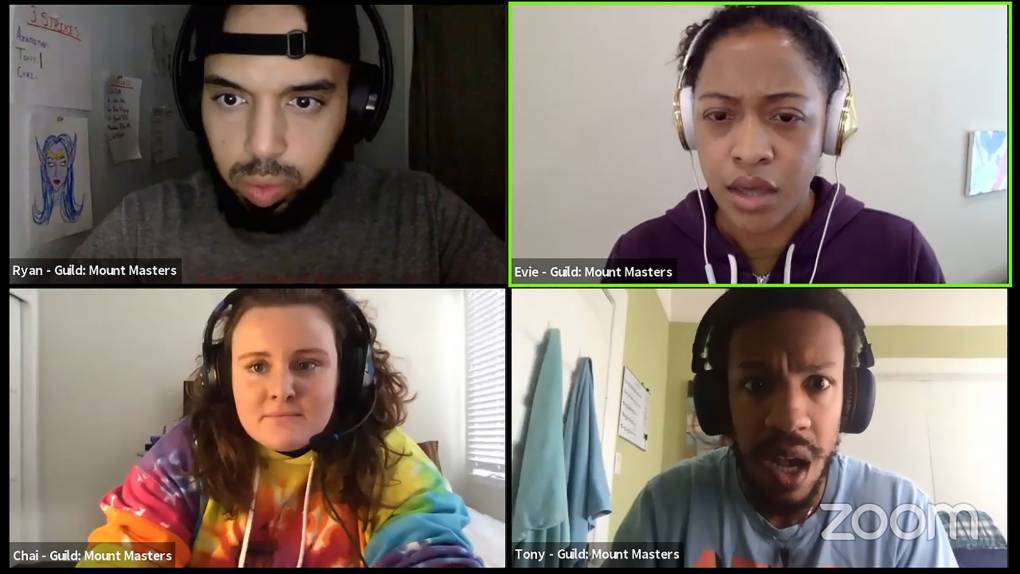
"caption": "Top L-R: James Mercer as Ryan and Cassandra Hunter as Evie; Bottom L-R: Madeline Isabel Yagle as Chai and Wesley Guimarães as Tony, in Madhuri Shekar’s \"In Love and Warcraft.\" ",
"description": "Top L-R: James Mercer as Ryan and Cassandra Hunter as Evie; Bottom L-R: Madeline Isabel Yagle as Chai and Wesley Guimarães as Tony, in Madhuri Shekar’s \"In Love and Warcraft.\" ",
"title": "InLoveAndWarcraft_Still1_courtesyofACT",
"credit": "courtesy of A.C.T.",
"status": "inherit",
"isLoading": false,
"fetchFailed": false
},
"arts_13876839": {
"type": "attachments",
"id": "arts_13876839",
"meta": {
"index": "attachments_1716263798",
"site": "arts",
"id": "13876839",
"found": true
},
"parent": 13876835,
"imgSizes": {
"twentyfourteen-full-width": {
"file": "https://ww2.kqed.org/app/uploads/sites/2/2020/03/ToniStone_cast_credit_KevinBerne-1038x576.jpg",
"width": 1038,
"mimeType": "image/jpeg",
"height": 576
},
"thumbnail": {
"file": "https://ww2.kqed.org/app/uploads/sites/2/2020/03/ToniStone_cast_credit_KevinBerne-160x106.jpg",
"width": 160,
"mimeType": "image/jpeg",
"height": 106
},
"post-thumbnail": {
"file": "https://ww2.kqed.org/app/uploads/sites/2/2020/03/ToniStone_cast_credit_KevinBerne-672x372.jpg",
"width": 672,
"mimeType": "image/jpeg",
"height": 372
},
"kqedFullSize": {
"file": "https://ww2.kqed.org/app/uploads/sites/2/2020/03/ToniStone_cast_credit_KevinBerne.jpg",
"width": 2400,
"height": 1597
},
"large": {
"file": "https://ww2.kqed.org/app/uploads/sites/2/2020/03/ToniStone_cast_credit_KevinBerne-1020x679.jpg",
"width": 1020,
"mimeType": "image/jpeg",
"height": 679
},
"full-width": {
"file": "https://ww2.kqed.org/app/uploads/sites/2/2020/03/ToniStone_cast_credit_KevinBerne-1920x1278.jpg",
"width": 1920,
"mimeType": "image/jpeg",
"height": 1278
},
"medium": {
"file": "https://ww2.kqed.org/app/uploads/sites/2/2020/03/ToniStone_cast_credit_KevinBerne-800x532.jpg",
"width": 800,
"mimeType": "image/jpeg",
"height": 532
},
"medium_large": {
"file": "https://ww2.kqed.org/app/uploads/sites/2/2020/03/ToniStone_cast_credit_KevinBerne-768x511.jpg",
"width": 768,
"mimeType": "image/jpeg",
"height": 511
}
},
"publishDate": 1584399439,
"modified": 1584489757,
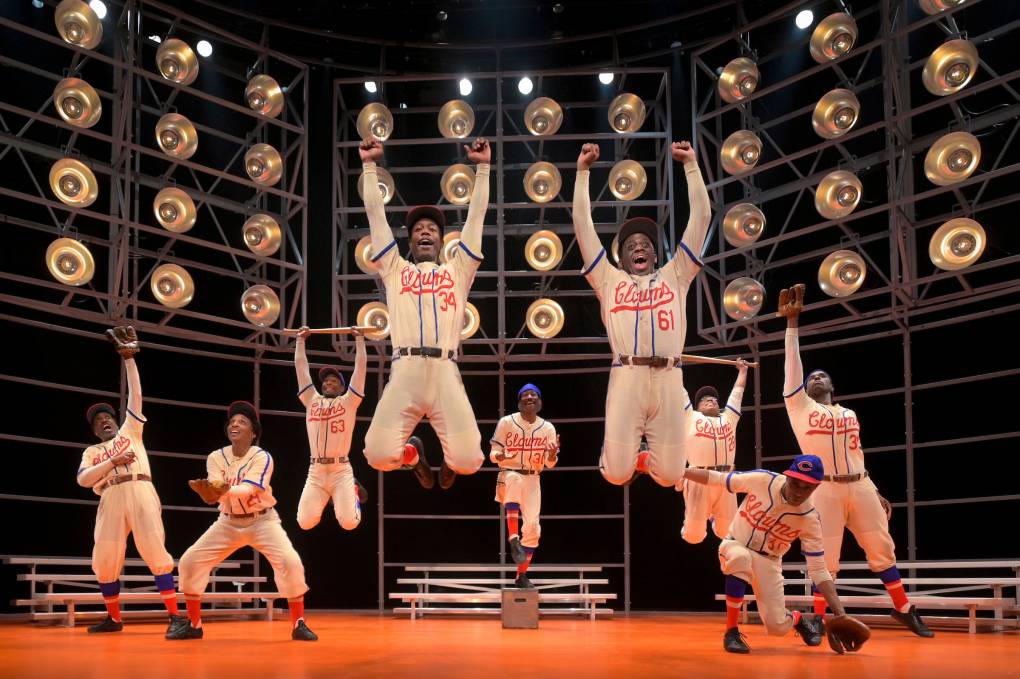
"caption": "The cast of 'Toni Stone' at A.C.T.",
"description": "The cast of 'Toni Stone' at A.C.T.",
"title": "ToniStone_cast_credit_KevinBerne",
"credit": "Kevin Berne",
"status": "inherit",
"isLoading": false,
"fetchFailed": false
},
"arts_13869743": {
"type": "attachments",
"id": "arts_13869743",
"meta": {
"index": "attachments_1716263798",
"site": "arts",
"id": "13869743",
"found": true
},
"parent": 13869685,
"imgSizes": {
"twentyfourteen-full-width": {
"file": "https://ww2.kqed.org/app/uploads/sites/2/2019/11/Testmatch.MAIN_-1038x576.jpg",
"width": 1038,
"mimeType": "image/jpeg",
"height": 576
},
"thumbnail": {
"file": "https://ww2.kqed.org/app/uploads/sites/2/2019/11/Testmatch.MAIN_-160x90.jpg",
"width": 160,
"mimeType": "image/jpeg",
"height": 90
},
"post-thumbnail": {
"file": "https://ww2.kqed.org/app/uploads/sites/2/2019/11/Testmatch.MAIN_-672x372.jpg",
"width": 672,
"mimeType": "image/jpeg",
"height": 372
},
"kqedFullSize": {
"file": "https://ww2.kqed.org/app/uploads/sites/2/2019/11/Testmatch.MAIN_.jpg",
"width": 1564,
"height": 880
},
"large": {
"file": "https://ww2.kqed.org/app/uploads/sites/2/2019/11/Testmatch.MAIN_-1020x574.jpg",
"width": 1020,
"mimeType": "image/jpeg",
"height": 574
},
"complete_open_graph": {
"file": "https://ww2.kqed.org/app/uploads/sites/2/2019/11/Testmatch.MAIN_-1200x675.jpg",
"width": 1200,
"mimeType": "image/jpeg",
"height": 675
},
"medium": {
"file": "https://ww2.kqed.org/app/uploads/sites/2/2019/11/Testmatch.MAIN_-800x450.jpg",
"width": 800,
"mimeType": "image/jpeg",
"height": 450
},
"medium_large": {
"file": "https://ww2.kqed.org/app/uploads/sites/2/2019/11/Testmatch.MAIN_-768x432.jpg",
"width": 768,
"mimeType": "image/jpeg",
"height": 432
}
},
"publishDate": 1573594226,
"modified": 1573594253,
"caption": "Avanthika Srinivasan shows off her bowling style in the players lounge in Kate Attwell's Testmatch at A.C.T.'s Strand Theater.",
"description": "Avanthika Srinivasan shows off her bowling style in the players lounge in Kate Attwell's Testmatch at A.C.T.'s Strand Theater.",
"title": "Testmatch.MAIN",
"credit": "Kevin Berne",
"status": "inherit",
"isLoading": false,
"fetchFailed": false
},
"arts_13864732": {
"type": "attachments",
"id": "arts_13864732",
"meta": {
"index": "attachments_1716263798",
"site": "arts",
"id": "13864732",
"found": true
},
"parent": 13864721,
"imgSizes": {
"twentyfourteen-full-width": {
"file": "https://ww2.kqed.org/app/uploads/sites/2/2019/08/HPATCC-NY-Year-Two-Wand-Dance-–-Photo-By-Matthew-Murphy-1038x576.jpg",
"width": 1038,
"mimeType": "image/jpeg",
"height": 576
},
"thumbnail": {
"file": "https://ww2.kqed.org/app/uploads/sites/2/2019/08/HPATCC-NY-Year-Two-Wand-Dance-–-Photo-By-Matthew-Murphy-160x107.jpg",
"width": 160,
"mimeType": "image/jpeg",
"height": 107
},
"post-thumbnail": {
"file": "https://ww2.kqed.org/app/uploads/sites/2/2019/08/HPATCC-NY-Year-Two-Wand-Dance-–-Photo-By-Matthew-Murphy-672x372.jpg",
"width": 672,
"mimeType": "image/jpeg",
"height": 372
},
"kqedFullSize": {
"file": "https://ww2.kqed.org/app/uploads/sites/2/2019/08/HPATCC-NY-Year-Two-Wand-Dance-–-Photo-By-Matthew-Murphy.jpg",
"width": 2000,
"height": 1338
},
"large": {
"file": "https://ww2.kqed.org/app/uploads/sites/2/2019/08/HPATCC-NY-Year-Two-Wand-Dance-–-Photo-By-Matthew-Murphy-1020x682.jpg",
"width": 1020,
"mimeType": "image/jpeg",
"height": 682
},
"complete_open_graph": {
"file": "https://ww2.kqed.org/app/uploads/sites/2/2019/08/HPATCC-NY-Year-Two-Wand-Dance-–-Photo-By-Matthew-Murphy-1200x803.jpg",
"width": 1200,
"mimeType": "image/jpeg",
"height": 803
},
"full-width": {
"file": "https://ww2.kqed.org/app/uploads/sites/2/2019/08/HPATCC-NY-Year-Two-Wand-Dance-–-Photo-By-Matthew-Murphy-1920x1284.jpg",
"width": 1920,
"mimeType": "image/jpeg",
"height": 1284
},
"medium": {
"file": "https://ww2.kqed.org/app/uploads/sites/2/2019/08/HPATCC-NY-Year-Two-Wand-Dance-–-Photo-By-Matthew-Murphy-800x535.jpg",
"width": 800,
"mimeType": "image/jpeg",
"height": 535
},
"medium_large": {
"file": "https://ww2.kqed.org/app/uploads/sites/2/2019/08/HPATCC-NY-Year-Two-Wand-Dance-–-Photo-By-Matthew-Murphy-768x514.jpg",
"width": 768,
"mimeType": "image/jpeg",
"height": 514
}
},
"publishDate": 1566584157,
"modified": 1566584233,
"caption": "New York cast of Harry Potter and the Cursed Child.",
"description": "New York cast of Harry Potter and the Cursed Child.",
"title": "HPATCC NY - Year Two - Wand Dance – Photo By Matthew Murphy",
"credit": "Matthew Murphy",
"status": "inherit",
"isLoading": false,
"fetchFailed": false
},
"arts_13864451": {
"type": "attachments",
"id": "arts_13864451",
"meta": {
"index": "attachments_1716263798",
"site": "arts",
"id": "13864451",
"found": true
},
"parent": 13864299,
"imgSizes": {
"twentyfourteen-full-width": {
"file": "https://ww2.kqed.org/app/uploads/sites/2/2019/08/unnamed-1-1038x576.jpg",
"width": 1038,
"mimeType": "image/jpeg",
"height": 576
},
"thumbnail": {
"file": "https://ww2.kqed.org/app/uploads/sites/2/2019/08/unnamed-1-160x107.jpg",
"width": 160,
"mimeType": "image/jpeg",
"height": 107
},
"post-thumbnail": {
"file": "https://ww2.kqed.org/app/uploads/sites/2/2019/08/unnamed-1-672x372.jpg",
"width": 672,
"mimeType": "image/jpeg",
"height": 372
},
"kqedFullSize": {
"file": "https://ww2.kqed.org/app/uploads/sites/2/2019/08/unnamed-1.jpg",
"width": 1280,
"height": 853
},
"large": {
"file": "https://ww2.kqed.org/app/uploads/sites/2/2019/08/unnamed-1-1020x680.jpg",
"width": 1020,
"mimeType": "image/jpeg",
"height": 680
},
"complete_open_graph": {
"file": "https://ww2.kqed.org/app/uploads/sites/2/2019/08/unnamed-1-1200x800.jpg",
"width": 1200,
"mimeType": "image/jpeg",
"height": 800
},
"medium": {
"file": "https://ww2.kqed.org/app/uploads/sites/2/2019/08/unnamed-1-800x533.jpg",
"width": 800,
"mimeType": "image/jpeg",
"height": 533
},
"medium_large": {
"file": "https://ww2.kqed.org/app/uploads/sites/2/2019/08/unnamed-1-768x512.jpg",
"width": 768,
"mimeType": "image/jpeg",
"height": 512
}
},
"publishDate": 1566236735,
"modified": 1566435092,
"caption": "Netta Brielle.",
"description": "Netta Brielle.",
"title": "Netta Brielle",
"credit": "Courtesy of the artist",
"status": "inherit",
"isLoading": false,
"fetchFailed": false
},
"arts_13859364": {
"type": "attachments",
"id": "arts_13859364",
"meta": {
"index": "attachments_1716263798",
"site": "arts",
"id": "13859364",
"found": true
},
"parent": 13859196,
"imgSizes": {
"twentyfourteen-full-width": {
"file": "https://ww2.kqed.org/app/uploads/sites/2/2019/06/Rhinicerous_ensemble_featuredimage_credit_KevinBerne_COVER-1038x576.jpg",
"width": 1038,
"mimeType": "image/jpeg",
"height": 576
},
"thumbnail": {
"file": "https://ww2.kqed.org/app/uploads/sites/2/2019/06/Rhinicerous_ensemble_featuredimage_credit_KevinBerne_COVER-160x92.jpg",
"width": 160,
"mimeType": "image/jpeg",
"height": 92
},
"post-thumbnail": {
"file": "https://ww2.kqed.org/app/uploads/sites/2/2019/06/Rhinicerous_ensemble_featuredimage_credit_KevinBerne_COVER-672x372.jpg",
"width": 672,
"mimeType": "image/jpeg",
"height": 372
},
"kqedFullSize": {
"file": "https://ww2.kqed.org/app/uploads/sites/2/2019/06/Rhinicerous_ensemble_featuredimage_credit_KevinBerne_COVER.jpg",
"width": 1920,
"height": 1108
},
"large": {
"file": "https://ww2.kqed.org/app/uploads/sites/2/2019/06/Rhinicerous_ensemble_featuredimage_credit_KevinBerne_COVER-1020x589.jpg",
"width": 1020,
"mimeType": "image/jpeg",
"height": 589
},
"complete_open_graph": {
"file": "https://ww2.kqed.org/app/uploads/sites/2/2019/06/Rhinicerous_ensemble_featuredimage_credit_KevinBerne_COVER-1200x693.jpg",
"width": 1200,
"mimeType": "image/jpeg",
"height": 693
},
"full-width": {
"file": "https://ww2.kqed.org/app/uploads/sites/2/2019/06/Rhinicerous_ensemble_featuredimage_credit_KevinBerne_COVER-1920x1108.jpg",
"width": 1920,
"mimeType": "image/jpeg",
"height": 1108
},
"medium": {
"file": "https://ww2.kqed.org/app/uploads/sites/2/2019/06/Rhinicerous_ensemble_featuredimage_credit_KevinBerne_COVER-800x462.jpg",
"width": 800,
"mimeType": "image/jpeg",
"height": 462
},
"medium_large": {
"file": "https://ww2.kqed.org/app/uploads/sites/2/2019/06/Rhinicerous_ensemble_featuredimage_credit_KevinBerne_COVER-768x443.jpg",
"width": 768,
"mimeType": "image/jpeg",
"height": 443
}
},
"publishDate": 1560200921,
"modified": 1560200956,
"caption": "The cast of Ionesco's 'Rhinoceros' at A.C.T. Directed by Frank Galati.",
"description": "The cast of Ionesco's 'Rhinoceros' at A.C.T. Directed by Frank Galati.",
"title": "Rhinicerous_ensemble_featuredimage_credit_KevinBerne_COVER",
"credit": "Kevin Berne",
"status": "inherit",
"isLoading": false,
"fetchFailed": false
}
},
"audioPlayerReducer": {
"postId": "stream_live",
"isPaused": true,
"isPlaying": false,
"pfsActive": false,
"pledgeModalIsOpen": true,
"playerDrawerIsOpen": false,
"liveAudioPlayStartedAt": 0,
"liveAudioPlayContext": ""
},
"authorsReducer": {
"gmeline": {
"type": "authors",
"id": "185",
"meta": {
"index": "authors_1716337520",
"id": "185",
"found": true
},
"name": "Gabe Meline",
"firstName": "Gabe",
"lastName": "Meline",
"slug": "gmeline",
"email": "gmeline@kqed.org",
"display_author_email": true,
"staff_mastheads": [
"arts"
],
"title": "Senior Editor, KQED Arts & Culture",
"bio": "Gabe Meline entered journalism at age 15 making photocopied zines, and has since earned awards from the Edward R. Murrow Awards, the Society for Professional Journalists, the Online Journalism Awards, the Association of Alternative Newsweeklies and the California Newspaper Publishers Association. Prior to KQED, he was the editor of the \u003cem>North Bay Bohemian\u003c/em> and a touring musician. He lives with his wife and daughter in his hometown of Santa Rosa, CA.",
"avatar": "https://secure.gravatar.com/avatar/5bebe57be0d8bc2dd318934feb47299e2d2d10cba28d09d8d7afb389a2ce2bdd?s=600&d=blank&r=g",
"twitter": null,
"bluesky": null,
"facebook": null,
"instagram": null,
"linkedin": null,
"sites": [
{
"site": "",
"roles": [
"editor"
]
},
{
"site": "arts",
"roles": [
"administrator"
]
},
{
"site": "artschool",
"roles": [
"editor"
]
},
{
"site": "news",
"roles": [
"author"
]
},
{
"site": "pop",
"roles": [
"editor"
]
},
{
"site": "bayareabites",
"roles": [
"editor"
]
},
{
"site": "food",
"roles": [
"editor"
]
},
{
"site": "forum",
"roles": [
"administrator"
]
},
{
"site": "liveblog",
"roles": [
"editor"
]
},
{
"site": "hiphop",
"roles": [
"editor"
]
}
],
"headData": {
"title": "Gabe Meline | KQED",
"description": "Senior Editor, KQED Arts & Culture",
"ogImgSrc": "https://secure.gravatar.com/avatar/5bebe57be0d8bc2dd318934feb47299e2d2d10cba28d09d8d7afb389a2ce2bdd?s=600&d=blank&r=g",
"twImgSrc": "https://secure.gravatar.com/avatar/5bebe57be0d8bc2dd318934feb47299e2d2d10cba28d09d8d7afb389a2ce2bdd?s=600&d=blank&r=g"
},
"isLoading": false,
"link": "/author/gmeline"
},
"ogpenn": {
"type": "authors",
"id": "11491",
"meta": {
"index": "authors_1716337520",
"id": "11491",
"found": true
},
"name": "Pendarvis Harshaw",
"firstName": "Pendarvis",
"lastName": "Harshaw",
"slug": "ogpenn",
"email": "ogpenn@gmail.com",
"display_author_email": false,
"staff_mastheads": [
"arts"
],
"title": "Community Engagement Reporter",
"bio": "Pendarvis Harshaw is an educator, host and writer with KQED Arts.",
"avatar": "https://secure.gravatar.com/avatar/972b77ee8e3f346ae2b00622661187fbfabd059b5693bbdc1475ea7a722fd4cd?s=600&d=blank&r=g",
"twitter": null,
"bluesky": null,
"facebook": null,
"instagram": "ogpenn",
"linkedin": null,
"sites": [
{
"site": "arts",
"roles": [
"administrator"
]
},
{
"site": "news",
"roles": [
"editor"
]
},
{
"site": "bayareabites",
"roles": [
"author"
]
},
{
"site": "hiphop",
"roles": [
"editor"
]
}
],
"headData": {
"title": "Pendarvis Harshaw | KQED",
"description": "Community Engagement Reporter",
"ogImgSrc": "https://secure.gravatar.com/avatar/972b77ee8e3f346ae2b00622661187fbfabd059b5693bbdc1475ea7a722fd4cd?s=600&d=blank&r=g",
"twImgSrc": "https://secure.gravatar.com/avatar/972b77ee8e3f346ae2b00622661187fbfabd059b5693bbdc1475ea7a722fd4cd?s=600&d=blank&r=g"
},
"isLoading": false,
"link": "/author/ogpenn"
},
"ngluckstern": {
"type": "authors",
"id": "11497",
"meta": {
"index": "authors_1716337520",
"id": "11497",
"found": true
},
"name": "Nicole Gluckstern",
"firstName": "Nicole",
"lastName": "Gluckstern",
"slug": "ngluckstern",
"email": "gluckstern.nicole@gmail.com",
"display_author_email": false,
"staff_mastheads": [],
"title": "KQED Contributor",
"bio": null,
"avatar": "https://secure.gravatar.com/avatar/2c3d593194017bfe811a998ad03140909de330b22abebf4889e1a564ce5b3495?s=600&d=blank&r=g",
"twitter": null,
"bluesky": null,
"facebook": null,
"instagram": null,
"linkedin": null,
"sites": [
{
"site": "arts",
"roles": [
"contributor"
]
}
],
"headData": {
"title": "Nicole Gluckstern | KQED",
"description": "KQED Contributor",
"ogImgSrc": "https://secure.gravatar.com/avatar/2c3d593194017bfe811a998ad03140909de330b22abebf4889e1a564ce5b3495?s=600&d=blank&r=g",
"twImgSrc": "https://secure.gravatar.com/avatar/2c3d593194017bfe811a998ad03140909de330b22abebf4889e1a564ce5b3495?s=600&d=blank&r=g"
},
"isLoading": false,
"link": "/author/ngluckstern"
}
},
"pagesReducer": {
"arts_tag_act": {
"type": "terms",
"id": "arts_1238",
"meta": {
"index": "terms_1716263798",
"site": "arts",
"id": "1238",
"score": 9.556034
},
"featImg": null,
"name": "ACT",
"description": null,
"taxonomy": "tag",
"headData": {
"twImgId": null,
"twTitle": null,
"ogTitle": null,
"ogImgId": null,
"twDescription": null,
"description": null,
"title": "ACT Archives | KQED Arts",
"ogDescription": null
},
"ttid": 1250,
"slug": "act",
"isLoading": false,
"title": "ACT",
"pageMeta": {
"site": "arts",
"WpPageTemplate": "page-topic-editorial",
"currentPage": 2
},
"blocks": [
{
"blockName": "kqed/post-list",
"attrs": {
"layout": "cardArticle2",
"query": "posts/arts?tag=act",
"seeMore": false,
"paginated": true,
"page": 2
}
},
{
"blockName": "kqed/ad"
}
]
}
},
"pfsSessionReducer": {},
"postsReducer": {
"stream_live": {
"type": "live",
"id": "stream_live",
"audioUrl": "https://streams.kqed.org/kqedradio",
"title": "Live Stream",
"excerpt": "Live Stream information currently unavailable.",
"link": "/radio",
"featImg": "",
"label": {
"name": "KQED Live",
"link": "/"
}
},
"stream_kqedNewscast": {
"type": "posts",
"id": "stream_kqedNewscast",
"audioUrl": "https://www.kqed.org/.stream/anon/radio/RDnews/newscast.mp3?_=1",
"title": "KQED Newscast",
"featImg": "",
"label": {
"name": "88.5 FM",
"link": "/"
}
},
"arts_13933150": {
"type": "posts",
"id": "arts_13933150",
"meta": {
"index": "posts_1716263798",
"site": "arts",
"id": "13933150",
"score": null,
"sort": [
1692724524000
]
},
"parent": 0,
"labelTerm": {},
"blocks": [],
"publishDate": 1692724524,
"format": "standard",
"title": "10 Ways to Fall in Love With Bay Area Theatre and Dance",
"headTitle": "10 Ways to Fall in Love With Bay Area Theatre and Dance | KQED",
"content": "\u003cp>\u003cstrong>\u003cem>Find more of KQED’s picks for the \u003ca href=\"https://www.kqed.org/fallguide2023\">best fall 2023 events here\u003c/a>.\u003c/em>\u003c/strong>\u003c/p>\n\u003cp>For Bay Area theatre, fall is when summer festivals wind down and new seasons of performing companies ramp up. As always, far more amazing shows open over the next few months than one roundup can contain. But here’s a sampling of the most exciting, innovative, and thought-provoking works hitting the boards this fall — from A.C.T. to Z Space.\u003c/p>\n\u003ch3>Theater\u003c/h3>\n\u003cfigure id=\"attachment_13933327\" class=\"wp-caption aligncenter\" style=\"max-width: 800px\">\u003ca href=\"https://ww2.kqed.org/app/uploads/sites/2/2023/08/Dominique-Morisseau-Ahmir-Questlove-Thompson-Camille-A.-Brown-and-Kamilah-Forbes-c-Nicola-Goode-scaled.jpg\">\u003cimg loading=\"lazy\" decoding=\"async\" class=\"size-medium wp-image-13933327\" src=\"https://ww2.kqed.org/app/uploads/sites/2/2023/08/Dominique-Morisseau-Ahmir-Questlove-Thompson-Camille-A.-Brown-and-Kamilah-Forbes-c-Nicola-Goode-800x533.jpg\" alt=\"a group photo of three young Black women and a tall Black man, the musician Questlove, in glasses \" width=\"800\" height=\"533\" srcset=\"https://cdn.kqed.org/wp-content/uploads/sites/2/2023/08/Dominique-Morisseau-Ahmir-Questlove-Thompson-Camille-A.-Brown-and-Kamilah-Forbes-c-Nicola-Goode-800x533.jpg 800w, https://cdn.kqed.org/wp-content/uploads/sites/2/2023/08/Dominique-Morisseau-Ahmir-Questlove-Thompson-Camille-A.-Brown-and-Kamilah-Forbes-c-Nicola-Goode-1020x680.jpg 1020w, https://cdn.kqed.org/wp-content/uploads/sites/2/2023/08/Dominique-Morisseau-Ahmir-Questlove-Thompson-Camille-A.-Brown-and-Kamilah-Forbes-c-Nicola-Goode-160x107.jpg 160w, https://cdn.kqed.org/wp-content/uploads/sites/2/2023/08/Dominique-Morisseau-Ahmir-Questlove-Thompson-Camille-A.-Brown-and-Kamilah-Forbes-c-Nicola-Goode-768x512.jpg 768w, https://cdn.kqed.org/wp-content/uploads/sites/2/2023/08/Dominique-Morisseau-Ahmir-Questlove-Thompson-Camille-A.-Brown-and-Kamilah-Forbes-c-Nicola-Goode-1536x1024.jpg 1536w, https://cdn.kqed.org/wp-content/uploads/sites/2/2023/08/Dominique-Morisseau-Ahmir-Questlove-Thompson-Camille-A.-Brown-and-Kamilah-Forbes-c-Nicola-Goode-2048x1365.jpg 2048w, https://cdn.kqed.org/wp-content/uploads/sites/2/2023/08/Dominique-Morisseau-Ahmir-Questlove-Thompson-Camille-A.-Brown-and-Kamilah-Forbes-c-Nicola-Goode-1920x1280.jpg 1920w\" sizes=\"(max-width: 800px) 100vw, 800px\">\u003c/a>\u003cfigcaption class=\"wp-caption-text\">Dominique Morisseau, Ahmir Questlove Thompson, Camille A. Brown and Kamilah Forbes. \u003ccite>(Nicola Goode)\u003c/cite>\u003c/figcaption>\u003c/figure>\n\u003ch2>‘\u003ca href=\"http://www.act-sf.org/whats-on/2023-24-season/soul-train/\" target=\"_blank\" rel=\"noopener\">Hippest Trip — The Soul Train Musical\u003c/a>\u003cem>’\u003c/em>\u003c/h2>\n\u003cp>\u003cem>Aug. 25–Oct. 1, 2023\u003cbr>\nA.C.T.’s Toni Rembe Theater, San Francisco\u003c/em>\u003c/p>\n\u003cp>All aboard — the Soul Train is about to leave the station! \u003cem>Hippest Trip — The Soul Train Musical\u003c/em> promises to turn A.C.T.’s Toni Rembe Theater into a celebratory dance party, as well as an homage to the talent that made \u003cem>Soul Train\u003c/em> a beloved household staple for 35 years. Spotlighting the Black music, dance and culture variety show founded by Don Cornelius in 1971, \u003cem>Hippest Trip\u003c/em> presents a powerhouse cast, playwriting by Tony Award-nominated Dominique Morisseau, direction by Kamilah Forbes and choreography by \u003cem>Toni Stone\u003c/em>’s Camille A. Brown.\u003c/p>\n\u003cfigure id=\"attachment_13933423\" class=\"wp-caption aligncenter\" style=\"max-width: 800px\">\u003ca href=\"https://ww2.kqed.org/app/uploads/sites/2/2023/08/A.DSC02067-scaled.jpg\">\u003cimg loading=\"lazy\" decoding=\"async\" class=\"size-medium wp-image-13933423\" src=\"https://ww2.kqed.org/app/uploads/sites/2/2023/08/A.DSC02067-800x533.jpg\" alt=\"a Black woman with short hair wraps her hands in tape like she's about to box next to a young Asian American man in a jean jacket with his fists up\" width=\"800\" height=\"533\" srcset=\"https://cdn.kqed.org/wp-content/uploads/sites/2/2023/08/A.DSC02067-800x533.jpg 800w, https://cdn.kqed.org/wp-content/uploads/sites/2/2023/08/A.DSC02067-1020x680.jpg 1020w, https://cdn.kqed.org/wp-content/uploads/sites/2/2023/08/A.DSC02067-160x107.jpg 160w, https://cdn.kqed.org/wp-content/uploads/sites/2/2023/08/A.DSC02067-768x512.jpg 768w, https://cdn.kqed.org/wp-content/uploads/sites/2/2023/08/A.DSC02067-1536x1024.jpg 1536w, https://cdn.kqed.org/wp-content/uploads/sites/2/2023/08/A.DSC02067-2048x1365.jpg 2048w, https://cdn.kqed.org/wp-content/uploads/sites/2/2023/08/A.DSC02067-1920x1280.jpg 1920w\" sizes=\"(max-width: 800px) 100vw, 800px\">\u003c/a>\u003cfigcaption class=\"wp-caption-text\">Gabby Momah and Mikee Loria in ‘Wolf Play.’ \u003ccite>(Robbie Sweeny)\u003c/cite>\u003c/figcaption>\u003c/figure>\n\u003ch2>‘\u003ca href=\"https://shotgunplayers.org/online/article/wolf-play\" target=\"_blank\" rel=\"noopener\">Wolf Play\u003c/a>’\u003c/h2>\n\u003cp>\u003cem>Sept. 2–Oct. 1, 2023\u003c/em>\u003cbr>\n\u003cem>Ashby Stage, Berkeley\u003c/em>\u003c/p>\n\u003cp>[ad fullwidth]\u003c/p>\n\u003cp>Tackling the morally dubious practice of adoptive parents “re-homing” their children online, Hansol Jung’s devastatingly astute \u003cem>Wolf Play\u003c/em> brings an unforgettable protagonist to life in this Elizabeth Carter-directed production. Jeenu, a 6-year old adoptee, finds refuge in the idea that he is a wolf seeking his pack. For new parents Robin and Ash, Jeenu is both a completion and a complication inside their own refuge of a chosen family. When external forces intrude in their circle, each character must learn to fight for their territory — and for each other.\u003c/p>\n\u003cfigure id=\"attachment_13933580\" class=\"wp-caption aligncenter\" style=\"max-width: 800px\">\u003cimg loading=\"lazy\" decoding=\"async\" class=\"size-medium wp-image-13933580\" src=\"https://ww2.kqed.org/app/uploads/sites/2/2023/08/Gary-800x894.jpg\" alt=\"A man in purple top and spiked headpiece, with gold sash\" width=\"800\" height=\"894\" srcset=\"https://cdn.kqed.org/wp-content/uploads/sites/2/2023/08/Gary-800x894.jpg 800w, https://cdn.kqed.org/wp-content/uploads/sites/2/2023/08/Gary-1020x1140.jpg 1020w, https://cdn.kqed.org/wp-content/uploads/sites/2/2023/08/Gary-160x179.jpg 160w, https://cdn.kqed.org/wp-content/uploads/sites/2/2023/08/Gary-768x859.jpg 768w, https://cdn.kqed.org/wp-content/uploads/sites/2/2023/08/Gary-1374x1536.jpg 1374w, https://cdn.kqed.org/wp-content/uploads/sites/2/2023/08/Gary.jpg 1592w\" sizes=\"(max-width: 800px) 100vw, 800px\">\u003cfigcaption class=\"wp-caption-text\">‘Gary: A Sequel to Titus Andronicus.’ \u003ccite>(Oakland Theater Project )\u003c/cite>\u003c/figcaption>\u003c/figure>\n\u003ch2>‘\u003ca href=\"https://oaklandtheaterproject.org/gary\">Gary: A Sequel To Titus Andronicus\u003c/a>’\u003c/h2>\n\u003cp>\u003cem>Sept. 8–Oct. 1, 2023\u003c/em>\u003cbr>\n\u003cem>Oakland Theater Project at FLAX\u003c/em>\u003c/p>\n\u003cp>One of Shakespeare’s most harrowing plays, \u003cem>Titus Andronicus\u003c/em> ends in buckets of blood and piles of bodies — a state of affairs gleefully exaggerated in Taylor Mac’s \u003cem>Gary\u003c/em>. With literal bodies stacked to the ceiling, and a pair of put-upon servants to mop up the mess the mighty have left behind, \u003cem>Gary\u003c/em> gives voice to the voiceless — albeit with fart jokes. But don’t think Mac’s foray into Theatre of the Ridiculous territory is all about the frailties of the human body. What Mac is after is examining the frailties of the systems that perpetrate cycles of violence and trauma, finding unexpected grace under unimaginable pressure.\u003c/p>\n\u003cfigure id=\"attachment_13933332\" class=\"wp-caption aligncenter\" style=\"max-width: 546px\">\u003ca href=\"https://ww2.kqed.org/app/uploads/sites/2/2023/08/Mary-Glen-Fredrick-headshot.jpg\">\u003cimg loading=\"lazy\" decoding=\"async\" class=\"size-full wp-image-13933332\" src=\"https://ww2.kqed.org/app/uploads/sites/2/2023/08/Mary-Glen-Fredrick-headshot.jpg\" alt=\"a white woman with curly hair and a green scarf looks at the camera outside\" width=\"546\" height=\"734\" srcset=\"https://cdn.kqed.org/wp-content/uploads/sites/2/2023/08/Mary-Glen-Fredrick-headshot.jpg 546w, https://cdn.kqed.org/wp-content/uploads/sites/2/2023/08/Mary-Glen-Fredrick-headshot-160x215.jpg 160w\" sizes=\"(max-width: 546px) 100vw, 546px\">\u003c/a>\u003cfigcaption class=\"wp-caption-text\">Playwright Mary Glen Fredrick. \u003ccite>(Courtesy of Mary Glen Fredrick)\u003c/cite>\u003c/figcaption>\u003c/figure>\n\u003ch2>‘\u003ca href=\"http://www.crowdedfire.org/edit-annie/\" target=\"_blank\" rel=\"noopener\">Edit Annie\u003c/a>’\u003c/h2>\n\u003cp>\u003cem>Sept. 21–Oct. 14, 2023\u003cbr>\nMagic Theatre, San Francisco\u003c/em>\u003c/p>\n\u003cp>It’s been two long years since Crowded Fire Theater presented Isaac Gómez’ terrific and terrifying \u003cem>The Displaced\u003c/em>. Their West Coast premiere of \u003cem>Edit Annie\u003c/em>, by rising New York-based playwright and video artist Mary Glen Fredrick, promises to be worth the wait. Unapologetically rooted in the technological tangles of our time, the play explores the implications and repercussions of our ability to continuously reinvent, redefine, and rewind our relationships in a heavily mediated reality. With a superlative cast, co-direction by Leigh Rondon-Davis and Nailah Unole Dida-nese’ah Harper-Malveaux, and video designed and edited by Fredrick with Lana Palmer, \u003cem>Edit Annie\u003c/em> gives the Extremely Online generation a chance to connect IRL without even having to swipe.\u003c/p>\n\u003cfigure id=\"attachment_13933398\" class=\"wp-caption aligncenter\" style=\"max-width: 800px\">\u003ca href=\"https://ww2.kqed.org/app/uploads/sites/2/2023/08/peacheschrist01_sm.jpg\">\u003cimg loading=\"lazy\" decoding=\"async\" class=\"size-medium wp-image-13933398\" src=\"https://ww2.kqed.org/app/uploads/sites/2/2023/08/peacheschrist01_sm-800x534.jpg\" alt=\"a spooky costumed drag queen against a purple background\" width=\"800\" height=\"534\" srcset=\"https://cdn.kqed.org/wp-content/uploads/sites/2/2023/08/peacheschrist01_sm-800x534.jpg 800w, https://cdn.kqed.org/wp-content/uploads/sites/2/2023/08/peacheschrist01_sm-1020x681.jpg 1020w, https://cdn.kqed.org/wp-content/uploads/sites/2/2023/08/peacheschrist01_sm-160x107.jpg 160w, https://cdn.kqed.org/wp-content/uploads/sites/2/2023/08/peacheschrist01_sm-768x513.jpg 768w, https://cdn.kqed.org/wp-content/uploads/sites/2/2023/08/peacheschrist01_sm-1536x1025.jpg 1536w, https://cdn.kqed.org/wp-content/uploads/sites/2/2023/08/peacheschrist01_sm.jpg 1766w\" sizes=\"(max-width: 800px) 100vw, 800px\">\u003c/a>\u003cfigcaption class=\"wp-caption-text\">Peaches Christ at the Terror Vault inside the San Francisco Mint. \u003ccite>(Courtesy of Terror Vault)\u003c/cite>\u003c/figcaption>\u003c/figure>\n\u003ch2>‘\u003ca href=\"https://www.tixr.com/groups/terrorvault\" target=\"_blank\" rel=\"noopener\">Terror Vault Presents: The Initiation\u003c/a>’\u003c/h2>\n\u003cp>\u003cem>Sept. 29-Oct. 31, 2023\u003cbr>\nSan Francisco Mint\u003c/em>\u003c/p>\n\u003cp>Borne from Peaches Christ’s taste for the macabre and San Francisco’s appetite for the immersive, Terror Vault is a haunted attraction that truly delivers. Appropriately ensconced in the magnificent Old Mint — a granite behemoth built in 1874 — Terror Vault makes use of its shadowy corners, vintage vaults, and disorienting floorplan to devious effect. This year’s theme —\u003cem>The Initiation \u003c/em>— delves into the Bay Area’s unsavory association with cults and their leaders, inviting audiences to attend a “seminar” for a mysterious organization called INsight. Far more involved than your typical haunted house, Terror Vault shows include fully realized world-building, humor, exhibitionists, the best horror makeup around, and consensual audience interactivity for a thrilling adventure you won’t soon forget.\u003c/p>\n\u003ch2>‘\u003ca href=\"https://cuttingball.com/tickets\" target=\"_blank\" rel=\"noopener\">Rossum’s Universal Robots\u003c/a>’\u003c/h2>\n\u003cp>\u003cem>Oct. 20–Nov. 12, 2023\u003c/em>\u003cbr>\n\u003cem>EXIT on Taylor, San Francisco\u003c/em>\u003c/p>\n\u003cp>From its inception, Cutting Ball Theater has been devoted to interrogating the present moment through revitalized classics that sidestep mundane realism in favor of fertile imagination. That makes this adaptation of proto-science fiction \u003cem>Rossum’s Universal Robots\u003c/em> completely on-brand, while still staking out some fantastical new territory for this experimental company. Written in 1920 by Czech playwright Karel Čapek, \u003cem>R.U.R.\u003c/em> examines the human condition through the eyes of its greatest imitators, and would-be inheritors. This production is helmed by Chris Steele — who recently stepped in as the company’s fourth Artistic leader operating within a newly-defined collective — and features a dynamic cast of robots who may have already taken over the world.\u003c/p>\n\u003ch2>‘\u003ca href=\"http://berkeleyrep.org/shows/bulrusher/\" target=\"_blank\" rel=\"noopener\">Bulrusher\u003c/a>’\u003c/h2>\n\u003cp>\u003cem>Oct. 27–Dec. 3, 2023\u003cbr>\nBerkeley Rep’s Peet’s Theatre\u003c/em>\u003c/p>\n\u003cp>In a highly anticipated return to Berkeley, the 2007 Pulitzer-nominated \u003cem>Bulrusher\u003c/em> is a language-driven coming-of-age story. Questions of braided identities, personal liberation and birthright combine with poetry, clairvoyance and the regionally specific Northern California dialect known as “Boontling.” Written by Bay Area-raised Eisa Davis, the niece of activist-scholar Angela Davis and an artistic multi-hyphenate in her own right, \u003cem>Bulrusher\u003c/em> asks: How do we discover who we really are in a world that constantly seeks to define us — and confine us? Nicole A. Watson directs.\u003c/p>\n\u003ch3>Dance\u003c/h3>\n\u003cfigure id=\"attachment_13933581\" class=\"wp-caption aligncenter\" style=\"max-width: 800px\">\u003cimg loading=\"lazy\" decoding=\"async\" class=\"size-medium wp-image-13933581\" src=\"https://ww2.kqed.org/app/uploads/sites/2/2023/08/NursingTheseWounds-800x562.jpg\" alt=\"A dancer in hospital patient garb leaps in the air with a nurse in the background.\" width=\"800\" height=\"562\" srcset=\"https://cdn.kqed.org/wp-content/uploads/sites/2/2023/08/NursingTheseWounds-800x562.jpg 800w, https://cdn.kqed.org/wp-content/uploads/sites/2/2023/08/NursingTheseWounds-1020x716.jpg 1020w, https://cdn.kqed.org/wp-content/uploads/sites/2/2023/08/NursingTheseWounds-160x112.jpg 160w, https://cdn.kqed.org/wp-content/uploads/sites/2/2023/08/NursingTheseWounds-768x539.jpg 768w, https://cdn.kqed.org/wp-content/uploads/sites/2/2023/08/NursingTheseWounds-1536x1078.jpg 1536w, https://cdn.kqed.org/wp-content/uploads/sites/2/2023/08/NursingTheseWounds-2048x1438.jpg 2048w, https://cdn.kqed.org/wp-content/uploads/sites/2/2023/08/NursingTheseWounds-1920x1348.jpg 1920w\" sizes=\"(max-width: 800px) 100vw, 800px\">\u003cfigcaption class=\"wp-caption-text\">‘Nursing These Wounds.’ \u003ccite>(KULARTS)\u003c/cite>\u003c/figcaption>\u003c/figure>\n\u003ch2>‘\u003ca href=\"http://www.kularts-sf.org/nursing-these-wounds\" target=\"_blank\" rel=\"noopener\">Nursing These Wounds\u003c/a>’\u003c/h2>\n\u003cp>\u003cem>Sept. 22–24, 2023\u003cbr>\nODC Theater, San Francisco\u003c/em>\u003cbr>\n\u003cem>Oct. 21–30, 2023\u003cbr>\nBrava Cabaret, San Francisco\u003c/em>\u003c/p>\n\u003cp>The COVID-19 pandemic has revealed the cracks and fissures in so many of our structures and institutions — particularly in the American health care system. So choreographer Alleluia Panis’ embodied exploration of the many faces and pathways of Pilipinix-born nurses and caregivers is as timely as it is vital. Panis, the co-founder of KULARTS, frequently wrestles with themes of migration, labor, and colonization in her work, and looks to folk dance and indigenous tradition to inform her vibrant choreography. This reprise of 2022’s world premiere offers an unflinching, sometimes harrowing, and loving tribute to an entire demographic of under-recognized, overwhelmed public health protectors.\u003c/p>\n\u003cfigure id=\"attachment_13933427\" class=\"wp-caption aligncenter\" style=\"max-width: 800px\">\u003ca href=\"https://ww2.kqed.org/app/uploads/sites/2/2023/08/SeanDorseyDance_TheLostArtOfDreaming_premiere_14_photoLydiaDaniller-1-1-scaled.jpeg\">\u003cimg loading=\"lazy\" decoding=\"async\" class=\"size-medium wp-image-13933427\" src=\"https://ww2.kqed.org/app/uploads/sites/2/2023/08/SeanDorseyDance_TheLostArtOfDreaming_premiere_14_photoLydiaDaniller-1-1-800x589.jpeg\" alt=\"a young Black man dancer poses while facing the camera as other dancers in blue dresses move behind him\" width=\"800\" height=\"589\" srcset=\"https://cdn.kqed.org/wp-content/uploads/sites/2/2023/08/SeanDorseyDance_TheLostArtOfDreaming_premiere_14_photoLydiaDaniller-1-1-800x589.jpeg 800w, https://cdn.kqed.org/wp-content/uploads/sites/2/2023/08/SeanDorseyDance_TheLostArtOfDreaming_premiere_14_photoLydiaDaniller-1-1-1020x751.jpeg 1020w, https://cdn.kqed.org/wp-content/uploads/sites/2/2023/08/SeanDorseyDance_TheLostArtOfDreaming_premiere_14_photoLydiaDaniller-1-1-160x118.jpeg 160w, https://cdn.kqed.org/wp-content/uploads/sites/2/2023/08/SeanDorseyDance_TheLostArtOfDreaming_premiere_14_photoLydiaDaniller-1-1-768x566.jpeg 768w, https://cdn.kqed.org/wp-content/uploads/sites/2/2023/08/SeanDorseyDance_TheLostArtOfDreaming_premiere_14_photoLydiaDaniller-1-1-1536x1132.jpeg 1536w, https://cdn.kqed.org/wp-content/uploads/sites/2/2023/08/SeanDorseyDance_TheLostArtOfDreaming_premiere_14_photoLydiaDaniller-1-1-2048x1509.jpeg 2048w, https://cdn.kqed.org/wp-content/uploads/sites/2/2023/08/SeanDorseyDance_TheLostArtOfDreaming_premiere_14_photoLydiaDaniller-1-1-1920x1414.jpeg 1920w\" sizes=\"(max-width: 800px) 100vw, 800px\">\u003c/a>\u003cfigcaption class=\"wp-caption-text\">Brandon Graham in ‘The Lost Art of Dreaming’ from Sean Dorsey Dance. \u003ccite>(Lydia Daniller)\u003c/cite>\u003c/figcaption>\u003c/figure>\n\u003ch2>Three at Z\u003c/h2>\n\u003cp>\u003cem>\u003ca href=\"https://www.zspace.org/orale\" target=\"_blank\" rel=\"noopener\">Òrale\u003c/a>, Sept. 7–9; \u003ca href=\"https://www.zspace.org/sdd-dreaming\">The Lost Art of Dreaming\u003c/a>, Sept. 29–Oct. 1; \u003ca href=\"https://www.queercatproductions.com/jesdeville\">Forgetting Tree\u003c/a>, Nov. 3–5\u003c/em>\u003cbr>\n\u003cem>Z Space, San Francisco\u003c/em>\u003c/p>\n\u003cp>Dance-driven, genre-exploding work comes to Z Space with a trio of radical performances. First up is \u003cem>Òrale\u003c/em>, a mini-festival of pieces directed by David Herrera Performance Company with an exciting who’s-who of nationally recognized Latinx dance-makers, with live music provided by the excellent El Vez and the Memphis Mariachis. Next, Sean Dorsey Dance encores \u003cem>The Lost Art of Dreaming \u003c/em>— a visually stunning and emotionally ecstatic work, setting its sights on a future of love and collective liberation, expressed through a choreography of queer trans and non-binary bodies. Finally, Queer Cat Productions and Openhaus Athletics install a “consent-forward” interactive and ecologically-engaged experience called \u003cem>Forgetting Tree\u003c/em> in Z Space’s spacious lobby. Curated and created by Jes DeVille, this work promises to stimulate all of the senses — most especially that of the revolutionary within.\u003c/p>\n\u003cfigure id=\"attachment_13933417\" class=\"wp-caption aligncenter\" style=\"max-width: 800px\">\u003ca href=\"https://ww2.kqed.org/app/uploads/sites/2/2023/08/Kim-Epifano-left-and-dancers-for-SFTD-2023.-Photo-by-Amani-Wade-scaled.jpg\">\u003cimg loading=\"lazy\" decoding=\"async\" class=\"size-medium wp-image-13933417\" src=\"https://ww2.kqed.org/app/uploads/sites/2/2023/08/Kim-Epifano-left-and-dancers-for-SFTD-2023.-Photo-by-Amani-Wade-800x534.jpg\" alt=\"a group of dancers in colorful clothes pose inside a trolley with green seats\" width=\"800\" height=\"534\" srcset=\"https://cdn.kqed.org/wp-content/uploads/sites/2/2023/08/Kim-Epifano-left-and-dancers-for-SFTD-2023.-Photo-by-Amani-Wade-800x534.jpg 800w, https://cdn.kqed.org/wp-content/uploads/sites/2/2023/08/Kim-Epifano-left-and-dancers-for-SFTD-2023.-Photo-by-Amani-Wade-1020x681.jpg 1020w, https://cdn.kqed.org/wp-content/uploads/sites/2/2023/08/Kim-Epifano-left-and-dancers-for-SFTD-2023.-Photo-by-Amani-Wade-160x107.jpg 160w, https://cdn.kqed.org/wp-content/uploads/sites/2/2023/08/Kim-Epifano-left-and-dancers-for-SFTD-2023.-Photo-by-Amani-Wade-768x513.jpg 768w, https://cdn.kqed.org/wp-content/uploads/sites/2/2023/08/Kim-Epifano-left-and-dancers-for-SFTD-2023.-Photo-by-Amani-Wade-1536x1026.jpg 1536w, https://cdn.kqed.org/wp-content/uploads/sites/2/2023/08/Kim-Epifano-left-and-dancers-for-SFTD-2023.-Photo-by-Amani-Wade-2048x1368.jpg 2048w, https://cdn.kqed.org/wp-content/uploads/sites/2/2023/08/Kim-Epifano-left-and-dancers-for-SFTD-2023.-Photo-by-Amani-Wade-1920x1282.jpg 1920w\" sizes=\"(max-width: 800px) 100vw, 800px\">\u003c/a>\u003cfigcaption class=\"wp-caption-text\">Kim Epifano and dancers on a trolley during the annual San Francisco Trolley Dances. \u003ccite>(Amani Wade)\u003c/cite>\u003c/figcaption>\u003c/figure>\n\u003ch2>\u003ca href=\"https://epiphanydance.org/san-francisco-trolley-dances/\" target=\"_blank\" rel=\"noopener\">San Francisco Trolley Dances: 20th Anniversary Edition\u003c/a>\u003c/h2>\n\u003cp>\u003cem>Oct. 21–22, 2023\u003c/em>\u003cbr>\n\u003cem>One Bush Plaza, various locations in San Francisco\u003c/em>\u003c/p>\n\u003cp>[ad floatright]\u003c/p>\n\u003cp>There’s simply nothing like the combination dance festival-urban exploration known as Trolley Dances. This year, the San Francisco treat returns to where it all began 20 years ago — on the iconic F-Market line. Starting at One Bush Plaza with Nava Dance Theatre, then hopping on and off the F-Market train en route to Fisherman’s Wharf, audience members will encounter such Bay Area dance luminaries as Blind Tiger Society, Jennifer Perfilio Movement Works, Kinetech Arts, Loco Bloco and artistic director Kim Epifano’s own company, Epiphany Dance. A highlight of the event will be a piece choreographed by San Diego dance legend Jean Isaacs — the originator of the Trolley Dance concept back in 1997.\u003c/p>\n\n",
"stats": {
"hasVideo": false,
"hasChartOrMap": false,
"hasAudio": false,
"hasPolis": false,
"wordCount": 1540,
"hasGoogleForm": false,
"hasGallery": false,
"hasHearkenModule": false,
"iframeSrcs": [],
"paragraphCount": 24
},
"modified": 1705005121,
"excerpt": "From Shakespeare to 'Soul Train,' here are highlights of Bay Area theatre and dance this fall.",
"headData": {
"twImgId": "",
"twTitle": "",
"ogTitle": "",
"ogImgId": "",
"twDescription": "",
"description": "From Shakespeare to 'Soul Train,' here are highlights of Bay Area theatre and dance this fall.",
"title": "10 Ways to Fall in Love With Bay Area Theatre and Dance | KQED",
"ogDescription": "",
"schema": {
"@context": "https://schema.org",
"@type": "Article",
"headline": "10 Ways to Fall in Love With Bay Area Theatre and Dance",
"datePublished": "2023-08-22T10:15:24-07:00",
"dateModified": "2024-01-11T12:32:01-08:00",
"image": "https://cdn.kqed.org/wp-content/uploads/2020/02/KQED-OG-Image@1x.png"
}
},
"guestAuthors": [],
"slug": "bay-area-theatre-dance-fall-2023",
"status": "publish",
"sourceUrl": "/fallguide2023",
"templateType": "standard",
"excludeFromSiteSearch": "Include",
"featuredImageType": "standard",
"sticky": false,
"source": "Fall Guide 2023",
"articleAge": "0",
"path": "/arts/13933150/bay-area-theatre-dance-fall-2023",
"audioTrackLength": null,
"parsedContent": [
{
"type": "contentString",
"content": "\u003cdiv class=\"post-body\">\u003cp>\u003cp>\u003cstrong>\u003cem>Find more of KQED’s picks for the \u003ca href=\"https://www.kqed.org/fallguide2023\">best fall 2023 events here\u003c/a>.\u003c/em>\u003c/strong>\u003c/p>\n\u003cp>For Bay Area theatre, fall is when summer festivals wind down and new seasons of performing companies ramp up. As always, far more amazing shows open over the next few months than one roundup can contain. But here’s a sampling of the most exciting, innovative, and thought-provoking works hitting the boards this fall — from A.C.T. to Z Space.\u003c/p>\n\u003ch3>Theater\u003c/h3>\n\u003cfigure id=\"attachment_13933327\" class=\"wp-caption aligncenter\" style=\"max-width: 800px\">\u003ca href=\"https://ww2.kqed.org/app/uploads/sites/2/2023/08/Dominique-Morisseau-Ahmir-Questlove-Thompson-Camille-A.-Brown-and-Kamilah-Forbes-c-Nicola-Goode-scaled.jpg\">\u003cimg loading=\"lazy\" decoding=\"async\" class=\"size-medium wp-image-13933327\" src=\"https://ww2.kqed.org/app/uploads/sites/2/2023/08/Dominique-Morisseau-Ahmir-Questlove-Thompson-Camille-A.-Brown-and-Kamilah-Forbes-c-Nicola-Goode-800x533.jpg\" alt=\"a group photo of three young Black women and a tall Black man, the musician Questlove, in glasses \" width=\"800\" height=\"533\" srcset=\"https://cdn.kqed.org/wp-content/uploads/sites/2/2023/08/Dominique-Morisseau-Ahmir-Questlove-Thompson-Camille-A.-Brown-and-Kamilah-Forbes-c-Nicola-Goode-800x533.jpg 800w, https://cdn.kqed.org/wp-content/uploads/sites/2/2023/08/Dominique-Morisseau-Ahmir-Questlove-Thompson-Camille-A.-Brown-and-Kamilah-Forbes-c-Nicola-Goode-1020x680.jpg 1020w, https://cdn.kqed.org/wp-content/uploads/sites/2/2023/08/Dominique-Morisseau-Ahmir-Questlove-Thompson-Camille-A.-Brown-and-Kamilah-Forbes-c-Nicola-Goode-160x107.jpg 160w, https://cdn.kqed.org/wp-content/uploads/sites/2/2023/08/Dominique-Morisseau-Ahmir-Questlove-Thompson-Camille-A.-Brown-and-Kamilah-Forbes-c-Nicola-Goode-768x512.jpg 768w, https://cdn.kqed.org/wp-content/uploads/sites/2/2023/08/Dominique-Morisseau-Ahmir-Questlove-Thompson-Camille-A.-Brown-and-Kamilah-Forbes-c-Nicola-Goode-1536x1024.jpg 1536w, https://cdn.kqed.org/wp-content/uploads/sites/2/2023/08/Dominique-Morisseau-Ahmir-Questlove-Thompson-Camille-A.-Brown-and-Kamilah-Forbes-c-Nicola-Goode-2048x1365.jpg 2048w, https://cdn.kqed.org/wp-content/uploads/sites/2/2023/08/Dominique-Morisseau-Ahmir-Questlove-Thompson-Camille-A.-Brown-and-Kamilah-Forbes-c-Nicola-Goode-1920x1280.jpg 1920w\" sizes=\"(max-width: 800px) 100vw, 800px\">\u003c/a>\u003cfigcaption class=\"wp-caption-text\">Dominique Morisseau, Ahmir Questlove Thompson, Camille A. Brown and Kamilah Forbes. \u003ccite>(Nicola Goode)\u003c/cite>\u003c/figcaption>\u003c/figure>\n\u003ch2>‘\u003ca href=\"http://www.act-sf.org/whats-on/2023-24-season/soul-train/\" target=\"_blank\" rel=\"noopener\">Hippest Trip — The Soul Train Musical\u003c/a>\u003cem>’\u003c/em>\u003c/h2>\n\u003cp>\u003cem>Aug. 25–Oct. 1, 2023\u003cbr>\nA.C.T.’s Toni Rembe Theater, San Francisco\u003c/em>\u003c/p>\n\u003cp>All aboard — the Soul Train is about to leave the station! \u003cem>Hippest Trip — The Soul Train Musical\u003c/em> promises to turn A.C.T.’s Toni Rembe Theater into a celebratory dance party, as well as an homage to the talent that made \u003cem>Soul Train\u003c/em> a beloved household staple for 35 years. Spotlighting the Black music, dance and culture variety show founded by Don Cornelius in 1971, \u003cem>Hippest Trip\u003c/em> presents a powerhouse cast, playwriting by Tony Award-nominated Dominique Morisseau, direction by Kamilah Forbes and choreography by \u003cem>Toni Stone\u003c/em>’s Camille A. Brown.\u003c/p>\n\u003cfigure id=\"attachment_13933423\" class=\"wp-caption aligncenter\" style=\"max-width: 800px\">\u003ca href=\"https://ww2.kqed.org/app/uploads/sites/2/2023/08/A.DSC02067-scaled.jpg\">\u003cimg loading=\"lazy\" decoding=\"async\" class=\"size-medium wp-image-13933423\" src=\"https://ww2.kqed.org/app/uploads/sites/2/2023/08/A.DSC02067-800x533.jpg\" alt=\"a Black woman with short hair wraps her hands in tape like she's about to box next to a young Asian American man in a jean jacket with his fists up\" width=\"800\" height=\"533\" srcset=\"https://cdn.kqed.org/wp-content/uploads/sites/2/2023/08/A.DSC02067-800x533.jpg 800w, https://cdn.kqed.org/wp-content/uploads/sites/2/2023/08/A.DSC02067-1020x680.jpg 1020w, https://cdn.kqed.org/wp-content/uploads/sites/2/2023/08/A.DSC02067-160x107.jpg 160w, https://cdn.kqed.org/wp-content/uploads/sites/2/2023/08/A.DSC02067-768x512.jpg 768w, https://cdn.kqed.org/wp-content/uploads/sites/2/2023/08/A.DSC02067-1536x1024.jpg 1536w, https://cdn.kqed.org/wp-content/uploads/sites/2/2023/08/A.DSC02067-2048x1365.jpg 2048w, https://cdn.kqed.org/wp-content/uploads/sites/2/2023/08/A.DSC02067-1920x1280.jpg 1920w\" sizes=\"(max-width: 800px) 100vw, 800px\">\u003c/a>\u003cfigcaption class=\"wp-caption-text\">Gabby Momah and Mikee Loria in ‘Wolf Play.’ \u003ccite>(Robbie Sweeny)\u003c/cite>\u003c/figcaption>\u003c/figure>\n\u003ch2>‘\u003ca href=\"https://shotgunplayers.org/online/article/wolf-play\" target=\"_blank\" rel=\"noopener\">Wolf Play\u003c/a>’\u003c/h2>\n\u003cp>\u003cem>Sept. 2–Oct. 1, 2023\u003c/em>\u003cbr>\n\u003cem>Ashby Stage, Berkeley\u003c/em>\u003c/p>\n\u003cp>\u003c/p>\u003c/div>",
"attributes": {
"named": {},
"numeric": []
}
},
{
"type": "component",
"content": "",
"name": "ad",
"attributes": {
"named": {
"label": "fullwidth"
},
"numeric": [
"fullwidth"
]
}
},
{
"type": "contentString",
"content": "\u003cdiv class=\"post-body\">\u003cp>\u003c/p>\n\u003cp>Tackling the morally dubious practice of adoptive parents “re-homing” their children online, Hansol Jung’s devastatingly astute \u003cem>Wolf Play\u003c/em> brings an unforgettable protagonist to life in this Elizabeth Carter-directed production. Jeenu, a 6-year old adoptee, finds refuge in the idea that he is a wolf seeking his pack. For new parents Robin and Ash, Jeenu is both a completion and a complication inside their own refuge of a chosen family. When external forces intrude in their circle, each character must learn to fight for their territory — and for each other.\u003c/p>\n\u003cfigure id=\"attachment_13933580\" class=\"wp-caption aligncenter\" style=\"max-width: 800px\">\u003cimg loading=\"lazy\" decoding=\"async\" class=\"size-medium wp-image-13933580\" src=\"https://ww2.kqed.org/app/uploads/sites/2/2023/08/Gary-800x894.jpg\" alt=\"A man in purple top and spiked headpiece, with gold sash\" width=\"800\" height=\"894\" srcset=\"https://cdn.kqed.org/wp-content/uploads/sites/2/2023/08/Gary-800x894.jpg 800w, https://cdn.kqed.org/wp-content/uploads/sites/2/2023/08/Gary-1020x1140.jpg 1020w, https://cdn.kqed.org/wp-content/uploads/sites/2/2023/08/Gary-160x179.jpg 160w, https://cdn.kqed.org/wp-content/uploads/sites/2/2023/08/Gary-768x859.jpg 768w, https://cdn.kqed.org/wp-content/uploads/sites/2/2023/08/Gary-1374x1536.jpg 1374w, https://cdn.kqed.org/wp-content/uploads/sites/2/2023/08/Gary.jpg 1592w\" sizes=\"(max-width: 800px) 100vw, 800px\">\u003cfigcaption class=\"wp-caption-text\">‘Gary: A Sequel to Titus Andronicus.’ \u003ccite>(Oakland Theater Project )\u003c/cite>\u003c/figcaption>\u003c/figure>\n\u003ch2>‘\u003ca href=\"https://oaklandtheaterproject.org/gary\">Gary: A Sequel To Titus Andronicus\u003c/a>’\u003c/h2>\n\u003cp>\u003cem>Sept. 8–Oct. 1, 2023\u003c/em>\u003cbr>\n\u003cem>Oakland Theater Project at FLAX\u003c/em>\u003c/p>\n\u003cp>One of Shakespeare’s most harrowing plays, \u003cem>Titus Andronicus\u003c/em> ends in buckets of blood and piles of bodies — a state of affairs gleefully exaggerated in Taylor Mac’s \u003cem>Gary\u003c/em>. With literal bodies stacked to the ceiling, and a pair of put-upon servants to mop up the mess the mighty have left behind, \u003cem>Gary\u003c/em> gives voice to the voiceless — albeit with fart jokes. But don’t think Mac’s foray into Theatre of the Ridiculous territory is all about the frailties of the human body. What Mac is after is examining the frailties of the systems that perpetrate cycles of violence and trauma, finding unexpected grace under unimaginable pressure.\u003c/p>\n\u003cfigure id=\"attachment_13933332\" class=\"wp-caption aligncenter\" style=\"max-width: 546px\">\u003ca href=\"https://ww2.kqed.org/app/uploads/sites/2/2023/08/Mary-Glen-Fredrick-headshot.jpg\">\u003cimg loading=\"lazy\" decoding=\"async\" class=\"size-full wp-image-13933332\" src=\"https://ww2.kqed.org/app/uploads/sites/2/2023/08/Mary-Glen-Fredrick-headshot.jpg\" alt=\"a white woman with curly hair and a green scarf looks at the camera outside\" width=\"546\" height=\"734\" srcset=\"https://cdn.kqed.org/wp-content/uploads/sites/2/2023/08/Mary-Glen-Fredrick-headshot.jpg 546w, https://cdn.kqed.org/wp-content/uploads/sites/2/2023/08/Mary-Glen-Fredrick-headshot-160x215.jpg 160w\" sizes=\"(max-width: 546px) 100vw, 546px\">\u003c/a>\u003cfigcaption class=\"wp-caption-text\">Playwright Mary Glen Fredrick. \u003ccite>(Courtesy of Mary Glen Fredrick)\u003c/cite>\u003c/figcaption>\u003c/figure>\n\u003ch2>‘\u003ca href=\"http://www.crowdedfire.org/edit-annie/\" target=\"_blank\" rel=\"noopener\">Edit Annie\u003c/a>’\u003c/h2>\n\u003cp>\u003cem>Sept. 21–Oct. 14, 2023\u003cbr>\nMagic Theatre, San Francisco\u003c/em>\u003c/p>\n\u003cp>It’s been two long years since Crowded Fire Theater presented Isaac Gómez’ terrific and terrifying \u003cem>The Displaced\u003c/em>. Their West Coast premiere of \u003cem>Edit Annie\u003c/em>, by rising New York-based playwright and video artist Mary Glen Fredrick, promises to be worth the wait. Unapologetically rooted in the technological tangles of our time, the play explores the implications and repercussions of our ability to continuously reinvent, redefine, and rewind our relationships in a heavily mediated reality. With a superlative cast, co-direction by Leigh Rondon-Davis and Nailah Unole Dida-nese’ah Harper-Malveaux, and video designed and edited by Fredrick with Lana Palmer, \u003cem>Edit Annie\u003c/em> gives the Extremely Online generation a chance to connect IRL without even having to swipe.\u003c/p>\n\u003cfigure id=\"attachment_13933398\" class=\"wp-caption aligncenter\" style=\"max-width: 800px\">\u003ca href=\"https://ww2.kqed.org/app/uploads/sites/2/2023/08/peacheschrist01_sm.jpg\">\u003cimg loading=\"lazy\" decoding=\"async\" class=\"size-medium wp-image-13933398\" src=\"https://ww2.kqed.org/app/uploads/sites/2/2023/08/peacheschrist01_sm-800x534.jpg\" alt=\"a spooky costumed drag queen against a purple background\" width=\"800\" height=\"534\" srcset=\"https://cdn.kqed.org/wp-content/uploads/sites/2/2023/08/peacheschrist01_sm-800x534.jpg 800w, https://cdn.kqed.org/wp-content/uploads/sites/2/2023/08/peacheschrist01_sm-1020x681.jpg 1020w, https://cdn.kqed.org/wp-content/uploads/sites/2/2023/08/peacheschrist01_sm-160x107.jpg 160w, https://cdn.kqed.org/wp-content/uploads/sites/2/2023/08/peacheschrist01_sm-768x513.jpg 768w, https://cdn.kqed.org/wp-content/uploads/sites/2/2023/08/peacheschrist01_sm-1536x1025.jpg 1536w, https://cdn.kqed.org/wp-content/uploads/sites/2/2023/08/peacheschrist01_sm.jpg 1766w\" sizes=\"(max-width: 800px) 100vw, 800px\">\u003c/a>\u003cfigcaption class=\"wp-caption-text\">Peaches Christ at the Terror Vault inside the San Francisco Mint. \u003ccite>(Courtesy of Terror Vault)\u003c/cite>\u003c/figcaption>\u003c/figure>\n\u003ch2>‘\u003ca href=\"https://www.tixr.com/groups/terrorvault\" target=\"_blank\" rel=\"noopener\">Terror Vault Presents: The Initiation\u003c/a>’\u003c/h2>\n\u003cp>\u003cem>Sept. 29-Oct. 31, 2023\u003cbr>\nSan Francisco Mint\u003c/em>\u003c/p>\n\u003cp>Borne from Peaches Christ’s taste for the macabre and San Francisco’s appetite for the immersive, Terror Vault is a haunted attraction that truly delivers. Appropriately ensconced in the magnificent Old Mint — a granite behemoth built in 1874 — Terror Vault makes use of its shadowy corners, vintage vaults, and disorienting floorplan to devious effect. This year’s theme —\u003cem>The Initiation \u003c/em>— delves into the Bay Area’s unsavory association with cults and their leaders, inviting audiences to attend a “seminar” for a mysterious organization called INsight. Far more involved than your typical haunted house, Terror Vault shows include fully realized world-building, humor, exhibitionists, the best horror makeup around, and consensual audience interactivity for a thrilling adventure you won’t soon forget.\u003c/p>\n\u003ch2>‘\u003ca href=\"https://cuttingball.com/tickets\" target=\"_blank\" rel=\"noopener\">Rossum’s Universal Robots\u003c/a>’\u003c/h2>\n\u003cp>\u003cem>Oct. 20–Nov. 12, 2023\u003c/em>\u003cbr>\n\u003cem>EXIT on Taylor, San Francisco\u003c/em>\u003c/p>\n\u003cp>From its inception, Cutting Ball Theater has been devoted to interrogating the present moment through revitalized classics that sidestep mundane realism in favor of fertile imagination. That makes this adaptation of proto-science fiction \u003cem>Rossum’s Universal Robots\u003c/em> completely on-brand, while still staking out some fantastical new territory for this experimental company. Written in 1920 by Czech playwright Karel Čapek, \u003cem>R.U.R.\u003c/em> examines the human condition through the eyes of its greatest imitators, and would-be inheritors. This production is helmed by Chris Steele — who recently stepped in as the company’s fourth Artistic leader operating within a newly-defined collective — and features a dynamic cast of robots who may have already taken over the world.\u003c/p>\n\u003ch2>‘\u003ca href=\"http://berkeleyrep.org/shows/bulrusher/\" target=\"_blank\" rel=\"noopener\">Bulrusher\u003c/a>’\u003c/h2>\n\u003cp>\u003cem>Oct. 27–Dec. 3, 2023\u003cbr>\nBerkeley Rep’s Peet’s Theatre\u003c/em>\u003c/p>\n\u003cp>In a highly anticipated return to Berkeley, the 2007 Pulitzer-nominated \u003cem>Bulrusher\u003c/em> is a language-driven coming-of-age story. Questions of braided identities, personal liberation and birthright combine with poetry, clairvoyance and the regionally specific Northern California dialect known as “Boontling.” Written by Bay Area-raised Eisa Davis, the niece of activist-scholar Angela Davis and an artistic multi-hyphenate in her own right, \u003cem>Bulrusher\u003c/em> asks: How do we discover who we really are in a world that constantly seeks to define us — and confine us? Nicole A. Watson directs.\u003c/p>\n\u003ch3>Dance\u003c/h3>\n\u003cfigure id=\"attachment_13933581\" class=\"wp-caption aligncenter\" style=\"max-width: 800px\">\u003cimg loading=\"lazy\" decoding=\"async\" class=\"size-medium wp-image-13933581\" src=\"https://ww2.kqed.org/app/uploads/sites/2/2023/08/NursingTheseWounds-800x562.jpg\" alt=\"A dancer in hospital patient garb leaps in the air with a nurse in the background.\" width=\"800\" height=\"562\" srcset=\"https://cdn.kqed.org/wp-content/uploads/sites/2/2023/08/NursingTheseWounds-800x562.jpg 800w, https://cdn.kqed.org/wp-content/uploads/sites/2/2023/08/NursingTheseWounds-1020x716.jpg 1020w, https://cdn.kqed.org/wp-content/uploads/sites/2/2023/08/NursingTheseWounds-160x112.jpg 160w, https://cdn.kqed.org/wp-content/uploads/sites/2/2023/08/NursingTheseWounds-768x539.jpg 768w, https://cdn.kqed.org/wp-content/uploads/sites/2/2023/08/NursingTheseWounds-1536x1078.jpg 1536w, https://cdn.kqed.org/wp-content/uploads/sites/2/2023/08/NursingTheseWounds-2048x1438.jpg 2048w, https://cdn.kqed.org/wp-content/uploads/sites/2/2023/08/NursingTheseWounds-1920x1348.jpg 1920w\" sizes=\"(max-width: 800px) 100vw, 800px\">\u003cfigcaption class=\"wp-caption-text\">‘Nursing These Wounds.’ \u003ccite>(KULARTS)\u003c/cite>\u003c/figcaption>\u003c/figure>\n\u003ch2>‘\u003ca href=\"http://www.kularts-sf.org/nursing-these-wounds\" target=\"_blank\" rel=\"noopener\">Nursing These Wounds\u003c/a>’\u003c/h2>\n\u003cp>\u003cem>Sept. 22–24, 2023\u003cbr>\nODC Theater, San Francisco\u003c/em>\u003cbr>\n\u003cem>Oct. 21–30, 2023\u003cbr>\nBrava Cabaret, San Francisco\u003c/em>\u003c/p>\n\u003cp>The COVID-19 pandemic has revealed the cracks and fissures in so many of our structures and institutions — particularly in the American health care system. So choreographer Alleluia Panis’ embodied exploration of the many faces and pathways of Pilipinix-born nurses and caregivers is as timely as it is vital. Panis, the co-founder of KULARTS, frequently wrestles with themes of migration, labor, and colonization in her work, and looks to folk dance and indigenous tradition to inform her vibrant choreography. This reprise of 2022’s world premiere offers an unflinching, sometimes harrowing, and loving tribute to an entire demographic of under-recognized, overwhelmed public health protectors.\u003c/p>\n\u003cfigure id=\"attachment_13933427\" class=\"wp-caption aligncenter\" style=\"max-width: 800px\">\u003ca href=\"https://ww2.kqed.org/app/uploads/sites/2/2023/08/SeanDorseyDance_TheLostArtOfDreaming_premiere_14_photoLydiaDaniller-1-1-scaled.jpeg\">\u003cimg loading=\"lazy\" decoding=\"async\" class=\"size-medium wp-image-13933427\" src=\"https://ww2.kqed.org/app/uploads/sites/2/2023/08/SeanDorseyDance_TheLostArtOfDreaming_premiere_14_photoLydiaDaniller-1-1-800x589.jpeg\" alt=\"a young Black man dancer poses while facing the camera as other dancers in blue dresses move behind him\" width=\"800\" height=\"589\" srcset=\"https://cdn.kqed.org/wp-content/uploads/sites/2/2023/08/SeanDorseyDance_TheLostArtOfDreaming_premiere_14_photoLydiaDaniller-1-1-800x589.jpeg 800w, https://cdn.kqed.org/wp-content/uploads/sites/2/2023/08/SeanDorseyDance_TheLostArtOfDreaming_premiere_14_photoLydiaDaniller-1-1-1020x751.jpeg 1020w, https://cdn.kqed.org/wp-content/uploads/sites/2/2023/08/SeanDorseyDance_TheLostArtOfDreaming_premiere_14_photoLydiaDaniller-1-1-160x118.jpeg 160w, https://cdn.kqed.org/wp-content/uploads/sites/2/2023/08/SeanDorseyDance_TheLostArtOfDreaming_premiere_14_photoLydiaDaniller-1-1-768x566.jpeg 768w, https://cdn.kqed.org/wp-content/uploads/sites/2/2023/08/SeanDorseyDance_TheLostArtOfDreaming_premiere_14_photoLydiaDaniller-1-1-1536x1132.jpeg 1536w, https://cdn.kqed.org/wp-content/uploads/sites/2/2023/08/SeanDorseyDance_TheLostArtOfDreaming_premiere_14_photoLydiaDaniller-1-1-2048x1509.jpeg 2048w, https://cdn.kqed.org/wp-content/uploads/sites/2/2023/08/SeanDorseyDance_TheLostArtOfDreaming_premiere_14_photoLydiaDaniller-1-1-1920x1414.jpeg 1920w\" sizes=\"(max-width: 800px) 100vw, 800px\">\u003c/a>\u003cfigcaption class=\"wp-caption-text\">Brandon Graham in ‘The Lost Art of Dreaming’ from Sean Dorsey Dance. \u003ccite>(Lydia Daniller)\u003c/cite>\u003c/figcaption>\u003c/figure>\n\u003ch2>Three at Z\u003c/h2>\n\u003cp>\u003cem>\u003ca href=\"https://www.zspace.org/orale\" target=\"_blank\" rel=\"noopener\">Òrale\u003c/a>, Sept. 7–9; \u003ca href=\"https://www.zspace.org/sdd-dreaming\">The Lost Art of Dreaming\u003c/a>, Sept. 29–Oct. 1; \u003ca href=\"https://www.queercatproductions.com/jesdeville\">Forgetting Tree\u003c/a>, Nov. 3–5\u003c/em>\u003cbr>\n\u003cem>Z Space, San Francisco\u003c/em>\u003c/p>\n\u003cp>Dance-driven, genre-exploding work comes to Z Space with a trio of radical performances. First up is \u003cem>Òrale\u003c/em>, a mini-festival of pieces directed by David Herrera Performance Company with an exciting who’s-who of nationally recognized Latinx dance-makers, with live music provided by the excellent El Vez and the Memphis Mariachis. Next, Sean Dorsey Dance encores \u003cem>The Lost Art of Dreaming \u003c/em>— a visually stunning and emotionally ecstatic work, setting its sights on a future of love and collective liberation, expressed through a choreography of queer trans and non-binary bodies. Finally, Queer Cat Productions and Openhaus Athletics install a “consent-forward” interactive and ecologically-engaged experience called \u003cem>Forgetting Tree\u003c/em> in Z Space’s spacious lobby. Curated and created by Jes DeVille, this work promises to stimulate all of the senses — most especially that of the revolutionary within.\u003c/p>\n\u003cfigure id=\"attachment_13933417\" class=\"wp-caption aligncenter\" style=\"max-width: 800px\">\u003ca href=\"https://ww2.kqed.org/app/uploads/sites/2/2023/08/Kim-Epifano-left-and-dancers-for-SFTD-2023.-Photo-by-Amani-Wade-scaled.jpg\">\u003cimg loading=\"lazy\" decoding=\"async\" class=\"size-medium wp-image-13933417\" src=\"https://ww2.kqed.org/app/uploads/sites/2/2023/08/Kim-Epifano-left-and-dancers-for-SFTD-2023.-Photo-by-Amani-Wade-800x534.jpg\" alt=\"a group of dancers in colorful clothes pose inside a trolley with green seats\" width=\"800\" height=\"534\" srcset=\"https://cdn.kqed.org/wp-content/uploads/sites/2/2023/08/Kim-Epifano-left-and-dancers-for-SFTD-2023.-Photo-by-Amani-Wade-800x534.jpg 800w, https://cdn.kqed.org/wp-content/uploads/sites/2/2023/08/Kim-Epifano-left-and-dancers-for-SFTD-2023.-Photo-by-Amani-Wade-1020x681.jpg 1020w, https://cdn.kqed.org/wp-content/uploads/sites/2/2023/08/Kim-Epifano-left-and-dancers-for-SFTD-2023.-Photo-by-Amani-Wade-160x107.jpg 160w, https://cdn.kqed.org/wp-content/uploads/sites/2/2023/08/Kim-Epifano-left-and-dancers-for-SFTD-2023.-Photo-by-Amani-Wade-768x513.jpg 768w, https://cdn.kqed.org/wp-content/uploads/sites/2/2023/08/Kim-Epifano-left-and-dancers-for-SFTD-2023.-Photo-by-Amani-Wade-1536x1026.jpg 1536w, https://cdn.kqed.org/wp-content/uploads/sites/2/2023/08/Kim-Epifano-left-and-dancers-for-SFTD-2023.-Photo-by-Amani-Wade-2048x1368.jpg 2048w, https://cdn.kqed.org/wp-content/uploads/sites/2/2023/08/Kim-Epifano-left-and-dancers-for-SFTD-2023.-Photo-by-Amani-Wade-1920x1282.jpg 1920w\" sizes=\"(max-width: 800px) 100vw, 800px\">\u003c/a>\u003cfigcaption class=\"wp-caption-text\">Kim Epifano and dancers on a trolley during the annual San Francisco Trolley Dances. \u003ccite>(Amani Wade)\u003c/cite>\u003c/figcaption>\u003c/figure>\n\u003ch2>\u003ca href=\"https://epiphanydance.org/san-francisco-trolley-dances/\" target=\"_blank\" rel=\"noopener\">San Francisco Trolley Dances: 20th Anniversary Edition\u003c/a>\u003c/h2>\n\u003cp>\u003cem>Oct. 21–22, 2023\u003c/em>\u003cbr>\n\u003cem>One Bush Plaza, various locations in San Francisco\u003c/em>\u003c/p>\n\u003cp>\u003c/p>\u003c/div>",
"attributes": {
"named": {},
"numeric": []
}
},
{
"type": "component",
"content": "",
"name": "ad",
"attributes": {
"named": {
"label": "floatright"
},
"numeric": [
"floatright"
]
}
},
{
"type": "contentString",
"content": "\u003cdiv class=\"post-body\">\u003cp>\u003c/p>\n\u003cp>There’s simply nothing like the combination dance festival-urban exploration known as Trolley Dances. This year, the San Francisco treat returns to where it all began 20 years ago — on the iconic F-Market line. Starting at One Bush Plaza with Nava Dance Theatre, then hopping on and off the F-Market train en route to Fisherman’s Wharf, audience members will encounter such Bay Area dance luminaries as Blind Tiger Society, Jennifer Perfilio Movement Works, Kinetech Arts, Loco Bloco and artistic director Kim Epifano’s own company, Epiphany Dance. A highlight of the event will be a piece choreographed by San Diego dance legend Jean Isaacs — the originator of the Trolley Dance concept back in 1997.\u003c/p>\n\n\u003c/div>\u003c/p>",
"attributes": {
"named": {},
"numeric": []
}
}
],
"link": "/arts/13933150/bay-area-theatre-dance-fall-2023",
"authors": [
"11497"
],
"programs": [
"arts_140"
],
"categories": [
"arts_1",
"arts_966",
"arts_967"
],
"tags": [
"arts_1238",
"arts_1237",
"arts_1414",
"arts_879",
"arts_21522",
"arts_10278",
"arts_1072",
"arts_585",
"arts_1240"
],
"featImg": "arts_13933415",
"label": "source_arts_13933150"
},
"arts_13925284": {
"type": "posts",
"id": "arts_13925284",
"meta": {
"index": "posts_1716263798",
"site": "arts",
"id": "13925284",
"score": null,
"sort": [
1676665655000
]
},
"guestAuthors": [],
"slug": "act-the-headlands-christopher-chen-review",
"title": "ACT’s ‘The Headlands’ Maps SF Through Fog, Flashbacks and a Cold Case",
"publishDate": 1676665655,
"format": "standard",
"headTitle": "ACT’s ‘The Headlands’ Maps SF Through Fog, Flashbacks and a Cold Case | KQED",
"labelTerm": {
"term": 140,
"site": "arts"
},
"content": "\u003cp>When Dashiell Hammett wrote his great San Francisco noir \u003cem>The Maltese Falcon\u003c/em>, he drew upon his deep knowledge of the City to imbue it with ruthless realism and site-specific detail. Even today you can walk in Hammett’s footsteps from the Tenderloin to downtown, and glimpse traces of the City as it was, a character as integral to the plot of the novel as Sam Spade.\u003c/p>\n\u003cp>In Christopher Chen’s new play \u003ca href=\"https://www.act-sf.org/whats-on/202223-season/the-headlands/\">\u003cem>The Headlands\u003c/em>\u003c/a> — a family drama with a murder mystery at its heart — San Francisco similarly plays a starring role. It is no mere backdrop to the narrative, but an active participant in it. [aside postid='arts_13923665']\u003c/p>\n\u003cp>A born-and-raised San Franciscan, Chen meticulously uncovers parts of the City little referenced in the guidebooks and travelogues. His protagonist Henry (Phil Wong), a self-described “amateur sleuth,” traverses a landscape hauntingly familiar to longtime residents: a childhood spent in a stucco-clad, single-family home in the Outer Sunset, followed by a tech job and condo on the Embarcadero (“I’m part of the problem,” Henry admits sheepishly). In flashbacks, his parents meet-cute on an overgrown overlook in Land’s End and canoodle at the base of Coit Tower. His father George (Johnny M. Wu) attempts to bond with a young Henry by taking him on hikes in the Marin Headlands, where they can look across the water and see the City basking in its own self-referential glow.\u003c/p>\n\u003cp>But just as San Francisco provides a picturesque container for Henry’s fonder memories, it also delivers the fog which obfuscates their uncomfortable truths. As an adult, Henry is only beginning to discover these truths, secrets contained within the low-voiced half conversations around the kitchen table: the quiet melancholy of his father looking out of the window at night. The abiding mystery of his death by gunshot, a violence that shocked their insular community. A mystery now decades-old — and no closer to being solved than it was on the first day his body was discovered. [aside postid='arts_13925249']\u003c/p>\n\u003cp>Tautly directed by A.C.T.’s artistic director Pam MacKinnon, \u003cem>The Headlands\u003c/em> reveals itself sedately, bit by tantalizing bit. Alexander V. Nichols’ set is deceptively simple, an almost aggressively blank wall that cleverly morphs into the interiors and exteriors of a series of iconic San Francisco homes, streetscapes and hilltops, thanks to a few choice furnishings and a series of well-executed projections. This is a quintessential Christopher Chen play: an homage to Noir — but with fewer fedoras and more earnest heartache. It’s a labyrinth of unexpected twists and contradictory perspectives that keep you guessing until the very end.\u003c/p>\n\u003cp>[ad fullwidth]\u003c/p>\n\u003cp>In a satisfying demonstration of restraint, Chen’s characters say as much with their silences as most might with a loquacious monologue. In one scene, Henry and his girlfriend Jess (Sam Jackson) conduct a lengthy disagreement primarily through their nervous tics: a jiggling foot, an avoidance of eye contact, an anxious swallow of beer. In another, George stands silently at the aforementioned window, reduced to a shadow, trapped in what his wife, Leena, later describes as “despair.” He’s an unknowable cipher to his son, then and now.\u003c/p>\n\u003cfigure id=\"attachment_13925297\" class=\"wp-caption aligncenter\" style=\"max-width: 800px\">\u003ca href=\"https://ww2.kqed.org/app/uploads/sites/2/2023/02/HED_052.jpg\">\u003cimg loading=\"lazy\" decoding=\"async\" class=\"size-medium wp-image-13925297\" src=\"https://ww2.kqed.org/app/uploads/sites/2/2023/02/HED_052-800x532.jpg\" alt=\"three people on a stage, an Asian man, a Black woman and an older Asian woman, smiling at each other as they sit\" width=\"800\" height=\"532\" srcset=\"https://cdn.kqed.org/wp-content/uploads/sites/2/2023/02/HED_052-800x532.jpg 800w, https://cdn.kqed.org/wp-content/uploads/sites/2/2023/02/HED_052-1020x679.jpg 1020w, https://cdn.kqed.org/wp-content/uploads/sites/2/2023/02/HED_052-160x106.jpg 160w, https://cdn.kqed.org/wp-content/uploads/sites/2/2023/02/HED_052-768x511.jpg 768w, https://cdn.kqed.org/wp-content/uploads/sites/2/2023/02/HED_052-1536x1022.jpg 1536w, https://cdn.kqed.org/wp-content/uploads/sites/2/2023/02/HED_052-2048x1363.jpg 2048w, https://cdn.kqed.org/wp-content/uploads/sites/2/2023/02/HED_052-1920x1278.jpg 1920w\" sizes=\"(max-width: 800px) 100vw, 800px\">\u003c/a>\u003cfigcaption class=\"wp-caption-text\">Phil Wong (Henry), Sam Jackson (Jess) and Keiko Shimosato Carreiro (Older Leena) in the West\u003cbr>Coast premiere of Christopher Chen’s ‘The Headlands.’ \u003ccite>(Kevin Berne)\u003c/cite>\u003c/figcaption>\u003c/figure>\n\u003cp>It’s Leena — played younger by Erin Mei-Ling Stuart and older by Keiko Shimosato Carreiro — who provides the first essential clues for Henry’s quest to learn more about his father’s unexplained death. It may be his watchful, silent father at the window around which Henry builds his first vague hypotheses, but it’s the ellipses between his mother’s often quotidian conversations that conceal the most.\u003c/p>\n\u003cp>Watching Stuart and Carreiro trade this role back and forth throughout the play is especially enjoyable. They both so skillfully bring complementary facets of Leena to life that she becomes by far the most fully-realized character in the play. It’s a characterization that deepens with every revelation, surfaced behind the mischievous grin of a young woman falling in love, the wounded eyes of a grieving mother, the offhand remark of a widow at dinner. [aside postid='arts_13925067']\u003c/p>\n\u003cp>While Leena frequently wears her heart on her sleeve, Henry struggles to identify his own complicated emotions surrounding his family history and his place within it. As Henry, Wong vacillates between emulating the stillness of Wu’s father figure and Stuart’s ebullience — a delicate balance. As the mysterious Tom, A.C.T. regular Jomar Tagatac imbues his unpredictable role with the most menace. But no character is more menacing than the troubling void at the heart of this whodunit — a void that each character attempts to fill with their own particular spin, never quite landing on a unified version of the narrative.\u003c/p>\n\u003cp>Theater-goers looking for the full genre experience of a ham-fisted, hard-boiled pulp fiction replete with fast cars, faster romance and impenetrable lingo may find the chilly environs of \u003cem>The Headlands\u003c/em> not quite to their taste. But for those of us who revel in our own secret San Franciscos — internal terrains of beloved sandwich shops, local breweries and breathtaking vistas — spending time investigating Christopher Chen’s through his precise playwriting is a pleasure.\u003c/p>\n\u003cp>\u003cimg loading=\"lazy\" decoding=\"async\" class=\"aligncenter size-full wp-image-12127869\" src=\"https://ww2.kqed.org/app/uploads/sites/2/2016/09/Q.Logo_.Break_.jpg\" alt=\"\" width=\"800\" height=\"78\" srcset=\"https://cdn.kqed.org/wp-content/uploads/sites/2/2016/09/Q.Logo_.Break_.jpg 800w, https://cdn.kqed.org/wp-content/uploads/sites/2/2016/09/Q.Logo_.Break_-400x39.jpg 400w, https://cdn.kqed.org/wp-content/uploads/sites/2/2016/09/Q.Logo_.Break_-768x75.jpg 768w\" sizes=\"(max-width: 800px) 100vw, 800px\">\u003c/p>\n\u003cp>\u003c/p>\n\u003cp>\u003cem>\u003ca href=\"https://www.act-sf.org/\" target=\"_blank\" rel=\"noopener\">‘The Headlands’ plays at A.C.T.\u003c/a> through March 5. \u003c/em>\u003c/p>\n\n",
"blocks": [],
"excerpt": "In Christopher Chen's murder-mystery play, the City comes to life as a character in its own right.",
"status": "publish",
"parent": 0,
"modified": 1726758924,
"stats": {
"hasAudio": false,
"hasVideo": false,
"hasChartOrMap": false,
"iframeSrcs": [],
"hasGoogleForm": false,
"hasGallery": false,
"hasHearkenModule": false,
"hasPolis": false,
"paragraphCount": 14,
"wordCount": 936
},
"headData": {
"title": "ACT’s ‘The Headlands’ Maps SF Through Fog, Flashbacks and a Cold Case | KQED",
"description": "In Christopher Chen's murder-mystery play, the City comes to life as a character in its own right.",
"ogTitle": "",
"ogDescription": "",
"ogImgId": "",
"twTitle": "",
"twDescription": "",
"twImgId": "",
"schema": {
"@context": "https://schema.org",
"@type": "Article",
"headline": "ACT’s ‘The Headlands’ Maps SF Through Fog, Flashbacks and a Cold Case",
"datePublished": "2023-02-17T12:27:35-08:00",
"dateModified": "2024-09-19T08:15:24-07:00",
"image": "https://cdn.kqed.org/wp-content/uploads/2020/02/KQED-OG-Image@1x.png"
}
},
"sticky": false,
"templateType": "standard",
"featuredImageType": "standard",
"excludeFromSiteSearch": "Include",
"articleAge": "0",
"path": "/arts/13925284/act-the-headlands-christopher-chen-review",
"audioTrackLength": null,
"parsedContent": [
{
"type": "contentString",
"content": "\u003cdiv class=\"post-body\">\u003cp>\u003cp>When Dashiell Hammett wrote his great San Francisco noir \u003cem>The Maltese Falcon\u003c/em>, he drew upon his deep knowledge of the City to imbue it with ruthless realism and site-specific detail. Even today you can walk in Hammett’s footsteps from the Tenderloin to downtown, and glimpse traces of the City as it was, a character as integral to the plot of the novel as Sam Spade.\u003c/p>\n\u003cp>In Christopher Chen’s new play \u003ca href=\"https://www.act-sf.org/whats-on/202223-season/the-headlands/\">\u003cem>The Headlands\u003c/em>\u003c/a> — a family drama with a murder mystery at its heart — San Francisco similarly plays a starring role. It is no mere backdrop to the narrative, but an active participant in it. \u003c/p>\u003c/div>",
"attributes": {
"named": {},
"numeric": []
}
},
{
"type": "component",
"content": "",
"name": "aside",
"attributes": {
"named": {
"postid": "arts_13923665",
"label": ""
},
"numeric": []
}
},
{
"type": "contentString",
"content": "\u003cdiv class=\"post-body\">\u003cp>\u003c/p>\n\u003cp>A born-and-raised San Franciscan, Chen meticulously uncovers parts of the City little referenced in the guidebooks and travelogues. His protagonist Henry (Phil Wong), a self-described “amateur sleuth,” traverses a landscape hauntingly familiar to longtime residents: a childhood spent in a stucco-clad, single-family home in the Outer Sunset, followed by a tech job and condo on the Embarcadero (“I’m part of the problem,” Henry admits sheepishly). In flashbacks, his parents meet-cute on an overgrown overlook in Land’s End and canoodle at the base of Coit Tower. His father George (Johnny M. Wu) attempts to bond with a young Henry by taking him on hikes in the Marin Headlands, where they can look across the water and see the City basking in its own self-referential glow.\u003c/p>\n\u003cp>But just as San Francisco provides a picturesque container for Henry’s fonder memories, it also delivers the fog which obfuscates their uncomfortable truths. As an adult, Henry is only beginning to discover these truths, secrets contained within the low-voiced half conversations around the kitchen table: the quiet melancholy of his father looking out of the window at night. The abiding mystery of his death by gunshot, a violence that shocked their insular community. A mystery now decades-old — and no closer to being solved than it was on the first day his body was discovered. \u003c/p>\u003c/div>",
"attributes": {
"named": {},
"numeric": []
}
},
{
"type": "component",
"content": "",
"name": "aside",
"attributes": {
"named": {
"postid": "arts_13925249",
"label": ""
},
"numeric": []
}
},
{
"type": "contentString",
"content": "\u003cdiv class=\"post-body\">\u003cp>\u003c/p>\n\u003cp>Tautly directed by A.C.T.’s artistic director Pam MacKinnon, \u003cem>The Headlands\u003c/em> reveals itself sedately, bit by tantalizing bit. Alexander V. Nichols’ set is deceptively simple, an almost aggressively blank wall that cleverly morphs into the interiors and exteriors of a series of iconic San Francisco homes, streetscapes and hilltops, thanks to a few choice furnishings and a series of well-executed projections. This is a quintessential Christopher Chen play: an homage to Noir — but with fewer fedoras and more earnest heartache. It’s a labyrinth of unexpected twists and contradictory perspectives that keep you guessing until the very end.\u003c/p>\n\u003cp>\u003c/p>\u003c/div>",
"attributes": {
"named": {},
"numeric": []
}
},
{
"type": "component",
"content": "",
"name": "ad",
"attributes": {
"named": {
"label": "fullwidth"
},
"numeric": [
"fullwidth"
]
}
},
{
"type": "contentString",
"content": "\u003cdiv class=\"post-body\">\u003cp>\u003c/p>\n\u003cp>In a satisfying demonstration of restraint, Chen’s characters say as much with their silences as most might with a loquacious monologue. In one scene, Henry and his girlfriend Jess (Sam Jackson) conduct a lengthy disagreement primarily through their nervous tics: a jiggling foot, an avoidance of eye contact, an anxious swallow of beer. In another, George stands silently at the aforementioned window, reduced to a shadow, trapped in what his wife, Leena, later describes as “despair.” He’s an unknowable cipher to his son, then and now.\u003c/p>\n\u003cfigure id=\"attachment_13925297\" class=\"wp-caption aligncenter\" style=\"max-width: 800px\">\u003ca href=\"https://ww2.kqed.org/app/uploads/sites/2/2023/02/HED_052.jpg\">\u003cimg loading=\"lazy\" decoding=\"async\" class=\"size-medium wp-image-13925297\" src=\"https://ww2.kqed.org/app/uploads/sites/2/2023/02/HED_052-800x532.jpg\" alt=\"three people on a stage, an Asian man, a Black woman and an older Asian woman, smiling at each other as they sit\" width=\"800\" height=\"532\" srcset=\"https://cdn.kqed.org/wp-content/uploads/sites/2/2023/02/HED_052-800x532.jpg 800w, https://cdn.kqed.org/wp-content/uploads/sites/2/2023/02/HED_052-1020x679.jpg 1020w, https://cdn.kqed.org/wp-content/uploads/sites/2/2023/02/HED_052-160x106.jpg 160w, https://cdn.kqed.org/wp-content/uploads/sites/2/2023/02/HED_052-768x511.jpg 768w, https://cdn.kqed.org/wp-content/uploads/sites/2/2023/02/HED_052-1536x1022.jpg 1536w, https://cdn.kqed.org/wp-content/uploads/sites/2/2023/02/HED_052-2048x1363.jpg 2048w, https://cdn.kqed.org/wp-content/uploads/sites/2/2023/02/HED_052-1920x1278.jpg 1920w\" sizes=\"(max-width: 800px) 100vw, 800px\">\u003c/a>\u003cfigcaption class=\"wp-caption-text\">Phil Wong (Henry), Sam Jackson (Jess) and Keiko Shimosato Carreiro (Older Leena) in the West\u003cbr>Coast premiere of Christopher Chen’s ‘The Headlands.’ \u003ccite>(Kevin Berne)\u003c/cite>\u003c/figcaption>\u003c/figure>\n\u003cp>It’s Leena — played younger by Erin Mei-Ling Stuart and older by Keiko Shimosato Carreiro — who provides the first essential clues for Henry’s quest to learn more about his father’s unexplained death. It may be his watchful, silent father at the window around which Henry builds his first vague hypotheses, but it’s the ellipses between his mother’s often quotidian conversations that conceal the most.\u003c/p>\n\u003cp>Watching Stuart and Carreiro trade this role back and forth throughout the play is especially enjoyable. They both so skillfully bring complementary facets of Leena to life that she becomes by far the most fully-realized character in the play. It’s a characterization that deepens with every revelation, surfaced behind the mischievous grin of a young woman falling in love, the wounded eyes of a grieving mother, the offhand remark of a widow at dinner. \u003c/p>\u003c/div>",
"attributes": {
"named": {},
"numeric": []
}
},
{
"type": "component",
"content": "",
"name": "aside",
"attributes": {
"named": {
"postid": "arts_13925067",
"label": ""
},
"numeric": []
}
},
{
"type": "contentString",
"content": "\u003cdiv class=\"post-body\">\u003cp>\u003c/p>\n\u003cp>While Leena frequently wears her heart on her sleeve, Henry struggles to identify his own complicated emotions surrounding his family history and his place within it. As Henry, Wong vacillates between emulating the stillness of Wu’s father figure and Stuart’s ebullience — a delicate balance. As the mysterious Tom, A.C.T. regular Jomar Tagatac imbues his unpredictable role with the most menace. But no character is more menacing than the troubling void at the heart of this whodunit — a void that each character attempts to fill with their own particular spin, never quite landing on a unified version of the narrative.\u003c/p>\n\u003cp>Theater-goers looking for the full genre experience of a ham-fisted, hard-boiled pulp fiction replete with fast cars, faster romance and impenetrable lingo may find the chilly environs of \u003cem>The Headlands\u003c/em> not quite to their taste. But for those of us who revel in our own secret San Franciscos — internal terrains of beloved sandwich shops, local breweries and breathtaking vistas — spending time investigating Christopher Chen’s through his precise playwriting is a pleasure.\u003c/p>\n\u003cp>\u003cimg loading=\"lazy\" decoding=\"async\" class=\"aligncenter size-full wp-image-12127869\" src=\"https://ww2.kqed.org/app/uploads/sites/2/2016/09/Q.Logo_.Break_.jpg\" alt=\"\" width=\"800\" height=\"78\" srcset=\"https://cdn.kqed.org/wp-content/uploads/sites/2/2016/09/Q.Logo_.Break_.jpg 800w, https://cdn.kqed.org/wp-content/uploads/sites/2/2016/09/Q.Logo_.Break_-400x39.jpg 400w, https://cdn.kqed.org/wp-content/uploads/sites/2/2016/09/Q.Logo_.Break_-768x75.jpg 768w\" sizes=\"(max-width: 800px) 100vw, 800px\">\u003c/p>\n\u003cp>\u003c/p>\n\u003cp>\u003cem>\u003ca href=\"https://www.act-sf.org/\" target=\"_blank\" rel=\"noopener\">‘The Headlands’ plays at A.C.T.\u003c/a> through March 5. \u003c/em>\u003c/p>\n\n\u003c/div>\u003c/p>",
"attributes": {
"named": {},
"numeric": []
}
}
],
"link": "/arts/13925284/act-the-headlands-christopher-chen-review",
"authors": [
"11497"
],
"programs": [
"arts_140"
],
"categories": [
"arts_1",
"arts_967"
],
"tags": [
"arts_1238",
"arts_1175",
"arts_10278",
"arts_769",
"arts_1072",
"arts_585"
],
"featImg": "arts_13925289",
"label": "arts_140"
},
"arts_13919294": {
"type": "posts",
"id": "arts_13919294",
"meta": {
"index": "posts_1716263798",
"site": "arts",
"id": "13919294",
"score": null,
"sort": [
1663627485000
]
},
"parent": 0,
"labelTerm": {
"site": "arts"
},
"blocks": [],
"publishDate": 1663627485,
"format": "standard",
"title": "The Geary Theater Has a New Name: The Toni Rembe Theater",
"headTitle": "The Geary Theater Has a New Name: The Toni Rembe Theater | KQED",
"content": "\u003cp>San Francisco’s Geary Theater is getting a new name.\u003c/p>\n\u003cp>The theater, built in 1910 as the Columbia Theater, will be renamed the Toni Rembe Theater, after the San Francisco philanthropist.\u003c/p>\n\u003cp>American Conservatory Theater (A.C.T.), which operates the building, made the announcement on Monday. The renaming is “in recognition of a $35 million gift from an anonymous donor,” the largest single gift in A.C.T.’s history.\u003c/p>\n\u003cp>“The funds provided are transformational for the future of American Conservatory Theater and the impact of our programming throughout the San Francisco Bay Area,” A.C.T. Executive Director Jennifer Bielstein said in a statement. “Toni is a role model, and we are honored to recognize her in such a deserving and significant way.”\u003c/p>\n\u003cp>A.C.T. has made the theater at 415 Geary Street its home since 1967. In 1989, the theater suffered major damage from the Loma Prieta earthquake, requiring a $28.5 million restoration.\u003c/p>\n\u003cfigure id=\"attachment_13919301\" class=\"wp-caption aligncenter\" style=\"max-width: 600px\">\u003cimg loading=\"lazy\" decoding=\"async\" class=\"size-full wp-image-13919301\" src=\"https://ww2.kqed.org/app/uploads/sites/2/2022/09/9e2af0cc-6f4a-0d8d-2869-55ff3e90f438.jpg\" alt=\"\" width=\"600\" height=\"900\">\u003cfigcaption class=\"wp-caption-text\">Banners along the facade of the former Geary Theater announce the building’s new name. \u003ccite>(Kevin Berne / A.C.T.)\u003c/cite>\u003c/figcaption>\u003c/figure>\n\u003cp>The renaming of the Geary Theater follows other high-profile venue name changes in San Francisco, such as the 2019 renaming of the Giants’ ballpark, previously known as AT&T Park, to Oracle Park. Other renamings are not so corporate, including a 2018 renaming of the Nourse Auditorium, home to City Arts & Lectures. That theater is now known as the Sydney Goldstein Theater, in honor of City Arts & Lectures’ late founder.\u003c/p>\n\u003cp>[ad fullwidth]\u003c/p>\n\u003cp>Pam MacKinnon, A.C.T.’s artistic director, said in a statement: “Toni Rembe has been central to the health and wellbeing of the Bay Area theater scene. Her wide-ranging artistic taste and appreciation of artists and the special act of audiences coming together for a story make her a true theater lover.”\u003c/p>\n\u003cp>\u003c/p>\n\u003cp>Rembe, president of the van Lӧben Sels/Rembe Rock Foundation, has served on A.C.T.’s Board of Trustees for over 20 years. She is a past president and chair of A.C.T.’s board, a past president of the Commonwealth Club, and a a retired partner at Pillsbury Winthrop Shaw Pittman LLP.\u003c/p>\n\n",
"stats": {
"hasVideo": false,
"hasChartOrMap": false,
"hasAudio": false,
"hasPolis": false,
"wordCount": 380,
"hasGoogleForm": false,
"hasGallery": false,
"hasHearkenModule": false,
"iframeSrcs": [],
"paragraphCount": 10
},
"modified": 1705006366,
"excerpt": "The renaming of the 112-year-old theater comes after a $35 million gift to American Conservatory Theater.",
"headData": {
"twImgId": "",
"twTitle": "",
"ogTitle": "",
"ogImgId": "",
"twDescription": "",
"description": "The renaming of the 112-year-old theater comes after a $35 million gift to American Conservatory Theater.",
"title": "The Geary Theater Has a New Name: The Toni Rembe Theater | KQED",
"ogDescription": "",
"schema": {
"@context": "https://schema.org",
"@type": "Article",
"headline": "The Geary Theater Has a New Name: The Toni Rembe Theater",
"datePublished": "2022-09-19T15:44:45-07:00",
"dateModified": "2024-01-11T12:52:46-08:00",
"image": "https://cdn.kqed.org/wp-content/uploads/2020/02/KQED-OG-Image@1x.png"
}
},
"guestAuthors": [],
"slug": "geary-theater-new-name-toni-rembe-act",
"status": "publish",
"templateType": "standard",
"excludeFromSiteSearch": "Include",
"featuredImageType": "standard",
"sticky": false,
"path": "/arts/13919294/geary-theater-new-name-toni-rembe-act",
"audioTrackLength": null,
"parsedContent": [
{
"type": "contentString",
"content": "\u003cdiv class=\"post-body\">\u003cp>\u003cp>San Francisco’s Geary Theater is getting a new name.\u003c/p>\n\u003cp>The theater, built in 1910 as the Columbia Theater, will be renamed the Toni Rembe Theater, after the San Francisco philanthropist.\u003c/p>\n\u003cp>American Conservatory Theater (A.C.T.), which operates the building, made the announcement on Monday. The renaming is “in recognition of a $35 million gift from an anonymous donor,” the largest single gift in A.C.T.’s history.\u003c/p>\n\u003cp>“The funds provided are transformational for the future of American Conservatory Theater and the impact of our programming throughout the San Francisco Bay Area,” A.C.T. Executive Director Jennifer Bielstein said in a statement. “Toni is a role model, and we are honored to recognize her in such a deserving and significant way.”\u003c/p>\n\u003cp>A.C.T. has made the theater at 415 Geary Street its home since 1967. In 1989, the theater suffered major damage from the Loma Prieta earthquake, requiring a $28.5 million restoration.\u003c/p>\n\u003cfigure id=\"attachment_13919301\" class=\"wp-caption aligncenter\" style=\"max-width: 600px\">\u003cimg loading=\"lazy\" decoding=\"async\" class=\"size-full wp-image-13919301\" src=\"https://ww2.kqed.org/app/uploads/sites/2/2022/09/9e2af0cc-6f4a-0d8d-2869-55ff3e90f438.jpg\" alt=\"\" width=\"600\" height=\"900\">\u003cfigcaption class=\"wp-caption-text\">Banners along the facade of the former Geary Theater announce the building’s new name. \u003ccite>(Kevin Berne / A.C.T.)\u003c/cite>\u003c/figcaption>\u003c/figure>\n\u003cp>The renaming of the Geary Theater follows other high-profile venue name changes in San Francisco, such as the 2019 renaming of the Giants’ ballpark, previously known as AT&T Park, to Oracle Park. Other renamings are not so corporate, including a 2018 renaming of the Nourse Auditorium, home to City Arts & Lectures. That theater is now known as the Sydney Goldstein Theater, in honor of City Arts & Lectures’ late founder.\u003c/p>\n\u003cp>\u003c/p>\u003c/div>",
"attributes": {
"named": {},
"numeric": []
}
},
{
"type": "component",
"content": "",
"name": "ad",
"attributes": {
"named": {
"label": "fullwidth"
},
"numeric": [
"fullwidth"
]
}
},
{
"type": "contentString",
"content": "\u003cdiv class=\"post-body\">\u003cp>\u003c/p>\n\u003cp>Pam MacKinnon, A.C.T.’s artistic director, said in a statement: “Toni Rembe has been central to the health and wellbeing of the Bay Area theater scene. Her wide-ranging artistic taste and appreciation of artists and the special act of audiences coming together for a story make her a true theater lover.”\u003c/p>\n\u003cp>\u003c/p>\n\u003cp>Rembe, president of the van Lӧben Sels/Rembe Rock Foundation, has served on A.C.T.’s Board of Trustees for over 20 years. She is a past president and chair of A.C.T.’s board, a past president of the Commonwealth Club, and a a retired partner at Pillsbury Winthrop Shaw Pittman LLP.\u003c/p>\n\n\u003c/div>\u003c/p>",
"attributes": {
"named": {},
"numeric": []
}
}
],
"link": "/arts/13919294/geary-theater-new-name-toni-rembe-act",
"authors": [
"185"
],
"categories": [
"arts_1",
"arts_235",
"arts_967"
],
"tags": [
"arts_1238",
"arts_1175",
"arts_2883",
"arts_1072"
],
"featImg": "arts_13919298",
"label": "arts"
},
"arts_13911728": {
"type": "posts",
"id": "arts_13911728",
"meta": {
"index": "posts_1716263798",
"site": "arts",
"id": "13911728",
"score": null,
"sort": [
1649779218000
]
},
"parent": 0,
"labelTerm": {
"site": "arts"
},
"blocks": [],
"publishDate": 1649779218,
"format": "standard",
"title": "With 'Fefu and Her Friends,' ACT Throws an Exhilarating, Challenging Affair",
"headTitle": "With ‘Fefu and Her Friends,’ ACT Throws an Exhilarating, Challenging Affair | KQED",
"content": "\u003cp>Parties can be quite challenging experiences depending on why you’re there and who else shows up. Some parties are emphatically casual affairs: loose assemblages of friends and acquaintances who gather periodically to reaffirm their connection over a few rounds. But some parties have higher stakes.\u003c/p>\n\u003cp>In \u003cem>Fefu and Her Friends\u003c/em>, written in 1977 by María Irene Fornés, part of the experience is determining what kind of party you’ve inadvertently stumbled into, and what, eventually, you’ll gain by being there.\u003c/p>\n\u003cfigure id=\"attachment_13911730\" class=\"wp-caption aligncenter\" style=\"max-width: 800px\">\u003cimg loading=\"lazy\" decoding=\"async\" class=\"size-medium wp-image-13911730\" src=\"https://ww2.kqed.org/app/uploads/sites/2/2022/04/FefuAndHerFriends_LivingRoom_photocredit_KevinBerne-800x532.jpg\" alt=\"\" width=\"800\" height=\"532\" srcset=\"https://cdn.kqed.org/wp-content/uploads/sites/2/2022/04/FefuAndHerFriends_LivingRoom_photocredit_KevinBerne-800x532.jpg 800w, https://cdn.kqed.org/wp-content/uploads/sites/2/2022/04/FefuAndHerFriends_LivingRoom_photocredit_KevinBerne-1020x679.jpg 1020w, https://cdn.kqed.org/wp-content/uploads/sites/2/2022/04/FefuAndHerFriends_LivingRoom_photocredit_KevinBerne-160x106.jpg 160w, https://cdn.kqed.org/wp-content/uploads/sites/2/2022/04/FefuAndHerFriends_LivingRoom_photocredit_KevinBerne-768x511.jpg 768w, https://cdn.kqed.org/wp-content/uploads/sites/2/2022/04/FefuAndHerFriends_LivingRoom_photocredit_KevinBerne-1536x1022.jpg 1536w, https://cdn.kqed.org/wp-content/uploads/sites/2/2022/04/FefuAndHerFriends_LivingRoom_photocredit_KevinBerne-1920x1278.jpg 1920w, https://cdn.kqed.org/wp-content/uploads/sites/2/2022/04/FefuAndHerFriends_LivingRoom_photocredit_KevinBerne.jpg 2000w\" sizes=\"(max-width: 800px) 100vw, 800px\">\u003cfigcaption class=\"wp-caption-text\">Emma (Cindy Goldfield) practices her fundraising speech for the ensemble as Fefu (Catherine Castellanos) looks on in ‘Fefu and Her Friends’ by María Irene Fornés. \u003ccite>(Kevin Berne)\u003c/cite>\u003c/figcaption>\u003c/figure>\n\u003cp>In A.C.T.’s version, running through May 1 at the Strand Theater, and directed by Pam MacKinnon, the party is slow to build. Guests appear in staggered succession, wandering into Fefu’s lavishly appointed living room and helping themselves from her bar cart (scenic design by Tanya Orellana, props by Janice Garten). Fefu, played by Catherine Castellanos, busies herself with fidgety tasks, from arranging flowers to fixing her toilet.\u003c/p>\n\u003cp>Fefu is the kind of host who can make or break a party just by being herself. Her energy is at turns nervous and imperious. She keeps her guests on edge by acting unpredictably and dominating the conversation even as she confesses privately, in a moment of unexpected fragility, that she is in “constant pain.” Her outfit—a riot of clashing patterns designed by Sarita Fellow—underscores the unquiet machinery of her mind. She seems always two steps ahead of her guests, who scramble to keep up even as they might recoil from her methods.\u003c/p>\n\u003cp>It takes breaking the audience and the ensemble up into smaller groups who literally disperse themselves throughout the building to break free from the magnetic pull of Fefu’s dominance. From the intimate confines of the top floor Rueff performance space to the ground floor lobby, the action and the audience travel from room to room, eavesdropping on the conversations that occur between Fefu’s guests when she’s out of earshot and cannot judge their words.\u003c/p>\n\u003cfigure id=\"attachment_13911729\" class=\"wp-caption aligncenter\" style=\"max-width: 800px\">\u003cimg loading=\"lazy\" decoding=\"async\" class=\"size-medium wp-image-13911729\" src=\"https://ww2.kqed.org/app/uploads/sites/2/2022/04/FefuAndHerFriends_SaritaOcon_JenniferIkeda_photocredit_KevinBerne-800x532.jpg\" alt=\"\" width=\"800\" height=\"532\" srcset=\"https://cdn.kqed.org/wp-content/uploads/sites/2/2022/04/FefuAndHerFriends_SaritaOcon_JenniferIkeda_photocredit_KevinBerne-800x532.jpg 800w, https://cdn.kqed.org/wp-content/uploads/sites/2/2022/04/FefuAndHerFriends_SaritaOcon_JenniferIkeda_photocredit_KevinBerne-160x106.jpg 160w, https://cdn.kqed.org/wp-content/uploads/sites/2/2022/04/FefuAndHerFriends_SaritaOcon_JenniferIkeda_photocredit_KevinBerne-768x511.jpg 768w, https://cdn.kqed.org/wp-content/uploads/sites/2/2022/04/FefuAndHerFriends_SaritaOcon_JenniferIkeda_photocredit_KevinBerne.jpg 1000w\" sizes=\"(max-width: 800px) 100vw, 800px\">\u003cfigcaption class=\"wp-caption-text\">Jennifer Ikeda and Sarita Ocón read quietly in the Rueff performance space during ‘Fefu and Her Friends’ at A.C.T. \u003ccite>(Kevin Berne)\u003c/cite>\u003c/figcaption>\u003c/figure>\n\u003cp>Reading together in a quiet room, Cindy (Jennifer Ikeda) and Christina (Sarita Ocón) discuss the world’s dangers, of which Fefu is just one. In the kitchen, Paula (Stacy Ross) and Sue (Leontyne Mbele-Mbong) parse out an elaborate equation for failed love, a conversation unexpectedly disrupted by the entrance of Paula’s former lover Cecilia (Marga Gomez), all rakish charm and self-possession.\u003c/p>\n\u003cp>[ad fullwidth]\u003c/p>\n\u003cp>Meanwhile, alone in a dim bedroom, Julia (Lisa Anne Porter) converses alone with the violent hallucinations that threaten her sanity. Visibly traumatized by her visions, she speaks ominously of the heaviness of her own entrails, and the impossible standards of womanhood as determined by men.\u003c/p>\n\u003cp>Of all the guests, Julia is both the biggest threat to Fefu’s need to control her environment, as well as the most affected. When Julia declares her hallucinations to be “contagious” Fefu unexpectedly agrees with her, and even appears to suffer a hallucination involving Julia on her own. If Castellanos as Fefu embodies the crackling energy of a “live wire,” Porter as Julia represents an actual hazard—both as a sufferer and as a conduit. In her solo scene she lies on her bed surrounded by a circle of watchful audience, as if on display. Resembling, in effect, a precious work of art—or a corpse.\u003c/p>\n\u003cfigure id=\"attachment_13911731\" class=\"wp-caption aligncenter\" style=\"max-width: 800px\">\u003cimg loading=\"lazy\" decoding=\"async\" class=\"wp-image-13911731 size-medium\" src=\"https://ww2.kqed.org/app/uploads/sites/2/2022/04/FefuAndHerFriends_GardenScene_photocredit_KevinBerne-800x532.jpg\" alt=\"\" width=\"800\" height=\"532\" srcset=\"https://cdn.kqed.org/wp-content/uploads/sites/2/2022/04/FefuAndHerFriends_GardenScene_photocredit_KevinBerne-800x532.jpg 800w, https://cdn.kqed.org/wp-content/uploads/sites/2/2022/04/FefuAndHerFriends_GardenScene_photocredit_KevinBerne-160x106.jpg 160w, https://cdn.kqed.org/wp-content/uploads/sites/2/2022/04/FefuAndHerFriends_GardenScene_photocredit_KevinBerne-768x511.jpg 768w, https://cdn.kqed.org/wp-content/uploads/sites/2/2022/04/FefuAndHerFriends_GardenScene_photocredit_KevinBerne.jpg 1000w\" sizes=\"(max-width: 800px) 100vw, 800px\">\u003cfigcaption class=\"wp-caption-text\">The audience watches a scene from ‘Fefu and Her Friends.’ \u003ccite>(Kevin Berne)\u003c/cite>\u003c/figcaption>\u003c/figure>\n\u003cp>Producing this little-staged classic of experimental theater gives A.C.T. a chance to stretch its artistic muscles in some exhilarating directions, interrogating the feminine experience directly through the entrails, the genitals, and all of the messy, complicated, “revolting” bits that would normally remain unnoticed or at least unremarked upon. At the same time, it’s a production that reveals the layers of artifice typical to the stage and lays them out in the open.\u003c/p>\n\u003cp>As an attempt at experiential theater goes, A.C.T.’s \u003cem>Fefu \u003c/em>is not without some stylistic missteps and dropped beats. But the overall ambience is very much that of a party full of big personalities impossible to tear your attention away from, even as you wait quietly in the corner to witness their inevitable meltdowns.\u003c/p>\n\u003cp>A.C.T.’s \u003cem>Fefu and Her Friends\u003c/em> invites its audience to consider the intricacies of how society is mirrored through even the most banal social interactions—a reminder of the ways in which we live within a complex Venn diagram of overlapping worlds and contradictory norms. This won’t be the kind of party you walk away from with a new best friend, or even a plate of leftovers for the road. But with its powerhouse cast (and a superlative playlist compiled by sound designer Jake Rodriguez) it’s a party you won’t soon forget. Despite—or perhaps because of—the discomfort it provokes.\u003c/p>\n\u003cp>\u003cimg loading=\"lazy\" decoding=\"async\" class=\"aligncenter size-full wp-image-12904247\" src=\"https://ww2.kqed.org/app/uploads/sites/2/2017/03/Q.Logo_.Break_-400x39.jpg\" alt=\"\" width=\"400\" height=\"39\" srcset=\"https://cdn.kqed.org/wp-content/uploads/sites/2/2017/03/Q.Logo_.Break_-400x39.jpg 400w, https://cdn.kqed.org/wp-content/uploads/sites/2/2017/03/Q.Logo_.Break_-400x39-160x16.jpg 160w, https://cdn.kqed.org/wp-content/uploads/sites/2/2017/03/Q.Logo_.Break_-400x39-240x23.jpg 240w, https://cdn.kqed.org/wp-content/uploads/sites/2/2017/03/Q.Logo_.Break_-400x39-375x37.jpg 375w\" sizes=\"(max-width: 400px) 100vw, 400px\">\u003c/p>\n\u003cp>\u003c/p>\n\u003cp>\u003cem>‘Fefu and Her Friends’ plays through May 1 at the Strand Theater in San Francisco. \u003ca href=\"https://www.act-sf.org/whats-on/20202122-season/fefu-and-her-friends/\">Details here.\u003c/a>\u003c/em>\u003c/p>\n\n",
"stats": {
"hasVideo": false,
"hasChartOrMap": false,
"hasAudio": false,
"hasPolis": false,
"wordCount": 912,
"hasGoogleForm": false,
"hasGallery": false,
"hasHearkenModule": false,
"iframeSrcs": [],
"paragraphCount": 15
},
"modified": 1705006982,
"excerpt": "María Irene Fornés' 1977 classic of experiential theater interrogates the feminine experience—and resonates 45 years later.",
"headData": {
"twImgId": "",
"twTitle": "Review: 'Fefu and Her Friends' is an Exhilarating, Challenging Affair at ACT's Strand Theater",
"socialTitle": "Review: 'Fefu and Her Friends' at the Strand Theater is an Exhilarating, Challenging Affair %%page%% %%sep%% KQED",
"ogTitle": "Review: 'Fefu and Her Friends' is an Exhilarating, Challenging Affair at ACT's Strand Theater",
"ogImgId": "",
"twDescription": "",
"description": "María Irene Fornés' 1977 classic of experiential theater interrogates the feminine experience—and resonates 45 years later.",
"title": "Review: 'Fefu and Her Friends' at the Strand Theater is an Exhilarating, Challenging Affair | KQED",
"ogDescription": "",
"schema": {
"@context": "https://schema.org",
"@type": "Article",
"headline": "With 'Fefu and Her Friends,' ACT Throws an Exhilarating, Challenging Affair",
"datePublished": "2022-04-12T09:00:18-07:00",
"dateModified": "2024-01-11T13:03:02-08:00",
"image": "https://cdn.kqed.org/wp-content/uploads/2020/02/KQED-OG-Image@1x.png"
}
},
"guestAuthors": [],
"slug": "fefu-and-her-friends-act-strand-theater-review",
"status": "publish",
"templateType": "standard",
"excludeFromSiteSearch": "Include",
"featuredImageType": "standard",
"sticky": false,
"WpOldSlug": "with-fefu-and-her-friends-a-c-t-throws-an-exhilarating-and-challenging-affair",
"path": "/arts/13911728/fefu-and-her-friends-act-strand-theater-review",
"audioTrackLength": null,
"parsedContent": [
{
"type": "contentString",
"content": "\u003cdiv class=\"post-body\">\u003cp>\u003cp>Parties can be quite challenging experiences depending on why you’re there and who else shows up. Some parties are emphatically casual affairs: loose assemblages of friends and acquaintances who gather periodically to reaffirm their connection over a few rounds. But some parties have higher stakes.\u003c/p>\n\u003cp>In \u003cem>Fefu and Her Friends\u003c/em>, written in 1977 by María Irene Fornés, part of the experience is determining what kind of party you’ve inadvertently stumbled into, and what, eventually, you’ll gain by being there.\u003c/p>\n\u003cfigure id=\"attachment_13911730\" class=\"wp-caption aligncenter\" style=\"max-width: 800px\">\u003cimg loading=\"lazy\" decoding=\"async\" class=\"size-medium wp-image-13911730\" src=\"https://ww2.kqed.org/app/uploads/sites/2/2022/04/FefuAndHerFriends_LivingRoom_photocredit_KevinBerne-800x532.jpg\" alt=\"\" width=\"800\" height=\"532\" srcset=\"https://cdn.kqed.org/wp-content/uploads/sites/2/2022/04/FefuAndHerFriends_LivingRoom_photocredit_KevinBerne-800x532.jpg 800w, https://cdn.kqed.org/wp-content/uploads/sites/2/2022/04/FefuAndHerFriends_LivingRoom_photocredit_KevinBerne-1020x679.jpg 1020w, https://cdn.kqed.org/wp-content/uploads/sites/2/2022/04/FefuAndHerFriends_LivingRoom_photocredit_KevinBerne-160x106.jpg 160w, https://cdn.kqed.org/wp-content/uploads/sites/2/2022/04/FefuAndHerFriends_LivingRoom_photocredit_KevinBerne-768x511.jpg 768w, https://cdn.kqed.org/wp-content/uploads/sites/2/2022/04/FefuAndHerFriends_LivingRoom_photocredit_KevinBerne-1536x1022.jpg 1536w, https://cdn.kqed.org/wp-content/uploads/sites/2/2022/04/FefuAndHerFriends_LivingRoom_photocredit_KevinBerne-1920x1278.jpg 1920w, https://cdn.kqed.org/wp-content/uploads/sites/2/2022/04/FefuAndHerFriends_LivingRoom_photocredit_KevinBerne.jpg 2000w\" sizes=\"(max-width: 800px) 100vw, 800px\">\u003cfigcaption class=\"wp-caption-text\">Emma (Cindy Goldfield) practices her fundraising speech for the ensemble as Fefu (Catherine Castellanos) looks on in ‘Fefu and Her Friends’ by María Irene Fornés. \u003ccite>(Kevin Berne)\u003c/cite>\u003c/figcaption>\u003c/figure>\n\u003cp>In A.C.T.’s version, running through May 1 at the Strand Theater, and directed by Pam MacKinnon, the party is slow to build. Guests appear in staggered succession, wandering into Fefu’s lavishly appointed living room and helping themselves from her bar cart (scenic design by Tanya Orellana, props by Janice Garten). Fefu, played by Catherine Castellanos, busies herself with fidgety tasks, from arranging flowers to fixing her toilet.\u003c/p>\n\u003cp>Fefu is the kind of host who can make or break a party just by being herself. Her energy is at turns nervous and imperious. She keeps her guests on edge by acting unpredictably and dominating the conversation even as she confesses privately, in a moment of unexpected fragility, that she is in “constant pain.” Her outfit—a riot of clashing patterns designed by Sarita Fellow—underscores the unquiet machinery of her mind. She seems always two steps ahead of her guests, who scramble to keep up even as they might recoil from her methods.\u003c/p>\n\u003cp>It takes breaking the audience and the ensemble up into smaller groups who literally disperse themselves throughout the building to break free from the magnetic pull of Fefu’s dominance. From the intimate confines of the top floor Rueff performance space to the ground floor lobby, the action and the audience travel from room to room, eavesdropping on the conversations that occur between Fefu’s guests when she’s out of earshot and cannot judge their words.\u003c/p>\n\u003cfigure id=\"attachment_13911729\" class=\"wp-caption aligncenter\" style=\"max-width: 800px\">\u003cimg loading=\"lazy\" decoding=\"async\" class=\"size-medium wp-image-13911729\" src=\"https://ww2.kqed.org/app/uploads/sites/2/2022/04/FefuAndHerFriends_SaritaOcon_JenniferIkeda_photocredit_KevinBerne-800x532.jpg\" alt=\"\" width=\"800\" height=\"532\" srcset=\"https://cdn.kqed.org/wp-content/uploads/sites/2/2022/04/FefuAndHerFriends_SaritaOcon_JenniferIkeda_photocredit_KevinBerne-800x532.jpg 800w, https://cdn.kqed.org/wp-content/uploads/sites/2/2022/04/FefuAndHerFriends_SaritaOcon_JenniferIkeda_photocredit_KevinBerne-160x106.jpg 160w, https://cdn.kqed.org/wp-content/uploads/sites/2/2022/04/FefuAndHerFriends_SaritaOcon_JenniferIkeda_photocredit_KevinBerne-768x511.jpg 768w, https://cdn.kqed.org/wp-content/uploads/sites/2/2022/04/FefuAndHerFriends_SaritaOcon_JenniferIkeda_photocredit_KevinBerne.jpg 1000w\" sizes=\"(max-width: 800px) 100vw, 800px\">\u003cfigcaption class=\"wp-caption-text\">Jennifer Ikeda and Sarita Ocón read quietly in the Rueff performance space during ‘Fefu and Her Friends’ at A.C.T. \u003ccite>(Kevin Berne)\u003c/cite>\u003c/figcaption>\u003c/figure>\n\u003cp>Reading together in a quiet room, Cindy (Jennifer Ikeda) and Christina (Sarita Ocón) discuss the world’s dangers, of which Fefu is just one. In the kitchen, Paula (Stacy Ross) and Sue (Leontyne Mbele-Mbong) parse out an elaborate equation for failed love, a conversation unexpectedly disrupted by the entrance of Paula’s former lover Cecilia (Marga Gomez), all rakish charm and self-possession.\u003c/p>\n\u003cp>\u003c/p>\u003c/div>",
"attributes": {
"named": {},
"numeric": []
}
},
{
"type": "component",
"content": "",
"name": "ad",
"attributes": {
"named": {
"label": "fullwidth"
},
"numeric": [
"fullwidth"
]
}
},
{
"type": "contentString",
"content": "\u003cdiv class=\"post-body\">\u003cp>\u003c/p>\n\u003cp>Meanwhile, alone in a dim bedroom, Julia (Lisa Anne Porter) converses alone with the violent hallucinations that threaten her sanity. Visibly traumatized by her visions, she speaks ominously of the heaviness of her own entrails, and the impossible standards of womanhood as determined by men.\u003c/p>\n\u003cp>Of all the guests, Julia is both the biggest threat to Fefu’s need to control her environment, as well as the most affected. When Julia declares her hallucinations to be “contagious” Fefu unexpectedly agrees with her, and even appears to suffer a hallucination involving Julia on her own. If Castellanos as Fefu embodies the crackling energy of a “live wire,” Porter as Julia represents an actual hazard—both as a sufferer and as a conduit. In her solo scene she lies on her bed surrounded by a circle of watchful audience, as if on display. Resembling, in effect, a precious work of art—or a corpse.\u003c/p>\n\u003cfigure id=\"attachment_13911731\" class=\"wp-caption aligncenter\" style=\"max-width: 800px\">\u003cimg loading=\"lazy\" decoding=\"async\" class=\"wp-image-13911731 size-medium\" src=\"https://ww2.kqed.org/app/uploads/sites/2/2022/04/FefuAndHerFriends_GardenScene_photocredit_KevinBerne-800x532.jpg\" alt=\"\" width=\"800\" height=\"532\" srcset=\"https://cdn.kqed.org/wp-content/uploads/sites/2/2022/04/FefuAndHerFriends_GardenScene_photocredit_KevinBerne-800x532.jpg 800w, https://cdn.kqed.org/wp-content/uploads/sites/2/2022/04/FefuAndHerFriends_GardenScene_photocredit_KevinBerne-160x106.jpg 160w, https://cdn.kqed.org/wp-content/uploads/sites/2/2022/04/FefuAndHerFriends_GardenScene_photocredit_KevinBerne-768x511.jpg 768w, https://cdn.kqed.org/wp-content/uploads/sites/2/2022/04/FefuAndHerFriends_GardenScene_photocredit_KevinBerne.jpg 1000w\" sizes=\"(max-width: 800px) 100vw, 800px\">\u003cfigcaption class=\"wp-caption-text\">The audience watches a scene from ‘Fefu and Her Friends.’ \u003ccite>(Kevin Berne)\u003c/cite>\u003c/figcaption>\u003c/figure>\n\u003cp>Producing this little-staged classic of experimental theater gives A.C.T. a chance to stretch its artistic muscles in some exhilarating directions, interrogating the feminine experience directly through the entrails, the genitals, and all of the messy, complicated, “revolting” bits that would normally remain unnoticed or at least unremarked upon. At the same time, it’s a production that reveals the layers of artifice typical to the stage and lays them out in the open.\u003c/p>\n\u003cp>As an attempt at experiential theater goes, A.C.T.’s \u003cem>Fefu \u003c/em>is not without some stylistic missteps and dropped beats. But the overall ambience is very much that of a party full of big personalities impossible to tear your attention away from, even as you wait quietly in the corner to witness their inevitable meltdowns.\u003c/p>\n\u003cp>A.C.T.’s \u003cem>Fefu and Her Friends\u003c/em> invites its audience to consider the intricacies of how society is mirrored through even the most banal social interactions—a reminder of the ways in which we live within a complex Venn diagram of overlapping worlds and contradictory norms. This won’t be the kind of party you walk away from with a new best friend, or even a plate of leftovers for the road. But with its powerhouse cast (and a superlative playlist compiled by sound designer Jake Rodriguez) it’s a party you won’t soon forget. Despite—or perhaps because of—the discomfort it provokes.\u003c/p>\n\u003cp>\u003cimg loading=\"lazy\" decoding=\"async\" class=\"aligncenter size-full wp-image-12904247\" src=\"https://ww2.kqed.org/app/uploads/sites/2/2017/03/Q.Logo_.Break_-400x39.jpg\" alt=\"\" width=\"400\" height=\"39\" srcset=\"https://cdn.kqed.org/wp-content/uploads/sites/2/2017/03/Q.Logo_.Break_-400x39.jpg 400w, https://cdn.kqed.org/wp-content/uploads/sites/2/2017/03/Q.Logo_.Break_-400x39-160x16.jpg 160w, https://cdn.kqed.org/wp-content/uploads/sites/2/2017/03/Q.Logo_.Break_-400x39-240x23.jpg 240w, https://cdn.kqed.org/wp-content/uploads/sites/2/2017/03/Q.Logo_.Break_-400x39-375x37.jpg 375w\" sizes=\"(max-width: 400px) 100vw, 400px\">\u003c/p>\n\u003cp>\u003c/p>\n\u003cp>\u003cem>‘Fefu and Her Friends’ plays through May 1 at the Strand Theater in San Francisco. \u003ca href=\"https://www.act-sf.org/whats-on/20202122-season/fefu-and-her-friends/\">Details here.\u003c/a>\u003c/em>\u003c/p>\n\n\u003c/div>\u003c/p>",
"attributes": {
"named": {},
"numeric": []
}
}
],
"link": "/arts/13911728/fefu-and-her-friends-act-strand-theater-review",
"authors": [
"11497"
],
"categories": [
"arts_1",
"arts_967"
],
"tags": [
"arts_1238",
"arts_1175",
"arts_6580",
"arts_769",
"arts_1072",
"arts_585"
],
"featImg": "arts_13911733",
"label": "arts"
},
"arts_13898881": {
"type": "posts",
"id": "arts_13898881",
"meta": {
"index": "posts_1716263798",
"site": "arts",
"id": "13898881",
"score": null,
"sort": [
1624041829000
]
},
"guestAuthors": [],
"slug": "a-year-later-bay-area-theater-companies-reckon-with-bipoc-demands",
"title": "A Year Later, Bay Area Theater Companies Reckon With BIPOC Demands",
"publishDate": 1624041829,
"format": "standard",
"headTitle": "A Year Later, Bay Area Theater Companies Reckon With BIPOC Demands | KQED",
"labelTerm": {
"site": "arts"
},
"content": "\u003cp>In June of 2020, the pandemic’s shutdown of live performance was nearly three months old. A wave of protests sparked by the murder of George Floyd were rocking the nation, bringing to the forefront demands for racial justice while challenging anti-blackness and structural inequities. And on June 8, 2020, an open letter from a nationwide coalition of BIPOC theater-makers, titled \u003ca href=\"https://www.weseeyouwat.com\">“We See You White American Theater,”\u003c/a> was published online.\u003c/p>\n\u003cp>The next day, an editable Google doc titled “Living Document of POC Experiences in Bay Area Theatre Co.”—\u003ca href=\"https://www.kqed.org/arts/13882276/for-bipoc-bay-area-theater-a-living-document-provides-catharsis-calls-to-action\">begun by Bay Area theater-maker and educator Ely Sonny Orquiza\u003c/a>—quickly amassed hundreds of anonymous testimonials, as well as at least one attempt to erase it altogether. But not only was it impossible to erase the Living Document from the internet, it’s remained a part of the discourse around reopening Bay Area theaters to live, in-person performance ever since.\u003c/p>\n\u003cp>[aside postID='arts_13882276']In the first weeks after the Living Document made its appearance, only a handful of companies released public statements addressing its contents. Undeterred, Orquiza and his collaborators published a comprehensive addendum in late July: \u003ca href=\"https://www.bipoclivdoc.com/action-plan\">the BIPOC Equity Action Plan\u003c/a>, a series of concrete demands directed at the Bay Area “Predominantly White Institutions” (or PWI). These included conducting staff-wide anti-racism/anti-bias trainings, implementing land acknowledgements and contributing regularly to the Shuumi Land Tax, programming seasons with minimum 60% of plays written by “BIPOC, queer, trans, womxn of color, non-binary and/or disabled playwrights,” prioritizing cultural competency, and shifting the racial demographics of staff and board.\u003c/p>\n\u003cp>Orquiza and his collaborators called for a response to the demands “within ten business days” of the document’s release. As of August 11, 2020, they estimated that only 15% of Bay Area theater companies had promised to take action. However, since the beginning of 2021, more companies have released their individual action plans, detailing in depth the anti-racist actions they have taken, are taking, and plan to take in the future.\u003c/p>\n\u003cp>As the largest theater company in the region, A.C.T. was mentioned extensively in the Living Document, including links and references to \u003ca href=\"https://www.kqed.org/arts/13851200/former-american-conservatory-theater-actor-files-racial-discrimination-lawsuit\" rel=\"noopener noreferrer\" target=\"_blank\">a 2019 lawsuit\u003c/a> filed by former Conservatory instructor and movement choreographer, Stephen Buescher. While Buescher’s allegations of institutional racism, brought to A.C.T.’s board as early as 2018, eventually inspired the formation of a formal Equity, Diversity, and Inclusion committee, the demands delineated in the Living Document and We See You White American Theater forced the company to look more critically at every aspect of its operations.\u003c/p>\n\u003cfigure id=\"attachment_13898892\" class=\"wp-caption aligncenter\" style=\"max-width: 800px\">\u003cimg loading=\"lazy\" decoding=\"async\" class=\"size-medium wp-image-13898892\" src=\"https://ww2.kqed.org/app/uploads/sites/2/2021/06/ACT_JenniferBielstein_photocredit_KevingBerne-800x534.jpg\" alt=\"\" width=\"800\" height=\"534\" srcset=\"https://cdn.kqed.org/wp-content/uploads/sites/2/2021/06/ACT_JenniferBielstein_photocredit_KevingBerne-800x534.jpg 800w, https://cdn.kqed.org/wp-content/uploads/sites/2/2021/06/ACT_JenniferBielstein_photocredit_KevingBerne-160x107.jpg 160w, https://cdn.kqed.org/wp-content/uploads/sites/2/2021/06/ACT_JenniferBielstein_photocredit_KevingBerne-768x513.jpg 768w, https://cdn.kqed.org/wp-content/uploads/sites/2/2021/06/ACT_JenniferBielstein_photocredit_KevingBerne.jpg 1000w\" sizes=\"(max-width: 800px) 100vw, 800px\">\u003cfigcaption class=\"wp-caption-text\">A.C.T. Executive Director, Jennifer Bielstein. \u003ccite>(Kevin Berne)\u003c/cite>\u003c/figcaption>\u003c/figure>\n\u003cp>“We’ve had a real intentional focus on developing an organizational culture that is welcoming and inclusive and transparent and accessible,” says Jennifer Bielstein, Executive Director of A.C.T., about the process. “Because diversity will not thrive if the organizational culture isn’t ready to embrace diversity.”\u003c/p>\n\u003cp>[ad fullwidth]\u003c/p>\n\u003cp>Referencing an internal spreadsheet that she estimates contains over 150 items, Bielstein describes hours of analyzing the demands from the Living Document and We See You WAT, “incorporating items from each of those documents into our work” throughout the organization. In November, the company published a \u003ca href=\"https://res.cloudinary.com/a-c-t/image/upload/v1617393816/Uploads/EDI/PDFs/EDI_Strategic_Plan.pdf\">31-page document of their own\u003c/a> detailing their updated Equity, Diversity and Inclusion strategic plan, a work they acknowledge is still in process.\u003c/p>\n\u003cp>Some actions mentioned by Bielstein include moving away from grueling “10 out of 12” tech rehearsals and six-day rehearsal weeks, paying artists for work done at fundraisers and other functions, and ensuring the availability of an on-site counselor or therapist for artists, particularly for shows engaged with racialized trauma, such as \u003cem>\u003ca href=\"https://www.kqed.org/arts/13876835/despite-an-early-closing-toni-stone-hits-a-home-run-at-a-c-t\" rel=\"noopener noreferrer\" target=\"_blank\">Toni Stone\u003c/a>\u003c/em>. Artistically, Bielstein says, the company is prioritizing works written and directed by majority women and BIPOC creatives, and committing to hiring more Bay Area actors and designers (currently the percentage of local hires is around 73%).\u003c/p>\n\u003cp>For Bielstein, the emergence of the Living Document has been what she terms “a gift” to the organization and to the field, noting that “our community at large will hold us accountable for delivering on these commitments and actions.”\u003c/p>\n\u003cfigure id=\"attachment_13898891\" class=\"wp-caption aligncenter\" style=\"max-width: 800px\">\u003cimg loading=\"lazy\" decoding=\"async\" class=\"size-medium wp-image-13898891\" src=\"https://ww2.kqed.org/app/uploads/sites/2/2021/06/CrowdedFire_MinaMorita_photocredit_CheshireIsaacs-800x534.jpg\" alt=\"\" width=\"800\" height=\"534\" srcset=\"https://cdn.kqed.org/wp-content/uploads/sites/2/2021/06/CrowdedFire_MinaMorita_photocredit_CheshireIsaacs-800x534.jpg 800w, https://cdn.kqed.org/wp-content/uploads/sites/2/2021/06/CrowdedFire_MinaMorita_photocredit_CheshireIsaacs-160x107.jpg 160w, https://cdn.kqed.org/wp-content/uploads/sites/2/2021/06/CrowdedFire_MinaMorita_photocredit_CheshireIsaacs-768x512.jpg 768w, https://cdn.kqed.org/wp-content/uploads/sites/2/2021/06/CrowdedFire_MinaMorita_photocredit_CheshireIsaacs.jpg 1000w\" sizes=\"(max-width: 800px) 100vw, 800px\">\u003cfigcaption class=\"wp-caption-text\">Crowded Fire Artistic Director Mina Morita. \u003ccite>(Cheshire Isaacs)\u003c/cite>\u003c/figcaption>\u003c/figure>\n\u003cp>Even BIPOC-led companies and theater artists have taken the demands of the Living Document to heart. For example, while San Francisco-based Crowded Fire had already been engaged in EDI work internally over the past five years, the publication of the Living Document highlighted to Artistic Director Mina Morita the need to further the work throughout the greater Bay Area theater ecosystem.\u003c/p>\n\u003cp>“What’s unique about the theater field is we all move through many different organizations to create,” she says. “So I was aware of some of the inequities and problems. But I don’t think I was as fully aware until the Living Document.” So, in addition to hiring on EDI trainer Lisa Walker to coach Crowded Fire through a multi-week training, Morita harnessed the energy of the moment to collaborate and share resources with other companies.\u003c/p>\n\u003cp>One such collaboration involves Crowded Fire, Magic Theatre, and Playwrights Foundation instigating a “train the trainer”-style workshop series they’ve dubbed “Making Good Trouble,” led by Beatrice Thomas of Authentic Arts & Media. Over the course of nine months, a cohort of 20+ persons will develop the tools to train other companies—including their own—in anti-racist and inclusionary practices. This will not only make it possible for more theater companies to access the training necessary to implement these practices in their own institutions, but will provide the new trainers with an extra income stream—a welcome and needed benefit after a 15-month shutdown.\u003c/p>\n\u003cp>“(I) didn’t think I would see it in my lifetime,” Morita comments about overall effects of the Living Document. “To have such a courageous disruption happen, where we could really open up the harms, and start to try to hopefully address and repair them.”\u003c/p>\n\u003cp>[aside postID='arts_13851339']That these effects have reverberated outside of theaters is exemplified by the announcement of a new grant administered by the Center for Cultural Innovation. Called \u003ca href=\"https://www.cciarts.org/cgi/page.cgi/cali_grants.htm\">CALI Catalyst\u003c/a>, the program funds individual artists and collectives active in what they term “moving the sector towards greater inclusion, access, diversity, and equity” by centering “Black, Indigenous, people of color, LGBTQIA+, and people with disabilities.”\u003c/p>\n\u003cp>CCI Program Director Laura Poppiti emphasizes how the Living Document—which she first heard about on Facebook—helped to inspire the creation of CALI Catalyst.\u003c/p>\n\u003cp>“For me it was a ‘Wow,’” she describes. “(That) one person like Ely can launch this document in a…guerrilla arts kind of way, and it’s really having tangible impacts…that was just so powerful.”\u003c/p>\n\u003cp>As a member of a funding organization that focuses on individuals, she and her colleagues began to design the guidelines for CALI Catalyst in the summer of 2020. She admits it’s been a slow process, but is confident that the program will help support “change-makers” whose demands of accountability from the arts sector have potentially put their own livelihoods and well-being at risk. In this spirit, the grants are unrestricted with no “measurable” outcome required, and the first round of applications are due by July 15.\u003c/p>\n\u003cfigure id=\"attachment_13882279\" class=\"wp-caption aligncenter\" style=\"max-width: 800px\">\u003cimg loading=\"lazy\" decoding=\"async\" class=\"size-medium wp-image-13882279\" src=\"https://ww2.kqed.org/app/uploads/sites/2/2020/06/ElySonnyOrquiza_credit_PacianoTriunfo-800x533.jpg\" alt=\"\" width=\"800\" height=\"533\" srcset=\"https://cdn.kqed.org/wp-content/uploads/sites/2/2020/06/ElySonnyOrquiza_credit_PacianoTriunfo-800x533.jpg 800w, https://cdn.kqed.org/wp-content/uploads/sites/2/2020/06/ElySonnyOrquiza_credit_PacianoTriunfo-160x107.jpg 160w, https://cdn.kqed.org/wp-content/uploads/sites/2/2020/06/ElySonnyOrquiza_credit_PacianoTriunfo-768x512.jpg 768w, https://cdn.kqed.org/wp-content/uploads/sites/2/2020/06/ElySonnyOrquiza_credit_PacianoTriunfo.jpg 960w\" sizes=\"(max-width: 800px) 100vw, 800px\">\u003cfigcaption class=\"wp-caption-text\">Ely Sonny Orquiza, creator of the “Living Document.” \u003ccite>(Paciano Triunfo)\u003c/cite>\u003c/figcaption>\u003c/figure>\n\u003cp>As theaters and performance venues move towards reopening their physical doors, an overarching hope expressed by the proponents of the Living Document is that the work of confronting and dismantling oppression within the arts sectors not become an afterthought. Or, as Morita calls it, a “performative” one.\u003c/p>\n\u003cp>[ad floatright]\u003c/p>\n\u003cp>“I think the Living Document urged us as artists and as a community to be more sensitive and respectful and careful towards one another, especially in association with BIPOC artists,” reflects Orquiza. “Finding all the nuances within and affirming our identities and practices and policies—I think that sets us up for success.”\u003c/p>\n\n",
"blocks": [],
"excerpt": "How the anonymously sourced 'Living Document' forced Bay Area theater to take stock of its practices.",
"status": "publish",
"parent": 0,
"modified": 1726759923,
"stats": {
"hasAudio": false,
"hasVideo": false,
"hasChartOrMap": false,
"iframeSrcs": [],
"hasGoogleForm": false,
"hasGallery": false,
"hasHearkenModule": false,
"hasPolis": false,
"paragraphCount": 21,
"wordCount": 1393
},
"headData": {
"title": "A Year Later, Bay Area Theater Companies Reckon With BIPOC Demands | KQED",
"description": "How the anonymously sourced 'Living Document' forced Bay Area theater to take stock of its practices.",
"ogTitle": "",
"ogDescription": "",
"ogImgId": "",
"twTitle": "",
"twDescription": "",
"twImgId": "",
"schema": {
"@context": "https://schema.org",
"@type": "Article",
"headline": "A Year Later, Bay Area Theater Companies Reckon With BIPOC Demands",
"datePublished": "2021-06-18T11:43:49-07:00",
"dateModified": "2024-09-19T08:32:03-07:00",
"image": "https://cdn.kqed.org/wp-content/uploads/2020/02/KQED-OG-Image@1x.png"
}
},
"sticky": false,
"templateType": "standard",
"featuredImageType": "standard",
"path": "/arts/13898881/a-year-later-bay-area-theater-companies-reckon-with-bipoc-demands",
"audioTrackLength": null,
"parsedContent": [
{
"type": "contentString",
"content": "\u003cdiv class=\"post-body\">\u003cp>\u003cp>In June of 2020, the pandemic’s shutdown of live performance was nearly three months old. A wave of protests sparked by the murder of George Floyd were rocking the nation, bringing to the forefront demands for racial justice while challenging anti-blackness and structural inequities. And on June 8, 2020, an open letter from a nationwide coalition of BIPOC theater-makers, titled \u003ca href=\"https://www.weseeyouwat.com\">“We See You White American Theater,”\u003c/a> was published online.\u003c/p>\n\u003cp>The next day, an editable Google doc titled “Living Document of POC Experiences in Bay Area Theatre Co.”—\u003ca href=\"https://www.kqed.org/arts/13882276/for-bipoc-bay-area-theater-a-living-document-provides-catharsis-calls-to-action\">begun by Bay Area theater-maker and educator Ely Sonny Orquiza\u003c/a>—quickly amassed hundreds of anonymous testimonials, as well as at least one attempt to erase it altogether. But not only was it impossible to erase the Living Document from the internet, it’s remained a part of the discourse around reopening Bay Area theaters to live, in-person performance ever since.\u003c/p>\n\u003cp>\u003c/p>\u003c/div>",
"attributes": {
"named": {},
"numeric": []
}
},
{
"type": "component",
"content": "",
"name": "aside",
"attributes": {
"named": {
"postid": "arts_13882276",
"label": ""
},
"numeric": []
}
},
{
"type": "contentString",
"content": "\u003cdiv class=\"post-body\">\u003cp>In the first weeks after the Living Document made its appearance, only a handful of companies released public statements addressing its contents. Undeterred, Orquiza and his collaborators published a comprehensive addendum in late July: \u003ca href=\"https://www.bipoclivdoc.com/action-plan\">the BIPOC Equity Action Plan\u003c/a>, a series of concrete demands directed at the Bay Area “Predominantly White Institutions” (or PWI). These included conducting staff-wide anti-racism/anti-bias trainings, implementing land acknowledgements and contributing regularly to the Shuumi Land Tax, programming seasons with minimum 60% of plays written by “BIPOC, queer, trans, womxn of color, non-binary and/or disabled playwrights,” prioritizing cultural competency, and shifting the racial demographics of staff and board.\u003c/p>\n\u003cp>Orquiza and his collaborators called for a response to the demands “within ten business days” of the document’s release. As of August 11, 2020, they estimated that only 15% of Bay Area theater companies had promised to take action. However, since the beginning of 2021, more companies have released their individual action plans, detailing in depth the anti-racist actions they have taken, are taking, and plan to take in the future.\u003c/p>\n\u003cp>As the largest theater company in the region, A.C.T. was mentioned extensively in the Living Document, including links and references to \u003ca href=\"https://www.kqed.org/arts/13851200/former-american-conservatory-theater-actor-files-racial-discrimination-lawsuit\" rel=\"noopener noreferrer\" target=\"_blank\">a 2019 lawsuit\u003c/a> filed by former Conservatory instructor and movement choreographer, Stephen Buescher. While Buescher’s allegations of institutional racism, brought to A.C.T.’s board as early as 2018, eventually inspired the formation of a formal Equity, Diversity, and Inclusion committee, the demands delineated in the Living Document and We See You White American Theater forced the company to look more critically at every aspect of its operations.\u003c/p>\n\u003cfigure id=\"attachment_13898892\" class=\"wp-caption aligncenter\" style=\"max-width: 800px\">\u003cimg loading=\"lazy\" decoding=\"async\" class=\"size-medium wp-image-13898892\" src=\"https://ww2.kqed.org/app/uploads/sites/2/2021/06/ACT_JenniferBielstein_photocredit_KevingBerne-800x534.jpg\" alt=\"\" width=\"800\" height=\"534\" srcset=\"https://cdn.kqed.org/wp-content/uploads/sites/2/2021/06/ACT_JenniferBielstein_photocredit_KevingBerne-800x534.jpg 800w, https://cdn.kqed.org/wp-content/uploads/sites/2/2021/06/ACT_JenniferBielstein_photocredit_KevingBerne-160x107.jpg 160w, https://cdn.kqed.org/wp-content/uploads/sites/2/2021/06/ACT_JenniferBielstein_photocredit_KevingBerne-768x513.jpg 768w, https://cdn.kqed.org/wp-content/uploads/sites/2/2021/06/ACT_JenniferBielstein_photocredit_KevingBerne.jpg 1000w\" sizes=\"(max-width: 800px) 100vw, 800px\">\u003cfigcaption class=\"wp-caption-text\">A.C.T. Executive Director, Jennifer Bielstein. \u003ccite>(Kevin Berne)\u003c/cite>\u003c/figcaption>\u003c/figure>\n\u003cp>“We’ve had a real intentional focus on developing an organizational culture that is welcoming and inclusive and transparent and accessible,” says Jennifer Bielstein, Executive Director of A.C.T., about the process. “Because diversity will not thrive if the organizational culture isn’t ready to embrace diversity.”\u003c/p>\n\u003cp>\u003c/p>\u003c/div>",
"attributes": {
"named": {},
"numeric": []
}
},
{
"type": "component",
"content": "",
"name": "ad",
"attributes": {
"named": {
"label": "fullwidth"
},
"numeric": [
"fullwidth"
]
}
},
{
"type": "contentString",
"content": "\u003cdiv class=\"post-body\">\u003cp>\u003c/p>\n\u003cp>Referencing an internal spreadsheet that she estimates contains over 150 items, Bielstein describes hours of analyzing the demands from the Living Document and We See You WAT, “incorporating items from each of those documents into our work” throughout the organization. In November, the company published a \u003ca href=\"https://res.cloudinary.com/a-c-t/image/upload/v1617393816/Uploads/EDI/PDFs/EDI_Strategic_Plan.pdf\">31-page document of their own\u003c/a> detailing their updated Equity, Diversity and Inclusion strategic plan, a work they acknowledge is still in process.\u003c/p>\n\u003cp>Some actions mentioned by Bielstein include moving away from grueling “10 out of 12” tech rehearsals and six-day rehearsal weeks, paying artists for work done at fundraisers and other functions, and ensuring the availability of an on-site counselor or therapist for artists, particularly for shows engaged with racialized trauma, such as \u003cem>\u003ca href=\"https://www.kqed.org/arts/13876835/despite-an-early-closing-toni-stone-hits-a-home-run-at-a-c-t\" rel=\"noopener noreferrer\" target=\"_blank\">Toni Stone\u003c/a>\u003c/em>. Artistically, Bielstein says, the company is prioritizing works written and directed by majority women and BIPOC creatives, and committing to hiring more Bay Area actors and designers (currently the percentage of local hires is around 73%).\u003c/p>\n\u003cp>For Bielstein, the emergence of the Living Document has been what she terms “a gift” to the organization and to the field, noting that “our community at large will hold us accountable for delivering on these commitments and actions.”\u003c/p>\n\u003cfigure id=\"attachment_13898891\" class=\"wp-caption aligncenter\" style=\"max-width: 800px\">\u003cimg loading=\"lazy\" decoding=\"async\" class=\"size-medium wp-image-13898891\" src=\"https://ww2.kqed.org/app/uploads/sites/2/2021/06/CrowdedFire_MinaMorita_photocredit_CheshireIsaacs-800x534.jpg\" alt=\"\" width=\"800\" height=\"534\" srcset=\"https://cdn.kqed.org/wp-content/uploads/sites/2/2021/06/CrowdedFire_MinaMorita_photocredit_CheshireIsaacs-800x534.jpg 800w, https://cdn.kqed.org/wp-content/uploads/sites/2/2021/06/CrowdedFire_MinaMorita_photocredit_CheshireIsaacs-160x107.jpg 160w, https://cdn.kqed.org/wp-content/uploads/sites/2/2021/06/CrowdedFire_MinaMorita_photocredit_CheshireIsaacs-768x512.jpg 768w, https://cdn.kqed.org/wp-content/uploads/sites/2/2021/06/CrowdedFire_MinaMorita_photocredit_CheshireIsaacs.jpg 1000w\" sizes=\"(max-width: 800px) 100vw, 800px\">\u003cfigcaption class=\"wp-caption-text\">Crowded Fire Artistic Director Mina Morita. \u003ccite>(Cheshire Isaacs)\u003c/cite>\u003c/figcaption>\u003c/figure>\n\u003cp>Even BIPOC-led companies and theater artists have taken the demands of the Living Document to heart. For example, while San Francisco-based Crowded Fire had already been engaged in EDI work internally over the past five years, the publication of the Living Document highlighted to Artistic Director Mina Morita the need to further the work throughout the greater Bay Area theater ecosystem.\u003c/p>\n\u003cp>“What’s unique about the theater field is we all move through many different organizations to create,” she says. “So I was aware of some of the inequities and problems. But I don’t think I was as fully aware until the Living Document.” So, in addition to hiring on EDI trainer Lisa Walker to coach Crowded Fire through a multi-week training, Morita harnessed the energy of the moment to collaborate and share resources with other companies.\u003c/p>\n\u003cp>One such collaboration involves Crowded Fire, Magic Theatre, and Playwrights Foundation instigating a “train the trainer”-style workshop series they’ve dubbed “Making Good Trouble,” led by Beatrice Thomas of Authentic Arts & Media. Over the course of nine months, a cohort of 20+ persons will develop the tools to train other companies—including their own—in anti-racist and inclusionary practices. This will not only make it possible for more theater companies to access the training necessary to implement these practices in their own institutions, but will provide the new trainers with an extra income stream—a welcome and needed benefit after a 15-month shutdown.\u003c/p>\n\u003cp>“(I) didn’t think I would see it in my lifetime,” Morita comments about overall effects of the Living Document. “To have such a courageous disruption happen, where we could really open up the harms, and start to try to hopefully address and repair them.”\u003c/p>\n\u003cp>\u003c/p>\u003c/div>",
"attributes": {
"named": {},
"numeric": []
}
},
{
"type": "component",
"content": "",
"name": "aside",
"attributes": {
"named": {
"postid": "arts_13851339",
"label": ""
},
"numeric": []
}
},
{
"type": "contentString",
"content": "\u003cdiv class=\"post-body\">\u003cp>That these effects have reverberated outside of theaters is exemplified by the announcement of a new grant administered by the Center for Cultural Innovation. Called \u003ca href=\"https://www.cciarts.org/cgi/page.cgi/cali_grants.htm\">CALI Catalyst\u003c/a>, the program funds individual artists and collectives active in what they term “moving the sector towards greater inclusion, access, diversity, and equity” by centering “Black, Indigenous, people of color, LGBTQIA+, and people with disabilities.”\u003c/p>\n\u003cp>CCI Program Director Laura Poppiti emphasizes how the Living Document—which she first heard about on Facebook—helped to inspire the creation of CALI Catalyst.\u003c/p>\n\u003cp>“For me it was a ‘Wow,’” she describes. “(That) one person like Ely can launch this document in a…guerrilla arts kind of way, and it’s really having tangible impacts…that was just so powerful.”\u003c/p>\n\u003cp>As a member of a funding organization that focuses on individuals, she and her colleagues began to design the guidelines for CALI Catalyst in the summer of 2020. She admits it’s been a slow process, but is confident that the program will help support “change-makers” whose demands of accountability from the arts sector have potentially put their own livelihoods and well-being at risk. In this spirit, the grants are unrestricted with no “measurable” outcome required, and the first round of applications are due by July 15.\u003c/p>\n\u003cfigure id=\"attachment_13882279\" class=\"wp-caption aligncenter\" style=\"max-width: 800px\">\u003cimg loading=\"lazy\" decoding=\"async\" class=\"size-medium wp-image-13882279\" src=\"https://ww2.kqed.org/app/uploads/sites/2/2020/06/ElySonnyOrquiza_credit_PacianoTriunfo-800x533.jpg\" alt=\"\" width=\"800\" height=\"533\" srcset=\"https://cdn.kqed.org/wp-content/uploads/sites/2/2020/06/ElySonnyOrquiza_credit_PacianoTriunfo-800x533.jpg 800w, https://cdn.kqed.org/wp-content/uploads/sites/2/2020/06/ElySonnyOrquiza_credit_PacianoTriunfo-160x107.jpg 160w, https://cdn.kqed.org/wp-content/uploads/sites/2/2020/06/ElySonnyOrquiza_credit_PacianoTriunfo-768x512.jpg 768w, https://cdn.kqed.org/wp-content/uploads/sites/2/2020/06/ElySonnyOrquiza_credit_PacianoTriunfo.jpg 960w\" sizes=\"(max-width: 800px) 100vw, 800px\">\u003cfigcaption class=\"wp-caption-text\">Ely Sonny Orquiza, creator of the “Living Document.” \u003ccite>(Paciano Triunfo)\u003c/cite>\u003c/figcaption>\u003c/figure>\n\u003cp>As theaters and performance venues move towards reopening their physical doors, an overarching hope expressed by the proponents of the Living Document is that the work of confronting and dismantling oppression within the arts sectors not become an afterthought. Or, as Morita calls it, a “performative” one.\u003c/p>\n\u003cp>\u003c/p>\u003c/div>",
"attributes": {
"named": {},
"numeric": []
}
},
{
"type": "component",
"content": "",
"name": "ad",
"attributes": {
"named": {
"label": "floatright"
},
"numeric": [
"floatright"
]
}
},
{
"type": "contentString",
"content": "\u003cdiv class=\"post-body\">\u003cp>\u003c/p>\n\u003cp>“I think the Living Document urged us as artists and as a community to be more sensitive and respectful and careful towards one another, especially in association with BIPOC artists,” reflects Orquiza. “Finding all the nuances within and affirming our identities and practices and policies—I think that sets us up for success.”\u003c/p>\n\n\u003c/div>\u003c/p>",
"attributes": {
"named": {},
"numeric": []
}
}
],
"link": "/arts/13898881/a-year-later-bay-area-theater-companies-reckon-with-bipoc-demands",
"authors": [
"11497"
],
"categories": [
"arts_1",
"arts_235",
"arts_967"
],
"tags": [
"arts_1238",
"arts_1175",
"arts_4876",
"arts_1185",
"arts_10342",
"arts_10278",
"arts_3652",
"arts_1072"
],
"featImg": "arts_13899029",
"label": "arts"
},
"arts_13890054": {
"type": "posts",
"id": "arts_13890054",
"meta": {
"index": "posts_1716263798",
"site": "arts",
"id": "13890054",
"score": null,
"sort": [
1607976040000
]
},
"parent": 0,
"labelTerm": {},
"blocks": [],
"publishDate": 1607976040,
"format": "standard",
"title": "Livestreaming Defined the Performing Arts in 2020. How Can it Be Sustained?",
"headTitle": "Livestreaming Defined the Performing Arts in 2020. How Can it Be Sustained? | KQED",
"content": "\u003cp>The last in-person performance I saw in \u003ca href=\"https://www.kqed.org/arts/13876835/despite-an-early-closing-toni-stone-hits-a-home-run-at-a-c-t\">2020 was \u003cem>Toni Stone\u003c/em> at A.C.T.\u003c/a>—a show that opened and closed on the same night in early March, right before the city implemented its first, strict, stay-at-home orders of the COVID-19 pandemic.\u003c/p>\n\u003cp>Since it wasn’t clear in those early weeks just how long the shutdown would last, theaters continued to be optimistic about their fall and winter shows, and in the interim, many branched out into broadcasting previously filmed shows (\u003cem>Toni Stone\u003c/em> among them), as well as staging readings, discussions, and original content on Zoom—a web-conferencing software many had never used before.\u003c/p>\n\u003cp>While those first heady weeks of streaming \u003cem>everything\u003c/em> available were fun, a saturation point was quickly reached, and performers watched audience numbers dwindle as their own enthusiasm for the limited capabilities of streamed content waned. As drag performer Honey Mahogany mentioned recently on KQED Forum, discussing the Stud’s regular livestreams on Twitch, “The numbers have been going down week after week. It’s really unsustainable.”\u003c/p>\n\u003cp>Even so,\u003ca href=\"https://www.kqed.org/arts/13890093/2020-decimated-the-concert-industry-and-it-cant-rebuild-without-government-help\"> just like local music venues\u003c/a>, it’s unclear when theater spaces will be able to open their doors again to live performance. So continuing to innovate new ways of creating and presenting their works in the interim is crucial to their continued survival.\u003c/p>\n\u003ch2>New Formats, New Platforms\u003c/h2>\n\u003cp>For many, July 4 means opening day of the San Francisco Mime Troupe’s annual show in Dolores Park. This year, while other theaters were still tentatively trying to figure out whether or not they could schedule any shows at all, the Mime Troupe had their decision made for them in April, when the City told them they couldn’t have a permit to present in the park.\u003c/p>\n\u003cfigure id=\"attachment_13890059\" class=\"wp-caption aligncenter\" style=\"max-width: 800px\">\u003cimg loading=\"lazy\" decoding=\"async\" class=\"size-medium wp-image-13890059\" src=\"https://ww2.kqed.org/app/uploads/sites/2/2020/12/SFMT_VelinaBrown_MichaelGeneSullivan_photocredit_ZacharySullivan-800x402.jpg\" alt=\"\" width=\"800\" height=\"402\" srcset=\"https://cdn.kqed.org/wp-content/uploads/sites/2/2020/12/SFMT_VelinaBrown_MichaelGeneSullivan_photocredit_ZacharySullivan-800x402.jpg 800w, https://cdn.kqed.org/wp-content/uploads/sites/2/2020/12/SFMT_VelinaBrown_MichaelGeneSullivan_photocredit_ZacharySullivan-1020x513.jpg 1020w, https://cdn.kqed.org/wp-content/uploads/sites/2/2020/12/SFMT_VelinaBrown_MichaelGeneSullivan_photocredit_ZacharySullivan-160x80.jpg 160w, https://cdn.kqed.org/wp-content/uploads/sites/2/2020/12/SFMT_VelinaBrown_MichaelGeneSullivan_photocredit_ZacharySullivan-768x386.jpg 768w, https://cdn.kqed.org/wp-content/uploads/sites/2/2020/12/SFMT_VelinaBrown_MichaelGeneSullivan_photocredit_ZacharySullivan-1536x772.jpg 1536w, https://cdn.kqed.org/wp-content/uploads/sites/2/2020/12/SFMT_VelinaBrown_MichaelGeneSullivan_photocredit_ZacharySullivan-1920x965.jpg 1920w, https://cdn.kqed.org/wp-content/uploads/sites/2/2020/12/SFMT_VelinaBrown_MichaelGeneSullivan_photocredit_ZacharySullivan.jpg 2000w\" sizes=\"(max-width: 800px) 100vw, 800px\">\u003cfigcaption class=\"wp-caption-text\">San Francisco Mime Troupe’s Velina Brown and Micheal Gene Sullivan recording ‘A Red Carol’ at home. \u003ccite>(Zachary Sullivan)\u003c/cite>\u003c/figcaption>\u003c/figure>\n\u003cp>A lifelong love of radio plays offered an idea to the company’s chief playwright, Michael Gene Sullivan. He’d already toyed with the idea of a show in which four interconnected stories come together in a blockbuster ending. Why not write it for the radio? When he brought the idea to the rest of the company, they quickly approved, and the company’s 10-episode serial radio drama, \u003ca href=\"http://www.sfmt.org/talesoftheresistance\">\u003cem>Tales of the Resistance\u003c/em>\u003c/a>, was born.\u003c/p>\n\u003cp>[ad fullwidth]\u003c/p>\n\u003cp>As company member, Velina Brown had already been on deck to direct their live show this year, and she gamely took the lead on directing the radio series, working closely with sound engineer Taylor Gonzalez and music director Daniel Savio. After becoming frustrated with Zoom as a rehearsal platform due to its delays and bandwidth usage, they hit upon using Discord, a chatroom app popular with gamers. This made it possible, Brown says, to rehearse with fewer delays and glitches by using Discord’s audio-only features, all while developing their own radio play “vocabulary” as a group. That vocabulary was passed over to Sullivan, for directing their brand new holiday play, \u003ca href=\"http://www.sfmt.org/a-red-carol\">\u003cem>A Red Carol\u003c/em>\u003c/a> (which opened Dec. 11).\u003c/p>\n\u003cfigure id=\"attachment_13890057\" class=\"wp-caption aligncenter\" style=\"max-width: 800px\">\u003cimg loading=\"lazy\" decoding=\"async\" class=\"size-medium wp-image-13890057\" src=\"https://ww2.kqed.org/app/uploads/sites/2/2020/12/PianoFight_DrunkImprov_Gather_Screenshot_NicoleGluckstern-800x440.png\" alt=\"\" width=\"800\" height=\"440\" srcset=\"https://cdn.kqed.org/wp-content/uploads/sites/2/2020/12/PianoFight_DrunkImprov_Gather_Screenshot_NicoleGluckstern-800x440.png 800w, https://cdn.kqed.org/wp-content/uploads/sites/2/2020/12/PianoFight_DrunkImprov_Gather_Screenshot_NicoleGluckstern-1020x561.png 1020w, https://cdn.kqed.org/wp-content/uploads/sites/2/2020/12/PianoFight_DrunkImprov_Gather_Screenshot_NicoleGluckstern-160x88.png 160w, https://cdn.kqed.org/wp-content/uploads/sites/2/2020/12/PianoFight_DrunkImprov_Gather_Screenshot_NicoleGluckstern-768x423.png 768w, https://cdn.kqed.org/wp-content/uploads/sites/2/2020/12/PianoFight_DrunkImprov_Gather_Screenshot_NicoleGluckstern.png 1152w\" sizes=\"(max-width: 800px) 100vw, 800px\">\u003cfigcaption class=\"wp-caption-text\">Drunk Theatre Company on the PianoFight Gather “mainstage.” \u003ccite>(Nicole Gluckstern)\u003c/cite>\u003c/figcaption>\u003c/figure>\n\u003cp>And Discord isn’t the only gaming interface being used by theater-makers. Companies such as PianoFight, Dragon Productions, and Mystic Ventures Collective have all built out virtual spaces in retro-cute, pixelated graphics on a program called \u003ca href=\"https://gather.town/\" target=\"_blank\" rel=\"noopener noreferrer\">Gather\u003c/a>. For myself, rolling up to \u003ca href=\"http://www.pianofight.com\">PianoFight’s pre-Halloween fundraising party\u003c/a> felt almost exactly the same as in person. I staked out a hiding place in the bar and watched the crowd trickle in, and once everyone had found someone else to socialize with, made a beeline for the main stage to watch some Drunk Theatre Company. That’s one of the big upsides of a Gather space: being able to move around and encounter fellow attendees spontaneously, without losing the ability to watch the entertainment.\u003c/p>\n\u003cfigure id=\"attachment_13890061\" class=\"wp-caption aligncenter\" style=\"max-width: 800px\">\u003cimg loading=\"lazy\" decoding=\"async\" class=\"size-medium wp-image-13890061\" src=\"https://ww2.kqed.org/app/uploads/sites/2/2020/12/QueerCatProductions_postcardpackages_courtesyQCP-800x600.jpg\" alt=\"\" width=\"800\" height=\"600\" srcset=\"https://cdn.kqed.org/wp-content/uploads/sites/2/2020/12/QueerCatProductions_postcardpackages_courtesyQCP-800x600.jpg 800w, https://cdn.kqed.org/wp-content/uploads/sites/2/2020/12/QueerCatProductions_postcardpackages_courtesyQCP-160x120.jpg 160w, https://cdn.kqed.org/wp-content/uploads/sites/2/2020/12/QueerCatProductions_postcardpackages_courtesyQCP-768x576.jpg 768w, https://cdn.kqed.org/wp-content/uploads/sites/2/2020/12/QueerCatProductions_postcardpackages_courtesyQCP.jpg 1000w\" sizes=\"(max-width: 800px) 100vw, 800px\">\u003cfigcaption class=\"wp-caption-text\">Queer Cat Productions sending out packages of postcards to campaign participants. \u003ccite>(Queer Cat Productions)\u003c/cite>\u003c/figcaption>\u003c/figure>\n\u003ch2>Bringing it All Back Home\u003c/h2>\n\u003cp>Exploring tangibility as a theatrical imperative was the driving force behind \u003ca href=\"http://www.queercatproductions.com\">Queer Cat Productions\u003c/a>’ pre-election postcard campaign in October, Faultline Theater’s \u003ca href=\"https://www.faultlinetheater.com/merch/fck-2020-bingo-game\">F*CK 2020 Bingo Game\u003c/a>, and \u003ca href=\"http://www.playonkit.com\">\u003cem>Play On!\u003c/em>\u003c/a>, the latest project from Bay Area Children’s Theater. Recognizing a need to move “zoomed-out” children away from their screens, BACT’s narrative activity kits come with all of the materials kids need to develop and stage their own shows at home.\u003c/p>\n\u003cp>“As we created the kits, we really put the process through a traditional theatrical design lens,” BACT’s executive director, Nina Meehan, explained in an email. “So each element is created with the notion that the story will activate the imagination and the element will support that activation.” For example, in their holiday edition, \u003cem>The Gingerbread Family\u003c/em>, families embark on an interactive adventure to “Grandma’s” house, accompanied by a stuffed purple reindeer and a suite of physical activities, crafts, board games, and singalongs.\u003c/p>\n\u003cfigure id=\"attachment_13890062\" class=\"wp-caption aligncenter\" style=\"max-width: 800px\">\u003cimg loading=\"lazy\" decoding=\"async\" class=\"size-medium wp-image-13890062\" src=\"https://ww2.kqed.org/app/uploads/sites/2/2020/12/BACT_PlayOnHolidayKit_photocredit_NinaMeehan-800x663.jpeg\" alt=\"\" width=\"800\" height=\"663\" srcset=\"https://cdn.kqed.org/wp-content/uploads/sites/2/2020/12/BACT_PlayOnHolidayKit_photocredit_NinaMeehan-800x663.jpeg 800w, https://cdn.kqed.org/wp-content/uploads/sites/2/2020/12/BACT_PlayOnHolidayKit_photocredit_NinaMeehan-160x133.jpeg 160w, https://cdn.kqed.org/wp-content/uploads/sites/2/2020/12/BACT_PlayOnHolidayKit_photocredit_NinaMeehan-768x637.jpeg 768w, https://cdn.kqed.org/wp-content/uploads/sites/2/2020/12/BACT_PlayOnHolidayKit_photocredit_NinaMeehan.jpeg 1000w\" sizes=\"(max-width: 800px) 100vw, 800px\">\u003cfigcaption class=\"wp-caption-text\">Bay Area Children’s Theater debuted their Play On! kits, including this holiday-inspired one, ‘The Gingerbread Family.’ \u003ccite>(Nina Meehan)\u003c/cite>\u003c/figcaption>\u003c/figure>\n\u003ch2>Artist-Oriented Streaming Models\u003c/h2>\n\u003cp>For many performers—such as comedy artists \u003ca href=\"http://www.potatoesmashed.com\">Edna Mira Raia\u003c/a> and \u003ca href=\"http://www.margagomez.com\">Marga Gomez\u003c/a>—the pandemic has meant brushing up on tech skills and upgrading personal equipment in order to stream live from home (Raia on OBS, Gomez on ECAMM). But Raia, who performs most often as a pantheon of comedic characters and drag personae, has found filming and editing comedy videos for YouTube to be ultimately more satisfying, although not without its drawbacks.\u003c/p>\n\u003cp>“Recording allows me to make mistakes and correct them, which I can’t do onstage,” she admitted. “The advantages are that editing gives a soloist more room to play multiple characters or easily change costumes…the downside is that the audience feedback is so delayed because you have to wait for people to watch on their own time to leave a comment, if they say anything at all. I miss hearing laughter and applause.”\u003c/p>\n\u003cfigure id=\"attachment_13890060\" class=\"wp-caption aligncenter\" style=\"max-width: 800px\">\u003cimg loading=\"lazy\" decoding=\"async\" class=\"size-medium wp-image-13890060\" src=\"https://ww2.kqed.org/app/uploads/sites/2/2020/12/EdnaMiraRaia_JaminJollo_photocredit_EdnaMiraRaia-800x650.jpg\" alt=\"\" width=\"800\" height=\"650\" srcset=\"https://cdn.kqed.org/wp-content/uploads/sites/2/2020/12/EdnaMiraRaia_JaminJollo_photocredit_EdnaMiraRaia-800x650.jpg 800w, https://cdn.kqed.org/wp-content/uploads/sites/2/2020/12/EdnaMiraRaia_JaminJollo_photocredit_EdnaMiraRaia-160x130.jpg 160w, https://cdn.kqed.org/wp-content/uploads/sites/2/2020/12/EdnaMiraRaia_JaminJollo_photocredit_EdnaMiraRaia-768x624.jpg 768w, https://cdn.kqed.org/wp-content/uploads/sites/2/2020/12/EdnaMiraRaia_JaminJollo_photocredit_EdnaMiraRaia.jpg 1000w\" sizes=\"(max-width: 800px) 100vw, 800px\">\u003cfigcaption class=\"wp-caption-text\">Edna Mira Raia and Jamin Jollo clown for the camera. \u003ccite>(Edna Mira Raia)\u003c/cite>\u003c/figcaption>\u003c/figure>\n\u003cp>That loss of interactivity with an audience, as well as with other performers, is one of artists’ biggest gripes about Zoom. But artist-led technology projects are in the works, being designed to specifically address those particular aspects of the user experience. One of these, \u003ca href=\"https://pineappl.studio\">Pineappl\u003c/a>, being developed by long-time improv artists Chris Griswold and Michael Parlato, is currently in its beta-testing stage. In a tour conducted by Griswold, he showed how easily performers could interact on the screen, as well as maintain (or swap) position. Backgrounds can be preset and easily switched around, and it’s easier for multiple people to speak at the same time.\u003c/p>\n\u003cp>“There are types of improv that I teach that were not translating well to Zoom,” Griswold said about the impetus behind his custom app. “So we built a tool that we could do all kinds of things on!”\u003c/p>\n\u003cfigure id=\"attachment_13890075\" class=\"wp-caption aligncenter\" style=\"max-width: 800px\">\u003cimg loading=\"lazy\" decoding=\"async\" class=\"size-medium wp-image-13890075\" src=\"https://ww2.kqed.org/app/uploads/sites/2/2020/12/ChrisGriswoldMichaelParlato_PineapplScreenshot_ChrisGriswold-800x500.png\" alt=\"\" width=\"800\" height=\"500\" srcset=\"https://cdn.kqed.org/wp-content/uploads/sites/2/2020/12/ChrisGriswoldMichaelParlato_PineapplScreenshot_ChrisGriswold-800x500.png 800w, https://cdn.kqed.org/wp-content/uploads/sites/2/2020/12/ChrisGriswoldMichaelParlato_PineapplScreenshot_ChrisGriswold-160x100.png 160w, https://cdn.kqed.org/wp-content/uploads/sites/2/2020/12/ChrisGriswoldMichaelParlato_PineapplScreenshot_ChrisGriswold-768x480.png 768w, https://cdn.kqed.org/wp-content/uploads/sites/2/2020/12/ChrisGriswoldMichaelParlato_PineapplScreenshot_ChrisGriswold.png 1000w\" sizes=\"(max-width: 800px) 100vw, 800px\">\u003cfigcaption class=\"wp-caption-text\">Chris Griswold and Michael Parlato test-drive Pineappl with friends. \u003ccite>(Chris Griswold)\u003c/cite>\u003c/figcaption>\u003c/figure>\n\u003ch2>Back on Stage\u003c/h2>\n\u003cp>Meanwhile, in a considerable leap back towards performer interaction, \u003ca href=\"http://www.sfplayhouse.org\">San Francisco Playhouse\u003c/a> was recently given a green light from Actor’s Equity to film shows on their physical stage with rigorous testing and social distancing protocols in place.\u003c/p>\n\u003cp>“Our space has a capacity of 700, so limiting it to ten people in the room at any given time feels really safe,” explained producing director Susi Damilano as she described the three-camera shoots of live-staged performances. To date they’ve presented Yasmina Reza’s \u003cem>Art\u003c/em>, and Brian Copeland’s \u003cem>The Jewelry Box\u003c/em>, and opened \u003cem>Songs for a New World\u003c/em>, by Jason Robert Brown, on December 12.\u003c/p>\n\u003cp>If there’s one thing that artists are uniquely suited for, its creative problem-solving in the face of adversity. And while it’s impossible at this point to make a solid prediction for what the face of theater will look like in 2021, what is certain is that there are still surprising discoveries to be made, as artists continue to build new methods and tools for themselves to create with.\u003c/p>\n\u003cp>[ad floatright]\u003c/p>\n\u003cp>“This has been an incredible time for theater, keeping it alive while the ground keeps shifting,” reflected Damilano. “It really feels like we are all in this together and by holding each other up, we will come out of this stronger than ever.”\u003c/p>\n\n",
"stats": {
"hasVideo": false,
"hasChartOrMap": false,
"hasAudio": false,
"hasPolis": false,
"wordCount": 1456,
"hasGoogleForm": false,
"hasGallery": false,
"hasHearkenModule": false,
"iframeSrcs": [],
"paragraphCount": 20
},
"modified": 1705019742,
"excerpt": "As audiences experienced screen fatigue, performers got innovative, laying the groundwork for an exciting 2021. ",
"headData": {
"twImgId": "",
"twTitle": "",
"ogTitle": "",
"ogImgId": "",
"twDescription": "",
"description": "As audiences experienced screen fatigue, performers got innovative, laying the groundwork for an exciting 2021. ",
"title": "Livestreaming Defined the Performing Arts in 2020. How Can it Be Sustained? | KQED",
"ogDescription": "",
"schema": {
"@context": "https://schema.org",
"@type": "Article",
"headline": "Livestreaming Defined the Performing Arts in 2020. How Can it Be Sustained?",
"datePublished": "2020-12-14T12:00:40-08:00",
"dateModified": "2024-01-11T16:35:42-08:00",
"image": "https://cdn.kqed.org/wp-content/uploads/2020/02/KQED-OG-Image@1x.png"
}
},
"guestAuthors": [],
"slug": "livestreaming-defined-the-performing-arts-in-2020-how-can-it-be-sustained",
"status": "publish",
"sourceUrl": "https://www.kqed.org/2020inreview",
"templateType": "standard",
"featuredImageType": "standard",
"sticky": false,
"source": "2020 in Review",
"path": "/arts/13890054/livestreaming-defined-the-performing-arts-in-2020-how-can-it-be-sustained",
"audioTrackLength": null,
"parsedContent": [
{
"type": "contentString",
"content": "\u003cdiv class=\"post-body\">\u003cp>\u003cp>The last in-person performance I saw in \u003ca href=\"https://www.kqed.org/arts/13876835/despite-an-early-closing-toni-stone-hits-a-home-run-at-a-c-t\">2020 was \u003cem>Toni Stone\u003c/em> at A.C.T.\u003c/a>—a show that opened and closed on the same night in early March, right before the city implemented its first, strict, stay-at-home orders of the COVID-19 pandemic.\u003c/p>\n\u003cp>Since it wasn’t clear in those early weeks just how long the shutdown would last, theaters continued to be optimistic about their fall and winter shows, and in the interim, many branched out into broadcasting previously filmed shows (\u003cem>Toni Stone\u003c/em> among them), as well as staging readings, discussions, and original content on Zoom—a web-conferencing software many had never used before.\u003c/p>\n\u003cp>While those first heady weeks of streaming \u003cem>everything\u003c/em> available were fun, a saturation point was quickly reached, and performers watched audience numbers dwindle as their own enthusiasm for the limited capabilities of streamed content waned. As drag performer Honey Mahogany mentioned recently on KQED Forum, discussing the Stud’s regular livestreams on Twitch, “The numbers have been going down week after week. It’s really unsustainable.”\u003c/p>\n\u003cp>Even so,\u003ca href=\"https://www.kqed.org/arts/13890093/2020-decimated-the-concert-industry-and-it-cant-rebuild-without-government-help\"> just like local music venues\u003c/a>, it’s unclear when theater spaces will be able to open their doors again to live performance. So continuing to innovate new ways of creating and presenting their works in the interim is crucial to their continued survival.\u003c/p>\n\u003ch2>New Formats, New Platforms\u003c/h2>\n\u003cp>For many, July 4 means opening day of the San Francisco Mime Troupe’s annual show in Dolores Park. This year, while other theaters were still tentatively trying to figure out whether or not they could schedule any shows at all, the Mime Troupe had their decision made for them in April, when the City told them they couldn’t have a permit to present in the park.\u003c/p>\n\u003cfigure id=\"attachment_13890059\" class=\"wp-caption aligncenter\" style=\"max-width: 800px\">\u003cimg loading=\"lazy\" decoding=\"async\" class=\"size-medium wp-image-13890059\" src=\"https://ww2.kqed.org/app/uploads/sites/2/2020/12/SFMT_VelinaBrown_MichaelGeneSullivan_photocredit_ZacharySullivan-800x402.jpg\" alt=\"\" width=\"800\" height=\"402\" srcset=\"https://cdn.kqed.org/wp-content/uploads/sites/2/2020/12/SFMT_VelinaBrown_MichaelGeneSullivan_photocredit_ZacharySullivan-800x402.jpg 800w, https://cdn.kqed.org/wp-content/uploads/sites/2/2020/12/SFMT_VelinaBrown_MichaelGeneSullivan_photocredit_ZacharySullivan-1020x513.jpg 1020w, https://cdn.kqed.org/wp-content/uploads/sites/2/2020/12/SFMT_VelinaBrown_MichaelGeneSullivan_photocredit_ZacharySullivan-160x80.jpg 160w, https://cdn.kqed.org/wp-content/uploads/sites/2/2020/12/SFMT_VelinaBrown_MichaelGeneSullivan_photocredit_ZacharySullivan-768x386.jpg 768w, https://cdn.kqed.org/wp-content/uploads/sites/2/2020/12/SFMT_VelinaBrown_MichaelGeneSullivan_photocredit_ZacharySullivan-1536x772.jpg 1536w, https://cdn.kqed.org/wp-content/uploads/sites/2/2020/12/SFMT_VelinaBrown_MichaelGeneSullivan_photocredit_ZacharySullivan-1920x965.jpg 1920w, https://cdn.kqed.org/wp-content/uploads/sites/2/2020/12/SFMT_VelinaBrown_MichaelGeneSullivan_photocredit_ZacharySullivan.jpg 2000w\" sizes=\"(max-width: 800px) 100vw, 800px\">\u003cfigcaption class=\"wp-caption-text\">San Francisco Mime Troupe’s Velina Brown and Micheal Gene Sullivan recording ‘A Red Carol’ at home. \u003ccite>(Zachary Sullivan)\u003c/cite>\u003c/figcaption>\u003c/figure>\n\u003cp>A lifelong love of radio plays offered an idea to the company’s chief playwright, Michael Gene Sullivan. He’d already toyed with the idea of a show in which four interconnected stories come together in a blockbuster ending. Why not write it for the radio? When he brought the idea to the rest of the company, they quickly approved, and the company’s 10-episode serial radio drama, \u003ca href=\"http://www.sfmt.org/talesoftheresistance\">\u003cem>Tales of the Resistance\u003c/em>\u003c/a>, was born.\u003c/p>\n\u003cp>\u003c/p>\u003c/div>",
"attributes": {
"named": {},
"numeric": []
}
},
{
"type": "component",
"content": "",
"name": "ad",
"attributes": {
"named": {
"label": "fullwidth"
},
"numeric": [
"fullwidth"
]
}
},
{
"type": "contentString",
"content": "\u003cdiv class=\"post-body\">\u003cp>\u003c/p>\n\u003cp>As company member, Velina Brown had already been on deck to direct their live show this year, and she gamely took the lead on directing the radio series, working closely with sound engineer Taylor Gonzalez and music director Daniel Savio. After becoming frustrated with Zoom as a rehearsal platform due to its delays and bandwidth usage, they hit upon using Discord, a chatroom app popular with gamers. This made it possible, Brown says, to rehearse with fewer delays and glitches by using Discord’s audio-only features, all while developing their own radio play “vocabulary” as a group. That vocabulary was passed over to Sullivan, for directing their brand new holiday play, \u003ca href=\"http://www.sfmt.org/a-red-carol\">\u003cem>A Red Carol\u003c/em>\u003c/a> (which opened Dec. 11).\u003c/p>\n\u003cfigure id=\"attachment_13890057\" class=\"wp-caption aligncenter\" style=\"max-width: 800px\">\u003cimg loading=\"lazy\" decoding=\"async\" class=\"size-medium wp-image-13890057\" src=\"https://ww2.kqed.org/app/uploads/sites/2/2020/12/PianoFight_DrunkImprov_Gather_Screenshot_NicoleGluckstern-800x440.png\" alt=\"\" width=\"800\" height=\"440\" srcset=\"https://cdn.kqed.org/wp-content/uploads/sites/2/2020/12/PianoFight_DrunkImprov_Gather_Screenshot_NicoleGluckstern-800x440.png 800w, https://cdn.kqed.org/wp-content/uploads/sites/2/2020/12/PianoFight_DrunkImprov_Gather_Screenshot_NicoleGluckstern-1020x561.png 1020w, https://cdn.kqed.org/wp-content/uploads/sites/2/2020/12/PianoFight_DrunkImprov_Gather_Screenshot_NicoleGluckstern-160x88.png 160w, https://cdn.kqed.org/wp-content/uploads/sites/2/2020/12/PianoFight_DrunkImprov_Gather_Screenshot_NicoleGluckstern-768x423.png 768w, https://cdn.kqed.org/wp-content/uploads/sites/2/2020/12/PianoFight_DrunkImprov_Gather_Screenshot_NicoleGluckstern.png 1152w\" sizes=\"(max-width: 800px) 100vw, 800px\">\u003cfigcaption class=\"wp-caption-text\">Drunk Theatre Company on the PianoFight Gather “mainstage.” \u003ccite>(Nicole Gluckstern)\u003c/cite>\u003c/figcaption>\u003c/figure>\n\u003cp>And Discord isn’t the only gaming interface being used by theater-makers. Companies such as PianoFight, Dragon Productions, and Mystic Ventures Collective have all built out virtual spaces in retro-cute, pixelated graphics on a program called \u003ca href=\"https://gather.town/\" target=\"_blank\" rel=\"noopener noreferrer\">Gather\u003c/a>. For myself, rolling up to \u003ca href=\"http://www.pianofight.com\">PianoFight’s pre-Halloween fundraising party\u003c/a> felt almost exactly the same as in person. I staked out a hiding place in the bar and watched the crowd trickle in, and once everyone had found someone else to socialize with, made a beeline for the main stage to watch some Drunk Theatre Company. That’s one of the big upsides of a Gather space: being able to move around and encounter fellow attendees spontaneously, without losing the ability to watch the entertainment.\u003c/p>\n\u003cfigure id=\"attachment_13890061\" class=\"wp-caption aligncenter\" style=\"max-width: 800px\">\u003cimg loading=\"lazy\" decoding=\"async\" class=\"size-medium wp-image-13890061\" src=\"https://ww2.kqed.org/app/uploads/sites/2/2020/12/QueerCatProductions_postcardpackages_courtesyQCP-800x600.jpg\" alt=\"\" width=\"800\" height=\"600\" srcset=\"https://cdn.kqed.org/wp-content/uploads/sites/2/2020/12/QueerCatProductions_postcardpackages_courtesyQCP-800x600.jpg 800w, https://cdn.kqed.org/wp-content/uploads/sites/2/2020/12/QueerCatProductions_postcardpackages_courtesyQCP-160x120.jpg 160w, https://cdn.kqed.org/wp-content/uploads/sites/2/2020/12/QueerCatProductions_postcardpackages_courtesyQCP-768x576.jpg 768w, https://cdn.kqed.org/wp-content/uploads/sites/2/2020/12/QueerCatProductions_postcardpackages_courtesyQCP.jpg 1000w\" sizes=\"(max-width: 800px) 100vw, 800px\">\u003cfigcaption class=\"wp-caption-text\">Queer Cat Productions sending out packages of postcards to campaign participants. \u003ccite>(Queer Cat Productions)\u003c/cite>\u003c/figcaption>\u003c/figure>\n\u003ch2>Bringing it All Back Home\u003c/h2>\n\u003cp>Exploring tangibility as a theatrical imperative was the driving force behind \u003ca href=\"http://www.queercatproductions.com\">Queer Cat Productions\u003c/a>’ pre-election postcard campaign in October, Faultline Theater’s \u003ca href=\"https://www.faultlinetheater.com/merch/fck-2020-bingo-game\">F*CK 2020 Bingo Game\u003c/a>, and \u003ca href=\"http://www.playonkit.com\">\u003cem>Play On!\u003c/em>\u003c/a>, the latest project from Bay Area Children’s Theater. Recognizing a need to move “zoomed-out” children away from their screens, BACT’s narrative activity kits come with all of the materials kids need to develop and stage their own shows at home.\u003c/p>\n\u003cp>“As we created the kits, we really put the process through a traditional theatrical design lens,” BACT’s executive director, Nina Meehan, explained in an email. “So each element is created with the notion that the story will activate the imagination and the element will support that activation.” For example, in their holiday edition, \u003cem>The Gingerbread Family\u003c/em>, families embark on an interactive adventure to “Grandma’s” house, accompanied by a stuffed purple reindeer and a suite of physical activities, crafts, board games, and singalongs.\u003c/p>\n\u003cfigure id=\"attachment_13890062\" class=\"wp-caption aligncenter\" style=\"max-width: 800px\">\u003cimg loading=\"lazy\" decoding=\"async\" class=\"size-medium wp-image-13890062\" src=\"https://ww2.kqed.org/app/uploads/sites/2/2020/12/BACT_PlayOnHolidayKit_photocredit_NinaMeehan-800x663.jpeg\" alt=\"\" width=\"800\" height=\"663\" srcset=\"https://cdn.kqed.org/wp-content/uploads/sites/2/2020/12/BACT_PlayOnHolidayKit_photocredit_NinaMeehan-800x663.jpeg 800w, https://cdn.kqed.org/wp-content/uploads/sites/2/2020/12/BACT_PlayOnHolidayKit_photocredit_NinaMeehan-160x133.jpeg 160w, https://cdn.kqed.org/wp-content/uploads/sites/2/2020/12/BACT_PlayOnHolidayKit_photocredit_NinaMeehan-768x637.jpeg 768w, https://cdn.kqed.org/wp-content/uploads/sites/2/2020/12/BACT_PlayOnHolidayKit_photocredit_NinaMeehan.jpeg 1000w\" sizes=\"(max-width: 800px) 100vw, 800px\">\u003cfigcaption class=\"wp-caption-text\">Bay Area Children’s Theater debuted their Play On! kits, including this holiday-inspired one, ‘The Gingerbread Family.’ \u003ccite>(Nina Meehan)\u003c/cite>\u003c/figcaption>\u003c/figure>\n\u003ch2>Artist-Oriented Streaming Models\u003c/h2>\n\u003cp>For many performers—such as comedy artists \u003ca href=\"http://www.potatoesmashed.com\">Edna Mira Raia\u003c/a> and \u003ca href=\"http://www.margagomez.com\">Marga Gomez\u003c/a>—the pandemic has meant brushing up on tech skills and upgrading personal equipment in order to stream live from home (Raia on OBS, Gomez on ECAMM). But Raia, who performs most often as a pantheon of comedic characters and drag personae, has found filming and editing comedy videos for YouTube to be ultimately more satisfying, although not without its drawbacks.\u003c/p>\n\u003cp>“Recording allows me to make mistakes and correct them, which I can’t do onstage,” she admitted. “The advantages are that editing gives a soloist more room to play multiple characters or easily change costumes…the downside is that the audience feedback is so delayed because you have to wait for people to watch on their own time to leave a comment, if they say anything at all. I miss hearing laughter and applause.”\u003c/p>\n\u003cfigure id=\"attachment_13890060\" class=\"wp-caption aligncenter\" style=\"max-width: 800px\">\u003cimg loading=\"lazy\" decoding=\"async\" class=\"size-medium wp-image-13890060\" src=\"https://ww2.kqed.org/app/uploads/sites/2/2020/12/EdnaMiraRaia_JaminJollo_photocredit_EdnaMiraRaia-800x650.jpg\" alt=\"\" width=\"800\" height=\"650\" srcset=\"https://cdn.kqed.org/wp-content/uploads/sites/2/2020/12/EdnaMiraRaia_JaminJollo_photocredit_EdnaMiraRaia-800x650.jpg 800w, https://cdn.kqed.org/wp-content/uploads/sites/2/2020/12/EdnaMiraRaia_JaminJollo_photocredit_EdnaMiraRaia-160x130.jpg 160w, https://cdn.kqed.org/wp-content/uploads/sites/2/2020/12/EdnaMiraRaia_JaminJollo_photocredit_EdnaMiraRaia-768x624.jpg 768w, https://cdn.kqed.org/wp-content/uploads/sites/2/2020/12/EdnaMiraRaia_JaminJollo_photocredit_EdnaMiraRaia.jpg 1000w\" sizes=\"(max-width: 800px) 100vw, 800px\">\u003cfigcaption class=\"wp-caption-text\">Edna Mira Raia and Jamin Jollo clown for the camera. \u003ccite>(Edna Mira Raia)\u003c/cite>\u003c/figcaption>\u003c/figure>\n\u003cp>That loss of interactivity with an audience, as well as with other performers, is one of artists’ biggest gripes about Zoom. But artist-led technology projects are in the works, being designed to specifically address those particular aspects of the user experience. One of these, \u003ca href=\"https://pineappl.studio\">Pineappl\u003c/a>, being developed by long-time improv artists Chris Griswold and Michael Parlato, is currently in its beta-testing stage. In a tour conducted by Griswold, he showed how easily performers could interact on the screen, as well as maintain (or swap) position. Backgrounds can be preset and easily switched around, and it’s easier for multiple people to speak at the same time.\u003c/p>\n\u003cp>“There are types of improv that I teach that were not translating well to Zoom,” Griswold said about the impetus behind his custom app. “So we built a tool that we could do all kinds of things on!”\u003c/p>\n\u003cfigure id=\"attachment_13890075\" class=\"wp-caption aligncenter\" style=\"max-width: 800px\">\u003cimg loading=\"lazy\" decoding=\"async\" class=\"size-medium wp-image-13890075\" src=\"https://ww2.kqed.org/app/uploads/sites/2/2020/12/ChrisGriswoldMichaelParlato_PineapplScreenshot_ChrisGriswold-800x500.png\" alt=\"\" width=\"800\" height=\"500\" srcset=\"https://cdn.kqed.org/wp-content/uploads/sites/2/2020/12/ChrisGriswoldMichaelParlato_PineapplScreenshot_ChrisGriswold-800x500.png 800w, https://cdn.kqed.org/wp-content/uploads/sites/2/2020/12/ChrisGriswoldMichaelParlato_PineapplScreenshot_ChrisGriswold-160x100.png 160w, https://cdn.kqed.org/wp-content/uploads/sites/2/2020/12/ChrisGriswoldMichaelParlato_PineapplScreenshot_ChrisGriswold-768x480.png 768w, https://cdn.kqed.org/wp-content/uploads/sites/2/2020/12/ChrisGriswoldMichaelParlato_PineapplScreenshot_ChrisGriswold.png 1000w\" sizes=\"(max-width: 800px) 100vw, 800px\">\u003cfigcaption class=\"wp-caption-text\">Chris Griswold and Michael Parlato test-drive Pineappl with friends. \u003ccite>(Chris Griswold)\u003c/cite>\u003c/figcaption>\u003c/figure>\n\u003ch2>Back on Stage\u003c/h2>\n\u003cp>Meanwhile, in a considerable leap back towards performer interaction, \u003ca href=\"http://www.sfplayhouse.org\">San Francisco Playhouse\u003c/a> was recently given a green light from Actor’s Equity to film shows on their physical stage with rigorous testing and social distancing protocols in place.\u003c/p>\n\u003cp>“Our space has a capacity of 700, so limiting it to ten people in the room at any given time feels really safe,” explained producing director Susi Damilano as she described the three-camera shoots of live-staged performances. To date they’ve presented Yasmina Reza’s \u003cem>Art\u003c/em>, and Brian Copeland’s \u003cem>The Jewelry Box\u003c/em>, and opened \u003cem>Songs for a New World\u003c/em>, by Jason Robert Brown, on December 12.\u003c/p>\n\u003cp>If there’s one thing that artists are uniquely suited for, its creative problem-solving in the face of adversity. And while it’s impossible at this point to make a solid prediction for what the face of theater will look like in 2021, what is certain is that there are still surprising discoveries to be made, as artists continue to build new methods and tools for themselves to create with.\u003c/p>\n\u003cp>\u003c/p>\u003c/div>",
"attributes": {
"named": {},
"numeric": []
}
},
{
"type": "component",
"content": "",
"name": "ad",
"attributes": {
"named": {
"label": "floatright"
},
"numeric": [
"floatright"
]
}
},
{
"type": "contentString",
"content": "\u003cdiv class=\"post-body\">\u003cp>\u003c/p>\n\u003cp>“This has been an incredible time for theater, keeping it alive while the ground keeps shifting,” reflected Damilano. “It really feels like we are all in this together and by holding each other up, we will come out of this stronger than ever.”\u003c/p>\n\n\u003c/div>\u003c/p>",
"attributes": {
"named": {},
"numeric": []
}
}
],
"link": "/arts/13890054/livestreaming-defined-the-performing-arts-in-2020-how-can-it-be-sustained",
"authors": [
"11497"
],
"categories": [
"arts_1",
"arts_967"
],
"tags": [
"arts_12958",
"arts_1238",
"arts_10278",
"arts_10318",
"arts_1321",
"arts_1072",
"arts_10478"
],
"featImg": "arts_13890058",
"label": "source_arts_13890054"
},
"arts_13885920": {
"type": "posts",
"id": "arts_13885920",
"meta": {
"index": "posts_1716263798",
"site": "arts",
"id": "13885920",
"score": null,
"sort": [
1599677605000
]
},
"parent": 0,
"labelTerm": {
"site": "arts",
"term": 140
},
"blocks": [],
"publishDate": 1599677605,
"format": "standard",
"title": "All’s Fair Game in 'Love and Warcraft'",
"headTitle": "All’s Fair Game in ‘Love and Warcraft’ | KQED",
"content": "\u003cp>Although Madhuri Shekar’s \u003cem>In Love and Warcraft\u003c/em> debuted in 2013, it feels custom-written for this moment in time. As it delves into the nuances of living a significant part of one’s life online, \u003cem>In Love and Warcraft\u003c/em> gives its Generation Z characters a shot at love, while reveling in their individual goofy streaks and neuroses. Directed by Peter J. Kuo, and starring six American Conservatory Theater (ACT) Conservatory students, this candid ode to college romance wears a Zoom container comfortably—as if it were meant to be performed that way all along.\u003c/p>\n\u003cp>\u003cem>In Love and Warcraft\u003c/em> was originally slated to be performed in the Spring at ACT’s Costume Shop, so the actors \u003cem>did\u003c/em> have the luxury of having already rehearsed together in real life, helping them in transition to all-digital platforms with natural ease. There’s real chemistry between protagonist Evie (Cassandra Hunter) and the object of her tentative desire, Raul (Hernán Angulo)—and plenty of mutual fondness and easy camaraderie among the rest of the ensemble as well.\u003c/p>\n\u003cp>An avid player of a multi-player fantasy game that Shekar calls “Warcraft Universe,” Evie’s side hustle is writing love letters for her classmates. She’s a modern-day Cyrano, whose specialties include Facebook posts, text messages, and heartfelt emails. But Evie’s own love life is suspect. Her teammate Ryan (James Mercer)—an amiable nerd with an affinity for Red Vines—is supposedly her boyfriend, but all of their “dates” take place online. Meanwhile, her sex-positive roommate Kitty (Evangeline Edwards) urges her to break it off and explore the exciting possibilities of physical romance. The opportunity to do so presents itself almost immediately in the form of Raul, a former client of Evie’s, who’s fallen for the loving words she’d written to his now-ex.\u003c/p>\n\u003cp>If the scenario is a little contrived, what’s completely genuine is the relatable awkwardness of Evie’s inexpert foray into the unknown. With Kitty urging her on from the sidelines, Evie screws her courage to the sticking point—until she gets stuck. Uncertain of her own desires, she discovers that the reliable language of love that she’s deployed faithfully on behalf of others is not enough to express the complexities of her own feelings. Meanwhile, a smitten Raul soon discovers that he must also navigate aspects of their relationship that are new to him as well.\u003c/p>\n\u003cfigure id=\"attachment_13885921\" class=\"wp-caption aligncenter\" style=\"max-width: 800px\">\u003cimg loading=\"lazy\" decoding=\"async\" class=\"size-medium wp-image-13885921\" src=\"https://ww2.kqed.org/app/uploads/sites/2/2020/09/InLoveAndWwarcraft_Still2_courtesyofACT-800x450.jpg\" alt=\"\" width=\"800\" height=\"450\" srcset=\"https://cdn.kqed.org/wp-content/uploads/sites/2/2020/09/InLoveAndWwarcraft_Still2_courtesyofACT-800x450.jpg 800w, https://cdn.kqed.org/wp-content/uploads/sites/2/2020/09/InLoveAndWwarcraft_Still2_courtesyofACT-160x90.jpg 160w, https://cdn.kqed.org/wp-content/uploads/sites/2/2020/09/InLoveAndWwarcraft_Still2_courtesyofACT-768x432.jpg 768w, https://cdn.kqed.org/wp-content/uploads/sites/2/2020/09/InLoveAndWwarcraft_Still2_courtesyofACT.jpg 1000w\" sizes=\"(max-width: 800px) 100vw, 800px\">\u003cfigcaption class=\"wp-caption-text\">Cassandra Hunter as Evie and Hernán Angulo as Raul in Madhuri Shekar’s ‘In Love and Warcraft.’ \u003ccite>(courtesy of A.C.T.)\u003c/cite>\u003c/figcaption>\u003c/figure>\n\u003cp>As Evie, Hunter is a delight to watch. Her every gesture and nose wrinkle speaks volumes of dork-ish. Her excitement on the Warcraft battlefield is matched by her real expertise in the game. That she thinks of romance in game terms makes her valuable as a go-between. But, as she discovers for herself, keeping a scorecard in personal relationships is a recipe for misadventure.\u003c/p>\n\u003cp>[ad fullwidth]\u003c/p>\n\u003cp>As Raul, Angulo embodies a lovable ungainliness. Even when he stumbles (and stumble he does) he never crosses the line into the unforgivable. As a co-conspirator, and occasional co-transgressor, Evangeline Edwards brings a vibrant touch to her role, luminous eyes beaming out from her screen in every scene she’s in. If you’ve been wondering about the viability of digital platforms as stages for live performance, being mesmerized by all of the subtleties of expression in each character’s face makes a good case for it.\u003c/p>\n\u003cp>Over the past few years, the rich world of gamers has emerged as one ripe for exploring through the medium of theater, including the current affairs-parsing \u003ca href=\"https://www.kqed.org/arts/13825717/non-player-character-puts-gamergate-on-the-theater-stage\">\u003cem>Non-Player Character\u003c/em> at San Francisco Playhouse\u003c/a>, and the virtual reality romp \u003ca href=\"https://www.kqed.org/arts/13871091/5-plays-for-the-holidays-that-arent-a-christmas-carol\">\u003cem>An Invitation Out\u003c/em> with Quantum Dragon Theatre\u003c/a>. A major challenge for those plays was staging their game scenes \u003cem>without \u003c/em>screens, mostly relying on extravagant costumes and occasional video enhancement to give their game worlds a computerized feel. For \u003cem>In Love and Warcraft\u003c/em>, the challenge is inverted.\u003c/p>\n\u003cp>When the characters inhabit their game world, the audience experiences the computer graphic gameplay onscreen, as opposed to the cast dressed up as their avatars. The bigger challenge these actors face is how to stage their non-game action from their respective screens so it appears that they’re sharing the same space. By actively manipulating the angles and timing of their devices, they’re able to face each other and interact relatively naturally, their evident rapport helping to blur the borders of their Zoom rooms. Through allusion and some clever choreography, even first kisses and gynecological exams are made plausible.\u003c/p>\n\u003cfigure id=\"attachment_13885922\" class=\"wp-caption aligncenter\" style=\"max-width: 800px\">\u003cimg loading=\"lazy\" decoding=\"async\" class=\"size-medium wp-image-13885922\" src=\"https://ww2.kqed.org/app/uploads/sites/2/2020/09/InLoveAndWarcraft_Still3_courtesyofACT-800x450.jpg\" alt=\"\" width=\"800\" height=\"450\" srcset=\"https://cdn.kqed.org/wp-content/uploads/sites/2/2020/09/InLoveAndWarcraft_Still3_courtesyofACT-800x450.jpg 800w, https://cdn.kqed.org/wp-content/uploads/sites/2/2020/09/InLoveAndWarcraft_Still3_courtesyofACT-160x90.jpg 160w, https://cdn.kqed.org/wp-content/uploads/sites/2/2020/09/InLoveAndWarcraft_Still3_courtesyofACT-768x432.jpg 768w, https://cdn.kqed.org/wp-content/uploads/sites/2/2020/09/InLoveAndWarcraft_Still3_courtesyofACT.jpg 1000w\" sizes=\"(max-width: 800px) 100vw, 800px\">\u003cfigcaption class=\"wp-caption-text\">A scene from Madhuri Shekar’s ‘In Love and Warcraft,’ with James Mercer as Ryan, Cassandra Hunter as Evie, and Evangeline Edwards as Kitty. \u003ccite>(courtesy of A.C.T.)\u003c/cite>\u003c/figcaption>\u003c/figure>\n\u003cp>Rather than relying overmuch on virtual backgrounds, which can make actors’ limbs disappear at random moments, these performers have instead decorated the walls of their homes with cafe signs and medical posters. And if occasionally their couch cushions don’t line up perfectly from screen to screen, suspending disbelief in order to fully embrace the world of the play is what theater audiences do best. It just so happens that this world is one that infiltrates our personal space instead of the other way around. In a sense, it creates a \u003cem>more\u003c/em> intimate experience for the audience than a conventionally staged performance.\u003c/p>\n\u003cp>Another way in which this digital production embraces its unique format is as a co-production with Juneau, Alaska’s Perseverance Theatre. Sharing costs and creative team, ACT and Perseverance demonstrate the potential of collaborating over a distance, opening up a whole realm of possibilities for future partnerships with almost any theater company from around the world.\u003c/p>\n\u003cp>All in all, this sweetly sincere investigation of analog human connection in a digital age is worth experiencing, whatever the platform.\u003c/p>\n\u003cp>\u003cimg loading=\"lazy\" decoding=\"async\" src=\"https://ww2.kqed.org/app/uploads/sites/2/2016/09/Q.Logo_.Break_.jpg\" alt=\"\" width=\"800\" height=\"78\" class=\"aligncenter size-full wp-image-12127869\" srcset=\"https://cdn.kqed.org/wp-content/uploads/sites/2/2016/09/Q.Logo_.Break_.jpg 800w, https://cdn.kqed.org/wp-content/uploads/sites/2/2016/09/Q.Logo_.Break_-400x39.jpg 400w, https://cdn.kqed.org/wp-content/uploads/sites/2/2016/09/Q.Logo_.Break_-768x75.jpg 768w\" sizes=\"(max-width: 800px) 100vw, 800px\">\u003c/p>\n\u003cp>\u003c/p>\n\u003cp>\u003cem>‘In Love and Warcraft’ runs live through Sept. 12, and on demand through Sept. 25. Tickets and \u003ca href=\"https://secure.act-sf.org/overview/loveandwarcraft\">more details here\u003c/a>.\u003c/em>\u003c/p>\n\n",
"stats": {
"hasVideo": false,
"hasChartOrMap": false,
"hasAudio": false,
"hasPolis": false,
"wordCount": 1039,
"hasGoogleForm": false,
"hasGallery": false,
"hasHearkenModule": false,
"iframeSrcs": [],
"paragraphCount": 15
},
"modified": 1705020165,
"excerpt": "Video games and romance come together in this live-action Zoom experience from ACT and Perseverance Theater.",
"headData": {
"twImgId": "",
"twTitle": "",
"ogTitle": "",
"ogImgId": "",
"twDescription": "",
"description": "Video games and romance come together in this live-action Zoom experience from ACT and Perseverance Theater.",
"title": "All’s Fair Game in 'Love and Warcraft' | KQED",
"ogDescription": "",
"schema": {
"@context": "https://schema.org",
"@type": "Article",
"headline": "All’s Fair Game in 'Love and Warcraft'",
"datePublished": "2020-09-09T11:53:25-07:00",
"dateModified": "2024-01-11T16:42:45-08:00",
"image": "https://cdn.kqed.org/wp-content/uploads/2020/02/KQED-OG-Image@1x.png"
}
},
"guestAuthors": [],
"slug": "alls-fair-game-in-love-and-warcraft",
"status": "publish",
"templateType": "standard",
"featuredImageType": "standard",
"sticky": false,
"path": "/arts/13885920/alls-fair-game-in-love-and-warcraft",
"audioTrackLength": null,
"parsedContent": [
{
"type": "contentString",
"content": "\u003cdiv class=\"post-body\">\u003cp>\u003cp>Although Madhuri Shekar’s \u003cem>In Love and Warcraft\u003c/em> debuted in 2013, it feels custom-written for this moment in time. As it delves into the nuances of living a significant part of one’s life online, \u003cem>In Love and Warcraft\u003c/em> gives its Generation Z characters a shot at love, while reveling in their individual goofy streaks and neuroses. Directed by Peter J. Kuo, and starring six American Conservatory Theater (ACT) Conservatory students, this candid ode to college romance wears a Zoom container comfortably—as if it were meant to be performed that way all along.\u003c/p>\n\u003cp>\u003cem>In Love and Warcraft\u003c/em> was originally slated to be performed in the Spring at ACT’s Costume Shop, so the actors \u003cem>did\u003c/em> have the luxury of having already rehearsed together in real life, helping them in transition to all-digital platforms with natural ease. There’s real chemistry between protagonist Evie (Cassandra Hunter) and the object of her tentative desire, Raul (Hernán Angulo)—and plenty of mutual fondness and easy camaraderie among the rest of the ensemble as well.\u003c/p>\n\u003cp>An avid player of a multi-player fantasy game that Shekar calls “Warcraft Universe,” Evie’s side hustle is writing love letters for her classmates. She’s a modern-day Cyrano, whose specialties include Facebook posts, text messages, and heartfelt emails. But Evie’s own love life is suspect. Her teammate Ryan (James Mercer)—an amiable nerd with an affinity for Red Vines—is supposedly her boyfriend, but all of their “dates” take place online. Meanwhile, her sex-positive roommate Kitty (Evangeline Edwards) urges her to break it off and explore the exciting possibilities of physical romance. The opportunity to do so presents itself almost immediately in the form of Raul, a former client of Evie’s, who’s fallen for the loving words she’d written to his now-ex.\u003c/p>\n\u003cp>If the scenario is a little contrived, what’s completely genuine is the relatable awkwardness of Evie’s inexpert foray into the unknown. With Kitty urging her on from the sidelines, Evie screws her courage to the sticking point—until she gets stuck. Uncertain of her own desires, she discovers that the reliable language of love that she’s deployed faithfully on behalf of others is not enough to express the complexities of her own feelings. Meanwhile, a smitten Raul soon discovers that he must also navigate aspects of their relationship that are new to him as well.\u003c/p>\n\u003cfigure id=\"attachment_13885921\" class=\"wp-caption aligncenter\" style=\"max-width: 800px\">\u003cimg loading=\"lazy\" decoding=\"async\" class=\"size-medium wp-image-13885921\" src=\"https://ww2.kqed.org/app/uploads/sites/2/2020/09/InLoveAndWwarcraft_Still2_courtesyofACT-800x450.jpg\" alt=\"\" width=\"800\" height=\"450\" srcset=\"https://cdn.kqed.org/wp-content/uploads/sites/2/2020/09/InLoveAndWwarcraft_Still2_courtesyofACT-800x450.jpg 800w, https://cdn.kqed.org/wp-content/uploads/sites/2/2020/09/InLoveAndWwarcraft_Still2_courtesyofACT-160x90.jpg 160w, https://cdn.kqed.org/wp-content/uploads/sites/2/2020/09/InLoveAndWwarcraft_Still2_courtesyofACT-768x432.jpg 768w, https://cdn.kqed.org/wp-content/uploads/sites/2/2020/09/InLoveAndWwarcraft_Still2_courtesyofACT.jpg 1000w\" sizes=\"(max-width: 800px) 100vw, 800px\">\u003cfigcaption class=\"wp-caption-text\">Cassandra Hunter as Evie and Hernán Angulo as Raul in Madhuri Shekar’s ‘In Love and Warcraft.’ \u003ccite>(courtesy of A.C.T.)\u003c/cite>\u003c/figcaption>\u003c/figure>\n\u003cp>As Evie, Hunter is a delight to watch. Her every gesture and nose wrinkle speaks volumes of dork-ish. Her excitement on the Warcraft battlefield is matched by her real expertise in the game. That she thinks of romance in game terms makes her valuable as a go-between. But, as she discovers for herself, keeping a scorecard in personal relationships is a recipe for misadventure.\u003c/p>\n\u003cp>\u003c/p>\u003c/div>",
"attributes": {
"named": {},
"numeric": []
}
},
{
"type": "component",
"content": "",
"name": "ad",
"attributes": {
"named": {
"label": "fullwidth"
},
"numeric": [
"fullwidth"
]
}
},
{
"type": "contentString",
"content": "\u003cdiv class=\"post-body\">\u003cp>\u003c/p>\n\u003cp>As Raul, Angulo embodies a lovable ungainliness. Even when he stumbles (and stumble he does) he never crosses the line into the unforgivable. As a co-conspirator, and occasional co-transgressor, Evangeline Edwards brings a vibrant touch to her role, luminous eyes beaming out from her screen in every scene she’s in. If you’ve been wondering about the viability of digital platforms as stages for live performance, being mesmerized by all of the subtleties of expression in each character’s face makes a good case for it.\u003c/p>\n\u003cp>Over the past few years, the rich world of gamers has emerged as one ripe for exploring through the medium of theater, including the current affairs-parsing \u003ca href=\"https://www.kqed.org/arts/13825717/non-player-character-puts-gamergate-on-the-theater-stage\">\u003cem>Non-Player Character\u003c/em> at San Francisco Playhouse\u003c/a>, and the virtual reality romp \u003ca href=\"https://www.kqed.org/arts/13871091/5-plays-for-the-holidays-that-arent-a-christmas-carol\">\u003cem>An Invitation Out\u003c/em> with Quantum Dragon Theatre\u003c/a>. A major challenge for those plays was staging their game scenes \u003cem>without \u003c/em>screens, mostly relying on extravagant costumes and occasional video enhancement to give their game worlds a computerized feel. For \u003cem>In Love and Warcraft\u003c/em>, the challenge is inverted.\u003c/p>\n\u003cp>When the characters inhabit their game world, the audience experiences the computer graphic gameplay onscreen, as opposed to the cast dressed up as their avatars. The bigger challenge these actors face is how to stage their non-game action from their respective screens so it appears that they’re sharing the same space. By actively manipulating the angles and timing of their devices, they’re able to face each other and interact relatively naturally, their evident rapport helping to blur the borders of their Zoom rooms. Through allusion and some clever choreography, even first kisses and gynecological exams are made plausible.\u003c/p>\n\u003cfigure id=\"attachment_13885922\" class=\"wp-caption aligncenter\" style=\"max-width: 800px\">\u003cimg loading=\"lazy\" decoding=\"async\" class=\"size-medium wp-image-13885922\" src=\"https://ww2.kqed.org/app/uploads/sites/2/2020/09/InLoveAndWarcraft_Still3_courtesyofACT-800x450.jpg\" alt=\"\" width=\"800\" height=\"450\" srcset=\"https://cdn.kqed.org/wp-content/uploads/sites/2/2020/09/InLoveAndWarcraft_Still3_courtesyofACT-800x450.jpg 800w, https://cdn.kqed.org/wp-content/uploads/sites/2/2020/09/InLoveAndWarcraft_Still3_courtesyofACT-160x90.jpg 160w, https://cdn.kqed.org/wp-content/uploads/sites/2/2020/09/InLoveAndWarcraft_Still3_courtesyofACT-768x432.jpg 768w, https://cdn.kqed.org/wp-content/uploads/sites/2/2020/09/InLoveAndWarcraft_Still3_courtesyofACT.jpg 1000w\" sizes=\"(max-width: 800px) 100vw, 800px\">\u003cfigcaption class=\"wp-caption-text\">A scene from Madhuri Shekar’s ‘In Love and Warcraft,’ with James Mercer as Ryan, Cassandra Hunter as Evie, and Evangeline Edwards as Kitty. \u003ccite>(courtesy of A.C.T.)\u003c/cite>\u003c/figcaption>\u003c/figure>\n\u003cp>Rather than relying overmuch on virtual backgrounds, which can make actors’ limbs disappear at random moments, these performers have instead decorated the walls of their homes with cafe signs and medical posters. And if occasionally their couch cushions don’t line up perfectly from screen to screen, suspending disbelief in order to fully embrace the world of the play is what theater audiences do best. It just so happens that this world is one that infiltrates our personal space instead of the other way around. In a sense, it creates a \u003cem>more\u003c/em> intimate experience for the audience than a conventionally staged performance.\u003c/p>\n\u003cp>Another way in which this digital production embraces its unique format is as a co-production with Juneau, Alaska’s Perseverance Theatre. Sharing costs and creative team, ACT and Perseverance demonstrate the potential of collaborating over a distance, opening up a whole realm of possibilities for future partnerships with almost any theater company from around the world.\u003c/p>\n\u003cp>All in all, this sweetly sincere investigation of analog human connection in a digital age is worth experiencing, whatever the platform.\u003c/p>\n\u003cp>\u003cimg loading=\"lazy\" decoding=\"async\" src=\"https://ww2.kqed.org/app/uploads/sites/2/2016/09/Q.Logo_.Break_.jpg\" alt=\"\" width=\"800\" height=\"78\" class=\"aligncenter size-full wp-image-12127869\" srcset=\"https://cdn.kqed.org/wp-content/uploads/sites/2/2016/09/Q.Logo_.Break_.jpg 800w, https://cdn.kqed.org/wp-content/uploads/sites/2/2016/09/Q.Logo_.Break_-400x39.jpg 400w, https://cdn.kqed.org/wp-content/uploads/sites/2/2016/09/Q.Logo_.Break_-768x75.jpg 768w\" sizes=\"(max-width: 800px) 100vw, 800px\">\u003c/p>\n\u003cp>\u003c/p>\n\u003cp>\u003cem>‘In Love and Warcraft’ runs live through Sept. 12, and on demand through Sept. 25. Tickets and \u003ca href=\"https://secure.act-sf.org/overview/loveandwarcraft\">more details here\u003c/a>.\u003c/em>\u003c/p>\n\n\u003c/div>\u003c/p>",
"attributes": {
"named": {},
"numeric": []
}
}
],
"link": "/arts/13885920/alls-fair-game-in-love-and-warcraft",
"authors": [
"11497"
],
"programs": [
"arts_140"
],
"categories": [
"arts_1",
"arts_967"
],
"tags": [
"arts_1238",
"arts_1175",
"arts_769",
"arts_585",
"arts_4149",
"arts_10478"
],
"featImg": "arts_13885923",
"label": "arts_140"
},
"arts_13876835": {
"type": "posts",
"id": "arts_13876835",
"meta": {
"index": "posts_1716263798",
"site": "arts",
"id": "13876835",
"score": null,
"sort": [
1584555799000
]
},
"parent": 0,
"labelTerm": {
"site": "arts"
},
"blocks": [],
"publishDate": 1584555799,
"format": "standard",
"title": "Despite Early Closing, 'Toni Stone' Hits a Home Run at A.C.T., Moves Online",
"headTitle": "Despite Early Closing, ‘Toni Stone’ Hits a Home Run at A.C.T., Moves Online | KQED",
"content": "\u003cp>Attending opening night of A.C.T.’s production of \u003cem>Toni Stone\u003c/em> on March 11 was a singular experience. Following an announcement from Mayor London Breed limiting gatherings to under 1,000 people, the theater was far from capacity, and, like a half-empty sports arena, the atmosphere was subdued, though expectant.\u003c/p>\n\u003cp>Written by Lydia R. Diamond and directed by A.C.T.’s Artistic Director Pam MacKinnon, \u003cem>Toni Stone\u003c/em> was meant to be a crowning jewel in a season themed the “rules of play.” But through no fault of its own, its opening night was overshadowed by an unfolding public health crisis—which eventually resulted in a shelter-in-place order with firm restrictions on public gatherings, including at theaters.\u003c/p>\n\u003cp>Under these unenviable circumstances, the show did go on. And the next morning, it closed.\u003c/p>\n\u003cp>\u003cem>Toni Stone\u003c/em> is now being made \u003ca href=\"http://www.act-sf.org\" target=\"_blank\" rel=\"noopener noreferrer\">available to watch online\u003c/a>, filmed on stage at the Geary Theater, in a unique arrangement \u003ca href=\"http://<a%20href=\" target=\"_blank\" rel=\"noopener noreferrer\">also undertaken\u003c/a> by a handful of other theaters during the coronavirus shutdown. Tickets for the recorded performance are on a pay-what-you-will system. If you’re stuck at home, I recommend giving it a shot.\u003c/p>\n\u003cp>That’s because despite the external pressures on opening night, the cast and artistic team of \u003cem>Toni Stone\u003c/em> knocked it out of the park. Chronicling the high point of the career of the first professional woman baseball player in the Negro Leagues, \u003cem>Toni Stone\u003c/em> inhabits an episodic realm halfway between biopic and dramatic monologue, told through the perspective of its charismatic titular character, and supported by a strong team of eight additional players. Although a player for a short time with the San Francisco Sea Lions, \u003cem>Toni Stone\u003c/em> is set during her later stint with the Indianapolis Clowns, the team with which she commanded the most attention.\u003c/p>\n\u003cfigure id=\"attachment_13876840\" class=\"wp-caption aligncenter\" style=\"max-width: 800px\">\u003cimg loading=\"lazy\" decoding=\"async\" class=\"size-medium wp-image-13876840\" src=\"https://ww2.kqed.org/app/uploads/sites/2/2020/03/ToniStone_DawnUrsula_team_credit_KevinBerne-800x532.jpg\" alt=\"\" width=\"800\" height=\"532\" srcset=\"https://cdn.kqed.org/wp-content/uploads/sites/2/2020/03/ToniStone_DawnUrsula_team_credit_KevinBerne-800x532.jpg 800w, https://cdn.kqed.org/wp-content/uploads/sites/2/2020/03/ToniStone_DawnUrsula_team_credit_KevinBerne-160x106.jpg 160w, https://cdn.kqed.org/wp-content/uploads/sites/2/2020/03/ToniStone_DawnUrsula_team_credit_KevinBerne-768x511.jpg 768w, https://cdn.kqed.org/wp-content/uploads/sites/2/2020/03/ToniStone_DawnUrsula_team_credit_KevinBerne-1020x679.jpg 1020w, https://cdn.kqed.org/wp-content/uploads/sites/2/2020/03/ToniStone_DawnUrsula_team_credit_KevinBerne-1920x1278.jpg 1920w\" sizes=\"(max-width: 800px) 100vw, 800px\">\u003cfigcaption class=\"wp-caption-text\">Dawn Ursula as Toni Stone at A.C.T. \u003ccite>(Kevin Berne)\u003c/cite>\u003c/figcaption>\u003c/figure>\n\u003cp>Without preamble, Dawn Ursula as Toni Stone walks onstage to address the audience directly. Confident, solid, the embodiment of a consummate athlete, describing the weight of the ball as feeling like “what your hand, my hand, wanted all along.” As she describes herself and her preoccupation with the logistics of the game, her teammates enter the stage one by one, posing seriously with their bats. She introduces them with warm camaraderie—a litany of mostly forgotten, real-life players such as Spec (Daniel J. Bryant), King Tut (JaBen Early), and Elzie (Rodney Earl Jackson Jr.)—and the game begins in earnest.\u003c/p>\n\u003cp>[ad fullwidth]\u003c/p>\n\u003cp>As they “play,” the team’s exemplary choreography (Camille A. Brown with movement coach Danyon Davis) fills the stage with something akin to the energy of a live game while the character of Toni delves into the specifics of it. Balls are tossed, bats swung, bases rounded, banter flies. With all of the measurements of the game divisible by three, they reference the holy trinity, declaring the playing field a church. Like angels, the players glide across the floorboards, slightly above the gritty fray.\u003c/p>\n\u003cfigure id=\"attachment_13876838\" class=\"wp-caption aligncenter\" style=\"max-width: 800px\">\u003cimg loading=\"lazy\" decoding=\"async\" class=\"size-medium wp-image-13876838\" src=\"https://ww2.kqed.org/app/uploads/sites/2/2020/03/ToniStone_DawnUrsula_JaBenEarly_credit_KevinBerne-800x533.jpg\" alt=\"\" width=\"800\" height=\"533\" srcset=\"https://cdn.kqed.org/wp-content/uploads/sites/2/2020/03/ToniStone_DawnUrsula_JaBenEarly_credit_KevinBerne-800x533.jpg 800w, https://cdn.kqed.org/wp-content/uploads/sites/2/2020/03/ToniStone_DawnUrsula_JaBenEarly_credit_KevinBerne-160x107.jpg 160w, https://cdn.kqed.org/wp-content/uploads/sites/2/2020/03/ToniStone_DawnUrsula_JaBenEarly_credit_KevinBerne-768x512.jpg 768w, https://cdn.kqed.org/wp-content/uploads/sites/2/2020/03/ToniStone_DawnUrsula_JaBenEarly_credit_KevinBerne-1020x680.jpg 1020w, https://cdn.kqed.org/wp-content/uploads/sites/2/2020/03/ToniStone_DawnUrsula_JaBenEarly_credit_KevinBerne-1920x1280.jpg 1920w\" sizes=\"(max-width: 800px) 100vw, 800px\">\u003cfigcaption class=\"wp-caption-text\">Dawn Ursula and JaBen Early on the off-season in ‘Toni Stone’ at A.C.T. \u003ccite>(Kevin Berne)\u003c/cite>\u003c/figcaption>\u003c/figure>\n\u003cp>In the idealized world of the theatrical, the raw sharp edges of life on the road are somewhat smoothed, addressing the many hardships faced by the team without forcing the actors to reenact each in too-excruciating detail. Forced to run from a crowd of racists during an exhibition game, the audience can feel reasonably certain that they’ll make it back to their van unscathed. Forced to ride through the night in search of a place to lay their heads, we know the bus will make it in one piece. Forced to sleep in a brothel in lieu of a hotel, Toni even makes a friend, the enigmatic Millie (Kenn E. Head), who offers some welcome comfort and sage advice.\u003c/p>\n\u003cp>But smoothed out certainly doesn’t mean edge-free, and the harsher realities of barnstorming in the League never stray far from the spotlight. A particularly agonizing sequence shows the players participating in the humiliating tradition of fifth-inning “clowning” during which their consummate athleticism becomes a framework for a minstrel-style show of synchronized soft-shoe and barely suppressed rage; pointedly implicating the watching audience. Toni must face and push back on the rampant sexism she encounters on and off the field, from threats of sexual violence to “helpful” suggestions that she wear a skirt as her uniform. Her teammates chafe and strain at their straightened circumstances, as over in New York, Jackie Robinson is breaking the color line in the majors, but not wide enough for them to join him.\u003c/p>\n\u003cfigure id=\"attachment_13876841\" class=\"wp-caption aligncenter\" style=\"max-width: 800px\">\u003cimg loading=\"lazy\" decoding=\"async\" class=\"size-medium wp-image-13876841\" src=\"https://ww2.kqed.org/app/uploads/sites/2/2020/03/ToniStone_MarquisDGibson_Dawn-Ursula_credit_KevinBerne-800x1202.jpg\" alt=\"\" width=\"800\" height=\"1202\" srcset=\"https://cdn.kqed.org/wp-content/uploads/sites/2/2020/03/ToniStone_MarquisDGibson_Dawn-Ursula_credit_KevinBerne-800x1202.jpg 800w, https://cdn.kqed.org/wp-content/uploads/sites/2/2020/03/ToniStone_MarquisDGibson_Dawn-Ursula_credit_KevinBerne-160x240.jpg 160w, https://cdn.kqed.org/wp-content/uploads/sites/2/2020/03/ToniStone_MarquisDGibson_Dawn-Ursula_credit_KevinBerne-768x1154.jpg 768w, https://cdn.kqed.org/wp-content/uploads/sites/2/2020/03/ToniStone_MarquisDGibson_Dawn-Ursula_credit_KevinBerne-1020x1533.jpg 1020w, https://cdn.kqed.org/wp-content/uploads/sites/2/2020/03/ToniStone_MarquisDGibson_Dawn-Ursula_credit_KevinBerne.jpg 1597w\" sizes=\"(max-width: 800px) 100vw, 800px\">\u003cfigcaption class=\"wp-caption-text\">Marquis D. Gibson and Dawn Ursula in ‘Toni Stone’ at A.C.T. \u003ccite>(Kevin Berne)\u003c/cite>\u003c/figcaption>\u003c/figure>\n\u003cp>Worldly yet guileless, self-sufficient but doggedly literal, Toni remains true to her own ambitions, no matter how many well-meaning voices try to talk her into desiring something else. A life of the creature comforts those voices promise is not the life she craves. It’s the dirt under her fingernails and the extra stretch in her arm as she reaches for an approaching ball, eager to feel the weight of it. Dawn Ursula deftly captures each shifting mood of her expressive character, while her talented teammates field the many bit roles: worried parents, overbearing bosses, bored bartenders, tender couples dancing in the dim half-light of memory. It feels a little strange that the play omits the overlap between Toni’s short tenure with the Indianapolis Clowns with those of their subsequent hires—Mamie “Peanut” Johnson and Connie Morgan—but as it already clocks in at close to two-and-a-half hours, it’s hard to say where they would fit in.\u003c/p>\n\u003cp>In what feels almost like an outrageously improbable doomsday scenario, both theater productions \u003cem>and\u003c/em> major sporting events are effectively canceled for now, making the truncated run of this particular sports-themed show feel like a double whammy. But at least the show’s online stream ensures that the many years of work that went into this one production won’t be completely lost to posterity.\u003c/p>\n\u003cp>It took this many years for the Bay Area to give Toni Stone her due. And it’s good to see she’s not going down without a fight.\u003c/p>\n\u003cp>\u003cimg loading=\"lazy\" decoding=\"async\" class=\"aligncenter size-medium wp-image-12127869\" src=\"https://ww2.kqed.org/app/uploads/sites/2/2016/09/Q.Logo_.Break_-800x78.jpg\" alt=\"\" width=\"800\" height=\"78\" srcset=\"https://cdn.kqed.org/wp-content/uploads/sites/2/2016/09/Q.Logo_.Break_.jpg 800w, https://cdn.kqed.org/wp-content/uploads/sites/2/2016/09/Q.Logo_.Break_-400x39.jpg 400w, https://cdn.kqed.org/wp-content/uploads/sites/2/2016/09/Q.Logo_.Break_-768x75.jpg 768w\" sizes=\"(max-width: 800px) 100vw, 800px\">\u003c/p>\n\u003cp>[ad floatright]\u003c/p>\n\u003cp>\u003cem>Toni Stone \u003c/em>live performances have been canceled in San Francisco due to COVID-19 concerns. Find more details about watching the play online \u003ca href=\"http://www.act-sf.org\">here\u003c/a>.\u003c/p>\n\n",
"stats": {
"hasVideo": false,
"hasChartOrMap": false,
"hasAudio": false,
"hasPolis": false,
"wordCount": 1105,
"hasGoogleForm": false,
"hasGallery": false,
"hasHearkenModule": false,
"iframeSrcs": [],
"paragraphCount": 16
},
"modified": 1705021062,
"excerpt": "This remarkable play about a pioneering female baseball player deserves to be seen—even if only online.",
"headData": {
"twImgId": "",
"twTitle": "",
"ogTitle": "",
"ogImgId": "",
"twDescription": "",
"description": "This remarkable play about a pioneering female baseball player deserves to be seen—even if only online.",
"title": "Despite Early Closing, 'Toni Stone' Hits a Home Run at A.C.T., Moves Online | KQED",
"ogDescription": "",
"schema": {
"@context": "https://schema.org",
"@type": "Article",
"headline": "Despite Early Closing, 'Toni Stone' Hits a Home Run at A.C.T., Moves Online",
"datePublished": "2020-03-18T11:23:19-07:00",
"dateModified": "2024-01-11T16:57:42-08:00",
"image": "https://cdn.kqed.org/wp-content/uploads/2020/02/KQED-OG-Image@1x.png"
}
},
"guestAuthors": [],
"slug": "despite-an-early-closing-toni-stone-hits-a-home-run-at-a-c-t",
"status": "publish",
"templateType": "standard",
"featuredImageType": "standard",
"sticky": false,
"path": "/arts/13876835/despite-an-early-closing-toni-stone-hits-a-home-run-at-a-c-t",
"audioTrackLength": null,
"parsedContent": [
{
"type": "contentString",
"content": "\u003cdiv class=\"post-body\">\u003cp>\u003cp>Attending opening night of A.C.T.’s production of \u003cem>Toni Stone\u003c/em> on March 11 was a singular experience. Following an announcement from Mayor London Breed limiting gatherings to under 1,000 people, the theater was far from capacity, and, like a half-empty sports arena, the atmosphere was subdued, though expectant.\u003c/p>\n\u003cp>Written by Lydia R. Diamond and directed by A.C.T.’s Artistic Director Pam MacKinnon, \u003cem>Toni Stone\u003c/em> was meant to be a crowning jewel in a season themed the “rules of play.” But through no fault of its own, its opening night was overshadowed by an unfolding public health crisis—which eventually resulted in a shelter-in-place order with firm restrictions on public gatherings, including at theaters.\u003c/p>\n\u003cp>Under these unenviable circumstances, the show did go on. And the next morning, it closed.\u003c/p>\n\u003cp>\u003cem>Toni Stone\u003c/em> is now being made \u003ca href=\"http://www.act-sf.org\" target=\"_blank\" rel=\"noopener noreferrer\">available to watch online\u003c/a>, filmed on stage at the Geary Theater, in a unique arrangement \u003ca href=\"http://<a%20href=\" target=\"_blank\" rel=\"noopener noreferrer\">also undertaken\u003c/a> by a handful of other theaters during the coronavirus shutdown. Tickets for the recorded performance are on a pay-what-you-will system. If you’re stuck at home, I recommend giving it a shot.\u003c/p>\n\u003cp>That’s because despite the external pressures on opening night, the cast and artistic team of \u003cem>Toni Stone\u003c/em> knocked it out of the park. Chronicling the high point of the career of the first professional woman baseball player in the Negro Leagues, \u003cem>Toni Stone\u003c/em> inhabits an episodic realm halfway between biopic and dramatic monologue, told through the perspective of its charismatic titular character, and supported by a strong team of eight additional players. Although a player for a short time with the San Francisco Sea Lions, \u003cem>Toni Stone\u003c/em> is set during her later stint with the Indianapolis Clowns, the team with which she commanded the most attention.\u003c/p>\n\u003cfigure id=\"attachment_13876840\" class=\"wp-caption aligncenter\" style=\"max-width: 800px\">\u003cimg loading=\"lazy\" decoding=\"async\" class=\"size-medium wp-image-13876840\" src=\"https://ww2.kqed.org/app/uploads/sites/2/2020/03/ToniStone_DawnUrsula_team_credit_KevinBerne-800x532.jpg\" alt=\"\" width=\"800\" height=\"532\" srcset=\"https://cdn.kqed.org/wp-content/uploads/sites/2/2020/03/ToniStone_DawnUrsula_team_credit_KevinBerne-800x532.jpg 800w, https://cdn.kqed.org/wp-content/uploads/sites/2/2020/03/ToniStone_DawnUrsula_team_credit_KevinBerne-160x106.jpg 160w, https://cdn.kqed.org/wp-content/uploads/sites/2/2020/03/ToniStone_DawnUrsula_team_credit_KevinBerne-768x511.jpg 768w, https://cdn.kqed.org/wp-content/uploads/sites/2/2020/03/ToniStone_DawnUrsula_team_credit_KevinBerne-1020x679.jpg 1020w, https://cdn.kqed.org/wp-content/uploads/sites/2/2020/03/ToniStone_DawnUrsula_team_credit_KevinBerne-1920x1278.jpg 1920w\" sizes=\"(max-width: 800px) 100vw, 800px\">\u003cfigcaption class=\"wp-caption-text\">Dawn Ursula as Toni Stone at A.C.T. \u003ccite>(Kevin Berne)\u003c/cite>\u003c/figcaption>\u003c/figure>\n\u003cp>Without preamble, Dawn Ursula as Toni Stone walks onstage to address the audience directly. Confident, solid, the embodiment of a consummate athlete, describing the weight of the ball as feeling like “what your hand, my hand, wanted all along.” As she describes herself and her preoccupation with the logistics of the game, her teammates enter the stage one by one, posing seriously with their bats. She introduces them with warm camaraderie—a litany of mostly forgotten, real-life players such as Spec (Daniel J. Bryant), King Tut (JaBen Early), and Elzie (Rodney Earl Jackson Jr.)—and the game begins in earnest.\u003c/p>\n\u003cp>\u003c/p>\u003c/div>",
"attributes": {
"named": {},
"numeric": []
}
},
{
"type": "component",
"content": "",
"name": "ad",
"attributes": {
"named": {
"label": "fullwidth"
},
"numeric": [
"fullwidth"
]
}
},
{
"type": "contentString",
"content": "\u003cdiv class=\"post-body\">\u003cp>\u003c/p>\n\u003cp>As they “play,” the team’s exemplary choreography (Camille A. Brown with movement coach Danyon Davis) fills the stage with something akin to the energy of a live game while the character of Toni delves into the specifics of it. Balls are tossed, bats swung, bases rounded, banter flies. With all of the measurements of the game divisible by three, they reference the holy trinity, declaring the playing field a church. Like angels, the players glide across the floorboards, slightly above the gritty fray.\u003c/p>\n\u003cfigure id=\"attachment_13876838\" class=\"wp-caption aligncenter\" style=\"max-width: 800px\">\u003cimg loading=\"lazy\" decoding=\"async\" class=\"size-medium wp-image-13876838\" src=\"https://ww2.kqed.org/app/uploads/sites/2/2020/03/ToniStone_DawnUrsula_JaBenEarly_credit_KevinBerne-800x533.jpg\" alt=\"\" width=\"800\" height=\"533\" srcset=\"https://cdn.kqed.org/wp-content/uploads/sites/2/2020/03/ToniStone_DawnUrsula_JaBenEarly_credit_KevinBerne-800x533.jpg 800w, https://cdn.kqed.org/wp-content/uploads/sites/2/2020/03/ToniStone_DawnUrsula_JaBenEarly_credit_KevinBerne-160x107.jpg 160w, https://cdn.kqed.org/wp-content/uploads/sites/2/2020/03/ToniStone_DawnUrsula_JaBenEarly_credit_KevinBerne-768x512.jpg 768w, https://cdn.kqed.org/wp-content/uploads/sites/2/2020/03/ToniStone_DawnUrsula_JaBenEarly_credit_KevinBerne-1020x680.jpg 1020w, https://cdn.kqed.org/wp-content/uploads/sites/2/2020/03/ToniStone_DawnUrsula_JaBenEarly_credit_KevinBerne-1920x1280.jpg 1920w\" sizes=\"(max-width: 800px) 100vw, 800px\">\u003cfigcaption class=\"wp-caption-text\">Dawn Ursula and JaBen Early on the off-season in ‘Toni Stone’ at A.C.T. \u003ccite>(Kevin Berne)\u003c/cite>\u003c/figcaption>\u003c/figure>\n\u003cp>In the idealized world of the theatrical, the raw sharp edges of life on the road are somewhat smoothed, addressing the many hardships faced by the team without forcing the actors to reenact each in too-excruciating detail. Forced to run from a crowd of racists during an exhibition game, the audience can feel reasonably certain that they’ll make it back to their van unscathed. Forced to ride through the night in search of a place to lay their heads, we know the bus will make it in one piece. Forced to sleep in a brothel in lieu of a hotel, Toni even makes a friend, the enigmatic Millie (Kenn E. Head), who offers some welcome comfort and sage advice.\u003c/p>\n\u003cp>But smoothed out certainly doesn’t mean edge-free, and the harsher realities of barnstorming in the League never stray far from the spotlight. A particularly agonizing sequence shows the players participating in the humiliating tradition of fifth-inning “clowning” during which their consummate athleticism becomes a framework for a minstrel-style show of synchronized soft-shoe and barely suppressed rage; pointedly implicating the watching audience. Toni must face and push back on the rampant sexism she encounters on and off the field, from threats of sexual violence to “helpful” suggestions that she wear a skirt as her uniform. Her teammates chafe and strain at their straightened circumstances, as over in New York, Jackie Robinson is breaking the color line in the majors, but not wide enough for them to join him.\u003c/p>\n\u003cfigure id=\"attachment_13876841\" class=\"wp-caption aligncenter\" style=\"max-width: 800px\">\u003cimg loading=\"lazy\" decoding=\"async\" class=\"size-medium wp-image-13876841\" src=\"https://ww2.kqed.org/app/uploads/sites/2/2020/03/ToniStone_MarquisDGibson_Dawn-Ursula_credit_KevinBerne-800x1202.jpg\" alt=\"\" width=\"800\" height=\"1202\" srcset=\"https://cdn.kqed.org/wp-content/uploads/sites/2/2020/03/ToniStone_MarquisDGibson_Dawn-Ursula_credit_KevinBerne-800x1202.jpg 800w, https://cdn.kqed.org/wp-content/uploads/sites/2/2020/03/ToniStone_MarquisDGibson_Dawn-Ursula_credit_KevinBerne-160x240.jpg 160w, https://cdn.kqed.org/wp-content/uploads/sites/2/2020/03/ToniStone_MarquisDGibson_Dawn-Ursula_credit_KevinBerne-768x1154.jpg 768w, https://cdn.kqed.org/wp-content/uploads/sites/2/2020/03/ToniStone_MarquisDGibson_Dawn-Ursula_credit_KevinBerne-1020x1533.jpg 1020w, https://cdn.kqed.org/wp-content/uploads/sites/2/2020/03/ToniStone_MarquisDGibson_Dawn-Ursula_credit_KevinBerne.jpg 1597w\" sizes=\"(max-width: 800px) 100vw, 800px\">\u003cfigcaption class=\"wp-caption-text\">Marquis D. Gibson and Dawn Ursula in ‘Toni Stone’ at A.C.T. \u003ccite>(Kevin Berne)\u003c/cite>\u003c/figcaption>\u003c/figure>\n\u003cp>Worldly yet guileless, self-sufficient but doggedly literal, Toni remains true to her own ambitions, no matter how many well-meaning voices try to talk her into desiring something else. A life of the creature comforts those voices promise is not the life she craves. It’s the dirt under her fingernails and the extra stretch in her arm as she reaches for an approaching ball, eager to feel the weight of it. Dawn Ursula deftly captures each shifting mood of her expressive character, while her talented teammates field the many bit roles: worried parents, overbearing bosses, bored bartenders, tender couples dancing in the dim half-light of memory. It feels a little strange that the play omits the overlap between Toni’s short tenure with the Indianapolis Clowns with those of their subsequent hires—Mamie “Peanut” Johnson and Connie Morgan—but as it already clocks in at close to two-and-a-half hours, it’s hard to say where they would fit in.\u003c/p>\n\u003cp>In what feels almost like an outrageously improbable doomsday scenario, both theater productions \u003cem>and\u003c/em> major sporting events are effectively canceled for now, making the truncated run of this particular sports-themed show feel like a double whammy. But at least the show’s online stream ensures that the many years of work that went into this one production won’t be completely lost to posterity.\u003c/p>\n\u003cp>It took this many years for the Bay Area to give Toni Stone her due. And it’s good to see she’s not going down without a fight.\u003c/p>\n\u003cp>\u003cimg loading=\"lazy\" decoding=\"async\" class=\"aligncenter size-medium wp-image-12127869\" src=\"https://ww2.kqed.org/app/uploads/sites/2/2016/09/Q.Logo_.Break_-800x78.jpg\" alt=\"\" width=\"800\" height=\"78\" srcset=\"https://cdn.kqed.org/wp-content/uploads/sites/2/2016/09/Q.Logo_.Break_.jpg 800w, https://cdn.kqed.org/wp-content/uploads/sites/2/2016/09/Q.Logo_.Break_-400x39.jpg 400w, https://cdn.kqed.org/wp-content/uploads/sites/2/2016/09/Q.Logo_.Break_-768x75.jpg 768w\" sizes=\"(max-width: 800px) 100vw, 800px\">\u003c/p>\n\u003cp>\u003c/p>\u003c/div>",
"attributes": {
"named": {},
"numeric": []
}
},
{
"type": "component",
"content": "",
"name": "ad",
"attributes": {
"named": {
"label": "floatright"
},
"numeric": [
"floatright"
]
}
},
{
"type": "contentString",
"content": "\u003cdiv class=\"post-body\">\u003cp>\u003c/p>\n\u003cp>\u003cem>Toni Stone \u003c/em>live performances have been canceled in San Francisco due to COVID-19 concerns. Find more details about watching the play online \u003ca href=\"http://www.act-sf.org\">here\u003c/a>.\u003c/p>\n\n\u003c/div>\u003c/p>",
"attributes": {
"named": {},
"numeric": []
}
}
],
"link": "/arts/13876835/despite-an-early-closing-toni-stone-hits-a-home-run-at-a-c-t",
"authors": [
"11497"
],
"categories": [
"arts_967"
],
"tags": [
"arts_1238",
"arts_10092",
"arts_10278",
"arts_10318",
"arts_1146",
"arts_4506",
"arts_1072",
"arts_585"
],
"featImg": "arts_13876839",
"label": "arts"
},
"arts_13869685": {
"type": "posts",
"id": "arts_13869685",
"meta": {
"index": "posts_1716263798",
"site": "arts",
"id": "13869685",
"score": null,
"sort": [
1573675245000
]
},
"parent": 0,
"labelTerm": {
"site": "arts",
"term": 140
},
"blocks": [],
"publishDate": 1573675245,
"format": "standard",
"title": "'Testmatch' at A.C.T. No Sticky Wicket",
"headTitle": "‘Testmatch’ at A.C.T. No Sticky Wicket | KQED",
"content": "\u003cp>Embodying A.C.T.’s 2019/2020 season theme “Rules of Play,” Kate Attwell’s lively \u003cem>Testmatch\u003c/em> gives Women’s International Cricket a moment in the spotlight and explores its imperialist underpinnings with a smart one-two. With a cast of six, and a centuries-long timeline, \u003cem>Testmatch\u003c/em> careens from point to point like a runaway strike. And while the ball doesn’t always land as expected, the result is a mostly rewarding event, buoyed by a committed squad of assembled players.\u003c/p>\n\u003cp>This world-premiere production, directed by A.C.T.’s Artistic Director Pam MacKinnon (who will also direct the baseball-centered \u003cem>Toni Stone\u003c/em> in March), opens in the “players lounge” of a Women’s World Cup Cricket match. The teams are England and India, facing off in what the Indian team terms a “massive” game, eager to put the Brits down on their home turf. But the vagaries of English weather have put a damper on their ambitions, and the players are forced to sit around, drink tea, and bicker about their stats as they wait for the rain to stop.\u003c/p>\n\u003cfigure id=\"attachment_13869692\" class=\"wp-caption aligncenter\" style=\"max-width: 800px\">\u003cimg loading=\"lazy\" decoding=\"async\" src=\"https://ww2.kqed.org/arts/wp-content/uploads/sites/2/2019/11/Testmatch_MillieBrooks_ArwenAnderson_LipicaShah_MeeraRohitKumbhani_AvanthikaSrinivasan_credit_KevinBerne-800x532.jpg\" alt=\"\" width=\"800\" height=\"532\" class=\"size-medium wp-image-13869692\" srcset=\"https://cdn.kqed.org/wp-content/uploads/sites/2/2019/11/Testmatch_MillieBrooks_ArwenAnderson_LipicaShah_MeeraRohitKumbhani_AvanthikaSrinivasan_credit_KevinBerne-800x532.jpg 800w, https://cdn.kqed.org/wp-content/uploads/sites/2/2019/11/Testmatch_MillieBrooks_ArwenAnderson_LipicaShah_MeeraRohitKumbhani_AvanthikaSrinivasan_credit_KevinBerne-160x106.jpg 160w, https://cdn.kqed.org/wp-content/uploads/sites/2/2019/11/Testmatch_MillieBrooks_ArwenAnderson_LipicaShah_MeeraRohitKumbhani_AvanthikaSrinivasan_credit_KevinBerne-768x511.jpg 768w, https://cdn.kqed.org/wp-content/uploads/sites/2/2019/11/Testmatch_MillieBrooks_ArwenAnderson_LipicaShah_MeeraRohitKumbhani_AvanthikaSrinivasan_credit_KevinBerne-1020x679.jpg 1020w, https://cdn.kqed.org/wp-content/uploads/sites/2/2019/11/Testmatch_MillieBrooks_ArwenAnderson_LipicaShah_MeeraRohitKumbhani_AvanthikaSrinivasan_credit_KevinBerne-1200x799.jpg 1200w, https://cdn.kqed.org/wp-content/uploads/sites/2/2019/11/Testmatch_MillieBrooks_ArwenAnderson_LipicaShah_MeeraRohitKumbhani_AvanthikaSrinivasan_credit_KevinBerne-1920x1278.jpg 1920w, https://cdn.kqed.org/wp-content/uploads/sites/2/2019/11/Testmatch_MillieBrooks_ArwenAnderson_LipicaShah_MeeraRohitKumbhani_AvanthikaSrinivasan_credit_KevinBerne.jpg 2000w\" sizes=\"(max-width: 800px) 100vw, 800px\">\u003cfigcaption class=\"wp-caption-text\">Millie Brooks, Arwen Anderson, Lipica Shah, Meera Rohit Kumbhani, and Avanthika Srinivasan faceoff in the players lounge in Kate Attwell’s Testmatch at A.C.T.’s Strand Theater. \u003ccite>(Kevin Berne)\u003c/cite>\u003c/figcaption>\u003c/figure>\n\u003cp>Their sharp-tongued banter ricochets around Nina Ball’s minimalist set with plenty of penetrating wit. In short order, they dissect romance, honor, and cricket strategy without missing a beat—or an opportunity to elicit laughter, both comfortable and not. As captains of their respective teams, Meera Rohit Kumbhani and Madeline Wise command special attention. Kumbhani is a master of the wordless side-eye that speaks volumes, while Wise uses her natural gift of height to physically dominate the room. Inevitably the tension boils over, and humorous snark gives way to a simmering stew of resentments, racist invective, and accusations. Within the tumultuous unraveling, McKinnon skillfully inserts moments of heavy silence that drive home the stakes better than any right hook.\u003c/p>\n\u003cfigure id=\"attachment_13869688\" class=\"wp-caption aligncenter\" style=\"max-width: 665px\">\u003cimg loading=\"lazy\" decoding=\"async\" class=\"size-full wp-image-13869688\" src=\"https://ww2.kqed.org/arts/wp-content/uploads/sites/2/2019/11/Testmatch_MillieBrooks_MadelineWise_credit_KevinBerne.jpg\" alt=\"\" width=\"665\" height=\"1000\" srcset=\"https://cdn.kqed.org/wp-content/uploads/sites/2/2019/11/Testmatch_MillieBrooks_MadelineWise_credit_KevinBerne.jpg 665w, https://cdn.kqed.org/wp-content/uploads/sites/2/2019/11/Testmatch_MillieBrooks_MadelineWise_credit_KevinBerne-160x241.jpg 160w\" sizes=\"(max-width: 665px) 100vw, 665px\">\u003cfigcaption class=\"wp-caption-text\">Millie Brooks and Madeline Wise confer in the players lounge in Kate Attwell’s Testmatch at A.C.T.’s Strand Theater. \u003ccite>(Kevin Berne)\u003c/cite>\u003c/figcaption>\u003c/figure>\n\u003cp>But suddenly, without warning, we’re whisked away to a Victorian-era British East India Trading Company compound in Calcutta, where Arwen Anderson and Millie Brooks are transformed into fatuous members of the company, and Lipica Shah as their put-upon footsoldier/secretary, Abhi. Primarily concerned with clarifying the official rules of cricket for posterity, while outside their walls a famine rages, Anderson and Brooks play their callous colonialists with cartoonish bombast, while the put-upon Shah observes their antics wearily from behind a gigantic mustache.\u003c/p>\n\u003cfigure id=\"attachment_13869690\" class=\"wp-caption aligncenter\" style=\"max-width: 800px\">\u003cimg loading=\"lazy\" decoding=\"async\" class=\"wp-image-13869690 size-medium\" src=\"https://ww2.kqed.org/arts/wp-content/uploads/sites/2/2019/11/Testmatch_LipicaShah_ArwenAnderson_MillieBrooks_credit_KevinBerne-800x532.jpg\" alt=\"\" width=\"800\" height=\"532\" srcset=\"https://cdn.kqed.org/wp-content/uploads/sites/2/2019/11/Testmatch_LipicaShah_ArwenAnderson_MillieBrooks_credit_KevinBerne-800x532.jpg 800w, https://cdn.kqed.org/wp-content/uploads/sites/2/2019/11/Testmatch_LipicaShah_ArwenAnderson_MillieBrooks_credit_KevinBerne-160x106.jpg 160w, https://cdn.kqed.org/wp-content/uploads/sites/2/2019/11/Testmatch_LipicaShah_ArwenAnderson_MillieBrooks_credit_KevinBerne-768x511.jpg 768w, https://cdn.kqed.org/wp-content/uploads/sites/2/2019/11/Testmatch_LipicaShah_ArwenAnderson_MillieBrooks_credit_KevinBerne-1020x679.jpg 1020w, https://cdn.kqed.org/wp-content/uploads/sites/2/2019/11/Testmatch_LipicaShah_ArwenAnderson_MillieBrooks_credit_KevinBerne-1200x799.jpg 1200w, https://cdn.kqed.org/wp-content/uploads/sites/2/2019/11/Testmatch_LipicaShah_ArwenAnderson_MillieBrooks_credit_KevinBerne-1920x1278.jpg 1920w, https://cdn.kqed.org/wp-content/uploads/sites/2/2019/11/Testmatch_LipicaShah_ArwenAnderson_MillieBrooks_credit_KevinBerne.jpg 2000w\" sizes=\"(max-width: 800px) 100vw, 800px\">\u003cfigcaption class=\"wp-caption-text\">Lipica Shah, Arwen Anderson, and Millie Brooks record the rule of the game in Kate Atwell’s Testmatch at A.C.T.’s Strand Theater. \u003ccite>(Kevin Berne)\u003c/cite>\u003c/figcaption>\u003c/figure>\n\u003cp>The audience gets a brief lesson in cricket terms and an even briefer download of the rapacity of the EITC, creating an awareness of British colonial misrule as well as the complicated relationships former colonies have with British influences, then and now. There’s a reason, Attwell suggests, that the only countries that have kept cricket alive are in that category (the fact that matches can take up to four days to play possibly being another). By playfully examining the evolution of the game to show how structural effects of colonial rule linger into the present, Attwell delves into a complex chapter in history without pedantry.\u003c/p>\n\u003cp>[ad fullwidth]\u003c/p>\n\u003cp>Throughout the second act, Anderson and Brooks waddle through their buddy comedy with a shameless surfeit of self-awareness, and the other three members of the cast shine in their secondary roles: an opium-addled memsahib (Wise), an emissary from Bangalore (Kumbhani), and an astute bowler from the village (Avanthika Srinivasan). It’s humorous and giddily irreverent, but feels increasingly less inspired as the pace, as well as the pith, flags halfway through.\u003c/p>\n\u003cfigure id=\"attachment_13869689\" class=\"wp-caption aligncenter\" style=\"max-width: 800px\">\u003cimg loading=\"lazy\" decoding=\"async\" class=\"size-medium wp-image-13869689\" src=\"https://ww2.kqed.org/arts/wp-content/uploads/sites/2/2019/11/Testmatch_ArwenAnderson_MillieBrooks_credit_KevinBerne-800x532.jpg\" alt=\"\" width=\"800\" height=\"532\" srcset=\"https://cdn.kqed.org/wp-content/uploads/sites/2/2019/11/Testmatch_ArwenAnderson_MillieBrooks_credit_KevinBerne-800x532.jpg 800w, https://cdn.kqed.org/wp-content/uploads/sites/2/2019/11/Testmatch_ArwenAnderson_MillieBrooks_credit_KevinBerne-160x106.jpg 160w, https://cdn.kqed.org/wp-content/uploads/sites/2/2019/11/Testmatch_ArwenAnderson_MillieBrooks_credit_KevinBerne-768x511.jpg 768w, https://cdn.kqed.org/wp-content/uploads/sites/2/2019/11/Testmatch_ArwenAnderson_MillieBrooks_credit_KevinBerne.jpg 1000w\" sizes=\"(max-width: 800px) 100vw, 800px\">\u003cfigcaption class=\"wp-caption-text\">Arwen Anderson, and Millie Brooks as members of the British East Indian Trading Company in Kate Atwell’s Testmatch at A.C.T.’s Strand Theater. \u003ccite>(Kevin Berne)\u003c/cite>\u003c/figcaption>\u003c/figure>\n\u003cp>In effect, \u003cem>Testmatch \u003c/em>feels like kin to \u003ca href=\"https://www.kqed.org/arts/13867205/partying-like-its-2099-at-cutting-balls-free-for-all\" rel=\"noopener\" target=\"_blank\">Megan Cohen’s \u003cem>Free For All\u003c/em>\u003c/a>, which recently debuted at Cutting Ball Theater. Both employ satire, bawd and cross-dressing to comment on elitism, capitalist overreach, and the patriarchy while pitting the undeserving powerful against the underserved poor. But there’s a tentativeness to A.C.T.’s production that doesn’t quite allow it to reach absurdist extremes. The ending doesn’t shock the system as feels intended, and the overall effect is decidedly less devastating and more benign than a truly scathing societal critique.\u003c/p>\n\u003cp>But \u003cem>Testmatch\u003c/em> does give its audience a chance to wrestle with the implications of empire amid questions of honor, teamwork, and what divides us. It also underscores a fresh commitment to ambitious new works under the A.C.T. banner. Wholly contemporary, unapologetically experimental, and emphatically feminist, \u003cem>Testmatch\u003c/em> is a way of testing San Francisco’s appetite for same. Hopefully this means we’ll get to revisit \u003cem>Testmatch\u003c/em> in a future iteration, and that A.C.T. will continue to give similarly audacious work an artistic home in the seasons to come.\u003c/p>\n\u003cp> \u003c/p>\n\u003cp>\u003c/p>\n\u003cp>\u003cem>‘Testmatch’ runs through Dec. 8, 2019, at the Strand Theater in San Francisco. \u003ca href=\"https://secure.act-sf.org/overview/testmatch\">Details here\u003c/a>.\u003c/em>\u003c/p>\n\n",
"stats": {
"hasVideo": false,
"hasChartOrMap": false,
"hasAudio": false,
"hasPolis": false,
"wordCount": 916,
"hasGoogleForm": false,
"hasGallery": false,
"hasHearkenModule": false,
"iframeSrcs": [],
"paragraphCount": 11
},
"modified": 1705021829,
"excerpt": "A committed squad gets into the rules of the game—of cricket, and colonialism—at the Strand Theatre.",
"headData": {
"twImgId": "",
"twTitle": "",
"ogTitle": "",
"ogImgId": "",
"twDescription": "",
"description": "A committed squad gets into the rules of the game—of cricket, and colonialism—at the Strand Theatre.",
"title": "'Testmatch' at A.C.T. No Sticky Wicket | KQED",
"ogDescription": "",
"schema": {
"@context": "https://schema.org",
"@type": "Article",
"headline": "'Testmatch' at A.C.T. No Sticky Wicket",
"datePublished": "2019-11-13T12:00:45-08:00",
"dateModified": "2024-01-11T17:10:29-08:00",
"image": "https://cdn.kqed.org/wp-content/uploads/2020/02/KQED-OG-Image@1x.png"
}
},
"guestAuthors": [],
"slug": "testmatch-at-a-c-t-no-sticky-wicket",
"status": "publish",
"templateType": "standard",
"venueName": "Strand Theater",
"featuredImageType": "standard",
"sticky": false,
"startTime": 1573545600,
"endTime": 1575792000,
"startTimeString": "Through Dec. 8, 2019",
"path": "/arts/13869685/testmatch-at-a-c-t-no-sticky-wicket",
"audioTrackLength": null,
"parsedContent": [
{
"type": "contentString",
"content": "\u003cdiv class=\"post-body\">\u003cp>\u003cp>Embodying A.C.T.’s 2019/2020 season theme “Rules of Play,” Kate Attwell’s lively \u003cem>Testmatch\u003c/em> gives Women’s International Cricket a moment in the spotlight and explores its imperialist underpinnings with a smart one-two. With a cast of six, and a centuries-long timeline, \u003cem>Testmatch\u003c/em> careens from point to point like a runaway strike. And while the ball doesn’t always land as expected, the result is a mostly rewarding event, buoyed by a committed squad of assembled players.\u003c/p>\n\u003cp>This world-premiere production, directed by A.C.T.’s Artistic Director Pam MacKinnon (who will also direct the baseball-centered \u003cem>Toni Stone\u003c/em> in March), opens in the “players lounge” of a Women’s World Cup Cricket match. The teams are England and India, facing off in what the Indian team terms a “massive” game, eager to put the Brits down on their home turf. But the vagaries of English weather have put a damper on their ambitions, and the players are forced to sit around, drink tea, and bicker about their stats as they wait for the rain to stop.\u003c/p>\n\u003cfigure id=\"attachment_13869692\" class=\"wp-caption aligncenter\" style=\"max-width: 800px\">\u003cimg loading=\"lazy\" decoding=\"async\" src=\"https://ww2.kqed.org/arts/wp-content/uploads/sites/2/2019/11/Testmatch_MillieBrooks_ArwenAnderson_LipicaShah_MeeraRohitKumbhani_AvanthikaSrinivasan_credit_KevinBerne-800x532.jpg\" alt=\"\" width=\"800\" height=\"532\" class=\"size-medium wp-image-13869692\" srcset=\"https://cdn.kqed.org/wp-content/uploads/sites/2/2019/11/Testmatch_MillieBrooks_ArwenAnderson_LipicaShah_MeeraRohitKumbhani_AvanthikaSrinivasan_credit_KevinBerne-800x532.jpg 800w, https://cdn.kqed.org/wp-content/uploads/sites/2/2019/11/Testmatch_MillieBrooks_ArwenAnderson_LipicaShah_MeeraRohitKumbhani_AvanthikaSrinivasan_credit_KevinBerne-160x106.jpg 160w, https://cdn.kqed.org/wp-content/uploads/sites/2/2019/11/Testmatch_MillieBrooks_ArwenAnderson_LipicaShah_MeeraRohitKumbhani_AvanthikaSrinivasan_credit_KevinBerne-768x511.jpg 768w, https://cdn.kqed.org/wp-content/uploads/sites/2/2019/11/Testmatch_MillieBrooks_ArwenAnderson_LipicaShah_MeeraRohitKumbhani_AvanthikaSrinivasan_credit_KevinBerne-1020x679.jpg 1020w, https://cdn.kqed.org/wp-content/uploads/sites/2/2019/11/Testmatch_MillieBrooks_ArwenAnderson_LipicaShah_MeeraRohitKumbhani_AvanthikaSrinivasan_credit_KevinBerne-1200x799.jpg 1200w, https://cdn.kqed.org/wp-content/uploads/sites/2/2019/11/Testmatch_MillieBrooks_ArwenAnderson_LipicaShah_MeeraRohitKumbhani_AvanthikaSrinivasan_credit_KevinBerne-1920x1278.jpg 1920w, https://cdn.kqed.org/wp-content/uploads/sites/2/2019/11/Testmatch_MillieBrooks_ArwenAnderson_LipicaShah_MeeraRohitKumbhani_AvanthikaSrinivasan_credit_KevinBerne.jpg 2000w\" sizes=\"(max-width: 800px) 100vw, 800px\">\u003cfigcaption class=\"wp-caption-text\">Millie Brooks, Arwen Anderson, Lipica Shah, Meera Rohit Kumbhani, and Avanthika Srinivasan faceoff in the players lounge in Kate Attwell’s Testmatch at A.C.T.’s Strand Theater. \u003ccite>(Kevin Berne)\u003c/cite>\u003c/figcaption>\u003c/figure>\n\u003cp>Their sharp-tongued banter ricochets around Nina Ball’s minimalist set with plenty of penetrating wit. In short order, they dissect romance, honor, and cricket strategy without missing a beat—or an opportunity to elicit laughter, both comfortable and not. As captains of their respective teams, Meera Rohit Kumbhani and Madeline Wise command special attention. Kumbhani is a master of the wordless side-eye that speaks volumes, while Wise uses her natural gift of height to physically dominate the room. Inevitably the tension boils over, and humorous snark gives way to a simmering stew of resentments, racist invective, and accusations. Within the tumultuous unraveling, McKinnon skillfully inserts moments of heavy silence that drive home the stakes better than any right hook.\u003c/p>\n\u003cfigure id=\"attachment_13869688\" class=\"wp-caption aligncenter\" style=\"max-width: 665px\">\u003cimg loading=\"lazy\" decoding=\"async\" class=\"size-full wp-image-13869688\" src=\"https://ww2.kqed.org/arts/wp-content/uploads/sites/2/2019/11/Testmatch_MillieBrooks_MadelineWise_credit_KevinBerne.jpg\" alt=\"\" width=\"665\" height=\"1000\" srcset=\"https://cdn.kqed.org/wp-content/uploads/sites/2/2019/11/Testmatch_MillieBrooks_MadelineWise_credit_KevinBerne.jpg 665w, https://cdn.kqed.org/wp-content/uploads/sites/2/2019/11/Testmatch_MillieBrooks_MadelineWise_credit_KevinBerne-160x241.jpg 160w\" sizes=\"(max-width: 665px) 100vw, 665px\">\u003cfigcaption class=\"wp-caption-text\">Millie Brooks and Madeline Wise confer in the players lounge in Kate Attwell’s Testmatch at A.C.T.’s Strand Theater. \u003ccite>(Kevin Berne)\u003c/cite>\u003c/figcaption>\u003c/figure>\n\u003cp>But suddenly, without warning, we’re whisked away to a Victorian-era British East India Trading Company compound in Calcutta, where Arwen Anderson and Millie Brooks are transformed into fatuous members of the company, and Lipica Shah as their put-upon footsoldier/secretary, Abhi. Primarily concerned with clarifying the official rules of cricket for posterity, while outside their walls a famine rages, Anderson and Brooks play their callous colonialists with cartoonish bombast, while the put-upon Shah observes their antics wearily from behind a gigantic mustache.\u003c/p>\n\u003cfigure id=\"attachment_13869690\" class=\"wp-caption aligncenter\" style=\"max-width: 800px\">\u003cimg loading=\"lazy\" decoding=\"async\" class=\"wp-image-13869690 size-medium\" src=\"https://ww2.kqed.org/arts/wp-content/uploads/sites/2/2019/11/Testmatch_LipicaShah_ArwenAnderson_MillieBrooks_credit_KevinBerne-800x532.jpg\" alt=\"\" width=\"800\" height=\"532\" srcset=\"https://cdn.kqed.org/wp-content/uploads/sites/2/2019/11/Testmatch_LipicaShah_ArwenAnderson_MillieBrooks_credit_KevinBerne-800x532.jpg 800w, https://cdn.kqed.org/wp-content/uploads/sites/2/2019/11/Testmatch_LipicaShah_ArwenAnderson_MillieBrooks_credit_KevinBerne-160x106.jpg 160w, https://cdn.kqed.org/wp-content/uploads/sites/2/2019/11/Testmatch_LipicaShah_ArwenAnderson_MillieBrooks_credit_KevinBerne-768x511.jpg 768w, https://cdn.kqed.org/wp-content/uploads/sites/2/2019/11/Testmatch_LipicaShah_ArwenAnderson_MillieBrooks_credit_KevinBerne-1020x679.jpg 1020w, https://cdn.kqed.org/wp-content/uploads/sites/2/2019/11/Testmatch_LipicaShah_ArwenAnderson_MillieBrooks_credit_KevinBerne-1200x799.jpg 1200w, https://cdn.kqed.org/wp-content/uploads/sites/2/2019/11/Testmatch_LipicaShah_ArwenAnderson_MillieBrooks_credit_KevinBerne-1920x1278.jpg 1920w, https://cdn.kqed.org/wp-content/uploads/sites/2/2019/11/Testmatch_LipicaShah_ArwenAnderson_MillieBrooks_credit_KevinBerne.jpg 2000w\" sizes=\"(max-width: 800px) 100vw, 800px\">\u003cfigcaption class=\"wp-caption-text\">Lipica Shah, Arwen Anderson, and Millie Brooks record the rule of the game in Kate Atwell’s Testmatch at A.C.T.’s Strand Theater. \u003ccite>(Kevin Berne)\u003c/cite>\u003c/figcaption>\u003c/figure>\n\u003cp>The audience gets a brief lesson in cricket terms and an even briefer download of the rapacity of the EITC, creating an awareness of British colonial misrule as well as the complicated relationships former colonies have with British influences, then and now. There’s a reason, Attwell suggests, that the only countries that have kept cricket alive are in that category (the fact that matches can take up to four days to play possibly being another). By playfully examining the evolution of the game to show how structural effects of colonial rule linger into the present, Attwell delves into a complex chapter in history without pedantry.\u003c/p>\n\u003cp>\u003c/p>\u003c/div>",
"attributes": {
"named": {},
"numeric": []
}
},
{
"type": "component",
"content": "",
"name": "ad",
"attributes": {
"named": {
"label": "fullwidth"
},
"numeric": [
"fullwidth"
]
}
},
{
"type": "contentString",
"content": "\u003cdiv class=\"post-body\">\u003cp>\u003c/p>\n\u003cp>Throughout the second act, Anderson and Brooks waddle through their buddy comedy with a shameless surfeit of self-awareness, and the other three members of the cast shine in their secondary roles: an opium-addled memsahib (Wise), an emissary from Bangalore (Kumbhani), and an astute bowler from the village (Avanthika Srinivasan). It’s humorous and giddily irreverent, but feels increasingly less inspired as the pace, as well as the pith, flags halfway through.\u003c/p>\n\u003cfigure id=\"attachment_13869689\" class=\"wp-caption aligncenter\" style=\"max-width: 800px\">\u003cimg loading=\"lazy\" decoding=\"async\" class=\"size-medium wp-image-13869689\" src=\"https://ww2.kqed.org/arts/wp-content/uploads/sites/2/2019/11/Testmatch_ArwenAnderson_MillieBrooks_credit_KevinBerne-800x532.jpg\" alt=\"\" width=\"800\" height=\"532\" srcset=\"https://cdn.kqed.org/wp-content/uploads/sites/2/2019/11/Testmatch_ArwenAnderson_MillieBrooks_credit_KevinBerne-800x532.jpg 800w, https://cdn.kqed.org/wp-content/uploads/sites/2/2019/11/Testmatch_ArwenAnderson_MillieBrooks_credit_KevinBerne-160x106.jpg 160w, https://cdn.kqed.org/wp-content/uploads/sites/2/2019/11/Testmatch_ArwenAnderson_MillieBrooks_credit_KevinBerne-768x511.jpg 768w, https://cdn.kqed.org/wp-content/uploads/sites/2/2019/11/Testmatch_ArwenAnderson_MillieBrooks_credit_KevinBerne.jpg 1000w\" sizes=\"(max-width: 800px) 100vw, 800px\">\u003cfigcaption class=\"wp-caption-text\">Arwen Anderson, and Millie Brooks as members of the British East Indian Trading Company in Kate Atwell’s Testmatch at A.C.T.’s Strand Theater. \u003ccite>(Kevin Berne)\u003c/cite>\u003c/figcaption>\u003c/figure>\n\u003cp>In effect, \u003cem>Testmatch \u003c/em>feels like kin to \u003ca href=\"https://www.kqed.org/arts/13867205/partying-like-its-2099-at-cutting-balls-free-for-all\" rel=\"noopener\" target=\"_blank\">Megan Cohen’s \u003cem>Free For All\u003c/em>\u003c/a>, which recently debuted at Cutting Ball Theater. Both employ satire, bawd and cross-dressing to comment on elitism, capitalist overreach, and the patriarchy while pitting the undeserving powerful against the underserved poor. But there’s a tentativeness to A.C.T.’s production that doesn’t quite allow it to reach absurdist extremes. The ending doesn’t shock the system as feels intended, and the overall effect is decidedly less devastating and more benign than a truly scathing societal critique.\u003c/p>\n\u003cp>But \u003cem>Testmatch\u003c/em> does give its audience a chance to wrestle with the implications of empire amid questions of honor, teamwork, and what divides us. It also underscores a fresh commitment to ambitious new works under the A.C.T. banner. Wholly contemporary, unapologetically experimental, and emphatically feminist, \u003cem>Testmatch\u003c/em> is a way of testing San Francisco’s appetite for same. Hopefully this means we’ll get to revisit \u003cem>Testmatch\u003c/em> in a future iteration, and that A.C.T. will continue to give similarly audacious work an artistic home in the seasons to come.\u003c/p>\n\u003cp> \u003c/p>\n\u003cp>\u003c/p>\n\u003cp>\u003cem>‘Testmatch’ runs through Dec. 8, 2019, at the Strand Theater in San Francisco. \u003ca href=\"https://secure.act-sf.org/overview/testmatch\">Details here\u003c/a>.\u003c/em>\u003c/p>\n\n\u003c/div>\u003c/p>",
"attributes": {
"named": {},
"numeric": []
}
}
],
"link": "/arts/13869685/testmatch-at-a-c-t-no-sticky-wicket",
"authors": [
"11497"
],
"programs": [
"arts_140"
],
"categories": [
"arts_967"
],
"tags": [
"arts_1238",
"arts_769",
"arts_1072"
],
"featImg": "arts_13869743",
"label": "arts_140"
},
"arts_13864721": {
"type": "posts",
"id": "arts_13864721",
"meta": {
"index": "posts_1716263798",
"site": "arts",
"id": "13864721",
"score": null,
"sort": [
1567105246000
]
},
"parent": 0,
"labelTerm": {
"site": "arts"
},
"blocks": [],
"publishDate": 1567105246,
"format": "standard",
"title": "Fall Theater Guide 2019: Top Plays and Performances in SF and the East Bay",
"headTitle": "Fall Theater Guide 2019: Top Plays and Performances in SF and the East Bay | KQED",
"content": "\u003cp>After a summer full of outdoor festivals, touring shows in parks, and family-style recreating, autumn signals a shift—if not in temperature, than in the theatrical climate. For many Bay Area theaters, fall is when new seasons begin, and even for theater companies whose seasons follow the calendar year, rarely is their autumnal offering anything but a grand centerpiece.\u003c/p>\n\u003cp>For even the occasional theatergoer, it’s hard to choose wrong—the real challenge is in narrowing down the field. Here are nine picks from the heavy-hitting months ahead. (And as always, check \u003ca href=\"https://www.kqed.org/thedolist\" target=\"_blank\" rel=\"noopener\">The Do List\u003c/a> for weekly recommendations in music, art and more from KQED Arts editors.)\u003c/p>\n\u003cfigure id=\"attachment_13864734\" class=\"wp-caption aligncenter\" style=\"max-width: 800px\">\u003cimg loading=\"lazy\" decoding=\"async\" class=\"size-medium wp-image-13864734\" src=\"https://ww2.kqed.org/arts/wp-content/uploads/sites/2/2019/08/CuttingBall_FREE4ALL_credit_EstelaHernandez-800x582.jpg\" alt=\"\" width=\"800\" height=\"582\" srcset=\"https://cdn.kqed.org/wp-content/uploads/sites/2/2019/08/CuttingBall_FREE4ALL_credit_EstelaHernandez-800x582.jpg 800w, https://cdn.kqed.org/wp-content/uploads/sites/2/2019/08/CuttingBall_FREE4ALL_credit_EstelaHernandez-160x116.jpg 160w, https://cdn.kqed.org/wp-content/uploads/sites/2/2019/08/CuttingBall_FREE4ALL_credit_EstelaHernandez-768x558.jpg 768w, https://cdn.kqed.org/wp-content/uploads/sites/2/2019/08/CuttingBall_FREE4ALL_credit_EstelaHernandez.jpg 1000w\" sizes=\"(max-width: 800px) 100vw, 800px\">\u003cfigcaption class=\"wp-caption-text\">Phil Wong and Stacy Ross in Megan Cohen’s ‘Free for All’ at Cutting Ball Theater. \u003ccite>(Estela Hernandez)\u003c/cite>\u003c/figcaption>\u003c/figure>\n\u003ch2>‘Free For All’\u003c/h2>\n\u003cp>\u003ci>Cutting Ball Theater, San Francisco\u003cbr>\nSept. 19-Oct. 20, 2019\u003cbr>\n\u003ca href=\"https://cuttingball.com/productions/free-for-all\" target=\"_blank\" rel=\"noopener\">Details here\u003c/a>\u003c/i>\u003c/p>\n\u003cp>This highly anticipated world premiere from local playwright and librettist Megan Cohen—the first playwright selected for Cutting Ball Theater’s new playwright commissions program—opens their 21st season with a champagne cork pop. Billed as a “new \u003cem>Miss Julie\u003c/em> for a new world,” this non-naturalistic, San Francisco-centric riff on Strindberg’s problematic interrogation of power dynamics promises comedy, theatricality, and a foray into a future of elegant waste and survivalism. Can San Francisco be saved before half of it washes out to sea? Does anyone even care to try? Directed by Ariel Craft.\u003c/p>\n\u003cfigure id=\"attachment_13864731\" class=\"wp-caption aligncenter\" style=\"max-width: 800px\">\u003cimg loading=\"lazy\" decoding=\"async\" class=\"size-medium wp-image-13864731\" src=\"https://ww2.kqed.org/arts/wp-content/uploads/sites/2/2019/08/inkedbaby_-Leigh-Rondon-Davis_Christell-Lewis_David-Everett-Moore_credit_CheshireIssacs-800x534.jpg\" alt=\"\" width=\"800\" height=\"534\" srcset=\"https://cdn.kqed.org/wp-content/uploads/sites/2/2019/08/inkedbaby_-Leigh-Rondon-Davis_Christell-Lewis_David-Everett-Moore_credit_CheshireIssacs-800x534.jpg 800w, https://cdn.kqed.org/wp-content/uploads/sites/2/2019/08/inkedbaby_-Leigh-Rondon-Davis_Christell-Lewis_David-Everett-Moore_credit_CheshireIssacs-160x107.jpg 160w, https://cdn.kqed.org/wp-content/uploads/sites/2/2019/08/inkedbaby_-Leigh-Rondon-Davis_Christell-Lewis_David-Everett-Moore_credit_CheshireIssacs-768x512.jpg 768w, https://cdn.kqed.org/wp-content/uploads/sites/2/2019/08/inkedbaby_-Leigh-Rondon-Davis_Christell-Lewis_David-Everett-Moore_credit_CheshireIssacs.jpg 1000w\" sizes=\"(max-width: 800px) 100vw, 800px\">\u003cfigcaption class=\"wp-caption-text\">Leigh Rondon-Davis, Christell Lewis, and Everett Moore star in ‘Inked Baby’ at Crowded Fire Theater. \u003ccite>(Cheshire Issacs)\u003c/cite>\u003c/figcaption>\u003c/figure>\n\u003ch2>‘Inked Baby’\u003c/h2>\n\u003cp>\u003ci>Crowded Fire Theater, San Francisco\u003cbr>\nSept. 12-Oct. 5, 2019\u003cbr>\n\u003ca href=\"http://www.crowdedfire.org/inked-baby/\" target=\"_blank\" rel=\"noopener\">Details here\u003c/a>\u003c/i>\u003c/p>\n\u003cp>Crowded Fire Theater continues its tradition of bringing dynamic American playwrights to their Potrero Hill stage with this early Christina Anderson work. A playwright with a history of Crowded Fire productions (they produced her \u003cem>Drip\u003c/em> in 2009, and \u003cem>Good Goods\u003c/em> in 2012), and erstwhile Bay Area artistic roots, Anderson has garnered international acclaim for her multi-layered works centering the black American experience. With \u003cem>Inked Baby\u003c/em>, she begins by wrestling with the dynamics of an in-family surrogate pregnancy and winds up in a speculative realm where a mysterious malady ravages the city, and potentially their future. Directed by Lisa Marie Rollins.\u003c/p>\n\u003cp>[ad fullwidth]\u003c/p>\n\u003cfigure id=\"attachment_13864735\" class=\"wp-caption aligncenter\" style=\"max-width: 800px\">\u003cimg loading=\"lazy\" decoding=\"async\" class=\"size-medium wp-image-13864735\" src=\"https://ww2.kqed.org/arts/wp-content/uploads/sites/2/2019/08/Churchill_Caryl_courtesyofAmericanConservatoryTheater-800x601.jpg\" alt=\"\" width=\"800\" height=\"601\" srcset=\"https://cdn.kqed.org/wp-content/uploads/sites/2/2019/08/Churchill_Caryl_courtesyofAmericanConservatoryTheater-800x601.jpg 800w, https://cdn.kqed.org/wp-content/uploads/sites/2/2019/08/Churchill_Caryl_courtesyofAmericanConservatoryTheater-160x120.jpg 160w, https://cdn.kqed.org/wp-content/uploads/sites/2/2019/08/Churchill_Caryl_courtesyofAmericanConservatoryTheater-768x577.jpg 768w, https://cdn.kqed.org/wp-content/uploads/sites/2/2019/08/Churchill_Caryl_courtesyofAmericanConservatoryTheater.jpg 1000w\" sizes=\"(max-width: 800px) 100vw, 800px\">\u003cfigcaption class=\"wp-caption-text\">Caryl Churchill. \u003ccite>(American Conservatory Theater)\u003c/cite>\u003c/figcaption>\u003c/figure>\n\u003ch2>Caryl Churchill-palooza\u003c/h2>\n\u003cp>\u003cstrong>‘Top Girls’\u003c/strong>\u003cbr>\n\u003ci>A.C.T., San Francisco\u003cbr>\nSept. 19-Oct. 13, 2019\u003cbr>\n\u003ca href=\"https://www.act-sf.org/home/box_office/1920_season/top_girls.html\" target=\"_blank\" rel=\"noopener\">Details here\u003c/a>\u003c/i>\u003c/p>\n\u003cp>\u003cstrong>Vinegar Tom\u003c/strong>\u003cbr>\n\u003ci>Shotgun Players, Berkeley\u003cbr>\nDec. 6, 2019-Jan. 5, 2020\u003cbr>\n\u003ca href=\"http://bit.ly/2FPuyCJ\" target=\"_blank\" rel=\"noopener\">Details here\u003c/a>\u003c/i>\u003c/p>\n\u003cp>Hot on the heels of new Caryl Churchill one-acts produced by Berkeley’s Anton’s Well, A.C.T. opens its new season with her best-known work, the \u003cspan class=\"st\">inimitable\u003c/span> \u003cem>Top Girls—\u003c/em>partly set at the most interesting dinner party of all time. Then, closing their season in December, Shotgun Players presents a rollicking rendition of Churchill’s \u003cem>Vinegar Tom\u003c/em>, a Brechtian musical foray set in a 17th century of witchfinders and oppressive patriarchy. It’s a wonderful opportunity for Bay Area theatergoers to reacquaint themselves with multiple decades’ worth of Churchill’s feminist ideals and strong-willed protagonists.\u003c/p>\n\u003cfigure id=\"attachment_13864729\" class=\"wp-caption aligncenter\" style=\"max-width: 800px\">\u003cimg loading=\"lazy\" decoding=\"async\" class=\"size-medium wp-image-13864729\" src=\"https://ww2.kqed.org/arts/wp-content/uploads/sites/2/2019/08/terrorvault_credit_JoseAGuzmanColon-800x534.jpg\" alt=\"\" width=\"800\" height=\"534\" srcset=\"https://cdn.kqed.org/wp-content/uploads/sites/2/2019/08/terrorvault_credit_JoseAGuzmanColon-800x534.jpg 800w, https://cdn.kqed.org/wp-content/uploads/sites/2/2019/08/terrorvault_credit_JoseAGuzmanColon-160x107.jpg 160w, https://cdn.kqed.org/wp-content/uploads/sites/2/2019/08/terrorvault_credit_JoseAGuzmanColon-768x512.jpg 768w, https://cdn.kqed.org/wp-content/uploads/sites/2/2019/08/terrorvault_credit_JoseAGuzmanColon.jpg 1000w\" sizes=\"(max-width: 800px) 100vw, 800px\">\u003cfigcaption class=\"wp-caption-text\">Terror Vault returns to the Old Mint. \u003ccite>(Jose A. Guzman Colon)\u003c/cite>\u003c/figcaption>\u003c/figure>\n\u003ch2>‘Terror Vault’\u003c/h2>\n\u003cp>\u003ci>The Old Mint, San Francisco\u003cbr>\nOct. 10-Nov. 10, 2019\u003cbr>\n\u003ca href=\"http://www.intothedarksf.com\" target=\"_blank\" rel=\"noopener\">Details here\u003c/a>\u003c/i>\u003c/p>\n\u003cp>Most haunted houses don’t qualify as theater picks, but then again, most haunted houses aren’t 45-minute immersive experiences, scripted and staged by the great Peaches Christ (in collaboration with Non Plus Ultra and legendary haunted house designer David Flower). Last year’s \u003cem>Terror Vault\u003c/em> was a taut tightrope of creepshow, camp, and bloodbath, with a surprisingly cohesive narrative throughline and plenty of (optional) audience participation, and this year’s version looks to be all that and more. This edition introduces \u003cem>Apolcalypse,\u003c/em> a zombie-themed escape-room experience for folks who just can’t get scared enough. Discover the haunted histories of San Francisco’s Old Mint—or become one of them yourself.\u003c/p>\n\u003cfigure id=\"attachment_13864728\" class=\"wp-caption aligncenter\" style=\"max-width: 600px\">\u003cimg loading=\"lazy\" decoding=\"async\" class=\"size-medium wp-image-13864728\" src=\"https://ww2.kqed.org/arts/wp-content/uploads/sites/2/2019/08/TheatreFIRST_DanWolf_courtesyoftheartist-800x1110.jpg\" alt=\"\" width=\"600\" height=\"833\" srcset=\"https://cdn.kqed.org/wp-content/uploads/sites/2/2019/08/TheatreFIRST_DanWolf_courtesyoftheartist-800x1110.jpg 800w, https://cdn.kqed.org/wp-content/uploads/sites/2/2019/08/TheatreFIRST_DanWolf_courtesyoftheartist-160x222.jpg 160w, https://cdn.kqed.org/wp-content/uploads/sites/2/2019/08/TheatreFIRST_DanWolf_courtesyoftheartist-768x1066.jpg 768w, https://cdn.kqed.org/wp-content/uploads/sites/2/2019/08/TheatreFIRST_DanWolf_courtesyoftheartist-865x1200.jpg 865w, https://cdn.kqed.org/wp-content/uploads/sites/2/2019/08/TheatreFIRST_DanWolf_courtesyoftheartist.jpg 1000w\" sizes=\"(max-width: 600px) 100vw, 600px\">\u003cfigcaption class=\"wp-caption-text\">Dan Wolf. \u003ccite>(TheatreFIRST)\u003c/cite>\u003c/figcaption>\u003c/figure>\n\u003ch2>Haunted Playwrights\u003c/h2>\n\u003cp>\u003cstrong>‘From the Ground Up’\u003c/strong>\u003cbr>\n\u003ci>TheatreFIRST, San Francisco\u003cbr>\nOct. 27-Nov. 10, 2019\u003cbr>\n\u003ca href=\"https://theatrefirst.com/2019-20-season/\" target=\"_blank\" rel=\"noopener\">Details here\u003c/a>\u003c/i>\u003c/p>\n\u003cp>\u003cstrong>Eugene O’Neill Festival\u003c/strong>\u003cbr>\n\u003ci>Various venues\u003cbr>\nAug. 24-Sept. 29, 2019\u003cbr>\n\u003ca href=\"http://www.eugeneoneill.org/20th-annual-eugene-oneill-festival/\" target=\"_blank\" rel=\"noopener\">Details here\u003c/a>\u003c/i>\u003c/p>\n\u003cp>Speaking of hauntings, is there anything so haunted as the unresolved past? TheatreFIRST’s anthology of commissioned short plays explores the personal as peril—and how society is shaped by the supernatural—in \u003cem>From the Ground Up: An Anthology of Ghost Stories Made New\u003c/em>, penned by a who’s-who of some of the Bay Area’s most inventive voices, including Eugenie Chan, Dan Wolf, and Cleavon Smith. Meanwhile, the 20th Annual Eugene O’Neill Festival calls back to a pair of American Theater’s “haunted poets”—Eugene O’Neill and Tennessee Williams. It includes a special weekend of O’Neill’s seafaring short plays at Hyde Street Pier, and a production of his epic \u003cem>Long Day’s Journey Into Night \u003c/em>at his historic Tao House in Danville.\u003c/p>\n\u003cfigure id=\"attachment_13864736\" class=\"wp-caption aligncenter\" style=\"max-width: 600px\">\u003cimg loading=\"lazy\" decoding=\"async\" class=\"size-medium wp-image-13864736\" src=\"https://ww2.kqed.org/arts/wp-content/uploads/sites/2/2019/08/CentralWorks_CristinaGarcia_Headshot_courtesyoftheartist-800x891.jpg\" alt=\"\" width=\"600\" height=\"668\" srcset=\"https://cdn.kqed.org/wp-content/uploads/sites/2/2019/08/CentralWorks_CristinaGarcia_Headshot_courtesyoftheartist-800x891.jpg 800w, https://cdn.kqed.org/wp-content/uploads/sites/2/2019/08/CentralWorks_CristinaGarcia_Headshot_courtesyoftheartist-160x178.jpg 160w, https://cdn.kqed.org/wp-content/uploads/sites/2/2019/08/CentralWorks_CristinaGarcia_Headshot_courtesyoftheartist-768x856.jpg 768w, https://cdn.kqed.org/wp-content/uploads/sites/2/2019/08/CentralWorks_CristinaGarcia_Headshot_courtesyoftheartist.jpg 1000w\" sizes=\"(max-width: 600px) 100vw, 600px\">\u003cfigcaption class=\"wp-caption-text\">Cristina García. \u003ccite>(Central Works)\u003c/cite>\u003c/figcaption>\u003c/figure>\n\u003ch2>‘The Lady Matador’s Hotel’\u003c/h2>\n\u003cp>\u003ci>Central Works, Berkeley\u003cbr>\nOct. 12-Nov. 10, 2019\u003cbr>\n\u003ca href=\"http://centralworks.org/the-lady-matadors-hotel/\" target=\"_blank\" rel=\"noopener\">Details here\u003c/a>\u003c/i>\u003c/p>\n\u003cp>So successful was \u003cem>King of Cuba,\u003c/em> last year’s Central Works collaboration with novelist Cristina García, that they’re back this year with another, \u003cem>The Lady Matador’s Hotel\u003c/em>. Adapted from her 2010 book of the same name, \u003cem>The Lady Matador’s Hotel\u003c/em> follows the adventures of an unlikely coterie of travelers, stranded in an unnamed Central American country in a state of political unrest. Featuring a high-caliber cast and directed by Central Works’ co-artistic director, Gary Graves, this production closes out their 29th season with their 65th world premiere.\u003c/p>\n\u003cfigure id=\"attachment_13864733\" class=\"wp-caption aligncenter\" style=\"max-width: 800px\">\u003cimg loading=\"lazy\" decoding=\"async\" class=\"size-medium wp-image-13864733\" src=\"https://ww2.kqed.org/arts/wp-content/uploads/sites/2/2019/08/HPATCC-NY-Year-Two-Bubba-Weiler_Nadia-Brown_Nicholas-Podany_Photo-By-Matthew-Murphy-800x534.jpg\" alt=\"\" width=\"800\" height=\"534\" srcset=\"https://cdn.kqed.org/wp-content/uploads/sites/2/2019/08/HPATCC-NY-Year-Two-Bubba-Weiler_Nadia-Brown_Nicholas-Podany_Photo-By-Matthew-Murphy-800x534.jpg 800w, https://cdn.kqed.org/wp-content/uploads/sites/2/2019/08/HPATCC-NY-Year-Two-Bubba-Weiler_Nadia-Brown_Nicholas-Podany_Photo-By-Matthew-Murphy-160x107.jpg 160w, https://cdn.kqed.org/wp-content/uploads/sites/2/2019/08/HPATCC-NY-Year-Two-Bubba-Weiler_Nadia-Brown_Nicholas-Podany_Photo-By-Matthew-Murphy-768x512.jpg 768w, https://cdn.kqed.org/wp-content/uploads/sites/2/2019/08/HPATCC-NY-Year-Two-Bubba-Weiler_Nadia-Brown_Nicholas-Podany_Photo-By-Matthew-Murphy.jpg 1000w\" sizes=\"(max-width: 800px) 100vw, 800px\">\u003cfigcaption class=\"wp-caption-text\">Bubba Weller, Nadia Brown, Nicholas Podany in the New York production of ‘Harry Potter and the Cursed Child.’ \u003ccite>(Matthew Murphy)\u003c/cite>\u003c/figcaption>\u003c/figure>\n\u003ch2>‘Harry Potter and the Cursed Child’\u003c/h2>\n\u003cp>\u003ci>The Curran, San Francisco\u003cbr>\nOct. 23, 2019-May 2020\u003cbr>\n\u003ca href=\"https://sfcurran.com/harry-potter-and-the-cursed-child/\" target=\"_blank\" rel=\"noopener\">Details here\u003c/a>\u003c/i>\u003c/p>\n\u003cp>Calling all wizards! The extravaganza that is \u003cem>Harry Potter and the Cursed Child \u003c/em>is coming to San Francisco in October for its West Coast premiere under the refurbished Curran Theater roof. \u003cem>Harry Potter and the Cursed Child\u003c/em> features a grown-up Harry and his children, in particular his son Albus, who is heading to Hogwarts. Having been written with the many Harry Potter superfans in mind, the play is a two-part marathon, with tickets available for both consecutive and non-consecutive showings. Either way, be prepared to board the Hogwarts Express from Platform 9 ¾.\u003c/p>\n\u003cfigure id=\"attachment_13864730\" class=\"wp-caption aligncenter\" style=\"max-width: 800px\">\u003cimg loading=\"lazy\" decoding=\"async\" class=\"size-medium wp-image-13864730\" src=\"https://ww2.kqed.org/arts/wp-content/uploads/sites/2/2019/08/MagicTheatre_Nassim_credit_David-Monteith-Hodge-800x534.jpg\" alt=\"\" width=\"800\" height=\"534\" srcset=\"https://cdn.kqed.org/wp-content/uploads/sites/2/2019/08/MagicTheatre_Nassim_credit_David-Monteith-Hodge-800x534.jpg 800w, https://cdn.kqed.org/wp-content/uploads/sites/2/2019/08/MagicTheatre_Nassim_credit_David-Monteith-Hodge-160x107.jpg 160w, https://cdn.kqed.org/wp-content/uploads/sites/2/2019/08/MagicTheatre_Nassim_credit_David-Monteith-Hodge-768x513.jpg 768w, https://cdn.kqed.org/wp-content/uploads/sites/2/2019/08/MagicTheatre_Nassim_credit_David-Monteith-Hodge-1020x681.jpg 1020w, https://cdn.kqed.org/wp-content/uploads/sites/2/2019/08/MagicTheatre_Nassim_credit_David-Monteith-Hodge-1200x801.jpg 1200w, https://cdn.kqed.org/wp-content/uploads/sites/2/2019/08/MagicTheatre_Nassim_credit_David-Monteith-Hodge-1920x1282.jpg 1920w, https://cdn.kqed.org/wp-content/uploads/sites/2/2019/08/MagicTheatre_Nassim_credit_David-Monteith-Hodge.jpg 2000w\" sizes=\"(max-width: 800px) 100vw, 800px\">\u003cfigcaption class=\"wp-caption-text\">Still from ‘Nassim.’ \u003ccite>(David Monteith-Hodge)\u003c/cite>\u003c/figcaption>\u003c/figure>\n\u003ch2>‘Nassim’\u003c/h2>\n\u003cp>\u003ci>Magic Theatre, San Francisco\u003cbr>\nNov. 12-16, 2019\u003cbr>\n\u003ca href=\"https://magictheatre.secure.force.com/ticket#details_a0S5A00000VLiXtUAL\" target=\"_blank\" rel=\"noopener\">Details here\u003c/a>\u003c/i>\u003c/p>\n\u003cp>In his infamous \u003cem>White Rabbit, Red Rabbit\u003c/em>, Nassim Soleimanpour challenged actors around the globe to perform his play without rehearsal, direction, or even time to read the script before the show. His eponymous \u003cem>Nassim \u003c/em>asks a similar leap of performer faith. The twist, however, is that Soleimanpour himself controls how and when the actor receives the text they are to speak via a projection screen. They’ll also receive an onstage crash course in Farsi, while exploring the human nuances of language and our universal struggles to communicate. Winner of the 2017 Fringe First award in Edinburgh, Scotland.\u003c/p>\n\u003cfigure id=\"attachment_13864737\" class=\"wp-caption aligncenter\" style=\"max-width: 800px\">\u003cimg loading=\"lazy\" decoding=\"async\" class=\"size-medium wp-image-13864737\" src=\"https://ww2.kqed.org/arts/wp-content/uploads/sites/2/2019/08/BBB_San-Francisco-Skyline-Hat_RickMarkovich-800x532.jpg\" alt=\"\" width=\"800\" height=\"532\" srcset=\"https://cdn.kqed.org/wp-content/uploads/sites/2/2019/08/BBB_San-Francisco-Skyline-Hat_RickMarkovich-800x532.jpg 800w, https://cdn.kqed.org/wp-content/uploads/sites/2/2019/08/BBB_San-Francisco-Skyline-Hat_RickMarkovich-160x106.jpg 160w, https://cdn.kqed.org/wp-content/uploads/sites/2/2019/08/BBB_San-Francisco-Skyline-Hat_RickMarkovich-768x511.jpg 768w, https://cdn.kqed.org/wp-content/uploads/sites/2/2019/08/BBB_San-Francisco-Skyline-Hat_RickMarkovich-1020x679.jpg 1020w, https://cdn.kqed.org/wp-content/uploads/sites/2/2019/08/BBB_San-Francisco-Skyline-Hat_RickMarkovich-1200x799.jpg 1200w, https://cdn.kqed.org/wp-content/uploads/sites/2/2019/08/BBB_San-Francisco-Skyline-Hat_RickMarkovich-1920x1278.jpg 1920w, https://cdn.kqed.org/wp-content/uploads/sites/2/2019/08/BBB_San-Francisco-Skyline-Hat_RickMarkovich.jpg 2000w\" sizes=\"(max-width: 800px) 100vw, 800px\">\u003cfigcaption class=\"wp-caption-text\">San Francisco Skyline at Beach Blanket Babylon \u003ccite>(Rick Markovich)\u003c/cite>\u003c/figcaption>\u003c/figure>\n\u003ch2>‘Beach Blanket Babylon’\u003c/h2>\n\u003cp>\u003ci>Club Fugazi, San Francisco\u003cbr>\nThrough Dec. 31, 2019\u003cbr>\n\u003ca href=\"http://www.beachblanketbabylon.com\" target=\"_blank\" rel=\"noopener\">Details here\u003c/a>\u003c/i>\u003c/p>\n\u003cp>Sure, it’s a little over the top. Ok, a \u003cem>lot\u003c/em>. But \u003cem>Beach Blanket Babylon\u003c/em> is as much a San Francisco institution as any of our mainstages, and predates many of them at a venerable 45 years old; it’s the world’s longest-running musical revue. But despite its enduring charm, unflappable energy, and strong sales, the show must apparently not go on, closing for good on Dec. 31. So whether you’re a long-time fan, or one who’s been meaning to go but just haven’t quite made it out, this is your last opportunity to make some \u003cem>Beach Blanket Babylon \u003c/em>memories to carry with you into a future bereft of its broad-stroke satire and iconic hats.\u003c/p>\n\u003cp>[ad floatright]\u003c/p>\n",
"stats": {
"hasVideo": false,
"hasChartOrMap": false,
"hasAudio": false,
"hasPolis": false,
"wordCount": 1397,
"hasGoogleForm": false,
"hasGallery": false,
"hasHearkenModule": false,
"iframeSrcs": [],
"paragraphCount": 24
},
"modified": 1705022235,
"excerpt": "World premieres! Famous playwrights! Avant-garde stagings! Harry Potter! This fall, get out and see some theater. ",
"headData": {
"twImgId": "",
"twTitle": "",
"ogTitle": "",
"ogImgId": "",
"twDescription": "",
"description": "World premieres! Famous playwrights! Avant-garde stagings! Harry Potter! This fall, get out and see some theater. ",
"title": "Fall Theater Guide 2019: Top Plays and Performances in SF and the East Bay | KQED",
"ogDescription": "",
"schema": {
"@context": "https://schema.org",
"@type": "Article",
"headline": "Fall Theater Guide 2019: Top Plays and Performances in SF and the East Bay",
"datePublished": "2019-08-29T12:00:46-07:00",
"dateModified": "2024-01-11T17:17:15-08:00",
"image": "https://cdn.kqed.org/wp-content/uploads/2020/02/KQED-OG-Image@1x.png"
}
},
"guestAuthors": [],
"slug": "fall-theater-guide-2019-top-plays-and-performances-in-sf-and-the-east-bay",
"status": "publish",
"templateType": "standard",
"featuredImageType": "standard",
"sticky": false,
"path": "/arts/13864721/fall-theater-guide-2019-top-plays-and-performances-in-sf-and-the-east-bay",
"audioTrackLength": null,
"parsedContent": [
{
"type": "contentString",
"content": "\u003cdiv class=\"post-body\">\u003cp>\u003cp>After a summer full of outdoor festivals, touring shows in parks, and family-style recreating, autumn signals a shift—if not in temperature, than in the theatrical climate. For many Bay Area theaters, fall is when new seasons begin, and even for theater companies whose seasons follow the calendar year, rarely is their autumnal offering anything but a grand centerpiece.\u003c/p>\n\u003cp>For even the occasional theatergoer, it’s hard to choose wrong—the real challenge is in narrowing down the field. Here are nine picks from the heavy-hitting months ahead. (And as always, check \u003ca href=\"https://www.kqed.org/thedolist\" target=\"_blank\" rel=\"noopener\">The Do List\u003c/a> for weekly recommendations in music, art and more from KQED Arts editors.)\u003c/p>\n\u003cfigure id=\"attachment_13864734\" class=\"wp-caption aligncenter\" style=\"max-width: 800px\">\u003cimg loading=\"lazy\" decoding=\"async\" class=\"size-medium wp-image-13864734\" src=\"https://ww2.kqed.org/arts/wp-content/uploads/sites/2/2019/08/CuttingBall_FREE4ALL_credit_EstelaHernandez-800x582.jpg\" alt=\"\" width=\"800\" height=\"582\" srcset=\"https://cdn.kqed.org/wp-content/uploads/sites/2/2019/08/CuttingBall_FREE4ALL_credit_EstelaHernandez-800x582.jpg 800w, https://cdn.kqed.org/wp-content/uploads/sites/2/2019/08/CuttingBall_FREE4ALL_credit_EstelaHernandez-160x116.jpg 160w, https://cdn.kqed.org/wp-content/uploads/sites/2/2019/08/CuttingBall_FREE4ALL_credit_EstelaHernandez-768x558.jpg 768w, https://cdn.kqed.org/wp-content/uploads/sites/2/2019/08/CuttingBall_FREE4ALL_credit_EstelaHernandez.jpg 1000w\" sizes=\"(max-width: 800px) 100vw, 800px\">\u003cfigcaption class=\"wp-caption-text\">Phil Wong and Stacy Ross in Megan Cohen’s ‘Free for All’ at Cutting Ball Theater. \u003ccite>(Estela Hernandez)\u003c/cite>\u003c/figcaption>\u003c/figure>\n\u003ch2>‘Free For All’\u003c/h2>\n\u003cp>\u003ci>Cutting Ball Theater, San Francisco\u003cbr>\nSept. 19-Oct. 20, 2019\u003cbr>\n\u003ca href=\"https://cuttingball.com/productions/free-for-all\" target=\"_blank\" rel=\"noopener\">Details here\u003c/a>\u003c/i>\u003c/p>\n\u003cp>This highly anticipated world premiere from local playwright and librettist Megan Cohen—the first playwright selected for Cutting Ball Theater’s new playwright commissions program—opens their 21st season with a champagne cork pop. Billed as a “new \u003cem>Miss Julie\u003c/em> for a new world,” this non-naturalistic, San Francisco-centric riff on Strindberg’s problematic interrogation of power dynamics promises comedy, theatricality, and a foray into a future of elegant waste and survivalism. Can San Francisco be saved before half of it washes out to sea? Does anyone even care to try? Directed by Ariel Craft.\u003c/p>\n\u003cfigure id=\"attachment_13864731\" class=\"wp-caption aligncenter\" style=\"max-width: 800px\">\u003cimg loading=\"lazy\" decoding=\"async\" class=\"size-medium wp-image-13864731\" src=\"https://ww2.kqed.org/arts/wp-content/uploads/sites/2/2019/08/inkedbaby_-Leigh-Rondon-Davis_Christell-Lewis_David-Everett-Moore_credit_CheshireIssacs-800x534.jpg\" alt=\"\" width=\"800\" height=\"534\" srcset=\"https://cdn.kqed.org/wp-content/uploads/sites/2/2019/08/inkedbaby_-Leigh-Rondon-Davis_Christell-Lewis_David-Everett-Moore_credit_CheshireIssacs-800x534.jpg 800w, https://cdn.kqed.org/wp-content/uploads/sites/2/2019/08/inkedbaby_-Leigh-Rondon-Davis_Christell-Lewis_David-Everett-Moore_credit_CheshireIssacs-160x107.jpg 160w, https://cdn.kqed.org/wp-content/uploads/sites/2/2019/08/inkedbaby_-Leigh-Rondon-Davis_Christell-Lewis_David-Everett-Moore_credit_CheshireIssacs-768x512.jpg 768w, https://cdn.kqed.org/wp-content/uploads/sites/2/2019/08/inkedbaby_-Leigh-Rondon-Davis_Christell-Lewis_David-Everett-Moore_credit_CheshireIssacs.jpg 1000w\" sizes=\"(max-width: 800px) 100vw, 800px\">\u003cfigcaption class=\"wp-caption-text\">Leigh Rondon-Davis, Christell Lewis, and Everett Moore star in ‘Inked Baby’ at Crowded Fire Theater. \u003ccite>(Cheshire Issacs)\u003c/cite>\u003c/figcaption>\u003c/figure>\n\u003ch2>‘Inked Baby’\u003c/h2>\n\u003cp>\u003ci>Crowded Fire Theater, San Francisco\u003cbr>\nSept. 12-Oct. 5, 2019\u003cbr>\n\u003ca href=\"http://www.crowdedfire.org/inked-baby/\" target=\"_blank\" rel=\"noopener\">Details here\u003c/a>\u003c/i>\u003c/p>\n\u003cp>Crowded Fire Theater continues its tradition of bringing dynamic American playwrights to their Potrero Hill stage with this early Christina Anderson work. A playwright with a history of Crowded Fire productions (they produced her \u003cem>Drip\u003c/em> in 2009, and \u003cem>Good Goods\u003c/em> in 2012), and erstwhile Bay Area artistic roots, Anderson has garnered international acclaim for her multi-layered works centering the black American experience. With \u003cem>Inked Baby\u003c/em>, she begins by wrestling with the dynamics of an in-family surrogate pregnancy and winds up in a speculative realm where a mysterious malady ravages the city, and potentially their future. Directed by Lisa Marie Rollins.\u003c/p>\n\u003cp>\u003c/p>\u003c/div>",
"attributes": {
"named": {},
"numeric": []
}
},
{
"type": "component",
"content": "",
"name": "ad",
"attributes": {
"named": {
"label": "fullwidth"
},
"numeric": [
"fullwidth"
]
}
},
{
"type": "contentString",
"content": "\u003cdiv class=\"post-body\">\u003cp>\u003c/p>\n\u003cfigure id=\"attachment_13864735\" class=\"wp-caption aligncenter\" style=\"max-width: 800px\">\u003cimg loading=\"lazy\" decoding=\"async\" class=\"size-medium wp-image-13864735\" src=\"https://ww2.kqed.org/arts/wp-content/uploads/sites/2/2019/08/Churchill_Caryl_courtesyofAmericanConservatoryTheater-800x601.jpg\" alt=\"\" width=\"800\" height=\"601\" srcset=\"https://cdn.kqed.org/wp-content/uploads/sites/2/2019/08/Churchill_Caryl_courtesyofAmericanConservatoryTheater-800x601.jpg 800w, https://cdn.kqed.org/wp-content/uploads/sites/2/2019/08/Churchill_Caryl_courtesyofAmericanConservatoryTheater-160x120.jpg 160w, https://cdn.kqed.org/wp-content/uploads/sites/2/2019/08/Churchill_Caryl_courtesyofAmericanConservatoryTheater-768x577.jpg 768w, https://cdn.kqed.org/wp-content/uploads/sites/2/2019/08/Churchill_Caryl_courtesyofAmericanConservatoryTheater.jpg 1000w\" sizes=\"(max-width: 800px) 100vw, 800px\">\u003cfigcaption class=\"wp-caption-text\">Caryl Churchill. \u003ccite>(American Conservatory Theater)\u003c/cite>\u003c/figcaption>\u003c/figure>\n\u003ch2>Caryl Churchill-palooza\u003c/h2>\n\u003cp>\u003cstrong>‘Top Girls’\u003c/strong>\u003cbr>\n\u003ci>A.C.T., San Francisco\u003cbr>\nSept. 19-Oct. 13, 2019\u003cbr>\n\u003ca href=\"https://www.act-sf.org/home/box_office/1920_season/top_girls.html\" target=\"_blank\" rel=\"noopener\">Details here\u003c/a>\u003c/i>\u003c/p>\n\u003cp>\u003cstrong>Vinegar Tom\u003c/strong>\u003cbr>\n\u003ci>Shotgun Players, Berkeley\u003cbr>\nDec. 6, 2019-Jan. 5, 2020\u003cbr>\n\u003ca href=\"http://bit.ly/2FPuyCJ\" target=\"_blank\" rel=\"noopener\">Details here\u003c/a>\u003c/i>\u003c/p>\n\u003cp>Hot on the heels of new Caryl Churchill one-acts produced by Berkeley’s Anton’s Well, A.C.T. opens its new season with her best-known work, the \u003cspan class=\"st\">inimitable\u003c/span> \u003cem>Top Girls—\u003c/em>partly set at the most interesting dinner party of all time. Then, closing their season in December, Shotgun Players presents a rollicking rendition of Churchill’s \u003cem>Vinegar Tom\u003c/em>, a Brechtian musical foray set in a 17th century of witchfinders and oppressive patriarchy. It’s a wonderful opportunity for Bay Area theatergoers to reacquaint themselves with multiple decades’ worth of Churchill’s feminist ideals and strong-willed protagonists.\u003c/p>\n\u003cfigure id=\"attachment_13864729\" class=\"wp-caption aligncenter\" style=\"max-width: 800px\">\u003cimg loading=\"lazy\" decoding=\"async\" class=\"size-medium wp-image-13864729\" src=\"https://ww2.kqed.org/arts/wp-content/uploads/sites/2/2019/08/terrorvault_credit_JoseAGuzmanColon-800x534.jpg\" alt=\"\" width=\"800\" height=\"534\" srcset=\"https://cdn.kqed.org/wp-content/uploads/sites/2/2019/08/terrorvault_credit_JoseAGuzmanColon-800x534.jpg 800w, https://cdn.kqed.org/wp-content/uploads/sites/2/2019/08/terrorvault_credit_JoseAGuzmanColon-160x107.jpg 160w, https://cdn.kqed.org/wp-content/uploads/sites/2/2019/08/terrorvault_credit_JoseAGuzmanColon-768x512.jpg 768w, https://cdn.kqed.org/wp-content/uploads/sites/2/2019/08/terrorvault_credit_JoseAGuzmanColon.jpg 1000w\" sizes=\"(max-width: 800px) 100vw, 800px\">\u003cfigcaption class=\"wp-caption-text\">Terror Vault returns to the Old Mint. \u003ccite>(Jose A. Guzman Colon)\u003c/cite>\u003c/figcaption>\u003c/figure>\n\u003ch2>‘Terror Vault’\u003c/h2>\n\u003cp>\u003ci>The Old Mint, San Francisco\u003cbr>\nOct. 10-Nov. 10, 2019\u003cbr>\n\u003ca href=\"http://www.intothedarksf.com\" target=\"_blank\" rel=\"noopener\">Details here\u003c/a>\u003c/i>\u003c/p>\n\u003cp>Most haunted houses don’t qualify as theater picks, but then again, most haunted houses aren’t 45-minute immersive experiences, scripted and staged by the great Peaches Christ (in collaboration with Non Plus Ultra and legendary haunted house designer David Flower). Last year’s \u003cem>Terror Vault\u003c/em> was a taut tightrope of creepshow, camp, and bloodbath, with a surprisingly cohesive narrative throughline and plenty of (optional) audience participation, and this year’s version looks to be all that and more. This edition introduces \u003cem>Apolcalypse,\u003c/em> a zombie-themed escape-room experience for folks who just can’t get scared enough. Discover the haunted histories of San Francisco’s Old Mint—or become one of them yourself.\u003c/p>\n\u003cfigure id=\"attachment_13864728\" class=\"wp-caption aligncenter\" style=\"max-width: 600px\">\u003cimg loading=\"lazy\" decoding=\"async\" class=\"size-medium wp-image-13864728\" src=\"https://ww2.kqed.org/arts/wp-content/uploads/sites/2/2019/08/TheatreFIRST_DanWolf_courtesyoftheartist-800x1110.jpg\" alt=\"\" width=\"600\" height=\"833\" srcset=\"https://cdn.kqed.org/wp-content/uploads/sites/2/2019/08/TheatreFIRST_DanWolf_courtesyoftheartist-800x1110.jpg 800w, https://cdn.kqed.org/wp-content/uploads/sites/2/2019/08/TheatreFIRST_DanWolf_courtesyoftheartist-160x222.jpg 160w, https://cdn.kqed.org/wp-content/uploads/sites/2/2019/08/TheatreFIRST_DanWolf_courtesyoftheartist-768x1066.jpg 768w, https://cdn.kqed.org/wp-content/uploads/sites/2/2019/08/TheatreFIRST_DanWolf_courtesyoftheartist-865x1200.jpg 865w, https://cdn.kqed.org/wp-content/uploads/sites/2/2019/08/TheatreFIRST_DanWolf_courtesyoftheartist.jpg 1000w\" sizes=\"(max-width: 600px) 100vw, 600px\">\u003cfigcaption class=\"wp-caption-text\">Dan Wolf. \u003ccite>(TheatreFIRST)\u003c/cite>\u003c/figcaption>\u003c/figure>\n\u003ch2>Haunted Playwrights\u003c/h2>\n\u003cp>\u003cstrong>‘From the Ground Up’\u003c/strong>\u003cbr>\n\u003ci>TheatreFIRST, San Francisco\u003cbr>\nOct. 27-Nov. 10, 2019\u003cbr>\n\u003ca href=\"https://theatrefirst.com/2019-20-season/\" target=\"_blank\" rel=\"noopener\">Details here\u003c/a>\u003c/i>\u003c/p>\n\u003cp>\u003cstrong>Eugene O’Neill Festival\u003c/strong>\u003cbr>\n\u003ci>Various venues\u003cbr>\nAug. 24-Sept. 29, 2019\u003cbr>\n\u003ca href=\"http://www.eugeneoneill.org/20th-annual-eugene-oneill-festival/\" target=\"_blank\" rel=\"noopener\">Details here\u003c/a>\u003c/i>\u003c/p>\n\u003cp>Speaking of hauntings, is there anything so haunted as the unresolved past? TheatreFIRST’s anthology of commissioned short plays explores the personal as peril—and how society is shaped by the supernatural—in \u003cem>From the Ground Up: An Anthology of Ghost Stories Made New\u003c/em>, penned by a who’s-who of some of the Bay Area’s most inventive voices, including Eugenie Chan, Dan Wolf, and Cleavon Smith. Meanwhile, the 20th Annual Eugene O’Neill Festival calls back to a pair of American Theater’s “haunted poets”—Eugene O’Neill and Tennessee Williams. It includes a special weekend of O’Neill’s seafaring short plays at Hyde Street Pier, and a production of his epic \u003cem>Long Day’s Journey Into Night \u003c/em>at his historic Tao House in Danville.\u003c/p>\n\u003cfigure id=\"attachment_13864736\" class=\"wp-caption aligncenter\" style=\"max-width: 600px\">\u003cimg loading=\"lazy\" decoding=\"async\" class=\"size-medium wp-image-13864736\" src=\"https://ww2.kqed.org/arts/wp-content/uploads/sites/2/2019/08/CentralWorks_CristinaGarcia_Headshot_courtesyoftheartist-800x891.jpg\" alt=\"\" width=\"600\" height=\"668\" srcset=\"https://cdn.kqed.org/wp-content/uploads/sites/2/2019/08/CentralWorks_CristinaGarcia_Headshot_courtesyoftheartist-800x891.jpg 800w, https://cdn.kqed.org/wp-content/uploads/sites/2/2019/08/CentralWorks_CristinaGarcia_Headshot_courtesyoftheartist-160x178.jpg 160w, https://cdn.kqed.org/wp-content/uploads/sites/2/2019/08/CentralWorks_CristinaGarcia_Headshot_courtesyoftheartist-768x856.jpg 768w, https://cdn.kqed.org/wp-content/uploads/sites/2/2019/08/CentralWorks_CristinaGarcia_Headshot_courtesyoftheartist.jpg 1000w\" sizes=\"(max-width: 600px) 100vw, 600px\">\u003cfigcaption class=\"wp-caption-text\">Cristina García. \u003ccite>(Central Works)\u003c/cite>\u003c/figcaption>\u003c/figure>\n\u003ch2>‘The Lady Matador’s Hotel’\u003c/h2>\n\u003cp>\u003ci>Central Works, Berkeley\u003cbr>\nOct. 12-Nov. 10, 2019\u003cbr>\n\u003ca href=\"http://centralworks.org/the-lady-matadors-hotel/\" target=\"_blank\" rel=\"noopener\">Details here\u003c/a>\u003c/i>\u003c/p>\n\u003cp>So successful was \u003cem>King of Cuba,\u003c/em> last year’s Central Works collaboration with novelist Cristina García, that they’re back this year with another, \u003cem>The Lady Matador’s Hotel\u003c/em>. Adapted from her 2010 book of the same name, \u003cem>The Lady Matador’s Hotel\u003c/em> follows the adventures of an unlikely coterie of travelers, stranded in an unnamed Central American country in a state of political unrest. Featuring a high-caliber cast and directed by Central Works’ co-artistic director, Gary Graves, this production closes out their 29th season with their 65th world premiere.\u003c/p>\n\u003cfigure id=\"attachment_13864733\" class=\"wp-caption aligncenter\" style=\"max-width: 800px\">\u003cimg loading=\"lazy\" decoding=\"async\" class=\"size-medium wp-image-13864733\" src=\"https://ww2.kqed.org/arts/wp-content/uploads/sites/2/2019/08/HPATCC-NY-Year-Two-Bubba-Weiler_Nadia-Brown_Nicholas-Podany_Photo-By-Matthew-Murphy-800x534.jpg\" alt=\"\" width=\"800\" height=\"534\" srcset=\"https://cdn.kqed.org/wp-content/uploads/sites/2/2019/08/HPATCC-NY-Year-Two-Bubba-Weiler_Nadia-Brown_Nicholas-Podany_Photo-By-Matthew-Murphy-800x534.jpg 800w, https://cdn.kqed.org/wp-content/uploads/sites/2/2019/08/HPATCC-NY-Year-Two-Bubba-Weiler_Nadia-Brown_Nicholas-Podany_Photo-By-Matthew-Murphy-160x107.jpg 160w, https://cdn.kqed.org/wp-content/uploads/sites/2/2019/08/HPATCC-NY-Year-Two-Bubba-Weiler_Nadia-Brown_Nicholas-Podany_Photo-By-Matthew-Murphy-768x512.jpg 768w, https://cdn.kqed.org/wp-content/uploads/sites/2/2019/08/HPATCC-NY-Year-Two-Bubba-Weiler_Nadia-Brown_Nicholas-Podany_Photo-By-Matthew-Murphy.jpg 1000w\" sizes=\"(max-width: 800px) 100vw, 800px\">\u003cfigcaption class=\"wp-caption-text\">Bubba Weller, Nadia Brown, Nicholas Podany in the New York production of ‘Harry Potter and the Cursed Child.’ \u003ccite>(Matthew Murphy)\u003c/cite>\u003c/figcaption>\u003c/figure>\n\u003ch2>‘Harry Potter and the Cursed Child’\u003c/h2>\n\u003cp>\u003ci>The Curran, San Francisco\u003cbr>\nOct. 23, 2019-May 2020\u003cbr>\n\u003ca href=\"https://sfcurran.com/harry-potter-and-the-cursed-child/\" target=\"_blank\" rel=\"noopener\">Details here\u003c/a>\u003c/i>\u003c/p>\n\u003cp>Calling all wizards! The extravaganza that is \u003cem>Harry Potter and the Cursed Child \u003c/em>is coming to San Francisco in October for its West Coast premiere under the refurbished Curran Theater roof. \u003cem>Harry Potter and the Cursed Child\u003c/em> features a grown-up Harry and his children, in particular his son Albus, who is heading to Hogwarts. Having been written with the many Harry Potter superfans in mind, the play is a two-part marathon, with tickets available for both consecutive and non-consecutive showings. Either way, be prepared to board the Hogwarts Express from Platform 9 ¾.\u003c/p>\n\u003cfigure id=\"attachment_13864730\" class=\"wp-caption aligncenter\" style=\"max-width: 800px\">\u003cimg loading=\"lazy\" decoding=\"async\" class=\"size-medium wp-image-13864730\" src=\"https://ww2.kqed.org/arts/wp-content/uploads/sites/2/2019/08/MagicTheatre_Nassim_credit_David-Monteith-Hodge-800x534.jpg\" alt=\"\" width=\"800\" height=\"534\" srcset=\"https://cdn.kqed.org/wp-content/uploads/sites/2/2019/08/MagicTheatre_Nassim_credit_David-Monteith-Hodge-800x534.jpg 800w, https://cdn.kqed.org/wp-content/uploads/sites/2/2019/08/MagicTheatre_Nassim_credit_David-Monteith-Hodge-160x107.jpg 160w, https://cdn.kqed.org/wp-content/uploads/sites/2/2019/08/MagicTheatre_Nassim_credit_David-Monteith-Hodge-768x513.jpg 768w, https://cdn.kqed.org/wp-content/uploads/sites/2/2019/08/MagicTheatre_Nassim_credit_David-Monteith-Hodge-1020x681.jpg 1020w, https://cdn.kqed.org/wp-content/uploads/sites/2/2019/08/MagicTheatre_Nassim_credit_David-Monteith-Hodge-1200x801.jpg 1200w, https://cdn.kqed.org/wp-content/uploads/sites/2/2019/08/MagicTheatre_Nassim_credit_David-Monteith-Hodge-1920x1282.jpg 1920w, https://cdn.kqed.org/wp-content/uploads/sites/2/2019/08/MagicTheatre_Nassim_credit_David-Monteith-Hodge.jpg 2000w\" sizes=\"(max-width: 800px) 100vw, 800px\">\u003cfigcaption class=\"wp-caption-text\">Still from ‘Nassim.’ \u003ccite>(David Monteith-Hodge)\u003c/cite>\u003c/figcaption>\u003c/figure>\n\u003ch2>‘Nassim’\u003c/h2>\n\u003cp>\u003ci>Magic Theatre, San Francisco\u003cbr>\nNov. 12-16, 2019\u003cbr>\n\u003ca href=\"https://magictheatre.secure.force.com/ticket#details_a0S5A00000VLiXtUAL\" target=\"_blank\" rel=\"noopener\">Details here\u003c/a>\u003c/i>\u003c/p>\n\u003cp>In his infamous \u003cem>White Rabbit, Red Rabbit\u003c/em>, Nassim Soleimanpour challenged actors around the globe to perform his play without rehearsal, direction, or even time to read the script before the show. His eponymous \u003cem>Nassim \u003c/em>asks a similar leap of performer faith. The twist, however, is that Soleimanpour himself controls how and when the actor receives the text they are to speak via a projection screen. They’ll also receive an onstage crash course in Farsi, while exploring the human nuances of language and our universal struggles to communicate. Winner of the 2017 Fringe First award in Edinburgh, Scotland.\u003c/p>\n\u003cfigure id=\"attachment_13864737\" class=\"wp-caption aligncenter\" style=\"max-width: 800px\">\u003cimg loading=\"lazy\" decoding=\"async\" class=\"size-medium wp-image-13864737\" src=\"https://ww2.kqed.org/arts/wp-content/uploads/sites/2/2019/08/BBB_San-Francisco-Skyline-Hat_RickMarkovich-800x532.jpg\" alt=\"\" width=\"800\" height=\"532\" srcset=\"https://cdn.kqed.org/wp-content/uploads/sites/2/2019/08/BBB_San-Francisco-Skyline-Hat_RickMarkovich-800x532.jpg 800w, https://cdn.kqed.org/wp-content/uploads/sites/2/2019/08/BBB_San-Francisco-Skyline-Hat_RickMarkovich-160x106.jpg 160w, https://cdn.kqed.org/wp-content/uploads/sites/2/2019/08/BBB_San-Francisco-Skyline-Hat_RickMarkovich-768x511.jpg 768w, https://cdn.kqed.org/wp-content/uploads/sites/2/2019/08/BBB_San-Francisco-Skyline-Hat_RickMarkovich-1020x679.jpg 1020w, https://cdn.kqed.org/wp-content/uploads/sites/2/2019/08/BBB_San-Francisco-Skyline-Hat_RickMarkovich-1200x799.jpg 1200w, https://cdn.kqed.org/wp-content/uploads/sites/2/2019/08/BBB_San-Francisco-Skyline-Hat_RickMarkovich-1920x1278.jpg 1920w, https://cdn.kqed.org/wp-content/uploads/sites/2/2019/08/BBB_San-Francisco-Skyline-Hat_RickMarkovich.jpg 2000w\" sizes=\"(max-width: 800px) 100vw, 800px\">\u003cfigcaption class=\"wp-caption-text\">San Francisco Skyline at Beach Blanket Babylon \u003ccite>(Rick Markovich)\u003c/cite>\u003c/figcaption>\u003c/figure>\n\u003ch2>‘Beach Blanket Babylon’\u003c/h2>\n\u003cp>\u003ci>Club Fugazi, San Francisco\u003cbr>\nThrough Dec. 31, 2019\u003cbr>\n\u003ca href=\"http://www.beachblanketbabylon.com\" target=\"_blank\" rel=\"noopener\">Details here\u003c/a>\u003c/i>\u003c/p>\n\u003cp>Sure, it’s a little over the top. Ok, a \u003cem>lot\u003c/em>. But \u003cem>Beach Blanket Babylon\u003c/em> is as much a San Francisco institution as any of our mainstages, and predates many of them at a venerable 45 years old; it’s the world’s longest-running musical revue. But despite its enduring charm, unflappable energy, and strong sales, the show must apparently not go on, closing for good on Dec. 31. So whether you’re a long-time fan, or one who’s been meaning to go but just haven’t quite made it out, this is your last opportunity to make some \u003cem>Beach Blanket Babylon \u003c/em>memories to carry with you into a future bereft of its broad-stroke satire and iconic hats.\u003c/p>\n\u003cp>\u003c/p>\u003c/div>",
"attributes": {
"named": {},
"numeric": []
}
},
{
"type": "component",
"content": "",
"name": "ad",
"attributes": {
"named": {
"label": "floatright"
},
"numeric": [
"floatright"
]
}
},
{
"type": "contentString",
"content": "\u003cdiv class=\"post-body\">\u003cp>\u003c/p>\n\u003c/div>\u003c/p>",
"attributes": {
"named": {},
"numeric": []
}
}
],
"link": "/arts/13864721/fall-theater-guide-2019-top-plays-and-performances-in-sf-and-the-east-bay",
"authors": [
"11497"
],
"categories": [
"arts_967"
],
"tags": [
"arts_1238",
"arts_2372",
"arts_1118",
"arts_1376",
"arts_2020",
"arts_2360",
"arts_1334",
"arts_1072"
],
"featImg": "arts_13864732",
"label": "arts"
},
"arts_13864299": {
"type": "posts",
"id": "arts_13864299",
"meta": {
"index": "posts_1716263798",
"site": "arts",
"id": "13864299",
"score": null,
"sort": [
1566486052000
]
},
"parent": 0,
"labelTerm": {
"site": "arts"
},
"blocks": [],
"publishDate": 1566486052,
"format": "standard",
"title": "After Leaving Behind a Record Deal, Netta Brielle Rediscovers Her Motivation",
"headTitle": "After Leaving Behind a Record Deal, Netta Brielle Rediscovers Her Motivation | KQED",
"content": "\u003cp>\u003cspan style=\"font-size: 4.6875em;float: left;line-height: 0.733em;padding: 0.05em 0.1em 0 0;font-family: times, serif, georgia\">A\u003c/span>fter her deal with Atlantic Records didn’t pan out, \u003ca href=\"https://www.instagram.com/nettabrielle\" target=\"_blank\" rel=\"noopener noreferrer\">Netta Brielle\u003c/a> found herself back in Northern California asking, “What am I going to do now?”\u003c/p>\n\u003cp>The East Bay singer-songwriter had to figure out how to pull herself up from what she saw as a position of failure. Her remedy for that dip in self-confidence? Getting active behind the scenes, making vision boards, playing the flute and even acting in movies. Now we’re about to see the fruits of her labor.\u003c/p>\n\u003cp>\u003cimg loading=\"lazy\" decoding=\"async\" class=\"alignright size-thumbnail wp-image-13833985\" src=\"https://ww2.kqed.org/arts/wp-content/uploads/sites/2/2018/05/OGPenn.Cap_-160x184.jpg\" alt=\"\" width=\"160\" height=\"184\" srcset=\"https://cdn.kqed.org/wp-content/uploads/sites/2/2018/05/OGPenn.Cap_-160x184.jpg 160w, https://cdn.kqed.org/wp-content/uploads/sites/2/2018/05/OGPenn.Cap_.jpg 180w\" sizes=\"(max-width: 160px) 100vw, 160px\">\u003c/p>\n\u003cp>A few weeks ago she dropped a three-song project, \u003ca href=\"https://music.apple.com/us/album/an-ep-by-netta/1464097824\" target=\"_blank\" rel=\"noopener noreferrer\">\u003cem>An EP by Netta\u003c/em>\u003c/a>. It was a subtle reveal of new material, as well as some older pieces that she’s recently revamped.\u003c/p>\n\u003cp>On Aug. 24, Netta will be the star of a concert and Q&A at \u003ca href=\"https://www.queenhippiegypsy.com/\" target=\"_blank\" rel=\"noopener noreferrer\">Queen Hippie Gypsy\u003c/a>’s headquarters in downtown Oakland as part of the event \u003ca href=\"https://www.eventbrite.com/e/the-spiritual-lounge-netta-brielle-at-queen-hippie-gypsy-tickets-66269332357\">The Spiritual Lounge\u003c/a>.\u003c/p>\n\u003cp>[ad fullwidth]\u003c/p>\n\u003cp>And on Sept. 6, Netta will appear on the silver screen in the film \u003cem>E.14\u003c/em>, directed by Rafael Flores. It’s set to debut during First Friday at United Roots on Telegraph Avenue.\u003c/p>\n\u003cp>She told me that her busy agenda is a byproduct of a recalibrated focus on what “art” means to her.\u003c/p>\n\u003cp>\u003cspan style=\"font-size: 4.6875em;float: left;line-height: 0.733em;padding: 0.05em 0.1em 0 0;font-family: times, serif, georgia\">W\u003c/span>hen you put something on your vision board, be careful. You might get what you’ve asked for.\u003c/p>\n\u003cp>See, earlier this year, Netta created a chart that had the words “better,” “confidence” and “goal planning.” She wrote notes about wanting to return to her roots as an artist, and even recommit to her pursuit of a career in acting.\u003c/p>\n\u003cp>“And then I get a call, asking if I want to audition for this movie. It’s about Oakland. And this young girl who is involved in sex trafficking,” said Netta, sitting across from me at the Mo’ Joe Café on Sacramento Street in her hometown of Berkeley.\u003c/p>\n\u003cp>https://youtu.be/VvVBxcFGpTk\u003c/p>\n\u003cp>The “call” wasn’t just a phone call, but more of “a calling,” for the spiritual folks in the room. Yet, faced with the opportunity she had envisioned, she started to second-guess herself.\u003c/p>\n\u003cp>“All of these negative thoughts popped in my head. But I told myself, ‘This is what you asked for. If you don’t get the role, at least go audition for it’,” said Netta.\u003c/p>\n\u003cp>She got the part of Liberty, a young woman who is a sex worker who becomes pregnant. The role inspired Netta to study the world of sex trafficking.\u003c/p>\n\u003cp>“I got into it. I drove up and down East 14th, looked at the girls and their body language,” Netta told me. “I even interviewed a few women who were in the life, and found a way to get out of it.”\u003c/p>\n\u003cp>Netta continued to reflect on her time spent on the stroll, saying, “It was a really wild experience, not even just the acting side of it, but learning about this thing going on in Oakland—and has been going on for some time!”\u003c/p>\n\u003cp>Netta’s right. The heavy saturation of pimp culture in this region goes back far beyond Too $hort’s 1987 saga \u003cem>Freaky Tales\u003c/em>, and even before 1973, when the blaxploitation film \u003cem>The Mack\u003c/em> was filmed here. There are tales of the sex trade in Northern California during the Gold Rush. \u003ca href=\"https://www.dominican.edu/academics/lae/undergraduate-programs/history/assets/title-of-thesis-201cwomen-of-the-golden-gate-prostitution-in-san-francisco-1848-1870201d\">One study reveals\u003c/a> that during that time period, “[San Francisco] housed more brothels and bars than any other place in the larger United States.”\u003c/p>\n\u003cp>Recently, there have been efforts to curb sex trafficking of minors here in the Bay Area. In 2009, \u003ca href=\"https://www.sfchronicle.com/opinion/editorials/article/Human-trafficking-a-blight-in-progressive-Bay-Area-5517754.php?psid=hQlsw\">the FBI listed\u003c/a> the Bay Area as one of the sex trafficking hubs of the nation. In 2014, the anti-trafficking group MISSSEY and Alameda County District Attorney Nancy O’Malley launched \u003ca href=\"https://www.latimes.com/local/lanow/la-xpm-2014-jan-09-la-me-ln-oakland-child-sex-trafficking-20140109-story.html\">an anti-trafficking billboard campaign\u003c/a> and internet database, \u003ca href=\"http://www.heatwatch.org/human_trafficking/statistics\">HEAT Watch\u003c/a>. In 2017, the documentary film\u003cem> \u003c/em>\u003ca href=\"http://www.survivinginternationalboulevard.com/#title\">\u003cem>Surviving International Boulevard\u003c/em> \u003c/a>showed what’s going on in nonfiction form. And this week, Regina Evans’ live stage play about sex trafficking, \u003ca href=\"http://www.ubuntutheaterproject.com/letters\">\u003cem>52 Letters\u003c/em>,\u003c/a> comes to a close.\u003c/p>\n\u003cp>And if you haven’t heard about these works of art highlighting the culture or campaigns addressing the issue, you might be familiar with the high-profile case from 2016, when a young woman who went by \u003ca href=\"https://www.kqed.org/news/11106467/why-the-celeste-guap-scandal-isnt-only-about-her-case\">Celeste Guap\u003c/a> alleged that she was exploited by and had sex with dozens of officers, some while she was underage, resulting in charges of misconduct and prostitution against the officers.\u003c/p>\n\u003cp>“It’s a very serious and real thing,” said Netta. “Especially for really young girls.”\u003c/p>\n\u003cp>And no sooner than the cameras started rolling did Netta see just how real the subject matter is.\u003c/p>\n\u003cp>\u003c!-- iframe plugin v.4.3 wordpress.org/plugins/iframe/ -->\u003cbr>\n\u003ciframe loading=\"lazy\" src=\"https://open.spotify.com/embed/album/2U6J2F2VNpPFW8d4WseyYS\" width=\"800\" height=\"380\" frameborder=\"0\" allowtransparency=\"true\" allow=\"encrypted-media\" scrolling=\"yes\" class=\"iframe-class\">\u003c/iframe>\u003c/p>\n\u003cp>“The first day we started shooting, there was this young girl out there. I was dressed basically like her,” said Netta. “She was like, ‘Are you Netta Brielle? I love your music.’ And we talked for a minute.”\u003c/p>\n\u003cp>I interrupted Netta with a “Whoa,” but in spite of my outburst, she continued. “And I was like, I hear you God,” said Netta, looking up past her red beret, toward the ceiling. “It was wild to me. It was powerful. This is somebody who listens to my music, and now I’m portraying their life,” Netta said, now looking at me. “It was a lot, it was draining. I had to cry for like three days straight.”\u003c/p>\n\u003cp>\u003cspan style=\"font-size: 4.6875em;float: left;line-height: 0.733em;padding: 0.05em 0.1em 0 0;font-family: times, serif, georgia\">N\u003c/span>ow the film is wrapped, and Netta is eager to get involved in more acting gigs. She told me that earlier this year she did a performance on the set of a piece Chinaka Hodge is producing for Apple TV. And she’s working with an agent for more openings.\u003c/p>\n\u003cp>Her whole mindset is about being committed to reaffirming her purpose. She put the R&B on the back-burner, because she felt like she was boxing herself in as a singer. But she’s more than that.\u003c/p>\n\u003cp>She holds an undergraduate degree in theater from San Jose State. And she used to be a part of ACT’s Young Conservatory program in San Francisco.\u003c/p>\n\u003cp>Even before she found acting as a student at Berkeley High, she was an artist of another sort: she played the flute.\u003c/p>\n\u003cp>“I went to Willard Junior High, and I would carry around my flute.” Said Netta, almost laughing. “They’d be like, ‘Here come Netta with that damn flute!’”\u003c/p>\n\u003cp>https://www.youtube.com/watch?v=AiYPaW-FE4E\u003c/p>\n\u003cp>Despite getting teased, that was her introduction to the arts. The seed was planted when she first played the instrument while at Malcolm X Elementary. Netta’s grandmother watered that seed when she bought Netta her own flute.\u003c/p>\n\u003cp>But even with her family’s support, Netta was shy about her talents. “I became insecure about it. I’d tuck it in my backpack so people couldn’t see it, but it’d be poking out of the top,” said Netta.\u003c/p>\n\u003cp>But recently, she’s decided to pick it up. Netta told me that she was thinking, “What else can I do, that I’m using my brain? And not just be so boxed in to ‘Netta, the R&B singer’… so I started thinking about what I used to do.”\u003c/p>\n\u003cp>Netta continued, “I started going back to the things that made me unique… It’s theater, it’s the flute, it’s these things that I used to feel insecure about—cause I used to get teased!”\u003c/p>\n\u003cp>Although she’s never played the flute live on stage, in January of this year, Netta posted an \u003ca href=\"https://www.instagram.com/p/BtMgg4IBxCC/?utm_source=ig_web_copy_link\" target=\"_blank\" rel=\"noopener noreferrer\">Instagram video\u003c/a> of her playing T.I.’s “Motivation” on it. Fitting. After talking to her about her path, her ups and downs, and what she’s currently working on—that melody is all the more inspirational.\u003c/p>\n\u003cp>Before we parted ways, I asked her what her greatest accomplishment is thus far.\u003c/p>\n\u003cp>[ad floatright]\u003c/p>\n\u003cp>“People only see the glitz and the glamour, the social media, you performing on stage, or you in the studio and they think you’re ‘on’ and it’s all good,” she reflected. “But for me it’s not like that. I had to work for everything I have. And when I made mistakes, I had to pull myself back up. So the idea that I know how to do that, I feel like that’s my greatest accomplishment.”\u003c/p>\n\n",
"stats": {
"hasVideo": true,
"hasChartOrMap": false,
"hasAudio": false,
"hasPolis": false,
"wordCount": 1493,
"hasGoogleForm": false,
"hasGallery": false,
"hasHearkenModule": false,
"iframeSrcs": [],
"paragraphCount": 37
},
"modified": 1705022271,
"excerpt": "The singer makes her film debut in 'E.14,' an indie movie that takes on Oakland's sex-trafficking epidemic. ",
"headData": {
"twImgId": "",
"twTitle": "",
"ogTitle": "",
"ogImgId": "",
"twDescription": "",
"description": "The singer makes her film debut in 'E.14,' an indie movie that takes on Oakland's sex-trafficking epidemic. ",
"title": "After Leaving Behind a Record Deal, Netta Brielle Rediscovers Her Motivation | KQED",
"ogDescription": "",
"schema": {
"@context": "https://schema.org",
"@type": "Article",
"headline": "After Leaving Behind a Record Deal, Netta Brielle Rediscovers Her Motivation",
"datePublished": "2019-08-22T08:00:52-07:00",
"dateModified": "2024-01-11T17:17:51-08:00",
"image": "https://cdn.kqed.org/wp-content/uploads/2020/02/KQED-OG-Image@1x.png"
}
},
"guestAuthors": [],
"slug": "after-leaving-behind-a-record-deal-netta-brielle-rediscovers-her-motivation",
"status": "publish",
"templateType": "standard",
"excludeFromSiteSearch": "Include",
"featuredImageType": "standard",
"sticky": false,
"articleAge": "0",
"path": "/arts/13864299/after-leaving-behind-a-record-deal-netta-brielle-rediscovers-her-motivation",
"audioTrackLength": null,
"parsedContent": [
{
"type": "contentString",
"content": "\u003cdiv class=\"post-body\">\u003cp>\u003cp>\u003cspan style=\"font-size: 4.6875em;float: left;line-height: 0.733em;padding: 0.05em 0.1em 0 0;font-family: times, serif, georgia\">A\u003c/span>fter her deal with Atlantic Records didn’t pan out, \u003ca href=\"https://www.instagram.com/nettabrielle\" target=\"_blank\" rel=\"noopener noreferrer\">Netta Brielle\u003c/a> found herself back in Northern California asking, “What am I going to do now?”\u003c/p>\n\u003cp>The East Bay singer-songwriter had to figure out how to pull herself up from what she saw as a position of failure. Her remedy for that dip in self-confidence? Getting active behind the scenes, making vision boards, playing the flute and even acting in movies. Now we’re about to see the fruits of her labor.\u003c/p>\n\u003cp>\u003cimg loading=\"lazy\" decoding=\"async\" class=\"alignright size-thumbnail wp-image-13833985\" src=\"https://ww2.kqed.org/arts/wp-content/uploads/sites/2/2018/05/OGPenn.Cap_-160x184.jpg\" alt=\"\" width=\"160\" height=\"184\" srcset=\"https://cdn.kqed.org/wp-content/uploads/sites/2/2018/05/OGPenn.Cap_-160x184.jpg 160w, https://cdn.kqed.org/wp-content/uploads/sites/2/2018/05/OGPenn.Cap_.jpg 180w\" sizes=\"(max-width: 160px) 100vw, 160px\">\u003c/p>\n\u003cp>A few weeks ago she dropped a three-song project, \u003ca href=\"https://music.apple.com/us/album/an-ep-by-netta/1464097824\" target=\"_blank\" rel=\"noopener noreferrer\">\u003cem>An EP by Netta\u003c/em>\u003c/a>. It was a subtle reveal of new material, as well as some older pieces that she’s recently revamped.\u003c/p>\n\u003cp>On Aug. 24, Netta will be the star of a concert and Q&A at \u003ca href=\"https://www.queenhippiegypsy.com/\" target=\"_blank\" rel=\"noopener noreferrer\">Queen Hippie Gypsy\u003c/a>’s headquarters in downtown Oakland as part of the event \u003ca href=\"https://www.eventbrite.com/e/the-spiritual-lounge-netta-brielle-at-queen-hippie-gypsy-tickets-66269332357\">The Spiritual Lounge\u003c/a>.\u003c/p>\n\u003cp>\u003c/p>\u003c/div>",
"attributes": {
"named": {},
"numeric": []
}
},
{
"type": "component",
"content": "",
"name": "ad",
"attributes": {
"named": {
"label": "fullwidth"
},
"numeric": [
"fullwidth"
]
}
},
{
"type": "contentString",
"content": "\u003cdiv class=\"post-body\">\u003cp>\u003c/p>\n\u003cp>And on Sept. 6, Netta will appear on the silver screen in the film \u003cem>E.14\u003c/em>, directed by Rafael Flores. It’s set to debut during First Friday at United Roots on Telegraph Avenue.\u003c/p>\n\u003cp>She told me that her busy agenda is a byproduct of a recalibrated focus on what “art” means to her.\u003c/p>\n\u003cp>\u003cspan style=\"font-size: 4.6875em;float: left;line-height: 0.733em;padding: 0.05em 0.1em 0 0;font-family: times, serif, georgia\">W\u003c/span>hen you put something on your vision board, be careful. You might get what you’ve asked for.\u003c/p>\n\u003cp>See, earlier this year, Netta created a chart that had the words “better,” “confidence” and “goal planning.” She wrote notes about wanting to return to her roots as an artist, and even recommit to her pursuit of a career in acting.\u003c/p>\n\u003cp>“And then I get a call, asking if I want to audition for this movie. It’s about Oakland. And this young girl who is involved in sex trafficking,” said Netta, sitting across from me at the Mo’ Joe Café on Sacramento Street in her hometown of Berkeley.\u003c/p>\u003c/p>\u003cp>\u003cspan class='utils-parseShortcode-shortcodes-__youtubeShortcode__embedYoutube'>\n \u003cspan class='utils-parseShortcode-shortcodes-__youtubeShortcode__embedYoutubeInside'>\n \u003ciframe\n loading='lazy'\n class='utils-parseShortcode-shortcodes-__youtubeShortcode__youtubePlayer'\n type='text/html'\n src='//www.youtube.com/embed/VvVBxcFGpTk'\n title='//www.youtube.com/embed/VvVBxcFGpTk'\n allowfullscreen='true'\n style='border:0;'>\u003c/iframe>\n \u003c/span>\n \u003c/span>\u003c/p>\u003cp>\u003cp>The “call” wasn’t just a phone call, but more of “a calling,” for the spiritual folks in the room. Yet, faced with the opportunity she had envisioned, she started to second-guess herself.\u003c/p>\n\u003cp>“All of these negative thoughts popped in my head. But I told myself, ‘This is what you asked for. If you don’t get the role, at least go audition for it’,” said Netta.\u003c/p>\n\u003cp>She got the part of Liberty, a young woman who is a sex worker who becomes pregnant. The role inspired Netta to study the world of sex trafficking.\u003c/p>\n\u003cp>“I got into it. I drove up and down East 14th, looked at the girls and their body language,” Netta told me. “I even interviewed a few women who were in the life, and found a way to get out of it.”\u003c/p>\n\u003cp>Netta continued to reflect on her time spent on the stroll, saying, “It was a really wild experience, not even just the acting side of it, but learning about this thing going on in Oakland—and has been going on for some time!”\u003c/p>\n\u003cp>Netta’s right. The heavy saturation of pimp culture in this region goes back far beyond Too $hort’s 1987 saga \u003cem>Freaky Tales\u003c/em>, and even before 1973, when the blaxploitation film \u003cem>The Mack\u003c/em> was filmed here. There are tales of the sex trade in Northern California during the Gold Rush. \u003ca href=\"https://www.dominican.edu/academics/lae/undergraduate-programs/history/assets/title-of-thesis-201cwomen-of-the-golden-gate-prostitution-in-san-francisco-1848-1870201d\">One study reveals\u003c/a> that during that time period, “[San Francisco] housed more brothels and bars than any other place in the larger United States.”\u003c/p>\n\u003cp>Recently, there have been efforts to curb sex trafficking of minors here in the Bay Area. In 2009, \u003ca href=\"https://www.sfchronicle.com/opinion/editorials/article/Human-trafficking-a-blight-in-progressive-Bay-Area-5517754.php?psid=hQlsw\">the FBI listed\u003c/a> the Bay Area as one of the sex trafficking hubs of the nation. In 2014, the anti-trafficking group MISSSEY and Alameda County District Attorney Nancy O’Malley launched \u003ca href=\"https://www.latimes.com/local/lanow/la-xpm-2014-jan-09-la-me-ln-oakland-child-sex-trafficking-20140109-story.html\">an anti-trafficking billboard campaign\u003c/a> and internet database, \u003ca href=\"http://www.heatwatch.org/human_trafficking/statistics\">HEAT Watch\u003c/a>. In 2017, the documentary film\u003cem> \u003c/em>\u003ca href=\"http://www.survivinginternationalboulevard.com/#title\">\u003cem>Surviving International Boulevard\u003c/em> \u003c/a>showed what’s going on in nonfiction form. And this week, Regina Evans’ live stage play about sex trafficking, \u003ca href=\"http://www.ubuntutheaterproject.com/letters\">\u003cem>52 Letters\u003c/em>,\u003c/a> comes to a close.\u003c/p>\n\u003cp>And if you haven’t heard about these works of art highlighting the culture or campaigns addressing the issue, you might be familiar with the high-profile case from 2016, when a young woman who went by \u003ca href=\"https://www.kqed.org/news/11106467/why-the-celeste-guap-scandal-isnt-only-about-her-case\">Celeste Guap\u003c/a> alleged that she was exploited by and had sex with dozens of officers, some while she was underage, resulting in charges of misconduct and prostitution against the officers.\u003c/p>\n\u003cp>“It’s a very serious and real thing,” said Netta. “Especially for really young girls.”\u003c/p>\n\u003cp>And no sooner than the cameras started rolling did Netta see just how real the subject matter is.\u003c/p>\n\u003cp>\u003c!-- iframe plugin v.4.3 wordpress.org/plugins/iframe/ -->\u003cbr>\n\u003ciframe loading=\"lazy\" src=\"https://open.spotify.com/embed/album/2U6J2F2VNpPFW8d4WseyYS\" width=\"800\" height=\"380\" frameborder=\"0\" allowtransparency=\"true\" allow=\"encrypted-media\" scrolling=\"yes\" class=\"iframe-class\">\u003c/iframe>\u003c/p>\n\u003cp>“The first day we started shooting, there was this young girl out there. I was dressed basically like her,” said Netta. “She was like, ‘Are you Netta Brielle? I love your music.’ And we talked for a minute.”\u003c/p>\n\u003cp>I interrupted Netta with a “Whoa,” but in spite of my outburst, she continued. “And I was like, I hear you God,” said Netta, looking up past her red beret, toward the ceiling. “It was wild to me. It was powerful. This is somebody who listens to my music, and now I’m portraying their life,” Netta said, now looking at me. “It was a lot, it was draining. I had to cry for like three days straight.”\u003c/p>\n\u003cp>\u003cspan style=\"font-size: 4.6875em;float: left;line-height: 0.733em;padding: 0.05em 0.1em 0 0;font-family: times, serif, georgia\">N\u003c/span>ow the film is wrapped, and Netta is eager to get involved in more acting gigs. She told me that earlier this year she did a performance on the set of a piece Chinaka Hodge is producing for Apple TV. And she’s working with an agent for more openings.\u003c/p>\n\u003cp>Her whole mindset is about being committed to reaffirming her purpose. She put the R&B on the back-burner, because she felt like she was boxing herself in as a singer. But she’s more than that.\u003c/p>\n\u003cp>She holds an undergraduate degree in theater from San Jose State. And she used to be a part of ACT’s Young Conservatory program in San Francisco.\u003c/p>\n\u003cp>Even before she found acting as a student at Berkeley High, she was an artist of another sort: she played the flute.\u003c/p>\n\u003cp>“I went to Willard Junior High, and I would carry around my flute.” Said Netta, almost laughing. “They’d be like, ‘Here come Netta with that damn flute!’”\u003c/p>\u003c/p>\u003cp>\u003cspan class='utils-parseShortcode-shortcodes-__youtubeShortcode__embedYoutube'>\n \u003cspan class='utils-parseShortcode-shortcodes-__youtubeShortcode__embedYoutubeInside'>\n \u003ciframe\n loading='lazy'\n class='utils-parseShortcode-shortcodes-__youtubeShortcode__youtubePlayer'\n type='text/html'\n src='//www.youtube.com/embed/AiYPaW-FE4E'\n title='//www.youtube.com/embed/AiYPaW-FE4E'\n allowfullscreen='true'\n style='border:0;'>\u003c/iframe>\n \u003c/span>\n \u003c/span>\u003c/p>\u003cp>\u003cp>Despite getting teased, that was her introduction to the arts. The seed was planted when she first played the instrument while at Malcolm X Elementary. Netta’s grandmother watered that seed when she bought Netta her own flute.\u003c/p>\n\u003cp>But even with her family’s support, Netta was shy about her talents. “I became insecure about it. I’d tuck it in my backpack so people couldn’t see it, but it’d be poking out of the top,” said Netta.\u003c/p>\n\u003cp>But recently, she’s decided to pick it up. Netta told me that she was thinking, “What else can I do, that I’m using my brain? And not just be so boxed in to ‘Netta, the R&B singer’… so I started thinking about what I used to do.”\u003c/p>\n\u003cp>Netta continued, “I started going back to the things that made me unique… It’s theater, it’s the flute, it’s these things that I used to feel insecure about—cause I used to get teased!”\u003c/p>\n\u003cp>Although she’s never played the flute live on stage, in January of this year, Netta posted an \u003ca href=\"https://www.instagram.com/p/BtMgg4IBxCC/?utm_source=ig_web_copy_link\" target=\"_blank\" rel=\"noopener noreferrer\">Instagram video\u003c/a> of her playing T.I.’s “Motivation” on it. Fitting. After talking to her about her path, her ups and downs, and what she’s currently working on—that melody is all the more inspirational.\u003c/p>\n\u003cp>Before we parted ways, I asked her what her greatest accomplishment is thus far.\u003c/p>\n\u003cp>\u003c/p>\u003c/div>",
"attributes": {
"named": {},
"numeric": []
}
},
{
"type": "component",
"content": "",
"name": "ad",
"attributes": {
"named": {
"label": "floatright"
},
"numeric": [
"floatright"
]
}
},
{
"type": "contentString",
"content": "\u003cdiv class=\"post-body\">\u003cp>\u003c/p>\n\u003cp>“People only see the glitz and the glamour, the social media, you performing on stage, or you in the studio and they think you’re ‘on’ and it’s all good,” she reflected. “But for me it’s not like that. I had to work for everything I have. And when I made mistakes, I had to pull myself back up. So the idea that I know how to do that, I feel like that’s my greatest accomplishment.”\u003c/p>\n\n\u003c/div>\u003c/p>",
"attributes": {
"named": {},
"numeric": []
}
}
],
"link": "/arts/13864299/after-leaving-behind-a-record-deal-netta-brielle-rediscovers-her-motivation",
"authors": [
"11491"
],
"categories": [
"arts_2303"
],
"tags": [
"arts_1238",
"arts_2767",
"arts_1118",
"arts_2356"
],
"featImg": "arts_13864451",
"label": "arts"
},
"arts_13859196": {
"type": "posts",
"id": "arts_13859196",
"meta": {
"index": "posts_1716263798",
"site": "arts",
"id": "13859196",
"score": null,
"sort": [
1560283481000
]
},
"parent": 0,
"labelTerm": {
"site": "arts",
"term": 140
},
"blocks": [],
"publishDate": 1560283481,
"format": "standard",
"title": "Enter the Rhino: Eugene Ionesco’s Absurdist Classic Stampedes A.C.T.",
"headTitle": "Enter the Rhino: Eugene Ionesco’s Absurdist Classic Stampedes A.C.T. | KQED",
"content": "\u003cp>There’s a curious symbiosis between Edward Albee’s \u003cem>Seascape\u003c/em>, which opened at A.C.T. in January, and their current production of Eugene Ionesco’s \u003cem>Rhinoceros\u003c/em>, that extends beyond their use of thick-skinned quadrupeds to illuminate the human condition. Both take the strictly mundane—a vacation at the beach, a day in the office—and turn them into explorations of existence through an absurdist lens. But where \u003cem>Seascape\u003c/em>’s director Pam MacKinnon (also A.C.T.’s artistic director) leaned into the realism of a predictable beach holiday before juxtaposing it with the audacity of having giant lizards as two major characters, \u003cem>Rhinoceros’ \u003c/em>director, Frank Galati, takes a different approach.\u003c/p>\n\u003cp>In Galati’s \u003cem>Rhinoceros\u003c/em>, the absurd is not merely hinted at, but is integral to the core of the production from the beginning. A garishly painted backdrop of a quaint, French side street—positioned so close to a single cafe table that the actors seem in constant danger of poking through it—sets the tone. As does the heightened, jokey affect of friends Berenger (David Breitbarth) and Gene (Matt DeCaro), who are meeting for coffee and superfluous chit-chat. As they bicker over Berenger’s appearance, Gene hands him a glassless mirror frame to examine himself in, and their waiter pops through the wall to take their order. There’s no gradual descent into surrealism here. Those cards are lying right out on the flimsy table, and flimsier walls for all to see.\u003c/p>\n\u003cfigure id=\"attachment_13859204\" class=\"wp-caption aligncenter\" style=\"max-width: 2000px\">\u003cimg loading=\"lazy\" decoding=\"async\" src=\"https://ww2.kqed.org/arts/wp-content/uploads/sites/2/2019/06/Rhinoceros_MattDeCaro_DavidBreitbarth_credit_KevinBerne.jpg\" alt=\"Matt DeCaro as Gene and David Breitbarth as Berenger in 'Rhinoceros' at A.C.T.\" width=\"2000\" height=\"1331\" class=\"size-full wp-image-13859204\" srcset=\"https://cdn.kqed.org/wp-content/uploads/sites/2/2019/06/Rhinoceros_MattDeCaro_DavidBreitbarth_credit_KevinBerne.jpg 2000w, https://cdn.kqed.org/wp-content/uploads/sites/2/2019/06/Rhinoceros_MattDeCaro_DavidBreitbarth_credit_KevinBerne-160x106.jpg 160w, https://cdn.kqed.org/wp-content/uploads/sites/2/2019/06/Rhinoceros_MattDeCaro_DavidBreitbarth_credit_KevinBerne-800x532.jpg 800w, https://cdn.kqed.org/wp-content/uploads/sites/2/2019/06/Rhinoceros_MattDeCaro_DavidBreitbarth_credit_KevinBerne-768x511.jpg 768w, https://cdn.kqed.org/wp-content/uploads/sites/2/2019/06/Rhinoceros_MattDeCaro_DavidBreitbarth_credit_KevinBerne-1020x679.jpg 1020w, https://cdn.kqed.org/wp-content/uploads/sites/2/2019/06/Rhinoceros_MattDeCaro_DavidBreitbarth_credit_KevinBerne-1200x799.jpg 1200w, https://cdn.kqed.org/wp-content/uploads/sites/2/2019/06/Rhinoceros_MattDeCaro_DavidBreitbarth_credit_KevinBerne-1920x1278.jpg 1920w\" sizes=\"(max-width: 2000px) 100vw, 2000px\">\u003cfigcaption class=\"wp-caption-text\">Matt DeCaro as Gene and David Breitbarth as Berenger in ‘Rhinoceros’ at A.C.T. \u003ccite>(Kevin Berne)\u003c/cite>\u003c/figcaption>\u003c/figure>\n\u003cp>And yet, when the rhinos make their entrance, first as offstage rumblings (sound by Joseph Cerqua) and later as fully-realized giants (courtesy of scenic designer Robert Perdziola), their effect still shocks the imagination, just as it shocks the villagers onstage. There are few hypothetical scenarios more unsettling than that of an agitated, 6000-pound creature stampeding through a quiet neighborhood, and the panic it stirs among the actors feels genuine.\u003c/p>\n\u003cp>Still, the premise feels in many ways like an elaborate put-on—until the second act, when the human implications of this strange metamorphosis really come to light. As Berenger visits, the normally impeccable Gene begins a startling transformation, conveying the weirdness of his situation with uncontrollable flailing, disco dancing, guttural growling, and with such commitment that when Breitbarch strips off his shirt you actually expect to see tough, rhino hide. \u003c/p>\n\u003cp>Throughout, as a concerned Berenger tries to soothe and calm his friend, we get a crucial insight into the mentality of a prospective pachyderm: there is pleasure in the transformation. Gene feels powerful, energetic, even sexy. He declares humanism “dead” and runs to the bathroom to check out his burgeoning horn. He embraces his new state of being—mentally and physically—even as vestiges of his old self struggle against it.\u003c/p>\n\u003cfigure id=\"attachment_13859201\" class=\"wp-caption aligncenter\" style=\"max-width: 1000px\">\u003cimg loading=\"lazy\" decoding=\"async\" src=\"https://ww2.kqed.org/arts/wp-content/uploads/sites/2/2019/06/Rhinoceros_DavidBreitbarth_MattDeCaro_credit_KevinBerne.jpg\" alt=\"David Breitbarth as Berenger and Matt DeCaro as Gene, in 'Rhinoceros' at A.C.T.\" width=\"1000\" height=\"665\" class=\"size-full wp-image-13859201\" srcset=\"https://cdn.kqed.org/wp-content/uploads/sites/2/2019/06/Rhinoceros_DavidBreitbarth_MattDeCaro_credit_KevinBerne.jpg 1000w, https://cdn.kqed.org/wp-content/uploads/sites/2/2019/06/Rhinoceros_DavidBreitbarth_MattDeCaro_credit_KevinBerne-160x106.jpg 160w, https://cdn.kqed.org/wp-content/uploads/sites/2/2019/06/Rhinoceros_DavidBreitbarth_MattDeCaro_credit_KevinBerne-800x532.jpg 800w, https://cdn.kqed.org/wp-content/uploads/sites/2/2019/06/Rhinoceros_DavidBreitbarth_MattDeCaro_credit_KevinBerne-768x511.jpg 768w\" sizes=\"(max-width: 1000px) 100vw, 1000px\">\u003cfigcaption class=\"wp-caption-text\">David Breitbarth as Berenger and Matt DeCaro as Gene, in ‘Rhinoceros’ at A.C.T. \u003ccite>(Kevin Berne)\u003c/cite>\u003c/figcaption>\u003c/figure>\n\u003cp>It’s this insight that guides the rest of the play to a natural conclusion, albeit in an unnatural world. What’s attractive about belonging to the herd isn’t boring conformity. It’s that there’s true strength in numbers, and even before the rhinos are the actual majority, they command an outsized amount of attention. Larger than life, seemingly indestructible, and made up of a community of friends, neighbors and co-workers, the way of the rhinoceros becomes plausible, even desirable, and soon even Berenger longs to join.\u003c/p>\n\u003cp>[ad fullwidth]\u003c/p>\n\u003cp>Granted permission by the Ionesco estate to adapt the script to the modern age has resulted in a leaner, meaner \u003cem>Rhinoceros\u003c/em>, minus a brace of cumbersome bit parts, and plus au courant terminology such as “fake news.” Certain lines take on new resonance, as when the boorish Mr. Botard (Jomar Tagatac) at the office patronizes the sweet-natured Daisy (Rona Figueroa), insisting she can’t possibly have seen what she knows she did, (even when a rhinoceros crashes in through the front door and destroys the office staircase as he watches). The aforementioned floorboard-shaking soundscape in tandem with Chris Lundahl’s chiseled lighting adds welcome dimension to the staging, and an aching rendition of \u003cem>“Non, je ne regrette rien,”\u003c/em> sung by Figueroa lends an air of melancholy to the madness.\u003c/p>\n\u003cfigure id=\"attachment_13859202\" class=\"wp-caption aligncenter\" style=\"max-width: 1000px\">\u003cimg loading=\"lazy\" decoding=\"async\" src=\"https://ww2.kqed.org/arts/wp-content/uploads/sites/2/2019/06/Rhinoceros_ensemble_blue_credit_KevinBerne.jpg\" alt=\"Ensemble of 'Rhinoceros' at A.C.T.\" width=\"1000\" height=\"665\" class=\"size-full wp-image-13859202\" srcset=\"https://cdn.kqed.org/wp-content/uploads/sites/2/2019/06/Rhinoceros_ensemble_blue_credit_KevinBerne.jpg 1000w, https://cdn.kqed.org/wp-content/uploads/sites/2/2019/06/Rhinoceros_ensemble_blue_credit_KevinBerne-160x106.jpg 160w, https://cdn.kqed.org/wp-content/uploads/sites/2/2019/06/Rhinoceros_ensemble_blue_credit_KevinBerne-800x532.jpg 800w, https://cdn.kqed.org/wp-content/uploads/sites/2/2019/06/Rhinoceros_ensemble_blue_credit_KevinBerne-768x511.jpg 768w\" sizes=\"(max-width: 1000px) 100vw, 1000px\">\u003cfigcaption class=\"wp-caption-text\">Ensemble of ‘Rhinoceros’ at A.C.T. \u003ccite>(Kevin Berne)\u003c/cite>\u003c/figcaption>\u003c/figure>\n\u003cp>It feels pertinent to reflect on Ionesco’s backstory, when considering the implications of a \u003cem>Rhinoceros\u003c/em> for today. Born in Romania, raised in France, and an eyewitness to the rise of European fascism, Ionesco’s lived experience contributed heavily to his recognition of the seductive nature of raw power, and the siren song of capitulation. In this particular production, what’s more frightening by far than the stampede, is the cheery bonhomie of their human brethren who head off to join them with barely a trace of hesitation. We see housewives fling themselves down flights of stairs to be with their transformed husbands, wonky co-workers insisting they have a duty to stick by their peers, and an erstwhile love interest believes that the bellowing of beasts is just a musical number, before drifting away to join their song.\u003c/p>\n\u003cp>Their lack of resistance to what they have internalized as inevitable offers some uncomfortable insight into how a population might respond to a cool new platform that thrives by “connecting” them, even as it strips them of their right to privacy, or to a system that bankrupts people unlucky enough to require a major surgery without insurance, or to policies that prioritize personal vehicles above mass transportation. It’s not just fascist creep that Ionesco is cautioning against, but intrinsic societal complacency. \u003c/p>\n\u003cp>\u003cem>Rhinoceros\u003c/em> may be absurd. But it’s no joke.\u003c/p>\n\u003cp>\u003cimg loading=\"lazy\" decoding=\"async\" src=\"https://ww2.kqed.org/arts/wp-content/uploads/sites/2/2016/09/Q.Logo_.Break_.jpg\" alt=\"\" width=\"800\" height=\"78\" class=\"aligncenter size-full wp-image-12127869\" srcset=\"https://cdn.kqed.org/wp-content/uploads/sites/2/2016/09/Q.Logo_.Break_.jpg 800w, https://cdn.kqed.org/wp-content/uploads/sites/2/2016/09/Q.Logo_.Break_-400x39.jpg 400w, https://cdn.kqed.org/wp-content/uploads/sites/2/2016/09/Q.Logo_.Break_-768x75.jpg 768w\" sizes=\"(max-width: 800px) 100vw, 800px\">\u003c/p>\n\u003cp>\u003c/p>\n\u003cp>\u003ci>‘Rhinoceros’ plays through \u003ca href=\"https://www.act-sf.org/home/box_office/1819_season/rhinoceros.html\">June 23\u003c/a> at A.C.T.’s Geary Theater. \u003ca href=\"https://www.act-sf.org/home/box_office/1819_season/rhinoceros.html\" rel=\"noopener\" target=\"_blank\">Details here\u003c/a>.\u003c/i> \u003c/p>\n\n",
"stats": {
"hasVideo": false,
"hasChartOrMap": false,
"hasAudio": false,
"hasPolis": false,
"wordCount": 1013,
"hasGoogleForm": false,
"hasGallery": false,
"hasHearkenModule": false,
"iframeSrcs": [],
"paragraphCount": 14
},
"modified": 1705026025,
"excerpt": "'Rhinoceros' takes on new resonance in director Frank Galati's lean adaptation with timely terminology.",
"headData": {
"twImgId": "",
"twTitle": "",
"ogTitle": "",
"ogImgId": "",
"twDescription": "",
"description": "'Rhinoceros' takes on new resonance in director Frank Galati's lean adaptation with timely terminology.",
"title": "Enter the Rhino: Eugene Ionesco’s Absurdist Classic Stampedes A.C.T. | KQED",
"ogDescription": "",
"schema": {
"@context": "https://schema.org",
"@type": "Article",
"headline": "Enter the Rhino: Eugene Ionesco’s Absurdist Classic Stampedes A.C.T.",
"datePublished": "2019-06-11T13:04:41-07:00",
"dateModified": "2024-01-11T18:20:25-08:00",
"image": "https://cdn.kqed.org/wp-content/uploads/2020/02/KQED-OG-Image@1x.png"
}
},
"guestAuthors": [],
"slug": "enter-the-rhino-eugene-ionescos-absurdist-classic-stampedes-a-c-t",
"status": "publish",
"sticky": false,
"path": "/arts/13859196/enter-the-rhino-eugene-ionescos-absurdist-classic-stampedes-a-c-t",
"audioTrackLength": null,
"parsedContent": [
{
"type": "contentString",
"content": "\u003cdiv class=\"post-body\">\u003cp>\u003cp>There’s a curious symbiosis between Edward Albee’s \u003cem>Seascape\u003c/em>, which opened at A.C.T. in January, and their current production of Eugene Ionesco’s \u003cem>Rhinoceros\u003c/em>, that extends beyond their use of thick-skinned quadrupeds to illuminate the human condition. Both take the strictly mundane—a vacation at the beach, a day in the office—and turn them into explorations of existence through an absurdist lens. But where \u003cem>Seascape\u003c/em>’s director Pam MacKinnon (also A.C.T.’s artistic director) leaned into the realism of a predictable beach holiday before juxtaposing it with the audacity of having giant lizards as two major characters, \u003cem>Rhinoceros’ \u003c/em>director, Frank Galati, takes a different approach.\u003c/p>\n\u003cp>In Galati’s \u003cem>Rhinoceros\u003c/em>, the absurd is not merely hinted at, but is integral to the core of the production from the beginning. A garishly painted backdrop of a quaint, French side street—positioned so close to a single cafe table that the actors seem in constant danger of poking through it—sets the tone. As does the heightened, jokey affect of friends Berenger (David Breitbarth) and Gene (Matt DeCaro), who are meeting for coffee and superfluous chit-chat. As they bicker over Berenger’s appearance, Gene hands him a glassless mirror frame to examine himself in, and their waiter pops through the wall to take their order. There’s no gradual descent into surrealism here. Those cards are lying right out on the flimsy table, and flimsier walls for all to see.\u003c/p>\n\u003cfigure id=\"attachment_13859204\" class=\"wp-caption aligncenter\" style=\"max-width: 2000px\">\u003cimg loading=\"lazy\" decoding=\"async\" src=\"https://ww2.kqed.org/arts/wp-content/uploads/sites/2/2019/06/Rhinoceros_MattDeCaro_DavidBreitbarth_credit_KevinBerne.jpg\" alt=\"Matt DeCaro as Gene and David Breitbarth as Berenger in 'Rhinoceros' at A.C.T.\" width=\"2000\" height=\"1331\" class=\"size-full wp-image-13859204\" srcset=\"https://cdn.kqed.org/wp-content/uploads/sites/2/2019/06/Rhinoceros_MattDeCaro_DavidBreitbarth_credit_KevinBerne.jpg 2000w, https://cdn.kqed.org/wp-content/uploads/sites/2/2019/06/Rhinoceros_MattDeCaro_DavidBreitbarth_credit_KevinBerne-160x106.jpg 160w, https://cdn.kqed.org/wp-content/uploads/sites/2/2019/06/Rhinoceros_MattDeCaro_DavidBreitbarth_credit_KevinBerne-800x532.jpg 800w, https://cdn.kqed.org/wp-content/uploads/sites/2/2019/06/Rhinoceros_MattDeCaro_DavidBreitbarth_credit_KevinBerne-768x511.jpg 768w, https://cdn.kqed.org/wp-content/uploads/sites/2/2019/06/Rhinoceros_MattDeCaro_DavidBreitbarth_credit_KevinBerne-1020x679.jpg 1020w, https://cdn.kqed.org/wp-content/uploads/sites/2/2019/06/Rhinoceros_MattDeCaro_DavidBreitbarth_credit_KevinBerne-1200x799.jpg 1200w, https://cdn.kqed.org/wp-content/uploads/sites/2/2019/06/Rhinoceros_MattDeCaro_DavidBreitbarth_credit_KevinBerne-1920x1278.jpg 1920w\" sizes=\"(max-width: 2000px) 100vw, 2000px\">\u003cfigcaption class=\"wp-caption-text\">Matt DeCaro as Gene and David Breitbarth as Berenger in ‘Rhinoceros’ at A.C.T. \u003ccite>(Kevin Berne)\u003c/cite>\u003c/figcaption>\u003c/figure>\n\u003cp>And yet, when the rhinos make their entrance, first as offstage rumblings (sound by Joseph Cerqua) and later as fully-realized giants (courtesy of scenic designer Robert Perdziola), their effect still shocks the imagination, just as it shocks the villagers onstage. There are few hypothetical scenarios more unsettling than that of an agitated, 6000-pound creature stampeding through a quiet neighborhood, and the panic it stirs among the actors feels genuine.\u003c/p>\n\u003cp>Still, the premise feels in many ways like an elaborate put-on—until the second act, when the human implications of this strange metamorphosis really come to light. As Berenger visits, the normally impeccable Gene begins a startling transformation, conveying the weirdness of his situation with uncontrollable flailing, disco dancing, guttural growling, and with such commitment that when Breitbarch strips off his shirt you actually expect to see tough, rhino hide. \u003c/p>\n\u003cp>Throughout, as a concerned Berenger tries to soothe and calm his friend, we get a crucial insight into the mentality of a prospective pachyderm: there is pleasure in the transformation. Gene feels powerful, energetic, even sexy. He declares humanism “dead” and runs to the bathroom to check out his burgeoning horn. He embraces his new state of being—mentally and physically—even as vestiges of his old self struggle against it.\u003c/p>\n\u003cfigure id=\"attachment_13859201\" class=\"wp-caption aligncenter\" style=\"max-width: 1000px\">\u003cimg loading=\"lazy\" decoding=\"async\" src=\"https://ww2.kqed.org/arts/wp-content/uploads/sites/2/2019/06/Rhinoceros_DavidBreitbarth_MattDeCaro_credit_KevinBerne.jpg\" alt=\"David Breitbarth as Berenger and Matt DeCaro as Gene, in 'Rhinoceros' at A.C.T.\" width=\"1000\" height=\"665\" class=\"size-full wp-image-13859201\" srcset=\"https://cdn.kqed.org/wp-content/uploads/sites/2/2019/06/Rhinoceros_DavidBreitbarth_MattDeCaro_credit_KevinBerne.jpg 1000w, https://cdn.kqed.org/wp-content/uploads/sites/2/2019/06/Rhinoceros_DavidBreitbarth_MattDeCaro_credit_KevinBerne-160x106.jpg 160w, https://cdn.kqed.org/wp-content/uploads/sites/2/2019/06/Rhinoceros_DavidBreitbarth_MattDeCaro_credit_KevinBerne-800x532.jpg 800w, https://cdn.kqed.org/wp-content/uploads/sites/2/2019/06/Rhinoceros_DavidBreitbarth_MattDeCaro_credit_KevinBerne-768x511.jpg 768w\" sizes=\"(max-width: 1000px) 100vw, 1000px\">\u003cfigcaption class=\"wp-caption-text\">David Breitbarth as Berenger and Matt DeCaro as Gene, in ‘Rhinoceros’ at A.C.T. \u003ccite>(Kevin Berne)\u003c/cite>\u003c/figcaption>\u003c/figure>\n\u003cp>It’s this insight that guides the rest of the play to a natural conclusion, albeit in an unnatural world. What’s attractive about belonging to the herd isn’t boring conformity. It’s that there’s true strength in numbers, and even before the rhinos are the actual majority, they command an outsized amount of attention. Larger than life, seemingly indestructible, and made up of a community of friends, neighbors and co-workers, the way of the rhinoceros becomes plausible, even desirable, and soon even Berenger longs to join.\u003c/p>\n\u003cp>\u003c/p>\u003c/div>",
"attributes": {
"named": {},
"numeric": []
}
},
{
"type": "component",
"content": "",
"name": "ad",
"attributes": {
"named": {
"label": "fullwidth"
},
"numeric": [
"fullwidth"
]
}
},
{
"type": "contentString",
"content": "\u003cdiv class=\"post-body\">\u003cp>\u003c/p>\n\u003cp>Granted permission by the Ionesco estate to adapt the script to the modern age has resulted in a leaner, meaner \u003cem>Rhinoceros\u003c/em>, minus a brace of cumbersome bit parts, and plus au courant terminology such as “fake news.” Certain lines take on new resonance, as when the boorish Mr. Botard (Jomar Tagatac) at the office patronizes the sweet-natured Daisy (Rona Figueroa), insisting she can’t possibly have seen what she knows she did, (even when a rhinoceros crashes in through the front door and destroys the office staircase as he watches). The aforementioned floorboard-shaking soundscape in tandem with Chris Lundahl’s chiseled lighting adds welcome dimension to the staging, and an aching rendition of \u003cem>“Non, je ne regrette rien,”\u003c/em> sung by Figueroa lends an air of melancholy to the madness.\u003c/p>\n\u003cfigure id=\"attachment_13859202\" class=\"wp-caption aligncenter\" style=\"max-width: 1000px\">\u003cimg loading=\"lazy\" decoding=\"async\" src=\"https://ww2.kqed.org/arts/wp-content/uploads/sites/2/2019/06/Rhinoceros_ensemble_blue_credit_KevinBerne.jpg\" alt=\"Ensemble of 'Rhinoceros' at A.C.T.\" width=\"1000\" height=\"665\" class=\"size-full wp-image-13859202\" srcset=\"https://cdn.kqed.org/wp-content/uploads/sites/2/2019/06/Rhinoceros_ensemble_blue_credit_KevinBerne.jpg 1000w, https://cdn.kqed.org/wp-content/uploads/sites/2/2019/06/Rhinoceros_ensemble_blue_credit_KevinBerne-160x106.jpg 160w, https://cdn.kqed.org/wp-content/uploads/sites/2/2019/06/Rhinoceros_ensemble_blue_credit_KevinBerne-800x532.jpg 800w, https://cdn.kqed.org/wp-content/uploads/sites/2/2019/06/Rhinoceros_ensemble_blue_credit_KevinBerne-768x511.jpg 768w\" sizes=\"(max-width: 1000px) 100vw, 1000px\">\u003cfigcaption class=\"wp-caption-text\">Ensemble of ‘Rhinoceros’ at A.C.T. \u003ccite>(Kevin Berne)\u003c/cite>\u003c/figcaption>\u003c/figure>\n\u003cp>It feels pertinent to reflect on Ionesco’s backstory, when considering the implications of a \u003cem>Rhinoceros\u003c/em> for today. Born in Romania, raised in France, and an eyewitness to the rise of European fascism, Ionesco’s lived experience contributed heavily to his recognition of the seductive nature of raw power, and the siren song of capitulation. In this particular production, what’s more frightening by far than the stampede, is the cheery bonhomie of their human brethren who head off to join them with barely a trace of hesitation. We see housewives fling themselves down flights of stairs to be with their transformed husbands, wonky co-workers insisting they have a duty to stick by their peers, and an erstwhile love interest believes that the bellowing of beasts is just a musical number, before drifting away to join their song.\u003c/p>\n\u003cp>Their lack of resistance to what they have internalized as inevitable offers some uncomfortable insight into how a population might respond to a cool new platform that thrives by “connecting” them, even as it strips them of their right to privacy, or to a system that bankrupts people unlucky enough to require a major surgery without insurance, or to policies that prioritize personal vehicles above mass transportation. It’s not just fascist creep that Ionesco is cautioning against, but intrinsic societal complacency. \u003c/p>\n\u003cp>\u003cem>Rhinoceros\u003c/em> may be absurd. But it’s no joke.\u003c/p>\n\u003cp>\u003cimg loading=\"lazy\" decoding=\"async\" src=\"https://ww2.kqed.org/arts/wp-content/uploads/sites/2/2016/09/Q.Logo_.Break_.jpg\" alt=\"\" width=\"800\" height=\"78\" class=\"aligncenter size-full wp-image-12127869\" srcset=\"https://cdn.kqed.org/wp-content/uploads/sites/2/2016/09/Q.Logo_.Break_.jpg 800w, https://cdn.kqed.org/wp-content/uploads/sites/2/2016/09/Q.Logo_.Break_-400x39.jpg 400w, https://cdn.kqed.org/wp-content/uploads/sites/2/2016/09/Q.Logo_.Break_-768x75.jpg 768w\" sizes=\"(max-width: 800px) 100vw, 800px\">\u003c/p>\n\u003cp>\u003c/p>\n\u003cp>\u003ci>‘Rhinoceros’ plays through \u003ca href=\"https://www.act-sf.org/home/box_office/1819_season/rhinoceros.html\">June 23\u003c/a> at A.C.T.’s Geary Theater. \u003ca href=\"https://www.act-sf.org/home/box_office/1819_season/rhinoceros.html\" rel=\"noopener\" target=\"_blank\">Details here\u003c/a>.\u003c/i> \u003c/p>\n\n\u003c/div>\u003c/p>",
"attributes": {
"named": {},
"numeric": []
}
}
],
"link": "/arts/13859196/enter-the-rhino-eugene-ionescos-absurdist-classic-stampedes-a-c-t",
"authors": [
"11497"
],
"programs": [
"arts_140"
],
"categories": [
"arts_967"
],
"tags": [
"arts_1238",
"arts_1175",
"arts_1118",
"arts_596",
"arts_769",
"arts_1072"
],
"featImg": "arts_13859364",
"label": "arts_140"
}
},
"podcastsReducer": {
"isFetching": false,
"fetchFailed": false,
"hasFetched": false,
"podcasts": {}
},
"radioProgramsReducer": {
"isFetching": false,
"fetchFailed": false,
"hasFetched": false,
"radioPrograms": {}
},
"radioSearchSegmentsReducer": {},
"programsReducer": {
"all-things-considered": {
"id": "all-things-considered",
"title": "All Things Considered",
"info": "Every weekday, \u003cem>All Things Considered\u003c/em> hosts Robert Siegel, Audie Cornish, Ari Shapiro, and Kelly McEvers present the program's trademark mix of news, interviews, commentaries, reviews, and offbeat features. Michel Martin hosts on the weekends.",
"airtime": "MON-FRI 1pm-2pm, 4:30pm-6:30pm\u003cbr />SAT-SUN 5pm-6pm",
"imageSrc": "https://cdn.kqed.org/wp-content/uploads/2024/04/All-Things-Considered-Podcast-Tile-360x360-1.jpg",
"officialWebsiteLink": "https://www.npr.org/programs/all-things-considered/",
"meta": {
"site": "news",
"source": "npr"
},
"link": "/radio/program/all-things-considered"
},
"american-suburb-podcast": {
"id": "american-suburb-podcast",
"title": "American Suburb: The Podcast",
"tagline": "The flip side of gentrification, told through one town",
"info": "Gentrification is changing cities across America, forcing people from neighborhoods they have long called home. Call them the displaced. Now those priced out of the Bay Area are looking for a better life in an unlikely place. American Suburb follows this migration to one California town along the Delta, 45 miles from San Francisco. But is this once sleepy suburb ready for them?",
"imageSrc": "https://cdn.kqed.org/wp-content/uploads/2024/04/American-Suburb-Podcast-Tile-703x703-1.jpg",
"officialWebsiteLink": "/news/series/american-suburb-podcast",
"meta": {
"site": "news",
"source": "kqed",
"order": 19
},
"link": "/news/series/american-suburb-podcast/",
"subscribe": {
"npr": "https://rpb3r.app.goo.gl/RBrW",
"apple": "https://itunes.apple.com/WebObjects/MZStore.woa/wa/viewPodcast?mt=2&id=1287748328",
"tuneIn": "https://tunein.com/radio/American-Suburb-p1086805/",
"rss": "https://ww2.kqed.org/news/series/american-suburb-podcast/feed/podcast",
"google": "https://podcasts.google.com/feed/aHR0cHM6Ly9mZWVkcy5tZWdhcGhvbmUuZm0vS1FJTkMzMDExODgxNjA5"
}
},
"baycurious": {
"id": "baycurious",
"title": "Bay Curious",
"tagline": "Exploring the Bay Area, one question at a time",
"info": "KQED’s new podcast, Bay Curious, gets to the bottom of the mysteries — both profound and peculiar — that give the Bay Area its unique identity. And we’ll do it with your help! You ask the questions. You decide what Bay Curious investigates. And you join us on the journey to find the answers.",
"imageSrc": "https://cdn.kqed.org/wp-content/uploads/2024/04/Bay-Curious-Podcast-Tile-703x703-1.jpg",
"imageAlt": "KQED Bay Curious",
"officialWebsiteLink": "/news/series/baycurious",
"meta": {
"site": "news",
"source": "kqed",
"order": 3
},
"link": "/podcasts/baycurious",
"subscribe": {
"apple": "https://podcasts.apple.com/us/podcast/bay-curious/id1172473406",
"npr": "https://www.npr.org/podcasts/500557090/bay-curious",
"rss": "https://ww2.kqed.org/news/category/bay-curious-podcast/feed/podcast",
"amazon": "https://music.amazon.com/podcasts/9a90d476-aa04-455d-9a4c-0871ed6216d4/bay-curious",
"stitcher": "https://www.stitcher.com/podcast/kqed/bay-curious",
"spotify": "https://open.spotify.com/show/6O76IdmhixfijmhTZLIJ8k"
}
},
"bbc-world-service": {
"id": "bbc-world-service",
"title": "BBC World Service",
"info": "The day's top stories from BBC News compiled twice daily in the week, once at weekends.",
"airtime": "MON-FRI 9pm-10pm, TUE-FRI 1am-2am",
"imageSrc": "https://cdn.kqed.org/wp-content/uploads/2024/04/BBC-World-Service-Podcast-Tile-360x360-1.jpg",
"officialWebsiteLink": "https://www.bbc.co.uk/sounds/play/live:bbc_world_service",
"meta": {
"site": "news",
"source": "BBC World Service"
},
"link": "/radio/program/bbc-world-service",
"subscribe": {
"apple": "https://itunes.apple.com/us/podcast/global-news-podcast/id135067274?mt=2",
"tuneIn": "https://tunein.com/radio/BBC-World-Service-p455581/",
"rss": "https://podcasts.files.bbci.co.uk/p02nq0gn.rss"
}
},
"californiareport": {
"id": "californiareport",
"title": "The California Report",
"tagline": "California, day by day",
"info": "KQED’s statewide radio news program providing daily coverage of issues, trends and public policy decisions.",
"imageSrc": "https://cdn.kqed.org/wp-content/uploads/2024/04/The-California-Report-Podcast-Tile-703x703-1.jpg",
"imageAlt": "KQED The California Report",
"officialWebsiteLink": "/californiareport",
"meta": {
"site": "news",
"source": "kqed",
"order": 8
},
"link": "/californiareport",
"subscribe": {
"apple": "https://podcasts.apple.com/us/podcast/kqeds-the-california-report/id79681292",
"amazon": "https://music.amazon.com/podcasts/26099305-72af-4542-9dde-ac1807fe36d5/kqed-s-the-california-report",
"npr": "https://www.npr.org/podcasts/432285393/the-california-report",
"stitcher": "https://www.stitcher.com/podcast/kqedfm-kqeds-the-california-report-podcast-8838",
"rss": "https://ww2.kqed.org/news/tag/tcram/feed/podcast"
}
},
"californiareportmagazine": {
"id": "californiareportmagazine",
"title": "The California Report Magazine",
"tagline": "Your state, your stories",
"info": "Every week, The California Report Magazine takes you on a road trip for the ears: to visit the places and meet the people who make California unique. The in-depth storytelling podcast from the California Report.",
"airtime": "FRI 4:30pm-5pm, 6:30pm-7pm, 11pm-11:30pm",
"imageSrc": "https://cdn.kqed.org/wp-content/uploads/2024/04/The-California-Report-Magazine-Podcast-Tile-703x703-1.jpg",
"imageAlt": "KQED The California Report Magazine",
"officialWebsiteLink": "/californiareportmagazine",
"meta": {
"site": "news",
"source": "kqed",
"order": 10
},
"link": "/californiareportmagazine",
"subscribe": {
"apple": "https://podcasts.apple.com/us/podcast/the-california-report-magazine/id1314750545",
"google": "https://podcasts.google.com/feed/aHR0cHM6Ly9mZWVkcy5tZWdhcGhvbmUuZm0vS1FJTkM3NjkwNjk1OTAz",
"npr": "https://www.npr.org/podcasts/564733126/the-california-report-magazine",
"stitcher": "https://www.stitcher.com/podcast/kqed/the-california-report-magazine",
"rss": "https://ww2.kqed.org/news/tag/tcrmag/feed/podcast"
}
},
"city-arts": {
"id": "city-arts",
"title": "City Arts & Lectures",
"info": "A one-hour radio program to hear celebrated writers, artists and thinkers address contemporary ideas and values, often discussing the creative process. Please note: tapes or transcripts are not available",
"imageSrc": "https://ww2.kqed.org/radio/wp-content/uploads/sites/50/2018/05/cityartsandlecture-300x300.jpg",
"officialWebsiteLink": "https://www.cityarts.net/",
"airtime": "SUN 1pm-2pm, TUE 10pm, WED 1am",
"meta": {
"site": "news",
"source": "City Arts & Lectures"
},
"link": "https://www.cityarts.net",
"subscribe": {
"tuneIn": "https://tunein.com/radio/City-Arts-and-Lectures-p692/",
"rss": "https://www.cityarts.net/feed/"
}
},
"closealltabs": {
"id": "closealltabs",
"title": "Close All Tabs",
"tagline": "Your irreverent guide to the trends redefining our world",
"info": "Close All Tabs breaks down how digital culture shapes our world through thoughtful insights and irreverent humor.",
"imageSrc": "https://cdn.kqed.org/wp-content/uploads/2025/02/CAT_2_Tile-scaled.jpg",
"imageAlt": "KQED Close All Tabs",
"officialWebsiteLink": "/podcasts/closealltabs",
"meta": {
"site": "news",
"source": "kqed",
"order": 1
},
"link": "/podcasts/closealltabs",
"subscribe": {
"apple": "https://podcasts.apple.com/us/podcast/close-all-tabs/id214663465",
"rss": "https://feeds.megaphone.fm/KQINC6993880386",
"amazon": "https://music.amazon.com/podcasts/92d9d4ac-67a3-4eed-b10a-fb45d45b1ef2/close-all-tabs",
"spotify": "https://open.spotify.com/show/6LAJFHnGK1pYXYzv6SIol6?si=deb0cae19813417c"
}
},
"code-switch-life-kit": {
"id": "code-switch-life-kit",
"title": "Code Switch / Life Kit",
"info": "\u003cem>Code Switch\u003c/em>, which listeners will hear in the first part of the hour, has fearless and much-needed conversations about race. Hosted by journalists of color, the show tackles the subject of race head-on, exploring how it impacts every part of society — from politics and pop culture to history, sports and more.\u003cbr />\u003cbr />\u003cem>Life Kit\u003c/em>, which will be in the second part of the hour, guides you through spaces and feelings no one prepares you for — from finances to mental health, from workplace microaggressions to imposter syndrome, from relationships to parenting. The show features experts with real world experience and shares their knowledge. Because everyone needs a little help being human.\u003cbr />\u003cbr />\u003ca href=\"https://www.npr.org/podcasts/510312/codeswitch\">\u003cem>Code Switch\u003c/em> offical site and podcast\u003c/a>\u003cbr />\u003ca href=\"https://www.npr.org/lifekit\">\u003cem>Life Kit\u003c/em> offical site and podcast\u003c/a>\u003cbr />",
"airtime": "SUN 9pm-10pm",
"imageSrc": "https://cdn.kqed.org/wp-content/uploads/2024/04/Code-Switch-Life-Kit-Podcast-Tile-360x360-1.jpg",
"meta": {
"site": "radio",
"source": "npr"
},
"link": "/radio/program/code-switch-life-kit",
"subscribe": {
"apple": "https://podcasts.apple.com/podcast/1112190608?mt=2&at=11l79Y&ct=nprdirectory",
"google": "https://podcasts.google.com/feed/aHR0cHM6Ly93d3cubnByLm9yZy9yc3MvcG9kY2FzdC5waHA_aWQ9NTEwMzEy",
"spotify": "https://open.spotify.com/show/3bExJ9JQpkwNhoHvaIIuyV",
"rss": "https://feeds.npr.org/510312/podcast.xml"
}
},
"commonwealth-club": {
"id": "commonwealth-club",
"title": "Commonwealth Club of California Podcast",
"info": "The Commonwealth Club of California is the nation's oldest and largest public affairs forum. As a non-partisan forum, The Club brings to the public airwaves diverse viewpoints on important topics. The Club's weekly radio broadcast - the oldest in the U.S., dating back to 1924 - is carried across the nation on public radio stations and is now podcasting. Our website archive features audio of our recent programs, as well as selected speeches from our long and distinguished history. This podcast feed is usually updated twice a week and is always un-edited.",
"airtime": "THU 10pm, FRI 1am",
"imageSrc": "https://cdn.kqed.org/wp-content/uploads/2024/04/Commonwealth-Club-Podcast-Tile-360x360-1.jpg",
"officialWebsiteLink": "https://www.commonwealthclub.org/podcasts",
"meta": {
"site": "news",
"source": "Commonwealth Club of California"
},
"link": "/radio/program/commonwealth-club",
"subscribe": {
"apple": "https://itunes.apple.com/us/podcast/commonwealth-club-of-california-podcast/id976334034?mt=2",
"google": "https://podcasts.google.com/feed/aHR0cDovL3d3dy5jb21tb253ZWFsdGhjbHViLm9yZy9hdWRpby9wb2RjYXN0L3dlZWtseS54bWw",
"tuneIn": "https://tunein.com/radio/Commonwealth-Club-of-California-p1060/"
}
},
"forum": {
"id": "forum",
"title": "Forum",
"tagline": "The conversation starts here",
"info": "KQED’s live call-in program discussing local, state, national and international issues, as well as in-depth interviews.",
"airtime": "MON-FRI 9am-11am, 10pm-11pm",
"imageSrc": "https://cdn.kqed.org/wp-content/uploads/2024/04/Forum-Podcast-Tile-703x703-1.jpg",
"imageAlt": "KQED Forum with Mina Kim and Alexis Madrigal",
"officialWebsiteLink": "/forum",
"meta": {
"site": "news",
"source": "kqed",
"order": 9
},
"link": "/forum",
"subscribe": {
"apple": "https://podcasts.apple.com/us/podcast/kqeds-forum/id73329719",
"google": "https://podcasts.google.com/feed/aHR0cHM6Ly9mZWVkcy5tZWdhcGhvbmUuZm0vS1FJTkM5NTU3MzgxNjMz",
"npr": "https://www.npr.org/podcasts/432307980/forum",
"stitcher": "https://www.stitcher.com/podcast/kqedfm-kqeds-forum-podcast",
"rss": "https://feeds.megaphone.fm/KQINC9557381633"
}
},
"freakonomics-radio": {
"id": "freakonomics-radio",
"title": "Freakonomics Radio",
"info": "Freakonomics Radio is a one-hour award-winning podcast and public-radio project hosted by Stephen Dubner, with co-author Steve Levitt as a regular guest. It is produced in partnership with WNYC.",
"imageSrc": "https://ww2.kqed.org/news/wp-content/uploads/sites/10/2018/05/freakonomicsRadio.png",
"officialWebsiteLink": "http://freakonomics.com/",
"airtime": "SUN 1am-2am, SAT 3pm-4pm",
"meta": {
"site": "radio",
"source": "WNYC"
},
"link": "/radio/program/freakonomics-radio",
"subscribe": {
"npr": "https://rpb3r.app.goo.gl/4s8b",
"apple": "https://itunes.apple.com/us/podcast/freakonomics-radio/id354668519",
"tuneIn": "https://tunein.com/podcasts/WNYC-Podcasts/Freakonomics-Radio-p272293/",
"rss": "https://feeds.feedburner.com/freakonomicsradio"
}
},
"fresh-air": {
"id": "fresh-air",
"title": "Fresh Air",
"info": "Hosted by Terry Gross, \u003cem>Fresh Air from WHYY\u003c/em> is the Peabody Award-winning weekday magazine of contemporary arts and issues. One of public radio's most popular programs, Fresh Air features intimate conversations with today's biggest luminaries.",
"airtime": "MON-FRI 7pm-8pm",
"imageSrc": "https://cdn.kqed.org/wp-content/uploads/2024/04/Fresh-Air-Podcast-Tile-360x360-1.jpg",
"officialWebsiteLink": "https://www.npr.org/programs/fresh-air/",
"meta": {
"site": "radio",
"source": "npr"
},
"link": "/radio/program/fresh-air",
"subscribe": {
"npr": "https://rpb3r.app.goo.gl/4s8b",
"apple": "https://itunes.apple.com/WebObjects/MZStore.woa/wa/viewPodcast?s=143441&mt=2&id=214089682&at=11l79Y&ct=nprdirectory",
"tuneIn": "https://tunein.com/radio/Fresh-Air-p17/",
"rss": "https://feeds.npr.org/381444908/podcast.xml"
}
},
"here-and-now": {
"id": "here-and-now",
"title": "Here & Now",
"info": "A live production of NPR and WBUR Boston, in collaboration with stations across the country, Here & Now reflects the fluid world of news as it's happening in the middle of the day, with timely, in-depth news, interviews and conversation. Hosted by Robin Young, Jeremy Hobson and Tonya Mosley.",
"airtime": "MON-THU 11am-12pm",
"imageSrc": "https://cdn.kqed.org/wp-content/uploads/2024/04/Here-And-Now-Podcast-Tile-360x360-1.jpg",
"officialWebsiteLink": "http://www.wbur.org/hereandnow",
"meta": {
"site": "news",
"source": "npr"
},
"link": "/radio/program/here-and-now",
"subsdcribe": {
"apple": "https://itunes.apple.com/WebObjects/MZStore.woa/wa/viewPodcast?mt=2&id=426698661",
"tuneIn": "https://tunein.com/radio/Here--Now-p211/",
"rss": "https://feeds.npr.org/510051/podcast.xml"
}
},
"hidden-brain": {
"id": "hidden-brain",
"title": "Hidden Brain",
"info": "Shankar Vedantam uses science and storytelling to reveal the unconscious patterns that drive human behavior, shape our choices and direct our relationships.",
"imageSrc": "https://ww2.kqed.org/radio/wp-content/uploads/sites/50/2018/05/hiddenbrain.jpg",
"officialWebsiteLink": "https://www.npr.org/series/423302056/hidden-brain",
"airtime": "SUN 7pm-8pm",
"meta": {
"site": "news",
"source": "NPR"
},
"link": "/radio/program/hidden-brain",
"subscribe": {
"apple": "https://itunes.apple.com/us/podcast/hidden-brain/id1028908750?mt=2",
"tuneIn": "https://tunein.com/podcasts/Science-Podcasts/Hidden-Brain-p787503/",
"rss": "https://feeds.npr.org/510308/podcast.xml"
}
},
"how-i-built-this": {
"id": "how-i-built-this",
"title": "How I Built This with Guy Raz",
"info": "Guy Raz dives into the stories behind some of the world's best known companies. How I Built This weaves a narrative journey about innovators, entrepreneurs and idealists—and the movements they built.",
"imageSrc": "https://ww2.kqed.org/news/wp-content/uploads/sites/10/2018/05/howIBuiltThis.png",
"officialWebsiteLink": "https://www.npr.org/podcasts/510313/how-i-built-this",
"airtime": "SUN 7:30pm-8pm",
"meta": {
"site": "news",
"source": "npr"
},
"link": "/radio/program/how-i-built-this",
"subscribe": {
"npr": "https://rpb3r.app.goo.gl/3zxy",
"apple": "https://itunes.apple.com/us/podcast/how-i-built-this-with-guy-raz/id1150510297?mt=2",
"tuneIn": "https://tunein.com/podcasts/Arts--Culture-Podcasts/How-I-Built-This-p910896/",
"rss": "https://feeds.npr.org/510313/podcast.xml"
}
},
"hyphenacion": {
"id": "hyphenacion",
"title": "Hyphenación",
"tagline": "Where conversation and cultura meet",
"info": "What kind of no sabo word is Hyphenación? For us, it’s about living within a hyphenation. Like being a third-gen Mexican-American from the Texas border now living that Bay Area Chicano life. Like Xorje! Each week we bring together a couple of hyphenated Latinos to talk all about personal life choices: family, careers, relationships, belonging … everything is on the table. ",
"imageSrc": "https://cdn.kqed.org/wp-content/uploads/2025/03/Hyphenacion_FinalAssets_PodcastTile.png",
"imageAlt": "KQED Hyphenación",
"officialWebsiteLink": "/podcasts/hyphenacion",
"meta": {
"site": "news",
"source": "kqed",
"order": 15
},
"link": "/podcasts/hyphenacion",
"subscribe": {
"apple": "https://podcasts.apple.com/us/podcast/hyphenaci%C3%B3n/id1191591838",
"spotify": "https://open.spotify.com/show/2p3Fifq96nw9BPcmFdIq0o?si=39209f7b25774f38",
"youtube": "https://www.youtube.com/c/kqedarts",
"amazon": "https://music.amazon.com/podcasts/6c3dd23c-93fb-4aab-97ba-1725fa6315f1/hyphenaci%C3%B3n",
"rss": "https://feeds.megaphone.fm/KQINC2275451163"
}
},
"jerrybrown": {
"id": "jerrybrown",
"title": "The Political Mind of Jerry Brown",
"tagline": "Lessons from a lifetime in politics",
"info": "The Political Mind of Jerry Brown brings listeners the wisdom of the former Governor, Mayor, and presidential candidate. Scott Shafer interviewed Brown for more than 40 hours, covering the former governor's life and half-century in the political game – and Brown has some lessons he'd like to share. ",
"imageSrc": "https://cdn.kqed.org/wp-content/uploads/2024/04/The-Political-Mind-of-Jerry-Brown-Podcast-Tile-703x703-1.jpg",
"imageAlt": "KQED The Political Mind of Jerry Brown",
"officialWebsiteLink": "/podcasts/jerrybrown",
"meta": {
"site": "news",
"source": "kqed",
"order": 18
},
"link": "/podcasts/jerrybrown",
"subscribe": {
"npr": "https://www.npr.org/podcasts/790253322/the-political-mind-of-jerry-brown",
"apple": "https://itunes.apple.com/us/podcast/id1492194549",
"rss": "https://ww2.kqed.org/news/series/jerrybrown/feed/podcast/",
"tuneIn": "http://tun.in/pjGcK",
"stitcher": "https://www.stitcher.com/podcast/kqed/the-political-mind-of-jerry-brown",
"spotify": "https://open.spotify.com/show/54C1dmuyFyKMFttY6X2j6r?si=K8SgRCoISNK6ZbjpXrX5-w",
"amazon": "https://music.amazon.com/podcasts/44420f75-3b0e-4301-ab3b-16da6b09e543/the-political-mind-of-jerry-brown"
}
},
"latino-usa": {
"id": "latino-usa",
"title": "Latino USA",
"airtime": "MON 1am-2am, SUN 6pm-7pm",
"info": "Latino USA, the radio journal of news and culture, is the only national, English-language radio program produced from a Latino perspective.",
"imageSrc": "https://ww2.kqed.org/radio/wp-content/uploads/sites/50/2018/04/latinoUsa.jpg",
"officialWebsiteLink": "http://latinousa.org/",
"meta": {
"site": "news",
"source": "npr"
},
"link": "/radio/program/latino-usa",
"subscribe": {
"npr": "https://rpb3r.app.goo.gl/xtTd",
"apple": "https://itunes.apple.com/WebObjects/MZStore.woa/wa/viewPodcast?s=143441&mt=2&id=79681317&at=11l79Y&ct=nprdirectory",
"tuneIn": "https://tunein.com/radio/Latino-USA-p621/",
"rss": "https://feeds.npr.org/510016/podcast.xml"
}
},
"marketplace": {
"id": "marketplace",
"title": "Marketplace",
"info": "Our flagship program, helmed by Kai Ryssdal, examines what the day in money delivered, through stories, conversations, newsworthy numbers and more. Updated Monday through Friday at about 3:30 p.m. PT.",
"airtime": "MON-FRI 4pm-4:30pm, MON-WED 6:30pm-7pm",
"imageSrc": "https://cdn.kqed.org/wp-content/uploads/2024/04/Marketplace-Podcast-Tile-360x360-1.jpg",
"officialWebsiteLink": "https://www.marketplace.org/",
"meta": {
"site": "news",
"source": "American Public Media"
},
"link": "/radio/program/marketplace",
"subscribe": {
"apple": "https://itunes.apple.com/WebObjects/MZStore.woa/wa/viewPodcast?s=143441&mt=2&id=201853034&at=11l79Y&ct=nprdirectory",
"tuneIn": "https://tunein.com/radio/APM-Marketplace-p88/",
"rss": "https://feeds.publicradio.org/public_feeds/marketplace-pm/rss/rss"
}
},
"masters-of-scale": {
"id": "masters-of-scale",
"title": "Masters of Scale",
"info": "Masters of Scale is an original podcast in which LinkedIn co-founder and Greylock Partner Reid Hoffman sets out to describe and prove theories that explain how great entrepreneurs take their companies from zero to a gazillion in ingenious fashion.",
"airtime": "Every other Wednesday June 12 through October 16 at 8pm (repeats Thursdays at 2am)",
"imageSrc": "https://cdn.kqed.org/wp-content/uploads/2024/04/Masters-of-Scale-Podcast-Tile-360x360-1.jpg",
"officialWebsiteLink": "https://mastersofscale.com/",
"meta": {
"site": "radio",
"source": "WaitWhat"
},
"link": "/radio/program/masters-of-scale",
"subscribe": {
"apple": "http://mastersofscale.app.link/",
"rss": "https://rss.art19.com/masters-of-scale"
}
},
"mindshift": {
"id": "mindshift",
"title": "MindShift",
"tagline": "A podcast about the future of learning and how we raise our kids",
"info": "The MindShift podcast explores the innovations in education that are shaping how kids learn. Hosts Ki Sung and Katrina Schwartz introduce listeners to educators, researchers, parents and students who are developing effective ways to improve how kids learn. We cover topics like how fed-up administrators are developing surprising tactics to deal with classroom disruptions; how listening to podcasts are helping kids develop reading skills; the consequences of overparenting; and why interdisciplinary learning can engage students on all ends of the traditional achievement spectrum. This podcast is part of the MindShift education site, a division of KQED News. KQED is an NPR/PBS member station based in San Francisco. You can also visit the MindShift website for episodes and supplemental blog posts or tweet us \u003ca href=\"https://twitter.com/MindShiftKQED\">@MindShiftKQED\u003c/a> or visit us at \u003ca href=\"/mindshift\">MindShift.KQED.org\u003c/a>",
"imageSrc": "https://cdn.kqed.org/wp-content/uploads/2024/04/Mindshift-Podcast-Tile-703x703-1.jpg",
"imageAlt": "KQED MindShift: How We Will Learn",
"officialWebsiteLink": "/mindshift/",
"meta": {
"site": "news",
"source": "kqed",
"order": 12
},
"link": "/podcasts/mindshift",
"subscribe": {
"apple": "https://podcasts.apple.com/us/podcast/mindshift-podcast/id1078765985",
"google": "https://podcasts.google.com/feed/aHR0cHM6Ly9mZWVkcy5tZWdhcGhvbmUuZm0vS1FJTkM1NzY0NjAwNDI5",
"npr": "https://www.npr.org/podcasts/464615685/mind-shift-podcast",
"stitcher": "https://www.stitcher.com/podcast/kqed/stories-teachers-share",
"spotify": "https://open.spotify.com/show/0MxSpNYZKNprFLCl7eEtyx"
}
},
"morning-edition": {
"id": "morning-edition",
"title": "Morning Edition",
"info": "\u003cem>Morning Edition\u003c/em> takes listeners around the country and the world with multi-faceted stories and commentaries every weekday. Hosts Steve Inskeep, David Greene and Rachel Martin bring you the latest breaking news and features to prepare you for the day.",
"airtime": "MON-FRI 3am-9am",
"imageSrc": "https://cdn.kqed.org/wp-content/uploads/2024/04/Morning-Edition-Podcast-Tile-360x360-1.jpg",
"officialWebsiteLink": "https://www.npr.org/programs/morning-edition/",
"meta": {
"site": "news",
"source": "npr"
},
"link": "/radio/program/morning-edition"
},
"onourwatch": {
"id": "onourwatch",
"title": "On Our Watch",
"tagline": "Deeply-reported investigative journalism",
"info": "For decades, the process for how police police themselves has been inconsistent – if not opaque. In some states, like California, these proceedings were completely hidden. After a new police transparency law unsealed scores of internal affairs files, our reporters set out to examine these cases and the shadow world of police discipline. On Our Watch brings listeners into the rooms where officers are questioned and witnesses are interrogated to find out who this system is really protecting. Is it the officers, or the public they've sworn to serve?",
"imageSrc": "https://cdn.kqed.org/wp-content/uploads/2024/04/On-Our-Watch-Podcast-Tile-703x703-1.jpg",
"imageAlt": "On Our Watch from NPR and KQED",
"officialWebsiteLink": "/podcasts/onourwatch",
"meta": {
"site": "news",
"source": "kqed",
"order": 11
},
"link": "/podcasts/onourwatch",
"subscribe": {
"apple": "https://podcasts.apple.com/podcast/id1567098962",
"google": "https://podcasts.google.com/feed/aHR0cHM6Ly9mZWVkcy5ucHIub3JnLzUxMDM2MC9wb2RjYXN0LnhtbD9zYz1nb29nbGVwb2RjYXN0cw",
"npr": "https://rpb3r.app.goo.gl/onourwatch",
"spotify": "https://open.spotify.com/show/0OLWoyizopu6tY1XiuX70x",
"tuneIn": "https://tunein.com/radio/On-Our-Watch-p1436229/",
"stitcher": "https://www.stitcher.com/show/on-our-watch",
"rss": "https://feeds.npr.org/510360/podcast.xml"
}
},
"on-the-media": {
"id": "on-the-media",
"title": "On The Media",
"info": "Our weekly podcast explores how the media 'sausage' is made, casts an incisive eye on fluctuations in the marketplace of ideas, and examines threats to the freedom of information and expression in America and abroad. For one hour a week, the show tries to lift the veil from the process of \"making media,\" especially news media, because it's through that lens that we see the world and the world sees us",
"airtime": "SUN 2pm-3pm, MON 12am-1am",
"imageSrc": "https://ww2.kqed.org/radio/wp-content/uploads/sites/50/2018/04/onTheMedia.png",
"officialWebsiteLink": "https://www.wnycstudios.org/shows/otm",
"meta": {
"site": "news",
"source": "wnyc"
},
"link": "/radio/program/on-the-media",
"subscribe": {
"apple": "https://itunes.apple.com/us/podcast/on-the-media/id73330715?mt=2",
"tuneIn": "https://tunein.com/radio/On-the-Media-p69/",
"rss": "http://feeds.wnyc.org/onthemedia"
}
},
"pbs-newshour": {
"id": "pbs-newshour",
"title": "PBS NewsHour",
"info": "Analysis, background reports and updates from the PBS NewsHour putting today's news in context.",
"airtime": "MON-FRI 3pm-4pm",
"imageSrc": "https://cdn.kqed.org/wp-content/uploads/2024/04/PBS-News-Hour-Podcast-Tile-360x360-1.jpg",
"officialWebsiteLink": "https://www.pbs.org/newshour/",
"meta": {
"site": "news",
"source": "pbs"
},
"link": "/radio/program/pbs-newshour",
"subscribe": {
"apple": "https://itunes.apple.com/us/podcast/pbs-newshour-full-show/id394432287?mt=2",
"tuneIn": "https://tunein.com/radio/PBS-NewsHour---Full-Show-p425698/",
"rss": "https://www.pbs.org/newshour/feeds/rss/podcasts/show"
}
},
"perspectives": {
"id": "perspectives",
"title": "Perspectives",
"tagline": "KQED's series of daily listener commentaries since 1991",
"info": "KQED's series of daily listener commentaries since 1991.",
"imageSrc": "https://cdn.kqed.org/wp-content/uploads/2025/01/Perspectives_Tile_Final.jpg",
"imageAlt": "KQED Perspectives",
"officialWebsiteLink": "/perspectives/",
"meta": {
"site": "radio",
"source": "kqed",
"order": 14
},
"link": "/perspectives",
"subscribe": {
"apple": "https://podcasts.apple.com/us/podcast/id73801135",
"npr": "https://www.npr.org/podcasts/432309616/perspectives",
"rss": "https://ww2.kqed.org/perspectives/category/perspectives/feed/",
"google": "https://podcasts.google.com/feed/aHR0cHM6Ly93dzIua3FlZC5vcmcvcGVyc3BlY3RpdmVzL2NhdGVnb3J5L3BlcnNwZWN0aXZlcy9mZWVkLw"
}
},
"planet-money": {
"id": "planet-money",
"title": "Planet Money",
"info": "The economy explained. Imagine you could call up a friend and say, Meet me at the bar and tell me what's going on with the economy. Now imagine that's actually a fun evening.",
"airtime": "SUN 3pm-4pm",
"imageSrc": "https://ww2.kqed.org/radio/wp-content/uploads/sites/50/2018/04/planetmoney.jpg",
"officialWebsiteLink": "https://www.npr.org/sections/money/",
"meta": {
"site": "news",
"source": "npr"
},
"link": "/radio/program/planet-money",
"subscribe": {
"npr": "https://rpb3r.app.goo.gl/M4f5",
"apple": "https://itunes.apple.com/us/podcast/planet-money/id290783428?mt=2",
"tuneIn": "https://tunein.com/podcasts/Business--Economics-Podcasts/Planet-Money-p164680/",
"rss": "https://feeds.npr.org/510289/podcast.xml"
}
},
"politicalbreakdown": {
"id": "politicalbreakdown",
"title": "Political Breakdown",
"tagline": "Politics from a personal perspective",
"info": "Political Breakdown is a new series that explores the political intersection of California and the nation. Each week hosts Scott Shafer and Marisa Lagos are joined with a new special guest to unpack politics -- with personality — and offer an insider’s glimpse at how politics happens.",
"airtime": "THU 6:30pm-7pm",
"imageSrc": "https://cdn.kqed.org/wp-content/uploads/2024/04/Political-Breakdown-2024-Podcast-Tile-703x703-1.jpg",
"imageAlt": "KQED Political Breakdown",
"officialWebsiteLink": "/podcasts/politicalbreakdown",
"meta": {
"site": "radio",
"source": "kqed",
"order": 5
},
"link": "/podcasts/politicalbreakdown",
"subscribe": {
"apple": "https://podcasts.apple.com/us/podcast/political-breakdown/id1327641087",
"amazon": "https://music.amazon.com/podcasts/e0c2d153-ad36-4c8d-901d-f1da6a724824/political-breakdown",
"npr": "https://www.npr.org/podcasts/572155894/political-breakdown",
"stitcher": "https://www.stitcher.com/podcast/kqed/political-breakdown",
"spotify": "https://open.spotify.com/show/07RVyIjIdk2WDuVehvBMoN",
"rss": "https://ww2.kqed.org/news/tag/political-breakdown/feed/podcast"
}
},
"possible": {
"id": "possible",
"title": "Possible",
"info": "Possible is hosted by entrepreneur Reid Hoffman and writer Aria Finger. Together in Possible, Hoffman and Finger lead enlightening discussions about building a brighter collective future. The show features interviews with visionary guests like Trevor Noah, Sam Altman and Janette Sadik-Khan. Possible paints an optimistic portrait of the world we can create through science, policy, business, art and our shared humanity. It asks: What if everything goes right for once? How can we get there? Each episode also includes a short fiction story generated by advanced AI GPT-4, serving as a thought-provoking springboard to speculate how humanity could leverage technology for good.",
"airtime": "SUN 2pm",
"imageSrc": "https://cdn.kqed.org/wp-content/uploads/2024/04/Possible-Podcast-Tile-360x360-1.jpg",
"officialWebsiteLink": "https://www.possible.fm/",
"meta": {
"site": "news",
"source": "Possible"
},
"link": "/radio/program/possible",
"subscribe": {
"apple": "https://podcasts.apple.com/us/podcast/possible/id1677184070",
"spotify": "https://open.spotify.com/show/730YpdUSNlMyPQwNnyjp4k"
}
},
"pri-the-world": {
"id": "pri-the-world",
"title": "PRI's The World: Latest Edition",
"info": "Each weekday, host Marco Werman and his team of producers bring you the world's most interesting stories in an hour of radio that reminds us just how small our planet really is.",
"airtime": "MON-FRI 2pm-3pm",
"imageSrc": "https://cdn.kqed.org/wp-content/uploads/2024/04/The-World-Podcast-Tile-360x360-1.jpg",
"officialWebsiteLink": "https://www.pri.org/programs/the-world",
"meta": {
"site": "news",
"source": "PRI"
},
"link": "/radio/program/pri-the-world",
"subscribe": {
"apple": "https://itunes.apple.com/us/podcast/pris-the-world-latest-edition/id278196007?mt=2",
"tuneIn": "https://tunein.com/podcasts/News--Politics-Podcasts/PRIs-The-World-p24/",
"rss": "http://feeds.feedburner.com/pri/theworld"
}
},
"radiolab": {
"id": "radiolab",
"title": "Radiolab",
"info": "A two-time Peabody Award-winner, Radiolab is an investigation told through sounds and stories, and centered around one big idea. In the Radiolab world, information sounds like music and science and culture collide. Hosted by Jad Abumrad and Robert Krulwich, the show is designed for listeners who demand skepticism, but appreciate wonder. WNYC Studios is the producer of other leading podcasts including Freakonomics Radio, Death, Sex & Money, On the Media and many more.",
"airtime": "SUN 12am-1am, SAT 2pm-3pm",
"imageSrc": "https://ww2.kqed.org/radio/wp-content/uploads/sites/50/2018/04/radiolab1400.png",
"officialWebsiteLink": "https://www.wnycstudios.org/shows/radiolab/",
"meta": {
"site": "science",
"source": "WNYC"
},
"link": "/radio/program/radiolab",
"subscribe": {
"apple": "https://itunes.apple.com/us/podcast/radiolab/id152249110?mt=2",
"tuneIn": "https://tunein.com/radio/RadioLab-p68032/",
"rss": "https://feeds.wnyc.org/radiolab"
}
},
"reveal": {
"id": "reveal",
"title": "Reveal",
"info": "Created by The Center for Investigative Reporting and PRX, Reveal is public radios first one-hour weekly radio show and podcast dedicated to investigative reporting. Credible, fact based and without a partisan agenda, Reveal combines the power and artistry of driveway moment storytelling with data-rich reporting on critically important issues. The result is stories that inform and inspire, arming our listeners with information to right injustices, hold the powerful accountable and improve lives.Reveal is hosted by Al Letson and showcases the award-winning work of CIR and newsrooms large and small across the nation. In a radio and podcast market crowded with choices, Reveal focuses on important and often surprising stories that illuminate the world for our listeners.",
"airtime": "SAT 4pm-5pm",
"imageSrc": "https://ww2.kqed.org/radio/wp-content/uploads/sites/50/2018/04/reveal300px.png",
"officialWebsiteLink": "https://www.revealnews.org/episodes/",
"meta": {
"site": "news",
"source": "npr"
},
"link": "/radio/program/reveal",
"subscribe": {
"apple": "https://itunes.apple.com/us/podcast/reveal/id886009669",
"tuneIn": "https://tunein.com/radio/Reveal-p679597/",
"rss": "http://feeds.revealradio.org/revealpodcast"
}
},
"rightnowish": {
"id": "rightnowish",
"title": "Rightnowish",
"tagline": "Art is where you find it",
"info": "Rightnowish digs into life in the Bay Area right now… ish. Journalist Pendarvis Harshaw takes us to galleries painted on the sides of liquor stores in West Oakland. We'll dance in warehouses in the Bayview, make smoothies with kids in South Berkeley, and listen to classical music in a 1984 Cutlass Supreme in Richmond. Every week, Pen talks to movers and shakers about how the Bay Area shapes what they create, and how they shape the place we call home.",
"imageSrc": "https://cdn.kqed.org/wp-content/uploads/2024/04/Rightnowish-Podcast-Tile-500x500-1.jpg",
"imageAlt": "KQED Rightnowish with Pendarvis Harshaw",
"officialWebsiteLink": "/podcasts/rightnowish",
"meta": {
"site": "arts",
"source": "kqed",
"order": 16
},
"link": "/podcasts/rightnowish",
"subscribe": {
"npr": "https://www.npr.org/podcasts/721590300/rightnowish",
"rss": "https://ww2.kqed.org/arts/programs/rightnowish/feed/podcast",
"apple": "https://podcasts.apple.com/us/podcast/rightnowish/id1482187648",
"stitcher": "https://www.stitcher.com/podcast/kqed/rightnowish",
"google": "https://podcasts.google.com/feed/aHR0cHM6Ly9mZWVkcy5tZWdhcGhvbmUuZm0vS1FJTkMxMjU5MTY3NDc4",
"spotify": "https://open.spotify.com/show/7kEJuafTzTVan7B78ttz1I"
}
},
"science-friday": {
"id": "science-friday",
"title": "Science Friday",
"info": "Science Friday is a weekly science talk show, broadcast live over public radio stations nationwide. Each week, the show focuses on science topics that are in the news and tries to bring an educated, balanced discussion to bear on the scientific issues at hand. Panels of expert guests join host Ira Flatow, a veteran science journalist, to discuss science and to take questions from listeners during the call-in portion of the program.",
"airtime": "FRI 11am-1pm",
"imageSrc": "https://cdn.kqed.org/wp-content/uploads/2024/04/Science-Friday-Podcast-Tile-360x360-1.jpg",
"officialWebsiteLink": "https://www.wnycstudios.org/shows/science-friday",
"meta": {
"site": "news",
"source": "npr"
},
"link": "/radio/program/science-friday",
"subscribe": {
"apple": "https://itunes.apple.com/WebObjects/MZStore.woa/wa/viewPodcast?s=143441&mt=2&id=73329284&at=11l79Y&ct=nprdirectory",
"tuneIn": "https://tunein.com/radio/Science-Friday-p394/",
"rss": "http://feeds.wnyc.org/science-friday"
}
},
"snap-judgment": {
"id": "snap-judgment",
"title": "Snap Judgment",
"tagline": "Real stories with killer beats",
"info": "The Snap Judgment radio show and podcast mixes real stories with killer beats to produce cinematic, dramatic radio. Snap's musical brand of storytelling dares listeners to see the world through the eyes of another. This is storytelling... with a BEAT!! Snap first aired on public radio stations nationwide in July 2010. Today, Snap Judgment airs on over 450 public radio stations and is brought to the airwaves by KQED & PRX.",
"airtime": "SAT 1pm-2pm, 9pm-10pm",
"imageSrc": "https://cdn.kqed.org/wp-content/uploads/2024/05/Snap-Judgment-Podcast-Tile-703x703-1.jpg",
"imageAlt": "KQED Snap Judgment",
"officialWebsiteLink": "https://snapjudgment.org",
"meta": {
"site": "arts",
"source": "kqed",
"order": 4
},
"link": "https://snapjudgment.org",
"subscribe": {
"apple": "https://podcasts.apple.com/us/podcast/snap-judgment/id283657561",
"npr": "https://www.npr.org/podcasts/449018144/snap-judgment",
"stitcher": "https://www.pandora.com/podcast/snap-judgment/PC:241?source=stitcher-sunset",
"spotify": "https://open.spotify.com/show/3Cct7ZWmxHNAtLgBTqjC5v",
"rss": "https://snap.feed.snapjudgment.org/"
}
},
"soldout": {
"id": "soldout",
"title": "SOLD OUT: Rethinking Housing in America",
"tagline": "A new future for housing",
"info": "Sold Out: Rethinking Housing in America",
"imageSrc": "https://cdn.kqed.org/wp-content/uploads/2024/04/Sold-Out-Podcast-Tile-703x703-1.jpg",
"imageAlt": "KQED Sold Out: Rethinking Housing in America",
"officialWebsiteLink": "/podcasts/soldout",
"meta": {
"site": "news",
"source": "kqed",
"order": 13
},
"link": "/podcasts/soldout",
"subscribe": {
"npr": "https://www.npr.org/podcasts/911586047/s-o-l-d-o-u-t-a-new-future-for-housing",
"apple": "https://podcasts.apple.com/us/podcast/introducing-sold-out-rethinking-housing-in-america/id1531354937",
"rss": "https://feeds.megaphone.fm/soldout",
"spotify": "https://open.spotify.com/show/38dTBSk2ISFoPiyYNoKn1X",
"stitcher": "https://www.stitcher.com/podcast/kqed/sold-out-rethinking-housing-in-america",
"tunein": "https://tunein.com/radio/SOLD-OUT-Rethinking-Housing-in-America-p1365871/"
}
},
"spooked": {
"id": "spooked",
"title": "Spooked",
"tagline": "True-life supernatural stories",
"info": "",
"imageSrc": "https://cdn.kqed.org/wp-content/uploads/2024/10/Spooked-Podcast-Tile-703x703-1.jpg",
"imageAlt": "KQED Spooked",
"officialWebsiteLink": "https://spookedpodcast.org/",
"meta": {
"site": "news",
"source": "kqed",
"order": 7
},
"link": "https://spookedpodcast.org/",
"subscribe": {
"apple": "https://podcasts.apple.com/us/podcast/spooked/id1279361017",
"npr": "https://www.npr.org/podcasts/549547848/snap-judgment-presents-spooked",
"spotify": "https://open.spotify.com/show/76571Rfl3m7PLJQZKQIGCT",
"rss": "https://feeds.simplecast.com/TBotaapn"
}
},
"tech-nation": {
"id": "tech-nation",
"title": "Tech Nation Radio Podcast",
"info": "Tech Nation is a weekly public radio program, hosted by Dr. Moira Gunn. Founded in 1993, it has grown from a simple interview show to a multi-faceted production, featuring conversations with noted technology and science leaders, and a weekly science and technology-related commentary.",
"airtime": "FRI 10pm",
"imageSrc": "https://cdn.kqed.org/wp-content/uploads/2024/04/Tech-Nation-Radio-Podcast-Tile-360x360-1.jpg",
"officialWebsiteLink": "http://technation.podomatic.com/",
"meta": {
"site": "science",
"source": "Tech Nation Media"
},
"link": "/radio/program/tech-nation",
"subscribe": {
"rss": "https://technation.podomatic.com/rss2.xml"
}
},
"ted-radio-hour": {
"id": "ted-radio-hour",
"title": "TED Radio Hour",
"info": "The TED Radio Hour is a journey through fascinating ideas, astonishing inventions, fresh approaches to old problems, and new ways to think and create.",
"airtime": "SUN 3pm-4pm, SAT 10pm-11pm",
"imageSrc": "https://ww2.kqed.org/radio/wp-content/uploads/sites/50/2018/04/tedRadioHour.jpg",
"officialWebsiteLink": "https://www.npr.org/programs/ted-radio-hour/?showDate=2018-06-22",
"meta": {
"site": "news",
"source": "npr"
},
"link": "/radio/program/ted-radio-hour",
"subscribe": {
"npr": "https://rpb3r.app.goo.gl/8vsS",
"apple": "https://itunes.apple.com/WebObjects/MZStore.woa/wa/viewPodcast?s=143441&mt=2&id=523121474&at=11l79Y&ct=nprdirectory",
"tuneIn": "https://tunein.com/radio/TED-Radio-Hour-p418021/",
"rss": "https://feeds.npr.org/510298/podcast.xml"
}
},
"thebay": {
"id": "thebay",
"title": "The Bay",
"tagline": "Local news to keep you rooted",
"info": "Host Devin Katayama walks you through the biggest story of the day with reporters and newsmakers.",
"imageSrc": "https://cdn.kqed.org/wp-content/uploads/2024/04/The-Bay-Podcast-Tile-703x703-1.jpg",
"imageAlt": "KQED The Bay",
"officialWebsiteLink": "/podcasts/thebay",
"meta": {
"site": "radio",
"source": "kqed",
"order": 2
},
"link": "/podcasts/thebay",
"subscribe": {
"apple": "https://podcasts.apple.com/us/podcast/the-bay/id1350043452",
"amazon": "https://music.amazon.com/podcasts/d800ea4c-7a2c-42f2-b861-edaf78a5db0b/the-bay",
"npr": "https://www.npr.org/podcasts/586725995/the-bay",
"stitcher": "https://www.stitcher.com/podcast/kqed/the-bay",
"spotify": "https://open.spotify.com/show/4BIKBKIujizLHlIlBNaAqQ",
"rss": "https://feeds.megaphone.fm/KQINC8259786327"
}
},
"thelatest": {
"id": "thelatest",
"title": "The Latest",
"tagline": "Trusted local news in real time",
"info": "",
"imageSrc": "https://cdn.kqed.org/wp-content/uploads/2025/05/The-Latest-2025-Podcast-Tile-703x703-1.jpg",
"imageAlt": "KQED The Latest",
"officialWebsiteLink": "/thelatest",
"meta": {
"site": "news",
"source": "kqed",
"order": 6
},
"link": "/thelatest",
"subscribe": {
"apple": "https://podcasts.apple.com/us/podcast/the-latest-from-kqed/id1197721799",
"npr": "https://www.npr.org/podcasts/1257949365/the-latest-from-k-q-e-d",
"spotify": "https://open.spotify.com/show/5KIIXMgM9GTi5AepwOYvIZ?si=bd3053fec7244dba",
"rss": "https://feeds.megaphone.fm/KQINC9137121918"
}
},
"theleap": {
"id": "theleap",
"title": "The Leap",
"tagline": "What if you closed your eyes, and jumped?",
"info": "Stories about people making dramatic, risky changes, told by award-winning public radio reporter Judy Campbell.",
"imageSrc": "https://cdn.kqed.org/wp-content/uploads/2024/04/The-Leap-Podcast-Tile-703x703-1.jpg",
"imageAlt": "KQED The Leap",
"officialWebsiteLink": "/podcasts/theleap",
"meta": {
"site": "news",
"source": "kqed",
"order": 17
},
"link": "/podcasts/theleap",
"subscribe": {
"apple": "https://podcasts.apple.com/us/podcast/the-leap/id1046668171",
"npr": "https://www.npr.org/podcasts/447248267/the-leap",
"stitcher": "https://www.stitcher.com/podcast/kqed/the-leap",
"spotify": "https://open.spotify.com/show/3sSlVHHzU0ytLwuGs1SD1U",
"rss": "https://ww2.kqed.org/news/programs/the-leap/feed/podcast"
}
},
"the-moth-radio-hour": {
"id": "the-moth-radio-hour",
"title": "The Moth Radio Hour",
"info": "Since its launch in 1997, The Moth has presented thousands of true stories, told live and without notes, to standing-room-only crowds worldwide. Moth storytellers stand alone, under a spotlight, with only a microphone and a roomful of strangers. The storyteller and the audience embark on a high-wire act of shared experience which is both terrifying and exhilarating. Since 2008, The Moth podcast has featured many of our favorite stories told live on Moth stages around the country. For information on all of our programs and live events, visit themoth.org.",
"airtime": "SAT 8pm-9pm and SUN 11am-12pm",
"imageSrc": "https://ww2.kqed.org/radio/wp-content/uploads/sites/50/2018/04/theMoth.jpg",
"officialWebsiteLink": "https://themoth.org/",
"meta": {
"site": "arts",
"source": "prx"
},
"link": "/radio/program/the-moth-radio-hour",
"subscribe": {
"apple": "https://itunes.apple.com/us/podcast/the-moth-podcast/id275699983?mt=2",
"tuneIn": "https://tunein.com/radio/The-Moth-p273888/",
"rss": "http://feeds.themoth.org/themothpodcast"
}
},
"the-new-yorker-radio-hour": {
"id": "the-new-yorker-radio-hour",
"title": "The New Yorker Radio Hour",
"info": "The New Yorker Radio Hour is a weekly program presented by the magazine's editor, David Remnick, and produced by WNYC Studios and The New Yorker. Each episode features a diverse mix of interviews, profiles, storytelling, and an occasional burst of humor inspired by the magazine, and shaped by its writers, artists, and editors. This isn't a radio version of a magazine, but something all its own, reflecting the rich possibilities of audio storytelling and conversation. Theme music for the show was composed and performed by Merrill Garbus of tUnE-YArDs.",
"airtime": "SAT 10am-11am",
"imageSrc": "https://cdn.kqed.org/wp-content/uploads/2024/04/The-New-Yorker-Podcast-Tile-360x360-1.jpg",
"officialWebsiteLink": "https://www.wnycstudios.org/shows/tnyradiohour",
"meta": {
"site": "arts",
"source": "WNYC"
},
"link": "/radio/program/the-new-yorker-radio-hour",
"subscribe": {
"apple": "https://itunes.apple.com/us/podcast/id1050430296",
"tuneIn": "https://tunein.com/podcasts/WNYC-Podcasts/New-Yorker-Radio-Hour-p803804/",
"rss": "https://feeds.feedburner.com/newyorkerradiohour"
}
},
"the-sam-sanders-show": {
"id": "the-sam-sanders-show",
"title": "The Sam Sanders Show",
"info": "One of public radio's most dynamic voices, Sam Sanders helped launch The NPR Politics Podcast and hosted NPR's hit show It's Been A Minute. Now, the award-winning host returns with something brand new, The Sam Sanders Show. Every week, Sam Sanders and friends dig into the culture that shapes our lives: what's driving the biggest trends, how artists really think, and even the memes you can't stop scrolling past. Sam is beloved for his way of unpacking the world and bringing you up close to fresh currents and engaging conversations. The Sam Sanders Show is smart, funny and always a good time.",
"airtime": "FRI 12-1pm AND SAT 11am-12pm",
"imageSrc": "https://cdn.kqed.org/wp-content/uploads/2025/11/The-Sam-Sanders-Show-Podcast-Tile-400x400-1.jpg",
"officialWebsiteLink": "https://www.kcrw.com/shows/the-sam-sanders-show/latest",
"meta": {
"site": "arts",
"source": "KCRW"
},
"link": "https://www.kcrw.com/shows/the-sam-sanders-show/latest",
"subscribe": {
"rss": "https://feed.cdnstream1.com/zjb/feed/download/ac/28/59/ac28594c-e1d0-4231-8728-61865cdc80e8.xml"
}
},
"the-splendid-table": {
"id": "the-splendid-table",
"title": "The Splendid Table",
"info": "\u003cem>The Splendid Table\u003c/em> hosts our nation's conversations about cooking, sustainability and food culture.",
"imageSrc": "https://cdn.kqed.org/wp-content/uploads/2024/04/The-Splendid-Table-Podcast-Tile-360x360-1.jpg",
"officialWebsiteLink": "https://www.splendidtable.org/",
"airtime": "SUN 10-11 pm",
"meta": {
"site": "radio",
"source": "npr"
},
"link": "/radio/program/the-splendid-table"
},
"this-american-life": {
"id": "this-american-life",
"title": "This American Life",
"info": "This American Life is a weekly public radio show, heard by 2.2 million people on more than 500 stations. Another 2.5 million people download the weekly podcast. It is hosted by Ira Glass, produced in collaboration with Chicago Public Media, delivered to stations by PRX The Public Radio Exchange, and has won all of the major broadcasting awards.",
"airtime": "SAT 12pm-1pm, 7pm-8pm",
"imageSrc": "https://ww2.kqed.org/radio/wp-content/uploads/sites/50/2018/04/thisAmericanLife.png",
"officialWebsiteLink": "https://www.thisamericanlife.org/",
"meta": {
"site": "news",
"source": "wbez"
},
"link": "/radio/program/this-american-life",
"subscribe": {
"apple": "https://itunes.apple.com/WebObjects/MZStore.woa/wa/viewPodcast?s=143441&mt=2&id=201671138&at=11l79Y&ct=nprdirectory",
"rss": "https://www.thisamericanlife.org/podcast/rss.xml"
}
},
"tinydeskradio": {
"id": "tinydeskradio",
"title": "Tiny Desk Radio",
"info": "We're bringing the best of Tiny Desk to the airwaves, only on public radio.",
"airtime": "SUN 8pm and SAT 9pm",
"imageSrc": "https://cdn.kqed.org/wp-content/uploads/2025/04/300x300-For-Member-Station-Logo-Tiny-Desk-Radio-@2x.png",
"officialWebsiteLink": "https://www.npr.org/series/g-s1-52030/tiny-desk-radio",
"meta": {
"site": "news",
"source": "npr"
},
"link": "/radio/program/tinydeskradio",
"subscribe": {
"rss": "https://feeds.npr.org/g-s1-52030/rss.xml"
}
},
"wait-wait-dont-tell-me": {
"id": "wait-wait-dont-tell-me",
"title": "Wait Wait... Don't Tell Me!",
"info": "Peter Sagal and Bill Kurtis host the weekly NPR News quiz show alongside some of the best and brightest news and entertainment personalities.",
"airtime": "SUN 10am-11am, SAT 11am-12pm, SAT 6pm-7pm",
"imageSrc": "https://cdn.kqed.org/wp-content/uploads/2024/04/Wait-Wait-Podcast-Tile-300x300-1.jpg",
"officialWebsiteLink": "https://www.npr.org/programs/wait-wait-dont-tell-me/",
"meta": {
"site": "news",
"source": "npr"
},
"link": "/radio/program/wait-wait-dont-tell-me",
"subscribe": {
"npr": "https://rpb3r.app.goo.gl/Xogv",
"apple": "https://itunes.apple.com/WebObjects/MZStore.woa/wa/viewPodcast?s=143441&mt=2&id=121493804&at=11l79Y&ct=nprdirectory",
"tuneIn": "https://tunein.com/radio/Wait-Wait-Dont-Tell-Me-p46/",
"rss": "https://feeds.npr.org/344098539/podcast.xml"
}
},
"weekend-edition-saturday": {
"id": "weekend-edition-saturday",
"title": "Weekend Edition Saturday",
"info": "Weekend Edition Saturday wraps up the week's news and offers a mix of analysis and features on a wide range of topics, including arts, sports, entertainment, and human interest stories. The two-hour program is hosted by NPR's Peabody Award-winning Scott Simon.",
"airtime": "SAT 5am-10am",
"imageSrc": "https://cdn.kqed.org/wp-content/uploads/2024/04/Weekend-Edition-Podcast-Tile-360x360-1.jpg",
"officialWebsiteLink": "https://www.npr.org/programs/weekend-edition-saturday/",
"meta": {
"site": "news",
"source": "npr"
},
"link": "/radio/program/weekend-edition-saturday"
},
"weekend-edition-sunday": {
"id": "weekend-edition-sunday",
"title": "Weekend Edition Sunday",
"info": "Weekend Edition Sunday features interviews with newsmakers, artists, scientists, politicians, musicians, writers, theologians and historians. The program has covered news events from Nelson Mandela's 1990 release from a South African prison to the capture of Saddam Hussein.",
"airtime": "SUN 5am-10am",
"imageSrc": "https://cdn.kqed.org/wp-content/uploads/2024/04/Weekend-Edition-Podcast-Tile-360x360-1.jpg",
"officialWebsiteLink": "https://www.npr.org/programs/weekend-edition-sunday/",
"meta": {
"site": "news",
"source": "npr"
},
"link": "/radio/program/weekend-edition-sunday"
}
},
"racesReducer": {},
"racesGenElectionReducer": {},
"racesGenElection2026Reducer": {},
"radioSchedulesReducer": {},
"listsReducer": {
"posts/arts?tag=act": {
"isFetching": false,
"latestQuery": {
"from": 12,
"size": 12
},
"vitalsOnly": false,
"totalRequested": 12,
"isLoading": false,
"isLoadingMore": true,
"total": {
"value": 42,
"relation": "eq"
},
"items": [
"arts_13933150",
"arts_13925284",
"arts_13919294",
"arts_13911728",
"arts_13898881",
"arts_13890054",
"arts_13885920",
"arts_13876835",
"arts_13869685",
"arts_13864721",
"arts_13864299",
"arts_13859196"
],
"complete": true
}
},
"recallGuideReducer": {
"intros": {},
"policy": {},
"candidates": {}
},
"savedArticleReducer": {
"articles": [],
"status": {}
},
"newslettersReducer": {
"isFetching": false,
"fetchFailed": false,
"hasFetched": false,
"newsletters": {},
"isSubscribing": false,
"isUnsubscribing": false,
"subscribedNewsletters": {}
},
"termsReducer": {
"about": {
"name": "About",
"type": "terms",
"id": "about",
"slug": "about",
"link": "/about",
"taxonomy": "site"
},
"arts": {
"name": "Arts & Culture",
"grouping": [
"arts",
"pop",
"trulyca"
],
"description": "KQED Arts provides daily in-depth coverage of the Bay Area's music, art, film, performing arts, literature and arts news, as well as cultural commentary and criticism.",
"type": "terms",
"id": "arts",
"slug": "arts",
"link": "/arts",
"taxonomy": "site"
},
"artschool": {
"name": "Art School",
"parent": "arts",
"type": "terms",
"id": "artschool",
"slug": "artschool",
"link": "/artschool",
"taxonomy": "site"
},
"bayareabites": {
"name": "KQED food",
"grouping": [
"food",
"bayareabites",
"checkplease"
],
"parent": "food",
"type": "terms",
"id": "bayareabites",
"slug": "bayareabites",
"link": "/food",
"taxonomy": "site"
},
"bayareahiphop": {
"name": "Bay Area Hiphop",
"type": "terms",
"id": "bayareahiphop",
"slug": "bayareahiphop",
"link": "/bayareahiphop",
"taxonomy": "site"
},
"campaign21": {
"name": "Campaign 21",
"type": "terms",
"id": "campaign21",
"slug": "campaign21",
"link": "/campaign21",
"taxonomy": "site"
},
"careers": {
"name": "Careers",
"type": "terms",
"id": "careers",
"slug": "careers",
"link": "/careers",
"taxonomy": "site"
},
"checkplease": {
"name": "KQED food",
"grouping": [
"food",
"bayareabites",
"checkplease"
],
"parent": "food",
"type": "terms",
"id": "checkplease",
"slug": "checkplease",
"link": "/food",
"taxonomy": "site"
},
"education": {
"name": "Education",
"grouping": [
"education"
],
"type": "terms",
"id": "education",
"slug": "education",
"link": "/education",
"taxonomy": "site"
},
"elections": {
"name": "Elections",
"type": "terms",
"id": "elections",
"slug": "elections",
"link": "/elections",
"taxonomy": "site"
},
"events": {
"name": "Events",
"type": "terms",
"id": "events",
"slug": "events",
"link": "/events",
"taxonomy": "site"
},
"event": {
"name": "Event",
"alias": "events",
"type": "terms",
"id": "event",
"slug": "event",
"link": "/event",
"taxonomy": "site"
},
"filmschoolshorts": {
"name": "Film School Shorts",
"type": "terms",
"id": "filmschoolshorts",
"slug": "filmschoolshorts",
"link": "/filmschoolshorts",
"taxonomy": "site"
},
"food": {
"name": "KQED food",
"grouping": [
"food",
"bayareabites",
"checkplease"
],
"type": "terms",
"id": "food",
"slug": "food",
"link": "/food",
"taxonomy": "site"
},
"forum": {
"name": "Forum",
"relatedContentQuery": "posts/forum?",
"parent": "news",
"type": "terms",
"id": "forum",
"slug": "forum",
"link": "/forum",
"taxonomy": "site"
},
"futureofyou": {
"name": "Future of You",
"grouping": [
"science",
"futureofyou"
],
"parent": "science",
"type": "terms",
"id": "futureofyou",
"slug": "futureofyou",
"link": "/futureofyou",
"taxonomy": "site"
},
"jpepinheart": {
"name": "KQED food",
"relatedContentQuery": "posts/food,bayareabites,checkplease",
"parent": "food",
"type": "terms",
"id": "jpepinheart",
"slug": "jpepinheart",
"link": "/food",
"taxonomy": "site"
},
"liveblog": {
"name": "Live Blog",
"type": "terms",
"id": "liveblog",
"slug": "liveblog",
"link": "/liveblog",
"taxonomy": "site"
},
"livetv": {
"name": "Live TV",
"parent": "tv",
"type": "terms",
"id": "livetv",
"slug": "livetv",
"link": "/livetv",
"taxonomy": "site"
},
"lowdown": {
"name": "The Lowdown",
"relatedContentQuery": "posts/lowdown?",
"parent": "news",
"type": "terms",
"id": "lowdown",
"slug": "lowdown",
"link": "/lowdown",
"taxonomy": "site"
},
"mindshift": {
"name": "Mindshift",
"parent": "news",
"description": "MindShift explores the future of education by highlighting the innovative – and sometimes counterintuitive – ways educators and parents are helping all children succeed.",
"type": "terms",
"id": "mindshift",
"slug": "mindshift",
"link": "/mindshift",
"taxonomy": "site"
},
"news": {
"name": "News",
"grouping": [
"news",
"forum"
],
"type": "terms",
"id": "news",
"slug": "news",
"link": "/news",
"taxonomy": "site"
},
"newsletters": {
"name": "newsletters",
"type": "terms",
"id": "newsletters",
"slug": "newsletters",
"link": "/newsletters",
"taxonomy": "site"
},
"perspectives": {
"name": "Perspectives",
"parent": "radio",
"type": "terms",
"id": "perspectives",
"slug": "perspectives",
"link": "/perspectives",
"taxonomy": "site"
},
"podcasts": {
"name": "Podcasts",
"type": "terms",
"id": "podcasts",
"slug": "podcasts",
"link": "/podcasts",
"taxonomy": "site"
},
"pop": {
"name": "Pop",
"parent": "arts",
"type": "terms",
"id": "pop",
"slug": "pop",
"link": "/pop",
"taxonomy": "site"
},
"pressroom": {
"name": "Pressroom",
"type": "terms",
"id": "pressroom",
"slug": "pressroom",
"link": "/pressroom",
"taxonomy": "site"
},
"quest": {
"name": "Quest",
"parent": "science",
"type": "terms",
"id": "quest",
"slug": "quest",
"link": "/quest",
"taxonomy": "site"
},
"radio": {
"name": "Radio",
"grouping": [
"forum",
"perspectives"
],
"description": "Listen to KQED Public Radio – home of Forum and The California Report – on 88.5 FM in San Francisco, 89.3 FM in Sacramento, 88.3 FM in Santa Rosa and 88.1 FM in Martinez.",
"type": "terms",
"id": "radio",
"slug": "radio",
"link": "/radio",
"taxonomy": "site"
},
"root": {
"name": "KQED",
"image": "https://ww2.kqed.org/app/uploads/2020/02/KQED-OG-Image@1x.png",
"imageWidth": 1200,
"imageHeight": 630,
"headData": {
"title": "KQED | News, Radio, Podcasts, TV | Public Media for Northern California",
"description": "KQED provides public radio, television, and independent reporting on issues that matter to the Bay Area. We’re the NPR and PBS member station for Northern California."
},
"type": "terms",
"id": "root",
"slug": "root",
"link": "/root",
"taxonomy": "site"
},
"science": {
"name": "Science",
"grouping": [
"science",
"futureofyou"
],
"description": "KQED Science brings you award-winning science and environment coverage from the Bay Area and beyond.",
"type": "terms",
"id": "science",
"slug": "science",
"link": "/science",
"taxonomy": "site"
},
"stateofhealth": {
"name": "State of Health",
"parent": "science",
"type": "terms",
"id": "stateofhealth",
"slug": "stateofhealth",
"link": "/stateofhealth",
"taxonomy": "site"
},
"support": {
"name": "Support",
"type": "terms",
"id": "support",
"slug": "support",
"link": "/support",
"taxonomy": "site"
},
"thedolist": {
"name": "The Do List",
"parent": "arts",
"type": "terms",
"id": "thedolist",
"slug": "thedolist",
"link": "/thedolist",
"taxonomy": "site"
},
"trulyca": {
"name": "Truly CA",
"grouping": [
"arts",
"pop",
"trulyca"
],
"parent": "arts",
"type": "terms",
"id": "trulyca",
"slug": "trulyca",
"link": "/trulyca",
"taxonomy": "site"
},
"tv": {
"name": "TV",
"type": "terms",
"id": "tv",
"slug": "tv",
"link": "/tv",
"taxonomy": "site"
},
"voterguide": {
"name": "Voter Guide",
"parent": "elections",
"alias": "elections",
"type": "terms",
"id": "voterguide",
"slug": "voterguide",
"link": "/voterguide",
"taxonomy": "site"
},
"guiaelectoral": {
"name": "Guia Electoral",
"parent": "elections",
"alias": "elections",
"type": "terms",
"id": "guiaelectoral",
"slug": "guiaelectoral",
"link": "/guiaelectoral",
"taxonomy": "site"
},
"arts_tag_act": {
"isLoading": true
},
"arts_1238": {
"type": "terms",
"id": "arts_1238",
"meta": {
"index": "terms_1716263798",
"site": "arts",
"id": "1238",
"found": true
},
"relationships": {},
"featImg": null,
"name": "ACT",
"description": null,
"taxonomy": "tag",
"headData": {
"twImgId": null,
"twTitle": null,
"ogTitle": null,
"ogImgId": null,
"twDescription": null,
"description": null,
"title": "ACT Archives | KQED Arts",
"ogDescription": null
},
"ttid": 1250,
"slug": "act",
"isLoading": false,
"link": "/arts/tag/act"
},
"source_arts_13933150": {
"type": "terms",
"id": "source_arts_13933150",
"meta": {
"override": true
},
"name": "Fall Guide 2023",
"link": "/fallguide2023",
"isLoading": false
},
"source_arts_13890054": {
"type": "terms",
"id": "source_arts_13890054",
"meta": {
"override": true
},
"name": "2020 in Review",
"link": "https://www.kqed.org/2020inreview",
"isLoading": false
},
"arts_140": {
"type": "terms",
"id": "arts_140",
"meta": {
"index": "terms_1716263798",
"site": "arts",
"id": "140",
"found": true
},
"relationships": {},
"name": "The Do List",
"slug": "the-do-list",
"taxonomy": "program",
"description": null,
"featImg": "https://cdn.kqed.org/wp-content/uploads/sites/2/2015/11/The-Do-LIst-logo-2014-horizontal-015.png",
"headData": {
"title": "The Do List Archives | KQED Arts",
"description": null,
"ogTitle": null,
"ogDescription": null,
"ogImgId": null,
"twTitle": null,
"twDescription": null,
"twImgId": null
},
"ttid": 141,
"isLoading": false,
"link": "/arts/program/the-do-list"
},
"arts_1": {
"type": "terms",
"id": "arts_1",
"meta": {
"index": "terms_1716263798",
"site": "arts",
"id": "1",
"found": true
},
"relationships": {},
"featImg": null,
"name": "Arts",
"description": null,
"taxonomy": "category",
"headData": {
"twImgId": null,
"twTitle": null,
"ogTitle": null,
"ogImgId": null,
"twDescription": null,
"description": null,
"title": "Arts Archives | KQED Arts",
"ogDescription": null
},
"ttid": 1,
"slug": "arts",
"isLoading": false,
"link": "/arts/category/arts"
},
"arts_966": {
"type": "terms",
"id": "arts_966",
"meta": {
"index": "terms_1716263798",
"site": "arts",
"id": "966",
"found": true
},
"relationships": {},
"featImg": null,
"name": "Dance",
"description": null,
"taxonomy": "category",
"headData": {
"twImgId": null,
"twTitle": null,
"ogTitle": null,
"ogImgId": null,
"twDescription": null,
"description": null,
"title": "Dance Archives | KQED Arts",
"ogDescription": null
},
"ttid": 984,
"slug": "dance",
"isLoading": false,
"link": "/arts/category/dance"
},
"arts_967": {
"type": "terms",
"id": "arts_967",
"meta": {
"index": "terms_1716263798",
"site": "arts",
"id": "967",
"found": true
},
"relationships": {},
"featImg": null,
"name": "Theater",
"description": null,
"taxonomy": "category",
"headData": {
"twImgId": null,
"twTitle": null,
"ogTitle": null,
"ogImgId": null,
"twDescription": null,
"description": null,
"title": "Theater Archives | KQED Arts",
"ogDescription": null
},
"ttid": 985,
"slug": "theater",
"isLoading": false,
"link": "/arts/category/theater"
},
"arts_1237": {
"type": "terms",
"id": "arts_1237",
"meta": {
"index": "terms_1716263798",
"site": "arts",
"id": "1237",
"found": true
},
"relationships": {},
"featImg": null,
"name": "Berkeley Rep",
"description": null,
"taxonomy": "tag",
"headData": {
"twImgId": null,
"twTitle": null,
"ogTitle": null,
"ogImgId": null,
"twDescription": null,
"description": null,
"title": "Berkeley Rep Archives | KQED Arts",
"ogDescription": null
},
"ttid": 1249,
"slug": "berkeley-rep",
"isLoading": false,
"link": "/arts/tag/berkeley-rep"
},
"arts_1414": {
"type": "terms",
"id": "arts_1414",
"meta": {
"index": "terms_1716263798",
"site": "arts",
"id": "1414",
"found": true
},
"relationships": {},
"featImg": null,
"name": "Cutting Ball Theater",
"description": null,
"taxonomy": "tag",
"headData": {
"twImgId": null,
"twTitle": null,
"ogTitle": null,
"ogImgId": null,
"twDescription": null,
"description": null,
"title": "Cutting Ball Theater Archives | KQED Arts",
"ogDescription": null
},
"ttid": 1426,
"slug": "cutting-ball-theater",
"isLoading": false,
"link": "/arts/tag/cutting-ball-theater"
},
"arts_879": {
"type": "terms",
"id": "arts_879",
"meta": {
"index": "terms_1716263798",
"site": "arts",
"id": "879",
"found": true
},
"relationships": {},
"featImg": null,
"name": "dance",
"description": "Covering dance events in the Bay Area and more.",
"taxonomy": "tag",
"headData": {
"twImgId": null,
"twTitle": null,
"ogTitle": null,
"ogImgId": null,
"twDescription": null,
"description": "Covering dance events in the Bay Area and more.",
"title": "dance Archives | KQED Arts",
"ogDescription": null
},
"ttid": 897,
"slug": "dance",
"isLoading": false,
"link": "/arts/tag/dance"
},
"arts_21522": {
"type": "terms",
"id": "arts_21522",
"meta": {
"index": "terms_1716263798",
"site": "arts",
"id": "21522",
"found": true
},
"relationships": {},
"featImg": null,
"name": "fallguide2023",
"description": null,
"taxonomy": "tag",
"headData": {
"twImgId": null,
"twTitle": null,
"ogTitle": null,
"ogImgId": null,
"twDescription": null,
"description": null,
"title": "fallguide2023 Archives | KQED Arts",
"ogDescription": null
},
"ttid": 21534,
"slug": "fallguide2023",
"isLoading": false,
"link": "/arts/tag/fallguide2023"
},
"arts_10278": {
"type": "terms",
"id": "arts_10278",
"meta": {
"index": "terms_1716263798",
"site": "arts",
"id": "10278",
"found": true
},
"relationships": {},
"featImg": null,
"name": "featured-arts",
"description": null,
"taxonomy": "tag",
"headData": {
"twImgId": null,
"twTitle": null,
"ogTitle": null,
"ogImgId": null,
"twDescription": null,
"description": null,
"title": "featured-arts Archives | KQED Arts",
"ogDescription": null
},
"ttid": 10290,
"slug": "featured-arts",
"isLoading": false,
"link": "/arts/tag/featured-arts"
},
"arts_1072": {
"type": "terms",
"id": "arts_1072",
"meta": {
"index": "terms_1716263798",
"site": "arts",
"id": "1072",
"found": true
},
"relationships": {},
"featImg": null,
"name": "theater",
"description": null,
"taxonomy": "tag",
"headData": {
"twImgId": null,
"twTitle": null,
"ogTitle": null,
"ogImgId": null,
"twDescription": null,
"description": null,
"title": "theater Archives | KQED Arts",
"ogDescription": null
},
"ttid": 1089,
"slug": "theater",
"isLoading": false,
"link": "/arts/tag/theater"
},
"arts_585": {
"type": "terms",
"id": "arts_585",
"meta": {
"index": "terms_1716263798",
"site": "arts",
"id": "585",
"found": true
},
"relationships": {},
"featImg": null,
"name": "thedolist",
"description": null,
"taxonomy": "tag",
"headData": {
"twImgId": null,
"twTitle": null,
"ogTitle": null,
"ogImgId": null,
"twDescription": null,
"description": null,
"title": "thedolist Archives | KQED Arts",
"ogDescription": null
},
"ttid": 590,
"slug": "thedolist",
"isLoading": false,
"link": "/arts/tag/thedolist"
},
"arts_1240": {
"type": "terms",
"id": "arts_1240",
"meta": {
"index": "terms_1716263798",
"site": "arts",
"id": "1240",
"found": true
},
"relationships": {},
"featImg": null,
"name": "Z Space",
"description": null,
"taxonomy": "tag",
"headData": {
"twImgId": null,
"twTitle": null,
"ogTitle": null,
"ogImgId": null,
"twDescription": null,
"description": null,
"title": "Z Space Archives | KQED Arts",
"ogDescription": null
},
"ttid": 1252,
"slug": "z-space",
"isLoading": false,
"link": "/arts/tag/z-space"
},
"arts_1175": {
"type": "terms",
"id": "arts_1175",
"meta": {
"index": "terms_1716263798",
"site": "arts",
"id": "1175",
"found": true
},
"relationships": {},
"featImg": null,
"name": "American Conservatory Theater",
"description": null,
"taxonomy": "tag",
"headData": {
"twImgId": null,
"twTitle": null,
"ogTitle": null,
"ogImgId": null,
"twDescription": null,
"description": null,
"title": "American Conservatory Theater Archives | KQED Arts",
"ogDescription": null
},
"ttid": 1187,
"slug": "american-conservatory-theater",
"isLoading": false,
"link": "/arts/tag/american-conservatory-theater"
},
"arts_769": {
"type": "terms",
"id": "arts_769",
"meta": {
"index": "terms_1716263798",
"site": "arts",
"id": "769",
"found": true
},
"relationships": {},
"featImg": null,
"name": "review",
"description": null,
"taxonomy": "tag",
"headData": {
"twImgId": null,
"twTitle": null,
"ogTitle": null,
"ogImgId": null,
"twDescription": null,
"description": null,
"title": "review Archives | KQED Arts",
"ogDescription": null
},
"ttid": 787,
"slug": "review",
"isLoading": false,
"link": "/arts/tag/review"
},
"arts_235": {
"type": "terms",
"id": "arts_235",
"meta": {
"index": "terms_1716263798",
"site": "arts",
"id": "235",
"found": true
},
"relationships": {},
"featImg": null,
"name": "News",
"description": null,
"taxonomy": "category",
"headData": {
"twImgId": null,
"twTitle": null,
"ogTitle": null,
"ogImgId": null,
"twDescription": null,
"description": null,
"title": "News Archives | KQED Arts",
"ogDescription": null
},
"ttid": 236,
"slug": "news",
"isLoading": false,
"link": "/arts/category/news"
},
"arts_2883": {
"type": "terms",
"id": "arts_2883",
"meta": {
"index": "terms_1716263798",
"site": "arts",
"id": "2883",
"found": true
},
"relationships": {},
"featImg": null,
"name": "city arts and lectures",
"description": null,
"taxonomy": "tag",
"headData": {
"twImgId": null,
"twTitle": null,
"ogTitle": null,
"ogImgId": null,
"twDescription": null,
"description": "City Arts & Lectures is the Bay Area's premier forum for the arts, presenting live talks with today's leading artists, writers, thinkers, and performers.",
"title": "City Arts and Lectures Archives | KQED Arts",
"ogDescription": null
},
"ttid": 2895,
"slug": "city-arts-and-lectures",
"isLoading": false,
"link": "/arts/tag/city-arts-and-lectures"
},
"arts_6580": {
"type": "terms",
"id": "arts_6580",
"meta": {
"index": "terms_1716263798",
"site": "arts",
"id": "6580",
"found": true
},
"relationships": {},
"featImg": null,
"name": "pam mckinnon",
"description": null,
"taxonomy": "tag",
"headData": {
"twImgId": null,
"twTitle": null,
"ogTitle": null,
"ogImgId": null,
"twDescription": null,
"description": null,
"title": "pam mckinnon Archives | KQED Arts",
"ogDescription": null
},
"ttid": 6592,
"slug": "pam-mckinnon",
"isLoading": false,
"link": "/arts/tag/pam-mckinnon"
},
"arts_4876": {
"type": "terms",
"id": "arts_4876",
"meta": {
"index": "terms_1716263798",
"site": "arts",
"id": "4876",
"found": true
},
"relationships": {},
"featImg": null,
"name": "bay area theater",
"description": null,
"taxonomy": "tag",
"headData": {
"twImgId": null,
"twTitle": null,
"ogTitle": null,
"ogImgId": null,
"twDescription": null,
"description": null,
"title": "bay area theater Archives | KQED Arts",
"ogDescription": null
},
"ttid": 4888,
"slug": "bay-area-theater",
"isLoading": false,
"link": "/arts/tag/bay-area-theater"
},
"arts_1185": {
"type": "terms",
"id": "arts_1185",
"meta": {
"index": "terms_1716263798",
"site": "arts",
"id": "1185",
"found": true
},
"relationships": {},
"featImg": null,
"name": "Crowded Fire",
"description": null,
"taxonomy": "tag",
"headData": {
"twImgId": null,
"twTitle": null,
"ogTitle": null,
"ogImgId": null,
"twDescription": null,
"description": null,
"title": "Crowded Fire Archives | KQED Arts",
"ogDescription": null
},
"ttid": 1197,
"slug": "crowded-fire",
"isLoading": false,
"link": "/arts/tag/crowded-fire"
},
"arts_10342": {
"type": "terms",
"id": "arts_10342",
"meta": {
"index": "terms_1716263798",
"site": "arts",
"id": "10342",
"found": true
},
"relationships": {},
"featImg": null,
"name": "editorspick",
"description": null,
"taxonomy": "tag",
"headData": {
"twImgId": null,
"twTitle": null,
"ogTitle": null,
"ogImgId": null,
"twDescription": null,
"description": null,
"title": "editorspick Archives | KQED Arts",
"ogDescription": null
},
"ttid": 10354,
"slug": "editorspick",
"isLoading": false,
"link": "/arts/tag/editorspick"
},
"arts_3652": {
"type": "terms",
"id": "arts_3652",
"meta": {
"index": "terms_1716263798",
"site": "arts",
"id": "3652",
"found": true
},
"relationships": {},
"featImg": null,
"name": "racism",
"description": null,
"taxonomy": "tag",
"headData": {
"twImgId": null,
"twTitle": null,
"ogTitle": null,
"ogImgId": null,
"twDescription": null,
"description": null,
"title": "racism Archives | KQED Arts",
"ogDescription": null
},
"ttid": 3664,
"slug": "racism",
"isLoading": false,
"link": "/arts/tag/racism"
},
"arts_12958": {
"type": "terms",
"id": "arts_12958",
"meta": {
"index": "terms_1716263798",
"site": "arts",
"id": "12958",
"found": true
},
"relationships": {},
"featImg": null,
"name": "2020inreview",
"description": null,
"taxonomy": "tag",
"headData": {
"twImgId": null,
"twTitle": null,
"ogTitle": null,
"ogImgId": null,
"twDescription": null,
"description": null,
"title": "2020inreview Archives | KQED Arts",
"ogDescription": null
},
"ttid": 12970,
"slug": "2020inreview",
"isLoading": false,
"link": "/arts/tag/2020inreview"
},
"arts_10318": {
"type": "terms",
"id": "arts_10318",
"meta": {
"index": "terms_1716263798",
"site": "arts",
"id": "10318",
"found": true
},
"relationships": {},
"featImg": null,
"name": "livestreaming",
"description": null,
"taxonomy": "tag",
"headData": {
"twImgId": null,
"twTitle": null,
"ogTitle": null,
"ogImgId": null,
"twDescription": null,
"description": null,
"title": "livestreaming Archives | KQED Arts",
"ogDescription": null
},
"ttid": 10330,
"slug": "livestreaming",
"isLoading": false,
"link": "/arts/tag/livestreaming"
},
"arts_1321": {
"type": "terms",
"id": "arts_1321",
"meta": {
"index": "terms_1716263798",
"site": "arts",
"id": "1321",
"found": true
},
"relationships": {},
"featImg": null,
"name": "San Francisco Playhouse",
"description": null,
"taxonomy": "tag",
"headData": {
"twImgId": null,
"twTitle": null,
"ogTitle": null,
"ogImgId": null,
"twDescription": null,
"description": null,
"title": "San Francisco Playhouse Archives | KQED Arts",
"ogDescription": null
},
"ttid": 1333,
"slug": "san-francisco-playhouse",
"isLoading": false,
"link": "/arts/tag/san-francisco-playhouse"
},
"arts_10478": {
"type": "terms",
"id": "arts_10478",
"meta": {
"index": "terms_1716263798",
"site": "arts",
"id": "10478",
"found": true
},
"relationships": {},
"featImg": null,
"name": "zoom",
"description": null,
"taxonomy": "tag",
"headData": {
"twImgId": null,
"twTitle": null,
"ogTitle": null,
"ogImgId": null,
"twDescription": null,
"description": null,
"title": "zoom Archives | KQED Arts",
"ogDescription": null
},
"ttid": 10490,
"slug": "zoom",
"isLoading": false,
"link": "/arts/tag/zoom"
},
"arts_4149": {
"type": "terms",
"id": "arts_4149",
"meta": {
"index": "terms_1716263798",
"site": "arts",
"id": "4149",
"found": true
},
"relationships": {},
"featImg": null,
"name": "video games",
"description": null,
"taxonomy": "tag",
"headData": {
"twImgId": null,
"twTitle": null,
"ogTitle": null,
"ogImgId": null,
"twDescription": null,
"description": null,
"title": "video games Archives | KQED Arts",
"ogDescription": null
},
"ttid": 4161,
"slug": "video-games",
"isLoading": false,
"link": "/arts/tag/video-games"
},
"arts_10092": {
"type": "terms",
"id": "arts_10092",
"meta": {
"index": "terms_1716263798",
"site": "arts",
"id": "10092",
"found": true
},
"relationships": {},
"featImg": null,
"name": "Baseball",
"description": null,
"taxonomy": "tag",
"headData": {
"twImgId": null,
"twTitle": null,
"ogTitle": null,
"ogImgId": null,
"twDescription": null,
"description": null,
"title": "Baseball Archives | KQED Arts",
"ogDescription": null
},
"ttid": 10104,
"slug": "baseball",
"isLoading": false,
"link": "/arts/tag/baseball"
},
"arts_1146": {
"type": "terms",
"id": "arts_1146",
"meta": {
"index": "terms_1716263798",
"site": "arts",
"id": "1146",
"found": true
},
"relationships": {},
"featImg": null,
"name": "San Francisco",
"description": null,
"taxonomy": "tag",
"headData": {
"twImgId": null,
"twTitle": null,
"ogTitle": null,
"ogImgId": null,
"twDescription": null,
"description": null,
"title": "San Francisco Archives | KQED Arts",
"ogDescription": null
},
"ttid": 701,
"slug": "san-francisco",
"isLoading": false,
"link": "/arts/tag/san-francisco"
},
"arts_4506": {
"type": "terms",
"id": "arts_4506",
"meta": {
"index": "terms_1716263798",
"site": "arts",
"id": "4506",
"found": true
},
"relationships": {},
"featImg": null,
"name": "Sports",
"description": null,
"taxonomy": "tag",
"headData": {
"twImgId": null,
"twTitle": null,
"ogTitle": null,
"ogImgId": null,
"twDescription": null,
"description": null,
"title": "Sports Archives | KQED Arts",
"ogDescription": null
},
"ttid": 4518,
"slug": "sports",
"isLoading": false,
"link": "/arts/tag/sports"
},
"arts_2372": {
"type": "terms",
"id": "arts_2372",
"meta": {
"index": "terms_1716263798",
"site": "arts",
"id": "2372",
"found": true
},
"relationships": {},
"featImg": null,
"name": "curran theatre",
"description": null,
"taxonomy": "tag",
"headData": {
"twImgId": null,
"twTitle": null,
"ogTitle": null,
"ogImgId": null,
"twDescription": null,
"description": null,
"title": "curran theatre Archives | KQED Arts",
"ogDescription": null
},
"ttid": 2384,
"slug": "curran-theatre",
"isLoading": false,
"link": "/arts/tag/curran-theatre"
},
"arts_1118": {
"type": "terms",
"id": "arts_1118",
"meta": {
"index": "terms_1716263798",
"site": "arts",
"id": "1118",
"found": true
},
"relationships": {},
"featImg": null,
"name": "featured",
"description": null,
"taxonomy": "tag",
"headData": {
"twImgId": null,
"twTitle": null,
"ogTitle": null,
"ogImgId": null,
"twDescription": null,
"description": null,
"title": "featured Archives | KQED Arts",
"ogDescription": null
},
"ttid": 1135,
"slug": "featured",
"isLoading": false,
"link": "/arts/tag/featured"
},
"arts_1376": {
"type": "terms",
"id": "arts_1376",
"meta": {
"index": "terms_1716263798",
"site": "arts",
"id": "1376",
"found": true
},
"relationships": {},
"featImg": null,
"name": "Harry Potter",
"description": null,
"taxonomy": "tag",
"headData": {
"twImgId": null,
"twTitle": null,
"ogTitle": null,
"ogImgId": null,
"twDescription": null,
"description": null,
"title": "Harry Potter Archives | KQED Arts",
"ogDescription": null
},
"ttid": 1388,
"slug": "harry-potter",
"isLoading": false,
"link": "/arts/tag/harry-potter"
},
"arts_2020": {
"type": "terms",
"id": "arts_2020",
"meta": {
"index": "terms_1716263798",
"site": "arts",
"id": "2020",
"found": true
},
"relationships": {},
"featImg": null,
"name": "magic theatre",
"description": null,
"taxonomy": "tag",
"headData": {
"twImgId": null,
"twTitle": null,
"ogTitle": null,
"ogImgId": null,
"twDescription": null,
"description": null,
"title": "magic theatre Archives | KQED Arts",
"ogDescription": null
},
"ttid": 2032,
"slug": "magic-theatre",
"isLoading": false,
"link": "/arts/tag/magic-theatre"
},
"arts_2360": {
"type": "terms",
"id": "arts_2360",
"meta": {
"index": "terms_1716263798",
"site": "arts",
"id": "2360",
"found": true
},
"relationships": {},
"featImg": null,
"name": "Shotgun Players",
"description": null,
"taxonomy": "tag",
"headData": {
"twImgId": null,
"twTitle": null,
"socialTitle": "Experience Raw & Daring Theatre: Shotgun Players, Berkeley's Gem",
"ogTitle": null,
"ogImgId": null,
"twDescription": null,
"description": "Dive into the electrifying world of Shotgun Players, Berkeley's acclaimed theatre company. Discover immersive productions & intimate experiences.",
"metaRobotsNoIndex": "index",
"title": "Experience Raw & Daring Theatre: Shotgun Players, Berkeley's Gem",
"ogDescription": null
},
"ttid": 2372,
"slug": "shotgun-players",
"isLoading": false,
"link": "/arts/tag/shotgun-players"
},
"arts_1334": {
"type": "terms",
"id": "arts_1334",
"meta": {
"index": "terms_1716263798",
"site": "arts",
"id": "1334",
"found": true
},
"relationships": {},
"featImg": null,
"name": "the do list",
"description": null,
"taxonomy": "tag",
"headData": {
"twImgId": null,
"twTitle": null,
"ogTitle": null,
"ogImgId": null,
"twDescription": null,
"description": null,
"title": "the do list Archives | KQED Arts",
"ogDescription": null
},
"ttid": 1346,
"slug": "the-do-list",
"isLoading": false,
"link": "/arts/tag/the-do-list"
},
"arts_2303": {
"type": "terms",
"id": "arts_2303",
"meta": {
"index": "terms_1716263798",
"site": "arts",
"id": "2303",
"found": true
},
"relationships": {},
"featImg": null,
"name": "Commentary",
"description": null,
"taxonomy": "category",
"headData": {
"twImgId": null,
"twTitle": null,
"ogTitle": null,
"ogImgId": null,
"twDescription": null,
"description": null,
"title": "Commentary Archives | KQED Arts",
"ogDescription": null
},
"ttid": 2315,
"slug": "commentary",
"isLoading": false,
"link": "/arts/category/commentary"
},
"arts_2767": {
"type": "terms",
"id": "arts_2767",
"meta": {
"index": "terms_1716263798",
"site": "arts",
"id": "2767",
"found": true
},
"relationships": {},
"featImg": null,
"name": "commentary",
"description": null,
"taxonomy": "tag",
"headData": {
"twImgId": null,
"twTitle": null,
"ogTitle": null,
"ogImgId": null,
"twDescription": null,
"description": null,
"title": "commentary Archives | KQED Arts",
"ogDescription": null
},
"ttid": 2779,
"slug": "commentary",
"isLoading": false,
"link": "/arts/tag/commentary"
},
"arts_2356": {
"type": "terms",
"id": "arts_2356",
"meta": {
"index": "terms_1716263798",
"site": "arts",
"id": "2356",
"found": true
},
"relationships": {},
"featImg": null,
"name": "ogpenn",
"description": null,
"taxonomy": "tag",
"headData": {
"twImgId": null,
"twTitle": null,
"ogTitle": null,
"ogImgId": null,
"twDescription": null,
"description": null,
"title": "ogpenn Archives | KQED Arts",
"ogDescription": null
},
"ttid": 2368,
"slug": "ogpenn",
"isLoading": false,
"link": "/arts/tag/ogpenn"
},
"arts_596": {
"type": "terms",
"id": "arts_596",
"meta": {
"index": "terms_1716263798",
"site": "arts",
"id": "596",
"found": true
},
"relationships": {},
"featImg": null,
"name": "ntv",
"description": null,
"taxonomy": "tag",
"headData": {
"twImgId": null,
"twTitle": null,
"ogTitle": null,
"ogImgId": null,
"twDescription": null,
"description": null,
"title": "ntv Archives | KQED Arts",
"ogDescription": null
},
"ttid": 602,
"slug": "ntv",
"isLoading": false,
"link": "/arts/tag/ntv"
}
},
"userPermissionsReducer": {
"wpLoggedIn": false
},
"eventsReducer": {},
"fssReducer": {},
"tvDailyScheduleReducer": {},
"tvWeeklyScheduleReducer": {},
"tvPrimetimeScheduleReducer": {},
"tvMonthlyScheduleReducer": {},
"userAccountReducer": {
"user": {
"email": null,
"emailStatus": "EMAIL_UNVALIDATED",
"loggedStatus": "LOGGED_OUT",
"loggingChecked": false,
"articles": [],
"firstName": null,
"lastName": null,
"phoneNumber": null,
"fetchingMembership": false,
"membershipError": false,
"memberships": [
{
"id": null,
"startDate": null,
"firstName": null,
"lastName": null,
"familyNumber": null,
"memberNumber": null,
"memberSince": null,
"expirationDate": null,
"pfsEligible": false,
"isSustaining": false,
"membershipLevel": "Prospect",
"membershipStatus": "Non Member",
"lastGiftDate": null,
"renewalDate": null,
"lastDonationAmount": null
}
]
},
"authModal": {
"isOpen": false,
"view": "LANDING_VIEW"
},
"error": null
},
"youthMediaReducer": {},
"checkPleaseReducer": {
"filterData": {
"region": {
"key": "Restaurant Region",
"filters": [
"Any Region"
]
},
"cuisine": {
"key": "Restaurant Cuisine",
"filters": [
"Any Cuisine"
]
}
},
"restaurantDataById": {},
"restaurantIdsSorted": [],
"error": null
},
"userAgentReducer": {
"userAgent": "Mozilla/5.0 AppleWebKit/537.36 (KHTML, like Gecko; compatible; ClaudeBot/1.0; +claudebot@anthropic.com)",
"isBot": true
},
"requestOutcomesReducer": {
"notFound": []
}
}