window.__IS_SSR__=true
window.__INITIAL_STATE__={
"attachmentsReducer": {
"audio_0": {
"type": "attachments",
"id": "audio_0",
"imgSizes": {
"kqedFullSize": {
"file": "https://ww2.kqed.org/news/wp-content/themes/KQED-unified/img/audio_bgs/background0.jpg"
}
}
},
"audio_1": {
"type": "attachments",
"id": "audio_1",
"imgSizes": {
"kqedFullSize": {
"file": "https://ww2.kqed.org/news/wp-content/themes/KQED-unified/img/audio_bgs/background1.jpg"
}
}
},
"audio_2": {
"type": "attachments",
"id": "audio_2",
"imgSizes": {
"kqedFullSize": {
"file": "https://ww2.kqed.org/news/wp-content/themes/KQED-unified/img/audio_bgs/background2.jpg"
}
}
},
"audio_3": {
"type": "attachments",
"id": "audio_3",
"imgSizes": {
"kqedFullSize": {
"file": "https://ww2.kqed.org/news/wp-content/themes/KQED-unified/img/audio_bgs/background3.jpg"
}
}
},
"audio_4": {
"type": "attachments",
"id": "audio_4",
"imgSizes": {
"kqedFullSize": {
"file": "https://ww2.kqed.org/news/wp-content/themes/KQED-unified/img/audio_bgs/background4.jpg"
}
}
},
"placeholder": {
"type": "attachments",
"id": "placeholder",
"imgSizes": {
"thumbnail": {
"file": "https://cdn.kqed.org/wp-content/uploads/2024/12/KQED-Default-Image-816638274-2000x1333-1-160x107.jpg",
"width": 160,
"height": 107,
"mimeType": "image/jpeg"
},
"medium": {
"file": "https://cdn.kqed.org/wp-content/uploads/2024/12/KQED-Default-Image-816638274-2000x1333-1-800x533.jpg",
"width": 800,
"height": 533,
"mimeType": "image/jpeg"
},
"medium_large": {
"file": "https://cdn.kqed.org/wp-content/uploads/2024/12/KQED-Default-Image-816638274-2000x1333-1-768x512.jpg",
"width": 768,
"height": 512,
"mimeType": "image/jpeg"
},
"large": {
"file": "https://cdn.kqed.org/wp-content/uploads/2024/12/KQED-Default-Image-816638274-2000x1333-1-1020x680.jpg",
"width": 1020,
"height": 680,
"mimeType": "image/jpeg"
},
"1536x1536": {
"file": "https://cdn.kqed.org/wp-content/uploads/2024/12/KQED-Default-Image-816638274-2000x1333-1-1536x1024.jpg",
"width": 1536,
"height": 1024,
"mimeType": "image/jpeg"
},
"fd-lrg": {
"file": "https://cdn.kqed.org/wp-content/uploads/2024/12/KQED-Default-Image-816638274-2000x1333-1-1536x1024.jpg",
"width": 1536,
"height": 1024,
"mimeType": "image/jpeg"
},
"fd-med": {
"file": "https://cdn.kqed.org/wp-content/uploads/2024/12/KQED-Default-Image-816638274-2000x1333-1-1020x680.jpg",
"width": 1020,
"height": 680,
"mimeType": "image/jpeg"
},
"fd-sm": {
"file": "https://cdn.kqed.org/wp-content/uploads/2024/12/KQED-Default-Image-816638274-2000x1333-1-800x533.jpg",
"width": 800,
"height": 533,
"mimeType": "image/jpeg"
},
"post-thumbnail": {
"file": "https://cdn.kqed.org/wp-content/uploads/2024/12/KQED-Default-Image-816638274-2000x1333-1-672x372.jpg",
"width": 672,
"height": 372,
"mimeType": "image/jpeg"
},
"twentyfourteen-full-width": {
"file": "https://cdn.kqed.org/wp-content/uploads/2024/12/KQED-Default-Image-816638274-2000x1333-1-1038x576.jpg",
"width": 1038,
"height": 576,
"mimeType": "image/jpeg"
},
"xxsmall": {
"file": "https://cdn.kqed.org/wp-content/uploads/2024/12/KQED-Default-Image-816638274-2000x1333-1-160x107.jpg",
"width": 160,
"height": 107,
"mimeType": "image/jpeg"
},
"xsmall": {
"file": "https://cdn.kqed.org/wp-content/uploads/2024/12/KQED-Default-Image-816638274-2000x1333-1-672x372.jpg",
"width": 672,
"height": 372,
"mimeType": "image/jpeg"
},
"small": {
"file": "https://cdn.kqed.org/wp-content/uploads/2024/12/KQED-Default-Image-816638274-2000x1333-1-672x372.jpg",
"width": 672,
"height": 372,
"mimeType": "image/jpeg"
},
"xlarge": {
"file": "https://cdn.kqed.org/wp-content/uploads/2024/12/KQED-Default-Image-816638274-2000x1333-1-1020x680.jpg",
"width": 1020,
"height": 680,
"mimeType": "image/jpeg"
},
"full-width": {
"file": "https://cdn.kqed.org/wp-content/uploads/2024/12/KQED-Default-Image-816638274-2000x1333-1-1920x1280.jpg",
"width": 1920,
"height": 1280,
"mimeType": "image/jpeg"
},
"guest-author-32": {
"file": "https://cdn.kqed.org/wp-content/uploads/2025/01/KQED-Default-Image-816638274-1333x1333-1-160x160.jpg",
"width": 32,
"height": 32,
"mimeType": "image/jpeg"
},
"guest-author-50": {
"file": "https://cdn.kqed.org/wp-content/uploads/2025/01/KQED-Default-Image-816638274-1333x1333-1-160x160.jpg",
"width": 50,
"height": 50,
"mimeType": "image/jpeg"
},
"guest-author-64": {
"file": "https://cdn.kqed.org/wp-content/uploads/2025/01/KQED-Default-Image-816638274-1333x1333-1-160x160.jpg",
"width": 64,
"height": 64,
"mimeType": "image/jpeg"
},
"guest-author-96": {
"file": "https://cdn.kqed.org/wp-content/uploads/2025/01/KQED-Default-Image-816638274-1333x1333-1-160x160.jpg",
"width": 96,
"height": 96,
"mimeType": "image/jpeg"
},
"guest-author-128": {
"file": "https://cdn.kqed.org/wp-content/uploads/2025/01/KQED-Default-Image-816638274-1333x1333-1-160x160.jpg",
"width": 128,
"height": 128,
"mimeType": "image/jpeg"
},
"detail": {
"file": "https://cdn.kqed.org/wp-content/uploads/2025/01/KQED-Default-Image-816638274-1333x1333-1-160x160.jpg",
"width": 160,
"height": 160,
"mimeType": "image/jpeg"
},
"kqedFullSize": {
"file": "https://cdn.kqed.org/wp-content/uploads/2024/12/KQED-Default-Image-816638274-2000x1333-1.jpg",
"width": 2000,
"height": 1333
}
}
},
"arts_13836169": {
"type": "attachments",
"id": "arts_13836169",
"meta": {
"index": "attachments_1716263798",
"site": "arts",
"id": "13836169",
"found": true
},
"parent": 13836167,
"imgSizes": {
"small": {
"file": "https://ww2.kqed.org/app/uploads/sites/2/2018/06/Cheech-Marin-art-520x293.jpg",
"width": 520,
"mimeType": "image/jpeg",
"height": 293
},
"twentyfourteen-full-width": {
"file": "https://ww2.kqed.org/app/uploads/sites/2/2018/06/Cheech-Marin-art-1038x576.jpg",
"width": 1038,
"mimeType": "image/jpeg",
"height": 576
},
"thumbnail": {
"file": "https://ww2.kqed.org/app/uploads/sites/2/2018/06/Cheech-Marin-art-160x90.jpg",
"width": 160,
"mimeType": "image/jpeg",
"height": 90
},
"fd-sm": {
"file": "https://ww2.kqed.org/app/uploads/sites/2/2018/06/Cheech-Marin-art-960x540.jpg",
"width": 960,
"mimeType": "image/jpeg",
"height": 540
},
"post-thumbnail": {
"file": "https://ww2.kqed.org/app/uploads/sites/2/2018/06/Cheech-Marin-art-672x372.jpg",
"width": 672,
"mimeType": "image/jpeg",
"height": 372
},
"xsmall": {
"file": "https://ww2.kqed.org/app/uploads/sites/2/2018/06/Cheech-Marin-art-375x211.jpg",
"width": 375,
"mimeType": "image/jpeg",
"height": 211
},
"kqedFullSize": {
"file": "https://ww2.kqed.org/app/uploads/sites/2/2018/06/Cheech-Marin-art.jpg",
"width": 1920,
"height": 1080
},
"large": {
"file": "https://ww2.kqed.org/app/uploads/sites/2/2018/06/Cheech-Marin-art-1020x574.jpg",
"width": 1020,
"mimeType": "image/jpeg",
"height": 574
},
"xlarge": {
"file": "https://ww2.kqed.org/app/uploads/sites/2/2018/06/Cheech-Marin-art-1180x664.jpg",
"width": 1180,
"mimeType": "image/jpeg",
"height": 664
},
"complete_open_graph": {
"file": "https://ww2.kqed.org/app/uploads/sites/2/2018/06/Cheech-Marin-art-1200x675.jpg",
"width": 1200,
"mimeType": "image/jpeg",
"height": 675
},
"guest-author-50": {
"file": "https://ww2.kqed.org/app/uploads/sites/2/2018/06/Cheech-Marin-art-50x50.jpg",
"width": 50,
"mimeType": "image/jpeg",
"height": 50
},
"guest-author-96": {
"file": "https://ww2.kqed.org/app/uploads/sites/2/2018/06/Cheech-Marin-art-96x96.jpg",
"width": 96,
"mimeType": "image/jpeg",
"height": 96
},
"medium": {
"file": "https://ww2.kqed.org/app/uploads/sites/2/2018/06/Cheech-Marin-art-800x450.jpg",
"width": 800,
"mimeType": "image/jpeg",
"height": 450
},
"guest-author-64": {
"file": "https://ww2.kqed.org/app/uploads/sites/2/2018/06/Cheech-Marin-art-64x64.jpg",
"width": 64,
"mimeType": "image/jpeg",
"height": 64
},
"guest-author-32": {
"file": "https://ww2.kqed.org/app/uploads/sites/2/2018/06/Cheech-Marin-art-32x32.jpg",
"width": 32,
"mimeType": "image/jpeg",
"height": 32
},
"fd-lrg": {
"file": "https://ww2.kqed.org/app/uploads/sites/2/2018/06/Cheech-Marin-art-1920x1080.jpg",
"width": 1920,
"mimeType": "image/jpeg",
"height": 1080
},
"fd-med": {
"file": "https://ww2.kqed.org/app/uploads/sites/2/2018/06/Cheech-Marin-art-1180x664.jpg",
"width": 1180,
"mimeType": "image/jpeg",
"height": 664
},
"full-width": {
"file": "https://ww2.kqed.org/app/uploads/sites/2/2018/06/Cheech-Marin-art-1920x1080.jpg",
"width": 1920,
"mimeType": "image/jpeg",
"height": 1080
},
"detail": {
"file": "https://ww2.kqed.org/app/uploads/sites/2/2018/06/Cheech-Marin-art-150x150.jpg",
"width": 150,
"mimeType": "image/jpeg",
"height": 150
},
"medium_large": {
"file": "https://ww2.kqed.org/app/uploads/sites/2/2018/06/Cheech-Marin-art-768x432.jpg",
"width": 768,
"mimeType": "image/jpeg",
"height": 432
},
"guest-author-128": {
"file": "https://ww2.kqed.org/app/uploads/sites/2/2018/06/Cheech-Marin-art-128x128.jpg",
"width": 128,
"mimeType": "image/jpeg",
"height": 128
},
"xxsmall": {
"file": "https://ww2.kqed.org/app/uploads/sites/2/2018/06/Cheech-Marin-art-240x135.jpg",
"width": 240,
"mimeType": "image/jpeg",
"height": 135
}
},
"publishDate": 1530220285,
"modified": 1530220387,
"caption": "Cheech Marin enjoys art at Opening Night | Art Los Angeles Contemporary, 9th Edition at Barkar Hangar on January 25, 2018 in Santa Monica, California. ",
"description": "Cheech Marin enjoys art at Opening Night | Art Los Angeles Contemporary, 9th Edition at Barkar Hangar on January 25, 2018 in Santa Monica, California. ",
"title": "OPENING NIGHT | ART LOS ANGELES CONTEMPORARY, 9TH EDITION @ALAC",
"credit": "Emma McIntyre/Getty Images for Art Los Angeles Contemporary",
"status": "inherit",
"isLoading": false,
"fetchFailed": false
},
"arts_13836135": {
"type": "attachments",
"id": "arts_13836135",
"meta": {
"index": "attachments_1716263798",
"site": "arts",
"id": "13836135",
"found": true
},
"parent": 13836010,
"imgSizes": {
"small": {
"file": "https://ww2.kqed.org/app/uploads/sites/2/2018/06/diRosa_BNS2_press_03_COVER-520x293.jpg",
"width": 520,
"mimeType": "image/jpeg",
"height": 293
},
"twentyfourteen-full-width": {
"file": "https://ww2.kqed.org/app/uploads/sites/2/2018/06/diRosa_BNS2_press_03_COVER-1038x576.jpg",
"width": 1038,
"mimeType": "image/jpeg",
"height": 576
},
"thumbnail": {
"file": "https://ww2.kqed.org/app/uploads/sites/2/2018/06/diRosa_BNS2_press_03_COVER-160x90.jpg",
"width": 160,
"mimeType": "image/jpeg",
"height": 90
},
"fd-sm": {
"file": "https://ww2.kqed.org/app/uploads/sites/2/2018/06/diRosa_BNS2_press_03_COVER-960x540.jpg",
"width": 960,
"mimeType": "image/jpeg",
"height": 540
},
"post-thumbnail": {
"file": "https://ww2.kqed.org/app/uploads/sites/2/2018/06/diRosa_BNS2_press_03_COVER-672x372.jpg",
"width": 672,
"mimeType": "image/jpeg",
"height": 372
},
"xsmall": {
"file": "https://ww2.kqed.org/app/uploads/sites/2/2018/06/diRosa_BNS2_press_03_COVER-375x211.jpg",
"width": 375,
"mimeType": "image/jpeg",
"height": 211
},
"kqedFullSize": {
"file": "https://ww2.kqed.org/app/uploads/sites/2/2018/06/diRosa_BNS2_press_03_COVER.jpg",
"width": 1920,
"height": 1080
},
"large": {
"file": "https://ww2.kqed.org/app/uploads/sites/2/2018/06/diRosa_BNS2_press_03_COVER-1020x574.jpg",
"width": 1020,
"mimeType": "image/jpeg",
"height": 574
},
"xlarge": {
"file": "https://ww2.kqed.org/app/uploads/sites/2/2018/06/diRosa_BNS2_press_03_COVER-1180x664.jpg",
"width": 1180,
"mimeType": "image/jpeg",
"height": 664
},
"complete_open_graph": {
"file": "https://ww2.kqed.org/app/uploads/sites/2/2018/06/diRosa_BNS2_press_03_COVER-1200x675.jpg",
"width": 1200,
"mimeType": "image/jpeg",
"height": 675
},
"guest-author-50": {
"file": "https://ww2.kqed.org/app/uploads/sites/2/2018/06/diRosa_BNS2_press_03_COVER-50x50.jpg",
"width": 50,
"mimeType": "image/jpeg",
"height": 50
},
"guest-author-96": {
"file": "https://ww2.kqed.org/app/uploads/sites/2/2018/06/diRosa_BNS2_press_03_COVER-96x96.jpg",
"width": 96,
"mimeType": "image/jpeg",
"height": 96
},
"medium": {
"file": "https://ww2.kqed.org/app/uploads/sites/2/2018/06/diRosa_BNS2_press_03_COVER-800x450.jpg",
"width": 800,
"mimeType": "image/jpeg",
"height": 450
},
"guest-author-64": {
"file": "https://ww2.kqed.org/app/uploads/sites/2/2018/06/diRosa_BNS2_press_03_COVER-64x64.jpg",
"width": 64,
"mimeType": "image/jpeg",
"height": 64
},
"guest-author-32": {
"file": "https://ww2.kqed.org/app/uploads/sites/2/2018/06/diRosa_BNS2_press_03_COVER-32x32.jpg",
"width": 32,
"mimeType": "image/jpeg",
"height": 32
},
"fd-lrg": {
"file": "https://ww2.kqed.org/app/uploads/sites/2/2018/06/diRosa_BNS2_press_03_COVER-1920x1080.jpg",
"width": 1920,
"mimeType": "image/jpeg",
"height": 1080
},
"fd-med": {
"file": "https://ww2.kqed.org/app/uploads/sites/2/2018/06/diRosa_BNS2_press_03_COVER-1180x664.jpg",
"width": 1180,
"mimeType": "image/jpeg",
"height": 664
},
"full-width": {
"file": "https://ww2.kqed.org/app/uploads/sites/2/2018/06/diRosa_BNS2_press_03_COVER-1920x1080.jpg",
"width": 1920,
"mimeType": "image/jpeg",
"height": 1080
},
"detail": {
"file": "https://ww2.kqed.org/app/uploads/sites/2/2018/06/diRosa_BNS2_press_03_COVER-150x150.jpg",
"width": 150,
"mimeType": "image/jpeg",
"height": 150
},
"medium_large": {
"file": "https://ww2.kqed.org/app/uploads/sites/2/2018/06/diRosa_BNS2_press_03_COVER-768x432.jpg",
"width": 768,
"mimeType": "image/jpeg",
"height": 432
},
"guest-author-128": {
"file": "https://ww2.kqed.org/app/uploads/sites/2/2018/06/diRosa_BNS2_press_03_COVER-128x128.jpg",
"width": 128,
"mimeType": "image/jpeg",
"height": 128
},
"xxsmall": {
"file": "https://ww2.kqed.org/app/uploads/sites/2/2018/06/diRosa_BNS2_press_03_COVER-240x135.jpg",
"width": 240,
"mimeType": "image/jpeg",
"height": 135
}
},
"publishDate": 1530164609,
"modified": 1530164842,
"caption": "Installation view of 'Assembling the Choreography of Protest,' a presentation of works from the di Rosa collection organized by artist Lexa Walsh addressing the topic of assembly.",
"description": "Installation view of 'Assembling the Choreography of Protest,' a presentation of works from the di Rosa collection organized by artist Lexa Walsh addressing the topic of assembly.",
"title": "Johnna Arnold 510-333-3400",
"credit": "Courtesy of the artist and di Rosa Center for Contemporary Art, Napa; Photo by Johnna Arnold",
"status": "inherit",
"isLoading": false,
"fetchFailed": false
},
"arts_13836117": {
"type": "attachments",
"id": "arts_13836117",
"meta": {
"index": "attachments_1716263798",
"site": "arts",
"id": "13836117",
"found": true
},
"parent": 0,
"imgSizes": {
"small": {
"file": "https://ww2.kqed.org/app/uploads/sites/2/2018/06/PeregrineCOVER-520x293.jpg",
"width": 520,
"mimeType": "image/jpeg",
"height": 293
},
"twentyfourteen-full-width": {
"file": "https://ww2.kqed.org/app/uploads/sites/2/2018/06/PeregrineCOVER-1038x576.jpg",
"width": 1038,
"mimeType": "image/jpeg",
"height": 576
},
"thumbnail": {
"file": "https://ww2.kqed.org/app/uploads/sites/2/2018/06/PeregrineCOVER-160x90.jpg",
"width": 160,
"mimeType": "image/jpeg",
"height": 90
},
"fd-sm": {
"file": "https://ww2.kqed.org/app/uploads/sites/2/2018/06/PeregrineCOVER-960x540.jpg",
"width": 960,
"mimeType": "image/jpeg",
"height": 540
},
"post-thumbnail": {
"file": "https://ww2.kqed.org/app/uploads/sites/2/2018/06/PeregrineCOVER-672x372.jpg",
"width": 672,
"mimeType": "image/jpeg",
"height": 372
},
"xsmall": {
"file": "https://ww2.kqed.org/app/uploads/sites/2/2018/06/PeregrineCOVER-375x211.jpg",
"width": 375,
"mimeType": "image/jpeg",
"height": 211
},
"kqedFullSize": {
"file": "https://ww2.kqed.org/app/uploads/sites/2/2018/06/PeregrineCOVER.jpg",
"width": 1920,
"height": 1080
},
"large": {
"file": "https://ww2.kqed.org/app/uploads/sites/2/2018/06/PeregrineCOVER-1020x574.jpg",
"width": 1020,
"mimeType": "image/jpeg",
"height": 574
},
"xlarge": {
"file": "https://ww2.kqed.org/app/uploads/sites/2/2018/06/PeregrineCOVER-1180x664.jpg",
"width": 1180,
"mimeType": "image/jpeg",
"height": 664
},
"complete_open_graph": {
"file": "https://ww2.kqed.org/app/uploads/sites/2/2018/06/PeregrineCOVER-1200x675.jpg",
"width": 1200,
"mimeType": "image/jpeg",
"height": 675
},
"guest-author-50": {
"file": "https://ww2.kqed.org/app/uploads/sites/2/2018/06/PeregrineCOVER-50x50.jpg",
"width": 50,
"mimeType": "image/jpeg",
"height": 50
},
"guest-author-96": {
"file": "https://ww2.kqed.org/app/uploads/sites/2/2018/06/PeregrineCOVER-96x96.jpg",
"width": 96,
"mimeType": "image/jpeg",
"height": 96
},
"medium": {
"file": "https://ww2.kqed.org/app/uploads/sites/2/2018/06/PeregrineCOVER-800x450.jpg",
"width": 800,
"mimeType": "image/jpeg",
"height": 450
},
"guest-author-64": {
"file": "https://ww2.kqed.org/app/uploads/sites/2/2018/06/PeregrineCOVER-64x64.jpg",
"width": 64,
"mimeType": "image/jpeg",
"height": 64
},
"guest-author-32": {
"file": "https://ww2.kqed.org/app/uploads/sites/2/2018/06/PeregrineCOVER-32x32.jpg",
"width": 32,
"mimeType": "image/jpeg",
"height": 32
},
"fd-lrg": {
"file": "https://ww2.kqed.org/app/uploads/sites/2/2018/06/PeregrineCOVER-1920x1080.jpg",
"width": 1920,
"mimeType": "image/jpeg",
"height": 1080
},
"fd-med": {
"file": "https://ww2.kqed.org/app/uploads/sites/2/2018/06/PeregrineCOVER-1180x664.jpg",
"width": 1180,
"mimeType": "image/jpeg",
"height": 664
},
"full-width": {
"file": "https://ww2.kqed.org/app/uploads/sites/2/2018/06/PeregrineCOVER-1920x1080.jpg",
"width": 1920,
"mimeType": "image/jpeg",
"height": 1080
},
"detail": {
"file": "https://ww2.kqed.org/app/uploads/sites/2/2018/06/PeregrineCOVER-150x150.jpg",
"width": 150,
"mimeType": "image/jpeg",
"height": 150
},
"medium_large": {
"file": "https://ww2.kqed.org/app/uploads/sites/2/2018/06/PeregrineCOVER-768x432.jpg",
"width": 768,
"mimeType": "image/jpeg",
"height": 432
},
"guest-author-128": {
"file": "https://ww2.kqed.org/app/uploads/sites/2/2018/06/PeregrineCOVER-128x128.jpg",
"width": 128,
"mimeType": "image/jpeg",
"height": 128
},
"xxsmall": {
"file": "https://ww2.kqed.org/app/uploads/sites/2/2018/06/PeregrineCOVER-240x135.jpg",
"width": 240,
"mimeType": "image/jpeg",
"height": 135
}
},
"publishDate": 1530142797,
"modified": 1530142933,
"caption": "Miscellaneous announcements and ephemera produced by Peregrine Press and the Porpoise Bookshop, 1948-1964.",
"description": "Miscellaneous announcements and ephemera produced by Peregrine Press and the Porpoise Bookshop, 1948-1964.",
"title": "PeregrineCOVER",
"credit": "Courtesy of the Book Club of California",
"status": "inherit",
"isLoading": false,
"fetchFailed": false
},
"arts_13836022": {
"type": "attachments",
"id": "arts_13836022",
"meta": {
"index": "attachments_1716263798",
"site": "arts",
"id": "13836022",
"found": true
},
"parent": 13836021,
"imgSizes": {
"small": {
"file": "https://ww2.kqed.org/app/uploads/sites/2/2018/06/pratt-_el_2_custom-850a69c337cb9c3f97698a8920cd3c330f517f8a-520x260.jpg",
"width": 520,
"mimeType": "image/jpeg",
"height": 260
},
"twentyfourteen-full-width": {
"file": "https://ww2.kqed.org/app/uploads/sites/2/2018/06/pratt-_el_2_custom-850a69c337cb9c3f97698a8920cd3c330f517f8a-1038x576.jpg",
"width": 1038,
"mimeType": "image/jpeg",
"height": 576
},
"thumbnail": {
"file": "https://ww2.kqed.org/app/uploads/sites/2/2018/06/pratt-_el_2_custom-850a69c337cb9c3f97698a8920cd3c330f517f8a-160x80.jpg",
"width": 160,
"mimeType": "image/jpeg",
"height": 80
},
"fd-sm": {
"file": "https://ww2.kqed.org/app/uploads/sites/2/2018/06/pratt-_el_2_custom-850a69c337cb9c3f97698a8920cd3c330f517f8a-960x480.jpg",
"width": 960,
"mimeType": "image/jpeg",
"height": 480
},
"post-thumbnail": {
"file": "https://ww2.kqed.org/app/uploads/sites/2/2018/06/pratt-_el_2_custom-850a69c337cb9c3f97698a8920cd3c330f517f8a-672x372.jpg",
"width": 672,
"mimeType": "image/jpeg",
"height": 372
},
"xsmall": {
"file": "https://ww2.kqed.org/app/uploads/sites/2/2018/06/pratt-_el_2_custom-850a69c337cb9c3f97698a8920cd3c330f517f8a-375x188.jpg",
"width": 375,
"mimeType": "image/jpeg",
"height": 188
},
"kqedFullSize": {
"file": "https://ww2.kqed.org/app/uploads/sites/2/2018/06/pratt-_el_2_custom-850a69c337cb9c3f97698a8920cd3c330f517f8a.jpg",
"width": 2048,
"height": 1024
},
"large": {
"file": "https://ww2.kqed.org/app/uploads/sites/2/2018/06/pratt-_el_2_custom-850a69c337cb9c3f97698a8920cd3c330f517f8a-1020x510.jpg",
"width": 1020,
"mimeType": "image/jpeg",
"height": 510
},
"xlarge": {
"file": "https://ww2.kqed.org/app/uploads/sites/2/2018/06/pratt-_el_2_custom-850a69c337cb9c3f97698a8920cd3c330f517f8a-1180x590.jpg",
"width": 1180,
"mimeType": "image/jpeg",
"height": 590
},
"complete_open_graph": {
"file": "https://ww2.kqed.org/app/uploads/sites/2/2018/06/pratt-_el_2_custom-850a69c337cb9c3f97698a8920cd3c330f517f8a-1200x600.jpg",
"width": 1200,
"mimeType": "image/jpeg",
"height": 600
},
"guest-author-50": {
"file": "https://ww2.kqed.org/app/uploads/sites/2/2018/06/pratt-_el_2_custom-850a69c337cb9c3f97698a8920cd3c330f517f8a-50x50.jpg",
"width": 50,
"mimeType": "image/jpeg",
"height": 50
},
"guest-author-96": {
"file": "https://ww2.kqed.org/app/uploads/sites/2/2018/06/pratt-_el_2_custom-850a69c337cb9c3f97698a8920cd3c330f517f8a-96x96.jpg",
"width": 96,
"mimeType": "image/jpeg",
"height": 96
},
"medium": {
"file": "https://ww2.kqed.org/app/uploads/sites/2/2018/06/pratt-_el_2_custom-850a69c337cb9c3f97698a8920cd3c330f517f8a-800x400.jpg",
"width": 800,
"mimeType": "image/jpeg",
"height": 400
},
"guest-author-64": {
"file": "https://ww2.kqed.org/app/uploads/sites/2/2018/06/pratt-_el_2_custom-850a69c337cb9c3f97698a8920cd3c330f517f8a-64x64.jpg",
"width": 64,
"mimeType": "image/jpeg",
"height": 64
},
"guest-author-32": {
"file": "https://ww2.kqed.org/app/uploads/sites/2/2018/06/pratt-_el_2_custom-850a69c337cb9c3f97698a8920cd3c330f517f8a-32x32.jpg",
"width": 32,
"mimeType": "image/jpeg",
"height": 32
},
"fd-lrg": {
"file": "https://ww2.kqed.org/app/uploads/sites/2/2018/06/pratt-_el_2_custom-850a69c337cb9c3f97698a8920cd3c330f517f8a-1920x960.jpg",
"width": 1920,
"mimeType": "image/jpeg",
"height": 960
},
"fd-med": {
"file": "https://ww2.kqed.org/app/uploads/sites/2/2018/06/pratt-_el_2_custom-850a69c337cb9c3f97698a8920cd3c330f517f8a-1180x590.jpg",
"width": 1180,
"mimeType": "image/jpeg",
"height": 590
},
"full-width": {
"file": "https://ww2.kqed.org/app/uploads/sites/2/2018/06/pratt-_el_2_custom-850a69c337cb9c3f97698a8920cd3c330f517f8a-1920x960.jpg",
"width": 1920,
"mimeType": "image/jpeg",
"height": 960
},
"detail": {
"file": "https://ww2.kqed.org/app/uploads/sites/2/2018/06/pratt-_el_2_custom-850a69c337cb9c3f97698a8920cd3c330f517f8a-150x150.jpg",
"width": 150,
"mimeType": "image/jpeg",
"height": 150
},
"medium_large": {
"file": "https://ww2.kqed.org/app/uploads/sites/2/2018/06/pratt-_el_2_custom-850a69c337cb9c3f97698a8920cd3c330f517f8a-768x384.jpg",
"width": 768,
"mimeType": "image/jpeg",
"height": 384
},
"guest-author-128": {
"file": "https://ww2.kqed.org/app/uploads/sites/2/2018/06/pratt-_el_2_custom-850a69c337cb9c3f97698a8920cd3c330f517f8a-128x128.jpg",
"width": 128,
"mimeType": "image/jpeg",
"height": 128
},
"xxsmall": {
"file": "https://ww2.kqed.org/app/uploads/sites/2/2018/06/pratt-_el_2_custom-850a69c337cb9c3f97698a8920cd3c330f517f8a-240x120.jpg",
"width": 240,
"mimeType": "image/jpeg",
"height": 120
}
},
"publishDate": 1530048620,
"modified": 1530049952,
"caption": "The National Museum of the American Indian announced its winning design for the National Native American Veterans Memorial.",
"description": "The National Museum of the American Indian announced its winning design for the National Native American Veterans Memorial",
"title": "The National Museum of the American Indian announced its winning design for the National Native American Veterans Memorial.",
"credit": "National Museum of the American Indian",
"status": "inherit",
"isLoading": false,
"fetchFailed": false
},
"arts_13835799": {
"type": "attachments",
"id": "arts_13835799",
"meta": {
"index": "attachments_1716263798",
"site": "arts",
"id": "13835799",
"found": true
},
"parent": 13835709,
"imgSizes": {
"small": {
"file": "https://ww2.kqed.org/app/uploads/sites/2/2018/06/NaimaShalhoub.MAIN_-520x293.jpg",
"width": 520,
"mimeType": "image/jpeg",
"height": 293
},
"twentyfourteen-full-width": {
"file": "https://ww2.kqed.org/app/uploads/sites/2/2018/06/NaimaShalhoub.MAIN_-1038x576.jpg",
"width": 1038,
"mimeType": "image/jpeg",
"height": 576
},
"thumbnail": {
"file": "https://ww2.kqed.org/app/uploads/sites/2/2018/06/NaimaShalhoub.MAIN_-160x90.jpg",
"width": 160,
"mimeType": "image/jpeg",
"height": 90
},
"fd-sm": {
"file": "https://ww2.kqed.org/app/uploads/sites/2/2018/06/NaimaShalhoub.MAIN_-960x540.jpg",
"width": 960,
"mimeType": "image/jpeg",
"height": 540
},
"post-thumbnail": {
"file": "https://ww2.kqed.org/app/uploads/sites/2/2018/06/NaimaShalhoub.MAIN_-672x372.jpg",
"width": 672,
"mimeType": "image/jpeg",
"height": 372
},
"xsmall": {
"file": "https://ww2.kqed.org/app/uploads/sites/2/2018/06/NaimaShalhoub.MAIN_-375x211.jpg",
"width": 375,
"mimeType": "image/jpeg",
"height": 211
},
"kqedFullSize": {
"file": "https://ww2.kqed.org/app/uploads/sites/2/2018/06/NaimaShalhoub.MAIN_.jpg",
"width": 1920,
"height": 1080
},
"large": {
"file": "https://ww2.kqed.org/app/uploads/sites/2/2018/06/NaimaShalhoub.MAIN_-1020x574.jpg",
"width": 1020,
"mimeType": "image/jpeg",
"height": 574
},
"xlarge": {
"file": "https://ww2.kqed.org/app/uploads/sites/2/2018/06/NaimaShalhoub.MAIN_-1180x664.jpg",
"width": 1180,
"mimeType": "image/jpeg",
"height": 664
},
"complete_open_graph": {
"file": "https://ww2.kqed.org/app/uploads/sites/2/2018/06/NaimaShalhoub.MAIN_-1200x675.jpg",
"width": 1200,
"mimeType": "image/jpeg",
"height": 675
},
"guest-author-50": {
"file": "https://ww2.kqed.org/app/uploads/sites/2/2018/06/NaimaShalhoub.MAIN_-50x50.jpg",
"width": 50,
"mimeType": "image/jpeg",
"height": 50
},
"guest-author-96": {
"file": "https://ww2.kqed.org/app/uploads/sites/2/2018/06/NaimaShalhoub.MAIN_-96x96.jpg",
"width": 96,
"mimeType": "image/jpeg",
"height": 96
},
"medium": {
"file": "https://ww2.kqed.org/app/uploads/sites/2/2018/06/NaimaShalhoub.MAIN_-800x450.jpg",
"width": 800,
"mimeType": "image/jpeg",
"height": 450
},
"guest-author-64": {
"file": "https://ww2.kqed.org/app/uploads/sites/2/2018/06/NaimaShalhoub.MAIN_-64x64.jpg",
"width": 64,
"mimeType": "image/jpeg",
"height": 64
},
"guest-author-32": {
"file": "https://ww2.kqed.org/app/uploads/sites/2/2018/06/NaimaShalhoub.MAIN_-32x32.jpg",
"width": 32,
"mimeType": "image/jpeg",
"height": 32
},
"fd-lrg": {
"file": "https://ww2.kqed.org/app/uploads/sites/2/2018/06/NaimaShalhoub.MAIN_-1920x1080.jpg",
"width": 1920,
"mimeType": "image/jpeg",
"height": 1080
},
"fd-med": {
"file": "https://ww2.kqed.org/app/uploads/sites/2/2018/06/NaimaShalhoub.MAIN_-1180x664.jpg",
"width": 1180,
"mimeType": "image/jpeg",
"height": 664
},
"full-width": {
"file": "https://ww2.kqed.org/app/uploads/sites/2/2018/06/NaimaShalhoub.MAIN_-1920x1080.jpg",
"width": 1920,
"mimeType": "image/jpeg",
"height": 1080
},
"detail": {
"file": "https://ww2.kqed.org/app/uploads/sites/2/2018/06/NaimaShalhoub.MAIN_-150x150.jpg",
"width": 150,
"mimeType": "image/jpeg",
"height": 150
},
"medium_large": {
"file": "https://ww2.kqed.org/app/uploads/sites/2/2018/06/NaimaShalhoub.MAIN_-768x432.jpg",
"width": 768,
"mimeType": "image/jpeg",
"height": 432
},
"guest-author-128": {
"file": "https://ww2.kqed.org/app/uploads/sites/2/2018/06/NaimaShalhoub.MAIN_-128x128.jpg",
"width": 128,
"mimeType": "image/jpeg",
"height": 128
},
"xxsmall": {
"file": "https://ww2.kqed.org/app/uploads/sites/2/2018/06/NaimaShalhoub.MAIN_-240x135.jpg",
"width": 240,
"mimeType": "image/jpeg",
"height": 135
}
},
"publishDate": 1529692255,
"modified": 1529692284,
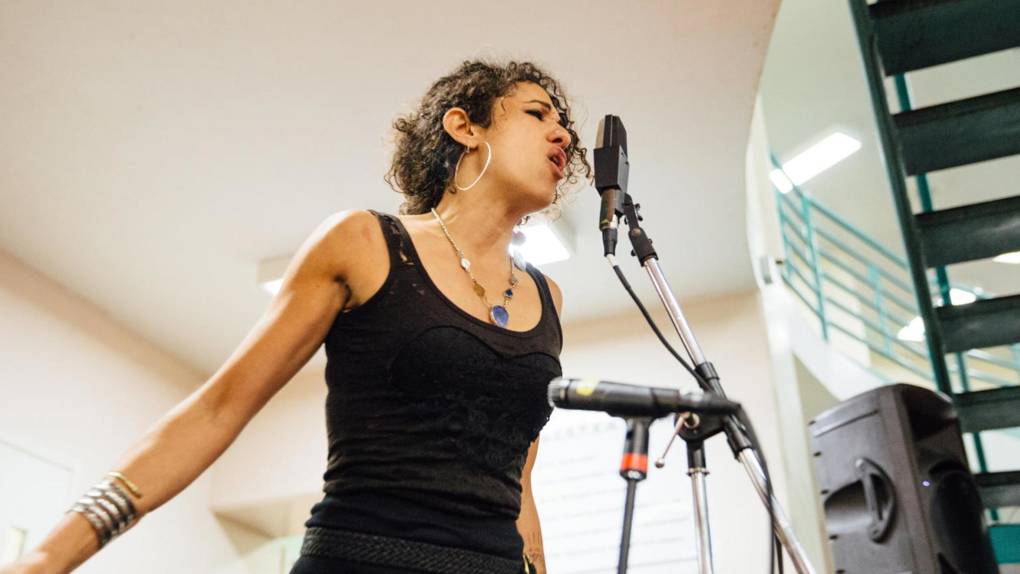
"caption": "Naima Shalhoub performs for inmates at the San Francisco County Jail in 2015.",
"description": "Naima Shalhoub performs for inmates at the San Francisco County Jail in 2015.",
"title": "NaimaShalhoub.MAIN",
"credit": "Sarah Deragon",
"status": "inherit",
"isLoading": false,
"fetchFailed": false
},
"arts_13835717": {
"type": "attachments",
"id": "arts_13835717",
"meta": {
"index": "attachments_1716263798",
"site": "arts",
"id": "13835717",
"found": true
},
"parent": 13835688,
"imgSizes": {
"small": {
"file": "https://ww2.kqed.org/app/uploads/sites/2/2018/06/Moore_Patti-Smith_1979_COVER-520x292.jpg",
"width": 520,
"mimeType": "image/jpeg",
"height": 292
},
"twentyfourteen-full-width": {
"file": "https://ww2.kqed.org/app/uploads/sites/2/2018/06/Moore_Patti-Smith_1979_COVER-1026x576.jpg",
"width": 1026,
"mimeType": "image/jpeg",
"height": 576
},
"thumbnail": {
"file": "https://ww2.kqed.org/app/uploads/sites/2/2018/06/Moore_Patti-Smith_1979_COVER-160x90.jpg",
"width": 160,
"mimeType": "image/jpeg",
"height": 90
},
"fd-sm": {
"file": "https://ww2.kqed.org/app/uploads/sites/2/2018/06/Moore_Patti-Smith_1979_COVER-960x540.jpg",
"width": 960,
"mimeType": "image/jpeg",
"height": 540
},
"post-thumbnail": {
"file": "https://ww2.kqed.org/app/uploads/sites/2/2018/06/Moore_Patti-Smith_1979_COVER-672x372.jpg",
"width": 672,
"mimeType": "image/jpeg",
"height": 372
},
"xsmall": {
"file": "https://ww2.kqed.org/app/uploads/sites/2/2018/06/Moore_Patti-Smith_1979_COVER-375x211.jpg",
"width": 375,
"mimeType": "image/jpeg",
"height": 211
},
"kqedFullSize": {
"file": "https://ww2.kqed.org/app/uploads/sites/2/2018/06/Moore_Patti-Smith_1979_COVER.jpg",
"width": 1026,
"height": 577
},
"large": {
"file": "https://ww2.kqed.org/app/uploads/sites/2/2018/06/Moore_Patti-Smith_1979_COVER-1020x574.jpg",
"width": 1020,
"mimeType": "image/jpeg",
"height": 574
},
"guest-author-50": {
"file": "https://ww2.kqed.org/app/uploads/sites/2/2018/06/Moore_Patti-Smith_1979_COVER-50x50.jpg",
"width": 50,
"mimeType": "image/jpeg",
"height": 50
},
"guest-author-96": {
"file": "https://ww2.kqed.org/app/uploads/sites/2/2018/06/Moore_Patti-Smith_1979_COVER-96x96.jpg",
"width": 96,
"mimeType": "image/jpeg",
"height": 96
},
"medium": {
"file": "https://ww2.kqed.org/app/uploads/sites/2/2018/06/Moore_Patti-Smith_1979_COVER-800x450.jpg",
"width": 800,
"mimeType": "image/jpeg",
"height": 450
},
"guest-author-64": {
"file": "https://ww2.kqed.org/app/uploads/sites/2/2018/06/Moore_Patti-Smith_1979_COVER-64x64.jpg",
"width": 64,
"mimeType": "image/jpeg",
"height": 64
},
"guest-author-32": {
"file": "https://ww2.kqed.org/app/uploads/sites/2/2018/06/Moore_Patti-Smith_1979_COVER-32x32.jpg",
"width": 32,
"mimeType": "image/jpeg",
"height": 32
},
"detail": {
"file": "https://ww2.kqed.org/app/uploads/sites/2/2018/06/Moore_Patti-Smith_1979_COVER-150x150.jpg",
"width": 150,
"mimeType": "image/jpeg",
"height": 150
},
"medium_large": {
"file": "https://ww2.kqed.org/app/uploads/sites/2/2018/06/Moore_Patti-Smith_1979_COVER-768x432.jpg",
"width": 768,
"mimeType": "image/jpeg",
"height": 432
},
"guest-author-128": {
"file": "https://ww2.kqed.org/app/uploads/sites/2/2018/06/Moore_Patti-Smith_1979_COVER-128x128.jpg",
"width": 128,
"mimeType": "image/jpeg",
"height": 128
},
"xxsmall": {
"file": "https://ww2.kqed.org/app/uploads/sites/2/2018/06/Moore_Patti-Smith_1979_COVER-240x135.jpg",
"width": 240,
"mimeType": "image/jpeg",
"height": 135
}
},
"publishDate": 1529627549,
"modified": 1529627699,
"caption": "Frank Moore, Detail of 'Patti Smith,' 1979; Gift of Linda Mac and Michael LaBash, Inter-Relations.",
"description": "Frank Moore, Detail of 'Patti Smith,' 1979; Gift of Linda Mac and Michael LaBash, Inter-Relations.",
"title": "Moore_Patti-Smith_1979_COVER",
"credit": "Courtesy of University of California, Berkeley Art Museum and Pacific Film Archive",
"status": "inherit",
"isLoading": false,
"fetchFailed": false
},
"arts_13835495": {
"type": "attachments",
"id": "arts_13835495",
"meta": {
"index": "attachments_1716263798",
"site": "arts",
"id": "13835495",
"found": true
},
"parent": 13835490,
"imgSizes": {
"small": {
"file": "https://ww2.kqed.org/app/uploads/sites/2/2018/06/gettyimages-973077510_custom-db59e7d983610d000d776239f69e68e435d70b58-520x350.jpg",
"width": 520,
"mimeType": "image/jpeg",
"height": 350
},
"twentyfourteen-full-width": {
"file": "https://ww2.kqed.org/app/uploads/sites/2/2018/06/gettyimages-973077510_custom-db59e7d983610d000d776239f69e68e435d70b58-1038x576.jpg",
"width": 1038,
"mimeType": "image/jpeg",
"height": 576
},
"thumbnail": {
"file": "https://ww2.kqed.org/app/uploads/sites/2/2018/06/gettyimages-973077510_custom-db59e7d983610d000d776239f69e68e435d70b58-160x108.jpg",
"width": 160,
"mimeType": "image/jpeg",
"height": 108
},
"fd-sm": {
"file": "https://ww2.kqed.org/app/uploads/sites/2/2018/06/gettyimages-973077510_custom-db59e7d983610d000d776239f69e68e435d70b58-960x645.jpg",
"width": 960,
"mimeType": "image/jpeg",
"height": 645
},
"post-thumbnail": {
"file": "https://ww2.kqed.org/app/uploads/sites/2/2018/06/gettyimages-973077510_custom-db59e7d983610d000d776239f69e68e435d70b58-672x372.jpg",
"width": 672,
"mimeType": "image/jpeg",
"height": 372
},
"xsmall": {
"file": "https://ww2.kqed.org/app/uploads/sites/2/2018/06/gettyimages-973077510_custom-db59e7d983610d000d776239f69e68e435d70b58-375x252.jpg",
"width": 375,
"mimeType": "image/jpeg",
"height": 252
},
"kqedFullSize": {
"file": "https://ww2.kqed.org/app/uploads/sites/2/2018/06/gettyimages-973077510_custom-db59e7d983610d000d776239f69e68e435d70b58.jpg",
"width": 2048,
"height": 1377
},
"large": {
"file": "https://ww2.kqed.org/app/uploads/sites/2/2018/06/gettyimages-973077510_custom-db59e7d983610d000d776239f69e68e435d70b58-1020x686.jpg",
"width": 1020,
"mimeType": "image/jpeg",
"height": 686
},
"xlarge": {
"file": "https://ww2.kqed.org/app/uploads/sites/2/2018/06/gettyimages-973077510_custom-db59e7d983610d000d776239f69e68e435d70b58-1180x793.jpg",
"width": 1180,
"mimeType": "image/jpeg",
"height": 793
},
"complete_open_graph": {
"file": "https://ww2.kqed.org/app/uploads/sites/2/2018/06/gettyimages-973077510_custom-db59e7d983610d000d776239f69e68e435d70b58-1200x807.jpg",
"width": 1200,
"mimeType": "image/jpeg",
"height": 807
},
"guest-author-50": {
"file": "https://ww2.kqed.org/app/uploads/sites/2/2018/06/gettyimages-973077510_custom-db59e7d983610d000d776239f69e68e435d70b58-50x50.jpg",
"width": 50,
"mimeType": "image/jpeg",
"height": 50
},
"guest-author-96": {
"file": "https://ww2.kqed.org/app/uploads/sites/2/2018/06/gettyimages-973077510_custom-db59e7d983610d000d776239f69e68e435d70b58-96x96.jpg",
"width": 96,
"mimeType": "image/jpeg",
"height": 96
},
"medium": {
"file": "https://ww2.kqed.org/app/uploads/sites/2/2018/06/gettyimages-973077510_custom-db59e7d983610d000d776239f69e68e435d70b58-800x538.jpg",
"width": 800,
"mimeType": "image/jpeg",
"height": 538
},
"guest-author-64": {
"file": "https://ww2.kqed.org/app/uploads/sites/2/2018/06/gettyimages-973077510_custom-db59e7d983610d000d776239f69e68e435d70b58-64x64.jpg",
"width": 64,
"mimeType": "image/jpeg",
"height": 64
},
"guest-author-32": {
"file": "https://ww2.kqed.org/app/uploads/sites/2/2018/06/gettyimages-973077510_custom-db59e7d983610d000d776239f69e68e435d70b58-32x32.jpg",
"width": 32,
"mimeType": "image/jpeg",
"height": 32
},
"fd-lrg": {
"file": "https://ww2.kqed.org/app/uploads/sites/2/2018/06/gettyimages-973077510_custom-db59e7d983610d000d776239f69e68e435d70b58-1920x1291.jpg",
"width": 1920,
"mimeType": "image/jpeg",
"height": 1291
},
"fd-med": {
"file": "https://ww2.kqed.org/app/uploads/sites/2/2018/06/gettyimages-973077510_custom-db59e7d983610d000d776239f69e68e435d70b58-1180x793.jpg",
"width": 1180,
"mimeType": "image/jpeg",
"height": 793
},
"full-width": {
"file": "https://ww2.kqed.org/app/uploads/sites/2/2018/06/gettyimages-973077510_custom-db59e7d983610d000d776239f69e68e435d70b58-1920x1291.jpg",
"width": 1920,
"mimeType": "image/jpeg",
"height": 1291
},
"detail": {
"file": "https://ww2.kqed.org/app/uploads/sites/2/2018/06/gettyimages-973077510_custom-db59e7d983610d000d776239f69e68e435d70b58-150x150.jpg",
"width": 150,
"mimeType": "image/jpeg",
"height": 150
},
"medium_large": {
"file": "https://ww2.kqed.org/app/uploads/sites/2/2018/06/gettyimages-973077510_custom-db59e7d983610d000d776239f69e68e435d70b58-768x516.jpg",
"width": 768,
"mimeType": "image/jpeg",
"height": 516
},
"guest-author-128": {
"file": "https://ww2.kqed.org/app/uploads/sites/2/2018/06/gettyimages-973077510_custom-db59e7d983610d000d776239f69e68e435d70b58-128x128.jpg",
"width": 128,
"mimeType": "image/jpeg",
"height": 128
},
"xxsmall": {
"file": "https://ww2.kqed.org/app/uploads/sites/2/2018/06/gettyimages-973077510_custom-db59e7d983610d000d776239f69e68e435d70b58-240x161.jpg",
"width": 240,
"mimeType": "image/jpeg",
"height": 161
}
},
"publishDate": 1529430087,
"modified": 1529435530,
"caption": "A 2-year-old Honduran asylum seeker cries as her mother is searched and detained near the U.S.-Mexico border on June 12 in McAllen, Texas. The asylum seekers had rafted across the Rio Grande River from Mexico and were detained by U.S. Border Patrol agents before being sent to a processing center for possible separation.",
"description": "A 2-year-old Honduran asylum seeker cries as her mother is searched and detained near the U.S.-Mexico border on June 12 in McAllen, Texas. The asylum seekers had rafted across the Rio Grande River from Mexico and were detained by U.S. Border Patrol agents before being sent to a processing center for possible separation.",
"title": "A 2-year-old Honduran asylum seeker cries as her mother is searched and detained near the U.S.-Mexico border on June 12 in McAllen, Texas. The asylum seekers had rafted across the Rio Grande River from Mexico and were detained by U.S. Border Patrol agents before being sent to a processing center for possible separation.",
"credit": "John Moore/Getty Images",
"status": "inherit",
"isLoading": false,
"fetchFailed": false
},
"arts_13835348": {
"type": "attachments",
"id": "arts_13835348",
"meta": {
"index": "attachments_1716263798",
"site": "arts",
"id": "13835348",
"found": true
},
"parent": 0,
"imgSizes": {
"small": {
"file": "https://ww2.kqed.org/app/uploads/sites/2/2018/06/MG_5830-2-520x293.jpg",
"width": 520,
"mimeType": "image/jpeg",
"height": 293
},
"twentyfourteen-full-width": {
"file": "https://ww2.kqed.org/app/uploads/sites/2/2018/06/MG_5830-2-1038x576.jpg",
"width": 1038,
"mimeType": "image/jpeg",
"height": 576
},
"thumbnail": {
"file": "https://ww2.kqed.org/app/uploads/sites/2/2018/06/MG_5830-2-160x90.jpg",
"width": 160,
"mimeType": "image/jpeg",
"height": 90
},
"fd-sm": {
"file": "https://ww2.kqed.org/app/uploads/sites/2/2018/06/MG_5830-2-960x540.jpg",
"width": 960,
"mimeType": "image/jpeg",
"height": 540
},
"post-thumbnail": {
"file": "https://ww2.kqed.org/app/uploads/sites/2/2018/06/MG_5830-2-672x372.jpg",
"width": 672,
"mimeType": "image/jpeg",
"height": 372
},
"xsmall": {
"file": "https://ww2.kqed.org/app/uploads/sites/2/2018/06/MG_5830-2-375x211.jpg",
"width": 375,
"mimeType": "image/jpeg",
"height": 211
},
"kqedFullSize": {
"file": "https://ww2.kqed.org/app/uploads/sites/2/2018/06/MG_5830-2.jpg",
"width": 1920,
"height": 1080
},
"large": {
"file": "https://ww2.kqed.org/app/uploads/sites/2/2018/06/MG_5830-2-1020x574.jpg",
"width": 1020,
"mimeType": "image/jpeg",
"height": 574
},
"xlarge": {
"file": "https://ww2.kqed.org/app/uploads/sites/2/2018/06/MG_5830-2-1180x664.jpg",
"width": 1180,
"mimeType": "image/jpeg",
"height": 664
},
"complete_open_graph": {
"file": "https://ww2.kqed.org/app/uploads/sites/2/2018/06/MG_5830-2-1200x675.jpg",
"width": 1200,
"mimeType": "image/jpeg",
"height": 675
},
"guest-author-50": {
"file": "https://ww2.kqed.org/app/uploads/sites/2/2018/06/MG_5830-2-50x50.jpg",
"width": 50,
"mimeType": "image/jpeg",
"height": 50
},
"guest-author-96": {
"file": "https://ww2.kqed.org/app/uploads/sites/2/2018/06/MG_5830-2-96x96.jpg",
"width": 96,
"mimeType": "image/jpeg",
"height": 96
},
"medium": {
"file": "https://ww2.kqed.org/app/uploads/sites/2/2018/06/MG_5830-2-800x450.jpg",
"width": 800,
"mimeType": "image/jpeg",
"height": 450
},
"guest-author-64": {
"file": "https://ww2.kqed.org/app/uploads/sites/2/2018/06/MG_5830-2-64x64.jpg",
"width": 64,
"mimeType": "image/jpeg",
"height": 64
},
"guest-author-32": {
"file": "https://ww2.kqed.org/app/uploads/sites/2/2018/06/MG_5830-2-32x32.jpg",
"width": 32,
"mimeType": "image/jpeg",
"height": 32
},
"fd-lrg": {
"file": "https://ww2.kqed.org/app/uploads/sites/2/2018/06/MG_5830-2-1920x1080.jpg",
"width": 1920,
"mimeType": "image/jpeg",
"height": 1080
},
"fd-med": {
"file": "https://ww2.kqed.org/app/uploads/sites/2/2018/06/MG_5830-2-1180x664.jpg",
"width": 1180,
"mimeType": "image/jpeg",
"height": 664
},
"full-width": {
"file": "https://ww2.kqed.org/app/uploads/sites/2/2018/06/MG_5830-2-1920x1080.jpg",
"width": 1920,
"mimeType": "image/jpeg",
"height": 1080
},
"detail": {
"file": "https://ww2.kqed.org/app/uploads/sites/2/2018/06/MG_5830-2-150x150.jpg",
"width": 150,
"mimeType": "image/jpeg",
"height": 150
},
"medium_large": {
"file": "https://ww2.kqed.org/app/uploads/sites/2/2018/06/MG_5830-2-768x432.jpg",
"width": 768,
"mimeType": "image/jpeg",
"height": 432
},
"guest-author-128": {
"file": "https://ww2.kqed.org/app/uploads/sites/2/2018/06/MG_5830-2-128x128.jpg",
"width": 128,
"mimeType": "image/jpeg",
"height": 128
},
"xxsmall": {
"file": "https://ww2.kqed.org/app/uploads/sites/2/2018/06/MG_5830-2-240x135.jpg",
"width": 240,
"mimeType": "image/jpeg",
"height": 135
}
},
"publishDate": 1529347777,
"modified": 1529390969,
"caption": "Kelis plays FEELS 6 at The Craneway Pavilion in Richmond on Saturday, June 16. ",
"description": "Kelis plays FEELS 6 at The Craneway Pavilion in Richmond on Saturday, June 16. (Estefany Gonzalez)",
"title": "Possible main",
"credit": "Estefany Gonzalez",
"status": "inherit",
"isLoading": false,
"fetchFailed": false
},
"arts_13835171": {
"type": "attachments",
"id": "arts_13835171",
"meta": {
"index": "attachments_1716263798",
"site": "arts",
"id": "13835171",
"found": true
},
"parent": 13835170,
"imgSizes": {
"small": {
"file": "https://ww2.kqed.org/app/uploads/sites/2/2018/06/nr.41343.1529002508_wide-a7eb40d93c405b6b0767dd434128aee75ff4c596-1-520x293.jpg",
"width": 520,
"mimeType": "image/jpeg",
"height": 293
},
"thumbnail": {
"file": "https://ww2.kqed.org/app/uploads/sites/2/2018/06/nr.41343.1529002508_wide-a7eb40d93c405b6b0767dd434128aee75ff4c596-1-160x90.jpg",
"width": 160,
"mimeType": "image/jpeg",
"height": 90
},
"post-thumbnail": {
"file": "https://ww2.kqed.org/app/uploads/sites/2/2018/06/nr.41343.1529002508_wide-a7eb40d93c405b6b0767dd434128aee75ff4c596-1-672x372.jpg",
"width": 672,
"mimeType": "image/jpeg",
"height": 372
},
"xsmall": {
"file": "https://ww2.kqed.org/app/uploads/sites/2/2018/06/nr.41343.1529002508_wide-a7eb40d93c405b6b0767dd434128aee75ff4c596-1-375x211.jpg",
"width": 375,
"mimeType": "image/jpeg",
"height": 211
},
"kqedFullSize": {
"file": "https://ww2.kqed.org/app/uploads/sites/2/2018/06/nr.41343.1529002508_wide-a7eb40d93c405b6b0767dd434128aee75ff4c596-1.jpg",
"width": 800,
"height": 450
},
"guest-author-50": {
"file": "https://ww2.kqed.org/app/uploads/sites/2/2018/06/nr.41343.1529002508_wide-a7eb40d93c405b6b0767dd434128aee75ff4c596-1-50x50.jpg",
"width": 50,
"mimeType": "image/jpeg",
"height": 50
},
"guest-author-96": {
"file": "https://ww2.kqed.org/app/uploads/sites/2/2018/06/nr.41343.1529002508_wide-a7eb40d93c405b6b0767dd434128aee75ff4c596-1-96x96.jpg",
"width": 96,
"mimeType": "image/jpeg",
"height": 96
},
"medium": {
"file": "https://ww2.kqed.org/app/uploads/sites/2/2018/06/nr.41343.1529002508_wide-a7eb40d93c405b6b0767dd434128aee75ff4c596-1-800x450.jpg",
"width": 800,
"mimeType": "image/jpeg",
"height": 450
},
"guest-author-64": {
"file": "https://ww2.kqed.org/app/uploads/sites/2/2018/06/nr.41343.1529002508_wide-a7eb40d93c405b6b0767dd434128aee75ff4c596-1-64x64.jpg",
"width": 64,
"mimeType": "image/jpeg",
"height": 64
},
"guest-author-32": {
"file": "https://ww2.kqed.org/app/uploads/sites/2/2018/06/nr.41343.1529002508_wide-a7eb40d93c405b6b0767dd434128aee75ff4c596-1-32x32.jpg",
"width": 32,
"mimeType": "image/jpeg",
"height": 32
},
"detail": {
"file": "https://ww2.kqed.org/app/uploads/sites/2/2018/06/nr.41343.1529002508_wide-a7eb40d93c405b6b0767dd434128aee75ff4c596-1-150x150.jpg",
"width": 150,
"mimeType": "image/jpeg",
"height": 150
},
"medium_large": {
"file": "https://ww2.kqed.org/app/uploads/sites/2/2018/06/nr.41343.1529002508_wide-a7eb40d93c405b6b0767dd434128aee75ff4c596-1-768x432.jpg",
"width": 768,
"mimeType": "image/jpeg",
"height": 432
},
"guest-author-128": {
"file": "https://ww2.kqed.org/app/uploads/sites/2/2018/06/nr.41343.1529002508_wide-a7eb40d93c405b6b0767dd434128aee75ff4c596-1-128x128.jpg",
"width": 128,
"mimeType": "image/jpeg",
"height": 128
},
"xxsmall": {
"file": "https://ww2.kqed.org/app/uploads/sites/2/2018/06/nr.41343.1529002508_wide-a7eb40d93c405b6b0767dd434128aee75ff4c596-1-240x135.jpg",
"width": 240,
"mimeType": "image/jpeg",
"height": 135
}
},
"publishDate": 1529103859,
"modified": 1529105074,
"caption": "The Toronto Police Service released this image of the Banksy print 'Trolley Hunters,' apparently stolen from an exhibit Sunday.",
"description": "The Toronto Police Service released this image of the Banksy print \u003cem>Trolley Hunters\u003c/em>, apparently stolen from an exhibit Sunday.",
"title": "The Toronto Police Service released this image of the Banksy print Trolley Hunters, apparently stolen from an exhibit Sunday.",
"credit": "https://www.npr.org/2018/06/15/620370661/unidentified-thief-caught-on-camera-stealing-45-000-banksy-print-from-exhibit",
"status": "inherit",
"isLoading": false,
"fetchFailed": false
},
"arts_13835133": {
"type": "attachments",
"id": "arts_13835133",
"meta": {
"index": "attachments_1716263798",
"site": "arts",
"id": "13835133",
"found": true
},
"parent": 13835090,
"imgSizes": {
"small": {
"file": "https://ww2.kqed.org/app/uploads/sites/2/2018/06/janelle-520x292.jpg",
"width": 520,
"mimeType": "image/jpeg",
"height": 292
},
"twentyfourteen-full-width": {
"file": "https://ww2.kqed.org/app/uploads/sites/2/2018/06/janelle-1038x576.jpg",
"width": 1038,
"mimeType": "image/jpeg",
"height": 576
},
"thumbnail": {
"file": "https://ww2.kqed.org/app/uploads/sites/2/2018/06/janelle-160x90.jpg",
"width": 160,
"mimeType": "image/jpeg",
"height": 90
},
"fd-sm": {
"file": "https://ww2.kqed.org/app/uploads/sites/2/2018/06/janelle-960x540.jpg",
"width": 960,
"mimeType": "image/jpeg",
"height": 540
},
"post-thumbnail": {
"file": "https://ww2.kqed.org/app/uploads/sites/2/2018/06/janelle-672x372.jpg",
"width": 672,
"mimeType": "image/jpeg",
"height": 372
},
"xsmall": {
"file": "https://ww2.kqed.org/app/uploads/sites/2/2018/06/janelle-375x211.jpg",
"width": 375,
"mimeType": "image/jpeg",
"height": 211
},
"kqedFullSize": {
"file": "https://ww2.kqed.org/app/uploads/sites/2/2018/06/janelle.jpg",
"width": 1225,
"height": 689
},
"large": {
"file": "https://ww2.kqed.org/app/uploads/sites/2/2018/06/janelle-1020x574.jpg",
"width": 1020,
"mimeType": "image/jpeg",
"height": 574
},
"xlarge": {
"file": "https://ww2.kqed.org/app/uploads/sites/2/2018/06/janelle-1180x664.jpg",
"width": 1180,
"mimeType": "image/jpeg",
"height": 664
},
"complete_open_graph": {
"file": "https://ww2.kqed.org/app/uploads/sites/2/2018/06/janelle-1200x675.jpg",
"width": 1200,
"mimeType": "image/jpeg",
"height": 675
},
"guest-author-50": {
"file": "https://ww2.kqed.org/app/uploads/sites/2/2018/06/janelle-50x50.jpg",
"width": 50,
"mimeType": "image/jpeg",
"height": 50
},
"guest-author-96": {
"file": "https://ww2.kqed.org/app/uploads/sites/2/2018/06/janelle-96x96.jpg",
"width": 96,
"mimeType": "image/jpeg",
"height": 96
},
"medium": {
"file": "https://ww2.kqed.org/app/uploads/sites/2/2018/06/janelle-800x450.jpg",
"width": 800,
"mimeType": "image/jpeg",
"height": 450
},
"guest-author-64": {
"file": "https://ww2.kqed.org/app/uploads/sites/2/2018/06/janelle-64x64.jpg",
"width": 64,
"mimeType": "image/jpeg",
"height": 64
},
"guest-author-32": {
"file": "https://ww2.kqed.org/app/uploads/sites/2/2018/06/janelle-32x32.jpg",
"width": 32,
"mimeType": "image/jpeg",
"height": 32
},
"fd-med": {
"file": "https://ww2.kqed.org/app/uploads/sites/2/2018/06/janelle-1180x664.jpg",
"width": 1180,
"mimeType": "image/jpeg",
"height": 664
},
"detail": {
"file": "https://ww2.kqed.org/app/uploads/sites/2/2018/06/janelle-150x150.jpg",
"width": 150,
"mimeType": "image/jpeg",
"height": 150
},
"medium_large": {
"file": "https://ww2.kqed.org/app/uploads/sites/2/2018/06/janelle-768x432.jpg",
"width": 768,
"mimeType": "image/jpeg",
"height": 432
},
"guest-author-128": {
"file": "https://ww2.kqed.org/app/uploads/sites/2/2018/06/janelle-128x128.jpg",
"width": 128,
"mimeType": "image/jpeg",
"height": 128
},
"xxsmall": {
"file": "https://ww2.kqed.org/app/uploads/sites/2/2018/06/janelle-240x135.jpg",
"width": 240,
"mimeType": "image/jpeg",
"height": 135
}
},
"publishDate": 1529087153,
"modified": 1529087214,
"caption": "Still from Janelle Monáe's music video for \"Pynk.\"",
"description": null,
"title": "janelle",
"credit": "YouTube",
"status": "inherit",
"isLoading": false,
"fetchFailed": false
},
"arts_13830019": {
"type": "attachments",
"id": "arts_13830019",
"meta": {
"index": "attachments_1716263798",
"site": "arts",
"id": "13830019",
"found": true
},
"parent": 13830017,
"imgSizes": {
"small": {
"file": "https://ww2.kqed.org/app/uploads/sites/2/2018/04/Early-Days-statue-1180x787-520x347.jpg",
"width": 520,
"mimeType": "image/jpeg",
"height": 347
},
"twentyfourteen-full-width": {
"file": "https://ww2.kqed.org/app/uploads/sites/2/2018/04/Early-Days-statue-1180x787-1038x576.jpg",
"width": 1038,
"mimeType": "image/jpeg",
"height": 576
},
"thumbnail": {
"file": "https://ww2.kqed.org/app/uploads/sites/2/2018/04/Early-Days-statue-1180x787-160x107.jpg",
"width": 160,
"mimeType": "image/jpeg",
"height": 107
},
"fd-sm": {
"file": "https://ww2.kqed.org/app/uploads/sites/2/2018/04/Early-Days-statue-1180x787-960x640.jpg",
"width": 960,
"mimeType": "image/jpeg",
"height": 640
},
"post-thumbnail": {
"file": "https://ww2.kqed.org/app/uploads/sites/2/2018/04/Early-Days-statue-1180x787-672x372.jpg",
"width": 672,
"mimeType": "image/jpeg",
"height": 372
},
"xsmall": {
"file": "https://ww2.kqed.org/app/uploads/sites/2/2018/04/Early-Days-statue-1180x787-375x250.jpg",
"width": 375,
"mimeType": "image/jpeg",
"height": 250
},
"kqedFullSize": {
"file": "https://ww2.kqed.org/app/uploads/sites/2/2018/04/Early-Days-statue-1180x787.jpg",
"width": 1180,
"height": 787
},
"large": {
"file": "https://ww2.kqed.org/app/uploads/sites/2/2018/04/Early-Days-statue-1180x787-1020x680.jpg",
"width": 1020,
"mimeType": "image/jpeg",
"height": 680
},
"xlarge": {
"file": "https://ww2.kqed.org/app/uploads/sites/2/2018/04/Early-Days-statue-1180x787-1180x787.jpg",
"width": 1180,
"mimeType": "image/jpeg",
"height": 787
},
"guest-author-50": {
"file": "https://ww2.kqed.org/app/uploads/sites/2/2018/04/Early-Days-statue-1180x787-50x50.jpg",
"width": 50,
"mimeType": "image/jpeg",
"height": 50
},
"guest-author-96": {
"file": "https://ww2.kqed.org/app/uploads/sites/2/2018/04/Early-Days-statue-1180x787-96x96.jpg",
"width": 96,
"mimeType": "image/jpeg",
"height": 96
},
"medium": {
"file": "https://ww2.kqed.org/app/uploads/sites/2/2018/04/Early-Days-statue-1180x787-800x534.jpg",
"width": 800,
"mimeType": "image/jpeg",
"height": 534
},
"guest-author-64": {
"file": "https://ww2.kqed.org/app/uploads/sites/2/2018/04/Early-Days-statue-1180x787-64x64.jpg",
"width": 64,
"mimeType": "image/jpeg",
"height": 64
},
"guest-author-32": {
"file": "https://ww2.kqed.org/app/uploads/sites/2/2018/04/Early-Days-statue-1180x787-32x32.jpg",
"width": 32,
"mimeType": "image/jpeg",
"height": 32
},
"fd-med": {
"file": "https://ww2.kqed.org/app/uploads/sites/2/2018/04/Early-Days-statue-1180x787-1180x787.jpg",
"width": 1180,
"mimeType": "image/jpeg",
"height": 787
},
"detail": {
"file": "https://ww2.kqed.org/app/uploads/sites/2/2018/04/Early-Days-statue-1180x787-150x150.jpg",
"width": 150,
"mimeType": "image/jpeg",
"height": 150
},
"medium_large": {
"file": "https://ww2.kqed.org/app/uploads/sites/2/2018/04/Early-Days-statue-1180x787-768x512.jpg",
"width": 768,
"mimeType": "image/jpeg",
"height": 512
},
"guest-author-128": {
"file": "https://ww2.kqed.org/app/uploads/sites/2/2018/04/Early-Days-statue-1180x787-128x128.jpg",
"width": 128,
"mimeType": "image/jpeg",
"height": 128
},
"xxsmall": {
"file": "https://ww2.kqed.org/app/uploads/sites/2/2018/04/Early-Days-statue-1180x787-240x160.jpg",
"width": 240,
"mimeType": "image/jpeg",
"height": 160
}
},
"publishDate": 1524245202,
"modified": 1524245276,
"caption": "San Francisco's Board of Appeals unanimously voted to overturn the city's Arts Commission earlier decision to remove the \"Early Days\" sculpture.",
"description": "San Francisco's Board of Appeals unanimously voted to overturn the city's Arts Commission earlier decision to remove the \"Early Days\" sculpture.",
"title": "Early-Days-statue-1180x787",
"credit": "Arash Malekzadeh/KQED",
"status": "inherit",
"isLoading": false,
"fetchFailed": false
},
"arts_13834859": {
"type": "attachments",
"id": "arts_13834859",
"meta": {
"index": "attachments_1716263798",
"site": "arts",
"id": "13834859",
"found": true
},
"parent": 13834858,
"imgSizes": {
"small": {
"file": "https://ww2.kqed.org/app/uploads/sites/2/2018/06/beau_roulette_bts_5_2_18_img_6605_custom-cde5cbc0126bdfc152b24998da688ee56f5660c3-1-520x346.jpg",
"width": 520,
"mimeType": "image/jpeg",
"height": 346
},
"twentyfourteen-full-width": {
"file": "https://ww2.kqed.org/app/uploads/sites/2/2018/06/beau_roulette_bts_5_2_18_img_6605_custom-cde5cbc0126bdfc152b24998da688ee56f5660c3-1-1038x576.jpg",
"width": 1038,
"mimeType": "image/jpeg",
"height": 576
},
"thumbnail": {
"file": "https://ww2.kqed.org/app/uploads/sites/2/2018/06/beau_roulette_bts_5_2_18_img_6605_custom-cde5cbc0126bdfc152b24998da688ee56f5660c3-1-160x107.jpg",
"width": 160,
"mimeType": "image/jpeg",
"height": 107
},
"fd-sm": {
"file": "https://ww2.kqed.org/app/uploads/sites/2/2018/06/beau_roulette_bts_5_2_18_img_6605_custom-cde5cbc0126bdfc152b24998da688ee56f5660c3-1-960x639.jpg",
"width": 960,
"mimeType": "image/jpeg",
"height": 639
},
"post-thumbnail": {
"file": "https://ww2.kqed.org/app/uploads/sites/2/2018/06/beau_roulette_bts_5_2_18_img_6605_custom-cde5cbc0126bdfc152b24998da688ee56f5660c3-1-672x372.jpg",
"width": 672,
"mimeType": "image/jpeg",
"height": 372
},
"xsmall": {
"file": "https://ww2.kqed.org/app/uploads/sites/2/2018/06/beau_roulette_bts_5_2_18_img_6605_custom-cde5cbc0126bdfc152b24998da688ee56f5660c3-1-375x250.jpg",
"width": 375,
"mimeType": "image/jpeg",
"height": 250
},
"kqedFullSize": {
"file": "https://ww2.kqed.org/app/uploads/sites/2/2018/06/beau_roulette_bts_5_2_18_img_6605_custom-cde5cbc0126bdfc152b24998da688ee56f5660c3-1.jpg",
"width": 2048,
"height": 1364
},
"large": {
"file": "https://ww2.kqed.org/app/uploads/sites/2/2018/06/beau_roulette_bts_5_2_18_img_6605_custom-cde5cbc0126bdfc152b24998da688ee56f5660c3-1-1020x679.jpg",
"width": 1020,
"mimeType": "image/jpeg",
"height": 679
},
"xlarge": {
"file": "https://ww2.kqed.org/app/uploads/sites/2/2018/06/beau_roulette_bts_5_2_18_img_6605_custom-cde5cbc0126bdfc152b24998da688ee56f5660c3-1-1180x786.jpg",
"width": 1180,
"mimeType": "image/jpeg",
"height": 786
},
"complete_open_graph": {
"file": "https://ww2.kqed.org/app/uploads/sites/2/2018/06/beau_roulette_bts_5_2_18_img_6605_custom-cde5cbc0126bdfc152b24998da688ee56f5660c3-1-1200x799.jpg",
"width": 1200,
"mimeType": "image/jpeg",
"height": 799
},
"guest-author-50": {
"file": "https://ww2.kqed.org/app/uploads/sites/2/2018/06/beau_roulette_bts_5_2_18_img_6605_custom-cde5cbc0126bdfc152b24998da688ee56f5660c3-1-50x50.jpg",
"width": 50,
"mimeType": "image/jpeg",
"height": 50
},
"guest-author-96": {
"file": "https://ww2.kqed.org/app/uploads/sites/2/2018/06/beau_roulette_bts_5_2_18_img_6605_custom-cde5cbc0126bdfc152b24998da688ee56f5660c3-1-96x96.jpg",
"width": 96,
"mimeType": "image/jpeg",
"height": 96
},
"medium": {
"file": "https://ww2.kqed.org/app/uploads/sites/2/2018/06/beau_roulette_bts_5_2_18_img_6605_custom-cde5cbc0126bdfc152b24998da688ee56f5660c3-1-800x533.jpg",
"width": 800,
"mimeType": "image/jpeg",
"height": 533
},
"guest-author-64": {
"file": "https://ww2.kqed.org/app/uploads/sites/2/2018/06/beau_roulette_bts_5_2_18_img_6605_custom-cde5cbc0126bdfc152b24998da688ee56f5660c3-1-64x64.jpg",
"width": 64,
"mimeType": "image/jpeg",
"height": 64
},
"guest-author-32": {
"file": "https://ww2.kqed.org/app/uploads/sites/2/2018/06/beau_roulette_bts_5_2_18_img_6605_custom-cde5cbc0126bdfc152b24998da688ee56f5660c3-1-32x32.jpg",
"width": 32,
"mimeType": "image/jpeg",
"height": 32
},
"fd-lrg": {
"file": "https://ww2.kqed.org/app/uploads/sites/2/2018/06/beau_roulette_bts_5_2_18_img_6605_custom-cde5cbc0126bdfc152b24998da688ee56f5660c3-1-1920x1279.jpg",
"width": 1920,
"mimeType": "image/jpeg",
"height": 1279
},
"fd-med": {
"file": "https://ww2.kqed.org/app/uploads/sites/2/2018/06/beau_roulette_bts_5_2_18_img_6605_custom-cde5cbc0126bdfc152b24998da688ee56f5660c3-1-1180x786.jpg",
"width": 1180,
"mimeType": "image/jpeg",
"height": 786
},
"full-width": {
"file": "https://ww2.kqed.org/app/uploads/sites/2/2018/06/beau_roulette_bts_5_2_18_img_6605_custom-cde5cbc0126bdfc152b24998da688ee56f5660c3-1-1920x1279.jpg",
"width": 1920,
"mimeType": "image/jpeg",
"height": 1279
},
"detail": {
"file": "https://ww2.kqed.org/app/uploads/sites/2/2018/06/beau_roulette_bts_5_2_18_img_6605_custom-cde5cbc0126bdfc152b24998da688ee56f5660c3-1-150x150.jpg",
"width": 150,
"mimeType": "image/jpeg",
"height": 150
},
"medium_large": {
"file": "https://ww2.kqed.org/app/uploads/sites/2/2018/06/beau_roulette_bts_5_2_18_img_6605_custom-cde5cbc0126bdfc152b24998da688ee56f5660c3-1-768x511.jpg",
"width": 768,
"mimeType": "image/jpeg",
"height": 511
},
"guest-author-128": {
"file": "https://ww2.kqed.org/app/uploads/sites/2/2018/06/beau_roulette_bts_5_2_18_img_6605_custom-cde5cbc0126bdfc152b24998da688ee56f5660c3-1-128x128.jpg",
"width": 128,
"mimeType": "image/jpeg",
"height": 128
},
"xxsmall": {
"file": "https://ww2.kqed.org/app/uploads/sites/2/2018/06/beau_roulette_bts_5_2_18_img_6605_custom-cde5cbc0126bdfc152b24998da688ee56f5660c3-1-240x160.jpg",
"width": 240,
"mimeType": "image/jpeg",
"height": 160
}
},
"publishDate": 1528825813,
"modified": 1528826218,
"caption": "Claudia \"CLAW\" Gold's trademark cartoon paw decorates a wall at \"Beyond the Streets,\" an L.A. exhibition that celebrates street art.",
"description": "Claudia \"CLAW\" Gold's trademark cartoon paw decorates a wall at \"Beyond the Streets,\" an L.A. exhibition that celebrates street art.",
"title": "Claudia \"CLAW\" Gold's trademark cartoon paw decorates a wall at \"Beyond the Streets,\" an L.A. exhibition that celebrates street art.",
"credit": "Beau Roulette/Courtesy of Beyond The Streets",
"status": "inherit",
"isLoading": false,
"fetchFailed": false
}
},
"audioPlayerReducer": {
"postId": "stream_live",
"isPaused": true,
"isPlaying": false,
"pfsActive": false,
"pledgeModalIsOpen": true,
"playerDrawerIsOpen": false,
"liveAudioPlayStartedAt": 0,
"liveAudioPlayContext": ""
},
"authorsReducer": {
"byline_arts_13836167": {
"type": "authors",
"id": "byline_arts_13836167",
"meta": {
"override": true
},
"slug": "byline_arts_13836167",
"name": "John Rivers, Associated Press",
"isLoading": false
},
"byline_arts_13836010": {
"type": "authors",
"id": "byline_arts_13836010",
"meta": {
"override": true
},
"slug": "byline_arts_13836010",
"name": "Gretchen Giles",
"isLoading": false
},
"byline_arts_13836021": {
"type": "authors",
"id": "byline_arts_13836021",
"meta": {
"override": true
},
"slug": "byline_arts_13836021",
"name": "Kat Chow",
"isLoading": false
},
"byline_arts_13835709": {
"type": "authors",
"id": "byline_arts_13835709",
"meta": {
"override": true
},
"slug": "byline_arts_13835709",
"name": "KQED Arts Staff",
"isLoading": false
},
"byline_arts_13835490": {
"type": "authors",
"id": "byline_arts_13835490",
"meta": {
"override": true
},
"slug": "byline_arts_13835490",
"name": "Lulu Garcia-Navarro",
"isLoading": false
},
"byline_arts_13835170": {
"type": "authors",
"id": "byline_arts_13835170",
"meta": {
"override": true
},
"slug": "byline_arts_13835170",
"name": "Colin Dwyer",
"isLoading": false
},
"byline_arts_13835043": {
"type": "authors",
"id": "byline_arts_13835043",
"meta": {
"override": true
},
"slug": "byline_arts_13835043",
"name": "Associated Press",
"isLoading": false
},
"shotchkiss": {
"type": "authors",
"id": "61",
"meta": {
"index": "authors_1716337520",
"id": "61",
"found": true
},
"name": "Sarah Hotchkiss",
"firstName": "Sarah",
"lastName": "Hotchkiss",
"slug": "shotchkiss",
"email": "shotchkiss@kqed.org",
"display_author_email": true,
"staff_mastheads": [
"arts"
],
"title": "Senior Editor",
"bio": "Sarah Hotchkiss is a San Francisco \u003ca href=\"http://www.sarahhotchkiss.com\">artist\u003c/a> and arts writer. In 2019, she received the Dorothea & Leo Rabkin Foundation grant for visual art journalism and in 2020 she received a Society of Professional Journalists, Northern California award for excellence in arts and culture reporting.",
"avatar": "https://secure.gravatar.com/avatar/bc662df144b3d27fd8b1b6f1c2a420d34e91e53154d411bb7ad353cc8b6cea8d?s=600&d=blank&r=g",
"twitter": null,
"bluesky": null,
"facebook": null,
"instagram": null,
"linkedin": null,
"sites": [
{
"site": "",
"roles": [
"editor"
]
},
{
"site": "arts",
"roles": [
"Contributor",
"administrator"
]
},
{
"site": "artschool",
"roles": [
"administrator"
]
},
{
"site": "news",
"roles": [
"editor"
]
},
{
"site": "pop",
"roles": [
"administrator"
]
},
{
"site": "bayareabites",
"roles": [
"editor"
]
},
{
"site": "spark",
"roles": [
"editor"
]
},
{
"site": "checkplease",
"roles": [
"editor"
]
}
],
"headData": {
"title": "Sarah Hotchkiss | KQED",
"description": "Senior Editor",
"ogImgSrc": "https://secure.gravatar.com/avatar/bc662df144b3d27fd8b1b6f1c2a420d34e91e53154d411bb7ad353cc8b6cea8d?s=600&d=blank&r=g",
"twImgSrc": "https://secure.gravatar.com/avatar/bc662df144b3d27fd8b1b6f1c2a420d34e91e53154d411bb7ad353cc8b6cea8d?s=600&d=blank&r=g"
},
"isLoading": false,
"link": "/author/shotchkiss"
},
"kqedarts": {
"type": "authors",
"id": "92",
"meta": {
"index": "authors_1716337520",
"id": "92",
"found": true
},
"name": "KQED Arts",
"firstName": "KQED",
"lastName": "Arts",
"slug": "kqedarts",
"email": "arts@kqed.org",
"display_author_email": false,
"staff_mastheads": [],
"title": "KQED Staff",
"bio": null,
"avatar": "https://secure.gravatar.com/avatar/321c9ebfeb7736f9e55366a6d3399ab0?s=600&d=blank&r=g",
"twitter": null,
"facebook": null,
"instagram": "https://www.instagram.com/kqed_arts/",
"linkedin": null,
"sites": [
{
"site": "arts",
"roles": [
"contributor"
]
},
{
"site": "pop",
"roles": [
"contributor"
]
},
{
"site": "science",
"roles": [
"author"
]
},
{
"site": "food",
"roles": [
"contributor"
]
}
],
"headData": {
"title": "KQED Arts | KQED",
"description": "KQED Staff",
"ogImgSrc": "https://secure.gravatar.com/avatar/321c9ebfeb7736f9e55366a6d3399ab0?s=600&d=blank&r=g",
"twImgSrc": "https://secure.gravatar.com/avatar/321c9ebfeb7736f9e55366a6d3399ab0?s=600&d=blank&r=g"
},
"isLoading": false,
"link": "/author/kqedarts"
},
"gmeline": {
"type": "authors",
"id": "185",
"meta": {
"index": "authors_1716337520",
"id": "185",
"found": true
},
"name": "Gabe Meline",
"firstName": "Gabe",
"lastName": "Meline",
"slug": "gmeline",
"email": "gmeline@kqed.org",
"display_author_email": true,
"staff_mastheads": [
"arts"
],
"title": "Senior Editor, KQED Arts & Culture",
"bio": "Gabe Meline entered journalism at age 15 making photocopied zines, and has since earned awards from the Edward R. Murrow Awards, the Society for Professional Journalists, the Online Journalism Awards, the Association of Alternative Newsweeklies and the California Newspaper Publishers Association. Prior to KQED, he was the editor of the \u003cem>North Bay Bohemian\u003c/em> and a touring musician. He lives with his wife and daughter in his hometown of Santa Rosa, CA.",
"avatar": "https://secure.gravatar.com/avatar/5bebe57be0d8bc2dd318934feb47299e2d2d10cba28d09d8d7afb389a2ce2bdd?s=600&d=blank&r=g",
"twitter": null,
"bluesky": null,
"facebook": null,
"instagram": null,
"linkedin": null,
"sites": [
{
"site": "",
"roles": [
"editor"
]
},
{
"site": "arts",
"roles": [
"administrator"
]
},
{
"site": "artschool",
"roles": [
"editor"
]
},
{
"site": "news",
"roles": [
"author"
]
},
{
"site": "pop",
"roles": [
"editor"
]
},
{
"site": "bayareabites",
"roles": [
"editor"
]
},
{
"site": "food",
"roles": [
"editor"
]
},
{
"site": "forum",
"roles": [
"administrator"
]
},
{
"site": "liveblog",
"roles": [
"editor"
]
},
{
"site": "hiphop",
"roles": [
"editor"
]
}
],
"headData": {
"title": "Gabe Meline | KQED",
"description": "Senior Editor, KQED Arts & Culture",
"ogImgSrc": "https://secure.gravatar.com/avatar/5bebe57be0d8bc2dd318934feb47299e2d2d10cba28d09d8d7afb389a2ce2bdd?s=600&d=blank&r=g",
"twImgSrc": "https://secure.gravatar.com/avatar/5bebe57be0d8bc2dd318934feb47299e2d2d10cba28d09d8d7afb389a2ce2bdd?s=600&d=blank&r=g"
},
"isLoading": false,
"link": "/author/gmeline"
},
"ahenderson": {
"type": "authors",
"id": "11272",
"meta": {
"index": "authors_1716337520",
"id": "11272",
"found": true
},
"name": "Aine Henderson",
"firstName": "Aine",
"lastName": "Henderson",
"slug": "ahenderson",
"email": "ahenderson@KQED.org",
"display_author_email": false,
"staff_mastheads": [],
"title": "KQED Contributor",
"bio": null,
"avatar": "https://secure.gravatar.com/avatar/52eb8bcbf0bb97068e4ad609525e763c?s=600&d=blank&r=g",
"twitter": null,
"facebook": null,
"instagram": null,
"linkedin": null,
"sites": [
{
"site": "arts",
"roles": [
"editor"
]
},
{
"site": "about",
"roles": [
"editor"
]
},
{
"site": "trulyca",
"roles": [
"administrator",
"author",
"editor"
]
},
{
"site": "pressroom",
"roles": [
"editor"
]
},
{
"site": "filmschoolshorts",
"roles": [
"editor"
]
}
],
"headData": {
"title": "Aine Henderson | KQED",
"description": "KQED Contributor",
"ogImgSrc": "https://secure.gravatar.com/avatar/52eb8bcbf0bb97068e4ad609525e763c?s=600&d=blank&r=g",
"twImgSrc": "https://secure.gravatar.com/avatar/52eb8bcbf0bb97068e4ad609525e763c?s=600&d=blank&r=g"
},
"isLoading": false,
"link": "/author/ahenderson"
},
"nvoynovskaya": {
"type": "authors",
"id": "11387",
"meta": {
"index": "authors_1716337520",
"id": "11387",
"found": true
},
"name": "Nastia Voynovskaya",
"firstName": "Nastia",
"lastName": "Voynovskaya",
"slug": "nvoynovskaya",
"email": "nvoynovskaya@kqed.org",
"display_author_email": false,
"staff_mastheads": [
"arts"
],
"title": "Editor and reporter",
"bio": "Nastia Voynovskaya is a reporter, editor and host at KQED Arts & Culture. She's been covering the arts in the Bay Area for over a decade, with a focus on music, queer culture, labor issues and grassroots organizing. She has edited KQED story series such as Trans Bay: A History of San Francisco's Gender-Diverse Community, and co-created KQED's Bay Area hip-hop history project, That's My Word. Nastia's work has been recognized by the Society of Professional Journalists and San Francisco Press Club. She regularly appears on podcasts and radio programs, including NPR's All Songs Considered, and hosts live events where music, culture and conversation meet.",
"avatar": "https://secure.gravatar.com/avatar/5025ee460e5a85d69ca20ea6c6f2f80d7e17795c828f61ea3aecfcd924e9042e?s=600&d=blank&r=g",
"twitter": null,
"bluesky": null,
"facebook": null,
"instagram": "https://www.instagram.com/nananastia/",
"linkedin": null,
"sites": [
{
"site": "",
"roles": [
"editor"
]
},
{
"site": "arts",
"roles": [
"administrator"
]
},
{
"site": "news",
"roles": [
"editor"
]
},
{
"site": "pop",
"roles": [
"administrator"
]
},
{
"site": "bayareabites",
"roles": [
"editor"
]
},
{
"site": "podcasts",
"roles": [
"editor"
]
},
{
"site": "hiphop",
"roles": [
"editor"
]
}
],
"headData": {
"title": "Nastia Voynovskaya | KQED",
"description": "Editor and reporter",
"ogImgSrc": "https://secure.gravatar.com/avatar/5025ee460e5a85d69ca20ea6c6f2f80d7e17795c828f61ea3aecfcd924e9042e?s=600&d=blank&r=g",
"twImgSrc": "https://secure.gravatar.com/avatar/5025ee460e5a85d69ca20ea6c6f2f80d7e17795c828f61ea3aecfcd924e9042e?s=600&d=blank&r=g"
},
"isLoading": false,
"link": "/author/nvoynovskaya"
},
"harrickwu": {
"type": "authors",
"id": "11519",
"meta": {
"index": "authors_1716337520",
"id": "11519",
"found": true
},
"name": "Harrick Wu",
"firstName": "Harrick",
"lastName": "Wu",
"slug": "harrickwu",
"email": "hwu@kqed.org",
"display_author_email": false,
"staff_mastheads": [],
"title": "KQED Contributor",
"bio": null,
"avatar": "https://secure.gravatar.com/avatar/f2a5dd7815bf4c6881c443442d1f63d3?s=600&d=blank&r=g",
"twitter": null,
"facebook": null,
"instagram": null,
"linkedin": null,
"sites": [
{
"site": "arts",
"roles": []
}
],
"headData": {
"title": "Harrick Wu | KQED",
"description": "KQED Contributor",
"ogImgSrc": "https://secure.gravatar.com/avatar/f2a5dd7815bf4c6881c443442d1f63d3?s=600&d=blank&r=g",
"twImgSrc": "https://secure.gravatar.com/avatar/f2a5dd7815bf4c6881c443442d1f63d3?s=600&d=blank&r=g"
},
"isLoading": false,
"link": "/author/harrickwu"
}
},
"pagesReducer": {
"arts_category_visualarts": {
"type": "terms",
"id": "arts_70",
"meta": {
"index": "terms_1716263798",
"site": "arts",
"id": "70",
"score": 14.4072075
},
"featImg": null,
"name": "Visual Arts",
"description": null,
"taxonomy": "category",
"headData": {
"twImgId": null,
"twTitle": null,
"ogTitle": null,
"ogImgId": null,
"twDescription": null,
"description": null,
"title": "Visual Arts Archives | KQED Arts",
"ogDescription": null
},
"ttid": 71,
"slug": "visualarts",
"isLoading": false,
"title": "Visual Arts",
"pageMeta": {
"site": "arts",
"WpPageTemplate": "page-topic-editorial",
"currentPage": 78
},
"blocks": [
{
"blockName": "kqed/post-list",
"attrs": {
"layout": "cardArticle2",
"query": "posts/arts?category=visualarts",
"seeMore": false,
"paginated": true,
"page": 78
}
},
{
"blockName": "kqed/ad"
}
]
}
},
"pfsSessionReducer": {},
"postsReducer": {
"stream_live": {
"type": "live",
"id": "stream_live",
"audioUrl": "https://streams.kqed.org/kqedradio",
"title": "Live Stream",
"excerpt": "Live Stream information currently unavailable.",
"link": "/radio",
"featImg": "",
"label": {
"name": "KQED Live",
"link": "/"
}
},
"stream_kqedNewscast": {
"type": "posts",
"id": "stream_kqedNewscast",
"audioUrl": "https://www.kqed.org/.stream/anon/radio/RDnews/newscast.mp3?_=1",
"title": "KQED Newscast",
"featImg": "",
"label": {
"name": "88.5 FM",
"link": "/"
}
},
"arts_13836167": {
"type": "posts",
"id": "arts_13836167",
"meta": {
"index": "posts_1716263798",
"site": "arts",
"id": "13836167",
"score": null,
"sort": [
1530220403000
]
},
"guestAuthors": [],
"slug": "california-gives-millions-cheechs-marins-chicano-art-museum",
"title": "California Gives Millions to Cheech Marin's Chicano Art Museum",
"publishDate": 1530220403,
"format": "standard",
"headTitle": "California Gives Millions to Cheech Marin’s Chicano Art Museum | KQED",
"labelTerm": {
"site": "arts"
},
"content": "\u003cp>Just months after California legalized recreational marijuana the state is giving stoner comedian Cheech Marin’s Chicano art museum $9.7 million.\u003c/p>\n\u003cp>It must be kismet.\u003c/p>\n\u003cp>The money was rolled up in the $139 billion California budget for 2018-2019 that Gov. Jerry Brown signed Wednesday.\u003c/p>\n\u003cp>The Cheech Marin Center for Chicano Art, Culture and Industry is scheduled to open in 2020 in Riverside, east of Los Angeles.\u003c/p>\n\u003cp>“The Cheech,” as Marin prefers to call it, will include approximately 700 paintings, drawings, sculptures and other works he’s collected over more than 30 years.\u003c/p>\n\u003cp>[ad fullwidth]\u003c/p>\n\u003cp>Among them are works by such internationally acclaimed Chicano artists as Gilbert “Magú” Lujan, Frank Romero and Carlos Almaraz.\u003c/p>\n\u003cp>“I have dreamed for many years of finding a home for the hundreds of pieces of art that I have spent much of my life collecting, protecting and showing, when possible, at major museums around the world,” Marin said Wednesday. “The Riverside community has made this dream a reality.”\u003c/p>\n\u003cp>Marin and the Riverside Art Museum had already raised approximately $3 million since plans for the museum were unveiled last year.\u003c/p>\n\u003cp>It will be located in a refurbished building next door to Riverside’s historic Mission Inn, a stopping point since it opened in the 1870s for numerous celebrities and presidents including Theodore Roosevelt, Richard Nixon and George W. Bush.\u003c/p>\n\u003cp>Marin, a lifelong art lover, began collecting soon after he and cannabis comedy partner Tommy Chong became famous in the 1970s.\u003c/p>\n\u003cp>He’s said over the years he focused on Chicano art not so much because he’s a Chicano but because of how brilliant he found the artists to be and how, in the early years, so few people were aware of their work.\u003c/p>\n\u003cp>\u003c/p>\n\u003cp>That began to change as Marin, 71, persuaded museums across the country to stage exhibitions. After one at the Riverside Art Museum last year drew more than double its normal attendance officials approached him about permanently housing his collection there.\u003c/p>\n\n",
"blocks": [],
"excerpt": "The Cheech Marin Center for Chicano Art, Culture and Industry is scheduled to open in 2020 in Riverside, east of Los Angeles",
"status": "publish",
"parent": 0,
"modified": 1726704977,
"stats": {
"hasAudio": false,
"hasVideo": false,
"hasChartOrMap": false,
"iframeSrcs": [],
"hasGoogleForm": false,
"hasGallery": false,
"hasHearkenModule": false,
"hasPolis": false,
"paragraphCount": 14,
"wordCount": 343
},
"headData": {
"title": "California Gives Millions to Cheech Marin's Chicano Art Museum | KQED",
"description": "The Cheech Marin Center for Chicano Art, Culture and Industry is scheduled to open in 2020 in Riverside, east of Los Angeles",
"ogTitle": "",
"ogDescription": "",
"ogImgId": "",
"twTitle": "",
"twDescription": "",
"twImgId": "",
"schema": {
"@context": "https://schema.org",
"@type": "Article",
"headline": "California Gives Millions to Cheech Marin's Chicano Art Museum",
"datePublished": "2018-06-28T14:13:23-07:00",
"dateModified": "2024-09-18T17:16:17-07:00",
"image": "https://cdn.kqed.org/wp-content/uploads/2020/02/KQED-OG-Image@1x.png"
}
},
"sticky": false,
"nprByline": "John Rivers, Associated Press",
"path": "/arts/13836167/california-gives-millions-cheechs-marins-chicano-art-museum",
"audioTrackLength": null,
"parsedContent": [
{
"type": "contentString",
"content": "\u003cdiv class=\"post-body\">\u003cp>\u003cp>Just months after California legalized recreational marijuana the state is giving stoner comedian Cheech Marin’s Chicano art museum $9.7 million.\u003c/p>\n\u003cp>It must be kismet.\u003c/p>\n\u003cp>The money was rolled up in the $139 billion California budget for 2018-2019 that Gov. Jerry Brown signed Wednesday.\u003c/p>\n\u003cp>The Cheech Marin Center for Chicano Art, Culture and Industry is scheduled to open in 2020 in Riverside, east of Los Angeles.\u003c/p>\n\u003cp>“The Cheech,” as Marin prefers to call it, will include approximately 700 paintings, drawings, sculptures and other works he’s collected over more than 30 years.\u003c/p>\n\u003cp>\u003c/p>\u003c/div>",
"attributes": {
"named": {},
"numeric": []
}
},
{
"type": "component",
"content": "",
"name": "ad",
"attributes": {
"named": {
"label": "fullwidth"
},
"numeric": [
"fullwidth"
]
}
},
{
"type": "contentString",
"content": "\u003cdiv class=\"post-body\">\u003cp>\u003c/p>\n\u003cp>Among them are works by such internationally acclaimed Chicano artists as Gilbert “Magú” Lujan, Frank Romero and Carlos Almaraz.\u003c/p>\n\u003cp>“I have dreamed for many years of finding a home for the hundreds of pieces of art that I have spent much of my life collecting, protecting and showing, when possible, at major museums around the world,” Marin said Wednesday. “The Riverside community has made this dream a reality.”\u003c/p>\n\u003cp>Marin and the Riverside Art Museum had already raised approximately $3 million since plans for the museum were unveiled last year.\u003c/p>\n\u003cp>It will be located in a refurbished building next door to Riverside’s historic Mission Inn, a stopping point since it opened in the 1870s for numerous celebrities and presidents including Theodore Roosevelt, Richard Nixon and George W. Bush.\u003c/p>\n\u003cp>Marin, a lifelong art lover, began collecting soon after he and cannabis comedy partner Tommy Chong became famous in the 1970s.\u003c/p>\n\u003cp>He’s said over the years he focused on Chicano art not so much because he’s a Chicano but because of how brilliant he found the artists to be and how, in the early years, so few people were aware of their work.\u003c/p>\n\u003cp>\u003c/p>\n\u003cp>That began to change as Marin, 71, persuaded museums across the country to stage exhibitions. After one at the Riverside Art Museum last year drew more than double its normal attendance officials approached him about permanently housing his collection there.\u003c/p>\n\n\u003c/div>\u003c/p>",
"attributes": {
"named": {},
"numeric": []
}
}
],
"link": "/arts/13836167/california-gives-millions-cheechs-marins-chicano-art-museum",
"authors": [
"byline_arts_13836167"
],
"categories": [
"arts_235",
"arts_70"
],
"tags": [
"arts_1448"
],
"featImg": "arts_13836169",
"label": "arts"
},
"arts_13836010": {
"type": "posts",
"id": "arts_13836010",
"meta": {
"index": "posts_1716263798",
"site": "arts",
"id": "13836010",
"score": null,
"sort": [
1530198020000
]
},
"guestAuthors": [],
"slug": "part-2-of-di-rosas-be-not-still-is-a-lesson-in-the-importance-of-being-earnest",
"title": "Part Two of di Rosa’s ‘Be Not Still’ a Lesson in the Importance of Being Earnest",
"publishDate": 1530198020,
"format": "standard",
"headTitle": "Part Two of di Rosa’s ‘Be Not Still’ a Lesson in the Importance of Being Earnest | KQED",
"labelTerm": {
"site": "arts"
},
"content": "\u003cp>According to the exhibition’s internal logic, the young man in the photograph wearing little more than a smear of lip gloss and a 10-inch strap-on is a witness; the three life-sized figures made of wood and twine are participants. Viola Frey’s tall clay grandmother is active; the illustration of be-pearled basketball star Steph Curry is a witness (and a clever play on Vermeer’s \u003ci>Girl with a Pearl Earring\u003c/i>). \u003c/p>\n\u003cp>In di Rosa Center for Contemporary Art’s newest guest-curated exhibition, Lexa Walsh assembles a “choreography of protest,” in which she identifies some art objects as active, while others merely remark. Which, it might cause one to wonder, are you?\u003c/p>\n\u003cp>Considering your own stance as participant or witness is one effect of the di Rosa’s ambitious yearlong two-part exhibition, \u003ci>Be Not Still: Living in Uncertain Times\u003c/i>. Planned for last fall, \u003ca href=\"https://www.kqed.org/arts/13823502/di-rosa-hands-programming-over-to-artists-in-uncertain-times\" rel=\"noopener\" target=\"_blank\">Part 1\u003c/a> actually launched in late January, postponed due to the 2017 North Bay wildfires that damaged the late Rene di Rosa’s art-filled home, where bowling balls once shared the bath and dusty Bruce Nauman sculptures hung forgotten behind chairs. That central space is now closed to the public, allowing the two main galleries on the property to focus tightly on the good stuff they’ve got and the new work they commission. \u003c/p>\n\u003cfigure id=\"attachment_13836134\" class=\"wp-caption aligncenter\" style=\"max-width: 1200px\">\u003cimg loading=\"lazy\" decoding=\"async\" src=\"https://ww2.kqed.org/arts/wp-content/uploads/sites/2/2018/06/diRosa_BNS2_press_02_1200.jpg\" alt=\"Installation view of 'Assembling the Choreography of Protest,' a presentation of works from the di Rosa collection organized by artist Lexa Walsh addressing the topic of assembly.\" width=\"1200\" height=\"857\" class=\"size-full wp-image-13836134\" srcset=\"https://cdn.kqed.org/wp-content/uploads/sites/2/2018/06/diRosa_BNS2_press_02_1200.jpg 1200w, https://cdn.kqed.org/wp-content/uploads/sites/2/2018/06/diRosa_BNS2_press_02_1200-160x114.jpg 160w, https://cdn.kqed.org/wp-content/uploads/sites/2/2018/06/diRosa_BNS2_press_02_1200-800x571.jpg 800w, https://cdn.kqed.org/wp-content/uploads/sites/2/2018/06/diRosa_BNS2_press_02_1200-768x548.jpg 768w, https://cdn.kqed.org/wp-content/uploads/sites/2/2018/06/diRosa_BNS2_press_02_1200-1020x728.jpg 1020w, https://cdn.kqed.org/wp-content/uploads/sites/2/2018/06/diRosa_BNS2_press_02_1200-1180x843.jpg 1180w, https://cdn.kqed.org/wp-content/uploads/sites/2/2018/06/diRosa_BNS2_press_02_1200-960x686.jpg 960w, https://cdn.kqed.org/wp-content/uploads/sites/2/2018/06/diRosa_BNS2_press_02_1200-240x171.jpg 240w, https://cdn.kqed.org/wp-content/uploads/sites/2/2018/06/diRosa_BNS2_press_02_1200-375x268.jpg 375w, https://cdn.kqed.org/wp-content/uploads/sites/2/2018/06/diRosa_BNS2_press_02_1200-520x371.jpg 520w\" sizes=\"auto, (max-width: 1200px) 100vw, 1200px\">\u003cfigcaption class=\"wp-caption-text\">Installation view of ‘Assembling the Choreography of Protest,’ a presentation of works from the di Rosa collection organized by artist Lexa Walsh addressing the topic of assembly. \u003ccite>(Courtesy of the artist and di Rosa Center for Contemporary Art, Napa; Photo by Johnna Arnold)\u003c/cite>\u003c/figcaption>\u003c/figure>\n\u003cp>As a whole, \u003ci>Be Not Still\u003c/i> responds to the America that began on Nov. 10, 2016. \u003cem>Part 1\u003c/em> showcased the reaction of artists Ala Ebtekar, Allison Smith and Rigo 23 to such topics as citizenship, American exceptionalism and white nationalism. It allowed writers Dodie Bellamy and Kevin Killian to curate works from Rene di Rosa’s personal collection to activate their own vision, one surprisingly informed by a Kylie Minogue lyric. \u003c/p>\n\u003cp>For \u003cem>Part 2\u003c/em>, which opened June 23 and runs through Dec. 30, Walsh handles the curation in Gallery 1 and Bay Area artists Victor Cartagena, Ranu Mukherjee and Lava Thomas respond, respectively, to the topics of immigration, health and solidarity in site-specific installations that fill Gallery 2.\u003c/p>\n\u003cp>[ad fullwidth]\u003c/p>\n\u003cp>Walsh’s aggregation of 130 pieces of fine art, ephemera and found objects drawn from the di Rosa holdings, Rene’s personal kit of kitsch and Walsh’s own collection (yes, that clown doll is hers) fill the first gallery, making the space lively even when you’re the only visitor there. \u003c/p>\n\u003cfigure id=\"attachment_13836138\" class=\"wp-caption aligncenter\" style=\"max-width: 1200px\">\u003cimg loading=\"lazy\" decoding=\"async\" src=\"https://ww2.kqed.org/arts/wp-content/uploads/sites/2/2018/06/diRosa_BNS2_press_09_1200.jpg\" alt=\"Installation view of Victor Cartagena’s 'Expulsion/Implosion,' 2018, a new project exploring the topic of immigration.\" width=\"1200\" height=\"800\" class=\"size-full wp-image-13836138\" srcset=\"https://cdn.kqed.org/wp-content/uploads/sites/2/2018/06/diRosa_BNS2_press_09_1200.jpg 1200w, https://cdn.kqed.org/wp-content/uploads/sites/2/2018/06/diRosa_BNS2_press_09_1200-160x107.jpg 160w, https://cdn.kqed.org/wp-content/uploads/sites/2/2018/06/diRosa_BNS2_press_09_1200-800x533.jpg 800w, https://cdn.kqed.org/wp-content/uploads/sites/2/2018/06/diRosa_BNS2_press_09_1200-768x512.jpg 768w, https://cdn.kqed.org/wp-content/uploads/sites/2/2018/06/diRosa_BNS2_press_09_1200-1020x680.jpg 1020w, https://cdn.kqed.org/wp-content/uploads/sites/2/2018/06/diRosa_BNS2_press_09_1200-1180x787.jpg 1180w, https://cdn.kqed.org/wp-content/uploads/sites/2/2018/06/diRosa_BNS2_press_09_1200-960x640.jpg 960w, https://cdn.kqed.org/wp-content/uploads/sites/2/2018/06/diRosa_BNS2_press_09_1200-240x160.jpg 240w, https://cdn.kqed.org/wp-content/uploads/sites/2/2018/06/diRosa_BNS2_press_09_1200-375x250.jpg 375w, https://cdn.kqed.org/wp-content/uploads/sites/2/2018/06/diRosa_BNS2_press_09_1200-520x347.jpg 520w\" sizes=\"auto, (max-width: 1200px) 100vw, 1200px\">\u003cfigcaption class=\"wp-caption-text\">Installation view of Victor Cartagena’s ‘Expulsion/Implosion,’ 2018, a new project exploring the topic of immigration. \u003ccite>(Courtesy of the artist and di Rosa Center for Contemporary Art, Napa; Photo by Johnna Arnold)\u003c/cite>\u003c/figcaption>\u003c/figure>\n\u003cp>Walsh treats the paintings, sculptures, photographs and odd statuettes with a populist leveling that puts Robert Arneson’s leonine head on literally the same plane as a mass-produced steakhouse chef figurine and variously distressed saints. Groupings include David Ireland’s slump-filled chairs of Fix-It-All plaster set next to Ray Beldner’s \u003ci>Hidden Shame II\u003c/i>, sewn from dollars and filled with dirt.\u003c/p>\n\u003cp>Walsh painstakingly pored over some 4,000 thumbnail images from the Center’s permanent collection to assemble a funny, poetic, putrid, sad, phallic-positive, extremely human collection that manages to illuminate her own arc as a social practice artist while being extremely accessible to the ordinary visitor.\u003c/p>\n\u003cp>Whether by design or not, she also pulls together a di Rosa greatest-hits parade, including work by Frey (for whom Walsh worked as a studio assistant, housecleaner and model in the early ’90s), the ceramicists and pun-makers Rene adored like Arneson, William T. Wiley, David Best, Robert Hudson and Richard Shaw, along with such classic Bay Area masters as Nathan Oliveira and Jay DeFeo. \u003c/p>\n\u003cfigure id=\"attachment_13836136\" class=\"wp-caption aligncenter\" style=\"max-width: 1200px\">\u003cimg loading=\"lazy\" decoding=\"async\" src=\"https://ww2.kqed.org/arts/wp-content/uploads/sites/2/2018/06/diRosa_BNS2_press_06_1200.jpg\" alt=\"Installation view of Ranu Mukherjee’s 'Succession,' 2018, a video installation exploring the topic of health and societal wellbeing.\" width=\"1200\" height=\"800\" class=\"size-full wp-image-13836136\" srcset=\"https://cdn.kqed.org/wp-content/uploads/sites/2/2018/06/diRosa_BNS2_press_06_1200.jpg 1200w, https://cdn.kqed.org/wp-content/uploads/sites/2/2018/06/diRosa_BNS2_press_06_1200-160x107.jpg 160w, https://cdn.kqed.org/wp-content/uploads/sites/2/2018/06/diRosa_BNS2_press_06_1200-800x533.jpg 800w, https://cdn.kqed.org/wp-content/uploads/sites/2/2018/06/diRosa_BNS2_press_06_1200-768x512.jpg 768w, https://cdn.kqed.org/wp-content/uploads/sites/2/2018/06/diRosa_BNS2_press_06_1200-1020x680.jpg 1020w, https://cdn.kqed.org/wp-content/uploads/sites/2/2018/06/diRosa_BNS2_press_06_1200-1180x787.jpg 1180w, https://cdn.kqed.org/wp-content/uploads/sites/2/2018/06/diRosa_BNS2_press_06_1200-960x640.jpg 960w, https://cdn.kqed.org/wp-content/uploads/sites/2/2018/06/diRosa_BNS2_press_06_1200-240x160.jpg 240w, https://cdn.kqed.org/wp-content/uploads/sites/2/2018/06/diRosa_BNS2_press_06_1200-375x250.jpg 375w, https://cdn.kqed.org/wp-content/uploads/sites/2/2018/06/diRosa_BNS2_press_06_1200-520x347.jpg 520w\" sizes=\"auto, (max-width: 1200px) 100vw, 1200px\">\u003cfigcaption class=\"wp-caption-text\">Installation view of Ranu Mukherjee’s ‘Succession,’ 2018, a video installation exploring the topic of health and societal wellbeing. \u003ccite>(Courtesy of the artist and di Rosa Center for Contemporary Art, Napa; Photo by Johnna Arnold)\u003c/cite>\u003c/figcaption>\u003c/figure>\n\u003cp>Faces—more witnesses—are the focus in Victor Cartagena’s \u003ci>Expulsion/Implosion\u003c/i>, his immigration-focused installation in Gallery 2. Passport photos of citizens eager to move north from his native El Salvador enlarge to become protest signs mounted on sticks, leaning stacked against the gallery’s walls. In light of recent news about children detained separately from their families at the U.S.-Mexico border, Cartagena purposefully arranged the signs bearing children’s faces in a separate stack against a blank wall. In the room’s middle sits a miked chair that intones the numbers a bureaucrat might assign to an immigrant. On the floor, a ball of sugar connects via chains to a head made of cast cement, and a ball of concrete connects to head made of cast sugar. One of the heads sits neatly placed on a folded American flag. Video projections of anxiously blinking teens flicker on a back wall. \u003c/p>\n\u003cp>Nearby, Ranu Mukherjee explores the global notion of health with an installation that responds directly to last autumn’s deadly fires in video, dance and drawing. Capturing artists from the Hope Mohr Dance Company interacting with dead trees, their bare legs becoming smudged with ash, the video \u003ci>Succession\u003c/i> shows on a screen hanging in the middle of the gallery. The grey walls surrounding the screen bear charcoal-drawn images of other 2017 tragedies. Pieces of dead wood sit near mirrored vinyl shapes on the gallery’s floor.\u003c/p>\n\u003cfigure id=\"attachment_13836137\" class=\"wp-caption aligncenter\" style=\"max-width: 1200px\">\u003cimg loading=\"lazy\" decoding=\"async\" src=\"https://ww2.kqed.org/arts/wp-content/uploads/sites/2/2018/06/diRosa_BNS2_press_07_1200.jpg\" alt=\"Left: Lava Thomas’s 'Resistance Reverb: Movement 1,' 2018; Right: 'Resistance Reverb: Movement 2,' 2018, exploring the topic of solidarity.\" width=\"1200\" height=\"800\" class=\"size-full wp-image-13836137\" srcset=\"https://cdn.kqed.org/wp-content/uploads/sites/2/2018/06/diRosa_BNS2_press_07_1200.jpg 1200w, https://cdn.kqed.org/wp-content/uploads/sites/2/2018/06/diRosa_BNS2_press_07_1200-160x107.jpg 160w, https://cdn.kqed.org/wp-content/uploads/sites/2/2018/06/diRosa_BNS2_press_07_1200-800x533.jpg 800w, https://cdn.kqed.org/wp-content/uploads/sites/2/2018/06/diRosa_BNS2_press_07_1200-768x512.jpg 768w, https://cdn.kqed.org/wp-content/uploads/sites/2/2018/06/diRosa_BNS2_press_07_1200-1020x680.jpg 1020w, https://cdn.kqed.org/wp-content/uploads/sites/2/2018/06/diRosa_BNS2_press_07_1200-1180x787.jpg 1180w, https://cdn.kqed.org/wp-content/uploads/sites/2/2018/06/diRosa_BNS2_press_07_1200-960x640.jpg 960w, https://cdn.kqed.org/wp-content/uploads/sites/2/2018/06/diRosa_BNS2_press_07_1200-240x160.jpg 240w, https://cdn.kqed.org/wp-content/uploads/sites/2/2018/06/diRosa_BNS2_press_07_1200-375x250.jpg 375w, https://cdn.kqed.org/wp-content/uploads/sites/2/2018/06/diRosa_BNS2_press_07_1200-520x347.jpg 520w\" sizes=\"auto, (max-width: 1200px) 100vw, 1200px\">\u003cfigcaption class=\"wp-caption-text\">Left: Lava Thomas’s ‘Resistance Reverb: Movement 1,’ 2018; Right: ‘Resistance Reverb: Movement 2,’ 2018, exploring the topic of solidarity. \u003ccite>(Courtesy of the artist and di Rosa Center for Contemporary Art, Napa; Photo by Johnna Arnold)\u003c/cite>\u003c/figcaption>\u003c/figure>\n\u003cp>And finally, Lava Thomas celebrates solidarity by hanging some 600 pink and orange tambourines artfully from the ceiling, where they tinkle quietly, kept in constant motion by fans. Thomas says that she wanted to create something purely beautiful that would resonate beyond mere aesthetics. The tambourine is an instrument anyone can play, a sound used in both praise and protest. Quotes from female historical figures beginning in 1830 forward cover many of the instruments’ faces. An additional 100 mirror-faced tambourines hang flat against the adjacent wall, allowing the viewer to see herself reflected in the piece (and incidentally providing a great spot for selfies).\u003c/p>\n\u003cp>The three installations in Gallery 2 don’t require a tremendous amount of thought to engage with. They’re simple, straight forward and earnest. Sometimes earnest is a bad thing. But these aren’t some times—these are uncertain times and nuance is increasingly wasted. Earnest offers a clear point of view, a true desire to connect and a sincere expression of dire concern. \u003c/p>\n\u003cp>\u003cimg loading=\"lazy\" decoding=\"async\" src=\"https://ww2.kqed.org/arts/wp-content/uploads/sites/2/2016/09/Q.Logo_.Break_.jpg\" alt=\"\" width=\"800\" height=\"78\" class=\"aligncenter size-full wp-image-12127869\" srcset=\"https://cdn.kqed.org/wp-content/uploads/sites/2/2016/09/Q.Logo_.Break_.jpg 800w, https://cdn.kqed.org/wp-content/uploads/sites/2/2016/09/Q.Logo_.Break_-400x39.jpg 400w, https://cdn.kqed.org/wp-content/uploads/sites/2/2016/09/Q.Logo_.Break_-768x75.jpg 768w\" sizes=\"auto, (max-width: 800px) 100vw, 800px\">\u003c/p>\n\u003cp>[ad floatright]\u003c/p>\n\u003cp>\u003ci>‘Be Not Still’ is on view at the di Rosa Center for Contemporary Art through Dec. 30, 2018, with an opening reception on June 30, 5-7pm. \u003ca href=\"http://www.dirosaart.org/benotstill2/\" rel=\"noopener\" target=\"_blank\">Details here\u003c/a>.\u003c/i>\u003c/p>\n\n",
"blocks": [],
"excerpt": "The second installment of the Napa art center's yearlong exhibition series addresses protest, immigration, health and solidarity with clear expressions of dire concern.",
"status": "publish",
"parent": 0,
"modified": 1742415271,
"stats": {
"hasAudio": false,
"hasVideo": false,
"hasChartOrMap": false,
"iframeSrcs": [],
"hasGoogleForm": false,
"hasGallery": false,
"hasHearkenModule": false,
"hasPolis": false,
"paragraphCount": 17,
"wordCount": 1210
},
"headData": {
"title": "Part Two of di Rosa’s ‘Be Not Still’ a Lesson in the Importance of Being Earnest | KQED",
"description": "The second installment of the Napa art center's yearlong exhibition series addresses protest, immigration, health and solidarity with clear expressions of dire concern.",
"ogTitle": "",
"ogDescription": "",
"ogImgId": "",
"twTitle": "",
"twDescription": "",
"twImgId": "",
"schema": {
"@context": "https://schema.org",
"@type": "Article",
"headline": "Part Two of di Rosa’s ‘Be Not Still’ a Lesson in the Importance of Being Earnest",
"datePublished": "2018-06-28T08:00:20-07:00",
"dateModified": "2025-03-19T13:14:31-07:00",
"image": "https://cdn.kqed.org/wp-content/uploads/2020/02/KQED-OG-Image@1x.png"
}
},
"sticky": false,
"nprByline": "Gretchen Giles",
"nprStoryId": "kqed-13836010",
"templateType": "standard",
"featuredImageType": "standard",
"excludeFromSiteSearch": "Include",
"showOnAuthorArchivePages": "No",
"articleAge": "0",
"path": "/arts/13836010/part-2-of-di-rosas-be-not-still-is-a-lesson-in-the-importance-of-being-earnest",
"audioTrackLength": null,
"parsedContent": [
{
"type": "contentString",
"content": "\u003cdiv class=\"post-body\">\u003cp>\u003cp>According to the exhibition’s internal logic, the young man in the photograph wearing little more than a smear of lip gloss and a 10-inch strap-on is a witness; the three life-sized figures made of wood and twine are participants. Viola Frey’s tall clay grandmother is active; the illustration of be-pearled basketball star Steph Curry is a witness (and a clever play on Vermeer’s \u003ci>Girl with a Pearl Earring\u003c/i>). \u003c/p>\n\u003cp>In di Rosa Center for Contemporary Art’s newest guest-curated exhibition, Lexa Walsh assembles a “choreography of protest,” in which she identifies some art objects as active, while others merely remark. Which, it might cause one to wonder, are you?\u003c/p>\n\u003cp>Considering your own stance as participant or witness is one effect of the di Rosa’s ambitious yearlong two-part exhibition, \u003ci>Be Not Still: Living in Uncertain Times\u003c/i>. Planned for last fall, \u003ca href=\"https://www.kqed.org/arts/13823502/di-rosa-hands-programming-over-to-artists-in-uncertain-times\" rel=\"noopener\" target=\"_blank\">Part 1\u003c/a> actually launched in late January, postponed due to the 2017 North Bay wildfires that damaged the late Rene di Rosa’s art-filled home, where bowling balls once shared the bath and dusty Bruce Nauman sculptures hung forgotten behind chairs. That central space is now closed to the public, allowing the two main galleries on the property to focus tightly on the good stuff they’ve got and the new work they commission. \u003c/p>\n\u003cfigure id=\"attachment_13836134\" class=\"wp-caption aligncenter\" style=\"max-width: 1200px\">\u003cimg loading=\"lazy\" decoding=\"async\" src=\"https://ww2.kqed.org/arts/wp-content/uploads/sites/2/2018/06/diRosa_BNS2_press_02_1200.jpg\" alt=\"Installation view of 'Assembling the Choreography of Protest,' a presentation of works from the di Rosa collection organized by artist Lexa Walsh addressing the topic of assembly.\" width=\"1200\" height=\"857\" class=\"size-full wp-image-13836134\" srcset=\"https://cdn.kqed.org/wp-content/uploads/sites/2/2018/06/diRosa_BNS2_press_02_1200.jpg 1200w, https://cdn.kqed.org/wp-content/uploads/sites/2/2018/06/diRosa_BNS2_press_02_1200-160x114.jpg 160w, https://cdn.kqed.org/wp-content/uploads/sites/2/2018/06/diRosa_BNS2_press_02_1200-800x571.jpg 800w, https://cdn.kqed.org/wp-content/uploads/sites/2/2018/06/diRosa_BNS2_press_02_1200-768x548.jpg 768w, https://cdn.kqed.org/wp-content/uploads/sites/2/2018/06/diRosa_BNS2_press_02_1200-1020x728.jpg 1020w, https://cdn.kqed.org/wp-content/uploads/sites/2/2018/06/diRosa_BNS2_press_02_1200-1180x843.jpg 1180w, https://cdn.kqed.org/wp-content/uploads/sites/2/2018/06/diRosa_BNS2_press_02_1200-960x686.jpg 960w, https://cdn.kqed.org/wp-content/uploads/sites/2/2018/06/diRosa_BNS2_press_02_1200-240x171.jpg 240w, https://cdn.kqed.org/wp-content/uploads/sites/2/2018/06/diRosa_BNS2_press_02_1200-375x268.jpg 375w, https://cdn.kqed.org/wp-content/uploads/sites/2/2018/06/diRosa_BNS2_press_02_1200-520x371.jpg 520w\" sizes=\"auto, (max-width: 1200px) 100vw, 1200px\">\u003cfigcaption class=\"wp-caption-text\">Installation view of ‘Assembling the Choreography of Protest,’ a presentation of works from the di Rosa collection organized by artist Lexa Walsh addressing the topic of assembly. \u003ccite>(Courtesy of the artist and di Rosa Center for Contemporary Art, Napa; Photo by Johnna Arnold)\u003c/cite>\u003c/figcaption>\u003c/figure>\n\u003cp>As a whole, \u003ci>Be Not Still\u003c/i> responds to the America that began on Nov. 10, 2016. \u003cem>Part 1\u003c/em> showcased the reaction of artists Ala Ebtekar, Allison Smith and Rigo 23 to such topics as citizenship, American exceptionalism and white nationalism. It allowed writers Dodie Bellamy and Kevin Killian to curate works from Rene di Rosa’s personal collection to activate their own vision, one surprisingly informed by a Kylie Minogue lyric. \u003c/p>\n\u003cp>For \u003cem>Part 2\u003c/em>, which opened June 23 and runs through Dec. 30, Walsh handles the curation in Gallery 1 and Bay Area artists Victor Cartagena, Ranu Mukherjee and Lava Thomas respond, respectively, to the topics of immigration, health and solidarity in site-specific installations that fill Gallery 2.\u003c/p>\n\u003cp>\u003c/p>\u003c/div>",
"attributes": {
"named": {},
"numeric": []
}
},
{
"type": "component",
"content": "",
"name": "ad",
"attributes": {
"named": {
"label": "fullwidth"
},
"numeric": [
"fullwidth"
]
}
},
{
"type": "contentString",
"content": "\u003cdiv class=\"post-body\">\u003cp>\u003c/p>\n\u003cp>Walsh’s aggregation of 130 pieces of fine art, ephemera and found objects drawn from the di Rosa holdings, Rene’s personal kit of kitsch and Walsh’s own collection (yes, that clown doll is hers) fill the first gallery, making the space lively even when you’re the only visitor there. \u003c/p>\n\u003cfigure id=\"attachment_13836138\" class=\"wp-caption aligncenter\" style=\"max-width: 1200px\">\u003cimg loading=\"lazy\" decoding=\"async\" src=\"https://ww2.kqed.org/arts/wp-content/uploads/sites/2/2018/06/diRosa_BNS2_press_09_1200.jpg\" alt=\"Installation view of Victor Cartagena’s 'Expulsion/Implosion,' 2018, a new project exploring the topic of immigration.\" width=\"1200\" height=\"800\" class=\"size-full wp-image-13836138\" srcset=\"https://cdn.kqed.org/wp-content/uploads/sites/2/2018/06/diRosa_BNS2_press_09_1200.jpg 1200w, https://cdn.kqed.org/wp-content/uploads/sites/2/2018/06/diRosa_BNS2_press_09_1200-160x107.jpg 160w, https://cdn.kqed.org/wp-content/uploads/sites/2/2018/06/diRosa_BNS2_press_09_1200-800x533.jpg 800w, https://cdn.kqed.org/wp-content/uploads/sites/2/2018/06/diRosa_BNS2_press_09_1200-768x512.jpg 768w, https://cdn.kqed.org/wp-content/uploads/sites/2/2018/06/diRosa_BNS2_press_09_1200-1020x680.jpg 1020w, https://cdn.kqed.org/wp-content/uploads/sites/2/2018/06/diRosa_BNS2_press_09_1200-1180x787.jpg 1180w, https://cdn.kqed.org/wp-content/uploads/sites/2/2018/06/diRosa_BNS2_press_09_1200-960x640.jpg 960w, https://cdn.kqed.org/wp-content/uploads/sites/2/2018/06/diRosa_BNS2_press_09_1200-240x160.jpg 240w, https://cdn.kqed.org/wp-content/uploads/sites/2/2018/06/diRosa_BNS2_press_09_1200-375x250.jpg 375w, https://cdn.kqed.org/wp-content/uploads/sites/2/2018/06/diRosa_BNS2_press_09_1200-520x347.jpg 520w\" sizes=\"auto, (max-width: 1200px) 100vw, 1200px\">\u003cfigcaption class=\"wp-caption-text\">Installation view of Victor Cartagena’s ‘Expulsion/Implosion,’ 2018, a new project exploring the topic of immigration. \u003ccite>(Courtesy of the artist and di Rosa Center for Contemporary Art, Napa; Photo by Johnna Arnold)\u003c/cite>\u003c/figcaption>\u003c/figure>\n\u003cp>Walsh treats the paintings, sculptures, photographs and odd statuettes with a populist leveling that puts Robert Arneson’s leonine head on literally the same plane as a mass-produced steakhouse chef figurine and variously distressed saints. Groupings include David Ireland’s slump-filled chairs of Fix-It-All plaster set next to Ray Beldner’s \u003ci>Hidden Shame II\u003c/i>, sewn from dollars and filled with dirt.\u003c/p>\n\u003cp>Walsh painstakingly pored over some 4,000 thumbnail images from the Center’s permanent collection to assemble a funny, poetic, putrid, sad, phallic-positive, extremely human collection that manages to illuminate her own arc as a social practice artist while being extremely accessible to the ordinary visitor.\u003c/p>\n\u003cp>Whether by design or not, she also pulls together a di Rosa greatest-hits parade, including work by Frey (for whom Walsh worked as a studio assistant, housecleaner and model in the early ’90s), the ceramicists and pun-makers Rene adored like Arneson, William T. Wiley, David Best, Robert Hudson and Richard Shaw, along with such classic Bay Area masters as Nathan Oliveira and Jay DeFeo. \u003c/p>\n\u003cfigure id=\"attachment_13836136\" class=\"wp-caption aligncenter\" style=\"max-width: 1200px\">\u003cimg loading=\"lazy\" decoding=\"async\" src=\"https://ww2.kqed.org/arts/wp-content/uploads/sites/2/2018/06/diRosa_BNS2_press_06_1200.jpg\" alt=\"Installation view of Ranu Mukherjee’s 'Succession,' 2018, a video installation exploring the topic of health and societal wellbeing.\" width=\"1200\" height=\"800\" class=\"size-full wp-image-13836136\" srcset=\"https://cdn.kqed.org/wp-content/uploads/sites/2/2018/06/diRosa_BNS2_press_06_1200.jpg 1200w, https://cdn.kqed.org/wp-content/uploads/sites/2/2018/06/diRosa_BNS2_press_06_1200-160x107.jpg 160w, https://cdn.kqed.org/wp-content/uploads/sites/2/2018/06/diRosa_BNS2_press_06_1200-800x533.jpg 800w, https://cdn.kqed.org/wp-content/uploads/sites/2/2018/06/diRosa_BNS2_press_06_1200-768x512.jpg 768w, https://cdn.kqed.org/wp-content/uploads/sites/2/2018/06/diRosa_BNS2_press_06_1200-1020x680.jpg 1020w, https://cdn.kqed.org/wp-content/uploads/sites/2/2018/06/diRosa_BNS2_press_06_1200-1180x787.jpg 1180w, https://cdn.kqed.org/wp-content/uploads/sites/2/2018/06/diRosa_BNS2_press_06_1200-960x640.jpg 960w, https://cdn.kqed.org/wp-content/uploads/sites/2/2018/06/diRosa_BNS2_press_06_1200-240x160.jpg 240w, https://cdn.kqed.org/wp-content/uploads/sites/2/2018/06/diRosa_BNS2_press_06_1200-375x250.jpg 375w, https://cdn.kqed.org/wp-content/uploads/sites/2/2018/06/diRosa_BNS2_press_06_1200-520x347.jpg 520w\" sizes=\"auto, (max-width: 1200px) 100vw, 1200px\">\u003cfigcaption class=\"wp-caption-text\">Installation view of Ranu Mukherjee’s ‘Succession,’ 2018, a video installation exploring the topic of health and societal wellbeing. \u003ccite>(Courtesy of the artist and di Rosa Center for Contemporary Art, Napa; Photo by Johnna Arnold)\u003c/cite>\u003c/figcaption>\u003c/figure>\n\u003cp>Faces—more witnesses—are the focus in Victor Cartagena’s \u003ci>Expulsion/Implosion\u003c/i>, his immigration-focused installation in Gallery 2. Passport photos of citizens eager to move north from his native El Salvador enlarge to become protest signs mounted on sticks, leaning stacked against the gallery’s walls. In light of recent news about children detained separately from their families at the U.S.-Mexico border, Cartagena purposefully arranged the signs bearing children’s faces in a separate stack against a blank wall. In the room’s middle sits a miked chair that intones the numbers a bureaucrat might assign to an immigrant. On the floor, a ball of sugar connects via chains to a head made of cast cement, and a ball of concrete connects to head made of cast sugar. One of the heads sits neatly placed on a folded American flag. Video projections of anxiously blinking teens flicker on a back wall. \u003c/p>\n\u003cp>Nearby, Ranu Mukherjee explores the global notion of health with an installation that responds directly to last autumn’s deadly fires in video, dance and drawing. Capturing artists from the Hope Mohr Dance Company interacting with dead trees, their bare legs becoming smudged with ash, the video \u003ci>Succession\u003c/i> shows on a screen hanging in the middle of the gallery. The grey walls surrounding the screen bear charcoal-drawn images of other 2017 tragedies. Pieces of dead wood sit near mirrored vinyl shapes on the gallery’s floor.\u003c/p>\n\u003cfigure id=\"attachment_13836137\" class=\"wp-caption aligncenter\" style=\"max-width: 1200px\">\u003cimg loading=\"lazy\" decoding=\"async\" src=\"https://ww2.kqed.org/arts/wp-content/uploads/sites/2/2018/06/diRosa_BNS2_press_07_1200.jpg\" alt=\"Left: Lava Thomas’s 'Resistance Reverb: Movement 1,' 2018; Right: 'Resistance Reverb: Movement 2,' 2018, exploring the topic of solidarity.\" width=\"1200\" height=\"800\" class=\"size-full wp-image-13836137\" srcset=\"https://cdn.kqed.org/wp-content/uploads/sites/2/2018/06/diRosa_BNS2_press_07_1200.jpg 1200w, https://cdn.kqed.org/wp-content/uploads/sites/2/2018/06/diRosa_BNS2_press_07_1200-160x107.jpg 160w, https://cdn.kqed.org/wp-content/uploads/sites/2/2018/06/diRosa_BNS2_press_07_1200-800x533.jpg 800w, https://cdn.kqed.org/wp-content/uploads/sites/2/2018/06/diRosa_BNS2_press_07_1200-768x512.jpg 768w, https://cdn.kqed.org/wp-content/uploads/sites/2/2018/06/diRosa_BNS2_press_07_1200-1020x680.jpg 1020w, https://cdn.kqed.org/wp-content/uploads/sites/2/2018/06/diRosa_BNS2_press_07_1200-1180x787.jpg 1180w, https://cdn.kqed.org/wp-content/uploads/sites/2/2018/06/diRosa_BNS2_press_07_1200-960x640.jpg 960w, https://cdn.kqed.org/wp-content/uploads/sites/2/2018/06/diRosa_BNS2_press_07_1200-240x160.jpg 240w, https://cdn.kqed.org/wp-content/uploads/sites/2/2018/06/diRosa_BNS2_press_07_1200-375x250.jpg 375w, https://cdn.kqed.org/wp-content/uploads/sites/2/2018/06/diRosa_BNS2_press_07_1200-520x347.jpg 520w\" sizes=\"auto, (max-width: 1200px) 100vw, 1200px\">\u003cfigcaption class=\"wp-caption-text\">Left: Lava Thomas’s ‘Resistance Reverb: Movement 1,’ 2018; Right: ‘Resistance Reverb: Movement 2,’ 2018, exploring the topic of solidarity. \u003ccite>(Courtesy of the artist and di Rosa Center for Contemporary Art, Napa; Photo by Johnna Arnold)\u003c/cite>\u003c/figcaption>\u003c/figure>\n\u003cp>And finally, Lava Thomas celebrates solidarity by hanging some 600 pink and orange tambourines artfully from the ceiling, where they tinkle quietly, kept in constant motion by fans. Thomas says that she wanted to create something purely beautiful that would resonate beyond mere aesthetics. The tambourine is an instrument anyone can play, a sound used in both praise and protest. Quotes from female historical figures beginning in 1830 forward cover many of the instruments’ faces. An additional 100 mirror-faced tambourines hang flat against the adjacent wall, allowing the viewer to see herself reflected in the piece (and incidentally providing a great spot for selfies).\u003c/p>\n\u003cp>The three installations in Gallery 2 don’t require a tremendous amount of thought to engage with. They’re simple, straight forward and earnest. Sometimes earnest is a bad thing. But these aren’t some times—these are uncertain times and nuance is increasingly wasted. Earnest offers a clear point of view, a true desire to connect and a sincere expression of dire concern. \u003c/p>\n\u003cp>\u003cimg loading=\"lazy\" decoding=\"async\" src=\"https://ww2.kqed.org/arts/wp-content/uploads/sites/2/2016/09/Q.Logo_.Break_.jpg\" alt=\"\" width=\"800\" height=\"78\" class=\"aligncenter size-full wp-image-12127869\" srcset=\"https://cdn.kqed.org/wp-content/uploads/sites/2/2016/09/Q.Logo_.Break_.jpg 800w, https://cdn.kqed.org/wp-content/uploads/sites/2/2016/09/Q.Logo_.Break_-400x39.jpg 400w, https://cdn.kqed.org/wp-content/uploads/sites/2/2016/09/Q.Logo_.Break_-768x75.jpg 768w\" sizes=\"auto, (max-width: 800px) 100vw, 800px\">\u003c/p>\n\u003cp>\u003c/p>\u003c/div>",
"attributes": {
"named": {},
"numeric": []
}
},
{
"type": "component",
"content": "",
"name": "ad",
"attributes": {
"named": {
"label": "floatright"
},
"numeric": [
"floatright"
]
}
},
{
"type": "contentString",
"content": "\u003cdiv class=\"post-body\">\u003cp>\u003c/p>\n\u003cp>\u003ci>‘Be Not Still’ is on view at the di Rosa Center for Contemporary Art through Dec. 30, 2018, with an opening reception on June 30, 5-7pm. \u003ca href=\"http://www.dirosaart.org/benotstill2/\" rel=\"noopener\" target=\"_blank\">Details here\u003c/a>.\u003c/i>\u003c/p>\n\n\u003c/div>\u003c/p>",
"attributes": {
"named": {},
"numeric": []
}
}
],
"link": "/arts/13836010/part-2-of-di-rosas-be-not-still-is-a-lesson-in-the-importance-of-being-earnest",
"authors": [
"byline_arts_13836010"
],
"categories": [
"arts_70"
],
"tags": [
"arts_2225",
"arts_1118",
"arts_5206",
"arts_3648",
"arts_596",
"arts_769",
"arts_901"
],
"featImg": "arts_13836135",
"label": "arts"
},
"arts_13835958": {
"type": "posts",
"id": "arts_13835958",
"meta": {
"index": "posts_1716263798",
"site": "arts",
"id": "13835958",
"score": null,
"sort": [
1530145204000
]
},
"parent": 0,
"labelTerm": {
"site": "arts"
},
"blocks": [],
"publishDate": 1530145204,
"format": "standard",
"title": "This Page Intentionally Left Blank: An Incomplete History of Peregrine Press",
"headTitle": "This Page Intentionally Left Blank: An Incomplete History of Peregrine Press | KQED",
"content": "\u003cp>Two things you will not learn about Henry Evans upon visiting the cozy Union-Square-adjacent fifth floor rooms of the Book Club of California: in 1955, Evans passed up the opportunity to publish Allen Ginsberg’s \u003ci>Howl\u003c/i>; and in 1990, when he died, Evans was a celebrated \u003ca href=\"http://www.henryevans.com/home.html\" rel=\"noopener\" target=\"_blank\">botanical printmaker\u003c/a>. \u003c/p>\n\u003cp>These are details withheld, along with many others, from \u003ci>Henry Evans, The Peregrine Press & The Porpoise Bookshop\u003c/i>, because it is a curious show. As in, it makes one want to learn more. But where to gather that additional information is on you, because this particular exhibition isn’t offering free history lessons.\u003c/p>\n\u003cp>In two large glass cases and one flat vitrine, fine prints, books and ephemera produced by Henry Evans, his wife Patricia and their daughter Judith during the ’50s and early ’60s charmingly illustrate the output, in their own letterpressed words, of a small press devoted to printing original, contemporary work by living artists, writers and poets. \u003c/p>\n\u003cfigure id=\"attachment_13836116\" class=\"wp-caption aligncenter\" style=\"max-width: 2048px\">\u003cimg loading=\"lazy\" decoding=\"async\" src=\"https://ww2.kqed.org/arts/wp-content/uploads/sites/2/2018/06/IMG_5923.jpg\" alt=\"Installation view of 'Henry Evans, The Peregrine Press & The Porpoise Bookshop,' at the Book Club of California.\" width=\"2048\" height=\"1536\" class=\"size-full wp-image-13836116\" srcset=\"https://cdn.kqed.org/wp-content/uploads/sites/2/2018/06/IMG_5923.jpg 2048w, https://cdn.kqed.org/wp-content/uploads/sites/2/2018/06/IMG_5923-160x120.jpg 160w, https://cdn.kqed.org/wp-content/uploads/sites/2/2018/06/IMG_5923-800x600.jpg 800w, https://cdn.kqed.org/wp-content/uploads/sites/2/2018/06/IMG_5923-768x576.jpg 768w, https://cdn.kqed.org/wp-content/uploads/sites/2/2018/06/IMG_5923-1020x765.jpg 1020w, https://cdn.kqed.org/wp-content/uploads/sites/2/2018/06/IMG_5923-1200x900.jpg 1200w, https://cdn.kqed.org/wp-content/uploads/sites/2/2018/06/IMG_5923-1920x1440.jpg 1920w, https://cdn.kqed.org/wp-content/uploads/sites/2/2018/06/IMG_5923-1180x885.jpg 1180w, https://cdn.kqed.org/wp-content/uploads/sites/2/2018/06/IMG_5923-960x720.jpg 960w, https://cdn.kqed.org/wp-content/uploads/sites/2/2018/06/IMG_5923-240x180.jpg 240w, https://cdn.kqed.org/wp-content/uploads/sites/2/2018/06/IMG_5923-375x281.jpg 375w, https://cdn.kqed.org/wp-content/uploads/sites/2/2018/06/IMG_5923-520x390.jpg 520w\" sizes=\"(max-width: 2048px) 100vw, 2048px\">\u003cfigcaption class=\"wp-caption-text\">Installation view of ‘Henry Evans, The Peregrine Press & The Porpoise Bookshop,’ at the Book Club of California. \u003ccite>(Courtesy of the Book Club of California)\u003c/cite>\u003c/figcaption>\u003c/figure>\n\u003cp>Without wall text or expanded artwork labels (beyond titles, dates and names) the display signals “important stuff!” without actually telling viewers why the stuff is so important. A brief paragraph on the exhibition’s image list claims Evans’ work was “singularly influential on California’s small press movement.” But sans context, compelling corroboration or any sort of editorializing on the part of curator John Crichton (owner of local antiquarian bookstore Brick Row Book Shop and former president of the Book Club of California), the viewer sees only the primary materials of a particular press during a particular period, a presentation that, while pleasing, led to a lot of question marks in my notebook.\u003c/p>\n\u003cp>You might have a similar experience, unless you’re a subscriber to the Book Club’s \u003ci>Quarterly News-Letter\u003c/i> and happened to read Crichton’s two-part essay, published in 2015, on the history of the Evans family and their publishing operations. I am not, but I did. So let me fill in some blanks.\u003c/p>\n\u003cp>[ad fullwidth]\u003c/p>\n\u003cp>Porpoise Bookshop wasn’t Henry and Patricia Evans’ first bookstore. When the couple moved to San Francisco from Tucson in 1944, they sold antiquarian, rare and secondhand books out of H.H. Evans Books. Except for a 1950 bust by a Yakima, Washington Postal Inspector for selling a copy of Henry Miller’s \u003ci>Tropic of Cancer\u003c/i> (a.k.a. obscene literature) through the mail, book sales went well. But Henry’s long-held dream was to run his own printing press, a dream fulfilled with the purchase of a Washington iron hand press and the establishment of Peregrine Press.\u003c/p>\n\u003cfigure id=\"attachment_13836119\" class=\"wp-caption aligncenter\" style=\"max-width: 1200px\">\u003cimg loading=\"lazy\" decoding=\"async\" src=\"https://ww2.kqed.org/arts/wp-content/uploads/sites/2/2018/06/PatriciaBooks_1200.jpg\" alt=\"Announcements for Patricia Evans' "booklets for children."\" width=\"1200\" height=\"675\" class=\"size-full wp-image-13836119\" srcset=\"https://cdn.kqed.org/wp-content/uploads/sites/2/2018/06/PatriciaBooks_1200.jpg 1200w, https://cdn.kqed.org/wp-content/uploads/sites/2/2018/06/PatriciaBooks_1200-160x90.jpg 160w, https://cdn.kqed.org/wp-content/uploads/sites/2/2018/06/PatriciaBooks_1200-800x450.jpg 800w, https://cdn.kqed.org/wp-content/uploads/sites/2/2018/06/PatriciaBooks_1200-768x432.jpg 768w, https://cdn.kqed.org/wp-content/uploads/sites/2/2018/06/PatriciaBooks_1200-1020x574.jpg 1020w, https://cdn.kqed.org/wp-content/uploads/sites/2/2018/06/PatriciaBooks_1200-1180x664.jpg 1180w, https://cdn.kqed.org/wp-content/uploads/sites/2/2018/06/PatriciaBooks_1200-960x540.jpg 960w, https://cdn.kqed.org/wp-content/uploads/sites/2/2018/06/PatriciaBooks_1200-240x135.jpg 240w, https://cdn.kqed.org/wp-content/uploads/sites/2/2018/06/PatriciaBooks_1200-375x211.jpg 375w, https://cdn.kqed.org/wp-content/uploads/sites/2/2018/06/PatriciaBooks_1200-520x293.jpg 520w\" sizes=\"(max-width: 1200px) 100vw, 1200px\">\u003cfigcaption class=\"wp-caption-text\">Announcements for Patricia Evans’ “booklets for children.” \u003ccite>(Sarah Hotchkiss/KQED)\u003c/cite>\u003c/figcaption>\u003c/figure>\n\u003cp>Henry, Patricia and Judith were all intimately involved in the writing, illustrating, typesetting, printing and selling of their products. The press’ catalog included portfolios of prints by Rick Barton (an ornery fellow known for refusing to cut his blocks in reverse), a book of mushroom recipes by Patricia, a series called \u003ci>Poems & Pictures\u003c/i> (including work by Robert Creeley and Lawrence Ferlinghetti) and a booklet titled \u003ci>Curious Lore of San Francisco’s Chinatown\u003c/i>, illustrated by old prints.\u003c/p>\n\u003cp>The “voice” of Peregrine Press, found in introductions and the bits of ephemera advertising the press’ output is, without a doubt, delightful. The introduction to the 1950 publication \u003ci>First Duet\u003c/i>, a collaboration between the married Evanses, reads, “With unmitigated pleasure we hereby advise you of the completion of \u003ci>First Duet\u003c/i>, a difficult to classify work of unruly dimensions and unflinching demeanor.”\u003c/p>\n\u003cp>Patricia’s books are a highlight of the Book Club show. In addition to the aforementioned \u003ci>Mycrophagists’ Book\u003c/i>, she was responsible for a series of booklets on the game of hopscotch, jump rope rhymes and one titled \u003ci>Who’s It?\u003c/i>—available to customers of all ages for just 25 cents each. \u003c/p>\n\u003cp>Two particularly curious publications focus on specific subjects: a Gold Rush-era emporium and the work of printmaker and typographer John Baskerville. Both books contain, bound within them, pages physically pulled from the material they discuss. (“Was this normal???” ask my notes. Crichton’s essay does not provide an answer.)\u003c/p>\n\u003cfigure id=\"attachment_13836118\" class=\"wp-caption alignright\" style=\"max-width: 414px\">\u003cimg loading=\"lazy\" decoding=\"async\" src=\"https://ww2.kqed.org/arts/wp-content/uploads/sites/2/2018/06/unnamed-1.jpg\" alt=\"The cover of 'Anomalies, A Poem by Henry Herman Evans,' 1952.\" width=\"414\" height=\"625\" class=\"size-full wp-image-13836118\" srcset=\"https://cdn.kqed.org/wp-content/uploads/sites/2/2018/06/unnamed-1.jpg 414w, https://cdn.kqed.org/wp-content/uploads/sites/2/2018/06/unnamed-1-160x242.jpg 160w, https://cdn.kqed.org/wp-content/uploads/sites/2/2018/06/unnamed-1-240x362.jpg 240w, https://cdn.kqed.org/wp-content/uploads/sites/2/2018/06/unnamed-1-375x566.jpg 375w\" sizes=\"(max-width: 414px) 100vw, 414px\">\u003cfigcaption class=\"wp-caption-text\">The cover of ‘Anomalies, A Poem by Henry Herman Evans,’ 1952. \u003ccite>(Courtesy of the Book Club of California)\u003c/cite>\u003c/figcaption>\u003c/figure>\n\u003cp>In the case of the former, \u003ci>Champagne and Shoes\u003c/i>, it’s a double leaf from the emporium’s ledger, sales and figures recorded in delicate looping script. And in the case of the latter, \u003ci>John Baskerville, the Gracious Infidel\u003c/i>, it’s a pasted-in page from another book, an example of Baskerville’s type. “It is not his best or his most beautiful book, and it is not his poorest work,” writes Henry in his accompanying essay. (Peregrine Press used Caslon exclusively as its type of choice, so this is generous of him.) “It is a typical page out of an average book, giving the reader, at one glance, a fair idea of what he did.” The insertions function as acts of radical collage, earnest and unpretentious gestures that refuse to be precious about historical materials. \u003c/p>\n\u003cp>The item that elicited the most question marks in my notebook (interspersed by exclamation marks), follows in this irreverent vein. \u003ci>Earth Manuscript, Discovered by the 16th Cridor Expedition for Intergalactic Exploration\u003c/i>, dated “3682,” is seemingly a time-traveling relic from the far far future—a testament to the ingenuity and playfulness visible throughout the Evans family business. \u003c/p>\n\u003cp>And while that particular “??!?!!” wasn’t cancelled out by the supplementary reading provided by the Book Club’s \u003ci>Quarterly News-Letter\u003c/i>, I heartily impart this pro tip: Request a copy of John Crichton’s lovely and informative essay to accompany your own \u003ci>Henry Evans, The Peregrine Press & The Porpoise Bookshop\u003c/i> viewing experience.\u003c/p>\n\u003cp>\u003cimg loading=\"lazy\" decoding=\"async\" src=\"https://ww2.kqed.org/arts/wp-content/uploads/sites/2/2016/09/Q.Logo_.Break_.jpg\" alt=\"\" width=\"800\" height=\"78\" class=\"aligncenter size-full wp-image-12127869\" srcset=\"https://cdn.kqed.org/wp-content/uploads/sites/2/2016/09/Q.Logo_.Break_.jpg 800w, https://cdn.kqed.org/wp-content/uploads/sites/2/2016/09/Q.Logo_.Break_-400x39.jpg 400w, https://cdn.kqed.org/wp-content/uploads/sites/2/2016/09/Q.Logo_.Break_-768x75.jpg 768w\" sizes=\"(max-width: 800px) 100vw, 800px\">\u003c/p>\n\u003cp>\u003c/p>\n\u003cp>\u003ci>‘Henry Evans, The Peregrine Press & The Porpoise Bookshop’ is on view at the Book Club of California (312 Sutter Street, Suite 500) through July 31. \u003ca href=\"http://www.bccbooks.org/programs/exhibitions/\" rel=\"noopener\" target=\"_blank\">Details here\u003c/a>.\u003c/i>\u003c/p>\n\n",
"stats": {
"hasVideo": false,
"hasChartOrMap": false,
"hasAudio": false,
"hasPolis": false,
"wordCount": 1051,
"hasGoogleForm": false,
"hasGallery": false,
"hasHearkenModule": false,
"iframeSrcs": [],
"paragraphCount": 17
},
"modified": 1705027567,
"excerpt": "An exhibition of work by Peregrine Press and the Porpoise Bookshop, while charming, could use some context at the Book Club of California. ",
"headData": {
"twImgId": "",
"twTitle": "",
"ogTitle": "",
"ogImgId": "",
"twDescription": "",
"description": "An exhibition of work by Peregrine Press and the Porpoise Bookshop, while charming, could use some context at the Book Club of California. ",
"title": "This Page Intentionally Left Blank: An Incomplete History of Peregrine Press | KQED",
"ogDescription": "",
"schema": {
"@context": "https://schema.org",
"@type": "Article",
"headline": "This Page Intentionally Left Blank: An Incomplete History of Peregrine Press",
"datePublished": "2018-06-27T17:20:04-07:00",
"dateModified": "2024-01-11T18:46:07-08:00",
"image": "https://cdn.kqed.org/wp-content/uploads/2020/02/KQED-OG-Image@1x.png"
}
},
"guestAuthors": [],
"slug": "this-page-intentionally-left-blank-an-incomplete-history-of-peregrine-press",
"status": "publish",
"sticky": false,
"path": "/arts/13835958/this-page-intentionally-left-blank-an-incomplete-history-of-peregrine-press",
"audioTrackLength": null,
"parsedContent": [
{
"type": "contentString",
"content": "\u003cdiv class=\"post-body\">\u003cp>\u003cp>Two things you will not learn about Henry Evans upon visiting the cozy Union-Square-adjacent fifth floor rooms of the Book Club of California: in 1955, Evans passed up the opportunity to publish Allen Ginsberg’s \u003ci>Howl\u003c/i>; and in 1990, when he died, Evans was a celebrated \u003ca href=\"http://www.henryevans.com/home.html\" rel=\"noopener\" target=\"_blank\">botanical printmaker\u003c/a>. \u003c/p>\n\u003cp>These are details withheld, along with many others, from \u003ci>Henry Evans, The Peregrine Press & The Porpoise Bookshop\u003c/i>, because it is a curious show. As in, it makes one want to learn more. But where to gather that additional information is on you, because this particular exhibition isn’t offering free history lessons.\u003c/p>\n\u003cp>In two large glass cases and one flat vitrine, fine prints, books and ephemera produced by Henry Evans, his wife Patricia and their daughter Judith during the ’50s and early ’60s charmingly illustrate the output, in their own letterpressed words, of a small press devoted to printing original, contemporary work by living artists, writers and poets. \u003c/p>\n\u003cfigure id=\"attachment_13836116\" class=\"wp-caption aligncenter\" style=\"max-width: 2048px\">\u003cimg loading=\"lazy\" decoding=\"async\" src=\"https://ww2.kqed.org/arts/wp-content/uploads/sites/2/2018/06/IMG_5923.jpg\" alt=\"Installation view of 'Henry Evans, The Peregrine Press & The Porpoise Bookshop,' at the Book Club of California.\" width=\"2048\" height=\"1536\" class=\"size-full wp-image-13836116\" srcset=\"https://cdn.kqed.org/wp-content/uploads/sites/2/2018/06/IMG_5923.jpg 2048w, https://cdn.kqed.org/wp-content/uploads/sites/2/2018/06/IMG_5923-160x120.jpg 160w, https://cdn.kqed.org/wp-content/uploads/sites/2/2018/06/IMG_5923-800x600.jpg 800w, https://cdn.kqed.org/wp-content/uploads/sites/2/2018/06/IMG_5923-768x576.jpg 768w, https://cdn.kqed.org/wp-content/uploads/sites/2/2018/06/IMG_5923-1020x765.jpg 1020w, https://cdn.kqed.org/wp-content/uploads/sites/2/2018/06/IMG_5923-1200x900.jpg 1200w, https://cdn.kqed.org/wp-content/uploads/sites/2/2018/06/IMG_5923-1920x1440.jpg 1920w, https://cdn.kqed.org/wp-content/uploads/sites/2/2018/06/IMG_5923-1180x885.jpg 1180w, https://cdn.kqed.org/wp-content/uploads/sites/2/2018/06/IMG_5923-960x720.jpg 960w, https://cdn.kqed.org/wp-content/uploads/sites/2/2018/06/IMG_5923-240x180.jpg 240w, https://cdn.kqed.org/wp-content/uploads/sites/2/2018/06/IMG_5923-375x281.jpg 375w, https://cdn.kqed.org/wp-content/uploads/sites/2/2018/06/IMG_5923-520x390.jpg 520w\" sizes=\"(max-width: 2048px) 100vw, 2048px\">\u003cfigcaption class=\"wp-caption-text\">Installation view of ‘Henry Evans, The Peregrine Press & The Porpoise Bookshop,’ at the Book Club of California. \u003ccite>(Courtesy of the Book Club of California)\u003c/cite>\u003c/figcaption>\u003c/figure>\n\u003cp>Without wall text or expanded artwork labels (beyond titles, dates and names) the display signals “important stuff!” without actually telling viewers why the stuff is so important. A brief paragraph on the exhibition’s image list claims Evans’ work was “singularly influential on California’s small press movement.” But sans context, compelling corroboration or any sort of editorializing on the part of curator John Crichton (owner of local antiquarian bookstore Brick Row Book Shop and former president of the Book Club of California), the viewer sees only the primary materials of a particular press during a particular period, a presentation that, while pleasing, led to a lot of question marks in my notebook.\u003c/p>\n\u003cp>You might have a similar experience, unless you’re a subscriber to the Book Club’s \u003ci>Quarterly News-Letter\u003c/i> and happened to read Crichton’s two-part essay, published in 2015, on the history of the Evans family and their publishing operations. I am not, but I did. So let me fill in some blanks.\u003c/p>\n\u003cp>\u003c/p>\u003c/div>",
"attributes": {
"named": {},
"numeric": []
}
},
{
"type": "component",
"content": "",
"name": "ad",
"attributes": {
"named": {
"label": "fullwidth"
},
"numeric": [
"fullwidth"
]
}
},
{
"type": "contentString",
"content": "\u003cdiv class=\"post-body\">\u003cp>\u003c/p>\n\u003cp>Porpoise Bookshop wasn’t Henry and Patricia Evans’ first bookstore. When the couple moved to San Francisco from Tucson in 1944, they sold antiquarian, rare and secondhand books out of H.H. Evans Books. Except for a 1950 bust by a Yakima, Washington Postal Inspector for selling a copy of Henry Miller’s \u003ci>Tropic of Cancer\u003c/i> (a.k.a. obscene literature) through the mail, book sales went well. But Henry’s long-held dream was to run his own printing press, a dream fulfilled with the purchase of a Washington iron hand press and the establishment of Peregrine Press.\u003c/p>\n\u003cfigure id=\"attachment_13836119\" class=\"wp-caption aligncenter\" style=\"max-width: 1200px\">\u003cimg loading=\"lazy\" decoding=\"async\" src=\"https://ww2.kqed.org/arts/wp-content/uploads/sites/2/2018/06/PatriciaBooks_1200.jpg\" alt=\"Announcements for Patricia Evans' "booklets for children."\" width=\"1200\" height=\"675\" class=\"size-full wp-image-13836119\" srcset=\"https://cdn.kqed.org/wp-content/uploads/sites/2/2018/06/PatriciaBooks_1200.jpg 1200w, https://cdn.kqed.org/wp-content/uploads/sites/2/2018/06/PatriciaBooks_1200-160x90.jpg 160w, https://cdn.kqed.org/wp-content/uploads/sites/2/2018/06/PatriciaBooks_1200-800x450.jpg 800w, https://cdn.kqed.org/wp-content/uploads/sites/2/2018/06/PatriciaBooks_1200-768x432.jpg 768w, https://cdn.kqed.org/wp-content/uploads/sites/2/2018/06/PatriciaBooks_1200-1020x574.jpg 1020w, https://cdn.kqed.org/wp-content/uploads/sites/2/2018/06/PatriciaBooks_1200-1180x664.jpg 1180w, https://cdn.kqed.org/wp-content/uploads/sites/2/2018/06/PatriciaBooks_1200-960x540.jpg 960w, https://cdn.kqed.org/wp-content/uploads/sites/2/2018/06/PatriciaBooks_1200-240x135.jpg 240w, https://cdn.kqed.org/wp-content/uploads/sites/2/2018/06/PatriciaBooks_1200-375x211.jpg 375w, https://cdn.kqed.org/wp-content/uploads/sites/2/2018/06/PatriciaBooks_1200-520x293.jpg 520w\" sizes=\"(max-width: 1200px) 100vw, 1200px\">\u003cfigcaption class=\"wp-caption-text\">Announcements for Patricia Evans’ “booklets for children.” \u003ccite>(Sarah Hotchkiss/KQED)\u003c/cite>\u003c/figcaption>\u003c/figure>\n\u003cp>Henry, Patricia and Judith were all intimately involved in the writing, illustrating, typesetting, printing and selling of their products. The press’ catalog included portfolios of prints by Rick Barton (an ornery fellow known for refusing to cut his blocks in reverse), a book of mushroom recipes by Patricia, a series called \u003ci>Poems & Pictures\u003c/i> (including work by Robert Creeley and Lawrence Ferlinghetti) and a booklet titled \u003ci>Curious Lore of San Francisco’s Chinatown\u003c/i>, illustrated by old prints.\u003c/p>\n\u003cp>The “voice” of Peregrine Press, found in introductions and the bits of ephemera advertising the press’ output is, without a doubt, delightful. The introduction to the 1950 publication \u003ci>First Duet\u003c/i>, a collaboration between the married Evanses, reads, “With unmitigated pleasure we hereby advise you of the completion of \u003ci>First Duet\u003c/i>, a difficult to classify work of unruly dimensions and unflinching demeanor.”\u003c/p>\n\u003cp>Patricia’s books are a highlight of the Book Club show. In addition to the aforementioned \u003ci>Mycrophagists’ Book\u003c/i>, she was responsible for a series of booklets on the game of hopscotch, jump rope rhymes and one titled \u003ci>Who’s It?\u003c/i>—available to customers of all ages for just 25 cents each. \u003c/p>\n\u003cp>Two particularly curious publications focus on specific subjects: a Gold Rush-era emporium and the work of printmaker and typographer John Baskerville. Both books contain, bound within them, pages physically pulled from the material they discuss. (“Was this normal???” ask my notes. Crichton’s essay does not provide an answer.)\u003c/p>\n\u003cfigure id=\"attachment_13836118\" class=\"wp-caption alignright\" style=\"max-width: 414px\">\u003cimg loading=\"lazy\" decoding=\"async\" src=\"https://ww2.kqed.org/arts/wp-content/uploads/sites/2/2018/06/unnamed-1.jpg\" alt=\"The cover of 'Anomalies, A Poem by Henry Herman Evans,' 1952.\" width=\"414\" height=\"625\" class=\"size-full wp-image-13836118\" srcset=\"https://cdn.kqed.org/wp-content/uploads/sites/2/2018/06/unnamed-1.jpg 414w, https://cdn.kqed.org/wp-content/uploads/sites/2/2018/06/unnamed-1-160x242.jpg 160w, https://cdn.kqed.org/wp-content/uploads/sites/2/2018/06/unnamed-1-240x362.jpg 240w, https://cdn.kqed.org/wp-content/uploads/sites/2/2018/06/unnamed-1-375x566.jpg 375w\" sizes=\"(max-width: 414px) 100vw, 414px\">\u003cfigcaption class=\"wp-caption-text\">The cover of ‘Anomalies, A Poem by Henry Herman Evans,’ 1952. \u003ccite>(Courtesy of the Book Club of California)\u003c/cite>\u003c/figcaption>\u003c/figure>\n\u003cp>In the case of the former, \u003ci>Champagne and Shoes\u003c/i>, it’s a double leaf from the emporium’s ledger, sales and figures recorded in delicate looping script. And in the case of the latter, \u003ci>John Baskerville, the Gracious Infidel\u003c/i>, it’s a pasted-in page from another book, an example of Baskerville’s type. “It is not his best or his most beautiful book, and it is not his poorest work,” writes Henry in his accompanying essay. (Peregrine Press used Caslon exclusively as its type of choice, so this is generous of him.) “It is a typical page out of an average book, giving the reader, at one glance, a fair idea of what he did.” The insertions function as acts of radical collage, earnest and unpretentious gestures that refuse to be precious about historical materials. \u003c/p>\n\u003cp>The item that elicited the most question marks in my notebook (interspersed by exclamation marks), follows in this irreverent vein. \u003ci>Earth Manuscript, Discovered by the 16th Cridor Expedition for Intergalactic Exploration\u003c/i>, dated “3682,” is seemingly a time-traveling relic from the far far future—a testament to the ingenuity and playfulness visible throughout the Evans family business. \u003c/p>\n\u003cp>And while that particular “??!?!!” wasn’t cancelled out by the supplementary reading provided by the Book Club’s \u003ci>Quarterly News-Letter\u003c/i>, I heartily impart this pro tip: Request a copy of John Crichton’s lovely and informative essay to accompany your own \u003ci>Henry Evans, The Peregrine Press & The Porpoise Bookshop\u003c/i> viewing experience.\u003c/p>\n\u003cp>\u003cimg loading=\"lazy\" decoding=\"async\" src=\"https://ww2.kqed.org/arts/wp-content/uploads/sites/2/2016/09/Q.Logo_.Break_.jpg\" alt=\"\" width=\"800\" height=\"78\" class=\"aligncenter size-full wp-image-12127869\" srcset=\"https://cdn.kqed.org/wp-content/uploads/sites/2/2016/09/Q.Logo_.Break_.jpg 800w, https://cdn.kqed.org/wp-content/uploads/sites/2/2016/09/Q.Logo_.Break_-400x39.jpg 400w, https://cdn.kqed.org/wp-content/uploads/sites/2/2016/09/Q.Logo_.Break_-768x75.jpg 768w\" sizes=\"(max-width: 800px) 100vw, 800px\">\u003c/p>\n\u003cp>\u003c/p>\n\u003cp>\u003ci>‘Henry Evans, The Peregrine Press & The Porpoise Bookshop’ is on view at the Book Club of California (312 Sutter Street, Suite 500) through July 31. \u003ca href=\"http://www.bccbooks.org/programs/exhibitions/\" rel=\"noopener\" target=\"_blank\">Details here\u003c/a>.\u003c/i>\u003c/p>\n\n\u003c/div>\u003c/p>",
"attributes": {
"named": {},
"numeric": []
}
}
],
"link": "/arts/13835958/this-page-intentionally-left-blank-an-incomplete-history-of-peregrine-press",
"authors": [
"61"
],
"categories": [
"arts_70"
],
"tags": [
"arts_928",
"arts_1118",
"arts_3649",
"arts_596",
"arts_769"
],
"featImg": "arts_13836117",
"label": "arts"
},
"arts_13836021": {
"type": "posts",
"id": "arts_13836021",
"meta": {
"index": "posts_1716263798",
"site": "arts",
"id": "13836021",
"score": null,
"sort": [
1530049994000
]
},
"guestAuthors": [],
"slug": "smithsonian-reveals-winning-design-for-new-native-american-veterans-memorial",
"title": "Smithsonian Reveals Winning Design for New Native American Veterans Memorial",
"publishDate": 1530049994,
"format": "standard",
"headTitle": "Smithsonian Reveals Winning Design for New Native American Veterans Memorial | KQED",
"labelTerm": {
"term": 137,
"site": "arts"
},
"content": "\u003cp>\u003cstrong>Updated at 1:45 p.m. ET\u003c/strong>\u003c/p>\n\u003cp>The Smithsonian’s \u003ca href=\"http://www.nmai.si.edu/\">National Museum of the American Indian\u003c/a> has announced the winning concept for the \u003ca href=\"https://nmai.si.edu/nnavm/\">National Native American Veterans Memorial\u003c/a>: Multimedia artist \u003ca href=\"https://harveypratt.com/\">Harvey Pratt’s\u003c/a> \u003cem>Warriors’ Circle of Honor\u003c/em> will incorporate a large, upright stainless steel circle set above a stone drum in the center of a circular walkway with intricate carvings of the five military seals.\u003c/p>\n\u003cfigure id=\"attachment_13836023\" class=\"wp-caption alignright\" style=\"max-width: 800px\">\u003cimg loading=\"lazy\" decoding=\"async\" src=\"https://ww2.kqed.org/arts/wp-content/uploads/sites/2/2018/06/pratt-_el_3_sq-cc78aa8bc6bc125bb6b78dfdc7fe40420803c281-800x800.jpg\" alt=\"The multimedia artist Harvey Pratt's "Warriors' Circle of Honor" will incorporate an enormous, upright stainless steel circle.\" width=\"800\" height=\"800\" class=\"size-medium wp-image-13836023\" srcset=\"https://cdn.kqed.org/wp-content/uploads/sites/2/2018/06/pratt-_el_3_sq-cc78aa8bc6bc125bb6b78dfdc7fe40420803c281-800x800.jpg 800w, https://cdn.kqed.org/wp-content/uploads/sites/2/2018/06/pratt-_el_3_sq-cc78aa8bc6bc125bb6b78dfdc7fe40420803c281-160x160.jpg 160w, https://cdn.kqed.org/wp-content/uploads/sites/2/2018/06/pratt-_el_3_sq-cc78aa8bc6bc125bb6b78dfdc7fe40420803c281-768x768.jpg 768w, https://cdn.kqed.org/wp-content/uploads/sites/2/2018/06/pratt-_el_3_sq-cc78aa8bc6bc125bb6b78dfdc7fe40420803c281-1020x1020.jpg 1020w, https://cdn.kqed.org/wp-content/uploads/sites/2/2018/06/pratt-_el_3_sq-cc78aa8bc6bc125bb6b78dfdc7fe40420803c281-1200x1200.jpg 1200w, https://cdn.kqed.org/wp-content/uploads/sites/2/2018/06/pratt-_el_3_sq-cc78aa8bc6bc125bb6b78dfdc7fe40420803c281-1920x1920.jpg 1920w, https://cdn.kqed.org/wp-content/uploads/sites/2/2018/06/pratt-_el_3_sq-cc78aa8bc6bc125bb6b78dfdc7fe40420803c281-1180x1180.jpg 1180w, https://cdn.kqed.org/wp-content/uploads/sites/2/2018/06/pratt-_el_3_sq-cc78aa8bc6bc125bb6b78dfdc7fe40420803c281-960x960.jpg 960w, https://cdn.kqed.org/wp-content/uploads/sites/2/2018/06/pratt-_el_3_sq-cc78aa8bc6bc125bb6b78dfdc7fe40420803c281-240x240.jpg 240w, https://cdn.kqed.org/wp-content/uploads/sites/2/2018/06/pratt-_el_3_sq-cc78aa8bc6bc125bb6b78dfdc7fe40420803c281-375x375.jpg 375w, https://cdn.kqed.org/wp-content/uploads/sites/2/2018/06/pratt-_el_3_sq-cc78aa8bc6bc125bb6b78dfdc7fe40420803c281-520x520.jpg 520w, https://cdn.kqed.org/wp-content/uploads/sites/2/2018/06/pratt-_el_3_sq-cc78aa8bc6bc125bb6b78dfdc7fe40420803c281-32x32.jpg 32w, https://cdn.kqed.org/wp-content/uploads/sites/2/2018/06/pratt-_el_3_sq-cc78aa8bc6bc125bb6b78dfdc7fe40420803c281-50x50.jpg 50w, https://cdn.kqed.org/wp-content/uploads/sites/2/2018/06/pratt-_el_3_sq-cc78aa8bc6bc125bb6b78dfdc7fe40420803c281-64x64.jpg 64w, https://cdn.kqed.org/wp-content/uploads/sites/2/2018/06/pratt-_el_3_sq-cc78aa8bc6bc125bb6b78dfdc7fe40420803c281-96x96.jpg 96w, https://cdn.kqed.org/wp-content/uploads/sites/2/2018/06/pratt-_el_3_sq-cc78aa8bc6bc125bb6b78dfdc7fe40420803c281-128x128.jpg 128w, https://cdn.kqed.org/wp-content/uploads/sites/2/2018/06/pratt-_el_3_sq-cc78aa8bc6bc125bb6b78dfdc7fe40420803c281-150x150.jpg 150w, https://cdn.kqed.org/wp-content/uploads/sites/2/2018/06/pratt-_el_3_sq-cc78aa8bc6bc125bb6b78dfdc7fe40420803c281.jpg 2048w\" sizes=\"(max-width: 800px) 100vw, 800px\">\u003cfigcaption class=\"wp-caption-text\">The multimedia artist Harvey Pratt’s “Warriors’ Circle of Honor” will incorporate an enormous, upright stainless steel circle. \u003ccite>(National Museum of the American Indian)\u003c/cite>\u003c/figcaption>\u003c/figure>\n\u003cp>The memorial will sit on the National Mall in Washington, D.C., and Pratt envisions that from there will be a clear view of the U.S. Capitol’s dome. As Smithsonian.com \u003ca href=\"https://www.smithsonianmag.com/smithsonian-institution/this-innovative-memorial-soon-honor-native-american-veterans-180969060/\">has reported\u003c/a>, Pratt’s use of circles suggest “the cycle of life and death, and the continuity of all things.” The stone drum, it adds, symbolizes an invitation for people to “harmonize their experiences” with one another to the “silent rhythms” of the drumbeat.\u003c/p>\n\u003cp>Pratt was born in Guthrie, Okla., and is a citizen of the Cheyenne and Arapaho nations. He’s a veteran of the Marine Corps and served in Vietnam from 1962 to 1965. He also worked as a forensic artist for years, creating witness description drawings for law enforcement.\u003c/p>\n\u003cp>Pratt tells NPR’s Mary Louise Kelly that he hopes his design will function as an architectural piece rather than just a work of sculpture — something that people can become a part of.\u003c/p>\n\u003cp>[ad fullwidth]\u003c/p>\n\u003cp>He says he can picture people taking a seat on the benches tucked into the drum fountain, and reflecting on their own experiences with the military. He also hopes that it might be a cathartic place for some veterans.\u003c/p>\n\u003cp>“Most nations have veterans tell stories about what they did,” Pratt says. “People can come in there and do that and be comforted, and get rid of some things that are on their minds that bother them.”\u003c/p>\n\u003cp>More than 150,000 veterans \u003ca href=\"https://www.census.gov/newsroom/releases/archives/facts_for_features_special_editions/cb11-ff22.html\">identified as American Indian and Alaska Native in the 2010 census\u003c/a>. And according to the U.S. Department of Defense, \u003ca href=\"https://www.va.gov/TRIBALGOVERNMENT/docs/AIAN_Report_FINAL_v2_7.pdf\">there are more than 20,000 active duty service members\u003c/a> in the military who identify as American Indian or Alaska Native.\u003c/p>\n\u003cp>The memorial was selected unanimously by an eight-person jury of Native and non-Native artists, designers, museum directors and veterans. It acknowledges the history and service of American Indian, Alaska Native and Native Hawaiian veterans, according to the museum’s director, Kevin Gover, who is a citizen of the Pawnee Tribe of Oklahoma.\u003c/p>\n\u003cp>Gover says that throughout the process of helping plan the memorial, he’s met thousands Native American veterans who have demonstrated over and over their commitment to the U.S.\u003c/p>\n\u003cp>“These veterans are perfectly aware that they are serving a country that had not kept its commitments to Native people, and yet they chose — and are still choosing — to serve,” Gover says. “This reflects a very deep kind of patriotism. I can think of no finer example of service to the United States and the promise it holds.”\u003c/p>\n\u003cp>The memorial will break ground on Sept. 21, 2019, and will be unveiled in late 2020.\u003c/p>\n\u003cp>\u003c/p>\n\u003cp>“I want it to be a place of healing and comfort, and a place that’s hopefully going to be built on love,” Pratt says. \u003c/p>\n\u003cdiv class=\"fullattribution\">Copyright 2018 NPR. To see more, visit http://www.npr.org/.\u003cimg decoding=\"async\" src=\"https://www.google-analytics.com/__utm.gif?utmac=UA-5828686-4&utmdt=Smithsonian+Reveals+Winning+Design+For+New+Native+American+Veterans+Memorial&utme=8(APIKey)9(MDAxOTAwOTE4MDEyMTkxMDAzNjczZDljZA004)\">\u003c/div>\n\n",
"blocks": [],
"excerpt": "Harvey Pratt's \u003cem>Warriors' Circle of Honor\u003c/em> will incorporate a large, upright stainless steel circle above a stone drum and a walkway with intricate carvings of the five military seals.",
"status": "publish",
"parent": 0,
"modified": 1726771058,
"stats": {
"hasAudio": false,
"hasVideo": false,
"hasChartOrMap": false,
"iframeSrcs": [],
"hasGoogleForm": false,
"hasGallery": false,
"hasHearkenModule": false,
"hasPolis": false,
"paragraphCount": 15,
"wordCount": 598
},
"headData": {
"title": "Smithsonian Reveals Winning Design for New Native American Veterans Memorial | KQED",
"description": "Harvey Pratt's Warriors' Circle of Honor will incorporate a large, upright stainless steel circle above a stone drum and a walkway with intricate carvings of the five military seals.",
"ogTitle": "",
"ogDescription": "",
"ogImgId": "",
"twTitle": "",
"twDescription": "",
"twImgId": "",
"schema": {
"@context": "https://schema.org",
"@type": "Article",
"headline": "Smithsonian Reveals Winning Design for New Native American Veterans Memorial",
"datePublished": "2018-06-26T14:53:14-07:00",
"dateModified": "2024-09-19T11:37:38-07:00",
"image": "https://cdn.kqed.org/wp-content/uploads/2020/02/KQED-OG-Image@1x.png"
}
},
"sticky": false,
"nprByline": "Kat Chow",
"nprImageAgency": "National Museum of the American Indian",
"nprStoryId": "623515229",
"nprApiLink": "http://api.npr.org/query?id=623515229&apiKey=MDAxOTAwOTE4MDEyMTkxMDAzNjczZDljZA004",
"nprHtmlLink": "https://www.npr.org/2018/06/26/623515229/smithsonian-reveals-winning-design-for-new-native-american-veterans-memorial?ft=nprml&f=623515229",
"nprRetrievedStory": "1",
"nprPubDate": "Tue, 26 Jun 2018 16:53:00 -0400",
"nprStoryDate": "Tue, 26 Jun 2018 11:32:00 -0400",
"nprLastModifiedDate": "Tue, 26 Jun 2018 13:59:23 -0400",
"path": "/arts/13836021/smithsonian-reveals-winning-design-for-new-native-american-veterans-memorial",
"audioTrackLength": null,
"parsedContent": [
{
"type": "contentString",
"content": "\u003cdiv class=\"post-body\">\u003cp>\u003cp>\u003cstrong>Updated at 1:45 p.m. ET\u003c/strong>\u003c/p>\n\u003cp>The Smithsonian’s \u003ca href=\"http://www.nmai.si.edu/\">National Museum of the American Indian\u003c/a> has announced the winning concept for the \u003ca href=\"https://nmai.si.edu/nnavm/\">National Native American Veterans Memorial\u003c/a>: Multimedia artist \u003ca href=\"https://harveypratt.com/\">Harvey Pratt’s\u003c/a> \u003cem>Warriors’ Circle of Honor\u003c/em> will incorporate a large, upright stainless steel circle set above a stone drum in the center of a circular walkway with intricate carvings of the five military seals.\u003c/p>\n\u003cfigure id=\"attachment_13836023\" class=\"wp-caption alignright\" style=\"max-width: 800px\">\u003cimg loading=\"lazy\" decoding=\"async\" src=\"https://ww2.kqed.org/arts/wp-content/uploads/sites/2/2018/06/pratt-_el_3_sq-cc78aa8bc6bc125bb6b78dfdc7fe40420803c281-800x800.jpg\" alt=\"The multimedia artist Harvey Pratt's "Warriors' Circle of Honor" will incorporate an enormous, upright stainless steel circle.\" width=\"800\" height=\"800\" class=\"size-medium wp-image-13836023\" srcset=\"https://cdn.kqed.org/wp-content/uploads/sites/2/2018/06/pratt-_el_3_sq-cc78aa8bc6bc125bb6b78dfdc7fe40420803c281-800x800.jpg 800w, https://cdn.kqed.org/wp-content/uploads/sites/2/2018/06/pratt-_el_3_sq-cc78aa8bc6bc125bb6b78dfdc7fe40420803c281-160x160.jpg 160w, https://cdn.kqed.org/wp-content/uploads/sites/2/2018/06/pratt-_el_3_sq-cc78aa8bc6bc125bb6b78dfdc7fe40420803c281-768x768.jpg 768w, https://cdn.kqed.org/wp-content/uploads/sites/2/2018/06/pratt-_el_3_sq-cc78aa8bc6bc125bb6b78dfdc7fe40420803c281-1020x1020.jpg 1020w, https://cdn.kqed.org/wp-content/uploads/sites/2/2018/06/pratt-_el_3_sq-cc78aa8bc6bc125bb6b78dfdc7fe40420803c281-1200x1200.jpg 1200w, https://cdn.kqed.org/wp-content/uploads/sites/2/2018/06/pratt-_el_3_sq-cc78aa8bc6bc125bb6b78dfdc7fe40420803c281-1920x1920.jpg 1920w, https://cdn.kqed.org/wp-content/uploads/sites/2/2018/06/pratt-_el_3_sq-cc78aa8bc6bc125bb6b78dfdc7fe40420803c281-1180x1180.jpg 1180w, https://cdn.kqed.org/wp-content/uploads/sites/2/2018/06/pratt-_el_3_sq-cc78aa8bc6bc125bb6b78dfdc7fe40420803c281-960x960.jpg 960w, https://cdn.kqed.org/wp-content/uploads/sites/2/2018/06/pratt-_el_3_sq-cc78aa8bc6bc125bb6b78dfdc7fe40420803c281-240x240.jpg 240w, https://cdn.kqed.org/wp-content/uploads/sites/2/2018/06/pratt-_el_3_sq-cc78aa8bc6bc125bb6b78dfdc7fe40420803c281-375x375.jpg 375w, https://cdn.kqed.org/wp-content/uploads/sites/2/2018/06/pratt-_el_3_sq-cc78aa8bc6bc125bb6b78dfdc7fe40420803c281-520x520.jpg 520w, https://cdn.kqed.org/wp-content/uploads/sites/2/2018/06/pratt-_el_3_sq-cc78aa8bc6bc125bb6b78dfdc7fe40420803c281-32x32.jpg 32w, https://cdn.kqed.org/wp-content/uploads/sites/2/2018/06/pratt-_el_3_sq-cc78aa8bc6bc125bb6b78dfdc7fe40420803c281-50x50.jpg 50w, https://cdn.kqed.org/wp-content/uploads/sites/2/2018/06/pratt-_el_3_sq-cc78aa8bc6bc125bb6b78dfdc7fe40420803c281-64x64.jpg 64w, https://cdn.kqed.org/wp-content/uploads/sites/2/2018/06/pratt-_el_3_sq-cc78aa8bc6bc125bb6b78dfdc7fe40420803c281-96x96.jpg 96w, https://cdn.kqed.org/wp-content/uploads/sites/2/2018/06/pratt-_el_3_sq-cc78aa8bc6bc125bb6b78dfdc7fe40420803c281-128x128.jpg 128w, https://cdn.kqed.org/wp-content/uploads/sites/2/2018/06/pratt-_el_3_sq-cc78aa8bc6bc125bb6b78dfdc7fe40420803c281-150x150.jpg 150w, https://cdn.kqed.org/wp-content/uploads/sites/2/2018/06/pratt-_el_3_sq-cc78aa8bc6bc125bb6b78dfdc7fe40420803c281.jpg 2048w\" sizes=\"(max-width: 800px) 100vw, 800px\">\u003cfigcaption class=\"wp-caption-text\">The multimedia artist Harvey Pratt’s “Warriors’ Circle of Honor” will incorporate an enormous, upright stainless steel circle. \u003ccite>(National Museum of the American Indian)\u003c/cite>\u003c/figcaption>\u003c/figure>\n\u003cp>The memorial will sit on the National Mall in Washington, D.C., and Pratt envisions that from there will be a clear view of the U.S. Capitol’s dome. As Smithsonian.com \u003ca href=\"https://www.smithsonianmag.com/smithsonian-institution/this-innovative-memorial-soon-honor-native-american-veterans-180969060/\">has reported\u003c/a>, Pratt’s use of circles suggest “the cycle of life and death, and the continuity of all things.” The stone drum, it adds, symbolizes an invitation for people to “harmonize their experiences” with one another to the “silent rhythms” of the drumbeat.\u003c/p>\n\u003cp>Pratt was born in Guthrie, Okla., and is a citizen of the Cheyenne and Arapaho nations. He’s a veteran of the Marine Corps and served in Vietnam from 1962 to 1965. He also worked as a forensic artist for years, creating witness description drawings for law enforcement.\u003c/p>\n\u003cp>Pratt tells NPR’s Mary Louise Kelly that he hopes his design will function as an architectural piece rather than just a work of sculpture — something that people can become a part of.\u003c/p>\n\u003cp>\u003c/p>\u003c/div>",
"attributes": {
"named": {},
"numeric": []
}
},
{
"type": "component",
"content": "",
"name": "ad",
"attributes": {
"named": {
"label": "fullwidth"
},
"numeric": [
"fullwidth"
]
}
},
{
"type": "contentString",
"content": "\u003cdiv class=\"post-body\">\u003cp>\u003c/p>\n\u003cp>He says he can picture people taking a seat on the benches tucked into the drum fountain, and reflecting on their own experiences with the military. He also hopes that it might be a cathartic place for some veterans.\u003c/p>\n\u003cp>“Most nations have veterans tell stories about what they did,” Pratt says. “People can come in there and do that and be comforted, and get rid of some things that are on their minds that bother them.”\u003c/p>\n\u003cp>More than 150,000 veterans \u003ca href=\"https://www.census.gov/newsroom/releases/archives/facts_for_features_special_editions/cb11-ff22.html\">identified as American Indian and Alaska Native in the 2010 census\u003c/a>. And according to the U.S. Department of Defense, \u003ca href=\"https://www.va.gov/TRIBALGOVERNMENT/docs/AIAN_Report_FINAL_v2_7.pdf\">there are more than 20,000 active duty service members\u003c/a> in the military who identify as American Indian or Alaska Native.\u003c/p>\n\u003cp>The memorial was selected unanimously by an eight-person jury of Native and non-Native artists, designers, museum directors and veterans. It acknowledges the history and service of American Indian, Alaska Native and Native Hawaiian veterans, according to the museum’s director, Kevin Gover, who is a citizen of the Pawnee Tribe of Oklahoma.\u003c/p>\n\u003cp>Gover says that throughout the process of helping plan the memorial, he’s met thousands Native American veterans who have demonstrated over and over their commitment to the U.S.\u003c/p>\n\u003cp>“These veterans are perfectly aware that they are serving a country that had not kept its commitments to Native people, and yet they chose — and are still choosing — to serve,” Gover says. “This reflects a very deep kind of patriotism. I can think of no finer example of service to the United States and the promise it holds.”\u003c/p>\n\u003cp>The memorial will break ground on Sept. 21, 2019, and will be unveiled in late 2020.\u003c/p>\n\u003cp>\u003c/p>\n\u003cp>“I want it to be a place of healing and comfort, and a place that’s hopefully going to be built on love,” Pratt says. \u003c/p>\n\u003cdiv class=\"fullattribution\">Copyright 2018 NPR. To see more, visit http://www.npr.org/.\u003cimg decoding=\"async\" src=\"https://www.google-analytics.com/__utm.gif?utmac=UA-5828686-4&utmdt=Smithsonian+Reveals+Winning+Design+For+New+Native+American+Veterans+Memorial&utme=8(APIKey)9(MDAxOTAwOTE4MDEyMTkxMDAzNjczZDljZA004)\">\u003c/div>\n\n\u003c/div>\u003c/p>",
"attributes": {
"named": {},
"numeric": []
}
}
],
"link": "/arts/13836021/smithsonian-reveals-winning-design-for-new-native-american-veterans-memorial",
"authors": [
"byline_arts_13836021"
],
"categories": [
"arts_235",
"arts_70"
],
"tags": [
"arts_1448",
"arts_1118",
"arts_596"
],
"affiliates": [
"arts_137"
],
"featImg": "arts_13836022",
"label": "arts_137"
},
"arts_13835709": {
"type": "posts",
"id": "arts_13835709",
"meta": {
"index": "posts_1716263798",
"site": "arts",
"id": "13835709",
"score": null,
"sort": [
1529679656000
]
},
"guestAuthors": [],
"slug": "its-horrifying-10-bay-area-artists-speak-out-on-child-detainment-at-the-border",
"title": "'It's Horrifying': 11 Bay Area Artists Speak Out on Child Detainment at the Border",
"publishDate": 1529679656,
"format": "image",
"headTitle": "‘It’s Horrifying’: 11 Bay Area Artists Speak Out on Child Detainment at the Border | KQED",
"labelTerm": {
"site": "arts"
},
"content": "\u003cp>This week, we learned that the U.S. has \u003ca href=\"https://www.npr.org/2018/06/19/621065383/what-we-know-family-separation-and-zero-tolerance-at-the-border\" target=\"_blank\" rel=\"noopener noreferrer\">separated over 2,300 children from their parents\u003c/a> at the U.S.-Mexico border and placed them in \u003ca href=\"https://twitter.com/DavidBegnaud/status/1008704668816560128\" target=\"_blank\" rel=\"noopener noreferrer\">chain-link cages\u003c/a>, tent camps and other detainment centers. Audio circulated of \u003ca href=\"https://www.propublica.org/article/children-separated-from-parents-border-patrol-cbp-trump-immigration-policy\" target=\"_blank\" rel=\"noopener noreferrer\">crying children begging for their moms and dads\u003c/a>, and allegations surfaced of border patrol agents \u003ca href=\"https://www.npr.org/sections/thetwo-way/2018/05/23/613907893/aclu-report-detained-immigrant-children-subjected-to-widespread-abuse-by-officia\" target=\"_blank\" rel=\"noopener noreferrer\">kicking migrant children and threatening them with sexual abuse\u003c/a>.\u003c/p>\n\u003cp>Meanwhile, President Trump reversed course and signed an executive order for “\u003ca href=\"https://www.kqed.org/news/11675975/speaker-ryan-plans-immigration-votes-amid-doubts-that-bills-can-pass\" target=\"_blank\" rel=\"noopener noreferrer\">detaining alien families together\u003c/a>,” stopping his policy of family separations while allowing for indefinite detainment and providing \u003ca href=\"https://www.kqed.org/news/11675975/speaker-ryan-plans-immigration-votes-amid-doubts-that-bills-can-pass\" target=\"_blank\" rel=\"noopener noreferrer\">no plan for reuniting children\u003c/a> already separated from their parents. Those children include a \u003ca href=\"https://www.washingtonpost.com/world/the_americas/international-outrage-grows-over-separating-migrant-children-from-parents/2018/06/19/13d0332e-73cb-11e8-bda1-18e53a448a14_story.html?utm_term=.e66e009751b2\" target=\"_blank\" rel=\"noopener noreferrer\">10-year-old girl with Down syndrome\u003c/a>, and \u003ca href=\"https://www.nytimes.com/2018/06/20/us/tender-age-shelters-family-separation-immigration.html\" target=\"_blank\" rel=\"noopener noreferrer\">“tender age” detainees as young as 12 months old\u003c/a>. The Pentagon has been asked to prepare \u003ca href=\"https://www.kqed.org/news/11676360/military-asked-to-provide-20000-beds-for-detained-immigrant-children\" target=\"_blank\" rel=\"noopener noreferrer\">additional housing for up to 20,000 children\u003c/a>, while thus far, images of detainment camps show only boys. \u003ca href=\"https://www.npr.org/2018/06/19/621065383/what-we-know-family-separation-and-zero-tolerance-at-the-border\" target=\"_blank\" rel=\"noopener noreferrer\">No one knows where the girls are\u003c/a>.\u003c/p>\n\u003cp>Which is to say: if you’re fatigued, you’re \u003ca href=\"https://twitter.com/edyong209/status/1009805404954615808\" target=\"_blank\" rel=\"noopener noreferrer\">not alone\u003c/a>. To get some clarity, catharsis and—yes—comfort on the subject, KQED Arts checked in with 11 different Bay Area artists who work with themes of immigration and detainment. They spend hours pondering borders, laws, family aspirations, deportations, and human rights in their art, music and other creative endeavors.\u003c/p>\n\u003cp>We knew they’d have insight, and advice. We were not wrong. Read below for their input.\u003cem>—Gabe Meline\u003c/em>\u003c/p>\n\u003cfigure id=\"attachment_13835776\" class=\"wp-caption aligncenter\" style=\"max-width: 800px\">\u003cimg loading=\"lazy\" decoding=\"async\" class=\"size-medium wp-image-13835776\" src=\"https://ww2.kqed.org/arts/wp-content/uploads/sites/2/2018/06/GuillermoGalindo.CRED_.Miche_-800x500.jpg\" alt=\"Guillermo Galindo, who makes instruments from objects found along the U.S.-Mexico border.\" width=\"800\" height=\"500\" srcset=\"https://cdn.kqed.org/wp-content/uploads/sites/2/2018/06/GuillermoGalindo.CRED_.Miche_-800x500.jpg 800w, https://cdn.kqed.org/wp-content/uploads/sites/2/2018/06/GuillermoGalindo.CRED_.Miche_-160x100.jpg 160w, https://cdn.kqed.org/wp-content/uploads/sites/2/2018/06/GuillermoGalindo.CRED_.Miche_-768x480.jpg 768w, https://cdn.kqed.org/wp-content/uploads/sites/2/2018/06/GuillermoGalindo.CRED_.Miche_-1020x638.jpg 1020w, https://cdn.kqed.org/wp-content/uploads/sites/2/2018/06/GuillermoGalindo.CRED_.Miche_-1200x750.jpg 1200w, https://cdn.kqed.org/wp-content/uploads/sites/2/2018/06/GuillermoGalindo.CRED_.Miche_.jpg 1920w, https://cdn.kqed.org/wp-content/uploads/sites/2/2018/06/GuillermoGalindo.CRED_.Miche_-1180x738.jpg 1180w, https://cdn.kqed.org/wp-content/uploads/sites/2/2018/06/GuillermoGalindo.CRED_.Miche_-960x600.jpg 960w, https://cdn.kqed.org/wp-content/uploads/sites/2/2018/06/GuillermoGalindo.CRED_.Miche_-240x150.jpg 240w, https://cdn.kqed.org/wp-content/uploads/sites/2/2018/06/GuillermoGalindo.CRED_.Miche_-375x234.jpg 375w, https://cdn.kqed.org/wp-content/uploads/sites/2/2018/06/GuillermoGalindo.CRED_.Miche_-520x325.jpg 520w\" sizes=\"(max-width: 800px) 100vw, 800px\">\u003cfigcaption class=\"wp-caption-text\">Guillermo Galindo, who makes instruments from objects found along the U.S.-Mexico border. \u003ccite>(Michelle Wetzler)\u003c/cite>\u003c/figcaption>\u003c/figure>\n\u003ch2>Guillermo Galindo\u003c/h2>\n\u003cp>\u003cem>Musician and composer who \u003ca href=\"https://www.kqed.org/arts/11301274/guillermo-galindo-border-cantos-instruments-interview\" target=\"_blank\" rel=\"noopener noreferrer\">builds instruments from objects left behind by migrants along the border\u003c/a>\u003c/em>\u003c/p>\n\u003cp>[ad fullwidth]\u003c/p>\n\u003cp>It’s been heartbreaking. Especially hearing the children crying in \u003ca href=\"https://www.propublica.org/article/children-separated-from-parents-border-patrol-cbp-trump-immigration-policy\" target=\"_blank\" rel=\"noopener noreferrer\">the recording\u003c/a>, it’s unbearable. It’s something that’s impossible to describe, the feeling it gave me. It brings so many images of suffering, and of the past, of history. I’m afraid that history could be repeating itself: we have the memories of the Jewish holocaust, and the indigenous holocaust, things that have happened to immigrants, black people, Japanese people in concentration camps.\u003c/p>\n\u003cp>But this is maybe one of the few times where it’s out in the open, where it’s visible what is happening. In general, as a society, we have become less sensitive to our intuition, and to our spirituality, and to our feelings of human beings. And I don’t know why that’s been happening. Seeing this so much in the open should bother anybody who’s a human being.\u003c/p>\n\u003cp>The thing now is talk to representatives in your government, taking into account that this is an emergency. This is not a joke. Worse and worse things will happen if you don’t talk to your government. Help \u003ca href=\"https://www.npr.org/2018/06/20/621890664/facebook-fundraiser-for-separated-immigrant-families-raises-12-million-in-5-days\" target=\"_blank\" rel=\"noopener noreferrer\">humanitarian organizations\u003c/a> that are supporting the children and the families. And to the artists: it’s about this, it’s about something that has a meaning. We’re not in a time when we’re supposed to do art about ourselves and nobody else. This is a time when art is supposed to speak the words that politics and religion are not speaking.\u003c/p>\n\u003cfigure id=\"attachment_13835748\" class=\"wp-caption aligncenter\" style=\"max-width: 800px\">\u003cimg loading=\"lazy\" decoding=\"async\" class=\"size-medium wp-image-13835748\" src=\"https://ww2.kqed.org/arts/wp-content/uploads/sites/2/2018/06/FloraNinomiya.WEB_-800x530.jpg\" alt=\"Flora Ninomiya was taken to a Japanese-American internment camp at age 7.\" width=\"800\" height=\"530\" srcset=\"https://cdn.kqed.org/wp-content/uploads/sites/2/2018/06/FloraNinomiya.WEB_-800x530.jpg 800w, https://cdn.kqed.org/wp-content/uploads/sites/2/2018/06/FloraNinomiya.WEB_-160x106.jpg 160w, https://cdn.kqed.org/wp-content/uploads/sites/2/2018/06/FloraNinomiya.WEB_-768x509.jpg 768w, https://cdn.kqed.org/wp-content/uploads/sites/2/2018/06/FloraNinomiya.WEB_-1020x676.jpg 1020w, https://cdn.kqed.org/wp-content/uploads/sites/2/2018/06/FloraNinomiya.WEB_-1200x795.jpg 1200w, https://cdn.kqed.org/wp-content/uploads/sites/2/2018/06/FloraNinomiya.WEB_.jpg 1920w, https://cdn.kqed.org/wp-content/uploads/sites/2/2018/06/FloraNinomiya.WEB_-1180x782.jpg 1180w, https://cdn.kqed.org/wp-content/uploads/sites/2/2018/06/FloraNinomiya.WEB_-960x636.jpg 960w, https://cdn.kqed.org/wp-content/uploads/sites/2/2018/06/FloraNinomiya.WEB_-240x159.jpg 240w, https://cdn.kqed.org/wp-content/uploads/sites/2/2018/06/FloraNinomiya.WEB_-375x248.jpg 375w, https://cdn.kqed.org/wp-content/uploads/sites/2/2018/06/FloraNinomiya.WEB_-520x345.jpg 520w\" sizes=\"(max-width: 800px) 100vw, 800px\">\u003cfigcaption class=\"wp-caption-text\">Flora Ninomiya was taken to a Japanese-American internment camp at age 7. \u003ccite>(Courtesy Flora Ninomiya)\u003c/cite>\u003c/figcaption>\u003c/figure>\n\u003ch2>Flora Ninomiya\u003c/h2>\n\u003cp>\u003cem>Survivor of the Granada Relocation Center, a Japanese-American internment camp, knitter, and \u003ca href=\"https://www.eastbaytimes.com/2017/02/10/richmond-japanese-american-incarceration-to-be-focus-of-special-presentation/\" target=\"_blank\" rel=\"noopener noreferrer\">docent at the Rosie the Riveter Museum\u003c/a> in Richmond\u003c/em>\u003c/p>\n\u003cp>I’m appalled that this is happening—that the president is so callous in how he is carrying out his programs. As a Japanese-American whose family was interned, we were powerless too, like those young children. I was 7 years old and I can still remember that long train trip going to this very isolated desert area and living in the barracks that were built by the United States Army. My father was sent to a separate prison camp from my mother and my siblings and I, and my mother was always sending letters to the government asking to release him. My father, it was really painful for him—he felt betrayed and ashamed.\u003c/p>\n\u003cp>During that time, there were people who helped us, the Quakers, our neighbors, but they had to do so quietly, or they would be marginalized. Today, it’s hopeful that we do see so many Americans speaking out against separating families. It took the American public’s pressure to get the president to issue an executive order.\u003c/p>\n\u003cp>I’m going to keep talking about my family’s experience, and to me it’s very important to support other groups that are being targeted by the government.\u003c/p>\n\u003cfigure id=\"attachment_13835747\" class=\"wp-caption aligncenter\" style=\"max-width: 800px\">\u003cimg loading=\"lazy\" decoding=\"async\" class=\"size-medium wp-image-13835747\" src=\"https://ww2.kqed.org/arts/wp-content/uploads/sites/2/2018/06/DianaGameros.computer.CRED_.Clau_.WEB_-800x450.jpg\" alt=\"Diana Gameros' songs tell of her experience living in the U.S. as an immigrant from Juarez, Mexico.\" width=\"800\" height=\"450\" srcset=\"https://cdn.kqed.org/wp-content/uploads/sites/2/2018/06/DianaGameros.computer.CRED_.Clau_.WEB_-800x450.jpg 800w, https://cdn.kqed.org/wp-content/uploads/sites/2/2018/06/DianaGameros.computer.CRED_.Clau_.WEB_-160x90.jpg 160w, https://cdn.kqed.org/wp-content/uploads/sites/2/2018/06/DianaGameros.computer.CRED_.Clau_.WEB_-768x432.jpg 768w, https://cdn.kqed.org/wp-content/uploads/sites/2/2018/06/DianaGameros.computer.CRED_.Clau_.WEB_-1020x574.jpg 1020w, https://cdn.kqed.org/wp-content/uploads/sites/2/2018/06/DianaGameros.computer.CRED_.Clau_.WEB_-1200x675.jpg 1200w, https://cdn.kqed.org/wp-content/uploads/sites/2/2018/06/DianaGameros.computer.CRED_.Clau_.WEB_.jpg 1920w, https://cdn.kqed.org/wp-content/uploads/sites/2/2018/06/DianaGameros.computer.CRED_.Clau_.WEB_-1180x664.jpg 1180w, https://cdn.kqed.org/wp-content/uploads/sites/2/2018/06/DianaGameros.computer.CRED_.Clau_.WEB_-960x540.jpg 960w, https://cdn.kqed.org/wp-content/uploads/sites/2/2018/06/DianaGameros.computer.CRED_.Clau_.WEB_-240x135.jpg 240w, https://cdn.kqed.org/wp-content/uploads/sites/2/2018/06/DianaGameros.computer.CRED_.Clau_.WEB_-375x211.jpg 375w, https://cdn.kqed.org/wp-content/uploads/sites/2/2018/06/DianaGameros.computer.CRED_.Clau_.WEB_-520x293.jpg 520w\" sizes=\"(max-width: 800px) 100vw, 800px\">\u003cfigcaption class=\"wp-caption-text\">Diana Gameros’ songs tell of her experience living in the U.S. as an immigrant from Juarez, Mexico. \u003ccite>(Claudia Escobar)\u003c/cite>\u003c/figcaption>\u003c/figure>\n\u003ch2>Diana Gameros\u003c/h2>\n\u003cp>\u003cem>Musician and songwriter from Juarez, Mexico, whose recent album, ‘Arrullo,’ \u003ca href=\"https://www.kqed.org/arts/11514186/women-to-watch-diana-gameros\" target=\"_blank\" rel=\"noopener noreferrer\">expresses the immigrant experience\u003c/a>\u003c/em>\u003c/p>\n\u003cp>My first reaction is to think that it is not possible that this is happening, but it is… it’s horrifying. I feel like in the past two years we get less surprised at what happens, and it’s sad that we are not getting surprised. It is alarming.\u003c/p>\n\u003cp>My advice for other artists is first to be informed, to really know what is happening, and reach out to organizations, and let them know that you are available, that you are willing to help. As artists we have such a visible platform that we can reach many people, and we should use those platforms, especially if you are a well known artist.\u003c/p>\n\u003cp>I can’t stop thinking about the children, and how every minute that goes by, they are in pain. I ask myself: what if that would have happened to me? I know the feeling of what it is to leave your homeland behind. I really hope that people know how much bravery is involved in this process, of leaving your home. I have so much admiration for the people who have this courage to leave their homeland, and carry all that sadness, and all that hope. They have so much love, and want the best for their kids, they are being good parents. It is disgusting that we are separating them, when we should be welcoming them.\u003c/p>\n\u003cfigure id=\"attachment_13835750\" class=\"wp-caption aligncenter\" style=\"max-width: 800px\">\u003cimg loading=\"lazy\" decoding=\"async\" class=\"size-medium wp-image-13835750\" src=\"https://ww2.kqed.org/arts/wp-content/uploads/sites/2/2018/06/CalebDuarte.CRED_.Farrin.WEB_-800x540.jpg\" alt=\"Caleb Duarte at San Antonio Park in Oakland, leading a performance with youth who came to the U.S. without parents.\" width=\"800\" height=\"540\" srcset=\"https://cdn.kqed.org/wp-content/uploads/sites/2/2018/06/CalebDuarte.CRED_.Farrin.WEB_-800x540.jpg 800w, https://cdn.kqed.org/wp-content/uploads/sites/2/2018/06/CalebDuarte.CRED_.Farrin.WEB_-160x108.jpg 160w, https://cdn.kqed.org/wp-content/uploads/sites/2/2018/06/CalebDuarte.CRED_.Farrin.WEB_-768x518.jpg 768w, https://cdn.kqed.org/wp-content/uploads/sites/2/2018/06/CalebDuarte.CRED_.Farrin.WEB_-1020x688.jpg 1020w, https://cdn.kqed.org/wp-content/uploads/sites/2/2018/06/CalebDuarte.CRED_.Farrin.WEB_.jpg 1180w, https://cdn.kqed.org/wp-content/uploads/sites/2/2018/06/CalebDuarte.CRED_.Farrin.WEB_-960x648.jpg 960w, https://cdn.kqed.org/wp-content/uploads/sites/2/2018/06/CalebDuarte.CRED_.Farrin.WEB_-240x162.jpg 240w, https://cdn.kqed.org/wp-content/uploads/sites/2/2018/06/CalebDuarte.CRED_.Farrin.WEB_-375x253.jpg 375w, https://cdn.kqed.org/wp-content/uploads/sites/2/2018/06/CalebDuarte.CRED_.Farrin.WEB_-520x351.jpg 520w\" sizes=\"(max-width: 800px) 100vw, 800px\">\u003cfigcaption class=\"wp-caption-text\">Caleb Duarte at San Antonio Park in Oakland, leading a performance with youth who came to the U.S. without parents. \u003ccite>(Farrin Abbott)\u003c/cite>\u003c/figcaption>\u003c/figure>\n\u003ch2>Caleb Duarte\u003c/h2>\n\u003cp>\u003cem>\u003ca href=\"http://www.calebduarte.org/\" target=\"_blank\" rel=\"noopener noreferrer\">Artist and educator\u003c/a> who leads \u003ca href=\"https://www.kqed.org/arts/13375958/on-being-young-alone-and-crossing-into-the-united-states\" target=\"_blank\" rel=\"noopener noreferrer\">art workshops with undocumented Central American minors\u003c/a> at Fremont High School\u003c/em>\u003c/p>\n\u003cp>It’s the worst kind of nightmare for a parent. That journey is 3,000 miles of hardship. Knowing the back history and the violence these people face, only to reach the United States and have your children taken away by authorities—that is really hard to take in.\u003c/p>\n\u003cp>And social media is unleashing a lot of support for this kind of act. It leads me to reflect on how any country can support these kinds of actions. We need to step back and understand the suffering and fear of those who support these actions.\u003c/p>\n\u003cp>Art in different times has different purposes. At certain moments art is there to shake us up, and sometimes it’s there to gather us back. Right now I think art is there to create logic and reason rather than challenge it. More than anything, it’s important to speak out. We’d be surprised by who, in our immediate circles, our colleagues and family, think differently than us. I’m trying to find ways to have conversations with people who think otherwise.\u003c/p>\n\u003cfigure id=\"attachment_13835778\" class=\"wp-caption aligncenter\" style=\"max-width: 800px\">\u003cimg loading=\"lazy\" decoding=\"async\" class=\"size-medium wp-image-13835778\" src=\"https://ww2.kqed.org/arts/wp-content/uploads/sites/2/2018/06/Erendina.OMCA_.CRED_800-800x516.jpg\" alt=\"A detail from the Oakland Museum of California's 'Sent Away' exhibition, showing tools left behind by a man affected by Mexican repatriations in the 1930s.\" width=\"800\" height=\"516\" srcset=\"https://cdn.kqed.org/wp-content/uploads/sites/2/2018/06/Erendina.OMCA_.CRED_800.jpg 800w, https://cdn.kqed.org/wp-content/uploads/sites/2/2018/06/Erendina.OMCA_.CRED_800-160x103.jpg 160w, https://cdn.kqed.org/wp-content/uploads/sites/2/2018/06/Erendina.OMCA_.CRED_800-768x495.jpg 768w, https://cdn.kqed.org/wp-content/uploads/sites/2/2018/06/Erendina.OMCA_.CRED_800-240x155.jpg 240w, https://cdn.kqed.org/wp-content/uploads/sites/2/2018/06/Erendina.OMCA_.CRED_800-375x242.jpg 375w, https://cdn.kqed.org/wp-content/uploads/sites/2/2018/06/Erendina.OMCA_.CRED_800-520x335.jpg 520w\" sizes=\"(max-width: 800px) 100vw, 800px\">\u003cfigcaption class=\"wp-caption-text\">A detail from the Oakland Museum of California’s ‘Sent Away’ exhibition, showing tools left behind in the Mexican repatriations in the 1930s. \u003ccite>(Erendina Delgadillo)\u003c/cite>\u003c/figcaption>\u003c/figure>\n\u003ch2>Erendina Delgadillo\u003c/h2>\n\u003cp>\u003cem>Associate Curator of History at the Oakland Museum of California, host of recent exhibitions on internment, ‘\u003ca href=\"https://www.kqed.org/arts/13156032/once-suppressed-dorothea-lange-photographs-capture-wartime-paranoia\" target=\"_blank\" rel=\"noopener noreferrer\">Dorothea Lange: Politics of Seeing\u003c/a>‘ and ‘\u003ca href=\"http://museumca.org/blog/sent-away-not-forgotten\" target=\"_blank\" rel=\"noopener noreferrer\">Sent Away\u003c/a>‘\u003c/em>\u003c/p>\n\u003cp>It’s been pretty horrifying. But one thing we know is family separations have happened before—with Native Americans, with Japanese families, or with Mexican repatriation in the 1930s. With the recent ‘Sent Away’ installation in our permanent history gallery, we’ve been paying attention to whether the visitors really understand, and if it’s properly conveying the trajectory of racialized communities in moments of political and social stress. In my social media circles, I see people saying, “This is insane! This is not America! This is not who we are!” And I wrestle with it, because the fact is that this has happened before.\u003c/p>\n\u003cp>In the deportations in the ’30s, people were responding to the depression. But the Mexican people deported were not relying on welfare as much as others thought they were. And today, when you hear that they’re causing unprecedented crime, or taking away jobs from “real” Americans, being a drain on the system—that’s not true, but turning them into a specter of those problems is easier than fixing the problem. It’s been very disheartening looking at the pattern of how easily people can be manipulated in very simple ways. You take a feeling, you blow it up, and it obscures the need to delve into really complex issues.\u003c/p>\n\u003cp>It’s a terrible moment. It’s too easy to despair. You’re only shooting yourself by despairing before the fight starts, so donate to organizations, and find those small moments to realize why humanity is valuable, and why we fight for humanity. Remind yourself why life is good.\u003c/p>\n\u003cfigure id=\"attachment_13835737\" class=\"wp-caption aligncenter\" style=\"max-width: 758px\">\u003cimg loading=\"lazy\" decoding=\"async\" class=\"size-full wp-image-13835737\" src=\"https://ww2.kqed.org/arts/wp-content/uploads/sites/2/2018/06/AniRivera.withCuratorialStaff2016.CREO_.jpg\" alt=\"Ani Rivera, bottom right, with Galería de la Raza'a curatorial staff in 2016.\" width=\"758\" height=\"426\" srcset=\"https://cdn.kqed.org/wp-content/uploads/sites/2/2018/06/AniRivera.withCuratorialStaff2016.CREO_.jpg 758w, https://cdn.kqed.org/wp-content/uploads/sites/2/2018/06/AniRivera.withCuratorialStaff2016.CREO_-160x90.jpg 160w, https://cdn.kqed.org/wp-content/uploads/sites/2/2018/06/AniRivera.withCuratorialStaff2016.CREO_-240x135.jpg 240w, https://cdn.kqed.org/wp-content/uploads/sites/2/2018/06/AniRivera.withCuratorialStaff2016.CREO_-375x211.jpg 375w, https://cdn.kqed.org/wp-content/uploads/sites/2/2018/06/AniRivera.withCuratorialStaff2016.CREO_-520x292.jpg 520w\" sizes=\"(max-width: 758px) 100vw, 758px\">\u003cfigcaption class=\"wp-caption-text\">Ani Rivera, bottom right, with Galería de la Raza’a curatorial staff in 2016. \u003ccite>(Creo Noveno)\u003c/cite>\u003c/figcaption>\u003c/figure>\n\u003ch2>Ani Rivera\u003c/h2>\n\u003cp>\u003cem>Executive Director for \u003ca href=\"https://kqed.org/arts/tag/galeria-de-la-raza\" target=\"_blank\" rel=\"noopener noreferrer\">Galería de La Raza\u003c/a> in the Mission District, hub for San Francisco’s Latino artist community\u003c/em>\u003c/p>\n\u003cp>It’s just appalling to see how the administration doesn’t value humanity, nor the families that are coming here searching for a better life. They’re being used as pawns to push an agenda. I think our work is not done yet. We need to keep demanding that they close the detention centers. I think that’s where we want to focus: ending the criminalization. We need to stop all profits made from keeping people in cages.\u003c/p>\n\u003cp>We’re definitely contributing to the organized marches and protests being planned for June 30. We will also be at this Friday’s rally in Embarcadero Plaza. We know that art plays a role in creating dialogue and engaging hearts, and we’ll be holding a series of screen-printing demonstrations at these events.\u003c/p>\n\u003cp>The legacy of Galería and René (Yañez, the gallery’s co-founder) and all of the individuals that have contributed and created this space was to address these issues. This is history repeating itself. We’ve been dealing with the criminalization of immigrants for decades. The goal of Galería as an institution is to be a platform for artists to organize. The founders needed to create a community that allowed and provided a path for self-determination. They expect us to be out there.\u003c/p>\n\u003cfigure id=\"attachment_13835744\" class=\"wp-caption aligncenter\" style=\"max-width: 800px\">\u003cimg loading=\"lazy\" decoding=\"async\" class=\"size-medium wp-image-13835744\" src=\"https://ww2.kqed.org/arts/wp-content/uploads/sites/2/2018/06/RabbitInThemoon.EmikoinPostonwMom-800x457.jpg\" alt=\"A still from 'Rabbit in the Moon' showing Emiko Omori and her mother in the Poston War Relocation Center in Arizona.\" width=\"800\" height=\"457\" srcset=\"https://cdn.kqed.org/wp-content/uploads/sites/2/2018/06/RabbitInThemoon.EmikoinPostonwMom-800x457.jpg 800w, https://cdn.kqed.org/wp-content/uploads/sites/2/2018/06/RabbitInThemoon.EmikoinPostonwMom-160x91.jpg 160w, https://cdn.kqed.org/wp-content/uploads/sites/2/2018/06/RabbitInThemoon.EmikoinPostonwMom-768x439.jpg 768w, https://cdn.kqed.org/wp-content/uploads/sites/2/2018/06/RabbitInThemoon.EmikoinPostonwMom-960x549.jpg 960w, https://cdn.kqed.org/wp-content/uploads/sites/2/2018/06/RabbitInThemoon.EmikoinPostonwMom-240x137.jpg 240w, https://cdn.kqed.org/wp-content/uploads/sites/2/2018/06/RabbitInThemoon.EmikoinPostonwMom-375x214.jpg 375w, https://cdn.kqed.org/wp-content/uploads/sites/2/2018/06/RabbitInThemoon.EmikoinPostonwMom-520x297.jpg 520w, https://cdn.kqed.org/wp-content/uploads/sites/2/2018/06/RabbitInThemoon.EmikoinPostonwMom.jpg 980w\" sizes=\"(max-width: 800px) 100vw, 800px\">\u003cfigcaption class=\"wp-caption-text\">A still from ‘Rabbit in the Moon’ showing Emiko Omori and her mother in the Poston War Relocation Center in Arizona. \u003ccite>(Courtesy Chizu Omori)\u003c/cite>\u003c/figcaption>\u003c/figure>\n\u003ch2>Chizu Omori\u003c/h2>\n\u003cp>\u003cem>Bay Area journalist and co-producer of the documentary ‘Rabbit in the Moon’ who, in 1942 at the age of 12, \u003ca href=\"https://caamedia.org/blog/2017/02/16/emiko-and-chizu-omori-on-lessons-from-wwii-incarceration/\" target=\"_blank\" rel=\"noopener noreferrer\">was sent with her sister Emiko Omori and their family to the Poston War Relocation Center\u003c/a> in Arizona \u003c/em>\u003c/p>\n\u003cp>The fact that they would implement this policy is so inhumane. There’s a great deal of interest now in what happened to us during WWII to us Japanese Americans. A precedent was set when Roosevelt issued EO 9066, and even though it’s been condemned as a big mistake, that precedent has been used by the Trump administration to justify some of the things they’ve been doing. So of course, I feel an obligation to speak out against what’s happening as something very reminiscent of what happened to us 75 years ago.\u003c/p>\n\u003cp>It’s happened with the travel ban against Muslims, and this general discrimination against people of Muslim faith or people from the Middle East in general. It’s part of the current of racism that’s been part of our history from the very beginning, directed towards people of color. Now it’s against people from Central and South America who are not white people. It’s a language that our president uses to reemphasize this bias against people of color. He refers to us as infestations, or awful characterizations like rapists and murderers. It’s dehumanizing for him to be using this language.\u003c/p>\n\u003cp>Children being separated from their parents at the border is something that I don’t think any of us had contemplated. To take infants… what’s the purpose in doing this? There’s no rationale for it. If you’re going to ask people to stand up and be counted, how many people are for this? Why do they justify doing this thing?\u003c/p>\n\u003cp>I belong to a group called Nikkei Resisters. Our slogan is “Never Again.” Detention and internment are really un-American and we need to speak out and say “It happened to us. And we don’t want to see it happening again.”\u003c/p>\n\u003cfigure id=\"attachment_13835738\" class=\"wp-caption aligncenter\" style=\"max-width: 800px\">\u003cimg loading=\"lazy\" decoding=\"async\" class=\"size-medium wp-image-13835738\" src=\"https://ww2.kqed.org/arts/wp-content/uploads/sites/2/2018/06/BrianMoss.CRED_.GM_-800x533.jpg\" alt=\"Brian Moss teaches a student population that's 85-percent Latino; 'their fear has been validated,' he says.\" width=\"800\" height=\"533\" srcset=\"https://cdn.kqed.org/wp-content/uploads/sites/2/2018/06/BrianMoss.CRED_.GM_-800x533.jpg 800w, https://cdn.kqed.org/wp-content/uploads/sites/2/2018/06/BrianMoss.CRED_.GM_-160x107.jpg 160w, https://cdn.kqed.org/wp-content/uploads/sites/2/2018/06/BrianMoss.CRED_.GM_-768x512.jpg 768w, https://cdn.kqed.org/wp-content/uploads/sites/2/2018/06/BrianMoss.CRED_.GM_-1020x680.jpg 1020w, https://cdn.kqed.org/wp-content/uploads/sites/2/2018/06/BrianMoss.CRED_.GM_-1200x800.jpg 1200w, https://cdn.kqed.org/wp-content/uploads/sites/2/2018/06/BrianMoss.CRED_.GM_-1180x786.jpg 1180w, https://cdn.kqed.org/wp-content/uploads/sites/2/2018/06/BrianMoss.CRED_.GM_-960x640.jpg 960w, https://cdn.kqed.org/wp-content/uploads/sites/2/2018/06/BrianMoss.CRED_.GM_-240x160.jpg 240w, https://cdn.kqed.org/wp-content/uploads/sites/2/2018/06/BrianMoss.CRED_.GM_-375x250.jpg 375w, https://cdn.kqed.org/wp-content/uploads/sites/2/2018/06/BrianMoss.CRED_.GM_-520x347.jpg 520w, https://cdn.kqed.org/wp-content/uploads/sites/2/2018/06/BrianMoss.CRED_.GM_.jpg 1280w\" sizes=\"(max-width: 800px) 100vw, 800px\">\u003cfigcaption class=\"wp-caption-text\">Brian Moss teaches a student population that’s 85-percent Latino; ‘their fear has been validated,’ he says. \u003ccite>(Gabe Meline)\u003c/cite>\u003c/figcaption>\u003c/figure>\n\u003ch2>Brian Moss\u003c/h2>\n\u003cp>\u003cem>San Francisco songwriter (Hanalei, Great Apes) and schoolteacher who \u003ca href=\"https://hanalei.bandcamp.com/track/cross-crossing\" target=\"_blank\" rel=\"noopener noreferrer\">released the song “Cross Crossing”\u003c/a> this week in reaction to abuses at the border\u003c/em>\u003c/p>\n\u003cp>Separating families and children seems so immoral and deplorable, it’s shocking, but with this presidency and this administration the bar has been so low it didn’t completely catch me off-guard. And being a teacher, and given the population of my school, which is 85-percent Latino, it’s something I’ve seen the effects of the whole time. For many of my students, the fear they were already facing rose drastically when he was elected, and now that fear has been validated. It’s happening to them. It’s disturbing and hard to witness.\u003c/p>\n\u003cp>The issue of separating families is so immoral to me that some sort of response, either though song, or \u003ca href=\"https://www.npr.org/2018/06/20/621890664/facebook-fundraiser-for-separated-immigrant-families-raises-12-million-in-5-days\" target=\"_blank\" rel=\"noopener noreferrer\">donating\u003c/a>, or protesting, or going down there volunteering with an organization that’s trying to provide legal aid—anything you can do is a start.\u003c/p>\n\u003cfigure id=\"attachment_13835800\" class=\"wp-caption aligncenter\" style=\"max-width: 800px\">\u003cimg loading=\"lazy\" decoding=\"async\" class=\"size-medium wp-image-13835800\" src=\"https://ww2.kqed.org/arts/wp-content/uploads/sites/2/2018/06/NaimaShalhoub.Inline-800x527.jpg\" alt=\"Naima Shalhoub: 'we must cry out with each other through our art, together, to respond to this madness.'\" width=\"800\" height=\"527\" srcset=\"https://cdn.kqed.org/wp-content/uploads/sites/2/2018/06/NaimaShalhoub.Inline-800x527.jpg 800w, https://cdn.kqed.org/wp-content/uploads/sites/2/2018/06/NaimaShalhoub.Inline-160x105.jpg 160w, https://cdn.kqed.org/wp-content/uploads/sites/2/2018/06/NaimaShalhoub.Inline-768x505.jpg 768w, https://cdn.kqed.org/wp-content/uploads/sites/2/2018/06/NaimaShalhoub.Inline-1020x671.jpg 1020w, https://cdn.kqed.org/wp-content/uploads/sites/2/2018/06/NaimaShalhoub.Inline-960x632.jpg 960w, https://cdn.kqed.org/wp-content/uploads/sites/2/2018/06/NaimaShalhoub.Inline-240x158.jpg 240w, https://cdn.kqed.org/wp-content/uploads/sites/2/2018/06/NaimaShalhoub.Inline-375x247.jpg 375w, https://cdn.kqed.org/wp-content/uploads/sites/2/2018/06/NaimaShalhoub.Inline-520x342.jpg 520w, https://cdn.kqed.org/wp-content/uploads/sites/2/2018/06/NaimaShalhoub.Inline.jpg 1100w\" sizes=\"(max-width: 800px) 100vw, 800px\">\u003cfigcaption class=\"wp-caption-text\">Naima Shalhoub: ‘we must cry out with each other through our art, together, to respond to this madness.’ \u003ccite>(Sarah Deragon)\u003c/cite>\u003c/figcaption>\u003c/figure>\n\u003ch2>Naima Shalhoub\u003c/h2>\n\u003cp>\u003cem>Oakland songwriter whose song “\u003ca href=\"https://www.youtube.com/watch?v=I9TqmZPXJX8\" target=\"_blank\" rel=\"noopener noreferrer\">Borderlands\u003c/a>” tells of “\u003ca href=\"https://www.youtube.com/watch?v=I9TqmZPXJX8\" target=\"_blank\" rel=\"noopener noreferrer\">a constructed order of things that decides what and who is more valuable\u003c/a>”\u003c/em>\u003c/p>\n\u003cp>What strikes me the most is how conditioned we are becoming to see people through the lenses of our fear, our politics, our scarcity mindsets rather than insisting that all people under the sun are treated with dignity and love. We are forgetting that we have the power to create systems that reflect justice and love, not fear and confinement. We are becoming dismembered from any semblance of connection to land, to spirit, to honor, to respect and instead bowing down to new gods of greed, patriarchy, racism—so much so that a child’s cry does not waken the heart to compassion. Or at least, this is my worry. For our souls, collectively.\u003c/p>\n\u003cp>What is happening is a reflection of what has been buried under the soil of what is now called the United States. The sorrow, the unheard cries, and histories ghosts are truly rising until we all wake to its truth. We must do better by committing to our collective memory—all of it—and holding accountable the leaders who do not. The privilege of forgetting becomes manifest in institutions that create walls separating families, unable to share with the public where our girls and babies are. This is about our responsibility to our children’s future and their safety and dignity by allowing the past to speak.\u003c/p>\n\u003cp>If Nina Simone’s call to action was “it is an artist’s duty to reflect the times,” then we must cry out with each other through our art, together, to respond to this madness.\u003c/p>\n\u003cfigure id=\"attachment_13835934\" class=\"wp-caption aligncenter\" style=\"max-width: 800px\">\u003cimg loading=\"lazy\" decoding=\"async\" class=\"size-medium wp-image-13835934\" src=\"https://ww2.kqed.org/arts/wp-content/uploads/sites/2/2018/06/HAKIM-Horizons-800x179.jpg\" alt=\"'Horizons,' by Najib Joe Hakim.\" width=\"800\" height=\"179\" srcset=\"https://cdn.kqed.org/wp-content/uploads/sites/2/2018/06/HAKIM-Horizons-800x179.jpg 800w, https://cdn.kqed.org/wp-content/uploads/sites/2/2018/06/HAKIM-Horizons-160x36.jpg 160w, https://cdn.kqed.org/wp-content/uploads/sites/2/2018/06/HAKIM-Horizons-768x172.jpg 768w, https://cdn.kqed.org/wp-content/uploads/sites/2/2018/06/HAKIM-Horizons-1020x228.jpg 1020w, https://cdn.kqed.org/wp-content/uploads/sites/2/2018/06/HAKIM-Horizons-960x215.jpg 960w, https://cdn.kqed.org/wp-content/uploads/sites/2/2018/06/HAKIM-Horizons-240x54.jpg 240w, https://cdn.kqed.org/wp-content/uploads/sites/2/2018/06/HAKIM-Horizons-375x84.jpg 375w, https://cdn.kqed.org/wp-content/uploads/sites/2/2018/06/HAKIM-Horizons-520x116.jpg 520w, https://cdn.kqed.org/wp-content/uploads/sites/2/2018/06/HAKIM-Horizons.jpg 1100w\" sizes=\"(max-width: 800px) 100vw, 800px\">\u003cfigcaption class=\"wp-caption-text\">‘Horizons,’ by Najib Joe Hakim. \u003ccite>(Najib Joe Hakim)\u003c/cite>\u003c/figcaption>\u003c/figure>\n\u003ch2>Najib Joe Hakim\u003c/h2>\n\u003cp>\u003cem>San Francisco photographer and YBCA fellow whose current project, ‘\u003ca href=\"https://electronicintifada.net/content/palestinian-america-najib-joe-hakims-home-away-home/14073\" target=\"_blank\" rel=\"noopener noreferrer\">Home Away From Home\u003c/a>,’ pairs oral histories of 26 Bay Area Palestinian Americans with their portraits\u003c/em>\u003c/p>\n\u003cp>My own family immigrated to the U.S. in the 1950s from Lebanon. Except for the details, ours is a very common story, which most Americans share. Refugees out of Palestine, my parents then left Beirut on a ship with two very young kids and $5 in their pocket. In the coming years, through hard work, education and uncountable sacrifices, we became thriving American citizens.\u003c/p>\n\u003cp>I hate to think what might have become of us had we not snared four of only 100 immigration visas. Would I be staring down a machine gun barrel held by a 20-year-old Israeli soldier? Would we have been caught up in one of the many massacres of the 20-year Lebanese Civil War? Would my kids now be desperately trying to leave Syria on a dinghy with their own children?\u003c/p>\n\u003cp>What I see happening today to immigrant families is the writing of yet another chapter of American history in which the country’s values do not line up with its reality. When people say “I don’t recognize this country anymore,” they are expressing the profound contradictions between what we’ve all been taught about this country and what we see being done in our name.\u003c/p>\n\u003cp>We live in a new dark age in which civilian lives are dehumanized; science and nature are scoffed at; and atavistic fears send us scurrying toward our basest natures. In such times, we artists are challenged to help remind us of our loftier, sacred and shared aspirations.\u003c/p>\n\u003cfigure id=\"attachment_13835745\" class=\"wp-caption aligncenter\" style=\"max-width: 800px\">\u003cimg loading=\"lazy\" decoding=\"async\" class=\"size-medium wp-image-13835745\" src=\"https://ww2.kqed.org/arts/wp-content/uploads/sites/2/2018/06/YosimarReyes-800x450.jpg\" alt=\"Yosimar Reyes: 'If you’re standing in sidelines, you’re part of the problem.'\" width=\"800\" height=\"450\" srcset=\"https://cdn.kqed.org/wp-content/uploads/sites/2/2018/06/YosimarReyes-800x450.jpg 800w, https://cdn.kqed.org/wp-content/uploads/sites/2/2018/06/YosimarReyes-160x90.jpg 160w, https://cdn.kqed.org/wp-content/uploads/sites/2/2018/06/YosimarReyes-768x432.jpg 768w, https://cdn.kqed.org/wp-content/uploads/sites/2/2018/06/YosimarReyes-960x540.jpg 960w, https://cdn.kqed.org/wp-content/uploads/sites/2/2018/06/YosimarReyes-240x135.jpg 240w, https://cdn.kqed.org/wp-content/uploads/sites/2/2018/06/YosimarReyes-375x211.jpg 375w, https://cdn.kqed.org/wp-content/uploads/sites/2/2018/06/YosimarReyes-520x293.jpg 520w, https://cdn.kqed.org/wp-content/uploads/sites/2/2018/06/YosimarReyes.jpg 1000w\" sizes=\"(max-width: 800px) 100vw, 800px\">\u003cfigcaption class=\"wp-caption-text\">Yosimar Reyes: ‘If you’re standing in sidelines, you’re part of the problem.’ \u003ccite>(Courtesy Yosimar Reyes)\u003c/cite>\u003c/figcaption>\u003c/figure>\n\u003ch2>Yosimar Reyes\u003c/h2>\n\u003cp>\u003cem>\u003ca href=\"http://yosimarreyes.com/\" target=\"_blank\" rel=\"noopener noreferrer\">Poet, educator, and founder of La Maricolectiva\u003c/a>, a community based performance group of queer undocumented poets\u003c/em>\u003c/p>\n\u003cp>This week has been a lot. I think it’s great that it’s getting national visibility and a lot of people are learning about these atrocities—I think it’s a really positive thing. People are blatantly stating that we need to abolish immigrant prisons. But for me, it’s more like, it’s always been like this so I’m not surprised. I’m just glad people are realizing the reality of how it is and people are mobilizing and opening their eyes to the fact that this is how it’s been for a lot of folks.\u003c/p>\n\u003cp>With immigration, everything moves so fast and it escalates after a short amount of time. I’m curious to see how it’s going to influence a lot of the writing that I’m doing, but I’m still processing. Organizations on the ground in Texas are doing really good work, they’re giving people legal aid, and I think people should support them. This is happening because we put this person in office and we’re accountable for these actions. If you’re standing in sidelines, you’re part of the problem.\u003c/p>\n\u003cp>\u003cimg loading=\"lazy\" decoding=\"async\" class=\"aligncenter size-medium wp-image-12127869\" src=\"https://ww2.kqed.org/arts/wp-content/uploads/sites/2/2016/09/Q.Logo_.Break_-800x78.jpg\" alt=\"\" width=\"800\" height=\"78\" srcset=\"https://cdn.kqed.org/wp-content/uploads/sites/2/2016/09/Q.Logo_.Break_.jpg 800w, https://cdn.kqed.org/wp-content/uploads/sites/2/2016/09/Q.Logo_.Break_-400x39.jpg 400w, https://cdn.kqed.org/wp-content/uploads/sites/2/2016/09/Q.Logo_.Break_-768x75.jpg 768w\" sizes=\"(max-width: 800px) 100vw, 800px\">\u003c/p>\n\u003cp>[ad floatright]\u003c/p>\n\u003cp>\u003cem>Lina Blanco, Claudia Escobar, Sarah Hotchkiss, Kevin L. Jones, Gabe Meline, Nastia Voynovskaya and Kelly Whalen contributed reporting to this story.\u003c/em>\u003c/p>\n\n",
"blocks": [],
"excerpt": "After a tumultuous week, Bay Area artists working with immigration issues provide insight and advice.",
"status": "publish",
"parent": 0,
"modified": 1729112005,
"stats": {
"hasAudio": false,
"hasVideo": false,
"hasChartOrMap": false,
"iframeSrcs": [],
"hasGoogleForm": false,
"hasGallery": false,
"hasHearkenModule": false,
"hasPolis": false,
"paragraphCount": 52,
"wordCount": 3377
},
"headData": {
"title": "'It's Horrifying': 11 Bay Area Artists Speak Out on Child Detainment at the Border | KQED",
"description": "After a tumultuous week, Bay Area artists working with immigration issues provide insight and advice.",
"ogTitle": "",
"ogDescription": "",
"ogImgId": "",
"twTitle": "",
"twDescription": "",
"twImgId": "",
"schema": {
"@context": "https://schema.org",
"@type": "Article",
"headline": "'It's Horrifying': 11 Bay Area Artists Speak Out on Child Detainment at the Border",
"datePublished": "2018-06-22T08:00:56-07:00",
"dateModified": "2024-10-16T13:53:25-07:00",
"image": "https://cdn.kqed.org/wp-content/uploads/2020/02/KQED-OG-Image@1x.png"
}
},
"sticky": false,
"nprByline": "KQED Arts Staff",
"excludeFromSiteSearch": "Include",
"showOnAuthorArchivePages": "No",
"articleAge": "0",
"path": "/arts/13835709/its-horrifying-10-bay-area-artists-speak-out-on-child-detainment-at-the-border",
"audioTrackLength": null,
"parsedContent": [
{
"type": "contentString",
"content": "\u003cdiv class=\"post-body\">\u003cp>\u003cp>This week, we learned that the U.S. has \u003ca href=\"https://www.npr.org/2018/06/19/621065383/what-we-know-family-separation-and-zero-tolerance-at-the-border\" target=\"_blank\" rel=\"noopener noreferrer\">separated over 2,300 children from their parents\u003c/a> at the U.S.-Mexico border and placed them in \u003ca href=\"https://twitter.com/DavidBegnaud/status/1008704668816560128\" target=\"_blank\" rel=\"noopener noreferrer\">chain-link cages\u003c/a>, tent camps and other detainment centers. Audio circulated of \u003ca href=\"https://www.propublica.org/article/children-separated-from-parents-border-patrol-cbp-trump-immigration-policy\" target=\"_blank\" rel=\"noopener noreferrer\">crying children begging for their moms and dads\u003c/a>, and allegations surfaced of border patrol agents \u003ca href=\"https://www.npr.org/sections/thetwo-way/2018/05/23/613907893/aclu-report-detained-immigrant-children-subjected-to-widespread-abuse-by-officia\" target=\"_blank\" rel=\"noopener noreferrer\">kicking migrant children and threatening them with sexual abuse\u003c/a>.\u003c/p>\n\u003cp>Meanwhile, President Trump reversed course and signed an executive order for “\u003ca href=\"https://www.kqed.org/news/11675975/speaker-ryan-plans-immigration-votes-amid-doubts-that-bills-can-pass\" target=\"_blank\" rel=\"noopener noreferrer\">detaining alien families together\u003c/a>,” stopping his policy of family separations while allowing for indefinite detainment and providing \u003ca href=\"https://www.kqed.org/news/11675975/speaker-ryan-plans-immigration-votes-amid-doubts-that-bills-can-pass\" target=\"_blank\" rel=\"noopener noreferrer\">no plan for reuniting children\u003c/a> already separated from their parents. Those children include a \u003ca href=\"https://www.washingtonpost.com/world/the_americas/international-outrage-grows-over-separating-migrant-children-from-parents/2018/06/19/13d0332e-73cb-11e8-bda1-18e53a448a14_story.html?utm_term=.e66e009751b2\" target=\"_blank\" rel=\"noopener noreferrer\">10-year-old girl with Down syndrome\u003c/a>, and \u003ca href=\"https://www.nytimes.com/2018/06/20/us/tender-age-shelters-family-separation-immigration.html\" target=\"_blank\" rel=\"noopener noreferrer\">“tender age” detainees as young as 12 months old\u003c/a>. The Pentagon has been asked to prepare \u003ca href=\"https://www.kqed.org/news/11676360/military-asked-to-provide-20000-beds-for-detained-immigrant-children\" target=\"_blank\" rel=\"noopener noreferrer\">additional housing for up to 20,000 children\u003c/a>, while thus far, images of detainment camps show only boys. \u003ca href=\"https://www.npr.org/2018/06/19/621065383/what-we-know-family-separation-and-zero-tolerance-at-the-border\" target=\"_blank\" rel=\"noopener noreferrer\">No one knows where the girls are\u003c/a>.\u003c/p>\n\u003cp>Which is to say: if you’re fatigued, you’re \u003ca href=\"https://twitter.com/edyong209/status/1009805404954615808\" target=\"_blank\" rel=\"noopener noreferrer\">not alone\u003c/a>. To get some clarity, catharsis and—yes—comfort on the subject, KQED Arts checked in with 11 different Bay Area artists who work with themes of immigration and detainment. They spend hours pondering borders, laws, family aspirations, deportations, and human rights in their art, music and other creative endeavors.\u003c/p>\n\u003cp>We knew they’d have insight, and advice. We were not wrong. Read below for their input.\u003cem>—Gabe Meline\u003c/em>\u003c/p>\n\u003cfigure id=\"attachment_13835776\" class=\"wp-caption aligncenter\" style=\"max-width: 800px\">\u003cimg loading=\"lazy\" decoding=\"async\" class=\"size-medium wp-image-13835776\" src=\"https://ww2.kqed.org/arts/wp-content/uploads/sites/2/2018/06/GuillermoGalindo.CRED_.Miche_-800x500.jpg\" alt=\"Guillermo Galindo, who makes instruments from objects found along the U.S.-Mexico border.\" width=\"800\" height=\"500\" srcset=\"https://cdn.kqed.org/wp-content/uploads/sites/2/2018/06/GuillermoGalindo.CRED_.Miche_-800x500.jpg 800w, https://cdn.kqed.org/wp-content/uploads/sites/2/2018/06/GuillermoGalindo.CRED_.Miche_-160x100.jpg 160w, https://cdn.kqed.org/wp-content/uploads/sites/2/2018/06/GuillermoGalindo.CRED_.Miche_-768x480.jpg 768w, https://cdn.kqed.org/wp-content/uploads/sites/2/2018/06/GuillermoGalindo.CRED_.Miche_-1020x638.jpg 1020w, https://cdn.kqed.org/wp-content/uploads/sites/2/2018/06/GuillermoGalindo.CRED_.Miche_-1200x750.jpg 1200w, https://cdn.kqed.org/wp-content/uploads/sites/2/2018/06/GuillermoGalindo.CRED_.Miche_.jpg 1920w, https://cdn.kqed.org/wp-content/uploads/sites/2/2018/06/GuillermoGalindo.CRED_.Miche_-1180x738.jpg 1180w, https://cdn.kqed.org/wp-content/uploads/sites/2/2018/06/GuillermoGalindo.CRED_.Miche_-960x600.jpg 960w, https://cdn.kqed.org/wp-content/uploads/sites/2/2018/06/GuillermoGalindo.CRED_.Miche_-240x150.jpg 240w, https://cdn.kqed.org/wp-content/uploads/sites/2/2018/06/GuillermoGalindo.CRED_.Miche_-375x234.jpg 375w, https://cdn.kqed.org/wp-content/uploads/sites/2/2018/06/GuillermoGalindo.CRED_.Miche_-520x325.jpg 520w\" sizes=\"(max-width: 800px) 100vw, 800px\">\u003cfigcaption class=\"wp-caption-text\">Guillermo Galindo, who makes instruments from objects found along the U.S.-Mexico border. \u003ccite>(Michelle Wetzler)\u003c/cite>\u003c/figcaption>\u003c/figure>\n\u003ch2>Guillermo Galindo\u003c/h2>\n\u003cp>\u003cem>Musician and composer who \u003ca href=\"https://www.kqed.org/arts/11301274/guillermo-galindo-border-cantos-instruments-interview\" target=\"_blank\" rel=\"noopener noreferrer\">builds instruments from objects left behind by migrants along the border\u003c/a>\u003c/em>\u003c/p>\n\u003cp>\u003c/p>\u003c/div>",
"attributes": {
"named": {},
"numeric": []
}
},
{
"type": "component",
"content": "",
"name": "ad",
"attributes": {
"named": {
"label": "fullwidth"
},
"numeric": [
"fullwidth"
]
}
},
{
"type": "contentString",
"content": "\u003cdiv class=\"post-body\">\u003cp>\u003c/p>\n\u003cp>It’s been heartbreaking. Especially hearing the children crying in \u003ca href=\"https://www.propublica.org/article/children-separated-from-parents-border-patrol-cbp-trump-immigration-policy\" target=\"_blank\" rel=\"noopener noreferrer\">the recording\u003c/a>, it’s unbearable. It’s something that’s impossible to describe, the feeling it gave me. It brings so many images of suffering, and of the past, of history. I’m afraid that history could be repeating itself: we have the memories of the Jewish holocaust, and the indigenous holocaust, things that have happened to immigrants, black people, Japanese people in concentration camps.\u003c/p>\n\u003cp>But this is maybe one of the few times where it’s out in the open, where it’s visible what is happening. In general, as a society, we have become less sensitive to our intuition, and to our spirituality, and to our feelings of human beings. And I don’t know why that’s been happening. Seeing this so much in the open should bother anybody who’s a human being.\u003c/p>\n\u003cp>The thing now is talk to representatives in your government, taking into account that this is an emergency. This is not a joke. Worse and worse things will happen if you don’t talk to your government. Help \u003ca href=\"https://www.npr.org/2018/06/20/621890664/facebook-fundraiser-for-separated-immigrant-families-raises-12-million-in-5-days\" target=\"_blank\" rel=\"noopener noreferrer\">humanitarian organizations\u003c/a> that are supporting the children and the families. And to the artists: it’s about this, it’s about something that has a meaning. We’re not in a time when we’re supposed to do art about ourselves and nobody else. This is a time when art is supposed to speak the words that politics and religion are not speaking.\u003c/p>\n\u003cfigure id=\"attachment_13835748\" class=\"wp-caption aligncenter\" style=\"max-width: 800px\">\u003cimg loading=\"lazy\" decoding=\"async\" class=\"size-medium wp-image-13835748\" src=\"https://ww2.kqed.org/arts/wp-content/uploads/sites/2/2018/06/FloraNinomiya.WEB_-800x530.jpg\" alt=\"Flora Ninomiya was taken to a Japanese-American internment camp at age 7.\" width=\"800\" height=\"530\" srcset=\"https://cdn.kqed.org/wp-content/uploads/sites/2/2018/06/FloraNinomiya.WEB_-800x530.jpg 800w, https://cdn.kqed.org/wp-content/uploads/sites/2/2018/06/FloraNinomiya.WEB_-160x106.jpg 160w, https://cdn.kqed.org/wp-content/uploads/sites/2/2018/06/FloraNinomiya.WEB_-768x509.jpg 768w, https://cdn.kqed.org/wp-content/uploads/sites/2/2018/06/FloraNinomiya.WEB_-1020x676.jpg 1020w, https://cdn.kqed.org/wp-content/uploads/sites/2/2018/06/FloraNinomiya.WEB_-1200x795.jpg 1200w, https://cdn.kqed.org/wp-content/uploads/sites/2/2018/06/FloraNinomiya.WEB_.jpg 1920w, https://cdn.kqed.org/wp-content/uploads/sites/2/2018/06/FloraNinomiya.WEB_-1180x782.jpg 1180w, https://cdn.kqed.org/wp-content/uploads/sites/2/2018/06/FloraNinomiya.WEB_-960x636.jpg 960w, https://cdn.kqed.org/wp-content/uploads/sites/2/2018/06/FloraNinomiya.WEB_-240x159.jpg 240w, https://cdn.kqed.org/wp-content/uploads/sites/2/2018/06/FloraNinomiya.WEB_-375x248.jpg 375w, https://cdn.kqed.org/wp-content/uploads/sites/2/2018/06/FloraNinomiya.WEB_-520x345.jpg 520w\" sizes=\"(max-width: 800px) 100vw, 800px\">\u003cfigcaption class=\"wp-caption-text\">Flora Ninomiya was taken to a Japanese-American internment camp at age 7. \u003ccite>(Courtesy Flora Ninomiya)\u003c/cite>\u003c/figcaption>\u003c/figure>\n\u003ch2>Flora Ninomiya\u003c/h2>\n\u003cp>\u003cem>Survivor of the Granada Relocation Center, a Japanese-American internment camp, knitter, and \u003ca href=\"https://www.eastbaytimes.com/2017/02/10/richmond-japanese-american-incarceration-to-be-focus-of-special-presentation/\" target=\"_blank\" rel=\"noopener noreferrer\">docent at the Rosie the Riveter Museum\u003c/a> in Richmond\u003c/em>\u003c/p>\n\u003cp>I’m appalled that this is happening—that the president is so callous in how he is carrying out his programs. As a Japanese-American whose family was interned, we were powerless too, like those young children. I was 7 years old and I can still remember that long train trip going to this very isolated desert area and living in the barracks that were built by the United States Army. My father was sent to a separate prison camp from my mother and my siblings and I, and my mother was always sending letters to the government asking to release him. My father, it was really painful for him—he felt betrayed and ashamed.\u003c/p>\n\u003cp>During that time, there were people who helped us, the Quakers, our neighbors, but they had to do so quietly, or they would be marginalized. Today, it’s hopeful that we do see so many Americans speaking out against separating families. It took the American public’s pressure to get the president to issue an executive order.\u003c/p>\n\u003cp>I’m going to keep talking about my family’s experience, and to me it’s very important to support other groups that are being targeted by the government.\u003c/p>\n\u003cfigure id=\"attachment_13835747\" class=\"wp-caption aligncenter\" style=\"max-width: 800px\">\u003cimg loading=\"lazy\" decoding=\"async\" class=\"size-medium wp-image-13835747\" src=\"https://ww2.kqed.org/arts/wp-content/uploads/sites/2/2018/06/DianaGameros.computer.CRED_.Clau_.WEB_-800x450.jpg\" alt=\"Diana Gameros' songs tell of her experience living in the U.S. as an immigrant from Juarez, Mexico.\" width=\"800\" height=\"450\" srcset=\"https://cdn.kqed.org/wp-content/uploads/sites/2/2018/06/DianaGameros.computer.CRED_.Clau_.WEB_-800x450.jpg 800w, https://cdn.kqed.org/wp-content/uploads/sites/2/2018/06/DianaGameros.computer.CRED_.Clau_.WEB_-160x90.jpg 160w, https://cdn.kqed.org/wp-content/uploads/sites/2/2018/06/DianaGameros.computer.CRED_.Clau_.WEB_-768x432.jpg 768w, https://cdn.kqed.org/wp-content/uploads/sites/2/2018/06/DianaGameros.computer.CRED_.Clau_.WEB_-1020x574.jpg 1020w, https://cdn.kqed.org/wp-content/uploads/sites/2/2018/06/DianaGameros.computer.CRED_.Clau_.WEB_-1200x675.jpg 1200w, https://cdn.kqed.org/wp-content/uploads/sites/2/2018/06/DianaGameros.computer.CRED_.Clau_.WEB_.jpg 1920w, https://cdn.kqed.org/wp-content/uploads/sites/2/2018/06/DianaGameros.computer.CRED_.Clau_.WEB_-1180x664.jpg 1180w, https://cdn.kqed.org/wp-content/uploads/sites/2/2018/06/DianaGameros.computer.CRED_.Clau_.WEB_-960x540.jpg 960w, https://cdn.kqed.org/wp-content/uploads/sites/2/2018/06/DianaGameros.computer.CRED_.Clau_.WEB_-240x135.jpg 240w, https://cdn.kqed.org/wp-content/uploads/sites/2/2018/06/DianaGameros.computer.CRED_.Clau_.WEB_-375x211.jpg 375w, https://cdn.kqed.org/wp-content/uploads/sites/2/2018/06/DianaGameros.computer.CRED_.Clau_.WEB_-520x293.jpg 520w\" sizes=\"(max-width: 800px) 100vw, 800px\">\u003cfigcaption class=\"wp-caption-text\">Diana Gameros’ songs tell of her experience living in the U.S. as an immigrant from Juarez, Mexico. \u003ccite>(Claudia Escobar)\u003c/cite>\u003c/figcaption>\u003c/figure>\n\u003ch2>Diana Gameros\u003c/h2>\n\u003cp>\u003cem>Musician and songwriter from Juarez, Mexico, whose recent album, ‘Arrullo,’ \u003ca href=\"https://www.kqed.org/arts/11514186/women-to-watch-diana-gameros\" target=\"_blank\" rel=\"noopener noreferrer\">expresses the immigrant experience\u003c/a>\u003c/em>\u003c/p>\n\u003cp>My first reaction is to think that it is not possible that this is happening, but it is… it’s horrifying. I feel like in the past two years we get less surprised at what happens, and it’s sad that we are not getting surprised. It is alarming.\u003c/p>\n\u003cp>My advice for other artists is first to be informed, to really know what is happening, and reach out to organizations, and let them know that you are available, that you are willing to help. As artists we have such a visible platform that we can reach many people, and we should use those platforms, especially if you are a well known artist.\u003c/p>\n\u003cp>I can’t stop thinking about the children, and how every minute that goes by, they are in pain. I ask myself: what if that would have happened to me? I know the feeling of what it is to leave your homeland behind. I really hope that people know how much bravery is involved in this process, of leaving your home. I have so much admiration for the people who have this courage to leave their homeland, and carry all that sadness, and all that hope. They have so much love, and want the best for their kids, they are being good parents. It is disgusting that we are separating them, when we should be welcoming them.\u003c/p>\n\u003cfigure id=\"attachment_13835750\" class=\"wp-caption aligncenter\" style=\"max-width: 800px\">\u003cimg loading=\"lazy\" decoding=\"async\" class=\"size-medium wp-image-13835750\" src=\"https://ww2.kqed.org/arts/wp-content/uploads/sites/2/2018/06/CalebDuarte.CRED_.Farrin.WEB_-800x540.jpg\" alt=\"Caleb Duarte at San Antonio Park in Oakland, leading a performance with youth who came to the U.S. without parents.\" width=\"800\" height=\"540\" srcset=\"https://cdn.kqed.org/wp-content/uploads/sites/2/2018/06/CalebDuarte.CRED_.Farrin.WEB_-800x540.jpg 800w, https://cdn.kqed.org/wp-content/uploads/sites/2/2018/06/CalebDuarte.CRED_.Farrin.WEB_-160x108.jpg 160w, https://cdn.kqed.org/wp-content/uploads/sites/2/2018/06/CalebDuarte.CRED_.Farrin.WEB_-768x518.jpg 768w, https://cdn.kqed.org/wp-content/uploads/sites/2/2018/06/CalebDuarte.CRED_.Farrin.WEB_-1020x688.jpg 1020w, https://cdn.kqed.org/wp-content/uploads/sites/2/2018/06/CalebDuarte.CRED_.Farrin.WEB_.jpg 1180w, https://cdn.kqed.org/wp-content/uploads/sites/2/2018/06/CalebDuarte.CRED_.Farrin.WEB_-960x648.jpg 960w, https://cdn.kqed.org/wp-content/uploads/sites/2/2018/06/CalebDuarte.CRED_.Farrin.WEB_-240x162.jpg 240w, https://cdn.kqed.org/wp-content/uploads/sites/2/2018/06/CalebDuarte.CRED_.Farrin.WEB_-375x253.jpg 375w, https://cdn.kqed.org/wp-content/uploads/sites/2/2018/06/CalebDuarte.CRED_.Farrin.WEB_-520x351.jpg 520w\" sizes=\"(max-width: 800px) 100vw, 800px\">\u003cfigcaption class=\"wp-caption-text\">Caleb Duarte at San Antonio Park in Oakland, leading a performance with youth who came to the U.S. without parents. \u003ccite>(Farrin Abbott)\u003c/cite>\u003c/figcaption>\u003c/figure>\n\u003ch2>Caleb Duarte\u003c/h2>\n\u003cp>\u003cem>\u003ca href=\"http://www.calebduarte.org/\" target=\"_blank\" rel=\"noopener noreferrer\">Artist and educator\u003c/a> who leads \u003ca href=\"https://www.kqed.org/arts/13375958/on-being-young-alone-and-crossing-into-the-united-states\" target=\"_blank\" rel=\"noopener noreferrer\">art workshops with undocumented Central American minors\u003c/a> at Fremont High School\u003c/em>\u003c/p>\n\u003cp>It’s the worst kind of nightmare for a parent. That journey is 3,000 miles of hardship. Knowing the back history and the violence these people face, only to reach the United States and have your children taken away by authorities—that is really hard to take in.\u003c/p>\n\u003cp>And social media is unleashing a lot of support for this kind of act. It leads me to reflect on how any country can support these kinds of actions. We need to step back and understand the suffering and fear of those who support these actions.\u003c/p>\n\u003cp>Art in different times has different purposes. At certain moments art is there to shake us up, and sometimes it’s there to gather us back. Right now I think art is there to create logic and reason rather than challenge it. More than anything, it’s important to speak out. We’d be surprised by who, in our immediate circles, our colleagues and family, think differently than us. I’m trying to find ways to have conversations with people who think otherwise.\u003c/p>\n\u003cfigure id=\"attachment_13835778\" class=\"wp-caption aligncenter\" style=\"max-width: 800px\">\u003cimg loading=\"lazy\" decoding=\"async\" class=\"size-medium wp-image-13835778\" src=\"https://ww2.kqed.org/arts/wp-content/uploads/sites/2/2018/06/Erendina.OMCA_.CRED_800-800x516.jpg\" alt=\"A detail from the Oakland Museum of California's 'Sent Away' exhibition, showing tools left behind by a man affected by Mexican repatriations in the 1930s.\" width=\"800\" height=\"516\" srcset=\"https://cdn.kqed.org/wp-content/uploads/sites/2/2018/06/Erendina.OMCA_.CRED_800.jpg 800w, https://cdn.kqed.org/wp-content/uploads/sites/2/2018/06/Erendina.OMCA_.CRED_800-160x103.jpg 160w, https://cdn.kqed.org/wp-content/uploads/sites/2/2018/06/Erendina.OMCA_.CRED_800-768x495.jpg 768w, https://cdn.kqed.org/wp-content/uploads/sites/2/2018/06/Erendina.OMCA_.CRED_800-240x155.jpg 240w, https://cdn.kqed.org/wp-content/uploads/sites/2/2018/06/Erendina.OMCA_.CRED_800-375x242.jpg 375w, https://cdn.kqed.org/wp-content/uploads/sites/2/2018/06/Erendina.OMCA_.CRED_800-520x335.jpg 520w\" sizes=\"(max-width: 800px) 100vw, 800px\">\u003cfigcaption class=\"wp-caption-text\">A detail from the Oakland Museum of California’s ‘Sent Away’ exhibition, showing tools left behind in the Mexican repatriations in the 1930s. \u003ccite>(Erendina Delgadillo)\u003c/cite>\u003c/figcaption>\u003c/figure>\n\u003ch2>Erendina Delgadillo\u003c/h2>\n\u003cp>\u003cem>Associate Curator of History at the Oakland Museum of California, host of recent exhibitions on internment, ‘\u003ca href=\"https://www.kqed.org/arts/13156032/once-suppressed-dorothea-lange-photographs-capture-wartime-paranoia\" target=\"_blank\" rel=\"noopener noreferrer\">Dorothea Lange: Politics of Seeing\u003c/a>‘ and ‘\u003ca href=\"http://museumca.org/blog/sent-away-not-forgotten\" target=\"_blank\" rel=\"noopener noreferrer\">Sent Away\u003c/a>‘\u003c/em>\u003c/p>\n\u003cp>It’s been pretty horrifying. But one thing we know is family separations have happened before—with Native Americans, with Japanese families, or with Mexican repatriation in the 1930s. With the recent ‘Sent Away’ installation in our permanent history gallery, we’ve been paying attention to whether the visitors really understand, and if it’s properly conveying the trajectory of racialized communities in moments of political and social stress. In my social media circles, I see people saying, “This is insane! This is not America! This is not who we are!” And I wrestle with it, because the fact is that this has happened before.\u003c/p>\n\u003cp>In the deportations in the ’30s, people were responding to the depression. But the Mexican people deported were not relying on welfare as much as others thought they were. And today, when you hear that they’re causing unprecedented crime, or taking away jobs from “real” Americans, being a drain on the system—that’s not true, but turning them into a specter of those problems is easier than fixing the problem. It’s been very disheartening looking at the pattern of how easily people can be manipulated in very simple ways. You take a feeling, you blow it up, and it obscures the need to delve into really complex issues.\u003c/p>\n\u003cp>It’s a terrible moment. It’s too easy to despair. You’re only shooting yourself by despairing before the fight starts, so donate to organizations, and find those small moments to realize why humanity is valuable, and why we fight for humanity. Remind yourself why life is good.\u003c/p>\n\u003cfigure id=\"attachment_13835737\" class=\"wp-caption aligncenter\" style=\"max-width: 758px\">\u003cimg loading=\"lazy\" decoding=\"async\" class=\"size-full wp-image-13835737\" src=\"https://ww2.kqed.org/arts/wp-content/uploads/sites/2/2018/06/AniRivera.withCuratorialStaff2016.CREO_.jpg\" alt=\"Ani Rivera, bottom right, with Galería de la Raza'a curatorial staff in 2016.\" width=\"758\" height=\"426\" srcset=\"https://cdn.kqed.org/wp-content/uploads/sites/2/2018/06/AniRivera.withCuratorialStaff2016.CREO_.jpg 758w, https://cdn.kqed.org/wp-content/uploads/sites/2/2018/06/AniRivera.withCuratorialStaff2016.CREO_-160x90.jpg 160w, https://cdn.kqed.org/wp-content/uploads/sites/2/2018/06/AniRivera.withCuratorialStaff2016.CREO_-240x135.jpg 240w, https://cdn.kqed.org/wp-content/uploads/sites/2/2018/06/AniRivera.withCuratorialStaff2016.CREO_-375x211.jpg 375w, https://cdn.kqed.org/wp-content/uploads/sites/2/2018/06/AniRivera.withCuratorialStaff2016.CREO_-520x292.jpg 520w\" sizes=\"(max-width: 758px) 100vw, 758px\">\u003cfigcaption class=\"wp-caption-text\">Ani Rivera, bottom right, with Galería de la Raza’a curatorial staff in 2016. \u003ccite>(Creo Noveno)\u003c/cite>\u003c/figcaption>\u003c/figure>\n\u003ch2>Ani Rivera\u003c/h2>\n\u003cp>\u003cem>Executive Director for \u003ca href=\"https://kqed.org/arts/tag/galeria-de-la-raza\" target=\"_blank\" rel=\"noopener noreferrer\">Galería de La Raza\u003c/a> in the Mission District, hub for San Francisco’s Latino artist community\u003c/em>\u003c/p>\n\u003cp>It’s just appalling to see how the administration doesn’t value humanity, nor the families that are coming here searching for a better life. They’re being used as pawns to push an agenda. I think our work is not done yet. We need to keep demanding that they close the detention centers. I think that’s where we want to focus: ending the criminalization. We need to stop all profits made from keeping people in cages.\u003c/p>\n\u003cp>We’re definitely contributing to the organized marches and protests being planned for June 30. We will also be at this Friday’s rally in Embarcadero Plaza. We know that art plays a role in creating dialogue and engaging hearts, and we’ll be holding a series of screen-printing demonstrations at these events.\u003c/p>\n\u003cp>The legacy of Galería and René (Yañez, the gallery’s co-founder) and all of the individuals that have contributed and created this space was to address these issues. This is history repeating itself. We’ve been dealing with the criminalization of immigrants for decades. The goal of Galería as an institution is to be a platform for artists to organize. The founders needed to create a community that allowed and provided a path for self-determination. They expect us to be out there.\u003c/p>\n\u003cfigure id=\"attachment_13835744\" class=\"wp-caption aligncenter\" style=\"max-width: 800px\">\u003cimg loading=\"lazy\" decoding=\"async\" class=\"size-medium wp-image-13835744\" src=\"https://ww2.kqed.org/arts/wp-content/uploads/sites/2/2018/06/RabbitInThemoon.EmikoinPostonwMom-800x457.jpg\" alt=\"A still from 'Rabbit in the Moon' showing Emiko Omori and her mother in the Poston War Relocation Center in Arizona.\" width=\"800\" height=\"457\" srcset=\"https://cdn.kqed.org/wp-content/uploads/sites/2/2018/06/RabbitInThemoon.EmikoinPostonwMom-800x457.jpg 800w, https://cdn.kqed.org/wp-content/uploads/sites/2/2018/06/RabbitInThemoon.EmikoinPostonwMom-160x91.jpg 160w, https://cdn.kqed.org/wp-content/uploads/sites/2/2018/06/RabbitInThemoon.EmikoinPostonwMom-768x439.jpg 768w, https://cdn.kqed.org/wp-content/uploads/sites/2/2018/06/RabbitInThemoon.EmikoinPostonwMom-960x549.jpg 960w, https://cdn.kqed.org/wp-content/uploads/sites/2/2018/06/RabbitInThemoon.EmikoinPostonwMom-240x137.jpg 240w, https://cdn.kqed.org/wp-content/uploads/sites/2/2018/06/RabbitInThemoon.EmikoinPostonwMom-375x214.jpg 375w, https://cdn.kqed.org/wp-content/uploads/sites/2/2018/06/RabbitInThemoon.EmikoinPostonwMom-520x297.jpg 520w, https://cdn.kqed.org/wp-content/uploads/sites/2/2018/06/RabbitInThemoon.EmikoinPostonwMom.jpg 980w\" sizes=\"(max-width: 800px) 100vw, 800px\">\u003cfigcaption class=\"wp-caption-text\">A still from ‘Rabbit in the Moon’ showing Emiko Omori and her mother in the Poston War Relocation Center in Arizona. \u003ccite>(Courtesy Chizu Omori)\u003c/cite>\u003c/figcaption>\u003c/figure>\n\u003ch2>Chizu Omori\u003c/h2>\n\u003cp>\u003cem>Bay Area journalist and co-producer of the documentary ‘Rabbit in the Moon’ who, in 1942 at the age of 12, \u003ca href=\"https://caamedia.org/blog/2017/02/16/emiko-and-chizu-omori-on-lessons-from-wwii-incarceration/\" target=\"_blank\" rel=\"noopener noreferrer\">was sent with her sister Emiko Omori and their family to the Poston War Relocation Center\u003c/a> in Arizona \u003c/em>\u003c/p>\n\u003cp>The fact that they would implement this policy is so inhumane. There’s a great deal of interest now in what happened to us during WWII to us Japanese Americans. A precedent was set when Roosevelt issued EO 9066, and even though it’s been condemned as a big mistake, that precedent has been used by the Trump administration to justify some of the things they’ve been doing. So of course, I feel an obligation to speak out against what’s happening as something very reminiscent of what happened to us 75 years ago.\u003c/p>\n\u003cp>It’s happened with the travel ban against Muslims, and this general discrimination against people of Muslim faith or people from the Middle East in general. It’s part of the current of racism that’s been part of our history from the very beginning, directed towards people of color. Now it’s against people from Central and South America who are not white people. It’s a language that our president uses to reemphasize this bias against people of color. He refers to us as infestations, or awful characterizations like rapists and murderers. It’s dehumanizing for him to be using this language.\u003c/p>\n\u003cp>Children being separated from their parents at the border is something that I don’t think any of us had contemplated. To take infants… what’s the purpose in doing this? There’s no rationale for it. If you’re going to ask people to stand up and be counted, how many people are for this? Why do they justify doing this thing?\u003c/p>\n\u003cp>I belong to a group called Nikkei Resisters. Our slogan is “Never Again.” Detention and internment are really un-American and we need to speak out and say “It happened to us. And we don’t want to see it happening again.”\u003c/p>\n\u003cfigure id=\"attachment_13835738\" class=\"wp-caption aligncenter\" style=\"max-width: 800px\">\u003cimg loading=\"lazy\" decoding=\"async\" class=\"size-medium wp-image-13835738\" src=\"https://ww2.kqed.org/arts/wp-content/uploads/sites/2/2018/06/BrianMoss.CRED_.GM_-800x533.jpg\" alt=\"Brian Moss teaches a student population that's 85-percent Latino; 'their fear has been validated,' he says.\" width=\"800\" height=\"533\" srcset=\"https://cdn.kqed.org/wp-content/uploads/sites/2/2018/06/BrianMoss.CRED_.GM_-800x533.jpg 800w, https://cdn.kqed.org/wp-content/uploads/sites/2/2018/06/BrianMoss.CRED_.GM_-160x107.jpg 160w, https://cdn.kqed.org/wp-content/uploads/sites/2/2018/06/BrianMoss.CRED_.GM_-768x512.jpg 768w, https://cdn.kqed.org/wp-content/uploads/sites/2/2018/06/BrianMoss.CRED_.GM_-1020x680.jpg 1020w, https://cdn.kqed.org/wp-content/uploads/sites/2/2018/06/BrianMoss.CRED_.GM_-1200x800.jpg 1200w, https://cdn.kqed.org/wp-content/uploads/sites/2/2018/06/BrianMoss.CRED_.GM_-1180x786.jpg 1180w, https://cdn.kqed.org/wp-content/uploads/sites/2/2018/06/BrianMoss.CRED_.GM_-960x640.jpg 960w, https://cdn.kqed.org/wp-content/uploads/sites/2/2018/06/BrianMoss.CRED_.GM_-240x160.jpg 240w, https://cdn.kqed.org/wp-content/uploads/sites/2/2018/06/BrianMoss.CRED_.GM_-375x250.jpg 375w, https://cdn.kqed.org/wp-content/uploads/sites/2/2018/06/BrianMoss.CRED_.GM_-520x347.jpg 520w, https://cdn.kqed.org/wp-content/uploads/sites/2/2018/06/BrianMoss.CRED_.GM_.jpg 1280w\" sizes=\"(max-width: 800px) 100vw, 800px\">\u003cfigcaption class=\"wp-caption-text\">Brian Moss teaches a student population that’s 85-percent Latino; ‘their fear has been validated,’ he says. \u003ccite>(Gabe Meline)\u003c/cite>\u003c/figcaption>\u003c/figure>\n\u003ch2>Brian Moss\u003c/h2>\n\u003cp>\u003cem>San Francisco songwriter (Hanalei, Great Apes) and schoolteacher who \u003ca href=\"https://hanalei.bandcamp.com/track/cross-crossing\" target=\"_blank\" rel=\"noopener noreferrer\">released the song “Cross Crossing”\u003c/a> this week in reaction to abuses at the border\u003c/em>\u003c/p>\n\u003cp>Separating families and children seems so immoral and deplorable, it’s shocking, but with this presidency and this administration the bar has been so low it didn’t completely catch me off-guard. And being a teacher, and given the population of my school, which is 85-percent Latino, it’s something I’ve seen the effects of the whole time. For many of my students, the fear they were already facing rose drastically when he was elected, and now that fear has been validated. It’s happening to them. It’s disturbing and hard to witness.\u003c/p>\n\u003cp>The issue of separating families is so immoral to me that some sort of response, either though song, or \u003ca href=\"https://www.npr.org/2018/06/20/621890664/facebook-fundraiser-for-separated-immigrant-families-raises-12-million-in-5-days\" target=\"_blank\" rel=\"noopener noreferrer\">donating\u003c/a>, or protesting, or going down there volunteering with an organization that’s trying to provide legal aid—anything you can do is a start.\u003c/p>\n\u003cfigure id=\"attachment_13835800\" class=\"wp-caption aligncenter\" style=\"max-width: 800px\">\u003cimg loading=\"lazy\" decoding=\"async\" class=\"size-medium wp-image-13835800\" src=\"https://ww2.kqed.org/arts/wp-content/uploads/sites/2/2018/06/NaimaShalhoub.Inline-800x527.jpg\" alt=\"Naima Shalhoub: 'we must cry out with each other through our art, together, to respond to this madness.'\" width=\"800\" height=\"527\" srcset=\"https://cdn.kqed.org/wp-content/uploads/sites/2/2018/06/NaimaShalhoub.Inline-800x527.jpg 800w, https://cdn.kqed.org/wp-content/uploads/sites/2/2018/06/NaimaShalhoub.Inline-160x105.jpg 160w, https://cdn.kqed.org/wp-content/uploads/sites/2/2018/06/NaimaShalhoub.Inline-768x505.jpg 768w, https://cdn.kqed.org/wp-content/uploads/sites/2/2018/06/NaimaShalhoub.Inline-1020x671.jpg 1020w, https://cdn.kqed.org/wp-content/uploads/sites/2/2018/06/NaimaShalhoub.Inline-960x632.jpg 960w, https://cdn.kqed.org/wp-content/uploads/sites/2/2018/06/NaimaShalhoub.Inline-240x158.jpg 240w, https://cdn.kqed.org/wp-content/uploads/sites/2/2018/06/NaimaShalhoub.Inline-375x247.jpg 375w, https://cdn.kqed.org/wp-content/uploads/sites/2/2018/06/NaimaShalhoub.Inline-520x342.jpg 520w, https://cdn.kqed.org/wp-content/uploads/sites/2/2018/06/NaimaShalhoub.Inline.jpg 1100w\" sizes=\"(max-width: 800px) 100vw, 800px\">\u003cfigcaption class=\"wp-caption-text\">Naima Shalhoub: ‘we must cry out with each other through our art, together, to respond to this madness.’ \u003ccite>(Sarah Deragon)\u003c/cite>\u003c/figcaption>\u003c/figure>\n\u003ch2>Naima Shalhoub\u003c/h2>\n\u003cp>\u003cem>Oakland songwriter whose song “\u003ca href=\"https://www.youtube.com/watch?v=I9TqmZPXJX8\" target=\"_blank\" rel=\"noopener noreferrer\">Borderlands\u003c/a>” tells of “\u003ca href=\"https://www.youtube.com/watch?v=I9TqmZPXJX8\" target=\"_blank\" rel=\"noopener noreferrer\">a constructed order of things that decides what and who is more valuable\u003c/a>”\u003c/em>\u003c/p>\n\u003cp>What strikes me the most is how conditioned we are becoming to see people through the lenses of our fear, our politics, our scarcity mindsets rather than insisting that all people under the sun are treated with dignity and love. We are forgetting that we have the power to create systems that reflect justice and love, not fear and confinement. We are becoming dismembered from any semblance of connection to land, to spirit, to honor, to respect and instead bowing down to new gods of greed, patriarchy, racism—so much so that a child’s cry does not waken the heart to compassion. Or at least, this is my worry. For our souls, collectively.\u003c/p>\n\u003cp>What is happening is a reflection of what has been buried under the soil of what is now called the United States. The sorrow, the unheard cries, and histories ghosts are truly rising until we all wake to its truth. We must do better by committing to our collective memory—all of it—and holding accountable the leaders who do not. The privilege of forgetting becomes manifest in institutions that create walls separating families, unable to share with the public where our girls and babies are. This is about our responsibility to our children’s future and their safety and dignity by allowing the past to speak.\u003c/p>\n\u003cp>If Nina Simone’s call to action was “it is an artist’s duty to reflect the times,” then we must cry out with each other through our art, together, to respond to this madness.\u003c/p>\n\u003cfigure id=\"attachment_13835934\" class=\"wp-caption aligncenter\" style=\"max-width: 800px\">\u003cimg loading=\"lazy\" decoding=\"async\" class=\"size-medium wp-image-13835934\" src=\"https://ww2.kqed.org/arts/wp-content/uploads/sites/2/2018/06/HAKIM-Horizons-800x179.jpg\" alt=\"'Horizons,' by Najib Joe Hakim.\" width=\"800\" height=\"179\" srcset=\"https://cdn.kqed.org/wp-content/uploads/sites/2/2018/06/HAKIM-Horizons-800x179.jpg 800w, https://cdn.kqed.org/wp-content/uploads/sites/2/2018/06/HAKIM-Horizons-160x36.jpg 160w, https://cdn.kqed.org/wp-content/uploads/sites/2/2018/06/HAKIM-Horizons-768x172.jpg 768w, https://cdn.kqed.org/wp-content/uploads/sites/2/2018/06/HAKIM-Horizons-1020x228.jpg 1020w, https://cdn.kqed.org/wp-content/uploads/sites/2/2018/06/HAKIM-Horizons-960x215.jpg 960w, https://cdn.kqed.org/wp-content/uploads/sites/2/2018/06/HAKIM-Horizons-240x54.jpg 240w, https://cdn.kqed.org/wp-content/uploads/sites/2/2018/06/HAKIM-Horizons-375x84.jpg 375w, https://cdn.kqed.org/wp-content/uploads/sites/2/2018/06/HAKIM-Horizons-520x116.jpg 520w, https://cdn.kqed.org/wp-content/uploads/sites/2/2018/06/HAKIM-Horizons.jpg 1100w\" sizes=\"(max-width: 800px) 100vw, 800px\">\u003cfigcaption class=\"wp-caption-text\">‘Horizons,’ by Najib Joe Hakim. \u003ccite>(Najib Joe Hakim)\u003c/cite>\u003c/figcaption>\u003c/figure>\n\u003ch2>Najib Joe Hakim\u003c/h2>\n\u003cp>\u003cem>San Francisco photographer and YBCA fellow whose current project, ‘\u003ca href=\"https://electronicintifada.net/content/palestinian-america-najib-joe-hakims-home-away-home/14073\" target=\"_blank\" rel=\"noopener noreferrer\">Home Away From Home\u003c/a>,’ pairs oral histories of 26 Bay Area Palestinian Americans with their portraits\u003c/em>\u003c/p>\n\u003cp>My own family immigrated to the U.S. in the 1950s from Lebanon. Except for the details, ours is a very common story, which most Americans share. Refugees out of Palestine, my parents then left Beirut on a ship with two very young kids and $5 in their pocket. In the coming years, through hard work, education and uncountable sacrifices, we became thriving American citizens.\u003c/p>\n\u003cp>I hate to think what might have become of us had we not snared four of only 100 immigration visas. Would I be staring down a machine gun barrel held by a 20-year-old Israeli soldier? Would we have been caught up in one of the many massacres of the 20-year Lebanese Civil War? Would my kids now be desperately trying to leave Syria on a dinghy with their own children?\u003c/p>\n\u003cp>What I see happening today to immigrant families is the writing of yet another chapter of American history in which the country’s values do not line up with its reality. When people say “I don’t recognize this country anymore,” they are expressing the profound contradictions between what we’ve all been taught about this country and what we see being done in our name.\u003c/p>\n\u003cp>We live in a new dark age in which civilian lives are dehumanized; science and nature are scoffed at; and atavistic fears send us scurrying toward our basest natures. In such times, we artists are challenged to help remind us of our loftier, sacred and shared aspirations.\u003c/p>\n\u003cfigure id=\"attachment_13835745\" class=\"wp-caption aligncenter\" style=\"max-width: 800px\">\u003cimg loading=\"lazy\" decoding=\"async\" class=\"size-medium wp-image-13835745\" src=\"https://ww2.kqed.org/arts/wp-content/uploads/sites/2/2018/06/YosimarReyes-800x450.jpg\" alt=\"Yosimar Reyes: 'If you’re standing in sidelines, you’re part of the problem.'\" width=\"800\" height=\"450\" srcset=\"https://cdn.kqed.org/wp-content/uploads/sites/2/2018/06/YosimarReyes-800x450.jpg 800w, https://cdn.kqed.org/wp-content/uploads/sites/2/2018/06/YosimarReyes-160x90.jpg 160w, https://cdn.kqed.org/wp-content/uploads/sites/2/2018/06/YosimarReyes-768x432.jpg 768w, https://cdn.kqed.org/wp-content/uploads/sites/2/2018/06/YosimarReyes-960x540.jpg 960w, https://cdn.kqed.org/wp-content/uploads/sites/2/2018/06/YosimarReyes-240x135.jpg 240w, https://cdn.kqed.org/wp-content/uploads/sites/2/2018/06/YosimarReyes-375x211.jpg 375w, https://cdn.kqed.org/wp-content/uploads/sites/2/2018/06/YosimarReyes-520x293.jpg 520w, https://cdn.kqed.org/wp-content/uploads/sites/2/2018/06/YosimarReyes.jpg 1000w\" sizes=\"(max-width: 800px) 100vw, 800px\">\u003cfigcaption class=\"wp-caption-text\">Yosimar Reyes: ‘If you’re standing in sidelines, you’re part of the problem.’ \u003ccite>(Courtesy Yosimar Reyes)\u003c/cite>\u003c/figcaption>\u003c/figure>\n\u003ch2>Yosimar Reyes\u003c/h2>\n\u003cp>\u003cem>\u003ca href=\"http://yosimarreyes.com/\" target=\"_blank\" rel=\"noopener noreferrer\">Poet, educator, and founder of La Maricolectiva\u003c/a>, a community based performance group of queer undocumented poets\u003c/em>\u003c/p>\n\u003cp>This week has been a lot. I think it’s great that it’s getting national visibility and a lot of people are learning about these atrocities—I think it’s a really positive thing. People are blatantly stating that we need to abolish immigrant prisons. But for me, it’s more like, it’s always been like this so I’m not surprised. I’m just glad people are realizing the reality of how it is and people are mobilizing and opening their eyes to the fact that this is how it’s been for a lot of folks.\u003c/p>\n\u003cp>With immigration, everything moves so fast and it escalates after a short amount of time. I’m curious to see how it’s going to influence a lot of the writing that I’m doing, but I’m still processing. Organizations on the ground in Texas are doing really good work, they’re giving people legal aid, and I think people should support them. This is happening because we put this person in office and we’re accountable for these actions. If you’re standing in sidelines, you’re part of the problem.\u003c/p>\n\u003cp>\u003cimg loading=\"lazy\" decoding=\"async\" class=\"aligncenter size-medium wp-image-12127869\" src=\"https://ww2.kqed.org/arts/wp-content/uploads/sites/2/2016/09/Q.Logo_.Break_-800x78.jpg\" alt=\"\" width=\"800\" height=\"78\" srcset=\"https://cdn.kqed.org/wp-content/uploads/sites/2/2016/09/Q.Logo_.Break_.jpg 800w, https://cdn.kqed.org/wp-content/uploads/sites/2/2016/09/Q.Logo_.Break_-400x39.jpg 400w, https://cdn.kqed.org/wp-content/uploads/sites/2/2016/09/Q.Logo_.Break_-768x75.jpg 768w\" sizes=\"(max-width: 800px) 100vw, 800px\">\u003c/p>\n\u003cp>\u003c/p>\u003c/div>",
"attributes": {
"named": {},
"numeric": []
}
},
{
"type": "component",
"content": "",
"name": "ad",
"attributes": {
"named": {
"label": "floatright"
},
"numeric": [
"floatright"
]
}
},
{
"type": "contentString",
"content": "\u003cdiv class=\"post-body\">\u003cp>\u003c/p>\n\u003cp>\u003cem>Lina Blanco, Claudia Escobar, Sarah Hotchkiss, Kevin L. Jones, Gabe Meline, Nastia Voynovskaya and Kelly Whalen contributed reporting to this story.\u003c/em>\u003c/p>\n\n\u003c/div>\u003c/p>",
"attributes": {
"named": {},
"numeric": []
}
}
],
"link": "/arts/13835709/its-horrifying-10-bay-area-artists-speak-out-on-child-detainment-at-the-border",
"authors": [
"byline_arts_13835709"
],
"categories": [
"arts_2303",
"arts_22352",
"arts_69",
"arts_235",
"arts_70"
],
"tags": [
"arts_5180",
"arts_2767",
"arts_1753",
"arts_5185",
"arts_1118",
"arts_3914",
"arts_1773",
"arts_596"
],
"featImg": "arts_13835799",
"label": "arts"
},
"arts_13835688": {
"type": "posts",
"id": "arts_13835688",
"meta": {
"index": "posts_1716263798",
"site": "arts",
"id": "13835688",
"score": null,
"sort": [
1529672421000
]
},
"guestAuthors": [],
"slug": "frank-moore-berkeley-bampfa-way-bay-2",
"title": "Amidst 'Way Bay 2,' Rediscovering the Audacious Life of Frank Moore",
"publishDate": 1529672421,
"format": "standard",
"headTitle": "Amidst ‘Way Bay 2,’ Rediscovering the Audacious Life of Frank Moore | KQED",
"labelTerm": {
"site": "arts"
},
"content": "\u003cp>\u003cem>Way Bay 2\u003c/em>, the second installment of the Berkeley Art Museum and Pacific Film Archive’s Bay Area survey, opened on June 13 with some changes to the \u003ca href=\"https://www.kqed.org/arts/13819924/200-years-of-eclectic-bay-area-art-at-bampfa\" rel=\"noopener\" target=\"_blank\">previous show\u003c/a>. Part California history lesson and part fine art exhibit, the exhibition offers a marriage of known and unknown Bay Area artists, with nods to underground art trends and moving pictures from the museum’s film archives. \u003c/p>\n\u003cp>Highlights include a loudly ringing bell encased in plastic, silencing it for the outside world (Zarouhie Abdalian’s \u003cem>As a Demonstration\u003c/em>) and a painting portraying the impending extinction of the white rhino (William T. Wiley’s 1966 piece \u003cem>The White Rhino Injured\u003c/em>), a work that takes on special meaning now, a mere month after the last white male rhino died. In fact, much of \u003cem>Way Bay 2\u003c/em> is about preservation of memory, both past and present. \u003c/p>\n\u003cp>The show also features one of the late artist Frank Moore’s paintings, an aggressively abstract and eponymously titled portrait of \u003cem>Patti Smith\u003c/em>. BAMPFA director and Way Bay curator Larry Rinder sought out Moore’s paintings last year, securing a promised gift from the estate. But \u003cem>Patti Smith\u003c/em> arrived at BAMPFA earlier than planned; the estate needed to send the painting over post haste, they were moving. Frank Moore’s Berkeley home had gone on the market. \u003c/p>\n\u003cfigure id=\"attachment_13835718\" class=\"wp-caption aligncenter\" style=\"max-width: 756px\">\u003cimg loading=\"lazy\" decoding=\"async\" src=\"https://ww2.kqed.org/arts/wp-content/uploads/sites/2/2018/06/FrankBedroom.jpg\" alt=\"Moore and Linda Mac in front of their purple Berkeley home; the bedroom gallery, featuring many of Moore's paintings.\" width=\"756\" height=\"500\" class=\"size-full wp-image-13835718\" srcset=\"https://cdn.kqed.org/wp-content/uploads/sites/2/2018/06/FrankBedroom.jpg 756w, https://cdn.kqed.org/wp-content/uploads/sites/2/2018/06/FrankBedroom-160x106.jpg 160w, https://cdn.kqed.org/wp-content/uploads/sites/2/2018/06/FrankBedroom-240x159.jpg 240w, https://cdn.kqed.org/wp-content/uploads/sites/2/2018/06/FrankBedroom-375x248.jpg 375w, https://cdn.kqed.org/wp-content/uploads/sites/2/2018/06/FrankBedroom-520x344.jpg 520w\" sizes=\"(max-width: 756px) 100vw, 756px\">\u003cfigcaption class=\"wp-caption-text\">Moore and Linda Mac in front of their purple Berkeley home; the bedroom gallery, featuring many of Moore’s paintings. \u003ccite>(Courtesy of Inter-Relations)\u003c/cite>\u003c/figcaption>\u003c/figure>\n\u003cp>Born with cerebral palsy in 1946, Moore was unable to communicate without the assistance of a family member until age 17, when he invented his own speech board. Known for his exhibitionism and performance art pieces, rumors of him traveling the streets of Berkeley followed by naked women come up at the very mention of his name. \u003c/p>\n\u003cp>Moore, who passed away in 2013, led such an audacious life he is now the subject of a new documentary by local filmmaker Keith Wilson. \u003cem>\u003ca href=\"http://www.thefilmcollaborative.org/fiscalsponsorship/projects/deepinsidetheshamansden\" rel=\"noopener\" target=\"_blank\">Deep inside the Shaman’s Den\u003c/a>\u003c/em> is set to release in the summer of 2019 with support from the Bay Area Video Coalition. \u003c/p>\n\u003cp>[ad fullwidth]\u003c/p>\n\u003cp>Moore was many things—a shaman, a punk singer, a radio DJ, a writer, director and a \u003ca href=\"http://www.frankmooreforpresident08.com/\" rel=\"noopener\" target=\"_blank\">2008 write-in presidential candidate\u003c/a> whose platform called for a minimum monthly income, universal health care and a ban on international arms sales. \u003c/p>\n\u003cfigure id=\"attachment_13835720\" class=\"wp-caption aligncenter\" style=\"max-width: 500px\">\u003cimg loading=\"lazy\" decoding=\"async\" src=\"https://ww2.kqed.org/arts/wp-content/uploads/sites/2/2018/06/streetnumbers.jpg\" alt=\"The street number at Moore's former home.\" width=\"500\" height=\"375\" class=\"size-full wp-image-13835720\" srcset=\"https://cdn.kqed.org/wp-content/uploads/sites/2/2018/06/streetnumbers.jpg 500w, https://cdn.kqed.org/wp-content/uploads/sites/2/2018/06/streetnumbers-160x120.jpg 160w, https://cdn.kqed.org/wp-content/uploads/sites/2/2018/06/streetnumbers-240x180.jpg 240w, https://cdn.kqed.org/wp-content/uploads/sites/2/2018/06/streetnumbers-375x281.jpg 375w\" sizes=\"(max-width: 500px) 100vw, 500px\">\u003cfigcaption class=\"wp-caption-text\">The street number at Moore’s colorful home (inside and out). \u003ccite>(Courtesy of Inter-Relations)\u003c/cite>\u003c/figcaption>\u003c/figure>\n\u003cp>With so much character to explore, Wilson aims to tell his story in a “Frank Moore” style: fast paced and colorful. Reflecting on his documentary, Wilson says, “I don’t plan on providing simple answers or easy takeaways for an artist who himself refused to be pigeon-holed. I want viewers to question their relationship to (dis)ability.” \u003c/p>\n\u003cp>“Easy was never an option for Frank,” says Wilson. Moore spent most of his daily life fighting against the limitations of an ableist society. Moore described himself as “spastic and lucky”—lucky to be born into a body fit for performance art with an extroverted personality ready to push boundaries. He even went so far as to express remorse for those born with the burden of being non-disabled. \u003c/p>\n\u003cp>Wilson first became aware of Moore during a working lunch with documentarian and performance artist \u003ca href=\"https://www.kqed.org/arts/11662657/ecosex-artists-transform-mother-earth-into-lover-earth\" rel=\"noopener\" target=\"_blank\">Annie Sprinkle\u003c/a>; she recalled the spectacle that dining with Moore always offered. Vaguely aware of Moore’s name, Wilson dug deeper and soon found himself spelunking, as he says, “deep into a cave of long and lusty performance videos that were both disturbing and alluring.”\u003c/p>\n\u003cfigure id=\"attachment_13835719\" class=\"wp-caption aligncenter\" style=\"max-width: 1133px\">\u003cimg loading=\"lazy\" decoding=\"async\" src=\"https://ww2.kqed.org/arts/wp-content/uploads/sites/2/2018/06/FrontDoor.jpg\" alt=\"The front door of Moore's home before and after renovations to facilitate the sale of the house.\" width=\"1133\" height=\"500\" class=\"size-full wp-image-13835719\" srcset=\"https://cdn.kqed.org/wp-content/uploads/sites/2/2018/06/FrontDoor.jpg 1133w, https://cdn.kqed.org/wp-content/uploads/sites/2/2018/06/FrontDoor-160x71.jpg 160w, https://cdn.kqed.org/wp-content/uploads/sites/2/2018/06/FrontDoor-800x353.jpg 800w, https://cdn.kqed.org/wp-content/uploads/sites/2/2018/06/FrontDoor-768x339.jpg 768w, https://cdn.kqed.org/wp-content/uploads/sites/2/2018/06/FrontDoor-1020x450.jpg 1020w, https://cdn.kqed.org/wp-content/uploads/sites/2/2018/06/FrontDoor-960x424.jpg 960w, https://cdn.kqed.org/wp-content/uploads/sites/2/2018/06/FrontDoor-240x106.jpg 240w, https://cdn.kqed.org/wp-content/uploads/sites/2/2018/06/FrontDoor-375x165.jpg 375w, https://cdn.kqed.org/wp-content/uploads/sites/2/2018/06/FrontDoor-520x229.jpg 520w\" sizes=\"(max-width: 1133px) 100vw, 1133px\">\u003cfigcaption class=\"wp-caption-text\">The front door of Moore’s home before and after renovations to facilitate the sale of the house. \u003ccite>(Courtesy of Inter-Relations and Keith Wilson)\u003c/cite>\u003c/figcaption>\u003c/figure>\n\u003cp>“Frank’s life and work comes from his boundless and contagious belief in possibilities,” Wilson says. “Much of his work is about dismissing the limitations placed on us by society and by ourselves.” In his self-published 2011 autobiography, Moore recalls hitchhiking cross-country, executing “non-film productions” and performance art pieces that lasted through the night. \u003c/p>\n\u003cp>The plan to sell Moore’s house rattled Wilson at first. The house served as a character in both Moore’s life and Wilson’s documentary—it was a connection to the fading free love movement of the 1960s and Frank Moore’s creativity. Moore’s home was also his work space; subjects sat for paintings there, disciples arrived to study his spiritual teachings. The walls of the house were covered in large canvases, all painted by Moore with a brush affixed to his head. The house served as \u003ca href=\"http://quirkyberkeley.com/curtis-street-the-wounded-heros-home/\" rel=\"noopener\" target=\"_blank\">a museum\u003c/a> dedicated to a man who lived to overcome. \u003c/p>\n\u003cp>But Wilson took the sale of the house in stride. He’s now in the process of creating a virtual reality project where viewers will be able to interact with Moore’s work. Of this project, Wilson says, “It will serve as a new model for experiencing and researching archives.” \u003c/p>\n\u003cp>\u003cimg loading=\"lazy\" decoding=\"async\" src=\"https://ww2.kqed.org/arts/wp-content/uploads/sites/2/2016/09/Q.Logo_.Break_.jpg\" alt=\"\" width=\"800\" height=\"78\" class=\"aligncenter size-full wp-image-12127869\" srcset=\"https://cdn.kqed.org/wp-content/uploads/sites/2/2016/09/Q.Logo_.Break_.jpg 800w, https://cdn.kqed.org/wp-content/uploads/sites/2/2016/09/Q.Logo_.Break_-400x39.jpg 400w, https://cdn.kqed.org/wp-content/uploads/sites/2/2016/09/Q.Logo_.Break_-768x75.jpg 768w\" sizes=\"(max-width: 800px) 100vw, 800px\">\u003c/p>\n\u003cp>\u003c/p>\n\u003cp>\u003ci>Frank Moore’s work is on view at the Berkeley Art Museum and Pacific Film Archive in ‘Way Bay 2’ through Sept. 2, \u003ca href=\"https://bampfa.org/program/way-bay-2\" rel=\"noopener\" target=\"_blank\">details here\u003c/a>. Keith Wilson speaks on Frank Moore’s life at 1:30pm on June 30 at BAMPFA, \u003ca href=\"https://bampfa.org/event/way-bay-days-tom-di-maria-sandra-phillips-keith-wilson-brett-goodroad-terry-cannon\" rel=\"noopener\" target=\"_blank\">details here\u003c/a>.\u003c/i>\u003c/p>\n\n",
"blocks": [],
"excerpt": "The late Berkeley artist—a shaman, punk singer, radio DJ, writer, director and 2008 write-in presidential candidate—is now the subject of a forthcoming documentary.",
"status": "publish",
"parent": 0,
"modified": 1726771068,
"stats": {
"hasAudio": false,
"hasVideo": false,
"hasChartOrMap": false,
"iframeSrcs": [],
"hasGoogleForm": false,
"hasGallery": false,
"hasHearkenModule": false,
"hasPolis": false,
"paragraphCount": 16,
"wordCount": 912
},
"headData": {
"title": "Amidst 'Way Bay 2,' Rediscovering the Audacious Life of Frank Moore | KQED",
"description": "The late Berkeley artist—a shaman, punk singer, radio DJ, writer, director and 2008 write-in presidential candidate—is now the subject of a forthcoming documentary.",
"ogTitle": "",
"ogDescription": "",
"ogImgId": "",
"twTitle": "",
"twDescription": "",
"twImgId": "",
"schema": {
"@context": "https://schema.org",
"@type": "Article",
"headline": "Amidst 'Way Bay 2,' Rediscovering the Audacious Life of Frank Moore",
"datePublished": "2018-06-22T06:00:21-07:00",
"dateModified": "2024-09-19T11:37:48-07:00",
"image": "https://cdn.kqed.org/wp-content/uploads/2020/02/KQED-OG-Image@1x.png"
}
},
"sticky": false,
"path": "/arts/13835688/frank-moore-berkeley-bampfa-way-bay-2",
"audioTrackLength": null,
"parsedContent": [
{
"type": "contentString",
"content": "\u003cdiv class=\"post-body\">\u003cp>\u003cp>\u003cem>Way Bay 2\u003c/em>, the second installment of the Berkeley Art Museum and Pacific Film Archive’s Bay Area survey, opened on June 13 with some changes to the \u003ca href=\"https://www.kqed.org/arts/13819924/200-years-of-eclectic-bay-area-art-at-bampfa\" rel=\"noopener\" target=\"_blank\">previous show\u003c/a>. Part California history lesson and part fine art exhibit, the exhibition offers a marriage of known and unknown Bay Area artists, with nods to underground art trends and moving pictures from the museum’s film archives. \u003c/p>\n\u003cp>Highlights include a loudly ringing bell encased in plastic, silencing it for the outside world (Zarouhie Abdalian’s \u003cem>As a Demonstration\u003c/em>) and a painting portraying the impending extinction of the white rhino (William T. Wiley’s 1966 piece \u003cem>The White Rhino Injured\u003c/em>), a work that takes on special meaning now, a mere month after the last white male rhino died. In fact, much of \u003cem>Way Bay 2\u003c/em> is about preservation of memory, both past and present. \u003c/p>\n\u003cp>The show also features one of the late artist Frank Moore’s paintings, an aggressively abstract and eponymously titled portrait of \u003cem>Patti Smith\u003c/em>. BAMPFA director and Way Bay curator Larry Rinder sought out Moore’s paintings last year, securing a promised gift from the estate. But \u003cem>Patti Smith\u003c/em> arrived at BAMPFA earlier than planned; the estate needed to send the painting over post haste, they were moving. Frank Moore’s Berkeley home had gone on the market. \u003c/p>\n\u003cfigure id=\"attachment_13835718\" class=\"wp-caption aligncenter\" style=\"max-width: 756px\">\u003cimg loading=\"lazy\" decoding=\"async\" src=\"https://ww2.kqed.org/arts/wp-content/uploads/sites/2/2018/06/FrankBedroom.jpg\" alt=\"Moore and Linda Mac in front of their purple Berkeley home; the bedroom gallery, featuring many of Moore's paintings.\" width=\"756\" height=\"500\" class=\"size-full wp-image-13835718\" srcset=\"https://cdn.kqed.org/wp-content/uploads/sites/2/2018/06/FrankBedroom.jpg 756w, https://cdn.kqed.org/wp-content/uploads/sites/2/2018/06/FrankBedroom-160x106.jpg 160w, https://cdn.kqed.org/wp-content/uploads/sites/2/2018/06/FrankBedroom-240x159.jpg 240w, https://cdn.kqed.org/wp-content/uploads/sites/2/2018/06/FrankBedroom-375x248.jpg 375w, https://cdn.kqed.org/wp-content/uploads/sites/2/2018/06/FrankBedroom-520x344.jpg 520w\" sizes=\"(max-width: 756px) 100vw, 756px\">\u003cfigcaption class=\"wp-caption-text\">Moore and Linda Mac in front of their purple Berkeley home; the bedroom gallery, featuring many of Moore’s paintings. \u003ccite>(Courtesy of Inter-Relations)\u003c/cite>\u003c/figcaption>\u003c/figure>\n\u003cp>Born with cerebral palsy in 1946, Moore was unable to communicate without the assistance of a family member until age 17, when he invented his own speech board. Known for his exhibitionism and performance art pieces, rumors of him traveling the streets of Berkeley followed by naked women come up at the very mention of his name. \u003c/p>\n\u003cp>Moore, who passed away in 2013, led such an audacious life he is now the subject of a new documentary by local filmmaker Keith Wilson. \u003cem>\u003ca href=\"http://www.thefilmcollaborative.org/fiscalsponsorship/projects/deepinsidetheshamansden\" rel=\"noopener\" target=\"_blank\">Deep inside the Shaman’s Den\u003c/a>\u003c/em> is set to release in the summer of 2019 with support from the Bay Area Video Coalition. \u003c/p>\n\u003cp>\u003c/p>\u003c/div>",
"attributes": {
"named": {},
"numeric": []
}
},
{
"type": "component",
"content": "",
"name": "ad",
"attributes": {
"named": {
"label": "fullwidth"
},
"numeric": [
"fullwidth"
]
}
},
{
"type": "contentString",
"content": "\u003cdiv class=\"post-body\">\u003cp>\u003c/p>\n\u003cp>Moore was many things—a shaman, a punk singer, a radio DJ, a writer, director and a \u003ca href=\"http://www.frankmooreforpresident08.com/\" rel=\"noopener\" target=\"_blank\">2008 write-in presidential candidate\u003c/a> whose platform called for a minimum monthly income, universal health care and a ban on international arms sales. \u003c/p>\n\u003cfigure id=\"attachment_13835720\" class=\"wp-caption aligncenter\" style=\"max-width: 500px\">\u003cimg loading=\"lazy\" decoding=\"async\" src=\"https://ww2.kqed.org/arts/wp-content/uploads/sites/2/2018/06/streetnumbers.jpg\" alt=\"The street number at Moore's former home.\" width=\"500\" height=\"375\" class=\"size-full wp-image-13835720\" srcset=\"https://cdn.kqed.org/wp-content/uploads/sites/2/2018/06/streetnumbers.jpg 500w, https://cdn.kqed.org/wp-content/uploads/sites/2/2018/06/streetnumbers-160x120.jpg 160w, https://cdn.kqed.org/wp-content/uploads/sites/2/2018/06/streetnumbers-240x180.jpg 240w, https://cdn.kqed.org/wp-content/uploads/sites/2/2018/06/streetnumbers-375x281.jpg 375w\" sizes=\"(max-width: 500px) 100vw, 500px\">\u003cfigcaption class=\"wp-caption-text\">The street number at Moore’s colorful home (inside and out). \u003ccite>(Courtesy of Inter-Relations)\u003c/cite>\u003c/figcaption>\u003c/figure>\n\u003cp>With so much character to explore, Wilson aims to tell his story in a “Frank Moore” style: fast paced and colorful. Reflecting on his documentary, Wilson says, “I don’t plan on providing simple answers or easy takeaways for an artist who himself refused to be pigeon-holed. I want viewers to question their relationship to (dis)ability.” \u003c/p>\n\u003cp>“Easy was never an option for Frank,” says Wilson. Moore spent most of his daily life fighting against the limitations of an ableist society. Moore described himself as “spastic and lucky”—lucky to be born into a body fit for performance art with an extroverted personality ready to push boundaries. He even went so far as to express remorse for those born with the burden of being non-disabled. \u003c/p>\n\u003cp>Wilson first became aware of Moore during a working lunch with documentarian and performance artist \u003ca href=\"https://www.kqed.org/arts/11662657/ecosex-artists-transform-mother-earth-into-lover-earth\" rel=\"noopener\" target=\"_blank\">Annie Sprinkle\u003c/a>; she recalled the spectacle that dining with Moore always offered. Vaguely aware of Moore’s name, Wilson dug deeper and soon found himself spelunking, as he says, “deep into a cave of long and lusty performance videos that were both disturbing and alluring.”\u003c/p>\n\u003cfigure id=\"attachment_13835719\" class=\"wp-caption aligncenter\" style=\"max-width: 1133px\">\u003cimg loading=\"lazy\" decoding=\"async\" src=\"https://ww2.kqed.org/arts/wp-content/uploads/sites/2/2018/06/FrontDoor.jpg\" alt=\"The front door of Moore's home before and after renovations to facilitate the sale of the house.\" width=\"1133\" height=\"500\" class=\"size-full wp-image-13835719\" srcset=\"https://cdn.kqed.org/wp-content/uploads/sites/2/2018/06/FrontDoor.jpg 1133w, https://cdn.kqed.org/wp-content/uploads/sites/2/2018/06/FrontDoor-160x71.jpg 160w, https://cdn.kqed.org/wp-content/uploads/sites/2/2018/06/FrontDoor-800x353.jpg 800w, https://cdn.kqed.org/wp-content/uploads/sites/2/2018/06/FrontDoor-768x339.jpg 768w, https://cdn.kqed.org/wp-content/uploads/sites/2/2018/06/FrontDoor-1020x450.jpg 1020w, https://cdn.kqed.org/wp-content/uploads/sites/2/2018/06/FrontDoor-960x424.jpg 960w, https://cdn.kqed.org/wp-content/uploads/sites/2/2018/06/FrontDoor-240x106.jpg 240w, https://cdn.kqed.org/wp-content/uploads/sites/2/2018/06/FrontDoor-375x165.jpg 375w, https://cdn.kqed.org/wp-content/uploads/sites/2/2018/06/FrontDoor-520x229.jpg 520w\" sizes=\"(max-width: 1133px) 100vw, 1133px\">\u003cfigcaption class=\"wp-caption-text\">The front door of Moore’s home before and after renovations to facilitate the sale of the house. \u003ccite>(Courtesy of Inter-Relations and Keith Wilson)\u003c/cite>\u003c/figcaption>\u003c/figure>\n\u003cp>“Frank’s life and work comes from his boundless and contagious belief in possibilities,” Wilson says. “Much of his work is about dismissing the limitations placed on us by society and by ourselves.” In his self-published 2011 autobiography, Moore recalls hitchhiking cross-country, executing “non-film productions” and performance art pieces that lasted through the night. \u003c/p>\n\u003cp>The plan to sell Moore’s house rattled Wilson at first. The house served as a character in both Moore’s life and Wilson’s documentary—it was a connection to the fading free love movement of the 1960s and Frank Moore’s creativity. Moore’s home was also his work space; subjects sat for paintings there, disciples arrived to study his spiritual teachings. The walls of the house were covered in large canvases, all painted by Moore with a brush affixed to his head. The house served as \u003ca href=\"http://quirkyberkeley.com/curtis-street-the-wounded-heros-home/\" rel=\"noopener\" target=\"_blank\">a museum\u003c/a> dedicated to a man who lived to overcome. \u003c/p>\n\u003cp>But Wilson took the sale of the house in stride. He’s now in the process of creating a virtual reality project where viewers will be able to interact with Moore’s work. Of this project, Wilson says, “It will serve as a new model for experiencing and researching archives.” \u003c/p>\n\u003cp>\u003cimg loading=\"lazy\" decoding=\"async\" src=\"https://ww2.kqed.org/arts/wp-content/uploads/sites/2/2016/09/Q.Logo_.Break_.jpg\" alt=\"\" width=\"800\" height=\"78\" class=\"aligncenter size-full wp-image-12127869\" srcset=\"https://cdn.kqed.org/wp-content/uploads/sites/2/2016/09/Q.Logo_.Break_.jpg 800w, https://cdn.kqed.org/wp-content/uploads/sites/2/2016/09/Q.Logo_.Break_-400x39.jpg 400w, https://cdn.kqed.org/wp-content/uploads/sites/2/2016/09/Q.Logo_.Break_-768x75.jpg 768w\" sizes=\"(max-width: 800px) 100vw, 800px\">\u003c/p>\n\u003cp>\u003c/p>\n\u003cp>\u003ci>Frank Moore’s work is on view at the Berkeley Art Museum and Pacific Film Archive in ‘Way Bay 2’ through Sept. 2, \u003ca href=\"https://bampfa.org/program/way-bay-2\" rel=\"noopener\" target=\"_blank\">details here\u003c/a>. Keith Wilson speaks on Frank Moore’s life at 1:30pm on June 30 at BAMPFA, \u003ca href=\"https://bampfa.org/event/way-bay-days-tom-di-maria-sandra-phillips-keith-wilson-brett-goodroad-terry-cannon\" rel=\"noopener\" target=\"_blank\">details here\u003c/a>.\u003c/i>\u003c/p>\n\n\u003c/div>\u003c/p>",
"attributes": {
"named": {},
"numeric": []
}
}
],
"link": "/arts/13835688/frank-moore-berkeley-bampfa-way-bay-2",
"authors": [
"11272"
],
"categories": [
"arts_70"
],
"tags": [
"arts_2227",
"arts_1119",
"arts_1118",
"arts_596"
],
"featImg": "arts_13835717",
"label": "arts"
},
"arts_13835490": {
"type": "posts",
"id": "arts_13835490",
"meta": {
"index": "posts_1716263798",
"site": "arts",
"id": "13835490",
"score": null,
"sort": [
1529436641000
]
},
"guestAuthors": [],
"slug": "it-was-hard-to-take-these-pictures-knowing-what-was-coming-next",
"title": "'It Was Hard to Take These Pictures, Knowing What Was Coming Next'",
"publishDate": 1529436641,
"format": "standard",
"headTitle": "‘It Was Hard to Take These Pictures, Knowing What Was Coming Next’ | KQED",
"labelTerm": {
"term": 137,
"site": "arts"
},
"content": "\u003cp>Sometimes, an image breaks through and captures the essence of a story that we’ve all been hearing about. John Moore made one of those images last week, when he photographed a 2-year-old Honduran girl stopped by the Border Patrol after crossing the U.S.-Mexico border.\u003c/p>\n\u003cp>\u003c!-- iframe plugin v.4.3 wordpress.org/plugins/iframe/ -->\u003cbr>\n\u003ciframe loading=\"lazy\" src=\"https://www.npr.org/player/embed/620775153/620775154\" width=\"100%\" height=\"290\" frameborder=\"0\" scrolling=\"no\" title=\"NPR embedded audio player\" class=\"iframe-class\">\u003c/iframe>\u003c/p>\n\u003cp>The photo is taken from her vantage point. Adults loom over her in the dark out of frame, and she’s crying as her mother is searched.\u003c/p>\n\u003cp>Moore had been photographing Border Patrol agents in the Rio Grande Valley on June 12. On that moonless night, they encountered a group of people seeking to cross the border, most of them families.\u003c/p>\n\u003cp>“I could see the fear on their faces, in their eyes,” says Moore, an award-winning photographer with Getty Images. “As the Border Patrol took people’s names down, I could see a mother holding a young child.”\u003c/p>\n\u003cfigure id=\"attachment_13835491\" class=\"wp-caption aligncenter\" style=\"max-width: 800px\">\u003cimg loading=\"lazy\" decoding=\"async\" src=\"https://ww2.kqed.org/arts/wp-content/uploads/sites/2/2018/06/gettyimages-107497219_custom-52190bdf156069dd96bada913b5267cee3e35dc3-800x515.jpg\" alt=\"A group of young men walk along the Mexican side of the border fence in a remote area of the Sonoran Desert in 2010 on the Tohono O'odham Reservation in Arizona\" width=\"800\" height=\"515\" class=\"size-medium wp-image-13835491\" srcset=\"https://cdn.kqed.org/wp-content/uploads/sites/2/2018/06/gettyimages-107497219_custom-52190bdf156069dd96bada913b5267cee3e35dc3-800x515.jpg 800w, https://cdn.kqed.org/wp-content/uploads/sites/2/2018/06/gettyimages-107497219_custom-52190bdf156069dd96bada913b5267cee3e35dc3-160x103.jpg 160w, https://cdn.kqed.org/wp-content/uploads/sites/2/2018/06/gettyimages-107497219_custom-52190bdf156069dd96bada913b5267cee3e35dc3-768x494.jpg 768w, https://cdn.kqed.org/wp-content/uploads/sites/2/2018/06/gettyimages-107497219_custom-52190bdf156069dd96bada913b5267cee3e35dc3-1020x656.jpg 1020w, https://cdn.kqed.org/wp-content/uploads/sites/2/2018/06/gettyimages-107497219_custom-52190bdf156069dd96bada913b5267cee3e35dc3-1200x772.jpg 1200w, https://cdn.kqed.org/wp-content/uploads/sites/2/2018/06/gettyimages-107497219_custom-52190bdf156069dd96bada913b5267cee3e35dc3-1920x1235.jpg 1920w, https://cdn.kqed.org/wp-content/uploads/sites/2/2018/06/gettyimages-107497219_custom-52190bdf156069dd96bada913b5267cee3e35dc3-1180x759.jpg 1180w, https://cdn.kqed.org/wp-content/uploads/sites/2/2018/06/gettyimages-107497219_custom-52190bdf156069dd96bada913b5267cee3e35dc3-960x618.jpg 960w, https://cdn.kqed.org/wp-content/uploads/sites/2/2018/06/gettyimages-107497219_custom-52190bdf156069dd96bada913b5267cee3e35dc3-240x154.jpg 240w, https://cdn.kqed.org/wp-content/uploads/sites/2/2018/06/gettyimages-107497219_custom-52190bdf156069dd96bada913b5267cee3e35dc3-375x241.jpg 375w, https://cdn.kqed.org/wp-content/uploads/sites/2/2018/06/gettyimages-107497219_custom-52190bdf156069dd96bada913b5267cee3e35dc3-520x335.jpg 520w, https://cdn.kqed.org/wp-content/uploads/sites/2/2018/06/gettyimages-107497219_custom-52190bdf156069dd96bada913b5267cee3e35dc3.jpg 2048w\" sizes=\"(max-width: 800px) 100vw, 800px\">\u003cfigcaption class=\"wp-caption-text\">A group of young men walk along the Mexican side of the border fence in a remote area of the Sonoran Desert in 2010 on the Tohono O’odham Reservation in Arizona \u003ccite>(John Moore/Getty Images)\u003c/cite>\u003c/figcaption>\u003c/figure>\n\u003cp>Then, it was time for the undocumented immigrants to be searched before being transported to a processing center. The Border Patrol asked the mother to set down her daughter.\u003c/p>\n\u003cp>[ad fullwidth]\u003c/p>\n\u003cp>“At that moment, the young child broke into tears, and she started wailing,” Moore says. “I took a knee and had very few frames of that moment before it was over.”\u003c/p>\n\u003cp>Moore, who speaks Spanish, was able to talk with them briefly. The mother told him they were from Honduras and had been on the road for a month.\u003c/p>\n\u003cfigure id=\"attachment_13835505\" class=\"wp-caption aligncenter\" style=\"max-width: 800px\">\u003cimg loading=\"lazy\" decoding=\"async\" src=\"https://ww2.kqed.org/arts/wp-content/uploads/sites/2/2018/06/Looking-through-fence-800x532.jpg\" alt=\"A man looks through the U.S.-Mexico border fence into the United States from Tijuana, Mexico, in 2016. Friendship Park on the border is one of the few places on the 2,000-mile border where separated families are allowed to meet.\" width=\"800\" height=\"532\" class=\"size-medium wp-image-13835505\" srcset=\"https://cdn.kqed.org/wp-content/uploads/sites/2/2018/06/Looking-through-fence-800x532.jpg 800w, https://cdn.kqed.org/wp-content/uploads/sites/2/2018/06/Looking-through-fence-160x106.jpg 160w, https://cdn.kqed.org/wp-content/uploads/sites/2/2018/06/Looking-through-fence-768x511.jpg 768w, https://cdn.kqed.org/wp-content/uploads/sites/2/2018/06/Looking-through-fence-1020x679.jpg 1020w, https://cdn.kqed.org/wp-content/uploads/sites/2/2018/06/Looking-through-fence-1200x798.jpg 1200w, https://cdn.kqed.org/wp-content/uploads/sites/2/2018/06/Looking-through-fence-1180x785.jpg 1180w, https://cdn.kqed.org/wp-content/uploads/sites/2/2018/06/Looking-through-fence-960x639.jpg 960w, https://cdn.kqed.org/wp-content/uploads/sites/2/2018/06/Looking-through-fence-240x160.jpg 240w, https://cdn.kqed.org/wp-content/uploads/sites/2/2018/06/Looking-through-fence-375x250.jpg 375w, https://cdn.kqed.org/wp-content/uploads/sites/2/2018/06/Looking-through-fence-520x346.jpg 520w, https://cdn.kqed.org/wp-content/uploads/sites/2/2018/06/Looking-through-fence.jpg 1300w\" sizes=\"(max-width: 800px) 100vw, 800px\">\u003cfigcaption class=\"wp-caption-text\">A man looks through the U.S.-Mexico border fence into the United States from Tijuana, Mexico, in 2016. Friendship Park on the border is one of the few places on the 2,000-mile border where separated families are allowed to meet. \u003ccite>(John Moore/Getty Images)\u003c/cite>\u003c/figcaption>\u003c/figure>\n\u003cp>“And I knew at that moment that this point in their journey, which was very emotional for me to see them being detained, for them was just part of a very, very long journey,” says Moore, who has covered the U.S.-Mexico border for a decade.\u003c/p>\n\u003cp>After that, he says, the mother picked up her daughter. They got in a van and were taken away.\u003c/p>\n\u003cp>“I do not know what happened to them. I would very much like to know,” he says. “Ever since I took those pictures, I think about that moment often. And it’s emotional for me every time.”\u003c/p>\n\u003cfigure id=\"attachment_13835494\" class=\"wp-caption aligncenter\" style=\"max-width: 800px\">\u003cimg loading=\"lazy\" decoding=\"async\" src=\"https://ww2.kqed.org/arts/wp-content/uploads/sites/2/2018/06/gettyimages-635353292_custom-055a100f60aa30f9d16e876793de25039b36e655-800x533.jpe\" alt=\"Families attend a memorial service for two boys who were kidnapped and killed on Feb. 14, 2017, in San Juan Sacatepequez, Guatemala. Such crimes have driven emigration from Guatemala to the United States, as families seek refuge from the violence.\" width=\"800\" height=\"533\" class=\"size-medium wp-image-13835494\" srcset=\"https://cdn.kqed.org/wp-content/uploads/sites/2/2018/06/gettyimages-635353292_custom-055a100f60aa30f9d16e876793de25039b36e655-800x533.jpe 800w, https://cdn.kqed.org/wp-content/uploads/sites/2/2018/06/gettyimages-635353292_custom-055a100f60aa30f9d16e876793de25039b36e655-160x107.jpe 160w, https://cdn.kqed.org/wp-content/uploads/sites/2/2018/06/gettyimages-635353292_custom-055a100f60aa30f9d16e876793de25039b36e655-768x511.jpe 768w, https://cdn.kqed.org/wp-content/uploads/sites/2/2018/06/gettyimages-635353292_custom-055a100f60aa30f9d16e876793de25039b36e655-1020x679.jpe 1020w, https://cdn.kqed.org/wp-content/uploads/sites/2/2018/06/gettyimages-635353292_custom-055a100f60aa30f9d16e876793de25039b36e655-1200x799.jpe 1200w, https://cdn.kqed.org/wp-content/uploads/sites/2/2018/06/gettyimages-635353292_custom-055a100f60aa30f9d16e876793de25039b36e655-1920x1279.jpe 1920w, https://cdn.kqed.org/wp-content/uploads/sites/2/2018/06/gettyimages-635353292_custom-055a100f60aa30f9d16e876793de25039b36e655-1180x786.jpe 1180w, https://cdn.kqed.org/wp-content/uploads/sites/2/2018/06/gettyimages-635353292_custom-055a100f60aa30f9d16e876793de25039b36e655-960x639.jpe 960w, https://cdn.kqed.org/wp-content/uploads/sites/2/2018/06/gettyimages-635353292_custom-055a100f60aa30f9d16e876793de25039b36e655-240x160.jpe 240w, https://cdn.kqed.org/wp-content/uploads/sites/2/2018/06/gettyimages-635353292_custom-055a100f60aa30f9d16e876793de25039b36e655-375x250.jpe 375w, https://cdn.kqed.org/wp-content/uploads/sites/2/2018/06/gettyimages-635353292_custom-055a100f60aa30f9d16e876793de25039b36e655-520x346.jpe 520w, https://cdn.kqed.org/wp-content/uploads/sites/2/2018/06/gettyimages-635353292_custom-055a100f60aa30f9d16e876793de25039b36e655.jpe 2048w\" sizes=\"(max-width: 800px) 100vw, 800px\">\u003cfigcaption class=\"wp-caption-text\">Families attend a memorial service for two boys who were kidnapped and killed on Feb. 14, 2017, in San Juan Sacatepequez, Guatemala. Such crimes have driven emigration from Guatemala to the United States, as families seek refuge from the violence. \u003ccite>(John Moore/Getty Images)\u003c/cite>\u003c/figcaption>\u003c/figure>\n\u003chr>\n\u003ch3>Interview Highlights\u003c/h3>\n\u003cp>\u003cstrong>On how recent political developments have changed the story at the border\u003c/strong>\u003c/p>\n\u003cp>Having covered this story for the last 10 years, I’ve seen a lot along the way. But in this case, this last week, it was different because I knew that what happened after these pictures were taken was going to be something very different. Most of us here had heard the news that the [Trump] administration had planned to separate families. And these people [coming across the border] really had no idea about this news. And it was hard to take these pictures, knowing what was coming next.\u003c/p>\n\u003cfigure id=\"attachment_13835492\" class=\"wp-caption aligncenter\" style=\"max-width: 800px\">\u003cimg loading=\"lazy\" decoding=\"async\" src=\"https://ww2.kqed.org/arts/wp-content/uploads/sites/2/2018/06/gettyimages-521334010_custom-6d936fd10f6b093fd71bf997cf0fb4c6091ba0ae-800x542.jpe\" alt=\"Undocumented immigrants comfort each other after being caught by Border Patrol agents near the U.S.-Mexico border in 2016 in Weslaco, Texas.\" width=\"800\" height=\"542\" class=\"size-medium wp-image-13835492\" srcset=\"https://cdn.kqed.org/wp-content/uploads/sites/2/2018/06/gettyimages-521334010_custom-6d936fd10f6b093fd71bf997cf0fb4c6091ba0ae-800x542.jpe 800w, https://cdn.kqed.org/wp-content/uploads/sites/2/2018/06/gettyimages-521334010_custom-6d936fd10f6b093fd71bf997cf0fb4c6091ba0ae-160x108.jpe 160w, https://cdn.kqed.org/wp-content/uploads/sites/2/2018/06/gettyimages-521334010_custom-6d936fd10f6b093fd71bf997cf0fb4c6091ba0ae-768x521.jpe 768w, https://cdn.kqed.org/wp-content/uploads/sites/2/2018/06/gettyimages-521334010_custom-6d936fd10f6b093fd71bf997cf0fb4c6091ba0ae-1020x692.jpe 1020w, https://cdn.kqed.org/wp-content/uploads/sites/2/2018/06/gettyimages-521334010_custom-6d936fd10f6b093fd71bf997cf0fb4c6091ba0ae-1200x814.jpe 1200w, https://cdn.kqed.org/wp-content/uploads/sites/2/2018/06/gettyimages-521334010_custom-6d936fd10f6b093fd71bf997cf0fb4c6091ba0ae-1920x1302.jpe 1920w, https://cdn.kqed.org/wp-content/uploads/sites/2/2018/06/gettyimages-521334010_custom-6d936fd10f6b093fd71bf997cf0fb4c6091ba0ae-1180x800.jpe 1180w, https://cdn.kqed.org/wp-content/uploads/sites/2/2018/06/gettyimages-521334010_custom-6d936fd10f6b093fd71bf997cf0fb4c6091ba0ae-960x651.jpe 960w, https://cdn.kqed.org/wp-content/uploads/sites/2/2018/06/gettyimages-521334010_custom-6d936fd10f6b093fd71bf997cf0fb4c6091ba0ae-240x163.jpe 240w, https://cdn.kqed.org/wp-content/uploads/sites/2/2018/06/gettyimages-521334010_custom-6d936fd10f6b093fd71bf997cf0fb4c6091ba0ae-375x254.jpe 375w, https://cdn.kqed.org/wp-content/uploads/sites/2/2018/06/gettyimages-521334010_custom-6d936fd10f6b093fd71bf997cf0fb4c6091ba0ae-520x353.jpe 520w, https://cdn.kqed.org/wp-content/uploads/sites/2/2018/06/gettyimages-521334010_custom-6d936fd10f6b093fd71bf997cf0fb4c6091ba0ae.jpe 2048w\" sizes=\"(max-width: 800px) 100vw, 800px\">\u003cfigcaption class=\"wp-caption-text\">Undocumented immigrants comfort each other after being caught by Border Patrol agents near the U.S.-Mexico border in 2016 in Weslaco, Texas. \u003ccite>(John Moore/Getty Images)\u003c/cite>\u003c/figcaption>\u003c/figure>\n\u003cp>\u003cstrong>On what Border Patrol officials say about this new policy\u003c/strong>\u003c/p>\n\u003cp>I think with Border Patrol agents, it’s all on an individual basis. Some of them are very supportive of President Trump’s policies and others probably a little bit less so.\u003c/p>\n\u003cp>And I think it’s important to note that the laws have not changed since President Trump came into office. It’s really \u003ca href=\"https://www.npr.org/2018/05/29/615211215/fact-check-are-democrats-responsible-for-dhs-separating-children-from-their-pare\">the administration’s policies that have changed\u003c/a>. In the past, most families who sought political asylum would be processed and then released, pending a court date in the future. And, of course, that policy has changed in recent months, and we’re seeing the results of that now.\u003c/p>\n\u003cfigure id=\"attachment_13835493\" class=\"wp-caption aligncenter\" style=\"max-width: 800px\">\u003cimg loading=\"lazy\" decoding=\"async\" src=\"https://ww2.kqed.org/arts/wp-content/uploads/sites/2/2018/06/gettyimages-458329272_custom-2bb2cd09823b9723598ccde7a6f3ab5fecb896c2-800x547.jpe\" alt=\"A boy from Honduras watches a movie at a detention facility run by the U.S. Border Patrol in McAllen, Texas, in 2014. The Border Patrol opened the holding center to temporarily house the children after tens of thousands of families and unaccompanied minors from Central America crossed the border illegally into the United States during the spring and summer.\" width=\"800\" height=\"547\" class=\"size-medium wp-image-13835493\" srcset=\"https://cdn.kqed.org/wp-content/uploads/sites/2/2018/06/gettyimages-458329272_custom-2bb2cd09823b9723598ccde7a6f3ab5fecb896c2-800x547.jpe 800w, https://cdn.kqed.org/wp-content/uploads/sites/2/2018/06/gettyimages-458329272_custom-2bb2cd09823b9723598ccde7a6f3ab5fecb896c2-160x109.jpe 160w, https://cdn.kqed.org/wp-content/uploads/sites/2/2018/06/gettyimages-458329272_custom-2bb2cd09823b9723598ccde7a6f3ab5fecb896c2-768x525.jpe 768w, https://cdn.kqed.org/wp-content/uploads/sites/2/2018/06/gettyimages-458329272_custom-2bb2cd09823b9723598ccde7a6f3ab5fecb896c2-1020x697.jpe 1020w, https://cdn.kqed.org/wp-content/uploads/sites/2/2018/06/gettyimages-458329272_custom-2bb2cd09823b9723598ccde7a6f3ab5fecb896c2-1200x820.jpe 1200w, https://cdn.kqed.org/wp-content/uploads/sites/2/2018/06/gettyimages-458329272_custom-2bb2cd09823b9723598ccde7a6f3ab5fecb896c2-1920x1312.jpe 1920w, https://cdn.kqed.org/wp-content/uploads/sites/2/2018/06/gettyimages-458329272_custom-2bb2cd09823b9723598ccde7a6f3ab5fecb896c2-1180x806.jpe 1180w, https://cdn.kqed.org/wp-content/uploads/sites/2/2018/06/gettyimages-458329272_custom-2bb2cd09823b9723598ccde7a6f3ab5fecb896c2-960x656.jpe 960w, https://cdn.kqed.org/wp-content/uploads/sites/2/2018/06/gettyimages-458329272_custom-2bb2cd09823b9723598ccde7a6f3ab5fecb896c2-240x164.jpe 240w, https://cdn.kqed.org/wp-content/uploads/sites/2/2018/06/gettyimages-458329272_custom-2bb2cd09823b9723598ccde7a6f3ab5fecb896c2-375x256.jpe 375w, https://cdn.kqed.org/wp-content/uploads/sites/2/2018/06/gettyimages-458329272_custom-2bb2cd09823b9723598ccde7a6f3ab5fecb896c2-520x355.jpe 520w, https://cdn.kqed.org/wp-content/uploads/sites/2/2018/06/gettyimages-458329272_custom-2bb2cd09823b9723598ccde7a6f3ab5fecb896c2.jpe 2048w\" sizes=\"(max-width: 800px) 100vw, 800px\">\u003cfigcaption class=\"wp-caption-text\">A boy from Honduras watches a movie at a detention facility run by the U.S. Border Patrol in McAllen, Texas, in 2014. The Border Patrol opened the holding center to temporarily house the children after tens of thousands of families and unaccompanied minors from Central America crossed the border illegally into the United States during the spring and summer. \u003ccite>(John Moore/Getty Images)\u003c/cite>\u003c/figcaption>\u003c/figure>\n\u003cp>\u003cstrong>On how this story has affected him \u003c/strong>\u003c/p>\n\u003cp>\u003c/p>\n\u003cp>As a photojournalist, it’s my role to keep going, even when it’s hard. But as a father — and I have a toddler myself — it was very difficult to see what was happening in front of my lens and thinking what it would be like for my kids to be separated from me. \u003c/p>\n\u003cfigure id=\"attachment_13835507\" class=\"wp-caption aligncenter\" style=\"max-width: 800px\">\u003cimg loading=\"lazy\" decoding=\"async\" src=\"https://ww2.kqed.org/arts/wp-content/uploads/sites/2/2018/06/Border-Wall-Moore-800x532.jpeg\" alt=\"U.S. Border Patrol agent Sal De Leon stands near a section of the U.S.- Mexico border fence while stopping on patrol in 2013 in La Joya, Texas.\" width=\"800\" height=\"532\" class=\"size-medium wp-image-13835507\" srcset=\"https://cdn.kqed.org/wp-content/uploads/sites/2/2018/06/Border-Wall-Moore-800x532.jpeg 800w, https://cdn.kqed.org/wp-content/uploads/sites/2/2018/06/Border-Wall-Moore-160x106.jpeg 160w, https://cdn.kqed.org/wp-content/uploads/sites/2/2018/06/Border-Wall-Moore-768x511.jpeg 768w, https://cdn.kqed.org/wp-content/uploads/sites/2/2018/06/Border-Wall-Moore-1020x679.jpeg 1020w, https://cdn.kqed.org/wp-content/uploads/sites/2/2018/06/Border-Wall-Moore-1200x798.jpeg 1200w, https://cdn.kqed.org/wp-content/uploads/sites/2/2018/06/Border-Wall-Moore-1180x785.jpeg 1180w, https://cdn.kqed.org/wp-content/uploads/sites/2/2018/06/Border-Wall-Moore-960x639.jpeg 960w, https://cdn.kqed.org/wp-content/uploads/sites/2/2018/06/Border-Wall-Moore-240x160.jpeg 240w, https://cdn.kqed.org/wp-content/uploads/sites/2/2018/06/Border-Wall-Moore-375x250.jpeg 375w, https://cdn.kqed.org/wp-content/uploads/sites/2/2018/06/Border-Wall-Moore-520x346.jpeg 520w, https://cdn.kqed.org/wp-content/uploads/sites/2/2018/06/Border-Wall-Moore.jpeg 1300w\" sizes=\"(max-width: 800px) 100vw, 800px\">\u003cfigcaption class=\"wp-caption-text\">U.S. Border Patrol agent Sal De Leon stands near a section of the U.S.- Mexico border fence while stopping on patrol in 2013 in La Joya, Texas. \u003ccite>(John Moore/Getty Images)\u003c/cite>\u003c/figcaption>\u003c/figure>\n\u003cdiv class=\"fullattribution\">Copyright 2018 NPR. To see more, visit http://www.npr.org/.\u003cimg decoding=\"async\" src=\"https://www.google-analytics.com/__utm.gif?utmac=UA-5828686-4&utmdt=%27It+Was+Hard+To+Take+These+Pictures%2C+Knowing+What+Was+Coming+Next%27&utme=8(APIKey)9(MDAxOTAwOTE4MDEyMTkxMDAzNjczZDljZA004)\">\u003c/div>\n\n",
"blocks": [],
"excerpt": "John Moore describes photographing the distressed Honduran toddler, whose mother was being searched by U.S. Border Patrol. That moment, he says, \"was just part of a very, very long journey\" for them.",
"status": "publish",
"parent": 0,
"modified": 1726771077,
"stats": {
"hasAudio": false,
"hasVideo": false,
"hasChartOrMap": false,
"iframeSrcs": [],
"hasGoogleForm": false,
"hasGallery": false,
"hasHearkenModule": false,
"hasPolis": false,
"paragraphCount": 20,
"wordCount": 911
},
"headData": {
"title": "'It Was Hard to Take These Pictures, Knowing What Was Coming Next' | KQED",
"description": "John Moore describes photographing the distressed Honduran toddler, whose mother was being searched by U.S. Border Patrol. That moment, he says, "was just part of a very, very long journey" for them.",
"ogTitle": "",
"ogDescription": "",
"ogImgId": "",
"twTitle": "",
"twDescription": "",
"twImgId": "",
"schema": {
"@context": "https://schema.org",
"@type": "Article",
"headline": "'It Was Hard to Take These Pictures, Knowing What Was Coming Next'",
"datePublished": "2018-06-19T12:30:41-07:00",
"dateModified": "2024-09-19T11:37:57-07:00",
"image": "https://cdn.kqed.org/wp-content/uploads/2020/02/KQED-OG-Image@1x.png"
}
},
"sticky": false,
"nprImageCredit": "John Moore",
"nprByline": "Lulu Garcia-Navarro",
"nprImageAgency": "Getty Images",
"path": "/arts/13835490/it-was-hard-to-take-these-pictures-knowing-what-was-coming-next",
"audioTrackLength": null,
"parsedContent": [
{
"type": "contentString",
"content": "\u003cdiv class=\"post-body\">\u003cp>\u003cp>Sometimes, an image breaks through and captures the essence of a story that we’ve all been hearing about. John Moore made one of those images last week, when he photographed a 2-year-old Honduran girl stopped by the Border Patrol after crossing the U.S.-Mexico border.\u003c/p>\n\u003cp>\u003c!-- iframe plugin v.4.3 wordpress.org/plugins/iframe/ -->\u003cbr>\n\u003ciframe loading=\"lazy\" src=\"https://www.npr.org/player/embed/620775153/620775154\" width=\"100%\" height=\"290\" frameborder=\"0\" scrolling=\"no\" title=\"NPR embedded audio player\" class=\"iframe-class\">\u003c/iframe>\u003c/p>\n\u003cp>The photo is taken from her vantage point. Adults loom over her in the dark out of frame, and she’s crying as her mother is searched.\u003c/p>\n\u003cp>Moore had been photographing Border Patrol agents in the Rio Grande Valley on June 12. On that moonless night, they encountered a group of people seeking to cross the border, most of them families.\u003c/p>\n\u003cp>“I could see the fear on their faces, in their eyes,” says Moore, an award-winning photographer with Getty Images. “As the Border Patrol took people’s names down, I could see a mother holding a young child.”\u003c/p>\n\u003cfigure id=\"attachment_13835491\" class=\"wp-caption aligncenter\" style=\"max-width: 800px\">\u003cimg loading=\"lazy\" decoding=\"async\" src=\"https://ww2.kqed.org/arts/wp-content/uploads/sites/2/2018/06/gettyimages-107497219_custom-52190bdf156069dd96bada913b5267cee3e35dc3-800x515.jpg\" alt=\"A group of young men walk along the Mexican side of the border fence in a remote area of the Sonoran Desert in 2010 on the Tohono O'odham Reservation in Arizona\" width=\"800\" height=\"515\" class=\"size-medium wp-image-13835491\" srcset=\"https://cdn.kqed.org/wp-content/uploads/sites/2/2018/06/gettyimages-107497219_custom-52190bdf156069dd96bada913b5267cee3e35dc3-800x515.jpg 800w, https://cdn.kqed.org/wp-content/uploads/sites/2/2018/06/gettyimages-107497219_custom-52190bdf156069dd96bada913b5267cee3e35dc3-160x103.jpg 160w, https://cdn.kqed.org/wp-content/uploads/sites/2/2018/06/gettyimages-107497219_custom-52190bdf156069dd96bada913b5267cee3e35dc3-768x494.jpg 768w, https://cdn.kqed.org/wp-content/uploads/sites/2/2018/06/gettyimages-107497219_custom-52190bdf156069dd96bada913b5267cee3e35dc3-1020x656.jpg 1020w, https://cdn.kqed.org/wp-content/uploads/sites/2/2018/06/gettyimages-107497219_custom-52190bdf156069dd96bada913b5267cee3e35dc3-1200x772.jpg 1200w, https://cdn.kqed.org/wp-content/uploads/sites/2/2018/06/gettyimages-107497219_custom-52190bdf156069dd96bada913b5267cee3e35dc3-1920x1235.jpg 1920w, https://cdn.kqed.org/wp-content/uploads/sites/2/2018/06/gettyimages-107497219_custom-52190bdf156069dd96bada913b5267cee3e35dc3-1180x759.jpg 1180w, https://cdn.kqed.org/wp-content/uploads/sites/2/2018/06/gettyimages-107497219_custom-52190bdf156069dd96bada913b5267cee3e35dc3-960x618.jpg 960w, https://cdn.kqed.org/wp-content/uploads/sites/2/2018/06/gettyimages-107497219_custom-52190bdf156069dd96bada913b5267cee3e35dc3-240x154.jpg 240w, https://cdn.kqed.org/wp-content/uploads/sites/2/2018/06/gettyimages-107497219_custom-52190bdf156069dd96bada913b5267cee3e35dc3-375x241.jpg 375w, https://cdn.kqed.org/wp-content/uploads/sites/2/2018/06/gettyimages-107497219_custom-52190bdf156069dd96bada913b5267cee3e35dc3-520x335.jpg 520w, https://cdn.kqed.org/wp-content/uploads/sites/2/2018/06/gettyimages-107497219_custom-52190bdf156069dd96bada913b5267cee3e35dc3.jpg 2048w\" sizes=\"(max-width: 800px) 100vw, 800px\">\u003cfigcaption class=\"wp-caption-text\">A group of young men walk along the Mexican side of the border fence in a remote area of the Sonoran Desert in 2010 on the Tohono O’odham Reservation in Arizona \u003ccite>(John Moore/Getty Images)\u003c/cite>\u003c/figcaption>\u003c/figure>\n\u003cp>Then, it was time for the undocumented immigrants to be searched before being transported to a processing center. The Border Patrol asked the mother to set down her daughter.\u003c/p>\n\u003cp>\u003c/p>\u003c/div>",
"attributes": {
"named": {},
"numeric": []
}
},
{
"type": "component",
"content": "",
"name": "ad",
"attributes": {
"named": {
"label": "fullwidth"
},
"numeric": [
"fullwidth"
]
}
},
{
"type": "contentString",
"content": "\u003cdiv class=\"post-body\">\u003cp>\u003c/p>\n\u003cp>“At that moment, the young child broke into tears, and she started wailing,” Moore says. “I took a knee and had very few frames of that moment before it was over.”\u003c/p>\n\u003cp>Moore, who speaks Spanish, was able to talk with them briefly. The mother told him they were from Honduras and had been on the road for a month.\u003c/p>\n\u003cfigure id=\"attachment_13835505\" class=\"wp-caption aligncenter\" style=\"max-width: 800px\">\u003cimg loading=\"lazy\" decoding=\"async\" src=\"https://ww2.kqed.org/arts/wp-content/uploads/sites/2/2018/06/Looking-through-fence-800x532.jpg\" alt=\"A man looks through the U.S.-Mexico border fence into the United States from Tijuana, Mexico, in 2016. Friendship Park on the border is one of the few places on the 2,000-mile border where separated families are allowed to meet.\" width=\"800\" height=\"532\" class=\"size-medium wp-image-13835505\" srcset=\"https://cdn.kqed.org/wp-content/uploads/sites/2/2018/06/Looking-through-fence-800x532.jpg 800w, https://cdn.kqed.org/wp-content/uploads/sites/2/2018/06/Looking-through-fence-160x106.jpg 160w, https://cdn.kqed.org/wp-content/uploads/sites/2/2018/06/Looking-through-fence-768x511.jpg 768w, https://cdn.kqed.org/wp-content/uploads/sites/2/2018/06/Looking-through-fence-1020x679.jpg 1020w, https://cdn.kqed.org/wp-content/uploads/sites/2/2018/06/Looking-through-fence-1200x798.jpg 1200w, https://cdn.kqed.org/wp-content/uploads/sites/2/2018/06/Looking-through-fence-1180x785.jpg 1180w, https://cdn.kqed.org/wp-content/uploads/sites/2/2018/06/Looking-through-fence-960x639.jpg 960w, https://cdn.kqed.org/wp-content/uploads/sites/2/2018/06/Looking-through-fence-240x160.jpg 240w, https://cdn.kqed.org/wp-content/uploads/sites/2/2018/06/Looking-through-fence-375x250.jpg 375w, https://cdn.kqed.org/wp-content/uploads/sites/2/2018/06/Looking-through-fence-520x346.jpg 520w, https://cdn.kqed.org/wp-content/uploads/sites/2/2018/06/Looking-through-fence.jpg 1300w\" sizes=\"(max-width: 800px) 100vw, 800px\">\u003cfigcaption class=\"wp-caption-text\">A man looks through the U.S.-Mexico border fence into the United States from Tijuana, Mexico, in 2016. Friendship Park on the border is one of the few places on the 2,000-mile border where separated families are allowed to meet. \u003ccite>(John Moore/Getty Images)\u003c/cite>\u003c/figcaption>\u003c/figure>\n\u003cp>“And I knew at that moment that this point in their journey, which was very emotional for me to see them being detained, for them was just part of a very, very long journey,” says Moore, who has covered the U.S.-Mexico border for a decade.\u003c/p>\n\u003cp>After that, he says, the mother picked up her daughter. They got in a van and were taken away.\u003c/p>\n\u003cp>“I do not know what happened to them. I would very much like to know,” he says. “Ever since I took those pictures, I think about that moment often. And it’s emotional for me every time.”\u003c/p>\n\u003cfigure id=\"attachment_13835494\" class=\"wp-caption aligncenter\" style=\"max-width: 800px\">\u003cimg loading=\"lazy\" decoding=\"async\" src=\"https://ww2.kqed.org/arts/wp-content/uploads/sites/2/2018/06/gettyimages-635353292_custom-055a100f60aa30f9d16e876793de25039b36e655-800x533.jpe\" alt=\"Families attend a memorial service for two boys who were kidnapped and killed on Feb. 14, 2017, in San Juan Sacatepequez, Guatemala. Such crimes have driven emigration from Guatemala to the United States, as families seek refuge from the violence.\" width=\"800\" height=\"533\" class=\"size-medium wp-image-13835494\" srcset=\"https://cdn.kqed.org/wp-content/uploads/sites/2/2018/06/gettyimages-635353292_custom-055a100f60aa30f9d16e876793de25039b36e655-800x533.jpe 800w, https://cdn.kqed.org/wp-content/uploads/sites/2/2018/06/gettyimages-635353292_custom-055a100f60aa30f9d16e876793de25039b36e655-160x107.jpe 160w, https://cdn.kqed.org/wp-content/uploads/sites/2/2018/06/gettyimages-635353292_custom-055a100f60aa30f9d16e876793de25039b36e655-768x511.jpe 768w, https://cdn.kqed.org/wp-content/uploads/sites/2/2018/06/gettyimages-635353292_custom-055a100f60aa30f9d16e876793de25039b36e655-1020x679.jpe 1020w, https://cdn.kqed.org/wp-content/uploads/sites/2/2018/06/gettyimages-635353292_custom-055a100f60aa30f9d16e876793de25039b36e655-1200x799.jpe 1200w, https://cdn.kqed.org/wp-content/uploads/sites/2/2018/06/gettyimages-635353292_custom-055a100f60aa30f9d16e876793de25039b36e655-1920x1279.jpe 1920w, https://cdn.kqed.org/wp-content/uploads/sites/2/2018/06/gettyimages-635353292_custom-055a100f60aa30f9d16e876793de25039b36e655-1180x786.jpe 1180w, https://cdn.kqed.org/wp-content/uploads/sites/2/2018/06/gettyimages-635353292_custom-055a100f60aa30f9d16e876793de25039b36e655-960x639.jpe 960w, https://cdn.kqed.org/wp-content/uploads/sites/2/2018/06/gettyimages-635353292_custom-055a100f60aa30f9d16e876793de25039b36e655-240x160.jpe 240w, https://cdn.kqed.org/wp-content/uploads/sites/2/2018/06/gettyimages-635353292_custom-055a100f60aa30f9d16e876793de25039b36e655-375x250.jpe 375w, https://cdn.kqed.org/wp-content/uploads/sites/2/2018/06/gettyimages-635353292_custom-055a100f60aa30f9d16e876793de25039b36e655-520x346.jpe 520w, https://cdn.kqed.org/wp-content/uploads/sites/2/2018/06/gettyimages-635353292_custom-055a100f60aa30f9d16e876793de25039b36e655.jpe 2048w\" sizes=\"(max-width: 800px) 100vw, 800px\">\u003cfigcaption class=\"wp-caption-text\">Families attend a memorial service for two boys who were kidnapped and killed on Feb. 14, 2017, in San Juan Sacatepequez, Guatemala. Such crimes have driven emigration from Guatemala to the United States, as families seek refuge from the violence. \u003ccite>(John Moore/Getty Images)\u003c/cite>\u003c/figcaption>\u003c/figure>\n\u003chr>\n\u003ch3>Interview Highlights\u003c/h3>\n\u003cp>\u003cstrong>On how recent political developments have changed the story at the border\u003c/strong>\u003c/p>\n\u003cp>Having covered this story for the last 10 years, I’ve seen a lot along the way. But in this case, this last week, it was different because I knew that what happened after these pictures were taken was going to be something very different. Most of us here had heard the news that the [Trump] administration had planned to separate families. And these people [coming across the border] really had no idea about this news. And it was hard to take these pictures, knowing what was coming next.\u003c/p>\n\u003cfigure id=\"attachment_13835492\" class=\"wp-caption aligncenter\" style=\"max-width: 800px\">\u003cimg loading=\"lazy\" decoding=\"async\" src=\"https://ww2.kqed.org/arts/wp-content/uploads/sites/2/2018/06/gettyimages-521334010_custom-6d936fd10f6b093fd71bf997cf0fb4c6091ba0ae-800x542.jpe\" alt=\"Undocumented immigrants comfort each other after being caught by Border Patrol agents near the U.S.-Mexico border in 2016 in Weslaco, Texas.\" width=\"800\" height=\"542\" class=\"size-medium wp-image-13835492\" srcset=\"https://cdn.kqed.org/wp-content/uploads/sites/2/2018/06/gettyimages-521334010_custom-6d936fd10f6b093fd71bf997cf0fb4c6091ba0ae-800x542.jpe 800w, https://cdn.kqed.org/wp-content/uploads/sites/2/2018/06/gettyimages-521334010_custom-6d936fd10f6b093fd71bf997cf0fb4c6091ba0ae-160x108.jpe 160w, https://cdn.kqed.org/wp-content/uploads/sites/2/2018/06/gettyimages-521334010_custom-6d936fd10f6b093fd71bf997cf0fb4c6091ba0ae-768x521.jpe 768w, https://cdn.kqed.org/wp-content/uploads/sites/2/2018/06/gettyimages-521334010_custom-6d936fd10f6b093fd71bf997cf0fb4c6091ba0ae-1020x692.jpe 1020w, https://cdn.kqed.org/wp-content/uploads/sites/2/2018/06/gettyimages-521334010_custom-6d936fd10f6b093fd71bf997cf0fb4c6091ba0ae-1200x814.jpe 1200w, https://cdn.kqed.org/wp-content/uploads/sites/2/2018/06/gettyimages-521334010_custom-6d936fd10f6b093fd71bf997cf0fb4c6091ba0ae-1920x1302.jpe 1920w, https://cdn.kqed.org/wp-content/uploads/sites/2/2018/06/gettyimages-521334010_custom-6d936fd10f6b093fd71bf997cf0fb4c6091ba0ae-1180x800.jpe 1180w, https://cdn.kqed.org/wp-content/uploads/sites/2/2018/06/gettyimages-521334010_custom-6d936fd10f6b093fd71bf997cf0fb4c6091ba0ae-960x651.jpe 960w, https://cdn.kqed.org/wp-content/uploads/sites/2/2018/06/gettyimages-521334010_custom-6d936fd10f6b093fd71bf997cf0fb4c6091ba0ae-240x163.jpe 240w, https://cdn.kqed.org/wp-content/uploads/sites/2/2018/06/gettyimages-521334010_custom-6d936fd10f6b093fd71bf997cf0fb4c6091ba0ae-375x254.jpe 375w, https://cdn.kqed.org/wp-content/uploads/sites/2/2018/06/gettyimages-521334010_custom-6d936fd10f6b093fd71bf997cf0fb4c6091ba0ae-520x353.jpe 520w, https://cdn.kqed.org/wp-content/uploads/sites/2/2018/06/gettyimages-521334010_custom-6d936fd10f6b093fd71bf997cf0fb4c6091ba0ae.jpe 2048w\" sizes=\"(max-width: 800px) 100vw, 800px\">\u003cfigcaption class=\"wp-caption-text\">Undocumented immigrants comfort each other after being caught by Border Patrol agents near the U.S.-Mexico border in 2016 in Weslaco, Texas. \u003ccite>(John Moore/Getty Images)\u003c/cite>\u003c/figcaption>\u003c/figure>\n\u003cp>\u003cstrong>On what Border Patrol officials say about this new policy\u003c/strong>\u003c/p>\n\u003cp>I think with Border Patrol agents, it’s all on an individual basis. Some of them are very supportive of President Trump’s policies and others probably a little bit less so.\u003c/p>\n\u003cp>And I think it’s important to note that the laws have not changed since President Trump came into office. It’s really \u003ca href=\"https://www.npr.org/2018/05/29/615211215/fact-check-are-democrats-responsible-for-dhs-separating-children-from-their-pare\">the administration’s policies that have changed\u003c/a>. In the past, most families who sought political asylum would be processed and then released, pending a court date in the future. And, of course, that policy has changed in recent months, and we’re seeing the results of that now.\u003c/p>\n\u003cfigure id=\"attachment_13835493\" class=\"wp-caption aligncenter\" style=\"max-width: 800px\">\u003cimg loading=\"lazy\" decoding=\"async\" src=\"https://ww2.kqed.org/arts/wp-content/uploads/sites/2/2018/06/gettyimages-458329272_custom-2bb2cd09823b9723598ccde7a6f3ab5fecb896c2-800x547.jpe\" alt=\"A boy from Honduras watches a movie at a detention facility run by the U.S. Border Patrol in McAllen, Texas, in 2014. The Border Patrol opened the holding center to temporarily house the children after tens of thousands of families and unaccompanied minors from Central America crossed the border illegally into the United States during the spring and summer.\" width=\"800\" height=\"547\" class=\"size-medium wp-image-13835493\" srcset=\"https://cdn.kqed.org/wp-content/uploads/sites/2/2018/06/gettyimages-458329272_custom-2bb2cd09823b9723598ccde7a6f3ab5fecb896c2-800x547.jpe 800w, https://cdn.kqed.org/wp-content/uploads/sites/2/2018/06/gettyimages-458329272_custom-2bb2cd09823b9723598ccde7a6f3ab5fecb896c2-160x109.jpe 160w, https://cdn.kqed.org/wp-content/uploads/sites/2/2018/06/gettyimages-458329272_custom-2bb2cd09823b9723598ccde7a6f3ab5fecb896c2-768x525.jpe 768w, https://cdn.kqed.org/wp-content/uploads/sites/2/2018/06/gettyimages-458329272_custom-2bb2cd09823b9723598ccde7a6f3ab5fecb896c2-1020x697.jpe 1020w, https://cdn.kqed.org/wp-content/uploads/sites/2/2018/06/gettyimages-458329272_custom-2bb2cd09823b9723598ccde7a6f3ab5fecb896c2-1200x820.jpe 1200w, https://cdn.kqed.org/wp-content/uploads/sites/2/2018/06/gettyimages-458329272_custom-2bb2cd09823b9723598ccde7a6f3ab5fecb896c2-1920x1312.jpe 1920w, https://cdn.kqed.org/wp-content/uploads/sites/2/2018/06/gettyimages-458329272_custom-2bb2cd09823b9723598ccde7a6f3ab5fecb896c2-1180x806.jpe 1180w, https://cdn.kqed.org/wp-content/uploads/sites/2/2018/06/gettyimages-458329272_custom-2bb2cd09823b9723598ccde7a6f3ab5fecb896c2-960x656.jpe 960w, https://cdn.kqed.org/wp-content/uploads/sites/2/2018/06/gettyimages-458329272_custom-2bb2cd09823b9723598ccde7a6f3ab5fecb896c2-240x164.jpe 240w, https://cdn.kqed.org/wp-content/uploads/sites/2/2018/06/gettyimages-458329272_custom-2bb2cd09823b9723598ccde7a6f3ab5fecb896c2-375x256.jpe 375w, https://cdn.kqed.org/wp-content/uploads/sites/2/2018/06/gettyimages-458329272_custom-2bb2cd09823b9723598ccde7a6f3ab5fecb896c2-520x355.jpe 520w, https://cdn.kqed.org/wp-content/uploads/sites/2/2018/06/gettyimages-458329272_custom-2bb2cd09823b9723598ccde7a6f3ab5fecb896c2.jpe 2048w\" sizes=\"(max-width: 800px) 100vw, 800px\">\u003cfigcaption class=\"wp-caption-text\">A boy from Honduras watches a movie at a detention facility run by the U.S. Border Patrol in McAllen, Texas, in 2014. The Border Patrol opened the holding center to temporarily house the children after tens of thousands of families and unaccompanied minors from Central America crossed the border illegally into the United States during the spring and summer. \u003ccite>(John Moore/Getty Images)\u003c/cite>\u003c/figcaption>\u003c/figure>\n\u003cp>\u003cstrong>On how this story has affected him \u003c/strong>\u003c/p>\n\u003cp>\u003c/p>\n\u003cp>As a photojournalist, it’s my role to keep going, even when it’s hard. But as a father — and I have a toddler myself — it was very difficult to see what was happening in front of my lens and thinking what it would be like for my kids to be separated from me. \u003c/p>\n\u003cfigure id=\"attachment_13835507\" class=\"wp-caption aligncenter\" style=\"max-width: 800px\">\u003cimg loading=\"lazy\" decoding=\"async\" src=\"https://ww2.kqed.org/arts/wp-content/uploads/sites/2/2018/06/Border-Wall-Moore-800x532.jpeg\" alt=\"U.S. Border Patrol agent Sal De Leon stands near a section of the U.S.- Mexico border fence while stopping on patrol in 2013 in La Joya, Texas.\" width=\"800\" height=\"532\" class=\"size-medium wp-image-13835507\" srcset=\"https://cdn.kqed.org/wp-content/uploads/sites/2/2018/06/Border-Wall-Moore-800x532.jpeg 800w, https://cdn.kqed.org/wp-content/uploads/sites/2/2018/06/Border-Wall-Moore-160x106.jpeg 160w, https://cdn.kqed.org/wp-content/uploads/sites/2/2018/06/Border-Wall-Moore-768x511.jpeg 768w, https://cdn.kqed.org/wp-content/uploads/sites/2/2018/06/Border-Wall-Moore-1020x679.jpeg 1020w, https://cdn.kqed.org/wp-content/uploads/sites/2/2018/06/Border-Wall-Moore-1200x798.jpeg 1200w, https://cdn.kqed.org/wp-content/uploads/sites/2/2018/06/Border-Wall-Moore-1180x785.jpeg 1180w, https://cdn.kqed.org/wp-content/uploads/sites/2/2018/06/Border-Wall-Moore-960x639.jpeg 960w, https://cdn.kqed.org/wp-content/uploads/sites/2/2018/06/Border-Wall-Moore-240x160.jpeg 240w, https://cdn.kqed.org/wp-content/uploads/sites/2/2018/06/Border-Wall-Moore-375x250.jpeg 375w, https://cdn.kqed.org/wp-content/uploads/sites/2/2018/06/Border-Wall-Moore-520x346.jpeg 520w, https://cdn.kqed.org/wp-content/uploads/sites/2/2018/06/Border-Wall-Moore.jpeg 1300w\" sizes=\"(max-width: 800px) 100vw, 800px\">\u003cfigcaption class=\"wp-caption-text\">U.S. Border Patrol agent Sal De Leon stands near a section of the U.S.- Mexico border fence while stopping on patrol in 2013 in La Joya, Texas. \u003ccite>(John Moore/Getty Images)\u003c/cite>\u003c/figcaption>\u003c/figure>\n\u003cdiv class=\"fullattribution\">Copyright 2018 NPR. To see more, visit http://www.npr.org/.\u003cimg decoding=\"async\" src=\"https://www.google-analytics.com/__utm.gif?utmac=UA-5828686-4&utmdt=%27It+Was+Hard+To+Take+These+Pictures%2C+Knowing+What+Was+Coming+Next%27&utme=8(APIKey)9(MDAxOTAwOTE4MDEyMTkxMDAzNjczZDljZA004)\">\u003c/div>\n\n\u003c/div>\u003c/p>",
"attributes": {
"named": {},
"numeric": []
}
}
],
"link": "/arts/13835490/it-was-hard-to-take-these-pictures-knowing-what-was-coming-next",
"authors": [
"byline_arts_13835490"
],
"categories": [
"arts_235",
"arts_70"
],
"tags": [
"arts_5185",
"arts_822"
],
"affiliates": [
"arts_137"
],
"featImg": "arts_13835495",
"label": "arts_137"
},
"arts_13835474": {
"type": "posts",
"id": "arts_13835474",
"meta": {
"index": "posts_1716263798",
"site": "arts",
"id": "13835474",
"score": null,
"sort": [
1529413215000
]
},
"guestAuthors": [],
"slug": "photos-and-recap-wine-bowties-feels-vi-at-the-craneway-pavilion",
"title": "Photos and Recap: Wine & Bowties' FEELS VI at the Craneway Pavilion",
"publishDate": 1529413215,
"format": "image",
"headTitle": "Photos and Recap: Wine & Bowties’ FEELS VI at the Craneway Pavilion | KQED",
"labelTerm": {
"site": "arts"
},
"content": "\u003cp>After a two-year absence, the \u003ca href=\"http://wineandbowties.com/\" rel=\"noopener\" target=\"_blank\">Wine & Bowties\u003c/a> crew brought back its massive party/show/festival/celebration FEELS at the Craneway Pavilion in Richmond over the weekend. Though the venue may have been more formal than its previous locations (the \u003ca href=\"https://www.kqed.org/arts/11628892/photos-feels-v-oaklands-hottest-underground-warehouse-party\" rel=\"noopener\" target=\"_blank\">past two FEELS\u003c/a> were held at American Steel warehouse in West Oakland), the inclusive atmosphere and staggering creative heft of music and art exploded bigger than ever.\u003c/p>\n\u003cfigure id=\"attachment_13835347\" class=\"wp-caption aligncenter\" style=\"max-width: 800px\">\u003cimg loading=\"lazy\" decoding=\"async\" src=\"https://ww2.kqed.org/arts/wp-content/uploads/sites/2/2018/06/MG_5721-800x450.jpg\" alt=\"Mykki Blanco plays FEELS 6 at The Craneway Pavilion in Richmond on Saturday, June 16. (Estefany Gonzalez)\" width=\"800\" height=\"450\" class=\"size-medium wp-image-13835347\" srcset=\"https://cdn.kqed.org/wp-content/uploads/sites/2/2018/06/MG_5721-800x450.jpg 800w, https://cdn.kqed.org/wp-content/uploads/sites/2/2018/06/MG_5721-160x90.jpg 160w, https://cdn.kqed.org/wp-content/uploads/sites/2/2018/06/MG_5721-768x432.jpg 768w, https://cdn.kqed.org/wp-content/uploads/sites/2/2018/06/MG_5721-1020x574.jpg 1020w, https://cdn.kqed.org/wp-content/uploads/sites/2/2018/06/MG_5721-1200x675.jpg 1200w, https://cdn.kqed.org/wp-content/uploads/sites/2/2018/06/MG_5721.jpg 1920w, https://cdn.kqed.org/wp-content/uploads/sites/2/2018/06/MG_5721-1180x664.jpg 1180w, https://cdn.kqed.org/wp-content/uploads/sites/2/2018/06/MG_5721-960x540.jpg 960w, https://cdn.kqed.org/wp-content/uploads/sites/2/2018/06/MG_5721-240x135.jpg 240w, https://cdn.kqed.org/wp-content/uploads/sites/2/2018/06/MG_5721-375x211.jpg 375w, https://cdn.kqed.org/wp-content/uploads/sites/2/2018/06/MG_5721-520x293.jpg 520w\" sizes=\"(max-width: 800px) 100vw, 800px\">\u003cfigcaption class=\"wp-caption-text\">Mykki Blanco plays FEELS 6 at The Craneway Pavilion in Richmond on Saturday, June 16. (Estefany Gonzalez)\u003c/figcaption>\u003c/figure>\n\u003cp>Highlights near the end of the night included Mykki Blanco’s spastic run through the crowd to climb a warehouse scaffold, Bbymutha’s confident set of slaps on a side stage, and Princess Nokia’s festival-closing, stagedive-peppered set. Artwork from Jeffrey Cheung, Sadie Barnette, Yetunde Olagbaju, and many others filled the hall; Zachary Fox \u003ca href=\"https://www.instagram.com/p/BkIuaxwFox4/\" rel=\"noopener\" target=\"_blank\">recreated his teenage bedroom\u003c/a> next to a couch area. But overall, the cross-collaborative environment is what makes FEELS quintessentially Bay Area; I knew at least two people who flew in from across the country to celebrate its return. Even Kehlani came through.\u003c/p>\n\u003cfigure id=\"attachment_13835343\" class=\"wp-caption aligncenter\" style=\"max-width: 800px\">\u003cimg loading=\"lazy\" decoding=\"async\" src=\"https://ww2.kqed.org/arts/wp-content/uploads/sites/2/2018/06/MG_5173-2-800x450.jpg\" alt=\"Kehlani attends FEELS 6 at The Craneway Pavilion in Richmond on Saturday, June 16. Estefany Gonzalez)\" width=\"800\" height=\"450\" class=\"size-medium wp-image-13835343\" srcset=\"https://cdn.kqed.org/wp-content/uploads/sites/2/2018/06/MG_5173-2-800x450.jpg 800w, https://cdn.kqed.org/wp-content/uploads/sites/2/2018/06/MG_5173-2-160x90.jpg 160w, https://cdn.kqed.org/wp-content/uploads/sites/2/2018/06/MG_5173-2-768x432.jpg 768w, https://cdn.kqed.org/wp-content/uploads/sites/2/2018/06/MG_5173-2-1020x574.jpg 1020w, https://cdn.kqed.org/wp-content/uploads/sites/2/2018/06/MG_5173-2-1200x675.jpg 1200w, https://cdn.kqed.org/wp-content/uploads/sites/2/2018/06/MG_5173-2.jpg 1920w, https://cdn.kqed.org/wp-content/uploads/sites/2/2018/06/MG_5173-2-1180x664.jpg 1180w, https://cdn.kqed.org/wp-content/uploads/sites/2/2018/06/MG_5173-2-960x540.jpg 960w, https://cdn.kqed.org/wp-content/uploads/sites/2/2018/06/MG_5173-2-240x135.jpg 240w, https://cdn.kqed.org/wp-content/uploads/sites/2/2018/06/MG_5173-2-375x211.jpg 375w, https://cdn.kqed.org/wp-content/uploads/sites/2/2018/06/MG_5173-2-520x293.jpg 520w\" sizes=\"(max-width: 800px) 100vw, 800px\">\u003cfigcaption class=\"wp-caption-text\">Kehlani attends FEELS 6 at The Craneway Pavilion in Richmond on Saturday, June 16. (Estefany Gonzalez) \u003ccite>(Estefany Gonzalez for KQED)\u003c/cite>\u003c/figcaption>\u003c/figure>\n\u003cp>By the time Kelis hit the stage, the whole warehouse was lit in a steady stream of movement. Princess Nokia’s closing set, stagedives and all, capped the night—one where, more than ever, \u003ca href=\"https://twitter.com/OGpenn/status/1008260676924477440\" rel=\"noopener\" target=\"_blank\">the people were the artwork\u003c/a>.\u003c/p>\n\u003cp>\u003cstrong>Photos below\u003c/strong>. \u003c/p>\n\u003cp>[gallery type=\"slideshow\" size=\"full\" ids=\"13835288,13835285,13835273,13835276,13835259,13835284,13835251,13835281,13835236,13835226,13835228,13835231,13835233,13835238,13835241,13835243,13835244,13835252,13835246,13835287,13835286,13835283,13835279,13835280,13835282,13835277,13835275,13835274,13835272,13835271,13835270,13835269,13835268,13835262,13835265,13835266,13835267,13835261,13835260,13835256,13835255,13835249,13835250,13835253,13835248,13835247,13835239,13835240,13835242,13835237,13835234\" orderby=\"rand\"]\u003c/p>\n\u003cp>\u003cem>All photos by Estefany Gonzalez.\u003c/em>\u003c/p>\n\u003cp>[ad fullwidth]\u003c/p>\u003cp>\u003c/p>\n",
"blocks": [],
"excerpt": "The East Bay's massive warehouse party made its anticipated return Saturday with an inclusive, cross-collaborative explosion of music and art.",
"status": "publish",
"parent": 0,
"modified": 1726771082,
"stats": {
"hasAudio": false,
"hasVideo": false,
"hasChartOrMap": false,
"iframeSrcs": [],
"hasGoogleForm": false,
"hasGallery": true,
"hasHearkenModule": false,
"hasPolis": false,
"paragraphCount": 8,
"wordCount": 316
},
"headData": {
"title": "Photos and Recap: Wine & Bowties' FEELS VI at the Craneway Pavilion | KQED",
"description": "The East Bay's massive warehouse party made its anticipated return Saturday with an inclusive, cross-collaborative explosion of music and art.",
"ogTitle": "",
"ogDescription": "",
"ogImgId": "",
"twTitle": "",
"twDescription": "",
"twImgId": "",
"schema": {
"@context": "https://schema.org",
"@type": "Article",
"headline": "Photos and Recap: Wine & Bowties' FEELS VI at the Craneway Pavilion",
"datePublished": "2018-06-19T06:00:15-07:00",
"dateModified": "2024-09-19T11:38:02-07:00",
"image": "https://cdn.kqed.org/wp-content/uploads/2020/02/KQED-OG-Image@1x.png"
}
},
"sticky": false,
"path": "/arts/13835474/photos-and-recap-wine-bowties-feels-vi-at-the-craneway-pavilion",
"audioTrackLength": null,
"parsedContent": [
{
"type": "contentString",
"content": "\u003cdiv class=\"post-body\">\u003cp>\u003cp>After a two-year absence, the \u003ca href=\"http://wineandbowties.com/\" rel=\"noopener\" target=\"_blank\">Wine & Bowties\u003c/a> crew brought back its massive party/show/festival/celebration FEELS at the Craneway Pavilion in Richmond over the weekend. Though the venue may have been more formal than its previous locations (the \u003ca href=\"https://www.kqed.org/arts/11628892/photos-feels-v-oaklands-hottest-underground-warehouse-party\" rel=\"noopener\" target=\"_blank\">past two FEELS\u003c/a> were held at American Steel warehouse in West Oakland), the inclusive atmosphere and staggering creative heft of music and art exploded bigger than ever.\u003c/p>\n\u003cfigure id=\"attachment_13835347\" class=\"wp-caption aligncenter\" style=\"max-width: 800px\">\u003cimg loading=\"lazy\" decoding=\"async\" src=\"https://ww2.kqed.org/arts/wp-content/uploads/sites/2/2018/06/MG_5721-800x450.jpg\" alt=\"Mykki Blanco plays FEELS 6 at The Craneway Pavilion in Richmond on Saturday, June 16. (Estefany Gonzalez)\" width=\"800\" height=\"450\" class=\"size-medium wp-image-13835347\" srcset=\"https://cdn.kqed.org/wp-content/uploads/sites/2/2018/06/MG_5721-800x450.jpg 800w, https://cdn.kqed.org/wp-content/uploads/sites/2/2018/06/MG_5721-160x90.jpg 160w, https://cdn.kqed.org/wp-content/uploads/sites/2/2018/06/MG_5721-768x432.jpg 768w, https://cdn.kqed.org/wp-content/uploads/sites/2/2018/06/MG_5721-1020x574.jpg 1020w, https://cdn.kqed.org/wp-content/uploads/sites/2/2018/06/MG_5721-1200x675.jpg 1200w, https://cdn.kqed.org/wp-content/uploads/sites/2/2018/06/MG_5721.jpg 1920w, https://cdn.kqed.org/wp-content/uploads/sites/2/2018/06/MG_5721-1180x664.jpg 1180w, https://cdn.kqed.org/wp-content/uploads/sites/2/2018/06/MG_5721-960x540.jpg 960w, https://cdn.kqed.org/wp-content/uploads/sites/2/2018/06/MG_5721-240x135.jpg 240w, https://cdn.kqed.org/wp-content/uploads/sites/2/2018/06/MG_5721-375x211.jpg 375w, https://cdn.kqed.org/wp-content/uploads/sites/2/2018/06/MG_5721-520x293.jpg 520w\" sizes=\"(max-width: 800px) 100vw, 800px\">\u003cfigcaption class=\"wp-caption-text\">Mykki Blanco plays FEELS 6 at The Craneway Pavilion in Richmond on Saturday, June 16. (Estefany Gonzalez)\u003c/figcaption>\u003c/figure>\n\u003cp>Highlights near the end of the night included Mykki Blanco’s spastic run through the crowd to climb a warehouse scaffold, Bbymutha’s confident set of slaps on a side stage, and Princess Nokia’s festival-closing, stagedive-peppered set. Artwork from Jeffrey Cheung, Sadie Barnette, Yetunde Olagbaju, and many others filled the hall; Zachary Fox \u003ca href=\"https://www.instagram.com/p/BkIuaxwFox4/\" rel=\"noopener\" target=\"_blank\">recreated his teenage bedroom\u003c/a> next to a couch area. But overall, the cross-collaborative environment is what makes FEELS quintessentially Bay Area; I knew at least two people who flew in from across the country to celebrate its return. Even Kehlani came through.\u003c/p>\n\u003cfigure id=\"attachment_13835343\" class=\"wp-caption aligncenter\" style=\"max-width: 800px\">\u003cimg loading=\"lazy\" decoding=\"async\" src=\"https://ww2.kqed.org/arts/wp-content/uploads/sites/2/2018/06/MG_5173-2-800x450.jpg\" alt=\"Kehlani attends FEELS 6 at The Craneway Pavilion in Richmond on Saturday, June 16. Estefany Gonzalez)\" width=\"800\" height=\"450\" class=\"size-medium wp-image-13835343\" srcset=\"https://cdn.kqed.org/wp-content/uploads/sites/2/2018/06/MG_5173-2-800x450.jpg 800w, https://cdn.kqed.org/wp-content/uploads/sites/2/2018/06/MG_5173-2-160x90.jpg 160w, https://cdn.kqed.org/wp-content/uploads/sites/2/2018/06/MG_5173-2-768x432.jpg 768w, https://cdn.kqed.org/wp-content/uploads/sites/2/2018/06/MG_5173-2-1020x574.jpg 1020w, https://cdn.kqed.org/wp-content/uploads/sites/2/2018/06/MG_5173-2-1200x675.jpg 1200w, https://cdn.kqed.org/wp-content/uploads/sites/2/2018/06/MG_5173-2.jpg 1920w, https://cdn.kqed.org/wp-content/uploads/sites/2/2018/06/MG_5173-2-1180x664.jpg 1180w, https://cdn.kqed.org/wp-content/uploads/sites/2/2018/06/MG_5173-2-960x540.jpg 960w, https://cdn.kqed.org/wp-content/uploads/sites/2/2018/06/MG_5173-2-240x135.jpg 240w, https://cdn.kqed.org/wp-content/uploads/sites/2/2018/06/MG_5173-2-375x211.jpg 375w, https://cdn.kqed.org/wp-content/uploads/sites/2/2018/06/MG_5173-2-520x293.jpg 520w\" sizes=\"(max-width: 800px) 100vw, 800px\">\u003cfigcaption class=\"wp-caption-text\">Kehlani attends FEELS 6 at The Craneway Pavilion in Richmond on Saturday, June 16. (Estefany Gonzalez) \u003ccite>(Estefany Gonzalez for KQED)\u003c/cite>\u003c/figcaption>\u003c/figure>\n\u003cp>By the time Kelis hit the stage, the whole warehouse was lit in a steady stream of movement. Princess Nokia’s closing set, stagedives and all, capped the night—one where, more than ever, \u003ca href=\"https://twitter.com/OGpenn/status/1008260676924477440\" rel=\"noopener\" target=\"_blank\">the people were the artwork\u003c/a>.\u003c/p>\n\u003cp>\u003cstrong>Photos below\u003c/strong>. \u003c/p>\n\u003cp>\u003c/p>\u003c/div>",
"attributes": {
"named": {},
"numeric": []
}
},
{
"type": "component",
"content": "",
"name": "gallery",
"attributes": {
"named": {
"type": "slideshow",
"size": "full",
"ids": "13835288,13835285,13835273,13835276,13835259,13835284,13835251,13835281,13835236,13835226,13835228,13835231,13835233,13835238,13835241,13835243,13835244,13835252,13835246,13835287,13835286,13835283,13835279,13835280,13835282,13835277,13835275,13835274,13835272,13835271,13835270,13835269,13835268,13835262,13835265,13835266,13835267,13835261,13835260,13835256,13835255,13835249,13835250,13835253,13835248,13835247,13835239,13835240,13835242,13835237,13835234",
"orderby": "rand",
"label": ""
},
"numeric": []
}
},
{
"type": "contentString",
"content": "\u003cdiv class=\"post-body\">\u003cp>\u003c/p>\n\u003cp>\u003cem>All photos by Estefany Gonzalez.\u003c/em>\u003c/p>\n\u003cp>\u003c/p>\u003c/div>",
"attributes": {
"named": {},
"numeric": []
}
},
{
"type": "component",
"content": "",
"name": "ad",
"attributes": {
"named": {
"label": "fullwidth"
},
"numeric": [
"fullwidth"
]
}
},
{
"type": "contentString",
"content": "\u003cdiv class=\"post-body\">\u003cp>\u003c/p>\u003cp>\u003c/p>\n\u003c/div>\u003c/p>",
"attributes": {
"named": {},
"numeric": []
}
}
],
"link": "/arts/13835474/photos-and-recap-wine-bowties-feels-vi-at-the-craneway-pavilion",
"authors": [
"185"
],
"categories": [
"arts_76",
"arts_74",
"arts_69",
"arts_70"
],
"tags": [
"arts_1118",
"arts_596",
"arts_822",
"arts_769",
"arts_2479"
],
"featImg": "arts_13835348",
"label": "arts"
},
"arts_13835170": {
"type": "posts",
"id": "arts_13835170",
"meta": {
"index": "posts_1716263798",
"site": "arts",
"id": "13835170",
"score": null,
"sort": [
1529107405000
]
},
"parent": 0,
"labelTerm": {
"site": "arts",
"term": 137
},
"blocks": [],
"publishDate": 1529107405,
"format": "standard",
"title": "Unidentified Thief Caught on Camera Stealing $45,000 Banksy Print from Exhibit",
"headTitle": "Unidentified Thief Caught on Camera Stealing $45,000 Banksy Print from Exhibit | KQED",
"content": "\u003cp>Right around dawn Sunday, an unidentified person stole into an art exhibition space in Toronto. Encased in a sweatshirt, with hands in armpits and face obscured by a camouflage cap, the dark-dressed lurker slinked into a room lined with works by Banksy.\u003c/p>\n\u003cp>Then, in the surveillance video \u003ca href=\"https://youtu.be/P4zBPo1L-gw\" blank=\"_blank\">released Thursday\u003c/a> by Toronto police, the person ducks into the camera’s blind spot and emerges with artwork in hand. The thief then quickly carries it out the door.\u003c/p>\n\u003cp>https://www.youtube.com/watch?v=P4zBPo1L-gw\u003c/p>\n\u003cp>The apparently burgled work is a print of a piece known as \u003cem>Trolley Hunters\u003c/em>, which had been featured in \u003ca href=\"https://www.banksyexhibit.com/\" blank=\"_blank\">The Art of Banksy\u003c/a>, an unauthorized exhibit of the street artist’s work.\u003c/p>\n\u003cp>Now, law enforcement is \u003ca href=\"http://www.torontopolice.on.ca/newsreleases/41343\" target=\"_blank\" rel=\"noopener\">seeking assistance\u003c/a> in finding a man “described as wearing glasses, black jacket, green camouflage baseball hat, blue jeans rolled at the cuff, grey running shoes, glasses.” They say the stolen work is worth about $45,000. \u003c/p>\n\u003cp>[ad fullwidth]\u003c/p>\n\u003cp>It bears mentioning that this isn’t the first time the Toronto exhibit — billed as “the largest Banksy exhibit ever assembled!” — has drawn widespread attention of the less-than-positive variety.\u003c/p>\n\u003cp>The show features privately owned art curated by Banksy’s former agent and collectively valued at over $35 million, according to organizers. It displays more than 80 works.\u003c/p>\n\u003cp>The originals tend to be graffiti on building facades, seen for free by passers-by, rather than pictures hung from studio walls. Meanwhile, a general-admission ticket to attend the exhibit costs about $25.\u003c/p>\n\u003cp>And that discrepancy was \u003ca href=\"https://twitter.com/i/moments/1007235669658398720\" target=\"_blank\" rel=\"noopener\">not lost\u003c/a> on \u003ca href=\"https://nowtoronto.com/culture/art-and-design/art-of-banksy-exhibit-toronto/\" target=\"_blank\" rel=\"noopener\">some skeptics\u003c/a>, many of whom have pointed out that one of the artist’s prevailing themes — seen most vividly in the 2010 Banksy film \u003ca href=\"https://www.npr.org/templates/story/story.php?storyId=126037446\" target=\"_blank\" rel=\"noopener\">Exit Through the Gift Shop\u003c/a> — has been the lambasting of the art world’s commercialization and cults of celebrity.\u003c/p>\n\u003cp>Just this week, in fact, Banksy spoke on this point, talking about submitting work to a Royal Academy exhibition under an anagrammed pseudonym and getting refused.\u003c/p>\n\u003cp>“Then a month later I got a mail from the co-ordinator Grayson Perry asking me to submit something so I sent it again,” Banksy said \u003ca href=\"https://www.instagram.com/p/Bj47OxbBUNj/?hl=en&taken-by=banksy\" target=\"_blank\" rel=\"noopener\">on Instagram\u003c/a>. “It’s now hanging in gallery 3.”\u003c/p>\n\u003cp>Partly for that reason, perhaps, and partly \u003ca href=\"https://www.youtube.com/watch?v=P4zBPo1L-gw&lc=UgwZUK02qHWKOoGadUB4AaABAg\" target=\"_blank\" rel=\"noopener\">out of a paranoia\u003c/a> that seems suitable when speaking of Banksy, \u003ca href=\"https://www.youtube.com/watch?v=P4zBPo1L-gw&lc=Ugxym6xoLPE7wHEqiTR4AaABAg\" target=\"_blank\" rel=\"noopener\">several commenters\u003c/a> on the police video and \u003ca href=\"https://twitter.com/alexbierk/status/1007080492548677633\" target=\"_blank\" rel=\"noopener\">elsewhere\u003c/a> on social media \u003ca href=\"https://www.youtube.com/watch?v=P4zBPo1L-gw&lc=Ugz4ciClDf0UXVZ9_m94AaABAg\" target=\"_blank\" rel=\"noopener\">appear to have agreed\u003c/a> on a \u003ca href=\"https://twitter.com/laurenonizzle/status/1007378965399515141\" target=\"_blank\" rel=\"noopener\">single culprit\u003c/a> for the \u003c/p>\n\u003cp>https://twitter.com/laurenonizzle/status/1007378965399515141theft: Banksy himself.\u003c/p>\n\u003cp>\u003ca href=\"http://www.cbc.ca/news/canada/toronto/banksy-art-reported-stolen-1.4706015\" target=\"_blank\" rel=\"noopener\">According to the Canadian Broadcasting Corp.\u003c/a>, though, the show’s publicist has “denied any suggestion the surveillance video was fake or a publicity stunt. She said the thief may have taken only one Banksy piece out of fear of discovery.”\u003c/p>\n\u003cp>\u003c/p>\n\u003cp>And Toronto police are taking the matter very seriously and are looking for suspects. \u003c/p>\n\u003cdiv class=\"fullattribution\">Copyright 2018 NPR. To see more, visit http://www.npr.org/.\u003cimg decoding=\"async\" src=\"https://www.google-analytics.com/__utm.gif?utmac=UA-5828686-4&utmdt=Unidentified+Thief+Caught+On+Camera+Stealing+%2445%2C000+Banksy+Print+From+Exhibit&utme=8(APIKey)9(MDAxOTAwOTE4MDEyMTkxMDAzNjczZDljZA004)\">\u003c/div>\n\n",
"stats": {
"hasVideo": true,
"hasChartOrMap": false,
"hasAudio": false,
"hasPolis": false,
"wordCount": 497,
"hasGoogleForm": false,
"hasGallery": false,
"hasHearkenModule": false,
"iframeSrcs": [],
"paragraphCount": 15
},
"modified": 1705027633,
"excerpt": "Toronto police say 'Trolley Hunters' was stolen from the unauthorized show Sunday — and they've released surveillance video backing it up. That hasn't quieted conspiracy theorists, though.",
"headData": {
"twImgId": "",
"twTitle": "",
"ogTitle": "",
"ogImgId": "",
"twDescription": "",
"description": "Toronto police say 'Trolley Hunters' was stolen from the unauthorized show Sunday — and they've released surveillance video backing it up. That hasn't quieted conspiracy theorists, though.",
"title": "Unidentified Thief Caught on Camera Stealing $45,000 Banksy Print from Exhibit | KQED",
"ogDescription": "",
"schema": {
"@context": "https://schema.org",
"@type": "Article",
"headline": "Unidentified Thief Caught on Camera Stealing $45,000 Banksy Print from Exhibit",
"datePublished": "2018-06-15T17:03:25-07:00",
"dateModified": "2024-01-11T18:47:13-08:00",
"image": "https://cdn.kqed.org/wp-content/uploads/2020/02/KQED-OG-Image@1x.png"
}
},
"guestAuthors": [],
"slug": "unidentified-thief-caught-on-camera-stealing-45000-banksy-print-from-exhibit",
"status": "publish",
"nprApiLink": "http://api.npr.org/query?id=620370661&apiKey=MDAxOTAwOTE4MDEyMTkxMDAzNjczZDljZA004",
"nprByline": "Colin Dwyer",
"nprStoryDate": "Fri, 15 Jun 2018 16:16:00 -0400",
"nprLastModifiedDate": "Fri, 15 Jun 2018 17:13:26 -0400",
"sticky": false,
"nprHtmlLink": "https://www.npr.org/2018/06/15/620370661/unidentified-thief-caught-on-camera-stealing-45-000-banksy-print-from-exhibit?ft=nprml&f=620370661",
"nprImageAgency": "Toronto Police Service",
"nprImageCredit": "Banksy",
"nprStoryId": "620370661",
"nprRetrievedStory": "1",
"nprPubDate": "Fri, 15 Jun 2018 17:13:00 -0400",
"path": "/arts/13835170/unidentified-thief-caught-on-camera-stealing-45000-banksy-print-from-exhibit",
"audioTrackLength": null,
"parsedContent": [
{
"type": "contentString",
"content": "\u003cdiv class=\"post-body\">\u003cp>\u003cp>Right around dawn Sunday, an unidentified person stole into an art exhibition space in Toronto. Encased in a sweatshirt, with hands in armpits and face obscured by a camouflage cap, the dark-dressed lurker slinked into a room lined with works by Banksy.\u003c/p>\n\u003cp>Then, in the surveillance video \u003ca href=\"https://youtu.be/P4zBPo1L-gw\" blank=\"_blank\">released Thursday\u003c/a> by Toronto police, the person ducks into the camera’s blind spot and emerges with artwork in hand. The thief then quickly carries it out the door.\u003c/p>\u003c/p>\u003cp>\u003cspan class='utils-parseShortcode-shortcodes-__youtubeShortcode__embedYoutube'>\n \u003cspan class='utils-parseShortcode-shortcodes-__youtubeShortcode__embedYoutubeInside'>\n \u003ciframe\n loading='lazy'\n class='utils-parseShortcode-shortcodes-__youtubeShortcode__youtubePlayer'\n type='text/html'\n src='//www.youtube.com/embed/P4zBPo1L-gw'\n title='//www.youtube.com/embed/P4zBPo1L-gw'\n allowfullscreen='true'\n style='border:0;'>\u003c/iframe>\n \u003c/span>\n \u003c/span>\u003c/p>\u003cp>\u003cp>The apparently burgled work is a print of a piece known as \u003cem>Trolley Hunters\u003c/em>, which had been featured in \u003ca href=\"https://www.banksyexhibit.com/\" blank=\"_blank\">The Art of Banksy\u003c/a>, an unauthorized exhibit of the street artist’s work.\u003c/p>\n\u003cp>Now, law enforcement is \u003ca href=\"http://www.torontopolice.on.ca/newsreleases/41343\" target=\"_blank\" rel=\"noopener\">seeking assistance\u003c/a> in finding a man “described as wearing glasses, black jacket, green camouflage baseball hat, blue jeans rolled at the cuff, grey running shoes, glasses.” They say the stolen work is worth about $45,000. \u003c/p>\n\u003cp>\u003c/p>\u003c/div>",
"attributes": {
"named": {},
"numeric": []
}
},
{
"type": "component",
"content": "",
"name": "ad",
"attributes": {
"named": {
"label": "fullwidth"
},
"numeric": [
"fullwidth"
]
}
},
{
"type": "contentString",
"content": "\u003cdiv class=\"post-body\">\u003cp>\u003c/p>\n\u003cp>It bears mentioning that this isn’t the first time the Toronto exhibit — billed as “the largest Banksy exhibit ever assembled!” — has drawn widespread attention of the less-than-positive variety.\u003c/p>\n\u003cp>The show features privately owned art curated by Banksy’s former agent and collectively valued at over $35 million, according to organizers. It displays more than 80 works.\u003c/p>\n\u003cp>The originals tend to be graffiti on building facades, seen for free by passers-by, rather than pictures hung from studio walls. Meanwhile, a general-admission ticket to attend the exhibit costs about $25.\u003c/p>\n\u003cp>And that discrepancy was \u003ca href=\"https://twitter.com/i/moments/1007235669658398720\" target=\"_blank\" rel=\"noopener\">not lost\u003c/a> on \u003ca href=\"https://nowtoronto.com/culture/art-and-design/art-of-banksy-exhibit-toronto/\" target=\"_blank\" rel=\"noopener\">some skeptics\u003c/a>, many of whom have pointed out that one of the artist’s prevailing themes — seen most vividly in the 2010 Banksy film \u003ca href=\"https://www.npr.org/templates/story/story.php?storyId=126037446\" target=\"_blank\" rel=\"noopener\">Exit Through the Gift Shop\u003c/a> — has been the lambasting of the art world’s commercialization and cults of celebrity.\u003c/p>\n\u003cp>Just this week, in fact, Banksy spoke on this point, talking about submitting work to a Royal Academy exhibition under an anagrammed pseudonym and getting refused.\u003c/p>\n\u003cp>“Then a month later I got a mail from the co-ordinator Grayson Perry asking me to submit something so I sent it again,” Banksy said \u003ca href=\"https://www.instagram.com/p/Bj47OxbBUNj/?hl=en&taken-by=banksy\" target=\"_blank\" rel=\"noopener\">on Instagram\u003c/a>. “It’s now hanging in gallery 3.”\u003c/p>\n\u003cp>Partly for that reason, perhaps, and partly \u003ca href=\"https://www.youtube.com/watch?v=P4zBPo1L-gw&lc=UgwZUK02qHWKOoGadUB4AaABAg\" target=\"_blank\" rel=\"noopener\">out of a paranoia\u003c/a> that seems suitable when speaking of Banksy, \u003ca href=\"https://www.youtube.com/watch?v=P4zBPo1L-gw&lc=Ugxym6xoLPE7wHEqiTR4AaABAg\" target=\"_blank\" rel=\"noopener\">several commenters\u003c/a> on the police video and \u003ca href=\"https://twitter.com/alexbierk/status/1007080492548677633\" target=\"_blank\" rel=\"noopener\">elsewhere\u003c/a> on social media \u003ca href=\"https://www.youtube.com/watch?v=P4zBPo1L-gw&lc=Ugz4ciClDf0UXVZ9_m94AaABAg\" target=\"_blank\" rel=\"noopener\">appear to have agreed\u003c/a> on a \u003ca href=\"https://twitter.com/laurenonizzle/status/1007378965399515141\" target=\"_blank\" rel=\"noopener\">single culprit\u003c/a> for the \u003c/p>\u003c/p>\u003c/div>",
"attributes": {
"named": {},
"numeric": []
}
},
{
"type": "component",
"content": "",
"name": "singleTwitterStatus",
"attributes": {
"named": {
"id": "1007378965399515141"
},
"numeric": []
}
},
{
"type": "contentString",
"content": "\u003cdiv class=\"post-body\">\u003cp>theft: Banksy himself.\u003c/p>\n\u003cp>\u003ca href=\"http://www.cbc.ca/news/canada/toronto/banksy-art-reported-stolen-1.4706015\" target=\"_blank\" rel=\"noopener\">According to the Canadian Broadcasting Corp.\u003c/a>, though, the show’s publicist has “denied any suggestion the surveillance video was fake or a publicity stunt. She said the thief may have taken only one Banksy piece out of fear of discovery.”\u003c/p>\n\u003cp>\u003c/p>\n\u003cp>And Toronto police are taking the matter very seriously and are looking for suspects. \u003c/p>\n\u003cdiv class=\"fullattribution\">Copyright 2018 NPR. To see more, visit http://www.npr.org/.\u003cimg decoding=\"async\" src=\"https://www.google-analytics.com/__utm.gif?utmac=UA-5828686-4&utmdt=Unidentified+Thief+Caught+On+Camera+Stealing+%2445%2C000+Banksy+Print+From+Exhibit&utme=8(APIKey)9(MDAxOTAwOTE4MDEyMTkxMDAzNjczZDljZA004)\">\u003c/div>\n\n\u003c/div>\u003c/p>",
"attributes": {
"named": {},
"numeric": []
}
}
],
"link": "/arts/13835170/unidentified-thief-caught-on-camera-stealing-45000-banksy-print-from-exhibit",
"authors": [
"byline_arts_13835170"
],
"categories": [
"arts_235",
"arts_70"
],
"affiliates": [
"arts_137"
],
"featImg": "arts_13835171",
"label": "arts_137"
},
"arts_13835090": {
"type": "posts",
"id": "arts_13835090",
"meta": {
"index": "posts_1716263798",
"site": "arts",
"id": "13835090",
"score": null,
"sort": [
1529087727000
]
},
"parent": 0,
"labelTerm": {
"site": "arts",
"term": 140
},
"blocks": [],
"publishDate": 1529087727,
"format": "standard",
"title": "Janelle Monae to Host 'Dirty Computer' Screening at Feels 6 Art Preview",
"headTitle": "Janelle Monae to Host ‘Dirty Computer’ Screening at Feels 6 Art Preview | KQED",
"content": "\u003cp>\u003cspan style=\"font-weight: 400\">\u003ca href=\"https://www.eventbrite.com/e/feels-6-with-kelis-princess-nokia-mykki-blanco-more-tickets-45007616994\" target=\"_blank\" rel=\"noopener\">Feels 6\u003c/a>, an Oakland-born art and music fest, is resurfacing in Richmond on June 16 after a two year lull, with headliners Kelis, Princess Nokia and Mykki Blanco. And Wine & Bowties, the creative collective behind the event, announced Friday morning that the visual art preview on June 15 will feature \u003ca href=\"https://www.eventbrite.com/e/janelle-monaes-dirty-computer-pop-up-screening-at-feels-6-tickets-47097938201\" target=\"_blank\" rel=\"noopener\">a screening\u003c/a> of Janelle Monáe’s “emotion picture,” or short film, \u003cem>Dirty Computer\u003c/em>, hosted by the artist herself.\u003c/span>\u003c/p>\n\u003cp>Previously, the June 15 art preview was for VIP ticket holders only, but there are now a limited number of free spots to attend the screening with Monáe, and \u003ca href=\"https://www.eventbrite.com/e/janelle-monaes-dirty-computer-pop-up-screening-at-feels-6-tickets-47097938201\" target=\"_blank\" rel=\"noopener\">RSVP\u003c/a> is required. The June 15 event also features a solo performance from experimental singer-songwriter Lonnie Holley and short film screenings from filmmakers Yetunde Olagbaju, Summer Mason, Mark Sabb, Laneya Billingsley and more.\u003c/p>\n\u003cp>This year’s Feels is unlike previous editions. Once held at the industrial warehouse American Steel in West Oakland, the party made the move to Craneway Pavilion, a glass-paneled, 45,000-square-foot concert hall with views of the San Francisco Bay, following the sale of its previous location.\u003c/p>\n\u003cfigure id=\"attachment_13829093\" class=\"wp-caption aligncenter\" style=\"max-width: 800px\">\u003cimg loading=\"lazy\" decoding=\"async\" class=\"size-medium wp-image-13829093\" src=\"https://ww2.kqed.org/arts/wp-content/uploads/sites/2/2018/04/spellling-at-feels-bampfa-800x450.jpg\" alt=\"\" width=\"800\" height=\"450\" srcset=\"https://cdn.kqed.org/wp-content/uploads/sites/2/2018/04/spellling-at-feels-bampfa-800x450.jpg 800w, https://cdn.kqed.org/wp-content/uploads/sites/2/2018/04/spellling-at-feels-bampfa-160x90.jpg 160w, https://cdn.kqed.org/wp-content/uploads/sites/2/2018/04/spellling-at-feels-bampfa-768x432.jpg 768w, https://cdn.kqed.org/wp-content/uploads/sites/2/2018/04/spellling-at-feels-bampfa-1020x574.jpg 1020w, https://cdn.kqed.org/wp-content/uploads/sites/2/2018/04/spellling-at-feels-bampfa.jpg 1920w, https://cdn.kqed.org/wp-content/uploads/sites/2/2018/04/spellling-at-feels-bampfa-1180x664.jpg 1180w, https://cdn.kqed.org/wp-content/uploads/sites/2/2018/04/spellling-at-feels-bampfa-960x540.jpg 960w, https://cdn.kqed.org/wp-content/uploads/sites/2/2018/04/spellling-at-feels-bampfa-240x135.jpg 240w, https://cdn.kqed.org/wp-content/uploads/sites/2/2018/04/spellling-at-feels-bampfa-375x211.jpg 375w, https://cdn.kqed.org/wp-content/uploads/sites/2/2018/04/spellling-at-feels-bampfa-520x293.jpg 520w\" sizes=\"(max-width: 800px) 100vw, 800px\">\u003cfigcaption class=\"wp-caption-text\">Spellling performs at Wine & Bowties’ Feels 6 announcement party at the Berkeley Art Museum and Pacific Film Archive on Apr. 10, 2018. \u003ccite>(Nastia Voynovskaya)\u003c/cite>\u003c/figcaption>\u003c/figure>\n\u003cp>This year’s event has a notable majority of female and LGBTQ performers on its musical lineup. Rappers Queens D. Light and Siri; DJs Fela Kutchii, B-Side Brujas, Namaste Shawty and Russell E.L. Butler; and experimental singer-songwriter Spellling are featured on the bill, in addition to rising rappers Allblack and Rexx Life Raj and electronic musician Yves Tumor.\u003c/p>\n\u003cp>The visual arts lineup includes Chaz Bear, Kesh, Sadie Barnette, Zack Fox, Dicko Chan, Jeffrey Cheung, Sofía Córdova, Muae Sesay, Ali Madigan, Azha Ayanna Luckman, David Huffman, House of Milico, Sko Habibi, Ezra Miller, Mark Sabb, Oliva Krause, Rewina Beshue, Jjaahz, Laneya Billingsley and Flatspot. Details \u003ca href=\"http://feels6.tv/\" target=\"_blank\" rel=\"noopener\">here\u003c/a>.\u003c/p>\n\u003cp>[ad fullwidth]\u003c/p>\u003cp>\u003c/p>\n",
"stats": {
"hasVideo": false,
"hasChartOrMap": false,
"hasAudio": false,
"hasPolis": false,
"wordCount": 333,
"hasGoogleForm": false,
"hasGallery": false,
"hasHearkenModule": false,
"iframeSrcs": [],
"paragraphCount": 7
},
"modified": 1705027636,
"excerpt": "The June 15 preview features visual art, short film screenings and intimate performances before the big party on June 16. ",
"headData": {
"twImgId": "",
"twTitle": "",
"ogTitle": "",
"ogImgId": "",
"twDescription": "",
"description": "The June 15 preview features visual art, short film screenings and intimate performances before the big party on June 16. ",
"title": "Janelle Monae to Host 'Dirty Computer' Screening at Feels 6 Art Preview | KQED",
"ogDescription": "",
"schema": {
"@context": "https://schema.org",
"@type": "Article",
"headline": "Janelle Monae to Host 'Dirty Computer' Screening at Feels 6 Art Preview",
"datePublished": "2018-06-15T11:35:27-07:00",
"dateModified": "2024-01-11T18:47:16-08:00",
"image": "https://cdn.kqed.org/wp-content/uploads/2020/02/KQED-OG-Image@1x.png"
}
},
"guestAuthors": [],
"slug": "janelle-monae-to-host-dirty-computer-screening-at-feels-6-art-preview",
"status": "publish",
"sticky": false,
"path": "/arts/13835090/janelle-monae-to-host-dirty-computer-screening-at-feels-6-art-preview",
"audioTrackLength": null,
"parsedContent": [
{
"type": "contentString",
"content": "\u003cdiv class=\"post-body\">\u003cp>\u003cp>\u003cspan style=\"font-weight: 400\">\u003ca href=\"https://www.eventbrite.com/e/feels-6-with-kelis-princess-nokia-mykki-blanco-more-tickets-45007616994\" target=\"_blank\" rel=\"noopener\">Feels 6\u003c/a>, an Oakland-born art and music fest, is resurfacing in Richmond on June 16 after a two year lull, with headliners Kelis, Princess Nokia and Mykki Blanco. And Wine & Bowties, the creative collective behind the event, announced Friday morning that the visual art preview on June 15 will feature \u003ca href=\"https://www.eventbrite.com/e/janelle-monaes-dirty-computer-pop-up-screening-at-feels-6-tickets-47097938201\" target=\"_blank\" rel=\"noopener\">a screening\u003c/a> of Janelle Monáe’s “emotion picture,” or short film, \u003cem>Dirty Computer\u003c/em>, hosted by the artist herself.\u003c/span>\u003c/p>\n\u003cp>Previously, the June 15 art preview was for VIP ticket holders only, but there are now a limited number of free spots to attend the screening with Monáe, and \u003ca href=\"https://www.eventbrite.com/e/janelle-monaes-dirty-computer-pop-up-screening-at-feels-6-tickets-47097938201\" target=\"_blank\" rel=\"noopener\">RSVP\u003c/a> is required. The June 15 event also features a solo performance from experimental singer-songwriter Lonnie Holley and short film screenings from filmmakers Yetunde Olagbaju, Summer Mason, Mark Sabb, Laneya Billingsley and more.\u003c/p>\n\u003cp>This year’s Feels is unlike previous editions. Once held at the industrial warehouse American Steel in West Oakland, the party made the move to Craneway Pavilion, a glass-paneled, 45,000-square-foot concert hall with views of the San Francisco Bay, following the sale of its previous location.\u003c/p>\n\u003cfigure id=\"attachment_13829093\" class=\"wp-caption aligncenter\" style=\"max-width: 800px\">\u003cimg loading=\"lazy\" decoding=\"async\" class=\"size-medium wp-image-13829093\" src=\"https://ww2.kqed.org/arts/wp-content/uploads/sites/2/2018/04/spellling-at-feels-bampfa-800x450.jpg\" alt=\"\" width=\"800\" height=\"450\" srcset=\"https://cdn.kqed.org/wp-content/uploads/sites/2/2018/04/spellling-at-feels-bampfa-800x450.jpg 800w, https://cdn.kqed.org/wp-content/uploads/sites/2/2018/04/spellling-at-feels-bampfa-160x90.jpg 160w, https://cdn.kqed.org/wp-content/uploads/sites/2/2018/04/spellling-at-feels-bampfa-768x432.jpg 768w, https://cdn.kqed.org/wp-content/uploads/sites/2/2018/04/spellling-at-feels-bampfa-1020x574.jpg 1020w, https://cdn.kqed.org/wp-content/uploads/sites/2/2018/04/spellling-at-feels-bampfa.jpg 1920w, https://cdn.kqed.org/wp-content/uploads/sites/2/2018/04/spellling-at-feels-bampfa-1180x664.jpg 1180w, https://cdn.kqed.org/wp-content/uploads/sites/2/2018/04/spellling-at-feels-bampfa-960x540.jpg 960w, https://cdn.kqed.org/wp-content/uploads/sites/2/2018/04/spellling-at-feels-bampfa-240x135.jpg 240w, https://cdn.kqed.org/wp-content/uploads/sites/2/2018/04/spellling-at-feels-bampfa-375x211.jpg 375w, https://cdn.kqed.org/wp-content/uploads/sites/2/2018/04/spellling-at-feels-bampfa-520x293.jpg 520w\" sizes=\"(max-width: 800px) 100vw, 800px\">\u003cfigcaption class=\"wp-caption-text\">Spellling performs at Wine & Bowties’ Feels 6 announcement party at the Berkeley Art Museum and Pacific Film Archive on Apr. 10, 2018. \u003ccite>(Nastia Voynovskaya)\u003c/cite>\u003c/figcaption>\u003c/figure>\n\u003cp>This year’s event has a notable majority of female and LGBTQ performers on its musical lineup. Rappers Queens D. Light and Siri; DJs Fela Kutchii, B-Side Brujas, Namaste Shawty and Russell E.L. Butler; and experimental singer-songwriter Spellling are featured on the bill, in addition to rising rappers Allblack and Rexx Life Raj and electronic musician Yves Tumor.\u003c/p>\n\u003cp>The visual arts lineup includes Chaz Bear, Kesh, Sadie Barnette, Zack Fox, Dicko Chan, Jeffrey Cheung, Sofía Córdova, Muae Sesay, Ali Madigan, Azha Ayanna Luckman, David Huffman, House of Milico, Sko Habibi, Ezra Miller, Mark Sabb, Oliva Krause, Rewina Beshue, Jjaahz, Laneya Billingsley and Flatspot. Details \u003ca href=\"http://feels6.tv/\" target=\"_blank\" rel=\"noopener\">here\u003c/a>.\u003c/p>\n\u003cp>\u003c/p>\u003c/div>",
"attributes": {
"named": {},
"numeric": []
}
},
{
"type": "component",
"content": "",
"name": "ad",
"attributes": {
"named": {
"label": "fullwidth"
},
"numeric": [
"fullwidth"
]
}
},
{
"type": "contentString",
"content": "\u003cdiv class=\"post-body\">\u003cp>\u003c/p>\u003cp>\u003c/p>\n\u003c/div>\u003c/p>",
"attributes": {
"named": {},
"numeric": []
}
}
],
"link": "/arts/13835090/janelle-monae-to-host-dirty-computer-screening-at-feels-6-art-preview",
"authors": [
"11519",
"11387"
],
"programs": [
"arts_140"
],
"categories": [
"arts_69",
"arts_70"
],
"tags": [
"arts_1118",
"arts_831",
"arts_1694",
"arts_596"
],
"featImg": "arts_13835133",
"label": "arts_140"
},
"arts_13835043": {
"type": "posts",
"id": "arts_13835043",
"meta": {
"index": "posts_1716263798",
"site": "arts",
"id": "13835043",
"score": null,
"sort": [
1528999683000
]
},
"guestAuthors": [],
"slug": "san-francisco-to-reconsider-removal-of-statue-deemed-racist",
"title": "San Francisco to Reconsider Removal of Statue Deemed Racist",
"publishDate": 1528999683,
"format": "standard",
"headTitle": "San Francisco to Reconsider Removal of Statue Deemed Racist | KQED",
"labelTerm": {
"site": "arts"
},
"content": "\u003cp>Activists urging the removal of a prominent 19th century statue in San Francisco depicting a Native American at the feet of a Spanish cowboy and a Catholic missionary will get another chance to make their case.\u003c/p>\n\u003cp>The \u003ca href=\"https://www.sfchronicle.com/bayarea/article/Proposal-to-remove-Early-Days-statue-in-SF-12992952.php\" rel=\"noopener\" target=\"_blank\">San Francisco Chronicle\u003c/a> reports the city’s Board of Appeals voted Wednesday to grant a rehearing on removing the “Early Days” statue near City Hall.\u003c/p>\n\u003cp>The San Francisco Arts Commission and Historic Preservation Commission decided to put the statue in storage amid complaints it was racist and demeaned Native Americans.\u003c/p>\n\u003cp>But the Board of Appeals in April overturned their decisions, saying the historic commission had overlooked its duty to preserve history.\u003c/p>\n\u003cp>Mayor Mark Farrell said he was embarrassed by the board’s decision, and the city’s Board of Supervisors unanimously called for the statue’s removal.\u003c/p>\n\u003cp>[ad fullwidth]\u003c/p>\n\u003cp>The board received more than a dozen letters and emails advocating the statue’s removal and two in support of its public display.\u003c/p>\n\u003cp>“If we wipe away the traces of injustice, we will forget that injustice and repeat it,” Eric Heisdorf wrote the board in support of the statue.\u003c/p>\n\u003cp>The issue gained momentum last year after sometime-violent debates erupted across the country over removing Confederate statues. The Southern Poverty Law Center, an Alabama civil rights legal clinic, reported that 47 Confederate monuments have been removed across the country since the June 2015\u003c/p>\n\u003cp>According to a new report from the Southern Poverty Law Center, 110 Confederate symbols — 47 of them monuments — have been removed across the nation since the Charleston murders.\u003c/p>\n\u003cp>Native American activists have advocated for the statue’s removal for decades.\u003c/p>\n\u003cp>\u003c/p>\n\u003cp>The new hearing will be held later in the summer.\u003c/p>\n\n",
"blocks": [],
"excerpt": "The San Francisco Chronicle reports the city's Board of Appeals voted Wednesday to grant a rehearing on removing the \"Early Days\" statue near City Hall.",
"status": "publish",
"parent": 0,
"modified": 1726771088,
"stats": {
"hasAudio": false,
"hasVideo": false,
"hasChartOrMap": false,
"iframeSrcs": [],
"hasGoogleForm": false,
"hasGallery": false,
"hasHearkenModule": false,
"hasPolis": false,
"paragraphCount": 13,
"wordCount": 291
},
"headData": {
"title": "San Francisco to Reconsider Removal of Statue Deemed Racist | KQED",
"description": "The San Francisco Chronicle reports the city's Board of Appeals voted Wednesday to grant a rehearing on removing the "Early Days" statue near City Hall.",
"ogTitle": "",
"ogDescription": "",
"ogImgId": "",
"twTitle": "",
"twDescription": "",
"twImgId": "",
"schema": {
"@context": "https://schema.org",
"@type": "Article",
"headline": "San Francisco to Reconsider Removal of Statue Deemed Racist",
"datePublished": "2018-06-14T11:08:03-07:00",
"dateModified": "2024-09-19T11:38:08-07:00",
"image": "https://cdn.kqed.org/wp-content/uploads/2020/02/KQED-OG-Image@1x.png"
}
},
"sticky": false,
"nprByline": "Associated Press",
"path": "/arts/13835043/san-francisco-to-reconsider-removal-of-statue-deemed-racist",
"audioTrackLength": null,
"parsedContent": [
{
"type": "contentString",
"content": "\u003cdiv class=\"post-body\">\u003cp>\u003cp>Activists urging the removal of a prominent 19th century statue in San Francisco depicting a Native American at the feet of a Spanish cowboy and a Catholic missionary will get another chance to make their case.\u003c/p>\n\u003cp>The \u003ca href=\"https://www.sfchronicle.com/bayarea/article/Proposal-to-remove-Early-Days-statue-in-SF-12992952.php\" rel=\"noopener\" target=\"_blank\">San Francisco Chronicle\u003c/a> reports the city’s Board of Appeals voted Wednesday to grant a rehearing on removing the “Early Days” statue near City Hall.\u003c/p>\n\u003cp>The San Francisco Arts Commission and Historic Preservation Commission decided to put the statue in storage amid complaints it was racist and demeaned Native Americans.\u003c/p>\n\u003cp>But the Board of Appeals in April overturned their decisions, saying the historic commission had overlooked its duty to preserve history.\u003c/p>\n\u003cp>Mayor Mark Farrell said he was embarrassed by the board’s decision, and the city’s Board of Supervisors unanimously called for the statue’s removal.\u003c/p>\n\u003cp>\u003c/p>\u003c/div>",
"attributes": {
"named": {},
"numeric": []
}
},
{
"type": "component",
"content": "",
"name": "ad",
"attributes": {
"named": {
"label": "fullwidth"
},
"numeric": [
"fullwidth"
]
}
},
{
"type": "contentString",
"content": "\u003cdiv class=\"post-body\">\u003cp>\u003c/p>\n\u003cp>The board received more than a dozen letters and emails advocating the statue’s removal and two in support of its public display.\u003c/p>\n\u003cp>“If we wipe away the traces of injustice, we will forget that injustice and repeat it,” Eric Heisdorf wrote the board in support of the statue.\u003c/p>\n\u003cp>The issue gained momentum last year after sometime-violent debates erupted across the country over removing Confederate statues. The Southern Poverty Law Center, an Alabama civil rights legal clinic, reported that 47 Confederate monuments have been removed across the country since the June 2015\u003c/p>\n\u003cp>According to a new report from the Southern Poverty Law Center, 110 Confederate symbols — 47 of them monuments — have been removed across the nation since the Charleston murders.\u003c/p>\n\u003cp>Native American activists have advocated for the statue’s removal for decades.\u003c/p>\n\u003cp>\u003c/p>\n\u003cp>The new hearing will be held later in the summer.\u003c/p>\n\n\u003c/div>\u003c/p>",
"attributes": {
"named": {},
"numeric": []
}
}
],
"link": "/arts/13835043/san-francisco-to-reconsider-removal-of-statue-deemed-racist",
"authors": [
"byline_arts_13835043"
],
"categories": [
"arts_235",
"arts_70"
],
"tags": [
"arts_4170",
"arts_596"
],
"featImg": "arts_13830019",
"label": "arts"
},
"arts_13834858": {
"type": "posts",
"id": "arts_13834858",
"meta": {
"index": "posts_1716263798",
"site": "arts",
"id": "13834858",
"score": null,
"sort": [
1528830496000
]
},
"parent": 0,
"labelTerm": {
"site": "arts",
"term": 137
},
"blocks": [],
"publishDate": 1528830496,
"format": "standard",
"title": "'Beyond The Streets,' and Far From Vandalism: Street Art Gets a Massive Show",
"headTitle": "‘Beyond The Streets,’ and Far From Vandalism: Street Art Gets a Massive Show | KQED",
"content": "\u003cp>Outlaws. That’s what they were considered when they spray-painted walls and bombed subway cars with modern-day hieroglyphics. They worked in alleys and train yards, bridges and tunnels. Now, many of them are being celebrated in a massive warehouse near Los Angeles’ Chinatown.\u003c/p>\n\u003cp>The exhibition “\u003ca href=\"https://www.beyondthestreets.com/\">Beyond the Streets\u003c/a>” focuses on the studio work street artists created later in their careers. It has more 40,000-square feet of paintings, murals, photos, installations and even old video games. (NPR gave “Beyond the Streets” a small amount of support as a media partner.)\u003c/p>\n\u003cp>“This is vandalism as contemporary art, or contemporary art as vandalism, depending on how you want to look at it,” says curator Roger Gastman, co-author of \u003cem>The History of American Graffiti\u003c/em>. “Street art has become such a buzzword, and lot of the motivation for doing a show like this was to show who the true artists respected by people inside the culture are.”\u003c/p>\n\u003cfigure id=\"attachment_13834860\" class=\"wp-caption aligncenter\" style=\"max-width: 800px\">\u003cimg loading=\"lazy\" decoding=\"async\" src=\"https://ww2.kqed.org/arts/wp-content/uploads/sites/2/2018/06/lee-quin-ones_custom-759750522c6a94f80504482168b9ce2b07050ffb-1-800x533.jpg\" alt='New York artist Lee Quiñones painted a full-size handball court for \"Beyond the Streets.\"' width=\"800\" height=\"533\" class=\"size-medium wp-image-13834860\" srcset=\"https://cdn.kqed.org/wp-content/uploads/sites/2/2018/06/lee-quin-ones_custom-759750522c6a94f80504482168b9ce2b07050ffb-1-800x533.jpg 800w, https://cdn.kqed.org/wp-content/uploads/sites/2/2018/06/lee-quin-ones_custom-759750522c6a94f80504482168b9ce2b07050ffb-1-160x107.jpg 160w, https://cdn.kqed.org/wp-content/uploads/sites/2/2018/06/lee-quin-ones_custom-759750522c6a94f80504482168b9ce2b07050ffb-1-768x511.jpg 768w, https://cdn.kqed.org/wp-content/uploads/sites/2/2018/06/lee-quin-ones_custom-759750522c6a94f80504482168b9ce2b07050ffb-1-1020x679.jpg 1020w, https://cdn.kqed.org/wp-content/uploads/sites/2/2018/06/lee-quin-ones_custom-759750522c6a94f80504482168b9ce2b07050ffb-1-1200x799.jpg 1200w, https://cdn.kqed.org/wp-content/uploads/sites/2/2018/06/lee-quin-ones_custom-759750522c6a94f80504482168b9ce2b07050ffb-1-1920x1279.jpg 1920w, https://cdn.kqed.org/wp-content/uploads/sites/2/2018/06/lee-quin-ones_custom-759750522c6a94f80504482168b9ce2b07050ffb-1-1180x786.jpg 1180w, https://cdn.kqed.org/wp-content/uploads/sites/2/2018/06/lee-quin-ones_custom-759750522c6a94f80504482168b9ce2b07050ffb-1-960x639.jpg 960w, https://cdn.kqed.org/wp-content/uploads/sites/2/2018/06/lee-quin-ones_custom-759750522c6a94f80504482168b9ce2b07050ffb-1-240x160.jpg 240w, https://cdn.kqed.org/wp-content/uploads/sites/2/2018/06/lee-quin-ones_custom-759750522c6a94f80504482168b9ce2b07050ffb-1-375x250.jpg 375w, https://cdn.kqed.org/wp-content/uploads/sites/2/2018/06/lee-quin-ones_custom-759750522c6a94f80504482168b9ce2b07050ffb-1-520x346.jpg 520w, https://cdn.kqed.org/wp-content/uploads/sites/2/2018/06/lee-quin-ones_custom-759750522c6a94f80504482168b9ce2b07050ffb-1.jpg 2048w\" sizes=\"(max-width: 800px) 100vw, 800px\">\u003cfigcaption class=\"wp-caption-text\">New York artist Lee Quiñones painted a full-size handball court for ‘Beyond the Streets.’ \u003ccite>(Beau Roulette/Courtesy of Beyond The Streets)\u003c/cite>\u003c/figcaption>\u003c/figure>\n\u003cp>The show includes 100 artists, living and deceased; “risk takers,” Gastman says, whose work connects with and inspires artists today. There are classic works by Keith Haring, TAKI 183, Jenny Holzer, SWOON, Jean-Michel Basquiat and photographers Henry Chalfant and Martha Cooper. There are also newer works by CRASH, FUTURA 2000, LADY PINK and Shepard Fairey.\u003c/p>\n\u003cfigure id=\"attachment_13834861\" class=\"wp-caption aligncenter\" style=\"max-width: 800px\">\u003cimg loading=\"lazy\" decoding=\"async\" src=\"https://ww2.kqed.org/arts/wp-content/uploads/sites/2/2018/06/streets-composite-1-3b65e279386cdd3c7f0c097b1c625cb05180fe20-1-800x600.jpg\" alt=\"Left: Artist Ron Finley, aka the Gangsta Gardener, constructed one of his outdoor gardens for the exhibition. Right: Artist Kenny Scharf contributed a Day-Glo, black-lit room.\" width=\"800\" height=\"600\" class=\"size-medium wp-image-13834861\" srcset=\"https://cdn.kqed.org/wp-content/uploads/sites/2/2018/06/streets-composite-1-3b65e279386cdd3c7f0c097b1c625cb05180fe20-1-800x600.jpg 800w, https://cdn.kqed.org/wp-content/uploads/sites/2/2018/06/streets-composite-1-3b65e279386cdd3c7f0c097b1c625cb05180fe20-1-160x120.jpg 160w, https://cdn.kqed.org/wp-content/uploads/sites/2/2018/06/streets-composite-1-3b65e279386cdd3c7f0c097b1c625cb05180fe20-1-768x576.jpg 768w, https://cdn.kqed.org/wp-content/uploads/sites/2/2018/06/streets-composite-1-3b65e279386cdd3c7f0c097b1c625cb05180fe20-1-1020x765.jpg 1020w, https://cdn.kqed.org/wp-content/uploads/sites/2/2018/06/streets-composite-1-3b65e279386cdd3c7f0c097b1c625cb05180fe20-1-1200x900.jpg 1200w, https://cdn.kqed.org/wp-content/uploads/sites/2/2018/06/streets-composite-1-3b65e279386cdd3c7f0c097b1c625cb05180fe20-1-1920x1439.jpg 1920w, https://cdn.kqed.org/wp-content/uploads/sites/2/2018/06/streets-composite-1-3b65e279386cdd3c7f0c097b1c625cb05180fe20-1-1180x885.jpg 1180w, https://cdn.kqed.org/wp-content/uploads/sites/2/2018/06/streets-composite-1-3b65e279386cdd3c7f0c097b1c625cb05180fe20-1-960x720.jpg 960w, https://cdn.kqed.org/wp-content/uploads/sites/2/2018/06/streets-composite-1-3b65e279386cdd3c7f0c097b1c625cb05180fe20-1-240x180.jpg 240w, https://cdn.kqed.org/wp-content/uploads/sites/2/2018/06/streets-composite-1-3b65e279386cdd3c7f0c097b1c625cb05180fe20-1-375x281.jpg 375w, https://cdn.kqed.org/wp-content/uploads/sites/2/2018/06/streets-composite-1-3b65e279386cdd3c7f0c097b1c625cb05180fe20-1-520x390.jpg 520w, https://cdn.kqed.org/wp-content/uploads/sites/2/2018/06/streets-composite-1-3b65e279386cdd3c7f0c097b1c625cb05180fe20-1.jpg 2048w\" sizes=\"(max-width: 800px) 100vw, 800px\">\u003cfigcaption class=\"wp-caption-text\">Left: Artist Ron Finley, aka the Gangsta Gardener, constructed one of his outdoor gardens for the exhibition. Right: Artist Kenny Scharf contributed a Day-Glo, black-lit room. \u003ccite>(Beau Roulette/Courtesy of Beyond The Streets)\u003c/cite>\u003c/figcaption>\u003c/figure>\n\u003cp>Artist Kenny Scharf\u003cstrong> \u003c/strong>has decked out a Day-Glo, black-lit room for this show, and Lee Quiñones has painted a full-size handball court. Some of L.A.’s legends are here too: street gardener/activist Ron Finley constructed one of his outdoor gardens, and tattoo and graffiti artist Mister Cartoon created his own chapel.\u003c/p>\n\u003cp>[ad fullwidth]\u003c/p>\n\u003cp>\u003cstrong>“Our art criticizes the art system”\u003c/strong>\u003c/p>\n\u003cp>Then there are the Guerrilla Girls, a collective of artists who hide their faces with gorilla masks. The group formed 33 years ago in New York to protest the lack of women artists in museums and galleries, and the way women are represented in the art world.\u003c/p>\n\u003cfigure id=\"attachment_13834862\" class=\"wp-caption aligncenter\" style=\"max-width: 800px\">\u003cimg loading=\"lazy\" decoding=\"async\" src=\"https://ww2.kqed.org/arts/wp-content/uploads/sites/2/2018/06/img_0032_wide-4d88d32904a8d058a02928cee87cda63b367b297-1-800x450.jpg\" alt=\"'Beyond the Streets' boasts one of the Guerrilla Girls' most well-known billboards — in Spanish. It translates to "Do women have to be naked to get into the Met? Less than 4 percent of the artists in the modern art sections are women, but 76 percent of the nudes are female."\" width=\"800\" height=\"450\" class=\"size-medium wp-image-13834862\" srcset=\"https://cdn.kqed.org/wp-content/uploads/sites/2/2018/06/img_0032_wide-4d88d32904a8d058a02928cee87cda63b367b297-1-800x450.jpg 800w, https://cdn.kqed.org/wp-content/uploads/sites/2/2018/06/img_0032_wide-4d88d32904a8d058a02928cee87cda63b367b297-1-160x90.jpg 160w, https://cdn.kqed.org/wp-content/uploads/sites/2/2018/06/img_0032_wide-4d88d32904a8d058a02928cee87cda63b367b297-1-768x432.jpg 768w, https://cdn.kqed.org/wp-content/uploads/sites/2/2018/06/img_0032_wide-4d88d32904a8d058a02928cee87cda63b367b297-1-1020x574.jpg 1020w, https://cdn.kqed.org/wp-content/uploads/sites/2/2018/06/img_0032_wide-4d88d32904a8d058a02928cee87cda63b367b297-1-1200x675.jpg 1200w, https://cdn.kqed.org/wp-content/uploads/sites/2/2018/06/img_0032_wide-4d88d32904a8d058a02928cee87cda63b367b297-1-1920x1080.jpg 1920w, https://cdn.kqed.org/wp-content/uploads/sites/2/2018/06/img_0032_wide-4d88d32904a8d058a02928cee87cda63b367b297-1-1180x664.jpg 1180w, https://cdn.kqed.org/wp-content/uploads/sites/2/2018/06/img_0032_wide-4d88d32904a8d058a02928cee87cda63b367b297-1-960x540.jpg 960w, https://cdn.kqed.org/wp-content/uploads/sites/2/2018/06/img_0032_wide-4d88d32904a8d058a02928cee87cda63b367b297-1-240x135.jpg 240w, https://cdn.kqed.org/wp-content/uploads/sites/2/2018/06/img_0032_wide-4d88d32904a8d058a02928cee87cda63b367b297-1-375x211.jpg 375w, https://cdn.kqed.org/wp-content/uploads/sites/2/2018/06/img_0032_wide-4d88d32904a8d058a02928cee87cda63b367b297-1-520x293.jpg 520w, https://cdn.kqed.org/wp-content/uploads/sites/2/2018/06/img_0032_wide-4d88d32904a8d058a02928cee87cda63b367b297-1.jpg 2048w\" sizes=\"(max-width: 800px) 100vw, 800px\">\u003cfigcaption class=\"wp-caption-text\">‘Beyond the Streets’ boasts one of the Guerrilla Girls’ most well-known billboards — in Spanish. It translates to “Do women have to be naked to get into the Met? Less than 4 percent of the artists in the modern art sections are women, but 76 percent of the nudes are female.” \u003ccite>(Nicole Cohen/NPR)\u003c/cite>\u003c/figcaption>\u003c/figure>\n\u003cp>They plastered the streets with humorous, in-your-face posters, some of which are on display at “Beyond the Streets.” One of their most well-known billboards points out that less than 4 percent of the modern art on display at New York’s Metropolitan Museum of Art was created by women, while 76 percent of the nudes are female. Another huge poster depicts a gorilla head with crazy, spiral zombie eyes. It reads, “If you keep women out, they get resentful.”\u003c/p>\n\u003cfigure id=\"attachment_13834863\" class=\"wp-caption alignright\" style=\"max-width: 800px\">\u003cimg loading=\"lazy\" decoding=\"async\" src=\"https://ww2.kqed.org/arts/wp-content/uploads/sites/2/2018/06/beauroulette_bts_5_1_18_guerrilla_girls_-img_6120-bea2e20593ffb222dd6813a76f9db0ae60d6e3a4-1-800x600.jpg\" alt='The Guerrilla Girls got the idea to hide their faces with gorilla masks after one of them misspelled \"guerrilla\" in a doodle.' width=\"800\" height=\"600\" class=\"size-medium wp-image-13834863\" srcset=\"https://cdn.kqed.org/wp-content/uploads/sites/2/2018/06/beauroulette_bts_5_1_18_guerrilla_girls_-img_6120-bea2e20593ffb222dd6813a76f9db0ae60d6e3a4-1-800x600.jpg 800w, https://cdn.kqed.org/wp-content/uploads/sites/2/2018/06/beauroulette_bts_5_1_18_guerrilla_girls_-img_6120-bea2e20593ffb222dd6813a76f9db0ae60d6e3a4-1-160x120.jpg 160w, https://cdn.kqed.org/wp-content/uploads/sites/2/2018/06/beauroulette_bts_5_1_18_guerrilla_girls_-img_6120-bea2e20593ffb222dd6813a76f9db0ae60d6e3a4-1-768x576.jpg 768w, https://cdn.kqed.org/wp-content/uploads/sites/2/2018/06/beauroulette_bts_5_1_18_guerrilla_girls_-img_6120-bea2e20593ffb222dd6813a76f9db0ae60d6e3a4-1-1020x765.jpg 1020w, https://cdn.kqed.org/wp-content/uploads/sites/2/2018/06/beauroulette_bts_5_1_18_guerrilla_girls_-img_6120-bea2e20593ffb222dd6813a76f9db0ae60d6e3a4-1-1200x900.jpg 1200w, https://cdn.kqed.org/wp-content/uploads/sites/2/2018/06/beauroulette_bts_5_1_18_guerrilla_girls_-img_6120-bea2e20593ffb222dd6813a76f9db0ae60d6e3a4-1-1920x1440.jpg 1920w, https://cdn.kqed.org/wp-content/uploads/sites/2/2018/06/beauroulette_bts_5_1_18_guerrilla_girls_-img_6120-bea2e20593ffb222dd6813a76f9db0ae60d6e3a4-1-1180x885.jpg 1180w, https://cdn.kqed.org/wp-content/uploads/sites/2/2018/06/beauroulette_bts_5_1_18_guerrilla_girls_-img_6120-bea2e20593ffb222dd6813a76f9db0ae60d6e3a4-1-960x720.jpg 960w, https://cdn.kqed.org/wp-content/uploads/sites/2/2018/06/beauroulette_bts_5_1_18_guerrilla_girls_-img_6120-bea2e20593ffb222dd6813a76f9db0ae60d6e3a4-1-240x180.jpg 240w, https://cdn.kqed.org/wp-content/uploads/sites/2/2018/06/beauroulette_bts_5_1_18_guerrilla_girls_-img_6120-bea2e20593ffb222dd6813a76f9db0ae60d6e3a4-1-375x281.jpg 375w, https://cdn.kqed.org/wp-content/uploads/sites/2/2018/06/beauroulette_bts_5_1_18_guerrilla_girls_-img_6120-bea2e20593ffb222dd6813a76f9db0ae60d6e3a4-1-520x390.jpg 520w, https://cdn.kqed.org/wp-content/uploads/sites/2/2018/06/beauroulette_bts_5_1_18_guerrilla_girls_-img_6120-bea2e20593ffb222dd6813a76f9db0ae60d6e3a4-1.jpg 1998w\" sizes=\"(max-width: 800px) 100vw, 800px\">\u003cfigcaption class=\"wp-caption-text\">The Guerrilla Girls got the idea to hide their faces with gorilla masks after one of them misspelled “guerrilla” in a doodle. \u003ccite>(Beau Roulette/Courtesy of Beyond The Streets)\u003c/cite>\u003c/figcaption>\u003c/figure>\n\u003cp>One of the group’s founders goes by the pseudonym Käthe Kollwitz, a name borrowed from a \u003ca href=\"https://www.moma.org/artists/3201\" target>German political artist\u003c/a> born in 1867. She says, “Our art criticizes the art system, and we thought this up in the first place because we loved what we saw on the streets of New York: political posters, graffiti, tagging, art on the streets.”\u003c/p>\n\u003cp>Their criticism has gotten their art into major museums around the world. But Kollwitz notes that, ironically, the number of women artists included in “Beyond the Streets” isn’t great.\u003c/p>\n\u003cp>“There have always been issues with women in graffiti art,” she says.\u003c/p>\n\u003cp>\u003cstrong>Red-light district\u003c/strong>\u003c/p>\n\u003cp>Tokyo-born street artist Aiko Nakagawa, who goes by Lady AIKO and AIKO, combines graffiti art techniques with 18th-century Japanese woodblock printing to make large-scale works. For “Beyond the Streets,” AIKO\u003cstrong> \u003c/strong>created a red-light district room filled with erotic, comic book-like images using layered stencils and spray paint. There are signs and billboards advertising peep shows, hostess dancers and a “rub parlor.”\u003c/p>\n\u003cfigure id=\"attachment_13834864\" class=\"wp-caption aligncenter\" style=\"max-width: 800px\">\u003cimg loading=\"lazy\" decoding=\"async\" src=\"https://ww2.kqed.org/arts/wp-content/uploads/sites/2/2018/06/aiko-composite1_custom-d8aad23613f017860a1ef885bcce6bcc19b10284-1-800x473.jpg\" alt=\"Left: AIKO's red-light district room is filled with erotic, comic book-like images. Right: AIKO (pictured) has shown her work in Rome, Shanghai and New York, where she's now based.\" width=\"800\" height=\"473\" class=\"size-medium wp-image-13834864\" srcset=\"https://cdn.kqed.org/wp-content/uploads/sites/2/2018/06/aiko-composite1_custom-d8aad23613f017860a1ef885bcce6bcc19b10284-1-800x473.jpg 800w, https://cdn.kqed.org/wp-content/uploads/sites/2/2018/06/aiko-composite1_custom-d8aad23613f017860a1ef885bcce6bcc19b10284-1-160x95.jpg 160w, https://cdn.kqed.org/wp-content/uploads/sites/2/2018/06/aiko-composite1_custom-d8aad23613f017860a1ef885bcce6bcc19b10284-1-768x454.jpg 768w, https://cdn.kqed.org/wp-content/uploads/sites/2/2018/06/aiko-composite1_custom-d8aad23613f017860a1ef885bcce6bcc19b10284-1-1020x603.jpg 1020w, https://cdn.kqed.org/wp-content/uploads/sites/2/2018/06/aiko-composite1_custom-d8aad23613f017860a1ef885bcce6bcc19b10284-1-1200x710.jpg 1200w, https://cdn.kqed.org/wp-content/uploads/sites/2/2018/06/aiko-composite1_custom-d8aad23613f017860a1ef885bcce6bcc19b10284-1-1920x1135.jpg 1920w, https://cdn.kqed.org/wp-content/uploads/sites/2/2018/06/aiko-composite1_custom-d8aad23613f017860a1ef885bcce6bcc19b10284-1-1180x698.jpg 1180w, https://cdn.kqed.org/wp-content/uploads/sites/2/2018/06/aiko-composite1_custom-d8aad23613f017860a1ef885bcce6bcc19b10284-1-960x568.jpg 960w, https://cdn.kqed.org/wp-content/uploads/sites/2/2018/06/aiko-composite1_custom-d8aad23613f017860a1ef885bcce6bcc19b10284-1-240x142.jpg 240w, https://cdn.kqed.org/wp-content/uploads/sites/2/2018/06/aiko-composite1_custom-d8aad23613f017860a1ef885bcce6bcc19b10284-1-375x222.jpg 375w, https://cdn.kqed.org/wp-content/uploads/sites/2/2018/06/aiko-composite1_custom-d8aad23613f017860a1ef885bcce6bcc19b10284-1-520x307.jpg 520w, https://cdn.kqed.org/wp-content/uploads/sites/2/2018/06/aiko-composite1_custom-d8aad23613f017860a1ef885bcce6bcc19b10284-1.jpg 1994w\" sizes=\"(max-width: 800px) 100vw, 800px\">\u003cfigcaption class=\"wp-caption-text\">Left: AIKO’s red-light district room is filled with erotic, comic book-like images. Right: AIKO (pictured) has shown her work in Rome, Shanghai and New York, where she’s now based. \u003ccite>(Beau Roulette/Courtesy of Beyond The Streets)\u003c/cite>\u003c/figcaption>\u003c/figure>\n\u003cp>AIKO\u003cstrong> \u003c/strong>says her images are reminiscent of the old, X-rated Times Square, and Japanese shunga, or erotic art. “People used to draw really sexy stuff in my country, so I’m making this whole section sexual and pornographic,” she says. “But also it’s more about women. You see [in the work] more sexual energy from women than men. My red-light district is more about how women want to have good time. We also want to enjoy some sexuality.”\u003c/p>\n\u003cp>AIKO says she had a depressing childhood in Tokyo, and began making art as an escape from being misunderstood. In her 20s, she moved to New York without knowing anyone or speaking English. There, she worked as a studio apprentice for artist Takashi Murakami, and began wheat pasting images of herself all over the city. She helped start the artist collective FAILE and collaborated with the anonymous artist Banksy on his 2010 film, \u003cem>Exit Through the Gift Shop\u003c/em>. She even designed for Louis Vuitton.\u003c/p>\n\u003cp>“Don’t get me wrong,” she says. “I’m not always doing sex images. This is for a special occasion.”\u003c/p>\n\u003cp>\u003cstrong>“Writing graffiti is a literal rite of passage”\u003c/strong>\u003c/p>\n\u003cp>Since the early 1990s, Claudia Gold, who goes by CLAW and CLAW MONEY,\u003cstrong> \u003c/strong> has been spray-painting her nickname and her trademark cartoon paw all over New York City.\u003c/p>\n\u003cfigure id=\"attachment_13834865\" class=\"wp-caption alignright\" style=\"max-width: 800px\">\u003cimg loading=\"lazy\" decoding=\"async\" src=\"https://ww2.kqed.org/arts/wp-content/uploads/sites/2/2018/06/claw-f4d5a0e134085f0f29741f913aa3f645babd9d04-1-800x600.jpg\" alt='CLAW started bombing New York subway cars with her signature paw in the 1990s. \"We knew that they wanted to come after you if you painted the trains,\" she says. \"So to keep myself safer, I would only do a train here and there.\"' width=\"800\" height=\"600\" class=\"size-medium wp-image-13834865\" srcset=\"https://cdn.kqed.org/wp-content/uploads/sites/2/2018/06/claw-f4d5a0e134085f0f29741f913aa3f645babd9d04-1-800x600.jpg 800w, https://cdn.kqed.org/wp-content/uploads/sites/2/2018/06/claw-f4d5a0e134085f0f29741f913aa3f645babd9d04-1-160x120.jpg 160w, https://cdn.kqed.org/wp-content/uploads/sites/2/2018/06/claw-f4d5a0e134085f0f29741f913aa3f645babd9d04-1-768x576.jpg 768w, https://cdn.kqed.org/wp-content/uploads/sites/2/2018/06/claw-f4d5a0e134085f0f29741f913aa3f645babd9d04-1-1020x765.jpg 1020w, https://cdn.kqed.org/wp-content/uploads/sites/2/2018/06/claw-f4d5a0e134085f0f29741f913aa3f645babd9d04-1-1200x900.jpg 1200w, https://cdn.kqed.org/wp-content/uploads/sites/2/2018/06/claw-f4d5a0e134085f0f29741f913aa3f645babd9d04-1-1180x885.jpg 1180w, https://cdn.kqed.org/wp-content/uploads/sites/2/2018/06/claw-f4d5a0e134085f0f29741f913aa3f645babd9d04-1-960x720.jpg 960w, https://cdn.kqed.org/wp-content/uploads/sites/2/2018/06/claw-f4d5a0e134085f0f29741f913aa3f645babd9d04-1-240x180.jpg 240w, https://cdn.kqed.org/wp-content/uploads/sites/2/2018/06/claw-f4d5a0e134085f0f29741f913aa3f645babd9d04-1-375x281.jpg 375w, https://cdn.kqed.org/wp-content/uploads/sites/2/2018/06/claw-f4d5a0e134085f0f29741f913aa3f645babd9d04-1-520x390.jpg 520w, https://cdn.kqed.org/wp-content/uploads/sites/2/2018/06/claw-f4d5a0e134085f0f29741f913aa3f645babd9d04-1.jpg 1815w\" sizes=\"(max-width: 800px) 100vw, 800px\">\u003cfigcaption class=\"wp-caption-text\">CLAW started bombing New York subway cars with her signature paw in the 1990s. “We knew that they wanted to come after you if you painted the trains,” she says. “So to keep myself safer, I would only do a train here and there.” \u003ccite>(Beau Roulette/Courtesy of Beyond The Streets)\u003c/cite>\u003c/figcaption>\u003c/figure>\n\u003cp>She began in her early 20s, at a time when fewer women were doing graffiti and the city was on a mission to eradicate graffiti tags. Bombing subway trains wasn’t considered art, she says. “It was more vandalism, and I’m one of the only sort of grimy, early ’90s women street bombers. We knew that they wanted to come after you if you painted the trains, so to keep myself safer, I would only do a train here and there. Then you’d ultimately paint over it. You’d try to get a picture of it with a disposable camera from CVS or something, and hope it’d come out. Then you’d paint over it so they wouldn’t come knocking on your door.”\u003c/p>\n\u003cp>She says graffiti flourished in that lawless, electric time. Back then, many graffiti writers were black or Puerto Rican and had a hip-hop vibe. But CLAW was white, and she sometimes got grief for that. She says, “I felt very rejected — rejected from hip-hop.” So she adopted a rock persona.\u003c/p>\n\u003cp>Three decades later, her graffiti is still scattered all around New York, but she’s also moved on. Now, she uses hand embroidery, silk screening and enamel to design clothing for her brand, CLAW, and she also runs her own boutique on the Lower East Side.\u003c/p>\n\u003cp>She says, “Writing graffiti is a literal rite of passage of kids growing up in New York City, and the ones that have artistic talents are the ones that shine in the streets; and the ones that shine in the streets are encouraged to continue with their artwork. It blossoms like that.”\u003c/p>\n\u003cp>\u003cstrong>“A Monet going 80 miles an hour”\u003c/strong>\u003c/p>\n\u003cp>In the 1980s, the artist Maripol made some of the most iconic images of New York’s street and club scene. She was an underground club kid who had moved to New York from France in 1977 after becoming fascinated with graffiti art.\u003c/p>\n\u003cfigure id=\"attachment_13834870\" class=\"wp-caption aligncenter\" style=\"max-width: 800px\">\u003cimg loading=\"lazy\" decoding=\"async\" src=\"https://ww2.kqed.org/arts/wp-content/uploads/sites/2/2018/06/maripol-composite1_custom-8405e76a20832f22d07972acb724cebbd54d9728-s1300-c85-800x330.jpg\" alt=\"'Beyond the Streets' features blown-up prints of Maripol's Polaroids, some of which she has scratched and marked up to create new works of art. (Pictured, left to right: Boombox with Legs, 1978; DayGlo Splash, 1978; Self Portrait Little Red Riding, 1980)\" width=\"800\" height=\"330\" class=\"size-medium wp-image-13834870\" srcset=\"https://cdn.kqed.org/wp-content/uploads/sites/2/2018/06/maripol-composite1_custom-8405e76a20832f22d07972acb724cebbd54d9728-s1300-c85-800x330.jpg 800w, https://cdn.kqed.org/wp-content/uploads/sites/2/2018/06/maripol-composite1_custom-8405e76a20832f22d07972acb724cebbd54d9728-s1300-c85-160x66.jpg 160w, https://cdn.kqed.org/wp-content/uploads/sites/2/2018/06/maripol-composite1_custom-8405e76a20832f22d07972acb724cebbd54d9728-s1300-c85-768x317.jpg 768w, https://cdn.kqed.org/wp-content/uploads/sites/2/2018/06/maripol-composite1_custom-8405e76a20832f22d07972acb724cebbd54d9728-s1300-c85-1020x421.jpg 1020w, https://cdn.kqed.org/wp-content/uploads/sites/2/2018/06/maripol-composite1_custom-8405e76a20832f22d07972acb724cebbd54d9728-s1300-c85-1200x496.jpg 1200w, https://cdn.kqed.org/wp-content/uploads/sites/2/2018/06/maripol-composite1_custom-8405e76a20832f22d07972acb724cebbd54d9728-s1300-c85-1180x487.jpg 1180w, https://cdn.kqed.org/wp-content/uploads/sites/2/2018/06/maripol-composite1_custom-8405e76a20832f22d07972acb724cebbd54d9728-s1300-c85-960x397.jpg 960w, https://cdn.kqed.org/wp-content/uploads/sites/2/2018/06/maripol-composite1_custom-8405e76a20832f22d07972acb724cebbd54d9728-s1300-c85-240x99.jpg 240w, https://cdn.kqed.org/wp-content/uploads/sites/2/2018/06/maripol-composite1_custom-8405e76a20832f22d07972acb724cebbd54d9728-s1300-c85-375x155.jpg 375w, https://cdn.kqed.org/wp-content/uploads/sites/2/2018/06/maripol-composite1_custom-8405e76a20832f22d07972acb724cebbd54d9728-s1300-c85-520x215.jpg 520w, https://cdn.kqed.org/wp-content/uploads/sites/2/2018/06/maripol-composite1_custom-8405e76a20832f22d07972acb724cebbd54d9728-s1300-c85.jpg 1300w\" sizes=\"(max-width: 800px) 100vw, 800px\">\u003cfigcaption class=\"wp-caption-text\">‘Beyond the Streets’ features blown-up prints of Maripol’s Polaroids, some of which she has scratched and marked up to create new works of art. (Pictured, left to right: Boombox with Legs, 1978; DayGlo Splash, 1978; Self Portrait Little Red Riding, 1980) \u003ccite>(Courtesy of Maripol)\u003c/cite>\u003c/figcaption>\u003c/figure>\n\u003cp>“I sat in the subway looking at the No. 5\u003cstrong> \u003c/strong>train going by, and it was kind of like looking at an amazing abstract painting,” she recalls. “It could have been a Monet going 80 miles an hour.”\u003c/p>\n\u003cp>When her photographer boyfriend gave her her first Polaroid camera, an SX-70, Maripol began photographing friends and downtown legends: Jean-Michel Basquiat, Madonna, Andy Warhol, Keith Haring, Fab 5 Freddy, Grace Jones, Debbie Harry. They hung out together before, during and after clubbing.\u003c/p>\n\u003cfigure id=\"attachment_13834880\" class=\"wp-caption alignright\" style=\"max-width: 500px\">\u003cimg loading=\"lazy\" decoding=\"async\" src=\"https://ww2.kqed.org/arts/wp-content/uploads/sites/2/2018/06/maripol-actual-edit-920436dfdf60836d959158c638d0189810554bb9-s500-c85.jpg\" alt=\"Maripol styled Blondie for the Parallel Lines album cover and Madonna for the Like a Virgin album cover. She appears here in front of her photographs at 'Beyond the Streets.'\" width=\"500\" height=\"375\" class=\"size-full wp-image-13834880\" srcset=\"https://cdn.kqed.org/wp-content/uploads/sites/2/2018/06/maripol-actual-edit-920436dfdf60836d959158c638d0189810554bb9-s500-c85.jpg 500w, https://cdn.kqed.org/wp-content/uploads/sites/2/2018/06/maripol-actual-edit-920436dfdf60836d959158c638d0189810554bb9-s500-c85-160x120.jpg 160w, https://cdn.kqed.org/wp-content/uploads/sites/2/2018/06/maripol-actual-edit-920436dfdf60836d959158c638d0189810554bb9-s500-c85-240x180.jpg 240w, https://cdn.kqed.org/wp-content/uploads/sites/2/2018/06/maripol-actual-edit-920436dfdf60836d959158c638d0189810554bb9-s500-c85-375x281.jpg 375w\" sizes=\"(max-width: 500px) 100vw, 500px\">\u003cfigcaption class=\"wp-caption-text\">Maripol styled Blondie for the Parallel Lines album cover and Madonna for the Like a Virgin album cover. She appears here in front of her photographs at ‘Beyond the Streets.’ \u003ccite>(Mandalit Del Barco/NPR)\u003c/cite>\u003c/figcaption>\u003c/figure>\n\u003cp>“I had a big downtown loft and it was easy for me to make a party or dinner because I was French and always cooking,” she recalls. “New York was bankrupt. And it was dangerous. You couldn’t even go to Washington Square Park. Madonna came to me because she wanted somebody to do her style, and then Jean-Michel Basquiat was staying with us. He lived with us, and I co-produced and art directed a movie called \u003cem>Downtown 81 \u003c/em>with him. He was 19 when I met him. A lot of time these kids’ parents either kicked them out, or, in Madonna’s case, her parents were in Michigan. I was kind of like a mother hen.”\u003c/p>\n\u003cp>“Beyond the Streets” features blown-up prints of Maripol’s 1980s Polaroids, some of which she has scratched and marked up to create new works of art.\u003c/p>\n\u003cp>\u003cstrong>“The new guard”\u003c/strong>\u003c/p>\n\u003cp>“Museums don’t often embrace this work, or they’ll embrace bits and pieces of it,” says curator Roger Gastman. He says “Beyond the Streets” was an experiment to see far they could get without a museum’s backing.\u003c/p>\n\u003cp>“We really said, ‘You know what? Let’s do this outside of a museum. Let’s do this on our own. Let’s make it work … and not have to follow the museum rules and create kind of the new guard.’ ”\u003c/p>\n\u003cp>[ad floatright]\u003c/p>\n\u003cp>“Beyond the Streets” is open through July 6. \u003c/p>\n\u003cdiv class=\"fullattribution\">Copyright 2018 NPR. To see more, visit http://www.npr.org/.\u003cimg decoding=\"async\" src=\"https://www.google-analytics.com/__utm.gif?utmac=UA-5828686-4&utmdt=%27Beyond+The+Streets%2C%27+And+Far+From+Vandalism%3A+Street+Art+Gets+A+Massive+Show&utme=8(APIKey)9(MDAxOTAwOTE4MDEyMTkxMDAzNjczZDljZA004)\">\u003c/div>\n\n",
"stats": {
"hasVideo": false,
"hasChartOrMap": false,
"hasAudio": false,
"hasPolis": false,
"wordCount": 1894,
"hasGoogleForm": false,
"hasGallery": false,
"hasHearkenModule": false,
"iframeSrcs": [],
"paragraphCount": 34
},
"modified": 1705027657,
"excerpt": "Outlaws. That's what they were called when they plastered their art on buildings and subway cars. Now, a Los Angeles exhibition looks at the studio work these artists created later in their careers. ",
"headData": {
"twImgId": "",
"twTitle": "",
"ogTitle": "",
"ogImgId": "",
"twDescription": "",
"description": "Outlaws. That's what they were called when they plastered their art on buildings and subway cars. Now, a Los Angeles exhibition looks at the studio work these artists created later in their careers. ",
"title": "'Beyond The Streets,' and Far From Vandalism: Street Art Gets a Massive Show | KQED",
"ogDescription": "",
"schema": {
"@context": "https://schema.org",
"@type": "Article",
"headline": "'Beyond The Streets,' and Far From Vandalism: Street Art Gets a Massive Show",
"datePublished": "2018-06-12T12:08:16-07:00",
"dateModified": "2024-01-11T18:47:37-08:00",
"image": "https://cdn.kqed.org/wp-content/uploads/2020/02/KQED-OG-Image@1x.png"
}
},
"guestAuthors": [],
"slug": "beyond-the-streets-and-far-from-vandalism-street-art-gets-a-massive-show",
"status": "publish",
"sticky": false,
"nprImageAgency": "Courtesy of Beyond The Streets",
"nprImageCredit": "Beau Roulette",
"path": "/arts/13834858/beyond-the-streets-and-far-from-vandalism-street-art-gets-a-massive-show",
"audioTrackLength": null,
"parsedContent": [
{
"type": "contentString",
"content": "\u003cdiv class=\"post-body\">\u003cp>\u003cp>Outlaws. That’s what they were considered when they spray-painted walls and bombed subway cars with modern-day hieroglyphics. They worked in alleys and train yards, bridges and tunnels. Now, many of them are being celebrated in a massive warehouse near Los Angeles’ Chinatown.\u003c/p>\n\u003cp>The exhibition “\u003ca href=\"https://www.beyondthestreets.com/\">Beyond the Streets\u003c/a>” focuses on the studio work street artists created later in their careers. It has more 40,000-square feet of paintings, murals, photos, installations and even old video games. (NPR gave “Beyond the Streets” a small amount of support as a media partner.)\u003c/p>\n\u003cp>“This is vandalism as contemporary art, or contemporary art as vandalism, depending on how you want to look at it,” says curator Roger Gastman, co-author of \u003cem>The History of American Graffiti\u003c/em>. “Street art has become such a buzzword, and lot of the motivation for doing a show like this was to show who the true artists respected by people inside the culture are.”\u003c/p>\n\u003cfigure id=\"attachment_13834860\" class=\"wp-caption aligncenter\" style=\"max-width: 800px\">\u003cimg loading=\"lazy\" decoding=\"async\" src=\"https://ww2.kqed.org/arts/wp-content/uploads/sites/2/2018/06/lee-quin-ones_custom-759750522c6a94f80504482168b9ce2b07050ffb-1-800x533.jpg\" alt='New York artist Lee Quiñones painted a full-size handball court for \"Beyond the Streets.\"' width=\"800\" height=\"533\" class=\"size-medium wp-image-13834860\" srcset=\"https://cdn.kqed.org/wp-content/uploads/sites/2/2018/06/lee-quin-ones_custom-759750522c6a94f80504482168b9ce2b07050ffb-1-800x533.jpg 800w, https://cdn.kqed.org/wp-content/uploads/sites/2/2018/06/lee-quin-ones_custom-759750522c6a94f80504482168b9ce2b07050ffb-1-160x107.jpg 160w, https://cdn.kqed.org/wp-content/uploads/sites/2/2018/06/lee-quin-ones_custom-759750522c6a94f80504482168b9ce2b07050ffb-1-768x511.jpg 768w, https://cdn.kqed.org/wp-content/uploads/sites/2/2018/06/lee-quin-ones_custom-759750522c6a94f80504482168b9ce2b07050ffb-1-1020x679.jpg 1020w, https://cdn.kqed.org/wp-content/uploads/sites/2/2018/06/lee-quin-ones_custom-759750522c6a94f80504482168b9ce2b07050ffb-1-1200x799.jpg 1200w, https://cdn.kqed.org/wp-content/uploads/sites/2/2018/06/lee-quin-ones_custom-759750522c6a94f80504482168b9ce2b07050ffb-1-1920x1279.jpg 1920w, https://cdn.kqed.org/wp-content/uploads/sites/2/2018/06/lee-quin-ones_custom-759750522c6a94f80504482168b9ce2b07050ffb-1-1180x786.jpg 1180w, https://cdn.kqed.org/wp-content/uploads/sites/2/2018/06/lee-quin-ones_custom-759750522c6a94f80504482168b9ce2b07050ffb-1-960x639.jpg 960w, https://cdn.kqed.org/wp-content/uploads/sites/2/2018/06/lee-quin-ones_custom-759750522c6a94f80504482168b9ce2b07050ffb-1-240x160.jpg 240w, https://cdn.kqed.org/wp-content/uploads/sites/2/2018/06/lee-quin-ones_custom-759750522c6a94f80504482168b9ce2b07050ffb-1-375x250.jpg 375w, https://cdn.kqed.org/wp-content/uploads/sites/2/2018/06/lee-quin-ones_custom-759750522c6a94f80504482168b9ce2b07050ffb-1-520x346.jpg 520w, https://cdn.kqed.org/wp-content/uploads/sites/2/2018/06/lee-quin-ones_custom-759750522c6a94f80504482168b9ce2b07050ffb-1.jpg 2048w\" sizes=\"(max-width: 800px) 100vw, 800px\">\u003cfigcaption class=\"wp-caption-text\">New York artist Lee Quiñones painted a full-size handball court for ‘Beyond the Streets.’ \u003ccite>(Beau Roulette/Courtesy of Beyond The Streets)\u003c/cite>\u003c/figcaption>\u003c/figure>\n\u003cp>The show includes 100 artists, living and deceased; “risk takers,” Gastman says, whose work connects with and inspires artists today. There are classic works by Keith Haring, TAKI 183, Jenny Holzer, SWOON, Jean-Michel Basquiat and photographers Henry Chalfant and Martha Cooper. There are also newer works by CRASH, FUTURA 2000, LADY PINK and Shepard Fairey.\u003c/p>\n\u003cfigure id=\"attachment_13834861\" class=\"wp-caption aligncenter\" style=\"max-width: 800px\">\u003cimg loading=\"lazy\" decoding=\"async\" src=\"https://ww2.kqed.org/arts/wp-content/uploads/sites/2/2018/06/streets-composite-1-3b65e279386cdd3c7f0c097b1c625cb05180fe20-1-800x600.jpg\" alt=\"Left: Artist Ron Finley, aka the Gangsta Gardener, constructed one of his outdoor gardens for the exhibition. Right: Artist Kenny Scharf contributed a Day-Glo, black-lit room.\" width=\"800\" height=\"600\" class=\"size-medium wp-image-13834861\" srcset=\"https://cdn.kqed.org/wp-content/uploads/sites/2/2018/06/streets-composite-1-3b65e279386cdd3c7f0c097b1c625cb05180fe20-1-800x600.jpg 800w, https://cdn.kqed.org/wp-content/uploads/sites/2/2018/06/streets-composite-1-3b65e279386cdd3c7f0c097b1c625cb05180fe20-1-160x120.jpg 160w, https://cdn.kqed.org/wp-content/uploads/sites/2/2018/06/streets-composite-1-3b65e279386cdd3c7f0c097b1c625cb05180fe20-1-768x576.jpg 768w, https://cdn.kqed.org/wp-content/uploads/sites/2/2018/06/streets-composite-1-3b65e279386cdd3c7f0c097b1c625cb05180fe20-1-1020x765.jpg 1020w, https://cdn.kqed.org/wp-content/uploads/sites/2/2018/06/streets-composite-1-3b65e279386cdd3c7f0c097b1c625cb05180fe20-1-1200x900.jpg 1200w, https://cdn.kqed.org/wp-content/uploads/sites/2/2018/06/streets-composite-1-3b65e279386cdd3c7f0c097b1c625cb05180fe20-1-1920x1439.jpg 1920w, https://cdn.kqed.org/wp-content/uploads/sites/2/2018/06/streets-composite-1-3b65e279386cdd3c7f0c097b1c625cb05180fe20-1-1180x885.jpg 1180w, https://cdn.kqed.org/wp-content/uploads/sites/2/2018/06/streets-composite-1-3b65e279386cdd3c7f0c097b1c625cb05180fe20-1-960x720.jpg 960w, https://cdn.kqed.org/wp-content/uploads/sites/2/2018/06/streets-composite-1-3b65e279386cdd3c7f0c097b1c625cb05180fe20-1-240x180.jpg 240w, https://cdn.kqed.org/wp-content/uploads/sites/2/2018/06/streets-composite-1-3b65e279386cdd3c7f0c097b1c625cb05180fe20-1-375x281.jpg 375w, https://cdn.kqed.org/wp-content/uploads/sites/2/2018/06/streets-composite-1-3b65e279386cdd3c7f0c097b1c625cb05180fe20-1-520x390.jpg 520w, https://cdn.kqed.org/wp-content/uploads/sites/2/2018/06/streets-composite-1-3b65e279386cdd3c7f0c097b1c625cb05180fe20-1.jpg 2048w\" sizes=\"(max-width: 800px) 100vw, 800px\">\u003cfigcaption class=\"wp-caption-text\">Left: Artist Ron Finley, aka the Gangsta Gardener, constructed one of his outdoor gardens for the exhibition. Right: Artist Kenny Scharf contributed a Day-Glo, black-lit room. \u003ccite>(Beau Roulette/Courtesy of Beyond The Streets)\u003c/cite>\u003c/figcaption>\u003c/figure>\n\u003cp>Artist Kenny Scharf\u003cstrong> \u003c/strong>has decked out a Day-Glo, black-lit room for this show, and Lee Quiñones has painted a full-size handball court. Some of L.A.’s legends are here too: street gardener/activist Ron Finley constructed one of his outdoor gardens, and tattoo and graffiti artist Mister Cartoon created his own chapel.\u003c/p>\n\u003cp>\u003c/p>\u003c/div>",
"attributes": {
"named": {},
"numeric": []
}
},
{
"type": "component",
"content": "",
"name": "ad",
"attributes": {
"named": {
"label": "fullwidth"
},
"numeric": [
"fullwidth"
]
}
},
{
"type": "contentString",
"content": "\u003cdiv class=\"post-body\">\u003cp>\u003c/p>\n\u003cp>\u003cstrong>“Our art criticizes the art system”\u003c/strong>\u003c/p>\n\u003cp>Then there are the Guerrilla Girls, a collective of artists who hide their faces with gorilla masks. The group formed 33 years ago in New York to protest the lack of women artists in museums and galleries, and the way women are represented in the art world.\u003c/p>\n\u003cfigure id=\"attachment_13834862\" class=\"wp-caption aligncenter\" style=\"max-width: 800px\">\u003cimg loading=\"lazy\" decoding=\"async\" src=\"https://ww2.kqed.org/arts/wp-content/uploads/sites/2/2018/06/img_0032_wide-4d88d32904a8d058a02928cee87cda63b367b297-1-800x450.jpg\" alt=\"'Beyond the Streets' boasts one of the Guerrilla Girls' most well-known billboards — in Spanish. It translates to "Do women have to be naked to get into the Met? Less than 4 percent of the artists in the modern art sections are women, but 76 percent of the nudes are female."\" width=\"800\" height=\"450\" class=\"size-medium wp-image-13834862\" srcset=\"https://cdn.kqed.org/wp-content/uploads/sites/2/2018/06/img_0032_wide-4d88d32904a8d058a02928cee87cda63b367b297-1-800x450.jpg 800w, https://cdn.kqed.org/wp-content/uploads/sites/2/2018/06/img_0032_wide-4d88d32904a8d058a02928cee87cda63b367b297-1-160x90.jpg 160w, https://cdn.kqed.org/wp-content/uploads/sites/2/2018/06/img_0032_wide-4d88d32904a8d058a02928cee87cda63b367b297-1-768x432.jpg 768w, https://cdn.kqed.org/wp-content/uploads/sites/2/2018/06/img_0032_wide-4d88d32904a8d058a02928cee87cda63b367b297-1-1020x574.jpg 1020w, https://cdn.kqed.org/wp-content/uploads/sites/2/2018/06/img_0032_wide-4d88d32904a8d058a02928cee87cda63b367b297-1-1200x675.jpg 1200w, https://cdn.kqed.org/wp-content/uploads/sites/2/2018/06/img_0032_wide-4d88d32904a8d058a02928cee87cda63b367b297-1-1920x1080.jpg 1920w, https://cdn.kqed.org/wp-content/uploads/sites/2/2018/06/img_0032_wide-4d88d32904a8d058a02928cee87cda63b367b297-1-1180x664.jpg 1180w, https://cdn.kqed.org/wp-content/uploads/sites/2/2018/06/img_0032_wide-4d88d32904a8d058a02928cee87cda63b367b297-1-960x540.jpg 960w, https://cdn.kqed.org/wp-content/uploads/sites/2/2018/06/img_0032_wide-4d88d32904a8d058a02928cee87cda63b367b297-1-240x135.jpg 240w, https://cdn.kqed.org/wp-content/uploads/sites/2/2018/06/img_0032_wide-4d88d32904a8d058a02928cee87cda63b367b297-1-375x211.jpg 375w, https://cdn.kqed.org/wp-content/uploads/sites/2/2018/06/img_0032_wide-4d88d32904a8d058a02928cee87cda63b367b297-1-520x293.jpg 520w, https://cdn.kqed.org/wp-content/uploads/sites/2/2018/06/img_0032_wide-4d88d32904a8d058a02928cee87cda63b367b297-1.jpg 2048w\" sizes=\"(max-width: 800px) 100vw, 800px\">\u003cfigcaption class=\"wp-caption-text\">‘Beyond the Streets’ boasts one of the Guerrilla Girls’ most well-known billboards — in Spanish. It translates to “Do women have to be naked to get into the Met? Less than 4 percent of the artists in the modern art sections are women, but 76 percent of the nudes are female.” \u003ccite>(Nicole Cohen/NPR)\u003c/cite>\u003c/figcaption>\u003c/figure>\n\u003cp>They plastered the streets with humorous, in-your-face posters, some of which are on display at “Beyond the Streets.” One of their most well-known billboards points out that less than 4 percent of the modern art on display at New York’s Metropolitan Museum of Art was created by women, while 76 percent of the nudes are female. Another huge poster depicts a gorilla head with crazy, spiral zombie eyes. It reads, “If you keep women out, they get resentful.”\u003c/p>\n\u003cfigure id=\"attachment_13834863\" class=\"wp-caption alignright\" style=\"max-width: 800px\">\u003cimg loading=\"lazy\" decoding=\"async\" src=\"https://ww2.kqed.org/arts/wp-content/uploads/sites/2/2018/06/beauroulette_bts_5_1_18_guerrilla_girls_-img_6120-bea2e20593ffb222dd6813a76f9db0ae60d6e3a4-1-800x600.jpg\" alt='The Guerrilla Girls got the idea to hide their faces with gorilla masks after one of them misspelled \"guerrilla\" in a doodle.' width=\"800\" height=\"600\" class=\"size-medium wp-image-13834863\" srcset=\"https://cdn.kqed.org/wp-content/uploads/sites/2/2018/06/beauroulette_bts_5_1_18_guerrilla_girls_-img_6120-bea2e20593ffb222dd6813a76f9db0ae60d6e3a4-1-800x600.jpg 800w, https://cdn.kqed.org/wp-content/uploads/sites/2/2018/06/beauroulette_bts_5_1_18_guerrilla_girls_-img_6120-bea2e20593ffb222dd6813a76f9db0ae60d6e3a4-1-160x120.jpg 160w, https://cdn.kqed.org/wp-content/uploads/sites/2/2018/06/beauroulette_bts_5_1_18_guerrilla_girls_-img_6120-bea2e20593ffb222dd6813a76f9db0ae60d6e3a4-1-768x576.jpg 768w, https://cdn.kqed.org/wp-content/uploads/sites/2/2018/06/beauroulette_bts_5_1_18_guerrilla_girls_-img_6120-bea2e20593ffb222dd6813a76f9db0ae60d6e3a4-1-1020x765.jpg 1020w, https://cdn.kqed.org/wp-content/uploads/sites/2/2018/06/beauroulette_bts_5_1_18_guerrilla_girls_-img_6120-bea2e20593ffb222dd6813a76f9db0ae60d6e3a4-1-1200x900.jpg 1200w, https://cdn.kqed.org/wp-content/uploads/sites/2/2018/06/beauroulette_bts_5_1_18_guerrilla_girls_-img_6120-bea2e20593ffb222dd6813a76f9db0ae60d6e3a4-1-1920x1440.jpg 1920w, https://cdn.kqed.org/wp-content/uploads/sites/2/2018/06/beauroulette_bts_5_1_18_guerrilla_girls_-img_6120-bea2e20593ffb222dd6813a76f9db0ae60d6e3a4-1-1180x885.jpg 1180w, https://cdn.kqed.org/wp-content/uploads/sites/2/2018/06/beauroulette_bts_5_1_18_guerrilla_girls_-img_6120-bea2e20593ffb222dd6813a76f9db0ae60d6e3a4-1-960x720.jpg 960w, https://cdn.kqed.org/wp-content/uploads/sites/2/2018/06/beauroulette_bts_5_1_18_guerrilla_girls_-img_6120-bea2e20593ffb222dd6813a76f9db0ae60d6e3a4-1-240x180.jpg 240w, https://cdn.kqed.org/wp-content/uploads/sites/2/2018/06/beauroulette_bts_5_1_18_guerrilla_girls_-img_6120-bea2e20593ffb222dd6813a76f9db0ae60d6e3a4-1-375x281.jpg 375w, https://cdn.kqed.org/wp-content/uploads/sites/2/2018/06/beauroulette_bts_5_1_18_guerrilla_girls_-img_6120-bea2e20593ffb222dd6813a76f9db0ae60d6e3a4-1-520x390.jpg 520w, https://cdn.kqed.org/wp-content/uploads/sites/2/2018/06/beauroulette_bts_5_1_18_guerrilla_girls_-img_6120-bea2e20593ffb222dd6813a76f9db0ae60d6e3a4-1.jpg 1998w\" sizes=\"(max-width: 800px) 100vw, 800px\">\u003cfigcaption class=\"wp-caption-text\">The Guerrilla Girls got the idea to hide their faces with gorilla masks after one of them misspelled “guerrilla” in a doodle. \u003ccite>(Beau Roulette/Courtesy of Beyond The Streets)\u003c/cite>\u003c/figcaption>\u003c/figure>\n\u003cp>One of the group’s founders goes by the pseudonym Käthe Kollwitz, a name borrowed from a \u003ca href=\"https://www.moma.org/artists/3201\" target>German political artist\u003c/a> born in 1867. She says, “Our art criticizes the art system, and we thought this up in the first place because we loved what we saw on the streets of New York: political posters, graffiti, tagging, art on the streets.”\u003c/p>\n\u003cp>Their criticism has gotten their art into major museums around the world. But Kollwitz notes that, ironically, the number of women artists included in “Beyond the Streets” isn’t great.\u003c/p>\n\u003cp>“There have always been issues with women in graffiti art,” she says.\u003c/p>\n\u003cp>\u003cstrong>Red-light district\u003c/strong>\u003c/p>\n\u003cp>Tokyo-born street artist Aiko Nakagawa, who goes by Lady AIKO and AIKO, combines graffiti art techniques with 18th-century Japanese woodblock printing to make large-scale works. For “Beyond the Streets,” AIKO\u003cstrong> \u003c/strong>created a red-light district room filled with erotic, comic book-like images using layered stencils and spray paint. There are signs and billboards advertising peep shows, hostess dancers and a “rub parlor.”\u003c/p>\n\u003cfigure id=\"attachment_13834864\" class=\"wp-caption aligncenter\" style=\"max-width: 800px\">\u003cimg loading=\"lazy\" decoding=\"async\" src=\"https://ww2.kqed.org/arts/wp-content/uploads/sites/2/2018/06/aiko-composite1_custom-d8aad23613f017860a1ef885bcce6bcc19b10284-1-800x473.jpg\" alt=\"Left: AIKO's red-light district room is filled with erotic, comic book-like images. Right: AIKO (pictured) has shown her work in Rome, Shanghai and New York, where she's now based.\" width=\"800\" height=\"473\" class=\"size-medium wp-image-13834864\" srcset=\"https://cdn.kqed.org/wp-content/uploads/sites/2/2018/06/aiko-composite1_custom-d8aad23613f017860a1ef885bcce6bcc19b10284-1-800x473.jpg 800w, https://cdn.kqed.org/wp-content/uploads/sites/2/2018/06/aiko-composite1_custom-d8aad23613f017860a1ef885bcce6bcc19b10284-1-160x95.jpg 160w, https://cdn.kqed.org/wp-content/uploads/sites/2/2018/06/aiko-composite1_custom-d8aad23613f017860a1ef885bcce6bcc19b10284-1-768x454.jpg 768w, https://cdn.kqed.org/wp-content/uploads/sites/2/2018/06/aiko-composite1_custom-d8aad23613f017860a1ef885bcce6bcc19b10284-1-1020x603.jpg 1020w, https://cdn.kqed.org/wp-content/uploads/sites/2/2018/06/aiko-composite1_custom-d8aad23613f017860a1ef885bcce6bcc19b10284-1-1200x710.jpg 1200w, https://cdn.kqed.org/wp-content/uploads/sites/2/2018/06/aiko-composite1_custom-d8aad23613f017860a1ef885bcce6bcc19b10284-1-1920x1135.jpg 1920w, https://cdn.kqed.org/wp-content/uploads/sites/2/2018/06/aiko-composite1_custom-d8aad23613f017860a1ef885bcce6bcc19b10284-1-1180x698.jpg 1180w, https://cdn.kqed.org/wp-content/uploads/sites/2/2018/06/aiko-composite1_custom-d8aad23613f017860a1ef885bcce6bcc19b10284-1-960x568.jpg 960w, https://cdn.kqed.org/wp-content/uploads/sites/2/2018/06/aiko-composite1_custom-d8aad23613f017860a1ef885bcce6bcc19b10284-1-240x142.jpg 240w, https://cdn.kqed.org/wp-content/uploads/sites/2/2018/06/aiko-composite1_custom-d8aad23613f017860a1ef885bcce6bcc19b10284-1-375x222.jpg 375w, https://cdn.kqed.org/wp-content/uploads/sites/2/2018/06/aiko-composite1_custom-d8aad23613f017860a1ef885bcce6bcc19b10284-1-520x307.jpg 520w, https://cdn.kqed.org/wp-content/uploads/sites/2/2018/06/aiko-composite1_custom-d8aad23613f017860a1ef885bcce6bcc19b10284-1.jpg 1994w\" sizes=\"(max-width: 800px) 100vw, 800px\">\u003cfigcaption class=\"wp-caption-text\">Left: AIKO’s red-light district room is filled with erotic, comic book-like images. Right: AIKO (pictured) has shown her work in Rome, Shanghai and New York, where she’s now based. \u003ccite>(Beau Roulette/Courtesy of Beyond The Streets)\u003c/cite>\u003c/figcaption>\u003c/figure>\n\u003cp>AIKO\u003cstrong> \u003c/strong>says her images are reminiscent of the old, X-rated Times Square, and Japanese shunga, or erotic art. “People used to draw really sexy stuff in my country, so I’m making this whole section sexual and pornographic,” she says. “But also it’s more about women. You see [in the work] more sexual energy from women than men. My red-light district is more about how women want to have good time. We also want to enjoy some sexuality.”\u003c/p>\n\u003cp>AIKO says she had a depressing childhood in Tokyo, and began making art as an escape from being misunderstood. In her 20s, she moved to New York without knowing anyone or speaking English. There, she worked as a studio apprentice for artist Takashi Murakami, and began wheat pasting images of herself all over the city. She helped start the artist collective FAILE and collaborated with the anonymous artist Banksy on his 2010 film, \u003cem>Exit Through the Gift Shop\u003c/em>. She even designed for Louis Vuitton.\u003c/p>\n\u003cp>“Don’t get me wrong,” she says. “I’m not always doing sex images. This is for a special occasion.”\u003c/p>\n\u003cp>\u003cstrong>“Writing graffiti is a literal rite of passage”\u003c/strong>\u003c/p>\n\u003cp>Since the early 1990s, Claudia Gold, who goes by CLAW and CLAW MONEY,\u003cstrong> \u003c/strong> has been spray-painting her nickname and her trademark cartoon paw all over New York City.\u003c/p>\n\u003cfigure id=\"attachment_13834865\" class=\"wp-caption alignright\" style=\"max-width: 800px\">\u003cimg loading=\"lazy\" decoding=\"async\" src=\"https://ww2.kqed.org/arts/wp-content/uploads/sites/2/2018/06/claw-f4d5a0e134085f0f29741f913aa3f645babd9d04-1-800x600.jpg\" alt='CLAW started bombing New York subway cars with her signature paw in the 1990s. \"We knew that they wanted to come after you if you painted the trains,\" she says. \"So to keep myself safer, I would only do a train here and there.\"' width=\"800\" height=\"600\" class=\"size-medium wp-image-13834865\" srcset=\"https://cdn.kqed.org/wp-content/uploads/sites/2/2018/06/claw-f4d5a0e134085f0f29741f913aa3f645babd9d04-1-800x600.jpg 800w, https://cdn.kqed.org/wp-content/uploads/sites/2/2018/06/claw-f4d5a0e134085f0f29741f913aa3f645babd9d04-1-160x120.jpg 160w, https://cdn.kqed.org/wp-content/uploads/sites/2/2018/06/claw-f4d5a0e134085f0f29741f913aa3f645babd9d04-1-768x576.jpg 768w, https://cdn.kqed.org/wp-content/uploads/sites/2/2018/06/claw-f4d5a0e134085f0f29741f913aa3f645babd9d04-1-1020x765.jpg 1020w, https://cdn.kqed.org/wp-content/uploads/sites/2/2018/06/claw-f4d5a0e134085f0f29741f913aa3f645babd9d04-1-1200x900.jpg 1200w, https://cdn.kqed.org/wp-content/uploads/sites/2/2018/06/claw-f4d5a0e134085f0f29741f913aa3f645babd9d04-1-1180x885.jpg 1180w, https://cdn.kqed.org/wp-content/uploads/sites/2/2018/06/claw-f4d5a0e134085f0f29741f913aa3f645babd9d04-1-960x720.jpg 960w, https://cdn.kqed.org/wp-content/uploads/sites/2/2018/06/claw-f4d5a0e134085f0f29741f913aa3f645babd9d04-1-240x180.jpg 240w, https://cdn.kqed.org/wp-content/uploads/sites/2/2018/06/claw-f4d5a0e134085f0f29741f913aa3f645babd9d04-1-375x281.jpg 375w, https://cdn.kqed.org/wp-content/uploads/sites/2/2018/06/claw-f4d5a0e134085f0f29741f913aa3f645babd9d04-1-520x390.jpg 520w, https://cdn.kqed.org/wp-content/uploads/sites/2/2018/06/claw-f4d5a0e134085f0f29741f913aa3f645babd9d04-1.jpg 1815w\" sizes=\"(max-width: 800px) 100vw, 800px\">\u003cfigcaption class=\"wp-caption-text\">CLAW started bombing New York subway cars with her signature paw in the 1990s. “We knew that they wanted to come after you if you painted the trains,” she says. “So to keep myself safer, I would only do a train here and there.” \u003ccite>(Beau Roulette/Courtesy of Beyond The Streets)\u003c/cite>\u003c/figcaption>\u003c/figure>\n\u003cp>She began in her early 20s, at a time when fewer women were doing graffiti and the city was on a mission to eradicate graffiti tags. Bombing subway trains wasn’t considered art, she says. “It was more vandalism, and I’m one of the only sort of grimy, early ’90s women street bombers. We knew that they wanted to come after you if you painted the trains, so to keep myself safer, I would only do a train here and there. Then you’d ultimately paint over it. You’d try to get a picture of it with a disposable camera from CVS or something, and hope it’d come out. Then you’d paint over it so they wouldn’t come knocking on your door.”\u003c/p>\n\u003cp>She says graffiti flourished in that lawless, electric time. Back then, many graffiti writers were black or Puerto Rican and had a hip-hop vibe. But CLAW was white, and she sometimes got grief for that. She says, “I felt very rejected — rejected from hip-hop.” So she adopted a rock persona.\u003c/p>\n\u003cp>Three decades later, her graffiti is still scattered all around New York, but she’s also moved on. Now, she uses hand embroidery, silk screening and enamel to design clothing for her brand, CLAW, and she also runs her own boutique on the Lower East Side.\u003c/p>\n\u003cp>She says, “Writing graffiti is a literal rite of passage of kids growing up in New York City, and the ones that have artistic talents are the ones that shine in the streets; and the ones that shine in the streets are encouraged to continue with their artwork. It blossoms like that.”\u003c/p>\n\u003cp>\u003cstrong>“A Monet going 80 miles an hour”\u003c/strong>\u003c/p>\n\u003cp>In the 1980s, the artist Maripol made some of the most iconic images of New York’s street and club scene. She was an underground club kid who had moved to New York from France in 1977 after becoming fascinated with graffiti art.\u003c/p>\n\u003cfigure id=\"attachment_13834870\" class=\"wp-caption aligncenter\" style=\"max-width: 800px\">\u003cimg loading=\"lazy\" decoding=\"async\" src=\"https://ww2.kqed.org/arts/wp-content/uploads/sites/2/2018/06/maripol-composite1_custom-8405e76a20832f22d07972acb724cebbd54d9728-s1300-c85-800x330.jpg\" alt=\"'Beyond the Streets' features blown-up prints of Maripol's Polaroids, some of which she has scratched and marked up to create new works of art. (Pictured, left to right: Boombox with Legs, 1978; DayGlo Splash, 1978; Self Portrait Little Red Riding, 1980)\" width=\"800\" height=\"330\" class=\"size-medium wp-image-13834870\" srcset=\"https://cdn.kqed.org/wp-content/uploads/sites/2/2018/06/maripol-composite1_custom-8405e76a20832f22d07972acb724cebbd54d9728-s1300-c85-800x330.jpg 800w, https://cdn.kqed.org/wp-content/uploads/sites/2/2018/06/maripol-composite1_custom-8405e76a20832f22d07972acb724cebbd54d9728-s1300-c85-160x66.jpg 160w, https://cdn.kqed.org/wp-content/uploads/sites/2/2018/06/maripol-composite1_custom-8405e76a20832f22d07972acb724cebbd54d9728-s1300-c85-768x317.jpg 768w, https://cdn.kqed.org/wp-content/uploads/sites/2/2018/06/maripol-composite1_custom-8405e76a20832f22d07972acb724cebbd54d9728-s1300-c85-1020x421.jpg 1020w, https://cdn.kqed.org/wp-content/uploads/sites/2/2018/06/maripol-composite1_custom-8405e76a20832f22d07972acb724cebbd54d9728-s1300-c85-1200x496.jpg 1200w, https://cdn.kqed.org/wp-content/uploads/sites/2/2018/06/maripol-composite1_custom-8405e76a20832f22d07972acb724cebbd54d9728-s1300-c85-1180x487.jpg 1180w, https://cdn.kqed.org/wp-content/uploads/sites/2/2018/06/maripol-composite1_custom-8405e76a20832f22d07972acb724cebbd54d9728-s1300-c85-960x397.jpg 960w, https://cdn.kqed.org/wp-content/uploads/sites/2/2018/06/maripol-composite1_custom-8405e76a20832f22d07972acb724cebbd54d9728-s1300-c85-240x99.jpg 240w, https://cdn.kqed.org/wp-content/uploads/sites/2/2018/06/maripol-composite1_custom-8405e76a20832f22d07972acb724cebbd54d9728-s1300-c85-375x155.jpg 375w, https://cdn.kqed.org/wp-content/uploads/sites/2/2018/06/maripol-composite1_custom-8405e76a20832f22d07972acb724cebbd54d9728-s1300-c85-520x215.jpg 520w, https://cdn.kqed.org/wp-content/uploads/sites/2/2018/06/maripol-composite1_custom-8405e76a20832f22d07972acb724cebbd54d9728-s1300-c85.jpg 1300w\" sizes=\"(max-width: 800px) 100vw, 800px\">\u003cfigcaption class=\"wp-caption-text\">‘Beyond the Streets’ features blown-up prints of Maripol’s Polaroids, some of which she has scratched and marked up to create new works of art. (Pictured, left to right: Boombox with Legs, 1978; DayGlo Splash, 1978; Self Portrait Little Red Riding, 1980) \u003ccite>(Courtesy of Maripol)\u003c/cite>\u003c/figcaption>\u003c/figure>\n\u003cp>“I sat in the subway looking at the No. 5\u003cstrong> \u003c/strong>train going by, and it was kind of like looking at an amazing abstract painting,” she recalls. “It could have been a Monet going 80 miles an hour.”\u003c/p>\n\u003cp>When her photographer boyfriend gave her her first Polaroid camera, an SX-70, Maripol began photographing friends and downtown legends: Jean-Michel Basquiat, Madonna, Andy Warhol, Keith Haring, Fab 5 Freddy, Grace Jones, Debbie Harry. They hung out together before, during and after clubbing.\u003c/p>\n\u003cfigure id=\"attachment_13834880\" class=\"wp-caption alignright\" style=\"max-width: 500px\">\u003cimg loading=\"lazy\" decoding=\"async\" src=\"https://ww2.kqed.org/arts/wp-content/uploads/sites/2/2018/06/maripol-actual-edit-920436dfdf60836d959158c638d0189810554bb9-s500-c85.jpg\" alt=\"Maripol styled Blondie for the Parallel Lines album cover and Madonna for the Like a Virgin album cover. She appears here in front of her photographs at 'Beyond the Streets.'\" width=\"500\" height=\"375\" class=\"size-full wp-image-13834880\" srcset=\"https://cdn.kqed.org/wp-content/uploads/sites/2/2018/06/maripol-actual-edit-920436dfdf60836d959158c638d0189810554bb9-s500-c85.jpg 500w, https://cdn.kqed.org/wp-content/uploads/sites/2/2018/06/maripol-actual-edit-920436dfdf60836d959158c638d0189810554bb9-s500-c85-160x120.jpg 160w, https://cdn.kqed.org/wp-content/uploads/sites/2/2018/06/maripol-actual-edit-920436dfdf60836d959158c638d0189810554bb9-s500-c85-240x180.jpg 240w, https://cdn.kqed.org/wp-content/uploads/sites/2/2018/06/maripol-actual-edit-920436dfdf60836d959158c638d0189810554bb9-s500-c85-375x281.jpg 375w\" sizes=\"(max-width: 500px) 100vw, 500px\">\u003cfigcaption class=\"wp-caption-text\">Maripol styled Blondie for the Parallel Lines album cover and Madonna for the Like a Virgin album cover. She appears here in front of her photographs at ‘Beyond the Streets.’ \u003ccite>(Mandalit Del Barco/NPR)\u003c/cite>\u003c/figcaption>\u003c/figure>\n\u003cp>“I had a big downtown loft and it was easy for me to make a party or dinner because I was French and always cooking,” she recalls. “New York was bankrupt. And it was dangerous. You couldn’t even go to Washington Square Park. Madonna came to me because she wanted somebody to do her style, and then Jean-Michel Basquiat was staying with us. He lived with us, and I co-produced and art directed a movie called \u003cem>Downtown 81 \u003c/em>with him. He was 19 when I met him. A lot of time these kids’ parents either kicked them out, or, in Madonna’s case, her parents were in Michigan. I was kind of like a mother hen.”\u003c/p>\n\u003cp>“Beyond the Streets” features blown-up prints of Maripol’s 1980s Polaroids, some of which she has scratched and marked up to create new works of art.\u003c/p>\n\u003cp>\u003cstrong>“The new guard”\u003c/strong>\u003c/p>\n\u003cp>“Museums don’t often embrace this work, or they’ll embrace bits and pieces of it,” says curator Roger Gastman. He says “Beyond the Streets” was an experiment to see far they could get without a museum’s backing.\u003c/p>\n\u003cp>“We really said, ‘You know what? Let’s do this outside of a museum. Let’s do this on our own. Let’s make it work … and not have to follow the museum rules and create kind of the new guard.’ ”\u003c/p>\n\u003cp>\u003c/p>\u003c/div>",
"attributes": {
"named": {},
"numeric": []
}
},
{
"type": "component",
"content": "",
"name": "ad",
"attributes": {
"named": {
"label": "floatright"
},
"numeric": [
"floatright"
]
}
},
{
"type": "contentString",
"content": "\u003cdiv class=\"post-body\">\u003cp>\u003c/p>\n\u003cp>“Beyond the Streets” is open through July 6. \u003c/p>\n\u003cdiv class=\"fullattribution\">Copyright 2018 NPR. To see more, visit http://www.npr.org/.\u003cimg decoding=\"async\" src=\"https://www.google-analytics.com/__utm.gif?utmac=UA-5828686-4&utmdt=%27Beyond+The+Streets%2C%27+And+Far+From+Vandalism%3A+Street+Art+Gets+A+Massive+Show&utme=8(APIKey)9(MDAxOTAwOTE4MDEyMTkxMDAzNjczZDljZA004)\">\u003c/div>\n\n\u003c/div>\u003c/p>",
"attributes": {
"named": {},
"numeric": []
}
}
],
"link": "/arts/13834858/beyond-the-streets-and-far-from-vandalism-street-art-gets-a-massive-show",
"authors": [
"92"
],
"categories": [
"arts_70"
],
"tags": [
"arts_1118",
"arts_903",
"arts_596",
"arts_769"
],
"affiliates": [
"arts_137"
],
"featImg": "arts_13834859",
"label": "arts_137"
}
},
"podcastsReducer": {
"isFetching": false,
"fetchFailed": false,
"hasFetched": false,
"podcasts": {}
},
"radioProgramsReducer": {
"isFetching": false,
"fetchFailed": false,
"hasFetched": false,
"radioPrograms": {}
},
"radioSearchSegmentsReducer": {},
"programsReducer": {
"all-things-considered": {
"id": "all-things-considered",
"title": "All Things Considered",
"info": "Every weekday, \u003cem>All Things Considered\u003c/em> hosts Robert Siegel, Audie Cornish, Ari Shapiro, and Kelly McEvers present the program's trademark mix of news, interviews, commentaries, reviews, and offbeat features. Michel Martin hosts on the weekends.",
"airtime": "MON-FRI 1pm-2pm, 4:30pm-6:30pm\u003cbr />SAT-SUN 5pm-6pm",
"imageSrc": "https://cdn.kqed.org/wp-content/uploads/2024/04/All-Things-Considered-Podcast-Tile-360x360-1.jpg",
"officialWebsiteLink": "https://www.npr.org/programs/all-things-considered/",
"meta": {
"site": "news",
"source": "npr"
},
"link": "/radio/program/all-things-considered"
},
"american-suburb-podcast": {
"id": "american-suburb-podcast",
"title": "American Suburb: The Podcast",
"tagline": "The flip side of gentrification, told through one town",
"info": "Gentrification is changing cities across America, forcing people from neighborhoods they have long called home. Call them the displaced. Now those priced out of the Bay Area are looking for a better life in an unlikely place. American Suburb follows this migration to one California town along the Delta, 45 miles from San Francisco. But is this once sleepy suburb ready for them?",
"imageSrc": "https://cdn.kqed.org/wp-content/uploads/2024/04/American-Suburb-Podcast-Tile-703x703-1.jpg",
"officialWebsiteLink": "/news/series/american-suburb-podcast",
"meta": {
"site": "news",
"source": "kqed",
"order": 19
},
"link": "/news/series/american-suburb-podcast/",
"subscribe": {
"npr": "https://rpb3r.app.goo.gl/RBrW",
"apple": "https://itunes.apple.com/WebObjects/MZStore.woa/wa/viewPodcast?mt=2&id=1287748328",
"tuneIn": "https://tunein.com/radio/American-Suburb-p1086805/",
"rss": "https://ww2.kqed.org/news/series/american-suburb-podcast/feed/podcast",
"google": "https://podcasts.google.com/feed/aHR0cHM6Ly9mZWVkcy5tZWdhcGhvbmUuZm0vS1FJTkMzMDExODgxNjA5"
}
},
"baycurious": {
"id": "baycurious",
"title": "Bay Curious",
"tagline": "Exploring the Bay Area, one question at a time",
"info": "KQED’s new podcast, Bay Curious, gets to the bottom of the mysteries — both profound and peculiar — that give the Bay Area its unique identity. And we’ll do it with your help! You ask the questions. You decide what Bay Curious investigates. And you join us on the journey to find the answers.",
"imageSrc": "https://cdn.kqed.org/wp-content/uploads/2024/04/Bay-Curious-Podcast-Tile-703x703-1.jpg",
"imageAlt": "KQED Bay Curious",
"officialWebsiteLink": "/news/series/baycurious",
"meta": {
"site": "news",
"source": "kqed",
"order": 3
},
"link": "/podcasts/baycurious",
"subscribe": {
"apple": "https://podcasts.apple.com/us/podcast/bay-curious/id1172473406",
"npr": "https://www.npr.org/podcasts/500557090/bay-curious",
"rss": "https://ww2.kqed.org/news/category/bay-curious-podcast/feed/podcast",
"amazon": "https://music.amazon.com/podcasts/9a90d476-aa04-455d-9a4c-0871ed6216d4/bay-curious",
"stitcher": "https://www.stitcher.com/podcast/kqed/bay-curious",
"spotify": "https://open.spotify.com/show/6O76IdmhixfijmhTZLIJ8k"
}
},
"bbc-world-service": {
"id": "bbc-world-service",
"title": "BBC World Service",
"info": "The day's top stories from BBC News compiled twice daily in the week, once at weekends.",
"airtime": "MON-FRI 9pm-10pm, TUE-FRI 1am-2am",
"imageSrc": "https://cdn.kqed.org/wp-content/uploads/2024/04/BBC-World-Service-Podcast-Tile-360x360-1.jpg",
"officialWebsiteLink": "https://www.bbc.co.uk/sounds/play/live:bbc_world_service",
"meta": {
"site": "news",
"source": "BBC World Service"
},
"link": "/radio/program/bbc-world-service",
"subscribe": {
"apple": "https://itunes.apple.com/us/podcast/global-news-podcast/id135067274?mt=2",
"tuneIn": "https://tunein.com/radio/BBC-World-Service-p455581/",
"rss": "https://podcasts.files.bbci.co.uk/p02nq0gn.rss"
}
},
"californiareport": {
"id": "californiareport",
"title": "The California Report",
"tagline": "California, day by day",
"info": "KQED’s statewide radio news program providing daily coverage of issues, trends and public policy decisions.",
"imageSrc": "https://cdn.kqed.org/wp-content/uploads/2024/04/The-California-Report-Podcast-Tile-703x703-1.jpg",
"imageAlt": "KQED The California Report",
"officialWebsiteLink": "/californiareport",
"meta": {
"site": "news",
"source": "kqed",
"order": 8
},
"link": "/californiareport",
"subscribe": {
"apple": "https://podcasts.apple.com/us/podcast/kqeds-the-california-report/id79681292",
"amazon": "https://music.amazon.com/podcasts/26099305-72af-4542-9dde-ac1807fe36d5/kqed-s-the-california-report",
"npr": "https://www.npr.org/podcasts/432285393/the-california-report",
"stitcher": "https://www.stitcher.com/podcast/kqedfm-kqeds-the-california-report-podcast-8838",
"rss": "https://ww2.kqed.org/news/tag/tcram/feed/podcast"
}
},
"californiareportmagazine": {
"id": "californiareportmagazine",
"title": "The California Report Magazine",
"tagline": "Your state, your stories",
"info": "Every week, The California Report Magazine takes you on a road trip for the ears: to visit the places and meet the people who make California unique. The in-depth storytelling podcast from the California Report.",
"airtime": "FRI 4:30pm-5pm, 6:30pm-7pm, 11pm-11:30pm",
"imageSrc": "https://cdn.kqed.org/wp-content/uploads/2024/04/The-California-Report-Magazine-Podcast-Tile-703x703-1.jpg",
"imageAlt": "KQED The California Report Magazine",
"officialWebsiteLink": "/californiareportmagazine",
"meta": {
"site": "news",
"source": "kqed",
"order": 10
},
"link": "/californiareportmagazine",
"subscribe": {
"apple": "https://podcasts.apple.com/us/podcast/the-california-report-magazine/id1314750545",
"google": "https://podcasts.google.com/feed/aHR0cHM6Ly9mZWVkcy5tZWdhcGhvbmUuZm0vS1FJTkM3NjkwNjk1OTAz",
"npr": "https://www.npr.org/podcasts/564733126/the-california-report-magazine",
"stitcher": "https://www.stitcher.com/podcast/kqed/the-california-report-magazine",
"rss": "https://ww2.kqed.org/news/tag/tcrmag/feed/podcast"
}
},
"city-arts": {
"id": "city-arts",
"title": "City Arts & Lectures",
"info": "A one-hour radio program to hear celebrated writers, artists and thinkers address contemporary ideas and values, often discussing the creative process. Please note: tapes or transcripts are not available",
"imageSrc": "https://ww2.kqed.org/radio/wp-content/uploads/sites/50/2018/05/cityartsandlecture-300x300.jpg",
"officialWebsiteLink": "https://www.cityarts.net/",
"airtime": "SUN 1pm-2pm, TUE 10pm, WED 1am",
"meta": {
"site": "news",
"source": "City Arts & Lectures"
},
"link": "https://www.cityarts.net",
"subscribe": {
"tuneIn": "https://tunein.com/radio/City-Arts-and-Lectures-p692/",
"rss": "https://www.cityarts.net/feed/"
}
},
"closealltabs": {
"id": "closealltabs",
"title": "Close All Tabs",
"tagline": "Your irreverent guide to the trends redefining our world",
"info": "Close All Tabs breaks down how digital culture shapes our world through thoughtful insights and irreverent humor.",
"imageSrc": "https://cdn.kqed.org/wp-content/uploads/2025/02/CAT_2_Tile-scaled.jpg",
"imageAlt": "KQED Close All Tabs",
"officialWebsiteLink": "/podcasts/closealltabs",
"meta": {
"site": "news",
"source": "kqed",
"order": 1
},
"link": "/podcasts/closealltabs",
"subscribe": {
"apple": "https://podcasts.apple.com/us/podcast/close-all-tabs/id214663465",
"rss": "https://feeds.megaphone.fm/KQINC6993880386",
"amazon": "https://music.amazon.com/podcasts/92d9d4ac-67a3-4eed-b10a-fb45d45b1ef2/close-all-tabs",
"spotify": "https://open.spotify.com/show/6LAJFHnGK1pYXYzv6SIol6?si=deb0cae19813417c"
}
},
"code-switch-life-kit": {
"id": "code-switch-life-kit",
"title": "Code Switch / Life Kit",
"info": "\u003cem>Code Switch\u003c/em>, which listeners will hear in the first part of the hour, has fearless and much-needed conversations about race. Hosted by journalists of color, the show tackles the subject of race head-on, exploring how it impacts every part of society — from politics and pop culture to history, sports and more.\u003cbr />\u003cbr />\u003cem>Life Kit\u003c/em>, which will be in the second part of the hour, guides you through spaces and feelings no one prepares you for — from finances to mental health, from workplace microaggressions to imposter syndrome, from relationships to parenting. The show features experts with real world experience and shares their knowledge. Because everyone needs a little help being human.\u003cbr />\u003cbr />\u003ca href=\"https://www.npr.org/podcasts/510312/codeswitch\">\u003cem>Code Switch\u003c/em> offical site and podcast\u003c/a>\u003cbr />\u003ca href=\"https://www.npr.org/lifekit\">\u003cem>Life Kit\u003c/em> offical site and podcast\u003c/a>\u003cbr />",
"airtime": "SUN 9pm-10pm",
"imageSrc": "https://cdn.kqed.org/wp-content/uploads/2024/04/Code-Switch-Life-Kit-Podcast-Tile-360x360-1.jpg",
"meta": {
"site": "radio",
"source": "npr"
},
"link": "/radio/program/code-switch-life-kit",
"subscribe": {
"apple": "https://podcasts.apple.com/podcast/1112190608?mt=2&at=11l79Y&ct=nprdirectory",
"google": "https://podcasts.google.com/feed/aHR0cHM6Ly93d3cubnByLm9yZy9yc3MvcG9kY2FzdC5waHA_aWQ9NTEwMzEy",
"spotify": "https://open.spotify.com/show/3bExJ9JQpkwNhoHvaIIuyV",
"rss": "https://feeds.npr.org/510312/podcast.xml"
}
},
"commonwealth-club": {
"id": "commonwealth-club",
"title": "Commonwealth Club of California Podcast",
"info": "The Commonwealth Club of California is the nation's oldest and largest public affairs forum. As a non-partisan forum, The Club brings to the public airwaves diverse viewpoints on important topics. The Club's weekly radio broadcast - the oldest in the U.S., dating back to 1924 - is carried across the nation on public radio stations and is now podcasting. Our website archive features audio of our recent programs, as well as selected speeches from our long and distinguished history. This podcast feed is usually updated twice a week and is always un-edited.",
"airtime": "THU 10pm, FRI 1am",
"imageSrc": "https://cdn.kqed.org/wp-content/uploads/2024/04/Commonwealth-Club-Podcast-Tile-360x360-1.jpg",
"officialWebsiteLink": "https://www.commonwealthclub.org/podcasts",
"meta": {
"site": "news",
"source": "Commonwealth Club of California"
},
"link": "/radio/program/commonwealth-club",
"subscribe": {
"apple": "https://itunes.apple.com/us/podcast/commonwealth-club-of-california-podcast/id976334034?mt=2",
"google": "https://podcasts.google.com/feed/aHR0cDovL3d3dy5jb21tb253ZWFsdGhjbHViLm9yZy9hdWRpby9wb2RjYXN0L3dlZWtseS54bWw",
"tuneIn": "https://tunein.com/radio/Commonwealth-Club-of-California-p1060/"
}
},
"forum": {
"id": "forum",
"title": "Forum",
"tagline": "The conversation starts here",
"info": "KQED’s live call-in program discussing local, state, national and international issues, as well as in-depth interviews.",
"airtime": "MON-FRI 9am-11am, 10pm-11pm",
"imageSrc": "https://cdn.kqed.org/wp-content/uploads/2024/04/Forum-Podcast-Tile-703x703-1.jpg",
"imageAlt": "KQED Forum with Mina Kim and Alexis Madrigal",
"officialWebsiteLink": "/forum",
"meta": {
"site": "news",
"source": "kqed",
"order": 9
},
"link": "/forum",
"subscribe": {
"apple": "https://podcasts.apple.com/us/podcast/kqeds-forum/id73329719",
"google": "https://podcasts.google.com/feed/aHR0cHM6Ly9mZWVkcy5tZWdhcGhvbmUuZm0vS1FJTkM5NTU3MzgxNjMz",
"npr": "https://www.npr.org/podcasts/432307980/forum",
"stitcher": "https://www.stitcher.com/podcast/kqedfm-kqeds-forum-podcast",
"rss": "https://feeds.megaphone.fm/KQINC9557381633"
}
},
"freakonomics-radio": {
"id": "freakonomics-radio",
"title": "Freakonomics Radio",
"info": "Freakonomics Radio is a one-hour award-winning podcast and public-radio project hosted by Stephen Dubner, with co-author Steve Levitt as a regular guest. It is produced in partnership with WNYC.",
"imageSrc": "https://ww2.kqed.org/news/wp-content/uploads/sites/10/2018/05/freakonomicsRadio.png",
"officialWebsiteLink": "http://freakonomics.com/",
"airtime": "SUN 1am-2am, SAT 3pm-4pm",
"meta": {
"site": "radio",
"source": "WNYC"
},
"link": "/radio/program/freakonomics-radio",
"subscribe": {
"npr": "https://rpb3r.app.goo.gl/4s8b",
"apple": "https://itunes.apple.com/us/podcast/freakonomics-radio/id354668519",
"tuneIn": "https://tunein.com/podcasts/WNYC-Podcasts/Freakonomics-Radio-p272293/",
"rss": "https://feeds.feedburner.com/freakonomicsradio"
}
},
"fresh-air": {
"id": "fresh-air",
"title": "Fresh Air",
"info": "Hosted by Terry Gross, \u003cem>Fresh Air from WHYY\u003c/em> is the Peabody Award-winning weekday magazine of contemporary arts and issues. One of public radio's most popular programs, Fresh Air features intimate conversations with today's biggest luminaries.",
"airtime": "MON-FRI 7pm-8pm",
"imageSrc": "https://cdn.kqed.org/wp-content/uploads/2024/04/Fresh-Air-Podcast-Tile-360x360-1.jpg",
"officialWebsiteLink": "https://www.npr.org/programs/fresh-air/",
"meta": {
"site": "radio",
"source": "npr"
},
"link": "/radio/program/fresh-air",
"subscribe": {
"npr": "https://rpb3r.app.goo.gl/4s8b",
"apple": "https://itunes.apple.com/WebObjects/MZStore.woa/wa/viewPodcast?s=143441&mt=2&id=214089682&at=11l79Y&ct=nprdirectory",
"tuneIn": "https://tunein.com/radio/Fresh-Air-p17/",
"rss": "https://feeds.npr.org/381444908/podcast.xml"
}
},
"here-and-now": {
"id": "here-and-now",
"title": "Here & Now",
"info": "A live production of NPR and WBUR Boston, in collaboration with stations across the country, Here & Now reflects the fluid world of news as it's happening in the middle of the day, with timely, in-depth news, interviews and conversation. Hosted by Robin Young, Jeremy Hobson and Tonya Mosley.",
"airtime": "MON-THU 11am-12pm",
"imageSrc": "https://cdn.kqed.org/wp-content/uploads/2024/04/Here-And-Now-Podcast-Tile-360x360-1.jpg",
"officialWebsiteLink": "http://www.wbur.org/hereandnow",
"meta": {
"site": "news",
"source": "npr"
},
"link": "/radio/program/here-and-now",
"subsdcribe": {
"apple": "https://itunes.apple.com/WebObjects/MZStore.woa/wa/viewPodcast?mt=2&id=426698661",
"tuneIn": "https://tunein.com/radio/Here--Now-p211/",
"rss": "https://feeds.npr.org/510051/podcast.xml"
}
},
"hidden-brain": {
"id": "hidden-brain",
"title": "Hidden Brain",
"info": "Shankar Vedantam uses science and storytelling to reveal the unconscious patterns that drive human behavior, shape our choices and direct our relationships.",
"imageSrc": "https://ww2.kqed.org/radio/wp-content/uploads/sites/50/2018/05/hiddenbrain.jpg",
"officialWebsiteLink": "https://www.npr.org/series/423302056/hidden-brain",
"airtime": "SUN 7pm-8pm",
"meta": {
"site": "news",
"source": "NPR"
},
"link": "/radio/program/hidden-brain",
"subscribe": {
"apple": "https://itunes.apple.com/us/podcast/hidden-brain/id1028908750?mt=2",
"tuneIn": "https://tunein.com/podcasts/Science-Podcasts/Hidden-Brain-p787503/",
"rss": "https://feeds.npr.org/510308/podcast.xml"
}
},
"how-i-built-this": {
"id": "how-i-built-this",
"title": "How I Built This with Guy Raz",
"info": "Guy Raz dives into the stories behind some of the world's best known companies. How I Built This weaves a narrative journey about innovators, entrepreneurs and idealists—and the movements they built.",
"imageSrc": "https://ww2.kqed.org/news/wp-content/uploads/sites/10/2018/05/howIBuiltThis.png",
"officialWebsiteLink": "https://www.npr.org/podcasts/510313/how-i-built-this",
"airtime": "SUN 7:30pm-8pm",
"meta": {
"site": "news",
"source": "npr"
},
"link": "/radio/program/how-i-built-this",
"subscribe": {
"npr": "https://rpb3r.app.goo.gl/3zxy",
"apple": "https://itunes.apple.com/us/podcast/how-i-built-this-with-guy-raz/id1150510297?mt=2",
"tuneIn": "https://tunein.com/podcasts/Arts--Culture-Podcasts/How-I-Built-This-p910896/",
"rss": "https://feeds.npr.org/510313/podcast.xml"
}
},
"hyphenacion": {
"id": "hyphenacion",
"title": "Hyphenación",
"tagline": "Where conversation and cultura meet",
"info": "What kind of no sabo word is Hyphenación? For us, it’s about living within a hyphenation. Like being a third-gen Mexican-American from the Texas border now living that Bay Area Chicano life. Like Xorje! Each week we bring together a couple of hyphenated Latinos to talk all about personal life choices: family, careers, relationships, belonging … everything is on the table. ",
"imageSrc": "https://cdn.kqed.org/wp-content/uploads/2025/03/Hyphenacion_FinalAssets_PodcastTile.png",
"imageAlt": "KQED Hyphenación",
"officialWebsiteLink": "/podcasts/hyphenacion",
"meta": {
"site": "news",
"source": "kqed",
"order": 15
},
"link": "/podcasts/hyphenacion",
"subscribe": {
"apple": "https://podcasts.apple.com/us/podcast/hyphenaci%C3%B3n/id1191591838",
"spotify": "https://open.spotify.com/show/2p3Fifq96nw9BPcmFdIq0o?si=39209f7b25774f38",
"youtube": "https://www.youtube.com/c/kqedarts",
"amazon": "https://music.amazon.com/podcasts/6c3dd23c-93fb-4aab-97ba-1725fa6315f1/hyphenaci%C3%B3n",
"rss": "https://feeds.megaphone.fm/KQINC2275451163"
}
},
"jerrybrown": {
"id": "jerrybrown",
"title": "The Political Mind of Jerry Brown",
"tagline": "Lessons from a lifetime in politics",
"info": "The Political Mind of Jerry Brown brings listeners the wisdom of the former Governor, Mayor, and presidential candidate. Scott Shafer interviewed Brown for more than 40 hours, covering the former governor's life and half-century in the political game – and Brown has some lessons he'd like to share. ",
"imageSrc": "https://cdn.kqed.org/wp-content/uploads/2024/04/The-Political-Mind-of-Jerry-Brown-Podcast-Tile-703x703-1.jpg",
"imageAlt": "KQED The Political Mind of Jerry Brown",
"officialWebsiteLink": "/podcasts/jerrybrown",
"meta": {
"site": "news",
"source": "kqed",
"order": 18
},
"link": "/podcasts/jerrybrown",
"subscribe": {
"npr": "https://www.npr.org/podcasts/790253322/the-political-mind-of-jerry-brown",
"apple": "https://itunes.apple.com/us/podcast/id1492194549",
"rss": "https://ww2.kqed.org/news/series/jerrybrown/feed/podcast/",
"tuneIn": "http://tun.in/pjGcK",
"stitcher": "https://www.stitcher.com/podcast/kqed/the-political-mind-of-jerry-brown",
"spotify": "https://open.spotify.com/show/54C1dmuyFyKMFttY6X2j6r?si=K8SgRCoISNK6ZbjpXrX5-w",
"amazon": "https://music.amazon.com/podcasts/44420f75-3b0e-4301-ab3b-16da6b09e543/the-political-mind-of-jerry-brown"
}
},
"latino-usa": {
"id": "latino-usa",
"title": "Latino USA",
"airtime": "MON 1am-2am, SUN 6pm-7pm",
"info": "Latino USA, the radio journal of news and culture, is the only national, English-language radio program produced from a Latino perspective.",
"imageSrc": "https://ww2.kqed.org/radio/wp-content/uploads/sites/50/2018/04/latinoUsa.jpg",
"officialWebsiteLink": "http://latinousa.org/",
"meta": {
"site": "news",
"source": "npr"
},
"link": "/radio/program/latino-usa",
"subscribe": {
"npr": "https://rpb3r.app.goo.gl/xtTd",
"apple": "https://itunes.apple.com/WebObjects/MZStore.woa/wa/viewPodcast?s=143441&mt=2&id=79681317&at=11l79Y&ct=nprdirectory",
"tuneIn": "https://tunein.com/radio/Latino-USA-p621/",
"rss": "https://feeds.npr.org/510016/podcast.xml"
}
},
"marketplace": {
"id": "marketplace",
"title": "Marketplace",
"info": "Our flagship program, helmed by Kai Ryssdal, examines what the day in money delivered, through stories, conversations, newsworthy numbers and more. Updated Monday through Friday at about 3:30 p.m. PT.",
"airtime": "MON-FRI 4pm-4:30pm, MON-WED 6:30pm-7pm",
"imageSrc": "https://cdn.kqed.org/wp-content/uploads/2024/04/Marketplace-Podcast-Tile-360x360-1.jpg",
"officialWebsiteLink": "https://www.marketplace.org/",
"meta": {
"site": "news",
"source": "American Public Media"
},
"link": "/radio/program/marketplace",
"subscribe": {
"apple": "https://itunes.apple.com/WebObjects/MZStore.woa/wa/viewPodcast?s=143441&mt=2&id=201853034&at=11l79Y&ct=nprdirectory",
"tuneIn": "https://tunein.com/radio/APM-Marketplace-p88/",
"rss": "https://feeds.publicradio.org/public_feeds/marketplace-pm/rss/rss"
}
},
"masters-of-scale": {
"id": "masters-of-scale",
"title": "Masters of Scale",
"info": "Masters of Scale is an original podcast in which LinkedIn co-founder and Greylock Partner Reid Hoffman sets out to describe and prove theories that explain how great entrepreneurs take their companies from zero to a gazillion in ingenious fashion.",
"airtime": "Every other Wednesday June 12 through October 16 at 8pm (repeats Thursdays at 2am)",
"imageSrc": "https://cdn.kqed.org/wp-content/uploads/2024/04/Masters-of-Scale-Podcast-Tile-360x360-1.jpg",
"officialWebsiteLink": "https://mastersofscale.com/",
"meta": {
"site": "radio",
"source": "WaitWhat"
},
"link": "/radio/program/masters-of-scale",
"subscribe": {
"apple": "http://mastersofscale.app.link/",
"rss": "https://rss.art19.com/masters-of-scale"
}
},
"mindshift": {
"id": "mindshift",
"title": "MindShift",
"tagline": "A podcast about the future of learning and how we raise our kids",
"info": "The MindShift podcast explores the innovations in education that are shaping how kids learn. Hosts Ki Sung and Katrina Schwartz introduce listeners to educators, researchers, parents and students who are developing effective ways to improve how kids learn. We cover topics like how fed-up administrators are developing surprising tactics to deal with classroom disruptions; how listening to podcasts are helping kids develop reading skills; the consequences of overparenting; and why interdisciplinary learning can engage students on all ends of the traditional achievement spectrum. This podcast is part of the MindShift education site, a division of KQED News. KQED is an NPR/PBS member station based in San Francisco. You can also visit the MindShift website for episodes and supplemental blog posts or tweet us \u003ca href=\"https://twitter.com/MindShiftKQED\">@MindShiftKQED\u003c/a> or visit us at \u003ca href=\"/mindshift\">MindShift.KQED.org\u003c/a>",
"imageSrc": "https://cdn.kqed.org/wp-content/uploads/2024/04/Mindshift-Podcast-Tile-703x703-1.jpg",
"imageAlt": "KQED MindShift: How We Will Learn",
"officialWebsiteLink": "/mindshift/",
"meta": {
"site": "news",
"source": "kqed",
"order": 12
},
"link": "/podcasts/mindshift",
"subscribe": {
"apple": "https://podcasts.apple.com/us/podcast/mindshift-podcast/id1078765985",
"google": "https://podcasts.google.com/feed/aHR0cHM6Ly9mZWVkcy5tZWdhcGhvbmUuZm0vS1FJTkM1NzY0NjAwNDI5",
"npr": "https://www.npr.org/podcasts/464615685/mind-shift-podcast",
"stitcher": "https://www.stitcher.com/podcast/kqed/stories-teachers-share",
"spotify": "https://open.spotify.com/show/0MxSpNYZKNprFLCl7eEtyx"
}
},
"morning-edition": {
"id": "morning-edition",
"title": "Morning Edition",
"info": "\u003cem>Morning Edition\u003c/em> takes listeners around the country and the world with multi-faceted stories and commentaries every weekday. Hosts Steve Inskeep, David Greene and Rachel Martin bring you the latest breaking news and features to prepare you for the day.",
"airtime": "MON-FRI 3am-9am",
"imageSrc": "https://cdn.kqed.org/wp-content/uploads/2024/04/Morning-Edition-Podcast-Tile-360x360-1.jpg",
"officialWebsiteLink": "https://www.npr.org/programs/morning-edition/",
"meta": {
"site": "news",
"source": "npr"
},
"link": "/radio/program/morning-edition"
},
"onourwatch": {
"id": "onourwatch",
"title": "On Our Watch",
"tagline": "Deeply-reported investigative journalism",
"info": "For decades, the process for how police police themselves has been inconsistent – if not opaque. In some states, like California, these proceedings were completely hidden. After a new police transparency law unsealed scores of internal affairs files, our reporters set out to examine these cases and the shadow world of police discipline. On Our Watch brings listeners into the rooms where officers are questioned and witnesses are interrogated to find out who this system is really protecting. Is it the officers, or the public they've sworn to serve?",
"imageSrc": "https://cdn.kqed.org/wp-content/uploads/2024/04/On-Our-Watch-Podcast-Tile-703x703-1.jpg",
"imageAlt": "On Our Watch from NPR and KQED",
"officialWebsiteLink": "/podcasts/onourwatch",
"meta": {
"site": "news",
"source": "kqed",
"order": 11
},
"link": "/podcasts/onourwatch",
"subscribe": {
"apple": "https://podcasts.apple.com/podcast/id1567098962",
"google": "https://podcasts.google.com/feed/aHR0cHM6Ly9mZWVkcy5ucHIub3JnLzUxMDM2MC9wb2RjYXN0LnhtbD9zYz1nb29nbGVwb2RjYXN0cw",
"npr": "https://rpb3r.app.goo.gl/onourwatch",
"spotify": "https://open.spotify.com/show/0OLWoyizopu6tY1XiuX70x",
"tuneIn": "https://tunein.com/radio/On-Our-Watch-p1436229/",
"stitcher": "https://www.stitcher.com/show/on-our-watch",
"rss": "https://feeds.npr.org/510360/podcast.xml"
}
},
"on-the-media": {
"id": "on-the-media",
"title": "On The Media",
"info": "Our weekly podcast explores how the media 'sausage' is made, casts an incisive eye on fluctuations in the marketplace of ideas, and examines threats to the freedom of information and expression in America and abroad. For one hour a week, the show tries to lift the veil from the process of \"making media,\" especially news media, because it's through that lens that we see the world and the world sees us",
"airtime": "SUN 2pm-3pm, MON 12am-1am",
"imageSrc": "https://ww2.kqed.org/radio/wp-content/uploads/sites/50/2018/04/onTheMedia.png",
"officialWebsiteLink": "https://www.wnycstudios.org/shows/otm",
"meta": {
"site": "news",
"source": "wnyc"
},
"link": "/radio/program/on-the-media",
"subscribe": {
"apple": "https://itunes.apple.com/us/podcast/on-the-media/id73330715?mt=2",
"tuneIn": "https://tunein.com/radio/On-the-Media-p69/",
"rss": "http://feeds.wnyc.org/onthemedia"
}
},
"pbs-newshour": {
"id": "pbs-newshour",
"title": "PBS NewsHour",
"info": "Analysis, background reports and updates from the PBS NewsHour putting today's news in context.",
"airtime": "MON-FRI 3pm-4pm",
"imageSrc": "https://cdn.kqed.org/wp-content/uploads/2024/04/PBS-News-Hour-Podcast-Tile-360x360-1.jpg",
"officialWebsiteLink": "https://www.pbs.org/newshour/",
"meta": {
"site": "news",
"source": "pbs"
},
"link": "/radio/program/pbs-newshour",
"subscribe": {
"apple": "https://itunes.apple.com/us/podcast/pbs-newshour-full-show/id394432287?mt=2",
"tuneIn": "https://tunein.com/radio/PBS-NewsHour---Full-Show-p425698/",
"rss": "https://www.pbs.org/newshour/feeds/rss/podcasts/show"
}
},
"perspectives": {
"id": "perspectives",
"title": "Perspectives",
"tagline": "KQED's series of daily listener commentaries since 1991",
"info": "KQED's series of daily listener commentaries since 1991.",
"imageSrc": "https://cdn.kqed.org/wp-content/uploads/2025/01/Perspectives_Tile_Final.jpg",
"imageAlt": "KQED Perspectives",
"officialWebsiteLink": "/perspectives/",
"meta": {
"site": "radio",
"source": "kqed",
"order": 14
},
"link": "/perspectives",
"subscribe": {
"apple": "https://podcasts.apple.com/us/podcast/id73801135",
"npr": "https://www.npr.org/podcasts/432309616/perspectives",
"rss": "https://ww2.kqed.org/perspectives/category/perspectives/feed/",
"google": "https://podcasts.google.com/feed/aHR0cHM6Ly93dzIua3FlZC5vcmcvcGVyc3BlY3RpdmVzL2NhdGVnb3J5L3BlcnNwZWN0aXZlcy9mZWVkLw"
}
},
"planet-money": {
"id": "planet-money",
"title": "Planet Money",
"info": "The economy explained. Imagine you could call up a friend and say, Meet me at the bar and tell me what's going on with the economy. Now imagine that's actually a fun evening.",
"airtime": "SUN 3pm-4pm",
"imageSrc": "https://ww2.kqed.org/radio/wp-content/uploads/sites/50/2018/04/planetmoney.jpg",
"officialWebsiteLink": "https://www.npr.org/sections/money/",
"meta": {
"site": "news",
"source": "npr"
},
"link": "/radio/program/planet-money",
"subscribe": {
"npr": "https://rpb3r.app.goo.gl/M4f5",
"apple": "https://itunes.apple.com/us/podcast/planet-money/id290783428?mt=2",
"tuneIn": "https://tunein.com/podcasts/Business--Economics-Podcasts/Planet-Money-p164680/",
"rss": "https://feeds.npr.org/510289/podcast.xml"
}
},
"politicalbreakdown": {
"id": "politicalbreakdown",
"title": "Political Breakdown",
"tagline": "Politics from a personal perspective",
"info": "Political Breakdown is a new series that explores the political intersection of California and the nation. Each week hosts Scott Shafer and Marisa Lagos are joined with a new special guest to unpack politics -- with personality — and offer an insider’s glimpse at how politics happens.",
"airtime": "THU 6:30pm-7pm",
"imageSrc": "https://cdn.kqed.org/wp-content/uploads/2024/04/Political-Breakdown-2024-Podcast-Tile-703x703-1.jpg",
"imageAlt": "KQED Political Breakdown",
"officialWebsiteLink": "/podcasts/politicalbreakdown",
"meta": {
"site": "radio",
"source": "kqed",
"order": 5
},
"link": "/podcasts/politicalbreakdown",
"subscribe": {
"apple": "https://podcasts.apple.com/us/podcast/political-breakdown/id1327641087",
"amazon": "https://music.amazon.com/podcasts/e0c2d153-ad36-4c8d-901d-f1da6a724824/political-breakdown",
"npr": "https://www.npr.org/podcasts/572155894/political-breakdown",
"stitcher": "https://www.stitcher.com/podcast/kqed/political-breakdown",
"spotify": "https://open.spotify.com/show/07RVyIjIdk2WDuVehvBMoN",
"rss": "https://ww2.kqed.org/news/tag/political-breakdown/feed/podcast"
}
},
"possible": {
"id": "possible",
"title": "Possible",
"info": "Possible is hosted by entrepreneur Reid Hoffman and writer Aria Finger. Together in Possible, Hoffman and Finger lead enlightening discussions about building a brighter collective future. The show features interviews with visionary guests like Trevor Noah, Sam Altman and Janette Sadik-Khan. Possible paints an optimistic portrait of the world we can create through science, policy, business, art and our shared humanity. It asks: What if everything goes right for once? How can we get there? Each episode also includes a short fiction story generated by advanced AI GPT-4, serving as a thought-provoking springboard to speculate how humanity could leverage technology for good.",
"airtime": "SUN 2pm",
"imageSrc": "https://cdn.kqed.org/wp-content/uploads/2024/04/Possible-Podcast-Tile-360x360-1.jpg",
"officialWebsiteLink": "https://www.possible.fm/",
"meta": {
"site": "news",
"source": "Possible"
},
"link": "/radio/program/possible",
"subscribe": {
"apple": "https://podcasts.apple.com/us/podcast/possible/id1677184070",
"spotify": "https://open.spotify.com/show/730YpdUSNlMyPQwNnyjp4k"
}
},
"pri-the-world": {
"id": "pri-the-world",
"title": "PRI's The World: Latest Edition",
"info": "Each weekday, host Marco Werman and his team of producers bring you the world's most interesting stories in an hour of radio that reminds us just how small our planet really is.",
"airtime": "MON-FRI 2pm-3pm",
"imageSrc": "https://cdn.kqed.org/wp-content/uploads/2024/04/The-World-Podcast-Tile-360x360-1.jpg",
"officialWebsiteLink": "https://www.pri.org/programs/the-world",
"meta": {
"site": "news",
"source": "PRI"
},
"link": "/radio/program/pri-the-world",
"subscribe": {
"apple": "https://itunes.apple.com/us/podcast/pris-the-world-latest-edition/id278196007?mt=2",
"tuneIn": "https://tunein.com/podcasts/News--Politics-Podcasts/PRIs-The-World-p24/",
"rss": "http://feeds.feedburner.com/pri/theworld"
}
},
"radiolab": {
"id": "radiolab",
"title": "Radiolab",
"info": "A two-time Peabody Award-winner, Radiolab is an investigation told through sounds and stories, and centered around one big idea. In the Radiolab world, information sounds like music and science and culture collide. Hosted by Jad Abumrad and Robert Krulwich, the show is designed for listeners who demand skepticism, but appreciate wonder. WNYC Studios is the producer of other leading podcasts including Freakonomics Radio, Death, Sex & Money, On the Media and many more.",
"airtime": "SUN 12am-1am, SAT 2pm-3pm",
"imageSrc": "https://ww2.kqed.org/radio/wp-content/uploads/sites/50/2018/04/radiolab1400.png",
"officialWebsiteLink": "https://www.wnycstudios.org/shows/radiolab/",
"meta": {
"site": "science",
"source": "WNYC"
},
"link": "/radio/program/radiolab",
"subscribe": {
"apple": "https://itunes.apple.com/us/podcast/radiolab/id152249110?mt=2",
"tuneIn": "https://tunein.com/radio/RadioLab-p68032/",
"rss": "https://feeds.wnyc.org/radiolab"
}
},
"reveal": {
"id": "reveal",
"title": "Reveal",
"info": "Created by The Center for Investigative Reporting and PRX, Reveal is public radios first one-hour weekly radio show and podcast dedicated to investigative reporting. Credible, fact based and without a partisan agenda, Reveal combines the power and artistry of driveway moment storytelling with data-rich reporting on critically important issues. The result is stories that inform and inspire, arming our listeners with information to right injustices, hold the powerful accountable and improve lives.Reveal is hosted by Al Letson and showcases the award-winning work of CIR and newsrooms large and small across the nation. In a radio and podcast market crowded with choices, Reveal focuses on important and often surprising stories that illuminate the world for our listeners.",
"airtime": "SAT 4pm-5pm",
"imageSrc": "https://ww2.kqed.org/radio/wp-content/uploads/sites/50/2018/04/reveal300px.png",
"officialWebsiteLink": "https://www.revealnews.org/episodes/",
"meta": {
"site": "news",
"source": "npr"
},
"link": "/radio/program/reveal",
"subscribe": {
"apple": "https://itunes.apple.com/us/podcast/reveal/id886009669",
"tuneIn": "https://tunein.com/radio/Reveal-p679597/",
"rss": "http://feeds.revealradio.org/revealpodcast"
}
},
"rightnowish": {
"id": "rightnowish",
"title": "Rightnowish",
"tagline": "Art is where you find it",
"info": "Rightnowish digs into life in the Bay Area right now… ish. Journalist Pendarvis Harshaw takes us to galleries painted on the sides of liquor stores in West Oakland. We'll dance in warehouses in the Bayview, make smoothies with kids in South Berkeley, and listen to classical music in a 1984 Cutlass Supreme in Richmond. Every week, Pen talks to movers and shakers about how the Bay Area shapes what they create, and how they shape the place we call home.",
"imageSrc": "https://cdn.kqed.org/wp-content/uploads/2024/04/Rightnowish-Podcast-Tile-500x500-1.jpg",
"imageAlt": "KQED Rightnowish with Pendarvis Harshaw",
"officialWebsiteLink": "/podcasts/rightnowish",
"meta": {
"site": "arts",
"source": "kqed",
"order": 16
},
"link": "/podcasts/rightnowish",
"subscribe": {
"npr": "https://www.npr.org/podcasts/721590300/rightnowish",
"rss": "https://ww2.kqed.org/arts/programs/rightnowish/feed/podcast",
"apple": "https://podcasts.apple.com/us/podcast/rightnowish/id1482187648",
"stitcher": "https://www.stitcher.com/podcast/kqed/rightnowish",
"google": "https://podcasts.google.com/feed/aHR0cHM6Ly9mZWVkcy5tZWdhcGhvbmUuZm0vS1FJTkMxMjU5MTY3NDc4",
"spotify": "https://open.spotify.com/show/7kEJuafTzTVan7B78ttz1I"
}
},
"science-friday": {
"id": "science-friday",
"title": "Science Friday",
"info": "Science Friday is a weekly science talk show, broadcast live over public radio stations nationwide. Each week, the show focuses on science topics that are in the news and tries to bring an educated, balanced discussion to bear on the scientific issues at hand. Panels of expert guests join host Ira Flatow, a veteran science journalist, to discuss science and to take questions from listeners during the call-in portion of the program.",
"airtime": "FRI 11am-1pm",
"imageSrc": "https://cdn.kqed.org/wp-content/uploads/2024/04/Science-Friday-Podcast-Tile-360x360-1.jpg",
"officialWebsiteLink": "https://www.wnycstudios.org/shows/science-friday",
"meta": {
"site": "news",
"source": "npr"
},
"link": "/radio/program/science-friday",
"subscribe": {
"apple": "https://itunes.apple.com/WebObjects/MZStore.woa/wa/viewPodcast?s=143441&mt=2&id=73329284&at=11l79Y&ct=nprdirectory",
"tuneIn": "https://tunein.com/radio/Science-Friday-p394/",
"rss": "http://feeds.wnyc.org/science-friday"
}
},
"snap-judgment": {
"id": "snap-judgment",
"title": "Snap Judgment",
"tagline": "Real stories with killer beats",
"info": "The Snap Judgment radio show and podcast mixes real stories with killer beats to produce cinematic, dramatic radio. Snap's musical brand of storytelling dares listeners to see the world through the eyes of another. This is storytelling... with a BEAT!! Snap first aired on public radio stations nationwide in July 2010. Today, Snap Judgment airs on over 450 public radio stations and is brought to the airwaves by KQED & PRX.",
"airtime": "SAT 1pm-2pm, 9pm-10pm",
"imageSrc": "https://cdn.kqed.org/wp-content/uploads/2024/05/Snap-Judgment-Podcast-Tile-703x703-1.jpg",
"imageAlt": "KQED Snap Judgment",
"officialWebsiteLink": "https://snapjudgment.org",
"meta": {
"site": "arts",
"source": "kqed",
"order": 4
},
"link": "https://snapjudgment.org",
"subscribe": {
"apple": "https://podcasts.apple.com/us/podcast/snap-judgment/id283657561",
"npr": "https://www.npr.org/podcasts/449018144/snap-judgment",
"stitcher": "https://www.pandora.com/podcast/snap-judgment/PC:241?source=stitcher-sunset",
"spotify": "https://open.spotify.com/show/3Cct7ZWmxHNAtLgBTqjC5v",
"rss": "https://snap.feed.snapjudgment.org/"
}
},
"soldout": {
"id": "soldout",
"title": "SOLD OUT: Rethinking Housing in America",
"tagline": "A new future for housing",
"info": "Sold Out: Rethinking Housing in America",
"imageSrc": "https://cdn.kqed.org/wp-content/uploads/2024/04/Sold-Out-Podcast-Tile-703x703-1.jpg",
"imageAlt": "KQED Sold Out: Rethinking Housing in America",
"officialWebsiteLink": "/podcasts/soldout",
"meta": {
"site": "news",
"source": "kqed",
"order": 13
},
"link": "/podcasts/soldout",
"subscribe": {
"npr": "https://www.npr.org/podcasts/911586047/s-o-l-d-o-u-t-a-new-future-for-housing",
"apple": "https://podcasts.apple.com/us/podcast/introducing-sold-out-rethinking-housing-in-america/id1531354937",
"rss": "https://feeds.megaphone.fm/soldout",
"spotify": "https://open.spotify.com/show/38dTBSk2ISFoPiyYNoKn1X",
"stitcher": "https://www.stitcher.com/podcast/kqed/sold-out-rethinking-housing-in-america",
"tunein": "https://tunein.com/radio/SOLD-OUT-Rethinking-Housing-in-America-p1365871/"
}
},
"spooked": {
"id": "spooked",
"title": "Spooked",
"tagline": "True-life supernatural stories",
"info": "",
"imageSrc": "https://cdn.kqed.org/wp-content/uploads/2024/10/Spooked-Podcast-Tile-703x703-1.jpg",
"imageAlt": "KQED Spooked",
"officialWebsiteLink": "https://spookedpodcast.org/",
"meta": {
"site": "news",
"source": "kqed",
"order": 7
},
"link": "https://spookedpodcast.org/",
"subscribe": {
"apple": "https://podcasts.apple.com/us/podcast/spooked/id1279361017",
"npr": "https://www.npr.org/podcasts/549547848/snap-judgment-presents-spooked",
"spotify": "https://open.spotify.com/show/76571Rfl3m7PLJQZKQIGCT",
"rss": "https://feeds.simplecast.com/TBotaapn"
}
},
"tech-nation": {
"id": "tech-nation",
"title": "Tech Nation Radio Podcast",
"info": "Tech Nation is a weekly public radio program, hosted by Dr. Moira Gunn. Founded in 1993, it has grown from a simple interview show to a multi-faceted production, featuring conversations with noted technology and science leaders, and a weekly science and technology-related commentary.",
"airtime": "FRI 10pm",
"imageSrc": "https://cdn.kqed.org/wp-content/uploads/2024/04/Tech-Nation-Radio-Podcast-Tile-360x360-1.jpg",
"officialWebsiteLink": "http://technation.podomatic.com/",
"meta": {
"site": "science",
"source": "Tech Nation Media"
},
"link": "/radio/program/tech-nation",
"subscribe": {
"rss": "https://technation.podomatic.com/rss2.xml"
}
},
"ted-radio-hour": {
"id": "ted-radio-hour",
"title": "TED Radio Hour",
"info": "The TED Radio Hour is a journey through fascinating ideas, astonishing inventions, fresh approaches to old problems, and new ways to think and create.",
"airtime": "SUN 3pm-4pm, SAT 10pm-11pm",
"imageSrc": "https://ww2.kqed.org/radio/wp-content/uploads/sites/50/2018/04/tedRadioHour.jpg",
"officialWebsiteLink": "https://www.npr.org/programs/ted-radio-hour/?showDate=2018-06-22",
"meta": {
"site": "news",
"source": "npr"
},
"link": "/radio/program/ted-radio-hour",
"subscribe": {
"npr": "https://rpb3r.app.goo.gl/8vsS",
"apple": "https://itunes.apple.com/WebObjects/MZStore.woa/wa/viewPodcast?s=143441&mt=2&id=523121474&at=11l79Y&ct=nprdirectory",
"tuneIn": "https://tunein.com/radio/TED-Radio-Hour-p418021/",
"rss": "https://feeds.npr.org/510298/podcast.xml"
}
},
"thebay": {
"id": "thebay",
"title": "The Bay",
"tagline": "Local news to keep you rooted",
"info": "Host Devin Katayama walks you through the biggest story of the day with reporters and newsmakers.",
"imageSrc": "https://cdn.kqed.org/wp-content/uploads/2024/04/The-Bay-Podcast-Tile-703x703-1.jpg",
"imageAlt": "KQED The Bay",
"officialWebsiteLink": "/podcasts/thebay",
"meta": {
"site": "radio",
"source": "kqed",
"order": 2
},
"link": "/podcasts/thebay",
"subscribe": {
"apple": "https://podcasts.apple.com/us/podcast/the-bay/id1350043452",
"amazon": "https://music.amazon.com/podcasts/d800ea4c-7a2c-42f2-b861-edaf78a5db0b/the-bay",
"npr": "https://www.npr.org/podcasts/586725995/the-bay",
"stitcher": "https://www.stitcher.com/podcast/kqed/the-bay",
"spotify": "https://open.spotify.com/show/4BIKBKIujizLHlIlBNaAqQ",
"rss": "https://feeds.megaphone.fm/KQINC8259786327"
}
},
"thelatest": {
"id": "thelatest",
"title": "The Latest",
"tagline": "Trusted local news in real time",
"info": "",
"imageSrc": "https://cdn.kqed.org/wp-content/uploads/2025/05/The-Latest-2025-Podcast-Tile-703x703-1.jpg",
"imageAlt": "KQED The Latest",
"officialWebsiteLink": "/thelatest",
"meta": {
"site": "news",
"source": "kqed",
"order": 6
},
"link": "/thelatest",
"subscribe": {
"apple": "https://podcasts.apple.com/us/podcast/the-latest-from-kqed/id1197721799",
"npr": "https://www.npr.org/podcasts/1257949365/the-latest-from-k-q-e-d",
"spotify": "https://open.spotify.com/show/5KIIXMgM9GTi5AepwOYvIZ?si=bd3053fec7244dba",
"rss": "https://feeds.megaphone.fm/KQINC9137121918"
}
},
"theleap": {
"id": "theleap",
"title": "The Leap",
"tagline": "What if you closed your eyes, and jumped?",
"info": "Stories about people making dramatic, risky changes, told by award-winning public radio reporter Judy Campbell.",
"imageSrc": "https://cdn.kqed.org/wp-content/uploads/2024/04/The-Leap-Podcast-Tile-703x703-1.jpg",
"imageAlt": "KQED The Leap",
"officialWebsiteLink": "/podcasts/theleap",
"meta": {
"site": "news",
"source": "kqed",
"order": 17
},
"link": "/podcasts/theleap",
"subscribe": {
"apple": "https://podcasts.apple.com/us/podcast/the-leap/id1046668171",
"npr": "https://www.npr.org/podcasts/447248267/the-leap",
"stitcher": "https://www.stitcher.com/podcast/kqed/the-leap",
"spotify": "https://open.spotify.com/show/3sSlVHHzU0ytLwuGs1SD1U",
"rss": "https://ww2.kqed.org/news/programs/the-leap/feed/podcast"
}
},
"the-moth-radio-hour": {
"id": "the-moth-radio-hour",
"title": "The Moth Radio Hour",
"info": "Since its launch in 1997, The Moth has presented thousands of true stories, told live and without notes, to standing-room-only crowds worldwide. Moth storytellers stand alone, under a spotlight, with only a microphone and a roomful of strangers. The storyteller and the audience embark on a high-wire act of shared experience which is both terrifying and exhilarating. Since 2008, The Moth podcast has featured many of our favorite stories told live on Moth stages around the country. For information on all of our programs and live events, visit themoth.org.",
"airtime": "SAT 8pm-9pm and SUN 11am-12pm",
"imageSrc": "https://ww2.kqed.org/radio/wp-content/uploads/sites/50/2018/04/theMoth.jpg",
"officialWebsiteLink": "https://themoth.org/",
"meta": {
"site": "arts",
"source": "prx"
},
"link": "/radio/program/the-moth-radio-hour",
"subscribe": {
"apple": "https://itunes.apple.com/us/podcast/the-moth-podcast/id275699983?mt=2",
"tuneIn": "https://tunein.com/radio/The-Moth-p273888/",
"rss": "http://feeds.themoth.org/themothpodcast"
}
},
"the-new-yorker-radio-hour": {
"id": "the-new-yorker-radio-hour",
"title": "The New Yorker Radio Hour",
"info": "The New Yorker Radio Hour is a weekly program presented by the magazine's editor, David Remnick, and produced by WNYC Studios and The New Yorker. Each episode features a diverse mix of interviews, profiles, storytelling, and an occasional burst of humor inspired by the magazine, and shaped by its writers, artists, and editors. This isn't a radio version of a magazine, but something all its own, reflecting the rich possibilities of audio storytelling and conversation. Theme music for the show was composed and performed by Merrill Garbus of tUnE-YArDs.",
"airtime": "SAT 10am-11am",
"imageSrc": "https://cdn.kqed.org/wp-content/uploads/2024/04/The-New-Yorker-Podcast-Tile-360x360-1.jpg",
"officialWebsiteLink": "https://www.wnycstudios.org/shows/tnyradiohour",
"meta": {
"site": "arts",
"source": "WNYC"
},
"link": "/radio/program/the-new-yorker-radio-hour",
"subscribe": {
"apple": "https://itunes.apple.com/us/podcast/id1050430296",
"tuneIn": "https://tunein.com/podcasts/WNYC-Podcasts/New-Yorker-Radio-Hour-p803804/",
"rss": "https://feeds.feedburner.com/newyorkerradiohour"
}
},
"the-sam-sanders-show": {
"id": "the-sam-sanders-show",
"title": "The Sam Sanders Show",
"info": "One of public radio's most dynamic voices, Sam Sanders helped launch The NPR Politics Podcast and hosted NPR's hit show It's Been A Minute. Now, the award-winning host returns with something brand new, The Sam Sanders Show. Every week, Sam Sanders and friends dig into the culture that shapes our lives: what's driving the biggest trends, how artists really think, and even the memes you can't stop scrolling past. Sam is beloved for his way of unpacking the world and bringing you up close to fresh currents and engaging conversations. The Sam Sanders Show is smart, funny and always a good time.",
"airtime": "FRI 12-1pm AND SAT 11am-12pm",
"imageSrc": "https://cdn.kqed.org/wp-content/uploads/2025/11/The-Sam-Sanders-Show-Podcast-Tile-400x400-1.jpg",
"officialWebsiteLink": "https://www.kcrw.com/shows/the-sam-sanders-show/latest",
"meta": {
"site": "arts",
"source": "KCRW"
},
"link": "https://www.kcrw.com/shows/the-sam-sanders-show/latest",
"subscribe": {
"rss": "https://feed.cdnstream1.com/zjb/feed/download/ac/28/59/ac28594c-e1d0-4231-8728-61865cdc80e8.xml"
}
},
"the-splendid-table": {
"id": "the-splendid-table",
"title": "The Splendid Table",
"info": "\u003cem>The Splendid Table\u003c/em> hosts our nation's conversations about cooking, sustainability and food culture.",
"imageSrc": "https://cdn.kqed.org/wp-content/uploads/2024/04/The-Splendid-Table-Podcast-Tile-360x360-1.jpg",
"officialWebsiteLink": "https://www.splendidtable.org/",
"airtime": "SUN 10-11 pm",
"meta": {
"site": "radio",
"source": "npr"
},
"link": "/radio/program/the-splendid-table"
},
"this-american-life": {
"id": "this-american-life",
"title": "This American Life",
"info": "This American Life is a weekly public radio show, heard by 2.2 million people on more than 500 stations. Another 2.5 million people download the weekly podcast. It is hosted by Ira Glass, produced in collaboration with Chicago Public Media, delivered to stations by PRX The Public Radio Exchange, and has won all of the major broadcasting awards.",
"airtime": "SAT 12pm-1pm, 7pm-8pm",
"imageSrc": "https://ww2.kqed.org/radio/wp-content/uploads/sites/50/2018/04/thisAmericanLife.png",
"officialWebsiteLink": "https://www.thisamericanlife.org/",
"meta": {
"site": "news",
"source": "wbez"
},
"link": "/radio/program/this-american-life",
"subscribe": {
"apple": "https://itunes.apple.com/WebObjects/MZStore.woa/wa/viewPodcast?s=143441&mt=2&id=201671138&at=11l79Y&ct=nprdirectory",
"rss": "https://www.thisamericanlife.org/podcast/rss.xml"
}
},
"tinydeskradio": {
"id": "tinydeskradio",
"title": "Tiny Desk Radio",
"info": "We're bringing the best of Tiny Desk to the airwaves, only on public radio.",
"airtime": "SUN 8pm and SAT 9pm",
"imageSrc": "https://cdn.kqed.org/wp-content/uploads/2025/04/300x300-For-Member-Station-Logo-Tiny-Desk-Radio-@2x.png",
"officialWebsiteLink": "https://www.npr.org/series/g-s1-52030/tiny-desk-radio",
"meta": {
"site": "news",
"source": "npr"
},
"link": "/radio/program/tinydeskradio",
"subscribe": {
"rss": "https://feeds.npr.org/g-s1-52030/rss.xml"
}
},
"wait-wait-dont-tell-me": {
"id": "wait-wait-dont-tell-me",
"title": "Wait Wait... Don't Tell Me!",
"info": "Peter Sagal and Bill Kurtis host the weekly NPR News quiz show alongside some of the best and brightest news and entertainment personalities.",
"airtime": "SUN 10am-11am, SAT 11am-12pm, SAT 6pm-7pm",
"imageSrc": "https://cdn.kqed.org/wp-content/uploads/2024/04/Wait-Wait-Podcast-Tile-300x300-1.jpg",
"officialWebsiteLink": "https://www.npr.org/programs/wait-wait-dont-tell-me/",
"meta": {
"site": "news",
"source": "npr"
},
"link": "/radio/program/wait-wait-dont-tell-me",
"subscribe": {
"npr": "https://rpb3r.app.goo.gl/Xogv",
"apple": "https://itunes.apple.com/WebObjects/MZStore.woa/wa/viewPodcast?s=143441&mt=2&id=121493804&at=11l79Y&ct=nprdirectory",
"tuneIn": "https://tunein.com/radio/Wait-Wait-Dont-Tell-Me-p46/",
"rss": "https://feeds.npr.org/344098539/podcast.xml"
}
},
"weekend-edition-saturday": {
"id": "weekend-edition-saturday",
"title": "Weekend Edition Saturday",
"info": "Weekend Edition Saturday wraps up the week's news and offers a mix of analysis and features on a wide range of topics, including arts, sports, entertainment, and human interest stories. The two-hour program is hosted by NPR's Peabody Award-winning Scott Simon.",
"airtime": "SAT 5am-10am",
"imageSrc": "https://cdn.kqed.org/wp-content/uploads/2024/04/Weekend-Edition-Podcast-Tile-360x360-1.jpg",
"officialWebsiteLink": "https://www.npr.org/programs/weekend-edition-saturday/",
"meta": {
"site": "news",
"source": "npr"
},
"link": "/radio/program/weekend-edition-saturday"
},
"weekend-edition-sunday": {
"id": "weekend-edition-sunday",
"title": "Weekend Edition Sunday",
"info": "Weekend Edition Sunday features interviews with newsmakers, artists, scientists, politicians, musicians, writers, theologians and historians. The program has covered news events from Nelson Mandela's 1990 release from a South African prison to the capture of Saddam Hussein.",
"airtime": "SUN 5am-10am",
"imageSrc": "https://cdn.kqed.org/wp-content/uploads/2024/04/Weekend-Edition-Podcast-Tile-360x360-1.jpg",
"officialWebsiteLink": "https://www.npr.org/programs/weekend-edition-sunday/",
"meta": {
"site": "news",
"source": "npr"
},
"link": "/radio/program/weekend-edition-sunday"
}
},
"racesReducer": {},
"racesGenElectionReducer": {},
"racesGenElection2026Reducer": {},
"racesGenElection2026PresidentialReducer": {},
"radioSchedulesReducer": {},
"listsReducer": {
"posts/arts?category=visualarts": {
"isFetching": false,
"latestQuery": {
"from": 924,
"size": 12
},
"vitalsOnly": false,
"totalRequested": 12,
"isLoading": false,
"isLoadingMore": true,
"total": {
"value": 2494,
"relation": "eq"
},
"items": [
"arts_13836167",
"arts_13836010",
"arts_13835958",
"arts_13836021",
"arts_13835709",
"arts_13835688",
"arts_13835490",
"arts_13835474",
"arts_13835170",
"arts_13835090",
"arts_13835043",
"arts_13834858"
],
"complete": true
}
},
"recallGuideReducer": {
"intros": {},
"policy": {},
"candidates": {}
},
"savedArticleReducer": {
"articles": [],
"status": {}
},
"newslettersReducer": {
"isFetching": false,
"fetchFailed": false,
"hasFetched": false,
"newsletters": {},
"isSubscribing": false,
"isUnsubscribing": false,
"subscribedNewsletters": {}
},
"termsReducer": {
"about": {
"name": "About",
"type": "terms",
"id": "about",
"slug": "about",
"link": "/about",
"taxonomy": "site"
},
"arts": {
"name": "Arts & Culture",
"grouping": [
"arts",
"pop",
"trulyca"
],
"description": "KQED Arts provides daily in-depth coverage of the Bay Area's music, art, film, performing arts, literature and arts news, as well as cultural commentary and criticism.",
"type": "terms",
"id": "arts",
"slug": "arts",
"link": "/arts",
"taxonomy": "site"
},
"artschool": {
"name": "Art School",
"parent": "arts",
"type": "terms",
"id": "artschool",
"slug": "artschool",
"link": "/artschool",
"taxonomy": "site"
},
"bayareabites": {
"name": "KQED food",
"grouping": [
"food",
"bayareabites",
"checkplease"
],
"parent": "food",
"type": "terms",
"id": "bayareabites",
"slug": "bayareabites",
"link": "/food",
"taxonomy": "site"
},
"bayareahiphop": {
"name": "Bay Area Hiphop",
"type": "terms",
"id": "bayareahiphop",
"slug": "bayareahiphop",
"link": "/bayareahiphop",
"taxonomy": "site"
},
"campaign21": {
"name": "Campaign 21",
"type": "terms",
"id": "campaign21",
"slug": "campaign21",
"link": "/campaign21",
"taxonomy": "site"
},
"careers": {
"name": "Careers",
"type": "terms",
"id": "careers",
"slug": "careers",
"link": "/careers",
"taxonomy": "site"
},
"checkplease": {
"name": "KQED food",
"grouping": [
"food",
"bayareabites",
"checkplease"
],
"parent": "food",
"type": "terms",
"id": "checkplease",
"slug": "checkplease",
"link": "/food",
"taxonomy": "site"
},
"education": {
"name": "Education",
"grouping": [
"education"
],
"type": "terms",
"id": "education",
"slug": "education",
"link": "/education",
"taxonomy": "site"
},
"elections": {
"name": "Elections",
"type": "terms",
"id": "elections",
"slug": "elections",
"link": "/elections",
"taxonomy": "site"
},
"events": {
"name": "Events",
"type": "terms",
"id": "events",
"slug": "events",
"link": "/events",
"taxonomy": "site"
},
"event": {
"name": "Event",
"alias": "events",
"type": "terms",
"id": "event",
"slug": "event",
"link": "/event",
"taxonomy": "site"
},
"filmschoolshorts": {
"name": "Film School Shorts",
"type": "terms",
"id": "filmschoolshorts",
"slug": "filmschoolshorts",
"link": "/filmschoolshorts",
"taxonomy": "site"
},
"food": {
"name": "KQED food",
"grouping": [
"food",
"bayareabites",
"checkplease"
],
"type": "terms",
"id": "food",
"slug": "food",
"link": "/food",
"taxonomy": "site"
},
"forum": {
"name": "Forum",
"relatedContentQuery": "posts/forum?",
"parent": "news",
"type": "terms",
"id": "forum",
"slug": "forum",
"link": "/forum",
"taxonomy": "site"
},
"futureofyou": {
"name": "Future of You",
"grouping": [
"science",
"futureofyou"
],
"parent": "science",
"type": "terms",
"id": "futureofyou",
"slug": "futureofyou",
"link": "/futureofyou",
"taxonomy": "site"
},
"jpepinheart": {
"name": "KQED food",
"relatedContentQuery": "posts/food,bayareabites,checkplease",
"parent": "food",
"type": "terms",
"id": "jpepinheart",
"slug": "jpepinheart",
"link": "/food",
"taxonomy": "site"
},
"liveblog": {
"name": "Live Blog",
"type": "terms",
"id": "liveblog",
"slug": "liveblog",
"link": "/liveblog",
"taxonomy": "site"
},
"livetv": {
"name": "Live TV",
"parent": "tv",
"type": "terms",
"id": "livetv",
"slug": "livetv",
"link": "/livetv",
"taxonomy": "site"
},
"lowdown": {
"name": "The Lowdown",
"relatedContentQuery": "posts/lowdown?",
"parent": "news",
"type": "terms",
"id": "lowdown",
"slug": "lowdown",
"link": "/lowdown",
"taxonomy": "site"
},
"mindshift": {
"name": "Mindshift",
"parent": "news",
"description": "MindShift explores the future of education by highlighting the innovative – and sometimes counterintuitive – ways educators and parents are helping all children succeed.",
"type": "terms",
"id": "mindshift",
"slug": "mindshift",
"link": "/mindshift",
"taxonomy": "site"
},
"news": {
"name": "News",
"grouping": [
"news",
"forum"
],
"type": "terms",
"id": "news",
"slug": "news",
"link": "/news",
"taxonomy": "site"
},
"newsletters": {
"name": "newsletters",
"type": "terms",
"id": "newsletters",
"slug": "newsletters",
"link": "/newsletters",
"taxonomy": "site"
},
"perspectives": {
"name": "Perspectives",
"parent": "radio",
"type": "terms",
"id": "perspectives",
"slug": "perspectives",
"link": "/perspectives",
"taxonomy": "site"
},
"podcasts": {
"name": "Podcasts",
"type": "terms",
"id": "podcasts",
"slug": "podcasts",
"link": "/podcasts",
"taxonomy": "site"
},
"pop": {
"name": "Pop",
"parent": "arts",
"type": "terms",
"id": "pop",
"slug": "pop",
"link": "/pop",
"taxonomy": "site"
},
"pressroom": {
"name": "Pressroom",
"type": "terms",
"id": "pressroom",
"slug": "pressroom",
"link": "/pressroom",
"taxonomy": "site"
},
"quest": {
"name": "Quest",
"parent": "science",
"type": "terms",
"id": "quest",
"slug": "quest",
"link": "/quest",
"taxonomy": "site"
},
"radio": {
"name": "Radio",
"grouping": [
"forum",
"perspectives"
],
"description": "Listen to KQED Public Radio – home of Forum and The California Report – on 88.5 FM in San Francisco, 89.3 FM in Sacramento, 88.3 FM in Santa Rosa and 88.1 FM in Martinez.",
"type": "terms",
"id": "radio",
"slug": "radio",
"link": "/radio",
"taxonomy": "site"
},
"root": {
"name": "KQED",
"image": "https://ww2.kqed.org/app/uploads/2020/02/KQED-OG-Image@1x.png",
"imageWidth": 1200,
"imageHeight": 630,
"headData": {
"title": "KQED | News, Radio, Podcasts, TV | Public Media for Northern California",
"description": "KQED provides public radio, television, and independent reporting on issues that matter to the Bay Area. We’re the NPR and PBS member station for Northern California."
},
"type": "terms",
"id": "root",
"slug": "root",
"link": "/root",
"taxonomy": "site"
},
"science": {
"name": "Science",
"grouping": [
"science",
"futureofyou"
],
"description": "KQED Science brings you award-winning science and environment coverage from the Bay Area and beyond.",
"type": "terms",
"id": "science",
"slug": "science",
"link": "/science",
"taxonomy": "site"
},
"stateofhealth": {
"name": "State of Health",
"parent": "science",
"type": "terms",
"id": "stateofhealth",
"slug": "stateofhealth",
"link": "/stateofhealth",
"taxonomy": "site"
},
"support": {
"name": "Support",
"type": "terms",
"id": "support",
"slug": "support",
"link": "/support",
"taxonomy": "site"
},
"thedolist": {
"name": "The Do List",
"parent": "arts",
"type": "terms",
"id": "thedolist",
"slug": "thedolist",
"link": "/thedolist",
"taxonomy": "site"
},
"trulyca": {
"name": "Truly CA",
"grouping": [
"arts",
"pop",
"trulyca"
],
"parent": "arts",
"type": "terms",
"id": "trulyca",
"slug": "trulyca",
"link": "/trulyca",
"taxonomy": "site"
},
"tv": {
"name": "TV",
"type": "terms",
"id": "tv",
"slug": "tv",
"link": "/tv",
"taxonomy": "site"
},
"voterguide": {
"name": "Voter Guide",
"parent": "elections",
"alias": "elections",
"type": "terms",
"id": "voterguide",
"slug": "voterguide",
"link": "/voterguide",
"taxonomy": "site"
},
"guiaelectoral": {
"name": "Guia Electoral",
"parent": "elections",
"alias": "elections",
"type": "terms",
"id": "guiaelectoral",
"slug": "guiaelectoral",
"link": "/guiaelectoral",
"taxonomy": "site"
},
"arts_category_visualarts": {
"isLoading": true
},
"arts_70": {
"type": "terms",
"id": "arts_70",
"meta": {
"index": "terms_1716263798",
"site": "arts",
"id": "70",
"found": true
},
"relationships": {},
"featImg": null,
"name": "Visual Arts",
"description": null,
"taxonomy": "category",
"headData": {
"twImgId": null,
"twTitle": null,
"ogTitle": null,
"ogImgId": null,
"twDescription": null,
"description": null,
"title": "Visual Arts Archives | KQED Arts",
"ogDescription": null
},
"ttid": 71,
"slug": "visualarts",
"isLoading": false,
"link": "/arts/category/visualarts"
},
"arts_235": {
"type": "terms",
"id": "arts_235",
"meta": {
"index": "terms_1716263798",
"site": "arts",
"id": "235",
"found": true
},
"relationships": {},
"featImg": null,
"name": "News",
"description": null,
"taxonomy": "category",
"headData": {
"twImgId": null,
"twTitle": null,
"ogTitle": null,
"ogImgId": null,
"twDescription": null,
"description": null,
"title": "News Archives | KQED Arts",
"ogDescription": null
},
"ttid": 236,
"slug": "news",
"isLoading": false,
"link": "/arts/category/news"
},
"arts_1448": {
"type": "terms",
"id": "arts_1448",
"meta": {
"index": "terms_1716263798",
"site": "arts",
"id": "1448",
"found": true
},
"relationships": {},
"featImg": null,
"name": "art wire",
"description": null,
"taxonomy": "tag",
"headData": {
"twImgId": null,
"twTitle": null,
"ogTitle": null,
"ogImgId": null,
"twDescription": null,
"description": null,
"title": "art wire Archives | KQED Arts",
"ogDescription": null
},
"ttid": 1460,
"slug": "art-wire",
"isLoading": false,
"link": "/arts/tag/art-wire"
},
"arts_2225": {
"type": "terms",
"id": "arts_2225",
"meta": {
"index": "terms_1716263798",
"site": "arts",
"id": "2225",
"found": true
},
"relationships": {},
"featImg": null,
"name": "di Rosa",
"description": null,
"taxonomy": "tag",
"headData": {
"twImgId": null,
"twTitle": null,
"ogTitle": null,
"ogImgId": null,
"twDescription": null,
"description": null,
"title": "di Rosa Archives | KQED Arts",
"ogDescription": null
},
"ttid": 2237,
"slug": "di-rosa",
"isLoading": false,
"link": "/arts/tag/di-rosa"
},
"arts_1118": {
"type": "terms",
"id": "arts_1118",
"meta": {
"index": "terms_1716263798",
"site": "arts",
"id": "1118",
"found": true
},
"relationships": {},
"featImg": null,
"name": "featured",
"description": null,
"taxonomy": "tag",
"headData": {
"twImgId": null,
"twTitle": null,
"ogTitle": null,
"ogImgId": null,
"twDescription": null,
"description": null,
"title": "featured Archives | KQED Arts",
"ogDescription": null
},
"ttid": 1135,
"slug": "featured",
"isLoading": false,
"link": "/arts/tag/featured"
},
"arts_5206": {
"type": "terms",
"id": "arts_5206",
"meta": {
"index": "terms_1716263798",
"site": "arts",
"id": "5206",
"found": true
},
"relationships": {},
"featImg": null,
"name": "lava thomas",
"description": null,
"taxonomy": "tag",
"headData": {
"twImgId": null,
"twTitle": null,
"ogTitle": null,
"ogImgId": null,
"twDescription": null,
"description": null,
"title": "lava thomas Archives | KQED Arts",
"ogDescription": null
},
"ttid": 5218,
"slug": "lava-thomas",
"isLoading": false,
"link": "/arts/tag/lava-thomas"
},
"arts_3648": {
"type": "terms",
"id": "arts_3648",
"meta": {
"index": "terms_1716263798",
"site": "arts",
"id": "3648",
"found": true
},
"relationships": {},
"featImg": null,
"name": "museums",
"description": null,
"taxonomy": "tag",
"headData": {
"twImgId": null,
"twTitle": null,
"ogTitle": null,
"ogImgId": null,
"twDescription": null,
"description": null,
"title": "museums Archives | KQED Arts",
"ogDescription": null
},
"ttid": 3660,
"slug": "museums",
"isLoading": false,
"link": "/arts/tag/museums"
},
"arts_596": {
"type": "terms",
"id": "arts_596",
"meta": {
"index": "terms_1716263798",
"site": "arts",
"id": "596",
"found": true
},
"relationships": {},
"featImg": null,
"name": "ntv",
"description": null,
"taxonomy": "tag",
"headData": {
"twImgId": null,
"twTitle": null,
"ogTitle": null,
"ogImgId": null,
"twDescription": null,
"description": null,
"title": "ntv Archives | KQED Arts",
"ogDescription": null
},
"ttid": 602,
"slug": "ntv",
"isLoading": false,
"link": "/arts/tag/ntv"
},
"arts_769": {
"type": "terms",
"id": "arts_769",
"meta": {
"index": "terms_1716263798",
"site": "arts",
"id": "769",
"found": true
},
"relationships": {},
"featImg": null,
"name": "review",
"description": null,
"taxonomy": "tag",
"headData": {
"twImgId": null,
"twTitle": null,
"ogTitle": null,
"ogImgId": null,
"twDescription": null,
"description": null,
"title": "review Archives | KQED Arts",
"ogDescription": null
},
"ttid": 787,
"slug": "review",
"isLoading": false,
"link": "/arts/tag/review"
},
"arts_901": {
"type": "terms",
"id": "arts_901",
"meta": {
"index": "terms_1716263798",
"site": "arts",
"id": "901",
"found": true
},
"relationships": {},
"featImg": null,
"name": "visual art",
"description": null,
"taxonomy": "tag",
"headData": {
"twImgId": null,
"twTitle": null,
"ogTitle": null,
"ogImgId": null,
"twDescription": null,
"description": null,
"title": "visual art Archives | KQED Arts",
"ogDescription": null
},
"ttid": 919,
"slug": "visual-art",
"isLoading": false,
"link": "/arts/tag/visual-art"
},
"arts_928": {
"type": "terms",
"id": "arts_928",
"meta": {
"index": "terms_1716263798",
"site": "arts",
"id": "928",
"found": true
},
"relationships": {},
"featImg": null,
"name": "books",
"description": null,
"taxonomy": "tag",
"headData": {
"twImgId": null,
"twTitle": null,
"ogTitle": null,
"ogImgId": null,
"twDescription": null,
"description": null,
"title": "books Archives | KQED Arts",
"ogDescription": null
},
"ttid": 946,
"slug": "books",
"isLoading": false,
"link": "/arts/tag/books"
},
"arts_3649": {
"type": "terms",
"id": "arts_3649",
"meta": {
"index": "terms_1716263798",
"site": "arts",
"id": "3649",
"found": true
},
"relationships": {},
"featImg": null,
"name": "galleries",
"description": null,
"taxonomy": "tag",
"headData": {
"twImgId": null,
"twTitle": null,
"ogTitle": null,
"ogImgId": null,
"twDescription": null,
"description": null,
"title": "galleries Archives | KQED Arts",
"ogDescription": null
},
"ttid": 3661,
"slug": "galleries",
"isLoading": false,
"link": "/arts/tag/galleries"
},
"arts_137": {
"type": "terms",
"id": "arts_137",
"meta": {
"index": "terms_1716263798",
"site": "arts",
"id": "137",
"found": true
},
"relationships": {},
"featImg": "https://ww2.kqed.org/app/uploads/sites/2/2014/04/logo-npr-lg1.png",
"name": "NPR",
"description": null,
"taxonomy": "affiliate",
"headData": {
"twImgId": null,
"twTitle": null,
"ogTitle": null,
"ogImgId": null,
"twDescription": null,
"description": null,
"title": "NPR Archives | KQED Arts",
"ogDescription": null
},
"ttid": 138,
"slug": "npr",
"isLoading": false,
"link": "/arts/affiliate/npr"
},
"arts_2303": {
"type": "terms",
"id": "arts_2303",
"meta": {
"index": "terms_1716263798",
"site": "arts",
"id": "2303",
"found": true
},
"relationships": {},
"featImg": null,
"name": "Commentary",
"description": null,
"taxonomy": "category",
"headData": {
"twImgId": null,
"twTitle": null,
"ogTitle": null,
"ogImgId": null,
"twDescription": null,
"description": null,
"title": "Commentary Archives | KQED Arts",
"ogDescription": null
},
"ttid": 2315,
"slug": "commentary",
"isLoading": false,
"link": "/arts/category/commentary"
},
"arts_22352": {
"type": "terms",
"id": "arts_22352",
"meta": {
"index": "terms_1716263798",
"site": "arts",
"id": "22352",
"found": true
},
"relationships": {},
"name": "Immigration",
"slug": "immigration",
"taxonomy": "category",
"description": null,
"featImg": null,
"headData": {
"title": "Immigration | KQED Arts",
"description": null,
"ogTitle": null,
"ogDescription": null,
"ogImgId": null,
"twTitle": null,
"twDescription": null,
"twImgId": null
},
"ttid": 22364,
"isLoading": false,
"link": "/arts/category/immigration"
},
"arts_69": {
"type": "terms",
"id": "arts_69",
"meta": {
"index": "terms_1716263798",
"site": "arts",
"id": "69",
"found": true
},
"relationships": {},
"featImg": null,
"name": "Music",
"description": null,
"taxonomy": "category",
"headData": {
"twImgId": null,
"twTitle": null,
"ogTitle": null,
"ogImgId": null,
"twDescription": null,
"description": null,
"title": "Music Archives | KQED Arts",
"ogDescription": null
},
"ttid": 70,
"slug": "music",
"isLoading": false,
"link": "/arts/category/music"
},
"arts_5180": {
"type": "terms",
"id": "arts_5180",
"meta": {
"index": "terms_1716263798",
"site": "arts",
"id": "5180",
"found": true
},
"relationships": {},
"featImg": null,
"name": "border",
"description": null,
"taxonomy": "tag",
"headData": {
"twImgId": null,
"twTitle": null,
"ogTitle": null,
"ogImgId": null,
"twDescription": null,
"description": null,
"title": "border Archives | KQED Arts",
"ogDescription": null
},
"ttid": 5192,
"slug": "border",
"isLoading": false,
"link": "/arts/tag/border"
},
"arts_2767": {
"type": "terms",
"id": "arts_2767",
"meta": {
"index": "terms_1716263798",
"site": "arts",
"id": "2767",
"found": true
},
"relationships": {},
"featImg": null,
"name": "commentary",
"description": null,
"taxonomy": "tag",
"headData": {
"twImgId": null,
"twTitle": null,
"ogTitle": null,
"ogImgId": null,
"twDescription": null,
"description": null,
"title": "commentary Archives | KQED Arts",
"ogDescription": null
},
"ttid": 2779,
"slug": "commentary",
"isLoading": false,
"link": "/arts/tag/commentary"
},
"arts_1753": {
"type": "terms",
"id": "arts_1753",
"meta": {
"index": "terms_1716263798",
"site": "arts",
"id": "1753",
"found": true
},
"relationships": {},
"featImg": null,
"name": "Donald Trump",
"description": null,
"taxonomy": "tag",
"headData": {
"twImgId": null,
"twTitle": null,
"ogTitle": null,
"ogImgId": null,
"twDescription": null,
"description": null,
"title": "Donald Trump Archives | KQED Arts",
"ogDescription": null
},
"ttid": 1765,
"slug": "donald-trump",
"isLoading": false,
"link": "/arts/tag/donald-trump"
},
"arts_5185": {
"type": "terms",
"id": "arts_5185",
"meta": {
"index": "terms_1716263798",
"site": "arts",
"id": "5185",
"found": true
},
"relationships": {},
"featImg": null,
"name": "family separation",
"description": null,
"taxonomy": "tag",
"headData": {
"twImgId": null,
"twTitle": null,
"ogTitle": null,
"ogImgId": null,
"twDescription": null,
"description": null,
"title": "family separation Archives | KQED Arts",
"ogDescription": null
},
"ttid": 5197,
"slug": "family-separation",
"isLoading": false,
"link": "/arts/tag/family-separation"
},
"arts_3914": {
"type": "terms",
"id": "arts_3914",
"meta": {
"index": "terms_1716263798",
"site": "arts",
"id": "3914",
"found": true
},
"relationships": {},
"featImg": null,
"name": "ICE",
"description": null,
"taxonomy": "tag",
"headData": {
"twImgId": null,
"twTitle": null,
"ogTitle": null,
"ogImgId": null,
"twDescription": null,
"description": null,
"title": "ICE Archives | KQED Arts",
"ogDescription": null
},
"ttid": 3926,
"slug": "ice",
"isLoading": false,
"link": "/arts/tag/ice"
},
"arts_1773": {
"type": "terms",
"id": "arts_1773",
"meta": {
"index": "terms_1716263798",
"site": "arts",
"id": "1773",
"found": true
},
"relationships": {},
"featImg": null,
"name": "immigration",
"description": null,
"taxonomy": "tag",
"headData": {
"twImgId": null,
"twTitle": null,
"ogTitle": null,
"ogImgId": null,
"twDescription": null,
"description": null,
"title": "immigration Archives | KQED Arts",
"ogDescription": null
},
"ttid": 1785,
"slug": "immigration",
"isLoading": false,
"link": "/arts/tag/immigration"
},
"arts_2227": {
"type": "terms",
"id": "arts_2227",
"meta": {
"index": "terms_1716263798",
"site": "arts",
"id": "2227",
"found": true
},
"relationships": {},
"featImg": null,
"name": "BAMPFA",
"description": null,
"taxonomy": "tag",
"headData": {
"twImgId": null,
"twTitle": null,
"ogTitle": null,
"ogImgId": null,
"twDescription": null,
"description": null,
"title": "BAMPFA Archives | KQED Arts",
"ogDescription": null
},
"ttid": 2239,
"slug": "bampfa",
"isLoading": false,
"link": "/arts/tag/bampfa"
},
"arts_1119": {
"type": "terms",
"id": "arts_1119",
"meta": {
"index": "terms_1716263798",
"site": "arts",
"id": "1119",
"found": true
},
"relationships": {},
"featImg": null,
"name": "feature",
"description": null,
"taxonomy": "tag",
"headData": {
"twImgId": null,
"twTitle": null,
"ogTitle": null,
"ogImgId": null,
"twDescription": null,
"description": null,
"title": "feature Archives | KQED Arts",
"ogDescription": null
},
"ttid": 1136,
"slug": "feature",
"isLoading": false,
"link": "/arts/tag/feature"
},
"arts_822": {
"type": "terms",
"id": "arts_822",
"meta": {
"index": "terms_1716263798",
"site": "arts",
"id": "822",
"found": true
},
"relationships": {},
"featImg": null,
"name": "photography",
"description": null,
"taxonomy": "tag",
"headData": {
"twImgId": null,
"twTitle": null,
"ogTitle": null,
"ogImgId": null,
"twDescription": null,
"description": null,
"title": "photography Archives | KQED Arts",
"ogDescription": null
},
"ttid": 840,
"slug": "photography",
"isLoading": false,
"link": "/arts/tag/photography"
},
"arts_76": {
"type": "terms",
"id": "arts_76",
"meta": {
"index": "terms_1716263798",
"site": "arts",
"id": "76",
"found": true
},
"relationships": {},
"featImg": null,
"name": "Fashion/Design",
"description": null,
"taxonomy": "category",
"headData": {
"twImgId": null,
"twTitle": null,
"ogTitle": null,
"ogImgId": null,
"twDescription": null,
"description": null,
"title": "Fashion/Design Archives | KQED Arts",
"ogDescription": null
},
"ttid": 77,
"slug": "design",
"isLoading": false,
"link": "/arts/category/design"
},
"arts_74": {
"type": "terms",
"id": "arts_74",
"meta": {
"index": "terms_1716263798",
"site": "arts",
"id": "74",
"found": true
},
"relationships": {},
"featImg": null,
"name": "Movies",
"description": null,
"taxonomy": "category",
"headData": {
"twImgId": null,
"twTitle": null,
"ogTitle": null,
"ogImgId": null,
"twDescription": null,
"description": null,
"title": "Movies Archives | KQED Arts",
"ogDescription": null
},
"ttid": 75,
"slug": "movies",
"isLoading": false,
"link": "/arts/category/movies"
},
"arts_2479": {
"type": "terms",
"id": "arts_2479",
"meta": {
"index": "terms_1716263798",
"site": "arts",
"id": "2479",
"found": true
},
"relationships": {},
"featImg": null,
"name": "Richmond",
"description": null,
"taxonomy": "tag",
"headData": {
"twImgId": null,
"twTitle": null,
"ogTitle": null,
"ogImgId": null,
"twDescription": null,
"description": null,
"title": "Richmond Archives | KQED Arts",
"ogDescription": null
},
"ttid": 2491,
"slug": "richmond",
"isLoading": false,
"link": "/arts/tag/richmond"
},
"arts_140": {
"type": "terms",
"id": "arts_140",
"meta": {
"index": "terms_1716263798",
"site": "arts",
"id": "140",
"found": true
},
"relationships": {},
"name": "The Do List",
"slug": "the-do-list",
"taxonomy": "program",
"description": null,
"featImg": "https://cdn.kqed.org/wp-content/uploads/sites/2/2015/11/The-Do-LIst-logo-2014-horizontal-015.png",
"headData": {
"title": "The Do List Archives | KQED Arts",
"description": null,
"ogTitle": null,
"ogDescription": null,
"ogImgId": null,
"twTitle": null,
"twDescription": null,
"twImgId": null
},
"ttid": 141,
"isLoading": false,
"link": "/arts/program/the-do-list"
},
"arts_831": {
"type": "terms",
"id": "arts_831",
"meta": {
"index": "terms_1716263798",
"site": "arts",
"id": "831",
"found": true
},
"relationships": {},
"featImg": null,
"name": "Hip Hop",
"description": null,
"taxonomy": "tag",
"headData": {
"twImgId": null,
"twTitle": null,
"socialTitle": "Fresh Off the Streets: Get Amped by the Bay's Hottest Hip-Hop Stories",
"ogTitle": null,
"ogImgId": null,
"twDescription": null,
"description": "Discover rising stars, hidden gems, and live events that'll keep your head nodding. Find your next favorite local hip hop artist right here.",
"metaRobotsNoIndex": "index",
"title": "Fresh Off the Streets: Get Amped by the Bay's Hottest Hip-Hop Stories",
"ogDescription": null
},
"ttid": 849,
"slug": "hip-hop",
"isLoading": false,
"link": "/arts/tag/hip-hop"
},
"arts_1694": {
"type": "terms",
"id": "arts_1694",
"meta": {
"index": "terms_1716263798",
"site": "arts",
"id": "1694",
"found": true
},
"relationships": {},
"featImg": null,
"name": "music festivals",
"description": null,
"taxonomy": "tag",
"headData": {
"twImgId": null,
"twTitle": null,
"ogTitle": null,
"ogImgId": null,
"twDescription": null,
"description": null,
"title": "music festivals Archives | KQED Arts",
"ogDescription": null
},
"ttid": 1706,
"slug": "music-festivals",
"isLoading": false,
"link": "/arts/tag/music-festivals"
},
"arts_4170": {
"type": "terms",
"id": "arts_4170",
"meta": {
"index": "terms_1716263798",
"site": "arts",
"id": "4170",
"found": true
},
"relationships": {},
"featImg": null,
"name": "early days statue",
"description": null,
"taxonomy": "tag",
"headData": {
"twImgId": null,
"twTitle": null,
"ogTitle": null,
"ogImgId": null,
"twDescription": null,
"description": null,
"title": "early days statue Archives | KQED Arts",
"ogDescription": null
},
"ttid": 4182,
"slug": "early-days-statue",
"isLoading": false,
"link": "/arts/tag/early-days-statue"
},
"arts_903": {
"type": "terms",
"id": "arts_903",
"meta": {
"index": "terms_1716263798",
"site": "arts",
"id": "903",
"found": true
},
"relationships": {},
"featImg": null,
"name": "graffiti",
"description": null,
"taxonomy": "tag",
"headData": {
"twImgId": null,
"twTitle": null,
"ogTitle": null,
"ogImgId": null,
"twDescription": null,
"description": null,
"title": "graffiti Archives | KQED Arts",
"ogDescription": null
},
"ttid": 921,
"slug": "graffiti",
"isLoading": false,
"link": "/arts/tag/graffiti"
}
},
"userPermissionsReducer": {
"wpLoggedIn": false
},
"eventsReducer": {},
"fssReducer": {},
"tvDailyScheduleReducer": {},
"tvWeeklyScheduleReducer": {},
"tvPrimetimeScheduleReducer": {},
"tvMonthlyScheduleReducer": {},
"userAccountReducer": {
"user": {
"email": null,
"emailStatus": "EMAIL_UNVALIDATED",
"loggedStatus": "LOGGED_OUT",
"loggingChecked": false,
"articles": [],
"firstName": null,
"lastName": null,
"phoneNumber": null,
"fetchingMembership": false,
"membershipError": false,
"memberships": [
{
"id": null,
"startDate": null,
"firstName": null,
"lastName": null,
"familyNumber": null,
"memberNumber": null,
"memberSince": null,
"expirationDate": null,
"pfsEligible": false,
"isSustaining": false,
"membershipLevel": "Prospect",
"membershipStatus": "Non Member",
"lastGiftDate": null,
"renewalDate": null,
"lastDonationAmount": null
}
]
},
"authModal": {
"isOpen": false,
"view": "LANDING_VIEW"
},
"error": null
},
"youthMediaReducer": {},
"checkPleaseReducer": {
"filterData": {
"region": {
"key": "Restaurant Region",
"filters": [
"Any Region"
]
},
"cuisine": {
"key": "Restaurant Cuisine",
"filters": [
"Any Cuisine"
]
}
},
"restaurantDataById": {},
"restaurantIdsSorted": [],
"error": null
},
"userAgentReducer": {
"userAgent": "Mozilla/5.0 AppleWebKit/537.36 (KHTML, like Gecko; compatible; ClaudeBot/1.0; +claudebot@anthropic.com)",
"isBot": true
},
"requestOutcomesReducer": {
"notFound": []
}
}